All posts in “Cars”

Lexus LFA II could get TTV8 from LC500 endurance racer

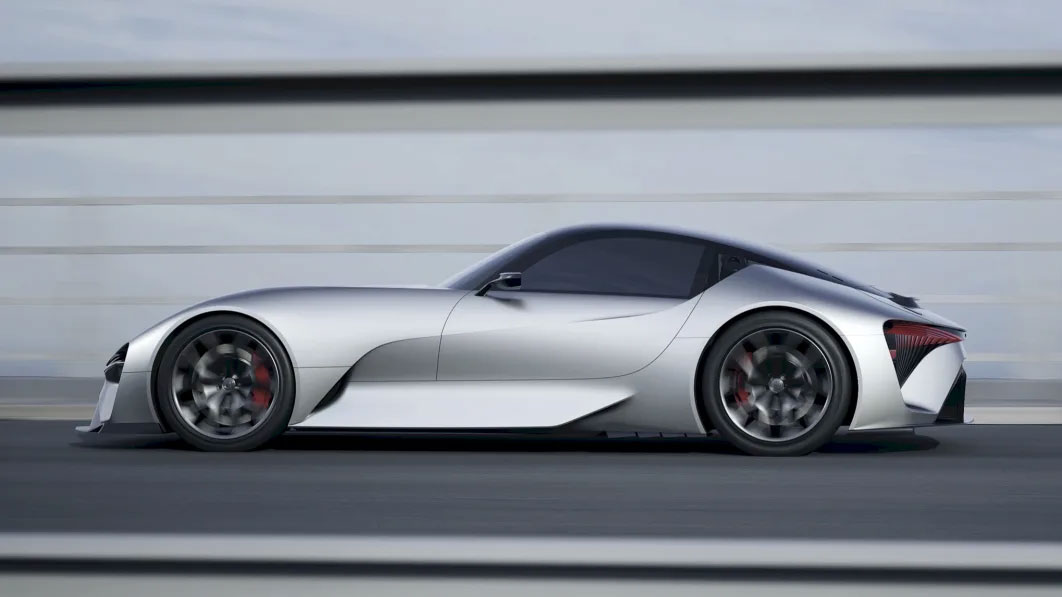
We are thought to be three years away from the successor of the Lexus LFA arriving in showrooms. We are thought to be less than a month from the debut of a pre-production version of Lexus‘ coming supercar, which could take place at next month’s Monterey Car Week. Persistent reports say Lexus is preparing two versions, one with a hybridized twin-turbo V8, one with a battery-electric powertrain; the former is thought to be the one on show in California in August, the latter not ready for primetime until around 2030. One of the many questions has been, “Where is that V8 coming from?” CarBuzz had its feelers out in Japan, picking up a report from Japan’s Mag-X (translated) that Lexus will use the 5.0-liter TTV8 in the LC500 endurance racer for the super coupe being referred to as LFA II.

This particular engine has been a specter, rumored for ages to make production but never seen. Way back in 2014, rumors that were already a year old posited a trio of engine options for the coupe still known as the LF-LC concept. Paramount among the powerplants was a twin-turbo 5.0-liter V8 with around 600 horsepower. The scuttlebutt continued even after the LC launched in 2016, we saw no truth of it on the street. Even when Lexus launched an endurance racing program with the LC500 in 2018, no one knew what was under the hood. It wasn’t until a year later that the brand officially announced the TTV8 engine with a release that included one aim being “to complete the [Nürburgring 24-hour] race without any trouble by adopting a variety of new technologies, including a newly-developed V8 twin-turbo engine destined for use on future road cars such as sports cars.”

At the time, almost everyone expected the “sports cars” reference to indicate the coming of an LC F.  That could still be the case. But Mag-X says the racing engine will be used in the LFA II. The LC500 is still in competition, finishing 49th out of 94 finishers at last month’s four-hour race at the Nurburgring, Mag-X noted that Gazoo Racing put out another release indicating the race car would be “probably introducing [components] to utilize in future commercial vehicles, focusing on high rigidity, aerodynamic development, suspension technology.” The outlet didn’t say much else about the engine in its online post, but noted it “found the contents of the LC were ridiculously promising.”

It also said the LFA II will “be put on the market as a substitute for the GR010 Road Going version.” The Gazoo Racing GR010 is Toyota’s entry in the Hypercar class of the FIA World Endurance Championship, powered by a twin-turbo 3.5-liter V6 hybrid system. rated at an unrestricted 938 horsepower, though race regulations cap its total output at 670 horses. At the moment, Hypercar class rules mandate that participants sell at least 20 road-going versions of their entries within a two-year period, so we’re not sure how the LFA II supplants the GR010 with a different engine. 

As for that on-again-off-again LC F, in April of this year Lexus Racing USA teased a shaded LC in front of the brand’s blue F logo with the caption, “Highest expression of performance.” Leaked Toyota product plans from 2020 indicated this is the year for the model’s appearance. We know Lexus likes to show off in Monterey, we could be in for two surprises next month.

Related video:
You have less than 2 days left to win a 2022 McLaren GT

Autoblog may receive a share from purchases made via links on this page. Pricing and availability are subject to change. No donation or payment necessary to enter or win this sweepstakes. See official rules on Omaze. 

Enter this sweepstakes today and get 50 bonus entries by using the code AUTOBLOG50 at checkout.

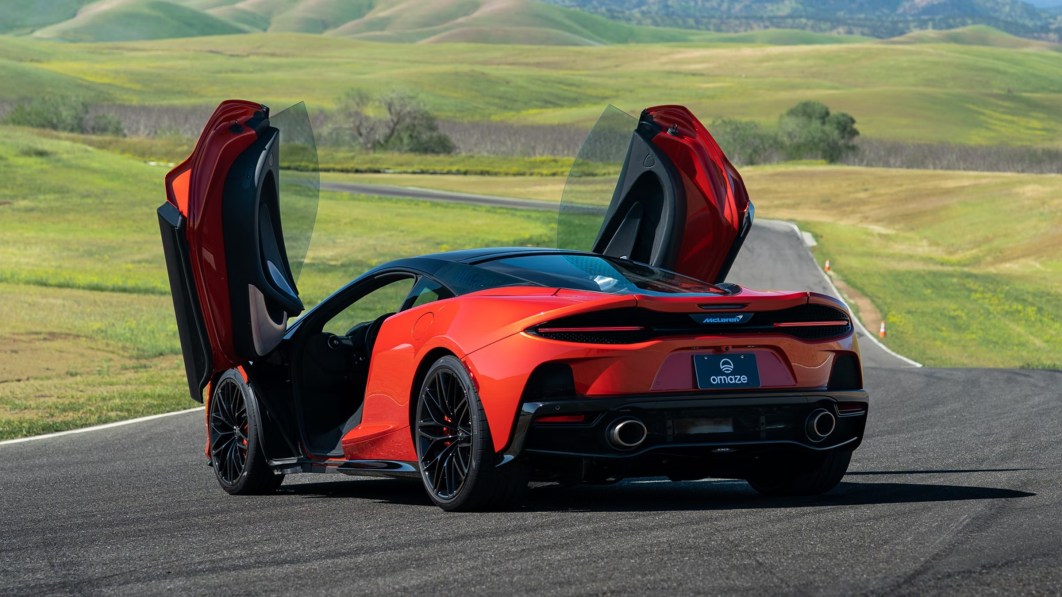
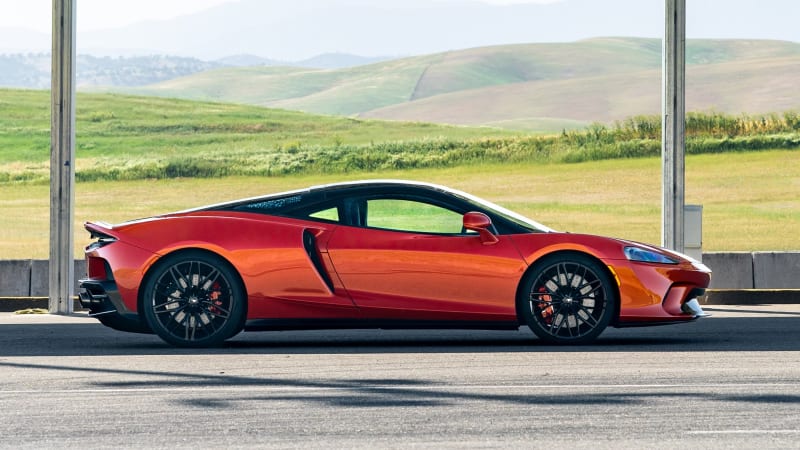
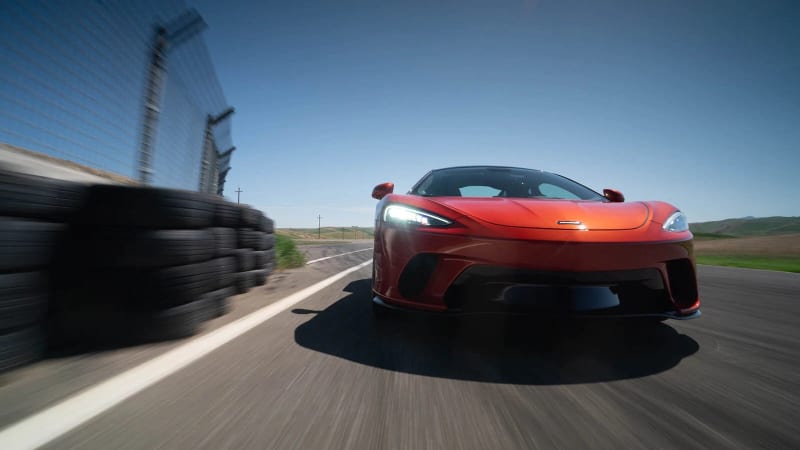
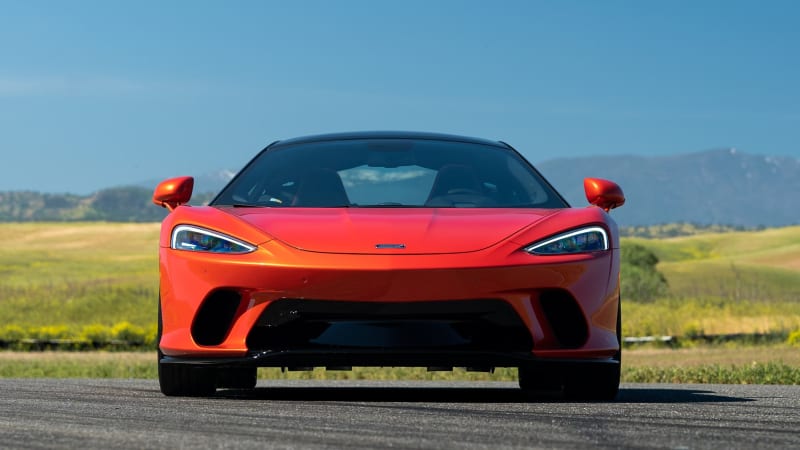
Let’s not bury the lede: you have a chance to win a 2022 McLaren GT. That would instantly improve almost anyone’s garage game tenfold. All you have to do is enter here.

Here are the specs for the McLaren GT, according to Omaze:

  • Max Seating: 2
  • Powertrain: Twin-turbocharged 4.0-liter V8 engine
  • Transmission: 7-speed dual-clutch automatic
  • Drivetrain: Rear-wheel drive
  • Exterior Color: Ember Orange
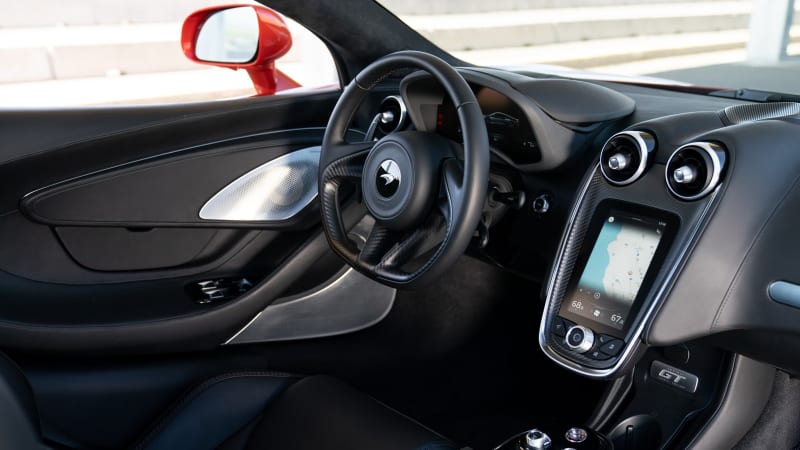
  • Interior Color: Black
  • Horsepower: 612 hp
  • Torque: 465 lb-ft
  • Acceleration: 0-60 mph in 3.1 seconds
  • Top Speed: 203 mph
  • Fuel Consumption: 15/21/17 mpg city/highway/combined
  • Fuel Capacity: 19 gallons
  • Approximate Retail Value: $243,875.00
  • Cash-Alt: $182,906.25
  • Special features: Dihedral “butterfly” doors; 20″ and 21″ MSO wheels; 12.3″ instrument screen; 7″ portrait infotainment screen; 12-speaker Bowers & Wilkins sound system

Here’s what we thought about it, the last time we drove one:

“As the winter settles in, I find myself reflecting on the most memorable cars that I’ve tested this year. Chief among them, the McLaren GT.

“I drove the GT on a damp midsummer evening. After a lengthy heatwave, temperatures dipped into the low 60s and it was raining lightly. Not the ideal time to drive a $263,000 supercar. And yet, it was impossible not to be excited and curious. 

McLaren has come a long way in a short time. With a decade under its belt as a standalone automotive operation, the company is delivering on ambitious growth plans and now counts four product lines in its portfolio, ranging from the Ultimate to this GT.

“It’s a surprising trajectory considering McLaren is best known for making shooting stars, like the 1990s F1 that captured the zeitgeist for supercars of that era. The F1 was followed by the indelible Mercedes-McLaren SLR from 2003-2010. 

“It wasn’t until 2011 that McLaren Automotive — freshly spun off from the racing team — attempted a credible road-going car that could actually be purchased and driven by normal enthusiasts. That car, the 12C, was a first step that ultimately led to proliferation of vehicles and technology for McLaren.

“After a few hours of spirited driving the GT, my conclusion boiled down to one word: maturity. It over-delivered as a grand tourer, though the car is about as much of a GT as the Ford GT, which is to say, not much. My back was a little tight when I returned home, fatigued but not abused. The McLaren GT is a driving workout on par with an Audi R8 or Lamborghini Huracán.

“Performance? It has plenty. But also notable, the fit-and-finish is solid, the looks are striking and it felt like the product of a company that’s been doing this for awhile, which McLaren hasn’t. Certainly competitive with Ferraris and Lamborghis and interesting in its own way. A small shop like McLaren is always going to face challenges achieving scale and consistent prosperity, and the pandemic wreaked havoc on the automaking and racing units. Still, the GT is indicative the company can expand without overreaching.”

According to Omaze, “no donation or payment is necessary to enter or win this sweepstakes.” Donations benefit Make-A-Wish. Per Omaze, “Make-A-Wish creates life-changing wishes for children with critical illnesses. Not only can these wishes help kids build the physical and emotional strength they need to fight a critical illness, they also restore hope for families, volunteers, medical teams and entire communities. Right now, for every wish granted, there are three more that need financial support. Your generosity will help Make-A-Wish grant even more life-changing wishes for children when they need it most.”

If you want this head-turning McLaren in your driveway, enter here. The deadline to enter is July 22, 2022, at 11:59 p.m. Pacific. 

Aston Martin updates its logo for the eighth time in its history

Whoa, easy on the squinting there, folks. We know, the new Aston Martin logo looks basically the same as the old one. But we promise, it has changed. Here, take a look at the old one (below, left) next to the new one (below, right).

Aston Martin Badge 2003Aston Martin Badge 2022

There, now do you see it? Aston dropped the single vertical line at the bottom and the inverted arch. Also, the lines are thicker. It’s like Aston Martin highlighted the badge and clicked “bold.” It also happens to be the eighth redesign of the logo. The original appeared on Astons in 1920, with subsequent designs launching in 1927, 1930, 1932, 1954, 1984, 2003, and now. You can see all of them in order below.

Aston probably wouldn’t be that put off by us describing the new logo as the old one, but “bold,” because the company’s new tag line follows suit: “Intensity. Driven.” Yes, the tag line is basically a synonym for “bold.”

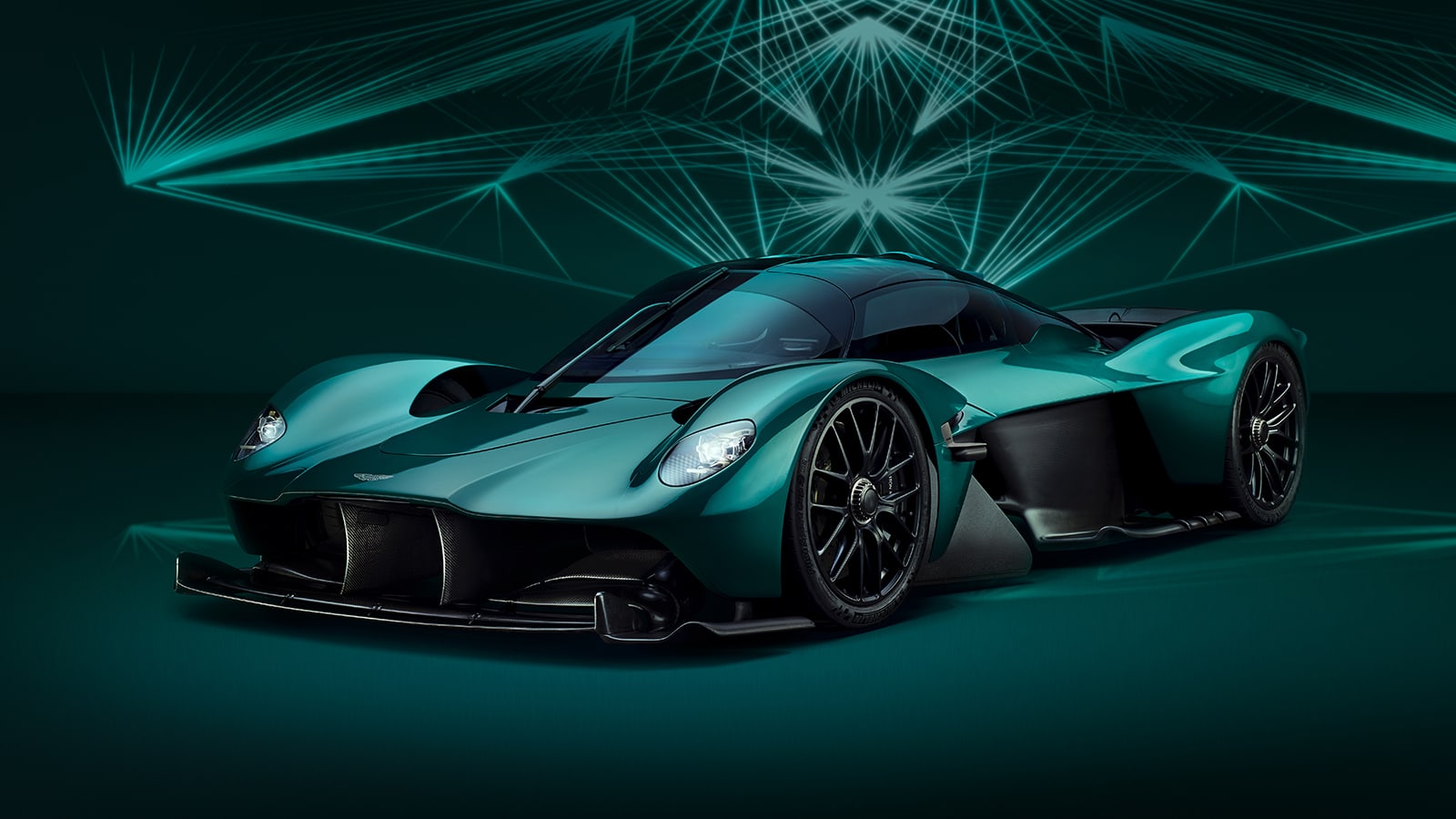
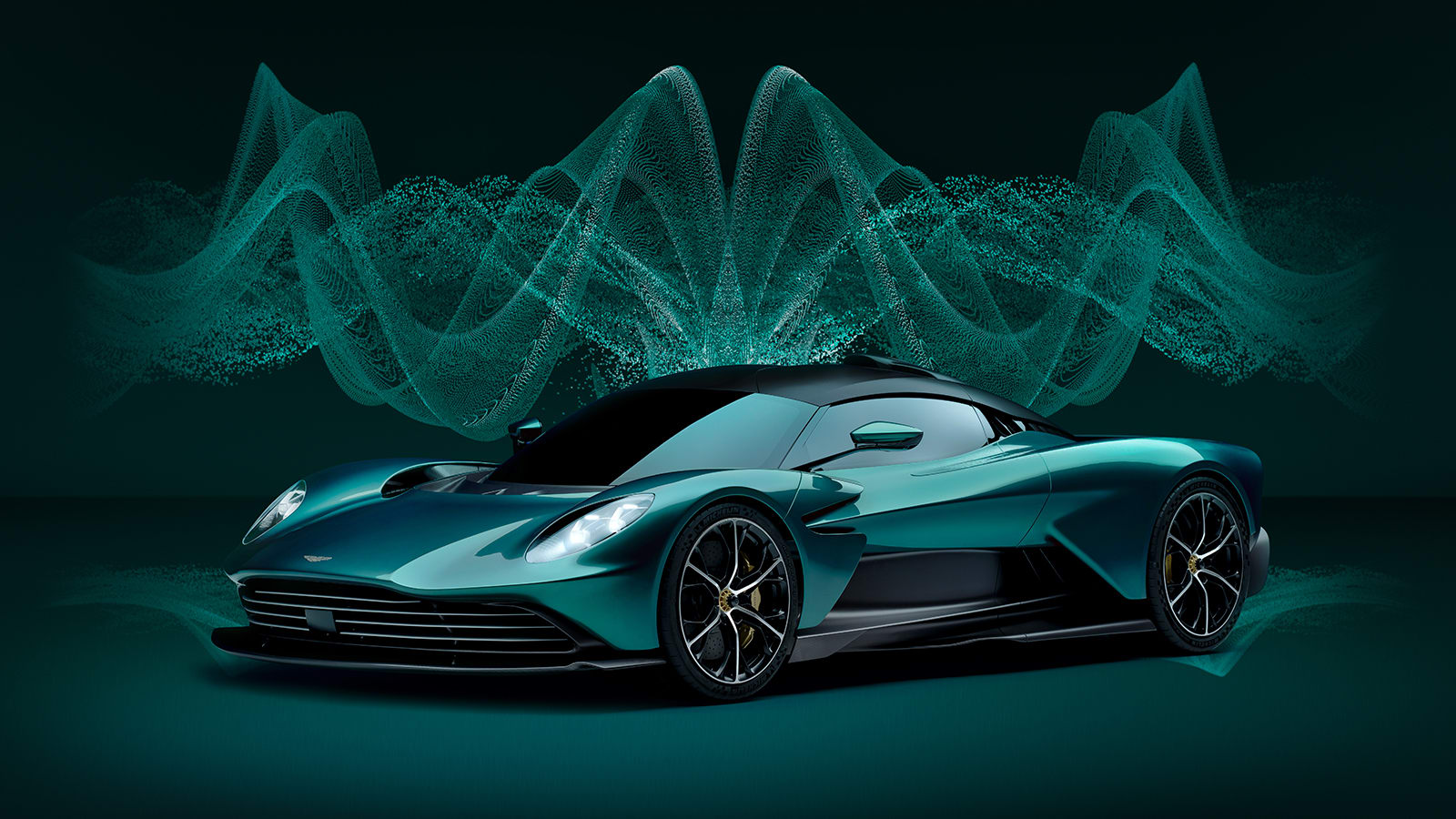
Aston Martin ValkyrieAston Martin Valhalla

Aston says the new branding is part of a new focus on providing luxury cars with maximum performance. It also seems to reflect the brand’s upcoming roster of mid-engine sports cars with the F1-inspired Valkyrie (above, left), now in production, and the less extreme Valhalla (above, right), the latter of which will start deliveries in 2024.

The new badging will appear on the Aston Martin F1 cars, and will also appear on these new-generation Aston sports cars.

Related video:
Lamborghini Huracan could become an 850-hp PHEV next year

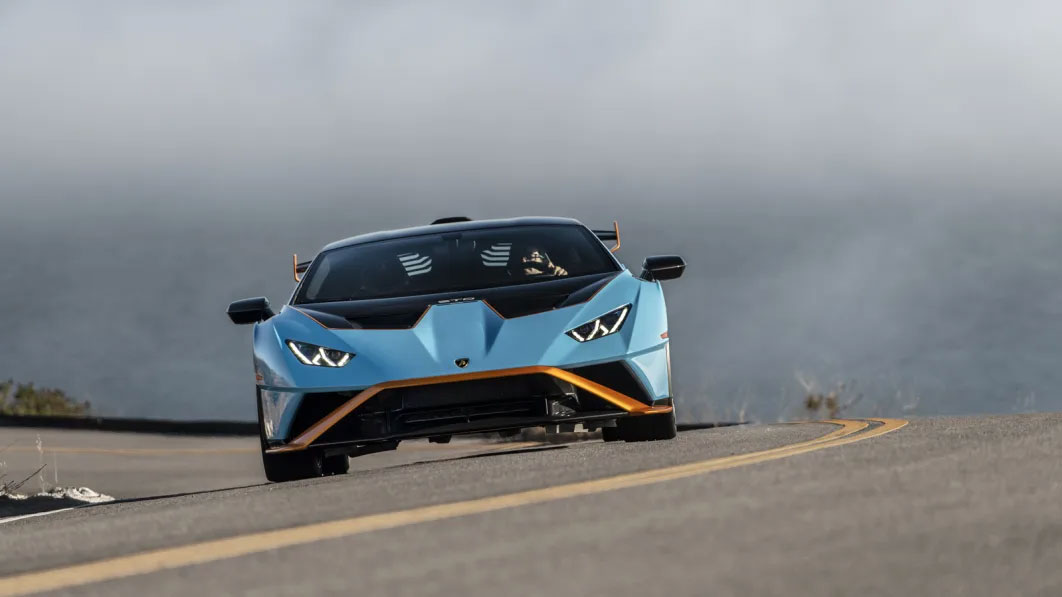
So far, Lamborghini is celebrating 2022 with record sales and odes to the internal combustion engine thanks to a raft of special editions. The Italian automaker’s plunge into electrification starts next year with the next-generation Huracán and its plug-in hybrid powertrain. Lamborghini’s head of research and development said, “The engine will be bespoke for Lamborghini. On the final details we can’t yet communicate this, but I would say more than six and less than 12 cylinders for the combustion engine.” The easy (well, easier…) option would be to tweak one of the Volkswagen Group’s twin-turbo V8s to work with a pair or trio of electric motors. Auto Express says its sources suggest two bits of intel on that engine, the first being that it could be an in-house design “not sourced from VW Group,” the second that combined output might exceed 850 horsepower. Such a theoretical coupe would be 169 horses more potent than the Huracán STO and easily satisfy Mohr’s assertion that the new generation “from the performance point of view … will again be a big step.”

Lamborghini is spending $1.8 billion on its path to an electric future. It’s possible the firm could take part of that money to develop a V8 for itself, instantly setting itself apart from the other high-dollar brands in the VW Group. Naturally, we’d love to see that, or even a hybrid V10; what a monster that could be, although heavy, and engineers have been clear about waging a war against weight. The Wolfsburg parent is known to be a huge fan of scale, though, and a V8 or V10 that only serves two vehicles — the Aventador will continue with a V12 even as a plug-in hybrid — seems like a stretch to get approval. Parsing this also depends on how the automaker could define “in-house design.” We’ve seen massively revised engines built around an existing block considered “all-new.”

The Huracán could debut as soon as next year, one year ahead of the automaker’s commitment to electrifying the whole three-car lineup. Autocar says that looking ahead from there, we’ll finally get eyes on the battery-electric Lamborghini in 2028. Last year, the predicted window was sometime between 2025 and 2027, and an interview with Lamborghini chief Stephan Winkelmann has clarified a few bits. Autocar says the EV will “be an all-new, radically styled 2+2 crossover” that looks back to the 2008 Estoque concept for “light inspiration” but “significantly more dramatic styling” than anything else in the range so it’s understood as an EV on sight. Within two years of its launch, Lamborghini will introduce a battery-electric Urus.

If things stay as they are, that would mean a four-vehicle lineup consisting of two PHEV-only models, one electric-only model, and the Urus offering both.

Related video:
Hyundai N Vision 74 Takes a Shot at the Past with its Cool Retro Design

If electric cars mean the comeback of retro design then we can keep on rejoicing. Personally I have come to support EVs not because of the green agenda but after realizing they could lead to the survival of a few sports cars. Much like how the Cayenne/Macan models give Porsche spare change for a few naughty sports cars to keep car guys happy.

This is the new Hyundai N Vision 74, a hydrogen fuel cell hybrid concept car inspired by a Hyundai Pony Coupe from 1974.

Since it’s a concept, Hyundai decided to make it as outrageous as possible. First up is the electric powertrain which is half FCEV half BEV – meaning it has a hydrogen powered fuel cell electric system as well as a battery powered electric system. These work hand in hand to deliver 670hp to the rear wheels and 900 nm of torque.

Further elaboration, the N Vision 74 has a 4.2kg tank that can be filled up with hydrogen in just 5 minutes. This hydrogen will be used by the fuel cells that are responsible for producing electricity needed to power the twin electric motors at the rear. There is also a 62.4 kWh battery with 800v high speed charging architecture, this will be used to power the same electric motors. The main difference being, the fuel cells use hydrogen stored in the tank to power the electric motors while the batteries use rechargeable energy to power the electric motors.

I think the coolest bit about the N Vision 74 is the Parametric Pixel lights, we have already seen these on the Ioniq 5. Instead of copy pasting the current light design in the industry, Hyundai are opting for a totally different look. It’s retro yet futuristic. Who thought square headlights from the 70s would make a comeback?

The N Vision 74 has a range of 600km and is only a concept for now, but judging by the looks of the Ioniq 5, Hyundai might just roll it into production just the way it is!

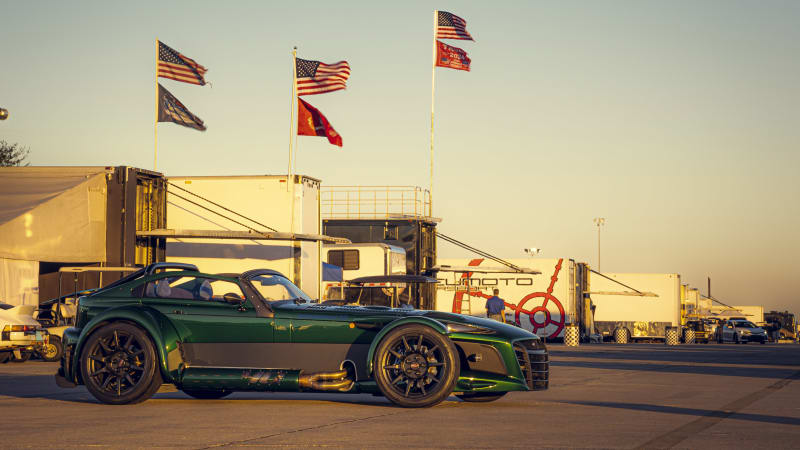
Donkervoort making landfall on U.S. soil with 400-horsepower D8 GTO

If you’re one of the Americans who’s been waiting patiently for niche car builder Donkervoort to come state-side, today is your lucky day. For decades, the Dutch firm has gotten attention from abroad with its extremely quick, bare-bones cars, but thus far they have not been officially available in the U.S. Until Now.

Donkervoort has announced that its D8 GTO Individual Series will be the first model to be offered in America. It’s powered by the turbocharged 2.5-liter Audi five-cylinder found in the RS3. According to Donkervoort, it makes over 400 horsepower, which can push the sub-1,500-pound car to 62 mph from a standstill in just 2.7 seconds. To reach 124 mph (200 kph), it takes as much time as a normal car gets to 60, just 7.7 seconds.

If you’re unfamiliar with the brand, here’s a brief history lesson. The company was established in 1978 by a man with the exceedingly fantastic name of Joop Donkervoort. Like many great performance cars, the first Donkervoorts were inspired by the Lotus Seven. Early Donks were powered by Ford engines, but Donkervoort began sourcing them from Audi in the 1990s.

The cars have evolved too, with current models resembling what a Lotus Seven might look like if it had continued over the decades. However, Donkervoort insists that its motto of “No Compromise” has been maintained throughout. That means the cars have minimal electronic assistance and weight. It wasn’t even until 2007 that they added a closed roof version.

“Inquiries from the U.S. rank second behind only Europe, despite our supercars never being sold there, so we know enthusiasts in the United States are aware of what Donkervoort delivers,” says managing director Denis Donkervoort.

To get the cars distributed in the U.S., Donkervoort has partnered with Bespoke Motor Group. Apparently, it was a long-held dream to get the brand over here, but the company says it wanted to find the right partner that could offer the same level of service and customization.

There are already three orders on the books. The first three cars are being sent to Florida, Colorado and California. Donkervoort says there’s a two-year waiting list in Europe, but production allocations have been carved out for the U.S. launch, so American buyers won’t have to wait that long. 

The price: $240,000 not counting options, taxes and fees.

Another World Record by a Tesla Plaid: 8.7s @ 162mph

A Tesla Model S Plaid has just set a new world record at a drag strip after running a 8.7s time with a 162mph trap speed. The only modification made was weight reduction.

This new record makes the Model S Plaid only a few tenths of a second slower than the Rimac Nevera whose time stands at 8.58s, with a trap speed of 167.51 mph.

Tesla Plaid models have become popular contenders at drag strips around the US, ocassionally being pit against supercars and hypercars. Powered by 3 electric motors developing 1,020hp and 1,420nm the Plaid’s official 1/4 mile time is 9.34s at 152.2 mph. Pricing starts at $131,100.

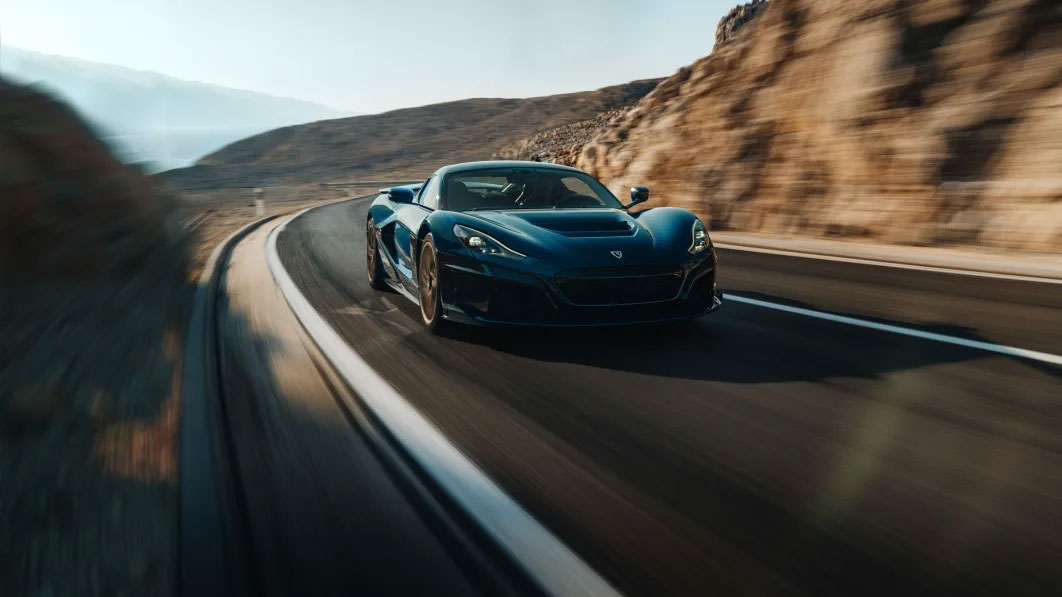
Rimac Nevera gets EPA and CARB certification

The Rimac Nevera has got its visas to come to the U.S. The U.S. Environmental Protection Agency and the California Air Resources Board certified the battery-electric hypercar from the newly minted Bugatti Rimac corporation for use on American roads, automaker CEO Mate Rimac posting the papwerwork on his Facebook page. The CARB paperwork shows the Croatian coupe with 287.28 miles on a charge, slightly down on the 342 miles of range the Nevera makes on the European WLTP cycle. Among the reputable electric hypercars we know of right now, Rimac’s range figures beat all thanks to the Nevera’s 130-kilowatt-hour gross battery. The Aspark Owl makes do with 69 kWh, the Lotus Evija packs 70 kWh, the Pininfarina Battista has a 120-kWh pack.

There are a number of reasons we’d love to sample the Nevera, beyond its specs and the company founder’s impressive mix of nous and enthusiasm. One is to experience real-world range of this particular electric hypercar, which Mate says “makes the highest use of regenerative braking of any other car on the market now.” When regeneration isn’t enough, considering the 258-mph top speed thanks to 1,914 horsepower and 1,741 pound-feet of torque, six-piston Brembos clamp 15.3-inch carbon-ceramic discs. Another is the “AI driving coach,” a software-driven mode to help a driver improve lap times on the track thanks to “clear and precise visual guidance” about the racing line, as well as braking and acceleration points.

Mate also said that Production Car #002 is undergoing pre-delivery testing around the company’s base in Zagreb, Croatia now. We take that to mean the first production model is already in customer hands, usually a signal that public sightings are headed for social media. However, based on the few Rimac Ones photographed in the wild, the owner group seems to be a discreet bunch. Bugatti Rimac will manufacture 150 Neveras total at €2 million apiece ($2.1M U.S.), some tiny sliver of that cleared to pass Customs in the U.S. We suppose they’re headed to climate controlled garages where they’ll be parked next to a Rimac One.

Related video:
Lamborghini supercar prototype shows angry face in spy photos

Lamborghini made it clear last year that it’s working on a new supercar to replace the V12-powered Aventador. And the car shown above is definitely a new Lamborghini of some sort. However, we don’t think this is the Aventador replacement. Instead, we suspect this is another limited-run Aventador-based special model.

The key tipoff is the greenhouse. All the glass looks just like the pieces found on the Aventador, the Countach, the Sían and plenty of other special Aventador models. Similarly, the proportions of the car match those models, too. And Lamborghini has said that its full Aventador replacement will be a completely new car with a completely new powertrain. So nothing leftover from its predecessor.

There are of course styling features not shared with other Aventador-based cars, so it will still probably be a unique model. The front end has particularly angry eyebrows over the lights, and they appear to intersect with the lower grille openings. Interesting aerodynamic panels behind the windows also show up. The rear is the most distinct with high-mounted quad-exit exhaust right in line with slim taillights. Note, the “lights” lower in the rear are just printed on the camouflage.

This prototype also tips us off to the powertrain. On the outside are high-voltage warning stickers. And since it seems to be a special Aventador-based model, we bet it’s using the same hybrid V12 used in the Countach and Sían. Output should be around 803 horsepower, maybe a little more from the naturally aspirated V12 and a small electric motor powered by a supercapacitor.

We’re expecting the car will be revealed within a year, since it looks pretty far along in development, and it’s based on a car whose days are numbered. We don’t have a name yet, but Lamborghini recently trademarked the name Revuelto, which could be used on this model, or on that planned Aventador replacement.

Related video:
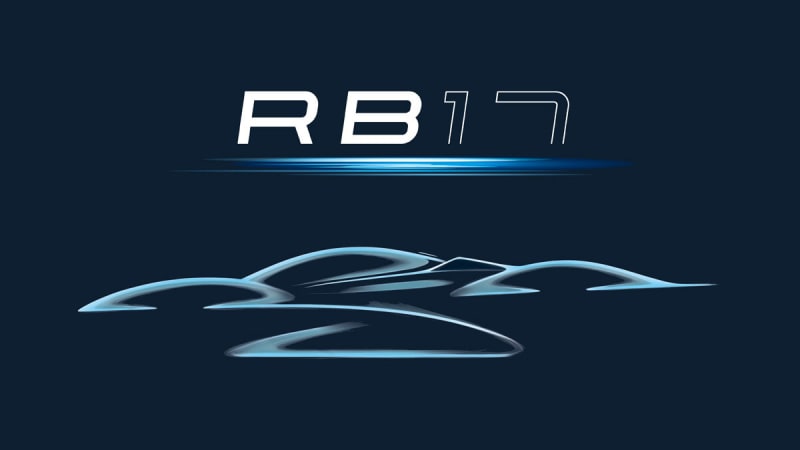
Red Bull RB17 to be a $6.1M, 1,250-hp track hypercar due in 2025

Following the Mercedes-AMG Project One and the Delage D12, the burgeoning era of Formula 1 cars for the street has another entrant. Red Bull Advanced Technologies (RBAT) and head designer for the Oracle Red Bull Racing F1 team Adrian Newey have decided to pick up where they left off with the Aston Martin Valkyrie, announcing the Red Bull RB17. A summary of the design philosophy is: “All the tricks we’ve learned in F1,” “Adrian’s greatest hits,” a combination of the “performance-enhancing technologies that have subsequently been banned in F1.” That means carbon tub, active suspension, side skirts, ground effects tunnels, blown diffuser, hybrid energy recovery system, and around 1,250 horsepower — everything but the fan, really. It also means a limited production run at an F1 price: 50 examples costing £5,000,000 each ($6.1M U.S.).

Here’s the background. In 2016, when Aston Martin was the primary sponsor of the Red Bull F1 team, both parties announced development of the AM-RB 001, which would become the almost-no-holds-barred Valkyrie road car and no-holds-barred Valkyrie AMR Pro track car. In 2020, two years after the Valkyrie was meant to be delivered to customers, Lawrence Stroll’s takeover of Aston Martin had the carmaker cozying up to new partner Mercedes on the road and the track, securing Mercedes engines for passenger cars and the Aston Martin F1 team. Aston Martin and Red Bull separated in the F1 paddock, and although both said they were committed to finishing the Valkyrie, eventually Aston Martin took charge of completing the project.

Six months before the first Valkyries were delivered to customers at the end of last year, Newey was already saying of RBAT, “Yes, absolutely, we would like to do another vehicle. Exactly what that is and what it’s targeted at is subject to debate.” While it could be that the Valkyrie AMR Pro didn’t go as far as Newey wanted, it’s definitely true that the eight-year-old technology arm RBAT was looking for more commercial outlets for its knowledge. Red Bull team principal and CEO Christian Horner said that with the sport’s current budget cap, “If you want to retain resources, there have to be projects that can justify their existence.”

Enter the RB17 to fill all the gaps. The name is a bit of inside baseball; when F1 made rule changes to save money in 2020 during the pandemic, teams used mainly carryover chassis’ in 2021. Red Bull’s naming convention began in 2005 with the RB1, representing the constructor’s first year in the sport. The team’s 2020 car was the RB16, this year’s car is the RB18, the 2021 car should have been the RB17. But because the 2021 car was so similar to the 2020 car, RB called it the RB16B. That left RB17 lurking in limbo like the 13th floor. Here is the alphanumeric’s escape hatch from the ghost world.

All we have are snippets for the moment about a track car said to be in “advanced stages” and due in 2025. Power will come from a twin-turbo V8 of undisclosed displacement, working with that mild hybrid system to develop 1,250 hp. Both are expected to be built by an unnamed third party to RBAT’s specs. This is speculation, but F1’s rumormill has Porsche already paired with Red Bull come 2026, and Porsche is coincidentally running a hybrid twin-turbo V8 in its 963 LMDh car. Newey said the hybrid system won’t just be about filling in the ICE power troughs, as the energy recovery system “also helps in other areas, which I don’t really want to go into at the moment.” Almost everything else about the car will be developed and built in-house at a rate of 15 RB17s per year, meaning a production run of more than four years. The purchase price — which is an estimate, by the way — will also pay for service and maintenance, access to Red Bull simulators, and on-track instruction.

Newey said the only limits will be physics, the need to use standardized tires, and the need to fit two people, “at least one being quite tall.” Otherwise, “it’s effectively a no-rules car” that worships the god of lap times, “which is ultimately all that counts.”

Oh, well, there is one other thing that counts, as Horner said: “It will sound fantastic, like a track car should.” 

2022 Goodwood Festival of Speed Mega Gallery

Please consider allowing Autoblog.

Hi! We notice you’re using an ad blocker. Please consider allowing Autoblog.

We get it. Ads can be annoying. But ads are also how we keep the garage doors open and the lights on here at Autoblog – and keep our stories free for you and for everyone. And free is good, right? If you’d be so kind as to allow our site, we promise to keep bringing you great content. Thanks for that. And thanks for reading Autoblog.

Hey again!

You still haven’t turned off your adblocker or allowed our site. It only takes a few seconds.

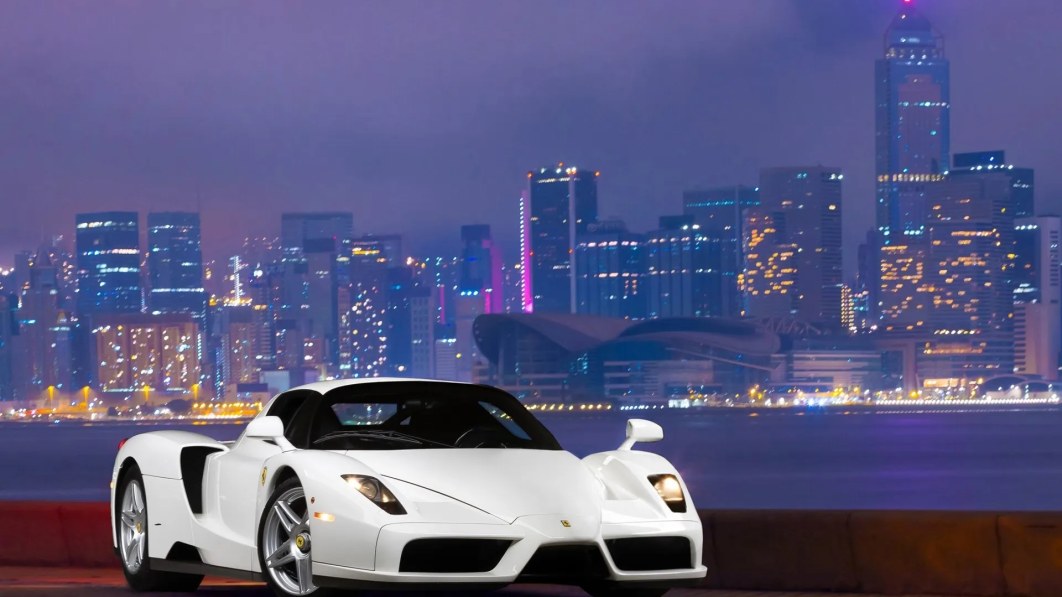
This one-off Ferrari Enzo is someone’s white whale

Forgive this blasphemy, but the best color for Ferraris is not red. Rosso Corsa might be the national racing color of Italy but, frankly, these days Mazda has a better red. Drowning in a crimson tide of red ‘Rraris at a car show gets old after a while, and being smothered by a Ferrari store’s retina-searing red is akin to what Jonah suffered while stuck in the belly of a whale. 

There are so many better hues for a Ferrari. Verde Pino on a 250 Lusso, Blu Tour de France on a Daytona. And Bianco Avus, a.k.a. white, on an Enzo. That last one happens to be up for auction at R.M. Sotheby’s in Ontario, Canada next week. It’s also quite likely a once-in-a-lifetime opportunity to own a white Enzo, because of all the 400 or so that came out of Maranello, only one was only one finished in Bianco Avus.

The auction lists it as THE white Enzo, but that is actually a bit misleading. According to records it is indeed the sole Bianco Avus specimen of the 651-horsepower supercar. To be completely accurate, though, there is another white Enzo out there. That one is finished in a pearl white called Bianco Fuji and located, appropriately, in Japan.

None of that takes away from the fact that the car for sale is a rare and stunning specimen. It was designed as a flagship to link Ferrari road cars with its Formula 1 racers, which finally reclaimed the championship in 2000 after a 20-year absence in the winner’s circle. Its carbon fiber bodywork, carbon-ceramic brakes, and high-revving V12 were derived from Scuderia Ferrari’s warhorses. Simply called Enzo, it was named to honor the prancing horse firm’s founder, and production coincided with Ferrari’s five-year F1 winning streak from 2000-04. 

The Bianco Avus Enzo is one of 20 “extracampionario” cars painted in a color from the off-menu palette. For that privilege, it is said customers would have had to purchase both of the Enzo’s immediate predecessors, the F40 and F50.

Our argument for a white Enzo is based on the theory that if you’re already driving a shouty supercar, there’s no need to also slather it in a shouty color. Some of us enjoy the car for what it is, without all the attention that a bright red sports car would attract. Unique design elements like the floating red taillights would get lost in red as well. 

In any case, at least one unnamed German-Swiss billionaire agrees. The car was finished on May 22, 2003 and sold to that billionaire in Switzerland where it was displayed in the window of a store in Matran, before changing ownership to a collector in Hong Kong in 2011. According to the auction, it was unregistered during its time there because LHD cars aren’t road legal, and is now under temporary import to Canada where it will be presented at auction June 29-30. 

Related Video

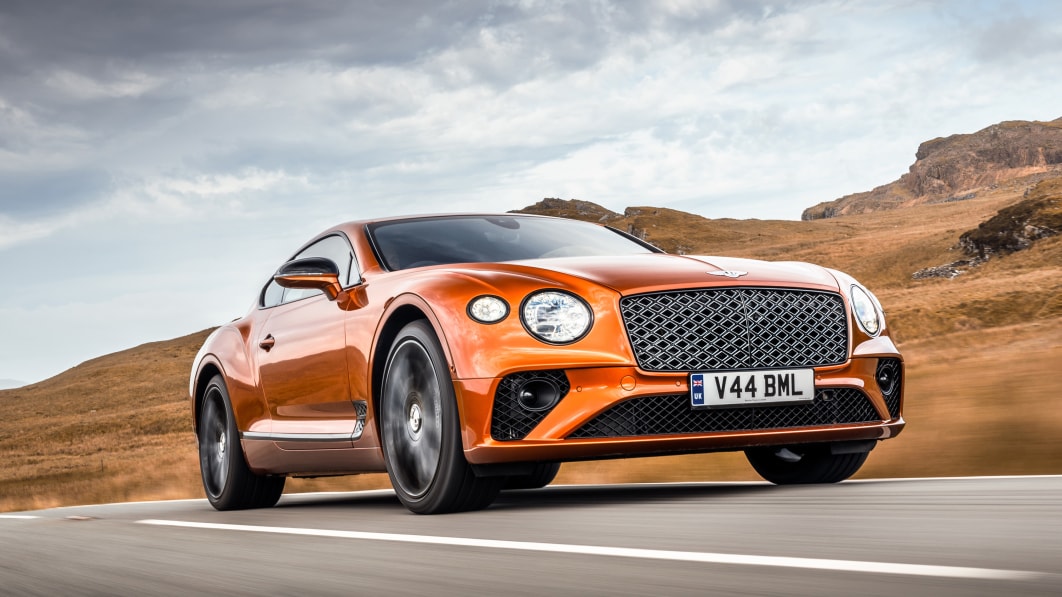
2022 Bentley Continental GT Mulliner steps to the top of the line

The shifting in the lineups coming out of Crewe continues with the reveal of the Bentley Continental GT Mulliner. The English luxury maker introduced the most recent GT Mulliner two years ago when there were still a 626-horsepower standard W12 and a 650-horsepower GT Speed. With the GT Speed now the only W12, the introduction of the indulgent Azure trim “for those prioritizing wellbeing and on-board comfort,” and the arrival of the coming V8-powered S models, the new Mulliner steps in at the head of the pack. Starting from the bottom, the current Continental Range is the V8, Azure, S, Speed, and Mulliner.

What does a buyer get with the flagship Conti? The GT Speed chassis dressed in Mulliner jewelry and coachwork. The 6.0-liter W12 makes 650 horses and 664 pounds of twist, clocking 3.5 seconds from standstill to 60 miles per hour, acceleration unwilling to relent until 208 miles per hour. Dynamism at less furious speeds benefits from adaptive dampers, an electronic limited-slip differential on the rear axle, all-wheel steering, and brake-based torque vectoring. 

The cosmetic package is effectively handed down from the previous version, which we can’t find fault with. The double diamond matrix grille stands proud up front, wearing either bright chrome or the Mulliner Blackline Specification gloss black. The are also specific 22-inch Mulliner wheels, satin silver mirror caps shrouding Mulliner welcome lamps, and illuminated treadplates.

The interior picks up unique three-way colorways that rearrange the way primary, secondary, and tertiary colors are split throughout the cabin. Mulliner offers eight standard combinations all lashed up with diamond quilting, paired with 88 choices in Piano wood veneers and heaps of thread options for the contrast and accent stitching. Gauges in the digital instrument cluster have been designed with a technical finish to go along with the diamond milling on the center console. Even the occupants’ feet get treated to floor mats edged in complementary piping. Overhead, roofs without the panoramic glass get trimmed with indented hide, roofs with the glass top get smooth hides.

For now, the Continental GT V8 Mulliner remains available. The new model debuted at the Goodwood Festival of Speed along with the S trim and the first historic Blower Continuation, called Blower Car Zero, and it can all be livestreamed here.

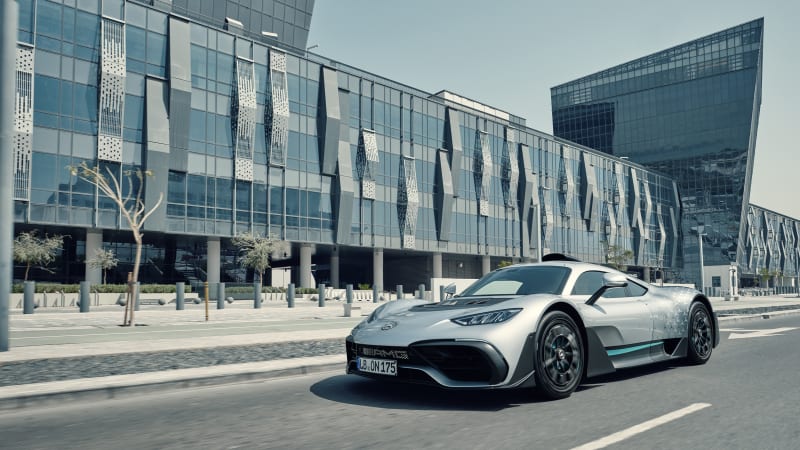
Mercedes-AMG One flexes its active aero at Goodwood

The newly minted Mercedes-AMG One has taken to the Goodwood Festival of Speed to show off some of its tricks. Making its first public showing, the Formula 1-inspired supercar took to the event’s 1.2-mile hillclimb to wow the crowd with its active aero shape-shifting. 

The AMG One is a showcase of the brand’s technology, derived from its 7-year F1 winning streak from 2014-2020 with Lewis Hamilton at the helm. It boasts a combined system horsepower of 1,049 from its 1.6-liter V6 and four electric motors. Even one of its dual turbochargers has its own electric motor. 

On Lord March’s driveway, however, it’s clear that the One is only using a fraction of its abiliities. From the starting gate, it cruises along at a leisurely pace, emitting a UFO-like whine (Mercedes says it can go 11.2 miles on its 8.4-kWh liquid-cooled battery alone). 

Unexpectedly, it comes to a dead stop in the middle of the track. The FoS has hosted its share of embarrassing mishaps, but this isn’t one of them. Instead, the AMG One drops over an inch in ride height, an adaptive suspension stiffening track-only setting called Race Plus that comprises one of six drive modes. Suddenly its bodywork splays out like that dinosaur that killed Newman in “Jurassic Park.” Not only does it deploy a rear wing, but each fender has four individual flaps that open to vent air from the wheel wells. 

The car then continues on at a brisker rate, but still far short of its 2.9-second 0-62 time or the V6’s 11,000 rpm capability (AMG declines to call it a redline, saying instead that the engine’s been designed to spin at that speed). Nevertheless, a high-pitched F1 note can be heard as the car continues up the hill.

Whether we will ever get to see the Mercedes AMG One on U.S. soil is still up in the air. If we do, though, at least now we know what to expect from its Transformer-esque moves.

Related video:
Bentley Introduces New ‘S’ Models: Continental GT S and GTC S

Bentley has launched a new S range focused on driving performance and visual presence. The S range emphasizes on Bentley’s “Wellbeing behind the wheel” concept and adjusts Bentley’s grand touring recipe to centre on the pleasure of driving through multiple enhancements.

The S range retains the 4.0 litre V8 engine delivering 550 PS and 770 Nm of torque and the acceleration from 0-100km/h is achieved in 4.0 seconds. Additionally, for the GT and GTC S, the engine is enhanced with a Sport Exhaust fitment as standard.

The lighter 4.0 litre engine gives the Continental GT S model a responsive and agile character amplified by Bentley Dynamic Ride. Motors within the anti-roll bars actively minimise body roll under hard cornering by generating upto 1300 Nm of torque in 0.3 seconds while also improving the ride comfort at cruising speeds.

The exterior of the new S models feature black gloss radiator grille, S badge on the front fenders, dark tinted headlights and rear lights, Bentley badge finished in bright chrome, gloss black wing, quad exhaust tailpipes in black, brake callipers finished in red and sill extenders in black.

The S range is offered with a set of 22 inch wheels with Y-shaped spokes finished in gloss black and also available in new Pale Brodgar Satin finish. 21 inch wheels in tri-spoke design will also be available as a second option.

The interior design of the GT and GTC S features metal S signature badge on the fascia, S design seats, S emblem on the headrests, suede-like properties of Dinamica on the steering wheel, gear lever, seat cushion and seat backrests and leather upholstery on the seat bolsters, door pads, instrument panel and on the centre console.

Pagani Huayra Codalunga is Italian for ‘longtail’

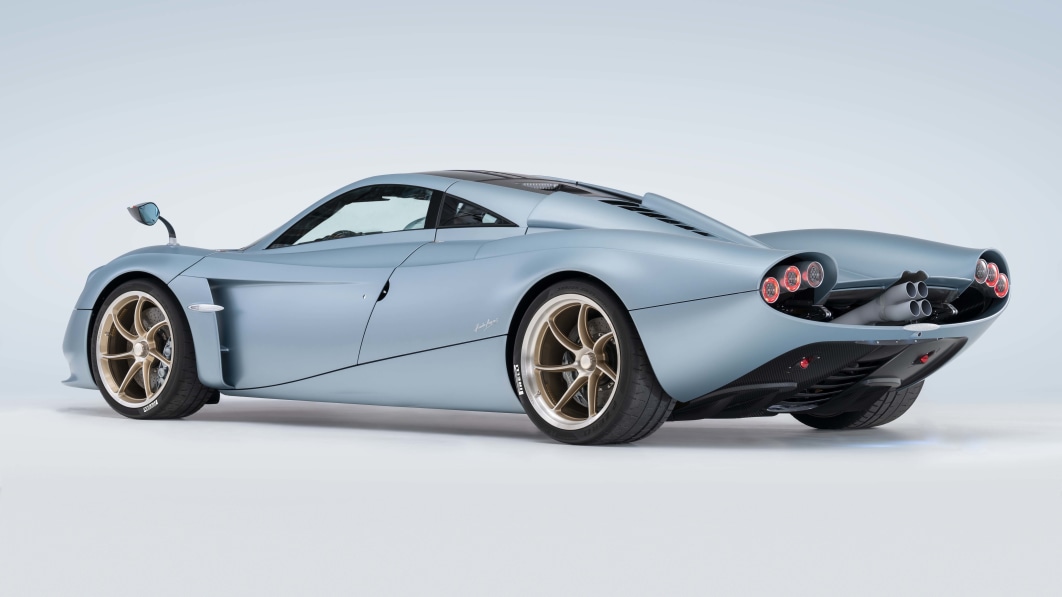
Have you ever taken a look at the Pagani Huayra in your driveway and wished that it was even more unique and exclusive? No? You say you don’t have one? Ah, well it’s surely because you’ve been waiting for that unique and exclusive version (and felt the other unique ones of late weren’t good enough). And that car is here. The Italian supercar builder has announced a stunning variant called the Huayra Codalunga that will cost $7.34 million and have a production run of just five units.

Codalunga means “longtail” in Italian, and describes perfectly what makes this Huayra unlike the others. Pagani says that it’s a tribute to the speed machines of the 1960s. Starting with the Huayra Coupé, Pagani stretched out the body and gave it some extra-sleek lines inspired by 1960s race cars and aircraft. 

“We drew inspiration from the long tails of the 1960s that raced at Le Mans,” explained Horacio Pagani in a statement. “We have taken away rather than added. Simplifying is not at all straightforward, and this vehicle is, above all, the result of a complex pursuit of simple ideas.”

The Codalunga was developed by Pagani Grandi Complicazioni, their in-house division for special projects. The genesis dates back to 2018, when two unnamed customers asked Pagani to create a long tail version of the Huayra. Since then, the two have worked closely with the company to usher the car into fruition.

Beneath the elegant bodywork, which includes an engine cover that is 14 inches longer than on the Huayra, sits a variant of the 6.0-liter AMG V12. In Codalunga guise, it makes up to 840 horsepower and 811 lb-ft of torque. Despite its increased length, the Codalunga actually weighs less than the Coupé, tipping the scales at just 2,820 pounds. An exposed exhaust system is fabricated from titanium and weighs only 9.7 pounds.

Since only five will be made, and there were two customers who commissioned the car, our rudimentary math skills indicate that there will be three left. Pagani didn’t say how one could go about asking for a quote, but when you’re dealing with this kind of money and exclusivity, it’s probably more of a “we’ll let you know” situation. And really, we wouldn’t be surprised if those other three examples have already been sold.

Related Video:

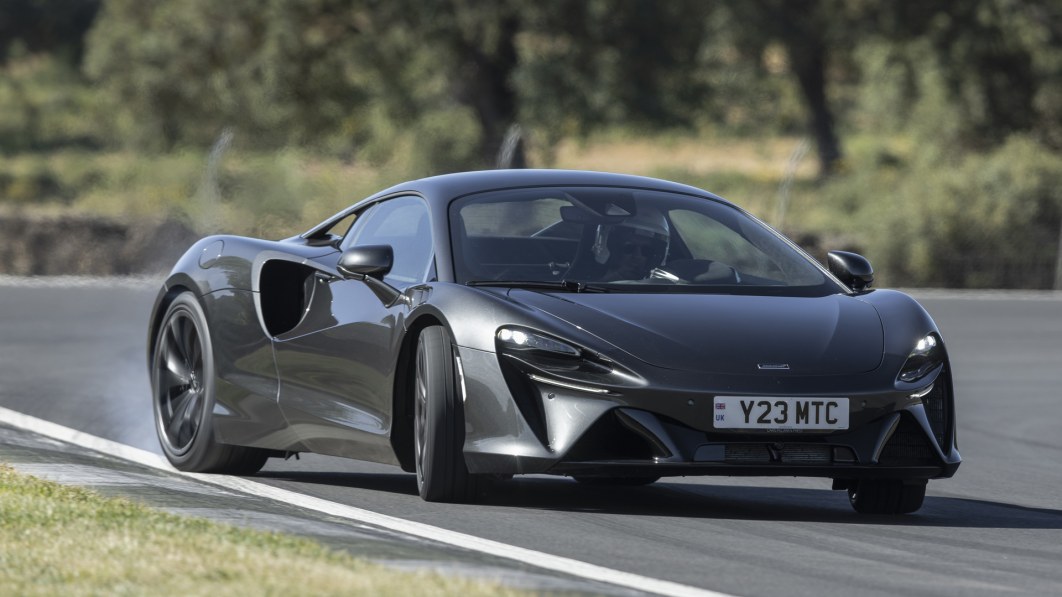
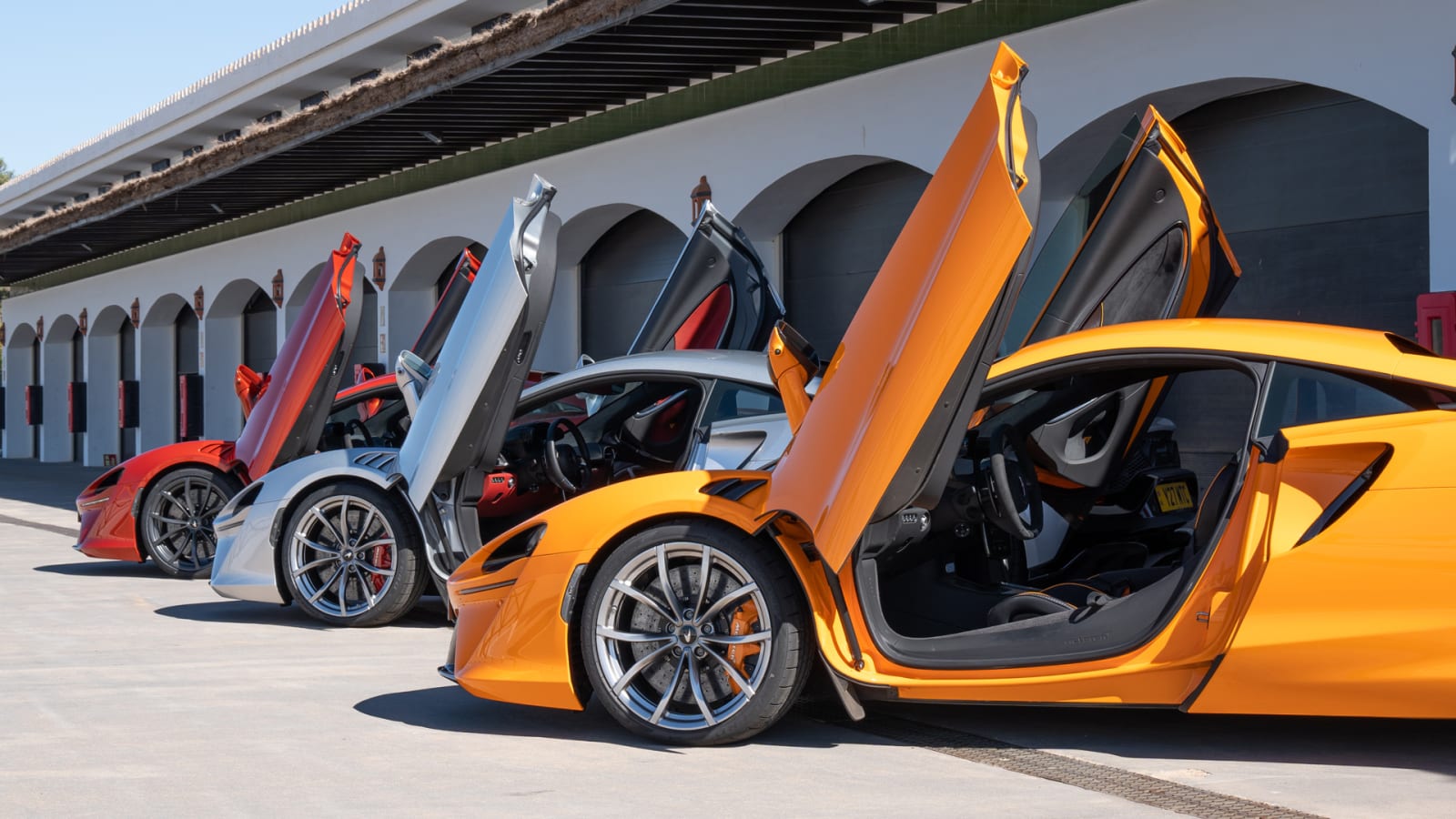
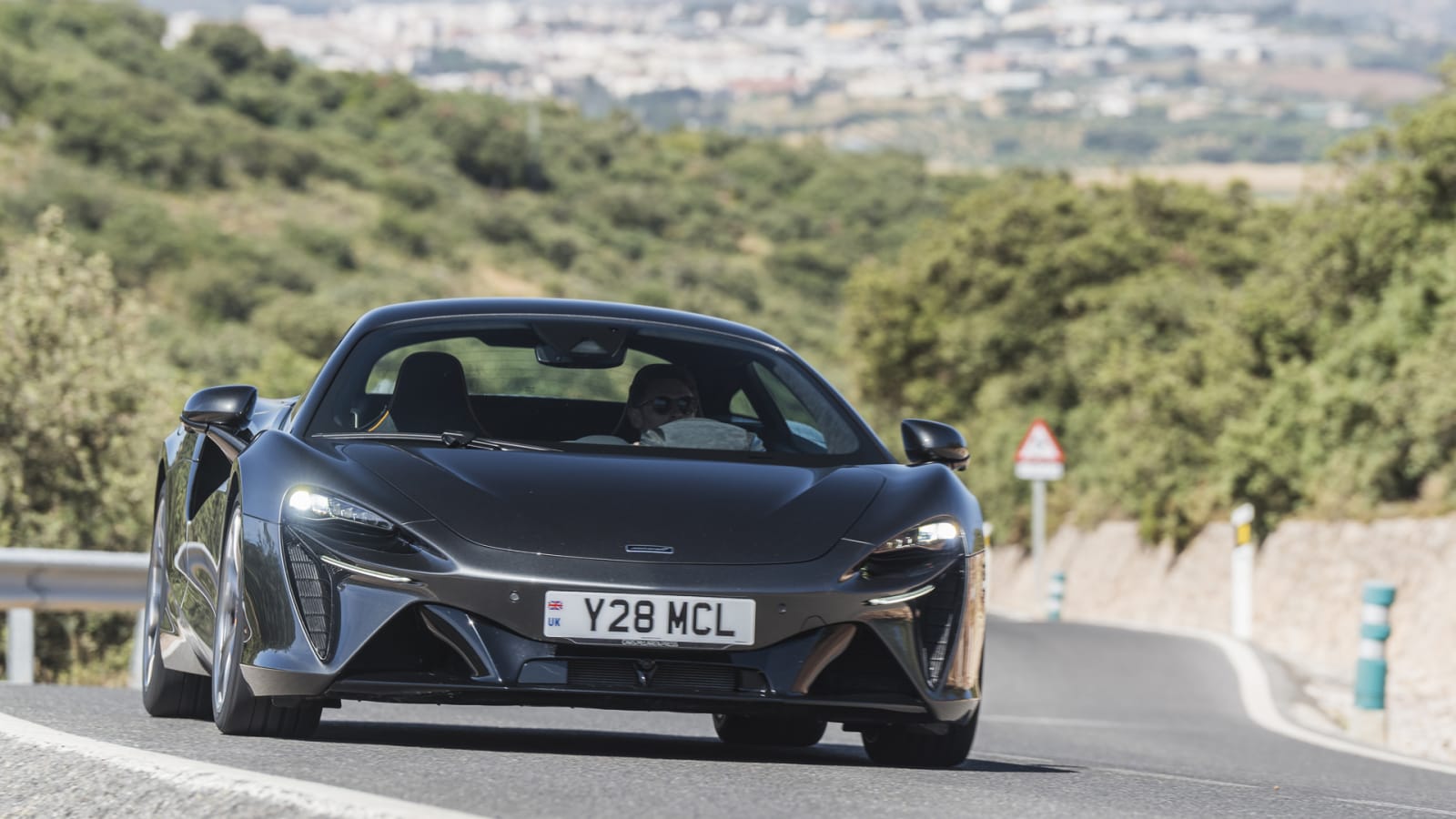
McLaren Artura First Drive Review: Twinsies with Ferrari

MALAGA, Spain — Back in the early 2000s, when my mother was still rapidly spending down the proceeds of a profitable divorce from her second husband, she would occasionally send gifts to me and my boyfriend. One Hanukkah, she mailed us a pair of matching flannel robes from L.L. Bean. At least three other male couples we knew received this gift from a mother that holiday season, so perhaps there was some osmotic zeitgeist wafting in the ether, but this did not make it any more appropriate. Not only do I feel about robes the same way I feel about sweatpants — that they epitomize the most tragic abdication of human effort — but, following a one-time visit to Saugatuck, Michigan, a haven for Midwestern queers in matchy-matchy polos and Bermuda shorts, my partner and I had developed a strict policy: No Gay Twinning.

Decades later, Ferrari and McLaren have both released six-figure, mid-engined, entry-level, 180-inch, rear-wheel-drive sports coupes featuring twin-turbocharged 120-degree V6 engines combined with an electric motor and an integrated battery pack that can be plugged in. I just completed a road drive and track time with the McLaren Artura, and it raises the question: Is this some more of that osmotic zeitgeist, or are the companies twinning each other?

I haven’t yet driven the Ferrari 296 GTB, but I can speak to the ways these cars don’t precisely match. Unlike the Ferrari, which is among the Italian brand’s most potent regular production road cars, with a combined ICE/EV output of 818 horsepower and 546 pound-feet of torque, the McLaren Artura makes do with a paltry 671 hp and 531 lb-ft of twist, placing it downrank in the brand’s lineup. But whereas the Ferrari has 3,700 pounds to motivate, the McLaren has just 3,300. This means that their 0-60 times are evenly matched, at around the 3 second mark, and their top speeds are identical at 205 mph.

McLaren achieves this parity the same way it usually does, via a monomaniacal focus on weight saving. This includes such lunatic wizardry as utilizing an all-new carbon fiber and aluminum sub-structure, thinner front windshield glass, an electric motor light enough to wear as a bracelet, and the aforementioned compact V6. It also implements an ethernet-based electrical system to reduce the weight of all the wiring contemporary vehicles require for their innumerable infotainment features.

With its short wheelbase, overall compactness and all that power, the Artura actually feels lithe on its tires — which, by the way, feature Pirelli’s first production iteration of its sensor and Bluetooth-based Smart Tire, allowing the car to instantly know exactly which type of 235/35/ZR19 (front) and 295/35/ZR20 (rear) tires are on the car — street, track or snow — how warm the rubber is inside the sidewall as opposed to at the rim, and precisely how much air is contained within. George Orwell said ignorance was strength, so I’m not certain why we’d want to know all of this, and the one time I actually got to use the feature on the track, the McLaren tech who was present overruled the red warning light and deflated the rubber to a pressure he deemed more appropriate. Progress!

Because of, or despite, all this engineering effort, the Artura accelerates with commanding alacrity, and very little drama, particularly in manual (paddle-shifted) mode. And its combination of a very stiff carbon fiber structure and softer suspension settings, common to the brand’s grand touring-focused vehicles, gives it a compliance that is missing from other more hardcore supercars. Though it lacks the trick hydraulic body control system featured on other McLarens, its hydraulic steering, something of a rarity in modern cars, provides excellent feedback. Or maybe it was the smart tires communicating with the smart steering wheel, which now moves, along with the instrument binnacle, as the one on my 1977 Porsche 928. Progress, again!

In addition, big carbon ceramic discs provide excellent braking, handy when chunks of the local geology appear suddenly in a blind corner on a spaghetti-twisted mountain roadway. However, achieving bite, like getting into the forbidden fruit of a candy apple, requires some initial firmness, followed, oft-unpredictably, by a crunch or a squish.

The Artura’s ability to motivate itself, if only for 11 miles, solely on electric power, provides a kind of “oh, neat” factor, useful for gotcha sneak-ups on pedestrians or silent escapes to or from extramarital trysts after sneaking down the drainpipe. But I couldn’t detect as much of the “infill torque” that the tiny electric motor is meant to provide at very low rpm, particularly, as referenced above, when the transmission was in automatic mode. The Artura, like some other six-figure hybrids, has so much technology baked in that it has a tendency to hunt, meanderingly, for its algorithmically-derived ideal of potency and efficiency, especially in city driving or during aborted highway passing maneuvers — Second gear! Sixth gear! No gear at all! This results in a hiccup here and there, as frustrating as when your phone refuses to take a command, but perhaps a bit more dangerous. (Also, your phone doesn’t cost $233,000.) Shifting the new eight-speed transmission manually, or driving flat-out on the track, cures the car of this issue. So, just do that, whenever possible.

Fortunately, you kind of can with the Artura, because for an exotic supercar, in this age of outrageous power and performance, the whole package felt rather livable, every day. This is a brand attribute for McLaren, and reminded me of the company’s first production road car in its modern iteration, the MP4-12C (from the era when McLaren named cars after their own license plate numbers). It even looks kind of mild for a supercar, walking (or running) the line between anodyne and AI generated. It’s a supercar for those who don’t want to stand out. Is that a market segment?

I’m not going to attempt to answer this question. It’s rhetorical device, like the aforementioned red herring of comparing the McLaren to a car I haven’t driven. I ask that you indulge me, however, even if this piece may resemble the Zen-like sound of one robe flapping.

Related video:
Acura Integra to make its racing debut at Pikes Peak Hill Climb

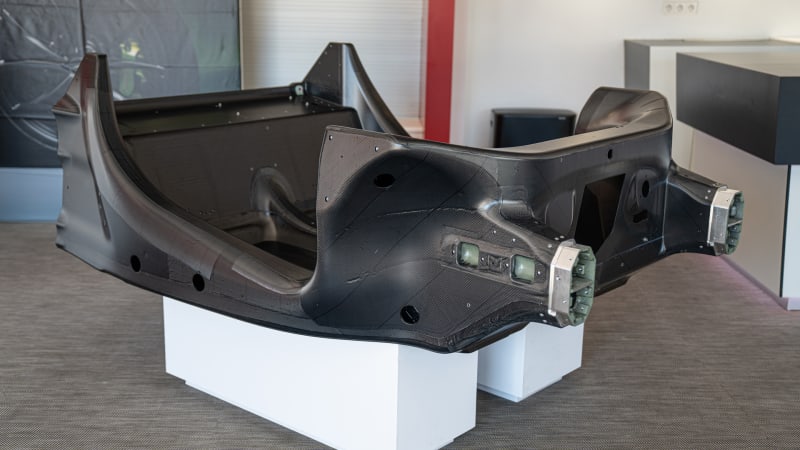
Acura is headed to this year’s Pikes Peak International Hill Climb with a bevy of race cars. Most notable of all is a Pikes Peak-prepped Acura Integra — yes, Acura is already getting the Integra out there for some racing.

Beyond the new hatchback making its motorsports debut, Acura is also bringing two TLX Type S race cars and two NSX Type S racers. For the icing on the cake, an NSX Type S will be serving as the official pace car for Pikes Peak this year, too. This particular running of Pikes Peak is special, for it’s the 100th running of the event. The first hill climb at Pikes Peak took place all the way back in 1916; the race went on hiatus during the world wars.

As for the cars themselves, Acura provided the greatest detail on the Integra. Modifications include upgraded brakes, new suspension, an HPD differential, wider (and lighter) 18-inch HRE wheels and 245-section-width Pirelli slick tires. The 1.5-liter turbocharged four-cylinder and six-speed manual transmission remain untouched, so it’ll be heading up the hill with the stock 200 horsepower and 192 pound-feet of torque. However, we’ll note the this Integra is sporting some extra-large exhaust tips out the rear, so Acura has clearly done something with the exhaust.

The livery for the Integra is an homage to Acura’s first endeavor into motorsports where the first-gen Integra competed in IMSA and won the 1987 and 1988 championships. Pikes Peak rookie Paul Hubers will pilot the Integra up the hill for Acura.

As for the other cars, Acura says that both the NSXs and TLXs are fully prepped for Pikes Peak with plenty of modifications, but doesn’t go into detail about them. The NSX Type S will be trying to beat the previous record set by an NSX in the hybrid fuel class.

All of these Acuras, and the rest of the field, will be running up the hill on June 26.

Relates video:

Buick Wildcat and Electra concepts, Ford Maverick | Autoblog Podcast #732

In this episode of the Autoblog Podcast, Editor-in-Chief Greg Migliore is joined by Road Test Editor Zac Palmer. They lead off with a discussion of the news. This section touches on the DeLorean Alpha5, Buick Wildcat EV Concept reveal, revival of the Buick Electra name, production reveal of the Mercedes-AMG One and some scuttle about Volkswagen’s recently-bought Scout brand. After that, they move on to the cars they’ve been driving, including the Ford Maverick and Chrysler Pacifica Hybrid.

After the pair finish with what they’ve been driving, the podcast transitions to an interview between Greg Migliore and former Car and Driver Editor-in-Chief Eddie Alterman. Finally, Greg and Zac wrap things up with some more spring and summer beer recommendations.

Send us your questions for the Mailbag and Spend My Money at: Podcast@Autoblog.com.

Autoblog Podcast #732

Get The Podcast

  • Apple Podcasts – Subscribe to the Autoblog Podcast in iTunes
  • Spotify – Subscribe to the Autoblog Podcast on Spotify
  • RSS – Add the Autoblog Podcast feed to your RSS aggregator
  • MP3 – Download the MP3 directly

Rundown

  • News
  • Cars we’re driving
  • Interview with Eddie Alterman

Feedback

Autoblog is now live on your smart speakers and voice assistants with the audio Autoblog Daily Digest. Say “Hey Google, play the news from Autoblog” or “Alexa, open Autoblog” to get your favorite car website in audio form every day. A narrator will take you through the biggest stories or break down one of our comprehensive test drives.

Related video:
Glickenhaus SCG004CS passes last hurdle, ready for deliveries

After five years of gestation, development, and crash tests for global homologation, Scuderia Cameron Glickenhaus is ready to begin customer deliveries of the 004CS this month. Conceived and developed as a GT3 racer that was then turned into a road car, the New England car company worked with Italy’s Podium Advanced Technologies honing the race version to do well at the Nurburgring. SCG namesake James Glickenhaus took the final ESC calibration prototype to the Concorso d’Eleganza Villa d’Este and talked to Road & Track about what’s ahead. In the immediate future, the Danbury, Connecticut factory expects to have 25 hand-built cars in customer hands by the end of the year, the three-trim lineup starting at $483,000

There’s the standard road-legal 004S — the only one that can be had with a six-speed manual transmission, the road-and-track 004CS, and the track-only 004C. The first two are powered by a supercharged GM 6.2-liter V8 in 650- or 750-horse tune. The track car drops the supercharger, taking it down to 520 hp in endurance racing trim, but that can be upped to 600 horses if the sanctioning body allows. SCG hasn’t disturbed the small block with insanely complicated engineering, R&T summarizing the SCG philosophy in a way that would make any DIY enthusiast weep: “Glickenhaus believes the moment you’re no longer able to get a supercharged Chevy small-block fixed at the local mechanic, the world as we know it would have ended anyway, and your car wouldn’t matter much.”

The other side of that garagiste credo is hardcore racing performance. Despite a software bug, crashes, and errant holes in some parts, the SCG004C finished last weekend’s Nürburgring 24 Hours race in 12th place overall — and first in its class. The four drivers finished just a lap down on the race-winning Audi Sport Team Phoenix R8 LMS GT3 Evo, same as every runner from seventh to 14th, keeping company with much bigger teams like Falken Motorsports with their Porsche 911 GT3R and Mercedes-AMG Team Bilstein in an AMG GT3. 

Despite the team’s entry in the World Endurance Championship, SCG might opt to narrow its focus to the ‘Ring event and Baja, where its off-roaders romp. James Glickenhaus is dubious about how much return on investment the WEC provides, where the disparity between top teams and smaller entries is much larger. “The only question is what we’re going to do going forward with the WEC and what we’re going to do going forward with our hydrogen pickup truck,” he said, in reference to the Baja Boot. “It’s dependent on the capital raise we are in the process of trying to finalize.”