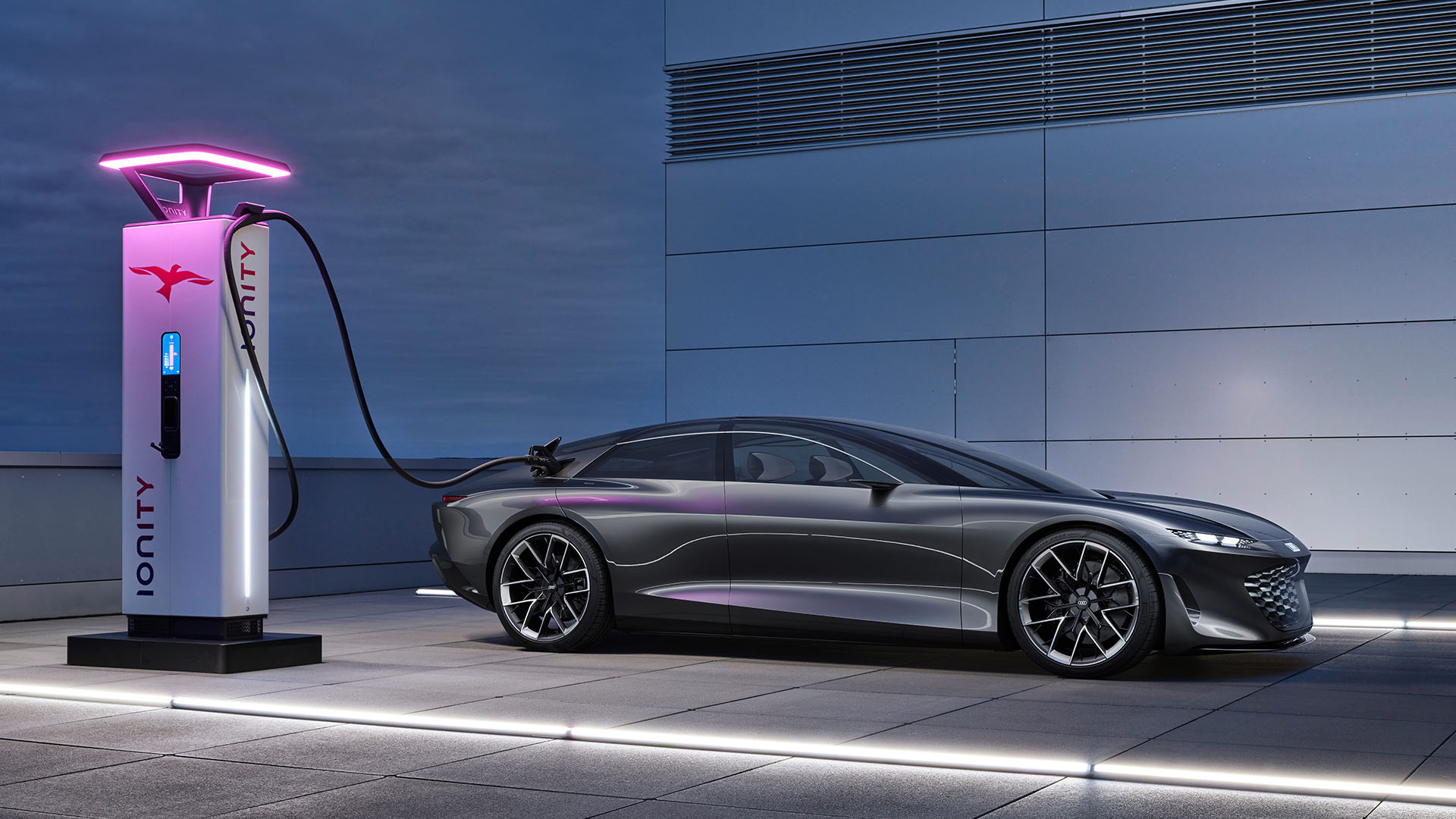
2026 Audi Etron GT Quattro Drive: A Confident Starting Point
[unable to retrieve full-text content]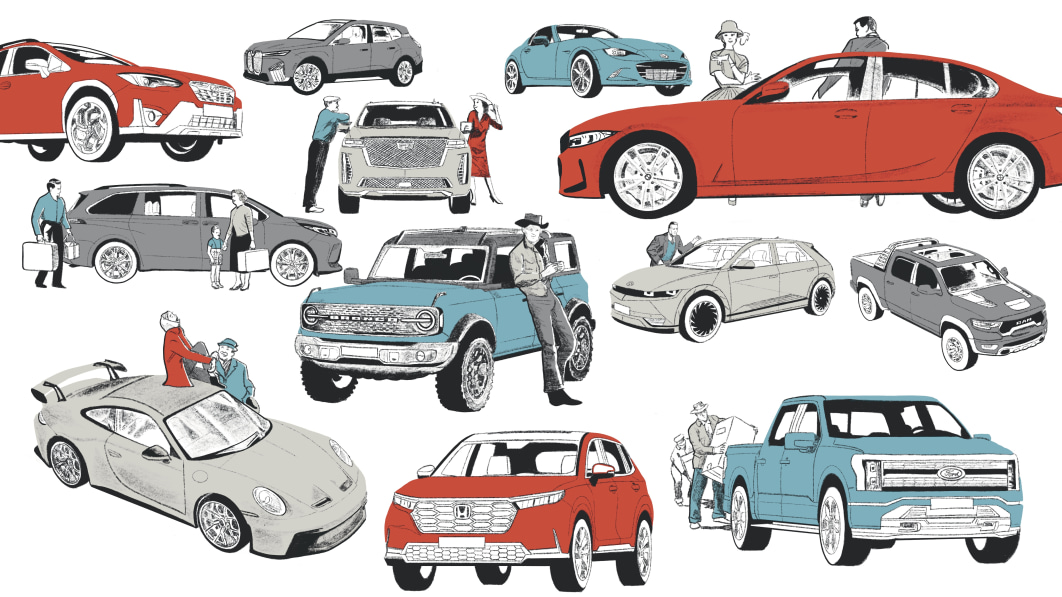
Autoblog’s Editors’ Picks: The Complete List
Filed under: Green,Acura,Alfa Romeo,Aston Martin,Audi,Bentley,BMW,Cadillac,Chevrolet,Chrysler,Dodge,Ford,Genesis,GM,GMC,Honda,Hummer,Hyundai,Jeep,Kia,Lamborghini,Land Rover,Lexus,Lincoln,Maybach,Mazda,McLaren,Mercedes-Benz,Nissan,Porsche,RAM,Rolls-Royce,Toyota,Volkswagen,Volvo,Truck,Convertible,Coupe,Crossover,Hatchback,Minivan/Van,SUV,Wagon,Electric,Hybrid,Luxury,Off-Road Vehicles,Performance,Supercars,Sedan,Polestar,Lucid
Continue reading Autoblog’s Editors’ Picks: The Complete List
Autoblog’s Editors’ Picks: The Complete List originally appeared on Autoblog on Wed, 1 Nov 2023 10:00:00 EDT. Please see our terms for use of feeds.
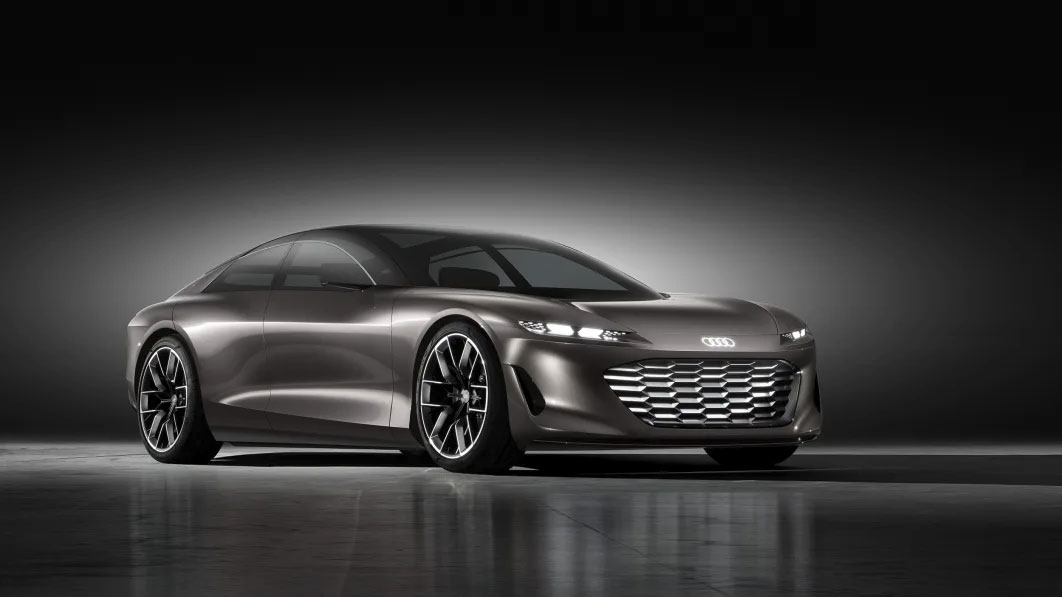
Volkswagen’s SSP vehicle architecture back on track for 2026 debut
Volkswagen execs would tell you some very unfunny things happened on the way to electrification: Design decisions wrought years of damage, vehicle platform and software catastrophes scotched launch timelines for not just one but at least three brands, and chaos piled high enough to unseat a CEO. Those execs might not be correct about that middle one, though, if Volkswagen Group CEO Oliver Blume is telling the truth. During a presentation laying out the conglomerate’s ten-year plan at the annual capital markets day, Blume said the Scalable Systems Platform (SSP) will launch on time, in 2026. This counters recent reporting as well as complaints from individual brands late last year and this year. Due to ongoing problems with the software needed to make the SSP work, Automotive News Europe reported last July that Audi’s first vehicle with the new software had been delayed up to three years, to 2027. A few months later, Autocar reported that Porsche updated its IPO prospectus with a warning that software holdups might delay the battery-electric 718 twins and Cayenne.
We don’t know how the company got things back on track, but investors will be pleased and customers should be, too. Blume’s presentation made clear that VW expects to launch a platform even more potent than the one we were told about two years ago. Previous CEO Herbert Diess gave a similar presentation in 2021 explaining that the SSP would serve every group brand, and serve every kind of vehicle from city cars with as little as 114 horsepower to supercars with as much as 1,140 hp. Blume, however, said the SSP will be able to power drivetrains making as much as 1,700 hp — 560 hp more than the last projection.
But wait, there’s more. SSP development will break down into three paths: Urban city cars for Volkswagen, Audi, Skoda and Cupra; compact and mid-size vehicles for VW, Audi, Porsche and Skoda; and large vehicles for Audi, Porsche, Bentley and Lamborghini. Note the absence of Bugatti.
This one skateboard chassis will eventually replace the current MQB, MLB, MSB and MMB internal combustion platforms, the present MEB, PPE and J1 electric platforms, and the MEB+ arriving in 2025. It will be powered by new “unified” batteries of various chemistries developed in-house and running on an 800-volt electrical architecture. The charging time to take the batteries from 10% to 80% SOC will be 12 minutes, compared to the 35 minutes needed for the current MEB battery-electric platform; the interim MEB+ platform will lower that time to 21 minutes. The fleshed-out software dubbed 2.0 will enable Level 4 hands-free driving.
To get a sense of scale and return on investment when this is all put together, the current MEB platform sits under about ten models total, from the ID.3 to the Audi E-tron GT. The large SSP will support 14 models from Audi, Bentley, Lamborghini and Porsche by itself. According to Blume, those 14 SSP-based models are predicted to sell about 1.14 million units between debut and 2038, netting the group more than 150 billion in revenue, with profit margins above 20%. For comparison, Porsche’s 2022 operating profit was 18%.
It’s not clear which vehicle will introduce the world to the SSP in 2026, but we do know the second-generation all-electric Audi Q8 E-Tron, Audi’s Project Artemis and Volkswagen’s Project Trinity have all been penciled in around that time. If Blume’s assertions still hold weight at that time, then a line from Herbert Diess’ 2021 presentation could still come true: That come 2030, VW will make more money in the EV business than the ICE business.
Related video:
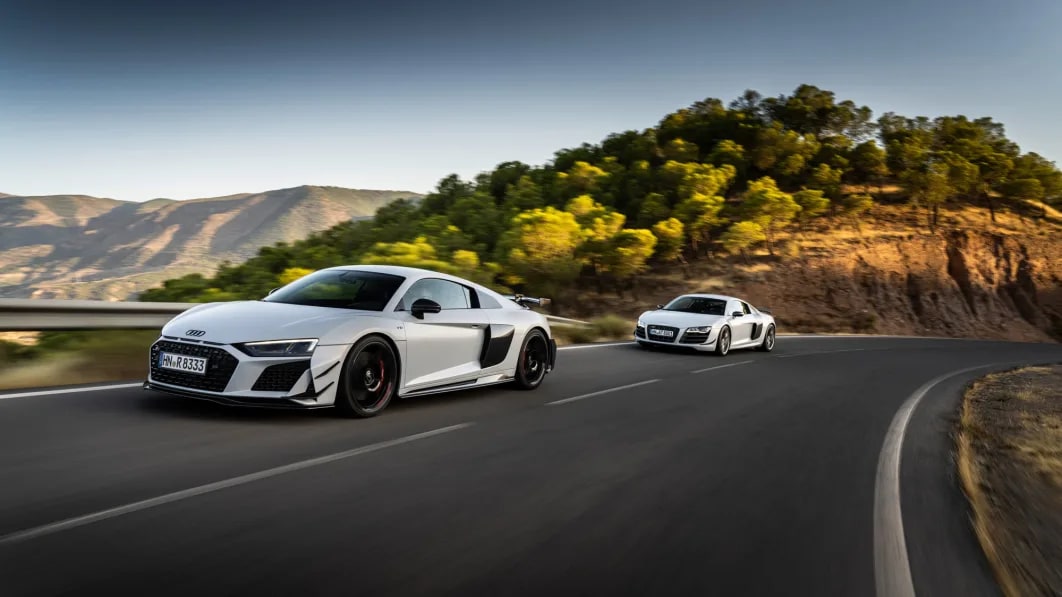
2023 Audi R8 to be the 17th and last year for the super coupe
In October, Audi introduced us to the final special edition for the R8, the 2023 Audi R8 V10 GT RWD. This was the second coming of the GT name to the Audi lineup, following the 2012 Audi R8 V10 GT. Audi limited the previous car to 333 coupes and 333 Spyders. The new GT will only get 333 coupes, R8 technical manager Nils Fischer telling CarBuzz there isn’t enough overall R8 production left to squeeze in a Spyder. The Ingolstadt automaker figures to build about 2,000 R8s at for the 2023 model year, then the R8 is dead after two generations and 17 years on the market. As it stands, there’s no successor anywhere near ready to go. Fischer told Car and Driver the details of a next-gen car are still being sorted out.
The consensus has been there’s something electric headed for the top spot. Audi produced a very short lived electric R8 E-Tron with the second-gen R8, selling just 100 examples in a year before pulling the plug. As EVs became the thing, rumors of another electric R8 persisted. Sometimes the rumors were spun from conceptual cloth, like then when Audi showed the PB18 E-Tron Concept in 2018. Sometimes these were spun from unnamed insiders, like the 2019 prediction that there would be an R8 E-Tron GTR based on the Porsche Taycan’s platform. Sometimes they came from executive statements, like when a brand VIP told Automotive News in 2021 an R8 EV “won’t just be an R8 with an electric motor,” it would be, rather, “an R8 but different.” And sometimes whispers from “Audi insiders” got the rumor spigot going again, like when Autocar wrote in September of this year that “the supercar has not yet been officially signed off but is very much underway” and won’t be called R8 nor look like the R8, and when Car and Driver wrote a month later the car is codenamed Rnext and has been pushed back to 2029.
Even the powertrain is up in the air, apparently, thanks to the European Union leaving a door open to synthetic fuels for now. An Audi project manager has already said he believes the ICE could survive past 2030 in Europe. On top of this, all the shuffling going on at the VW group with respect to personnel, platforms, software, and tentpole product initiatives like Project Trinity tend to reduce visibility to just beyond arm’s length. The only sound bet is that there will be something to occupy the halo spot sometime before the end of the decade.
Meanwhile, start saving your Christmas card money. The Audi R8 V10 Performance RWD starts at about $162,000 in the U.S., and it’s going, going, almost gone.
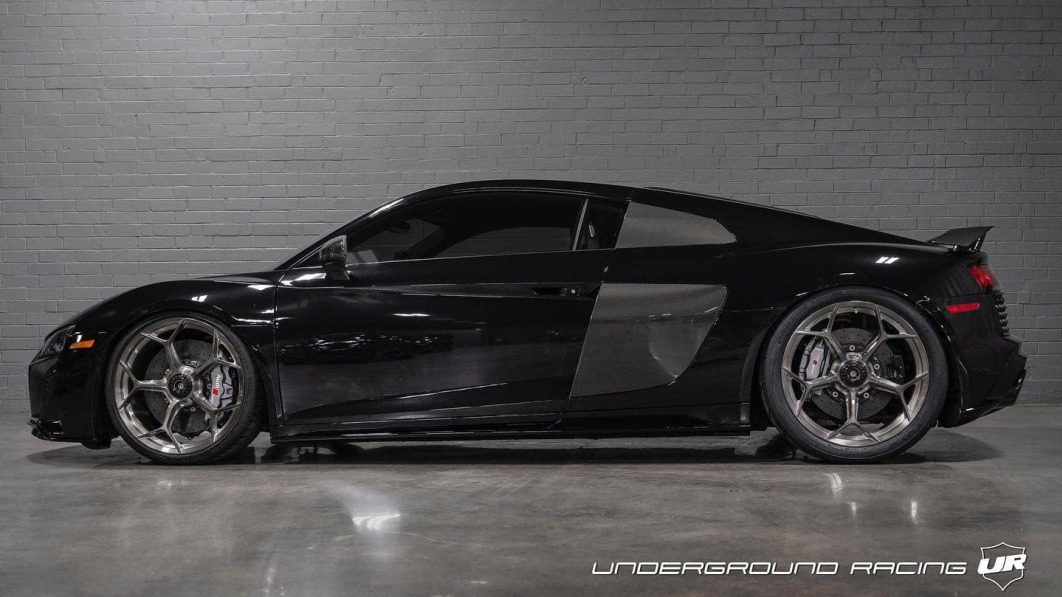
2020 Audi R8 Decennium gets six-speed manual conversion
One of the best manual transmissions ever put on the market was the gated six-speed in the first-generation Audi R8. That silken, row-your-own warrior departed to the afterlife with the introduction of the second-gen car in 2015, replaced by a seven-speed dual-clutch gearbox. But if money can resurrect whole and long-dead car brands, it shouldn’t have any problem with a few hunks of metal in a bell housing, no? It won’t, so long as there’s a well-heeled customer on one side, Underground Racing on the other, and a 2020 Audi R8 Decennium in the middle. Oh yeah, and a couple of turbos.
The Dallas-based customer owned one of the 222 R8 Decennium special editions that Audi produced to commemorate a decade of the 5.2-liter V10 and motorsports success — only 50 of the cars came to America, each producing 602 horsepower and 413 pound-feet of torque. He requested a twin-turbo kit from Charlotte, North Carolina-based Underground Racing, the shop specializing in R8 and Lamborghini builds. While they were toiling in back of the car, he also requested they swap that dual-clutch for a manual. The result is a riotously double-boosted V10 with 1,500 horsepower and six forward ratios chosen by hand. Underground Racing told Road & Track they started with the gearbox from a 2012 Audi R8 and reworked it with custom parts to make it fit, manage the power, and be daily-drivable. The task also involved installing a JRR engine management system to shepherd the reconfigured drivetrain.
In the cabin, UR removed the square section that houses the seven-speed dual-clutch shifter, replacing it with what looks like a custom fabbed gate giving off Ferrari vibes. It’s quite nice. Intriguingly, the R8 retains its paddle shifters behind the steering wheel. UR says these paddles have been equipped with “rolling antilag,” plus “launch control, drift mode, and more.” Curiouser and curiouser. The R8 Decennium was finished off with tweaks like a custom billet intake and custom-finished, center-lock wheels mimicking those on the Huracán Performante,
With one six-speed conversion done, UR says it’s ready to do the same for any other manual-craving R8 owners, but the swap can only be added onto a twin-turbo kit. That means spending at least $49,000 for the Base Twin Turbo System that takes an R8 up to 800 wheel horsepower on 93 pump gas, before adding the cost of the manual transmission work. Underground Racing says it will release pricing for the six-speed manual kit soon, and we assume the new gearbox will be included in UR’s two-year, 24,000-mile warranty for peace of mind along with power and proper shifting.
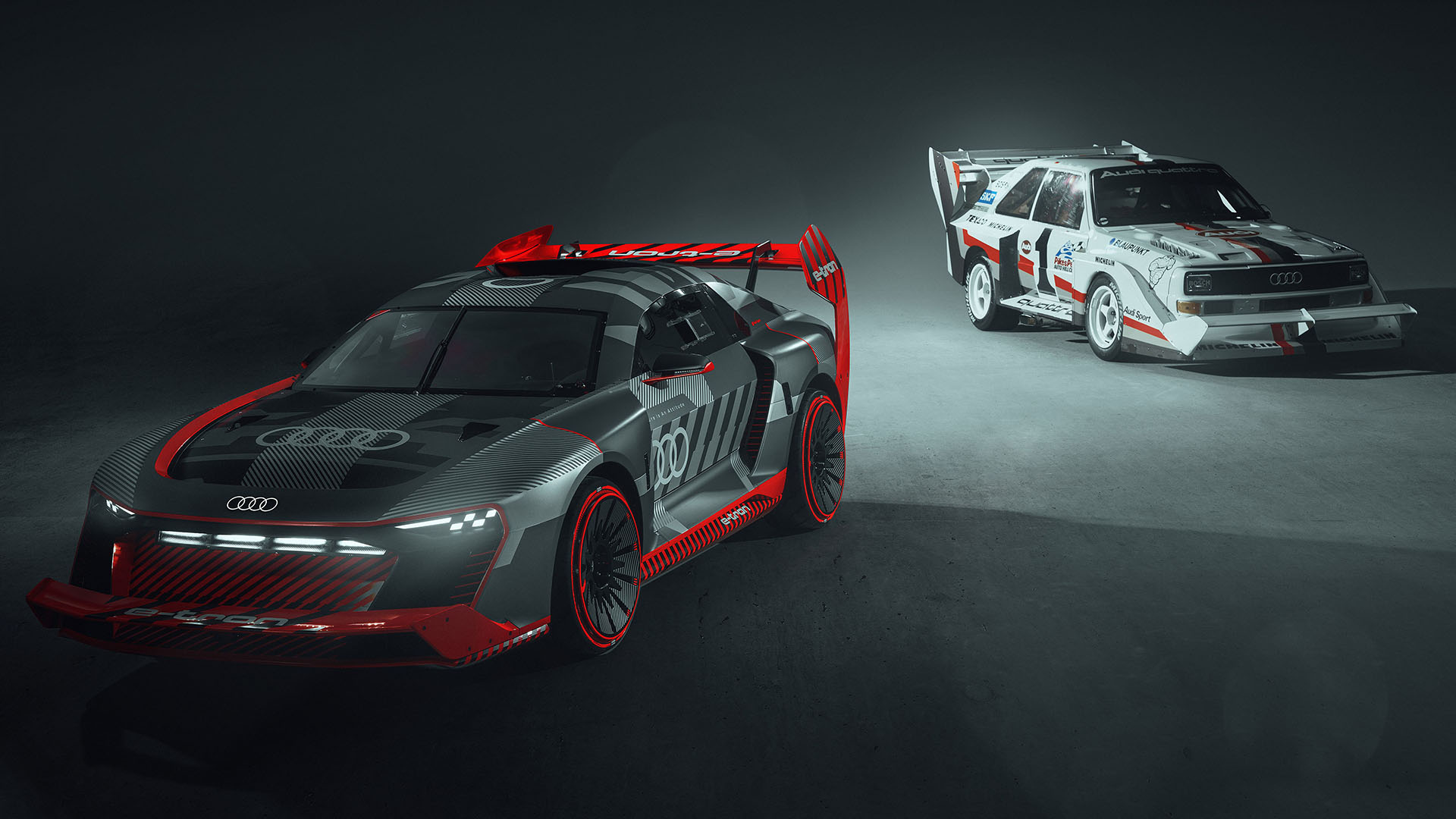
Ken Block’s Audi S1 Hoonitron
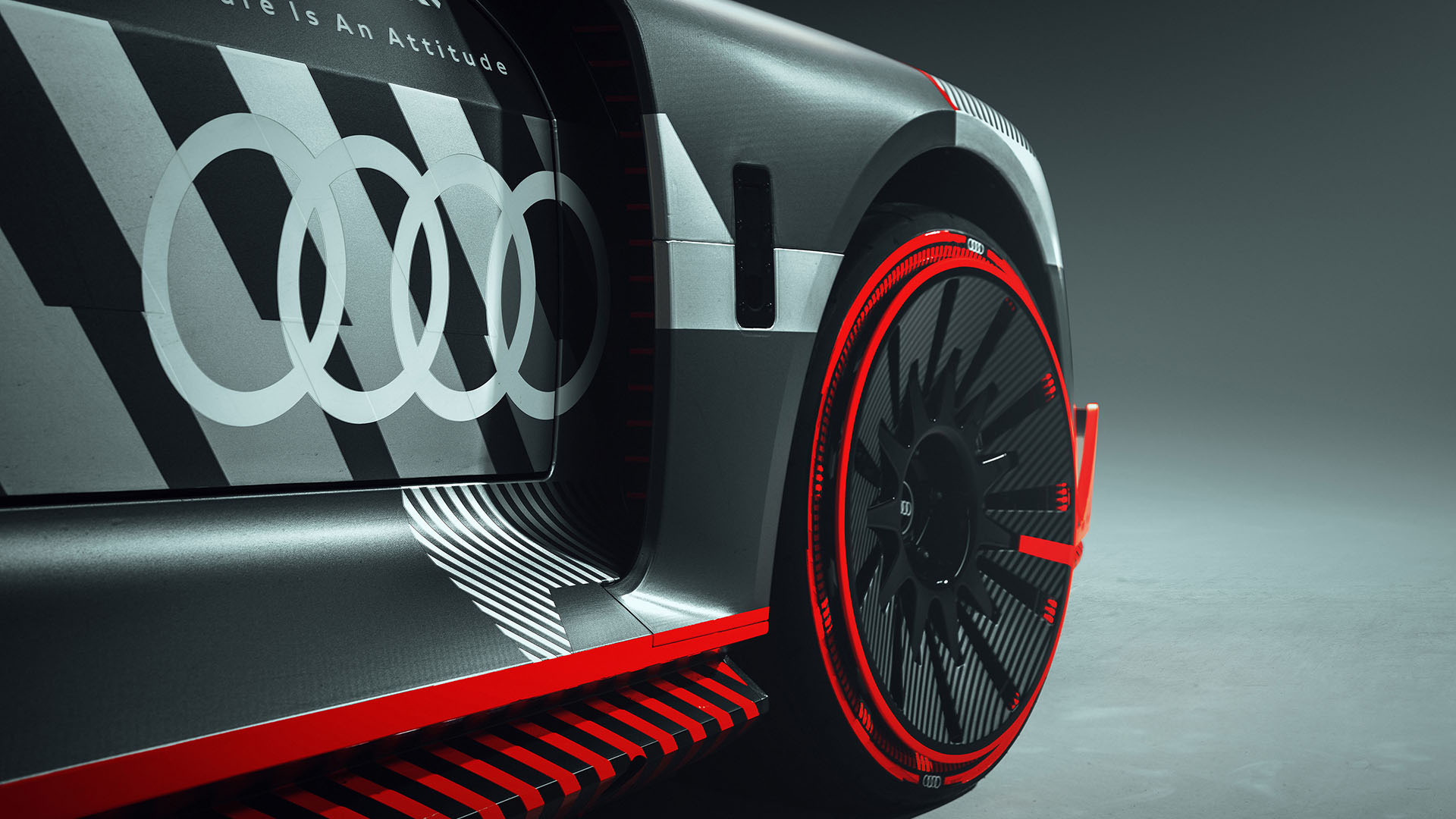
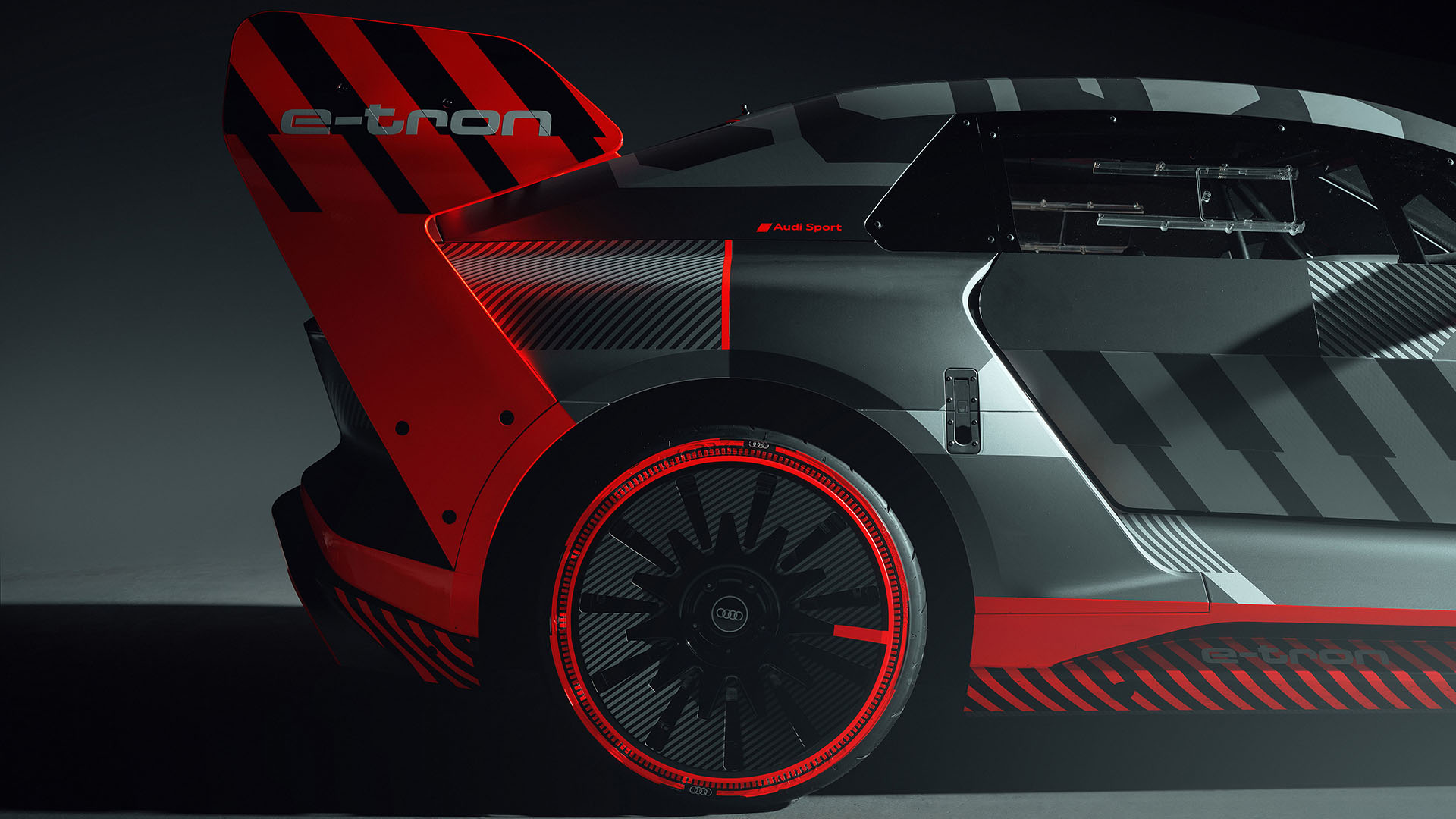
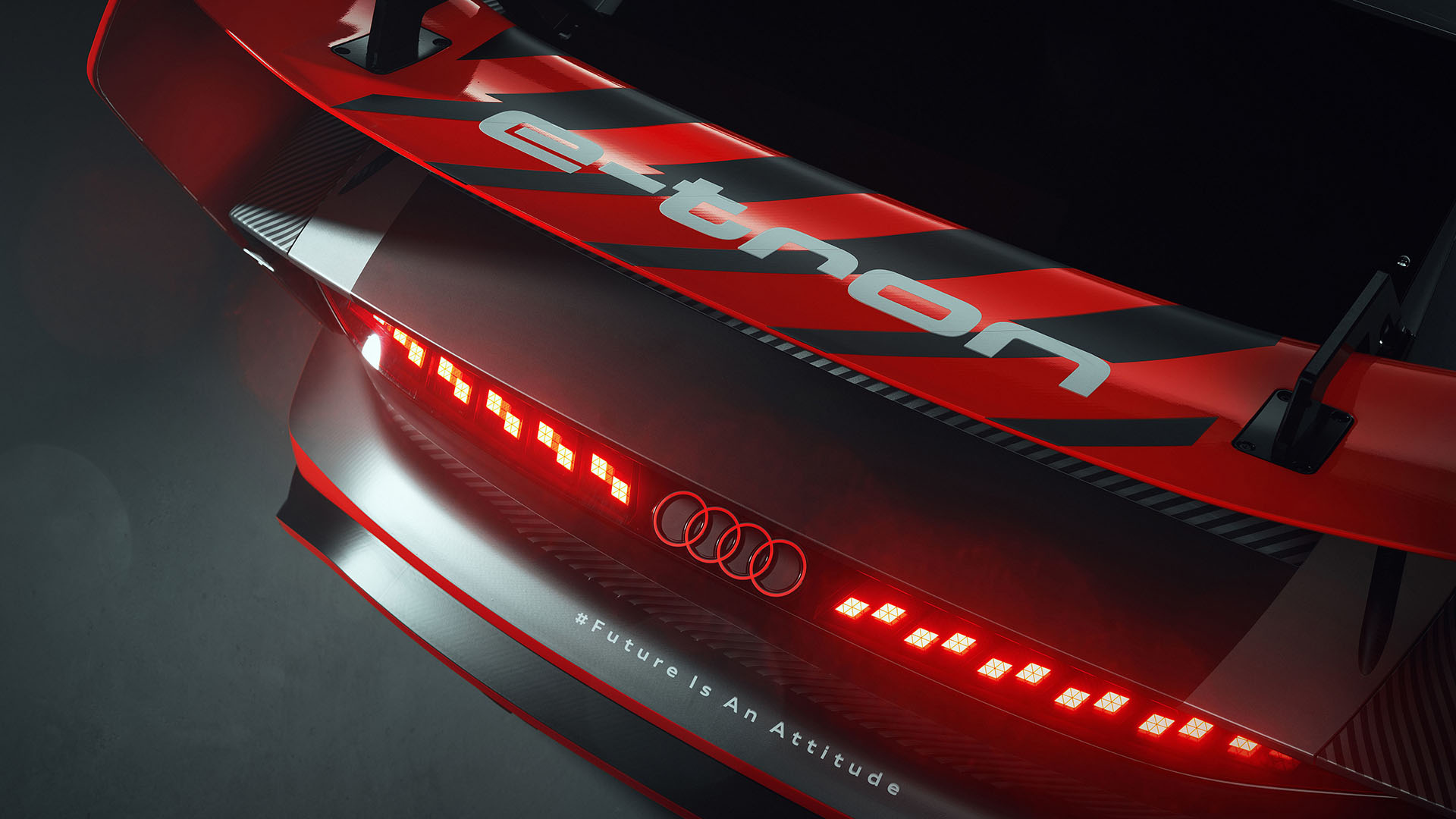
I am sure we all remember the legendary Audi Sport Quattro S1 we’ve seen attacking the Pikes Peak Hill Climb event, also known as the ‘Race to the Clouds’ as the finish line is so high up on the mountain it is usually above the cloud deck, and it is that very special car that inspired the looks of the latest development from Audi, the S1 e-tron specifically created for drift artist Ken Block … so this car is called the Hoonitron.
This is a one-off creation from Audi that will be featured in the upcoming video Ken Block is producing over the next few months, and being basically an S1 e-tron, we are looking at an all-electric car, powered by two electric motors, the Quattro name reveals it already, this is an all-wheel-drive car with oodles of power sitting on a lightweight carbon fiber chassis.
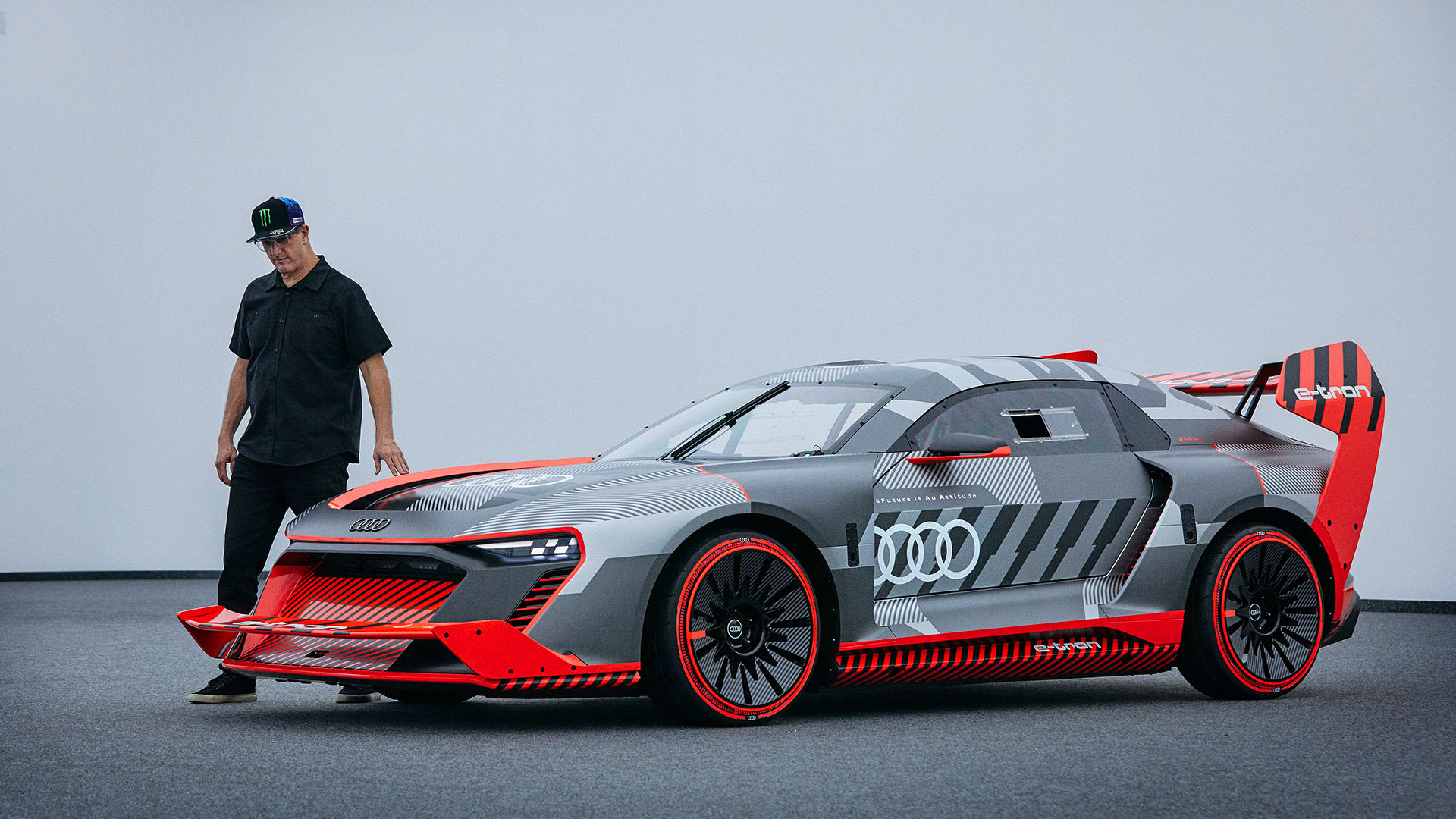
The Audi S1 Hoonitron is built to full FIA safety standards while the designers still managed to translate the raw design style of the classic Sport Quattro into the present day for the exterior styling of this 21st century S1 Hoonitron, note that development of this one-off was conducted at Neckarsulm by Audi Sport themselves, keep in mind the impressive Audi RS e-tron GT is built at that location too.
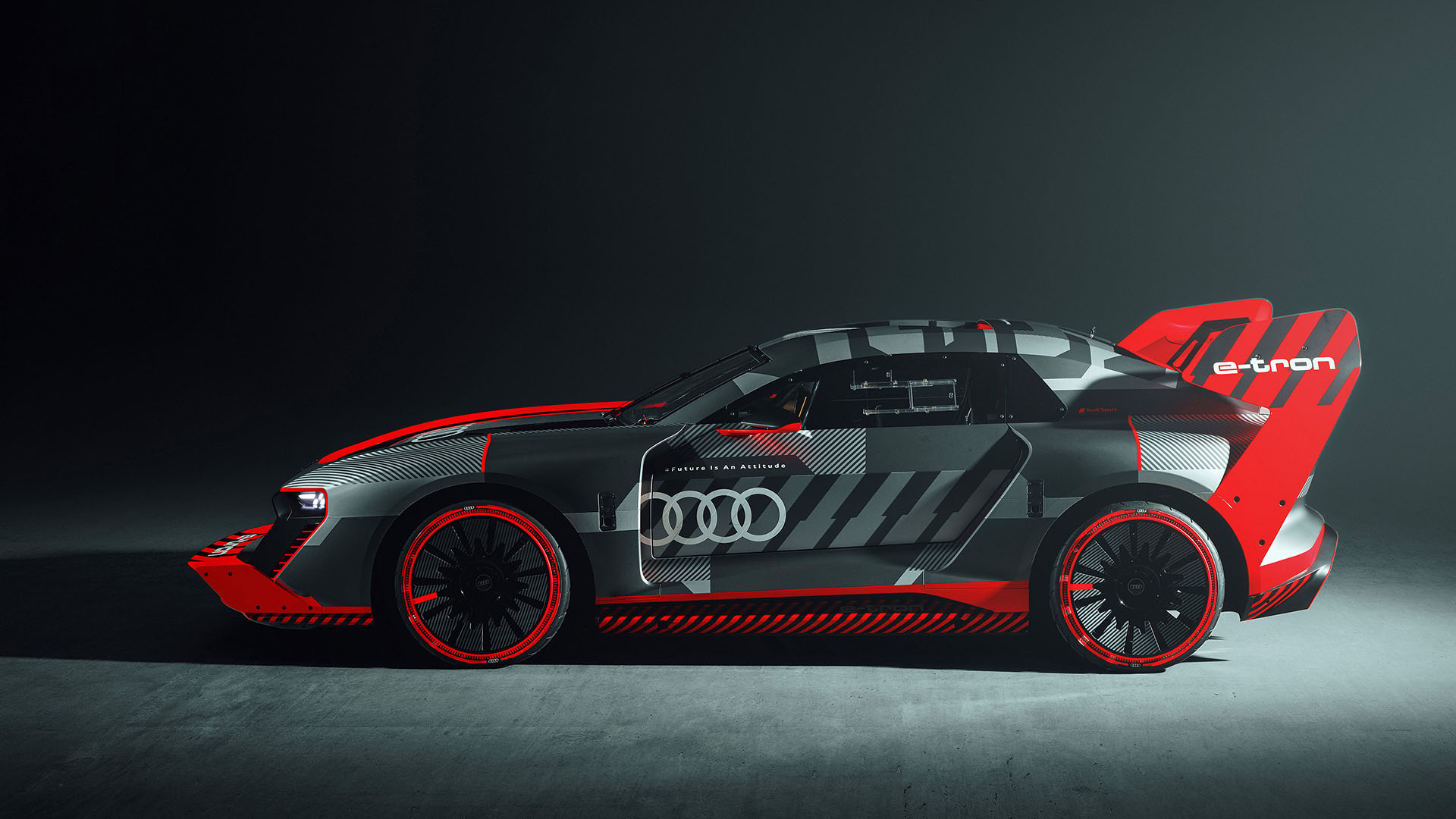
“Audi gave me the opportunity to test it for a few days in Germany,” says Ken Block. “I’m familiar with a wide variety of cars using internal combustion engines and transmissions, but there were a lot of new things for me to learn here. Spinning into a doughnut at 150 km/h directly from a standstill – just using my right foot – is an all-new experience for me. Our work was focused on getting the car and I used to each other. My thanks go to the whole Audi Sport squad for their outstanding teamwork.”
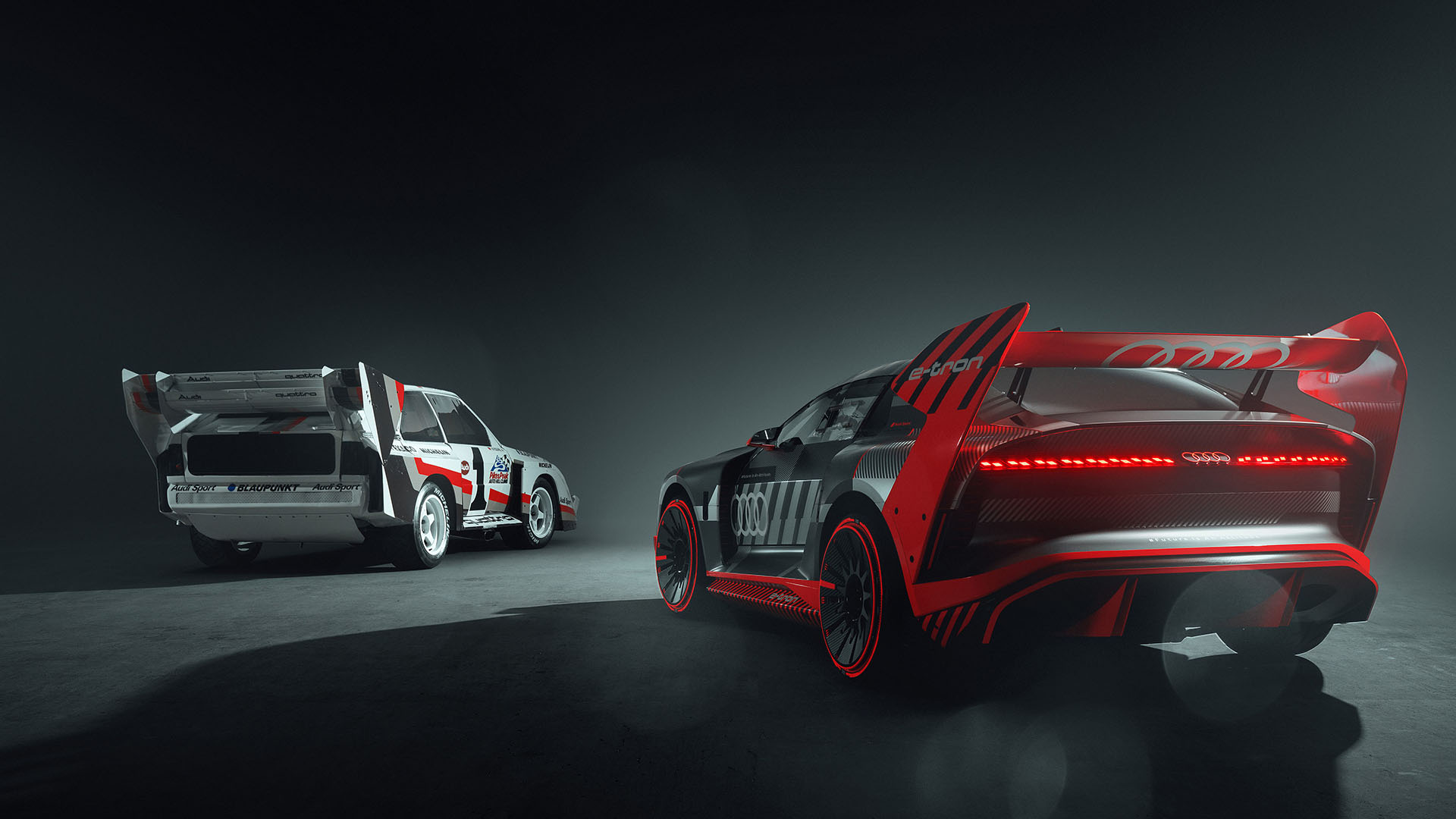
The futuristic design with a clear inspiration from the classic Sport Quattro was created by Audi Design in Ingolstadt, Marc Lichte, Audi’s chief designer, and his team commented: “When we first heard about this project, the whole team was thrilled immediately: we had the opportunity to develop a car that combines an icon of our brand with the future, the challenges were tremendous: “It was about creating a modern, all-electric interpretation of the S1 Pikes Peak. The timeline was extremely tight: while our design process normally takes one to one-and-a-half years, we only had four weeks from the first drawing to the final design. We were constantly in touch with Ken Block and his team and engaged in intensive exchanges.”
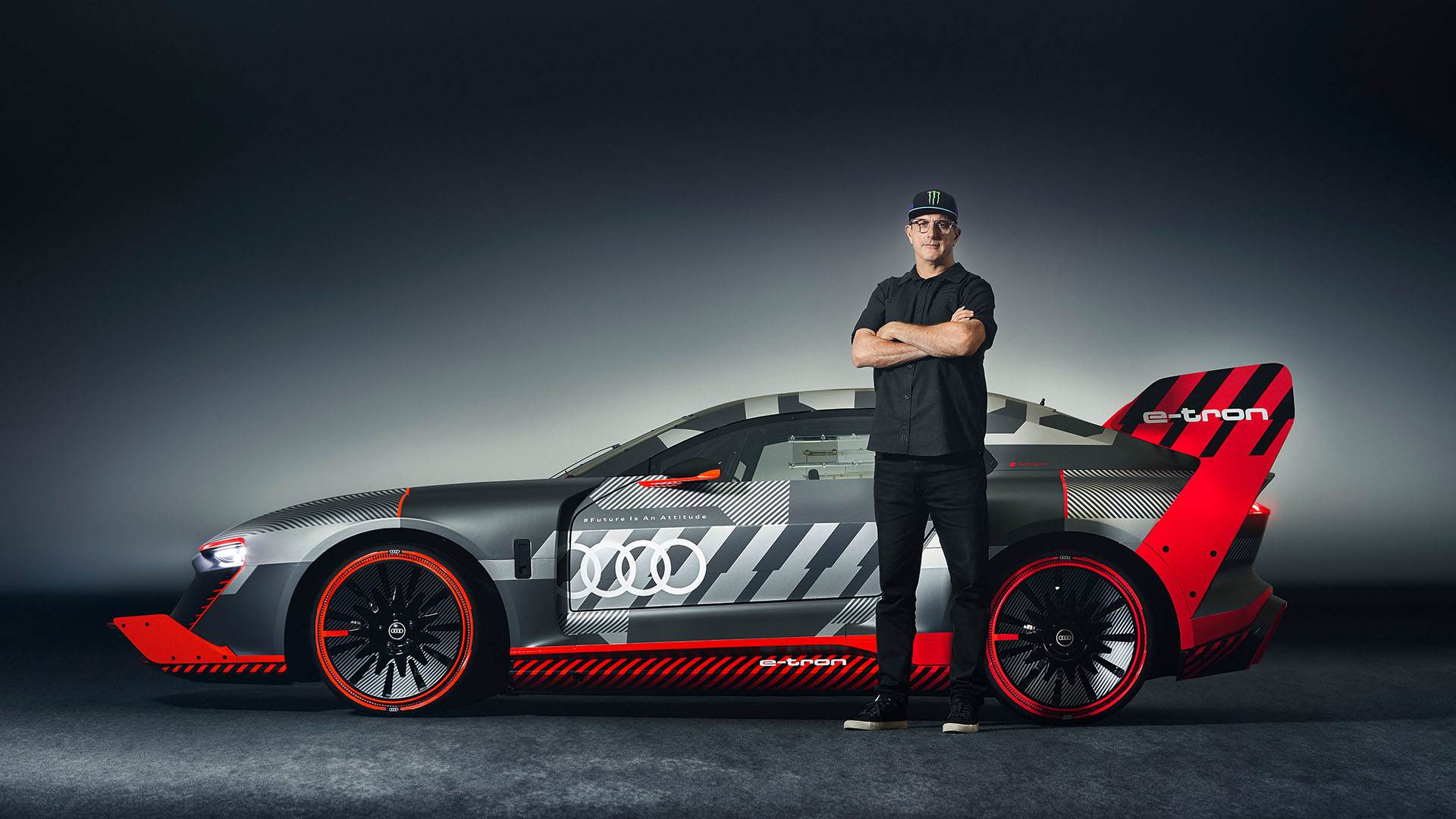
Back in the day, it was Audi that motived Ken Block to get into rallying in the first place, so having the brand you admire from the start create a bespoke car just for you is simply magic, so Block and his team will be creating a new episode in his Gymkhana series, this time using the S1 Hoonitron … therefore the working title for his latest video currently is ‘Elektrikhana’.
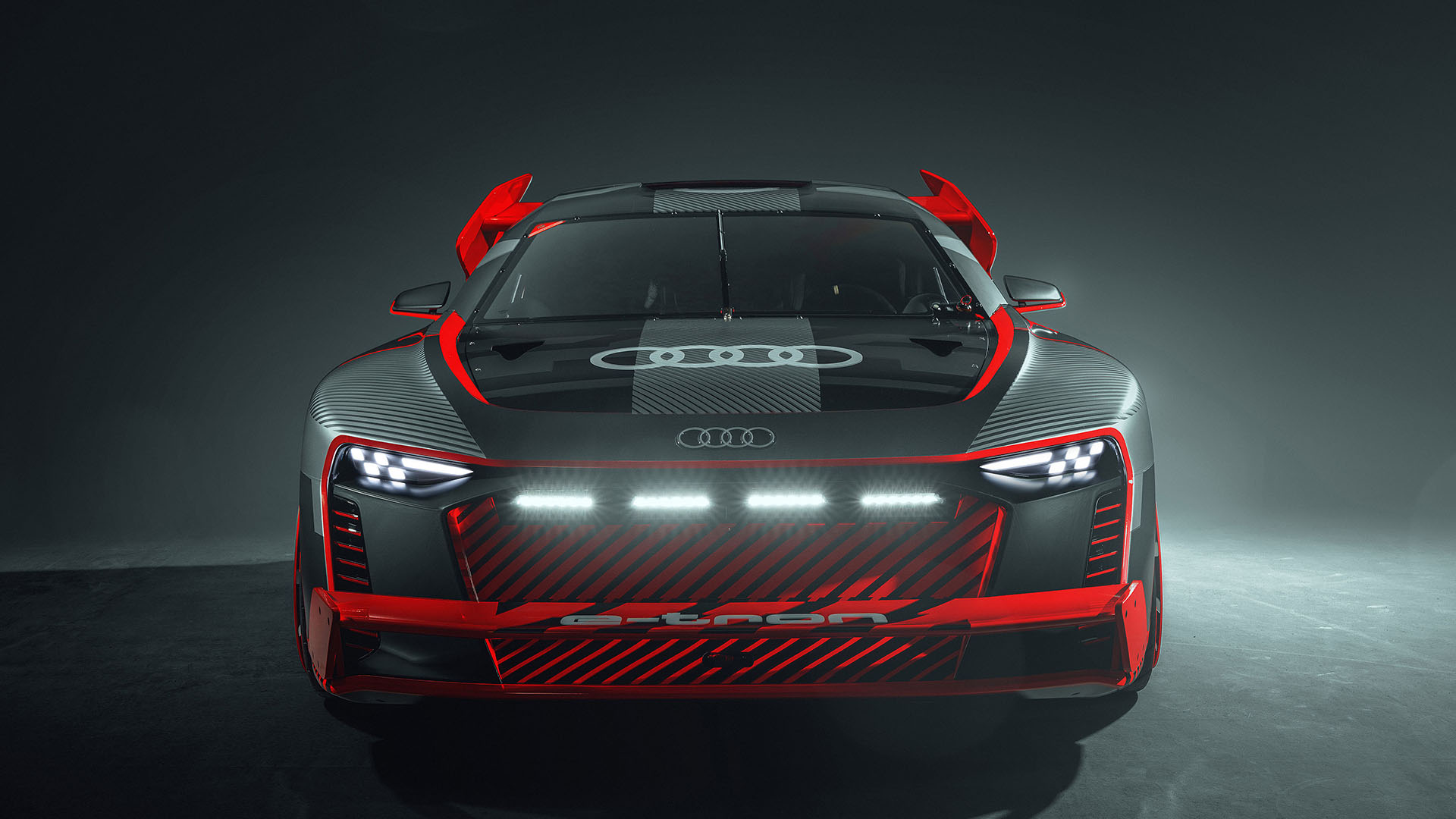
Ken Block: “The S1 Hoonitron combines a lot of what Audi was already famous for in the nineteen-eighties, for instance, the car’s spectacular aerodynamics have now been translated into a totally modern form. I think it’s cool that the Audi designers have been inspired by their own past and uniquely transferred the car’s technologies and appearance into the present.”
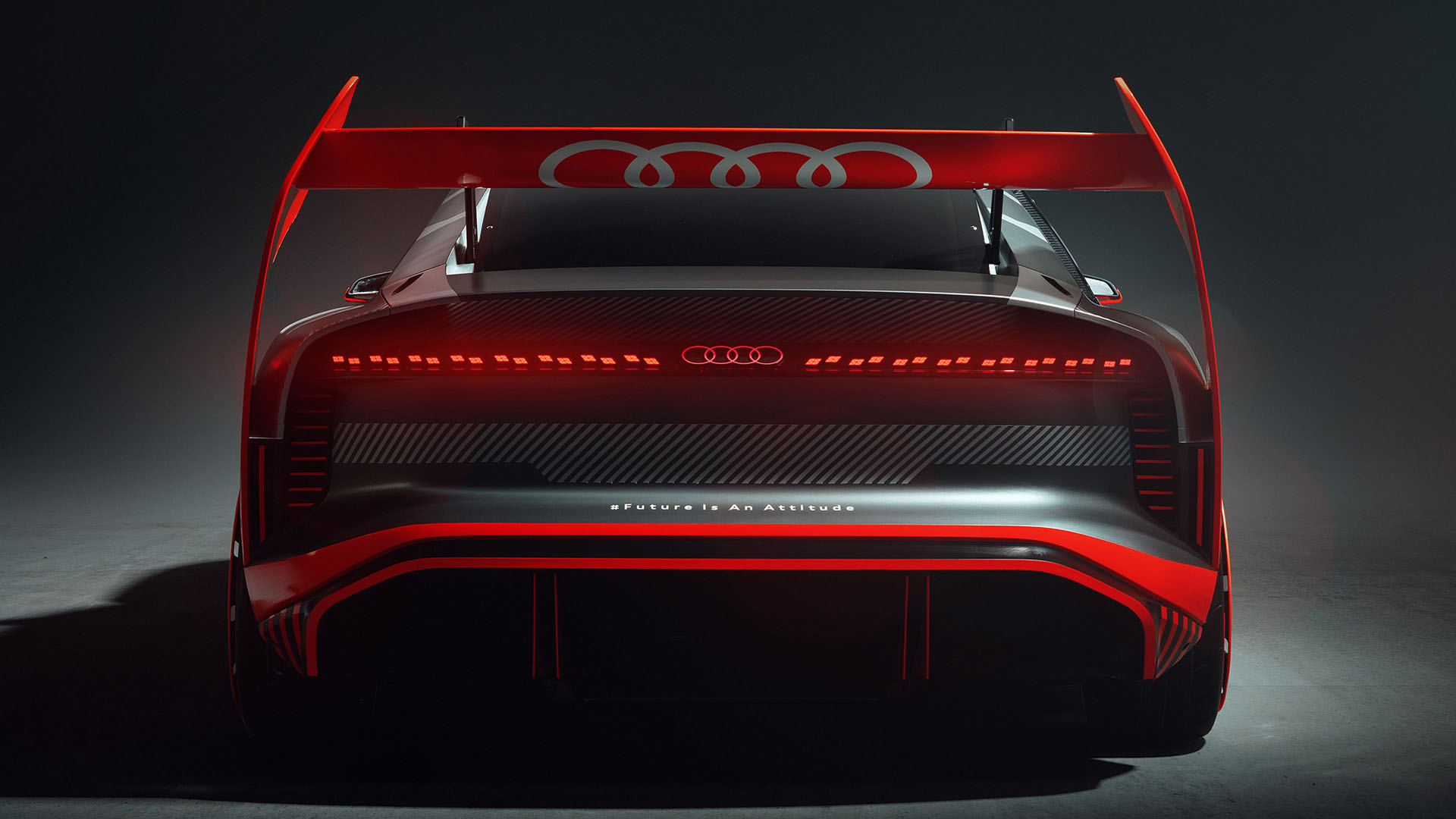
I for one am looking forward to checking out Elektrikhana when it’s published online, I’m sure it will be as least as impressive as Block’s previous work …
ABT RS6-S and RSQ8-S: New Packages with up to 690hp
ABT has revealed new Aero packages with carbon fibre parts for the RS6 and RSQ8 models which will be launched in mid-January 2022. The new packages carry the badging RS6-S and RSQ8-S.
Both the Avant and SUV models are powered by identical V8 engines with four litres of displacement generating a standard output power of 591 hp and 590lb-ft of torque.
The ABT Power S Performance upgrade based on the high-tech ABT Engine Control (AEC) increases the power output from standard to 690 hp and 649 lb-ft of torque.
ABT offers an extensive aerodynamics package made of visible carbon with many similarities for the models and differences as well i.e, both kits consist of a unique front lip with the respective model name in red lettering. The SUV has been fitted with side skirt add ons at the front and rear part of the vehicle whereas the Avant has side skirt add ons at the front and side blades at the rear.
Both S models have been equipped with the two-part rear spoiler and the ABT stainless steel exhaust system with four tailpipes measuring 102 mm.
The new RS6-S features anti-roll bars at the front and rear and 22 inch ABT high performance HR wheels for optimum performance. The new RSQ8-S has been fitted with similar wheels but with one size larger at 23 inches.
The interiors of the models feature upgraded seats, integrated entrance lights and customized door sills, shift knob finished in glossy carbon, start-stop switch cap and steering wheel badge. An additional package consisting of carbon fibre dashboard and seat frame covers for both models will also be available.
Audi denies McLaren purchase report
BERLIN — Early Monday morning, Audi denied reports that the company was closing a deal to purchase McLaren, leaning on a previous statement saying that the company is continuously looking at different ideas for cooperation and saying that the rumor of a completed purchase was “wholly inaccurate.”
“As part of our strategic considerations, we are constantly looking at various cooperation ideas,” an Audi spokesperson said in response to an earlier Autocar report that indicated a deal to purchase the supercar manufacturer was in the works to help the company secure a Formula 1 team. The report cited a source who said Audi had taken over the British sportscar maker.
“McLaren’s technology strategy has always involved ongoing discussions and collaboration with relevant partners and suppliers, including other carmakers, however, there has been no change in the ownership structure of the McLaren Group,” Audi said.
McLaren later joined Audi in denying the story, using a statement saying, “McLaren Group is aware of a news media report stating it has been sold to Audi. This is wholly inaccurate and McLaren is seeking to have the story removed. McLaren’s technology strategy has always involved ongoing discussions and collaboration with relevant partners and suppliers, including other carmakers, however, there has been no change in the ownership structure of the McLaren Group,” the spokesperson said.
Audi said to Reuters it was “looking at various cooperation ideas” but neither confirmed nor denied whether it was in discussion with McLaren about a possible sale.
McLaren CEO Mike Flewitt announced in October that he would be step down after eight years leading the financially troubled company, which is now searching for a successor.
This article contains reporting by Reuters.
2022 Audi A8 Facelift: Specs and Pricing
This is the new 2022 Audi A8 facelift model now with sharpened design and innovative technology. The active luxury sedan represents the brand’s symbiosis of high-end comfort, sporty handling and covers the full breadth of driving experience.
With all details in precision and intelligent functions, the new A8 is a high-value technology pioneer in user-centred and confident mobility.
The body of the A8 is made up of 58% aluminium parts following the same principle as the Audi Space Frame (ASF), the passenger compartment consists of hot-formed steel components with ultra high strength and the extremely rigid rear panel is made of carbon fibre reinforced polymer. Additionally, the lightweight construction concept of the A8 is completed by the Magnesium strut-tower bars.
The enhanced A8 is available with a 3.0L TFSI V6 engine and a 4.0 TFSI V8 engine which is also used in the S8. The 3.0 TFSI powers the Audi A8 55 TFSI Quattro and produces 340hp. A variant delivering 286hp and 500 Nm of torque is also available in China with the acceleration from 0-100km/h recorded in 5.6 seconds.
The 4.0 TFSI delivers an output of 460hp and 660 Nm of torque. Both the A8 60 TFSI quattro and A8 L 60 TFSI quattro can accelerate from 0-100km/h in 4.4 seconds.
The enhanced A8 features digital OLED rear lights as standard, the OLED rear lights have a proximity indication feature in conjunction with the assistance system. The vehicle also features Digital Matrix LED headlights which uses a digital micromirror device (DMD) technology, the headlights can generate dynamic coming home/ leaving home function when unlocking the car or getting out of the car.
The interior of the enhanced A8 features a range of seats and seat equipment with numerous adjustment options and footrests for warming and massaging the feet at various degrees. The relaxation seat package includes a back massage with 18 pneumatic cushions, electrically adjustable headrest, new screens at the rear and a continuous centre console as optional. The centre console is also available with optional fold-out tables and four-zone deluxe air conditioning.
The interior also features an electrically opening and closing decorative trim, air vent doors, velvety leather on the headrests, Valletta leather on the seats and an optional Valcona leather available in the new Cognac Brown color.
The exterior of the A8 features a wider Singleframe grill, more upright side air intakes,a flat roof dome, wide wheel arches and the rocker panel area has a concave design and ends in a blade pointing towards the road. The rear area features a wide segment light strip, wide chrome clasps and a customizable taillight signature with digital OLEDs.
The new A8 relies on a 10.1 inch and 8.6 inch display and natural voice operation. The vehicle consists of about 40 driver assistance systems including the Audi pre sense basic and Audi pre sense front safety system as standard for the series.
The enhanced A8 will begin production in December for the European market, the base price for the A8 is 99,500 euros in Germany and the Audi S8 is available at a start price of 144,800 euros.
Top 10 Non-Rally All-Wheel Drive Race Cars
We tend to look at all-wheel drive as one of more recent automotive inventions, but its roots could be traced way back to the dawn of motorsports years and the 1903 Spyker 60-HP four-wheel drive racing car. But this drivetrain found its ground in rallying, courtesy of the ice breaking Group B Audi Quattro and Lancia Delta that followed.
In between Spyker and Audi, a number of engineers and companies have experimented in the earlier eras of motorsport, trying to make cars faster around the tracks. But as many have found out, this system didn’t always give contenders the edge. Later on, all-wheel drive was heavily regulated and more or less unanimously dismissed, but some cars in recent years used power on both axles to their advantage.
Given that all-wheel drive cars were much more successful in rallying than in closed course racing, a number of cars on the list were chosen for interesting backstories, unique engineering solutions and cool effect rather than results in their respective competition formats. So, let’s go!
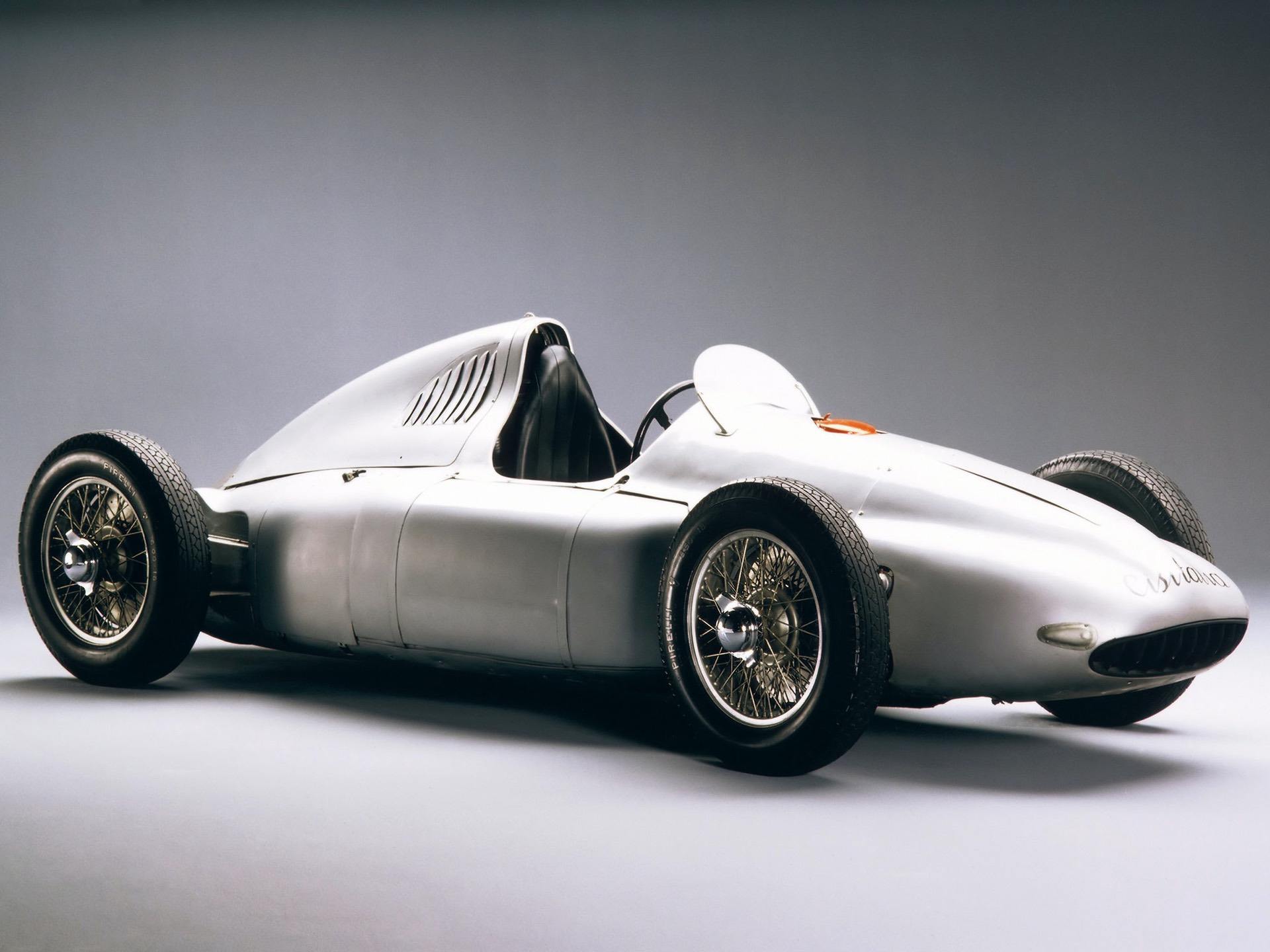
Non-Rally AWD Race Car #1: Porsche Cisitalia Typ 360
 Via: Drivetribe.
Cisitalia is a name highly respected for its immense impact on the modern sports car world, yet rarely known outside of enthusiast circles. The reason for that are financial troubles that stranded Piero Dusio’s quest to produce Italy’s finest automotive marque.
Anyway, if you think the 959 PSK was the first all-wheel drive system engineered by the Porsche family, you’d be wrong, because the Cisitalia Typ 360 open wheel racer came way earlier. By far the most advanced car of the post-WW2 Grand Prix revival era, this mid-engined open wheeler was designed by Ferdinand Porsche himself through 1946 and 1947.
The Typ 360 featured a supercharged 1.5-liter flat-12, a sequential manual gearbox and selectable all-wheel drive, allowing the driver to activate the system whenever they deemed necessary.
Sadly, the Typ 360 never got to race as it was faced with Dusio’s bankruptcy, but the lone example was fortunately preserved, and it now resides in the Porsche Museum.
Non-Rally AWD Race Car #2: Ferguson Climax P99
 Via: Motor Sport Magazine.
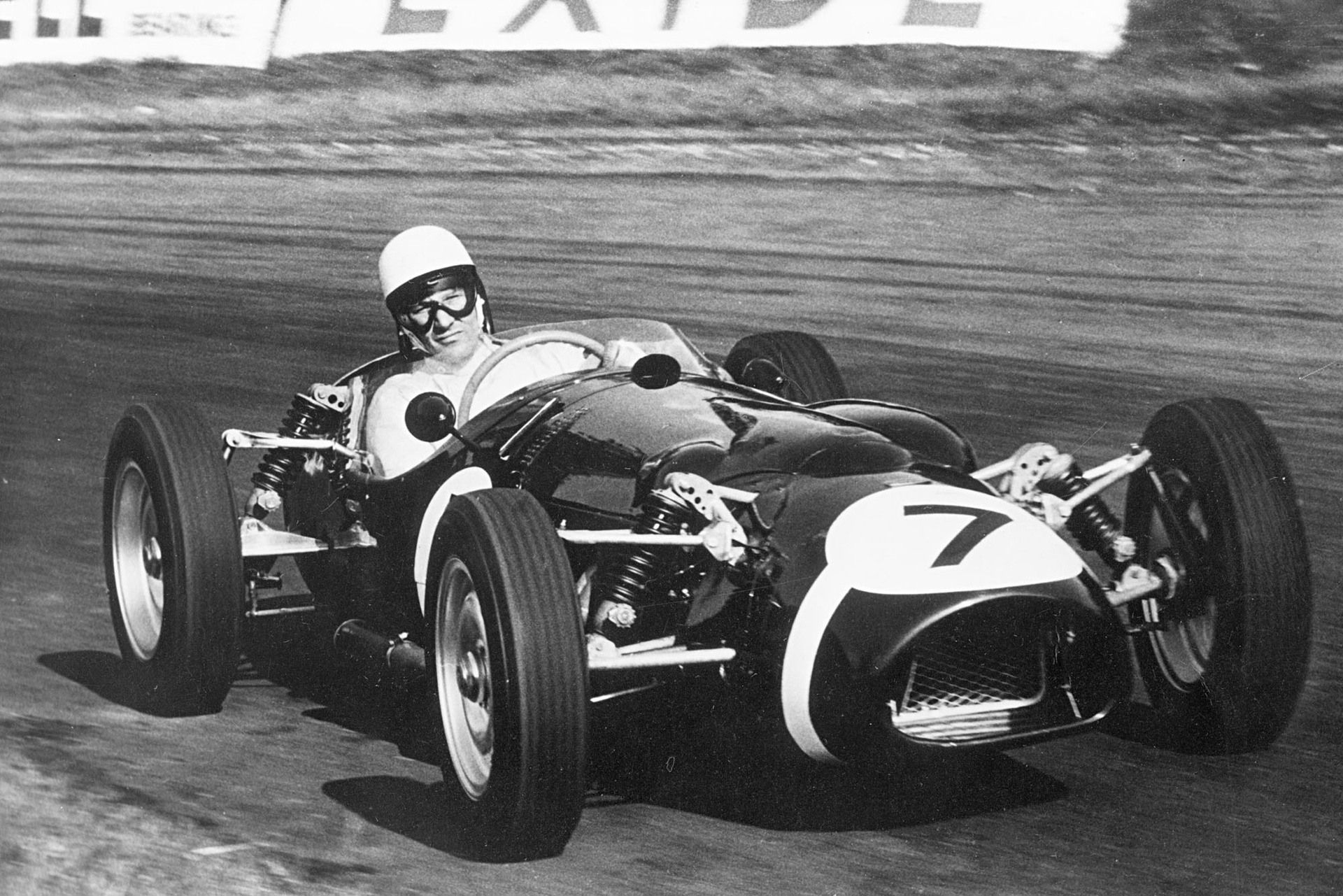
The early 1960s were a turning point for race cars as an increasing number of open wheelers turned to mid-engined layout, which proved to offer far better weight distribution, thus improving overall performance. Among those revolutionary cars, one front-engined Formula 1 car stood apart for going in the exact opposite direction.
The Ferguson Climax P99 was a car envisioned by racer Tony Rolt and through working with Claude Hill and Harry Ferguson, the P99 was born. Sadly, Ferguson didn’t see the car in action as he passed in 1960, but the work on the car was completed for the 1961 season.
The Ferguson Climax P99 had less than a stellar debut at the 1961 British Empire Trophy, crashing on lap 2 of its inaugural race, only to be disqualified from the 1961 British Grand Prix, the next event it appeared on. However, at the 1961 International Gold Cup event at Oulton Park, Sir Stirling Moss drove it to victory, the first for an all-wheel drive Formula 1 car and the last for a front-engined one.
Non-Rally AWD Race Car #3: STP-Paxton Turbocar
 Via: Road & Track.
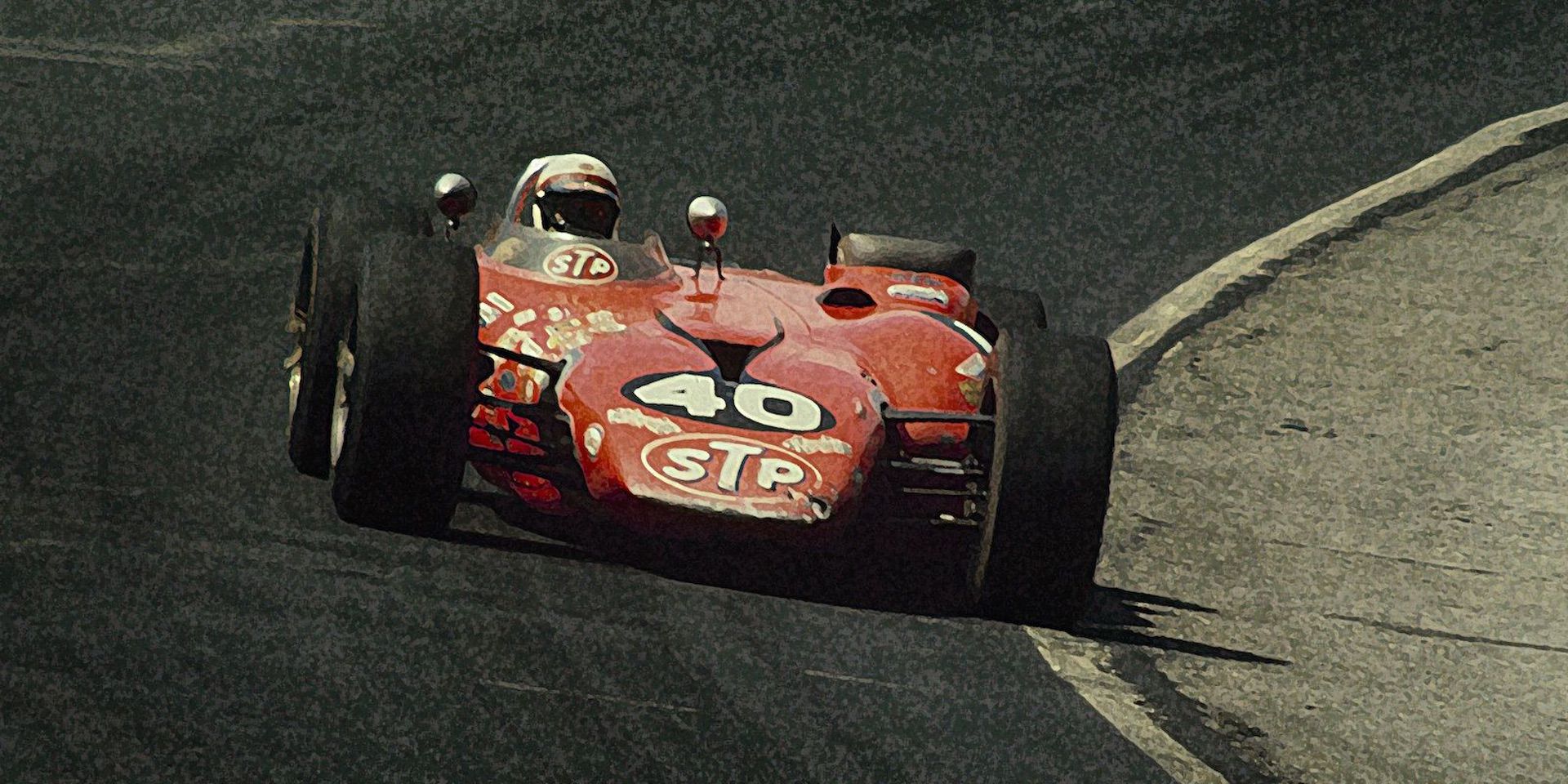
The late 1960s were an era of freedom and wild experiments even in the racing world, meaning turbine-powered cars were a thing for a few visionary constructors. Conceived by Ken Wellis and backed up by Andy Granatelli of STP fame, the STP-Paxton Turbocar, or Silent Sam as it was dubbed by the press, was one of the most advanced racing cars of its era.
Powered by a 500 horsepower ST6B-62 gas turbine engine with no clutch or gearbox and with Ferguson all-wheel drive, the Turbocar put on a show at the 1967 Indianapolis 500, where Parnelli Jones led throughout the race—until the transmission gave out with just eight miles to go. The car raced once more at the 1968 Indianapolis 500, but with no success as its driver Joe Leonard crashed it during practice.
A modified version of the same engine was used to power the Lotus Type 56 experimental Grand Prix car which also featured all-wheel drive. Colin Chapman first campaigned the car at the 1968 Indy 500. In Formula 1, the Type 56 had its best result at the 1971 Italian Grand Prix, where Emerson Fittipaldi piloted it to eighth place.
Non-Rally AWD Race Car #4: Matra MS84
 Via: Wikipedia.
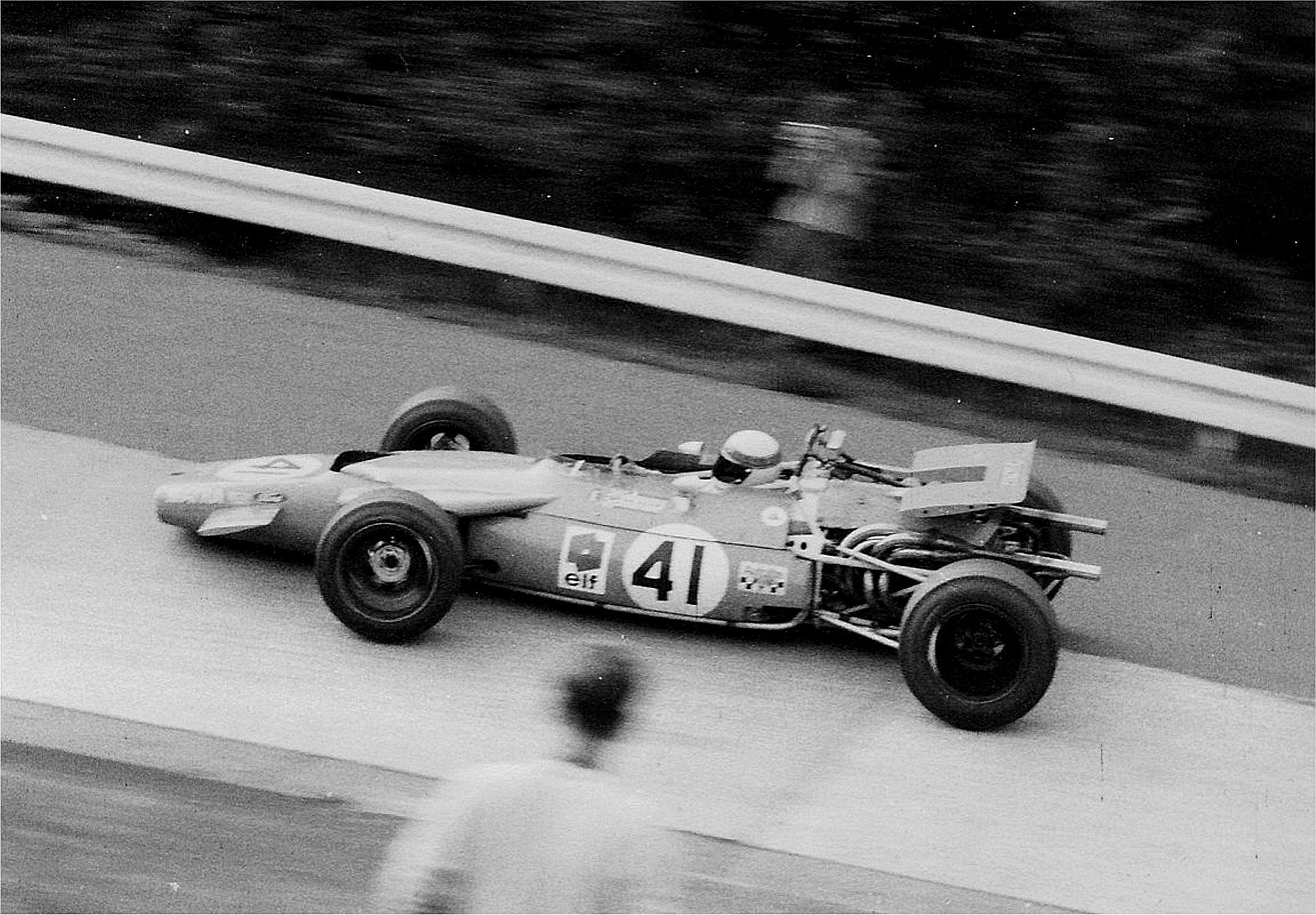
Be it in civilian use or on the racetracks, Matra was well-known for unorthodox and experimental cars, so it’s no wonder it had a foray into all-wheel drive Formula One cars during the late sixties.
The Matra MS84, a predecessor to the 1970 Matra-Simca MS 120, was more related to Jackie Stewart’s 1969 championship-winning MS80, built on a steel tubular chassis rather than aluminum monocoque. The Cosworth V8 was mated to Ferguson all-wheel drive system and the front brakes were moved inboard as well.
Despite all the efforts, the MS84 didn’t prove successful, with Johnny Servoz-Gavin scoring sixth at the 1969 Canadian Grand Prix. It was, however, the best result for a rear-wheel drive car at that event.
Non-Rally AWD Race Car #5: Porsche 961
 Via: Total 911.
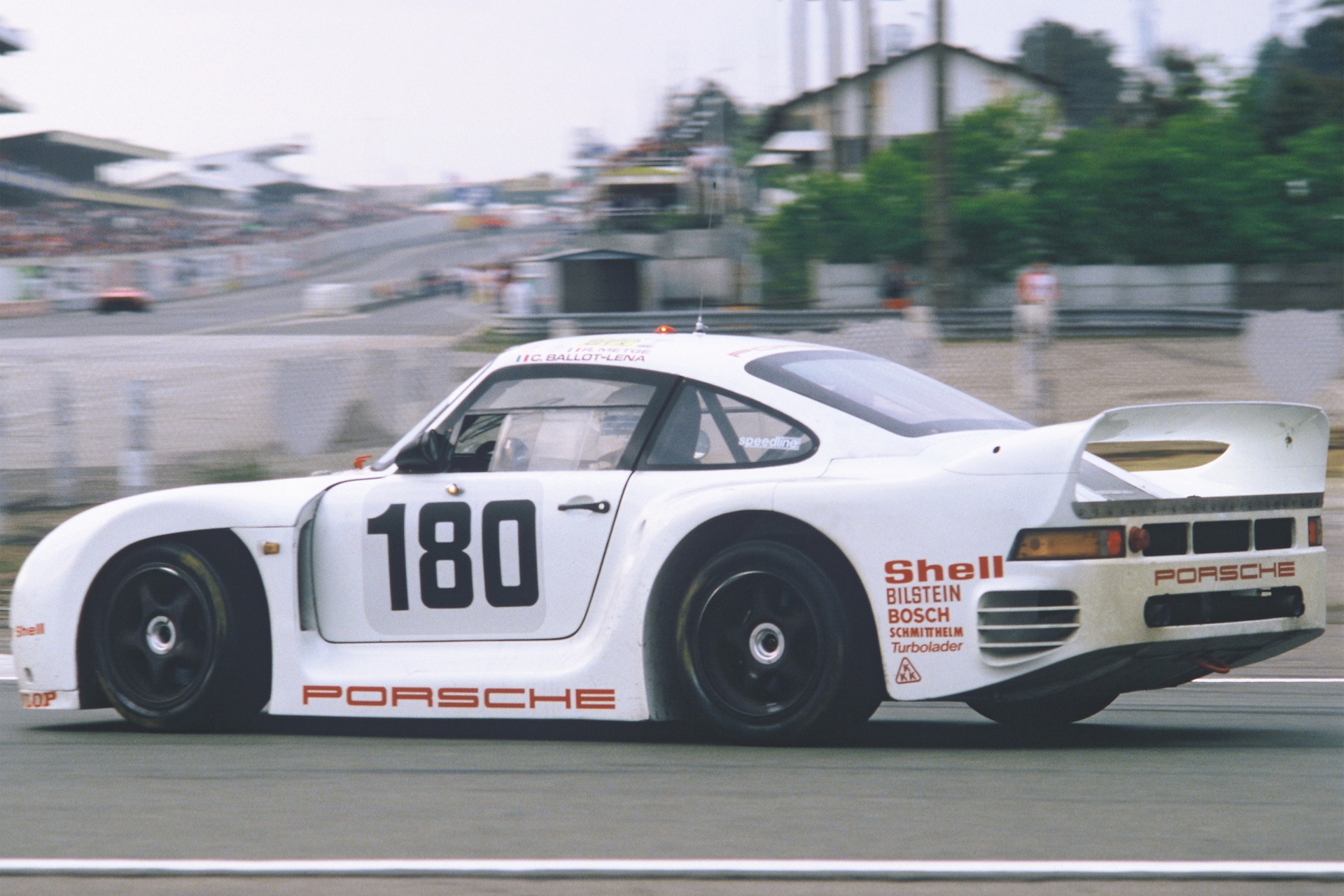
The highly advanced Porsche 959 proto-hypercar was designed to conform to FIA’s Group B regulations and as such it featured a highly advanced all-wheel drive system (PSK).
The Group B rulebook applied both to close circuit racing and rallying, so Porsche eventually outed the 959’s racing derivatives to two of the most famous events in each discipline. The rallied-up 959 won the 1986 Dakar Rally, while the Porsche 961 entered the 1986 24 Hours of Le Mans, finishing at respectable seventh overall.
The 961 had two more appearances, at the 1986 24 Hours of Daytona and 1987 24 Hours of Le Mans—where it eventually crashed and caught fire, prompting Porsche to cancel the project for the remainder of the season. Today, this car is on display at the Porsche Museum, finished in its iconic Rothmans livery.
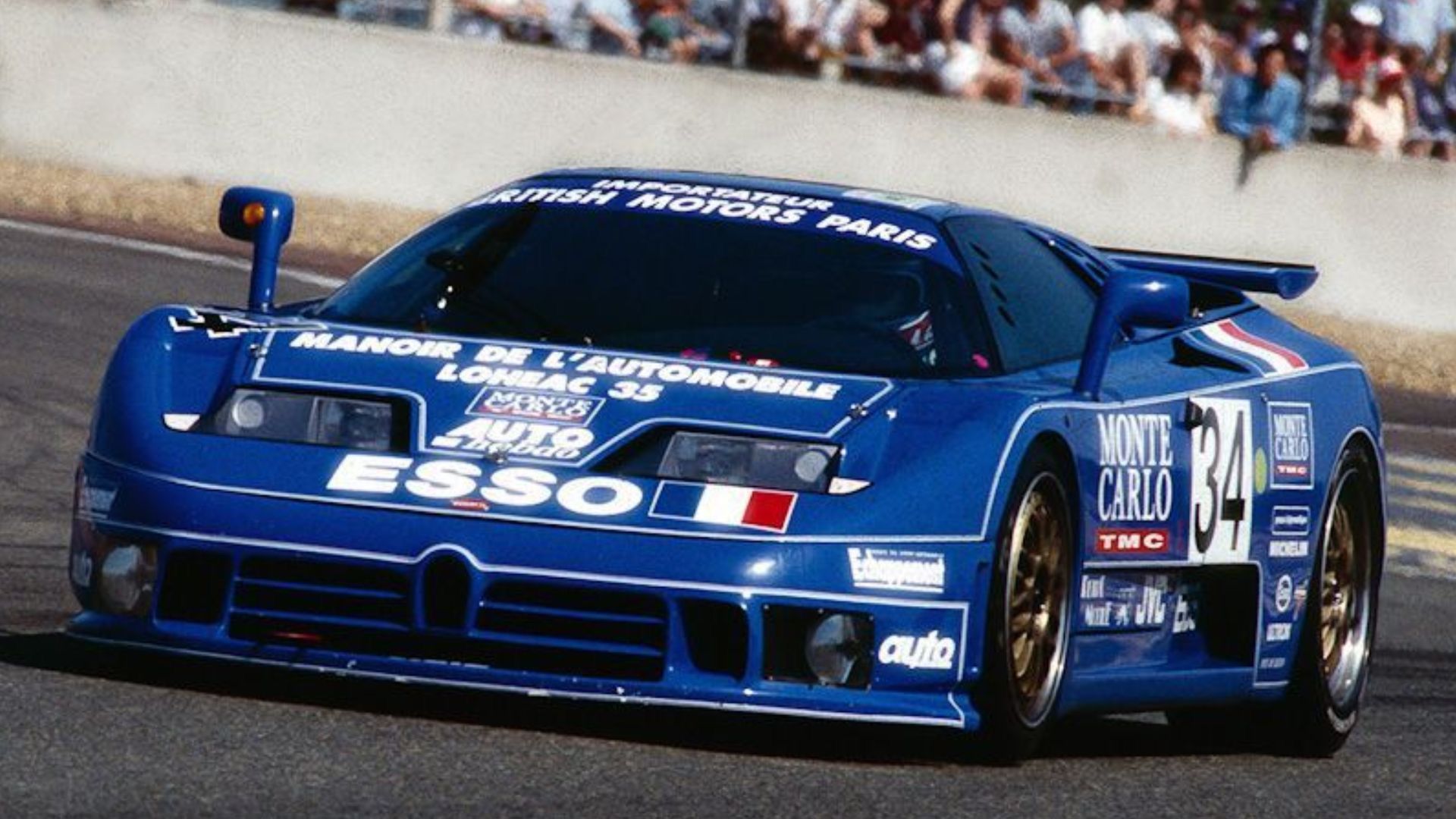
Non-Rally AWD Race Car #6: Bugatti EB110 SS LM
 Via: Twitter.
The Porsche 961 wasn’t the only four-wheel drive supercar to test its sophisticated mechanics on the world’s most famous endurance race, since the Bugatti EB110 SS famously entered the 1994 24 Hours of Le Mans. Competing in the GT1 category, it showed heroic pace, qualifying 5th in its class and 17th overall.
Team owner Michel Hommell and engineers from Campogalliano managed to shed more than 600 lb of weight in order to retain the EB110’s all-wheel drive system. Sadly, a number of mechanical troubles plagued this independent entry on the very race day, starting from the fuel tank leak in the opening stages of the race all the way to turbo failures.
Hommell’s dreams of returning Bugatti to its glorious days at Le Mans finally came crashing down in the closing hours of the race when a punctured tire caused the car to crash, rendering it unable to finish.
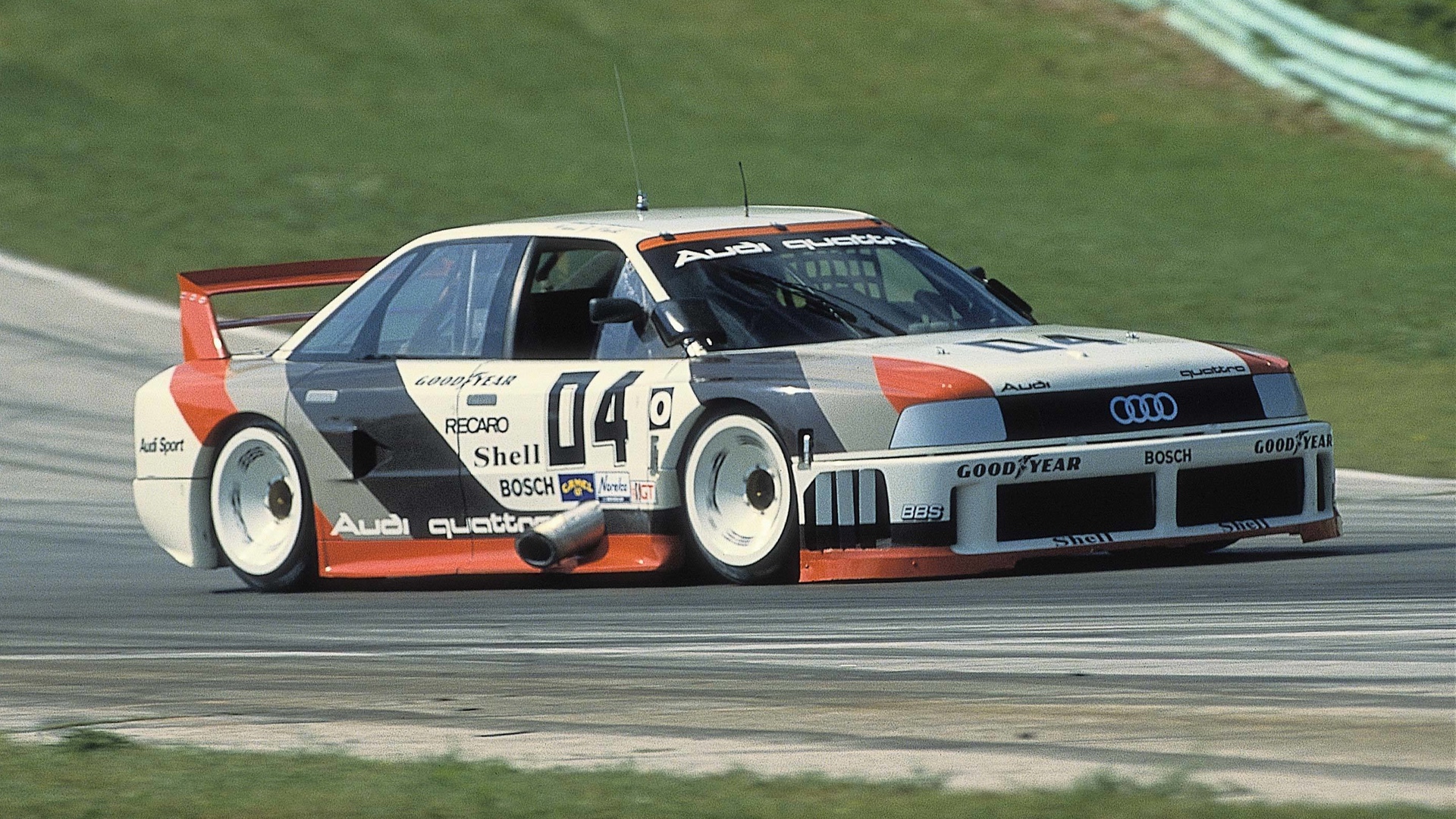
Non-Rally AWD Race Car #7: Audi 90 Quattro IMSA GTO
 Via: Top Gear.
Audi so utterly dominated the 1988 Trans-Am series in a 2.2-liter compact sedan that the governing body banned it for the subsequent season, but how did that exactly happen? The secret (or not so much, given that the car had the word “quattro” inscribed literally all over it) was in the car’s all-wheel drive.
The 500-odd horsepower machinery was powered by a longitudinally mounted inline-five sending power to all four wheels via a center Torsen differential and limited slip differentials in the front and rear. Give that rally-dominating technology to world-class drivers Hurley Haywood, Hans-Joachim Stuck, and Walter Rohrl, and you’ll end up with 8 wins in 13 races.
Following the 1988 ban, the car moved to the IMSA series, where Audi’s engineers modified the base car even further into a carbon composite silhouette racer on a tubular frame with upwards of 700 German ponies. Missing the season-opening Sebring and Daytona due to the car still being in development, Audi finished the season in second place mainly thanks to Haywood and Stuck’s phenomenal driving.
The 1989 season was also the final one for the Audi 90 Quattro IMSA GTO, as Audi focused on the domestic DTM racing championship, giving America one of the sleekest, coolest and most capable import race cars of all time.
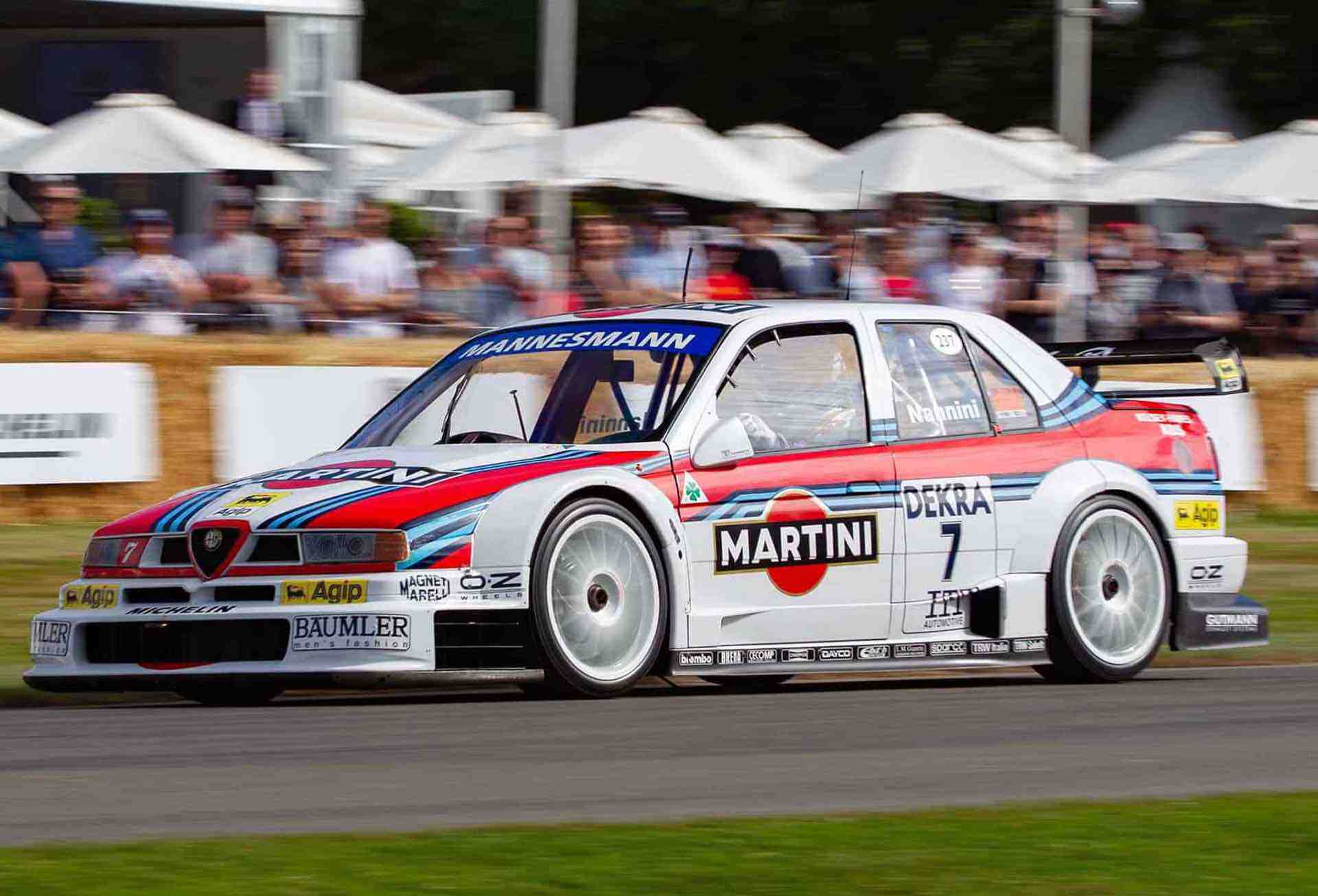
Non-Rally AWD Race Car #8: Alfa Romeo 155 Ti DTM
 Via: Collier Automedia.
In 1993 FIA introduced Class 1 and Class 2 Touring Cars, with the former allowing a greater degree of liberty, effectively turning touring cars to silhouette racers rather than race-ready variants of their respective roadgoing counterparts. For Alfa Corse, that meant only one thing: thoroughly re-engineering the already competitive 155 sedan it campaigned in the DTM championship.
The new Alfa Romeo 155 initially got a longitudinally mounted 60° 2.5-liter V6 producing astonishing 420 horsepower at 11,500 RPM, while the power figures grew to 483 horsepower at 11,900 RPM in 1996, courtesy of a new 90° 2.5-liter V6. The all-wheel drive was sourced from none other than the Lancia Delta Integrale HF, the most dominating rally car of the era.
In 1993, Nicola Larini dominated the championship, yet himself and Alessandro Nannini had to settle for third and fourth respectively in the 1994 season. Year 1995 didn’t bring much for Alfa Romeo, and for 1996, DTM was merged into a series dubbed International Touring Car Championship with only three entries: Opel, Mercedes-Benz and Alfa Romeo.
Even though Opel won the 1996 ITC, hardly anyone remembers. The Martini-branded Alfa 155 was the car everyone remembered this series for.
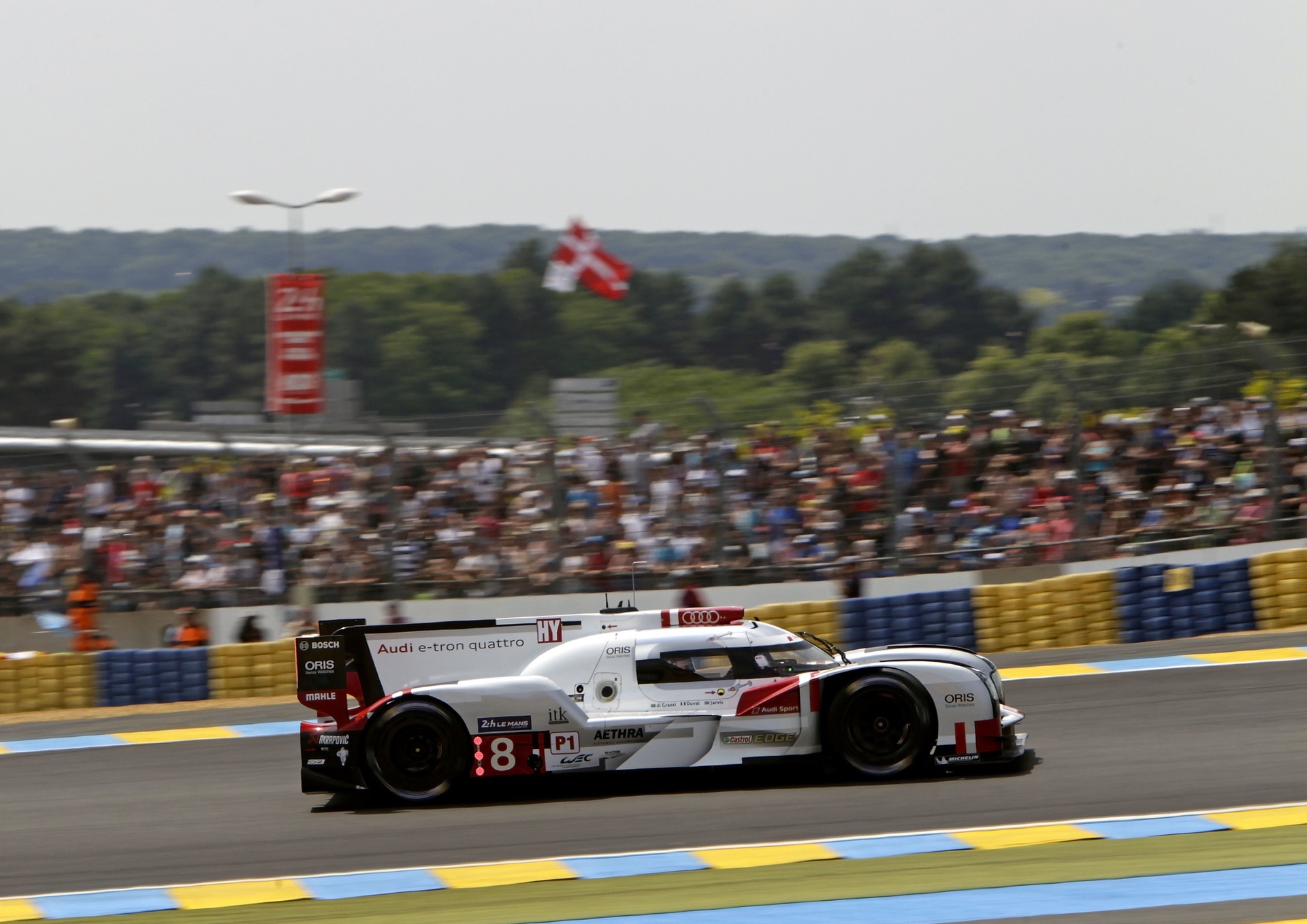
Non-Rally AWD Race Car #9: Audi R18 e-tron quattro
 Via: Audi AG.
Looking back at Audi’s touring car efforts, it seems that quattro was the only all-wheel drive system successful both in rallying and track racing. Another testament to this claim is a Le Mans-conquering R18 e-tron quattro.
The utmost evolution of the R18 LMP1 prototype, the R18 e-tron quattro was a 3.7-liter V6 diesel-hybrid in which the front wheels were driven by energy accumulated during braking. As per the regulations, the power on the front axle was available only during speeds upwards of 75 mph, meaning that the R18 e-tron quattro didn’t have permanent all-wheel drive like other cars on the list.
Still, this car is remembered for its great results. The R18 e-tron quattro won at the Le Mans in 2012, 2013 and 2014 marking the end of an era for Audi domination in the WEC championship. After Audi, Porsche had its winning streak with the equally impressive 919 Hybrid prototype.
Non-Rally AWD Race Car #10: Toyota TS050 Hybrid
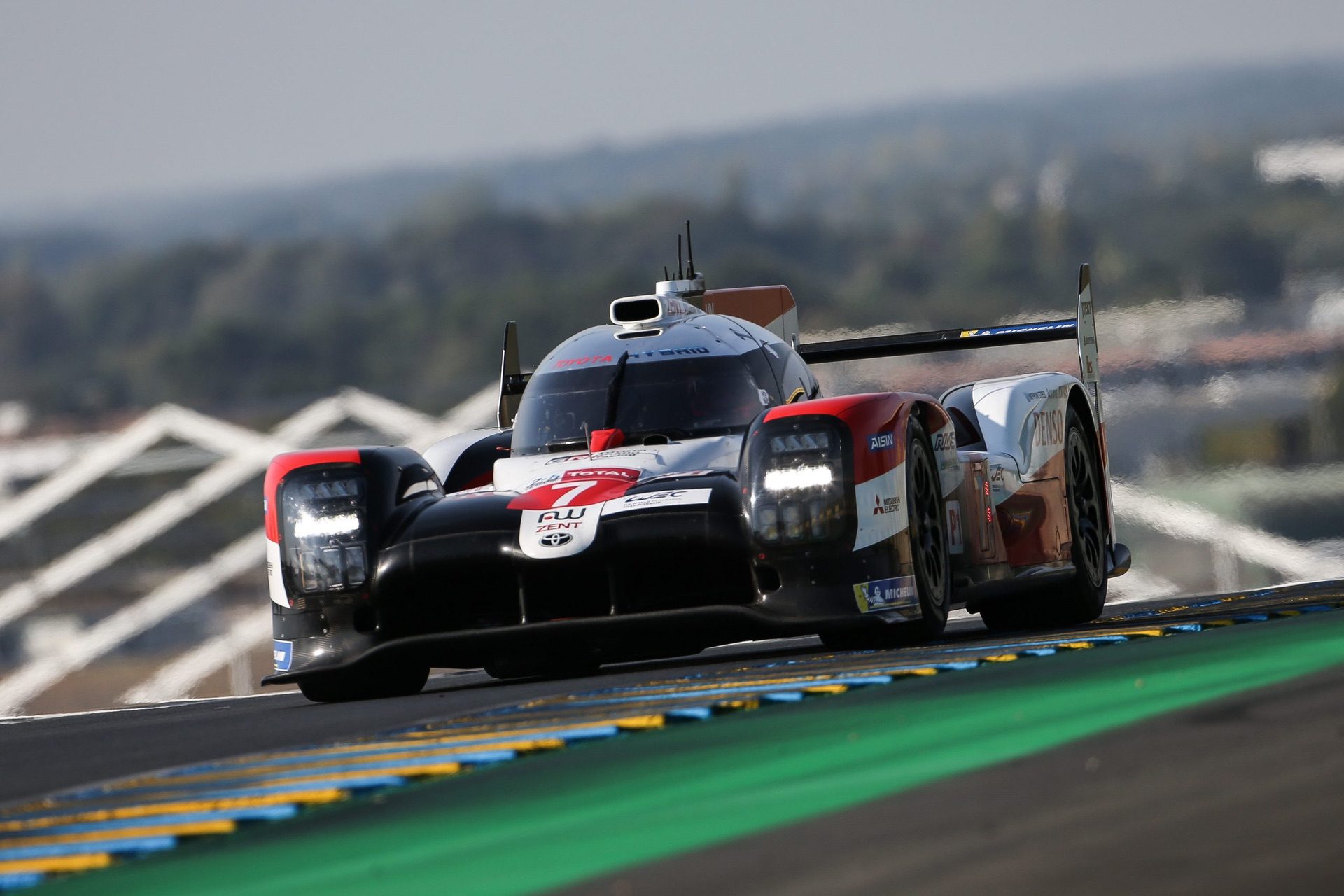 Via: Toyota.
Toyota’s bid to prove itself as a top contender in motorsports produced its first results in 2018, when the Japanese giant finally tasted victory at the 24 Hours of Le Mans after narrowly missing the title in 2016 and 2017. Toyota repeated its success in 2019 and 2020 as well, and the car which brought it victory was the TS050 Hybrid.
The Toyota TS050 utilized a mid-mounted 2.4-liter twin-turbocharged petrol V6 and two motor generator units—one powering the front axle and the other sending additional oomph to the rear. A combination of power, reliability and experienced crews led the TS050 Hybrid to become only the second Japanese car to win at the Le Mans, the first being Mazda 787B in 1991.
After the TS050 had its three back to back victories, Toyota claimed another Le Mans title in 2021 in the new Hypercar class with the GR010, a car with a bright future at the Circuit de la Sarthe.
The 10 Best Cars that Came with V10 Engines
V10 engines, like many of their internal combustion counterparts, are an endangered breed today as carmakers continue to explore alternatives like hybrid and all-electric powertrains. But even in their prime, ten cylinders arranged in a ‘V’ were never as popular as other engine types. Automobile manufacturers would either go all out by using the monster V12 in their vehicles or take the conservative route by opting for compact and less-complicated V8 units.
The V10 engine did have its moments, though, and these engines found their way into some pretty impressive cars—as you will discover in a moment. Here’s our list of the 10 best cars that came with V10 engines.
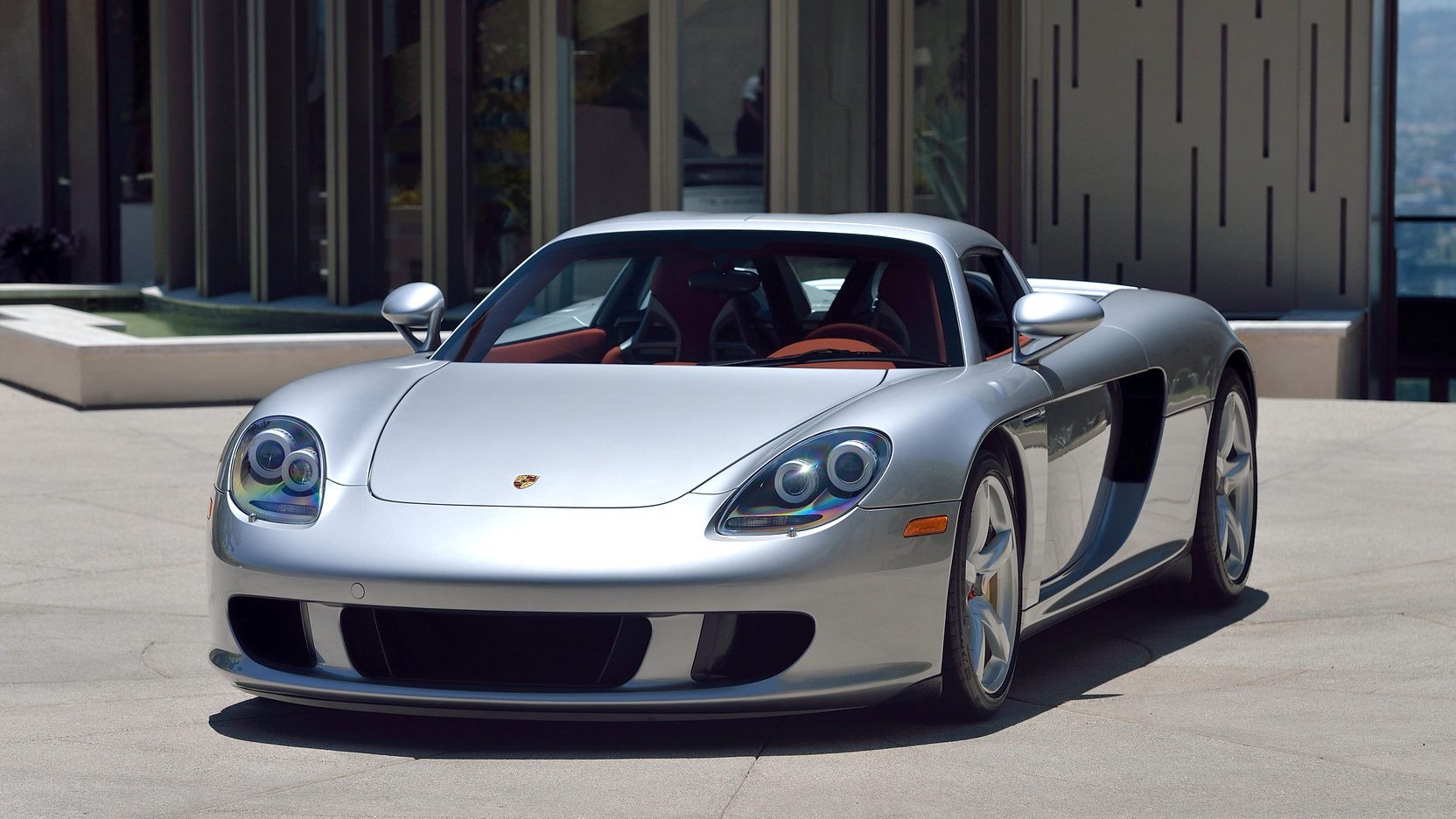
Best Cars with V10 Engines #10: Porsche Carrera GT
 Via Mecum.
The magnificent Porsche Carrera GT is considered a legend today, and rightfully so. This hypercar debuted with a host of revolutionary technology that set it apart from the competition.
It was the first car to utilize carbon fibre reinforced plastic for both its monocoque and engine carrier. It also led the line when it came to the use of forged magnesium wheels.
Then, there’s that glorious mid-mounted aluminum V10 power plant at the heart of the vehicle’s performance. It was derived from Porsche’s cancelled LMP 2000 racing program and shares similarities with the 3.5-litre F1 engine of the 1992 era.
The 5.7-litre packs a pretty potent punch, too, able to crank out 605 hp at 8,000 rpm and 435 lb-ft of torque at 5,750 rpm. It delivers all that power with one of the best-sounding engine notes ever emitted by a production car.
Best Cars with V10 Engines #9: Lexus LFA
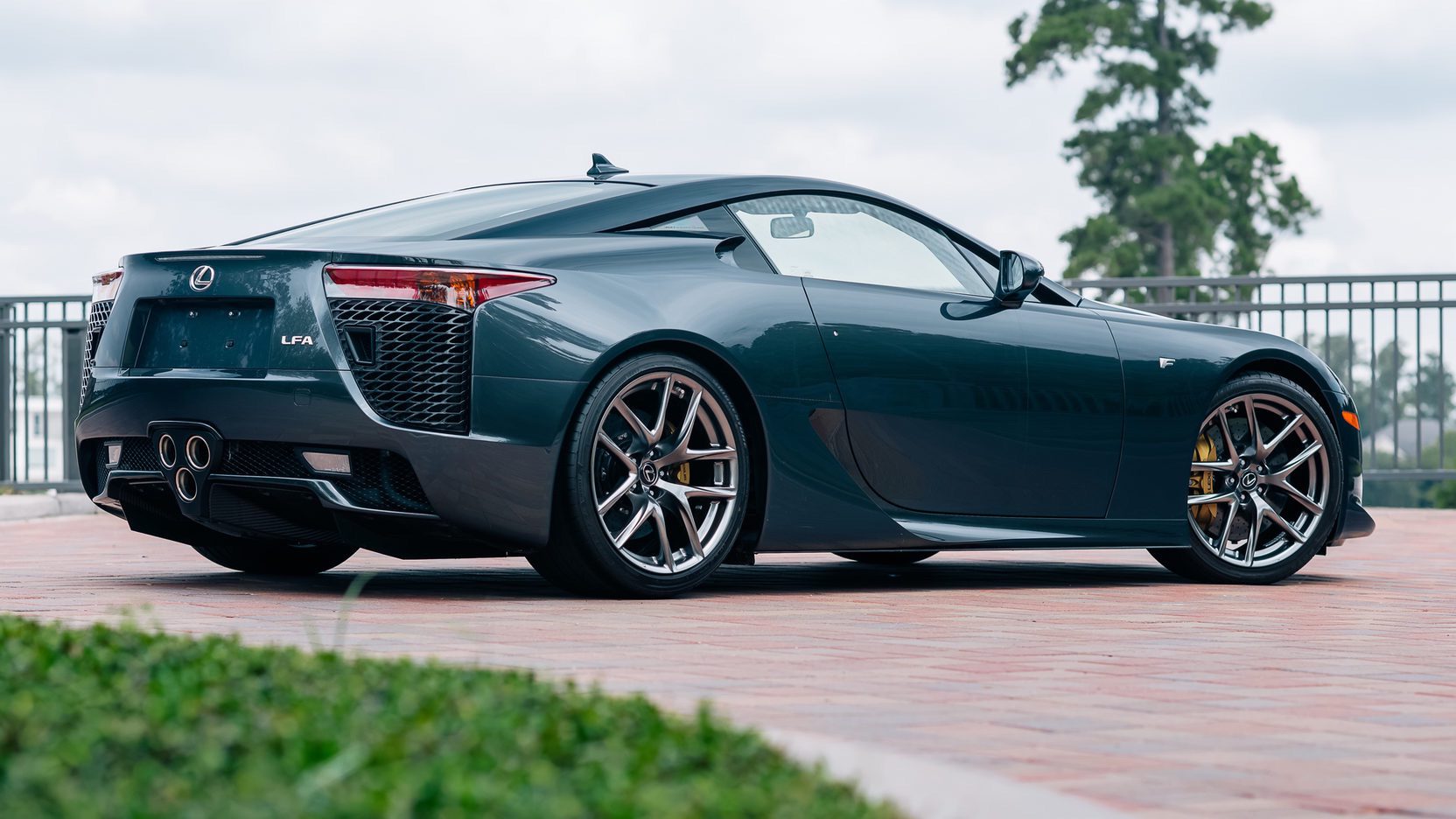 Via Mecum.
Lexus did not muck around when it decided to create its first-ever and only supercar to date. The LFA program took off in 2000—an entire decade before the car itself went into final production in 2010.
This supercar earned praise for its excellent grip and handling, but it received the loudest plaudits for its V10 beating heart. The engine unit howls like a banshee, all the way to a 9,000 rpm redline, churning up an impressive 552 hp and 354 lb-ft of torque. It also supplied enough grunt to rocket the LFA to 60 mph in 3.6 seconds, on its way to a 202 mph top speed.
Best Cars with V10 Engines #8: Lamborghini Gallardo
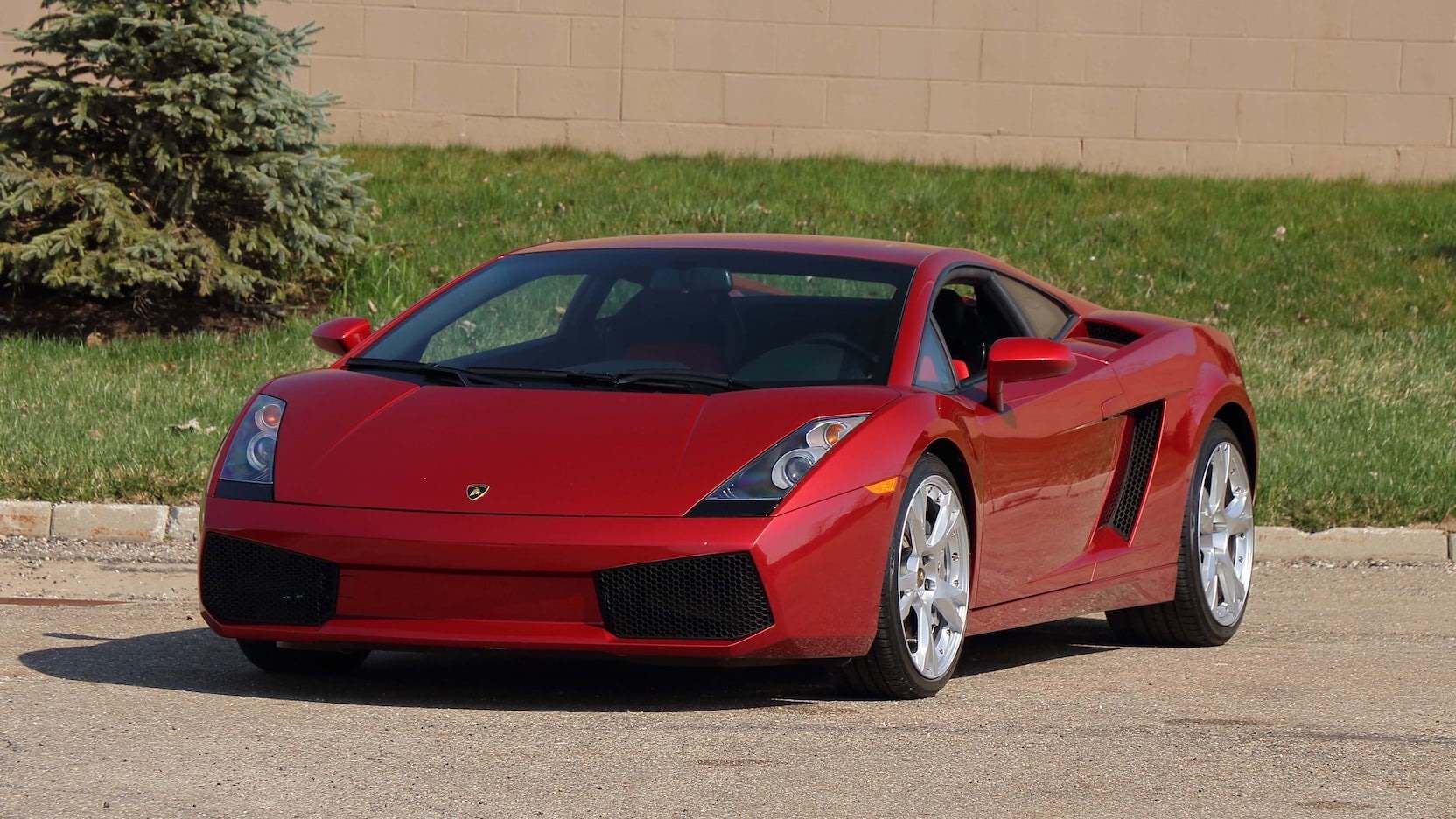 Via Mecum.
The Lamborghini Gallardo is one of the company’s most successful models. Over 14,000 units were sold during a production run that spanned ten years (from 2003–2013).
The Gallardo’s engine played a crucial role in that success story. In its base form, the V10 put out 520 hp and 374 lb-ft of torque. That power could propel the sports car to 60 mph in less than 4 seconds and up to a 196 mph top speed.
Later variants were even more powerful. Tweaks to the engine led to a power bump, resulting in 552 hp and 398 lb-ft of torque in the 2014 Gallardo LP560-4 model.
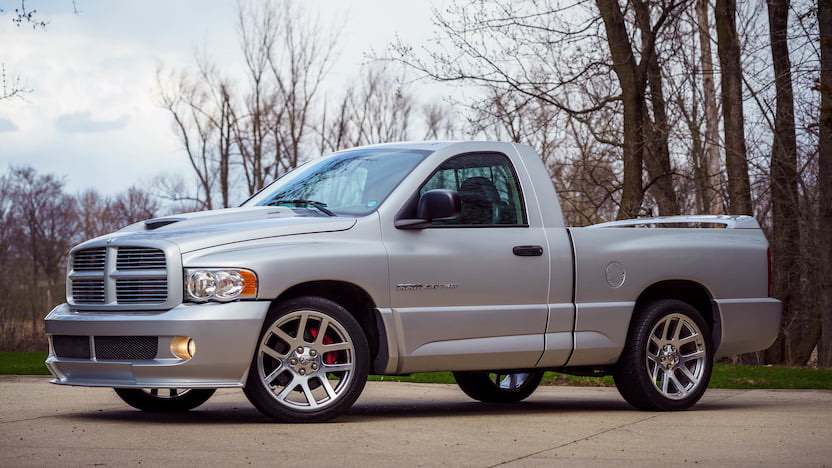
Best Cars with V10 Engines #7: 2006 Dodge RAM SRT-10
 Via Mecum.
During the 2000s, pickups were mostly seen as work trucks; just a means to haul small cargo from one point to another. The hulking Dodge RAM SRT-10 did not quite fit that mould, though, when it debuted in 2004.
A lowered ride height, among other modifications, meant this truck was not a very practical road-hauler. What it did have was a reputation as one of the fastest production trucks in the world—enough to earn it some serious bragging rights.
The SRT-10 could barrel its way to 60 mph in just 4.8 seconds. That bonkers performance came courtesy of a Dodge Viper-sourced V10 engine, good for 500 hp and 525 lb-ft of torque.
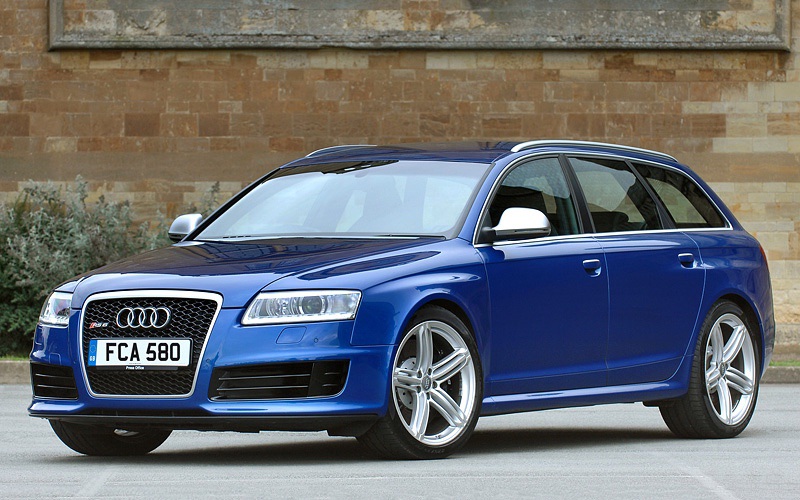
Best Cars with V10 Engines #6: 2008 Audi RS6 Avant
 Via Top Car Rating.
The 2008 Audi RS6 Avant created quite a stir when it hit the market. Here was a formidable super wagon that boasted well over 550 hp and had enough of an arsenal to surprise the unwary sports car driver on the highway.
The 5.0-litre V10 at its core was a reworked version of the same engine unit in the Audi S6. It produced a thumping 580 hp at 6,250 rpm and 479 lb-ft of torque from just 1,500 rpm.
That power combined well with Audi’s famous AWD Quattro system to send the RS6 to 60 in about 4.4 seconds. That’s over a second faster than a Mustang sports car from the same period.
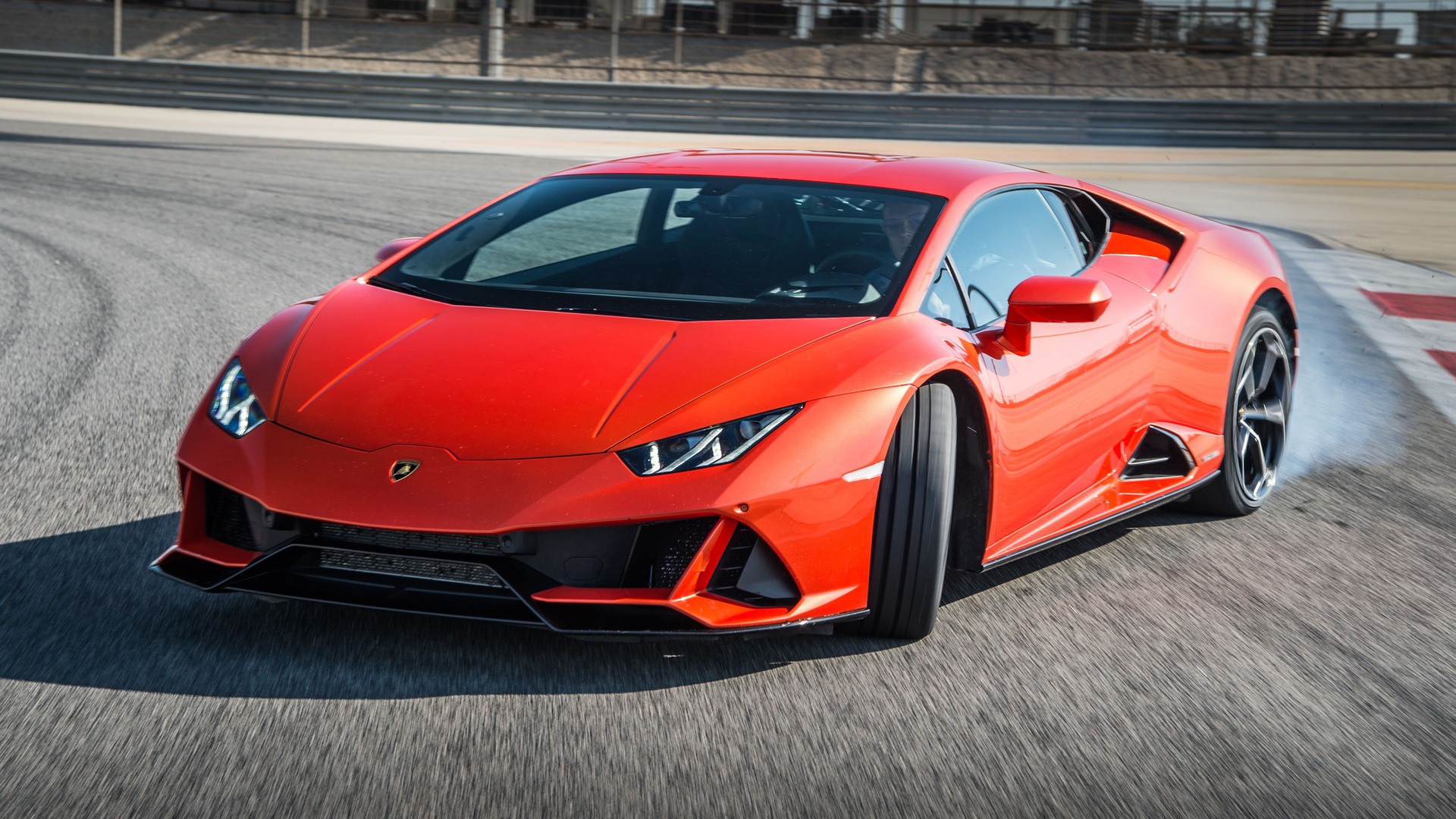
Best Cars with V10 Engines #5: Lamborghini Huracan Evo
 Via Mecum.
Lamborghini had found a winning formula with its V10 engine, and the carmaker stuck with it when designing the successor to the Gallardo. The Lamborghini Huracan was named after a fighting bull—and true to form, the supercar was no slouch.
The naturally aspirated V10 engine in the Huracan Evo is a 5.2-litre powerhouse that generates 631 hp, up from 602 hp in the base model. The Huracan Evo was designed to be more of a daily driver compared to the hardcore Performante variant, but it can still check off the 0 to 60 mph sprint in about 2.5 seconds.
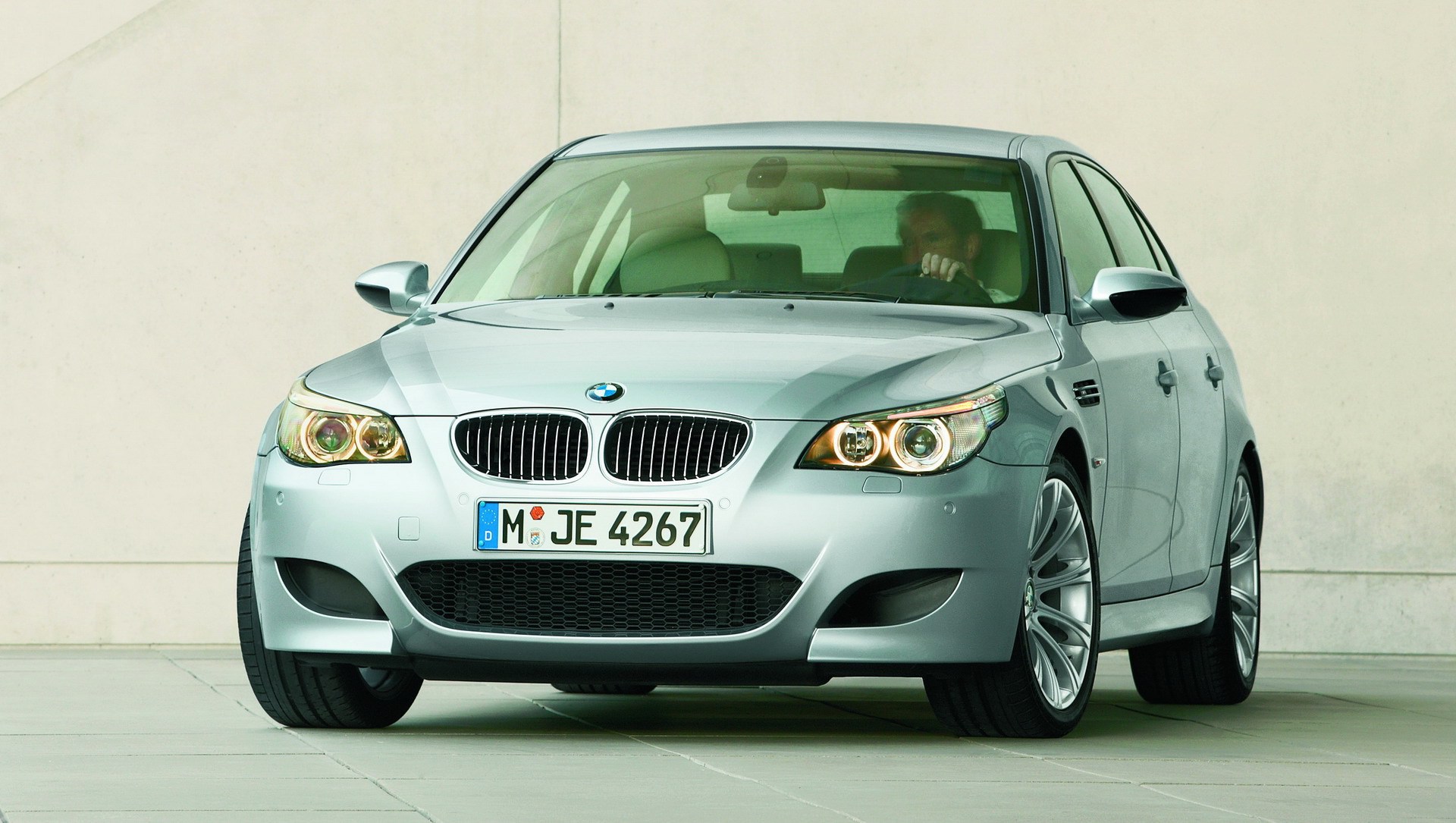
Best Cars with V10 Engines #4: 2005 BMW M5
 Via BMW Blog.
This sports sedan marked the end of an era for BMW’s ‘M’ division. It was the last M5 super-saloon that got a naturally aspirated engine, but what an engine it was!
The engine in this car was developed at the same facility used by BMW to build Formula One engines at the time, and it displayed a similar level of technological advancement. Back then, the powertrain packed the most powerful ECU unit ever fitted on a production car.
The 5.0-litre V10 was primed to produce an impressive 500 hp and 383 lb-ft of torque. That power output put it right in the mix with rivals like the RS6 Avant and the Mercedes Benz E55 AMG.
Best Cars with V10 Engines #3: 2016 Dodge Viper ACR
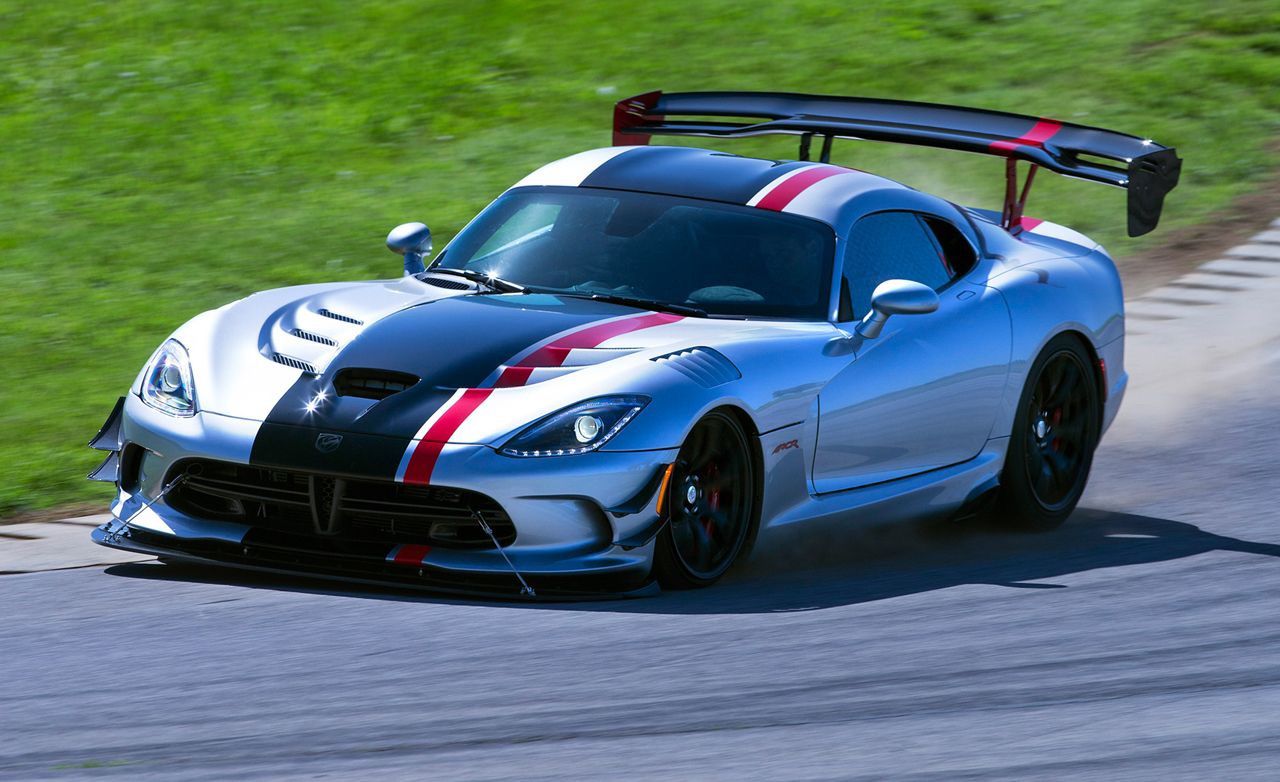 Via Car and Driver.
The Dodge Viper thrilled gear heads for over two decades before it finally bowed out in 2017. But there was no way this all-American sports car was just going to slip quietly into the sunset, and the swansong 2016 Dodge Viper ACR was one of the most potent variants.
This performance car was a beast on race tracks, with a slew of aero upgrades and a gigantic wing for maximum downforce as it attacked corners. It did not disappoint in the power department, either—a massive 8.4-litre V10 shoehorned into the car’s hood provided up to 645 angry horses at peak 6,200 rpm.
Best Cars with V10 Engines #2: Audi R8
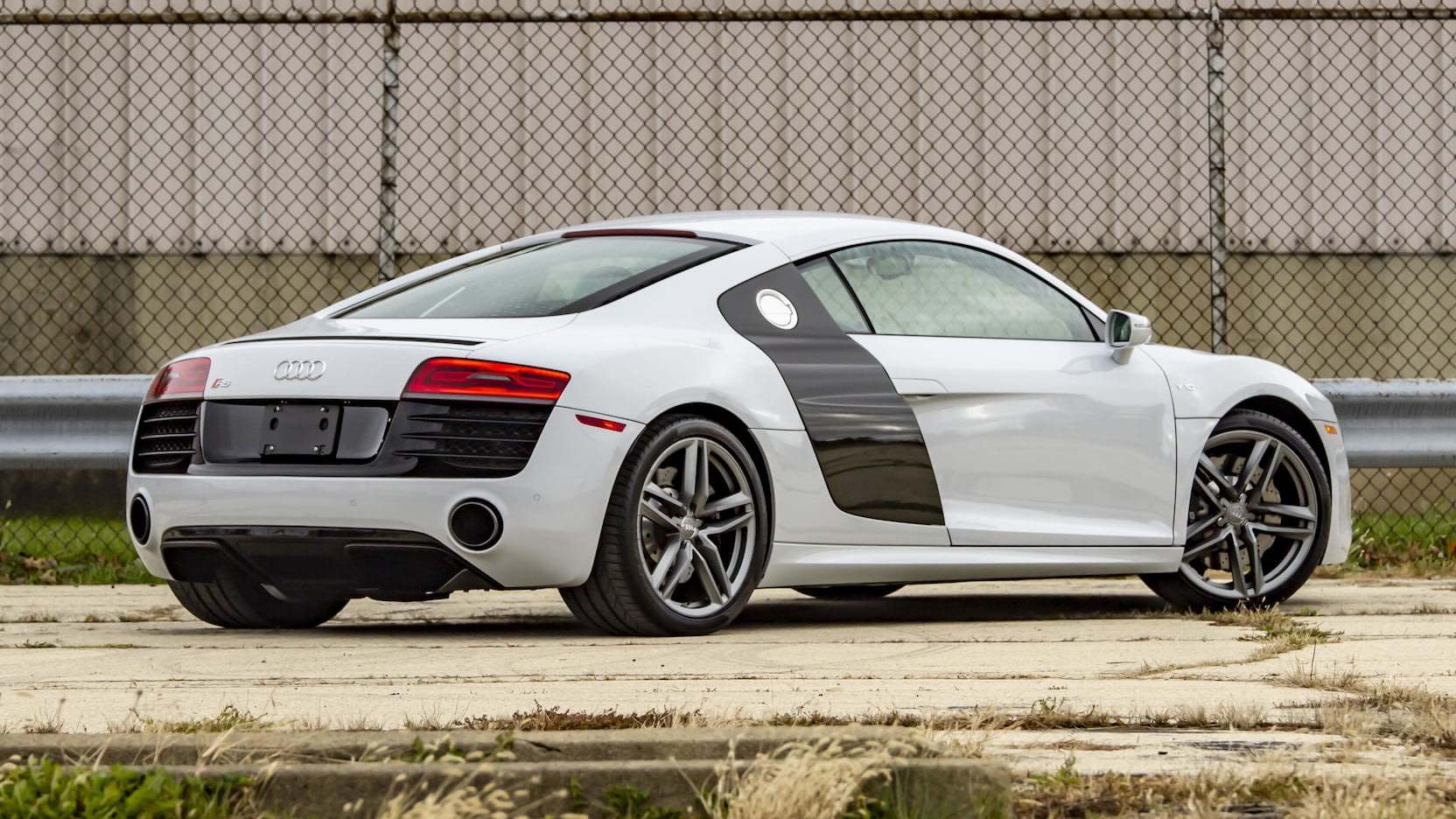 Via Mecum.
You don’t need to be clairvoyant to know that the Audi R8 is on its last legs. The model line has been trimmed for 2021 and will eventually be phased out as Audi repositions itself for an EV future. Whatever happens, though, the Audi R8 will no doubt leave behind very fond memories.
This car debuted at the 2006 Paris Motor Show as a V8 model, but it soon gained a V10 powertrain—one that has been a part of the supercar ever since. The first V10 was based on the same engine that powered its sibling rival, the Gallardo. It had 525 hp for the 2008 model, but that number has been bumped up over time with various modifications and tweaks.
The V10 in the 2021 Audi R8 boasts up to 602 hp—the same output as the Lamborghini Huracan RWD.
Best Cars with V10 Engines #1: Volkswagen Touareg V10 TD1
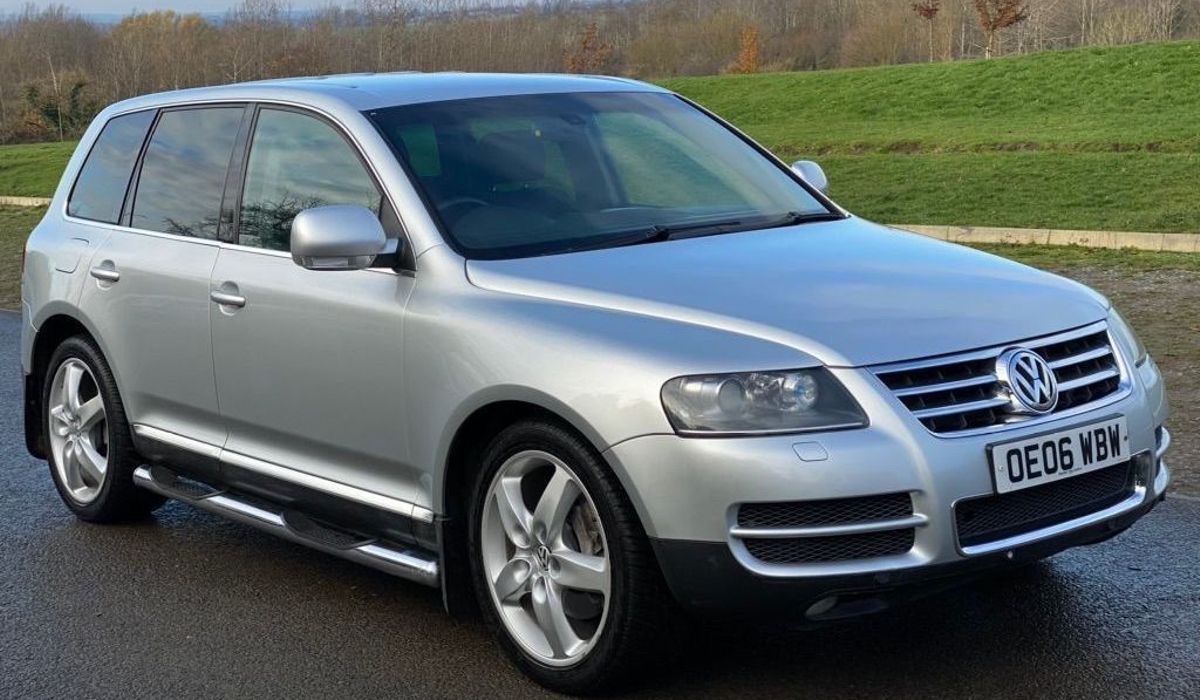 Via Car Throttle.
The infamous Volkswagen ‘Dieselgate’ emissions scandal has left a permanent stain on the reputation of the V10 engine that powered this vehicle. It’s such a shame, because the powertrain showcased the best of the carmaker’s engineering prowess when it first launched in 2004 with the Volkswagen Touareg TDI.
This SUV had a well-appointed luxurious interior that targeted the upper-middle-class segment. Even better was its 10-cylinder twin-turbo 5.0-litre diesel engine. Horsepower output was just about average at 309 hp, but it had a truly impressive 553 lb-ft of torque from just 2,000 rpm. Fifth Gear journalists demonstrated the strength of the torquey Touareg TDI when they used it to haul a Boeing 747 aircraft!
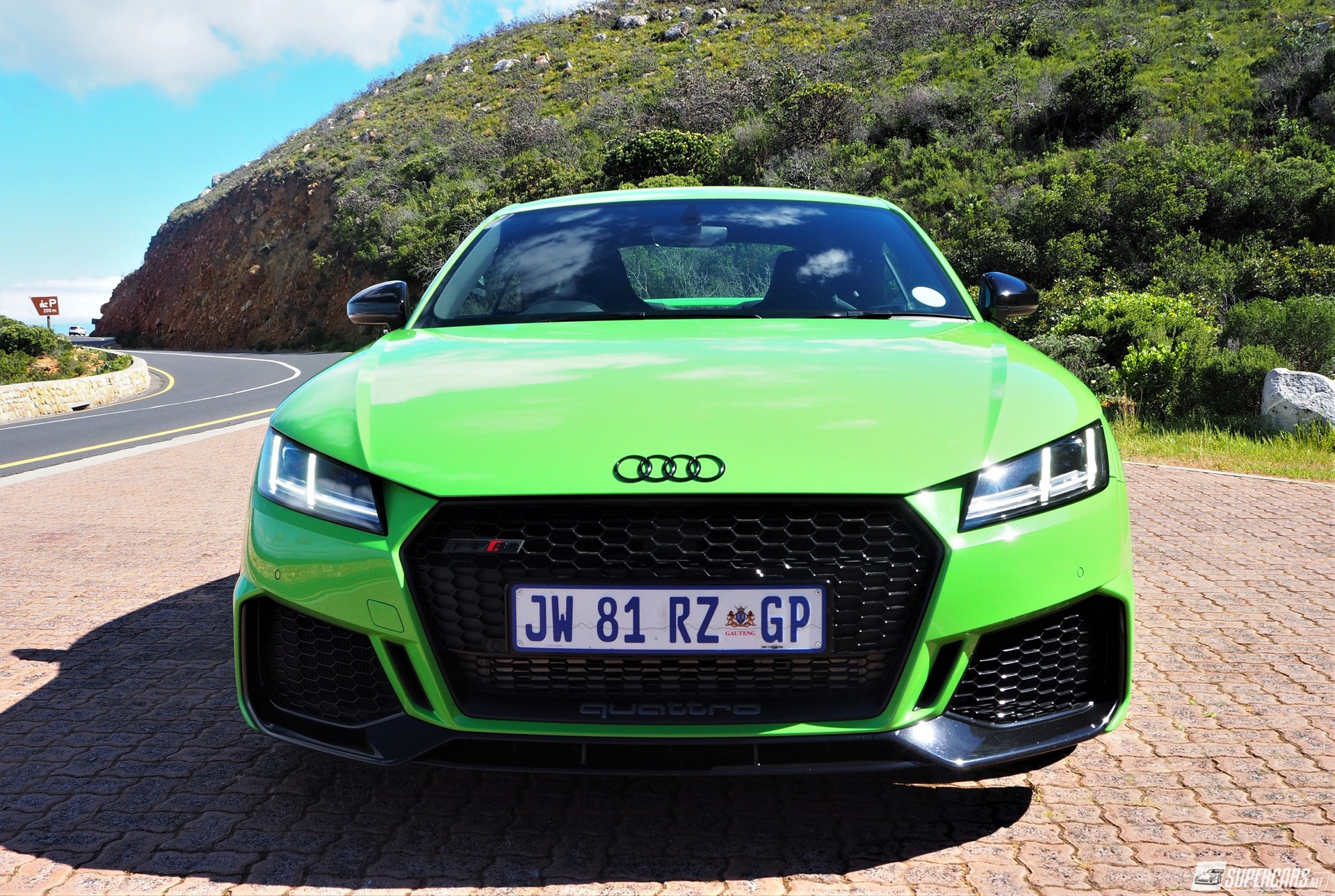
[Review] 2022 Audi TT RS
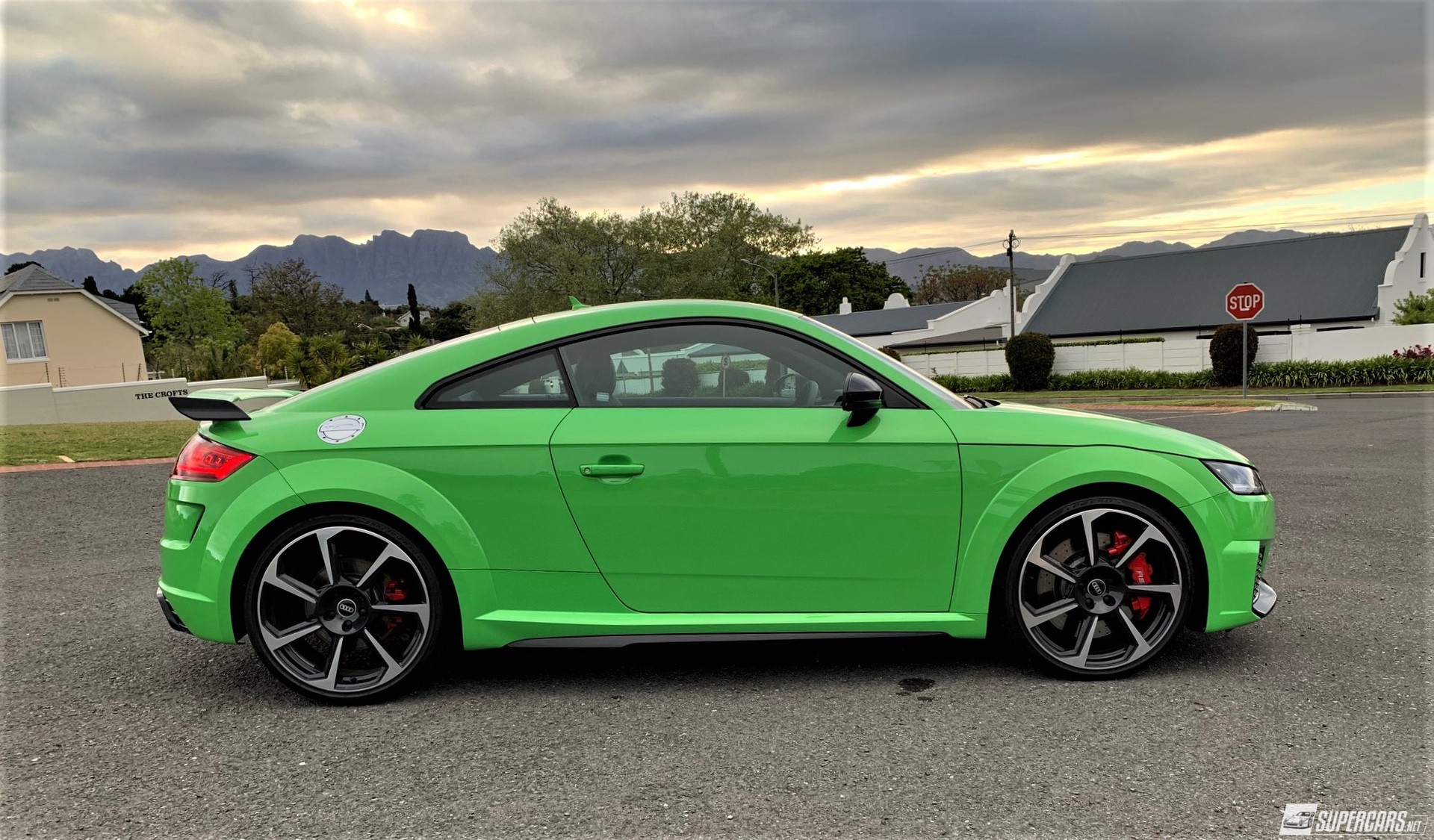
For those not in the know, Kyalami Green in Audi-speak is a bright shade that closely resembles Porsche’s more aptly-descriptive Viper Green. That name at least tells you this is a green hue with fangs—a green that stands out like no other and which attracts the attention of others.
While reviewing this car, I was even asked by two gentlemen in the supermarket car park if they could photograph it. And on my return, there was a middle-aged lady hovering around Ingolstadt’s fiery little coupe, muttering flattering words in its direction.
Hoping some of the compliments might have been aimed in my direction, I said to this lady how unusual it was for a grey-haired old codger like me to be piloting a sporty machine decked out in such a daring colour. “Ah no,” she opined, “you look cool in it!” Happily, my wife heard every word but pretended not to have done so—although she did admonish me for having the drive mode set in DYNAMIC, which maximises all the stunning aural effects that envelop the TTRS on the move.
2022 Audi TT RS Design
Exterior Details
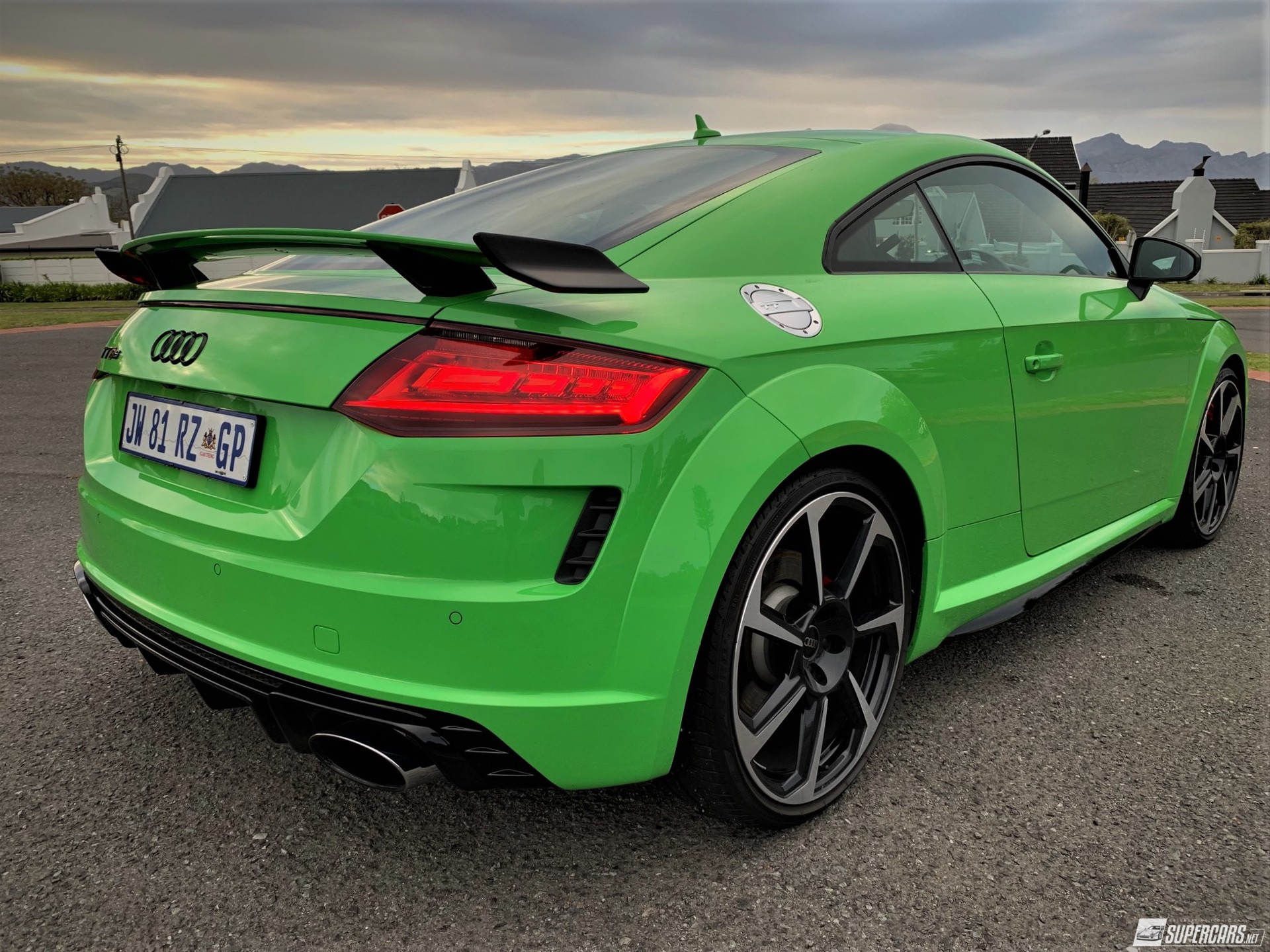
On a more serious note, it’s not just the colour that attracts the eye in the case of this Audi supercar. It’s as much the simply fabulous, glossy paint finish and the wafer-thin shut lines together with the beautifully detailed (optional) gloss black trimmings that all combine to massage the senses.
The basic shape of the TT is familiar enough, having retained most of the eye-catching yet simple elements of the revolutionary original, and although its dimensions have grown across the three-and-a-bit generations that have followed, it remains a compact sportster endowed with decidedly cosy cabin dimensions exaggerated by the marked roof curvature and long, sloping tailgate.
As you might expect, opening and shutting the two hefty doors is a pleasure, thanks to the reassuring thunk they make and the precision feel of the process—the effortlessness of which almost seems surreal within a structure solid enough to make a Tiger tank feel like a packet of corn flakes. All of this simply reinforces the feel good factor.
Interior Details
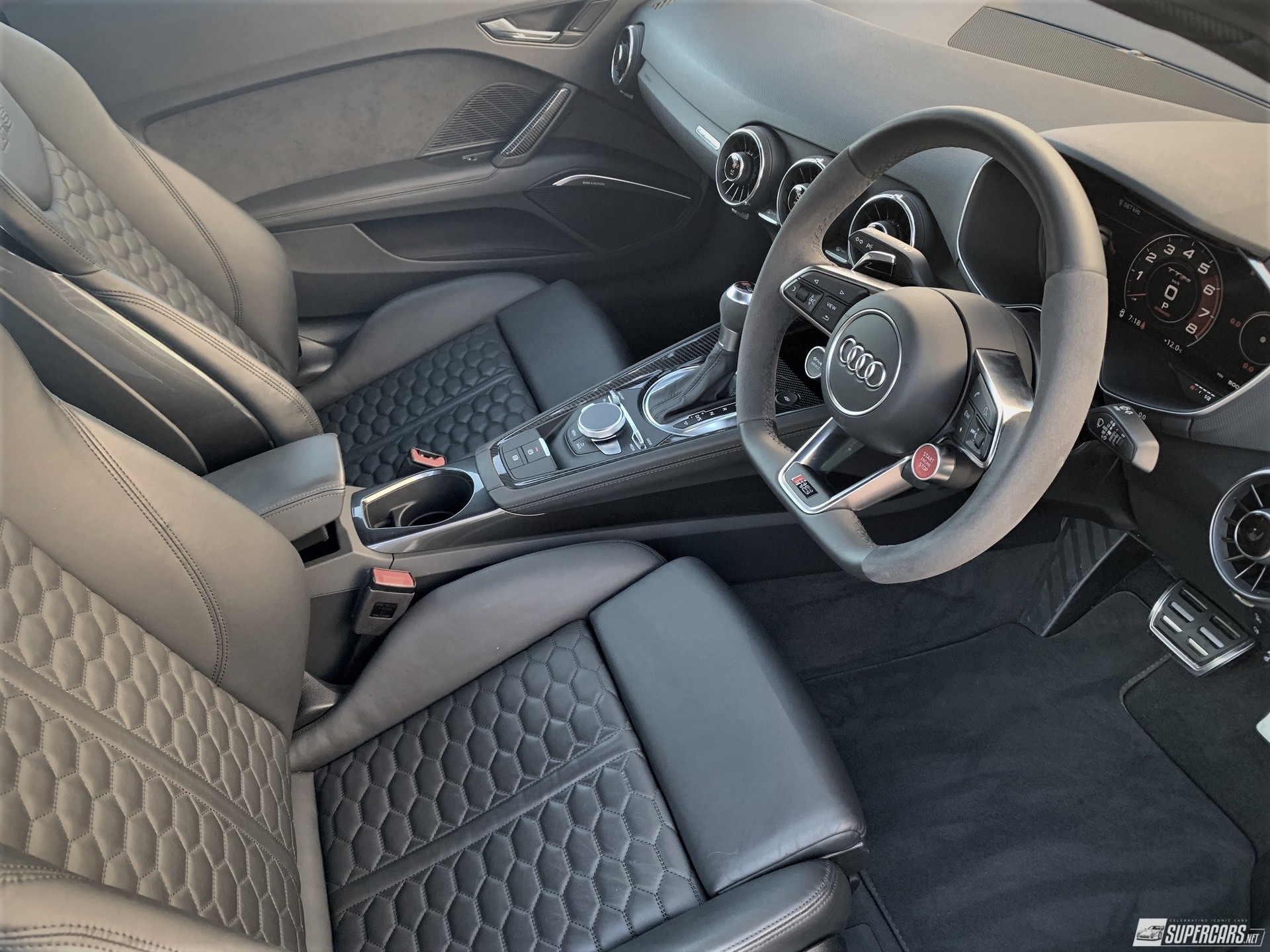
For those lucky souls who enter the cabin, there are even more details to appreciate. Take a close look inside the door jambs and around the sills and you’ll notice that the paint finish is consistently flawless (and that nasties such as spot weld points are absent).
This fastidious detailing is maintained throughout the cabin, which in this instance featured gorgeous quilted nappa leather and alcantara seating, as well as acres of soft-touch surfacing and a mix of textures including (optional) carbon fibre.
It’s certainly a cosy environment, although the low seating position and proximity of the beautifully lined roof ensure that entering and exiting needs a conscious effort for a frame as well worn as mine.
Finding a perfect driving position is not difficult though, thanks to the multi-adjustable seating and leather-wrapped, flat-bottomed steering wheel, which also sports alcantara inlays (as does the stubby shift lever).
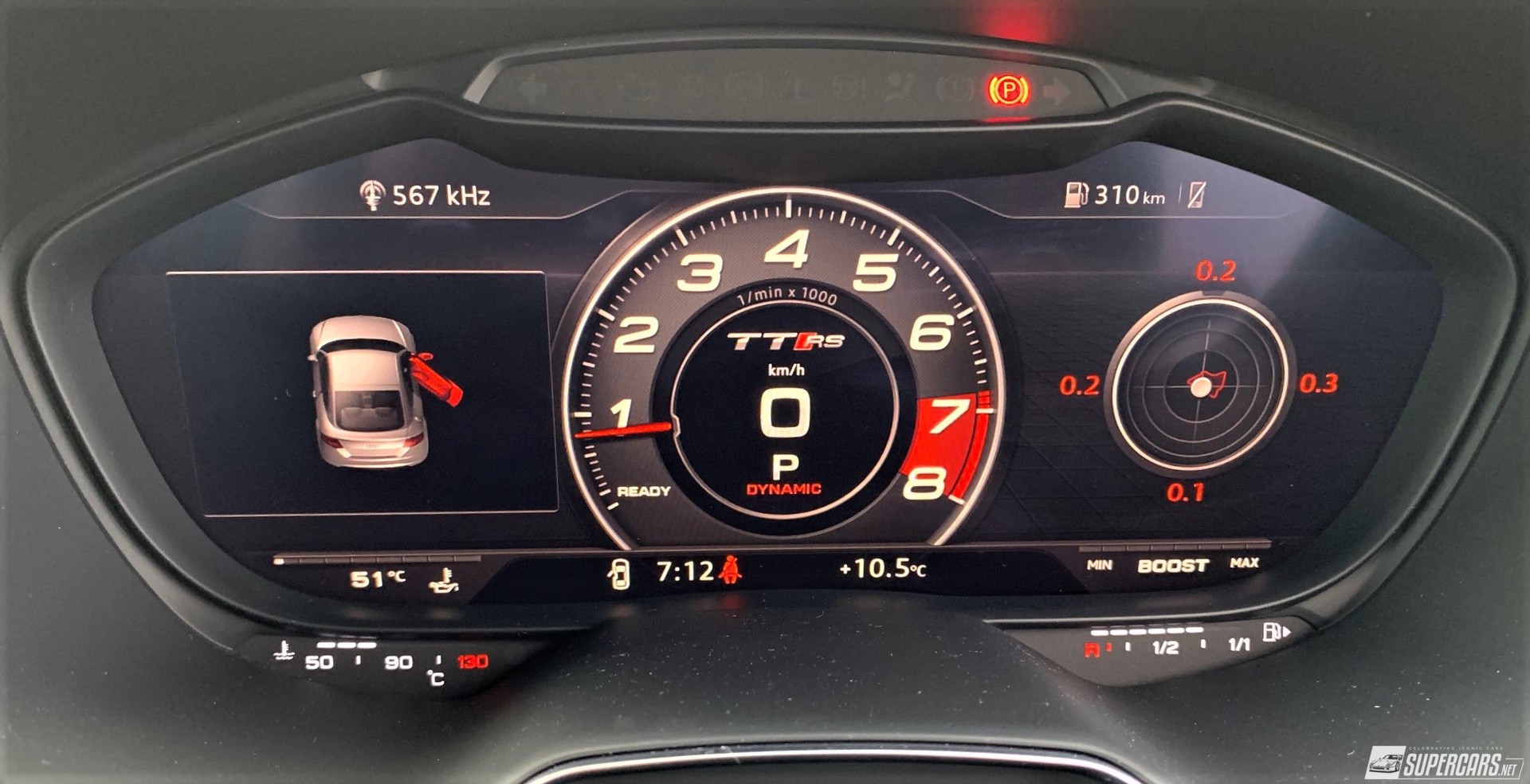
This is what I call, in relative terms, old school Audi detailing. Hard surfaces are hard to find, and rotary MMI controllers and tactile switch gear provide functionality beyond mere touch. This makes operating the brilliantly informative and clear multi-functional driver display more intuitive than might be the case in some of the later Ingolstadt productions, where the eye needs to wander off the road. Truth be told, though, the ambience of the TT is not so much luxurious as it is clinically precise.
Cabin Display
The extent of the information on display is terrific and includes:
- Front and rear camera images
- A G-meter
- Boost levels
- Sat nav
- Audio
- A full run-down on the car’s state of play, with details like:
- Fuel consumption
- Range/level
- Odometer
Dual speedo displays - Engine revs
- Tyre pressures
- And more
Naturally, there’s also cruise control on board, along with keyless stop/start, auto air con, electric folding mirrors (optional gloss black in this instance), and electric one-touch windows.
2022 Audi TT RS Comfort
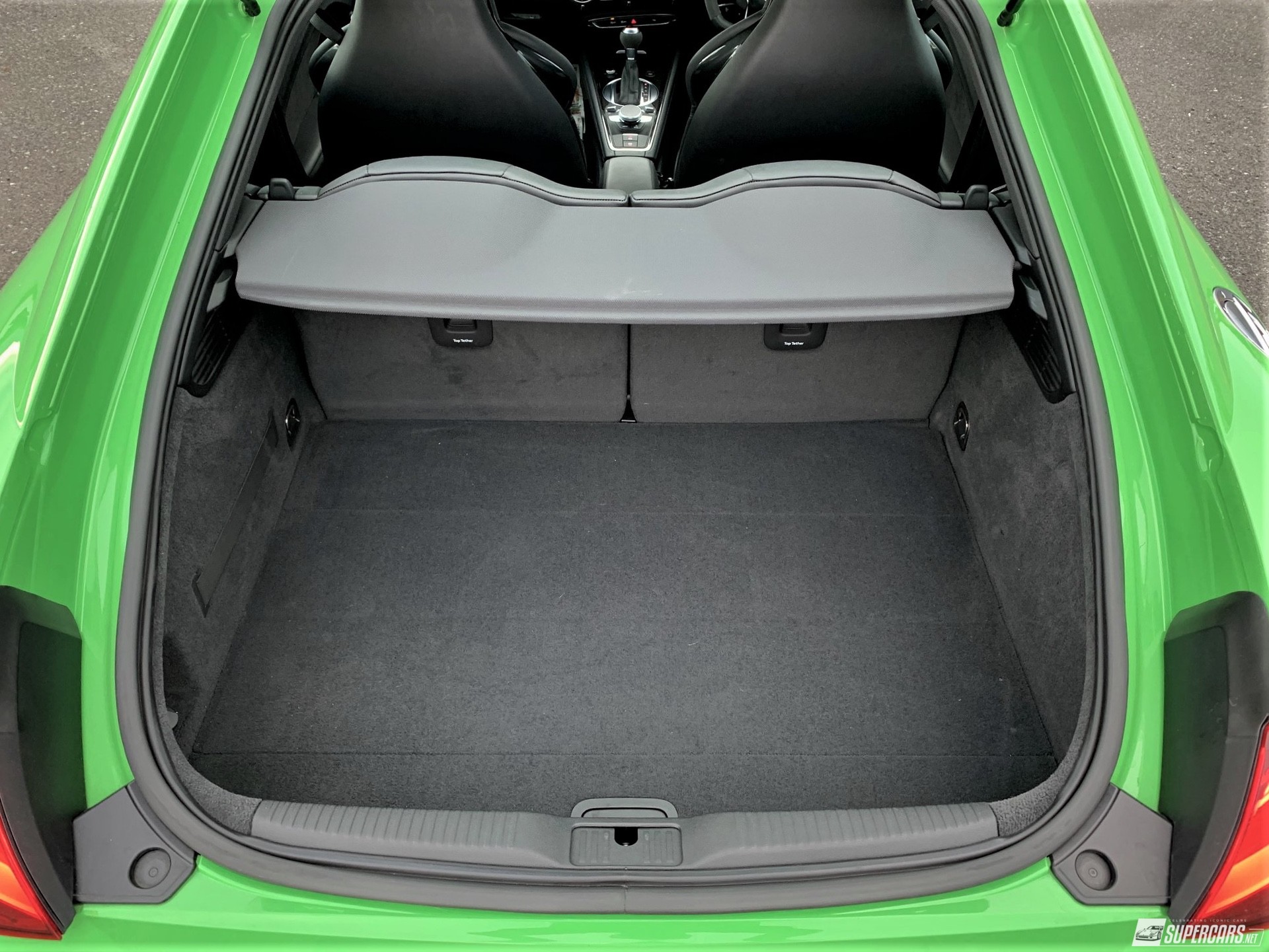
Two occupants will enjoy the low-set front pews that offer more support than observation alone might suggest, but the vestigial and very upright pair of seats in the rear are there to transport wee ones on urban hops only. They’re much more useful when folded to extend the surprisingly capacious (if shallow) load area that provides 305L (10.77cu/ft) with seats in place.
2022 Audi TT RS Performance
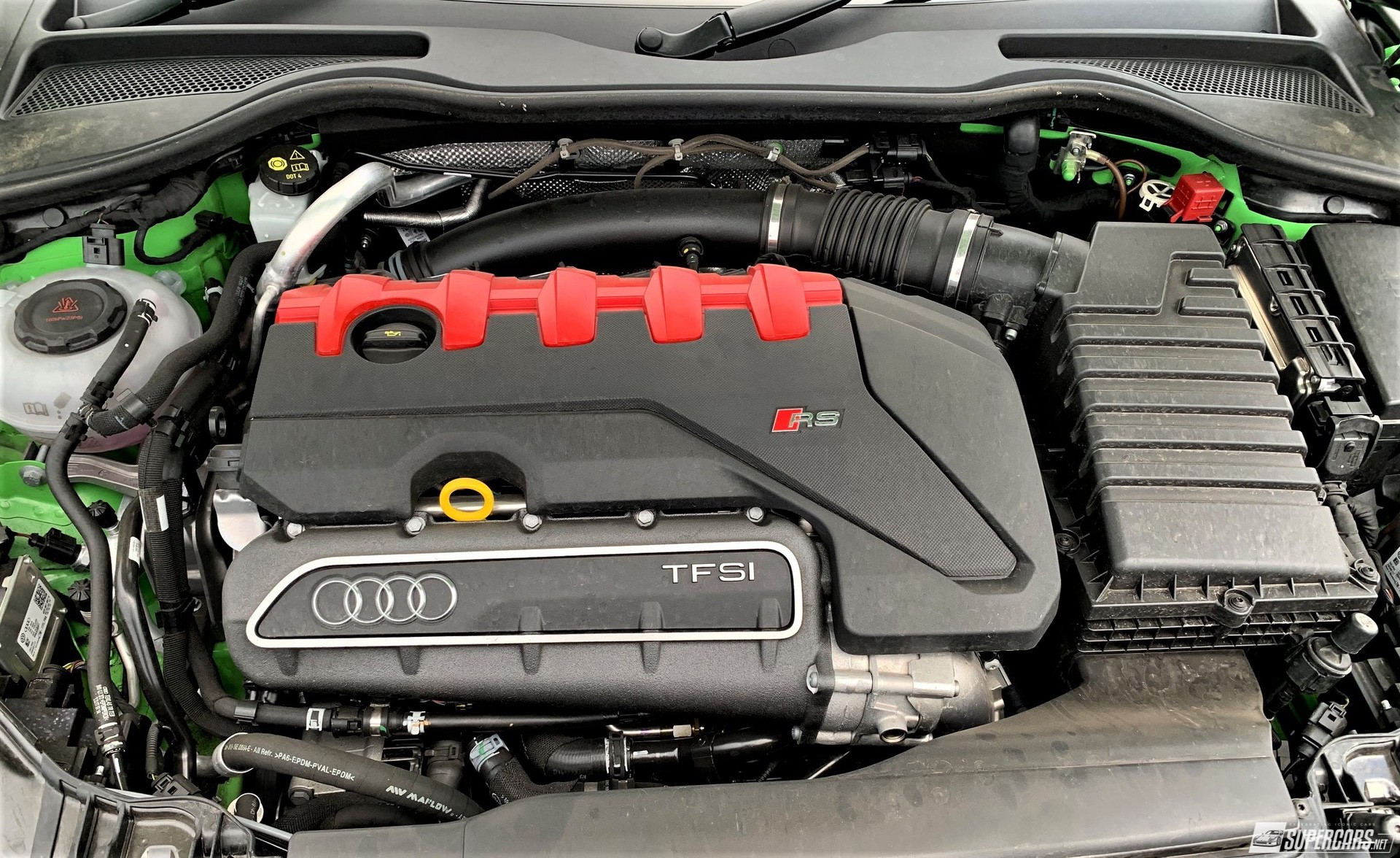
Those fortunate enough to own a set of keys for such a sporting bolide will be much more interested in what lurks under the clamshell bonnet, and here the TT RS truly excels. The straight-five injected and turbocharged engine has been refined over the years, during which time it has earned a multitude of international awards.
Notwithstanding its ballistic 294kW (395HP)/480Nm (354lb/ft) peak outputs, it idles with unusual smoothness and lack of aural fuss. But give the gas pedal a decent prod and those five cylinders, with their unusual firing order, transform into a snarling, mildly off-beat symphony that’s sure to be accompanied by the broadest of smiles and simply devastating forward momentum.
Audi’s famed quattro driveline ensures that no energy is fruitlessly expended in spinning wheels as the scant 3.7 second 0-100km/h (62.2 mph) elapsed time indicates—but this diminutive coupe does more than scamper off the line like a scalded hare.
With the aid of a slick and decisive 7-speed dual clutch S Tronic gearbox that’s very willing to drop cogs in DYNAMIC mode in particular, this engine has muscles to flex from as low as 2000rpm. Traversing urban roads with constantly variable traffic flows never triggers a feeling of lethargy from the five-pot mill.
Indeed, it is rarely necessary to employ the services of the wheel-mounted paddle shifters, since the transmission boasts sufficient grey matter to do the right thing most of the time. If the mood arises, though, using a heavy foot and flexible fingers to work those shifters really does produce the most electrifying performance—aided by activating the sound flap in the exhaust system, which terminates in two large circular pipes that warn would-be-challengers to approach with caution.
For the record, this test unit featured the deletion of the usual 250km/h (155mph) speed limiter to allow for a top speed of 280km/h (174mph).
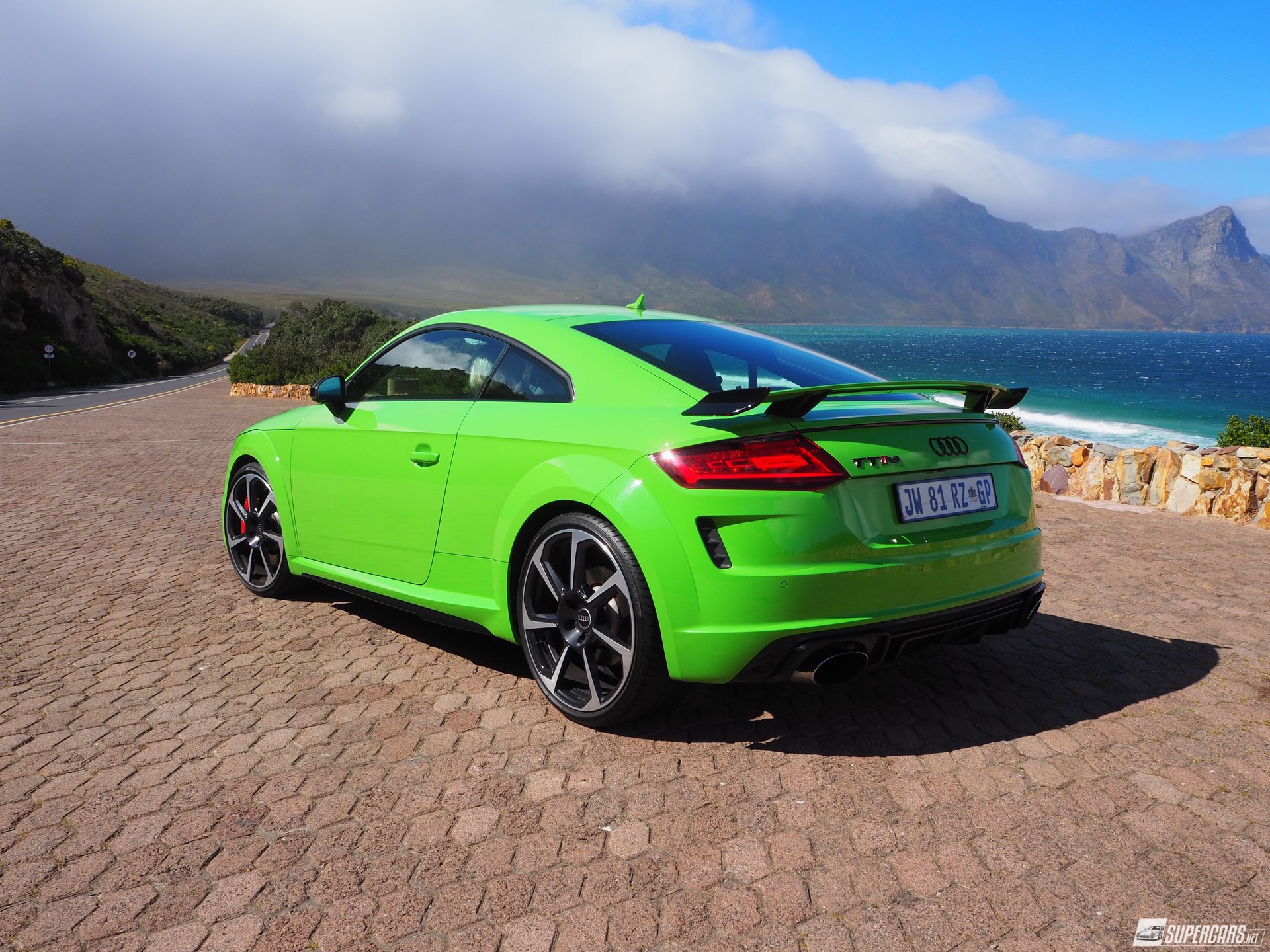
This car’s straight line performance is nothing less than electrifying, as are the brakes. But the RS does more than leave vapour trails in its wake, as its small dimensions, huge 255/30ZR20 Pirelli P-Zeros, quattro drivetrain, inherently stiff springs, and (optional) adaptive suspension prove. All these inputs combine with surprisingly responsive steering to produce a machine that can change direction with pleasing certainty, backed by limpet-like grip.
Sure, it’s not a scalpel in the mould of a Porsche Cayman, but to expect such precision would be a tad unfair, given that the Audi’s underpinnings owe more to a Golf hatchback rather than an out-and-out sportscar. What it offers is a ride, even in the sportiest setting, that feels distinctly firm—but with a measure of pliancy that blunts the worst effects of sharp ridges and deep-set manhole covers (even if it doesn’t entirely eliminate them).
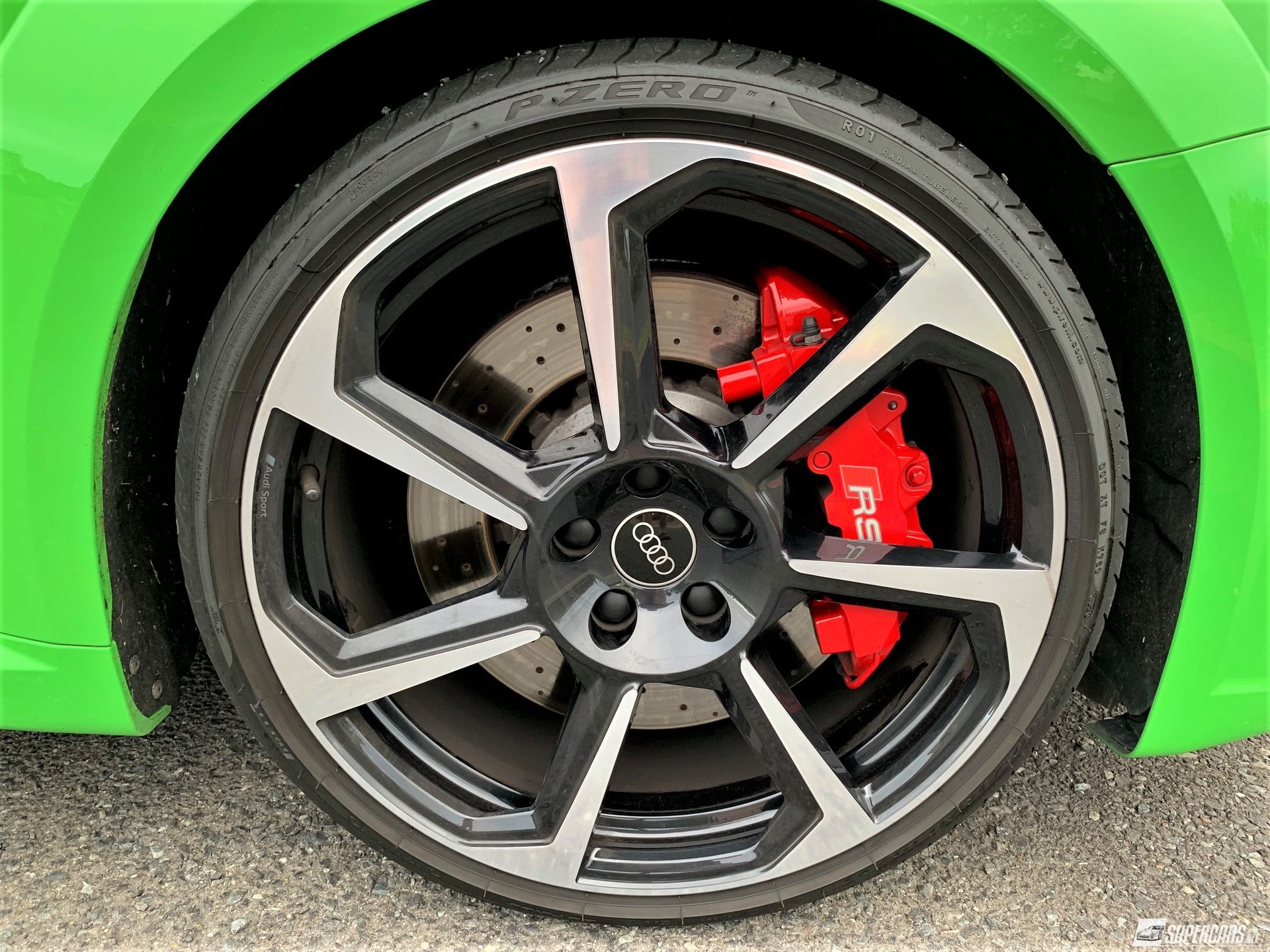
As might be expected, that sport-biased rubber can set up a bit of a din on coarse tar. But in cruise mode on smoother surfaces, the TT RS is decently refined, thanks to excellent suppression of wind noise and an almost total isolation of mechanical interference—until that gas pedal is exercised in a downward direction!
2022 Audi TT RS Mileage
Speaking of gas, the RS recorded a fuel consumption of 11.9L/100km (19.77mpg (US) over a weeks’ varied use with plenty of urban running and bursts of acceleration thrown in. However, a specific motorway check over 30-minutes’ running at around 130km/h (80mph) produced a most encouraging 8.2L/100km (28.68mpg (US).
Final Thoughts on the 2022 Audi TT RS
Sadly, it seems this Audi TT RS will be the last of the breed, as politics and a change of priorities in the world of car manufacturing will soon see the end of fossil fuelled vehicles, especially those of this ilk. Anyone seeking a last chance to take ownership of a surprisingly practical compact sports coupe with stunningly classy build quality and a level of performance almost unmatched in this price range should take the bull by the horns without delay. If all these gloomy predictions do indeed come to pass, then the RS is a truly marvellous swansong for the TT concept.
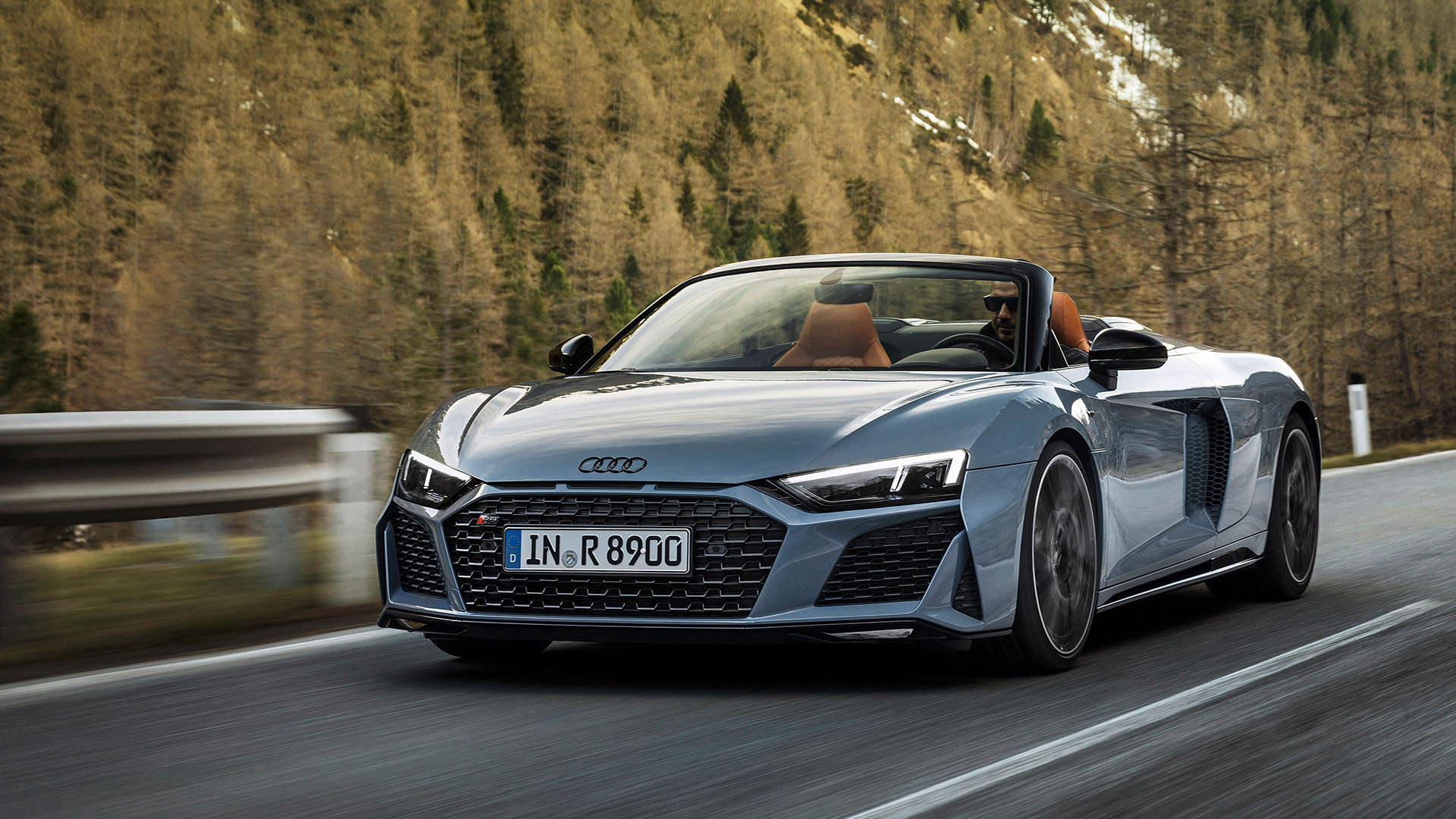
The new Audi R8 V10 performance RWD
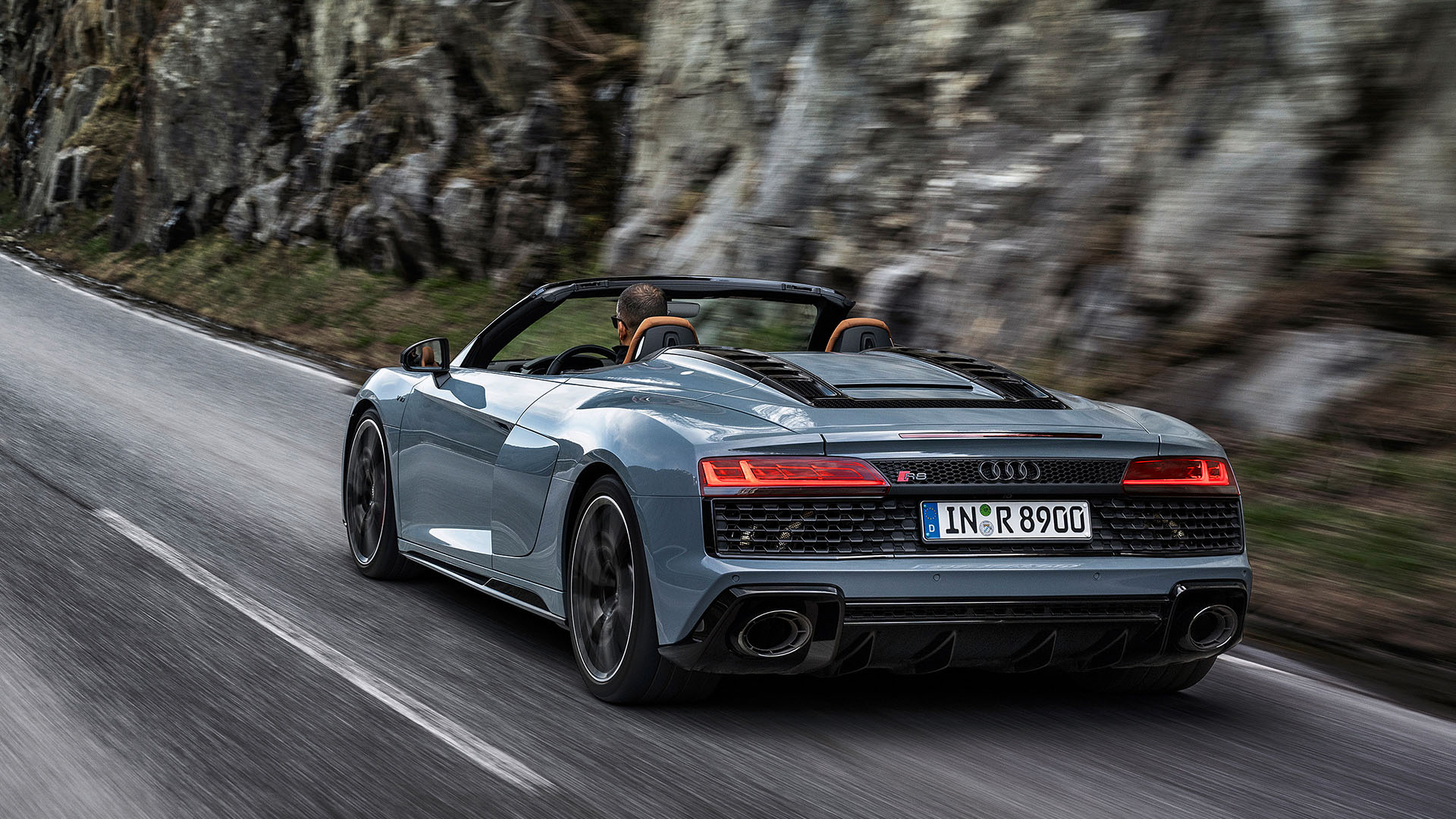
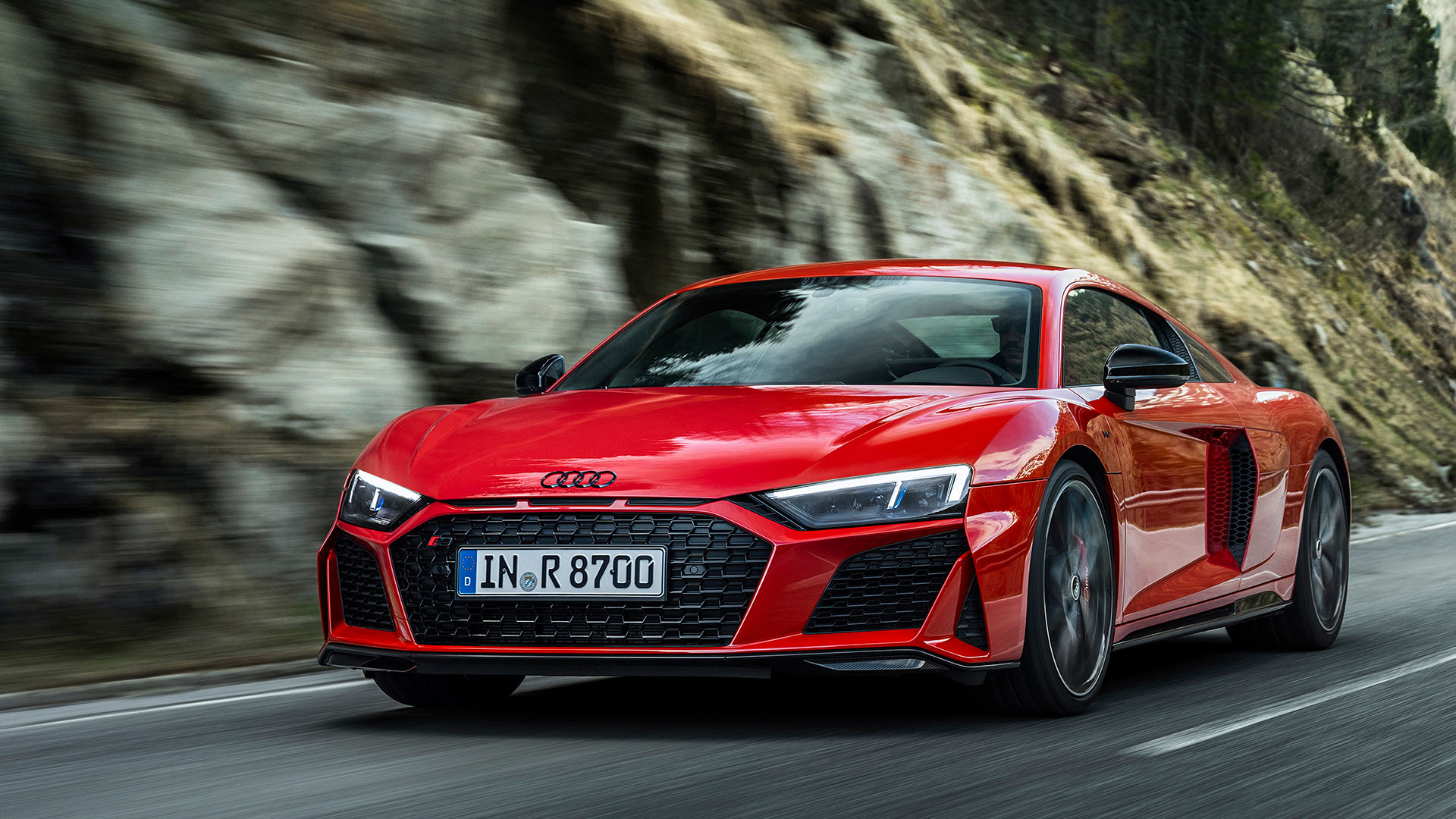
Just imagine how much fun you could have behind the wheel of a 570 PS topless Audi R8 … with rear-wheel drive only? A lot, if you know what you are doing, having a car like this that only propels the rear wheels is the most fun possible behind a steering wheel, but it does demand a level of expertise and some respect for the boundaries, with the Lamborghini Huracán EVO RWD as a counterpart, the Audi R8 V10 just had to have an RWD version too, and right from the start buyers were lining up for this special model, today Audi launched the ‘Performance’ edition, adding 30 PS onto the power output, available as a Coupe from €149,000 with the Spyder demanding a mere €13,000 premium.
The new Audi R8 V10 Performance RWD will be available to order starting October 21st, and all units will be built mainly by hand at the Böllinger Höfe plant in Neckarsulm, Germany, the exact same place where the famous LMS GT4 racecar is assembled from roughly 60% the same parts as these streetcars, the front radiator grille with her large air intakes on either side, the front splitter, the rear vents, and even the oval tailpipes on these R8 V10 Performance RWD are inspired by said GT4 racer.
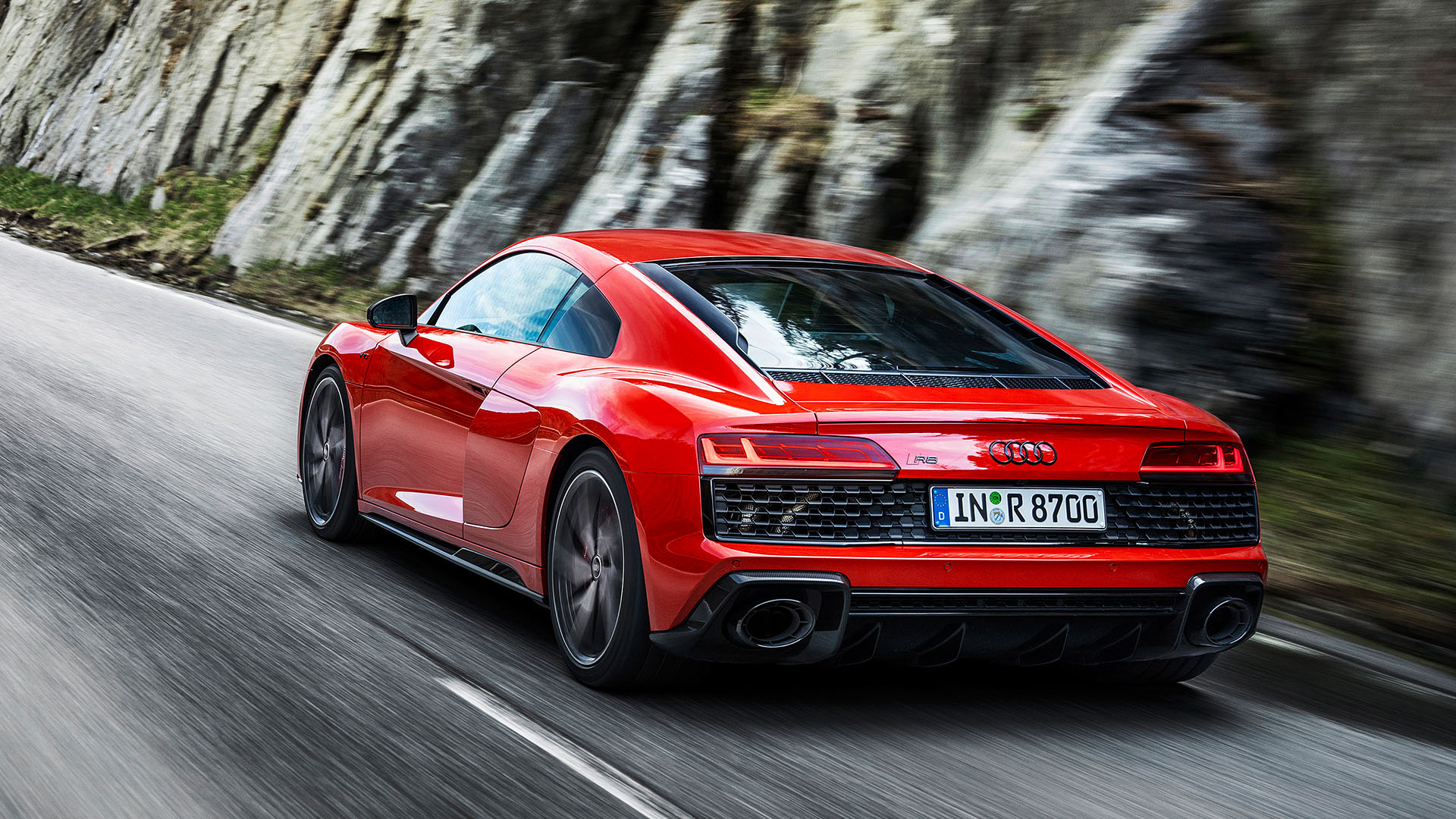
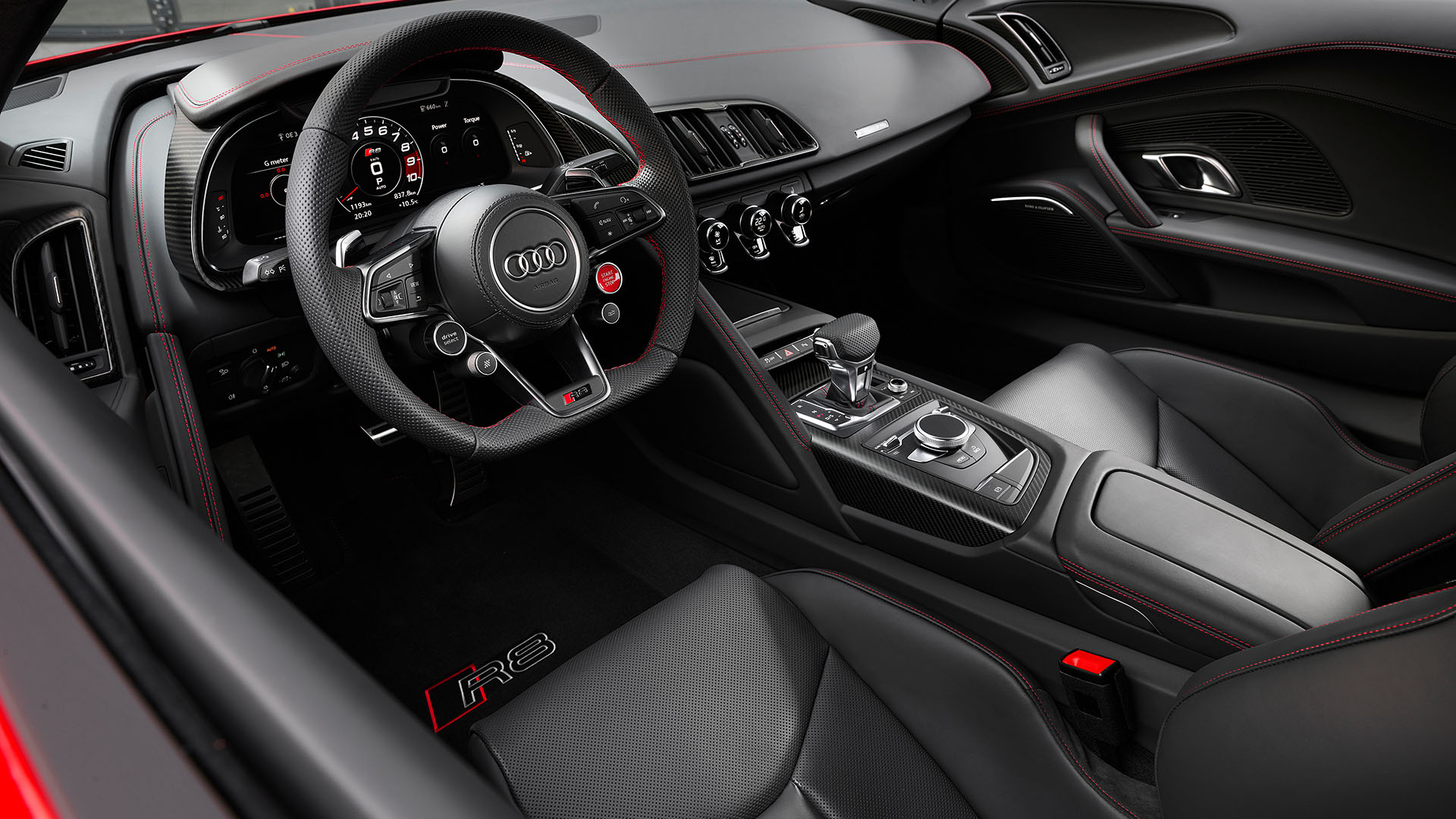
The new Audi R8 V10 Performance V10 can be ordered in ten different colors, even Ascari Blue Metallic that was previously only available for the R8 V10 performance quattro, as standard with the “R8 performance” design package, the interior boasts beautiful black Alcantara leather, with contrast stitching in Mercato Blue and carbon inlays. The Multifunction plus steering wheel comes with four control satellites in these Peformance versions, each for using Audi drive select, to start the engine, to activate Performance Mode and control the engine sound as well as to pilot the Audi virtual cockpit.
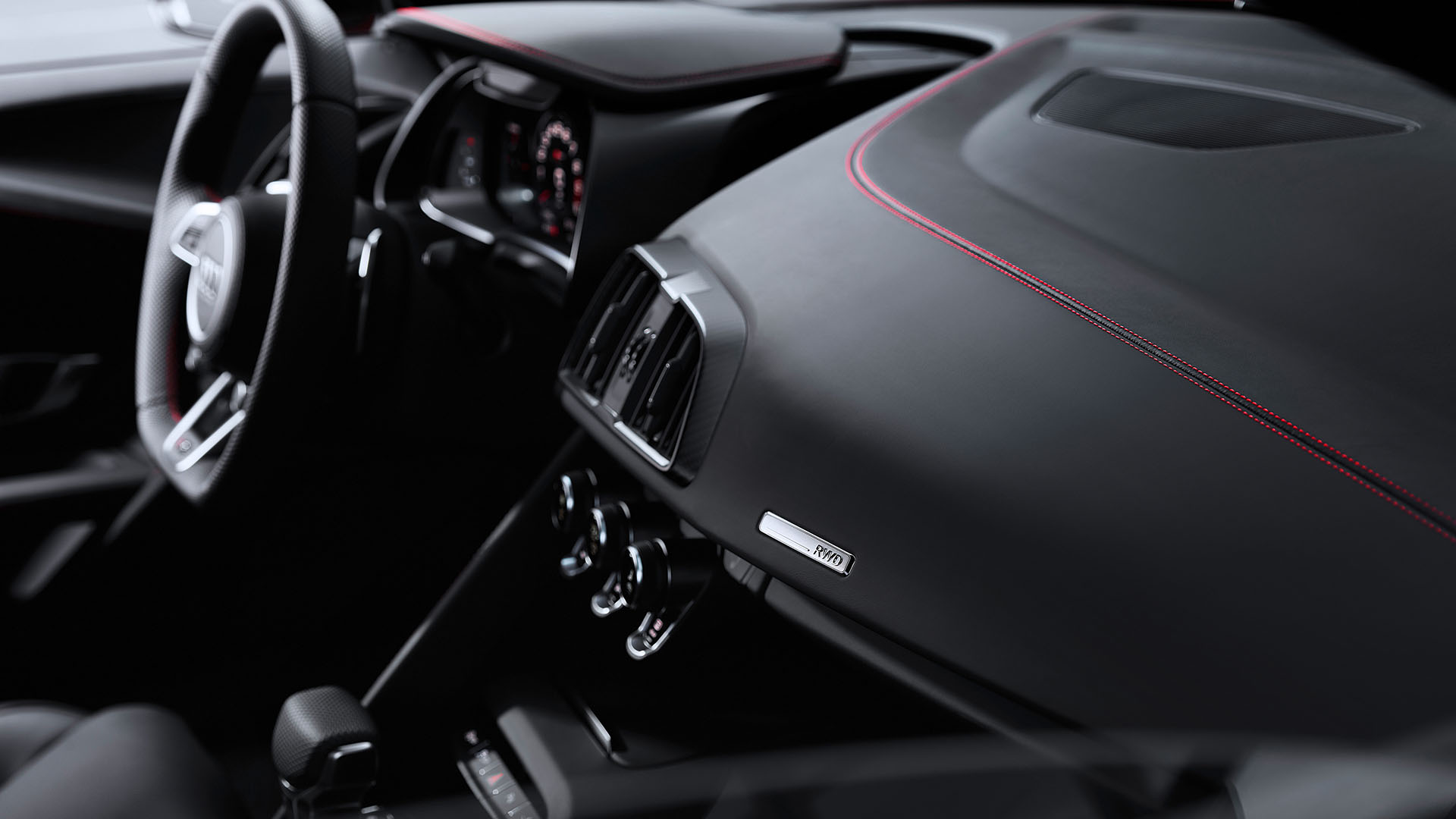
Both pilot and co-pilot can be seated in new R8 bucket or sports seats that are available now, either upholstered in luxurious leather or track-inspired Alcantara while a bespoke RWD badge is mounted on the fascia in front of the passenger, just to remind you are being seated in a supercar that has been specifically tuned for ‘controlled drifts’ in Sport mode.
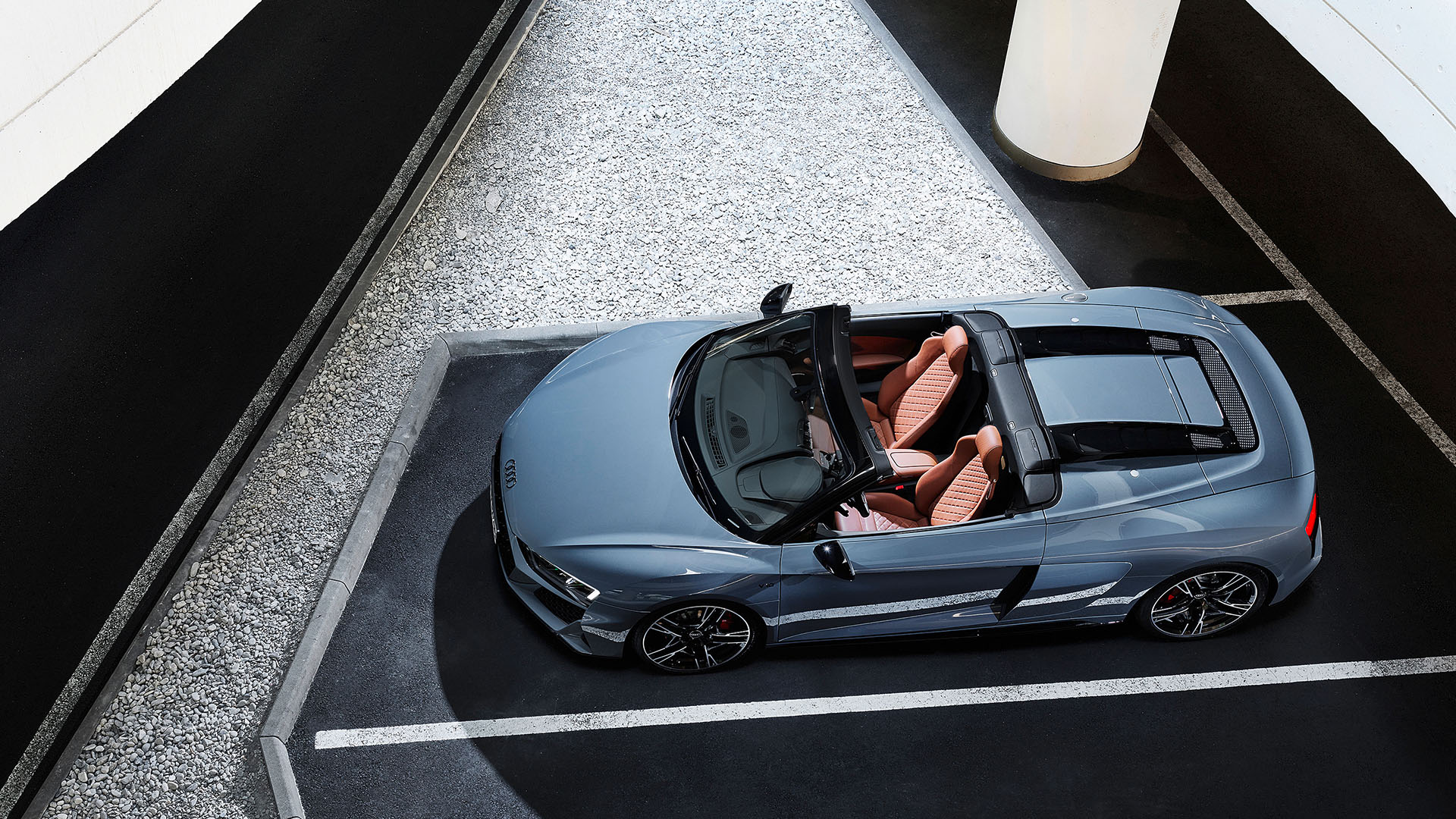
This new Performance model can reach 100 km/h in just 3.7 seconds (the Spyder takes 0.1 seconds more due to her increased weight) while the top speed is a staggering 329 km/h (327 km/h for the Spyder) powered by that magnificent 5.2-Liter V10 FSI engine, as already mentioned power has been increased to a total of 570 PS with torque now at 550 Nm, all being driven to the rear wheels only through Audi’s 7-Speed S tronic automatic gearbox.
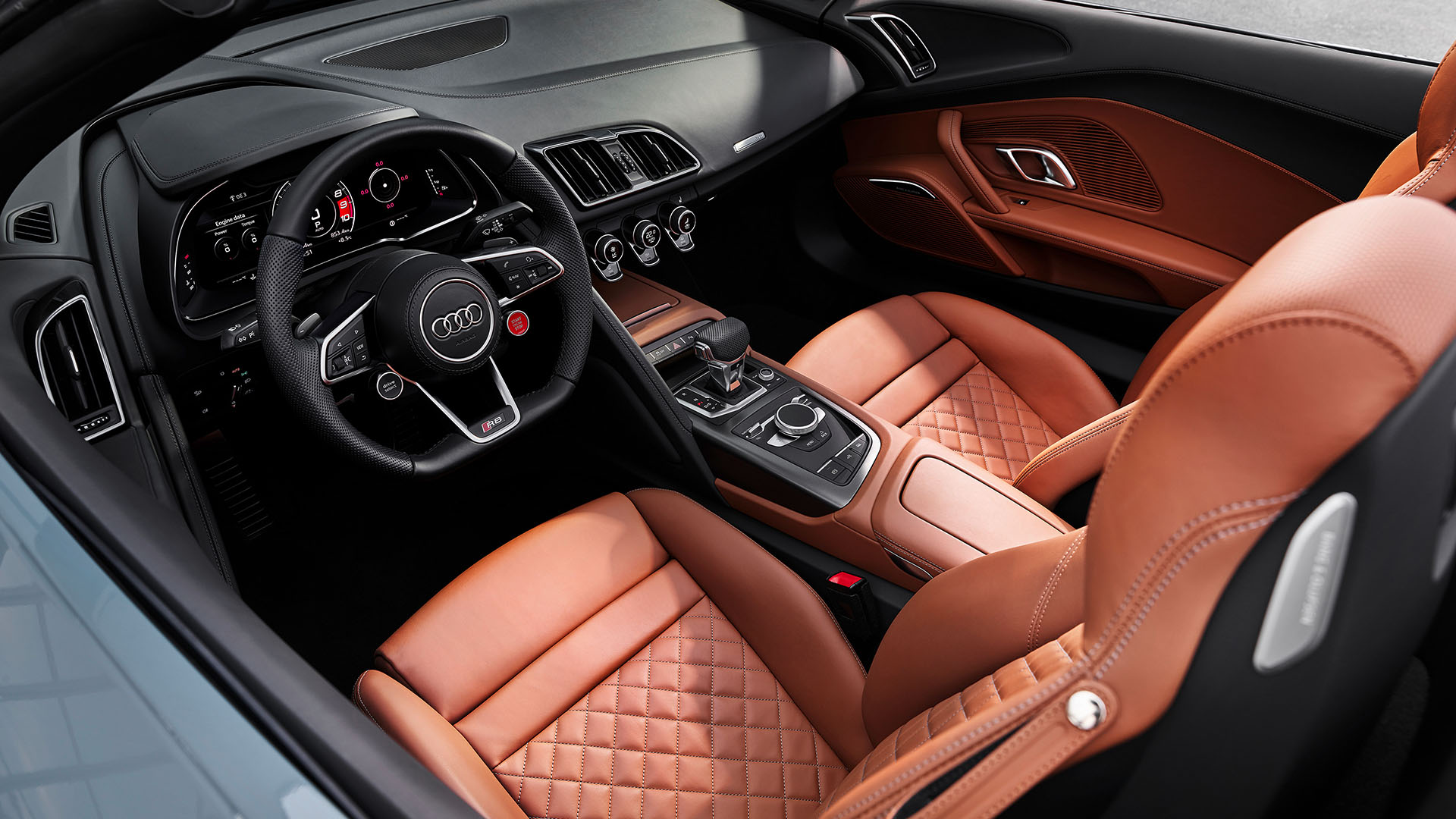
The Audi R8 is still a lightweight aluminum body built over a spaceframe chassis, but large parts are made from CFRP, carbon fiber reinforced plastic to keep the weight down, the R8 V10 Performance Coupe puts down 1,590 kg while the Spyder version adds another 105 kg to reach a total of 1,695 kg, but despite the weight penalty, I would go for the Spyder all the way, I love convertible cars, and with that impressive V10 just inches behind your head, the sound going through a tunnel with the roof down must be mindboggling.
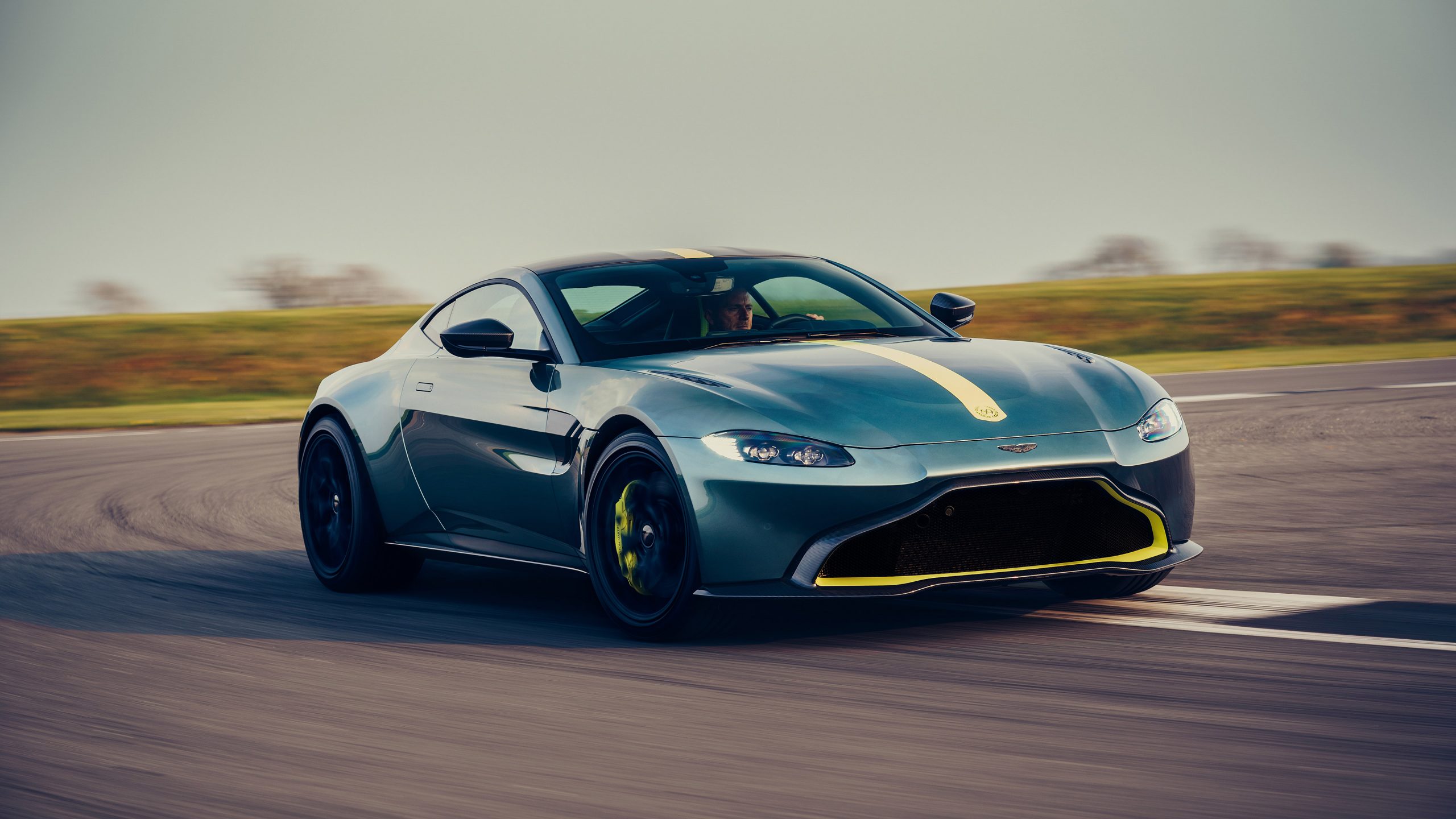
New Cars Powered By V8 Engines
In almost all cases, manufacturers who choose to equip their cars with a V8 engine do so knowingly and deliberately. After all, such engines represent the first big step in crossing over a threshold to a place where performance becomes the sole focus; efficiency and economy are often not even invited as guests for a ride-along in the back seat.
With a quick glance at the back mirror, those pesky 4-cylinder and 6-cylinder engines begin to disappear into the horizon. Then, with the proverbial “pedal-to-the-metal,” the V8 power plant unanimously declares “all-in” with a roar—because this journey is all about thrill-seeking and checking things off the bucket list.
As you begin to drive off towards the sunset, you’ll probably receive the odd jeer from EPA employees, people who hate nice sounds, and various other types of sticklers. But nothing’s going to stop you from reaching your destination. At the end of this journey begins a new one; at the race track perhaps, or maybe the backcountry roads and mountain highways?
Here are all the new cars powered by V8 engines—including sports cars, supercars, and hypercars—available for purchase in 2021.
Aston Martin
2021 Aston Martin Vantage
- Base price: $149,086
- Engine: 4.0L twin-turbocharged V8
- Power: 503 hp @ 6,000 rpm
- Torque: 505 lb-ft @ 2,000 rpm
- 0-60 mph: 3.6 s
- Top Speed: 190 mph
The Aston Martin Vantage is Aston Martin’s “entry-level” sports car. Its singular purpose is raw and unwavering: to overwhelm the senses through its world-renowned design, agile performance, and dedicated craftsmanship. Its heart beats with a high-powered 4.0 liter twin-turbocharged V8, producing that visceral Aston Martin roar.
New for the 2021 model year, the Aston Martin Vantage Roadster is the drop-top version of the British automaker’s gateway car. It continues to embody all the same awesome characteristics of its fixed-roof counterpart, amplifying the overall experience with that wind-in-the-hair feeling only the Roadster can provide.
The Aston Martin Vantage AMR is a new breed of predator—95 kg lighter than the base model and boasting a seven-speed rev-matching manual transmission. This is a beast designed to deliver pure, engaging, manual performance—Aston Martin’s interpretation of a “true driver’s car.” Only 200 will be produced.
2021 Aston Martin DB11

- Base price: $198,995
- Engine: 4.0L twin-turbocharged V8
- Power: 503 hp @ 6,000 rpm
- Torque: 513 lb-ft @ 2,000 rpm
- 0-60 mph: 3.7 s
- Top Speed: 208 mph
The Aston Martin DB11 is the most powerful and efficient ‘DB’ production model in Aston Martin’s history. Available as a coupe or Volante with the optional 5.2L twin-turbocharged V12 or standard 4.0L twin-turbocharged V8 engine, the DB11 takes Aston Martin’s grand touring heritage to unprecedented heights.
New for 2021 are the optional Shadow Edition models. Their blacked-out trim packages add subtly sinister touches to Aston’s DB11 coupe and convertible. With a black-painted grille, 20-inch wheels, and badging, the Shadow Edition bits add an extra hint of aggression to the DB11’s svelte bodywork.
The Aston Martin DB11 AMR is the new flagship car of the DB11 range. However, unlike the other models, it comes exclusively with the top engine option—a 5.2L twin-turbocharged V12.
Audi
2021 Audi RS 6 Avant

- Base price: $110,045
- Engine: 4.0L twin-turbocharged V8
- Power: 591 hp @ 6,000 rpm
- Torque: 590 lb-ft @ 2,050 rpm
- 0-60 mph: 3.5 s
- Top Speed: 190 mph
Probably the hottest performance-oriented station wagon on the market right now, the 2021 Audi RS 6 Avant sheds the conservative styling of the car it is based on but remains in line with the high-performance estate concept. Derived from the already-excellent Audi A6 sedan, this souped-up station wagon adds RS-specific bodywork and exclusive go-fast goodies.
The Audi RS 6 Avant is a powerful car with a mild-hybrid powertrain. At its heart is a twin-turbocharged 4.0L V8 engine, which puts out a whopping 591 hp and 590 lb-ft of torque. The results are impressive, too—the car can sprint from 0-62 mph in just 3.6 seconds, on its way to a top speed of 155 mph. This is the first RS wagon to come to America, and Audi wants to make it count.
2021 Audi RS 7

- Base price: $115,045
- Engine: 4.0L twin-turbocharged V8
- Power: 591 hp @ 6,000 rpm
- Torque: 590 lb-ft @ 2,050 rpm
- 0-60 mph: 3.5 s
- Top Speed: 190 mph
The Audi RS 7 Sportback is what you get when you take the RS 6 Avant’s engine, then place it in a sleeker Audi Sportback frame. The resulting Audi RS 7 Sportback is an aggressive and beautiful car, with the specs to back up its appearance. This strikingly athletic yet elegant four-door sports car is the perfect blend of practicality and performance.
At the heart of the car is the twin-turbocharged 4.0L V8 engine with a mild-hybrid system, which puts out a whopping 591 hp and 590 lb-ft of torque. Like the RS 6, it can go from 0-62 mph in just 3.6 seconds and reach a top speed of 155 mph.
Bentley
2021 Bentley Flying Spur V8

- Base price: $198,725
- Engine: 4.0L twin-turbocharged V8
- Power: 542 hp
- Torque: 569 lb-ft
- 0-60 mph: 4.0 s
- Top Speed: 198 mph
The Flying Spur gets a new model for 2021. Known as the 2021 Bentley Flying Spur V8, the biggest difference for this trim is the use of a twin-turbocharged 4.0L V8 engine that produces 542 hp and 569 lb-ft of torque; it also features cylinder deactivation for improved fuel economy. Bentley says more of its customers want to hustle their cars around instead of being chauffeured and that the more efficient and fun V8 Flying Spur will be the more popular choice with this crowd.
2021 Bentley Continental GT V8

- Base price: $207,825
- Engine: 4.0L twin-turbocharged V8
- Power: 542 hp @ 5,750 rpm
- Torque: 568 lb-ft @ 2,000 rpm
- 0-60 mph: 3.9 s
- Top Speed: 198 mph
With a lively V8 engine delivering irresistibly dynamic performance, accompanied by the sound of its uniquely emotive burble, the new Bentley Continental GT V8 offers a truly engaging driving experience. A grand tourer that makes every journey breathtaking. The Continental GT V8 is exceptionally responsive, delivering breathtaking acceleration accompanied by the irresistible sound of a Bentley V8 engine.
With the new Bentley Continental GT V8 Convertible, open-air grand-touring is always exhilarating. With its spirited V8 engine, innovative technology, sleek, contemporary design, and exquisite attention to detail, you are both completely in touch with the road beneath you and fully connected to the world around you. A great all-around GT that is our top pick when it comes to both value and overall experience.
BMW
2021 BMW M5

- Base price: $103,500
- Engine: 4.4L twin-turbocharged V8
- Power: 600 hp @ 6,000 rpm
- Torque: 553 lb-ft @ 1,800 rpm
- 0-60 mph: 3.0 s
- Top Speed: 190 mph
Updates for 2021 are not under the hood for the M5. There have been no changes in the power department, but the M5 does receive a freshened-up appearance with redesigned front and rear bumpers, new headlights and taillights, and a larger grille. Convenience features such as a larger touchscreen, Android Auto, and cloud-based navigation have also been added.
Where else can you walk into a dealership and buy a sedan that has 600+ hp, all-wheel-drive traction, four doors, and stunning performance both in a straight line and on the race track? This car can really do it all, which more than justifies its 6-figure price tag. The 2021 BMW M5 is more than just your regular sports sedan; it is an epic sports car and the leader in its class.
For us, it’s really a no-brainer to spend the wee-bit extra to step up to the BMW M5 Competition. Just a touch more powerful, the M5 Competition comes with 617 horsepower and 553 lb-ft of torque. Where you really get your money’s worth is through the stiffer dampers, stiffer anti-roll bars, and a .28” lower ride height.
All things considered, the M5 Competition is a sharper, stiffer, and even more performance-oriented version of the M5.
The Competition model gets a new full Merino leather color scheme, a new Track drive mode, and new shock absorbers. These dampers benefit from a recalibrated control system that BMW says should improve ride comfort, especially at high speeds.
2021 BMW M8

- Base price: $133,000 (Coupe), $142,500 (Conv), $130,000 (Gran)
- Engine: 4.4L twin-turbocharged V8
- Power: 600 hp @ 6,000 rpm
- Torque: 553 lb-ft @ 3,600 rpm
- 0-60 mph: 3.2 s
- Top Speed: 190 mph
Big updates for 2021 include BMW announcing that the coupe and convertible versions of the M8 will no longer be available in North America, with the Gran Coupe remaining as the sole body-style option. The Gran Coupe can also be optioned with a new Donington Grey Metallic paint.
The BMW M8 is available in three body configurations: coupe, convertible, and Gran Coupe. It borrows its twin-turbocharged 4.4L V8 engine from the M5, which makes 600 horsepower and 553 lb-ft of torque. The M8 also gives drivers the ability to switch between all-wheel drive and 100% rear-wheel drive, making the car both thrilling and well-suited for any situation thrown its way.
In keeping with the Competition formula as used in the rest of the lineup, the Competition version of the M8 offers up a more hardcore, track-focused version of the base car. The BMW M8 Competition also borrows its engine from its M5 counterpart, producing an additional 17 horsepower over the regular M8. While we don’t expect many M8s to show up to the race track, the Competition package is nevertheless a worth-it option for the more discerning pilots out there.
This car is available in coupe, convertible, and gran coupe body styles. However, only the gran coupe body style is available for the US market.
Chevrolet
2021 Chevrolet Camaro (LT1, SS)

- Base price: $34,000 (LT1), $37,500 (SS)
- Engine: 6.2L naturally aspirated V8
- Power: 455 hp @ 6,000 rpm
- Torque: 455 lb-ft @ 4,400 rpm
- 0-60 mph: 4.1 s
- Top Speed: 198 mph
The Chevrolet Camaro LT1 is the model’s first foray into V8 territory, which allows it to offer a relatively low-priced entry into the world of 8-cylinder performance. Already producing as much as 455 hp, the LT1 is a fantastic choice for those who want an unadulterated, no-nonsense sports car. Stepping up to the 1SS and 2SS doesn’t add any more power, but it provides more performance and convenient amenities—such as a transmission cooler, rear Brembo brakes, magnetic ride control, wider wheels, a different front bumper, and a standard 8″ touchscreen.
2021 Chevrolet Camaro ZL1

- Base price: $63,000
- Engine: 6.2L naturally aspirated V8
- Power: 650 hp @ 6,400 rpm
- Torque: 650 lb-ft @ 3,600 rpm
- 0-60 mph: 3.5 s
- Top Speed: 198 mph
Step up to the Chevrolet Camaro ZL1, and you’re looking at a 650 hp supercharged version, making it the most powerful Camaro available. Driving this car can make 0-60 mph happen in a blistering 3.5 seconds. The all-new range-topping Camaro ZL1 is slated to come with the Corvette’s Z06 engine as standard, providing phenomenal value when it comes to performance.
The track-oriented 1LE package adds performance upgrades that allow the car to handle and brake more capably. It is available in coupe and convertible body styles, and it offers drivers their choice of an engaging manual transmission or a lightning-quick automatic.
2021 Chevrolet Corvette Stingray (C8)

- Base price: $60,995
- Engine: 6.2L naturally aspirated V8
- Power: 490 hp @ 6,450 rpm
- Torque: 465 lb-ft @ 5,150 rpm
- 0-60 mph: 3.0 s
- Top Speed: 194 mph
Probably the most exciting thing to come from the American brand (and perhaps the entire automotive industry) for a long time is the new mid-engine 2021 Chevrolet Corvette C8. It is expected to go full-tilt against the likes of exotic brands such as Porsche, Ferrari, and McLaren on the performance front while costing substantially less to own.
On paper, its bang-for-buck looks untouchable and potentially industry-disrupting. It comes in both coupe and convertible body styles.
Dodge
2021 Dodge Challenger Hellcat

- Base price: $61,270
- Engine: 6.2L supercharged V8
- Power: 717 hp @ 6,450 rpm
- Torque: 650 lb-ft @ 5,150 rpm
- 0-60 mph: 3.6 s
- Top Speed: 199 mph
While the Challenger can be purchased with a V8 engine (starting with the R/T models), we’re going to focus on the Hellcat models here. The Dodge Challenger SRT Hellcat continues to evolve, with the 2021 model year treating fans and enthusiasts to even more madness (and variety) than ever before.
While the supercharged 6.2L V8 engine is a mainstay, the coupe can now be configured with up to 3 different engine options—Hellcat, Redeye, and Super Stock—which produce 717 hp, 797 hp, and 807 hp, respectively. These options allow it to become one of the most powerful production cars in the world.
Widebody packages are available for both the base and Redeye trims (and come standard on the Super Stock) to give the car an even more pronounced and aggressive appearance —one that certainly matches the monster lurking beneath the hood.
2021 Dodge Charger Hellcat

- Base price: $72,670
- Engine: 6.2L supercharged V8
- Power: 717 hp @ 6,450 rpm
- Torque: 650 lb-ft @ 5,150 rpm
- 0-60 mph: 4.0 s
- Top Speed: 196 mph
The Dodge Charger is, for the most part, the sedan version of the Challenger, and it too offers up the company’s exclusive Hellcat experience. For 2021, the Dodge Charger SRT Hellcat—and its new Redeye version—are offered exclusively with the widebody package. These versions produce 717 hp and 797 hp (respectively) from the same 6.2L supercharged V8 used in the Challenger, although no “Super Stock” version is available for the Charger. Yet.
Ferrari
2021 Ferrari Portofino M
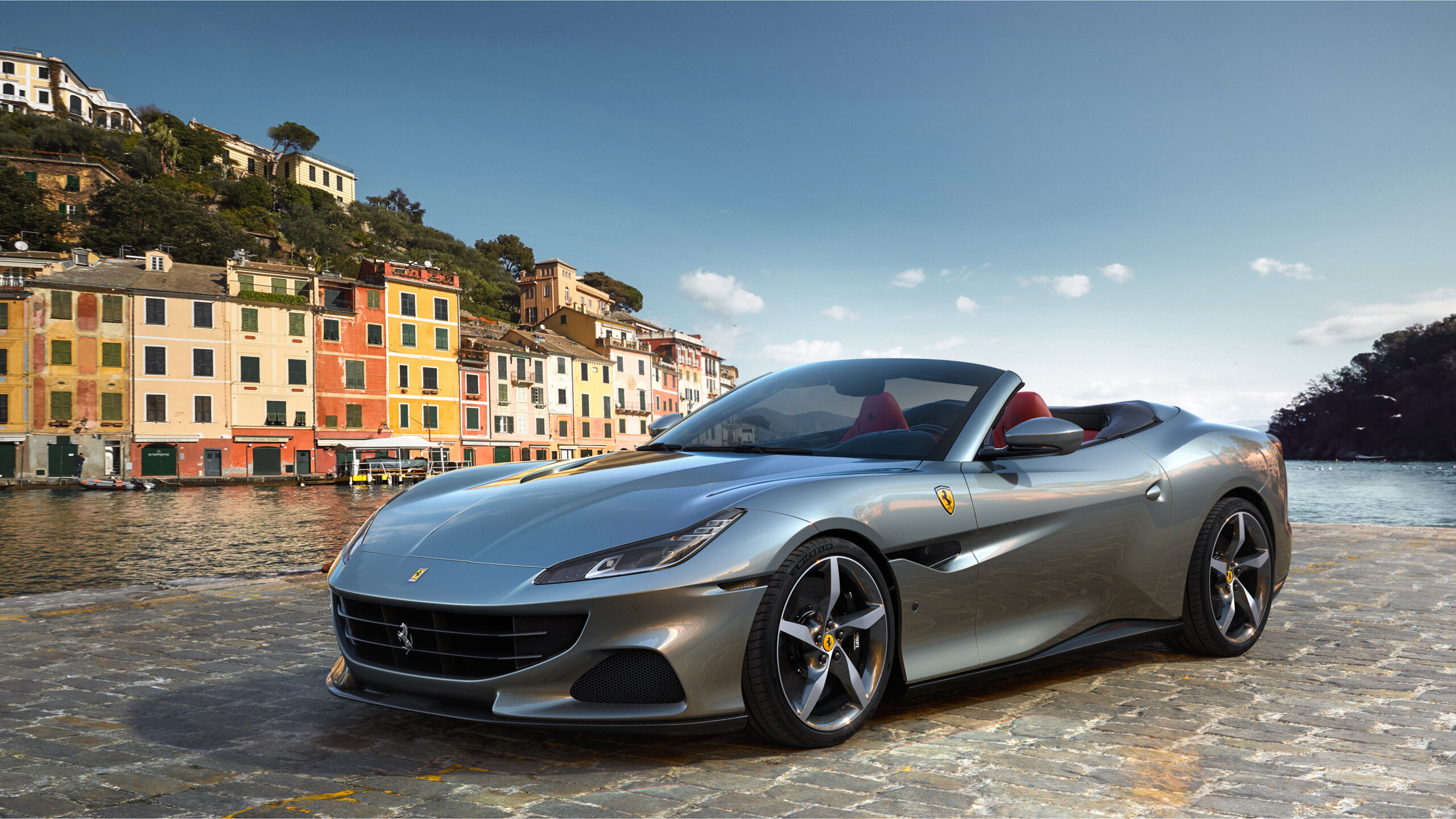
- Base price: US$245,000
- Engine: 3.9L twin-turbocharged V8
- Power: 612 hp @ 7,500 rpm
- Torque: 560 lb-ft @ 3,000 rpm
- 0-60 mph: 3.4 s
- 0-124 mph: 9.3 s
- Top Speed: 199 mph
The Ferrari Portofino has been, for a couple of years, the Italian marque’s 2+2 grand touring cabriolet. It was, and still is, a powerhouse of comfort and technology—as capable of crossing continents as it is of driving a few blocks to the grocery store.
Now, however, it is getting its first refresh, thanks in large part to the success of the Ferrari Roma, which itself was a hardtop coupe evolution of the Portofino. Named the Portofino Modificata, it is shortened to Portofino M for branding purposes.
The highlight of this update has to be the newly developed eight-speed, dual-clutch automatic transmission. The everyday drop-top has also been refined on some other aspects, which now makes it even more convenient. A boatload of safety tech has also been added—plus, now the engine offers 20 hp more.
2021 Ferrari F8 Tributo

- Base price: US$276,000
- Engine: 3.9L twin-turbocharged V8
- Power: 710 hp @ 8,000 rpm
- Torque: 568 lb-ft @ 3,250 rpm
- 0-60 mph: 2.9 s
- 0-124 mph: 7.8 s
- Top Speed: 211 mph
Billed as the replacement for the 488 GTB, the Ferrari F8 Tributo inherits much of the outgoing model’s DNA. Mind you, this is largely (if not entirely) a positive thing, as the F8 Tributo notably improves in areas that had room for it while retaining the essence of what worked so well before.
Considered the ‘entry-level’ mid-engined car in the Ferrari model lineup, the F8 Tributo is nevertheless more than the sum of its parts; it is a highly-capable all-rounder, standing out amongst an expanding club of ‘everyday supercars.’
Producing 710 hp at a screaming 8,000 rpm and 568 lb-ft of torque at an accessible 3,250 rpm, the F8 Tributo’s 3.9L twin-turbocharged V8 is nothing to balk at, despite being standard for the times.
The Ferrari F8 Spider replaces the 488 Spider and is officially on sale in Ferrari dealerships. It is powered by a twin-turbocharged 3.9-liter V-8 that produces 710 horsepower and 568 lb-ft of torque.
The Spider is rear-wheel drive, and a seven-speed automatic transmission changes the gears. Peak torque comes earlier in the rev range than the 488. The aero kit, headlights, taillights, and body also look different than the 488 GTB.
We drove both the F8 Spider and Tributo back-to-back, and our pick is the Spider. It is just as fast and dynamic as the coupe—but it feels faster, louder, and more visceral—thanks in part to its open top.
Like the F8 Tributo, the 2021 Spider accelerates from 0-60 mph in just 2.8 seconds on its way to 124 mph in just 7.8 seconds, and has a top speed of 211 mph. Fast enough, I think!
2021 Ferrari Roma
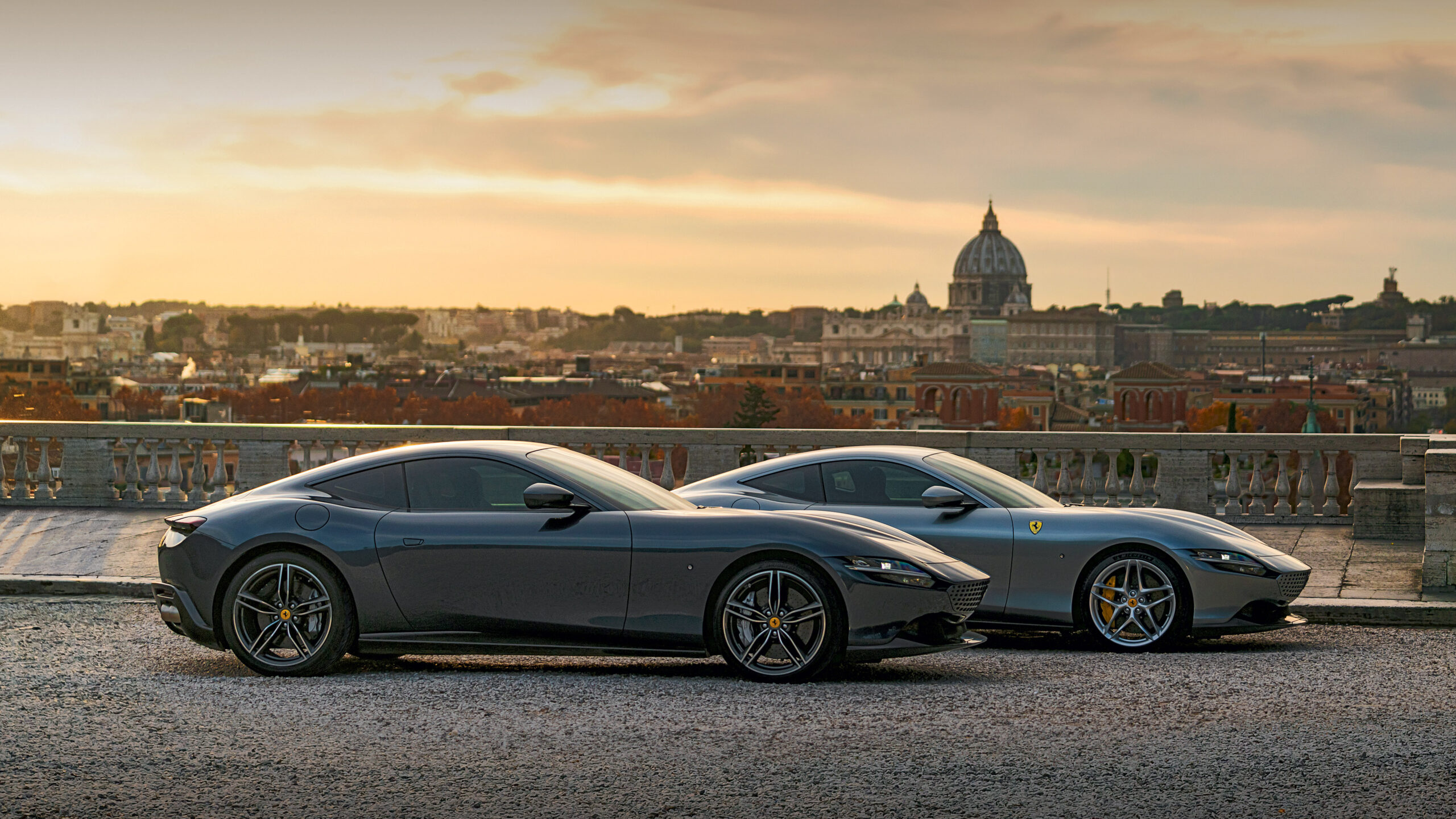
- Base price: US$222,630
- Engine: 3.9L twin-turbocharged V8
- Power: 612 hp @ 7,500 rom
- Torque: 560 lb-ft @ 3,000 rpm
- 0-60 mph: 3.4 s
- 0-124 mph: 9.3 s
- Top Speed: 199 mph
This vehicle is stunning to look at, with a minimalist (by today’s standards) grille and a shark-nose front end. It’s long, lean, and so utterly Ferrari that it makes all the right places on a true car enthusiast ache with desire.
Inside the car, you can see one of the most high-tech cabins of any Ferrari. There’s a large digital instrument cluster, a unique vertically-oriented infotainment screen in the center with some controls in front of it, and the passenger has their own small horizontally-oriented infotainment screen.
Now onto even better stuff; the rear-wheel-drive Ferrari Roma gets a 3.9L twin-turbocharged V8 engine with new cam profiles and a speed sensor that allows the maximum rpm to rise by 5,000 rpm. In other words, this is an Italian Stallion that can truly sing. The engine also has a single-piece exhaust manifold designed to make the most of its efforts. All told, it makes 612 hp and 560 lb-ft of torque.
2021 Ferrari 488 Pista

- Base price: US$350,000
- Engine: 3.9 liter twin turbo V8
- Power: 710 bhp @ 7,500 rpm
- Torque: 568 lb-ft @ 5500 rpm
- 0-60 mph: 2.85 sec
- 0-100 mph: 5.4 sec
- Top Speed: 211 mph
The Ferrari 488 Pista is the marque’s latest Special Series model, and, following in the footsteps of its predecessors, it epitomizes the pinnacle of Ferrari road cars. Ferrari’s naturally aspirated V8s shrieked and snarled into the redline; the Pista barks and roars its way there. A different special series animal for sure, but an animal nonetheless. Almost perfect.
The Ferrari 488 Pista Spider is powered by the same engine used in the coupe, a twin-turbocharged 3.9L V8, which produces a magnificent 711-horsepower and 568 lb-ft of torque. The Spider is a convertible with a removal hardtop, though some would argue it functions more closely to a targa top vehicle. The Spider weighs 200 pounds more than the coupe.
2021 Ferrari SF90 Stradale

- Base price: US$507,000
- Engine: 4.0L twin-turbocharged V8, plus 3 electric motors
- Power: 989 hp (combined)
- Torque: 590 lb-ft
- 0-60 mph: 2.5 s
- 0-124 mph: 6.7 s
- Top Speed: 211 mph
The Ferrari SF90 Stradale is a stunning new hybrid supercar that produces 989 hp from a plug-in hybrid powertrain. This hybrid setup utilizes a twin-turbocharged 4.0L V8 combustion engine linked with three electric motors.
Two of those electric motors are mounted on the front axle, and one is mounted between the engine and the gearbox. The combined maximum output of the V8, together with the electric motors, makes this Ferrari good for 0-60 mph in just 2.5 seconds. This powertrain is the most powerful of any Ferrari and easily places the SF90 Stradale atop the Ferrari lineup.
The car also features an all-new chassis made of carbon fiber and aluminum. The sleek body panels and its aerodynamic shape help the model produce a whopping 860 pounds of downforce at speed; the whole profile of the car is extremely low, allowing it to slice through the air at high speeds. It also has a two-piece rear wing, derived from the company’s participation in Formula 1 racing.
Ford
2021 Ford Mustang Mach 1

- Base price: $53,400
- Engine: 3.5L Twin-Turbo V6
- Power: 450 hp @ 5,000 rpm
- Torque: 510 lb-ft @ 3,500 rpm
- 0-60 mph: 5.1 s
- Top Speed: 107 mph
Instead of starting with the Mustang GT, we have moved straight to the limited-edition Ford Mustang Mach 1, which gets a 480-hp version of Ford’s 5.0L naturally-aspirated V8 engine. The Mach 1 comes standard with a 6-speed manual transmission, while a 10-speed automatic is an optional add-on. There is a unique front end and heritage-inspired look with black stripes on the hood and bodysides.
The car also benefits from advanced aerodynamic and cooling upgrades, courtesy of the awesome Shelby GT350 and Shelby GT500. We recommend opting for the Mach 1’s Handling package to experience the full potential of the model.
2021 Ford Mustang Shelby GT500

- Base price: $72,900
- Engine: 5.2L supercharged V8
- Power: 760 hp @ 7,300 rpm
- Torque: 625 lb-ft @ 5,000 rpm
- 0-60 mph: 3.3 s
- Top Speed: 180 mph
There’s a lot to love about the GT350’s bigger brother (especially with the GT350 being discontinued for 2021)—the Ford Mustang Shelby GT500. It’s the most muscular of all of Ford’s vehicles, but it’s not just fast in a straight line with its supercharged 760 hp V8. The car can make its way around the twists and bends of the most technical racetracks quickly, too. It’s almost as quick as a Porsche 911 GT3 RS on the track, according to some credible sources.
Jaguar
2021 Jaguar F-Type R

- Base price: $103,200
- Engine: 5.0L supercharged V8
- Power: 575 hp @ 6,500 rpm
- Torque: 516 lb-ft @ 3,500 rpm
- 0-60 mph: 3.5 s
- Top Speed: 186 mph
The Jaguar F-Type R has seen its engine output increased for the 2021 year, gaining 25 hp and 14 lb-ft of torque over the previous year’s entry. The engine is exclusively mated to an all-wheel drive version.
The platform remains unchanged, with updates to the exterior and interior that keep the model feeling fresh and consistent with the rest of its lineup. New LED headlights and taillights, a revised front and rear bumper, and a new infotainment system are amongst the new offerings.
Available in both coupe and convertible form, the F-Type R sports car is now the highest F-Type trim in the lineup and is equipped with an arsenal intent on squaring off against the likes of the Porsche 911 and comparable Mercedes AMG models. With sharp handling and blistering acceleration—thanks in large part to its all-wheel-drive system—the F-Type R makes for a padded spec sheet and costs less than most of its competition.
Koenigsegg
2021 Koenigsegg Jesko

- Base price: $2,800,000
- Engine: 5.0L twin-turbocharged V8
- Power: 1,600 hp
- Torque: 1,106 lb-ft
- 0-60 mph: 2.5 s
- Top Speed: 300+ mph
Koenigsegg’s new Jesko hypercar, named after his father, who helped him start his company, claims over 300 mph as its top speed. While Koenigsegg hasn’t yet proven this in the real world, the Agera successor has achieved this feat in simulations, and the company certainly believes it to be as good as true.
There are two different versions of the car; Koenigsegg designed one for a high-speed run (called the Absolut) to achieve the aforementioned 300+ mph, and another with some serious downforce for the racetrack. No matter the variant, you get a new carbon fiber and aluminum chassis, a new suspension setup, redesigned engine, and a special gearbox.
2021 Koenigsegg Regera

- Base price: $2,000,000
- Engine: 5.0L twin-turbocharged V8 + 3 electric motors
- Power: 1,500 hp
- Torque: 1,475 lb-ft
- 0-60 mph: 2.5 s
- Top Speed: 255 mph
The 2021 Koenigsegg Regera is definitely part of the small and exclusive group of hybrid hypercars. Koenigsegg launched the model at the 2015 Geneva Motor Show, and since then, it has generated much hype amongst many car lovers and enthusiasts.
Besides a regular engine, the Koenigsegg Regera also carries an electric unit that produces up to 700 hp and 663 lb-ft of torque with a 4.5 kWh liquid-cooled battery pack. As a result, the car—in combination with its 5.0L twin-turbocharged V8—produces an amazing 1,500 hp, simply making it the most powerful hybrid hypercar in the world.
Lamborghini
2021 Lamborghini Urus

- Base price: US$218,009
- Engine: 4.0L twin-turbocharged V8
- Power: 641 hp @ 6,000 rpm
- Torque: 627 lb-ft @ 2,250 rpm
- 0-60 mph: 3.6 sec
- 0-100 mph: 7.6 sec
- Top Speed: 190 mph
Yes, we know that the Lamborghini Urus is, by all accounts, an SUV. However, it’s also a Lamborghini, and this list just wouldn’t be complete without one. It really doesn’t matter anyway because the Urus is practically a supercar, and it has the credentials to back it up.
The Urus is powered by a 4.0L twin-turbocharged V8 that is good for 641 hp and 627 lb-ft of torque. Performance is astonishing for the big SUV, with the 0-60 mph trek over in a mere 3.2 seconds, on its way to a top speed of 190 mph.
It looks aggressive, and we think it has just the right level of Lambo styling cues without going overboard. On the inside, the Urus has decent luggage space and a generous helping of electronics and infotainment equipment. The Urus remains Lamborghini’s only sport utility vehicle in the lineup for the 2021 model year.
Self-proclaimed as the world’s first Super Sport Utility Vehicle, we like to call it a luxurious, sporty SUV—where outlandish performance meets comfort and versatility. It offers best-in-class driving dynamics and is easily the best-performing SUV on the planet. The Lamborghini Urus is anything but your typical grocery hauler.
Lexus
2021 Lexus LC500

- Base price: $92,950
- Engine: 5.0L naturally-aspirated V8
- Power: 471 hp @ 7,100 rpm
- Torque: 398 lb-ft @ 4,800 rpm
- 0-60 mph: 4.9 s
- Top Speed: 168 mph
The range-topping Lexus LC500 luxury coupe continues to use the same naturally-aspirated V8 power plant seen in the rest of the brand’s performance lineup. Notable features include the adjustable suspension, which serves to provide a remarkable fusion of performance and comfort.
For 2021, the car remains virtually unchanged, although Lexus has recently released a convertible version of the LC500. The convertible roof will open and close in about 15 seconds and can be operated at speeds up to 31 mph. That’s pretty impressive.
Because of the open-top, the car required some additional structural components for rigidity but remains mechanically identical to the coupe otherwise.
Maserati
2021 Maserati Ghibli Trofeo

- Base price: $109,890
- Engine: 3.8L twin-turbo V8
- Power: 580 hp @ 6,750 rpm
- Torque: 538 lb-ft @ 2,250 rpm
- 0-60 mph: 4.0 s
- Top Speed: 203 mph
Car and Driver said of the Ghibli, “As a sports sedan, the Ghibli’s a winner, but it doesn’t live up to expectations on the luxury side of the spectrum.” The Maserati Ghibli Trofeo offers more of the same—but with more power, more fun, and more performance. These additions work extremely well, and for enthusiasts, this model offers a nice upgrade to the car they know and love.
2021 Maserati Quattroporte Trofeo
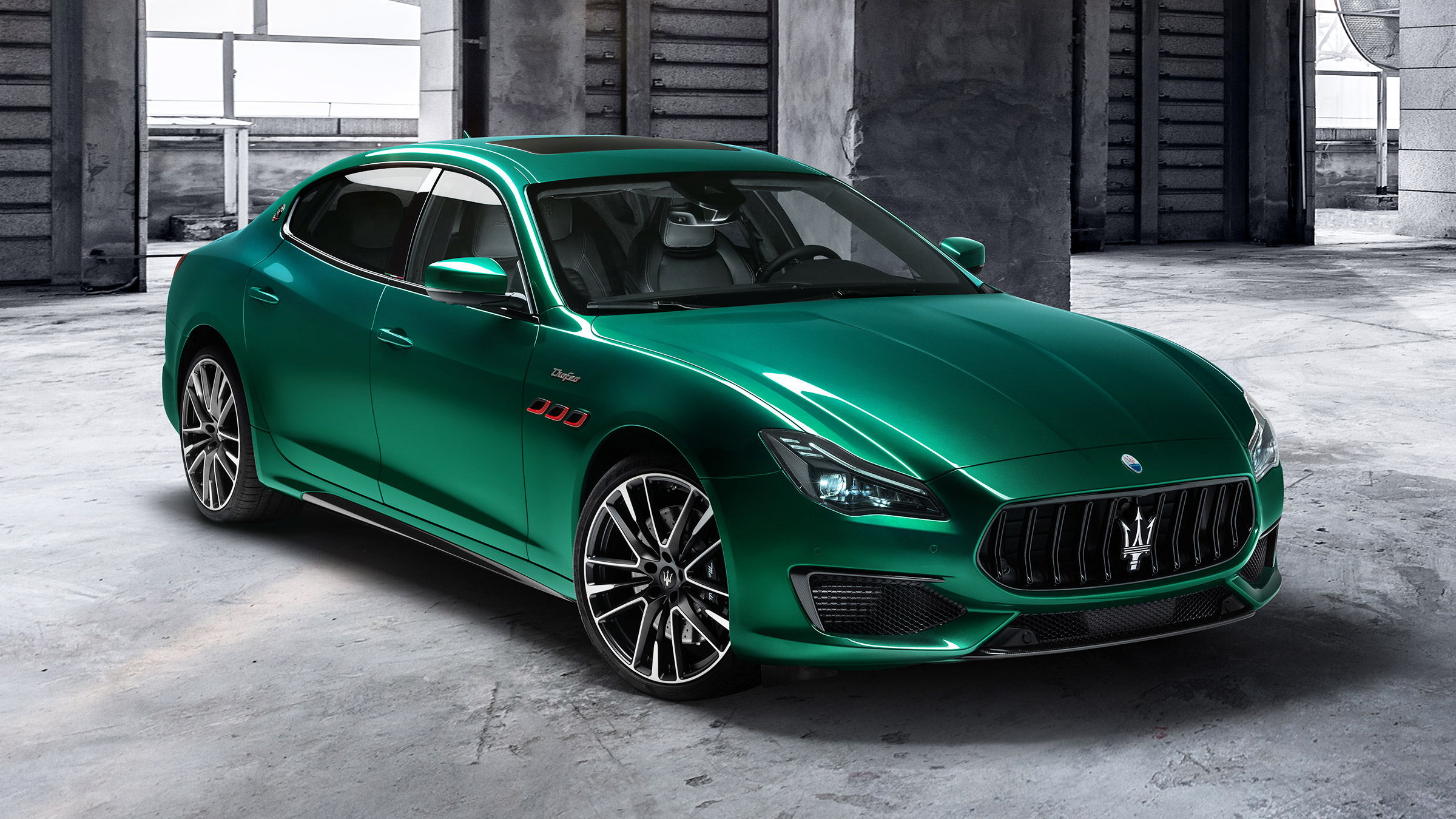
- Base price: $142,390
- Engine: 3.8L twin-turbo V8
- Power: 580 hp
- Torque: 524 lb-ft
- 0-60 mph: 4.2 s
- Top Speed: 203 mph
The Quattroporte is a good car, but not a great one. It sits in a kind of limbo area where it is both a GT and also a sports-focused car.
Fortunately, the addition of the twin-turbo V8 makes it way better. It becomes more powerful, more sporty, and the performance is transformed. This year, it becomes a car that a true enthusiast can love—the Maserati Quattroporte Trofeo.
McLaren
2021 McLaren 540C
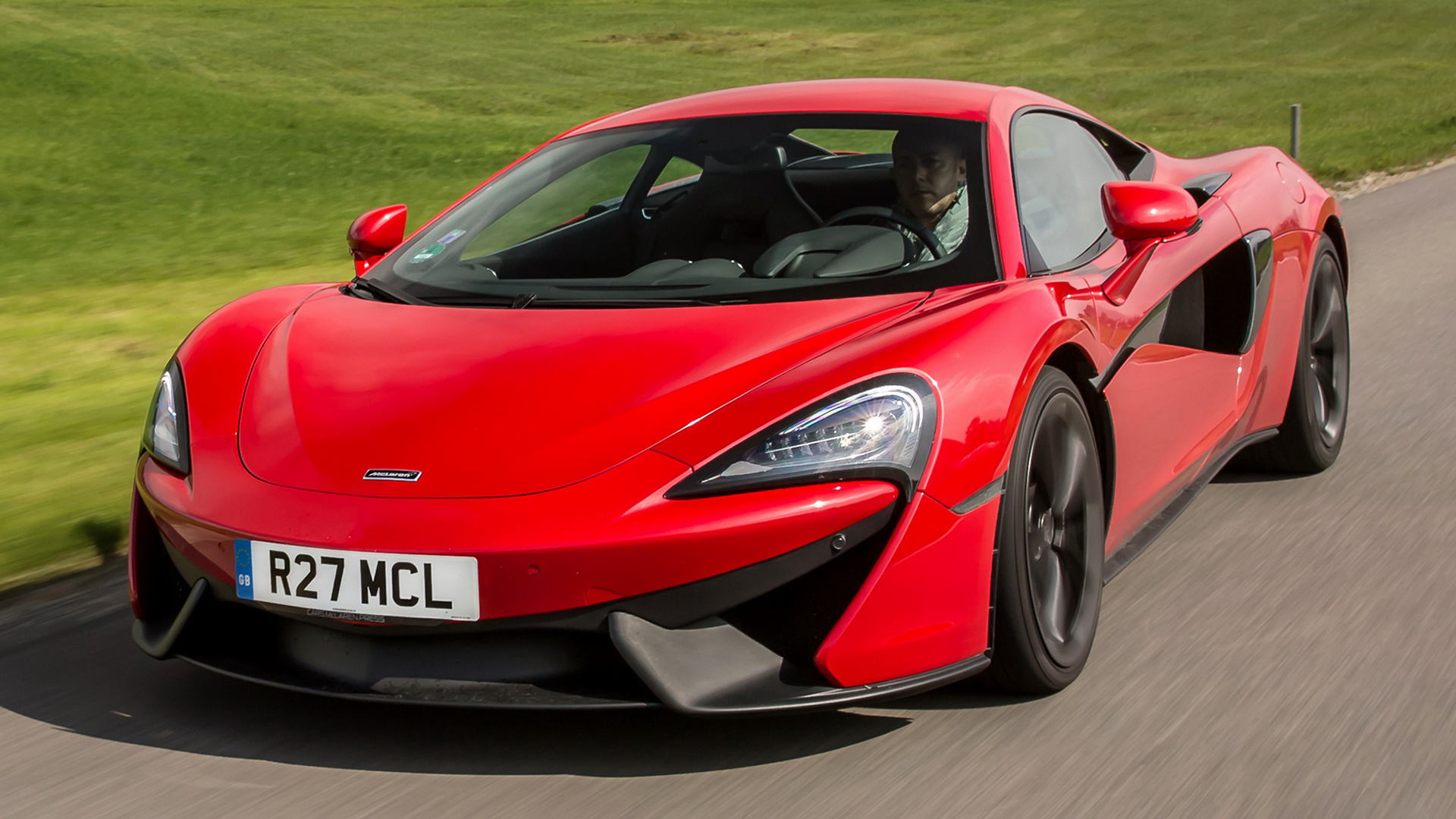
- Base price: US$184,900
- Engine: 3.8L M838TE twin-turbocharged V8
- Power: 533 bhp @ 7,500 rpm
- Torque: 398 lb-ft @ 3,500-6,500 rpm
- 0-60 mph: 3.4 sec
- 0-124 mph: 10.5 sec
- Top Speed: 199 mph
This car’s an entry-level assassin. A mid-mounted 533-hp 3.8-liter twin-turbo V8 drives the rear wheels of the 540C. Despite its lower price, the McLaren 540C inherits performance-aiding technologies from its pricier siblings, such as a system that applies the brakes to a rear wheel to help the car around corners.
Boasting 0-62mph in 3.5 seconds, 0-124mph in 10.5, a top speed of 199 mph, and a power-to-weight ratio of 412 horsepower per ton, this is definitely a car for impressing your friends. What more could you want for your money?
2021 McLaren 570S Coupe
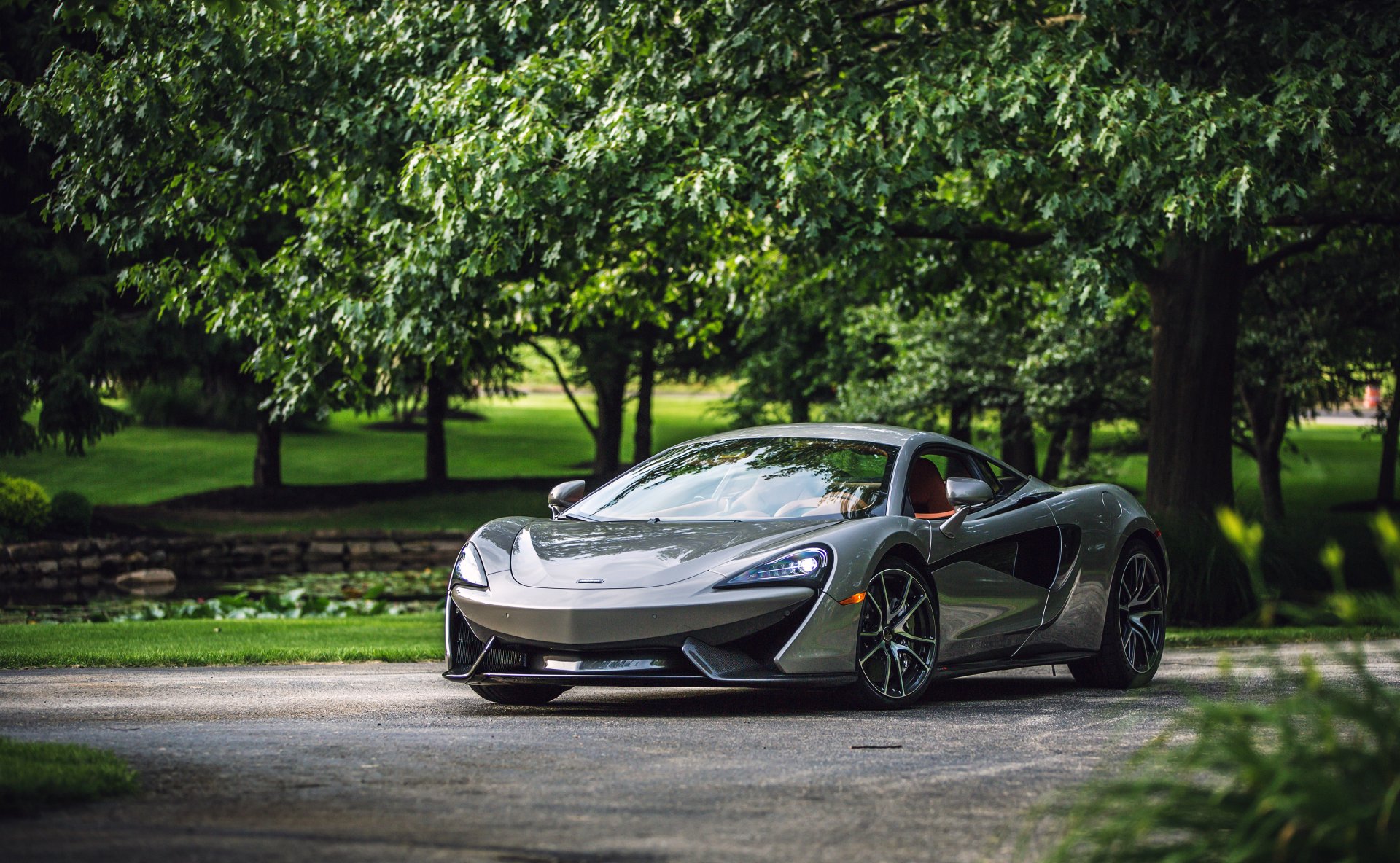
- Base price: US$191,100
- Engine: 3.8L M838TE twin-turbocharged V8
- Power: 562 bhp @ 7,500 rpm
- Torque: 443 lb-ft @ 5,000-6,000 rpm
- 0-60 mph: 3.1 sec
- 0-124 mph: 9.5 sec
- Top Speed: 204 mph
This is the car you buy when you are sick of your Porsche. It is a true sports car experience: very driver-centric and with truly epic performance. We have found the McLaren 570S as the perfectly positioned car in the McLaren range.
It has more performance than you could ever need on the road. It is lightweight, has direct steering, and has amazing driving dynamics. It looks like a supercar but also comes with enough interior amenities to be comfortable as a daily driver.
Between a 911 Turbo or 570S, I know which one I’d take. Queue the 570S, please.
2021 McLaren 570S Spider
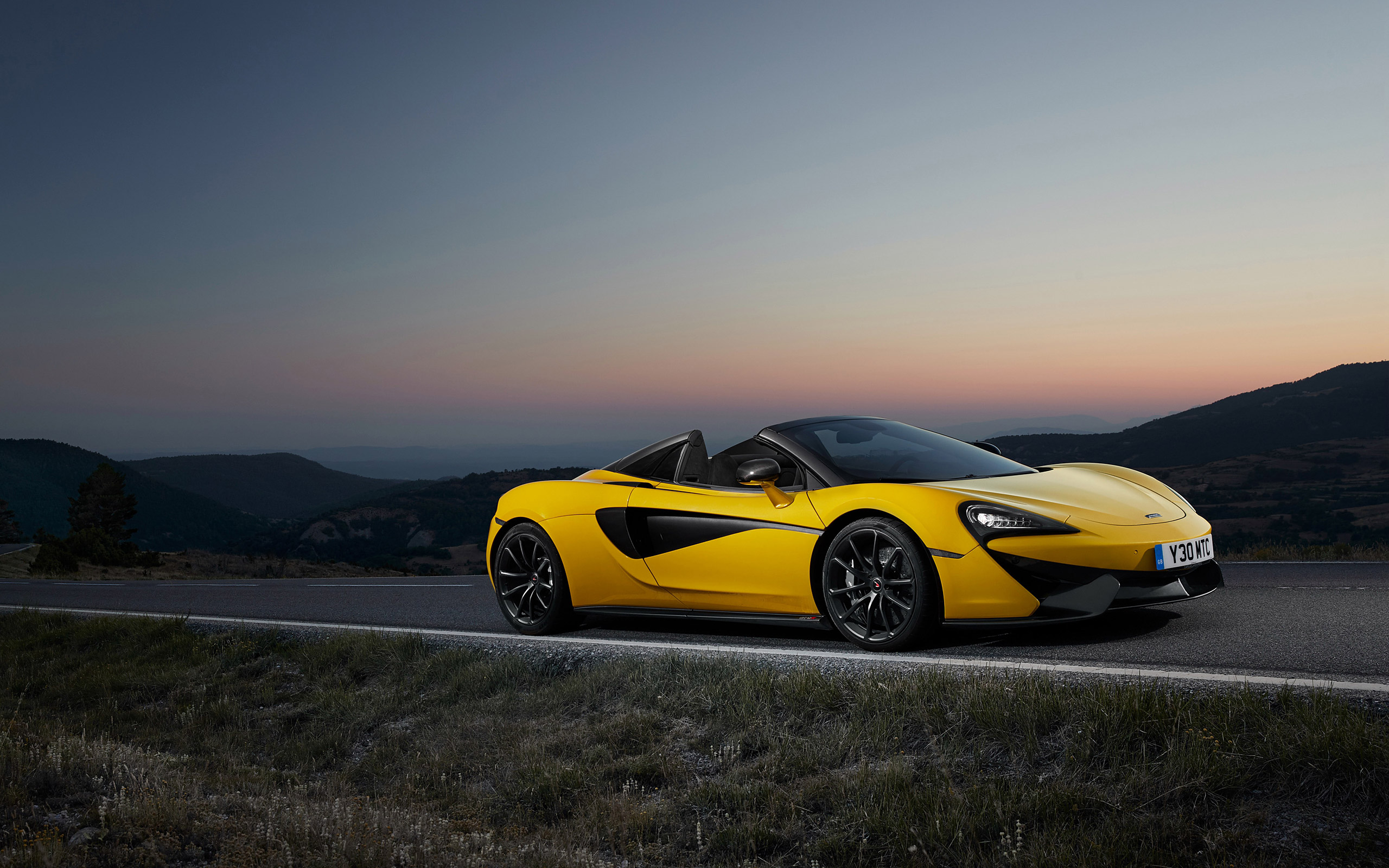
- Base price: US$211,300
- Engine: 3.8L M838TE twin-turbocharged V8
- Power: 562 bhp @ 7,500 rpm
- Torque: 443 lb-ft @ 5,000-6,000 rpm
- 0-60 mph: 3.2 sec
- 0-124 mph: 9.6 sec
- Top Speed: 199 mph
Basically a 570S with a retractable hardtop, the McLaren 570S Spider is awesome. Gone are the days where convertibles were compromised; McLaren seems to have figured out how to make them as good as their coupe siblings.
The Spider has the same twin-turbo V8 as the coupe, as well as the same carbon fiber MonoCell II chassis. Take the top down (15 seconds), and you add a whole host of sounds and sensations that are unique to the Spider. Performance is on par with the 570S coupe (within a 10th of a second to 60 mph and 124 mph).
2021 McLaren 570GT
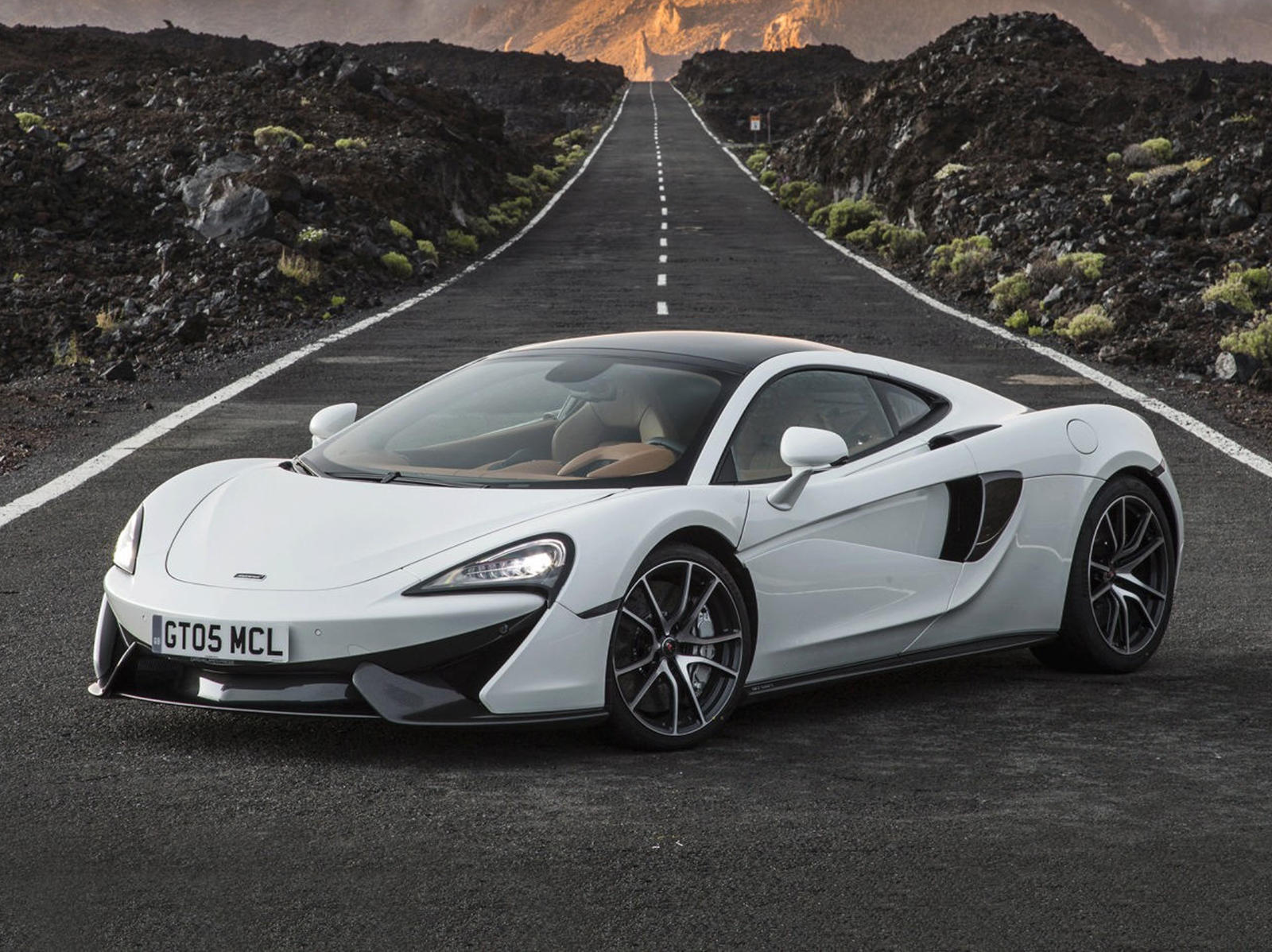
- Base price: US$203,950
- Engine: 3.8L M838TE twin-turbocharged V8
- Power: 562 bhp @ 7,500 rpm
- Torque: 443 lb-ft @ 5,000-6,000 rpm
- 0-60 mph: 3.4 sec
- 0-124 mph: 9.8 sec
- Top Speed: 204mph
Practical, Fast, Luxurious. The McLaren 570GT is an intriguing model to consider now that the company has launched a focused GT model. It adds extra comfort and practicality to the 570 body style. Performance is still tremendous, but it takes the edge off in some ways (which is good).
Every bit a McLaren, this car is optimized for the road, turning the ultimate sports car experience into one that’s perfect for daily use, longer journeys, and weekends away. It has a practical, real glass hatch for extra storage, and its panoramic glass roof makes the car feel airy and spacious.
2021 McLaren 600LT
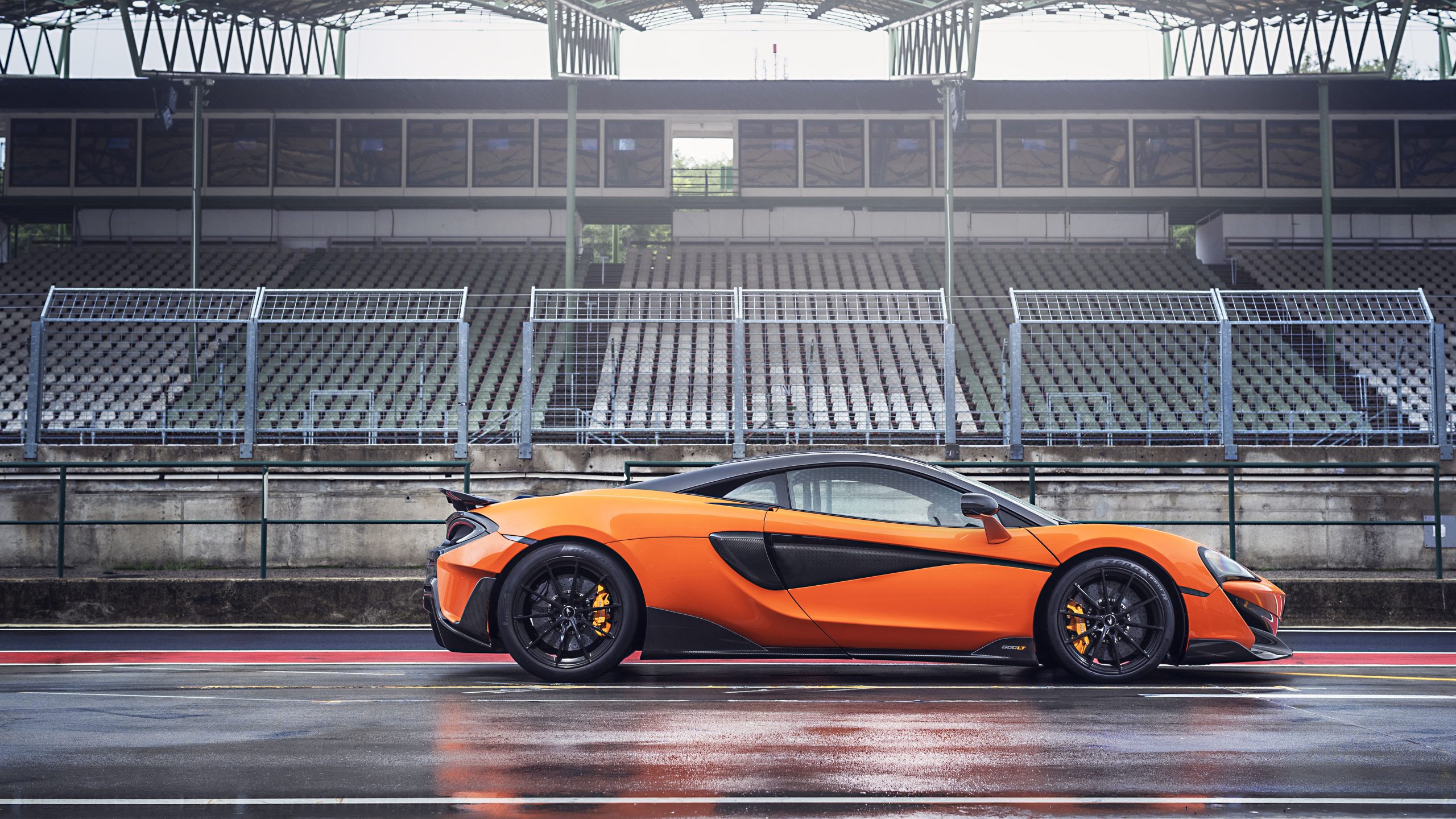
- Base price: US$242,500
- Engine: M838TE 3.8L twin-turbocharged V8
- Power: 592 bhp @ 7,500 rpm
- Torque: 457 lb-ft @ 5,500–6,500rpm
- 0-60 mph: 2.9 sec
- 0-124 mph: 8.2 sec
- Top Speed: 204 mph
The limited-edition McLaren 600LT is the ultimate version of McLaren’s 570S/GT range (think of it like the 458 Speciale as to the 458). It uses a variation of 570S’ McLaren’s twin-turbo 3.8-liter V8, in this guise making 592 horsepower and 457 lb-ft of torque.
It has a dual-clutch automatic transmission and is rear-wheel drive. The handling is perfectly balanced and reassures you with its predictable nature, making the ride a little firm due to its track-nature approach.
Standard carbon-ceramic brake discs, extensive carbon fiber, and that massive wing let you know this is a limited edition car designed for the track. It’s as capable of eye-watering performance it is deserving of the LT name.
2021 McLaren 600LT Spider
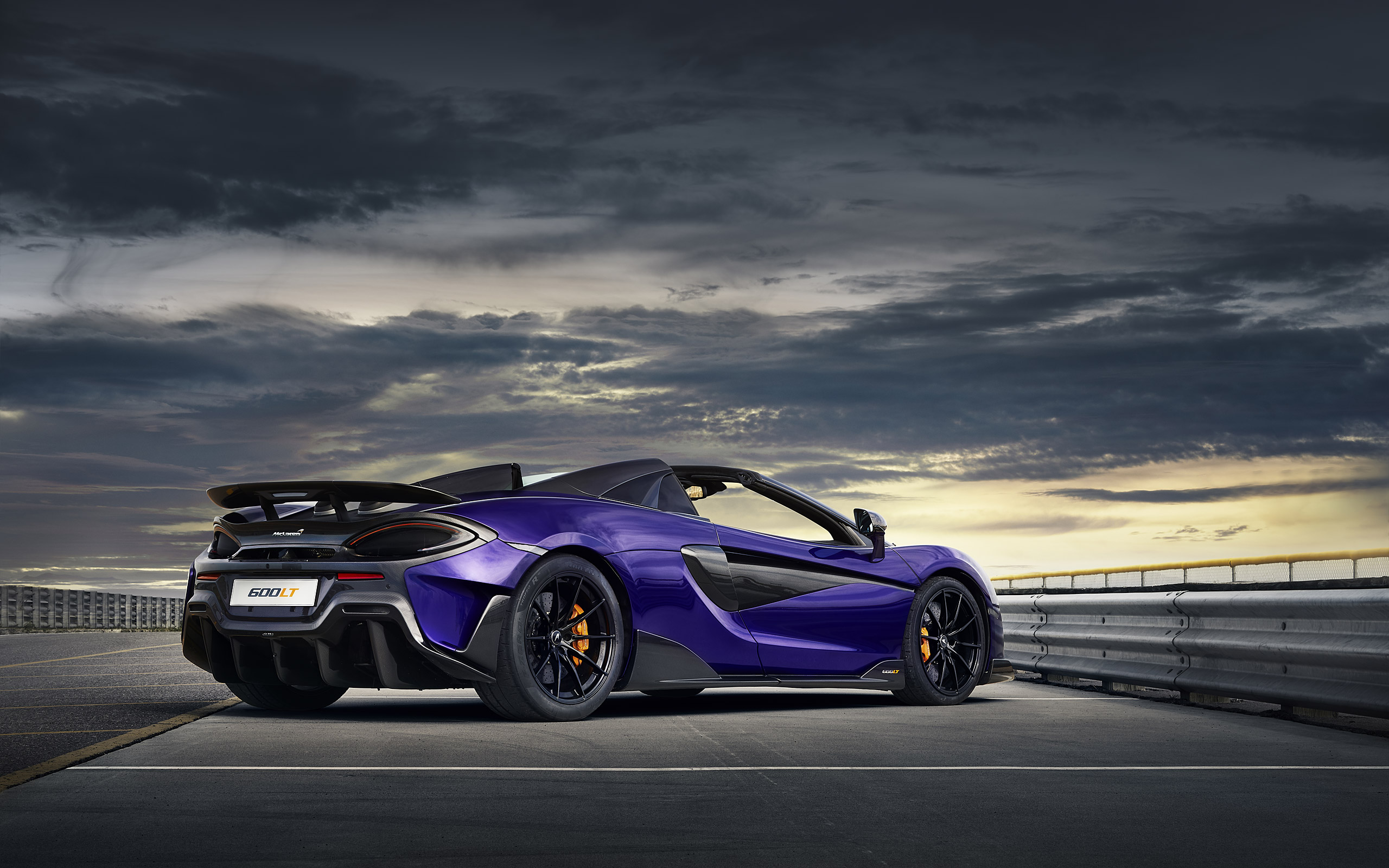
- Base price: US$256,500
- Engine: M838TE 3.8L twin-turbocharged V8
- Power: 592 bhp @ 7,500 rpm
- Torque: 457 lb-ft @ 5,500–6,500rpm
- 0-60 mph: 2.9 sec
- 0-124 mph: 8.4 sec
- Top Speed: 201 mph (196 mph with top down)
Like the 600LT coupe, a twin-turbocharged 3.8-liter V8 with 592 horsepower and 457 pound-feet of torque shoots the McLaren 600LT Spider to 60 mph in 2.8 seconds. Getting to 124 mph takes just an extra two-tenths of a second compared to the hardtop. You step on the throttle, wait for a tinge of turbo lag, then boom, the ferocious revving and blistering straight-line speed hit you. Rinse and repeat.
Unlike most convertibles, this Spider will also handle in the corners. It is easily my favorite car on the market today. There is no shortfall versus the coupe; this is an epic car that loses nothing to its sibling. This is what a supercar is meant to be: an enchanting machine.
2021 McLaren 620R
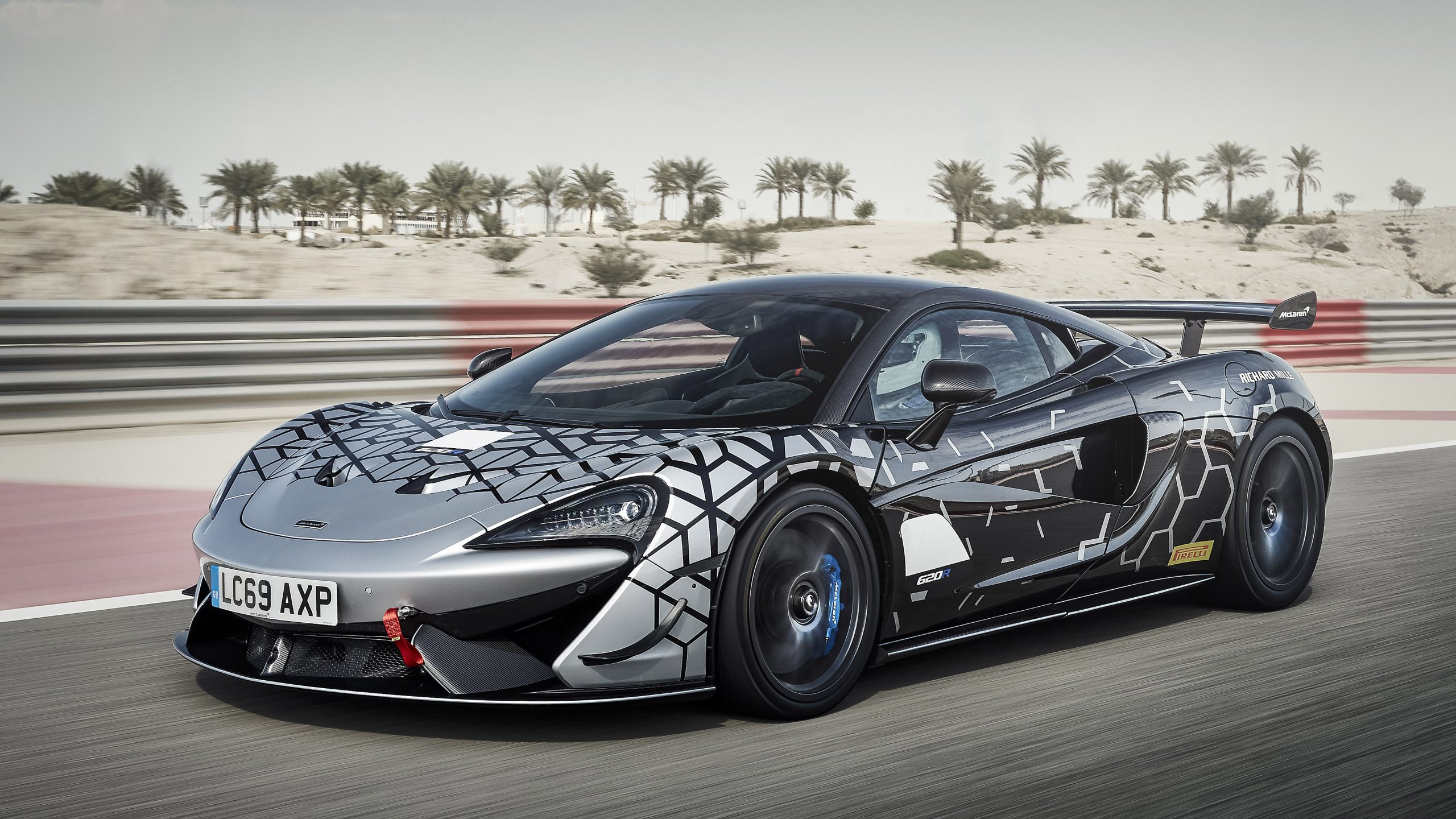
- Base price: US$300,000
- Engine: 3.8 L M838TE twin-turbocharged V8
- Power: 612 bhp @ 7,250 rpm
- Torque: 457 lb-ft @ 5,500 rpm
- 0-60 mph: 2.9 sec
- 0-124 mph: 8.1 sec
- Top Speed: 200 mph
The car is basically a 570S GT4 race car for the road. It’s a limited-run coupe that McLaren will build only 350 of. The McLaren 620R is the most powerful of the Sports Series range.
That engine makes a monstrous 612 hp and 457 lb-ft of torque. The car also gets the 570S GT4’s suspension, braking parts, and many of the different adjustable aerodynamic components. The price of this speedy car is a whopping £329,000 in the UK, including taxes.
2021 McLaren GT
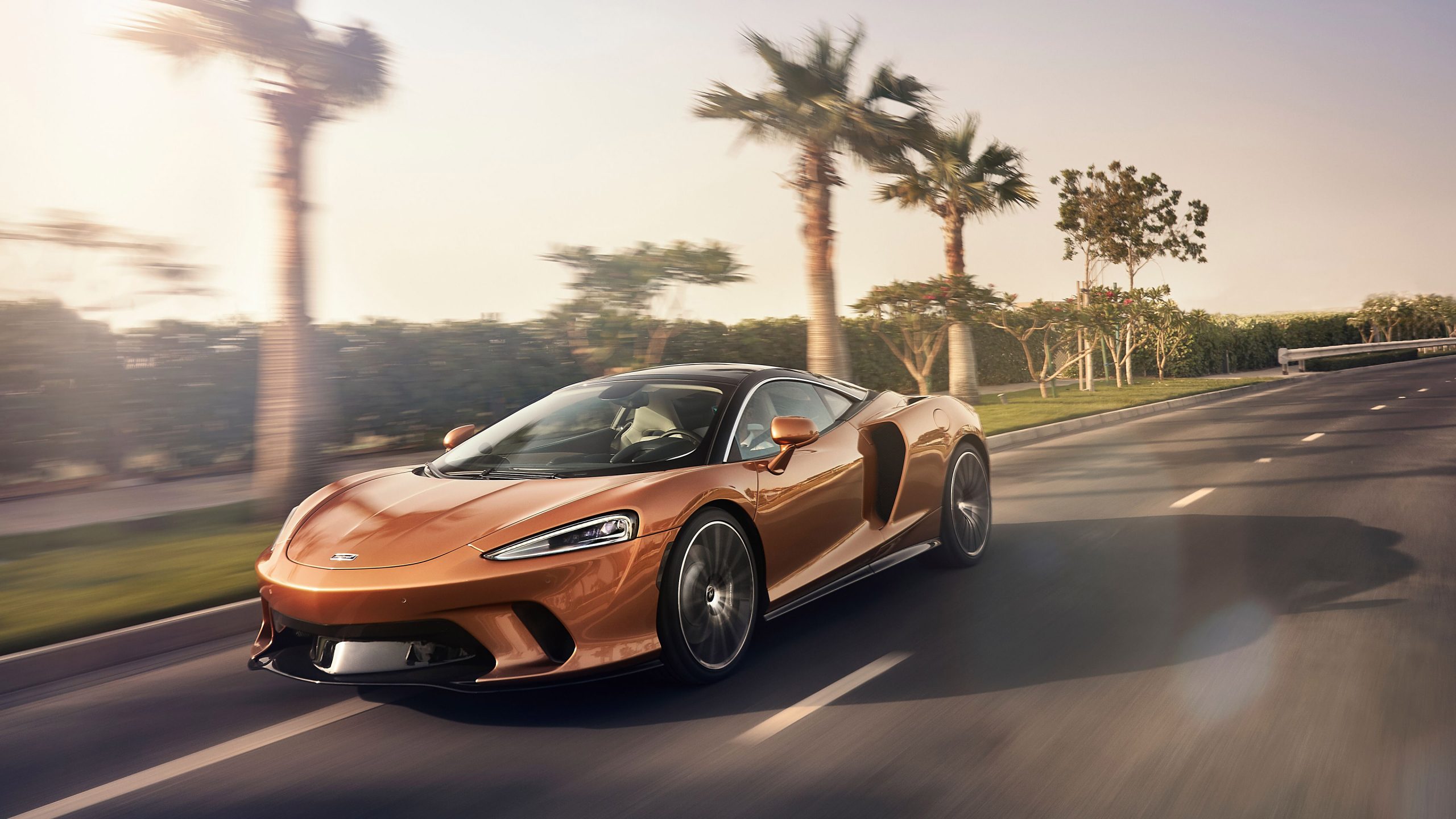
- Base price: US$210,000
- Engine: 4.0 L M840TE twin-turbocharged V8
- Power: 612 bhp @ 7,500 rpm
- Torque: 465 lb-ft @ 5,500-6,500 rpm
- 0-60 mph: 3.1sec
- 0-124 mph: 9.0 sec
- Top Speed: 203 mph
This car offers luxury and refinement, the McLaren Way. The McLaren GT—which stands for ‘Grand Tourer’—is the British automaker’s first attempt at something other than the raw, unadulterated performance conduits they’ve been known for producing in the past.
The car retains the ubiquitous mid-engine layout seen throughout the rest of the McLaren lineup. It is based on the same exceptional platform used on the 570S—namely, its Monocell II-T carbon-fiber chassis. Despite this, McLaren has gone to great lengths to ensure that the GT also creates its own unique identity, with two-thirds of components used on this model also being exclusive to it.
Unconventional for a McLaren and for a mid-engined car respectively, are its particularly luxurious interior and over 20 cubic ft. of storage space. Despite its supposed layout handicap, the McLaren GT is not outdone here by the likes of Aston Martin, offering plenty of room for bags, skis, and a week’s worth of luggage. The new infotainment system also helps to facilitate a comfortable cross-country cruising experience.
2021 McLaren 720S
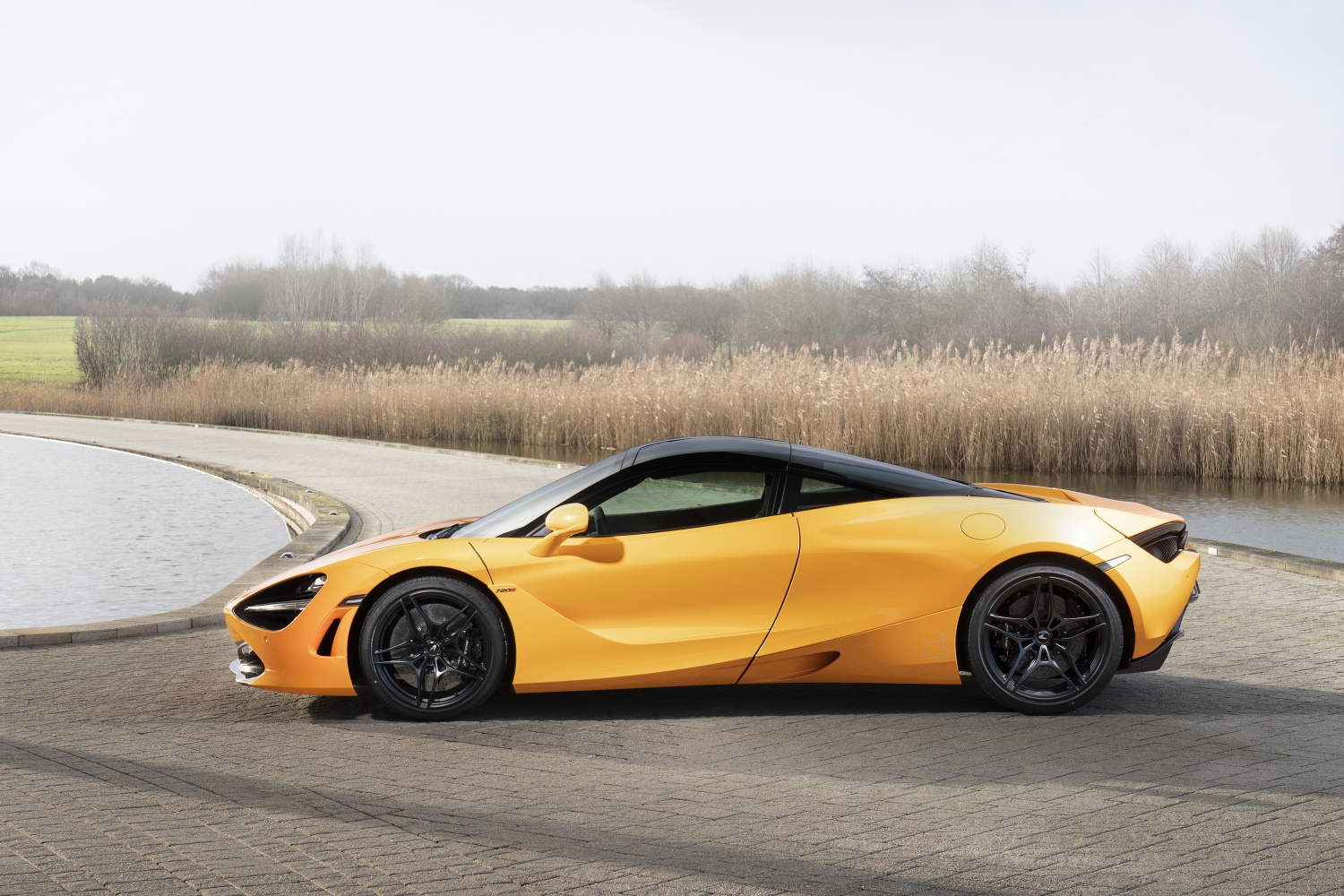
- Base price: US$300,000
- Engine: 4.0 L twin-turbocharged V8
- Power: 710 bhp @ 7,500 rpm
- Torque: 568 lb-ft @ 6,500 rpm
- 0-60 mph: 2.9 sec
- 0-124 mph: 7.8 sec
- Top Speed: 212 mph
The McLaren 720S is a sensational supercar, easily the best of the current breed. It has a twin-turbocharged 4.0L twin-turbocharged V8 that produces 710 hp and 568 lb-ft of torque. It looks gorgeous too.
The 720S has advanced suspension that does a remarkable job of smoothing out imperfections while being sporty and keeping the car flat when pressing on. It boasts unrivaled chassis tuning, absurd amounts of speed, unparalleled acceleration numbers, and a package that looks stunning. This is simply the best supercar for sale today and the sweet spot in McLaren’s current model range.
2021 McLaren 720S Spider
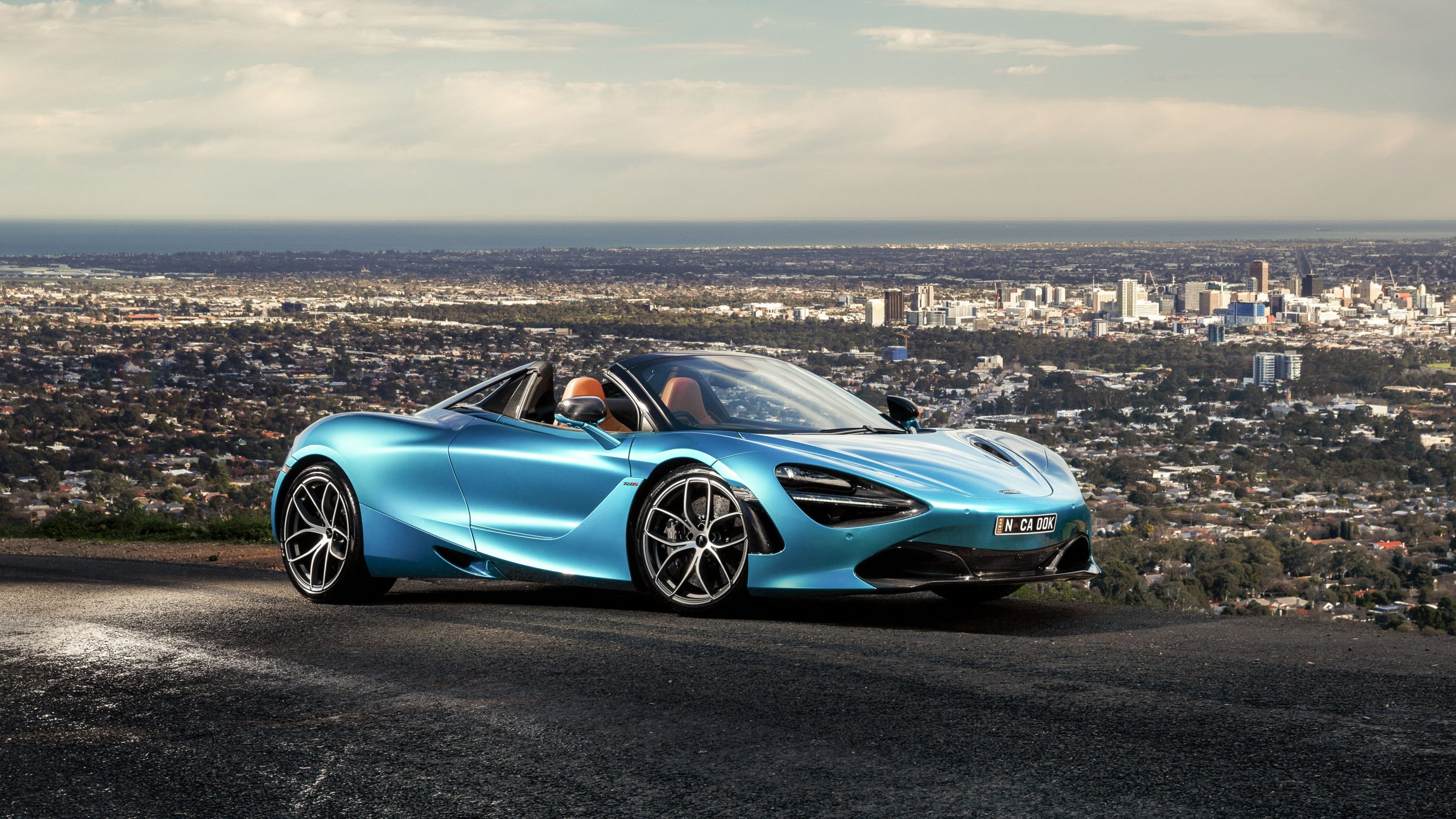
- Base price: US$315,000
- Engine: 4.0 L twin-turbocharged V8
- Power: 710 bhp @ 7,500 rpm
- Torque: 568 lb-ft @ 6,500 rpm
- 0-60 mph: 2.9 sec
- 0-124 mph: 7.9 sec
- Top Speed: 212 mph (202 mph with top down)
The latest iteration of the current 720S—monikered “Spider”—is a convertible variant of the 720S, which comes with a folding hardtop. The McLaren 720S Spider retains the same DNA as the Coupe, utilizing a modified version of its carbon-fiber tub chassis to accommodate the folding roof and its mechanism.
Thanks to its brilliant aerodynamic design, the Spider still achieves a remarkable top speed of 202 mph with the top folded. McLaren does a lot of things better than anyone else, and producing convertible variants that are as good as its coupe counterparts is no exception.
2021 McLaren 765LT
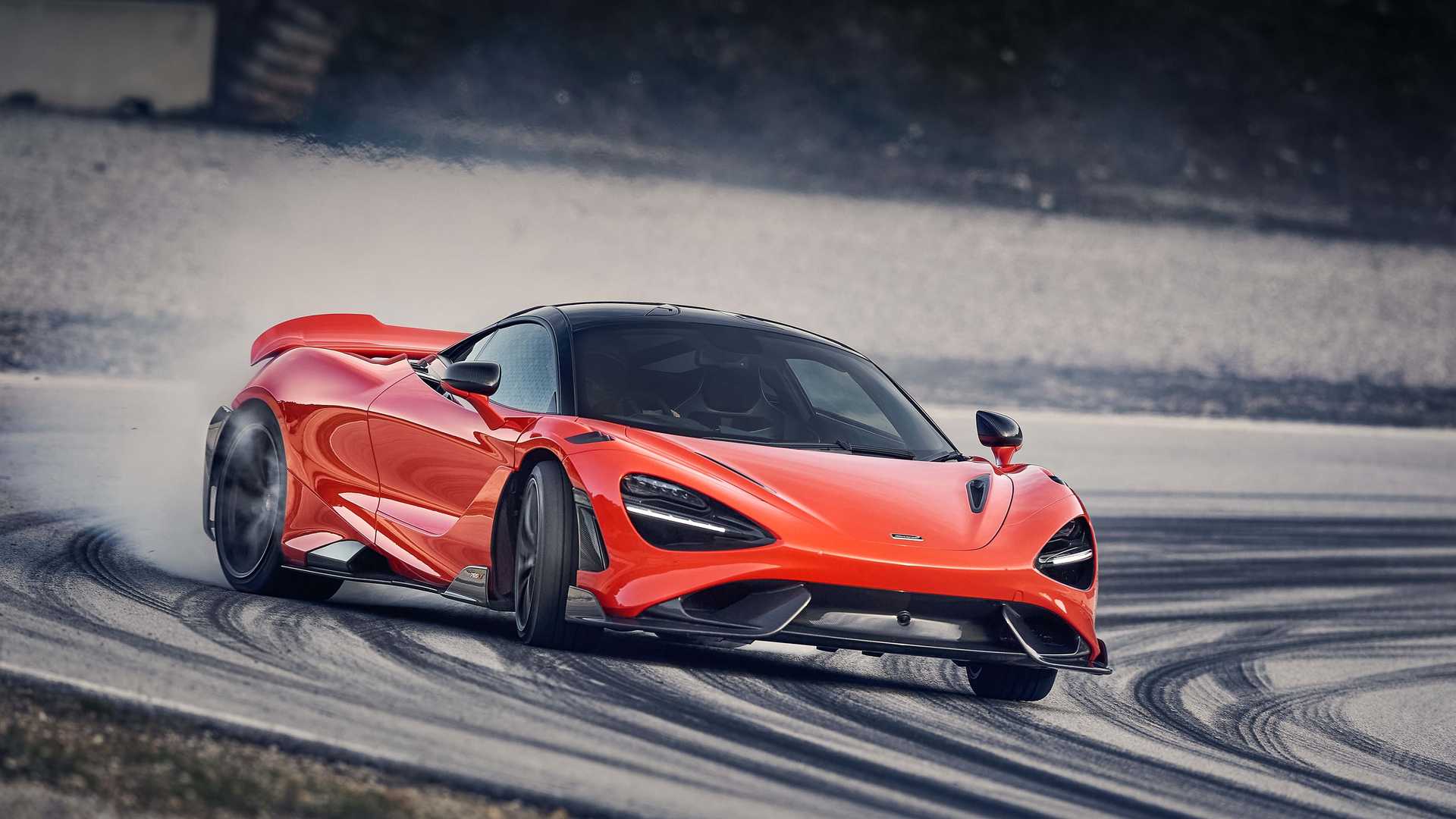
- Base price: US$368,000
- Engine: 4.0 L twin-turbocharged V8
- Power: 755 bhp @ 7,500 rpm
- Torque: 590 lb-ft @ 5,500 rpm
- 0-60 mph: 2.8 sec
- 0-124 mph: 7.2 sec
- Top Speed: 205 mph
The McLaren 765LT replaces the 675LT as the newest limited-production track car in McLaren’s Super Series range. As with previous LT models, weight-saving is the key focus for the 765LT, losing 160+ lbs compared to the 720S.
For the first time, McLaren has also adjusted some of the 765LT’s inner workings. Horsepower from the 4.0L twin-turbocharged V8 engine has been upped from 710 hp to 755 hp, and torque is rated at 590 lb-ft—an increase of 22 lb-ft.
2021 McLaren Senna
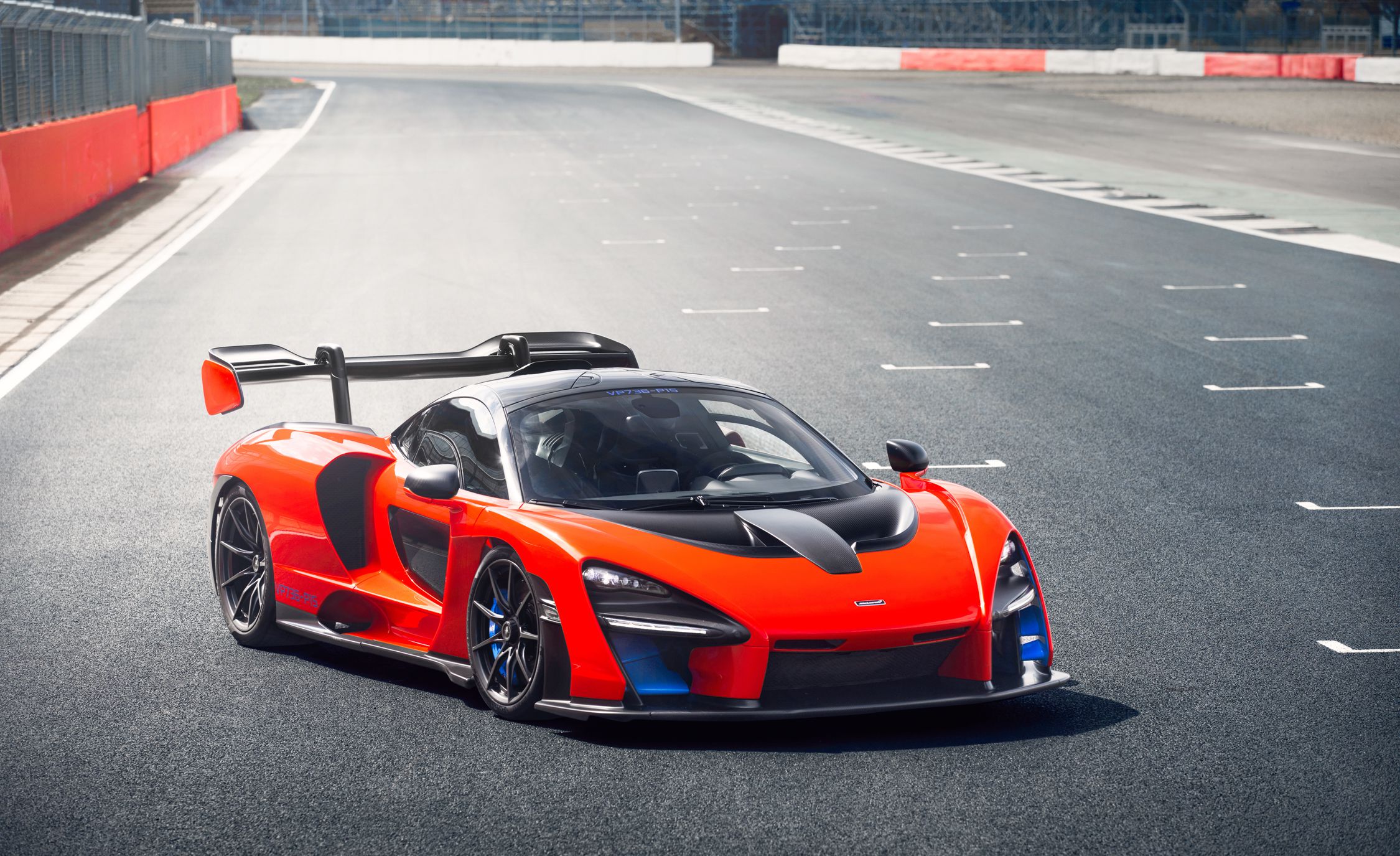
- Base price: US$960,000
- Engine: 4.0 L M840TR twin-turbocharged V8
- Power: 789 bhp @ 7,250 rpm
- Torque: 590 lb-ft @ 5,500 rpm
- 0-60 mph: 2.8 sec
- 0-124 mph: 6.8 sec
- Top Speed: 211 mph
Named after Formula 1 driver Ayrton Senna, the McLaren Senna is a track-focused hypercar. Its aggressive appearance tells you immediately that this thing is designed to destroy lap times.
The McLaren Senna is the fastest McLaren road car ever around a racetrack, with downforce numbers up there with proper race cars. It is an intensely involving and immersive experience.
With a dry weight of 2,600 pounds, it delivers the fastest lap times of any road-legal McLaren to date. There is also a track-only version of the Senna, known as the Senna GTR.
2021 McLaren Senna GTR
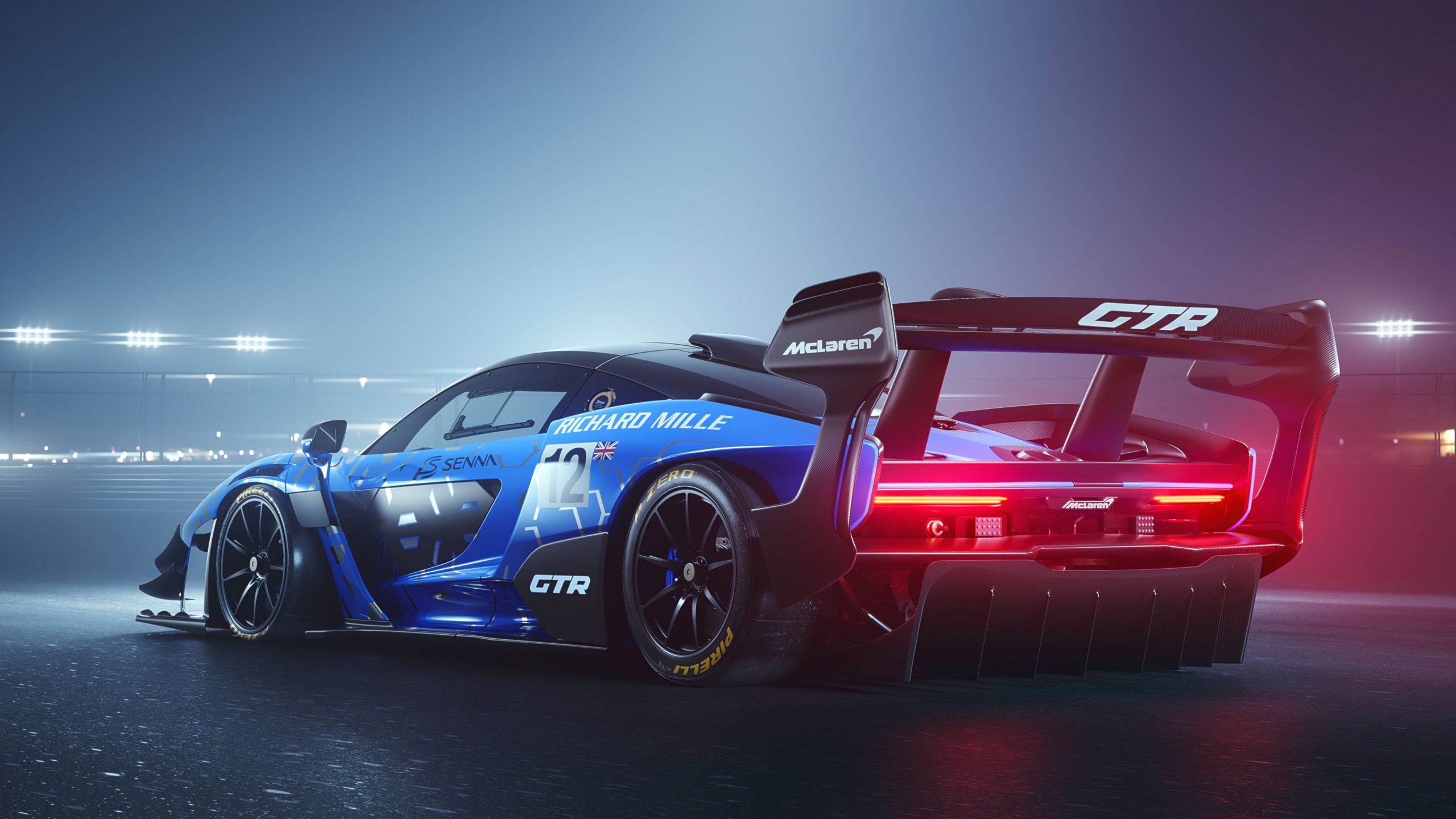
- Base price: US$1,800,000
- Engine: 4.0 L M840TR twin-turbocharged V8
- Power: 813 bhp @ 7,250 rpm
- Torque: 590 lb-ft @ 5,500 rpm
- 0-60 mph: 2.8 sec
- 0-124 mph: 6.8 sec
- Top Speed: 211 mph
A More Hardcore Senna. Adding some track-focused updates to the McLaren Senna hypercar gets you the McLaren Senna GTR. Freed from all road and motorsport rules, it pushes things to the max.
Pared-back, pumped-up, then unleashed for track use only—it is, simply put, ferocious. We’re talking 1,000 kg of downforce and a power-to-weight ratio of 684 horsepower per tonne. This is a serious car for the serious racer (or a seriously rich person who wants to be a racer).
This isn’t a road car, folks, so don’t even think about it if you are looking to burn a few million dollars on something you can drive to your local cars and coffee meets.
2021 McLaren Elva
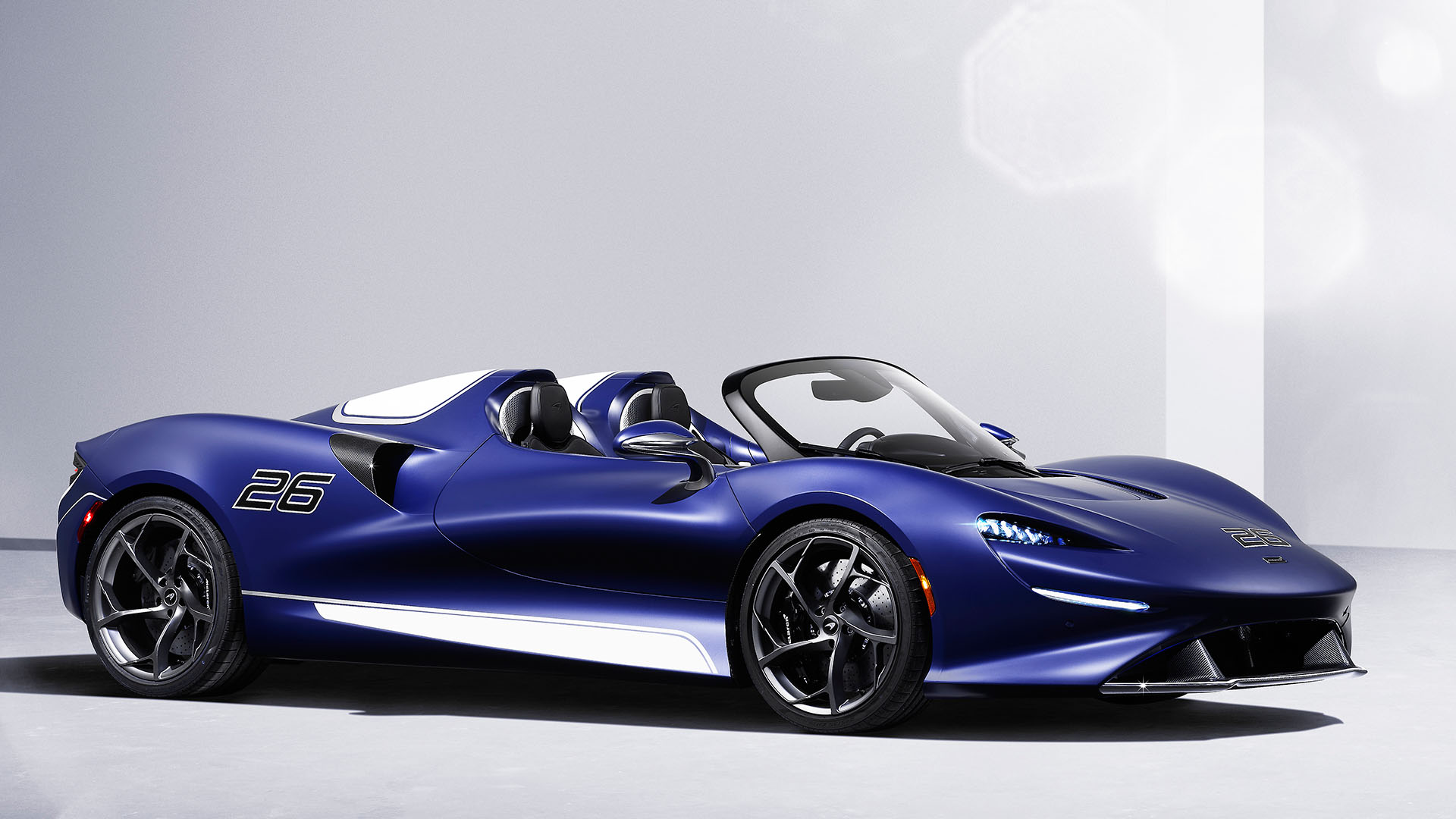
- Base price: US$1,900,000
- Engine:4.0 L M840TR twin-turbocharged V8
- Power: 804 bhp
- Torque: 590 lb-ft
- 0-60 mph: < 3 sec
- 0-124 mph: 6.7 sec
- Top Speed: TBD
The McLaren Elva is a completely roofless and windscreen-less Speedster. McLaren will fit a permanently fixed windscreen where legislation (or the customer) requires it, but all other cars will be built without a windscreen for a true open cockpit feeling.
The Elva shares the Senna GTR’s 4.0L twin-turbocharged V8, with the addition of a new exhaust system for the proper auditory experience. All told, the engine makes 804 hp, which is up from the Senna GTR’s 789 hp. The car also gets a cross-linked hydraulic suspension system, carbon-ceramic brakes with titanium calipers, and a feather-light curb weight.
McLaren hasn’t yet specified what the Elva tips the scales at, but the company claims it will be the lightest McLaren road car in the lineup. The McLaren factory will build just 399 examples of the Elva.
Mercedes
2021 Mercedes-AMG C 63
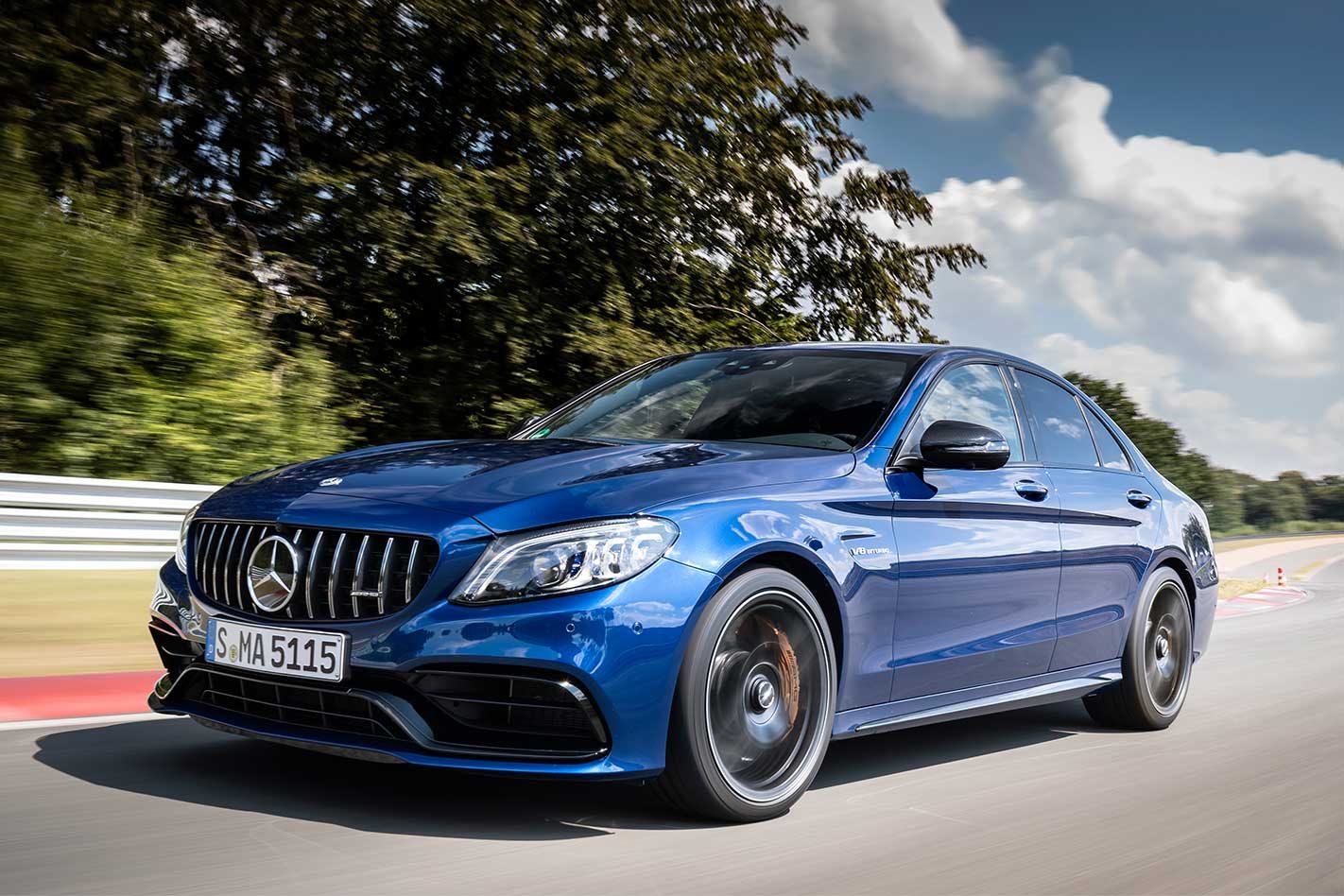
- Base price: $68,100
- Engine: 4.0L twin-turbocharged V8
- Power: 469 hp @ 5,500 rpm
- Torque: 479 lb-ft @ 1,750 rpm
- 0-60 mph: 3.9 s
- Top Speed:155 mph (limited)
Upgrading the 2020 Mercedes-AMG C 63, this year’s model offers a handcrafted biturbo V8 and paddle-shifted multi-clutch 9-speed to put 469 hp in your hands.
Adaptive AMG Ride Control and a limited-slip diff make it quick on its feet, and it has an exquisitely detailed cabin. It’s available in coupe, sedan, and cabriolet body styles.
2021 Mercedes-AMG C 63 S
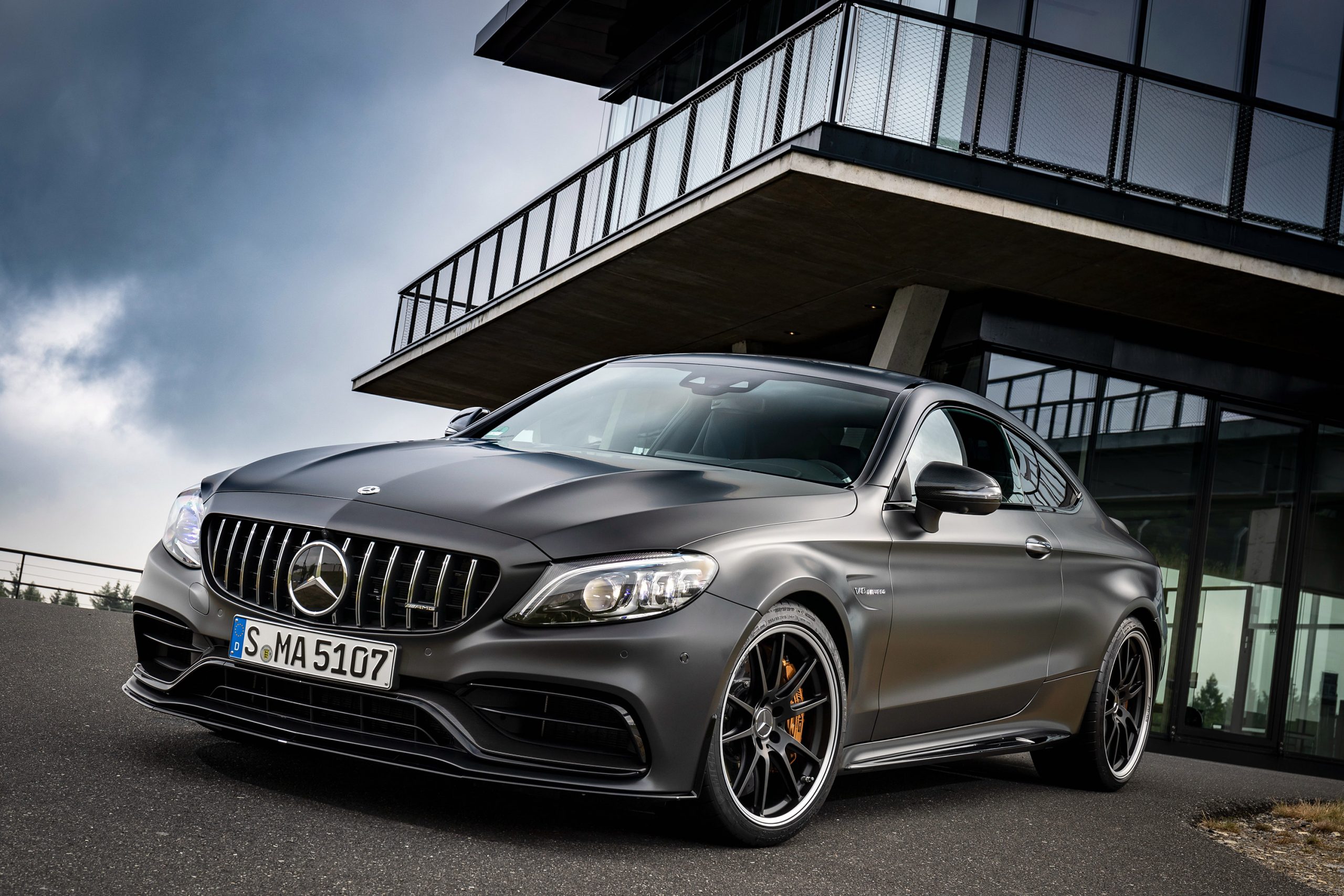
- Base price: $75,700
- Engine: 4.0L twin-turbocharged V8
- Power: 503 hp @ 5,500 rpm
- Torque: 516 lb-ft @ 1,750 rpm
- 0-60 mph: 3.8 s
- Top Speed: 155 mph (limited)
A handcrafted biturbo V8 unleashes 503 hp and class-leading torque. Aggressive style envelops advanced new technologies. And from the cabin, innovation and inspiration lead to invigoration in every curve and on every surface. The Mercedes-AMG C 63 S is available in coupe, sedan, and cabriolet body styles.
2021 Mercedes-AMG E 63 S
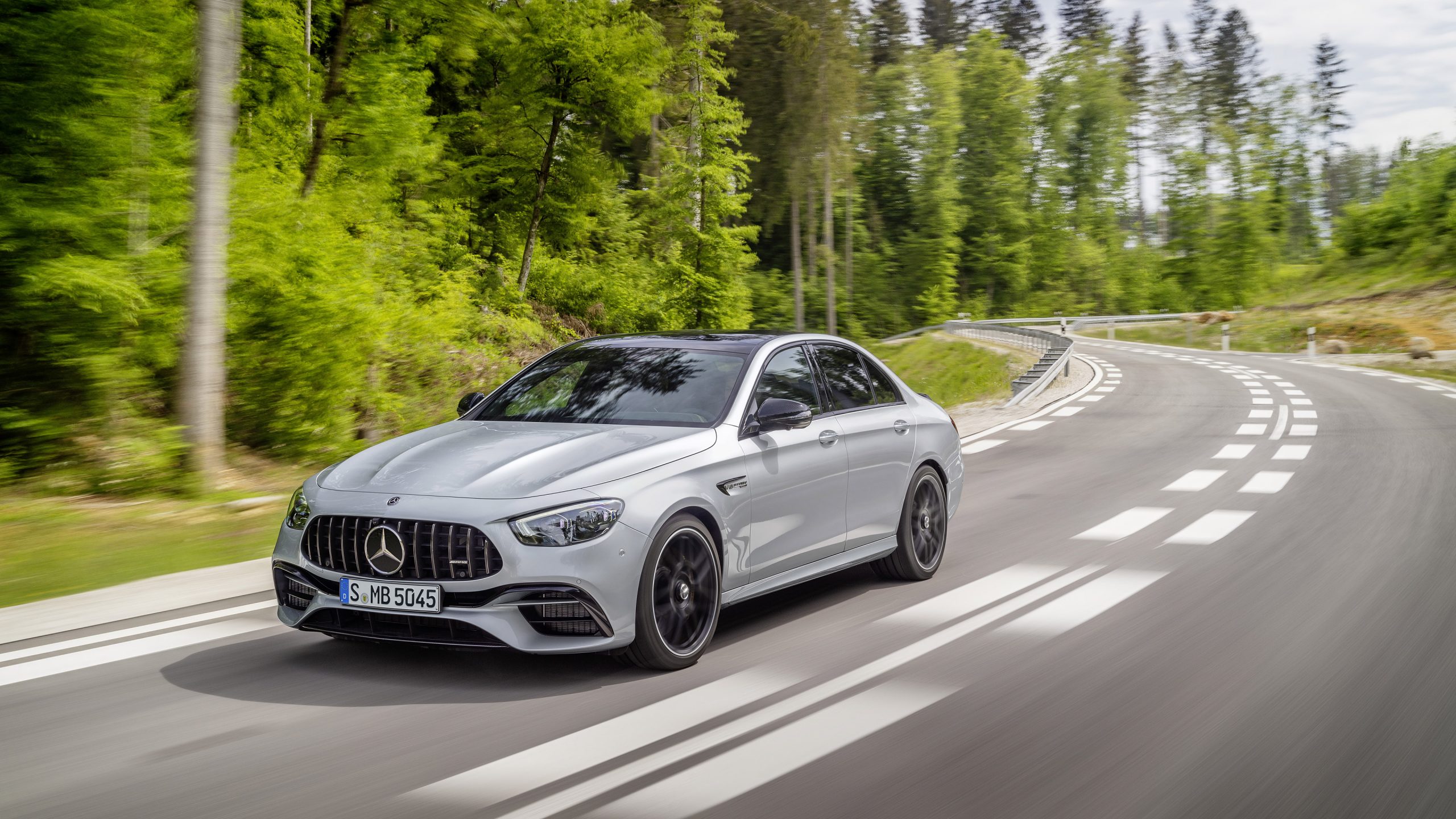
- Base price: $107,350
- Engine: 4.0L twin-turbocharged V8
- Power: 603 hp @ 5,750 rpm
- Torque: 627 lb-ft @ 2,500 rpm
- 0-60 mph: 3.3 s
- Top Speed: 196 mph
With a handcrafted 603 hp and variable-torque AMG Performance 4MATIC+, the E 63 S Sedan is one of the quickest Mercedes-AMG models yet. It’s also one of the most rewarding and luxurious sedans ever to take track tech to the road.
2021 Mercedes-AMG E 63 S Wagon
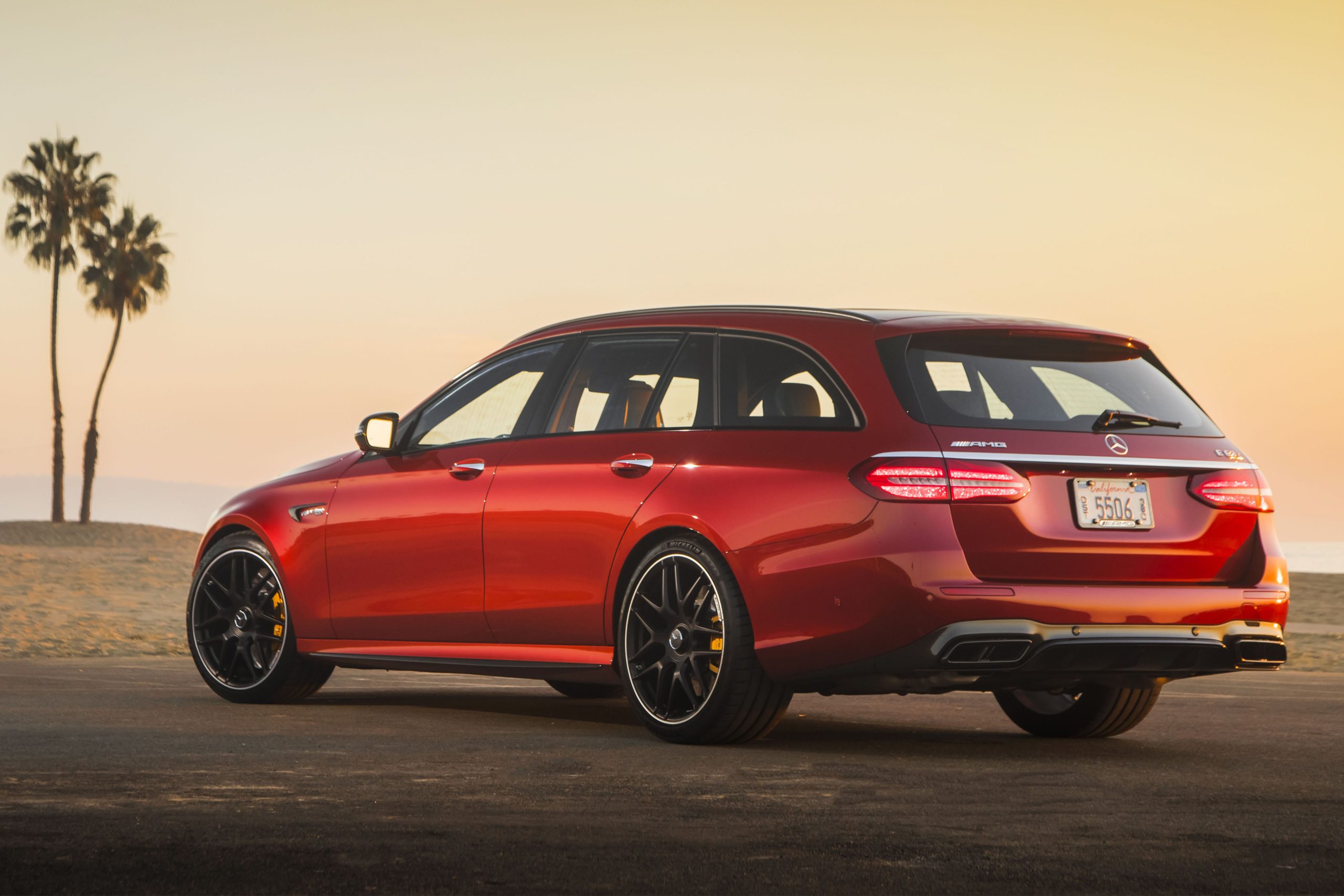
- Base price: $111,750
- Engine: 4.0L twin-turbocharged V8
- Power: 603 hp @ 5,750 rpm
- Torque: 627 lb-ft @ 2,500 rpm
- 0-60 mph: 3.3 s
- Top Speed: 180 mph
Sending 603 handcrafted horsepower deftly to the pavement via variable-torque AMG Performance 4MATIC+, the E 63 S Wagon outperforms any other wagon on the road. Is it a spacious supercar or a fast family car? Only one way to find out: open it up.
2021 Mercedes-AMG S 63
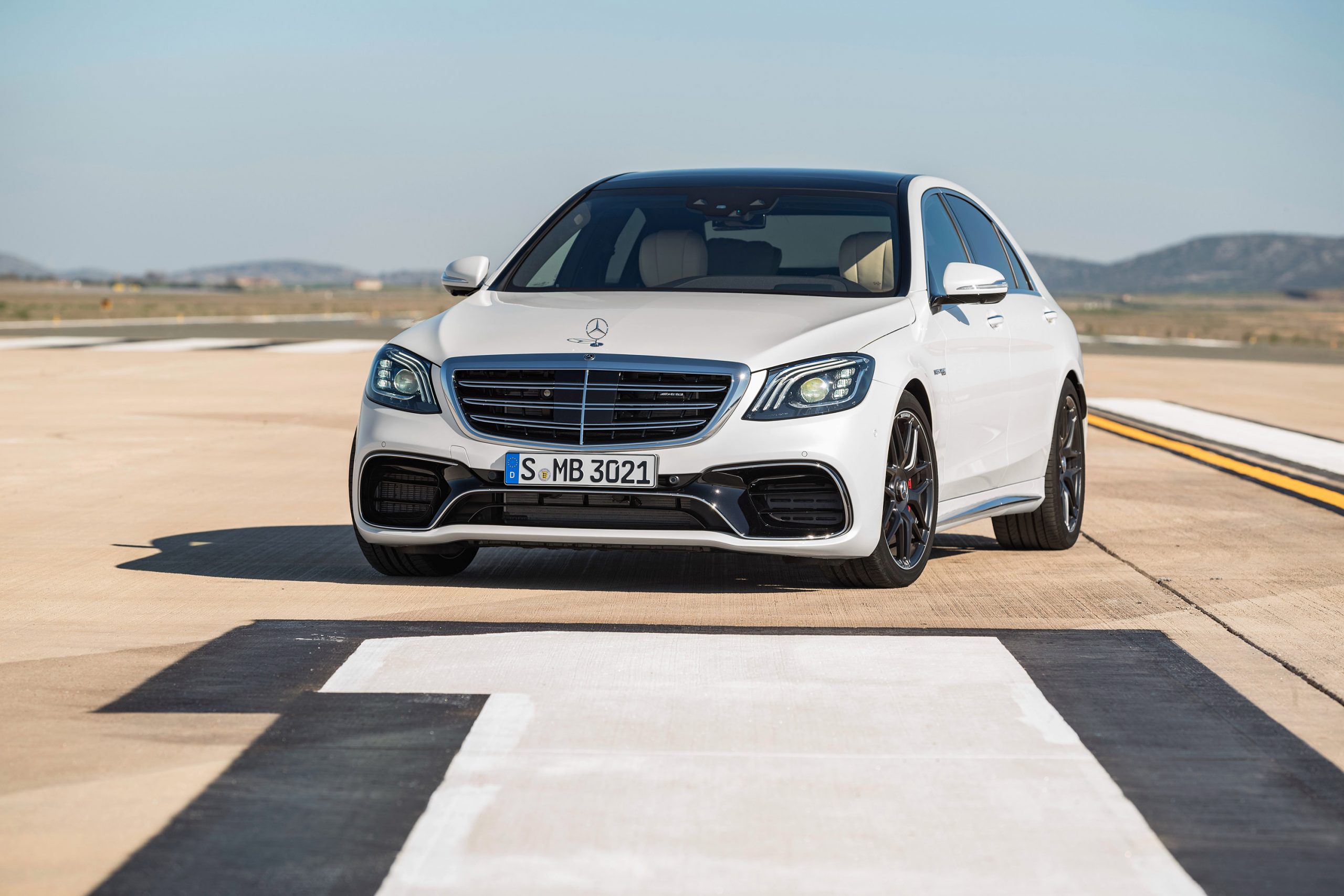
- Base price: $151,600
- Engine: 4.0L twin-turbocharged V8
- Power: 603 hp @ 5,750 rpm
- Torque: 664 lb-ft @ 2,750 rpm
- 0-60 mph: 3.5 s
- Top Speed: 190 mph
With 603 handcrafted horsepower and torque-vectoring AMG Performance 4MATIC+ all-wheel drive, the AMG S 63 might be the most self-assured sedan on the road. Its innovations and appointments make it one of the most reassuring, too. However, it is going to be replaced by a newer model soon. Available in coupe, sedan, and cabriolet body styles.
2021 Mercedes-AMG GT 63
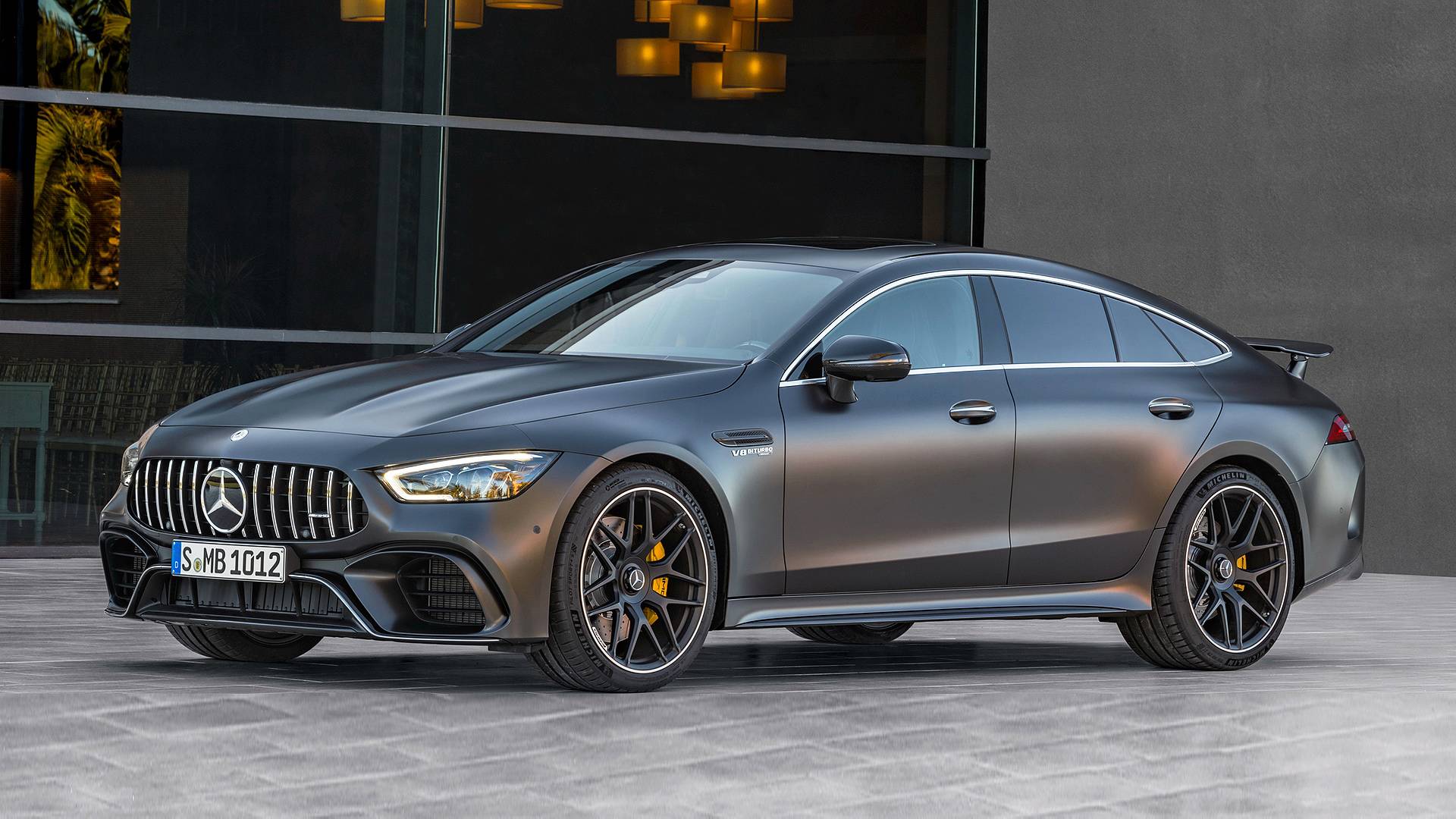
- Base price: $140,600
- Engine: 4.0L twin-turbocharged V8
- Power: 577 hp @ 5,500 rpm
- Torque: 590 lb-ft @ 2,750 rpm
- 0-60 mph: 3.3 s
It has twice the doors and twice the seats of any AMG GT before it. Yet it builds on every dominant trait: Brilliant handling. Exquisite appointments. Seductive style. And a handcrafted biturbo V8 sending 577 hp to its four wheels.
2021 Mercedes-AMG GT 63 S
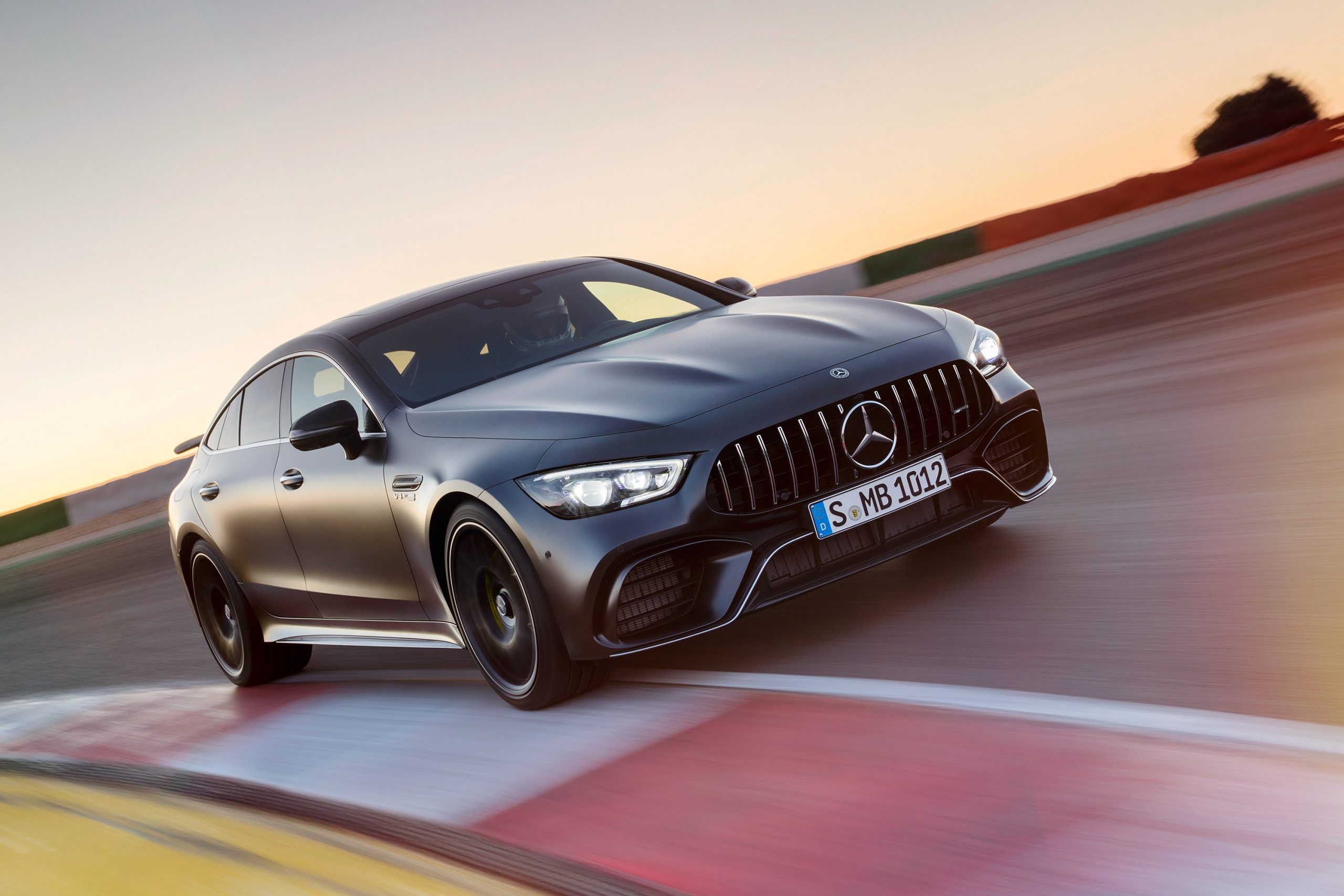
- Base price: $161,900
- Engine: 4.0L twin-turbocharged V8
- Power: 630 hp @ 5,500 rpm
- Torque: 664 lb-ft @ 2,750 rpm
- 0-60 mph: 3.1 s
The S version of the Mercedes-AMG GT 63 offers all of the same advantages, but with an extra kick in the power department. Its biturbo V8 sends a whopping 630 hp to its four wheels.
2021 Mercedes-AMG GT / GT Roadster
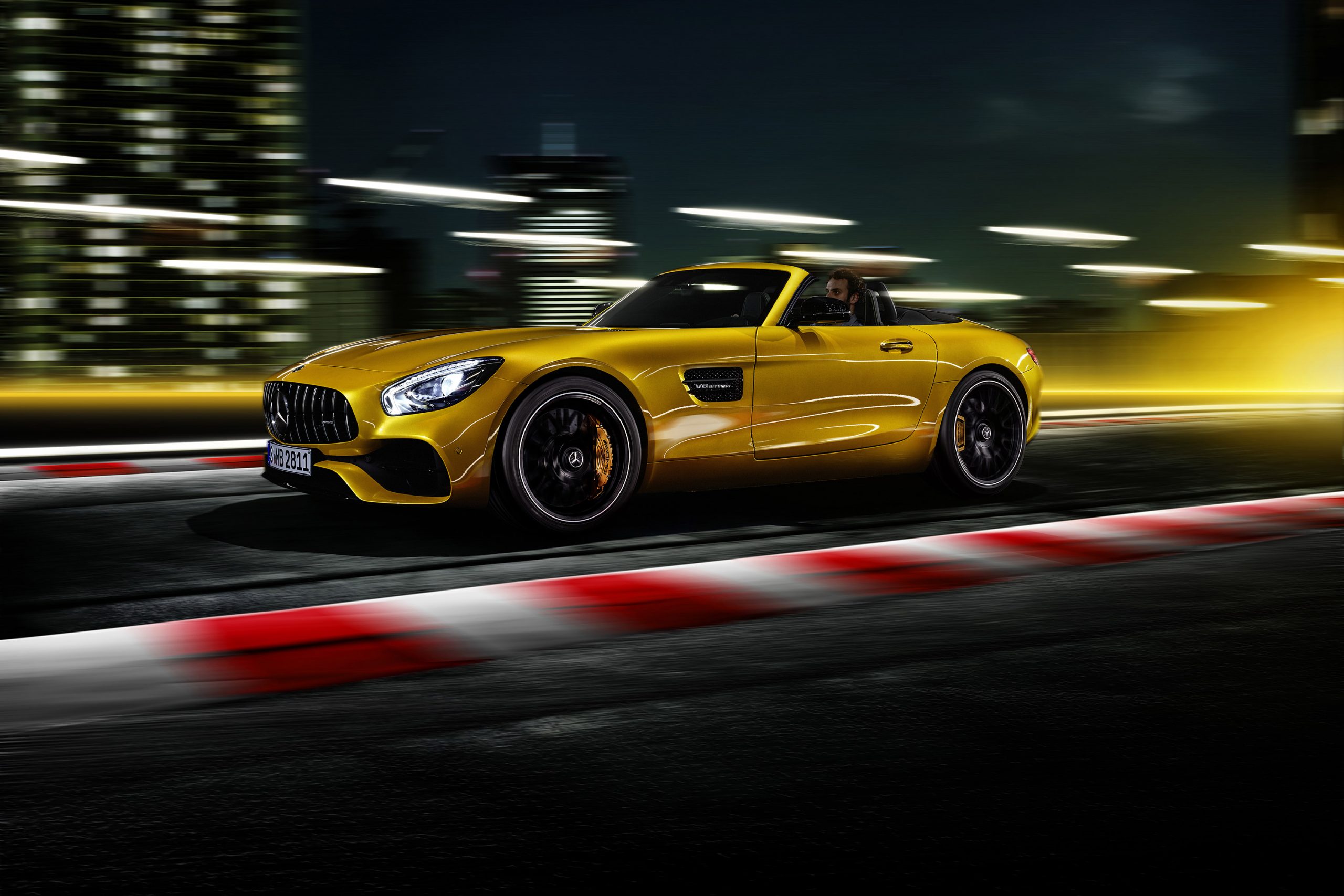
- Base price: $115,900
- Engine: 4.0L twin-turbocharged V8
- Power: 469 hp @ 6,000 rpm
- Torque: 465 lb-ft @ 1,900 rpm
- 0-60 mph: 3.9 s
Developed from the racetrack up to be a pure sports car, the AMG GT’s 469-hp dry-sump biturbo V8 and rear transaxle help create an ideal balance of reduced weight, control, confidence, and composure.
2021 Mercedes-AMG GT C / GT C Roadster
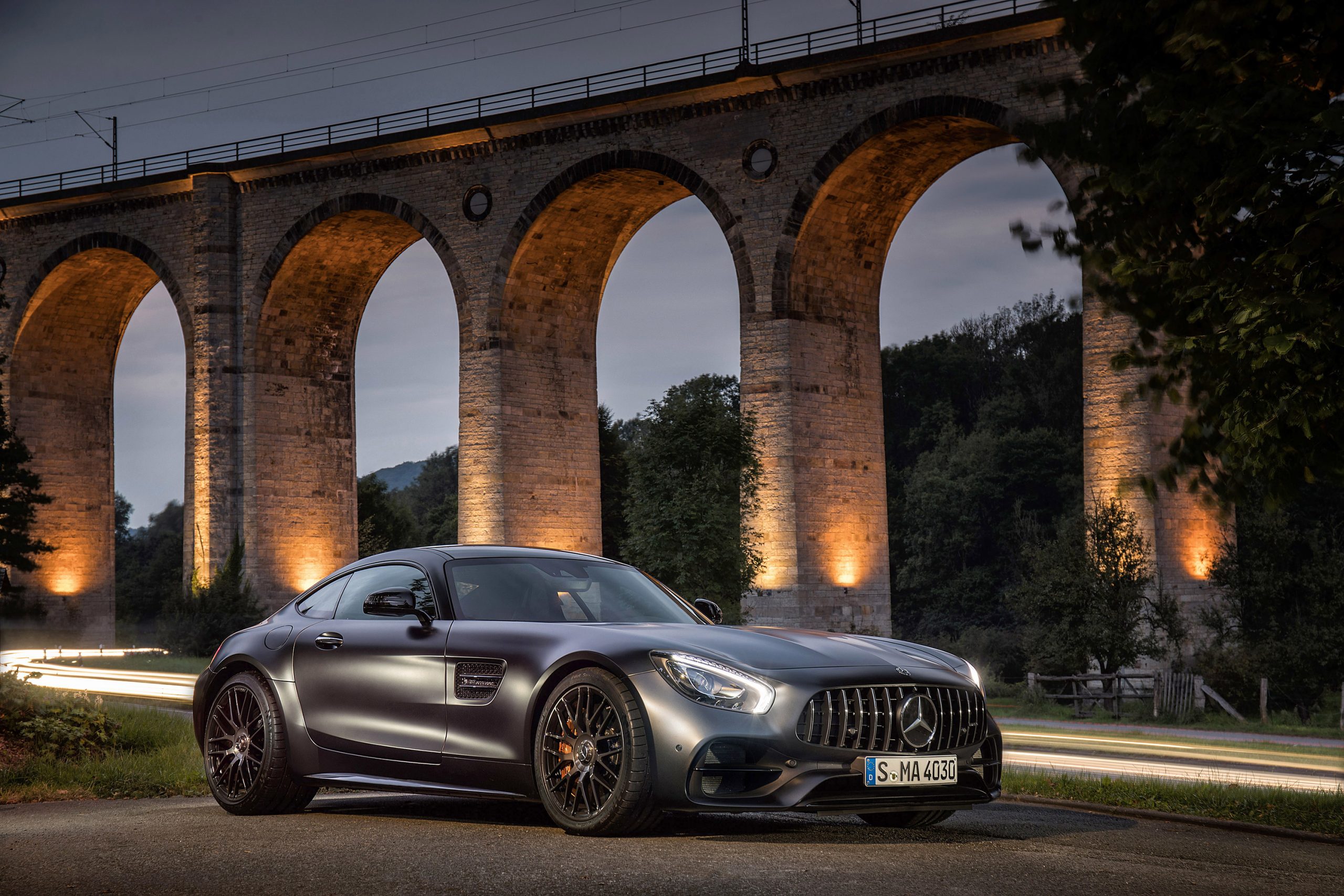
- Base price: $150,900
- Engine: 4.0L twin-turbocharged V8
- Power: 550 hp @ 5,750 rpm
- Torque: 502 lb-ft @ 2,100 rpm
- 0-60 mph: 3.6 s
The coupe version of the AMG GT adds extra power with a 550-hp dry-sump biturbo V8 engine and rear transaxle. Drivers still get all the performance and control the convertible version offers, creating an unparalleled experience.
2021 Mercedes-AMG GT R / GT R Roadster
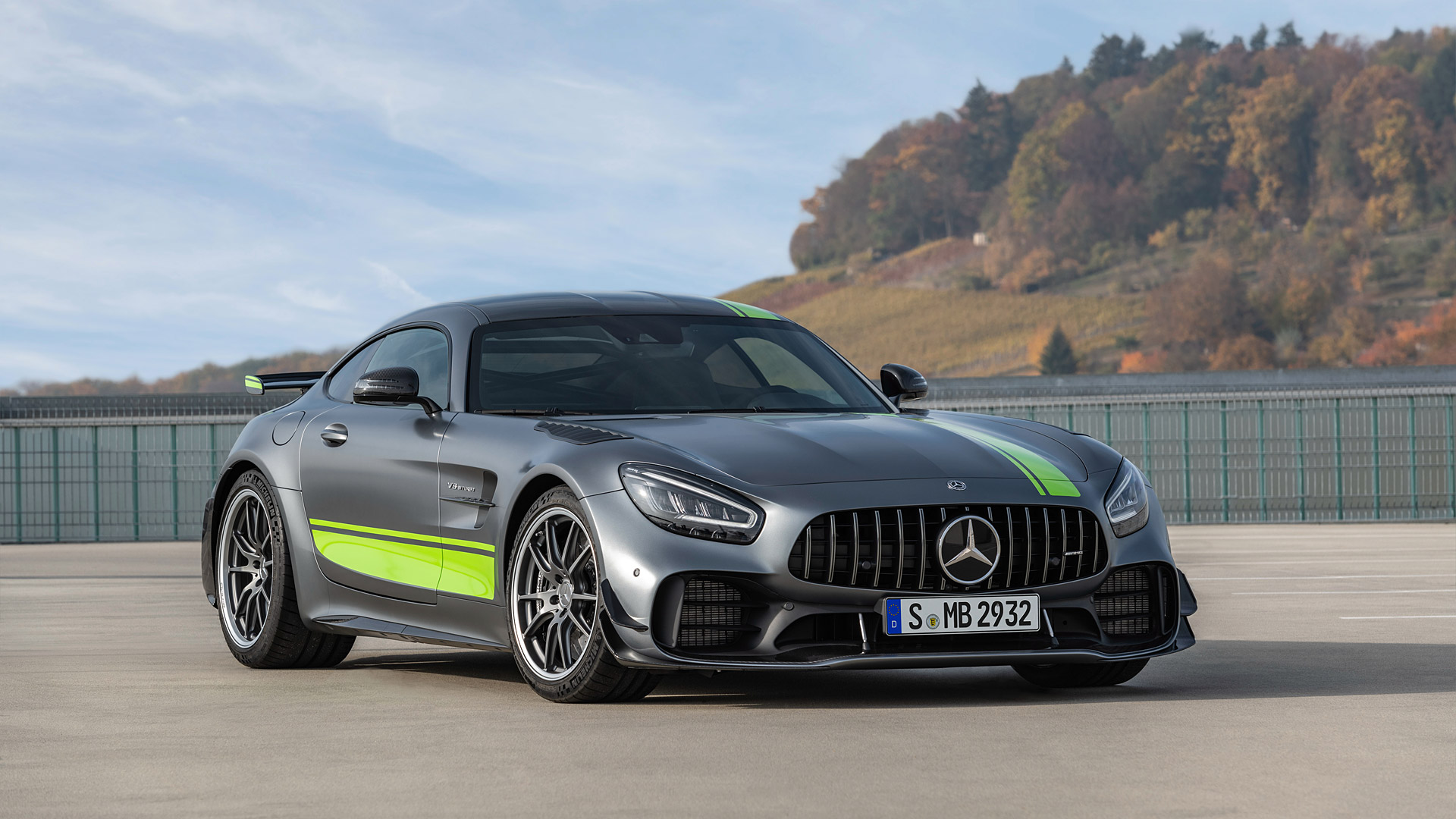
- Base price: $162,900
- Engine: 4.0L twin-turbocharged V8
- Power: 577 hp @ 6,250 rpm
- Torque: 516 lb-ft @ 2,100 rpm
- 0-60 mph: 3.5 s
The 577-hp AMG GT R condenses half a century of motorsports success into a single Nürburgring lap. Lightened, sharpened, and strengthened, its racing DNA is evident in every fiber of its body, chassis, and soul.
2021 Mercedes-AMG GT Black Series
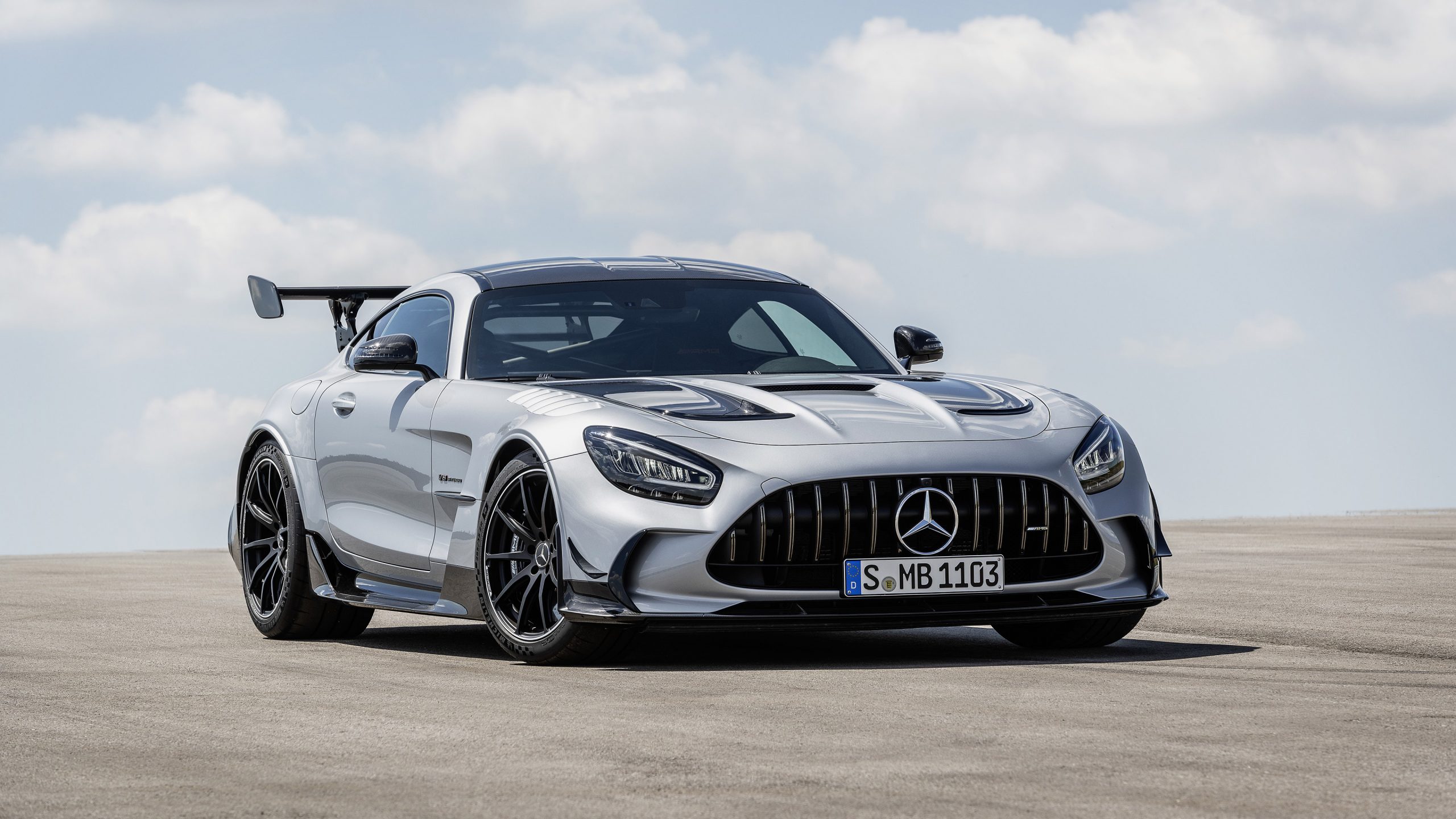
- Base price: $325,000
- Engine: 4.0L twin-turbocharged V8
- Power: 720 hp @ 6,700 rpm
- Torque: 590 lb-ft @ 2,000 rpm
- 0-60 mph: 3.1 s
The Mercedes-AMG GT Black Series marks the return of an iconic name to the world of super sports cars. It’s as unorthodox as it is untamed. This car has emerged from uncompromising engineering paired with unprecedented performance—especially on the race track.
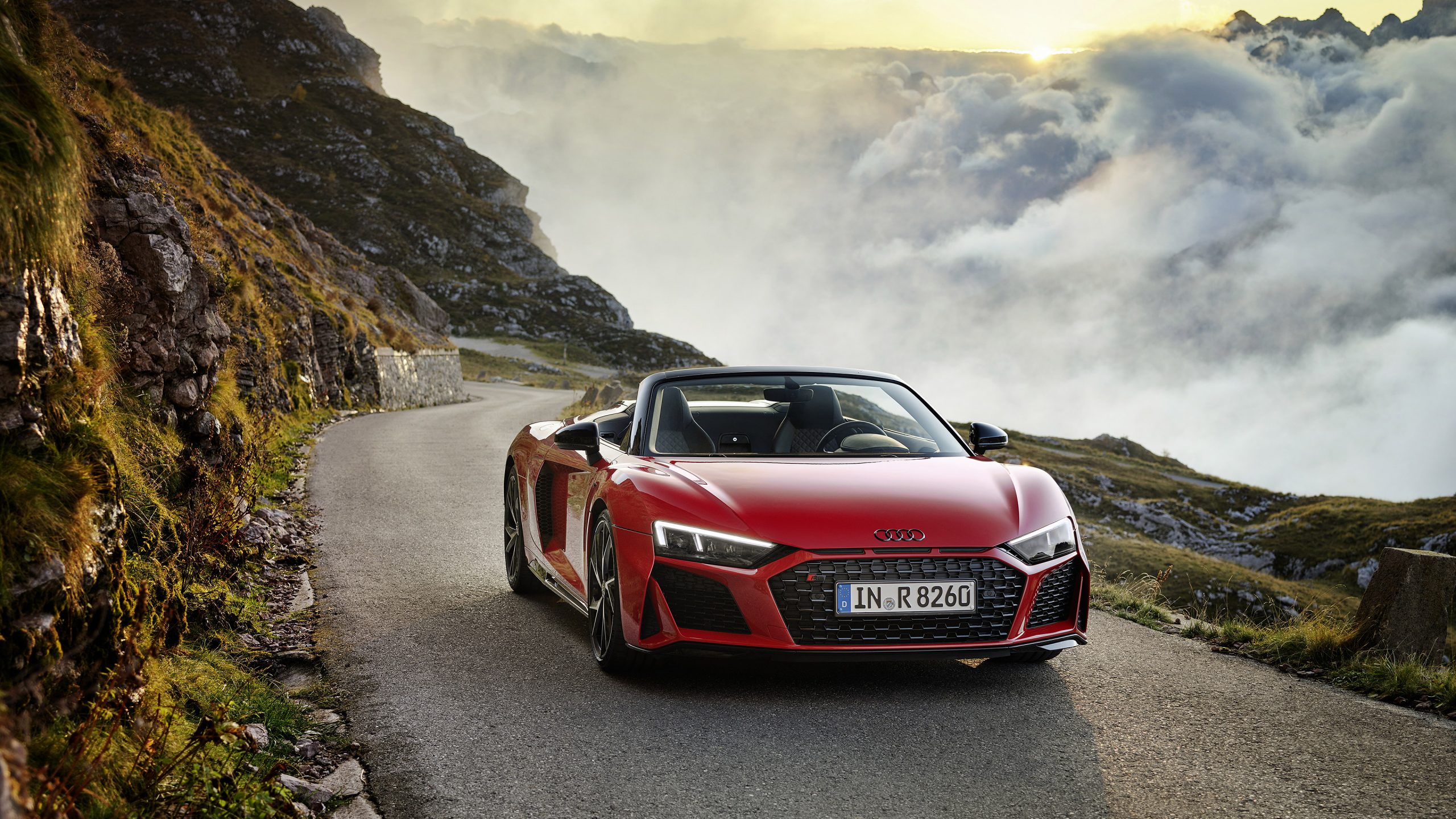
Best of the Current Audi Model Lineup
The four-ringed German marque has really come into its own in the last decade, with Audi now setting a benchmark for what a luxury sports car – at an accessible price – can and should be. These days they’re propagating this philosophy with the volume cranked all the way up, producing a comprehensive range of SUVs, sedans, estates and supercars.
While the most significant updates for the 2021 model year have been reserved for their entry-level offerings, their top performance vehicles (basically anything with an ‘R’ or ‘RS’ in the name) are also bearing some good news. For 2021, we’ve seen the debut of the RS6 Avant, RS7 and RS Q8 for North American markets. Then of course, there’s the all new e-tron GT – Audi’s high-performance grand-touring EV saloon – which looks to shake up a playing field currently dominated by the Porsche Taycan and Tesla Model S.
The Audi R8 continues to retain its position as ‘poster boy’ atop the performance hierarchy, even though the old-guard has been rumored for retirement no later than 2023. In celebration or in spite of this (depending on how you look at it) Audi has announced that the R8 will be permanently available with a rear-wheel drive base model going forward. In the past, the rear-wheel drive R8 – which first featured briefly in 2018 as the R8 RWS – was a limited-run version of the otherwise exclusively all-wheel drive car.
With the company changing its focus to EV production and technologies, it will be interesting to see how things play out for Audi over the next decade. Will Audi be taking the lead on this next generation of transportation? How will their philosophies and definition of an “engaging driving experience” be affected by this transformation?
Here are the best brand new Audi models you can purchase today.
Audi R8 RWD
This has to be the best car that Audi currently has in its model range. Now a standard, instead of a one-off offering, the rear-wheel drive version of Audi’s famous R8 supercar is wonderful for so many reasons. Not only does it provide a notably lower price of entry into ownership of a brand new R8, it also brings about the puristic thrills that its heavier and more expensive all-wheel-drive counterpart can’t. Yeah, it’s not going to be as quick as the Performance model, but it sure as heck is going to be more fun to drive. Touted as a proper sports car engine, its V10 makes peak power at 7,800 rpm and smoothly revs all the way to a euphoric 8,700 rpm redline, all the while providing a delightful symphony of sound via its howling engine note.
Audi RS 6 Avant
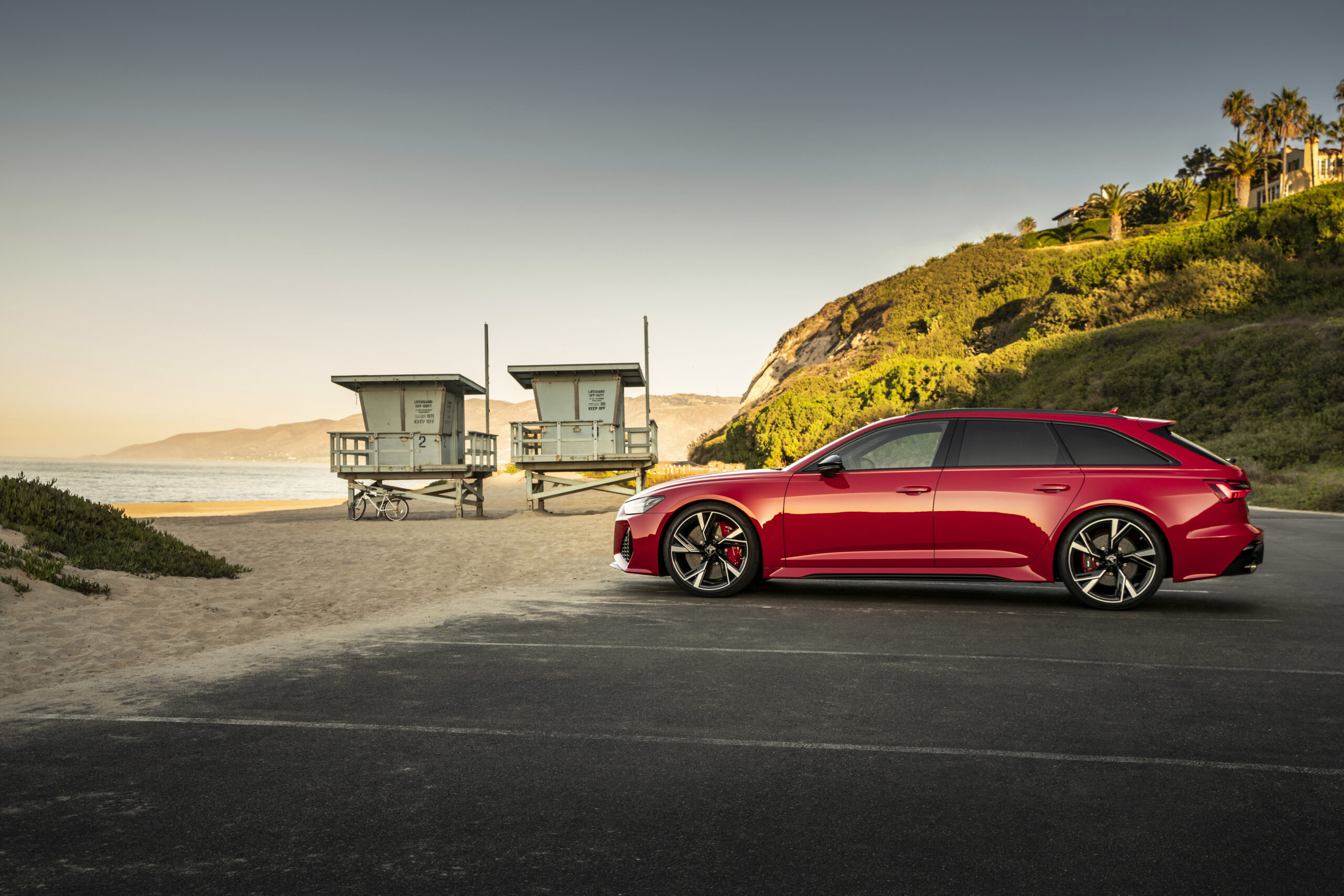
Audi is reinvigorating the currently stale hot-hatch segment, with its greatly anticipated RS 6 Avant finally making its way over to the western hemisphere. Featuring a mild-hybrid powertrain, this is not your average station wagon. The aggressive and attractive RS-specific bodywork makes a loud statement that this is no ordinary grocery getter. Ok, so it’s not exactly cheap either – with a base price north of 6 figures – but it’s easily my favorite Audi, and is the best car in the lineup that is not an R8. At the heart of the car is a twin-turbocharged 4.0L V8 engine that puts out a whopping 591 hp and 590 lb-ft of torque. The results are impressive, too – the car can sprint from 0-62 mph in just 3.6 seconds, on its way to a top speed of 155 mph.
Audi e-tron GT
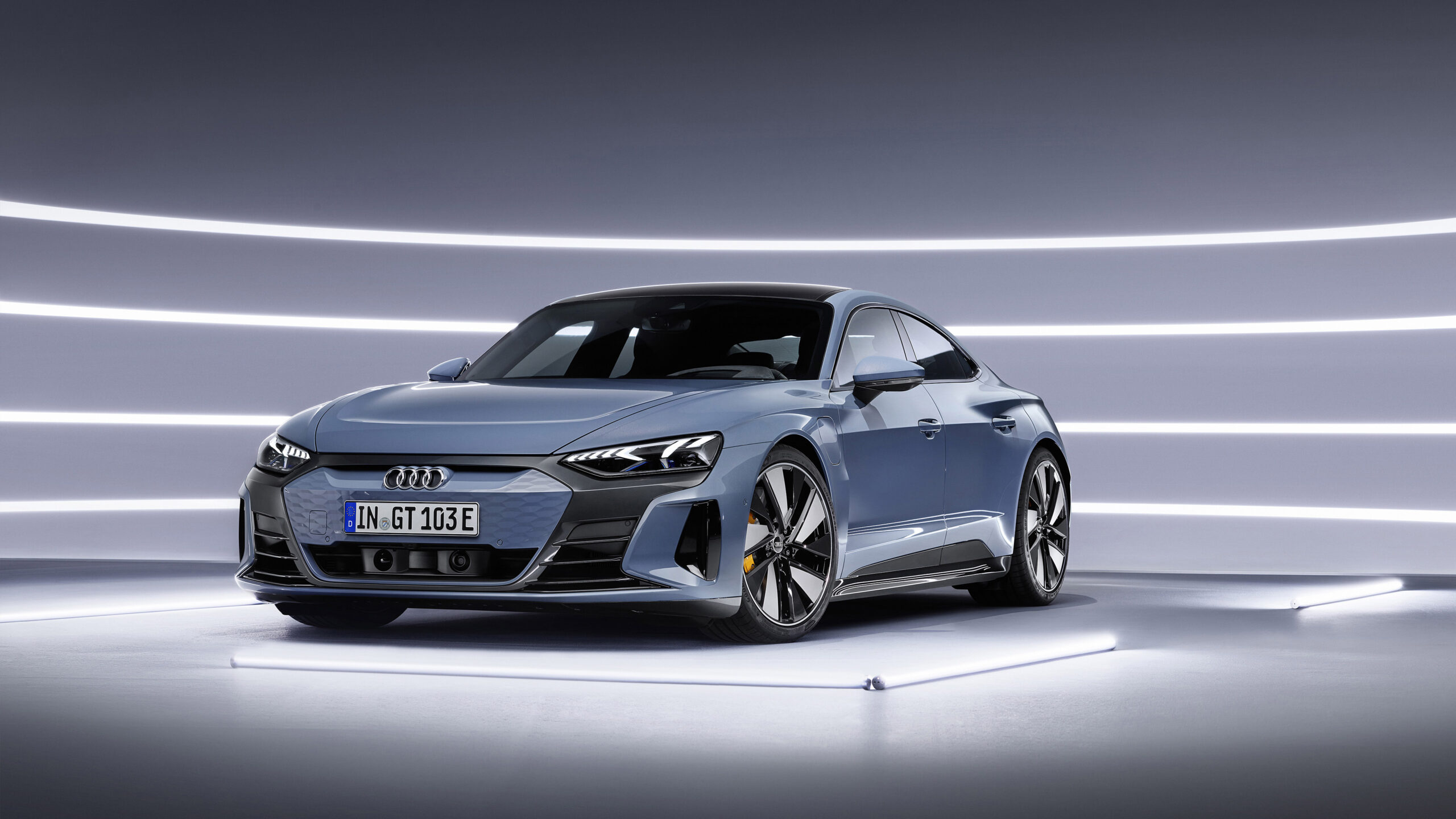
The 2022 Audi e-tron GT is the four-ringed company’s first entrant into the high-performance EV weight class. It looks to shake up a playing field which includes the likes of the Tesla Model S and Porsche Taycan, the latter of which it shares many of the same underpinnings. This isn’t the marque’s first EV model, as it joins up with a roster currently occupied by Audi’s e-tron SUVs. However, the e-tron GT does have the distinction of becoming the first fully-electric car to don the company’s legendary RS badge via the highest and most expensive trim level currently on offer. The base model e-tron GT predictably comes with less of the go-faster, stop-harder and look-sexier ingredients that are typically reserved for an RS model, but it does share the same 93.4 kWh battery with its more glamorous stablemate.
Audi RS Q8
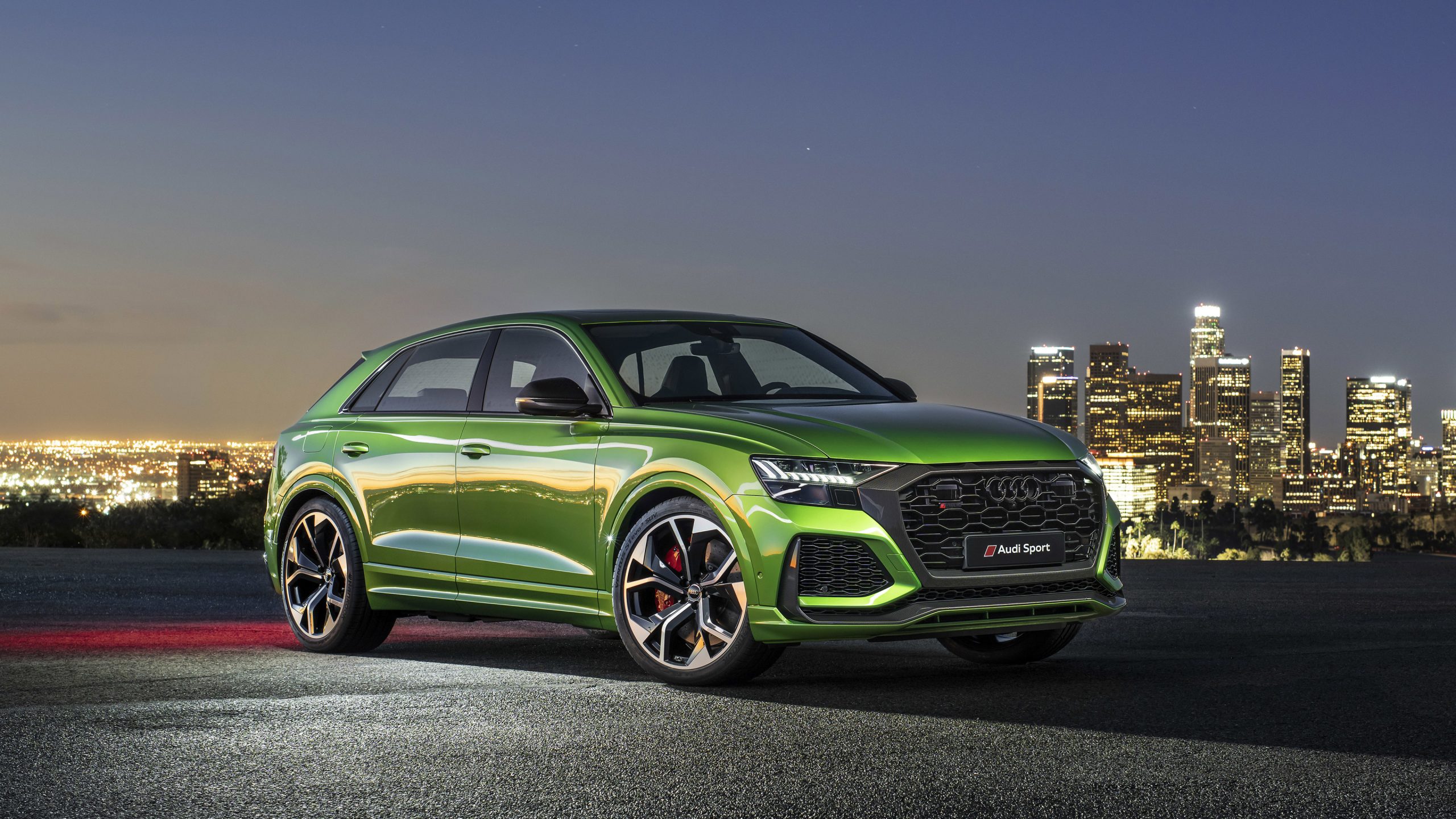
The Audi RS Q8 is the fastest version of the marque’s Q8 series of sport utility vehicles. It’s also the fastest dang SUV around the Nordschleife too – not too shabby for something you can ferry the kids to-and-from school in, and it will definitely earn you bragging rights amongst all the parents in the neighborhood. The model gets a high-performance 4.0L twin-turbocharged V8 engine, which punches out exotic-level performance figures – namely, 592 hp and 590 lb-ft of torque. That’s quite a lot of power for just about anything out there, never mind something that seats 5 adults comfortably. For 2021, the RS Q8 gets only one change; it now comes standard with a built-in toll-road-payment transmission feature.
Audi RS 7
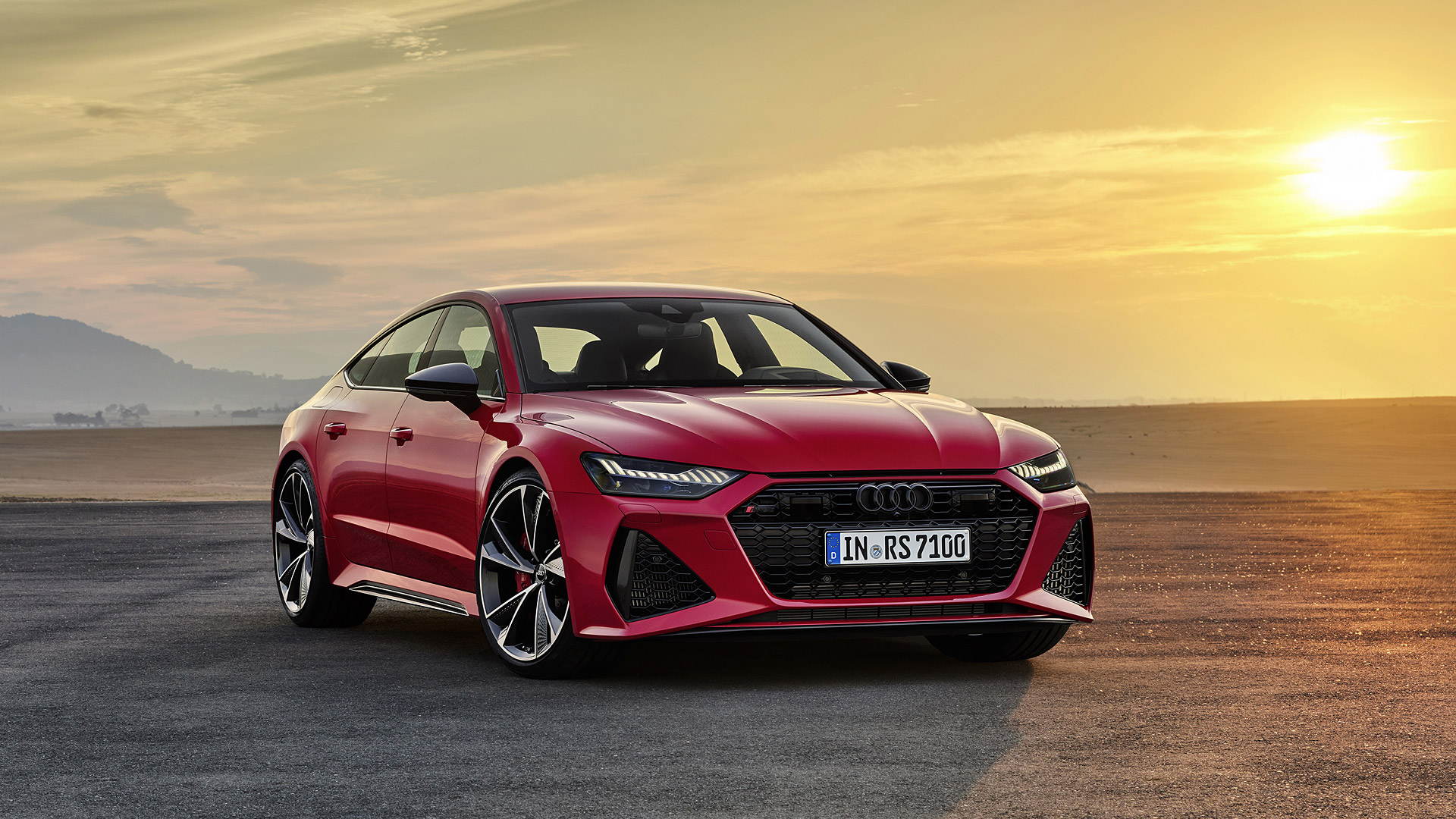
The Audi RS 7 Sportback is what you get when you take the RS 6 Avant’s engine, then place it in a sleeker Audi Sportback frame. The resulting Audi RS 7 Sportback is an aggressive and beautiful car, with performance credentials to back up its bold appearance. This strikingly athletic, yet elegant, four-door sports car is the perfect blend of practicality and performance. At the heart of the car is a twin-turbocharged 4.0L V8 engine with a mild-hybrid system, which puts out a whopping 591 hp and 590 lb-ft of torque. The results are impressive, too – the car can sprint from 0-62 mph in just 3.6 seconds, on its way to a top speed of 155 mph. If you’re looking for an ideal luxury-performance sports sedan, and aren’t quite ready to make the leap over to an EV, this would be the one to get.
This 1000hp Audi RS7 C8 Wants to Take on the GT63 S AMG E Performance
Wheelsandmore have revealed their latest work on the Audi RS7 Sportback C8.
The engine of the Audi RS7 has been tuned to produce an output of 1045hp, the exhaust system has been equipped with a remote-controlled flap control and the wheels swapped to larger 22 inch concaves.
The performance enhancements have been tailored to ensure fun and good mood in the car, and when driving in the fast lane the vehicle consumes 1 litre less fuel per 100km thanks to the increase in torque. The performance upgrades available are from stage 1 to stage 5 each increasing the standard power output of 600PS and 800 Nm of torque.
Stage 1 increases the power output from standard to 700 PS and 945 Nm, Stage 1+ increases the output from standard to 740PS and 1002 Nm, Stage 2 increases the output power from standard to 780 PS and 1102 Nm, Stage 3 increases the power from standard to 840PSand 1108 Nm, Stage 4 increases the power from standard to 915PS and 1149 Nm and Stage 5 increases the output power from standard to 980 PS and 1292 Nm of torque.
The new RS7 C8 has been fitted with a hand-made stainless steel exhaust system with valve control from Capristo Automotive, the system increases the power by approximately 15hp and its weight has been reduced by 50% compared to the standard exhaust.
The coil springs fitted in the RS7 are height-adjustable and the adaptive series damper control remains active on the coil springs. The coil springs are exclusively made in Germany and are TUV-tested and approved.
The vehicle has been fitted with a set of 22 inch alloy wheels from Germany with TUV approval. These are three-piece rims with forged rim stars and stainless steel rim beds for all RS7 models. Additionally, the rims are available in all colors and combinations with a carbon look and high-gloss finish.
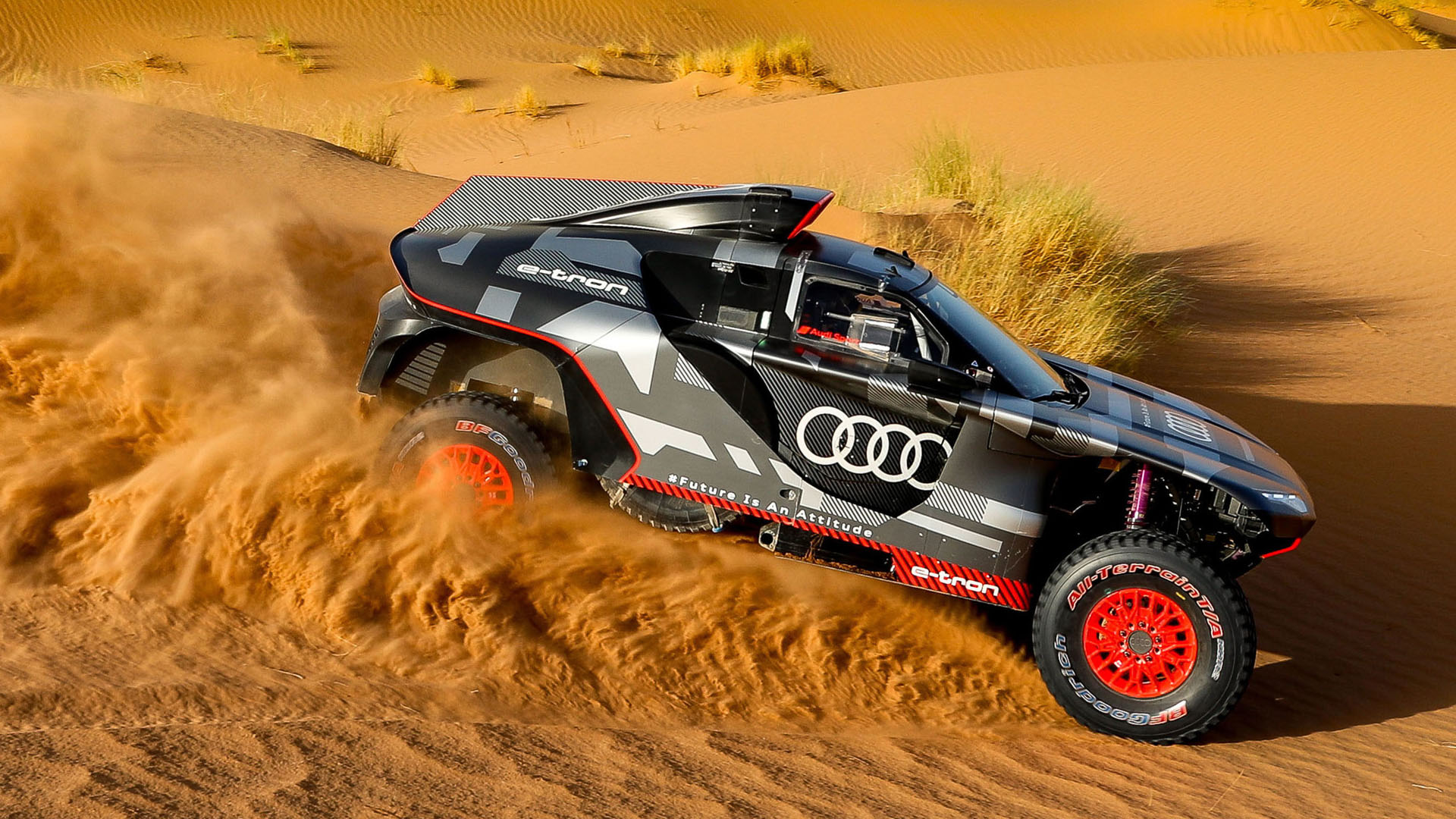
Audi RS Q e-tron preparation for Dakar
In January 2022 the next edition of the famous Dakar Rally will start, and over the years we’ve seen some really spectacular cars, bikes, and trucks competing in this grueling desert race, but the 2022 edition will see a rather special entry at the starting grid, the Audi Sport RS Q e-tron … yes, you are reading that correctly, a hybrid rally car.
You can only do so much testing in Germany or Spain, so to get some more ‘real time’ data Audi Sport took their RS Q e-tron together with the three driver crews to Morocco, none other than previous Dakar record winner Stéphane Peterhansel, Carlos Sainz and Mattias Ekström would be taking this highly complex prototype into the desert where temperatures above 40 degrees Celsius (or 104°F) were measured during these hard test sessions.
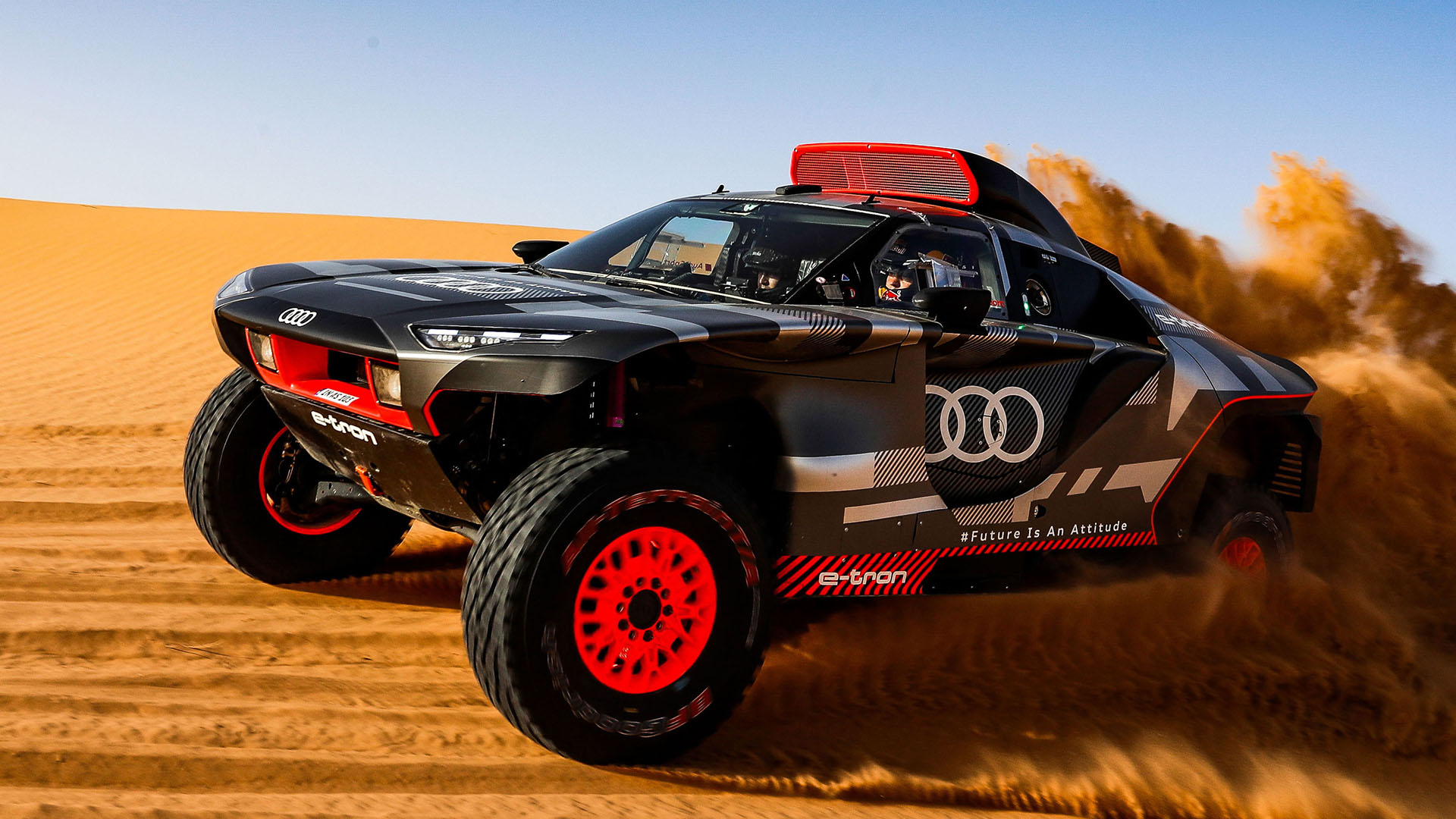
“We expect much lower temperatures at the Dakar Rally,” says Andreas Roos. “Nevertheless, we deliberately went to Morocco to test our concept under the most extreme conditions. Components such as the MGU, for example, were basically not developed for use in such high ambient temperatures, but the drivetrain and other components were also pushed to their limits or even beyond by the heat. The insights we gained in Morocco are invaluable, but they also show us that we still have a lot to do before the Dakar Rally and there is not much time left.”
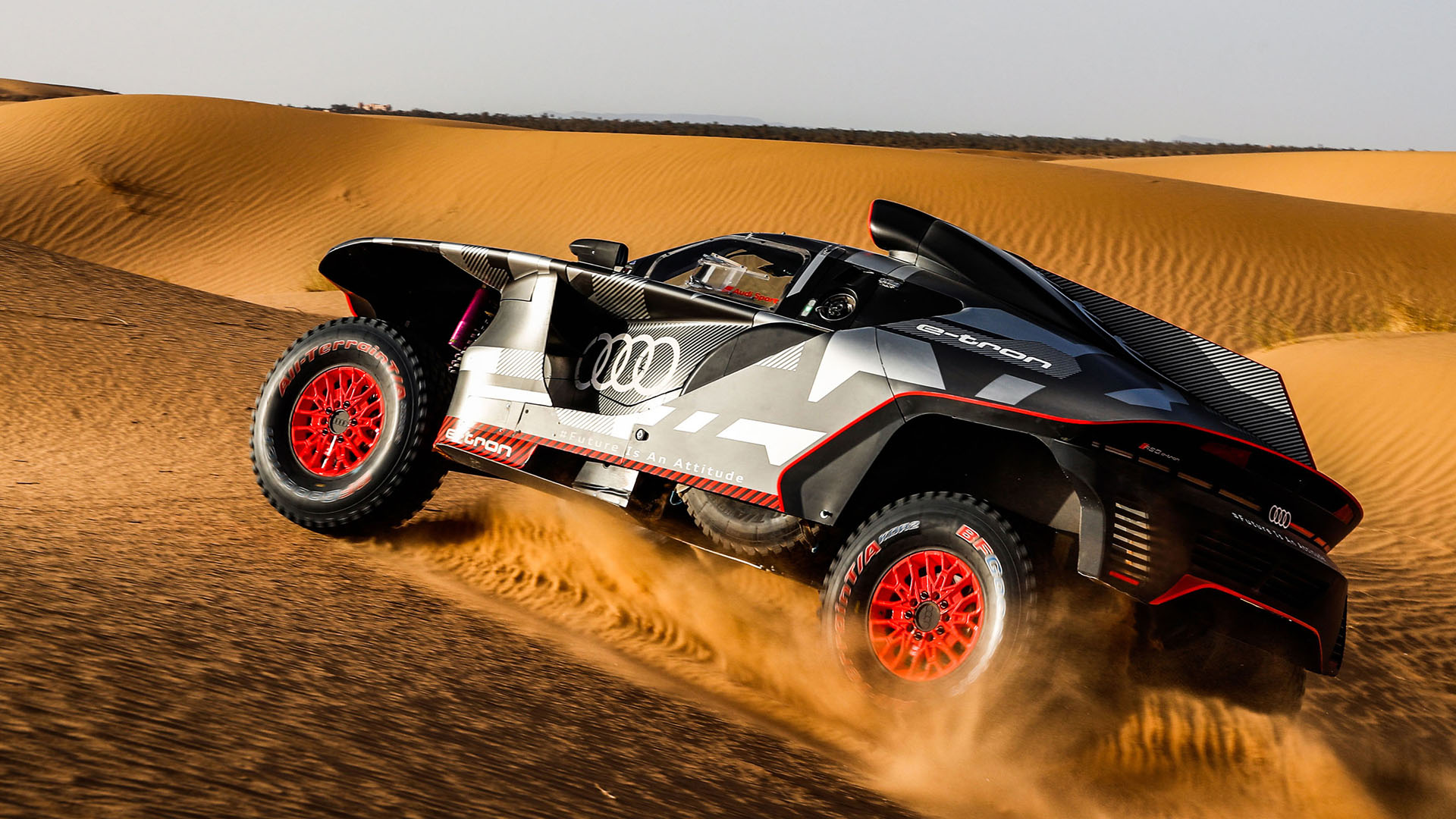
To make sure this Audi RS Q e-tron has any chance at finishing the Dakar rally, they developed a bespoke high-voltage battery, where the main focus is on managing the temperature while being able to pull the maximum amount of power from this power cell for sustained periods of time, in a hot and dusty environment like the Dakar desert.
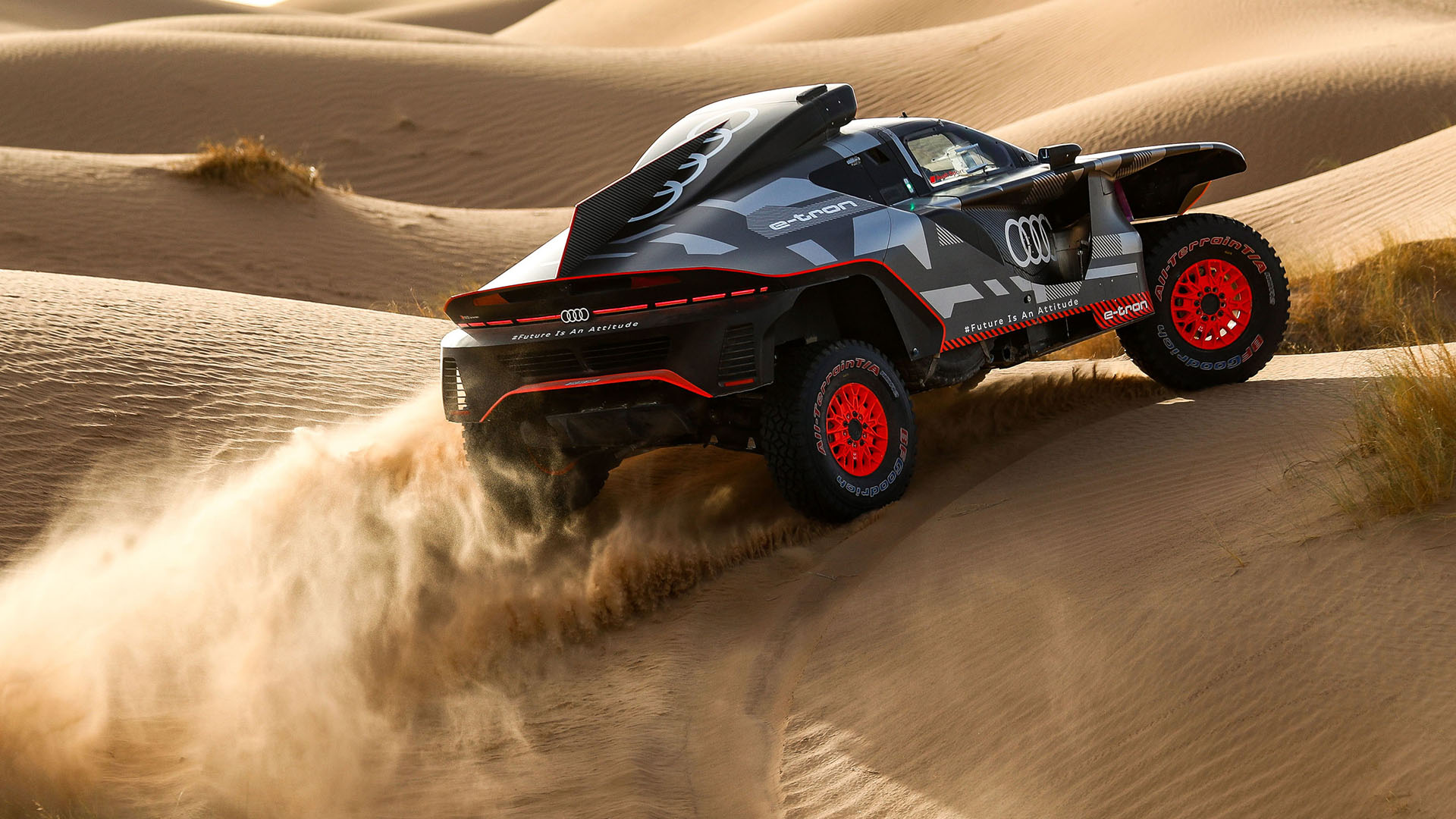
Power in the Audi RS Q e-tron comes from two Formula E electric motors, found in the FE07, one on each axle, while a turbocharged 2-Liter four-cylinder engine taken from the 2020 DTM RS5 race car will charge the 50 kWh battery as a generator … total power output is said to be 671 hp before regulations might come in to restrict that number.
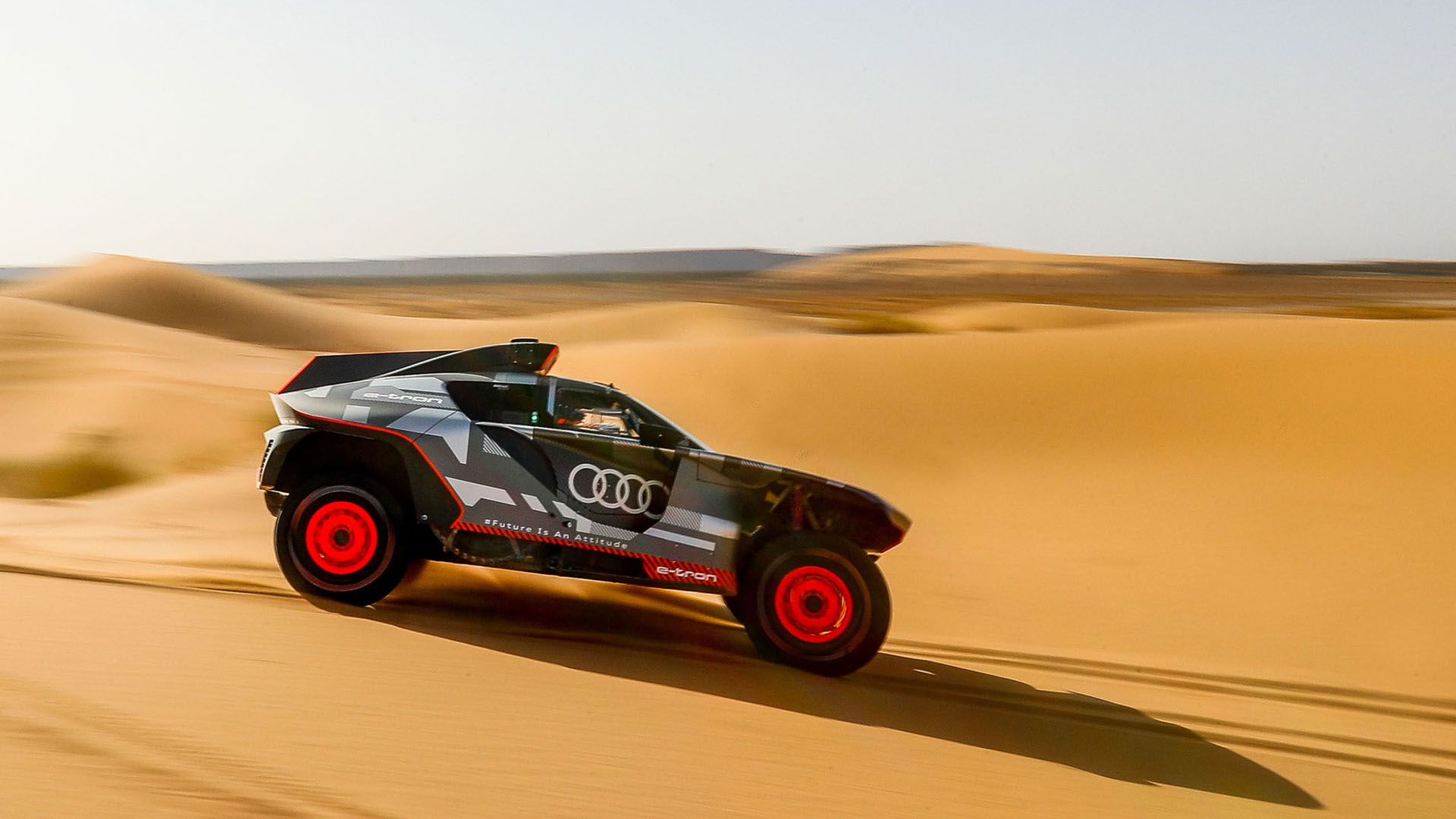
In January we will be seeing three RS Q e-tron start the Dakar Rally, over the two weeks following the departure there will be daily stages, some nearly 500 miles, that will really put the new Audi electric powertrain to the test, and the Dakar Rally is only the first stop for Audi Sport, as they have left Formula E and the DTM now to focus entirely on Le Mans next.
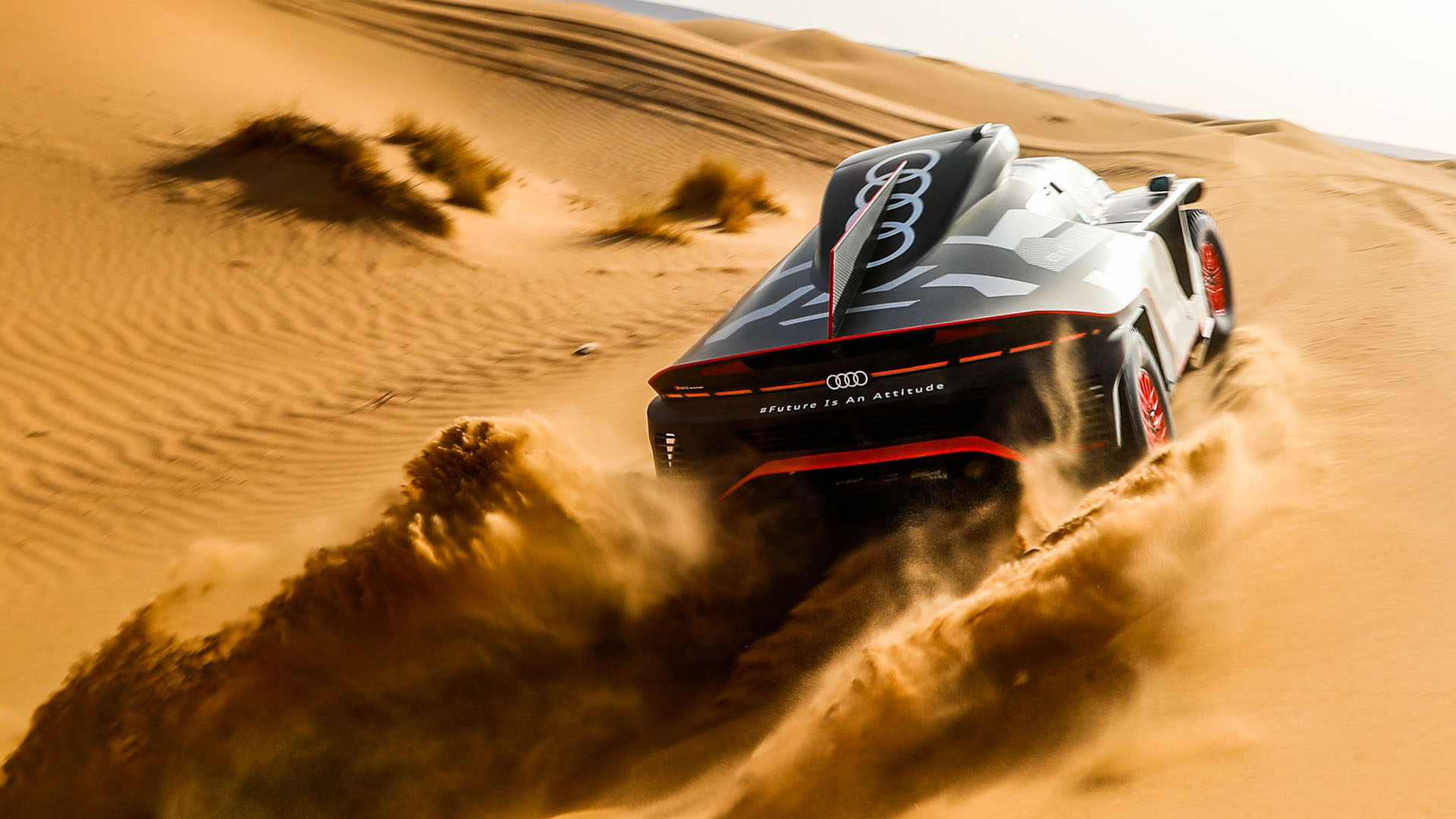
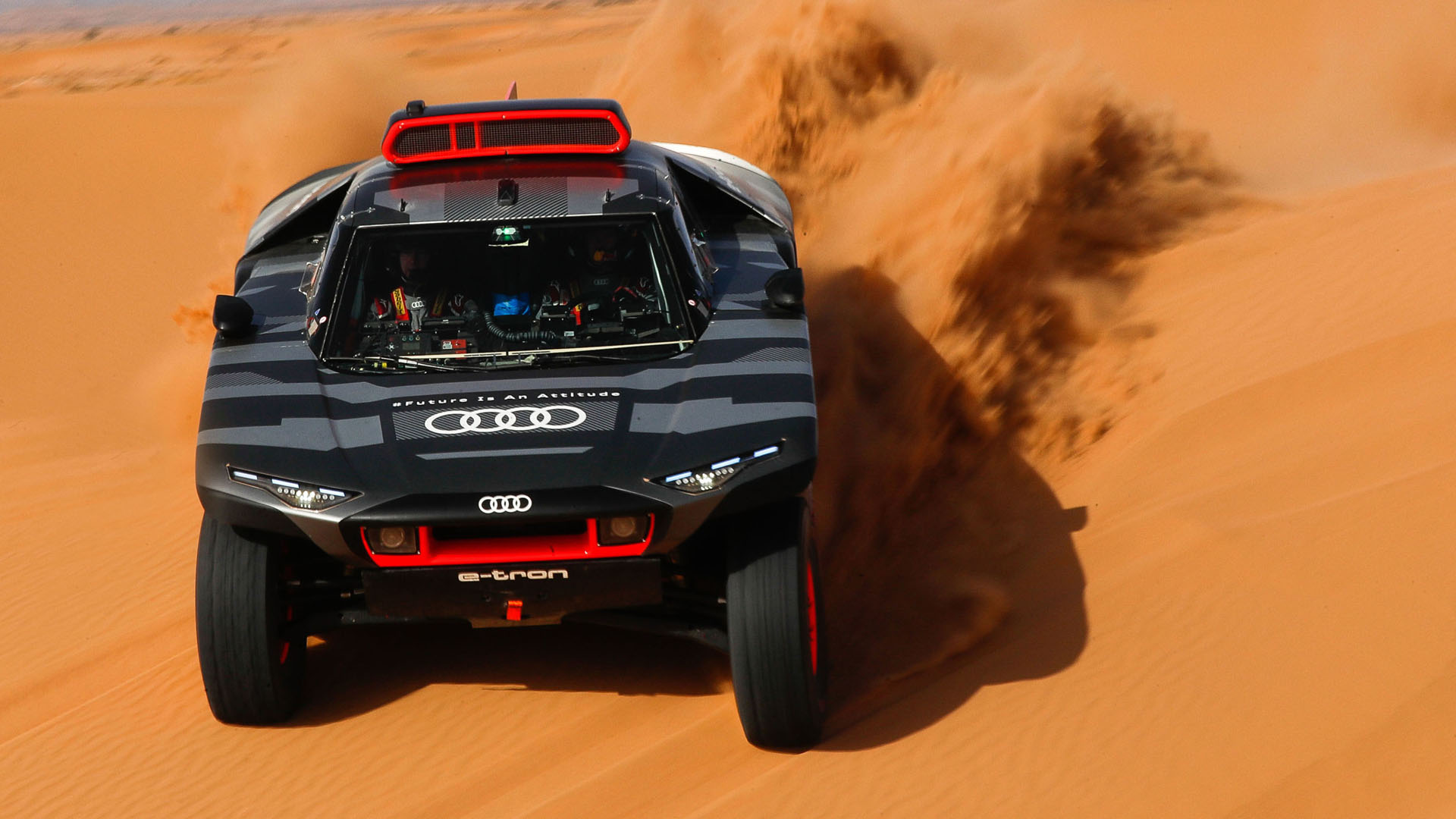
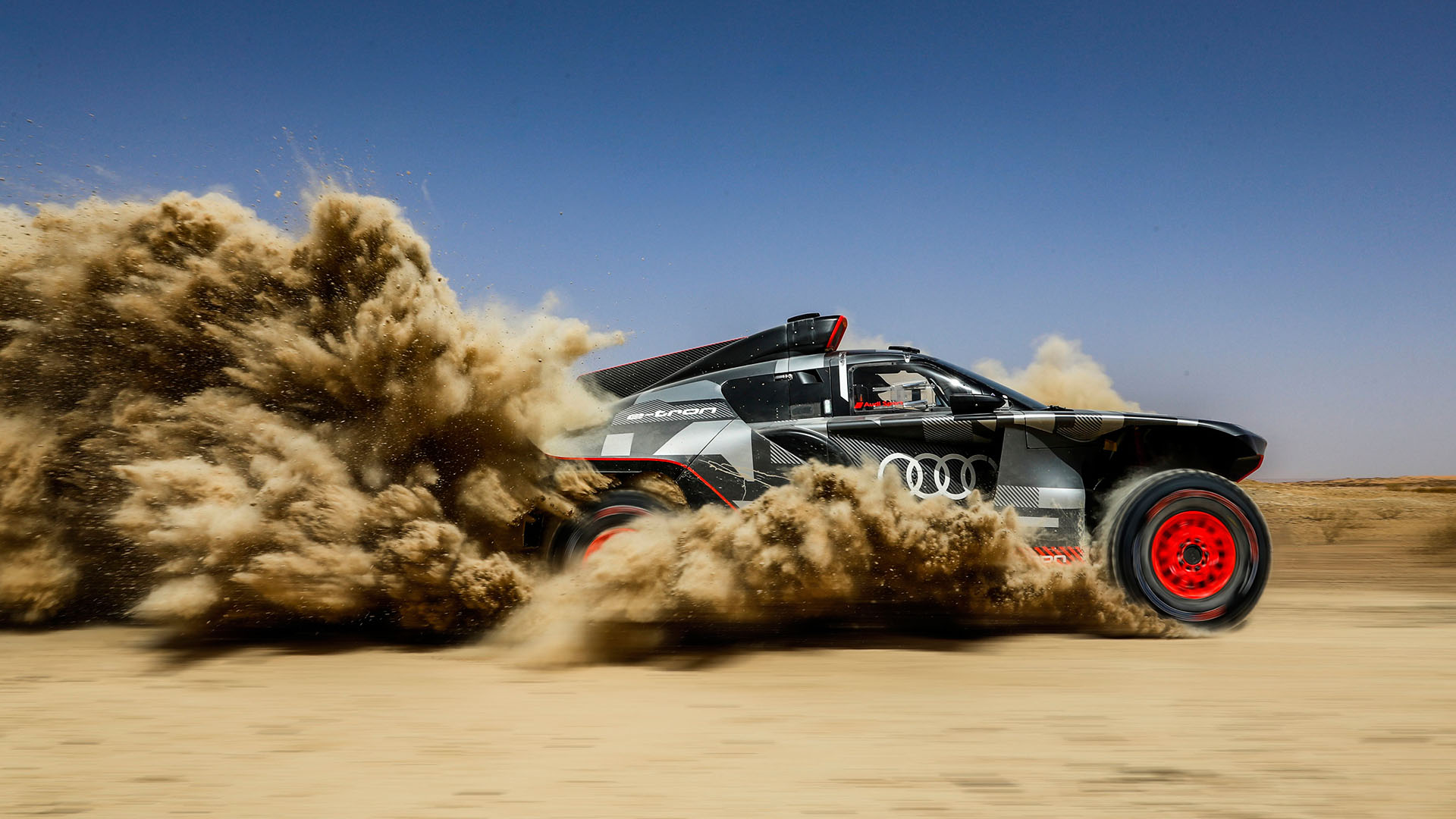
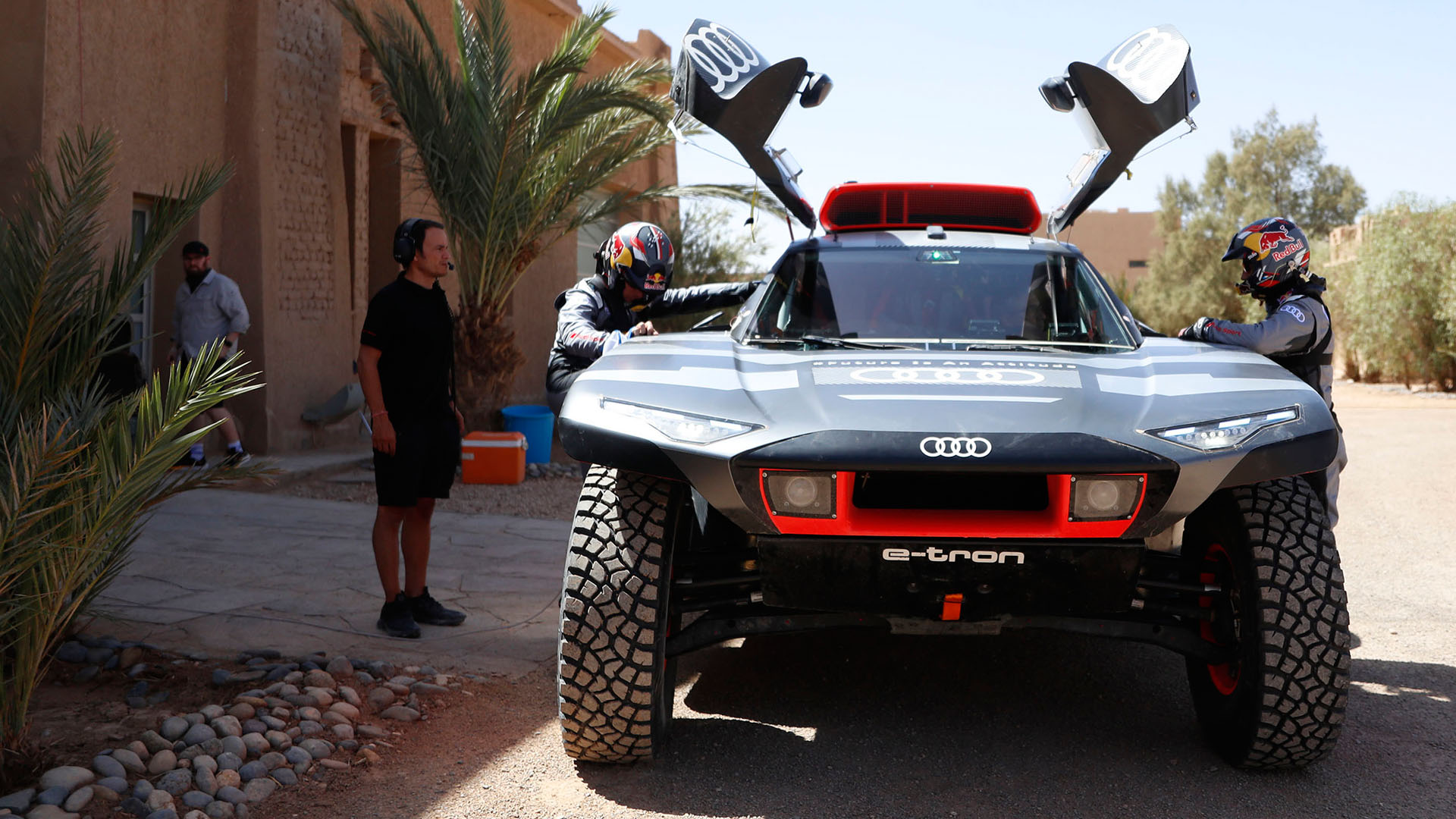
Are EVs Ready for Dakar? Audi RS Q e-tron Hits Moroccan Desert Ahead of Dakar 2022
Audi Sport tested the Audi RS Q e-tron in Morocco for almost 2 weeks under extreme conditions, the vehicle had already done extensive tests in Germany and Spain with all three drivers included. The drivers were ; the Dakar record winners Stephane Peterhansel and Carlos Sainz alongside rallycross veteran Mattias Ekstrom.
Additionally, the co-drivers were also present during the tests to form a unit in the Dakar Rally as well as to ensure the cockpit feels comfortable.
The extreme conditions the test team encountered in Morocco included high temperatures of over 40 degrees Celsius at times and sandstorms which hampered the tests and caused interruptions which needed to be solved after next test.
The team is expecting lower temperatures at the Dakar Rally 2022, components such as MGU were not developed to be used in high temperatures but the drivetrain and other components were pushed beyond their limit.
The high-voltage battery equipped in the vehicle was developed for the Dakar Rally specifically , the battery features optimum temperature management as well as maximum performance.
The Audi RS5 DTM car is powered by a new generation 2.0L turbocharged engine that can produce up to 670hp with the boost function. This number is somewhat irrelevant to the RS Q e-tron as the key drivetrain power source comes from MGUs. Oddly enough, the total system output of the e-drivetrain is also 670hp or 500kW.
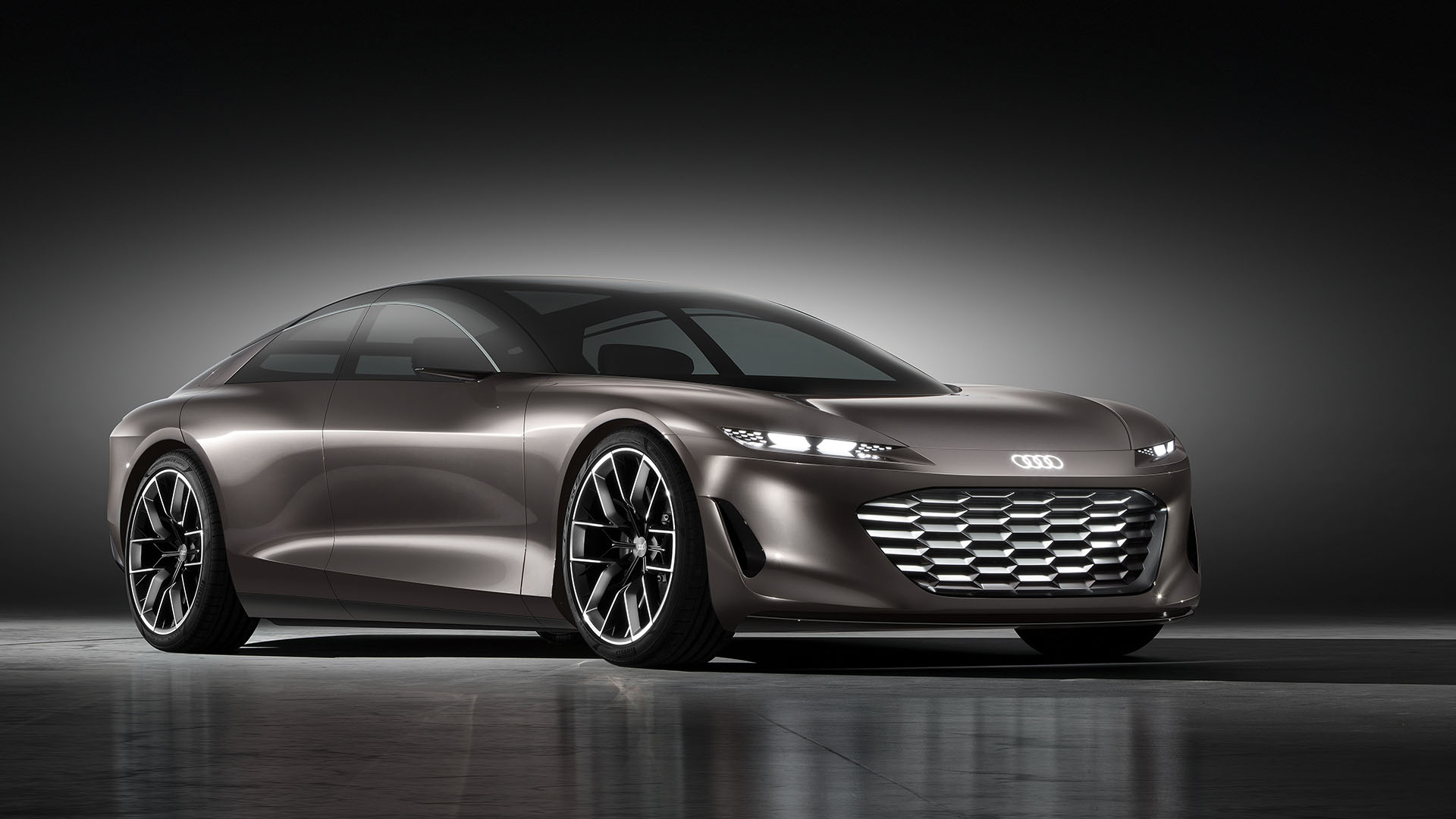
Audi grandsphere concept at IAA 2021
Audi is planning to create three ‘sphere’ concept cars as an indication of how they see the future of automobiles, the first one we could admire during Monterey Car Week, called the Skysphere, was a luxury GT Roadster that could effectively ‘stretch’ her wheelbase to offer more interior space, the second one in the sphere series is the grandsphere concept unveiled at the IAA, the International Motor Show in Germany, usually held in Frankfurt, but for the 2021 edition moved to Munich.
All of the Audi ‘sphere’ concepts will come with level 4 automatic driving, we’ve seen that on the skysphere already, where the car would really transport the occupants from point A to point B without them even touching the steering wheel, as that part of the interior isn’t needed anymore in this mode, it actually folds away, out of view. And that’s exactly what we are seeing inside this larger grandsphere concept too, and it will make its return in the third car in the series, the urbansphere which we’ll be able to admire in 2022.
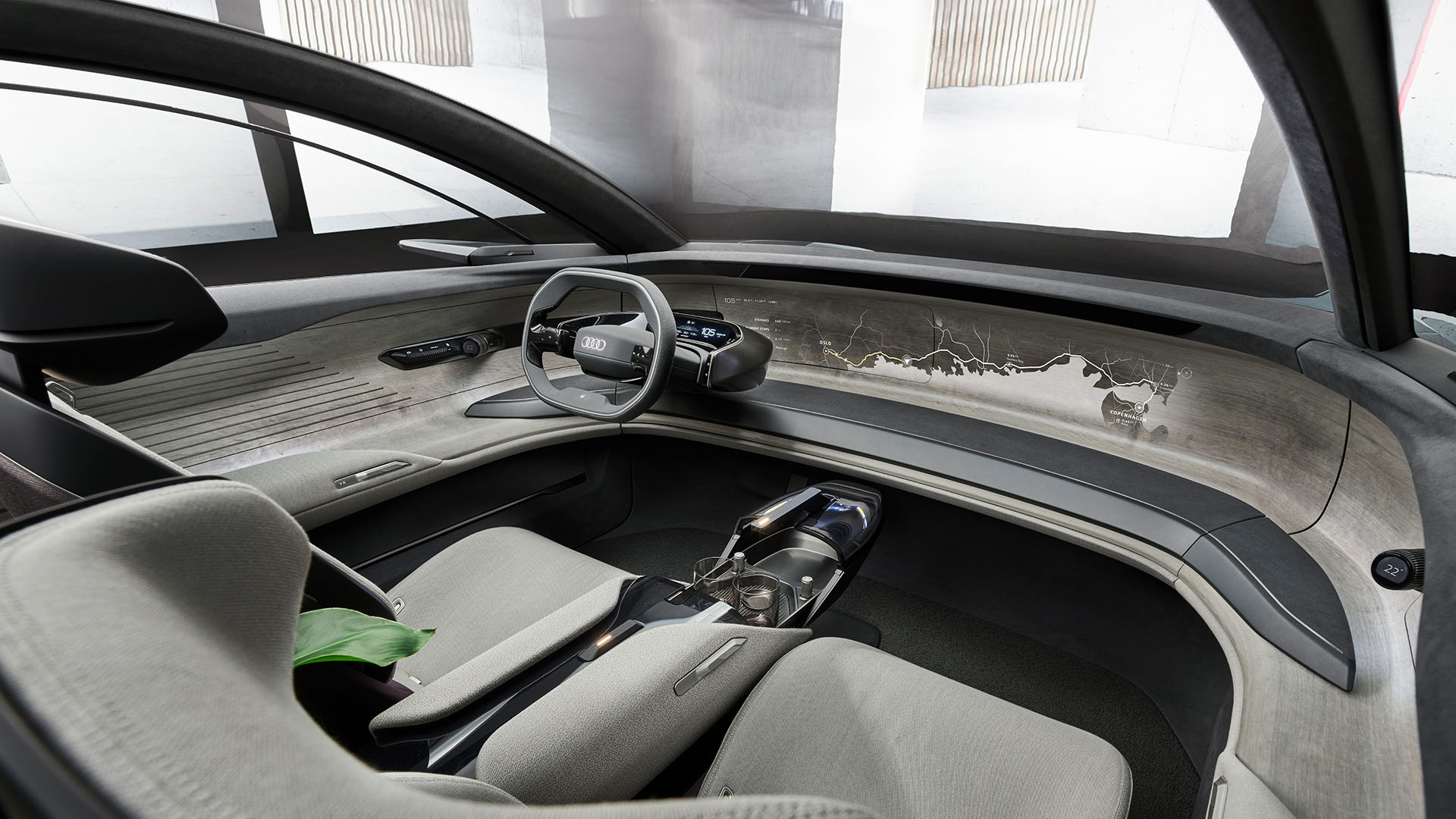
Audi and CARIAD, the Volkswagen Group’s global software think tank, are working together to create new technology, and their Level 4 is nothing less than changing the interior concept of a car as we know it today, still being a driver-oriented cockpit with seats for three or four passengers, but once the auto-driving mode is engaged, both the steering wheel and the pedals are moved out of sight to create a serene environment for all occupants.
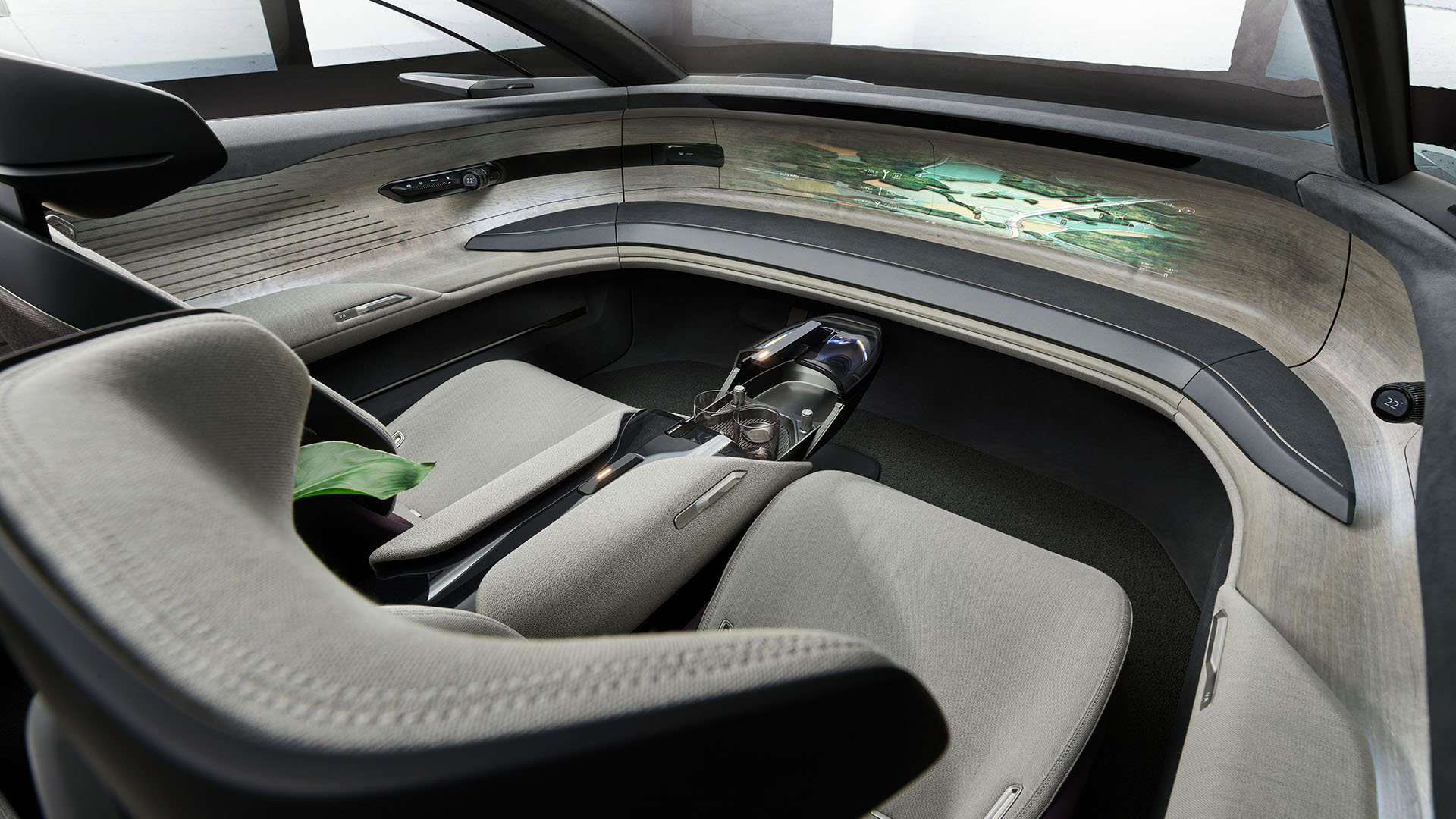
Audi calls these concepts ‘spheres’ because all three are designed from the idea of the interior being the most important part of the car of the future, the occupants’ living and experience sphere while traveling, in case of this grandsphere, Audi calls it a private jet for the road, with an overall length of 5.35 m (17.6 ft.) with a 3.19 m (10.5 ft.) wheelbase that’s even longer than the current Audi A8 Long, the grandsphere is all about luxury and comfort once you open the ‘suicide doors’ found on this concept, the front doors are hinged from the front, but the rear doors open from the rear to allow much easier access into the luxurious interior as there is no B-pillar on this model.
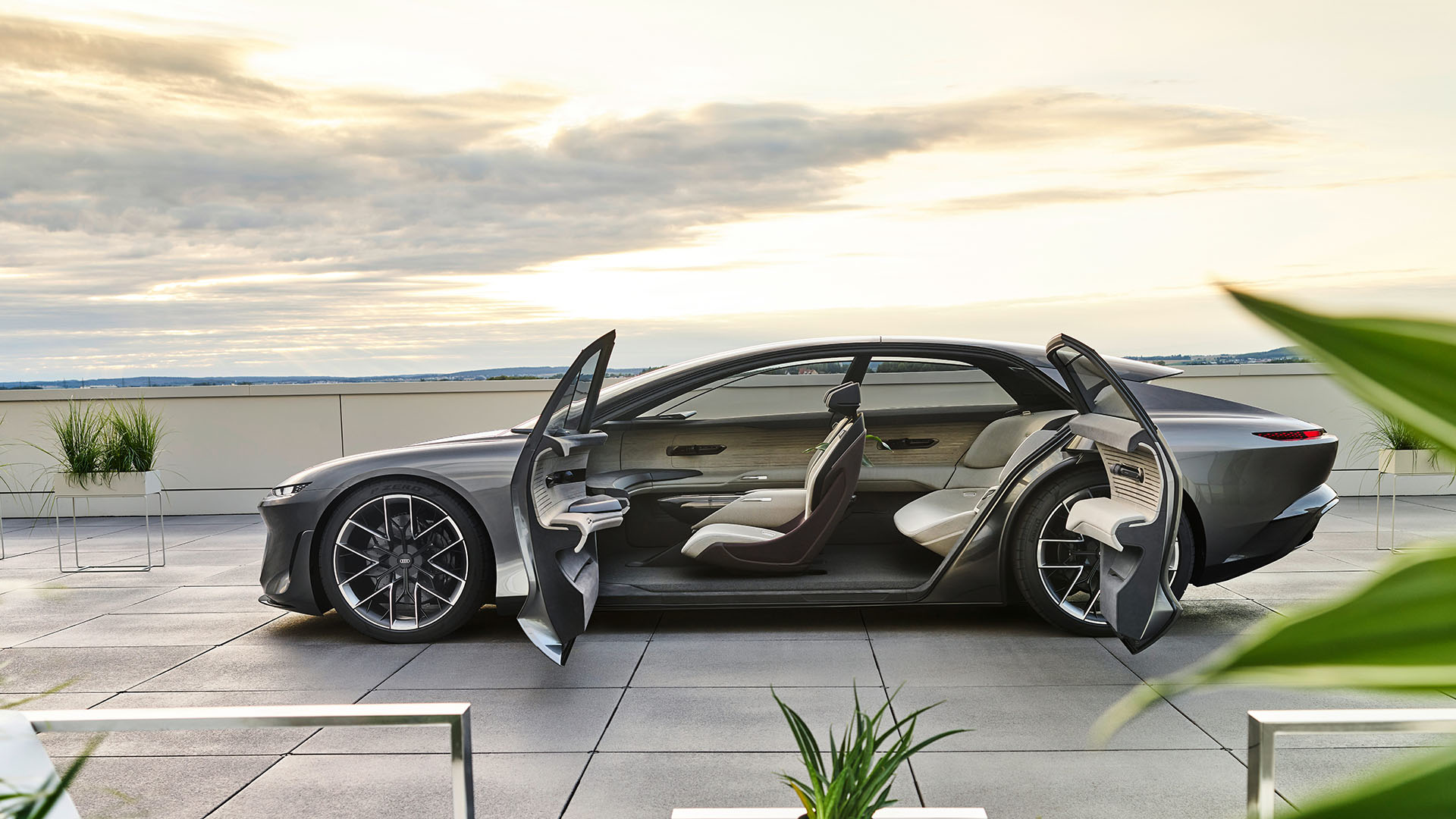
The Audi grandsphere will also come with a pathway identification … this means the car will recognize who is approaching the vehicle, and will automatically open the doors to welcome them, but it goes way further than that, depending on who the car senses, the ambient light changes, climate control settings are restored and the seats move into their predetermined position … even the infotainment system picks up on where a passenger stopped streaming a video before getting into the car, only to resume that video on one of the displays found inside the grandsphere.
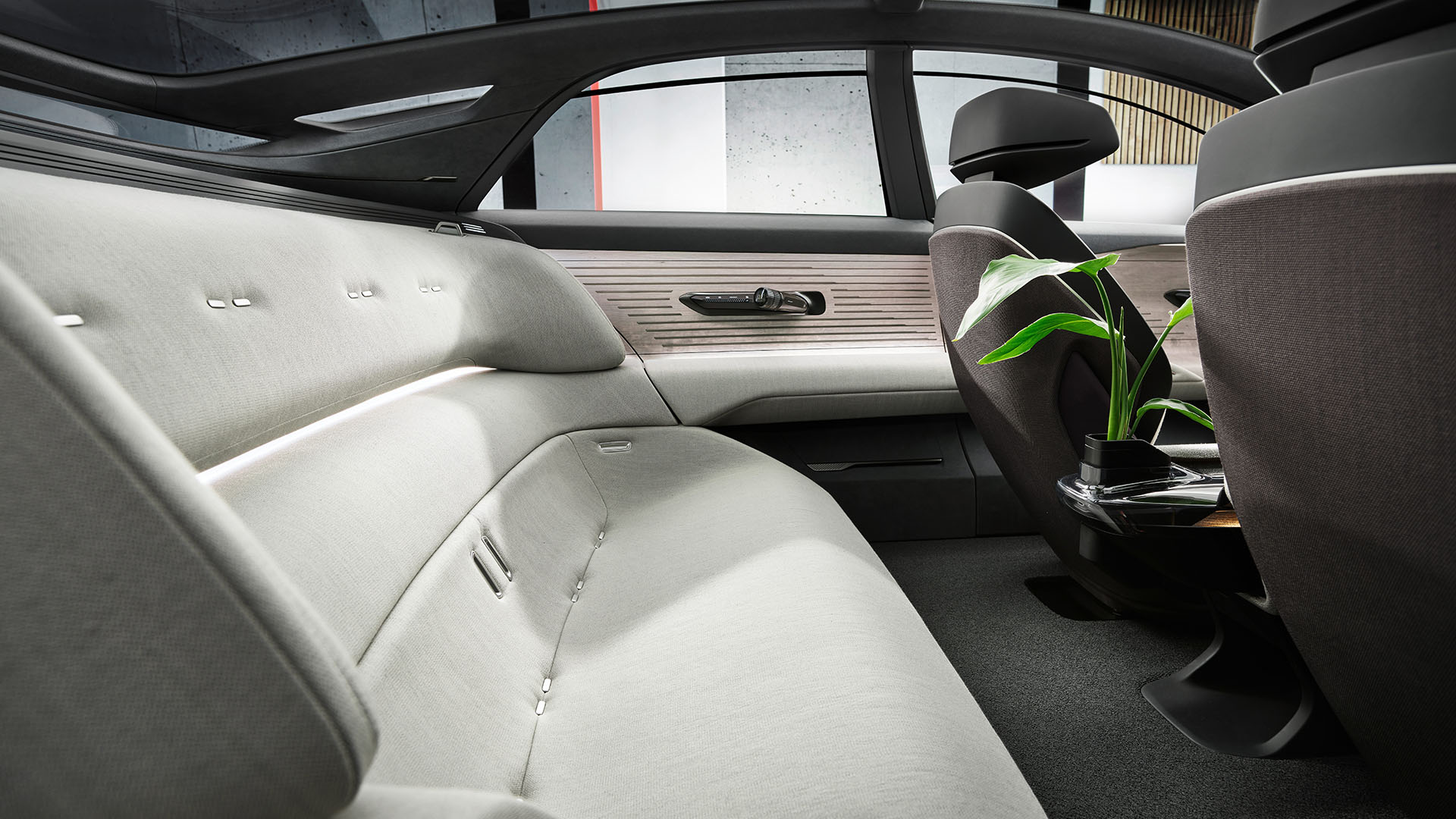
A feeling of openness and breadth is created, helped by the absence of the steering wheel and pedals, but also because of the large window surfaces on the Audi grandsphere, even the entire roof is transparent on this concept, even the side windows use a futuristic concept where the upper half gets a very distinctive angle while the widest part of the side window is just above eye level.
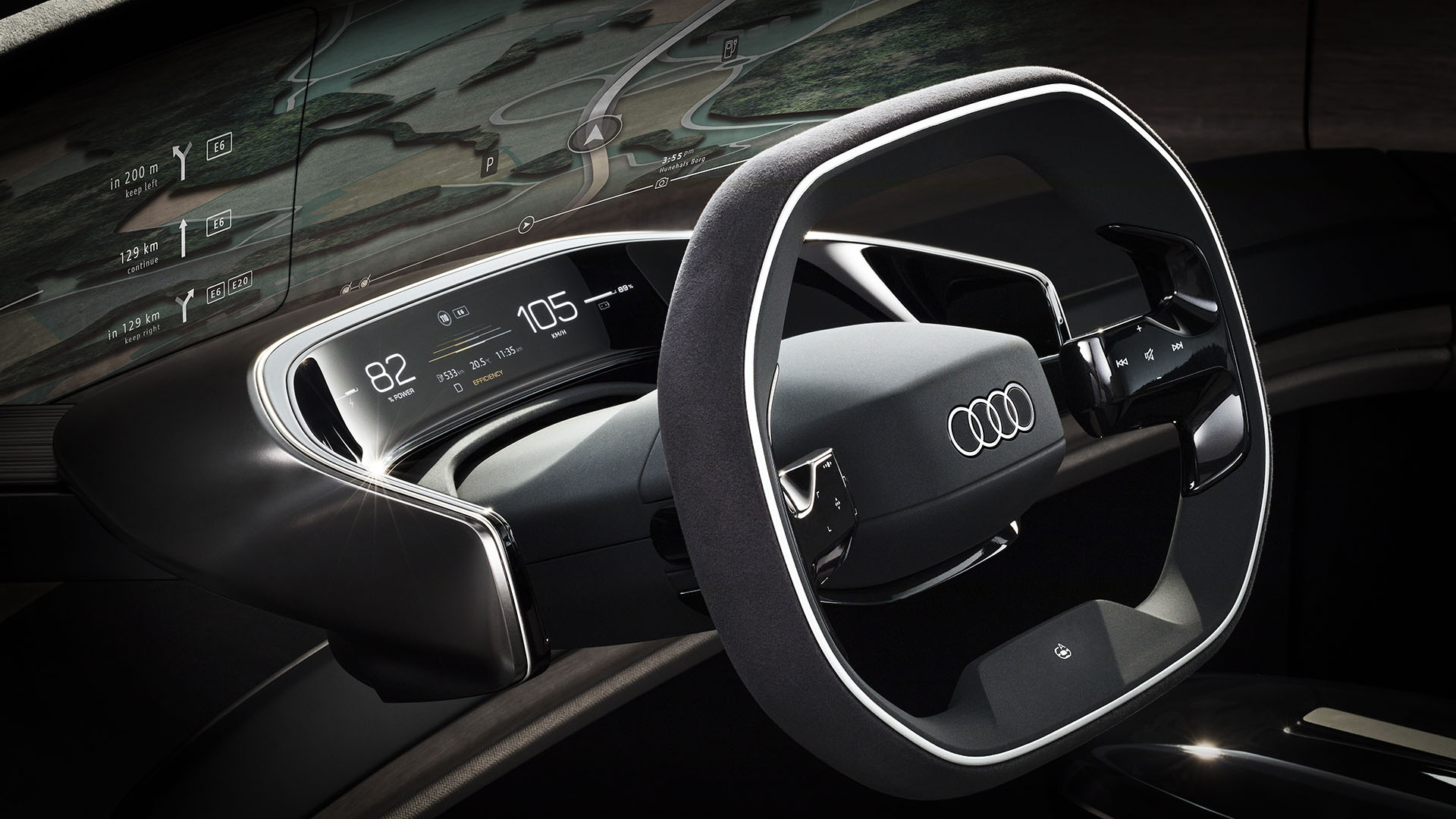
Because the Audi grandsphere is all about comfort and luxury, the front seats are considered first-class seating now, especially as the car will drive itself, the passengers have an amazing view over the completely clean dashboard through the fast windshield, despite the size of the grandsphere and the roominess inside, this is actually a 2+2 seater, the rear offers a two-person bench with an armrest that goes around the side, integrated as a seating option in the back when the two front seats are in their most backward position.
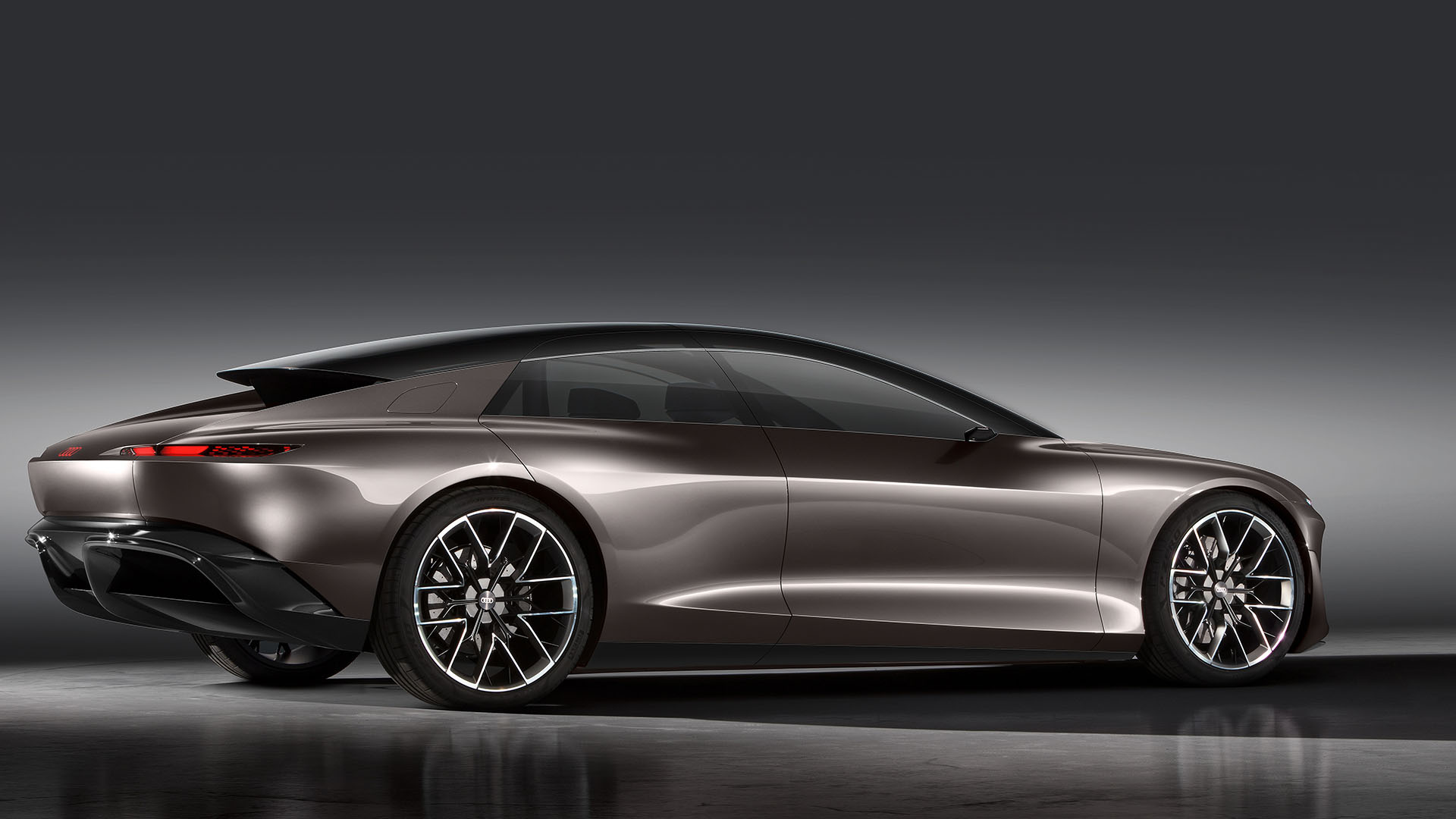
With the seats in their upright position, the Audi grandsphere can be perfectly ergonomically controlled when outside level 4 zones as the car has to be driven using the pedals and steering wheel, however, when in ‘auto drive’, the back can be tilted 40 degrees and passengers can relax or use the infotainment system. ultimately, with the back folded down to 60 degrees, the result is a perfect resting position. The headrest can be moved 15 degrees forward while vents emit filtered and temperature-controlled (even scented if desired) air, and then there are speakers that are inaudible to other passengers and allow for a private aural zone while being transported in the Audi grandsphere concept’s first-class cabin.
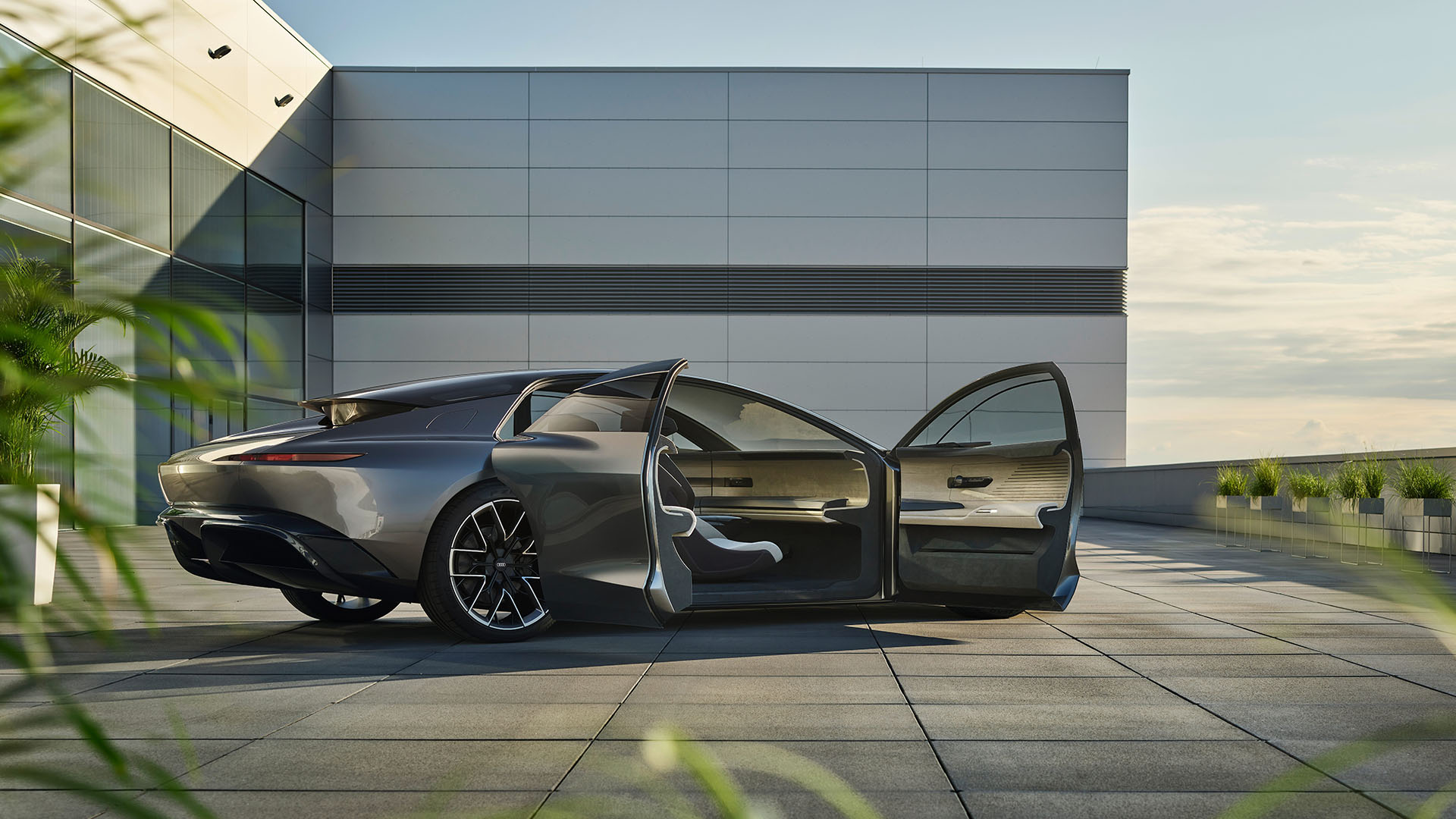
There is leather inside the Audi grandsphere, instead, you’ll find wool or synthetic textile material combined with wood and metal to offer the most pleasant touch, either sourced from sustainable cultivation or made from recycled material, and while every car needs displays, in case of this grandsphere these are actually projected onto the wooden surface, and while the car is in the automated driving mode, the entire dashboard fascia becomes a CinemaScope screen for entertainment or video conferencing.
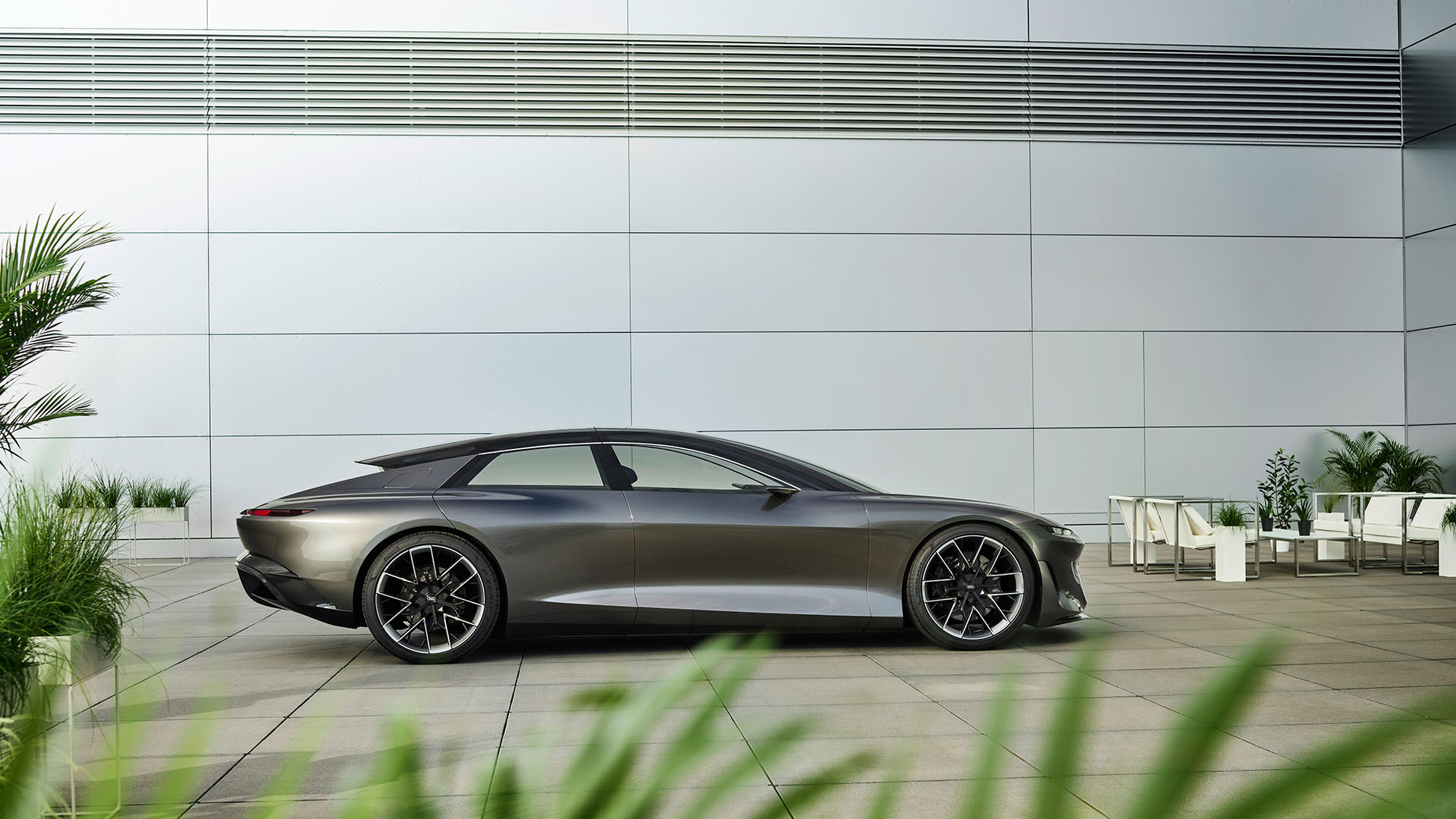
The Audi grandsphere comes with the innovative MMI touchless response, using haptic controls and even eye movement detection to interact with the driver, this concept comes with eye-tracking, gesture or voice control, and it comes with a level of AI as the system will ‘learn’ the preferences of the driver and frequently used menus … in the end, the system will be able to offer personalized proposals to the occupant, and if you really want to ‘tune out’, there are VR glasses in the armrests.
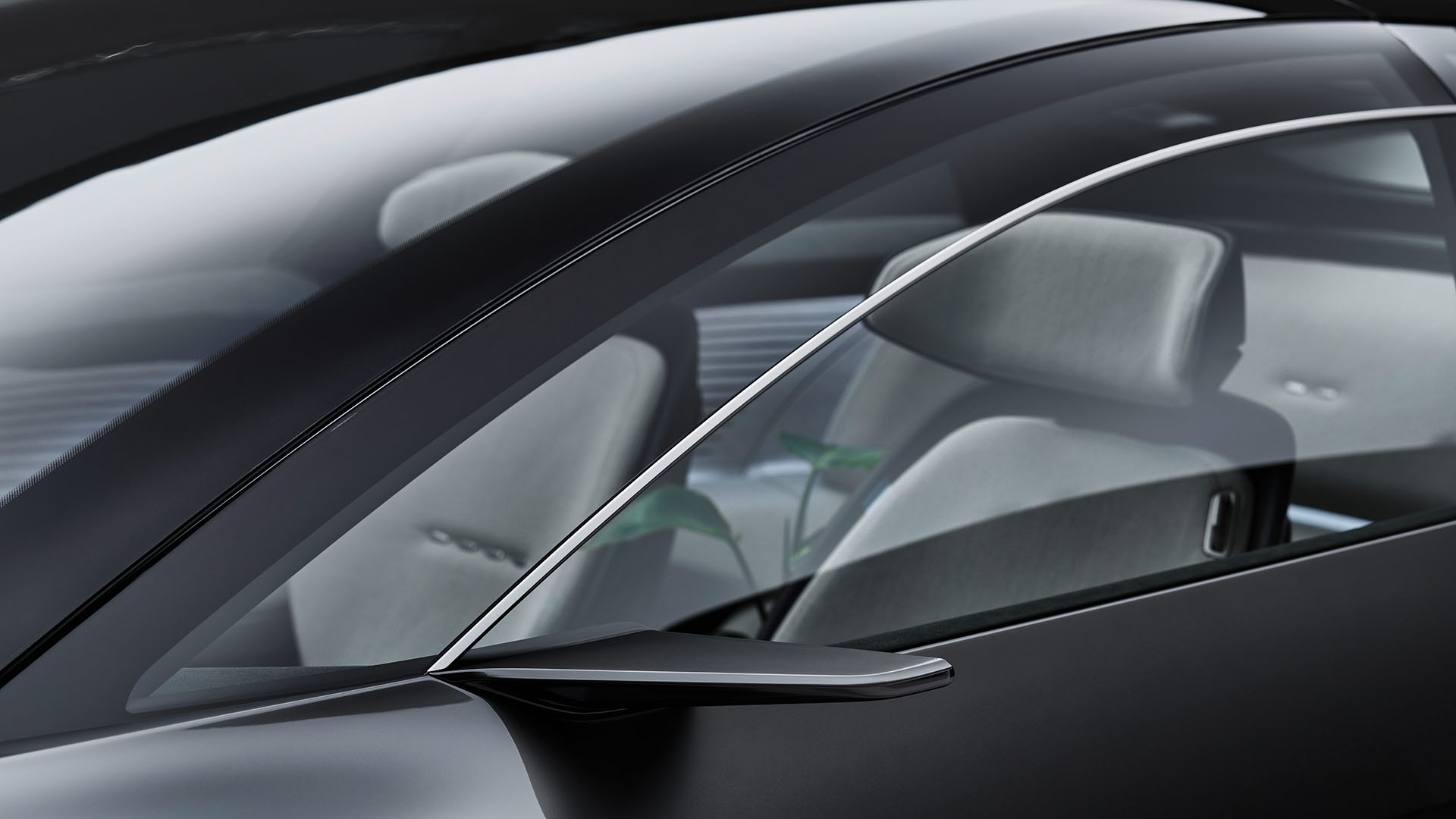
Being a concept for the future, the Audi grandsphere is an all-electric car and should come with a 120 kWh battery module using the entire vehicle base between the axles, the massive 23-inch wheels are mounted on axles that have their own electric motor, one for the front axle, one for the rear axle, so this Audi has the famous quattro drive system … power output is an impressive 530 kW with 960 Nm of torque.
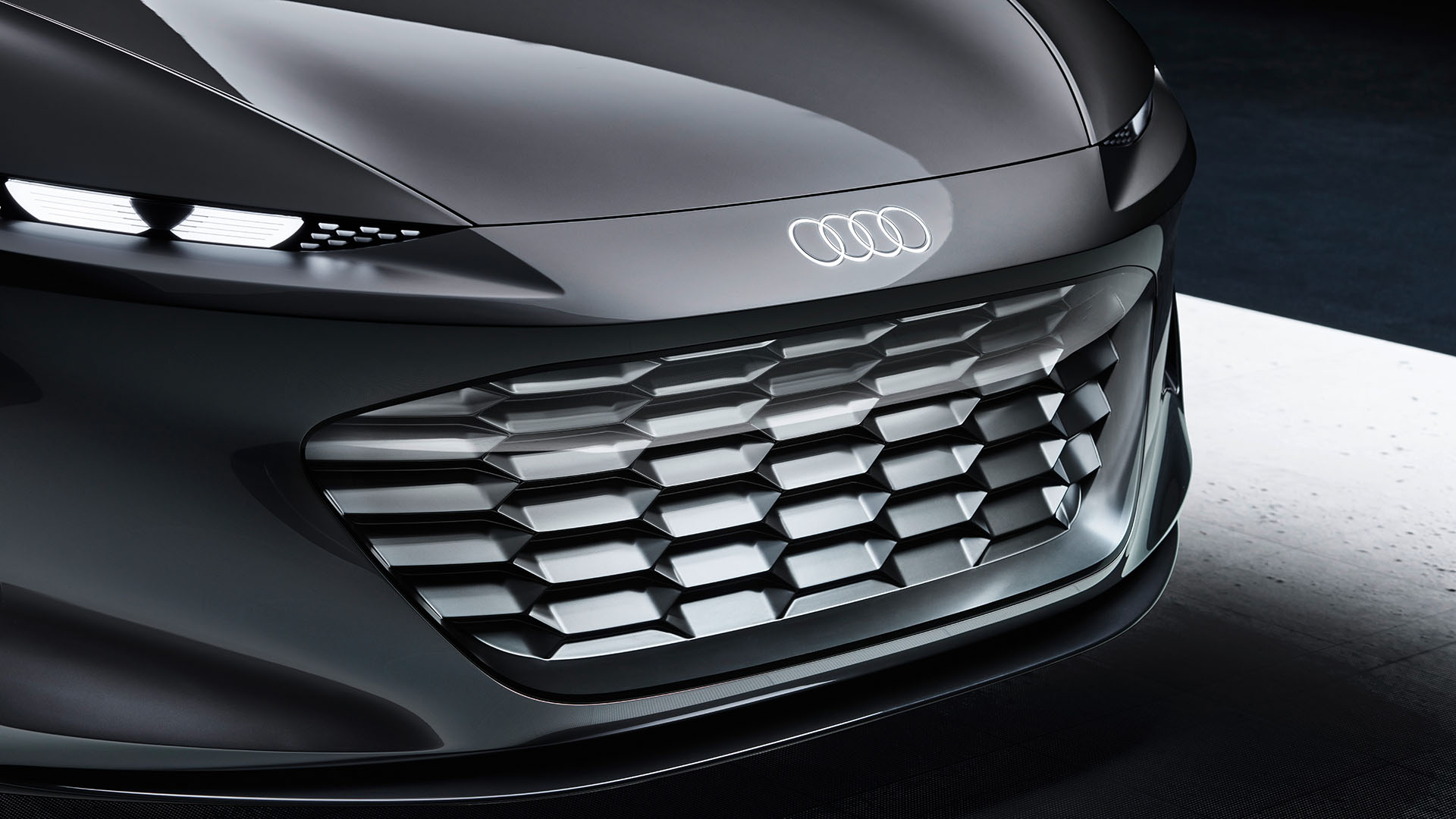
Similar to the Audi e-tron GT, the grandsphere comes with an 800-volt charging capacity, this means a depleted battery can be charged up to 270 kW almost instantly when connected to a fast-charging station, it takes only 10 minutes to add 300 km (186 miles) to the range, going from a 5% load to an 80% load on the 120 kWh battery takes less than 25 minutes, the grandsphere comes with a range up to 750 km (466 miles), and while maximum speed is limited to offer more range, acceleration from 0 to 100 km/h (62 mph) takes little over 4 seconds.
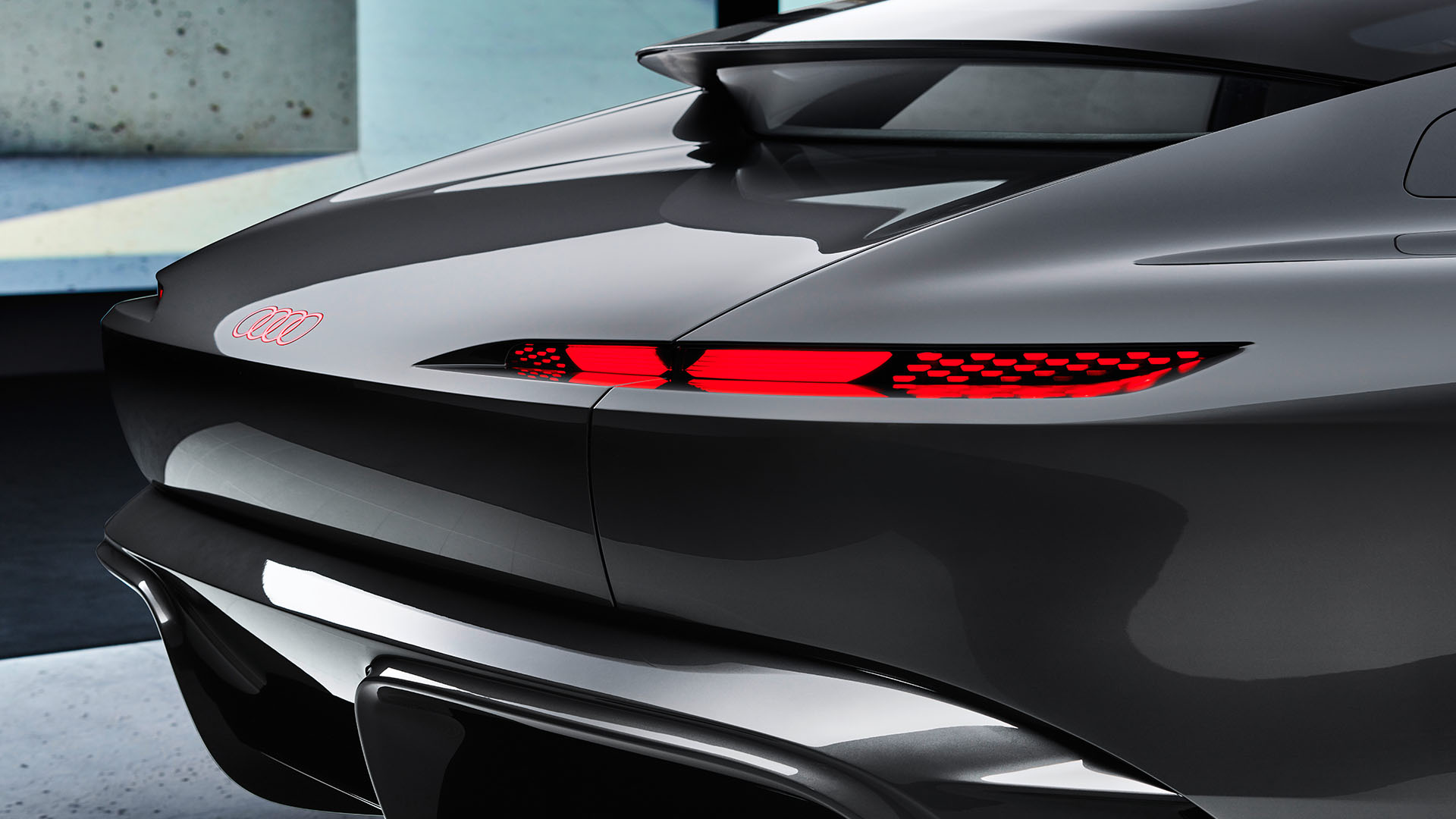
I have to admit, if this is the future we are heading into with electric cars, I’m not too worried, this car looks good, a sleek 4-door GT sedan, I wouldn’t call it a supercar or hypercar like the Koenigsegg Gemera, but this Audi grandsphere is intended for a different kind of customer … the future is electric, and the Audi grandsphere is a glimpse of what’s to come in the next decade or so.