
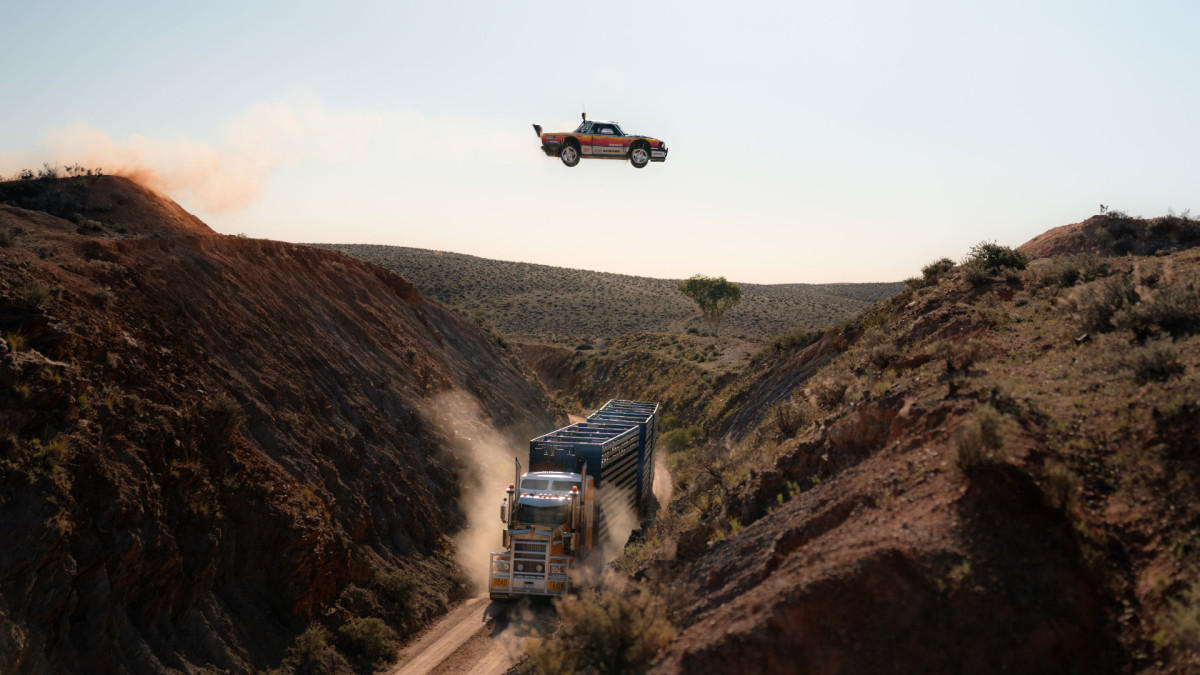
Watch Travis Pastrana Shred His Way Across Australia in the 9,500-RPM Subaru Brataroo
 [unable to retrieve full-text content]
World Premiere: Ferrari 849 Testarossa PHEV – Stradale is Old News
[unable to retrieve full-text content]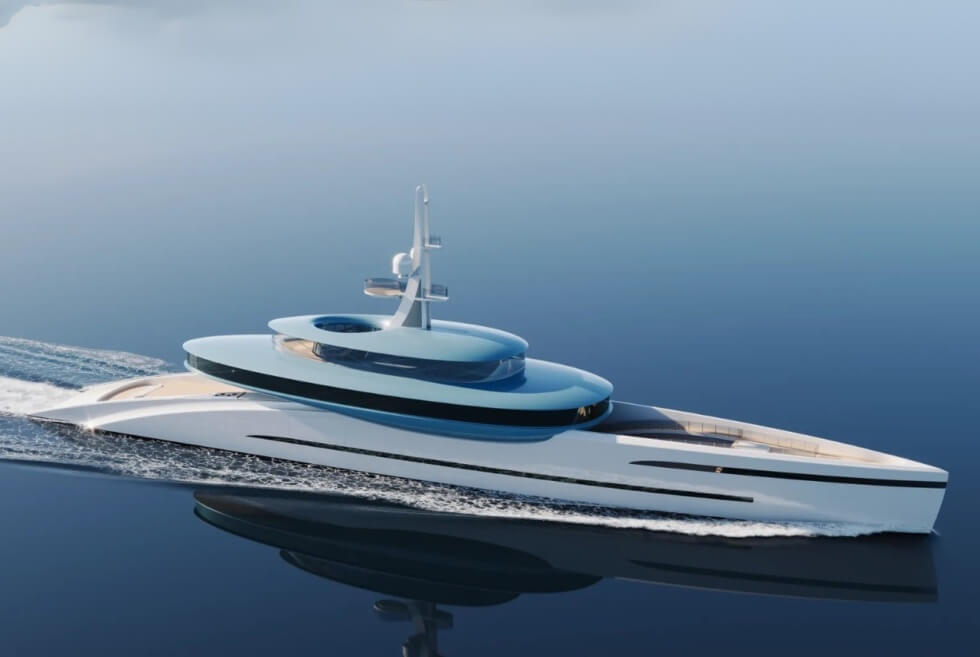
Feadship Doubles Down On Nuclear Propulsion Systems
The maritime industry, as well as shipbuilders that specialize in luxury yachts, are actively pursuing green alternatives to fossil fuels. Given how massive these can get, the carbon footprint produced is not good for the environment. With this in mind, Feadship joins the Nuclear Energy Maritime Organization (NEMO). This is a bid to develop and adapt zero-emission systems in the future.
On paper, nuclear power is considered by experts as one of the cleanest sources of energy. As long as proper protocols and precautions are in place, the technology is relatively safe. In fact, several military vessels, such as submarines and aircraft carriers, already use it. Likewise, reports point out that some icebreakers are already equipped with reactors.
“This step builds on Feadship’s energy transition roadmap launched in 2020, which defines the shipyard’s pioneering path toward carbon-neutral yachting. Milestones already achieved include next-generation multi-fuel systems and the integration of fuel cell technology, demonstrating both technical readiness and long-term ambition,” reads the press release.
However, a barrier to mass adoption appears to be the lack of regulatory measures. Several aspects in need of attention include operational guidelines, radiation exposure limits, access to ecological zones, and other potential safety issues. Collectively, the members of NEMO can completely change how people navigate our world’s oceans.
“Joining NEMO aligns with our vision to explore every credible pathway toward a sustainable future. Nuclear power may not be tomorrow’s solution for superyachts, but it could be part of the long-term horizon – and it is our responsibility to help shape that possibility in a safe and sustainable way,” says Feadship Head of Innovation and Strategy Giedo Loeff.
Images courtesy of Feadship
Audi Concept C: The Electric TT is Coming After All
[unable to retrieve full-text content]For Sale: 1990 Porsche 964 Carrera 4 Leichtbau – Chassis 001
[unable to retrieve full-text content]2026 Audi Etron GT Quattro Drive: A Confident Starting Point
[unable to retrieve full-text content]Porsche Cayenne EV Prototype Drive: The New 1000 Horsepower Electric SUV
[unable to retrieve full-text content]Special Report: Record Auctions Around the World
[unable to retrieve full-text content]2025 Alfa Romeo Stelvio Tributo Italiano – Smooth Is Fast
[unable to retrieve full-text content]Monterey Car Week 2025: A Festival for the Automotive Senses
[unable to retrieve full-text content]Porsche Macan Turbo EV & Taycan 4S Cross Turismo Review: EV Life is Better Than Ever
Living with an EV isn’t what it used to be. And after a week in Porsche’s latest electric offerings—the new Macan Turbo EV and second-generation Taycan 4S Cross Turismo—I’m more optimistic than ever that the tipping point has arrived. No hypermiling, no app-juggling charger hunts, just proper driving in proper cars. Both delivered on their promise of over 300 miles of range, even when driven as if they were combustion-engined. In fact, I barely thought about range at all.
Collected from Porsche GB with full batteries, both the Macan and Taycan showed range estimates of 300 miles. In reality, that number was remarkably accurate. My driving style didn’t change: air-con on full blast, cooled seats in the Macan, and every horsepower used as intended. I didn’t precondition the batteries or nurse them to chargers. I simply drove.
The Macan, finished in stunning Copper Ruby Metallic with massive wheels that looked spectacular but gave the ride a slightly brittle edge, felt every bit the Porsche SUV it claims to be. Control weights were perfect, the seating position spot-on. Despite its 2.6-tonne mass, the Macan Turbo EV moved with conviction, thanks to its 630bhp twin-motor setup and sophisticated chassis. On the road to Silverstone, I stopped at a Porsche dealership to charge, but spent more time taking photos than waiting for battery percentage to climb. Later, a 400kW supermarket charger delivered 32kWh in eight minutes, jumping from 15% to 51%, with the cabin cooling me in 35-degree heat, massage seats and all.
The Taycan 4S Cross Turismo offered a different flavour: a more dynamic seating position, less in-cabin tech frippery, and a marginally softer ride. It lacked cooled seats, which I sorely missed during London’s heatwave, but its drivetrain remained characteristically sharp. On my 50-mile daily commute, a five-minute top-up at a fast charger more than sufficed. Even without home charging in London, I never once experienced range anxiety or inconvenience.

The Taycan featured Porsche Active Ride, a new suspension system that quietly transforms the experience behind the wheel. Using high-speed hydraulic actuators at each corner, the system actively manages body movement, keeping the Taycan astonishingly level and composed—even during hard cornering or over poor surfaces. It enhances comfort, sharpens dynamics and helps disguise the cars’ weight. It’s also available with the latest generation Panamera.
That’s the real revelation. These EVs finally offer the ease and confidence of ICE cars, thanks to battery and infrastructure advancements. The second-generation Taycan uses a new 105kWh battery with improved cell chemistry, and the Macan’s 800V PPE architecture allows it to charge from 10 to 80% in just 21 minutes under ideal conditions.
But not everything is perfect. At over £100,000 as-tested, interior materials in both cars didn’t quite meet expectations. Some touchpoints felt plasticky and out of step with the badge on the bonnet. As with many EVs, both the Taycan and Macan face tough questions around depreciation and long-term desirability.
Still, there’s no mistaking the Porsche-ness. From the way they steer to the way they hunker down into corners, these are true products of Weissach. That the Macan, now in its second generation and 1 million units deep, has evolved into something so advanced yet still recognisable is impressive. With these cars, Porsche proves that the future can be electric with next to no compromise.
Out from the Velvet Shadows: Maybach has Ambitious Plans
When people think of luxury car marques, it’s names like Rolls-Royce and Bentley that spring to mind. Perhaps Ferrari, Aston Martin or Lamborghini too. In Europe at least, Maybach rarely gets a seat at the same table. Yet both its heritage and its product place it firmly in the top tier of automotive prestige.
The problem for Maybach lies partly in its half-century production hiatus, and partly in the stop-start strategy of around a decade ago that did little to build confidence in the brand. But as Rolls-Royce embraces an all-electric future and Bentley stumbles tactically, an opportunity may now be opening up. Maybach, the most opulent arm of Mercedes-Benz, is preparing to seize that moment with a renewed product offensive.
The original Maybach marque was absent from 1940 until 2002, leaving much ground to make up. Its relaunch in the early 2000s was meticulously planned. At first behind closed doors, then publicly, with the Maybach 57 and 62 – their names referencing their overall length – designed to offer unbridled luxury atop S-Class mechanicals. The aerodynamic design and lavish detailing couldn’t quite carry the burden of expectation, and even a dramatic global debut aboard the Queen Elizabeth II, with a helicopter transfer to New York’s Financial District, failed to deliver the impact Daimler had hoped for.
Annual sales targets of 1,500 to 2,000 units (ideally 3,000) proved overly optimistic. At the same time, Bentley and Rolls-Royce were being reborn under the stewardship of Volkswagen and BMW respectively. Pre-war opulence was back in vogue – and Maybach was part of the conversation. Yet despite its mighty V12 engine and even the more assertive Zeppelin and sport models, the Maybach 57 and 62 failed to ignite. The issue wasn’t the engineering or the pricing, but the brand itself. For those already loyal to the Mercedes star, the S-Class represented the pinnacle. Anything beyond that was seen to belong in another world: one defined by Rolls-Royce and Bentley.

Eventually, the marque was quietly shelved, only to be revived again around a decade ago – this time as a sub-brand within Mercedes-Benz. The strategy shifted: in China in particular, Maybach models would be positioned distinctly above the standard S-Class, at noticeably lower prices than in Europe or North America. The plan worked. Today, the Maybach S-Class is a major success in China, even when fitted with humble six-cylinder engines that buyers there accept without concern.
But a foothold in China and modest gains in the United States weren’t enough for Daimler’s top brass, including CEO Ola Källenius and sales chief Britta Seeger. For years, they explored different directions for the brand. Now the strategy is taking shape. A Maybach version of the underwhelming Mercedes SL has emerged, re-engineered for comfort and with a softer, more indulgent character than the AMG-developed original. The range now also includes the Maybach GLS luxury SUV, the EQS SUV with electric drive, and a plug-in hybrid S-Class. Entry prices span from €170,500 for the S-Class to €243,000 for the SL 680 – still expensive, but no longer stratospheric like the original Maybach 57 and 62.
Compared to rivals, there’s still room to move upwards. A Bentley Bentayga Speed or Flying Spur Speed in Mulliner specification starts at around €300,000. A Rolls-Royce Cullinan begins at €330,000, and the electric Spectre adds at least €50,000 to that figure.
Among global luxury buyers, there’s little appetite for forced electrification. Many already own EVs elsewhere in their fleets. When it comes to flagship limousines, SUVs or grand tourers, what’s still desired is a V12. Bentley’s recent shift to V8 hybrids hasn’t been universally welcomed by dealers or clients. And Rolls-Royce’s all-electric pivot is being watched with caution. Maybach, by contrast, is planning to adapt gradually. The future S-Class will continue with combustion variants, and attention is now turning to an all-new model: the Mercedes VLS.
Premiering in early 2026, the VLS will capitalise on the popularity of ultra-luxury vans in China and parts of Europe. While aftermarket firms have already been turning the current Mercedes V-Class into pseudo-Maybachs to rival the Toyota Alphard, Zeekr 009, Voyah Dreamer and Denza D9, Mercedes plans to claim that market for itself from 2027 onwards.

The direction is clear in the Mercedes Vision V concept – a 5.48-metre study revealed at Auto China, previewing a Maybach version of the upcoming VLS. “The Vision V marks the beginning of a new era for Mercedes-Benz Vans,” says Thomas Klein, Head of Mercedes-Benz Vans. “It sets benchmarks in design, comfort and immersive user experience, meeting the highest expectations of our customers.”
The ultra-luxury lounge-on-wheels features a 3.53-metre wheelbase, two reclining armchairs, ambient lighting and a vast 65-inch screen – all but eliminating the need for a separate office. But the Maybach van is just the start. A Maybach G-Class is also all but inevitable, especially given the muted response to the electric G and the desire to keep demand for the SUV alive through more exclusive variants.