
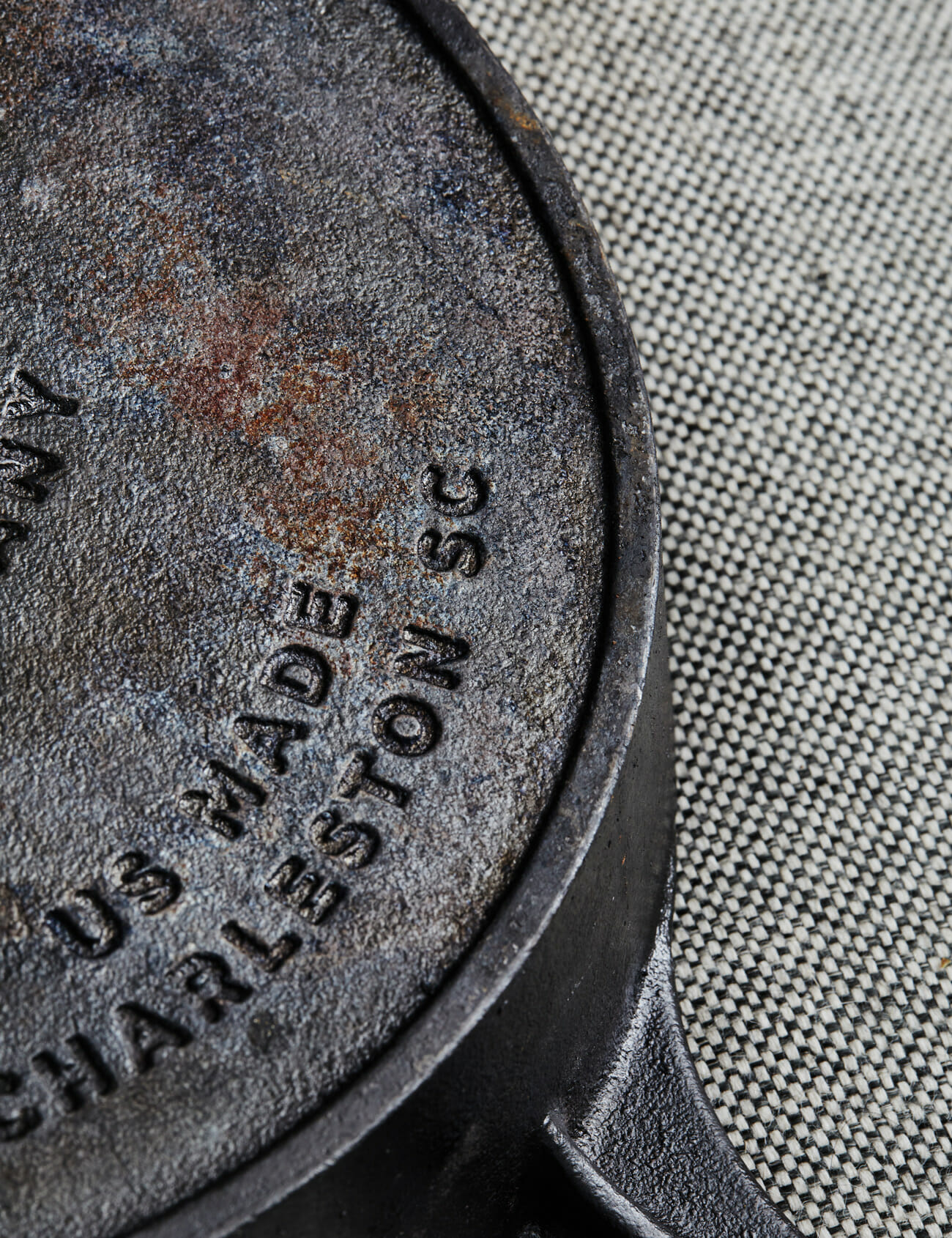
Welcome to Further Details, a series dedicated to ubiquitous but overlooked elements hidden on your favorite products. This week: the ring on the bottom of a cast-iron skillet.
Not much has changed about the humble cast-iron skillet from its late 1800s, early 1900s golden era to now. When the cookware returned to popularity about a decade ago, it did so with similarly weighty builds, stellar heat insulation, pour spouts, a handgrip opposite the handle and a ring around the base of the pan. Unlike other, flashier cookware, cast iron remained a utility-first venture — except that ring.
Before stainless steel, non-stick, aluminum and carbon steel pots and pans rose to power, cast iron was king of the kitchen. The raw material needed was mined during the Colonial era and through the 19th century, when prospectors discovered enormous deposits along the edges of Lake Superior, in Michigan, Wisconsin and Minnesota. Legends and collectibles today, wares from makers like Griswold, Wagner, Vollrath and Wapak dominated the stovetop for nearly a century before steel and aluminum’s availability skyrocketed in post-World War II America. But what we cooked on changed as well.
More Cast Iron Content
• The Best Cast-Iron Skillets You Can Buy
• 5 Accessories to Maintain a Cast-Iron Skillet
• A Quicker, Easier Way to Season Cast Iron
Before underground grids provided cities and towns with all the natural gas they could want, wood stoves reigned. These stoves operated by lighting wood logs in different compartments, each with a corresponding “eye,” or what we’d call a burner today. The ring on the base of the cast-iron skillets — which is called a “heat ring” — allowed the skillet to slot right into the eye so it would be stable over the flame and lifted slightly above it. Because wood stoves have been relegated to novel collector’s items now, the heat rings you see on modern skillets is a very subtle nod to cast iron’s origins. Rings can be found on modern brands like Smithey Ironware, Field Company, Marquette Castings and more.
“It doesn’t have a practical purpose anymore,” Isaac Morton, Smithey Ironware’s founder, said to Gear Patrol in a 2016 feature. “But if you look at pieces cast before 1900, you typically had this heat ring, which helped the pan fit into the indentations on the top of the stove. It’s just an homage to some of the cool old cast iron designs.”
Drilling deeper into cookware history, the eyes of some stoves had various rings within them, too. Each was given a number which corresponded with cast iron’s old school sizes — No. 8 is a 10.5-inch skillet, No. 12 is a 13.5-inch skillet and so on. You could take the eye rings in and out to accommodate different skillet sizes. South American celebrity chef Francis Mallman briefly demonstrates this making a pot of coffee on a wood stove on Neflix’s Chef’s Table.
The heat ring won’t change how it cooks on a modern stove, but it’s a good sign the pan you’re buying was designed by someone who knows the history of the product, which, in the case of Americana cookware, is as good an indicator as any that you’re spending in the right place.