

One’s fast, one’s easy and one feels wrong. Here are three ways to shore up a cast-iron skillet.
Video: Cast Iron Buying Advice | Everything You Should Know
[embedded content]Oven Seasoning
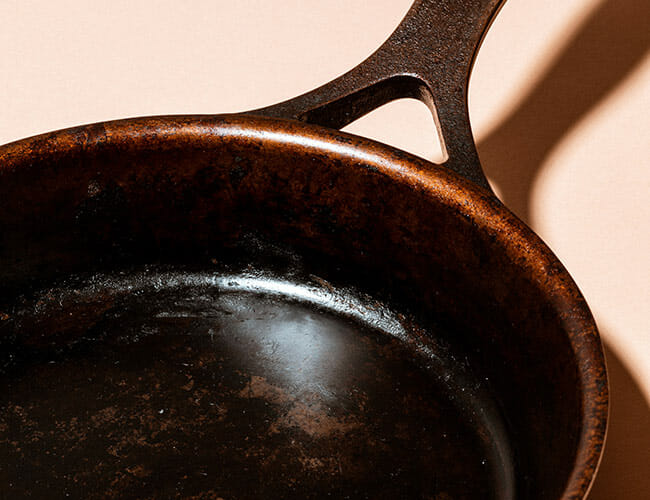
The standard. For the last two decades, oven seasoning has been the go-to seasoning recommendation for new and old cast-iron cookware owners. The method is simple: coast iron in a thin layer of oil, place in an oven running real hot, remove after an hour to an hour-and-a-half, allow to cool and repeat steps as many times as needed. In Southern chef Sean Brock’s latest cookbook, South, he recommends one hour in a 500-degree oven should do the trick. “Repeating this process every so often will keep your cast-iron pieces in working order for generations,” he writes.
Pros: It’s incredibly easy. Slide a face-down skillet into the oven and let it rip for a while. The seasoning process can only be hampered by an oven that isn’t hot enough.
Cons: Compared to other methods on the list, it takes ages. A newer skillet (or an unseasoned skillet) can take three or four hour-long runs through the oven before you acquire an even, dark layer of seasoning.
Stovetop Seasoning
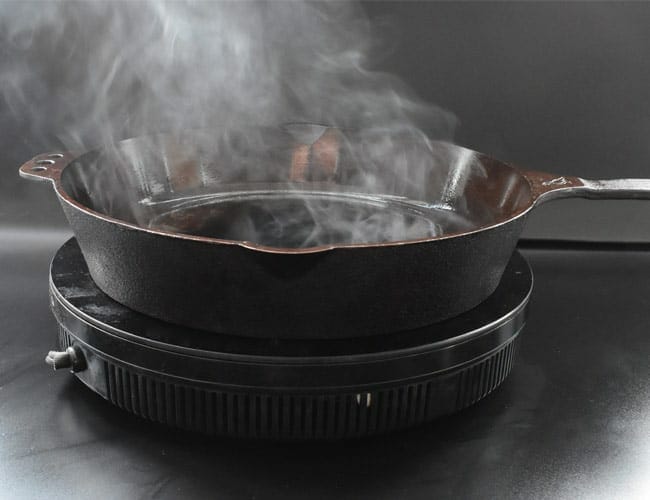
Stovetop seasoning is favored by chefs, serious cooking personalities like Jeff Rogers and J. Kenji Lopéz-Alt and cast-iron cookware experts like Isaac Morton, founder and president of Smithey Ironware. The method — read in more detail here — is über-simple. You apply a thin olayer of oil across a skillet, put it on a burner on full blast and wait till you’re getting a lot of smoke. “We can’t do it in production [of skillets], but we all do it at home. You take a new pan and you’re able to apply a layer of seasoning on it that accelerates something like 10 years of seasoning process,” Morton says.
Pros: It’s extremely fast. From start to finish, the process lasts about 10 minutes. Plus, you’re not running the oven for four or five hours.
Cons: If you don’t unplug a fire alarm, your fire alarm will sound. There will be smoke — lots of it — and you’ll think something is going wrong. A less problematic issue is the lack of seasoning applied to the bottom of the pan, which isn’t an issue unless the pan is completely bare of seasoning.
No Seasoning

Dennis Powell of Butter Pat Industries doesn’t like to talk about seasoning. “Seasoning” in the sense of following the rules and rituals of the cult of cast iron are bullshit,” Powell says. When Powell started his cast-iron cookware company he searched old ads and books at the Library of Congress for mentions of seasoning. He didn’t find anything other than what he paraphrases to “grease it up with lard and cook.” This method, if you can call it that, trust you’re cooking with fats frequently enough and at high enough temperatures that you’ll “season” the skillet just by cooking on it.
Pros: Literally no additional work for you. This is as hands-off as cast-iron cookware gets.
Cons: Even after a good clean, a skillet seasoned through cooking is liable to have a slightly uneven layer of seasoning and, for a while at least, won’t look very good. Expect splotchy dark areas blending with lighter, less used parts of the pan.