
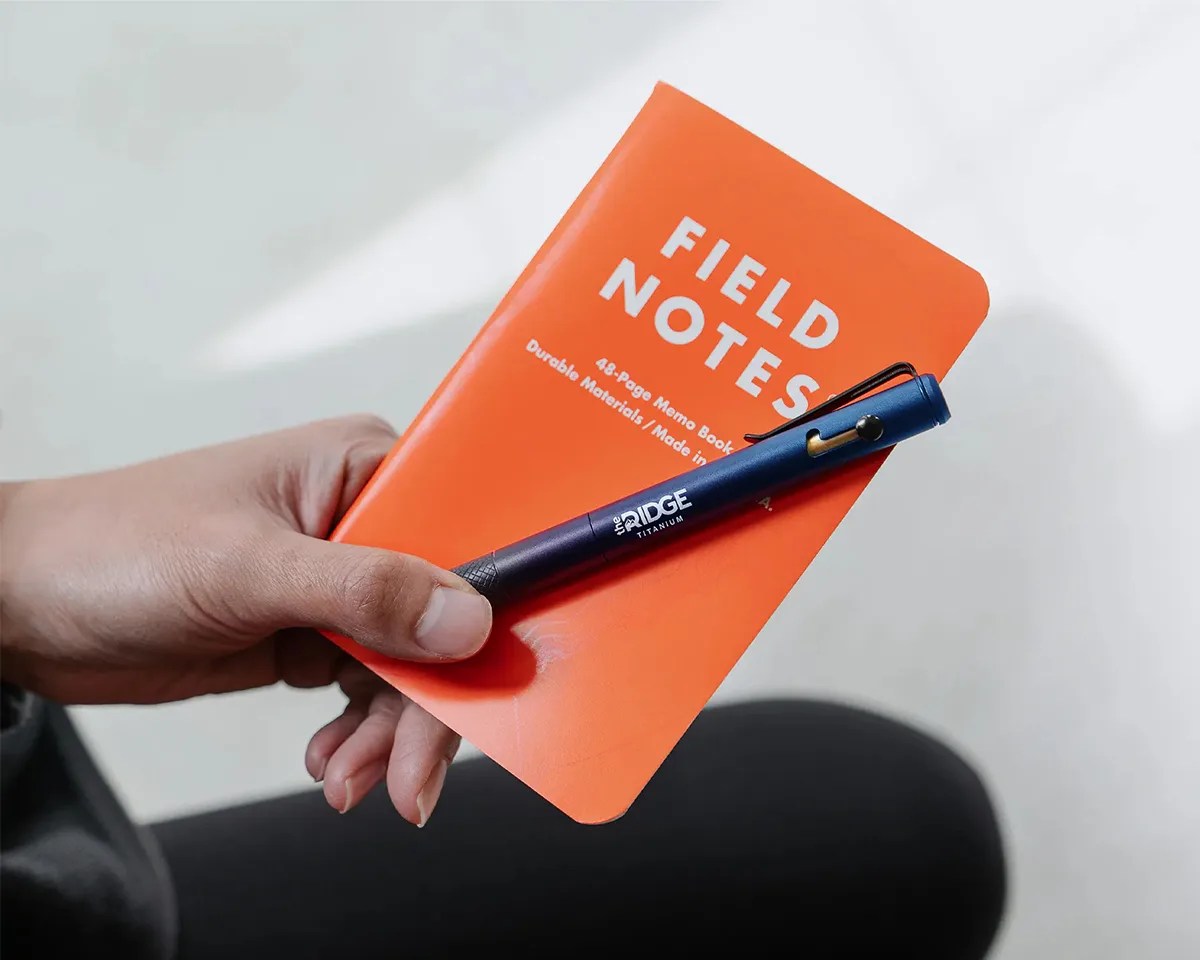
Because the designers care about the deployment mechanism, they also care about the rest of the tool
Borrowing their mechanism from rifles, they utilize a side-mounted, spring-loaded lever for tip deployment. However, that lever has to be purposefully shifted into place for this to work. The tension of the spring prevents the lever from sliding unintentionally.
That means they’re much less likely to accidentally deploy and don’t require a second hand to prepare them for use (as with a cap). They also have a fidget-friendly bonus: They’re fun to play with.
The joy of careful design
Bolt-action pen deployments are somewhat unusual mechanisms. Designers don’t typically employ them by accident. Bolt-action pens are, as a result, designed mainly by people who love what they do.
This often has a trickle-down effect on the rest of the pen’s design. Because the designers care about the deployment mechanism, they also care about the rest of the tool — the materials, the cartridge compatibility, the overall style, and so forth.
As such, the pens are often produced to a higher quality than plastic clickers you’d get in a bulk box at a big-name retailer. That’s not to say disposable ones aren’t good — some of the best pens ever made are mass-produced. It just means bolt-action pens are usually higher quality overall and are made to last for years.