
Developing a new movement is time-consuming and expensive. To maintain the relatively approachable price that customers expect from Tudor, it’s far more economical to outsource a movement.
The 1926 Luna is powered by a Sellita-produced caliber T607-9 automatic movement, based on the stock caliber SW280-1. It is a chronometer grade variation, produced to Tudor’s specifications, with an accuracy of -4/+6 seconds per day and a 41-hour power reserve.
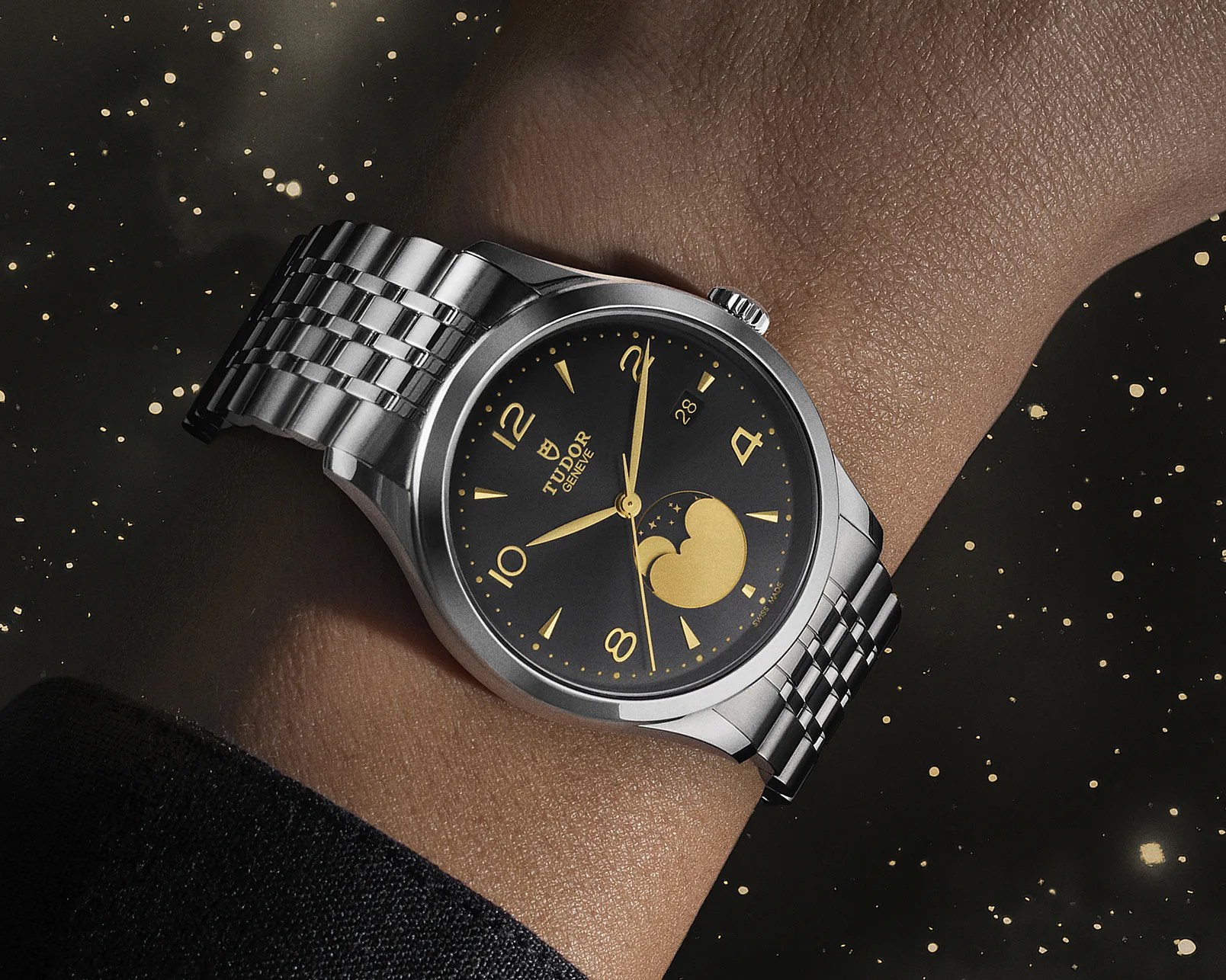
Notably, even with the addition of the moon phase, the date complication standard to the 1926 collection is still present at three o’clock.
The timing and general appearance of the 1926 Luna are drawing comparisons to the first TAG Heuer Carrera moon phase, which debuted at this year’s Geneva Watch Week. While there are many visual similarities, the two watches satisfy very different tastes.
Tudor’s first moon phase is rooted in classical watch design with a modern finish. It is far less daring than the Space Race-inspired Carrera Astronomer, which makes it more versatile. It is also nearly half the price of the TAG Heuer.