All posts in “tech”

KEEP Secure Stash Box Is Perfect Protection For Your Herbs

Philip Wilkins and his co-founders want you to say goodbye to storing your weed inside Ziploc bags, makeup bags, or even under floorboards. They have created something far better: The KEEP Secure Stash Box, which is not just any ordinary portable storage device.

It not only keeps your cannabis stash safe from prying hands but also seals any odour at bay. It uses a hermetic seal to keep your weed fresh and odour-free. This way, it ensures that no one can smell your stash and know its location but you.

Moreover, the KEEP Secure Stash Box discreetly stores recreational drugs because of its sleek appearance. It features an LED display that shows the time and outdoor temperature. This makes people easily mistake it as a bedside alarm clock. It is no ordinary storage device too. It is smart-enabled so you can easily monitor your cannabis stash anytime and anywhere.

You can use its companion app to secure locking, unlocking, and monitoring through WIFI and Bluetooth. A built-in biometric lock that connects to your smartphone enables you to access the device through a passcode, thumbprint, or facial recognition, depending on your phone’s security feature.

Meanwhile, the interior features humidity and temperature monitors, a built-in scale, an organization pod, and a removable rolling tray. The device can store up to 28 grams of flower or a total cannabis weight of 4.4 pounds. The KEEP Secure Stash Box comes in two colour variants namely black and white. It also has a USB charging cable so you can recharge the battery.

Get your KEEP Secure Stash Box here

Images courtesy of KEEP

The 9 Best Headphones of CES 2020

The biggest show in consumer tech is on right now. Catch up on our highlights and follow us on Instagram for up-to-the-second coverage!

To nobody’s surprise, headphones and wireless earbuds were a big trend this year at CES 2020 — a lot of company’s announced new models. We’ve rounded up all our favorite new models that broke cover and will be coming out this year.

Jabra Elite Active 75t

Jabra announced “active” versions of the Elite 75t wireless earbuds that it released this past fall. The new active models are identical to the Elite 75t in pretty much every way — size, shape, case and sound — except they are slightly more sweat- and water-resistant (IP57 versus IP56). They also have a special coating that helps them stay in your ears better, which you’d want for working out. The Jabra Elite Active 75t will be available in February for $199, which is $20 more than Jabra’s flagship Elite 75t wireless earbuds.

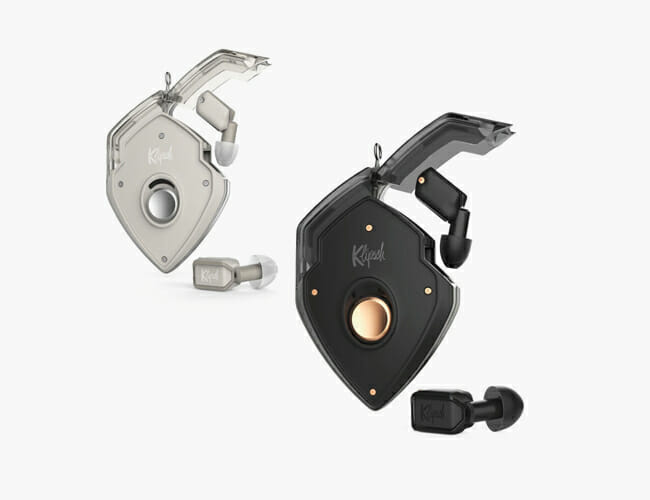
Klipsch T10 True Wireless Earphones

Klipsch claims that the new T10 are the world’s smallest and lightest wireless earbuds and after seeing them at this year’s show, I believe it — they are absolutely tiny. They also have an incredibly thin charging case that should barely take up any space in your pocket. They’re designed to sound great, which you’d expect from Klipsch, and have some pretty neat features such as gesture controls and active noise-cancellation. No pricing has been released just yet, but you can expect these to be on the “high end” when it comes to wireless earbuds. They’ll be released this summer.

1More True Wireless ANC In-Ear Headphones

1More’s new true wireless earbuds will look to give AirPods Pro and Sony’s WF-1000XM3 a run for their money. They have two different levels of active noise cancelation, a pass-through mode, and you’ll be able to purchase them with a wireless charging case for a little bit extra. They’re also the first true wireless headphones with a (pending) THX certification and, as a result, should boast high quality sound. They cost $200 are available for pre-order now (expected to be released sometime in February).

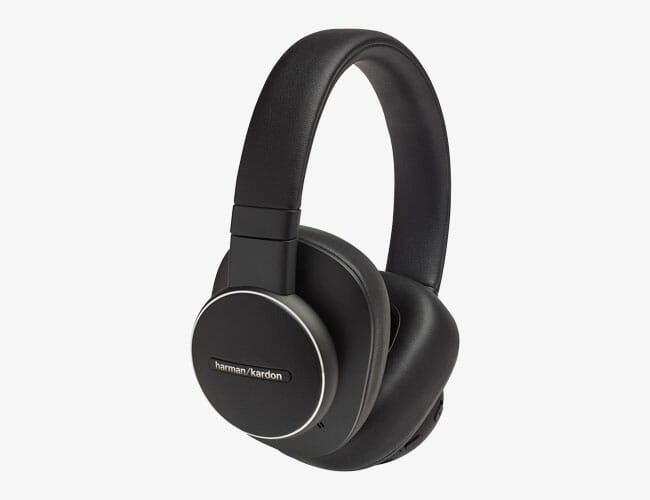
Harman Kardon Fly ANC Headphones

Harman Kardon hasn’t released new headphones in several years, but that all changed at this year’s CES. The company announced a number of wireless headphones and earbuds, with the most interesting being the FLY ANC, Harman Kardon’s first wireless noise-canceling headphones. They look super comfy and will cost $250, which is more affordable than most other premium offerings. The Fly ANC headphones are available now.

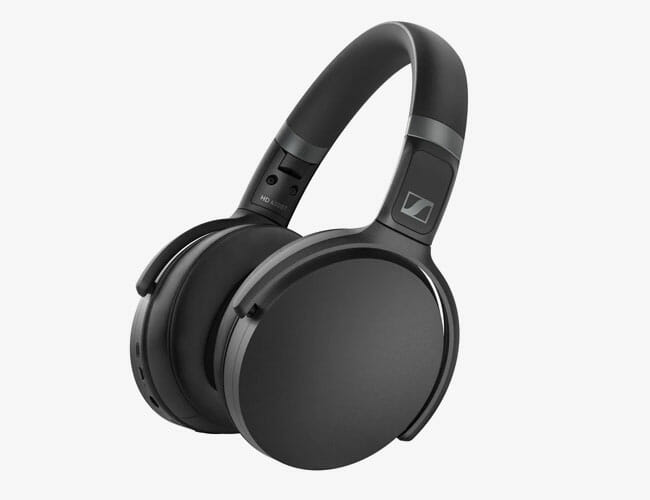
Sennheiser HD 450BT Headphones

The HD 450BT are newest noise-canceling headphones and they’re standout feature is price; they cost $220, which is significantly less expensive than the company’s flagship noise-canceling headphones, the $400 Momentum 3 Wireless. Additionally, the HD 450BT charge via USB-C and will get roughly 30 hours of playtime with ANC turned on. They’ll be available next month (February 2020).

Klipsch Over-Ear Noise-Canceling Headphones

These are Klipsch’s first wireless headphones with active noise-cancellation. Klipsch partnered with Sony and these headphones have the same stellar noise-canceling technology as Sony’s WH-1000XM3, which are still some of the best noise-canceling headphones on the market. These new Klipsch headphones will have a special USB-C charing flight case, so you won’t need to take them out of the case to charge, and will be available later this year. They’re expected to cost $399.

Panasonic RZ-S500W Earbuds

The RZ-S500W is Panasonic’s first pair of wireless earbuds with active noise-cancellation. They support Bluetooth 5.0, USB-C charging and Amazon’s Alexa voice assistant. They also cost $180, which is actually pretty affordable. They’ll be available for purchase in June.

Jabra Elite 45h Headphones

The Elite 45h is a pair of new, wireless on-ear headphones. Jabra has released a number of new headphones at this year’s CES, but the Elite 45h might be the best value — they’re just $99. They’re also the first headphones to work with Jabra’s new MySound feature (within the Jabra Sound+ app), which essentially gives you a hearing test and then will optimize the EQ of the headphones for you. The Elite 45h will be available next month (February 2020).

Audio-Technica QuietPoint ATH-ANC300TW

These are Audio-Technica’s first true wireless earbuds with active noise-cancellation and they have many of the features you’d expect, such as USB-C charging and a pass-through listening mode. You’ll also be able to adjust various noise-canceling and EQ settings via the company’s companion app. Additionally, each earbud has an IPX2 water-resistance rating and a battery life of about 4.5 hours. They’ll cost $249.

Note: Purchasing products through our links may earn us a portion of the sale, which supports our editorial team’s mission. Learn more here.

The Best Fitness Tech Innovations of CES 2020

The biggest show in consumer tech is on right now. Catch up on our highlights and follow us on Instagram for up-to-the-second coverage!

On the surface, technology and fitness might not seem closely tied, but as the quest to live our best physical lives rolls on, the two worlds become inextricably linked. Nowhere is this connection more apparent than at the annual Consumer Electronics Show in Las Vegas, where brands unveil their latest efforts to help us get healthier and fitter. Some of the ideas are just fine, some are goofy and some are ahead of their time, but they all combine to move us forward. The following six tripped our sensors, for one reason or another, at this year’s show.

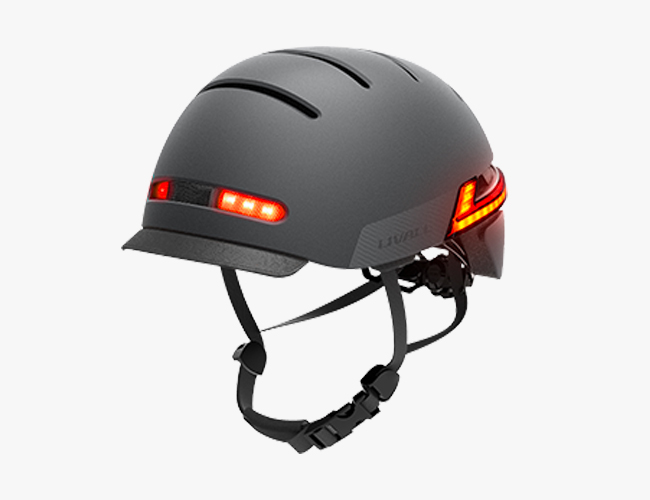
LIVALL Bling Helmet BH51M Neo

It’s not the first “smart helmet” to hit the market, but we dig the fact that LIVALL’s brain bucket offers a ton of handy tech while looking pretty streamlined and cool. Standout features include front and rear lights activated by built-in gravity acceleration sensors, turn signals controlled via a handlebar remote and walkie-talkie functionality to aid communication when riding with a group.

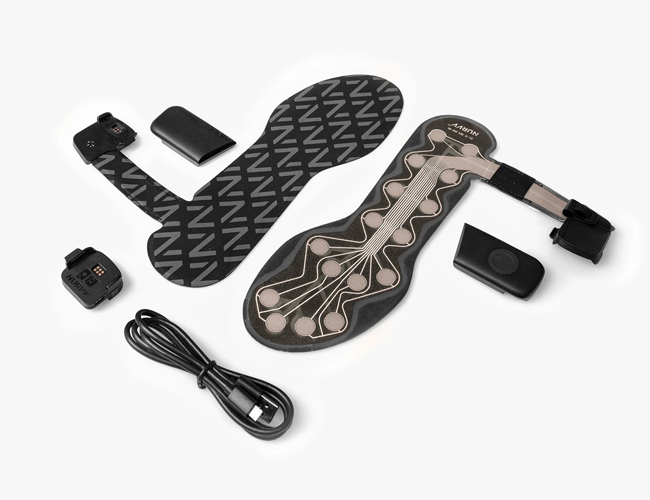
NURVV Run

We’ve gotta give NURVV points for creativity here. The brand has embedded 32 precision sensors into a pair of insoles with the goal of helping runners improve their form to go faster and risk less injury. The sensors capture data 1,000 times per second and pair with an app to provide realtime feedback on factors like cadence, step length, footstrike, pronation and balance. At £250 ($327), they are pricy, but who knows? Maybe a big running shoe company will buy the tech and start integrating.

Philips SmartSleep Deep Sleep Headband

Assuming you can get used to sleeping with a giant headband, this product promises to make sleep more restorative by triggering quiet audio tones that boost the quality of “slow wave sleep” (a.k.a. deep sleep). There’s also an app-paired sleep tracker (of course), and Philips says 80 percent of testers report positive results within two weeks of use. And that’s not even including the bonus feature: we can’t imagine this thing stirring anyone’s ardor, so it doubles as birth control!

Samsung GEMS

File GEMS (“Gait Enhancing & Motivating System”), unveiled in 2019, under “ahead of its time.” The exoskeleton was designed to provide walking assistance and/or resistance, but Samsung rolled it back out this year as a potential home workout device, complete with a holographic personal trainer. We’re not quite ready to strap on this harness, a pair of AR glasses and a Galaxy smartwatch just to do lunges, but it lays the groundwork for more feasible options down the road.

Suunto 7

Suunto consistently makes burly and reliable sports watches, but as our own Oren Hartov noted in a story yesterday, the Suunto 7 is a bit of a departure. This watch seeks to blend sports watch functionality (offline maps, 70+ sport modes, GPS tracking) with a more accessible, lifestyle-y aesthetic (customizable faces, interchangeable straps) that won’t look out of place with a suit or at least a blazer. So far, so good.

Whistle FIT

Finally, a Fitbit for dogs!

Note: Purchasing products through our links may earn us a portion of the sale, which supports our editorial team’s mission. Learn more here.

Steve Mazzucchi is Gear Patrol’s outdoors and fitness editor. Outside the office, you can find him mountain biking, snowboarding, motorcycling or sipping a dram of Laphroaig and daydreaming about such things.

More by Steve Mazzucchi | Follow on Facebook · Instagram · Twitter · Contact via Email

KOHLER Moxie Showerhead + Smart Speaker Is You All-In-One Bathroom GAdget

Take singing in the shower to the next level with KOHLER Moxie Showerhead + Smart Speaker. Equipped with Alexa, the showerhead allows you to queue up your favourite music playlist. This makes taking a bath not only fun and lively but also time-consuming (pun intended). If you prefer hearing the latest news then you can ask Alexa to play the daily news or current events for you straight from your showerhead.

The KOHLER Moxie Showerhead is a circular ring that easily allows the attachment of the speaker in the middle. The waterproof speaker attaches snugly around the ring-shaped showerhead through magnets. The magnets make it easy to remove the speaker and recharge its battery through its bundle, cordless dock. A full charge to the speaker’s built-in Lithium-ION battery gives up to five hours of audio playback with Alexa enabled. Without Alexa, it is up to seven hours of audio playback tuned by Harmon Kardon.

Unlike other speakers that muffle sound against running water, the speaker lets you listen to music or audio freely even when the shower is on full blast. The device emits a white noise-cancelling frequency that ensures that music or audio playback can still be heard over running water.

The beauty of the speaker on the KOHLER Moxie Showerhead is that it is not just specific for the showerhead. Since it is removable, then it can be used outside the shower space to stream music or news in any room.  It is also Bluetooth-ready, which means it can sync with any wireless devices including smartphones, laptops, MP3 players, and more.

Get Yours Here

Images courtesy of KOHLER

Charmin GoLab Is Cutting-Edge Tech For The Bathroom

Men’s Gear makes it a point to feature unique and cool items we spot online. However, it would be a cool change of pace to show something quirky yet fun. CES 2020 is a hotbed of new and interesting tech ideas. As such, you can be sure to stumble upon something that can qualify as crazy. Nevertheless, its always the weird ones that spark the most discussion. Charmin – an American brand that specializes in toilet paper – is teasing a collection of tech that makes us smile. These include the Rollbot, SmellSense, and V.I.Pee from the brilliant mind of Charmin GoLab.

V.I.Pee

Let’s start off with the V.i.Pee. Depending on the type of event you are attending, it sucks that the call of nature can take you away from the action. It could be during a concert, a presentation, and other similar gatherings. Charmin GoLab is a portable toilet assembly that comes with a wall-mounted Oculus Rift S headset. This lets you do your business and use AR technology to virtually stay in attendance to whatever is going on. However, this does bring up questions about the sanitary nature of this installation.

RollBot

Don’t you just hate it when you’re going number two and you run out of toilet paper during the cleanup process? Welcome to the club as millions of people undergo the ordeal when they least expect it. Charmin GoLab proses an awesome solution with the help of robotics. The RollBot is a compact app-connected machine that will deliver a fresh roll to you when you need it. It even comes with a lovable bear face that you will be glad to see when the situation arises.

SmellSense

Finally, the last cool tech from Charmin GoLab should be standard equipment in all public bathrooms. Nobody likes the nasty odours that greet you the moment you step inside the lavatory. Hence, this gadget monitors the carbon dioxide levels to determine if it’s safe to enter. We can’t wait to see the tech hit mainstream markets in the future.

Learn more from Charmin

Images courtesy of Charmin

The Strangest and Best TVs of CES 2020

The biggest show in consumer tech is on right now. Catch up on our highlights and follow us on Instagram for up-to-the-second coverage!

The Consumer Electronics Show has historically been host to industry-shifting announcements from the Commodore 64, to the DVD, to the original Xbox. But nowadays, its main attraction tends to be huge, expensive, absurd televisions. In that respect, 2020 is no exception, and heavy hitters like Samsung, LG and Sony are all bringing out their big guns and revealing a slate of boob tubes that run the gamut from experimental and fiendishly expensive to budget sets that punch above their weight. Here are some of the best, and some of the craziest, TVs that cropped up at CES this year.

Vizio’s First-Ever OLED TV

Vizio announced updated models of its V-Series, M-Series and P-Series Quantum X of 4K TVs, but the standout was its announcement of its first-ever OLED TVs. They’ll be available in 55-inch and 65-inch models, and both will released sometime later this year. Vizio has yet to release pricing, but you can expect these to be among the most affordable OLED TVs on the market.

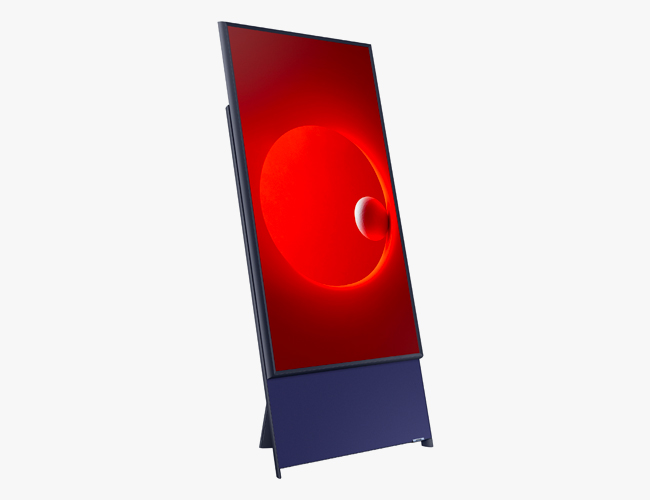
Samsung’s Shapeshifting Sero TV

Arguably the craziest TV that Samsung announced at CES, The Sera is a 4K TV that can rotate its screen betwen a traditional horizontal mode and a new vertical mode. (“Sero” means “vertical” in Korean.) The idea is that more people are sharing content directly from their smartphones to their TV, be it on YouTube, Snapchat or TikTok, and this TV will actually be able to show that content its proper orientation. Admittedly, it’s strange but also kind of neat. As of now the TV only comes in a 43-inch model. Samsung says it will “expand The Sero’s availability to several global markets in 2020,” after an initial launch in South Korea last year. Whether that means it’ll actually be available in the US, we’ll have to wait and see to find out.

LG’s GX Gallery TVs that Sit on Your Wall Like a Picture

LG’s new GX Gallery series of 4K Ultra HD TVs is designed to look like a piece of art hanging on your wall, similar to Samsung’s The Frame TVs. The Gallery Series TVs come with a specially-designed wall mount so that they hang completely flush on the wall, and you’ll be able to customize the art when you aren’t watching. The Gallery Series TVs all have the ultra-thin form factor (20 millimeters thin) that LG’s OLEDs are known for. And they will come in three different sizes — 55-, 65- and 77-inch. No pricing or availability information yet, but you can bet they will be freakishly expensive.

Samsung’s “Zero-Bezel” Q950 TV

Samsung’s new 8K QLED TV isn’t just notable for its picture, but also for what’s (not) around it. The new flagship Q950 has, according to Samsung, a 99 percent screen-to-frame ratio, which means that the border around its picture is practically non-existent at just 2.3mm thick, for however that much is worth to you. And it better be worth a lot. While Samsung hasn’t divulged price or availability quite yet, if it runs in the same league as its predecessors, you can expect a price tag well above $10,000.

Panasonic HZ2000 OLED TV

The next-generation of last year’s GZ2000, the Panasonic HZ2000 is the company’s newest OLED TV and it’s optimized for cinephiles, home theater buffs and industry professionals. It’s the first OLED TV to support both Dolby Vision IQ and Filmmaker Mode, the later of which is a setting that promises to make movies look exactly how the director intended, Panasonic worked with famed Hollywood colorist Stefan Sonnenfeld (Wonder Woman, A Star is Born, Star Wars: The Force Awakens) to achieve this high-grade color accuracy. It will be available later this year and come in either 55-inch and 65-inch models

Sony Z8H 8K TV

Sony announced a bunch of new TVs at this year’s show, but the Z8H 8K LED is its most notable. It has a neat feature that Sony is calling “Ambient Optimization” which allows the TV to automatically tune its sound to the room its located in. Additionally, the Z8H 8K LED has a tweeter built directly into its frame and it vibrates to generate sound. Basically, if you don’t want to use additional speakers, the Z8H 8K LED’s built-in speakers should sound pretty darn impressive.

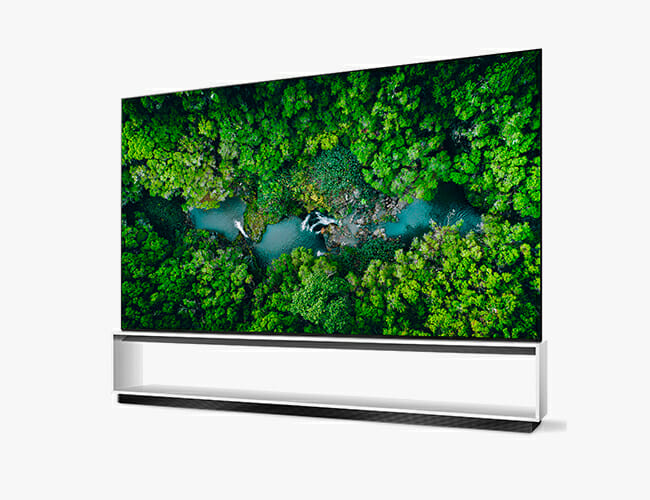
LG’s 2020 NanoCell OLED TVs

These are LG’s new creme de la creme TVs that are able to produce a “real 8K” picture. They have cool minimalistic design and a fancy-new processor — called the Alpha 9 Gen 3 AI Processor — that LG claims leverages more power and more advanced artificial intelligence deep learning algorithms; it’s basically able to deliver the best 8K picture possible. And it will be available in 88- and 77-inch models.

LG’s New 48-inch OLED TV

New year, new size. LG just announced that it will, for the first time, make a 48-inch OLED TV. This particular new model, the OLED48CX, has over 8 million pixels in its tiny 48-inch screen, which LG claims is a density comparable to that of a 96-inch 8K TV. Basically, for anybody who has wanted the best possible TV but in a very small form factor, now you can.

Note: Purchasing products through our links may earn us a portion of the sale, which supports our editorial team’s mission. Learn more here.

A daily magazine of immersive stories, deals, buying advice, product-forward editorial, and reports from far-flung places.

More by Gear Patrol | Follow on Facebook · Instagram · Twitter · Contact via Email

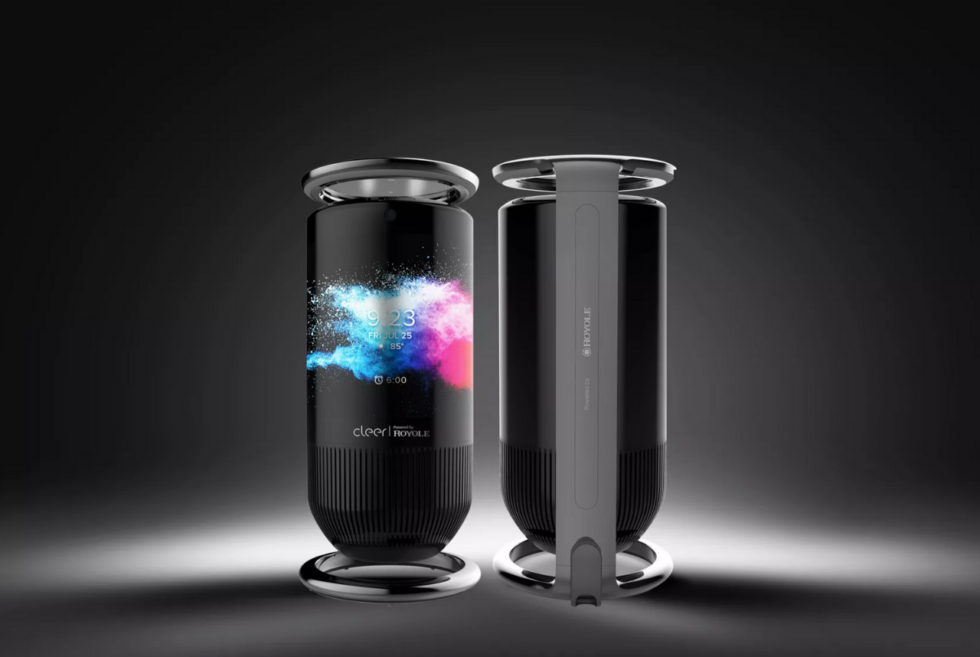
The Royole Mirage Smart Speaker Flaunts A Vivid Wraparound Touch Display

When talking about foldable phones, consumers immediately think of the like of Huawei, Motorola, and Samsung. So far, among the bunch, the upcoming Razr is clearly making the headlines as the demand continues to grow. In fact, the Lenovo-owned company is unable to keep up with pre-orders and already delayed its launch. Not a lot of people know this, but Royole was the first manufacturer to offer a handset with flexible display technology. Now, at CES 2020, it’s offering an audio device with a wraparound touchscreen – the Mirage Smart Speaker.

Those of you who were expecting a low-cost, entry-level product with an unattractive design will not find it here. Instead what you’re looking at is cutting-edge tech with beautiful craftsmanship. It will certainly appeal to consumers who are in the market for a modern wireless speaker. Thanks to its cylindrical shape, the Mirage Smart Speaker is capable of delivering 30W 360-degree sound.

From the front, it looks like the tube-like module is floating between two concentric rings on the top and bottom. However, the rear assembly actually holds everything in place with a seamless form factor. Obviously, the star of the show is the vivid wraparound AMOLED display that measures approximately 7.8 inches.

Royole is listing the resolution at 1920 x 1440, which should deliver outstanding visuals. Controlling the action is a Qualcomm APQ8053 silicon onboard Wi-Fi and Bluetooth connectivity support. The engineers are pairing it with a 2 GB LPDDR3 RAM along with 16 GB of internal storage. The Mirage Smart Speaker uses two far-field microphones for superior voice recognition. Touch controls are available on the top panel or you can just directly use the touchscreen. Finally, it is compatible with Amazon’s Alexa voice assistant.

Check it out here

Images courtesy of Royole

Dell Takes On The Nintendo Switch With The Alienware Concept UFO Portable Gaming PC

When it comes to portable gaming, Nintendo is basking in the success of the Switch and Switch Lite. In fact, the handheld market has been its forte for a while now. Last week, rumours have been making their rounds online of something exciting form the Japanese gaming giant. Gaming industry analysts claim that production of a Pro version of the console is underway and will release in mid-2020. Meanwhile, Dell appears to have a plan to shake up the portable gaming space with a hybrid device of its own – the Alienware Concept UFO.

The computer hardware manufacturer has its fair share of top-notch gaming-grade products. In fact, the Alienware brand continues to supply premium gaming laptops, desktops, and accessories. With the Concept UFO, the prototype already seems like a promising new platform.

A big advantage it has over the Switch is the expansive library of games already available right now. Instead of a proprietary operating system, Dell is engineering the device as a compact gaming PC running on Windows.

The resemblance it has to the Switch is uncanny. You have two controllers on the side that are detachable like the Joy-Cons. However, these appear to have a nice ergonomic grip for superior comfort. Additionally, the analogue sticks come with LED lighting.

Meanwhile, the controllers can be connected to an accessory for a traditional gamepad experience akin to the Joy-Con Grip. Furthermore, the Alienware Concept UFO will include a docking system to output to a bigger display. CES 2020 has a working prototype on display, but Dell confirms it is still in the early stages of development.

Learn more about it here

Images courtesy of Dell

Google Enters The Gaming Arena With The Stadia

Game-streaming welcomes Google as it offers the Stadia service for consumers. If you’re an avid gamer there are a bunch of platforms for you to choose from. Those seeking the best graphics and performance money can buy have the option of building their own rig. As long as the price is no hindrance, you can spec it out to match according to what you want.

Next on the list are home consoles. This is where the selection widens up a bit. It all depends on the features and first-party exclusives available. There are the current-gen models: PlayStation 4, Xbox One, and the Switch. However, Google is joining the ranks with the Stadia.

Unlike the aforementioned platforms, the Stadia is purely an online experience. The only hardware you need is a Chromecast Ultra and the Stadia controller. You can grab both as a bundle, but there’s another alternative on hand.

As long as you own a compatible device such as a Chromecast Ultra, a Pixel smartphone, or on a PC via the Chrome browser. The beauty of it all is that all the processing is handled by Google’s data centres. You only need a stable and speedy internet connection and the gadgets detailed before.

The games library may be small right now, but Google promises to continue adding more games moving forward. Stadia will be competing against Sony and Microsoft for market dominance. Nevertheless, there are still some kinks to work out before it delivers the experience promised by the search engine giant. We heard that Project xCloud is apparently doing better even in beta, but it’s still early to call.

Get it from Google

Images courtesy of Google

The Best Things We’ve Seen at CES 2020 (So Far)

The biggest show in consumer tech is on right now. Catch up on our highlights and follow us on Instagram for up-to-the-second coverage!

A new decade is kicking off with what else but the Christmas of consumer gadgetry: CES 2020. The show has barely started, but plenty of companies aren’t waiting for the conference’s official start on Tuesday when the show floor opens to share news about their latest gadgets. Here are the best products that have broken cover so far.

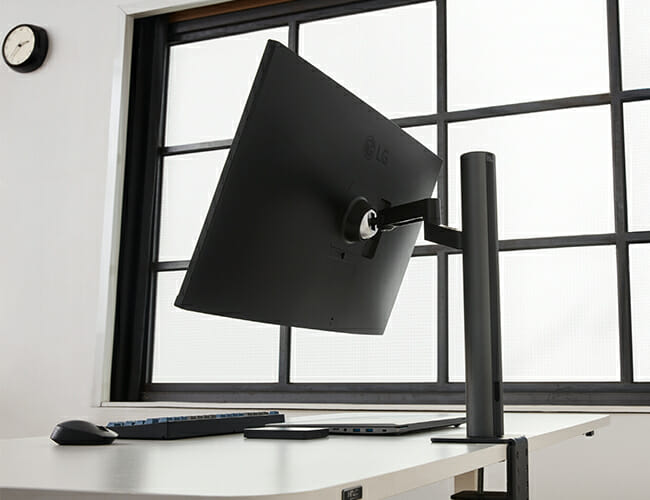
LG UltraFine Ergo Displays

LG’s UltraFine 4K and 5K displays are hugely popular among Mac users and are even sold by Apple on its website. The new UltraFine “Ergo” Displays have a new ergonomic arm that allows them to swivel around and give you the perfect viewing angle. The displays can swivel both horizontally (up to 280 degrees) and vertically (they can tilt up to 25 degrees), and yes this means that you can even swivel these new monitors to face backward, which is convenient if your desk is in the middle of a room and not against a wall, if you want.

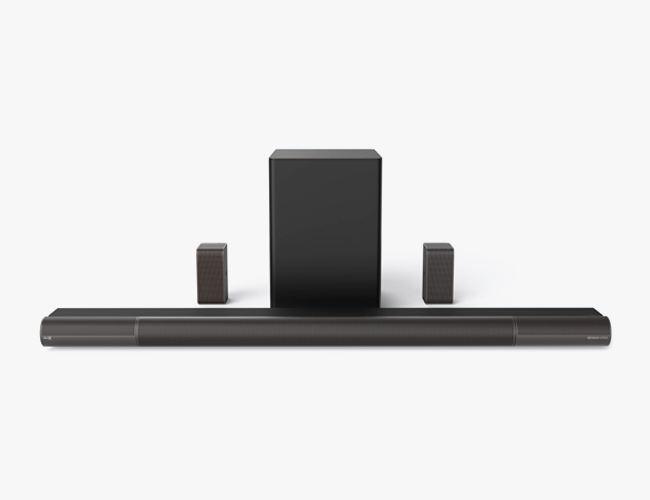
Vizio Elevate Soundbar

Vizio’s newest flagship soundbar sports a unique new trick. Yes, it has 18 drivers in total, but the left and right ends of the soundbar can actually rotate up, to increase height effects when they are working with Dolby Atmos and DTS:X encoded audio. Otherwise, they point forward like a typical soundbar. So far, no word on price or release date.

Samsung’s “Zero-Bezel” Q950TS TV

Samsung’s new 8K QLED TV isn’t just notable for its picture, but also for what’s (not) around it. The new flagship Q950TS has, according to Samsung, a 99 percent screen-to-frame ration, which means that the border around its picture is practically non-existent at just 2.3mm thick, for however that much is worth to you. And it better be worth a lot. While Samsung hasn’t devulged price or availability quite yet, if it is runs in the same league as its predecessors, you can expect a price tag well above $10,000.

We’ll be updating this post throughout the show, so check back for the latest highlights.

Note: Purchasing products through our links may earn us a portion of the sale, which supports our editorial team’s mission. Learn more here.

A daily magazine of immersive stories, deals, buying advice, product-forward editorial, and reports from far-flung places.

More by Gear Patrol | Follow on Facebook · Instagram · Twitter · Contact via Email

Get Ready For Next-Gen Gaming With Microsoft’s Xbox Series X

Last year, at The Video Game Awards show, something unexpected made its way on stage. After months of silence and speculation, Microsoft finally took the covers off of Project Scorpio. The official flagship of the brand’s next-generation gaming systems is finally upon us as the Xbox Series X becomes official. This new gaming machine promises a powerful platform that will pack the latest tech for cutting-edge performance. Moreover, the manufacturer is taking the design on a whole level.

While most home consoles generally follow a particular form factor (rectangular and horizontal) the new Xbox Series X does it differently. Looking more like a small CPU tower or a smart speaker, it won’t immediately stand out when it sits anywhere in your entertainment setup. The monolithic shape of its housing feature a huge vent on top with a huge cooling fan within.

In an interview with Xbox head honcho Phil Spencer, he confirms that its aesthetics are intentional. He wanted the designers to come up with a new look that will blend seamlessly with a modern entertainment setup. As such, you’re looking at a sleek matte black finish all around with only the Blu-ray drive slot and the backlit power button on the front.

The controller remains remarkably the same visually but is apparently a little smaller for better ergonomics. What’s cool about the Xbox Series X it is fully compatible with the previous generation system’s accessories. Moreover, Microsoft confirms it will be backwards compatible on the software side as well. Gamers don’t have long to wait as the console is heading our way sometime during the holiday shopping season in 2020.

Get notified once it’s available

Images courtesy of Microsoft

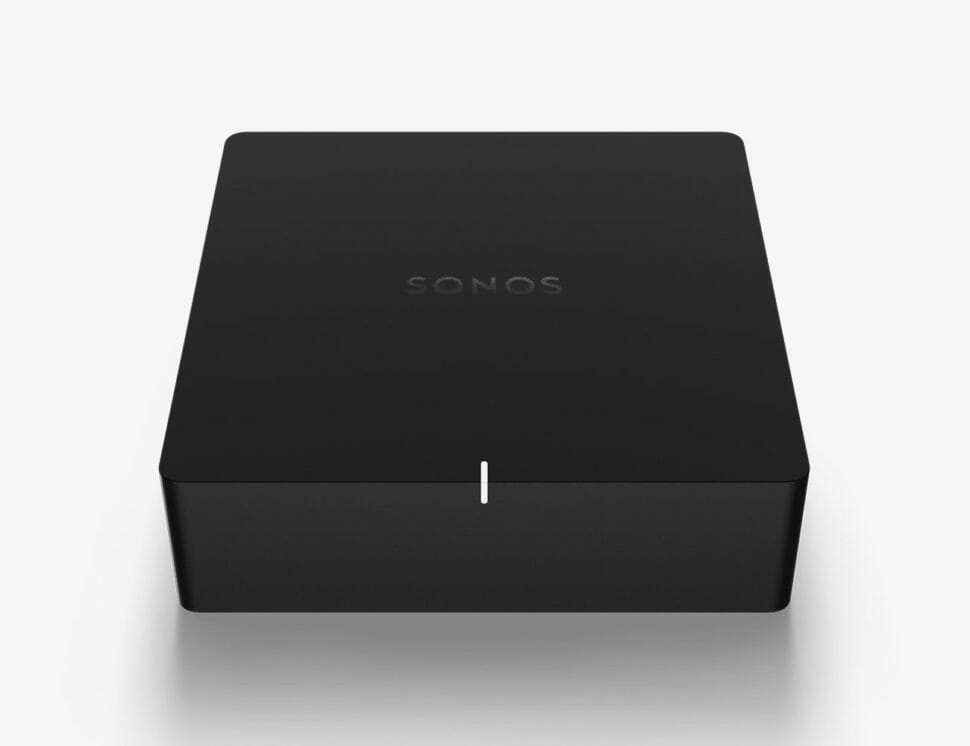
Two of Sonos’ Products Are About to Get More Expensive

Sonos recently announced that it would be increasing the price of two of its products. Starting January 9, the Port and the Amp, which are two of the company’s high-end audio components, will cost $50 more than they previously had. The reason for this is because Sonos is moving some production out of China — and into Malaysia — so that the company can avoid tariffs. Basically, if you were thinking about buying one of these products, you should consider doing so before the 9th (next Thursday).

Sonos Port

The Port connects to your existing stereo or receiver and then allows that to use that connected system just like a Sonos speaker. You can stream music from Spotify or Apple Music directly to the system, and you can integrate it with your other Sonos speakers in a multi-room sound system. Another neat feature is that the Port has a 12-volt trigger, which enables the Port to automatically turn on your connected receiver when signaled through the Sonos app. (Your receiver must support a 12-volt trigger, however, which many old ones do not.)

Previously $399, the Port will cost $449 starting January 9.

Sonos Amp

The Amp is the company’s high-end wireless amplifier that’s designed to drive larger passive speakers; the Amp can push 125 watts per channel. The other neat feature is that the Amp has an HDMI ARC port, which allows you to connect your passive bookshelf speakers directly to your TV. If connected to your TV, the Amp then allows you to play your TV’s audio through the connected speakers — — no need to have an AV receiver.

Previously $599, the Amp will cost $649 starting January 9.

Note: Purchasing products through our links may earn us a portion of the sale, which supports our editorial team’s mission. Learn more here.

How to Clean Up (and Back Up) Your Laptop’s Hard Drive

It’s unfortunate that the sweet, smooth feeling of a brand new computer doesn’t last for long—applications, files and other digital clutter can clog up a new desktop or laptop all too quickly, which means you can very soon find yourself with a lot less in the way of free hard drive space than you had to begin with.

Here we’ll take you through a few tips for clearing out the junk data that’s built up on your hard drive, before explaining a process that’s even more important: Backing up your valuable files so you have copies in place, should the worst happen. With so many backup options now available, you’ve no excuse for putting it off.

Taking out the trash

You’d be surprised at how much digital clutter builds up on a hard drive. The first place to start when it comes to getting rid of it is the Recycle Bin (on Windows) or the Trash (on macOS). On Windows, right-click on the Recycle Bin icon on the desktop, then choose Empty Recycle Bin; if you’re on a Mac, click and hold on the Trash icon on the dock, then choose Empty Trash.

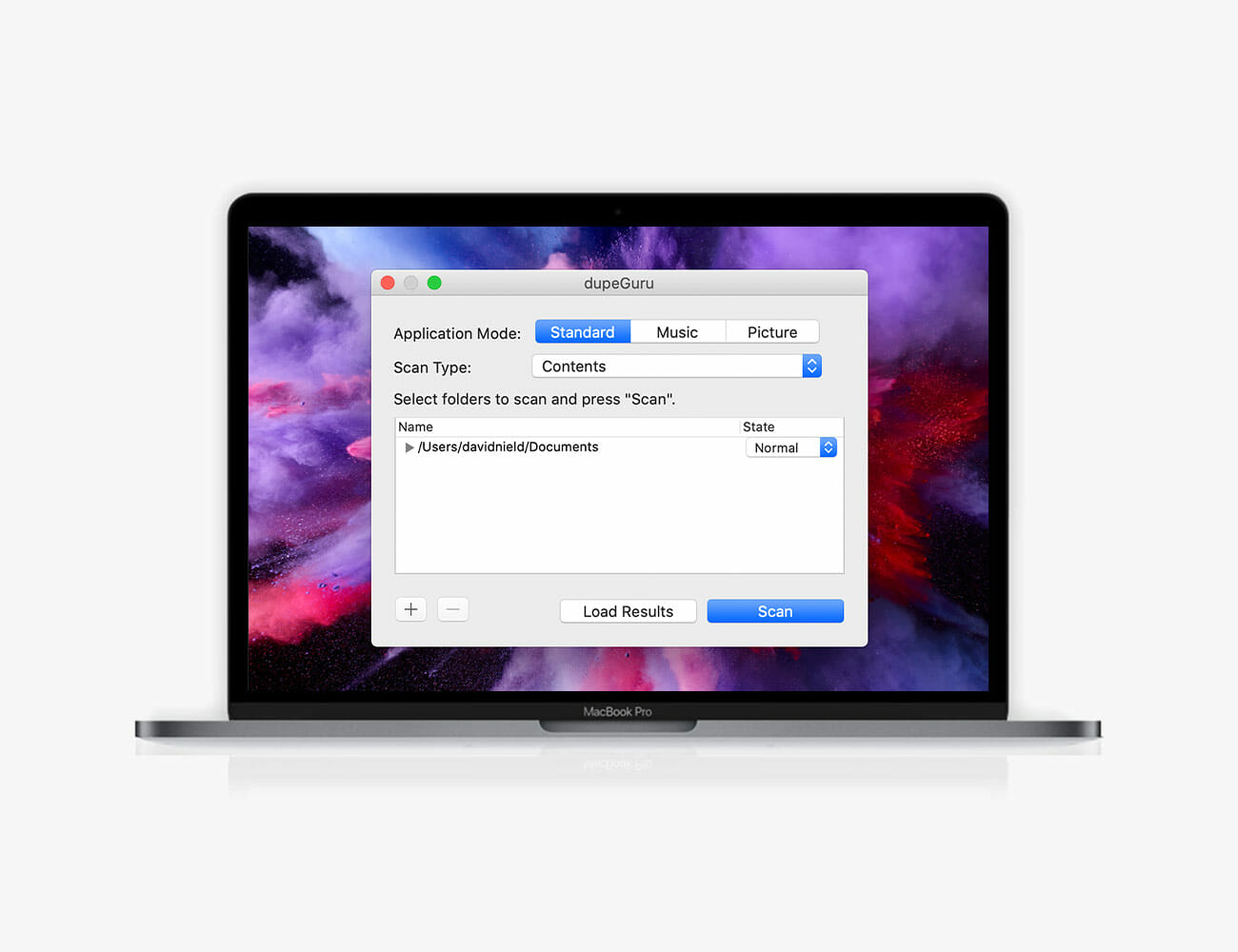
With your deleted files then well and truly deleted, you can move on to duplicates—copies of files you might not even realize you’ve accumulated. The most efficient way of doing this is to enlist the help of a third-party tool, which are smart enough to identify files that are the same even if the locations and file names differ.

DupeGuru can clear out duplicates from Windows and macOS.

DupeGuru isn’t the most advanced or polished duplicate file finder, but it is completely free to use, and it is available for Windows and macOS. AllDup is another freeware tool for Windows that will do a thorough job of finding, listing, and then removing duplicate files from your hard drive.

Over on macOS, we can recommend Duplicate File Finder (free to try, $10 for extra features like duplicate folder removal and premium support), and Gemini (free to try, $20 to clean up more than 500MB of data). Both are comprehensive and simple to use, and will at least show you how many duplicates you’ve got before you need to pay anything.

Uninstalling programs you’re no longer using can free up a chunk of hard disk space too. Open up the Apps screen from Settings in Windows, or the Applications folder in Finder on macOS, to see everything that’s currently installed on your computer. Anything you haven’t used for a month or so, it might be time to say goodbye to. On Windows it’s simply a question of clicking on the app in question, then choosing Uninstall. If you’re on a Mac, drag the app icon from the Applications folder down to the Trash icon on the dock.

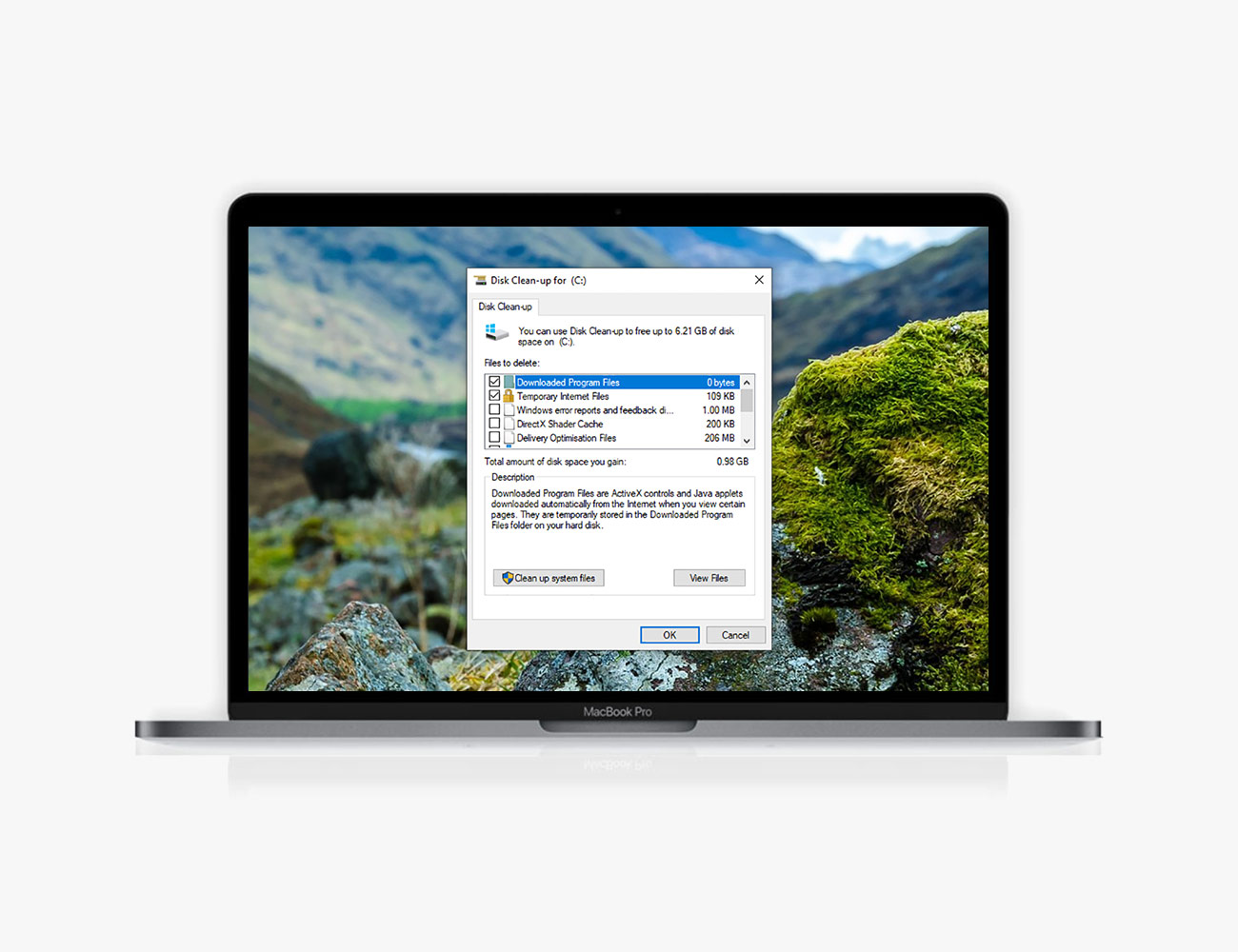
Both Windows and macOS come with their own disk cleaning utilities.

Your operating system also includes a built-in tool for highlighting and removing data you can safely live without. On Windows, search for “disk cleanup” from the taskbar, then launch the utility that appears as the top result—it lets you get rid of downloaded files, temporary files, Windows error reports and more.

For macOS, open the Apple menu, then pick About This Mac, Storage, and Manage. The options on the next screen let you safely erase a variety of temporary files and redundant data, covering everything from rented movies that you’ve now watched to photos that have already been backed up to the cloud.

Backing up your files

When it comes to backing up your most important files, you can’t have too many copies of them: Remember that cloud copies are still susceptible to data loss or corruption, and that external hard drives may not survive if you’re unlucky enough to have a fire, flood, or burglary at home. Two copies is good, three copies is better.

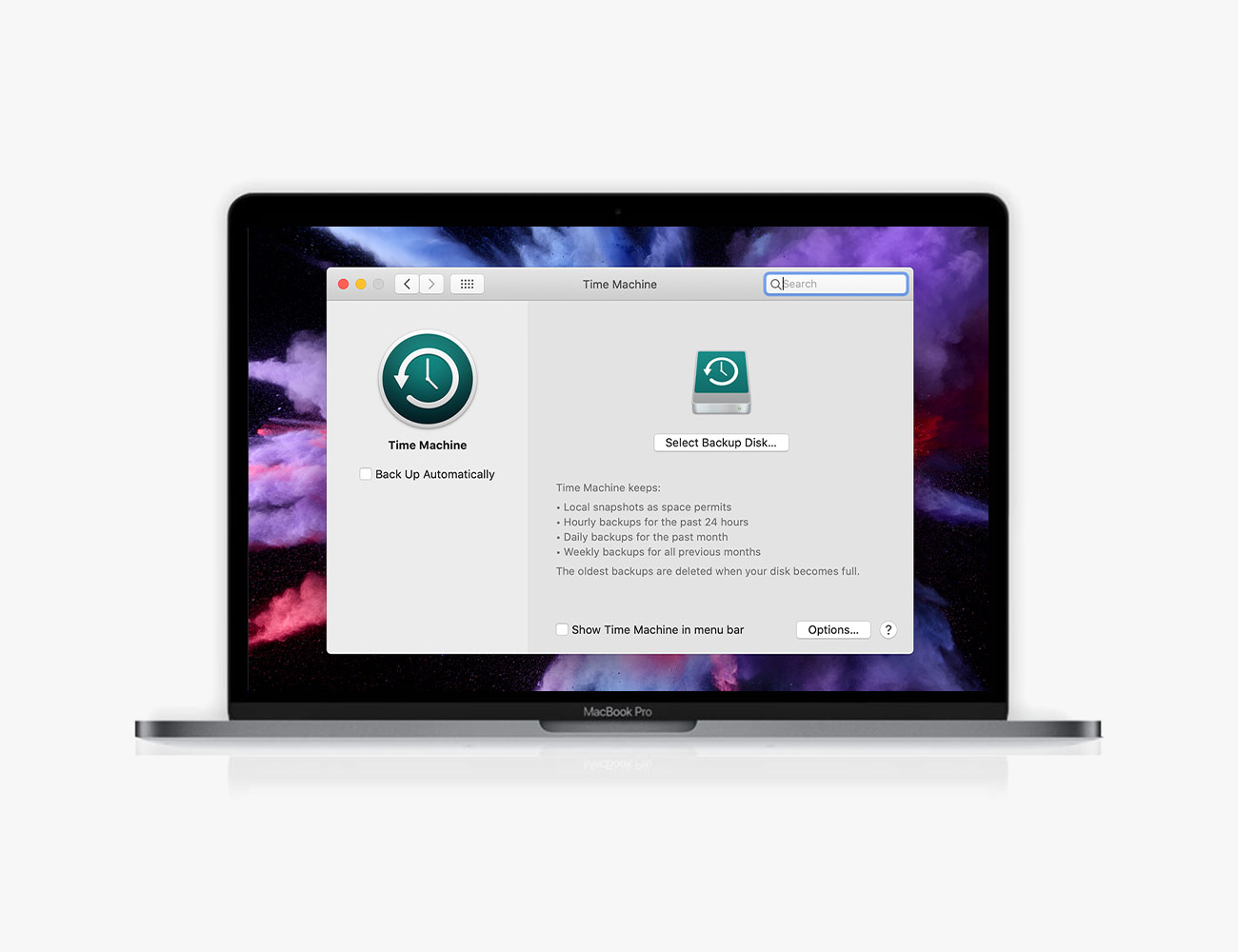
Your first options are the backup utilities built into Windows and macOS, which use external drives connected to your computer. With Windows you’ve got File History, which you can find via Update & Security and Backup in Settings (full details here), and on macOS there’s Time Machine, available via Time Machine in System Preferences (full details here).

If you’ve bought an external disk drive then it may well come with some backup software of its own, and there are a plethora of third-party tools on the market as well—from the free and comprehensive Cobain Backup (Windows), to the $50 Acronis True Image 2020 (Windows and macOS), which is packed with advanced features. Some programs, like Carbon Copy Cloner (macOS, $39.99 after a 30-day trial), are able to create backup drives you can boot from to recover your data.

Time Machine is the backup tool built into macOS.

You don’t have to rely on any software package, if you don’t want to—you can just copy your important files and folders over to an external drive manually, if you prefer, but you will have to remember to do this on a regular basis to stay protected.

In terms of local backups that stay in the same building as your main computer(s), an alternative route is to invest in a Network Attached Storage (NAS) device—essentially an external drive that you connect to via your router rather than a cable. The advantage of doing that is that NAS drives can be got at from all the devices in your home, and usually over the web too, though access times are typically slower.

NAS drives come with all the software you’re going to need to get started, and are particularly appealing for the paranoid: get one with two or more disk drive bays, and you can have exact copies of your original drive created automatically as you work. If one should fail, you’ve always got a second identical one to fall back on.

NAS drives connect directly to your router, not your computer.

Another option is to sign up for a cloud storage service and make sure everything that’s important is being synced to the web. This is a simple and comprehensive option, but it’ll typically cost you a few dollars a month for the online storage space—most services only give you a small amount of room for free.

Dropbox has long been one of the leaders in the field, integrating tightly with Windows and macOS, and offering apps for Android and iOS so you can get at your files from anywhere. You get 2GB for free—which should give you a good idea if it’s the right option for you—and paid plans start at $10 per month for 2TB of online space.

Google Drive has been slowly evolving as a backup service, and now offers Windows and macOS apps for that specific purpose. You can choose which bits of your hard drive get backed up to the cloud, and get at your files through a browser or from your phone. Users get 15GB of room for free (shared across Drive and other Google products like Gmail and Google Photos), with paid plans staring at 100GB for $1.99 a month.

Google’s Backup & Sync utility integrates with Google Drive.

Then there are the cloud storage services offered by Microsoft and Apple themselves, which have the advantage of integrating very tightly with Windows and macOS respectively. Microsoft offers OneDrive, built right into File Explorer: you get given 5GB of space free of charge, then it’s $1.99 a month for 100GB of room and upwards from there.

As for Apple, iCloud is becoming ever more important for macOS (and iOS)—auto-syncing options for your desktop and Documents folder have been much improved in recent years, and many applications (including Apple’s own) now rely on it. Your iCloud Drive has its own entry in Finder, and when you’ve exhausted the 5GB Apple gives you for free, you can pay $0.99 a month for 50GB of cloud space and upwards from there.

Backing up is a lot easier, and cheaper, than it used to be, and once you’ve got something in place you don’t really need to think much about it—just make sure you do have something in place, whether it’s one of the ideas we’ve mentioned, a combination of them, or something else entirely.

Note: Purchasing products through our links may earn us a portion of the sale, which supports our editorial team’s mission. Learn more here.

How to DJ Your Own Party

It’s Friday night. Your guests, some of them already inebriated, begin pouring in through the front door — and they’re itching to dance. As host of your house party, what’s the first move you make? You could take the easy way out: let the playlist just, well, play. Or you can hand over the reins to whoever claims they have a song “everyone will love!” — which, in fact, no one likes. Or, you could do something that’ll keep your friends talking about the party for weeks to come: you could perform as the DJ of your own party.

As DJ, you have control of more than just the music. You’re able to turn up or turn down the energy of your audience. You’re the maestro. Juicy M, a Ukrainian DJ with nearly 10 years of experience playing for massive audiences, knows how to maestro better than most — whether it’s 30 people in a living room or 2,000 screaming fans at an outdoor venue. “House parties are totally different vibe, of course,” Juicy says. “You shouldn’t try to recreate a music festival in your house.” Instead, substitute the lasers and pyrotechnic displays for Bluetooth speakers and candles. And remember, above all, it’s about having fun. Here are Juicy’s tips on how to sample a bit of the magic of a DJ set in your own house party.

1Prepare a long playlist. As a rule of thumb, your playlist should be double the length of time you’ll be playing music. For a 60-minute set, Juicy says she compiles at least 120 minutes of music. This provides more flexibility in song choice, allows for more creativity and ensures plenty of backup options, should some songs fall flat.

2Keep the songs short. A boozed-up, dance-crazed audience doesn’t play well with 10-minute songs with countless bass drops and the same riff over and over again. Their attention will start to fade. Juicy says to give them the best 30-45 second bite of a song — a bass drop, a chorus, a verse or two — and then move on to the next song. Of course, not all songs should be cut short. If it’s a particularly hot pop song that everyone knows the lyrics to, play the whole thing — your audience will love you for it.

gear-patrol-discover-new-music-ambiance

gear-patrol-discover-new-music-ambiance

3Start hard, slow it down, finish hardest. Your job is to keep the audience dancing and the energy high. That’s what the crowd came for, after all. But, be careful not to crank the energy too high — if you don’t give the crowd a few slowed-down songs to recharge, their energy will be zapped halfway through the party. For this reason, Juicy suggests the following template: begin with a few high-energy party-starters, move into a few slower tunes (but keep their feet moving!) and, for the final 10 minutes, end with no-holds-barred, earth-shaking bangers. In her own words: “People mostly remember the intro and the last 10 minutes, whether it’s a concert or a DJ performance — try to use your best tricks and skills during this time!”

4Play for the audience, not for yourself. One of the quickest ways to kill the vibe of the party, Juicy says, is to abuse the DJ privilege as a chance to stroke your ego or play only your favorite songs. Every once in awhile, it’s okay to get ambitious with a new sound effect you just discovered last night or play some obscure song that’s special to you — but unless you’re producing top-notch EDM music, leave the on-stage experimentation to the pros.

GUIDE_TO_LIFE_BANNER-2GUIDE_TO_LIFE_BANNER-2

The Gear You Need

Bring the Noise

gear-patrol-how-to-dj-buying-guidegear-patrol-how-to-dj-buying-guide

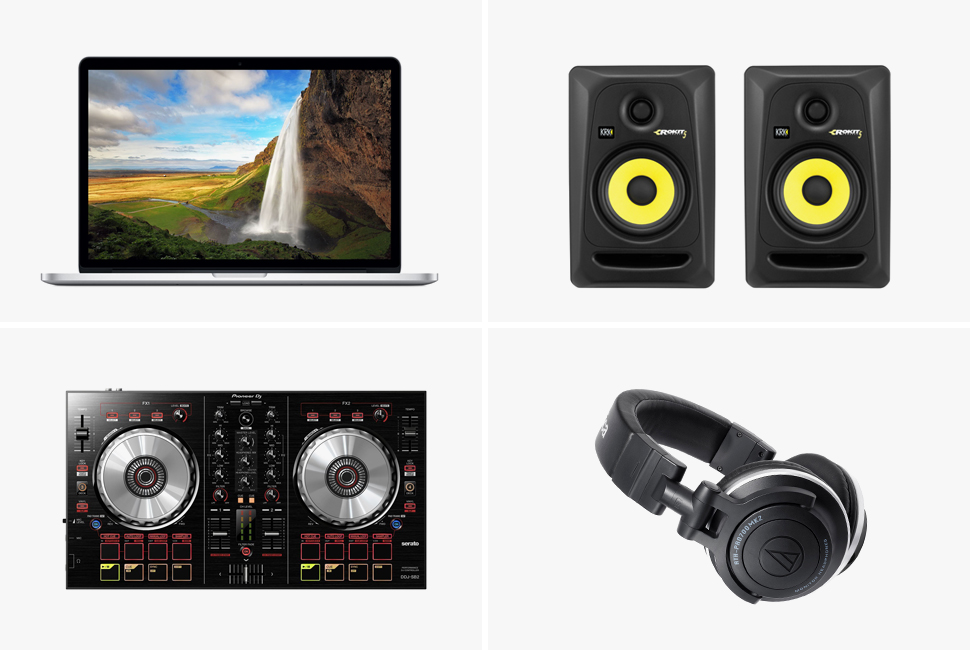
MacBook Pro 16 Inch by Apple $2,399+
Rokit 5 Speakers by KRK $395
DDJ-SB3 DJ Controller by Pioneer $237
Virtual DJ Home Edition by Atomix Free
ATH-PRO700MK2 Headphones by Audio-Technica $170
Note: Purchasing products through our links may earn us a portion of the sale, which supports our editorial team’s mission. Learn more here.

Sorry Apple, Google Made 2019’s Most Important Phone

This story is part of the GP100, our annual roundup of the best products of the year. To see the full list of winners, grab the latest issue of Gear Patrol Magazine.

Each year, the telephones relentlessly improve. Their microchip brains increase in computing horsepower. Their physical forms get slimmer, more refined and more jewel-like. Their screens stretch outward towards their bodies’ very edges. But as the leading flagships converge towards a single expensive full-screen black-slab ideal, they avoid addressing a crucial question: What is improvement?

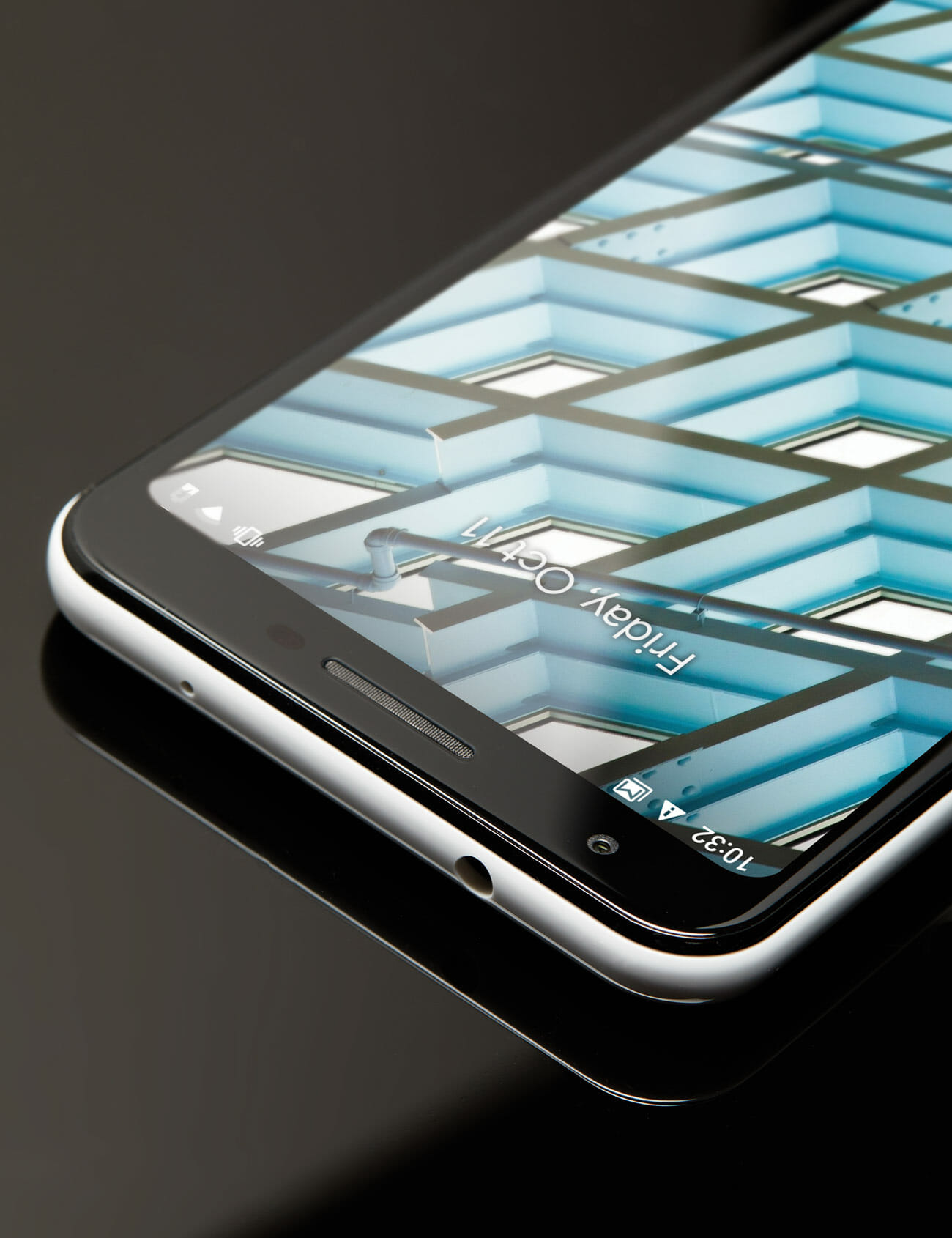
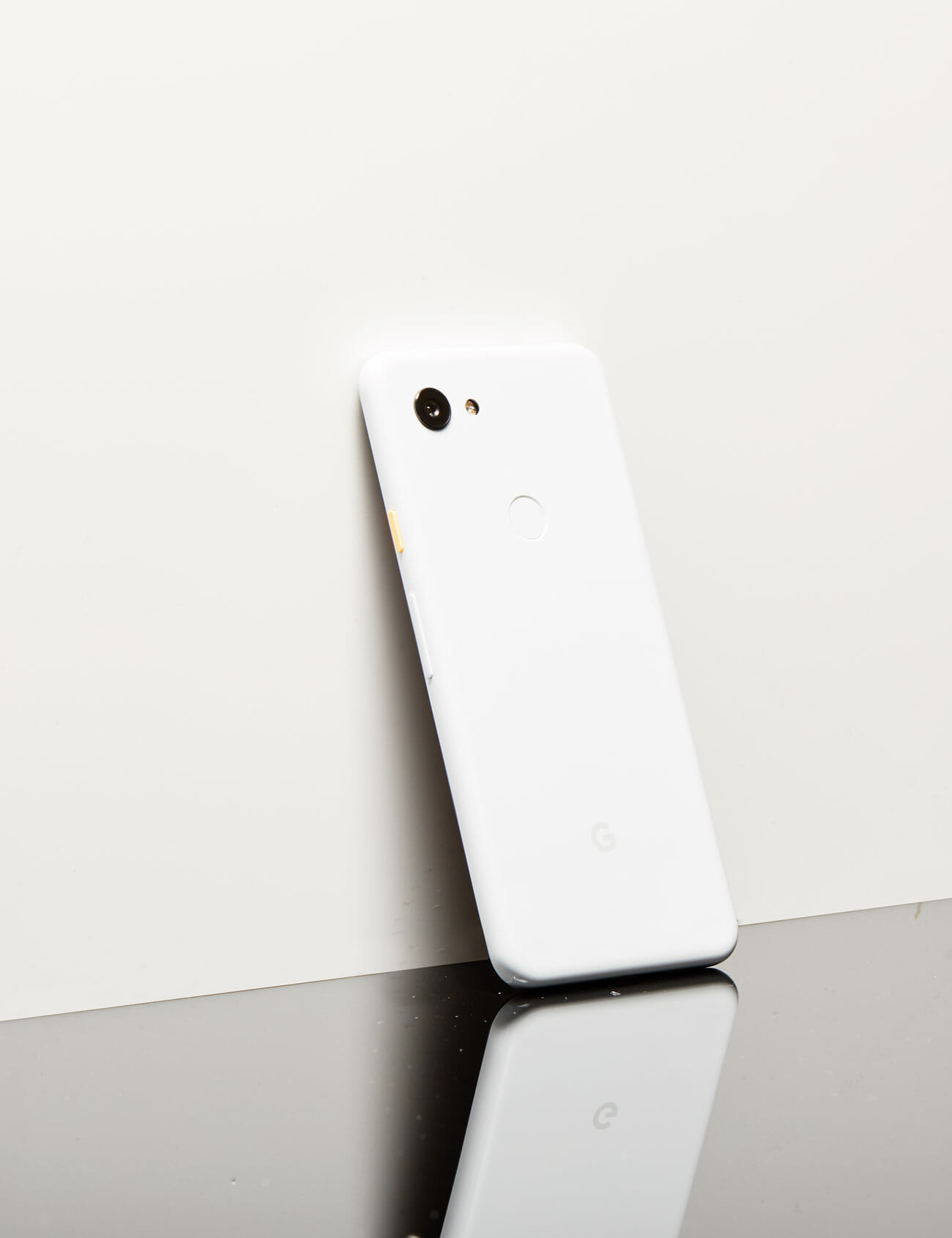
Google’s Pixel 3a, a pointed departure from its competition’s assumptions, is not just a great little phone — it represents a different idea of what a great little phone is.

Announced by Google earlier this year with little run-up or fanfare, Google’s plastic Pixel 3a has an offbeat combination of features compared to its contemporaries. In many ways, it’s gleefully adequate. Its polycarbonate body is not fancy, but it is functional. Its mid-range processor is fine with being just fast enough. Its screen is as good as you’ll reasonably need for browsing the web and drinking from social media’s firehose. It skimps on features like wireless charging and waterproofing, as you might expect from a $400 phone. But unexpectedly, its camera is top tier — a superb feature it shares with its high-end sibling, the Pixel 3, which cost twice as much at launch.

It’s this unusual inclusion of a premium feature in a seemingly budget phone that makes the Pixel 3a feel impossible — or worse, almost like a con. But in fact, it’s a more fundamental innovation than any face-scanning technology or gyroscopic stylus: it’s a reordering and redefining of what features matter in a phone.

Google’s Pixel 3a, a pointed departure from its competition’s assumptions, is not just a great little phone — it represents a different idea of what a great little phone is.

Here in 2019, years into the reign of the “miniature 2001 monolith” school of phone design, it’s easy to forget that the collection of features a phone requires was not always agreed upon. (During and shortly after the dominion of the BlackBerry, for example, a physical keyboard was arguably a must.) What the Pixel 3a’s marriage of plastic and photography prowess argues is that a great camera — not just any smudgy shooter — is as integral to a phone as a 4G radio and onboard storage and more integral than premium materials and luxury fit-and-finish. It’s an argument that, if it proves persuasive to buyers, could shift the direction phones go from here.

But the combination of features found in the Pixel 3a could not have crystallized without all the tech that paved the way for it. Google has spent years developing its photography chops via software instead of hardware. Instead of using multiple (and expensive) camera sensors and lenses to attempt to recreate the depth-of-field effects of fancy lenses on full-fledged DSLRs, the company decided from the jump to put its algorithmic expertise to work to recreate the same effect with artificial intelligence.

Further Reading
Which Smartphone Has the Best Camera of 2019
8 Settings to Change on Your Smartphone Right Now

That decision came with an initial — but now rapidly diminishing — cost. Early versions of the tech produced images that could look ever so slightly off (and sometimes still do) compared to their impeccable analog competition. But the software is ever-improving. More importantly, it is extremely cost effective to scale, and even possible to implement retroactively. When Google released its “Night Sight” feature that algorithmically combined multiple low-light images taken at different exposures into a single image that appears almost magically bright, it was released not only for the brand new Pixel 3, but for the Pixel 2 and original Pixel as well — a camera upgrade, years after the fact, for free. Google isn’t the only company to upgrade its cameras via software, but with the Pixel 3a, it has taken an enormous step toward making its camera capabilities revolve primarily around software — and, as a result, universal across its phones, regardless of age or price.

What the Pixel 3a’s marriage of plastic and photography prowess argues is that a great camera — not just any smudgy shooter — is as integral to a phone as a 4G radio and onboard storage and more integral than premium materials and luxury fit-and-finish.

And while the Pixel 3a is certainly laudable for how much it offers in a $400 package, it’s also exciting for where it indicates this road might lead. The lion’s share of flagship phones have become obsessed with offering additional luxuries to justify their growing prices, but the prevailing trends have left a whole host of assumptions completely unchallenged: The best cameras are unique to only the most expensive phones. Thinner is always better. One thousand dollars is a reasonable price for a phone that will be obsolete in three years at best.

Perhaps the Pixel line itself has no appetite for challenging more of these assumptions, but it has at least revealed one of them as false. And that’s about as exciting of a feature as you can get.

Display: 5.6-inch, OLED, 1080 x 2220 pixels
Body: Plastic
Headphone Jack: Yessir
Price: $400

The Best Smartwatches

This definitive guide to the best smartwatches explores everything you need to know before buying a smartwatch, including what to watch out for, as well as which is best for each type of person. Read the Guide

Note: Purchasing products through our links may earn us a portion of the sale, which supports our editorial team’s mission. Learn more here.

Eric Limer is Gear Patrol’s tech editor. A resident of Weehawken, NJ, his current obsessions include mechanical keyboards, mechanical pencils and Formula 1.

More by Eric Limer | Follow on Instagram · Contact via Email

13 Notable Photography Gadgets That Came Out in 2019

This roundup is part of This Year in Gear, a look back at the year’s most notable releases. To stay on top of all the latest product news, subscribe to our daily Dispatch newsletter.

Lit Cam

Price: $2
From: apple.com

Lit Cam helps iPhones take better photos in low-light situations or even in complete darkness. It lets users control the brightness of the camera’s rear flash, as well as the brightness of the screen for shooting dimly lit selfies.

|

Canon EOS Rebel SL3

Price: $599
From: amazon.com

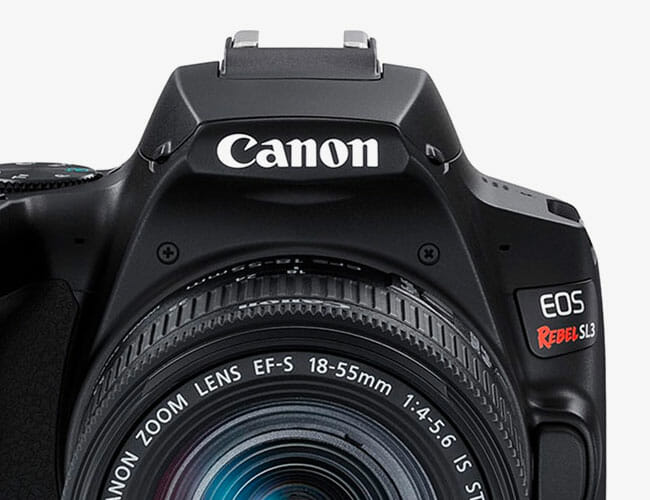
Canon’s EOS Rebel SL3 is the successor to the EOS Rebel SL2 and the newest addition to the company’s iconic line of entry-level DSLRs. The big news here: the EOS Rebel SL3 is the first Canon Rebel camera that can shoot 4K video. It’s also smaller and lighter than any of Canon’s previous Rebel cameras.

|

Canon IVY Cliq+ Instant Camera Printer

Price: $99
From: amazon.com

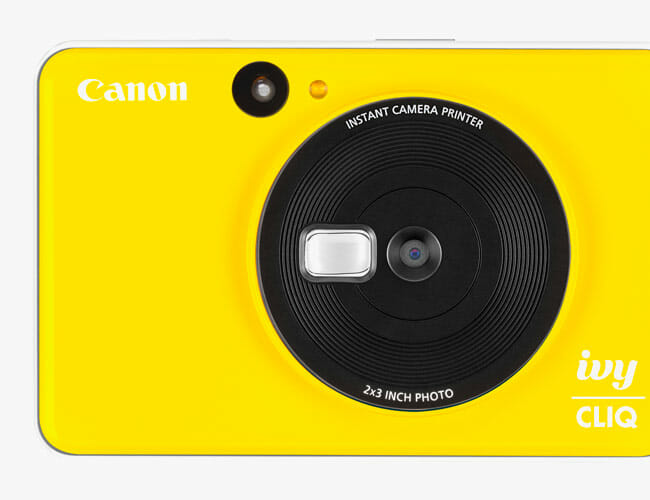
Canon’s new IVY Cliq+ uses an internal digital printer like its predecessor, but now offers users the chance to tweak and edit shots in a companion mobile phone app before printing the final result on a two-by-three-inch piece of ZINK photo paper. This upgraded model also features an 8MP sensor (rather than the 5MP of the original IVY Cliq), plus an LED ring around the lens for better flash. Both the Cliq and Cliq+ offer expandable SD card storage, optical viewfinders, USB charging, autofocus and automatic exposure.

|

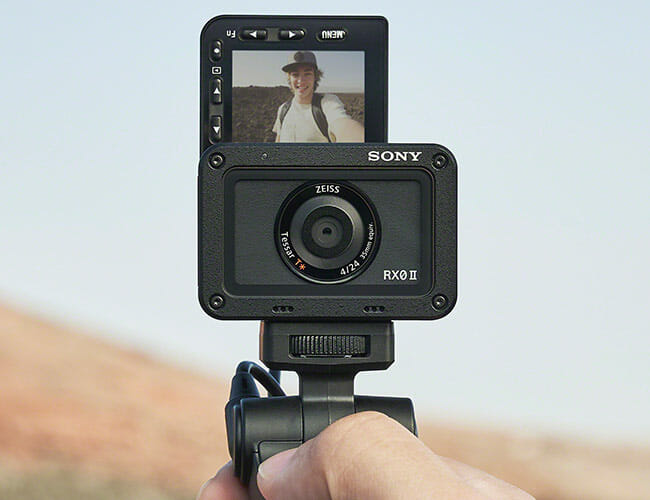
Sony RX0 II

Price: $698
From: amazon.com

The Sony RX0 II is the company’s newest action camera and the successor of the two-year-old RXO. Sony claims it’s “the world’s smallest and lightest premium ultra-compact camera.” With some pretty significant upgrades over its predecessor, the RX0 II kind of blurs the line between action camera and traditional compact shooter.

|

Lume Cube

Price: $90
From: amazon.com

The Lume Cube, a terrific tool for any kind of lighting you require, is an 1.5-inch square, waterproof up to 100 feet and drop-proof. From attaching to drones, to smartphones to being used for poorly-lit video conferences in the office, this tiny box really performs well. One could say it shines.

|

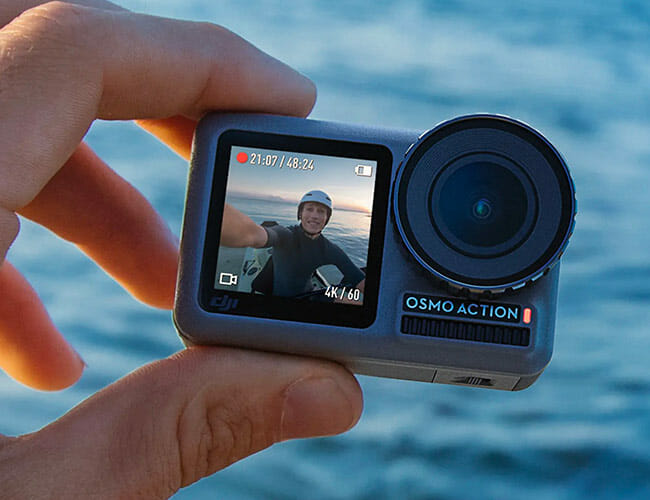
DJI Osmo Action

Price: $349
From: amazon.com

The DJI Osmo Action is capable of shooting 4K video at 60 fps, as well as 12-megapixel stills, and it comes with a bunch of other creative features. You can shoot time-lapse, slow-mo (up to 8x) and HDR videos. The Osmo Action also has built-in electronic image stabilization, which DJI has featured in its latest drones and most-recent handheld camera, the Osmo Pocket.

|

Peak Design Travel Tripod

Price: $350
From: bhphotovideo.com

The Travel Tripod is a compact camera stand that competes with the best available in every way. Peak Design considered every facet of tripod use and changed it — for the better. Latches replace annoying twist locks to extend the legs, making it quick to deploy. A single adjustment ring releases the ball head to move into any orientation, and a quick-release button makes attaching and removing a camera fast and easy.

|

Evoc Hip Pack Capture

Price: $135
From: bikedepot.com

Evoc’s new photography collection includes a rolling bag with lots of storage and a full range of backpacks in various volumes, but its Hip Pack Capture is the standout. The bag has seven liters of storage capacity, six of which are dedicated to a main compartment that can be organized for different camera setups or accessories with a system of padded dividers. There are also smaller pockets for things like memory cards, your phone and trail snacks, and straps on the bottom to hold onto a tripod, too.

|

Hasselblad X1D II

Price: $5,750
From: amazon.com

At a surface level, the difference between the X1D and the new X1D II is slight. The finish is darker, the rear touchscreen is .6 inches larger and there’s a “II” after the X1D etching on top. What Hasselblad has done instead is focus on speeding up the user experience: the company says continuous shooting is up 35 percent, live view frame rate is up 62 percent, the electronic viewfinder is much improved and start up time is nearly cut in half. But maybe the most notable change is the price. It’s come down to $5,750, bringing it much closer in line with Fuji’s GFX line while offering a generally superior user experience.

|

DJI Ronin-SC

Price: $439
From: amazon.com

The DJI Ronin-SC is a smaller, lighter and cheaper version of the Ronin-S gimbal, designed specifically for mirrorless cameras. Aside from the differences in size and weight, the biggest upgrade with the DJI Ronin-SC is that it supports Bluetooth 5.0, which enables a subject-tracking mode.

|

DJI Osmo Mobile 3

Price: $109
From: amazon.com

DJI’s Osmo Mobile 3 is a big upgrade over its 2015 predecessor, the Osmo Mobile 2. First, it’s foldable. This is a first for any Osmo Mobile gimbal and it allows the new model to be way more compact and portable. Second, the trigger button from the first-generation Osmo Mobile is back. This trigger button helps maneuver the gimbal by locking orientation, rotating the gimbal for selfies, and auto-centering when tracking a subject. Third, it’s really easy to switch between portrait to landscape modes while using the Osmo Mobile 3. Just press the “M” button three times in and row and it’ll quickly reorient the smartphone.

|

GoodLight.One

Price: $5
From: blackbird.com

GoodLight.One uses AI as well as the data from trusted weather services, like DarkSky or Met.no, to predict the forecast up to four days in advance, anywhere in the world. According to the company, the app will tell photographers information about the quality of the light, as well as the kind of photography (such as landscapes, portraits, architecture, night landscapes and astronomical) that the weather will be ideal for.

|

Leica SL2

Price: $5,995
From: adorama.com

The SL2 has a redesigned body featuring improved ergonomics and more user-friendly controls, with a 4-axis stabilized 47-megapixel full-frame sensor. It’s compatible with the ever-deepening range of L-Mount lenses from Leica, Panasonic, and Sigma. Alternatives are the Sony A7rIV ($3,498), which has a much more impressive spec sheet but lacks the same premium build quality and design, and the Hasselblad X1D II ($5,750), which costs nearly the same and shares a similar luxurious build but has a larger, more impressive medium-format sensor — yielding better images but also slowing the camera down considerably. The SL2’s body will cost $5,995 (same as the outgoing SL)

|

Note: Purchasing products through our links may earn us a portion of the sale, which supports our editorial team’s mission. Learn more here.

A daily magazine of immersive stories, deals, buying advice, product-forward editorial, and reports from far-flung places.

More by Gear Patrol | Follow on Facebook · Instagram · Twitter · Contact via Email

17 Notable Desktop Gadgets That Came Out in 2019

This roundup is part of This Year in Gear, a look back at the year’s most notable releases. To stay on top of all the latest product news, subscribe to our daily Dispatch newsletter.

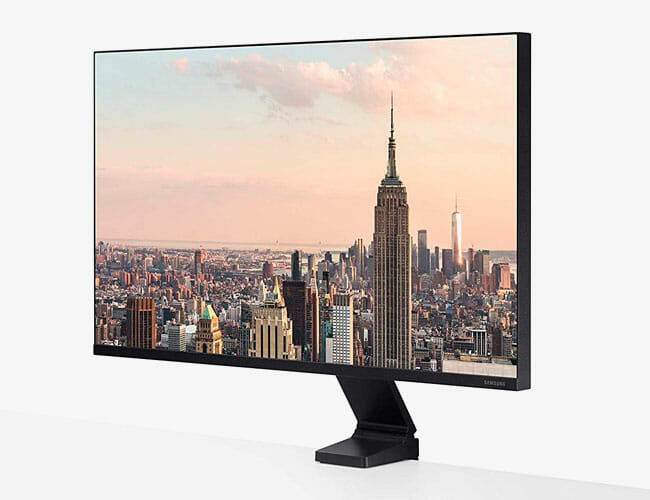
Samsung Space Monitor

Price: $500 $370
From: amazon.com

The Space Monitor doesn’t have a traditional base that rests on top of your desk but instead has a clamp that holds onto the side. While resting against the wall, its screen raised or lowered all the way down to the desk’s level. And it has a movable arm that lets you pull the screen out and titled in a number of ways.

|

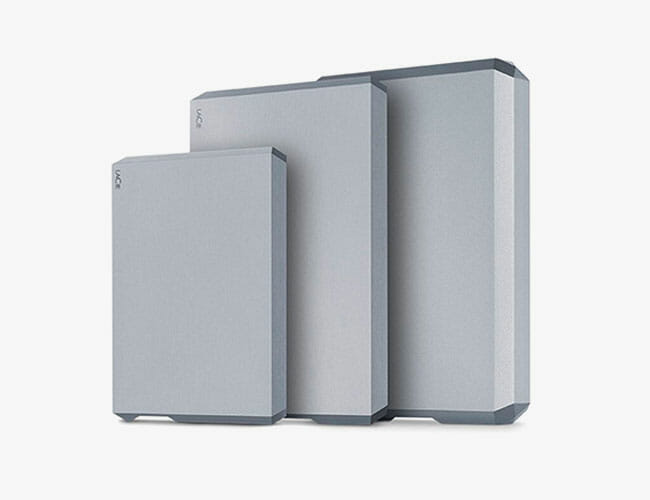
LaCie Mobile Drive

Price: $70 $65
From: amazon.com

The sleek LaCie Mobile Drive comes in up to 5TB capacity using a conventional hard drive, while the solid-state LaCie Mobile SSD can crank out data at 540MB/s with up to 2TB storage. They’re both modeled visually after Apple MacBook designs and include a one-month subscription to the Adobe Creative Cloud All Apps plan, to make photo and video processing much easier.

|

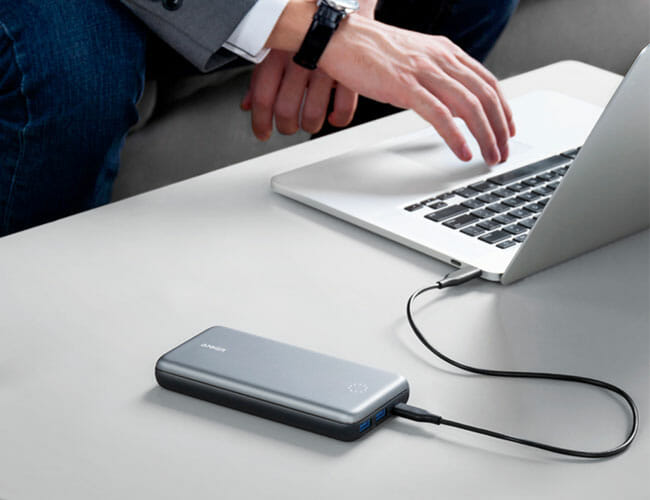
Anker PowerCore+ 19000 PD

Price: $120
From: amazon.com

The PowerCore+ 19000 PD is a high-capacity portable power bank (19,200mAh) that comes with Power Delivery (PD), meaning that it’s perfectly adept at charging either your smartphone or laptop or both at the same time. But the neat thing about the PowerCore+ 19000 PD is that it doubles as a USB-C hub.

|

Moft Laptop Stand

Price: $25 $22
From: amazon.com

The nifty laptop stand has a couple of convenient tricks up its sleeve. It features two elevation settings — 15 and 25 degrees — so you can adjust the height to whichever you find more convenient for your sitting posture. And the stand uses removable glue to stick to the bottom of your laptop, so you can attach and detach it without leaving any kind of mark, or attach it to another laptop.

|

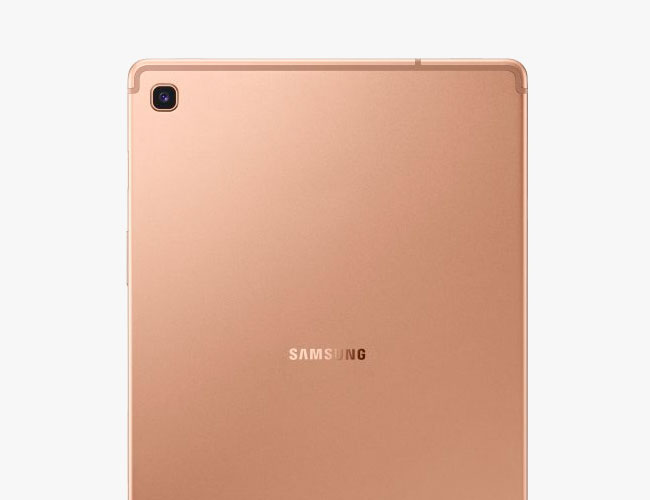
Samsung Galaxy Tab S5e

Price: $389 $369
From: bhphotovideo.com

The Galaxy Tab S5e is a tablet that’s a thinner, lighter and cheaper version of the company’s flagship Galaxy Tab S4. The interesting thing about the Galaxy Tab S5e is that, for roughly half the price, you’d think it’d be a far worse tablet than the Tab S4. But it holds its own.

|

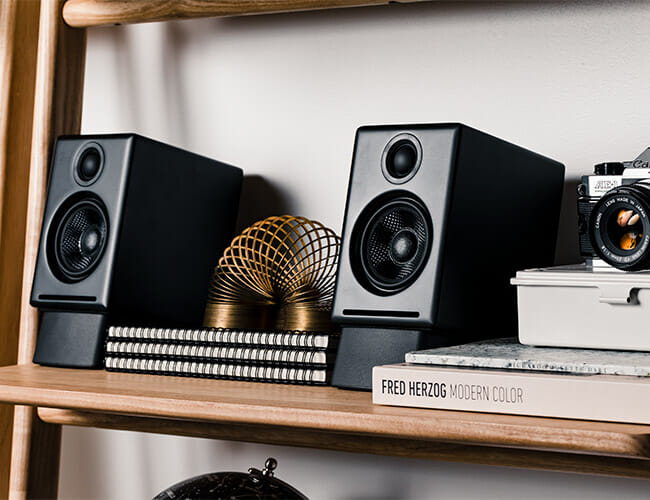
Audioengine A2+ Wireless

Price: $269
From: amazon.com

Audioengine’s A2+ Wireless ($269) are very similar to its A2+ ($249). They’re the same size. They have the same look. They have a power amp built inside the left speaker, so they sound great all on their own. And with numerous wired connections, you can easily hook them up to your computer, turntable, tablet or smartphone. The difference is that Audioengine added Bluetooth aptX to the A2+ Wireless.

|

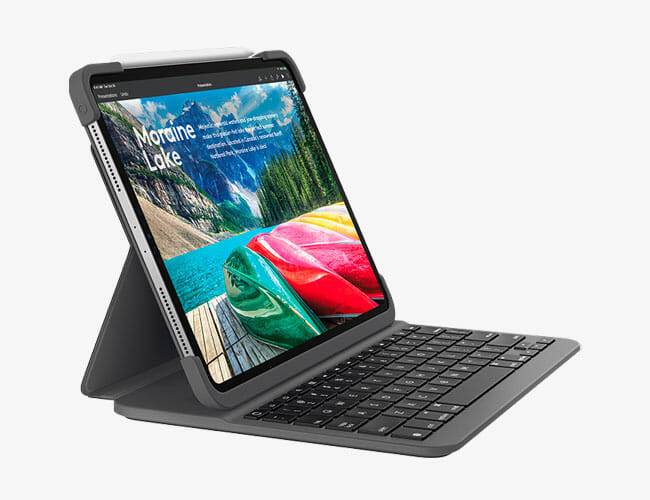
Logitech Slim Folio Pro Keyboard

Price: $120
From: apple.com

Logitech’s Slim Folio Pro keyboard for the iPad Pro starts at $120 — almost $60 cheaper than Apple’s official iPad Pro keyboard accessory. The Slim Folio Pro offers additional functionality, too. It has backlit keys and a dedicated row of iOS shortcut keys to control things like screen brightness and volume. The keys will also automatically light up as soon as the tablet is slid into place.

|

RavPower 61W PD

Price: $36
From: amazon.com

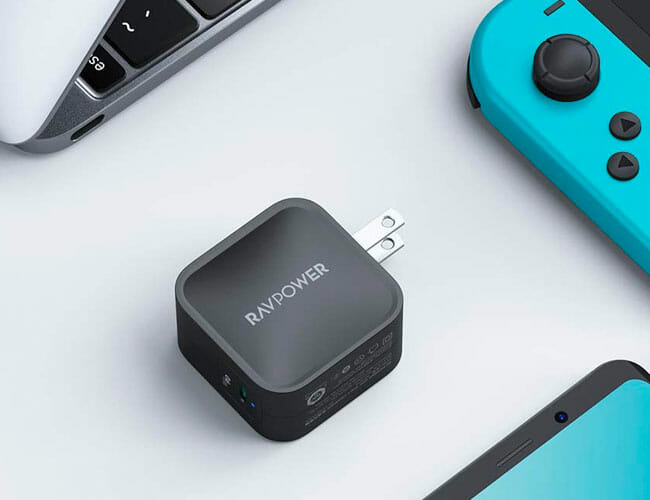
RavPower beat Apple at its own game and announced the smallest-ever 61-watt wall charger with power delivery (PD) for a speedy charge: the RavPower 61W PD 3.0 GaN Wall Charger. It’s about the same size as the 5-watt puck that comes with your iPhone, or roughly half the size of Apple’s own 61-watt charger, and it’s easily capable of charging a MacBook Pro, MacBook Air or new iPad Pro.

|

SteelSeries Apex Pro Keyboard

Price: $200 $190
From: amazon.com

The new OmniPoint switches inside SteelSeries’ Apex Pro keyboards register keystrokes with magnetic sensors with sensitivity that can be adjusted from 0.4mm (extremely shallow and therefore quick) to 3.6mm (very deep and deliberate). For comparison, Cherry MX Speed switches, another gaming mainstay, have a locked-in 1.2mm actuation point.

|

Dell XPS 13 2-in-1

Price: $1,999
From: amazon.com

The taller screen size means that the XPS 13 2-in-1 will have a larger footprint than previous models, but Dell is using this as an excuse to increase the size of both the keyboard and trackpad. Despite the larger footprint, the new convertible laptop is 8 percent thinner, too.

|

Apple Sidecar

Price: free
From: apple.com

You can now use the old iPad you have hanging around as a second screen for your Mac. This new capability of macOS Catalina is called SideCar and uses an iPad as a screen that takes instruction from your Mac and acts as a second monitor, similar to third party apps that already exist like Duet Display. You can use your new screen either to simply extend your desktop, but a handful of apps have more functionality.

|

Roli Lumi Keyboard

Price: TBA
From: playlumi.com

Roli’s Lumi keyboard is a two-octave, 24-key keyboard with traditional piano-style keys that can light up in multiple colors as you play, Bluetooth networking, and a rechargeable battery. If you want a bigger soundscape to mess around on, Lumis are modular and can be connected to each other up to a 72 key setup.

|

Linedock for MacBook Pro

Price: $349+
From: linedock.co

The Linedock is an accessory that sits underneath a newer MacBook or MacBook Pro and adds nine extra ports, 20,000mAH of battery life and up to 1TB of extra storage. Boom!

|

Twelve South StayGo

Price: $100 $85
From: amazon.com

The StayGo ($100) packs a whole lot of ports in a small package: including three USB-A ports (USB 3.0), two USB-C ports, one 4K HDMI port, one Gigabit Ethernet port, and then separate ports for SD and Micro-SD cards. The StayGo essentially adds all the ports that most pro-users or photographers need. Unlike most other USB-C hubs, the StayGo also comes with a detachable meter-long cable, meaning its long enough to hide, maybe in a desk drawer, if you don’t want to clutter up your desk.

|

Samsung Galaxy Book S

Price: TBA
From: samsung.com

Samsung’s Galaxy Book S is the company’s newest ultra-light and ultra-thin laptop. It has a 13.3-inch touchscreen and, most interestingly, it runs on a Qualcomm processor, which have traditionally been less powerful but more energy-efficient than Intel processors, which lets the Galaxy Book S have a battery life rated for up to 23-hours of continuous video playback .

|

Logitech MX Master 3 Mouse

Price: $100
From: amazon.com

Instead of using a physical mechanism to provide the tactile clicks that let you scroll, say, a spreadsheet one row at a time, the MX Master 3 uses magnetic resistance to create the same effect. It feels just the same as you scroll slowly, but it also gives the mouse a superpower: Scroll fast enough and the magnets disengage, then the all-metal wheel is released to spin smoothly and freely with a quiet, satisfying mechanical hiss.

|

Schiit Fulla in Matte Black

Price: $99
From: schiit.com

For years, Schiit Audio’s most affordable product has been the Fulla, a beautiful headphone amp and a DAC that everybody who wants to improve their desktop audio situation, for cheap, should buy. The Fulla costs $99 and it plugs directly into your laptop or desktop. From there, you can use it as a DAC/amp with wired headphones. Or you can use it as a DAC/preamp for a nice pair of powered monitors. Now, it is available in matte black.

|

Note: Purchasing products through our links may earn us a portion of the sale, which supports our editorial team’s mission. Learn more here.

A daily magazine of immersive stories, deals, buying advice, product-forward editorial, and reports from far-flung places.

More by Gear Patrol | Follow on Facebook · Instagram · Twitter · Contact via Email

31 of the Most Notable Audio Products from 2019

This roundup is part of This Year in Gear, a look back at the year’s most notable releases. To stay on top of all the latest product news, subscribe to our daily Dispatch newsletter.

Amazon Echo Buds

Price: $130
From: amazon.com

Working with Bose to include the company’s Active Noise Reduction, the Echo Buds will be the first true wireless headphones Bose noise-canceling tech (beating out the company’s own buds coming in 2020), and one of just a few pairs that offer the feature at all. Previously, Sony’s WF-1000XM3 buds have been the king of the category as the first to build active noise cancellation in such a small body.

|

Amazon Echo Studio
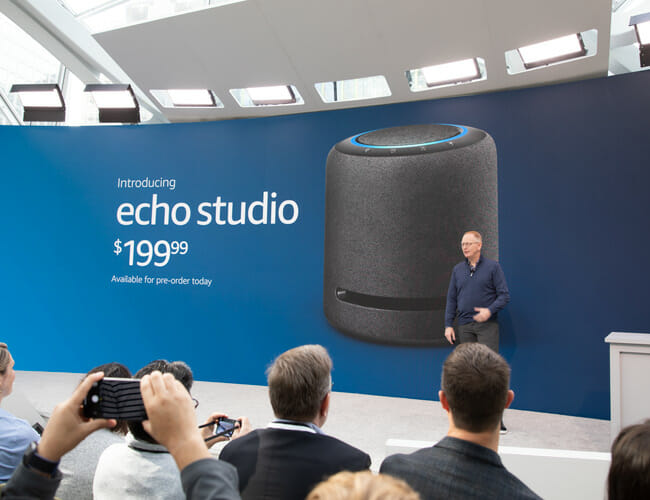
Price: $200
From: amazon.com

The brand new Echo Studio is Amazon’s first true high-end speaker that also delivers 3D immersive sound and supports Dolby Atmos. The speaker has a total of five drivers: three midrange, a downward-firing woofer, and a front-firing tweeter. It’s designed for music lovers who want to get the most out of Amazon’s new lossless streaming service, Amazon Music HD.

|

Audio Technica ATH-ANC900BT

Price: $299
From: amazon.com

Audio Technica’s ATH-ANC900BT is a wireless ANC headphone with Bluetooth 5.0 support. Its juiciest features are a slightly more manageable price ($300, which makes it $50 cheaper than a new pair of QC-35IIs or 1000XM3s) and an estimated 35-hour runtime with ANC activated — longer than either its primary competition. A companion app allows users to adjust noise cancellation levels, hear-through, ambient noise and so on.

|

Bose Nose-Cancelling Headphones 700
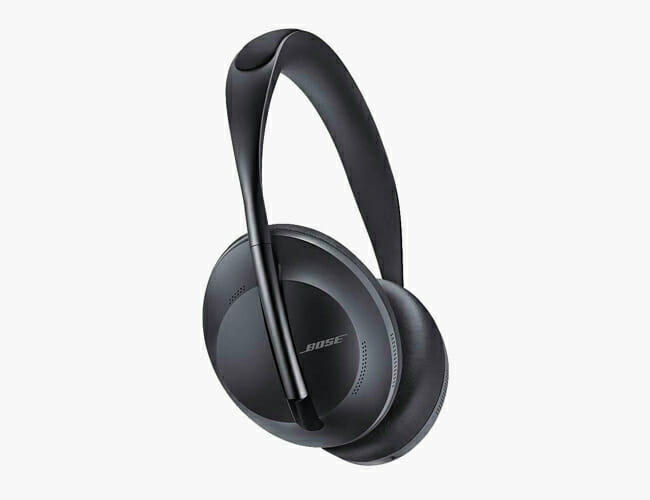
Price: $350
From: amazon.com

Bose’s Noise-Cancelling Headphones 700s have been engineered with a new digital signal processor and a new eight-microphone system, which will supposedly cancel out noise better than the QC35 II. Maybe more importantly, the new microphone system is designed to dramatically improve call clarity; whether you’re in a loud subway or in a crowded office, Bose claims that the built-in mics are able to isolate your voice so that whomever you’re talking to can hear you loud and clear.

|

Bose Home Speaker 300
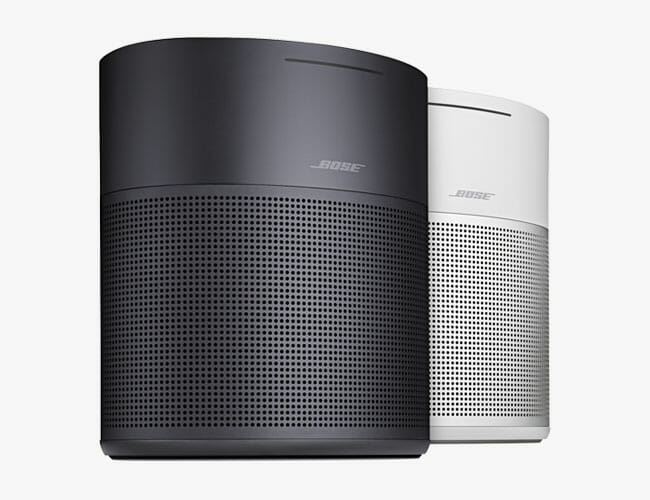
Price: $200
From: amazon.com

Bose’s Home Speaker 300, which is essentially a smaller and cheaper version of the company’s first smart speaker, the Home Speaker 500, lets you decide which virtual assistant you want to talk to; you can choose between Alexa or Google Assistant, but not both simultaneously. Bose’s new speaker will also be able to play in a multiroom setup, but only with Bose’s other smart speakers and soundbars, or with other speakers that support AirPlay 2.

|

Bose Portable Home Speaker
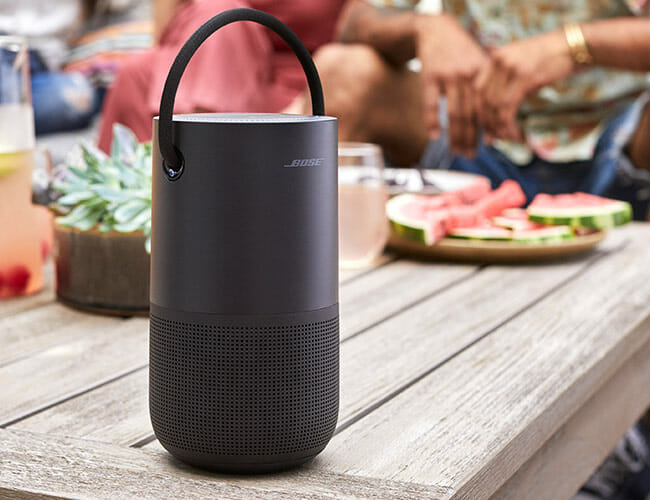
Price: $350
From: amazon.com

The Bose Portable Home Speaker has Wi-fi and Bluetooth, meaning you can use it as a wireless multi-room speaker (as long as you link it up with other Bose smart speakers and soundbars) or a portable Bluetooth speaker, in case you want to take it outside. When at home and connected to Wi-Fi, it can be used as smart speaker; you can talk to either Google Assistant or Alexa and control the music with your voice. The speaker speaker supports AirPlay 2 and Spotify Connect, too, so you can stream music to it in numerous ways.

|

Bowers & Wilkins Formation Flex
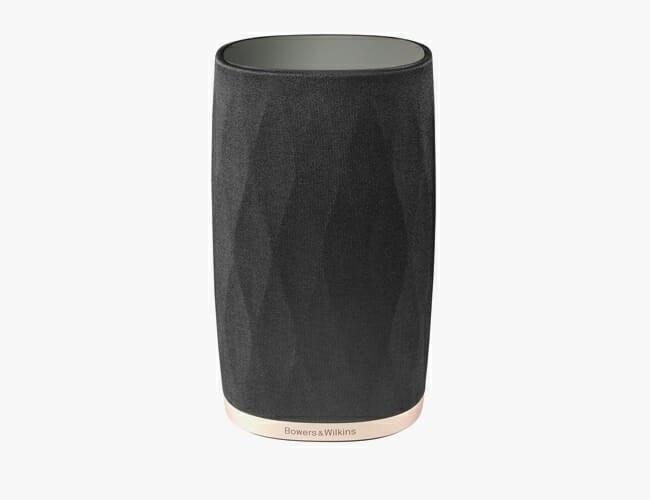
Price: $382
From: bestbuy.com

The Formation Flex has a one-inch tweeter and a four-inch woven glass fiber cone woofer. It’s part of the B&W’s Formation line of speakers (if you couldn’t tell from its name), so you can sync the Formation Flex with any of the company’s other Formation speakers in a multi-room system. Like those other speakers, one of the biggest selling points of the Formation line is that they’re able to stream audio files up to 24-bit resolution and at sampling rates as high as 96kHz, which the company claims it has twice the fidelity of other high-end wireless speakers. And the Formation Flex is able to do just that, too.

|

Braun LE Speakers
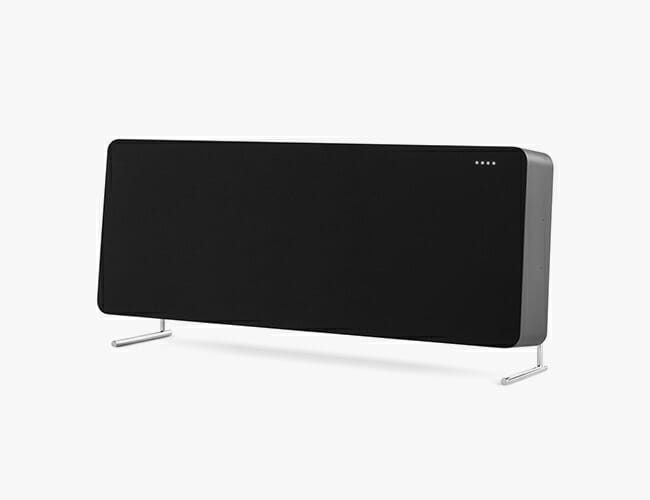
Price: $379+
From: braun-audio.com

Braun’s three new speakers – named LE01, LE02 and LE03, in order from largest to smallest – are designed to be bespoke and minimal, as was true with the original LE speakers, but the new models come with the built-in conveniences of Wi-Fi and Bluetooth, with support for AirPlay 2, Spotify Connect and Chromecast, so you’ll be able to stream to them however you want – you can think of the new Braun LE speakers as high-end competitors to Sonos. You’ll be able to designate the same-modeled speakers in stereo pairs, as well as group them all in a multi-room sound system.

|

Cambridge Audio Alva TT
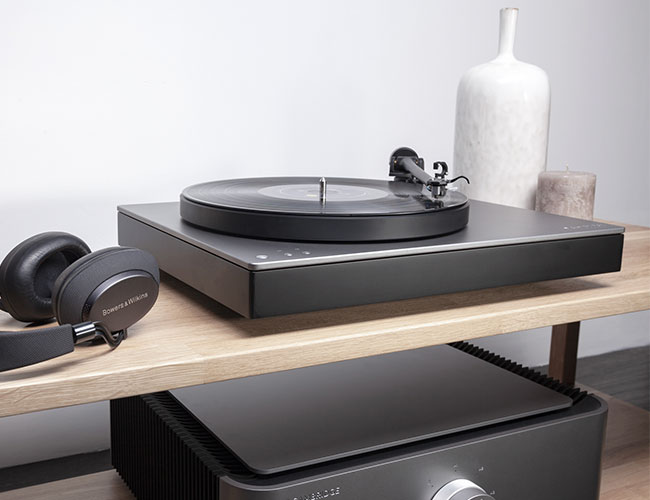
Price: $1,700
From: cambridgeaudio.com

Separating hi-fi aficionados from their favorite cables is proving a slow process since wireless audio has so far not quite matched the quality of actual physical links between components. But Cambridge Audio just dropped a solution for retro-modern enthusiasts at CES: a wireless aptX HD audio turntable. The just-announced Alva TT is the world’s first vinyl player with that distinction, meaning it can stream high-resolution 24-bit/48kHz sound wirelessly to amps, speakers and headphones.

|

Cambridge Audio AX Line
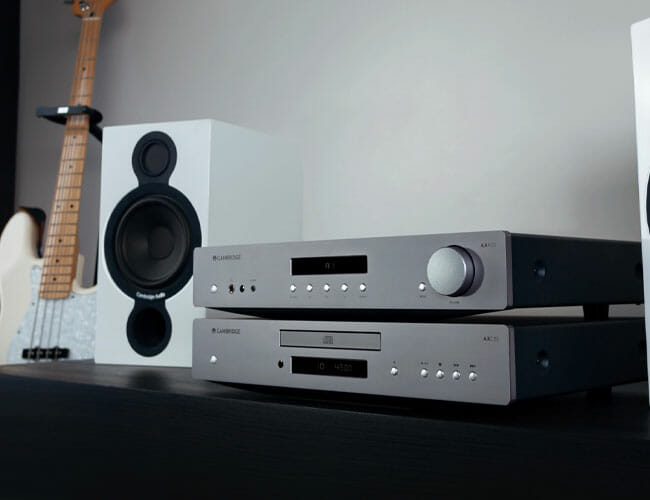
Price: $350+
From: amazon.com

Cambridge Audio is best known for its beautiful hi-fi audio components that, unfortunately, most people simply won’t be able to afford. However, the British audio maker’s new AX range — consisting of a CD player, integrated amplifier and two stereo receiver — strikes the perfect balance between hi-fi and value. The range brings the list price down to something very manageable. The AXC35 CD player and the AXA35 integrated amplifier, for example, both cost $349; and the two stereo receivers, the AXR85 and the AXR85, cost $399 and $499, respectively.

|

Cambridge Audio Melomania 1
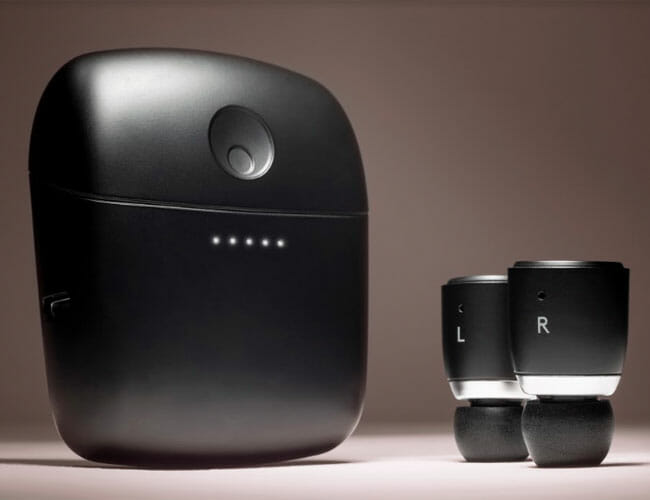
Price: $100
From: amazon.com

There’s good reason(s) to be excited by Cambridge Audio’s wireless earbuds. The company has recently made a push to be affordable, as shown with its recently announced AX range of audio components, and the Melomania 1 also fit that bill. At $130, they’re more affordable than Apple’s AirPods ($159+) and significantly so compared to other high-end true earbuds like the Sennheiser Momentum TW ($299) and the B&O’s Beoplay E8 2.0 ($350). It’s going to be interesting to see how the sound quality stacks up, given the low cost and Cambridge Audio’s high audio standards.

|

Fluance Ai60 Bookshelf Speakers
Price: $200
From: amazon.com

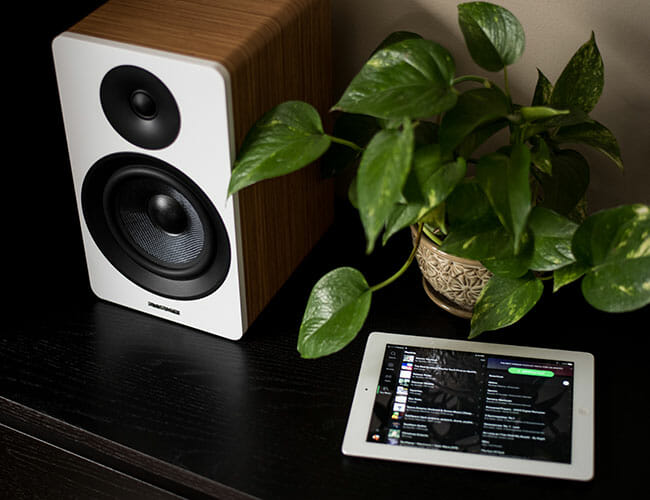
The Fluance Ai60 are powered bookshelf speakers, meaning that they don’t require additional amplification or components because each speaker has a 100-watt class D amplifier built directly into it; you can hook them straight into your turntable, CD player, stereo or AV receiver, or even your new 4K TV (via optical), and they’ll just work. Basically, it simplifies the setup process. There’s also a subwoofer output in case you want to add additional bass. And the speakers support Bluetooth aptX, too, so you can stream audio straight from your smartphone or tablet if you like.

|

Harman Kardon Citation 100 Wireless Speaker
Price: $280
From: amazon.com

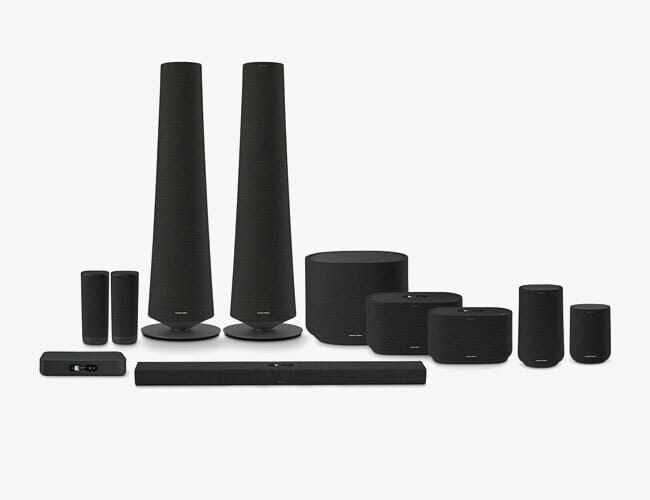
Harman Kardon’s new take on the conventional multi-room speaker system is unique. The new Citation Series is a build-it-out-yourself, completely customizable multi-room speaker and home audio system. You can get individual countertop speakers which work similarly to, say, a Sonos Play:1, or you can build a robust 5.1-channel surround sound system, comprised of a powered soundbar, floorstanding speakers. Not only are the speakers in the Citron Series designed to look sharp — they feature the brand’s signature industrial design — but they have a modern twist. each speaker has a built-in high-resolution LCD touchscreen for touch controls (You’ll be able to do things like play/pause and adjust volume.

|

iFrogz Airtime Earbuds
Price: $42
From: amazon.com

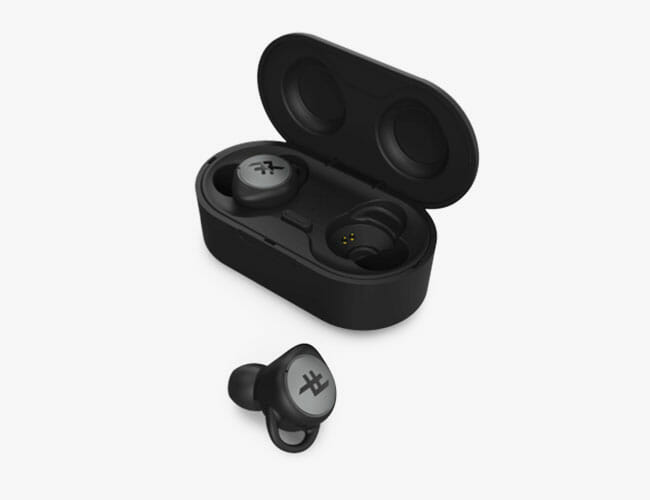
If you’ve never used a pair of iFrogz headphones, you’ve definitely seen them; they’re some of the most popular earbuds that are sold in airports. The company’s first ever true wireless ear buds are called Airtime and the main selling point is price — Airtime can be had for $60, which is a fraction of what Apple AirPods ($159+) and most other true wireless earbuds cost. Despite the affordable price, the iFrogz Airtime have a lot of the features you’d expect in other true wireless earbuds. They have a good battery life (15+ hours), adjustable EQ, Bluetooth 5.0 connectivity and are voice compatible with either Apple Siri or Google Assistant. The Airtime true wireless earbuds are also sweatproof (IPX4), which AirPods are not.

|

Jabra Elite 85h Wireless ANC Headphones

Price: $198
From: amazon.com

The new Jabra Elite 85h have a really long battery life, which the company says can last up to 32 hours with active noise-cancellation turned on. The Elite 85h also work with all the major smartphone assistants, including Alexa, Siri and Google Assistant. Finally, there’s noise-cancellation. The Elite 85h are compatible with a companion app that will allow users to customize the strength of the noise-canceling, as well as tweak the EQ. But Jabra also decked out the Elite 85h with what it’s calling SmartSound, an adaptive audio technology that ensures you’re getting the best listening or calling experience.

|

Jaybird Vista
Price: $160
From: amazon.com

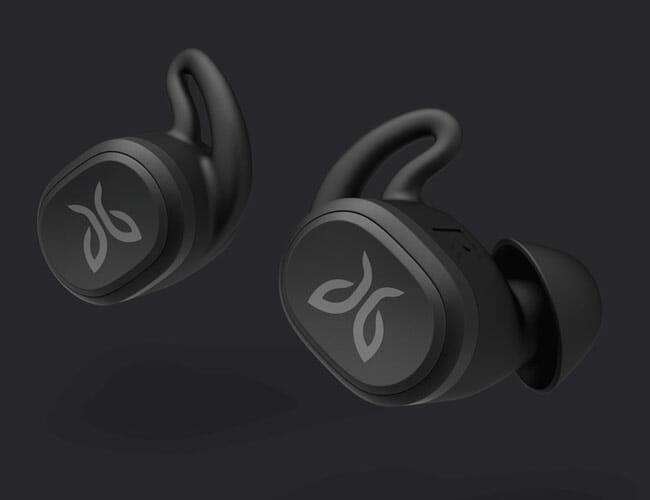
The Jaybird Vista, which are effectively the next-generation of the Jaybird Run and Run XT are tiny. Both the individual Vista earbuds and the charging case are slim and lightweight; the case is actually designed to take on long runs, too. Each individual earbud has a roughly 6-hour battery life, with the case giving each earbud an extra 10 hours.

|

Klipsch Heresey III, Special Edition

Price: $2,798
From: amazon.com

The Klipsch Heresy floor-standing speakers are part of the company’s famed Heritage series; they date back to the 50s and each speaker is handbuilt at the company’s Arkansas factories. And now? You can get them in matte black.

|

Klipsch T5 True Wireless Earbuds

Price: $199
From: amazon.com

On the surface, Klipsch’s T5 True Wireless earbuds look similar to the Jaybird Run. They have the same shape and should fit in most people’s ears; plus, they come with swappable silicon tips, which Klipsch says provide an “excellent seal for noise isolation and superior bass.” As you’d expect, they’re supposed to deliver the same excellent sound that you’d expect from Klipsch. Maybe the neatest feature of the Klipsch T5 True Wireless is its carrying case. It’s small, roughly the same size and shape of the AirPods’ charging case. It’s also strikingly metallic and looks like a Zippo lighter. I have to admit, it definitely looks cool.

|

Logitech Z606 5.1 Speaker System

Price: $130
From: amazon.com

The Logitech Z606 5.1 speaker system brings surround sound to your TV, computer or smartphone — almost any source — and it only costs $130. It has built-in Bluetooth so you can wireless stream audio to the system from a number of different sources, and it’ll also work with any device with RCA or 3.5mm inputs.

|

Master & Dynamic MW65 ANC Wireless Headphones

Price: $399
From: amazon.com

Master & Dynamic used anodized aluminum instead of stainless steel to keep the MW65s ultra-light — they weigh just 250 grams. For comparison, Master & Dynamic’s similar-looking MW60 headphones, which are made with stainless steel, weigh 345 grams; and the Bose QuietComfort 35 II, which are the lightest and most comfortable active noise-canceling headphones we’ve tested, weigh 235 grams. The new lightweight design caters to the fact that most people looking for noise-canceling headphones also want to be able to wear them for longer periods of time (while traveling, commuting or working in noisy business environments). The MW65 headphones have custom 40mm Beryllium drivers, and even though they’re housed in a lighter material, the company claims you expect the same “signature rich, warm sound” that Master & Dynamic has become known for. The headphones feature two different active noise-canceling modes — high or low – depending on how much of the outside world you want to hear. You can shut ANC off altogether, too, if you want to get more battery life out of the headphones.

|

Naim Mu-So 2 Speaker

Price: $1,349
From: amazon.com

The Mu-so 2 home speaker has more than 10 times the processing power of the original Mu-so, which helps it stream higher-resolution audio (up to 32bit/384kHz) and create an even bigger sound. While the Mu-so 2 looks nearly identical to the Mu-so, Naim radically improved its volume knob, which is what all Naim’s speakers have become known for. It’s still huge and wonderful, but the new dial now has a built-in proximity sensor. Whenever you place your hand near it, the dial will automatically wake up and become illuminated. This is also the most obvious way to tell if you’re dealing with a first-generation or second-generation Mu-So speaker — just stick your hand near it.

|

LEARN MORE

Naim Mu-so Qb V2

Price: $899
From: naimaudio.com

The Mu-so Qb 2 looks almost identical to the original Mu-so Qb, but the most obvious physical change is with the new volume dial; it now has a proximity sensor, so it will illuminate when it detects your hand hovering over the volume dial, and it now has a completely new UI with 15 touch-sensitive buttons. You can preset Spotify or Tidal playlists to the speaker, that way you don’t have to take out your smartphone.

|

Panasonic HTX90N headphones

Price: $120
From: amazon.com

The Panasonic HTX90N headphones have 40mm drivers with neodymium magnets, which the company says helps deliver of rich sound. They have a 24-hour battery life with noise-canceling turned on, which is actually really impressive. And they also have a built-in voice assistant function, in case you want to ask your phone something without taking out of your pocket or bag. Lastly, for listeners who really want to turn up the bass, there’s also a “bass enhancer” button on the side of the headphones.

|

Powerbeats Pro

Price: $200
From: amazon.com

Like the second-generation AirPods, the Powerbeats Pro are true wireless earbuds that are powered by Apple’s new H1 chip. They can fast pair to your iOS devices and they support hands-free “Hey Siri.” They also promise to deliver nine hours of battery life between charges and more than 24 hours (total) with the charging case, which is better than what the AirPods can do.

|

Sennheiser Ambeo Soundbar

Price: $2,500
From: sennheiser.com

Sennheiser’s first-ever speaker, the Ambeo Soundbar has 13 total drivers — six four-inch woofers, five tweeters and two top-firing speakers — and is designed to create a completely immersive experience. Unlike traditional 2.0 soundbars, or 2.1 soundbars which are also decked out with a wireless subwoofer, the Ambeo soundbar is an incredible 5.1.4 speaker that’s, surprisingly, basically the same size as most other soundbars that you’ll find. With its six woofers, it’s able to produce incredibly low bass (30hz), while its top-firing speakers create virtual height channels so you’re able to get a completely immersive experience.

|

Sennheiser Momentum Wireless

Price: $400
From: amazon.com

Sennheiser’s Momentum Wireless headphones are much more customizable when it comes to noise-cancellation. There are three different noise-canceling settings you can toggle through, and there’s a new transparency mode so you can better hear the sounds around you. You can even adjust the EQ settings via the Momentum app. Also new, the headphones are now integrated with optical sensors so that they’ll automatically turn on and play music when you put them on your head, and pause the music when you take them off.

|

Sony WF-1000XM3

Price: $198
From: amazon.com

The Sony WF-1000XM3 are a big deal because they promise similar levels of sound quality and noise cancellation as the Sony WH-1000XM3 — the best noise-canceling headphones you can buy (although we’ll have to test Bose’s newest headphones to see if that still stands up).

|

Sony’s PS-LX310BT Turntable

Price: $150
From: bestbuy.com

Sony’s PS-LX310BT turntable sends audio directly to wireless speakers, soundbars or headphones via its own Bluetooth transmitter. It will automatically maneuver the tone arm in a single-step playback feature; it has a built-in phono pre-amp for use with amplifiers; and it has a USB output to digitize vinyl collections. The aluminum die-cast platter helps balance sound and a sturdy dust-cover protects the tone arm from bouncing around by the acoustic pressure from the speakers. Finally, for those who prefer their audio delivered via cables, the turntable comes with that option, as well.

|

Soundcore Anker Liberty Air

Price: $80
From: amazon.com

The Liberty Air won’t blow you away with features, but that’s not what they’re designed to do. They’re meant to be affordable, and compared to AirPods they definitely are. The Liberty Air come with a charging case that’s a similar size and shape to the pocketable AirPods housing and charges with a micro-USB cable. It packs Bluetooth 5.0 (and a simple pairing process), which may be the next best thing to Apple’s W1 Bluetooth chip. And the Liberty Air come with several silicone eartip options, which not only help with fit — AirPods don’t fit in everybody’s ears — but also makes these true wireless earbuds water- and sweat-resistant (IPX5), which AirPods are not.

|

TCL Alto 5 and Alto 7

Price: $80
From: amazon.com

TCL’s Alto 5 and the Alto 7 are the company’s first-ever audio products. Both of TCL’s new soundbars are designed to work really easily with any existing TCL Roku TV. And beyond ease of installation, TCL’s new soundbars are designed to deliver a “premium home theater experience.” The two different soundbars are actually very similar; their main difference is size. The Alto 5 soundbar is designed to fit 43-inch TVs and larger, while the Alto 7 soundbar is really optimized for 55-inch-and-up TVs. It’s worth noting that both soundbars come in plus-sized models – the Alto 5+ and the Alto 7+ – that come equipped with a wireless subwoofer to deliver the extra bass you want while watching action movies or playing FPS video games. Additionally, since both soundbars have built-in Bluetooth, you can use them as wireless speakers and stream music directly from your smartphone or tablet.

|

Technics SL-1200MK7 Direct Drive Turntable

Price: $1,000
From: bhphotovideo.com

Audiophiles and DJs rejoice. After a nearly 10-year hiatus, Technics revived its SL-1200 turntable series. The new models, dubbed the SL-1200 MK7 for the US and Japanese markets, will be the direct follow up to the SL-1200MK6-K and SL-1200MK6-S turntables released in 2008. With it, Technics promises “outstanding sound quality,” highlighting a new coreless direct drive motor to safeguard against cogging and rotation irregularity.

|

Note: Purchasing products through our links may earn us a portion of the sale, which supports our editorial team’s mission. Learn more here.

A daily magazine of immersive stories, deals, buying advice, product-forward editorial, and reports from far-flung places.

More by Gear Patrol | Follow on Facebook · Instagram · Twitter · Contact via Email

13 of the Most Notable Mobile and Charging Gadgets of 2019

This roundup is part of This Year in Gear, a look back at the year’s most notable releases. To stay on top of all the latest product news, subscribe to our daily Dispatch newsletter.

Anker PowerPort Atom PD 4

Price: $100
From: amazon.com

“The PowerPort Atom PD 4 can fast charge multiple devices, with two USB-C and two USB-A ports (both which are decked out with high-speed charging technology) at the same time. And it only takes up one wall outlet. With this one adapter, you can charge your USB-C laptop, wireless headphones, smartphone and smartwatch. ”

|

EasyFinder

Price: Free
From: easyfinderapp.com

EasyFinder allows you to create your own keyboard shortcuts to open that specific app, document, folder or file directly. You can also change the name of said file or folder after the fact and EasyFinder will automatically keep track of those changes. You can also create custom lists of important files that can be quickly accessed via the desktop menu bar.

|

Mophie 3-in-1 Wireless Charging Pad

Price: $140
From: apple.com

“The Mophie 3-in-1 Wireless Charging Pad ($140) is specifically designed to your charge your Apple devices, and it’s only available on Apple’s website or brick-and-mortar stores. The charging pad is capable of wireless charging your iPhone at 7.5 watts, which is as fast as an iPhone can charge. There’s a dedicated cavity for your AirPods, so you can just slot the case in there without having to worry if the charging case is perfectly aligned. And the integrated charging stand for Apple Watch is optimized for Nightstand Mode, allowing the smartwatch to display the date, time and alarm (if you set it) while charging. ”

|

Mophie Powerstation Fabric

Price: $40+
From: zagg.com

Mophie’s 2019 power station line of batteries have a USB-C port that can act as an input or an output, meaning it can dish out charge when connected to another device (like a smartphone) or accept charge when plugged into the wall. In theory, it’s the only port you really need, but all the powerpacks sport at least one USB-A port as well.

|

Mophie Powerstation Keychain

Price: $PRICE
From: verizonwireless.com

“Mophie’s Powerstation Keychain has dimensions smaller than most wallets, and it
includes a carabiner and an integrated USB-C cable. With a retail price
of just $40, the 1,200mAh charger is ideal for clipping to the inside of
your commuter bag and forgetting all about it until that fateful day you find yourself
stranded and creeping below 20 percent. It’s good for about half a
charge on a modern smartphone — or just enough to see you through the
rest of your day.”

|

Nomad Base Station Pro

Price: $TBA
From: hellonomad.com

Nomad’s Base Station Pro is the closest thing we’ve seen to Apple’s failed AirPower initially slated to launch this year. Not only can the Base Station Pro wirelessly charge three devices at once, it uses a new technology called FreePower that does so at any orientation. In other words, you don’t have to perfectly align your devices on the pad in order for them to charge correctly.

|

OtterSpot Wireless Charging System

Price: $130
From: otterbox.com

The OtterSpot Wireless Charging System consists of one 36-watt charging base and a series of portable power banks (called “OtterSpots”); the charging base plugs into the wall and, acting like any other wireless charging mat, will wireless charge your smartphone or the individual OtterSpots.

|

PowerPort Atom III Slim

Price: $35
From: amazon.com

This 30-watt power adapter is a little over half-an-inch thick (0.63-inches to be exact) and is capable of fast charging any of the latest iPhones and charging USB-C laptops; Anker claims that it can fully charge a 12-inch MacBook in two hours. The Anker PowerPort Atom III Slim is available right now on Amazon for $35.

|

SanDisk 1TB Extreme MicroSD

Price: $248
From: amazon.com

There is no such thing as unlimited storage, but Sandisk’s new 1TB microSD comes pretty close. It’s the highest-capacity microSD card that the company has ever sold. Plugged into your DSLR, the card could hold tens of thousands of RAW
photos or hundreds of thousands of JPEG photos. Plugged into a Nintendo Switch, it could hold over 70 copies of Breath of the Wild, notorious for taking up 40 percent of the system’s default space 32GB space.

|

Smart Brightness for Dark Mode

Price: $6
From: apps.apple.com

If you’re a big fan of Dark Mode, there’s a new app you should try. It’s called Smart Brightness for Dark Mode ($6) and, according to the company, it “smartly adjusts your Mac’s brightness according to white or dark content on your screen.” Basically, no part of the screen gets too bright when you’re using Dark Mode, and this could benefit your eyes in the long run.

|

Spansive Source Wireless Charger

Price: $170
From: amazon.com

The Source is a first-of-its-kind Qi wireless charger by Spansive. It’s a vertical charger, not too dissimilar from the myriad vertical charging stands you have seen, but it’s designed to charge multiple smartphones. Its teepee design allows it to wirelessly charge four smartphones simultaneously, plus there are two USB-A ports on the side so you can charge a total of six devices at once. It’s sort of like AirPower, or what AirPower should have been, but in vertical stand form.

|

Steelcase Flex Mobile Power

Price: Priced to order
From: steelcase.com

The Steelcase Flex Mobile Power is a system of portable batteries called Mobile Power units, each of which has several ports and is capable of charging up to three laptops for a full day. Each unit is also smart enough to detect which laptop has the lowest battery life and then direct more power that way. Each of the Mobile Powerunits is about the size of a large thermos and can easily be carried out anywhere in an office. The idea is that an individual or a small team can break away from their desk at any time. At night, the Mobile Power units go back on a proprietary charging tray so they can be ready for the following day. This tray can charge up to five units overnight.

|

V-Moda SpeakEasy

Price: $101
From: amazon.com

The Speakeasy is one of the latest headphone accessories by V-Moda, the audio company best known for its Crossfade line headphones, which DJs adore. It’s a Lightning cable with an integrated amp and 24-bit DAC, so it’s specifically designed to improve the audio on your iPhone or iPad (if you’re listening to wired headphones).

|

Note: Purchasing products through our links may earn us a portion of the sale, which supports our editorial team’s mission. Learn more here.

A daily magazine of immersive stories, deals, buying advice, product-forward editorial, and reports from far-flung places.

More by Gear Patrol | Follow on Facebook · Instagram · Twitter · Contact via Email

13 Notable Smart Home Gadgets That Came Out in 2019

This roundup is part of This Year in Gear, a look back at the year’s most notable releases. To stay on top of all the latest product news, subscribe to our daily Dispatch newsletter.

Arlo Technologies Ultra 4K

Price: $530
From: amazon.com

This little wireless camera shoots 4K video and automatically zooms and tracks movement in its 180-degree field of view.

|

Awair Element

Price: $149
From: getawair.com

The Awair Element is a new indoor air quality monitor that looks like a retro radio.It has five different air quality sensors, allowing it to measure things like temperature, humidity, carbon dioxide, volatile organic compounds (VOCs) and other microscopic particulate matter (PM2.5).

|

Awair Glow C

Price: $89
From: amazon.com

The Awair Glow C isn’t just a smart plug; it’s an air quality monitor that measures the temperature, humidity and overall air quality of the room.
|

Eve Energy Strip

Price: $80
From: amazon.com

Not only will this be the most-impressive plug you’ve ever owned, but it’s also likely to be the prettiest. It has an aluminum frame and a black matte body, and it recently won a 2019 Red Dot Award for product design.

|

iDevices Instinct

Price: $100
From: amazon.com

The iDevices Instinct ($100) is a smart light switch with Alexa built-in. You can manually switch on/off the light by pressing the button, or you can speak directly to “Alexa” and turn the light on/off. No need to have an actual Echo or Echo Dot speaker within shouting distance.

|

iRobot Roomba S9

Price: $1,099
From: amazon.com

iRobot, makers of the Roomba robo-vacuums and the Braava robo-mops, combined the two. The new S-Series vacuum adds more suction, a corner-hugging design and the robo-vacuum industry’s first-ever anti-allergen system.

|

Philips Hue Filament

Price: $25+
From: bestbuy.com

The Philips Hue 2019 range added three Edison-style lightbulbs, which combine 19th-century aesthetics with 21st-century innovation.

|

Philips Hue Smart Bulbs with Bluetooth

Price: $15+
From: bestbuy.com

Buying into the Philips’s smart lighting system once meant purchasing bulbs and an almost-$50 hub, but its bulbs now work all by themselves via Bluetooth.

|

Phyn Smart Water Assistant

Price: $15+
From: bestbuy.com

Phyn makes one of the least sexy smart gadgets in the smart home market. It’s also one of the most useful. The Phyn Smart Water Assistant is the most affordable and most convenient smart water monitoring system you can buy.

|

Remo+ RemoBell S

Price: $99
From: amazon.com

The RemoBell S costs just $99, which undercuts most other video doorbells on the market by some margin.

|

Sevenhugs Smart Remote U

Price: $200
From: bestbuy.com

The Smart Remote U is a new smart remote that’s substantially more affordable than the Sevenhugs’s original-and-newly-renamed Smart Remote X. Both smart remotes look similar, boasting that sleek, all-touchscreen design that Sevenhugs has become known for.

|

Wyze Sense Starter Kit

Price: $20
From: wyze.com

The Wyze Sense costs $20 and consists of two contact sensors (for doors or windows), a motion sensor and the Wyze Bridge, a device that plugs into the back of one of your Wyze security cameras (either a WyzeCam or a Wyze Cam Pan).

|

Wyze Smart Lock

Price: $90
From: wyze.com

Wyze’s first smart lock costs just $90, which is significantly cheaper than most other smart locks by Nest, August and Schlage.

|

Note: Purchasing products through our links may earn us a portion of the sale, which supports our editorial team’s mission. Learn more here.

A daily magazine of immersive stories, deals, buying advice, product-forward editorial, and reports from far-flung places.

More by Gear Patrol | Follow on Facebook · Instagram · Twitter · Contact via Email