All posts in “tech”

This Productivity App Is Maybe the Best $2 I’ve Ever Spent

<!–This Productivity App Is Maybe the Best $2 I’ve Ever Spent • Gear Patrol<!– –>

Once you try it you’ll never go back


It’s easy to be tricked into believing that productivity is complicated. The MBA-isms thrown around in the marketing of project management tools can certainly make it feel that way sometimes. Agile scrums. RACI matrices. Tactical huddles. But in truth productivity begins and ends with something dead simple; good organization. And that’s exactly what the incredibly straightforward and cheap MacOS app Magnet has been offering me for years.

Magnet maps new hotkeys onto your keyboard that make snapping windows into different positions on your screen quick and intuitive. On installing, moving a window to the top right corner, button half, one third, left half or full screen becomes as simple as holding down ‘Control’, ‘Option’ and then hitting one of fifteen different keys.

And that’s it. That’s the app.

It’s almost too unremarkable to get excited about. In fact, I had this on my machine for nearly two years before it even occurred to me as worth sharing with anyone of my coworkers. That is the beauty of this add-on. There is barely a learning curve, and once you get it the app practically disappears, and quickly organizing your desktop takes a fraction of a second.

If you use Windows 10, you might be familiar with some of this functionality in the form of Snap Assist. If it didn’t cost just $1.99 on the app store, it’d be worth getting mad at Apple for neglecting to add the feature standard.

Note: Purchasing products through our links may earn us a portion of the sale, which supports our editorial team’s mission. Learn more here.

<!–

–>

<!– –><!–

–>

The TaoTronics LED Desk Lamp with Qi-Enabled Wireless Charger Is A Home-Office Essential

Working at home is becoming the new normal amid the current COVID-19 pandemic and when it comes to work-at-home setups, proper and healthy lighting is a must. Ceiling lights can get quite bright and awkward when you want to brighten up your work desk. This is where desk lamps come in handy. The TaoTronics LED Desk Lamp with Qi-Enabled Wireless Charger is a must-have for any work-at-home setups. It not only provides light but also charges tech devices and offers you the freedom to adjust brightness settings according to your mood.

This is the most versatile LED desk lamp you could get that does double duty as both a lamp and a charger. Its base houses RAVPower’s HyperAir technology for fast Qi-Wireless charging up to 7.5W and 10W for iPhone and Samsung smartphones, respectively. The base also comes with a built-in 5V/1A iSmart USB charging port to power other non-wireless devices.

Meanwhile,  the LED light offers an output of 400 Lumens and features five brightness levels, five color temperatures modes, and night light. It even has a one-hour auto-shutoff timer to save power.

The TaoTronics LED Desk Lamp with Qi-Enabled Wireless Charger is a workhorse and yet it boasts a sleek and slim profile that doesn’t take up much space on your desk. It measures 15.6″ L x 6.8″ W x 16.7″ H and weighs 2.75 pounds. It looks and feels modern and doesn’t look off in any room decor. Best of all, you can rotate the lamp arm 180 degrees so you easily direct the light where you want it.

Get It Here

TaoTronics LED Desk Lamp with Qi-Enabled Wireless Charger

TaoTronics LED Desk Lamp with Qi-Enabled Wireless Charger

TaoTronics LED Desk Lamp with Qi-Enabled Wireless ChargerTaoTronics LED Desk Lamp with Qi-Enabled Wireless Charger

Images courtesy of TaoTronics

Stay Home: This 55-Inch 4K Ultra HD TV is 44% Off on Amazon

Since we’re all stuck inside, we decided to do some digging to find useful products to help stay productive, occupied, entertained and fit while you Stay Home. We’ve come a long way since you had…

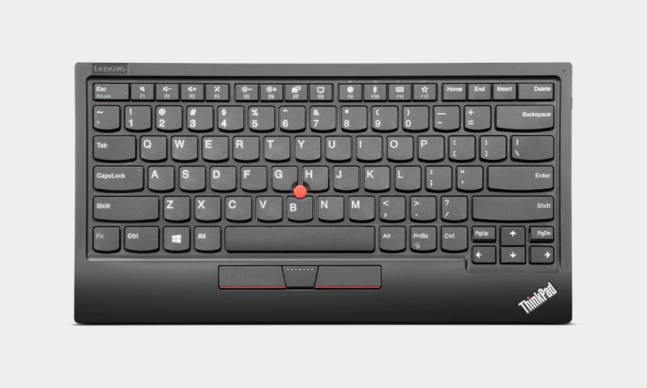
IBM Lenovo ThinkPad TrackPoint Keyboard II

From Logitech’s G-branded keyboards, to the Das Keyboard, to Razer Gaming options, there are more than a few “best computer keyboards” you can use for everything you need a keyboard for. But when it comes…

It’s Time to Buy a MacBook Pro Again

<!–It’s Time to Buy a MacBook Pro Again • Gear Patrol<!– –>

Apple Announced a 13-inch MacBook Pro with a Magic Keyboard


Today, Apple announced a refreshed model of its 13-inch MacBook Pro and the big news is that it has a new keyboard. Or well, it has the same Magic Keyboard that Apple has recently given its new MacBook Air and 16-inch MacBook Pro. It means that Apple no longer sells any new laptops with the low-travel butterfly-switch keyboards, which the company introduced about five years ago and they’ve been the most polarizing feature of Apple’s laptops ever since. And yes, it’s a good time to buy Apple’s most popular-sized MacBook Pro again.

The new 13-inch MacBook Pros have been refreshed with a little more than just a clickier keyboard. Apple has given the new 13-inch MacBook Pros more power (thanks to an optional Intel 10th-generation processor), a better graphics card, faster RAM and more storage (the new base storage is 256GB, up from 126GB). The base model still costs $1,299, which is the same price as the previous 13-inch MacBook Pro.

The new Magic Keyboard still comes decked out with a TouchID fingerprint sensor, a physical Escape button and a Touch Bar. If you were hoping for a 13-inch MacBook without a Touch Bar, which Apple stopped producing about two years ago, you’re still out of luck.

You can order a new 13-inch MacBook Pro today on Apple’s website and they’ll be available in Apple Stores later this week.

Note: Purchasing products through our links may earn us a portion of the sale, which supports our editorial team’s mission. Learn more here.
Tucker Bowe

Tucker Bowe has been on Gear Patrol’s editorial team since 2014. As a Tech Staff Writer, he tracks everything in the consumer tech space, from headphones to smartphones, wearables to home theater systems. If it lights up or makes noise, he probably covers it.

More by Tucker Bowe | Follow on Instagram · Twitter · Contact via Email

<!–

–>

<!– –><!–

–>

Exam Dumps: Your Best Assistants to Tackle Microsoft 70-743 Exam

How do you advance your career as a network systems administrator? Naturally, a systems administrator is expected to have detailed knowledge of several technologies, ranging from servers to networks, programming and security. But as a systems administrator, what should your next path be? How can you advance your skills, increase your salary and even keep pace with the changing IT landscape?

In this post, we suggest one of the best ways to upgrade your skills and remain relevant in IT by pursuing the MCSA certification in Windows Server 2016 through the Microsoft 70-743 test. Together with these two issues, we will cover the reasons for obtaining this badge and the tips you can utilize to get ready for your Microsoft exam.

So, let’s first delve into the important details of 70-743 assessment.

https://www.examsnap.com/training-course/microsoft-70-740-mcsa-windows-server-2016.html

Overview of Microsoft 70-743 Exam

Perhaps, you are already aware that passing three standalone exams of 70-740, 70-741 and 70-742 qualifies candidates for the MCSA Windows Server 2016 certification. However, there’s a better substitute for them if you have the MCSA badge in Windows Server 2008 or 2012 R2. This substitute is the Microsoft 70-743 exam, which is known as Upgrading Your Skills to MCSA Windows Server 2016 and it is the only one test you should pass to keep your skills updated and obtain the badge in Windows Server 2016. This composite test is ideal for candidates looking to showcase their ability in deploying a wide range of features related to Windows Server 2016 infrastructure. In order to qualify for 70-743, you should be knowledgeable about the installation, storage, networking as well as computing in the 2016 version of the Windows Server. Some of the key objectives covered in this test also include Hyper-V implementation, deploying storage solutions, Windows Server installation, and host environments, among the rest.

https://www.examsnap.com/training-course/microsoft-md-100-windows-10.html

Now let’s focus on exam 70-743 details.

The Microsoft 70-743 Test Facts

The Microsoft 70-743 exam entails approximately 40-60 questions to be attempted within a maximum of 2 hours. The exam questions may come in several formats including drag and drops, active screen, hot areas, build list, and case studies among many others. The passing score is 700 and all candidates will have to pay an entry assessment fee worth $165 before registering for their test. Because performing well in this exam is a requirement for attaining the said MCSA Windows Server 2016 certification, let’s now shift our focus to the certification details.

What to Know About the MCSA Windows Server 2016 Badge?

It should be mentioned that the MCSA Windows Server 2016 credential focuses on a variety of concepts within the modern Server 2016 domain. Becoming accredited, therefore, is an effective way to market your skills and demonstrate your knowledge to potential hiring managers. So, why is it necessary to update your skills by passing the Microsoft 70-743 exam? Find a few reasons covered below.

https://www.examsnap.com/training-course/az-300-azure-architect.html

Reasons to Become MCSA Windows Server 2016 Certified

Here go the most vivid reasons to achieve the MCSA credential in Windows Server 2016. So, with this badge you can:

1.Enhance Your Professional Value

The new skills gained from the MCSA certification in Windows Server 2016imply that you are more knowledgeable and can perform more complex operations within the Windows Server 2016 platform. This enhances your professional value by enabling you to provide dependable solutions in real-world situations.

2.Improve Career Prospects

By becoming Microsoft accredited in the 2016 version of Windows Server, you show that you can assume specific roles within the IT industry. And because your skills are globally recognized by such an IT leader as Microsoft, you have better chances of serving as a network systems administrator or a computer network specialist.

https://www.examsnap.com/training-course/ms-100-microsoft365.html

3.Increase Your Salary

With updated knowledge and skills, you can improve your chances of enjoying salary advantages at the workplace. While certifications never equate to success in the industry, you will likely attract higher roles in your company that come with improved wages. For example, according to the research on the Payscale.com, the salary of a network systems administrator is about $60,699 per year while a computer network specialist can earn on average $56,268 yearly.

To become Microsoft accredited and enjoy all these perks, it’s of vital importance to prepare for your test excellently. In the next passage, we will look into the methods you can opt for to launch your exam prep.

How to Prepare for Your 70-743 Assessment

To pass your 70-743 exam easily in your first try, you will need some form of training using the best training resources. Here are a few tips to adopt when studying for your Microsoft 70-743.

  • Utilize the Instructor-Led Training

This is Microsoft’s classroom training platform that aims to equip candidates with the relevant skills and objectives as covered by the Microsoft 70-743 test. You can enroll for the self-paced training or the instructor-led option to build your knowledge of the Windows Server 2016 domains.

https://www.examsnap.com/training-course/microsoft-70-480-mcsd-windows-store-apps.html

  • Train with Books

Not all books can be useful when preparing for your MCSA 70-743 assessment but Exam Ref 70-743 Upgrading Your Skills to MCSA: Windows Server 2016revision guide is worth every penny. This guide highlights all the key exam details in a precise manner to help boost your knowledge and give you the upper hand when the exam day finally arrives.

  • Use the Microsoft Official Practice Test

It’s important to have all the details you will need about the Microsoft 70-743 exam prior to registering for the test. Microsoft website will give you important information about its official practice test which includes 70-743 test objectives covered, and249 questions with detailed explanations.

  • Make Use of Exam Dumps

To completely master all the exam concepts, it’s necessary to practice on a frequent basis. This is where updated exam dumps from the ExamSnap website come in handy. This provider offers their users free and actual 70-743 exam dumps that can be downloaded instantly after you’ve accessed their page. But if you’d like to be streets ahead of other candidates for this exam, then you are advised to opt for the paid 70-743 Premium Bundle. At just $39.97 you can acquire such items as a collection of previous exam questions and answers verified by IT experts, a training course, and a study guide. In addition, you’ll need to download the VCE Player, to open these dumps. This educational software will create the environment of the real assessment so that you can build up your confidence before taking the real exam.

Bottom Line

Attaining the MCSA certification in Windows Server 2016 is an important first step if you want to accelerate your career and serve as a systems administrator or a computer network specialist. And dependable training materials will give your learning journey a huge boost during your Microsoft 70-743 exam prep. The training modalities we have highlighted in this post including the ExamSnapwebsite have been tried and tested by thousands of candidates across the globe. That’s the only reason you should trust them to help you fulfill your learning objectives in your first attempt.

The Best Smart Home Cameras of 2020

Smart cameras are running home security companies like ADT out of business. Brinks’ home security division went bust a couple of years ago, and it all stands to reason — home security cameras are to subscription-based security systems what HBO GO is to cable. Plus, there’s no need to shell out a lot for something that you only use one percent of the time. The new generation of smart cameras are perfect for a modern smart home. The only question left is: which one is right for your home?

The Most Important Features To Look For

Most of today’s home security cameras have a lot in common. Motion sensors, night vision, two-way talk and a companion app that allows you to, at any time, get a live feed of what’s happening in front of the camera are all standard baseline features. When it comes to differences, there are four main things to consider:

Compatibility: If you already own smart home devices, you’ll want a home security camera that plays well with them. An Alexa-only camera is likely a bad fit for your Google-based smart home no matter how cheap or capable is.

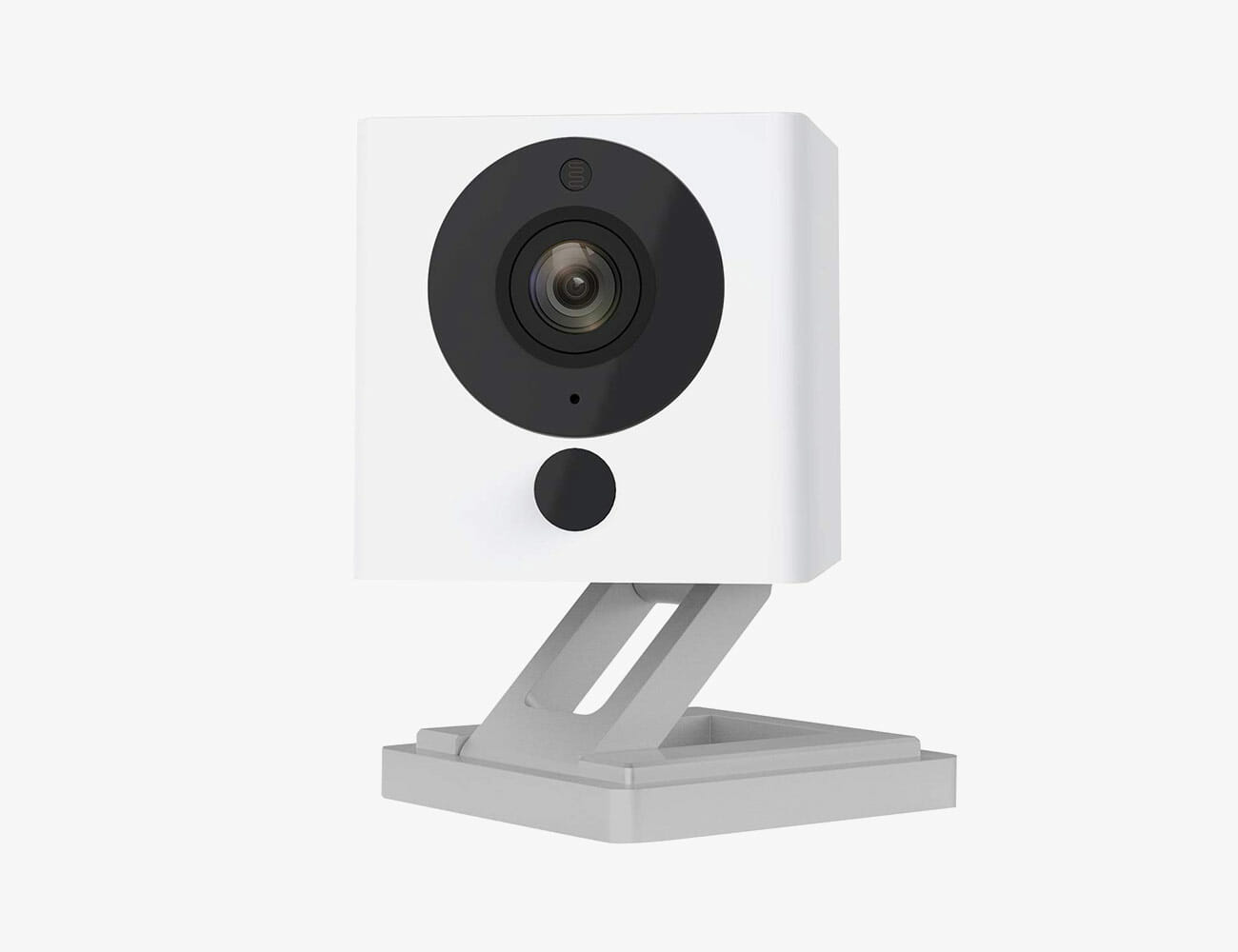
Price: When it comes to the basics, affordable options like the Wyze Cam v2 will have you covered with features like 24/7 live feed, two-way talk, night vision, motion alerts. More expensive cameras can offer better app experiences or advanced (but niche) functionality. Generally, a cheaper camera will work just fine, especially to start.

Subscription: Many smart home security cameras require a monthly or annual subscription fee to get its more advanced features like facial recognition, person alerts, the ability to share clips and to access recordings stored in the cloud. You likely won’t need a subscription like this to see what’s going on live, but factor in the cost if you require more than that.

Wired or Battery: Some security cameras are battery-powered, giving you more freedom in where they are placed, at the cost of having to remember to charge them. Depending on your situation, the tradeoff might be worth it.

Here’s the rundown of our favorite families of home security cameras, and the models available to suit various needs . Remember, just because a camera is expensive doesn’t necessarily make it immediately better. A lot of the more expensive options are only worth buying if you know you’ll use it a lot and you’re willing to pay a reoccurring subscription fee.

Wyze

Wyze makes the most affordable home security cams out there, and is a terrific go-to option for anyone who’s flirting with the idea of a camera. Better yet, they support Amazon’s Alexa as well as Google Assistant, which makes them versatile.

Wyze Cam V2

Compatible with: Alexa and Google Assistant
Subscription: $1.49 per camera for 14-day cloud storage.
Field of view: 110 degrees
Video resolution: 1080p
Wired or portable: wired
Storage: 128MB, microSD card (sold separately)

The Wyze Cam is the cheapest smart security you can buy, and despite its super-low price and admittedly cheap design, it actually packs most of the same features as other indoor security cameras. It shoots 1080p video, supports two-way talk, and it will automatically record video clips (up to 12 seconds) if it detects motion or hears a loud sound. You can also access a live feed any time you want by opening the Wyze app. The kicker is that it comes free with 14 days of cloud storage, without any subscription, which is huge.

| |

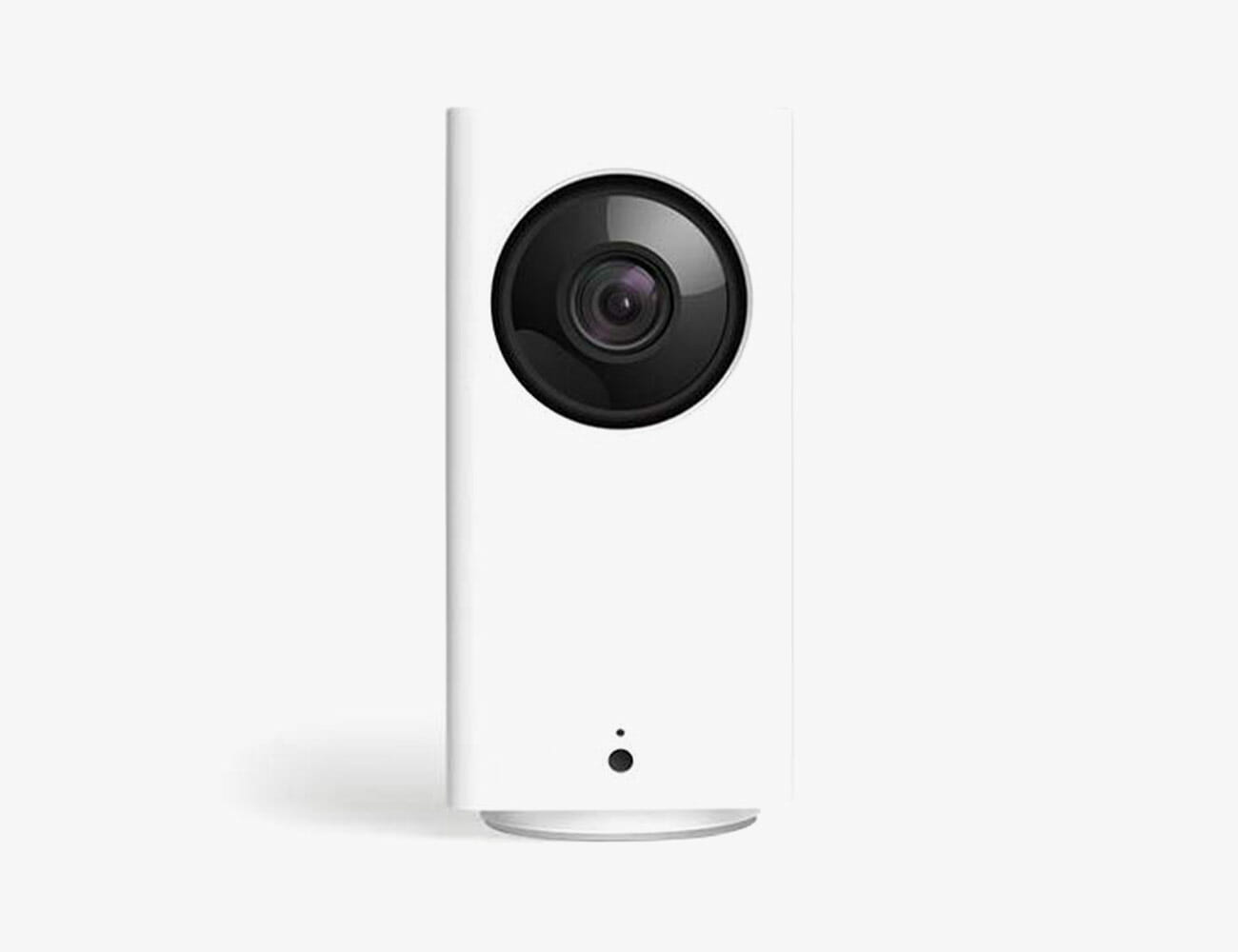
Wyze Cam Pan
Compatible with: Alexa and Google Assistant
Subscription: $1.49 per camera per month for 14-day cloud storage.
Field of view: 120 degrees (plus panning)
Video resolution: 1080p
Wired or portable: wired
Storage: 128MB, microSD card (sold separately)
Key features: 8x digital zoom, 24/7 live video feed, night vision, panning

The Wyze Cam Pan is essentially an upgraded version of the Wyze Cam. It has all the same abilities but it “pans,” hence the name. If you open the Wyze app, you can actually control what the camera is looking at. You can tilt it left or right, up or down. Unlike the cheaper Wyze Cam, the Wyze Cam Pan offers motion tracking; if motion is detected in a specific area of its field of view, the camera will use its Zoom capabilities to track the subject. A downside is that the Pan doesn’t have a magnetic base or stand.

| |

Nest

Nest cameras are optimized for anybody building a smart home around Google’s ecosystem. Even though these Nest Cam cameras will work with Alexa, it’s worth remembering that since Google owns Nest, its line of home security cameras will always be more likely to work more smoothly within a Google smart home ecosystem.

Nest Cam

Compatible with: works with Alexa and Google Assistant
Subscription: $5+ per month for extended cloud storage and intelligent alerts
Field of view: 130 degrees
Video resolution: 1080p
Wired or portable: wired
Storage: 3 hours of free cloud storage; Nest Aware subscription gets you up to 30 days of cloud storage
Key features: night vision, two-way talk, motion alerts, 24/7 live video feed

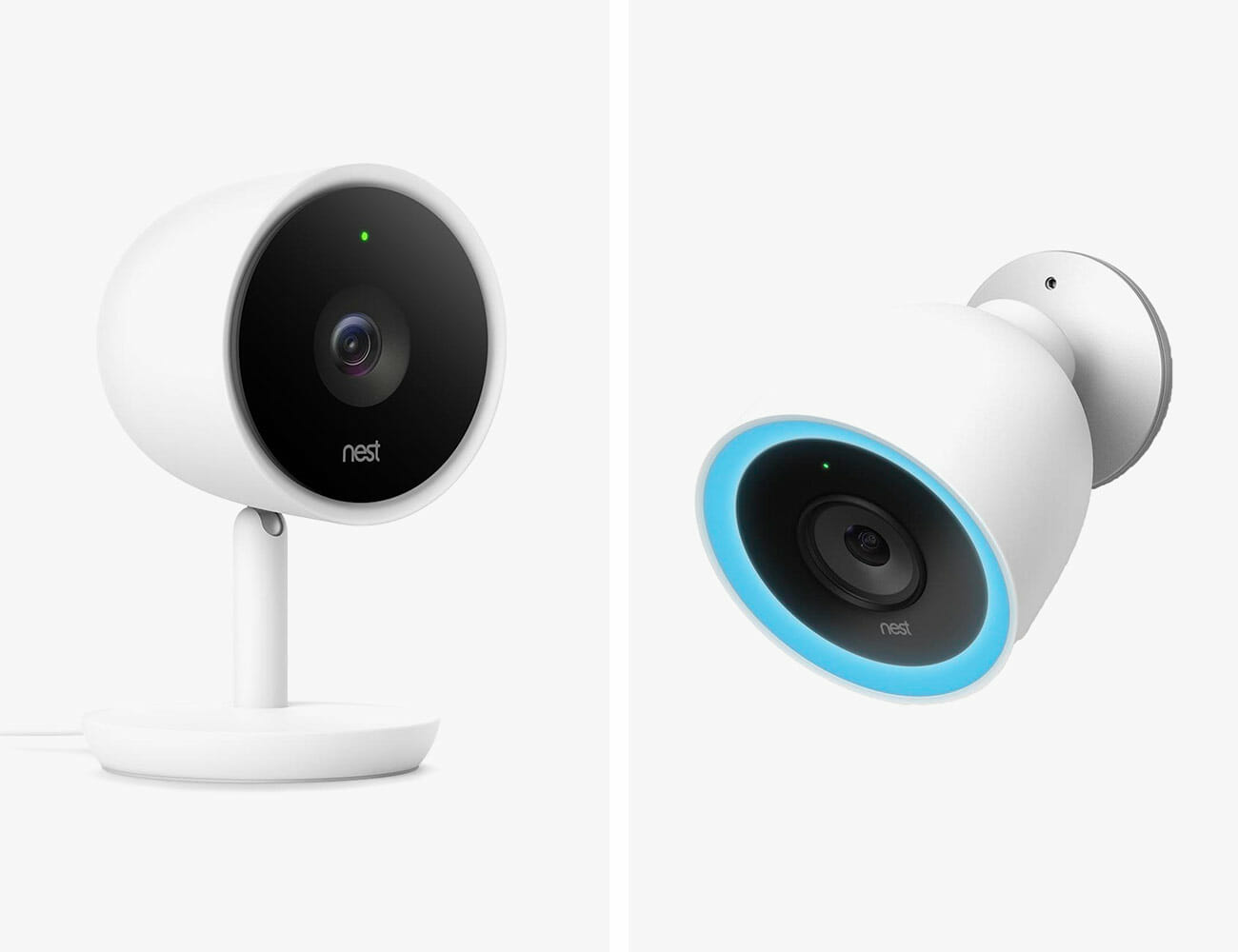
The Nest Cam comes in two different models, one for indoors and one for outdoors, and both are the most entry-level security cameras that the company makes. The two cameras have pretty much the exact same abilities – same field of view, video resolution, night vision, alerts and storage – but there are some differences. The Indoor camera has better zoom abilities (8x versus 4x optical zoom), while the Outdoor camera is weather-resistant and comes with a much longer cord (25 feet vs 10 feet). Overall, these are the most entry-level security cameras in the Nest lineup.

Nest Cam Indoor

|

Nest Cam Outdoor

|

Nest Cam IQ
Compatible with: works with Alexa and Google Assistant
Subscription: $5+ per month for extended cloud storage and intelligent alerts
Field of view: 130 degrees
Video resolution: 1080p
Wired or portable: wired
Storage: up to 30 days with a Nest Aware subscription
Key features: 12x digital zoom Supersight, facial detection, night vision, two-way talk, motion alerts, 24/7 live video feed

These are the upgraded versions of the Nest Cam Indoor and Outdoor. The biggest difference is that the two IQ cameras have a 4K image sensor, which enables a feature called “Supersight,” which allows the cameras to identify familiar and unfamiliar faces, as well as zoom in and track those subjects while they’re in the frame. The IQ cameras will also send you real-time alerts when it detects motion (should you enable it). The catch is that in order to get these premium features, you’ll need to have a Nest Aware subscription.

Nest Cam IQ Indoor

|

Nest Cam IQ Outdoor

|

Amazon (Blink and Ring)

Amazon has taken a different approach to the smart home. Instead of making its own products, like Google, Amazon has decided to buy other companies and optimize their products for an Alexa smart home ecosystem. That’s exactly what Amazon did with Blink in late 2017, Ring in 2018 and eero in 2019, to name a few. This is why Amazon has ceased production of its Cloud Cam, and instead focused on making Blink and Ring smart home cameras even better.

Blink Mini
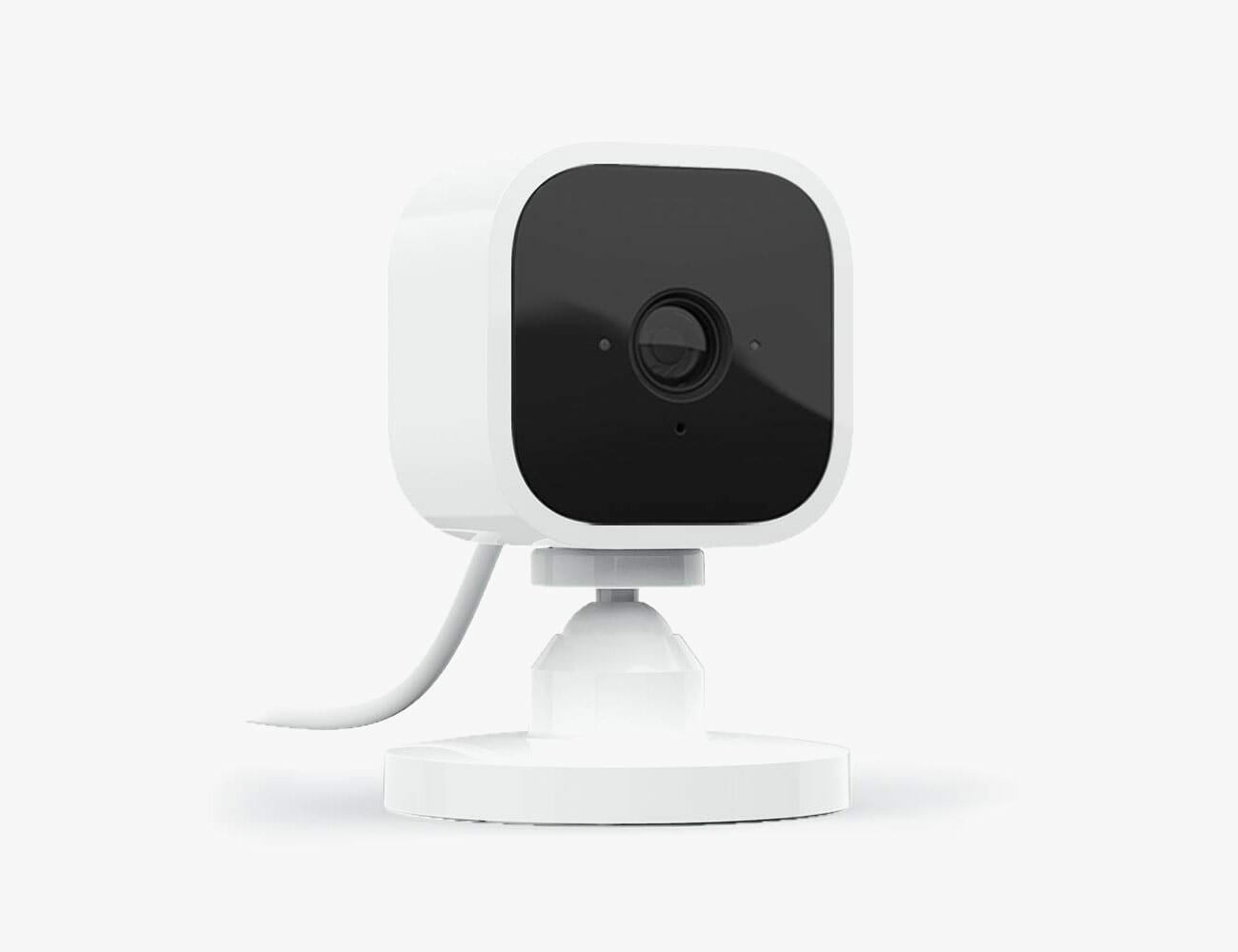
Compatible with: works with Alexa
Subscription: $3/month (or $30/year) for 60 days of rolling video storage for a single camera. $10/month (or $100/year) for unlimited cameras
Field of view: 110 degrees
Video resolution: 1080p
Wired or portable: wired
Storage: subscription or external local storage module
Key features: night vision, motion alerts, 24/7 live video feed

Released in April 2020, the Blink Mini is the company’s newest, smallest and most affordable smart home camera. It’s a camera that only works with Alexa, and therefore is really optimized for homes that already use Alexa as a voice assistant, as well as an Amazon Fire TV, Fire Tablet, Echo Show or Echo Spot (with any of these devices you can ask Alexa to show you a live feed from a specific Blink Mini).

| |

Blink XT2 Outdoor/Indoor
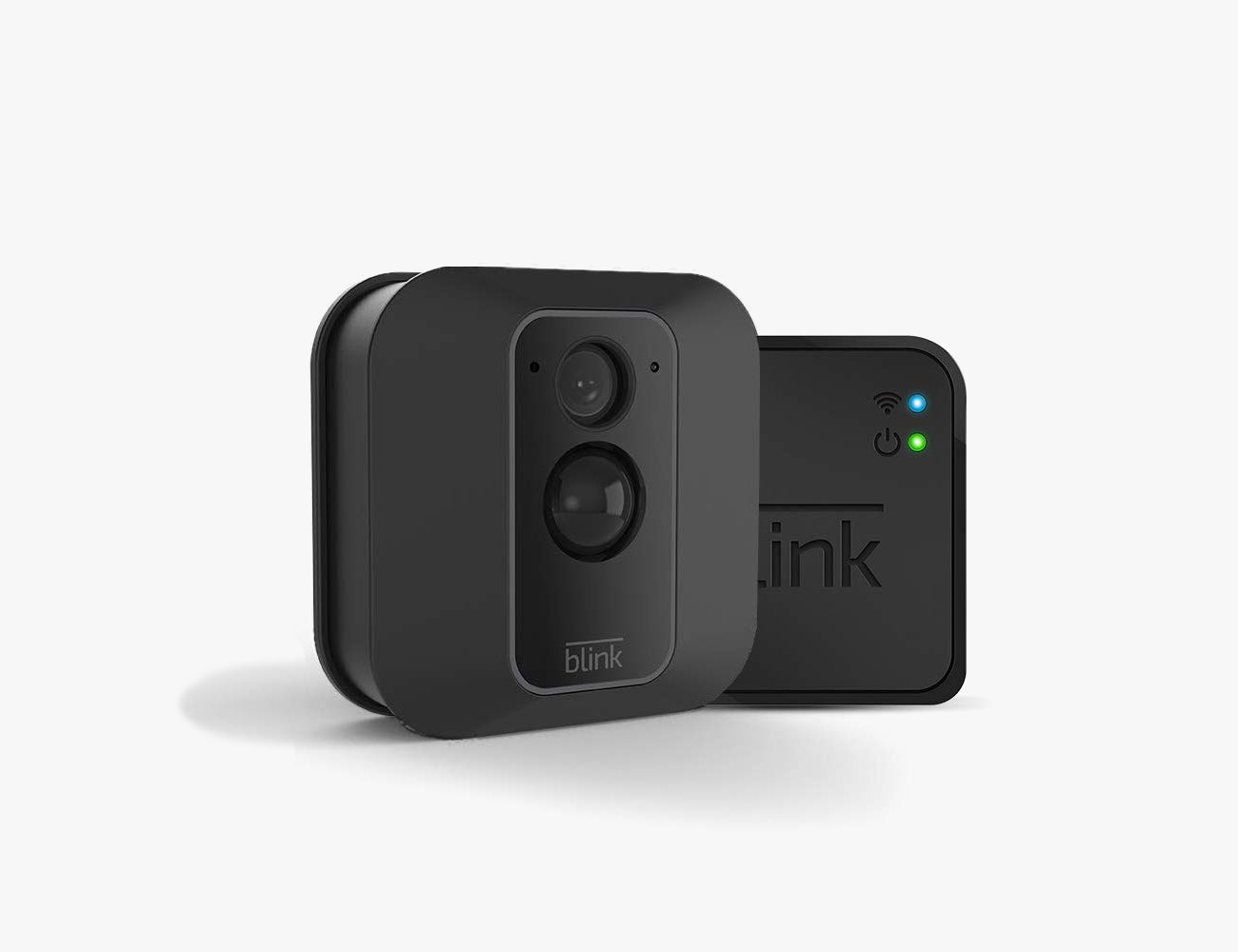
Compatible with: works with Alexa
Subscription: None, comes with free cloud storage to keep clips for up to a year
Field of view: 110 degrees
Video resolution: 1080p
Wired or portable: portable
Storage: free cloud storage
Key features: night vision, motion alerts, 24/7 live video feed

The Blink XT2 is an indoor/outdoor smart home camera that’s completely wire-free. In fact, it has a pretty incredible two-year battery life (runs on two AA batteries), which is longer than pretty much all other battery-powered smart home cameras. The Blink XT2 looks very similar to its predecessor, the Blink XT, but it adds a bunch of must-have features, including two-way talk, night vision, motion alerts (with custom activity zones) and person detection. It also has an IP65 weatherproof rating and built-in temperature sensors, so it’s safe to leave outside and it’ll give you an accurate temperature reading. A mount is included with purchase.

|

Ring Indoor Cam

Compatible with: works with Amazon Alexa
Subscription? Yes, Ring offers two different cloud storage subscription options, a Protect Basic ($3/month) and Protect Plus ($10/month)
Field of view: 140 degrees
Video resolution: 1080p
Wired or portable: wired
Storage: no free cloud storage
Key features: 24/7 live video feed, night vision, motion alerts

The Indoor Cam is a smaller and cheaper version of Ring’s Stick Up Cam (below), and it has most of the same abilities as every other entry-level security camera on the market. The difference is that, if you already own Ring’s video doorbell or security system, any of Ring’s cameras will work seamlessly with that existing ecosystem. They’ll also work well with Alexa smart ecosystem. The Indoor Cam is a solid smart camera for anybody building a smart home around Amazon Alexa and people who already have a Ring smart home device.

|

Ring Stick Up Cam

Compatible with: works with Amazon Alexa
Subscription: Yes, Ring offers two different cloud storage subscription options, a Protect Basic ($3/month) and Protect Plus ($10/month)
Field of view: 130 degrees
Video resolution: 1080p
Wired or portable: wired, battery-powered or solar powered
Storage: no free cloud storage
Key features: 24/7 live video feed, night vision, motion alerts, ability to wall mount

The Stick Up Cam comes in three different models – wired (Plug-In), battery-powered (Battery) or solar-powered (Solar) – and it’s also essentially a larger (and slightly better) version of Ring’s Indoor Cam. All three models shoot 1080p video, and have two-way talk and night vision. The battery-powered models come with a rechargeable battery pack and, since they’re portable, you can stick them (or use included wall mounts) to place them anywhere in your home that has Wi-Fi. A big difference from the Indoor Cam is that the Stick Up Cam are designed for indoor and outdoor use, which is why they’re more expensive. If you just want an entry-level indoor security camera, the Ring Indoor Cam probably makes more sense. However, if you want a more versatile camera that you can place essentially anywhere (so long as it’s connected to Wi-Fi), that’s where the Stick Up Cam comes in. It works best within an Alexa smart home.

| |

Arlo

Arlo’s home security cameras are unique for two main reasons. First, they’re battery-powered, meaning you can place them anywhere around your house. And two, every Arlo’s camera system requires you to have a SmartHub, which allows you to control all the cameras through the Arlo app. This separate hub also gives you to locally store video files, as opposed to the cloud.

Arlo Ultra

Compatible with: works with Amazon Alexa and Apple HomeKit
Subscription: Yes, with the purchase you get a one-year free subscription to Arlo Smart
Field of view: 180 degrees
Video resolution: 4K with HDR
Wired or portable: battery powered
Storage: 7-days cloud storage free; up to 30 days with subscription; interal storage via microSD
Key features: 12x zoom, motion tracking, noise cancellation audio (for wind and rain), night vision, motion tracking

Ultra is Arlo’s high-end line of security cameras. They shoot the best quality video, 4K with HDR, with the widest field of view. The Ultra is really for who wants the best completely wireless security system, which works with either Alexa and Apple HomeKit, and they’re not afraid to invest in a multi-camera system. (You can always purchase additional add-on cameras later down the road.)

|

Arlo Pro 3

Compatible with: works with Amazon Alexa and Apple HomeKit
Subscription: Yes, with the purchase you get a 3-month free subscription to Arlo Smart
Field of view: 160 degrees
Video resolution: 2K with HDR
Wired or portable: battery powered
Storage: 7-days cloud storage free; up to 30 days with subscription; internal storage via microSD
Key features: 12x zoom, motion tracking, noise cancellation audio (for wind and rain), night vision, motion tracking

The Arlo Pro 3 is the company’s newest wireless security camera system and it delivers many of the abilities of Arlo’s high-end Ultra line, but just at a much more accessible price point. There are tradeoffs with the Pro 3, obviously. It captures 2K video instead of 4K, and doesn’t have quite the same field of view. And you only get a 3-month free trial of Arlo Smart, the company’s cloud-storage service, instead of an entire year. If you’re thinking about an Arlo system, the reality is that a Pro 3 system will more sense for most people. It’s significantly cheaper and the video quality, even though it’s not at the same 4K level, is still very good.

|

eufy

Eufy is Anker’s smart home division and they make everything from smart home cameras to robot vacuums, video doorbells to alarms system. The great thing about Eufy is that all its newest products work with most smart home systems. (Its older systems weren’t compatible Apple HomeKit.)

eufyCam 2

Compatible with: works with Amazon Alexa, Google Assistant and Apple HomeKit
Subscription: Yes, the Basic plan costs $3/month (or $30/year) per camera and grants you 30 days of rolling video storage. The Premier plan costs $10/month and covers up to ten cameras.
Field of view: 140 degree
Video resolution: 1080p
Wired or portable: battery powered
Storage: cloud and local
Key features: motion alerts, face recognition, night vision, IP67 rating

The eufyCam 2 is the company’s newest system of battery-powered smart cameras. Released in early 2020, the eufyCam 2 system needs a smart home hub, called the HomeBase 2, to work. The two defining features of the eufyCam 2 system are, one, its battery life – each camera can last 360 days between charges – and, two, the fact that you don’t need to pay extra for premium features, such as facial recognition and object detection. As far as video storage, videos can be stored in the cloud or locally, which is a great option for those with privacy concerns. Each camera has an IP67 rating, so they’re for indoor or outdoor use. The eufyCam 2 is a solid option for people who want a relatively affordable system of battery-powered cameras. It also works with HomeKit, as well as Alexa and Google Assistant, which is a rarity among smart home cameras.

|

Logitech

Logitech makes all kinds of gadgets and its been in the webcam and home camera business for years. For a while, the Circle 2 was one of the only smart home cameras to work with HomeKit, but Apple is branching out and supporting more options as of 2020.

Logitech Circle 2

Compatible with: works with Apple HomeKit, Amazon Alexa and Google Assistant
Subscription? Yes, Circle Safe gives you the option of paying for cloud storage for video recordings from either 14 or 31 days.
Field of view: 180 degrees
Video resolution: 1080p
Wired or portable: wired (and battery)
Storage: cloud
Key features: 24/7 live video feed, IP65 rating, night vision, two-way audio and motion detection

Logitech’s Circle 2 is a weatherproof security camera (IP65) that can set up indoors or outdoors; its base can work as a traditional stand or be swapped out for a wall/window mount. The Circle 2 is really notable because it’s one of the few smart security cameras that works with Apple’s HomeKit (it also supports Alexa and Google Assistant). It should be noted that Logitech makes the Circle 2 in wired and wire-free models, but HomeKit only works with the wired model. Logitech offers two different subscription plans; if you don’t pay for a subscription, you can only access video recordings for the last 24 hours.The Circle 2 was released in June 2018 and is often on sale. It’s a good camera for people looking for an affordable option that works with Apple HomeKit.

|

Note: Purchasing products through our links may earn us a portion of the sale, which supports our editorial team’s mission. Learn more here.
Tucker Bowe

Tucker Bowe has been on Gear Patrol’s editorial team since 2014. As a Tech Staff Writer, he tracks everything in the consumer tech space, from headphones to smartphones, wearables to home theater systems. If it lights up or makes noise, he probably covers it.

More by Tucker Bowe | Follow on Instagram · Twitter · Contact via Email

The 5 Easiest Ways to Make Your Speakers Last a Lifetime

One of the great things about a good pair of passive loudspeakers is that they can last a lifetime. Unlike many of today’s powered and active loudspeakers, passive loudspeakers have no built-in technological limits. No new wireless protocol or firmware update is going to render them irrevocably obsolete. That’s why still able to hook up the heritage Klipsch or Wharfedale loudspeakers that you’ve had for decades to your present-day system. And if you buy new passive loudspeakers today, you’ll be able to do the same with them in 30 years’ time, too.

That is, if you take good care of them. Like any quality piece of analog equipment, whether it’s a vintage Marantz receiver or an old Thorens turntable, you’ve got to take care of passive loudspeakers in order for them to sound their best. Here are a couple of quick tips that any can do to make sure their loudspeakers look and sound as good as possible for years to come.

Fight the dust.

Dust is probably the number one enemy of loudspeakers. And it’s not just an aesthetic concern! Dust infiltrates the wire connectors — the place where the wire and metal meet — and disrupts the electric signals that run between the source and the loudspeakers. This adds noise to your system’s sound, which obviously isn’t a good thing. In some cases, the excess dust can damage the wiring and loudspeakers themselves.

To prevent dust, it’s best to make sure that you place the loudspeakers in a room that doesn’t accumulate a lot of dust. That can be easier said than done, so easy step to take is to simply clean the loudspeakers (and your overall system) regularly. Dust pads, dry cloths, air canisters and vacuum cleaners are all safe to use on your loudspeakers, just try not to damage the cone drivers or tweeter. Don’t use any kind of liquids on your speakers.

Protect against the heat.

Keep loudspeakers away from the windows and out of direct sunlight. Sun exposure can cause the loudspeakers to overheat, especially if they don’t have less-than-perfect thermal design, and can damage the electromagnetic voice coils that are vital for maintaining the electrical flow between the loudspeakers and its source.

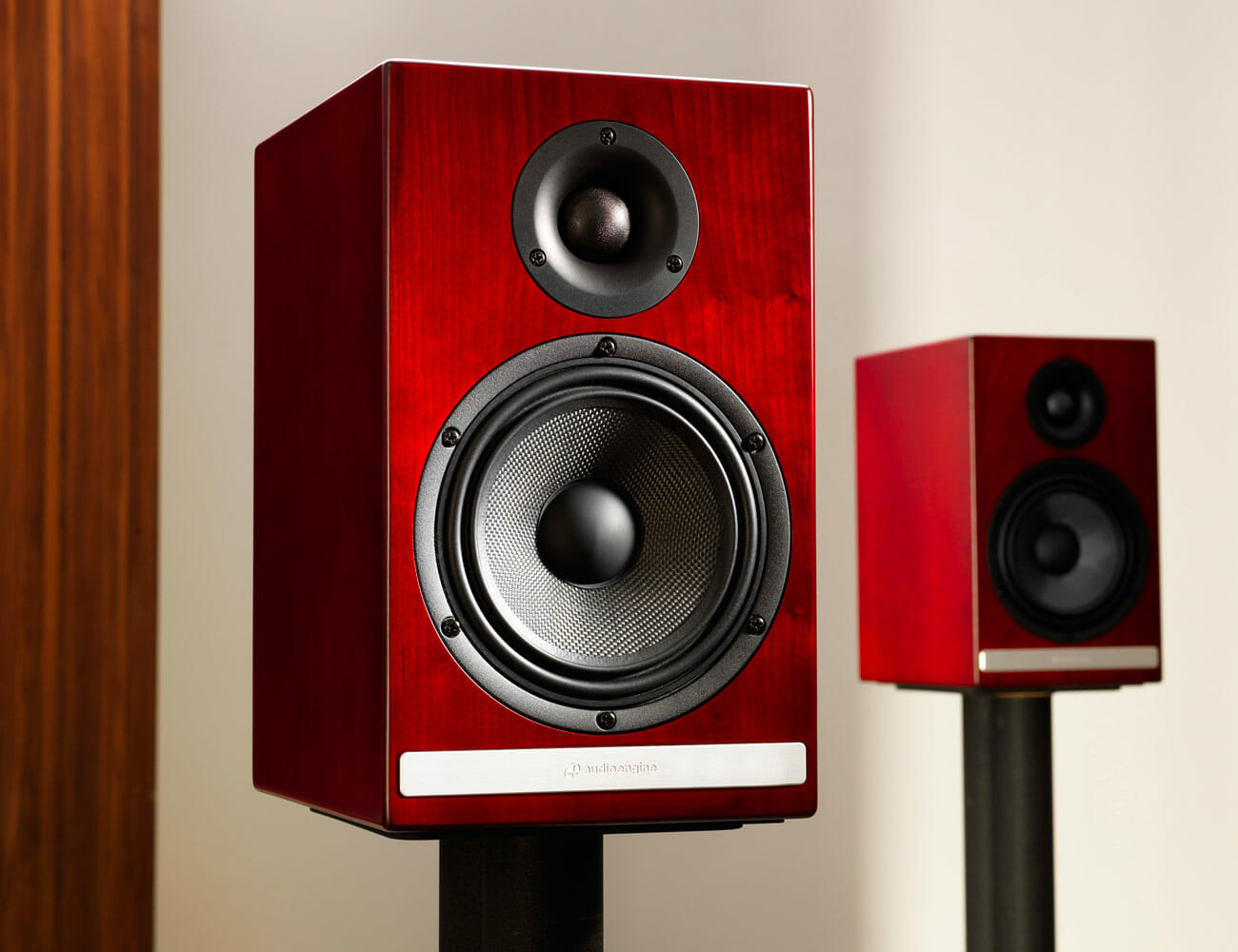
The Audioengine HDP6 are high-performing passive bookshelf speakers that typically go for $400.

Beware of static electricity.

Other than dust and heat, static electricity is the other big enemy for loudspeakers. A build-up in static electricity can actually result in burn-out of your system. To guard against that, consider investing in anti-static floor mats for your carpets. Dry air is an insulator that allows static to build up to a potentially dangerous level, so you can actually fight against it by getting a humidifier for the room your system is in — just don’t place it too close to your loudspeakers.

Make sure there’s proper ventilation.

Making sure that there’s adequate airflow around the loudspeakers is key as it helps cool them down while they’re playing. Audiophiles will tell you that having fans blowing on the loudspeakers while they’re playing loudly helps to keep them cool, too. You can arrange your system to support proper airflow by positioning your loudspeakers at least several inches away from walls and tight spaces, or by placing bookshelf speakers on top speaker stands so that they’re away from crowded bookshelves. In addition to helping prolong the life of the loudspeaker, proper airflow also improves the sound quality; there’s less distortion due to vibrations and overheating.

Protect against power surges.

This is mostly for higher-end speakers and audio systems, but it’s important to be able to control how your system gets power. Even though passive loudspeakers don’t connect directly to power, the music source (receiver, amplifier or turntable) that it’s connected to does, and an abrupt surge in power can be really damaging to every component in a system. This is why its wise to invest in Uninterruptible Power Supply (USP) and Voltage Regulator, like this Furman F1500-UPS, so they can better protect and monitor their system.

Note: Purchasing products through our links may earn us a portion of the sale, which supports our editorial team’s mission. Learn more here.
Tucker Bowe

Tucker Bowe has been on Gear Patrol’s editorial team since 2014. As a Tech Staff Writer, he tracks everything in the consumer tech space, from headphones to smartphones, wearables to home theater systems. If it lights up or makes noise, he probably covers it.

More by Tucker Bowe | Follow on Instagram · Twitter · Contact via Email

Turn Your Canon DSLR or Mirrorless Camera Into the Highest-Quality Webcam In the Chat

<!–Turn Your Canon DSLR or Mirrorless Camera Into the Highest-Quality Webcam In the Chat<!– –>

Here’s How


Webcams are in short supply — it is known — and given the fact that video conferencing is more popular than ever, people and companies are turning to ulterior camera methods. Some smart home cameras are now letting you turn them into temporary webcams, for example, and there are several new apps that let you turn your smartphone into a webcam. Now big-time camera manufacturers are getting into the action.

Canon just released a free software patch, the EOS Webcam Utility Beta, that lets you use your mirrorless, DSLR or PowerShot camera as a webcam. It’s really easy to use, as all you have to do is download the software and connect your camera to your computer via a USB; and because most webcams have pretty terrible image quality, you’re almost guaranteed to be the best-looking frame in the video chat. The only issue is that this quick webcam solution works with PCs. If you own a Mac, you’re out of luck for now at least.

You can check out the link below to see if your Canon camera is compatible.

Note: Purchasing products through our links may earn us a portion of the sale, which supports our editorial team’s mission. Learn more here.
Tucker Bowe

Tucker Bowe has been on Gear Patrol’s editorial team since 2014. As a Tech Staff Writer, he tracks everything in the consumer tech space, from headphones to smartphones, wearables to home theater systems. If it lights up or makes noise, he probably covers it.

More by Tucker Bowe | Follow on Instagram · Twitter · Contact via Email
<!–

–>

<!– –><!–

–>

The Multiscope Rescue Robot is the firefighting machine of the future

Firefighters are among the bravest folk out there as they willingly step into dangerous situations to save lives. However, with advancements in robotics and artificial intelligence, we can reduce the risks that come with the job. Occasionally, there are fires that are inherently deadly such as those the involve other factors. To sum it up, those that involve gas leaks, hazardous chemicals, and explosives among others need a more careful approach with utmost caution. Thus, Milrem Robotics and InnoVfoam present the Multiscope Rescue.

The ones heading the project describe it as an unmanned ground vehicle or UGV for short. While AI would have been an option, the Multiscope Rescue is remotely controlled by an operator. At first glance, it looks like a combat-ready machine that is capable of serious damage. Nevertheless, the manufacturer is arming it with life-saving features instead.

Customization options allow the developers to equip with various tools to suppress most types of fires. Milrem Robotics notes that while it can function in urban environments, it will be of great use for something else. Large scale forest fires, as well as other similar instances, often make it difficult for firefighters to access certain areas. This reliable robot helps keep people out of harm’s way.

According to the spec sheet, it can manage a payload of close to 2,650 pounds. Moreover, the 4,270-lbs pull force can easily push or drag cargo or supplies to put out flames. Milrem Robotics uses an advanced camera system to provide outstanding visibility. Finally, the Multiscope Rescue boasts impressive mobility using tank treads instead of wheels.

Learn more about it

Images courtesy of Milrem Robotics

The ERV Hyper is a fully-electric camper for mobile off-grid living

We have been happily talking about how the automotive industry is bracing for a big change soon. Of course, what we mean is the gradual transition from fossil fuels to battery power. Those of us who prefer their rides to stay the same way will need to eventually adapt. It’s fascinating to look back later on and wonder why we have not shifted to the cleaner alternative sooner. After regularly featuring all-electric automobiles, it’s about time we present something else. The ERV Hyper is another exciting preview of an emission-free future.

As electric vehicles are slowly going mainstream, other products related to transportation are adapting to meet the demand. We were recently showcasing the Unicat MD56c, which was a German expedition-tier RV that maximizes energy usage with the help of solar panels. In a similar fashion, ERV is equipping the Hyper with an innovative design to take advantage of the surface space on top.

It will be a while before the Tesla Cybertruck becomes commercially available. Nevertheless, the Hyper appears to be an eco-friendly head start from ERV. The Australian company is outfitting the camper with 2,300-watt solar panel system with a 5,000-watt inverter. This allows owners to use appliances and more that rely on AC power.

For a more reliable backup when it gets dark or on cloudy days, the Hyper packs 14-kilowatt-hour battery. ERV throws in a microwave, a refrigerator, an electric barbecue, and a heater for the water. Other creature comforts include a full-padded 3-piece bed head, Sirroco fans in the bedroom, and a pillow top/inner spring mattress. We can’t wait to see more fully electric models like this soon.

Order yours now: here

Images courtesy of ERV

Holding Out for an iPhone 12? You Might Have to Wait Longer Than Expected

<!–Report: Apple Delaying the iPhone 12 By a Month • Gear Patrol<!– –>

All Four-Expected iPhones


It looks like we might have to wait a little longer than expected for Apple’s next flagship iPhones. A recent Wall Street Journal article is reporting that Apple will be delaying the mass production of its next-gen iPhones by about a month due to the current coronavirus pandemic. Apple is still expected to announce four new iPhone models in September — a 5.4-inch iPhone, a 6.7-inch iPhone, and two 6.1-inch iPhones (two will be “Pro” and two will be more affordable) — but they probably won’t ship to most consumers until later in the fall.

These delays aren’t a huge surprise as the coronavirus pandemic is having a big impact on manufacturing all over the globe, especially in Asia, the region where Apple manufactures its iPhones. Also, this isn’t the first iPhone production delay that Apple has encountered. Just two years ago, the iPhone XR was released about a month after it and the iPhone XS were announced; the issue had something to do with the production of its LCD displays.

You can expect the iPhone 12, all expected four models, to be announced in September and then ship sometime in mid-to-late October.

Note: Purchasing products through our links may earn us a portion of the sale, which supports our editorial team’s mission. Learn more here.
Tucker Bowe

Tucker Bowe has been on Gear Patrol’s editorial team since 2014. As a Tech Staff Writer, he tracks everything in the consumer tech space, from headphones to smartphones, wearables to home theater systems. If it lights up or makes noise, he probably covers it.

More by Tucker Bowe | Follow on Instagram · Twitter · Contact via Email

<!–

–>

<!– –><!–

–>

A New York Record Shop Owner Shares His At-Home System

When the people behind record stores and hi-fi shops leave work at the end of the day, what kinds of hi-fi systems are they going home to? And what music are they playing? That’s exactly what we set out to uncover in Hi-Fi at Home.

Javi Velazquez is the owner of HiFi Records & Café, a record shop located in the Queens neighborhood of Astoria in New York City. It opened just a few years ago, in 2015, and offers customers a unique experience; while browsing the 500-square-foot shop that’s home to over 5,000 records, they can grab a coffee (and maybe a scone) at the little cafe located in the back of the shop.

“My current system has been with me since the late ’80s, early ’90s and has been pretty much unchanged, besides some re-capping of the amp and a new turntable which I upgraded to about a year ago,” explained Velazquez. “I love its musicality and how it manages to get out of the way and lets me connect with my music in an emotional way. I’m not into huge speakers or equipment that overpowers a room and makes it all about the hi-fi. Don’t get me wrong I enjoy them at the shop or at an audio show; but when I come home, I want [it] to be a space where the music takes center stage.”

Speakers: Shahinian Super Elf

Year: late 80s, early 90s
Price: Learn More (Dejavu Audio, Shahinian Acoustics)

“Dick Shahinian was an excellent engineer, a true music lover and loudspeaker designer in a class all to his own. His designs were unconventional and rarely crowd-pleasers, but no one could ever deny that he built his loudspeakers for music lovers. My pair of his diminutive Super Elfs still play a lovely, pure sound which is great in reproducing natural instruments and highly refined. They are still fun to listen to after more than 30 years. I remember saying “I will keep them forever” when I first purchased them. Well, they say “the taste of the pudding is in the eating”, and here we are at the dinner table. Maybe one day, when I have more space I’ll buy another Shahinian speaker.”

Turntable: Rega RP8 Turntable with Apheta 2 Cartridge

Year: ~2016
Price: $3,995 – $4,200 (Amazon, Music Direct)

“Planar 8 can pull musical passages and details from any record with zero distortion and maximum fidelity. It’s the closest thing to a mirror of the original recording that I’ve heard anywhere before under $8,000. My previous decks have been from Clearaudio, Linn and older Rega’s and very few come close to the P8 when it comes to holding on to a songs leading melody, its harmonies, its dynamic swings and how it tugs at your heartstrings with counterpoint! The emphasis is always on the music rather than the sound, this is the characer trait that all Rega products seem to have and it’s helluva addictive.”

Integrated Amplifier: Naim Audio Nait 2

Year: 1988 – 1992
Price: Learn More (Zstereo, eBay

“I purchased this 2nd hand Nait 2 from a customer that had barely used it for 6 months – He took my NAD 3020 + some cash. He decided he couldn’t live without a headphone amp and I felt like I couldn’t miss the opportunity of owning my dream amp at the time! Fast-forward 29 years later and this amp is still frontline-center to my musical tastes. I’ve owned other amps and have the luxury of brining the latest and greatest in tubes and solid state to my house, but at the end of the day this little (barely 12 watts/ ch) amplifier is so musically involving and sonically convincing, that you loose yourself in the records and forget all about this audiophila-nervosa syndrome.”

Records on Repeat

Radiohead, In Rainbows (XL Rec)

“A far more guitar-oriented album that had been seen from Radiohead at the time. It takes a few listening sessions to get into, but the stark and somber In Rainbows is in many respects Radiohead’s most complete. An album that’s hard to pin down, because every track works best when taken as a whole, although ‘Nude’ is a fine and very typically Radiohead song. Sonically, the 45rpm vinyl version is pretty damned excellent and it’s still one of the best albums of the last decades.”

Listen on Spotify, Apple Music or Tidal

Lightnin Hopkins, Lightnin’

“This is pure Texas blues! If you possess a turntable and you enjoy stripped-down, punch-you-in-the-innards, blues-singing then you need look no further. This record was a gift from a friend and to-date, has been the best gift ever! The recording is excellent and sounds like one man, his guitar and a dude with drum kit are front and center, between your loudspeakers. This music is so tasty you could dip it in hot cheese and feed your family with it.”

Listen on Spotify, Apple Music or Tidal

Arne Domnerus, Jazz at the Pawnshop

Jazz at the Pawnshop is widely regarded as one of the best analog jazz recordings of all time. I can’t count how many systems I’ve sold just by demoing this record. Purchased my first copy back in 1993. What I like most about that album is that it is a performance. Its a jazz band playing together in one-take, and not multi-track record/re-record till it is perfect. Jazz at the Pawnshop captures the feel and atmosphere of a small jazz club and the audience’s reactions to the performers like no other recording I know.”

Listen on Spotify, Apple Music or Tidal

Damien Rice, O

“One of my favorite records from top to bottom, hands down. Damien Rice’s finest work in my opinion. I had to wait a long time to get my hands on a pressing since the original release was only available in cd format. Damien waited long enough to get the sound quality of the original DAT tapes suitable for analog master, and boy the wait was worth it – this album does not disappoint. Sound quality is top-notch. Highly recommend this record!”

Listen on Spotify, Apple Music or Tidal

Percy Sledge, The Percy Sledge Way

“The title really says all you need to know about the record: it’s a collection of 11 songs made famous by other soul and R&B stars, done in that oh-so iconic Percy Sledge way. It’s majestic and effortless, infusing each with the heartache conveyed in apparently every note he ever sang. This is one of my favorite hand-me-downs slash family heirloom albums that I own.”

Listen on Spotify, Apple Music or Tidal

Note: Purchasing products through our links may earn us a portion of the sale, which supports our editorial team’s mission. Learn more here.
Tucker Bowe

Tucker Bowe has been on Gear Patrol’s editorial team since 2014. As a Tech Staff Writer, he tracks everything in the consumer tech space, from headphones to smartphones, wearables to home theater systems. If it lights up or makes noise, he probably covers it.

More by Tucker Bowe | Follow on Instagram · Twitter · Contact via Email

9 Easy Gmail Hacks to Get Your Inbox Under Control

In this day and age, it’s virtually impossible to keep your inbox tidy and even harder to reach that magic Inbox Zero. Most of us are busy trying to manage a mountain of messages that gets bigger with each passing day.

There are a handful of snazzy new (and expensive) email services that promise to solve this problem but good old Gmail also has tools and options that can help. You can live without them, sure. You probably have been! But they can make email a little less of a stressful chore.

1. Use email aliases

Periods don’t matter in Gmail addresses — if your email address is brucewayne@gmail.com, you’ll get messages sent to bruce.wayne@gmail.com as well, and indeed b.rucewa.yne@gmail.com. They all go to the same place.

You can also add plus (“+”) signs to your email address to create alternative addresses: brucewayne+work@gmail.com and brucewayne+office@gmail.com will still come through to your Gmail account, for example.

Why is that useful? Use addresses with periods and plus symbols when you’re signing up for newsletters, or new apps, or anything else that demands your email address and you can filter incoming messages sent to these specific addresses to be marked as important, or to skip your inbox, and so on.

2. Get aggressive with filters

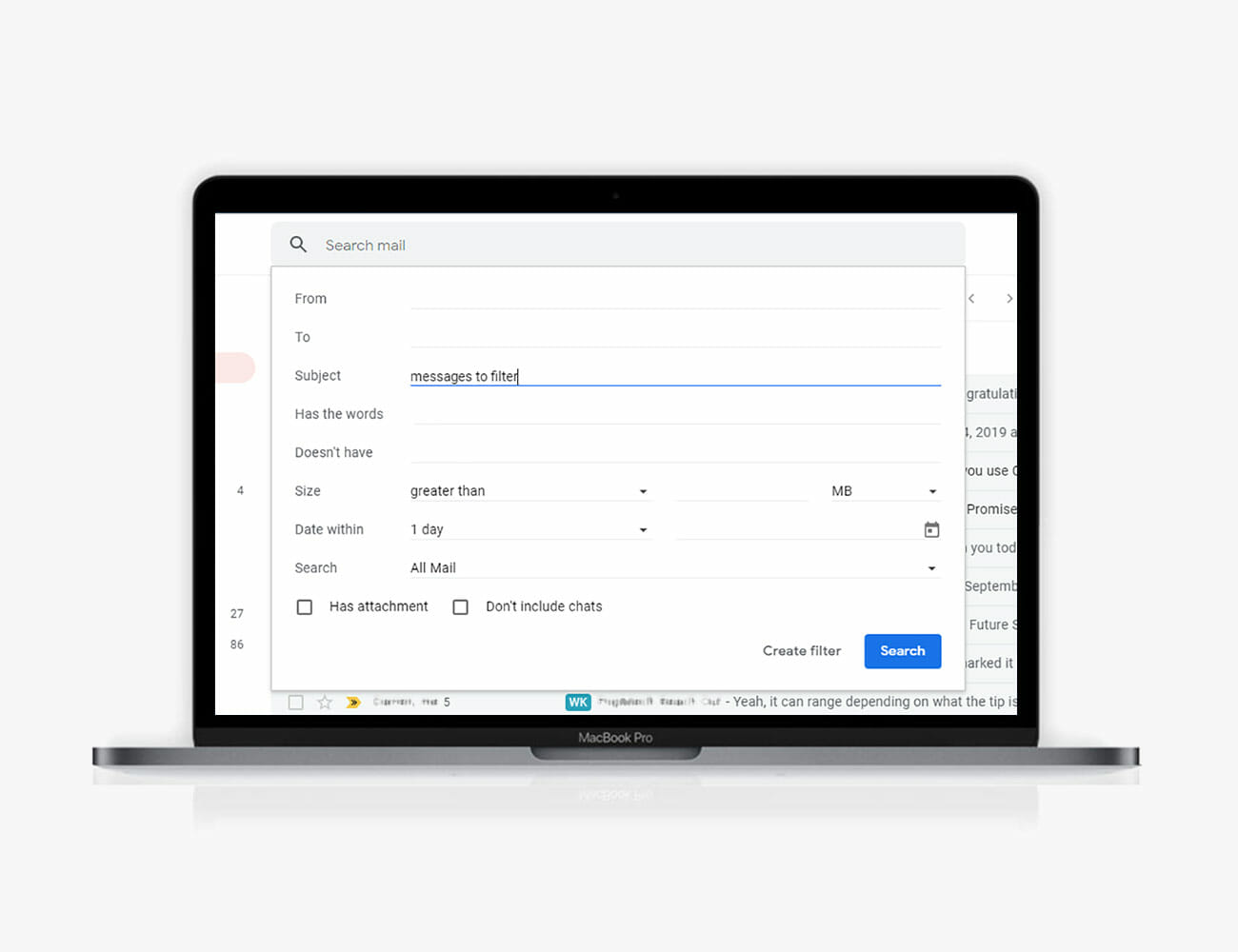
Speaking of filtering, filters are one of the best ways to tame an unruly Gmail inbox. On the Gmail web interface, you can create a filter by clicking the arrow to the right of the search box, then setting out your criteria. You can also create filters from inside individual conversation threads by clicking the menu button (three dots) on the right, then choosing Filter messages like this.

Filters cover all kinds of different scenarios: it’s possible to pick out emails based on who sent them, or words that appear (or don’t appear) in the body of the email, or how big (or small) the emails are. You can identify emails with attachments too.

The real power of the Gmail filtering system comes with what you can do with emails once they’ve been highlighted as matching your criteria: they can be marked as important or not important, starred, marked as read, sent straight to the archive, given a particular label, and more besides.

3. Take a minute to help train Google’s algorithms

Google tries to do some clever email sorting for you, but if you take a few minutes each day to help it along, it’s going to get smarter over time. Take email importance, for example: emails that seem important by Google’s standards get put in the Primary tab, with a yellow arrow next to them. If Google has got it wrong, click this yellow arrow to mark the email as not important (or vice versa).

Your Gmail inbox is most likely split up into tabs for social media emails, less important updates and so on, if you’re using the default layout (click the arrow next to Inbox on the left to change the view). On the web, just click and drag emails to put them in different tabs—Gmail then asks if you want to sort all future emails like this in the same way.

Don’t neglect your spam folder either. Take a few moments, when you can, to dive into the spam folder and fish out genuine emails, as well as flagging junk messages in your main inbox that Gmail hasn’t caught automatically—as time goes on, you should find spam email becomes less and less of a problem.

4. Reach for the stars

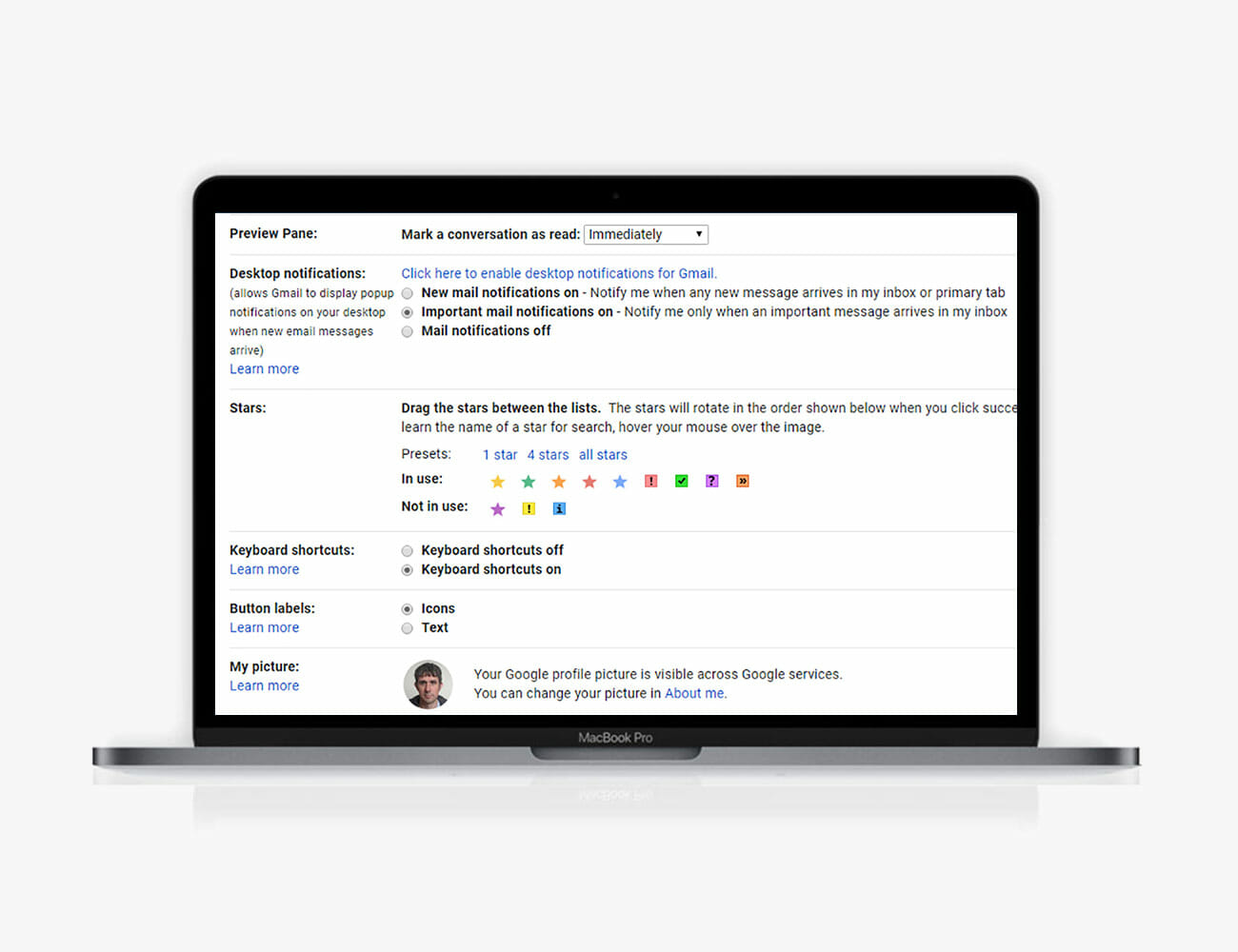
Gmail’s system for starred emails is more extensive than it might seem at first glance. Open up the Settings pane on the web by clicking the cog icon on the right then choosing Settings. Switch to the General tab and under Stars you’ll see a total of 12 stars and other symbols you can make use of.

Drag the small icons to the top row to have the associated stars enabled in Gmail. You can then cycle beyond the regular yellow star by clicking again (andagain) on the star symbol next to messages in your Gmail inbox on the web.

Besides helping you better organize your emails into different lists or priority rankings (urgent, needs following up, family or whatever), you can also use these stars with searches—try “has:green-star” in the Gmail search box, for example. Hover the mouse cursor over the various icons on the General tab of Settings to see the name that Gmail gives to each indicator.

5. Clear out the ancient stuff

There comes a point in the battle against email where it’s best to just cut your losses and start again from scratch (or maybe just from the last three months’ worth of messages). If those deleted messages were important enough, someone is bound to follow up.

This isn’t for everyone — you might have old messages with a lot of sentimental value, for example — but if you’re ready to take the plunge, then a simple “before:01/01/2019” search on Gmail on the web will do the trick. Just change the date to whatever you want. Click the Select all checkbox (top left), then Select all conversations, then take a deep breath and click Delete (the trash can icon).

Those older emails then get wiped from the record and your inbox is suddenly a lot cleaner. Unfortunately, Gmail can’t do this sort of tidying up automatically, but you can run the search every month or so, as well as combine it with other search terms, if needed — “before:01/01/2019 is:unimportant” for example.

6. Use the snooze

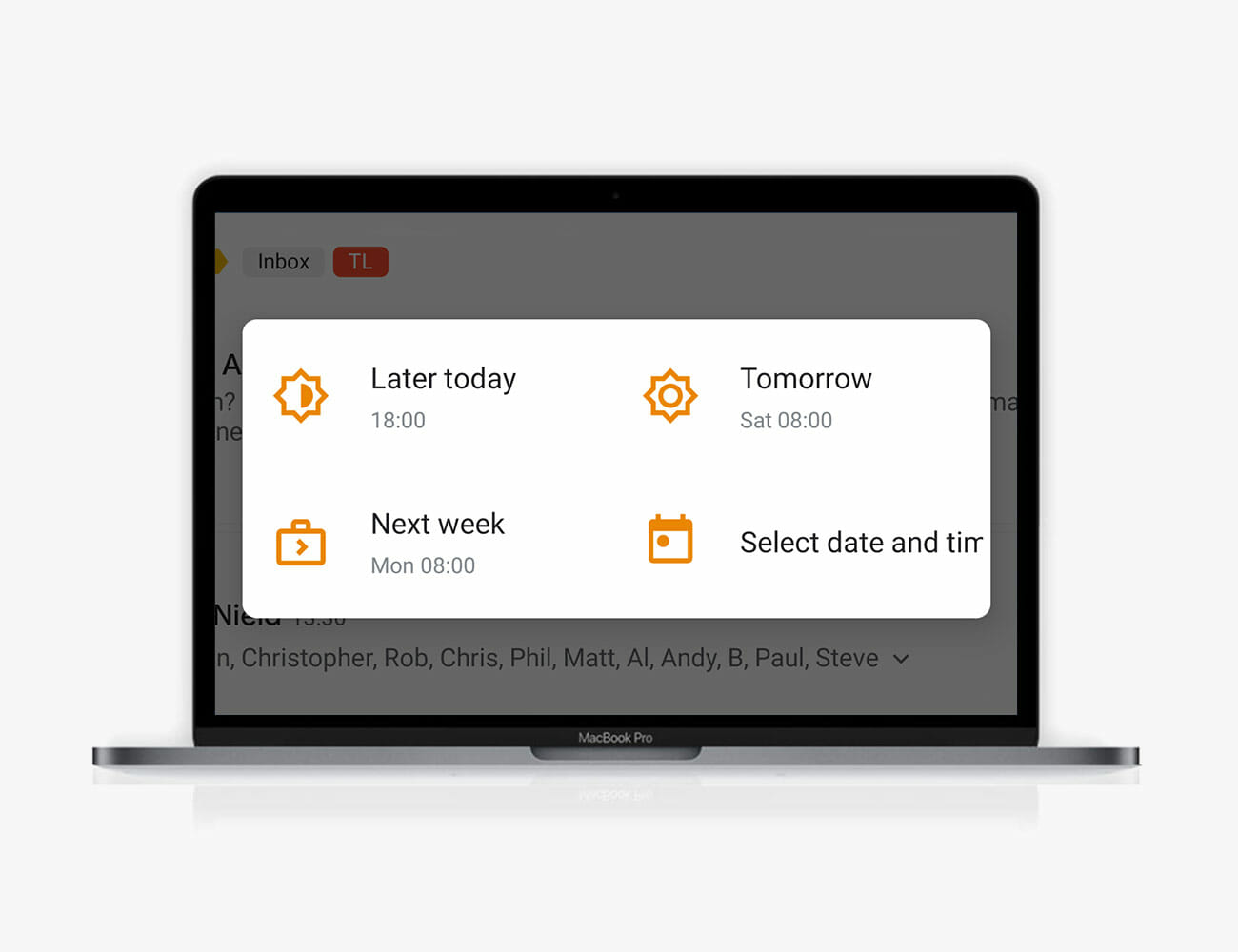
Don’t have time to deal with an email straight away? Feeling overwhelmed with all the messages coming into your inbox? Gmail’s snooze function can help here: with a conversation open on screen on the web, click the Snooze button (the clock icon), then choose when you want the thread to reappear. The emails in the conversation disappear from your inbox until the specified time and date.

This feature is arguably even more useful in the Gmail apps for Android and iOS. You can find the Snooze option behind the menu button (three dots) whether you’re in a conversation or looking at the overview of your inbox (long press on an email in the list to select it).

Snoozing is different than muting. If you choose Mute (an option on the same menus as Snooze) then you won’t see any notifications from the selected email conversation thread until you unmute it — it stays in the archive and won’t show up in the main inbox views. It can still be found, through search with a query of “is:muted” in Gmail on the web, for example.

7. Make message templates

Email wouldn’t be so bad if it wasn’t for all those responses you have to spend time crafting and sending—whether it’s getting back to your boss or chasing up someone who was due to fix your plumbing, a big chunk of your emailing efforts can be taken up with composing messages.

Enter short email templates you can use over and over again. You might have one for telling someone you can’t make an event, for example, or for turning down a pitch that’s been sent to you for work. To enable the feature in Gmail on the web, click the cog icon on the right and choose Settings, then go to Advanced and select Enable next to the Templates option.

When you’re composing a message, click the menu button (the three dots) down in the bottom right corner, then choose Templates. From this submenu, it’s possible to save the current message you’re writing as a template to use again in the future, or to drop in a template that you’ve previously created.

8. Know your mouse and keyboard shortcuts

Knowing a few keyboard and mouse shortcuts can make a huge difference to how quickly you’re able to power through your Gmail inbox, more of a difference than you might think. Rather than hunting through menus and toolbars for the options you need, you can simply make a few taps or clicks based on your muscle memory. Keyboard shortcuts can be turned on from the General tab of Settings (click the cog icon on the right of the web interface to find it).

Google has a full list of keyboard shortcuts here, but some of our favorites include J and K for moving forwards and backwards through messages in the inbox, and E for archiving the currently selected (or open) conversation. G+I gets you back to the inbox from anywhere, while R (for reply) and A (for reply all) are really handy too.

There’s plenty you can do with a right-click of the mouse (or trackpad) too, and Gmail recently added some new options to the right-click menu when you’re selecting messages in the inbox: you can reply to messages, move them to other tabs, apply labels, find more emails from the same sender, mute threads and more.

9. Make good use of bookmarks

One way to get around your inbox faster is to start bookmarking certain sections of Gmail so you can jump between them more quickly. This works in any browser of course, and you can have your bookmarks on the browser toolbar for easy access, or have different Gmail screens open in different tabs.

So what can you bookmark? Just about every part of Gmail. If you’re logged into your Gmail account in your web browser, the following links will lead you to your starred messages, and your sent messages, and your important messages, and messages you haven’t read yet.

It doesn’t stop there either, because any Gmail search can be saved as a bookmark, or indeed any individual conversation thread. You could bookmark the most important labels and sub-labels you’ve set up in Gmail too. However you want to use this, you’ll find it gets you around your inbox more easily.

Note: Purchasing products through our links may earn us a portion of the sale, which supports our editorial team’s mission. Learn more here.

3 Gadgets That Clean Your Smartphone For You

You probably aren’t cleaning your smartphone as often as you should, even during this current pandemic. It’s not difficult, only requiring a cloth and some rubbing alcohol, or even some disinfectant wipes (which Apple recently just deemed “OK”), but it still can be tough to remember to do it — and doing it often.

Fortunately, there are devices that specialize in sanitizing your smartphone and other gadgets for you. Instead of using disinfectant or some other liquid to kill your harmful bacteria and germs, they use UV light. They’re essentially tanning beds bathe your smartphone, but they bathe it blue light to sanitize it over time.

Casetify UV Sanitizer

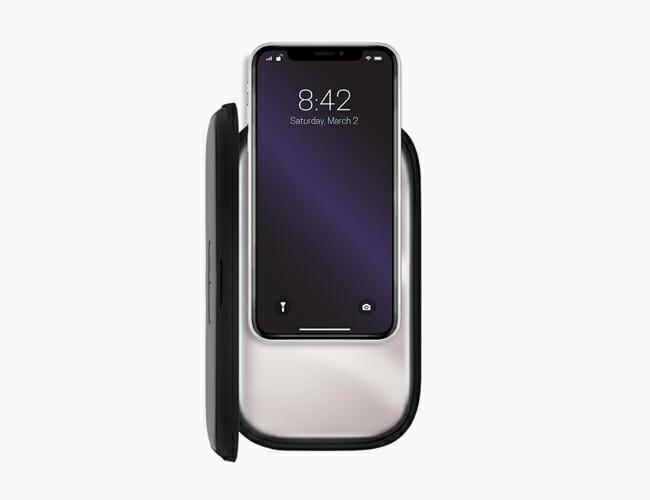
Casetify is promising that all of the proceeds generated from sales of its UV Sanitizer will go to the coronavirus relieve effort, which is awesome. The neat thing about this model, which is why its more expensive, is it actually works as wireless charger (with a USB-C input), so it can charge and clean your smartphone at the same time.

HoMedics UV-Clean Phone Sanitizer

The UV-Clean has a unique pop-up design that makes it more compact than other alternatives. It promises to be compatible with any-sized smartphone, plus it’ll clean it in just a minute (30 seconds per side).

PhoneSoap 3 Smartphone UV Sanitizer

PhoneSoap makes a variety of different UV sanitizers for all your different devices. The PhoneSoap 3 is unique because it has UV light bulbs on both sides of the case, so it simultaneously cleans both sides of your smartphone — no need to flip it. There’s also a slot for you to fit a charging cord into the device, so you can charge and clean your smartphone at once.

Note: Purchasing products through our links may earn us a portion of the sale, which supports our editorial team’s mission. Learn more here.
Tucker Bowe

Tucker Bowe has been on Gear Patrol’s editorial team since 2014. As a Tech Staff Writer, he tracks everything in the consumer tech space, from headphones to smartphones, wearables to home theater systems. If it lights up or makes noise, he probably covers it.

More by Tucker Bowe | Follow on Instagram · Twitter · Contact via Email

This Desk Pad Will Outlast All the Gadgets You Put On It

<!–This Desk Pad Will Outlast All the Gadgets You Put On It • Gear Patrol<!– –>

The Leather Desk Pad


We’ve covered Grovemade pretty extensively over the past few years. The Portland-based company makes some of the most beautiful desktop accessories you can find — seriously, just scroll through its Desk Collection and you’ll see what I mean — and they’ve just introduced something new: the Leather Desk Pad ($80+).

The Leather Desk Pad is almost exactly what you think it is, a desk pad that’s made of “super-premium vegetable-tanned” leather, but damn does it look nice. It also has a couple refined details that elevate its design, like a cork backing (to provide extra cushion and stability) and hand-sanded edges. Like all natural leathers, the Leather Desk Pad will patina and gain character over time. Plus, you’ll probably have it for longer than most of your home gadgets.

The Leather Desk Pad isn’t Grovemade’s first desk pad. In fact, it’s the company’s third. The company also makes desk pads that are made of wool feel and natural linoleum. Like those other desk pads, the Leather Desk Pad can be purchased in four different sizes and two different colors (black or brown), so it can fit and match whatever kind of home office your working from these days.

Note: Purchasing products through our links may earn us a portion of the sale, which supports our editorial team’s mission. Learn more here.
Tucker Bowe

Tucker Bowe has been on Gear Patrol’s editorial team since 2014. As a Tech Staff Writer, he tracks everything in the consumer tech space, from headphones to smartphones, wearables to home theater systems. If it lights up or makes noise, he probably covers it.

More by Tucker Bowe | Follow on Instagram · Twitter · Contact via Email

<!–

–>

<!– –><!–

–>

How Much Can a Camera-Free Security System Tell You? Waaaay More Than You’d Think

Brand: Minut
Product: Minut Smart Home Alarm
Sensors: Noise level, humidity, motion, temperature, barometric pressure
Price: $129
From: amazon.com

I’m keen on the idea of keeping an eye on my home while I’m away (not that I’m ever really away these days). But I’m less keen on the idea of there being cameras in my home for that purpose, not just as a security concern but because I aspire to not live in a panopticon. That’s why the Minut security system caught my eye.

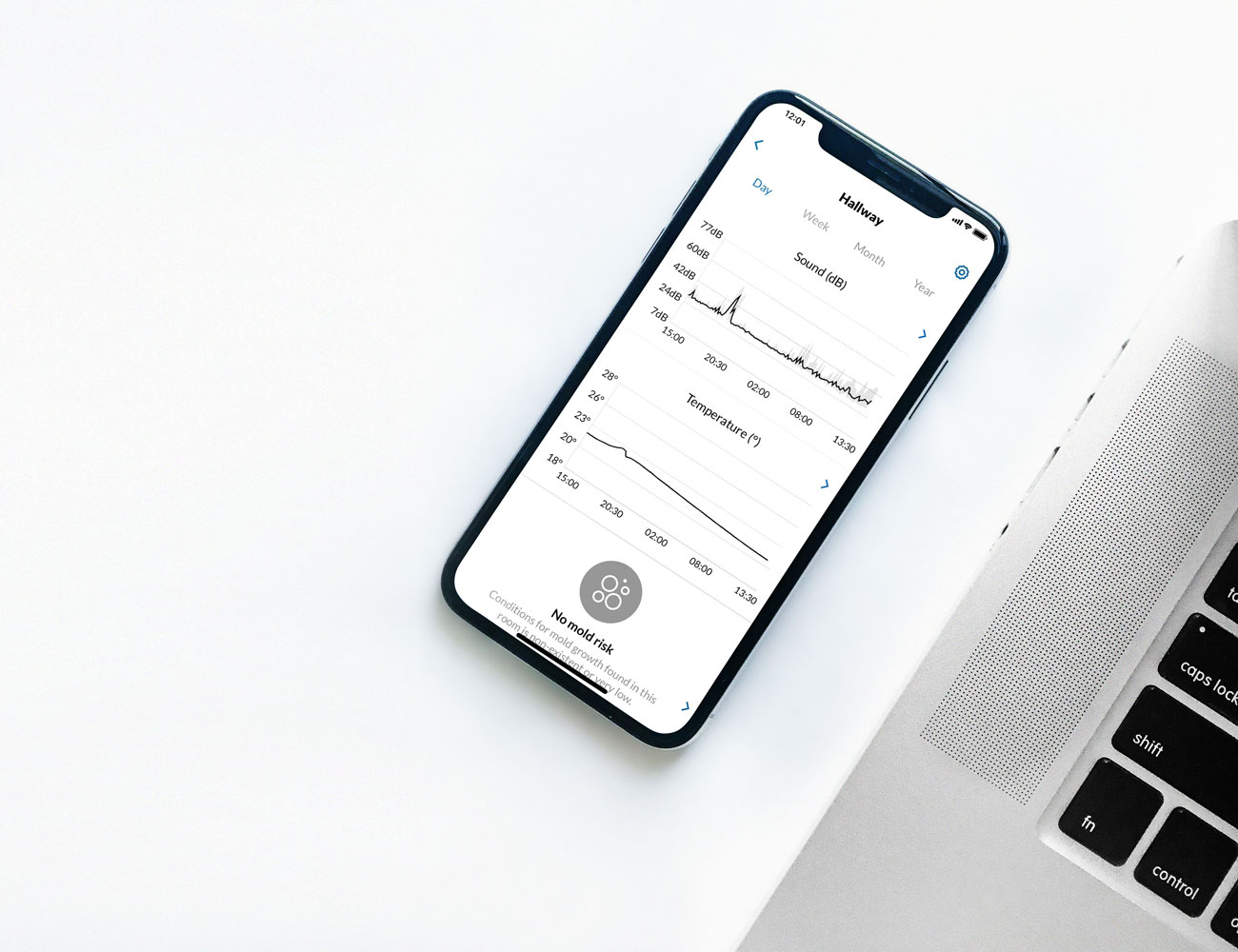
Kitted out with a fleet of sensors to monitor humidity, noise level, barometric pressure, mold risk, and motion, it physically lacks any way to capture imagery or intelligible sound recordings. How much can that fairly limited suite of information actually tell you? Way, way, way, WAY more than I expected, for better and for worse.

You get a bird’s eye view, not real-time info.

If part of the appeal of having security gadgetry in your home is being able step in while you’re away and see what’s going on (or not going on) in real time, Minut is not going to fit the bill. Owning to its limited suite of sensors that track nothing more than a change in levels over time, the data it collects and serves up to the companion app on your phone in a series of line graphs doesn’t give you any indication of what is going on as it is happening. The readings come in periodically and at a delay.

The result is, unlike camera systems I’ve used before (Wyze, and Canary), Minut can’t give many any indication as to what the cat is up to at this very second, for instance. Instead, and arguably more valuable, it provides a 30,000-foot view of the last 24 hours or so, with telltale spikes if anything was abnormal. In rare cases, like if the Minut hears glass breaking or detects another alarm (as it once did after I burned some bacon), it will give you a push alert that something is amiss, but otherwise it is more of a logbook you check once in a while for aberrations than it is a window you can peer through.

But you can tell a lot from the data it does collect.

But what can you even tell from, say, humidity levels charted over the course of the day? Enough that it actually startled me at first. At first, the daily line with its twin peaks and smaller bumps perplexed me — until I realized the big upticks corresponded exactly with when I or my wife took a shower, with smaller ones corresponding with mealtimes, particularly if the cooking involved boiling any water.

On the hunt for more patterns, I found plenty. The noise and motion levels betrayed when I wake up, detecting my slump into the kitchen and do the couch, and again when a sudden noise dropoff signals my wife has gotten up and turned off our white noise machine. Similarly, it’s very easy to spot whenever anyone leaves and returns. The fluctuation of temperature over the days and nights has clued me into exactly how our landlord has set up the thermostat. I haven’t quite figured out what revealing information the barometric pressure ratings can reveal, but I’m sure there is something.

And it makes me wonder how much I need to know.

After I first installed my Minut, I checked its stats feverishly, in part to assuage my nagging fear that the apartment burst into flames the second I left it, and partly for the puzzle of figuring out what I could divine from its stats. All while feeling a little bit icky at how clear of a vision it was giving me into what my wife was up to when I was out of the house.

But after a few weeks (and long before social distancing trapped us both at home with it), it faded into the background for me, as well it should. I mostly think about it only when I have to take it down from the ceiling to charge once ever few months. (You can rig it up with a wire attached in order to avoid this).

At a $129 price point with no recurring costs, the Minut is a pretty good deal for a bit of peace of mind, especially if you have a specific use-case for monitoring someplace fairly out of the way that is at risk of some sort of slow, catastrophic damage you could nip in the bud. A summer cottage that could develop a mold problem, or a basement or garage at risk of flooding or with appliances that might noisily fail seem like they would make a good home for one of these.

As for placing it directly in a living space, the Minut is an illustration of just how revealing seemingly benign data can be when put into context. It should probably make us all uncomfortable, and it certainly weighs on me. Though not so much that I’ve taken mine down, yet.

Minut provided this alarm for review. 

The Best Home Security Cameras

grey_placeholdergrey_placeholder

This is our definitive guide to the best smart home cameras of 2019. It explores everything you need to know before buying a smart home security, including what to watch out for, the different models available, and which work with Amazon Alexa, Google Assistant and Apple’s HomeKit. Read the Story

Eric Limer

Eric Limer is Gear Patrol’s tech editor. A resident of Weehawken, NJ, his current obsessions include mechanical keyboards, mechanical pencils and Formula 1.

More by Eric Limer | Follow on Instagram · Contact via Email

Let the Polar Grit X accompany you on your outdoor workouts

Smartwatches have been around for a while now, but full adoption still seems far off. However, the Apple Watch appears to be an exception, as recent sales numbers have put most Swiss watchmakers to shame. Nevertheless, these are two entirely different markets. On the other hand, we probably have an idea as to even tech-savvy consumers are hesitant to invest in a modern wearable. Polar probably knows about the missing ingredient as it showcases its Grit X smartwatch.

It may look like another run-of-the-mill model with a splash of fitness-ready features, but there’s more. In fact, the manufacturer describes the Grit X is the “ultimate outdoor watch.” While it does sound like a lofty claim, Polar is backing up its word with an impressive 100-hour usage time. We were talking about a common problem among smartwatches and it is battery life.

Not only does it go the extra mile, but this wearable also boasts comprehensive fitness-tracking capabilities. Endurance athletes will love the upgrades the comes with the Grit X. For those who prefer a guided training session, this is where the FuelWise function shines. The wearable will use an innovative algorithm to analyze your activities and remind you to hydrate or eat a specific portion of food.

Given the outdoor nature of the Grit X, Polar ensures reliability even in the toughest conditions. Thus, we’re looking at MIL-STD-810G construction which will power through almost anything. Meanwhile, the integrated turn-by-turn GPS system adds more detail to your workout. Even with navigation mode activated users can still expect to squeeze out 40 hours before it needs to charge.

Improve your workouts now: here

Images courtesy of Polar

Why Does the Command Key Have Such a Strange Symbol? We Found Out

Welcome to Further Details, a recurring column where we investigate what purpose an oft-overlooked product element actually serves. This week: we explain the history behind Apple’s Command Key.

If you’re over the age of about 25, there’s a good chance you didn’t learn how to use a computer on a Mac. If so, you probably never met the Command key — that the large button with a pretzel-shaped logo next to your space bar — until well into your computer-using life . The Command key is arguably the most important key on a Mac, and required for just about every major keyboard shortcut. But what was the original purpose of this key that is unique to Macs and, more curiously, why does it look so weird?

The Command key dates back to the early 1980s, and its secrets are bound up in its original name: the “Apple key.” According to Andy Hertzfeld, an American software engineer who helped develop the original Macintosh computer, the original purpose of the key is to allow you to completely do away with a mouse. In combination with the other keys, it allows you to operate your machine without ever touch — or even having — a mouse, a situation that was far more common before the trackpad laptop took over computing.

The current pretzel-shaped design is used on Swedish signs to indicate an interesting point on a campground.

The name “Command” key, and the now-iconic symbol, are in part thanks to the whims of Steve Jobs. During the development of MacDraw, a drawing app that released with the Apple Macintosh in 1984, Steve Jobs decided the Apple name and logo were being overused which was diluting the brand. The Apple logo, for instance, was everywhere — on every menu screen, all over the keyboard and, of course, directly on the Apple key. It was a situation Jobs described as “taking the Apple logo in vain.”

That decision meant there would also need to be an alternative logo, a duty that fell to Susan Kare, Apple’s resident bitmap artist at the time. Tasked with finding a symbol to represent the very abstract notion of “command,” Kare came upon the current now-iconic pretzel-shaped design, a shape used in Nordic countries to indicate a campground on a map. Almost 30 years later, the symbol still persists. And why not? Can you think of anything better?

Note: Purchasing products through our links may earn us a portion of the sale, which supports our editorial team’s mission. Learn more here.
Tucker Bowe

Tucker Bowe has been on Gear Patrol’s editorial team since 2014. As a Tech Staff Writer, he tracks everything in the consumer tech space, from headphones to smartphones, wearables to home theater systems. If it lights up or makes noise, he probably covers it.

More by Tucker Bowe | Follow on Instagram · Twitter · Contact via Email

The Best Affordable Phono Preamps to Upgrade Your Turntable

An external phono preamp is the most upgradable component in any entry-level turntable system. It’s small and relatively affordable, and it’s flexible enough to work in most systems. The job of the phono preamp is to take the weak signal from the phono cartridge and amplify it so your speakers can play it as a reasonable volume. The best phono preamps not only amplify this signal but equalize it — staying true to the RIAA playback equalization curve — so that it sounds as true to the original recording as possible.

Many entry-level turntables have integrated phono preamps, which allows you to hook the speaker directly up to powered speakers, a receiver or a powered amplifier. The problem is that these phono preamps are often cheap and more susceptible to vibrations and distortions since they’re close to the turntable’s other components. The good news that most of these built-in phono preamps can be turned off or bypassed, which allows you to upgrade to an external phono preamp.

An “entry-level” phono preamp is going to cost between $50 and $100. According to Charlie Randall, the co-CEO of the McIntosh Group, the phono preamp should take up about 20-percent of your system’s entire budget, meaning that if you’re buying a phono preamp that costs around $100, the rest of your turntable system shouldn’t cost much more than $500. If you have a higher-end system, you should upgrade to a higher-quality phono preamp.

Higher-quality phono preamps are better at equalizing the audio, boosting the lowest frequencies and attenuating the higher ones, but they also come with more advanced features, like having built-in DACs or inputs, and being compatible with turntables that use either a MM or MC cartridge. An entry-level phono preamp isn’t going to have those features, but your entry-level system doesn’t it to. It just needs it to make your records sound better. (It doesn’t hurt if it looks pretty next to your turntable, either.)

The Best Phono Preamps Under $100

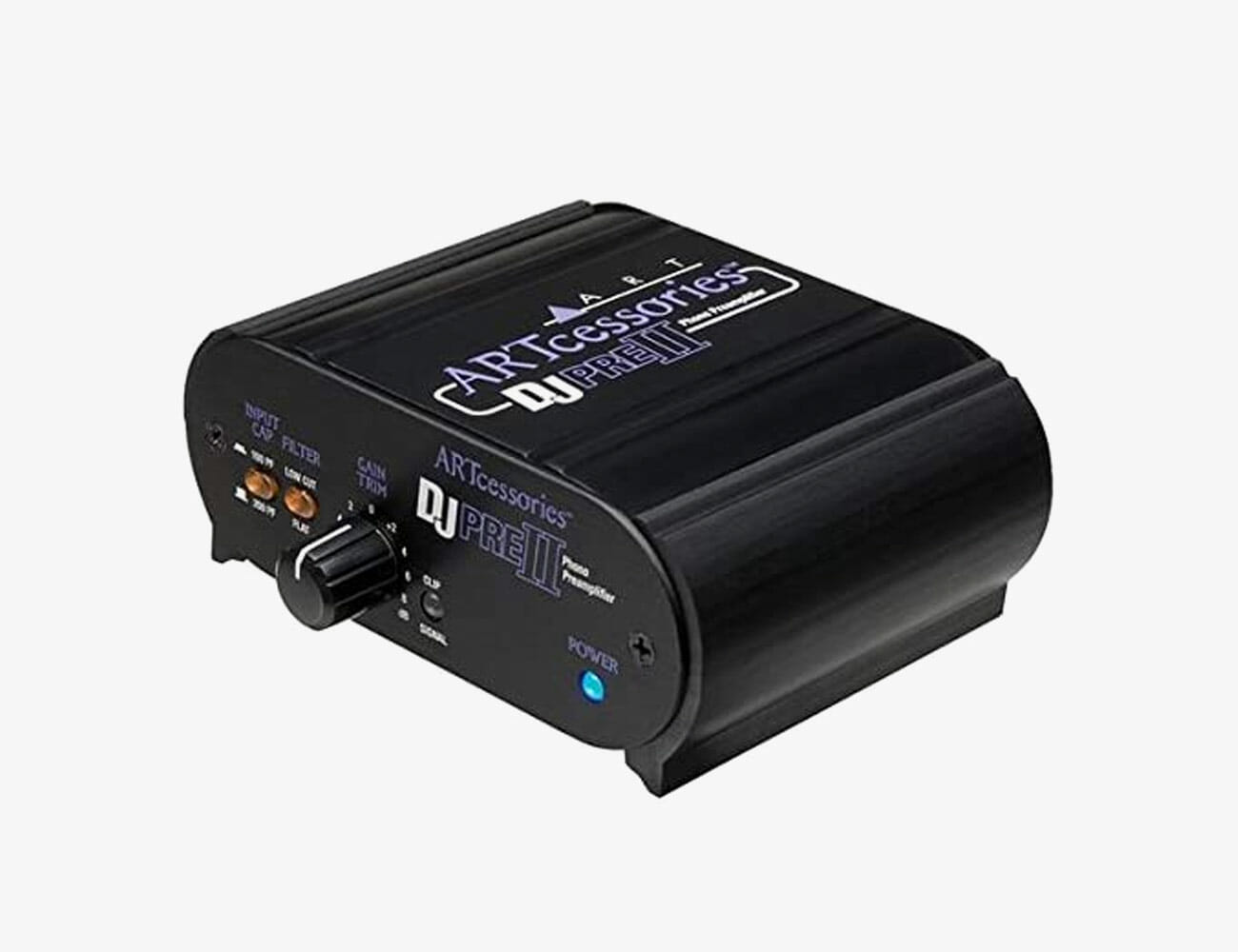
ART DJPRE II

Compatiblity: MM
Gain: 45dB (max)

This phono preamp gives listeners a surprising amount of control over their sound. It has a gain control knob with a dedicated signal/peak LED, so it can work with a wide range of amplifiers. The capacitance can be switched between 100pF and 200pF, which you can fine tune depending on your phono cartridge response. And there’s a low cut rumble filter that you can turn on or off, too. This customizability is great for tinkerers, but maybe not for somebody who wants a simple plug-and-play option.

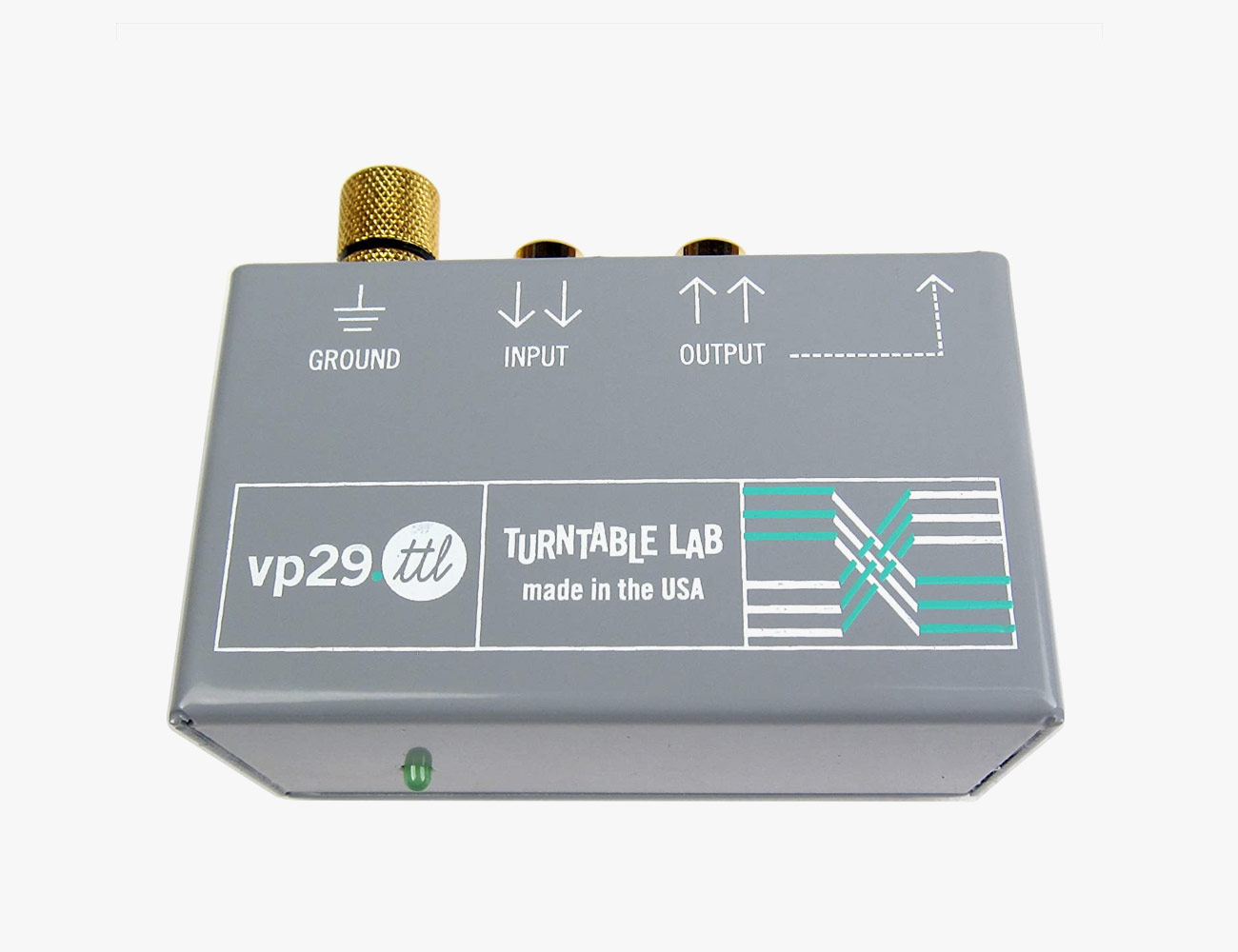
Rolls VP29 (Turntable Lab Edition)

Compatiblity: MM
Gain: 42dB

The Rolls VP29 is one of the most popular entry-level options you can buy. It’s a small, easy-to-use phono preamp that’s made in the USA. A neat feature is that it has a 3.5mm jack so you can easily connect it to any pair of powered speakers. The VP29 can be purchased in fire truck red for around $49 — here — or you can opt for a special edition version, which is a collaboration between Rolls and Turntable Lab, an New York City hi-fi shop, for a little more but it’s a more elegant phono preamp (in my opinion).

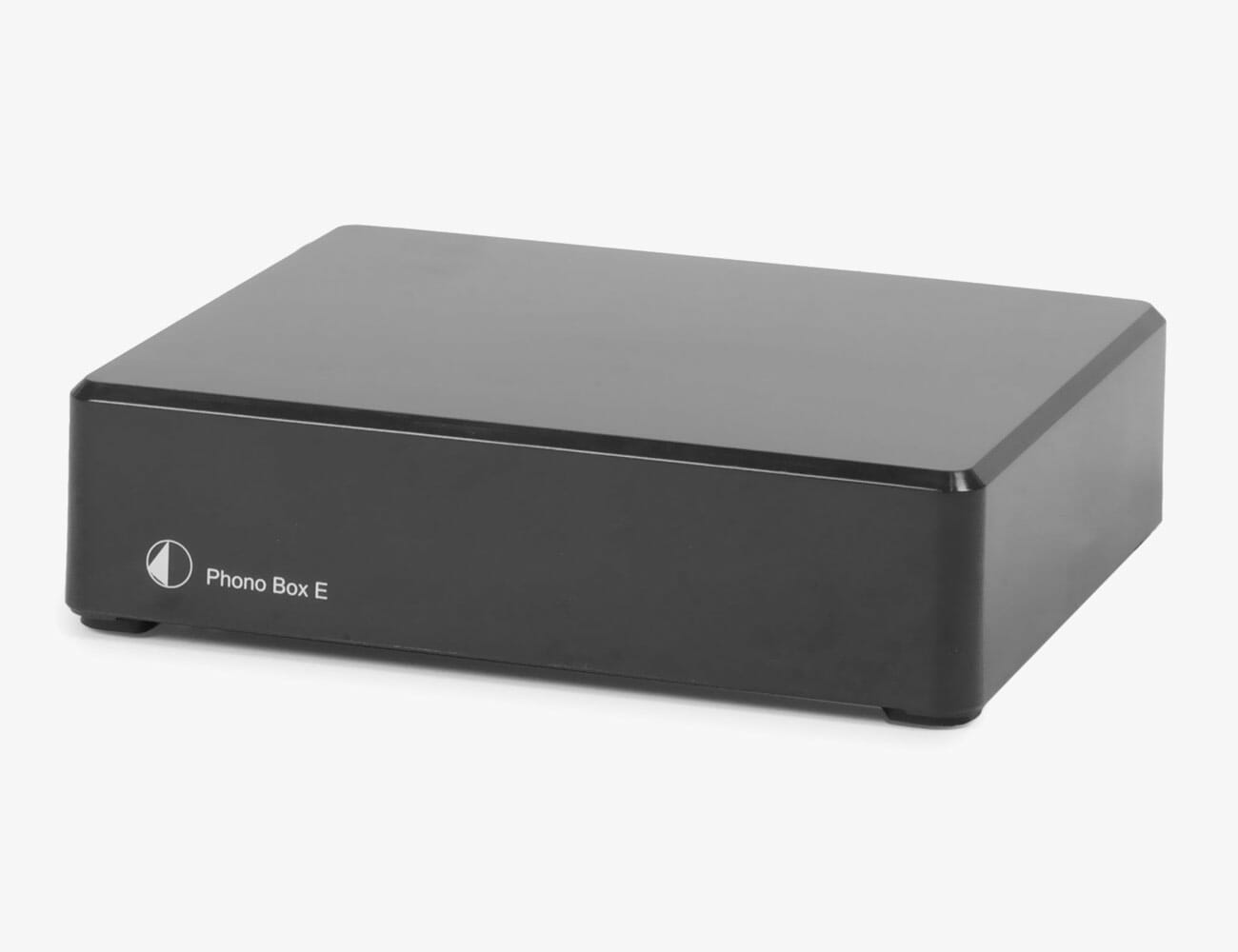
Pro-Ject Phono Box E

Compatiblity: MM
Gain: 40dB

The Phono Box E is a bespoke entry-level phono preamp that pushes well above its weight. It has a number of features to minimize external distortion, such as an SMD construction and built-in internal shielding, which this means that it can sit right next to the turntable. This is an excellent plug-and-play phono preamp that’s compatible with MM cartridges. It works well with Pro-Ject’s vast lineup of affordable turntables.

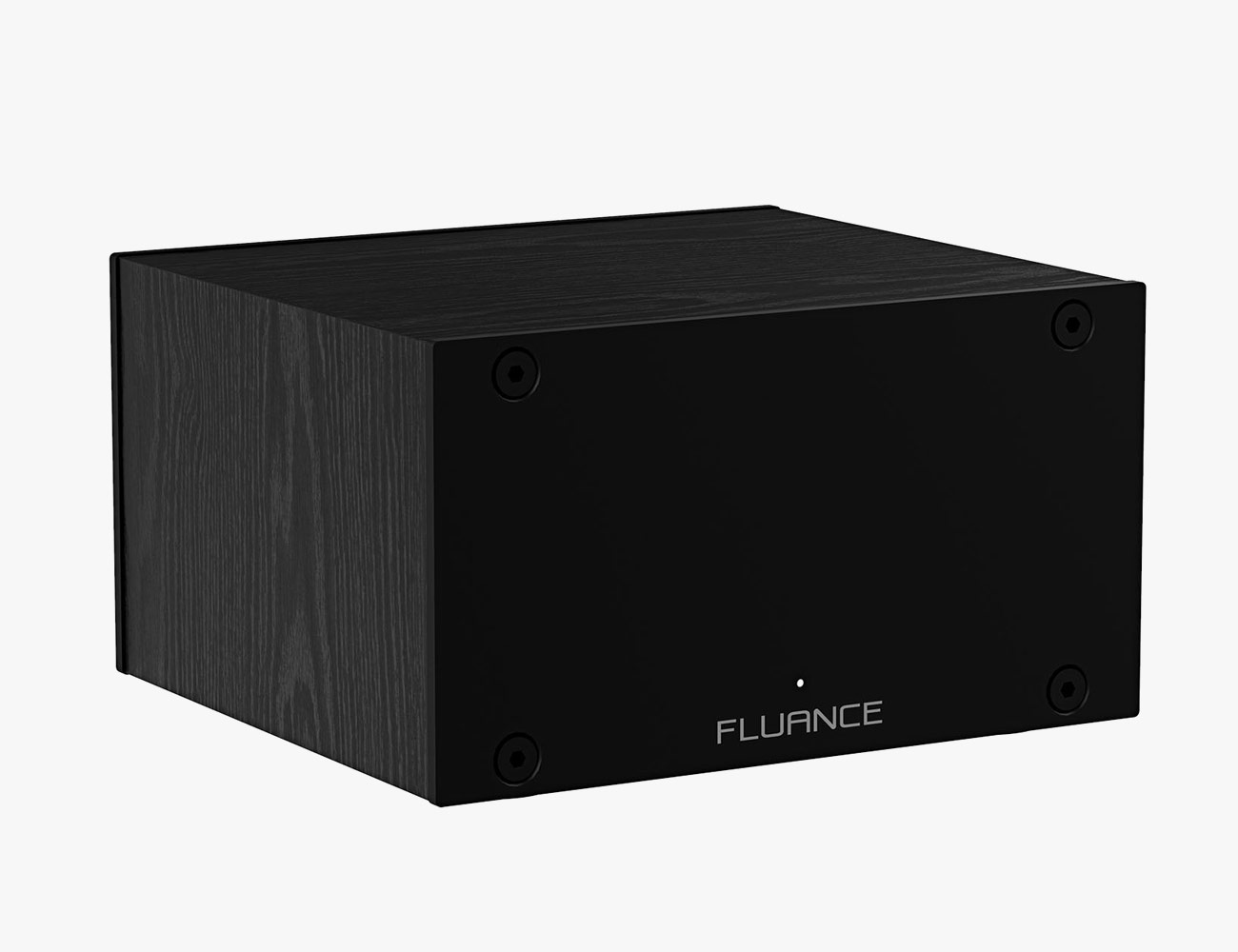
Fluance PA10

Compatiblity: MM
Gain: 38dB

This is the only phono preamp that the Fluance makes and it’s optimized to be paired with the company’s reference line (RT82-RT85) of turntables. It can work really any turntable that features an MM cartridge. It’s also a good option to pair with a receiver or AV receiver that doesn’t a built-in phono preamp.

Music Hall Mini

Compatiblity: MM and MC
Gain: 35dB

Music Hall is one of the most well-known names in American hi-fi. Its Mini phono preamp is compatible with both MM and MC cartridges. It’s a solid plug-and-play option for most entry-level systems, and it also has 3.5mm jack so you can simply connect to a pair of powered bookshelf speakers.

Pro-Ject Phono Box DC

Compatiblity: MM and MC
Gain: 40dB (MM) or 60dB (MC)

You can think of Pro-Ject’s Phono Box DC a higher-end version of the company’s Phono Box E. It’s still a fairly simple entry-level phono preamp, but it’s compatible with both MM and MC cartridges, meaning it’ll work with basically any turntable.

U-Turn Pluto

Compatiblity: MM
Gain: 36dB

The Pluto has been one of the best plug-and-play phono preamps for years. It combines high-end circuitry with components to deliver a warm, balanced sound. And it’s compatible with MM cartridges, so it’ll work with most affordable turntables.

The Upgrade: Schiit Mani

Compatiblity: MM, MC
Gain: (30, 42, 47 and 59dB)

Schiit Audio is one of our favorite makers of cheap-but-good audio equipment and even though the Mani doesn’t fall under the $100 limit — consider this the upgrade pick. It’s compatible with MM and MC cartridges, has four switchable gain modes, and is designed and built in California. You can also choose the finish: silver or black.

Note: Purchasing products through our links may earn us a portion of the sale, which supports our editorial team’s mission. Learn more here.
Tucker Bowe

Tucker Bowe has been on Gear Patrol’s editorial team since 2014. As a Tech Staff Writer, he tracks everything in the consumer tech space, from headphones to smartphones, wearables to home theater systems. If it lights up or makes noise, he probably covers it.

More by Tucker Bowe | Follow on Instagram · Twitter · Contact via Email