All posts in “tech”

Is Apple Prepping a New Breed of Apple Watch?

Apple is expected to announced the next Apple Watch, the Series 6, sometime in the next few weeks. The new smartwatch probably won’t have a radically different design from the Series 5, though it will have some fitness perks like blood oxygen monitoring. A big question that’s still looming, however, is what Apple is going to do with the Series 3?

Last year, Apple officially dropped the price of the Series 3 to $200, making it the best smartwatch for people with an iPhone on a budget. Apple also completely discontinued the Series 4 to clearly establish the difference between its two smartwatches. But with the new impending release of the Series 6, Apple can’t discontinue the Series 3 and upgrade the Series 4 to be the “new affordable option,” because the Series 4 has already been discontinued. It could keep the Series 3, of course, but that would be kind of anticlimactic and the Series 3 is showing its age.

Another option is that Apple could announce an entirely new affordable smartwatch — which is exactly what at least one leaker, komiya, is predicting, anticipating that the new “Apple Watch SE” will actually be an updated version of the Series 3. Supposedly, it will get an updated processor and chipset and Bluetooth 5.0, and only be available in an aluminum 42mm model.

This content is imported from Twitter. You may be able to find the same content in another format, or you may be able to find more information, at their web site.

If the Apple Watch SE comes to fruition, however, don’t expect it to be released (or even announced) this fall. You’ll likely have to wait until March.

Learn More: Here

This content is created and maintained by a third party, and imported onto this page to help users provide their email addresses. You may be able to find more information about this and similar content at piano.io

Xiaomi knows how to make an impact with its Mi TV LUX Transparent Edition TV

Earlier this year, at CES 2020, almost every other brand had new TVs and display technology on show. LG was showcasing its rollable OLED panel, Samsung had The Wall, and so much more. The event was practically so full of flexible screens which even dribbled down to more portable devices such as smartphones. Several months into the year, Xiaomi takes a bold step forward to give us one of the most stunning premium televisions ever –   the Mi TV LUX Transparent Edition.

The name alone already tells us what it is ready to offer. Engineers were probably thinking of ways to ensure that TVs do not block the user’s view when not in use. Even if mount it on a wall, any regular model just turns into a large black slate when it is off.

Although some manufacturers have turned to other workarounds (motorized, pop-up, and rollable configuration), Xioami’s is perhaps the simplest yet elegant. You’re getting a 55-inch panel with super-thin bezels all around. If you’re wondering where all the ports and internal circuitry have gone, everything sits inside the stylish base stand.

The Mi TV LUX Transparent Edition is a perfect entertainment upgrade for homes that have a view. While it’s operational, you can bask in the vivid visuals moving at a buttery-smooth 120-Hz refresh rate. Moreover, it supports Dolby Atmos, which is a must for those who love the acoustic clarity it offers. Xiaomi is initially launching this beautiful piece of technology in China on August 16. Given the unique feature it promises, it won’t be long before retailers around the globe will have it as well.

Learn more about it here

Images courtesy of Xiaomi

7 Desk Pads that Will Improve Your Workspace

Desk pads, or desk blotters, may not be as common a sight in offices or on desktops as they once were but they are still a great option to consider whether you’re looking at them for practical or stylish purposes. They provide a better surface to write on than the hard surface of your desk — either used on their own or paired with traditional blotter paper — and they can protect your desk in the process — or cover up any damage it may have already incurred.

Even if you aren’t writing on them, they can serve as an effective substitute for a mouse pad, and they can come in sizes large enough to make for a great non-slip base for your laptop or keyboard.

Here are a few of our favorites.

RISSLA Desk Pad


Price: $35
From: ikea.com

Ikea offers some basic, no-frills desk pads for less than $10 if you’re just looking for something to protect your desk, but it’s worth shelling out a little extra cash for the company’s RISSLA Desk Pad if you want a bit of a more complete package. It’s fairly large at 33 7/8″ x 22 7/8″, and it has both a lip along the front edge to hold it in place on your desk and a handy flap on the left side that you can tuck papers or other belongings under. The synthetic leather material is also made from 80% recycled paper, although you’re out of luck if you had your heart set on a color other than black.

Buy Now

Satechi Eco-Leather Deskmate


Price: $35
From: amazon.com

If you’re looking to keep things simple and streamlined on your desk, then Satechi’s Eco-Leather Deskmate might be just what you’re after. It’s available in your choice of blue, black or brown, and is a good choice for smaller desks (or larger desks you don’t want to cover up too much) at 23″ x 12.2″ in size. You can use your mouse on the desk pad itself, but Satechi also makes some separate matching mouse pads that you can pair with the desk pad if you find that things are getting a little too cramped.

Buy Now

Dacasso Black Leather Desk Mat


Price: $133
From: amazon.com

Dacasso is one of the bigger names when it comes to desk pads, and the company makes a wide range of options to suit just about anyone’s needs. This leather desk pad with a felt backing is available in black or brown and in a range of sizes, and can add a higher-end touch to your desk as well as providing a great writing surface. If you’re looking to go fully old school, you can opt for a model with side rails and add some of Dacasso’s blotter paper in your choice of color.

Buy Now

Staples Faux Leather Desk Pad


Price: $20
From: staples.com

They might not be able to match Dacasso’s desk pads as far as fit and finish goes, but Staples’ faux leather desk pads should fit the bill for anyone looking for a traditional style desk pad at a more affordable price. They’re available in black, brown or blue, and come with side rails that can accommodate blotter paper, or simply be used whenever you need a place to tuck away business cards or other papers.

Buy Now

OrangeArt Modern Linen & Ecru Blotter


Price: $36
From: orangeartstore.com

Another classic type of desk pad, this stylish desk blotter from OrangeArt (made by the company in New England) measures 14″ x 20″ in size and comes with ecru blotter paper that will provide you with a soft, comfortable writing surface. The four linen corners also serve as spots to let you keep important papers or business cards close at hand, and offer a nice alternative to the leather or vinyl options that are more commonplace.

Buy Now

AUKEY Extended Mouse Mat


Price: $25
From: amazon.com

This extended mouse mat from Aukey may not offer as good a writing surface as the other desk pads on this list, but it could be the better option if you’re mainly looking for something to put under your mouse and keyboard. It’s a mouse pad first and foremost, so there won’t be any issues with tracking or accuracy, and it’s big (35.4” x 15.75”) and spill-resistant, so it’ll provide plenty of protection for your desk. It’s also fairly understated as far as gaming accessories go, although a version with built-in RGB lighting is also available for those so inclined.

Buy Now

Grovemade Wool Felt Desk Pad


Price: $50
From: grovemade.com

You can’t swing a dead cat without hitting 18 desk mats that are made out of leather, so why not switch it up with something a little more unique? Grovemade’s wool felt pads add a bit of texture to a desk that might otherwise lack it, both in terms of feel and in terms of color.

Buy Now

This content is created and maintained by a third party, and imported onto this page to help users provide their email addresses. You may be able to find more information about this and similar content at piano.io
The Best Affordable Bookshelf Speakers, All Under $250

q acoustics

Q Acoustics

If you’re in the market for bookshelf speakers, the good news is that you don’t have to break the bank to get an excellent pair. A number of well-known and well-revered speaker manufacturers make budget-friendly alternatives to their reference-quality lines. In fact, many integrate some of their high-end technologies into these more affordable speakers so that they sound, well, way better than you’d think.

To keep the playing field even, all of the below bookshelf speakers are passive bookshelf speakers, meaning that you’ll need a separate receiver or amplifier to drive them. Passive speakers might not be as convenient as powered speakers, which have built-in amps and connectivity, but it does make them way more versatile. If you’re looking to integrate some speakers into either an entry-level hi-fi or home theater system, one of the below bookshelf speakers will be a perfect match.

Advertisement – Continue Reading Below

Polk Audio TSi100

The TSi100 are one of Polk Audio’s older speaker lines and therefore, the normally $210 pair can be purchased for significantly less right now. They’re not the biggest speakers, but they’ll do great in a small-to-medium sized room. 

Pioneer SP-BS22-LR

The Pioneer SP-BS22-LR have been around since 2013, but they’re still some of the best hi-fi speakers you can buy under $200. They’re designed by Andrew Jones, so these little speakers have a lot more punch and fidelity than their diminituitive s

Wharfedale D310

Wharfedale amazon.com

$199.00

Wharfedale is best known for their really high-end reference line of loudspeakers. That said, the D310s borrow technologies from its high-end lines, including a Kevlar-woven midrange driver and a bass reflex port, so they sound impressive. They’re also available in a number of finishes, including black, white and walnut.

Fluance Signature HiFi

This Canadian-based audio company is best known for making some of the best turntables that are also surprisingly affordable. More recently, they’ve gotten into bookshelf speakers and, not surprisingly, its Signature Series HiFi are designed to pair excellently with Fluance’s hi-fi turntables.

Polk Signature Series S15

Polk Audio amazon.com

$199.99

Released in 2017, Polk’s Signature S15s are a step up from the TSi100s that appear earlier on this list. They borrow technologies from the company’s higher-end speakers, like the Terylene dome tweeter and a high-efficiency woofer, so they deliver smooth and accurate sound. With their curved edges and walnut finish, they’re also just really good-looking speakers.

Q Acoustics 3020

Q Acoustics walmart.com

$229.99

Q Acoustics is a UK-based hi-fi company that makes some of our favorite affordable loudspeakers. The 3020 are actually the older version of the company’s 3020i speakers, which were released in 2018, but they look and sound nearly identical. Plus, since they’re a little older you can get a really great deal on them.

Klipsch R-51M

$298.00

$241.04 (19% off)

The R-51M are the most affordable speakers in Klipsch’s high-quality Reference line. Each speaker features a 5.25-inch driver along with Klipsch’s signature Tractrix horn tweeter and, together, the pair are able to deliver rich, room-filling sound with deep bass. They also have a cool, retro flair that’s unlike any other bookshelf speaker in this price range.

This content is created and maintained by a third party, and imported onto this page to help users provide their email addresses. You may be able to find more information about this and similar content at piano.io

Advertisement – Continue Reading Below

Buying Your First Smart Lock? Just Get This

Skip the heavy lifting and go straight to what’s best. Just Get This is our no-nonsense guide to the gear you need, now.

A smart lock lets you lock and unlock your door with the touch of button, through a simple voice command, or just by having your smartphone nearby. You can even check to see if your door is locked when you’re away from home, and view a history of every time your door has been locked and locked.

If you want one, and want to skip the research to just get the best option for you, look no further than the August Wi-Fi Smart Lock.

You don’t need a separate device for it to work remotely.

The August Wi-Fi Smart Lock is the company’s latest, greatest and smallest smart lock. It doesn’t require a Wi-Fi bridge — a whole seperate device other locks sometimes need — to control it remotely. It has Wi-Fi baked right into it, which allows you to lock and unlock your door even when you’re on the other side of the world. Yes, the August Wi-Fi Smart Lock is a little more expensive than other smart locks, but you’re getting what you pay for.

Easy installation. No door surgery needed.

The August Wi-Fi Smart Lock simply attaches to the existing deadbolt on your door, and actually still gives you the ability to use your keys to lock and unlock your door (in case you can’t let go of that mechanical feel). You can install the August Wi-Fi Smart Lock in less than 15 minutes. You don’t have to replace any of the innards of your door, so no need to pull out the toolbox.

It works with every major smart home ecosystem.

Most smart locks don’t work with all major smart home ecosystems, like Amazon Alexa, Google Assistant, Apple HomeKit and Samsung SmartThings — but the August Wi-Fi Smart Lock is compatible with all of them. It’s even AirBnb compatible, in case you’re going planning on renting your home or apartment out.

August

August Wi-Fi Smart Lock

August Home amazon.com

$242.99

This content is created and maintained by a third party, and imported onto this page to help users provide their email addresses. You may be able to find more information about this and similar content at piano.io

Video Review: Sony’s New WH-1000XM4 Noise-Cancelling Headphones Are Still King

Sony has finally announced the successor to the much-loved WH-1000XM3 headphones. The all-new Sony WH-1000XM4 cost $350 and are available for preorder today, in black or silver. They’ll start shipping and be available for actual purchase in “mid-August.”

In this episode, we run through all you need to know about the new M3s, and Tucker Bowe gives a detailed rundown of his hands-on review.

Read the review: Sony’s New Flagship Noise-Canceling Headphones Are Finally Here

This content is created and maintained by a third party, and imported onto this page to help users provide their email addresses. You may be able to find more information about this and similar content at piano.io

The Complete Guide to All of Pro-Ject’s Excellent Turntables

Welcome to Brand Breakdown, a series of comprehensive yet easy-to-digest guides to your favorite companies, with insights and information you won’t find on the average About page.

Even if you only have a passing interest in vinyl and hi-fi, you undoubtedly have heard (or seen) a Pro-Ject turntable. They’re known for the distinct design, bright colors (sometimes) and excellent sound quality. Of course, the secret sauce of the Austrian company is its ability to keep such high-performing turntables at a relatively affordable cost. And it’s been able to do that by producing almost everything in-house.

Pro-Ject has engineering and manufacturing facilities in Austria, Czech Republic and Slovakia. In addition to turntables, Pro-Ject makes a range of other hi-fi components, such as phono stages, DACs, preamps and amplifiers, many of which it integrates into its turntables. This practice has helped Pro-Ject keep its costs down and thus become a really successful hi-fi company.

“I started Pro-Ject to bring as many people as possible to the world of hobby hi-fi, especially in the 1980s when CD players were extremely expensive and generally inaccessible,” said Heinz Lichtenegger, the founder of Pro-Ject Audio. “At this time, I realized that a good turntable could sound even better than a CD, however, there were no quality turntables available that were low cost. So, in 1991 I decided I had to make one.” Nearly 30 years later, the company is still known for just that: audiophile-grade turntables at affordable prices.

Today, Pro-Ject makes many different turntables that are designed for every type of vinyl enthusiast, from beginner to seasoned audiophile. And these turntables can range anywhere from $300 to over $16,000. To help navigate the different lines of turntables, we had the man himself, founder Heinz Lichtenegger, to walk us through each line.

Just Getting Started

The Primary Line


What is it?
The Primary line is the most affordable line of turntables that Pro-Ject makes. Starting at $200, it borrows design elements from both the company’s Debut and Essential lines, and makes them out of slightly fewer materials. There are also fewer models to choose from within the Primary line, so instead of customizing the turntable to fit your needs, you’re basically deciding whether you want the Primary E or the Primary E Phono, the latter of the two has a built-in preamp.

What Heinz Lichtenegger says:
“The Primary Line is designed for people who have a limited budget (around $200) but want a real hi-fi turntable beyond a piece of plastic, this customer understands the complexities of setting up a turntable. [It’s] designed with a tonearm perfect for the high-quality Ortofon cartridge with preset tracking force and anti-skating, allowing users to just plug and play while remaining a handmade product made of quality materials without any resonating hollow spaces.”

Buy Now: $225+

The T Line


What is it?
The T Line is one of Pro-Ject’s new lines of mid-range turntables. It’s priced between the Essential and Primary lines, so it’s still relatively affordable, but one of the biggest reasons why you’d buy a T Line over something else has to do with its visuals: It has a striking platter that’s made of tempered glass. It only comes in three models. There’s the baseline T1, which requires an external phono stage and a powered amplifier; the T1 Phono SB, which has a built-in phono stage; and the T1 BT, which also has a Bluetooth transmitter for connection to a powered speaker or AV receiver.

What Heinz Lichtenegger says:
“The tempered glass platter is not only a good solution to a resonance-free heavy platter, it also is more visually attractive than, for instance, the minimalistic designed MDF platter used on the Primary Line.”

Buy Now: $329+Learn More: Here

The Essential Line


What is it?
The Essential line is made up of a variety of mid-range turntables, each of which is designed to work with a specific hi-fi setup. For example, the baseline Essential III is designed for those who want to use their own preamp and speaker, while the Essential III Phono has a built-in preamp so you can connect directly to a powered speaker (like a Sonos Play:5). There are several other models, including the Essential III HP, which is for customers who mainly listen through headphones, but the point is that you can match this turntable to fit your needs. And you can buy one for right around $300.

What Heinz Lichtenegger says:
“The Essential line was designed as an alternative to the feature-laden, low cost, low-quality turntables that began flooding the market several years ago. By allowing the buyer to focus on the features that they cared about, and not pay for features they wouldn’t use, we were able to design a very high-performance European-built player for music lovers on a tight budget.”

Buy Now: $399+Learn More: Here

The JukeBox Line


What is it?
The JukeBox line is another one of Pro-Ject’s midrange line of turntables, but they’re specifically designed for people who want an all-in-one solution. The JukeBox E, for example, consists of a record player, phono stage, Bluetooth receiver, line pre-amplifier and power amplifier. It requires you only to connect a pair of passive bookshelf speakers to complete the system. (The JukeBox S2 is essential an upgraded version of the JukeBox E.)

What Heinz Lichtenegger says:
“The JukeBox package is also very cost-effective, for the price of a better streaming speaker or soundbar, you get a real HiFi, stereo system including a turntable and Bluetooth module to stream from an external music source.”

Buy Now: $499+Learn More: Here

The Upgrade

The Debut Line


What is it?
The Debut line is the company’s other mid-range line of turntables, along with the Pro-Ject’s Essential line, but it’s a little nicer. While similar in looks and features, the Debut line has a couple of notable upgrades over the Essential line that are designed to reduce noise and distortion, such as a heavier platter, higher-quality feet and a motor that’s decoupled from the plinth. It’s worth noting that the Debut Carbon (DC), which starts at $399, is by far the company’s most popular turntable.

(In August 2020, Pro-Ject released the Debut Carbon Evolution ($499), an upgraded version of the Debut Carbon (DC) with a couple key design improvements and a higher-end Sumiko Rainier phono cartridge.)

What Heinz Lichtenegger says:
“The Debut is our superstar. Revolutionary in its price range, the Debut boasts a heavy 8-coat lacquered MDF chassis, heavy platter, suspended motor, carbon tonearm, and an expensive (over $100 USD) cartridge from Ortofon. These are all features usually found in a higher-priced item. The first choice of any music lover who looks for an audiophile turntable at a low cost.”

Buy Now: $399+Learn More: Here

The RPM Line


What is it?
The RPM Line is a range of higher-end turntables that are still relatively affordable. The have a distinct look, with a teardrop-shaped plinth. The RPM Line consists of five different models, ranging from the RPM 1 Carbon ($499) to the high-end RPM 10 Carbon ($3,499); as you go up in numbers, the turntable gets upgraded up with better materials, technologies and features.

What Heinz Lichtenegger says:
“The RPM Line is designed for audiophiles who want to have the best quality available within its price range and are happy to live with slightly unconventional product design. The RPM Line’s teardrop shape plinth and non-rectangular chassis cause less resonance (as in high-end speaker designs) and the motor is free standing and isolated at 100 percent to eliminate rumble or vibration. There are many little audiophile features (such as spiked cones and inverted bearing) that target the product to the discerned audiophile.”

Buy Now: $499+Learn More: Here

The X Line


What is it?
The X Line is one of Pro-Ject’s most recent lines of turntables. You can think about the X1 as a high-end turntable that’s still relatively affordable. It starts at $899, but that price increases rapidly with the higher-end models that have more robust parts, such as a bigger chassis, better isolation feet, better bearings, heavier better platter, better tonearms and better cartridges.

What Heinz Lichtenegger says:
“The X Line is for people seeking the highest sound quality in a traditional design — including dustcover and hinges. From the X1, these units are ‘no compromise’ and 100-percent correctly designed turntables including all of the features an audiophile dreams of.”

Buy Now: $899+Learn More: Here

The High-End

The Classic Line


What is it?
Now we’re getting into the “high end.” The Classic Line consists of two turntables, the Classic $1,099 $899) and the Classic Evo ($1,699), both of which are designed for hi-fi entusiants with a refined taste. The turntables have an elegant, retro design, such as a thick platter, and brushed metal top-plate that looks like it’s built directly into the wooden plinth.

What Heinz Lichtenegger says:
“The Classic is a traditional sub-chassis turntable designed for a user who needs to have their speakers close to the turntable, perhaps in a more restricted living environment. [It has] a nostalgic appearance with its retro design reminiscent of the 1960s and 70s, but upgraded with modern technology such as precision CNC’ed pulley, diamond knife-cut sub and main platters created for the highest precision, and sub-chassis isolation by modern rubber dampers (TPE, thermoplastic elastomers) instead of the traditional springs.”

Buy Now: $1,099Learn More: Here

The S-Shape Line


What is it?
The S-Shape Line is a range of high-end turntables that get their name from their “S”-shaped tonearm that’s made of aluminum. The aluminum is heavier than carbon, which is what Pro-Ject makes most of its other turntable tonearms out of, and this results in a softer; the result is that the S-Shape Line sounds different — softer, less open — than many of the company’s other turntables.

What Heinz Lichtenegger says:
“Pro-Ject likes dynamic and openness, therefore, we use carbon tonearms which give you the highest speed and transparency possible. However, not everyone likes this feature and we aim to reach as many music lovers as possible. The heavier aluminum S-shape arms deliver a sound that’s rounder, more relaxed and softer. They also allow the use of a detachable headshell to choose a variety of cartridges, which can be changed quickly and easily.”

Buy Now: $1,700+

The Signature Line


What is it?
This is Pro-Ject’s pinnacle line. Both the Signature 10 and the Signature 12 are high-end turntables that compromise nothing. They each have mass-loaded sub-chassis, a floating turntable design and a unique S-shaped tonearm. They’re designed for a truly engaged audiophile.

What Heinz Lichtenegger says:
“The Signature 12 ($12,000) is unique in its ability to control motor resonances better by a flywheel drive. My personal problem in my system is that I have about 40 different cartridges and have my favorites for different music. I prefer the speed of my carbon tonearms, but I need the flexibility of an S-shape arm which allows fast change. By using an ultra-low friction uni-pivot tonearm bearing, I am able to reach a traditional aluminum close to the speed of a carbon arm.”

Buy Now: $6,000+Learn More: Here

Note: Purchasing products through our links may earn us a portion of the sale, which supports our editorial team’s mission. Learn more here.

This content is created and maintained by a third party, and imported onto this page to help users provide their email addresses. You may be able to find more information about this and similar content at piano.io

The iMac Is the Perfect Work-From-Home Purchase

It’s a laptop’s world, but for the better part of two weeks I’ve been using Apple’s new 27-inch iMac and there’s a lot to love about it. It’s not revolutionary. In fact, it looks identical to iMacs of the past. But if you, like me, are working from home, it’s one of the best deals you can get on a computer right now.

I’m on more video calls that I’ve ever been in my professional life and while pretty much all Mac laptops and desktops that have been released in the last few years have had a 720p webcam, the new iMac has a 1080 full HD webcam. But it’s not just a higher-resolution picture; Apple integrated certain technologies, such as face tracking, tone mapping and exposure control into the webcam, and the result is a picture that is good enough that I routinely get compliments from coworkers on its clarity. The improved microphones and speakers help with the video conference experience, too.

But for me, the biggest thing was getting back to a big display. For the past few months, I’ve been primarily using my 2016 MacBook Pro and its 13-inch display just feels absolutely tiny compared to the 21.5-inch iMac I have at our NYC office. There have been occasions during quarantine where I’ve used my iPad as a secondary screen for extra real estate via Sidecar, but it’s just not the same as a big, beefy screen. With the 27-inch iMac, I have room to open and work in two windows at once and, honestly, it makes a world of difference.

Apple is also offering the option of buying it with a nano-texture glass finish, which is the same anti-reflective finish found on Apple’s 32-inch Pro Display XDR monitor that costs $5,000. It’s an option at adds an extra $500 to the price of the iMac but it could make all the difference for creative professionals working in a well-lit room, though frankly the size of the screen is probably an improvement enough for most people.

2020 imac on desk

Tucker Bowe

But there is a little bit of a catch. A few months ago, Apple officially announced that future Macs are going to transition away from Intel’s chipsets, adopting Apple’s own ARM-based silicone chipsets, like the ones in its iPhones and iPads instead.

The new 27-inch iMac — like the coming round of upcoming MacBooks — still has an Intel chipset. It’s Intel’s latest-and-greatest 10th-generation processor, granted, but it’s not the future. Apple isn’t expected to release its first ARM-based Macs until late 2020, and has pledged to support legacy devices for much longer than that. So the new iMac isn’t an instant artifact, but it is already the past.

apple imac

Apple

That detail is, however, pretty evenly balanced by how great of a deal this thing is, all told. The 27-inch iMac in a base configuration — which gets you the improved webcam, the improved speakers and microphones, Intel’s 10th-generation processor (i5-core), 256GB of SSD storage and a beautiful Retina 5K display — costs $1,799, which is much cheaper than it would cost to build a comparable setup out of a MacBook and an external display.

The iMac is still one of the best values in all of computing and, if you expect to be working from home for the foreseeable future, it just might be the perfect time to buy one. Yes, it makes a lot of sense to wait and see what ARM has to offer. But if you can’t (or don’t want to), the iMac is a pretty great deal.

Buy Now: $1,799+

This content is created and maintained by a third party, and imported onto this page to help users provide their email addresses. You may be able to find more information about this and similar content at piano.io

Everything You Need for a Perfect Hi-Fi System

Whether you just want to play some records from time to time, or you want each and every note to sound scientifically perfect, there’s a high-fidelity system for you. Dive in to learn the basics, or to glean inspiration for your own living room masterpiece.

Chase Pellerin

The Best Turntable and Speaker Combos that Make Vinyl Easy?

Forget all the moving parts.

Read More Here

Henry Phillips

5 Best All-in-One Turntables that Simplify the Vinyl Experience

When shopping for an entry-level turntable, make sure it has a built-in preamp.

Read More Here

Artisan Fidelity

Why Audiophiles Are Shopping for Vintage Turntables

And if you’re interested, these are the best places to look for refurbished, vintage turntables.

Read More Here

Fluance

The Complete Guide to Flunace’s Fantastic Turntables

Fluance makes some of the best affordable turntables you can buy, but which one is right for you?

Read More Here

Pro-Ject

The Complete Guide to All of Pro-Ject’s Excellent Turntables

Heinz Lichtenegger, the founder of Pro-Ject Audio, explains the differences between the company’s various turntables.

Read More Here

MARTIN BUREAUGetty Images

5 Affordable Turntables That Even Audiophiles Would Want

Can you get a great-sounding turntable for under $500?

Read More Here

Q Acoustics

The 4 Best Bookshelf Speakers of 2020

These are the best bookshelf speakers for your home audio setup, in a variety of price ranges.

Read More Here

Henry Phillips, Eric Yang

6 Perfect Hi-Fi Headphone Setups

You love great music, and there’s a good chance you listen to a lot of it. Now it’s time to pair your tunes with equally great gear.

Read More Here

Hunter D. Kelley

The Best Hi-Fi Headphones and Speakers, All American Made

Makers of some of the most beautiful speakers and headphones on the planet.

Read More Here

Hunter D. Kelley

The Best Active Speakers (And Which Pair You Should Buy)

It’s all about the speaker-and-amplifier combo.

Read More Here

Polk Audio

What’s Actually the Difference Between Cheap and Expensive Bookshelf Speakers?

Two audio experts explain the simple differences between a pair of entry-level bookshelf speakers and a pair that costs over $1,000.

Read More Here

AJ Powell

How to Tune the Most Important Component in Your Stereo System

Your home isn’t a concert venue. It wasn’t built for sound.

Read More Here

Gear Patrol

5 Hi-Fi and Record Shop Owners Share Their Highly-Tuned Home Hi-Fi Setups

Let’s face it, the people who are entrenched in hi-fi every day probably have better (and cooler) home hi-fi set-ups than you.

Read More Here

This content is created and maintained by a third party, and imported onto this page to help users provide their email addresses. You may be able to find more information about this and similar content at piano.io

The 3 Best Sleep Tracking Apps for the Apple Watch

The Apple Watch has historically not had a sleep tracking app, though that’s about to change. In the meantime, there are some third-party solutions you can use with whatever Apple Watch you have right now.

The catch is that you’re going to either want to charge your Apple Watch a little bit during the day or a little bit right before bed. According to Apple, an hour-and-a-half charge will take any of the Apple Watch from about zero to 80-percent battery; while an extra half-an-hour is needed to charge that extra 20 percent.

If you’re an Apple Watch wearer and sleep tracking matters to you, these are the apps you should try out while you wait for Apple’s official entry into the space.

AutoSleep


Best Overall: This is most popular app for sleep tracking because it looks and works very similarly to the Activity app that’s already on your Apple Watch — there are rings and everything. It tracks sleep duration, sleep quality and “readiness,” the latter basically attempting to rate how well your sleep prepared you or the forthcoming day. And it integrates nicely with Apple Health.

BUY NOW: $3

Sleep++


Best Free: The biggest upside that Sleep++ has over some of the other sleep tracking apps, particularly AutoSleep, is that it’s free. Other than that, it has many of the same features, such as automatic sleep tracking (it detects exactly when you fall asleep) and shows you a bunch of data about your night’s sleep.

BUY NOW: Free

Pillow


Honorable Mention: Pillow is a well-reviewed app that, again, has many of the popular features like automatic sleep tracking and in-depth sleep analysis charts. It has a “smart alarm clock,” where it wakes you up at the optimal point in your sleep cycle for maximum morning refreshment. The app can also record audio (like snores and random outbursts) during the night and play it back for you, but that requires you to pay a subscription fee so you’ll have to want it really bad.

BUY NOW: Free

This content is created and maintained by a third party, and imported onto this page to help users provide their email addresses. You may be able to find more information about this and similar content at piano.io

5 Gadgets That Clean Your Smartphone For You

You probably aren’t cleaning your smartphone as often as you should, even during this current pandemic. It’s not difficult, only requiring a cloth and some rubbing alcohol, or even some disinfectant wipes (which Apple recently just deemed “OK”), but it still can be tough to remember to do it — and doing it often.

Fortunately, there are devices that specialize in sanitizing your smartphone and other gadgets for you. Instead of using disinfectant or some other liquid to kill your harmful bacteria and germs, they use UV light. They’re essentially tanning beds bathe your smartphone, but they bathe it blue light to sanitize it over time.

Casetify UV Sanitizer


Casetify is promising that all of the proceeds generated from sales of its UV Sanitizer will go to the coronavirus relieve effort, which is awesome. The neat thing about this model, which is why its more expensive, is it actually works as wireless charger (with a USB-C input), so it can charge and clean your smartphone at the same time.

BUY NOW: $120

HoMedics UV-Clean Phone Sanitizer


The UV-Clean has a unique pop-up design that makes it more compact than other alternatives. It promises to be compatible with any-sized smartphone, plus it’ll clean it in just a minute (30 seconds per side).

BUY NOW: $80

PhoneSoap 3 Smartphone UV Sanitizer


PhoneSoap makes a variety of different UV sanitizers for all your different devices. The PhoneSoap 3 is unique because it has UV light bulbs on both sides of the case, so it simultaneously cleans both sides of your smartphone — no need to flip it. There’s also a slot for you to fit a charging cord into the device, so you can charge and clean your smartphone at once.

BUY NOW: $80

Mophie UV sanitizer


Like most phone sanitizers, Mophie’s entry into the space takes about 5 minutes to clean your phone with UV rays. But unlike it’s competition, the Mophie UV sanitizer can also wirelessly charge your phone. The only catch is that the unit’s wireless charger is on the top of the device, not inside the cleaning space, so it cannot clean and charge your phone at the same time. Still, it’s an extra feature that will make it extra worth the space on your desk.

BUY NOW: $80

Keysmart CleanTray UV Sterilization Pod


While it doesn’t have much in the way of standout features, the CleanTray UV Sterilization Pod can handle phones up to 7 inches and do its cleaning work in about 5 minutes, all while coming in under one pound.

<a class="body-btn-link" data-vars-ga-call-to-action="BUY NOW: $100 $80″ data-vars-ga-outbound-link=”https://huckberry.com/store/keysmart/category/p/64840-cleantray-uv-sterilization-pod” href=”https://go.redirectingat.com/?id=31959X896062&xs=1&url=https%3A%2F%2Fhuckberry.com%2Fstore%2Fkeysmart%2Fcategory%2Fp%2F64840-cleantray-uv-sterilization-pod&sref=https%3A%2F%2Fwww.gearpatrol.com%2Ftech%2Fa703973%2Fbest-smartphone-sanitizers%2F%3Fpre%3Dtech%252F%26prefix%3Da%26id%3D703973%26del%3D%26variantId%3D%26post%3D%252Fbest-smartphone-sanitizers” rel=”nofollow” target=”_blank” data-affiliate=”true”>BUY NOW: $100 $80

Note: Purchasing products through our links may earn us a portion of the sale, which supports our editorial team’s mission. Learn more here.

This content is created and maintained by a third party, and imported onto this page to help users provide their email addresses. You may be able to find more information about this and similar content at piano.io

Elevate Your Workspace with Incase’s 50% Off Sale

While heading back to school might look a lot different this year, now’s the perfect time to take advantage of some great deals. And it doesn’t get better than Incase’s current promotion. Right now, you can save up to fifty percent off site-wide. From sleek backpacks to Airpods cases, MacBook hard shells and more, Incase offers stylish lines with premium protection. So whether class is back in session for yourself or your kids, start off your school year right with Incase’s steep discounts. No code necessary now through 8/21.

Learn More: Here


This content is created and maintained by a third party, and imported onto this page to help users provide their email addresses. You may be able to find more information about this and similar content at piano.io

Ghost Pacer Gives You a Holographic Buddy to Train Against

Maximizing daily workouts is easier when there’s competition involved. It can be hard to get that on a track, but it doesn’t have to be with Ghost Pacer. Ghost Pacer is the world’s first mixed…

The Best Portable Projectors You Can Actually Afford

sony portable projector

Sony

A portable projector, or a pico projector, is a great little gadget because it lets you put a big screen — over 100 inches, in most cases — almost anywhere. When shopping for a portable projector, there are a number of things to look out for. There’s its brightness and the size of the picture it can project. There’s also the matter of connectivity and whether it has built-in operating system which will allow it to stream content directly without the help of a laptop, tablet, or smartphone. There’s its size, because not all portable projectors are actually that portable. And then there’s cost, of course.

Below, you’ll find some of our favorite portable projectors of 2020.

Advertisement – Continue Reading Below

1 Nebula Astro

Anker amazon.com

$299.99

  • It’s Anker’s smallest and most portable pico projector
  • Capable of creating up to a 100-inch image
  • Built-in Android operating system makes it easy to stream
  • 2.5 hours of battery life isn’t enough to get through the longest movies
  • 100 lumens of brightness isn’t great

2 Sony MP-CD1

Sony amazon.com

$399.99

$299.00 (25% off)

  • Supports USB-C charging
  • It has an extremely portable design
  • A max brightness of 105 lumens isn’t the best
  • 2.5 hours of battery life isn’t enough to get through the longest movies
  • No built-in operating system so you need to connect to a smartphone, laptop or gaming console

3 AAXA P7

AAXA Technologies amazon.com

$499.99

$399.99 (20% off)

  • Very small and portable design
  • Max brightness of 600 lumens is better than many other pico projectors
  • Capable of producing an image up to 120 inches
  • It only has 90 minute battery life, so prepare to use it plugged in most of the time
  • No built-in operating system, so need external source source to stream

4 BenQ GS2

BenQ bhphotovideo.com

$599.00

  • Max brightness of 500 lumens
  • Good sound with built-in stereo speakers
  • Built-in Wi-Fi makes streaming easy
  • 15-degree tilting hinge allows you to easily adjust the picture
  • Despite being relatively small, it doesn’t have the most portable design
  • More expensive than other pico projectors

5 Nebula Mars II Pro

Anker amazon.com

$579.99

  • Built-in Android operating system means it can be used as a standalone streaming device
  • Can project up to a 150-inch screen, which is huge
  • 4 hours of playtime is very good
  • 300 lumens of brightness is pretty average
  • Not the most portable design

This content is created and maintained by a third party, and imported onto this page to help users provide their email addresses. You may be able to find more information about this and similar content at piano.io

Advertisement – Continue Reading Below

The Smartest Thing About Microsoft’s Folding Phone Is What It Doesn’t Have

Years and years after the death of the Windows Phone, Microsoft is back with a second shot and smartphone glory. Last fall, it announced the Microsoft Surface Duo: a two-screen folding Android phone. And now, almost a year later, it’s available for pre-order for a hefty $1,400.

Obviously, Microsoft was beat to the folding-phone punch by Samsung’s Galaxy Fold (even after that model’s extensive delays), but the Surface Duo has an appeal all its own, and the most exciting parts about it are what it lacks.

Kitted out with two 5.6-inch screens on either side of its clamshell form, the Surface Duo does not have a folding screen. Instead, it has two distinct panels with a hinge down the middle. While it’s not nearly as flashy as an actual folding screen, it will almost certainly come with a few huge advantages — the first of which is durability. After its initial release last April, Galaxy Fold reviewers immediately experienced problems; while Samsung has made design changes to combat them, only time will tell how the new screen can hold up.

In addition to durability, Microsoft claims that its distinct two-screen design is also helpful for creating two discrete spaces for different activities, which could be a boon for inveterate multitaskers.

But perhaps the best bit of restraint on the Surface Duo is that it has no outside screen. When its clamshell form is closed, not only are its various screens protected from damage, but you’re protected from seeing a notification and being sucked into email, Twitter or whatever your digital vice may be. Just like a laptop or many flip phones of the past, the Duo has a clear physical distinction between in-use and not — and moving from one state to the other requires a deliberate choice and more physical action than the press of a button. It’s a design decision that could make it mercifully easier to decide that you’re not going to use your phone for a bit.

Hopefully it can live up to its promise.

Pre-order: AT&T Pre-Order: Microsoft

This content is created and maintained by a third party, and imported onto this page to help users provide their email addresses. You may be able to find more information about this and similar content at piano.io

4 Mistakes You’re Making When You Charge Your Phone

Welcome to Product Support, a column devoted to helping you get the most out of the gadgets and software you already use.

Keeping your gadgets charged is easy in the short term. Just keep an eye on their battery level and plug them into the wall when it gets low. But keeping your gadgets’ batteries healthy in the long run is a much more complicated proposition. The lithium-ion batteries we have in virtually all of our gadgets are chemically destined to degrade over time, holding less charge than they used to, and blowing through what little they have faster then before. It’s impossible to stop this process, but it is possible to slow it.

To find out the best ways to postpone the inevitable, we talked to Isidor Buchmann, CEO and founder of Cadex Electronics and main contributor to extremely in-depth and invaluable online resource Battery University, about how exactly you should treat your batteries in a perfect world, what you can do to maximize their life.

So brace yourself, because here’s what you’re probably doing wrong.

You’re always charging it up to 100%

It may put your mind at ease when your smartphone’s battery reads 100 percent charge, but it’s actually not great for the battery. “A lithium-ion battery doesn’t like to be fully charged,” Buchmann says. “And it doesn’t like to be fully charged and warm.”

Electric vehicles, with batteries that are required by various regulations to have a minimum operational life on the order of several years, make that prospect more feasible than it is for your phone by using drastically oversized batteries that are purposefully designed to never be fully charged. “You’ll typically charge to about 80 percent and discharge down to about 20,” Buchmann says. “In that mid-range use, you get far more cycles than if you fully charged and discharged as we do on our cellphones.”

If you’re on a device that runs iOS 13, you’re in luck because Apple’s new Optimized Battery Charging option allows you to do exactly this, and if you can stomach the being less than 100 percent in the morning, you should absolutely turn it on. Unfortunately, barring phones that start incorporating much bigger batteries along or software settings to ensure that they stop charging before their batteries are actually, literally full, it’s next to impossible to ensure that your iPhone is never at 100 percent unless you are constantly staring at it while it’s on the charger. That said, if you can avoid getting full to the brim on a regular basis, the practice will pay dividends in the long run. “If you can live with an energy band of about 60 percent instead of 100 percent,” Buchmann says, “you can easily double the battery life.”

You’re letting it get too close to zero

Charging your battery all the way up is less than ideal, and to make matters worse, so is discharging it down to zero. While older nickel-cadmium batteries did have a “memory” that could be disrupted by anything other than a full cycle from full to empty, your modern lithium-ion battery abhors both extremes. So, in a perfect world, your battery never goes below 20 percent, and also never above 80 percent.

The good news is that lithium-ion batteries like to be charged in short spurts, so plugging in for five percent here and 10 percent there is not only fine, but advisable. Cycling your phone from 100 percent, down to zero, and back up has a very limited utility in that it can “recalibrate” a battery if it’s doing strange things like dying out of nowhere when it claims to be decently charged, says Buchmann. “But other than that, it’s not advised to fully cycle lithium-ion.”

You’re letting it get too hot

The most stressful thing that can happen to your phone’s battery during regular use is not, in fact, being discharged, or even being empty. “The combination of full charge and warm actually causes more stress than usage,” Buchmann warns. “If you’re in a car in the summer, don’t put it on the dashboard. Put it on the floor, or in the shade.”

Circumstances where your phone or laptop are fully charged and extremely hot should be relatively rare and, as such, relatively avoidable. Don’t leave your fully-charged phone in the summer sun! Perhaps the most dangerous recurring heat-and-charge combination is a laptop that is always plugged in and prone to running hot, in which case investing in a cooling stand may be a smart move in case you ever want to use your laptop away from its tether.

While you might reasonably think this means bad news for wireless chargers which often generate a fair bit of waste heat as they juice up your gadgets, the chemistry actually gets a little bit more complicated: lithium-ion batteries don’t like to be hot when they’re full but recent studies on vehicle batteries suggest they do like to be warm while they charge and discharge, so your wireless charger is at least probably not terrible for your battery’s health.

“For charging and discharging, the battery likes to be warm. Between 25 and 40 degrees Celsius (77-104 F),” Buchmann says. “But in storage, the battery should be cool, maybe 15 or 10 degrees Celsius (59-50 F).” Monitoring these temperatures constantly is a tall order and probably not remotely feasible, but you can find apps that will take note of your batteries temperture and warn you if it hits extremes, which will at least help you avoid the worst scenarios.

After reading all this, you’re worrying about it too much

It’s good to know the battery basics so you can avoid the worst pitfalls, but it’s also important to not fall into the trap of trying to be perfect. In the end, a lot of this is completely out of your hands. Despite the fact that lithium-ion batteries power a lot of our everyday life, the science of exactly how they function in practice is very much still in development, with new nuances still being uncovered. And much of the emerging science comes from tests on huge multi-cell vehicle batteries, which are similar but not identical to the single-cell battery in your phone. On top of that, your day-to-day charging usage experience is so riddled with variables that it’s pretty much impossible to confirm whether or not you’re doing things right.

Lastly, but perhaps most importantly, your phone is not going to last forever, and not even super-humanly good battery treatment is going to change that. A screen replacement that’s just slightly too expensive to be worth it for your aging phone or outdated processor that can’t handle the latest software is all but destined to end your phone’s usable life even if the battery doesn’t. And until or unless the companies that make phones start designing them to survive a much, much longer lifespan, there’s not a whole lot you can do as the end user.

Just like your battery’s charge is a resource that you spend for the convenience of checking your phone, consider your battery’s overall lifespan as a resource you’ll need to spend wisely to preserve your own sanity. It’s up to you to decide what safeguards are worth the trouble.

“Why have a perfectly good battery when the glass is broken or the phone becomes obsolete?” Buchmann asks. “It all sort of harmonizes together to come to an end.” You’ll never prevent it, but armed with what you know now, maybe you’ll be able to postpone it a little bit longer.

Learn More: Here

This content is created and maintained by a third party, and imported onto this page to help users provide their email addresses. You may be able to find more information about this and similar content at piano.io

This Mask Both Filters and Purifies the Air You Breathe

When it comes to masks, there is a lot of misinformation out there — and it’s easy to get confused. Does your mask filter particles? What size particles? Does it sterilize the air you’re breathing? In the case of the UV Mask, the answers are yes, 0.3 microns (similar to an N95) and absolutely — with 99.99% efficiency. Whether you’re working on a construction project, walking outside in an area of high pollution or simply want to be a bit more cautious about the air you’re breathing, the UV Mask is a great solution. It offers two layers of protection, combining a pre-filter to filter out particles in the air, before passing the air through a “Sterile-Vortex” which uses a high-intensity UV-C light to sterilize it. The result is air that’s 99.99% purified by the time it reaches your nose, mouth and lungs. It’s designed in the US with key components made in Japan, like the silicone seal that’s 100 percent airtight, a durable outer hardshell and a UV-powered purifier that can run for eight hours continuously. Plus, if you back the UV Mask on Kickstarter now, you can save 65 percent off the retail price of $249.

BUY NOW: $249 $87

This content is created and maintained by a third party, and imported onto this page to help users provide their email addresses. You may be able to find more information about this and similar content at piano.io

OPKIX One Wearable Cameras

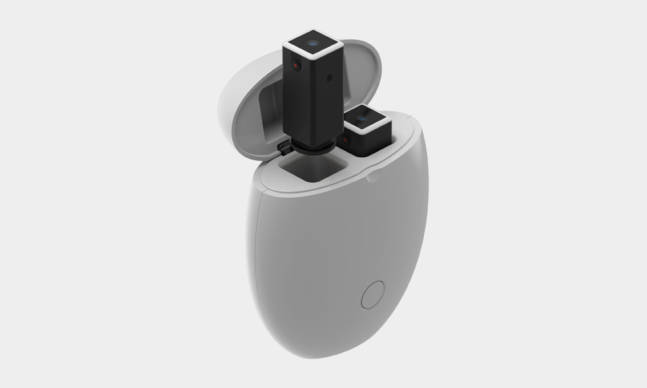
GoPro cameras are awesome, and they’re easily the action camera of choice, but they’re not exactly ideal for minimalist daily carry. In comes the OPKIX One, a diminutive and sleek pair of 1080p video cameras…

How to Tune the Most Important Component in Your Stereo System

Before buying any piece of audio equipment — specifically loudspeakers — it’s necessary to remember that your room is the single most important component in your stereo. Even the best stereo system in the world can fail to deliver the sonic experience you were expecting if it is set up in the wrong room, or in a setting without proper acoustic treatment.

Concert venues, houses of worship, movie theaters, and recording studios utilize acoustic treatment to minimize or eliminate acoustic issues and while there are domestic issues to consider in the home setting (is your spouse going to let you set up bass traps or absorption panels in your living room?) the reality is that every room has acoustic issues and there are reasonable solutions to make your new pair of loudspeakers sound even better than they did in the store.

Your Room and Its Acoustics: What to Know

Everything about your room matters: the shape, dimensions, surface materials, position of windows and doorways. Sound waves interact with the room and the objects within it as they travel to your ears. So before you buy anything, think about the type of loudspeaker you are considering and how it might interact with your room.

If you plan on using a typical living space, like a den or a living room, measure your room and determine how far back you will be sitting from the set-up location of your loudspeaker, and how far into the room you can set them up. If (like most of us) you have domestic considerations, it’s unlikely that you will be able to position your new pair of loudspeakers 3-to-5 feet from the wall which might allow them to sound best; more open, deeper and wider soundstage.

Modern homes often feature a lot of windows. This isn’t great for sound as the reflective nature of glass can negatively affect spatial cues and make your system sound very bright. There are solutions to this which we will discuss.

Room shape and dimensions have a critical impact on the bass response. Bass waves require space to unfold, but that doesn’t mean bass can’t sound great in a small room if you make some acoustic changes. Sound waves generated by your loudspeakers are either absorbed by objects in the room, reflect off surfaces within your room, or pass through the room itself into an adjoining space. A rectangular room is often better for acoustics than a perfectly square room for these reasons.

Floor surfaces can have a significant impact on the sound, too. Stone, tile and marble without any type of area rug can make your system more forward sounding or bright. Hardwood floors absorb sound more effectively, but they also require some form of area rug or carpeting to minimize reflections and low-frequency information. Heavily carpeted rooms will often sound acoustically dead if combined with too much furniture. The key is to find a balance between lively and dead.

Practical Ways to Improve Sound

Professional acoustic products, such as acoustic panels, work as intended but they generally look out of place in a home. Because the primary concerns are minimizing the first reflection points and improving the bass response of your loudspeakers within your existing space, there are a number of practical solutions that you can implement.

The behind wall. The wall surface behind your loudspeakers should never be too hard (bare walls) or too absorptive. A wall unit filled with a mixture of books, picture frames, and even records will minimize reflections (depending on the type of loudspeaker) and absorb bass if you have to place your loudspeaker up against the wall; in a scenario where your loudspeaker is really close to the wall, bass will wrap around the rear of the cabinet, reflect off the wall and arrive at your ears out of phase with the rest of the sound. Music will always sound like it’s coming from the wall devoid of any soundstage depth or width.

The side walls. The first reflection points along the sidewalls can have an enormous impact on the imaging and overall clarity of the sound. It’s somewhat surreal how treating these two points can make everything sound more three-dimensional and focused. You will require an assistant for this but it’s a quick fix. Sit in your normal listening position and have your friend walk with a small mirror along the surface of the wall until you see the loudspeaker’s (starting at the loudspeaker itself) reflection. Mark this with a pencil on both walls. In a professional setting, acoustic panels of varying thickness are used to absorb frequency information. In a domestic setting, consider using bookshelves, wall hangings or even artwork (without glass) at these points.

The furniture and floors. Furniture can be used effectively to minimize reflections and absorb excessive bass; a large sofa or wood coffee table can be very effective. Glass tables should be avoided as they will exacerbate the problems we are trying to fix.

Carpeting or area rugs can be a huge source of improvement because they will reduce room noise, impact reverberation, and absorb reflections. If possible, stick with natural fibers like wool which have better absorptive qualities.

This content is created and maintained by a third party, and imported onto this page to help users provide their email addresses. You may be able to find more information about this and similar content at piano.io