All posts in “tech”

The On-the-Go Accessory All MacBook Owners Need

If you’re not familiar with OWC, you should be. The brand makes some of the highest-performance, highest-quality Mac and PC docks and accessories out there. Whether you’re on the road or working from home, having a quality USB-C dock for your Mac or PC is imperative — particularly if you are working on a newer MacBook Pro or MacBook Air with its limited USB-C ports. OWC’s USB-C Travel Dock is feature packed, with a total of five ports for connectivity: two USB 3.1 Gen 1 (Type-A) ports, one HDMI, an SD card reader and a USB-C power pass through that can charge at up to 100W. And while connectivity was priority number one, OWC spared no detail when designing the USB-C Travel Dock – just look at the built-in cable storage. It’s perfect for Mac owners, but will also work on notebooks, tablets and other devices running macOS, Windows, Linux, iOS, Android and Chrome OS. Plus, right now you can get expedited holiday shipping with 48-hour delivery — no code necessary.

Price: $55

SHOP NOW


This content is created and maintained by a third party, and imported onto this page to help users provide their email addresses. You may be able to find more information about this and similar content at piano.io

Need a Soundbar for Your Home Theater? Just Get This

If you’re looking for a new Dolby Atmos-capable soundbar to get in 2020, look no further than he Sonos Arc. It’s beautifully-designed, easily integrated into a multiple room or home theater system with Sonos’s other wireless speakers, and fairly future-proof.

Dolby Atmos is a must

The Arc is a full 5.0 system. It has a total of 11 drivers, eight woofers and three tweeters and upward-firing drivers that allow it to create virtual height channels and really take full advantage of Dolby Atmos’s immersive sound technology, which is a must for the future-proof home theater. There are other speaker that sport the tech, but the Arc is the best value for most people.

Sonos is wonderfully simple

Aside from the size, sound quality and support for Dolby Atmos, the Arc comes with all the advantages of a Sonos speaker. If you have other Sonos speakers in your home, it’s effortless to integrate the Arc with your existing setup. And even if you don’t, i’s easy to install, with a simple HDMI ARC (or optical) connection, can be set up to respond to either Amazon Alexa or Google Assistant voice commands, and support’s AirPlay 2, making it simple to stream music from your iPhone or iPad.

It’s an investment, but it’s future-proof.

At $799, the Arc is pricey, and there are slightly more affordable alternatives if you’re strapped for cash, but the Arc’s high-end guts and support for Atmos make it a foundation you can build your home theater around for years to come. And you may need to; for full effect your TV also needs to support Dolby Atmos. But even if you’re not there yet, the Arc will be ready for you when you are.

Courtesy

The Arc

Sonos sonos.com

$799.00

This content is created and maintained by a third party, and imported onto this page to help users provide their email addresses. You may be able to find more information about this and similar content at piano.io
Want the New Small iPhone? There’s a Little Catch

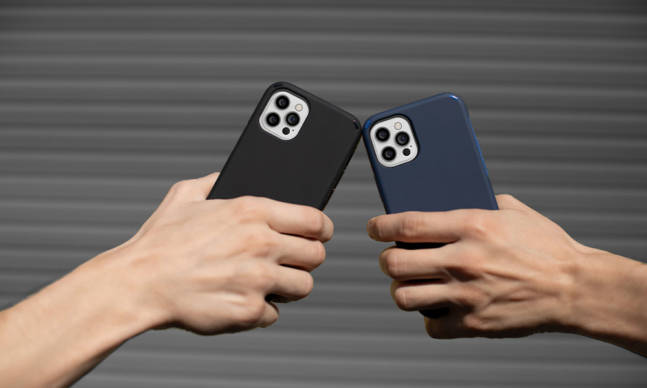
If you’ve been waiting to purchase the iPhone 12 mini, Apple’s new miniature iPhone, there’s something you should know: It won’t charge as quickly over MagSafe as other iPhone 12 models.

As first reported by MacRumors, Apple recently updated its support page to show that iPhone 12 mini won’t be able to take advantage of the 15-watts of power delivery over MagSafe, which the iPhone 12, iPhone 12 Pro and iPhone 12 Pro Max can all take advantage of, enabling them to wirelessly fast-charge faster on MagSafe than the max 7.5-watts all iPhones pull from non-MagSafe Qi-based wireless chargers. The iPhone 12 mini instead tops out at a power draw of 12 watts.

apple magsafe

Apple

The iPhone 12 mini has a smaller battery than its cohorts, so the difference in speed might not be particularly noticeable in terms of how long it takes a given iPhone to fill up. But we’ll have to wait to get our hands on the iPhone 12 mini to find out.

The iPhone 12 mini starts $729. It will be available for preorder on November 6 and will ship on November 13.

LEARN MORE

This content is created and maintained by a third party, and imported onto this page to help users provide their email addresses. You may be able to find more information about this and similar content at piano.io

Which Streaming Apps Don’t Work on Roku, Chromecast, Fire TV, Apple TV

Not all every streaming platform supports every app, which could be a deal breaker for some people. There’s no use in buying a Fire TV streaming stick if you plan on streaming English Premier League soccer games because it doesn’t support NBC’s new streaming app, Peacock, for example. Or there’s no use buying a Chromecast streaming dongle if you want to watch See or The Morning Show, because the Apple TV app isn’t yet supported on Chromecast devices.

Most of the really popular streaming apps, like Netflix or Disney+, are supported on all the major streaming platforms, but there are app omissions for Roku, Chromecast, Apple TV and Amazon Fire TV. Here’s what you need to know before you buy.

Roku

streaming services

Courtesy

HBO Max is the biggest omission on all Roku streaming devices and smart TVs. You can still get HBO Now and HBO GO, both of which are legacy apps, but you can’t get HBO Max and all its added programing. That includes a huge backlog of movies (like The Lord of the Rings trilogy and all the movies in the DC Universe) and shows (like Friends and The Big Bang Theory).

If that’s a dealbreaker for you, you can go for the Apple TV ($149):

SHOP NOW

Or the Chromecast with Google TV ($50):

SHOP NOW

Chromecast

streaming services

Courtesy

The new Chromecast with Google TV is the search giant’s first streaming dongle that actually functions as a streaming operating system for your TV. Previous Chromecast dongles and TVs, your only option was to cast a show or movie to your TV from your smartphone, tablet or computer. However, even with the new UI there’s still no support for Apple TV+ or the Apple TV app. And, as the new Chromecast dongle doesn’t support AirPlay, you can’t simply cast Apple TV+ content from your iPhone to the dongle. There are some fairly complicated workarounds but in general you can’t watch shows and movies that are exclusive to Apple TV+ on Google’s Chromecast devices.

If you really need Apple TV support, you can get an Apple TV ($149):

SHOP NOW

Or you can get a Roku Streaming Stick+ ($50):

SHOP NOW

Amazon Fire TV

streaming services

Courtesy

Like with Roku, the HBO Max app is not available on Fire TV streaming devices and smart TVs. You can still get HBO Now and HBO GO, both of which are legacy apps, but you miss out on HBO Max’s added programing and movies. The other big app that’s not available on Amazon Fire TV streaming platform is Peacock, which is close to my heart for streaming non-televised English Premier League soccer matches but also provides access to films from Universal Pictures and Dreamworks Animation.

For HBO Max and Peacock, you’ll have better luck with an Apple TV ($149):

SHOP NOW

Or a Chromecast with Google TV ($50):

SHOP NOW

Apple TV

streaming services

Courtesy

The good news for Apple TV (HD or 4K) owners is that it basically supports all the major streaming apps. The only real downside is that not all services work with the Apple TV app, which is the central organizing interphase on every Apple TV. The biggest omission to the Apple TV app is Netflix. You can watch Netflix on an Apple TV, but Netflix movies and shows won’t appear as suggestions in the Apple TV app.

This content is created and maintained by a third party, and imported onto this page to help users provide their email addresses. You may be able to find more information about this and similar content at piano.io

Does Apple’s New Subscription Plan Make Sense for You?

Apple One is Apple’s new subscription plan that bundles a bunch of its services together, including Apple Music, Apple Arcade, Apple TV Plus, iCloud, News Plus and Fitness Plus. It was announced early in September but it’s only just became available. So, should you sign up?

There are three different plans within Apple One that you can choose from, depending on which services you actually subscribe and how many people you want included within the plan. You can see the different tiers and pricing below.

apple one subscription

Apple

So, how much are you actually saving?

If you sign up for the Apple One “Individual” plan, you’re saving about $6 per month over the cost of subscribing to each service individually. The total subscription plans for Apple Music ($10/month), Apple TV Plus ($5/month), Apple Arcade ($5/month) and Apple’s 50GB iCloud storage ($1/month) comes out to $21. The individual plan that bundles all them together costs $15.

If you sign up for the Apple One “Family” plan, which allow you to share the plan with a total of six family members (including yourself), you’re saving about $8 per month over the cost of individual subscriptions. It’s important to note that Apple TV Plus and Apple Arcade offer family sharing for free, so you’re really only paying extra for the Apple Music’s family plan ($15/month) and the Apple’s 200GB iCloud storage plan ($3/month). Apple One family plans costs $20, while all those plans together cost $28.

Finally, there’s the Apple One “Premier” plan that costs $30 per month — and it’s essentially the Apple One family plan, but on steroids. It includes Apple’s 2TB iCloud storage plan ($10/month) and subscriptions to News Plus ($10/month) and Fitness Plus (month). Again, you’re paying the same price for Apple TV Plus and Apple Arcade because family sharing for both those services is free.

The big catch with the Premier plan, at least for right now, is that Apple’s Fitness Plus subscription plan hasn’t yet launched; Apple’s website currently says that it will be available “later this year.” So, if you’re somebody who was planning on taking advantage of Apple’s new workouts and exercise regimes, it’s probably worth waiting to sign up for the Premier plan.

Before you sign up, check your free trials

Before signing up for Apple One: check how much (if any) time you have left on your free trials. Apple gave everybody who bought a new Apple device in the past year a one-year free trial of Apple TV Plus, for example. Apple also offers shorter free trials of Apple Music and Apple Arcade, too. It could work out that if you sign up for Apple One too early, meaning before your free trials run out, you’ll actually be spending a little more than you should be.

So figure out when you’re free trials actually expire and then sign up to whichever Apple One plan right after that.

LEARN MORE

This content is created and maintained by a third party, and imported onto this page to help users provide their email addresses. You may be able to find more information about this and similar content at piano.io

This Affordable Full-Frame Camera Just Might Be My Gateway Drug

When I bought my first camera, I made a conscious commitment to crop-sensor life. I cast my lot with Micro Four Thirds with my eyes fully open, and for reasons that still hold up: cheaper gear, smaller lenses, resolution enough for 99 percent of purposes. But here in 2020, the road I choose looks to be a dead end. And so like many photographers, I’m faced with reevaluating course for the future. And Nikon’s new Z5 has got me second-guessing where I thought I might be headed.

Released back in August, the Z5 is primarily notable for two things in combination: sensor size and price. At a list price of $1,399 (body only), the Nikon Z5 is not the cheapest mirrorless full frame camera available. Options like the Canon RP (which you can find for about $899 these days) and various pre-owned or older-model options of various higher-end bodies have it beat. Not to mention you always could get a DSLR. But the Z5’s suite of features and general performance make it an especially enticing gateway drug for potential crop sensor converts like me. And maybe more crucially, a sign of things to come.

There are various advantages that come with a big ol’ sensor: creamier bokeh from a shallow depth of field, the ability to crop in obscenely far in post without pixels jabbing you in the eye, better low-light performance. These are all advantages I’ve been aware of in the abstract, but it’s been a revelation to experience them first hand in a compact mirrorless body. In particular, the ability to shoot at night, tripod free, with only a hint of the visual noise I’d expect from my Olympus OM-D EM10 — all without sacrificing the portability of a mirrorless body — has been a dream and the thing that will be next to impossible to go back from.

But the Z5’s specific combinations of creature comforts make it even more compelling to me. It boasts 5-stop in-body image stabilization that it borrows from its more premium cousin, the Z6, which makes the Z5’s low-light performance virtually magical compared to the crop-sensor camera I’m used to. Weather sealing, an autofocus joystick, and dual sim-card slots round out the package.

Choosing a camera system is a complicated calculus, with variables like lens selection, personal preference, brand loyalty, and use case all floating in the mix. As a photographer still shopping around, I’m not sure Nikon’s is right for me, and even less confident I could make the call for you.

But what my time with the Z5 has left me completely convinced of is that my eventual conversion from crop sensor to mirrorless full frame is ultimately inevitable. Because if the Z5 is any indication of where the feature set and and price range is headed, the options will only get more tempting from here.

Nikon Z 5

Nikon amazon.com

$1,296.95

This content is created and maintained by a third party, and imported onto this page to help users provide their email addresses. You may be able to find more information about this and similar content at piano.io

For High-End Listening Bliss, These Audio Components Are Worth Splurging On

When it comes to high-end audio equipment, few brands have cornered the market quite like McIntosh Group. The group is comprised of McIntosh Laboratories, Sonus faber and Pro-Ject — just to name a few. With a lineup like that, it’s easy to find something suited for whatever your application is, whether you live in a small apartment or are looking to build out the ultimate home audio setup.


McIntosh

Sonus faber

Sonus faber

McIntosh


1.

High-end Equipment for Audiophiles: For those looking for the absolute best listening experience possible, start with the best quality components available. For the best in floorstanding speakers, put Sonus faber’s Olympica Nova III on your list. The Nova III is handmade in Italy and is a three-way loudspeaker which features a natural sound, long-term listenability and lifelike music reproduction.

2.

Speakers: If you’re looking for an all-in-one setup, check out McIntosh’s RS200 Wireless Loudspeaker System. Not only does it sound tremendous, it stands out as a statement piece and work of art in your home. It pumps out 650 total watts and is perfect for music streaming (with AirPlay 2, HD Bluetooth and DTS Play-Fi), or playing TV sound through an HDMI (ARC) connection. Or, if you’re more the bookshelf speaker type, there’s Sonus faber’s Lumina 1. The speakers are impeccably crafted in Italy and come in three finish options — Wenge, Walnut and Gloss Black.

3.

Turntables: No hi-fi audio system is complete without a turntable. For a best-in-class, unparalleled integrated turntable solution, McIntosh’s MTI100 is the way to go. Simply add speakers and you’re off and running. For the most accessible true audiophile turntable available, the Pro-Ject Debut Carbon Evo can’t be beat. Plus, it comes in a variety of different finishes to match any aesthetic.


LEARN MORE: HERE

This content is created and maintained by a third party, and imported onto this page to help users provide their email addresses. You may be able to find more information about this and similar content at piano.io

This Tiny Soundbar Is the Perfect Upgrade for a Cheap TV

“Wow, I can’t believe your TV is that small.”

That’s how most people react when they see the TV that’s in my parents’ house. And to be fair, it’s warranted. It’s a 26-inch HD TV that my parents purchased over a decade ago, and the custom cabinet it is housed in means there’s no hope in going any bigger.

Roku Streambar

Roku amazon.com

$129.99

Even though they can’t get bigger TV, they can improve its sound quality — and that’s where the new Roku Streambar ($130) comes in. It’s a miniature soundbar that’s 14-inches in length — which is tiny — and can perfectly fit in the cut-out located under my parents TV. And it actually solves two problems. The first is the sound quality and the second is streaming.

The Streambar is a 2-in-1 device because, in addition to being a 2.0-channel soundbar, Roku also baked one of its streaming sticks — the equivalent of Roku’s $50 Streaming Stick+, which supports 4K HDR streaming — into it. So you can plug it into a 4K TV and it’ll add Roku’s popular streaming platform, which enables your TV to stream apps like Netflix, Hulu, HBO Max and Peacock, too. It’s essentially the perfect upgrade for people who have small old TVs, like my parents.

roku streambar review

Tucker Bowe

And that’s how I’ve been using it for the last several weeks. The Streambar is a good-sounding soundbar and if you’re looking for a cheap way to upgrade your TV’s awful built-in speakers, then the Streambar is absolutely it. It gets loud, It packs a decent bit of bass. And the audio that’s typically muddled by TV speakers, isn’t on the Streambar. However, don’t expect to be absolutely blown away with its sound — and considering its small size, that’s to be expected.

The Streambar is only a 2.0-channel soundbar, meaning it doesn’t have a dedicated center channel so it doesn’t deliver quite the midrange clarity that you’d get with a larger, 3.0-channel soundbar. And it doesn’t support Dolby Atmos. (It does support Dolby Audio, but that’s not the same.)

There are ways the Streambar can be integrated into more a surround sound setup. You can pair it with Roku’s TV Wireless Speakers, which would function as rear-channel speakers, as well as Roku’s Wireless Subwoofer. These are also things that you can do with the company’s larger soundbar, the Roku Smart Soundbar.

Streambar does have built-in Bluetooth so you can stream music straight from your smartphone or computer, no problem if you don’t already have better dedicated speakers for that purpose. It also comes with the same voice remote that comes with many of Roku’s other high-end streaming sticks, which makes searching for shows and movies very easy.

There’s no much bad to say about the Streambar. It’s a streaming dongle that’s the same price as an Apple TV, but it adds a freaking soundbar — one that sounds pretty great. And it’s so tiny that it can basically anywhere. If you have a small TV or your live in a tiny apartment, it’s the perfect cheap upgrade.

Price: $130

SHOP NOW

This content is created and maintained by a third party, and imported onto this page to help users provide their email addresses. You may be able to find more information about this and similar content at piano.io

This Might Be the Ultimate MagSafe Case for the iPhone 12

Peak Design is best known for impeccably designed travel bags for photographers and outdoor adventurers. The company’s newest offering, however, is a little different. It’s a modular ecosystem of accessories — meaning cases, mounts, chargers, wallet, tripod and other accessories — that work with the iPhone 12’s new MagSafe system. It’s called Mobile by Peak Design and it’s currently on Kickstarter.

The system starts, just like Moment’s modular system, with a smartphone case. There are magnets on the back of the case, which the company calls its “SlimLink” connector, that all its accessories lock onto. There’s also an adhesive that you can add to other smartphone cases, in case you don’t want give up the case you already have. According to the company, there will be cases for non-iPhone smartphones, too.

This content is imported from YouTube. You may be able to find the same content in another format, or you may be able to find more information, at their web site.

Each compatible accessory in Peak Design’s Mobile ecosystem has either a soft-lock or a hard-lock. The soft-lock accessories magnetically stick to the smartphone case (just like MagSafe), which are reserved for chargers and quick-attach accessories, like its minimalist wallet. The hard-lock accessories, like its bike mount, have an additional physical catch or lock to ensure that it won’t get detached.

Peak Design is currently running a Kickstarter campaign for Mobile, which has already been a huge success, achieving over 10x its goal of $100,000. Peak Design expects the Mobile system to start shipping this coming Spring.

LEARN MORE

This content is created and maintained by a third party, and imported onto this page to help users provide their email addresses. You may be able to find more information about this and similar content at piano.io

AirPods Might Be in for a Big Redesign

Apparently Apple is gearing up to release the next-generation versions of its wireless earbuds, the AirPods and AirPods Pro, as early as early next year. And according to Bloomberg‘s Mark Gurman and Debby Wu, both new earbuds will have a fresh new look.

That, in part, could explain why there are great and persistent deals on the company’s existing buds.

The third-generation AirPods will apparently adopt a design that is more reminiscent of the AirPods Pro. This means that they’ll have a short step and replaceable ear tips, which should help them give you a better, more secure fit.

The second-generation AirPods Pro are apparently getting an even more drastic redesign, and Gurman and Wu suggest that they’ll have a more traditional round design, similar to many other earbuds like Google’s Pixel Buds or Amazon’s Echo Buds. If this design is true, you can expect the charging case to look drastically different, too.

These reports come alongside StudioPods, Apple’s long-rumored-about pair of noise-canceling over-ear headphones. It’s still up in the air when Apple is expected to release those as, according to Gurman and Wu, the headphones “were due to go into production weeks ago, but that was pushed back due to problems with the headband.”

Learn More

This content is created and maintained by a third party, and imported onto this page to help users provide their email addresses. You may be able to find more information about this and similar content at piano.io

Video: What You Should Know About the Apple 12 Lineup

The Apple iPhone 12 lineup is the latest big news from the tech giant. This is everything you need to know about the iPhone 12 ($799), iPhone 12 Mini ($699), iPhone 12 Pro ($999) and iPhone 12 Pro Max ($1,099). Plus, Tech Editor Eric Limer weighs in on what the new MagSafe tech means for future Apple products.

In this episode:

Read our iPhone 12 Review

Differences between iPhone 12 and iPhone 12 Pro

This content is created and maintained by a third party, and imported onto this page to help users provide their email addresses. You may be able to find more information about this and similar content at piano.io

The LG TONE Free lets UV light destroy harmful bacteria and other pathogens

Although Apple was late in the true-wireless (TWS) earbuds game, the AirPods and AirPods Pro dominate the sales charts. As the latest smartphones — from flagships to mid-range models – now ship without a traditional 3.5 mm headphone jack, Bluetooth is the way to go. As such, Huawei has its FreeBuds, Samsung has its Galaxy Buds, while other brands also flaunt their own. The latest one is from another South Korean manufacturer and they’re calling it the LG TONE Free.

First of all, we like the fact that LG electronics opted not to use “buds” for their TWS offering. Among the available alternatives for Android Users who want nothing to do with Apple’s ecosystem, Samsung’s most recent release is perhaps the next big thing. However, the TONE Free has one unique gimmick that would set it apart from the rest.

The earbuds themselves might seem like every other TWS options out there, yet the secret lies in the charging case. We all know that the human ear is a breeding ground for various types of bacteria. Thus you should think twice before you grab someone else’s earphones. This is where LG’s UVnano case technology comes in. Using ultraviolet light, it effectively disinfects the TONE Free while it charges.

This zaps 99.9 percent of bacteria including S. aureus and E. coli to oblivion. Meanwhile, in the sound department, the LG TONE Free boasts high-fidelity acoustics courtesy of Meridian Audio technology. A full charge should give users six hours of playback and a total of 18 hours with the UVnano charging case. The self-cleaning features is a great bonus, especially amid the pandemic.

Purchase it now: here

Images courtesy of LG Electronics

8 New Gadgets You Need to Have on Your Radar

October continues to be a big month for tech product releases, so we’ve rounded up the best of them. From the world’s first rollable OLED TV to Bose’s new gaming headset, these are best new tech gadgets that were announced this week.

DJI Pocket 2

new tech products 10 23

Courtesy

DJI announced the next generation of its handheld gimbal for vloggers. The Pocket 2 has been upgraded from the original Pocket with a better camera and better built-in microphones. It’s also compatible with a new line of modular accessories, such as a tripod or handle with added wireless connectivity. The Pocket 2 is really designed for people who want to shoot 4K videos that are way more stabilized than the ones taken on their smartphone.

Price: $299

SHOP NOW

LG’s Rollable OLED TV

new tech products 10 23

Courtesy

LG revealed its rollable OLED TV at CES around two years ago, but it didn’t give us a price (or a release date). Well, that’s changed. And if you were hoping that it was going to be in your price range, you might be a little disappointed. The 65-inch LG Signature OLED R costs $87,000 and it’s available right now in South Korea. There’s no US availability yet.

LEARN MORE

Audio-Technica AT-PEQ30 MM/MC Phono Stage

new tech products 10 23

Courtesy

Audio-Technica announced a new high-performing phono preamplifier. The AT-PEQ30 has a beautiful and minimal aluminum front panel, plus there are gold plated connectors on its back. It has a 20Hz-20kHz frequency response, and it’s designed to be paired with higher-end turntables.

Price: $229

SHOP NOW

Mophie 4-in-1 Wireless Charging Mat

new tech products 10 23

Courtesy

This is a beast of an all-in-one charger. It’s capable of wireless charging four devices at the same time, including two smartphones and two pairs of wireless earbuds, as well as an Apple Watch. There’s an additional USB port in case you to charge a device that doesn’t support wireless charging. Unfortunately it doesn’t use Apple’s new MagSafe standard.

Price: $150

SHOP NOW

Abode Outdoor Smart Cam

new tech products 10 23

Courtesy

Abode finally made its tiny portable outdoor camera, which was first revealed at CES earlier this year, available for preorder. The Outdoor Smart Camera costs $229 — $159 for those that preorder — and is super versatile. It has a modular design that allows it to be mounted pretty much anywhere. You can even use it as a video doorbell, which really takes advantage of its super-wide 152-degree FOV. It’s compatible with Amazon Alexa, with HomeKit support coming in the near future.

Price: $159

SHOP NOW

Bose QuietComfort 35 II Gaming Headset

new tech products 10 23

Courtesy

Yep, this is exactly what it sounds like. Bose officially released the a gaming version of its popular QuietComfort 35 II noise-canceling headphones. It’s simply the same noise-canceling headphones that you’d normally buy, but with two accessories: a boom microphone and a USB desktop dial (to adjust volume).

Price: $330

SHOP NOW

Belkin Boost Up Charge Pro USB-C Wall Charger

new tech products 10 23

Courtesy

This is what Belkin claims is the “the smallest GaN 60W solution on the market.” It’s over half the size of other 60-watt chargers that are typically used to power today’s laptops. It’s made with gallium nitride (GaN), which is material that a lot of other fast chargers are using to help keep their size compact. It also supports Power Delivery (PD).

Price: $50

SHOP NOW

Wemo WiFi Outdoor Smart Plug

new tech products 10 23

Courtesy

The Wemo WiFi Smart Plug is our favorite smart plug because it’s nice and small and works with all the major smart ecosystems (Amazon Alexa, Google Assistant and Apple HomeKit). Now the company just released an outdoor version of that smart plug. In addition to being weather-resistant, the outdoor version has two outlets. It’s ideal for people who want to control outdoor lighting during the holidays.

Price: $40

SHOP NOW

This content is created and maintained by a third party, and imported onto this page to help users provide their email addresses. You may be able to find more information about this and similar content at piano.io

I’ve Tested Tons of Earbuds, But None Have Ever Fit As Perfectly As These

Shop $249, ultimateears.com

Ultimate Ears is best known for its popular line of portable Bluetooth speakers, but it just got into the true wireless earbuds game with the UE Fits ($249) and they’re special. That’s because the earbuds can be custom molded to your ears and yes, you do it this molding all yourself at home. There’s no worrying about the selecting the right ear tip and then still maybe not getting that perfect seal. There’s no trip to the audiologist required. And after wearing them for the last few weeks, I can honestly say that UE Fits feel like nothing I’ve ever used before. They’re incredible.

UE Fits

ultimateears.com

$249.00

The secret to the UE Fits is the what Ultimate Ears calls its Lightform technology. Essentially, each earbud has built-in LED lights and a big gel-filled eartip. You place the earbuds in your ears, connect them to your smartphone just like any other Bluetooth earbuds, and then you trigger this molding process via a companion app. The LED lights heat up the gel and, after 60 seconds, the earbuds are perfectly molded to fit in your ears and cannot be un-molded.

The molding process isn’t complicated by any means, but it did feel a little bit strange. When I triggered the molding process in the app, the LEDs lit started to glow purple and the earbuds got progressively warmer. I held them in place just as the app instructed, pressuring them to stay just a little in my ears, and then it was over. The app literally walked me though the entire thing. Easy breezy.

ue fits

Tucker Bowe

Obviously, the biggest fear with this do-it-yourself molding process is that you do it incorrectly and then you’re stuck with expensive wireless earbuds that you can’t use. But Ultimate Ears promises that if you screw up — which honestly seems pretty hard to do — you can return them free of charge and Ultimate Ears will send you a new pair. So there’s really very little to worry about other than some inconvenience.

There are other custom mold wireless earbuds that you can buy besides the UE Fits, and I’ve tested a few of them. Decibullz, for example, goes about the molding process differently. Instead of using fancy LED technology like the UE Fits, Decibullz has you create a custom molds using hot water, just like a custom mouthguard. It’s effective, but it also still relies on a silicone or foam eartip that to hold the earbud in place — which creates a pressure point and could cause discomfort during long listening sessions.

The idea with the UE Fits’s custom mold is that there’s no eartip and no pressure point, and therefore more comfortable — and yes, they are really comfortable. I’ve ran with them a dozen times and worn them on numerous indoor cycling workouts, had no issues with them being uncomfortable or even falling out of my ears. They’re great.

ue fits

Tucker Bowe

In addition to being comfortable and genuinely one of the most interesting wireless earbuds I’ve tested, the UE Fits also sound pretty excellent. Ultimate Ears is a big player in the high-end IEM market, and it’s clearly used integrated some of that acoustic expertise in the UE Fits. Each earbud is decked out with a 10mm dynamic driver that can deliver a frequency range between 20Hz and 20kH, and they support high resolution Bluetooth codecs (including AAC, AptX and SBC). There’s also an adjustable equalizer integrated into the app in case you want to tweak sound settings.

I’ve been listening to some of the tracks on London Grammar’s new album California Soil, and the UE Fits definitely highlight lead singer’s Hannah Reid’s super vocal range. The bass is decent, too, although I didn’t get the same level of punch as with my normal Sony WF-1000XM3 or AirPods Pro. I do wish that they’d get a little louder, which is a complaint I have for a lot of wireless earbuds, because I love blasting music during my runs and workouts. Machine Gun Kelly

The fit, comfort and sound quality are the standout features of the UE Fits. But the UE Fits might not be for everybody. At around $250, they’re definitely on the high-end of the market and are in direct competition with Apple’s AirPods, Sony WF-1000XM3 and even the new Bose QuietComfort Earbuds. And unlike those other earbuds, the UE Fits lack a lot of premium features that you’d expect with high-end wireless earbuds.

ue fits

Tucker Bowe

The UE Fits don’t have active noise-canceling or ambient sound modes — or any modes, to be fair. The charging case is nice, small and charges via USB-C, but it doesn’t support wireless charging. And the earbuds don’t have optical sensors that automatically play/pause music when you take them out of your ears, like AirPods. It’s the little things, but they definitely add up.

I’ve been using the UE Fits for the last few weeks, and I love them because they fit in my ears so well. I truly cannot stress how wonderfully they fit. But with the premium price that brings none of the advanced tech features other bud’s will get you, it is certainly a tradeoff.

If you can’t find wireless earbuds that stay in your ears, which is most people’s biggest issue in wireless earbuds, then the UE Fits are amazing — life-changing! But if already have wireless earbuds that fit great in your ears, the UE Fits could be hard sell.

The UE Fits are available now and they come in three different colors: black, grey and lilac. I tested them in black.

UE Fits

ultimateears.com

$249.00

This content is created and maintained by a third party, and imported onto this page to help users provide their email addresses. You may be able to find more information about this and similar content at piano.io

The Incipio Duo Is the Best Case Option for Your New iPhone 12 or iPhone 12 Pro

We could debate essential EDC pieces, but there’s no denying the Apple or Android smartphone is the cornerstone. Whether it’s calls, messages, research, emails or flashlight duty, it’s essential–but it can’t protect itself. That’s where…

Audio-Technica’s $249 Wireless Earbuds Are Less Than $100 Right Now

The Audio-Technica ATH-CKR7TW are the company’s high-end pair of wireless earbuds. When they were released in early 2019, they met with mixed reviews. A number of journalists noted their excellent sound and build quality, but also noticed that they have some lag issues when watching video and charge slowly thanks to a micro-USB charging port — which are caveats you probably don’t want to deal with if you’re spending $250 on wireless earbuds.

But now you can get these high-end wireless earbuds for wicked cheap. Amazon is selling them for less than $100 right now. (Audio-Technica is still selling them for $249 on its website, here.)

Audio-Technica

Audio-Technica ATH-CKR7TW True Wireless Earbuds

Audio-Technica amazon.com

$249.00

$99.00 (60% off)

This content is created and maintained by a third party, and imported onto this page to help users provide their email addresses. You may be able to find more information about this and similar content at piano.io

How to Play Xbox One Games on Your iPhone

Microsoft recently updated its Xbox app and the big news is that it has a new “remote play” feature that allows you to stream and play Xbox games on your iPhone and iPad for the first time. No big-screen television needed.

The catch is that in order to take advantage of the Xbox app’s new remote play feature, you need to have an Xbox One (or Xbox Series X / S) console and it needs to be nearby. This is because the games still run on the Xbox hardware; they are just beamed to the phone over your Wi-Fo

If you’re looking to play Xbox One games completely remotely — meaning far away from your Xbox One console and television — you have to have Project xCloud, which is Microsoft’s cloud gaming service that comes bundled for free with an Xbox Game Pass Ultimate subscription; however, Apple has currently blocked Project xCloud on iOS, so you can only take advantage of this feature on PCs or Android devices.

To take advantage of the Xbox One’s new remote play feature is an iPhone or iPad, and play a game here ‘s what you’ll need: an updated Xbox app, a wireless Xbox controller and a solid Wi-Fi or LTE connection. As mentioned, you’ll have to be in the same vicinity as your actual console, too.

Here’s how to play games on your iPhone or iPad.

For the initial setup process, you’ll need to be in the same room as your Xbox console as you’ll have to enable your Xbox One to stream games to your iPhone or iPad

• Open the new Xbox app on your iPhone and sign-in using your username (or email) and password.

• Select the ‘My Library’ tab, select ‘Consoles’ and select your Xbox One console.

• Select the ‘Remote play on this device’ from the drop-down menu.

• Turn on your Xbox One console and television.

• Select the “Enable remote play” on your console when the menu appears. (It should load from your Xbox’s Home screen.)

And that’s it. Your Xbox should test your connection and help you connect to the same Wi-Fi network as your Xbox (if you aren’t already). You’ll also need a newer Xbox wireless controller that supports Bluetooth or wireless controller like the Razer Kishi.

Learn More: Here

This content is created and maintained by a third party, and imported onto this page to help users provide their email addresses. You may be able to find more information about this and similar content at piano.io

5 Great Reasons You Should Be Shooting Film

Film photography tends to get romanticized these days. Aspiring Jurgen Tellers and Lomographers will wax poetic about the “transcendent experience of shooting film” and the “joy of just shooting.

As an avid digital photographer I couldn’t quite figure out what all the fuss was about, but I was willing to give it a shot. After about 72 rolls of film split 50/50 between 35mm and medium format over the past year (for those keeping track at home that’s about a DSLR in film and development costs) it’s safe to say that I’ve been won over. I’ll save you the metaphysics and poetry and get right into why I’m in love.

It’s cost effective.

I know this sounds like a joke but bear with me. Medium-format film in particular has a bunch of really interesting advantages over puny 35mm roll film (and digital DSLRs). The depth of field is better because of the larger film area, images are sharper because they’re usually scaled up less than 35mm (which also allows them to be enlarged way more). And thanks to some optical trickery, they more closely emulate what the world looks like to the human eye. A roll of medium-format film has 12 frames and costs about $10 to buy and develop. Shelling out nearly a dollar per picture might seem unbelievably expensive until you consider the digital alternative.

porsche 911 pentax 67 film
A Porsche 911 (996) shot on a Pentax 67 with Kodak Portra 160. The depth medium format film can offer is special.

Hunter D. Kelley

If you want to shoot medium format digitally, get ready for some sticker shock. A mid-range digital medium-format camera will run somewhere in the neighborhood of $15,000; an excellent one will be closer to $30,000. That’s the cost equivalent of a film-based Hasselblad 500C/M and 2,800 rolls of film. In fairness, you’ll need to buy a good scanner to get the best of your film shots, but even including that it’s still a significant savings unless you’re shooting a lot and getting compensated well for it. So concrete reason number one why I’m in love with film? I can get the amazing results of medium-format photography without auctioning off naming rights to my first-born.

It’s a learning experience.

Every DSLR has a manual mode and manual focus, but — be honest — how many times have you used it while shooting day to day? Picking up a fully manual camera got me back to high school photo classes and reminded me of rules of thumb like “Sunny 16” and guide number flash distance. Stuff that I had completely forgotten came back quickly as I tried not to throw away money on muffed exposures. These days when I pick up a DSLR I still use autofocus and auto exposure, but I feel more aware of what the camera is doing and why — plus I’m able to change it if it’s wrong.

porsche 911 pentax 67 film
Shot with a Pentax 67, 105 2.4 lens and Kodak Portra 160 film.

Hunter D. Kelley

It’s a treasure trove of terrific gear.

It was hard to not be stoked when I got to use two iconic cameras that both cost less than a quality Canon DSLR lens. As far as quality per dollar, you can’t beat a lot of old film cameras. Hell, a good-condition Leica M6 body can be had for $1,500 and that’s one of the most legendary cameras you’ll ever find. Look no further than our vintage camera buying guide if you want to know what I’m talking about.

It saves you from the post-processing rabbit hole.

One of the best parts about film is that things look so great right out of the camera. Fuji and Kodak have spent years and millions of dollars perfecting their films for beautiful levels of contrast, grain and color so all you have to do is focus and expose. Sure, you can edit your scans in Photoshop like everything else, but you really just don’t need to (save for some exposure stuff here and there). Compare this to shooting in digital RAW — where the whole point is that images look like shit out of the camera and absolutely need post processing — and you can see why it’s so relieving not to spend hours in Photoshop adjusting color balances and tone curves.

It’s thrilling. Really!

This, like describing why you should do a kale juice cleanse, is the one that gets the most eye rolls when I try and describe why film’s great. And maybe I just have to concede and sound like a dick for a second. It’s really fun to shoot a roll of film, and that’s half because you have no idea what you’re going to come out with (if anything). The black box magic of photography is back. It isn’t a staid combination of ones and zeros that can be checked and adjusted ad infinitum, but rather light coming in and freezing little chunks of silver halide. You won’t get to see the results until the moment has long passed — and that’s pretty scary if it’s something important. It’s a little bit random and a little bit terrifying, but so rewarding when you get it right. And that’s the thing about film: you can talk about it endlessly and rationalize it with however many hundreds of words, but until you load a roll and give in to the haphazardness of this 200-year-old chemical process, you’ll never quite know what everybody else is on about.

This content is created and maintained by a third party, and imported onto this page to help users provide their email addresses. You may be able to find more information about this and similar content at piano.io

The iPhone 12 is a Great Smartphone with Even Greater Promise

Every year Apple releases new iPhones that have been improved in myriad little ways that are primarily noticeable to us nerds, and less so to normal folks. That’s also true with this year’s iPhone 12 and iPhone 12 Pro. But after using Apple’s new smartphones for the last few days, there are several things that make these iPhones hit differently. Their changes, while not Earth-shattering in a vacuum, are significant in a way that last year’s models weren’t. But that doesn’t necessarily make them worth upgrading for.

Buy Now: $799+ (iPhone 12) Buy Now: $999+ (iPhone 12 Pro)

I’ve been using the iPhone 12 and the iPhone 12 Pro for the past several days and, it’s worth stressing they are very similar. They are the same exact size with basically the same display, a 6.1-inch Super Retina XDR. (The 12 mini and 12 Pro Max, which I haven’t tested, will bring some size variety when they’re available this November). Both 12s have same A14 Bionic chip. They have a lot of the same photo and video capabilities. And they work with the same exact MagSafe accessories.

iphone 12

Tucker Bowe

For those of you on the fence between models, it’s obviously important to look at how they differ, and we’ve dug into the primary differences here. But if you’re wondering whether to upgrade, or just wondering what’s up more generally, the two are best considered as a pair. After all, they both share the three fundamental improvements the family has on offer.

The new design is a throwback that absolutely holds up.

Let’s start with the new design. It’s not radically different by any means, as all the new iPhones have a great edge-to-edge display, but Apple updated all the new iPhones with flat, squared-off edges — as opposed to the curved edges of more recent iPhones.

Apple says that this makes all the new iPhones up to four times more drop-resistant, and i can understand way; both phones absolutely feel more substantial and just generally easier to hold. The design is kind of a throwback to the beloved iPhone 4 from 2010, which is a big hit for nostalgia reasons but also an objective improvement in form.

MagSafe is a fun little feature, but the full extent of its appeal is yet to come.

MagSafe, for me, is probably the best new feature of all the new iPhones. Apple integrated magnets into the back of each iPhone 12 so that, when paired with a MagSafe wireless charger, the iPhone magnetically snaps in; it eliminates the biggest problem with wireless chargers, which is finding the sweet spot. Apple and a couple of third-party companies have released a few cases and other accessories (like Apple’s minimalist wallet) that take advantage of MagSafe, too, but it’s going to see how this ecosystem of accessory expands over time. Maybe an MagSafe AirPods case? Or MagSafe-integrated furniture? Who knows.

iphone 12

Tucker Bowe

Of course, MagSafe is only going to benefit you if you buy into it, and you’ll have to pay up. The charger starts at $39 — a far cry from the free wall adapter Apple has now removed from its iPhone boxes. MagSafe is really a long-road play by Apple to pull people further into its ecosystem, similar to how having a pair of AirPods makes you more likely to stick with Apple. New iPhones will charge faster on MagSafe chargers than any other wireless chargers. And, of course, this lays the groundwork for Apple’s long rumored plans for a portless iPhone.

iphone 12

Tucker Bowe

Grand designs on the future aside, MagSafe feels great right now. Every time you place the iPhone 12 down on the MagSafe charger, you can feel it the charger grab it into place — like some kind of subtle suction. Not only that but your iPhone makes these wonderful click and ping sounds, one after the other, and a big charging symbol momentarily takes up the display. It’s these little things that assure you that yes, your iPhone is in good hands, and yes, it is charging.

5G is great, but you can absolutely live without it.

And finally there’s support for 5G, which is the biggest feature that Apple is toting about all the new iPhones. But the fact is that while 5G promises a lot of good things — faster download and upload speeds, higher-resolution streaming, low-latency mobile gaming, and just generally improved reliability — it’s not really a reason to buy a smartphone yet.

iphone 12

Tucker Bowe

My review units came with Verizon 5G but it’s turned out to be a pretty difficult thing for me to test. There’s no 5G support in and around my home in New Jersey. I could get my signal to flip over from LTE to 5G but only when I was driving though the town hub a few miles away from when I actually live.

But this wasn’t really a surprise because, well, a lot of places don’t get 5G coverage. They will in the future — given that all smartphones manufacturers, including Apple, are marketing the heck out it — but right now, in 2020, 5G should only be a selling point for people who aren’t planning a getting another smartphone in the next two or three years.

iphone 12

Tucker Bowe

Should you upgrade?

It’s true that the 12 family is a crew of great iPhones — probably Apple’s best ever. That’s virtually always true. But the best features of the 12 family are notable that they each come with a catch. In order to take advantage of the MagSafe ecosystem, for example, you have actually buy into it. You can only make use of 5G if your plan and carrier coverage support it. The other new features are either photo or video-related that, although nice, won’t bring much to the table for anyone who isn’t already salivating over the various specs. The last few iPhones have all had a nice display and fast processor, and could take a good-looking photo, after-all.

Now, more than ever, the decision about whether to upgrade is more down to how you feel about the phone you already have, and less about what the new ones have to offer. They set the table nicely, but dinner isn’t fully cooked.

Buy Now: $799+ (iPhone 12) Buy Now: $999+ (iPhone 12 Pro)

This content is created and maintained by a third party, and imported onto this page to help users provide their email addresses. You may be able to find more information about this and similar content at piano.io

Apple’s HomePod Mini Is More Than A Smart Speaker

Whether you’re looking for a media center, a smartphone speaker, or a voice assistant, Apple has you covered. The HomePod Mini takes all the offerings of its predecessor, the HomePod, into a small package built with modern features.

The device now has a spherical design instead of the cylindrical shape of the original. It also clocks in at an amazing 3.3. inches tall. But don’t let this mini version fool you. As with its predecessor, it packs modern offerings you can easily trade for your home studio speakers.

The HomePod Mini boasts clear and amazing sound. It uses Apple’s S5 chip that helps analyze and tunes music for the optimum loudness, dynamic range, and overall great audio performance with deep bass and crisp high frequencies. An acoustic waveguide directs the flow of the sound down and out toward the room for an immersive 360-degree experience. This makes the device a great alternative for a multi-connected soundstage.

As a smartphone speaker, Siri takes center stage as your A.I. It works seamlessly with other Apple devices to deliver updates on news, weather, traffic, reminders, and more. It works just like how Siri functions in iPhones. The difference is it can differentiate who is speaking and tailor music and podcasts according to the person’s preference.

Moreover, the HomePod Mini also makes smart home controls easy. You can ask Siri to turn on the lights, lock the doors, and more. A new intercom feature allows users to send messages to connected family members through their HomePods.

Get It Here

Images courtesy of Apple