All posts in “Supercars”

Our first look at the Peugeot hypercar for Le Mans

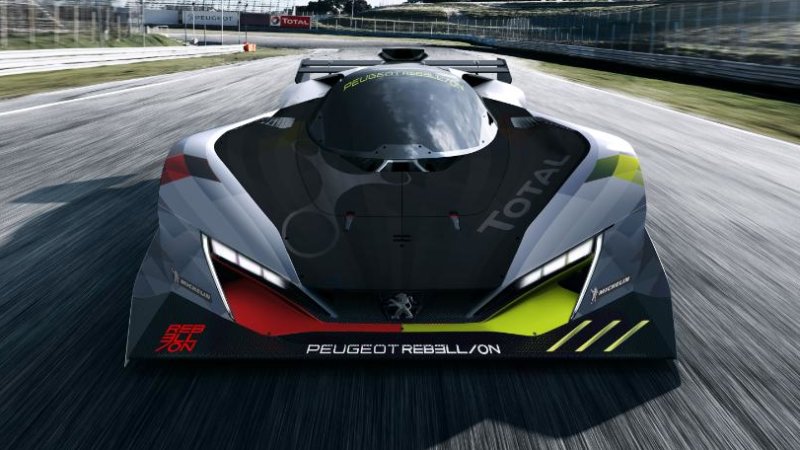
Peugeot is returning to Le Mans with Rebellion Racing, and the French automaker just dropped the first photo of what its car will look like in the hypercar class. We normally wouldn’t get too worked up over a race car rendering, but this one has certain … implications.

Homologation rules require manufacturers to both build and sell at least 20 production versions of the race car for it to be competition-legal in this class. That means Peugeot is ultimately going to have to sell a road-going version of this wild-looking race car, but only a few of them. Whether this potential Peugeot hypercar ends up looking anything like this rendering is still up for debate, but it’s an interesting idea to toy around with.

Peugeot has never produced a supercar or hypercar before, so the news that it would enter the WEC in this fashion was a bit shocking last month. The FCA-PSA tie-up just makes it all the more interesting now that Peugeot will be part of a massive company producing cars for the U.S. We’re still waiting on details about how much involvement Peugeot Sport will have in the car, as a previous report suggested Peugeot would hand much of the project off to Oreca and Rebellion Racing. Today, Peugeot made the Rebellion Racing partnership official, but the rest is still a bit hazy. 

The racing program is scheduled to kick off in 2022 with the Swiss Rebellion Racing team. We dig the jagged edges and concept design of the hypercar rendering Peugeot released today, which leaves us hopeful for an awesome final product in a couple years.

Hennessey planning a 1,200-horsepower C8 Chevy Corvette

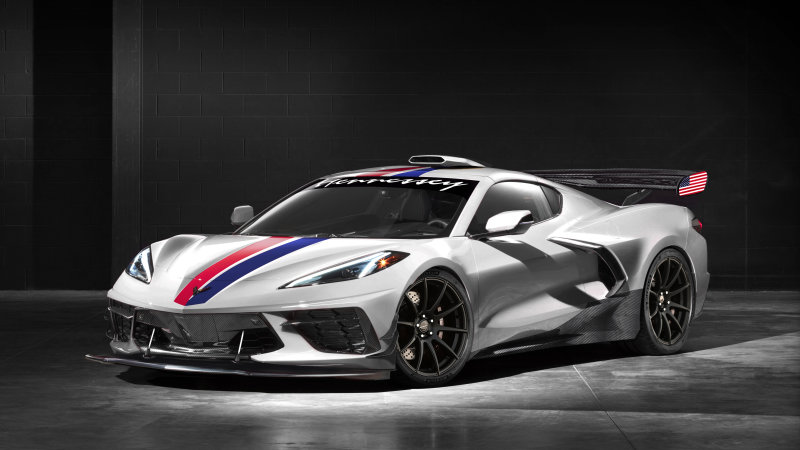
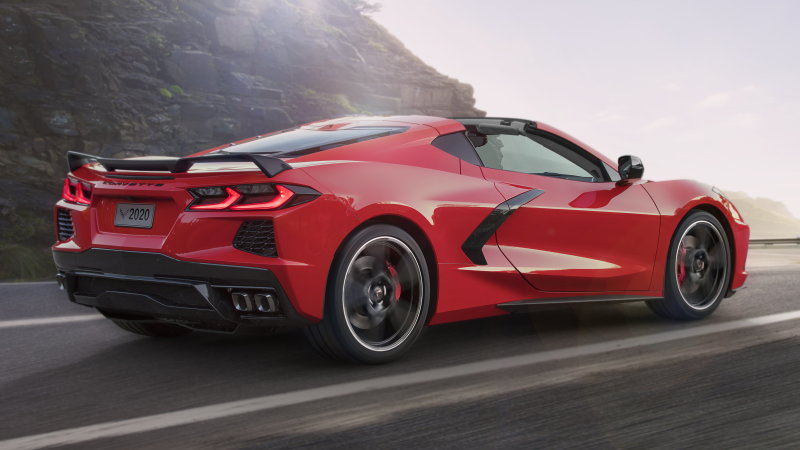
It was bound to happen at some point, but now we’ve heard it straight from the horse’s mouth. Hennessey has designs on giving the 2020 Chevrolet Corvette much more performance than it has from the factory. The Texas-based company says it plans to offer a 1,200-horsepower version of the C8 called the HPE1200.

Hennessey claims it’s going to make this massive amount of power with specially built twin-turbo LT2 V8 engines. The engines will have upgraded internals such as forged aluminum pistons, forged steel connecting rods and other unspecified upgrades. To handle the power, Hennessey says it’s going to “incorporate an upgraded and fortified factory dual-clutch automatic transmission and a full Brembo brake system” among other chassis upgrades.

The pictures you’re looking at are only renderings, courtesy of Hennessey, so the car doesn’t exist yet. It’s a menacing look, if this is what Hennessey ultimately ends up with. We’re in love with the roof scoop, which may become necessary as Hennessey attempts to keep 1,200 horsepower cool. That wing may be a bit overkill, but this car is bound to be ridiculously quick.

Hennessey doesn’t offer up a price or expected sell date for this HPE1200 kit, but it does detail a few other upgrades it’ll put on sale first. New C8 owners can expect a stainless steel exhaust system, a supercharger upgrade good for 700 horsepower and possibly more “once computer tuning becomes available for the new C8 platform.” Hennessey is taking suggestions from the crowd, as well. An online questionnaire is available to let them know exactly what you want to spend your many thousands of dollars on. More power in a car that does 0-60 mph in under three seconds from the factory sounds a bit mad, but that’s what Hennessey does.

One last interesting stat from this news comes from John Hennessey himself. He says they’ve modified over 500 C7s so far. We’ll be interested to hear what the true demand might be to make the already bonkers quick C8 go faster in a straight line.

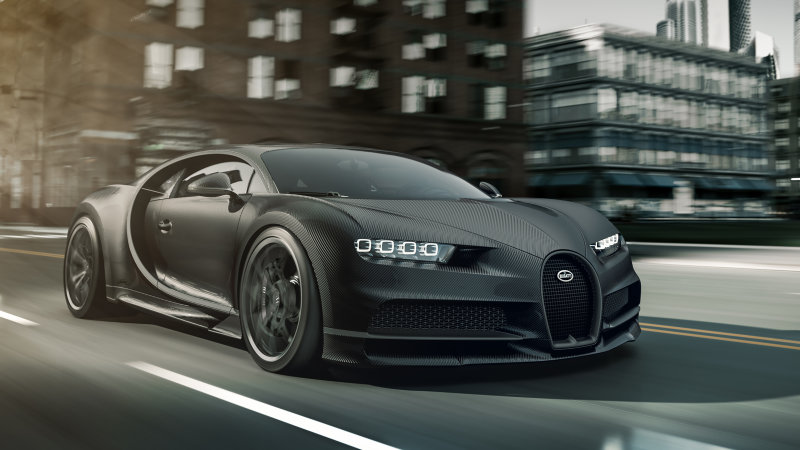
Bugatti Chiron Noire only slightly less exclusive than ‘La Voiture Noire’

Bugatti has only constructed one La Voiture Noire, the homage to the Jean Bugatti’s now-lost 57 SC Atlantic, and as far as we know, Bugatti will only build one. The Molsheim manfuacturer has come up with a way to spread the sheen of The Black Car to a few more Bugatti owners with two versions of a single special edition. The Chiron Noire Elegance and Chiron Noire Sportive are two ways to dress the hypercar up in black, the difference being that one presents a gleaming black objet to admire, the other opens two doors to a singularity and perhaps a portal to the Planet of the Apes.

The Elegance is the showy black one, all of its bodywork done in exposed carbon fiber. Two new mesh designs cover the front radiator grilles, highlighted by a Bugatti badge worked up in solid silver and black enamel. Matte polished aluminum caps the C-line swooping around the doors, tying in with the polished aluminum on the side mirrors and engine cover. Lower down, the word “Noire” on the rear fenders, scripted in black, of course, gives away the coupe’s exclusive identity, as do the black brake calipers. Inside the black leather interior, silk-matte aluminum highlights the C-line between the seats, and Noire badging decorates the center console, armrest, and door sills.

The Chiron Noire Sportive is the shadowy black one, all of its bodywork and normally metallic jewelry slathered in matte black, including the C-line and tailpipes. Bugatti appears to have dipped the interior in a tub of black, so not only is the leather the color of night, so too are all the usually aluminum parts; the C-line, the steering wheel, the center console, switchgear, buttons and knobs on the dashboard and the door handles, all of them want to swallow all the light.

Bugatti will sell only 20 of this Chrion Noire special edition, builds to begin in the second quarter of next year. Either package can be ordered for the base Chrion for three million euros ($3.3M U.S.), or added to the more expensive Chiron Sport for an additional 100,000 euros ($110,865 U.S.).

Soundcheck: Aston Martin Valkyrie begins to scream

In July, Aston Martin published the first video of the Valkyrie on track at Britain’s Silverstone Circuit during the Formula One Grand Prix weekend there. Test driver Chris Goodwin didn’t push the 1,160-horsepower coupe to its limits, merely massaging the throttle for the camera a few times. The English carmaker headed back to Silverstone this month with a group of guests in tow, and this time the test driver put a little more muscle into the fly-bys. Since the track was wet, the soundtrack still can’t be considered the ultimate experience, but even so, the 6.5-liter Cosworth V12 sounds exceptionally good.

This new video injects a high-pitched wail that was missing in July, the kind of wicked, soaring keen that jellies one’s organs and notifies the mind of blinding terrors on approach. In fact, the Valkyrie now makes all the noises Formula 1 fans wished the F1 race cars could make. That’s no hyperbole, either. Compare the modern Cosworth to the 3.5-liter Honda V12 in the 1991 McLaren MP4/6, the resemblance is clear. Remove the street-legal equipment on the Aston Martin and let Goodwin uncork it, as we expect to happen in next year’s World Endurance Championship, and it’s clear the WEC might have the best sounding racers in all of motorsport.

Deliveries are scheduled to begin before the end of the year, so Aston Martin should be wrapping up its validation testing on Verification Prototype 1 if it hasn’t already. After that come competition entries into the FIA World Endurance Championship (WEC). And after that, someone will need to convince at least one owner to drive the Valkyrie on the street so that we can all enjoy the noise.

Rimac CEO rules out SUVs, says brand will stay focused on supercars

It sometimes seems as if the entire automotive world is consigned to a future of nothing but high-riding sport utility vehicles, even among brands known for high-end sports cars. Porsche long ago gave into the craze with the Cayenne, Lamborghini has given us the Urus, we just saw Aston Martin unveil the DBX, and Ferrari has its own plans for a lifted performance family hauler. But Croatian electric vehicle maker Rimac Automobili is signaling that it’s not going down that road.

CEO and founder Mate Rimac spoke with Top Gear about plans for future models, telling the site, “We ourselves? No. We will not do a performance SUV. For sure.” He told the site he understood why automakers like Aston give in to the SUV craze, but insists Rimac will remain focused on two-seat supercars with innovative features in areas of aerodynamics and weight. “But I don’t want to make SUVs or stuff like that,” he added for good measure.

For now, Rimac has been working on homologating the C_Two, a limited-edition, 1,914-horsepower battery-electric supercar that it unveiled in 2018 in Geneva. It’s powered by four electric motors that draw from a 120-kilowatt-hour battery pack, boasts a range of 404 miles on the generous NEDC cycle, a top speed of 258 mph and adds 1,969 pound-feet of torque to the mix.

Production is set to start next year, capped at 150 examples, which have long been sold out at a base price of around $2.1 million. We’ll reportedly see the production version in March at the Geneva Motor Show.

New C8 Chevrolet Corvette ZR1 engine rumor posits 900 horsepower

Let’s just go ahead and plan to feast on C8 Chevrolet Corvette rumors for the next few years. Two new reports have come out that drop new info on the ZR1 and gobs of details about what could turn into multiple hybrid Corvette models. Starting with Motor Trend, the magazine cites “a senior official at GM” for confirmation that the coming ZR1 will produce “an even 900 hp” from a performance-oriented hybrid powertrain. Displacement of the gasoline engine component remains a mystery. MT writes that the “ZR1 will build on the Z06’s all-new engine” with a block anywhere from 4.2 to 5.5 liters of displacement, but the potential vibration issues make the larger end of that range unlikely if the rumored flat-plane crank is involved.

Motor Trend sticks by sister publication Automobile‘s story that the Z06 will use an 800-hp twin-turbo engine based on the naturally aspirated 5.5-liter V8 in the C8.R. Countering that, Muscle Cars & Trucks believes the Z06 will go down to around 600 hp and use a naturally aspirated V8, with only the ZR1 getting the two turbos.

MT didn’t get any specs on the ZR1’s hybrid component, but Bozi Tatarevic happened upon internal GM documents that potentially fill in a swath of the picture. In a lengthy report for Jalopnik, Tatarevic suspects there could be “both a hybrid ZR1 and a hybrid base model Corvette.” The documents, along with cutaway models of the mid-engine sports car, show how the front area could house a single electric motor driven by a 1.94-kWh battery pack and power electronics packaged in the center tunnel. The e-motor, which is listed as running through an open differential, would produce about 114 peak horsepower and more than 880 lb-ft of torque after an 8:1 reduction gear. Being oriented toward performance, a pawl clutch would disconnect the motor and gear reduction from the front axle for better fuel economy. Said to be offered in coupe and convertible forms, the base Stingray with the LT2 V8 and hybrid system would throw something in the “mid-to-high 500 HP range if not more.”

Paperwork appears to show the motor would be mounted low enough in front for the Corvette to retain its frunk. In order to fit the shaft through the space currently occupied by the front dampers, the hybrid system will require split yoke dampers akin to those used on AWD versions of the Tesla Model 3. It’s possible magnetic dampers will be standard fit, as well as an electronic limited-slip differential running through a 3.797 final drive. Wheel sizes for what we’ll figure is the ZR1 would increase an inch front and back to 20 and 21 inches, respectively, with respective tire sizes of 275/30 and 345/25. According to codes in the document, carbon-ceramic brakes would be standard. 

We only have a few more years to figure out where all these pieces go, so while you wait, check out Tatarevic’s in-depth report for cutaway images and loads more details on issues like weight balance and benchmarking against the Acura NSX.

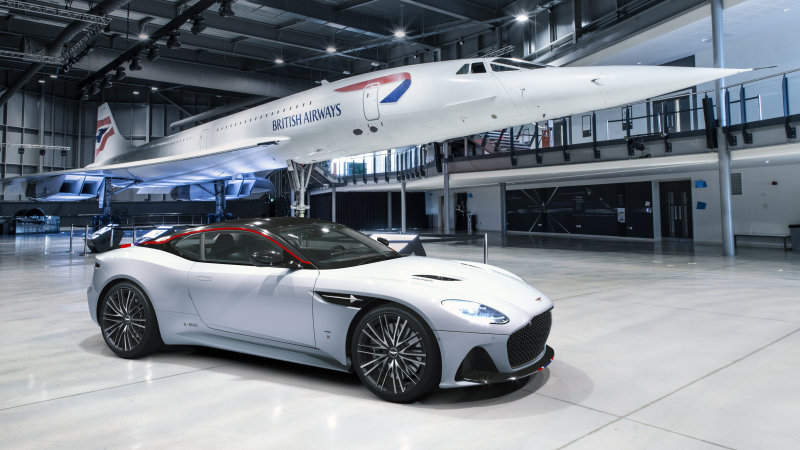
Aston Martin DBS Superleggera Concorde Edition celebrates airspeed

This year is the 100th birthday of British Airways, as well as the 50th anniversary of the first flight for the Aérospatiale/BAC Concorde supersonic passenger jet. Today marks the 16th anniversary of the Concorde’s final hop, when Concorde 216 registered as G-BOAF flew from Heathrow to Bristol, England, with 100 BA employees on board, to roll into a display space at the Aerospace Bristol museum. That same plane was the last Concorde built, coming off the line in 1978 at BAC Filton Bristol. To celebrate the plane and BA and its aerospace neighbor, Aston Martin Bristol commissioned 10 special editions called the DBS Superleggera Concorde. Pieced together with the expertise of Q by Aston Martin, the coupe is the latest in Aston Martin’s aviation-inspired Wings Series specials, following the Vanquish S Red Arrows Edition, Vantage Blades Edition, and V12 Vantage S Spitfire 80.

Dressed in white, the coupe gets ornament in British Airways livery colors on the front splitter, roof strake, rear spoiler, rear diffuser, and inside the Aston Martin wings badge. A Concorde graphic decorates the black, carbon fiber roof, and a Concorde-shaped chunk of solid aluminum streaks through the side strakes. The British Airways “Speedmarque” logo is on the front fender above the black enamel Q by Aston Martin badge, the rear fenders wearing registration G-BOAF.   

Printed Alcantara on the Superleggera’s cockpit headliner displays a sonic boom graphic, the front visors get mach meter graphics, the front seats show off Concorde and Speedmarque logos. Pieces of titanium compressor blades from the supersonic bird have been turned into paddle shifters, and embossed solid aluminum seatbelt buckles shine the Concorde again. The floor mats adopt a design by Sir Terence Conran, he being one of three designers commissioned to upgrade the Concorde’s interior not long before the jet went out of service.

The 5.2-liter V12 engine holds steady at 710 horsepower and 664 pound-feet of torque, plenty of thrust for booming travel on the ground. Aston Martin Bristol says it will donate part of the proceeds from each sale to the Air League Trust, a nonprofit that teaches underprivileged children how to fly and helps open doors for them into engineering professions.

New Porsche hypercar could use F1-spec hybrid powertrain

Not long after the Porsche 918 Spyder went out of production in 2015, the automaker began internal debate about what kind of powertrain it would use in the follow-up. Four years later, the debate is ongoing. In 2017, Porsche voiced its desire to move its hypercar game on with a battery-electric powertrain, beyond the hybrid 918. The problem — echoed by McLaren — was that battery technology wouldn’t make such a BEV possible until at least the middle of the 2020s. In 2019, the same issues remain, with solid-state battery tech not progressing as quickly as hoped. Autocar reports that Porsche could switch to Plan B in the meantime, that being an as-yet-unused 1.6-liter V6 hybrid engine Porsche Motorsport developed in order to return to Formula One as an engine supplier.

Porsche has been mentioned as a potential new F1 entrant for years, but uncertainty at the Volkswagen Group and in the F1 rulebook compelled the German sports car maker to walk away from the opportunity, opting for Formula E instead. However, after leaving LMP1, 40 Porsche engineers from the Le Mans effort began working on a six-cylinder version of the 2.0-liter four-cylinder hybrid from the 919 Hybrid. That work turned into the creation of a 1.6-liter V6 hybrid along the lines of an F1 engine but without “the complex and expensive” MGU-H unit that converts exhaust heat into electrical energy. Motorsport chief Fritz Enzinger says that engine is still in development, having got as far as running on a test bench for “analysis with regard to series production relevance.”

There’s no info on the hybrid component yet, but Stefan Weckbach, who oversees Porsche’s EV projects, said the company could turn to its partnership with Rimac for that aspect.

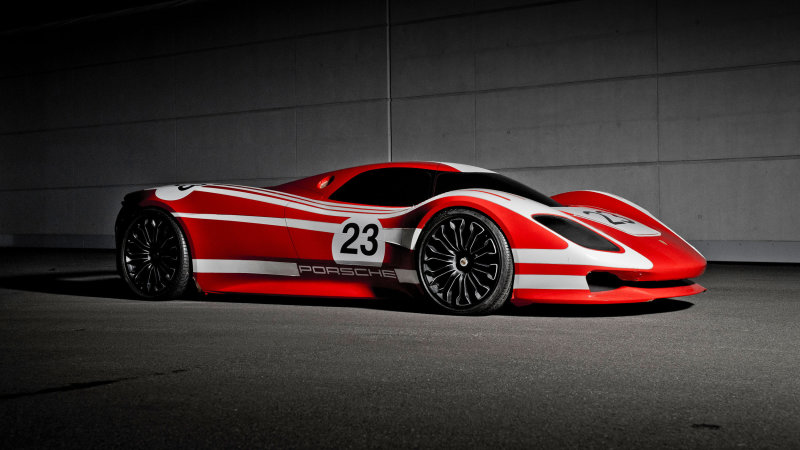
Even though Porsche has a motor ready, the board hasn’t decided on whether to go electric or hybrid, and sports car boss Frank-Steffen Walliser says he doesn’t care what kind of powertrain goes into the car as long as it can tick off a 6:30 lap time at the Nürburgring. So according to Autocar, what kind of bodywork might surround this powertain “remains at conceptual stage, with an introduction unlikely before 2023 at the earliest.” We don’t think the 917 Concept from 2014 would be a bad place to start. If Porsche goes with the 1.6-liter hybrid, though, the market would get a clearer competitor to the Mercedes-AMG One, and the platform could provide entries to the ACO’s new so-called Hypercar class in the World Endurance Championship and to IMSA’s Daytona Prototype class. 

Nissan teams with Lego for 2020 GT-R Nismo

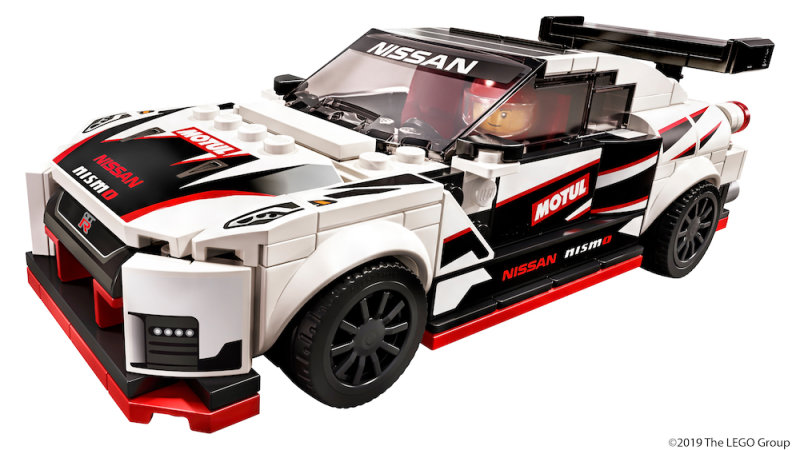
If you can’t afford to get your hands on a Nissan GT-R Nismo but have always wanted to own one, here’s your chance. The automaker is partnering for the first time with Lego Group to debut a Lego version of the GT-R Nismo supercar, set to debut in stores globally in January.

It’s the first-ever partnership between Lego and a Japanese carmaker, and it’s one of the first offerings in the 2020 Speed Champions-themed sets, which currently feature everything from a 2018 Dodge Challenger SRT Demon to a McLaren Senna. The 2020 Speed Champion models will also grow 25% larger than previous-year versions.

Helpfully, Nissan provided some specs comparing the 2020 GT-R Nismo, which is celebrating its 50th anniversary this year, and its Lego version. Chiefly, the former took more than 10 years of development time and is assembled from more than 90,000 parts, while its plastic-block version took roughly a year to develop and comes in 298 parts. It takes a normal builder about an hour to put it together, while an expert Lego builder can have a finished supercar in about 20 minutes.

Lego said the GT-R Nismo was at the top of its wish list for racing and drift car recreations, and it spent a lot of time devising different building techniques, especially to recreate the car’s iconic taillights. It leaves us wondering which highly buzzed-about Japanese sports car might be next. Toyota Supra, mayhaps?

Nissan unveiled the 2020 version of the GT-R Nismo earlier this year at the New York Auto Show, showing a car that wears a lot of carbon fiber, new front fender vents and a 20% improvement in acceleration response, among other changes.

Lego Speed Champions Ferrari F8 Tributo and 1985 Audi Sport Quattro S1 are 25% bigger

During a week when auto manufacturers are at the 2019 Los Angeles Auto Show debuting real, drivable cars, Lego has debuted two new toy car kits modeled after the 1985 Audi Sport Quattro S1 and the Ferrari F8 Tributo. The new models also show off an improvement to the Lego Speed Champions series: the kits are now 25 percent bigger.

Lego is expanding its Speed Champions line of blocky car kits with two high-performance rides with very different purposes from very different times. One is a modern supercar, the other is a classic Group B rally car.

The F8 Tributo is an inch high, five inches long, and three inches wide. It wears a clean red color scheme with a black splitter and black diffuser, and the only stickers are the headlights and the badges. The toy design carries over features of the F8 such as the hood and side body scoops, and the tiered taillights. and the rear engine cover.

The S1, which is celebrating its 35th anniversary, has a much busier design. The main body of the car is white and yellow with retrolicious yellow body graphics. Black, gray and red striping add to the scheme, and “Audi,” “Audi Sport,” “Audi Team” and “quattro” stickers are seen on the body, the windshield, the hood and the rear wing. Clustered front rally lights, wheel flares, angular aerodynamic pieces and two sets of wheel designs help make the quattro look as authentic as possible. The car also comes with a miniature racer who can sit in the car and grip the stick shift.

Both the Ferrari and the Audi will be released for January 2020. Each model is listed at $19.99, plus tax.

BMW M boss gets closer to confirming a standalone M flagship

We’re leaning ever closer to official confirmation of a standalone screamer from BMW’s M division. Auto Express spoke to brand boss Markus Flasch during the L.A. Auto Show, the German saying, “I can think of doing standalone M-cars – I like the idea, and I think we’re going to do something in this direction.” Under further questioning, specifically about whether M might have an SUV in mind for the putative offering, Flasch replied, “I don’t know. … Well I do know, but I’m not saying yet!” Other sources inside the Munich automaker apparently told Auto Express “a new car could be seen by 2021″ and bring some sort of electrification with it.

This represents noteworthy movement from BMW’s position in June, when Flasch told Australian outlet Car Sales,  “We are investigating M variants that may also be standalone, that don’t have a predecessor.” At the time, a company insider said everything was in “a very early stage” of examining body styles, and Flasch said qualified the push by saying a potential model may be a product of M division, as opposed to based on a BMW offering.

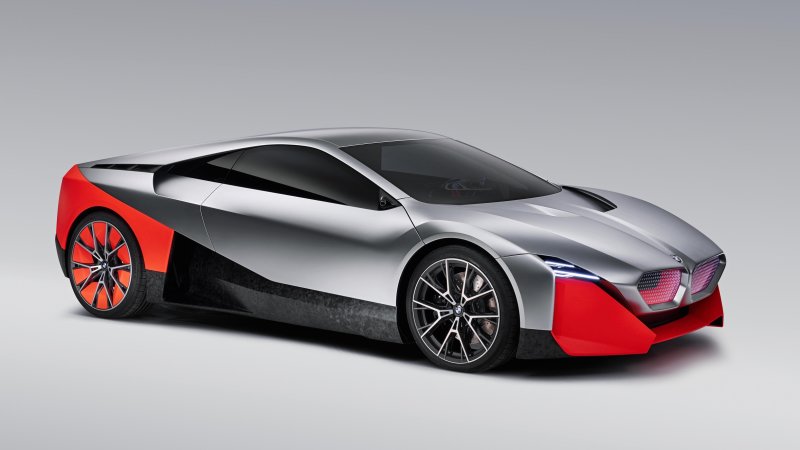
The 2021 dates carries significance because 2022 marks the M division’s 50th anniversary as an independent company. If M plans to debut something roadworthy and with production intent before the end of 2021, prototypes are no more than a year away. That means BMW has decided on the fundamentals and will be sorting out how to make them work together. The plug-in hybrid Vision M Next sounds like a long shot, though, even if BMW design chief Damagoj Dukec would like the 600-horsepower show car to get the nod, saying, “We have a heritage of bringing art cars and race cars together with M. I am convinced that this [Vision M Next] is the right way.” Flasch, however, explained that the halo “doesn’t necessarily have to be a mid-engined supercar,” only that “it has to stand out from the crowd.”

Closer to production reality, Flasch also said an electrified M car is “not too far away.” At the same time, he cautioned that adding electric aids is no panacea; “electrification is not rocket science, and it’s not the game changer [in] that people think it’s an easy answer to every question.”

Karma Revero GTS and SC2 concept plot the way forward

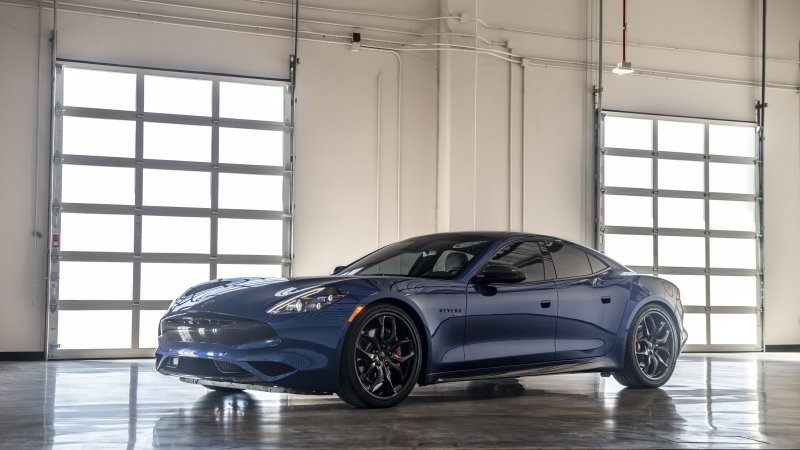
The Karma Revero GTS and SC2 concept occupy two places in the automotive spectrum, but point to a single destination for Karma Automotive. In their ways, Karma has designed them to exhibit the brand’s intent to expand beyond the mechanics of electric car production. The Revero GTS pushes the Revero GT further, using the same 536-horsepower twin-motor setup and Karma-designed inverters integrated with the motors. The sprint to 60 miles per hour has been cut by 0.7 seconds to 3.9 seconds, top speed increases five miles per hour to 130 mph. Dynamic improvements include new suspension bushings and valving for more supple damping.

Changes are subtle throughout, nothing but a splash of carbon fiber exterior trim and GTS badging appearing to separate the hotter sibling from the GT. The interior is fitted with haptic steering wheel switchgear, Karma’s proprietary 570-watt Soloscape audio, ventilated seats, and Bridge of Weir leather. Preorders are being taken now for $149,950 before destination, a $15,000 bump over the Revero GT. Production will begin in the first quarter of 2020.

The Vapor Gray SC2 concept strikes us as the second coming of the Mercedes-McLaren SLR, and we’re totally OK with that; the pure electric hypercar puts a roof on the SC1 roadster concept Karma took to Pebble Beach this year, and looks more well-proportioned for it. In the previous teaser photo, we thought we were in for another set of gullwing doors, but those long, unfurling, insectoid wings would make a set of gullwings shy. And check out what looks like a piece of integrated luggage set into the front fender under the door. The interior is all the sharp-edged, color-keyed, future-cool minimalism tomorrow’s hitman could want. Entry is done through fingerprint and facial recognition, the seats and steering wheel respond to biometrics, fiber optics run through the headliner, and the side glass is electrochromatic. 

A mongo, I-shaped 120-kWh battery powers electric motors delivering 1,100 hp and 10,500 lb.-ft of torque, said to be good for a 0-60 mph blast of less than 1.9 seconds, that time having become the magic benchmark for EV screamers. Claimed range is 350 miles, not that you’d ever get that far thanks to acceleration runs and the promise of exceptional handling thanks to a pushrod suspension.

Another piece of in-house tech is the Drive and Play technology. The SC2’s HD camera and lidar sensors capture a 360-degree rendition of the environment during a spirited drive, and a data logger records driver inputs. The drive can then be played back as theater using an adaptive laser projector inside the cabin, right down to the temperature and playlist. A smartphone mount above the windshield even acts as a rearview mirror for verisimilitude. 

This SC2 previews Karma’s future design, and the electronic bits give a glimpse into Karma’s ideas for wider interactions with EVs. There’s a brand new platform on the way come 2021, so we’re looking forward to what filters through to production.

Bugatti considering electric four-seater as second model

Bugatti’s long-rumored additional model could run on electricity rather than gasoline, according to a recent report. The company is tentatively planning a downward expansion without diluting its image.

Downward is a relative term when spoken in the same sentence as Bugatti. The company isn’t interested in chasing volume with an alternative to the Volkswagen GTI. Instead, Bloomberg wrote it’s envisioning an electric four-seater priced between 500,000 and one million euros, sums that represent about $555,000 and $1.1 million, respectively. Bugatti CEO Stephan Winkelmann told the publication that convincing parent company Volkswagen to fund the model requires a “hard fight,” however.

“The industry is changing fundamentally, and we have to address what opportunities there are to develop Bugatti as a brand going forward,” he explained. Releasing a second, cheaper model would mark a dramatic shift for the prestigious automaker, which has stuck to a one-core-model strategy since its renaissance in 1998. The EV could bump its annual output from about 100 to 600 cars.

Winkelmann was the driving force behind the Urus when he ran Lamborghini, which has led to speculation that Bugatti’s second model will be an SUV. Speaking to Autoblog, a spokesperson for the company again doused cold water on the rumors. “It would not be an SUV,” we learned.

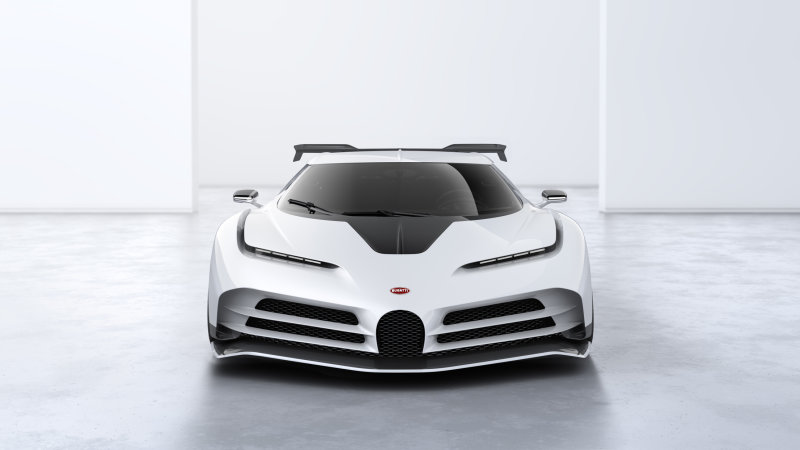
The representative stressed nothing has been decided yet, so it’s still too early to tell precisely when the second model would enter production if it receives the proverbial green light for production. Less than 100 Chiron build slots remain available, but the French company has its work cut out for the coming years. It will deliver the first of 40 planned examples of the Divo in 2020, send the one-off La Voiture Noire to its mysterious new home in 2021, and build the first of 10 Centodiecis (pictured) in 2022. Additional Chiron variants (like the record-breaking 300+) aren’t out of the question, either.

The idea of an electric Bugatti isn’t without precedence. In 1931, company founder Ettore Bugatti built a battery-powered runabout named Type 56 to drive on his property. It was never meant to be a production car, but requests from wealthy clients (including Belgian king Leopold III, who wanted one for his wife Astrid) convinced Bugatti to make 10 examples between 1931 and 1936. Four remain in 2019, including one in original condition that Autoblog got the opportunity to drive in 2018.

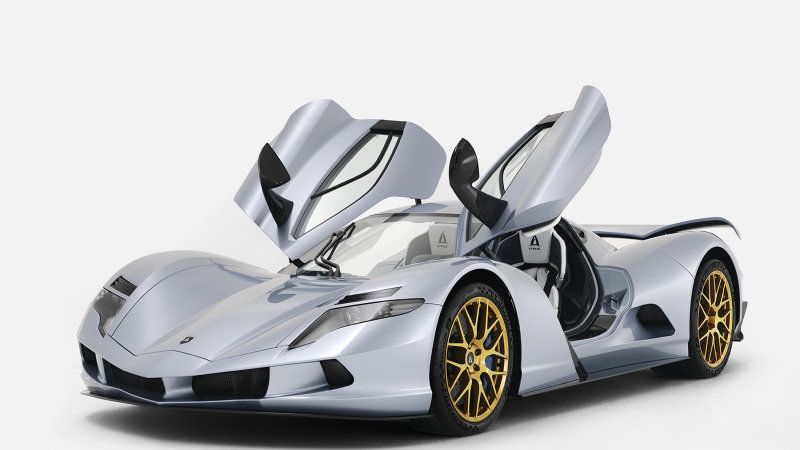
The Aspark Owl electric hypercar has 1,985 hp and a $3.3 million price tag

In 2017, Japanese electric hypercar maker Aspark showed the world its Owl concept at the Frankfurt Motor Show. Six months after that, Aspark showed a prototype Owl covering the 0-to-60-mph sprint in less than 2 seconds. Six months later, a more refined Owl appeared at the Paris Motor Show touting pre-production figures of 1,150 horsepower, 652 pound-feet of torque, and a dry weight of roughly 3,300 pounds. More absurd than any of that, Aspark wanted potential customers to put down a 1-million-euro non-refundable deposit. Now, a year later, the production-spec Owl touched down at the Dubai Motor Show having reworked its math, blowing up its output figures and asking for a rational deposit. The new totals come to 1,985 hp and 1,475 lb-ft from four permanent magnet synchronous motors, and a 4,188-pound dry weight.

The power boost works the expected effect on the 0-to-60 time, lowering it to a claimed 1.69 seconds. That’s on the road-legal, production-spec tires, either Michelin Pilot Sport Cup 2s or Pirelli P Zeroes. There’s an asterisk, though, in that the Aspark time was achieved with 1-foot of rollout, which is typically used by most car publications when testing 0-60 times. The earlier runs, which yielded times of 1.87 and 1.92 seconds, were run from a standstill but on Hoosier racing slicks. So proper zero to 60-mph sprints will be slower on street tires, however, the Owl is in with peers like the Rimac Concept Two (1.85 seconds) — at least on paper. Top speed is supposedly 249 mph. Ten-piston front brakes clamping carbon ceramic discs are apparently confidence-inspiring enough for someone to carry out acceleration runs in a parking lot.

The 800-volt, 64-kWh battery is good for 280 miles of range on Europe’s generous NEDC cycle, but Aspark says it’s working on a higher-capacity battery. A 44-kW on-board charger can restore the full charge in 80 minutes.

There’ve been a few other changes from the concept days in Frankfurt. A few tweaks were made to improve aerodynamics and aid worldwide homologation, like losing the louvered rear backlight for a smooth, windowless panel. The former fixed rear wing is now an active rear wing that rises at 93 mph and lowers at 62 mph. The concept’s side cameras are now side mirrors with additional cameras. And the side windows, thanks to an inset section like on the old Lamborghini Countach and Subaru SVX, open further.

The Owl’s built with carbon fiber body panels placed on a carbon fiber monocoque, the only metal reinforcement is used to strengthen the roof. That roof, by the way, is just 99.3 centimeters (39 inches) off the ground at the Owl’s standard ride height. A hydraulic suspension can raise the car 3.2 inches in two steps. 

Vehicle switches like the start/stop button are on the cockpit ceiling, while lower down, four screens convey information from the car, the infotainment system, and two side cameras. Drivers get cosseting features like climate control, ambient lighting, keyless entry, and a 50-liter luggage compartment, which comes out to a tiny 1.7 cubic feet. Safety kit includes anti-lock brakes, traction and electronic stability control, and an emergency stop alert.

Manifattura Automobili Torino in Turin, Italy, will build the Owl and expects to have the first customer unit delivered in April 2020. This is the same MAT that builds the Apollo IE and graced the world with the Ferrari F430-based MAT Stratos. Aspark will sell just 50 Owls for 2.9 million euros apiece ($3.3 million U.S.), and interested buyers are welcome to reserve a slot with a non-refundable 50,000-euro deposit. If buyers need more convincing, Aspark CEO Masanori Yoshida said he plans on taking the Owl to the Nürburgring early next year to claim the outright lap record.

Peugeot to contest Le Mans in 2022 with new hybrid hypercar

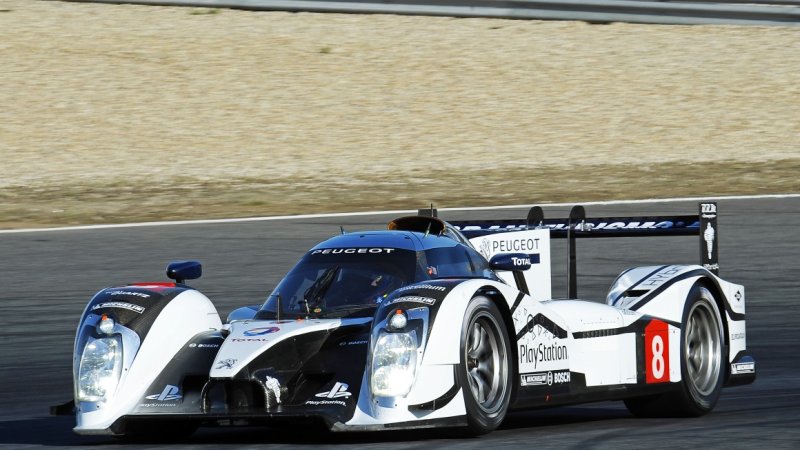
Peugeot is the third OEM to put its hand up for the new, so-called hypercar class in the World Endurance Championship, after Aston Martin and Toyota. The French manufacturer last competed at La Sarthe from 2007 to 2011 with its diesel-powered 908 HDi FAP, beating Audi in 2009. It quit the sport in 2012 to deal with dire financial issues, parking its brand new 908 HYbrid 4 LMP1 car (pictured) on the eve of the season opener. The announcement by parent company PSA Group put the return in 2022, giving it an even decade out of the sport before coming back with a racer that might make more waves on the street than on the track. Homologation rules require class entrants to build and sell 20 production versions of the race car, and Peugeot hasn’t built a production supercar in, well, ever.

We’re not sure how much building it’ll be doing here, either. Even though Peugeot Sport will play a key role in this effort, Sportscar365 reported in October that the French carmaker was looking at a “customer-based hypercar built by ORECA and run by Rebellion Racing.” Oreca and Rebellion are LMP-category stalwarts with OEM experience; the 47-year-old French team Oreca ran Toyota’s TS030 Hybrid in 2012 and has designed Rebellion’s cars, while the nine-year-old Swiss Rebellion team ran Toyota engines in its LMP car for the first four years of its existence. It’s possible the future Le Mans runner will campaign will be a technical partnership between the three outfits, a “semi-works effort run under the Rebellion banner.” Furthermore, the collaboration could start with Peugeot-branded engines supplied to the Rebellion R13 LMP1 car grandfathered into the series’s inaugural season that begins next summer.

As for Peugeot’s official debut, it’s not clear if the 2022 date means the first WEC race in the calendar year, or the 2022-2023 WEC season. The endurance racing calendar starts in September and overlaps calendar years. The 2019 season commenced in September, the first race in 2022 will be the fifth round of the current season. Peugeot promises more details in early 2020.

For the moment, Glickenhaus and ByKolles —run by former Formula One team boss Colin Kolles — are the other two manufacturers planning to compete at the top level in the new class in 2020. Porsche and McLaren have made noises about it but nothing’s come of it yet, and Lamborghini said in August that it’s looking closely at the regulations to gauge an entry.

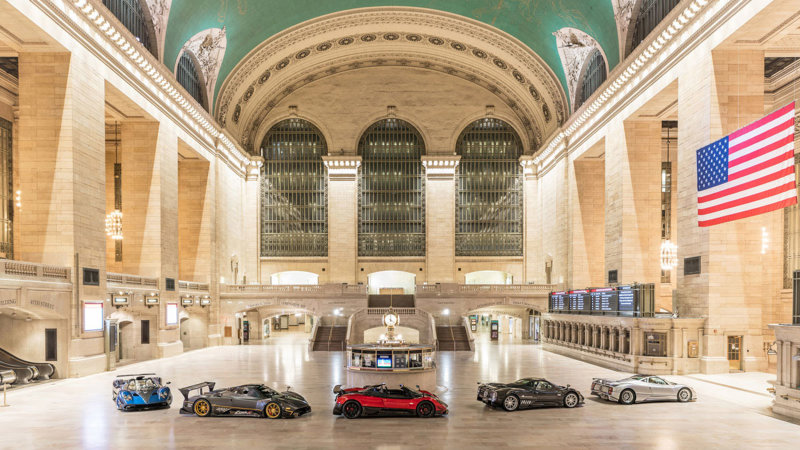
Pagani titillates Grand Central Terminal commuters with supercar display

Pagani Automobili picked one of the single busiest points of mass public transportation in the world to present some of the most exclusive and individualistic personal mobility methods on the planet. Not since the Yugofone exhibit has such a magnificent piece of automotive art graced the floor of New York City’s Grand Central Terminal. Pagani brought five Zondas, including the first production model ever built, and a Huayra Roadster BC to show off for four days in Manhattan’s iconic building.

From Nov. 5 to Nov. 8, 2019, between 10 a.m. to 7 p.m. each day, Grand Central commuters are getting a jarring dose of opulence as they pass through the terminal’s main floor. The Paganis, which span the company’s relatively young history, provide a pointed contrast to the commuter trains most passersby are heading to or from. 

“Grand Central Terminal, a globally recognized transportation hub with timeless design and beauty, is an iconic location where many immigrants arrived and began their American Dream,” Horacio Pagani said in a press release. “As there are significant parallels between their journeys and mine, I am honored to tell my story here. I hope New York City residents and visitors passing though will enjoy seeing my work and learning about how the commitment to sacrifice, hard work and passion can help anyone realize their dream.”

The cars on display include the Zonda No. 001, a Zonda F, a Zonda R, a Zonda Cinque, a Zonda HP Barchetta, and a Huayra Roadster BC, which was unveiled in summer 2019. The Zonda No. 1 is the rarest of the bunch, but the Cinque is one of five, and the Barchetta is one of three. Displaying all six together before an estimated 750,000 people who pass through Grand Central each day is the rarest aspect of all, as they might not come together again soon, or ever.

2019 SEMA Show Mega Photo Gallery | Wild West show

LAS VEGAS — Car shows across the planet are struggling, as automakers look for fresh ways to reach the buying public. But out in Las Vegas at the SEMA show (SEMA stands for Specialty Equipment Market Association, in case you didn’t know), things have seemingly never been better. This year’s show has 2,400 exhibiting companies with 3,000 products on display, filling five halls. Off-road, performance, racing, hot-rods, coolness, weirdness — there’s something different around every corner.

The show ends Friday, so unless you’re about to hop a plane, you might just miss it. But here, from the comfort of your own home or cubicle, are the highlights — 45 cars that caught our eye. So sit back, crack a Zima and SEMA it up:

2020 Acura RDX with Concept A-Spec AccessoriesAcura shows off RDX accessories and 2020 NSX at SEMA

B is for Build Twin-Turbo V8 Huracan Widebody2015 Lamborghini Huracan is getting twin-turbo Chevy power for SEMA

Button Built Ferrari BB355TTToyo Tires will bring another wild catalog of rides to SEMA

2020 Chevrolet COPO Camaro John Force Edition – The Force is with you in this one-off Chevy COPO Camaro

2021 Chevrolet Colorado ZR2 Dusk Edition – 2018 Chevy Colorado ZR2 Midnight and Dusk Editions to debut at SEMA

Chevrolet Performance E-10 ConceptChevy truck transformed from farm work to 450-horsepower electric hot rod

2021 Chevrolet Silverado HD Carhartt Special EditionYou’ll know the 2021 Chevrolet Silverado 2500 HD Carhartt Special Edition when you see it

2020 Dodge Challenger Drag Pak2020 Dodge Challenger Drag Pak comes solely with supercharged power

Factory Five Romulan V12 SupercarFactory Five developing new supercar with 755-hp LS V12

Foose Jaguar E-Type Chip Foose cooks up a custom 1974 Jaguar E-Type for SEMA

Jay Leno’s GT500-powered 1968 Ford BroncoThis classic Ford Bronco has a modern GT500 engine and a manual

Ford F-Series CustomsFord previews custom F-150s and Mustangs for SEMA

Ford F-Series Super Duty CustomsCheck out the Ford Super Duty lineup rolling into SEMA 2019

Ford Mustang CustomsFord previews custom F-150s and Mustangs for SEMA

Ford Mustang LithiumLithium Mustang EV from Ford and Webasto is lightning in an bottle for SEMA

Ford Ranger Customs2019 Ford SEMA builds feature off-road-ready Rangers and wild Transit Vans

2020 Ford Ranger RTR 2019 Ford SEMA builds feature off-road-ready Rangers and wild Transit Vans

Ford SUV CustomsFord will bring more than 50 tricked-out vehicles to SEMA: Here’s a preview

Hennessey Jeep Gladiator Maximus Hennessey Maximus turns 2020 Jeep Gladiator into a 1,000-horsepower monster

Honda Civic Si Formula Drift CarHonda to show custom 1968 S800 Coupe, three Civic Si builds at SEMA

Honda CR-V CustomsHonda CR-V, Passport and Ridgeline highlighted at SEMA

Honda Rally PassportHonda CR-V, Passport and Ridgeline highlighted at SEMA

Honda Ridgeline HFP ConceptHonda CR-V, Passport and Ridgeline highlighted at SEMA

Honda Vintage VehiclesHonda to show custom 1968 S800 Coupe, three Civic Si builds at SEMA

Hyundai Kona Ultimate ConceptHyundai Veloster N ‘Type R Killer’ and lifted Kona on their way to SEMA

Hyundai Veloster N Performance Concept2020 Hyundai Veloster N Performance Concept gets an aftermarket makeover

Hyundai VelosterRaptor N ConceptHyundai Veloster N ‘Type R Killer’ and lifted Kona on their way to SEMA

Jack Roush Edition Mustang Jack Roush Edition Mustang brings 775 horses to Ford’s pony car

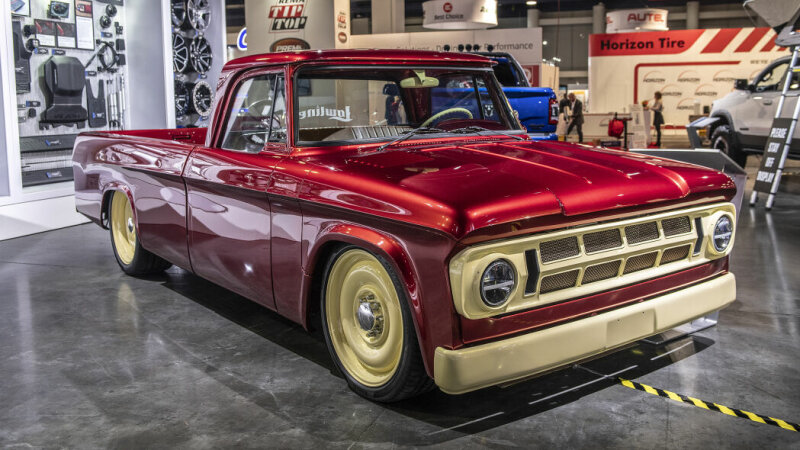
Mopar Lowliner Concept1968 Dodge D200 ‘Lowliner’ adds low-down diesel torque to a lowrider

Moparized Jeep Wrangler RubiconRam 1500 diesel overlander, off-road Jeep Wrangler show present and future of Mopar

Nissan Global Time Attack TT 370Z ProjectNissan Frontier 600-hp desert-runner, 370Z with 750 hp lead assault on SEMA

Nissan Frontier Desert Runner ProjectNissan Frontier 600-hp desert-runner, 370Z with 750 hp lead assault on SEMA

Nissan Kicks Street Sport ProjectNissan Frontier 600-hp desert-runner, 370Z with 750 hp lead assault on SEMA

2020 Nissan Titan with Genuine Nissan AccessoriesNissan Frontier 600-hp desert-runner, 370Z with 750 hp lead assault on SEMA

Nissan Titan XD Dually Project

1958 Plymouth Fury ‘Christine’ Tribute 1958 Plymouth Fury ‘Christine’ tribute has a 1,000-hp Hemi crate engine

Quintin Brothers Dodge ChallengerThis Dodge Challenger was stolen, used in police chases and recovered all in the week before its SEMA debut

Ram 1500 Rebel OTGRam 1500 diesel overlander, off-road Jeep Wrangler show present and future of Mopar

Ring Brothers 1969 Chevrolet Camaro ValkyrjaRingbrothers 1969 Chevy Camaro ‘Valkyrja’ ready to take SEMA to Belgium

Ruffian Ford MustangToyo Tires will bring another wild catalog of rides to SEMA

Russell Built Porsche 911 BajaToyo Tires will bring another wild catalog of rides to SEMA

Shelby GT500 Dragon SnakeShelby brings Dragon Snake GT500, Super Snake F-150 truck to SEMA

Speedkore AWD Twin-Turbo Dodge Charger WidebodySpeedkore AWD twin-turbo Carbon Charger, best birthday gift ever

Toyota Avalon TRD Pro ConceptToyota floods SEMA with a slew of Supra concepts

Toyota GR Supra CustomsToyota floods SEMA with a slew of Supra concepts

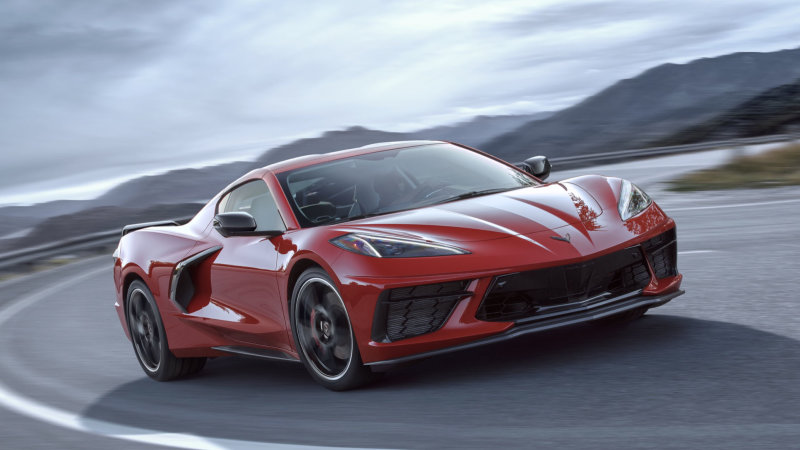
2020 C8 Chevy Corvette’s official 0-60 mph time: 2.9 seconds

Official acceleration times are finally here for the 2020 Chevrolet Corvette. Chevy revealed the times today for both the regular Stingray and a Stingray with the Z51 package.

With the Z51 package, the Corvette is said to hit 60 mph in 2.9 seconds. A base Corvette completes the same task in 3.0 seconds flat, according to Chevrolet. Chevy’s promise at the reveal event was “under three seconds,” and the Z51 with its extra 5 horsepower and 5 pound-feet of torque is able to make good on that promise. The difference between 2.9 seconds and 3.0 seconds is rather minimal, so don’t be too down on yourself if you buy a C8 without the Z51 package. Chevy didn’t reveal times for the C8 Convertible. It also states: “Performance numbers may vary, as different climates, tire conditions and road surfaces may affect results.” No surprises there.

Quarter-mile times are also available. Chevy claims both the base and Z51 package Corvette will complete the quarter mile in 11.2 seconds. The only wrinkle here is the respective cars’ speed at the end of the drag strip. The base car will be doing 123 mph, while the Z51 package car will be doing 121 mph. Chevy told us the lower final speed is entirely due to aerodynamics — the Z51 package adds a front splitter and rear spoiler that produces more downforce than the base Corvette, adding aerodynamic drag in the process.

For some comparison, the 2019 ZR1 ran to 60 mph in 2.8 seconds. That’s barely faster than even a base Corvette now, a testament to the optimization of the entire car with the mid-engine layout. We can’t even begin to fathom how quick higher-performance variants of the C8 will be down the road, but it’s going to be fun to watch where the Corvette goes from here.

We also learned that C8 production is officially delayed until February 2020 today. Chevy didn’t say when in February, but the delay was entirely due to the UAW strike. Expect the first deliveries to be at the tail end of winter or the beginning of spring.

Acura shows off RDX accessories and 2020 NSX at SEMA

Following its successful season on the track, Acura speeds to SEMA to showcase a range of performance and race vehicles as well as a new line of concept A-Spec and Acura-branded accessories. Also on the luxury division’s stand will be the Type S Concept sedan and the 2020 NSX, both unveiled in Monterey Car Week in August, the latter wearing the classic Indy Yellow Pearl exterior paint.

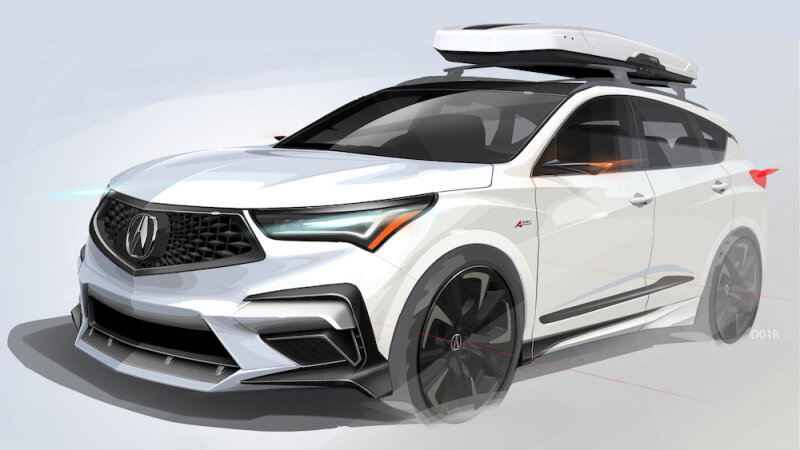
Acura will show off its accessories on a 2020 RDX. Carbon fiber is the name of the game for its concept A-Spec treatment, used on the grille surround and on the lower front fascia, lower side sill, rear diffuser, lower doors and side mirror caps. There’s also a dark chrome theme on the rear Acura badge and A-Spec emblems. A-Spec is offered as a sport appearance trim on the RDX and is supposed to be part of all core Acura models in the future, so we’ll see whether this “concept” A-Spec packages eventually makes it way, whole or in part, to future variants.

The Acura Genuine Accessories to be shown on the same RDX, by contrast, are available IRL and include roof rails and crossbars, replete with a fork-mount bike attachment, 20-inch wheels with a custom dark tint finish, black lug nuts, black chrome emblems, a carbon-wrapped tailgate accent, illuminated A-Spec trim on the door sills and A-Spec carpet floor mats. It’s topped with a Thule cargo box.

The 2020 NSX will wear the Indy Yellow Pearl color in homage to the old Spa Yellow, one of two yellow paints offered with the first-generation version of the supercar and a favorite among collectors. It joins two generations of championship-winning NSX cars: the 1990 pre-production model driven by Hall of Famer Peter Cunningham to 14 wins and 26 podium finishes between 1991 and 2002, and the NSX GT3 Evo that has won multiple IMSA and SRO races. The carbon fiber-bodied supercar with custom-designed livery is offered for sale globally for around $525,000, Acura says.

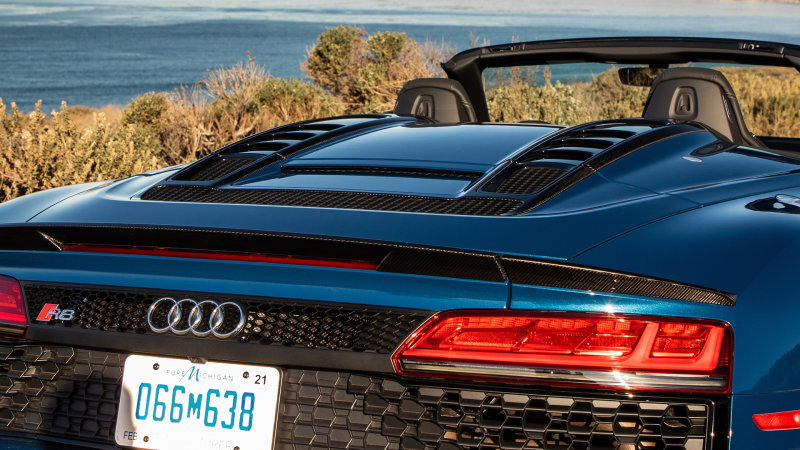
2020 Audi R8 Coupe and Spyder First Drive | V10 > turbo

SANTA BARBARA, Calif. — It’s usually a bad sign: Rocking out of Los Padres National Forest in the updated 2020 Audi R8, I spot two California Highway Patrol cars lying in wait on Highway 33, one of the fantasy driving roads the state is known for. But these officers aren’t here to hand out tickets, but to lend a hand — closing off the road so we can run repeated launch-control starts in these mid-engine, all-wheel-drive supercars.

The drag-racing demo, in both coupes and Spyder convertibles, highlights reasons why one might drop $197,150 on the R8’s V10 Performance edition, or $209,350 on the Spyder V10 Performance. (They replace last year’s V10 “Plus” models). One is the 602-hp, naturally aspirated 5.2-liter V10. It’s a spectacular anomaly in a world dominated by turbocharged powerplants, the last of two production cars in the world with a V10. The other is its Italian cousin, the Lamborghini Huracan. Audi powers its R8 LMS race car with the identical V10, and both R8 coupes and racers are built on the same assembly line.

We stand in awe as Audi after Audi crackles off the line and sprints into the distance, rending the air with throaty howls en route to a wicked 8,700-rpm redline. (A Sport exhaust button that amplifies the sound is right there on the steering wheel, and owners are likely to wear it out). Audi plays it cool with a conservative 3.2-second 0-60-mph estimate for the R8 Performance coupe; 2.9 seconds is closer to the truth, as achieved in previous tests of the R8 in this engine spec. The Spyder is estimated to run only a tenth slower to 60 mph. Both models deliver the 200-mph bona fides of a self-respecting supercar, at a 205-mph peak for the Coupe and a hair-mussing 204 mph for the Spyder.

The 2020 update also brings a healthy 30-horsepower bump for the base R8 coupe and convertible, from 532 to 562 horsepower, and eight additional pound-feet of torque, now at 406 pound-feet. Audi pegs their 0-60-mph dashes at 3.4 and 3.5 seconds for the base coupe and Spyder, respectively, and sets their prices at $171,150 and $183,350. There’s also a coupe-only Decennium edition, limited to 222 copies, with the final 50 coming to the States. It’s a trim package that comes only in Mythos Black paint and all-black interior, with an intake manifold and wheels in matte-bronze finish and side blades, rear wing and other components in gloss carbon fiber.

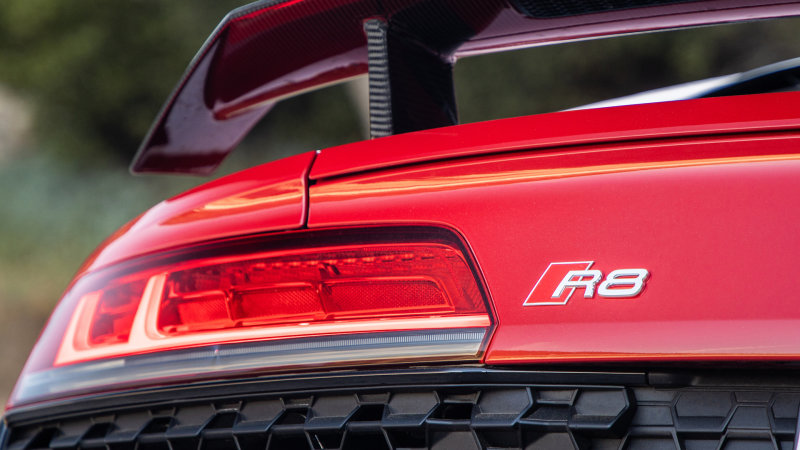
On the 2020 design front, a reworked front bumper features a more horizontal perspective that accentuates the Audi’s lowness and width. That includes a dramatically stretched, black honeycomb grille, a new spoiler lip and lateral air intakes. That front end now incorporates a faux, winged inlet that bookends the bumper — and whose plastic-capped “opening” seems more from the Lexus school of overworked design than Audi’s typical understatement. Headlight lenses have been darkened, and a redesigned rocker panel gets a new inlay. Audi’s Laser Light high beam is standard on Performance versions, and their crisp, ultra-long-range illumination steps in for conventional high-beams at speeds above 40 mph. The Laser Light’s decorative blue element illuminates on European-market models, but U.S. regulations forbid any trace of blue lighting.
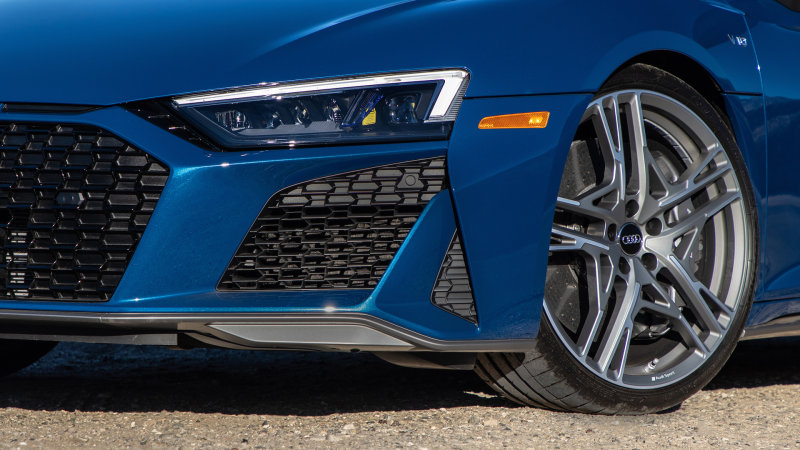
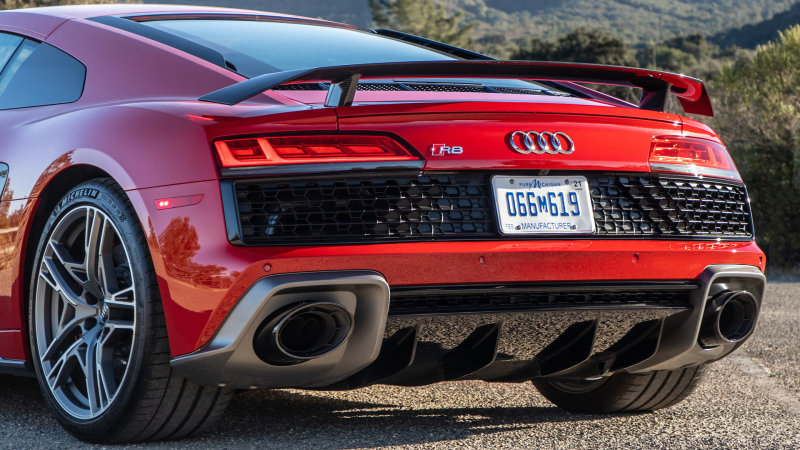
The new rear bumper adds a pair of generously sized oval exhaust outlets, more honeycomb for air outlets, and a new rear diffuser. Basic V10 models get standard 19-inch forged wheels, with optional 20s. Performance editions now come standard with 20-inch forged wheels with a somewhat busy, milled-cut design with a black-and-titanium finish. Our colorful selection of R8s tended to look better with optional 20-inchers with a simpler profile and titanium finish.

Two lovely new colors join the R8 palette: Kemora Gray and Ascari Blue metallic, the latter only available on V10 Performance cars. Ceramic brakes, standard on V10 Performance models, offer a choice of red calipers in addition to standard gray. Finally, the Performance coupe alone offers a world first for Audi: a carbon-fiber front sway bar that trims 4.4 pounds of weight. Every little bit helps for the R8, a relatively chunky sports car — especially compared with carbon-fiber monocoque McLarens — that plops as much as 3,957 pounds on the scales (for a base Spyder). All told, the wide-flanked R8 looks familiar, yet formidable, its ability to draw admirers undimmed by time.

Our day begins in Santa Barbara with a Spyder Performance, its fabric top down and its wind-deflecting rear glass up. After heading along coastal Highway 101, we’re soon detouring into California’s bone-dry, tinderbox canyons, even as fire crews battle new blazes in nearby Los Angeles. The Audi saves its scorching for the pavement, as I dial its dimpled, asymmetric steering wheel and get into a nice rhythm through the twisting mountain roads. 

This R8 is dearly priced by any standard, but you get what you pay for in the high-design interior, decked out with carbon fiber, burnished aluminum and diamond-stitched leather on 18-way power sport seats. Racing-style shell seats are available, but those aggressive chairs don’t seem to fit the Audi’s daily-driving personality. Audi might disagree, considering the R8’s impressive race record, including three wins at the 24 Hours of Nürburgring.
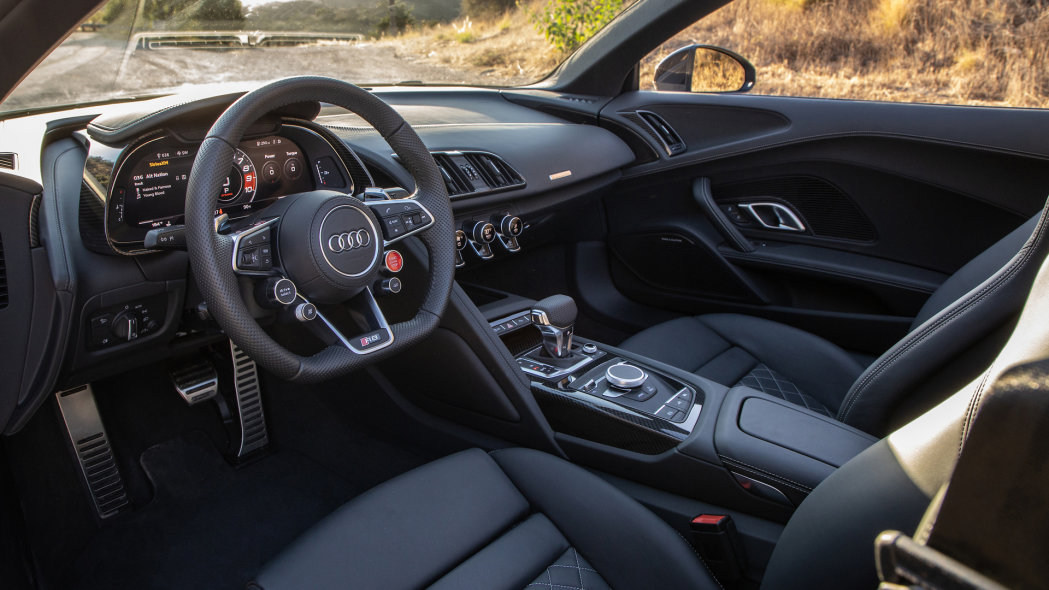
That personality combines accommodation and excitation like few cars; the R8 helped create the notion of the “everyday supercar,” and its precision build quality and user-friendly technology remain strong points. That extends to Audi’s Google-mapping virtual cockpit infotainment system and 13-speaker Bang & Olufsen sound system (standard on Performance models), which continue to set the standard in its class. If all-black Audi cabins strike you as boring, Pastel Silver or Palomino brown are new interior colors.

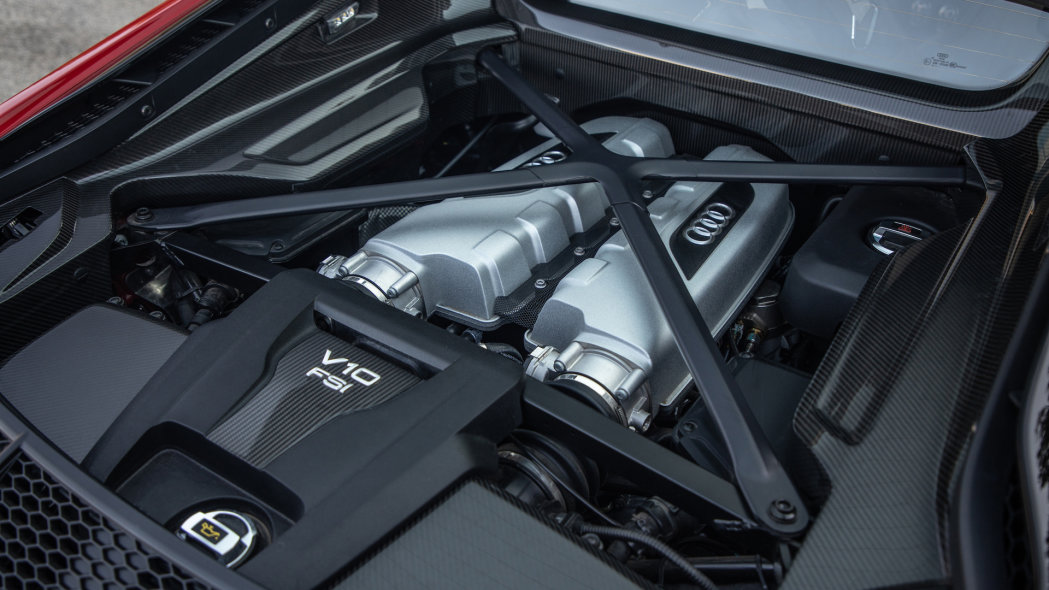
The Spyder looks sweet top-down, and admits more of that glorious 10-chamber orchestra, but those advantages don’t seem enough to overcome its drawbacks: a shortage of seat travel (the chairs wedge right up against the rear firewall), and the attendant lack of useful recline from the seatbacks. The coupe, in contrast, carves out room behind seats for small bags, backpacks or odds-and-ends — not a ton, but enough to make a difference in a car that’s otherwise limited to a modest frunk below the hood. And where the coupe proudly exhibits its signature V10 under glass, topped with a black X-brace, the Spyder’s engine stays out of sight below its vented, power-folding tonneau cover.

As it’s evolved, the R8 has steadily become more rewarding to drive, less victimized by understeer and more limber-feeling at the helm. For 2020, the electrically assisted steering reduces the assist during cornering to deliver more weight and feedback though the wheel. Optional Dynamic Steering (at $1,400) aims for more-natural feel as well, with less-aggressive ratio adjustments relative to vehicle speed and steering angle.
Where standard models come with a versatile, adjustable magnetically controlled suspension, Performance editions get a stiffer, fixed steel suspension for superior control, though with a notably firmer ride. For 2020, Audi has traded the R8’s previous Pirelli P Zero tires for a grippier set of Michelin Pilot Sport 2s with a custom rubber compound. (You’ll spot a little “AO” symbol on the sidewall, for “Audi original”). Stability control and ABS programming are mildly retuned to account for the improved grip, and the (optional) variable-ratio steering makes subtler ratio adjustments than before. Throw in a seven-speed dual-clutch S-Tronic transmission — which Audi says can swap speeds in as little as 120 milliseconds — and it’s a delight to rip through those gears to the tip-top of redline, whether in full automatic mode or by thwacking the finely weighted, metal paddle shifters. Hold that left paddle down, and the Audi will limbo to the lowest possible gear, skipping from, say, fifth gear to second in one swoop. This is an extremely short-geared car, with second gear topping out at around 67 mph, and fourth gear running out at barely 105 mph.

On one long, canyon-blasting descent, I employ left-foot braking to balance the Audi into blind apexes, then roll onto the throttle and feel the Haldex-based front axle come online, maximizing grip and exit speed as I hurtle toward the next corner like a barrel over Niagara Falls. This is one fast, confident sports car, and its V10 gushes power and never quits, as evidenced by that 200-mph-plus top speed.

The R8 still makes a vivid statement of design and performance, yet it’s always run a bit below the radar, including in sales. Since its debut in 2007, Audi has moved about 800 R8’s a year in America on average, including a high-water mark of 1,145 cars in 2011.  This is a supercar for a more practical-minded, German-favoring buyer, a contrast to the flashier form and naked emotionalism of the Lamborghini Huracán. Those Audi fans are just the type to do some practical math as well: The standard R8 Coupe undercuts the Huracan Evo’s price by about $90,000.