





All posts in “Supercars”

Watch Chris Harris in the electric VW ID.R waste a McLaren 720S

The Volkswagen ID.R doesn’t have much in common with a McLaren 720S, other than the fact that they are both performance-crazed cars. One gets its power from batteries, the other from gas. One uses electric motors, the other a twin-turbocharged 4.0-liter V8. One is a halo prototype vehicle, the other is a road-legal supercar available for purchase. So when Chris Harris and “Top Gear decided to “race” the two against each other, it was more of a demonstration of the VW’s unreal capabilities than any sort of real competitive faceoff.

In episode five of Top Gear‘s 28th season, which just aired February 23, the trio of Harris, Freddie Flintoff and Paddy McGuinness welcomed Youtuber KSI on the show and ventured out on a luxury sports car road trip with an Aston Martin, Porsche, and Ferrari. Separately, Harris took to the track to test out Volkswagen’s golden egg of the moment, the ID.R.

As VW fully launches into its electric-vehicle push, the ID.R is meant to exhibit what battery-electric technology is capable of. With two electric motors, one on the front axle and one on the rear axle, the 2,425-pound ID.R has four-wheel drive and makes a claimed 670 horsepower. As Harris notes in the video, the ID.R. was not built for a specific regulation-bogged racing organization or competition, and thus, it’s only held back by the rules of Mother Nature and Father Physics. Since the car’s debut, it has been annihilating records around the world, including at Pike’s Peak, Goodwood, the Nürburgring, and Heaven’s Gate.

Chris Harris didn’t set any records in the ID.R., but he certainly showed how outrageous this machine is. The 710-horsepower 720S can go from zero mph to 62 mph in less than three seconds, and the ID.R has a sizable lead within that same time. Again, this wasn’t an instance of test-and-conclude, it was a show of perspective. The ID.R is a race car, so even though the 720S is one of the best supercars in the world, it never stood a chance. See for yourself above.

Related Video:

Watch Rimac test the C_Two’s active aerodynamics on track

The founder of electric sports car builder Rimac Automobili, Mate Rimac, when not helping create new cars, creates YouTube series about those cars. They include series such as Discover Rimac Today and Mondays with Mate. One of the more intriguing series is the documentary-style look at the C_Two electric supercar‘s ongoing development, and the latest episode shows two C_Two prototypes testing new upgraded suspension and active aerodynamics as part of testing announced back in December

The two vehicles seen sharpening their senses at the Automotodrom Grobnik track outside Rijeka, Croatia, look similar but have significant differences underneath. One has an old suspension setup and no active aerodynamic technology, while the other has an upgraded and improved suspension and Rimac’s full active aero kit. The most noticeable feature of the system is the rear wing that moves up and down. Meanwhile, hearing the cars whir about is fascinating in its own right.

If you’re craving more footage of the C_Two, Rimac has you covered. The EV builder has captured the car’s aerodynamic wind tunnel testing, the crash testing, as well as the computational methods used throughout the process.

When the C_Two finally launches, it will immediately become one of the most advanced vehicles on the market. At its conceptual debut in 2018, Rimac claimed the C_Two would have four electric motors at each wheel and would be powered by a 120-kWh lithium-ion battery pack. In total, the C_Two is said to make 1,888 horsepower and 1,696 lb-ft of torque, and it still claimed 404 miles of range on a single charge (by the New European Driving Cycle standards). The four-digit power pushes the car from zero mph to 60 mph in 1.9 seconds, down a quarter-mile in 9.1 seconds, and all the way up to a 258-mph top speed. Only 150 examples of the car will be produced.

Czinger releases full specs on 21C hybrid hypercar

A week ago, LA-based Czinger teased its 21C hypercar with a video and a promise of “dominating performance.” Now that all the specs are out before the coupe’s reveal at the Geneva Motor Show, on paper at least, it appears “dominating” was the correct choice of words. We’ll start with the performance: Zero to 62 miles per hour in 1.9 seconds — making 0-60 perhaps faster; the quarter-mile in 8.1 seconds at 170 mph; zero to 186 mph and back to zero in 15 seconds; zero to 248 mph and back to zero in 29 seconds, which would eclipse the Koenigsegg Regera’s record of 31.49 seconds set last September.

Assuming the 21C can bring those numbers to life, how does the coupe do it? There’s a 2.88-liter twin-turbo V8 with a flat-plane crank stowed amidships driving the rear wheels, good for 950 horsepower. (To get a sense of the march of progress, the 2.855-liter twin-turbo V8 in the 1984 Ferrari 288 GTO produced 350 hp.) Each front wheel gets a high-powered electric motor, serving up all-wheel drive and a combined output of 1,232 horsepower and 600 lb-ft of torque at 10,500 rpm, 500 rpm short of redline. The 21C in standard road guise without the big rear wing has a curb weight of 1,250 kilograms (2,756 pounds), and with a metric horsepower rating of 1,250 hp, we’re talking about a 1:1 power-to-weight ratio. The 21C Lightweight track-focused car with the big rear wing weighs just 1,218 kg (2,685 pounds). Shifting through a seven-speed automated manual transmission, the road car maxes out at 268 mph, the track car produces more than three times the road car’s downforce so its top speed comes in at 236 mph.

The e-motors get juice from a lithium-titanate battery, the same pack composition used by the Mitsubishi i-Miev and Honda Fit EV, an integrated starter-generator helping to deliver power where needed. Czinger says the entire powertrain was designed and is built in-house, and it’s flex-fuel — owners can fill up with Vulcanol, described as “a renewable methanol made from captured carbon dioxide,” assuming they can find it.

Czinger is only making 80 examples of the 21C, using its proprietary “vertical assembly,” 3D-printed build processes that combine carbon fiber, high-performance alloys, and other materials, topped off with book-matched carbon fiber bodywork. Road & Track has a good writeup on the production system. Company founder Kevin Czinger explained that the 3D-printed parts are expected to last the lifetime of the car, but if any need to be replaced, they can be dissolved into their original powder and reconstituted to serve a different purpose.

Each 21C comes with a reported price of $1.7 million before the obligatory options and fripperies. We look forward to checking this one out in Geneva, and we’ll take the one with the wing, please.

Glickenhaus SCG 004C gets its first track shakedown in Italy

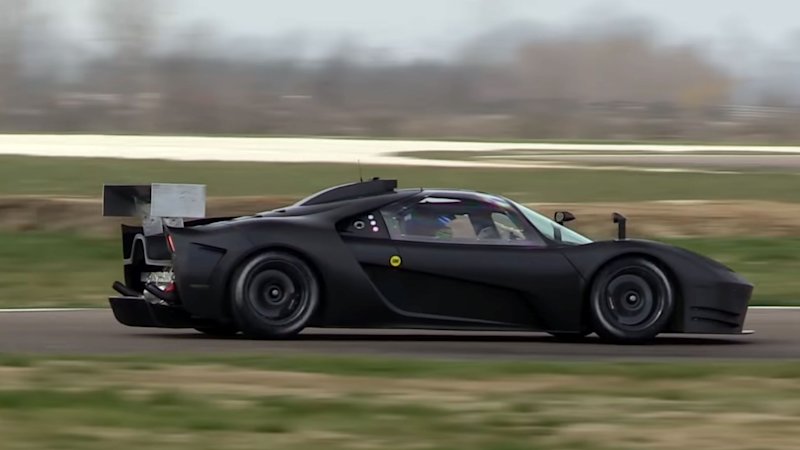
It can be hard to keep track of the various Scuderia Cameron Glickenhaus vehicles on the way because we read about them for years before seeing them. No matter, when they do show, they are welcome sights. The SCG 004C, hardcore racer that’s successor to the Nürburgring pole-sitting 003C, is the next to make the transition from text coverage to track footage. Developed to ultimately serve as a platform for GTE, GTLM, GT3, and GT4 categories as well as Germany’s NLS series, SCG put the first example to test on Italy’s Cremona Circuit. Years ago, SCG’s plan was to have Nissan’s 3.8-liter twin turbo VR38DETT V6 from GT-R placed amidships. That plan morphed into using a 6.2-liter naturally-aspirated pushrod V8 based on GM’s LT4 block, developed by Autotechnica Motori.

Fellow Italian company Podium Advanced Technologies is helping with overall vehicle engineering, SCG saying the 004 chassis — which will get an 004S road version, 004CS road/track version, and the 004C track-specific car — has already been through 35,000 hours of development work. As to the engine, James Glickenhaus told Sportscar365, “It can’t rev very high, but GT3 engines can’t rev very high anyway with the restrictors. You get a very low center of gravity and it’s a very compact engine, so there’s a tremendous amount of space around it to blow air around and keep it cool.” The 003C used a 3.5-liter, twin-turbocharged Honda HR35TT V6 built for IMSA’s Daytona Prototype category. Glickenhaus said the change in philosophy with the 004C meant that “with the low-end torque, we’re going to be able to be faster coming out of the turns than we were with the 003C.”

On the first shakedown and improvements compared to the 003C, the owner explained that two more inches of suspension travel in the 004C would translate into softer landings on the high-flying Nordschleife, and the new nose results in improved downforce and better aero balance. The 004C is also about 220 pounds lighter than its 2,976-pound forebear.

The 004C will of course be restricted to series power limits. Since the road-going cars won’t be limited, customers will get about 680 hp out of the V8 in the 004S, and around 850 hp out of the 004CS with the help of a supercharger bolted to that V8. Estimated price for the hand-built, carbon-fiber bodied 004S is $485,000, the 004CS will start around $650,000. As with the racer, all versions will employ a three-seater cockpit with a central driver’s seat, the choice of a six-speed manual or seven-speed dual-clutch transmission; the race car fits an Xtrac sequential transmission.

After its first test at Cremona, the 004C heads to Aragon, Spain, for a 30-hour endurance test. Its first race comes next month in the Experimental Class in the NLS series, before racing again in April, and a tilt at the Nürburgring 24 in May. Check out the sound from the outside in the clip above, and the on-board views below.

[embedded content]

Bugatti Chiron Sport Edition Noire Sportive marks the production halfway point

For Bugatti, possibly only for Bugatti, a 1,479-horsepower coupe with a quad-turbocharged 8.0-liter W16 is just the starting point. Bugatti unveiled the Chiron in 2016 with the intent of building 500 examples, and four years later, 250 units and numerous extraordinary limited-editions have been crafted. To mark the occasion, Bugatti will show No. 250, a Chiron Sport Edition Noire Sportive, at the 2020 Geneva International Auto Show, where it all began.

Near the end of 2019, Bugatti announced two new blacked-out Chirons, one called the Chiron Noire Elegance and the other called the Chiron Noire Sportive. The Elegance model exhibits a reflective gloss, while the Sportive has a muted matte exterior. Backing up the Noire designation, the Sportive model goes completely black, with nearly nothing left to show off any sort of metallic sparkle. The Elegance, however, looks a bit more dressed up with aluminum and silver accents. Both feature Noire script graphics, including on the underside of the rear wing. The Noire models are limited to 20 examples total, and No. 250 will surely be one of the most interesting of the bunch.

The Noire Elegance and Sportive follow in the footsteps of Bugatti’s (and the world’s) most expensive release, the Bugatti La Voiture Noire. A coachbuilt homage to the Bugatti 57 SC Atlantic, the La Voiture Noire reportedly cost more than $18 million, with fees and taxes factored in. It was limited to only one example, and it was only one of numerous special launches that spawned from the Chiron.

In addition to the base Chiron, Bugatti has also released the lighter and sharper Chiron Sport, on which the car seen here is based. Then there was the Chiron-based Divo “for the bends,” and then came the Chiron Super Sports 300+ to honor the car that broke the 300-mph barrier. Other special editions included the 110 ans Bugatti Chiron to honor the company’s history and the Bugatti Centodieci that honors the Bugatti EB110 supercar. So much honor.

For only having one car in its lineup, Bugatti sure has made a lot of different vehicles, and we recently found out it could have been more. In an Autoblog exclusive, we learned Bugatti also planned two never-before-seen coupes that would have been marketed alongside the Chiron. Unfortunately, they never made it through to see production.

With 250 produced, only 250 remain, and their availability is getting increasingly more scarce. Bugatti says 150 Chirons are already spoken for, which means only 100 are left to be claimed. We fully expect some of those to debut new bespoke features, new special editions and hopefully more coachbuilding.

Related Video:

Aston Martin spars with WEC over Valkyrie’s exit from racing

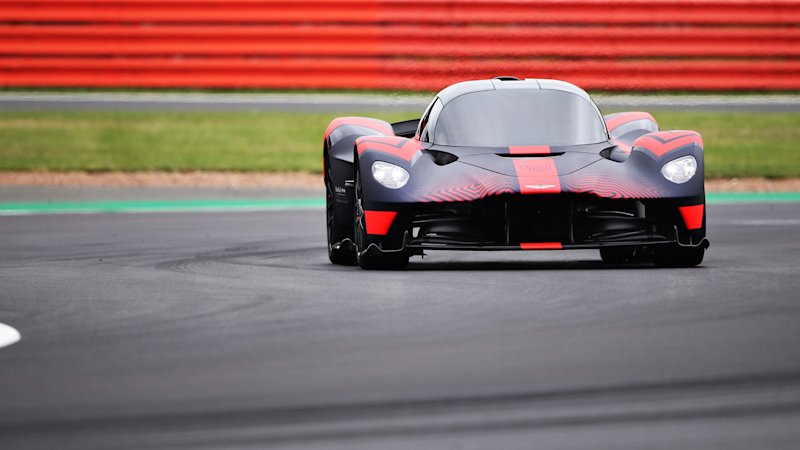
Confirming an earlier rumor, Aston Martin announced it has stopped developing the track-going version of the Valkyrie it planned to enter in the World Endurance Championship’s (WEC) new Hypercar category. It blamed its decision on a recent change in the regulations, but the sanctioning body responded that’s not the full story.

The British company explained it’s unhappy with the WEC’s decision to harmonize the Hypercar class with the LMDh category and the WeatherTech Sportscar Championship during the early 2020s. Without providing additional details, it declared the Valkyrie will not make its racing debut at the Silverstone track in August 2020 and it will not challenge Glickenhaus, Toyota, Peugeot and others in the 2021 edition of the 24 Hours of Le Mans. It added it’s considering canceling the program altogether, meaning the Valkyrie would never race.

Aston Martin isn’t quitting racing; far from it. It will continue to enter the Vantage GTE in WEC events around the world, and the Racing Point Formula One team will be rebranded Aston Martin after the 2020 season. The sudden and unexpected entry into Formula One led by investor Lawrence Stroll may have played a role in convincing executives to cancel the Hypercar program. Racing is expensive, and Aston isn’t doing well.

The Fédération Internationale de l’Automobile (FIA) that regulates the WEC doused cold water on Aston’s explanation. It opined the harmonization doesn’t impact the category, and it pledged to prove this claim when it releases additional technical specifications in March 2020. It instead blamed the decision to withdraw the Valkyrie from racing on the highly-publicized financial issues that have plagued Aston since 2019.

“The decision announced by Aston Martin is very regrettable but perhaps not unexpected in light of the persistent rumors over the last six months concerning the fragility of the brand’s exposure in the rapidly-evolving automotive market,” it wrote. As of writing, executives haven’t responded to these allegations.

Aston Martin and the FIA both noted they’re open to working with each other to find a solution, but the carmaker’s statement is highly ambiguous. It affirms Aston’s future presence in the racing world will be “defined by its activities at the highest level of both single-seater competition and endurance GT racing” and glaringly leaves the Hypercar category behind. To us, it sounds like the program has already been consigned to the attic.

The 2020-2021 WEC season begins in August 2020, so Aston Martin and the WEC need to quickly find a common ground if they want to salvage the Valkyrie’s racing career. Even if the car doesn’t race, the street-legal version remains on track for production, and the first deliveries are tentatively scheduled for late 2020.

Related Video:

Lotus Evija EV supercar is charging toward series production

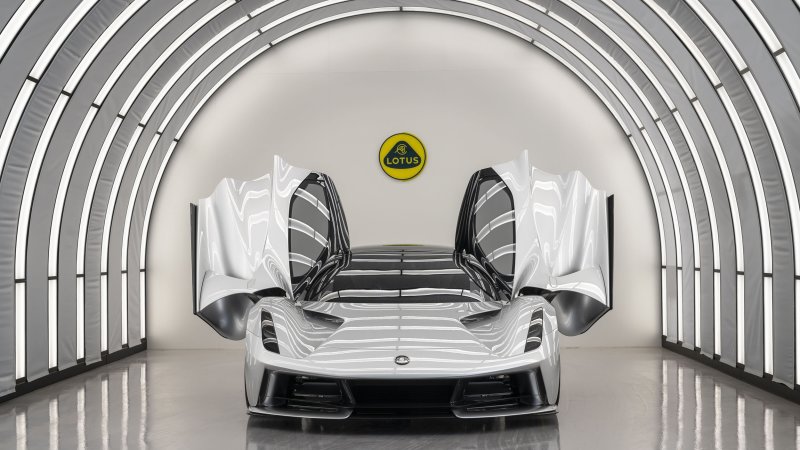
It’s almost time for Lotus to begin production of real Evijas bound for customers, but first, it must go through its final round of testing. To accomplish this task, Lotus had to prep its brand-new production facility to build the final prototypes. New photos and video give a glimpse of what the Lotus assembly hall looks like. 

The Evija, which means “the first in existence,” is an all-electric supercar that Lotus hopes will be the most powerful production road car ever made. The supercar uses electric motors for four-wheel drive with torque vectoring and has a battery pack rated at 70kWh. Lotus claims it has 1,973 horsepower and 1,254 lb-ft of torque, can go zero to 60 mph in less than three seconds, can do zero to 186 mph in less than nine seconds, and has a top speed of 200 mph. All of that, with a weight of 3,704 pounds. 

Possibly more impressive are the claimed battery stats. The Evija, which is the first Lotus developed with new majority shareholder Geely, can supposedly fully charge in less than 10 minutes and has a range of 250 miles. With a 350-kW charger, it’ll fill up in 18 minutes.

Lotus says the Evija has been an extremely collaborative effort, as 20 specialist contractors and 50 experts have been on site for the past six months. They’ve been hard at work in the new facility, which is located next to the 2.2-mile Hethel circuit in Hethel, in Norfolk, U.K. Check out the new state-of-the-art light tunnel, the vehicle lifts, the gantry crane, and more above and below.

[embedded content]

Koenigsegg bringing a new hybrid 2+2 to Geneva?

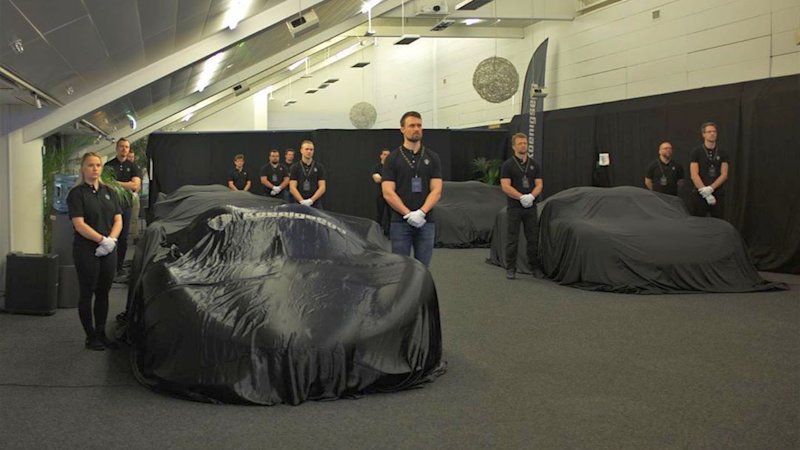
Koenigsegg hosted its global dealer network for a shindig at its Angelholm, Sweden, headquarters last month. During the event, the hypercar maker tweeted an image of employees standing next to five Koenigsegg models under black sheets. It was thought these represented the cars Koenigsegg will bring to next month’s Geneva Motor Show. At least one of those five is rumored to be the Jesko-based Mission 500 concept, the rocket that CEO Christian Koenigsegg will use to challenge the top speed record. The Supercar Blog credits sources for information on another of the five, it supposedly being a hybrid 2+2 called the KG12. 

If the rumors are close to true, the extra two seats — and we use the words “seats” generously — wouldn’t be the only break with Koenigsegg tradition. TSB‘s insider says the heart of the KG12’s hybrid powerplant will be a 2.0-liter, three-cylinder engine engineered with the carmaker’s camless FreeValve system. Combined with an electric motor or motors, total output is thought to be around 1,500 horsepower. If such a thing shows up at Geneva, predicted to be on display under a glass engine cover, it will be in the running for the wildest and most innovative propulsion system at the show.

Design standards like the wraparound windshield and dihedral synchro-helix doors are expected to make the cut, but those doors might be longer than usual so as to provide better access to whatever fits in the back seat. TSB writes that the KG12 will cost around €1.4 million ($1.5 million U.S.), with deliveries to begin in 2022 and production limited to 300 units. 

One big question is whether the KG12 is, or has anything to do with, the affordable Koenigsegg supercar that’s been on simmer in the background for a few years. A year ago, reports said the car would come to this year’s Geneva show. However, the least expensive Koenigsegg has been imagined with the firm’s naturally-aspirated V8 paired with hybrid assistance, getting something like 1,050 hp, and a price tag of anywhere from €600,000 to €800,000 ($650,000-$850,000). We’ll have an answer in two weeks.

Related Video:

The $5M track-focused Pagani Imola isn’t supposed to be elegant

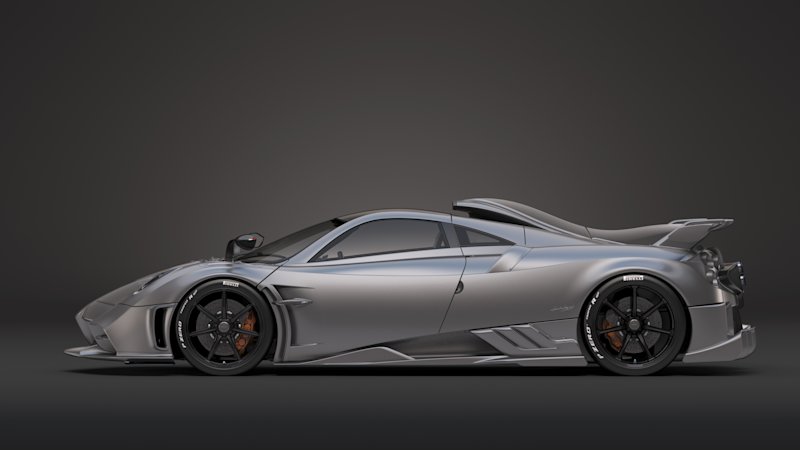
The Pagani Imola, a track-focused version of the Pagani Huayra, first broke cover in September, 2019, at an event, but official information was nowhere to be found. It took a few months, but today, Pagani released the first batch of real images and gave fans the specs they’ve been waiting for. 

With a pre-tax price tag of $5.4 million by today’s conversion rates, the Imola will be limited to only five examples, and Pagani says every car is already spoken for. The car is named for the Autodromo Enzo e Dino Ferrari racetrack in Imola, Italy, outside Bologna. There, the car logged roughly 3,728 miles during testing and validation, which the company says was the most severe tuning process ever conducted for a Pagani vehicle. 

Immediately noticeable are the car’s aerodynamics and fierce looks. A rear spine gives the Imola a new technical profile, several new deflectors and inlets interrupt any hope for smooth lines, and the rear could double as a geometric abstract drawing. Founder and Chief Designer of Pagani Automobili Horacio Pagani even admitted in the press release, “We can’t say that it’s an elegant car. We wanted an efficient vehicle.” 

Pagani bills the coupe as a technology test lab for its entire operation. Some of the innovations have already been applied to the Huayra Roadster BC, while others will be implemented in future vehicles. As with any high-performance vehicle, the focus was on weight savings, a balance between feel and control, and power. 

To increase rigidity and strength while keeping weight at bay, Pagani reformulated its Carbo-Titanium HP62 G2 and Carbo-Triax HP62 used in the monocoque. The Imola introduces Acquarello Light, a new painting process that saves 11 pounds, and the car was built with roughly 770 forged or CNC-machined components. All said, Pagani claims the Imola weighs 2,747 pounds, slightly heavier than the 2,685-pound Huayra BC coupe but significantly lighter than the 2,976-pound regular Huayra coupe. 

Under the hood, the Imola has a 5,980-cc Mercedes-AMG twin-turbo V12 that makes a claimed 827 horsepower and 811 lb-ft of torque. It works with an Xtrac 7-speed transverse automatic transmission, a triple-disc clutch, and an electro-mechanical differential. That output, which represents increases from the BC Roadster’s 791 horsepower and 774 lb-ft of torque, is sent to the rear wheels.

Pagani redesigned the suspension for better power transfer and reduced brake dive, and the Imola has a new Smart Gas system. Basically, the engine, differential, transmission, and suspension talk to each other and work together to reduce shift times and sharpen driving feel. The system has interconnected electronically controlled dampers that change ride height depending on the driving characteristics. This is in addition to an active aerodynamic system that was introduced on the original Huayra.

Additionally, the Imola has a custom carbon-ceramic Brembo braking system with six-piston monoblock calipers up front and four-piston monoblock calipers in the rear. Twenty-inch wheels up front and 21-inch wheels in the rear are wrapped with bespoke Pirelli Trofeo R rubber.

For Pagani, the man, the Imola circuit was a no-brainer when it came to testing, as the track’s history is equally as important as its racing characteristics.

“Imola is a sacred place for car enthusiasts,” he says in the release. “It’s a fast, difficult, technical circuit that has always separated the wheat from the chaff, in terms of both men and machines. A circuit that has made the fastest drivers faster, one that has given rise to fierce duels between opponents and gentlemen, and where the sweetest victories and bitterest tragedies have been witnessed. A circuit in the Motor Valley of Emilia Romagna. A place that has given so much to the automotive industry. That has given so much to Pagani. The Imola circuit became a second home while the car was being developed. This is why project code PS-01 was dubbed Pagani Imola, as a tribute to the track where the vehicle was created and which is part of its identity.”

[embedded content]

Czinger preparing 21C hybrid hypercar for Geneva debut

Kevin Czinger — with a silent C — has spent the past 11 years that we know of trying out various automotive concepts in Southern California. The Yale Law School graduate who built hot rods as a youth in Cleveland co-founded Coda Automotive in 2009, which tried to get off the ground with a re-engineered Chinese sedan converted to an all-electric powertrain. Coda went under in 2013. In 2014. The next year, Czinger started Divergent 3d, which revealed the Blade supercar in 2015. Czinger’s point with the Blade was to convert automakers to novel production techniques, the Blade’s chassis and body created with 3D-printed aluminum alloy. In 2019, Czinger formed an eponymous company taking the Blade as the inspiration for the Czinger 21C hybrid hypercar. In a previous interview with Road and Track, which deserves a read, Czinger said, “We’re looking to combine computing power, science, and additive manufacturing into one system.”  

[embedded content]

The 21C could be that blend, having clearly come a long way from the Blade. We don’t know much about the coupe, Czinger preferring to wait for details until its debut at the Geneva Motor Show next month. The moody reveal video shows off the suite of hypercar cues like diminutive overhangs, the fulsome fenders, angry LED headlights, plenty of vents, center-lock wheels twirling around giant carbon ceramic rotors and beefy calipers, a serious wing hanging off the back, and what looks like a top-mount dual exhaust. Tandem seating — passenger behind driver — carries over from the Blade, and the copious exposed carbon fiber bodywork hides plenty of 3D-printed components. The brace connecting the carbon fiber steering column housing to the instrument panel, for instance, looks a prime culprit for additive manufacturing. The full-width roller coaster brake light ensures everyone behind the 21C will remember what they’ve just seen. 

The powertrain is an unknown beyond the descriptive that it’s a “strong hybrid” developed in-house to deliver “dominating performance.” Strong would be the correct word if the video can be trusted; at the 0:28 mark, the digital rev counter shows a redline beyond 10,000 rpm. We’ll know more come Geneva.

Related Video:

Lister Storm II hypercar teased, with a switch from V12 to electric

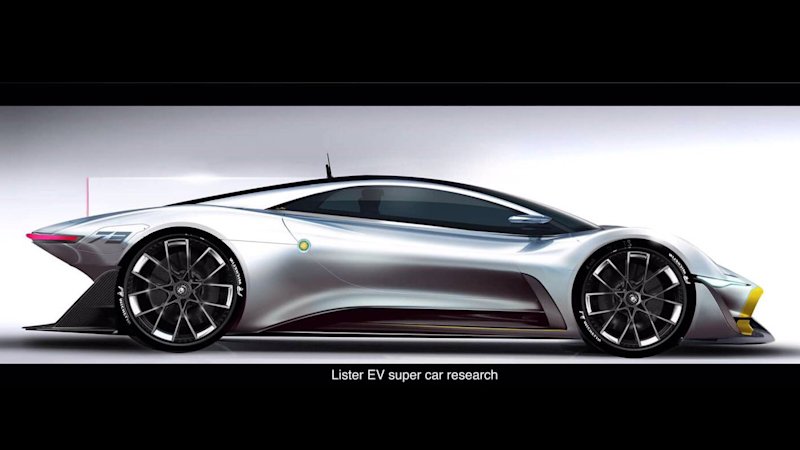
Two years ago, the revamped Lister Motor Company dished out sketches for a Storm II hypercar. The name was a nod to the 1993 Le Mans race car and road derivative created by another incarnation of Lister in 1993, which housed a Jaguar XJR-9-derived 7.0-liter V12 amidships producing 546 horsepower. The tentative plan in 2018 was for the Storm II to get a Jaguar-derived 7.8-liter V12 spooling up something like 1,000 horsepower and pointing its snout at the likes of McLaren, Pagani, and Koenigsegg. That was all so two years ago, though. Lister CEO Lawrence Whittaker recently tweeted another image of the Storm II, this time a profile drawing, with the captions, “A glimpse into the future of Lister … the Storm II,” and, “Lister EV super car research.” The EV part is what matters here, Whittaker apparently changing tack on the powertrain and the competitive set.

The side shot offers a look at the vanishing point rear end, a look calling to mind either a truncated McLaren Speedtail, or Speed Racer’s Mach 5 with the fender fins combined into a single shark fin down the centerline. Our best attempts to enhance and enlarge make it seem there’s a deployable spoiler behind the shark fin. The backside’s other big prominent feature is a deep diffuser. In the photo, the carbon fiber floor extends beyond the trailing edge of the bodywork, almost never seen on a car outside of a race track, and even then that car is most likely on a trailer. That makes symmetry, the carbon fiber front splitter jutting beyond the yellow-rimmed intake at the other end.

Original specs were for the V12-powered Storm II to hit 60 miles per hour in under 3 seconds, on its way to a top speed beyond 250 miles per hour, all for a price starting at £2 million ($2.6M U.S.). Lister’s hometown competition, the Lotus Evija, has restrained its top speed references to something “beyond 200 mph,” and the just-announced Apex “hyper-EV” runs out at 174 mph. The Rimac C-Two and Pininfarina Battista, though, have proved Lister’s trio of targets achievable with far less aggressive looks. We won’t be surprised if Lister has a terminal velocity in mind well beyond the Rimac’s 258 mph.

We hope Lister can show us something more than another rendering come 2022. For now, the company seems busy building the F-Type-based LFT and F-Pace-based LCP, various versions of the continuation Lister Knobbly race cars, and selling classic and performance cars out of its new dealership in Blackburn, England.

Dodge Viper-based 2010 Alfa Romeo TZ3 Stradale Zagato rarity could be yours

It has been a decade since it was launched, but the 2010 Alfa Romeo TZ3 Stradale Zagato is just as bizarre and beautiful as the day it was revealed. It’s what you get when you have Italian design house Zagato give a Dodge Viper an Alfa Romeo body. And this one, number six of a total of nine examples, could be yours. It’s going to be auctioned in Elkhart, Indiana, by RM Sotheby’s along with several other rare vehicles.

Now when we described this car as a Zagato take on an Alfa but using a Viper, that’s exactly what it is. All the mechanical bits are from the 2010 Dodge Viper ACR, down to the 8.4-liter 600-horsepower V10 and six-speed manual transmission. The body does do an impressive job disguising this, from the signature Zagato double-bubble roof, to the unique, almost shooting brake-style rear roofline and Kamm tail. The Alfa grille in the nose also throws off the scent.

But look closer, and Viper elements start showing up. On the outside, the push-down flush door handles remain. Inside, the gauges feature the same fonts and layout as in the Viper, the only change being the TZ3 logo sitting in the middle. Particularly glaring is the audio head unit, which was shared with every other Dodge product on the market since the early 2000s. But the leather appointments throughout do make it nicer. Also amusing is the fact that all the owner’s manuals are simply Dodge examples, with no changes to the covers or names. One other bizarre thing, since this is a 2010 car, it was built at the very early start of Fiat and Chrysler joining up. As omens go, this was a pretty solid one.

Regardless, it is an extremely striking car that’s sure to be exhilarating to drive. And that’s not something the previous owner experienced much, because the photos suggest it’s only been driven about 200 miles. RM Sotheby’s doesn’t give an estimated sale price, but it should go for well into six figures, if not more. And it will sell, as it’s being offered with no reserve. The auction starts May 1.

Related Video:

Aston Martin Vantage Roadster finally doffs the cap

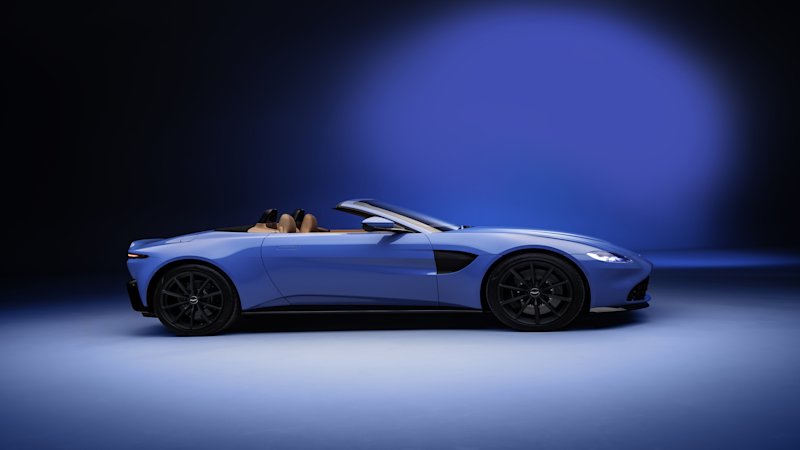
Two years after the hardtop Aston Martin Vantage redefined the Vantage nameplate yet again, the coupe has dropped its top. Below the shoulder the Vantage Roadster holds true to nearly everything that compelled us to label the coupe “a significant milestone.” Above the shoulder, a fabric top envelops an “ultra-compact” Z-frame that drops in 6.7 seconds and unfurls in 6.8. The carmaker says it’s the fastest fully electronic mechanism out there, and operates at speeds of up to 31 miles per hour. Thanks to the frame’s compact design, the car’s lines don’t differ much from the hardtop. Nor do the performance specs: The convertible gains 132 pounds over the fixed-roof, needs 3.5 seconds to hit 60 mph instead of 3.5, and maxes out at 190 mph, five miles per hour less than the coupe. Losing the rear hatch takes a bit out of luggage space, though, which declines from 12.4 cubic feet to seven. Aston Martin says the cubby will still swallow a full-sized golf bag and related paraphernalia.

The Mercedes-AMG-sourced 4.0-liter twin-turbo V8 delivers the full 503 horsepower and 505 pound-feet of torque. Engineers tuned the suspension, differential, driving aids, and driving modes specifically for the convertible. The carmaker has made its seven-speed manual transmission newly available on the coupe this year — it was offered previously only on the Vantage AMR — but the droptop is barred from the row-your-own party. The Vantage Roadster sticks with the ZF eight-speed automatic. Convertible buyers can avail themselves of other additional kit introduced this year to celebrate 70 years of the Vantage name, said first applied to a more powerful version of the 1951 DB2 called the DB2 Vantage. The potential extras include Aston Martin’s historic vane grille as well as new wheel designs.

Deliveries begin in Europe during Q2, U.S. shoppers can expect summer delivery. Pricing starts at $161,000, an $8,000 premium over the coupe.

Related Video:

Lamborghini’s 830-hp V12 hypercar speaks out for the first time

Although the future of the brand includes electrification and hybrid technology, Lamborghini is still here in 2020 displaying the wonder of its brash V12 engine. Following the release of its first solo project called the SC18 Alston, Lamborghini Squadra Corse (LSC) is preparing to debut a limited-edition naturally aspirated track car with a hearty amount of power. A new teaser video gives fans a first listen as to what the car will sound like.

LSC first teased this car in October, 2019, and it unveiled a surprising amount of the design (seen below). Sporting a shape that fits the bill of a rumored entry into the Le Mans Hypercar arena, the new Lambo has a carbon fiber monocoque with an aluminum front frame, an airscoop on the roof, a motorsport-focused hood with dual air intakes, and a massive fixed carbon fiber wing. It will be powered by an 830-horsepower version of the 6.5-liter V12 engine, it’ll be stopped by big Brembo brakes, and it will have an “innovative self-locking type differential.”

Like the Alston, the Sián, and the V12 Vision GT that came before it, the upcoming hypercar wears the number 63. Additional style comes from White Peacock wheels wrapped in Pirelli color edition tires. As mentioned, the video below gives multiple views of the car and it appears the rear features a spine similar to that seen on the Sián, and it will wear tri-point graphics that seem to be inspired by the Sián’s headlights.

Get a glimpse of the internals in the new teaser video above, and listen to its exhaust, as it works the dyno. The car will debut “before the end of the year.” 

[embedded content]

First production 2020 SSC Tuatara unveiled at Philadelphia Auto Show

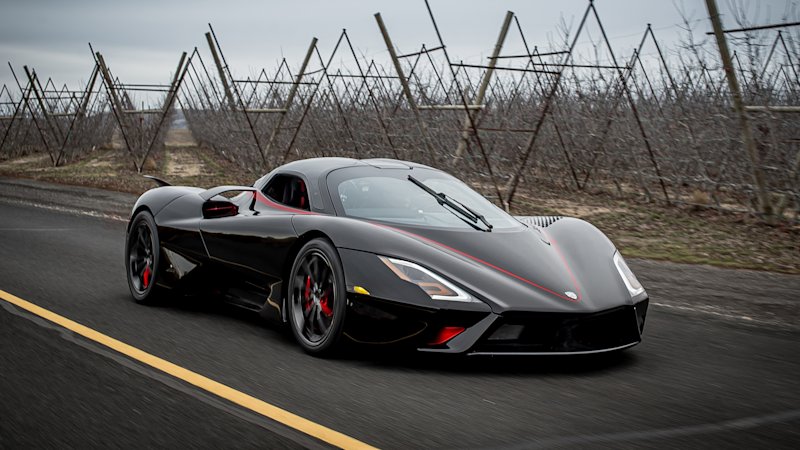
Last summer, SSC North America announced that the first production Tuatara was introduced to its owner during Monterey Car Week, yet no photos of the handover were provided. The Washington-state-based carmaker was oddly low key about the event, having spent 10 years getting the Tuatara into production and delivering chassis #1 at America’s glitziest auto event. Now we know why. Dr. Larry Caplin wanted to debut his car in his hometown of Philadelphia. Caplin founded CF Charities, a nonprofit that supports underserved students interested in health and STEM careers, and CF Charities is sponsoring a supercar pavilion during the Philadelphia Auto Show. The star car is the doctor’s Pearlescent Black Tuatara with Gloss Black and Red accents, dressed in SSC’s high-speed configuration. There’s a chance it’s sharing the stage with its predecessor, a white 2011 SSC Ultimate Aero that also forms part of Caplin’s collection.

Ex-Pininfarina designer Jason Castriota drew the exterior shapes. SSC says the skin and carbon fiber monocoque below are fashioned from aerospace-grade carbon fiber, the company tapping the manifest aerospace materials suppliers in the Pacific Northwest for the glossy stuff. Castriota says that lots of wind tunnel tuning has resulted in a 0.279 drag coefficient, and active aerodynamics means the Tuatara exhibits “identical aero balance from 100 mph to well over 300 mph.” We’re looking most forward to seeing if the Tuatara has the gumption to hit 300 mph, never mind go “well over” that mark.

It’s been given the powerplant to do so, on paper at least. Developed with Nelson Racing Engines, the 5.9-liter twin-turbo V8 with the flat-plane crank and 8,800-rpm redline produces 1,350 horsepower on 91 octane, 1,750 hp on E85. Torque maxes out at 1,280 pound-feet at 6,800 rpm, all to move a car that weighs 2,750 pounds dry. A CIMA seven-speed automated manual gearbox manages shifting, swapping cogs in less than 100 milliseconds in Track Mode before sending power to the rear wheels.

Daily driver intentions are fulfilled by push-button dihedral doors, a large, vertically-oriented infotainment touchscreen with controls and readouts for the expected mod-cons as well as vehicle data and telemetry, rear and blind-spot cameras, and a Front Lift Mode that raises the nose 1.6 inches when traversing obstacles. The flat-top-and-bottom steering wheel and digital cluster look properly slick. The adjustable suspension flips between the default Sport Mode and Track Mode, a 1.25-inch ride height difference between the two; at the track, the Tuatara sits just 2.75 inches off the ground at the front, 3.25 inches at the rear. SSC also says tall drivers are invited to the Tuatara party, claiming that occupants as tall as 6-foot-5 will fit comfortably, “even sporting a race helmet.”

Assuming all goes well, SSC plans to build only 99 more examples before shutting down production. The company still hasn’t revealed a current price — last we heard, in 2013, MSRP was $1.3 million. That plus a touch of inflation should get a buyer well on his way to what’s being billed as “America’s Hypercar.”

Related Video:

Race a Type S Concept and an 8-bit 1991 NSX in Acura’s new video game

Acura has unveiled a new mobile video game that features a variety of the brand’s notable cars from throughout the past three decades. The game is a spin-off of the brand’s “Beat That” commercial, and each level is programmed to look how video games looked when the different cars were in production. Players have the option to drive a race car, new and old Acura sports cars, or a crossover.

As part of the “Less Talk, More Drive” advertising campaign, Acura has released a series of commercials with the catchphrase, “Beat That.” They’re meant to demonstrate the company’s competitive spirit, and now Honda’s luxury brand has brought about a new way to get those fiery juices going. In the same week as the 2020 Chicago Auto Show, Acura has launched “Beat That” the mobile video game.

The game has six levels, each of which features a different car. Each race is a time trial, and the graphics are designed in a way that they match the years of the vehicles. Level 1 takes place at the 8-Bit Beach and features the 1991 Acura NSX. Level 2 takes place at the Warehouse Complex and features the 1998 Acura Integra Type R. Level 3 features a Snowy Summit stage an includes the 2020 Acura RDX A-Spec, while Level 3 is at a Grand Prix Circuit with the ARX-05 Daytona Prototype racecar. A 2020 NSX drives on the Super Skyway in Level 5, and the Type S Concept can be driven in a Cyber Tunnel in Level 6. 

The only way to reach the next level within the game is to beat a specific lap time designated for each level. Users can play against themselves, or they can send challenges to friends through social media or other chat platforms. To compete against the best of the best, users can click on a leaderboard time and compete against ghost cars from the previous record laps. 

To play the game on a mobile device, click here.

2020 Chicago Auto Show Editors’ Picks

Best in Show

The Chicago Auto Show usually isn’t home to the biggest and boldest debuts, but that allows other vehicles and their variants to shine. Interestingly, our top favorite vehicles this year are all variants of cars that are on sale right now.

Check out what updated models caught our attention in the next slides.

Fifth Place: 2020 Hyundai Sonata Hybrid — 26 points

Senior Editor, Green, John Snyder: “It’s elegant and efficient. I like its U.S. specs. Give me a plug-in, though.”

Consumer Editor, Jeremy Korzeniewski: “This is the most attractive midsize sedan on the market, and the hybrid powertrain adds an extra dose of fuel-sipping practicality that will make a heck of a lot of sense for Americans looking for a nice comfortable commuter of family mobile. And even if the solar roof doesn’t add much range, it sure does look cool.”

Fourth Place: 2021 Chrysler Pacifica — 31 points

Assistant Editor, Zac Palmer: In a small show as the Chicago Auto Show was this year, the Pacifica was the biggest surprise for me. I love the styling changes, and those quilted throw pillows … they are choice, and I’m glad to see Chrysler adding in some plush luxury to its minivan.

Managing Editor, Greg Rasa: “A new look, nice interior and all-wheel drive for the best minivan in the business. There were wilder, sexier products in Chicago, but this one gets points for real-world appeal.”

  • Image Credit: Drew Phillips

Third Place: 2020 Mercedes-Benz Metris Weekender — 42 points

Senior Producer, Chris McGraw: “In May of 2018 I fell in love when I drove the VW California here in the States. In the two years since there hasn’t been a single camper van you can buy direct from the dealer until now. You wouldn’t catch me dead in an RV but a van like this is perfect, provided it doesn’t cost an outrageous amount of money, which, unfortunately it probably will.”

Associate Editor Byron Hurd: “What can I say? I used to camp in a Mercedes-Benz van, so how can I not feel at least some degree of fondness for this? I like that it’s more compact than some of the big Sprinter-based builds, too. Much more practical for the average ‘Let’s drive our house’ crowd.”

Second Place: 2020 Ford GT — 43 points

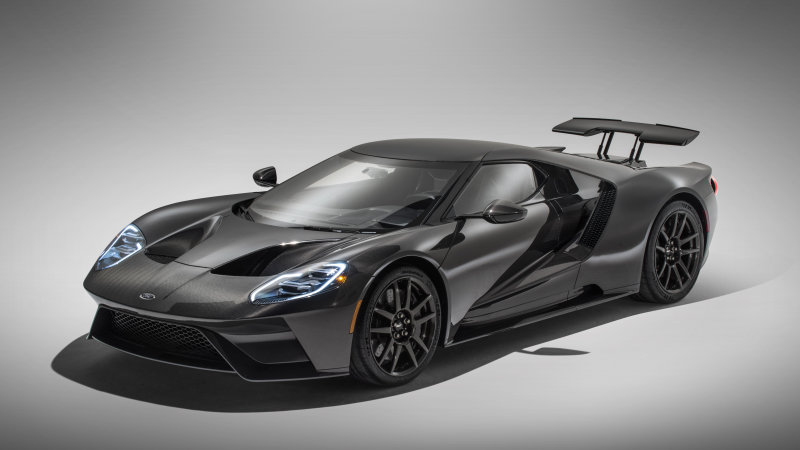
Editor-in-Chief, Greg Migliore: A refresh is typically pretty boring. Not when it comes to the GT. Now it’s making 660 hp and offers a gorgeous Gulf livery, which I prefer to the liquid carbon version. The GT is one of the most exhilarating cars I’ve ever driven. Now it’s even better. I guess I need to drive it again.

Social Media Manager, Michael Ferrara: “Bring on the carbon, the Liquid Carbon! So glad Ford is revisiting the GT. The GT is truly is one of the best cars ever made.”

First Place: 2020 Jeep Gladiator Mojave — 55 points

Associate Editor, Joel Stocksdale: “It would have been really easy for Jeep to just roll out another paint and graphics edition, but the Mojave has significant and thoughtful mechanical upgrades that make it something special.”

Production Manager, Eddie Sabatini: “I’ve not owned a Jeep of any kind but I’m quickly becoming a Gladiator fanboy. I doubt I’ll ever spend anywhere near $45K on a vehicle but if I were to, this would be near the top of my list.”

Editor-in-Chief Greg Migliore: “I like that Jeep is already looking at ways to evolve the Gladiator. The desert tuning provides awesome capability, and many of those practical enhancements, like the huge tires and lift kit, make the Gladiator look even meaner in Mojave trim. I would love to tackle the dunes in this Jeep.”

2020 Ford GT gets more power, full carbon fiber body in surprise update

Just when you thought the Ford GT was yesterday’s news, Ford hits us with an unexpected shot of supercar. With a few years of production remaining (scheduled to finish in 2022), Ford has decided to make the last half of its run of GTs a hair better than the first half. Call it a mid-cycle refresh, but for a half-million dollar supercar.

Instead of 647 horsepower from the 3.5-liter twin-turbo V6, all 2020 GTs will produce 660 horsepower. That 13 horsepower increase comes thanks to a few changes, according to Ford. Mechanical upgrades include new gallery-cooled pistons and higher energy ignition coils. This is then combined with a new engine calibration, ultimately resulting in a broader torque band — though Ford hasn’t told us what the exact difference is yet. Ford mentions that lessons learned from the track-only GT Mk II helped this upgrade along. 

Cooling to the engine is greatly improved, as Ford designed new buttress air ducts that increase airflow by 50 percent. The intercoolers are also slightly larger than before, a boon for extreme track use. Speaking of the track, Ford says it also increased the suspension stiffness in “Track” mode for even greater on-track performance. It was probably stiff enough before, but maybe you’ll be able to pick up a tenth of a second somewhere in the lap. Everybody will be able to hear you a little better on track in the new car, too, because Ford is making the optional Akropovic titanium exhaust standard equipment for 2020. It was a $10,000 option before.

Lastly, Ford is introducing a couple new looks for the 2020 GT. The first is called Liquid Carbon, and it’s pictured at the top of this page. If you like carbon fiber, this is the GT for you. Ford eliminated the paint! Well, not all of it. There’s still a special clear coat sprayed onto the full carbon fiber body — we’ve asked Ford what kind of weight savings there are with the elimination of the paint, but it wasn’t able to provide a figure. You can bring a little color to the party in the form of optional stripes and painted mirror caps. These will be available in any of the colors offered on the regular GT. The carbon fiber wheels will be standard with this car (duh), and you can still pick an optional brake caliper color.


The last appearance package is an updated Gulf Racing Heritage livery. Ford now uses black pinstriping to surround the orange stripes, and the number has changed from a 9 (2019 car) to a 6 for 2020 as it mimics the racing numbers of the back-to-back (1968 and 1969) Le Mans winning GT40. You can also select carbon fiber wheels on the Gulf liveried car this year, an option that wasn’t available for 2019.

When we asked, Ford told us the 2020 price has increased to “approximately $500,000.” That’s up significantly from the $450,000 Ford wanted when the car first went on sale. For those who want one of the special Liquid Carbon GTs, Ford says to expect a number in the $750,000 range. As a reminder, all GTs are currently spoken for, so these updated cars already have future homes.

Related Video:

Try to spot the new Porsche 911 GT3 in this Super Bowl commercial

When Porsche chose YouTube for the reveal of its Super Bowl commercial, the biggest news was the Stuttgart sports car maker returning to The Big Game after 24 years away. Depending on whether you’re more interested in the annual commercial-palooza or the products therein, Porsche hid even bigger newness inside “The Heist:” A sneak peek of the 992-series 911 GT3. As far as we can tell, Motor1 was first to catch the trickery, a Porsche rep confirming the subterfuge to Motor Trend. The presentation begins at 43 seconds in the video above, ending at 49, the culprit being the blue coupe on the lift above the yellow GT2 RS.

What can we tell from these snapshots? That the prototypes haven’t lied. It’s real busy in back, with a high-rise wing above a ducktail spoiler. The current 911 GT3 uses a pair of solid supports at the base of the engine cover supporting the wing from the bottom. Prototypes we’ve seen of the new GT3 fit a pair of thick stanchions set higher up on the body, next to the backlight, that clamp the wing top and bottom. Our guess is engineers needed to make room for the ducktail spoiler across the width of the car. We can’t quite make out the arrangement on the GT3 in the commercial, but it looks like the prototype plinths have been shaved down to a pair of thin braces next to the rear glass. Beneath all that, the rear bumper shows the same recessed section across its width. And an inordinate amount of the coupe’s flanks is taken up by big, 10-spoke, center-lock wheels fronting giant rotors.

Curiously, the GT3 Touring prototypes spotted at the Nürburgring lack both the big rear wing and the ducktail spoiler.   

Don’t be surprised at a Geneva Motor Show reveal in March. Technical specs have homed in on a naturally aspirated 4.0-liter flat-six with up to 550 horsepower, the choice of a manual transmission, and a speculated ‘Ring lap time of around seven minutes, which would take about 12 seconds off the current car’s time.

Related Video:

Ferrari SF90 Stradale shows how it was made in new video

Supercar geeks! Stop what you’re doing and watch this, preferably somewhere quiet where you can listen to the ambient, ethereal music. It’s a nearly 10-minute video Ferrari released titled “Manufacturing the SF90 Stradale,” and it offers a dream-like look at the production of its first-ever plug-in hybrid ahead of its launch this year.

What we see isn’t exactly sequential — 3D digital modeling and virtual reality are shown at the end, after we’ve seen the physical car being built — but it’s nonetheless an interesting look at the artistry side and painstakingly detailed preparation of manufacturing a 986-horsepower Italian supercar.

The video opens with a visit to the foundry, where molten aluminum is poured into molds and we see gloved hands and robots assembling parts for the 4.0-liter twin-turbo V8, its most powerful V8 yet at 769 hp. Ferrari says its engineers increased the capacity on the F154-heritage engine to 3,990 cc from 3,902 cc via a larger, 88-millimeter bore. There’s also a new, narrower cylinder head with a central injector, a Ferrari V8-first 350-bar GDI and a larger intake and redesigned exhaust system.

From there, there’s lots more eye candy, as we’re taken through body assembly, the paint shop, digital and clay modeling, interior parts assembly, and so forth. It finishes with a shot of the completed car in red against a dark background.

Other notables in the SF90 include four powertrain modes controlled by buttons on the steering wheel, including up to 15 miles in all-electric with front-wheel drive relying on the two front electric motors. The hybrid modes activate a third e-motor located at the rear axle, between the engine and the eight-speed dual-clutch transmission. The SF90 is also the first Ferrari to use all-wheel drive, which the company says was necessary to fully exploit the hybrid power.

The video can only mean that we’re getting close to launch, and it’s sure to whet the appetites of those privileged enough to afford one.