All posts in “Supercars”

The Quail joins the Pebble Beach Concours, cancels for this August

Another of the major Monterey Car Week events has announced it’s canceling this year’s festivities. The latest is The Quail, A Motorsports Gathering, which is a show and road rally that precedes the Pebble Beach Concours d’Elegance (also canceled) each summer. While classic cars are featured, the show also highlights high-end sports cars and supercars, helping do differentiate itself from the Pebble Beach Concours. Previous notable debuts at the event include the Bugatti Divo.

The rally, which would have taken place Aug. 10-12 and the show on August 14, will not happen. Like with the Pebble Beach Concours, The Quail will simply run this year’s event next year, letting participants keep their spots and not have to pay additional fees. The same goes for visitors with tickets to this year’s show. Anyone who can’t or doesn’t want to attend the event next year also has the option to get a full refund. Next year’s rally will run Aug. 9-11, and the show will be on Aug. 13.

Closely related to The Quail is the Bonhams auction that would be held there. That auction was held on the grounds of The Quail starting the day before the main show. While it won’t be held in the same place, Bonhams will have an auction of its planned cars somewhere else in California with details to come, and Bonhams will return to The Quail next year. Meanwhile, Gooding and Company announced that it would postpone its Pebble Beach auction to next year alongside the concours.

With The Quail and Pebble Beach postponing their events, only one major pillar of Monterey Car Week is left, the Rolex Monterey Motorsports Reunion held at Laguna Seca. The event hasn’t announced plans to postpone yet, but we wouldn’t be surprised if it does.

McLaren P1 GTR-18 by Lanzante takes its inspiration from the F1

The McLaren P1 GTR is already one of the most exclusive hypercars ever built (McLaren made only 58 of them), and now Lanzante is making it even more special. The storied British racing company has decided it’s going to convert six P1 GTRs into what it’s calling the P1 GTR-18.

Lanzante applies a longtail style body to the P1 GTR, increasing the length and adding even more aero equipment. It has a larger front splitter and modified rear wing to create additional downforce. The appearance is the biggest draw to go with the Lanzante P1 GTR-18, though. All six will get their own special McLaren F1-inspired paint scheme, meant to match the liveries of Lanzante’s racing efforts with the F1. This car is finished in the Gulf Team Davidoff No. 28R scheme, which is the livery from the last McLaren F1 GTR ever produced by Lanzante to compete. Here’s a Bonhams listing for that car, so you can compare and contrast.

Paint codes and samples were taken from that F1 so as to make the colors identical. Even the carbon fiber has a special tint to it, different from the regular P1 GTR. Lanzante does throw in some interesting extras, too. You get a headset (to talk to your passenger on track) finished in the same paint scheme as the car, and a set of “bespoke dust bags” and tinted carbon fiber keys to match the car. Powertrain details are not final yet, but the GTR made 986 horsepower combined from its gas engine and electric motor from the factory. It probably doesn’t need anything more.

All great stuff, and it will likely cost untold amounts of money. Lanzante didn’t say how much, but anybody who had enough cash to pick up a P1 GTR can likely spring for this special Lanzante treatment if they want it.

Related Video:

McLaren hybrid sports series prototype spied, possible 570S successor

McLaren has repeatedly said it plans to go hybrid with all of its vehicles in the future. The latest rumors out of Britain point at plans to reveal the first of this new hybrid lineup sometime this year. This heavily camouflaged prototype could be the one we’re waiting for — it even says “hybrid prototype” on the side sill.

Its size and general shape means it’s likely part of McLaren’s Sports Series. The camo does an excellent job of disguising what the sheetmetal underneath looks like. If we had to guess, this car looks like it’d be a replacement for the 570S model. Assuming we’re right about that, it’s probably hiding McLaren’s yet-to-be-revealed twin-turbo V6 engine. Add the electric power into the equation, and it’s likely going to be making much more combined power than the twin-turbo V8 is able to produce on its own now. McLaren’s hybrids are also rumored to be of the plug-in variety, capable of driving about 20 miles off electric power.

The camouflage over top of the engine bay appears to be tented, and it looks a bit like the McLaren GT because of it with the gently sloping line to the back. We don’t even get to see how large the side air intakes are since McLaren has covered these up quite well, too. The high-mounted dual exhaust has us giddy. Its placement reminds us of the 720S exhaust pipes. Under all that is a giant diffuser and wide rubber pushed to the edges of the car.

Last we heard, McLaren was going to release a hybrid model this year, and it would go on sale in 2021. We wouldn’t be surprised if these targets are pushed back due to delays stemming from the coronavirus.

Related video:

Jacob & Co. Bugatti Chiron Tourbillon puts a mini W16 engine in motion inside a watch

In early 2019, Bugatti ended its 15-year watch partnership with Swiss watchmaker Parmigiani Fleurier and inaugurated a new collaboration with New York watchmaker and jeweler Jacob & Co. — the latter firm once known for helping define the bling-bling era in American music. When announcing the new tie-up at the global timepiece showcase Baselworld in March last year, Jacob debuted two new limited-edition watches, both based on extant Jacob models. The $545,000 Twin Turbo Furious Bugatti Edition reworked the watchmaker’s Twin Turbo Furious timepiece, and the $37,000 Bugatti Chrono Edition Limitee 100 Ans celebrated Bugatti’s 110th anniversary and was based off Jacob’s Epic X Chrono. Yet, as the partnership promised to push “the limits of what seems mechanically possible,” a new and incredible watch would be needed, so Jacob spent a year developing this, the Bugatti Chiron Tourbillon. Behind its sapphire crystal there’s an automaton suspended inside the case mimicking the movement of the Chiron’s W16 engine.  

The animated engine serves no timekeeping purpose, it’s there for show — and it’s quite the show. Pressing the pusher crown at the base of the case sets the engine in motion for about 20 seconds; a stainless steel crankshaft milled from a single ingot pushes stainless con-rods and pistons inside a sapphire crystal block, and two spinning turbochargers can be viewed through a window on the side of the case. After three runs, the engine’s barrel needs to be recharged by turning the center crown counterclockwise, then it’s ready for another three goes. The setup consists of 578 pieces, and is so tiny and complicated that it took more than three days to program the CNC machines milling the stainless steel, and the animation designer wasn’t sure it would work. Those two factoids are perhaps the best connection to the improbable wonder that is the Bugatti Chiron. 

[embedded content]

We meant the phrase “suspended inside the case” literally. The watch’s movement sits on four coilover dampers at the corners, allowing the movement a hint of up and down flotation which necessitated an Incabloc shock protection system. Other Bugatti-themed touches include the titanium case, the Chiron Blue hands, the watch movement’s 60-hour reserve dial that looks like a gas gauge, a window onto the tourbillion shaped like a Chiron grille, the black rubber strap, and the customization possibilities that include an owner be able to choose what color the coilovers should be.   

Jacob & Co. will make 250 of the Bugatti Chiron Tourbillion, each priced at $280,000.

Related Video:

McLaren releases new Senna GTR footage and explains that giant wing

McLaren launched the McLaren Tech Club last week with a brief episode about the aerodynamic magic of the open-top McLaren Elva. In part two of the video series, McLaren continues to explain how air and wind affect a car’s design, but this time it’s in a very different way. McLaren Principal Designer Esteban Palazzo dives into how the massive wing on the McLaren Senna GTR came to be and what purpose it serves. Three extra videos also show new footage of the Senna GTR testing in Bahrain.

Like the McLaren F1 GTR and McLaren P1 GTR that preceded it, the Senna GTR’s most prominent feature is its multi-tiered, multi-layered, carbon fiber pedestal wing. Palazzo says it was not only inspired by high-performance cars of the past and aircraft design, but also by the likes and tastes of the intended customers. In the case of the Senna GTR, Palazzo mentions science fiction and architecture.

The wing, which creates about 2,204 pounds of downforce and aids vehicle stabilization, has a few features that might not be immediately noticeable from photos or video. The shape takes design cues such as the endplates from LMP1 cars. In addition to connecting to the posts, the wing is further integrated into the car’s shape with attachments to the rear diffuser. The last piece mentioned is the automatic drag reduction system (DRS), a new piece of moving technology that helps with, well, minimizing drag.

After releasing episode two of the McLaren Tech Club, the Brits followed up with three videos of the Senna GTR testing on the Bahrain International Circuit, on which the Senna GTR holds the fastest race lap in the circuit’s current configurations. The first video offers an interactive 360-degree interior view, the second video shows the driver’s point of view, and the third video is shot from the Senna’s front splitter. McLaren does not say who is in the driver’s seat.

Episode three of the McLaren Tech Club should arrive at a similar time next week.

[embedded content]
[embedded content]
[embedded content]

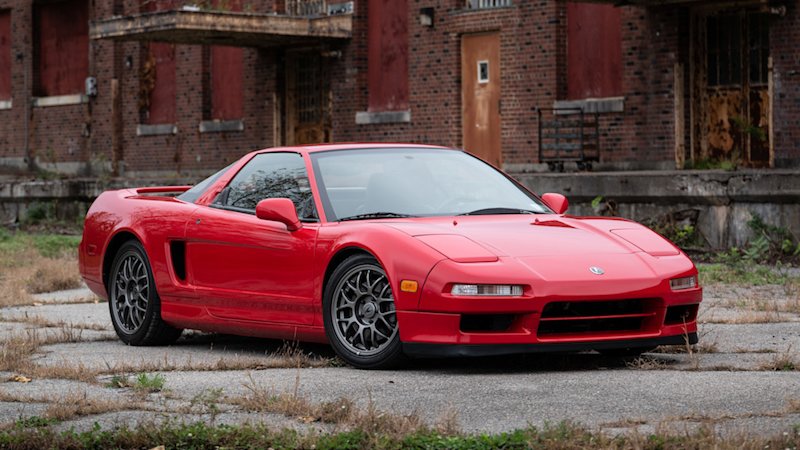
Rare 1999 Acura NSX Zanardi Edition sells for $135,000

Somebody just bought a 1999 Acura NSX Zanardi Edition for $135,000 on Bring a Trailer. And to that we say, we’re jealous.

The Zanardi Edition is one of the more sought-after NSX models out there. Acura only ever sold 51 of them (named after racer Alex Zanardi), and they were sold during a time that nearly every NSX sold here was an NSX-T with the T-top. The hardtop Zanardi Edition features a number of performance improvements over a typical 1999 NSX.

Acura took a sizable chunk of weight out of the car. Versus a hardtop coupe, it’s about 54 pounds lighter. Compared to the more popular NSX-T, it’s 149 pounds lighter. This was done in a few ways, but the single biggest weight reduction was due to the power steering delete, making it more like the older NSXs that never had power steering. Lightweight BBS wheels, a lighter battery, single-pane rear glass and a lighter rear spoiler also helped to reduce weight.

It received a “racetrack-tuned suspension” that was considerably stiffer than the regular NSX. The shocks, springs and bushings were all revised, and Acura lowered the ride height (0.6 inch in front, 0.3 inch in rear). A stiffer and larger rear stabilizer bar was fitted, too.

The Zanardi Edition is rather distinctive looking because of its New Formula Red paint and dark BBS wheels. Acura added red stitching to the all black interior, and owners also got to use a sweet titanium shift knob. And of course, there’s a special edition plaque on the interior to officially declare it a Zanardi. 

Acura did nothing to the engine or transmission. Therefore, it retains the 3.2-liter V6 (290 horsepower and 224 pound-feet of torque) and six-speed manual. We don’t get to see many Zanardi Editions go up for sale, but when they do, they get the big bucks. At 57,000 miles, this one is still on the low side, hence the $135,000 final bid.

A regular (albeit newer) 2004 NSX-T with 1,900 miles just sold for $133,000 earlier today. So yeah … NSX values don’t seem to be going anywhere but up these days.

Related video:

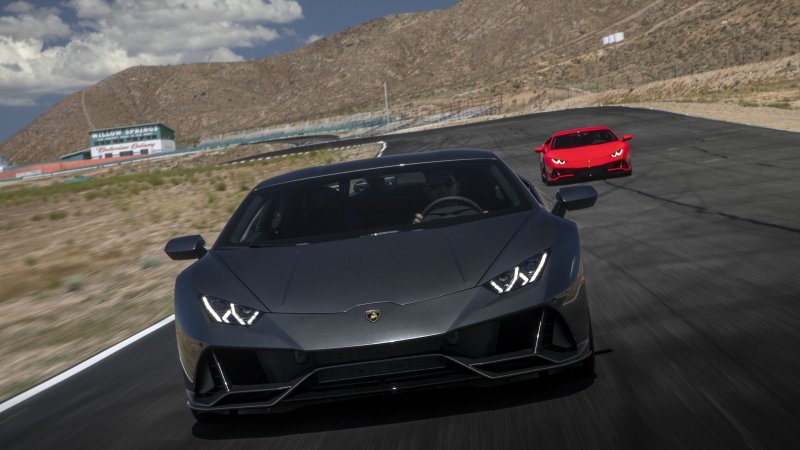
2020 Lamborghini Huracan Evo has the biggest price discount in America

Right now, buyers of the 2020 Lamborghini Huracan Evo are paying an average of $248,000 to drive the brand-new supercar off the dealer lot. That’s a hefty chunk of change, but it represents $16,269 off the car’s average $264,969 retail price, according to data provided to Autoblog by Truecar. That’s the largest discount in America on a new vehicle for the month of April, 2020 when judged by the dollar amount in savings off the sticker.

It’s not all that uncommon to see a lot of money taken off the sticker price of expensive luxury cars. This month, right behind the Lamborghini sits the 2019 BMW 8 Series with a few bucks shy of $11,000 in savings, which is hardly surprising. Though it’s a very sleek and entertaining car in some of its various incarnations, it hasn’t exactly proven to be a hot seller for the German automaker. The fact that there are a total of 15 (!) possible configurations probably doesn’t help. Two other BMWs, the 2020 7 Series ($10,164 in savings) and the 2019 i8 ($10,145) are also on the top 10 biggest discounts list.

In between that BMW sandwich are the 2019 and 2020 editions of the Acura NSX. It doesn’t really matter which one a buyer chooses to drive off the lot, either way lopping off more than $10,000 off the sticker price means the electrified supercar will cost just under $150k.

For a look at the best new car deals in America based on the percentage discount off their suggested asking prices, check out our monthly recap here. And when you’re ready to buy, click here for the Autoblog Smart Buy program, which brings you a hassle-free buying experience with over 9,000 Certified Dealers nationwide.

Related Video:

Koenigsegg Gemera and Jesko Absolut strut on the supercar maker’s runway

The world seems like a pretty terrible place right now, but there are good things in it, like the two monster Koenigsegg supercars the company revealed a month ago. The Koenigsegg Gemera four-door supercar and the Jesko Absolut high-speed hypercar were showstoppers from the Geneva Motor Show that didn’t happen. And now Koenigsegg released more photos of each at the airfield where its headquarters is located.

Leading the galleries is the Gemera, the newest of the two cars. Besides its unusual shape, a result of having four seats all suitable for adults but still just two doors, it has remarkable technology backing it up. It’s a plug-in hybrid using three electric motors and a turbocharged three-cylinder engine with no camshafts. And it makes a total of 1,700 horsepower. It even has heated and cooled cupholders for each passenger. It’s brilliantly outrageous.

The Jesko Absolut is also wild. It’s aiming to be the fastest car in the world, which would mean a top speed in the 300-mph range. It has potential with the same 1,600-horsepower twin-turbo V8 from the regular Jesko, but is more aerodynamic by losing the rear wing and other drag reductions. It also gets the nifty automatic transmission that can shift to any gear immediately, even out of sequence.

Related Video:

Supercar driver totals Gemballa Mirage GT in massive NYC wreck

Police arrested the driver of Gemballa Mirage GT — an ultra-rare exotic based on the Porsche Carrera GT — after it struck several other vehicles and left a trail of destruction on 11th Avenue in the Hell’s Kitchen neighborhood of Manhattan Tuesday morning.

Police did not release the name of the driver, but said he was the owner of the vehicle and charges are pending, per reports. Road & Track did some sleuthing and reports that it was likely Benjamin Chen, a supercar collector and the co-founder of Gold Rush Rally, an annual rally of exotic and luxury vehicles that he once described as a “rolling party with over 200 of your friends.” And sure enough, the car looks just like the one he talked about in 2014 with the DuPont Registry Daily. There’s even an Instagram video of the hoodie-wearing driver, who resembles Chen, being ordered out of the vehicle. He initially appears to stumble when exiting the cockpit.

The car, a modified Porsche Carrera GT that can cost north of $750,000, had Massachusetts plates reading “Nine 80” and came to a stop at 11th Avenue and 44th Street on Manhattan’s west side, just north of the Javits Center, which is being used as a makeshift field hospital for coronavirus patients. The car looks to be a total loss, its entire front right corner sustained heavy damage, with the panels missing and the body structure badly mangled. Other photos showed the wheels cocked at different angles, windshield shattered, part of the rear fender missing and its hood lying on the sidewalk. Helicopter footage from Fox 5 in New York showed it surrounded by ambulances and other emergency vehicles after it was stopped.

One video showed it careening out of control at high speed down a mostly abandoned 11th Avenue and slamming into a white Toyota Sienna minivan, but then trying to flee.

Chen was involved in a wreck while driving a McLaren 12C Spider during the goldRush Rally in 2013 in Texas.

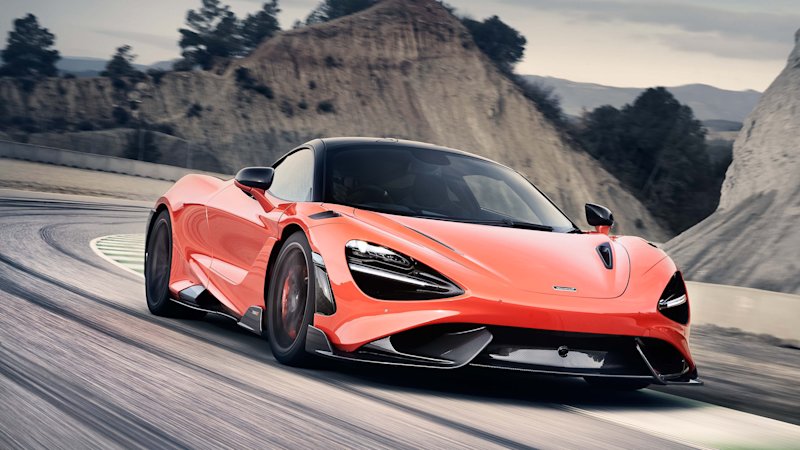
McLaren 765LT: How limited-edition longtail got its $385,000 price

The McLaren 720S starts at $299,000 in the U.S. before the $2,500 destination charge that takes a buyer over the hump to $301,500. McLaren has announced the new, limited edition 765LT will start at $385,000 before destination and any other fees, a number guaranteed to encourage parsing as buyers and enthusiasts try to figure out if the 765LT represents $86,000 in extra goodness. Before whipping out your abacuses, however, the Woking carmaker wants all to know that the 765LT comes standard with options that would add roughly $50,000 to the price of a 720S. These include upgrades like the Exterior Carbon Fiber Pack, normally $7,070, the 10-spoke super lightweight sport wheels, normally $5,490, the parking sensors and rearview camera that together add $5,770, and colored brake calipers with a machined McLaren logo, normally $1,380. 

The rest of the dosh pays for extras that can’t be optioned from the factory, like the redesigned front fascia and longtail rear end with the bigger active spoiler that help increase downforce by about 25% compared to the 720S. The 4.0-liter twin-turbo V8 gains 45 horsepower and 22 pound-feet of torque, totaling 755 hp and 590 lb-ft, shifting through a transmission that houses F1-derived materials and provides 15% quicker in-gear acceleration. Overall weight, assuming the buyer orders the carbon fiber racing seats — saving another $6,390, as a no-cost option on the 765LT — drops DIN curb weight by 176 pounds versus the standard sibling (DIN weight is fluids and 90% full fuel tank). And the suspension has gotten even more precise, which defies belief since McLarens are already so good, thanks to knowledge from the Senna and Speedtail.

If you’d like to crunch the numbers yourself, a poster at the McLaren Life forum has graciously uploaded the 765LT options list and ordering guide. We might skip the $8,470 Double Glazed Engine Window that offers a view into the engine bay, but the $36,340 MSO Defined Gloss Finish Visual Carbon Fiber Roof Scoop would be a great place to start jacking up the price with gusto.

McLaren will make 765 examples of the 756LT for global consumption. We’re not sure how many will make it to the States, but the ones that do will begin arriving in September.

Related Video:

McLaren Elva production cut from 399 units to 249

In an interview with the Australian Financial Review, McLaren Automotive CEO Mike Flewitt revealed the production quota for the new Elva speedster will drop from 399 units to 249. The boss explained lopping volume by 38% with, “the feedback from our customers is that they think the car should be more exclusive than that, so we’ve capped it at 249.”

While it’s to be expected that owners investing $1.7 million in a specialized road car would promote exclusivity — and thereby residual values — it seems dubious that McLaren would return 150 down payments if the automaker had 399 orders. More likely, the global market for windscreen-less roadsters, no matter how technologically advanced, couldn’t absorb all 399 Elvas on top of 500 total Ferrari SP1 and SP2 Monzas, 88 Aston Martin V12 Speedsters, 40 Pagani Huayra BC Roadsters, and 12 Bentley Bacalars.   

The production revision puts the Elva in company with the McLaren F1. Ron Dennis would have built more F1 road cars, but the market (just 20 years ago!) wasn’t ready for a supercar that cost $810,000 before special requests, so production ended after 106 road and racing chassis’ and a complete set of parts for another. The Elva represents technical high points for McLaren, too, being the company’s lightest-ever car outside the F1, able to hit 62 miles per hour in under three seconds, and announcing its presence with the dual-exit “Nirvana” titanium exhaust. The handling, designed to be less intense than that of the Senna but more supple than that of the Speedtail, kept engineers up late due to the Elva being lighter than the Senna yet more powerful.

Nevertheless, even without sharing its rear lights with an Italian bus, as the F1 did, the Elva may have had a hard time convincing shoppers it deserved to be the second-most-expensive model in the carmaker’s Ultimate Series range, at the same time as being the least practical. The Elva runs about $700,000 more than the Senna and $500,000 less than the Speedtail. A lightly used P1 can be had for as low as $1.2 million.

Autocar writes that build slots are still open for the model Flewitt called “a uniquely modern car that delivers the ultimate connection between driver, car and the elements,” and if you’re in the market, their values just went up. McLaren will begin building Elvas when Speedtail production ends later this year or early next.

Related Video:

Bugatti put three generations of legendary supercars into one photo

The modern era of Bugatti has seen dozens of special-editions, limited-editions, and bespoke one-offs, but the core of the company is defined by three models that have spanned the past three decades. The EB110 marked the ’90s, the Veyron ruled the ’00s and early ’10s, and the Chiron dominated the end of the ’10s into the present. Bugatti calls the trio the “Holy Trinity” and recently brought all three supercars together for a photoshoot in Dubai. 

Against a backdrop of sweeping sands and a spiky skyline tipped by the Burj Khalifa tower, Bugatti placed a black EB110 next to black examples of a Veyron and a Chiron. It’s an awe-inspiring sight, even in photos, though it is a bit strange to see the models dressed like they’re going to a funeral rather than sporting any of the numerous iconic color schemes they’ve worn throughout the years. 

Despite the 30 years between the EB110, and the Chiron, all three vehicles are built with the same three key components: a carbon-fiber monocoque, four turbochargers, and all-wheel drive. The technologies within these three pillars have drastically changed, but the idea of what makes a true super sports car has remained the same. 

The EB110, which denotes Ettore Bugatti and his 110th birthday, debuted on his birthday, September 15, 1991, in Paris. It packs a mid-engined quad-turbo 3.5-liter V12 that has a 8,250-rpm redline. The lowest-powered EB110 had 560 horsepower, while the most powerful model made 611 horsepower. The EB110 claimed a zero-to-62-mph time of 3.3 seconds and a top speed of 218 mph. 

The Veyron entered the scene for the 2005 model year. This time around, Bugatti slapped the four turbochargers on an 8.0-liter W16, and that engine makes a whopping 987 horsepower (1,001 PS). With the added power, the zero-to-62-mph time dropped to 2.5 seconds, and the top speed increased to 253 mph, and that was before more powerful variants were released.

The Chiron, Bugatti’s current model, debuted in 2016 and continued to build on the power and speed records its relatives had set before it. The Chiron carries on with a quad-turbo 8.0-liter W16, but it now makes 1,479 horsepower. It can sprint from a stop to 62 mph in 2.4 seconds, and in 2019, Bugatti used a Chiron to reach 304.773 mph, the fastest speed for a production car ever achieved. 

To truly appreciate the greatness of these vehicles requires an in-person visit, but for now, photos will have to do. Check out the family photoshoot in the gallery above.

Related Video:

Bentley designers show off how custom the custom coachbuilt Bentley Mulliner Bacalar can be

One of the draws of the Bentley Mulliner Bacalar, besides its gorgeous two-seat roadster style, is that it’s a unique custom coachbuilt car. The company touts the fact that not a single piece of the exterior is shared with another Bentley. It will always be particularly rare, too, since only 12 will be built. But the unique, custom nature of the car extends beyond that to giving customers nearly free rein with interior components and colors. To show this off, Bentley designers created six gorgeous example models that have us wishing the company would make a few more than 12 Bacalars.

Speaking broadly, customers will get to choose unique exterior paint, but the interior is perhaps the most interesting, as choices will include bespoke fabrics, piping, stitching and dash materials. The first of these shown in the gallery is one of our favorites, named Clerkenwell. It features two shades of green leather, and some contrasting green tweed fabric on the seats and the dash, and it’s matched with huge swaths of a light wood veneer that stretches from the dash to the doors. The Greenwich interior that follows is also eye-catching with its oxblood leather, gray tweed, and two kinds of 5,000-year-old Riverwood veneer, part of it left as open pore, and the other part given a gloss finish.

The other trims in order of appearance are Fulton, Menlo, Brickell, and Randwick. These show additional variations on leather color, and some of them swap the wood veneer for carbon fiber, or the tweed for Alcantara. And of course, all six of these cars get their own corresponding paint colors. Let us know in the comments which ones you like the best, and here’s hoping Bacalar buyers get really creative with their cars.

Related Video:

Gordon Murray’s T.50 gets a soundcheck and a website

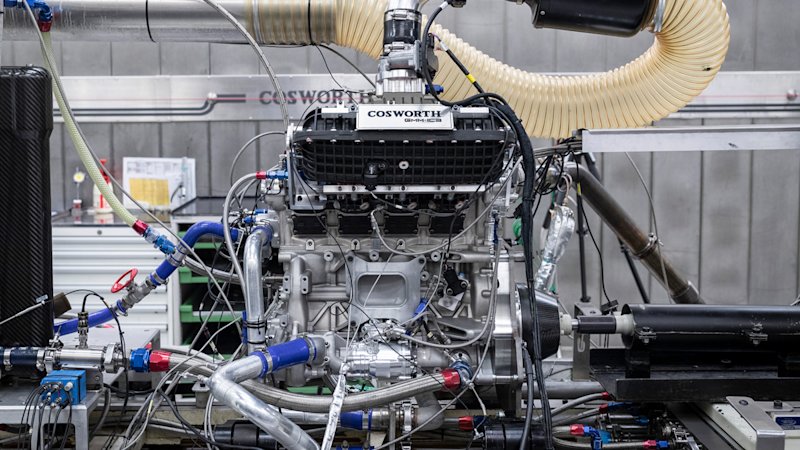
Gordon Murray Automotive isn’t slated to begin building the T.50 supercar until late next year, with deliveries scheduled for early 2022. Thankfully for us, the next step on the march to that goal is a website and a soundcheck of a portion of the 3.9-liter V12 which will power the three-seater coupe (watch that video here). We say “a portion” because Cosworth — the engineering firm developing the mill — put just three of the 12 cylinders on the dyno to verify emissions output and ensure the components can handle 12,100 rpm, said to be 300 rpm short of a 12,400-rpm “hard limit” redline. That figure is 1,400 rpm beyond the north wall of the 6.5-liter V12 Cosworth built to propel the Aston Martin Valkyrie. Murray told TopGear that the air pulses sucked into the ram-air intake above the cabin will result in magnificent sound. The English engineering legend tuned the thickness of the roof panel on the McLaren F1 to enhance the engine sound, and he’s done the same thing on the T.50. Based on the short snippet of the dyno run, the free-breathing V12 will excite blood and bone.

Output checks in at 650 horsepower and 332 pound-feet of torque, meaning ten hoses more than the 2021 Porsche 911 Turbo S but 184 lb-ft less. Unlike just about every other supercar out there today, the T.50 will weigh no more than 2,161 pounds, a stunning spec that’s 1,475 pounds less than the Turbo S, 899 pounds less than the Lotus Evora 400 Lightweight, 180 pounds less than an entry-level Mazda MX-5 Miata Sport. The V12 will utilize two engine maps, one that loads up torque at the bottom of the rev range for potting about town, dropping the redline to about 9,500 rpm and horsepower to roughly 600, the other unlocking every rev and joule. A 48-volt mild hybrid system powers the 15.7-inch rear fan and active aero panels, and employs a small electric motor to add 30 ponies in certain aero configurations. Power in the 100 units of the T.50 road car is sent to the rear wheels through a six-speed manual with an exposed linkage; the 25 units of the T.50 track-only car will use paddle shifters. 

The coupe serves up five aerodynamic maps, two automatic and three driver selectable. Auto mode moves the under-floor and diffuser panels and active rear spoilers automatically as needed. Braking mode — as on a Bugatti Chiron or any McLaren — stands up the rear spoilers and powers the fan to suck air from under the car, improving downforce and therefore traction. Selectable High Downforce mode is made for the track and wet roads, boosting downforce by 30% over Auto mode. Streamline goes the opposite direction, closing aero inlets to reduce drag by 10% compared to Auto mode, and it “activates the fan at high speeds to extend the trailing wake of air behind the car, in effect creating a virtual long-tail.” VMAX mode starts with Streamline and kicks in extra boost from the 48-volt system to get to about 680 hp. Murray said the T.50 tops out somewhere around 220 miles per hour.  

The carbon-intense supercar has moved into wind tunnel testing in Silverstone, using the Racing Point F1 team facility. At the same time, Gordon Murray Automotive is finishing its customer experience and service center in Dunsfold, England next to the factory that will build the T.50. Have a listen to the engine and imagine what’s to come for what it’s designer calls the “last and the greatest analog supercar ever built.” We also recommend checking out TG‘s piece on the car, where Murray admits that driving dynamics have been benchmarked against the Alpine A110, power steering will only work at low speed and in parking lots, the V12 flips from idle to 12,000 rpm in 0.3 seconds, and the rear tires are just 295-section (911 Turbo S rubber is 315-section out back). 

Related Video:

McLaren F1 GTR Longtail No. 1 is road-ready and listed for sale

The chassis number on this 1996 McLaren F1 GTR Longtail is 19R, but in the order of production, this car is No. 1. It’s the first longtail version of the GTR version of what many consider the greatest car ever made. Despite its track-intended build, it’s road-legal, and it’s currently up for sale in the United Kingdom. 

The special nature of 19R goes beyond the fact of its birth order. This car was reportedly used as a development prototype for the entire run of GTR Longtails and participated in numerous Japanese races, including the Suzuka 1000km. According to the listing, it’s also only one of two GTR Longtails in private ownership (Nick Mason owns the other), so this is likely one of few occasions in a lifetime when one will be available for purchase.

19R has another first under its belt, too. It was the first GTR Longtail to be converted to a road-legal specification. Gordon Murray, the designer of the F1, worked with Lanzante to turn the racecar version of the road car back into a road car. The unique F1 comes with a Gordon Murray Design book that documents the conversion, as well as the history of the car. All of the parts that were changed were also kept and come as part of a large spare parts package.

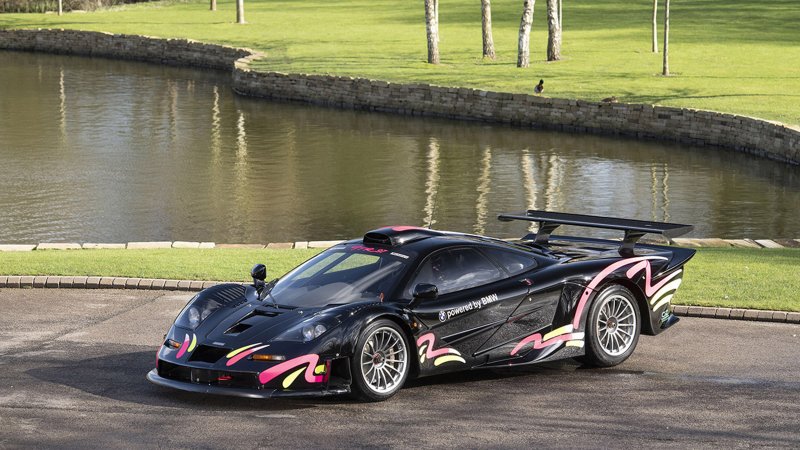
Although some might not see the value of the color scheme, McLaren painted it this way to draw attention to the differences between the GTR and the GTR Longtail. The vibrant markings exaggerate the changes and earned this car the nickname “Squiggles,” according to Tom Hartley Jr. 

If the paint scheme looks familiar, it might be because this car has been seen flexing its BMW Motorsport-sourced V12 at the Goodwood hillclimb (seen below). Via Road & Track, the 19R is listed without a price by Tom Hartley Jr.

[embedded content]

McLaren Elva gets another retro paint scheme from McLaren Special Operations

You may have noticed that McLaren’s official brand color is a bright shade of orange. That dates back to Bruce McLaren’s M6A Can-Am race car of 1967, the first to feature the all-orange paint scheme and the car that helped him win his first Can-Am championship that year. So what better way to honor a wild open-top race car than by painting the wild open-top McLaren Elva supercar in the same color?

The McLaren Elva M6A Theme is the second race car-themed Elva to come from McLaren Special Operations (MSO). The group offers customization services to McLaren customers, particularly unique paint and carbon fiber finishes. The special was revealed on Twitter, and it is quite faithful to the 1967 car. It’s finished in a unique orange that looks a little less bold with more of a pearl finish than the glowing solid orange of the race car. It’s paired with big simple number circles featuring the number “4” like one of the race cars. On the sides, a metallic stripe is added to mimic the chrome divider between the top and bottom sections of the Can-Am car. It also gets the same “McLaren Cars” logo and Bruce McLaren’s signature down the side. As cool as this is from a historical standpoint, the orange really shows off how the body blends right into the interior, something McLaren did to evoke the feeling of being outside and exposed to the world, rather than hidden inside the car’s cabin. The dark launch color was far less effective at conveying that feeling.

[embedded content]

As previously mentioned, MSO did another race car-themed Elva, a black and white car inspired by an older 1964 McLaren M1A race car. Clearly there will be one of each, but McLaren hasn’t put any limits on the designs, so it’s possible there may be multiple examples in the car’s 399-unit run. We also wouldn’t be surprised if McLaren rolls out some other motorsports-inspired liveries in the future, as it has many famous racecars to pull from. The reddish-orange and white Honda-powered Marlboro F1 cars of the late 1980s and the black and silver Mercedes-powered F1 cars of the early 2000s both seem like strong choices. Or if McLaren doesn’t do it themselves, maybe a rich reader could commission one painted as such. Though we wouldn’t want to tell that person how to spend their $1.69 million (or more) on their car.

Related Video:

Aston Martin confirms 3.0-liter turbocharged V6 for Valhalla

When the Aston Martin Valhalla hits the scene in 2022 (hopefully), it will be powered by an all-new 3.0-liter turbocharged V6 engine that will be fortified and electrified in a hybrid configuration that we don’t yet know much about. Interestingly, Aston Martin says the V6’s hybrid element will be tuned and sized for each specific vehicle in which it’s installed. In the Valhalla, the dry-sump engine will be mounted directly behind the passenger compartment, and its so-called ‘hot V’ design will allow for relatively compact dimensions. And compact also means lightweight — the automaker says the complete engine weighs less than 440 pounds.

Just the fact that the British automaker is investing the engineering effort to produce a new engine is significant. The company hasn’t engineered its own in-house powertrain since 1969, when Tadek Marek’s 5.3-liter V8 engine found its way under the hood of Aston Martin’s aptly named DBS V8. The new 3.0-liter V6 is codenamed TM01 in Marek’s honor. With that in mind, we expect this powerplant to serve in various Aston Martin models for a number of years.

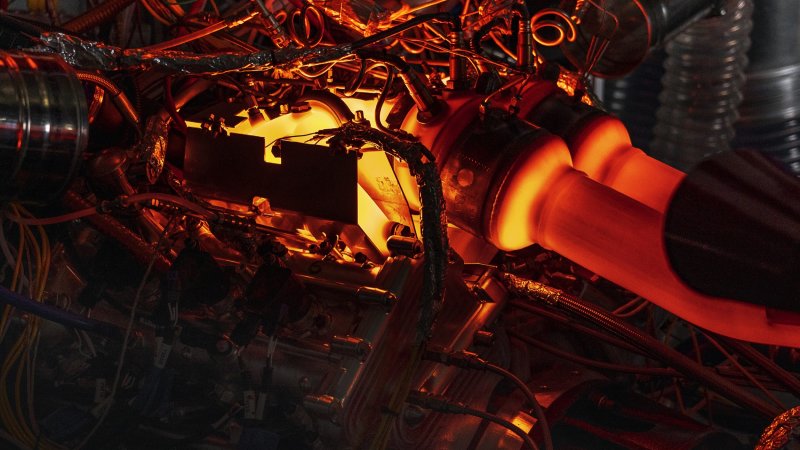
We look forward to further details in the future, especially the all-important horsepower and torque figures. In the meantime, feel free to peruse the high-resolution image gallery above, where you’ll see intricately milled castings along with the engine undergoing dyno testing and running red hot with the lights down low.

Related Video:

Listen to a twin-turbo 2020 Corvette built by Hennessey

Hennessey has built the first twin-turbo 2020 Chevy Corvette that we know of, and it’s released a short video to let us listen to the fruits of its labor. To nobody’s surprise, the turbocharged C8 sounds spectacular. In addition to the traditional meaty rumble from Chevy’s small-block V8, we’re treated to a cacophony of turbo whooshes and whistles.

Back in December, Hennessey revealed its plans to sell a 1,200-horsepower version of the standard Corvette. It’s called the HPE1200, and it’s going to be ludicrously quick. Hennessey says the twin-turbo C8s will have upgraded internals, an upgraded dual-clutch transmission and a Brembo brake system installed. All we know about this particular car in the video is that it has two massive snails attached, and it does in fact run. For how long, that’s anybody’s guess.

The sound it’s making may not be entirely accurate, too. There doesn’t appear to be much of an exhaust system fitted. Instead, we can see a short pipe post-turbo pointing toward the left rear wheel that’s acting as a makeshift exhaust for the time being. Hennessey previously said it would offer a stainless steel exhaust with the new twin-turbo system, so expect something similar to this noise for a finished car. As long as we get to keep most of this turbo Vette’s extremely loud noises, we’ll be happy. 

Hennessey still hasn’t indicated any performance numbers or detailed specs on the HPE1200. A stock 2020 Chevy Corvette with the Z51 package will hit 60 mph in 2.9 seconds and do the quarter mile in 11.2 seconds. Assuming Hennessey is able to translate some of this power into actual forward momentum, we can expect some quicker times.

Related video:

2021 Porsche 911 Turbo S dressed up with Exclusive Manufaktur parts

The last time the Porsche Exclusive Manufaktur overhauled a 911 Turbo S, the result was a more powerful limited edition called the Exclusive Series, with carbon fiber racing stripes and carbon wheels. Stuttgart’s couturier is at it again with the 2021 911 Turbo S, this time to show off what’s possible with off-the-shelf Exclusive Manufaktur components, the same way it did recently with the Taycan’s SportDesign Package Carbon.

The makeover begins with a coat of Indian Red paint. As far as we can tell from perusing Porsche forums, Indian Red has a long and convoluted history with, but little difference from, Guards Red. The naming seems dependent on international market, model year, and which Porsche factory built the car. We make the point because the Porsche USA configurator offers Guards Red but not Indian Red. 

The configurator does, however, present the choice of the staggered, center-lock Exclusive Manufaktur wheels that were fitted to that low-volume 911 Turbo S Exclusive Series. The rims add $2,490 to the price. Normally painted Platinum Silver, for this application the wheels receive a silver and black finish that could cost more. The exterior comes with additional alterations including black-rimmed LED Matrix Design headlights for $970, clear taillights for $990, and rear side air intakes in high gloss black for $600.

Plenty of Indian Red has bled into the cabin, the hue running along the doors, the length of the instrument panel, and around the center console. That is a no-cost option, which is pretty special from a carmaker that charges $370 for a rear windshield wiper and considers the $900 painted black brake calipers an exterior performance option. There are no such gimmies for the extended red accents in the tachometer ($420) and dash-mounted Sport Chrono clock (also $420). Deleting the “S” logo on the seat headrests in order to put the Porsche crest there requires $290. In case that switcheroo causes occupants to forget the particular model they left the garage with, embossing the center console lid with the Turbo S logo can be done for $340.

Those aren’t the only upgrades being prepared for the new GT. CarBuzz found early photos of a new SportDesign Package and Aerokit designed for the Turbo S. On the Carrera Coupe, the optional SportDesign Kit costs $4,890 to add a new lower front bumper and splitter, deeper, body-colored side sills, and new rear bumper with a matte black diffuser. Carrera buyers can also get just the SportDesign front fascia for $3,240, while the Aerokit includes all of that and adds a fixed, high-rise rear wing for $6,910. We don’t have detailed info yet on the breakdown of the Turbo S packages, but combined, they install the new lower front fascia, sharp side sill extensions, new rear fascia with a reshaped diffuser, two large oval exhaust pipes instead of the four square pipes, and a new active rear wing design with curled-up edges.

Related Video:

Aston Martin Valkyrie heads to public roads for the first time

The Aston Martin Valkyrie may not be headed for the WEC racing series anymore, but it is finally hitting public roads. Aston Martin shared some images of the start of public road testing and tuning with a production prototype. The car is undisguised because, well, we’ve seen it a number of times before, but it’s still interesting to see it in such mundane settings.

Public roads really emphasize how alien the Valkyrie looks. In particular, the shot of it in front of other production cars show that it’s about half their height. It also doesn’t look especially longer or wider than some of the somewhat small cars in the background such as that Hyundai Kona. And of course the Valkyrie’s deep diffuser openings, undulating fenders and little cockpit all look outrageous on the street. We mean that in the best way possible.

Aston still plans to begin delivering Valkyries to customers in the second half of this year. It will make at least 1,000 horsepower and rev to over 11,000 rpm. It will be street legal, though not when equipped with the track package or if it’s the 1,100-horsepower AMR Pro variant.