All posts in “Supercars”

Meet the man who owns the fastest car in the world

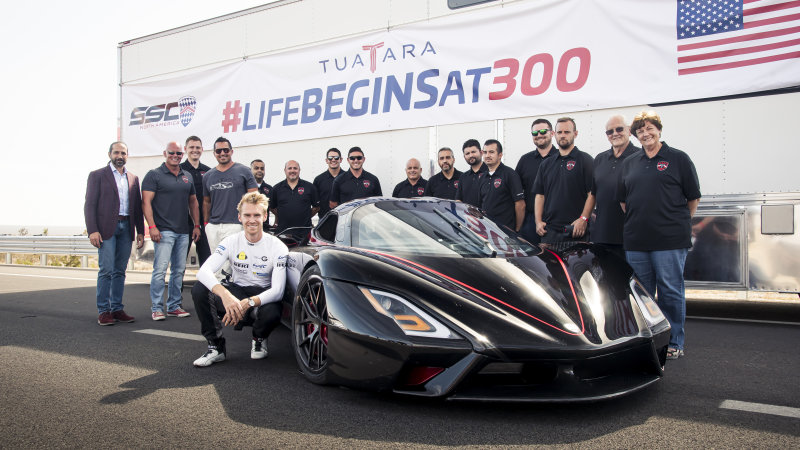
Dr. Larry Caplin is shown here with the SSC team. He’s wearing the sport coat, at far left. Standing next to him is Jerod Shelby.

Now that the SSC Tuatara has snagged the top speed record at 316 mph, it’s time for other festivities. The owner of the Tuatara, Dr. Larry Caplin, is now on a mission to use the car’s time in the spotlight to raise $316,000 through his charity: CF Charities Foundation. The charity benefits community programs and services for children, helps out underserved schools, and funds college scholarships for first-generation students and aid military families.

We chatted with Dr. Caplin (who also owns the last SSC Ultimate Aero ever made) about his car, the record run and his charity. 

“They asked me if I wanted the first car,” Caplin told us as he explained how he ended up with the one and only production Tuatara in existence. “We both agreed that we would use my car to set the world record.”

In return for SSC being able to use his car for the record run, Caplin got to work directly with SSC’s designers and engineers on the car’s interior design. Caplin was inside the project with SSC a couple of years ago, shaping the styling and design to his own preferences.

He also gets to be the guy with the fastest car in the world, which is pretty damn cool on its own. Caplin jumped at the opportunity for his Tuatara to be the one used by Oliver Webb to set the record, too. He’s not one of those supercar collectors who keep their cars locked up.

“I drive my cars,” Caplin says. “I have a Lamborghini with 111,000 miles on it. I have a Ford GT with 56,000 miles on it …  I have a 185-pound South African Mastiff that rides shotgun.”

He hasn’t had his Tuatara up anywhere near where Webb took it to outside Pahrump, Nevada, but he has plans to push the envelope with it soon.

Caplin, as he’s doing now, likes to use his cars for charitable events, bringing them out to events, shows and other related things.

“I think it’s important for people who have collections like this to find a purpose other than it being a collection for themselves,” Caplin says. “I think it’s a responsibility to share it but also find value in it that far exceeds the cars, and I would hope that more people would do that.”

If you want to donate to the charity inspired by the Tuatara’s record run, you can do so on CF Charities’ website.

Here’s a Philadelphia TV station interview with Caplin from earlier this year when he unveiled the Tuatara at his hometown Philadelphia Auto Show:

With fastest-car bragging rights secured, SSC turns to expanding its lineup

Washington-based SSC snagged the top-speed record from Bugatti, but it’s not planning to rest on its laurels. It confirmed it will expand its lineup with a supercar that’s cheaper and less powerful than the Tuatara.

Speaking to Motor Authority, company founder and CEO Jerod Shelby said the car is called Little Brother internally. It will arrive with a mid-mounted, naturally-aspirated V8 engine tuned to develop between 700 and 800 horsepower, and SSC will charge between $400,000 and $500,000 for it. It’s too early to tell if the firm will take the twin turbos off the Tuatara’s 5.9-liter V8 and tune it accordingly, or if it will develop an engine from scratch.

To put these figures into perspective, the record-setting Tuatara that maxed out at 331 mph and averaged 316 mph on a cordoned-off stretch of highway in rural Nevada develops 1,350 horsepower when it’s burning pump gas and 1,750 horsepower when it’s slurping E85. It’s limited to 100 units, and each one starts at $1.9 million.

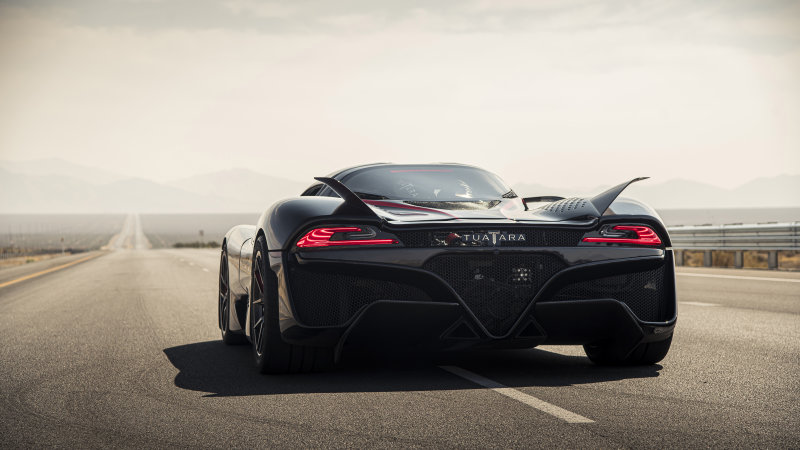
Shelby (who is not in any way related to Carroll Shelby, or to the company that bears his name) added the Little Brother will follow the design direction blazed by the Tuatara (pictured), which was penned with input from former Saab design director Jason Castriota. But while the development team has been working on Little Brother for the past couple of years, it won’t shift the project into high gear until about 2022, when the company reaches its goal of building 25 units of the Tuatara annually. That means the family might not grow until 2023 at the earliest.

SSC hopes branching out into more volume-oriented segments of the market will increase its name recognition. 

“Instead of one-tenth of 1% of the population that can afford a Tuatara, or any of these hypercars, the Little Brother would make it more in that range where you might see three or four in a lot of cities,” Shelby noted in an interview with CarBuzz. As for an SUV, he affirmed SSC hasn’t been interested in the segment.

Bugatti’s next new model looks part spaceship, part hypercar

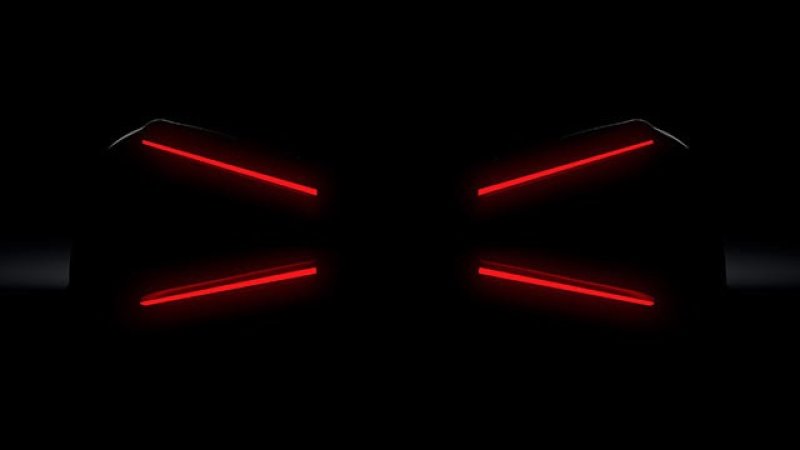
2020 has been a busy year for Bugatti. It unveiled the Pur Sport variant of the Chiron, it began building the Divo, and it dusted off some of the fascinating prototypes it canceled in the 2010s. It has at least one more surprise up its sleeve, and it published a dark, perplexing preview image to give enthusiasts an early look at the model.

Bugatti captioned the sketch “what if…?,” which suggests we’re looking at a model that’s markedly different than the other cars in its range. We can’t imagine the French company would invite us simply to imagine what a Chiron with black wheels and gold brake calipers would look like. We’re intrigued by the shape of what looks like the rear lights: they form an X, and they don’t match the light signature worn by Bugatti’s other models. We’ve seen the X theme on the aforementioned Pur Sport, though the four strips of LEDs are also reminiscent of something you’d spot in outer space. It’s a very spaceship-like look that could hint at the brand’s next design language.

X marks the spot where what we know about Bugatti’s next car ends, and speculation begins. Working extra-long hours, the rumor mill recently brought us murmurings of an electric car possibly fitted with four seats. Could we be looking at it? Alternatively, some reports claim more Chiron variants are in the pipeline, and this might be one of them. What’s certain is that, whatever we’re looking at, it’s not an SUV; Bugatti stressed it won’t build one. Finally, it’s too early to tell whether the model is related to unverified claims that Rimac is preparing to buy the firm.

Bugatti will introduce the model online in the not-too-distant future.

Related Video:

SSC took the production car top speed record, but not without a scare

Two gusts of wind cut across the Nevada desert, sending Oliver Webb and the SSC Tuatara across two lanes and onto the roadside rumble strips. That’s what happens when an unexpected cross-breeze comes by, and the speedometer’s needle is north of 300 mph.

Let’s hit rewind on the drama-meter real quick, though.

SSC, an American hypercar company owned and founded by Jerod Shelby, set out about 10 years ago to build the fastest car in the world. We covered the concept’s reveal back in the early 2010s, and we’ve kept tabs on the company’s progress ever since. Just this year, the first owner’s car made its debut at the Philadelphia Auto Show. Funnily enough, it’s that same car that SSC used on October 10 to set the record for the fastest production car in the world.

This record was supposed to be set a year ago. SSC had secured an initial location months in advance, but the state decided it wanted to do some road work at the same time, meaning SSC would have to wait until Spring 2020. Just like everybody’s spring plans this year, though, SSC’s were also wrecked. Covid-19 hit; the world shut down, and SSC was forced to wait once again. Shelby and company decided to aim for a fall run, and that’s exactly what happened.

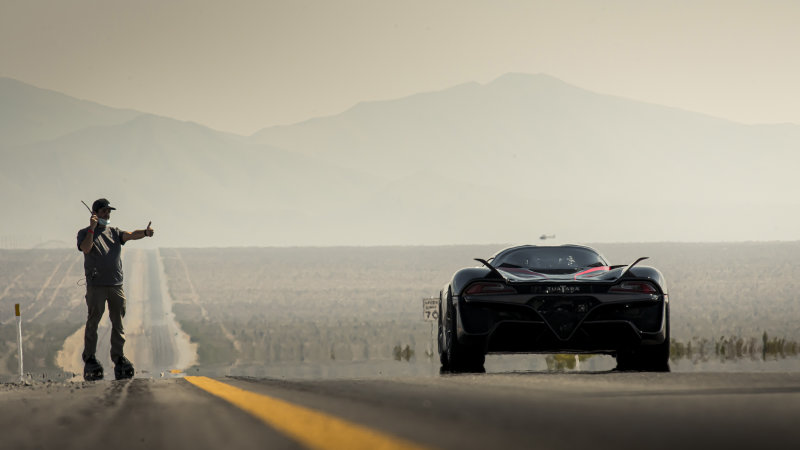
A seven-mile stretch of State Route 160 outside of Pahrump, Nevada, was chosen and completely closed down. Prior to the record attempt, Webb made test runs on multiple airstrips with shorter stretches of pavement than what he’d experience in the full run. With everything turning up aces, the SSC team and Webb proceeded to the big day with high hopes.

Three levels of “success” were possible for the crew. For starters, they could break the Koenigsegg Agera RS’ record of 277.9 mph. Secondly, they could break the 300 mph barrier. And lastly, they could meet or surpass the Tuatara’s original project goal of going 500 km/h (311 mph). 

Weather was the biggest obstacle. The 5.9-liter twin-turbo V8 had been operating as it should, reaching 270 mph in one of those airstrip test runs. All 1,750 horsepower were present and accounted for. With blue skies above, an unexpected light breeze was the only worrisome roadblock. SSC had mapped the whole road previous to find every last seam, imperfection or potential trouble spot Webb might encounter. With this knowledge in hand, Webb could have total confidence in where he decided to crank up the speed.

World record officials loaded the satellite equipment into the Tuatara. Camera crews stood at the ready. It was an event, but up until now, it was also being held in relative secret. 

Webb lined up for his first pass. He proceeded to hit 287 mph.

“A good first sign,” Shelby tells us. Yes, beating the world record on the first attempt isn’t half bad.

Webb then takes the second pass, and he hits 301 mph. Just like that, SSC accomplished goal number two of breaking the 300 mph barrier. After this second pass, Webb voiced concern about the wind. He told Shelby that a cross-wind was hitting him in the middle of the desert, and also said that the next pass would be the last of the day for fear of the wind becoming worse. Safety, after all, is the number one priority.

So Webb hits it, and speeds off for his third and final pass. Shelby and his crew followed behind, but they were not ready for what was awaiting them at the end of the road.

“By the time we get there, he’s obviously out of the car,” Shelby said. “And he was sitting on the ground with his head down. And it didn’t look good.”

As he walked up, Jared said that Webb told him this: “I’m done Jared. I’ll never do that again. I got hit with two different blasts of cross winds, and it moved me two lanes over and into the rumble strips. I had a really close call.”

Shelby told us that Webb was truly shaken by the experience … but right after that, Webb said that he “saw a big speed on the display.” The crew immediately got into the data, and saw that he had hit 331 mph.

“It went from this emotion of we’re in trouble, to you’re kidding me,” Shelby said. “And it was just a really emotional moment. It was the culmination of 10 years.”

Hitting 331 mph meant that the average of the two consecutive runs was 316 mph, surpassing the team’s third and final goal of hitting 500 km/h. It completely shatters the current record and makes it that much tougher for anybody to beat the Tuatara in the future.

Shelby went on to tell us that he believes Webb’s close call was due to the winds picking up and being higher than the 10 mph they had decided was the cutoff zone. Thankfully, Webb kept control of the car and brought it down from speed safely.

Given perfect conditions, Shelby thinks there’s another 15 mph in the car. At least that’s what computer simulations show. Webb himself said the car was still gaining speed at a good rate as he approached 330 mph, too — the speed increased by 20 mph in the last five seconds before he let off. The crazy-low 0.279 coefficient of drag can be thanked for its ability to keep pushing through the air with anger.

The big question that remains is, what’s next? It’s a question that even Shelby doesn’t have a perfect answer for. This took a decade to accomplish.

“To me, what I love about this, is let’s just keep pushing the bar,” Shelby says. “Not that this is a challenge, but I think it’s great for innovation. And let’s see where it goes. I feel really good about what we have just achieved. I do think the car is capable of some more. I am satisfied with where we’re at right now.”

He finishes, “If somebody down the road pushes that top speed bar up, maybe we give it another go. We’ll see.”

Koenigsegg, you’re up.

SSC Tuatara smashes top speed record, goes way over 300 mph in Nevada desert

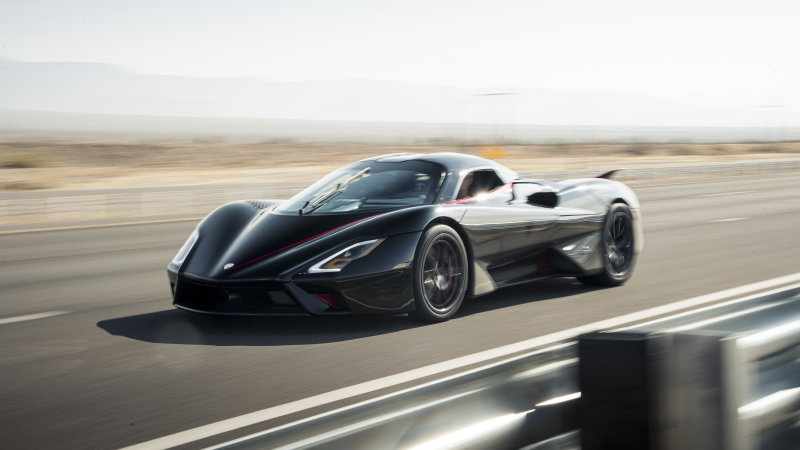
There’s a new “fastest production vehicle” in the world, and it’s produced by an American hypercar company. On October 10, the SSC Tuatara annihilated the previous record set by the Koenigsegg Agera RS. Over two runs, the Tuatara averaged 316.11 mph, smashing the Agera RS’ 277.9 mph average.

That average doesn’t tell the whole story, though. The Tuatara hit a top speed of 331.15 mph in its last run, setting the bar even higher for the highest speed achieved on a public road. Just let that sink in for a quick minute. 331.15 mph in a production car on the road. The Agera RS topped out at 284.3 mph, while a longtail Chiron prototype hit 304.77 mph on a test track. (Since the Chiron was not a production car and was run on a test track, that doesn’t count toward the official record.)

In case you were wondering, the Tuatara’s other run to complete the average was 301.07 mph. For these records to count, you must do consecutive runs in opposite directions within an hour of each other — this accounts for wind and elevation changes in the road. Officials (including Guinness World Records) were in attendance to independently verify all the data and confirm that SSC did indeed break the previous world record.

SSC chose a seven-mile stretch of State Route 160 near Pahrump, Nevada, as the driving location. As you’d expect, the entire road was shut down for the record attempt. Oliver Webb, a well-known racing driver, was chosen to pilot the Tuatara to its top speed. Wind was the biggest issue on the day of driving, and Webb thinks the Tuatara has even more speed left in its tank.

“There was definitely more in there. And with better conditions, I know we could have gone faster,” said Webb. “As I approached 331 mph, the Tuatara climbed almost 20 mph within the last five seconds. It was still pulling well. As I told Jerod [Shelby], the car wasn’t running out of steam yet. The crosswinds are all that prevented us from realizing the car’s limit.”

This record comes 10 years after SSC set a record with its first car, the Ultimate Aero. The Tuatara’s performance far outclasses the Ultimate Aero’s, and it put up the numbers to show it. Nothing about this specific SSC Tuatara is any different from a production version. In fact, this Tuatara is privately owned. It has the same flat-plane crank 5.9-liter twin-turbo V8 that powers all Tuataras. When run on E85 (as this one was), it’s capable of 1,750 horsepower. Running it on 91 octane lowers power to 1,350 horses. A seven-speed automated manual transmission does the shifting. 

The Tuatara’s aerodynamic profile (and of course the massive power) help it achieve the high top speed. The coefficient of drag is a crazy-low 0.279. Active aero helps it maintain similar downforce characteristics for the driver from low-to-high speeds. It’s one hell of a machine. 

For even more background on this historic top speed run, check out our deeper dive on SSC’s momentous (and scary) day breaking the record.

Related video:

Limited-edition McLaren Elva receives heritage-laced Gulf livery

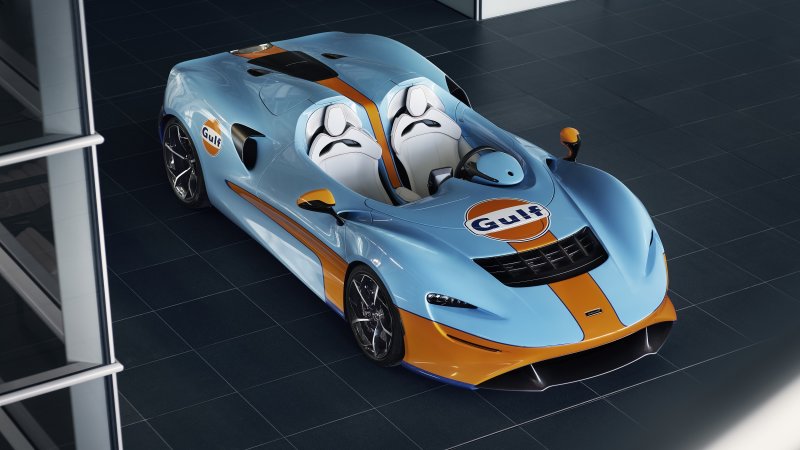
McLaren tapped into its vast racing heritage to create a Gulf-themed version of the limited-edition Elva. Its partnership with the Pennsylvania-based oil company began in the 1960s, and it continues to this day.

Like every Gulf-colored car released over the past few decades, the Elva receives light blue paint with orange accents. It’s not the first model to feature this color combination, and it’s undoubtedly not the last, but it wears it particularly well. It’s not fitted with a windshield — it doesn’t need one, according to McLaren — so the separation between the exterior and the interior is blurred, and even the dashboard and the door panels are light blue.

Photos of the interior haven’t been released, but we spot a pair of white seats separated by a Gulf-colored panel. Oddly, the car is not equipped with a rear-view mirror. McLaren Special Operations (MSO) has already applied heritage-inspired paint colors to two examples of the Elva, and both wore a dashboard-mounted mirror.

McLaren announced plans to make 399 units of the Elva, but it dropped that number to 249 after analyzing feedback from its customers. Pricing starts at $1.7 million, and the Gulf-themed model displayed at the SpeedWeek event held on England’s Goodwood track illustrates one way to customize the roadster. MSO’s earlier creations paid homage to Bruce McLaren’s 1964 M1A race car and his 1967 M6A racer, respectively.

Ansar Ali, MSO’s managing director, explained the Gulf-colored Elva celebrates the renewed partnership between McLaren and Gulf. Customers are now able to order the historic blue and orange combination directly from the factory regardless of whether they’re buying an Elva, a 765LT, or another one of the British company’s models.

SpeedWeek starts today and runs through October 18. Spectators are exceptionally banned from the event due to the ongoing coronavirus pandemic, but you can catch all of the action online. We’re expecting to see a handful of new car launches, timed supercar laps, a huge auction, and, of course, dozens of race cars going flat-out.

Related Video:

Lotus Evija shown in John Player Special livery at Goodwood SpeedWeek

Goodwood SpeedWeek is here, and Lotus is using the event to highlight the upcoming Evija electric hypercar. Lotus is calling this the car’s “public dynamic debut,” which is relatively true, though the lack of a public audience at Goodwood does put a bit of a damper on the idea.

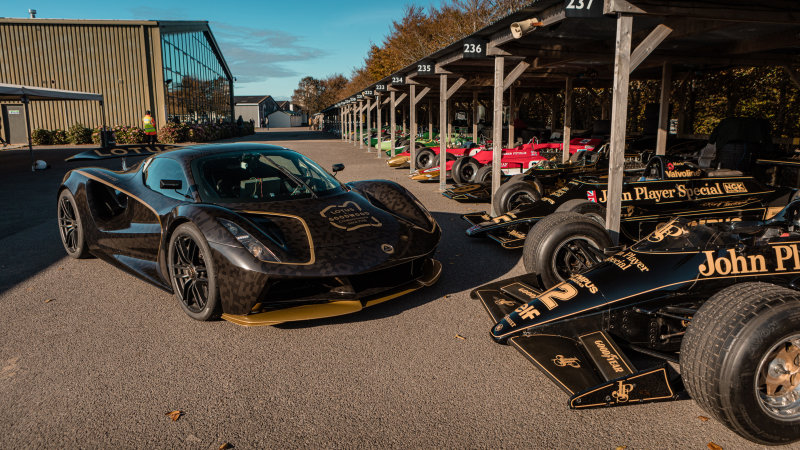
Regardless, the livery used to wrap the Evija is what truly caught our attention. For those familiar with Lotus racing liveries of the past, you’ll immediately recognize it as a modern take on the John Player Special livery. Lotus even photographed the Evija in this livery sitting next to a few old Formula 1 cars wearing the original John Player Special digs.

Black and gold just looks proper on a Lotus racecar, and it looks absolutely superb on the Evija, too. Since this is technically a dynamic debut, Lotus also gave us a short video that you can check out below.

[embedded content]

The most intriguing part is the audio. Those electric motors are loud. It can’t come close to matching the yowl of a high output gasoline engine, but the Evija is clearly going to make its own dramatic, electric noise. That’s all well and proper, because extra theater is what electric cars typically lack.

In an adjacent news brief, Lotus detailed some of the things it did to save weight. Lotus believes that “Colin Chapman would agree the Evija is 100% a true Lotus.” To make it so, Lotus says the carbon fiber monocoque is extremely light, weighing in at just 284 pounds, contributing to making it the lightest electric hypercar when it comes out (not as though there’s much competition). 

Using holes and free space contributed to the lightweighting efforts, too. The venturi tunnels through each rear haunch both save weight and produce downforce. The center console design and floating dashboard leave tons of empty space behind where weight would accumulate otherwise. Lotus’ crossbeam design for the dash helps it serve as a structural member and also houses the interior ventilation system, combining two elements into one and saving weight.

Lotus says you’ll be able to see the Evija attack the Supercar Run on SpeedWeek, where it will attempt to set a fast lap time against many other new supercars and hypercars.

Related Video:

The Aston Martin DBS Superleggera leads this month’s list of discounts

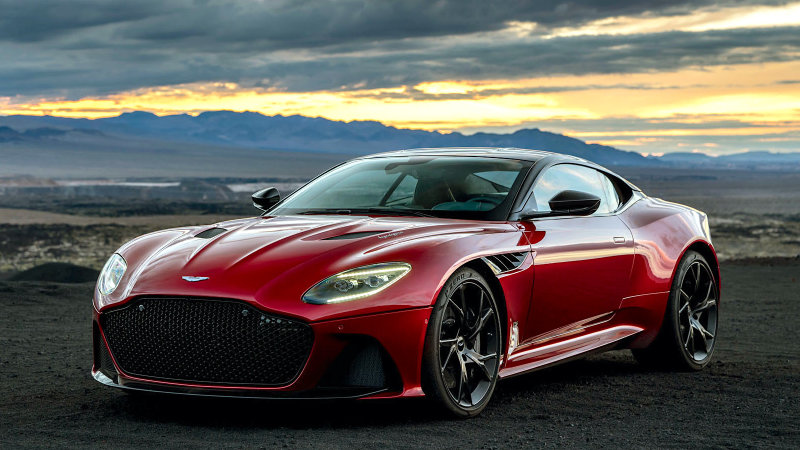
The average price of a new car in America last year was $35,932. This month, the biggest discount off the retail price of a new car in America is awfully close to that figure at $34,001. For those keeping track (as we do every month with a post like this one), that’s by far the largest discount we’ve seen so far this year, and it means buyers of the 2020 Aston Martin DBS Superleggera are paying an average transaction price of $273,819.

The British automaker calls the DBS “the ultimate production Aston Martin.” With a 715-horsepower V12 engine pulsating underhood, sufficient to push this grand touring coupe from 0-60 in a skosh over 3 seconds and on to a top speed of 211 miles per hour, who are we to argue?

If that’s too rich for your blood — and let’s be honest, it’s still a whole heck of a lotta money — the next biggest discount might be at least a little more attractive. According to data provided by TrueCar, buyers of the 2019 Mercedes-AMG GT are seeing discounts of $23,103 off the car’s average sticker price of $159,995. That’s a heck of a lot of car for $136,892, though admittedly still expensive. But at 14.4% off retail, it’s a better deal than the $132,122 average transaction price of the 2020 BMW M8. The BMW’s $16,497 discount equals 11.1% off the M8‘s $148,619 sticker.

For a look at the best new car deals in America based on the percentage discount off their suggested asking prices, check out our monthly recap here. And when you’re ready to buy, click here for the Autoblog Smart Buy program, which brings you a hassle-free buying experience with over 9,000 Certified Dealers nationwide.

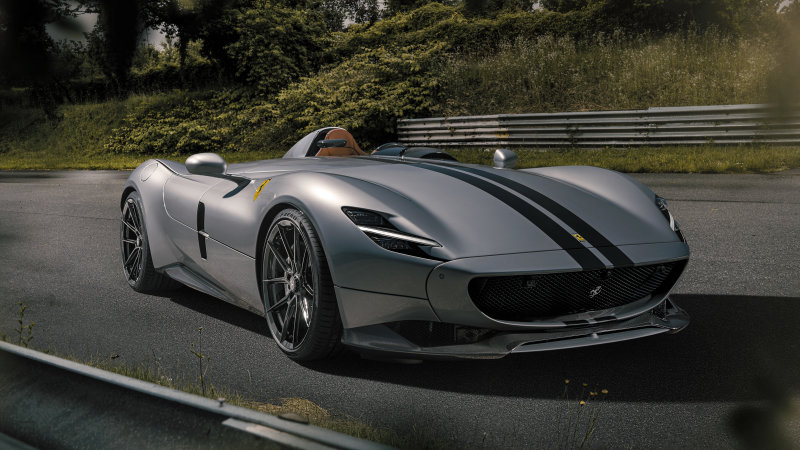
Ferrari SP1 and SP2 get faster with Novitec exhaust and tune

Finally, the poor saps who own the Ferrari SP1 and SP2 have an aftermarket solution for more horsepower. The car was just a total dog with the 809-horse 6.5-liter V12 it came with from the factory. 

We jest.

But for real, Novitec just released a tuning and performance package compatible with the SP1 and SP2 that ups the performance to an even higher bug crushing (with your face) 844 horsepower and 575 pound-feet of torque. That’s 34 horsepower and 45 pound-feet more than normal, reducing the 0-62 mph run from 2.9 seconds to 2.8 seconds. Top speed is simply said to be above 186 mph, at which point the bugs and your face become one.

The extra power comes thanks to a full Novitec exhaust system (headers on back) and a Novitec tune. You can select between stainless steel or Inconel (lightweight material used for Formula 1 car exhaust systems) pipes. Additionally, you can have the exhaust plated with fine gold for better heat dissipation — plus you get to say that your exhaust is plated in gold. You’ll be able to choose between a system with electronically controlled exhaust flaps, or a standard one-noise system. Novitec says the one with exhaust flaps can go especially quiet.

If the power isn’t enough, Novitec also offers aftermarket springs that lower the ride height by 1.4 inches to give the car a lower center of gravity. Aftermarket wheels developed with Vossen are also available. They’re wrapped by 275-section-width rubber in front and 335-section-width rubber in back.

And lastly, if the Ferrari interior you chose wasn’t exactly what you wanted (but why wasn’t it?) Novitec will also customize the interior to “any desired color.” Pick your leather and Alcantara, and have at it.

Novitec didn’t release prices, but Ferrari didn’t either when it revealed the SP1 and SP2 originally. Just know that many zeros are involved. For the 500 folks who own an SP1 or SP2, it very likely won’t matter what the price is.

Related Video:

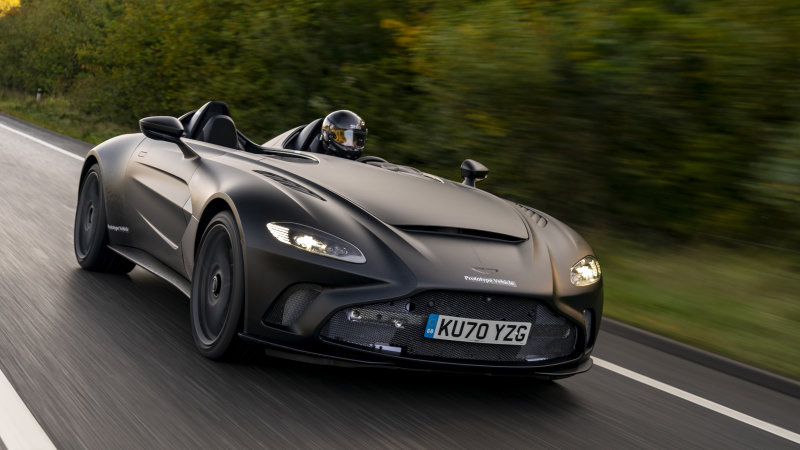
Revealed: Aston Martin shows first V12 Speedster prototype

The V12 Speedster — Aston Martin’sliving show car” — has moved from the realm of dreams (and digital renderings) to the physical world. Here it is in the metal. In the composite? A bit of both, we’d reckon, but we can say this for certain: it’s definitely not glass.

Aston Martin’s 88-unit, $950,000, topless supercar is officially entering the physical development stage “in earnest,” the company’s spokesperson said, and here are the photos to prove it. Aston Martin had originally planned to start delivering V12 Speedsters in the first quarter of 2021, but whether that’s possible in the world of COVID-19 remains to be seen. 

The company says this prototype is intended for “dynamic development,” meaning it’s going to be used to fine-tune road and track performance. Based on the details Aston Martin has released so far, we’re inclined to believe that it will be a treat in both departments.

Fortunately, we have Aston Martin’s previous renderings.

Aston says the V12 Speedster is powered by a 5.2-liter twin-turbo V12 making 700 horsepower and 555 pound-feet of torque. Power goes to the rear wheels by way of a ZF eight-speed automatic gearbox. The British luxury builder claims this combo is good for a run to 62 mph in 3.5 seconds and a top speed of 186 mph.

The platform itself is made by combining elements of the DBS Superleggera and Vantage. It has 21-inch forged, center-locking wheels, huge carbon ceramic brakes and adaptive dampers.

As you can see from the gallery, Aston Martin did not include any photos of the prototype’s interior, and we suspect that’s because it doesn’t actually have one yet — at least not anything worth showing. That’s just as well. This is a single-purpose toy, not a touring coupe, and anything more than a well-anchored set of seats and intuitive driver controls is just a bonus anyway. 

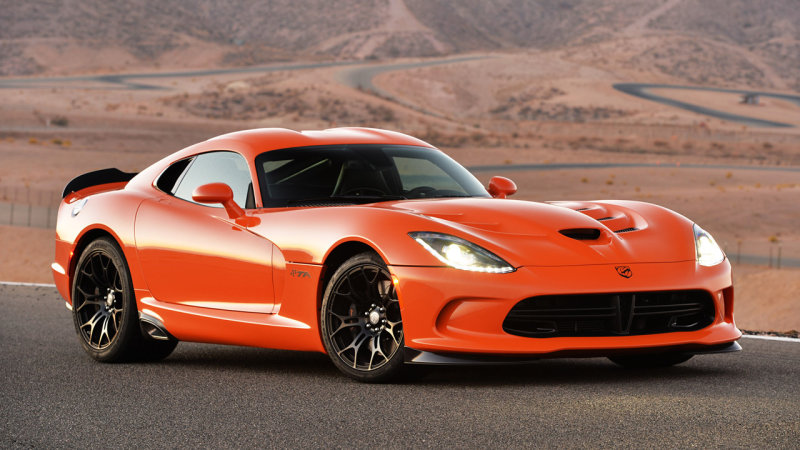
Dodge has sold 3 new Vipers so far this year

  • Image Credit: Dodge

Like zombies, these dead cars still sell among the living

Car models come and go, but as revealed by monthly sales data, once a car is discontinued, it doesn’t just disappear instantly. And in the case of some models, vanishing into obscurity can be a slow, tedious process.

That’s the case with the five cars we have here. All of them have been discontinued, but car companies keep racking up “new” sales with them.

There are actually a lot more discontinued cars that are still registering new sales than what we included here. We kept this list to the oldest and most unlikely vehicles still being sold as new, including a couple of supercars.  We’ve ordered the list in order of fewest vehicles sold. Click on the image above to get started.

  • Image Credit: Lexus

2012 Lexus LFA: 1 sale

The first car on this list (which is mostly full of lackluster automobiles) is a supercar: the Lexus LFA. It’s an exhilarating car to drive, and is packed full of interesting technology. Lexus sold a total of 1 LFA coupe so far this year to what we have to guess is a very satisfied customer. By our count, there ought to be 4 more unsold LFAs sitting somewhere on dealer lots in America.

It’s also worth noting that Lexus only sold the LFA for two model years, 2011 and 2012, which means it is by far the oldest new vehicle on this list. It’s also one of the most soul-stirring supercars we’ve ever driven, complete with a V10 engine that revs all the way past 9,000 rpm. Let’s just say we’re jealous of the lone LFA buyer.

Lexus LFA Information

Lexus LFA

  • Image Credit: Dodge

2017 Dodge Viper: 3 sales

Dodge discontinued the rip-roaring Viper after the 2017 model year, but there are still a few left in dealerships around the country. So far this year, Dodge has managed to sell 3 SRT Vipers.

It’s interesting to think that these buyers had the option of driving home in a brand-new mid-engine Corvette, but chose to go in an entirely different direction. Something tells us they won’t be disappointed with its 640-horsepower naturally aspirated V10 engine, even if it’s mounted way out in front of the driver instead of the preferable sportscar location behind the driver.

Dodge Viper Information

Dodge Viper

  • Image Credit: Chrysler

2017 Chrysler 200: 3 sales

The Chrysler 200 is actually a pretty nice sedan, with good looks and decent driving dynamics let down by a lack of roominess, particularly in the back seat. Of course, the number of Americans in the market for sedans is rapidly winding down, and other automakers are following Chrysler’s footsteps in canceling their slow-selling four-doors.

Even if Chrysler never really found its footing in the ultra-competitive midsize sedan segment, apparently dealerships have a few leftover 2017 200s floating around. So far, 3 buyers have decided to sign the dotted line to take one of these aging sedans home.

Chrysler 200 Information

Chrysler 200

  • Image Credit: Buick

2019 Buick LaCrosse

Much has been written about the American shift from sedans to crossovers, and the full-size Buick LaCrosse is one casualty of the times.

Interestingly, Buick sold 1,389 LaCrosse sedans in 2019, its last year of production. That’s certainly not a big number, but it’s not really the worst performance in the dwindling segment. In any case, there are apparently a few still left on lots around the country, because the automaker has recorded 6 total sales so far in 2020.

Buick LaCrosse Information

Buick LaCrosse

  • Image Credit: Chevrolet

2019 Chevrolet Volt: 6 sales

This one stings. We have always been fans of the range-extended plug-in Chevy Volt and the potential it offers to consumers looking to drastically cut their fossil fuel use. In fact, we liked it enough to write a eulogy of sorts.

Sadly, Chevrolet didn’t sell enough Volts to justify keeping it in production. The automaker has sold exactly 6 new Volts so far in 2020.

Chevrolet Volt Information

Chevrolet Volt

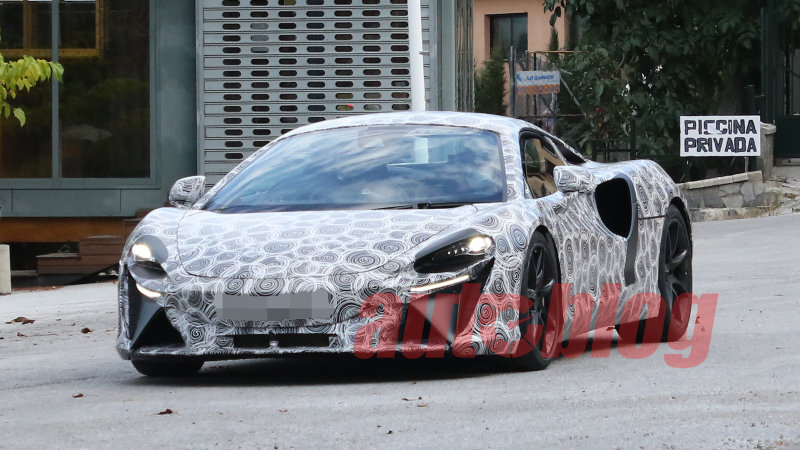
McLaren’s new hybrid sports car caught in fresh spy photos

Our spies caught McLaren testing its upcoming hybrid sports car on the street, catching it from just about every angle. Unofficially dubbed the HPH (for High Performance Hybrid), the Unfortunately, it didn’t tell us anything we hadn’t heard before. Earlier this month, McLaren released a couple of photos of a lightly camouflaged test car that gave us our best look to date at the new hybrid undergoing development, but the photos provided Monday are far more numerous and detailed. 

Despite using a new carbon fiber passenger cell and a hybrid V6 engine, the new sports car looks a whole lot like the outgoing McLaren Sports Series models (570S, 620R, et al). The headlights are a very similar shape, particularly with the similar headlights, radiator intake locations and roofline. The roof almost looks unchanged, down to its flying buttress sections.

There are differences, though. It looks like a lot of the lower grille area at the front has been blocked off. The headlights look more sunken in, a bit like on the Super Series 720S. The radiator intakes are more open. And at the back, the exhaust now juts out high up in the grille between the taillights. Those taillights have much less of an arc to them, and a different illumination pattern.

The new hybrid McLaren will be revealed in the first half of 2021. It will have a V6 engine, reportedly twin-turbocharged, and McLaren’s CEO says it will have “an all-electric range capable of covering most urban journeys.” Reports suggest a range of 21 miles. This of course suggests it will be a plug-in hybrid. It’s expected to make more than 570 horsepower combined, too. As for the Sports Series the hybrid is replacing, the last examples will be the 620R special edition cars.

Related Video:

Volkswagen may ‘carve out’ Lamborghini to list on the stock exchange

FRANKFURT — Volkswagen is drawing up plans to set up Lamborghini as a more independent unit, and is discussing long-term supply deals that could make it easier to list it on the stock exchange, two sources familiar with the matter told Reuters.

“Volkswagen is in the process of carving out Lamborghini, and to organize future supply and technology transfer deals,” one of the sources familiar with the matter told Reuters.

The Italian sportscar brand, which is currently a division of Audi, could be partially listed, with Volkswagen retaining a controlling stake, the first person familiar with the talks said.

There is no formal decision to divest Lamborghini, a second source said, adding that the timetable of any deal remained unclear.

“This is a first step which gives VW the option to list the unit further down the line,” the second source told Reuters.

A third source familiar with the discussions said the future of Bugatti, Lamborghini and Ducati was discussed during a supervisory board meeting last Friday.

The possibilities for how to electrify the Lamborghini and Bugatti brands through partnerships and investors was discussed, the third source said.

Bankers and potential cornerstone investors in an IPO have been approached by the carmaker, the sources said.

Volkswagen declined to comment.

Volkswagen Group’s Chief Executive Herbert Diess on Wednesday said the carmaker will announce “important steps” about the company’s future before the close of the year.

Volkswagen is reviewing what role its high-performance brands Lamborghini, Bugatti and Ducati will play within the multi-brand carmaker as part of broader quest for more economies of scale, senior executives told Reuters.

A global clampdown on combustion-engined vehicles has forced carmakers to accelerate development of low-emission technology for mainstream models, leaving Volkswagen managers struggling to find resources to electrify low volume sportscar models.

Related Video:

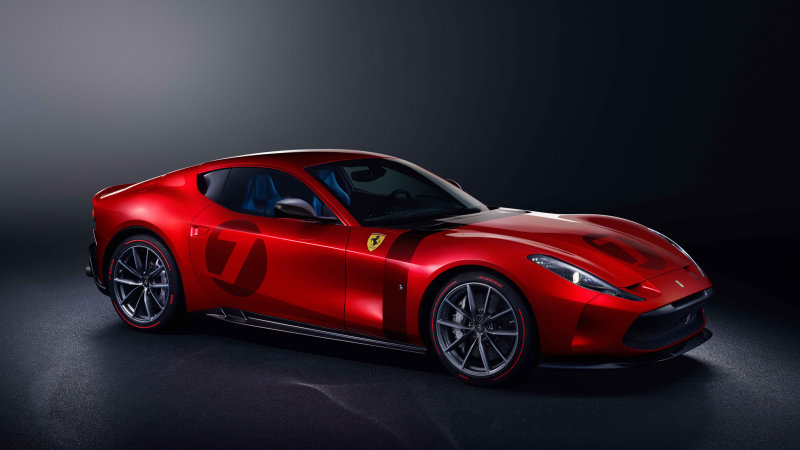
One-of-a-kind Ferrari Omologata took over two years to complete

Ferrari has introduced the Omologata, a client-commissioned one-off based on the 812 Superfast. It’s a heritage-laced tribute to the firm’s historic race cars, but its designers chose not to venture too far into retro territory.

Finished in Rosso Magma, the Omologata is the 10th front-engined, V12-powered one-of-a-kind car that Ferrari has built since 2009. Visually, it shares only its windshield and its headlights with the model it’s based on, though its proportions are inevitably similar. Its pure, muscular design is characterized by subtle references to the Prancing Horse’s past models, like vents below the hood that echo the hugely successful 250 GTO race car. It was also inspired by science fiction and modern architecture, according to the Italian company.

Ferrari created a new shade of red for the 7 emblems on both doors and on the hood, and for the stripe that runs beneath the windshield as it connects the rocker panels. Why 7? We don’t know, but we highly doubt it was chosen randomly. Its owner may sooner or later shed light on its relevance. Here’s another interesting number: two. That’s the number of years it took to create the Omologata, from the moment a designer completed the first sketch to its unveiling in September 2020. It wears a hand-made aluminum body, after all.

Electric blue seats with four-point harnesses add a touch of color to a mostly black interior. Ferrari notes the metal parts on the dashboard and on the steering wheel are finished with a crackled paint effect, while the door handles and the center console wear a coat of hammered paint. Both connect the Omologata to decades-old race cars.

The sculpted hood hides a V12, but technical specifications haven’t been published. For context, the 812 Superfast easily lives up to its name with a naturally-aspirated, 6.5-liter V12 tuned to develop 789 horsepower and 530 pound-feet of torque. It spins the rear wheels via a seven-speed dual-clutch automatic transmission.

Ferrari hasn’t revealed the identity of the customer who commissioned the Omologata; all we know is that it was made for “a discerning European client.” Pricing remains under wraps, too, but we suppose it came with a seven-digit price tag. Keep in mind it’s a coachbuilt supercar based on a model whose base price hovers around $340,000, and it’s made with numerous components developed and manufactured specifically for it.

Ferrari stressed its aim wasn’t to create a museum piece. The Omologata meets the same quality and drivability standards as a regular-production model, hence its name, which means “homologated” in Italian. Time will tell if its owner will take advantage of the street-legal status to use the car on a regular basis, or if it will be kept hidden until it’s displayed in front of the champagne-soaked crowd at the 2073 Pebble Beach Concours d’Elegance.

Related Video:

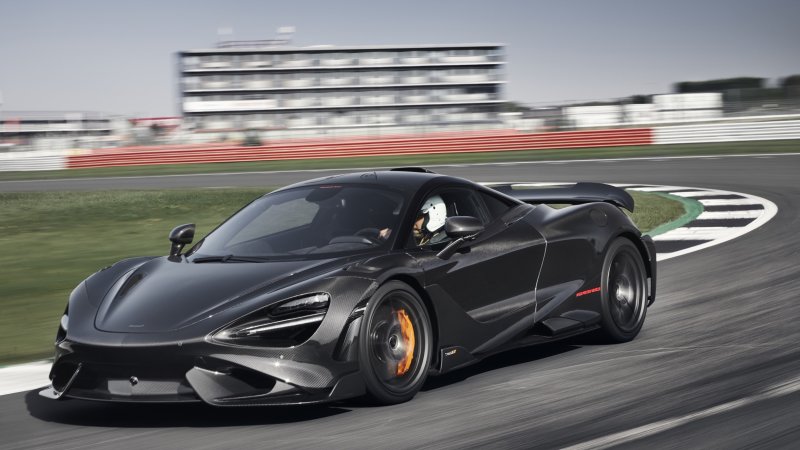
The McLaren 765LT is even quicker than we thought

We have good news and bad news for those who happily find themselves in the market for a brand-new supercar. We’ll start with the good: The McLaren 765LT is even quicker than initially announced. According to the British automaker, the 765LT will run from 0-124 mph (a nice, round 200 kilometers per hour) in seven seconds flat.

Sure, that’s a scant 0.2 seconds quicker than previously claimed, but in the world of supercars, a couple of tenths is a major achievement. McLaren further claims a 0-60 time of 2.7 seconds and a 9.9-second quarter-mile time, which is impressive no matter which way you slice it. So is its 205-mph top speed, courtesy of a 755-horsepower twin-turbocharged 4.0-liter V8 engine.

Now for the bad news: If you haven’t already obtained a guaranteed order from McLaren, you’re out of luck. The automaker says it will produce 765 units for 2020, and they are fully allocated.

Along with those two nuggets, McLaren says it’s also showing off some MSO-customized examples of the 765LT to buyers. Two themes have so far been unveiled, the first of which is called Strata (above left). It’s “inspired by a city skyline and realized in a three-color design requiring 390 hours of hand painting and finishing,” the automaker says. The Azores orange, Memphis Red and Cherry black scheme carries on into the interior, as well.

The second theme is called GEOHEX and features Tarmac Black and Tokyo Cyan paint inspired by a 3D honeycomb. A large array of carbon fiber elements inside and out reportedly complete the look. Sadly, we don’t have pictures of this finish, but we’re sure those will eventually leak out.

Buyers who really love carbon fiber, though, may prefer the MSO Bespoke Carbon Fiber Body treatment (above right). One car has already been produced with a glossy finish, but McLaren says it can also tint the visual carbon with a number of colored finishes.

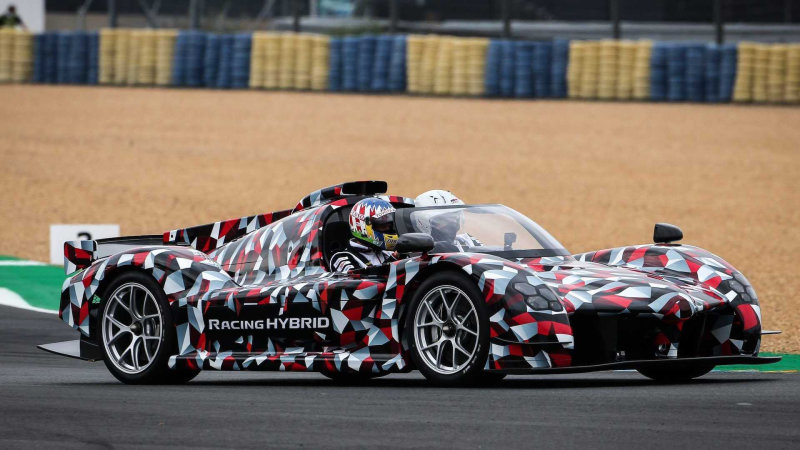
Toyota GR Super Sport hypercar previewed at 24 Hours of Le Mans

Here’s your yearly reminder that Toyota is building a hypercar. Just like it did in last year’s running of the 24 Hours of Le Mans, Toyota has provided us a preview of the GR Super Sport. 

This car will run in the hypercar class in the World Endurance Championship, but the regulations require that anyone who enters will also need to produce a minimum of 20 road cars based on the race car. Toyota says the car we’re looking at in photos here is a GR Super Sport development car that is customized as a convertible and wearing the now-recognizable GR camouflage. Remember the same camo on the GR Supra a couple years ago?

Details are scarce on the ground concerning the road car version headed our way, but here’s what Toyota said about it: “The GR Super Sport epitomizes Toyota Gazoo Racing’s commitment to use motorsport to make ever-better road cars for the enjoyment of customers, and it symbolizes the ever-closer relationship between Toyota Gazoo Racing race and road car products.”

From what we’ve witnessed so far, more GR in Toyota road car products is a very good thing. The GR Yaris (that isn’t coming here) is a great example of what Toyota is capable of doing when it harnesses its engineering might. As for this car, it’s likely going to have near (or over) four-digit horsepower and a price tag that’ll buy you many lifetimes of Camrys. Its relation to the now three-time-Le-Mans-winning TS050 Hybrid should help it immensely. And in case you missed it, Toyota just happened to win Le Mans again last weekend.

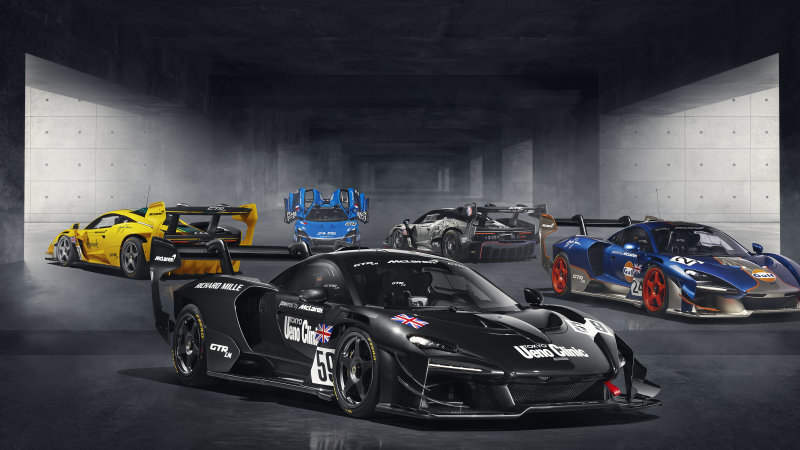
McLaren Senna GTR LM cars created by MSO to honor the F1 GTR’s Le Mans success

The McLaren Special Operations division has outdone themselves again. Today, we get to present to you five McLaren Senna GTRs that were commissioned in a group. Their design and liveries are meant to re-create the five McLaren G1 GTRs that raced in the 1995 24 Hours of Le Mans. McLaren took first place in that race, with the remaining four cars finishing third, fourth, fifth and 13th. 

These five Senna GTRs are much more than just Senna GTRs with stickers on them, too. The (faithfully re-created) liveries were hand-painted on every one of the cars. McLaren says each car took approximately 800 hours to paint, with some taking far more than that. All five are kept as close to the originals as possible, as McLaren coordinated with the Le Mans organizer to get permission to re-create every last detail of the logos and trademarks on the cars. The only sticker you’ll find on the exterior is a replica of the scrutineering sticker.

It isn’t just the appearance that received all the attention, though. McLaren has found a way to give the 4.0-liter twin-turbo V8 a small power boost. It went from making 814 horsepower to 833 horsepower. The rev limit has also increased from 8,250 rpm to nearly 9,000 rpm. This is accomplished through metal matrix composite valve spring retainers (65% lighter), higher grade steel for the valve springs and CNC ported cylinder heads. A recalibration of the whole powertrain takes advantage of these new parts, leading to the increase in power.

Small changes abound elsewhere in the car, too. OZ Racing designed a bespoke set of wheels for these cars; the suspension wishbones are made in an anodized version of their previous selves, and the brake calipers are finished in satin gold. New exit pipes are bent for the Inconel exhaust (for a new look), and the interior gets a small work over, too.

There’s a new racing steering wheel with anodized gold paddles and control buttons, titanium nitride pedals, carbon fiber racing seats with a bespoke headrest embroidery, leather door pull straps and an MSO six-point racing harness. We’re afraid to know the prices for these five cars, but we won’t know anyway, because McLaren hasn’t released that information.

All five owners will be allowed to take a lap of Circuit de la Sarthe on the day of the 2021 24 Hours of Le Mans, which only seems right given their Le Mans re-creation provenance. 

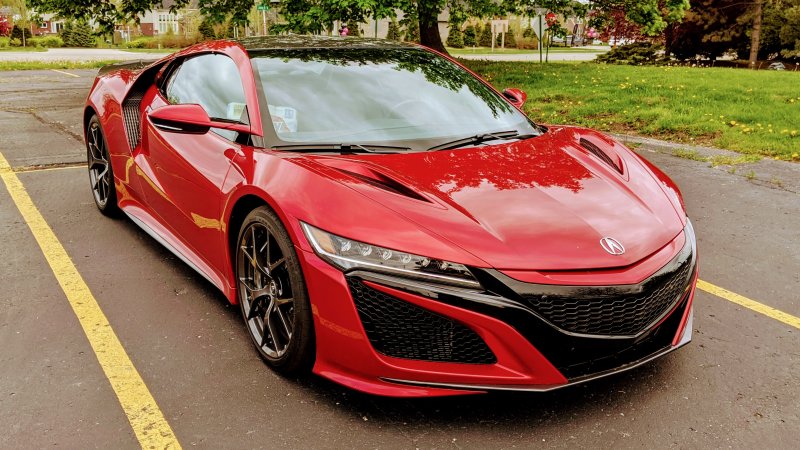
2020 Acura NSX Road Test | The cerebral supercar

The 2020 Acura NSX is the kind of car you’re pumped to drive. You think about it the night before. You read up on it. You tell your friends and family. You notice passers-by admiring it in the driveway. They try to be sly. Some gawk. There’s anticipation.

But is there satisfaction? The NSX immediately raises two questions. Where does it fit among its contemporaries and does it measure up to its legendary predecessor?

Seeking the answers, I slip behind the wheel on a sunny morning. The NSX is a welcome respite from the cares of the world and concerns of the coronavirus. I’ve got a few hours ahead of me in a $203,000 supercar. It’s a good time to reflect.

Immediately, I have a sense of déjà vu. I drove an NSX in 2017 at Pebble Beach, but my senses take me farther back, to the fall of 2014 when I drove a 1991 NSX. I had the same anticipation, nerves even, as I prepared for that drive. Getting situated in the 2020 model, I’m struck by the simplicity of the NSX. A McLaren or a Lambo take a minute to figure out, but everything is easy to read and use in the Acura. Like the ‘91 NSX, it looks striking on the outside, but the inside is almost plain. I’m OK with that. Simple works for Porsche, which will happily sell you a six-figure 911 with a spartan interior.

I’m underselling the NSX’s cabin — which is actually quite nice inside — understated yet cool. My tester has a black interior with carbon-fiber accents and semi-aniline leather seats with Alcantara, though the big steering wheel is the focal point. Looking to my right, the infotainment anchors the center stack, and there’s a knob for tuning the drive modes and the push-button gear selector. The outward visibility is outstanding. Driving a supercar can be intimidating, and being able to see things is helpful, especially when you’re inches off the ground.

I accelerate onto a surface street where the speed limit is 45 mph. There’s a low growl, and then the NSX gets a bit angrier. It’s never quite uncouth, even when the revs spin up on the expressway. It’s surprisingly gutsy low in the band, around 2,000-3,000 rpm, and the soundtrack gets louder and better from there. Anticipation building, I near the onramp to Interstate 75 in Detroit’s northern suburbs, where I run into cones. And blockades. Construction work is a staple of summer in Michigan. More time on the suburban slow road, and I find myself growing more comfortable in the NSX. Unlike the Lamborghini Huracán, Audi R8 or even some Mustangs, the Acura is civilized, docile even. It reminds me of my first time in that ‘91 NSX, where my nerves gave way to cockiness. The old NSX was so drivable, agreeable even, that I’ve long believed it made the cliché “everyday supercar” a real notion.

Acura tightened the suspension, retuned software for the Super Handling All-Wheel Drive and made the steering more responsive for the 2019 model. It feels more buttoned-up than the car I drove in Pebble Beach before these updates. There’s more feedback in the steering, which previously felt a little light. The Continental SportContact 6 tires provide plenty of grip. The brakes return stopping power with little pedal travel — not as immediate as McLarens I’ve tested, but more balanced for daily driving. This NSX is equipped with the optional carbon-ceramic rotors, which look great with the silver calipers visible through the gray Y-spoke wheels.

The other 2019 updates changed the grille accent to match the body color (it was silver before) and added gloss black trim in place of matte. Those sports seats I like so much and the tech package are now standard equipment.

The NSX is a striking car, especially in Valencia Red Pearl with the optional carbon-fiber elements, including the decklid spoiler, front chin spoiler, engine cover, rear diffuser and side sills. It’s beautiful, and in this shade it reminds me vaguely of recent mid-engine Ferraris. While I like the silhouette, the NSX is also a little angular and even busy, which is in contrast to the original NSX.

The expressway opens up as I make my way across town, sampling the driving modes. Sport mode is the basic setting, and Sport+ tightens up the chassis and makes the exhaust louder. I spend a decent amount of time in Quiet mode, which is actually all electric at speeds of less than 50 mph for brief periods. A couple of neighbors on bikes didn’t see me coming, then did triple takes trying to process what exactly was coming at them.

That stealthy capability belies the NSX’s raw power. Between the 3.5-liter V6 and electric motors, the NSX puts out 573 total horsepower and 476 pound-feet of torque, enabling sprints to 60 mph in 2.9 seconds en route to a top speed of 191 mph. The sequential paddle shifts summon all of this power into your fingertips, and pulling the paddles at high speeds while gripping the steering wheel with traffic parting gives even the novice performance driver a bit of a Senna streak.

The NSX is a car that you discover as you drive. There are layers to its personality. I learned a lot about the NSX, and Acura, simply by running errands. That’s not something every car gives you. Critics point to the “everyday supercar” label as a discredit, that the NSX is somehow watered down. It’s not. It’s cerebral yet passionate. What it lacks in flash it makes up for with a breadth of capability.

Let’s return to my original questions. How does the NSX compete against modern exotics, like Audi, McLaren, Ferrari and the like? It’s a peer. And that’s enough. It’s not the best of the bunch, but it’s competitive and interesting.

More weighty, how does the 2020 NSX measure up against the first generation? It does not break new ground in the way its predecessor did, which is not necessarily a demerit. When the New Sportscar eXperimental debuted in 1989, Ferrari and Lamborghini were making erratic cars that were at times as dangerous as they were exclusive. The notion of actually driving your supercar as I did on this bright Saturday was inadvisable. The NSX changed all of that. In that era there was room for improvement. Now the market is more mature, and even mainstream American brands like Chevy and Ford offer mid-engine performance.

It’s tough to compete against your younger self, but that’s not the point. The point is Acura chooses to make an NSX, and it’s excellent in the ways a modern supercar should aspire to be. The NSX crashed the party once. Now it’s simply accepted as part of the establishment.

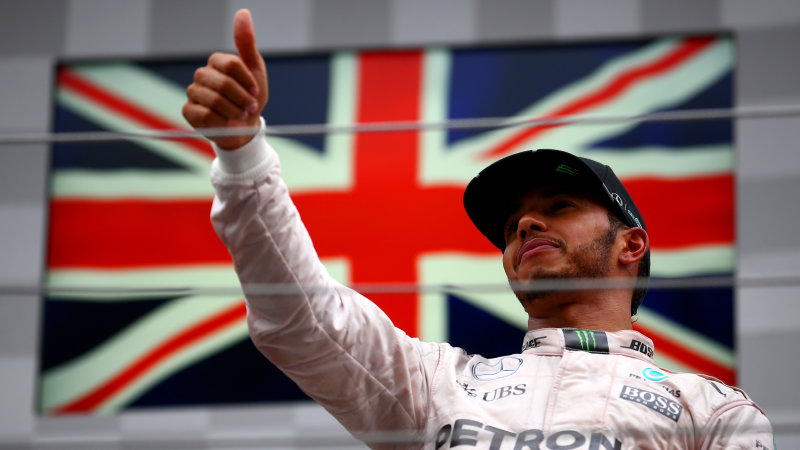
Lewis Hamilton’s supercar collection sits undriven

Six-time Formula One world champion Lewis Hamilton has a collection of supercars worth millions of dollars but he no longer drives any of them.

The Mercedes driver, announced this week as the new owner of a team in the electric off-road Extreme E series starting up next year, told reporters he was doing his best to be environmentally friendly.

“It’s difficult because there are people (who say) like ‘yeah, but you race a Formula One car around every weekend’,” the 35-year-old Briton said on Thursday at the Tuscan Grand Prix at Italy’s Mugello circuit.

“Some of it’s education because not everyone knows the footprint that our sport currently has and what we’re doing in terms of trying to improve that. But I’m making a lot of changes in my personal life.

“I don’t drive any of the cars that I own anymore. I only drive my (electric Mercedes) EQC.”

Formula One issued a sustainability plan last year with the aim of achieving a net zero-carbon footprint for the sport by 2030. It has also promised that all Formula One events would be sustainable by 2025.

Hamilton, a vegan, said he also drove a Smart car and requested to be collected from airports in electric vehicles. He has sold his private jet.

According to media reports, he owns a Ferrari LaFerrari, Pagani Zonda, McLaren P1 and 1960s Shelby Cobra among other cars.

The championship leader said he was impressed by Extreme E’s aims and goals, with each team crew having a mandatory female driver.

The races will be held in some of the most remote and harsh environments including the Brazilian rain forest, Greenland, Saudi Arabian deserts and mountains of Nepal to highlight global warming.

There will be no spectators but races will be broadcast on TV and social media, with cars transported around the world on a boat that doubles as a floating paddock.

(Reporting by Alan Baldwin, editing by Ed Osmond)

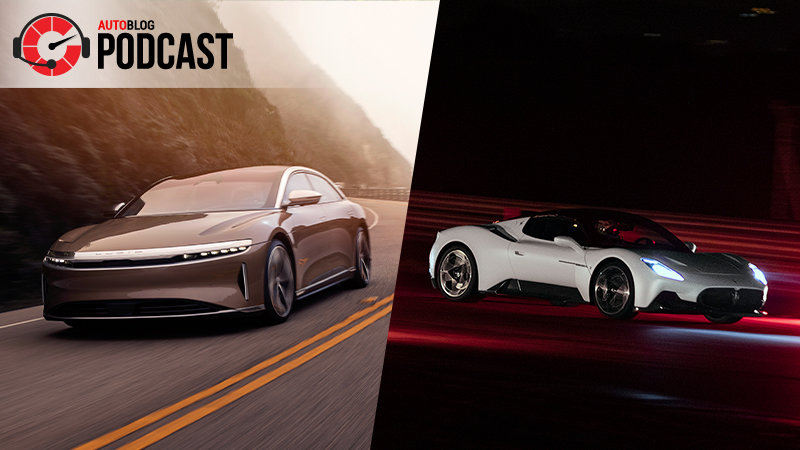
Lucid Air and Maserati MC20 unveiled | Autoblog Podcast #644

In this week’s Autoblog Podcast, Editor-in-Chief Greg Migliore is joined by Associate Editor Byron Hurd. Before they get to the juicy news of the week, they chat about the cars they’ve been driving, including a Ford Mustang Shelby GT350R, Audi A6 Allroad, Mazda CX-9 and Kia Niro. It’s been a busy week in the news department, with GM investing in Nikola, Lucid Motors launching the Air electric sedan, Maserati unveiling the MC20 mid-engined supercar and a farewell to the Lexus GS. Then they talk about having a newfound respect for the Fox Body Mustang and the Mazda CX-9.

Autoblog Podcast #644

Get The Podcast

  • iTunes – Subscribe to the Autoblog Podcast in iTunes
  • RSS – Add the Autoblog Podcast feed to your RSS aggregator
  • MP3 – Download the MP3 directly

Rundown

Feedback

Related Video: