All posts in “Supercars”

McLaren Sabre spy photos give us our best look yet at the new supercar

McLaren is quite a prolific supercar builder, so much so that it’s dialing back the number of its releases. Still, development continues on various projects, including what may be called the McLaren Sabre, formerly known as BC-03, a vehicle that has stayed pretty well under the radar. But now we have some of the best shots yet of the car.

Our spy photographer caught this example at a gas station and managed to get photos from a few key angles and in good light, unlike the solo nighttime shot we saw nearly a year ago. What we can see looks just like the leaked renderings from about a year ago, too. It looks like a cleaner, leaner McLaren Senna on the whole. It has a giant wing and a big fin down the middle, plus the split side windows. But the various scoops and vents are toned down, the curves are gentler with subtle creases, and the nose looks more like a Speedtail’s. There are some unique styling cues, too, such as how the wing comes down to merge with the body like an LMP endurance racer, and the nifty openings in the engine cover.

Details on the car aren’t clear yet. Reportedly, only 15 units will be made. It will not be a hybrid, and it will cost around $3 million. That’s about all we have to go on. It certainly looks like this prototype is pretty far along in development, what with the thin camouflage, so we’re hoping to see it revealed soon, along with all the performance specs.

Related Video:

Pagani teases a new supercar as a celebration of ‘Air Speed’

Pagani has tweeted a mysterious video showing what seems to be a new supercar. Details are scant, but like many of its creations there appears to be a strong aeronautical theme.

The first thing we see is a blue device with the words “Airflow Sensor. Handle with Care” etched below it in a nice serif font. Presumably, it’s not the typical mass airflow sensor throwing a check engine code from your old Ford Escape’s intake. In fact, it looks like one of the various sensor probes you’ll find on airplanes and even Formula One race cars. It’s also mounted to a big piece of blue tinted carbon fiber, which is probably the car’s hood or roof.

Next, a gauge flashes before us. It looks like a speedometer, except velocity is measured not in miles or kilometers per hour, but in knots, indicated by an analog dial and red needle on the outside, and the speed of sound in a vertically oriented digital readout on the inside. Also known as mach speed, or 767.269 mph, seems like quite a quick pace for a road car, but you’ll notice the speed features a little decimal point. In the trailer, the car accelerates to Mach 0.12, an easily attainable 92 mph. Of course, that’s still just a fraction of the speed other Paganis have achieved, like the Huayra Imola’s 240 mph to take just one example.

Notably, the engine is a growling internal combustion unit. There have been rumors of an electric Pagani but this isn’t it. The Huayra replacement was supposed to have debuted at the Geneva Motor Show in March for a 2021 arrival, but the event was canceled at the outset of the COVID-19 pandemic. Reports say the successor will have an AMG-built V12 like the Huayra, with electric power to come later.

Accompanying the short video tweet is a cryptic message: “On December 17th, we will celebrate Air Speed. Stay with us and hold on tight!” It should be pointed out that Pagani, like Volkswagen, has had a history of using wind-themed names for its cars. Zonda refers to a warm and dry wind that blows down from the Andes over the pampas of Argentina. Huayra was a god of wind worshiped by the native people of what is today South America.

While we aren’t looking forward to having to convert fractions of mach to mph while accelerating in a multi-million dollar supercar, we suspect buyers won’t worry too much and instead enjoy the novelty.

Related Video:

This 2017 Ford GT supercar comes complete with matching watch and trailer

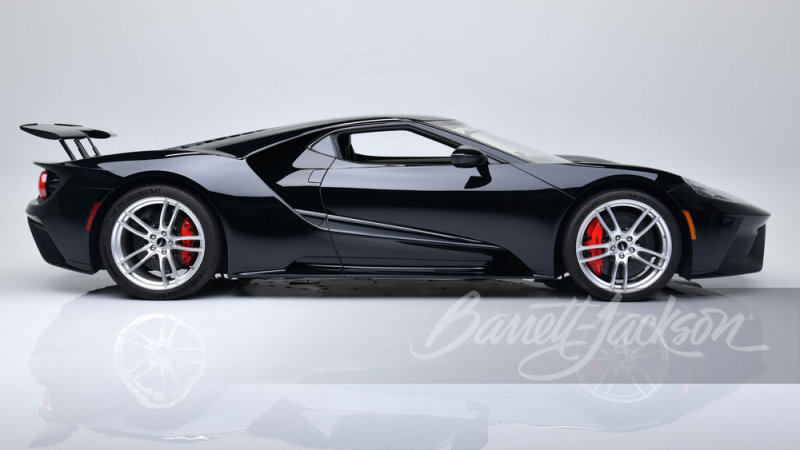
For those who missed their opportunity to buy a new Ford GT supercar when it first came out — or perhaps you were one of more than 6,000 whose applications were rejected — another chance is about to present itself. This launch-year 2017 Ford GT, which will cross the block at the upcoming Barrett-Jackson Scottsdale auction, has just 80 miles on it, which is likely as close as you’re going to get to a new-in-the-wrapper Ford GT. And it also comes with two bonus items: a matching watch and a custom trailer.

This GT is finished in Shadow Black and was ordered without stripes. The “Re-Entry” interior (a $25,000 upgrade) features Ebony and white leather, embossed Alcantara seat inserts and headliner, and carbon-fiber accents. The car is also optioned with the titanium exhaust system ($10,000). As in all GTs, motive force is supplied by a 647-horsepower 3.5-liter EcoBoost V6 mounted amidships in the carbon-fiber body structure. It’s paired with a seven-speed dual-clutch automatic transmission and provides a zero-to-60-mph time of under 3 seconds and a 216-mph top speed.

The Jimglo Elite trailer is custom-designed for the Ford GT. It features side portals and removable fenders that allow the GT’s butterfly doors to open when it’s on the trailer, and the ramp is engineered to allow the car to be loaded without scraping its front splitter.

The watch is the Ford GT Owners Edition Chronograph, by Autodromo. It uses a La Joux-Perret flyback chronograph movement within a 43mm steel and ceramic case. The honeycomb dial features Ford GT stripes down the center. Engraved with this car’s chassis number, the watch was an $11,500 accessory offered exclusively to Ford GT owners. (For any non-Ford-GT owners who like the look, Autodromo sells a quartz watch with a similar style for $695.)

With the two-year no-sale window now past for the first Ford GTs, the cars are starting to appear at auction. Ford designer Moray Callum recently is selling his. A 2017 Heritage Edition with similar delivery miles sold a year ago at Barrett-Jackson for $1.54 million. How much does having the watch affect the value of this car?

“Everybody loves ‘free’ stuff, including millionaires. Or maybe especially millionaires,” observes Dave Kinney, publisher of the Hagerty Price Guide. “And that timepiece on your wrist is a reminder of the hunt for your GT. It makes this GT different, and maybe a touch better than most others offered for sale.”

This one is selling at no reserve, so bid to win. And for any of you who might be heading to Scottsdale for the sale, note that the date has been pushed back from its traditional late-January timeframe to March.

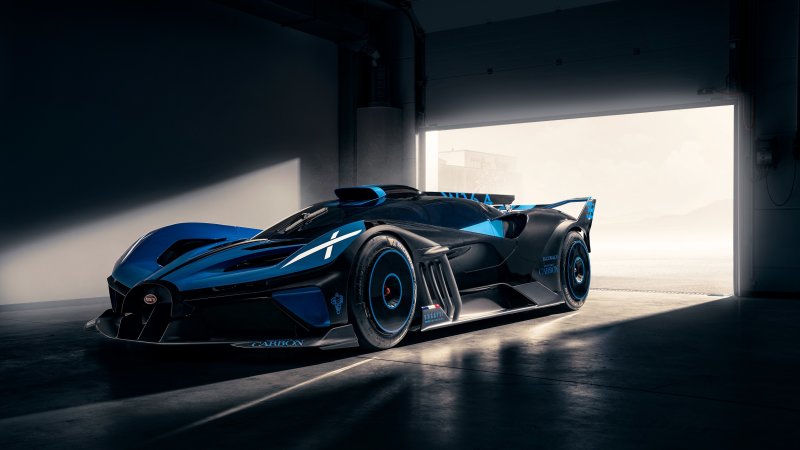
New images show Bugatti’s 1,824-hp Bolide track car in real life

Bugatti introduced a one-off track car named Bolide in October 2020, but the images it sent us were computed-generated renderings. It released a batch of fresh photos that finally show the model in real life.

In a normal year, there is a good chance we would have caught up with the latest addition to the Bugatti family tree at an auto show on either side of the pond. 2020 is different because all of the events we normally cover are canceled, so the images give us a much-welcomed second look at the Bolide. It’s just as stunning in photos as it is in the computer-generated graphics, and the new gallery proves this track monster is not merely a figment of some designer’s imagination. It exists, you can look at it and sit in it. Odds are you’ll want to drive it, too.

It’s built around a quad-turbocharged, 8.0-liter W16 that’s related to the engine that powers the Chiron and tuned to develop 1,824 horsepower when it’s slurping 110-octane race fuel. While that’s an impressive figure on its own, it’s even more mind-boggling when you take into account the Bolide’s 2,734-pound dry weight. It weighs about 166 pounds less than the new, second-generation 2022 Subaru BRZ yet it has eight times the power.

Nils Sajonz, Bugatti’s recently-appointed head of special projects, shed light on one of the Bolide’s design themes. He explained the x-shaped lights on both ends are a reference to the tape that race car drivers used to put over their headlights to ensure the glass didn’t spread on the tarmac if it broke. Racing is a significant part of the Bugatti heritage, cars like the Type 35 were hugely successful, and the Bolide is the newest torch bearer.

Will it race? It’s too early to tell. As of writing, it’s a one-off model that hasn’t been approved for production. Bugatti notes that simulation testing reveals the Bolide can lap the Nürburgring in 5:23:01, a figure that makes it nearly as fast as the record-holding Porsche 919 Hybrid, and it takes 3:07:01 to go around Le Mans. The firm is done chasing speed records, but we’re hoping it gives the Bolide the chance to prove its mettle on the track.

Bugatti Type 35 reborn as a sumptuous retro-styled roadster

German engineering and design firm Uedelhoven Studios has reimagined the Bugatti Type 35 as a modern roadster. It’s visibly inspired by the original model, but it’s lower, sleeker, and made largely with carbon fiber.

Uedelhoven Studios isn’t a household name, even in enthusiast circles, but it has helped create numerous concept cars including the 2020 Hyundai Prophecy, the 2019 Hyundai 45, and the 2019 Audi AI:Me. It explained that its designers began brainstorming ways to bring the Type 35 into the 21st century in 2015, though it’s unclear whether Bugatti was involved in the project. We didn’t see it when we went behind the scenes in its design studio to discover some of the unbuilt models it developed in the 2000s and the 2010s, including a V8-powered coupe.

Called Type 35 D, a designation never used by Bugatti, the roadster is instantly recognizable as a follow-up to the successful race car thanks in part to a horseshoe-shaped grille surrounded by a thick chrome frame, a tapered body and light blue paint. The suspension system’s components and the wheels are fully exposed, like on the original model, but Uedelhoven added fatter tires and a sizeable air diffuser that’s wider than the body.

Peeking inside reveals wood trim on the steering wheel and the gear selector, leather upholstery, and a copious amount of carbon fiber. The center console is loosely inspired by the one fitted to Bugatti’s current-day models, like the Chiron, with round instruments (including a digital gear indicator). It looks like there’s a screen on the dashboard, too, which strongly suggests the cabin isn’t as closely linked to Bugatti’s heritage as the body.

What’s under the hood hasn’t been revealed. We think the front end looks a little too narrow to house Bugatti’s thunderous 8.0-liter W16 engine and its four turbos. Released in 1924, the original Type 35 was powered by a 2.0-liter straight-eight engine tuned to develop about 90 horsepower, a magnificent amount at the time.

We don’t know what’s next for the roadster; we’ve reached out to Uedelhoven and Bugatti to find out more, and we’ll update this story if we learn more. We’d love to see the Type 35 D race like the original, which famously won more than 1,000 races (including the grueling Targa Florio held in Sicily) between 1925 and 1931.

McLaren’s next hypercar won’t arrive until the middle of the 2020s

McLaren will slow its cadence of hypercar launches until the middle of the 2020s, according to its chief executive. It released the Senna, the Speedtail, and the Elva in rapid-fire succession, and it’s now ready to take a break.

“We’ve come to the conclusion that actually we didn’t need to launch another Ultimate Series car after Elva,” revealed company boss Mike Flewitt in an interview with Automotive News. He added that his team made this decision after realizing that “the market was getting a little bit overpopulated,” and he stressed that the on-going coronavirus pandemic wasn’t the main push behind the company’s shift from hypercars.

In hindsight, the writing was on the wall. McLaren unveiled the Elva (pictured) in 2019 as a roof-less, window-less roadster with 800 horsepower and 399 available build slots each priced at $1.7 million. It backpedaled in April 2020 and said that only 249 examples would be built, which was a big reduction and an unusual move. Officially, the firm’s customers said they wanted more exclusivity, but the difficulty of filling 399 orders was likely a factor, too.

It sounds like the next Ultimate Series will be well worth the wait because it will be the long-awaited successor to the gasoline-electric P1 released in 2013. Flewitt said it will make its debut near 2025, undoubtedly as a limited-edition model, and all signs point to another hybrid powertrain with jaw-dropping horsepower and torque figures. 

“All of the significant launches going forward will be hybrid cars. I think by 2026, we’ll be fully hybridized right across the range,” Flewitt told the same publication in a separate interview. He indicated that the next Ultimate Series model will not be electric, because the company’s first battery-powered model isn’t scheduled to make its debut until 2028 at the very earliest. Engineers still need to solve key packaging-related problems.

Although hypercars are on hiatus, new product launches will carry on as planned, and McLaren isn’t out of ideas. It announced in Nov. 2020 that its first series-produced hybrid model will be called Artura when it makes its debut during the first half of 2021. It will ride on a new platform developed specifically for electrified powertrains, and it will ditch the brand’s V8 for a smaller, lighter V6 that partially offsets the battery pack’s weight.

Related Video:

The Elation Freedom is a 1,414-horsepower electric hypercar

The 2020s seem poised to become a golden age of hypercars, particularly electric ones like those from Rimac and Aspark. Granted, the “hypercar” label is kind of undefinable nonsense, but it persists because mere term “supercar” pales before the stats of this latest wave of road-going machines — both their performance and their lofty prices. The latest hopeful competitor to hit our inbox is the Elation Freedom, a 1,414-horsepower EV.

That power figure, by the way, is with the standard, three-motor configuration. If that’s not quite enough, the company also plans to offer a four-motor version with 1,903 horsepower.

A T-shaped 100kWh structural battery pack within the carbon fiber monocoque chassis feeds those motors and is expected to provide 300 miles of range. An optional 120kWh pack would stretch that to 400 miles. Cascadia Motion, an electric drive company that has developed Formula E motors, is contributing to the Elation powertrain, which includes a single-speed transmission that sends power to the front wheels and a two-speed unit that sends drive to the rear. Interestingly, the company also plans a conventionally powered variant, the Elation Freedom Iconic Collection, that utilizes a 5.2-liter V10 and a seven-speed dual-clutch transmission powering all four wheels.

The Elation will be built in northern California, convenient to its presumed customer base of Silicon Valley plutocrats. Founder Carlos Satulovsky and chief technical officer Mauro Satavia Acosta, however, hail from Argentina, where the car is being engineered by a team that is said to have experience in Formula 1 and endurance racing.

According to its maker, the cars are to be hand-built and the company is aiming to start production by the end of 2022. The electric version will cost $2 million, while the Iconic Collection gas model will go for $2.3 million. That’s a considerably sum, but the EV, at least, may be subject to a federal tax credit. Consult your tax advisor. 

Related Video:

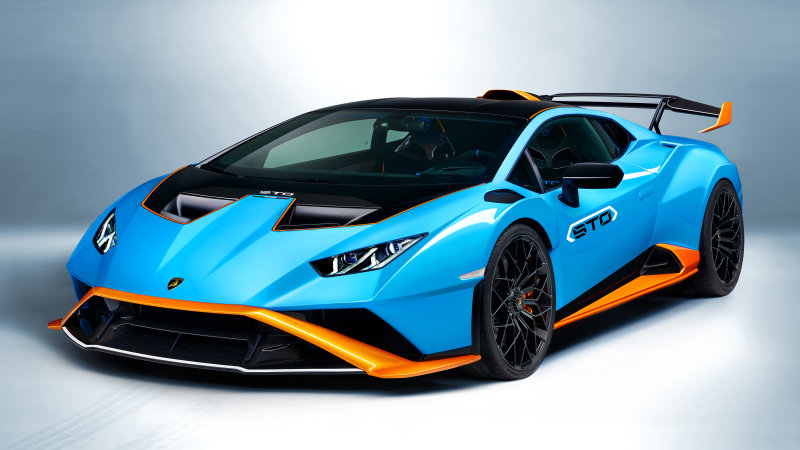
Lamborghini Huracan STO revealed as the most extreme Huracan yet

Mercedes-AMG just snagged the Nürburgring production car lap record from Lamborghini, but the Italians might already have an answer. It’s called the Lamborghini Huracán STO, with the STO being short for Super Trofeo Omologata. And yes, this one is even more extreme than the already bonkers Huracán Performante.

Lamborghini says two of its race cars inspired it to make this road-legal high-po Huracán — the Super Trofeo EVO and the GT3 EVO. As we’d expect, it’s still powered by the 5.2-liter V10. The good folks in Sant’Agata have found 10 more horses above the Performante, meaning the STO makes 640 horsepower. Torque sits at 417 pound-feet, which is actually down quite a bit from the 443 pound-feet of the Performante. There’s no lack of acceleration, though. Lamborghini claims a 0-62 mph time of 3.0 seconds and top speed of 192.6 mph. Those numbers are great, but they’re not what the STO is about. No, this Lamborghini was designed to set fast lap times, meaning aerodynamics and weight were the two key areas that were enhanced.

The STO is 95 pounds lighter than the already light Performante. We imagine the bulk of that can be attributed to Lamborghini making the STO rear-wheel drive, not all-wheel drive. Yes! A rear-drive Lamborghini — we love to see it. But there’s also a greater use of carbon fiber for exterior panels (75% are made of carbon now). Additionally, the windshield is 20% lighter than a Performante, and it’s riding on magnesium wheels as opposed to aluminum alloys wheels. On the inside, Lamborghini uses carbon fiber sport seats, full carbon door panels, removes the carpeting (replaced with bare carbon fiber) and coats other surfaces with its Alcantara-like Carbonskin. All this combined results in a car with a dry weight of 2,952 pounds.

Pushing it into the ground is an impressive downforce package. Lamborghini has added air ducts in the front hood for better airflow to the radiator and to generate downforce. A new front splitter better directs air to a totally new underbody meant to create greater downforce. And the front end’s new design better directs air around the front wheels to reduce drag. New front brake ducts enhance cooling to the improved “CCM-R” brakes (new design drawing on racing brakes for even more thermal durability than standard carbon ceramics). Lamborghini calls the new front end “cofango,” which is a fancy mashup of Italian for “hood” and “fender.”

The new rear fender design decreases overall drag, but a new NACA air intake integrated into the fender also serves as the engine’s intake. Lamborghini says this shortened duct allows for “a 30% decrease in status pressure losses.” A revised rear engine cover features another integrated air scoop for cooling purposes. There’s a shark fin on that rear cover that helps straighten and direct airflow to the wing, thereby increasing downforce in corners. Speaking of the giant wing, it’s a manually adjustable piece with three settings. Lamborghini didn’t quote any figures on total downforce, but it does say downforce is increased by 53% over the Performante, and “overall airflow efficiency” goes up by 37%.

Underneath, Lamborghini has increased the wheel track, fitted stiffer suspension bushings, model-specific anti-roll bars and its MagenRide 2.0 dampers. You get rear-wheel steering, a new fixed steering ratio and quicker gear changes from the seven-speed dual-clutch transmission. A new “STO” drive mode is also available to select for enthusiastic road driving, but you’ll want Trofeo mode for the best track performance.

Lamborghini says the STO will go on sale in spring 2021, and prices will start around $328,000.

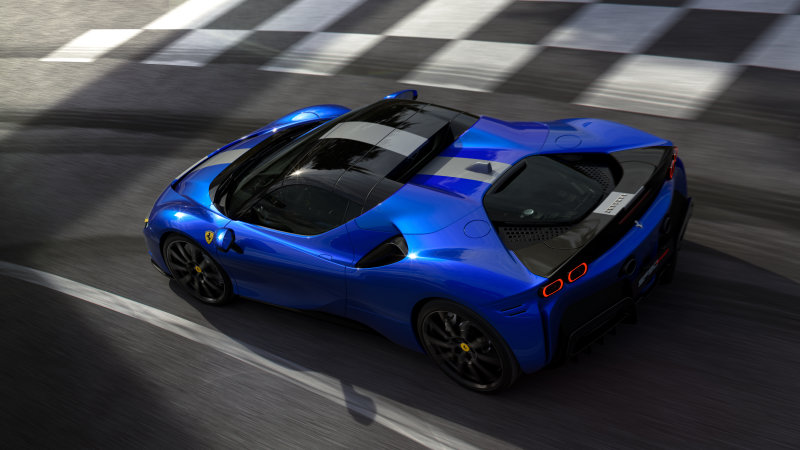
New Ferrari SF90 Spider puts a 211-mph hurricane of wind in your hair

The new Ferrari SF90 Spider has been unveiled as the open-top sibling to the Prancing Horse’s SF90 Stradale. The SF90 Spider thus becomes Ferrari’s first plug-in-hybrid roadster, and with nearly 1000 horsepower on tap and four driven wheels, performance is solidly in the supercar realm. The new Spider maintains the Stradale’s  211-mph top speed, and it rockets from 0 to 62 mph in 2.5 seconds.

Like other Ferrari Spiders dating back to the 458, the SF90 is a retractable hardtop. The top is made of aluminum, which saves a claimed 88 pounds over more traditional materials, although the Spider’s stated dry weight (3,682 pounds) is still 220 more than the Stradale. The retractable roof can be lowered or raised in 14 seconds and can even be operated when the car is moving at low speeds. A power rear window that can be raised even when the top is stowed provides a measure of wind-buffetting protection for the cockpit. Additionally, the center section of the cockpit has been redesigned to help manage airflow: A central trim piece between the seats channels air away from the occupants’ heads and shoulders and into a double-layered trim piece at the top of the tunnel. The rest of the cabin mirrors that of the SF90 Stradale, with a 16-inch curved display screen, a head-up display, and a steering wheel with haptic-touch switches on the spokes.

The SF90’s plug-in-hybrid powertrain is unchanged from that of the SF90, which means a mid-mounted, twin-turbocharged 4.0-liter V8 (which alone makes 769 horsepower), supplemented by a trio of electric motors fed by a 7.9-kWh battery pack. One motor, located between the engine and the gearbox and making 157 horsepower, directly bolsters engine output, while two other 97-hp units each power one front wheel, giving the SF90 all-wheel drive as well as torque vectoring across the front axle. Total output stands at 986 horsepower, and the engine’s grunt is dispatched via Ferrari’s latest 8-speed DCT transmission.

Because the Spider’s roof stows where the engine-heat vents are in the Stradale, Ferrari engineers had to redesign the heat-management system for the powertrain. They introduced transverse louvers in the rear screen to exhaust engine heat. Compared to the coupe, the Spider also has a specially designed rear spoiler with both a fixed and a movable element, which allows it to either minimize drag or maximize downforce.

Impressively, the engine remains visible in the SF90 Spider even when the top is retracted. Ferrari designers also reworked the car’s B-pillars to seamlessly integrate the removable top. 

The Spider, like the SF90 Stradale, can be had with the optional Assetto Fiorano track pack, which includes Multimatic shock absorbers, a carbon-fiber rear spoiler, other lightweight carbon fiber and titanium elements that shave 46 pounds, ultra-sticky Michelin Pilot Sport Cup 2 tires, and, most critically, an available two-tone livery “that further underscores the car’s racing vocation.”

U.S. pricing has not been announced, but we’re told the Spider command a tariff about 10 percent more than the Stradale, currently $507,300. Besides a shopping bag full of money — or, perhaps, bitcoin — SF90 Spider buyers will also need a good bit of patience. U.S. deliveries aren’t set to begin until about a year from now, at the end of the third quarter 2021.

Spy photos reveal mystery Ferrari prototype

European spies caught a mystery Ferrari hypercar mule testing on public roads this week. This prototype, which is based on a LaFerrari, seems to indicate that Ferrari is working on a successor.

Though it may not seem like that long ago, it has been two years since Ferrari closed the books on the LaFerrari halo car with its run of open-top Aperta models. Though all LaFerrari models were said to be pre-sold, it technically remained in production through 2018. We have no reason to believe Ferrari is planning to produce continuation variants of the LaFerrari, which leads us to suspect that this is a powertrain mule for what might be a next-generation, range-topping hypercar. 

There are quite a few visible differences between the production LaFerrari and this mule, though some of them could be products of its extensive disguise. The front fascia appears to be different, with narrower side intakes and a missing winglet on the lower lip. The rear glass is smaller on this prototype too, stretching only about halfway to the end of the rear deck, with what appears to be an air intake sitting where the glass would have extended toward the tail. The intakes on the flanks also appear smaller than on the production LaFerrari. 

A few things can be pinned down as more than mere vinyl-induced hallucinations, including the conventional five-lug wheels (rather than the LaFerrari’s center-locks). The blue triangle aft of the driver’s side window indicates that this is an electrified model, which would point to this being yet another high-performance hybrid

It remains to be seen what Ferrari has in store for this early prototype, but a new hypercar introduction in 2022 or 2023 would match the company’s typical 10-year gap between halo car introductions, so we probably won’t have to wait too much longer to find out more. 

Related Video:

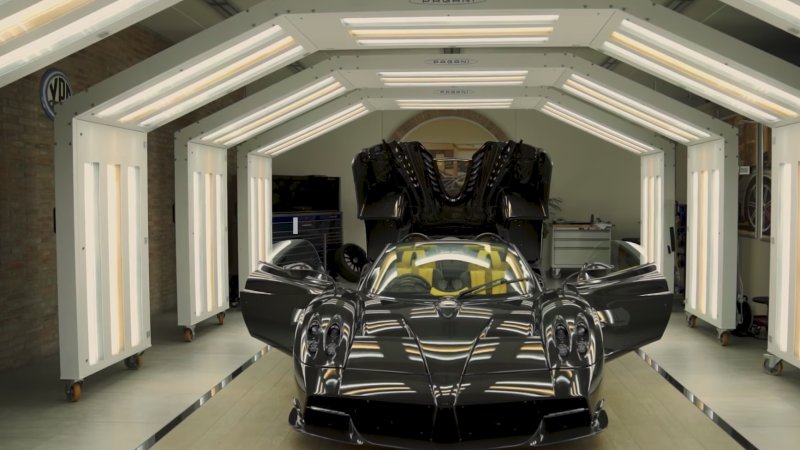
Pagani builds the 100th and final Huayra Roadster

Pagani has remained relatively quiet in the past few years. It has steered clear of the horsepower and top speed races, but that doesn’t mean it hasn’t stayed busy. It published a video on its social media channels to announce it has built the 100th and final example of the Huayra Roadster three years after introducing the model.

The anonymous Hong Kong-based collector who will soon take delivery of the final Huayra Roadster explained he fell in love with the brand after seeing a C12 in a showroom. He added that he ordered his Roadster after unsuccessfully trying to buy a Huayra coupe, which is a relatively small problem to have in the grand scheme of things. And, an open-top hypercar with a screaming V12 engine isn’t terrible as far as consolation prizes go.

Like most Huayra buyers, the man worked directly with the company to customize his car.

“When I was shown the Mamba Black exposed carbon, that’s when I knew that I wanted this. It’s far richer in depth, and it really does look considerably different from the normal carbon fiber,” he explained. Pagani even designed a special fin for the rear end of the car. It’s inspired by the ones fitted to the Zonda Tricolore, and by a shark fin.

The owner played a role in designing the interior, too. Rather than keeping it all black, like the body, he requested yellow accents on the seats, on the door panels, and on the dashboard, and matte carbon fiber on the center console.

It doesn’t sound like the buyer requested any mechanical modifications, meaning power comes from a Mercedes-AMG-sourced 6.0-liter V12 that’s twin-turbocharged to 753 horsepower and 738 pound-feet of torque. Mounted behind the passenger compartment, the 12-cylinder spins the rear wheels via a seven-speed automated manual transmission. It’s 40% lighter than the dual-clutch transmission used in the Huayra coupe, Pagani explained.

Pricing for the Huayra Roadster started at $2.4 million before options entered the equation, and all 100 units were spoken for by the time the car made its debut at the 2017 edition of the Geneva auto show. Selling 100 cars for a seven-digit sum is a big achievement, but building them and delivering them is even more impressive.

What’s next?

As of writing, Pagani’s future plans are relatively vague. Mercedes-AMG confirmed plans to phase out its V12 in the wake of ever-stricter emissions regulations around the world, so the Italian firm will need to either find another engine to power its cars, or design one from scratch. Which route it plans to take hasn’t been revealed yet. Regardless, the Huayra’s successor remains tentatively scheduled to arrive before the end of 2021.

In 2019, it said it hoped to release its first electric model by 2024, though company founder Horacio Pagani also admitted there is absolutely no demand for one. “None of our customers or dealers want to know about an electric car. They don’t want to know anything about it. They’re not interested. It’s a huge challenge for us, because no one is asking for it,” he affirmed. Another upcoming Pagani model that will undoubtedly generate more interest among the super-rich is a $3.3 million SUV, which could break cover before 2025.

Buy a private jet, get a matching Porsche 911 Turbo S

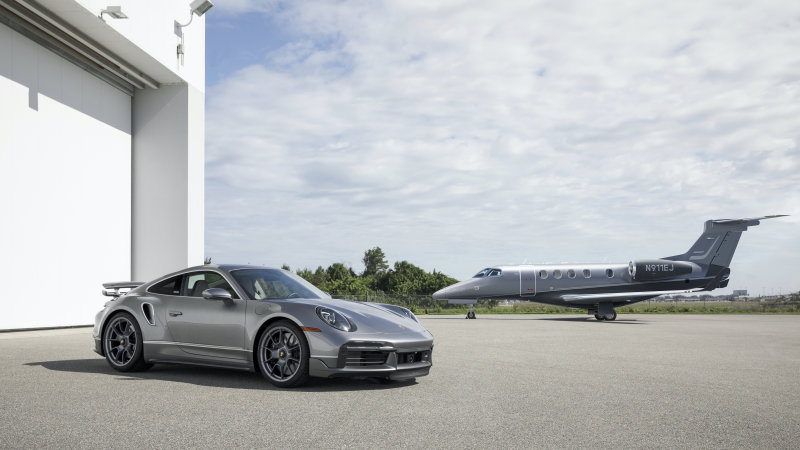
Here’s an opportunity for the top 0.01% earners in the world. Porsche and Embraer are collaborating on a limited-edition project in which you buy a Phenom 300E private jet and get a matching Porsche 911 Turbo S to go with it.

If you can’t afford the approximately $10 million jet, then you won’t have the opportunity to buy a Porsche in this spec, either. Porsche and Embraer are calling this collaboration “Duet,” as the Porsche was specifically designed to pair with the jet’s styling and color scheme. There will only be 10 of these 911s ever made, which is probably a fine number considering the price of entry is about 50 times higher than that of a standard 911 Turbo S.

Porsche painted the upper part of the 911 in the same Platinum Silver Metallic as the jet is painted in. However, the two-tone jet necessitated the lower portion of the 911 be painted in Jet Grey Metallic. The Porsche also has the same strips of chrome and blue running along the lower portion of its body. All of this paint work and trim work is done by hand, similar to the painting process of the jet. Embraer and Porsche collaborated on a special logo for this pair, which the Porsche wears proudly. Its rear wing takes inspiration from the jet, too, as Porsche painted the underside blue and added the jet’s tail number to it: N911EJ.

The thoughtful and special touches don’t end there. Unique wheels are painted in Platinum Silver Metallic and have a blue rim line that was put there using laser technology. Even the chrome surround on the side air intakes are reminiscent of the chrome surround on the jet’s engines.

Inside, Porsche developed a special black/Chalk two-tone color scheme to match the seats in the jet. Even the steering wheel is two-tone, which is meant to copy the plane’s yoke design. More blue accents abound; the special logo is placed in a few spots, and the entire interior is hand-crafted. Porsche also placed an illuminated “No step” plate on the door sills to reference the same lettering seen on the plane’s wings.

There isn’t one aspect of this build that hasn’t been worked over with a fine-tooth comb. You get a special key painted in blue with the jet’s registration. The car cover says “Remove before flight” on it. You even get a custom watch and luggage set that perfectly matches the car. It all sounds fit for a billionaire or a multi-millionaire who likes to live large.

And in case you were wondering about the jet, it’s about the best you can get for a five-person, single-pilot private jet. With a range of 2,010 nautical miles and a cabin fit for a king, it’s about as dreamy as air travel gets.

2021 Lamborghini Huracan Evo Fluo Capsule lets you match your favorite highlighter

Lamborghini isn’t a car company that’s lacking in the bright paint color department, but that isn’t stopping it from pushing the boundaries of luminosity. With the Lamborghini Huracan Evo Fluo Capsule, the company is offering a quintet of fluorescent hues, each of which is paired with matte black accents to emphasize the main color’s brightness.

Five colors are available: Giallo Claris (yellow), Verde Shock (green), Arancio Livea (orange), Arancio Dac (dark orange) and Celeste Fedra (blue). Funny enough, the colors seem to match the most common highlighter colors you’ll find at OfficeMax. Contrasting the colors are the aforementioned matte black body panels on the roof, mirrors, front bumper intake, rear diffuser and side skirts. Each of those get thin stripes of color.

The interior is sort of the inverse of the exterior. Everything is finished in black leather or Alcantara. The starter button cover and the embroidered Lamborghini emblems in the seatbacks feature the bright exterior color.

Other than the colors, the Fluo Capsule is just like a regular Huracan Evo, complete with 631 horsepower and 443 pound-feet of torque. The new colors are available on the 2021 model, though no pricing has been given.

Related Video:

Ford GT Road Test | Driving is believing

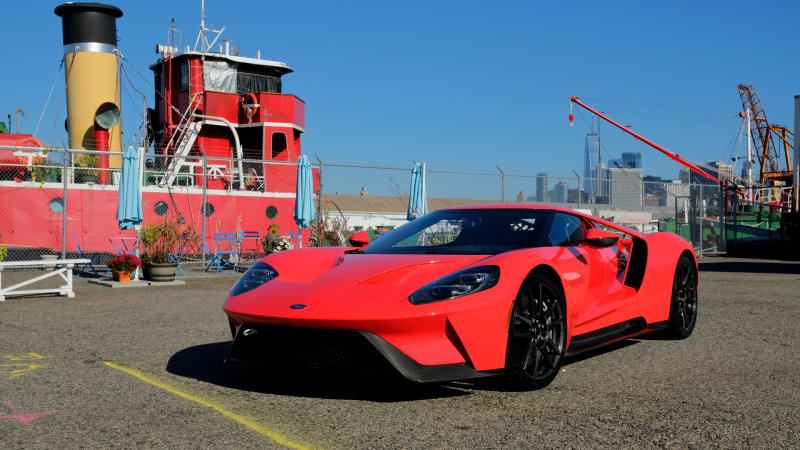
I finally got to drive the latest Ford GT. And everywhere I went, people were just as excited as me to see one – on the road, not on auction stages where the Faberge-rare Ford has fetched as much as $1.5 million.

Driving Ford’s 660-horsepower, 216-mph missile in New York was like being a street-corner dealer, handing out potent, “Code Orange” capsules of automotive bliss to car fans. People pulled cars over or formed eager knots every time I stopped. Two questions were on every quivering lip: “Where’d you get one?” and “How’d you get one?” And that was before the inevitable queries of what the car cost.

“I can’t believe it’s a Ford GT!” said one young man, just after I’d rocked the Ford on cliff-hung roads overlooking the Hudson River near West Point. These crazy reactions and the hypercar-style performance also softened my heart toward the GT. 

Many people, including me, had only ever seen a third-generation GT during its surprise, daylight robbery of the Detroit Auto Show in 2015. Auto scribes scoured the Internet thesaurus for superlatives. But like the only sober person in a room full of drunks, I was strangely unmoved. A $450,000 Ford? With an Ecoboost-branded V6, and its whiff of Eau de Dearborn?

Also, my heart still belonged to the second-generation GT of 2004-2006, pictured above. The retro-style, V8-powered GT nailed the underdog charm and Motown menace of the LeMans-winning racers. That included the Ford’s one-two-three podium sweep in 1966, the feel-good story given (finally) its mainstream due in last year’s Ford v. Ferrari. The crowd-pleasing film paid sepia-toned homage to car builder Carroll Shelby and British racer Ken Miles, breezing past the fact those original GT chassis were built in Britain. But following Miles’ death in August 1966, it was Shelby’s all-new Mk IV car that A.J. Foyt and Dan Gurney piloted to 210 mph on the Mulsanne Straight to win LeMans in 1967. That Mk IV, powered by a Ford 427, remains the only all-American entry – design, build, engines, drivers – to win the 24 Hours. It also birthed the first street-going version: The oddball Mk III, with 306 horsepower from a Holley-carbed, 289-cubic-inch V8. With a 2,200-pound curb weight, the Mk III could still rip to 60 mph in 5.1 seconds.

Only seven GT Mk III’s were built, ostensibly “priced” around $18,500 (or $138,000 in 2020 money). But there seemed a direct line between all previous GTs and the 2004-2006 model, with 540 horsepower and 205-mph peak from a supercharged V8. Ford asked me to drive that one from Detroit to New York in 2005. And its proud American-ness came in handy when I got pulled over in Pennsylvania for making mincemeat of the local speed limit. The Ford-driving cop totally let me slide, too busy enthusing over the car. It helped that this GT was priced from $143,000 – rich for a Ford, yet comfortably in Porsche 911 Turbo territory – and that the company built a reasonable 4,308 units.

Today’s GT seemed to break that historic link, psychologically and financially. To Ford’s credit, as with the latest Mustang, it didn’t simply rehash past glory with another retro take. Admittedly, the interstellar, carbon-fiber catamaran on display in Detroit looked amazing, from its scissor doors to its racing stripes. But when Ford started talking a $450,000 price, a 1,350-unit production run, and vetting buyers like fathers grilling a daughter’s prospective date, they kinda lost me. I thought Ford wanted to beat Ferrari, not join them.

24 Hours of Le Mans - Race

It all seemed a hermetically sealed marketing stunt. Was Ford out to satisfy real customers, or to bask in its own nostalgic reflection? That sense grew when Ford sent the GT back to LeMans for a dominating class win in 2016, its skids so greased by race rulemakers as to seem nearly pre-ordained. Ford decreed that owners would be prohibited from reselling their cars for two years. But it was Ford that poured gasoline on the secondary market and lit the match in the first place, via the air of unobtainium. Suddenly they were shocked (shocked!) that buyers might consider selling their appreciating cars to the highest bidder? Ford even sued Mecum Auctions and a few rogue owners to halt transactions, even as it trumpeted its own, track-only GT Mk II edition – a mere $1.2 million, limited to 45 copies. Hurry, billionaires, before they’re gone! Apparently, seven-figure GT sales are fine, as long as the money is going into Ford’s pocket.

It all seemed reminiscent of Lexus and its $375,000 LFA, another unreasonably exclusive, overpriced supercar that was more like a theoretical particle: Flashing into view like a Higgs-Boson, then disappearing back into the shadowy, quantum realm of collectors’ garages, never to be seen again.

And yet. The 2020 Ford GT I drove was the kind of wicked, transgressive fun that few modern supercars deliver. This press car, with nearly 16,000 miles on the odo, felt like a racecar that got lost en route to LeMans. The twin-turbo V6, now with 660 horsepower (up from 647), throbs with raw promise at idle. After a beat of turbo lag, it catapults the GT with thrilling focus, making occupants feel like a baseball from Clayton Kershaw’s hand. It fills the cabin, with its 43.7-inch-low roofline, with a thrash-metal shriek that drowns out conversation and human thought. The engine may as well be in your lap. The seven-speed, dual-clutch transmission isn’t the most sophisticated, but it still snaps through gears, as LEDs in the steering-wheel rim signal the 7,000-rpm redline, at which point the GT seems bent on sampling that 216-mph apogee. The rear-drive design helps handicap this car to a relatively modest 3.0-second sprint to 60 mph, despite sticky Michelin Pilot Sport Cup 2 tires. But a 10.8-second catapult through the quarter-mile, at 134 mph, tells the truer story.

Acceleration is a given among hypercars – yes, hypercars, as the GT reminds me far more of early Koenigseggs than run-of-the-mill Ferraris and Lamborghinis. What separates the GT is steering and handling. In an era of electronically mediated performance, the Ford’s is beautifully pure and unfiltered: Quicksilver steering guides the GT with millimeter-accurate precision, while transmitting every pavement ripple and nick through its Alcantara-wrapped wheel. Yet the car never feels darty or hair-trigger. Tire adhesion is ridiculous. The faster you go, the more the Ford bolts itself to the road, including its burly aero wing that pops up above 70 mph, and also acts as an air brake, in cahoots with carbon-ceramic stoppers. That rear wing, on hydraulic stanchions thick enough for service-bay duty, can be fixed in up or down positions. The adaptive suspension, with its trick Multimatic spool-valve shocks, is taut, yet it didn’t pound car or occupants to jelly through the gantlet of Brooklyn and Manhattan. It’s Multimatic that actually builds the GT in Markham, Ontario, including roughly one copy per month of a new Liquid Carbon edition. Its exposed carbon-fiber body adds $250,000 to the price.

After an epic driving day, I was simultaneously spent and giddy from sensory overload. Then, one last sensation: A firecracker boom as I wound through Harriman State Park, so loud that I thought the engine had blown. Ears ringing, I hopped out and found the glass panel, separating the engine bulkhead from the cabin, cracked in multiple places. I restarted the car, and though it limped the remaining 48 miles home to Brooklyn, it had almost no boost, and emitted a moan like a tubercular cow. I suspected the GT was running on one turbo or less, and the hunch seemed right: Ford later said a boot connecting a throttle body to a turbo had come loose. Violently, in terms of that busted window, but no lasting harm done.

The accessible, “everyday” supercar is the new industry target, from the Acura NSX and Porsche 911 Turbo to the various Ferraris and McLarens. That is not this car. Sensation aside, the Ford GT doesn’t care about your tender feelings. A shower of pebbles and road schmutz, kicked up by near-slick performance tires, churned through wheel wells, sounding like 100 rainsticks taped inside the cabin. The cabin, with its aggressive teardrop shape, is more like a space capsule. Strapping on a helmet would have forced me to scrunch down in the Sparco racing seat to fit my noggin inside. Press a switch to lift the bumper to clear steep driveways, and instead of the usual elevator hum, the Ford snaps crudely upward like the head of a Rock ‘Em, Sock ‘Em Robot. It does the same when dropped into aero-boosting Track mode, so low that a squirrel couldn’t limbo underneath. It looks badass, and unlike many “Track” modes, Ford’s really is for track only.

The interior is mostly crap for a $500,000 car. It proudly exposes the carbon-fiber monocoque, but it also has Garmin-like displays, an afterthought infotainment system and some switches that might pass muster in a Mustang. Seats are carbon-fiber buckets with no fore-and-aft or height adjustment, only a fabric strap that yanks the foot pedal box into proper range. And there’s essentially zero cargo space, only a bin aft of the engine that might fit a backpack, if it wasn’t already half-filled with a tire-inflator kit. The hardcore GT makes a Lamborghini Huracan seem like the family Audi in terms of luxury, comfort and versatility.

For all that, I now absolutely understand why a filthy-rich guy would park a GT next to his vintage racers, the Riva yacht and fourth wife. The GT drives like a Hollywood dream, one in which Ken Miles looks like Christian Bale, and Matt Damon was born in a Stetson. It’s a track toy no other boy has, an Ariel Atom times 10, but with a better backstory and a potential investment upside. I just hope said guy actually drives his GT, at least on fourth-wife anniversaries.

Is Ford’s “pinnacle of performance” really worth $500,000-and-up? The market says yes. Should Ford feel even a little bit ashamed of itself? I’ll let you answer that one.

Related Video:

SSC will retry Tuatara top-speed record after doubts over initial attempt

The SSC Tuatara top-speed controversy is far from over. Jerod Shelby, founder and CEO of SSC, released a video where he says SSC is going to rerun the top-speed record.

This comes just a couple days after SSC said there was an editing issue on the video side that can account for the inconsistencies that bring into doubt the 331-mph top speed. You can watch the video at the top to get Shelby’s full statement.

“We were seeing different speeds for the very same run,” Shelby says in reaction to watching the videos back. “The more we looked, and the more we tried to analyze, the more we were concerned there were doubts in the relationship between the video and the GPS.”

Dewetron, the maker of the tracking equipment used for the run, still hasn’t analyzed the equipment, and at this point we don’t know if it ever will. Shelby thinks the level of controversy around this run is enough to totally rerun it.

“No matter what we do in the coming days to try to salvage this particular record, it’s always gonna have a stain on it … we have to rerun the record, we have to do this again,” Shelby says. “And do it in a way that it’s undeniable and irrefutable.”

Shelby says SSC will prepare for another run and do it in the “very near future.” This time, the Tuatara will have multiple GPS units from different manufacturers in the car. They will have the GPS companies’ staff onsite. Additionally, Shelby invited some of the YouTubers who called the record into question with video analyses in the beginning.

What this video didn’t do is completely explain what happened in the original runs. Instead, it effectively abandons those previous record claims in pursuit of a second top-speed run. There’s still no announcement on who will be doing the driving in this second run. Oliver Webb drove the Tuatara in the first run, but he has yet to come forward as the driver for the second run.

As it stands, the Tuatara’s original claimed 316 mph run is not going into the record books. We’ll be eagerly awaiting this second run.

Watch as the $2 million Rimac C_Two drives straight into a wall

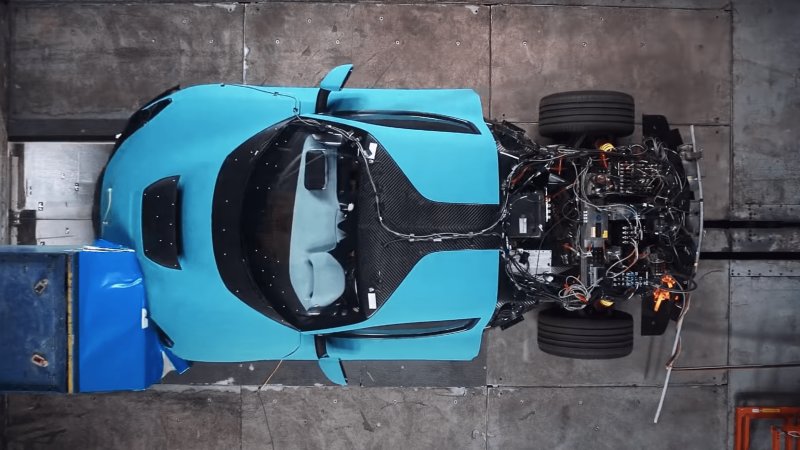
Rimac is leveraging the power of software-based simulations to fine-tune the C_Two, but there is no substitute for real-world testing. It released a video that explains how its engineers are ensuring the electric hypercar keeps its occupants safe in an accident, and the work they’re doing to make it street-legal all over the world.

“Simulation of [the metal parts] are at a high level [of accuracy], but composites are an area that’s not very well known. The orientation of each composite part is important, because the materials behave differently in different directions, so it’s not so easy to simulate. We can get some overview of how a part will perform, and after the crash test I can immediately see how close my simulations were,” explained senior CAE engineer Martin Mikulčić.

After strapping in the dummies, Rimac launched the first prototype into a deformable barrier with a 40% offset at 25 mph. It then crashed a second car into the same obstacle at 35 mph. Both tests allowed the company to analyze a wide selection of parameters, including how the seat belts hold up and whether the pedals injure the driver. Petar Marjanović, the Croatian brand’s trim engineer, proudly pointed out the C_Two passed both tests.

Although the two cars look completely totaled, they performed exactly the way Rimac wanted them to. The front end was designed to absorb energy before it reaches the passenger compartment; it’s a giant crumple zone. Marjanović reported no cracks in the central carbon fiber tub, and even the footwells remained solid.

13 prototypes and five pre-series cars will be built in total, and 11 of these will be destroyed. Stuffing prototypes into walls is a horrendously expensive process, but it’s the only way to ensure buyers can register and drive the 1,914-horsepower C_Two regardless of where they live. Rimac admirably chose to certify the car to U.S. safety regulations so that American customers can own and register one normally, rather than apply for a special Show or Display exemption, for example. This painstaking attention to details also illustrates the firm’s commitment to taking on bigger rivals.

Rimac will put the final touches on the C_Two in the coming months, and production is scheduled to begin in 2021. Pricing starts at about $2 million before options enter the equation, and they often do, but the 150 units planned were spoken for about three weeks after the first prototype was shown to the public in 2018. It’ll be a rare sight, though it’ll be a lot more common than the Concept_One, which was limited to eight examples.

Related Video:

SSC Tuatara top speed record video generates controversy leading to statements from SSC, Dewetron

An internet controversy has been brewing around the SSC Tuatara’s record-setting top speed run, and it’s all to do with the video (which we’ve included further down in this story) of the supposed record run SSC released. The Tuatara went 331.15 mph in its fastest run in one direction and 301.07 mph in its second fastest run in the opposite direction, as required for top speed records. This resulted in the average top speed of 316.11 mph, giving the Tuatara the title of fastest production car, a speed that completely annihilates the previous record set by the Koenigsegg Agera RS.

This speed was recorded using Dewetron GPS measurement instruments, the same tools used by others in their top speed record attempts, including the SSC Ultimate Aero in 2007, a previous holder of the fastest production car title. It’s an incredibly precise tracking system that is well respected and relied upon for world records like this one. In addition to that, two independent officials were on site as witnesses.

The thing is, some YouTube and internet sleuths managed to find some inconsistencies with the video SSC released. Their methodology? Use the Koenigsegg Agera RS’s top speed run made on the exact same stretch of road outside Pahrump, Nev., to compare the two runs. By using landmarks to track the distance and time elapsed in the video between those landmarks, you can get a rough average speed estimate. This can then be compared to the telemetry data that SSC has conveniently overlaid on its video. Feel free to watch Shmee150’s video about this, where he does the math. In the end, the data and footage don’t add up. The official video from SSC and Tuatara of the record run is below.

[embedded content]

Not helping the situation was some confusion about whether or not Dewetron had independently verified the data gathered. Dewetron released a statement that confirms that the company hadn’t examined the specific data, but that SSC did indeed use the company’s recording system for the testing. The Dewetron statement is below.

“Despite the information published on the website of SSC North America as well as on several related and non-related YouTube channels, DEWETRON did not validate any data from world  record attempts or preceding tests. Nobody of DEWETRON’s employees was present during the test drive or involved in the associated preparations. Since the results of measurement data highly rely on the right setup, on the regular calibration of the systems and sensors in use as well as on many other parameters, we are not able to guarantee the accuracy or correctness of  the outcome. As of this moment, DEWETRON did not receive the measurement file of the test drive. As a result of the absence during the test drive paired with the missing data, DEWETRON is not able to make any further statements about the world record attempt under question.

“However, DEWETRON knows that SSC uses the company’s test and measurement system–just like many other customers worldwide. As a part of DEWETRON’s customer service, we deliver all our systems with extensive training for future users. In the case of SSC, this happened remotely. Nevertheless, this training only includes the general use of the system, the software as well as the initial configuration.The training does not include the creation of any setup related to any given test. DEWETRON is a manufacturer of DAQ systems–the correct use underlies its  customers. This means that our customers are responsible for all test setups including this one.”

To get more clarification, we asked SSC if it could provide a response or explanation for what we’re seeing in the video. And it seems that the discrepancy came from a simple editing mistake, as Jerod Shelby explained in a long-winded official statement posted to the company’s website. We’ve pasted much of this below, but you can find the full document here.

“On October 19, the day the news broke, we thought there were two videos that had been released — one from the cockpit, with data of the speed run overlaid, and another video of b-roll running footage. The cockpit video was shared with Top Gear, as well as on the SSC and Driven+ YouTube pages.

“Somehow, there was a mixup on the editing side, and I regret to admit that the SSC team hadn’t double checked the accuracy of the video before it was released. We also hadn’t realized that not one, but two different cockpit videos existed, and were shared with the world.

“Hypercar fans have quickly cried foul, and we hadn’t immediately responded, because we had not realized the inconsistencies — that there were two videos, each with inaccurate information — that had been shared. This was not our intention. Like me, the head of the production team had not initially realized these issues, and has brought on technical partners to identify the cause of the inconsistency.

“At first glance, it appears that the videos released have differences in where the editors had overlaid the data logger (which displays speed), in relation to the car’s location on the run. That variance in ‘sync points’ accounts for differing records of the run.

“While we had never intended for the video captured to play the role of legitimizing the run, we are regretful that the videos shared were not an accurate representation of what happened on October 10.”

Driven Studios does have extensive footage of everything that transpired and is working with SSC to release the actual footage in its simplest form. We’ll share that as soon as it’s available.

So there you have it. There was a big misstep in the editing process, and so the video that was released didn’t match the data. While that’s a big goof when we’re talking world records, it certainly doesn’t invalidate the record, which as was previously reported, was done with independent witness to verify. In order to allay in any further suspicion, SSC is likely going to release the proper world record video soon. Not only that, but SSC says it’s currently in the process of submitting the Dewetron equipment and speed sensor for further analysis and verification of the equipment’s accuracy. And once the data is checked we should have a clear, final answer to the validity question.

Do check back to this story for updates, as we’ll keep adding them as we get them in real time until every last avenue has been explored.

Related Video:

Donkervoort D8 GTO-JD70 R is only for the track, can pull 2.25 Gs

If the Donkervoort D8 GTO-JD70 wasn’t extreme enough for you, Donkervoort has news you’ll want to hear today. The Dutch company just released details on a track-only R version with even higher limits than the street car.

Donkervoort’s big number it bragged about previously was the 2.0 Gs of lateral grip it was capable of in corners. With the R, Donkervoort says it’s up to 2.25 Gs. You may need stronger neck muscles to effectively drive this car on track.

The improved performance comes from improvements and modifications made all around the car. It gets stiffer four-way adjustable dampers, stiffer springs, stiffer bushings, stiffer anti-roll bars and a lower ride height. To top it off, it’s fitted with Nankang slicks from the factory. Wet tires are available, too. 

Steering is improved with an optional shorter and adjustable power steering rack. A new 12-stage racing ABS braking system is onboard. Donkervoort also fits racing pads, fills it with racing brake fluid and has upgraded the rear brakes to a six-piston caliper design to match the six-piston clampers up front. Donkervoort says that the braking performance is much improved now that it doesn’t need to make the brakes perform on the street.

Power still comes from the same Audi 2.5-liter turbocharged five-cylinder (415 horsepower and 384 pound-feet of torque), but Donkervoort has replaced the five-speed manual transmission with a paddle-shifted, six-speed sequential gearbox. Donkervoort claims the car is quicker, but the 0-62 mph time is unchanged from the manual at 2.7 seconds. Top speed is also the same at 174 mph. Regardless, the faster gear changes on track will likely save precious tenths or hundredths of a second. Plus, you can change up gears without having to lift. Donkervoort says the entire drivetrain has been strengthened to handle the extra demands on track. 

This car is safer in a crash than the street car, too. Side impact protection is increased by a higher percentage use of carbon fiber. It also adds a roll cage, six-point harness, FIA homologated bladder-style fuel tank with fuel absorbing foam and a kevlar-carbon-fiber protection blanket. Lastly, it has an upgraded fire extinguisher system (FIA spec), and Donkervoort will be working with drivers to get them custom race suits and helmets with HANS devices.

One negative that comes with all this extra equipment is more weight. The D8 GTO-JD70 R is 55 pounds heavier than the standard car, but that means it still only weighs 1,598 pounds. If you buy one of these, you can also expect the full hand-and-foot treatment from Donkervoort. They can provide every owner with data analysis and coaching while on track. You’ll also get help with logistics, as Donkervoort will provide a full selection of spare parts, tire services and transportation of the car to and from the track. You can even option a pit-to-garage communication system, allowing you to communicate to the pit wall while you’re out on track.

All of this will cost you €198,000. That’s the equivalent of $234,328, and that’s the price before tax. You can go crazy from there with different levels of track support and options.

De Tomaso claims it’s moving to America so we can relearn how to design cars

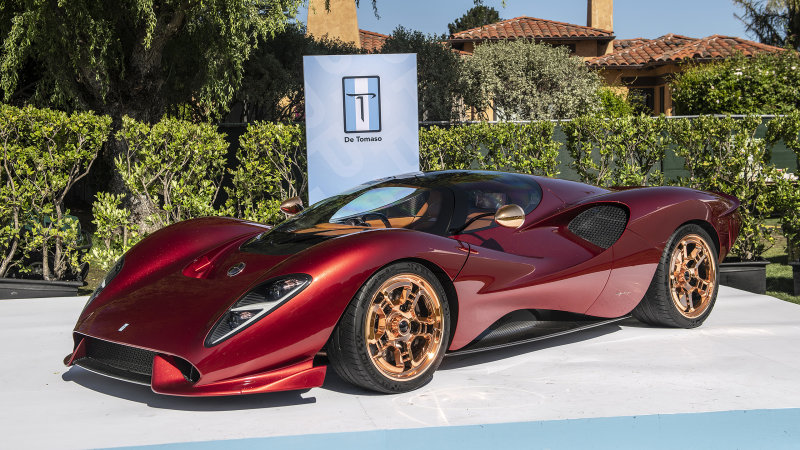
De Tomaso is a truly international carmaker. It was founded by an Argentinian racing driver, it’s ostensibly based in Italy, and it’s owned by a Hong Kong-based group of investors. Now, it has announced the next leap in its geographical game of hopscotch will take it to America, and it brazenly claimed it will bring global glory back to our industry.

“We’re deeply committed to returning America’s automotive industry to its golden era of design, and to the treasured respect it earned between the 1920s and the 1960s,” De Tomaso explained in a statement, one which firms like Scuderia Cameron Glickenhaus could reasonably disagree with. It added its main goal is to create opportunity rather than compete with established American carmakers. Not out of consideration for its peers in an economic landscape that looks like a minefield, but simply because it positions itself a cut above everyone else.

Executives have crafted a long-term strategic plan called Mission American Automotive Renaissance (AAR), which outlines the process De Tomaso will follow to relocate its core production, design and corporate facility to the United States. Where? It’s too early to say, because talks with several state governments are ongoing.

An announcement is expected in the next six months. Meanwhile, engineers are continuing to fine-tune the P72 (pictured) developed jointly with Roush and introduced in 2019. It will be the first De Tomaso of the 2020s, and it will be built largely by hand in the state the company ends up calling home starting in the fourth quarter of 2022.

De Tomaso explained its decision to move to the United States was driven by the void it’s seen over the past several decades. It also wants to help reduce the skills gap in American automotive design and craftsmanship. And yet, it also plans to form strategic partnerships with major automakers and suppliers in the United States.

Has the American industry really not built anything noteworthy since the 1960s? Is it doomed to the point where it needs a little-known company that hasn’t manufactured a car in nearly two decades (and that has never developed its own engine) to step in and save it? Both of these rather off-color statements are debatable, but diving further into this matter would breach the scope of this story. We’ll wait to see whether De Tomaso can keep its word, or if it enters the history book as yet another cash arsonist that speaks a great deal but does little.

American roots

De Tomaso’s ties with the United States are decades-old. It sold the Pantera (shown above), a mid-engined coupe designed by Detroit-born stylist Tom Tjaarda and powered by a Ford-sourced V8, through Lincoln-Mercury showrooms between 1971 and 1974. About 5,600 units found a home in the United States before Ford pulled the plug on the project and sold its stake in the firm. Production continued without the Blue Oval’s input until 1992.

Did the Mercedes-AMG GT Black Series set a new Nurburgring record?

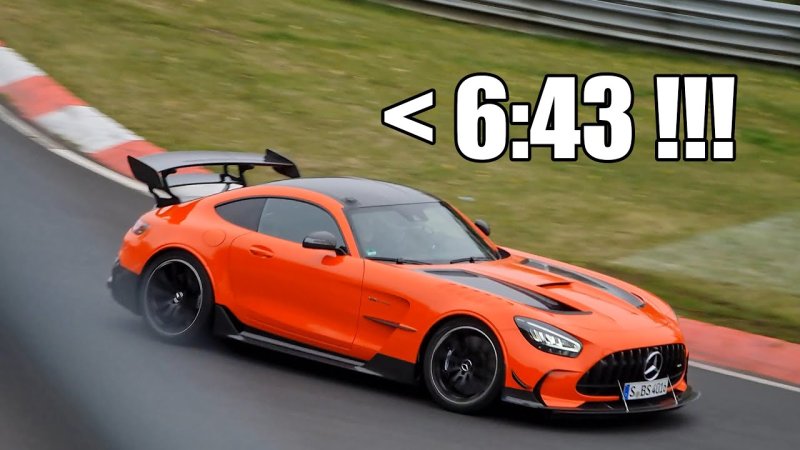
According to well-known YouTube Nürburgring-watcher Misha Charoudin, the Mercedes-AMG GT Black Series likely set a new production car record at the famous German race track. According to the channel’s calculations, the 720-horsepower AMG GT Black Series likely crossed the finish line with around 6:43 showing on the stopwatch. If that’s true it would be a new record, taking top billing away from the Lamborghini Aventador SVJ, which did the deed in 6:44.97. It also wouldn’t be a big surprise, since Mercedes was known to be honing the car at that exact track for years.

Instead of rehashing the great debate about the never-ending quest to set records at the Nürburgring Nordschleife, we’ll just recap a few highlights: Does it matter? Is it repeatable? Is it relevant to actual street performance? Do the mods that make it fast at the ‘Ring make it worse on the road? Now that those are out of the way, let’s add this unqualified statement: ‘Ring records are nothing if not impressive and newsworthy.

If Charoudin’s projected time is accurate — and he’s been on the mark in the past — we expect confirmation from Mercedes-AMG will be coming in short order. Probably with onboard video, and probably with much pomp and circumstance. We look forward to it.

Related Video: