All posts in “Supercars”

The Frangivento Sorpasso is a new all-Italian supercar with a V10 and mega customization

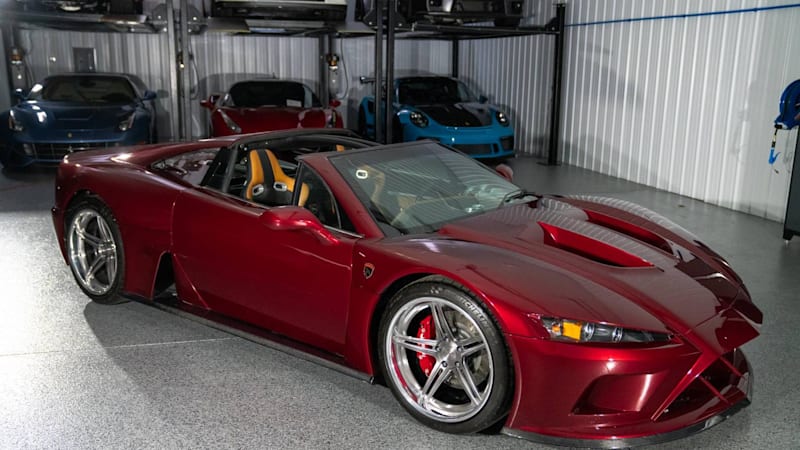
Little-known Italian car maker Frangivento just announced a new model (with two versions) called the FV Frangivento Sorpasso — one is named the Sorpasso Stradale, and the other is the Sorpasso GTXX. In case you hadn’t heard of “Frangivento” before (don’t worry, you’re not the only one), know that they’re a new, super-low-volume supercar company based out of Turin, Italy. Customization and style come first, but the performance is there, too.

The Sorpasso builds on what the company has already done with its Asfane DieciDieci hypercar, but in a more down-to-earth fashion. Instead of the 996-horsepower hybrid space machine that the Asfane is, the Sorpasso Stradale is a 610-horsepower supercar. It’s still extreme, but not as extreme as Frangivento’s first work. Power comes from a naturally aspirated V10 engine of currently unknown origin (we’ve asked the company for more details). It’s equipped with all-wheel drive and weighs approximately 2,866 pounds.

If you want more power, Frangivento has you covered with the GTXX, which is similar to the Stradale, but it adds a supercharger to the equation. This brings the V10’s power up to a whopping 850 horsepower. Frangivento supplies a few numbers to ponder for the FXX. It does 0-62 mph in just 2.9 seconds and 0-124 mph in 9.3 seconds. The top speed is 214 mph. Other details are few and far between.

Frangivento says it worked with suppliers like Brembo, Sparco, OZ and others to develop parts for the car, and it also points out that every company that supplied parts is Italian. The chassis is your supercar-typical carbon tub, which is why it weighs as little as it does.

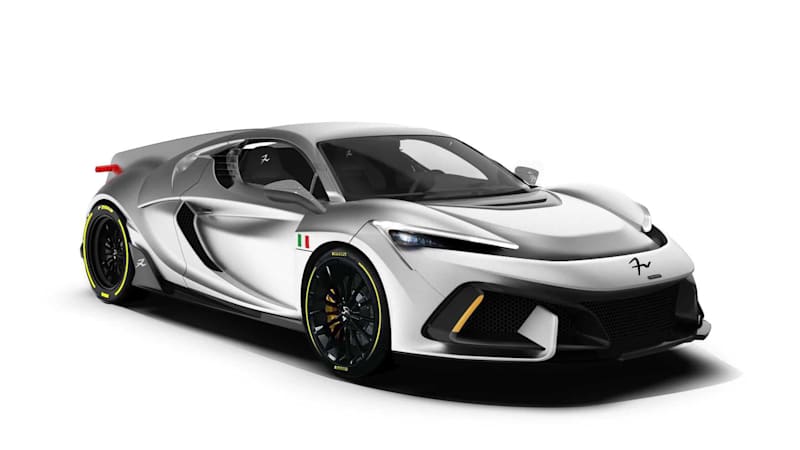
The limited set of photos Frangivento provided is a real shame, as the company brags the loudest of its customization program and intricate design. You’ll be able to tell the difference between the Stradale (pictured) and GTXX by the GTXX’s two-tone body and big aero. Despite the GTXX’s focus on performance, they’re both meant for the road and are equipped with luxuriously appointed interiors full of Italian leather and suede. It even has an “Avatar Driving Assistant” that you can supposedly communicate with using normal language — it’s meant to simulate having a passenger, in case you don’t actually have a passenger.

Owners will take part in a 30-day customization program that allows them to work with stylists to make every part of it their own. You can even customize the name of the GTXX, as the “XX” can be made into any two numbers of your choosing. Frangivento says the first customer cars will be shipped to folks in July this year. Unsurprisingly, they’re headed to Monte Carolo and Dubai. It claims new customers will get their cars 150 days from their order confirmation, and is working on making the Sorpasso available worldwide. If you want to see one in person, Frangivento says the car will eventually go on display in a Munich store opened by the company’s German brand ambassador. There is no official price quoted for the car online at this time.

Prodrive to build $1.4 million street-legal rally raid supercar

U.K.-based race car builder Prodrive’s next project is a supercar described by founder and CEO David Richards as a “Ferrari of the desert.” Based on its BRX-T1 Dakar race rig, the vehicle will be powered by a Prodrive-modified Ford 3.5-liter twin-turbo V6. As with the rally raider, its design will be led by Ian Callum.

According to Autocar, the road car will likely be called the Hunter, and will hew closely to the Dakar-bred BRX-T1. However, it will feature a full interior and all the fixings to make it comfortable street car. It will also have, reportedly, a 500-horsepower version of the V6, which is more power than the 400 horsepower and 516 pound-feet of torque that the race car puts out. Power will be delivered through what Richards calls a “sophisticated transmission,” but he didn’t specify whether it’d be based on the six-speed sequential gearbox of the race car.

The race machine was built atop a steel tube-frame chassis draped in carbon fiber body panels. It’s not clear whether the road car will use a similar construction, but Callum, who has designed many beloved cars for Jaguar, Aston Martin, Ford and the BRX race car, will lend his hand to the body. The BRX-T1 definitely exhibits shades of the F-Type visible in the rear.

Richards told Autocar that the road car will be wider than the race car to accommodate bigger tires. In fact, having too-small tires was among the reasons Prodrive’s BRX-T1 Dakar racers didn’t have a better turnout in January. Nine-time WRC champion Sebastian Loeb logged a DNF because he kept getting punctures and eventually just ran out of tires. The other car, driven by Nani Roma, finished fifth overall. The team believes it has gained valuable experience that will help them log a better result next year.

The Hunter will likely cost £1 million ($1.83 million), but will stand in a class of its own. Richards told Autocar, “Imagine a road car capable of going across the sand dunes at 100mph – and keep doing it for 300 miles because the fuel tank is so big. It’s going to be quite exciting.”

AMG lays out an electrification roadmap with high-performance hybrids at its core

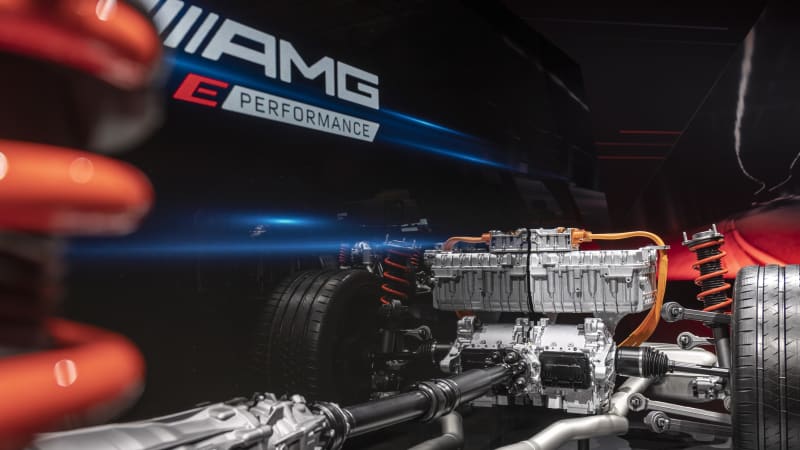
Mercedes-Benz has lifted the sheet off its new modular AMG E Performance hybrid powertrain, giving us our first in-depth look at the electrified system that will power the company’s future high-performance models. Borrowing tech from the AMG Project One and its recent line of mild-hybrid gasoline engines, the new E Performance powertrain represents a significant evolution of the AMG formula. 

This new modular powertrain pairs a rear-mounted electric drive unit to a turbocharged gasoline engine. The electric motor drives the rear axle directly, but power can be sent to the front axle (essentially the same way it is transferred from the gasoline engine to the rear, just in reverse), thanks to AMG’s advanced all-wheel drive system.

[embedded content]

In its most basic form, the electric drive unit comprises a 6.1-kWh battery pack and an electric motor producing up to 201 horsepower. Thanks to its holistic electrification strategy, both the company’s platforms and this new powertrain were engineered with plug-in tech in mind, which we expect to see introduced at the higher end of the performance spectrum first, such as in the rumored AMG GT 73e, which is expected to utilize an E Performance variant capable of producing up to 804 horsepower and more than 738 pound-feet of torque. 

While the ICE engine up front is of a fairly conventional design, be it an inline-four or V8, it does incorporate one notable new element: an electric turbocharger. Mercedes has dabbled in electric boosting with its 48-volt mild hybrid powertrains, but this represents a fairly significant evolution of the tech. 

At its core, it’s still an exhaust-powered turbine, but at lower engine speeds and throttle openings, it will be juiced by electricity from the E Performance hybrid’s battery, spooling it instantly and effectively eliminating any potential turbo lag. In this capacity, it eliminates the need for additional (or more complex) turbochargers to smooth out power delivery at different engine speeds. 

Apart from the inclusion of electric power, AMG’s powertrain remains fairly conventional. Power from the engine goes through a nine-speed, multi-clutch automatic gearbox on its way to all four wheels, thanks to a 4Matic all-wheel drive system designed to harness both power sources. Torque can be vectored to all four corners from both the gasoline engine and electric drive unit, meaning even the front wheels can benefit from electric power under the right slip conditions. In typical AMG fashion, the advantages of this tech will be integrated into its cars’ available drive modes.

AMG has not yet confirmed individual power outputs for its new line of E Performance hybrids, but given its habits, we’re skeptical that there will be any regression in the performance of models whose powertrains get the hybrid treatment. This includes the enthusiast-favorite C-Class AMG lineup, which will pair the 2.0-liter engine from the smaller 45-series AMGs with the new electric drive unit, for a total expected output that should easily eclipse the current C63’s 503-horse figure.

Three of Ken Block’s Hoonigan builds are up for sale, including his RS200

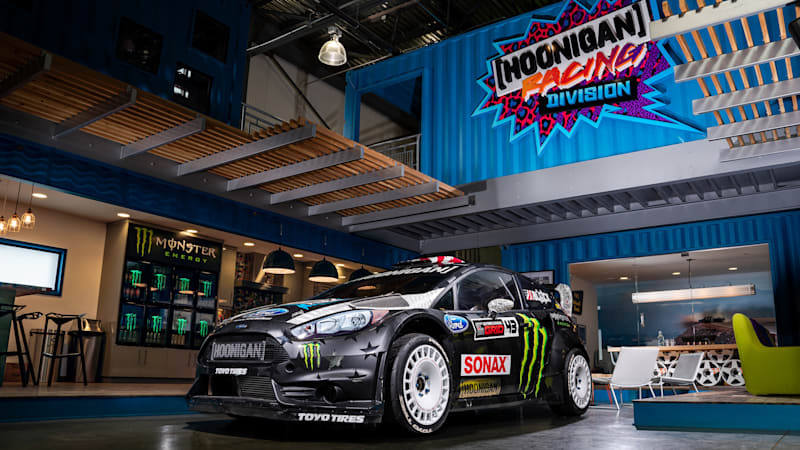
Earlier this year, Gymkhana master Ken Block and Ford announced an amicable and uneventful divorce, with Block declaring himself a “free agent.” This quiet split may have slipped past your scopes, but one bit of fallout from the separation is guaranteed to stir up some interest: Ken Block is letting a few of his fast Fords go. 

LBI Limited’s “Ken Block Collection” showcase features two of Block’s rally-prepped Ford Fiesta STs and his Group B Ford Escort RS200. Both of the Fiestas — dubbed GYM3 and RX43 are powered by 2.0-liter turbocharged engines pushing north of 600 horsepower (per the Global RallyCross Supercar Spec, in the RX43’s case) and, thanks to their all-wheel drive and sequential gearboxes, can hit 60 mph in two seconds or less. GYM3 is allegedly capable of 850 horsepower with a different tune, but Block preferred the torque band offered with the less aggressive calibration.  

[embedded content]

The RS200 is a different beast entirely. Not only is it a genuine Group B rally car, it’s one of just 24 that were upgraded to EVO spec (more than 500 horsepower from the 2.1-liter version of the Cosworth-tuned 4-cylinder engine), which meant a 0-60 time of 3.0 seconds flat way back in 1986, when such things were virtually unheard of.

Nope, these won’t go cheap, and only the RS200 has a price listed ($550,000 asking, if you’re curious) and we suspect there might be enough interest to push that price higher. If you’re like us and these are well outside of your budget, just remember, you can enjoy them from the comfort of your own home thanks to the countless YouTube videos produced by the Hoonigan team during the Ford era. 

Related Video:

[embedded content]

Falcon Motorsports is selling an F7 supercar and everything you’d need to build more

Michigan-based Falcon Motorsports built seven examples of the F7, and one was reportedly destroyed, so finding a used example takes a great deal of searching. While it’s too late to order a new one, you can buy the entire product line (including the tools needed to manufacture the car) for less than the price of a limited-edition supercar.

Falcon listed the bundle for $675,000 on a site named LoopNet. It includes the tools, the molds, the material lists, and anything else required to resume production of the F7. And, you won’t need to start your marketing efforts from scratch, because the logos, the slogans, the trademarks, the copyrights, and all intellectual property will be yours. Based on the listing, it seems like Falcon will keep its name, so plan on creating your own automaker brand before you launch production. We’ve reached out to learn more.

It doesn’t sound like the deal includes real estate, so you’ll also have to find your own production facility. However, the buyer will be able to tour the United States in search of the perfect warehouse in style because an example of the F7 is included in the sale. Photos of it haven’t been released, but it’s described as being fully operational.

It’s difficult to put a value on the F7. Falcon charged about $250,000 for the car when it was new, and the third example built was listed for sale on enthusiast auction site Cars & Bids earlier this month. In relatively good shape with low miles, it failed to meet its reserve at $122,000, a number which provides a solid indication of what it’s worth.

Power for the F7 comes from a naturally-aspirated, 7.0-liter V8 borrowed from the Corvette Z06. Indiana-based tuner Lingenfelter then increased the engine’s output to 620 horsepower and 585 pound-feet of torque. Mid-mounted, the engine spins the rear wheels via a gated six-speed manual transmission. We imagine it’s possible to keep this drivetrain, but the engine bay might be big enough to use another engine — say, Ford’s Godzilla V8.

Car and machines are located in Holly, Michigan, a town about an hour north of Detroit. Company founder Jeff Lemke is selling the product line, and he’s open to providing training and support to the next owner. This is a unique opportunity for enthusiasts who like to buy supercars like they buy Ikea furniture. And, for context, McLaren charges approximately $1.7 million for the Elva; for less than half that, you could build supercars to your heart’s content.

Pagani Huayra R adopts a naturally aspirated V12 engine and track-only status

There’s a new Pagani on the block. It’s called the Huayra R, and it’s a track-only version of the regular Huayra. However, leaving it at that wouldn’t do the Huayra R justice, because it’s so much more than just a hotted up Huayra.

The big news is the new and bespoke, naturally aspirated 6.0-liter V12 engine sitting behind the cockpit, a significant departure from the twin-turbo variant used in road-legal Huayras. The new engine was put together by Mercedes-AMG’s racing subsidiary, HWA. The Huayra R makes a furious 850 horsepower and 553 pound-feet of torque. Redline is a scorching 9,000 rpm. Since it didn’t need to follow any road emissions regulations, the engine could be pushed to much higher limits. The Inconel exhaust has removable mufflers for when you want to be extra loud, but can be put in place for use at race tracks with noise restrictions. Unfortunately, Pagani doesn’t quote any specific acceleration figures for the Huayra R.

All shifting is handled by a new six-speed sequential gearbox made with HWA. It’s designed to be extremely light, and in combination with the engine, acts as a structural part of the car.

Pagani Huayra R

The Huayra R’s chassis is modified from the standard Huayra with new and lighter materials. These efforts, along with additional elements such as a roll bar and chassis-mounted seats, make it both stiffer and significantly lighter than a regular Huayra. Its dry weight is only 2,314 pounds, which is hundreds of pounds lighter than the road car.

Pagani says the suspension is made of forged aluminum alloy and uses helical springs and electronically controlled active dampers — the dampers are designed to constantly adjust to the road conditions on a racetrack. That means that instead of adapting for potholes and frost heaves, it sets the car up for perfect balance under uneven braking zones and predictable behavior through and out of corners. The brakes are the best Brembo has to offer. Pagani uses the Italian company’s latest carbon ceramic self-ventilated discs and racing compound pads. Slick racing tires (wet tires are available) wrap around custom-made 19-inch forged aluminum alloy wheels.

Aerodynamics and design were two huge focuses for Pagani with this car, as the team wanted it to be both beautiful and hugely capable on the track. The final design leaves no question as to its race car status with the gigantic aero elements found throughout. Everything combined results in 2,204 pounds of downforce at 199 mph. 

[embedded content]

There isn’t much to talk about on the inside, but you get the full array of racing features you’d expect in such a car. Most of your essential controls are found on the quick-release steering wheel, and other controls are on the center console. A high-resolution display as an instrument cluster will feed you all necessary vehicle data while on the track, and it has a telemetry system so a pit crew can monitor and analyze driver performance. Pagani is already promising “Arte In Pista” days for Huayra R owners to have dedicated track days with the assistance of the Pagani team and professional drivers. These will happen all over the globe in North America, Europe, Asia and the Middle East.

You’ll need to be part of a very exclusive club of millionaires and billionaires to enjoy the Huayra R, though. Only 30 will be built, and each has a base price of €2.6 million before taxes. At today’s exchange rates, that’s about $3.1 million. Happy shopping.

Related video:

[embedded content]

Charges dismissed against Gemballa Mirage GT driver in NYC wreck

Charges against exotic car culture personality Benjamin Chen in connection with a chain of collisions involving a modified Porsche Carrera GT in New York City last year were dismissed Monday. The New York Criminal Court released a statement saying the charges of reckless driving and operating under the influence had to be dropped because they “[…] cannot be proven beyond a reasonable doubt,” Road & Track reports.

Chen was allegedly driving the Gemballa Mirage GT that left a trail of destruction through the Hell’s Kitchen neighborhood of Manhattan last April. Police arrested Chen after the GT struck several other vehicles, scattering debris along 11th Avenue before coming to a stop near 44th Street, just north of the Javits Center, which was still serving as a field hospital for coronavirus patients at the time the incident took place.

Chen is a supercar collector and the co-founder of Gold Rush Rally, an annual rally of exotic and luxury vehicles. This Instagram video surfaced of the hoodie-wearing driver, who resembled Chen, being ordered out of the vehicle by responding officers. 

The Gemballa Mirage GT is a modified Porsche Carrera GT that can cost north of $750,000, depending on how you have it personalized. The car involved in the incident was identified as Chen’s by its custom finish and vanity plate, the former being well-documented online. Chen’s was the 23rd Mirage conversion produced and it appeared to suffer quite a bit of damage. Photos and videos from the scene depict a car with a severely compromised suspension and extensive body damage. However, with the bulk of the carnage appearing to be reserved for the front of the car, this mid-engine piece of unobtanium might still be worth fixing.

Gordon Murray’s V12-powered supercar hits the track for the first time

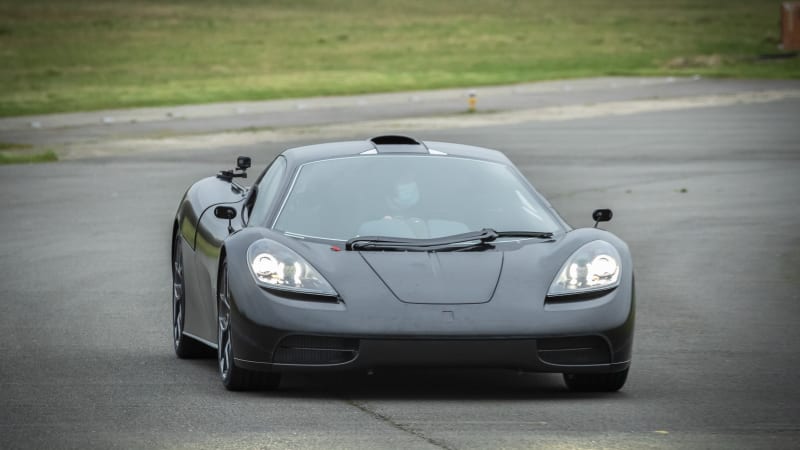
Gordon Murray Automotive is busily bringing what it refers to as “the greatest analog driver’s car” to production. Called T.50, it was introduced in August 2020, and completed its first test laps on a race track in March 2021.

Company founder Gordon Murray personally put the first high-speed test miles on the XP2 prototype at the Top Gear test track in Dunsfold, England. While the Cosworth-developed, 3.9-liter V12 engine has a 12,100-rpm red line, the prototype was fitted with a rev limiter that won’t be removed until later during the development process. And yet, Murray said his first laps behind the wheel of what many call the McLaren F1‘s heir left him with a good impression.

“The car was responsive, agile and rewarding to drive,” he beamed. Realistically, he added that there are “still a lot of development miles to be completed and many more prototypes to build” before production starts in 2022.

Murray is funneling into the T.50 the experience he amassed over decades developing Formula One cars and about 13 years running McLaren’s car-building division. As we previously reported, it’s about the size of a Porsche 718 Boxster, and it tips the scale at under 2,200 pounds, meaning it’s lighter than a Mazda MX-5 Miata. It’s equipped with innovative fan-assisted aerodynamic technology, and its naturally-aspirated 12-cylinder engine is tuned to develop 654 horsepower at 11,500 rpm and 344 pound-feet of torque at 9,000 rpm. The T.50 is quick in a straight line, but its designers are putting a much bigger focus on handling and agility than on flat-out speed.

Like the F1, the T.50 offers a three-seater cabin that puts the driver front and center. Buyers will be invited to work with the company to modify the position of the driver’s seat and the pedals during manufacturing.

Gordon Murray Automotive will begin building the T.50 in England in 2022. Production will be limited to 100 units globally, and pricing starts at about $3 million before taxes and options enter the equation. Most of the production run is already spoken for, so you’ll need to act fast if you want to secure one of the few remaining build slots.

Related video:

[embedded content]

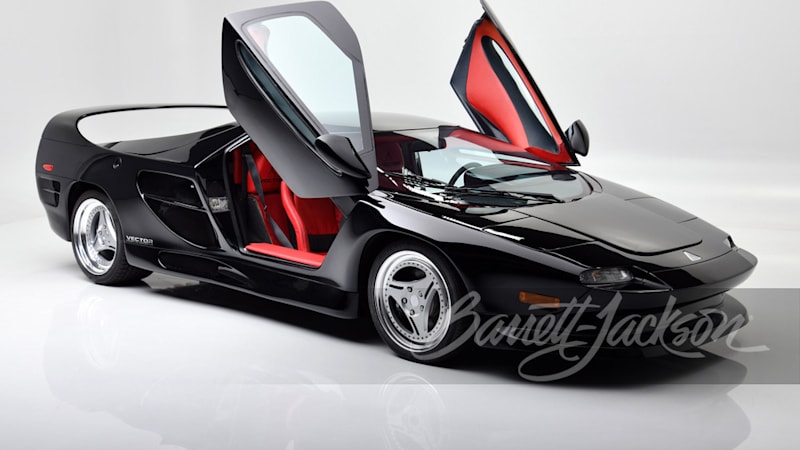
Lamborghini-powered Vector M12 supercar is ultra rare, obscure, and for sale

It’s an excellent week for fans of obscure American supercars that never really took off. One of the seven Falcon F7s built is currently being auctioned on Cars & Bids, and one of the 14 Vector M12s made will cross the auction block during Barrett-Jackson’s Scottsdale sale taking place in March 2021. Better yet, it’s offered with no reserve.

Finished in black with a gorgeous red leather interior, this M12 was designed and built for the Prince of Brunei, according to Barrett-Jackson boss Craig Jackson. High-end cars that end up in Brunei rarely leave the microstate. The Sultan’s collection allegedly includes more than 7,000 luxurious vehicles that are almost never shown to the public, yet this M12 somehow returned to the United States and found its way into the Larry Winkler collection.

Although it has traveled around the world, this M12 has evidently been driven sparingly. Its odometer shows merely 2,160 miles, and they’re claimed to be original. Barrett-Jackson also points out that it received a major, engine-out service in November 2019 during which the clutch was replaced and an upgraded ceramic flywheel was installed. Interestingly, the interior was also redesigned to make it easier for taller drivers to take the wheel.

Power comes from a 5.7-liter V12 engine borrowed from none other than the Lamborghini Diablo. It develops 492 horsepower and 425 pound-feet of torque, and it spins the rear wheels via a five-speed manual transmission built by ZF. Vector pegged the M12’s zero-to-60-mph time at 4.5 seconds, an impressive number in the 1990s. In comparison, the standard Diablo’s zero-to-60-mph time hovered around four and a half seconds, too.

M12s rarely trade hands, and they’re not cheap when they do. When this example crosses the auction block in March 2021, the market will decide what it’s worth, because there’s no reserve. The highest bidder will take it home, regardless of where bidding stops. If you want a shot at adding it to your collection, you can register to bid online.

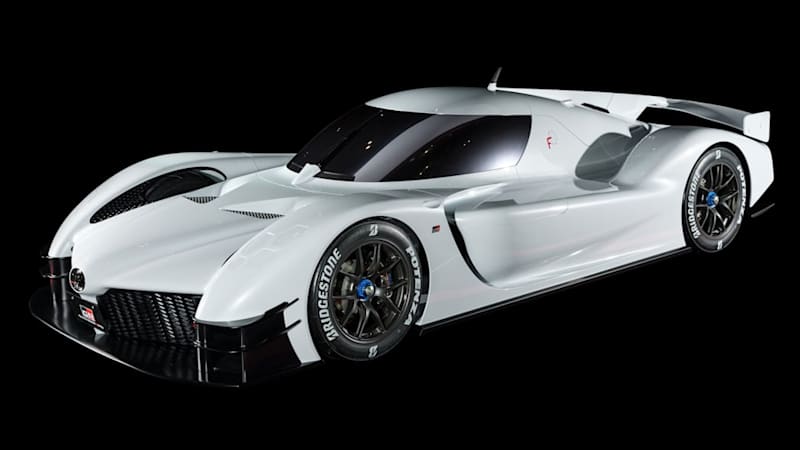
If you want to buy a Toyota GR Super Sport hypercar, you’ll have to answer some questions first

The much anticipated Le Mans Hypercar class is set to kick off later this year, and that means road-going versions of the prototype race cars will soon be upon us. As per LMH homologation rules, carmakers must build a minimum of 20 street-legal versions. One of the coolest is expected to be the 986-horsepower Toyota GR Super Sport, but with such limited production, not everyone who wants one is going to be able to buy one.

Toyota is going to carefully choose who gets the privilege, and has put out a questionnaire for prospective buyers with some interesting inquiries. For one, Toyota wants to know your car ownership history, and they don’t mean the hand-me-down Tercel you had in high school. They want to know specifically if you’ve ever owned a Toyota 2000GT or Lexus LFA, but leave spaces for 10 other write-in candidates.

For those not familiar, the 1967-70 Toyota 2000GT was Japan’s first premium sports car, costing more than a Porsche 911 at the time. Reviews of the time were very favorable, but the hand-built car sold poorly because Toyota was not yet an established marque outside of Japan. In recent years, the 337 examples that were built have sold for between $900,000 and $1.2 million.

The Lexus LFA’s production beat the 2000GT’s, but not by much. Only 500 were made, and Toyota even constructed its own carbon fiber loom to weave parts of the body. The rev-happy 552-horsepower V10 (or 571 if you got one of 50 Nürburgring versions) is considered one of the best (and best-sounding) engines of the era. Even famous Lexus hater Jeremy Clarkson called it the best car he’s ever driven.

Admittedly, those would make pretty impressive stable-mates for a GR Super Sport. Toyota is clearly looking for connoisseurs of fine Aichi steel to make the cut. Toyota also asks about what racing licenses the potential buyer might hold, how often they go to the track, and what their level of involvement in motorsports might be (answer choices range from watching on TV to owning a racing team). Apparently, Toyota wants the GR Super Sport‘s twin-turbo V6 hybrid powertrain to be used as intended.

It’s not unusual for purveyors of luxury exotics like Ferrari, Lamborghini and Aston Martin to pick its customers of limited-edition cars, but this is the first time Toyota has been so selective. It’s also a rare peek into what a carmaker looks for in potential hypercar buyers. If you think you have what it takes, fill out the survey on Toyota’s website.

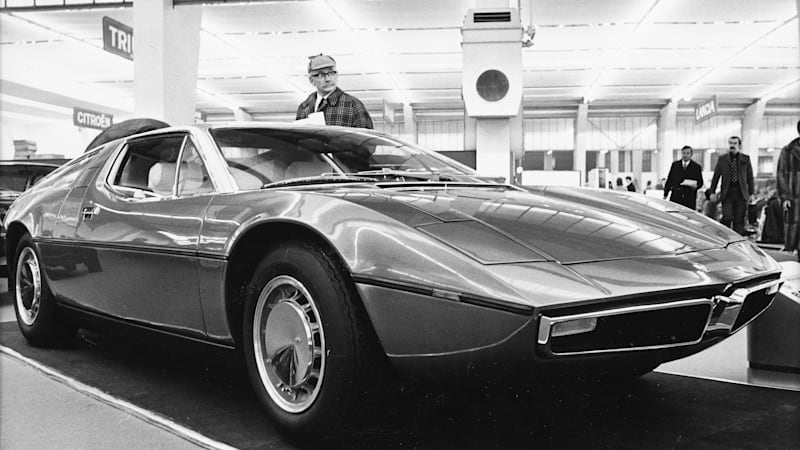
The Maserati Bora turns 50. It was ‘the thinking man’s exotic’

The Maserati Bora made its debut at the Geneva Motor Show in March 1971, meaning the V8-powered supercar from Modena has just turned 50 years old. It arrived at a time when the Italian sports car manufacturers were undergoing a paradigm shift to the mid-engined layout that defines the modern supercar.

The Bora (not to be confused with the VW sedan we knew as the fourth-generation Jetta) was named after a winter wind that blows from the Alps to the Adriatic Sea. Though it holds the distinction of being the first Maserati to employ the mid-engine configuration, it was a bit of a latecomer, following on the heels of Lamborghini’s 1966 Miura, De Tomaso’s 1964 Vallelunga and Ferrari’s 1967 Dino 206 GT.

However, it was a dramatic departure from the curvaceous designs of the 1960s. Skinned in an avant-garde wedge penned by legendary designer Giorgetto Giugiaro of Italdesign, the Bora was like a concept car come to life. Its most distinguishing characteristic, the unpainted A-pillars and roof, were polished stainless steel, a preview of Giugiaro’s DeLorean that would not arrive for another decade. Any resemblance to De Tomaso’s Mangusta was probably a coincidence (or the fact that it too was a Giugiaro design).

The Bora’s massive rear glass area showed off its aluminum twin-cam V8, nestled in a racecar-like steel-tube subframe. Motors came as either a high-revving 4.7-liter unit good for 310 horsepower and 325 pound-feet, or a torquier 4.9-liter producing 320 hp and 355 lb-ft. Delivered through a smooth-shifting ZF five-speed, it carried the car from 0-60 in a reported 6.6 seconds, and onward to a top speed of 174 mph.

The Bora modernized Maserati, offering a four-wheel independent suspension for the first time behind the Trident badge. The Bora was considered more liveable than a Countach, thanks to features like double-paned glass between the cabin and engine compartment, a carpeted engine cover, and adjustable pedal box.

Though overshadowed by its contemporaries from Maranello and Sant’Agata Bolognese, the Bora was considered the thinking man’s exotic. As evidence of its decidedly un-basic following it was even cited in 1984’s The Adventures of Buckaroo Banzai Across the 8th Dimension, describing the evil Dr. Emilio Lizardo’s escape from imprisonment: “Last night he kills a guard, breaks out of Trenton Home for the Criminally Insane. Ten minutes later, he cops a Maserati Bora. Totaled it a block away.”

It may not have the instant recognizability as some of the other mid-engine Italians, but it’s more affordable (under $150,000) and slightly easier to cope with on a daily basis. It’s still a head turner today, and with only 564 built — 289 with the 4.7 and 275 with the 4.9 — it’s a virtual certainty that it’ll be the only one at any given exotic car meet. Happy birthday, Bora.

Maserati teases us with its MC20 testing in the snow

It may be feeling spring-like here in parts of the United States, but there was still plenty of snowpack in Livigno, Italy, when Maserati took its forthcoming MC20 supercar out for a photo session during some cold-weather testing at Ghiacciodromo Livigno. 

“During its cold-weather mission, the super sports car was tested to evaluate engine cold starting, the low-temperature performance of its elastic components and the car’s handling on cold and low-grip asphalt surfaces,” said the accompanying release. “The test is also performed to verify correct functioning of the Climate Control System in cold conditions; tests were also conducted on the battery, suspensions and brakes.”

Just reading that, you’d think their trip was all business. Indeed, this is the latest stop on the MC20’s worldwide durability testing tour, but from the playful scenes we see here, it’s pretty obvious that the engineers had their share of fun giving the MC20’s suspension and powertrain a workout in the low-grip environment. 

The MC20 is a mid-engined, 621-horsepower, mid-engine super-coupe that was built with the race track in mind. Power comes from a new V6 that is the first in the company’s new “Nettuno” (Neptune) engine series. The twin-turbocharged mill produces 210 horsepower/liter, making it one of the most power-dense engines in the world. It was designed, developed, and produced in-house by Maserati’s engineers despite sharing some of its fundamental design with other performance engines in its corporate family. 

Maserati has only unveiled the street-legal variant of the MC20 seen here so far, but we expect it won’t be long before we hear more about its competition aspirations. 

Niels van Roji Daytona Shooting Brake is a one-off inspired by a one-off

Having just completed its Ferrari Breadvan Homage, Niels van Roji Design is preparing yet another custom shooting brake inspired by a classic Ferrari. This new one-off will be a tribute to another custom coachbuilt car, a Ferrari 365 GTB/4 Shooting Brake built in the 1970s.

That original car, shown in the video below, was created by British coachbuilder Panther Westwinds, and was an extensive redesign of the Daytona coupe. Not only did it get a wagon tail, but it had wild gull-wing glass openings to access luggage, a fully revamped interior, and a tweaked nose with some unusual hideaway headlights.

[embedded content]

The Niels van Roji car, based on the renderings, appears to take all the key design cues and apply them to a more modern Ferrari, as was the case with the Breadvan. While they don’t explicitly say it, the renderings, V12 engine and production dates starting in 2006 seem to indicate the base car will be a Ferrari 599 GTB Fiorano. The front will be redesigned to feature low, wide headlights connected by a bright stripe to emulate the old Daytona’s signature look. A large rear hatch will be added with big windows including a distinctive glass rear fascia for rear visibility and to house the custom taillights. Those large rear windows will also open up like they did on the original.

We’re excited to see how this car develops, as the renderings look promising, and the company’s past shooting brakes have always been impressive. No reveal date has been set, but Niels van Roji Design will share updates on its Twitter, Instagram and Facebook accounts.

Related Video:

[embedded content]

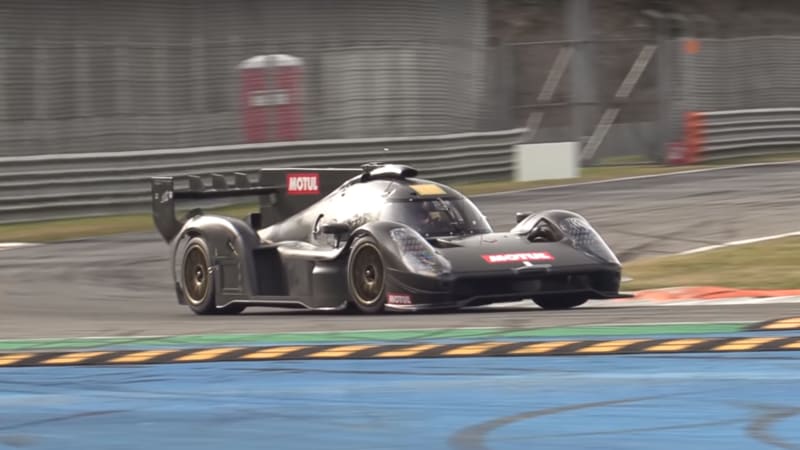
Glickenhaus 007 Le Mans Hypercar seen testing at Monza

The Glickenhaus 007 has been filmed testing at the famed Autodromo Nazionale di Monza circuit. The entry into the new Le Mans Hypercar category plans to take on the likes of Toyota and Peugeot with a twin-turbo 3.5-liter V8. And if the noise generated by the wailing motor is any indication, the new class will be a raucous good time.

[embedded content]

While limited to 670 horsepower by class rules, quite a bit lower than recent Le Mans race cars, the organizing powers that be hope slower cars and fewer development costs will help lower the bar of entry. That, in turn, should attract more manufacturers and make races more exciting. Scuderia Cameron Glickenhaus was priced out of the outgoing classes, but believes they will be competitive in Hypercar.

It also means the road-going version of the Glickenhaus 007 will have quite a bit more power — 840 from a 3.0-liter V8 at last count — than the race car it’s based on. (Similarly, Toyota’s GR Super Sports road car is said to have 986 horsepower). Hypercar rules require at least 20 street-legal versions to be built.

The Glickenhaus 007’s motor is a bespoke design developed by France’s Pipo Moteurs. That firm is probably best known for building the engines for Ford and Peugeot’s WRC cars. However, Glickenhaus’ partnerships with established names in the racing world doesn’t end there. The car is being developed by Joest, who has partnered with Porsche, Audi and Mazda on their prototype racers, and whose Bentley Speed 8 GTP won Le Mans in 2003. The aerodynamics are being developed by Sauber, famous for designing Mercedes‘ Group C racers.

Glickenhaus believes it can be the first American manufacturer to win overall at the 24 Hours of Le Mans since Ford’s last factory-backed win with the GT40 in 1967, and a privateer GT40 win in 1969. If things go according to plan, the Le Mans Hypercar class will kick off this year, with Ferrari joining in 2023, and hopefully usher in the next golden era of prototype racing.

Related Video:

[embedded content]

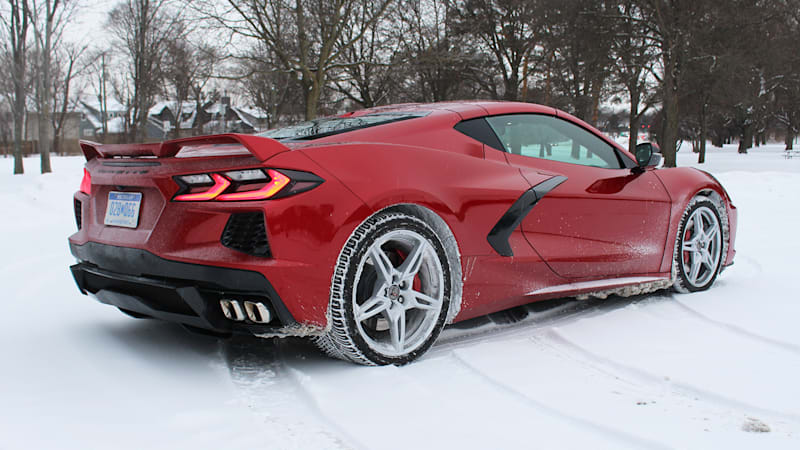
2021 Chevy Corvette loses its sub-$60,000 base price in mid-model year increase

The C8 Chevrolet Corvette snuck into its second model year without a price increase, but it’s not going to stay that way for the 2021 edition. A new report from CorvetteActionCenter.com confirms that GM is raising the base price of the C8 by $1,000 starting today, March 1.

That means the new base price for a Corvette is $60,995. It also means the days of Chevy advertising the C8 as a sub-$60,000 sports car are over. A report back in 2019 predicted that the $59,995 price wouldn’t last too long, and it’s proven to be at least partially correct.

We contacted GM to confirm the news, and received this statement — the same provided to CorvetteActionCenter.com — in response:

The MSRP of the 2021 Chevrolet Corvette Stingray coupe and convertible at all trim levels will increase by $1,000 beginning March 1. Customers who have event code 1100 sold orders and beyond by March 2 will not be impacted by the price increase on the 2021 Corvette Stingray. We monitor and adjust pricing on all our products regularly, and we’re confident the Corvette remains a winning formula of performance and attainability.

This confirms that it’s not just the base-level car getting more expensive. The price increase is applied evenly across the entire lineup. Those who have already ordered their 2021 Corvettes are the lucky ones. Anybody who was waiting will be on the hook for the extra $1,000.

Price increases are never fun, but this is one that we can stomach without much complaint. The Corvette overshoots its price by wide margins in every facet. Basically, it drives and presents itself as a car worth far more than the original $59,995 asking price. Adding $1,000 doesn’t do so much as to even dent its status as the bargain supercar that it is. That said, we’ll be watching out for continued price creep over the years. The C7 increased its price by $5,000 from start to finish. At this rate, the C8 is tracking along a similar path.

Related Video:

UPDATE: Porsche could raise its stake in Rimac, and Rimac weighs in

CLARIFICATION: An earlier version of this Reuters story said Porsche could raise its stake in Rimac to nearly 50%, but Rimac reached out to Autoblog to say that’s not so. Here is a statement from Mate Rimac:

“We have a very strong partnership with Porsche that is key for Rimac Automobili. Porsche is a shareholder in Rimac since 2018 with 15.5% ownership currently, accumulated over several rounds of investment. While it is true that we are discussing further expansion of this collaboration that will lead to increase of Porsche’s stake in Rimac Automobili, some media have mistakenly reported that Porsche would take over 50% or nearly 50% of the company.

We are very happy that the partnership with Porsche will strengthen even further, but it is in the interest of both Rimac and Porsche that Rimac is a fully independent company. We are working with many car companies that are not our shareholders and there is a clear separation between shareholding and projects. It is very important to us that our industry customers have the peace of mind that Rimac is independent and that there is an “Information Firewall” between projects and shareholders (not only Porsche, but also Hyundai and others) – and this will not change. Confidentiality is very valued in the industry and one of the basics for collaboration between companies. Our shareholders are happy with such an arrangement and expect the same level of professional behaviour and confidentiality for their projects and customer projects.

So, the point is: Porsche’s stake will increase but nowhere near to 50% and Rimac will remain independent with many industry customers that are not our shareholders/investors.”

The original story, with the 50% reference removed, appears below.

FRANKFURT — Volkswagen unit Porsche is participating in a financing round of Rimac Automobili that will see the electric supercar maker raise 130 million-150 million euros ($157 million-$181 million), its owner Mate Rimac told weekly Automobilwoche.

The fundraising should be completed in two to three months and another round is planned at the end of the year, Rimac told the trade journal.

Porsche owns a 15.5% stake in Rimac Automobili and could raise its stake in a deal that would also include the transfer of Volkswagen’s supercar brand Bugatti to Rimac, Automobilwoche said.

Volkswagen and Rimac were not immediately available for comment on Sunday.

Porsche Chief Executive Oliver Blume said earlier this month that intense discussions on Bugatti’s future were ongoing and that Rimac could play a role as the brands were a good technological fit, adding that a decision was expected in the first half of 2021.

Rimac has developed an electric supercar platform, which it supplies to other carmakers, including Automobili Pininfarina.

“Supercars have a limited market, the market for components is much bigger. That is why we are planning to expand our company,” Rimac told Automobilwoche.

That includes plans to more than double Rimac Automobili’s workforce by early 2023 to 2,500 from 1,000 currently, he said.

Related Video:

[embedded content]

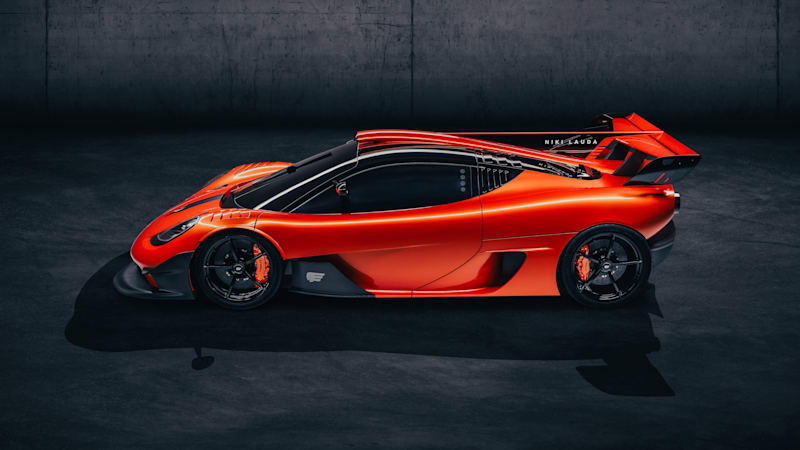
Gordon Murray unveils the 725-horsepower track-built T.50s Niki Lauda

Formula One legend Niki Lauda would have been 72 years old if he were alive today. Though he died in 2019, we think he would have heartily approved of the new Gordon Murray T.50s, which will also be called the Niki Lauda as an homage.

That’s because Lauda drove the Brabham BT46B “fan car,”  the Formula One car that inspired the T.50’s technological centerpiece, to its only victory. The downforce-generating fan helped Lauda win the 1978 Swedish Grand Prix to the dismay of rival teams. Murray also designed that car, and wanted to pay tribute to his friend and three-time F1 champ.

Like the Brabham, the T.50s is not street legal. It’s billed as a track version of the GMA T.50, the supercar Murray designed as a pure driver’s antidote to the status barges that modern supercars have become. The Lauda leans harder into Murray’s philosophy of lightness. Over 200 pounds have been stripped from the road-going T.50, thanks to one less passenger seat in the 1+2 layout, a stripped-out interior, and thinner glass. Total weight, 1,878 pounds.

However, reduced mass isn’t the only performance enhancement. The Cosworth-built 3.9-liter V12 now makes 725 horsepower, or 66 more ponies than the standard model. Part of that gain comes from a central roof-mounted intake drawing air into the engine, as well as the removal of any sound restriction hardware from the exhaust.

For the track model, one of the street T.50’s dearest features, an old-school manual transmission, has been replaced with a six-speed paddle-shift Xtrac. According to GMA, the gear ratios are more closely spaced on the race car, so a stick shift didn’t make sense; the driver would lose precious milliseconds switching gears and taking hands off the wheel.

The Lauda adds several aerodynamic aids that visually differentiate it from the T.50, starting with a wide lower air dam. A trio of NACA ducts funnel fresh air into the cabin and toward the front brakes. A long dorsal fin like the ones found on Le Mans prototypes extends from the cabin roof to the rear, where a GT-style rear wing spans the tail. According to GMA, it generates as much as 3,300 pounds of downforce at 175 mph.

Inside, the central instrument pod has been replaced with a digital screen, and the standard steering wheel with a yoke-type handle. Taking the space on the right, where the manual shifter and console would have been, is a board of toggle switches.

There will only be 25 Niki Laudas produced. Each will feature a plaque celebrating a victory by one of Murray’s many F1 car designs, starting with the 1974 South African Grand Prix at Kyalami Circuit. Production begins January 2022, and despite a $4.3 million price tag, GMA says 15 cars are already spoken for.

Marc Philipp Gemballa’s 959-inspired supercar will have an engine tuned by RUF

Last year, Marc Philipp Gemballa, the eponymous supercar company started by Uwe Gemballa’s son, said it would build a heavily modified 911 Turbo S inspired by the Porsche 959 Dakar Rally cars. Based on the official render and past announcement, it will have retro-inspired body work and the ability to drive fast even on rough dirt roads. Since last year’s announcement, the company has developed a number of partnerships for development, and the latest was announced this week: RUF.

Yes, the legendary Porsche tuner and supercar builder is working with MPG to develop the engine for what the company is only calling “Project Sandbox.” It will be based on the 911 Turbo S engine, which starts with 640 horsepower and 590 pound-feet of torque. MPG and RUF say that the upgraded one will make more than 750 horsepower and 686 pound-feet of torque. The MPG car won’t be the only car to benefit, though, as the company said that RUF’s upgrades will be available for owners of regular 911 Turbo S cars looking for more power.

Other major automotive partners helping develop the MPG Project Sandbox include KW Automotive, Michelin, Akrapovic, VELA Performance and KLK Motorsport. The finished car will be revealed this spring, and production will begin later this year. MPG will build 40 examples, and the 10 first edition models have already been sold.

Related Video:

The Maserati MC20’s new Nettuno V6 is a high-tech showpiece

It’s been more than two decades since Maserati was in the business of developing an in-house 90-degree V6 engine, and the last one it had traced its genealogy back 30 years. That story started in 1968, when Citroën took a controlling stake in Maserati, and the French requested that the Italians create an engine for the 1970 Citroën SM. Famed Maserati engineer Giulio Alfieri designed a 2.7-liter V6 producing 170 horsepower that could be built using Maserati’s existing V8 tooling, hence the 90-degree angle. Alfieri then revised that V6 and bored it out to three liters, upping output to 187 hp, for use in the 1972 Maserati Merak.

A decade later, Maserati – now owned by Alejandro de Tomaso, who had fired Alfieri — started with Alfieri’s V6 philosophy when developing a mill for a new sports car. The resulting V6 unit, in 2.0-, 2.5-, and 2.8-liter displacements, was the first twin-turbocharged motor put into a production car. That car? The hot, gorgeous mess known as the 1984 Maserati BiTurbo.

Almost 10 years on, the 1992 Maserati Ghibli II would get a 2.0-liter version of this 90-degree V6 making 306 horsepower. The 1995 Ghibli Cup turned that mill up to 330 hp, crowning the 2.0-liter V6 as the most power-dense engine in a production car, surpassing 1990s icons like the Jaguar XJ220 and original Bugatti EB110 (both 155 horsepower per liter).

When the Ghibli exited production in 1998, Maserati ceded engine development duties to Ferrari by order of Fiat, which owned both automakers.

Nettuno, the new beating heart of Maserati

Now we have the Nettuno, a 90-degree 3.0-liter V6 created to power Maserati’s renaissance and making its debut in the chunky, aerodynamic form known as the MC20. At 630 horsepower and 538 lb-ft of torque, the engine almost picks up where the Ghibli Cup left off: with 210 horsepower/liter, the Nettuno is one of the most power-dense in the world. The Bugatti Chiron, Ford GT, and McLaren 756LT don’t crack 200 hp/l. The only production cars in the ballpark are Euro specials like the Mercedes-AMG A45 (208.4 hp/l). Beyond it are seven-figure hypercars like the SSC Tuatara (229 hp/l) and Koenigsegg Jesko (256 hp/l on gas, 320 hp/l on E85).

The word we’re looking for in Italian is bentornato. Welcome back, Maserati.

The automaker recently hosted a virtual tour of its Engine Lab in Modena to show off the work put into the Nettuno’s intricate internals and assembly, and our first question probed the Nettuno’s origins. We’ve written before about reports that the Nettuno is derived from the Ferrari F154 V8 that Maserati uses in the top Ghibli, Quattroporte, and Levante trims. Alfa Romeo turned the F154 into the six-cylinder 690T engine for its Giulia and Stelvio Quadrifoglio trims. Bozi Tatarevic investigated the Nettuno, scanning everything from part numbers to cooling jackets to determine that while the Nettuno’s heads are unique, fundamental elements of the block’s design and many ancillaries appear cribbed from the Ferrari and Alfa Romeo antecedents.

What’s more, the Nettuno is designed as two three-cylinder motors working off a common crank containing four main journals and three rod journals that each hold two pistons. As an even-fire engine, the crank experiences a firing event every 120 degrees. These principles could all have been lifted from the Alfa Romeo 690T.

We asked Maserati chief engineer Matteo Valentini about the F154 connection. He replied, “Of course it has solutions you can find on other engines, but please don’t be fooled by the external shape of the engine.” He admitted Maserati engineers took advantage of knowledge throughout Fiat-Chrysler – the same resource sharing one finds at other OEM conglomerates like General Motors and the Volkswagen Group. Yet, stressing the in-house, beginning-to-end development of the new V6, Valentini said the engine “is designed by us, developed by us, produced by us, and assembled by us.”

The Nettuno shares its architecture with Alfa Romeo’s 690T but is cast by a different supplier, and the block “has different content inside, it has a different bore, [and] it has different oil ducts.” In his assessment, the heart of Maserati going forward is “a brand-new project that makes use of all the experience we had in the past.”

Pre-chamber combustion provides a 100-hp boost

The twin-turbo V6’s killer app is unequivocally not shared with the Ferrari and Alfa engines: pre-chamber combustion, an ignition technology German supplier Mahle started working on in 2010. Mercedes-AMG Petronas F1 adopted it in 2014, and Mahle provided it for Ferrari Formula 1 cars in 2015. The tech has served large-bore stationary gas engines for decades, and Honda put a variant of this technology on its CVCC engine more than 40 years ago.

Under certain conditions, a pre-chamber atop the combustion chamber shoots directed jets of flame into the cylinder during ignition. This induces more complete combustion and reduces emissions. A cost-effective solution for modern car engines, however, needed to address shortcomings including unwanted NVH, substandard efficiency at low engine loads, and stringent emissions regulations.

Pre-chamber ignition, which comes in active and passive forms, generally uses one spark plug. Maserati’s passive method fills in the pre-chamber’s weak spots by using two. One plug sits in the 1.5-cc pre-chamber. A second plug pokes its electrode into the side of each oversquare chamber. This makes the Nettuno a twin-spark engine with dual injection; port-injection works on a 6-bar fuel rail, direct-injection on a 350-bar fuel rail. Maserati’s patent application for the tech says it enables a 15% increase in compression ratio and a fuel consumption reduction of up to 30%. (Before anyone accuses Maserati of stealing Alfa Romeo’s twin-spark cleverness, Maserati was making twin-spark engines as far back as the 1950s for the inline-six in the 250 F race car, and later for road cars like the Mistral that also featured dual overhead cams, fuel injection, and hemispherical combustion chambers.)

Maserati’s press releases have explained the second plug “[ensures] constant combustion when the engine is operating at a level that doesn’t need the pre-chamber to kick in.” We asked Valentini about the performance parameters that activate the pre-chamber ignition, he told us the system isn’t binary; rather, the pre-chamber ignition always contributes.

“At mid and low loads,” he said, “the standard injection is predominant. When you go from mid to high loads, the prechamber takes the advantage, and we … play with the spark advance in order to give the right priority to one of them.”

We asked how much power the pre-chamber ignition adds, he said a touch more than 100 horsepower. The Nettuno goes from roughly 510 horsepower on standard injection to 620 or 630 with pre-chamber assistance.

Speaking of power contributions, the Nettuno’s turbos have been programmed to wind up to 3 bar (43.5 psi) so far and have electronically controlled wastegates. As for why the turbos hang off the side instead of being nestled between the cylinders, Valentini said the team looked into a hot-vee setup, but couldn’t find a simple, reliable solution able to hit the targeted 210 horsepower/liter. The traditional arrangement is cleaner and creates a lower center of gravity.

The dottori will build you, now

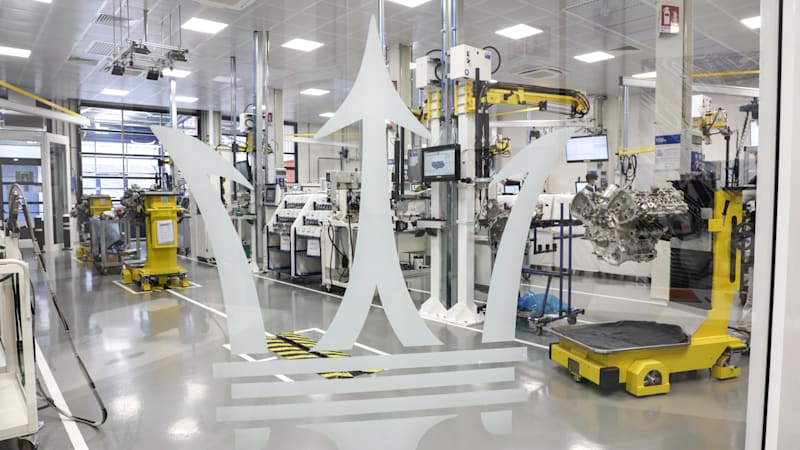
Maserati has not only given the Nettuno a supercar home, the engine gets supercar production techniques. There are about 1,300 parts in total, divided into roughly 100 sub-assemblies and pieces. Inside a clean room at the Engine Lab at the automaker’s historic Viale Ciro Menotti facility, a tiny number of technicians – Maserati calls them dottori (“doctors”) – turn those 100 constituents into a Nettuno in six stages. Each stage requires three to four hours, so one engine can take three full working days to complete. Powertrain facility manager Jonata Azzali told us the length of time required is partly why Maserati felt it better to spread the process among technicians instead of having one person build one complete engine.

But let’s face it, while Maserati has been lauded for hand-crafted luxury, the brand hasn’t always fared well with hand-built technology. On the Nettuno, the automaker is far more focused on eliminating failure points than celebrating individual artisans. Azzali’s tour of the build room was really a tour of the numerous digital safeguards Maserati has implemented for quality control.

The HVAC system keeps the build room at positive pressure to expel errant particles. Two screens at each build station illustrate what must be done and how it must be done. Cameras placed on the ceiling, on fixed equipment, and on tools monitor items such as proper seal placement on the cylinder liners and pistons. Electronic wrenches and screwdrivers monitor and record the torque applied to screws and bolts on every Nettuno. For the exhaust manifold, the screwdriver’s digital sensors are backed up by a camera that ensures the screws are inserted in the proper order. When assembling main and rod bearings on the crank, bar-code sensors control a set of drawers that only allow the technician to access the proper bearing for the next step in the procedure.

Toward the end of the build, a 21-point helium test checks for leaks in the injection and fuel systems. This follows leak checks performed during the assembly, like that done just after the valves are installed. Finally, every Nettuno is sent to a test bench for 40 minutes to verify its horsepower and torque figures. And once per month, Maserati selects a random engine for a four-hour bench test.

The current setup produces four to six engines per day, up to a maximum of 10. Unsurprisingly, with the Nettuno being prepped to earn its keep on racing circuits around the world – and designed without a balance shaft – Maserati engineers tuned its personality “to underline the race soul of the engine.” NVH calibration was set at idle, whereas stints at full power impart a “race feeling.”

And despite the voluminous technical considerations, feeling is what this is ultimately about. A brand preaching Italian character and passion for nearly 90 years won’t be served by mechanical excellence bereft of a soul. The answer to whether the Nettuno possesses such anima awaits in our first drive of the MC20.

McLaren Artura is a thoroughly new hybrid supercar

For the first time since the P1, McLaren has returned to the hybrid game with the Artura. And although it looks an awful lot like McLaren’s Sports Series supercars, it’s apparently an all-new car underneath, and it packs a very new twin-turbo V6 paired with an electric motor.

The Artura, as previously announced, is based on a new carbon fiber tub, as well as many new chassis components. The rear suspension is all new, too. But the highlight is that hybrid twin-turbo 3.0-liter V6. It’s a 120-degree-angle engine with the turbos nestled in the V, and features a dry-sump oil system and 8,500-rpm redline. It also happens to be 110 pounds lighter than McLaren’s usual V8s. Alone, it makes 577 horsepower and 431 pound-feet of torque. But it’s also paired to an electric motor that makes 94 horsepower and 166 pound-feet. Together they make 671 horsepower and 531 pound-feet of torque. The motor also helps to fill in for the lack of torque at low rpm and provide better throttle response. With the 7.4-kWh battery, the motor can further provide gas-free driving for up to 19 miles.

The engine and motor are paired with an eight-speed dual-clutch automatic transmission. It’s unique in that it has no reverse gear, since the electric motor simply spins the other way for reverse. This makes the transmission smaller and lighter. Power goes solely to the rear wheels, and between them is an electronically controlled mechanical limited-slip differential, a first for McLaren.

McLaren is quite proud of the fact that, despite the Artura including an electric motor and battery pack, the car weighs in at a respectable 3,305 pounds. With the relatively light weight and powerful engine, the car is capable of reaching 60 mph in 3 seconds on the way to a top speed of 205 mph.

Performance isn’t everything, though, and McLaren recognized this with the interior. It features a rather organic design, particularly for the instrument screen. That screen is attached to the steering column, so it moves and adjusts with the steering wheel. To the right is an 8-inch infotainment screen with an interesting watch crown-like control dial. The interior is packed with modern amenities such as Apple CarPlay, Android Auto, adaptive cruise control, lane-departure warning, automatic high-beam headlights and even over-the-air updates.

The Artura goes on sale in the third quarter of this year. Base price is $225,000. It will be available in four trims: the base model, Performance, TechLux and Vision.

Related video: