All posts in “Supercars”

Bugatti begins winding down Chiron production

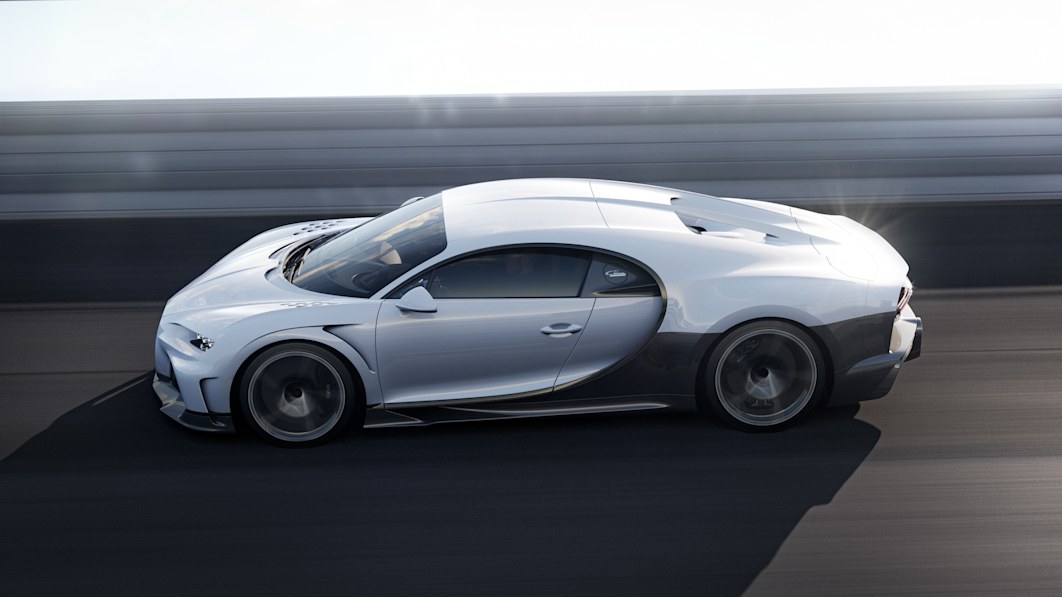
Bugatti’s stunningly powerful Chiron has almost reached the end of the line. While the standard model is sold out, there are still some Pur Sport and Super Sport build slots available for buyers who want to add the hypercar to their collection before it sprints off into the sunset.

Developed to replace the Veyron, the Chiron was unveiled at the 2016 edition of the Geneva auto show with a 1,500-horsepower, quad-turbocharged W16 engine mounted behind the passenger compartment. Deliveries started in March 2017, and the 100th unit was delivered to a customer in the Middle East in May of the following year. Bugatti reached the 250-car milestone in February 2020, and it built the 300th Chiron in March 2021. It said that the final examples of the Chiron and the Chiron Sport are either being built or scheduled to be built.

What’s left, then, are less than 40 build slots split between the Pur Sport and the Super Sport (pictured) variants, though Bugatti told Autoblog some of those are slotted for production but haven’t been configured yet. The curtains will close when the final units are built. 

There’s no word yet on how long it will take to fill the remaining build slots; Bugatti stressed that demand for the Chiron has increased significantly in 2021. Sales doubled and even tripled in some regions during the third quarter of the year. As for what’s next, your guess is as good as ours. Bugatti is now controlled by Rimac so rumors sketching the outline of an electric model are rampant, though nothing is official. We’ve also heard vague details about a second model line, one that could slot below the Chiron, but those reports also remain speculative.

What’s certain is that something will take the torch from the Chiron.

“We will not just recycle what we have — not restyle the Chiron or hybridize the Chiron. We’re developing a completely new product from the ground up. Everything, because we think that’s the best way to go. That product will have an internal combustion engine,” said Mate Rimac.

In the meantime, Bugatti’s factory will stay reasonably busy: the French brand will soon launch production of the EB110-inspired Centodieci, which is limited to 10 examples, and it’s planning to build 40 units of the Bolide, a track-only two-seater that weighs less than a Subaru BRZ.

Related Video:

Bugatti’s EB110-inspired Centodieci is one hot step closer to production

Bugatti’s heritage-inspired Centodieci is related to the Chiron, but it’s different enough to require its own set of validation tests. After taking on the Nürburgring, the limited-edition hypercar was put through its paces in the scorching heat of the American Southwest’s deserts.

“Testing in the hot, dry desert is a huge help for us in the development process,” explained Stefan Schmidt, an engineer in Bugatti’s overall vehicle development department. “Every model has to run flawlessly in all weather and in all traffic conditions,” he added.

With no less than 27 engineers in tow, the Bugatti team started the hot-weather test in California and meandered east for about 500 miles until it reached Arizona, where temperatures sometimes climb to over 120 degrees. The convoy included eight cars: a Centodieci prototype, three examples of the Chiron Pur Sport, and four examples of the Chiron Super Sport. Each one was fitted with approximately 200 sensors that record various parameters that get sent to the engineers traveling with the convoy and to the development team in Wolfsburg, Germany.

Heat takes a toll on cars in normal driving conditions, but Bugatti went the extra mile to torture its prototypes. It subjected them to low-speed stop-and-go traffic, it reached nearly 200 mph (on a closed track, of course), and it left them sitting in the sun with the air conditioning on. The aim is to see how different components (ranging from the fuel delivery system to the materials used to build the cabin) hold up to extreme heat. The data gathered during the tests was compared to the numbers obtained through simulations to identify areas of concern.

Taking the Centodieci to the American desert was important; it’s notably fitted with an additional air intake near the oil cooler.

“The Centodieci’s newly-developed bodywork, airflow changes, and its engine bay cover manufactured from glass mean the temperature behavior is quite different, especially in such extreme heat conditions,” said André Kullig, the manager of few-off projects at Bugatti.

The firm notes that the Centodieci passed the hot-weather tests with flying colors. It has one final hurdle to clear before it enters production: nearly 20,000 miles of high-speed and endurance testing in Europe. When that’s over and everything checks out, the project will be signed off and production of the 10 examples planned will begin in Molsheim, France. Deliveries should start in 2022, and the model is sold out.

Related Video:

Officine Fioravanti Testarossa is subtle and sensational

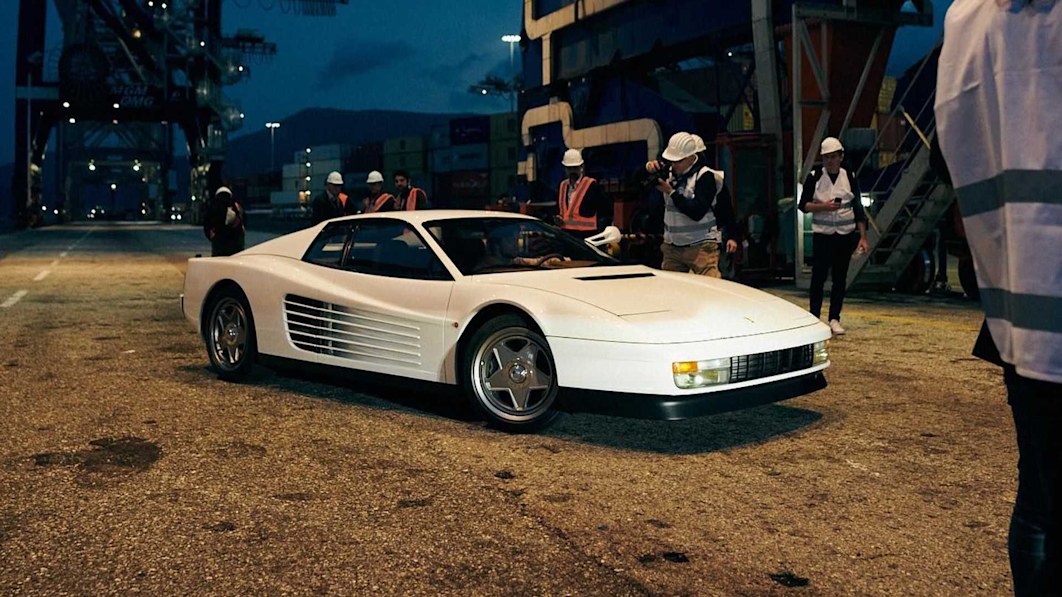
In May, Swiss design and engineering outfit Officine Fioravanti showed its work-in-progress, a camouflaged Ferrari Testarossa restomod. Shy about giving too much away at the time, all we learned was that there was more horsepower and torque from the 4.9-liter flat-12, and a top speed of something like 200 miles per hour. All of those figures were healthy improvements on the original 1984 icon. The people behind the project are finally ready to show it off, and by all appearances, they’ve pulled off a special piece of art. 

Part of what’s special is that you’d have to be a Testarossa connoisseur to tell anything has been done from the outside. The most apparent change is the larger wheels, the first-gen 16-inchers replaced with a set of staggered center-lock alloys, 17 inches in front, 18 inches in back, shod in Michelin Pilot Sport rubber. The first few years on sale, the original Testarossa sat on magnesium center-lock wheels that were either 16 or 16.33 inches in diameter, a little too exotic for then, but not now. Behind those wheels sit Brembo brakes, six-piston calipers in front, four-piston in back. The other tell is the quartet of titanium exhaust tips poking out the back. The rest is by the book, down to the pop-up headlights and high-mounted driver’s side flying mirror. That mirror was the ultimate in cool for anyone who didn’t need to drive the car.

Upgrades are hidden under that stock-standard skin from stem to stern. The 12-cylinder puts out 500 horsepower and 443 pound-feet of torque, a bonus of about 120 horses and 96 pound-feet. That’s thanks to changes like an improved block, new intake and exhaust systems, a new fuel injection system developed in-house, and a redline that’s been raised from 6,800 rpm to 9,000. Officine Fioravanti worked with Ohlins to develop an electronic adaptive suspension with remote reservoirs and six-way adjustable roll bars, then went further with a front-lift system to get up unkind inclines. The exhaust, traction control, and ABS are also adjustable, and those latter two driver aids can be turned off. These tricks, plus a flat floor and a 267-pound diet compared to the original, increase top speed to 201 miles per hour, which is 16 mph more than Road & Track managed in 1987.

No one would accuse a stock Ferrari Testarossa interior of not being nice, but this one is much nicer. Officine Fioravanti replaced a lot of plastic with aluminum, added a lot more stitched leather, and kept the built-in Gordon Gecko phone but turned it into a Bluetooth unit. Ferrari’s car in the 1980s could be optioned with a six-piece set of Schedoni lugguage, the Swiss restomodders made their own. And, yes, there’s a premium audio system that works with Apple CarPlay, and built-in navigation.

Officine Fioravanti says there will be an official debut later this year. When that happens, perhaps we’ll find out where this outfit sprang from. It appears to be connected to Leonardo Fioravanti, the longtime Pininfarina designer who penned so many legendary Ferraris that it would be fair to suspect he made a deal with the devil, including the 1984 Testarossa. That Leonardo maintains an office in Milan and works with automaker clients, whereas Officine lists its HQ in Coldrerio, a town 40 miles away from Milan just over the Swiss border. We should find out how much this jewel is going to cost and how many will be made, our guess as to the answers being, “A lot, and a few.”

Related Video:

Tour the Venom F5 with Hennessey’s design director

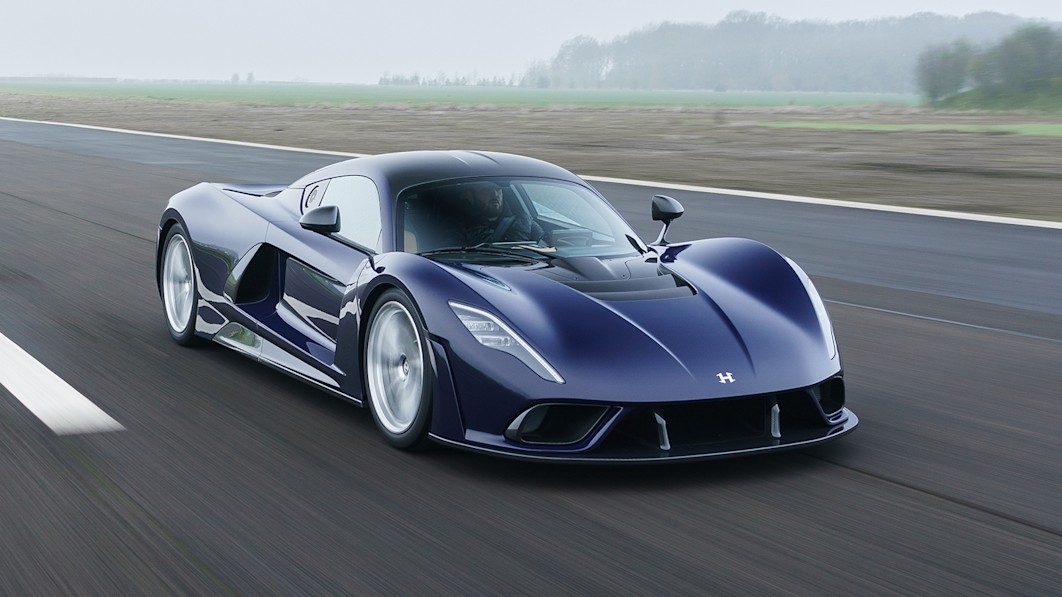
We’ve watched the Hennessey Performance Venom story for 14 years now. When the Lotus Elise-based Venom GT ran an unofficial 270.49 miles an hour at the Kennedy Space Center and that wasn’t enough to convince the Guinness Book of World Records, Hennessey decided to start over on a speedster built on an in-house platform. That turned into the Venom F5, the F5 designation taken from the Fujita Scale used U.S. from 1971 to 2007 to measure the strength of tornadoes. The strongest twisters were designated F5, with winds estimated at anywhere between 261 and 318 miles per hour. The one-word descriptive the National Oceanic and Atmospheric Administration used for such phenomena applies equally to the weather and the car: Incredible.

Hennessey design director Nathan Malinick takes us on a tour of everything the Texas car builder has done with the F5 in an attempt to reach the speed of the fastest tornado winds. Without giving everything away, there are fine engineering details like the badge at the front of the car, a slice a aluminum just eight microns thick. There are aesthetic details like headlights designed to mimic the shape of an F. There are combined engineering and aesthetic flourishes like the rear spoiler, its sinuous bends a pleasure to behold at the same time as it channels air into the turbos and over the rear of the car. And there are engineering firsts like the rear bumper, which Malinick says is the largest single piece of molded and milled carbon fiber in the car industry.

There are plenty more whats and whys in the video, so check it out. All 24 examples of the Venom F5 planned for production have been sold, so this could be the closest you ever get to it.

Related Video

James Bond’s latest Aston Martin is coming to ‘Rocket League’

It wouldn’t be a new James Bond movie without a few tie-ins, and No Time to Die is clearly sticking to that rule. Psyonix and Epic Games have revealed that Bond‘s Aston Martin Valhalla, the first hybrid car in the game, will be available in Rocket League (complete with matching audio, decal and wheels) for 1100 Credits starting October 7th. You’ll also find three in-game challenges to unlock a Bond-themed avatar border, banner and player title.

Completists will have the option of buying a Bond 007 Collection between October 7th and October 13th that includes both the Valhalla and the classic DB5 for 2,000 Credits. The DB5 was released in July, but this could represent a better deal for Bond aficionados.

The expansion isn’t a surprise when Epic has lots of money to throw at promotional deals. This could boost interest in Rocket League among either diehard Bond fans or newcomers looking for more real-world cars. If nothing else, it should be amusing to watch 007 score a flying, upside-down goal or two.

Reporting by J. Fingas for Engadget.

Related Video:

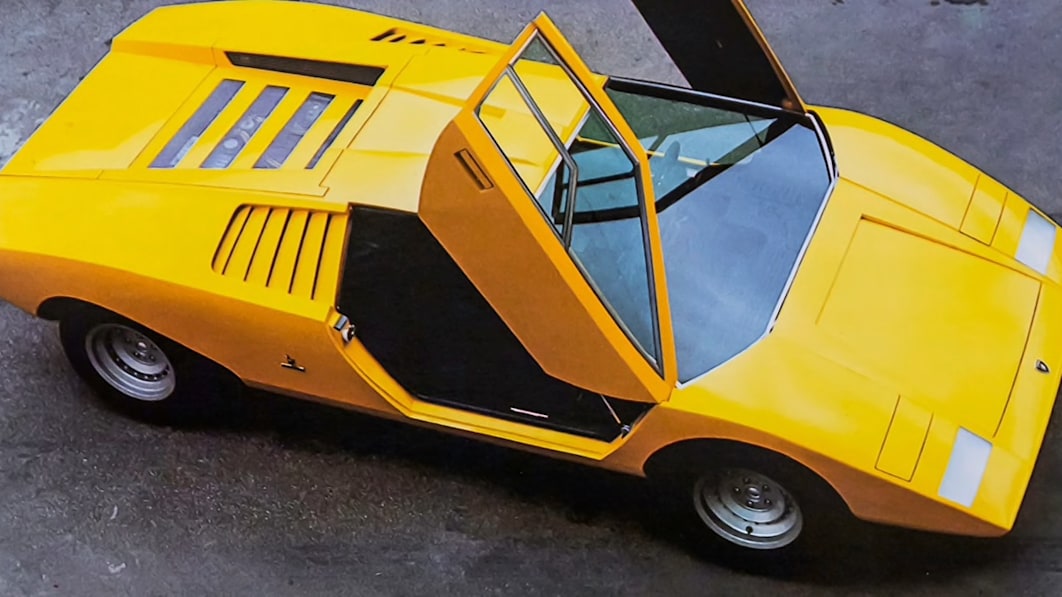
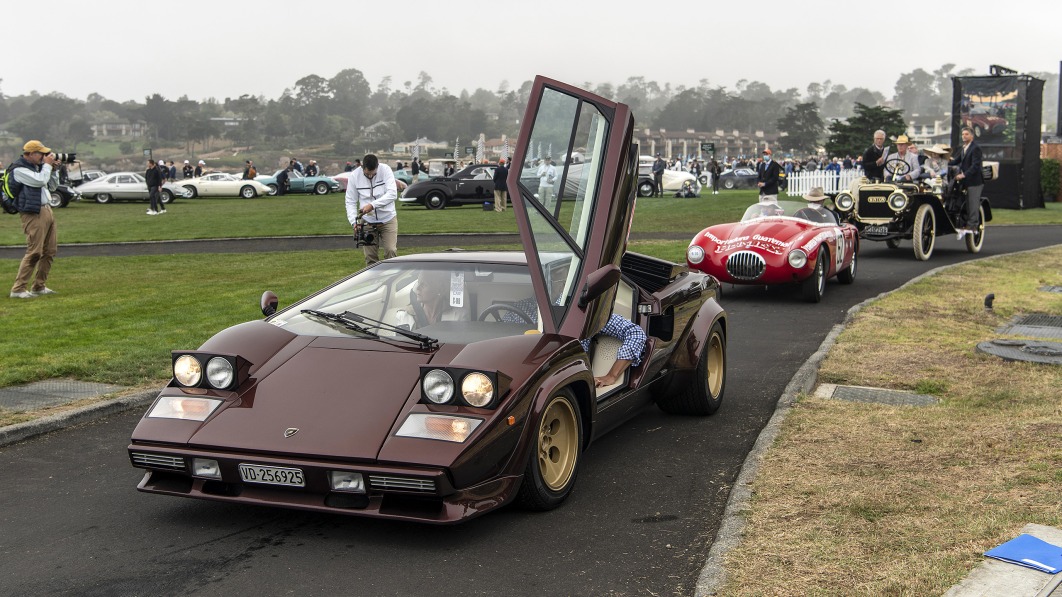
1971 Lamborghini Countach LP prototype 500 lives again

On March 11, 1971, Lamborghini unveiled the Countach LP 500 prototype at the Geneva Motor Show on the Carrozzeria Bertone stand. Lamborghini had also brought the reworked Miura P400 SV to the show, and believing it would be the star, had placed the Miura at its own stand and dispatched the Countach to the design house stand. Admittedly, Lamborghini had done the same thing in 1966 when the Miura debuted in Geneva. The Countach ruled the 1971 show and was soon on magazine covers around the world. The Italian house spent three years developing the prototype for production, putting the Countach LP 400 on sale in 1974. The prototype sacrificed its life during crash testing for the production model.

Now the prototype is back, or the best facsimile thereof. Lamborghini says “an important collector” approached the firm in 2017 asking if they could recreate the yellow shock that started the 50-year craze for V12 engines and scissor doors. That customer might have got his idea from the 1971 Miura P400 SV prototype that Lamborghini restored in 2017 using archival documents. So the automaker’s classics division, Polo Storico, went back to the archives for drawings, documents, meeting notes and pictures; interviewed people who were there at the time; and contacted suppliers like Pirelli for an updated version of the Cinturato CN12 and paint maker PPG for the Giallo Fly Yellow Speciale color.

It took 2,000 hours for the design house, Lamborghini Centro Stile, to reproduce the bodywork, all of it hand-beaten as it was in 1971. It took more than 25,000 hours to recreate the entire coupe with parts that were either original, restored, or fabricated from scratch ranging from the platform frame (instead of the tubular frame in the production car) to the partially electronic instrumentation. Lamborghini didn’t mention the engine, though. The prototype contained a 5.0-liter V12; the production model downsized that for a more reliable 4.0-liter unit. We’ll guess a collector committed enough to pay for 25,000 hours of Lamborghini work wouldn’t compromise on the heart of the matter. Whatever’s back there, it sounds righteous in the video. 

The result is now on display in the concept class at the Concorso d’Eleganza Villa d’Este. Lamborghini didn’t mention a price, either, not that it matters; there’s enough money in the world that the company brought back the Countach, it might as well revive the true original.

Related Video:

All of the Bond cars of ‘No Time To Die’ (caution for spoilers)

Note: The following overview of the cars in No Time To Die contains spoilers. Read at your own risk, or come back after seeing the film to make sure you caught everything.

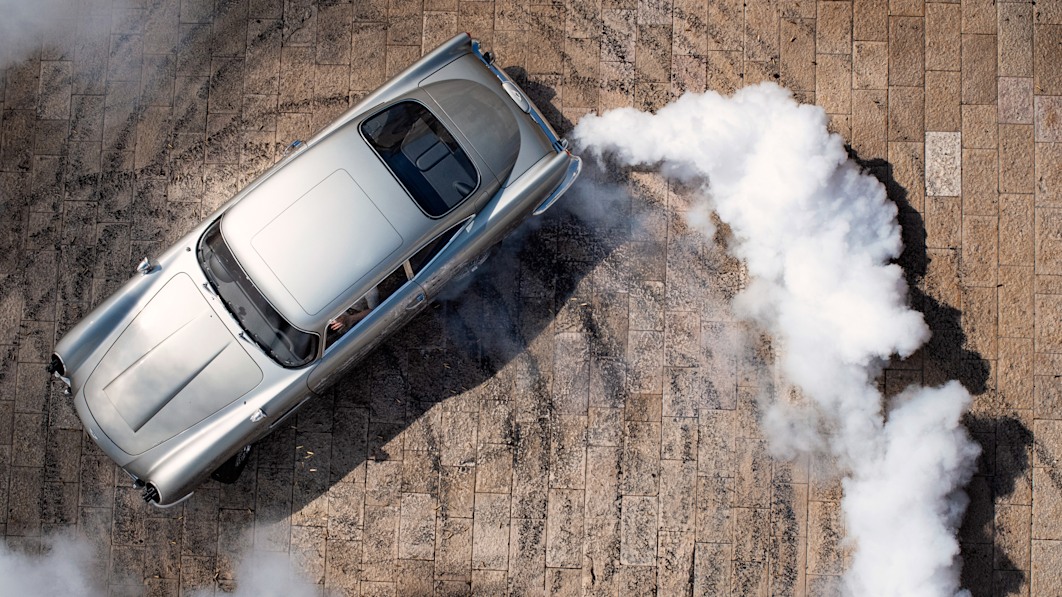
No Time To Die picks up right around where Spectre leaves us. James Bond (Daniel Craig) and Madeleine Swann (Léa Seydoux) are driving along in Bond’s restored and iconic DB5 in Matera, Italy. Things don’t stay all that cheery for long in picturesque Matera, though. As is tradition in Bond films, the first car chase hits us with an explosion of action in what’s a super-long opening scene.

Fourth-gen Maserati Quattroporte: The baddies in the beginning are driving a Maserati and chasing after Bond in the DB5. Specifically, they’re in a fourth-gen Quattroporte, which feels right for a chase scene in Italy. Its squared-off looks are mean enough, and its Italian growl is a good background soundtrack to the DB5’s inline-six.

In addition to the Quattroporte, the chase scene in Matera is home to a couple of the best stunts of the entire movie, including the arch jump done with a Triumph motorcycle seen in trailers — Matera is extremely hilly.

Eventually, Bond and Swann find themselves in the DB5 again together, which is where the famous gatling gun scene from the trailer commences, but not before the bulletproof windows and body of the DB5 are thoroughly tested. RIP to the first-gen Range Rover Classics and Jaguar XFs that joined the Maserati in pursuit of Bond (here’s a list of other Bond cars over the years).

As the DB5 escape scene concludes, we catch a glimpse of what appears to be a Ferrari from the 1970s. However, the view was far enough away that we’ll need a second look to be sure of the exact model.

Land Rover Series III: Next time we see Bond, he’s fishing in Jamaica and driving around a blue Land Rover Series III. It’s yet another of the many Land Rover products featured throughout the film, and unlike most of Bond’s Aston Martins, this one doesn’t seem to have any unique features. The other intriguing vehicle out of Jamaica? An old Chevrolet Bel-Air expertly and effectively piloted by Bond newcomer, Ana de Armas.

Next up, we get a few shots of the new and still-not-for-sale Aston Martin Valhalla mid-engine supercar (also seen in trailers). Bond’s old boss M is in the scene which appears to have been shot in some secret wind tunnel of sorts. Much to our dismay, nobody ends up driving the Valhalla in the film. Could it be a teaser for what the next 007’s car is? There’s a decent chance of that, considering the Valhalla played such a small role in this Bond film.

Aston Martin V8 Vantage: Boy were we happy to see the original V8 Vantage from the late 1970s and 1980s make an appearance. In fact, it made multiple appearances throughout the film. It’s difficult to get a more badass combo than Daniel Craig behind the wheel of a blacked-out Aston Martin Mustang.

Off-road vehicles aplenty: As seen on several trailers, things take a turn to the off-road side of things with flying Land Rover Defenders — Land Rover even made special James Bond versions of the SUV. Bond wasn’t behind the wheel of any of these Defenders, though. Instead, he pilots a Toyota Land Cruiser in the Norway portion of the film as he’s pursued by Range Rover Sport SVRs and Defender V8s with double the horsepower. Plus, Triumph motorcycles are back again for the two-wheel enthusiasts in this bumpy chase scene.

Aston Martin DBS Superleggera: The stunning and still relatively new DBS Superleggera rocks up to the party in Norway, too, quickly showing everybody its bonkers 715-horsepower V12 is nothing to sneeze at. This two-seat Aston is piloted by Nomi, Bond’s 007 replacement, and she’s clearly gone through the same secret agent driving training that Bond did.

And that, ladies and gentlemen, is where we’ll leave you without getting too spoiler-heavy. There are plenty of classic Bond gadgets and gizmos throughout the film. Plus, a bizarre plane/submarine combo vehicle makes an appearance at some point. In short, though, the cars of Daniel Craig’s last Bond film don’t disappoint, and neither do the stunts. 

There is plenty for car enthusiasts to ogle at when No Time To Die opens in theaters on October 8.

Related video:

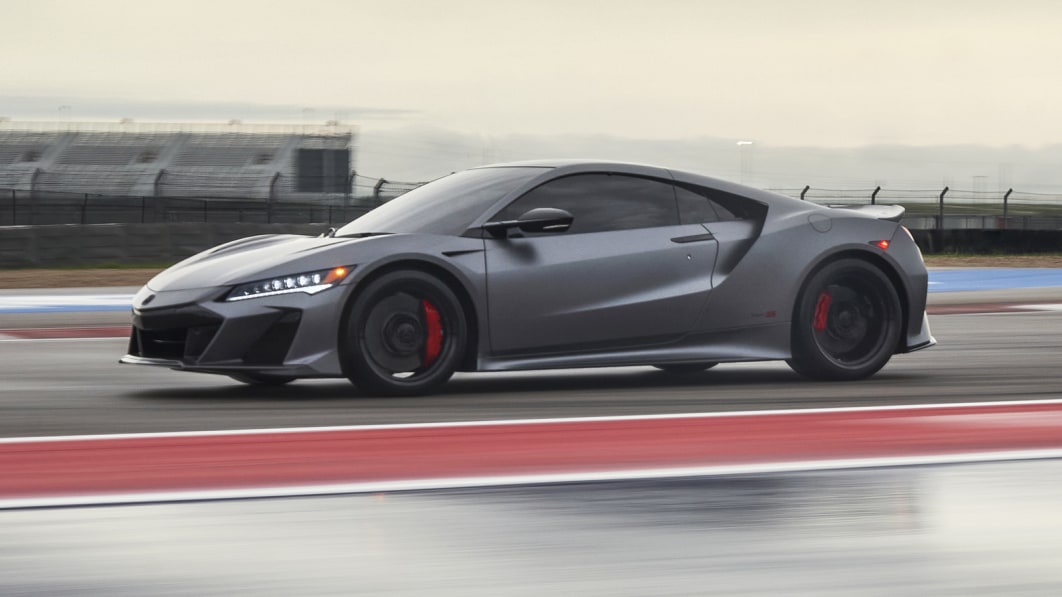
Acura sold all 300 of the NSX Type S, reportedly in 24 hours

If you were hoping to nab one of the last Acura NSX supercars, Acura has confirmed to Autoblog that it has already sold out the entire allocation of 300 NSX Type S models that were slated for America. However, you might still have a remote chance.

“We have seen tremendous interest in the 2022 NSX Type S following its debut at Monterey Car Week. At this time, confirmed orders have far surpassed the 300-unit allocation for the U.S. market, and new orders received are being added to a waitlist,” an Acura spokesperson told us. That might be an understatement, as Motor1 is reporting a Black-Friday-esque rush that cleared the shelves in 24 hours and a waiting list of more than 100.

While Acura has never planned to assign the NSX to the role of moneymaker — there are RDX and MDX crossovers for that — sales of the hybrid supercar have been shockingly low. Year-to-date sales figures for July 2021 (the last metric prior to Acura’s August announcement that the NSX would be canceled) crawled along at just 67 examples sold, not too far off from last year’s 70. The year-to-date number for August leaped up to 98, a significant jump from last year’s 73.

A personal anecdote may explain why the sellout occurred so quickly. My brother, owner of a 1993 NSX, went to a Los Angeles-area Acura dealer to inquire about the 2022 Type S. The salesperson told him that the dealer was only getting one and that it had already been spoken for — by the dealership’s owner. With 273 Acura stores in the U.S. and only 300 cars, if other owners are similarly minded it may be almost impossible for the average buyer to get a Type S without paying a premium over the $171,495 price tag.

Hopefully, though, buyers won’t have to pay more than the $1 million bid that someone made for the first NSX Type S. The Type S has 600 horsepower and 492 pound-feet of torque, a 27 pony and 16 pound-feet bonus over the standard NSX, in addition to a 58-pound weight reduction and GT3 race car-derived tuning. While that alone could compel some buyers to spring for the Type S, we’re willing to bet that it’s the limited production and end-of-run factors that are contributing to demand. If you miss out, though, you can always wait for the third generation.

Related video:

How to park your supercar like a pro

A Lamborghini Aventador parked in north London. Even the slightest scratch or ding on supercars can cost tens of thousands of dollars in damage. 
Photographer: SOPA Images/LightRocket/Getty Images

Matt Farah is something of a parking expert. In his 10 years as an automotive authority and podcast host, he has reviewed, owned, raced, and filmed reviews of more than 1,500 cars without a single parking mishap.  

Last year in Culver City, Calif., he opened Westside Collector Car Storage, a kind of Soho House meets EZ Park that offers members everything from detailing and repair service to private airport chauffeurs and cocktail hours. Every procedure that happens in the $699-a-month clubhouse garage has been intensely thought-out and itemized in a 26-page employee handbook, including two full pages on how to properly park a car.

The first thing Farah tells anyone he employs to handle the cars owned by some of the world’s major collectors is simple: Do not rush anything. 

“It is important to always be slow and methodical,” Farah’s self-written parking tome states. “Give yourself plenty of time to move the needed cars, so that you never have to rush while a member waits. Rushing is where vehicle damage happens.”

It’s an aspect of car ownership to which everyone can relate — more so with powerful autos wherein a gentle press on the gas pedal or slip of the clutch can send them surging forward. Some pay more dearly for parking mistakes than others.

Even the most benign maneuver in one of the supercars and classics stored at WCCS, if executed poorly, can cause thousands of dollars in damage.

Curb a rim on a McLaren? That’ll be $5,000 to replace. Ding a door on a Ferrari Dino? The starting price for repairs exceeds $10,000, at least in Southern California. Scratch the special factory-ordered paint job on a Porsche 911 Turbo? Count on $50,000 just to try to match the color — plus the irreversible double-digit percentage loss in overall value from the once-pristine collectable. 

Supercars have extra low clearance, so it pays to take steep driveways and even gradual inclines and declines on an angle. That will help avoid splitting or scraping the front and causing expensive damage to the underbody. Photographer: Dan Kitwood/Getty Images Europe

For Eli Kogan, the founder and owner of Otto Car Club in Scottsdale, Ariz., which houses up to 225 cars in 49,000 square feet of air-conditioned space, the most important part of flawless parking is maintaining spatial awareness.

“Being able to judge the space, judge the angle, and have awareness of how big your car is, how wide your car is, and how wide the spot is — that solves everything,” Kogan says. People who can park anything have it, he says. Those who can’t, don’t. 

Excellent spatial awareness is an ongoing skill. Appraise a car’s length, width, and height while outside it and again, evaluate how long, wide, and low it is once you’re seated — even with a vehicle you think you know well. 

Take driving: Some people may zoom down the highway and have to look around four times to see who is near before they change lanes, while a good driver already knows what is going on in the vicinity because he or she has maintained a mental catalogue of what is happening.

Parking similarly requires that you use your eyesight and the car’s mirrors. Don’t rely exclusively on parking cameras, Kogan says. The technology offers a nice, modern crutch, but the camera can distort distance and depth and never offers a full-view picture of what is happening around the car.

“Try to make it like if you had X-ray vision and you can actually see the wheels,” says Tony Rackley, who transports and parks multimillion-dollar investment-grade cars for a living as head of the Specialties Division at Classic Automotive Relocation Services in Gardena, Calif.

“One should really — while sitting in the car,” he continues, “be able to know the points of the car, look to their left and right, to know: OK, my left front is there, my right front is there, and then look over your shoulder and see where the C pillar is — that sort of thing.”

There’s no shame in using a spotter, Rackley says. In fact, having someone watch angles as one parks is mandatory at both WCCS and Otto.

“No matter how many times you’ve parked the car, no matter how confident you are or how small the car is, we do not park the car without a spotter,” says Kogan. “Four eyes to the car is the rule.”

The other little trick pro drivers and enthusiasts know is that backing a car into a spot is far more amenable to managing a tight turn or a tricky angle thanks to a tighter turning circle. A head-in parking job also exposes you to the risk of scraping the underside of the car’s nose, which in supercars is typically lower than the rear for improved aerodynamics and downforce.  

“Always back the car in,” Kogan says. “I do it with my EarthCruiser, which is huge but still can park in any parking lot. Our semi-truck at work I always park this way, too. In fact, any car I park, I always back in.”

Parallel parking, of course, is a distinct skill for which practice makes perfect. Use cones in an empty parking lot and practice 100 times, Kogan recommends. Or try it in real life on a street with little cross traffic.

When you have a $300,000 Ferrari under your control, the imperative to do well is heightened, because it’s likely that everyone on the street will be watching. This means no curbing the wheels, which is expensive to fix, time-consuming to replace, and embarrassing in the first place, or tapping the bumper of the car on either side; that light kiss may be virtually de rigueur in Manhattan, but it’s extremely impolite elsewhere.

A final note that any valet worth his salt knows: Never park underneath trees.

Corrosive bird poop is one thing, but with a precious paint job, even petals are problematic. As an official Rolls-Royce instruction manual for chauffeurs puts it: “Don’t park the car under Lime trees when in blossom.”

Reporting by Hannah Elliott for Bloomberg.

Related Video:

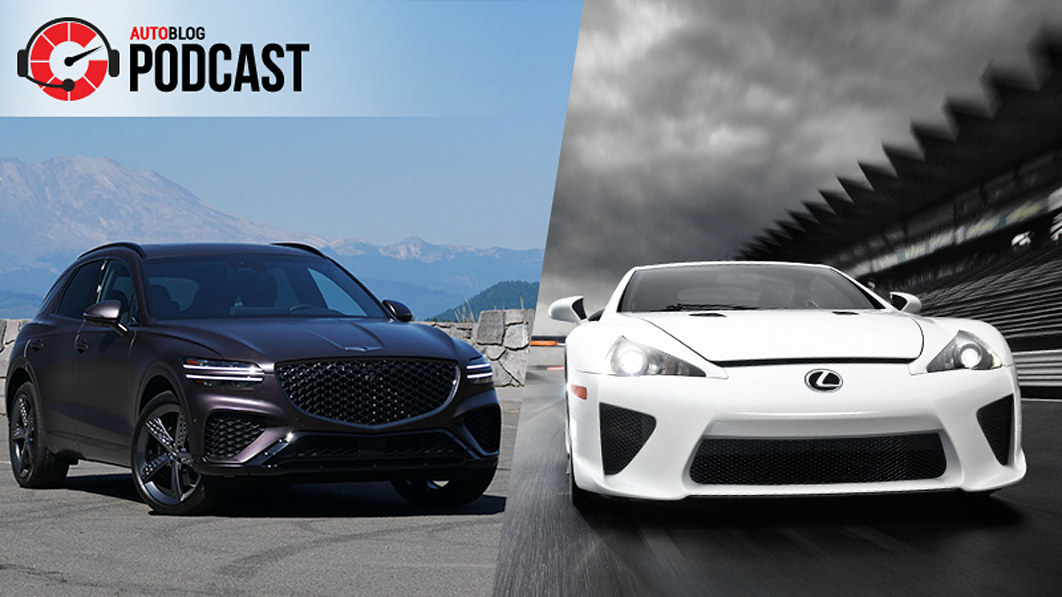
2022 Genesis GV70, raging at VW ID.4 tech and thoughts on a new Lexus LFA | Autoblog Podcast #696

In this episode of the Autoblog Podcast, Editor-in-Chief Greg Migliore is joined by Senior Editor James Riswick. This week, they talk about driving the Genesis GV70, VW ID.4 and VW Taos. They talk about ways Chevy could “fix” the Camaro. James ranked all the James Bond films based solely on their starring cars. Next, they reach in the mailbag and discuss the question, “Do you think Lexus will make a successor to the LFA and, if so, what do you guys think it would be like?” After ruminating on that query, they dip into the mailbag a second time to recommend a sporty crossover to a listener in this week’s Spend My Money segment.

Send us your questions for the Mailbag and Spend My Money at: Podcast@Autoblog.com.

Autoblog Podcast #696

Get The Podcast

  • Apple Podcasts – Subscribe to the Autoblog Podcast in iTunes
  • Spotify – Subscribe to the Autoblog Podcast on Spotify
  • RSS – Add the Autoblog Podcast feed to your RSS aggregator
  • MP3 – Download the MP3 directly

Rundown

Feedback

Autoblog is now live on your smart speakers and voice assistants with the audio Autoblog Daily Digest. Say “Hey Google, play the news from Autoblog” or “Alexa, open Autoblog” to get your favorite car website in audio form every day. A narrator will take you through the biggest stories or break down one of our comprehensive test drives.

Related Video:

Lamborghini teaser previews rebirth of original Countach LP500

Lamborghini’s Countach revival at last month’s Monterey Car Week perhaps didn’t quite make the splash the company was hoping for. Many critics skewered the reskinned Sian as a retro cash grab, leaving Acura’s vague announcement of a new Integra at the same time to generate far more excitement on the interwebs. Now Lamborghini’s teasing the return of another Countach, but we think this one will face sunbstantially less ire.

Lamborghini posted a mysterious teaser to social media yesterday, but kept coy on what exactly it was. The teaser’s text merely said, “50 years ago it paved the road to the future. Now it’s back on the road,” accompanied by a roaring V12 soundtrack. No image of the car is actually shown, but we do get footage of craftsmen crafting a fantastic bucket seat that looks like the love child of Irving Harper and Ludwig Mies van der Rohe sofas.

This is almost certainly a re-creation of the driver’s perch of the original Countach LP500 concept that debuted on March 11, 1971, at the Geneva Motor Show. The yellow Gandini wedge would go into production in 1974 and sear itself into the imaginations of adolescents around the globe.

However, this isn’t a straightforward restoration project from Lamborghini’s Polo Storico restoration center. After the show rounds, the Countach LP500 concept was used as a test mule, its 5.0-liter V12 reportedly destroyed and replaced with a four-liter closer to the production LP400’s. Ultimately, according to Lamborghini, the concept gave its life in a 1974 crash test in order to homologate the production car.

As the car was scrapped, it’s technically not possible to restore the original. So, is Lamborghini re-creating the Countach LP500 concept? That part remains to be seen, but whatever it is, it’ll likely be a better homage to the legend than the LPI800-4.

Nissan GT-R T-spec comes with a Godzilla green interior

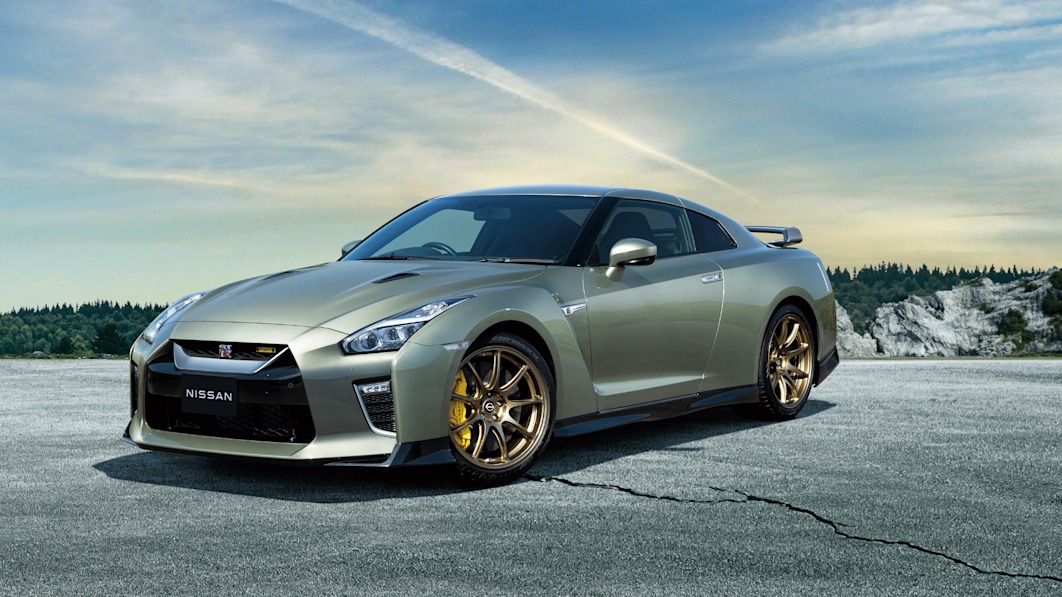
It seems rather late in the year to reveal a 2021 model, but Nissan has just dropped a new variant of its GT-R supercar. Called the T-spec, it’s a limited production variant of Godzilla positioned above the GT-R Premium model. It comes in a couple of throwback colors from the GT-R’s extensive history, as well as a green interior that is, frankly, awesome.

While the T-spec soldiers on with the same 565 horsepower, 467 lb-ft twin-turbo 3.6-liter V6 that the GT-R has had since its 2017 update, the car does feature a number of upgrades to set it apart from the standard GT-R. For one, the front fenders are wider units last seen on the 2020 Track Edition. Behind them lurk brake air guides and carbon-ceramic rotors from the harder-core GT-R Nismo. A carbon-fiber rear spoiler rounds out the changes that would have any effect on performance.

You’ll be able to identify the T-spec cars by their black hood ducts, color-matched mirrors, and Rays forged aluminum alloy 20-inchers finished in a gold exclusive to T-spec cars. Naturally, badges identifying it as such can be found on the grille, rear, center console, and door sills.

As an homage to its predecessors, the T-spec comes in two colors not available on lesser GT-Rs, Midnight Purple and Millennium Jade. The former was introduced on the 1995-98 Skyline GT-R, known by its chassis code as the R33 generation. Variations of the color were brought back twice for the following R34 generation, each time released as a limited edition.

Millennium Jade, on the other hand, was exclusive to the 2002 Nür edition cars, named after the Nürburgring where Nissan tested the GT-Rs (and held a long-standing production car lap record) long before every automaker and their mother were comparing lap times. The Nür cars were the last Skyline GT-Rs until the R35 burst onto the scene in 2008.

Inside, Nissan is introducing a new color called Mori Green, and it is fantastic. The automotive kingdom desperately needs more green interiors that resemble my parents’ Chevy land yacht from the early 1970s, and boy does this cabin deliver. A forest-y green adorns the semi-aniline leather-appointed seating, while soft-touch surfaces atop the dash give off a more grayish appearance. A unique quilted headliner rounds out the T-spec differences in the interior.

Curiously, Nissan USA’s press release describes it as a 2021 model year car, while Nissan Japan describes it as a 2022 model year car. We’re not sure if this is a typo, or if it spells out something more ominous about the future of the U.S. market GT-R. After all, the GT-R is rumored to have a hard production stop sometime next year, after which a redesign might bow. We’ve reached out to Nissan for clarification and will update the article if we learn more.

In Japan, the T-spec is limited to 100 cars, with potential customers being determined by lottery. Nissan hasn’t said how many will be sold stateside, except that it is a limited production vehicle with a “very limited” number to be made available. GT-R T-specs will cost $140,285 including a $1,795 destination fee when it goes on sale this winter alongside the previously announced, $217,485 GT-R Nismo Special Edition.

Related video:

Radford Type 62-2 John Player Special takes the coach-built sports car even higher

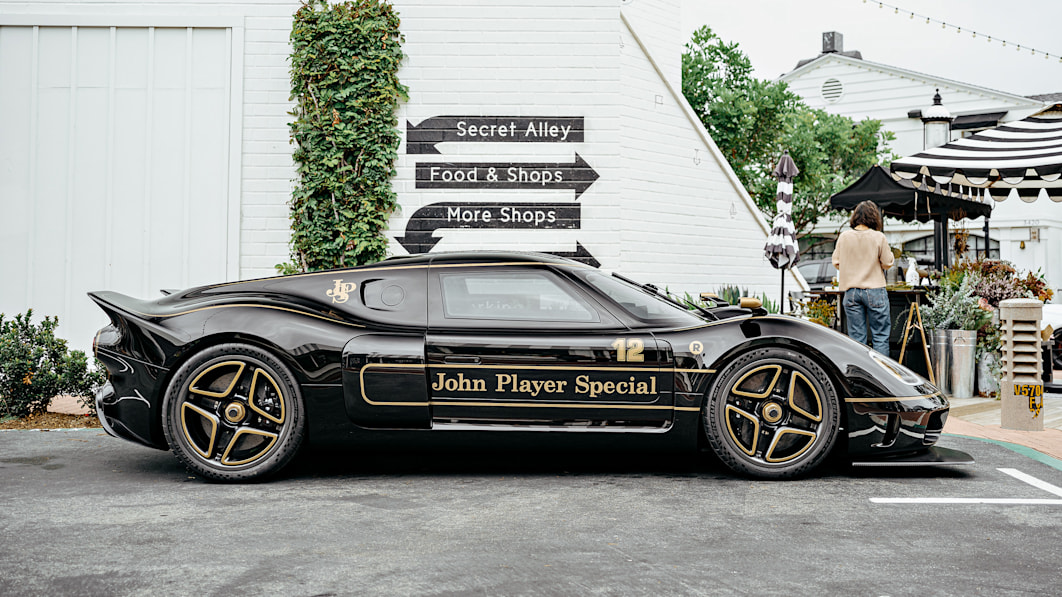
Radford revealed its Type 62-2 a month ago, and today the coach-building company is releasing its first 62-2 variant. It’s simply called the JPS, short for John Player Special. You’d be able to guess that just by looking at the car, though, as it’s completely done up in the traditional John Player Special black and gold livery.

This JPS Type 62-2 isn’t just a livery either. It’s the most extreme version of the car, even more so than the Gold Leaf version of the standard Radford that improves matters over the “Classic” model. Engine output sees a sharp turn upwards from 500 horsepower to 600 horsepower in the JPS. It’s still using the 3.5-liter supercharged V6 you’d find in the Lotus Evora (an engine Lotus borrows from Toyota), but this one is heavily modified. Radford says it uses upgraded pistons, new connecting rods, camshafts and an upgraded supercharger. Plus, it’s running a more aggressive engine calibration.

Hauling it to a stop are upgraded brakes — Radford uses carbon ceramic rotors and AP calipers. New and larger carbon composite wheels (18-inch front and 19-inch rear) from Dymag are fitted and wrapped with Michelin Pilot Sport Cup 2 tires.

Plenty of appearance and aero changes are made to separate the JPS from the other Type 62-2s. Radford says it’s either lightly massaged or made big changes to every area of the bodywork. You’ll notice a giant new splitter up front, larger side air intakes to cool the more powerful engine and a more extreme diffuser in back to produce more downforce. We’ll also note that the JPS “livery” is not a sticker package; it’s all painted on, requiring hours and hours of work by hand.

Pricing for the JPS hasn’t been revealed, but it’s guaranteed to be expensive. This special model will be sliced out of the total production of Type 62-2s. Only 12 of the 62 total cars will be the John Player Special cars, so they’ll be incredibly rare — Radford says it’s currently taking build slot applications, so you still have a shot at buying one. If you want to see the JPS in person, Radford says it will be on display at this year’s Goodwood Revival.

Related video:

Aston Martin appears to be testing a V12 Vantage in these spy photos

For a few years now, the Aston Martin Vantage has been without V12 power. It’s technically been without Aston Martin power, too, since its twin-turbo V8 comes from Mercedes-AMG. But that may change in the near future based on these spy photos from the Nürburgring. They show a Vantage, but one that’s wider and with exhaust that suggest it may get a few more cylinders like its close cousin, the V12 Speedster.

Staring us down is the prototype’s enormous front grille, taller and wider than standard Vantage units. It’s flanked by two smaller inlets and underlined by an aggressive front splitter. The whole front seems to be wider, as evidenced by the mismatch around the front fender and hood. Speaking of the hood, there’s a big mesh “V” sitting on top to cover what are likely heat-extracting vents, which would probably be important for handling the heat from a twin-turbo 5.2-liter V12.

Changes at the back are a bit more subtle, but only a bit. The rear fenders have large fender flares, suggesting the production car will also be wider at the back with correspondingly larger tires. There’s a little gurney flap on the rear spoiler, so we may see a more aggressive spoiler in production. We also see a center exhaust instead of each of the dual pipes on the ends of the rear diffuser. This exhaust looks a lot like what Aston used on the V12 Speedster, itself based on the Vantage, but without the roof section. This is probably the strongest evidence that the car has the extra cylinders.

With Aston clearly knowing how to shove a V12 into a Vantage chassis, and the high-end sports car market’s never-satiated desire for more powerful and rarer items, a V12 Vantage seems like a slam-dunk product. The question will be, what output will it make. The V12 Speedster made 700 horsepower, but it was a limited-production special edition. The V12 Vantage could get the DB11‘s 630-horsepower variant to give the Speedster a bit of breathing room. And that would still be a nice power increase over the 503 horsepower of the regular Vantage. Based on these spy shots, we’d bet we have around a year before we see the production model, maybe a little less, maybe a little more.

Related Video:

There will be a third-generation NSX, says Acura V.P.

The second-generation Acura NSX might be going out in a blaze of glory, but it won’t be the last we see of the supercar. This promise comes directly from Acura Vice President and Brand Officer Jon Ikeda. Furthermore, Ikeda implied that the next version might be electric.

Ikeda divulged thoughts about a third-gen NSX while being interviewed by The Drive and Motor Trend. To the former, he explained Acura’s mission with the the mid-engined supercar. “We make an NSX when there’s something we want to say. The first-gen was gas. Second-gen was a hybrid. There’s gonna be another one.” Unless Ikeda is talking about hydrogen or some kind of heretofore undisclosed technology like  Mr. Fusion, this pretty much means electric.

That means the NSX is likely to take another hiatus after the Type S closes out the 2022 model year. Between the first and second generations, the halo sports car had an 11-year absence on the market. Ikeda laid out the reasons for the nameplate’s 2016 return when he spoke to Motor Trend. “Honda is one of the biggest gasoline engine makers in the world and needed to see what will happen in a world turning away from engines,” he explained. It was always meant to be a halo car. “We didn’t go into it to make a lot of money,” he stated.

The second generation had a much shorter lifespan than the game-changing first gen. That one spanned one and a half decades, from 1990 to 2005. The current generation, once it exits stage left in 2022, will have only had a six-year run.

One could argue that the first gen overstayed its welcome, though. After thoroughly turning the supercar world on its ear, by forcing Ferrari et al to reconsider their engineering, the NSX’s competitors quickly caught up to Honda’s lead. While the NSX did undergo a couple of major changes during its first lifespan, by the time it left the market it was more of a dwindle.

Acura is determined not to let that happen with the current NSX. In this case, they’re sending it off with the most powerful iteration yet, a 600-horsepower Type S with reworked turbos, cooling system and aerodynamics and limiting production to 350 worldwide. Ikeda told Motor Trend, “We didn’t want to let the NSX die on the vine either. To go quietly into the night is not what it deserves.”

Rimac CEO on Porsche-Bugatti deal: ‘I am not somebody to play it safe’

Mate Rimac is used to being the underdog. At the Geneva auto show in 2009, the then-21-year-old Croat walked to the Koenigsegg booth looking for his idol, Christian von Koenigsegg. In those pre-YouTube-saturation years, Rimac didn’t know what the namesake of his favorite car brand looked like. And no one knew him. So he approached “the most serious-looking guy” at the stand and went on to befriend his idol, Rimac said in an interview on Aug. 13 in Carmel, Calif.

Twelve years on, Rimac, now 33, has more than leveled the playing field with his Swedish friend. On July 5 his Rimac Automobili — the tech and supercar company he founded in his garage — announced a joint venture with Porsche AG to take control of Bugatti. The 112-year-old French crown jewel in parent company Volkswagen AG’s crown, Bugatti sells cars like the 1,480-horsepower Chiron Pur Sport, which gets 8 mpg in city driving. The brand traditionally does not disclose specific sales results but is known to deliver roughly 80 vehicles globally each year. Rimac has characterized the acquisition as “removing some distractions” from VW.

According to the terms of the deal, Rimac holds a 55% stake in Bugatti-Rimac while Porsche owns the remaining 45%. Earlier this year, Porsche had also separately increased its stake in Rimac to 24%.

Rimac himself will take the helm of Bugatti-Rimac, while Porsche’s Oliver Blume and Lutz Meschke will join a supervisory board for the company. It’s all quite a change of view for a guy used to working behind the scenes.

“The stakes are getting bigger,” Rimac said. “But I am not somebody to play it safe. Never. Not even close. So if there is going to be some friction with our shareholders and more experienced people that come into the company, it’s going to be that.”

The arrangement marks the first time Volkswagen has ceded control over one of its brands to a company and a person so young. It also signals a subtle stratification of the company’s premium marques, dividing those aligned with Rimac, which includes Porsche and Bugatti, from those such as Audi and Bentley that are likely to continue using VW’s own electric components.

“We are already developing stuff that will be soon in high-volume Porsches,” Rimac says. “Not special projects, but the mainstream.” The company provides EV tech such as batteries for carmakers including Koenigsegg and Pininfarina.

At this point, Rimac admits that his 1,000-person, decade-old operation is far from an underdog. Porsche just paid the company $70 million, he says, and Rimac’s $2.4 million Nevera supercar recently turned in the quickest quarter-mile time ever for a production car. The Bugatti-Rimac venture will retain both Bugatti’s headquarters in Molsheim, France, and Rimac’s headquarters in Zagreb, Croatia.

“It feels really interesting when you think where we came from — this country has never had an automotive industry,” Rimac says of Croatia. “We had absolutely no idea what we were doing. And now our tech is in so many cars, and with Bugatti this whole thing is a huge responsibility.”

He is used to the pressure by now. Call it discipline à la automaker.

“I was told by our big OEM customers, if you screw up, the next day we send 30 trucks, they pick up everything, you are dead,” Rimac says. “If you screw up and you don’t deliver, everything stands still, and then you are dead. You are dead.”

Related Video:

11 exotic cars seized by Indian authorities for tax evasion

On Sunday, road transport officials in India intercepted a convoy of 15 supercars out for a drive in Hyderabad. By the time the traffic stop had ended, 11 of the luxury and sports cars had been seized. Cars involved included those made by Lamborghini, Ferrari, Porsche, Rolls Royce, and Maserati.

According to The Times of India, the 11 confiscated vehicles were impounded on charges of tax evasion. In India, the so-called “life tax” applies to all motor vehicles, but each state levies their own rates. In Telangana state, where the 6.8 million-large city of Hyderabad is located, taxes are more expensive than other states.

The seized cars – estimated by The Times to be worth between $500,000 and $1.3 million a piece – were registered in states where the life tax rates are cheaper, the article reports, while authorities say that the cars had been operating on Hyderabad’s roads. Authorities had been following the cars on CCTV for six months prior to Sunday’s traffic stop. In addition to the tax issues, some of the cars had outstanding traffic violations as well.

“They have been living and playing in Hyderabad. We have enough evidence for it,” said Papa Rao, the enforcement team leader who led the seizure. Rao had another message for those who might be bankrolling the drivers. “We are also requesting the parents of the youngsters to ensure that these youngsters do not speed.” According to the news outlet, the drivers were between 25 and 35 years old.

In recent years, there’s been talk in India of creating a single, country-wide road tax. While the move will help reduce confusion for car buyers, one of the goals is also to close the loophole of paying taxes in states with lower rates.

Related Video:

2021 Pebble Beach Concours d’Elegance Mega Gallery | Take a tour of the show

The 2021 Pebble Beach Concours d’Elegance is over, and we have all the photos you might want to see from the overcast affair. And in case you missed the news, the winner was the 1938 Mercedes-Benz 540K Autobahnkurier.

That said, the gallery above features the wide range of cars sitting on the Sunday lawn. You’ll see a little bit of everything from a gaggle of Porsche 917 racecars to Lamborghini Countachs and the most exotic new supercars of 2021. Plus, there’s no shortage of pre-war classics if you came here for the traditional old guard.

In case you wanted to see action beyond the Pebble Beach Concours, we’ve got you covered there, too. The Quail, a Motorsports Gathering happened the day previous, and there’s an entire gallery’s worth of cars to check out in that post, too. So go ahead and sit back with your morning cup of joe and enjoy the pretty sights. We can guarantee it’ll be worth the scroll through above.

Related video:

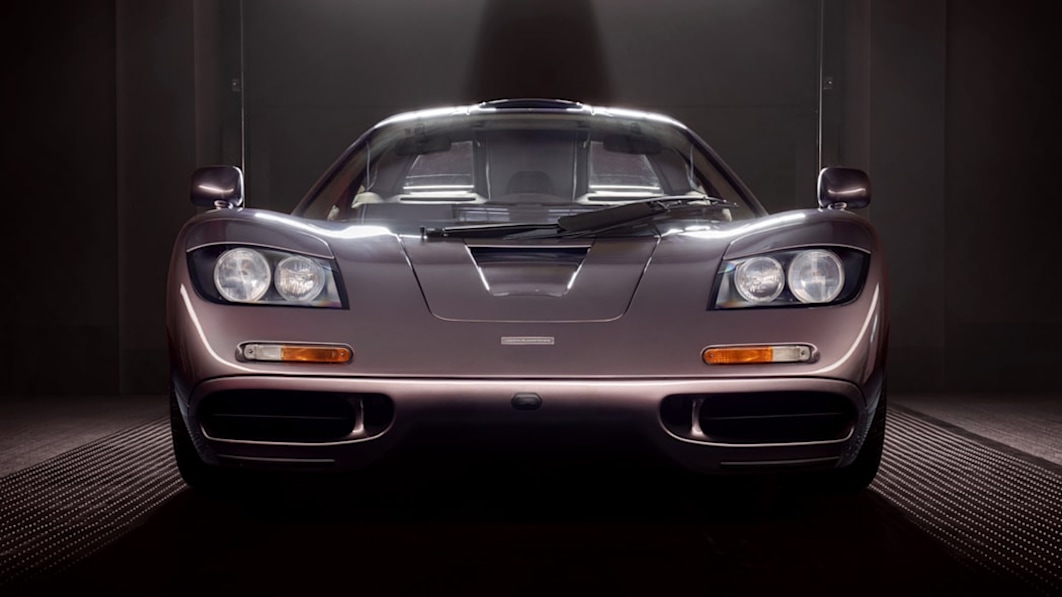
1995 McLaren F1 with only 242 miles sets record auction price

Update: The McLaren F1 you see above set a new auction record for the model at Gooding and Company’s auction. The winning bid was $18,600,000, with the final sale price of $20,465,000. According to Hemmings this tops the previous record set in 2019 of a little over $19,000,000. The text has been updated.

With a run of just 106 examples, a massive top speed of 240 miles per hour, and a Le Mans-winning racing pedigree, every McLaren F1 sports car is special. Some are just a bit more special than others, though, such as the 1995 example you see above. It’s a unique color combination and only has 242 miles on the clock. It also set a record for sale price at Gooding and Company’s auction at Pebble Beach this year.

The car is the 25th McLaren F1 built and the only one to have been finished in a paint color called “Creighton Brown,” which the auction house notes was named after an executive who helped get McLaren’s road car business up and running. The interior continues the brown theme with dark and light leather throughout.

And as for the low miles, it’s evident beyond the odometer. Apparently it’s still sitting on the same tires it came with back in 1995. So, if you do happen to put more miles on it, please get a new set to drive on, and put the originals in a safe place for your safety and their preservation. The car also comes with all its matching luggage, its original watch, the complete tool chest, roadside tool kit, owner’s manual, service book and official book talking about the development of the car.

Gooding and Company says this is the lowest mileage F1 example to go to auction, and coupled with its unique color scheme, they expected a high price, and they got it. With a final sale price of $20,465,000, it’s the most expensive McLaren F1 ever sold.

Related Video: