
All posts in “style”

Should You Even Buy Winter Boots? Well, It Depends

If you buy your boots like they’re an investment, you want them to be versatile. So it can be a hard pill to swallow to drop a few hundred on a pair of winter boots that you’ll only get to wear for one season out of the year. Can you make that three-season boot a year-rounder?

But, maybe you just want a boot that gets the job done. If that job is specifically getting your feet to your destination with all 10 toes dry and intact, then a master-of-one-season boot could be what you really need. When you’re waffling between whether or not you should even buy winter-specific boots, make sure you know what you’re getting into.

The Case for a Seasonal Boot

Winter boots usually come equipped with some form of insulation like Thinsulate. Not only will they keep your feet warm, insulated winter boots often come with other features that make them better equipped to take on snow and rain. That can mean a waterproof Gore-Tex lining, impermeable sole construction and slip-resistant soles. If you’re feeling luxurious, you can also opt for fur or fleece-lined boots. They’ll toast your feet like a marshmallow and feel as soft as one, too.

While all of these qualities can make a polar vortex much more comfortable, there are some downsides. Watertight properties can be a great thing when you find yourself facing a downtown tundra, but most waterproof boots are made using cement construction which makes them harder to resole compared to a Goodyear welted styles. That said, if you invest in a decent pair of winter boots, they should last you a long time before you even have to think about crossing that bridge, especially if the only play they’re getting is in the snow between December and March.

If your day to day requires you to be outside a fair amount or if your winters are lengthy, you’ll probably want to invest in a pair of solid slush stompers.
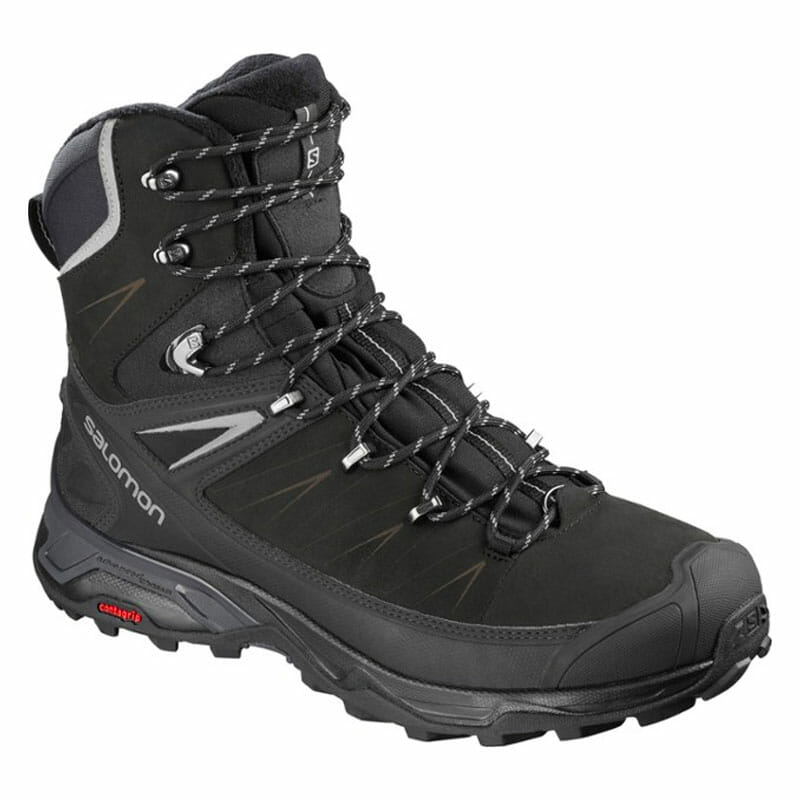
X Ultra Winter CS WP 2 Boots by Salomon $180
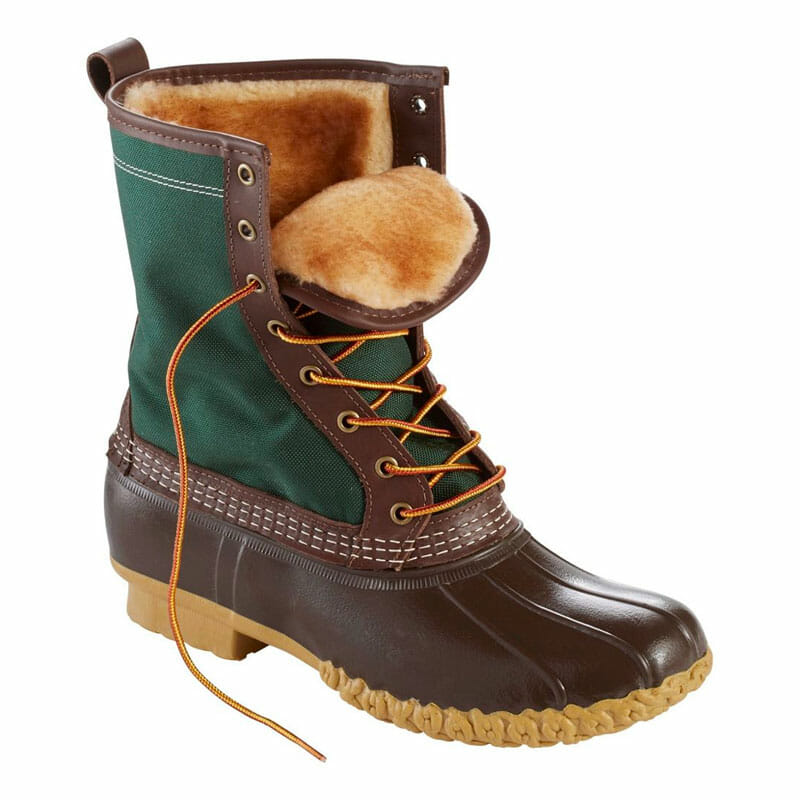
Shearling-Lined Bean Boots by L.L. Bean $230
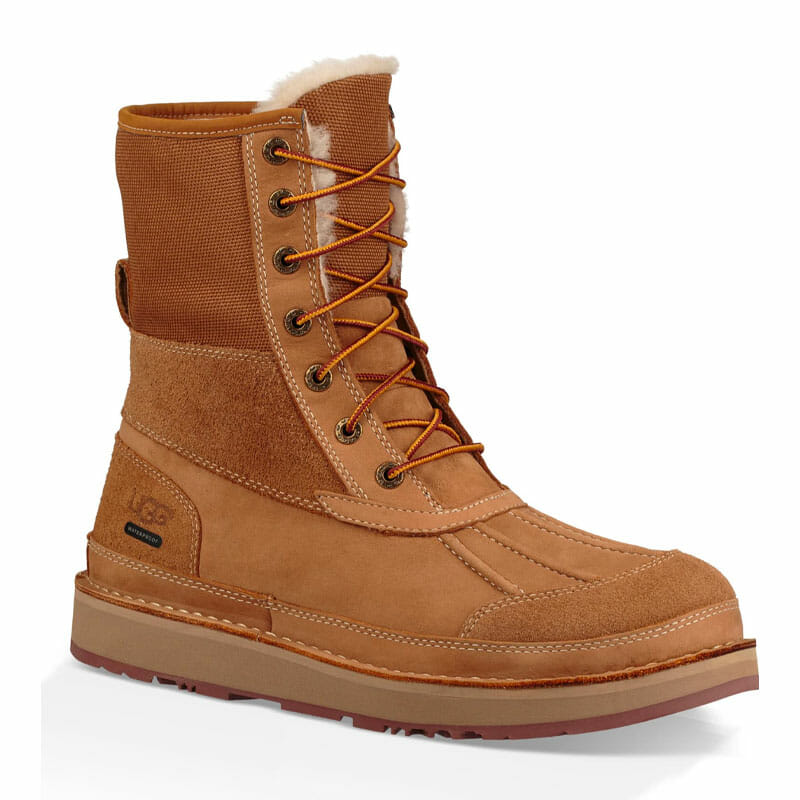
Avalanche Butte by Ugg $300
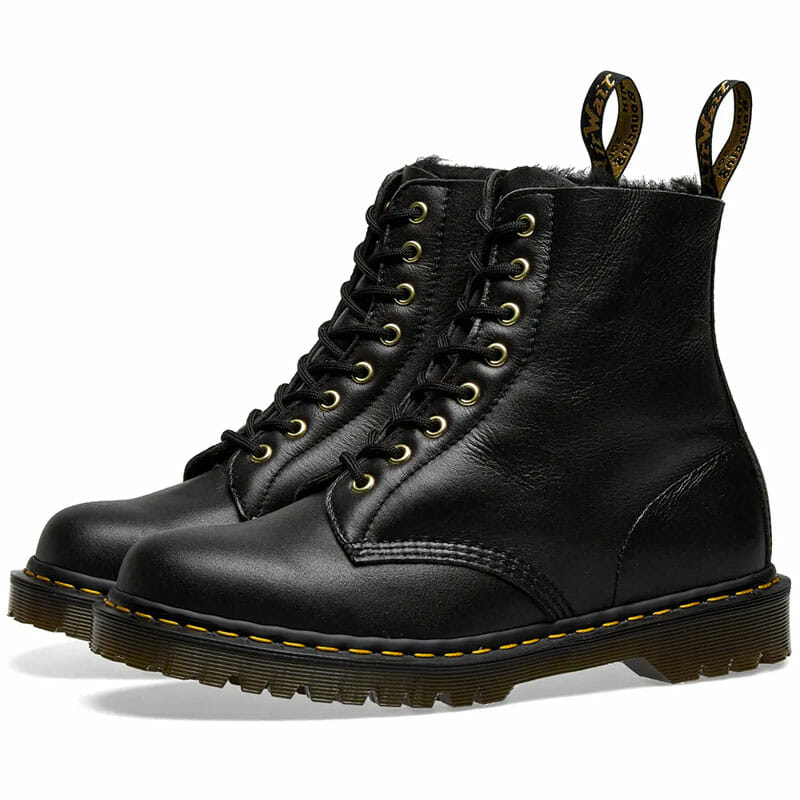
1460 Pascal Boot by Dr. Martens $269

The Pros and Cons of a Versatile, Seasonless Boot

While the specificity of a winter-ready insulated or lined boot makes it great for the frigid months, it also makes them less than ideal when the temperatures don’t warrant thermal base layers beneath wool sweaters and down-filled jackets (that’s why they’re called winter boots, my guy). If you want to get the most use out of your boots, a non-insulated leather boot might be a better option for you.

During the cold season, it’s easy to winterize your boots using the proper accoutrements like appropriate winter socks, boot liners and shearling insoles. When the warm weather comes back to play, you can easily continue wearing your boots sans winter accessories. That means more space in your closet and more bang for your buck.

But, who wants to go through the trouble of buying all the extra accessories? Aside from the initial investment into the boots themselves, stuffing your them with these space sucking boot implements will cause them to stretch out slightly, a fact you probably already know if you’ve ever owned a pair of shoes with Horween Chromexcel leather. And when you make it to spring and summer with stretched out boots, you can fill them with insoles. Sure, you can wear your year-rounders through every season, but that also means more frequent maintenance. If you don’t like the idea of spending your Sundays doing boot upkeep, you might want to steer away from a boot that could be a jack of all trades.

Go with unlined boots if you live in a milder climate where winters don’t dip below freezing for months on end. And if you’d prefer a versatile style, make sure you stock up on the accoutrements and maintenance products, too.
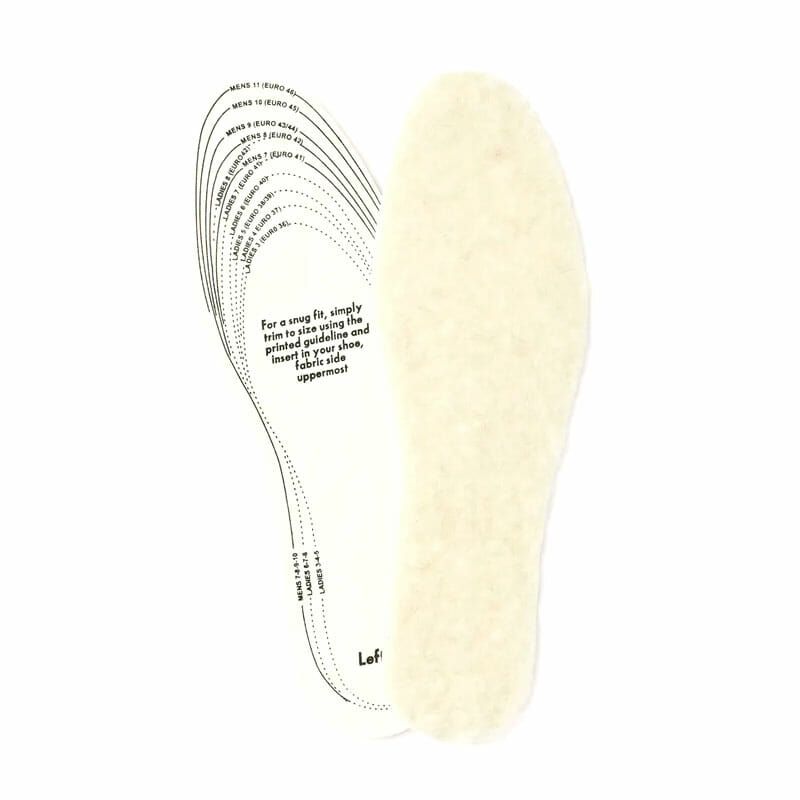
Wool Insoles by Glencroft $5
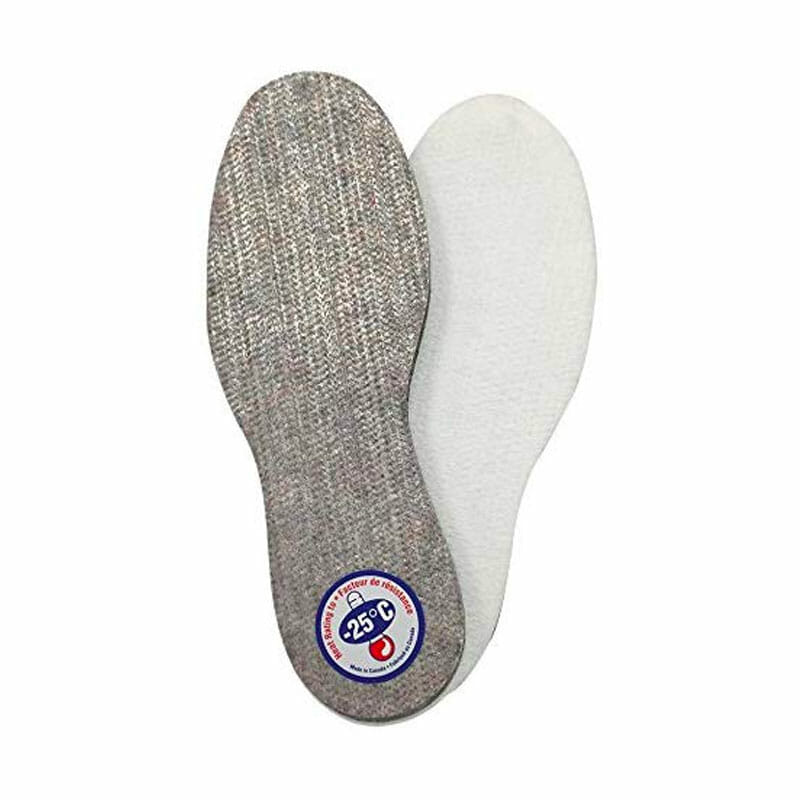
Felt Insole by Moneysworth & Best $7+

Shearling Insoles by L.L. Bean $30

Boot Socks by American Trench $30+

Waddington Ribbed Cashmere-Blend Socks by Pantherella $65

Ice Socks by Wigwam $18

Leather Insole by Saphir $15
Note: Purchasing products through our links may earn us a portion of the sale, which supports our editorial team’s mission. Learn more here.

The Best Winter Denim Fit for Subzero Temperatures

There are hardly any garments more ubiquitous than a pair of jeans. Built to handle the most rigorous of rigors, a solid pair of denim five-pocket dungarees can withstand everything from construction sites to fashion scrutiny. Maybe that’s why people still wear them almost 150 years after its invention. As pervasive as the pants are, however, you’d find it difficult to spot a pair in the dead of winter.

If you can’t stand to part with blue jeans even through the gelid gauntlet of snow and ice, don’t worry. We’ve scoured the store shelves in search of winter-appropriate jeans so you can continue gathering #sickfadez even through subzero temps so you don’t end up like this.

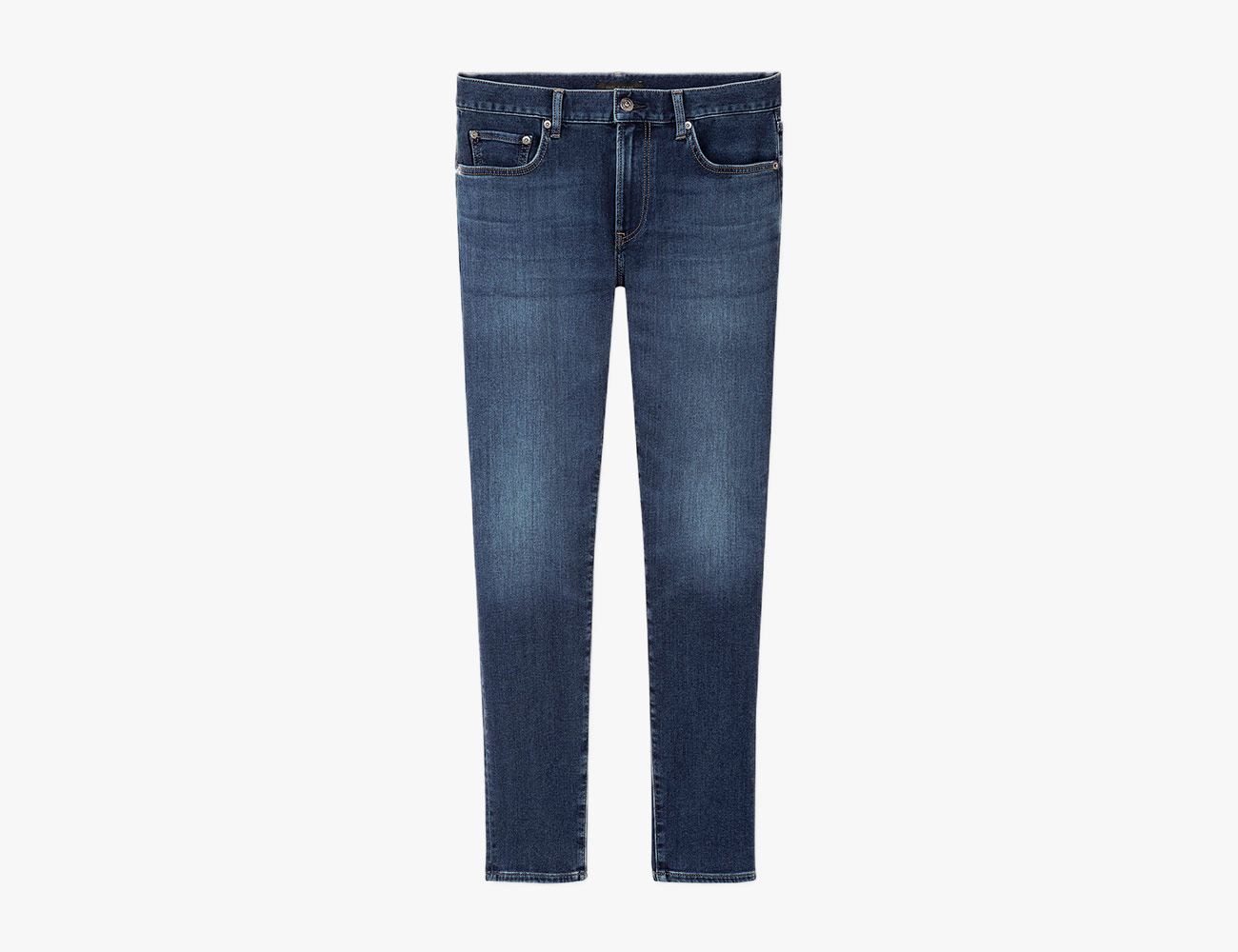
Uniqlo HeatTech Slim-Fit Jean

For those of us who somehow haven’t heard of Uniqlo’s miracle fabric, HeatTech, I will presume you are frozen and dead. The rest of us who’s bodies are still flowing with warm, liquid blood, you should know that Uniqlo also makes jeans with HeatTech built right into them.

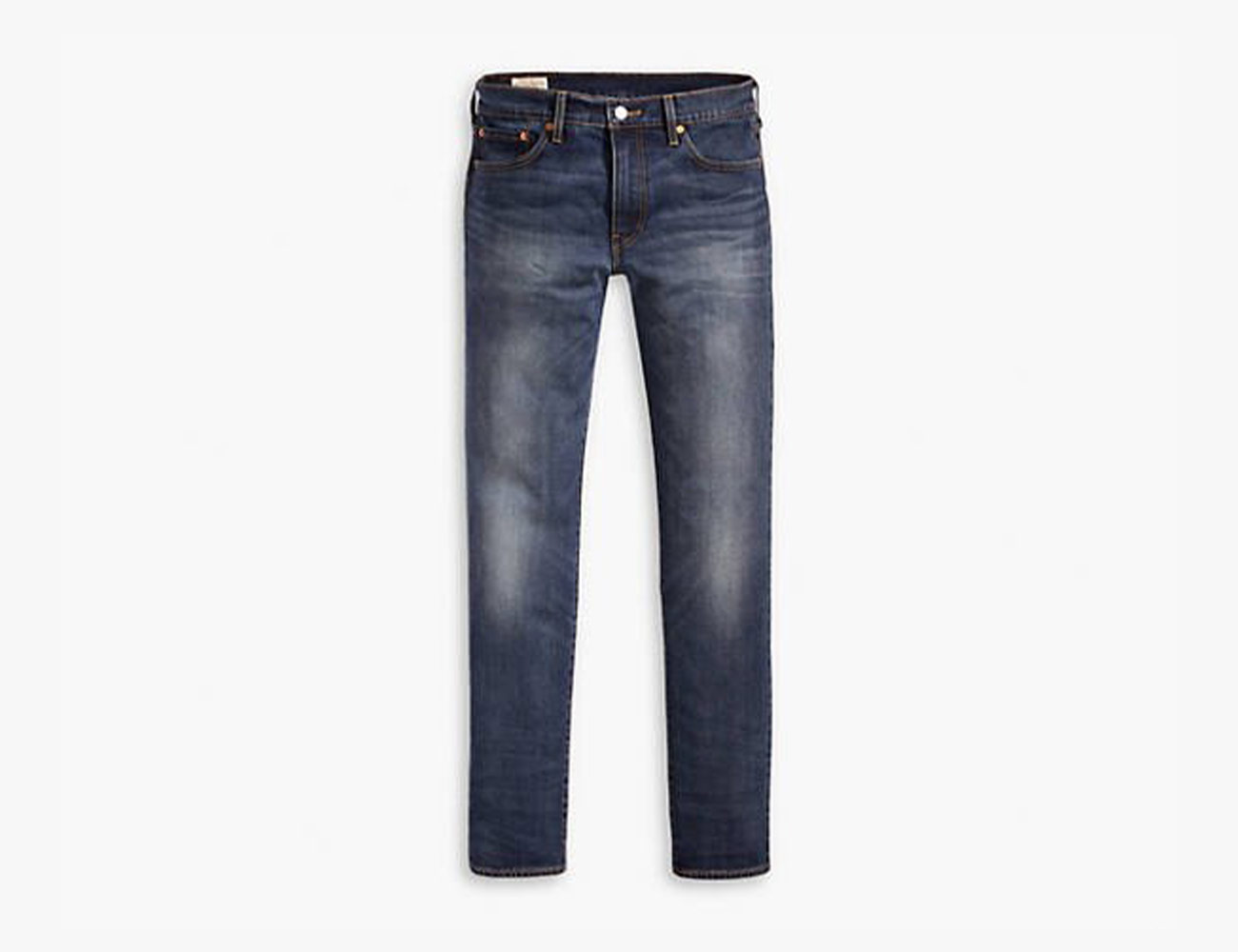
Levi’s Warm Jeans

The brand synonymous with the blue jean does make a pair of winter-friendly jeans. The denim giant uses a cotton-polyester blend to warm up its jeans, which it makes in the popular 511 slim fit as well as the tapered 502 fit. It’s the classic five-pocket with a toasty twist.

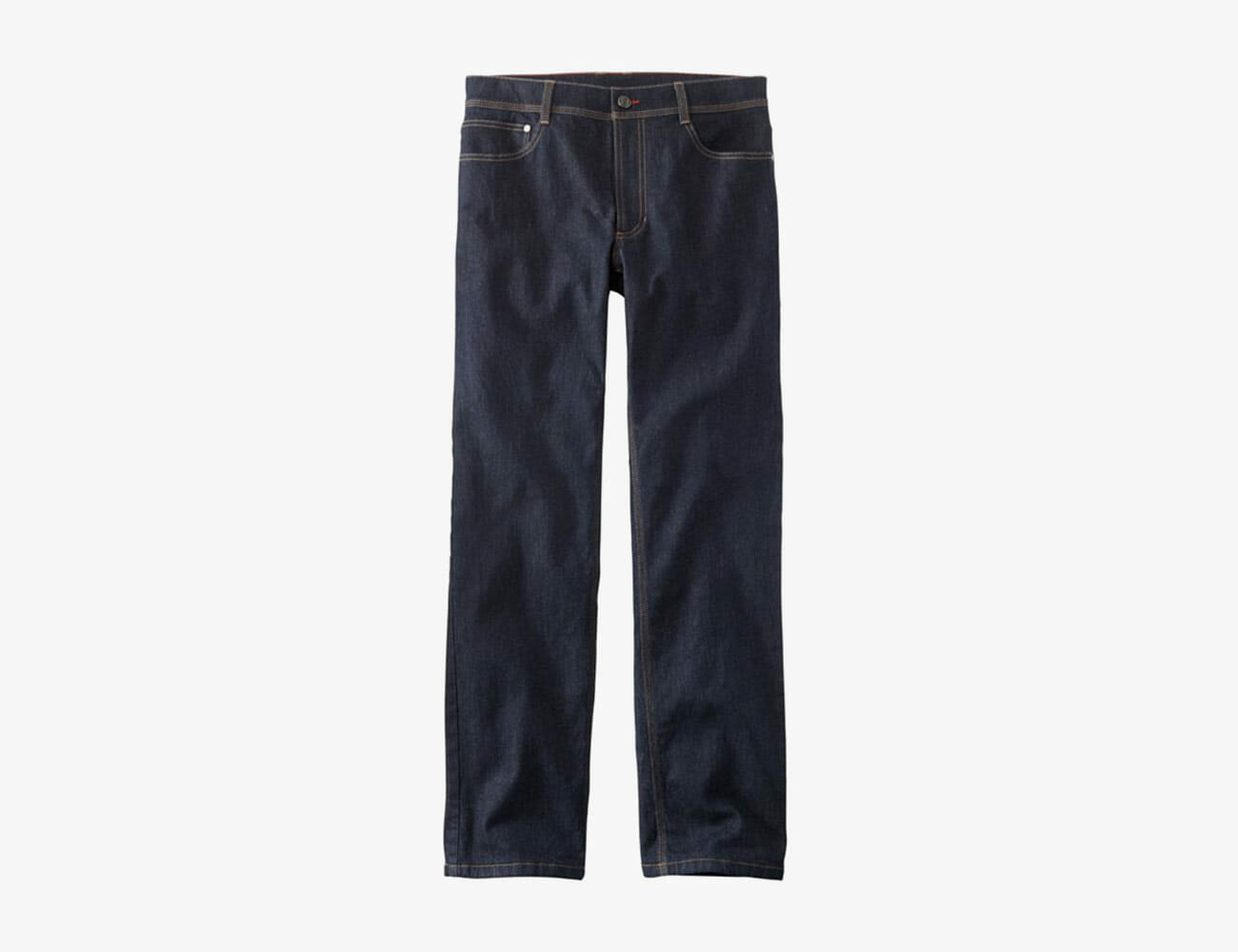
L.L. Bean Mountain Town Jeans

Any one of L.L. Bean’s flannel-lined jeans would’ve made complete sense in this list. But, if we’re gonna give just them one spot, we’re going with their Mountain Town jeans. It starts with a tough-as-nails Cordura blend denim constructed with durable triple-needle stitching throughout the jean. But it ends with supreme comfort thanks to the touch of Lycra and the teddy-soft fleece lining. And while flipping the cuff will certainly let people know how comfy you are, the reflective detailing will leave them with no doubt, even in pitch darkness.

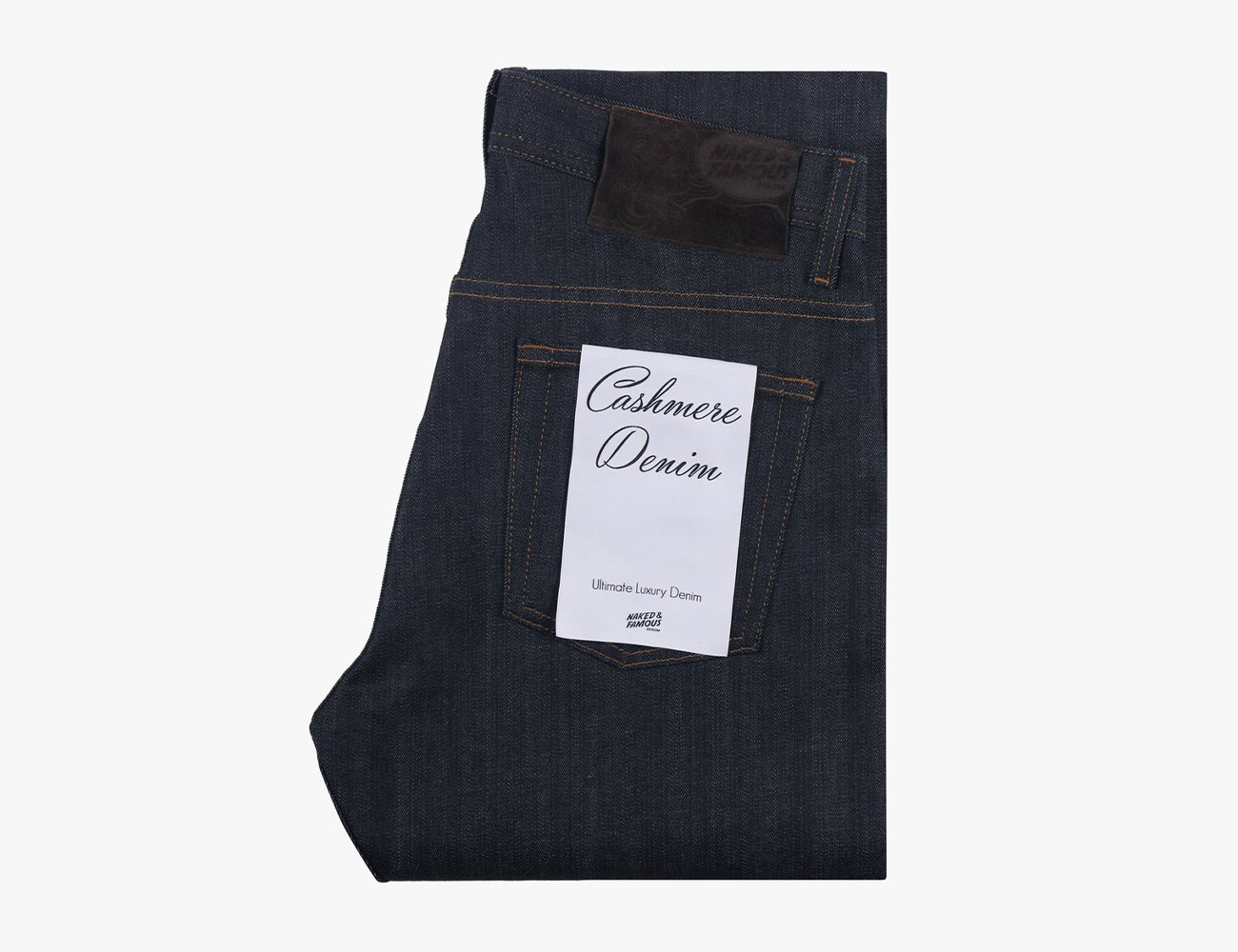
Naked & Famous Cashmere Stretch Blend Denim

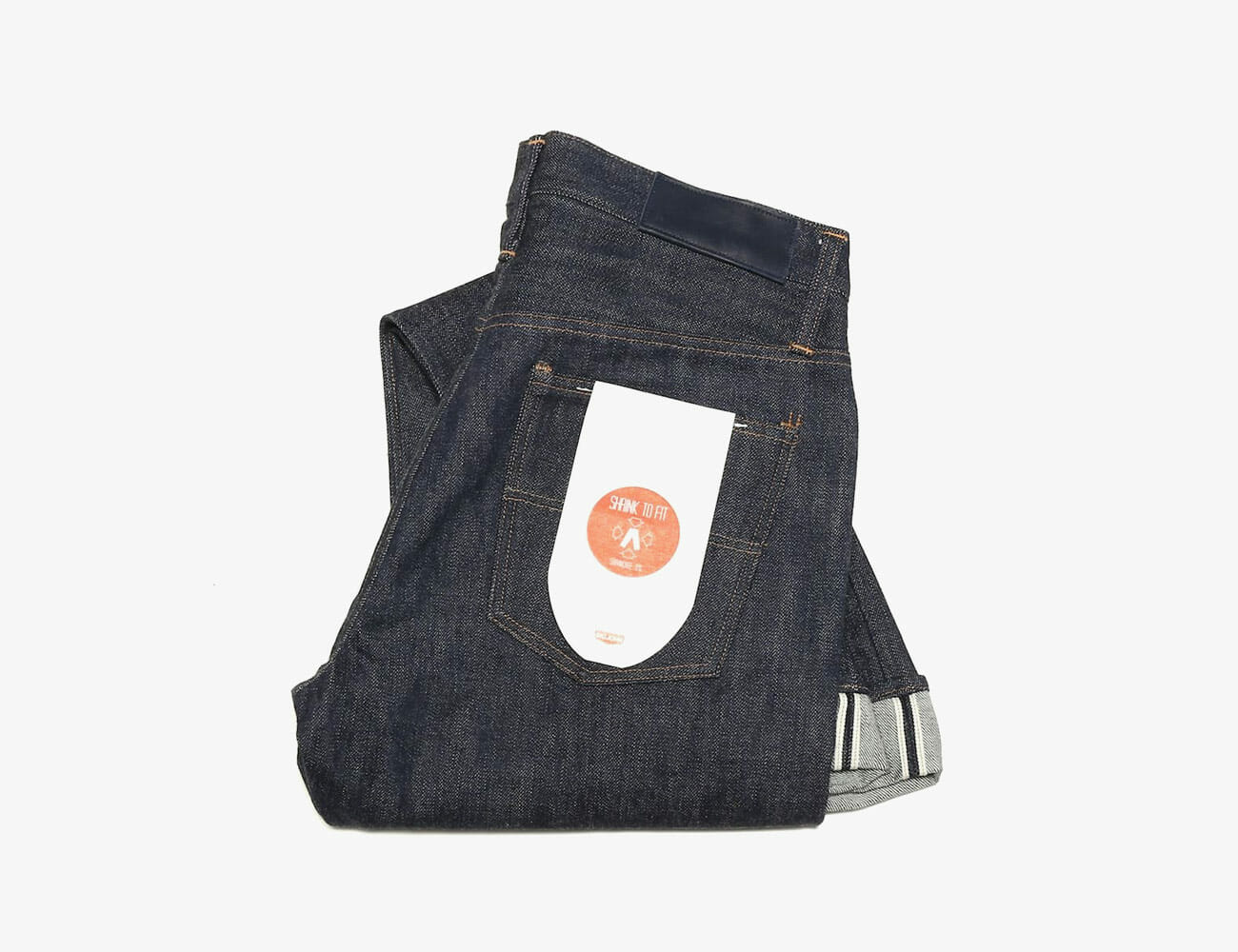
How do you make raw denim warm and sumptuous? Add cashmere and brush the inside of the fabric.

RRL Straight Fit Lined Jean

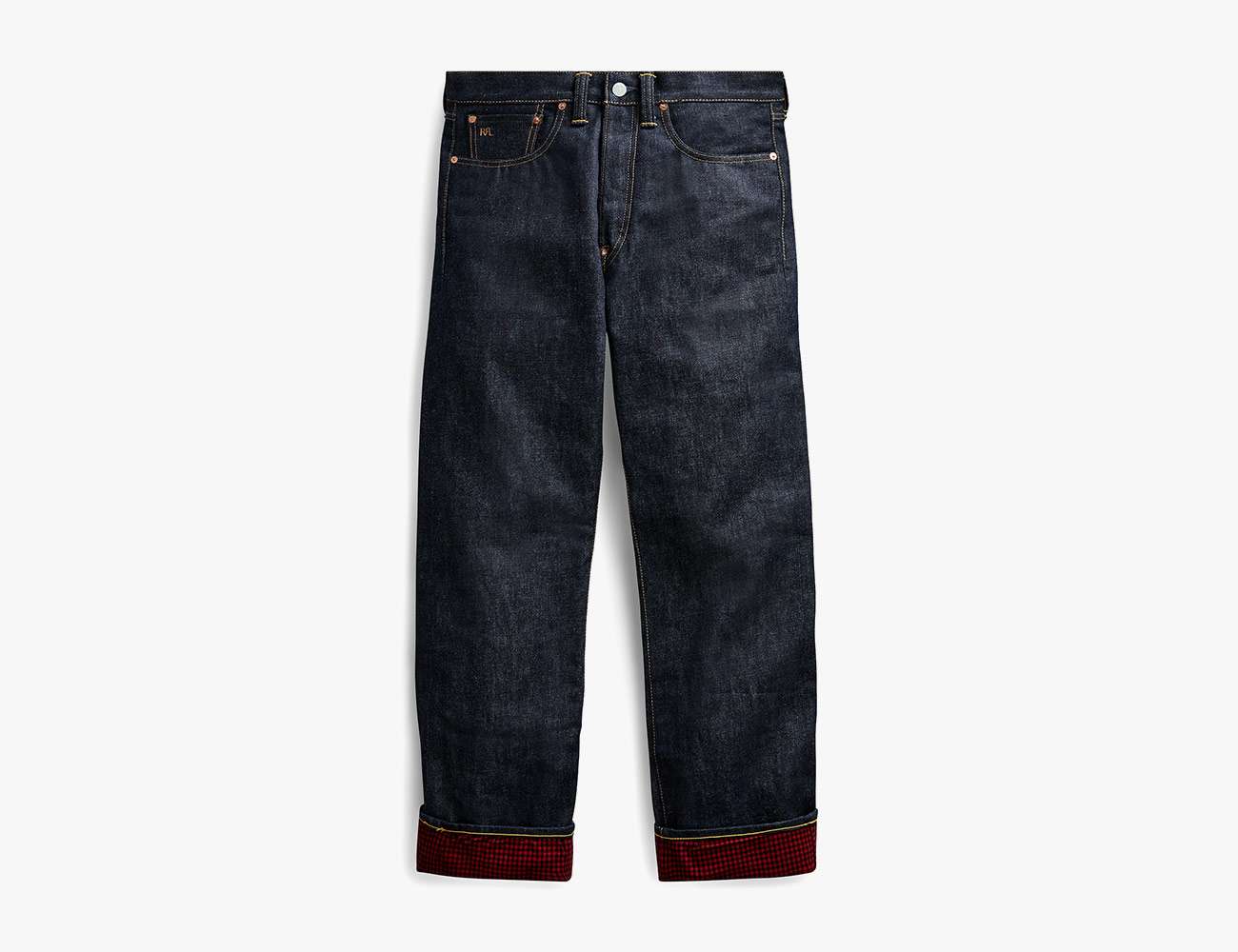
If the previous options all sound a little too tech-forward, RRL’s winter-appropriate jeans have some old school heat to satisfy your denim desires. Based on a 1930s jean from Ralph Lauren’s personal collection, these feature vintage details like a cinch back, offset center belt loop and handset chainstitch construction all in a rigid indigo denim that’s warmed up with a check chamois lining.

Tender Wide Jeans in Ryeland Wool

While RRL’s jeans step back into the 1930s, Tender’s jeans take another step further. Inspired by antique workwear of the British Steam Age, Tender’s jeans feature details you won’t see on other traditional five-pocket jeans, namely the overtly square rear pockets and ‘snob’s thumb’ pocket at the waist. They make their jeans in a variety of esoteric fabrics and their Ryeland wool version brings the warmth of one of England’s oldest sheep breeds to this superfluous jean, if you can even really call it that.

Iron Heart 25oz. Selvedge Denim

One way to keep your denim-loving legs warm is to surround them with heavyweight denim. Infamous for their over-the-top heavyweight jeans, Iron Heart 25-ounce selvedge denim weighs twice as much as your average pair of 501’s.

RRL Slim Fit Indigo Suede Pant

If we’re gonna break our own rule about one product per brand, it’d better be for a good reason. RRL’s pass? These jeans made of indigo-dyed suede. They’re hot in every sense of the word.

What Makes a Quality Pair of Jeans?

To explain the nuances that led to jeans’ worldwide adoption, we asked two of the world’s foremost denim experts to weigh in on what kinds of construction, fabric and longevity characterize a great pair of jeans. Read the Story

Note: Purchasing products through our links may earn us a portion of the sale, which supports our editorial team’s mission. Learn more here.

Country Singer Jordan Davis Shares His Tour EDC

In recent years, Louisiana-born singer-songwriter Jordan Davis has been making waves in Nashville. After years of working on his craft, he secured a recording contract with Universal Music Group Nashville in 2016, releasing his debut single, “Singles You Up,” a year later. In March 2018, he released his first album, Home State, and a month later, in April, “Singles You Up” hit number one on Billboard’s Country Airplay chart.

Though Davis has a few shows through the end of 2019, he just announced his headlining Trouble Town Tour kicking off on January 10, 2020. The 22-date run takes Davis from Milwaukee to Atlanta to Spokane to New York, and features openers Kassi Ashton and Hailey Whitters.

Before Davis announced the country-spanning tour, he stopped by Gear Patrol’s office in New York to share his tour essentials. Whether out for a few engagements or on a multi-month jaunt, his EDC is indispensable. Ranging from an Omega watch to Bose headphones to a pocket knife, the items are both functional and well-made. But he explains it best.

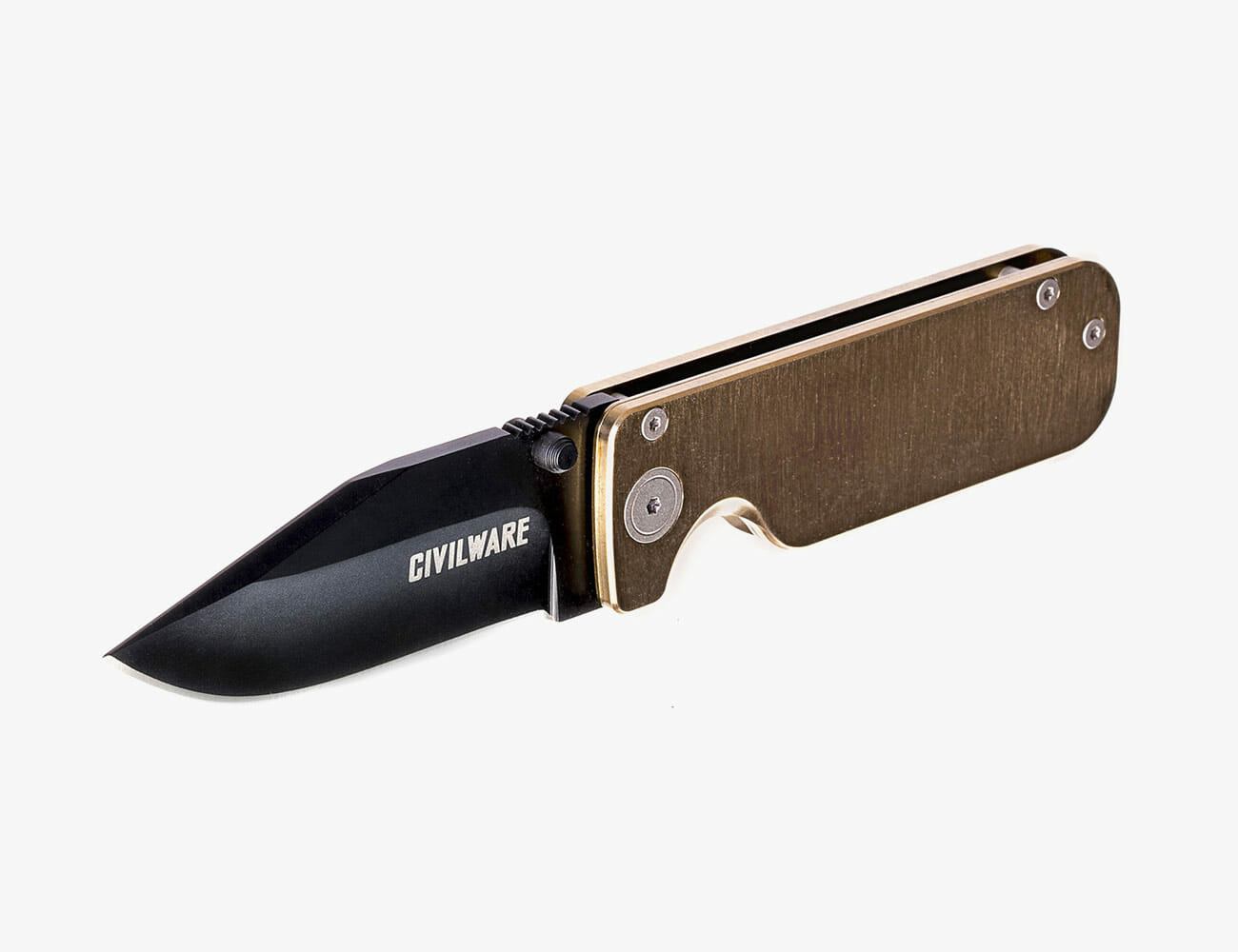
Civilware Clipper Folding Knife

“I was on a writer’s retreat in Palm Springs and found out about these guys. Ordered a knife, loved it and ended up ordering a knife for all the guys that came out on the retreat. It’s lightweight, a great pocket knife, stays sharp, something that has gotten me into a lot of trouble at airports because I totally forget it’s there.”

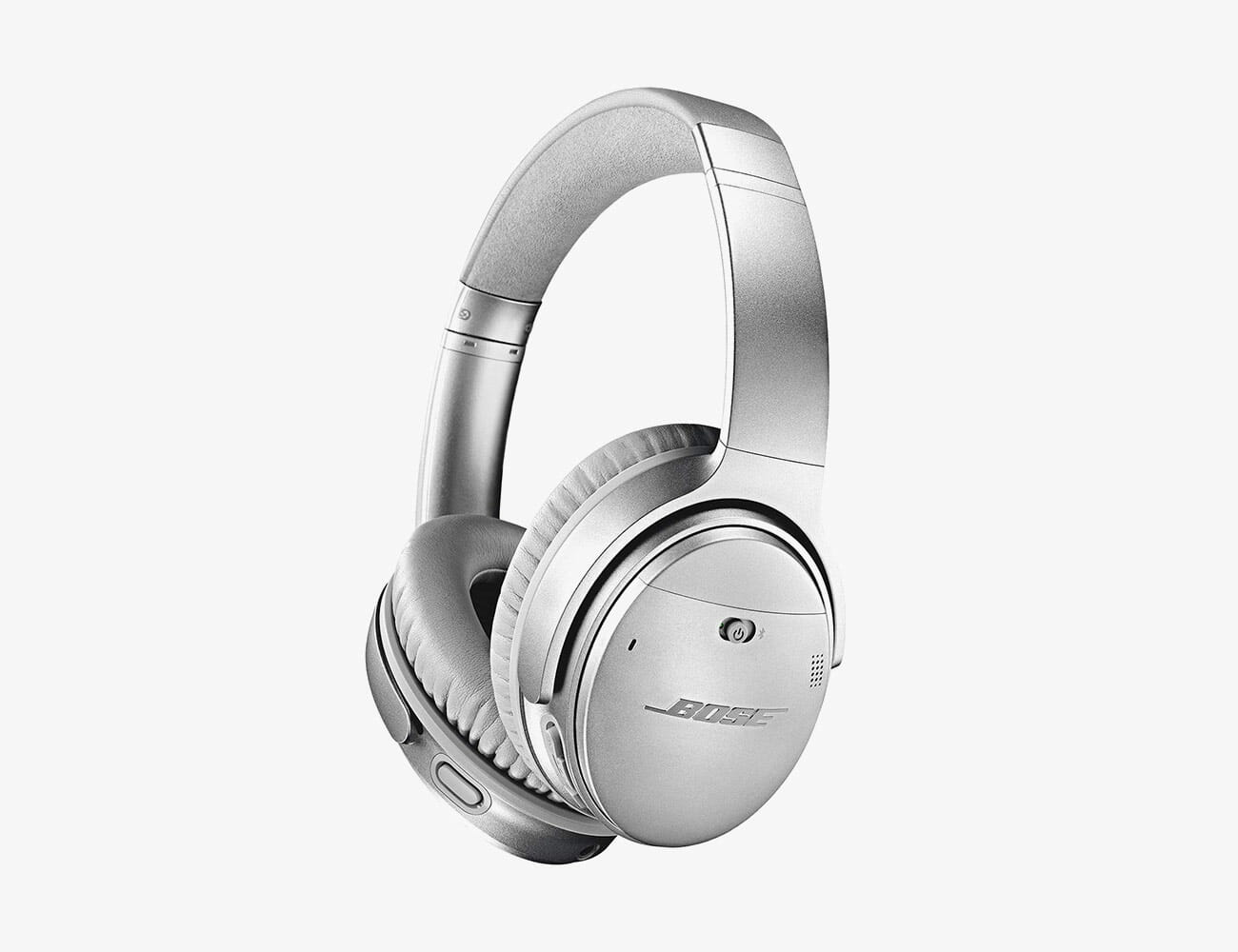
Bose QuietComfort 35 Headphones

“I’ve had these guys for about a year now. They’re Bluetooth which is amazing. On the road, we travel a ton. We’re either in airports — sometimes we’re on a stretch of road that is pretty bumpy, sometimes the bunk area of a bus can get pretty noisy — so having noise canceling headphones is a must.”

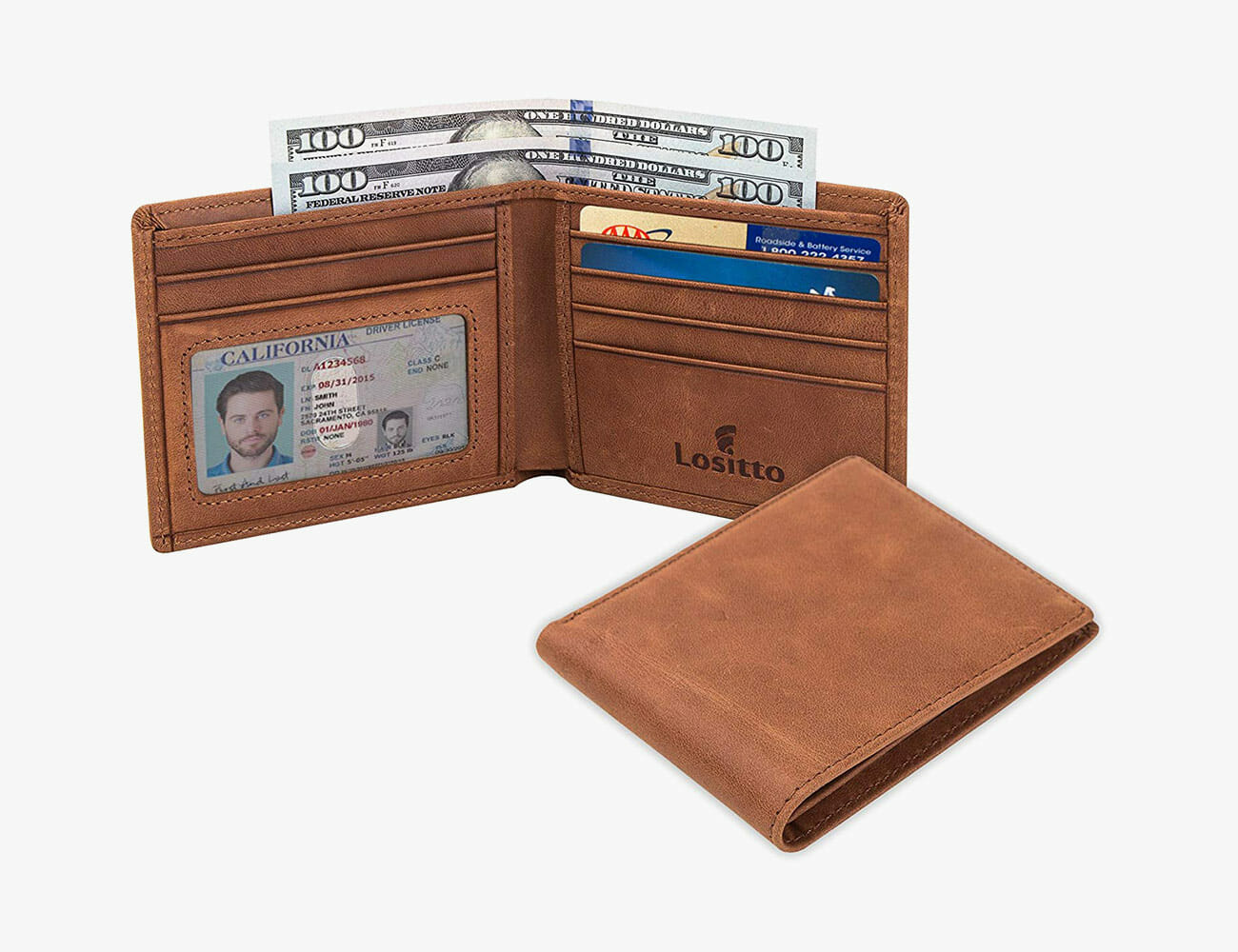
Lositto RFID-Blocking Leather Wallet

“My mother-in-law got this for me. I’ve had it for about three years now. Traveling so much, the thought of losing my ID terrifies me, so I try to keep it kind of full. I have a lot of hotel keys in here because it’s stretched out so much that I have to kinda keep them there.”

5.11 AMP10 20L Backpack

“I was given this from 5.11 which is by far the best backpack. A ton of room — it folds all the way down, which is huge… I’ve played some Army bases and they’ve given me these patches and wanted me to put them on there. So it’s just kind of a thank you to them.”

Omega Speedmaster Moonwatch Professional Chronograph

“This was a gift to me from Old Dominion as a touring gift which is by far one of the best gifts I’ve had. The Speedmaster is the first watch to the Moon, so if it’s good enough for outer space, it’s good enough for a touring musician.”

Note: Purchasing products through our links may earn us a portion of the sale, which supports our editorial team’s mission. Learn more here.

The Best Boots for Snow and Rain

Last Updated November, 2019.

The path varies, but the conditions are the same: wet, muddy, icy and caked with snow. If it’s a bucolic stroll through the High Country, more power to you. For most of us, it’s the morning commute in 25-degree temps and freezing rain coming down in horizontal sheets. Those days, the last thing we want to worry about is our dogs getting soaked.

So, we rely on the hearty welts of waterproof boots. There are varying levels of style, price and lower-leg coverage, but one thing remains constant among these sturdy stompers — they’ll get you from A to B safe and warm. All come with grippy, hearty outsoles that are welded to be totally waterproof. Uppers and liners vary by style, so consider your temp (insulated or not) and your usage. Then, tie up the laces (or slip ’em on) and go out into the world without fretting the wet.

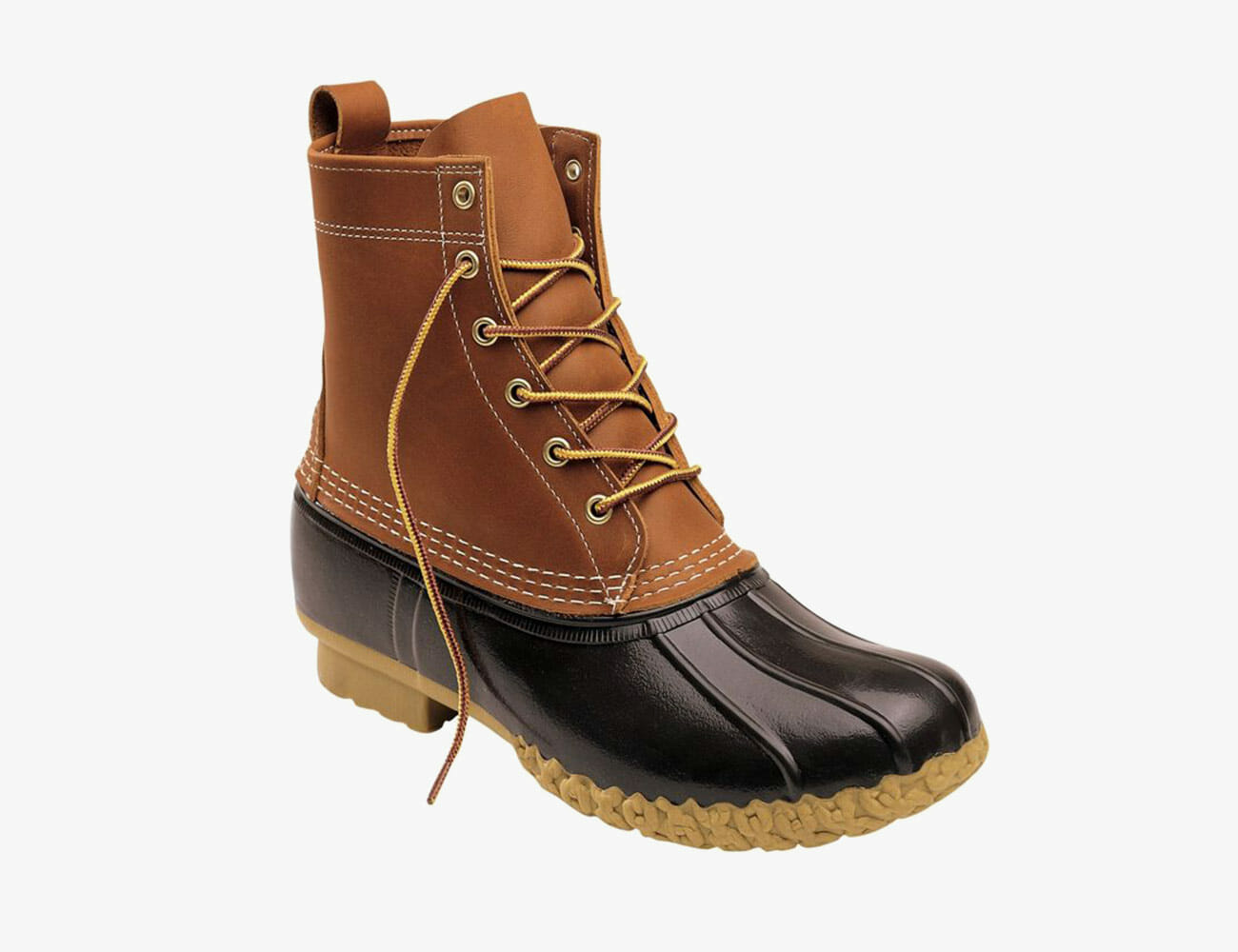
L.L. Bean Boots

Tried, true, still made in Maine and still waterproof.

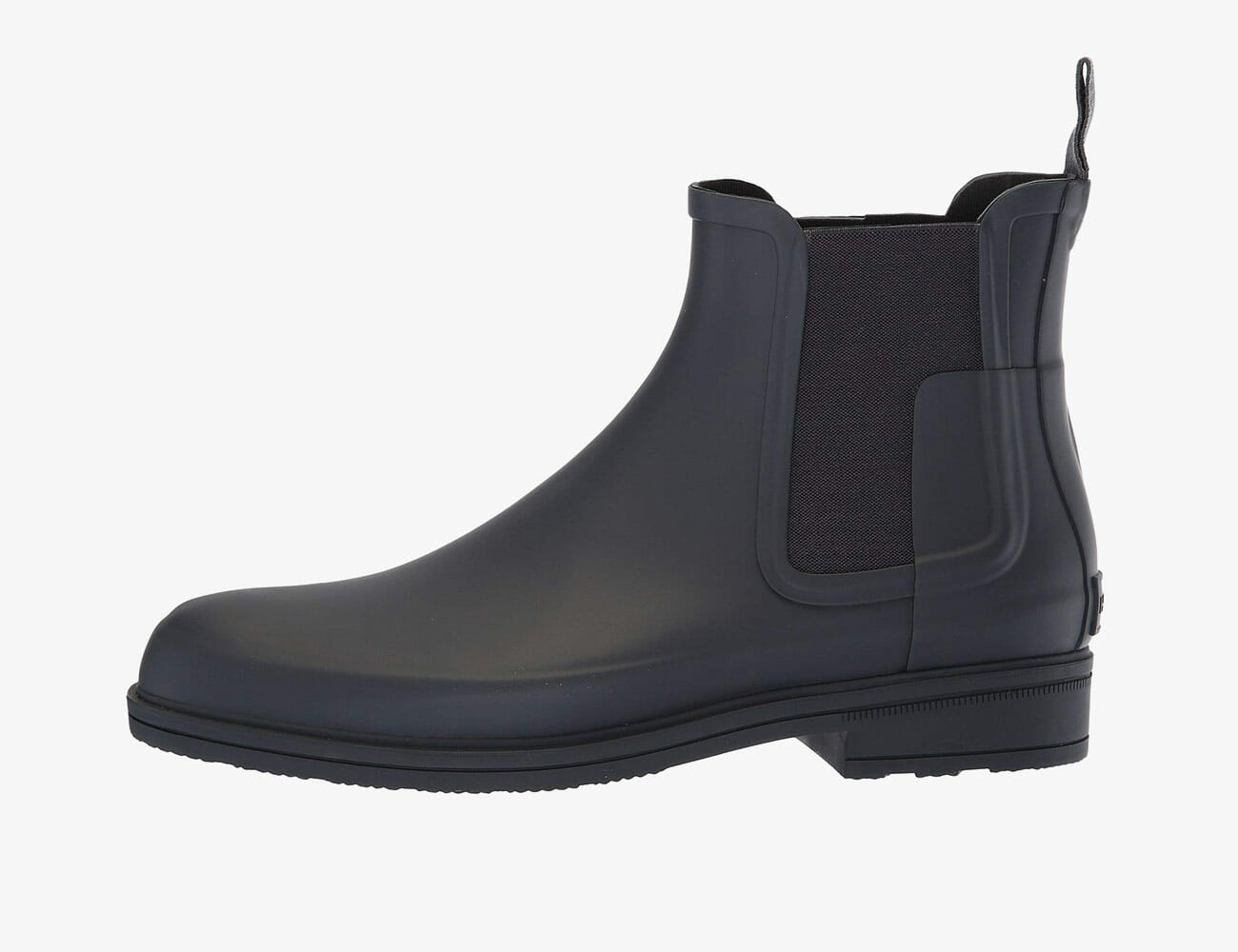
Hunter Rain Boot

When you think of rain boots, you’re thinking of Hunter. This shorter version is easier to slip into than its taller counterparts and just as waterproof, assuming you don’t fall into a foot of water.

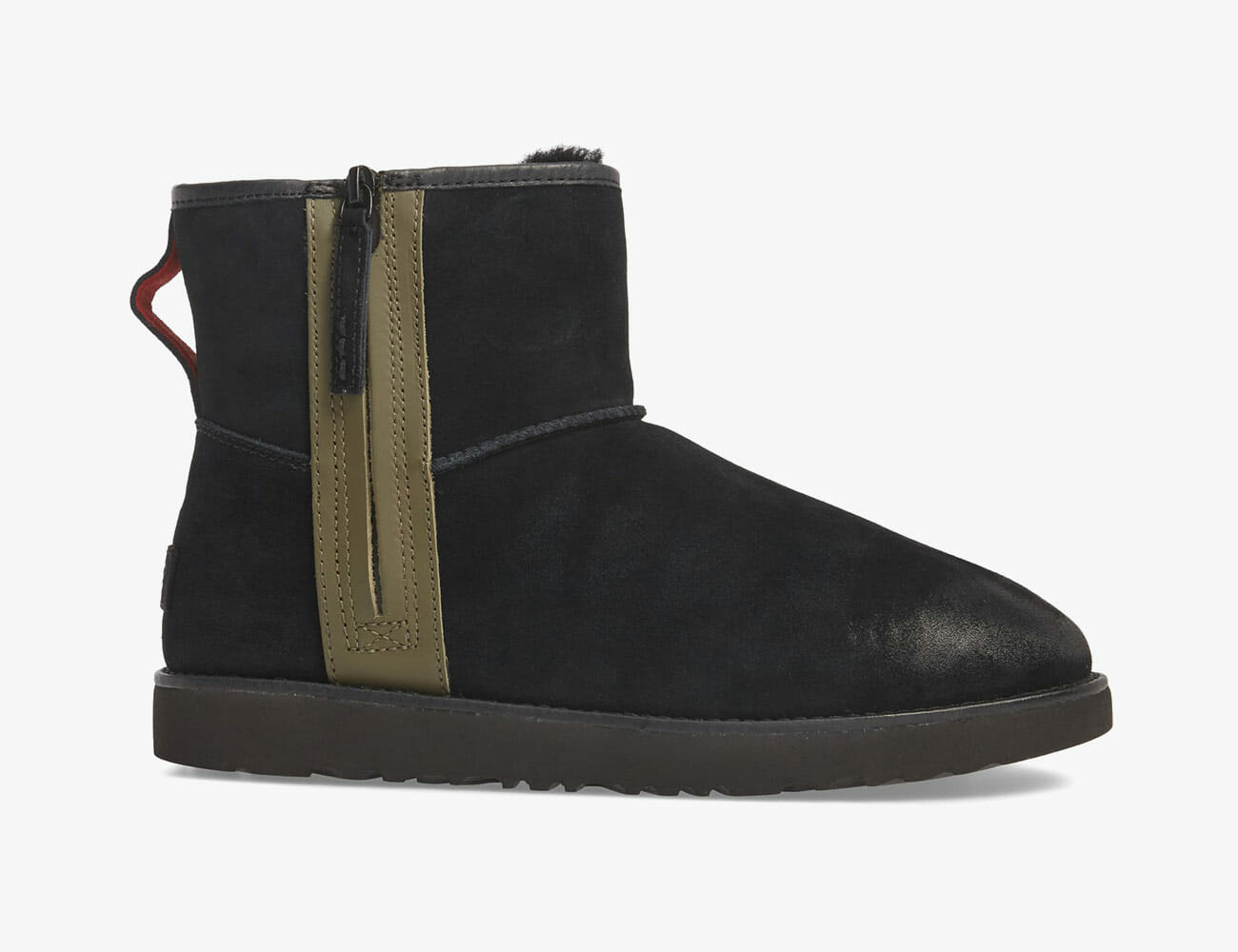
Ugg Mini Zip Waterproof Boot

Who could argue against a boot that’s comfy, cozy and waterproof? No, you’re not too good for Ugg boots.

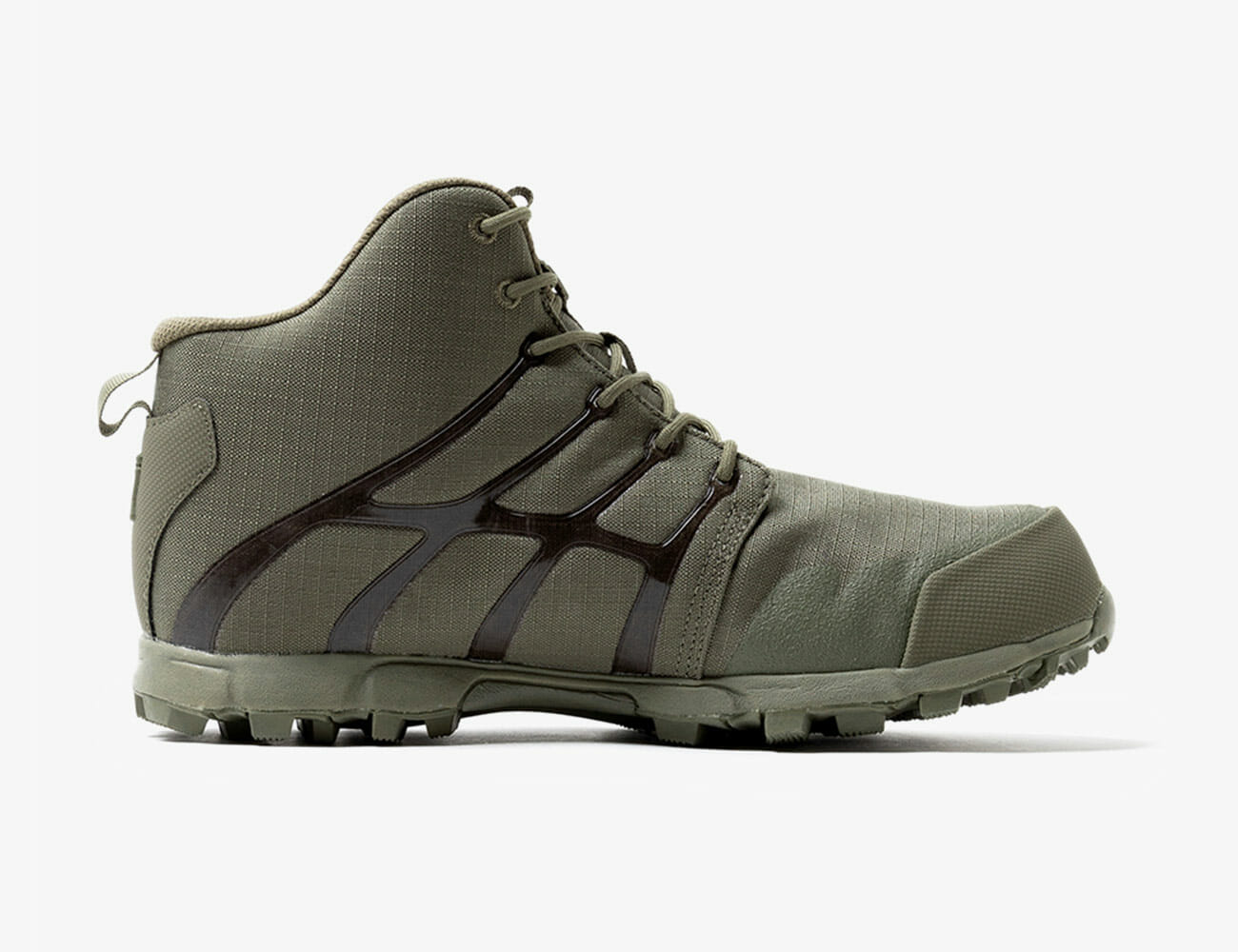
Roclite 286 GTX

Trail runners will be happy to know that they can keep on the path with dry feet thanks to the Gore-Tex lining employed in these shoes.

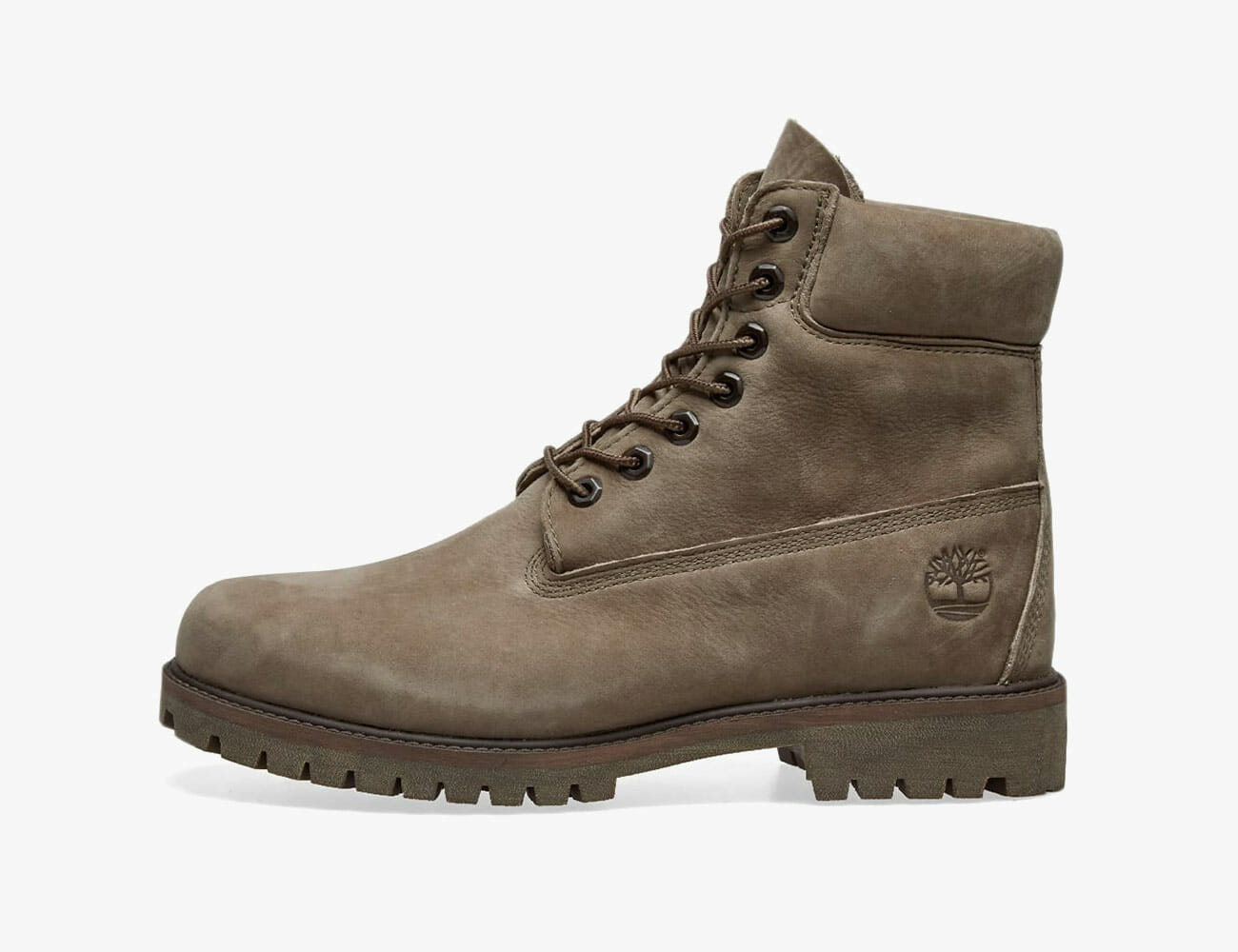
Timberland Heritage 6″ Boot

A staple work boot that holds water, literally.

Haix Black Eagle 2.0 GTX Hi

If Haix shoes are good enough to equip emergency and military service personnel, they’re probably good enough for most civilian activities, too. Anti-slip, shock absorbing and watertight construction make this pair hard to pass up.

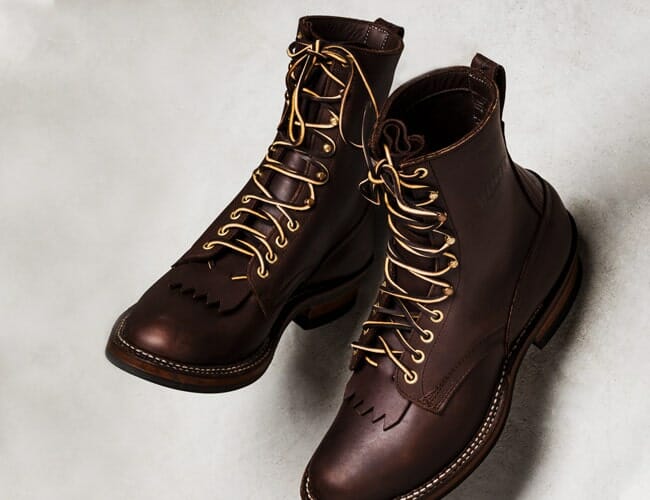
Red Wing Heritage Sawmill

Red Wing Heritage pulled this style out of the ’70s section of their archives and it’s made to take on terrain and torrential rain.

Russell Moccasin Hiker

More than a century has gone by for Russell Moccasin and they’re still kicking with their genuine moccasin-construction boots. Their Hiker promises rugged all-terrain capabilities with a variety of lugged Vibram soles and weather-proof chrome-tanned leather uppers.

Vans Sk8-Hi MTE

Some of us just are not boot guys. And that’s okay. Vans’ Sk8-Hi sits among their bevy of verified classics and this one is a rain-ready iteration.

Note: Purchasing products through our links may earn us a portion of the sale, which supports our editorial team’s mission. Learn more here.

7 Types of Winter Jackets You Need to Know

In order to gear up for winter, you need to be well-equipped. But before you go donning layers uninformed, you might want to know the different types of winter-appropriate pieces of outerwear. We’ve picked seven pieces of outerwear you should know, each of which is built with functionality in mind. So before you make a decision on which winter jacket will be your go-to, survey the field and get informed.

Peacoats

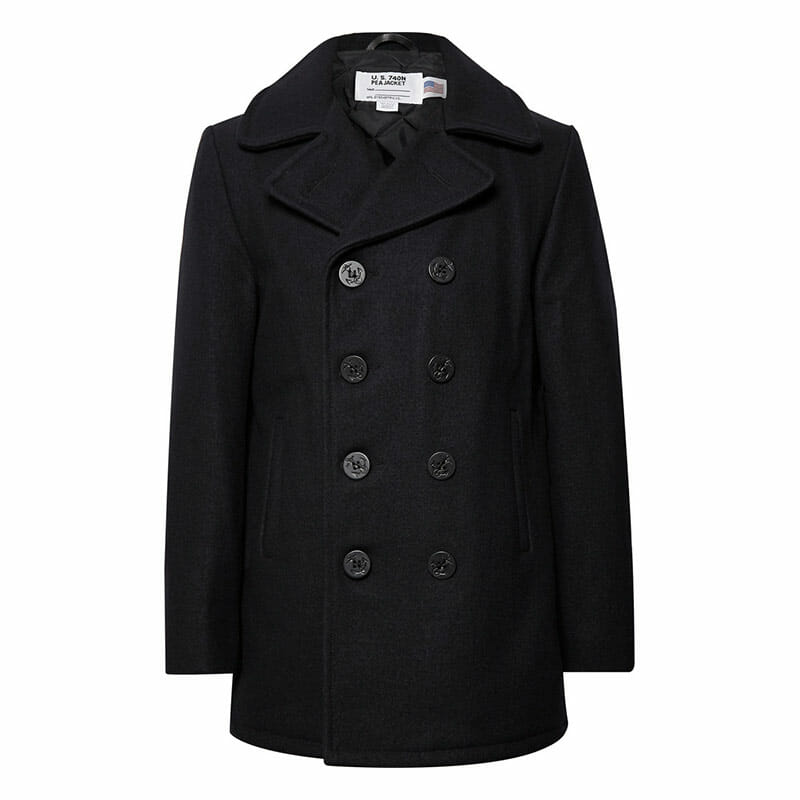
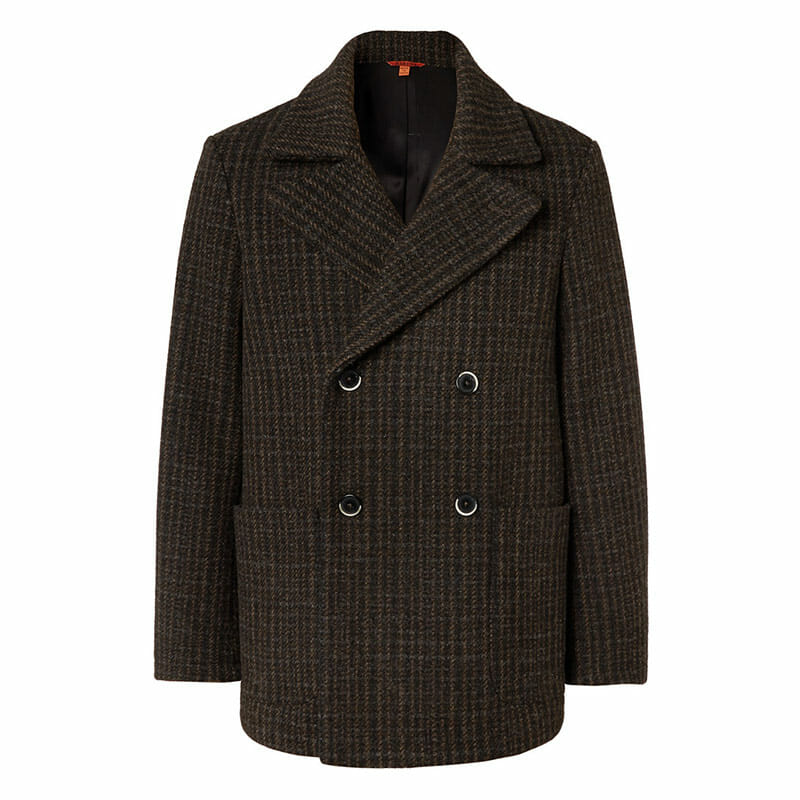
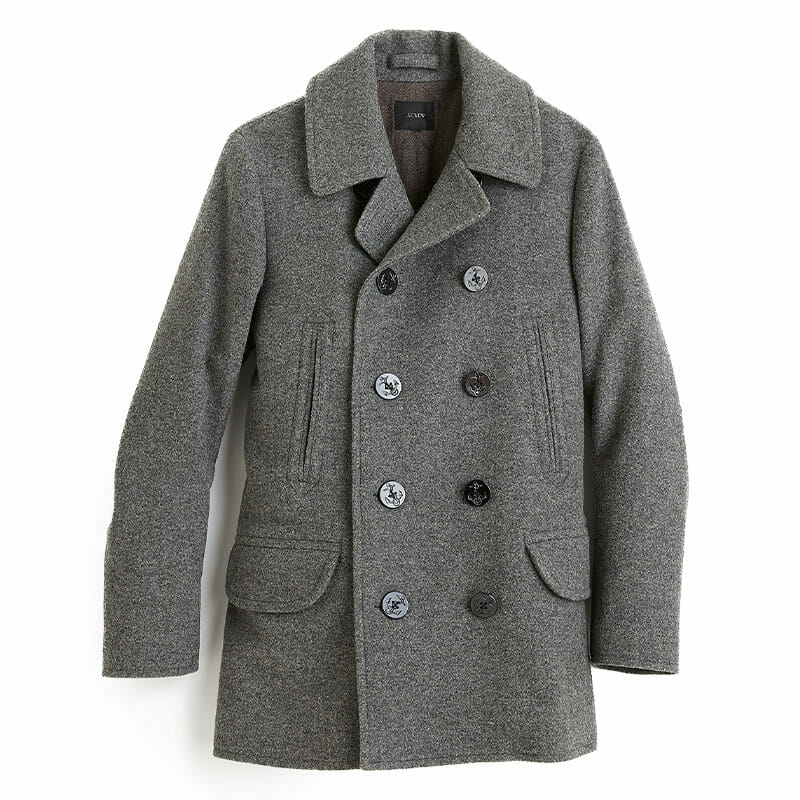
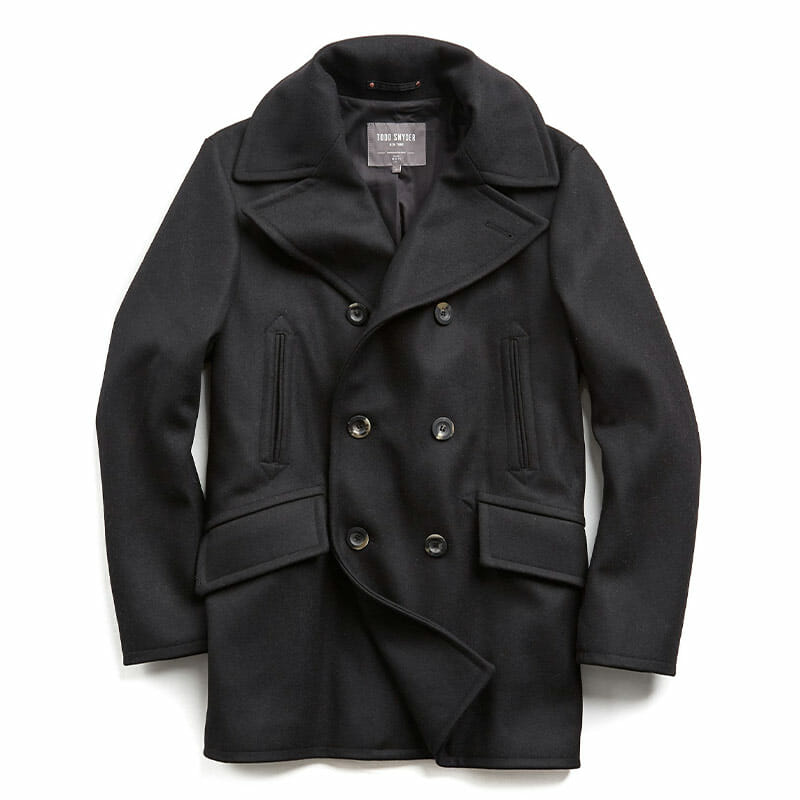
The peacoat has origins with the Dutch — its name likely comes from the term pijjakker— and it became popular sailors from the Netherlands, Great Britain and the United States. Made from a dense and heavy, woolen fabric, the short jacket style features a wide lapel with an eight- or ten-button double breast front and hand pockets. It was cut short with a flared bottom to increase range of motion, vital for carrying out orders on deck. And, the wide lapel provided much-needed protection from the elements when stood up.

Of course, the coat moved on from its naval roots in the 1800s but is just as functional today. Its common fare in your local surplus store, but there are just as many modern interpretations.


Melton Wool-Blend Peacoat by Schott $425

Double-Breasted Checked Wool-Blend Peacoat by Barena $705

Dock Peacoat by J.Crew $298

Manchester Wool Peacoat by Todd Snyder x Private White V.C. $998

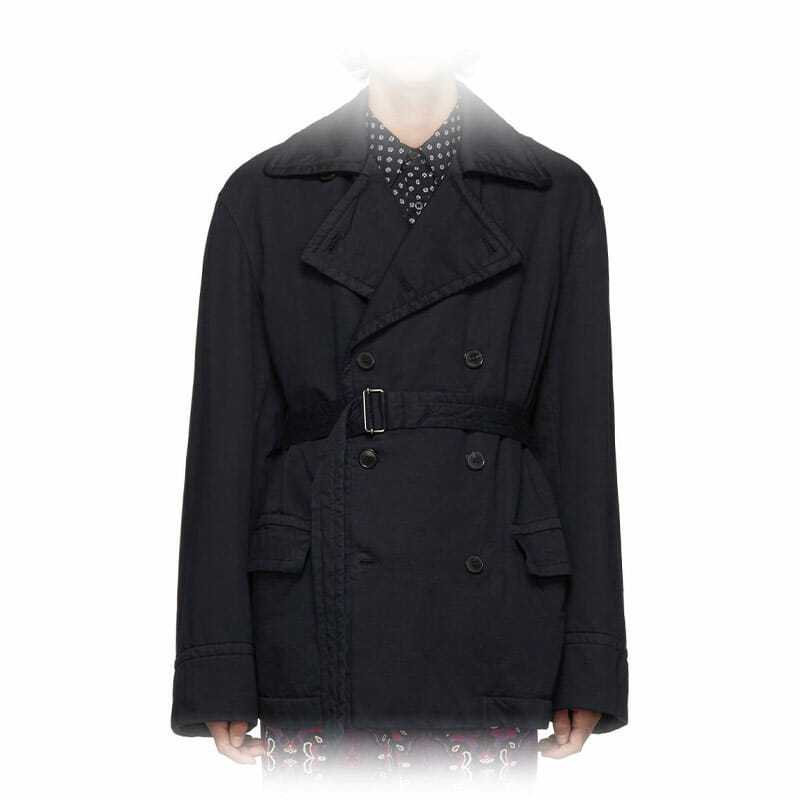
Short Peacoat by Dries Van Noten $1320

Trench Coats

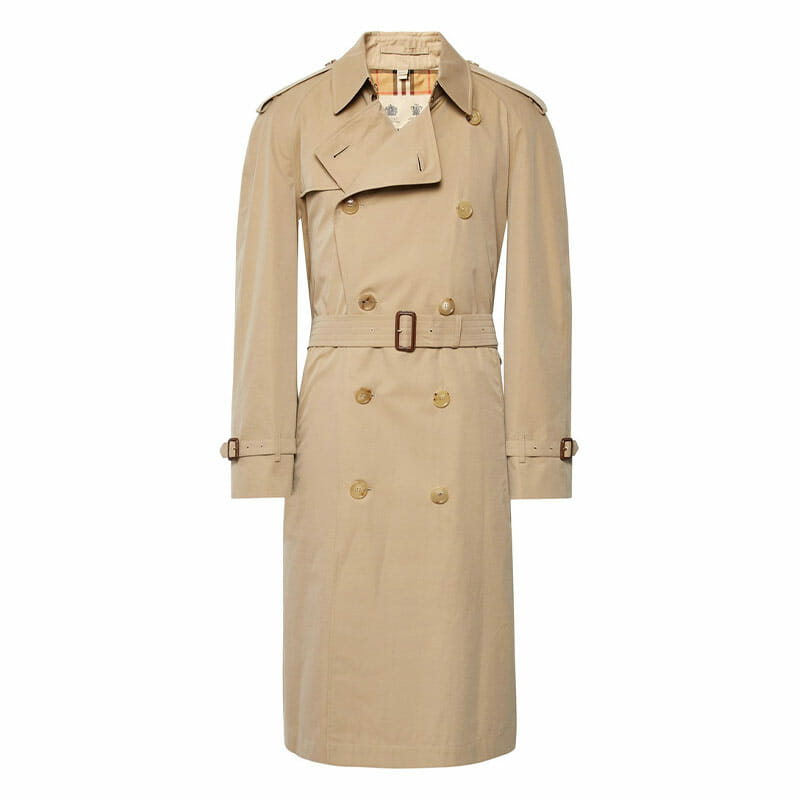
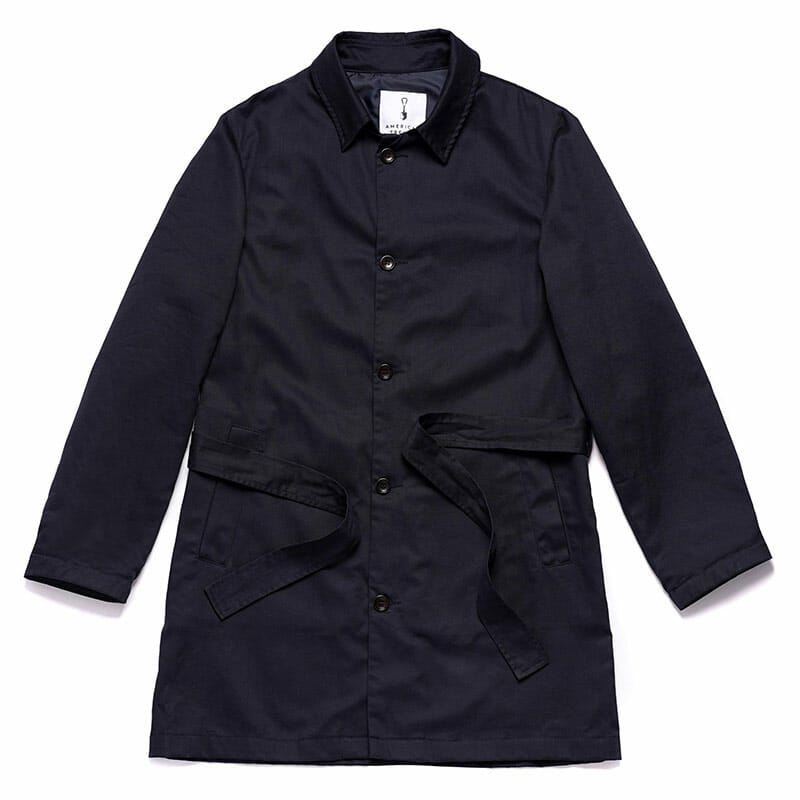
First invented during World War I, the trench coat replaced heavy serge jackets worn by soldiers. Both Burberry and Aquascutum lay claim to the coat’s invention and are still the go-to brands for the style. Early trench coats were made from khaki-colored cloth of either gabardine, twill, or poplin, and featured below-the-knee length, a double breast with 10 buttons, raglan sleeves, epaulets, a storm flap, buttoned pockets and a belt at the waist.

Today, the trench coat can be seen pared down and done up in various iterations. Perhaps the most distinguishing factors for the style are its cloth and length.

Trench Coat by Burberry $2090

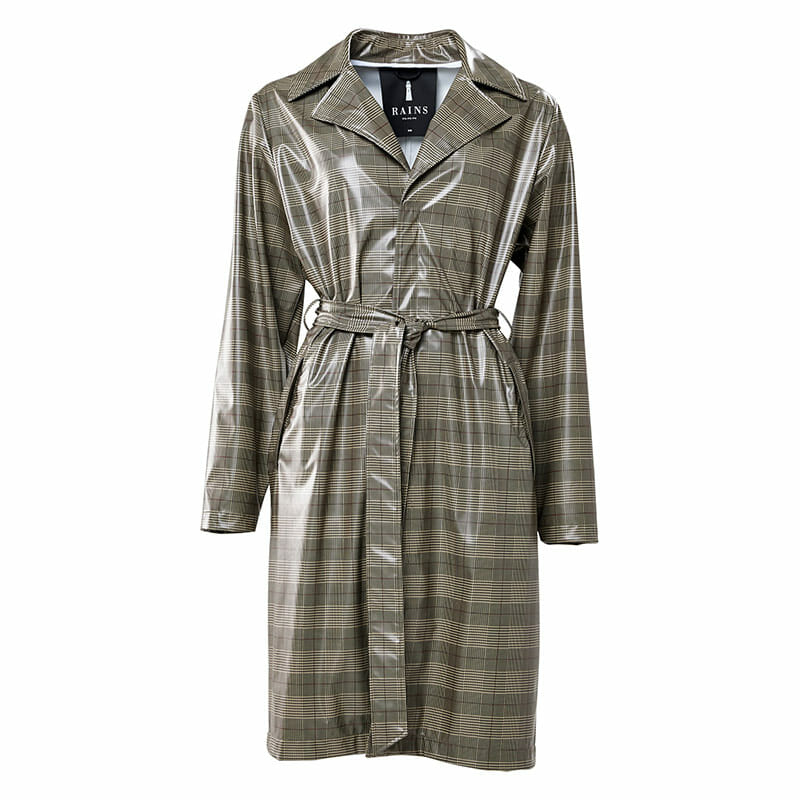
Waterproof Plaid Raincoat by Rains $185

Shelby Trench Coat by S.K. Manor Hill $845

Belted Trench Coat by American Trench $295

Duffel Coats

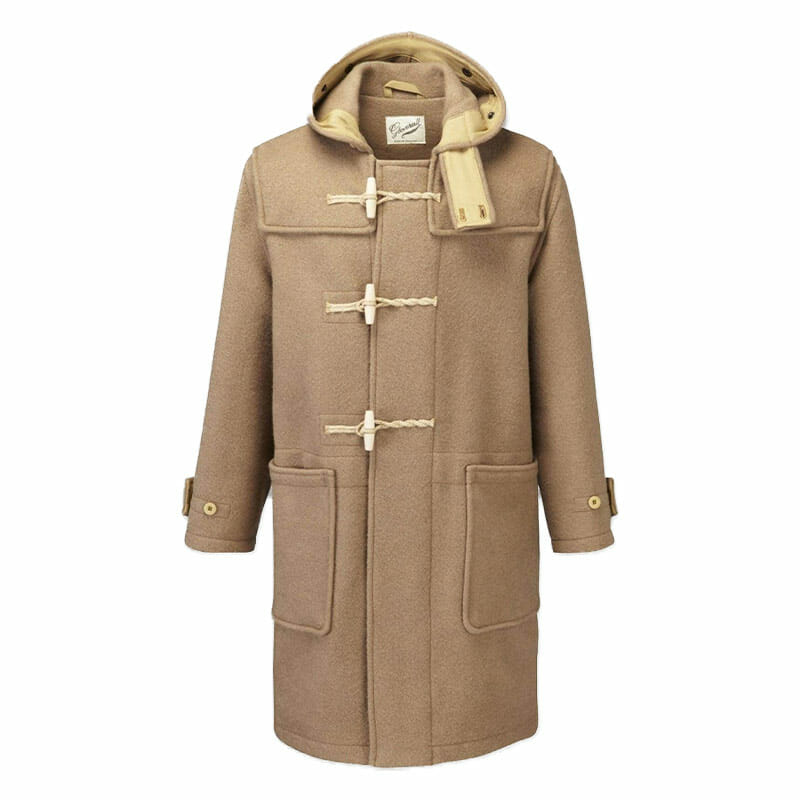
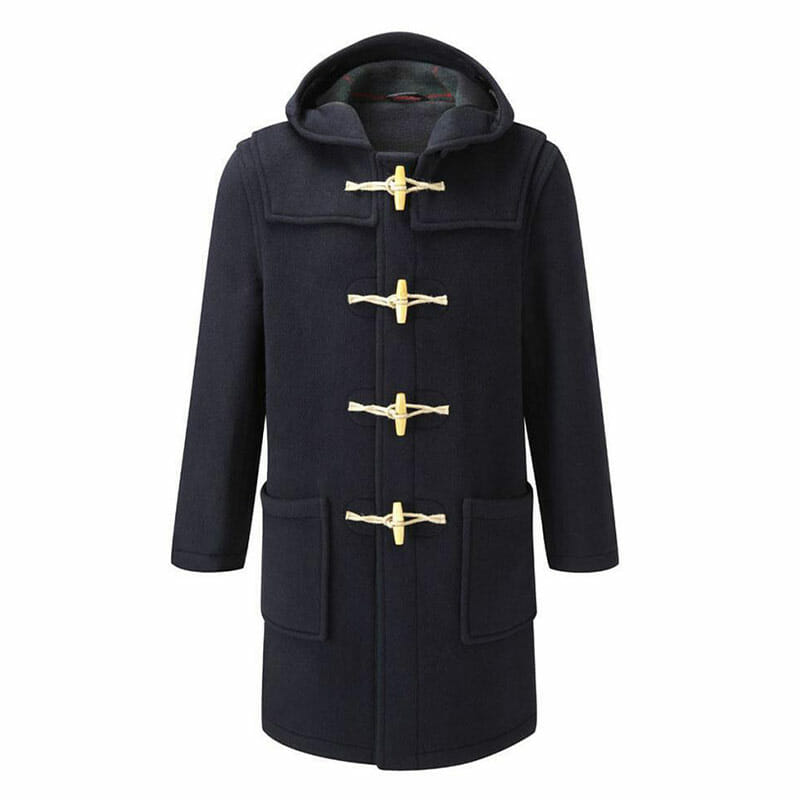
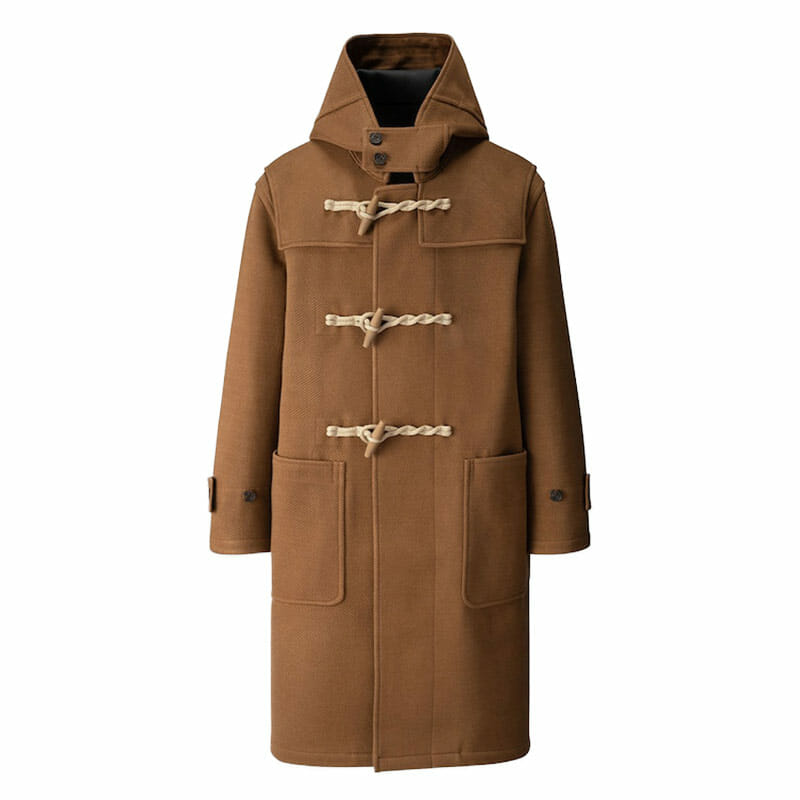
Much like the peacoat, duffel coats are cut with a dense woolen cloth which is speculated to come from a kind of cloth produced in the town of Duffel, near Antwerp. The main distinguishing details of the duffel coat aside from the coarse cloth are the hood and toggle closures which are often made of horn and jute. British-based brand Gloverall is the name that is usually associated with the classic coat and they’ve been producing the style since the 1950s.

Original Monty Duffle Coat by Gloverall $605

Duffle Coat by Montgomery $349

U Blocktech Duffle Coat by Uniqlo $130

Down Jackets

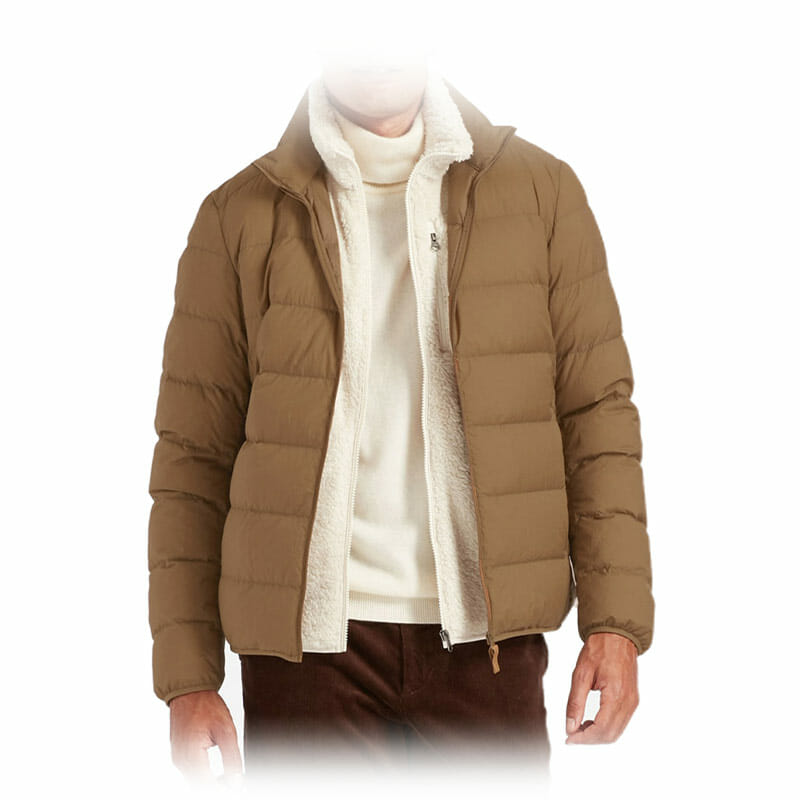
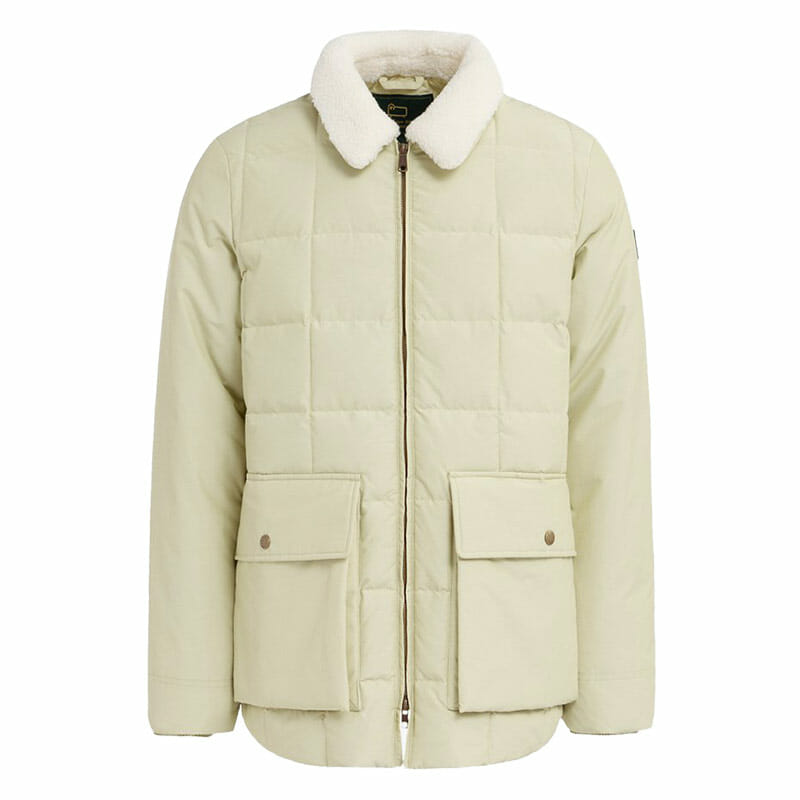
Down jackets come in all manner of forms and can even be seen in some the other styles on this list. Down originally was made using goose down feathers but are often seen today in synthetic materials such as polyester. Down jackets often are constructed in some sort of quilted or channeled stitching to keep the filling evenly spread throughout the coat as it can be prone to clumping without it.

Ultra Light Down Wide Quilt Jacket by Uniqlo $70

Quilted Down Puffer by Aime Leon Dore x Woolrich $675

Quilted Jacket by RRL $790

Corduroy Short Jacket by Todd Snyder x Crescent Down Works $698

Quilted Ring Coat by Kapital $594

Parkas

Made by the Caribou Inuits to withstand arctic climates, the parka is a hooded garment that was originally made using caribou or seal skin. Today, the parka’s variations are more often seen with some kind of insulated filling and forgo the traditional animal skins for various kinds of woven fabrics. Anoraks, though also hooded, are slightly different and can be distinguished by their pullover style. That said, sometimes the term is used interchangeably.

ReNew Long Parka by Everlane $198

Isoogn MX Hooded Jacket by Veilance $595

Long Smock by Nigel Cabourn x Liam Gallagher $1005

Yates Genuine Shearling Hooded Parka by Ugg $2995

Gore-Tex Hooded Down Parka by Y3 $900

Overcoats

The overcoat category of outerwear has its many subsets, but in general, the style is longer, extending past the knees, is made from a heavy fabric such as melton wool and worn as the outermost layer, often over another lighter jacket. Topcoats, on the other hand, are made from lighter fabrics and do not extend beyond the knees.

Rasmus Overcoat by NN07 $500

Double Breasted Coat by Suit Supply $599

Brushed Overcoat by Massimo Alba $1,450

Flight Jackets

Flight jackets were originally produced during WWI for military pilots to withstand the frigid temperatures at altitude, a real concern especially considering the open cockpits of the day. Often, it would be made from leather and/or shearling and feature high collars, snug cuffs and hems. Today its iterations include the bomber jacket and varsity jacket, among others.

MA-1 Slim Fit by Alpha Industries $150

Wool Bomber Jacket by Private White V.C. $750

Leather Bomber Jacket by Everlane $298
Note: Purchasing products through our links may earn us a portion of the sale, which supports our editorial team’s mission. Learn more here.

The Khaki Pilot Is A Limited Edition Timepiece From Hamilton And Schott NYC

For our readers who have been faithfully following us along our journey to uncover awesome stuff, we are changing things up a bit. You’ve probably seen us feature high-end wristwatches for a while now. The thing is, most of these wallet-breaking pieces are Swiss in origin, which is absolutely top-tier. Therefore, the team thinks it’s time to shine the spotlight on other exceptional brands. What we have here is two American companies joining hands in crafting the Khaki Pilot.

The brands behind this admirable endeavour are Hamilton and Schott NYC. Both are reputable labels specializing in premium-grade watches and top-notch clothing products respectively. Furthermore, these two share a remarkable history supplying their wares to pilots during World War II. Lauded by the military for the quality and dependability of their wares, we know that this latest collaboration deserves your recognition.

The military vibe is clear just by looking at the choice of colours the timekeeper is flaunting. Moreover, it draws inspiration from aviation, which is evident through the outstanding design. This is a 46 mm wristwatch that sports a khaki green dial with the date window close to the centre. This alongside the addition of Super-LumiNova coatings on the indices, hands, text, and numbers, gives owners superior visibility in low-light conditions.

Hamilton arms the Khaki Pilot with an H-30 automatic movement that boasts an 80-hour power reserve. Meanwhile, Schott NYC supplies the full aniline, top-grain, lightweight steer hide leather for the wristbands each the 1,892 exclusive timepieces. These are apparently the same type of material the company is using for their products. Finally, each of these come with a hand-crafted leather case that oozes with style.

Get it here

Images courtesy of Hamilton

The Most Interesting Red Wing Boot Collabs You Can Buy

Red Wing boots have been tried and tested since 1905, garnering fans the world over thanks to the brand’s quality materials and construction methods. As classic as they are, however, we enjoy a good collaboration that sees its boots step outside of the shoebox. From archival boot variations to slope-ready snowboard boots, these are some of the most interesting Red Wing boot collabs out there right now.

Red Wing x Indigofera Climber Boots

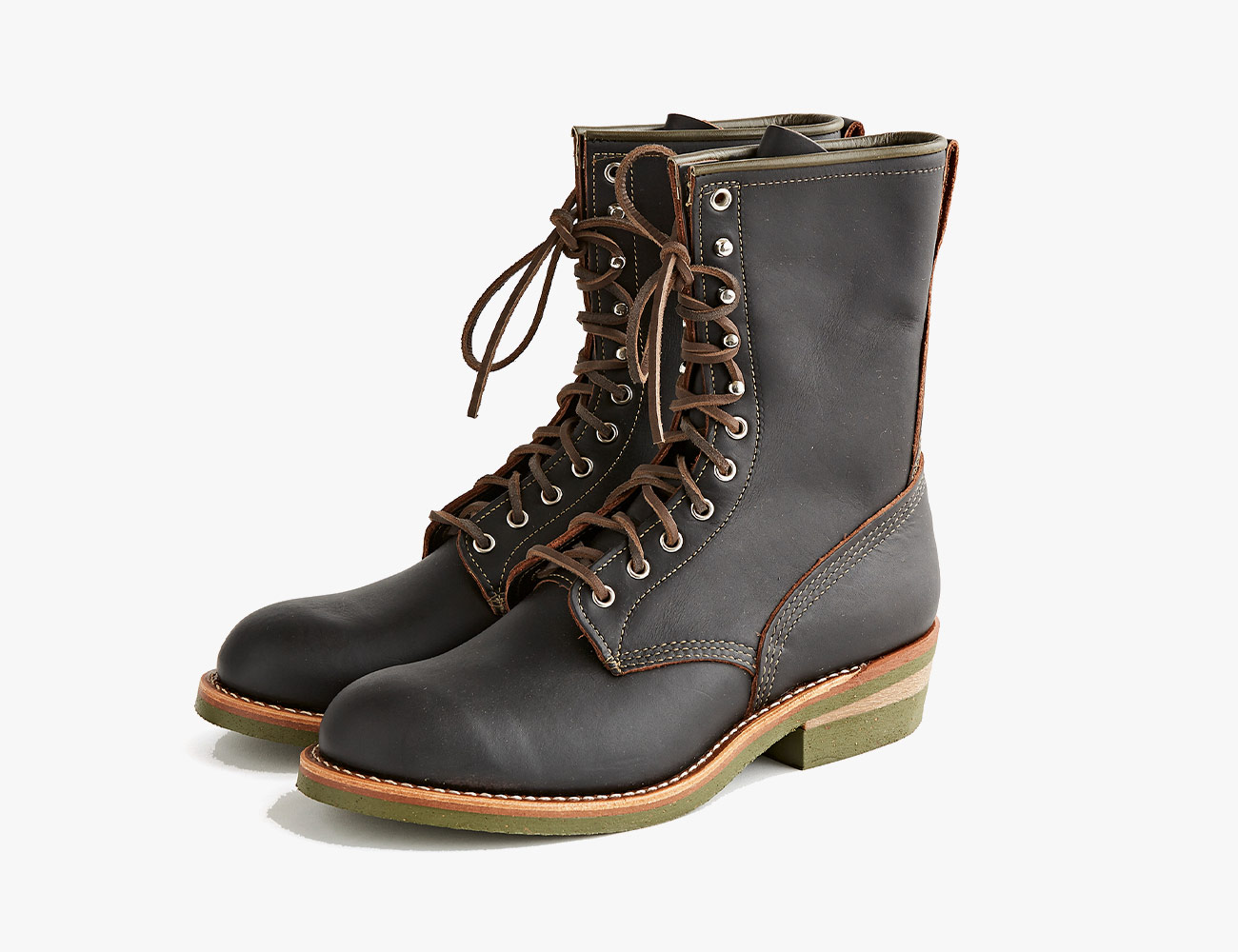
When you turn 10 years old, you’d celebrate with your own custom pair of boots, right? That’s what Indigofera did when they reached a decade of slinging selvedge jeans and other hardwearing goods. The brand’s Climber Boots follow in the steps of Red Wing’s archival lineman boots and stand at eight inches dressed in gorgeous Black Prairie Leather. But the kicker has got to be the avocado green Vibram soles.

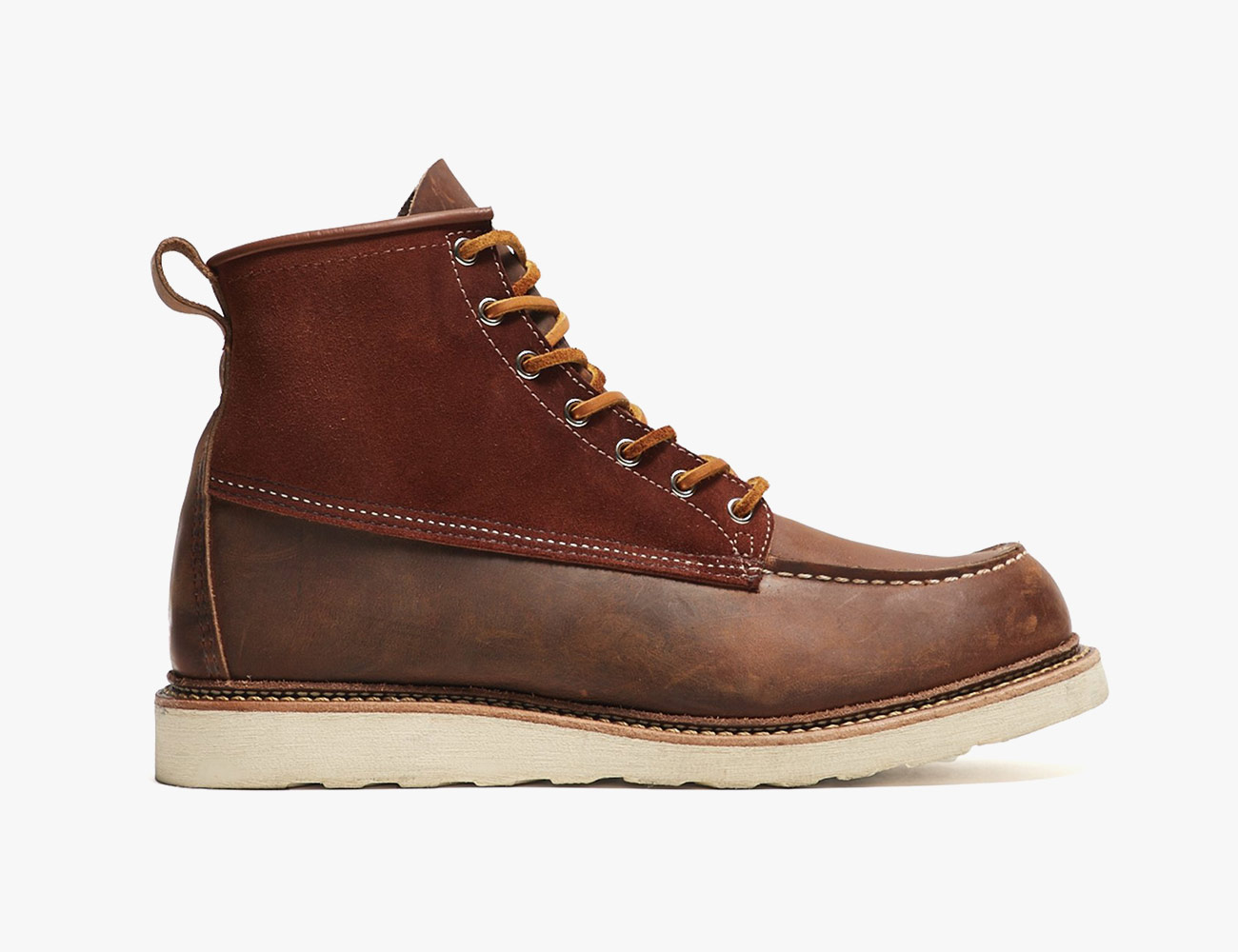
Red Wing Heritage x Todd Snyder Moc Toe Boots

Red Wing’s Moc Toe boot is the brand’s flagship style. Todd Snyder’s rendition takes the paneling of the 8-inch Classic Moc and cuts it down a couple of inches while adding some tonal texture to the mix by buddying up suede with smooth leather. The result is subtle, yet notable enough — this one might have come from Japan.

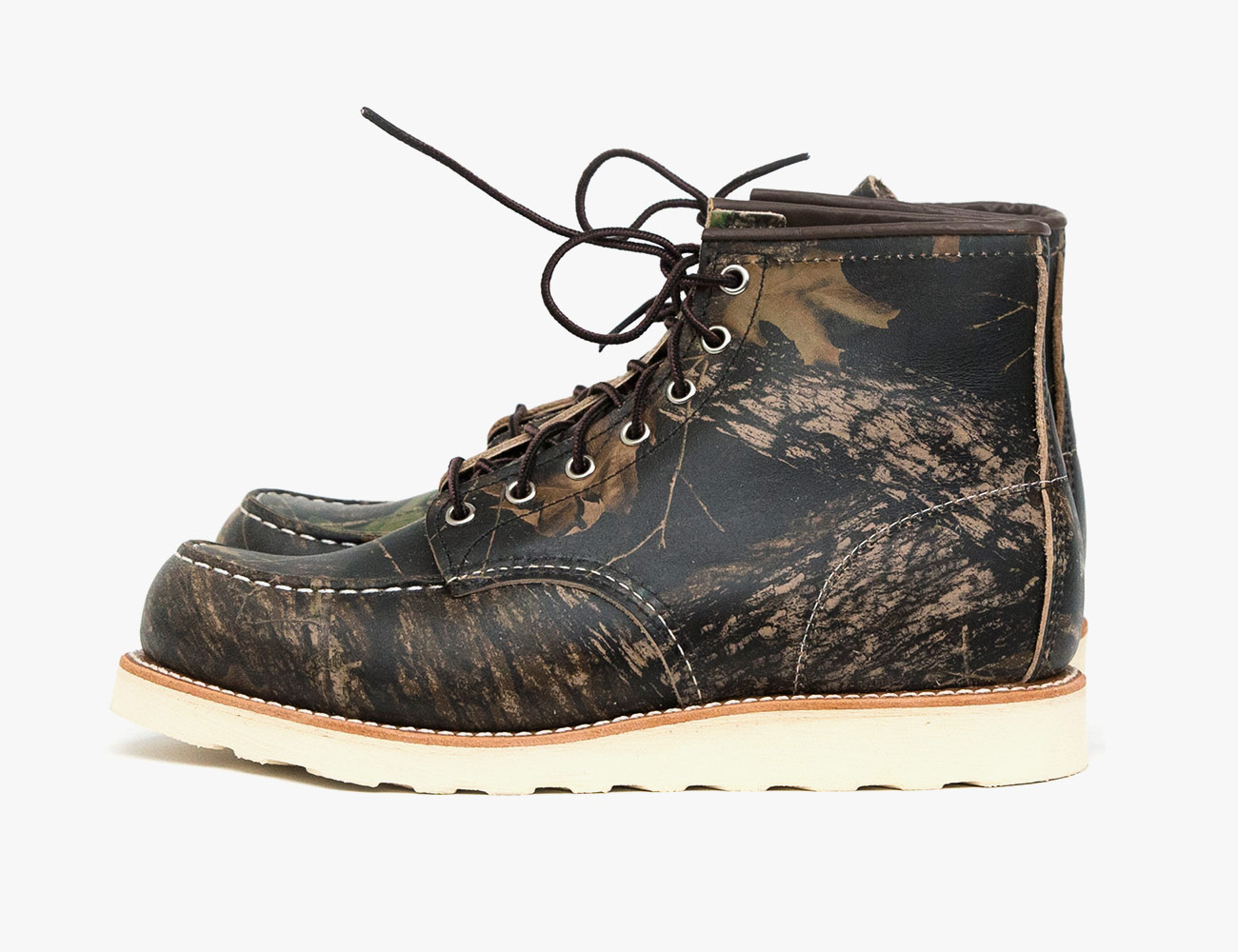
Red Wing x Mossy Oak Classic Moc

It’s one thing to add some texture to Red Wing’s Classic Moc, it’s another to print a whole image onto it. In cahoots with Mossy Oak, these hard-to-see stompers are covered in an autumnal leave camouflage for keeping your feet covert.

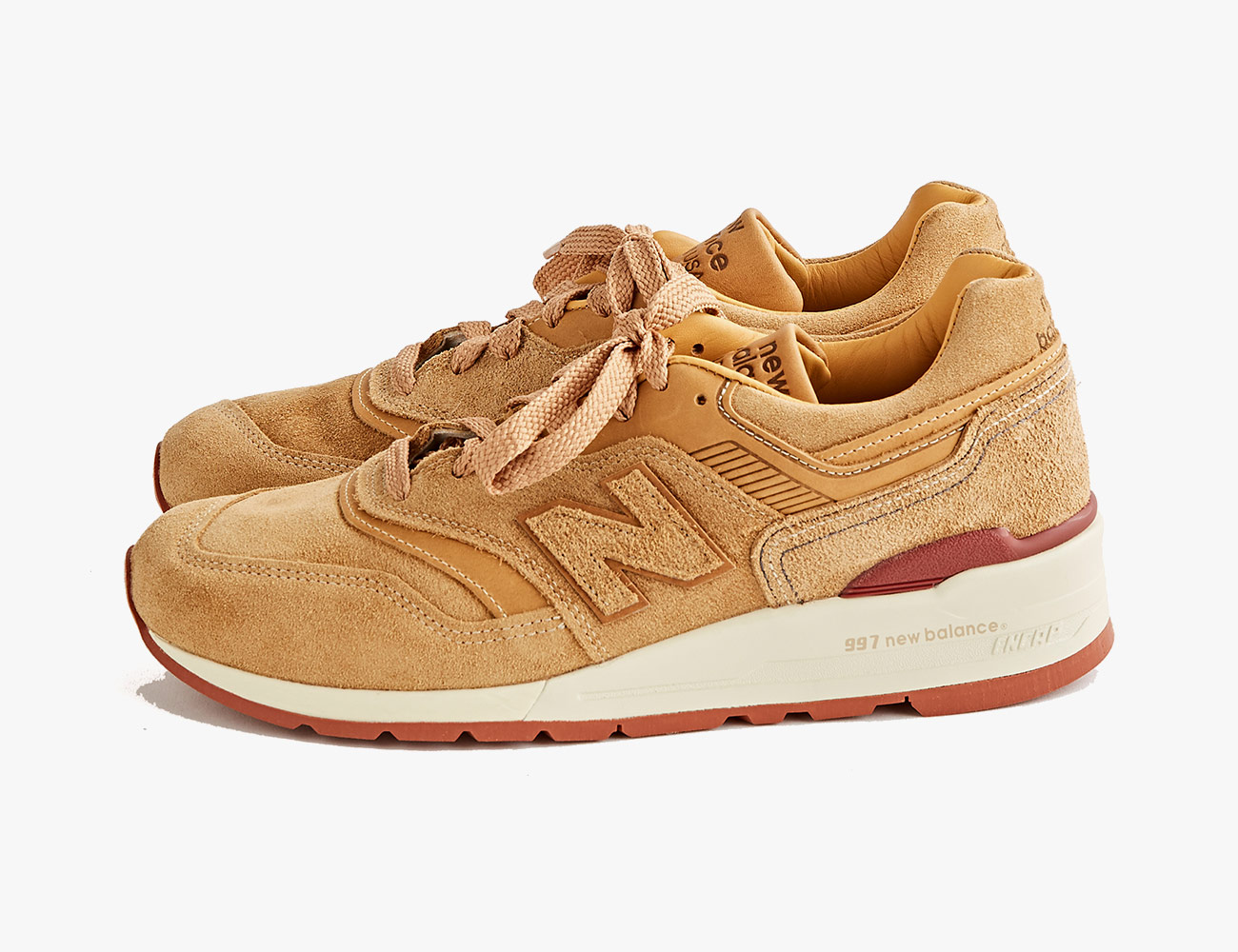
Red Wing x New Balance 997 Sneakers

Okay, this one’s not exactly a boot. But it’s hard to ignore a New Balance sneaker when it uses Red Wing’s own leathers. Employing Red Wing’s Hawthorne Muleskinner roughout leather, New Balance’s 997 got a major materials upgrade.

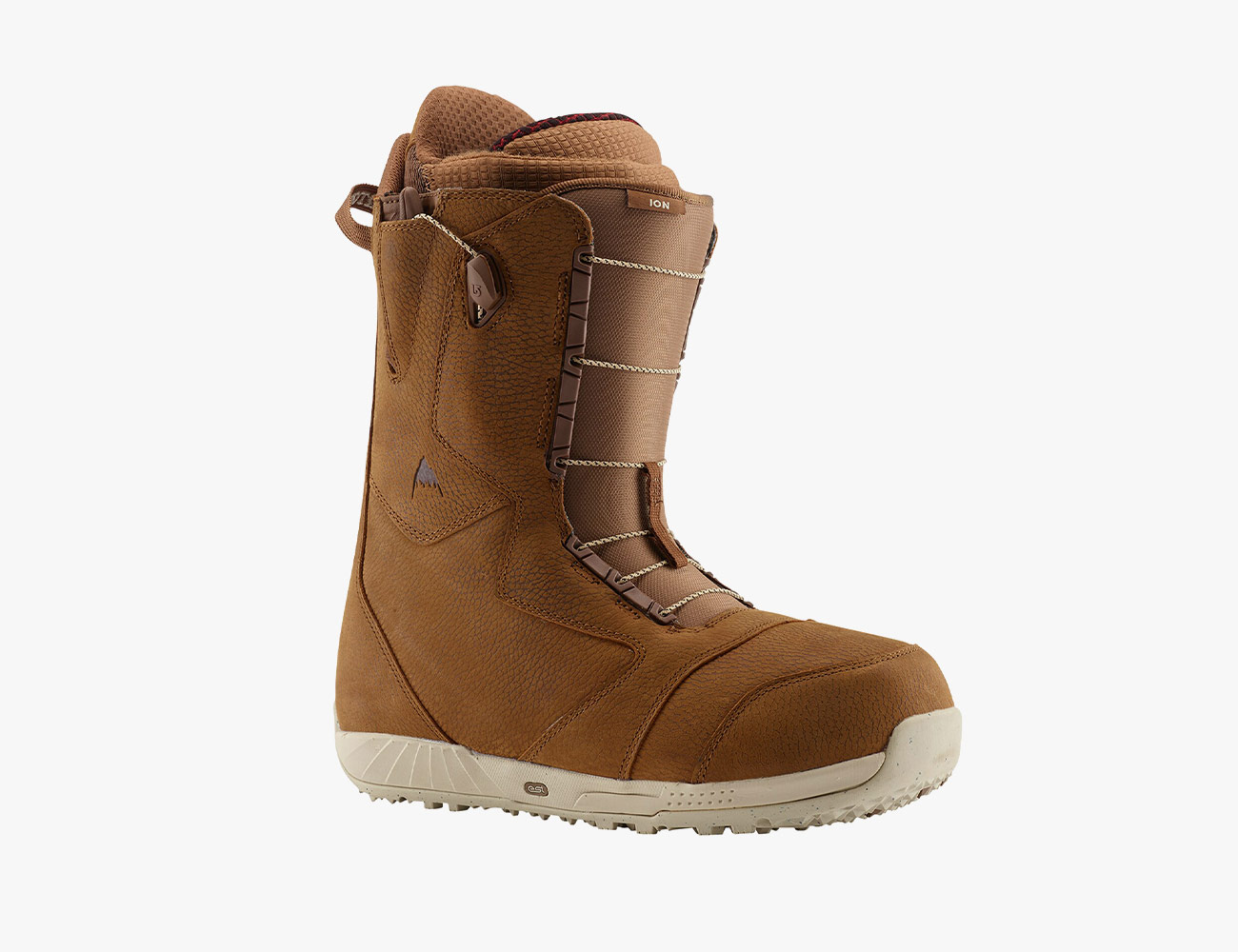
Red Wing x Burton Snowboard Boots

These boots were made for boarding. Built for the slopes, Red Wing’s collaboration with Burton brought about one of the gnarliest uses for their leather we could find. You won’t find any Goodyear welt construction here, but you will find all sorts of tech made to keep your feet warm on and off the snowboard.

Red Wing x Indian Motorcycles

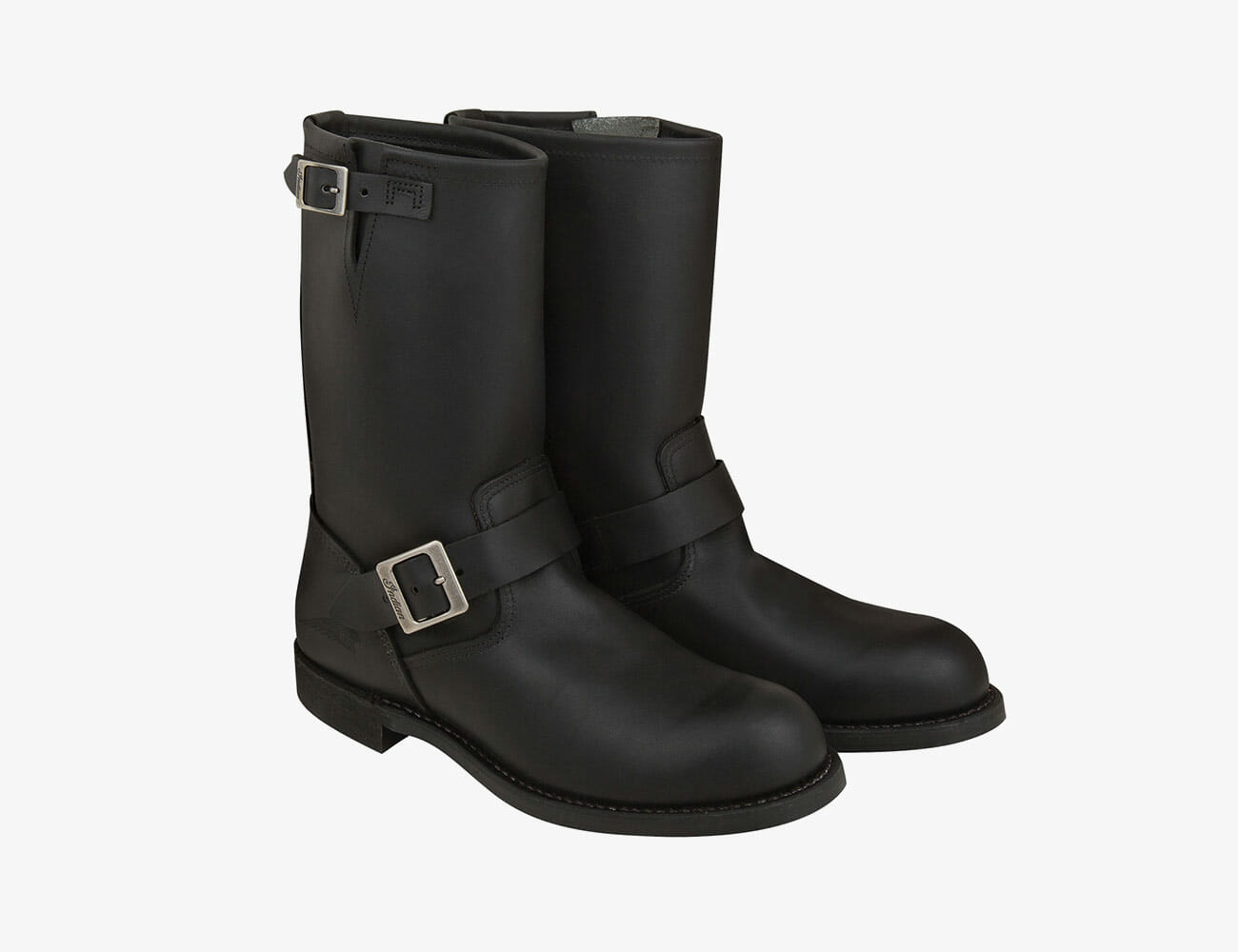
Perhaps a little less surprising compared to its collab with Burton, a trio of boots is a neighborly effort with Indian Motorcycles. The collection features pull-on engineer boots for men and women as well as a taller version of Red Wing’s Iron Ranger. Each boot comes with all the trappings of your typical Red Wing with the added cachet of Indian Motorcycle-branded hardware and debossed logo.

Red Wing x Eat Dust Pecos Boots

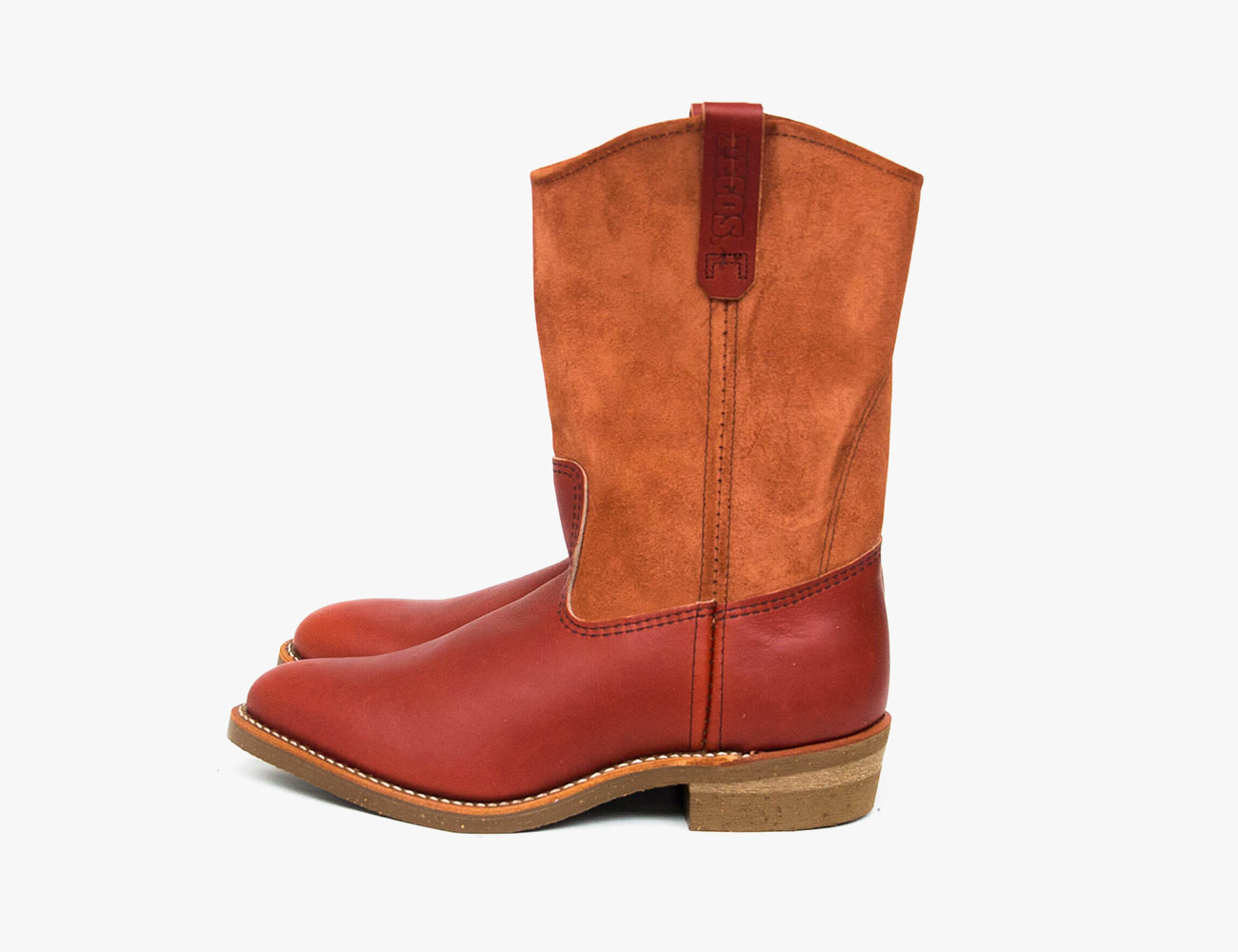
The Pecos boot found its way well beyond the cowboys of Texas for which they were originally intended. The pull-on boots became the go-to style for farmers, construction workers, oil workers and, now, Red Wing boot aficionados. This two-tone collab with Belgian-based Eat Dust combines Red Wing’s Oro-Russet Portage leather with their Oro-Russet Abilene Roughout leather for a tasteful mix that’s at home on the prairie or in the pub.

Note: Purchasing products through our links may earn us a portion of the sale, which supports our editorial team’s mission. Learn more here.

Huckberry And Timex Diver Watch Represent The Best Of Both Brands

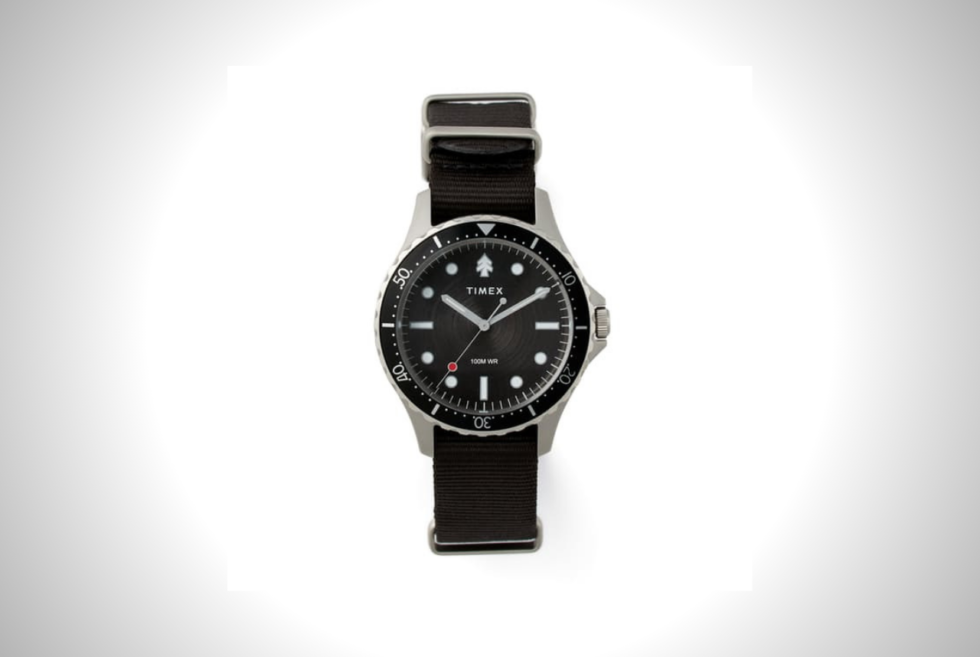
Huckberry sells some of the most stylish stuff in the world. Timex makes some of the most reliable and robust timepieces in the world. It was only a matter of time before both teamed up. The result of their collaboration is the Huckberry And Timex Diver Watch, an affordable timepiece exclusively made for Huckberry.

The watch features a 38mm brushed steel case with a 18mm lug width. It boasts 100m water resistance and a radially brushed time-only dial. You get a bi-directional dive bezel, luminous dial and hands, plus a hardened mineral crystal and quartz movement. These features amount to a highly utilitarian offering, which makes a lot of sense considering its budget-friendly price tag.

You’ll find the 12 o’clock marker gone on the Huckberry And Timex Diver Watch, replaced with the Huckberry tree logo. It’s not a spectacular element by any stretch of the imagination, but it’s a welcome touch of flair. The timepiece ships with a single nylon NATO strap, plus one genuine leather NATO, for good measure.

Bear in mind that at its price, the Huckberry And Timex Diver Watch probably won’t qualify as a watch for professional diving. Even still, it should perform well enough on its own in various outdoor activities. If you want one, you have to act fast, as Huckberry and Timex only made 700 pieces. Each costs just $118. It’s hard to recommend this to anyone looking for a serious diver’s companion. But if you want a no-frills options that looks just as good as it performs without the brunt of fancier options’ price tags, then get this.

BUY IT HERE

These High-End Bomber Jackets Are Rooted in Functionality

The bomber jacket has transcended its utilitarian roots and created demand in the luxury market. It makes sense: The jacket’s silhouette looks good on a range of body types, and it’s a versatile garment that can be dressed up or down. Now, brands are riffing on the classic materials — leather or nylon — and using suede, shearling, silk and cashmere. These luxe versions are still rooted in day-to-day functionality, but the high-end materials give them an edge. They’re warmer, softer and loaded with nuanced details. Sure, they’re ridiculously expensive, too. But if you’ve got money burning a hole in your pocket, these bombers are a seasonal splurge you won’t regret.

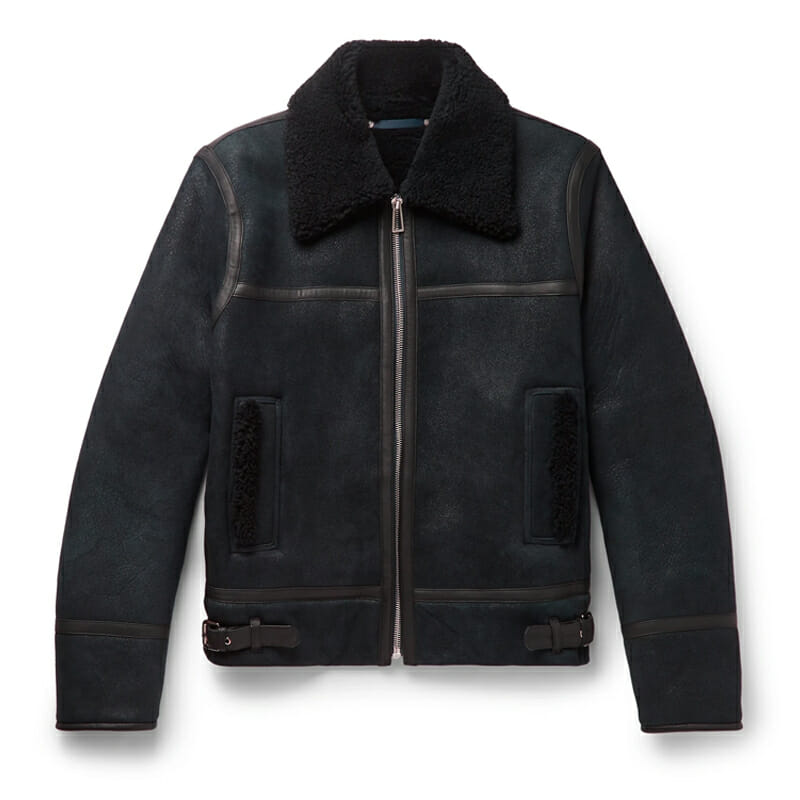
PS Paul Smith Shearling Bomber Jacket


This navy shearling bomber features two welted hand pockets, adustable bucled side tabs and smooth leather trims. It fits true to size and has a one-way zipper.

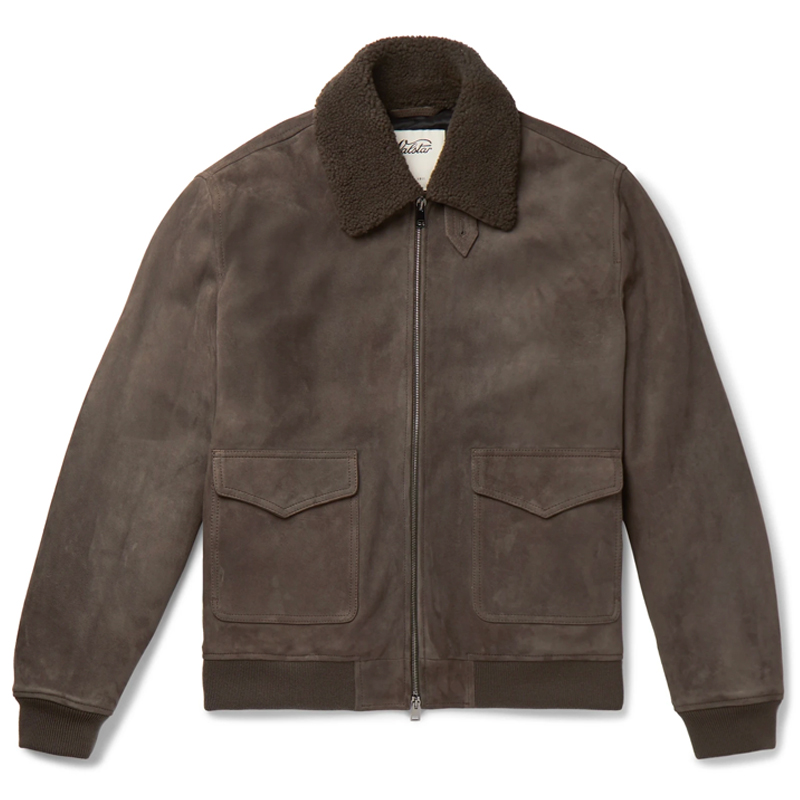
Valstar Suede Bomber Jacket


Made in Italy, this suede bomber has shearling collar and wool-blend cuffs. It has two traditional flap pockets and a two-way zipper.

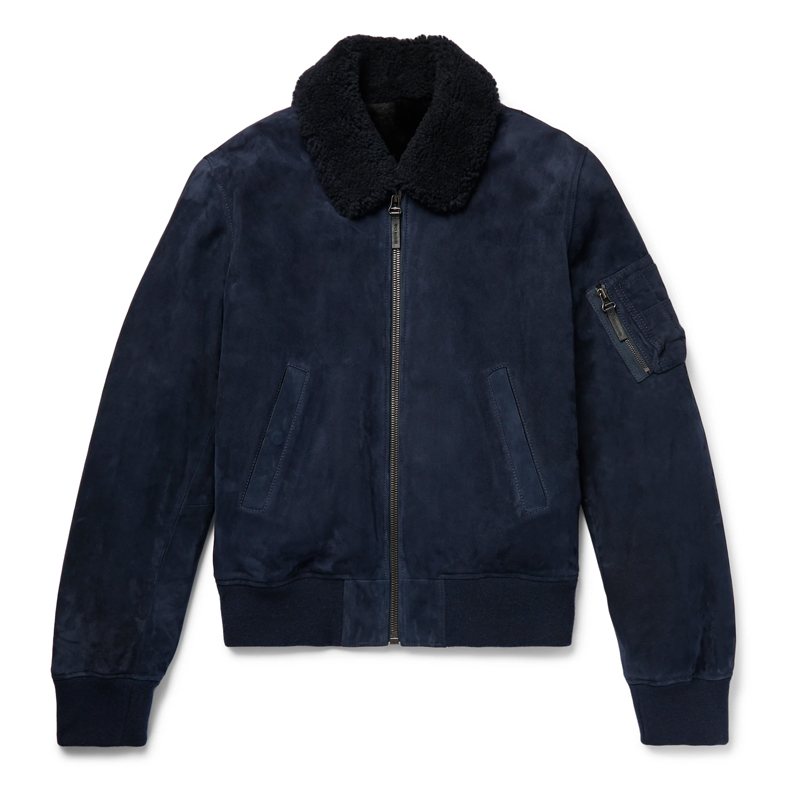
Yves Salomon Down Bomber Jacket


This blue suede bomber has a detachable shearling lining, a shearling collar and down insulation. Made in France, it has welted hand pockets, a sleeve pouch for accessories and a one-way zipper.

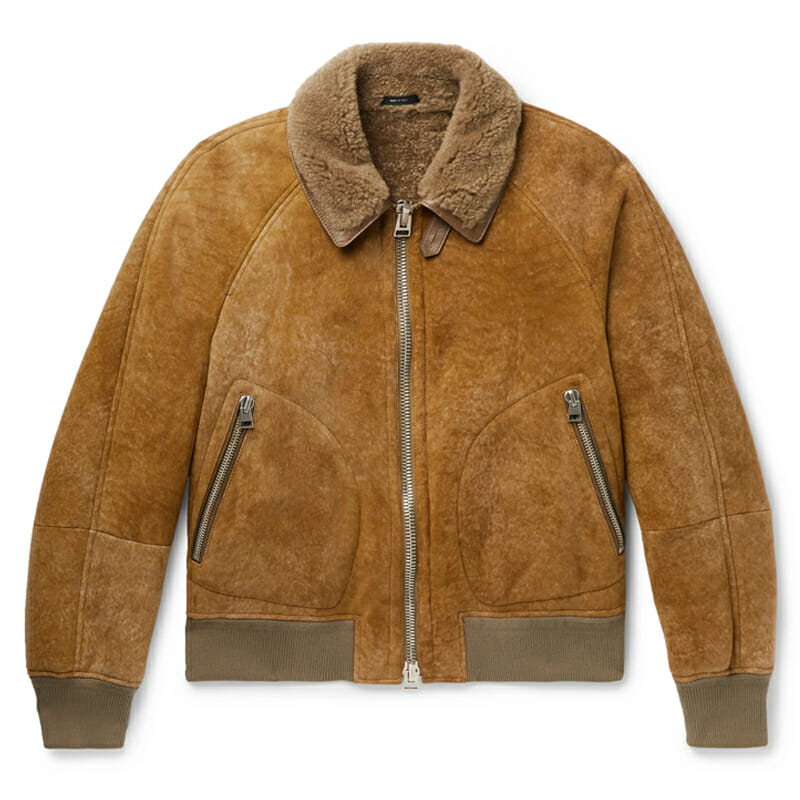
Tom Ford Shearling Bomber Jacket


This thick shearling jacket is made in Italy and features a buttoned throat latch, front zipped pockets and ribbed cuffs. It fits true to size and is available in Italian sizes 46 to 58.

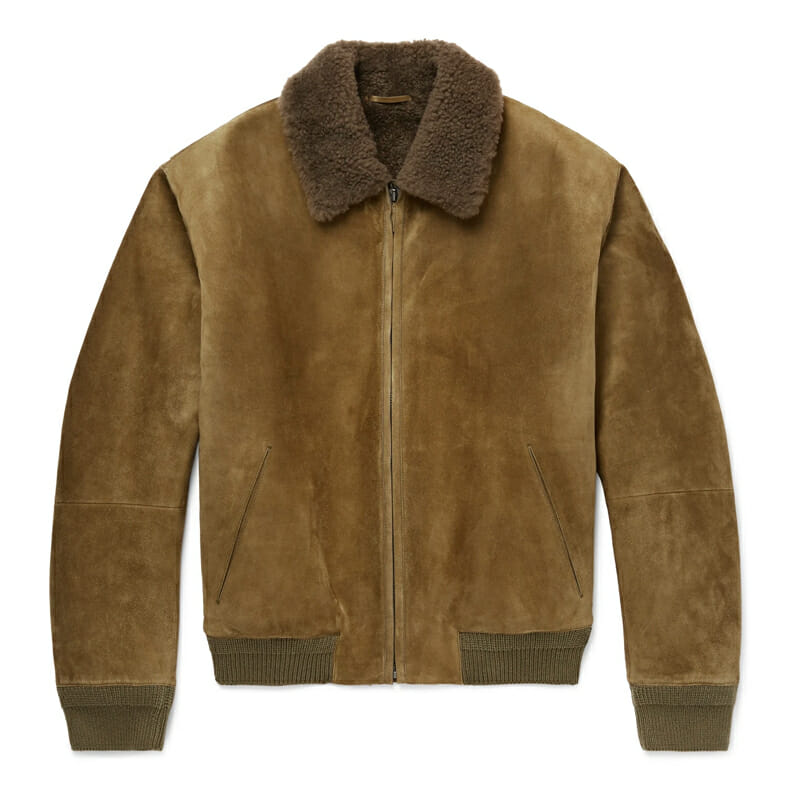
Berluti Shearling Bomber Jacket


Made in Italy, this bomber has understated front hand pockets, ribbed cuffs and a one-way zipper. It has a slightly relaxed silhouette and fits true to size.

Note: Purchasing products through our links may earn us a portion of the sale, which supports our editorial team’s mission. Learn more here.

7 Sneakers We Can’t Wait to Wear This Fall

It’s hard to argue with all of fall’s merits. Perfect weather, amber leaves, lack of allergy-inducing pollen and, best of all, sneakers. From the tried-and-true classics to avant-garde collaborations to luxe upgrades, these are the sneakers we’re stomping in through fall.

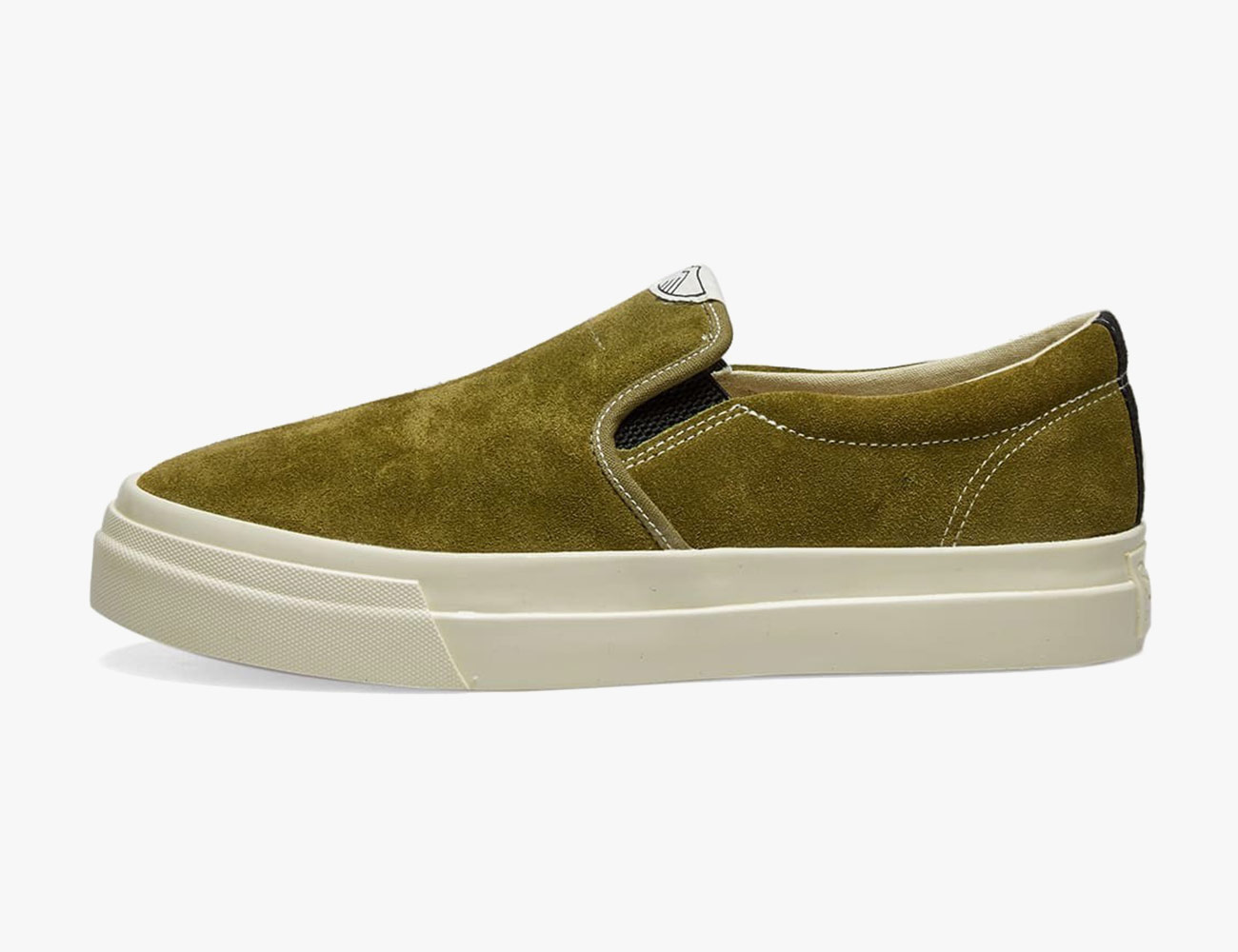
1. Stepney Workers Club Lister Suede Slip On

Price: $85
From: endclothing.com

Built upon the templates of classic slip ons before it, Stepney Workers Club pays homage to sneaker canon while deviating just enough to bring something new to the table. And why not try stepping out of the usual monochromatic sneaker fare with this olive suede pair?

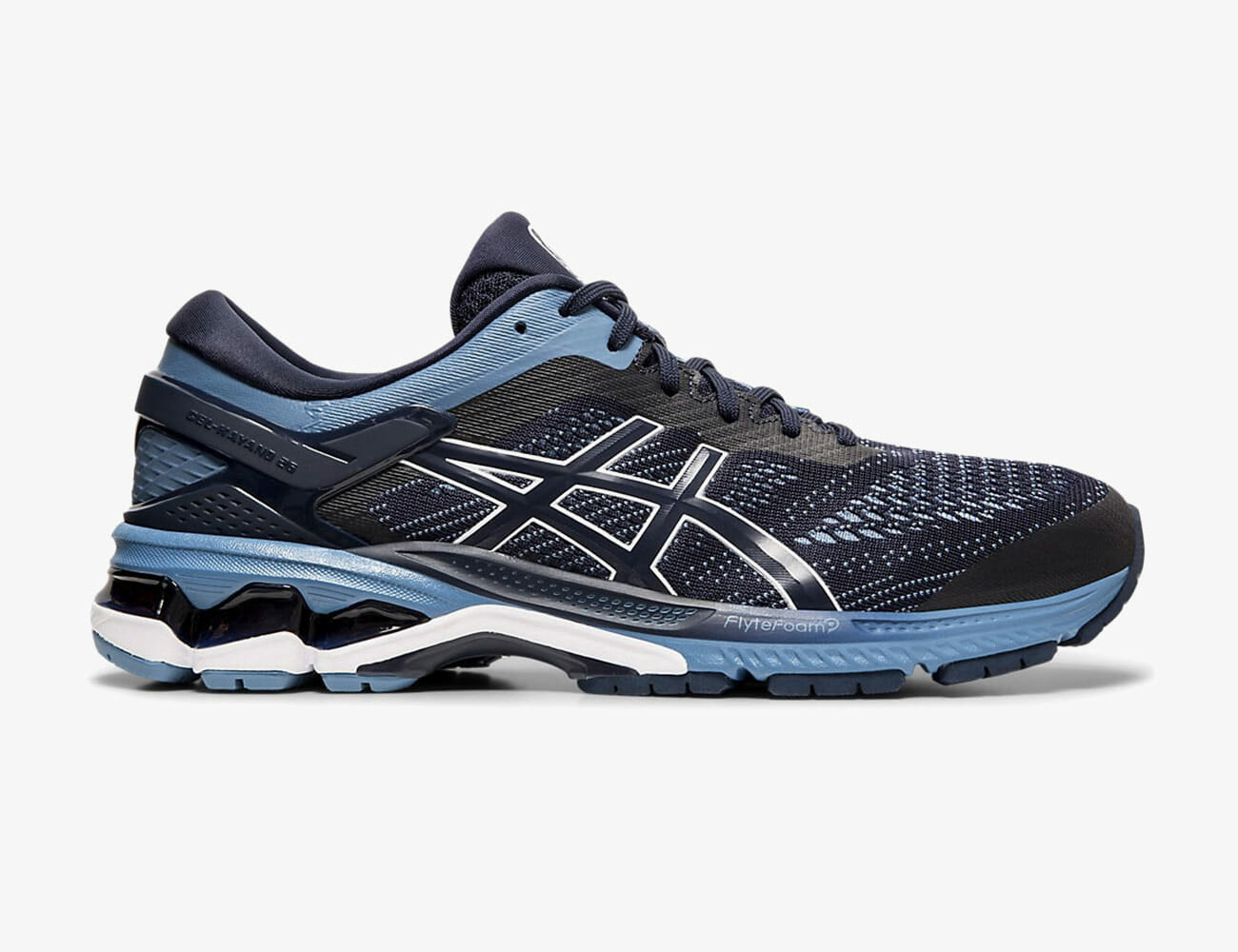
2. Asics Gel Kayano 26

Price: $160
From: asics.com

While we know that a certain made-in-USA dad shoe has been taking the world by storm from “supermodels in London and dads in Ohio,” Asics’ Gel Kayano deserves just as much attention, if not more. It’s been endlessly improved in form and function over its 26 years and is available in notably more colorways from the subdued to the garish. Whether it’s for road running or Sunday strolls, the Gel Kayano is up for the challenge.

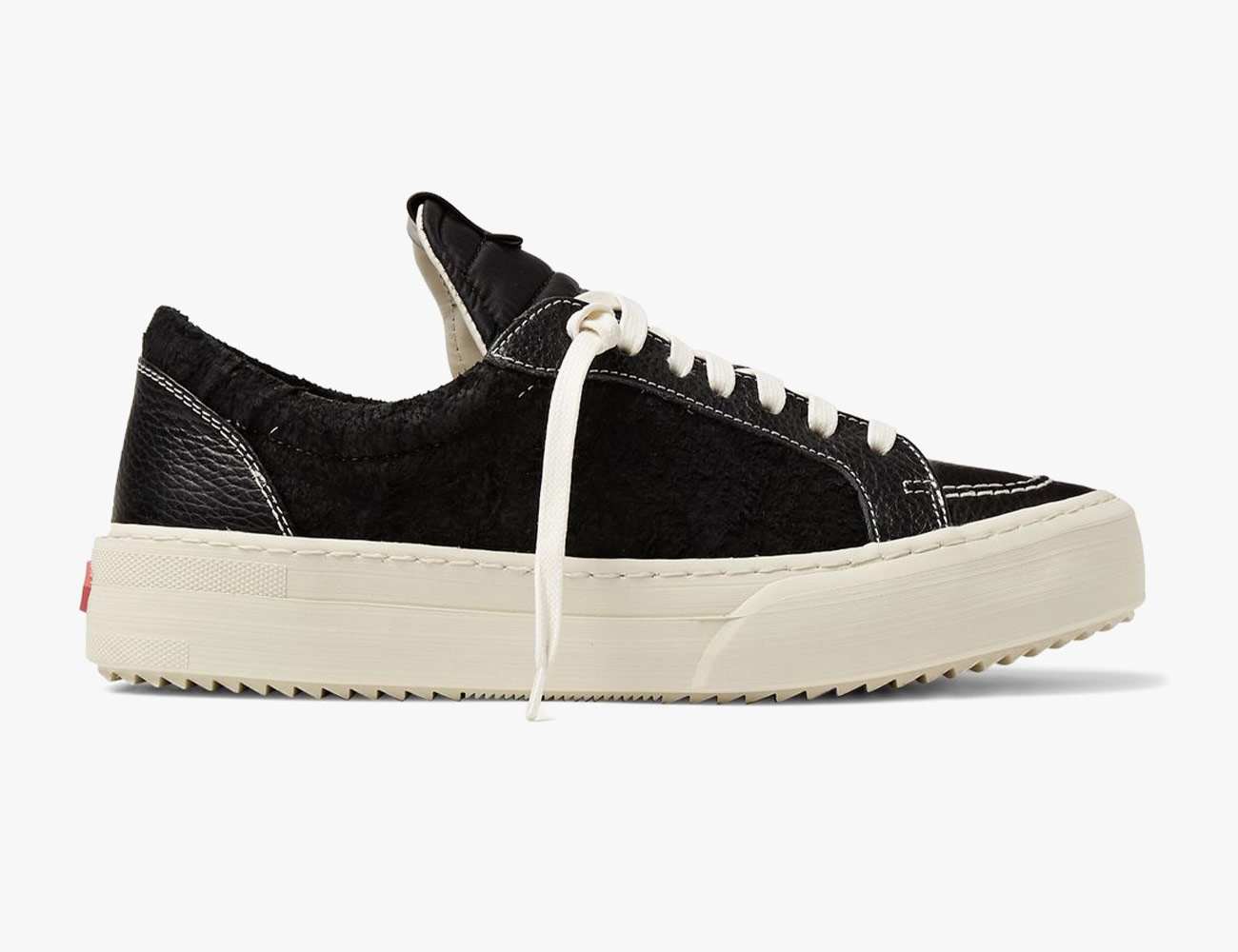
3. Rhude RH V1 Full-Grain Leather and Suede Sneakers

Price: $475
From: mrporter.com

These skate shoes from Rhude have all the cachet of a classic pair of Vans SK8 Hi’s while letting the world know that, no, you cannot kickflip. Full-grain leather panels elevate the sneaker’s status while hairy suede details hold on to its rough edge.

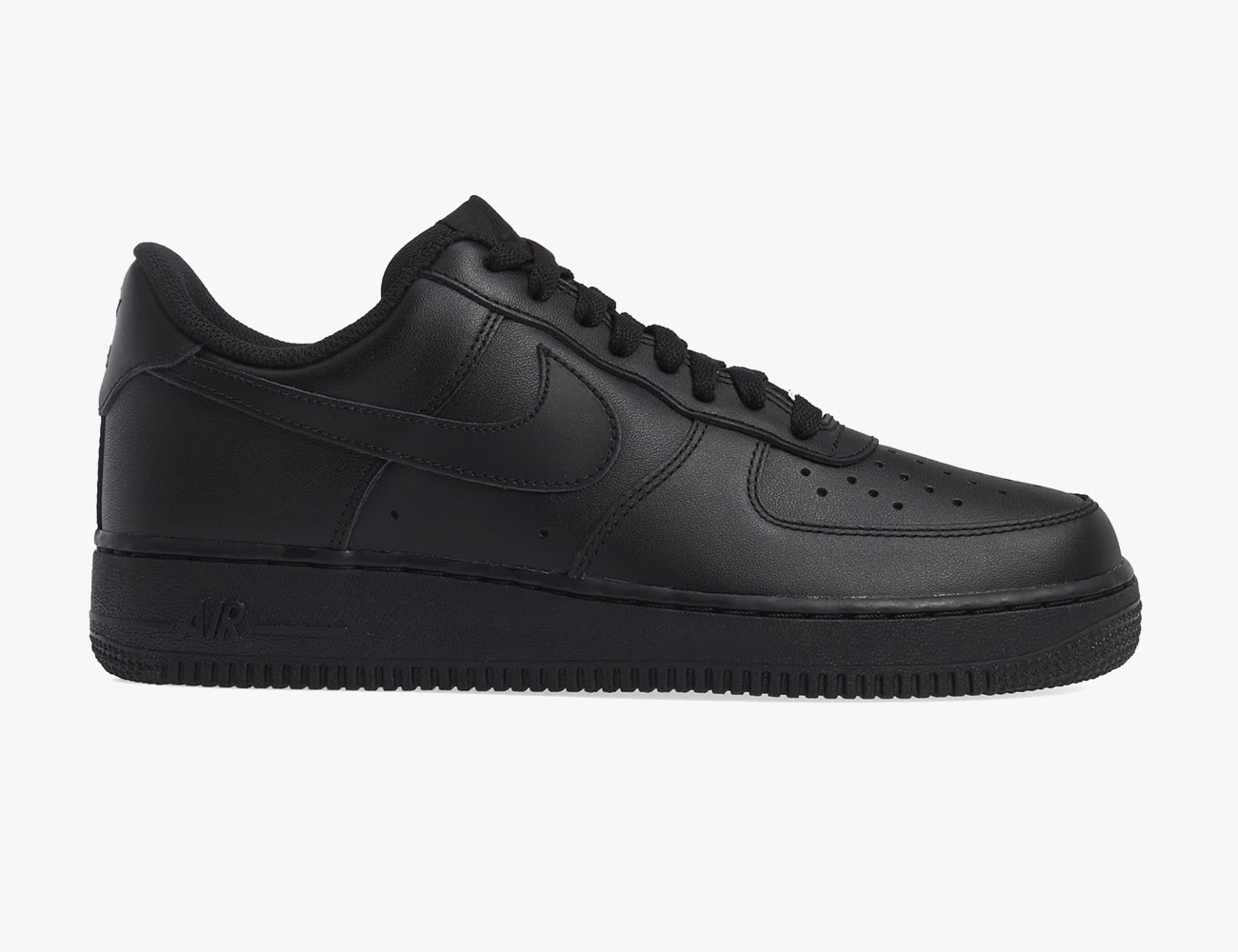
4. Nike Air Force 1 ’07

Price: $80
From: nordstrom.com

We’re definitely looking forward to wearing Nike’s Air Force 1 ’07 sneakers because we’ve been wearing them all year long. The shoe is a verified classic and sits among other iconic sneakers like the Converse Chuck Taylors and Vans Authentics, so you don’t have to rack your brain in the morning trying to figure out which shoes go with your outfit. These will go with anything.

5. Shoe the Bear Bushwick Leather Sneakers

Price: $120
From: eastdane.com

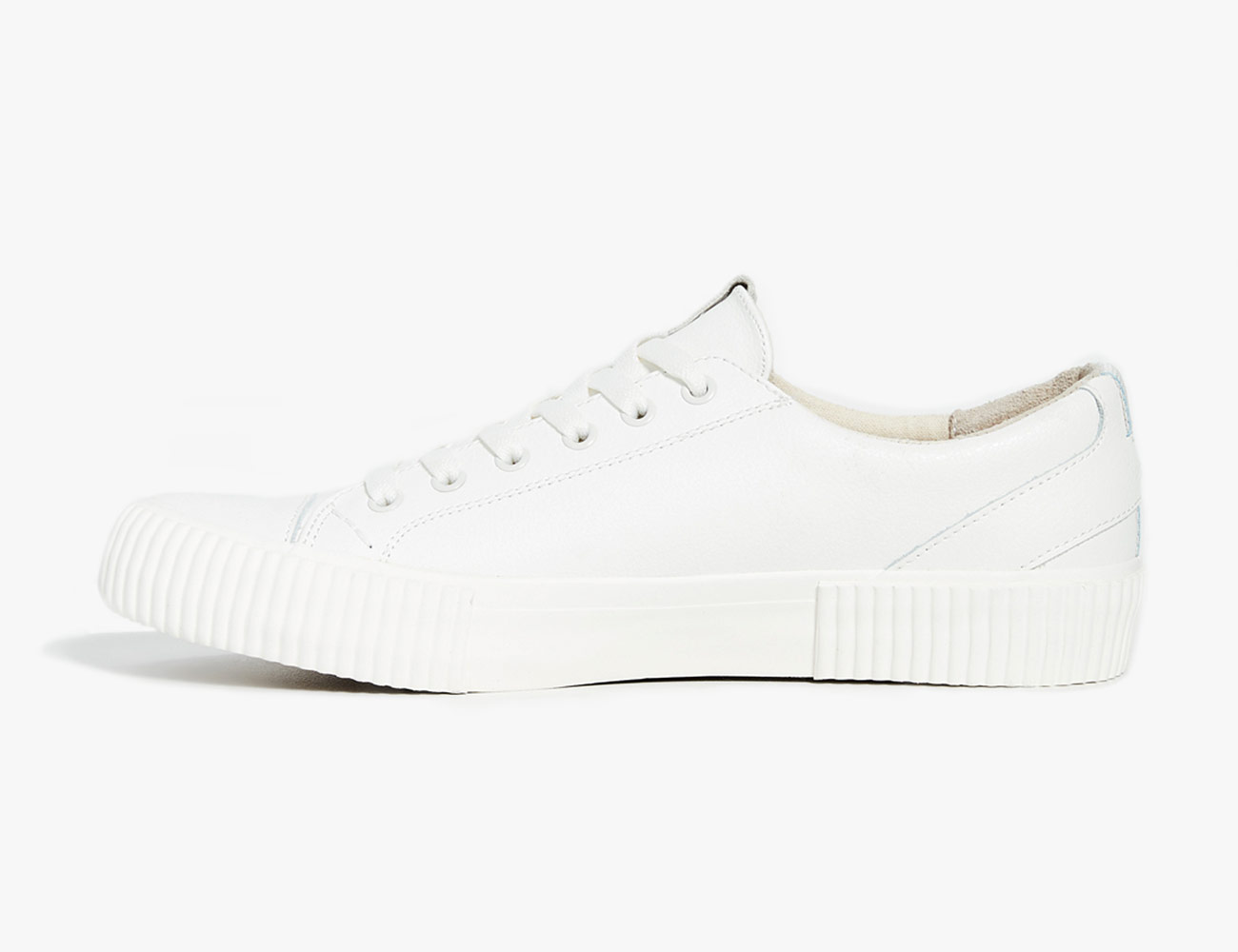
Classics are constantly imitated and rarely ever overtaken. That said, Shoe The Bear makes the case for replacing your current minimalist sneaker.

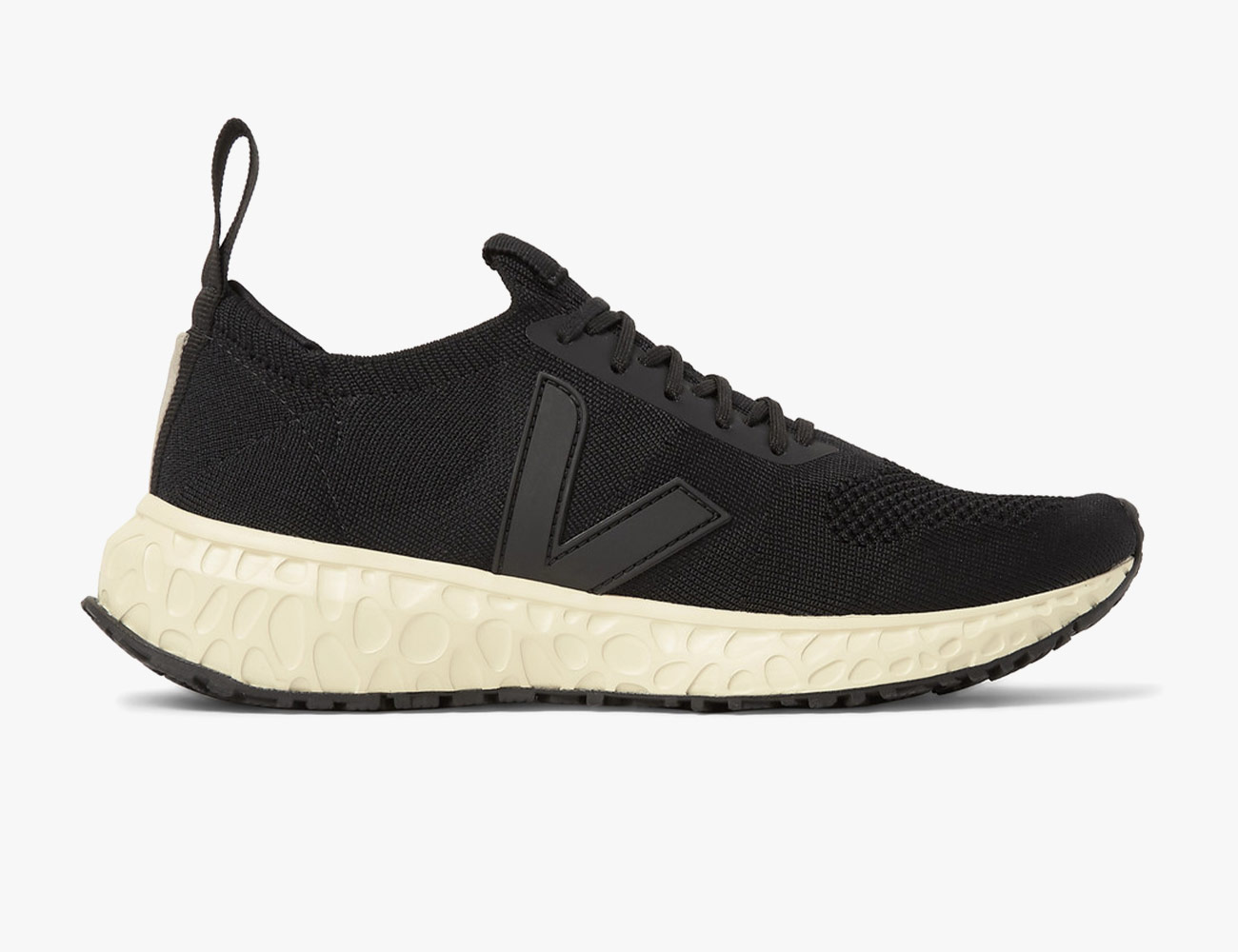
6. Rick Owens x Veja Rubber-Trimmed V-Knit Sneakers

Price: $300
From: mrporter.com

Rick Owens recently linked up with sustainability-focused sneaker brand Veja for a trio of sneakers that straddles the line somewhere between running sneaker and avant-garde statement shoe. Though it’s Rick, these sneakers don’t require you to know the Antwerp 6 like the back of your hand. In other words, you can wear these, too.

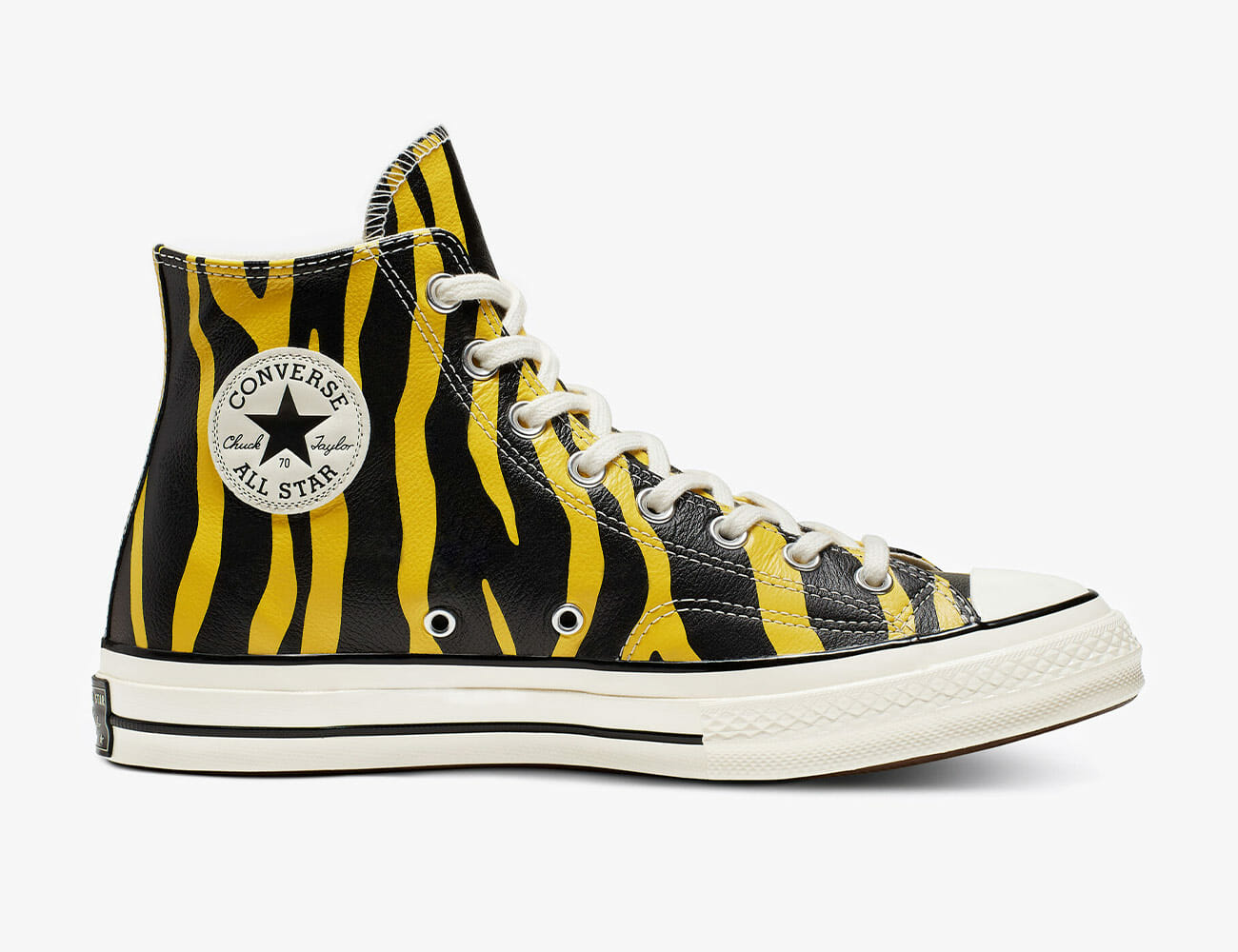
7. Converse Leather Archival Prints Chuck 70

Price: $90
From: converse.com

When there are no mirrors in the vicinity to catch a glimpse of your own meticulously-chosen outfit, you can always look down and admire your shoes. That’s what these Converse Chuck 70s are for. Sure, those around you will take notice. But these are really for your own viewing pleasure.

Note: Purchasing products through our links may earn us a portion of the sale, which supports our editorial team’s mission. Learn more here.

This Great Leather Bomber Jacket Costs Less Than $300

The Magazine

Each issue of Gear Patrol Magazine is a deep dive into product culture. Inside, you’ll find seasonal buying guides, rich maker profiles and long-form dispatches from the front lines of product design. The stunningly designed Gear Patrol Magazine is ready for your coffee table. Quarterly. $39

The Newsletter

Get the best new products, deals, and stories from across the world, in your inbox daily.

Relive Your Skate Dreams with MVMT’s Nyjah Huston Collab

MVMT has always impressed us going above and beyond in the style, functionality and performance departments without breaking the bank. The company’s dedication, drive and pursuit of excellence are mirrored by 12-time X Games Gold…

Oris Partnered with New York Yankees Manager and Movember for a Special Chronoris Watch

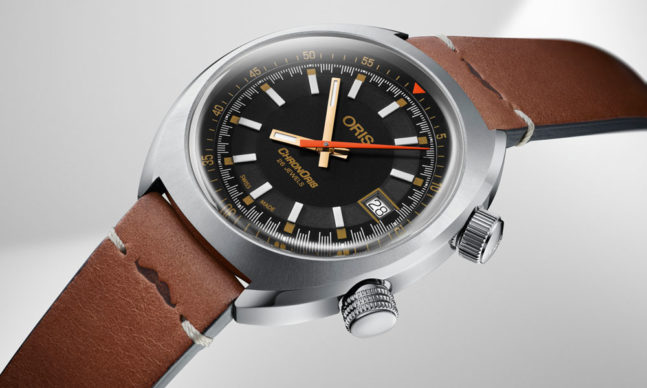
Swiss watch company Oris has always produced robust, high-quality and stylish timepieces, but they also pride themselves on their commitment to go their own way and do good in the process. Oris is partnering with…

These Small-Batch Leather Goods Are Field Tested

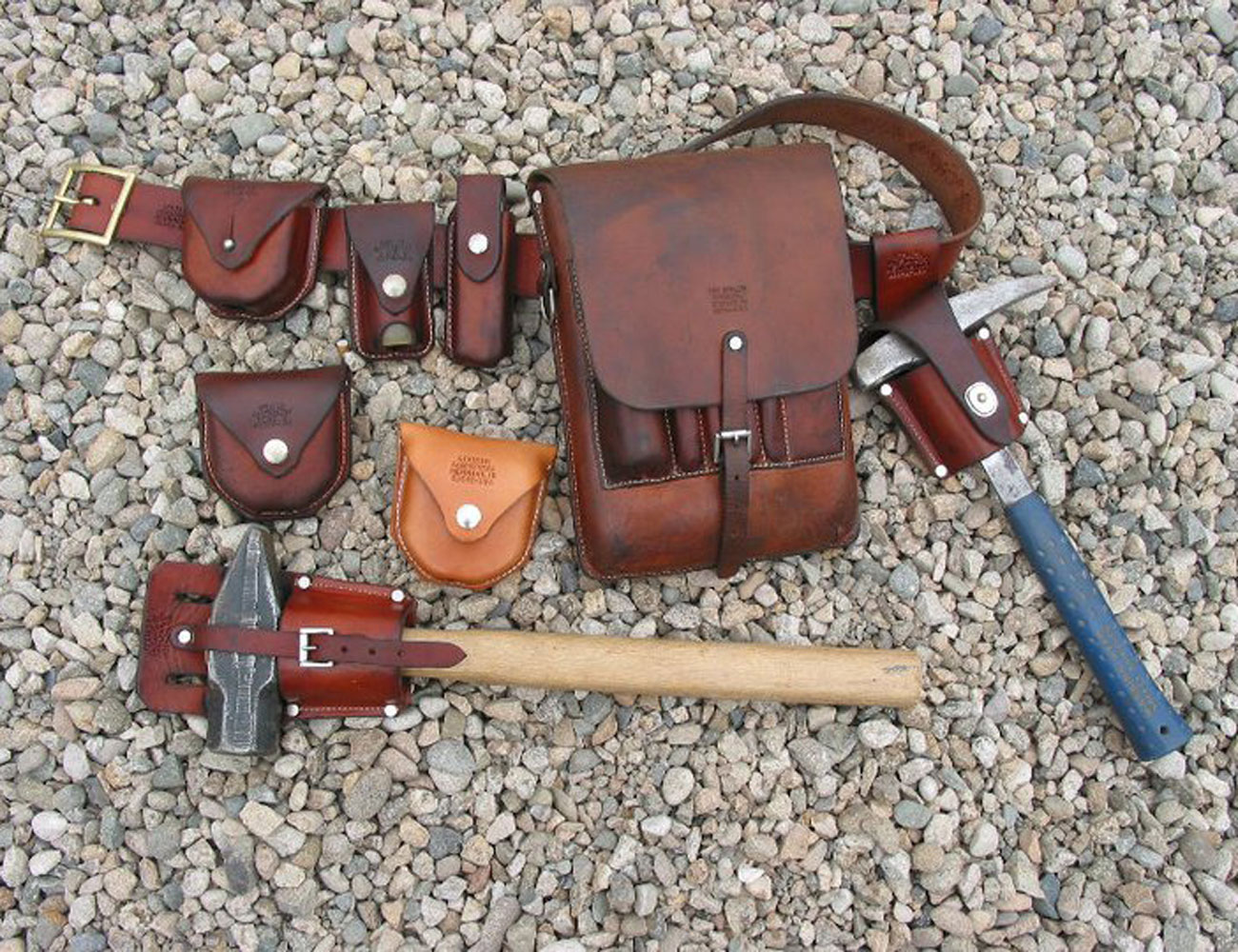
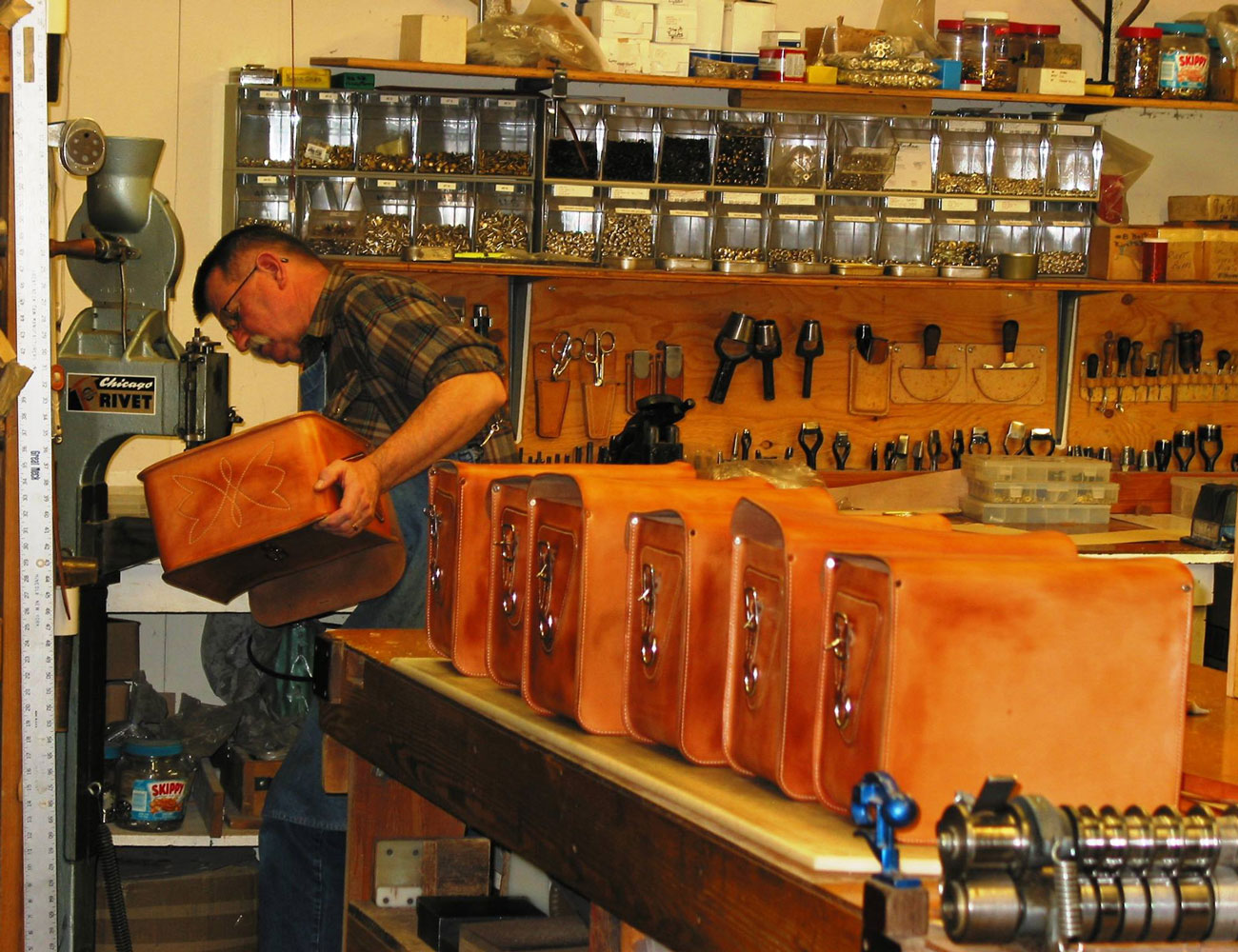
After years of working as an exploration geologist, Steve Derricott wanted a more stable family life. So in 1985, he and his wife Lori purchased Gfeller Casemakers, a leather goods company based in Meridian, Idaho. Derricott was familiar with the brand; he’d used Gfeller field equipment while working in the Western US on precious and base metal projects along with uranium, coal and geothermal resource investigations. The field equipment — including field cases, belt cases and hammer carriers, among other things — was the industry standard for field geologists and engineers.

Roy Gfeller, a part-time saddlemaker based in Franktown, Colorado, started the brand over 70 years ago. In 1946, Gfeller worked with a local geology professor to design a belt-carried field case for the professor’s students. “Western saddlers build rugged functional saddles that are comfortable for both horse and rider, using the finest raw materials available to assure strength and safety as well as long life in the saddles,” Derricott said. “Gfeller successfully brought the quality materials and durable construction methods of western saddlery to geoscience field equipment.” News of Gfeller’s well-made goods traveled quickly in the field and exploration geology community, and a wave of new customers led to an expanded line of products including belt cases, tool carriers and cases for other scientific instruments. By the time Gfeller moved to Big Timber, Montana in 1949, he offered a catalog with a complete line of field geology equipment.

Derricott was well-versed in Gfeller’s products when he purchased the company, and was keenly aware of the rugged environment in which they were used. Along with continuing production of the geoscience line, he and his wife strove to diversify the product line. They made a conscious decision to stay out of the horse tack and sporting good fields, and looked to develop new items in response to customer input, akin to the genesis of Gfeller’s original geology equipment. But with the new goods, Derricott wouldn’t sacrifice the functionality and quality the brand was known for. So he continued to use high-quality leather and hardware along with construction techniques borrowed from the Western saddler.

Now, Gfeller Casemakers offers a modest array of leather goods for daily use along with its traditional line of geoscience products. “We don’t build to a price requirement,” Derricott said. “We believe that is a surefire way to allow compromising of material quality and/or production methods into the business.” The brand’s Field Belt starts at $91 and Field Cases start at $114. More general items like Notebook covers start at $65, and Card Holders start at $33. “We build it right, price it fair and let the customer make the choice,” he said. “It has always been this way with Gfeller products.”

After three decades, Derricott is optimistic about the future. The brand has maximized production at its current location and plans to relocate to a bigger facility that will accommodate a storefront and larger staff. A successful collaboration with Best Made has offered brought Gfeller a wider customer base and increased interest in the brand has allowed for new product development. As time has passed, Derricott has not faltered from Gfeller’s user-driven products and values the connections he’s developed with suppliers and individuals. “Our greatest pride is in the relationships we have built with customers and dealers,” Derricott said. “They hold the future of this company.”

The 30 Best Wallets for Men

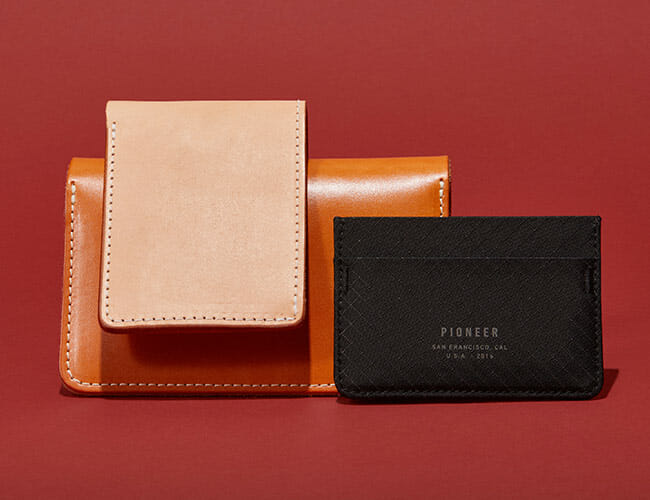
Wallets come in all shapes and sizes but one thing is certain: they’re an essential part of every guy’s EDC. This guide covers the best wallets in a variety of styles, including slim and minimalist designs. Read the Story

These Air Max 97 Jesus Shoes Has Holy Water In Them

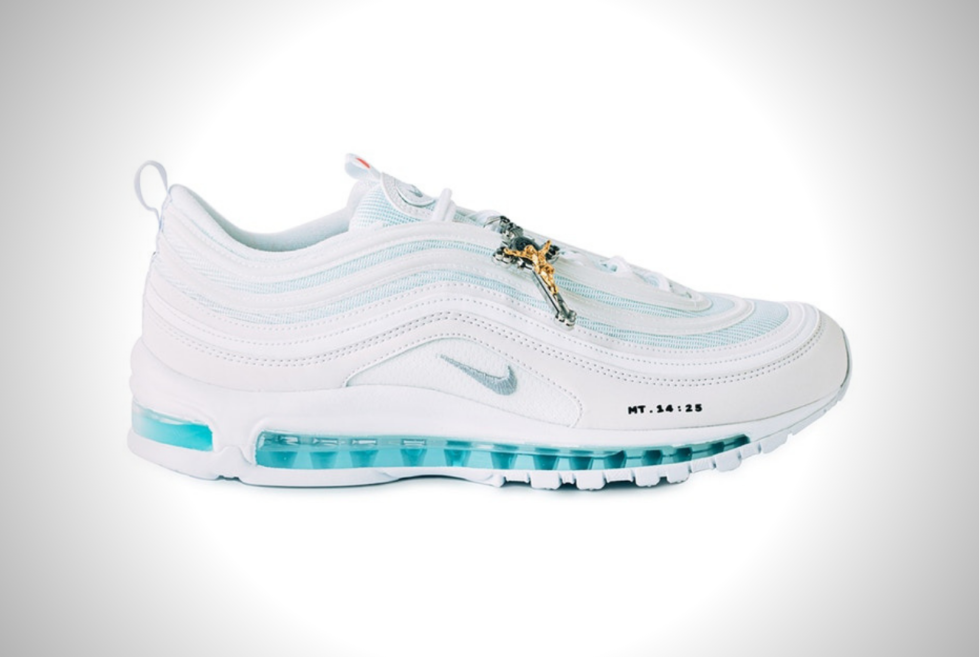
Why go to church when you can wear them every day? These custom Air Max 97 Jesus shoes literally carries a dollop of holy water inside. The price for a pair? Just as holy — expect to shell $4,000 if you want to cop one.

Brooklyn-based creative arts studio MSCHF designed the bespoke Air Max variant. They purchased a regular Air Max 97 and completely revamped the thing, adding a golden Jesus crucifix as shoelace decor.

The company didn’t stop there. It sourced holy water from the River Jordan, had a Brooklyn priest bless it, then added it to the soles of the sneakers. From a pair of $160 Air Maxes, the bespoke experiment went on sale $1,425 and didn’t last a minute. The buyer eventually put up the kicks up for resale for $4,000.

While the project may seem ridiculous and even, for some, a little bit blasphemous, it’s well within MSCH’s brand of kooky, clever experiments. The company after all is “a counter-culture media/product brand, playing in a gray area that isn’t yet defined by traditional approaches.”

Its past projects include “Times Newer Roman” a new version of the classic font but with each character five percent bigger — making it easier for students to fill up the pages of their term papers.

An internet plugin is another one of MSCH’s projects. It makes Wikipedia appear as real sources, yet another cheat method for those still in school.

For this project, the company wanted to make fun of ridiculous brand collaborations like Arizona Iced Tea and Adidas.

“You pump holy water into the pocket of a pair of Air Max 97’s and with that, you get Jesus Shoes — the holiest collab ever.”

CHECK THEM OUT

How to Break in Raw Denim, According to the Experts

Across the internet, you’ll find articles, forums — hell, entire websites — devoted to the art of denim maintenance. Some connoisseurs insist you need to wait a year before washing jeans if you want Instagram-worthy fades; in the meantime, they suggest, getting the stink out is as easy as throwing them in the freezer.

To find out if caring for a simple pair of jeans is really that complicated, we spoke to experts at three of the world’s most respected denim shops: Kiya Babzani, co-owner of Self Edge; Jeremy Smith, co-owner of Standard & Strange; and Okayama Denim owner Merv Sethi. The washing machine is not your enemy.

Skip the waiting game. According to Sethi, it’s true that you have to put in some time before washing — but a year is overkill. The difference between two months and 12 months, he says, is “marginal.”

Kiya Babzani agrees, and says fades are mostly the result of actually wearing the jeans. “The way indigo loss occurs on denim is through wear, not through washing,” he says. “Indigo is a large molecule that doesn’t really penetrate cotton fibers, so it’s sitting on top of the cotton fiber. The only way to get it dislodged” — that is, create a fade — “is to actually scratch it off.”

As a general rule of thumb, 30 to 60 wears (that’s one to two months with everyday use) will set the kind of creases prized by denimheads. But fastidiously marking a calendar might be overboard.

“Being overly precious about denim ruins the experience a bit,” says Jeremy Smith. “You want these garments to be part of your life, and to show it.”

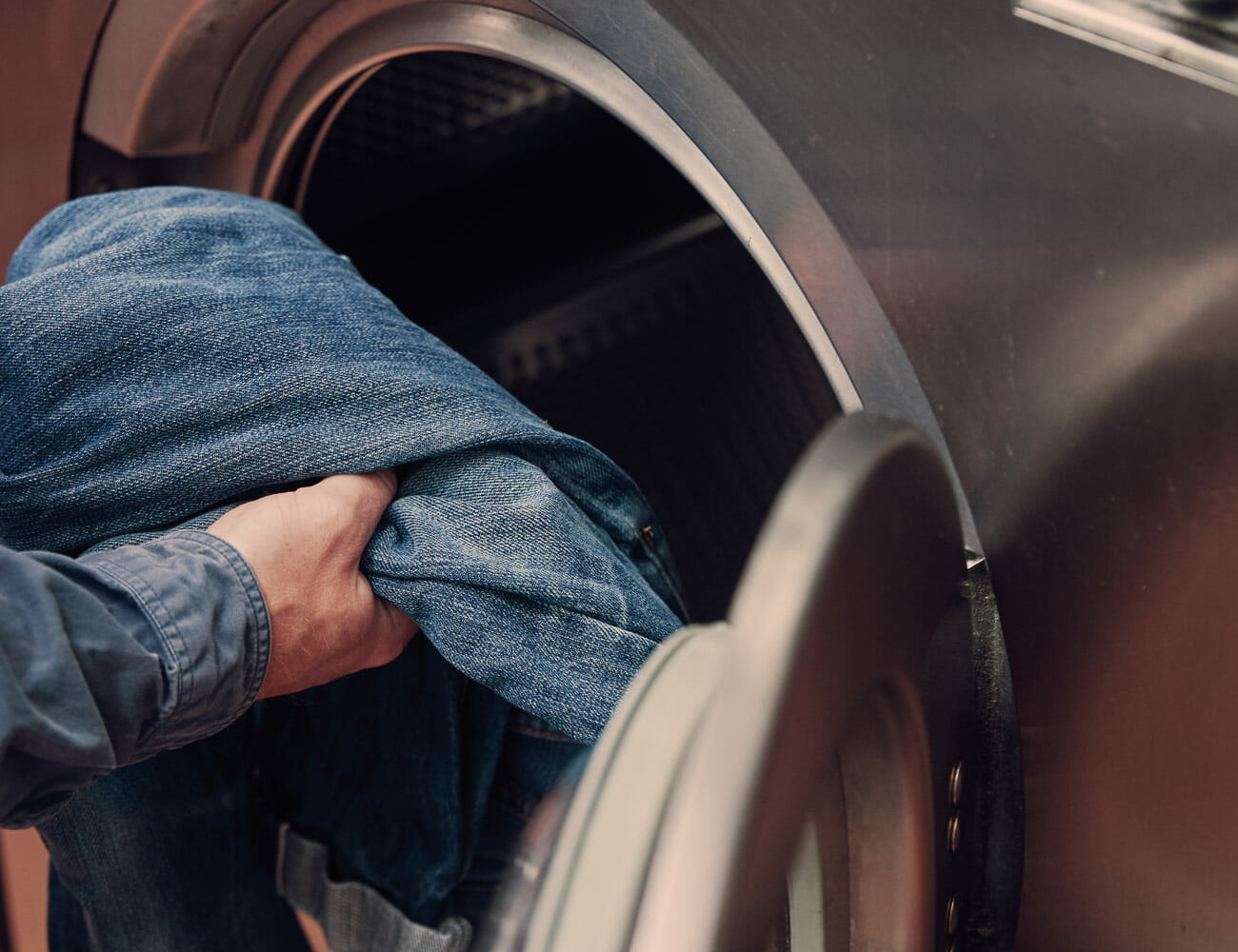
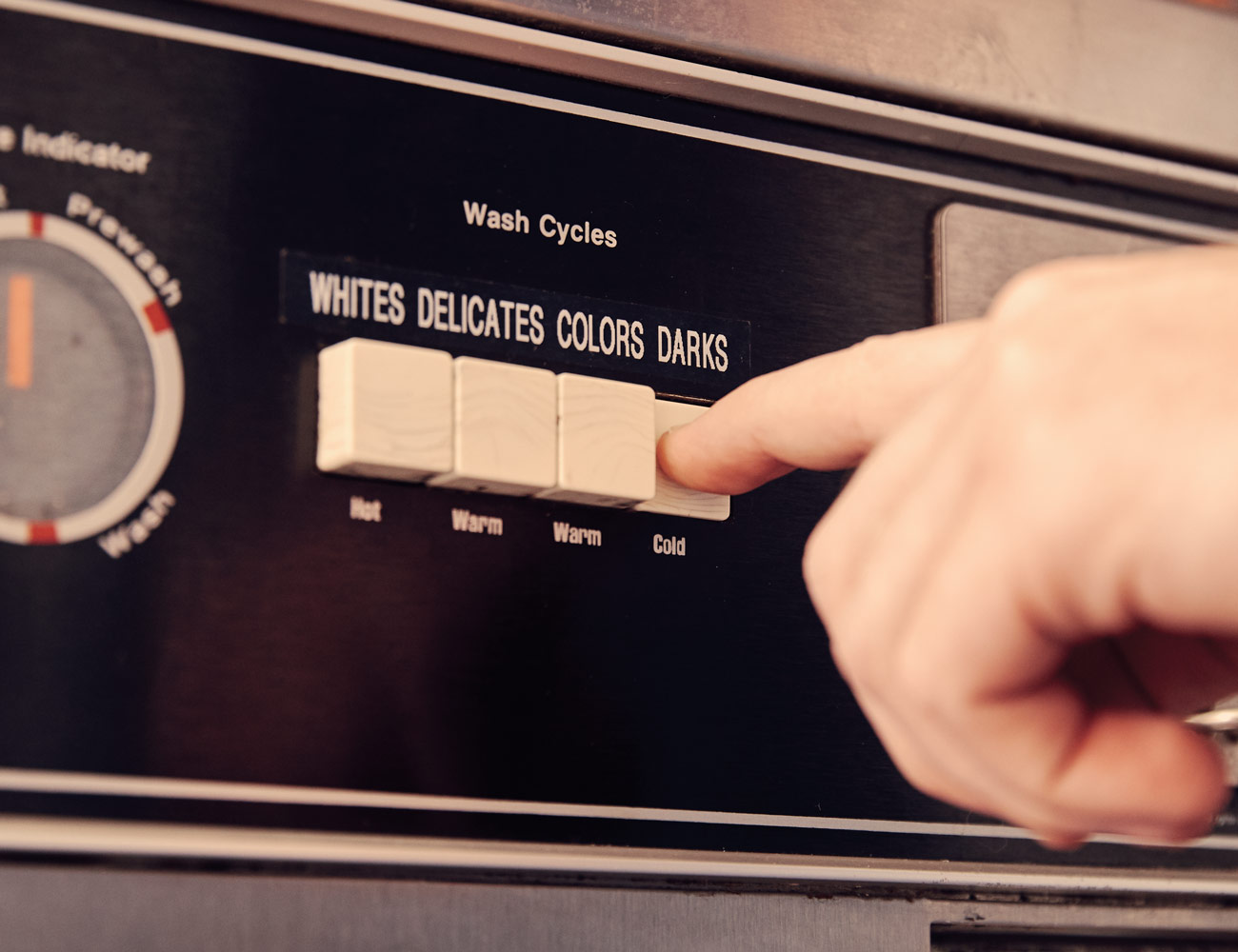
Don’t fear the machine. When you do get around to washing your jeans, there’s no need to baby them. Just flip them inside out and throw them in the washing machine on a cold-water cycle.

“If you want your denim to age in a natural and vintage fashion,” Babzani says, “then you should treat them how they were treated in the forties and fifties. They were worn regularly, and then washed regularly.”

And though hand washing is indeed gentler, your denim doesn’t require it. “From all the clothing you own, including all your t-shirts and everything,” Babzani adds, “the one that can withstand a washing machine the most is a pair of jeans.”

As for detergent, use something mild, like Woolite Dark, Tide Natural or Dr. Bronner’s. And don’t succumb to any internet rumors: “Don’t freeze your jeans and don’t spray chemicals on them — just wash when dirty,” Smith says. “Jumping in the ocean is good for Instagram, but then you have to get all that salt out before it tears up the fibers.”

One thing the obsessives get right is avoiding the dryer; the heat can cause fabric to shrink, and tumbling will prematurely wear out the fibers. Instead, air dry your jeans after washing by hanging them.

“Generally, the pocket bags and the crotch area are the last areas to dry,” Sethi says. “So if those spots are no longer damp, your jeans are probably ready to wear.”

Wash, rinse, repeat (yes, repeat). Good news: you don’t have to think too hard from now on — just repeat the wash and dry process as needed. “Dirt kills fibers, so you’re not doing anyone any favors by having stinky, dirty jeans,” Smith says.

There’s no correct length to wait between cleanings. Jeans are rugged and hard-wearing by nature, so every month or two might be fine. But climate and lifestyle will both play a role.

“If you sit at a desk all day long, you can probably go two or three months without washing your jeans,” Babzani says. “But if you’re in New York City, in the summer, walking around in your jeans, you probably want to wash them a little more often.”

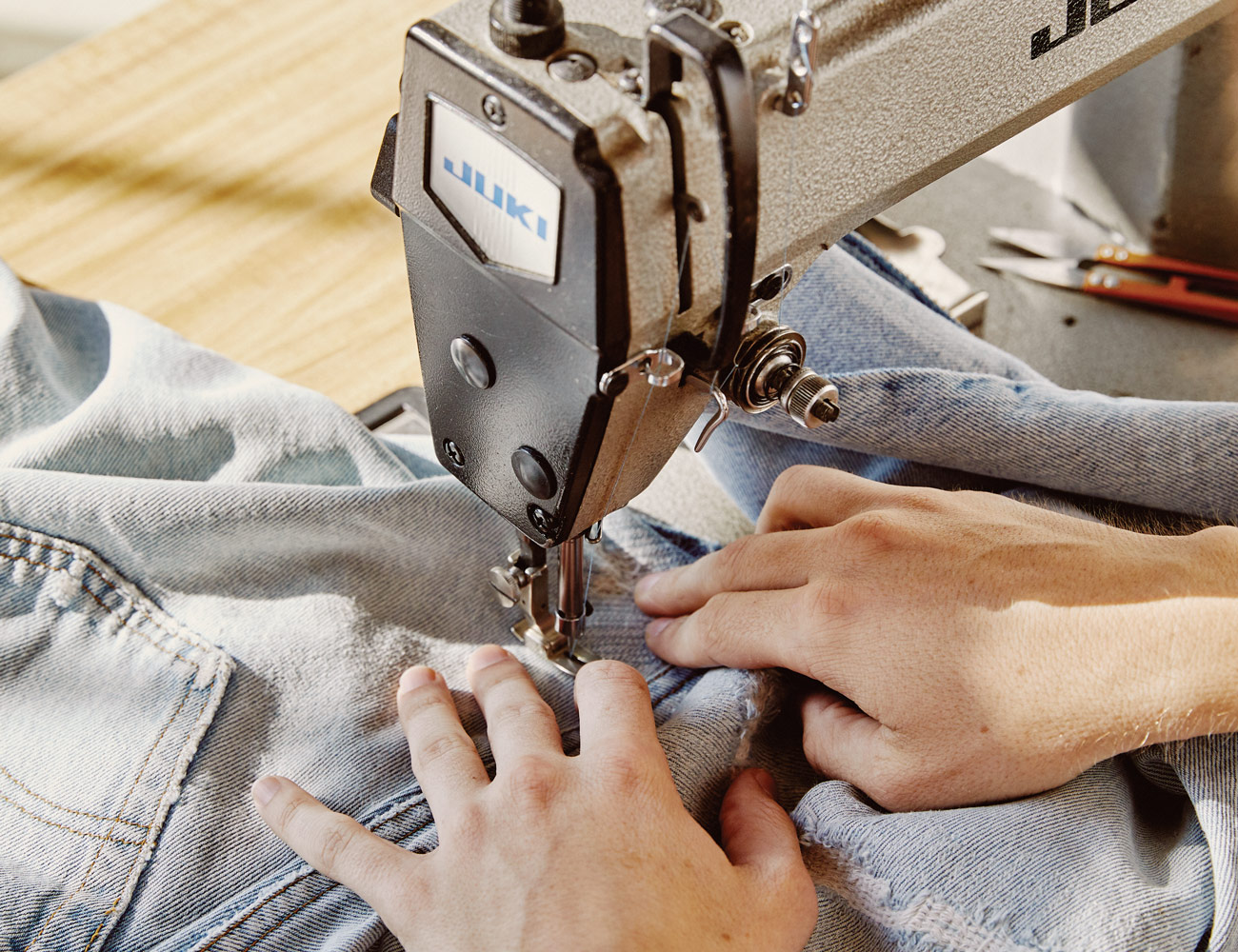
Darn it! Holes in your jeans shouldn’t mean a trip to the Goodwill pile — or even a patch, for that matter. Many tailors and denim-centric shops now offer darning services, which Sethi says is a superior method of repair.

“Rather than adding another piece of denim below or above the hole in patchwork fashion, darning essentially recreates the original fabric using only needle and thread,” Sethi says.

And while some major repairs may require patches, Babzani also opts for darning whenever possible because “it’s generally a little more comfortable, because there’s no patch and no interfacing used.”

If your jeans have large holes, however, reinforcement may be necessary. But it’s amazing what can be salvaged, according to Smith.
“We had a guy hit a deer on his motorcycle in his new denim, and we were able to get it cleaned up pretty well with our repair program,” he says. “I haven’t seen much damage that can’t be fixed.”

Expert Break-In

What the denim pros are getting faded right now.

Stevenson Overall Co. 714 Valencia Jeans

“One of the only production jeans in the world where the entire thing is single-needle stitched. Three years, two repairs. I love the way they age over time. The denim doesn’t have a massive amount of character when it’s brand new, but as it fades over time it definitely comes through.” — Kiya Babzani, Self Edge

Ooe Yofukuten OA02 Jeans

“The 02 cut is like a sixties [Levi’s] 505. Very timeless and wearable with anything. They’re the best jeans-makers alive right now, possibly of all time — doubly so if you’re into vintage [reproductions]. My outgoing pair is five years old and perfectly worn in.” — Jeremy Smith, Standard & Strange

Big John x Okayama Denim Sample

“We switched the weft out for a bamboo-fiber yarn, rather than the usual hundred percent cotton composition. These [new] selvedge jeans are not only insane on the aesthetic and texture front, they’re our first foray into a long-term effort to be a more socially and ecologically conscious company.” — Merv Sethi, Okayama Denim

A version of this article originally appeared in Issue Eleven of Gear Patrol Magazine with the headline “Break In Raw Denim.” Subscribe today.
How to Break in a Pair of Boots the Right Way

When you invest in a new pair of well-made boots, don’t expect to lace them up and take on the world in the same day. Thick leather uppers and solid leather midsoles take a while to break in and rub and squeeze your feet, leading to painful blisters if you’re unprepared. While the sturdiness and durability of boots vary widely from brand to brand, there are a few universal tips for breaking in a new pair, regardless of brand. Read the Story

The Best Cashmere Sweaters under $130

Over the past couple of centuries, cashmere has earned a reputation as one of the top luxury fibers for knitwear. It’s not unwarranted. Cashmere — the fine undercoat fibers of the cashmere goat — is incredibly soft, very warm and not as abundant as other animal fibers like sheep’s wool. While many cashmere sweaters cost in excess of $500, (and it’s not surprising to see examples eclipsing $1,000), there has, in recent years, been an influx of affordable cashmere sweaters on the market. Most of these sweaters are produced by relatively young brands and top out at $100.

As the nature of cashmere has been tied so closely to exclusivity and luxury, these affordable garments upend conventional thoughts surrounding the fiber. So to get a better grasp on what the actual value of the fiber, we talked with Jeffrey Silberman, the chairperson of the Textile Development and Marketing Department at Fashion Institute of Technology in New York City.

Why Does Cashmere Cost So Much?

According to Silberman, there are a number of aspects that affect the quality of the fiber — and in turn, the price. There are many different grades of cashmere and four primary types: black, brown, red and white. “The darker the cashmere is when it starts out, the less rare it is,” he said. “But it’s considered lower cashmere in the cashmere markets because it does have to be bleached and that’s where you get the fiber damage.”

Along with the grade, the fineness of the fiber has a significant effect on the price. According to the U.S. Wool Products Labeling Act of 1939, the average diameter of cashmere fibers in a knit product should not exceed 19 microns, and it should not contain more than three percent of fibers that exceed 30 microns. Generally, the finer the fiber, the higher the price. But, the best cashmere fibers also display a superior quality overall. “[The fibers] are going to be smoother, they’re going to be more lustrous and they’re going to be stronger in the more expensive cashmere,” Silberman said.

Companies offering affordable cashmere sweaters often utilize fibers that aren’t the highest grade and don’t disclose the details of the material they use. “Where you’ll see the difference is if you have beautiful long-fiber cashmere,” said Silberman. “It’s going to feel better, it’s going to look better and it’s going to clean better because it’s not going to lint out fibers. The shorter, coarser cashmere is going to lend itself to the cheaper products.” For apparel companies, shorter cashmere is cheaper to buy, cheaper to process and still allows for the “100% Cashmere” label. Few companies offering affordable cashmere, save Everlane, actually reveal the staple length of fibers used in the yarns of the sweaters.

Where Does Cashmere Come From?

Another factor that influences price is the country of origin. While Mongolia and China both produce excellent cashmere, companies can source more affordable cashmere from Turkey, Iran and India. In addition, market forces can create cycles where affordable cashmere sweaters come in and go out. “If [fiber dealers] are oversupplied and they need to get rid of their excess inventory, that may have something to do with it,” Silberman said.

“The people in Ulaanbaatar don’t have a lot of money, and yet every single one of them will wear cashmere. If you told them that they should wear sheep’s wool, they basically think that that’s something to insulate a pipe with.”

So though companies may not use the highest grade cashmere in inexpensive cashmere sweaters, they’re still using real cashmere — and it’s still a great fiber. For Silberman, a telling moment in his view of the fiber came when he was working on a project on cashmere identity for the Mongolian Cashmere FibreMark Society in Ulaanbaatar, Mongolia. “The people in Ulaanbaatar don’t have a lot of money — they live on the steppes — and yet every single one of them will wear cashmere. If you told them that they should wear sheep’s wool, they basically think that that’s something to insulate a pipe with,” he said. “And I found out from there that you can wash cashmere with dishwashing liquid or shampoo with conditioner, and that they look at cashmere as ‘It’s really cold here and we need something that’s really warm. It’s a functional, utilitarian thing and we’re happy that people want to buy it and sell it for $500 sweaters.’”

With that in mind, a high price and respected provenance should not necessarily be requisites for your own cashmere purchase. “Really what comes down to is that you like the sweater and you like the way it feels,” Silberman said. “If you’re going to take your sweaters and hang them on the wall, that’s one thing. But if you’re getting them to wear, and you like it, I’m not sure that you care if it’s going to cost as much.”

Everlane Cashmere Crew

The-Best-Cashmere-Sweaters-for-100-or-Less-Gear-Patrol-Everlane-Slide-2
The-Best-Cashmere-Sweaters-for-100-or-Less-Gear-Patrol-Everlane-Slide-1

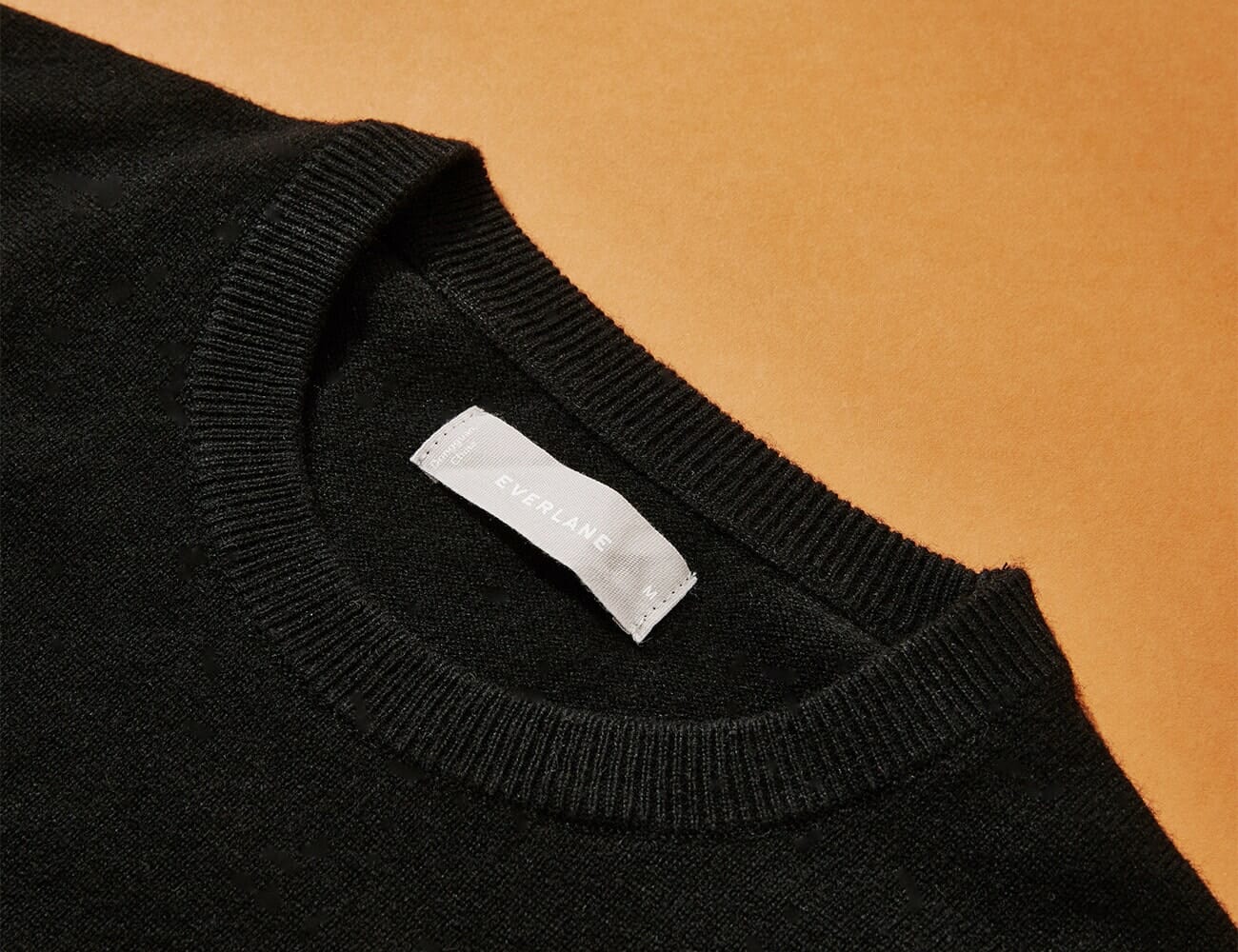
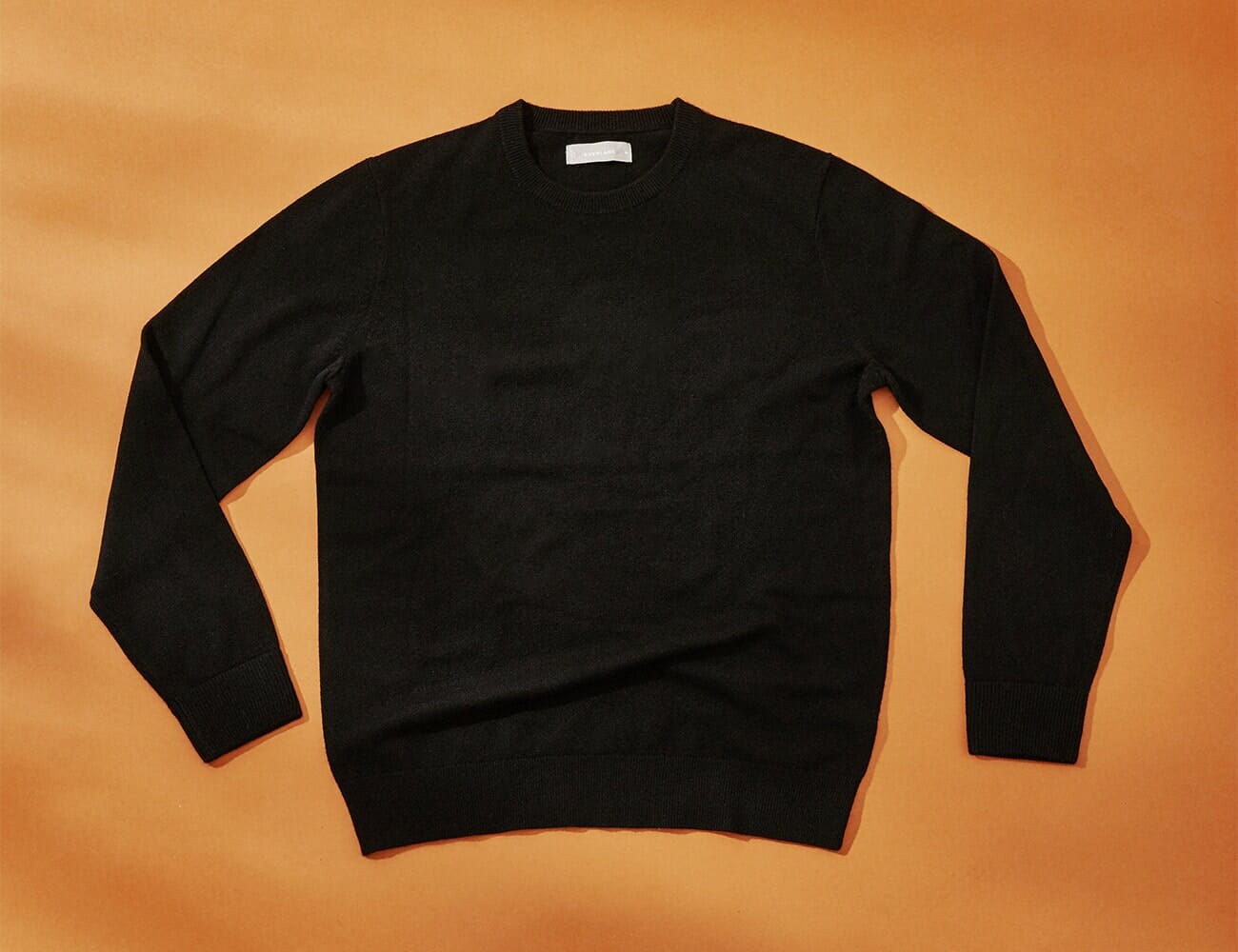
Along with offering 11 colors, Everlane is the most transparent about its Cashmere Crew sweater. The company will happily tell you that it’s knit in Dongguan, China and even show you the factory on its website. Everlane is more than willing to share that they use Grade-A cashmere from Inner Mongolia, and that the fibers it uses are the longest (35 millimeters) and finest (15 micron) fibers, so that the sweaters are durable, pill less, and get softer with wear. And if you’re in the market for something with a bit more weight, the brand also offers a heavyweight version of this sweater for $10 more.

Naadam The Essential $75 Cashmere Sweater

The-Best-Cashmere-Sweaters-for-100-or-Less-Gear-Patrol-Nadaam-Slide-2
The-Best-Cashmere-Sweaters-for-100-or-Less-Gear-Patrol-Nadaam-Slide-1

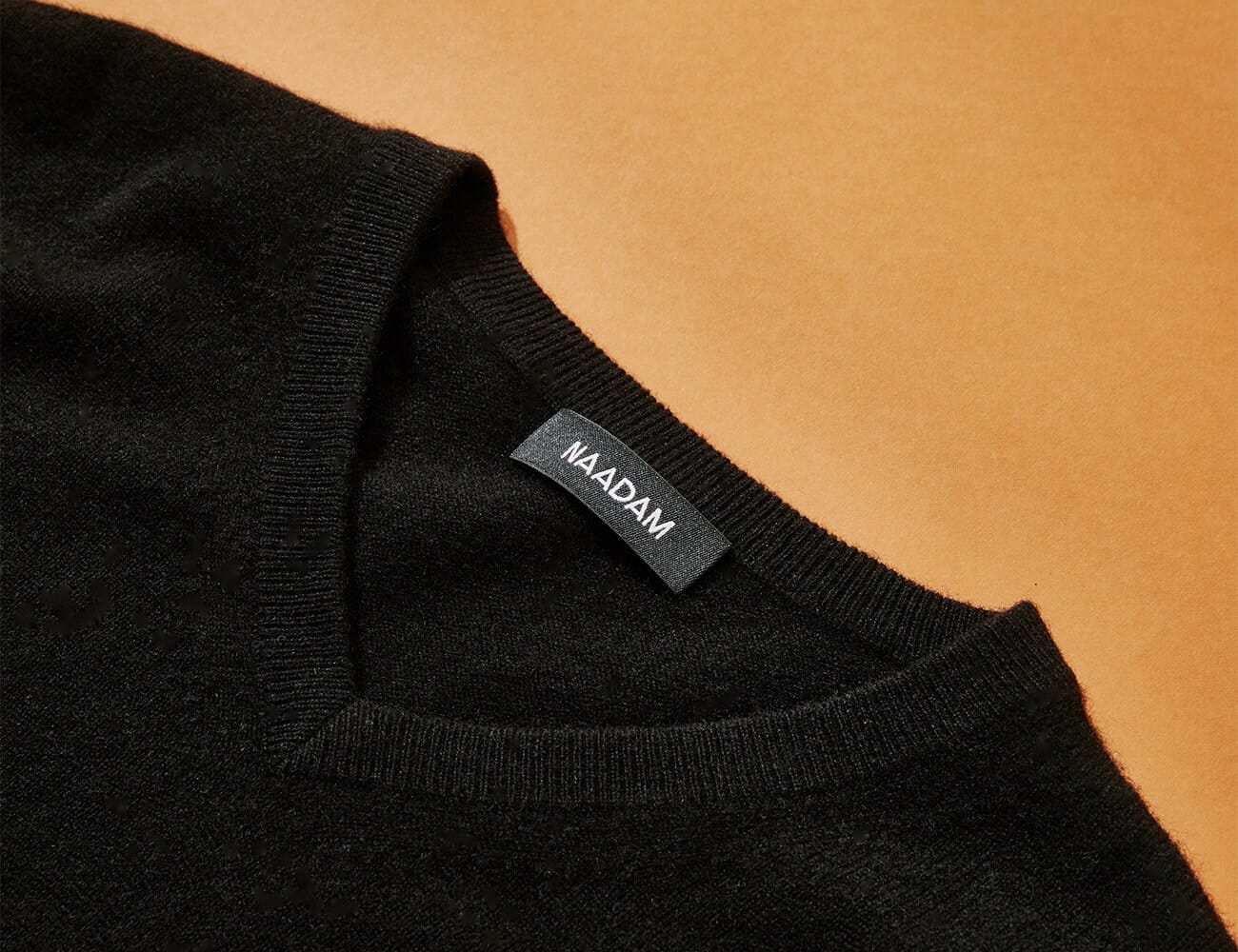
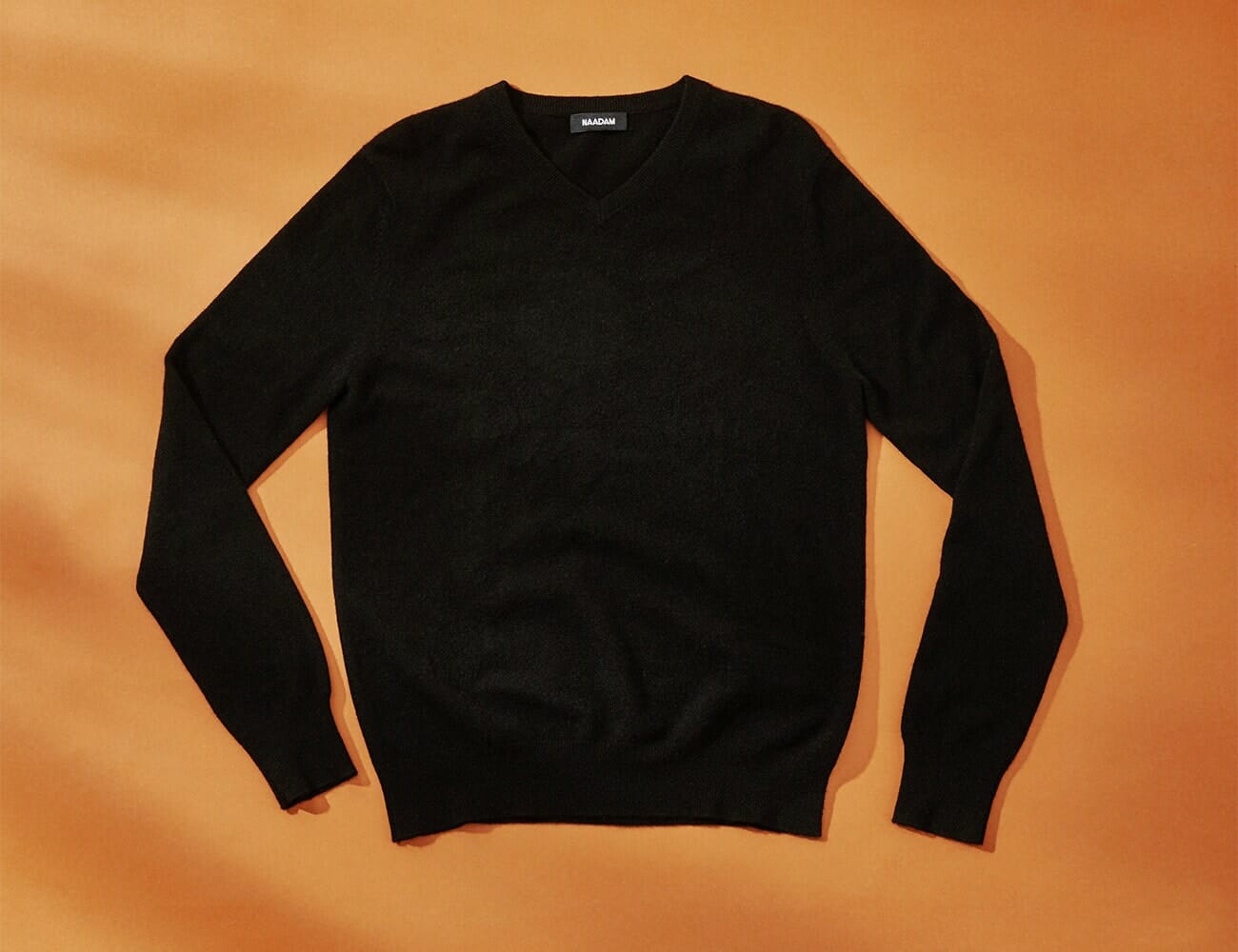
Naadam produces some of the more affordable cashmere sweaters available and still manages to give a wide variety of choices. The crewneck version of the Essential $75 Cashmere Sweater comes in nine colors and the v-neck comes in a staggering 18 colors. Unlike other brands, Naadam discloses that it sources all of its cashmere from Mongolia and knits its sweaters in China. The light-midweight 12-gauge knit is breathable and has one of the softest handfeels out of the box.

Uniqlo Cashmere Crewneck Long-Sleeve Sweater

The-Best-Cashmere-Sweaters-for-100-or-Less-Gear-Patrol-Uniqlo-Slide-2
The-Best-Cashmere-Sweaters-for-100-or-Less-Gear-Patrol-Uniqlo-Slide-1

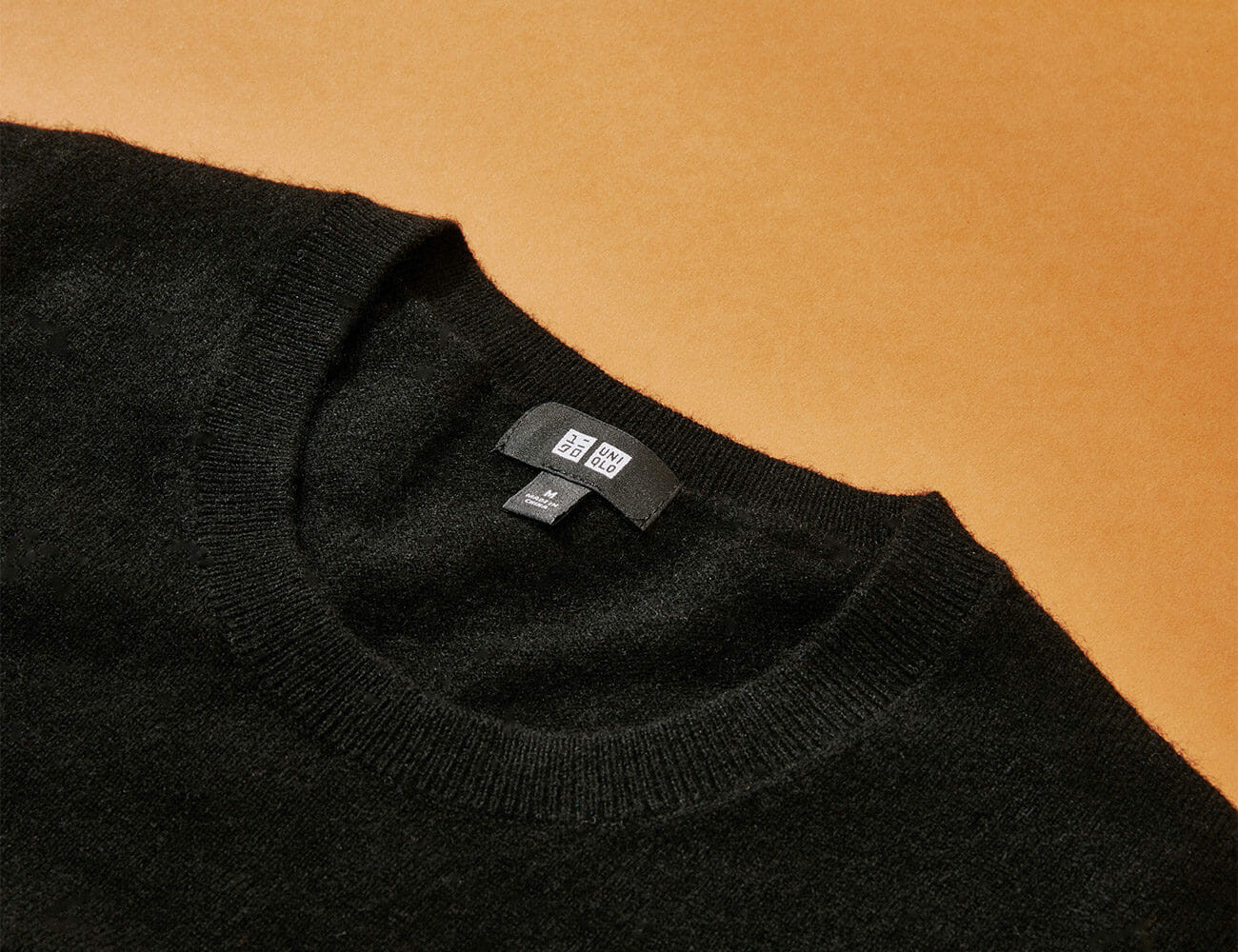
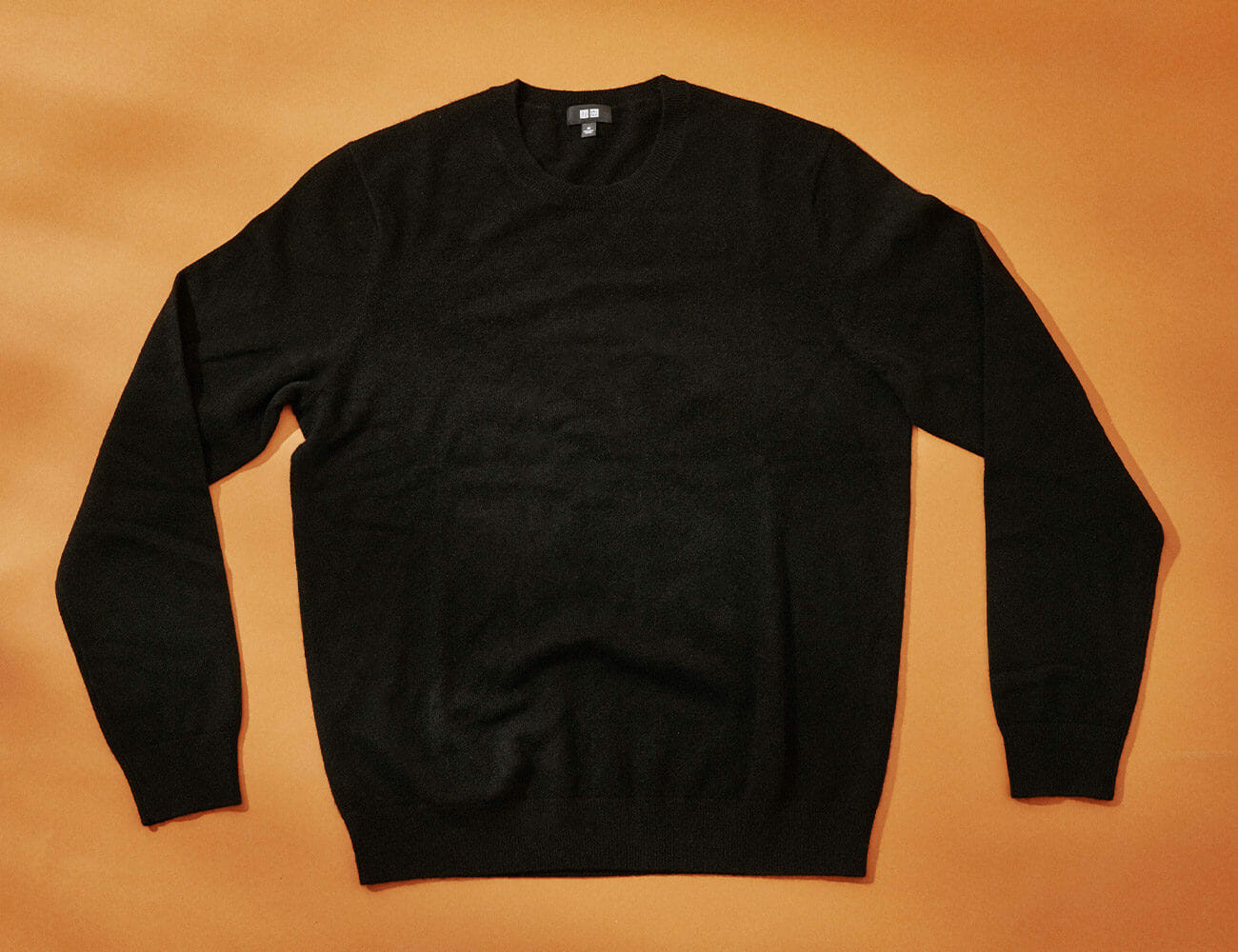
Uniqlo has consistently produced affordable cashmere sweaters, and its Crewneck Long-Sleeve style became something of a benchmark for the category. Available in 8 colors, the sweater is knitted in China and has the distinctive, plush handfeel you’d expect from a cashmere sweater. The brand recommends resting the sweater for a few days after a full day of wear to prevent pilling.

J.Crew Everyday Cashmere Crewneck Sweater

The-Best-Cashmere-Sweaters-for-100-or-Less-Gear-Patrol-JCrew-Slide-2
The-Best-Cashmere-Sweaters-for-100-or-Less-Gear-Patrol-JCrew-Slide-1

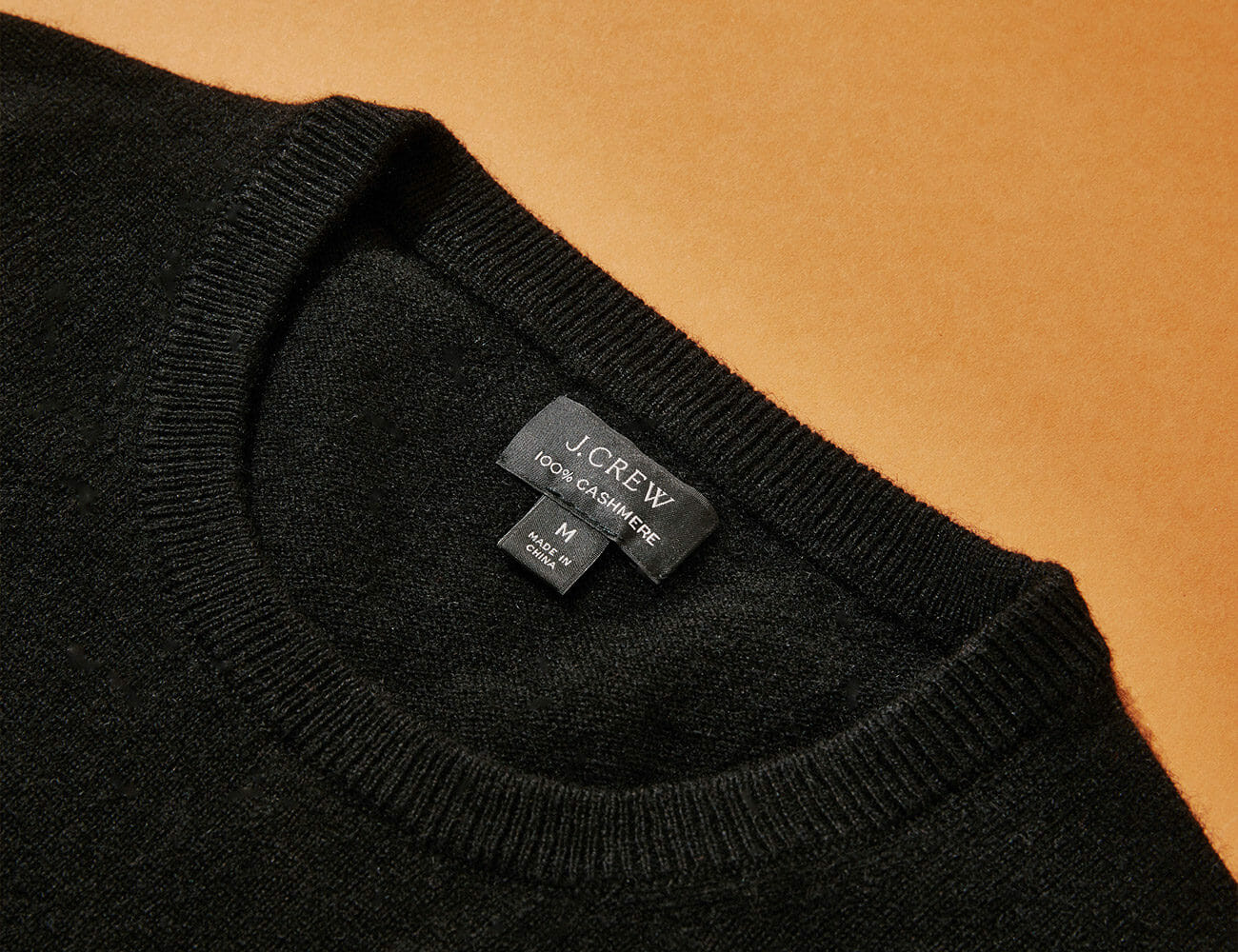
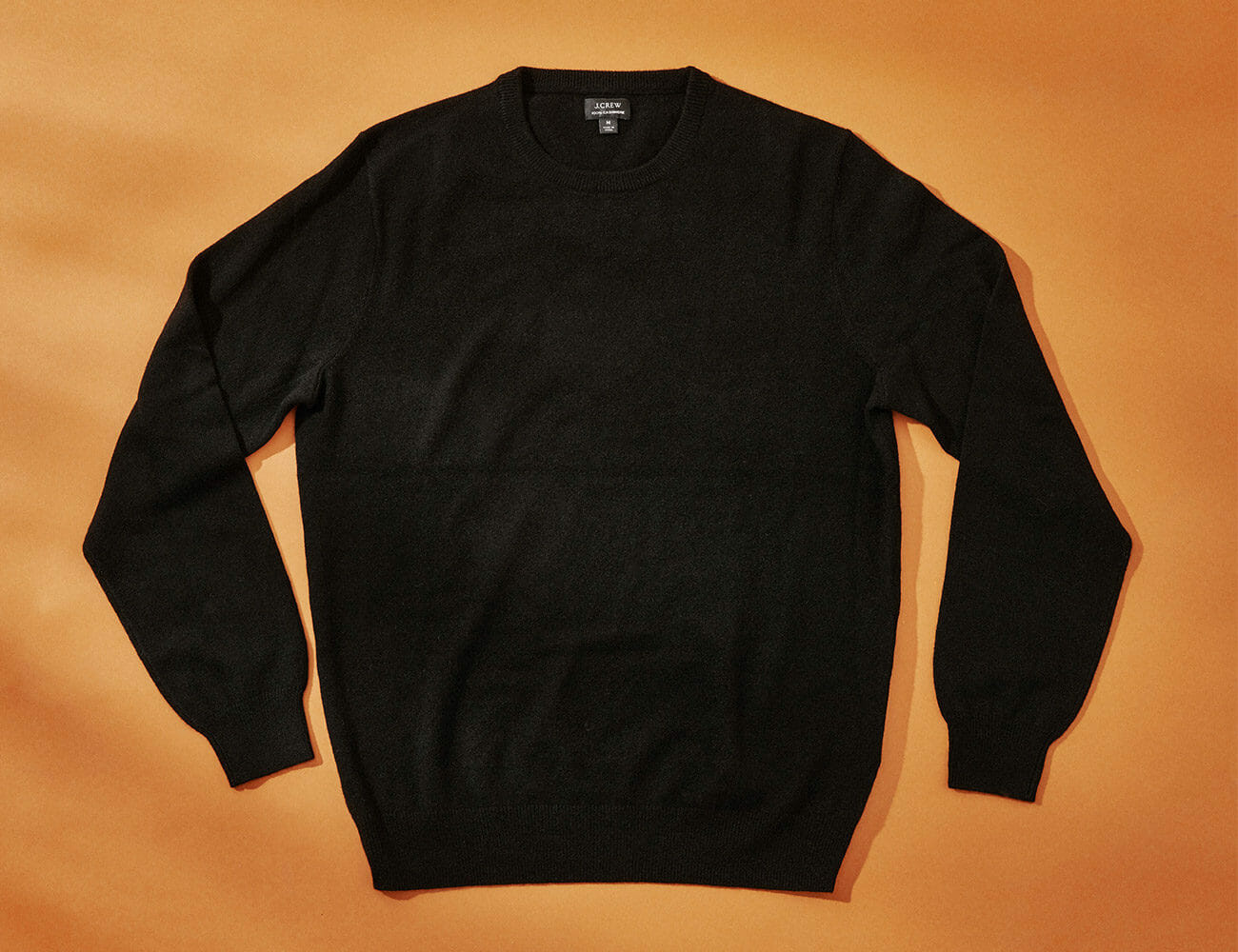
J.Crew’s Everyday Cashmere Crewneck sweater comes in 15 colors and costs just under $100. Knitted in China. It has a more substantial-feeling knit than some of the other more affordable brands offer. Available in sizes X-Small to XX-Large, it features a standard fit that will complement a range of personal styles. The brand has democratized cashmere as it has already successfully done with the American wardrobe.

Buttoned Down Premium Cashmere Crewneck Sweater

The-Best-Cashmere-Sweaters-for-100-or-Less-Gear-Patrol-Buttoned-Slide-2
The-Best-Cashmere-Sweaters-for-100-or-Less-Gear-Patrol-Buttoned-Slide-1

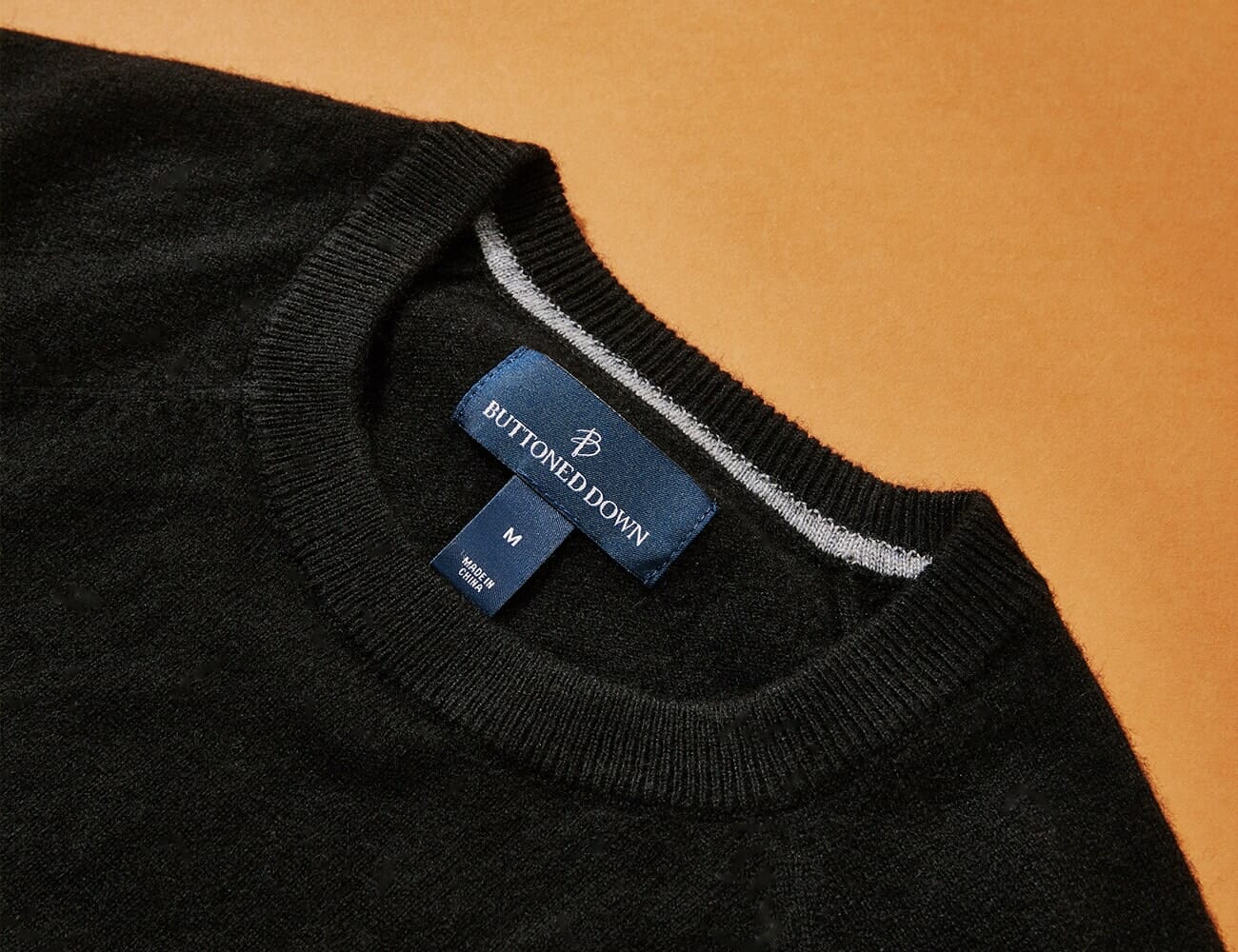
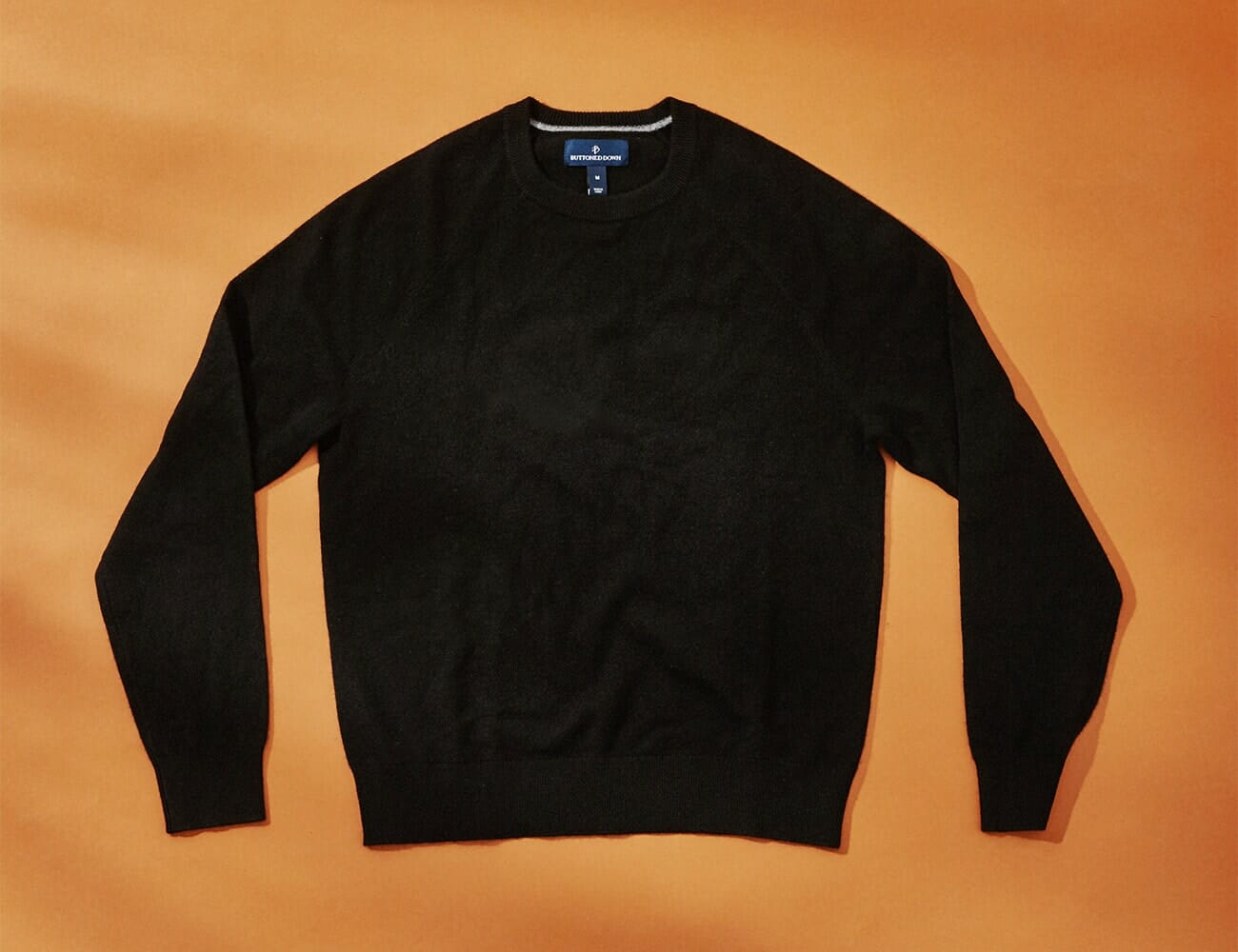
Amazon’s recent foray into the men’s fashion world has produced a range of house brands making tasteful basics. The Buttoned Down Premium Cashmere Crewneck is a prime example: it has a very soft handfeel, comes in 10 colors and features raglan-sleeve construction, which is flattering to a wide variety of body types. As with other brands, this sweater is knitted in China and the cashmere is of undisclosed origin.

Note: Purchasing products through our links may earn us a portion of the sale, which supports our editorial team’s mission. Learn more here.

These Badass Leather Jackets Were a Well-Kept Nashville Secret

Nashville-based Atelier Savas once only made custom jackets for musicians and other in-the-know clients. Now you can purchase a handful of styles from the brand in a variety of stock sizes. And instead of spending over $6,000 on a bespoke piece, these jackets start at $1,900 and top out at $3,500.

For the past five years, Savas founder Savannah Yarborough has been crafting one-of-a-kind leather pieces for customers like Jack White, Jason Isbell and Chris Young. Before that, the Central Saint Martins-trained designer headed men’s design at Billy Reid, frequently traveling between Italy and Alabama, where the brand is headquartered.

This year Yarborough started offering made-to-measure jackets for men, a stepping-stone to the full ready-to-wear line that is now available online. The new stock jackets showcase the best of Atelier Savas: unique leathers, tasteful silhouettes and timeless, wearable designs. The jackets have loads of character — they’re not a typical black biker jacket — but they’re also quite versatile.

Before the launch of the collection, we caught up with Yarborough on a recent trip to New York. She took a few minutes to share her thoughts on the benefits of ready-to-wear, the enduring power of leather and her personal favorite jacket.

Q: You’re launching a wide variety of styles. What was the basis for this collection?
A: Well a couple of them, the Denham jacket and the Legend, were the two first jackets I ever made, and I made them for myself. Obviously, I’m a trained men’s designer. Everything that I wear is like a shrunken version of a man’s thing that fits me. So, those styles really are pretty unisex, I think.

That’s the thing with leather: the styles themselves don’t need to be overly complicated. What you can do with the material alone is just totally endless. Every time I go to visit the tanneries, it’s like there are a hundred new ideas to come up with. And, that’s what makes it super fun.

Q: What are the benefits of a ready-to-wear line?
A: Well, I think the biggest benefit is that you don’t have to come to me. That has really limited the amount of people that we’ve been able to service. The other thing is you’re getting something without having to go through the grind of figuring out for yourself what it is that you want, which I find is pretty challenging for quite a few people.

Q: What was the most difficult part about getting to this step?
A: The most difficult part was trying to decide what’s going to be best, and obviously, the backend logistics of making sure our fits were exactly the way they need to be — we’ve probably spent the last eight months just on that.

Q: What’s your favorite jacket?
A: My favorite piece is always the Denham jacket because that’s the one that I wear the most. I just love it. My goal is that people buy these and they wear them five days a week — they wear them when they’re hanging out, but they wear them at important times as well.

Q: Do you have a favorite leather in this offering?
A: I really love the kangaroo leather in the cognac color. One of the really most special things about leather is that it always takes on a life of its own. And any skin that really shows that, is what gets me excited. Because to be honest, I’m more excited when I see a client a year or two after they’ve gotten their jacket than I am the day I give it to them. I like to see how it’s changed.

It’s like the more you wear your jeans, they just evolve — they really show the life they’ve had. And it’s interesting too because kangaroo is actually the strongest fiber of any animal skin. So, you can make it super paper-thin, and it doesn’t weaken it.

Q: The kangaroo leather is unaltered. It has a different look from traditional hides that many brands use where imperfections like scars and stretch marks aren’t visible.
A: One of the things that’s important to me is that everything should have a little bit of grit to it. And I think that’s why I’m so into the materials that I am — there’s got to be something a little bit rough and tumble about it. It’s a real thing. You know?

Q: Definitely. How should potential customers frame these investment-level jackets?
A: Well, and a lot of people will think cost per wear, right? It’s like, if you only wear it five days out of the year, you’re not going to get a good return on your investment. Whereas, if you are wearing it three or four days a week, it becomes a lot more worth it at that point. And that’s why everything here is super wearable. I’m not here to make you look like a sparkle walking down the street. I can do that in our bespoke program, but for the ready-to-wear stuff, you should just be able to wear it as soon as you get it.