All posts in “style”

The Elago AW6 AirPods Case Is A Retro Tribute To An Iconic Portable Music Player

The tech industry knows that Apple products are considerably expensive and with mid-tier specifications. Some might argue that you are paying for quality and reliability, but it’s not always the case. For around the same price as a shiny new device from the Cupertino tech outfit, consumers can grab something even better. Nevertheless, one thing we love about the brand is the amazing selection of third-party accessories. Furthermore, these are available for the majority of its products. For those of you who have the AirPods check out the AW6 from Elago for that little dash of nostalgia.

That’s right, look closer and you can see that this protective case resembles the most popular portable music player in the world. This is a quirky but perfect accessory to keep your AirPods looking new. Elago specializes in premium silicone products that protect your gadgets from bumps and scrapes. Given that the charging case of your Airpods is prone to scuffing and discolouration it’s a good idea give it a protective layer.

Not only does it keep the charging case in pristine condition, but the AW6 also does not interfere with wireless charging. As long as you own the wireless charging case it should work without a hitch. Meanwhile, since the second-generation model is no different from the original in terms of shape and size. It will fit as well. Overall, we think it’s a great product and an awesome tribute to the iPod. Elago is offering two versions of the AirPods case: Black with a red click wheel or white with a grey click wheel. Overall, it actually does not matter which one you choose because they both look classy.

Buy it here

Images courtesy of Elago

You Can (and Should) Tailor Your Jeans to Fit You Perfectly. Here’s What You Need to Know

Unless you’re about to relay a mortgage payment for a pair of custom, bespoke jeans, finding the perfect-fitting pair can be, facetiously, the most fun one person can have during their one life to live. Statistically speaking, you’re likely one of the hundreds of millions of people suffering from poor-fitting jeans. But don’t worry, it’s not your body that’s the issue. You’re perfect just the way you are.

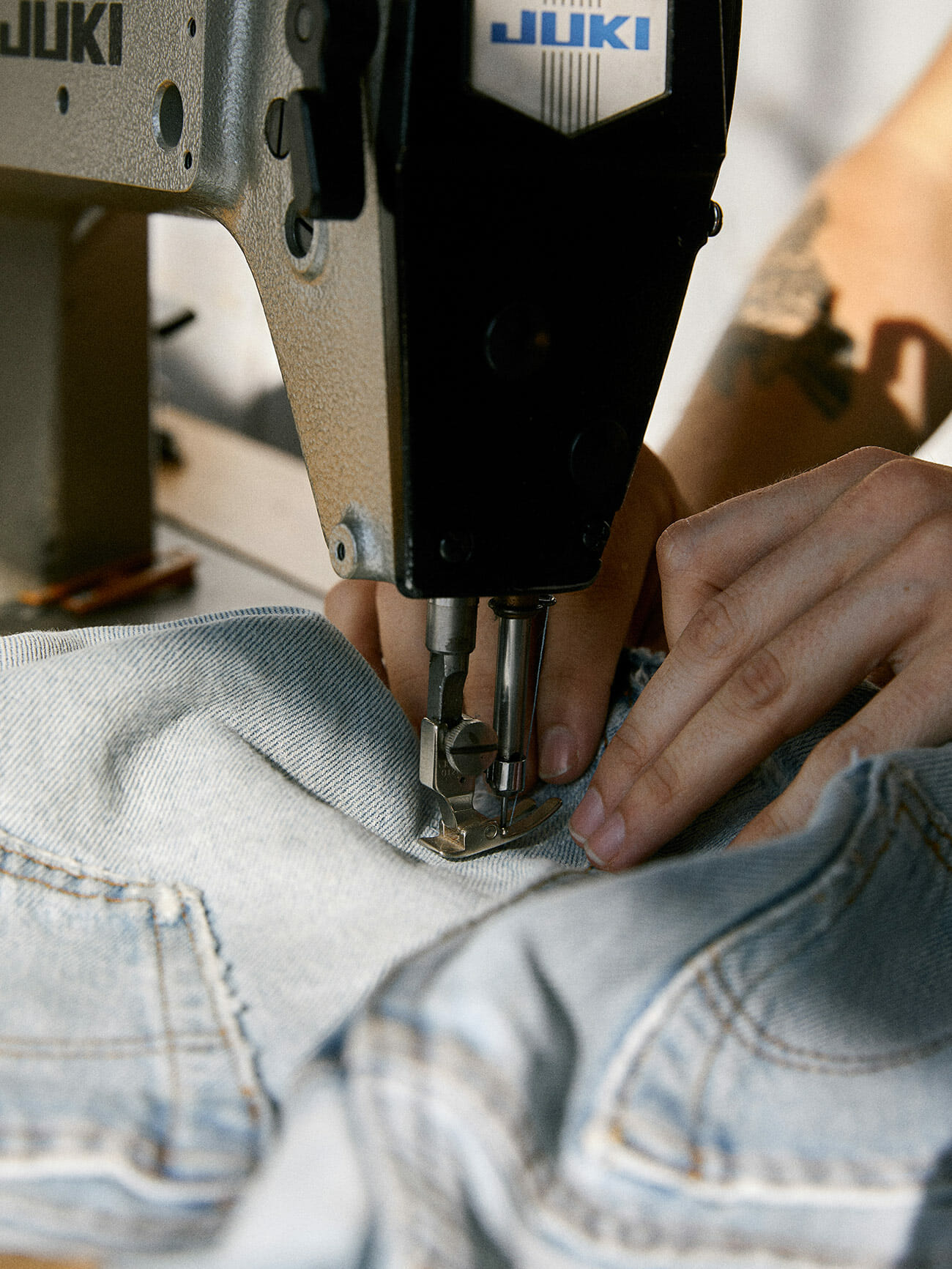
You can get jeans that fit you great off the rack. And with a little bit of tailoring, you can get them to fit you damn-near perfectly. Tailoring jeans, a hard-wearing garment meant for the masses, might sound excessive. But if you live in your jeans every day, even the smallest alterations can make a huge difference.

Altering your jeans isn’t the same as altering a pair of dress pants, though. It requires a bit more finesse and comes with more precautions for each operation. Here’s what you need to know.

Preliminary Steps

Start with a pair of jeans that’s somewhat close to the fit you hope to achieve. Think of this process more like a haircut. You can always take more off, but you can’t really put any back on. So, make sure that the jeans are too big rather than too small.

Wash your jeans before heading to the tailor. Diehard never-wash denimheads might cringe, but washing and drying your jeans will get rid of shrinkage and help get you a more accurate fit when it comes time to visit your tailor.

Hemming

Jeans that are too long will break up the style’s overall silhouette. The fabric can pool on top of your shoes and creating a bunched-up shape. Even worse, you’re more likely to step on jeans that are too long (and trip because of it).

Bring the shoes that you wear most often with your jeans to the tailor and wear them when the tailor is marking or pinning your jeans at the desired length. This will help you properly visualize the right length you’re after. While trying on the jeans with your tailor, don’t be afraid to ask them a few times to adjust the length before they finalize the measurement and err on the side of too long, just in case. That said, there are a few different ways to have your jeans hemmed.

  • Lockstitch: This is the easiest, most common way a tailor will be able to hem your jeans. It’s a simple lockstitch that’s done with the most basic of sewing machines. This goes by different names including topstitched hem or simply “regular hem” — you should get this if you just want your jeans shorter, plain and simple.
  • Chainstitch: If you’re a real denim head, a chainstitched hem is what you should get. Though jeans weren’t originally invented with this detail, they have been hemmed like this for long enough that it’s subtly part of a blue jean’s DNA. Not every tailor will be able to do this, so be sure to ask if they can do a chainstitch hem before agreeing. (Make sure you to specify a chainstich hem, not an original hem.)
  • Original hem: An original hem is mostly used when jeans are already pre-faded. The tailor essentially cuts off the hem from the pre-faded jeans, shortens the leg to the appropriate length and reattaches the hem to the new length. This preserves the natural puckered fades of the jean which would otherwise be lost in a basic hem.

Taper

Tapering jeans is the second most common jean alteration. When your jeans aren’t slim enough for your liking, a tailor can alter your jeans to fit as slim as you like. There are some precautions to note.

Tapering your jeans can really only be done below the crotch. Though it’s technically possible because, well, anything is possible, having your jeans slimmed above the crotch is more effort than it’s worth.

For selvedge-loving denimheads, make sure your tailor can taper your jeans from the inseam. Most tapering jobs are done on the outseam which will effectively alter the width of the selvedge. If you cuff your jeans, hoping to show off your insider knowledge that is your selvedge, you’ll also be showing off the fact that you went to a bad tailor. Getting it done right does come at a higher cost as most jean inseams are constructed with either overlocked stitching or felled seams, thus making them more difficult and laborious to undo and alter. Expect to pay more for this once you find the right tailor who can do the job.

Waist

A great- (or decent-)fitting seat is often accompanied by a loose waist. You can find yourself constantly picking up your jeans throughout the day. If both the seat and waist fit too loosely, you’d likely be better off finding smaller pants. While a belt is a simple solution, having the waist taken in is a more elegant route.

It’s possible to have the waist taken in by a tailor, but this is more of a delicate procedure. Because jeans aren’t built with easily-altered seats and waists, there’s more room for error and even less room to let out. A good tailor will take in the waist at the back, directly in the center. This is a tricky operation since both the center seam and the belt loop sit at this point and it requires a surgical hand to undo and restitch them. If done correctly, the center back seam will look the same and the cut that the tailor has made at the waist band will be hidden by the belt loop. Be sure to ask if your tailor can take in the waist from the back and expect to pay around $50 depending on your tailor.

Seat

The seat is the trickiest alteration to have done. If you can avoid this, do so. If you’ve searched high and low for jeans without finding one with a decently-fitting seat, be prepared to do even more searching for the right tailor to do the job.

Note: Purchasing products through our links may earn us a portion of the sale, which supports our editorial team’s mission. Learn more here.

Want a Quality Pair of Shoes? Consider These Two Factors

Shoes that hit the sweet intersection of cost and quality require a discerning eye to spot. How do you know whether a pair of shoes is worth it? Generally speaking, if you want your shoes to keep kicking for years and years, they’ll most likely run you at least $250 or $300. That’s a chunk of change not everyone has or is willing to put down enthusiastically.

While there’s an entire universe of cordwaining nerdery that can go into a pair of shoes, we’ll be focusing on the baseline of what makes a pair of quality shoes. For us, that means a really good bang for your buck; a high cost-per-wear and that comes down to two fundamental components: sole construction and the upper.

Sole Construction

Before looking at anything on a boot, look at the sole construction. This will tell you whether or not a boot is even worth considering. The soles will give out long before anything else (in theory) and if you want your investment to go the literal distance, making sure a boot can be resoled is imperative.

Shoes that use stitched sole construction can be easily resoled. There are a variety of stitched methods including Goodyear welt, Blake stitch, stitchdown, Norwegian and more, each of which will be able to handle several resoles before the shoe gives out entirely. Generally speaking, Goodyear-welted construction will last longer than Blake stitch construction because the welt adds another layer of protection between the sole and insole. Stitchdown construction, as the name implies, features an upper stitched down to the midsole. On the other hand, Blake stitch construction stitches the sole directly to the insole and the upper. This results in a lighter shoe with a sleeker profile that is still able to be resoled, however, it cannot withstand as many resoles.

Contrary to what’s been spouted online, cemented shoes — those with an upper glued to the sole — can be resoled. But there are notable downsides. Because the soles are fixed to the upper, detaching them can be tricky. The equipment required to detach and resole cemented shoes isn’t as common in shoe repair shops. And, the lack of capable cobblers to perform the operation is accompanied by the fact that the price of repair almost negates the resole since most cemented shoes are significantly less expensive compared to stitched styles. So, while you could theoretically get a pair of Vans sneakers resoled, it would be cheaper to just buy a new pair. Broadly speaking, as unsustainable as it is, people don’t buy cemented shoes to have them resoled.

Be wary, however. Some shoe manufacturers will make shoes that look like they have a welted or stitched construction but are actually just cemented. They’ll do this by adding decorative stitches or welts. If a shoe looks like it has a stitched sole, but doesn’t come from a reputable manufacturer and is priced lower than $120, it’s probably too good to be true.

The Upper

The upper is perhaps a shoe’s most important component. While the soles should be the first thing you consider, soles can be repaired, replaced and upgraded. If the upper is ripped or if it develops a hole, there’s not much a cobbler can do. You want to make sure that a shoe’s upper is made from quality leather. Good leather uppers will literally last decades with proper care, so you shouldn’t skimp here.

After a hide is tanned, it can be processed into several different grains of leather. Full-grain leather is the best grade of leather you can get and will last a lot longer than lower grades of leather. The hide is minimally processed and includes the natural texture of the animal’s hide. Full-grain leathers will develop patina and age much better than other quality of leathers. Shoemakers are sure to point out that they use full-grain leather because it is definitely a selling point.

The next tier of leather is top-grain leathers. They have had the top layer sanded down to smooth out any imperfections like scars in the leather. These leathers are a bit thinner than full-grain leathers and don’t feature the hide’s natural grain. Though top grain leathers can still last a long time, they tend to not age as gracefully as full-grain leathers.

Split grain leather follows top grain leather and is the portion of the hide that is literally split away from the top-grain or full-grain leather. Split grain leather is heavily processed and pigmented, and often has an artificial grain texture added to the surface to give it the appearance of a higher quality leather.

If a shoe brand doesn’t label their leather shoes as either full-grain or top-grain, you’ll probably see something generic like “genuine leather,” “vero cuoio,” or “bonded leather.” These terms are marketing terms to mask the fact that they’re inferior quality products. These materials are often made using scraps of leather that have been ground down to bits and glued (i.e. bonded) together. The result is a material that will not stand up to the test of time and will eventually fall apart.

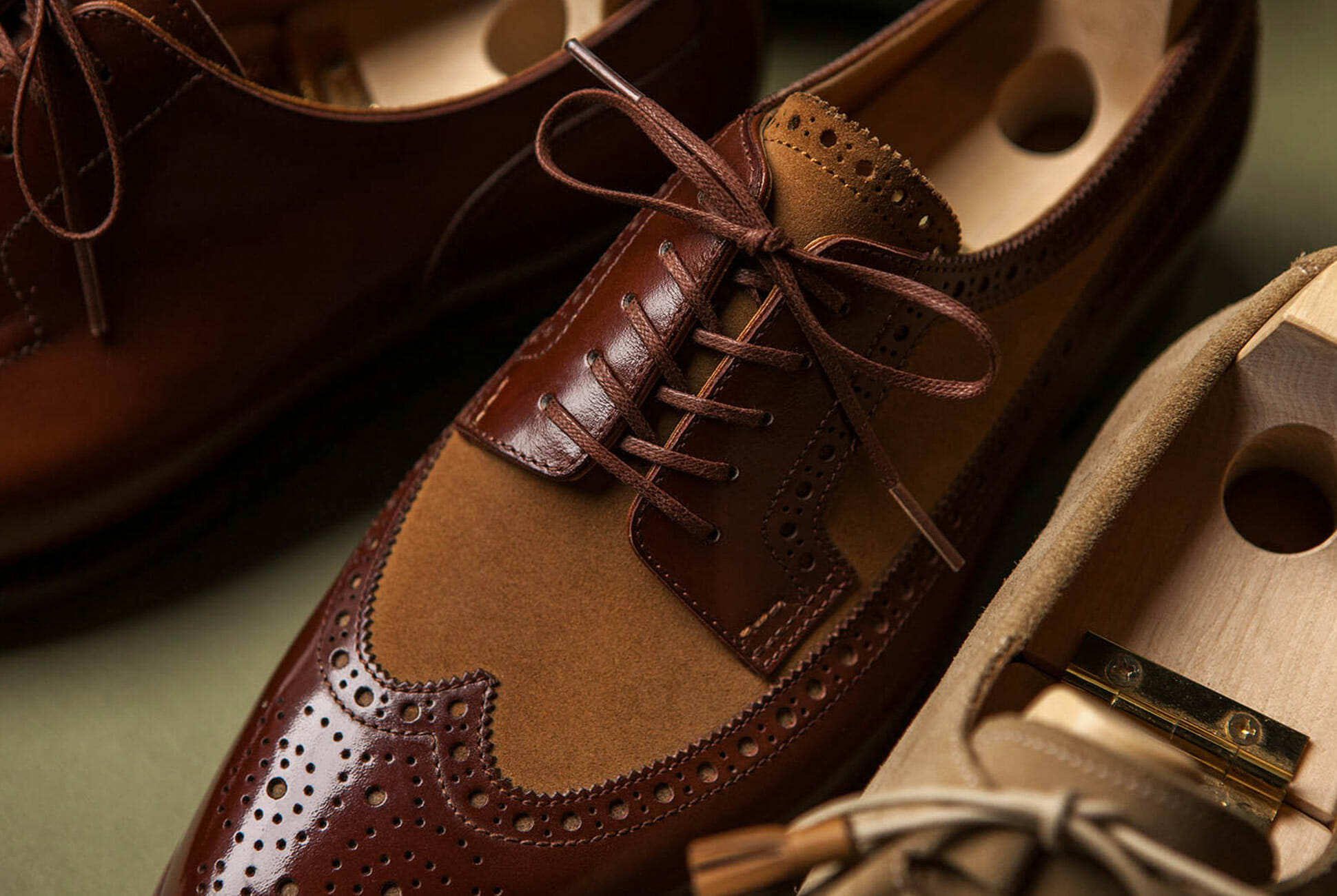
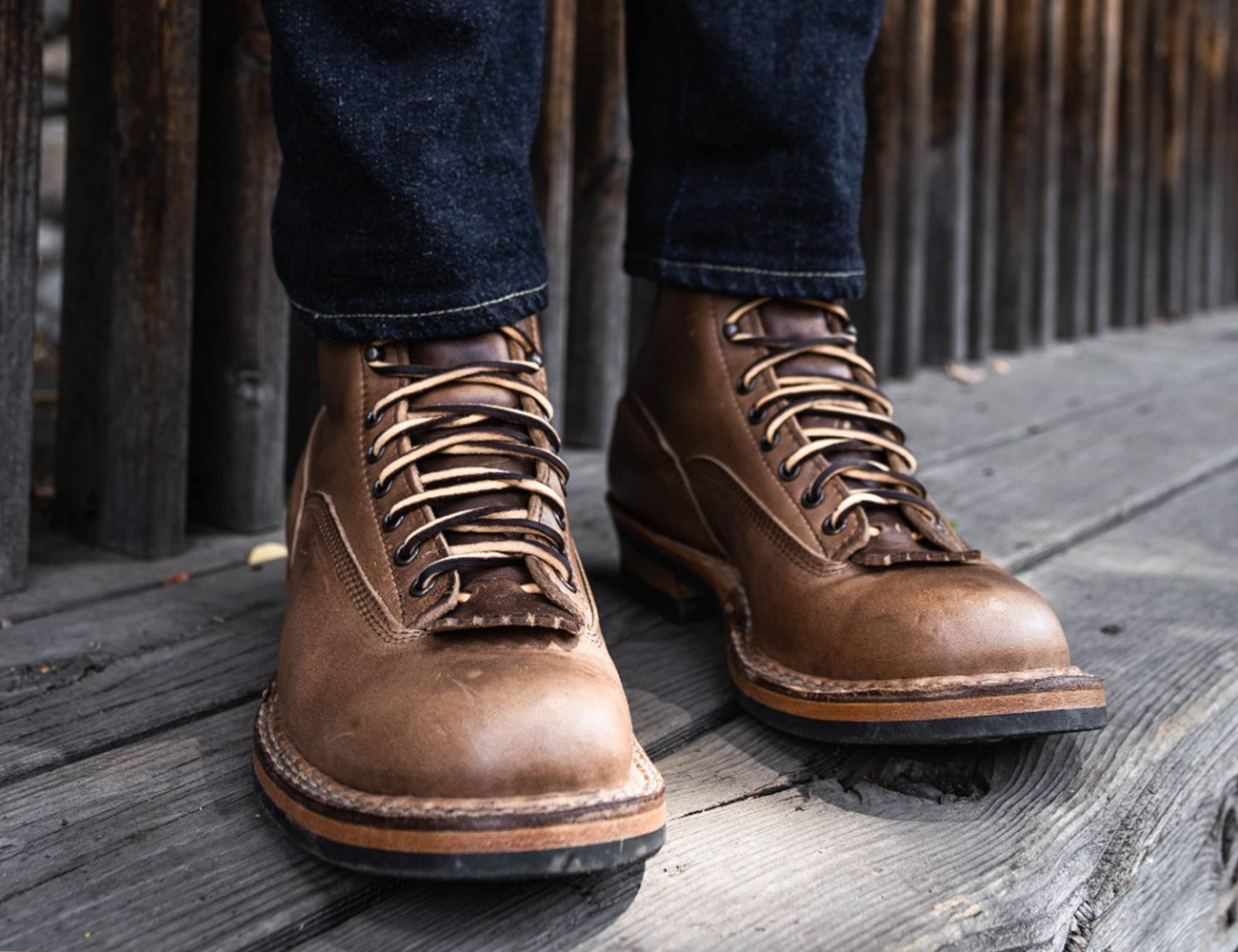
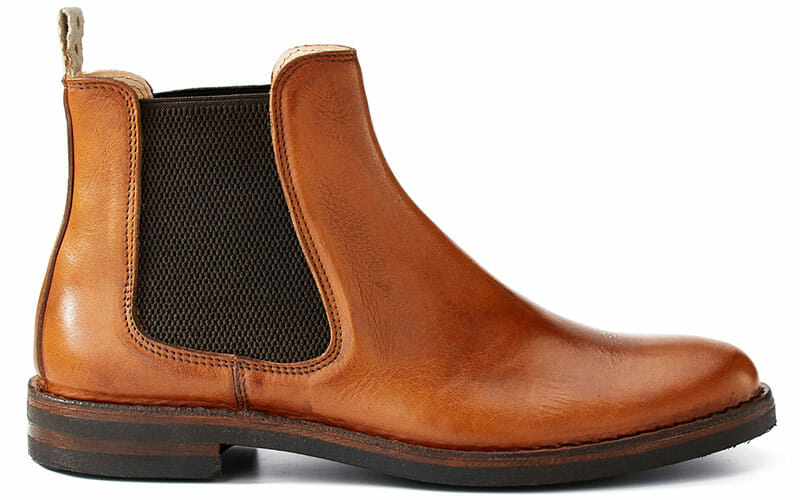
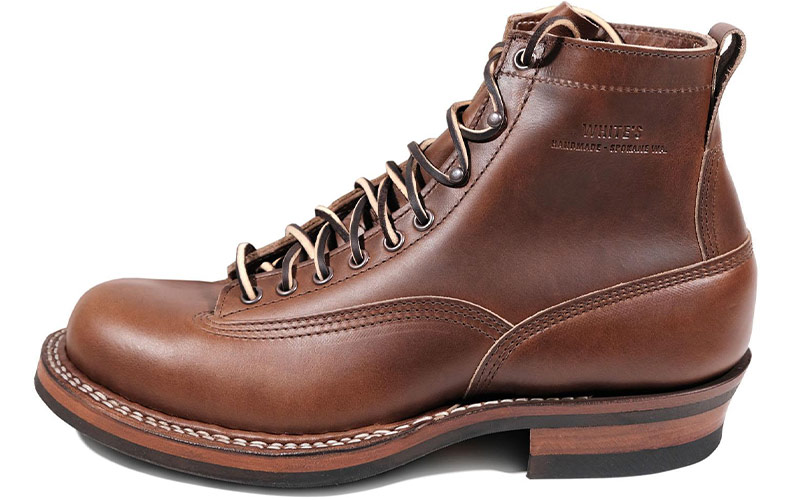
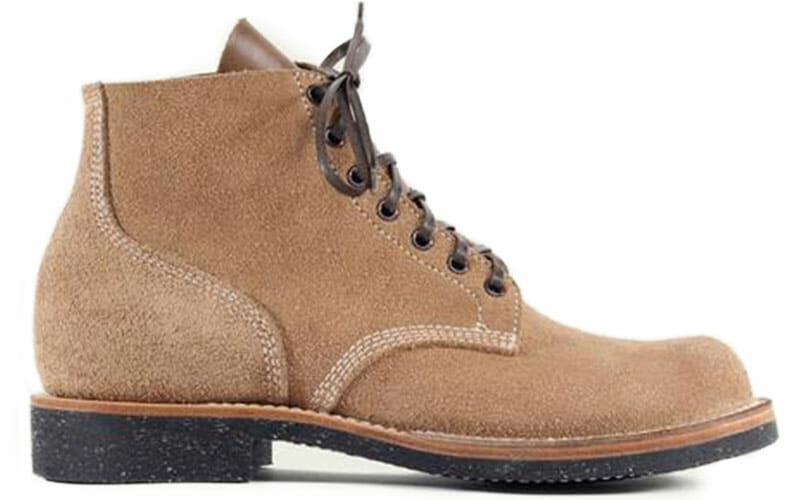
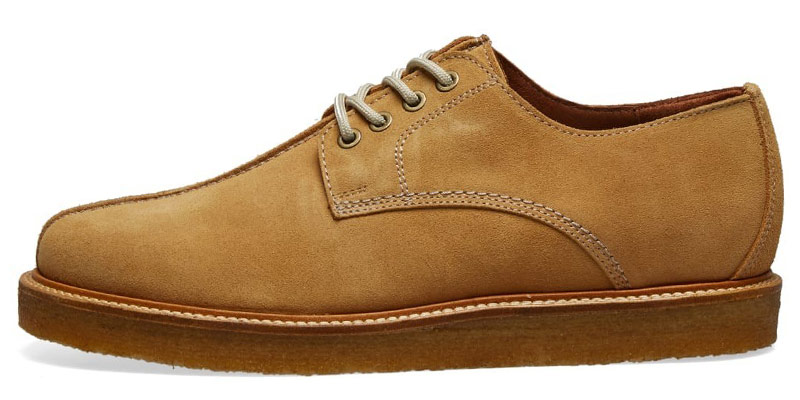
The gamut of shoes that fulfill these two main requirements for quality shoes is wide. Typically, you can expect to find a pair of well-made Goodyear welted shoes with full-grain uppers for at least $250 from brands like Red Wing, Wolverine and Lucchese. For Blake-stitched and stitchdown shoes with decent leather uppers, the point of entry is a notch lower at around $125 from brands like Clarks and Frye. Check out a few of our favorite styles below.

Stitchdown Styles

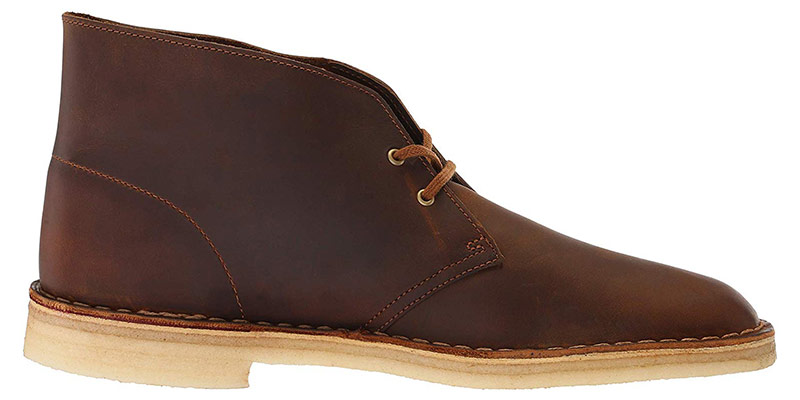
Desert Boot by Clarks $130

Bitflex Boots by Astorflex $195

350 Cutter Boots by White’s $560

Boondocker Boots by Viberg $670

Blake Stitched Styles

Seam Shoes by Wild Bunch $195

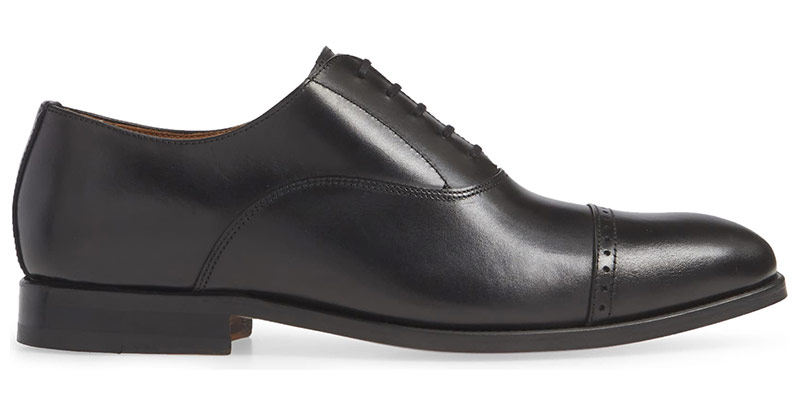
Walker Cap Toe Oxford by Jack Erwin $225

Fondeghee by Velasca $285

Tavernelle Boots by Oliver Sweeney $459

Goodyear Welted Styles

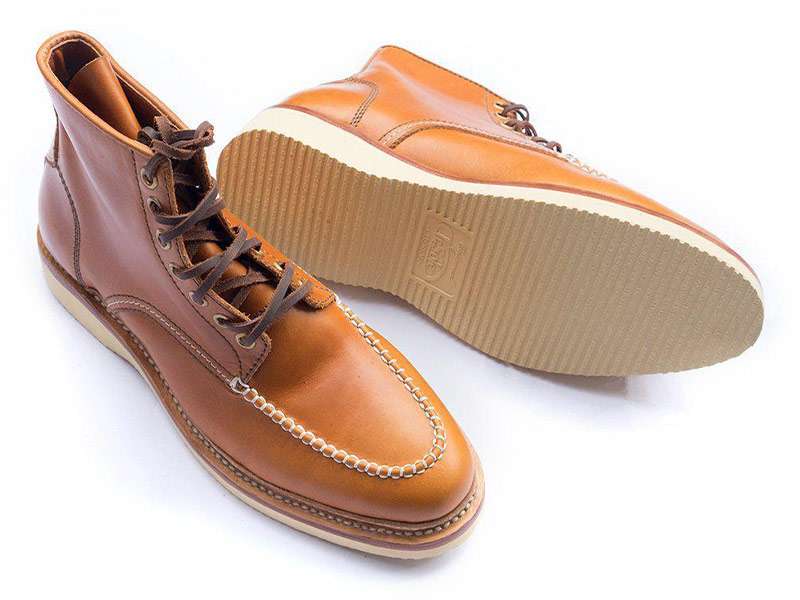
875 Moc Toe Boots by Red Wing Heritage $260

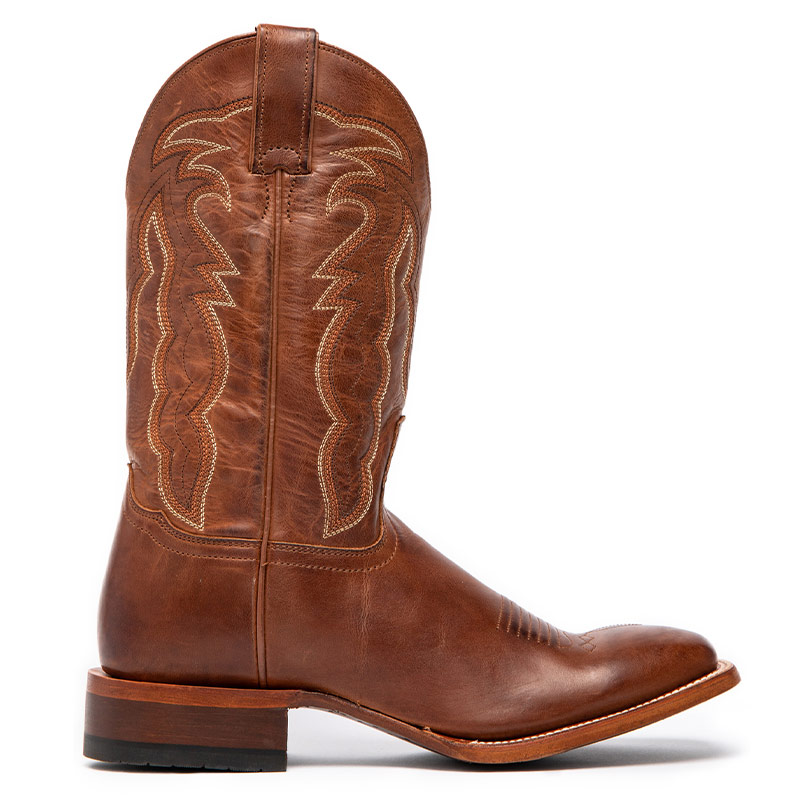
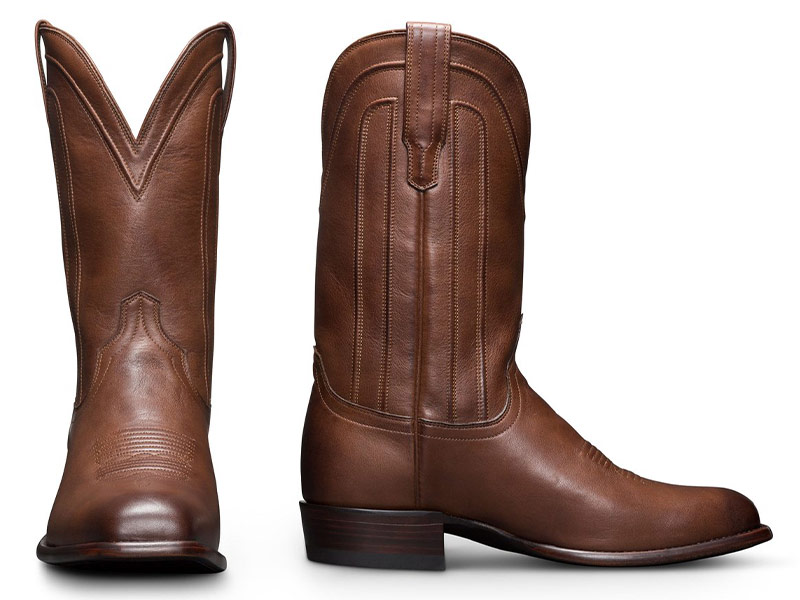
Roper Boots by Tecovas $245

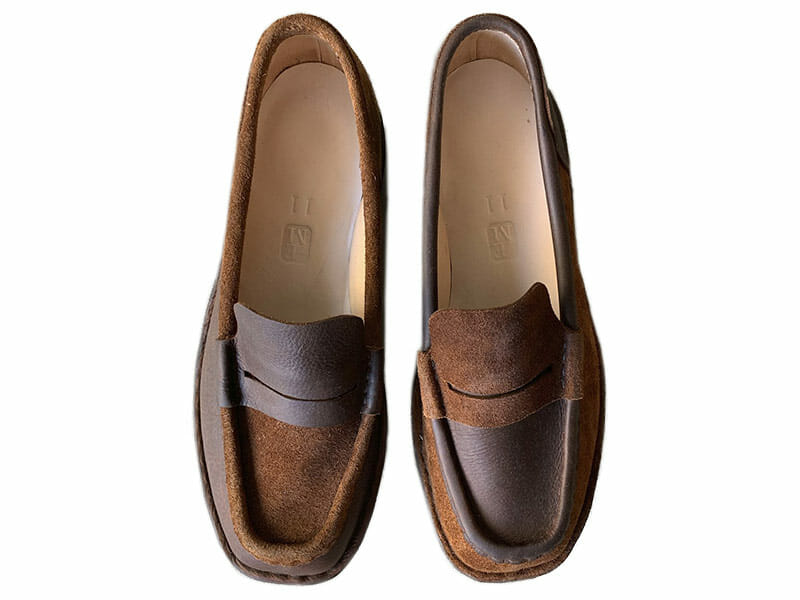
Traveler Penny Loafers by Grant Stone $320

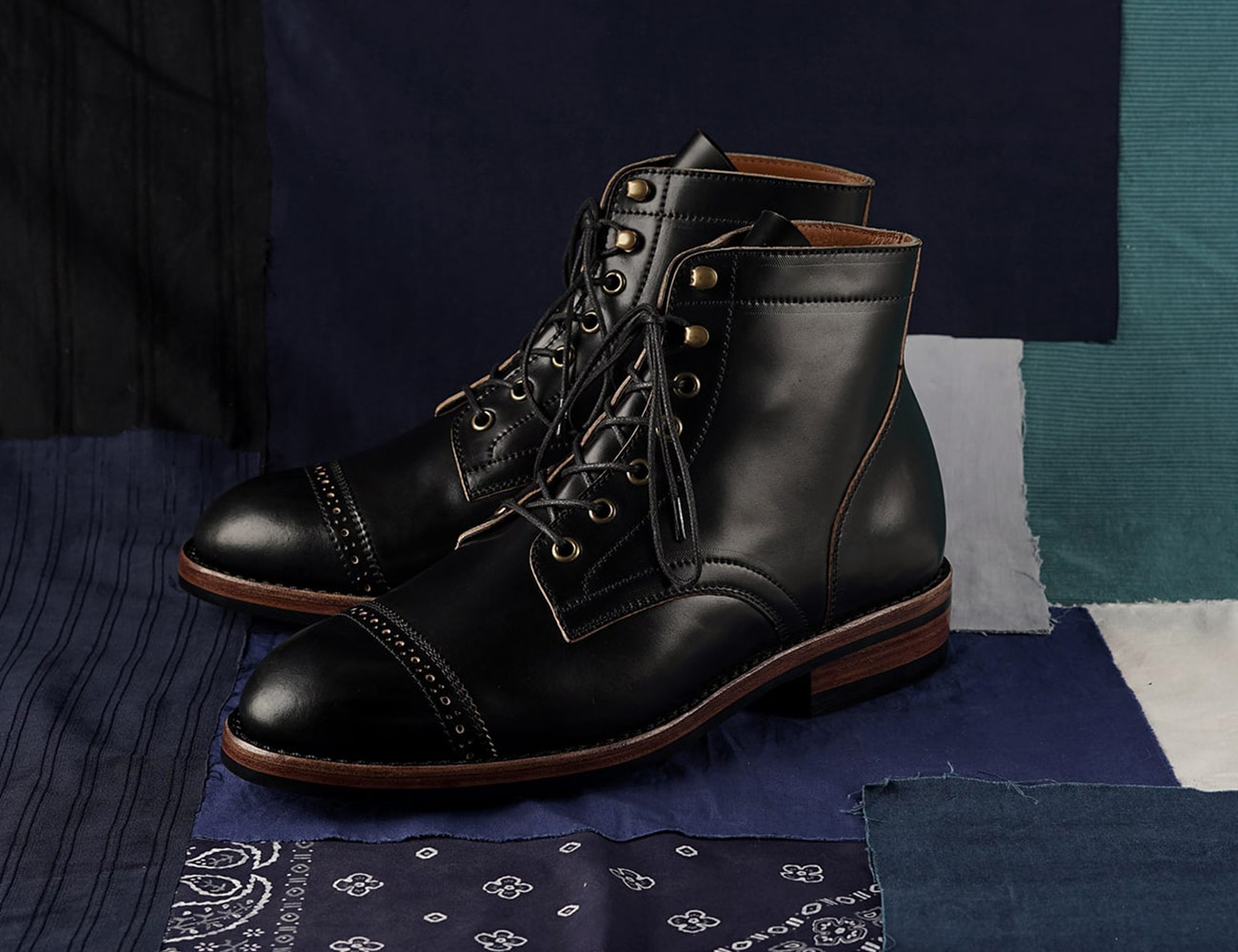
Kenton Leather Cap-Toe Boot by J.Crew $248

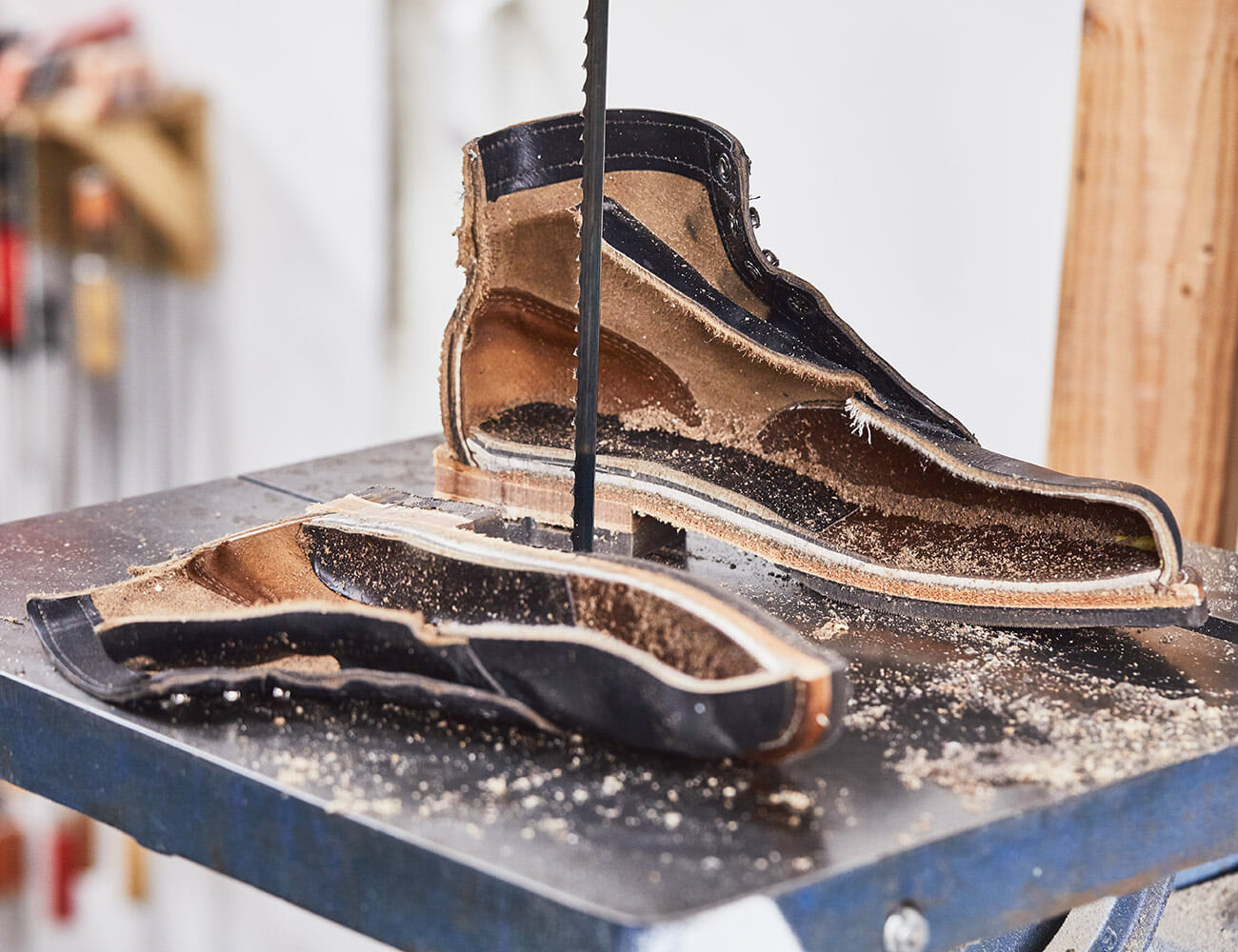
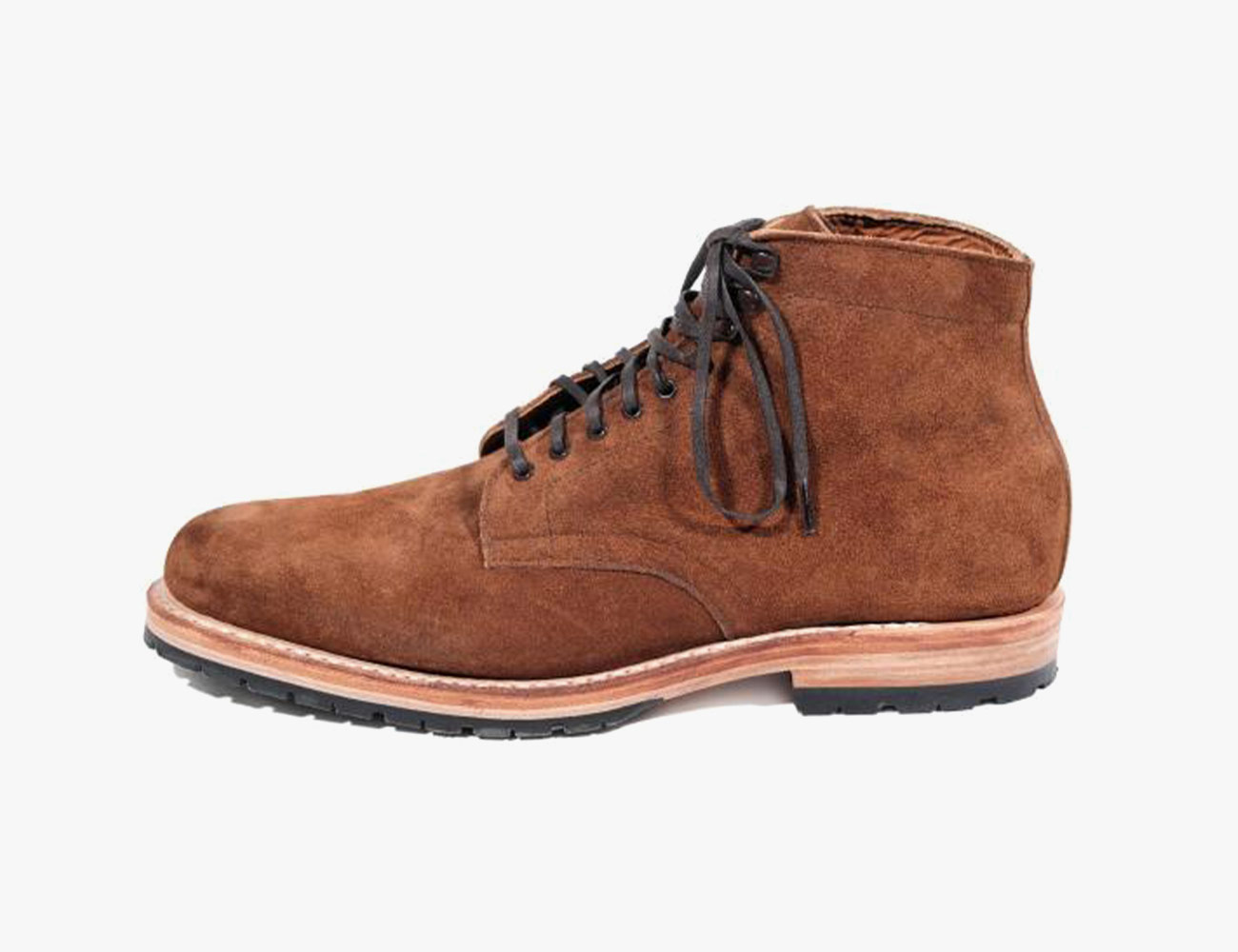
We Cut 5 Great Boots in Half to See What Makes a Quality Pair

Frequently at Gear Patrol, we implore readers to invest in quality boots. We wax poetic about how a great pair will age: how it will develop a unique patina, how it will form to the wearer’s foot, how it can be resoled countless times. We talk about it like it’s a serious investment, not as a rhetorical exercise, because it actually is. Most quality boots cost hundreds of dollars and are designed to last for years. Read the Story

Note: Purchasing products through our links may earn us a portion of the sale, which supports our editorial team’s mission. Learn more here.

The Louis Vuitton Sneaker Trunk Is The Classiest Storage For Your Kicks

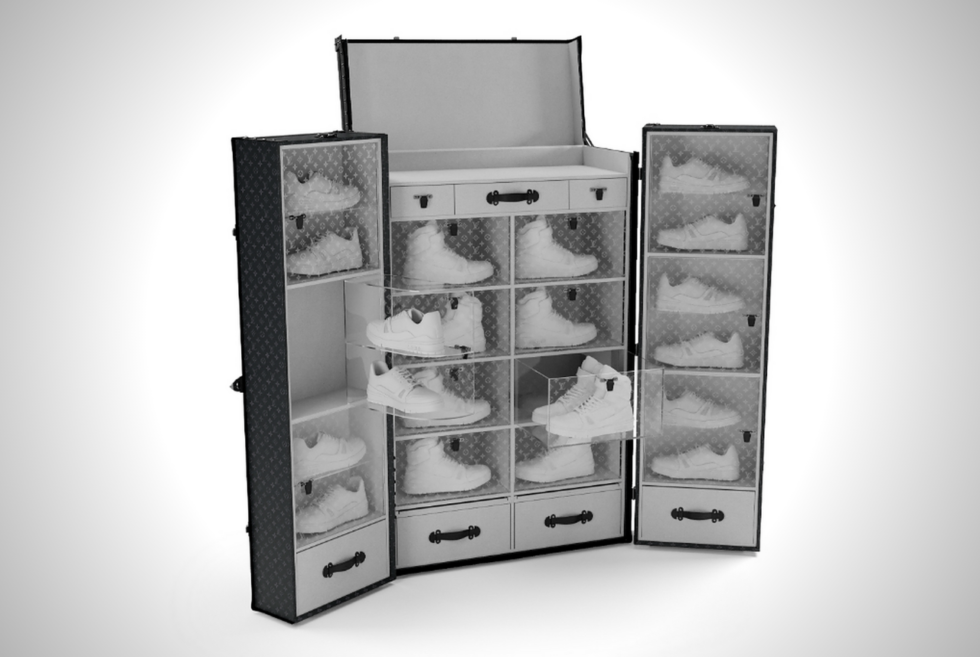
Sneakerheads are in for a big treat as a luxury marque is planning something awesome for collectors. If you’re thinking of an exclusive collaboration with a major footwear brand, then you’re wrong. Snatching up the latest limited-edition kicks are already a costly endeavour for most people. Thus, Louis Vuitton is upping the ante even further with a swanky new Sneaker Trunk that holds up to 14 pairs. We believe this is perfect for those who prefer to travel in style and show off their sizeable collection of shoes.

For now, the only image available for this product shows it in full glory.  Of course, the sneakers on show are unmarked for specific purposes but still looks classy, nonetheless. The two sections that swing out on each side can hold up to six low to mid-top kicks. These are likewise sitting on swing-out acrylic enclosures, which looks absolutely cool by the way.

The middle section, on the other hand, can store up to eight more sneakers — from high-top to low tops. Moreover, it does so with drawer box containers unlike the previous two. We love the attention to detail the designers have with this particular product. If you look a little closer, each of acrylic sections, it features etchings of the Louis Vuitton monogram.

The official product description reads, “Combining Louis Vuitton’s classic art of trunk craftsmanship with contemporary design, Louis Vuitton’s Sneaker Trunk is the newest addition to the House’s iconic hard-sided collection.” This would pair nicely with the Bisten Monogram Titane suitcases for your next trip.

Here’s more from the luxury brand

Images courtesy of Louis Vuitton

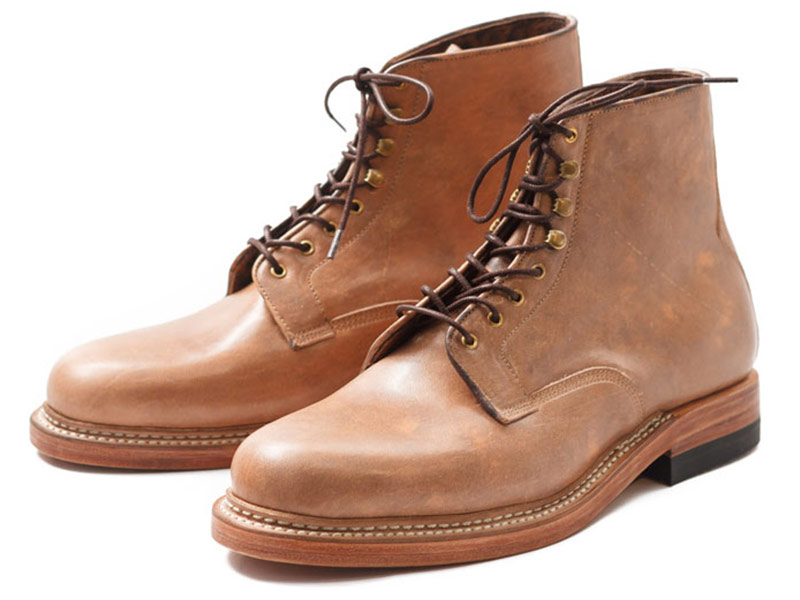
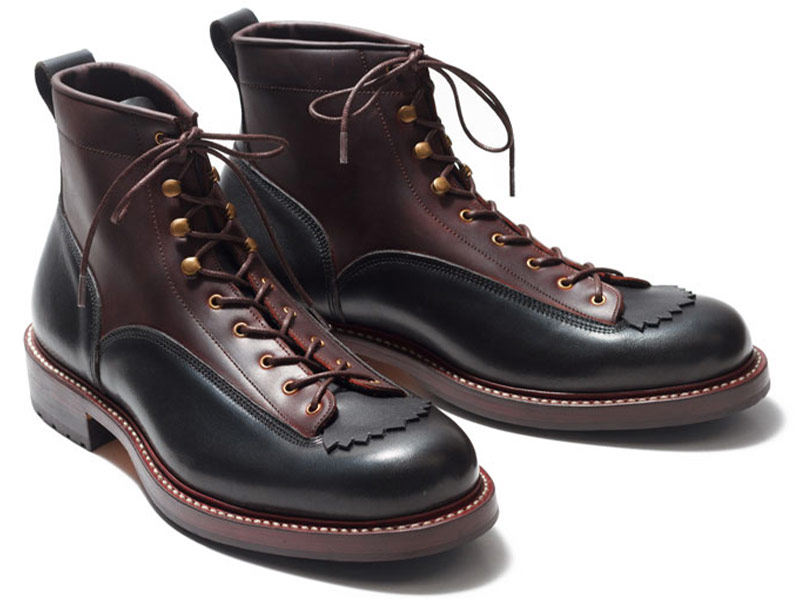
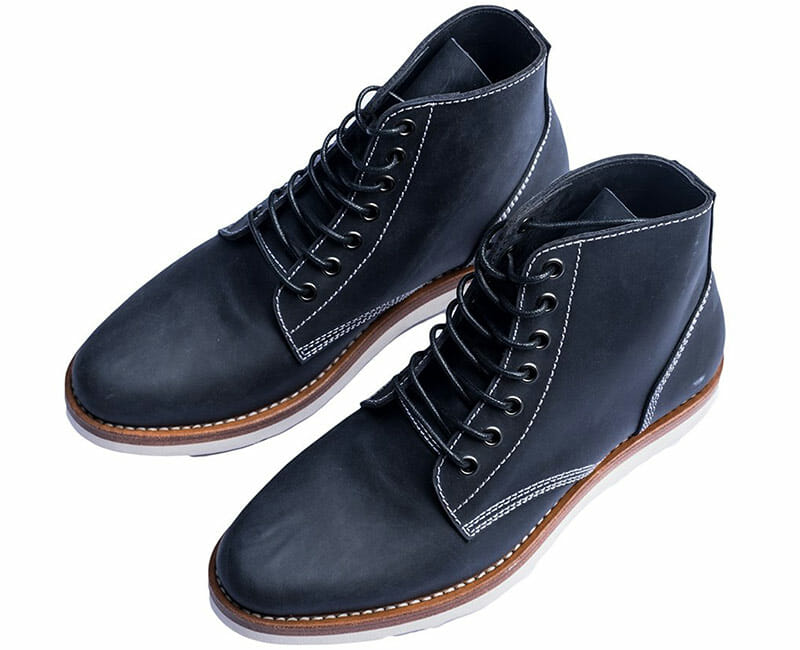
Some of the World’s Best Boots Come Don’t Come from America, Europe or Japan

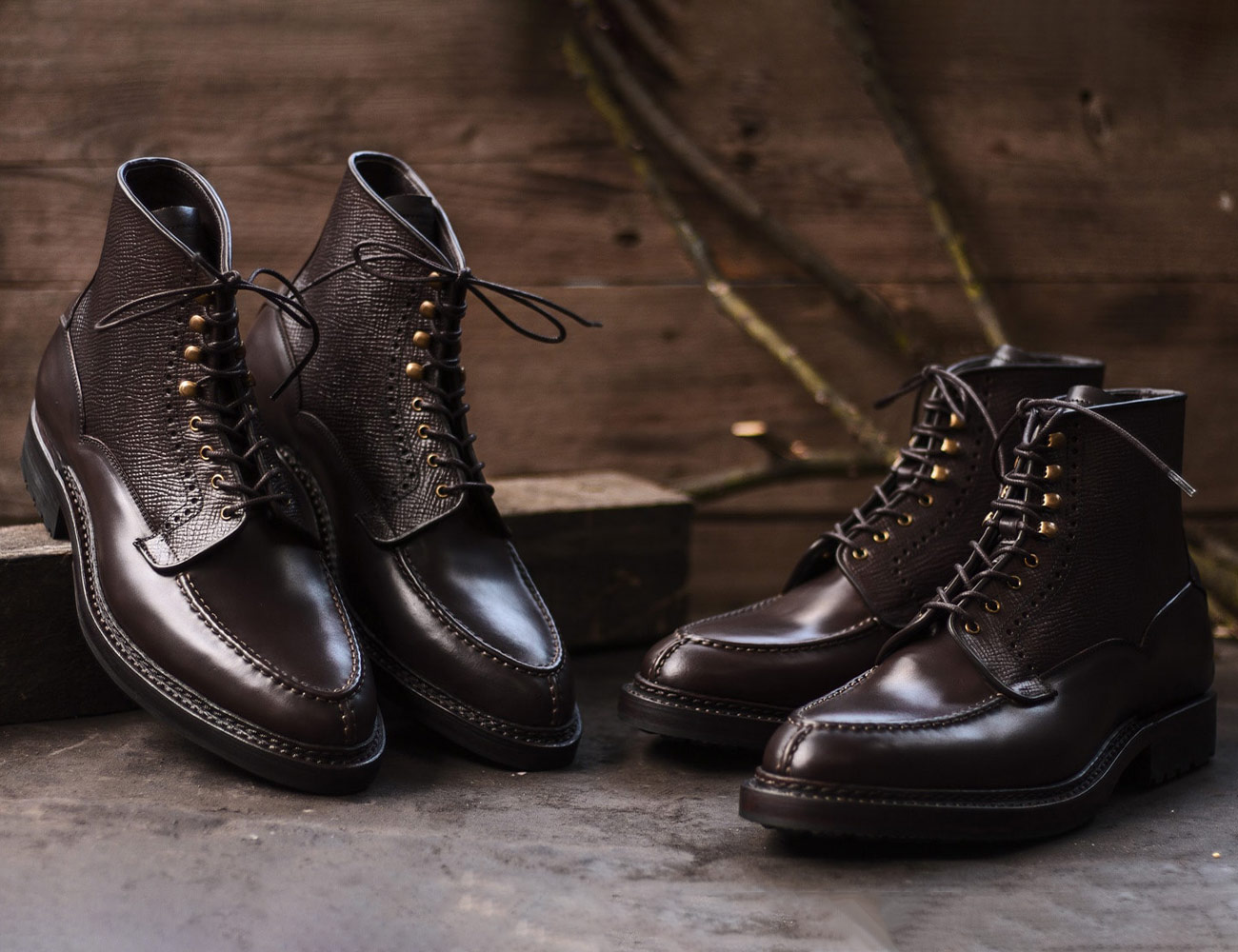
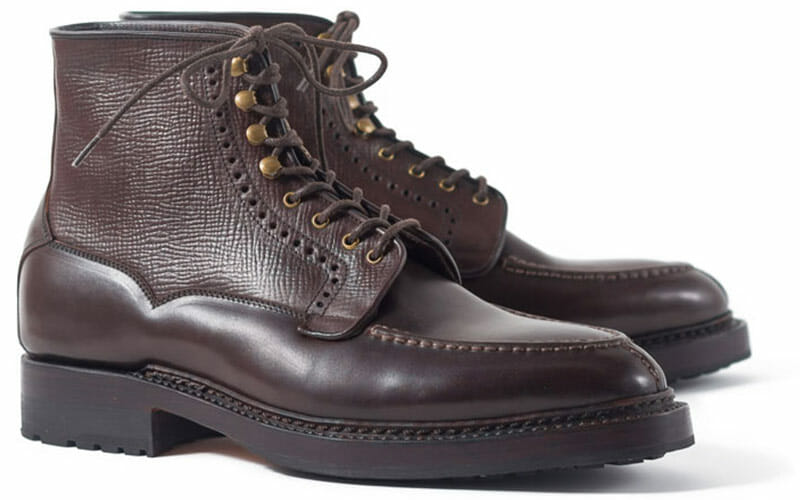
When a conversation about quality bootmakers comes up, there are certain shoemakers that are bound to be mentioned. Red Wing, Viberg, Tricker’s and Clinch are just a few of the names which are lauded for their full-grain leathers, time-honored bootmaking techniques and Goodyear-welted constructions. But there a few small shoemakers that have been getting attention for their beautiful designs and focus on craftsmanship which would have any quality shoe enthusiast drawing their eyes away from the usual suspects, and they’re all from Southeast Asia.

Dutch rule over Indonesia introduced welted footwear to the region which eventually spawned generations of Indonesian shoemakers. At one point, the Cibaduyut region of Bandung was known as one of the largest shoemaking areas of Asia. Today, a young generation of shoemakers has continued the cordwaining ways, producing some of the finest shoes anywhere. Here are just a few of them.

Sagara

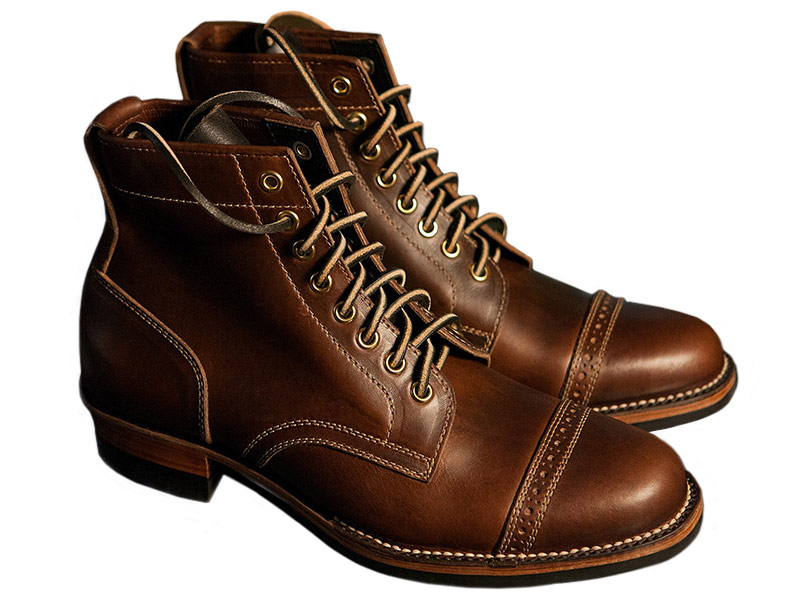
Sagara hails from Indonesia and offers a wide range of footwear from rough-and-tough military reproduction boots to black-tie-ready bluchers. Their shoes are offered in premium leathers like Italian calfskin, bullhide, Japanese shell cordovan and more and are crafted in a variety of welt constructions including Norwegian storm welt and Goodyear welts. Sagara also offers a made-to-order program for customers to build their dream pair of boots.

Combatant I by Sagara Sold Out

Regent Boots by Sagara $640

Reyn Handgrade by Sagara $320

Legacy X by Sagara $360

Legatant by Sagara $450

Cordmaster by Sagara $288

Valiant by Sagara $235

Santalum

Santalum was started in Indonesia in 2010 by two friends who couldn’t find quality shoes in their area. They started down the path of shoemaking and have since produced a line of boots centered around work boots with hand-stitched welted construction. Santalum has collaborated with American-retailer Pigeon Tree Crafting for a series of exclusive boots using stitchdown construction with indigo-dyed leather and Horween Chromexcel leather.

Plain Toe Service Boots by Santalum ~$135

Mile 85 Moc Toe Boots by Santalum ~$178

DIY Waxed Flesh Boot by PTC x Santalum $335

Horween Chromexcel Boots by PTC x Santalum $410

Junkard Company

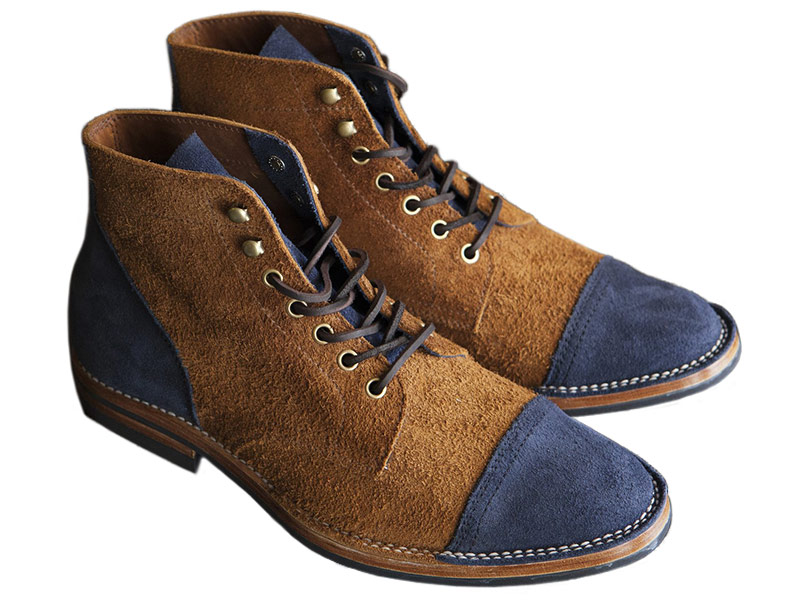
Junkard Company’s collection mainly consists of service-boot-style boots, but also includes moc-toe work boots, lace-to-toe oxfords, penny loafers and double monk chukkas. Junkard shoes and boots come in a range of welted construction methods including hand-stitched Goodyear, Norwegian and stitchdown. Their gamut of leathers features full-grain leathers, shell cordovan and several pull-up styles. Like Sagara, Junkard also has a robust made-to-order program that allows customers to choose the materials, the shoe style, the last and much more.

IMB Low by Junkard Company $550

NVCM Moc Toe by Junkard Company $299

LC219 by Junkard Company $255

Penny Loafer by Junkard Company $265

Double Monk Strap by Junkard Company $245

SC2078 by Junkard Company $265

Onderhoud Handmade

Onderhoud Handmade focuses squarely on boots in workwear and military styles with lace-to-toe “monkey” boots, engineer boots, moc-toe boots and more. You’ll find hand-welted construction applied to full-grain veg-tan leathers, corded soles, stacked leather heels and leather midsoles. Onderhoud, like many of the shoemakers on this list, can be reached only through Whatsapp or Instagram DMs.

LCV01 by Onderhoud Handmade Price Upon Request

LCB01 by Onderhoud Handmade Price Upon Request

LCV02 Lineman Boots by Onderhoud Handmade Price Upon Request

Engineer Boots by Onderhoud Handmade Price Upon Request

SCB01 by Onderhoud Handmade Price Upon Request

LVL-01 by Onderhoud Handmade Price Upon Request

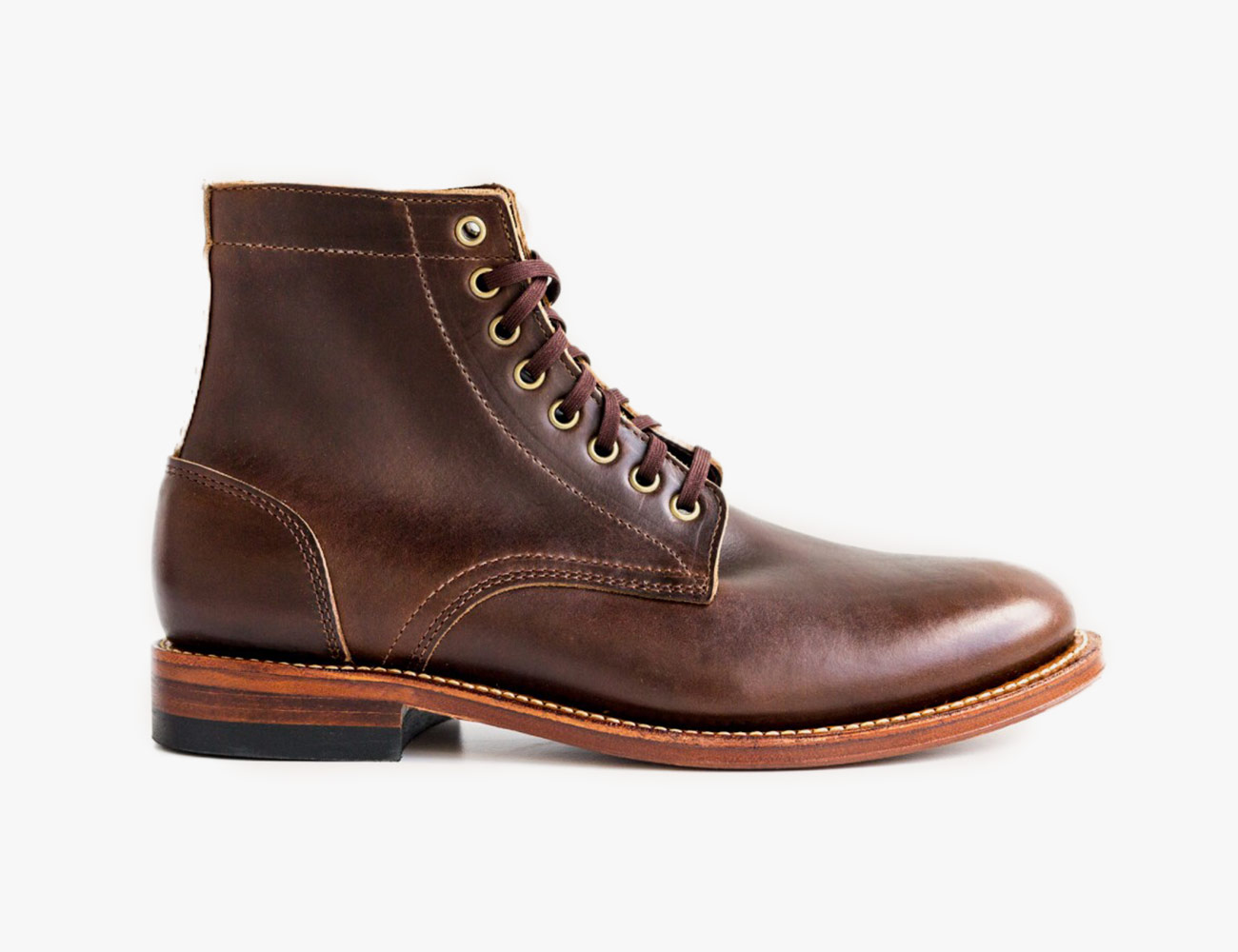
50 Best Boots for Men

Boots always seem to get more done than shoes. While shoes are busy arguing semantics in a boardroom, boots are out in the garage actually doing work. Shoes spend their weekend shanking golf balls while boots are going over, around and through every surface on Earth. Boots have long belonged to the movers and shakers of history, and dammit if they’re not going to keep going. Here are the 50 best pairs you can buy right now. Read the Story

Note: Purchasing products through our links may earn us a portion of the sale, which supports our editorial team’s mission. Learn more here.

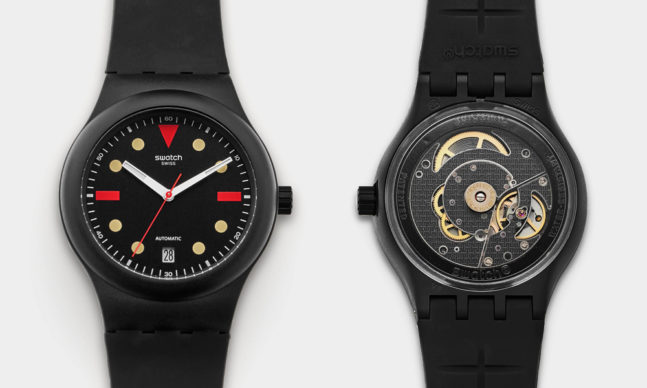
Hodinkee Swatch Sistem 51 Generation 1986 Watch

HODINKEE is, has been, and will always be one of our favorite sites to read because of their dedication to serious watch coverage. That said, we can’t always afford the timepieces that international superstars like…

Singer Reimagined Is Offering Only 25 Units Of The Track1 Emirates Edition

Not many can pull it off, but we are making an exception with the Singer Reimagined Track1 Emirates Edition. What we’re talking about is figuring out how to properly take the khaki green colour and breathe elegance into it. We are impressed at how the watchmaker perfectly combined various visual elements to craft this stunning timepiece. The striking contrast of colours, materials, and finishes on this limited-edition item is remarkable. Too bad there are only 25 examples up for grabs worldwide and we’re guessing all of which might be spoken for already.

Nevertheless, let’s check out what makes this sophisticated timekeeper so special shall we? The 43 mm case is ceramic-aluminium and gives it a matte finish. It serves as a striking backdrop to the grade 5 titanium sporting a golden hue from the zirconium treatment. The khaki green dial of the Singer Reimagined Track1 Emirates Edition blends perfectly with the black outer rings. Don’t let the appearance fool you because what you think is the main complication in the middle is actually something else.

Singer Reimagined designers want to draw your attention to its chronograph functions. Therefore, it takes the stage front and centre. Meanwhile, to tell the time, one simply has to look for the orange index at the 6 o’clock position. What looks like the bezels are actually two rotating disks for the hours and minutes. The Track1 Emirates Edition runs the brand’s 6361 automatic mechanical movement with a 55-hour power reserve. Rounding it all off is a khaki green technical textile strap. It features zirconium-treated grade 5 titanium screw-down rivets and steel folding buckle with black DLC coating.

Learn more about this timepiece here

Images courtesy of Singer Reimagined

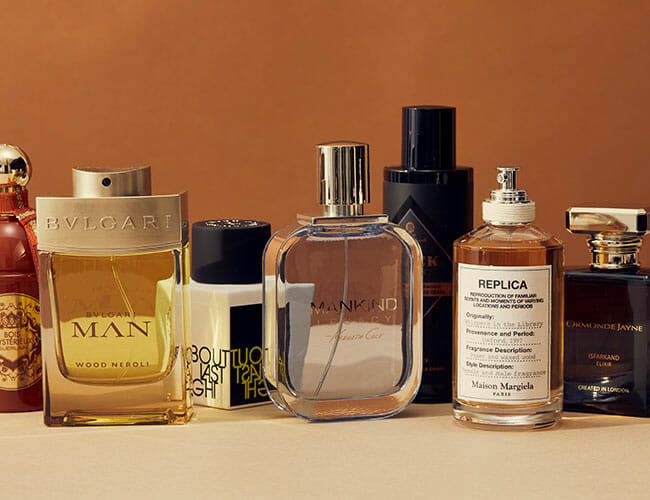
7 Mistakes Men Make When Buying Fragrance

What’s the biggest mistake you can make when buying a fragrance?

You buy the wrong one. And that can be an expensive or foul-smelling misstep.

Now, there are thousands of fragrances out there. So, the wrong one could be any number of fragrances. And it’s not like there’s one single correct one either. But there are many things to consider when shopping around for a new scent, like cost, scent families, potency and even your own patience levels. And if you avoid the common mistakes of shopping for scents, then you are all the likelier to end up with a fragrance you love.

To learn about these mistakes — and how to avoid them — we spoke with one of the world’s top fragrance experts, Clayton Ilolahia of What Men Should Smell Like, who has been writing extensively about fragrance for a decade. (His site is one of the best places to get ideas for new scents, too.) Here are the missteps he sees many men making when they shop for scents, as well as his advice for you to avoid the same fate.

Mistake 1: They mistake low price for low quality

“Don’t be fooled into thinking a bigger price tag means a better scent,” says Ilolahia. “A lot of the time price is linked to the bottle design, packaging and brand marketing more than the scent inside the bottle.” It can also pertain to the concentration of perfume oils, too, which simply means that the scent is stronger or wears heavier — maybe these aren’t things you value or need in a scent. “There are great low-cost fragrances out there to be found, many of them are created by leading perfumers who also create expensive designer and niche fragrances,” he adds. In short, don’t shy away from lower prices. That’s good news, right?

Mistake 2: They don’t take enough time

What you smell in the first whiff is not the same scent others will pick up throughout the day. “I never buy a fragrance after a quick test in-store because I’m only smelling the top notes at that stage,” Ilolahia says. His advice: “Ideally, test the fragrance on your skin instead of a paper smelling strip (because that’s where you will be wearing the fragrance if you buy it). Then, go for a walk and see how it smells after the middle and base notes appear.” These take more time to unfold, and they’re the notes that linger longer, as well as work with the chemistry of your skin to evolve into something special — or something not so. “You’ll get a more accurate read of the fragrance away from the counter,” he says.

Mistake 3: They stumble over gender constructs

“If you are feeling bold, discard gender when shopping for a new scent. I often find great fragrances for men amongst the isles of fragrances marketed as ‘feminine’,” Ilolahia says. “Floral notes are often considered feminine when actually most men’s fragrances have floral notes in them too, but marketing people don’t communicate this because they think they will lose sales.” Luckily, many brands are dropping gendered branding altogether, since their scents wear so well on all people.

Mistake 4: They limit their sampling

When it comes to testing scents, there are two key ways you can help yourself in terms of sample size. First, come prepared with a note or two that you like (such as woody, or musky, or floral), or a similar scent that you want to emulate: “Your nose will tire after smelling three to five different fragrances,” Ilolahia points out. “Be prepared to tell the salesperson the notes you like and any fragrances you previously liked. This will help them cut down the guessing game and they can match new fragrances to your preferences.” Secondly, he suggests switching between sales counters, too. “Keep in mind that in large department stores, the salesperson may be working exclusively for one or a few brands, so their recommendations may only be from a select few fragrances, not the whole store.”

Mistake 5: They don’t do enough research

There is no shortage of scents to try, either — Ilolahia says about 2,500 new ones launch each year. One way to narrow down your choices is to find out who created the scent — that is, research the perfumer, or the nose behind the scent. “Perfume is like music. Perfumers are like artists,” Ilolahia says. “The brands are like record labels. Build a collection and have scents for different moods and occasions like you would build playlists of music on your phone.”

Mistake 6: They mistake strength and longevity for overall performance

“For a lot of guys, [perceived] good performance is about how long a fragrance lasts or how powerful the fragrance projects,” Ilolahia says. Try to think outside those bounds, however: “Fragrances that are very ‘loud’ and enduring often sacrifice more nuanced and subtle characteristics,” he adds. You need to factor in how the scent plays with the chemistry of your own skin, as well as (again), how those lingering notes play out.

Mistake 7: They neglect the other products in their grooming regimen

Don’t forget that this scent is but one product in your entire regimen, and those things can often compete with one another. “If you find a fragrance you want to be your scent, consider everything else that is part of your grooming routine,” Ilolahia says. “Almost every product you are using, particularly hair styling products, contain fragrance. These could interfere with your cologne or fragrance choice. I prefer to use grooming products that have little to no scent.” And always apply your fragrance last—especially after any body lotion, and after your body temperature has cooled down from a hot shower. You don’t want anything to compromise the scent’s abilities before you even step out the door.

The 8 Best New Fragrances of Fall 2019

Thus, every year around this time, the scents change with the season. Ideally you prepared for it, by topping off your heartier notes and spritzing the last of your fresh, floral ones. These are the 7 best fragrances to wear this fall. Read the Story

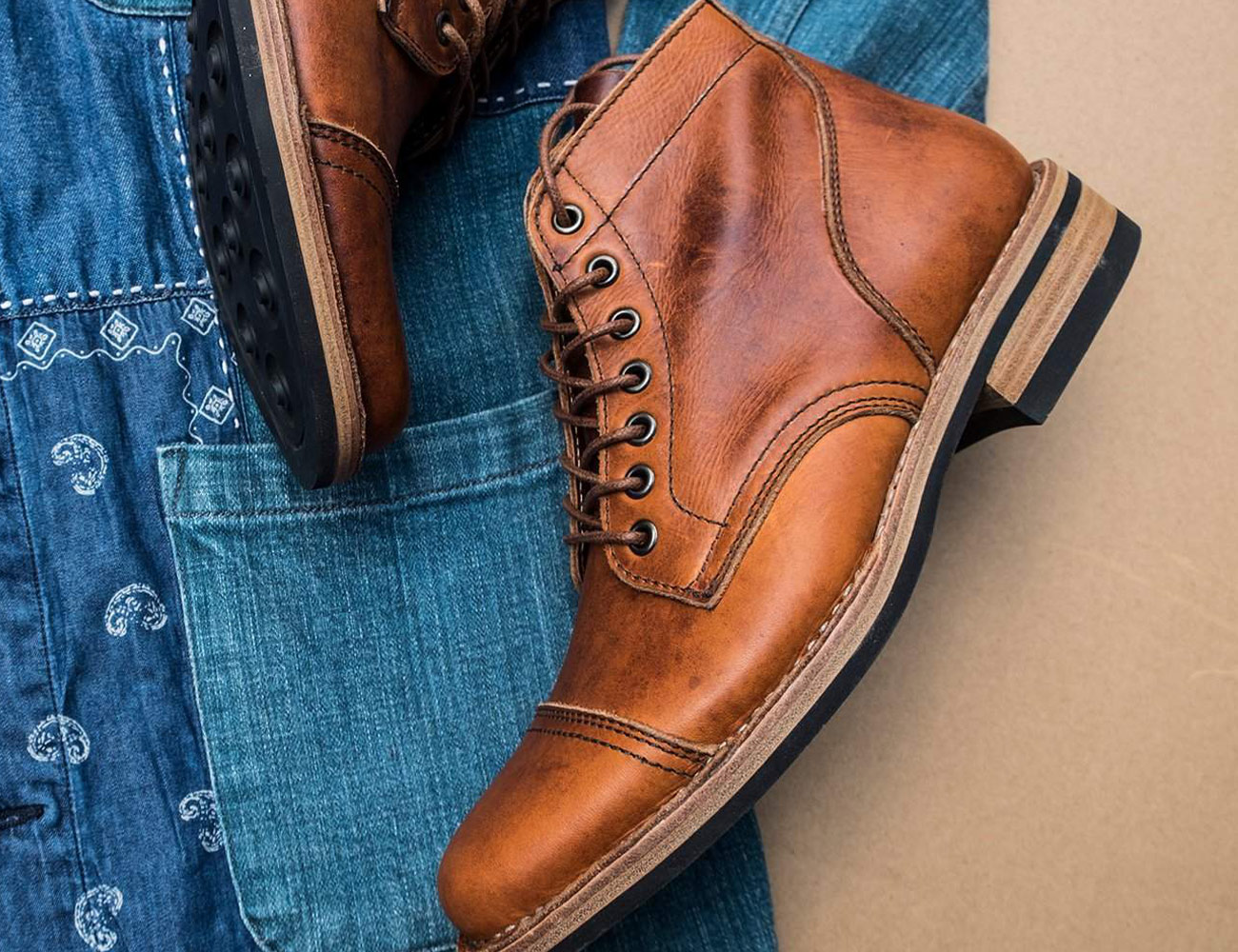
Like Red Wing Boots? Try These Goodyear-Welted Boots Next

Red Wing boots are tried and true, the favorite brand of generations of Americans and the first brand many people associate with quality leather boots. The brand’s Goodyear-welted footwear is a standard in the boot industry for good reason. Founded in 1905, Red Wing manufactures over 1 million pairs of boots every year.

The brand is known both for its hardwearing work boots and its traditional styles (sold under the Heritage name). As far as plain-toe leather boots go, the Red Wing Heritage Merchant boots ($320) and Williston boots ($430) are hard to beat. But if you’re looking for a different Goodyear-welted option to add to your footwear rotation, a few other American brands offer great styles. Here are some worth the upgrade.

White’s Main Street Boots

These boots offer a ton of value for the money. Unlike White’s work boots which utilize hand-sewn stitchdown construction, these are Goodyear welted, so they’re relatively affordable. Unlike other sub-$400 boots, these have solid leather insoles, midsoles, shanks and heel counters (the 10 iron leather shank also requires noticeably more handwork to add). The 5-inch upper is made from water-resistant leather and the sole is available in two styles: half-lug or Dainite.

Oak Street Bootmakers Brown Trench Boots

These Goodyear-welted trench boots feature oiled-leather Waterlock soles, stacked leather heels and calfskin linings. They have Horween Chromexcel leather uppers, metal eyelets and are available in sizes 7 to 12.

Viberg Derby Boots

Made in Victoria, British Columbia, these boots are based on a Canadian military style. They feature a calfskin upper, Dainite sole and elegant quarters with French Bindings. Unlike Viberg’s other stitchdown boots, this pair is Goodyear welted.

Note: Purchasing products through our links may earn us a portion of the sale, which supports our editorial team’s mission. Learn more here.

How to Get the Right Shoe Size, According to the Experts

Shoe sizing is confusing. You’re a size 10 in one shoe, a 10.5 in another and, somehow, a 9 in another shoe. How? Getting the right size is a balancing act of a dozen pedial factors, each one of which is simultaneously hyper-specific and frustratingly vague. With expert advice from the professionals at high-end retailer Leffot, boot maker Viberg and sneaker mecca Stadium Goods, we gathered the best advice to guide you to the right shoe size.

Preliminary Steps

Remember, No Shoe is Made For You (None!)

Unless you’re shelling out stacks of bills on a pair of bespoke shoes, no store-bought shoe was made to fit your particular foot to its exact specifications. Shoes are shaped around a last, a sculpture that represents the shape of a foot. While bespoke shoes are made using a last that’s made specifically for the commissioning customer, ready-to-wear shoes are made on generic lasts that are shaped to fit a wide swath of people. This means that no pair of shoes will fit your feet perfectly.

However, you can get close enough. With that said, it’s paramount to know which factors are more important to get right and which factors are secondary.

Survey the Shoes You Already Own

Before you even get consider a new pair of shoes, take a look at your current rotation. Perhaps the best piece of advice on shoe sizing is to reference the shoes you already own and take note of the sizes you wear in each style and each brand. Coming to the store equipped with this information is helpful for the salesperson guiding you toward the correct size for the style you’re considering.

Guy Ferguson, the brand director of Viberg, puts it succinctly, “If we reference these more universal standards with brands that are more widely recognized and worn, then we’re already accounting for a customer’s preference for how they like their shoes to fit.”

At the Store

What to Pay Attention To

The width and the flex point are major points to get correct. Every shoe has a natural point where it is made to flex and it’s the widest point of the shoe. You need to make sure that the widest point of your foot fits width-wise and that it lines up with the flex point.

The instep is also worth considering, depending on the type of shoe. If your instep is high, many loafers or laceless shoes might not work since they lack the adjustable fit of laced shoes.

Materials also play a major role in sizing. Different materials will break in and stretch differently.

“A leather upper would break-in differently from a canvas upper or a mesh upper or a knitted upper,” says Fresco Wilson, store manager for premier sneaker shop Stadium Goods. “Each sneaker company has a knitted shoe, but each knit fits and stretches differently.”

How you will use the shoe can also dictate how you want to size. “It’s helpful to know what you’re actually going to be using the shoe for,” Wilson says. “Think about how you’ll be wearing them. Feet swell, and because I’m on my feet all day, I want to size my shoe so that it’s comfortable from beginning to end.” Whether buying shoes for the office, for the trail or for the basketball court, context matters.

Any health issues that affect your feet are absolutely worth noting. Ignoring problems like bunions or plantar fasciitis can exacerbate an already painful experience. If you need to wear a specific insole (like that of Dr. Scholl’s or a doctor-prescribed insole), bring it with you to the store to try with the shoes. New shoes can be fun, but not at the expense of your health.

The sales person’s expertise is extremely valuable. Rely on them and ask them as many questions as you can. It’s their job to try on the shoes and know how they fit. They can tell you how it fits and how it’ll break in compared to the shoes you already have.

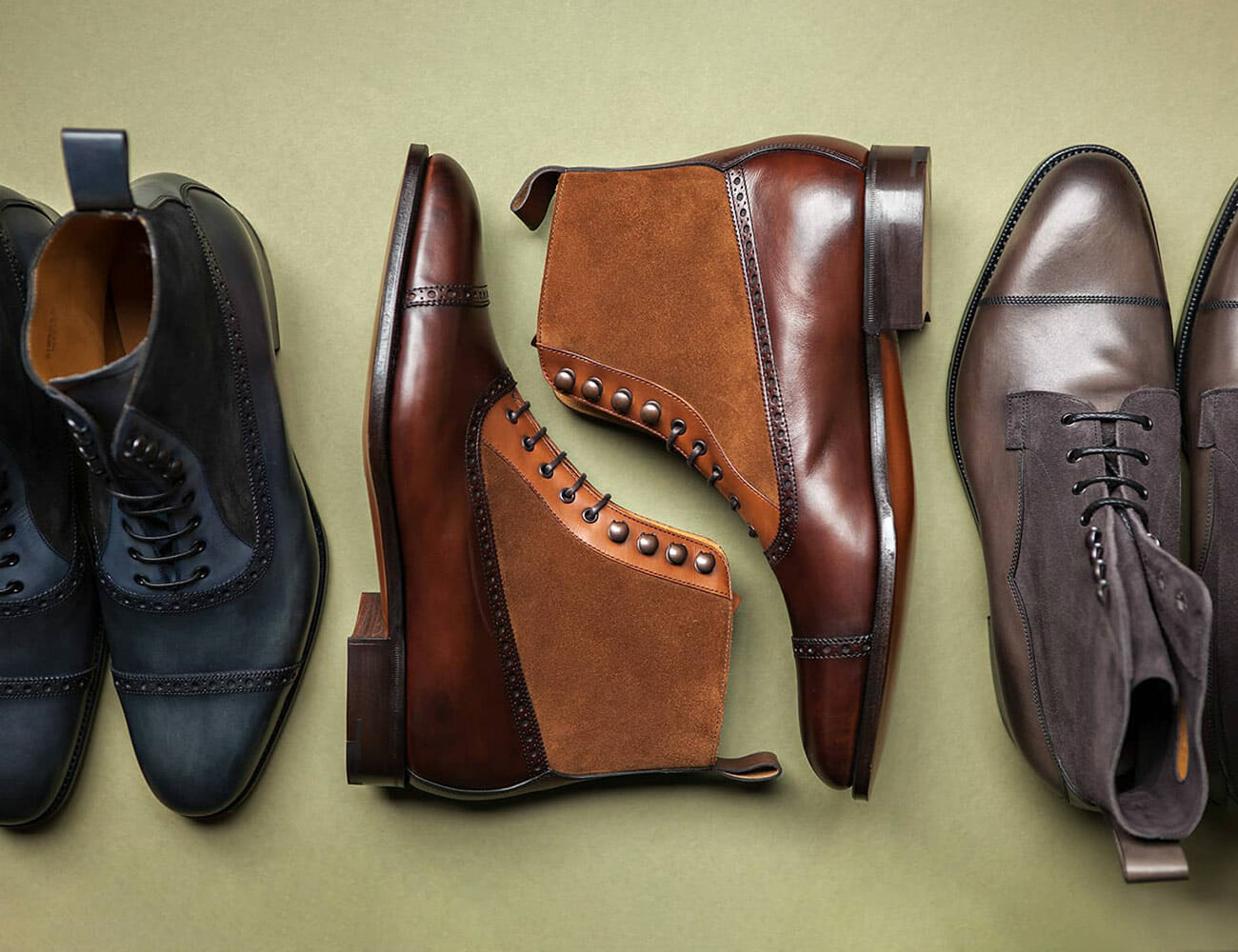
What to Ignore

Heel slippage can be annoying, but it’s not necessarily a deal-breaker. It can be if the shoes in question are your marathon sneakers, but for shoes you’ll wear when commuting by car to a job where you sit at a desk, probably not. Again, context matters. Also, for certain leather boots, heel slippage decreases as the style breaks in.

The toe box is the front of the shoe where your toes take up space. While it’s important to have enough space for your toes to spread naturally, the shape of the toe box will dictate how much space there will be between the end of your toes and the end of the shoe. Pointier shoes will have more space while more rounded shoes will have less space. It’s a design choice on the part of the shoemaker and neither is wrong. So, if you’re doing the thumb test that some people do when checking to see if their toes have enough space, consider the shape of the toe box.

Ignore your Brannock Device size. Or at least, take it with a grain of salt. The Brannock Device is that metal contraption old-school shoe stores use to size your feet. It’s helpful to know what your Brannock size is, but it’s best to use it only as a single reference point along with the various sizes you wear in a variety of brands. The vast majority of shoe brands chose not to use the Brannock Device to guide their sizing system, anyway. “We don’t even have one of those,” says Ferguson.

With that said, you should also get out of the mindset that you are a single size across all shoes.
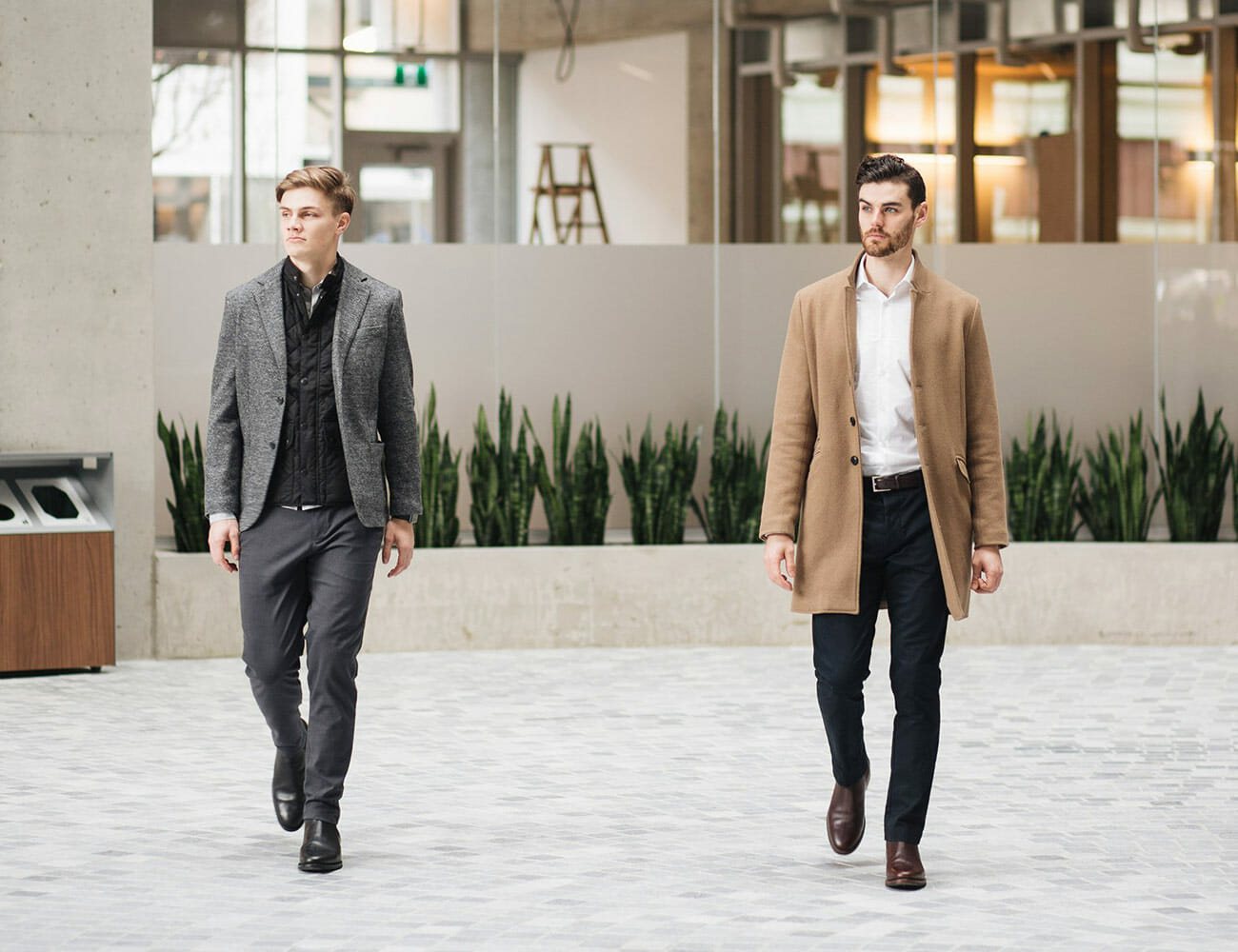
Does it Feel Comfortable?

Perhaps the greatest thing you can rely on when sizing for shoes is your own intuition. When a salesperson asks you “How does it feel?”, that really is the ultimate question. Is the shoe comfortable? There are harder rules when it comes to shoe sizing, but so much more of the process is subjective. Since no shoe was made specifically for your individual feet, the best you can do is to approximate.

The way a shoe should fit varies from person to person. Some will like their shoes to fit more snug while others like a bit of a roomier shoe. As long as it feels good to you and won’t have you hobbling back to the office from your afternoon coffee, you should be fine.

“Comfort is most important,” says Leffot founder Steven Taffel. “If the shoe’s not comfortable, you’re not going to wear them. I like to say that there are two sizes to a shoe. There’s the size your feet measure and then there’s the size you actually feel comfortable in. They’re not always the same thing.”

Try At Least Three Sizes

Go with the size you think you are. Then, go a half size up and a half size down. Comparing multiple sizes will give you a better sense of when a shoe in one size feels good and when that same shoe in another size feels great.

If you can’t decide between two sizes, consider the materials and how they will stretch over time. “The upper leather is going to loosen up,” notes Ferguson. “But the other thing is that you’re walking on a leather insole. Your foot will sink into it. The more you wear that, you’ll gain volume. Even the tiniest bit is perceptible.”

Sizing can vary so much not only from brand to brand but even within a single brand. You might be surprised to find that you’re a whole size (or more!) larger or smaller in the same brand.

If You Shop Online

Research. Since you can’t try on the shoes in person, you’ll have to do as much of the leg work before clicking ‘Complete My Order.’ Check out shoe reviews via the product page, or sites like StyleForum and YouTube.

Ask questions. If a website has some kind of customer support, use it. Ask how the shoe fits compared to another model. Tell them about the particularities of your feet like whether they’re wider, narrower or have a high instep. As much information as you can get from a real person with experience is key.

Check the return policy and buy multiple sizes. Once you’ve done the research and asked questions, hopefully, you feel confident enough to add to your cart. If the return policy allows and you’re able to buy multiple sizes, do that. It’s hard to know if the shoe fits if you don’t have another size to compare it to.

Sometimes, You Lose

You might like how a pair of shoes looks, but it might not fit correctly no matter how many sizes you try. There are countless shoes that I would love to have on my feet if only they would have me. You can have a pair of trousers or a jacket altered by a tailor to fit you better. You can make a shirt work and embrace an oversized look. But shoes are a different story. Try to make it work and the consequences could hurt. So, take it on the chin because there are plenty of shoes on the market.

Note: Purchasing products through our links may earn us a portion of the sale, which supports our editorial team’s mission. Learn more here.

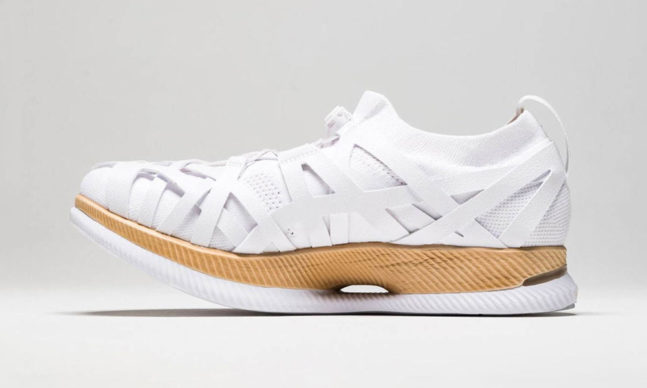
Kengo Kuma x ASICS Metaride AMU

This shoe is the result of the beautifully colliding worlds of architecture and footwear. Designed in a collaborative effort between ASICS and famed Japanese architect and professor Kengo Kuma, the Metaride AMUs blend synthetic hoops…

10 (Yes, 10) Types of Wool You Need to Know

Wool has a long list of benefits. Its fibers are naturally crimped, so tiny air pockets are created when the fibers are stacked together. This is what makes wool fabrics warm, breathable and naturally elastic. Additionally, wool fabrics have a high regain. This means that the fiber’s natural structure is able to absorb a large amount of moisture (up to 35 percent) before feeling damp. This moisture-retaining ability also means wool fabrics are odor-resistant and static-resistant. Counterintuitively, while wool naturally retains moisture, many wools also possess a natural layer of lanolin which makes them somewhat water-repellent and stain-resistant.

We’ve been wearing wool as far back as 6000 BC and have been breeding animals for their wool for even longer. And though wool offers many benefits, not every type of wool is the same. The wonder fiber comes from a variety of animals, each of which imparts a unique set of characteristics. So it’s unsurprising that there are a few different popular types of wool. Though there are dozens of varieties of wools, these are the 10 you should know.

1. Lambswool

Lambswool comes from the first shearing of a young sheep (lamb) which is shorn around seven months. It’s sometimes referred to as virgin wool, though that term also refers to wool that hasn’t yet been processed. The shearing of the lamb at this stage yields extremely smooth, soft and fine wool which also has hypoallergenic properties.

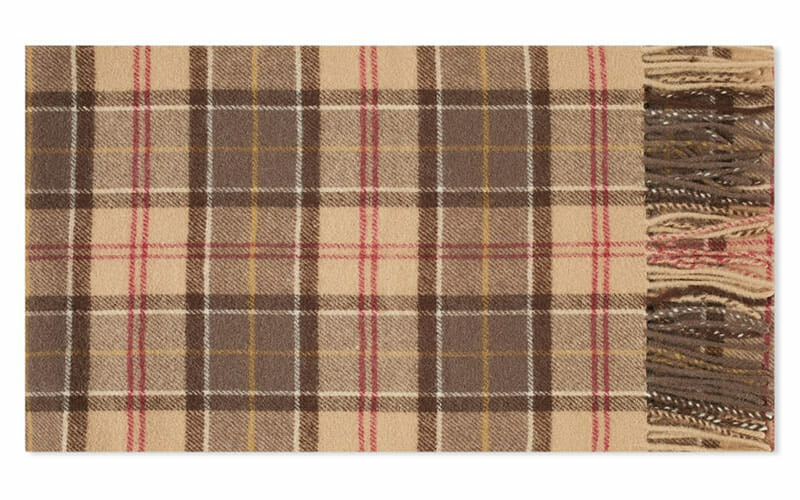
Tartan Lambswool Scarf by Barbour $55

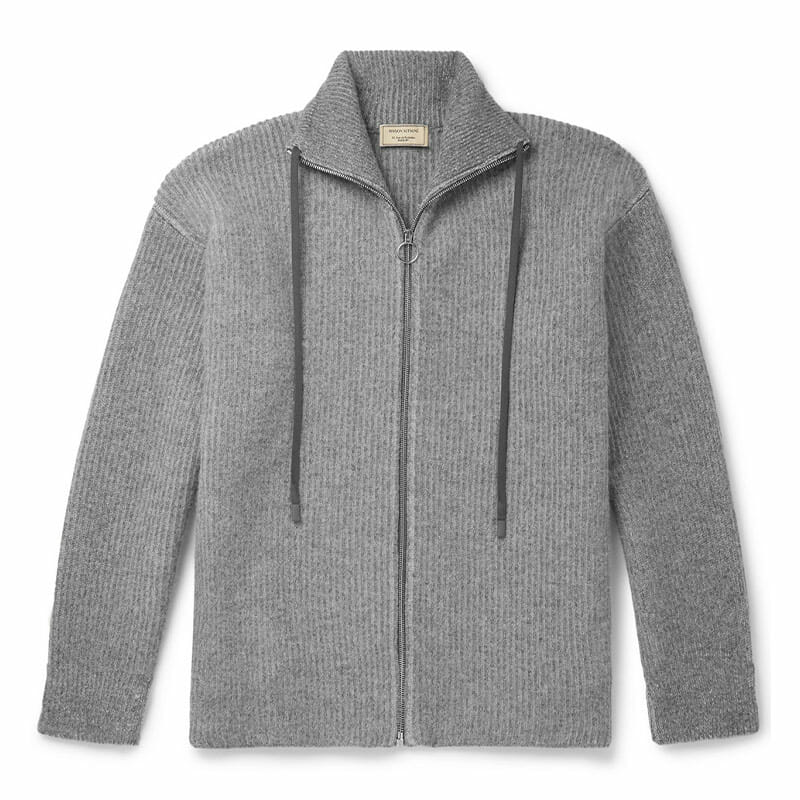
Ribbed Lamsbwool Zip-Up Cardigan by Maison Kitsune $445

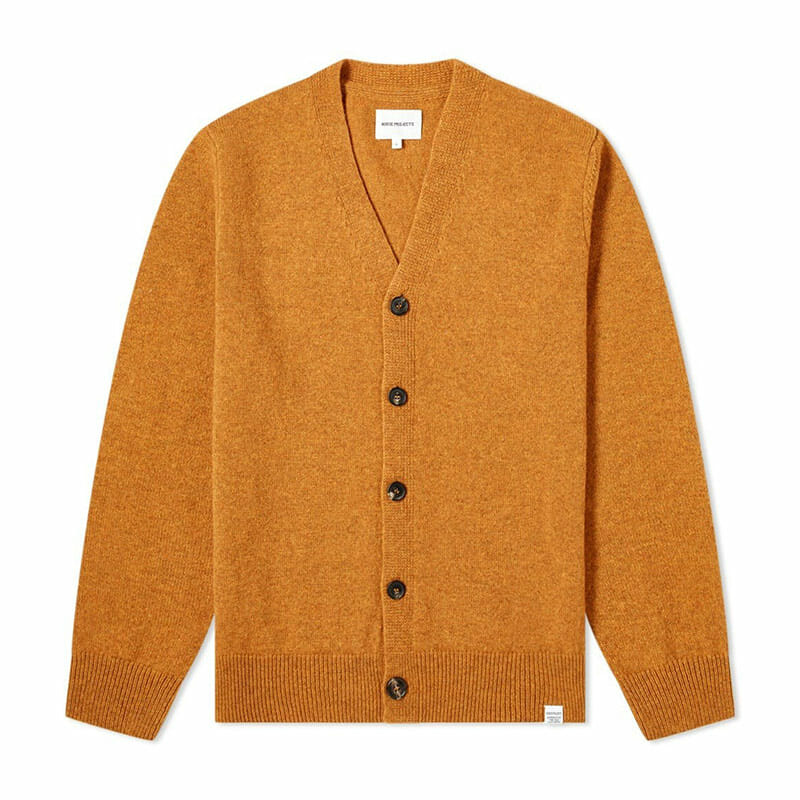
Adam Lambswool Cardigan by Norse Projects $179

2. Merino Wool

Merino wool comes from the merino breed of sheep which have their origins in Spain, though much of today’s merino wool is exported from Australia. Merino wool is known for its fine fibers which offer a supremely soft hand and make it a great material for garments like base layers that have direct contact with the wearer’s skin.

Merino wool also has a lower yield compared to other wools because of the scouring process which is required in order to remove the fatty greases inherent to the material. Scouring washes the wool in chemicals to remove the natural lanolin layer, but the process yields only about half of the initial wool. This laborious process makes merino wool pricier than other wools.

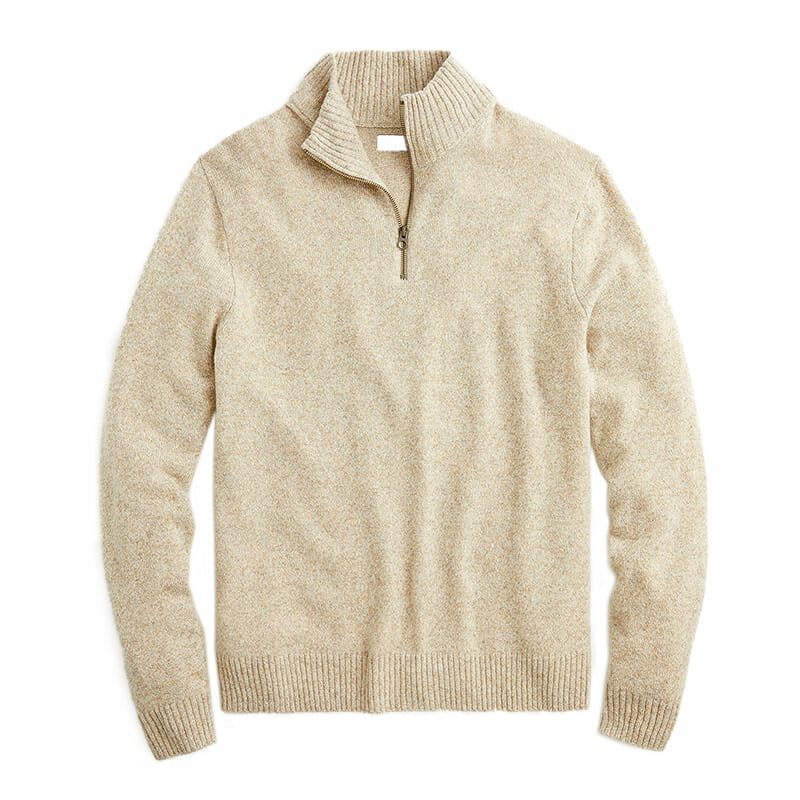
Rugged Merino Wool Half Zip Sweater by J.Crew $98

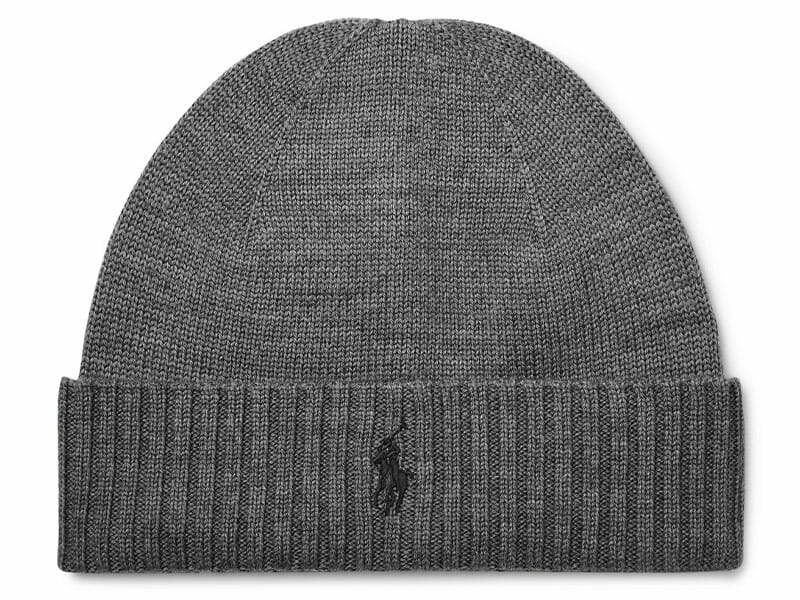
Logo-Embroidered Merino Wool Beanie by Polo Ralph Lauren $50

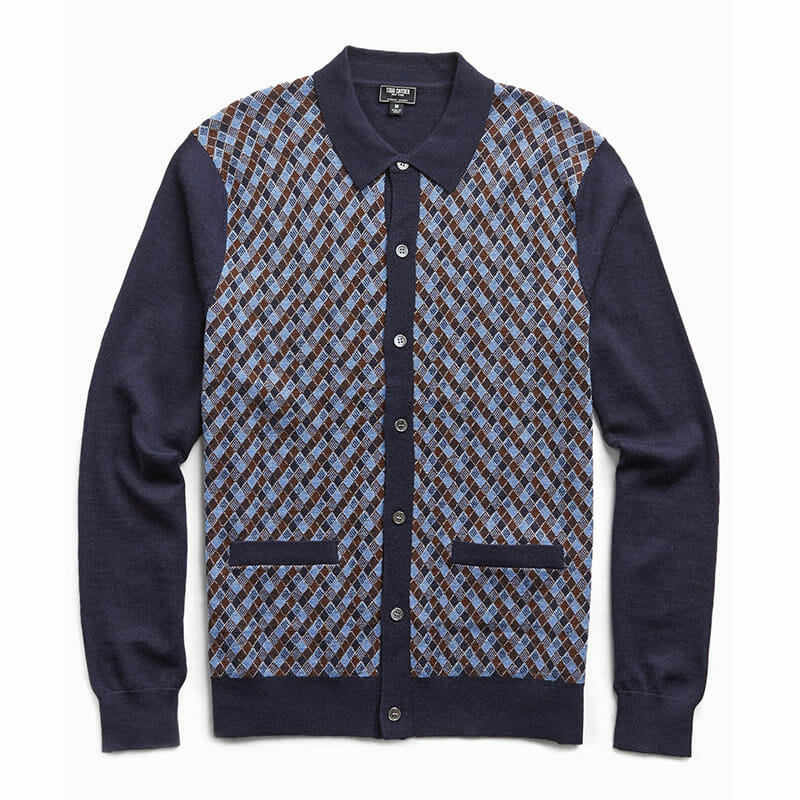
Long Sleeve Merino Argyle Polo by Todd Snyder $248

3. Shetland Wool

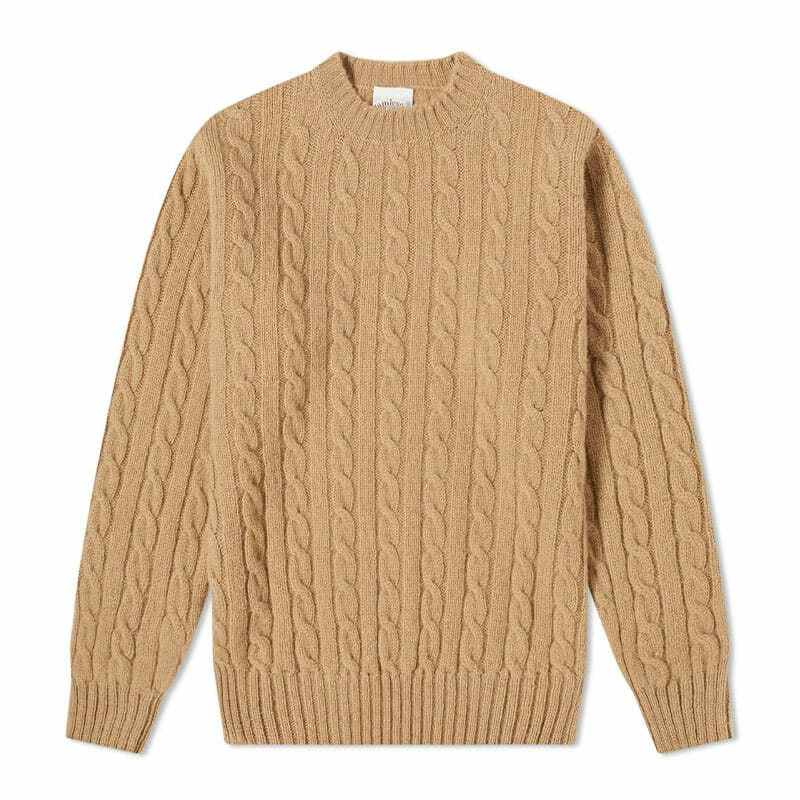
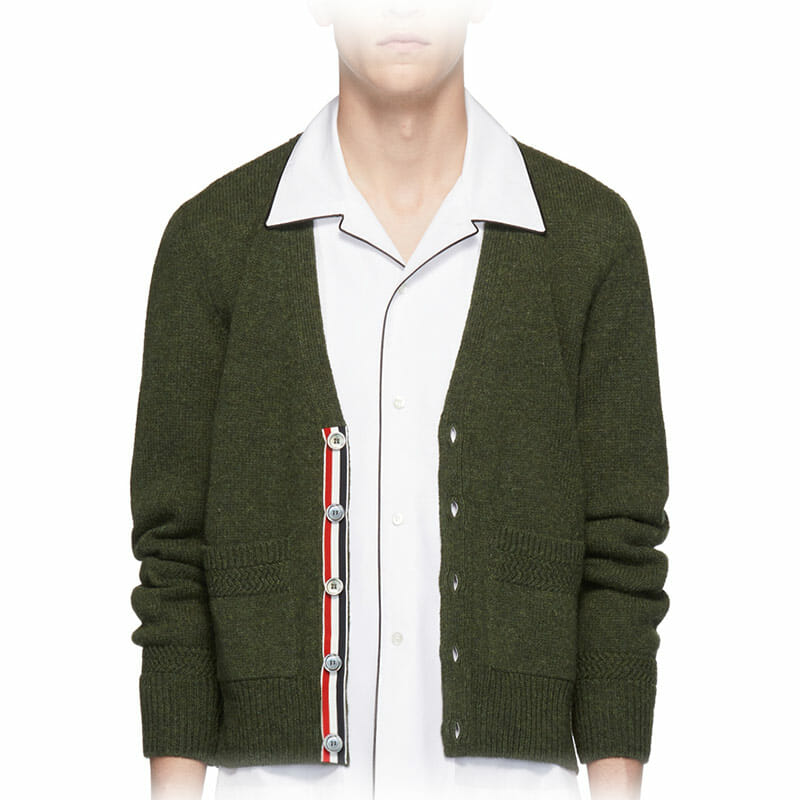
Shetland sheep, from the Shetland Islands of Scotland, produce this type of wool. It’s thicker and coarser than other wools like merino — a direct result of the cold climate of the region.

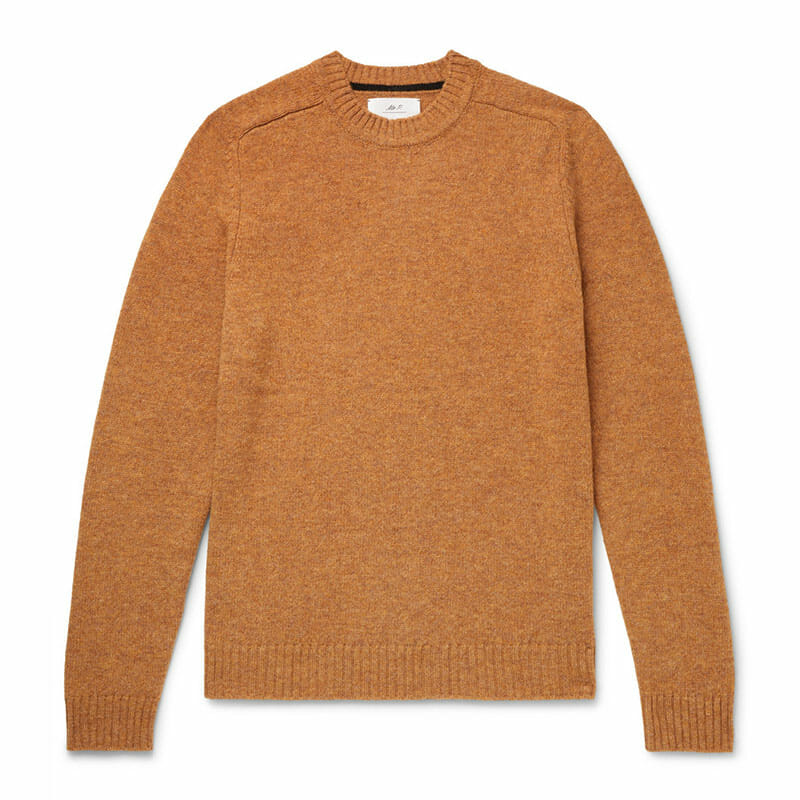
Mélange Shetland Sweater by Mr P. $215

Cable Crew Knit Sweater by Jamieson’s of Shetland $149

Relaxed Fit Cardigan by Thom Browne $1290

4. Mohair

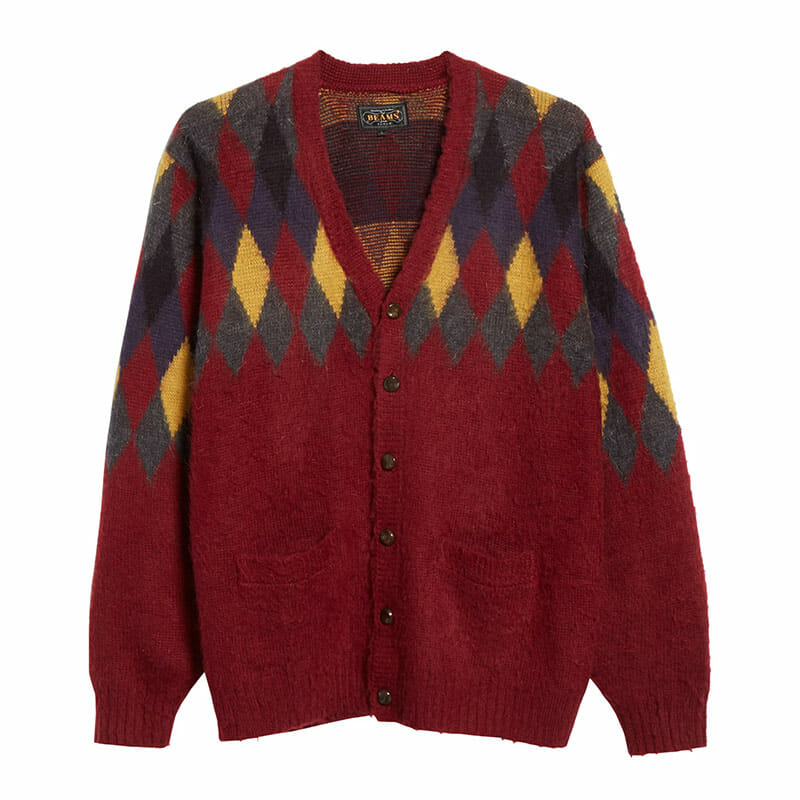
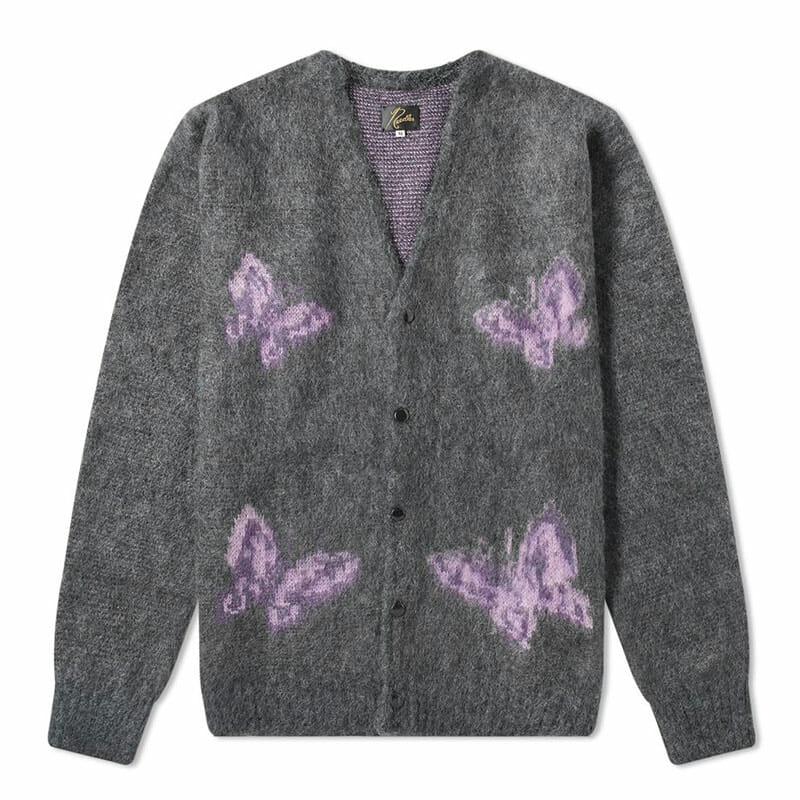
Mohair comes from the Angora goat and is distinct from other wools for several reasons. The guard hairs from the topcoat of the goat are often included with the undercoat in the shearing process. Though the fibers are thicker, the mild climate in which Angora goats are grown means it’s not as coarse as other wools — its longer length gives the fiber its smoothness and results in a uniquely fuzzy fabric.

Intarsia Diamond Cardigan by Beams Plus $235

Papillon Mohair Cardigan by Needles $379

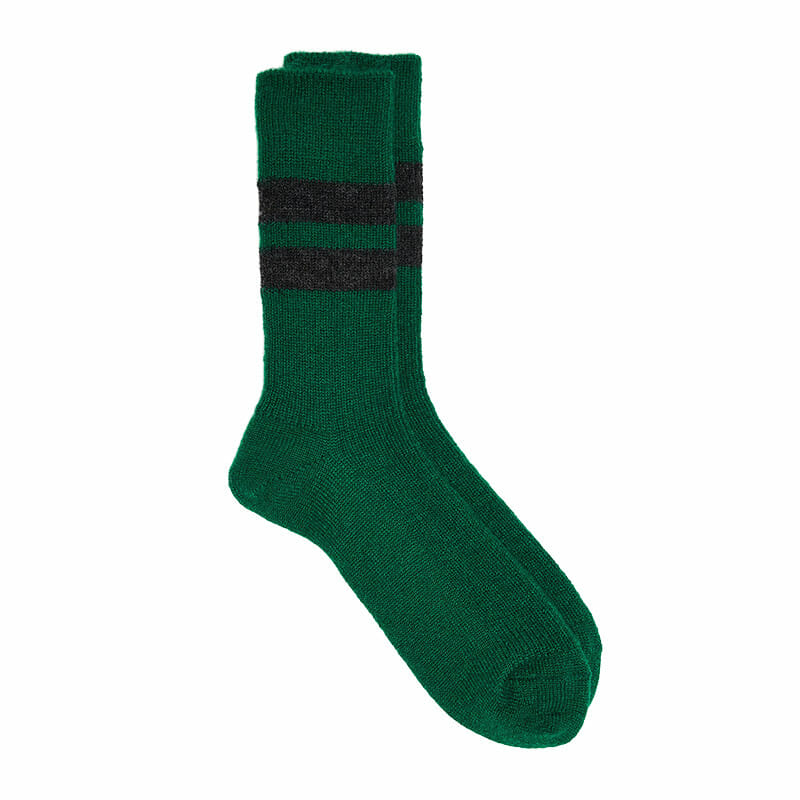
Reversible Brush Mohair Socks by Rototo $45

5. Cashmere

Cashmere is shorn from the undercoat of cashmere (Kashmir) goats when they enter the molting season. Because cashmere is shorn from the undercoat, the yield per goat is small, requiring two cashmere goats to produce a single sweater. The wool produced by these special goats results in an extremely fine fiber with about the same thickness of ultrafine merino and a considerable jump in price.

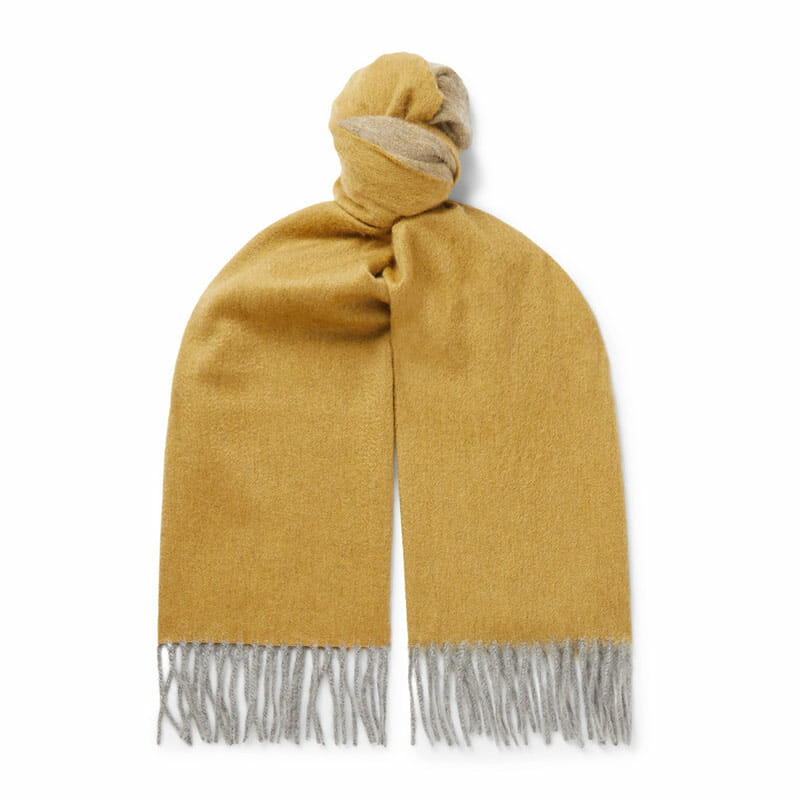
Arran Fringed Cashmere Scarf by Begg & Co. $405

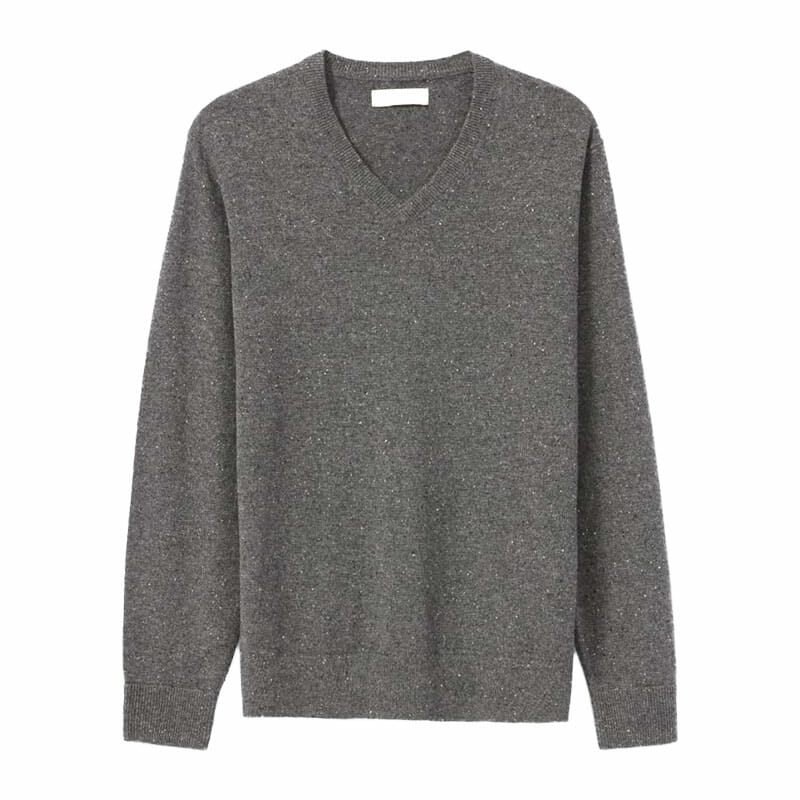
The Cashmere V-Neck by Everlane $130

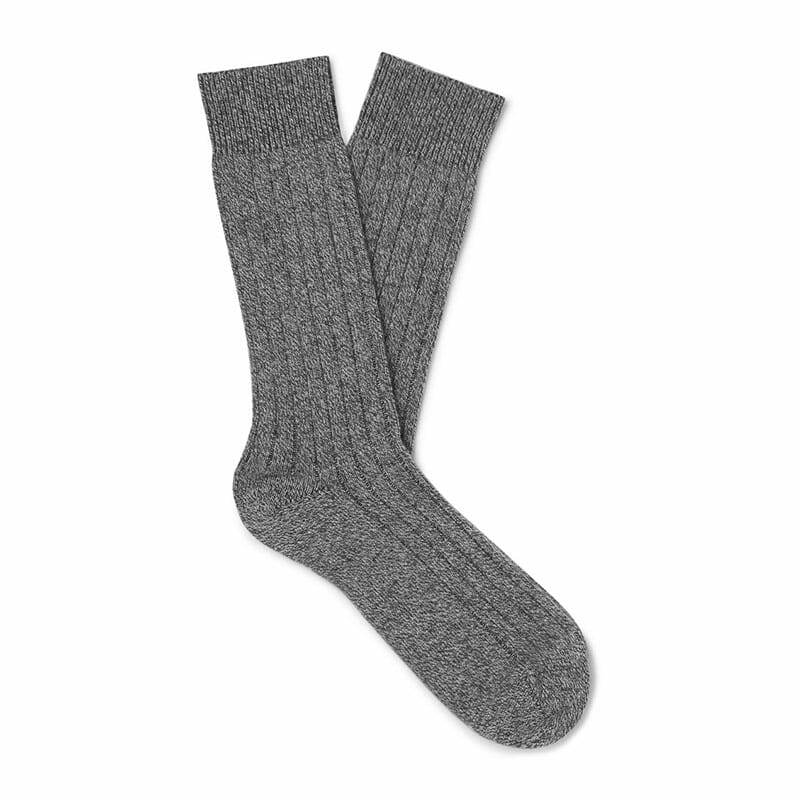
Waddington Ribbed Cashmere Blend Socks by Pantherella $65

6. Angora

Not to be confused with the Angora goat from which mohair wool is made, Angora wool comes from Angora rabbits and is the lightest, finest and warmest of the natural fibers. Angora fibers, like alpaca, are hollow and smooth giving it unrivaled warmth and loft. The fibers are extremely soft, but also very delicate. For this reason, angora is often mixed with other fibers to increase its durability.

The extreme fineness of angora makes it prone to matting and felting — another reason why it’s mixed with other fibers — but also requires angora breeders to comb the rabbits every day. This intensive process and low yield add up to a hefty price.

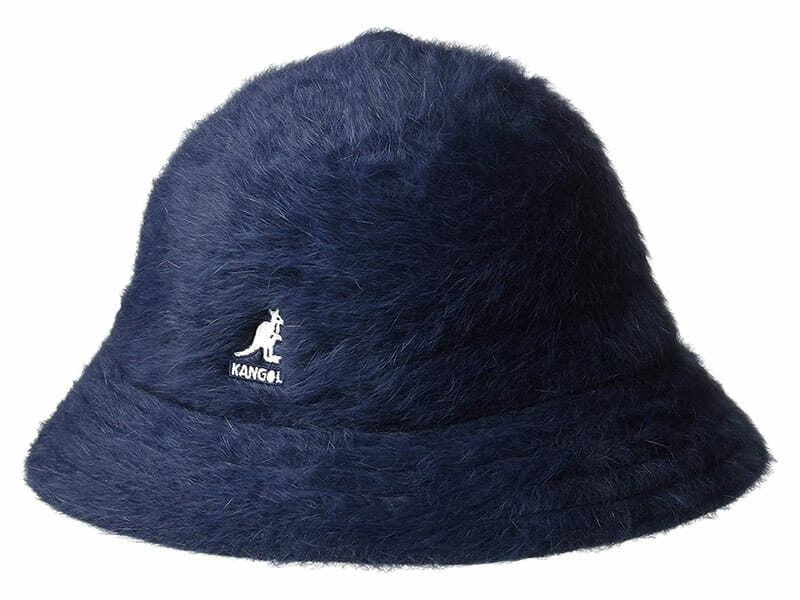
Furgora Casual by Kangol $40

Wayne Beanie by Harmony $50

Collegiate Stripe Scarf by Drake’s $185

7. Camel Hair

Most camel hair comes from Bactrian camels, which are bred in frigid regions like Mongolia, China and Russia, and is collected when the camel molts in spring. Camel hair is hollow like mohair and is finer and longer than sheep’s wool. The result is a fiber that’s lighter and more lustrous than sheep’s wool and about as soft as cashmere. Though camel hair takes dye well, it is often kept in its natural color, a light, golden brown, and is used synonymously to refer to the color itself.

Single-Breasted Top Coat by J.Crew $1498

Fringed Camel Hair Scarf by Aura $315

Vicenza Camel Overcoat by Suitsupply $798

8. Qiviut

Qiviut is wool that comes from the undercoat of the arctic muskox, which is bred in Canada and Alaska. During the muskox’s molting season, the undercoat is shed and breeders either collect the wool through combing or plucking the wool from the ground. Qiviut is finer than superfine sheep’s wool, is softer, stronger and approximately eight times warmer. It also does not shrink in water.

Qiviut Cap by Oomingmak $205

9. Alpaca

Alpacas are native to South America and produce hairs that are hollow. This unique property not only makes alpaca lightweight but also adds greater insulation. It is both lighter and warmer than sheep’s wool. Compared to cashmere, alpaca is similarly soft, but notably stronger. Alpaca hair is naturally hypoallergenic as well, making it ideal for those with sensitive skin.

Multi Stripe Alpaca Crew by Todd Snyder $228

Alpaca Socks by Universal Works $29

Striped Baby Alpaca and Silk-Blend Scarf by Inis Meain $190

10. Vicuña

The rarest wool comes from the vicuña, an animal related to the alpaca and llama, originating in the Andes. The vicuña was sacred to the ancient Incas, who prized the wool for its softness and warmth and reserved it for royalty. The wool is finer than cashmere and extremely warm. Because it’s sensitive to chemicals, it’s often left in a natural state, without involving dyes.

The Peruvian government goes to great lengths to preserve the vicuña population ever since their numbers dropped to just 5,000 in 1960. Because of this, the harvesting and exportation of vicuña wool is heavily regulated. Vicuñas must be caught in the wild and can only be shorn every two years and no more than five times in their lifetime. The long and strict production process makes it the most expensive and rarest wool in the world, costing up to $3,000 per yard.

Bomber Classic by Loro Piana $8395

Vicuña Jacket by Golden Bear $4500

Vicuna Cashmere Silk Blazer by Kiton $8990
7 Types of Winter Jackets You Need to Know

In order to gear up for winter, you need to be well-equipped. But before you go donning layers uninformed, you might want to know the different types of winter-appropriate pieces of outerwear. We’ve picked seven pieces of outerwear you should know, each of which is built with functionality in mind. So before you make a decision on which winter jacket will be your go-to, survey the field and get informed. Read the Story

Note: Purchasing products through our links may earn us a portion of the sale, which supports our editorial team’s mission. Learn more here.
Own A Bespoke AirPods Pro With The Help Of ColorWare

Earlier this year, the tech industry was already speculation about one of Apple’s latest products for 2019. While most of you might be thinking about the new MacBook Pro 16-inch, we’re talking about something else. Around March, the Cupertino-based tech outfit released the second-generation AirPods. These true-wireless earbuds sport H1 chips and boast “Hey Siri” support with an optional variant with a wireless charging case. Hence it was a welcome surprise for brand loyalists when it announced the arrival of the AirPods Pro. Now ColorWare is giving the latest model a colourful makeover.

Prior to its big reveal, industry analysts were already speculating the availability of colours other than white. However, after its debut, it seems the rumour was a big miss as there were no other versions that followed. Nevertheless, if you’re planning to customize the AirPods Pro, ColorWare is happy to help out. Clients can start by selecting how each of the two earbuds will look like.

On top of the colour combinations, it is possible to choose a glossy, metallic, or matte finish to match the owner’s style. Moreover, each piece can flaunt varying hues if the owners wish so. Unfortunately, the standard package only includes the work on the pair of earbuds.  For an additional fee of $50, ColorWare will paint the charging case as well. The AirPods Pro is a great addition to Apple’s lineup of audio products. It features active noise cancellation technology, Audio Transparency mode, Adaptive EQ, and more. Furthermore, it is IPX4 certified to withstand moisture.

Design yours: here

Images courtesy of ColorWare

The REC P-51 Eleanor Is A Stylish Watch With An Automotive Theme

A few months ago, we gave our readers a glimpse of RJM 04 Bluebird from REC. It was a wristwatch with an aviation theme with an actual piece from a historical fighter plane. Now, the fine folks are offering something closer to terra firma but still outstanding by all means. The P-51 Eleanor flaunts an automotive theme both visually and through the material it uses. The craftsmen from the Danish watchmaker were able to source the metal from a trunk of a 1968 Ford Mustang Fastback.

What makes it even more intriguing is the donor vehicle. It was rebuilt into a replica of the Eleanor. Gearheads would recognize it as the awesome muscle car from “Gone in 60 Seconds.” Hence the P-51 Eleanor is a stunning tribute to its namesake. The 44 mm case is fashioned from 316L stainless steel and sports a sapphire crystal lens with an anti-reflective coating.

Furthermore, the caseback likewise features a mineral glass crystal window for viewing the unique oscillating weight. The star REC P-51 Eleanor is the dial, which uses the metal recycled from the 1968 Mustang Eleanor we talked highlighted above. The two sub-dials are clearly showcasing automotive influences

The timekeeping section looks like a speedometer and features a date window just below the 6 o’clock position. The power reserve indicator mimics the fuel gauge but in reverse. The REC P-51 Eleanor uses a Reference Miyota calibre 9130 automatic movement with a 48-hour power reserve. Only 498 pieces will be up for ownership, which won’t last long given its pedigree.

Make it yours now

Images courtesy of REC

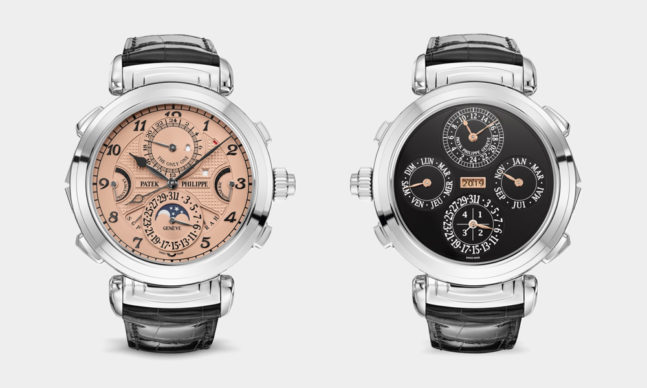
$31 Million Patek Philippe Is the Most Expensive Watch in the World

Want to wear the equivalent value of Wayne Manor on your wrist? Well, somebody just ponied up $31 million last week for a Patek Philippe wristwatch that easily makes it the world’s most expensive watch…

Patagonia Is Turning Unsalvageable Pieces into ReCrafted Clothing and Bags

When Patagonia launched their Worn Wear collection, we were incredibly excited about their online outlet for used gear with great prices. But what happens to all the older, unrepairable garments that came through Patagonia that…

Square-Toe Shoes Are Here And We’re Here For Them

Not long after GQ speculated on the possible return of square-toed shoes in 2016, the publication declared the style’s death death in 2017 — but it subsequently included the the controversial toe shape in this roundup of industry insiders’ favorites shoes. The trend has been bemoaned more often than it’s been praised but we’re here to tip the scales in favor of the angular shape that takes the shoe terminology of “toe box” literally.

How Did We Get Here?

Square-toe’s roots go back much further than just Sex and the City. In fact, the shoe shape goes so far back that it’s nigh impossible to trace it to a single place of origin, but it can be seen throughout Japanese history as far back as 300 A.D. in the form of geta, a type of sandal which is made of wood and elevated several inches from the ground via an attached wooden base. Square-toed footwear was donned by Henry VIII and eventually trickled its way down to the laypeople of the time. Chiseled pumps eventually gained popularity in 1960s America thanks in part to Jackie Kennedy — subsequent iterations proliferated in the following decades.

The shoe shape can be seen throughout ’90s pop culture in television, music and movies.

Thanks to fashion’s current fascination with cowboy style, the fact that people still like Friends and the blurring of gender lines, the square-toe has risen in the trend cycle once again. But the tragedies that outfit the feet of the painfully unaware aged suits aren’t the strain of square-toes here. The ones of today are fashion-forward — they find the elusive line between chunky and refined. Or they lean heavy into the chunky shoe aesthetic that’s both elegant and elephantine.

The rise of western wear brought with it satin shirts and fringed suede jackets, but square-toe boots have been lining the shelves of places like Boot Barn for years. Storied boot brand Lucchese has a dedicated lineup of square toes and startup cowboy boot brand Tecovas recently introduced their angled take.

Nostalgia for the ‘90s took hold of the fashion wheel in recent years with many a fashionista gravitating toward Rachel Green-inspired ‘fits while wide-legged trousers dominated trend circles that overlapped workwear brands like Carhartt and Dickies with high-fashion labels like Junya Watanabe and Our Legacy. The shoe shape can be seen throughout ’90s pop culture in television, music and movies. Though not tied only to the ’90s, the recent uptick in Clarks’ Wallabee shoes, one of the few shoe classics with a square toe, have provided an easy mental segue for those looking to dip their toes into a squared-off profile.

As gender norms continue to be challenged, so too does the engendering of clothing face questioning. The square-toe boot has been the bell of the ball for women’s brands like By Far and Ganni and brands like Gucci, Thom Browne and Balenciaga have included square-toe shoes in their collections alongside gender-non-conforming themes. Eckhaus Latta persists in championing gender-fluid ideals and its latest collection (which doesn’t divide its clothing into genders) somehow shoehorned a square-toe out of several pairs of Uggs, which are known for, aside from its cozy fleece lining, a bulbous profile.

Whether or not you’re on board, it’s a shape that will continue to rise and fall in popularity. So if you’re just not ready this time around, maybe you will be ready when it makes its way back.

Diesel Western Boots by Cody James $170

The Jackson by Tecovas $255

Loafer by AE McAteer $385

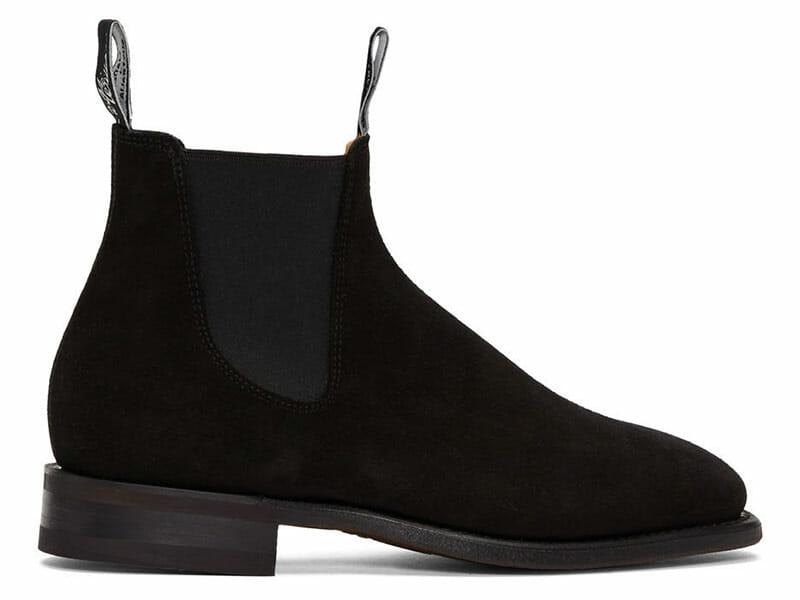
Comfort Craftsman by R.M. Williams $495

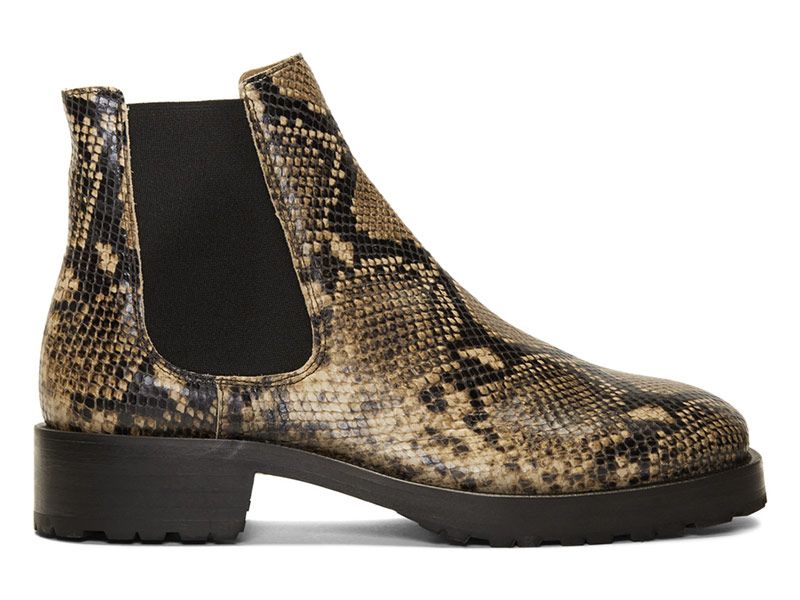
Balans Chelsea Boot by Tiger of Sweden $550

Camion Boots by Our Legacy ~$684

Horsebit Loafers by Gucci $890

Tabi Boot by Maison Margiela $1280
Note: Purchasing products through our links may earn us a portion of the sale, which supports our editorial team’s mission. Learn more here.
You’ll Want Literally Everything from This New Collection from Best Made Co. and Chef Francis Mallmann

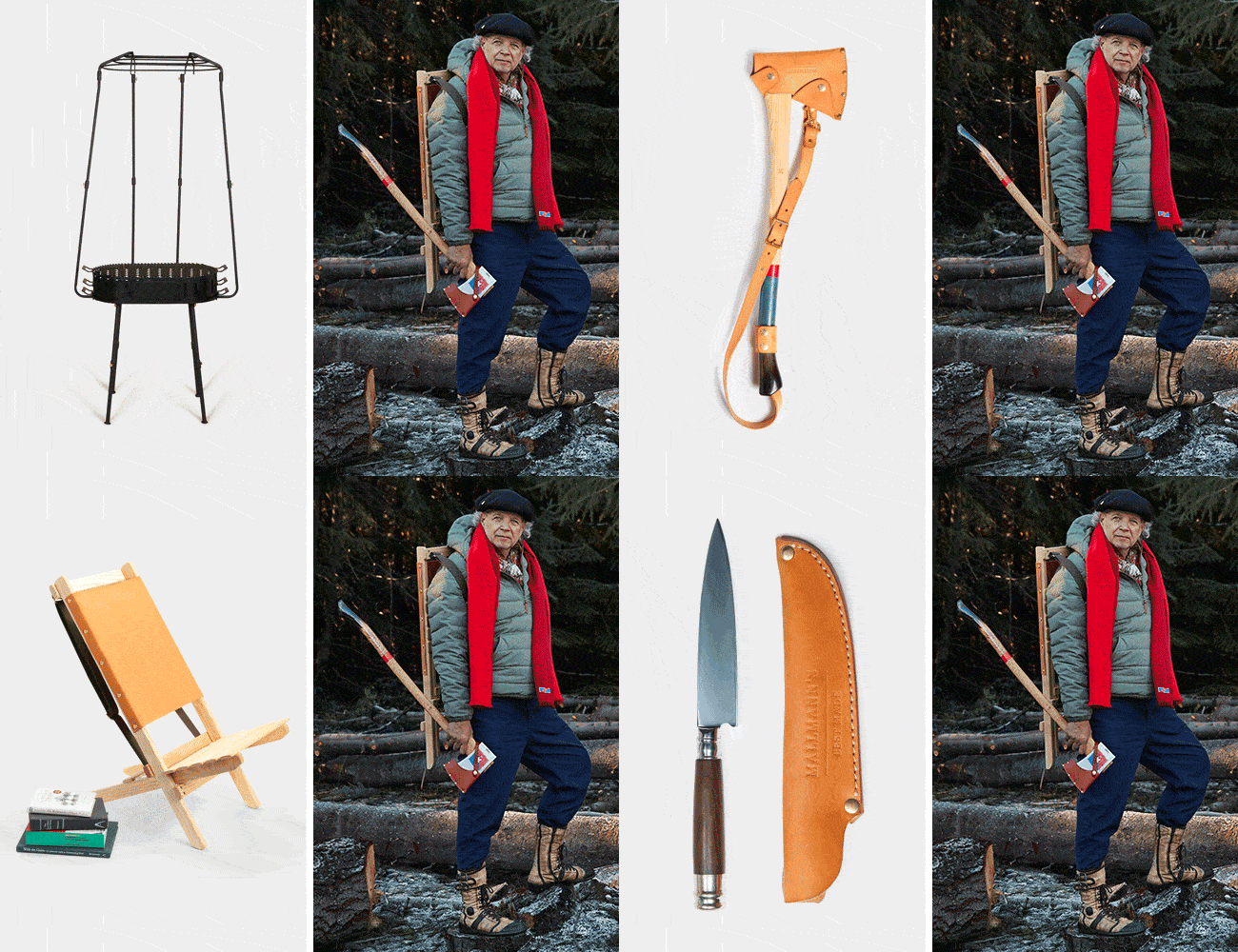
Last year, outdoor lifestyle brand Best Made Co. tapped Argentine chef Francis Mallmann to curate a collection of products that reflected his unique lifestyle. It included both a $98 bandana and a $2,298 towering steel grill — appropriate for the open-fire cooking king whose restaurants serve patrons in Argentina, Uruguay, Chile, France and the United States.

Now, Mallmann and Best Made Co. are back again with an expanded holiday collection of clothing and hard goods. These functional products reference Mallmann’s everyday life, whether on his private island in Patagonia, at his chateau in Provence or on the road, traveling between engagements. The items — ranging from stoneware to a shearling coat — explore the balance of function and beauty in everyday goods.

The Mallmann Best Made Capsule features an expanded collection of bandanas, a beautiful travel backgammon set, two hats (a beret and Stetson), a Pendleton wool blanket and a luxurious shearling coat, among other things. While offering real functional value, they also manage to be romantic and, at times, nostalgic. To better understand the pieces in the capsule, we caught up with Mallmann before the holiday season.

Q: You’ve expanded on your first capsule collection with Best Made Co., offering more and different products. What was your inspiration behind this curation?
A: For me, cooking is an extension of my lifestyle, which includes games, beauty, taste, decor and clothing. This collection speaks to opposites and contradictions — two important departments of my life.

Q: Do you always carry a bandana? What, to you, is special about this humble accessory?
A: A bandana in my back pocket or in the top pocket of my tuxedo is a must. I use it cooking when out in the wild, tied up as a colander for fruits and vegetables, or even pasta and rice — or even to tie my baby to my chest for a walk. 

Q: Other items in this collection like the stoneware and the wool blanket are tactile and purpose-built, yet beautiful in their simplicity. What do these products capture that other more modern items lack?
A: The contrast between the past and modernity. We have to be able to mix them to create a life that matters. Both on their own, I feel, are a bore.

Q: Do you play backgammon for fun or are you a gambler?
A: Backgammon is a matter of math, memory, and being able to look ahead! Isn’t that the best exercise for life? I’m not a gambler, although sometimes I am slightly tempted to be.
Q: Do you have a favorite hat you reach for when stepping out each morning? What are the best qualities of the hats in this collection?
A: The beret has been part of my daily outfit for so many years, no matter if I am wearing a tie or sneakers. Wool in winter, indigo cotton in summer. As for the Stetson — we designed this one to be softer, so it can bend and take on the shape and humor of the day. It’s elegant and will age so gracefully.
Q: Is the shearling coat modeled on a favorite from your past or is it something you’ve always wanted?
A: The shearling [coat] is a cousin of a gamulán, a very similar coat from my childhood, with this one being a bit shorter and more shaped. I can’t wait to wear it with a tie and the Stetson.

Q: Do believe products can be nostalgic, romantic or emotional? Should they be?
A: When I get out of bed every morning, I think of my day ahead and what I will wear to make love to the day. It’s the only way to live. And clothing old and new has to have charm, and hopefully a bit of irreverence. Break the rules. Be disobedient.

Q: What are five products or tools that are most essential to your cooking?
A: When I walk outside I like to take an onion, garlic, parsley, salt and pepper. Then when I am near a river bed I can fish a trout, light a fire, and cook it with my simple seasoning for lunch. So, a big coat pocket, like the one on my shearling jacket, is essential. 

In my small outing backpack, I take a change of clothing, a radio to talk to base camp, binoculars for birds and animals, first aid and some basic food. That, and a large bandana, which can be used to improvise so many things!

Another Conversation with Francis Mallmann

Outdoor lifestyle brand Best Made Co. has tapped legendary Argentine chef Francis Mallmann as its new Creative Advisor. The New York-based brand’s products have always enabled exploration and adventure, so we reached out to Mallmann to discuss the collaboration. Read the Story