All posts in “style”

The 23 Best Drawstring Pants to Replace Your Sweats

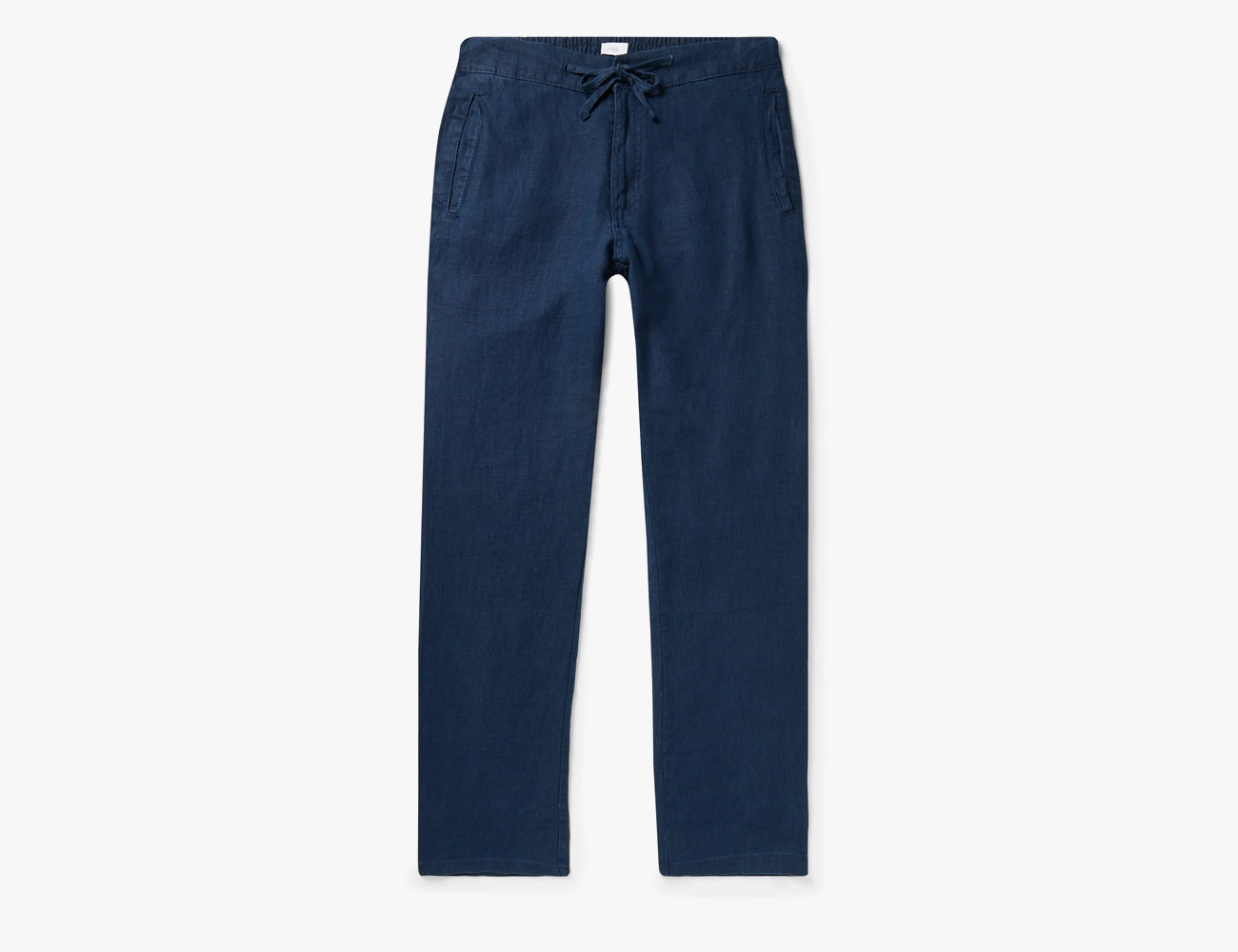
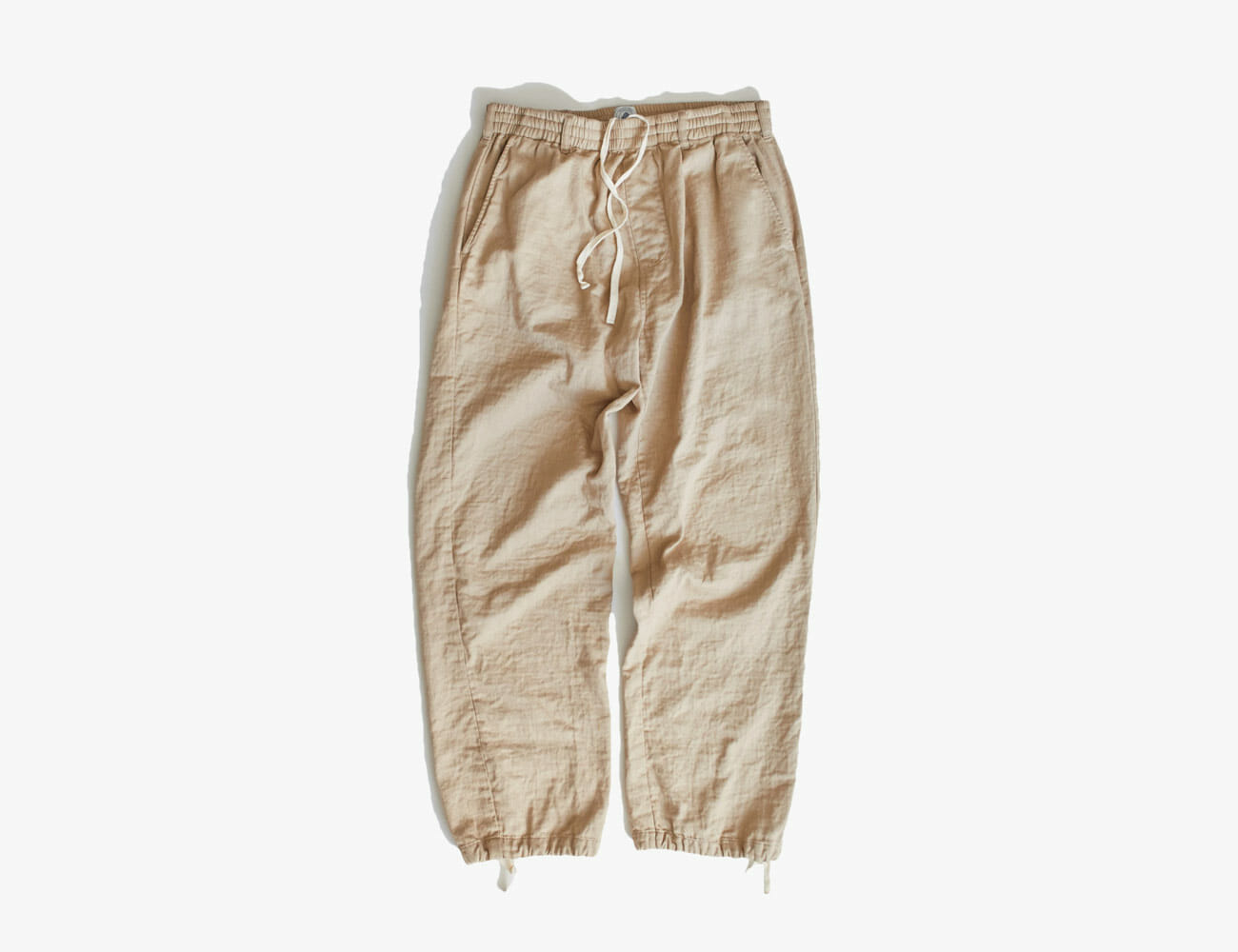
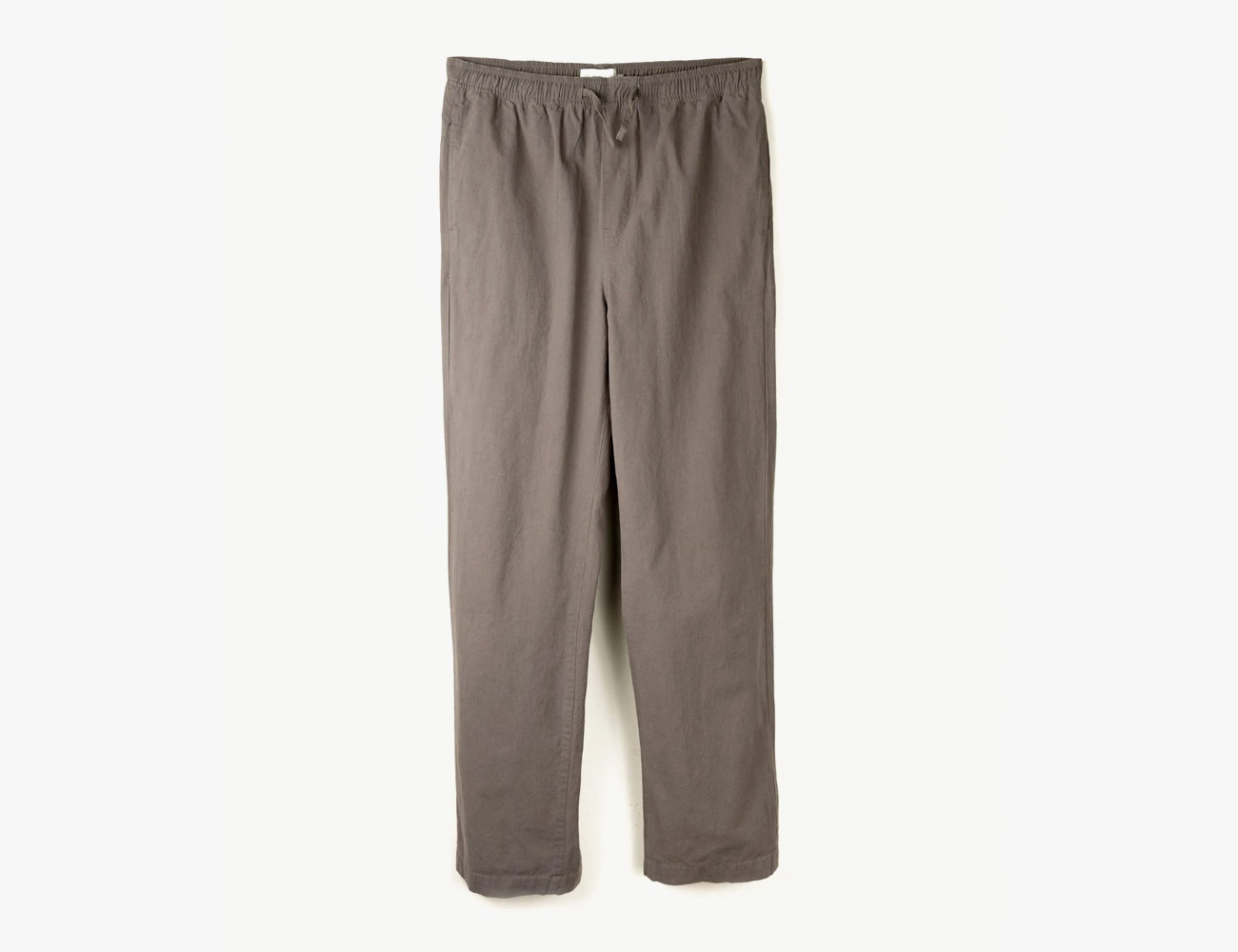
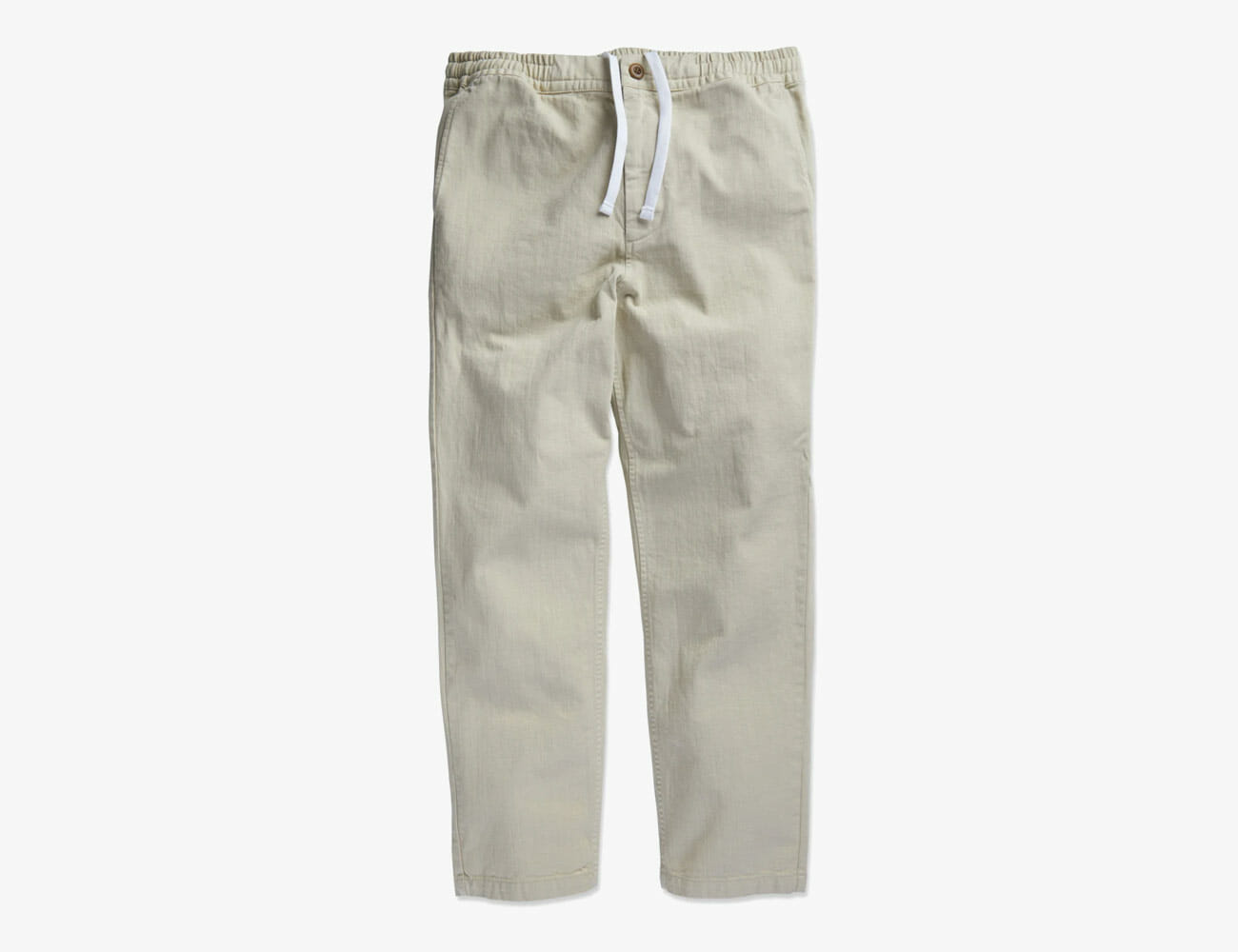
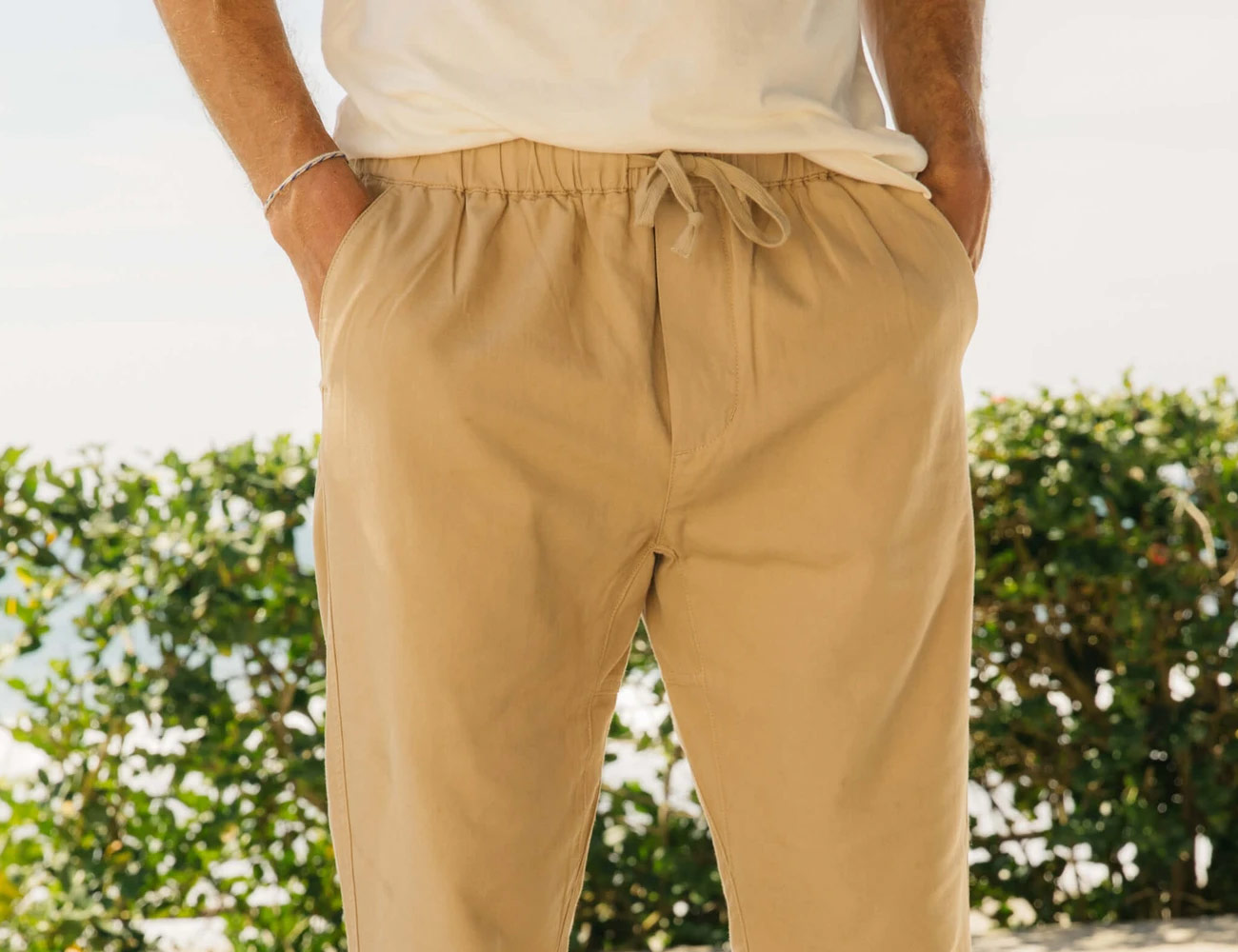
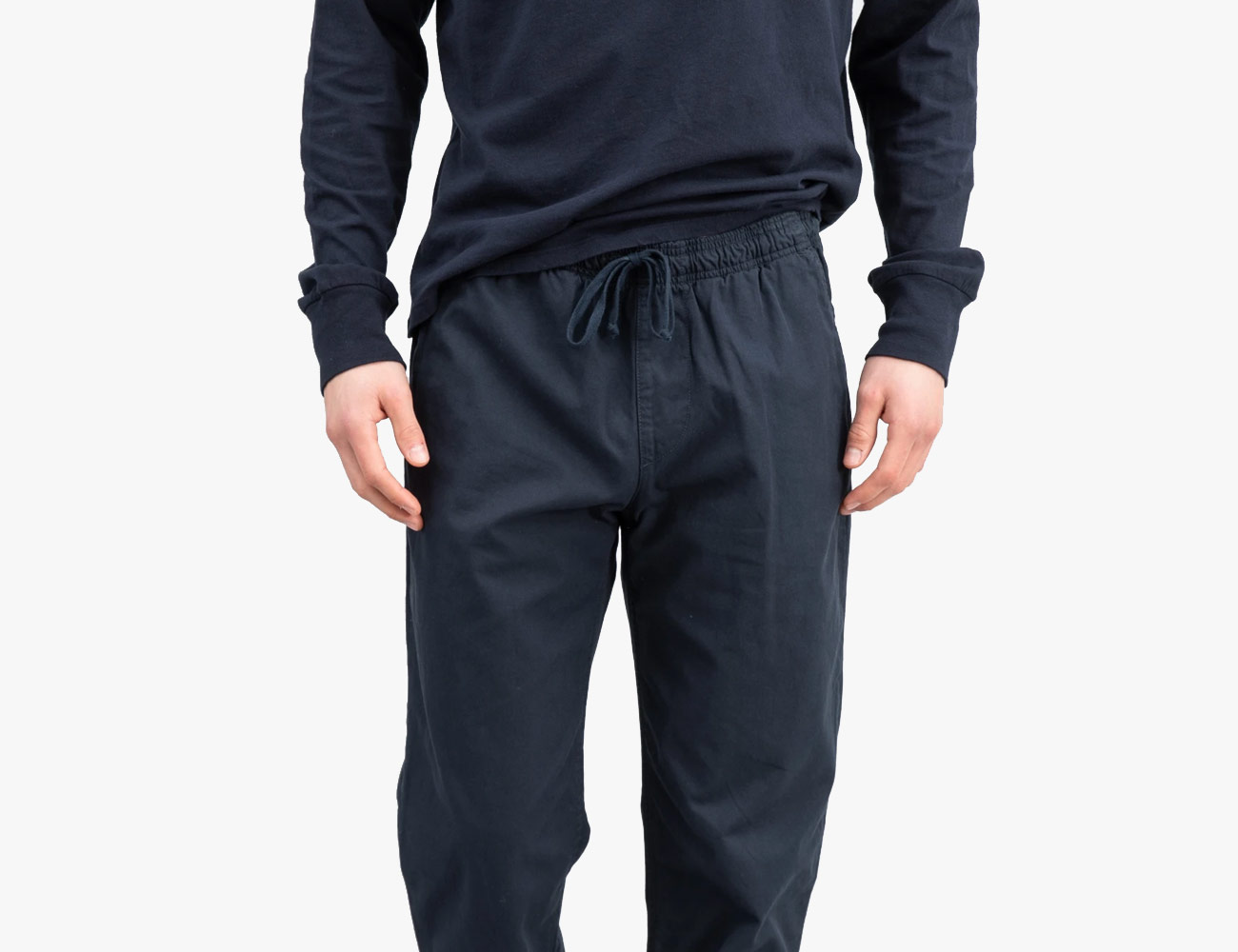
So you want to keep things relaxed, but you’re not all the way convinced about sweatpants. Drawstring pants are your answer. They’re comfortable and adjustable but look more like your favorite pair of chinos or jeans — a perfect in-between. We’ve put together a handful (okay, maybe two handfuls) of drawstring pants to get you in the right vibe.

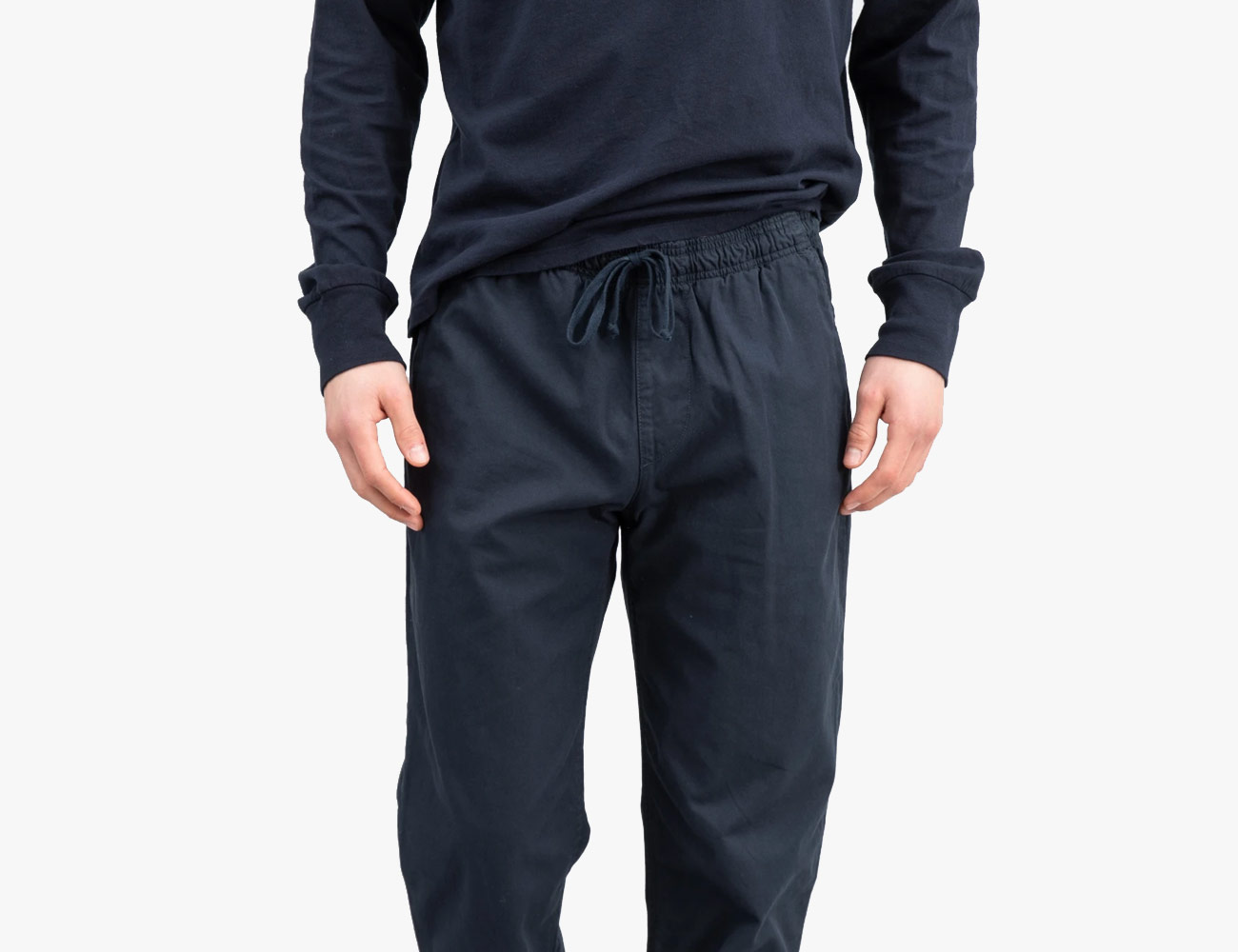
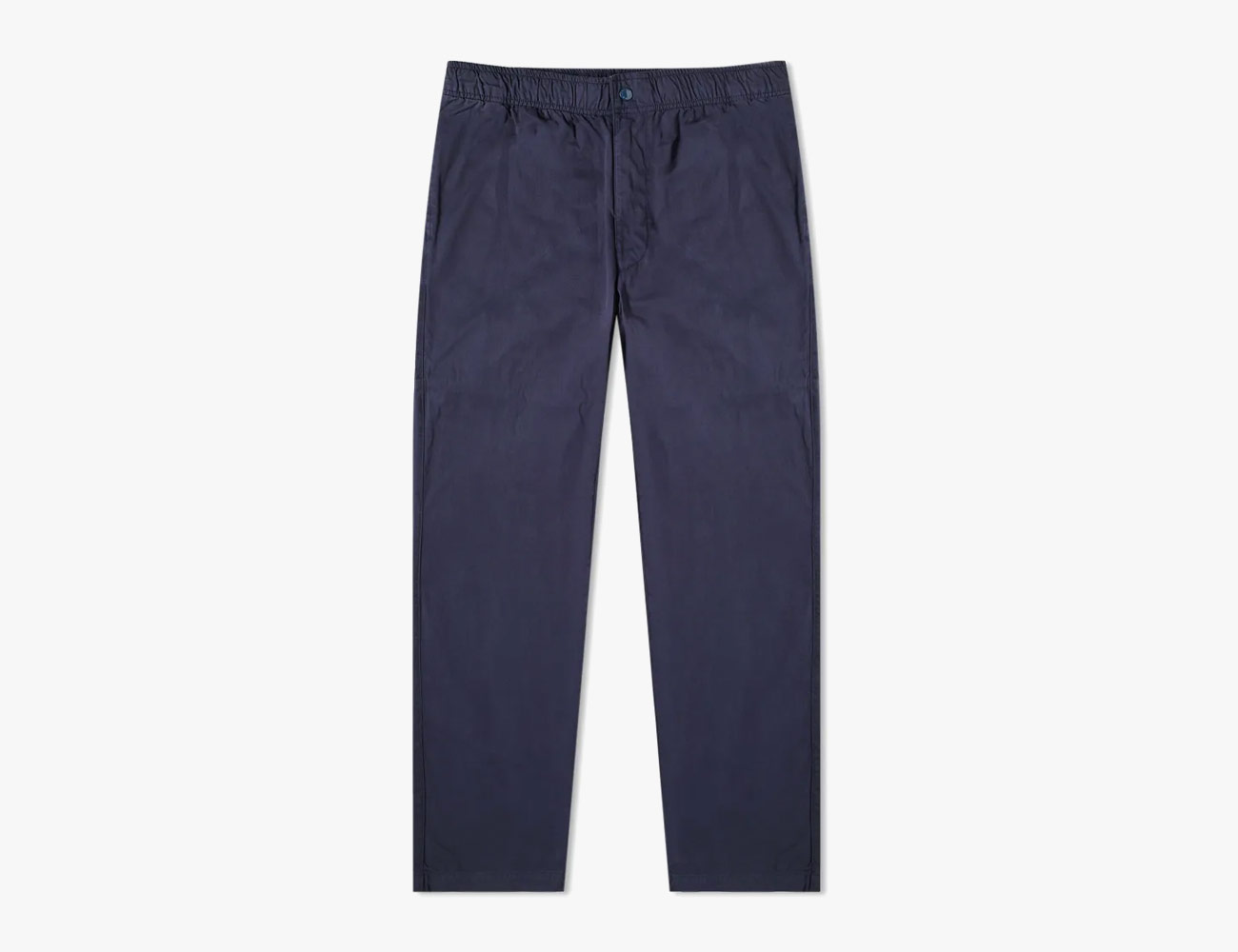
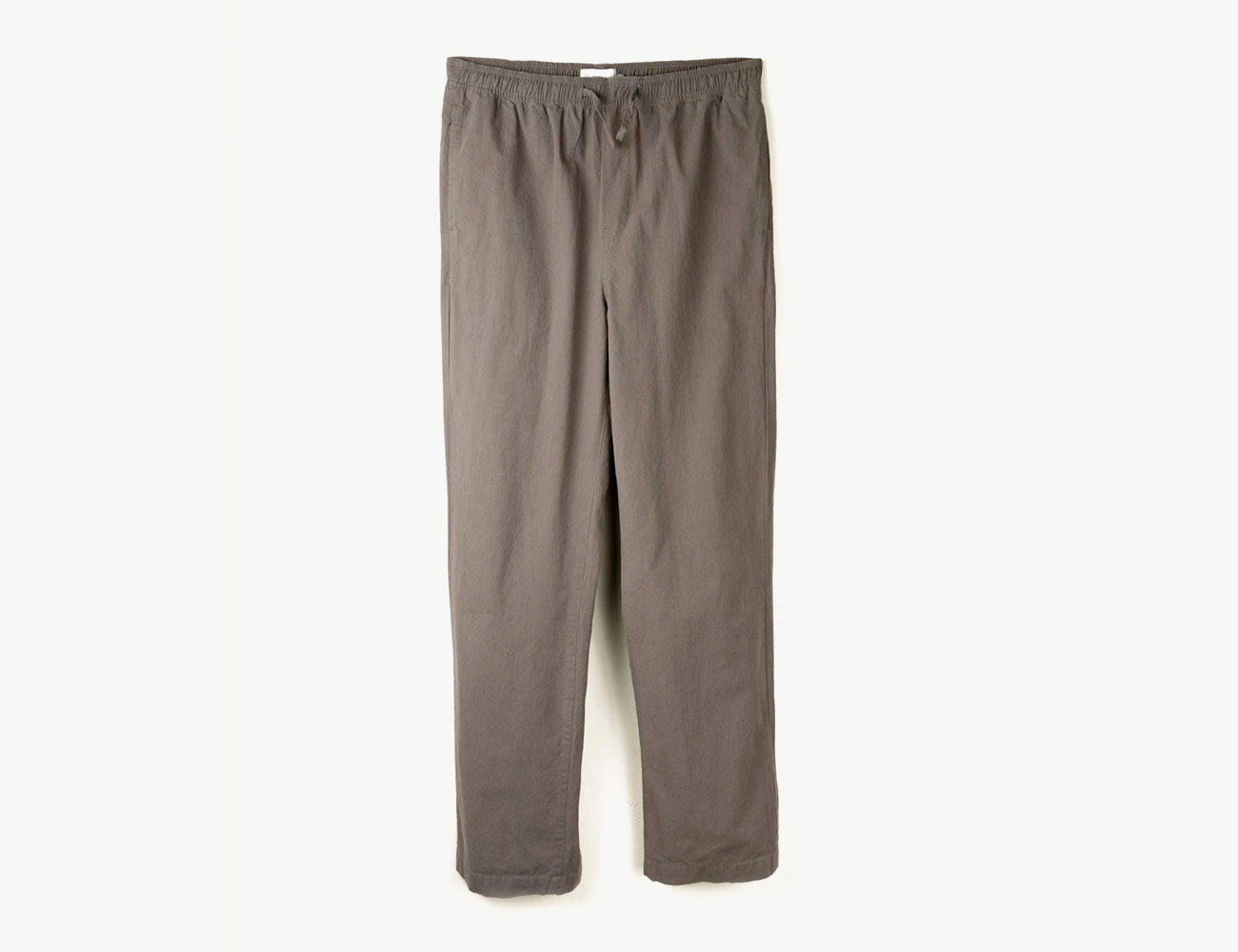
Mollusk Scout Pants

A favorite among the Gear Patrol staff.

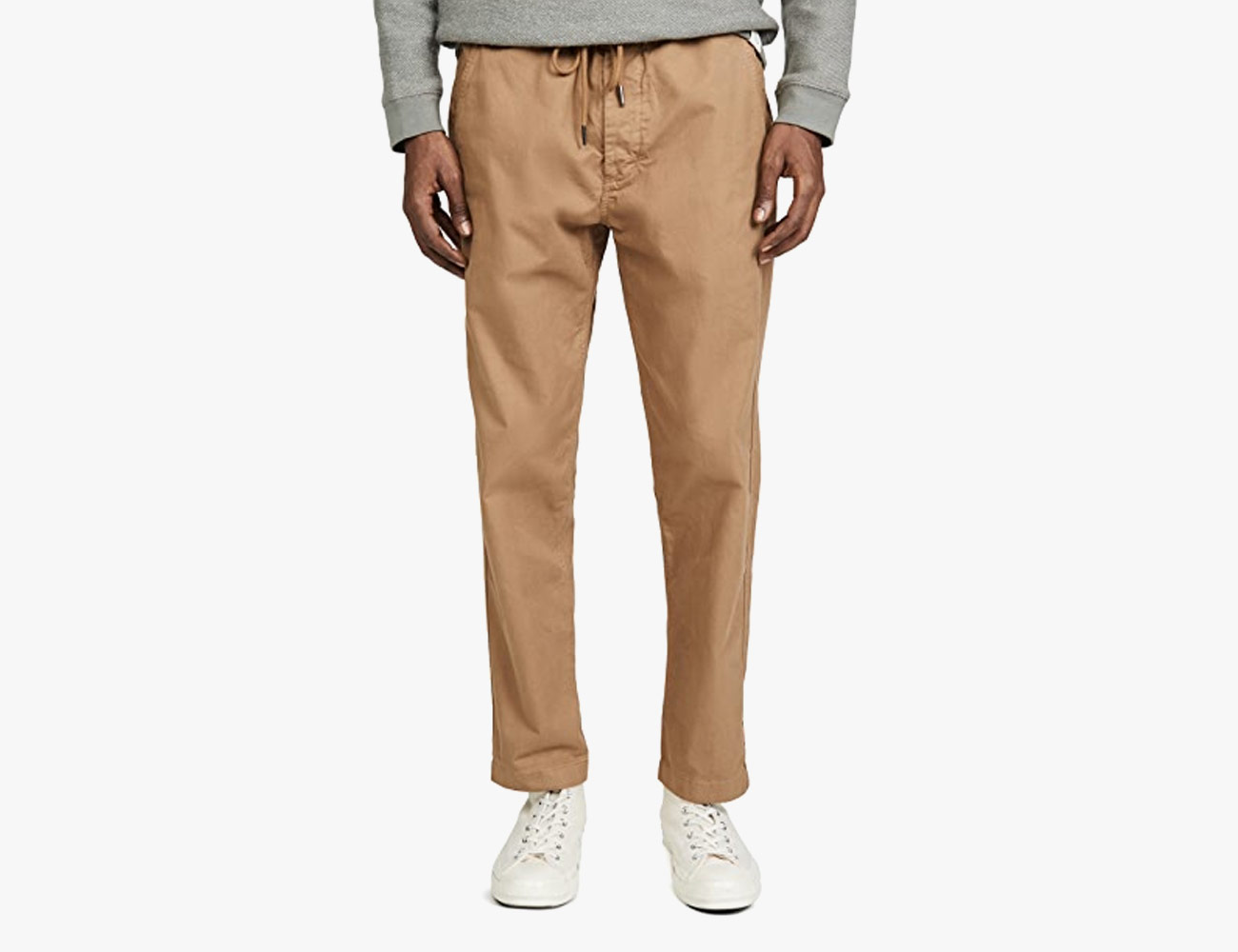
Madewell Drawstring Pants

Sturdy canvas and flap pockets let you know this pant is ready for whatever you throw at it or in it. A handy drawstring lets you know it ain’t all that serious.

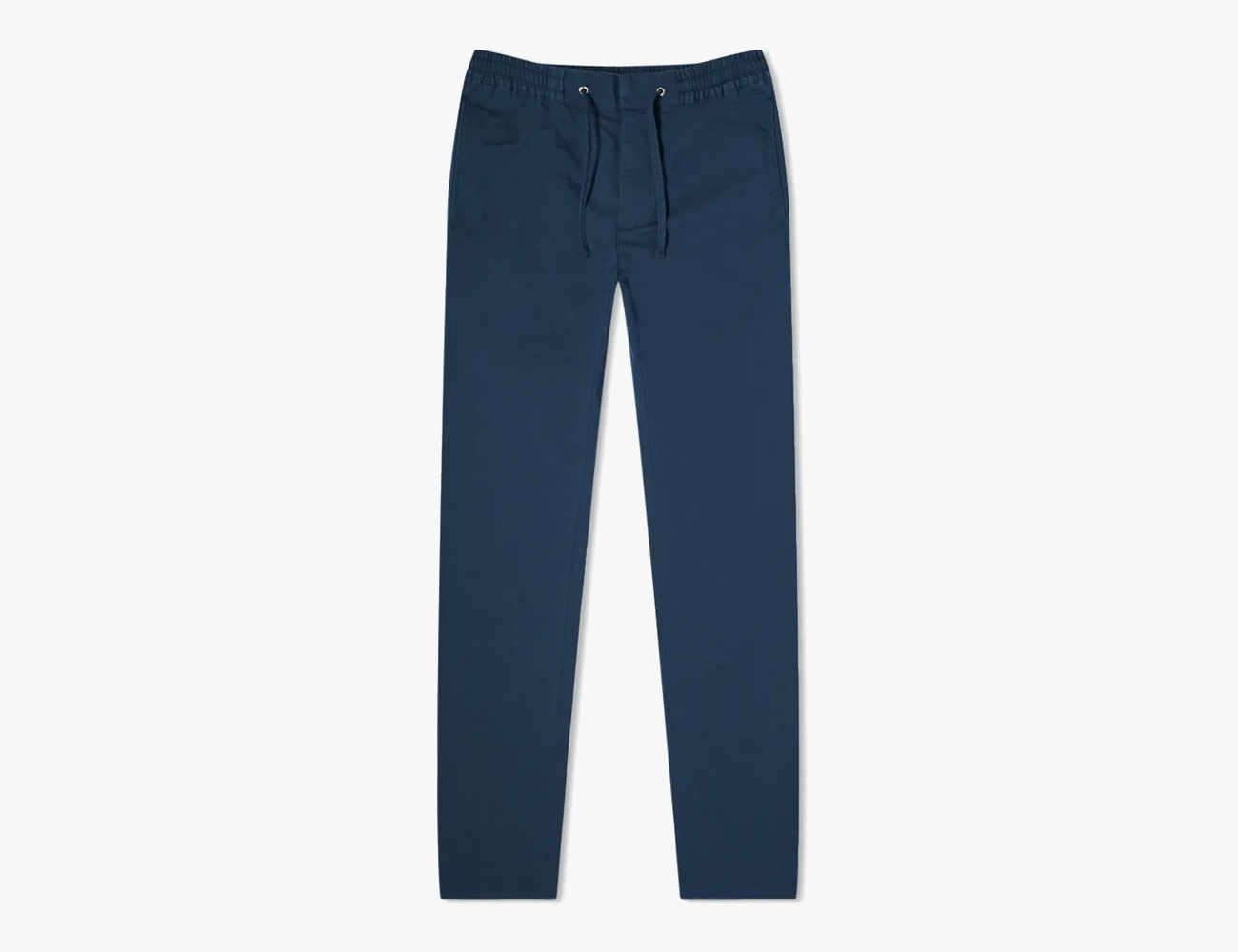
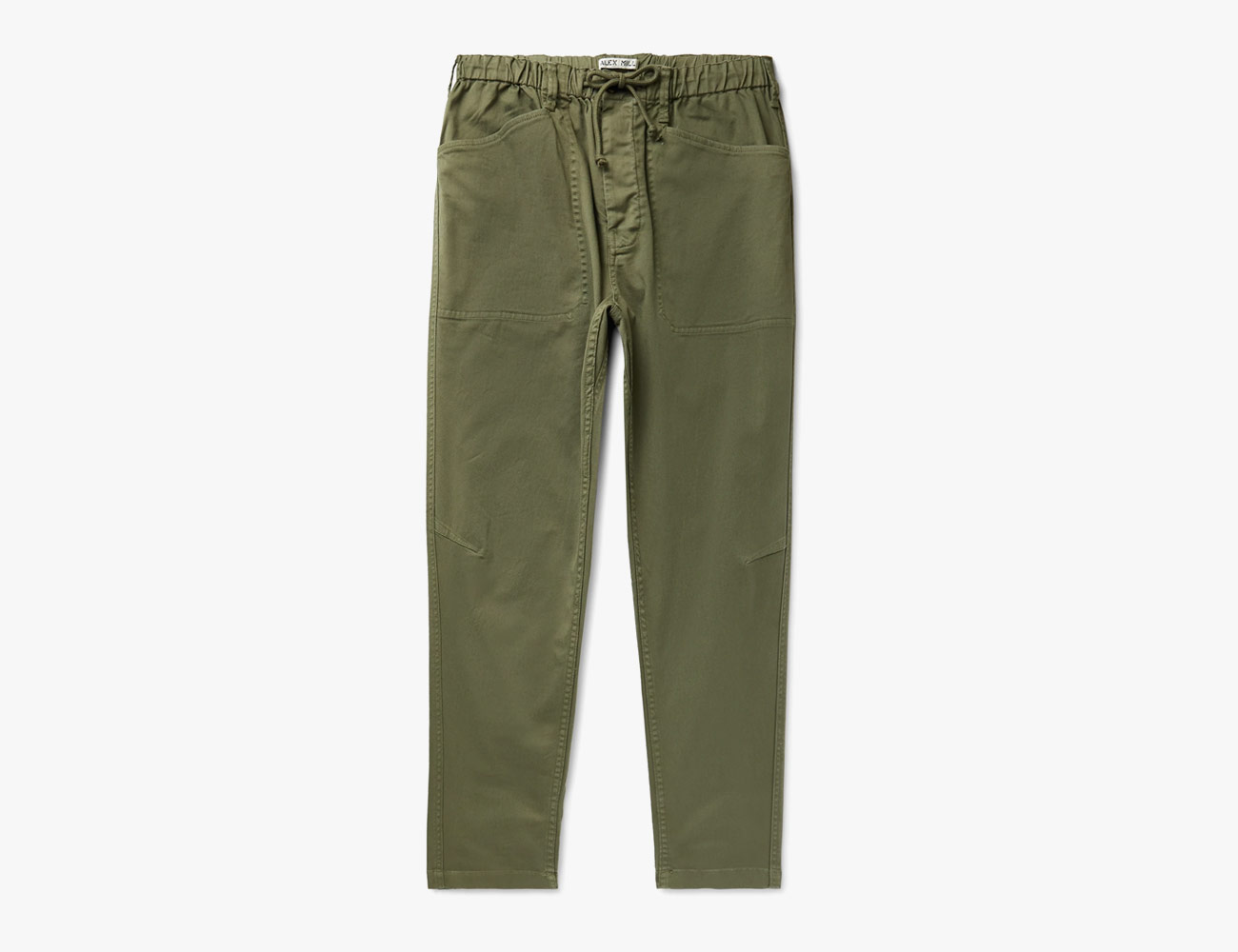
Alex Mill Slim-Fit Stretch-Cotton Twill Drawstring Trousers

A little bit of stretch goes a long way in the comfort category.

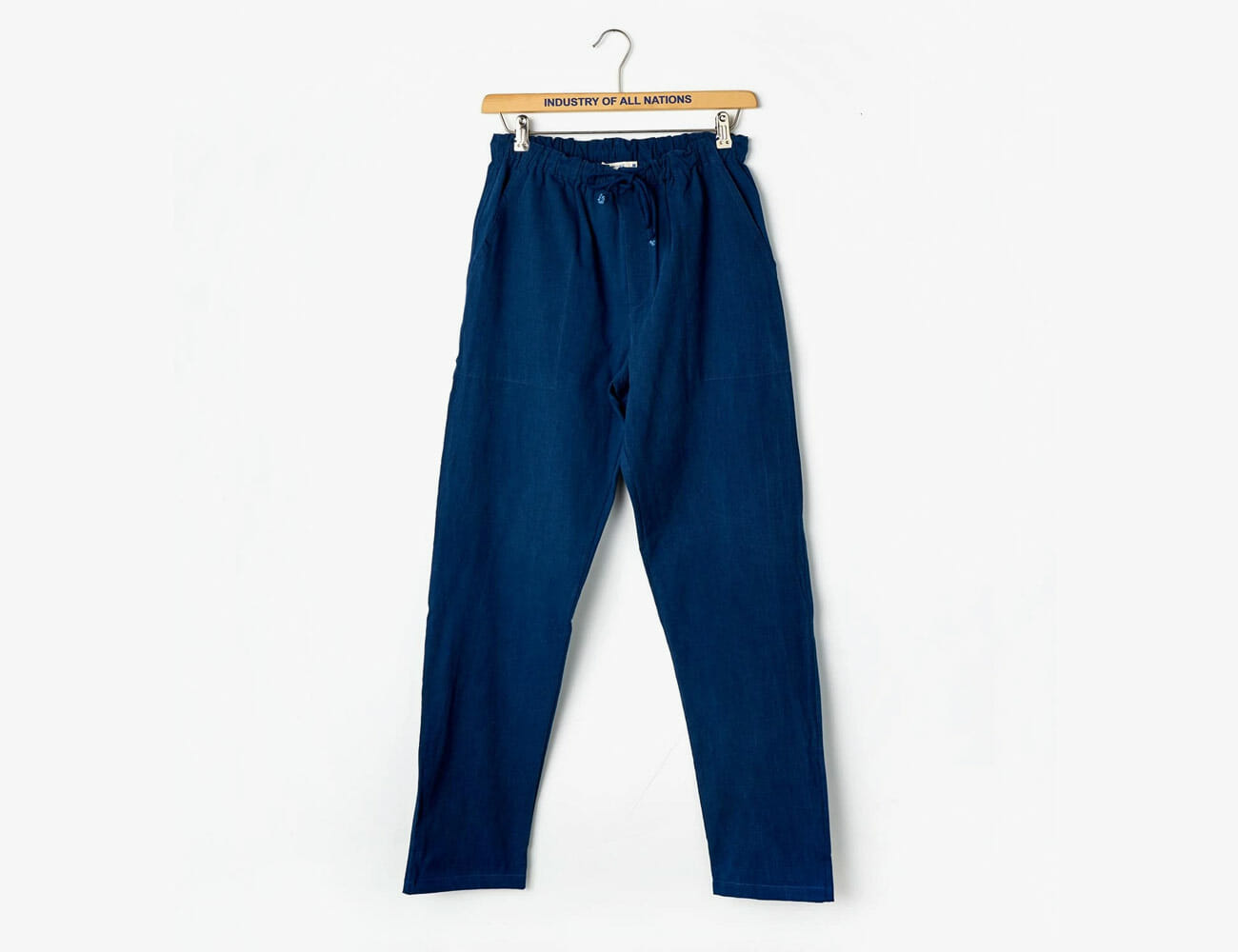
Industry of All Nations Ponja Drawstring Pants

One of the most holistic options out there, the Ponja Drawstring Pants from Industry of All Nations uses organic cotton, recycled polyester for the waistband and natural indigo to dye it all.

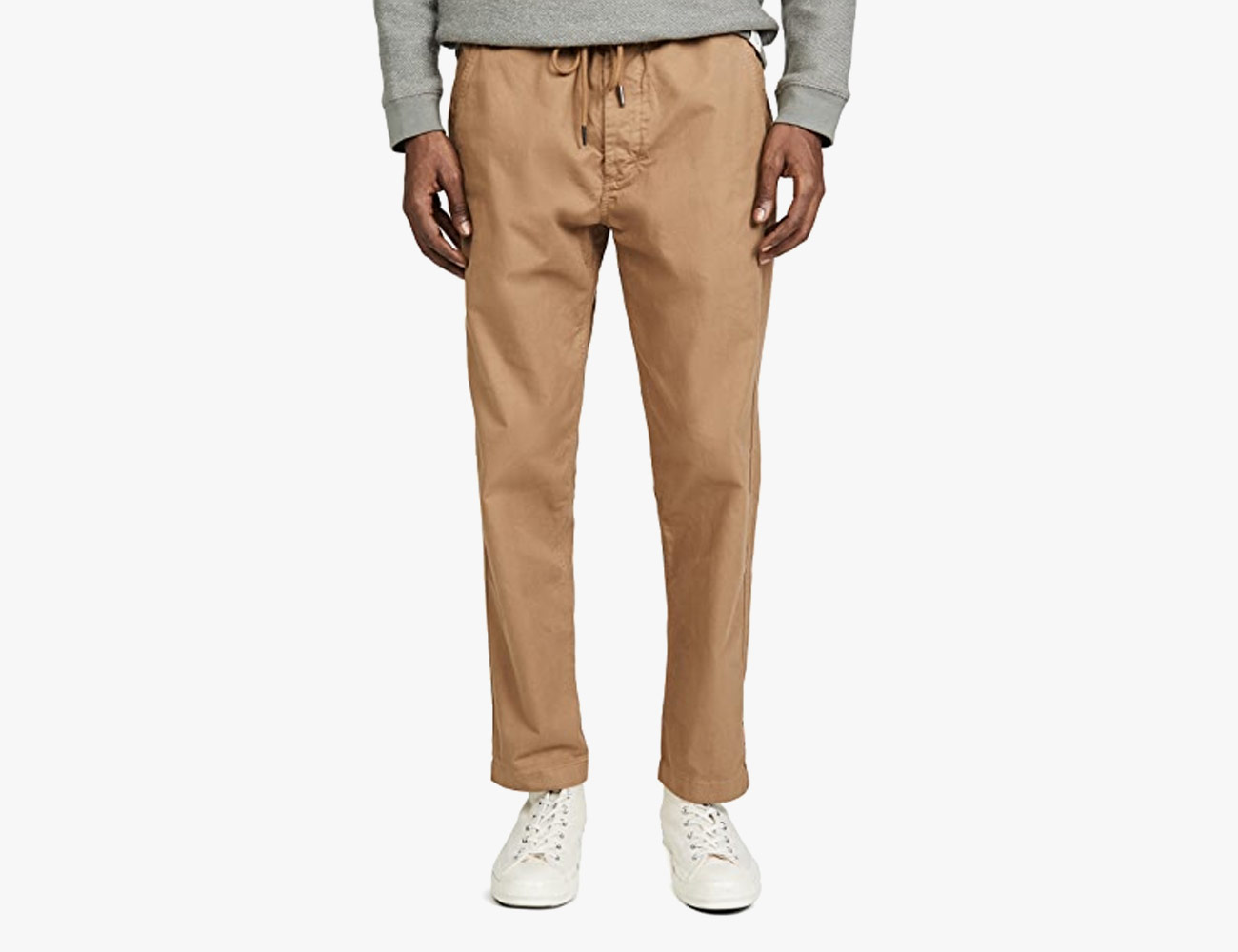
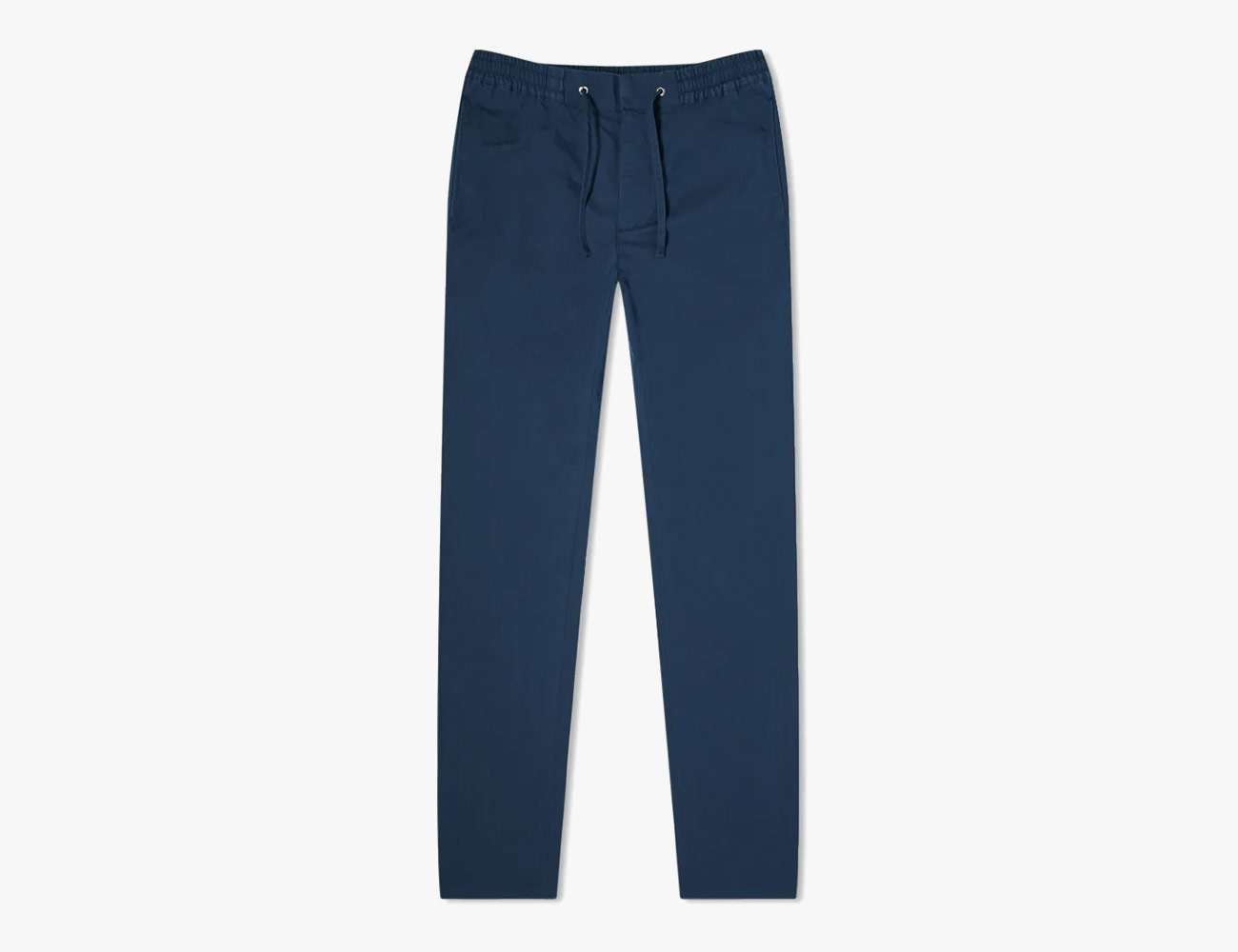
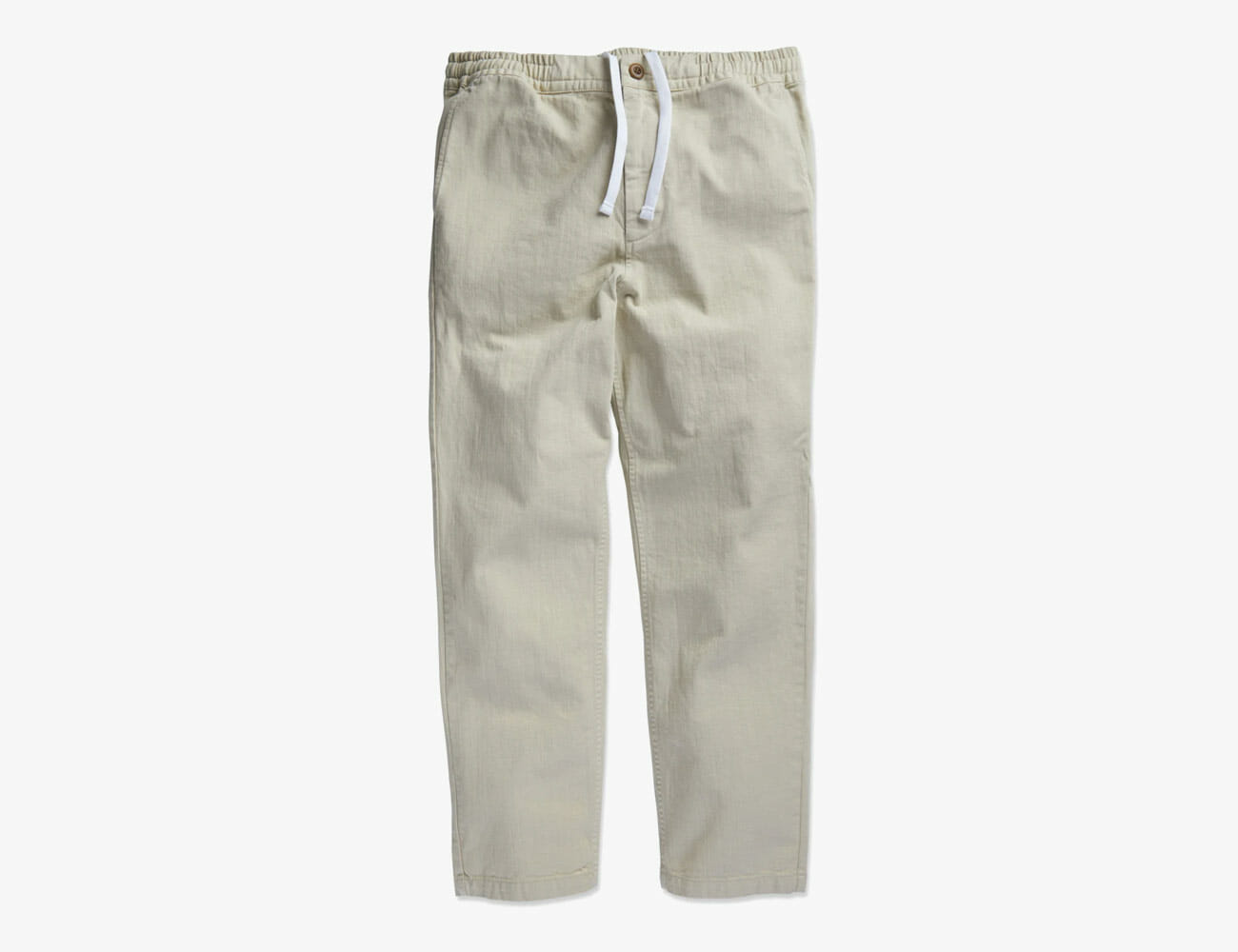
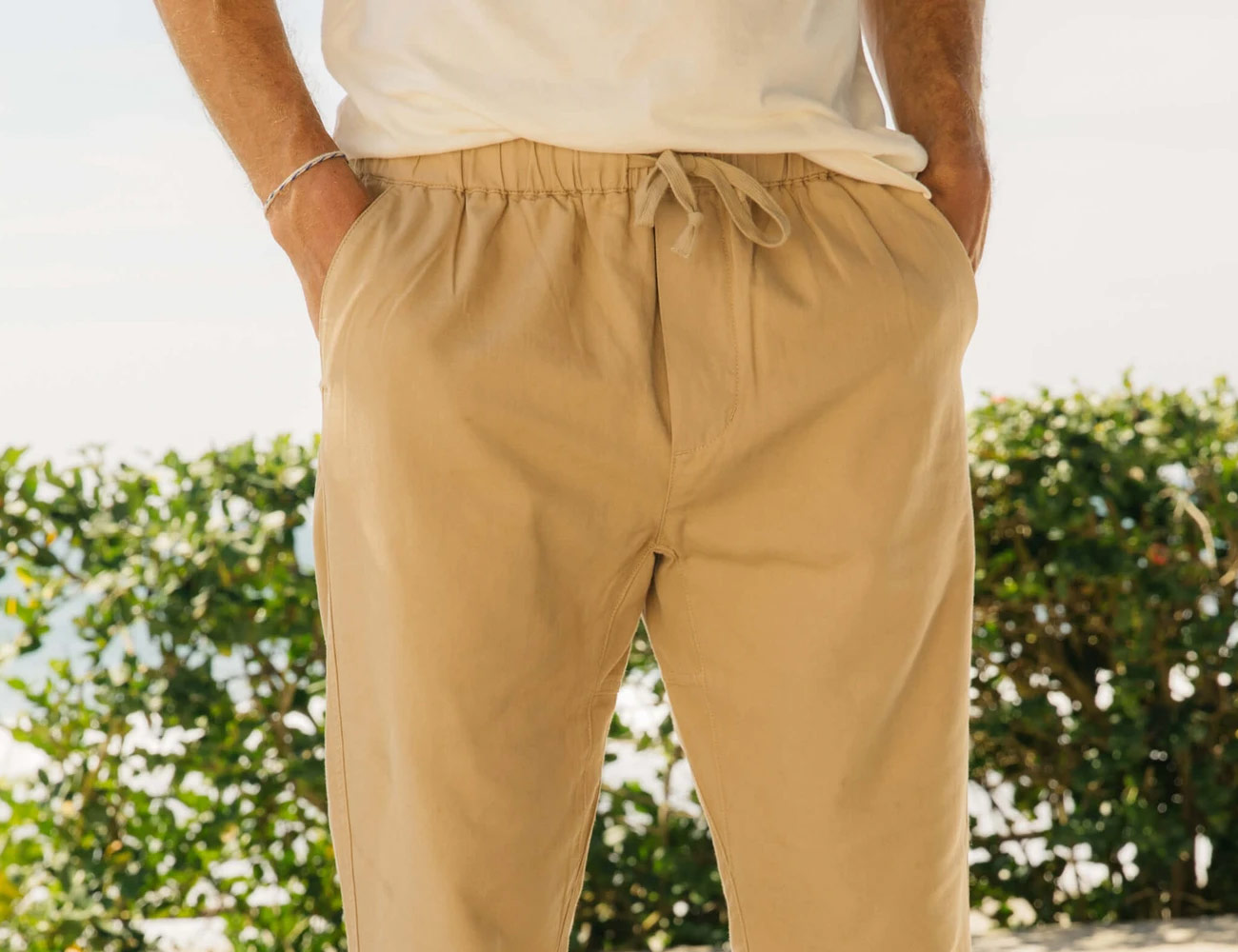
Save Khaki Twill Easy Chino

Save Khaki’s Twill Easy Chino is one of the softest and most comfortable chinos on the market, you just might want to get them in a few colors.

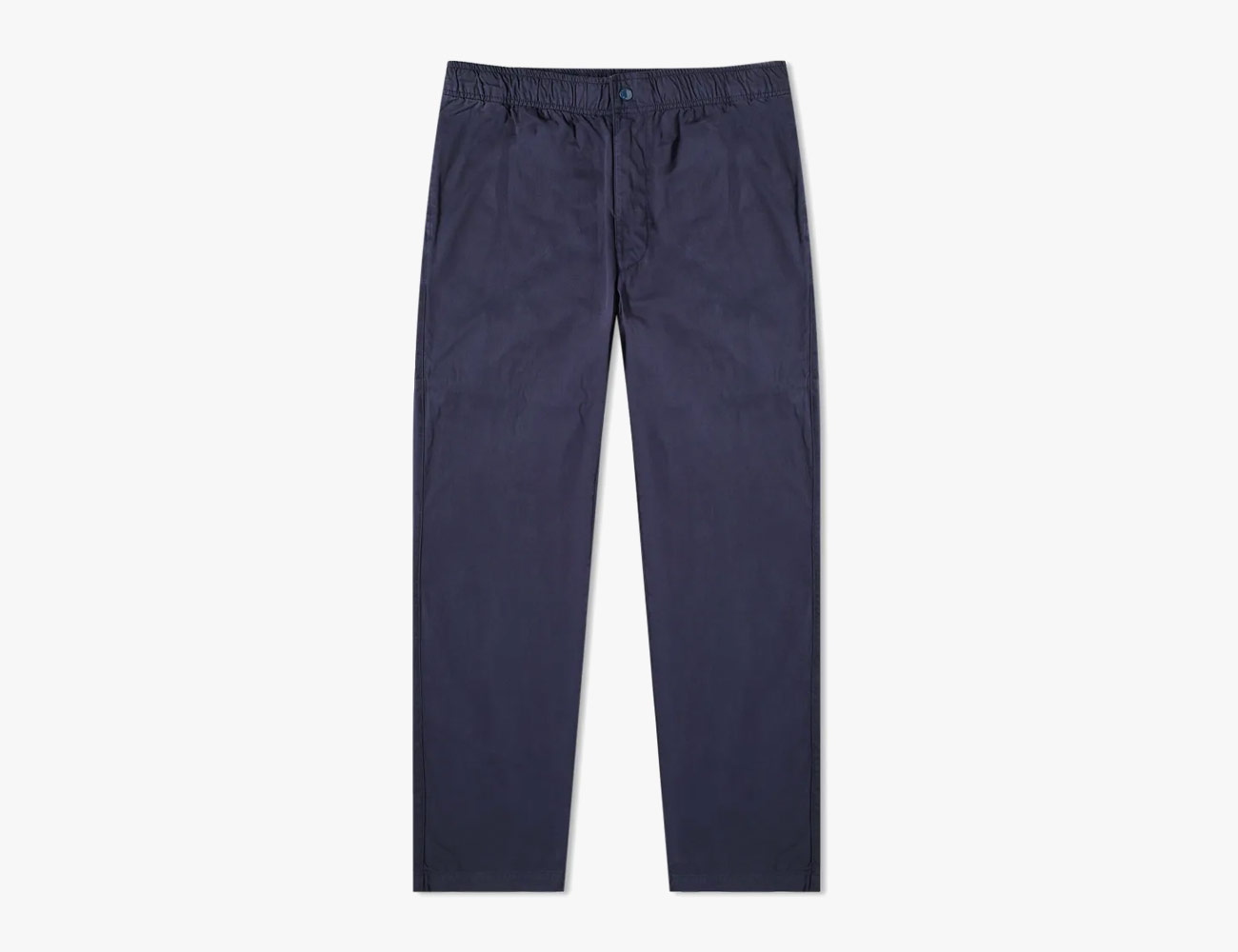
NN07 Drawstring Pant

You can be secretive about the drawstring waist and just leave your shirt untucked. But there’s no shame in the drawstring game.

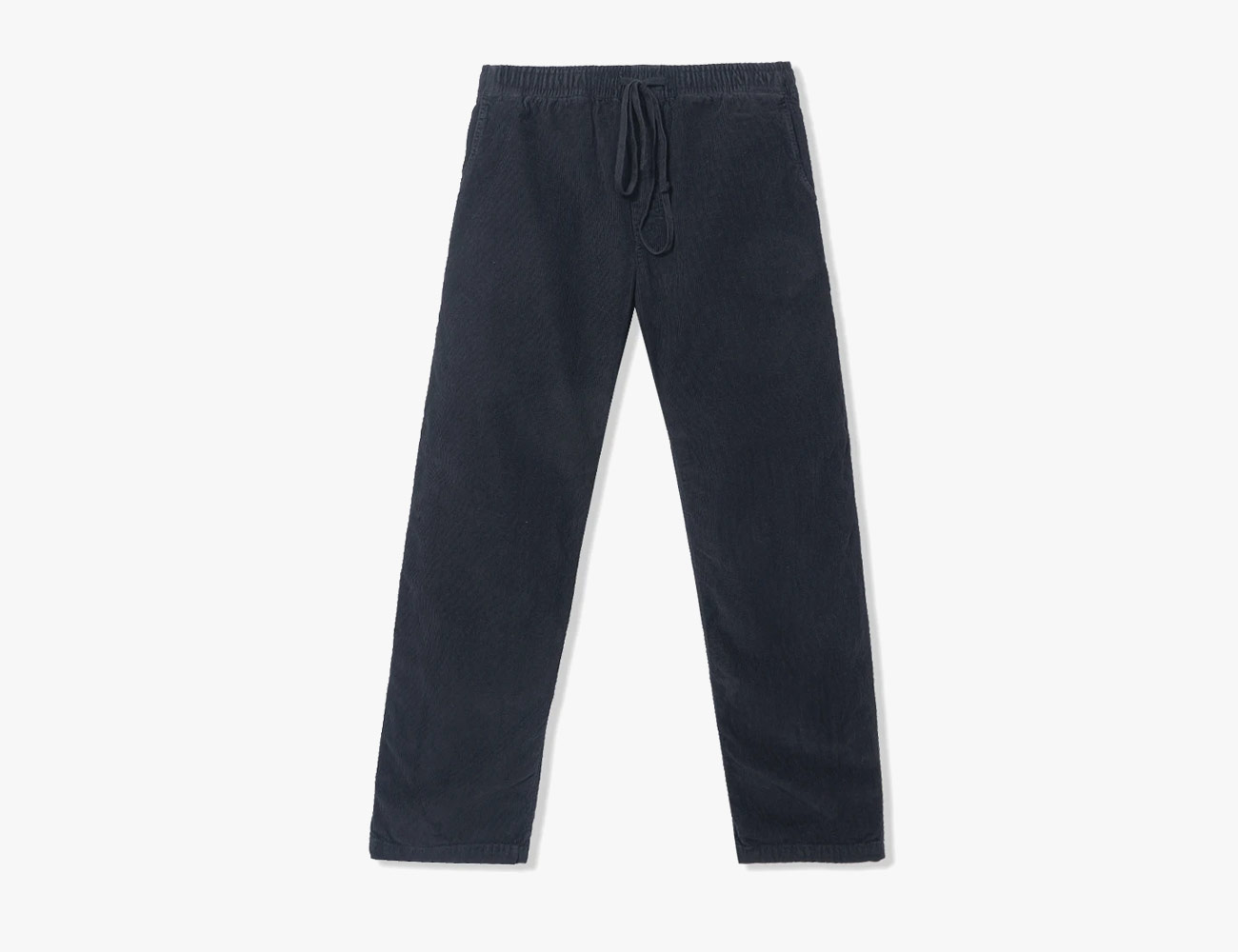
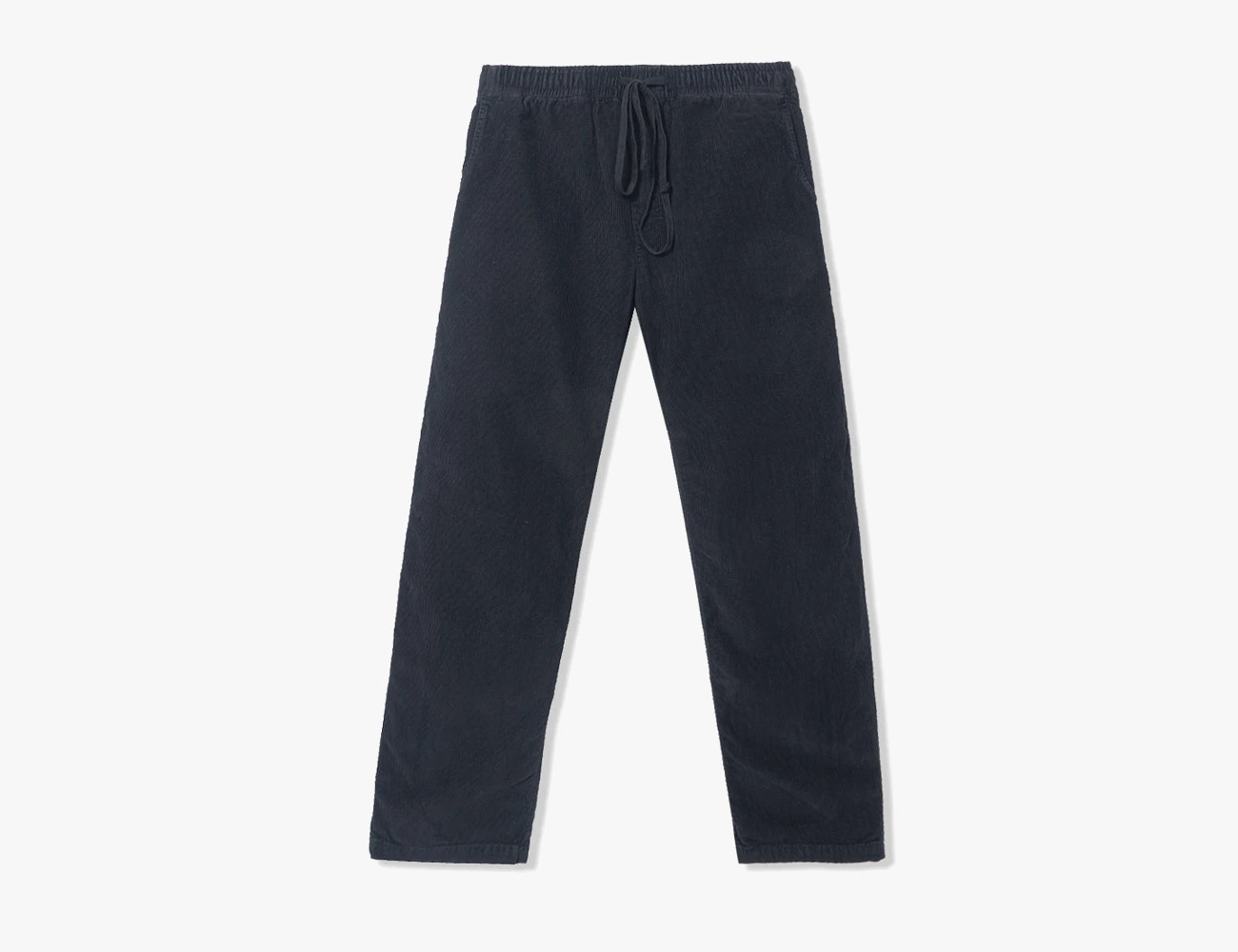
General Admission Rat Rock Corduroy Pant

Didn’t think you could put a drawstring on some corduroy pants, did you?

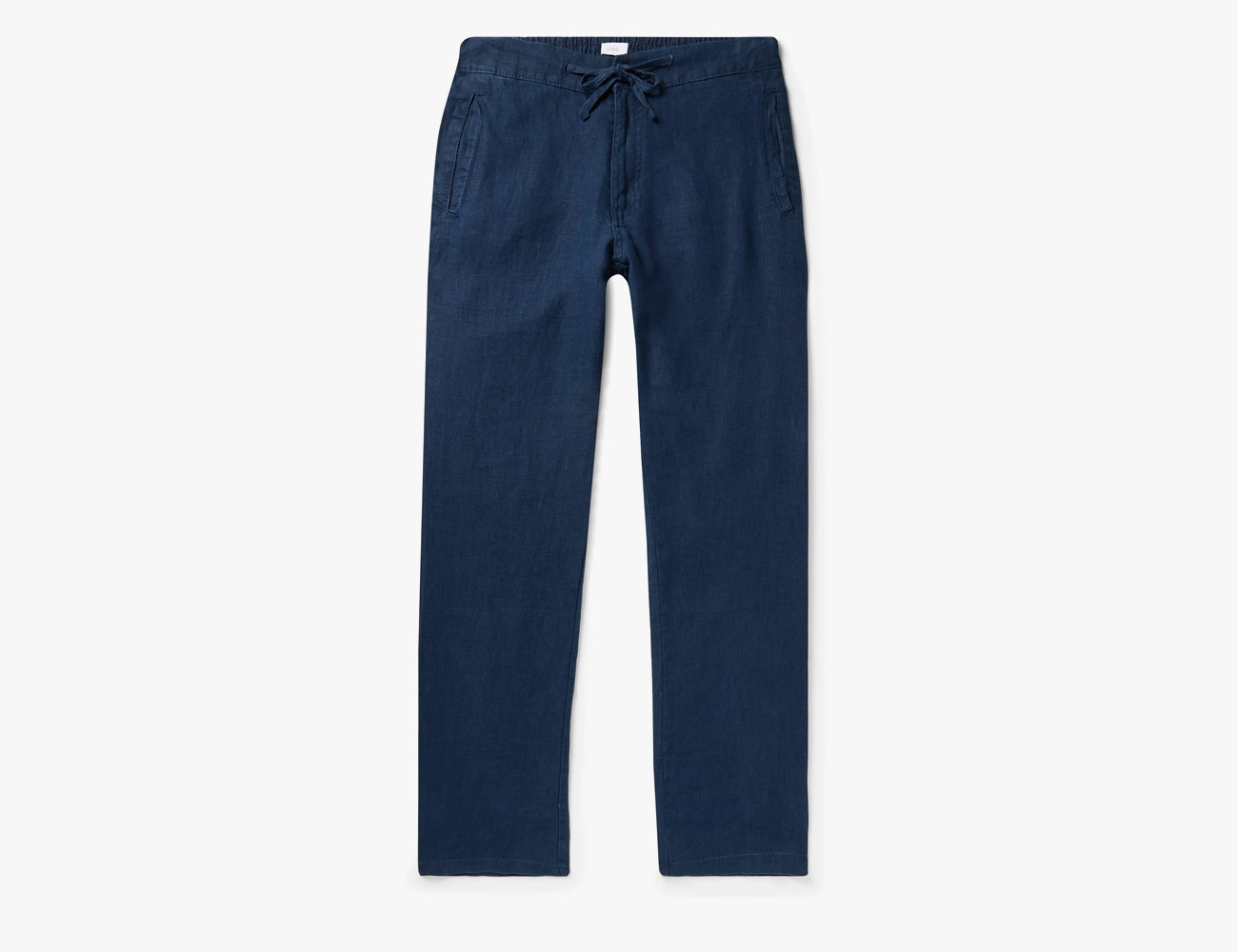
Onia Collin Slub Linen Drawstring Trousers

Like Hartford’s version, Onia’s is all linen but leans into the sweatpant design more.

18east Tapiro Easy Pant

These Easy Pants are a cinch.

Satta Kai Pants

These midweight pants come with an all-cotton poplin fabric that’s been peached for a slightly brushed effect that makes them cozier than they appear. On-seam side pockets keep things discreet.

Outerknown Beach Jeans

Beach Jeans might not be an actual category of jeans, but we’re very into them, regardless.

Adsum Bank Drawstring Pant

/a>

Adsum’s Bank Pant combines drawstring and elastic at the waist and features tough cotton twill with equally durable herringbone pockets.

Saturdays Chad Jogger Pant

You’ll find not one, but three drawstrings and plenty of storage on this fatigue-style pant from Saturdays.

Engineered Garments Painter Pant

Lauded designer Daiki Suzuki is sly, hiding the drawstring inside the waistband.

Battenwear Active Lazy Pants

Active lazy or just actively lazy?

Jungmaven Pacific Coast Pant

From champions of hemp, Jungmaven’s Pacific Coast Pant is 55/45 hemp/cotton and 100 percent what we want to wear all the time.

Nanushka Nova Workwear Twill Trouser

Workwear trouser? More like work from home trousers.

Hartford Troy Slim-Fit Linen-Chambray Drawstring Trousers

Drawing on chino designs, Hartford’s option combines details from your favorite pair of khakis like the Hollywood wood waistband, belt loops and slanted pockets, and infuses it with linen and a comfy drawstring.

RTH Drawstring Pants

RTH treats the drawstring more like a ribbon and its Drawstring Pants are a gift.

Dr. Collectors P23 Corduroy Pant

The P23 Pants from Dr. Collectors are even cozier with plush corduroy and a garment dye for a lived-in feel.

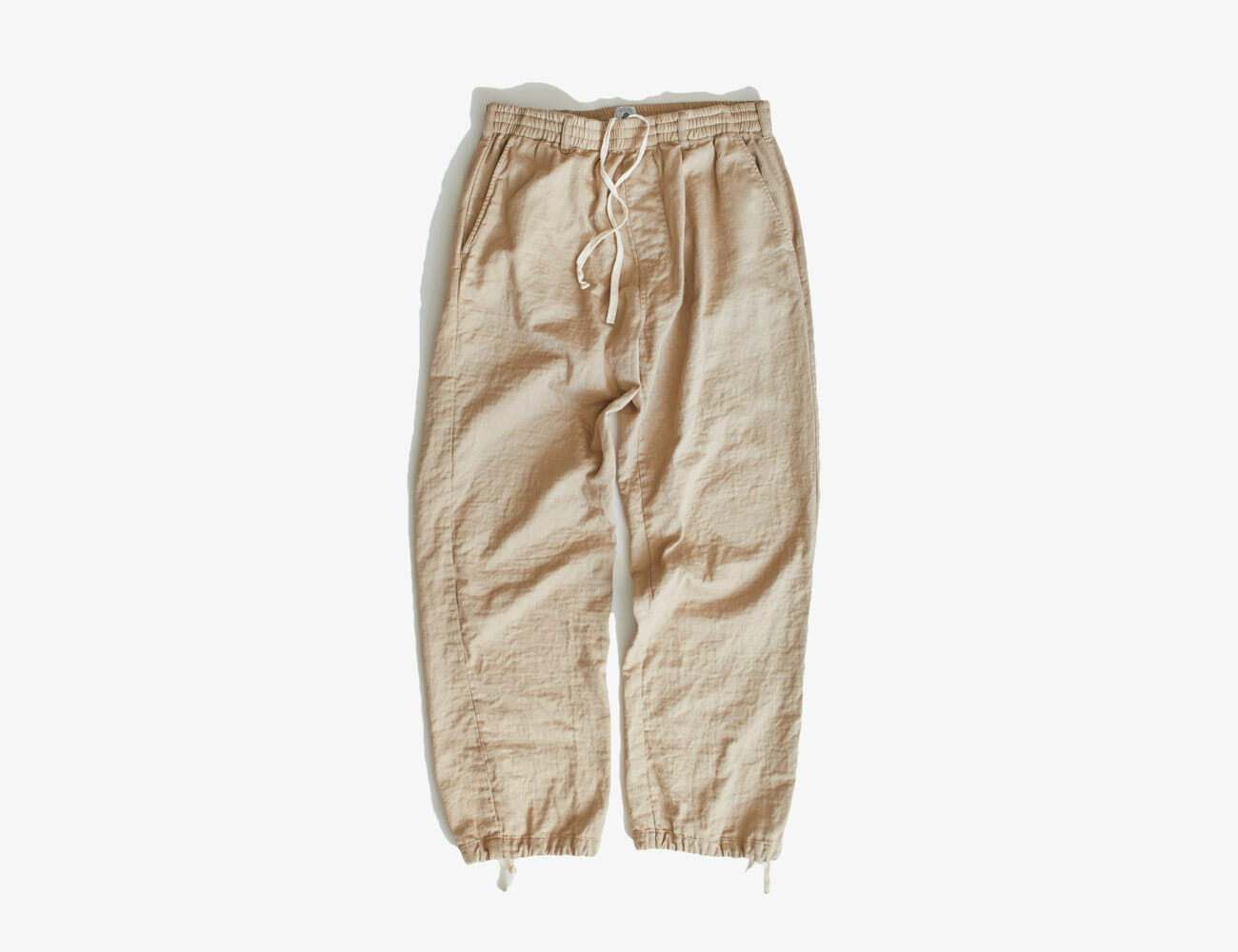
Needles H.D. Pant

Cargo pants can be comfy, too, and this big baggy pant from cult Japanese brand Needles is proof.

Rick Owens Drawstring Pants

From the Dark Lord himself, these military-inspired pants are what I imagine off-duty secret agents lounge in.

Maison Margiela Mohair Cropped Pants

Margiela’s Mohair Cropped Pants blur the line between dress and relaxation with a more formal take on the drawstring trouser.

Note: Purchasing products through our links may earn us a portion of the sale, which supports our editorial team’s mission. Learn more here.

It’s Time to Clean Up Your Grooming Routine. Here’s How

In tandem with spring cleaning, now is as good a time as any to do an audit of your grooming regimen hygiene. Are the products you’re using far past their “Best Used By”? Is your bathroom a cesspool that could wreak havoc on your complexion — in more ways than one? And do you obey proper toothbrush and razor blade replenishment orders? There’s a lot to consider when it comes to having a hygienic regimen, but it’s certainly worth the assessment, especially in current times. Having a clean regimen promises clean and smooth shaves, clear complexion, terrific oral health and more.

So, here are seven of the most important things to do if you want to minimize any bacterial risks and breakouts.

1. Replace expired products

Every product you own has an expiration date, and there’s an industry standard for how brands display each product’s shelf life. Look on the product (typically on the rear) for a little uncapped canister (like a hair product tin that has been opened). Inside that canister it will say something like 6M or 12M, noting how long that product is guaranteed “good and effective” from its open date. So, there’s some extra lifting on your end to recall when you first started using the product — you could also scribble the date with a permanent marker onto the side.

There’s likely some wiggle room on these dates; it’s not like your moisturizer will suddenly separate 6 months after you opened it, and cease providing you with nourishment and sun protection. But if you’ve owned a product for two or three years and it’s still sitting on your shelf—toss it. Get a new one and a smaller one at that. Chances are some of its powers have been neutralized, some of its ingredients have separated, and its efficacy is far from desirable. Don’t even try it, in fact.

2. Get a washable Dopp kit

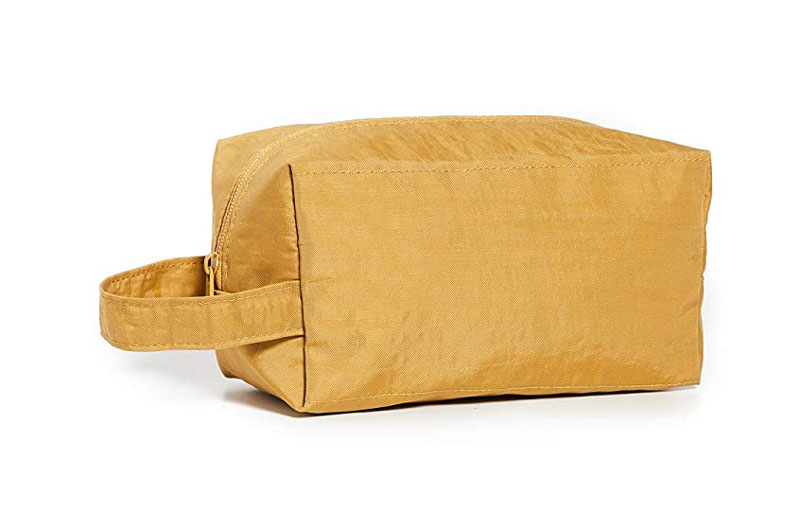
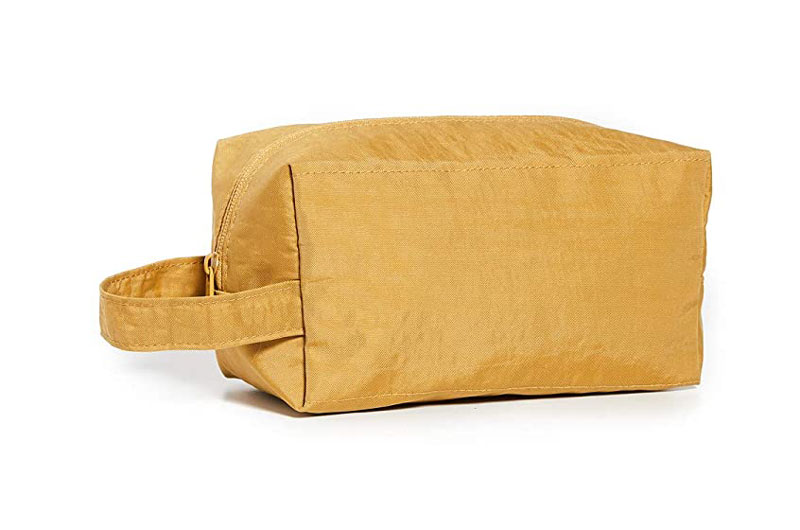
Dopp kits really run the spectrum in terms of quality and price. You can spend a few bucks for a dorm-friendly shower Dopp, or get a beautiful leather engraved Dopp for your first-class travels. Somewhere down the middle, though, is the practical Dopp. It’s durable, won’t rip, and is also entirely machine washable without pilling around the perimeter.

Considering all the things that go in this Dopp kit — your razor, toothbrush, and any products that have been sitting in tiny pools of water on the hotel sink — it is something you should wash frequently (Plus they often take it out of your bag at TSA, and set it in a bin for scanning. Everyone knows those bins are filthy). So, get a practical Dopp kit, and a washable one at that.

Nylon Dopp Kit by Baggu $30

3. Replace your toothbrush at proper intervals

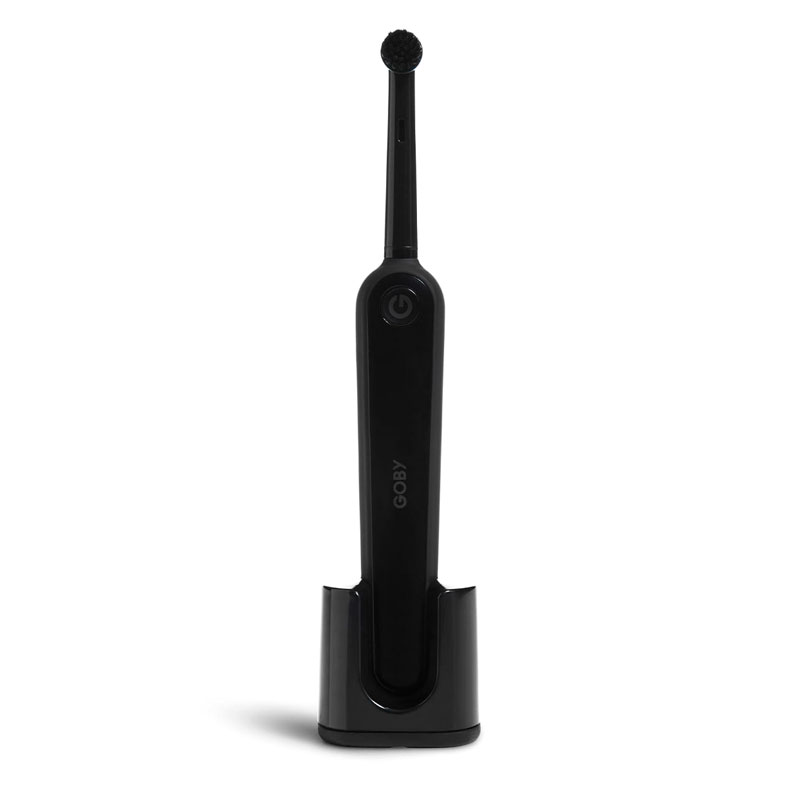
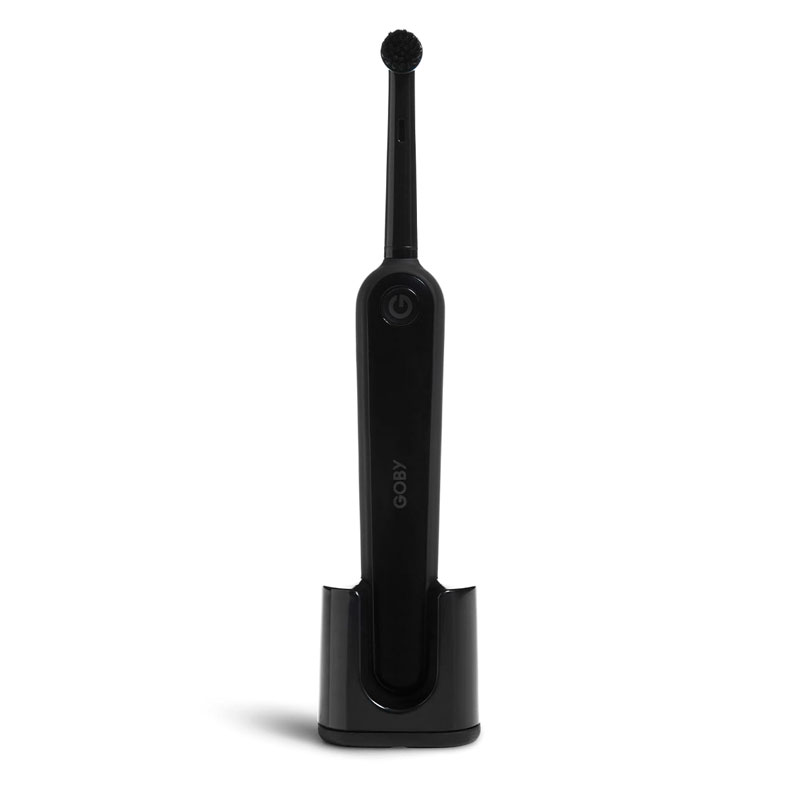
You need to replace your toothbrush every three months, says the American Dental Association. That’s four times a year. Doing so will ensure your brush head remains durable enough to clean the teeth properly, and it’s also just good hygiene to not keep a toothbrush more than that amount of time. You can sign up for a replenishment program, like Goby, if you want someone else to keep tabs on the replacement heads — it is easy to forget, after all. After you buy their excellent electric/chargeable brush for $60 (including a starter kit), you can get new heads sent every 1, 2 or 3 months for just $6 a pop.

Toothbrush Starter Kit by Goby $60

4. Practice good razor hygiene

We’ve waxed poetic on how to have a safe, hygienic shave. And within those many shave tips are two major notes on razor hygiene: First, store the razor upright in a cool, dry place after the shave, so it can dry without inviting bacterial growth. Then, get a blade cover to shield the blades once they’re dry.

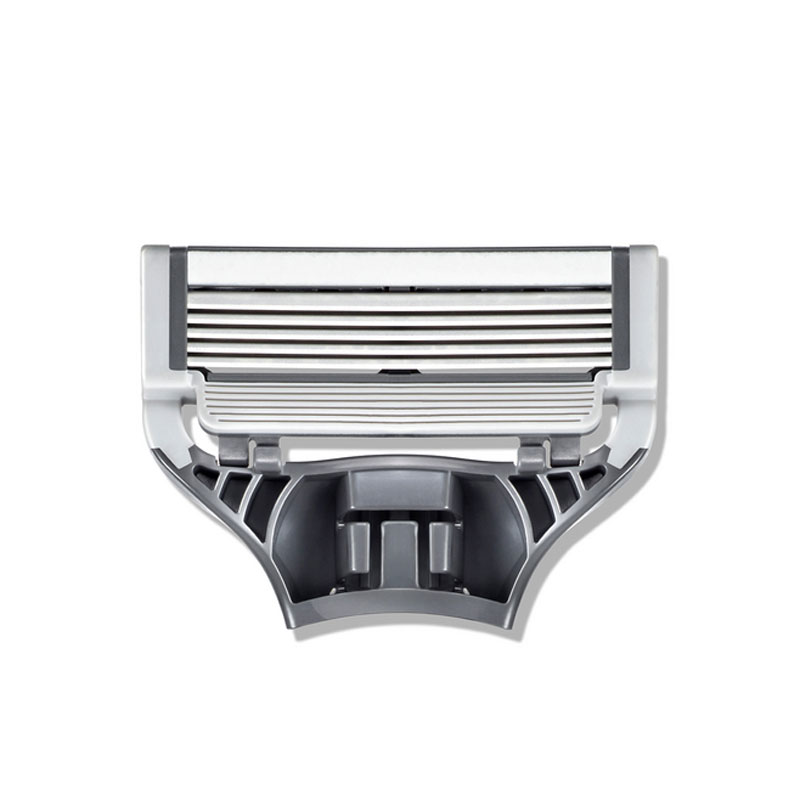
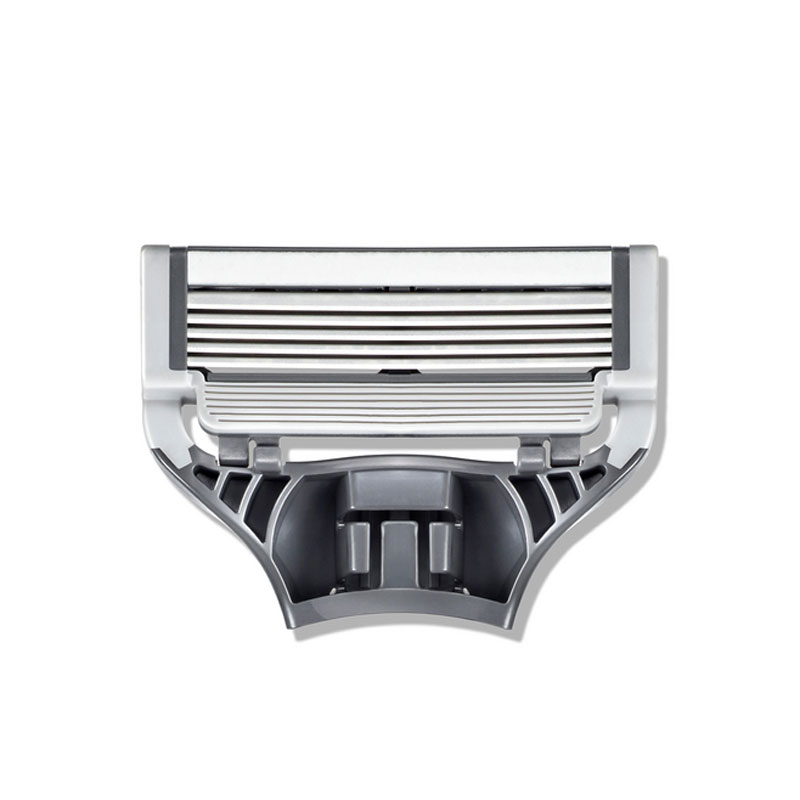
Next, be sure to replace your razors at proper intervals too—every two weeks or after 6-8 shaves, whichever comes first. After this, it’s likely the blade has become dull or has accumulated bacteria and should be replaced to ensure safety for your skin. This is why razor replenishment companies are so popular since you can rely on them to change your razor at proper intervals. Harry’s, in particular, is a one-stop-shop for all of the above.

Blades by Harry’s $16

Travel Cover by Harry’s $1

Razor Stand by Harry’s $15

5. Wash your beard trimmer

In tandem with shaving hygiene is trimming hygiene — and those hair clippings don’t exactly repel bacteria. So, it’s important to rinse your beard trimmer after each use (and for that reason, to buy one that allows both wet and dry usage). Most trimmers come with a tiny brush, too, that a lot of guys just discard immediately. Don’t do this, because that little brush can help extract excess hairs from the blades. Don’t hesitate to drop some liquid soap over the blades either, and then rinse it under hot water.

Oh, and as a side note — oil it up! Your trimmer likely came with a little vial of oil, which you should apply to the trimmer once it’s clean and dry. This will help keep those blades strong, and can even thwart bacterial buildup.

Wet/Dry Beard and Body Trimmer Kit by Wahl $60

6. Rinse each product—and clean the shelf

If you have any dust accumulation in your bathroom, then keep in mind to regularly rinse each product, wash the shelf that they rest on, and wipe down/vacuum/Swiffer any excess dust in the room. That’s because your entire skincare regimen is built around you touching your own face. And one of the best ways to prevent clogging pores is to not apply dust and dirt particles onto the skin. By keeping the products and entire bathroom dust-free, you minimize these odds.

Oh, and by washing your hands before you apply any product, you also minimize transferring bacteria to your pores, which is another recipe for a breakout.

7. Go crazy with a hot-water rinse

Combs, nail clippers, tweezers, toothbrushes, razors — these are just some of the products that sit around in the bathroom and collect dust, germs and more. So, in addition to the routine cleaning you do in the bathroom, give them a weekly hot-water rinse, too, just to kill any bacterial accumulation.

This won’t shorten the intervals of replacing razors or toothbrushes, but it will neutralize the products that you put in, near, and around your eyes, mouth, and nose, as well as the precious scalp and hair follicles. Be sure to dry them quickly — in a cool, dry room—especially to prevent rusting of the nail clippers, razors blades and tweezers.

Note: Purchasing products through our links may earn us a portion of the sale, which supports our editorial team’s mission. Learn more here.

Casio G-SHOCK FROGMAN welcomes the GWF-A1000 as its first analog entry

As much as companies try to keep their products interesting, brand fatigue eventually settles in. With so many competitors out there, it is bound to happen to even the most popular labels. As such, it is a good idea to shake up the industry every now and then for some much-needed publicity. Casio is doing just that and revitalizing its FROGMAN catalog by offering the GWF-A1000. What makes this G-SHOCK model so special is the fact that it’s the first analog entry.

The FROGMAN dive watch lineup has been offering digital models since its debut in 1993. After sticking with the same formula for around 27 years, the GWF-A1000 breaks away from the mold. We know that Casio produces some of the most reliable timepieces out there. Therefore, even though this is a big change, owners can count on the quality and performance it brings to the table.

Since visibility is crucial when underwater, the size of the hands and indices are designed with superior readability in mind. The GWF-A1000 likewise promises ISO 200-meter diving water resistance. Meanwhile, the monocoque case uses a combination of resin and carbon fiber construction. Furthermore, the triple-gasket fittings of the buttons and crown prevent ingress.

We know that the analog design might appear strange on a FROGMAN. Nevertheless, Casio assures fans of the G-SHOCK sub-series that it will pack all their favorite features. We’re talking about Tough Solar, Bluetooth connectivity, and all the bells and whistles buyers have come to expect. The GWF-A1000 sports a fluoroelastomer band that is exceptionally resistant against stains and hydrolysis. You can get it in navy, red, and black colorways.

Check the availability: here

Images courtesy of Casio

27 New Style Releases We’re Totally Obsessed With

It’s finally the end of the week and we can’t wait to celebrate. How are we celebrating, you ask? With a face mask, a a glass of bourbon and going back and forth between 28 browser tabs filled with garments we’ve been drooling over. From techwear Crocs (yes, Crocs), to do-it-yourself chore coats to grungy boxer shorts, these are the best style releases of the week.

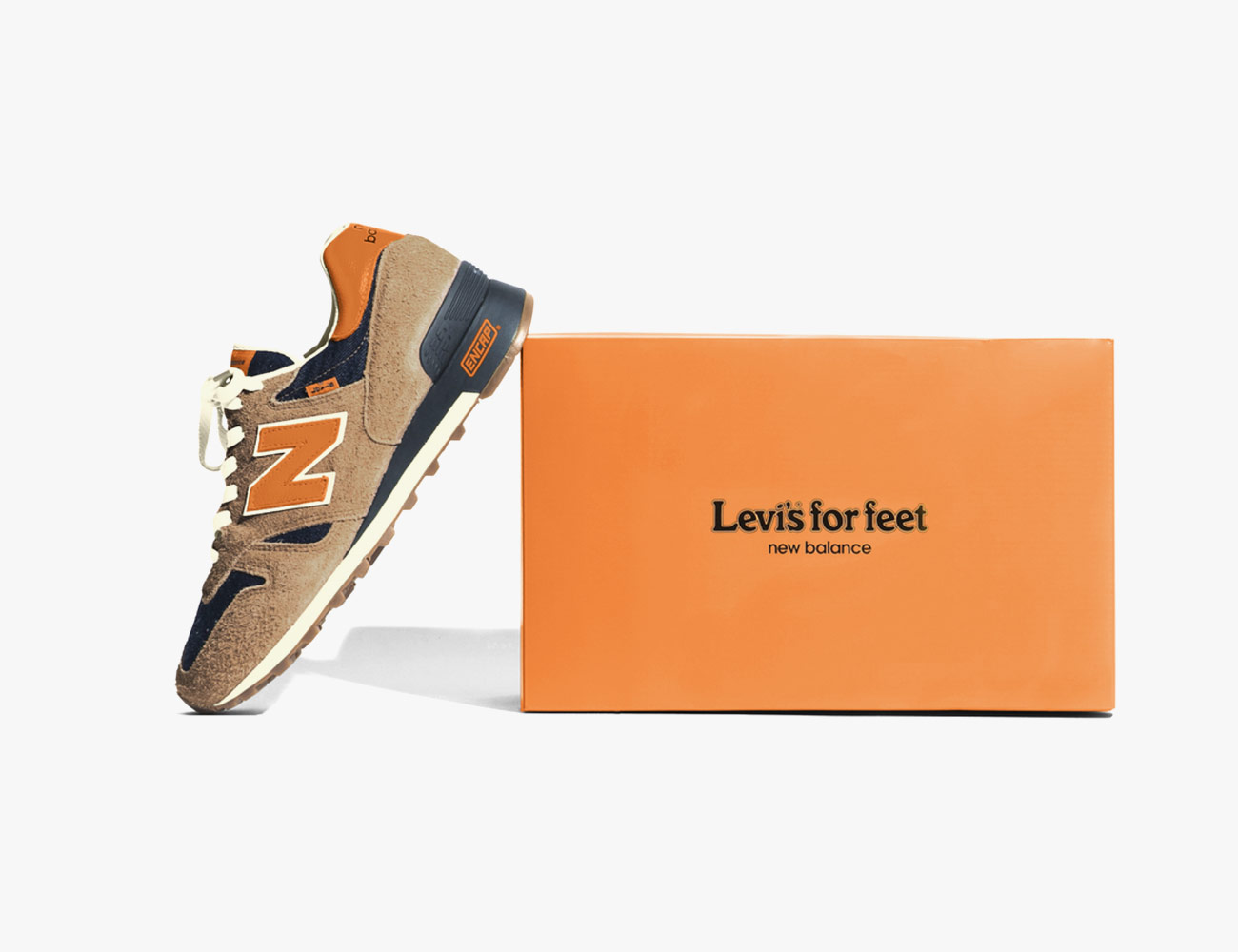
Levi’s x New Balance Made in USA 1300 Sneakers

Denim’s not just for jeans and jackets.

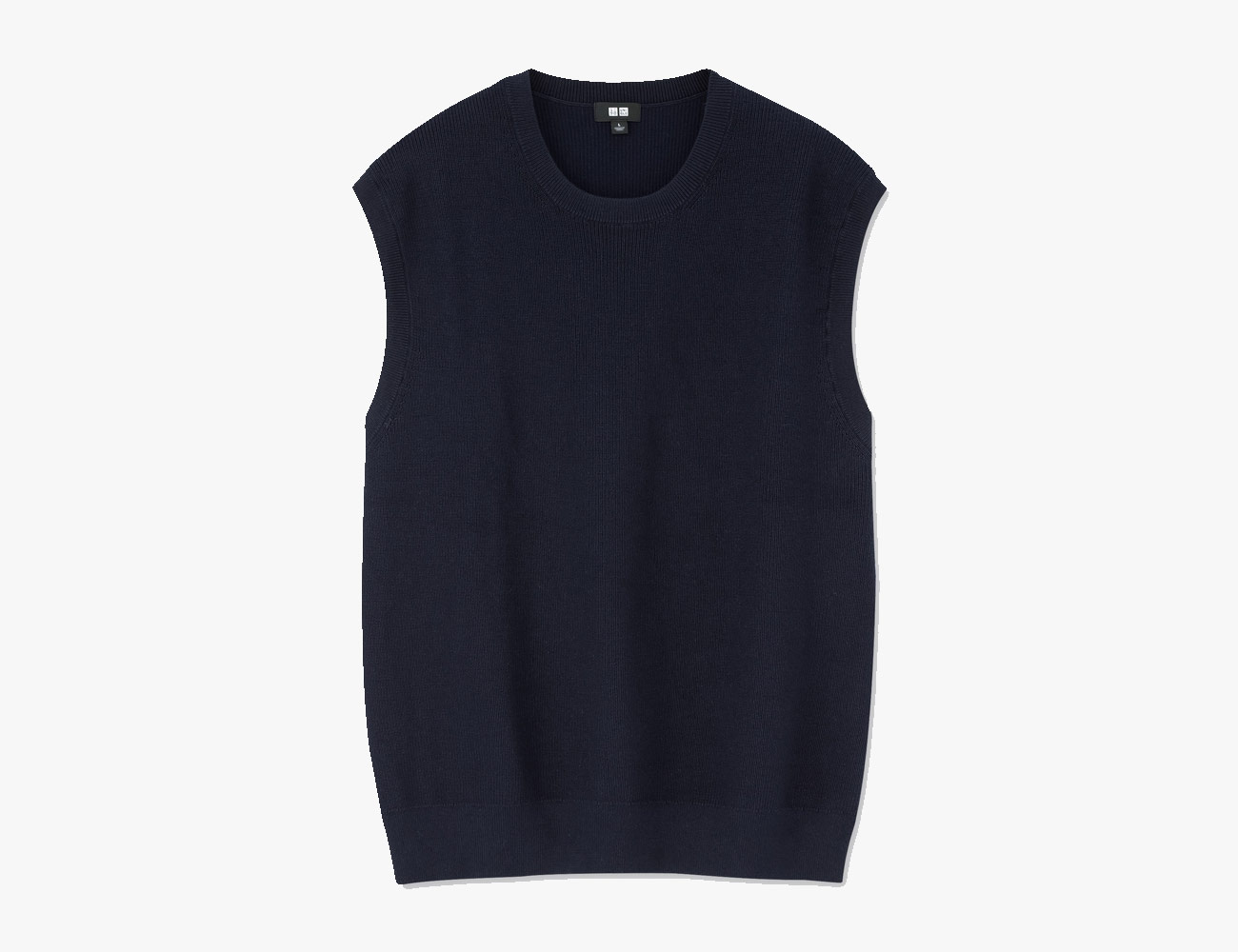
Uniqlo Oversized Crew Neck Vest

As the resident vest guy at the office and out of the office, I have to tell you about this vest.

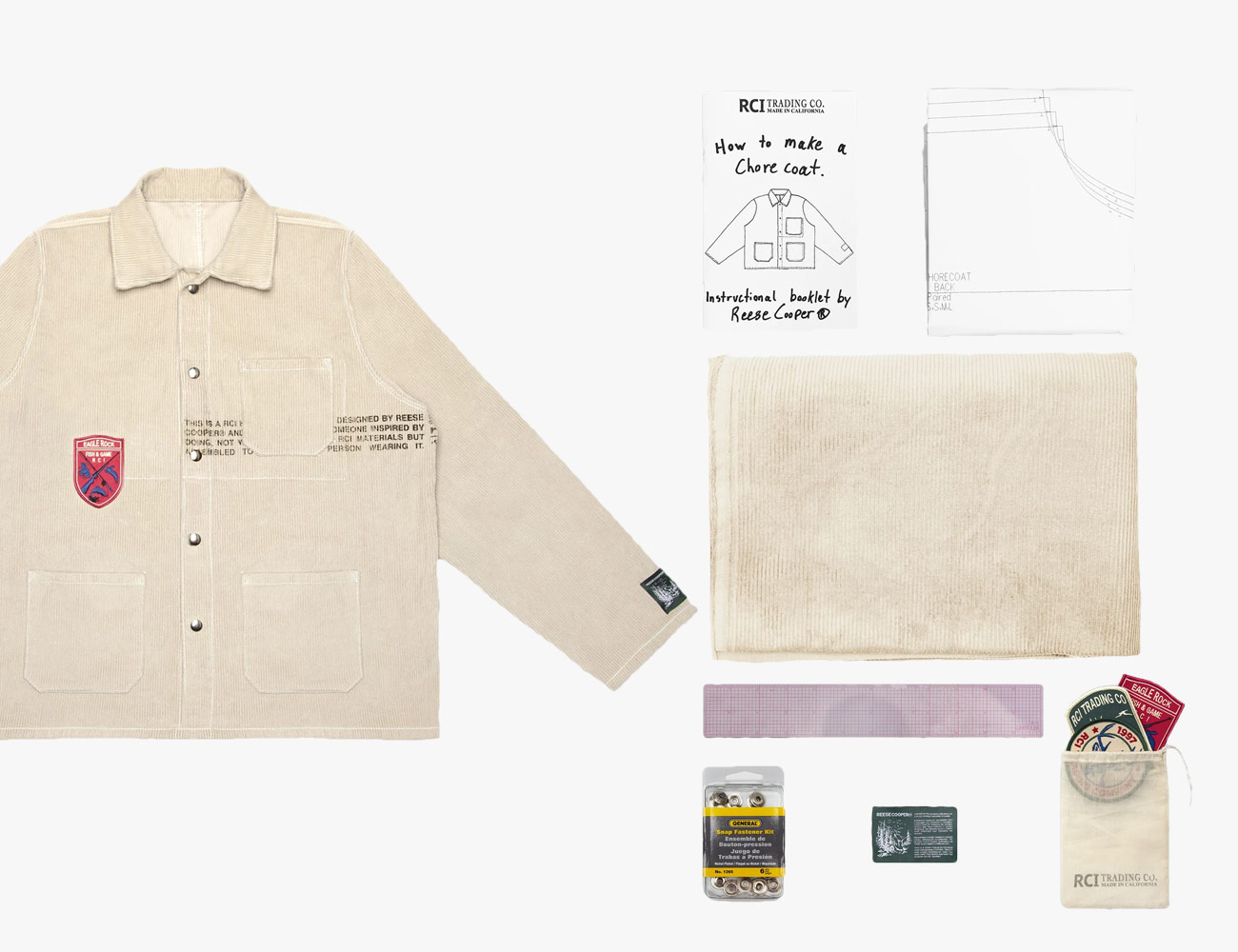
Reese Cooper DIY

A home delivery meal kit, but make it fashion.

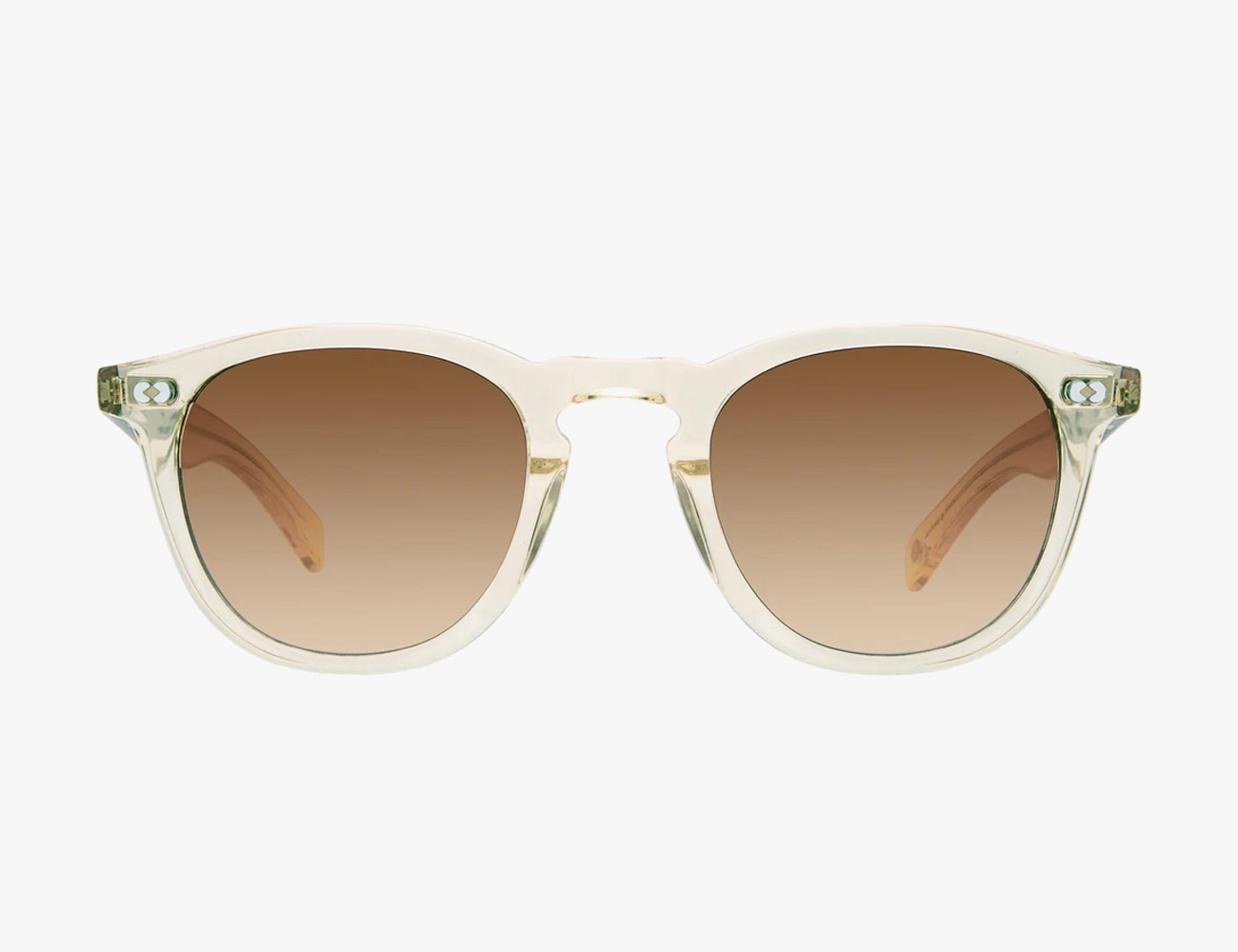
Garret Leight x Pure Beauty Hampton X Sunglasses

Sunnies made to shade your bloodshot eyes. If you live in California, you can get the doobie set, too.

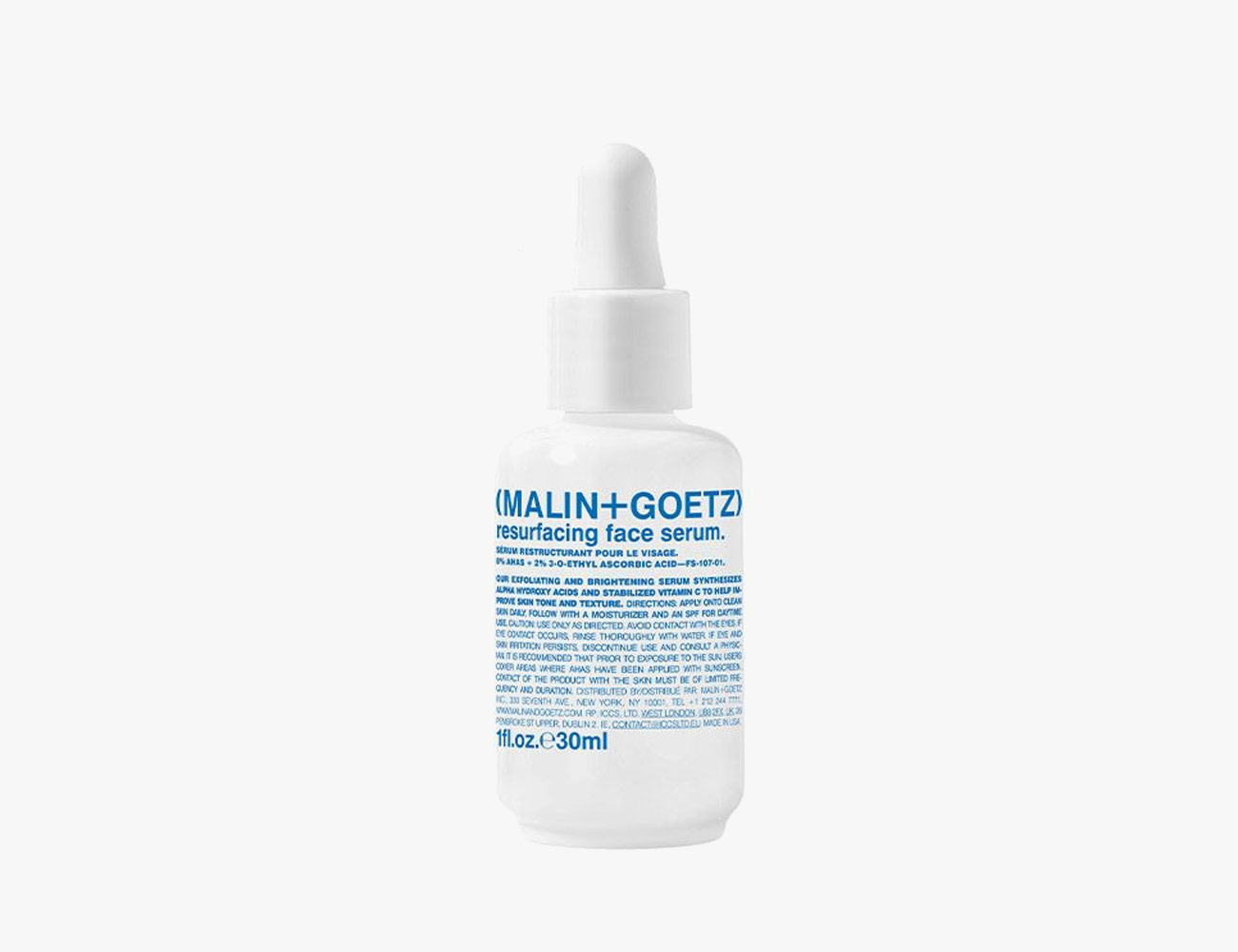
Malin + Goetz Resurfacing Face Serum

Smoothing, clarifying and brightening your skin.

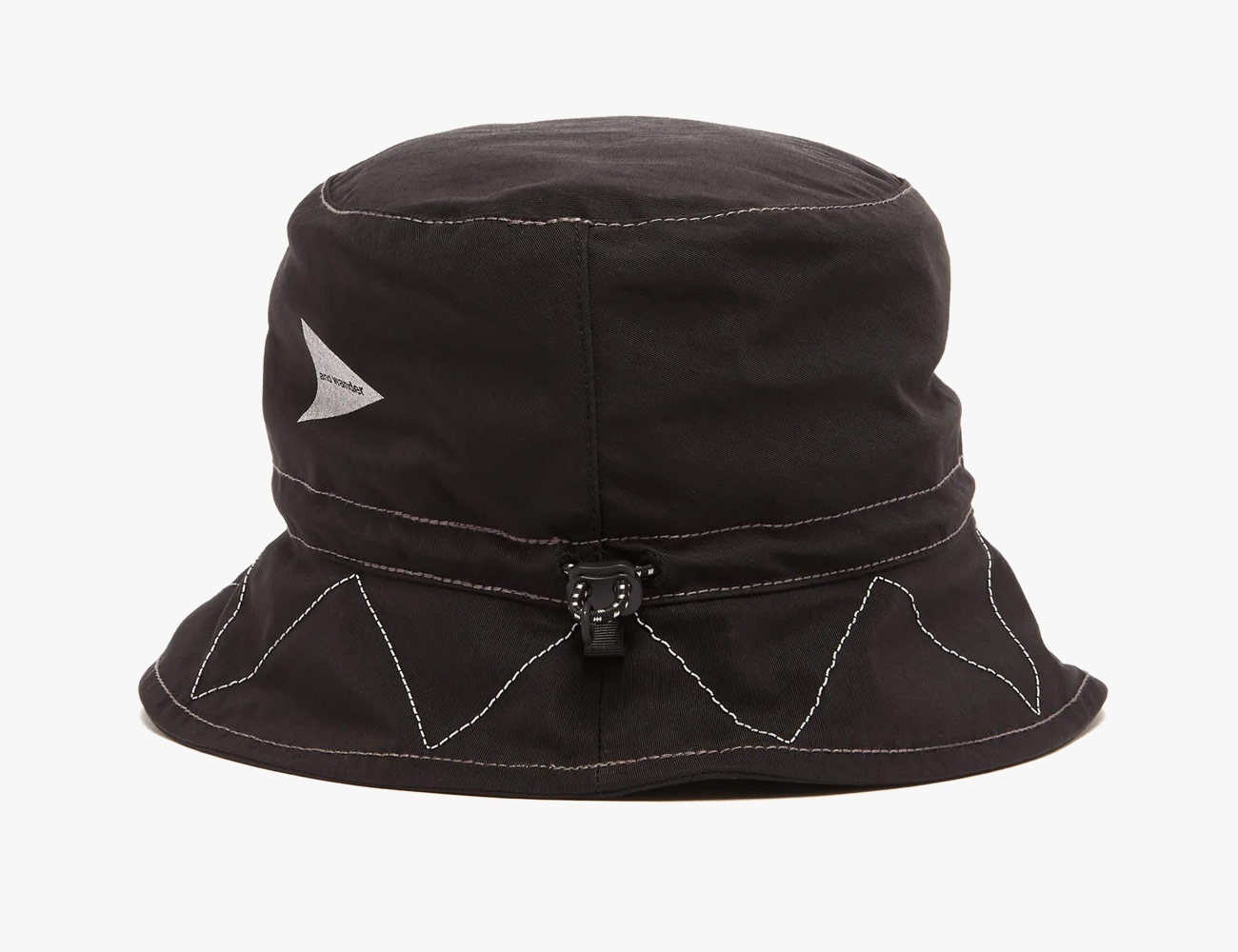
And Wander Reflective Stitching Bucket Hat

Bucket Hat Season is year-round.

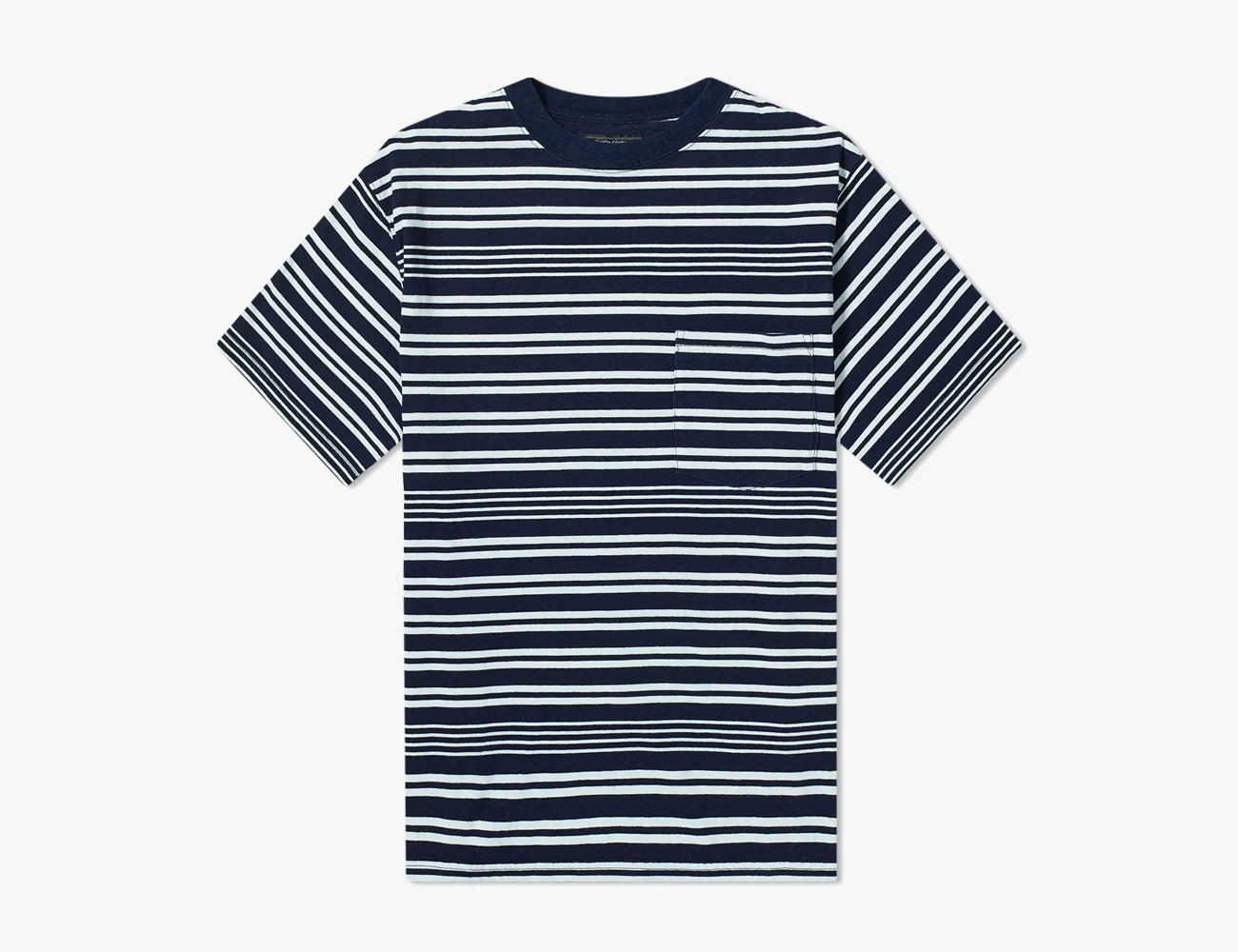
Beams Plus Spring Drop

Miles Davis would approve.

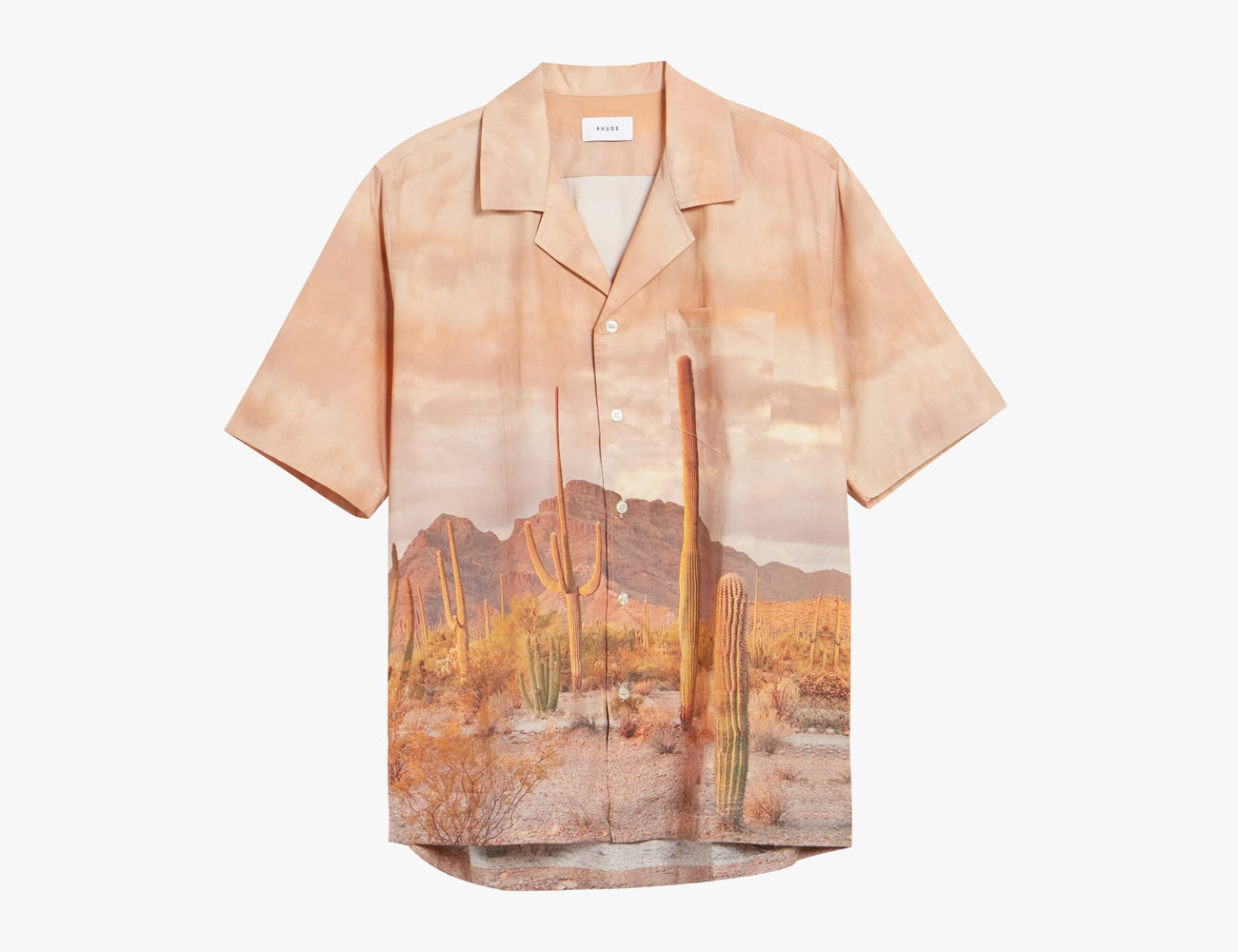
Rhude Desert Print Logo Shirt

When you want to go outside, but can’t.

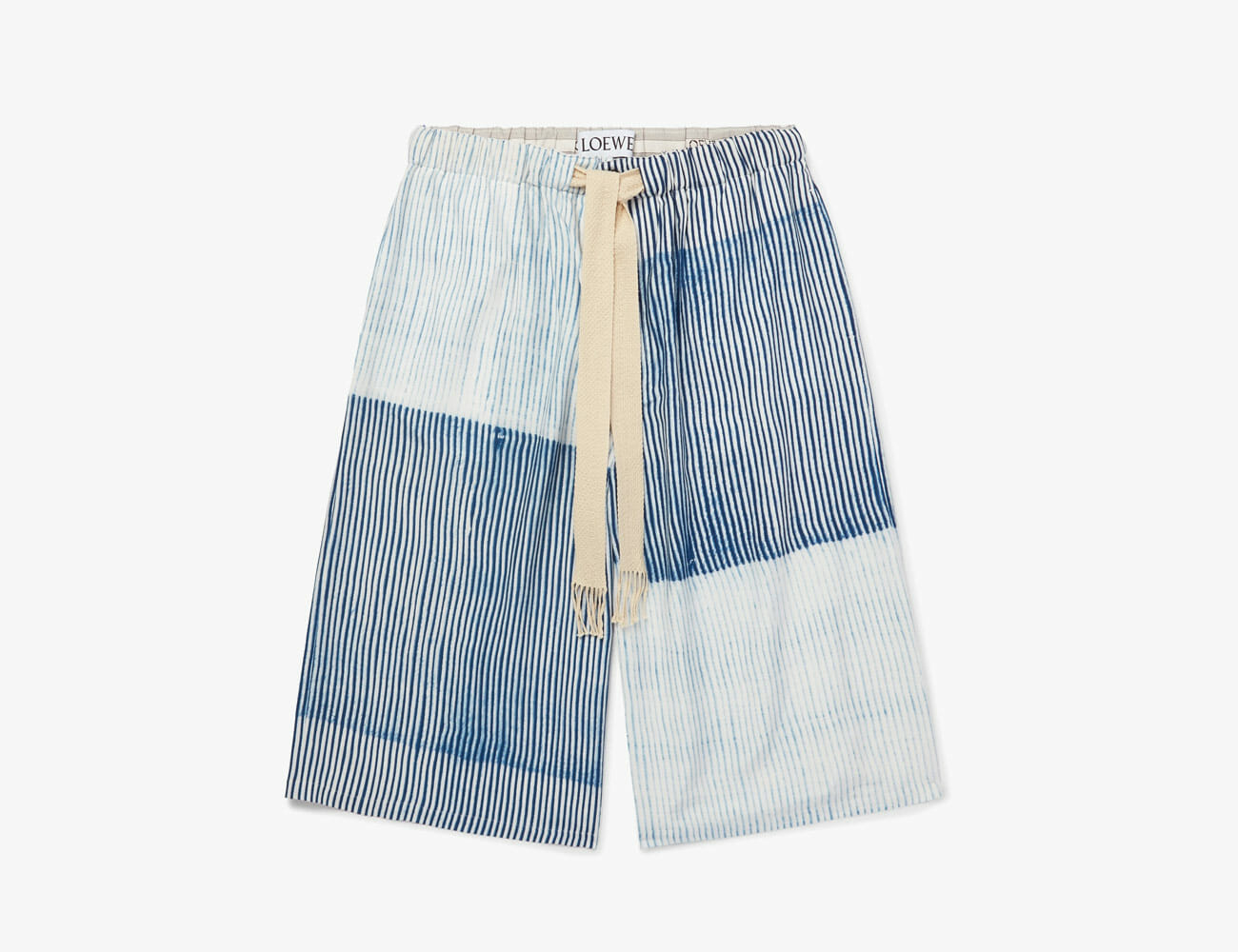
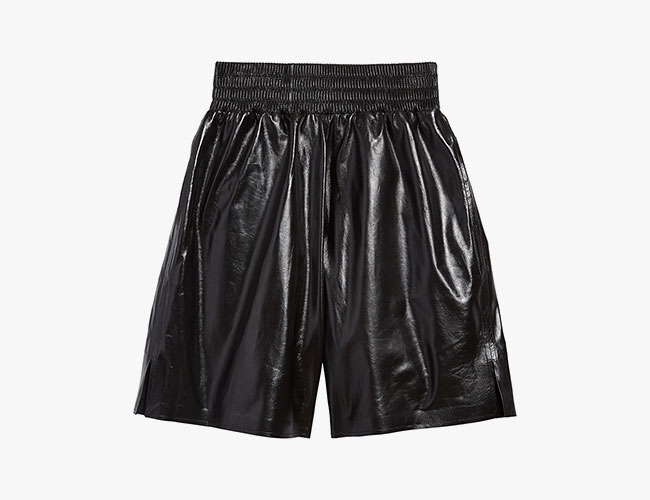
Loewe Wide-Leg Striped Crepe Drawstring Bermuda Shorts

Long shorts will be here in full force, soon enough.

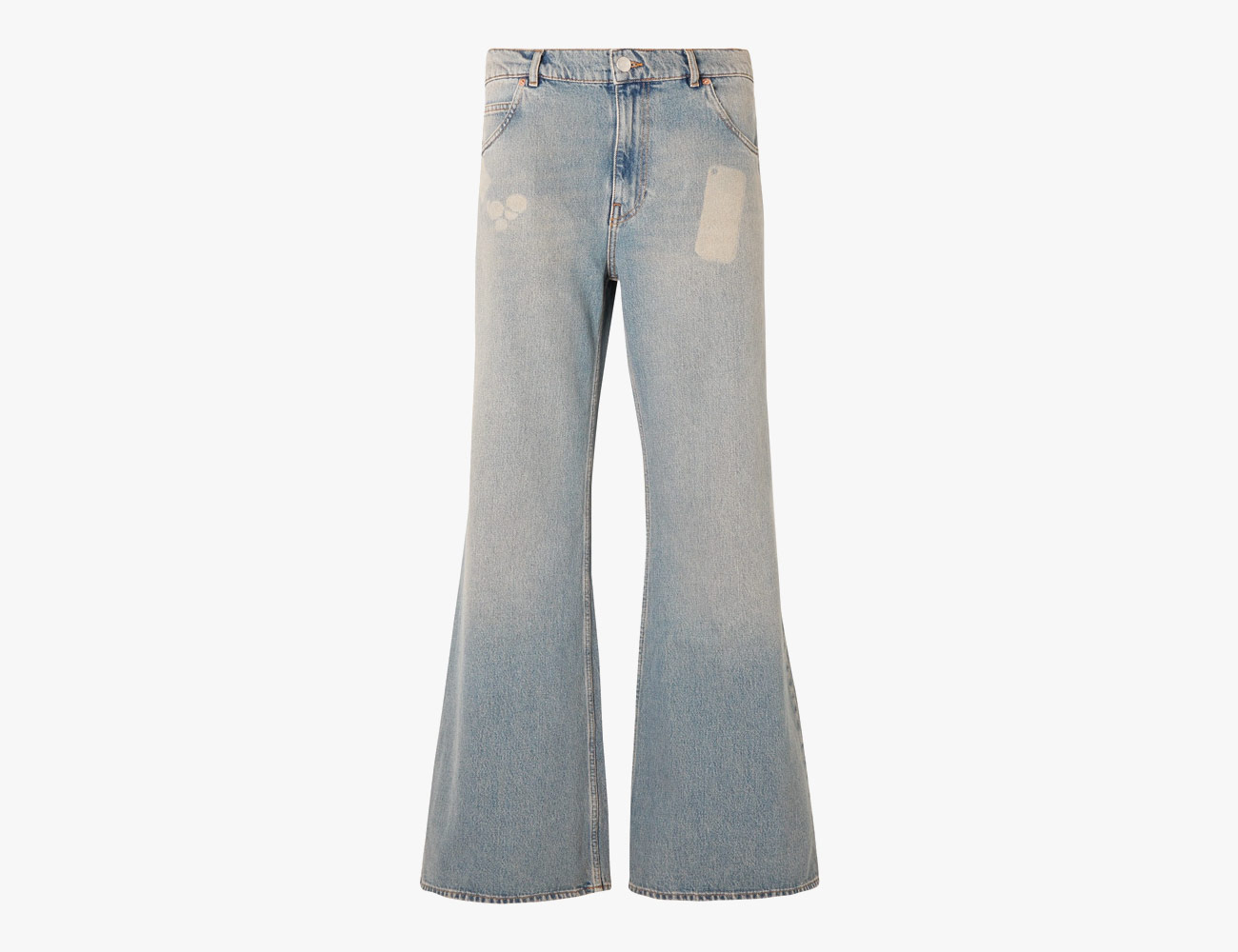
Martine Rose Flared Bleached Denim Jeans

These jeans just tried to hitchhike their way to San Francisco.

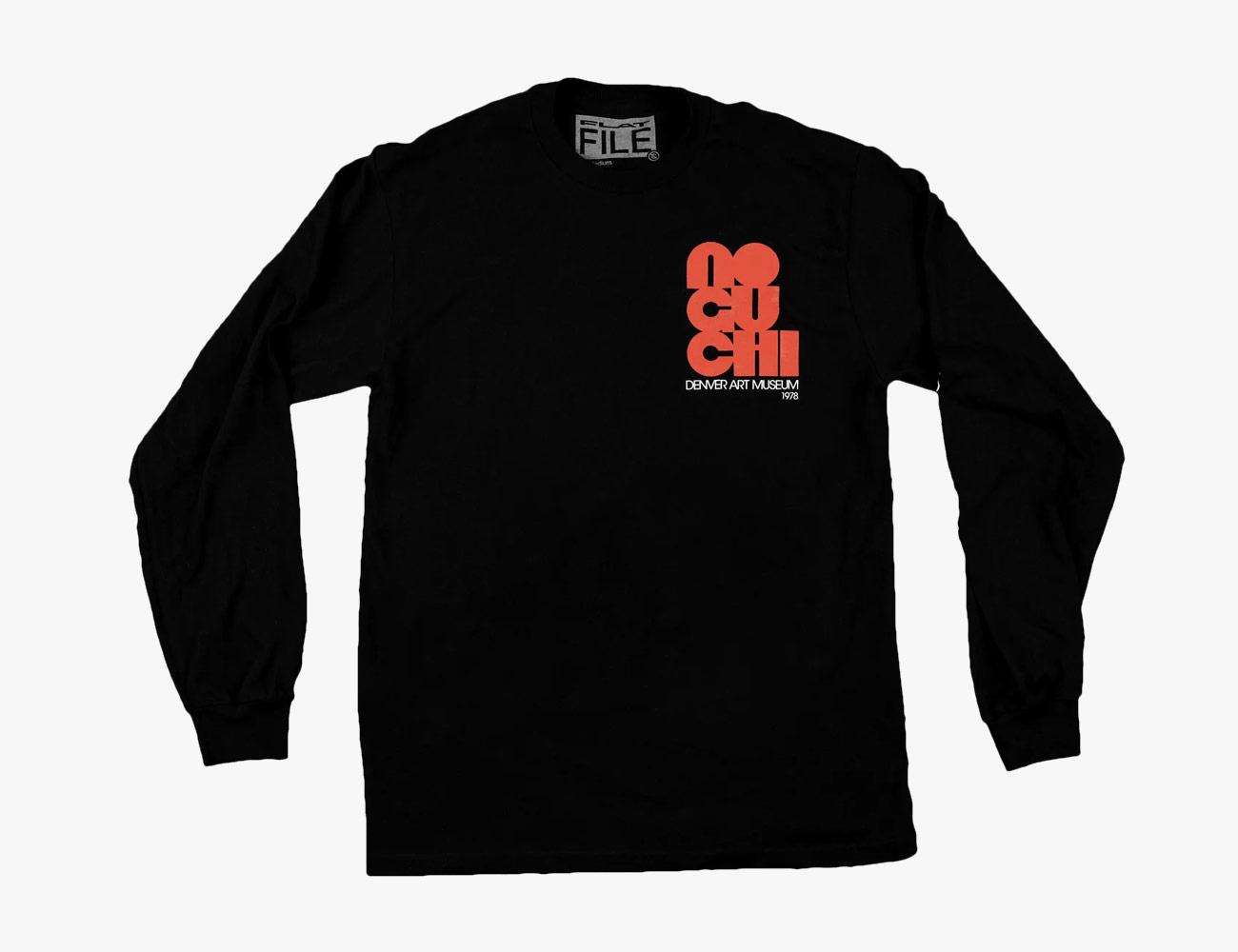
Flat File T-Shirts

The concert tee, but for vintage art exhibitions.

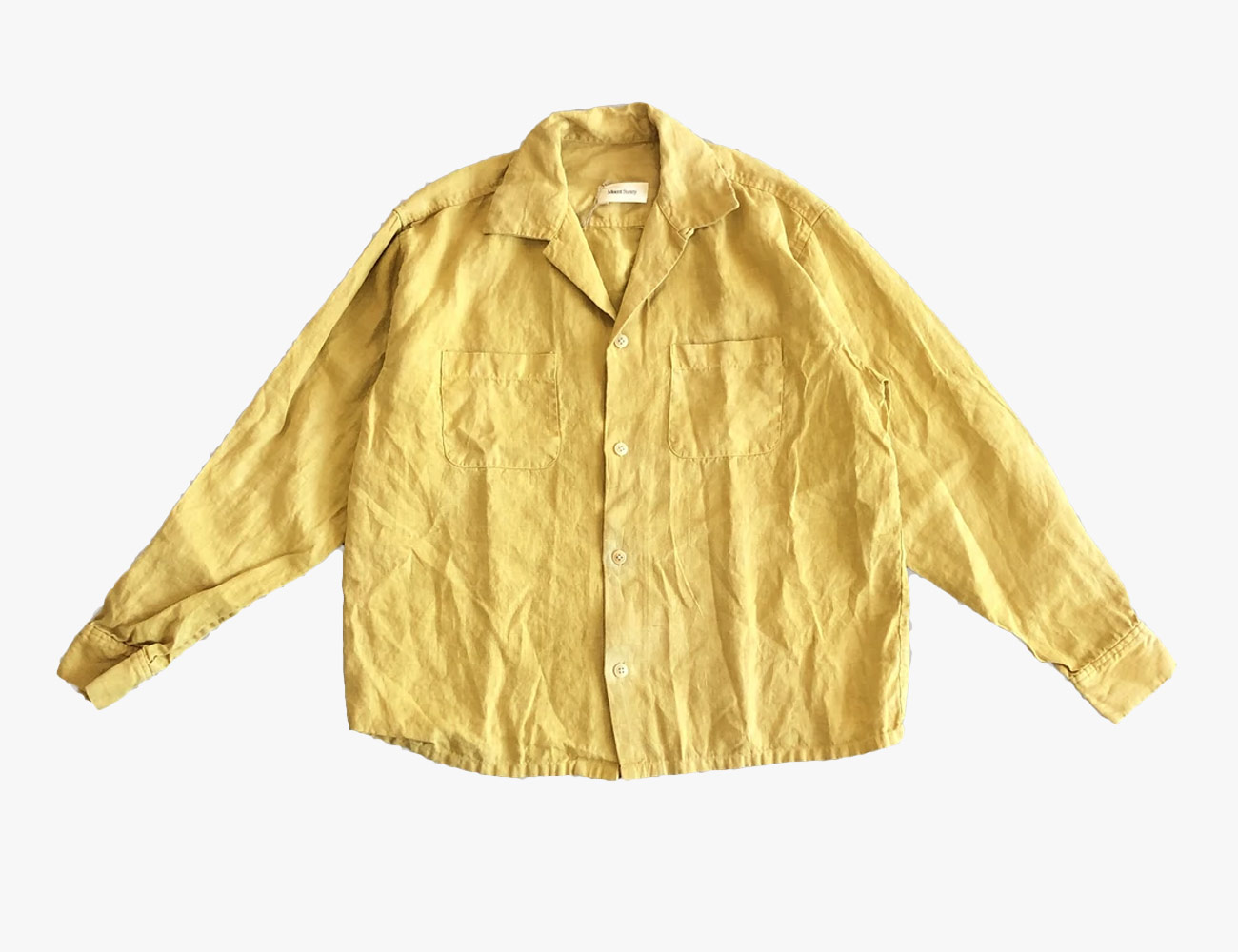
Mount Sunny Garden Shirt

Holistic clothing to read your horoscope in.

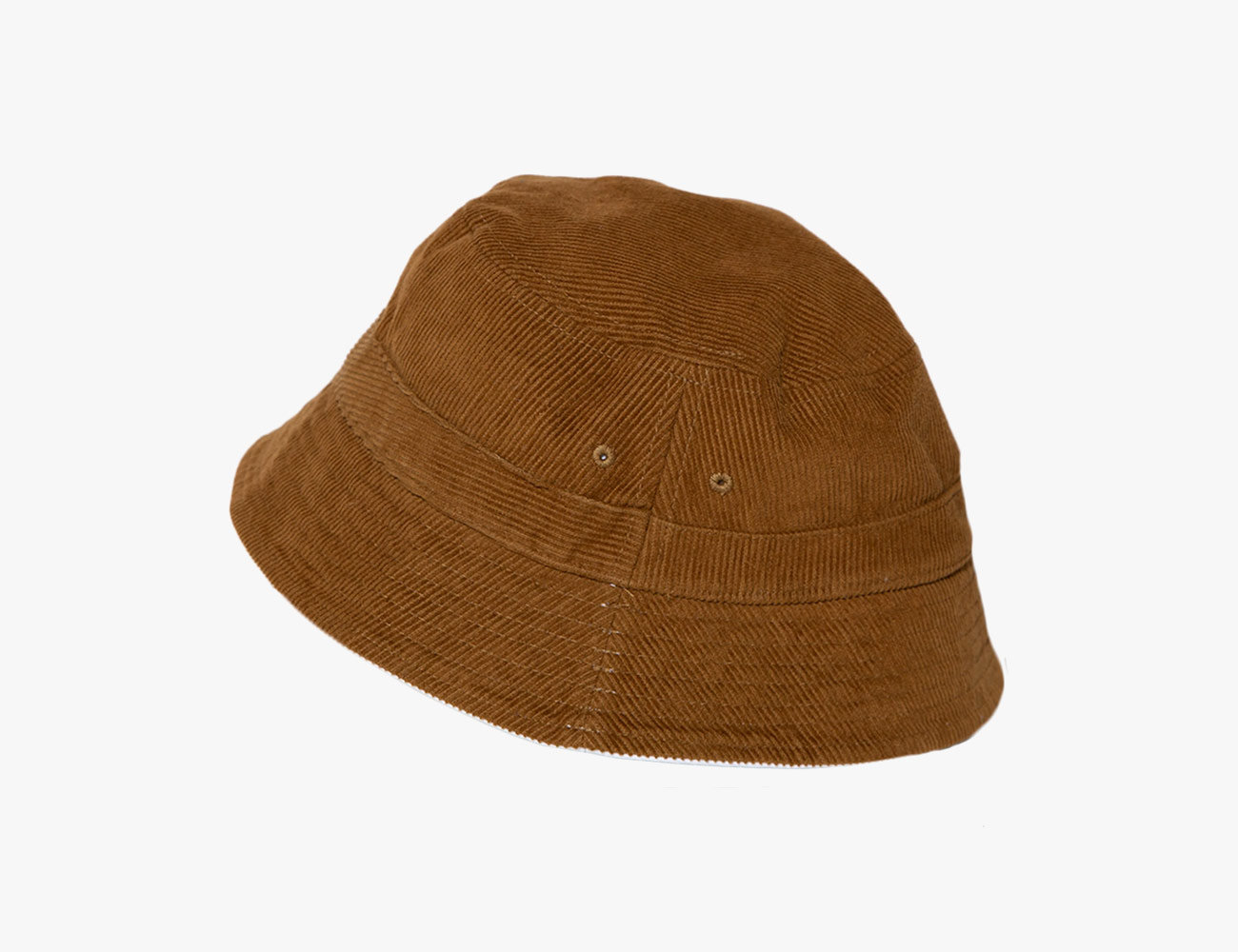
Freemans Sporting club Reversible Bucket Hats

Two ways to get by without your barber are this: canvas and corduroy.

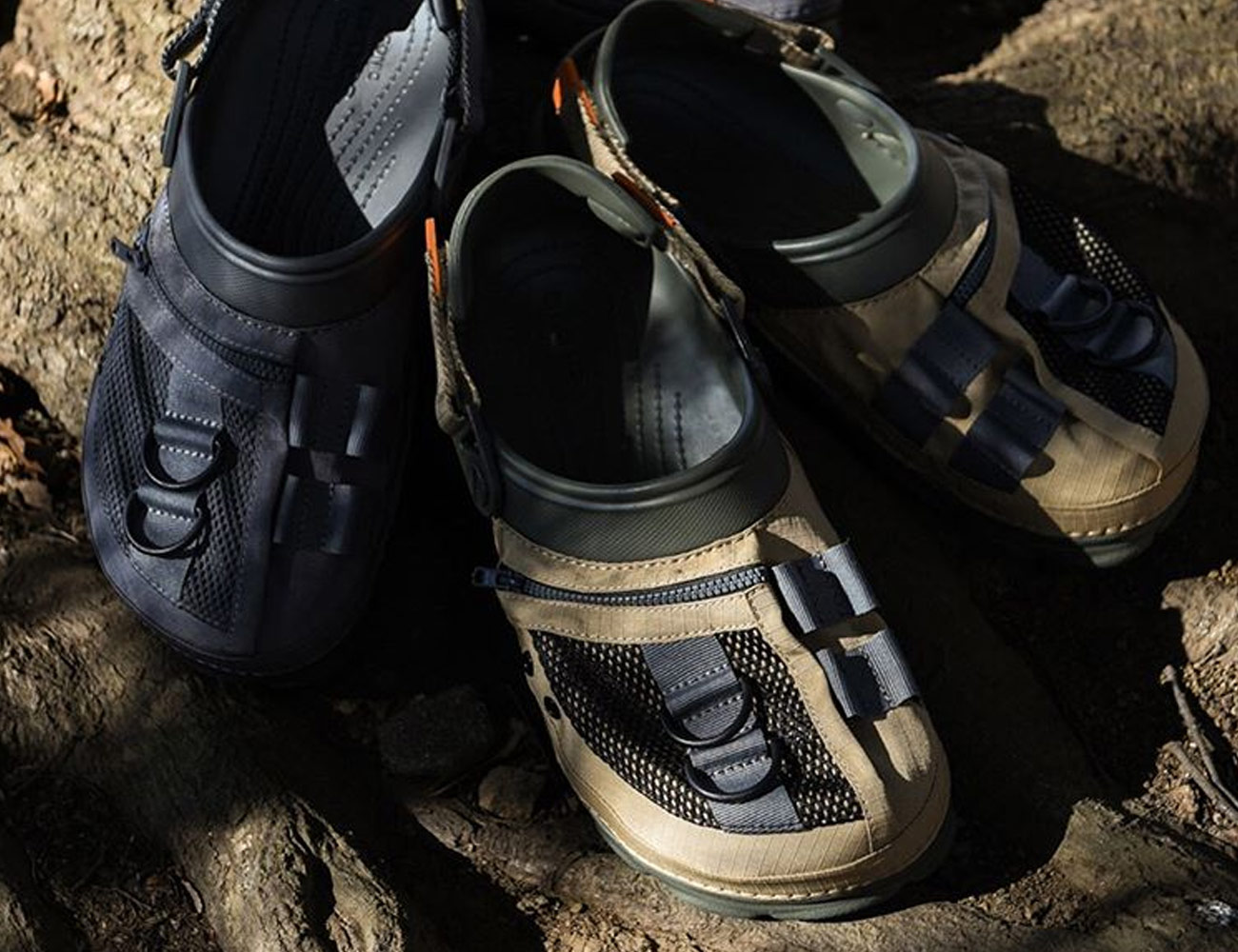
Beams x Crocs

https://cdn.beams.co.jp/img/goods/11330725332/O/11330725332_D_10.jpg

This is what happens when Crocs go fly fishing.

Taylor Stitch Botanical Capsule

In celebration of Mother Earth, Taylor Stitch collaborated with artists Anna Meier and Kristin Arzt to remake its signature pieces using botanical dyes and natural materials.

18east Sahasika

Embroidered by hand, 18east’s Sahasika is just one more reason to love the small New York City brand.

RRL Spring/Summer ’20

The indigo-soaked collection is finally here and it is both rootin’ and tootin’.

Division Road x Viberg Service Boots

Skip the Sunday shoe shine routine and lace-up these matte black boots.

Bottega Veneta Double Pique Polo

The deep v of polo shirts.

Needles x Matsuda Papillon Sunglasses

Sunglasses that also do yoga.

Mister Green High Vibrations Tee

A collaboration t-shirt with Sonos (yes, the smart speaker) for 4/20 sounds like something from Mad Libs. And we love it.

Commes Des Garçons Shirt Workstitch Vest

Think of vests as less of a garment and more of an accessory.

Evan Kinori x Lady White Co. Hooded Sweatshirt

Half hemp, half cotton and the only thing that’s on our mind right now.

Raf Simons Boxer Short with Patches

Punk undies without the safety pins or cigarette smoke.

Dries Van Noten Carlton SS Camp Shirt

Miami-ready.

Outerknown Blanket Baja Pullover

One of our favorite button-up shirts just got turned into one of our favorite hoodies.

Auralee Linen Enamel Laminate Big Blouson

I am now sending my shirts to my local Kinko’s to be laminated.

Note: Purchasing products through our links may earn us a portion of the sale, which supports our editorial team’s mission. Learn more here.

Our Staff’s Favorite Socks to Wear at Home

While our socks might not make it on our daily Zoom calls, they’re an essential part of every outfit — now more than ever. Since we’re (rarely) wearing shoes these days, and the heat in our buildings is still on due to blasphemous 40-degree lows, we’re most certainly pulling socks on. The constant sidekick to shoes is stepping into its starring role, and we couldn’t be more excited to geek out about where we got our pairs.

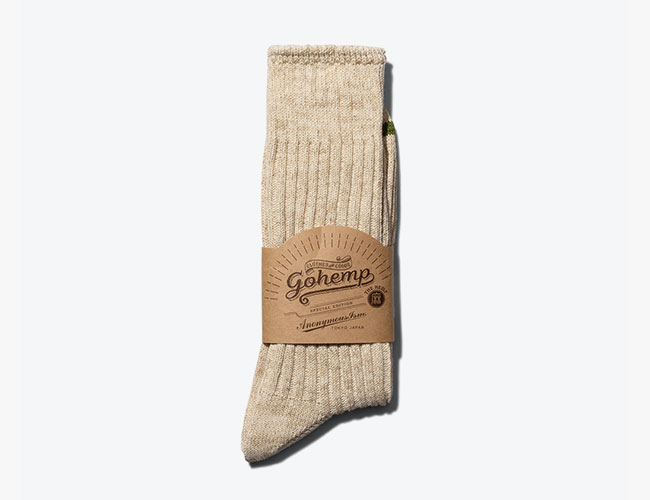
Anonymous Ism Go Hemp OC Crew

“I have seven pairs of these socks, not because they came in a seven-pack but because they’re just so good that I had to have one for every day of the week. They’re dense, but the hemp makes them breathable, and I like that they’re a natural white rather than an optic white.” — Gerald Ortiz, Staff Writer

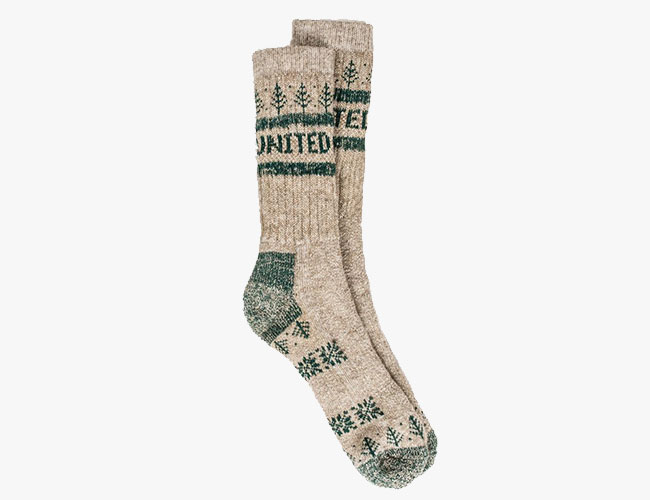
United by Blue Alpine Ultimate Bison Sock

“You know those socks that have rubber dots on the bottom? I think those are pretty much the perfect thickness and softness, but I despise that the rubber dots mean the socks are more like slippers than socks. Stuffing those into shoes is a pain. These United by Blue socks are just as thick and warm and cozy, but sans rubber dots, which makes them loads better. The truth of the matter is no one likes the rubber dots — that means you can’t slide across your fake wooden floors in your 10 x 10 square foot apartment. And how else are you supposed to tamper down all your pent up quarantine energy?” — Meg Lappe, Editorial Coordinator

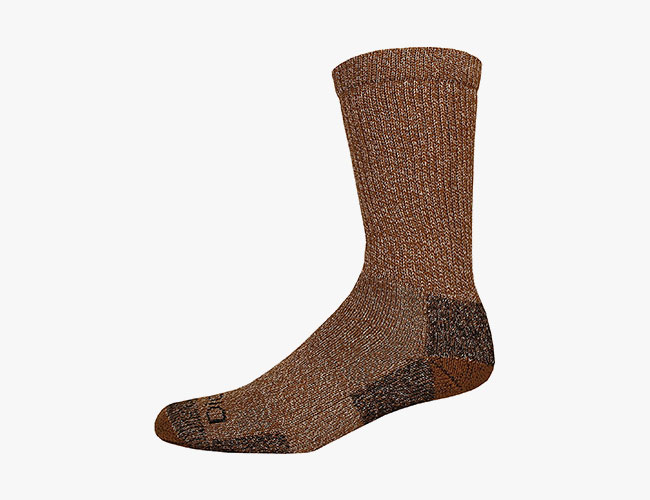
Dickies Steel Toe Moisture Control Socks

“I bought these to wear with boots during NYC’s gnarly winters, but I’ve been more than happy relegating them to my everyday socks to wear with slippers around the house. They’re light enough, breathable and, as is the Dickies way, affordable.” — Will Price, Home and Drinks Editor

American Trench Silver Crew Socks

“These are my go-to socks because thay are instantly comfortable, have a padded footbed for wearing with boots or around the house. And, they are made with sliver to keep your feet stink-free.” — Joe Tornatzky, Creative Director

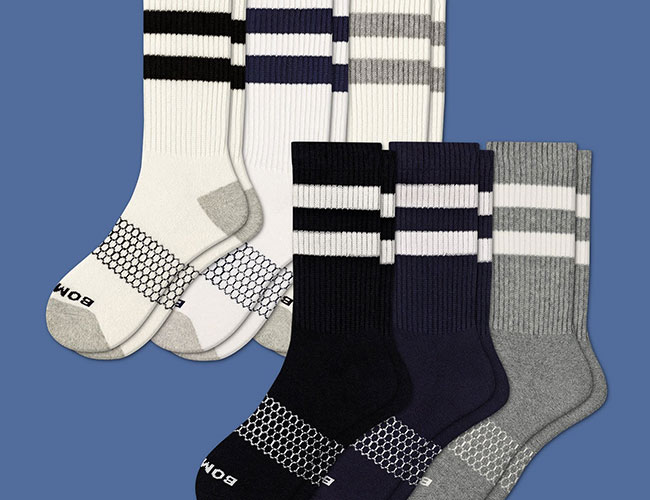
Bombas Vintage Stripe Calf Sock

“Bombas have everything I want in a casual sock: they’re cushioned well in the right places, grip firmly but not tightly, never lose elasticity and they look great. I am slowly filling my sock drawer with different styles, starting with these vintage stripes – the merino calf socks are next, then ankle socks. Then some of the fun colorways. Then… maybe t-shirts? This may actually be a problem. Thanks for bringing it up in a public forum.” — Nick Caruso, Coordinating Producer

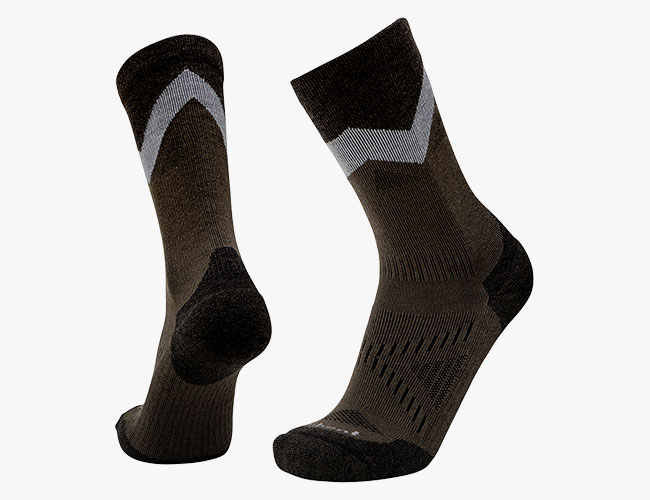
Le Bent Le Sock Outdoor Light Crew

“At the last Outdoor Retailer trade show, the Le Bent people forced me to try these socks on, and I am forever grateful for it. They are lightweight, warm, breathable and buttery, perfect for wearing with light hiking boots — or all by themselves.” — Steve Mazzucchi, Outdoors and Fitness Editor

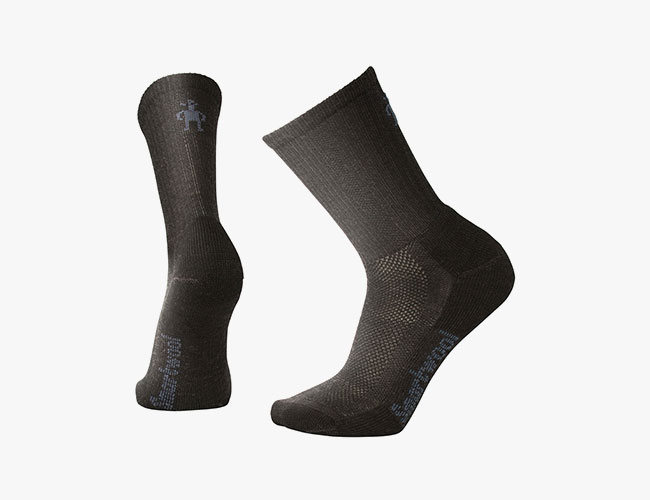
Smartwool Ultra Light Hiking Crew Socks

“Though made for the backcountry, Smartwool’s Ultra Light Hiking Socks are right at home … well, at home. They have a small amount of cushion, while a mesh ventilation zone keeps things breezy and dry between the toes, and because they’re made with Merino wool, they never smell. Ever. I’ve accumulated probably 20 pairs over the last few years and always stock up when they’re on sale.” — Jack Seemer, Deputy Editor

Anonymous Ism 5-Color Mix Crew Sock

“When I used to work at J.Crew, we would carry these $24 made-in-Japan Anonymous Ism socks, and I couldn’t understand why someone would spend so much money on them. I caved one day and bought a pair, and I’ve been a fan ever since. This specific pair is thick and plush, which means I can only really wear them during the cooler months, and the marled yarn adds interest to what is normally a very boring piece of clothing.” — Tyler Chin, Editorial Associate, Editorial Operations

Uniqlo Slub Half Socks

“Uniqlo does basics very well, and that includes a simple pair of white socks. They hold up, too.” — Ryan Brower, Commerce Editor

Stance Icon Socks

“I’m kind of emerging out of my thick colorful sock phase after realizing that most days, I really prefer the way I look when just wearing a simple pair of white crew socks. The cheap ones are still a little thin for my taste, but Stance socks are the perfect thickness with just the right amount of accents and branding.” — Scott Ulrich, Editorial Associate, Editorial Operations

Vans Classic Crew Socks

“I’ve always been a guy who likes mid-length black socks. All-black shoes and black socks. It’s a uniform.” — Tucker Bowe, Senior Staff Writer

Stance Tucked In

“Stance got the naming right on this one — sticking your toes into its ultra-soft Butter Blend fabric is like sticking them into butter. Except, you know, not as strange.” Tanner Bowden, Staff Writer

Anonymous Ism Slub Crew Socks

“I’ll be honest: I don’t like wearing socks in my house in the warmer months. But, I will wear these great textured Japanese socks with sandals every time I walk the dog.” — John Zientek, Style Editor

Glerups The Slipper

“I’m not wearing socks too often at home unless I need to go out these days — but I also prefer not to walk around barefoot. These Glerups do the trick. And the leather bottoms actually patina nicely over time.” — AJ Powell, Senior Content Manager, Gear Patrol Studios

Note: Purchasing products through our links may earn us a portion of the sale, which supports our editorial team’s mission. Learn more here.
Meg Lappe

Meg Lappe is Gear Patrol’s Editorial Coordinator, handling strategy across our digital, print, video and social teams. She can typically be found running around.

More by Meg Lappe | Follow on Instagram · Twitter · Contact via Email

Some of the Best Sandals You Can Buy Are Actually Made by Bootmakers

<!–Some of the Best Sandals You Can Buy Are Actually Made by Bootmakers • Gear Patrol<!– –>

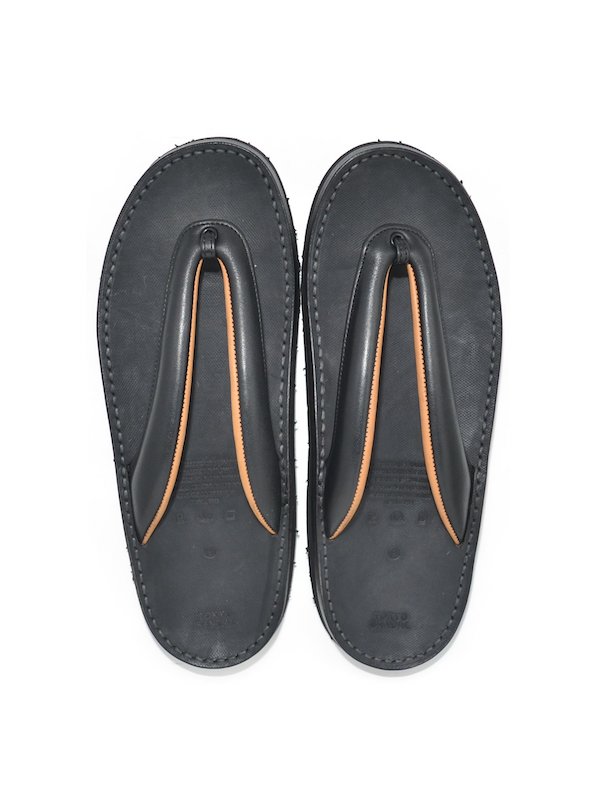
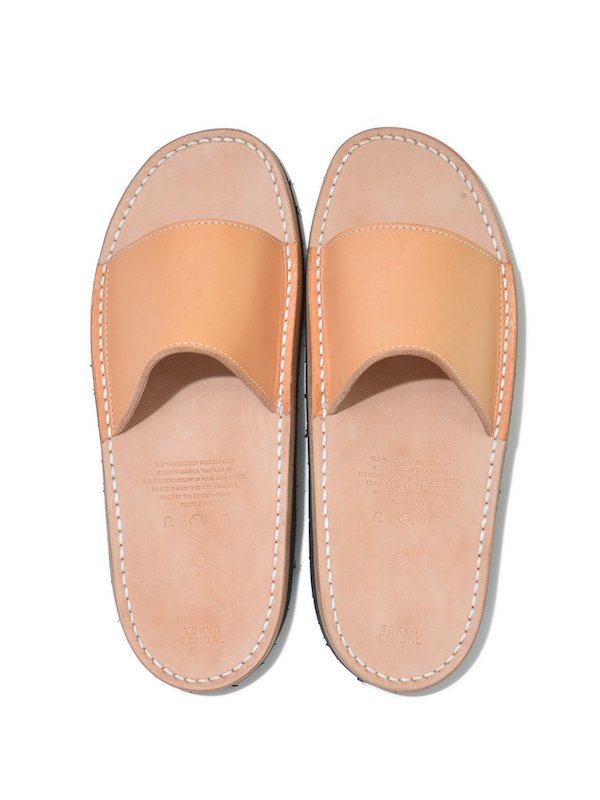
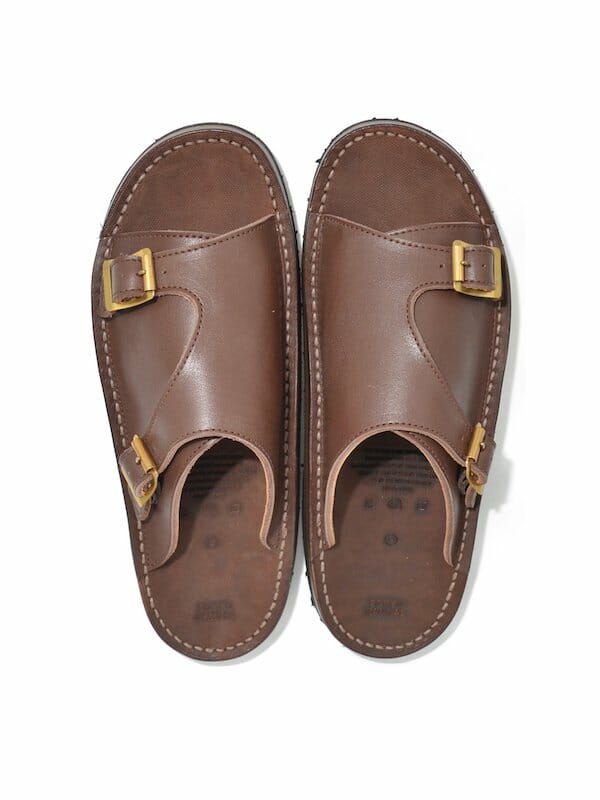
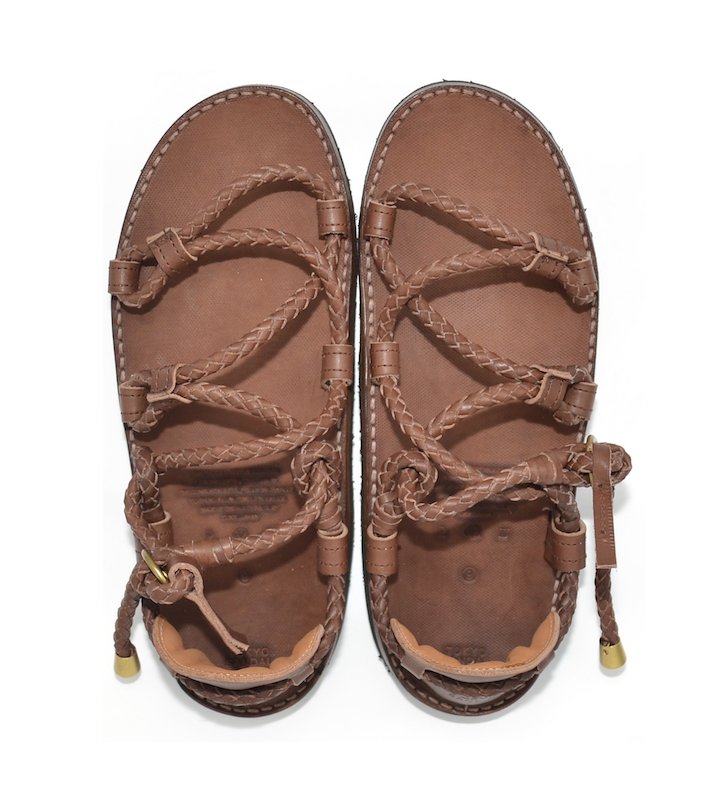
Tokyo Sandals


Rolling Dub Trio makes some of the coolest and well-made boots out there. Combining the toughest leathers and rare, deadstock materials which vintage obsessives crave, the brand crafts its sought-after footwear in Japan using time-tested methods like Goodyear welt and stitchdown construction. Oh, and they also make some of the most badass sandals.

Made in the same factory, Tokyo Sandals sits with Rolling Dub Trio under the parent company, The Boot Factory. And with a team of bootmakers using traditional techniques and an artisan level of detail, it’s sandals are mouthwatering.

[embedded content]

Each sandal uses two layers of full-grain leather, one for the footbed and one of the midsole. This double layer of leather might sound like a lot, and it sort of is. Many of the world’s best shoemakers do this including hardcore boot brands like Viberg and White’s. The reason for this is that it not only provides durability and structural integrity to the sandals but extreme comfort as both layers will mold to your feet with wear.

Many boot lovers will tell you that breaking in two layers of full-grain leather isn’t exactly a walk in the park. But Tokyo Sandals gives you a head start. Its artisans mold each layer by hand in a process similar to molding plywood to form curves and arches for an ergonomic fit, unlike many of the skimpy sandals available — if you didn’t know, there are a lot of them — which serve up flat and flimsy leather cutouts. This result is an unparalleled fit and support that you won’t get from sandals that cost you twenty bucks at the sporting goods store.

Tokyo Sandals don’t cut corners and they also aren’t afraid to experiment, using premium and rare materials like horsebutt and rabbit fur for some models. Like premium bootmakers and many glove makers, Tokyo Sandals uses soft and supple kip leather and pigskin to line its footwear for luxurious comfort. And each shoe is constructed with stitchdown construction, just like the best boots available, so you know they’ll last for a long time. That is, if you can get a hold of a pair — they’re only available in Japan. But if you know how to work your way through proxy services, you could get a pair for yourself.

Setta Sandal by Tokyo Sandal ~$353

Onsen Sandal by Tokyo Sandal ~$325

Double Monk Sandal by Tokyo Sandal ~$370

Waraji Sandal by Tokyo Sandal ~$463

<!–

–>

<!– –><!–

–>

Everything You Need to Know About Red Wing Heritage Shoes and Boots

Welcome to Brand Breakdown, a series of comprehensive yet easy-to-digest guides to your favorite companies, with insights and information you won’t find on the average About page.

Red Wing Shoe Company is named after the small Minnesota town where it manufactures a range of rugged boots and shoes. Founded in 1905 by Charles Beckman — and still privately held and family-operated today — the brand grew quickly, supplying doughboys with boots designed for the muddy trenches of WWI. After the war, Red Wing became a household name across the country thanks to its safe and hearty boots made for factory workers, farmers and outdoorsmen.

Sturdy, classic and well-loved by generations, the boots and shoes are still handmade in Red Wing’s Minnesota plant. While mainline Red Wing continues to supply construction workers and outdoorsmen, Red Wing Heritage, introduced in 2008, revives styles from the brand’s archive. Based on classic models, the styles prioritize work-ready function. “The foundation is built upon making quality footwear for people to wear on the job,” says Steve Spencer, Managing Director of Red Wing Heritage.

The brand’s boots are the gold standard for men’s footwear and are stocked at men’s clothing shops the world over. Made to the same exacting standards as their work boots, Red Wing Heritage styles have a wide appeal and are just as appropriate on the ranch or factory floor as they are in the office or at home. This guide will help you navigate classic styles from the Red Wing Heritage catalog, but before you dive in, take a minute to familiarize yourself with important boot terminology.

Terms to Know

Every shoe is made up of a variety of parts that all affect the comfort, style and durability. These terms aren’t specific to Red Wing Heritage but are important to understand before exploring specific boots.

Outsole: This is the part of the boot that touches the ground. The outsole can be made from all matter of materials. Your dress shoes probably have leather outsoles while most Red Wings will have a rubber outsole or a combination of rubber and leather.

Midsole: This section of the boot separates your feet from the outsole. The harder the midsole, the longer the break-in time, but the longer the lifespan.

Welt: The welt is one of the keys to a long shoe life. This is the piece of leather around the edge of the sole which the rest of the boot is attached to. Most Red Wings are made with Goodyear-welt construction. This patented process makes the boots weather resistant and allows them to be resoled again and again.

Last: This is the silhouette of a shoe or boot. In the manufacturing process, the shoe upper is pulled over the last to give it its shape. Red Wing uses at least eight different lasts dating back to the 1930s.

Cap Toe: A self-explanatory style in which an additional layer of leather forms a reinforcement “cap” over the toe (read: added durability).

Moc Toe: One of Red Wing’s most recognizable toe shapes. Named for the moccasin style and shape, this style is created when the leather seams meet on the top of the toe.

Vibram: One of the oldest and most storied rubber outsole brands, Vibram is renowned for its quality.

Lug Sole: A classic rubber sole construction common in Red Wings and most other heavy-duty work boots featuring thick rubber treads. Invented by Vibram, the lug sole provides great traction and weather protection.

Traction Tred: This non-marking outsole is most closely associated with Red Wing boots. The large white rubber wedge won’t mark factory floors and provides generous cushioning.

Irish Setter: Irish Setter is a traditional Red Wing brand geared towards hunters. While the modern styles feature insulation and cushioning, the vintage Irish Setter line is more akin to Red Wing Heritage styles. You can find many older pairs on eBay and Etsy — they’re easily identified by the Irish Setter logo on the inside of the tongue. Red Wing Heritage also reproduces a few of the best vintage styles, but to get your hands on those you will have to look in Japan.

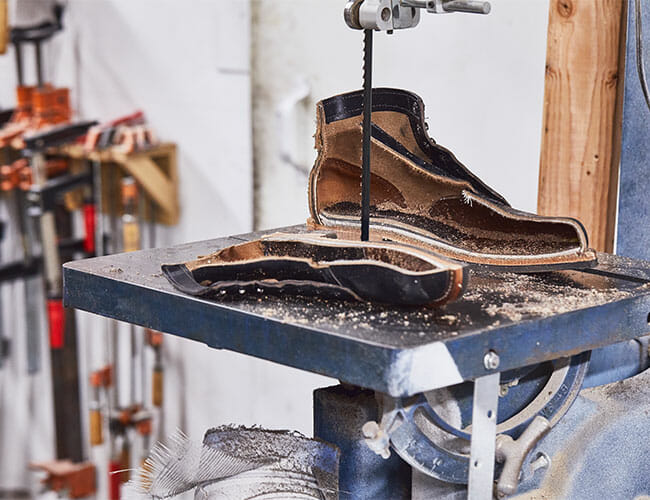
A Visual Guide to Boot Terms

Often, it’s difficult to picture how a boot is actually put together, where the stitches go and what you’re actually standing on. So we sourced prime examples of each type of boot construction — Cemented, Blake/McKay, True Moccasin, Goodyear Welt and Stitchdown — from some of the top brands in the industry and cut them in half. Read the Story

Construction

Making one pair of Red Wings takes about 250 steps from start to finish. While we are not going to list them in detail, here is a short breakdown of how these legendary boots are made.

It all starts with the leather. All Red Wing Heritage boots are made from leather tanned at S.B. Foot Tanning Company. Owned by Red Wing since the 1980s, the tannery has been providing leather for Red Wing since they opened their doors in 1905. All the hides are tanned by hand with the company’s wooden tanning casks in a factory just down the road from Red Wing’s facilities.

Once tanned, stretched, rolled and finished the leather is cut into patterns. Because no two pieces of leather are the same, it takes a well-trained craftsman to best utilize an entire hide. Once the leather has been cut, the shoes and boots are sewn together using Puritan stitch machines which provide unique triple-stitch lines. No longer made, these vintage machines are maintained by a cadre of in-house repairmen to keep them humming (some of them have been in use in the Red Wing factory for over 50 years).

After being sewn, the shoe is lasted and the upper is attached to the midsole and outsole with the Goodyear welting process. “The Red Wing brand is built on quality, craftsmanship and premium materials,” explains Spencer. “There is no marketing story that can create that.”

Styles

Red Wing Heritage is constantly expanding, pulling from its archives as well as designing new styles that fit the brand’s mission. “We always reach back into our archives, whether is it something directly we would pull and bring forward to today or simply inspiration,” says Spencer. Here is a breakdown of designs that everyone should know.

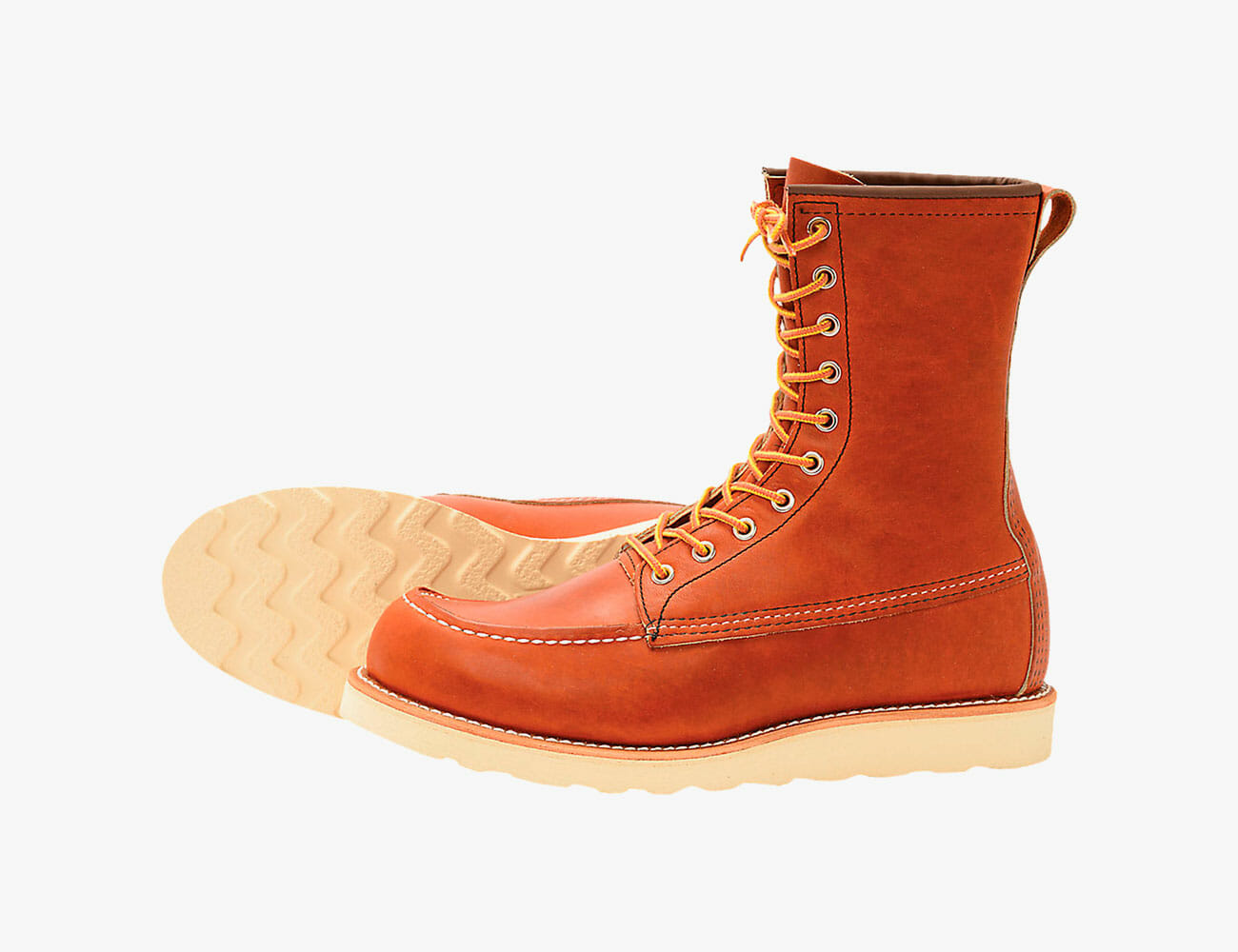
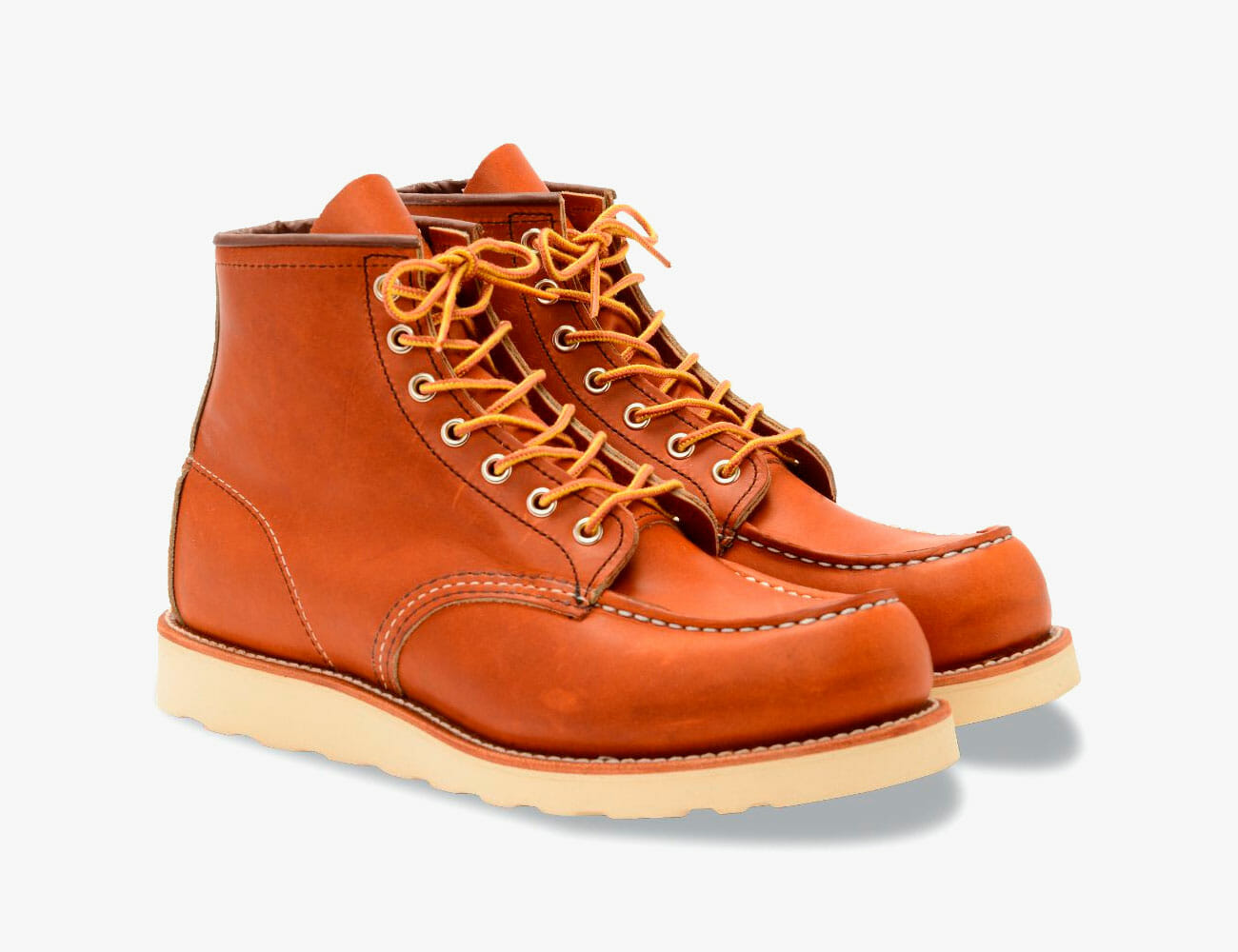
Style Number 877: 8-Inch Classic Moc

Introduced in 1953, this is the iconic Red Wing style. Designed with a white wedge sole and moc toe, the tall eight-inch boot was designed for hunters and sportsmen, but also found a devoted following on the work site.

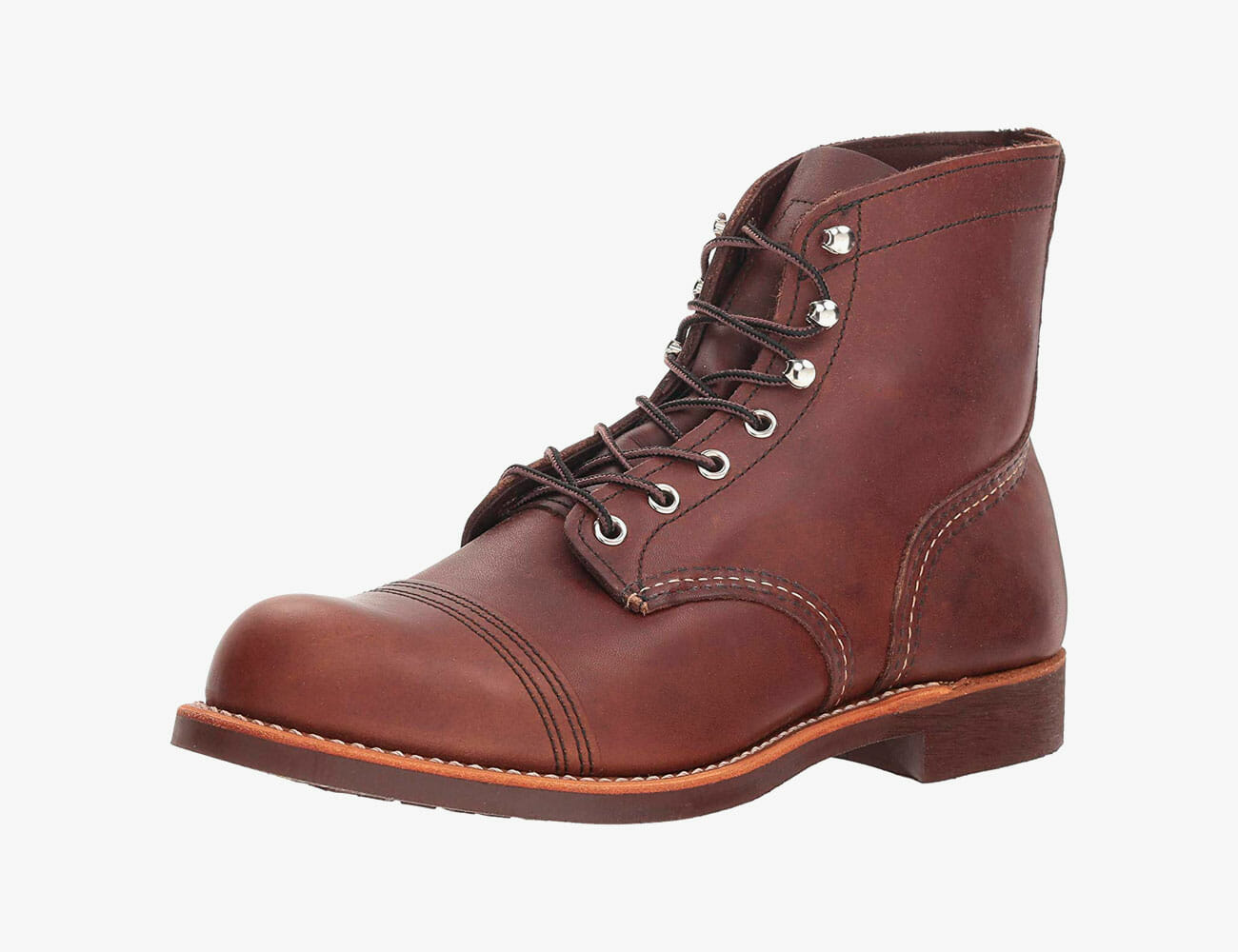
Style Number 8085: Iron Ranger

Hardwearing and reinforced with a cap-toe, the Iron Ranger can be dressed up or worn as a work boot. Designed for iron miners, it is made from oil resistant leather and features speed hooks for ease of lacing.

Style Number 875: Classic Moc

The Classic Moc is virtually identical to the 8-Inch Moc, but is two inches shorter. As such, it is a bit more practical for the city dweller. The style comes in eight different types of leathers.

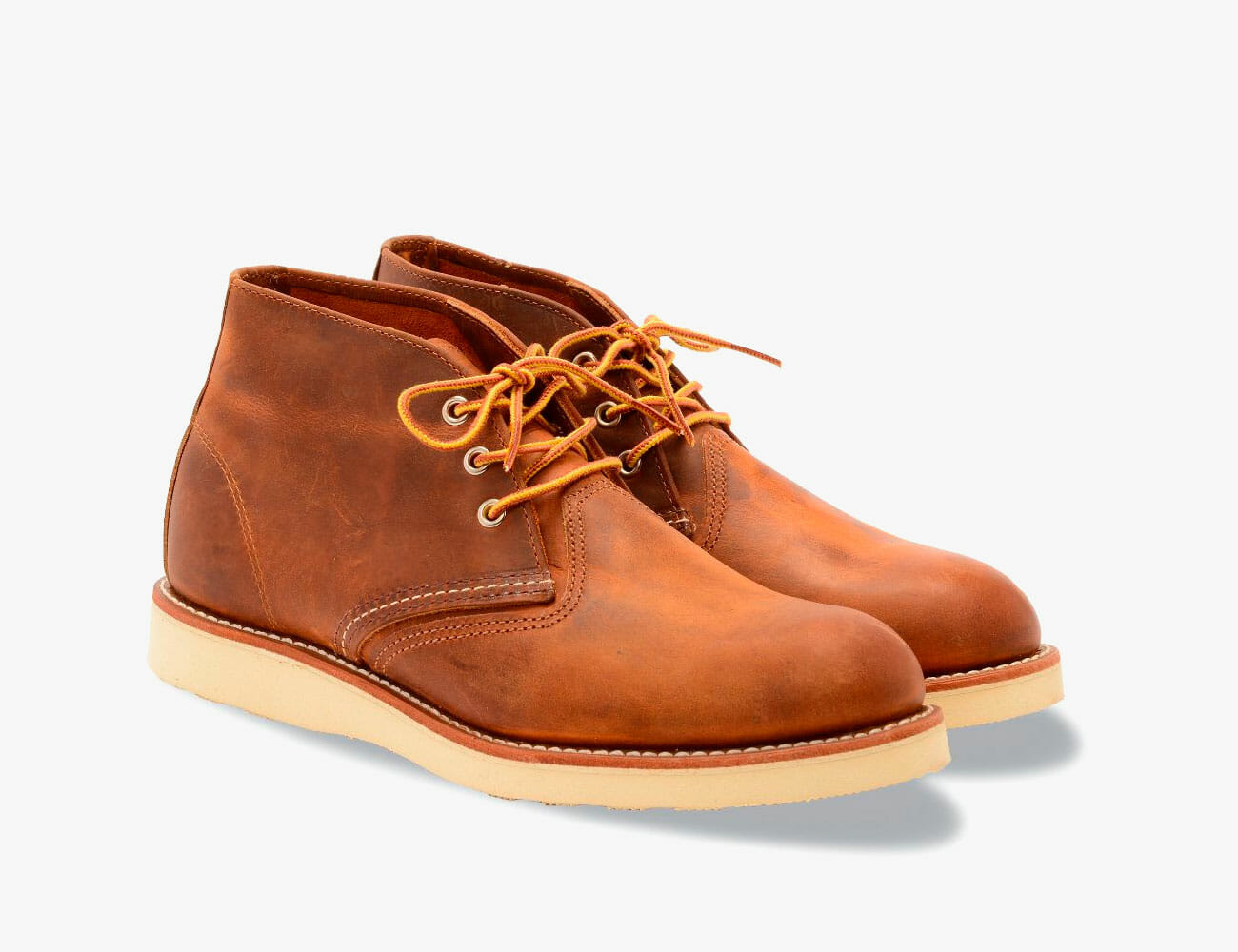
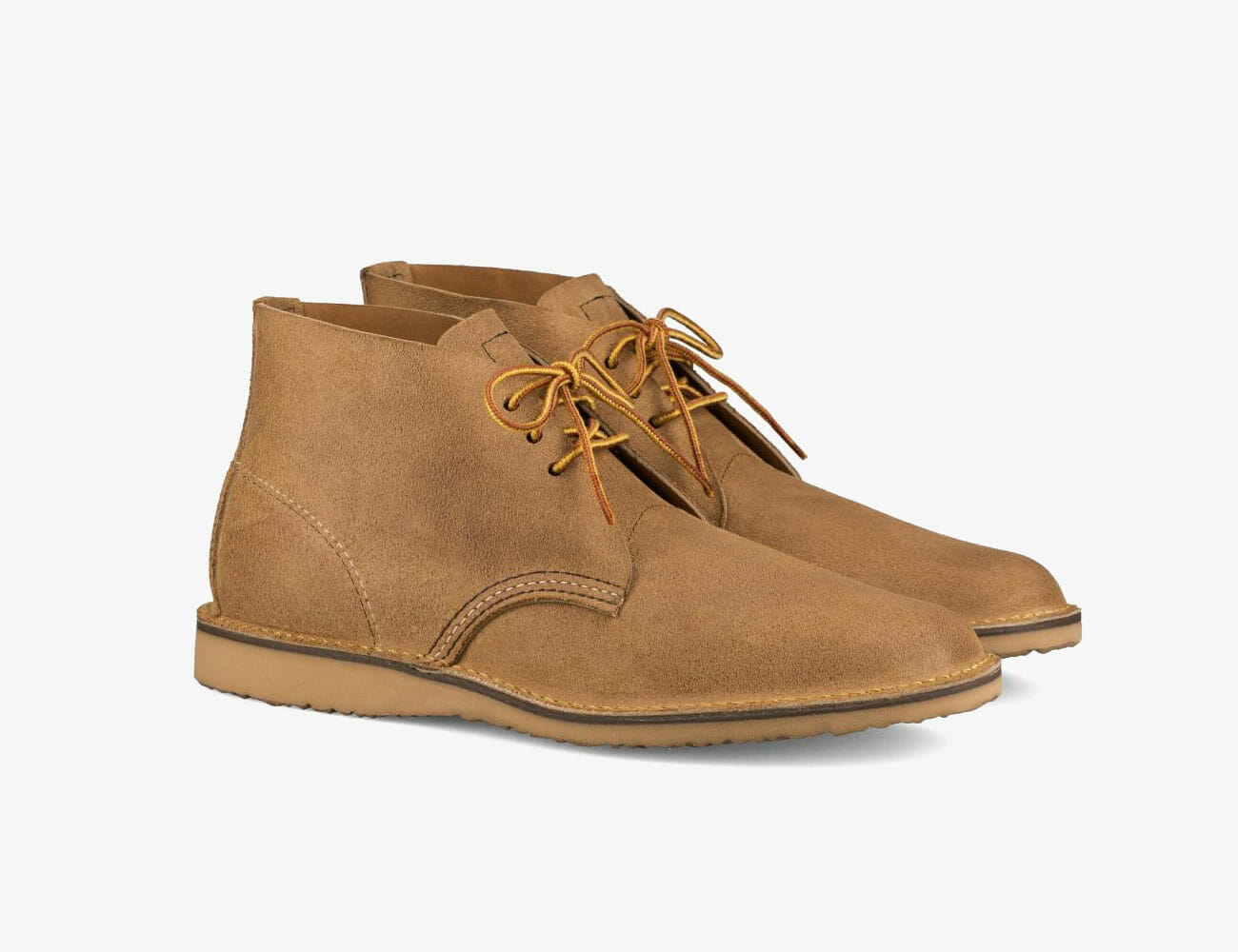
Style Number 3137: Work Chukka

Designed as an indoor workboot, the Work Chukka features a white rubber wedge sole and rugged leather upper. It is an ideal option for an office workers or factory workers.

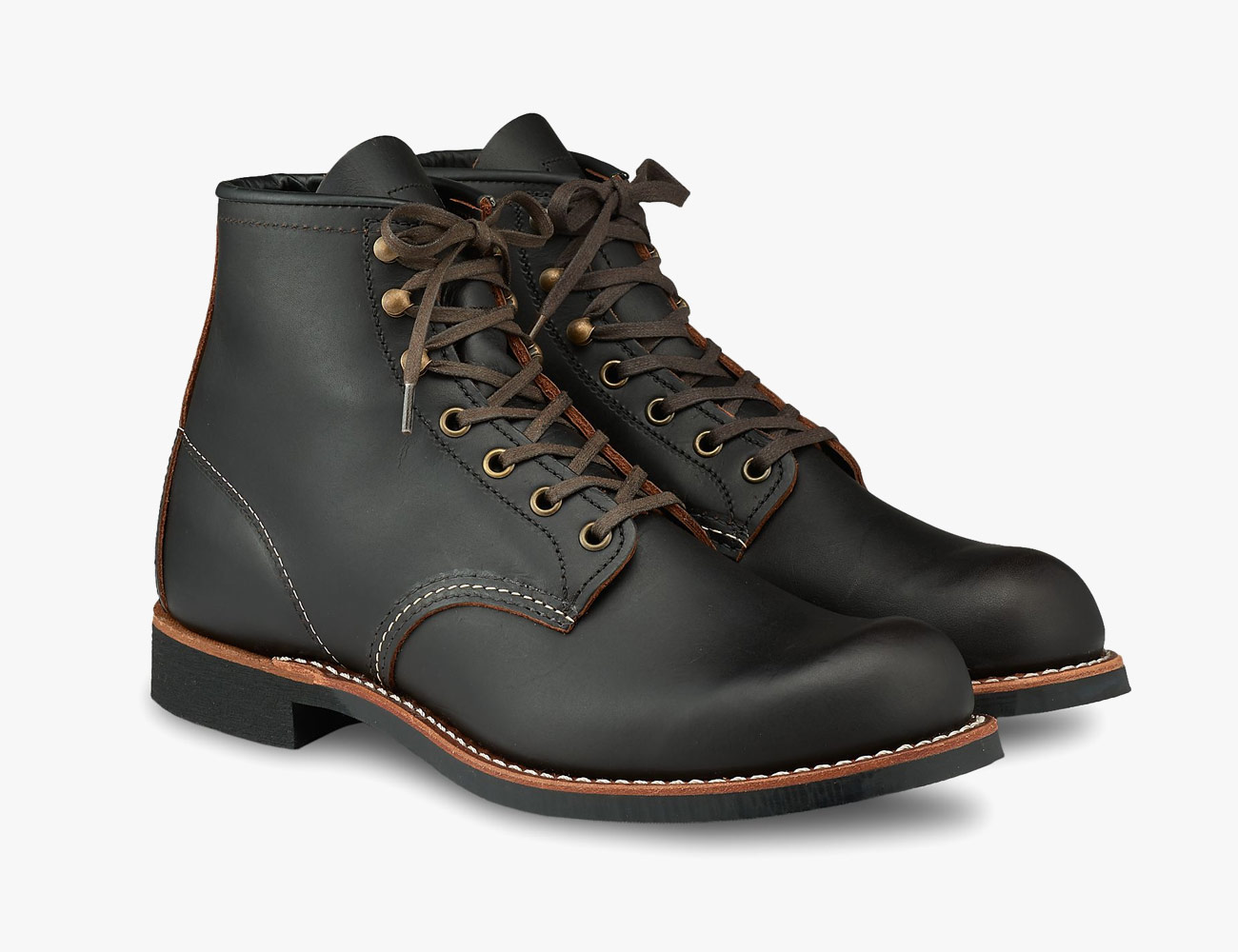
Style Number 9011: Blacksmith

The Blacksmith takes after boots that were worn by the metal-working tradespeople to protect their feet from scalding sparks and molten iron. It stands six inches tall with a mini-lug sole, cork filling and three-quarter Goodyear Welt.

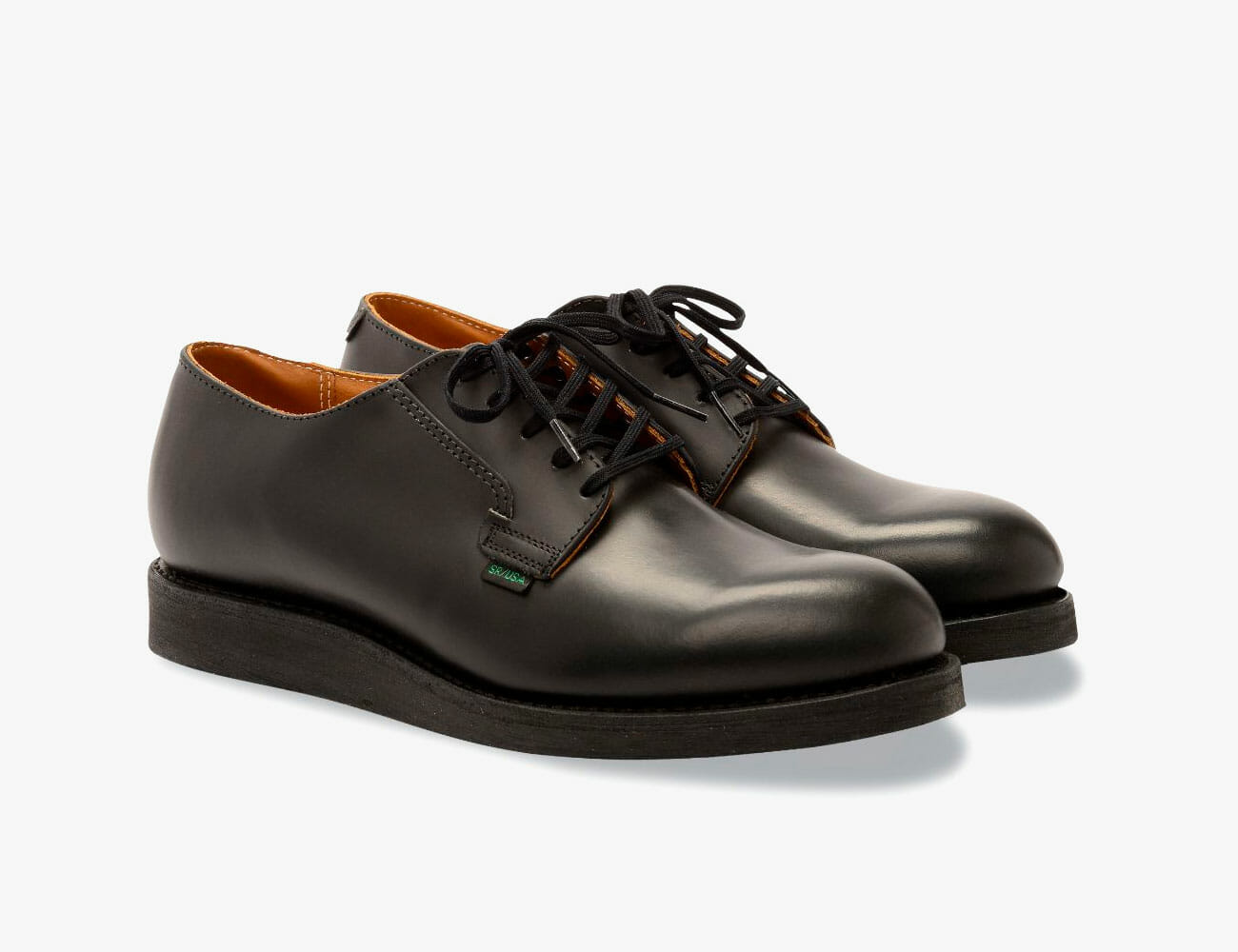
Style Number 101: Postman Oxford

Designed for use by policemen and mail carriers, the Postman Oxford was introduced in 1954. A uniform shoe only available in Black Chaparral leather with a cushioned wedge crepe sole, these are incredibly sturdy and comfortable.

Style Number 3321: Weekender Chukka

Red Wing spends a lot of time outfitting feet for work, but it also designs styles for off-the-clock wear. The Weekender collection is lightweight, featuring stitchdown construcion and rubber wedge soles.

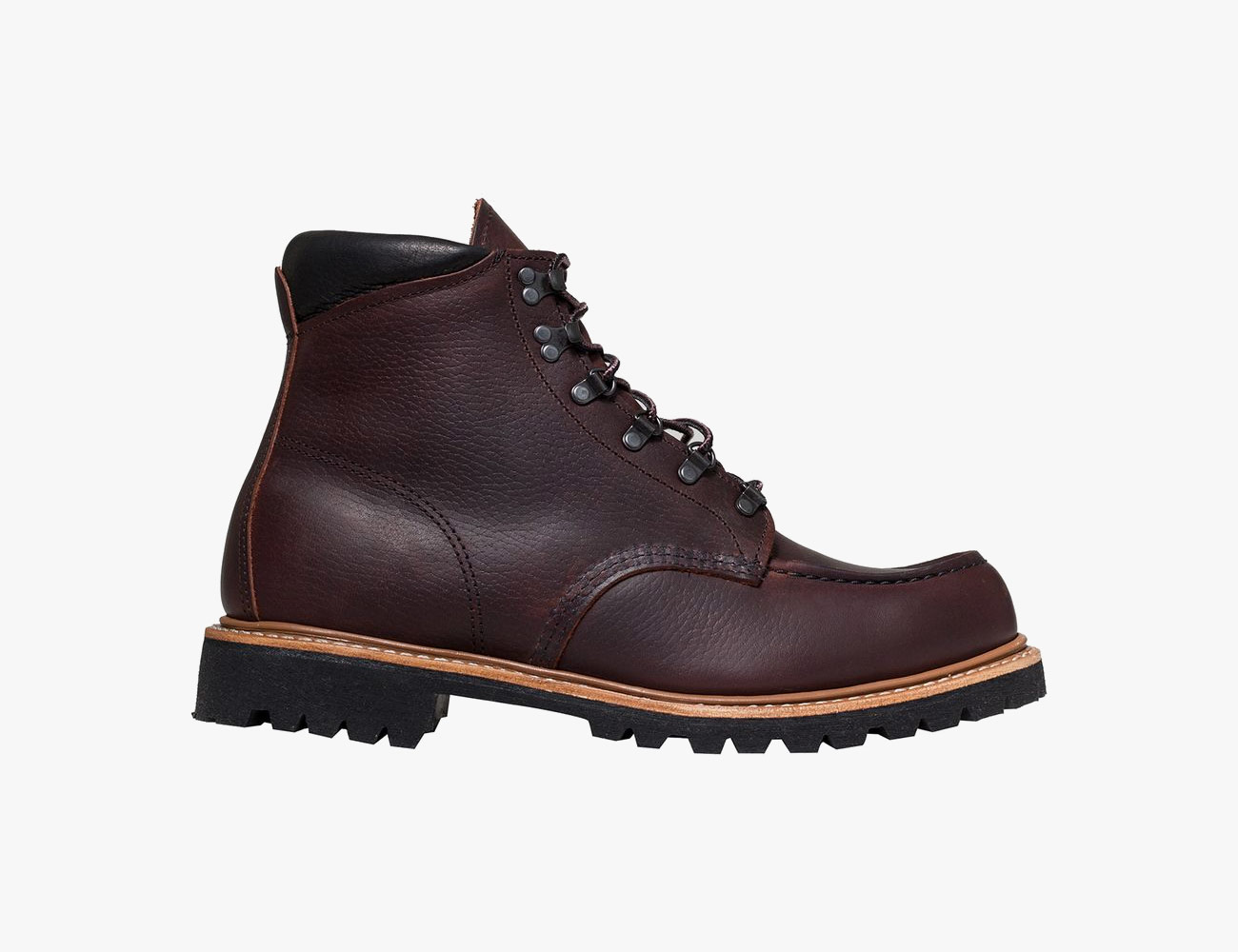
Style Number 2927: Sawmill

Drawing upon boots from the 1970s, the Sawmill is made with winter climes in mind with a water-resistant storm welt, a felt wool insole and slosh-ready Vibram lug soles.

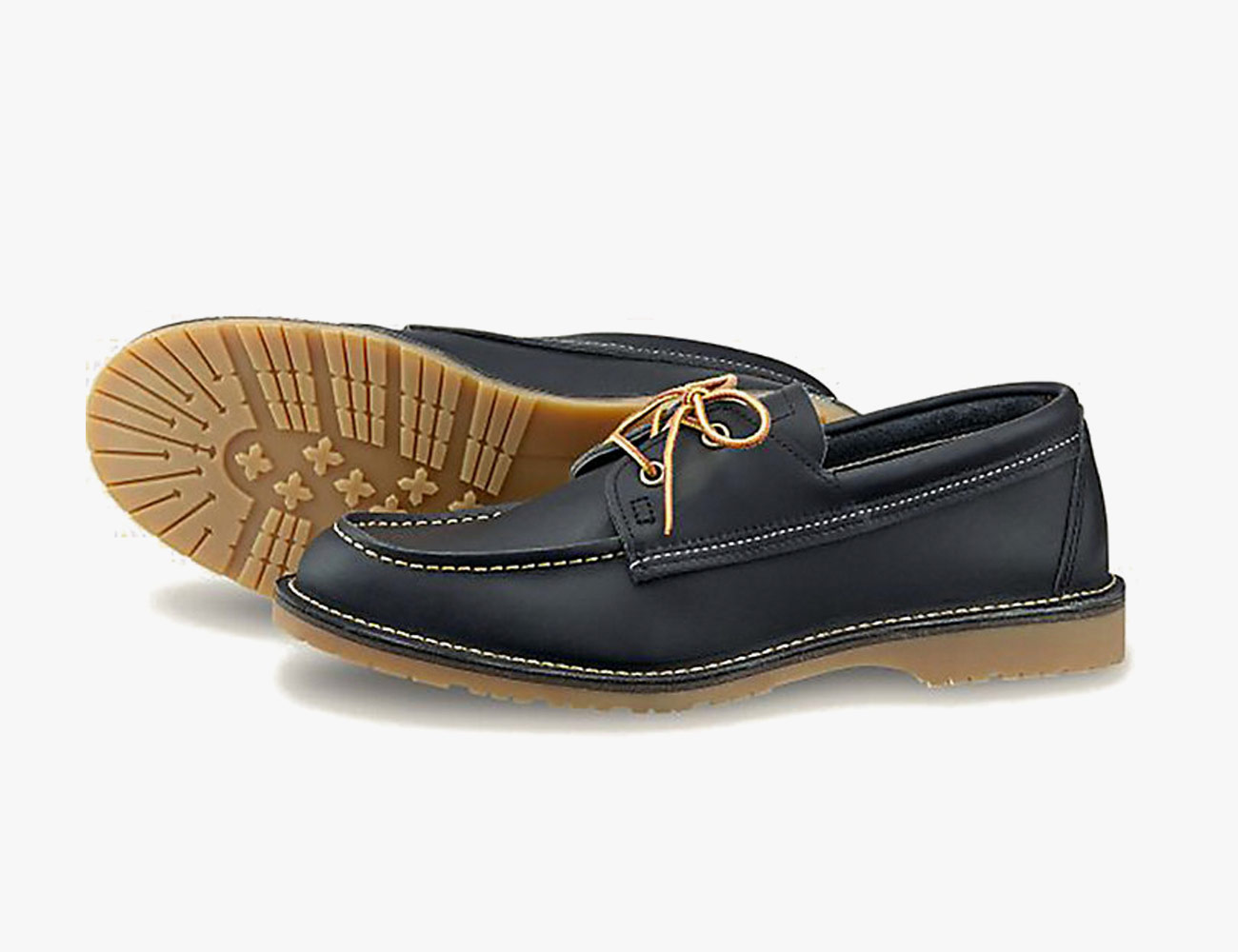
Style Number 3330: Wacouta Camp Moc

The Wacouta Camp Moc resembles summer footwear staples like the preppy boat shoe, with a low profile and moccasin-style toe.

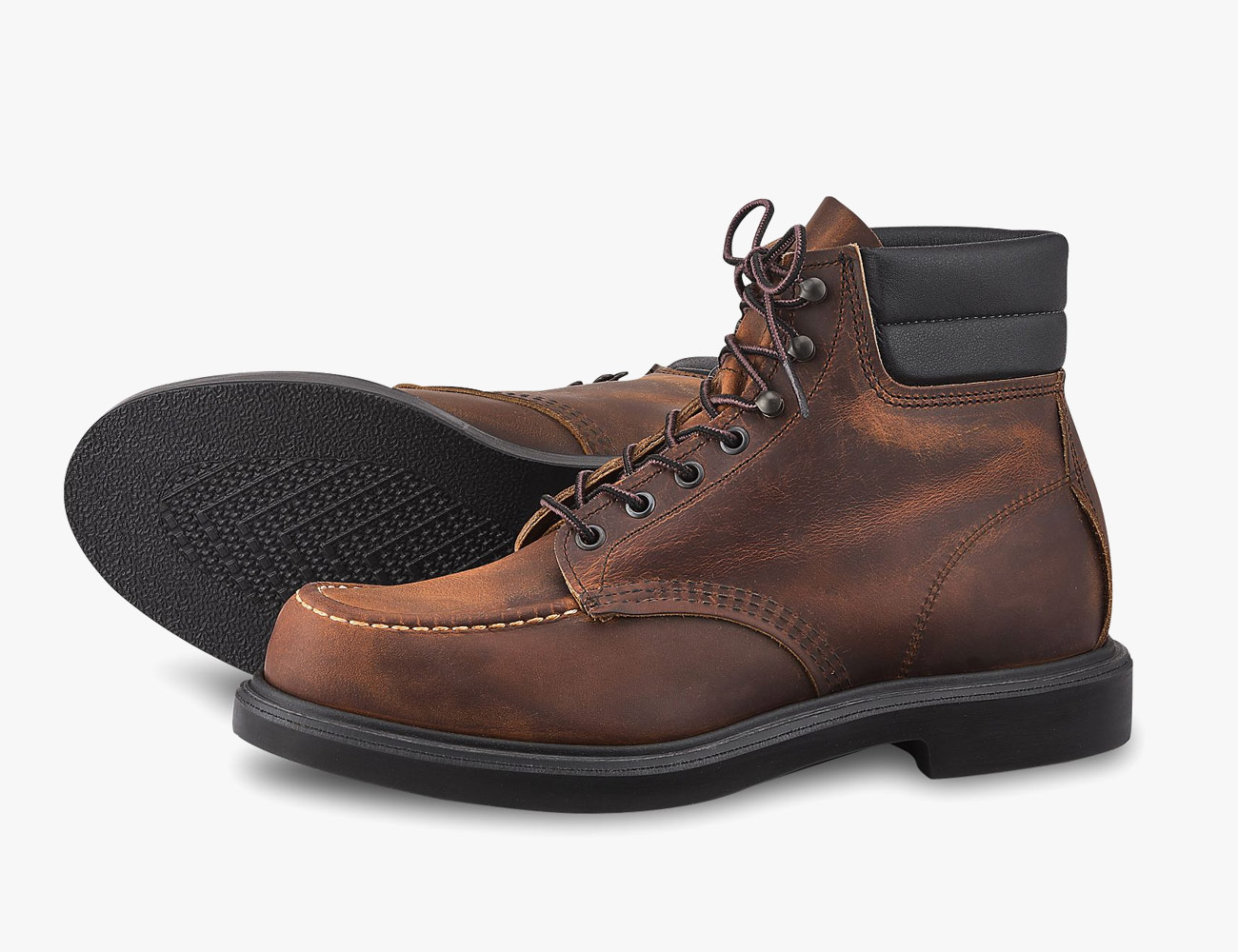
Style Number 8801: Classic Supersole

The Classic Supersole looks very much like Red Wing’s iconic 875 Moc Toe Boot, with a few key differences. The padded leather collar provides comfort at the ankle and the cement construction makes the boot watertight.

Style Number 3335: Wacouta 6″ Moc Toe Boot

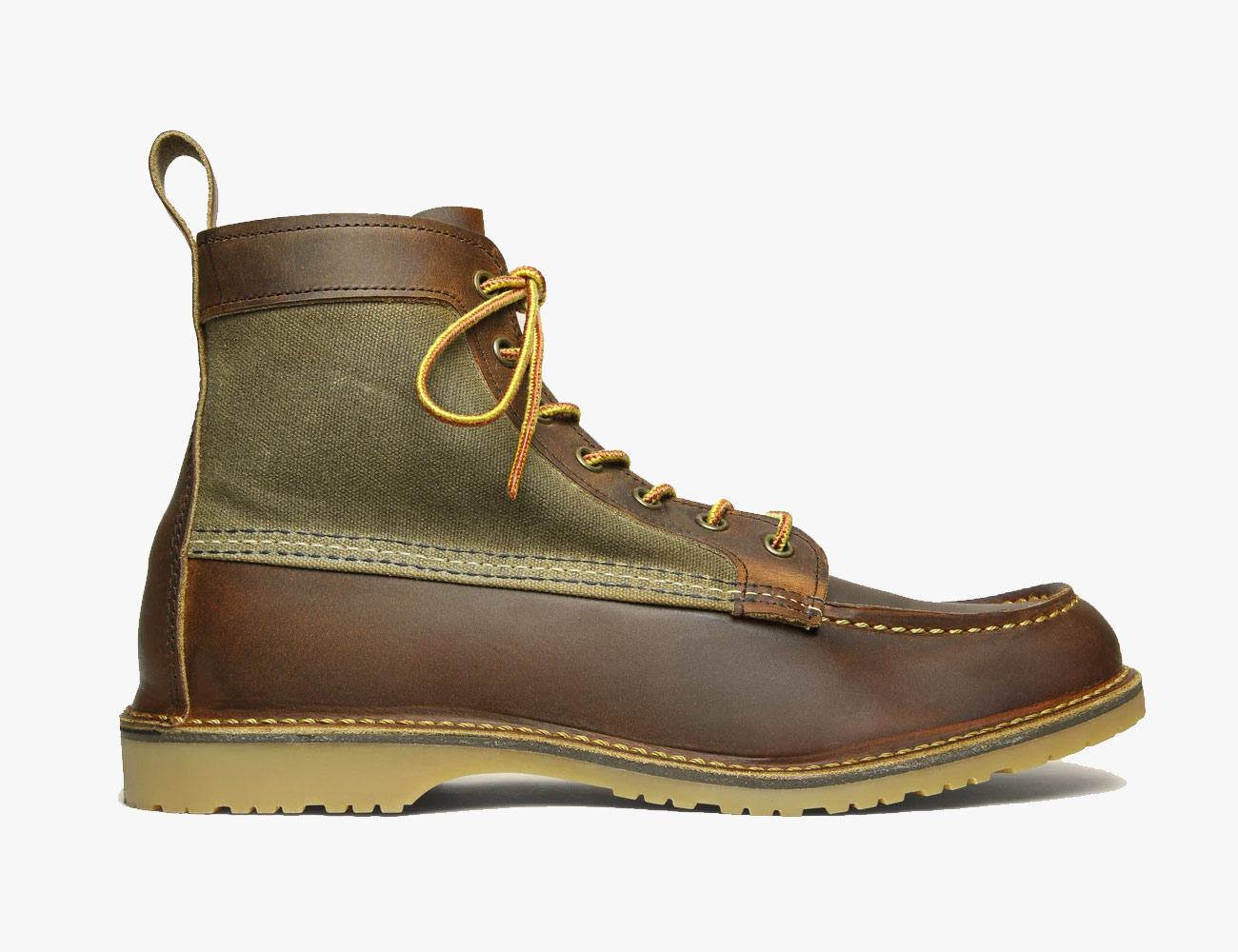
The Wacouta 6″ combines Red Wing’s tough SB Foot Tannery leather with water-resistant waxed canvas and stitchdown construction for a hunting-inspired boot that’s lighter and more flexible than most.

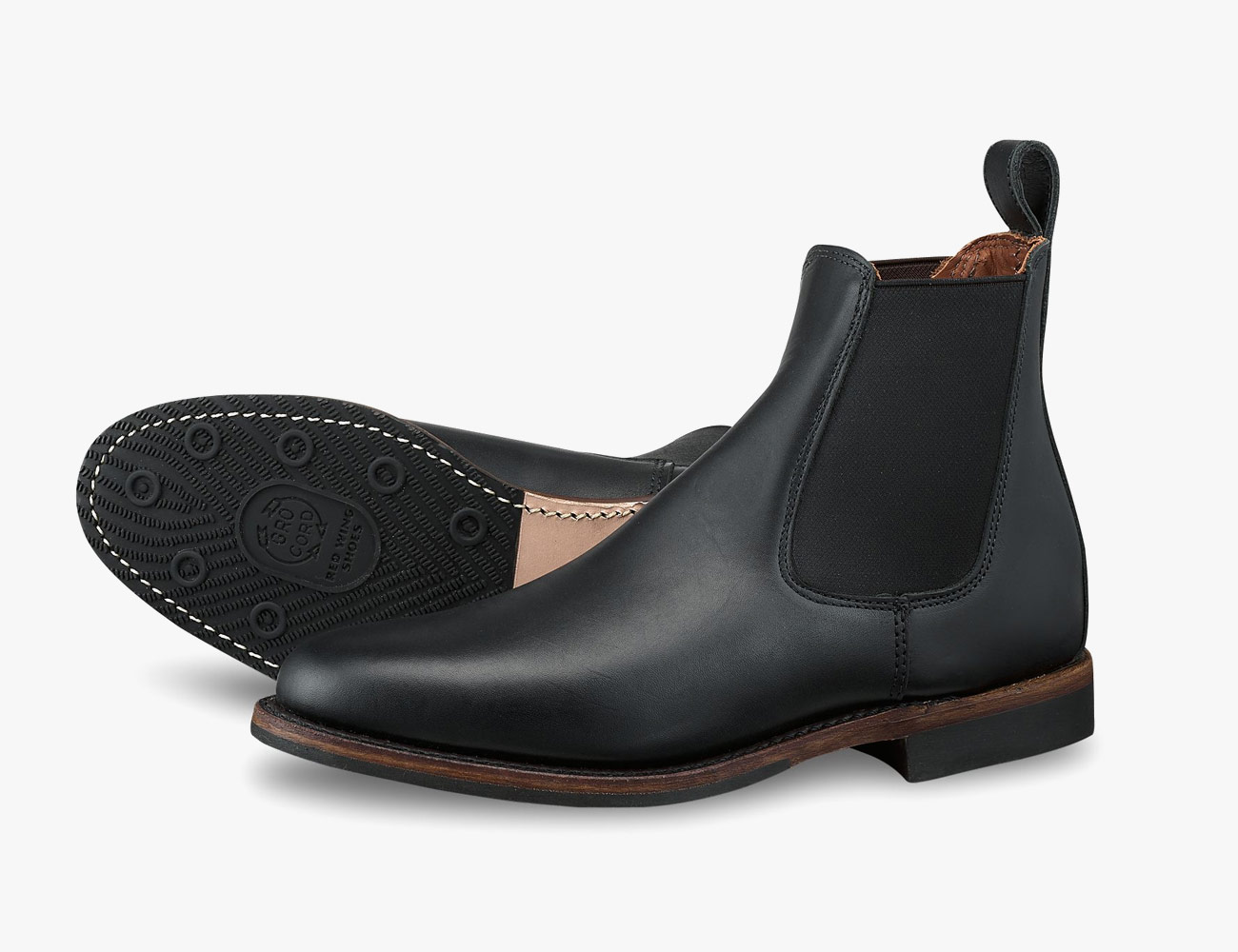
Style Number 9438: Williston Chelsea

As part of Red Wing’s Williston line of shoes, the 9438 is one of the dressier and sleeker offerings in the line.

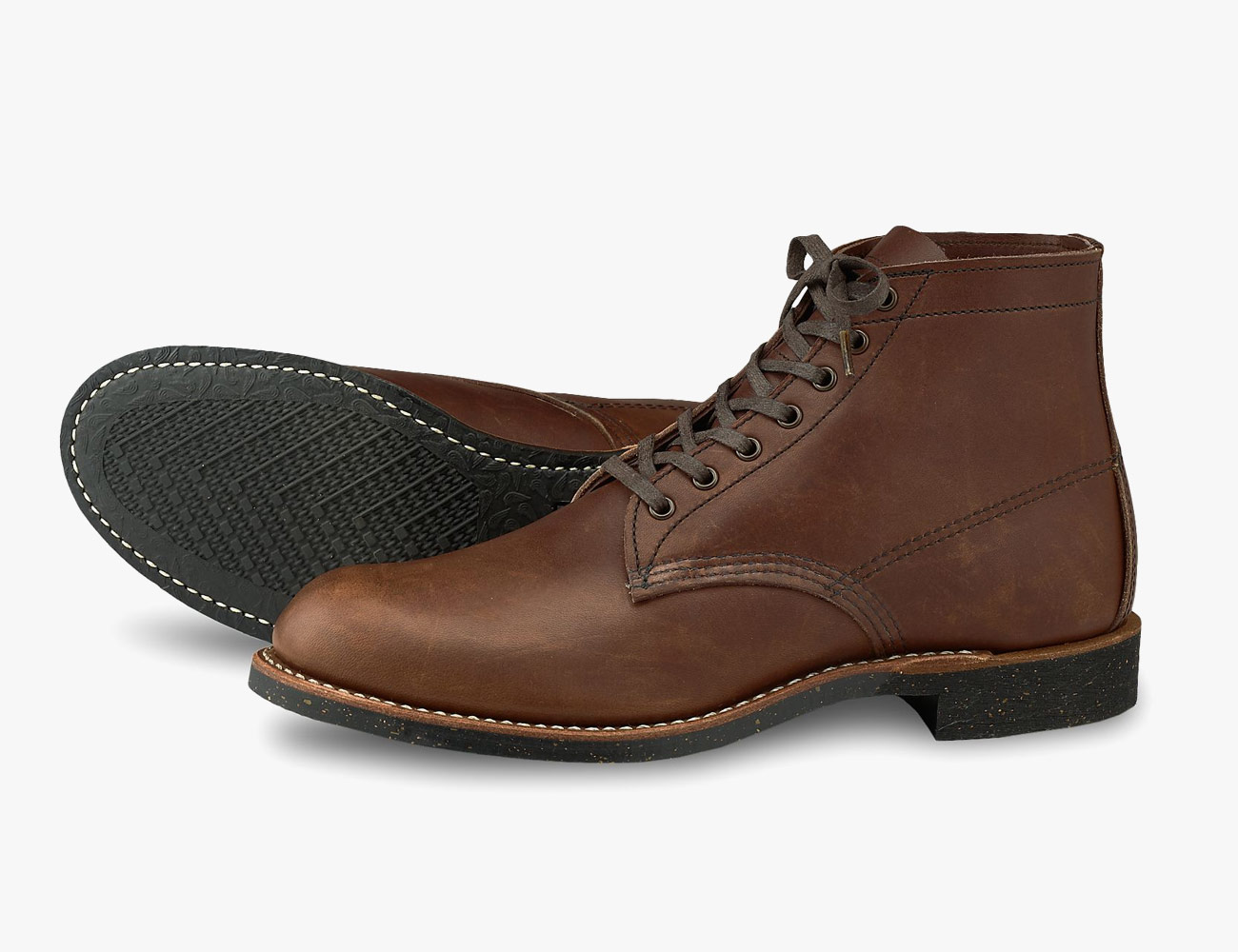
Style Number 8064: Merchant

The Merchant shares similarities with the Blacksmith, but takes a more formal approach by forgoing the speedhooks and French binding and opting for a sleeker toe and a more subtle rubber sole.

Style Number 2942: Roughneck

You can think of the Roughneck as a more aggressive Classic Moc with its substantial heavy lug sole. But, it’s also a bit easier to don and doff thanks to its handy speedhooks.

Style Number 3312: Weekender Chelsea

The Weekender Chelsea, as the name would suggest, is a casual shoe that’s not meant to straddle the line between dress and work like the Williston Chelsea.

Style Number 9435: Williston Six-Inch

This is the most premium (and dressiest) boot that Red Wing offers. It can take a beating like the rest of them, but is decidedly the most formal of the lot.

Style Number 9431: Williston Oxford

Where you would take the Postman shoe out on the mail route, you’d take the Williston Oxford out to a nice dinner. The sleek toe box and the blind eyelets make it a shoe you’ll want to keep polished.

Style Number 8188: Pecos Boot

Originally built as Red Wing’s response to the cowboy boot, the lauded Pecos boot features a roughout leather upper and a shorter block heel to separate itself a bit from the western competition.

Style Number 877: Todd Snyder x Red Wing Heritage Moc Toe Boot

In cahoots with venerated American designer Todd Snyder, the classic 8-inch Moc Toe Boot is trimmed down a couple inches while mixing smooth leather and suede.

Style Number 8884: Mossy Oak Camouflage

There’s hardly a more American boot than this camo rendition. It’s part of Red Wing Heritage’s limited edition range of boots and it’s as hard to find as it is difficult to see.

Style Number 8829: Billy Boot

The Billy Boot was first introduced in the 1930s as a children’s boot and originally came with a pocket knife to accompany its nifty knife sheath. Red Wing brought the EDC-friendly boot back for adults in 2019 and it’s all nearly sold out.

Style Number 5679: Fragment x Red Wing

Japan has been among the most fervent when it comes to Americana. So, it makes sense that lauded Japanese designer Hiroshi Fujiwara would take a crack at a Red Wing collaboration of his own. Using a Chromexcel leather for its sheen and pliability, as well as black tonal stitching, the streetwear take on the workwear classic is both brooding and burly.

Style Number 997: Red Wing x New Balance Sneakers

When two iconic American shoe manufacturers come together, it’s this. Equal parts Red Wing and New Balance, the collaborative sneaker features Red Wing’s iconic Hawthorne muleskinner leather and brick-red motif rendered in New Balance’s popular 997 silhouette.

Style Number 4327: Eat Dust x Red Wing Heritage

The fiery-red take on Red Wing’s pull-on boot is the hot idea from Belgian brand Eat Dust. It features a mashup of smooth leather with nappy rough-out leather worthy for motorcycle rides.

Vintage: Irish Setter

Though not part of the Red Wing Heritage label, the Irish Setter boot has a dedicated following of its own for its durability and the beautiful color of its leather, named after the rich coats of the Irish Setter dog. Red Wing Heritage did bring it back for a brief period in 2018, but only to limited quantities. The Irish Setter label today is still focused on boots for working and hunting, but at a slightly lower price point than its Red Wing Heritage label.

Note: Purchasing products through our links may earn us a portion of the sale, which supports our editorial team’s mission. Learn more here.

How to Patch Jeans at Home

If you like your clothes, you’ll wear them a lot. Like them enough and they’ll get worn out. And, if you really like your clothes, you’ll repair them. Rips and tears happen with time — it’s only natural — and mending your clothes is a good thing.

The most obvious reason is that increases the longevity of your garments. Repairing rips, tears and holes will not only keep your garments in service for much longer, but it will also prevent further damage if caught soon enough.

Mending your garments also breaks the cycle of consumption, leading to less waste in landfills. By mending a garment instead of tossing it in the bin or donating it (damaged garments wouldn’t even qualify for donations and would just get tossed anyway), you prevent it from rotting in a city dump somewhere. The amount of time and resources that go into a single garment can be staggering, so if you can prevent your clothes from going to a landfill, you can also, over time, lessen the demand for new garments and ultimately the resources needed to make them.

Repairing your clothes is also be an essential life skill. It teaches coordination and spatial skills but also reminds you to appreciate your clothes and the people who make them. By getting your hands involved in the process, you’ll better understand what it takes to make and maintain a garment. Clothes are still made by human hands and knowing your way around a needle and thread, even if it’s in a very basic sense, can help you understand the skills needed to make your favorite garment.

And at the end of the day, there’s a certain aesthetic value that a garment gains with every repair — it will become more a reflection of you. It may not be box-fresh, nor will the repairs look perfect, but clothes are made to be worn. In Japanese culture, the concept of ‘wabi-sabi’ is a view and an aesthetic that appreciates the transient and the imperfect. The patina, the patches, the imperfect stitching are what give your clothes their character, and, by extension are an expression of you and your lifestyle. Lean into it.

How to Patch Clothing

There are several ways to mend your garments, each one unique to the type of damage and fabric in question. One of the most common repairs is a patch that can be used to repair rips and holes. The following is a step-by-step guide on how to patch a hole in woven fabric explained by Matt Rho, an expert on sashiko and boro repairs.

In this example, he shows you how to patch a hole in a pair of denim jeans, but you can apply this method to other garments with woven fabric like an oxford or poplin shirt, chinos or other wardrobe-essentials.

Basic Supplies

  • Hand Sewing Needle
  • Sewing thread
  • Scissors
  • Scrap Fabric
  • Advanced Supplies

    If you want to dive into the art of boro denim repair, the kind of repairs in which Rho specializes, you can pick up this list of supplies.

  • Sashiko Needle
  • Sashiko Sewing thread
  • Basic Thread
  • Thimble
  • Japanese Thread Cutters
  • Pinking Shears
  • Boro Fabric
  • Tailor’s Chalk
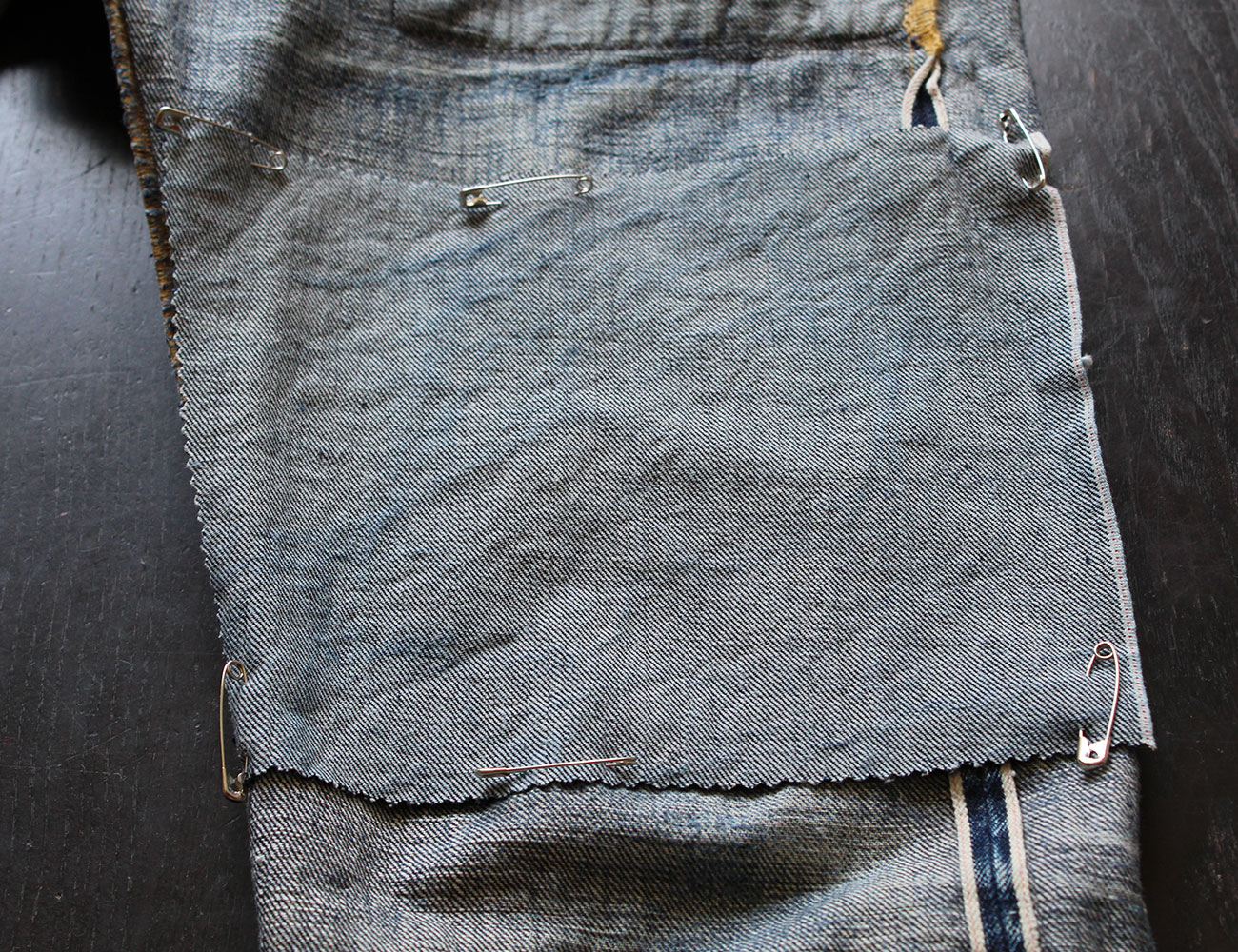
  • Step 1: Cut a patch of fabric and pin it over the hole

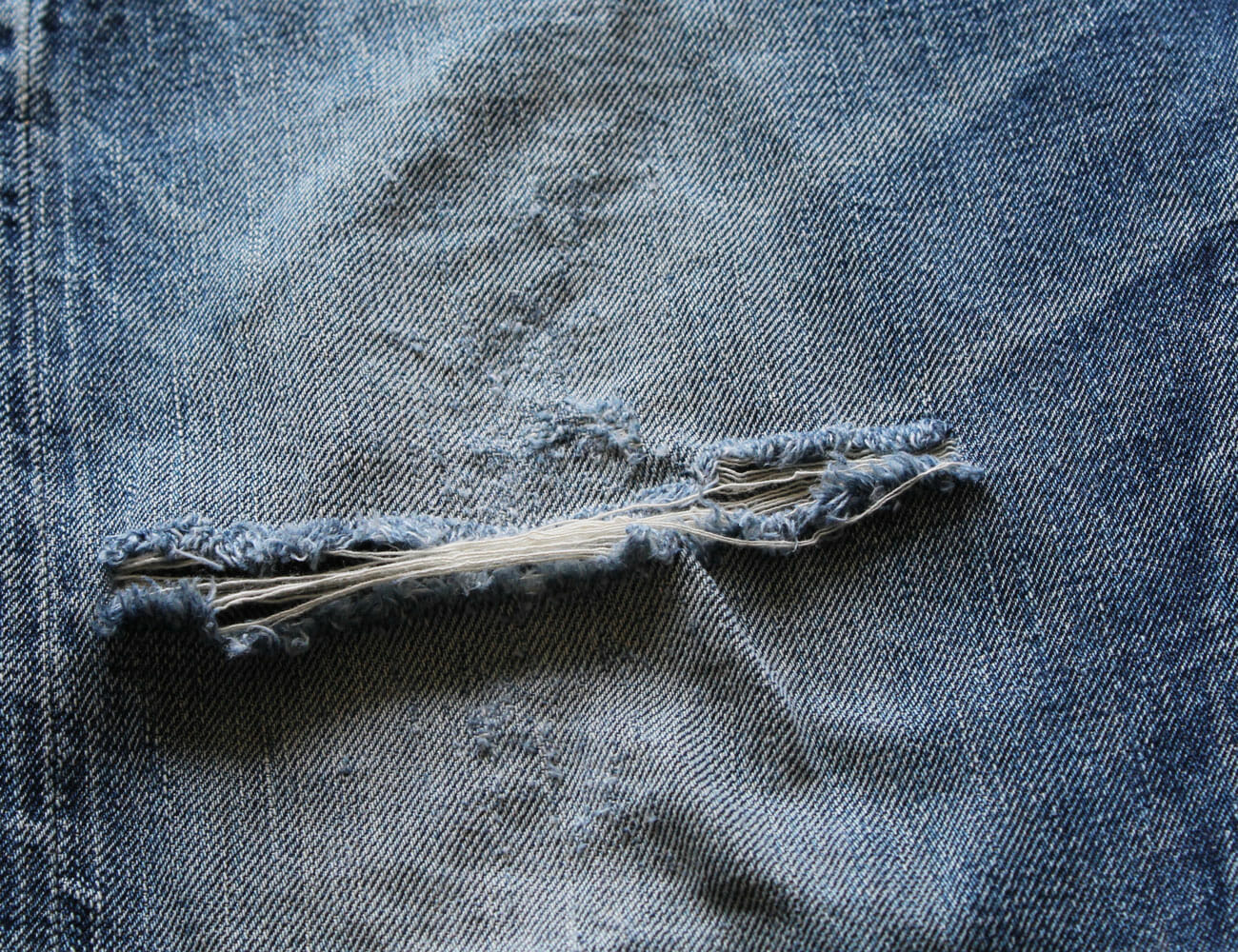
    Cut out a piece of fabric that spans beyond the hole at least three inches in all directions. You want to cut a patch larger than you probably would think, Rho says. The idea here is to attach the scrap fabric to an area of the garment that still has integrity to it. “If you have a blowout at the knee of your jeans, for example, chances are the fabric around the knee is pretty weak too,” he says. “If you anchor the patch into that fabric, it’s just going to rip again and pretty quickly.” In the end, you can always trim the scrap fabric down to a more manageable size.

    Wash and dry your patch to get rid of any shrinkage.

    Once you’ve cut the fabric to size, flip the garment inside out and pin the scrap fabric into place. This will help hold the scrap as you sew it to the garment in the following steps.

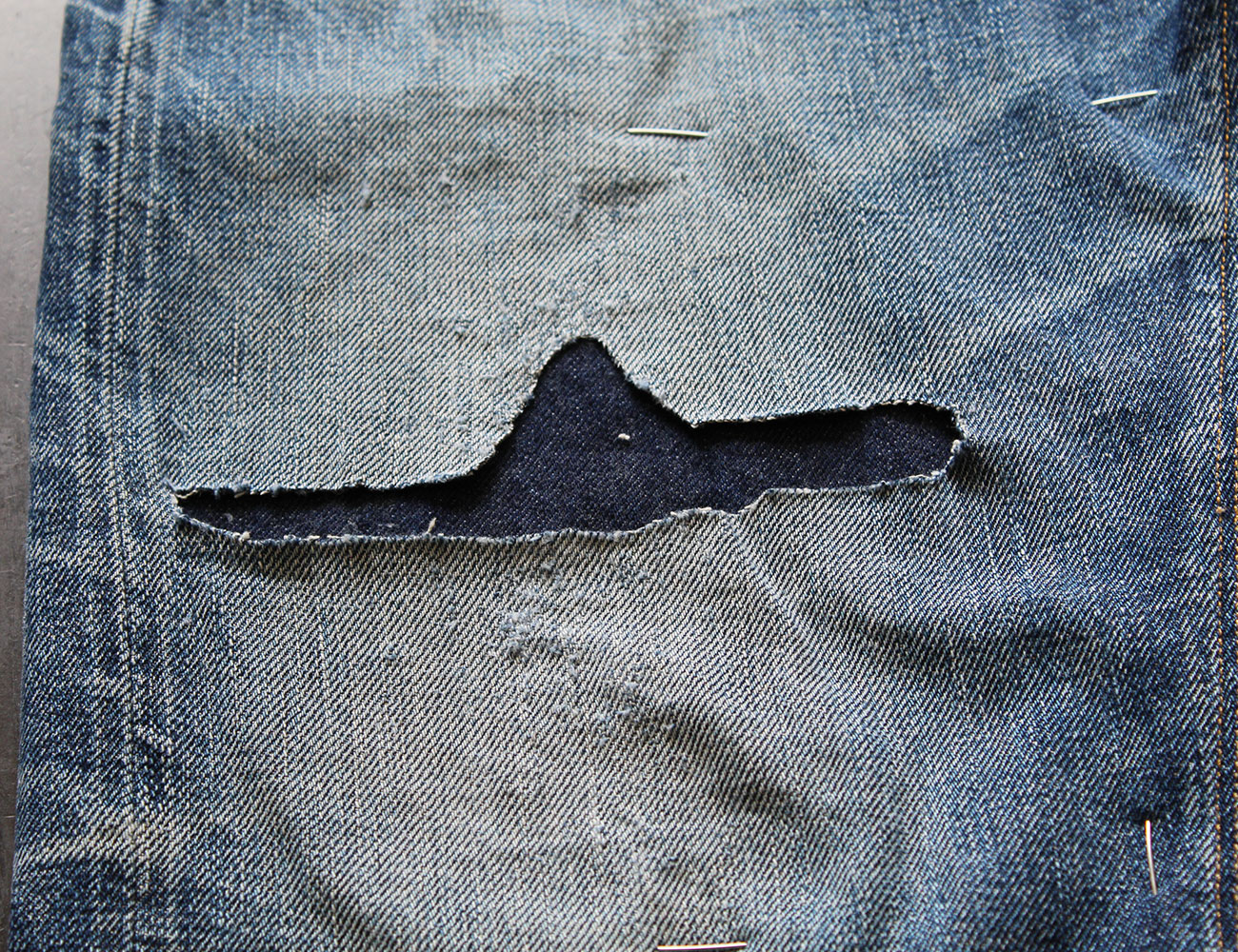
    Step 2: Trim the damaged area

    To give yourself a cleaner repair, trim the hole or tear of its frayed yarns. This makes the next step easier to handle.

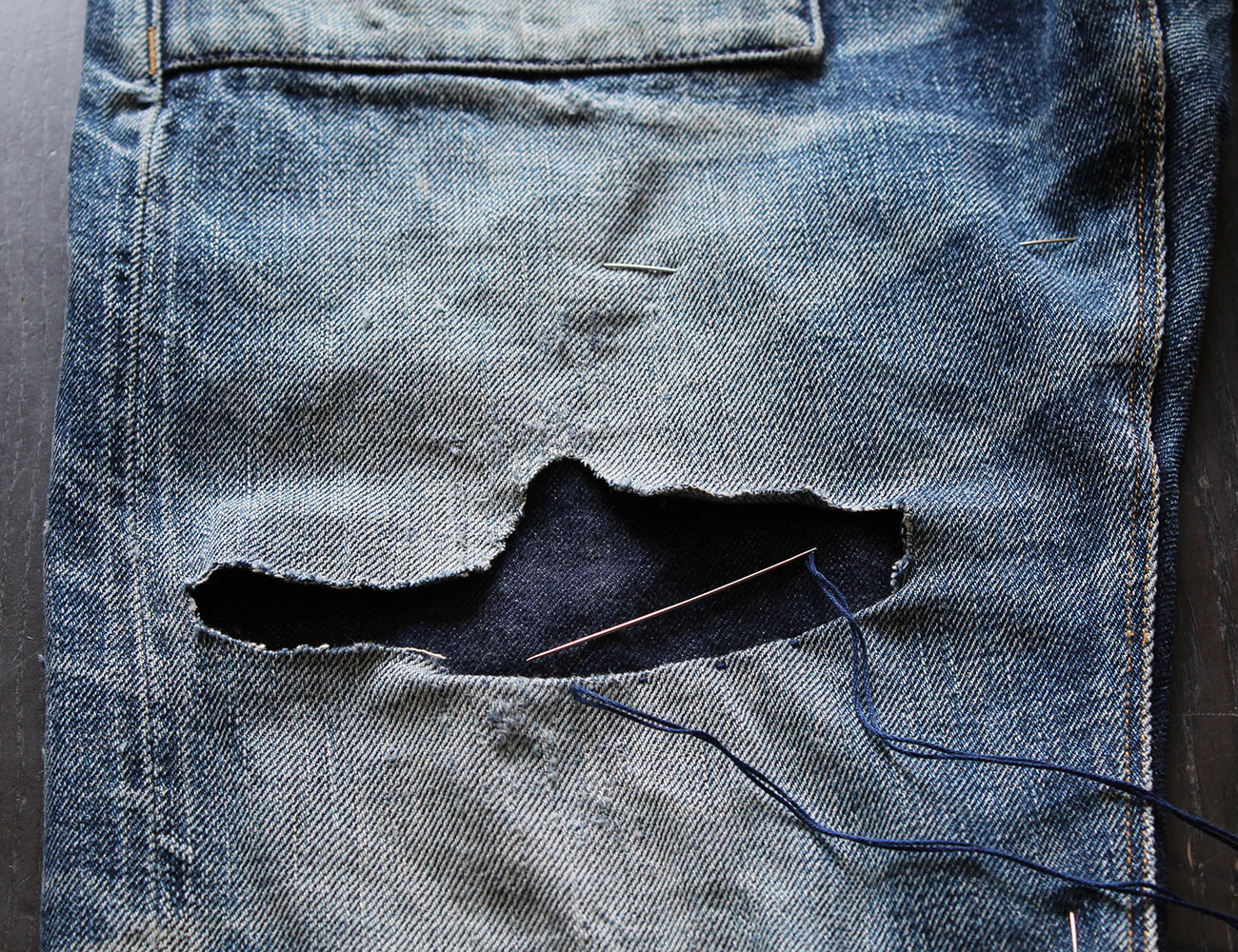
    Step 3: Stitch up the damaged area

    Thread your sewing thread through the needle and tie a knot at one end. The knot keeps the thread anchored into place as you sew.

    From the inside of the fabric, insert the needle through both the scrap fabric and the garment, near the edge of the hole. To sew a stitch, insert the needle back down into both the garment and the patch — pull the thread through. Repeat this until you’ve stitched along the entire perimeter of the hole. As you stitch, make sure to fold the edge of the hole under as you go. This ensures that the hole has a clean edge that will not continue to unravel.

    In Rho’s example, the stitches themselves are about a 1/32 of an inch in length and are spaced apart about 1/2 an inch. However, the size of the stitch and the distance between each stitch is a matter of preference and aesthetics. “You just have to experiment a little bit and see what looks right to you because you’re gonna be looking at it every day,” Rho says. “You want it to also be pleasing to your eye.”

    Once you’ve stitched all the way around the hole, on the inside of the garment, tie a knot at the end of the sewing thread. Make sure to leave about a 1/4 of an inch of slack to account for the sewing thread shrinking in the wash.

    Step 4: Stitch the scrap fabric to the garment

    Now, you want to secure the remainder of the scrap fabric to the garment. Like step 3, sew the scrap fabric all the way around near its edges.

    “Once you’ve done the repair of the hole, the places where you’ve safety pinned the edges, you’ll find that the fabric has moved around a bit,” Rho notes. So, make sure that the scrap fabric is flat and flush against the garment to avoid bunching.

    Don’t forget to leave some slack before tying the knot at the end.

    Step 5: Trim the excess scrap fabric.

    To cut down on the extra bulk, trim the excess fabric from the patch. Here, pinking shears are useful as the zig-zag cutting pattern helps prevent the fabric from fraying, but you can still use regular scissors.

    Step 6: Wear them!

    Congratulations, you’ve just repaired your garment! Now you can wear, wash and repeat until another hole comes along. If you want to get even more into the art and the skill of mending your clothes, Mending Matters by Katrina Rodabaugh is a great resource, and you’ll even find more inspiring imagery and techniques used by Matt Rho in there, too.

    This Bugatti Chiron 16 Cylinder Tourbillon from Jacob & Co. is for automotive enthusiasts

    Those who are lucky enough to own a Bugatti know that there is nothing like it. Now that you own one of the most coveted automobiles in the world, there might be something missing. If driving around in your extravagant and powerful ride is not enough Jacob & Co. could have something up your alley. Inspired by the luxury marque’s hypercar, the Bugatti Chiron 16 Cylinder Tourbillon is a mechanical masterpiece that matches the machine.

    At $280,000 this is an exclusive timepiece for clients who desire matching essence of what’s in their garage and on their wrists. Meanwhile, the Bugatti Chiron 16 Cylinder Tourbillon boasts a unique construction with 578 components. It’s clear that this is an homage to the massive engine that powers its namesake. Additionally, much like the one the vehicle’s signature paint job, it sports an attractive Electric Blue and Black colourway.

    The collaboration between Jacob & Co. and the carmaker started last year. Some of the limited-edition models already available are the Twin Turbo Furious and Epic X Chrono. Both are equally sophisticated and impressive, but the Bugatti Chiron 16 Cylinder Tourbillon is by far the most attractive in our opinion.

    What immediately draws your attention is the functional replica of the twin-turbo W16 engine. Gearheads would likely keep staring at for hours and it emulates the mesmerizing movements of the pistons and crankshaft. On the other hand, owners will likely forget that the Bugatti Chiron 16 Cylinder Tourbillon is actually a premium wristwatch. Jacob & Co. ensures that owners can view the inner workings from any angle. As such, sapphire crystal viewing windows give you a peek of complications within the titanium case.

    Learn more about it here

    Images courtesy of Jacob & Co.

    23 of Our Favorite Do-Anything Drawstring Pants

    So you want to keep things relaxed, but you’re not all the way convinced about sweatpants. Drawstring pants are your answer. They’re comfortable and adjustable but look more like your favorite pair of chinos or jeans — a perfect in-between. We’ve put together a handful (okay, maybe two handfuls) of drawstring pants to get you in the right vibe.

    Mollusk Scout Pants

    A favorite among the Gear Patrol staff.

    Madewell Drawstring Pants

    Sturdy canvas and flap pockets let you know this pant is ready for whatever you throw at it or in it. A handy drawstring lets you know it ain’t all that serious.

    Alex Mill Slim-Fit Stretch-Cotton Twill Drawstring Trousers

    A little bit of stretch goes a long way in the comfort category.

    Industry of All Nations Ponja Drawstring Pants

    One of the most holistic options out there, the Ponja Drawstring Pants from Industry of All Nations uses organic cotton, recycled polyester for the waistband and natural indigo to dye it all.

    Save Khaki Twill Easy Chino

    Save Khaki’s Twill Easy Chino is one of the softest and most comfortable chinos on the market, you just might want to get them in a few colors.

    NN07 Drawstring Pant

    You can be secretive about the drawstring waist and just leave your shirt untucked. But there’s no shame in the drawstring game.

    General Admission Rat Rock Corduroy Pant

    Didn’t think you could put a drawstring on some corduroy pants, did you?

    Onia Collin Slub Linen Drawstring Trousers

    Like Hartford’s version, Onia’s is all linen but leans into the sweatpant design more.

    18east Tapiro Easy Pant

    These Easy Pants are a cinch.

    Satta Kai Pants

    These midweight pants come with an all-cotton poplin fabric that’s been peached for a slightly brushed effect that makes them cozier than they appear. On-seam side pockets keep things discreet.

    Outerknown Beach Jeans

    Beach Jeans might not be an actual category of jeans, but we’re very into them, regardless.

    Adsum Bank Drawstring Pant

    /a>

    Adsum’s Bank Pant combines drawstring and elastic at the waist and features tough cotton twill with equally durable herringbone pockets.

    Saturdays Chad Jogger Pant

    You’ll find not one, but three drawstrings and plenty of storage on this fatigue-style pant from Saturdays.

    Engineered Garments Painter Pant

    Lauded designer Daiki Suzuki is sly, hiding the drawstring inside the waistband.

    Battenwear Active Lazy Pants

    Active lazy or just actively lazy?

    Jungmaven Pacific Coast Pant

    From champions of hemp, Jungmaven’s Pacific Coast Pant is 55/45 hemp/cotton and 100 percent what we want to wear all the time.

    Nanushka Nova Workwear Twill Trouser

    Workwear trouser? More like work from home trousers.

    Hartford Troy Slim-Fit Linen-Chambray Drawstring Trousers

    Drawing on chino designs, Hartford’s option combines details from your favorite pair of khakis like the Hollywood wood waistband, belt loops and slanted pockets, and infuses it with linen and a comfy drawstring.

    RTH Drawstring Pants

    RTH treats the drawstring more like a ribbon and its Drawstring Pants are a gift.

    Dr. Collectors P23 Corduroy Pant

    The P23 Pants from Dr. Collectors are even cozier with plush corduroy and a garment dye for a lived-in feel.

    Needles H.D. Pant

    Cargo pants can be comfy, too, and this big baggy pant from cult Japanese brand Needles is proof.

    Rick Owens Drawstring Pants

    From the Dark Lord himself, these military-inspired pants are what I imagine off-duty secret agents lounge in.

    Maison Margiela Mohair Cropped Pants

    Margiela’s Mohair Cropped Pants blur the line between dress and relaxation with a more formal take on the drawstring trouser.

    Note: Purchasing products through our links may earn us a portion of the sale, which supports our editorial team’s mission. Learn more here.

    The 57 Best Online Menswear Shops

    Brick-and-mortar retail has taken a big hit in recent years. As brick and mortar stores have been forced to close their physical doors, they’ve pivoted all of their attention to digital channels. The shift hasn’t been easy for any one store, but there are many now thriving in the digital realm. Whether you’re looking for quality basics, niche designers or luxury labels, these are the best places to shop online right now.

    The Standards

    If you’re looking for a wide style selection with a deep inventory, there are a handful of retailers to choose from. These have a strong online presence with brands and designers that span the fashion spectrum. Whether you’re up-to-date on the latest designers or just need to re-up on the basics, these are the ones to know.

    Mr Porter

    About: Mr. Porter’s range of goods stretches from the street to the sartorial and everything in-between. In addition to its far-reaching selection of luxury goods, it also produces top-notch editorial content.
    Brands: Lemaire, Kapital, Noah, Kiton, Off-White

    End.

    About: Based in the UK, End. offers a wide range of brands in an equally wide array of styles from streetwear to workwear to avant-garde and minimalist.
    Brands: Acne Studios, Carhartt WIP, Nike, Thom Browne, Visvim

    Huckberry
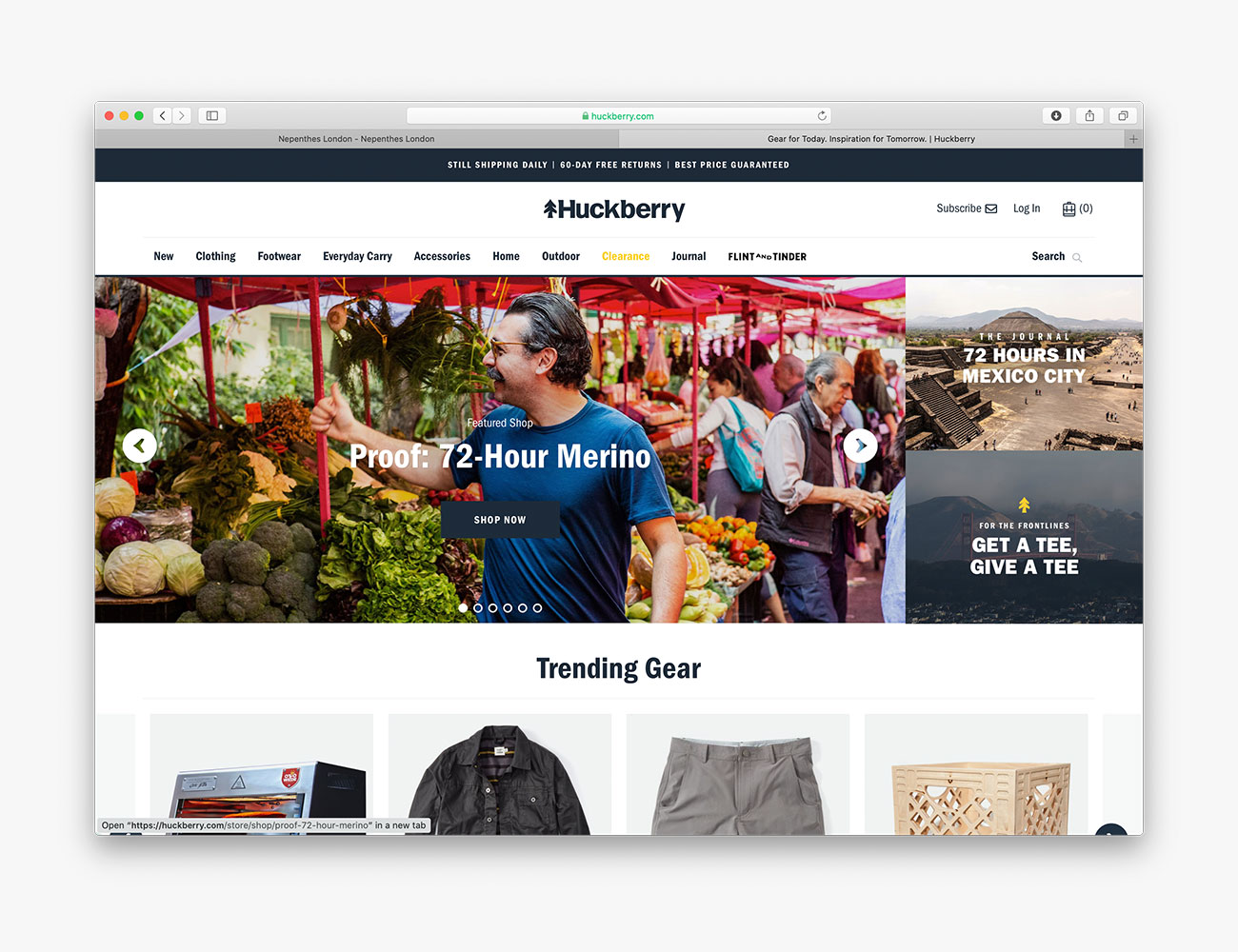
    About: Huckberry has you covered from your closet to your EDC to your home. You’ll find an array of classic Americana styles next to performance athletic gear and top-notch grooming products and much more.
    Brands: Flint & Tinder, Taylor Stitch, Relwen, Rhodes, Mystery Ranch, Billykirk

    Also Check Out

  • East Dane
  • Farfetch
  • Matches Fashion
  • Need Supply
  • Zappos
  • Avante-Garde and Streetwear

    Maybe you’re into Fashion with a capital ‘F’. These stores have a penchant for the cutting edge and the next-up. From punk labels, upcoming streetwear names and cult Japanese brands, these retailers have got you covered from head to toe.

    Haven
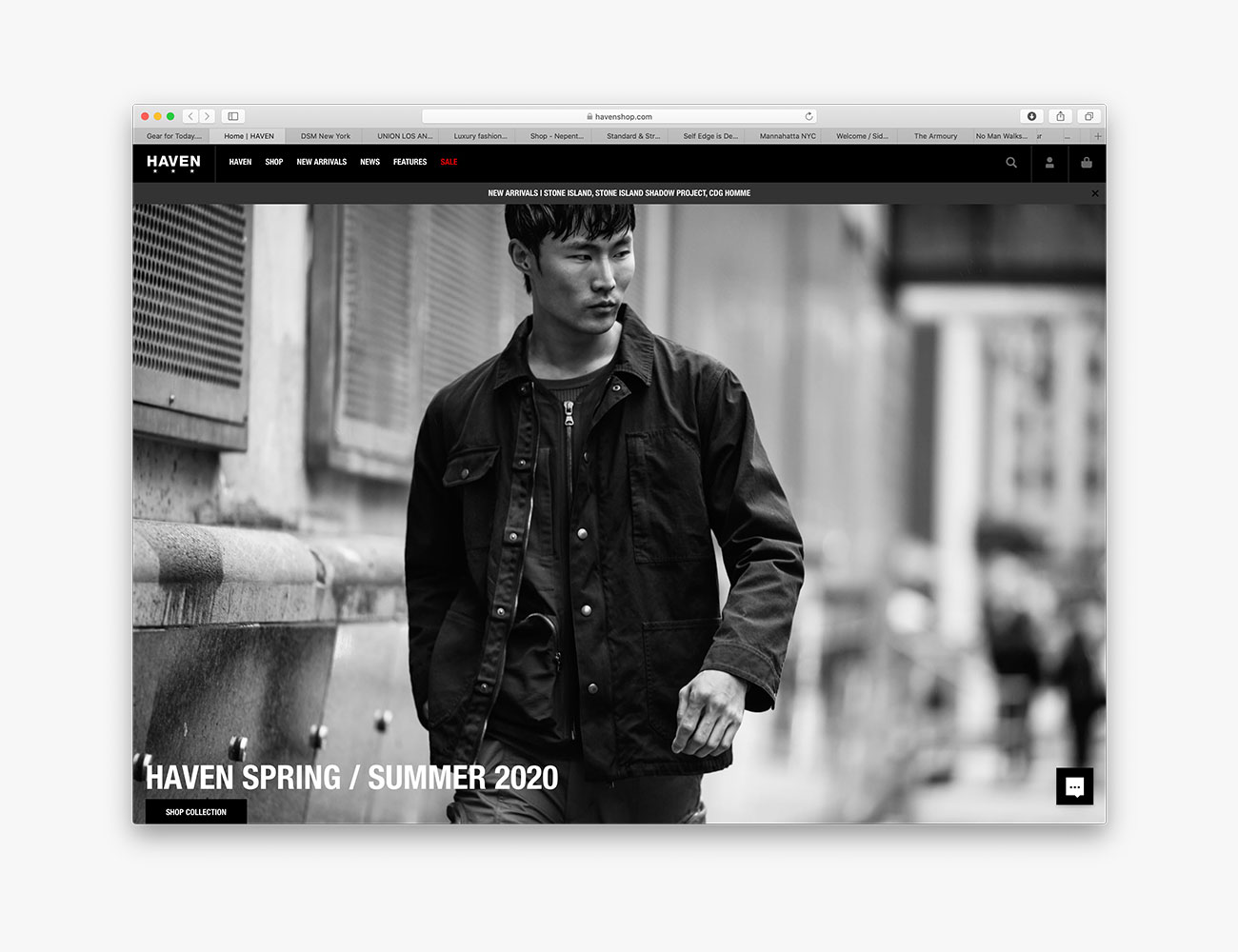
    About: A stalwart of hard-to-find Japanese labels and techwear, Canada’s Haven is a mecca for those who love the Japanese side of streetwear.
    Brands: A Bathing Ape, Hobo, Junya Watanabe, Sacai, Sasquatch Fabrics, Wacko Mario, Undercover

    Dover Street Market
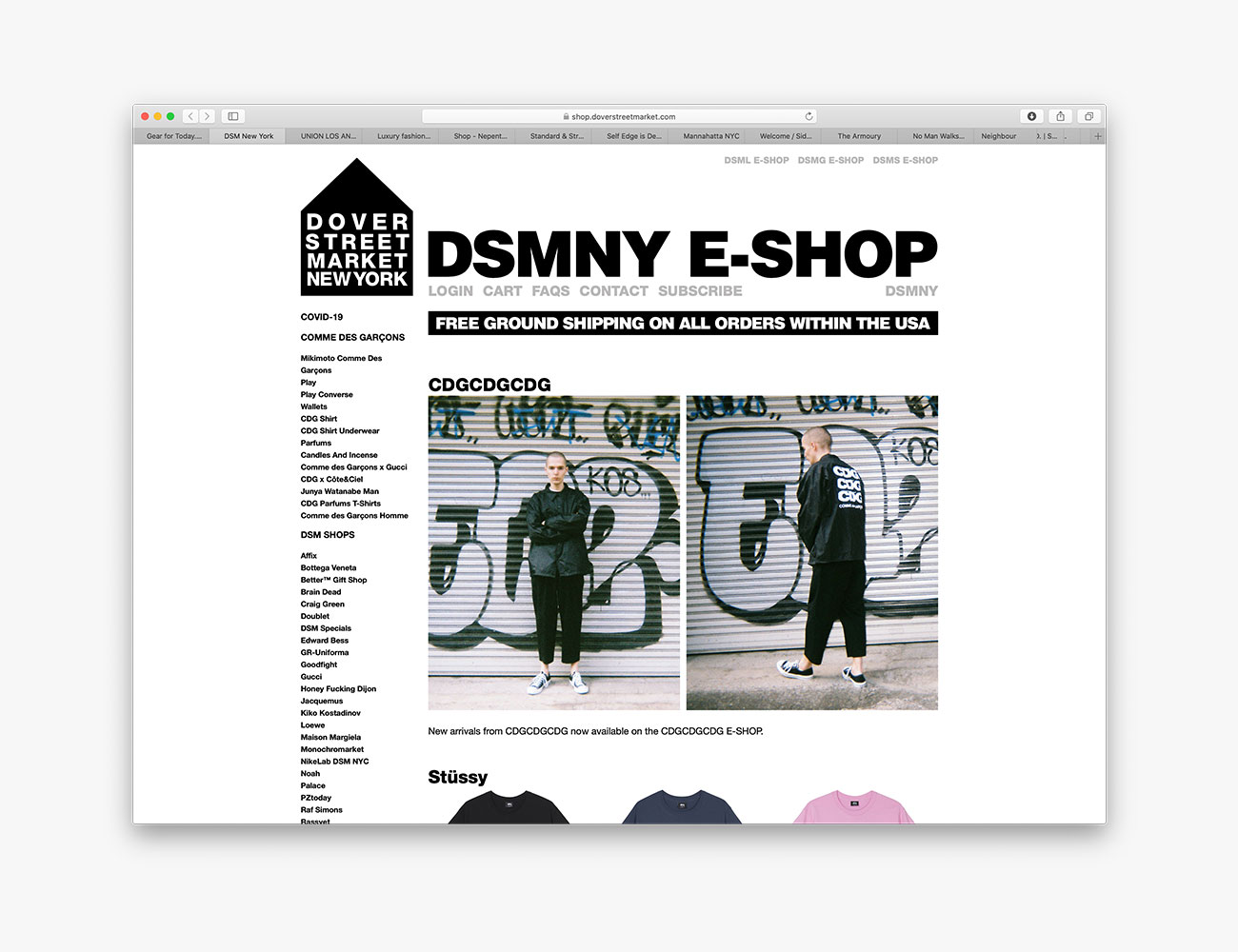
    About: Dover Street Market is a place to discover new brands and does the high-low juggle better than almost every other store out there. As the brainchild of Rei Kawakubo, you’ll find all of Comme Des Garçon’s sublabels, but you’ll also them next to skate brands and up-and-coming designers.
    Brands: Supreme, Noah, Comme Des Garçons, Affix, Brain Dead, Palace, Random Identities, Doublet

    Union
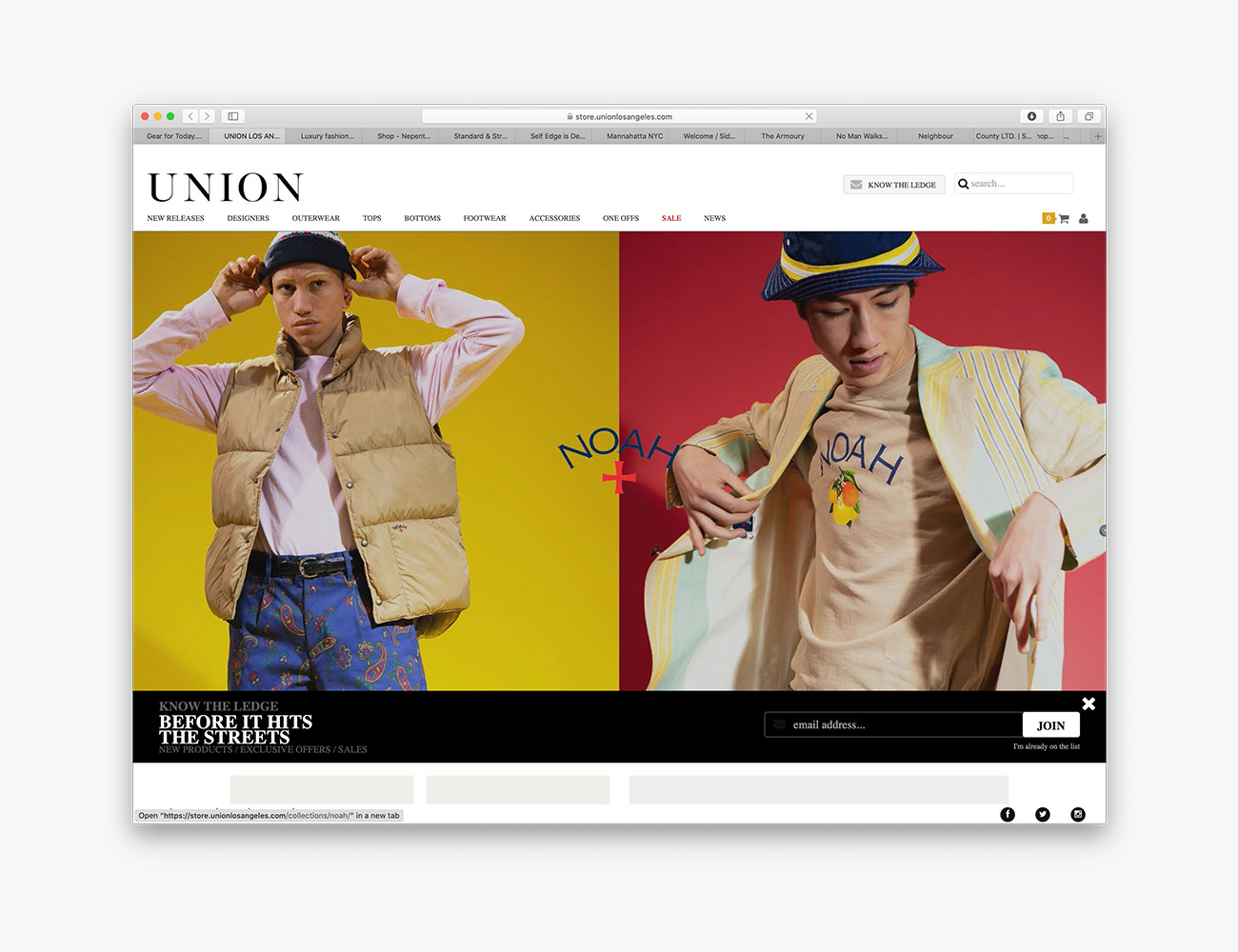
    About: For decades Union has been servicing the streetwear world but has since expanded its offering to include next-level designers, often being among the first to introduce the world to the next hot item.
    Brands: Martine Rose, Thom Browne, Bianca Chandon, Camp High, Eden Power Corp., Jacques Marie Mage, Toga Virilis

    SSENSE

    About: Another site worth reading and shopping, SSENSE is a go-to for those who love designer labels (and their dogs, too).
    Brands: Eckhaus Latta, Gucci, Rick Owens, S.R. STUDIO, L.A. C.A., The Elder Statesman, Ziggy Chen, Marsell

    Also Check Out:

  • American Rag Cie
  • Bodega
  • 1032 Space
  • Hathenbruck
  • H. Lorenzo
  • LN-CC
  • Mohawk General Store
  • Notre
  • Totokaelo
  • Japanese and Workwear

    More into the Japanese/Americana vibe? There’s no shortage of retailers that serve up eastern takes on western classics from lauded brands like Engineered Garments, Visvim and Kapital. Some of these stores lean more heavily into the denim and workwear worlds while others occupy the more wabi-sabi. Either way you go, you’ll likely get your fix at any one of these stores.

    Nepenthes
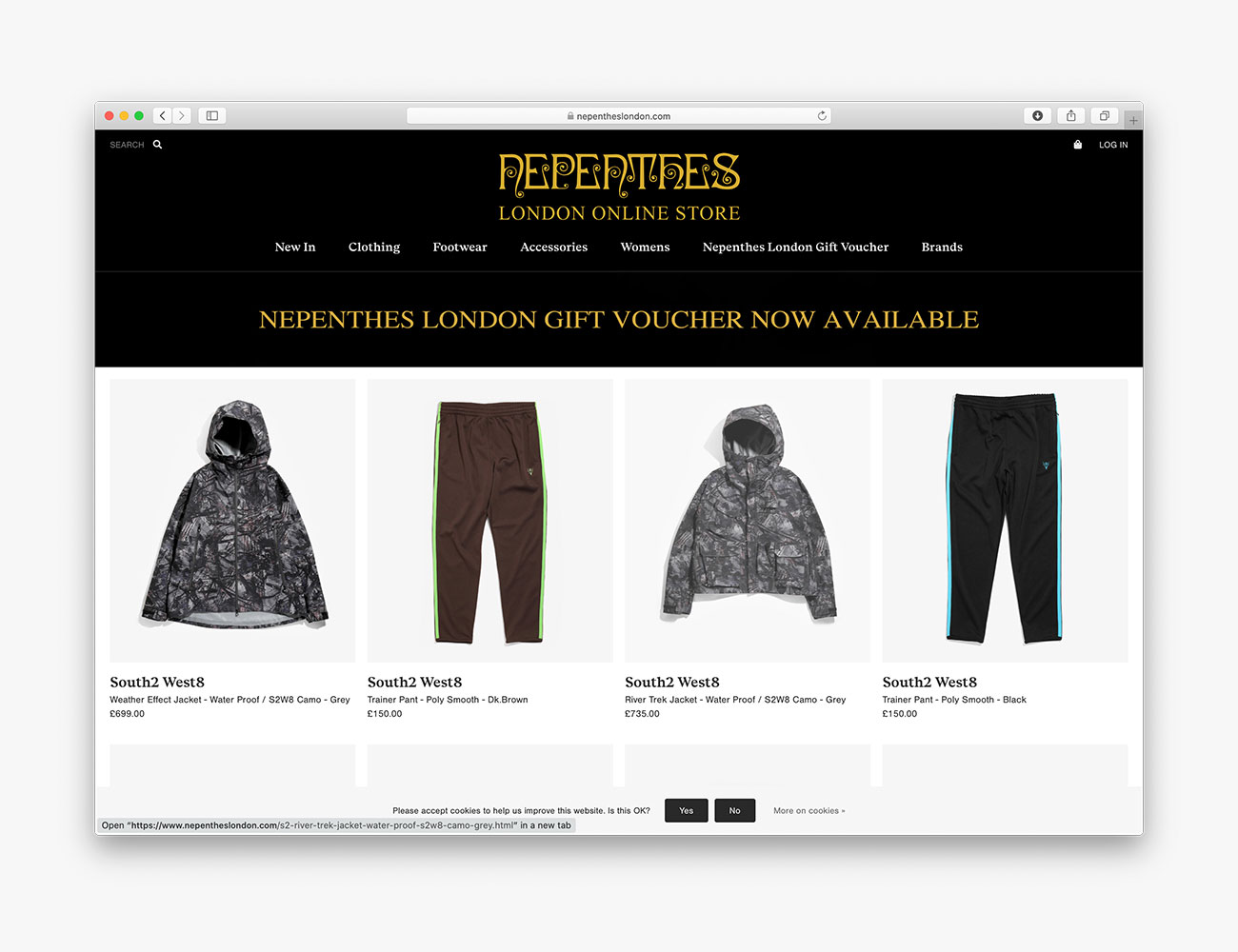
    About: As the umbrella for many of today’s trendsetting brands, Nepenthes is a must for those who like to experiment with their style.
    Brands: Needles, South2 West8, Engineered Garments, Suicoke, Tricker’s

    Standard & Strange
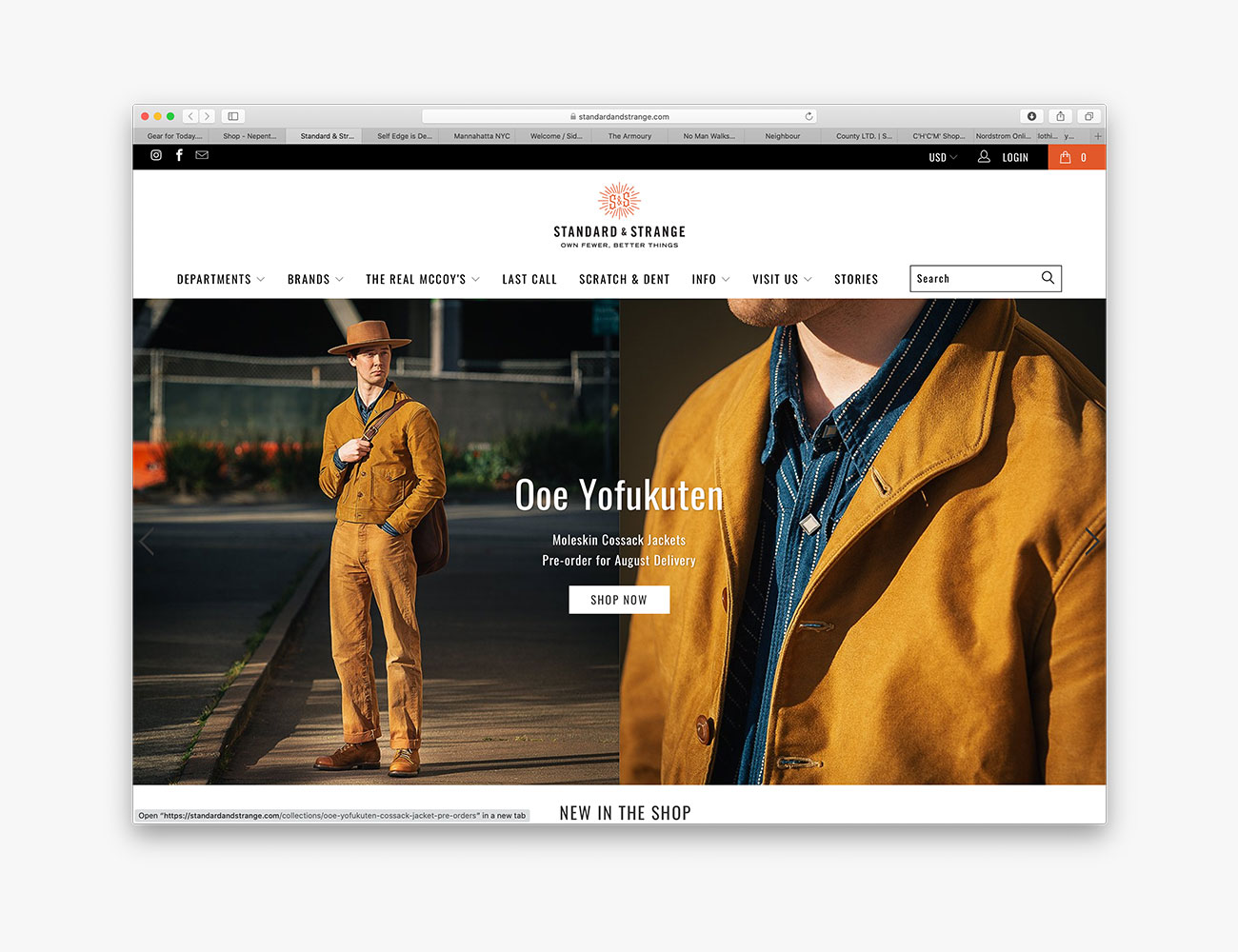
    About: Standard & Strange’s stock list is seriously impressive and the Oakland-based shop continues to secure labels that no other store manages to obtain. Fans of denim, workwear and repro should have this shop at the top of their list.
    Brands: Kapital, The Real McCoy’s, John Lofgren, Wesco, Viberg, Indigofera, Peanuts, Ooe Yofukuten

    Self Edge
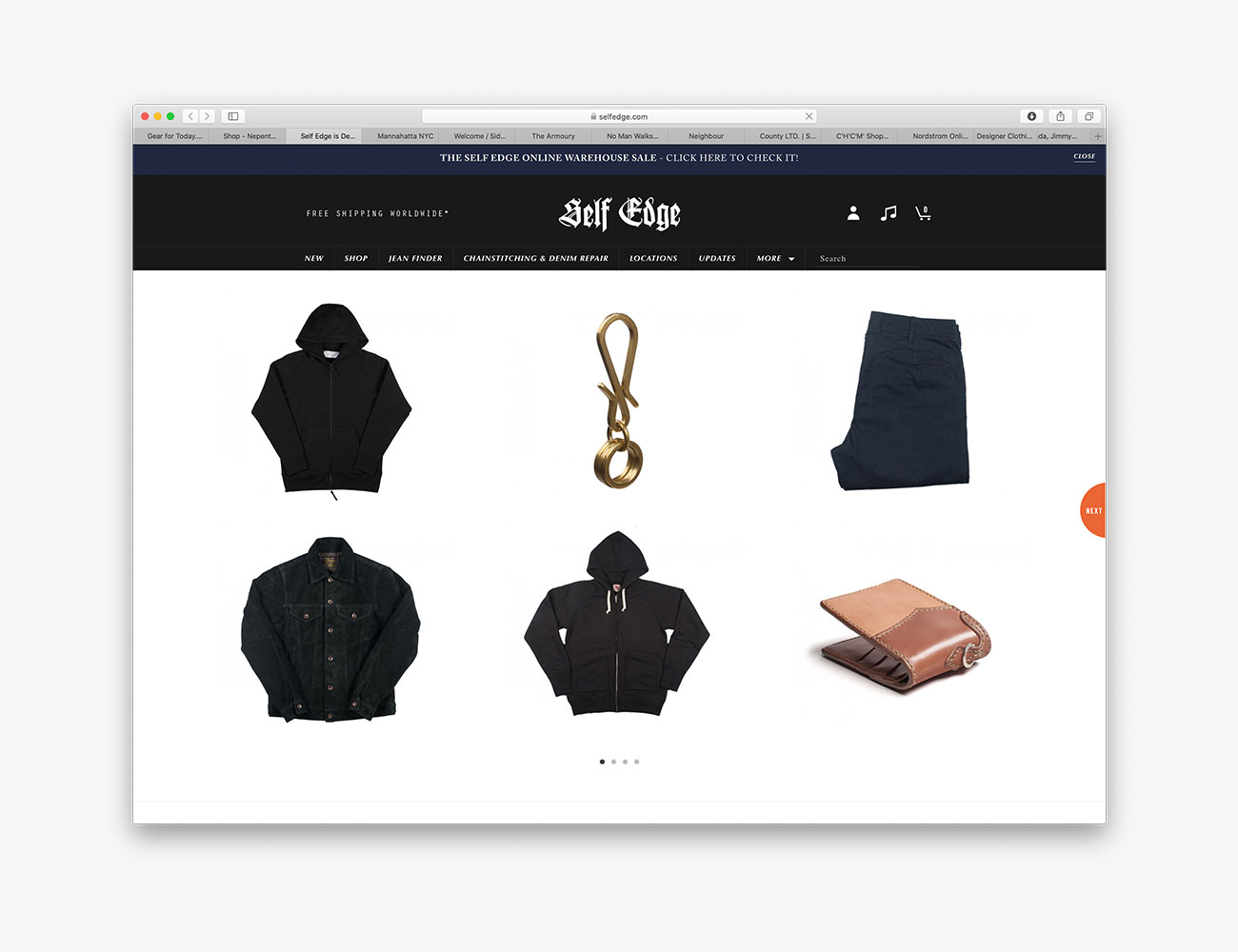
    About: Self Edge is credited with introducing a number of Japanese labels to the States and if you’ve heard of a hardcore denim brand, it’s likely because of them.
    Brands: Roy, Merz B. Schwanen, The Flat Head, Iron Heart, Nine Lives, Masahiro Murayama, Human Made, Studio d’Artisan, Good Art, Fine Creek Leathers

    Mannahatta

    About: Mannahatta has caught the eyes of fashion obsessives, high-profile celebs and big-time rappers thanks to its deep stock of hard-to-get brands like Kapital and Rude Gallery.
    Brands: Kapital, Rude Gallery, TS(s), Left Field NYC, Groover Spectacles, Mountain Research, W’menswear

    Also Check Out:

  • BlackBlue
  • Blue Button Shop
  • Blue In Green
  • Blue Owl
  • The Bureau
  • Canoe Club
  • Clutch Cafe
  • Division Road Inc.
  • East and West
  • Independence
  • Lost & Found
  • Manready Mercantile
  • Stag Provisions
  • Totem
  • Sartorial and Suiting

    Some guys like to get dressed and like to enjoy their Sundays shining shoes when they’re not buttoning up a bespoke sport coat. Retailers in this category focus their attention on fine tailoring, mixing hand-stitched shirts with custom suiting and artisanally-crafted accessories.

    Sid Mashburn

    About: A champion of tailored casual, Atlanta-based Sid Mashburn is just one of the many successful Ralph Lauren alumni. The brand hits a sweet spot between sartorial and laidback, so if you like a mix of Italian tailoring and perfectly-fitting washed out five-pocket jeans, Sid Mashburn is one to bookmark.
    Brands: Sid Mashburn, Levi’s, Aspesi, Allen Scura, Drake’s

    The Armoury

    About: First started in Hong Kong, The Armoury has garnered attention for its high-level of taste when it comes to tailored goods. It stocks some of the world’s foremost artisanal brands, many of which do bespoke work.
    Brands: The Armoury, Ring Jacket, Carmina, Bresciani, Ambrosi, Nigel Cabourn, Koji Suzuki

    No Man Walks Alone

    About: Born online from fashion forums, No Man Walks Alone has a wider range of styles beyond its strong sartorial set, making it a one-stop shop for many a style enthusiast.
    Brands: Sortoria Formosa, G. Inglese, Abasi Rosborough, Kuon, Inis Meain, James Grose, De Bonne Facture, Fujito

    Also Check Out:

  • Drake’s
  • Leather Soul
  • Leffot
  • Small and Curated

    In person, these stores are somewhat hidden gems. The shops may not have a large physical footprint, but they make up for that with a stellar brand list, often stocking labels you’ve never heard before. It may not be the flashiest of getups, but these brands display an uber discerning eye as few others can.

    Neighbour

    About: Neighbour’s clean aesthetic and discerning brand list is in rarified air, often upping the appeal of its already-lauded labels.
    Brands: Tender, Camiel Fortgens, Our Legacy, Auralee, Bode, Casey Casey

    County Ltd.

    About: County Ltd.’s mix of rare vintage furniture and scrupulous brand list make it one of the most unique stores online and in-person.
    Brands: Mfpen, Evan Kinori, Lady White Co., Phigvel

    C’H’C’M’

    About: New York-based C’H’C’M’ is one of the most focused stores out there. The labels it stocks are meticulously chosen and make for a tight list that all go together effortlessly. You’ll also find a selection of home goods in partnership with Bay Area-based Book/Shop, just in case you weren’t fully-settle on its taste level.
    Brands: Margaret Howell, Paa, Sunspel, Arpenteur, orSlow, MAN-TLE, Niuhans, Wild Bunch

    Also Check Out:

  • Frances May
  • Namu
  • Reliquary
  • Iconic Department Stores

    And of course, there is the old guard — department stores you and your parents grew up shopping. The time-tested big box stores are still kicking and they’ve probably got what you’re looking for, whether it’s a gift for a loved one or for yourself. You’ll find a bevy of designer fragrances, standby suiting, classic high-end names and much more.

    Nordstrom

    About: Nordstrom has been around since 1901, steadily growing from a mom and pop Seattle shop to one of the biggest retail chains on the planet thanks to its over-the-top customer service and wide selection. It’s an old standby when it comes to suiting but has, in recent years, also become a go-to for niche labels.
    Brands: Paul Smith, Gucci, Noon Goons, Adidas, Clarks, Top Shop

    Neiman Marcus

    About: A few years younger than Nordstrom, Neiman Marcus has been counted on for its range of designer goods since its founding in Dalls, Texas in 1907.
    Brands: Alexander McQueen, Ermengildo Zegna, Saint Laurent, Versace, Vince

    Bergdorf Goodman

    About: A New York institution, Bergdorf Goodman was got its start as a tailor shop in 1899. Shortly after, it became the first store to introduce ready-to-wear clothes. Today, you can look to it for top-shelf designers as well as hot streetwear labels.
    Brands: Brunello Cucinelli, Tom Ford, Prada, Valentino, Burberry

    Also Check Out:

  • Macy’s
  • Nordstrom Rack
  • Saks
  • Note: Purchasing products through our links may earn us a portion of the sale, which supports our editorial team’s mission. Learn more here.


    The BioLite BaseLantern XL Is An Innovate Gear For Outdoor Adventures

    The BioLite BaseLantern XL is another testament to the brand’s impressive array of packable modern camping gears. This gadget not only provides illumination but also serves as an entertainment attraction on your outdoor adventures.

    Touted as the brand’s “first flatpack lantern,” this innovative product packs the convenience of a high-tech portable torch and power supply. Its LED torch offers 500-lumen output which is bright enough to light up a room of people. The light lasts up to 78 hours on its lowest setting and for 7.5 hours on maximum output.

    A 12,000 mAH rechargeable lithium-ion battery powers the BioLite BaseLantern XL. The battery doubles as a power bank that can charge mobile devices through a pair of USB ports.  Best of all, this portable travel gear has Bluetooth connectivity. A companion iOS or Android app lets you access a suite of functions linked with the lantern. These include remote control, sleep timers, and proximity activation.

    The app also lets you set your lantern as an alarm clock that sets off audio and visual wake-up alarms. Moreover, a light control feature lets you set the pulsing Party Mood or activate the red night vision or the soothing blues. This lamp also has a real-time battery feedback so you know when it is time for a recharge.

    Designed for outdoor use, the BioLite BaseLantern XL is IPX4-rated for water resistance and uses stainless steel housing and polycarbonate construction for strength and durability. As with other packable camping gears, this gadget comes fitted with a pair of swiveling, collapsible legs to make packing and unpacking a breeze.

    Get It Here

    BioLite BaseLantern XLBioLite BaseLantern XLBioLite BaseLantern XLBioLite BaseLantern XL

    Images courtesy of BioLite

    7 Ways to Keep Your Grooming Regimen Hygienic

    In tandem with spring cleaning, now is as good a time as any to do an audit of your grooming regimen hygiene. Are the products you’re using far past their “Best Used By”? Is your bathroom a cesspool that could wreak havoc on your complexion — in more ways than one? And do you obey proper toothbrush and razor blade replenishment orders? There’s a lot to consider when it comes to having a hygienic regimen, but it’s certainly worth the assessment, especially in current times. Having a clean regimen promises clean and smooth shaves, clear complexion, terrific oral health and more.

    So, here are seven of the most important things to do if you want to minimize any bacterial risks and breakouts.

    1. Replace expired products

    Every product you own has an expiration date, and there’s an industry standard for how brands display each product’s shelf life. Look on the product (typically on the rear) for a little uncapped canister (like a hair product tin that has been opened). Inside that canister it will say something like 6M or 12M, noting how long that product is guaranteed “good and effective” from its open date. So, there’s some extra lifting on your end to recall when you first started using the product — you could also scribble the date with a permanent marker onto the side.

    There’s likely some wiggle room on these dates; it’s not like your moisturizer will suddenly separate 6 months after you opened it, and cease providing you with nourishment and sun protection. But if you’ve owned a product for two or three years and it’s still sitting on your shelf—toss it. Get a new one and a smaller one at that. Chances are some of its powers have been neutralized, some of its ingredients have separated, and its efficacy is far from desirable. Don’t even try it, in fact.

    2. Get a washable Dopp kit

    Dopp kits really run the spectrum in terms of quality and price. You can spend a few bucks for a dorm-friendly shower Dopp, or get a beautiful leather engraved Dopp for your first-class travels. Somewhere down the middle, though, is the practical Dopp. It’s durable, won’t rip, and is also entirely machine washable without pilling around the perimeter.

    Considering all the things that go in this Dopp kit — your razor, toothbrush, and any products that have been sitting in tiny pools of water on the hotel sink — it is something you should wash frequently (Plus they often take it out of your bag at TSA, and set it in a bin for scanning. Everyone knows those bins are filthy). So, get a practical Dopp kit, and a washable one at that.

    Nylon Dopp Kit by Baggu $30

    3. Replace your toothbrush at proper intervals

    You need to replace your toothbrush every three months, says the American Dental Association. That’s four times a year. Doing so will ensure your brush head remains durable enough to clean the teeth properly, and it’s also just good hygiene to not keep a toothbrush more than that amount of time. You can sign up for a replenishment program, like Goby, if you want someone else to keep tabs on the replacement heads — it is easy to forget, after all. After you buy their excellent electric/chargeable brush for $60 (including a starter kit), you can get new heads sent every 1, 2 or 3 months for just $6 a pop.

    Toothbrush Starter Kit by Goby $60

    4. Practice good razor hygiene

    We’ve waxed poetic on how to have a safe, hygienic shave. And within those many shave tips are two major notes on razor hygiene: First, store the razor upright in a cool, dry place after the shave, so it can dry without inviting bacterial growth. Then, get a blade cover to shield the blades once they’re dry.

    Next, be sure to replace your razors at proper intervals too—every two weeks or after 6-8 shaves, whichever comes first. After this, it’s likely the blade has become dull or has accumulated bacteria and should be replaced to ensure safety for your skin. This is why razor replenishment companies are so popular since you can rely on them to change your razor at proper intervals. Harry’s, in particular, is a one-stop-shop for all of the above.

    Blades by Harry’s $16

    Travel Cover by Harry’s $1

    Razor Stand by Harry’s $15

    5. Wash your beard trimmer

    In tandem with shaving hygiene is trimming hygiene — and those hair clippings don’t exactly repel bacteria. So, it’s important to rinse your beard trimmer after each use (and for that reason, to buy one that allows both wet and dry usage). Most trimmers come with a tiny brush, too, that a lot of guys just discard immediately. Don’t do this, because that little brush can help extract excess hairs from the blades. Don’t hesitate to drop some liquid soap over the blades either, and then rinse it under hot water.

    Oh, and as a side note — oil it up! Your trimmer likely came with a little vial of oil, which you should apply to the trimmer once it’s clean and dry. This will help keep those blades strong, and can even thwart bacterial buildup.

    Wet/Dry Beard and Body Trimmer Kit by Wahl $100

    6. Rinse each product—and clean the shelf

    If you have any dust accumulation in your bathroom, then keep in mind to regularly rinse each product, wash the shelf that they rest on, and wipe down/vacuum/Swiffer any excess dust in the room. That’s because your entire skincare regimen is built around you touching your own face. And one of the best ways to prevent clogging pores is to not apply dust and dirt particles onto the skin. By keeping the products and entire bathroom dust-free, you minimize these odds.

    Oh, and by washing your hands before you apply any product, you also minimize transferring bacteria to your pores, which is another recipe for a breakout.

    7. Go crazy with a hot-water rinse

    Combs, nail clippers, tweezers, toothbrushes, razors — these are just some of the products that sit around in the bathroom and collect dust, germs and more. So, in addition to the routine cleaning you do in the bathroom, give them a weekly hot-water rinse, too, just to kill any bacterial accumulation.

    This won’t shorten the intervals of replacing razors or toothbrushes, but it will neutralize the products that you put in, near, and around your eyes, mouth, and nose, as well as the precious scalp and hair follicles. Be sure to dry them quickly — in a cool, dry room—especially to prevent rusting of the nail clippers, razors blades and tweezers.

    Note: Purchasing products through our links may earn us a portion of the sale, which supports our editorial team’s mission. Learn more here.
    Want to Buy a Better Chino? These Are Just $72

    <!–Want to Buy a Better Chino? These Are Just $72 • Gear Patrol<!– –>

    Functional, not technical


    Finding pants that look sharp but don’t overheat and restrict during the summer months is a difficult task. Pants designed for warm-weather wear can easily end up feeling too technical and artificial or feel a bit too seasonal. Everlane’s Performance Chino is an attempt to split the difference.

    Cut from a cotton and elastane fabric, these classic everyday pants are available in four colors and designed to be sweat-wicking and quick-drying from a four-way stretch material — all for under $75. But the real innovation here isn’t the technical qualities of the chinos. Designing outside-of-the-gym clothing to perform like athletic apparel is far from a new idea. Instead, what makes these chinos from Everlane remarkable is that they don’t look like running tights masquerading as the kind of pants you’d wear to the office. Even trousers designed by the best technical and athletic brands have a hard time avoiding that wrinkly, out-of-place look despite their sky-high price tags. Will Everlane succeed where others have failed? At $72, you won’t have to spend a lot to find out.

    Note: Purchasing products through our links may earn us a portion of the sale, which supports our editorial team’s mission. Learn more here.
    <!–

    –>

    <!– –><!–

    –>

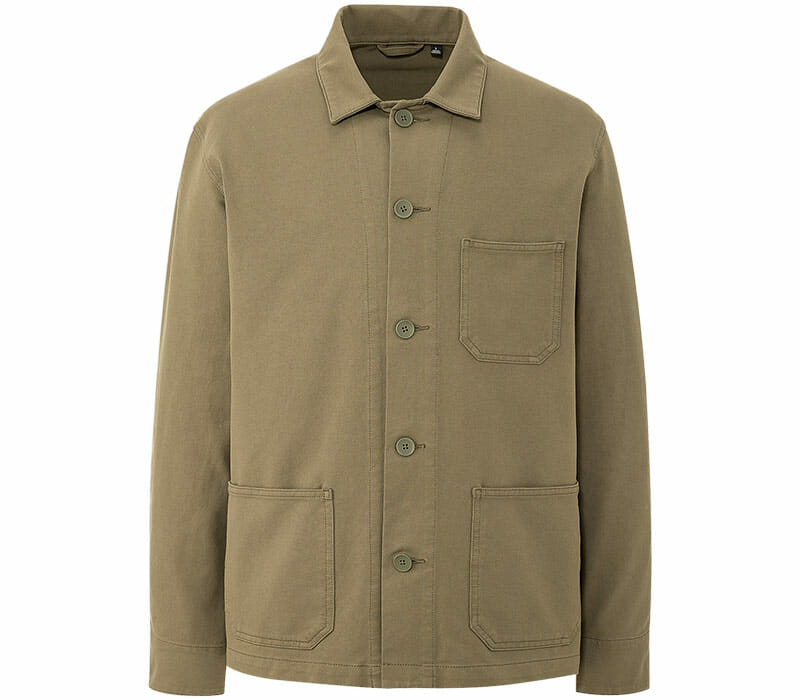
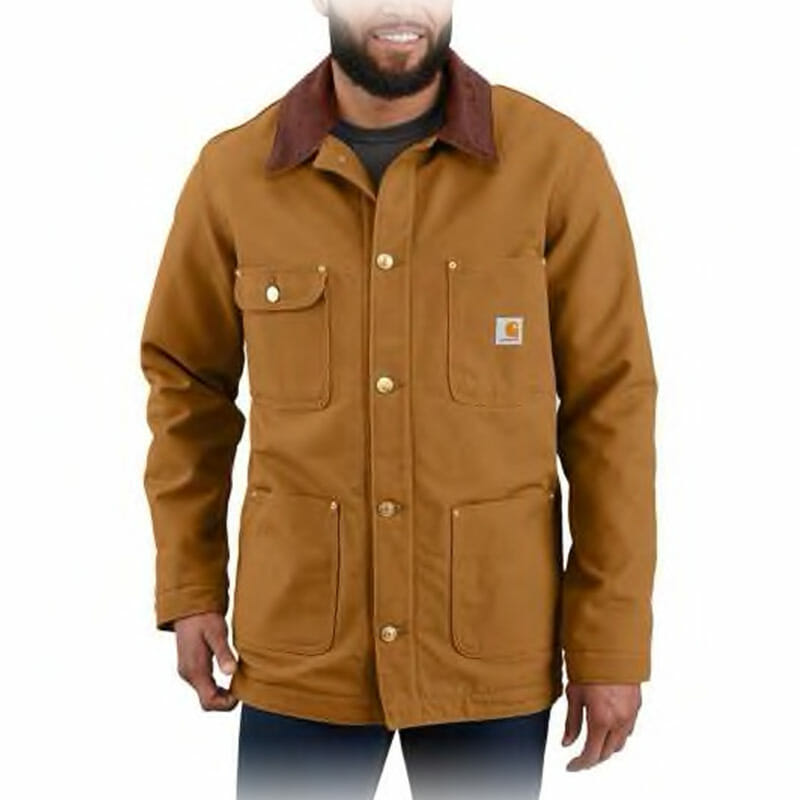
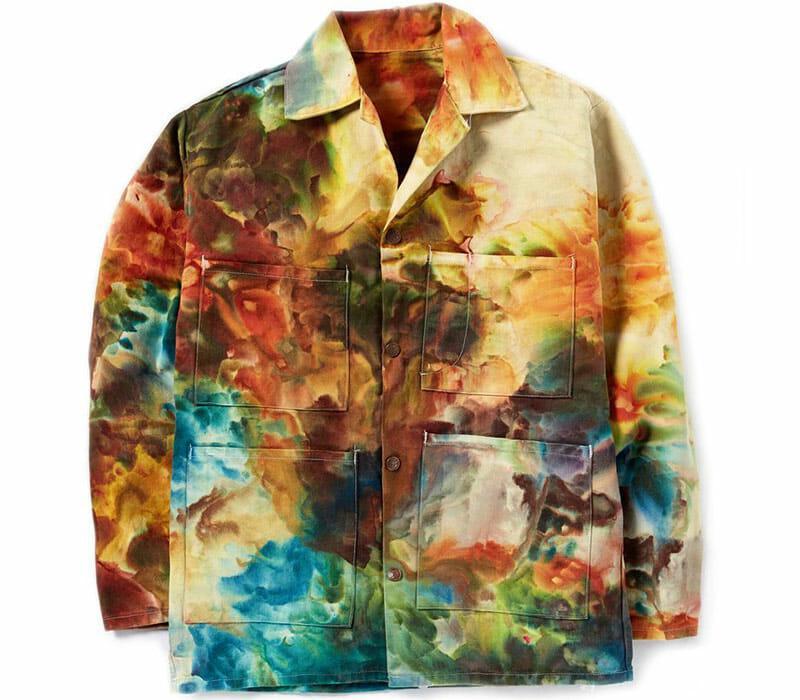
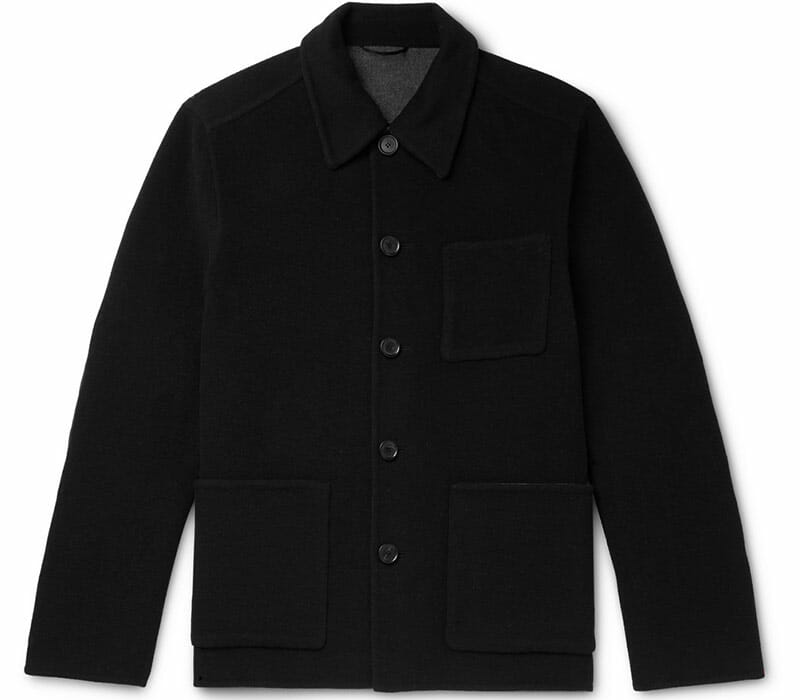
    The Chore Coat Is a Perfect Garment. Here’s Why

    You can’t walk down the street or scroll through your portable media brick without seeing someone wearing a chore coat. Workwear’s rise in popularity helped bolster the utilitarian garment to the fore, no doubt with the help of beloved pioneer of street style photographer, Bill Cunningham who was rarely seen without one. Droves flocked to flea markets and vintage stores in search of patched up and patinated relics. Workwear brands offered their takes, designer brands put forth resplendent homages, all in reverence of the garment.

    But before throngs packed flea markets, before Cunningham brought the famous blue jacket with him to the runway, before it became fashionable, it was practical.

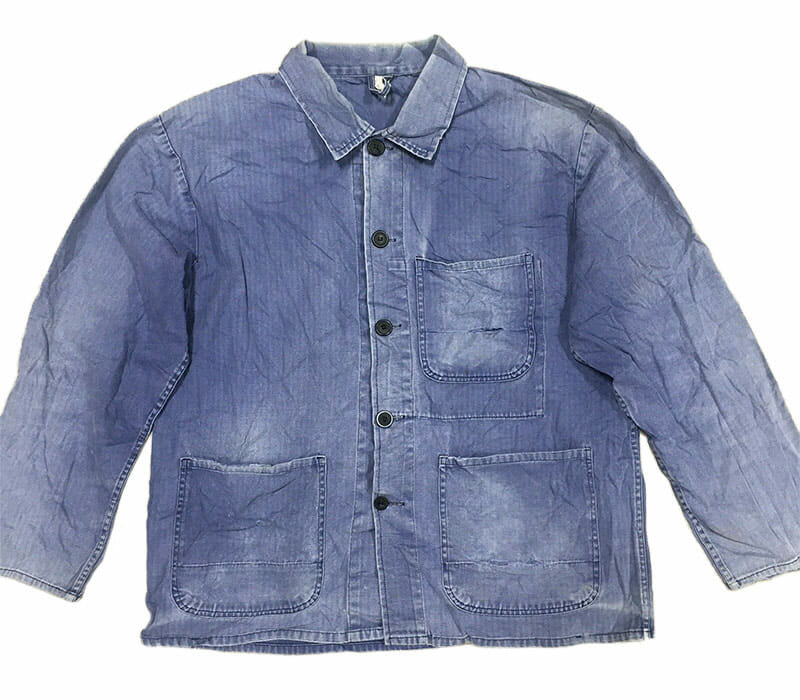
    The first chore coats, known to this day as bleu de travail, were born into hard labor in 19th-Century France, made for railroad workers and engineers. Composed of moleskin or drill fabric dyed into what we recognize as French blue, early chore coats featured three (sometimes four, sometimes two) patch pockets to hold any tools required for the job at hand. They were also cut in a relaxed fit for ease of movement and layering in colder temperatures. For the warmer months, workers could flip the generous collar to protect their neck from the sun and unbutton the cuffs to roll up the sleeves.

    Jamie Wong frequently stocks vintage French chore coats at her store, Raggedy Threads, a vintage store specializing in workwear and militaria. “It’s a sturdy, functional piece,” she says. “It’s an everyday jacket because there’s a lot of pockets. And, who doesn’t like jackets with pockets? I like the fact that it’s longer than a trucker jacket, especially for guys who are taller. They don’t look that good in truckers, unless they go for the high-waisted ’50s-style pants. Chore coats have better proportions for height.”

    French Chore Coat by Vintage $80

    Though a chore coat bears resemblance to its cousin, the hunting jacket, another staple of workwear, it’s just a few pockets removed. Hunting jackets also tend to be longer and generally made from heavier fabrics to withstand winter gaming. With hunting jackets, it feels right to drop the first half of the shirt-jacket hyphenate outright. While the DNA is essentially the same, hunting jackets are just too heavy to be worn year-round.

    Even here in New York, where winters can take out the warmest-blooded of us, I find myself reaching for one. The particular chore coat I have leans more on the shirt side of the shirt-jacket spectrum, yet it’s still in the roster even in freezing temps. It’s not always the outermost layer, but once I get indoors, it’s next up to bat as soon as the arctic-rated puffer is sloughed.

    Alex Robins, co-founder of New York-based brand Blluemade knows this experience. “It has to do with how people in global capitals dress,” he says. “I grew up in rural Minnesota — nobody wears chore coats. You wear your big coat and you wear your shirt. You’re in and out of your car. But in our environment in New York, we’re actually more exposed to the elements… With the variability of environments that we as New Yorkers or Parisians or people in Tokyo experience, [a chore coat] functions very well as a layering element for the way that urban transit works.”

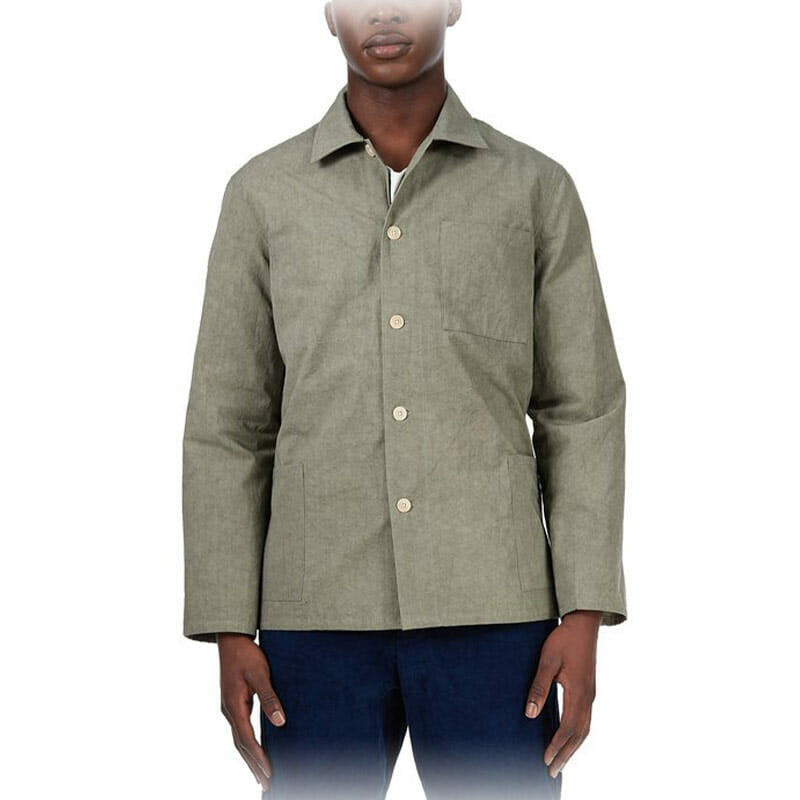
    Chore Coat by Blluemade $368

    Often, you’ll find it occupying the ‘overshirt’ or ‘shirt-jacket’ section of your favorite retailer’s website. It’s heavier than a button-up shirt, though not as serious as an actual jacket-jacket. But it’s not like the chore coat is having an identity crisis. Rather, the chore coat is a chameleon of a garment. It’s everything you need for any environment.

    And, its versatility isn’t just limited to its utility. “There’s something interestingly unsignified about it,” Robins notes. “It’s not Americana. It’s European. When you wear one, you’re not aligning yourself with rockabilly culture or hotrod culture in a way that so many mid-century garments do. It’s kind of ambiguously signified in a way that also makes it very easy to uptake into contemporary fashion.”

    Brands like Le Mont Saint Michel, Vetra and Le Laboureur stay the course, making the true French chore coat as they’ve done for decades, while contemporary labels give the classic piece a go, putting their own spin on the time-tested jacket. On either end of the chore coat spectrum lies the framework of utility. And that’s something you can wear any time.

    Washed Jersey Work Jacket by Uniqlo $40

    Duck Chore Coat by Carhartt $90

    Vintage Chore Coat in Marine by Riverside Tool and Dye $160

    Double-Faced Splitable Wool Blend Overshirt by Mr P. $750

    Quilted Cotton-Canvas Chore Coat by Craig Green $840

    Brown Wool Tweed Jacket by Bode $1,540
    The Evergreen Allure of Gucci Loafers

    Florentine fashion house Gucci made a name for itself with luggage. In the early 1900s its founder, Guccio Gucci was working as a porter in various European hotels, notably London’s Savoy Hotel, when he was captivated by the opulent bags and trunks of well-to-do hotel guests. So, when he returned to Italy and in 1921, he started his own brand of luxury luggage aimed toward the Savoy-staying globe trotters. Read the Story

    Note: Purchasing products through our links may earn us a portion of the sale, which supports our editorial team’s mission. Learn more here.
    The Best Pens for Your EDC

    In an era where communication is done through email, novels are written in word processors and bright ideas are dictated on your cell phone, you’d think there’s no more use for pens in the office world. While you may rarely need a pen these days, there’s something to be said about using them in favor of typing digitally. Taking notes on pen and pad in a meeting looks miles more professional than tapping them into Evernote, signatures always look better in ink than scribbled on a tablet, and even the briefest handwritten letter looks more meaningful than any email could ever aspire to be.

    In short, writing in pen shows that you’re distinguished and give a damn about good taste, so take your handwriting seriously, and use a solid pen. From affordable disposables to luxurious fine writing utensils, these are some of the best pens for carrying out your daily office tasks, from note taking to working on the Penske File.

    For the Supply Closet

    Distinguished, but Disposable

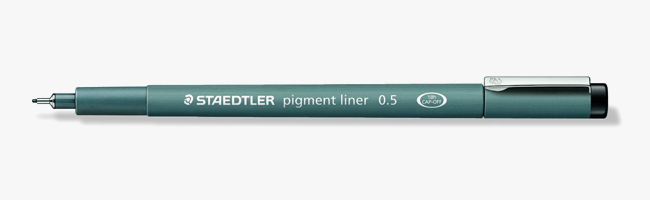
    Staedtler Pigment Liner

    pens-gear-patrol-staedlerpens-gear-patrol-staedler

    Though their intended application is for sketching, Staedler Pigment Liners make great writing pens because of the bold, crisp lines they make on the page and their smooth writing action. Staedler also advertises an 18-hour cap-off time, meaning if you’re the forgetful type, you won’t be out a pen if you accidentally leave off the cap.

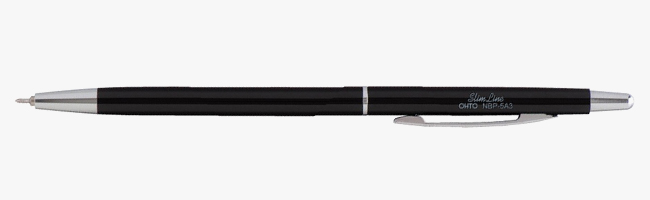
    Ohto Slim Line

    pens-gear-patrol-ottopens-gear-patrol-otto

    At 0.3mm, the Ohto Slim Line is one of the finest-point ballpoints around. Besides being handsome, the Slim Line’s thin aluminum body is small enough to tuck away in smaller notebooks, and Ohto’s longstanding Japanese craftsmanship means it can hold up to a lot of abuse.

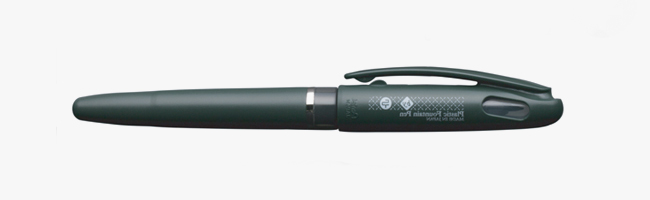
    Craft Design Technologies Item 20

    pens-gear-patrol-craft2pens-gear-patrol-craft2

    Designed by Japanese stationary company Craft Design Technologies, the Item 20 is based on Pentel’s plastic-nib Tradio fountain pen but puts it in a cleaner, simpler and more elegant package. The CDT Item 20 has the same kind of smooth writing action as a traditional fountain pen, but the plastic construction it makes it a lot more easy to stomach if it becomes lost or broken.

    pens-gear-patrol-supply6

    pens-gear-patrol-supply6

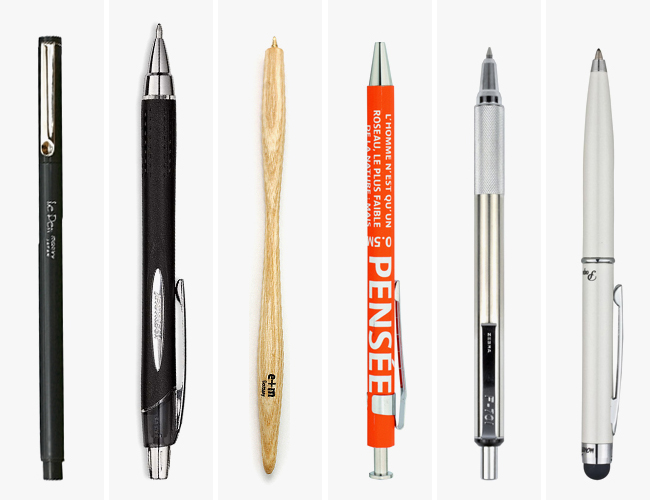
    Left to Right: Marvy Uchida Le Pen ($2) Uni-ball Jetstream Pack of 12 ($19) E+M Sharper Ballpoint ($4) Pensée Wooden Pens ($8) Zebra F-701 ($7) Monteverde Poquito ($12)

    For Everyday Carry

    Don’t Lend ‘Em Out

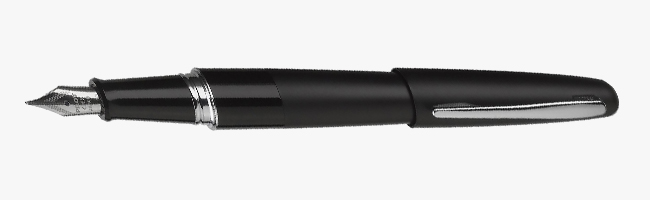
    Pilot Metropolitan

    pens-gear-patrol-pilotpens-gear-patrol-pilot

    If you aren’t so keen on plastic nibs and don’t want to spring for a more expensive fountain pen, the Pilot Metropolitan is one of, if not the best entry fountain pens. The Metropolitan has a hefty but streamlined body reminiscent of fountain pens 20 times its price and has a smooth writing action.

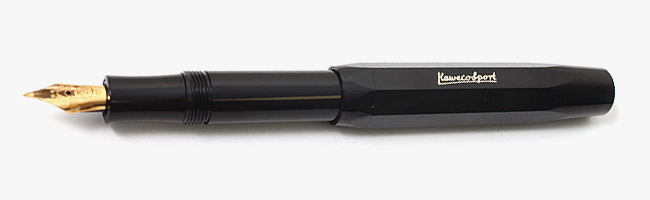
    Kaweco Classic Sport

    pens-gear-patrol-kawecopens-gear-patrol-kaweco

    The Kaweco Classic Sport lives up to its name: it’s based on a design from 1935, but is compact and sleek, perfect for everyday use. The gold-plated steel nib is a step up in quality for new fountain pen users, and the Kaweco’s iconic hexagonal shape will keep it from rolling off any uneven surfaces.

    Fisher Original Astronaut Space Pen

    pens-gear-patrol-fisherpens-gear-patrol-fisher

    Designed in the ’40s and eventually used in NASA’s Apollo missions, the Fischer Space Pen is without a doubt one of the most iconic writing utensils of all time. Thanks to a pressurized ink cartridge, the Fisher can be used at any angle in extreme temperatures.

    pens-gear-patrol-edc6

    pens-gear-patrol-edc6

    Left to Right: Tombow Object Roller Ball ($65) Nemosine Fission ($31) Caran d’Ache Ballpoint ($20) Tactile Turn Raw Machined Aluminum (Learn More) Karas Kustoms Bolt ($70) Machine Era Pen Solid Brass ($38)

    For the Executive

    The Ultimate Writers

    Waterman Carene

    pens-gear-patrol-waterman2pens-gear-patrol-waterman2

    Though we admire almost all luxury fountain pens, they sometimes have a tendency to look a little bit stuffy. Waterman’s Carene is a perfect example of what a contemporary fountain pen should look like. Most notably, the 18-carat solid gold nib of the Carene is integrated into the pen body, making for a sleek, attractive writing instrument.

    Montblanc Meisterstück 149

    pens-gear-patrol-montblancpens-gear-patrol-montblanc

    Montblancs are synonymous with fine writing instruments, but if you’re looking for the top-of-the-line pen from the Hamburg brand, you’ll want the Meisterstück 149. The Meisterstück Series has been Montblanc’s flagship range for over 90 years and the 149 was introduced in 1952 as the very top of the range. If nothing but the absolute finest writing instruments will do, this is your pen.

    pens-gear-patrol-executive1

    pens-gear-patrol-executive1

    Left to Right: Lamy 2000 ($145) Graf von Faber-Castell Classic ($270) Montegrappa Ducale ($266)

    20 Style Releases We Can’t Stop Thinking About This Week

    Some call it window shopping. Others call it fantasizing. I call it curating. This week, we saw a gob of good garments unleashed onto the virtual shelves of our favorite retailers. Because we can’t show you all 587 of our favorite jawnz to come out this week, we’ve curated a list of the best of the best. From lambskin boxing shorts to a Matisse-inspired button up to tech-forward sneakers, these are the best style releases of the week.

    New Balance 990v5 Nimbus Cloud

    The new colorway of the 990v5 has our feet on Cloud Nine.

    Visvim Attica Trainer

    John Mayer’s jogging sneakers.

    orSlow Utility Vest

    I like to call this a hands-free tote bag.

    Martine Rose Chaplin Satin-Jacquard Shirt

    Flawless execution.

    Balenciaga Black Croc Slides

    Is there a better way to check the mail than wearing these slides? I think not.

    National Athletic Goods Full-Zip Campus

    If you take enough Coursera courses, you have full rights to call your home a campus and wear this cozy sweater. Magna cum lounge.

    Bottega Veneta Polished Lambskin Shorts

    Manny Pacquiao went into the ring against Lambchop. Guess who won.

    Noah Paisley Pants

    Paisley ain’t just for bandanas and neckties.

    The Conspires Short Sleeve Shirt

    Get yourself a see-through shirt. It’s good for you.

    Jacquemus Henri Matisse-Print Twill Shirt

    An expressionistic way to self-express.

    Eastlogue MA-1 Shirt

    Now this is a shirt jacket.

    Kiko Kostadinov x ASICS GEL-Kiril Sneakers

    Kiko Kostadinov is at it again with Japanese sneaker brand ASICS. This time, in a colorway reminiscent of Bikini Bottom. Aye, aye, Kiko.

    Acne Studios N3W Sneakers

    Whoever thought to use l33t speak to name Acne’s new sneakers is a nerd and a genius.

    Tecovas Smooth Ostrich Boots

    The latest trick from DTC brand Tecovas is turning a flightless bird turned into a very fly boot.

    Warby Parker Summer 2020

    Warby Parker just dropped a new range of slick summer-ready shades.

    Shockoe Linen Utility Shirt

    One way to make a denim shirt even cooler than it already is? Linen.

    Iron Heart Indigo Corduroy Modified Type III Jacket

    We’re salivating just thinking about the fades that this indigo-dyed corduroy jacket will yield.

    Lemaire Blouson Jacket

    Christophe Lemaire does a masterful blend of the ’50s and ’70s in this jacket.

    Remi Relief Jersey Grunge Double Neck Long Sleeve Tee

    When you want to layer, but you run hot.

    Baracuta x Sebago Penny Loafers

    A dose of double prep.

    Note: Purchasing products through our links may earn us a portion of the sale, which supports our editorial team’s mission. Learn more here.
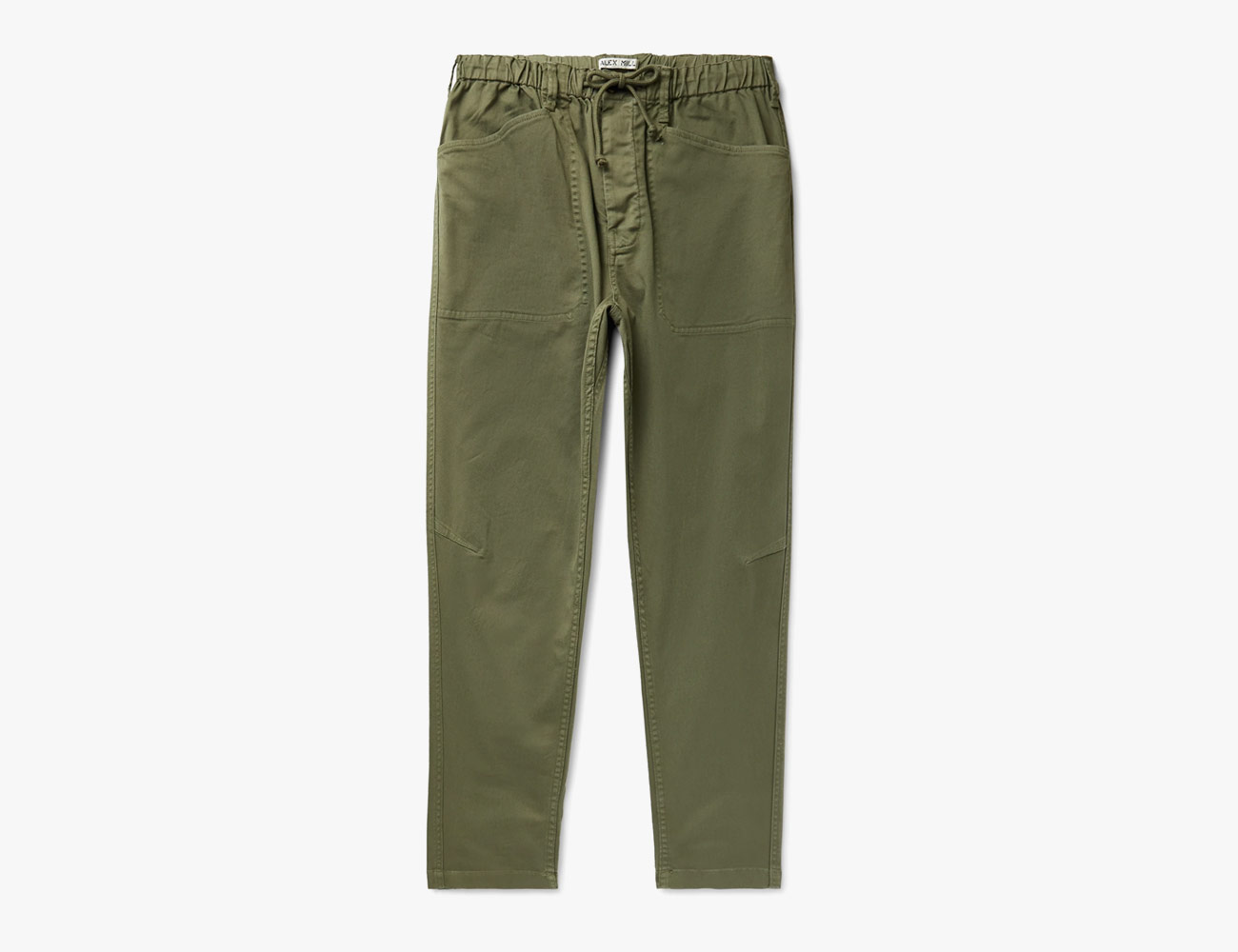
    Ever Wonder Why There’s a Loop on the Back of Your Button-Down Shirt? We Found Out

    Welcome to Further Details, a recurring column where we investigate what purpose an oft-overlooked product element actually serves. This week: that small loop on the back of your shirt.

    More than likely, it’s on your favorite button-down shirt. A small loop of fabric located at the back of the shirt is easy to miss, and unless you’ve somehow put your shirt on backward, you’d almost never notice it. Found at the back of the collar or at the center of the yoke (the panel of fabric that spans the upper portion of the shirt, from shoulder to shoulder), this little detail is most commonly known as a locker loop and it has a very specific purpose that goes all the way back to the mid-1900s.

    Unlike many menswear origin stories, this one doesn’t trace back to the military. But, like many others, this inconspicuous feature is linked to America’s Ivy League schools. But before it became synonymous with East Coast prep, the detail was said to have first appeared on East Coast sailors’ garments during the first half of the 20th century. With limited room, ships were outfitted with space-saving lockers instead of closets. Because these lockers weren’t wide enough to accommodate a clothing hanger, shirts were sewn with fabric loops that could hang on hooks inside of the lockers. Hanging, instead of folding, also helped prevent shirts from getting wrinkled.

    The locker loop gained popularity and eventually made its way onto dry land when Gant Shirtmakers incorporated the detail into its line of oxford cloth button-downs. As the official fashion brand of Yale, Gant produced shirts that were a mainstay on the New Haven campus, informing popular men’s style throughout the U.S. in the 1950s and 1960s.

    Locker loops were used in collegiate locker rooms, but as the style became more popular, the loop took on another purpose off the hook. It eventually became a way to signal romantic intent and young women would tear the loops from the shirts of the young men they fancied. Some of these young men would even cut off the loops altogether to show that they were already spoken for. In return, women would wear their newfound boyfriend’s scarf.

    Because of the locker loop’s ubiquity, it was later taken advantage of in unwelcome ways — intact loops were routinely yanked and ripped for fun. But, roughhousing wasn’t the worst of it. In some instances, an intact loop was used as a way to stoke homophobia and imply that not only was the wearer not in a relationship, but they were gay. It was called things like ‘fruit loop’ and ‘fairy tag’, among other derogatory and offensive nicknames.

    Today, the locker loop is no longer seen as a symbol in popular culture and it remains an essential element of button-down shirts from makers like Brooks Brother, Gant and Gitman Vintage. And while you may or may not use this heritage design feature for its intended purpose — hanging it in a locker — you’ll at least know why it’s there.

    This Overshirt Is so Good You Won’t Want to Take It Off

    <!–This Overshirt Is so Good You Won’t Want to Take It Off • Gear Patrol<!– –>

    Kind of Obsessed


    When I’m working from home, my wardrobe is pretty laid-back. Typically, I wear a pair of relaxed drawstring pants or cutoff shorts paired with a slouchy tee (sometimes hemp, sometimes linen, always comfortable). And while I rotate through different faded T-shirts, I always reach for the same overshirt. Made by California-based Outerknown, the appropriately-named Blanket Shirt is a staple of my casual outfits for good reason.

    It feels incredible. Woven from thick organic cotton, the shirt has a bit of weight, yet it’s super soft and breathable, and it hangs and drapes like no other overshirt — this is not a cardboard-y wool layer. Because it’s made from hefty cotton fabric, it’s ideal for a range of temperatures and it will stand up to years of continuous wear. I’ve had mine for almost four years and it doesn’t look worse for wear. If anything, it’s better: the texture is softer, the colors more muted.

    Available in a range of different plaids, the Blanket Shirt retails for $148. And while that’s more than some overshirts from other brands, the value of mine — in terms of cost-per-wear — is unreal. It gets regular wear every season and is perfect for the house, the beach, the office, the grocery store… you see what I’m getting at. It’s a pillar of my wardrobe, and I’m sure if you get one, it won’t take you long to see why.

    Note: Purchasing products through our links may earn us a portion of the sale, which supports our editorial team’s mission. Learn more here.
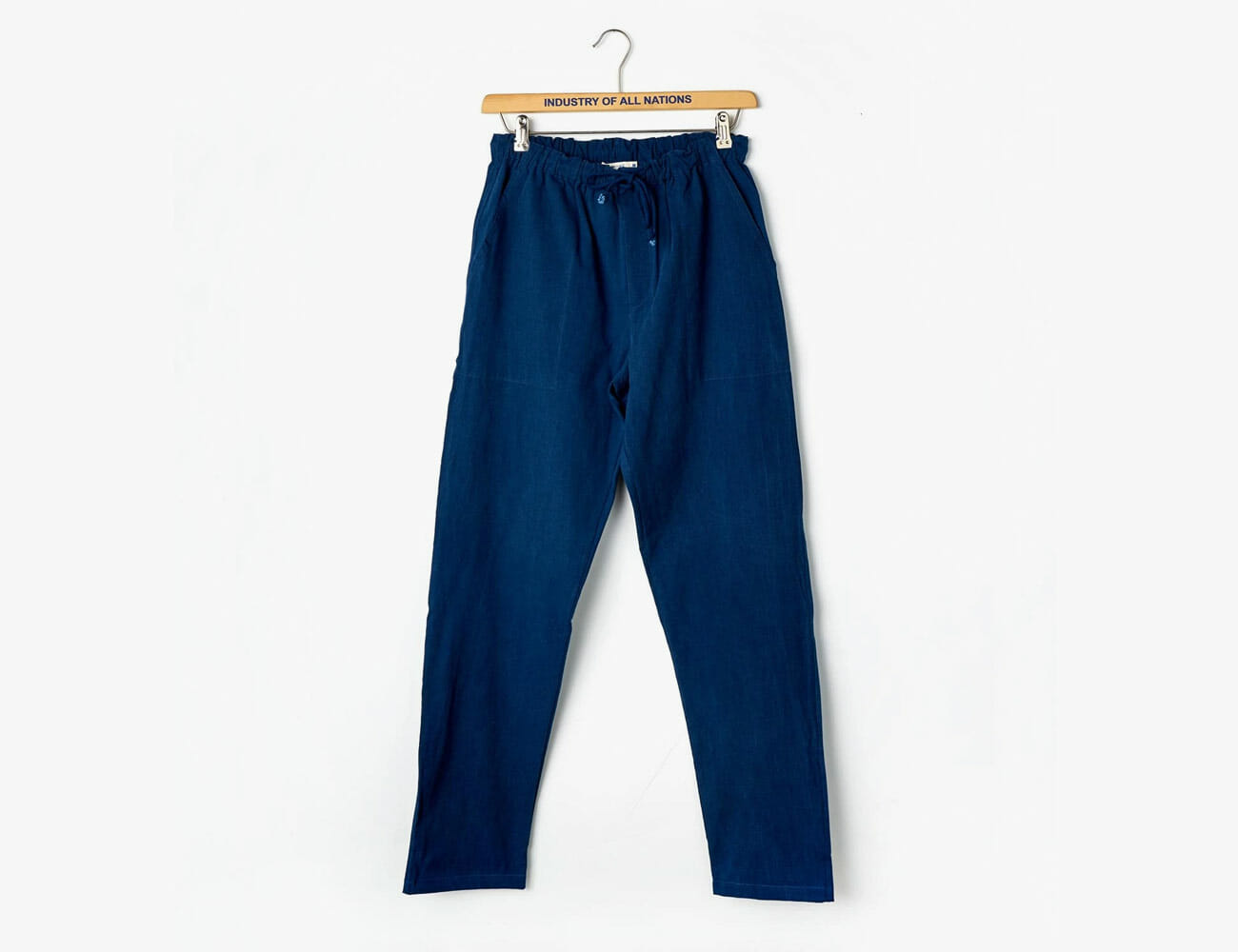
    John Zientek

    John Zientek is Gear Patrol’s style editor and in-house guitar authority. He grew up on the West Coast.

    More by John Zientek | Follow on Contact via Email

    <!–

    –>

    <!– –><!–

    –>

    The Armatus Carry Vita Travel Wallet Is Sleek and Practical

    The Armatus Carry Vita Travel Wallet is your go-to carrier if you plan to bring your travel documents and money in one compact storage. It has ample room for just about anything even a bunch of keys, coins, small tech items and more.

    This non-metallic piece offers a simple yet practical storage solution for your everyday carry needs. This can replace your traditional bifold wallet and guarantees the protection of your EDC goods. It can hold cash, up to 12 cards, passport, folded bills, receipts and more.

    Unlike traditional bi-fold wallets, this product does not have dedicated slots for your cards, cash, and more. Instead, it offers a single pocket for easy and quick access much like how envelopes work. The Armatus Carry Vita Travel Wallet does not flip open and close. Instead, it uses a laminated nylon soft loop to keep everything in place so they do not accidentally fall off. The strap also functions as a pen holder and locks in place using a military-grade Pull the Dot snap.

    Designed to be pocket-friendly, this travel wallet uses ultra-durable Kydex thermo-plastic which you usually find in tactical tools such as aircraft bulkheads, knife sheaths, and gun holsters. This material ensures the wallet is waterproof and does not stretch or shrink with prolonged use. It is also portable and lightweight at just 3.3 ounces and measures 5.75″ L x 3.75″ W with a slim body at just 0.5″ in diameter.

    The Armatus Carry Vita Travel Wallet comes in solid colors of brown, black, gray, orange and more. It is also available in colorful color combinations.

    Get It Here

    Armatus Carry Vita Travel WalletArmatus Carry Vita Travel WalletArmatus Carry Vita Travel Wallet

    Images courtesy of Armatus Carry