All posts in “Reviews”

How to Breathe New Life Into Your Old Audio Equipment

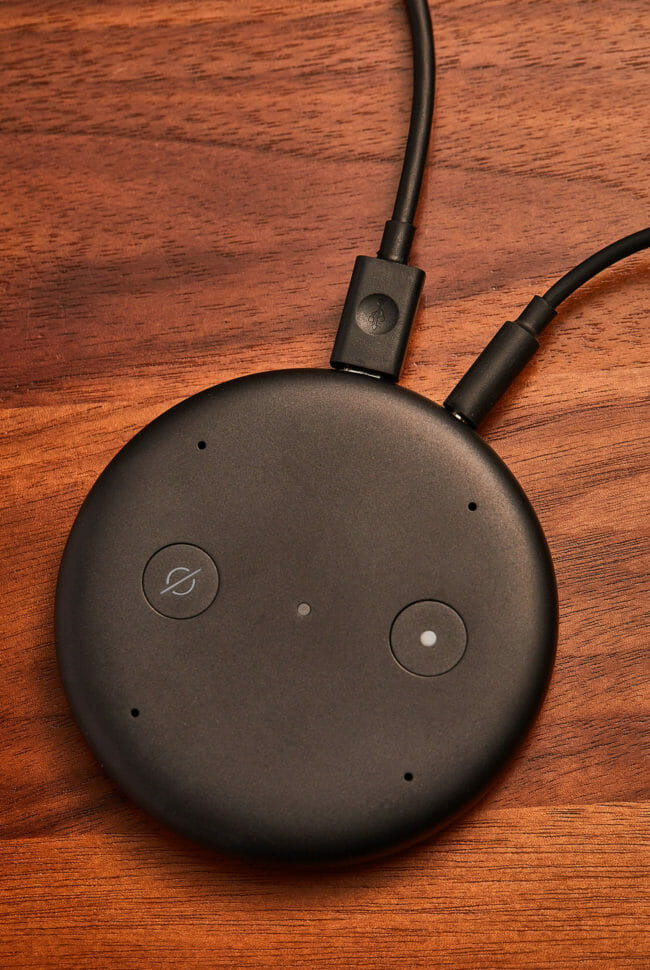
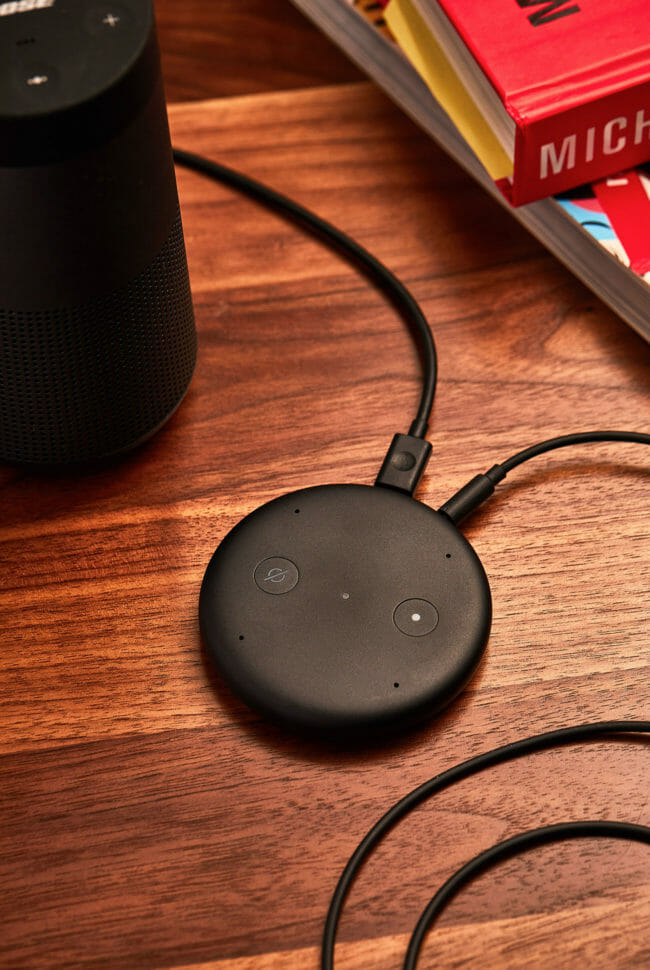
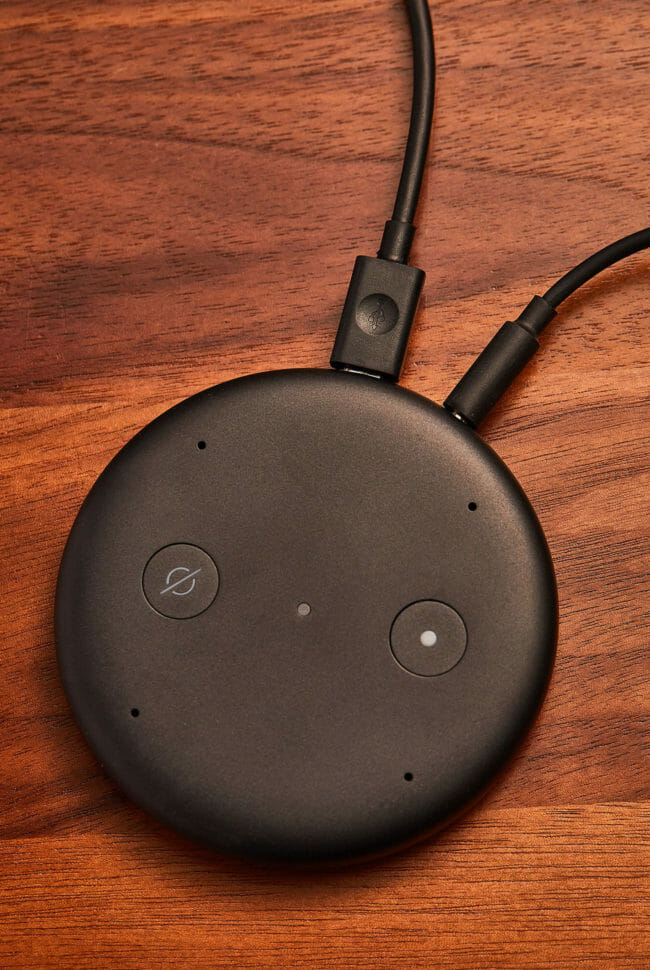
The Echo Input ($35) is the cheapest way to turn any speaker, so long as it has Bluetooth or an aux connection, into an Alexa-enabled smart speaker. It allows the speaker to function exactly the same as Echo — it can play music, set alarms and timers, answer questions, control your smart home — and you can control it with your voice. When you boil it down, the Echo Input is the same as Echo Dot ($50), just without the speaker. The idea is that with this little gadget, you can get more out of the speakers you already own.

The Good: The Echo Input is cheap. And setting it up is easy; the Alexa app walks you right through the whole thing. It works with any Bluetooth speaker or speaker with an aux port, meaning you can connect to nice powered speakers, like a Devialet Phantom or KEF LSX, or the cheap UE Boom or Bose speaker that you bought years ago. You can hook it up to amplifiers and receivers, too, and therefore control larger systems. After its setup, the connected speaker can be then integrated into a multi-room system with other Alexa-enabled speakers. There’s a mute button so, just like with an Echo and Echo Dot, you can stop Alexa from listening whenever you like.

Who It’s For: Anybody who has existing speakers and wants to interact with them like an Amazon Echo, or integrate them in a larger multi-room setup.

Watch Out For: The Echo Input is a versatile little gadget but it’s ultimately dependent on the source it’s connected to; if the speaker or receiver is turned off or in a power-saving mode, the Echo Input won’t work until the source is turned on or woken up again. The Echo Input isn’t designed for hi-fi streaming, so even though it’ll work with hi-fi systems, the audio quality won’t be the best. (Amazon released the Echo Link ($200) for hi-fi streaming in December.) The Echo Input is a powered device, so it’s going to take up an extra wall outlet. Also, dealing with the Alexa app and enabling smart skills can prove a tedious task.

Alternatives: Amazon’s Echo Dot can much do the same thing as the Echo Input, but it’s a little more expensive because it also works as its own speaker. A Chromecast Audio is a good alternative for those in Google’s ecosystem, although that streaming puck lacks a voice assistant.

Review: The Echo Input isn’t a complicated device. Quite the opposite. It adds Alexa voice controls to powered speakers and amps (and thus, larger sound systems) and that’s it. As long as the speaker or amp has a Bluetooth or aux connection, the Echo Input will work with it. For example, during most of my testing, I had Echo Input paired with the Bose Revolve speaker. I could pair it via Bluetooth or with an aux cable because the speaker has both.

The advantage of connecting via Bluetooth is that you’re able to hide the Echo Input a little bit, or at least position it away from the Bose speaker, after all it’s not that good looking of a device. And it takes up counter space. Technically, you could hide the Echo Input in a cabinet or behind of bookshelf; as long as the Bluetooth connection stays true, you’re good to go. The analog connection is probably just a little bit more dependable.

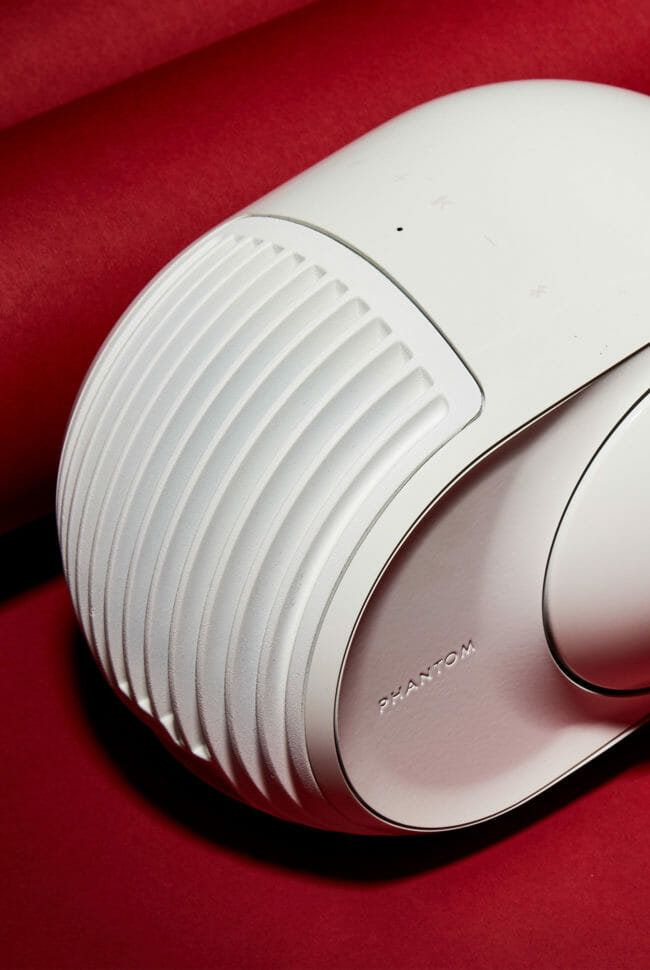
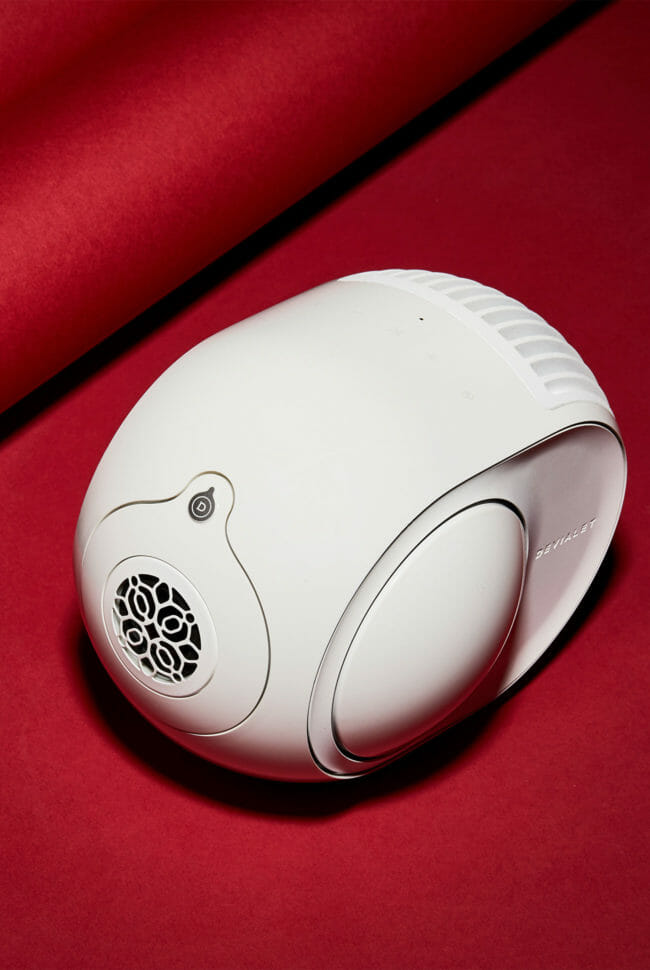
The Echo Input can connect with other powered speakers and amps. I was able to successfully to pair it with the KEF LSX and the Devialet Phantom Reactor speakers I was testing, which are essentially the most badass Bluetooth speakers you’re likely to find; and I was able to connect to my AV receiver and thus my passive bookshelf speakers. And the Echo Input — and Alexa — worked in exactly the same way.

Again, the Echo Input isn’t a complicated device, but there are things to watch out for. First, the Echo Input can only fully control the speaker’s volume if the speaker’s volume maxed out; if the volume of the speaker is only turned halfway up, that’s the max it’ll go when you ask Alexa to “turn the volume up to 10.” To make sure the speaker gets as loud as possible, you need to physically press the volume button so it’s all the way up.

Then there’s the issue of power. The Echo Input can be paired with any Bluetooth speaker, portable or otherwise, but if the speaker if off or dead — the Echo Input won’t be able to play music or speaker (it’ll still be able to control smart devices, though). The same is true is the speaker goes into a power saving or idle mode.

Verdict: The Echo Input puts Alexa voice skills and streaming capabilities into any Bluetooth speaker or speaker with an aux connection. In other words, it turns it into a better-sounding Amazon Echo. It’s cheap and easy to set up, and it works with stereo systems, too. If you want to breath new life into an old speaker, this will do just that.

What Others Are Saying:

• “Throughout my house, I have Amazon Echo Dots connected to stereo systems. In my office, I have a Dot connected to an Onkyo receiver and amp. In my basement, I have one hooked up to a small bookshelf system. Outside on the deck, a Dot serves audio to a small amp that powers outside speakers. There’s more, but the point is made. The Dot is a great device to add voice services to existing speakers. But with its built-in speaker, I’m paying for features I’m not using. That’s why Amazon made the Echo Input.” — Matt Burns, TechCrunch

• “Amazon’s Echo and Echo Dot and every other smart speaker with Alexa built in are great for those who want an all-in-one audio-entertainment device. But what if you already have a stereo system that sounds far better? The Chromecast Audio fills a similar niche for music, but that device lacks a built-in voice assistant. The Echo Input is a device that I and, I suspect, plenty others have been waiting for.” — Mike Prospero, Tom’s Guide

Key Specs
Connectivity: 3.5 mm audio cable or Bluetooth
Weight: 2.75 ounces
In box: 5-watt power adapter, micro-USB cable, 1-meter aux cable

Amazon and Bose provided these products for review.

Read More Gear Patrol Reviews

Hot takes and in-depth reviews on noteworthy, relevant and interesting products. Read the Story
Note: Purchasing products through our links may earn us a portion of the sale, which supports our editorial team’s mission. Learn more here.

A Review of the Technology That’s Revolutionizing Ski Goggles

Goggles might be the most important skiing and snowboarding accessory — the ability to see the variations in the snow surface is the only way to react to them. Goggles haven’t changed that much in the decades since Dr. Bob Smith created his version with a sealed double lens and breathable foam to prevent fogging. The most significant advancement in recent years was also pioneered by Smith (the company the doctor founded) — goggles with interchangeable lenses. Every goggle maker now offers them; the systems rely on clips, levers, locks or magnets.

Recently, a handful of companies have incorporated a new technology: electrochromism. What does that mean? Simply put, when these materials are introduced to an electric charge, they change color. It’s the same technology used to create smart glass, a material that can be dimmed by the flip of a switch, and it’s been applied to develop energy-efficient windows and the dimmable windows of Boeing’s 787 Dreamliner.

In goggles, it means that the tint of a lens can change from light to medium to dark — no magnets or locks — at the push of a button. So far only two companies have produced a goggle that harnesses electrochromism: Electric and Spy Optics. (Oakley has also debuted a version called Prizm React, which was set for release this past fall but still isn’t available. Oakley declined to comment on why.) We’ve spent the past few months testing Electric and Spy’s models to find out how they perform.

GoPro HERO7 Black

grey_placeholder

Cameras don’t come much more powerful, compact and rugged than the ones GoPro has pioneered. The latest model, the HERO7 Black, is GoPro’s most advanced camera yet. The development of HyperSmooth technology is a pivotal evolution of stabilization for these robust cameras — mimicking a gimbal grip, it essentially means the end of shaky video footage. Add in the signature waterproofness and durability and it’s easy to see why the HERO7 Black is the optimal camera for any on-the-go activity. Learn more here.

Electric Electron


Electric’s take on electrochromic goggles is called the Electron (say that ten times fast). It comes with either a white or black frame with a blue lens that can be set to 46 percent VLT at its lightest, 31 percent VLT in the middle and 15 percent VLT at its darkest. (VLT stands for “visible light transmission” and is a measurement of how much light comes through the lens. The lower the percentage, the darker the lens and the better it is for bright and sunny days.) The Electron blocks 100 percent of UV light and is anti-fog and anti-reflective.

Pros: Electric always emphasizes style with the Electron. The blue lens goes well with both frame colors. If the Electron didn’t use electrochromic tech, it’d still be a great goggle — it fit comfortably and didn’t fog in a wide range of conditions. It comes with a hard case as well as a microfiber pouch and has the feel of a premium goggle.

Furthermore, the system works well; the button to change lens tints is big and glows when it’s on (blue to indicate more than 20 percent of the battery remains, yellow when it’s between ten and 20, red when it’s below ten). It’s easy to push with a gloved or mittened hand too, and the different tints are varied enough to work well in any light condition except perhaps at night when you’d want a clear lens.

Cons: Transitioning between lens tints on the Electron is a subtle process. At times I forgot which mode I was in — the goggle doesn’t let you know through any sort of light or vibration indicator — and the system is linear, so you can only cycle one way. If you accidentally go from the darkest setting to the lightest, you’ll have to cycle through to get back.

Spy Optics Ace EC One


Spy was the first to announce its electrochromic Ace EC One. The goggle comes with a black frame and a persimmon lens. The Ace EC One’s lightest tint is 55 percent VLT, its medium tint is 31 percent VLT, and its darkest is 17 percent VLT. According to Spy, the battery charge will last for 150 tint changes. The Ace EC One uses Spy’s Happy Lens tech, which boosts color and enhances contrast for better visual clarity. The goggle blocks 100 percent of UV light, is anti-fog and scratch-resistant.

Pros: The Ace EC uses haptic feedback to let you know which lens setting you’re on — the number of times the battery unit vibrates will change letting you know where you’re at in the cycle. The Ace EC One offers a wide range of tints for varying light conditions, thereby increasing its versatility. Additionally, the battery pack is low profile and weighs 25 grams, allowing for the goggle to remain lightweight overall.

Cons: The same pro mentioned above, haptic feedback, stopped working after a few days on the mountain. The goggle would still vibrate various times during a tint change, but sometimes it would be as little as one or as many as eight, and the number of vibrations didn’t necessarily correspond to the darkness of the lens. This effectively nullified the function’s intended purpose of informing us which lens setting the Ace EC was displaying.

The Ace EC One’s lens is connected to its strap-mounted battery pack via a short, headphone-like cord. This connection is critical for maintaining the goggle’s darker lens settings. Unfortunately when moving the goggle up onto a helmet that cable often pops out, sending the Ace EC One back to its lightest setting (and causing the battery pack to vibrate continuously, and audibly).

Verdict: Electrochromism is a welcome alternative to interchangeable lenses, which provide a solution for variable light conditions in a single pair of goggles, but still require wearers to have spare lenses on-hand. That’s fine — until the weather fluctuates throughout the day, and the light with it. In both the Electron and Ace EC, the electrochromic system is still clunky. Strap-mounted battery packs are awkward looking, and single-button constructions require cycling through all three settings to get to the desired tint. These things are true for both of the goggles that we tested, but in the end, the Electron edges out the Ace EC because of that goggle’s cord connectivity issues.

Goggle companies are still perfecting interchangeable lens systems, even years after its first launch. Electrochromic lenses are brand new, and we fully expect those very same brands to find ways to more efficiently integrate them into goggle constructions for a better, hassle-free experience.

Note: Purchasing products through our links may earn us a portion of the sale, which supports our editorial team’s mission. Learn more here.

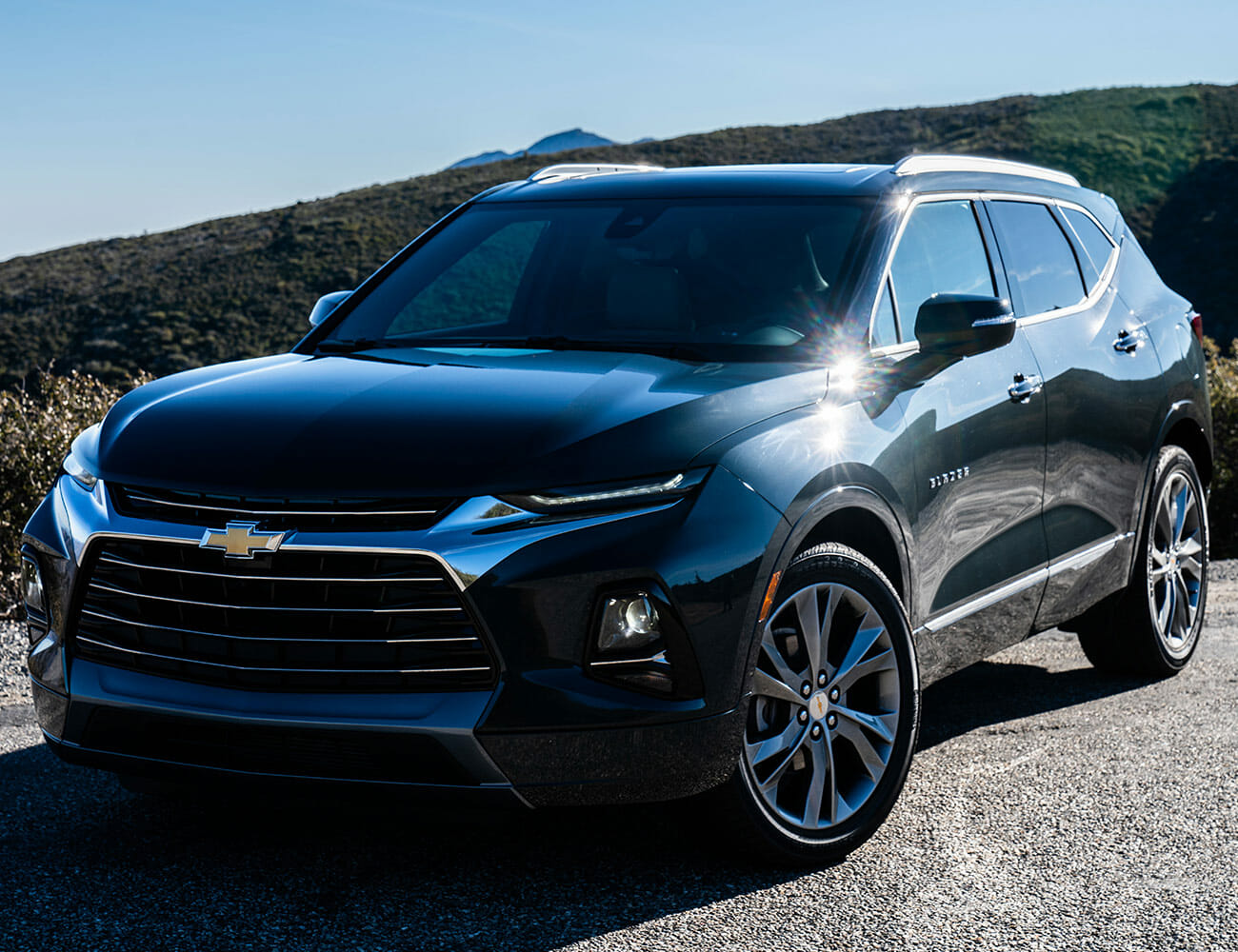
2019 Chevy Blazer Review: Now a (Really Good) Crossover

Chevrolet brings back the iconic Blazer this year. Those hoping to see it revived as a rugged off-roader – in the spirit of the machine that earned a devout good ol’ boy following in the 70s – might be disappointed in its newest iteration. Instead of making fans want to crack out trucker hats and crack open a PBR in celebration, we have a five-seat crossover; a Blazer in name only. But the branding bait-and-switch can largely be forgiven because the new Blazer is still a solid performer and a good-looking ride that successfully butches up a category known mostly for its softer edges.

The Good: Its looks are sharp, with interesting creasing on the sides and hood, a frankly pretty badass grill with the narrowest of headlights, and a fascinating, complex D-pillar and rear roofline area. It combines upward-swinging sheet metal that cuts into the side glass with black trim that joins up with the rear window, making the roof appear to float above the rest of the body. This is a current trend in crossovers, and it’s executed exceptionally well here. Its ride is comfortable yet firm, and its two engines – an inline-four and a V6 – are both plenty responsive.

Who It’s For: Crossovers are king and for pretty good reason. Though assailed by enthusiasts and purists on a variety of fronts – and largely assumed to be carmaker manipulation at its worst – the truth is that they’re today’s consummate family wagon, and they’re what people want. They’re taller and roomier than sedans but absent the freight-train physique of full-sized SUVs. So the Blazer is for you if you want a piece of the middle ground, but also want some character and edge, which the Blazer has in abundance.

Watch Out For: There’s one interior quirk that I find baffling in the extreme. Defying all logic, the Blazer’s stability-control button – which, of course, turns this critical safety system off – is positioned directly in front of the passenger seat. Indeed, it’s so far to the right of the dashboard’s array of controls that it’s the closest thing that a passenger could even touch – even closer than the climate controls, volume knob or center display buttons. Not only that, but of the two buttons paired together on that little island, it’s to the right of the glove box button. At the very least, they really should be reversed, but even then the button’s placement opens up endless possibilities, from accidental disabling by people trying to get into the glove box to hilarious (if deadly) pranks by mischievous passengers. Not ideal.

Alternatives: This category is bursting at the seams at the moment, but the closest rivals for the Blazer-buyer’s affections would be the Nissan Murano, Jeep Cherokee, Kia Sorento, Toyota Rav4 and Ford Edge. All are similarly capable vehicles, but the Blazer has by far the most distinctive look about it.

Review: Once I was able to stop staring at the stability-control button placement, I began to appreciate everything the Blazer does right. The interior feels roomy and comfortable, even if the dashboard is cliff-like in its verticality, and it’s overall a smartly designed interior. Large, round air vents, a nicely uniform aesthetic, and easy access to the most-used controls make the Blazer an easy place to hang out.

During a drive through the countryside outside San Diego, it also proved a capable tourer. The wide track and the newly designed suspension – MacPherson up front, five-link in the rear – keep it planted, and the sportier V6-powered RS version brings dampers that provide more compression than the standard, allowing for improved roll control in a wider range of situations and overall more controlled responses to roadway imperfections. The Blazer comes with two all-wheel-drive setups, including a standard system that can disconnect the rear wheels for improved fuel efficiency, and a new twin-clutch AWD system. That simulates torque-vectoring via an active yaw-control algorithm, generating better power application in aggressive turns as well as inclement weather. Overall, it makes the Blazer a surprisingly sporty performer for a crossover.

The inline-four engine is perfectly adequate, with 193 hp, but the V6 kicks it up several notches to 305, which you’ll enjoy more in those turns with only a negligible 3 mpg penalty at the pump. Opting for the V6 will also jack up your towing capability from 1,500 pounds to 4,500 – the difference between a pair of jet-skis and a proper boat. The Blazer also brings a full complement of driver aids, including a trailer-hitch monitoring system that will ensure you’re lined up when attaching said boat or jet-skis, as well as the customary safety alerts and the optional adaptive cruise system.

The real magic of the Blazer, though, lies in its design. Its exterior is sleek and tough-looking, though in a thoroughly modern way that would be impossible to link back to the original Blazer. (In short: Don’t even bother. It ain’t there.) It definitely holds its own, though, and is plenty distinctive from its competition. This distinction resided primarily in the grill up front, which is masterfully executed for such an expansive presence, and the rear-end treatment. So it surprises you both coming and going. Will it develop the same following, years hence, as the original Blazer? Only time will tell, of course, but it’ll certainly develop a following today.

Verdict: If not necessarily a faithful revival of a storied badge, the Blazer still does its brand proud, offering a stable and capable package that’s smooth on the road and fun to drive across a variety of situations. It’ll likely steal plenty of eyes from the competition, and persist for a long time in Chevy’s lineup.

2019 Chevrolet Blazer Key Specs

Powertrain: 2.5-liter inline-four / 3.6-liter V6; 9-speed automatic, FWD or AWD
Horsepower: 193/305
Torque: 188 lb-ft I4) / 269 lb-ft (V6)
Weight: 3,810 lbs (I4) / 4,107 lbs (V6)
Fuel economy: 20/26 FWD, 18/25 AWD
Price: From $29,995 for the Blazer L to $43,895 for the Blazer Premier

Chevrolet hosted us and provided this product for review.

Read More Gear Patrol Reviews

Hot takes and in-depth reviews on noteworthy, relevant and interesting products. Read the Story
Note: Purchasing products through our links may earn us a portion of the sale, which supports our editorial team’s mission. Learn more here.

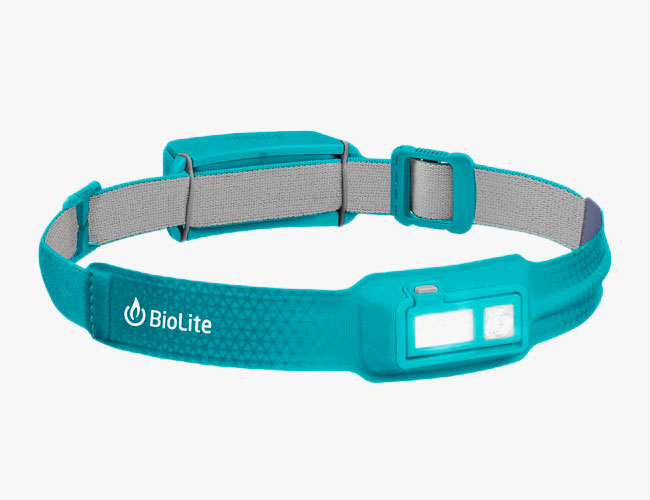
BioLite’s Newest HeadLamp Offers A Rare Feature: Comfort

BioLite has a knack for taking heavily used gear and re-designing it into something you’ll reach for day after day, all while helping to increase access to energy off the grid. At Gear Patrol, we’ve been big fans since day one. Starting with the CampStove, CampStove 2 and the portable grill, and followed by many other successful fire starters, pizza grills and backcountry chargers, BioLite has paved the way for outdoor enthusiasts to get outdoors with an easy power supply — whether that’s grilling over a stove or lighting up the campsite. BioLite’s latest success story is the HeadLamp. We carried the re-engineered light with us through sunrise summits in upstate New York (hello, Mt. Marcy), as well as along the sidewalks of Brooklyn to light up our night runs. After a hugely successful kickstarter after Outdoor Retailer last year, the headlamp is available for preorder as of this Outdoor Retailer Snow Show.

The Good: BioLite’s HeadLamp features a split light in the front and battery pack in the back, all in a lightweight package that is comfortable, even in the wee hours of the morning. There are four light modes: red flood, white flood and spot (both with dimming) and the strobe, all of which provide you with hours of vision and ways to alert everyone around you. Even after hours of use, it was not headache inducing. The stretch fabric is soft and adjustable yet reinforced, so you don’t have to re-arrange once it’s on your forehead. It comes fully charged in four different colors: red, teal, yellow and grey.

Who They’re For: These lights are for everyone. Whether you’re a runner, hiker, walker or someone who likes to lead the dawn patrol, the BioLite HeadLamp works.

Watch Out For: It can be a bit tricky to use with gloves because of the thin rim around the light. The button to turn on and off, and the lever to aim the light down are both located on the skeletal frame of the light, so it takes time to get used to it.

Alternatives: Most other running headlamps I’ve tested have the battery pack and light all on the same side, so it’s heavy. The Petzl Reactik+ was the last one I tested ($100), and it worked just fine for everything I needed. You can also check out our list of Best Headlamps.

Review:
From unboxing to using, it takes less than two minutes to get started with the BioLite HeadLamp. Brushing my teeth takes longer. With just a few adjustments on the moisture-wicking band, the headlamp sat flush against my forehead. One of the first things I noticed was just how bright the slim light was. It’s 330 lumens at full brightness, and if you happen to turn it on while looking at the light, you’re sure to see some spots for a while. Reading while wearing the headlamp caused no issues thanks to the high visibility and comfy band.

For me, one of the most important things to test on a headlamp is to see how it performs when I’m running. Most lamps that I’ve used bounce around — I’ve run with them through two Ragnar Relays and an entire training circuit for a marathon which resulted in a lot of night activity. The BioLite lamp stayed put, likely because of the separation of the battery from the light itself. The battery sat low against the nape of my neck, while the light laid flat against my forehead. In the past, I’ve had to wear a hat under my headlamp to keep it from bouncing, but with this light, I can wear right where I want it. Now also seems like a good time to mention that I didn’t have any of those pesky red lines around my forehead after I ripped the light off post-run.

The band gets damp after a long run, but chafing wasn’t an issue. At first, I needed two hands to get the front tilt exactly where I needed it — illuminating the uneven cobblestones that line the Brooklyn Promenade and nearby roads — but after my initial mile or so, I had it down. It’s a breeze to click through all the different light options, dimming it when I run near street lamps and quickly turning it off when I finished running. It’s become my go-to lamp whether I’m heading out on a night run or just walking down to the campfire.

Verdict: If you’ve had issues with headlamps in the past, the re-jiggered BioLite HeadLamp is worth giving a shot. At a competitively priced $49, the lamp is hard to beat, simply based on value. With a run time of three and a half hours on full brightness, you can knock out a sunrise summit and nighttime run without sweating over battery life.

What Others Are Saying:

• “But where the brand stands out from the crowd is its comfortable design and lightweight. By integrating its electronic components into the soft 3D SlimFit fabric of the headlamp, BioLite created a light that wears more like a sweatband. For those looking for a light, comfortable headlamp for camping or hiking, this is a solid choice from a cool brand. It fits well, stays comfortably on the head, and will light up the night.” — Sean McCoy, Gear Junkie

• “here are plenty of small headlamps out there, but BioLite is taking a wise approach to the genre with this new unit. If you’re anything like us, you’ve got a closet full of lights. This would include at least a few you don’t use, because they’re dim, uncomfortable, or flop around on saggy elastic when you move your head. It’s not just lightweight — there’s already plenty of light… lights…but this unit stays put to an impressive degree. It’s not a tight head-grabber torture device either.” — Kel Whelan, Off Grid Web

• “BioLite didn’t just make the HeadLamp small and bright — it put a lot of emphasis on comfort too. Using what it calls “3D SlimFit Construction,” the company has managed to squeeze all of the electronic components into a surprisingly small space. This allows the light to nestle neatly into a flush housing, while also providing improved stability and balance while being worn. The headband that holds the lamp in place is made from moisture-wicking fabrics that are designed to be comfortable to wear, even while running, cycling, or hiking in warm conditions.” — Kraig Becker, Digital Trends

Key Specs

Lumens: 330
Battery: Rechargable with Micro USB
Weight: 69 grams
Materials: composite textile headstrap, PMMA, high efficiency lens material, ABS plasic housings, nylon plastic hardware (buckles)
Run Time: 3.5 hours (max brightness), 40 hours (minumum brightness)
Weather Resistance: IPX 4

BioLite provided us with products for testing purposes.

Read More Gear Patrol Reviews

Hot takes and in-depth reviews on noteworthy, relevant and interesting products. Read the Story

Note: Purchasing products through our links may earn us a portion of the sale, which supports our editorial team’s mission. Learn more here.

BioLite HeadLamp Review: The Re-Imagined Lamp You Didn’t Know You Needed

BioLite has a knack for taking heavily used gear and re-designing it into something you’ll reach for day after day, all while helping to increase access to energy off the grid. At Gear Patrol, we’ve been big fans since day one. Starting with the CampStove, CampStove 2 and the portable grill, and followed by many other successful fire starters, pizza grills and backcountry chargers, BioLite has paved the way for outdoor enthusiasts to get outdoors with an easy power supply — whether that’s grilling over a stove or lighting up the campsite. BioLite’s latest success story is the HeadLamp. We carried the re-engineered light with us through sunrise summits in upstate New York (hello, Mt. Marcy), as well as along the sidewalks of Brooklyn to light up our night runs. After a hugely successful kickstarter after Outdoor Retailer last year, the headlamp is available for preorder as of this Outdoor Retailer Snow Show.

The Good: BioLite’s HeadLamp features a split light in the front and battery pack in the back, all in a lightweight package that is comfortable, even in the wee hours of the morning. There are four light modes: red flood, white flood and spot (both with dimming) and the strobe, all of which provide you with hours of vision and ways to alert everyone around you. Even after hours of use, it was not headache inducing. The stretch fabric is soft and adjustable yet reinforced, so you don’t have to re-arrange once it’s on your forehead. It comes fully charged in four different colors: red, teal, yellow and grey.

Who They’re For: These lights are for everyone. Whether you’re a runner, hiker, walker or someone who likes to lead the dawn patrol, the BioLite HeadLamp works.

Watch Out For: It can be a bit tricky to use with gloves because of the thin rim around the light. The button to turn on and off, and the lever to aim the light down are both located on the skeletal frame of the light, so it takes time to get used to it.

Alternatives: Most other running headlamps I’ve tested have the battery pack and light all on the same side, so it’s heavy. The Petzl Reactik+ was the last one I tested ($100), and it worked just fine for everything I needed. You can also check out our list of Best Headlamps.

Review:
From unboxing to using, it takes less than two minutes to get started with the BioLite HeadLamp. Brushing my teeth takes longer. With just a few adjustments on the moisture-wicking band, the headlamp sat flush against my forehead. One of the first things I noticed was just how bright the slim light was. It’s 330 lumens at full brightness, and if you happen to turn it on while looking at the light, you’re sure to see some spots for a while. Reading while wearing the headlamp caused no issues thanks to the high visibility and comfy band.

For me, one of the most important things to test on a headlamp is to see how it performs when I’m running. Most lamps that I’ve used bounce around — I’ve run with them through two Ragnar Relays and an entire training circuit for a marathon which resulted in a lot of night activity. The BioLite lamp stayed put, likely because of the separation of the battery from the light itself. The battery sat low against the nape of my neck, while the light laid flat against my forehead. In the past, I’ve had to wear a hat under my headlamp to keep it from bouncing, but with this light, I can wear right where I want it. Now also seems like a good time to mention that I didn’t have any of those pesky red lines around my forehead after I ripped the light off post-run.

The band gets damp after a long run, but chafing wasn’t an issue. At first, I needed two hands to get the front tilt exactly where I needed it — illuminating the uneven cobblestones that line the Brooklyn Promenade and nearby roads — but after my initial mile or so, I had it down. It’s a breeze to click through all the different light options, dimming it when I run near street lamps and quickly turning it off when I finished running. It’s become my go-to lamp whether I’m heading out on a night run or just walking down to the campfire.

Verdict: If you’ve had issues with headlamps in the past, the re-jiggered BioLite HeadLamp is worth giving a shot. At a competitively priced $49, the lamp is hard to beat, simply based on value. With a run time of three and a half hours on full brightness, you can knock out a sunrise summit and nighttime run without sweating over battery life.

What Others Are Saying:

• “But where the brand stands out from the crowd is its comfortable design and lightweight. By integrating its electronic components into the soft 3D SlimFit fabric of the headlamp, BioLite created a light that wears more like a sweatband. For those looking for a light, comfortable headlamp for camping or hiking, this is a solid choice from a cool brand. It fits well, stays comfortably on the head, and will light up the night.” — Sean McCoy, Gear Junkie

• “here are plenty of small headlamps out there, but BioLite is taking a wise approach to the genre with this new unit. If you’re anything like us, you’ve got a closet full of lights. This would include at least a few you don’t use, because they’re dim, uncomfortable, or flop around on saggy elastic when you move your head. It’s not just lightweight — there’s already plenty of light… lights…but this unit stays put to an impressive degree. It’s not a tight head-grabber torture device either.” — Kel Whelan, Off Grid Web

• “BioLite didn’t just make the HeadLamp small and bright — it put a lot of emphasis on comfort too. Using what it calls “3D SlimFit Construction,” the company has managed to squeeze all of the electronic components into a surprisingly small space. This allows the light to nestle neatly into a flush housing, while also providing improved stability and balance while being worn. The headband that holds the lamp in place is made from moisture-wicking fabrics that are designed to be comfortable to wear, even while running, cycling, or hiking in warm conditions.” — Kraig Becker, Digital Trends

Key Specs

Lumens: 330
Battery: Rechargable with Micro USB
Weight: 69 grams
Materials: composite textile headstrap, PMMA, high efficiency lens material, ABS plasic housings, nylon plastic hardware (buckles)
Run Time: 3.5 hours (max brightness), 40 hours (minumum brightness)
Weather Resistance: IPX 4

BioLite provided us with products for testing purposes.

Read More Gear Patrol Reviews

Hot takes and in-depth reviews on noteworthy, relevant and interesting products. Read the Story

Note: Purchasing products through our links may earn us a portion of the sale, which supports our editorial team’s mission. Learn more here.

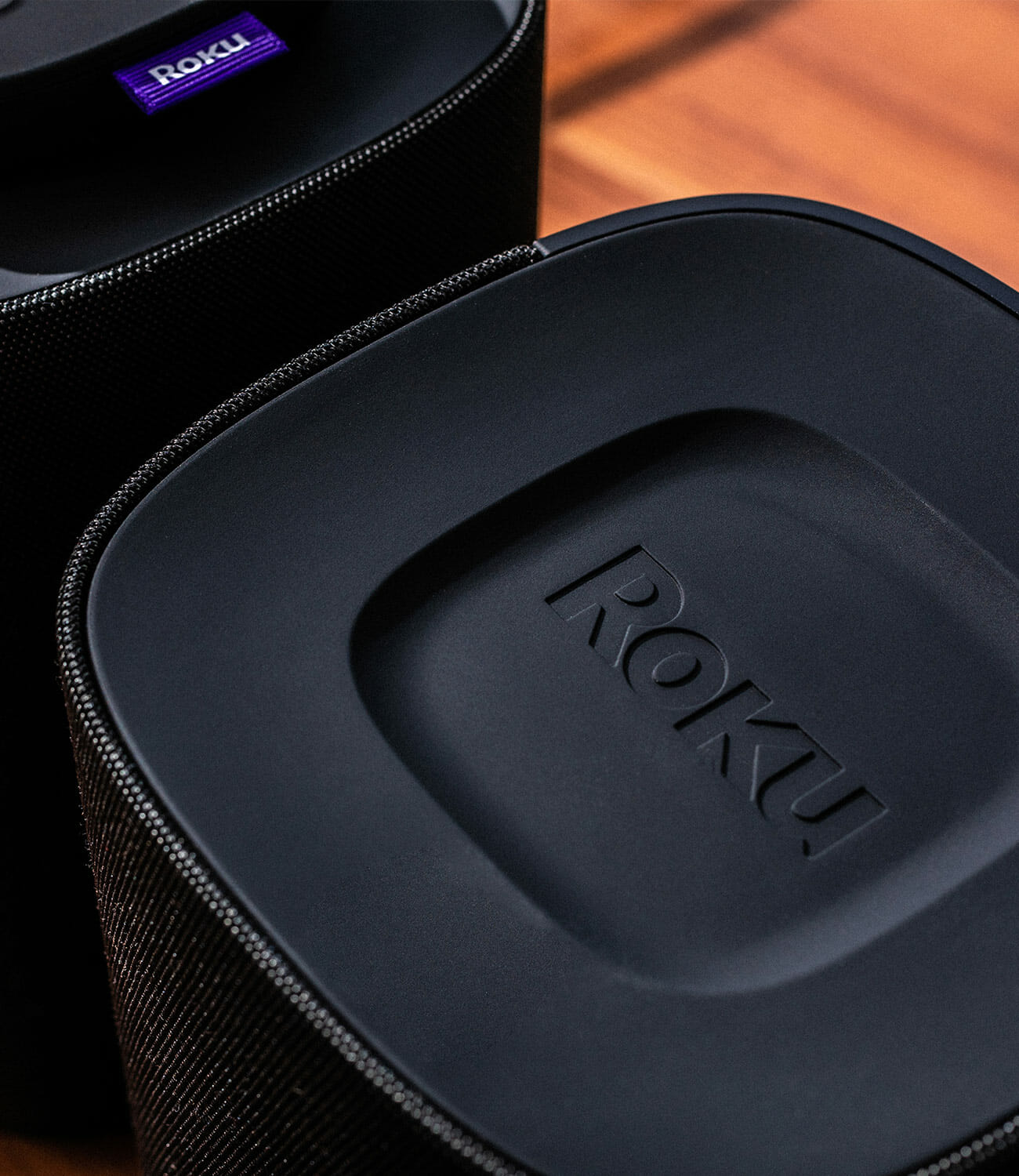
These $150 Wireless Speakers Are The Cheap Upgrade Your 4K TV Needs

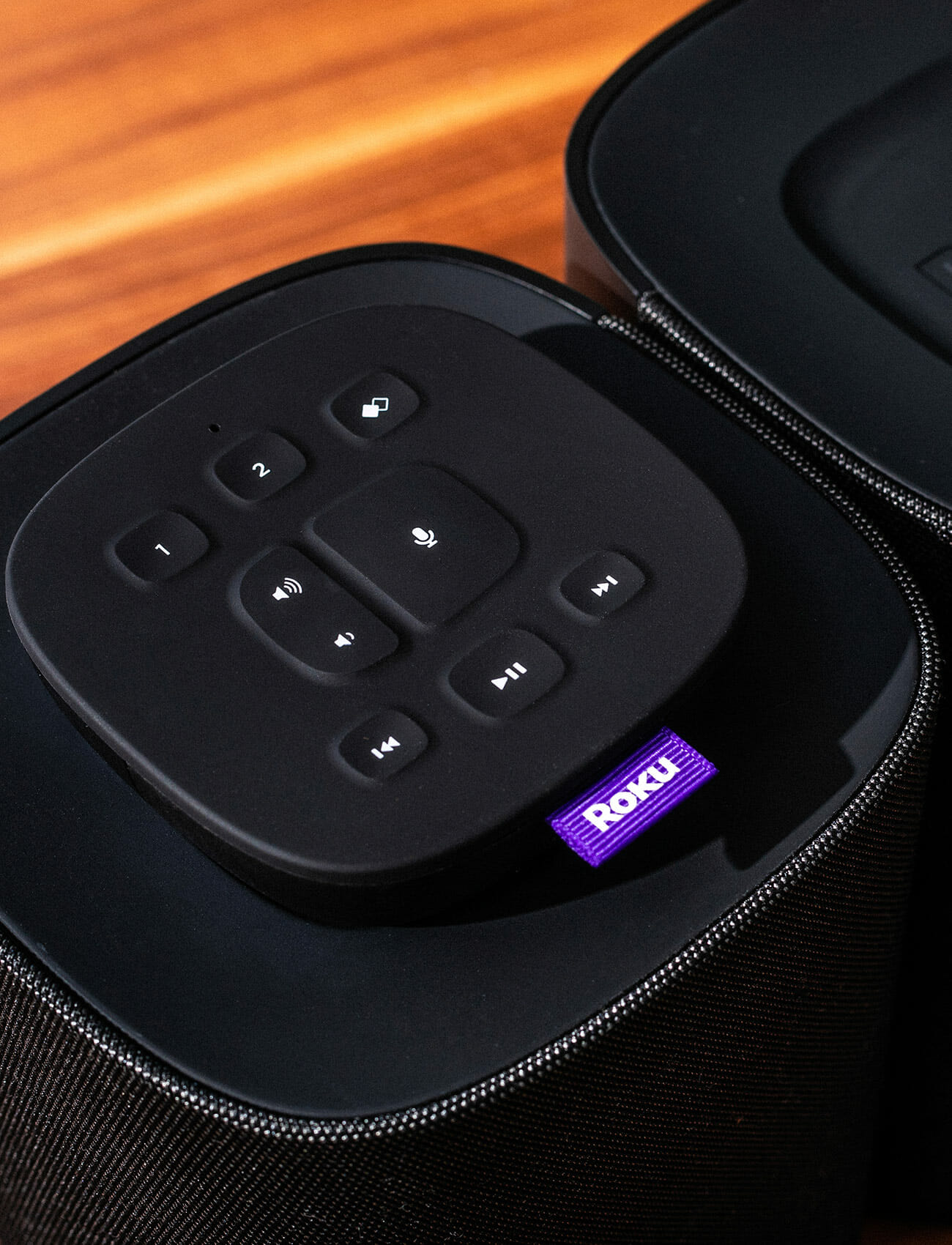
Roku TV Wireless Speakers ($200) are the company’s first-ever audio product and they’re designed to work with Roku smart TVs, and only Roku smart TVs. This means they’re compatible with hundreds of TVs made by the likes of TCL, Insignia, Sharp, Hisense, Philips and others; as long as the TV runs Roku’s smart operating system, these speakers will work with it. (Although they are not compatible with Roku streaming sticks.)

Their selling point is simple: most modern televisions are too thin to have good built-in speakers — in fact, most modern TVs, especially “budget TVs” (which most Roku smart TVs tend to be), have such poor speakers that dialogue is hard to make out and bass is near non-existent – these speakers, which are easy to install, are an inexpensive upgrade. There’s no need to deal with a receiver or wires, as these speakers will connect to your TV over wi-fi; just plug them in and your TV will detect them. Click through a few menu screens and you’re done — setup takes less than a five minutes. These speakers are the easiest and cheapest way to upgrade your Roku TV’s audio.

The Good: The difference these speakers will make to your Roku smart TV is significant. They feature two drivers (one 0.75-inch tweeter and one 3.5-inch woofer) and deliver solid stereo sound as well pretty decent bass, and it’s a big upgrade from the natural audio that’s baked right into most Roku smart TVs. They’re incredibly easy and quick to set up, and you don’t have to deal with any wires. Finally, price: they’re cheaper than other similar-quality soundbars or a combo of bookshelf speakers and a receiver.

Who It’s For: Anybody who owns a Roku TV and wants a seamless, relatively inexpensive way to improve its audio quality.

Watch Out For: These speakers don’t play well with other TVs or speakers. These speakers were flat-out not work with smart TVs that don’t have a Roku operating system – Android TV, WebOS, Tizen OS or Fire TV, for instance. They will not work with Roku streaming sticks. You can’t integrate them into a larger system with other speakers – even if they’re also Roku speakers – or a subwoofer. This is a 2.0 system and that’s it – no way to convert it into a surround sound system. And they don’t support the latest immersive technologies, such as Dolby Atmos.

Alternatives: There aren’t any other bookshelf speakers or soundbars that work as seamlessly with Roku smart TVs. And there really aren’t many speakers that are cheaper. A few weeks ago I reviewed the Soundcore Infini soundbar ($100), a surprisingly good soundbar considering its really cheap price. But Roku’s speakers deliver way better stereo sound.

Review: The fact that Roku’s first speakers only work with Roku smart TVs should neither come as a surprise nor hamper your opinion of them, especially since a lot of people have Roku smart TVs. A rep at Roku told me that as of Q3 2018, “more than one in every four smart TVs sold in the U.S. was a Roku TV.” That’s a ton of TVs. Even more impressive, it doesn’t matter if the TV in question is one of TCL’s new 6-Series models, which are beautiful 4K HDR TVs, or a TV that’s several years old — as long as it’s a Roku smart TV, these speakers will work with them.

I own a Roku smart TV that’s made by Sharp. It’s neither a 4K TV nor huge, but I tested these Roku speakers with it and the upgrade in audio quality was clear. I watched a few movies, like Mowgli and Sicario, but I mainly watch soccer and football games on my TV, and the sound was clearer, more dynamic, more immersive and just better overall.

Even though they’re designed to work exclusively with Roku smart TVs, these speakers aren’t entirely walled off from your other gadgets. They do have built-in Bluetooth, so you can stream audio from your smartphone, tablet or computer. The catch is, to set it up, you have to do some navigating in the TV’s settings and it’s not as straightforward as connecting to, a Bluetooth speaker. The speakers also work with Spotify Connect, so you can “discover” them just by opening the Spotify app. For me, this was the easiest way to play music — I’m a Spotify Premium subscriber — but the only caveat was that Spotify Connect requires the TV to be, as it displays things like the track name and the album cover art. The TV can be off when listening to Bluetooth, but again, that wasn’t as easy for me as Spotify Connect.

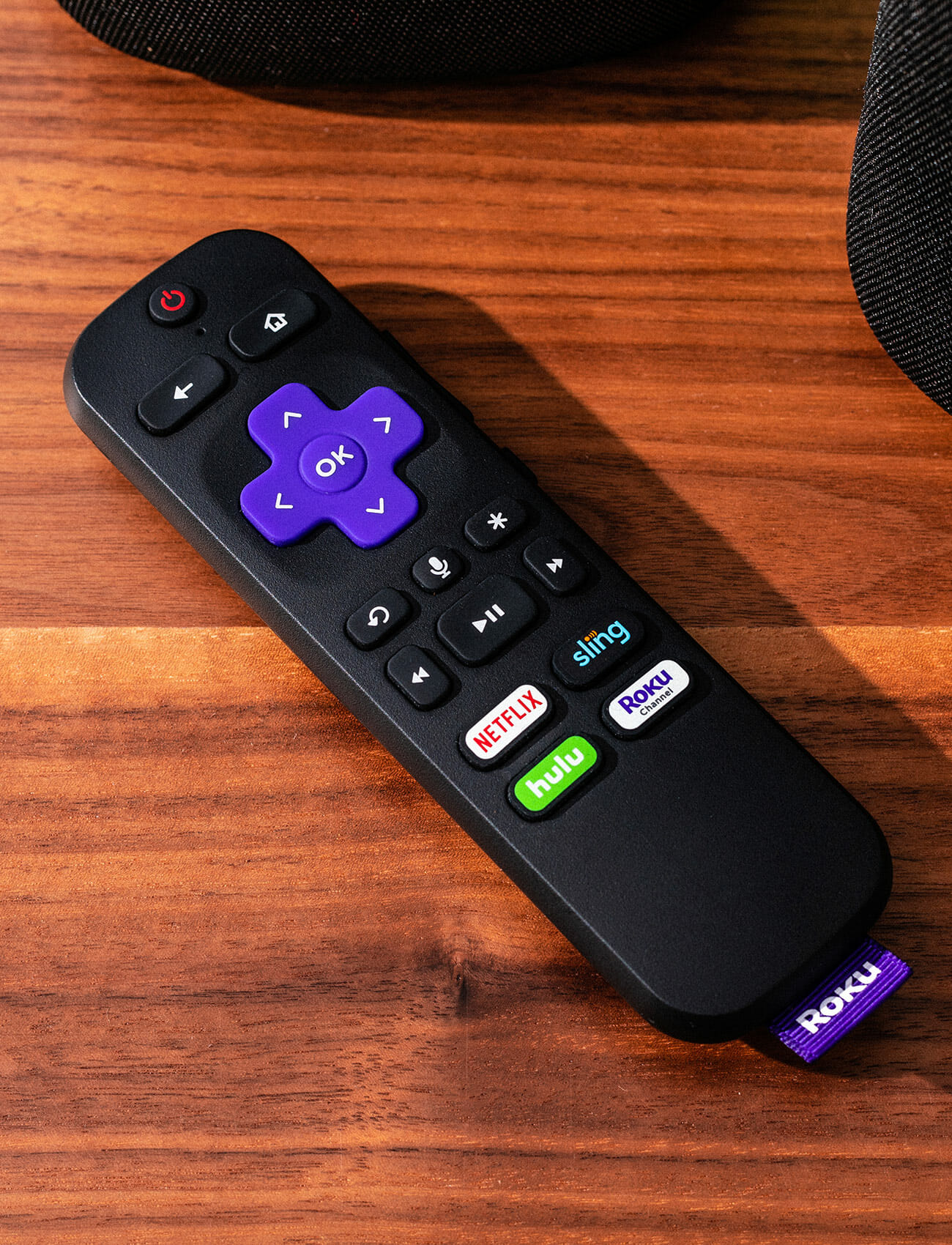
In general, Roku’s first speakers are pretty straightforward. Their only real “wild card” quality is voice control. The speakers come with two remotes: a Roku voice remote, which is the same one that comes with most new Roku smart TVs, and a new Roku Touch remote. While pressing the mic button on each you can ask the TV to switch inputs, open apps or search for certain shows, which is nice, but voice search won’t work with your cable box. (You can’t order the TV to “open ESPN” if you’re watching Fios, for example.) And when playing music on Spotify, you can’t use voice control to play songs or change playlists. You still have to go through the app on your smartphone or tablet. Basically, Roku’s smart search features are limited, and not as capable as voice assistants like Google Assistant or Alexa.

It’s important to remember that these won’t be the best sounding speakers you’ve ever heard — they only cost roughly $200, after all. If I were to be overall critical, I’d say their bass is relatively weak and you don’t get quite the separations you’d get from higher quality bookshelf speakers, such as Q Acoustics Concept 20s or Audioengine A5+. But then again, these don’t promise to be the best speakers you’ve ever heard. They just have to be better the speakers built into your Roku smart TV. And that they definitely are.

Verdict: Roku’s first speakers are limited, but that’s not a bad thing. They know what they are – stereo speakers for your Roku smart TV – and they’re really good at it. Audio quality is a big upgrade over your TV’s speakers. Whereas in the past you’d probably have to spend $300+ on a soundbar, you can get a comparable sound quality upgrade, with even better stereo separation, for around $200.

Bottom line: if you own a Roku smart TV, old or new, and you want to upgrade its sound system without spending a lot and without making things overly complicated, Roku’s first speakers are a no-brainer buy.

What Others Are Saying:

• “For an inexpensive and relatively small pair of satellites, the Roku TV Wireless Speakers offer very solid performance, with some slight volume-scaling quirks.” — Will Greenwald, PC Mag

• “While a Vizio soundbar may be harder to set up and slightly lower cost, this Roku system also includes two voice remotes enhancing the use of your Roku TV and overall presents a better value to those looking for a wireless audio upgrade.” — Linda Moskowitz, TechRadar

• Roku’s speakers won’t be the right choice for everyone (or anyone without a Roku TV), and some features — voice controls, especially — need to get better. But they’re a massive improvement over the awful built-in speakers on Roku TVs, which sound lifeless and frequently make dialogue hard to understand. If you’re tired of that and want to give shows and movies the audio they deserve with minimal fuss, Roku’s option starts to make a lot more sense.” — Chris Welch, The Verge

Key Specs
Drivers: one 0.75″tweeter, one 3.5″ woofer
Connectivity: Roku, Bluetooth
Weight: four pounds each
Remotes: two, one Roku TV Voice Remote and one Roku Touch tabletop remote

Roku provided this product for review.

Read More Gear Patrol Reviews

Hot takes and in-depth reviews on noteworthy, relevant and interesting products. Read the Story
Note: Purchasing products through our links may earn us a portion of the sale, which supports our editorial team’s mission. Learn more here.

Has Knifedom Found a New Keychain King?

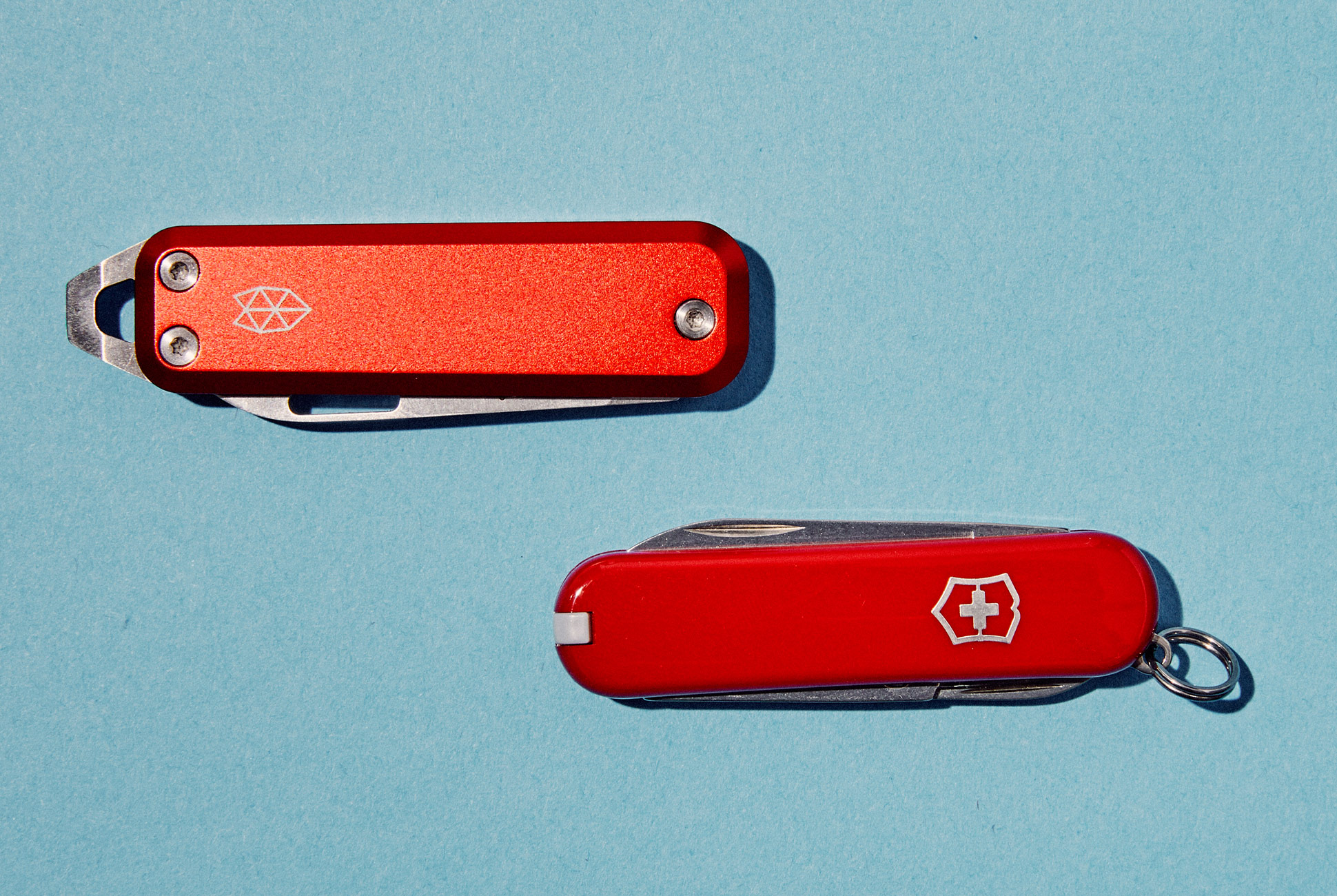
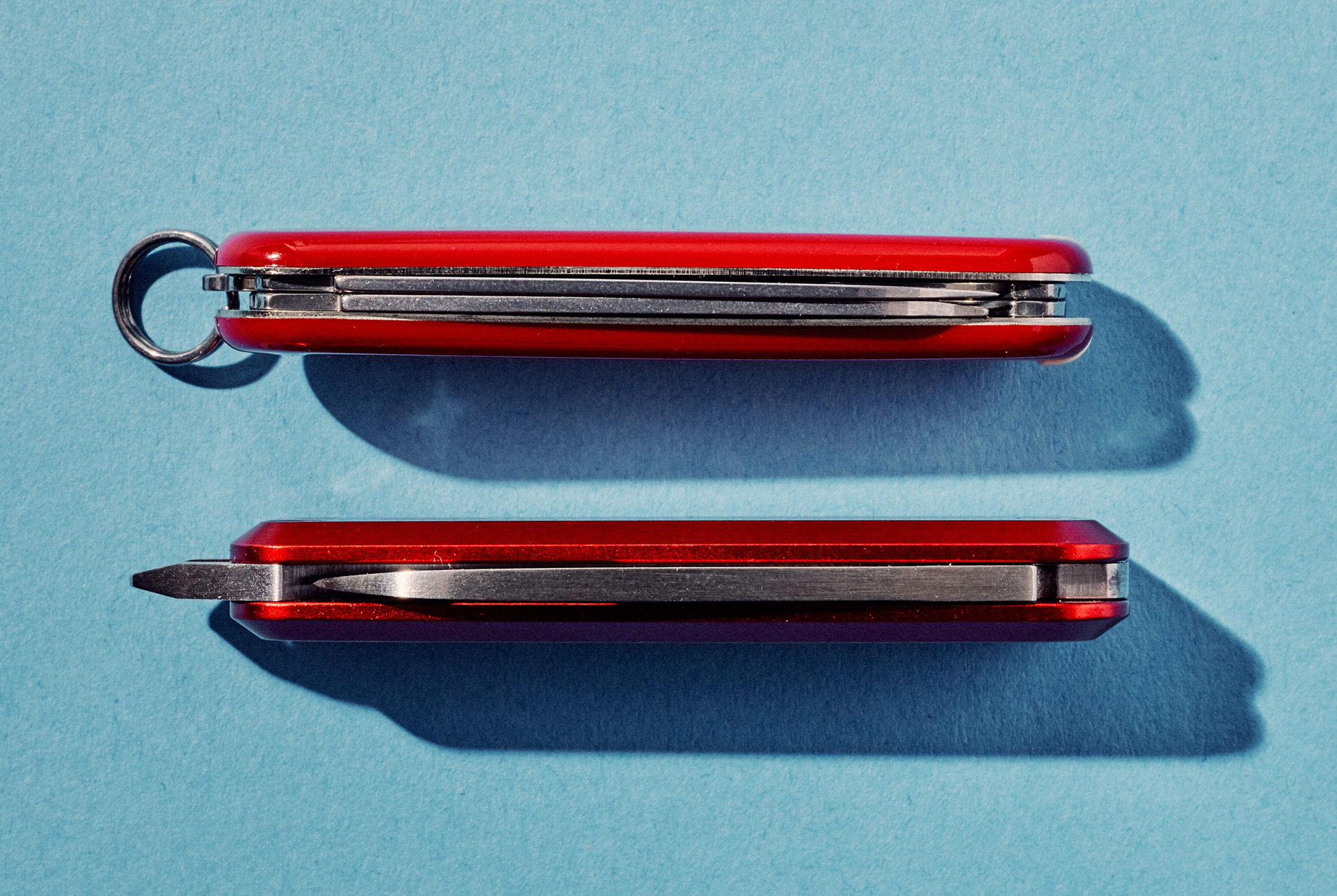
Ever since The James Brand introduced their keychain folder, the Elko, we’ve been smitten. With great proportions, excellent design and undeniable utility, it’s no wonder that it’s found a fast home with Gear Patrol staffers. But like so many great products, the Elko is a re-interpretation of a classic: the keychain Swiss Army Knife by Victorinox.

Victorinox’s keychain Swiss Army Knife, or SAK for short, has remained largely unchanged for decades and is widely available online for less than $20. It is easily the heretofore-unrivaled king of keychain knives.

But despite all of the original SAK’s provenance, we began to wonder if it lived up to modern EDC use. This led us to ask, how would the iconic SAK perform when pitted against the Elko? And, as it retails for roughly three times the price, does the Elko deliver three times the oomph?

After consulting with our in-house knife aficionados and surveying 25 staffers, we settled on three simple everyday tasks that would test the strength, toughness and utility of the two knives; opening a box, tightening a screw and opening a bottle top. The knife with the highest marks would leave the ring the new keychain king.

Opening a Box

The strength of a blade, its resistance to corrosion and ability to hold an edge are important properties to consider when buying, but these aspects are more relevant when purchasing specialty knives that need to perform a specific task in a specific environment. A keychain knife is called upon to perform all sorts of quick cutting tasks in a wide array of settings. The most common use for our blades? Opening boxes of gear. As it turns out, it’s an excellent test for a simple folding knife.

The Findings:
The SAK’s one-millimeter thick and five-millimeter wide drop-point blade, though elegant, lacked the mass required to slash through thick tape and plastic packaging, especially when dulled. And being a little over 3.5 centimeters from point to base, the blade flexed and bent worryingly when faced with heftier jobs. But we did find that when freshly sharpened, the SAK made short work of packing tape and sliced cleanly through most boxes.

The Elko’s squat blade — 4.4 centimeters long, 10 millimeters wide and two millimeters thick — gave it a surprising heft that powered through where the SAK waffled. The Elko’s centimeter-long thumb nick passes through the blade making for easy ambidextrous opening by both left and right hand-dominant users.

Neither knife offers a locking blade, but the Elko’s slip joint has two noticeable friction points whereas the SAK has only one. More than a third of the surveyed Gear Patrol staff members reported being cut or otherwise injured by a knife folding while in use. Though we didn’t test for injury-producing results for obvious reasons, it’s very likely that the multiple friction points of the Elko could be enough to avert a trip to the ER.

Score: Elko 1, SAK 0.

Tightening a Screw

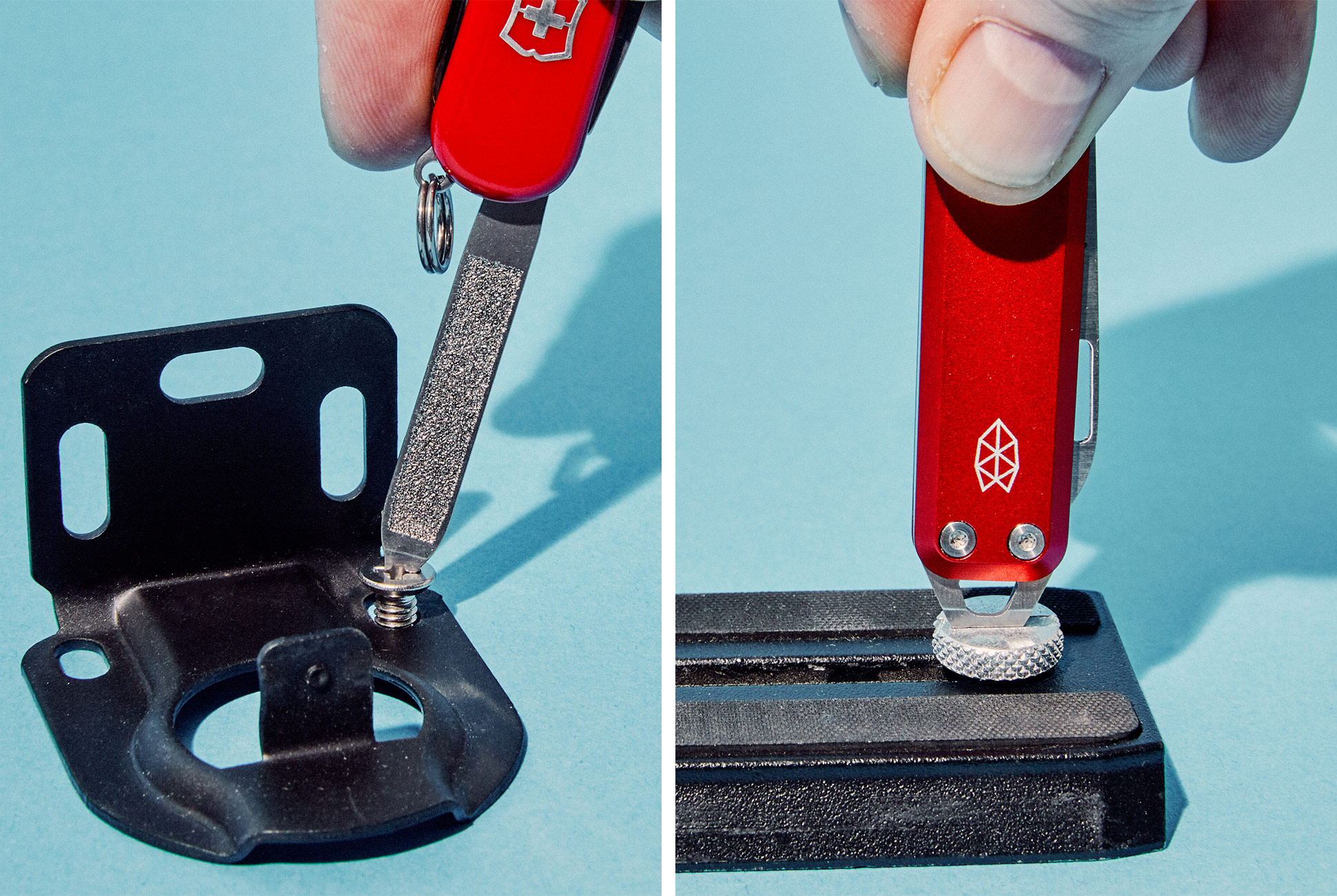
Many knife owners have broken the point off a blade by using it for a task it wasn’t designed to perform. Apart from using the blade tip to pry — a surefire way to clip your knife blade — the next most common use case that results in blunted blades is tightening a screw. Both the SAK and the Elko have addressed blade misuse by supplying an additional tool for torquing.

The Findings:
In the case of the SAK, the tool is an edgeless four-centimeter long implement that tapers abruptly to a 2.5 millimeter bit. But while the slender tool rides conveniently alongside the main blade and is good for smaller screws in either flathead or Phillips configuration, its length and six-millimeter width make it extremely flexible. Even on the most mundane screws, we observed the implement twisting uncomfortably in hand and a lack sufficient leverage. It worked well for smaller jobs, but the size of the bit precluded it from the smallest tasks such as tightening the temple screws a pair of eyeglasses.

The James Brand eschewed a blade-like implement altogether, opting instead for a trapezoidal tail (The James Brand calls it a “prybar”) that tapers from 15 millimeters to six millimeters over its roughly eight-millimeter length. The result is a stout bit offering ample leverage. The secret to the tail’s strength is that it doubles as the liner and runs the length of the six-millimeter handle scales, anchored by the body screws in three locations. The pry bar is substantially wider and thicker than the SAK’s, and it excelled at indelicate tasks like tightening the screw on a camera base plate, the lug on a fishing reel and an engine hose clamp. For us, the Elko was a better fit for our day-to-day use.

Score: Elko 2, SAK 0.

Buy Now: $60

Opening a Bottle:

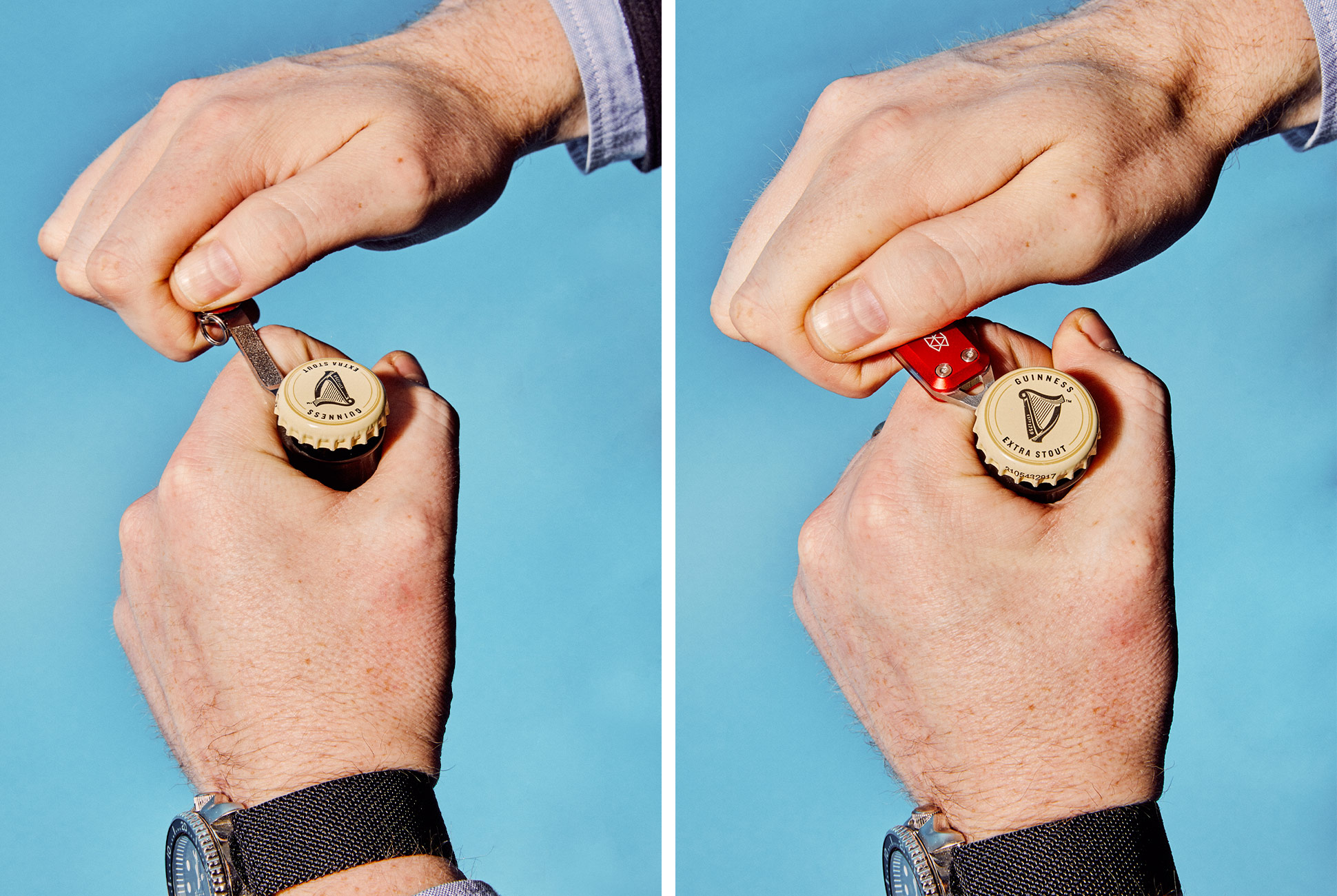
Opening a bottle is a pretty straightforward task for a purpose-built tool. But when your keychain knife doesn’t have that tool, you have to get inventive. Sure, you could have a bottle opener on your keychain, or use any number of creative ways to pop that top, but ideally, your EDC blade should be ready to rise to the challenge. The key is a practical solution that won’t have you snapping a blade or fiddling around for several minutes.

The Findings:
Neither the SAK nor the Elko offers openers in their arsenal, but we tested them anyway. The Elko’s trapezoidal tail made short work of a bottle top, again owing to its heft, ample bite, and integration into the knife body. However, that tail also doubles as the keyring, and we found it tricky to use the prybar while attached to a set of keys. Strung on a lanyard, or The James Brand’s toggle, the Ulu, the tail was much easier to use for bottle duty.

The SAK’s only answer to a bottle cap is the aforementioned flat-tipped implement. But similar to its performance as a driver, the implement flexed and bowed worryingly. Extensive force saw it even bend slightly. Multiple attempts and multiple misses had us reaching for the Elko. It should be noted that Victorinox produces other keychain-specific models that include a bottle opener. For that, we had to give the SAK a half a point.

Score: Elko 3, SAK 0.5.

Aesthetics/Design:

There is no ignoring the iconic nature of the Swiss Army Knife. For many of us, the red plastic scales and Swiss shield conjure childhood memories of siblings, parents and even grandparents. For others, a Swiss Army Knife was their first foray into knife ownership. For well over a hundred years their design has defined what a reliable folding knife should be. For this too, the SAK should be honored.

The Elko, rather than being a complete departure from the SAK’s footprint feels like a modern re-interpretation of its essence. With nearly identical dimensions, it’s clear that the Elko is The James Brand’s hat tip to greatness.

Score: Elko 3, SAK 1.5.

Other Considerations:

We would be remiss if we didn’t acknowledge the SAK’s ability to pack other tools into such a small silhouette. Opposite the blade/implement duo rests a pair of scissors which sport sharp 17-millimeter blades, pert spring action, and impressively small set (“set” refers to the space between the scissor blades when closed). The handful we purchased online for testing even had factory lubrication at the pinch. Precise and sharp enough for nipping a stray thread, fishing line, clothing tag or even a fingernail, the SAK’s scissors are a lovely creature comfort. For the addition of a nail file in the side of the driver implement, and the tweezers and plastic toothpick that stow ingeniously in the scales, the SAK deserves significant praise, and a point for ingenuity.

Score: Elko 3, SAK 2.5.

Conclusion:

Within the confines of our three-task challenge, the Elko’s overall build quality, blade design and ‘prybar’ led to a close-but-crucial overall win against the Swiss Army Knife, validating its price and more importantly, validating its position as keychain king.

However, the Swiss Army Knife offered an air of utility and elegance, carrying its own special cachet unrivaled by most knife companies. The bottom line? Both knives deserve serious consideration for your everyday carry, but if you want a burly no-nonsense tool that will get the job done, reach for the Elko.

Note: Purchasing products through our store directly supports our editorial team’s mission.

Lamborghini Urus Review: Truly as Crazy as It Looks

“Why would Lamborghini build an SUV?” That tired refrain has been constantly thrown around the automotive journalist community since the Urus was announced some years back. But I don’t know why so many of my peers would be even remotely surprised. The demand is there, the technology is there and it’s not as if ever-passionate Italians need a particularly good reason to do anything in the first place.

It’s what I love so much about Italian vehicles and motorcycles: often they’re built simply because it’s possible to. A V8 motorcycle? Sure why not?! A wedge-shaped sports car that you can’t really see out of in any direction other than straight ahead? Sounds like a great idea. Take decades of boundary-pushing exotic supercar design principles and apply them all to an SUV platform? Not only will that work, but it’ll create a whole new segment.

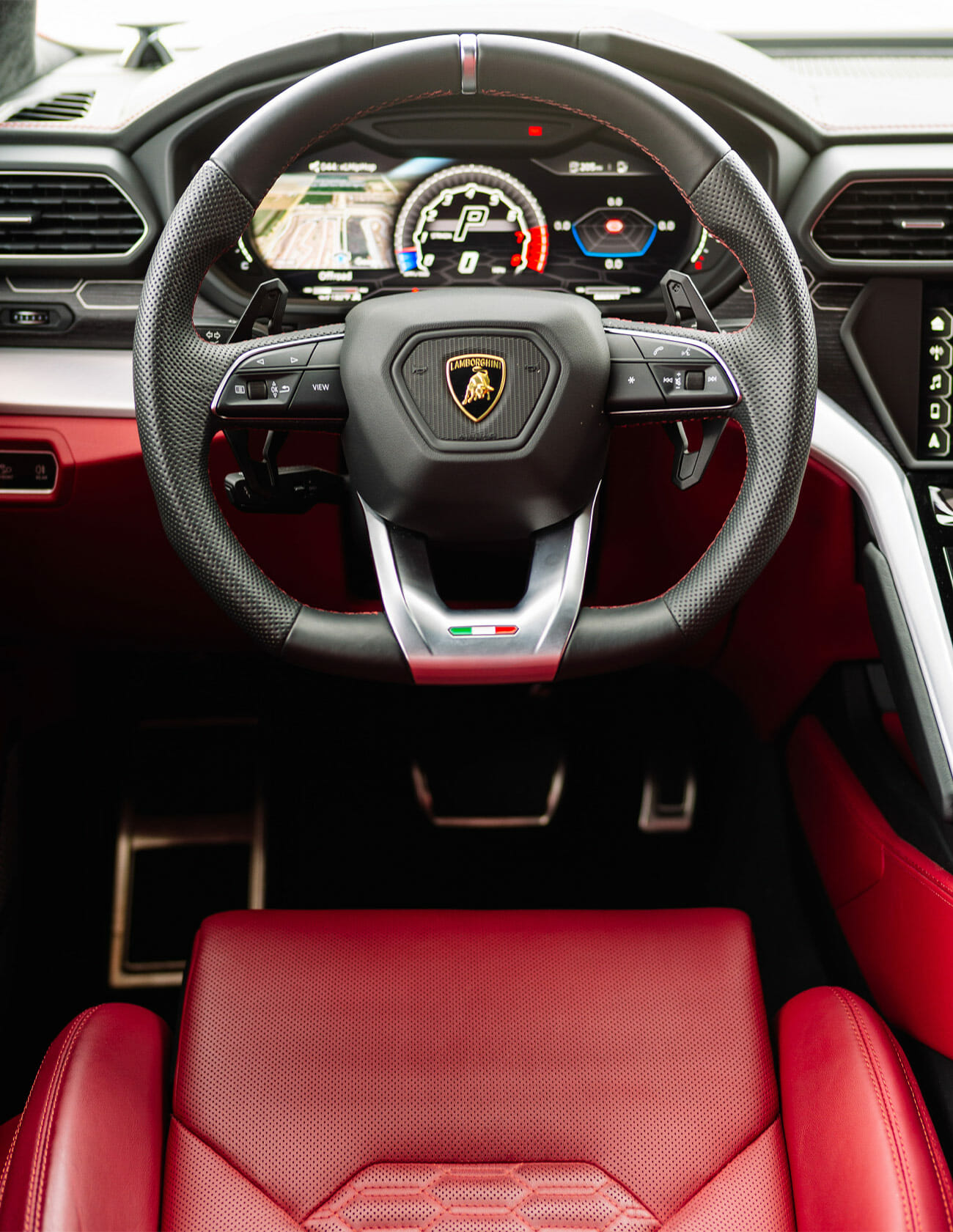
The Good: Yes the Urus is fast as all get out and makes great noises. Shockingly, those aren’t its best qualities. The fact that it’s a legitimate luxury SUV is what I found most impressive. Lamborghini’s four-wheel steering, first seen on the Aventador S, is paired with an excellent AWD system with active rear torque vectoring, an adaptive air suspension and an anti-roll stabilization system. The result is a nimble and highly capable off-roader with a cabin that you simply don’t want to leave. The combination of beautiful natural leather with either carbon fiber, aluminum, hardwood or Alcantara trim options makes the interior a really, really nice place to be. While I’ve enjoyed stints in the Huracan Performante and Aventador S Roadster, I wouldn’t say their cockpits are particularly inviting. The Urus is completely comfortable and surprisingly roomy given its tightly hewn exterior.

I expected a Lamborghini SUV would bring the sportiness, but it also delivers on the utility.

Who It’s For: Monied individuals who already have a Huracan but occasionally get the urge to drive up a mountain or across a desert. A sense of humor and a sense of adventure will help.

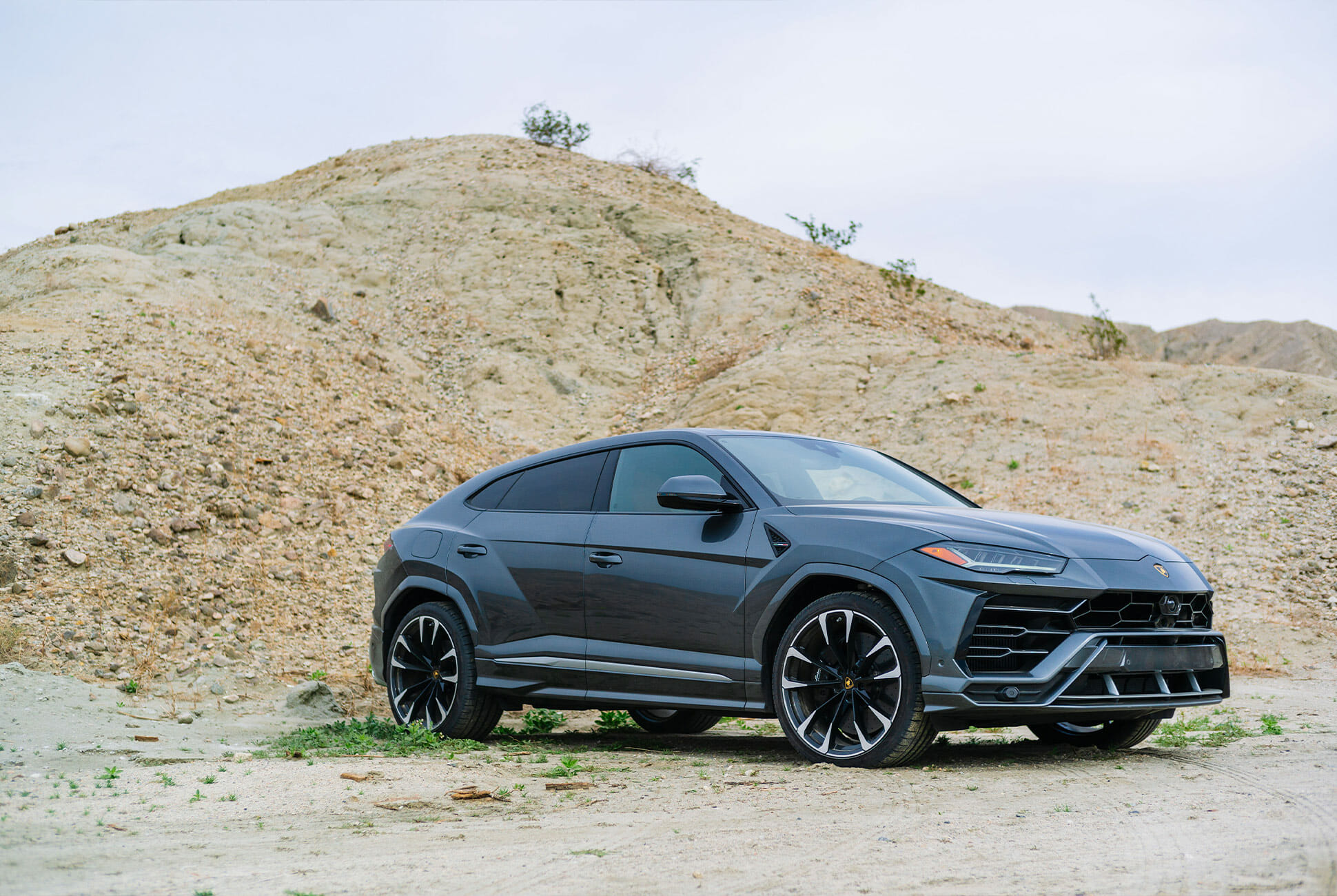
Watch Out For: A ticket for this ride doesn’t come cheap. And the Urus also suffers from being… not pretty. I personally found a number of angles I liked visually, but few vehicles lean into the subjective part of beauty as much as the Urus does.

Alternatives: At the moment the Urus has no true direct competitor. It sits alone in the segment it created, the “Super Sports SUV”. I can say from personal experience that the Jeep Grand Cherokee Trackhawk delivers similar mind-warping and stomach-churning sensations, as does the Range Rover Sport SVR, but neither match the Urus when it comes to driving dynamics. Be it on winding mountain roads or on a track, the Urus shrinks around you, making it easy to forget you’re driving a vehicle with enough ground clearance to go off-roading and not whose front splitter you have to worry about scraping on a driveway. When Aston Martin’s SUV arrives it may well be a contender, but for now, there is nothing like the Urus on the market.

Review: Following several minutes of marveling at the Urus’s deep metallic grey paint (dubbed “Grigio Lynx”) and subsequent fawning over its gorgeous brown interior, I concluded that the Urus isn’t beautiful, but it certainly is compelling. Its looks are one thing, and under the skin, its tech is mostly the latest and greatest borrowed from Audi. But the packaging – dual center screens, switchgear and digital dash – certainly looks much more special here. My co-driver remarked at the intimidating amount of bits and bobs, but I always easily found the right controls.

The Urus rides on the same tried and true platform – VW’s MLBevo architecture – that underpins the Bentley Bentayga, Audi’s Q8 and Q7, the Porsche Cayenne and Volkswagen’s Touareg. Having driven all five, I can confidently say Lamborghini has taken the platform to new heights.

My time behind the wheel began with a brisk run up one of my favorite roads in Southern California. When I say brisk, I mean it. The last time I’d driven Highway 74 I was in an Audi R8 V10 Plus. As it consists of a rapid and dramatic climb from the desert floor to peaks above the Coachella Valley, driving this road never gets old. While the Urus certainly can’t match the accurate turn-in prowess of a lithe mid-engine supercar, it was equally thrilling to run down the brief straight sections before gliding around sweeping corners, especially on our ascent. Of the seven available drive modes, three are intended for asphalt, three are for variable-terrain surfaces and one is fully customizable.

I’d had enough of STRADA (street) mode en route to Highway 74, so the first portion of my ascent was spent in SPORT mode. After just the first corner, that lower and stiffer suspension setting makes a huge difference and all the low-end grunt via dual twin-scroll turbochargers is available much earlier in the go pedal. In this application, the proven ZF eight-speed automatic transmission is tuned to provide nice short ratios in lower gears and long ratios up top.

I didn’t have room to find out on this trip but mark my words, I’ll get a chance to see if Lamborghini’s claimed 189 mph top speed is legit.

If SPORT mode more than piqued my curiosity, CORSA (race) mode demanded my full attention. Ratcheting the Tamburo (drive mode selector) to that particular notch delivers track-ready performance characteristics via Lamborghini’s ANIMA system (the questionably named central computer brain). ANIMA makes precise changes to suspension settings, throttle response, gearbox mapping and the four-wheel drive system. I didn’t find CORSA to be too harsh, though some surely will. Everything about it is harder, faster, stronger. Drivers can dial in the best of both worlds with EGO mode, which debuted in the Aventador S. Instead of utilizing predetermined setting, EGO allows the driver to mix and match settings for different vehicle components. My favorite combo: CORSA for the drivetrain, SPORT for the dampers and SPORT for the steering.

Following our descent from the peaks, we crossed the Coachella Valley floor and arrived at a quiet corner of the Colorado-Sonoran desert where the San Andreas Fault snakes through the crust. Even on rough terrain, barring any truly stupid moves by the driver, a Urus shouldn’t get stuck. Granted, we swapped rides for a Urus set up specifically for off-road use. First up was a lower speed, technical section for which we would use SABBIA (sand) mode. The four-wheel steering system borrowed from the Aventador S made avoiding obstacles and executing tight turns a cinch. Next up, a trial for TERRA (off-road) mode. Having recently spent significant time in a Ford Raptor, I was all too happy to once again play in a big sandbox.

As much fun as the Urus is on the street or on the track, it’s on dirt that it really makes its case. Its center locking differential features a standard 40/60 split, but can deliver a maximum of 70 percent to the front axle or 87 percent to the rear. Its rear differential delivers active torque vectoring. In tandem, those systems combine to give the Urus serious off-road handling chops. With full confidence in the electromechanical active roll stabilization system, I giddily tossed the Urus around in soft sand and flogged it down trails. Were the Urus shod with smaller wheels, more aggressive tires and serious underbody protection, I can’t think of a vehicle I’d rather use to tackle desert landscapes. Who will be the hero to enter a Urus in the Baja 1000?

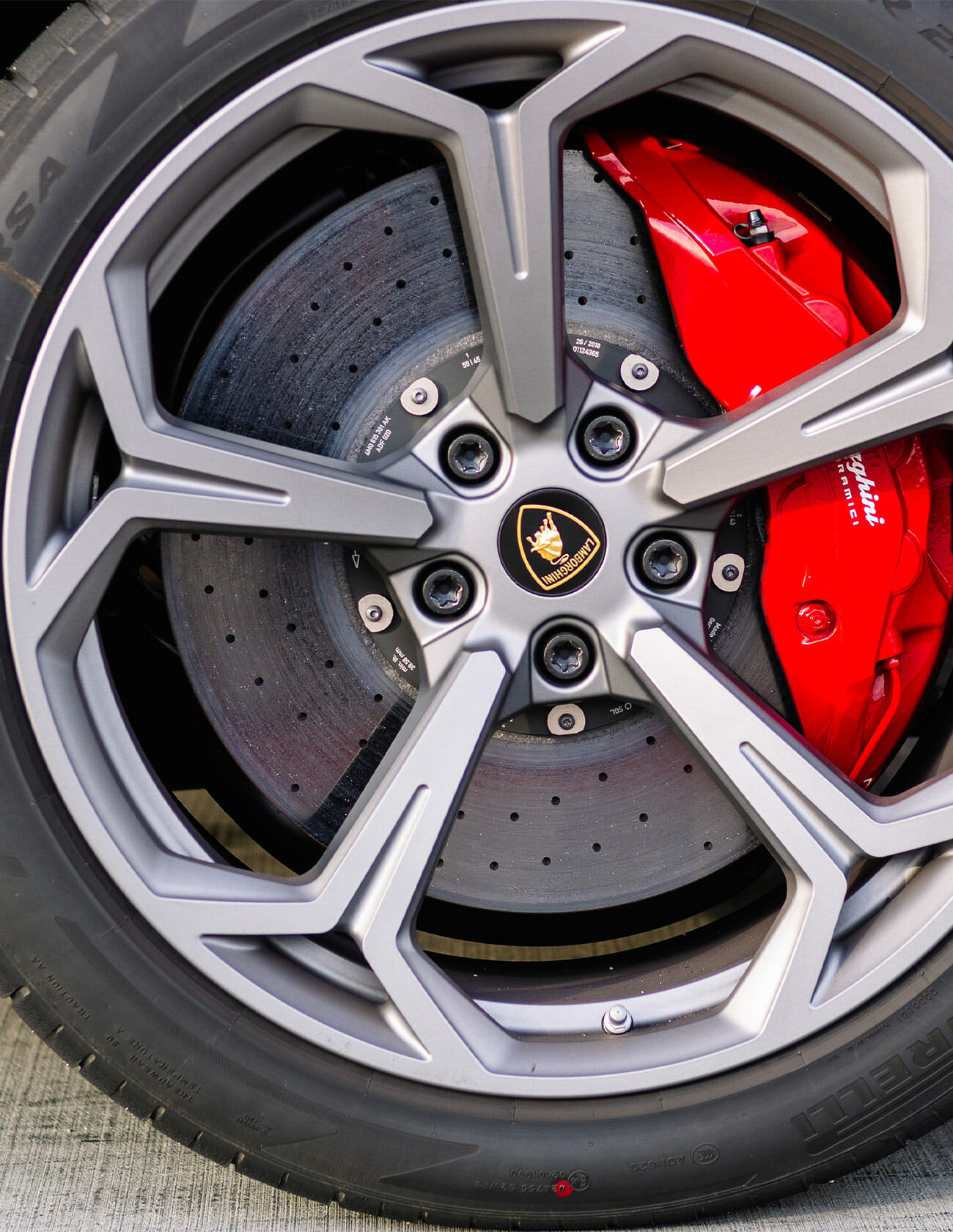
Track activities at The Thermal Club were next on the schedule. There, I tackled a braking and obstacle-avoidance demo that put the full capability of the 17.3” carbon ceramic front rotors and their 10-piston (!!!) calipers on display. No point in having all that power if you can’t erase it in a damn hurry. Keeping in mind that the last vehicle I lapped Thermal Club in was a Cayman GT4 – a potentially super unfair comparison – I found the Urus ate up track asphalt up with impressive composure. It’s a hell of a thing Lamborghini has accomplished, making an SUV that hardly feels different from a big sports sedan on the track. Especially considering what I had just done with it out in the desert.

Verdict: Lamborghini answered a question nobody asked and delivered a product nobody was expecting. It would have been easy enough for them to stick a big, naturally aspirated engine in a re-worked Audi Q7 and call it a day. Instead, they went above and beyond, creating something truly unique. The Urus is the first Lamborghini with a turbocharged engine, the first super-performance SUV that actually drives like a car (albeit a large one) and the first Italian vehicle in years that I can confidently say I would drive across the US. If the Urus does for Lamborghini what they Cayenne did for Porsche, it may clear the way for the most insane specialty Lamborghini cars in the brand’s history.

What Others Are Saying:

• “It’s very spacious in here. Actually really comfortable both in the front and back seats. The design of the interior is very cool: simultaneously Lamborghini and a little bit of Audi influence as well. Let’s just say [the inside is] a lot better than how the outside looks.” — Matt Farah, The Smoking Tire

• “All these tires, all these drive modes, and all this cabin space do a few things for Lamborghini. First, geography. The Urus works in a lot of places that no other Lambo would. Snow, for one, and the parking lot at CVS for two. This Lamborghini, now a daily driver for real, works great in either place” — Eric Gores, Motor 1

2019 Lamborghini Urus Key Specs

Engine: 4.0-liter twin-turbocharged V8
Transmission: TorqueFlite eight-speed automatic with paddle shifters; all-wheel-drive
Horsepower: 650
Torque: 626 ft-lbs
Weight: 4,850 lbs
0-60: 3.6 seconds
Top Speed: 189 MPH

Lamborghini hosted us and provided this product for review.

Read More Gear Patrol Reviews

Hot takes and in-depth reviews on noteworthy, relevant and interesting products. Read the Story
Note: Purchasing products through our links may earn us a portion of the sale, which supports our editorial team’s mission. Learn more here.

2020 Porsche 911 Carrera Review: Better In Almost Literally Every Way

The iconic Porsche 911, first introduced in 1963 for the 1964 model year, is entering its eighth generation. Few cars have achieved the kind of longevity and renown that the 911 has (the Ford Mustang, almost exactly the same age as the 911, is another). Throughout its long life, the 911 has served as the objective Platonic ideal of a sports car. In addition to its impressive lifespan, the 911 has enjoyed a practically linear progression through time: the last near-six decades have seen its size growing, technology complicating, power increasing, performance capabilities expanding and price swelling with each evolution. The whole time, its very general shape has stayed familiar, thanks partially to its unique, rear-engined configuration.

This eighth generation (referred to by Porschephiles as the 992) extends that progress. It is bigger in many dimensions, wonderfully powerful and strikingly fast – indeed, faster than its predecessor by a longshot. There are, famously, many iterations of every 911 generation (Cabriolet, GTS, Turbo…) that span various spectra of performance and price and exclusivity. “Carrera” models are traditionally found at the low end of both; that is, these are ‘base’ models. The first new 911s available will be the Carrera S (rear-wheel-drive) and Carrera 4S (four-wheel-drive).

The Good: This, folks, is a Porsche 911. If ever in the 911’s terminaly-expanding history a new generation was revealed to be an anything but a vast improvement over the last and a shoo-in for “king of the sports car” crown, I’m convinced the Earth’s core might stop spinning and Armageddon would be upon us. It is considered the benchmark for a reason: the Porsche 911 is engineered to be the best, most archetypal desire-machine available. It is not possible that the Porsche 911 can be anything but a truly remarkable car. So it is written.

The 2020 911 is an objective improvement in nearly every measurable way. It is more powerful, faster, handles better, keeps occupants safer, has more advanced technology, and is even more eco-friendly than its predecessors. It features a next-generation engine with all manner of trick tech to make it run better, better, better. The dual-clutch transmission is all-new, now with an added gear. The seats are all-new, lower and grip passengers better. It is longer and “a great deal wider.” Its track is now more substantial and grippier. There is a new brake system, a more direct steering ratio, a more aluminum-intensive body. Its active aerodynamics do more; driver assistance systems are standard.

Who It’s For: Wealthy enthusiasts who want the best right out of the box. German car devotees who want a heavy dose of a grand tourer with their sports cars.

Watch Out For: The most basic configuration of the 2020 911 Carrera 2 (C2) will start at $113,300 without a single option added. (The current-gen C2 starts at $105,100.) As Porsche options are infamously costly, it will be easy to eclipse that MSRP by a fair margin (some C2 models available for us to drive featured sticker prices tens of thousands of dollars higher). 911 purists will take issue with some styling cues; namely, that the body is, visually – necessarily – larger than ever. Purists should also note that in Porsche press materials, the word “digital” appeared four times in the first four short paragraphs. An unapologetically, unmistakably modern 911, this is a decidedly non-analog car.

Alternatives:
• The Aston Martin Vantage ($149,995) is a new contender in the 911’s orbit, aimed squarely at the German’s customer base, only with a bit more spunk.
Mercedes-AMG GT R ($159,350) is grand tourer DNA shot through with something evil.
• The McLaren 570 S (~$200,000) is a much more pure take on the sports car theme – a no-frills British beast.

Review: I am conflicted about the new 911, which is an objectively incredible car. 95 percent of me – the reasonable, logical, fair portion – knows it is god damn incredible. The other five percent – that’s the pouty, obstinate (read: “purist”) part – takes issue with how little the new car moves me emotionally. I’ll get to those latter opinions later; first, objectivity.
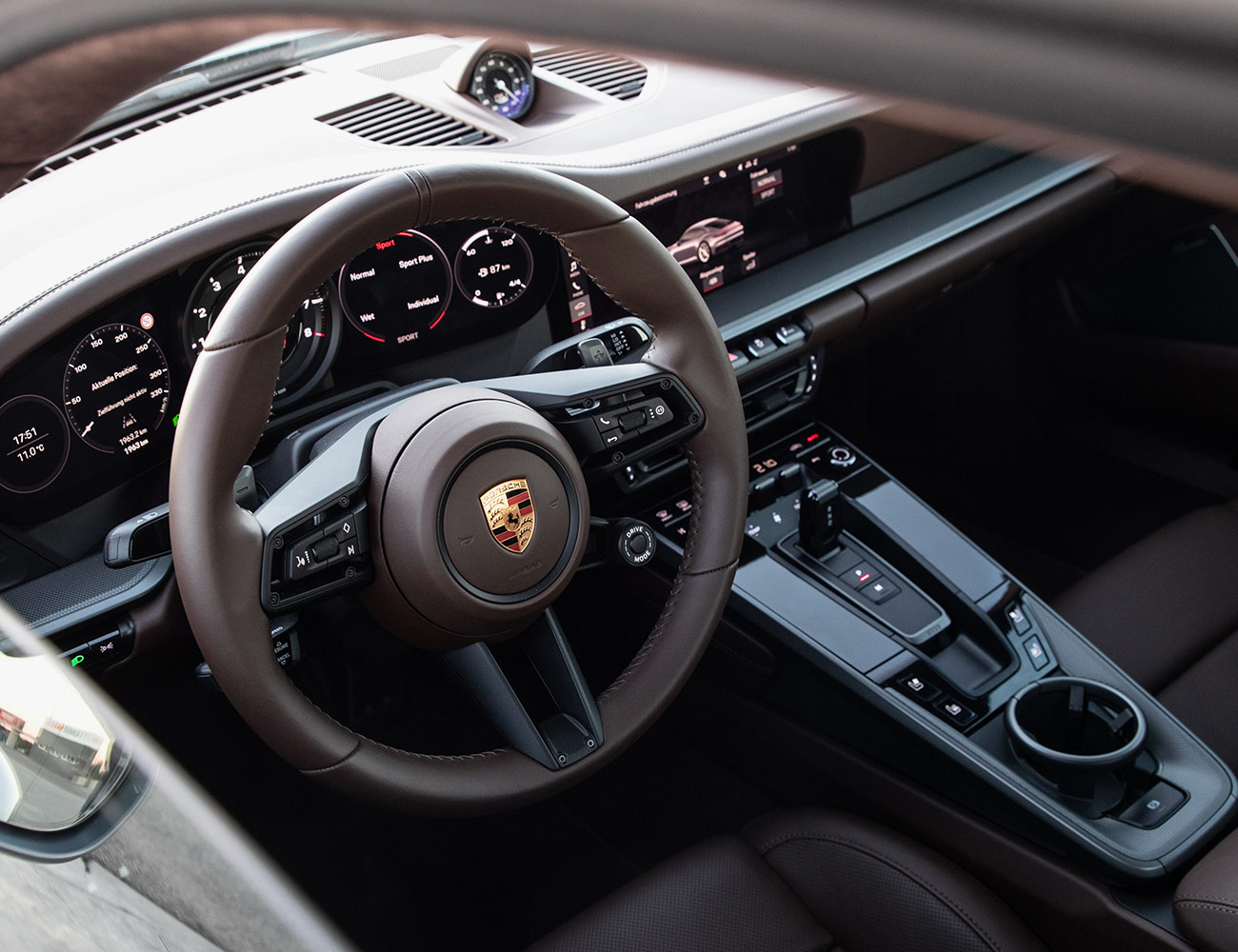
Photo: Porsche

I’m not a great racing driver. I have above average natural driving instincts in terms of car control and mechanical confidence, and I understand racing lines and apexes and weight transfer, but I will not win a race against anyone who’s applied themselves to the art. A large portion of our time with the new 911 was spent on the Circuit Ricardo Tormo track outside of Valencia, Spain, where we performed a series of lead-follow laps behind a professional driver going about 7/10ths (…maybe?) in a current-gen GT3 RS. I kept up. As in, “I had never driven the new 911, got in, started it, steered onto the track and put the hammer down” kept up. I barely had to think. The 911 made hard driving easy in a way that seemed to scoff at me: “I can do so much more, loser.” I could have pushed every bit of my skill to the edge and then some and the car would have still been light years ahead of me.

The new eight-speed PDK dual-clutch automatic (a seven-speed manual is coming… soon), which adds a gear over the last-gen unit and features new ratios in every gear, especially in Sport Plus mode cracks through up- and downshifts like the Large Hadron Collider fires particles. (Fast.) Moreover, I literally didn’t have enough track to accelerate with the car’s full force. At 443 horsepower and 390 lb-ft of torque, the new 911 C2 S and Carrera 4 (C4) S have 23 horsepower and 22 lb-ft on the outgoing model. That, plus many, many other huge upgrades, are enough to shuttle both the C2 and C4 from 0-60 mph 0.4 seconds faster than their predecessors. That’s… an insane improvement. It’s the difference between a Ferrari 488 and a Bugatti Chiron.

The rear-mounted 3.0-liter boxer-six engine that powers Porsche’s 911 has been made stronger and smarter. It features larger turbochargers (they are now mirrored units, rather than identical) with electric wastegate valves that make boost pressure and, consequently, power delivery, much smoother and more exact. I don’t recall a turbo-lag sensation haunting my drives on the track and public roads – only a steady pulse of power when I demanded it. In addition, the engine now features a new charge air cooling system, piezo injectors (faster, more precise and more communicative with computer systems) and increased compression.

Front and rear drive axles feature different widths in the new car and tire configuration is mixed. All 911s will now feature a rear axle width more in line with the previous-generation C4’s hips, those “wide body” rear ends, which translates to more stability. A new braking system, featuring larger discs (330 to 350 millimeters) and a shortened pedal ratio (a pedal that’s 300 grams lighter than before, mind you) brings things to a stop. Add to all that a steering ratio that is up to “around 11 percent more direct,” optional rear-axle steering, a more rigid body that features only 30 percent steel (largely in favor of aluminum) and adaptive aerodynamics in both the front fascia and the wider, multi-position rear spoiler, and you’ve got a stable, slippery, downforce machine that’ll tackle turns like a champ.
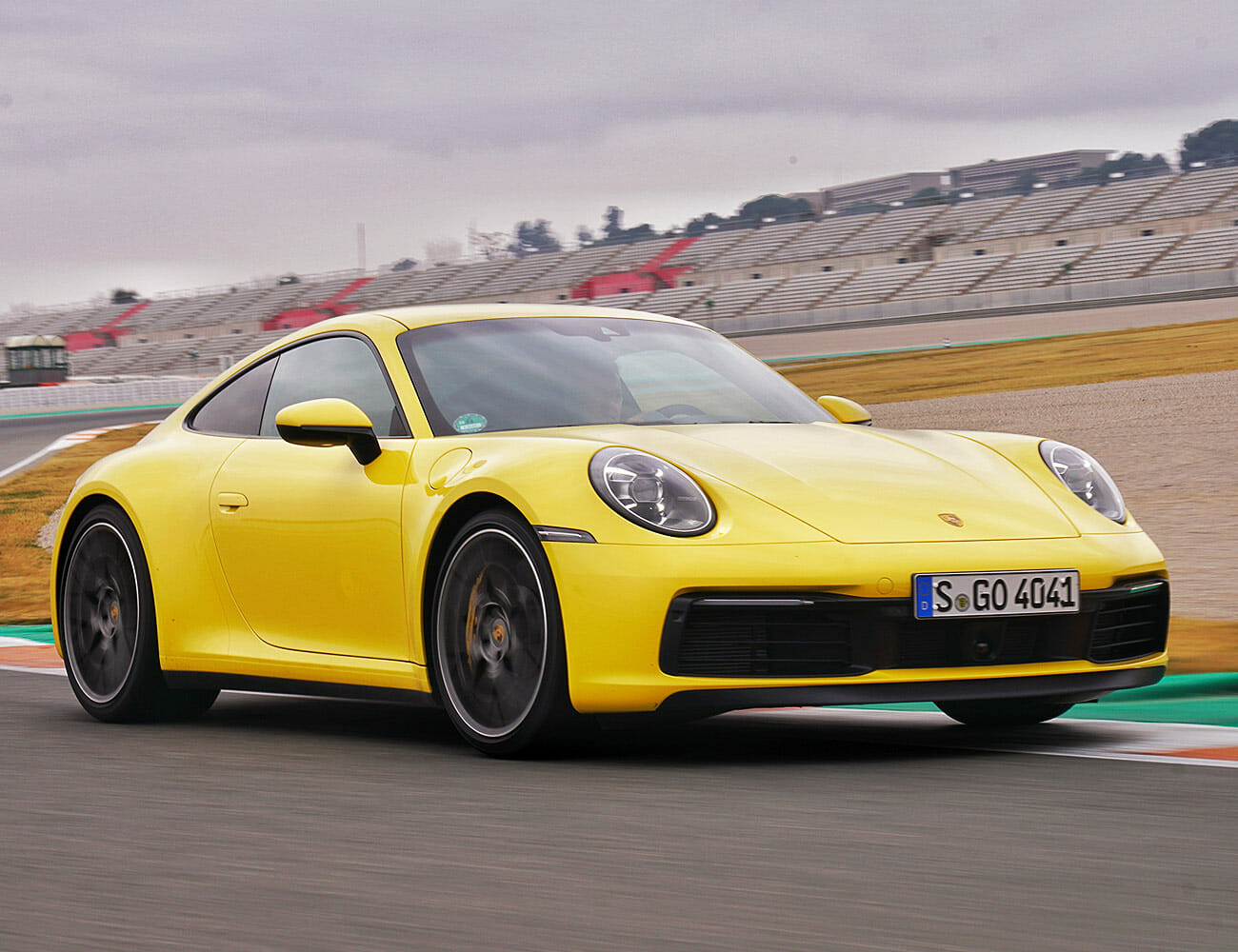
Porsche is particularly proud of all the screens in the new 911’s interior – as mentioned, this is a very digital car. A new 10.9-inch touchscreen is planted smack in the center of the dash and behind the steering wheel on either side of the central analog tachometer lie floating displays that feature configurable functions, including a confusingly small night vision system. In terms of other helpful tech, driver assistance systems like collision warning and brake assist are standard and other tech like adaptive cruise control and lane keep assist are available.

Seats are all new as well. They are slightly lower (five millimeters), slightly lighter (three kilograms) and feature thinner cushions. Rear seats, for your obliviously lucky children and/or expensive briefcase, feature a 20 millimeter-higher seat and wider cushion.

What I see as most controversial in the new 911’s overall presence is its look, both inside and out. The following, be warned, are the subjective ravings of a self-proclaimed purist who couldn’t afford a 911 if he auctioned, well… everything he could. Still, I had trouble inside the 911, where the dashboard stretches horizontally from one side to the other, harking back to the original, decades-old 911. That’s a nice retro nod, much like Lincoln has done in its recent cars like the Navigator. But in the Navigator, the visual homage manages to feel special, or ‘progressively nostalgic,’ shall we say. Here, combined with very, very clean and texture-free surfaces, the retro shape feels sort of generic. Especially set against the multiple flat digital displays, there just isn’t much visual interest in the cabin. In a now vintage 911 that would work, since those cabins are small, but here it feels too airy – somewhere between luxuriously cosseting and anxiously expansive. Granted, I spent my time in cars with entirely black interiors, but if I’m honest, I was a little bored. The 911 has begun to sprinkle grand tourer DNA into its lineage; its interior should feel like an expensive, special experience.

The exterior isn’t boring at all. I find it kinetic and muscular to behold, but it’s so vastly different from the lithe, almost delicate 911s of yore that I find it distracting, especially in the rear. Its bulkiness is actually necessary – as regulations demand more safety and emissions standards and the like, equipment below a car’s body and the body itself have become literally larger. Cars have to fit ‘safe’ stuff now. Cars like the new 911 also have to fit all the rad-as-hell tech mentioned above so that idiots like me can race around Spanish tracks. But I can’t reason away that I think the new 911’s rear looks like an Audi R8 roid-raging out on HGH. Its tailpipes stick through the rear fascia and there’s so much vertical space and it’s just a big chunky butt. To me, the 911 has begun to look like a Panamera. (Wasn’t it supposed to be the other way around?) I will say, though, that vertical third brake light is sexy as hell.

Anyhow, feel free to email me with dissenting (or supportive…?) opinions.

Verdict: It’s a little difficult to believe I just drove the new Porsche 911 around a race track in eastern Spain. This car represents monumental history to nerds like me. And like any history worth its salt, it’s progressed, and aggressively so. I’ve driven fantastic iterations of the previous 911, in which I did things on mountain roads I hope my mother never hears of. It’s a proper wicked car. This new generation, despite my whiny objections to its looks, is better in almost literally every way imaginable, and by a wide margin all around. This remains the car that car guys want. Subsequent variations – GTS, “Turbo” and RS models – will undoubtedly be so sublime they’ll shred reality. And, for that matter, keep armchair purists pleasantly miffed.

What Others Are Saying:

• “An overarching theme of latter-day 911s is the continual expansion of their dynamic range. The latest version of Porsche’s PASM active dampers, now with infinitely adjustable valving, continue to push the 911’s chassis in opposite directions simultaneously: more comfort and better high-performance grip. The optional PASM Sport setup, which the test car had, adds higher spring rates, stiffer damper tune, and a 10-millimeters-lower ride height. ” — Mike Spinelli, The Drive

• “Negotiate the Porsche’s odd, spring-loaded door handle and slide behind the wheel for an experience that feels quintessentially 911. Five gauges stare back at you from the low seating position, but 80 percent of them are digital – the center-mounted tachometer is real (and real pretty), but it’s flanked by two 5.0-inch displays that feature the additional gauges.” — Brandon Turkus, Motor1

• “Even a brief taste of the new 911 made us confident that we’ll be able to swallow and enjoy what Porsche has sprinkled into a car that we didn’t think needed changing. Like your palate, 911s evolve.” — Tony Quiroga, Car and Driver

2020 Porsche 911 Key Specs
Engine: twin-turbocharged 3.0-liter flat-six
Powertrain: eight-speed dual-clutch automatic, two-wheel-drive (C2 S); four-wheel-drive (C4 S)
Horsepower: 443
Torque: 390 lb-ft
0-60: 3.3 seconds; 3.2 seconds
Top Speed: 191; 190
Curb Weight: 3382 pounds; 3487 pounds
Base MSRP: $113,300

Porsche hosted us and provided this product for review.

Read More Gear Patrol Reviews

Hot takes and in-depth reviews on noteworthy, relevant and interesting products. Read the Story
Note: Purchasing products through our links may earn us a portion of the sale, which supports our editorial team’s mission. Learn more here.

Breville Bambino Plus Review: A Compact Espresso Machine That Doesn’t Cost a Fortune

Making decent espresso at home has always been tricky, if not downright unpractical. Beyond a dedicated machine, espresso requires more precision than drip coffee, so you need a scale. And its quick, high-pressure brew process highlights flaws more dramatically than regular coffee, meaning you need freshly ground beans — add a grinder to the list. You see where this is going…

Breville, perhaps more than any other company, has cracked the code to home espresso. The Oracle and Barista series are both solid, but they start at $950. Which made the recent announcement of a compact, $500 espresso machine called the Bambino Plus, all the more exciting. We put one to the test.

The Good: Dollar-for-dollar, Breville’s espresso machines pull the highest quality shots with the lowest amount of requisite skill or knowledge. The Bambino Plus is an extension of that idea, and it’s built to make the same shot in the same way, every day, which it does. The espresso itself is slightly sweet, medium-bodied and perfectly acceptable coming from a nearly automatic espresso machine.

Clocking in under eight inches wide, the Bambino Plus is the narrowest espresso machine Breville has ever made (the next-smallest is the 11.5-inch Infuser). It also features the fastest heat-up time of any of Breville’s espresso machine — three seconds. For all the wannabe latte artists out there, the milk wand can yield café quality microfoam (that meringue-like milk that sits atop espresso drinks) without requiring any technical knowledge.

Who It’s For: The people who will benefit most from the Bambino Plus already have some coffee equipment, such as a scale and grinder, at their disposal. The value proposition goes way up if countertop space is at a premium.

Watch Out For: It is very small for an espresso machine, which is good, but it lacks a built-in grinder, scale or dosing tool — all pieces of gear absolutely required to make the kind of espresso you want to be drinking. If you already own these things, it’s not an issue, but otherwise the price of the machine may as well be bumped up $150 or more. Beyond that, the milk wand and drip tray get needlessly messy, but more on that later.

Alternatives: The best alternatives to the Bambino Plus are fellow Breville products. No other brand’s line of espresso machines are as consistent, easy-to-use or offer a milk wand that’s even close to that on Breville machines. The Barista Express is $200 more and takes up a few extra inches than the Bambino, but it comes with a built-in dose and grind system and the same high-performing shot-pulling features (you can operate it manually, too).

The Duo-Temp Pro is meant to be Breville’s most entry-level home espresso maker, and it is $100 cheaper than the Bambino. If for some odd reason you’re anti-Breville, Jura makes a fully automatic machine that’s highly rated on Amazon, costs $800 and takes up a similarly small square-footage.

Review: The Breville Bambino Plus is not for the espresso experimenter, it’s for the espresso-deprived.

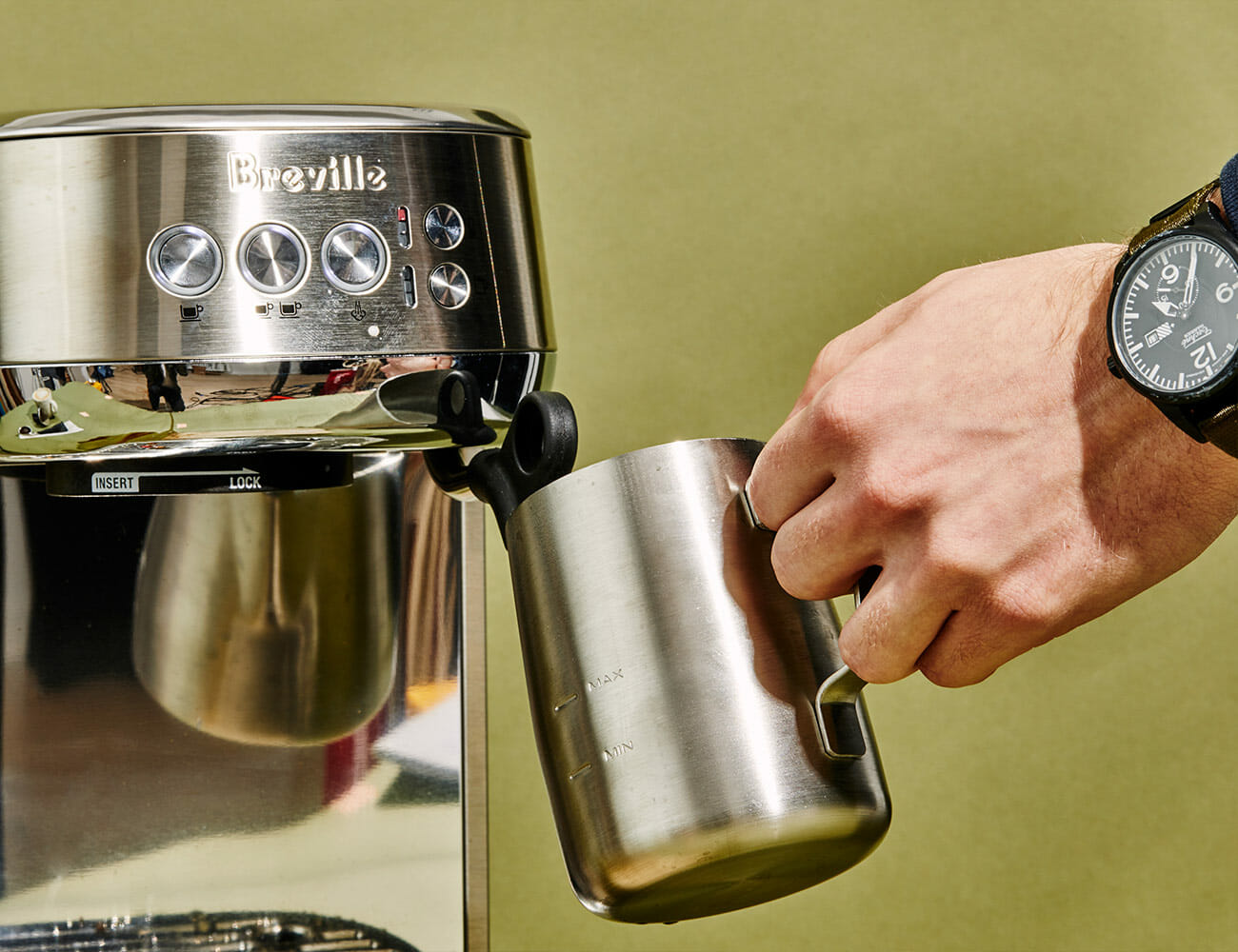
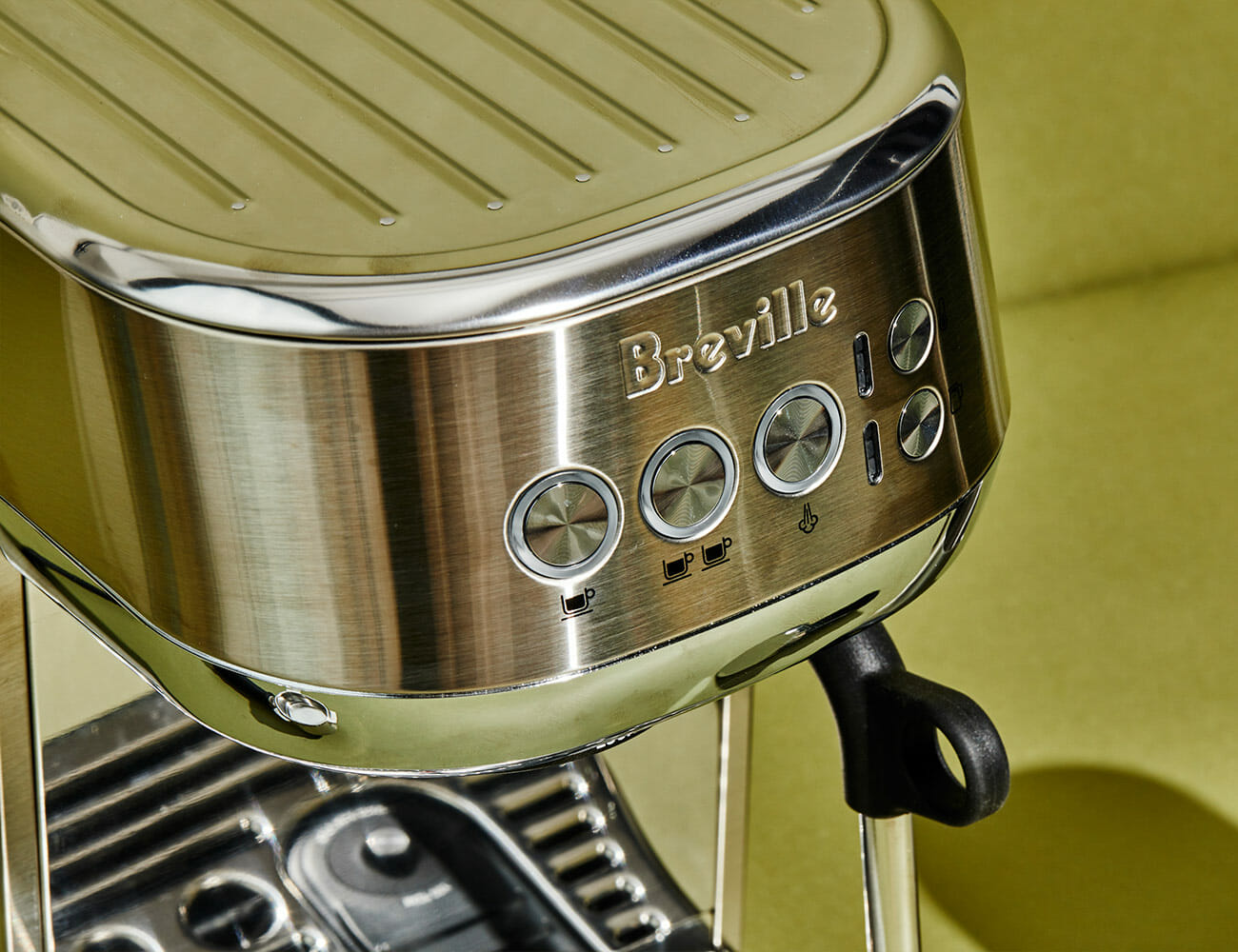
Five buttons control the whole process and two of them serve the sole purpose of pulling one shot or two shots (denoted by drawings of one cup and two cups). The others start the steam wand, control milk temperature and decide what level of foaminess you want from your milk. Missing is a power button, a slightly annoying issue solved by pressing the single shot and steam buttons simultaneously.

Measuring roughly 12 by 8 inches, the small footprint is really excellent (it takes up less space than my drip coffee maker). The only potential drawback here is added messiness — when you lower the milk wand down after use, it begins purging (spraying hot steam and water) into the drip tray below. This has a tendency to spray a bit wider than the drip tray and require a quick wipe down. It’s not back-breaking, but it’s also not ideal to wipe the surrounding counter down after every use (the brushed stainless steel of the machine does wipe very cleanly).

As noted above, espresso requires a level of precision that drip coffee does not. A shot pulled with too much, too little or stale coffee will taste off. Coffee shops and espresso people fix this using burr grinders so they can grind fresh for every drink and scales to measure how much coffee to pull (roughly 15 grams is typical).

This machine, unlike the Barista Express ($600), does not have a dosing or grinding mechanism built-in. You could argue, then, that the space saved by making a slim espresso machine is lost again by planting a grinder next to it (unless you were to keep your grinder hidden in a cabinet). This also dampens the initial excitement of a high-flying $500 espresso machine — that price is before buying a decent grinder and scale. There is an argument to be had by slightly more serious espresso-heads that the lack of integrated grinding tool means you can experiment a bit more with grind size on your own machine, which is a fair point.

The Bambino’s most unsurprising feature is its ability to pull a great and consistent shot. Breville has proven themselves capable of making machines that do the hard work of temperature and pressure control for us, and this machine doesn’t step away from that. The 3-second heat time is pretty amazing, too.

Verdict: In a vacuum, the Bambino is great. But compared to other models in the Breville espresso catalog, it’s a bit niche. It’s more affordable than most of its other options, but not when you consider the need to augment your purchase with other coffee gear. It is smaller than Breville’s other options and it’s the fastest shot of the bunch, but unless you’re already loaded down with scales and grinders, you’re better off reaching for the Barista Touch.

Key Specs
Dimensions: 11.8” x 7.7” x 12.6”
Warranty: 2-year Limited
Steam Wand: Adjustable foam and temperature level
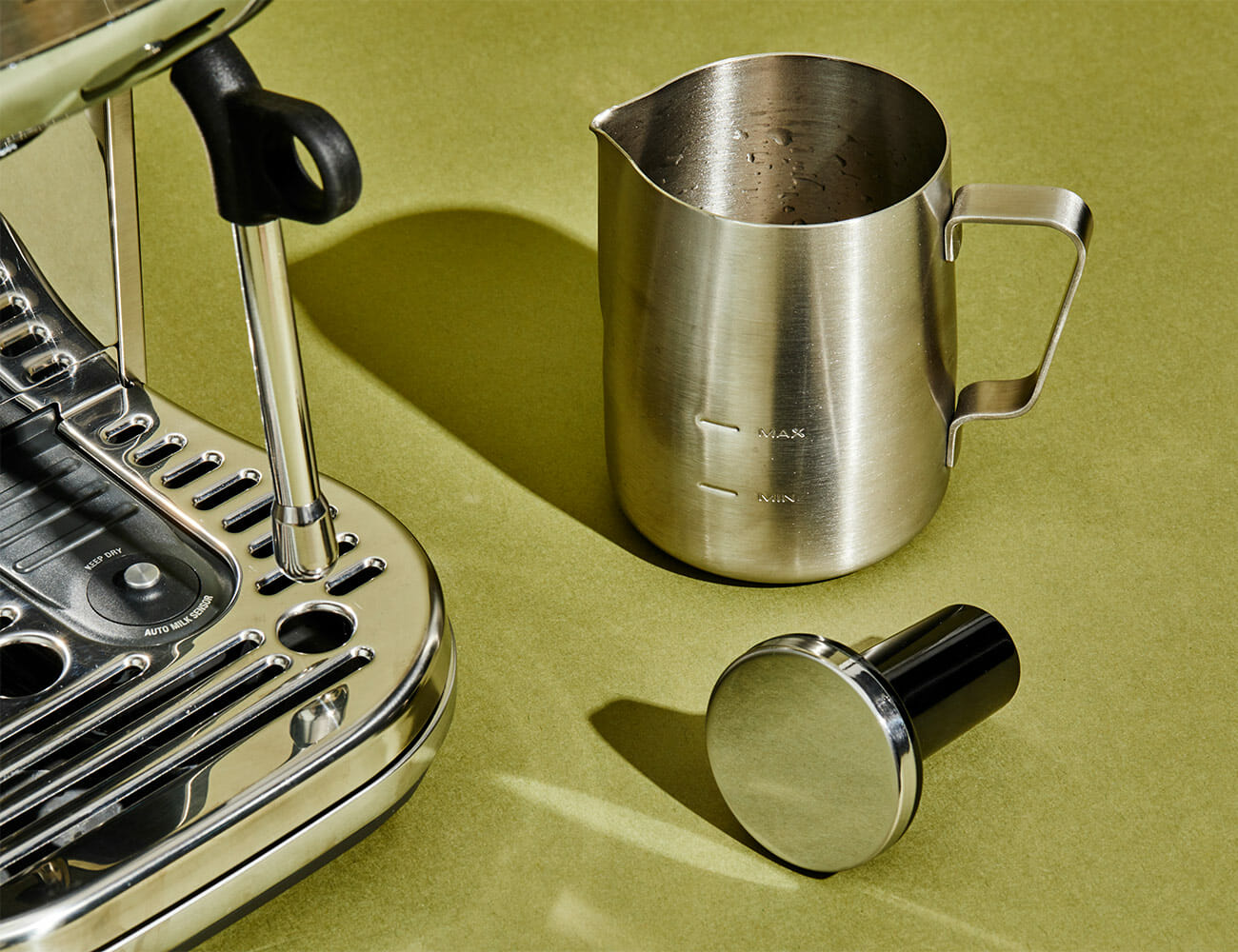
Comes With: Milk jug, tamper, razor trimming tool, filter baskets, portafilter

Breville provided this product for review.

Read More Gear Patrol Reviews

Hot takes and in-depth reviews on noteworthy, relevant and interesting products. Read the Story
Note: Purchasing products through our links may earn us a portion of the sale, which supports our editorial team’s mission. Learn more here.
Audi E-Tron Review: Simply Put, This Is a Great Car

Audi’s first dedicated electric vehicle, the E-Tron, will arrive in the U.S. this summer. It comes amid a flurry of premium competitors to Tesla, but brings innovative twists that make it a standout. The question is whether car buyers – Tesla’s success notwithstanding – are truly ready to go all-in on EVs. Of course, this depends on their enthusiasm for driving such vehicles and their access to convenient charging, but also the vehicle itself. Is a vehicle compelling enough on its own merits to make it attractive regardless of its powertrain? The E-Tron, a five-seat SUV, brings solid performance and handling and an innovative all-wheel-drive mode that makes it one of the most capable EVs to hit the streets. That and an assortment of key details nudges it across the line from a great EV to simply a great car.

The Good: Most notably, the E-Tron has a uniquely terrific all-wheel-drive system that capitalizes on the advantages of an electric powertrain. Power can be modulated to an extraordinary degree of precision at incredibly high speed, but it also allows for some fun. The E-Tron is the only electric vehicle that allows drivers to fully disable its stability control system. With its torque fully unleashed, it’ll drift like a champ. Critically, though, it’s a functional and usable SUV, whether you want it for hauling family or gear, commuting or road-tripping. It’s not a crossover of the sort that places breezy design over true functionality, or a hulking mass of a full-size SUV. For many, this is the real sweet spot.

Who It’s For: First of all, you have to be bought into the idea of an electric car. You have to be prepared to think out your long trips a bit to ensure there are charging options along the way, and you’ll have to have a plan for daily charging. That could be a home-charger installation or easy access to nearby public charging. If you’re squeamish about such things, this car isn’t for you. If you are into that and you’d want an SUV that’s far lighter on its feet than any other in its category, you’ll love the E-Tron. It’s smooth, quiet and quick, not to mention loads of fun to drive on a daily basis.

Watch Out For: If you live outside the United States, think twice before opting for the virtual side mirrors available there. These use cameras and small door-mounted OLED screens to replace the external mirrors. The idea is great in concept but will need another generation to be fully intuitive, as well as bright and high-resolution enough to actually be better than conventional mirrors. U.S. customers don’t have that option, which is good. Otherwise, drivers mostly need to be sure the car’s range capabilities – not yet confirmed but expected to be between 200 and 220 miles per full charge – matches their daily driving needs.

Alternatives: There are only two other vehicles currently on the road that really match the E-Tron: Tesla’s Model X and the Jaguar I-Pace, both fully electric. The former is pricier but has better range and the mystique of the Tesla brand – or the obnoxiousness of it, depending on your perspective – and, of course, those crazy gullwing doors. The latter is a bit smaller, but has more robust off-road capabilities, including the ability to scramble easily up steep slopes and over rough terrain, and it also soaks up turns at high speeds better. A third contender, the Mercedes EQ C, won’t be out until early next year.

Review: As much as everyone slags legacy carmakers – that is, the stuffy old guys like Ford, Mercedes, GM, and today’s hero, Audi – for being slow to respond to Tesla’s electric cars, ultimately the first-mover advantage won’t mean squat. In the end, what will truly matter is quality: how well the cars are built, and whether or not they live up to, or exceed, each carmaker’s standards. You can’t just gin up an electric car from scratch because someone else did. It takes time; it takes patience.

I mulled that while racing like my hair was on fire down a sandy road in the desert outside Abu Dhabi, trying to catch a sunset for photography. After all, a bit of patience is fine in the long run, and it will clearly serve well those entering the EV market as either makers or consumers. But don’t feed the bulldog when you’re trying to catch the day’s last rays three hours before your flight home. In my case, screw patience – I need speed.

The E-Tron delivered, wriggling a bit at every stretch of loose sand but keeping reliably on course against my madman-like stabbing of throttle and brake as I hustled toward my destination. Its suspension swallowed up the divots and the undulations of desert driving, and the Quattro all-wheel-drive system so expertly managed the wildly varied terrain that I couldn’t even sense its presence. (That’s how you want it.) It just drove through the unpredictable path like it was no big deal.

I reached a suitable spot right before the sun dipped behind the dunes and dove into a cutout by the side of the road, not really considering the possibility that I’d become trapped there. Which, of course, I did. When I got back to the car, I realized it was in completely loose sand on a slight but ultimately insurmountable incline. I tried steady throttle with no luck, then tried rocking it back and forth with similar lack of success. Fortunately, backup was nearby – Aud had other SUVs positioned along the route with tow straps. All I would have to do was wait it out.

But an idea suddenly popped into my mildly humiliated noggin. I looked over my shoulder at the terrain behind me, popped the E-Tron in reverse, and floored the throttle. Instant torque available from the twin electric motors, totaling 402 horsepower and 490 lb-ft of torque, coupled with the benefit of a few milliseconds of a slightly downhill head start, allowed me to build momentum in a flash. I arced the wheel into the approximate path I’d entered the sand in and aimed for the roadway, keeping the throttle balanced as the all-wheel-drive system worked to sort out the craziness. It did, and I bounced backward up onto the asphalt like Wrong Way Corrigan showing up in Ireland in 1938 after leaving New York for Los Angeles. I smiled smugly, having pulled victory from the jaws of defeat.

That’s an edge-case for EV performance, of course, and the rest of my drive through the UAE revealed the gross average: The E-Tron is a silky-smooth and almost disconcertingly quiet family hauler, always ready for a quick bit of acceleration and eager to help you maximize your driving efficiency as you instinctively stretch out the battery. Or ignore that instinct, as I did, and just thunder down the road as fast as you please. I had a hard time detecting any range penalties based on driving style, and that’s to the car’s credit, as well as its engineering. The team in Ingolstadt worked extra hard to ensure that the fully integrated system expertly controls power expenditure and recapture – via regenerative braking – so that the driver doesn’t really have to think about it.

One of the potential disappointments to some EV nuts in this respect would be the E-Tron’s lack of single-pedal driving. Many EVs are capable of producing a pronounced resistance from the motors when you let off the gas, allowing the system to recoup energy more aggressively while also slowing the car down. The E-Tron bakes regenerative efficiency into the entire drive process, activating it in those millisecond moments of coasting even between braking and accelerating. You can still detect it when you let off the gas – and it can be tuned to be more aggressive just not so much that you’ll be able to lay completely off the brake except when more urgent stopping is called for.

All this – the trick AWD, the deep-tissue regen – takes us to the brave, slightly weird new world EV driving. Everything is managed down to the millisecond by computers, in ways we can’t even really see, but which the car delivers on its own, as it needs. I saw this also on the turns, where some of the limits came to the fore. On the approach to the peak of Jabal Hafeet, a mountain along the eastern border of the UAE, there turned out to be quite a bit more body roll than I’d bargained for. But still it was less than a comparable SUV would possess, given the E-Tron’s low center of gravity. (Due, of course, to the heavy battery pack in the floor.) But it was still there and while it made for slightly uncomfortable apexes, the exits were always thrilling thanks to the brisk torque response.

On the flat stretches, the car is smooth, comfortable and responsive. It’s also built to Audi’s customary standards of quality, with none of the loose parts and kludged fixes you hear about with Teslas these days. That’s one of the advantages of a stuffy old legacy carmaker playing catchup to the upstart. They do tend to do it very well.

Verdict: Of all the qualities of luxury, the most essential in a moving vehicle aren’t necessarily speed, cushy leather or even generous space. Instead, it’s the calming and cosseting impact of quietness and smoothness. Electric vehicles come to both pretty naturally, but they also risk exposing creaks and vibrations that were previously masked by raucous engine noise. Audi managed to use electric propulsion as a starting point for luxury, not a free pass. It tightened up the chassis, the road noise and the construction to ensure that this would be a serene driving experience, and they succeeded. The fact that it’s also a practical and usable car, as well as fun and quick, is simply gravy.

What Others Are Saying:

• “Sure, it delivers the modern styling and bleeding-edge infotainment Audi is known for, but this is as close as an electric vehicle comes to the traditional luxury-car experience. For buyers who continue to be skeptical of battery-electric technology, the e-tron has the best chance of being the oil that greases the transition from gas vehicles to EVs.” — Eric Tingwall, Car and Driver

• “We’ll need more time in the saddle to know for sure, but the combination of practicality and comfort with capability make E-Tron a compelling option for those looking to enter this new era of premium electric cars. Sure, it may not be a ringer when it comes to outright performance when compared to the Tesla, but for anyone cross-shopping there, those four rings on the E-Tron’s nose might just be the biggest selling point of all.” — Tim Stevens, RoadShow

• “The e-tron is a well-rounded luxury SUV that barely shows off its electric nature. Audi knew exactly what the objective was, and so the e-tron is adequately quick, but also sensible, practical and tech-heavy enough to reach a wide audience. Unlike the BMW i3 or the Jaguar i-Pace, this EV wasn’t designed to make a bold statement, and with its smooth power delivery, mainstream design and ultra quiet cabin, it doesn’t need to.” — Máté Petrány, Road & Track

Audi E-Tron Key Specs
Price: Premium Plus, $75,795; Prestige, $82,795
Powertrain: Dual AC induction motors; 95 kWh lithium-ion battery; single-speed direct-drive transmission
Horsepower: 402 (combined)
Torque: 490 lb-ft (combined)
Weight: 5500 lbs (est.)
0-60: 5.7 seconds
Top speed: 124 mph
Range: 200-220 miles (est.)

Audi hosted us and provided this product for review.

Read More Gear Patrol Reviews

Hot takes and in-depth reviews on noteworthy, relevant and interesting products. Read the Story
Note: Purchasing products through our links may earn us a portion of the sale, which supports our editorial team’s mission. Learn more here.
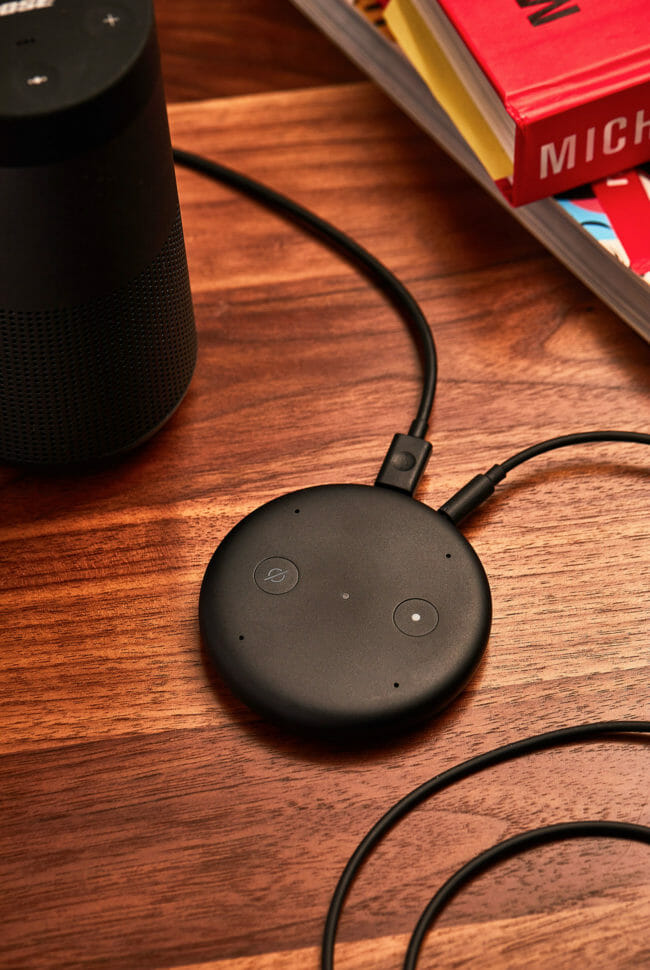
Review: These Are Worthy AirPod Alternatives for Half the Price

Anker has released several true wireless earbuds in the last year and, generally, they’re all good and affordable options. We named the Zolo Liberty ($99) as the “best budget” option in our roundup of best true wireless earbuds. The company has also released cheaper and premium models of those same earbuds, the Zolo Liberty Lite ($60) and Zolo Liberty+ ($150), respectively, which differ in things like battery life and smart assistant integration. More recently, however, Anker came out with a different style of true wireless earbuds — Soundcore Liberty Air ($80) — that don’t look like any of its previous models. Instead, they have an uncanny resemblance to Apple’s AirPods. Just for half the price. So, how do they stack up?

|

The Good: The Liberty Air are the best AirPod alternatives that actually look like AirPods. And despite being half the price, they still feel premium. The charging case feels very similar to the one that comes with AirPods, but has the added feature of LED lights, which show battery life. The swappable silicone tips allow for more flexibility in terms of fit, which AirPods don’t have. Battery life is good. And they’re available in black or white.

Who It’s For: Anybody that wants true wireless earbuds and doesn’t want to spend more than $100. Whether you have an iPhone or Android, the Liberty Air earbuds will work for you.

Watch Out For: They charge with micro-USB, so you can’t charge with the same cable as your iPhone. No W1 chip means pairing isn’t as automatic. The sound quality isn’t quite at the same level as AirPods. Touch controls can be a bit wonky.

Alternatives: If you’re just looking for true wireless earbuds, there are many alternatives. But if you want something affordable, I’d suggest Anker’s other options: the Zolo Liberty ($99) or the Zolo Liberty Lite ($60).

Review: The market for true wireless earbuds is more saturated than ever. Every single audio company seems to be making its own version, from Klipsch to Bang & Olufson, Jabra to Sennheiser, and they’re all so different. The most popular true wireless earbuds is undoubtedly Apple’s AirPods, having been released before most others and offering unique compatibility, thanks to Apple’s W1 chip, with iPhones. But at $159, they’re relatively expensive, so there are a lot imitators out there too; you can find copious knockoff AirPods on Amazon right now, which are wicked cheap and, in my opinion, pretty terrible.

Anker’s latest true wireless earbuds, the Liberty Air, are definitely geared for people who want AirPods, but just don’t want to pay a premium. Unlike the cheap ones you’ll find on Amazon, these are actually AirPod alternatives you can count on. They’re built solid. They have a good battery life. And the charging case is actually really nice. (I wish the AirPods’ charging case had LED lights to show battery life, like this one has.) And lastly, after testing numerous pairs of Anker’s affordable true wireless earbuds, I feel confident saying that you can trust them. They make solid headphones, including noise-canceling over-ear headphones, especially considering the prices.

That said, the Liberty Air are not AirPods and they lack many of the cool perks associated with them. Your iPhone won’t automatically detect them, for one, so you’ll have to go the conventionally Bluetooth pairing route. And there’s no optical sensors to detect when the earbuds are in or out of your ears; the audio will keep playing if you remove one or both Liberty Air earbuds from your ears, and will only stop when place them back in the charging case.

There’s also the issue of these are not AirPods and anybody familiar with AirPods will be able to tell. As somebody working in tech and living in New York City, and who sees people wearing AirPods everybody, I know that, for better of worse, AirPods hold a bit of status. They’re cool. And if you have true wireless earbuds that aren’t AirPods… well, that’s a thing.

The fact that these aren’t AirPods does have some advantages, however. The Liberty Air earbuds come with a number of swappable silicone tips so you can adjust the fit. AirPods don’t have that. This also made me feel more confident about working out or running with the Liberty Air. (My sweat has killed too many pairs of Apple’s EarPods to recommend running with AirPods.) And they’re available in both black or white models; Apple only offers its AirPods in white.

Verdict: Anker’s Soundcore Liberty Air are worthy AirPod alternatives for those that don’t want to pay the AirPods’ premium. Sure, there are some trade-offs, such as micro-USB and sound quality, but overall these are solid true wireless earbuds that work well and also have the look and fit of Apple’s AirPods.

What Others Are Saying:

• “So should you get the Anker Soundcore Liberty Air? If you don’t already have a pair of true wireless earbuds, these are hard to beat. Sure, they’re not perfect. They do stumble on a few important features like volume control and adequate playback controls, not to mention the design of the actual earbuds is atrocious, but they sound great, have exceptional battery life, and a borderline perfect charging case. There are better sounding true wireless ‘buds, and one pair with a better battery life, but these hold their own all for less than $100.” — Adam Molina, SoundsGuys

• “At $79.99, the Soundcore Liberty Air are among the more affordable true wireless earphones that don’t break the bank. Coupled with good sound quality and battery life, Anker has a winner here. If you are looking for true wireless earphones and are not a fan of Apple AirPods, I would strongly recommend Soundcore Liberty Air.” — Damien, Make Tech Easier

Key Specs

Connectivity: Bluetooth 4.2
Charge: micro-USB
Battery: 5 hours per charge, 20 total with case
Features: tap controls, access to virtual assistant
Colors: black or white

|

Anker provided this product for review.

Read More Gear Patrol Reviews

Hot takes and in-depth reviews on noteworthy, relevant and interesting products. Read the Story
Note: Purchasing products through our links may earn us a portion of the sale, which supports our editorial team’s mission. Learn more here.

How to Breath New Life Into Your Old Audio Equipment

The Echo Input ($20) is the cheapest way to turn any speaker, so long as it has Bluetooth or an aux connection, into an Alexa-enabled smart speaker. It allows the speaker to function exactly the same as Echo — it can play music, set alarms and timers, answer questions, control your smart home — and you can control it with your voice. When you boil it down, the Echo Input is the same as Echo Dot ($30), just without the speaker. The idea is that with this little gadget, you can get more out of the speakers you already own.

The Good: The Echo Input is cheap. And setting it up is easy; the Alexa app walks you right through the whole thing. It works with any Bluetooth speaker or speaker with an aux port, meaning you can connect to nice powered speakers, like a Devialet Phantom or KEF LSX, or the cheap UE Boom or Bose speaker that you bought years ago. You can hook it up to amplifiers and receivers, too, and therefore control larger systems. After its setup, the connected speaker can be then integrated into a multi-room system with other Alexa-enabled speakers. There’s a mute button so, just like with an Echo and Echo Dot, you can stop Alexa from listening whenever you like.

Who It’s For: Anybody who has existing speakers and wants to interact with them like an Amazon Echo, or integrate them in a larger multi-room setup.

Watch Out For: The Echo Input is a versatile little gadget but it’s ultimately dependent on the source it’s connected to; if the speaker or receiver is turned off or in a power-saving mode, the Echo Input won’t work until the source is turned on or woken up again. The Echo Input isn’t designed for hi-fi streaming, so even though it’ll work with hi-fi systems, the audio quality won’t be the best. (Amazon will be releasing the Echo Link ($200) for hi-fi streaming, but exactly when is still up in the air.) The Echo Input is a powered device, so it’s going to take up an extra wall outlet. Also, dealing with the Alexa app and enabling smart skills can prove a tedious task.

Alternatives: Amazon’s Echo Dot can much do the same thing as the Echo Input, but it’s a little more expensive because it also works as its own speaker. A Chromecast Audio is a good alternative for those in Google’s ecosystem, although that streaming puck lacks a voice assistant.

Review: The Echo Input isn’t a complicated device. Quite the opposite. It adds Alexa voice controls to powered speakers and amps (and thus, larger sound systems) and that’s it. As long as the speaker or amp has a Bluetooth or aux connection, the Echo Input will work with it. For example, during most of my testing, I had Echo Input paired with the Bose Revolve speaker. I could pair it via Bluetooth or with an aux cable because the speaker has both.

The advantage of connecting via Bluetooth is that you’re able to hide the Echo Input a little bit, or at least position it away from the Bose speaker, after all it’s not that good looking of a device. And it takes up counter space. Technically, you could hide the Echo Input in a cabinet or behind of bookshelf; as long as the Bluetooth connection stays true, you’re good to go. The analog connection is probably just a little bit more dependable.

The Echo Input can connect with other powered speakers and amps. I was able to successfully to pair it with the KEF LSX and the Devialet Phantom Reactor speakers I was testing, which are essentially the most badass Bluetooth speakers you’re likely to find; and I was able to connect to my AV receiver and thus my passive bookshelf speakers. And the Echo Input — and Alexa — worked in exactly the same way.

Again, the Echo Input isn’t a complicated device, but there are things to watch out for. First, the Echo Input can only fully control the speaker’s volume if the speaker’s volume maxed out; if the volume of the speaker is only turned halfway up, that’s the max it’ll go when you ask Alexa to “turn the volume up to 10.” To make sure the speaker gets as loud as possible, you need to physically press the volume button so it’s all the way up.

Then there’s the issue of power. The Echo Input can be paired with any Bluetooth speaker, portable or otherwise, but if the speaker if off or dead — the Echo Input won’t be able to play music or speaker (it’ll still be able to control smart devices, though). The same is true is the speaker goes into a power saving or idle mode.

Verdict: The Echo Input puts Alexa voice skills and streaming capabilities into any Bluetooth speaker or speaker with an aux connection. In other words, it turns it into a better-sounding Amazon Echo. It’s cheap and easy to set up, and it works with stereo systems, too. If you want to breath new life into an old speaker, this will do just that.

What Others Are Saying:

• “Throughout my house, I have Amazon Echo Dots connected to stereo systems. In my office, I have a Dot connected to an Onkyo receiver and amp. In my basement, I have one hooked up to a small bookshelf system. Outside on the deck, a Dot serves audio to a small amp that powers outside speakers. There’s more, but the point is made. The Dot is a great device to add voice services to existing speakers. But with its built-in speaker, I’m paying for features I’m not using. That’s why Amazon made the Echo Input.” — Matt Burns, TechCrunch

• “Amazon’s Echo and Echo Dot and every other smart speaker with Alexa built in are great for those who want an all-in-one audio-entertainment device. But what if you already have a stereo system that sounds far better? The Chromecast Audio fills a similar niche for music, but that device lacks a built-in voice assistant. The Echo Input is a device that I and, I suspect, plenty others have been waiting for.” — Mike Prospero, Tom’s Guide

Key Specs
Connectivity: 3.5 mm audio cable or Bluetooth
Weight: 2.75 ounces
In box: 5-watt power adapter, micro-USB cable, 1-meter aux cable

Amazon and Bose provided these products for review.

Read More Gear Patrol Reviews

Hot takes and in-depth reviews on noteworthy, relevant and interesting products. Read the Story
Note: Purchasing products through our links may earn us a portion of the sale, which supports our editorial team’s mission. Learn more here.

This Crazy-Looking Wireless Speaker Sounds Like Nothing Else

Devialet, the high-end French audio company, recently released its newest wireless speaker, the Phantom Reactor. If you know anything about the company, or you’ve read my past reviews, you’ll know that it makes great-sounding speakers that all share the same strange design — they almost look almost alien — and this newest incarnation is much the same. It looks and works exactly as the company’s other Phantom speakers, but the Phantom Reactor is smaller, much smaller. In fact, the Phantom Reactor is about one-third the size.

The idea is that most people don’t want a huge and powerful speaker in their home, nor do they want to pay for one. (For context, before the Phantom Reactor, the cheapest of Devialet’s speakers was the Phantom Elevate, which still costs $1,690.) So with the Phantom Reactor, Devialet is making its speakers more accessible than ever before, even if $999 for a wireless speaker still isn’t super cheap.

Aside from size and power, the Phantom Reactor shares most everything in common with its larger Phantom brethren. Its most notable (and mesmerizing) feature is its two opposing woofers that pulsate against one another, without ever touching, to deliver deep, excellent bass. The speaker supports Bluetooth, Airplay and Spotify Connect, and through the Devialet app, you can sync it with other Devialet speakers in a multiroom system. (You can configure two speakers in a stereo pair, too.) The difference between it and the larger Phantoms is that instead of the front-facing midrange driver and tweeter, the Phantom Reactor only has one full-range driver; it’s not able to achieve quite the same levels of separate or overall sound quality, which you’d expect in a smaller cheaper speaker.

Lastly, Devialet didn’t just release one Phantom Reactor speaker, it released two. There’s the Phantom Reactor 600 and the Phantom Reactor 900. Both are the same, save for power and price. The Phantom Reactor 600 has a peak power of up to 600 watts, and the Phantom Reactor 900 has a peak power of 900 watts. Essentially, you’re going to with whichever you can afford.

|

The Good: The Phantom Reactor has the same striking appearance and workings as Devialet’s other Phantom speakers, just in a smaller package. And it’s embedded with the same 24bit/192kHz hi-res DAC, so you can stream high-resolution tracks. There are numerous connectivity options, including AirPlay. (AirPlay 2 support is supposedly coming in the future.) Honestly, it’s just a damn-cool wireless speaker that sounds impressive, especially considering its size.

Who It’s For: Anybody who has wanted a Devialet Phantom speaker but has either 1) been unable to afford one or 2) skeptical because it was too large for their room. This thing is the perfect size for smaller rooms and apartments.

Watch Out For: There’s no getting around it: despite being the smallest and most affordable speaker that Devialet makes, the Phantom Reactor is still an expensive speaker. And if you’re not really into audio or into this speakers design, it’s probably not for you. Also, because it one full-range driver, instead of a separate tweeter and midrange, it doesn’t quite replicate the same audio levels as the larger Phantom speakers. The separation isn’t as clear and the sound stage of the music isn’t as grandiose.

Alternatives: Beside another Devialet speaker, there’s really no alternative. The fact is that Devialet speakers are simply unique. Sure, you can get other high-resolution speakers, like the Naim Mu-So Qb, or the KEF LSX speaker system (if you like true stereo), but I think Devialet’s speakers are just as much about sound as they are about watching they work. you want to see, hear and feel the woofers pulsate, and there’s nothing else like them.

Review: The photos don’t do the Phantom Reactor justice. Or, at least, they don’t do its size justice — it’s small. The speaker was stationed on my desk for the better part of three weeks and it didn’t look obtrusive or out of place. It’s probably a little bigger than a Sonos One or a UE Megaboom speaker — when it comes to the space it takes up (this speaker is dense) — and it doesn’t feel like an obnoxious piece of tech, which the larger Phantom speakers can.

And for the most part, the Phantom Reactor is still a fascinating piece of engineering. I tested the Phantom Reactor 900 — so I can’t tell you how it sounds compared to the cheaper, Phantom Reactor 600 — and even though it’s smaller than the larger Phantom speakers, it still has a similar effect; it causes people to stop and say, “Woah, what is that?,” and I love that about it. And if it’s playing a bass-heavy track and the woofers are really going, the speaker is still a show stopper.

The speaker sounds great, don’t get me wrong, but after testing the larger Devialet speakers as well as other pricey, high-end speakers, like the KEF LSX, the Phantom Reactor doesn’t quite feel on that level. There are times when I was listening to tracks with strong instrumentals and vocals, such as “Lyin Eyes” by The Eagles or “Behind Blue Eyes” by The Who , and the separation wasn’t as clear as those other speakers. And the sound stage wasn’t as expansive, grandiose. That said, in such a compact speaker, you probably have to expect some compromises.

Where the Phantom Reactor doesn’t lack, is bass. This thing pumps. And honestly, when I was listening to bass heavy tracks or pump up songs, like “Feel It Still” by Portagul. The Man or “Boom” by P.O.D, that’s where I had the most fun listening to the speaker. It both captivates and energies the room, which is exactly what I think this speaker is going for.

Verdict: The Phantom Reactor brings the flair and engineering marvel of its larger Phantom speakers and puts it into a smaller and more affordable speaker. It’s still pretty expensive, mind you, and the design won’t be for everybody, but overall it’s a fantastic compact hi-fi speaker that’s truly unlike anything else.

What Others Are Saying:

• “The Devialet Phantom Reactor has an awful lot going for it. In broad terms it sounds impressive, it looks a sight more impressive and dramatic when it’s working than anyone else’s wireless speaker, and it’s impressively well made. But it doesn’t have the all-court sonic game a speaker of this cost really should have, and that makes it easier to admire than to love.” — Simon Lucas, Stuff

Key Specs

Power: 600 or 900 watts (peak)
Total Harmonic Distortion: 0.0005%
Frequency Range: 18Hz to 21kHz
Sound Pressure Level: 95 or 98 dB SPL
Connectivity: Bluetooth, Apple Airplay, Wi-Fi, Spotify Connect
Weight: roughly 10 pounds

|

Devialet provided this product for review.

Read More Gear Patrol Reviews

Hot takes and in-depth reviews on noteworthy, relevant and interesting products. Read the Story
Note: Purchasing products through our links may earn us a portion of the sale, which supports our editorial team’s mission. Learn more here.
2019 Mercedes-Benz A-Class Review: $32,500 Buys Way More Than it Should

The Mercedes A-Class has been thriving in Europe since 1997 as a small, rather upright and plain-looking hatchback. The fourth generation of the car finally comes to the United States early next year, with a considerably improved sedan profile that will fit in nicely with the rest of the lineup. Like the entry-level CLA coupe and GLA crossover before it, the A-Class is meant to entice new buyers to the brand, lowering the barrier to entry without compromising a sense of mystique that the Mercedes badge brings to the driveway.

The Good: The A-Class has typically Mercedes-like tight construction and build quality. It’s also got terrifically low road and wind noise, thanks to its stellar coefficient of drag, and fully competent handling. The new infotainment system is the best on the market right now, folding in augmented reality and artificial intelligence for the first time in a car in a truly meaningful way.

Who It’s For: Mercedes makes no bones about the fact that the A-Class is meant to be a new gateway to the brand for young professionals, hopefully luring as many away as possible from similar entry-level luxury models on the market. Its brand strategy aside, I think the car’s for anyone who would simply want a well-equipped, attractive small car no matter what their demo happens to be.

Watch Out For: It won’t take much effort to turn the $32,500 base price – $34,500 base price for all-wheel-drive models – into a nearly $50,000 car, once you start ticking off the boxes. That’s to be expected, though, and ultimately it’s probably still worth it to most buyers. Also, despite being highly intuitive, systems like MBUX still require a bit of configuration and a few days grasping their logic and their own preferences for how they like to be used. There’s a lot going on in this car, even beyond MBUX, so there’ll be a learning curve.

Alternatives: Prediction: Entry-level luxury will be the new premium battleground. Given that Mercedes rolled out the new MBUX entertainment system in their most affordable product, that could prompt other companies to start introducing top-shelf tech farther down the lineup to draw in younger buyers. The A-Class’s closest competitors:

• Audi A3 (starting at $31,950)
• BMW 3 Series (starting at $34,900)

Review: My first instinct while driving the A-Class around Seattle and Mt. Rainier was to compare it to the new Volkswagen Jetta. They’re essentially the same idea, approached with a similar aesthetic: a small, modern sedan infused with solid German engineering, though one leans economy and one premium. This pattern exists in every vehicle on the road, of course, since every model has counterparts as competitors both up and down the spectrum. But I settled on the Jetta because it’s also new, I had recently driven it and I deemed it an exceptionally good redesign. The heart of my question was whether, if I closed my eyes while driving the A-Class (a move I don’t really recommend) would I actually be able to tell the difference?

Since the answer isn’t remotely surprising, I’ll skip the drama: Yes, you’ll be able to tell the difference. Sometimes premium alternatives are just window-dressing: nice leather, design tweaks and, say, navigation. But that gap is closing as more economy cars increasingly have more premium features, a trend that parallels the trend, noted earlier, of entry-level premium cars getting those goodies some time ahead of the big mac-daddy flagship vehicles. (In this case, the MBUX infotainment system rolling out in the A-Class rather than a GLS-Class SUV or S-Class sedan.) But other times the jump from a $25,000 Jetta (options maxed out) to a base, $30,000-ish A-Class is much more. That’s the case with the A-Class. It’s not the equivalent of a nicely appointed economy car being positioned as a Mercedes when everyone knows it ain’t. The A-Class commends itself to the title of a true MB.

The reasons (i.e. the things you notice behind the wheel) have to do with deep-tissue engineering and the bumper-to-bumper design of the vehicle. It’s far quieter than an equivalent economy car, thanks to its advanced sound-deadening strategies and its exceptionally good aerodynamics. (The European-spec model set a new record for coefficient of drag, at 0.22. The U.S. version is just a bit above that.) It also handles better because of its advanced suspension tuning and the stiffness and rigidity that Mercedes has so much experience with. At the pedals, you feel the dual-clutch transmission smoothly managing the 188 hp and 221 lb-ft of torque, to the Jetta’s 147 hp and 184 lb-ft, delivered through a conventional automatic. So it’s far more motivated in the performance department.

But the A-Class uses those qualities as mere starting points, continuing on to bury higher-end economy underlings and its direct competitors in the luxury market. This comes down to a few additional elements, beginning with MBUX. The new infotainment system, a ground-up user interface design deployed in a system powerful enough to handle its dynamic graphics with ease, deploys artificial intelligence to grasp your natural-language queries and commands and augmented reality to spice up the navigation experience. It also goes a few extra steps to allow users to make fairly complex queries, such as asking for restaurants in certain categories but with bonus criteria (“not downtown,” for instance, or “more affordable”). It’s in direct competition with Siri and Alexa in this respect, but it doesn’t risk overlapping utility and there’s no “ecosystem investment” that you’re betraying by asking your car for recommendations instead of your usual go-tos. Plus, of course, you have immediate integration into the car’s navigation. It’s all nicely packaged up, modern and engaging. It’s fun to use. Throw in the optional semi-self-driving capabilities that have trickled down to its level, and you also have a car that’s relaxing and unstressful to drive when you need it to be.

But it’s also fun to drive when you want it to be, in a way that larger and heavier cars tend not to be. It’s tossable, without feeling unsteady. Finally, it’s fun to be in even sitting at stoplights, thanks to its sharp design both inside and out. It’s always baffled me that more expensive cars tend to be better designed, since there’s plenty of talent to go around and only so many car companies, but it’s true, and entirely visible in the A-Class. It looks right and as a result, feels right. It hasn’t lost the playful energy of the perpetual kid brother, which it will shoulder throughout its life, but it’s absolutely a grown-up’s car in every dimension.

Verdict: With the stellar MBUX system and marching orders to expand the brand’s base, the A-Class offers, in the end, a terrific value: industry-leading tech packaged up with all the creamy goodness that is the Mercedes experience. This isn’t a bargain-basement product; it’s a proud addition to a strong lineup.

What Others Are Saying:

• “The A-Class is in many ways a more compelling option than the larger C-Class. It’s arguably more attractive, just as nice to drive and offers a more robust in-car tech experience with cabin appointments that are still properly befitting of a Mercedes-Benz. It’s what the CLA-Class should have been all along. It won’t carry that sub-$30,000 price point, but make no mistake, you’ll get what you pay for.” — Steven Ewing, Roadshow

• “This is the best-riding small Mercedes yet, even on the larger 19-inch wheels and tires. The wheel control and damping is excellent, and the car shrugs off expansion joints and misaligned slabs on the highway with a composure the current CLA could never muster; the structure feels a good deal more rigid than that of the CLA, too. Our cars had upgraded cross-drilled brake rotors, and, well, they stopped fine.” — Erik Johnson, Autoweek

• “If you’re in the younger age bracket and the prospect of owning a car as luxurious and feature-rich as a Mercedes-Benz seems impossible, that prospect might now be able to become a reality. While the A-Class is the company’s most affordable model, that doesn’t mean it feels cheap in any way. Rather, it feels like the premium product that it is.” — Chris Chin, Digital Trends

2019 Mercedes A 220 4MATIC Sedan Key Specs

Engine: turbocharged 2.0-liter inline-four
Transmission: seven-speed dual-clutch
Horsepower: 188
Torque: 221 lb-ft
Top Speed: 130 mph
Base MSRP: $34,500 ($32,500 for front-wheel-drive)

This review has been updated with pricing information

Read More Gear Patrol Reviews

Hot takes and in-depth reviews on noteworthy, relevant and interesting products. Read the Story

Note: Purchasing products through our links may earn us a portion of the sale, which supports our editorial team’s mission. Learn more here.
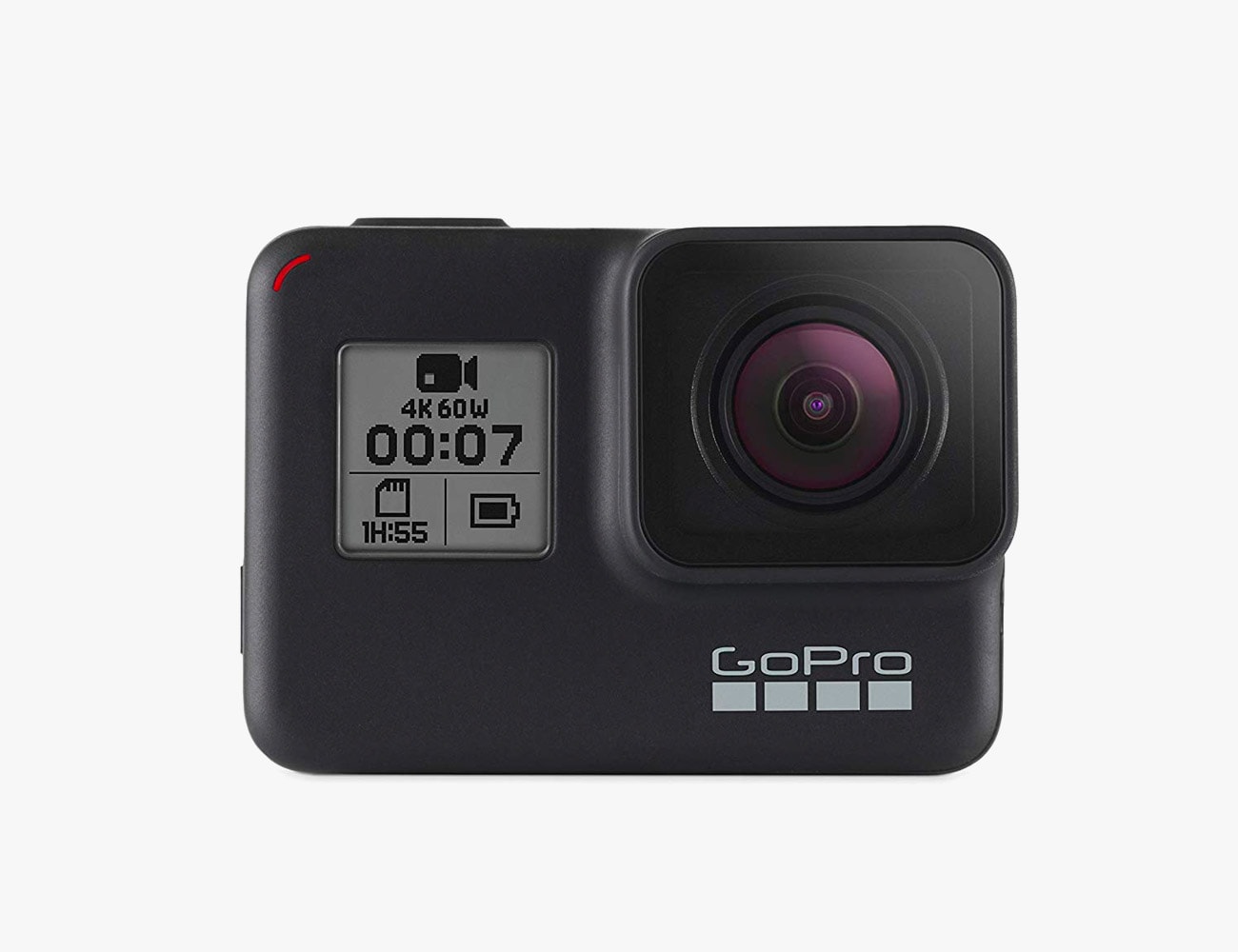
This Year, Upgrade To A Better Foam Roller

With the start of a new year comes the promise of a new lifestyle. Whether you’re trying to run a 5K or just get to the gym at least once a week, you’re going to need a recovery plan. The first few days of a new workout routine will have you excited and willing to tackle new challenges, but after a few days of the same new workout, your body might start to fight back. That can manifest in a variety of ways — from achy muscles to full-on flu-like symptoms. You’ll have to push through to make it to the other side of these new habit-forming exercises.

Massages and sleep are the cheer squad your body needs. If once-a-week massages are a bit out of budget, try self-myofascial release, or foam rolling. You’ll regularly see these devices in gyms across the country — even personal trainers opt to leave room in their suitcase for these self-massage tools. If you’re short on space but want an elevated foam roller of your own, TriggerPoint’s newest release, the Charge Vibe, is a solid option. We tested it out for a couple of weeks and chatted with a physical therapist to figure out how best to take advantage of it.

The Good: TriggerPoint is one of the leaders in foam rollers and recovery tools, and the TriggerPoint Charge Vibe doesn’t stray from that level of authority. It looks like two large massage balls with a bridge in the middle and creates a scooped out section that’s perfect to massage all muscles in your lower body as well as your arms and upper back. It features a vibrating function with three intensity levels to really work the soreness out of your muscles. It’s small and weighs just two pounds, so it’s portable but has enough heft where it doesn’t feel cheap. “Since it’s small, it allows you to work on other areas that other rollers aren’t able to [reach]” Dan Giordano, DPT at Bespoke Treatments in NYC, says. “The divet in the middle is great for your Thoracic to lower back, so your mid-back and up.”

Who It’s For: Anyone who’s active or looking to get active should invest in a foam roller. If you picked up an entirely new workout routine in 2019, it’s advisable to add in some mobility work. You can use this tiny tool to warm up and cool down, helping to excite your muscles and prime them before taking off on a run, as well as massage them after a hard effort. After a workout, foam rolling can help improve your range of motion, which helps your body perform movements in all directions. “Optimal mobility allows a joint to experience full, unrestricted motion while controlling the constantly moving axis of rotation,” Pete McCall, MS, CSCS, says on the American Council on Exercise website. In the long run, optimal mobility means you can do everyday movements long term like sitting, squatting, bending, reaching, etc.

How to Use: “When people foam roll, [they] go up and down on the tissue, and that’s completely wrong,” Giordano says. “You have to stop and go side to side because that’s how restrictions are released, and the blood flow gets to the area to remove pain.” Giordano recommends using this on your lower extremities on calf, quad and hamstring muscles.

To start, place under your calf, near your Achilles. “Go up an inch, stop when you feel something, then go side to side, then move on. Stop for another second, then move up, continuing this all the way up and down your calf,” Giordano says. If you’re using as a warm-up tool, to excite the tissue stick with 15 to 30 seconds on each pause. If you’re ready to come down and activate a parasympathetic state (relaxation), use for one minute to a minute and thirty seconds in an area. “Don’t dig too much. Foam rolling shouldn’t hurt,” Giordano says. “Put a nice amount of body weight [on the roller] that won’t cause pain.”

Watch Out For: It’s not as light as it looks — when I first picked it up, I was shocked at its heft. It’s still light enough to go in any bag, but you will feel the weight as you walk. It’s still just as firm as many of the other TriggerPoint devices, so don’t let that dissuade you, but due to sheer size, it doesn’t work any differently on larger muscle groups like glutes as do other straight across rollers.

While it can be tempting to use on the muscles along the back of your neck, Giordano advises that you work with a medical professional to get the exact science down before getting after it. It can help with tension headaches, but you have to be careful not to dig in too deeply.

And, the research on vibrating foam rollers compared to a basic foam roller is still very light. There’s a definite benefit, but you’ll have to pay the price for that.

Alternatives: There are a variety of vibrating massage devices to help speed up your recovery. Earlier this year, we looked at the Hyperice Hypervolt ($349), which is a handheld device. There’s also the Hyperice Vyper 2.0 ($239) and the TriggerPoint Grid Vibe Vibrating Foam Roller ($95).

Review: Studies show that foam rolling can help reduce tension, improve your range of motion and can sometimes lower pain. So, “if you have time to use a foam roller every day, use it,” Giordano says. While regular old foam rolling will get you top marks, to truly go above and beyond (and hit your goals this year), a vibrating foam roller is the way to go. It’s quick and can sometimes feel like a massage, which is something I’ve never experienced with a regular foam roller.

I tend to remember to foam roll after classes or a run, although I know it’s best to do both. After a recent run, I slid my calf between the grooves and slowly worked my way north as Giordano recommends. The grooves helped nudge me to move side to side, where I usually roll up and down my calf. Imagine the feeling of fingers kneading your calves, but replace fingers with a rubberized curved wall. I found this to be most helpful in releasing my biceps and forearms, which is sometimes exhausting to do using a handheld massage tool, and hard to reach with a regular foam roller.

The three levels of vibration take some getting used to, but I’m assured that it’s a matter of personal preference and some combination of what’s in my head. “The vibration speeds are good because lots [of people] can’t handle the top speed of some of these new devices,” Giordano says. “It’s more of a cognitive issue because it’s not hurting you at all, but [I like] the fact that it does change frequency. You start low and move high.” I preferred the lower speeds for my legs and higher rates for upper and mid-back.

Verdict: Pick up one of these small vibrating foam rollers if you’re upping your workout intensity or have plans to do so. Foam rolling every day is an easy way to keep your muscles moving throughout your life, so using one is step one in longevity. For just $100, this powerful device works like any other foam roller, only with a variety of pulse levels and a divet to help remind you to use it properly. If you’re intimidated by foam rolling, this is an optimal way to start.

TriggerPoint provided this product for review.

Read More Gear Patrol Reviews

Hot takes and in-depth reviews on noteworthy, relevant and interesting products. Read the Story
Note: Purchasing products through our links may earn us a portion of the sale, which supports our editorial team’s mission. Learn more here.

Boll & Branch Mattress Review: How Much Should You Spend for a Good Night’s Sleep?

Missy and Scott Tannen cofounded Boll & Branch in 2014 with promises of bringing transparency, sustainability and morality to the world of bed sheets. The direct-to-consumer outfit makes sheets of incredibly high quality while managing to sidestep the clichéd branding of its fellow web-based competitors.

In October, Missy and Scott’s company declared its original message isn’t bound to what sits atop the bed any longer, thus the Boll & Branch Mattress was born. The spring mattress is stamped with all the acronym certifications expected from a company hellbent on ethical luxury. But at $2,500 for a queen mattress, one has to wonder whether Boll & Branch’s handmade mattress is worth serious deliberation.

The Good: The Boll & Branch Mattress is exceptionally comfortable, particularly as a side and back sleeper. And thanks to poly-wool and graphite-infused latex foam top layers, it keeps its cool through the night. Its edges are lined with a thin ring of extra-stiff coils that act as guardrails for reckless sleepers (like my sleeping partner), too. The fact that it’s completely handmade with quality materials (GOTS-certified, Fair Trade Certified) and without glues and compression is also a plus. Lastly, it’s far more motion-stabilizing than other spring mattresses I’ve tested.

Who It’s For: People who value ethical business practices working to make high-quality products with a record of stellar customer service.

Watch Out For: The hand-sewn tufts, though they do allow the mattress to forgo glue or other adhesive to stay together, create tiny dips and hard spots when lounging or leaning on one arm (when you’re lying on your back or stomach it’s not an issue). To my estimation, it sleeps somewhere just above medium firmness, so if you’re a person who prefers something to sink into, this mattress is probably not for you. Finally, though there is a 100-night trial period, the inability to lay on the mattress before buying is still there (there is a retail location at a mall in New Jersey).

Alternatives: If you’re interested in the Boll & Branch mattress, you’re interested in a sustainable, ethical, comfortable product ethos. As there are in all mattress categories, there are a flurry of competitors to consider, but the Avocado Green Mattress comes with the most-vetted recommendations. It’s about $1,000 cheaper, comes with a lengthier warranty, equivalent commitments to sustainability and it was Consumer Reports best innerspring mattress of 2018. However, it sleeps a bit softer, is not Fair Trade certified and isn’t nearly as motion-stabilizing.

Review: Today, most people know the bedding industry is afflicted with a mess of vague, buzzy words that don’t mean a whole lot. Compound this with the general confusion regarding sleep and you have an industry primed to make a killing on empty promises. Boll & Branch as a company, while pricey, eliminates anxiety in these areas. Its mattress embodies this to a T.

Boll & Branch’s mattress bucks the trend of foam mattresses and incorporates two layers of metal coils on the bottom. After the coils come two layers of latex and a wool/poly blend on top.

Instead of rolling with the popular trend of making a foam mattress, compressing it and shipping it in a box to customers, Boll & Branch’s comes with white glove delivery (if requested, they’ll also recycle your old mattress). And instead of balking on its sustainability promises to cut costs, it enlisted factories in Florida and Texas to make each mattress by hand, to order.

The structure shares similarities with many modern spring mattresses — layers of natural latex foam and poly-wool that act as heatsinks, stiffer coils around the edges to create an invisible wall for wild sleepers and a bunch of wrapped canvas foundational springs for your traditional body support. A thin but effective layer of micro-coils sandwiched between the top layers and the support coils below makes for a softer landing on the bed and plays a part in the mattress’s exceptional ability to negate motion transfer. Between the primary latex layer and wool-poly top layer, there’s an additional latex layer infused with graphite, a material used in electronics and firefighter’s uniforms for its heatsinking properties.

The structure shares similarities with many modern spring mattresses — layers of natural latex foam and poly-wool that act as heatsinks, stiffer coils around the edges to create an invisible wall for wild sleepers and a bunch of wrapped canvas foundational springs for your traditional body support. A thin but effective layer of micro-coils sandwiched between the top layers and the support coils below makes for a softer landing on the bed and plays a part in the mattress’s exceptional ability to negate motion transfer. Between the primary latex layer and wool-poly top layer, there’s an additional latex layer infused with graphite, a material used in electronics and firefighter’s uniforms for its heatsinking properties.

Like all Boll & Branch products, the brand’s mattress comes with a lot of support beyond the product itself. In this case, a 10-year warranty, a 100-night trial period, its legitimately helpful customer service team and white glove delivery (and pickup of your former mattress, if needed). The warranty’s length and contents is fairly standard for a luxury-level mattress — it’s basically guaranteed not to break down through any natural means for a decade at minimum — but it’s not exceptional (check out The Sleep Judge’s guide to similar mattresses for a better idea on warranty length).

Verdict: If you’re in the market for thoughtful products with nothing to hide or obscure from would-be customers, you’re a potential Boll & Branch mattress buyer. It isn’t the only mattress that’s made using all Fair Trade Certified cotton. It’s not the only one made by hand in the US. It’s not the only spring mattress that does a good job eliminating motion transfer. But it might be the only one to put all these things in one package. If you value these things but the price scares you away, wait for a sale — Boll & Branch rarely runs them but they do happen (it was almost $700 off on Black Friday).

Key Specs

Delivery: White glove
Construction: Innerspring, natural latex, wool-poly blend
Warranty: 10-year limited
Trial period: 100 nights
Manufacturer origin: USA

Boll & Branch provided this product for review.

Read More Gear Patrol Reviews

Hot takes and in-depth reviews on noteworthy, relevant and interesting products. Read the Story
Note: Purchasing products through our links may earn us a portion of the sale, which supports our editorial team’s mission. Learn more here.

The Good and the Bad of the “iPod Shuffle for Spotify”

The Mighty Vibe ($86) is a standalone and screen-less music player, similar to the iPod Shuffle of yesteryear, with a unique skill: its designed specifically for Spotify. You need to be a Spotify Premium subscriber to use the Mighty Vibe, as non-subscribers can’t download playlists and podcasts for offline listening, which is what this little gadget depends on. The gist is, if you like to run or workout with music, you can leave your smartphone at home — no need to carry it, strap it to your arm or stuff it in a pocket — and you can still listen to your workout playlists or favorite podcasts. Just clip it on and go.

There are very few non-smartphones that support offline Spotify listening for Spotify; the latest Samsung and Garmin smartwatches are the only ones that come to mind, and they’re all significantly more expensive but more sophisticated than the Mighty Vibe. In contrast to smartphones, the Might Vibe has a headphone jack, meaning it will work with both Bluetooth and non-Bluetooth headphones.

A point of clarification: This is the second-generation of the Mighty Vibe. The first-gen product, which was the first device that played Spotify without the need for a phone, launched on Kickstarter in early February 2016, raised over $1 million and then shipped to customers in July 2017. It was wildly successful but needed improvement.

The second-gen Mighty Vibe looks very similar to its predecessor, though it’s slightly slimmer and comes in more colors. Its biggest differences are internal. It has better battery life and now lasts five-plus hours with Bluetooth or wired headphones. It features better Bluetooth capabilities, meaning fewer dropouts and longer range. And, finally, the company redesigned its mobile app so that the Mighty Vibe is more intuitive to set up and use.

Spotify on the Apple Watch: Though there’s a Spotify app for the Apple Watch, it should be noted you can’t download anything for offline listening. However, if you pay for LTE, which is only available on Series 3 and Series 4 models, you can stream Spotify without your iPhone.

The Good: The Mighty Vibe is the most affordable device that will play Spotify playlists and podcasts offline (Spotify Premium only). It’s simple to use; basically, it’s an iPod Shuffle that uses Spotify instead of iTunes. With 8GB of storage, it can hold roughly 1,000 songs. Also cool: it’ll automatically update your podcasts and playlists for you. It’s sweatproof and has pretty good battery life. The Mighty Vibe will work with all Bluetooth headphones or speakers, and it’s compatible with both iPhone and Android smartphones.

Who It’s For: Spotify Premium subscribers who want to exercise without their smartphones on their person. It’s also worth considering that in a group setting one could connect the Mighty Vibe to a speaker and avoid interruptions from calls and texts.

Watch Out For: No battery indicator on the device itself — you’ll need to open the smartphone app to know. No voice control. It only works with Spotify (here’s a chance it could work with other music services in the future). $86 still feels too expensive for what the Mighty Vibe is.

Alternatives: There are only a few devices that support offline listening for Spotify, such as the latest Samsung and Garmin smartwatches, but all of those are much more expensive.

Review: I’ve been running with Spotify for years. I need music to exercise; otherwise, I’m not motivated. Like… at all. I try to run a few times a week, and for years I’ve run with a smartphone on my person, whether in my pocket, attached to my waist or in my hand. I’ve tested each of Samsung’s latest fitness trackers – the Gear Fit2 Pro ($200) fitness band and the Gear Sport ($280) smartwatch – and they’re able to achieve the same thing (Spotify offline listening) as this Mighty Vibe, but with some key differences. Both are expensive. And both require the user to use Samsung’s apps and Samsung’s operating system, which isn’t what anybody with an iPhone (or a non-Samsung smartphone) will want to do.

When I first heard about Mighty Vibe, I was really excited to give it a test since there was nothing else like it. The Might Vibe is more affordable than its competitors, substantially so, and it doesn’t tie you to a possibly unfamiliar ecosystem like Samsung’s device. Just download the app, click a few buttons and you’re good to go.

I’ve been running with the Mighty Vibe for six weeks and I have to say that for the most part, the Mighty Vibe works well and works as advertised, but it isn’t perfect. There are design- and app-related issues that I wish were different, but the main issue I had with the Mighty Vibe is simply getting used to using a device that doesn’t have a screen.

Running with a smartphone sucks. If it’s in my pocket, it’s flapping all over the place as I run. If it’s in my hand, it looks super weird, not to mention that in the winter your hand will get ridiculously cold. But running with a smartphone is also an advantage: since it has a screen, anytime I want I can easily select any specific song on my playlist. If I want Linkin Park, I can play Linkin Park. Or The Offspring or Rage Against the Machine or Trapt. Point is, as long as the song is on my playlist and I have it downloaded, I can change to any specific song I want while running, which I do often.

Without a screen, the Mighty Vibe can only play/pause and switch between individual tracks. This means that if you’re like me and have a “Run” playlist that’s 50+ songs deep and you’re craving one very specific song, it’s potentially going to take a while to get to it. And mid-run, that’s not always the most motivating thing.

Another little issue, which I hadn’t considered at all, was volume control. The Mighty Vibe works with all Bluetooth headphones, but not all of them have built-in volume controls. For instance, I alternated between using three earbuds – Jabra Sport Coach ($90), Samsung IconX ($130+) and the Sony WF-SP700N ($130) wireless earbuds. The Jabra’s and Sony’s both worked great because they both feature volume controls built into the earbuds, but the Sony earbuds didn’t. So even though the volume was maxed out on the Mighty Vibe, it wasn’t necessarily maxed on the earbuds. I had to double check before each run that volume controls were set correctly; otherwise, I’d be listening to really quiet music. I can’t run like that. I need it loud.

It’s important to remember that Spotify only allows three devices per account to download music or podcasts, and the Mighty Vibe obviously counts as one. You can manage your Spotify devices here, but as I found out, it doesn’t always work as neatly as you’d want. That’s is a criticism of Spotify, not of Mighty Vibe.

As a long-time Spotify user, I had high expectations for the MIght Vibe. There are things that could be improved, sure, but the most important thing is that it works. And it works pretty well.

Not needing to deal with a phone while running has been phenomenal, especially in winter. I didn’t have to find inventive ways of carrying my smartphone, and also didn’t have to deal with distractions like calls or texts. The Mighty Vibe features IPX4 water resistance, so you can run in the rain and sweat on it — just no swimming or dunking it in water.

Verdict: Despite being the most affordable device (by a lot) that enables offline Spotify use, $86 still feels a little too expensive. If it were in the $50-$60 price range, this thing would fly off of the shelves. That said, the Mighty Vibe does its one job admirably and there’s no other equivalent to it out there. If you’re a Spotify Premium subscriber and you want to work out or run without carrying your phone, then this iPod Shuffle doppelganger is just the device to get.

What Others Are Saying:

• “My initial excitement for an “iPod Shuffle for Spotify” waned after I reviewed that first Mighty, largely due to the list of items that made it a burden to use. However, the company has addressed many of those directly with the updates present on the Vibe. Now the company actually has the compelling product I’d hoped for from the jump. Sure, you could just use the music service’s own offline playback tools and save the cash, but at less than $100, Mighty Vibe is a worthy investment for active folks and people who would rather leave their phone behind at times when music remains essential.” — Billy Steele, Engadget

• “So, why choose Mighty? The obvious reason is you may not want to replace or upgrade your GPS watch just to add the ability to play music. In that case, Mighty will set you back only $86. Another reason, which we really appreciate, is the physical buttons to change playlists, adjust volume, and skip tracks. Depending on your headphones, it can be a tricky sequence of clicks and swipes. And it’s all but impossible to dig through the menus on these smartwatches to change your tunes when you’re on the move.” — Jeff Dengate, Runner’s World

Mighty provided this product for review.

Read More Gear Patrol Reviews

Hot takes and in-depth reviews on noteworthy, relevant and interesting products. Read the Story
Note: Purchasing products through our links may earn us a portion of the sale, which supports our editorial team’s mission. Learn more here.
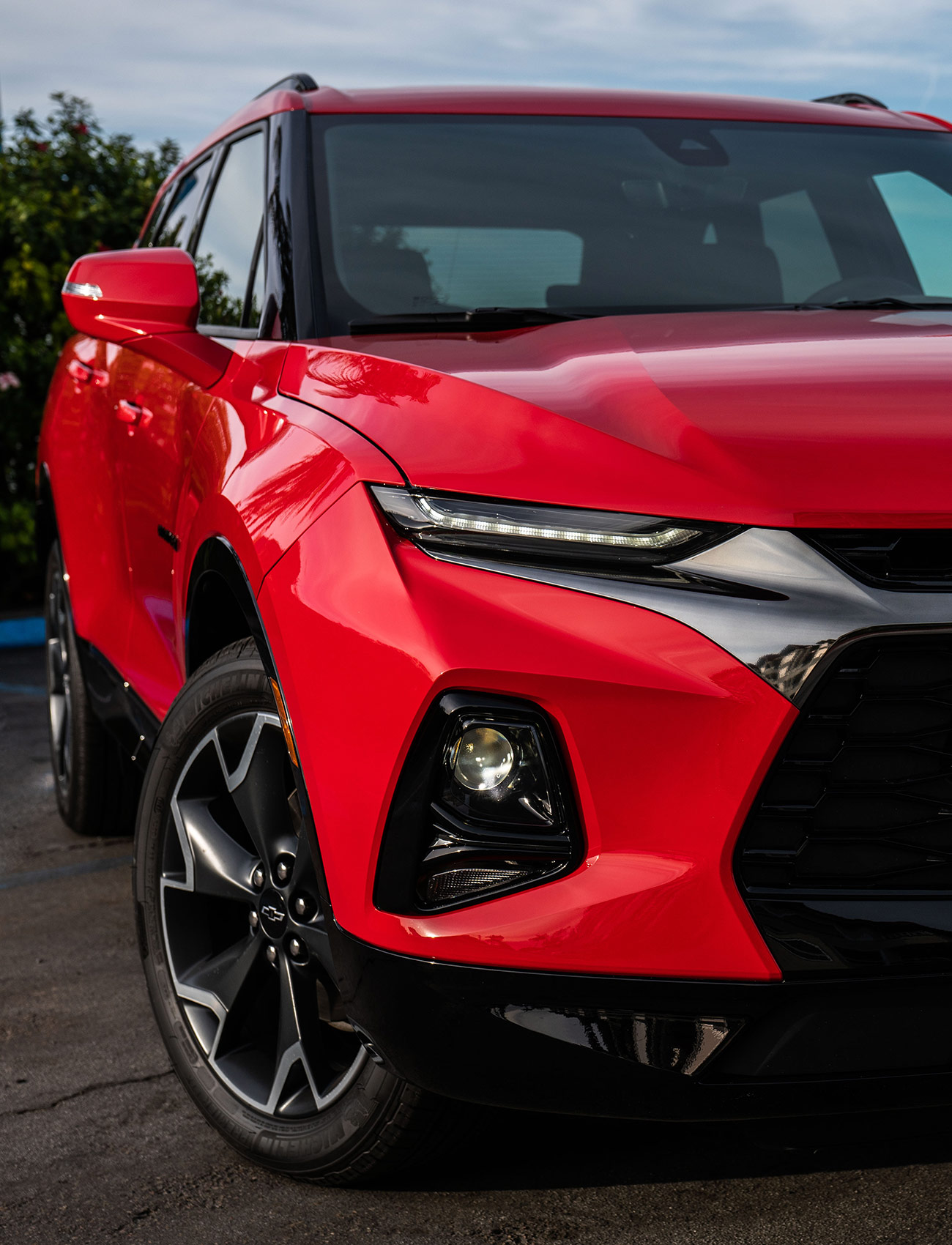
2019 Audi A8 Review: Truly Next-Gen Innovations Place it Firmly at the Top

The fourth generation of Audi’s line-topping A8 sedan shows the company is quite serious about not just current state-of-the-art technology, but future state-of-the-art, as well. It uses an advanced mild-hybrid electrical system to provide significant safety and comfort benefits, while its powerful central computer will enable increasingly more capable semi-autonomous driving a bit further down the road. It also fully lives up to the premium flagship standard, stealing – for now anyway – the mantle of supremacy from the Mercedes S-Class and BMW 7-Series, its two most obvious competitors.

The Good: Audi digs in deep with the technology here: The car has 24 sensors (laser, optical, radar) and tons of safety and convenience innovations. It’s one of the first vehicles to have a 48-volt electrical system, which gives it mild-hybrid qualities but also enables the usually power-sucking suspension tricks and other features. It’s primed for advanced semi-autonomous drive capability, as well. Though that tech isn’t quite here yet – and indeed, even some of the presently ready tech will still take until next year to enter the U.S. market – there are enough overall benefits to this tech infusion to absolutely make it worthwhile to buyers today.

Who It’s For: Despite the popularity of luxury SUVs, you still can’t match the presence of a true flagship sedan such as the A8. It exudes more authority and prestige than Audi’s taller and bulkier Q7 SUV, just as the Mercedes S-Class always manages to outshine the massive GLS. So this is a ride for those execs or luxury aficionados who don’t really feel the need for brute force. It’s also handily outpaced its rivals in the technology department with this iteration, so will score major points for drivers who truly want cutting-edge innovation.

Watch Out For: That grill. It’s too big. Way too big. Though the A8 has overall a marvelous design, the seemingly endless horizontal strakes in the maw up front are just too much, reeking of missed opportunities for the design team to make something more interesting of the fascia. It’s a modest complaint, but it’s also the most prominent view of any vehicle – so it counts. Also, some of its innovations won’t be available in the U.S. until at least next year, due to regulatory hurdles, so make sure you know what you’re getting and what you’re not when you throw down for this car.

Brief rant: there’s a bit of a trend of carmakers announcing features for specific new models but holding it back a year or so because the tech either isn’t fully baked yet or is awaiting federal approvals – new headlights, semi-autonomous features, even Apple CarPlay and Android Auto. It results in a bewildering shell game of does-it-have-it-or-doesn’t-it amid already too many packages and options and tiers for every model in every manufacturer’s lineup. Put the tech in the car and sell it. Otherwise, hush. Wait until the refresh cycle comes around in a year or two or just slip it into another model when it is ready. -EA

Alternatives: The Mercedes S-Class and BMW 7 Series are the clearest alternatives, and while both have significant technology credentials – and while the S-Class remains the class leader from a purely luxury and ride perspective – their current iterations are many years old at this point. As a result, the A8 can claim the title of technology leader until one of them bests it. Elsewhere, the Lexus LS represents another fine flagship alternative, though it doesn’t really come close in terms of brute innovation.

Review: drove the A8 up and down the Pacific Coast Highway in Big Sur, California, where the roads are smooth, glorious ribbons draped over craggy and rough terrain. Bending nature to your will in this fashion is the challenge all automakers face – managing the transfer of often brutal surfacing from the road to the passenger, making it smooth and comfortable or exciting and energetic. The A8 has the former down pat, thanks to its meticulously constructed air suspension, and the latter comes close enough. The A8 is a fun car, and quick enough to squirt you up and down the open stretches coming out of each turn quite gamely. Though it’s no sports car.

Except when it is. The optional dynamic all-wheel-steering tightens up its turning radius substantially, enabling not only easier navigation around parking lots and such, but also fine-tuning the twisties while out and about. It feels far more sporty. The also-optional predictive active suspension – tested on a coned-out autocross rather than the open road – promises even better enhancement of the drive experience, including the ability to raise or lower each wheel individually in just 300 milliseconds – meaning it can essentially glide over bumps and divots in the road as if they’re not there, in addition to better controlling body motion overall.

Though we should be getting a V8 option next year, the car debuts with a new 3.0-liter turbocharged V6, supplemented by the also-new 48-volt electrical system. This hardware – still rare even among luxury carmakers – not only powers the previously mentioned suspension gadgetry, but it also helps smooth out powertrain response in general via power recuperation and delivery, and it enables the advanced onboard computer to process its intel faster, for more capable driver assistance systems and, eventually, semi-autonomous driving. The A8 is the first car to use a laser scanner, among its myriad other sensors, so its collision-avoidance and mitigation capabilities are truly next-level. For instance, it now maintains persistent 360-degree awareness, and can, with the predictive suspension option, jack up one side or the other in an anticipated side-impact situation to better direct crash energy through the chassis, protecting the occupants. It can also allow for better lane-centering and adaptive-cruise performance, taking the stress out of commuting and road-tripping.

Inside, nicely integrated into its rich interior design, a new MMI touch-response system replaces the previous system’s dial-based interface. Now it’s touchscreen-based, with haptic feedback accompanying every tap to help confirm your presses and actions with minimal visual distraction. (That is, you can better “feel” the system working, rather than having to constantly scan it visually during every button press.) The upper screen is 10.3 inches and contains the navigation and infotainment systems while the smaller 8.6-inch lower screen controls seating, HVAC, and shortcuts to other infotainment functions. You can also now use natural language when delivering voice commands, and access your smartphone via Android Auto and Apple CarPlay.

All of these advances, both in the drive and interaction elements, add up to a significantly evolved experience – it’s less stressful, more enjoyable, and more integrated than most any other system on the market. It’s a car you wouldn’t mind inhabiting in really any context – weekend jaunts down the PCH, or even the daily grind into the office.

Verdict: It’s hard to fault Audi’s approach here. They deliver an outstanding luxury product with a suite of truly next-gen innovations, all of which place the car firmly at the top – at least until its rivals cough up the next iterations of their top-dog sedans

What Others Are Saying:

• “The A8 passed slow-moving traffic along Highway 1 briskly enough during our day-long test drive; with a claimed 0 to 60 mph time of 5.6 seconds, this big boy can certainly get out of its own way. However, it doesn’t exactly feel potent; think, sensory deprivation tank, not guided missile.” – Basem Wasef, Automobile

• “By all measures, Audi’s fourth generation A8 is a considerable leap beyond its predecessor. Advanced comfort, convenience, and safety technologies set new full-size luxury sedan benchmarks for ride quality, handling, and usability. Siphoning S-Class and 7 Series buyers won’t be easy, but Audi has the right product to disrupt the segment.” – Miles Branman, Digital Trends

• “For now, in my eyes, Mercedes-Benz’s S-Class is still the gold standard for large luxury, but the A8 L is a solid contender with its different, technology-centered approach. However, many of the most compelling technologies — Matrix lighting, Level 3 partial automation and AI Active suspension — are locked away pending law changes or further tailoring for the US market.” – Antuan Goodwin, Roadshow

2019 Audi A8 Key Specs

Engine: 3.0-liter turbocharged V6
Transmission: 8-speed automatic; all-wheel-drive
Horsepower: 335
Torque: 369 lb-ft
0-60 mph: 5.6 seconds
Fuel economy: 19/25 mpg city/highway
Price: $83,800 (MSRP)

Audi hosted us and provided this product for review.

Read More Gear Patrol Reviews

Hot takes and in-depth reviews on noteworthy, relevant and interesting products. Read the Story
Note: Purchasing products through our links may earn us a portion of the sale, which supports our editorial team’s mission. Learn more here.
Jaybird Tarah Pro Review: I Didn’t Like Running Headphones Until I Found These

In 2018, Jaybird focused on expanding its well-received line of sport headphones beyond its true-wireless Run and its X4 neck buds (wireless earbud-style headphones that are joined with a cord). It did that by introducing an affordable entry-level headphone called Tarah and shortly after that, by revealing the Tarah Pro, its highest-end pair of neck buds.

The Good: To distinguish the Tarah Pro as a high-end headphone, Jaybird thoughtfully upgraded them in almost every way. The cord is woven instead of rubberized, which has a better feel and also helps prevent tangling and snagging. The back of each earbud contains a magnet so that the headphones can be worn securely like a necklace when not in use. When a runner puts the headphones together in this way, music automatically pauses and resumes automatically when they are separated again.

Jaybird also constructed each Tarah Pro earbud so that it can swivel to accommodate two styles of wear: with the cord dangling below the chin, and with the cable running up and behind the ears and around the back of the head.

But the best aspects of the Tarah Pro are its EQ adjustability and its battery. With the Jaybird app, users can tweak tone levels to get precisely the sound they desire, but now they can also build a personal EQ by going through a series of hearing tests (it only takes a few minutes and involves moving a set of sliders based on how you hear various tones). Then there’s the big one: the battery. The Tarah Pro will last up to 14 hours on a single charge, which makes them suitable for ultra runners who might be out for that long. For the rest of us, it means that we don’t have to remember to charge them multiple times per week. When you do need some last-minute juice though, a new quick-charge feature will give you two hours of playback after just five minutes of refueling.

Who It’s For: Runners. Especially long distance runners, and runners wary of switching to wireless headphones and having another gadget to remember to charge before heading out for a jog.

Watch Out For: At $160, Jaybird’s Tarah Pro aren’t exactly cheap. They’re more expensive than Jaybird’s true wireless Run headphones, and there are plenty of other wireless running headphones available for less. None match the Tarah Pro in battery life though.

Alternatives: Wireless technology has brought us into a golden age of sport headphones, and there are many worthy alternatives to Jaybird’s Tarah Pro. For our full list, see our guide to the Best Wireless Running Headphones.

Review: Earlier this year, The New York Times published an essay penned by Peter Sagal, an NPR radio host titled, “The Case Against Running With Headphones.” For Sagal, running without audio input from music or podcasts frees him from distraction and allows him to focus on how his body is feeling; “the only way to succeed as a long-distance runner is to do it mindfully, to be aware of the body and the world it is moving through,” he writes.

After this article was shared amongst Gear Patrol’s runners, a debate kicked off. “I can’t run without music. I lose 80% motivation without it,” one writer contended. Another was more equitable: “The ‘throw your tech out the window’ option is tempting in its simplicity, but the fact of the matter is that running with music/headphones can be great. Just not all the time.”

I, like Sagal, have wavered back and forth between running with headphones and without (his old race day playlists always started with Springsteen’s “Born to Run”). For the past few years, I’ve opted to run without, mostly because my iPod is obsolete, but more importantly because I detested the idea of running with my phone. This fact in particular sums up my stance on running: I like to keep it simple, I do not like to bring additional items that add more steps to my routine.

But recently, as I was training to run my first marathon and began venturing out on longer runs, often on remote roads far from town, I started to carry my phone as a safety precaution should anything go wrong. And once I conceded to that, I figured I might as well listen to it too.

Throughout my training and the race itself, Apple’s in-the-box corded earbuds were my headphones of choice. Why? Because they’re basic, comfortable, and because they came with my phone and didn’t cost me anything. I’ve gone through two other cheap-ish pairs in the last year — one broke moderately quickly, and the other had a miserable fit and kept popping out. Apple’s aren’t perfect, but made the best argument for performance-for-value.

All this is to say that I’m not someone who’d be interested in a pair of high-end wireless sport headphones. Not because I’m sentimental toward a technological past represented by the cord that connects me to my phone but because I don’t want to have to download an app or have another gadget to remember to charge before heading off on a run — especially not one that costs so much I’d be disconsolate if I were ever to lose it. But I like Jaybird’s Tarah Pro headphones. A lot.

Let’s forget about the $160 price tag for a moment, which is my only point of abrasion in considering these headphones. Everything about them is designed for someone like me, someone who wants to run with music (but maybe not all the time) and for that reason wants a pair of headphones he can forget about once the shoes are laced up.

Even some of the very things I knew that I was apprehensive about turned out to be great. The Jaybird app is one — it sits mostly unused on my very last screen, but I did employ it to set the personalized EQ levels on my headphones, which has turned out to be pretty awesome. I also flipped through the how-to guides, which is where I learned that I had to swivel the buds to wear them over and behind my ear (but only after attempting to run four frustrating miles without doing so). I’ve found this method provides the best fit, particularly with the rubber cinch also applied (Jaybird calls this removable little bead “Speed Cinch”).

The other pressure point I assumed I’d run up against is the battery, which is where the Tarah Pro excels. I’ll be frank; I didn’t perform any comprehensive test in which I continuously played music through my pair to time how long they last. Jaybird claims they’ll go for up to 14 hours — I’ve yet to bottom out on mine. I’ll likely never go on a 14-hour run either, and that two hours of runtime can be gained from just five minutes on the charger (which uses magnets instead of a port) means that if I do ever drain them completely, I can plug them in last minute while I stretch and leave with power but more importantly, without interrupting my routine.

The Tarah Pro’s gels are comfortable in my ears — they come with three different sizes — and the woven cord both feels premium and doesn’t snag in my hair the way rubber ones do. Each earbud has a magnet inside its driver so that if I need to take them out of my ears, they can be worn like a necklace. This also activates a very handy function — when I connect them, my music automatically pauses and when I separate them, it resumes after a few seconds, which is just enough time to get them back in my ears. They also turn off automatically after five minutes of paused audio, aiding in battery retention. (In my opinion, every pair of wireless headphones should do this.)

Whether or not all of these things add up to $160 in value is up to you. For me, that total is a pair of headphones that are invisible before, during and after a run; they don’t force my attention to charging or syncing or shoving them back into my ear every quarter mile. I’m left to listen to my music and think about my pace, stride and breathing. So for me, and maybe Sagan would agree, the answer has been yes.

Verdict: With the Tarah Pro headphones, Jaybird has rounded out its line of sport earbuds. There’s a lot to like here: a super-long 14-hour battery life, fast charging that provides two hours of playback after five minutes plugged in and custom EQ top the list. These things come at a price though, and some might opt for similarly-priced high-end true wireless headphones instead. For me, it’s the little details — the fit, the cord, the magnetic-auto-pause function — that allow these headphones to integrate into my running routine without interrupting it that make them worth the cost.

What Others Are Saying:

• “Sure, Jaybird does offer some more affordable options, and for $20 more you could nab the company’s true wireless Run model. With the Tarah Pro, the combination of extra battery life, the Switch Fit design and the custom EQ hearing test should ease any hesitation about spending some extra coin.” — Billy Steele, Engadget

• “he Tarah Pro is the clearly the best of Jaybird’s models and a very good wireless sports headphone. However, with all the competition, as well as totally wireless earphones like Apple’s AirPods and Jabra’s Elite Active 65t costing around the same price, I do think it should come down in price by $20 to $30. Perhaps in time it will.” — David Carnoy, Cnet

Key Specs

Battery Life: up to 14 hours
Waterproof Rating: IPX7 (waterproof up to 3ft)
Impedance: 16 Ohm
Driver: 6mm
Frequency Response: 20Hz – 20kHz
Total Harmonic Distortion: <5% (1KHz, 1mW)

Jaybird provided this product for review.

Read More Gear Patrol Reviews

Hot takes and in-depth reviews on noteworthy, relevant and interesting products. Read the Story
Note: Purchasing products through our links may earn us a portion of the sale, which supports our editorial team’s mission. Learn more here.