All posts in “Reviews”

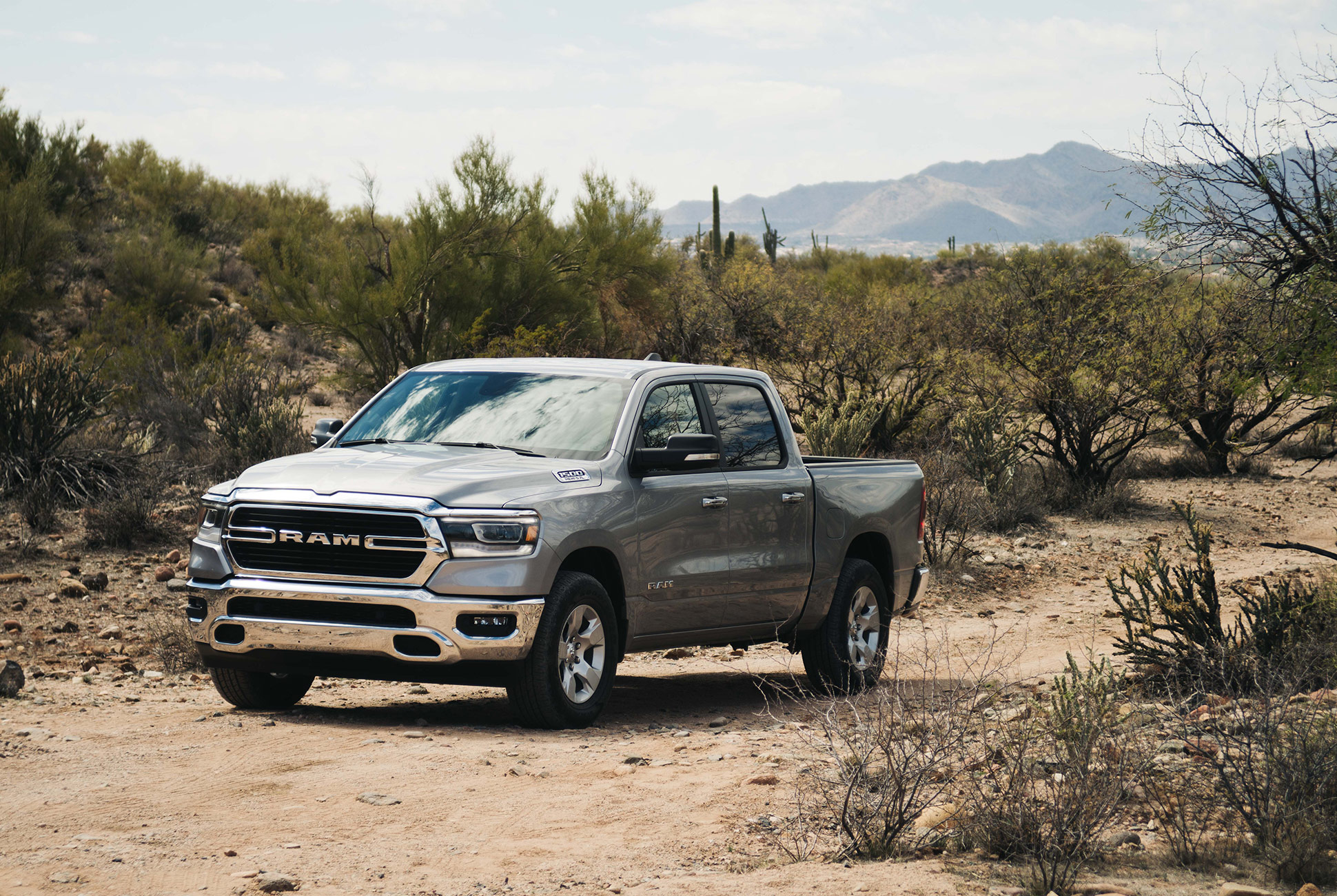
The 2019 RAM 1500 Renders Full-Size Sedans Obsolete

When Dodge released the second Gen Ram 1500 in 1994 with its imposing semi truck-esque styling, it marked a departure from nearly 30 years of rather unimaginative boxy design. That “big rig” front end was forever etched into my brain when I watched, as many of my generation did, as Bill Paxton outran that ‘ol evil tornado in the 1996 classic film Twister. Though that film runs like a showcase for the Ram, the finest explanation of what that truck represented comes via the YouTube channel Regular Car Reviews in their review of a ‘97 1500 model with such quotes as “it was forever pulsing with testosterone and masculine Van Damme assurance.”

Since the 1990s two main things have happened when it comes to pickups: they’ve gotten increasingly bulkier and feature much nicer interiors. Still, at the end of the day, they’ve been limited by the fact that they are purpose-built vehicles — and that purpose is to be great at hauling stuff, not people. The 2019 RAM 1500, however, is the first pickup I’ve driven that doesn’t make excuses or compromises when it comes to doing “car stuff” and it damn sure still does “truck stuff.”

The Good: What everyone has been talking about since the 2019 RAM was unveiled at the Detroit Auto Show is the massive 12-inch screen that’s the centerpiece of the redesigned interior. FCA’s UConnect infotainment system has an upgraded processor that makes it snappier; plus, you can effortlessly switch between tasks by swiping the same way you would on a smartphone and in the same way can rearrange things to suit your tastes. The resolution on the massive screen is right up there with units found in any German luxury car, if not beyond them. It’s more intuitive than what you find in a Volvo or Tesla, the only other automakers offering this kind of digital real estate.

There are too many thoughtful finishing touches to list here, but among my favorites were the many different map display styles which included “cartography.” By selecting this the navigation map goes tan, your location icon is a red arrow and little trees are displayed when you’re off road. It’s a minor detail, but it’s the kind of thing that reminds you that these folks took their time and all the minor details add up to one impressive total package. There are available luxury touches you won’t find in any other pickup truck (real wood with real wood branding anyone?) more storage than you will know what to do with (like a 40-liter center console), superb ergonomics (redundant analog switches for Luddites) and all the while it retains signature RAM durability.

Who It’s For: Honestly, RAM has covered all the bases with their range of 1500 models. From the basic Tradesmen with vinyl seats all the way up to the top tier Limited with acres of leather inside, there’s a RAM for everyone, especially first-time pickup buyers. I’m convinced that anyone would be comfortable driving one of these trucks and should not be put off by the size of them.

Watch Out For: Be honest with yourself about what you’ll use a truck for. You can easily go wild with options and end up forking over a whole lot of cash that could otherwise be used for a project car which you could tow to the track with a more simply built out RAM. Also, the new front end styling won’t be for everybody, but it grew on me quickly, especially with the body paint matched grille which reminds me of pickups from the ‘90s. Beware of chrome, it can go wrong real quick.

Alternatives: Compared to the current Ford F-150, Chevy Silverado, GMC Sierra and Toyota Tundra, it’s not even close — the RAM is hands down the better truck, for now. The interior is light years beyond all of them, it rides better and has two mild-hybrid engines coming to market soon. Still, if it’s speed you’re after, a 6.2 V8 Silverado or Sierra will outrun the RAM and if towing bragging rights are your desire then the F-150 with a 13,200 lb max capacity will be the choice.

Review: No half measures were taken with this truck, it’s one pleasant surprise after another from the bottom of the frame to the top of the dash. As an FCA spokesperson said to me “the interior design team got everything they wanted, so did the exterior guys. That doesn’t happen often.” Boy does it show too, they really didn’t miss anything and believe me, I was looking hard to find faults. Every trim level was clearly well thought out and that translates to distinctive personalities. All three of the trucks I drove were equipped with the venerable 5.7-liter HEMI V8, though a mild-hybrid version of that motor is coming soon along with a mild-hybrid V6 soon after. Both “eTorque” motors will use a 48-volt mild-hybrid system to give low-end torque a boost and moderately improve fuel economy.

For now, though, the HEMI is great as it ever was, particularly in the RAM Rebel where it makes a little more noise courtesy of a Mopar exhaust system. Chucking a Rebel around in the desert made for great entertainment between on-road cruising sessions in the luxe Laramie Longhorn and basic Bighorn. Even in 4WD-High the Rebel roared through the sloppy soft sand of a dry river bed, and charging down a hard pack trail was still a breeze even with just the rear wheels providing motivation. I could have spent all afternoon lapping the course and though I’m sure the truck’s second-gen air-suspension could have handled it, I still think a traditional setup is the way to go for prolonged off-road antics. Either way, the Rebel is a load of fun and slots in nicely between the Tacoma TRD-Pro and Ford Raptor in terms of capability. It’ll be interesting to see what the new Chevy Silverado Trailboss brings to the arena when it arrives later this year.
Of course, it’s always easy to fawn over the finest of the bunch, like the cowboy-chic Laramie Longhorn, but what about the volume models, the trucks that people rely on to make a living day in and day out? Though you can still get a stripped out “Tradesmen” and add a few a-la-carte options to make it more liveable, it’s the Bighorn that’s the sweet spot of the line.

Upon climbing into the RAM’s comfy confines I immediately remarked at the quality of the cloth seats, which use a fabric that is damn close to tweed and looks exceptional in light or dark grey. Honestly, when was the last time you saw some great cloth in a new vehicle? The showpiece 12-inch screen might be gone, but there’s still a new version of the already excellent eight-inch unit FCA has been using for years and the resolution is now very, very crisp. With a traditional steel spring suspension, the ride isn’t as supple as that of the air-suspension equipped trucks, but is still a damn sight better than “the other guys,” especially when it comes to rear axle chatter. There was no need to search for a speed that didn’t resonate through the frame causing “the shakes,” because RAM engineers virtually eliminated them using some trick modules that vibrate at various frequencies to offset engine vibrations. Truly, these guys seem to have thought of everything. When you open up the cold beverage stash spot under the rear floor mat you can also measure the fish you just caught with the handy ruler they emblazoned on the underside of the lid. Yep, we’re living in the golden age of automotive engineering alright.

Verdict: What RAM has achieved with this new truck is pretty incredible. They’ve rendered the traditional full-size sedan obsolete. Why get a box with a somewhat useable trunk when you can get a box with an infinitely useable bed? When equipped with the second generation air-suspension, the 2019 RAM 1500 glides over rough asphalt and dirt with the grace of a car, not to mention their cabins are as just as quiet too. Thanks in part to active noise cancellation, nearly all road noise has been banished and what remains can be drowned out with a 19-speaker, 900-watt Harmon Kardon sound-system complete with metal grilles. Between that, the available real wood dash inlays, heated/cooled rear seats that offer up to 45(!) inches of legroom, you’d swear this truck interior was that of a full-size luxury sedan.

What Others Are Saying:

• “I really think the interior of this truck has the best-looking design of any half-ton. And it also happens to be endlessly useful. That’s what a truck’s supposed to be all about, after all.” — Andrew Collins, Jalopnik

• “Full-screen, multi-touch gesture functionality when using the navigation system is a revelation, and you can split it in half to allow two different functions to exist simultaneously. Finding USB-C ports alongside standard USBs was a welcome surprise that shows Ram was serious about futureproofing these trucks.” — Bradley Iger, Digital Trends

• “The new 1500 is something subtly, though significantly, different, and perhaps the first of its breed: a pickup that reflects how people who buy pickups circa 2018 actually use their pickups. It’s still a predominantly steel body (the remote-droppable aluminum tailgate is an exception) on a predominantly steel frame. The V8 isn’t going anywhere. But the niceties that have been creeping into pickup cabins over the past decade don’t feel tacked on. They feel, for maybe the first time ever in this corner of the market, fully baked in from the start.” — Graham Kozak, Autoweek

Key Specs

Although the Rebel is genuinely great, I’d personally opt to build out a Bighorn with the optional off-road package that adds a one-inch lift, skid plates and an electronically locking rear differential. That package, plus the aforementioned cloth interior, complete with seating for six thanks to a flip-up center console, would make for one heck of a starting platform for an adventuremobile at a very reasonable price. And yes, I’d absolutely drop $1,500 on the massive panoramic sunroof.

Engine: 5.7L V8
Transmission: 8SPD Auto
Horsepower: 395HP
Torque: 410 ft-lbs
Weight: 5,250 lbs
Towing: 12,700 lbs
Payload: 2,300 lbs
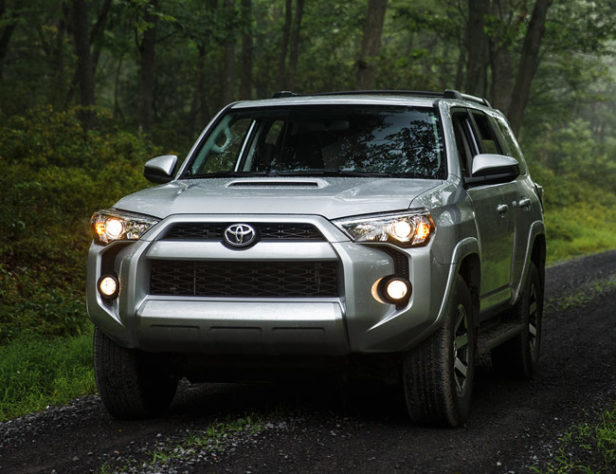
The Best SUVs Under $50,000

In case you don’t want an open bed out back. Read the Story
Note: Purchasing products through our links may earn us a portion of the sale, which supports our editorial team’s mission. Learn more here.

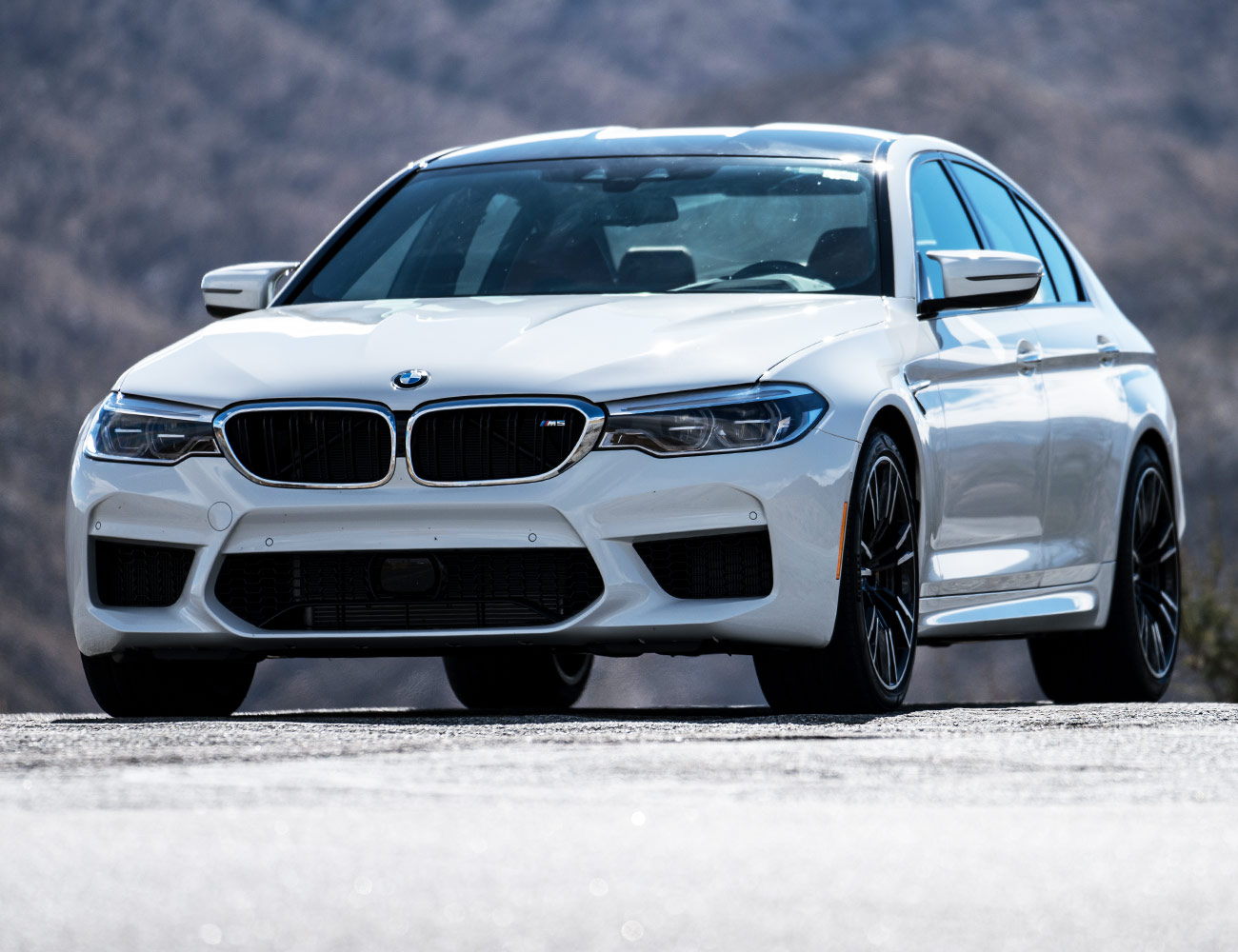
The 2018 BMW M5 Retains the Title of Ultimate, Berserk Sport Sedan

On a curving, aggressively inclined portion of the famous Pines to Palms Highway just outside Palm Springs, California — the scenic route stretches nearly all the way to the Pacific, in San Juan Capistrano — the BMW M5 positively glows. It reels in each turn like it’s ravenously devouring lunch, and powers up the mountain like a true Pikes Peak hillclimber. Which is to say, it’s more than a little scary. This is BMW’s sixth-generation M5 -—predictably, the fastest and quickest yet, blasting to 60 mph in just 3.2 seconds on the way to a cool 189 mph.

The Good: BMW’s holistically designed performance profiles bring a lot of engineering muscle to whatever mode you choose. The default setting is all-wheel-drive mode with stability control engaged. As you work through the different options, the car’s character changes. In fact, I’ve never heard or felt a car change so dramatically in character and performance as the M5 does at the moment you tap the little red “M” button to switch it into Sport Plus mode. I experienced this particular thrill at the Thermal Club racetrack outside of Palm Springs. After a brisk familiarization lap with the default settings engaged, the car felt perfectly fine and at home on the track. But when you enter Sport Plus mode, the exhaust note changes to a higher-pitched and more menacing growl as everything else about the car tightened up.

It was as much a Jekyll/Hyde transition as I’ve ever felt, and the car’s next-lap performance was both astoundingly brisk but also astoundingly precise. In the 2WD mode, with the stability controls dialed down, the car was even further separated from its docile street mannerisms, injecting a fun bit of rear looseness to the car that kept me on your toes while at the same time rewarding me for keeping things under control — though the car’s enhanced suspension and chassis engineering likely contributed at least as much to the equation.

The new engine and the eight-speed Steptronic transmission, of course, help get you there in the first place. The engine’s responsiveness matches the driver’s settings, with new twin-scroll turbochargers with higher boost pressures that allow for improved fuel burn, and thus faster response. The transmission’s shift logic is now better optimized for faster getaways, thanks to a lock-up clutch that engages the moment the car moves, and equally fast gear changes. Also, when in manual-shift mode, the car won’t upshift automatically at the rev-limiter — something that annoys drive enthusiasts who want to retain control of the shift timing even when pushed up to the edge.

Who It’s For: Grown-ups who want to go fast in relative stealth. This M5 is a ticket to instant street-cred no matter who’s beside you at the stoplight. Whether it’s a Lamborghini Huracan or an unrecognizably modded STi, they’ll all nod out of respect to the honorable M badge.

Watch Out For: There’s very little to complain about vis-à-vis performance, but the car does have a somewhat disappointing lack of visual energy. The design differentiators between the M5 and the standard 5-Series are largely performance-driven, including larger air intakes, a wider track to enhance cornering stability, a carbon-fiber-reinforced roof to reduce weight and a rear diffuser and side skirts to boost aerodynamics. But despite all this, the look still feels lacking in edge, the kind of aggressiveness that will make people do double-takes. Indeed, when encountered on the street, you’d have to know the M5 to recognize it as something special. Nobody wants the M5 to have a boy-racer aura, but a little bit of a darker, more serious vibe would serve the car extraordinarily well.

All that said, the interior provides quite a bit of edge that the exterior may not. The two-tone leather bucket-style seats have plenty of interesting curves and bolsters, in addition to being more than adequately supportive. They’re the elements, more than anything, that truly remind you of the car’s — as well as your own, presumably — mischevious character during your daily commute.

Alternatives: There’s a great deal of overlap in the pricing and features of competitive performance sedans, but generally speaking, the M5 compares most directly with the Audi RS7 and the Mercedes-AMG E-63 S. Of course, the Alfa Romeo Giulia Quadrifoglio and the Cadillac CTS-V are no slouches, either. All are racetrack-engineered stealth supercars.

Review: Cut canyon walls sling past in frightening proximity and with alarming quickness, courtesy of the M5’s prodigious 553 lb-ft of torque. Masked hairpins reveal little of their intentions, such as whether their radius will suddenly vary to accommodate some terrifying dropoff, avoided only thanks to the 15.7-inch ventilated front discs. At Pikes Peak, the cars may or may not outpace the skills of the driver, but either way, both had better know what they’re doing. Similarly, you tackle the twists and turns of Pines to Palms with willful abandon at your peril.

The car most definitely outpaced my own capabilities, but it also helped me stretch them out, thanks to its challenging-when-necessary but also forgiving-when-necessary engineering. This is BMW’s sixth-generation M5 — predictably, the fastest and quickest yet, blasting to 60 mph in just 3.2 seconds on the way to a cool 189 mph. In Palm Springs, if you had any hope at all of stitching together the perpetual esses in respectable time you need speed; the sprint to 60 mph is a distant fantasy only approached on closed desert straights. BMW’s renowned engineering backs it all up, offering sharp, precise handling and plenty of power when you want and need it, but it also offers quite a bit of white-knuckle fun for those who like to feel the limits of their machines. It’s far from quintessentially robotic, and is, in fact, quintessentially thrilling.

Verdict: BMW infused the car with enough fresh engineering to make it easily worthy of the brand’s reputation. First, there’s the trick new suspension, dubbed the M xDrive system, with both 2WD and all-wheel-drive capability, a pioneering feature. It also has a revised V8 with a 40 horsepower and 53 lb-ft power boost over the previous M5, an improved chassis for more dynamic stability and plenty of weight-reduction strategies, via a carbon fiber reinforced plastic (CFRP) roof, optional carbon-ceramic brakes and a new exhaust system that’s been optimized for weight.

The M5 has always been the flag-bearer of hard-charging, track-ready performance sedans. With these changes — which of course merely add onto the changes present in the new 5-Series — it retains that title.

What Others Are Saying:

• “This new M5 can be rear-wheel drive, too, although you’ll have to fully disable the stability control before you can access that setting in the iDrive system. BMW calls it 2WD mode, but it just as accurately could have called it Drift mode—as Mercedes-AMG does with the E63 S.” — Eric Tingwall, Car and Driver

• “Will the purists (and for the record, I consider myself one) be happy about the philosophical shift on display here? My guess is hell no, even given the wonderfully interesting and entertaining result. It is somehow different from M’s move to turbocharging, or the division’s general move away from manual transmissions, or toward lower-revving engines.” — Sam Smith, Road & Track

• “This M5 has rediscovered the magic: It’s more aggressive, the ride is busy and uncompromising, it has simply sensational performance, and the all-wheel drive system is wonderfully fluid and playful. And if you really must exit every corner with a full turn of opposite lock? Just stick it in rear-wheel drive mode and enjoy the sort of over-the-limit balance that has always been an M5 hallmark.” — Jethro Bovingdon, Automobile

2018 BMW M5 Key Specs

Engine: turbocharged 4.4-liter V8
Transmission: 8-speed automatic; all-wheel-drive
Horsepower: 600
Torque: 553 lb-ft
0-60 mph: 3.2 seconds
Top speed: 189 mph
Weight: 4,370 lbs

More Reviews

From running shoes to cel phones to SUVs, we weigh in on them all. Read the Story

Note: Purchasing products through our links may earn us a portion of the sale, which supports our editorial team’s mission. Learn more here.

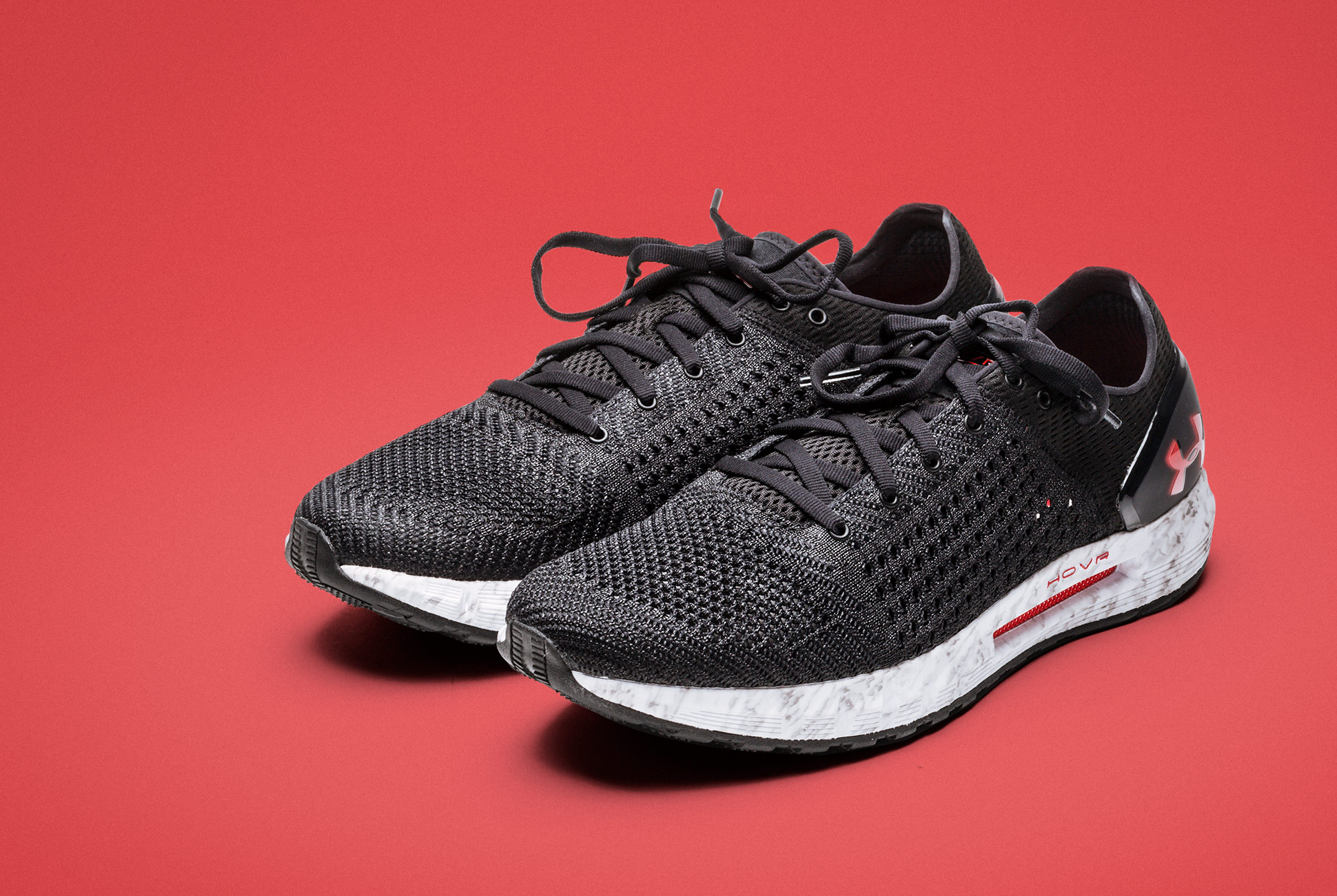
Under Armour’s New HOVR Sonic Is the Newest Wave in Foam

Under Armour’s newest foam, named HOVR, released at the end of January (right around Outdoor Retailer) and debuted in new two running shoes: the Sonic and the Phantom. The Phantom represents the higher-end of Under Armour’s line, and the Sonic occupies the space just below that. To get a feel for how the new foam technology compares to other options on the market, like Adidas’s Ultraboost and Nike’s new Epic React foam, I ran in the Sonic for just over 20 miles. But beyond new foam, the Sonic brings connectivity to the table through a built-in sensor.

The Good: There’s no break-in period with the Sonics. The dual-layered breathable upper hugs the arch of your foot, and the new foam provides an ample bounce that works great on long runs. They’re responsive and lightweight, even with an external heel cup for support. The shoes connect easily to the MapMyRun app which allows users to easily track miles, pace, stride length and cadence.

Who They’re For: The HOVR Sonics are great for runners who want a bit more support in the heel cup and underfoot, but still want ample space for toe splay. The toe box is larger and more flexible than New Balance Zantes or even the Adidas All Terrain Ultraboost.

Watch Out For: While the microthread fabric is quick drying, breathable and dual-layered around the midfoot, it might not contain the level of support you need if you’re particular about feeling compression around your arch. The flat-knit upper consists of a sock liner that’s more rigid than it appears. Since the tongue is uber stretchy, I had concerns that I might slide around in the shoes, especially around turns, but that was a non-issue.

Alternatives: The Sonic felt similar to Saucony’s Liberty ISO, and the Asics Gel Nimbus-20, only lighter. The foam itself feels similar to the Nike Pegasus 34, without as much roll in the foot.

The Verdict: Compared to past Under Armour running shoes (the Charged Bandit and SpeedForm Gemini), the Sonic is a strong competitor in the running shoe market. The new HOVR foam technology claims to be the ideal combination of cushioning, energy return and durability, but does it deliver?

For one, the Sonic doesn’t feel clunky — they feel soft and supportive. Energy return is a bit trickier to measure, but the shoes felt responsive on each of my runs after putting in around 20+ miles.

The outsole is different compared to other shoes I’ve tested recently. Typically, one piece of rubber covers the length of the sole, but with the Sonic, a circle of highly-abrasion-resistant rubber is placed on the heel to counteract any powerful heel striking. The outsole held up in virtually all the terrain I tested it in.

The external heel counter keeps your heel planted in the shoe — which helps prevent any slipping on turns. Plus, the cushioning underfoot made me feel confident enough to try heel-striking (I’m typically more of a midfoot striker).

The most exciting feature of the Sonic is that they are “connected.” There’s a sensor built-into the shoe that syncs up with the Map My Run app to deliver all your running stats — whether you choose to run with your phone or not. The allure of never worrying about missing a mile because you forgot to start your fitness tracker is appealing. Under Armour has attempted similar technologies in the past, but I’ve had trouble using previous models (connectivity and interference in particular). The Sonic though, was a different experience. From start to finish, linking the shoe to an app took all of one minute (including the time it took to download Map My Run). To connect, lift up the right shoe and place it down flat for 5 seconds to reset the system. That’s it. From there, you can track distance, duration, pace and cadence in real time. You can also measure your stride (quick feet help you to hit faster speeds). Even if you hate running with your phone, the shoes will sync with your phone and subsequent apps up once you’re back in range. Best of all, there’s no charging cord, and I never even noticed the sensor.

What Others Are Saying:

• “As promised, the shoe delivered comfort and responsiveness. The longer I ran the more I appreciated the shoe—the HOVR tech is a notable new platform upgrade for pounding miles on pavement.” — Stephen Regenold, Gear Junkie

Key Specs

Weight: 9.6 ounces
Offset: 8mm
Heel: 21mm
Forefoot: 13mm

|

Review: Nike Epic React

The Epic React running shoe performs well in practically all conditions, but are they the right shoe for you? Read the Story