All posts in “Reviews”

Review: These Award-Winning, Noise-Canceling Headphones Are Perfect for Hi-Fi Hipsters

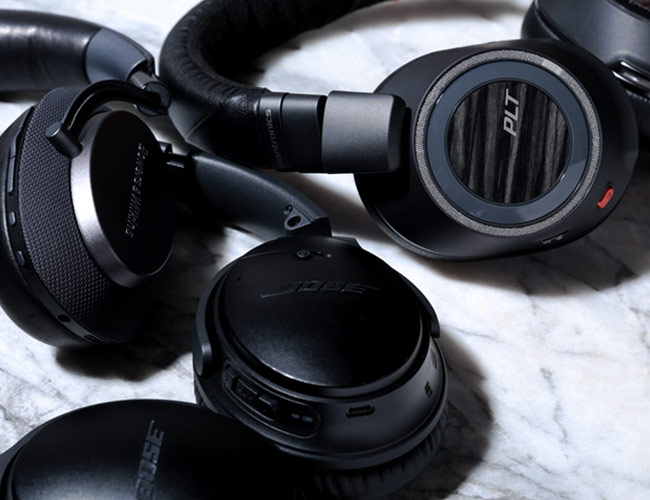
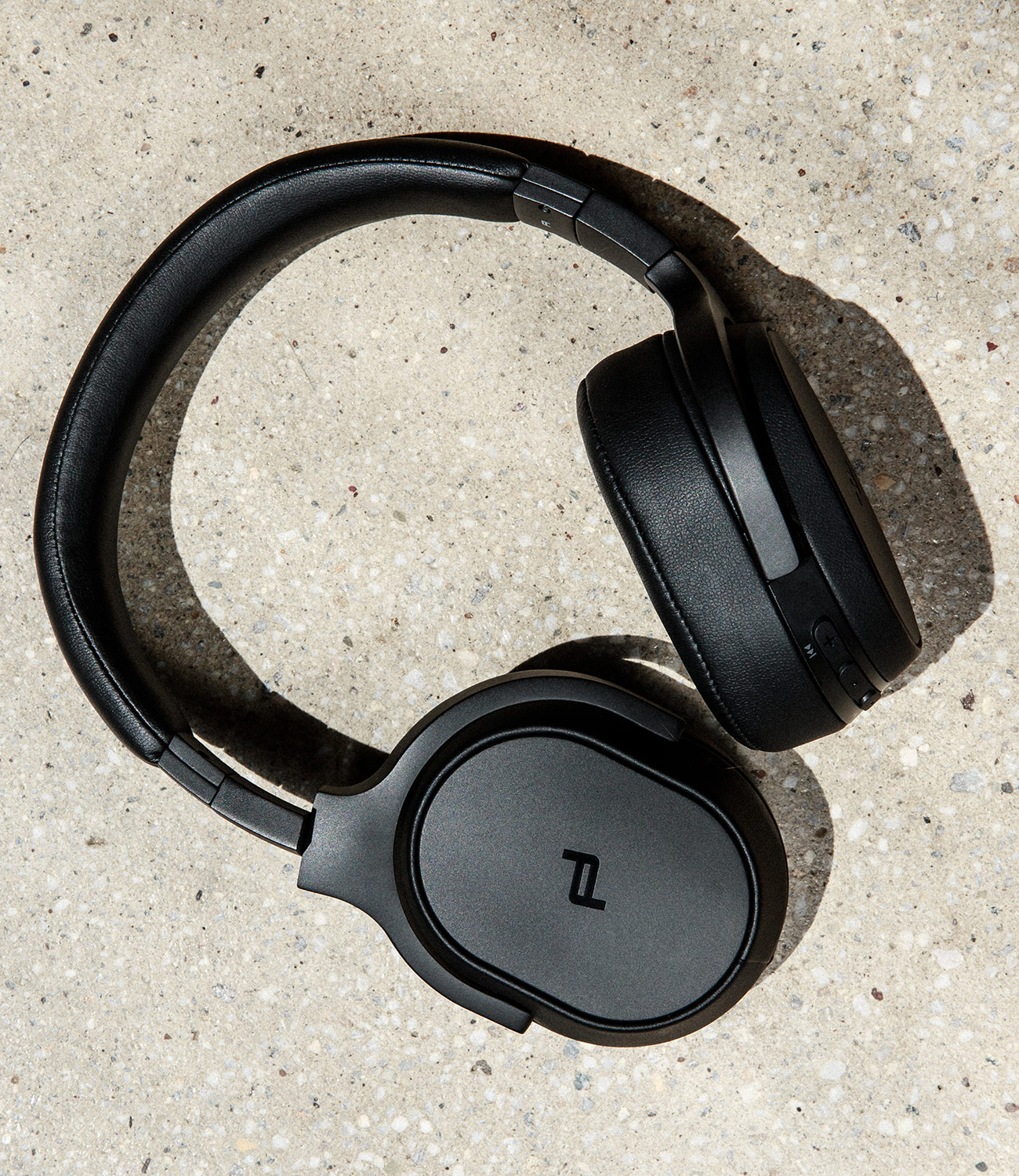
Porsche Design is pretty well-known in the tech space these days. As the luxury-lifestyle subsidiary of Porsche, the automotive goliath, it’s collaborated with many tech companies to bring a premium and design-focused flare to smartphones, laptops, speakers and headphones. The Space One Wireless ($400) are a collaboration with KEF, the British audio company that’s best known for its really high-end loudspeakers, and they mark the second time that Porsche Design and KEF have partnered on a pair of active noise-canceling headphones; the Space One (wired) headphones were released in 2016. The Space One Wireless are a wireless version of those original ANC headphones and they are very much a rival to other active noise-canceling headphones, like Bose’s QC35 II and Sony’s WH-1000XM2. The headphones also won a Red Dot Design Award in 2017.

|

The Good: The Space One Wireless sound good and accurate. There’s no distinct sound signature, like the grandiose sound of B&W’s PXs or the bass-heavy of that Bose and Beats have become well known for; midrange and treble are both really strong, too. The bass is definitely there, too, but it’s not overpowering in the same way as other popular headphones. I’m a big fan of the simple-yet-distinct style. The headphones aren’t the lightest ANC over-ear headphones, but they don’t feel heavy and wearing them for long listening sessions is easy. No companion app is required to get the most out of the headphones (which can be a good or bad thing, depending on what you want).

Who They’re For: Anybody looking for good noise-canceling headphones that are distinct — not the same Sony or Bose headphones that everybody else is wearing. They’re solid for everyday wear, commuting to work and talking on the phone, but because they don’t break down and the carrying case is quite large, they might not be the best for frequent travelers.

Watch Out For: No collapsible design for easy travel. No compatible app to adjust the EQ or ambient noise control. The on/off switch on the right earcup could be better; it’s difficult to switch to switch to just Bluetooth (no ANC) because the switch doesn’t lock in very easily. At $400, the Space One Wireless are more expensive than its Bose and Sony rivals. The active noise-canceling isn’t quite as effective as other ANC headphones.

Alternatives: If you’re looking for best overall sound quality and noise-canceling ability, the two best wireless ANC headphones continue to be Bose’s QC35 II and Sony’s WH-1000XM2. But not by much. These Space One Wireless, along with the Sennheiser HD1 Wireless ($350) and the Bowers & Wilkins PX ($400), are close runners-up.

Review: After testing a lot of over-ear noise-canceling headphones, I have a pretty good idea of what I like and what I don’t — and the Space One Wireless headphones have a bit of both. As with all over-ear headphones, sound quality is paramount and these headphones sound great. The vocals and instrumentals in songs like “Downtown” by Majical Cloudz, “Wasting My Young Years” by London Grammar and “Bright Lights” by Thirty Seconds to Mars, were accurate, and the bass was never too overpowering. There’s no distinct sound signature. It’s just clear and immersive.

The headphones are simple to use — there’s no companion app to fiddle around with (so you better like the headphone’s natural sound signature) — however, the on-ear buttons gave me more problems that I would like. The primary buttons (play/pause, skip tracks and answer calls) take some learning, but this is true with a lot of over-ear headphones; the real issue is that it’s nearly impossible to switch the headphones to a wireless mode without ANC simply because the on-earcup switch is so difficult to stop on that mode; I had to take the headphones off to find the switch. It’s a little thing but it’s a simple design issue that I feel could’ve been avoided.
KEF’s previous headphones, specifically the M500 and M400 headphones, had all been marketed as luxury headphones for business travelers; they sounded great, looked sophisticated and had a collapsible design they took up minimal space in your carry-on bag. The Space One Wireless headphones are all of those things, except they aren’t collapsible, which is why I feel that although they could work fine as travel headphones, they’re not made for it. Instead these are solid everyday headphones. Walking to and from work, through New York’s Midtown and Chelsea districts, the Space One Wireless’s noise-canceling ability is good but not elite. Sony’s and Bose’s competitors were a little better at blocking out cars and sirens and things of that nature.

Verdict: The KEF and Porshe Design Space One Wireless headphones sound more accurate than their Bose and Sony competitors, which music lovers and audiophiles will like. Yes, they’re also a little more expensive, don’t have the save noise-canceling abilities, and feel a little dated in terms of features (no built-in voice assistant and no companion app to fine-tune sound settings). However, I’m a firm believer that consumer tech you use every day is a reflection of yourself, and if you want to be different than most other people wearing Bose’s and Sony’s headphones, these Space One Wireless are excellent and good looking ANC headphones that you probably won’t see many other people wearing. Which is cool.

What Others Are Saying:

• “This is the first time KEF has incorporated Bluetooth and noise cancelation into a pair of headphones, and it’s a joy. On the train, the underground, and walking around the city, it removed just the right amount of noise, while barely impacting the quality of the music. It was most effective listening to podcasts, where spoken voice is usually drowned out by roar of the London underground.” — Andy Boxall, Digital Trends

• “KEF and Porsche Design have come up with some fine headphones, but I can’t help feeling they’ve come to the market a little late in the game. By now, the same money can get you an excellent-sounding pair of headphones, with remarkable noise cancellation and even some smart features thrown in. However, if you’re a fan of the design, or you want something straightforward, the Space One Wireless won’t disappoint.” — Ced Yuen, Trusted Reviews

Key Specs

Drivers: 40mm
Frequency Response: 20-20kHz
Sensitivity: 94dB
Impedance: 16Ohm
Connectivity: Bluetooth 4.1 with aptX
Battery Life: 30 hours with wireless ANC

|
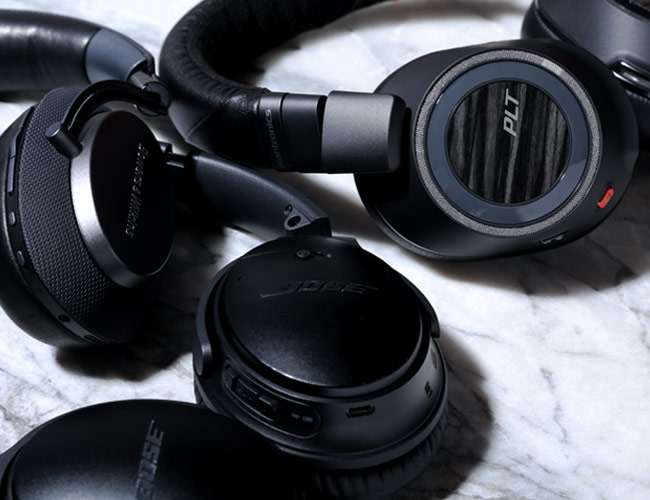
The Best Noise-Canceling Headphones of 2018

This definitive guide to the best noise-canceling headphones of 2018 explores everything you need to know before buying your next pair of headphones. Read the Story
Note: Purchasing products through our links may earn us a portion of the sale, which supports our editorial team’s mission. Learn more here.

These American-Made Boots Are Hard to Beat

I’ve worn roper-style Western boots for as long as I can remember. In high school, when my feet were big enough, I got a pair vintage Red Wing Pecos from my dad. The roper style is a little different than traditional cowboy boots, which have a taller and angled riding heel. Ropers have a shorter heel, designed to handle a day of walking, and many styles are complemented with a shorter shaft as well. Over the years, I’ve picked up newer ropers from brands like Red Wing Heritage and Tecovas.

I recently came across the Jonah boot from American bootmaker Lucchese. Founded in San Antonio in 1883, the brand is distinguished in the world of Western boots, and it offers a range of modern styles that complement its traditional offerings. The Jonah boot blends a traditional roper with a narrow side-zip shaft. The Lucchese site says it’s equestrian-inspired, but apart from the zipper and slim profile, the style doesn’t scream horseman. It’s a slim boot that pairs well with modern pants, a style both versatile and rooted in tradition. To see if Lucchese’s boot really offered an advantage over my traditional ropers, I got my hands on a pair.

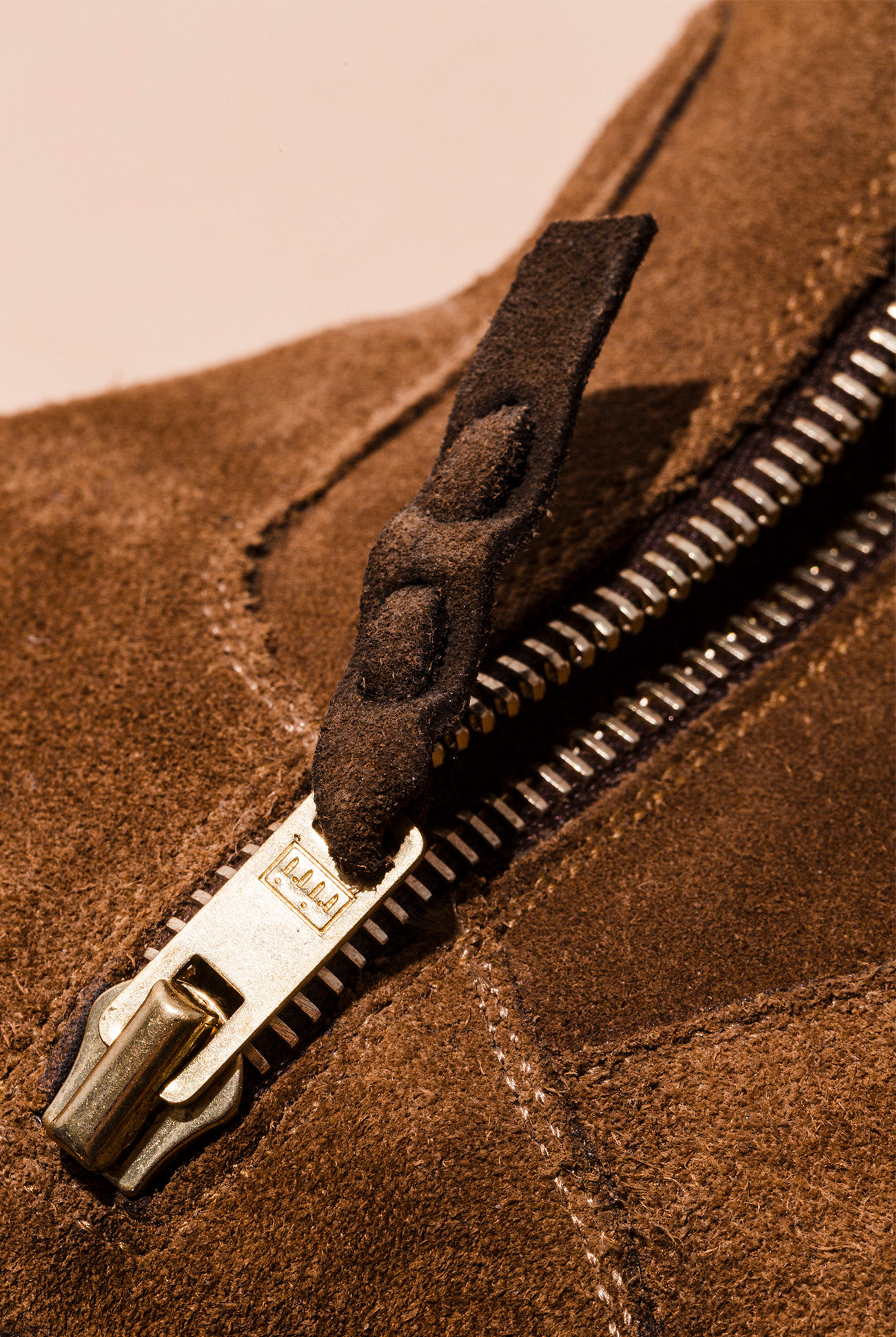
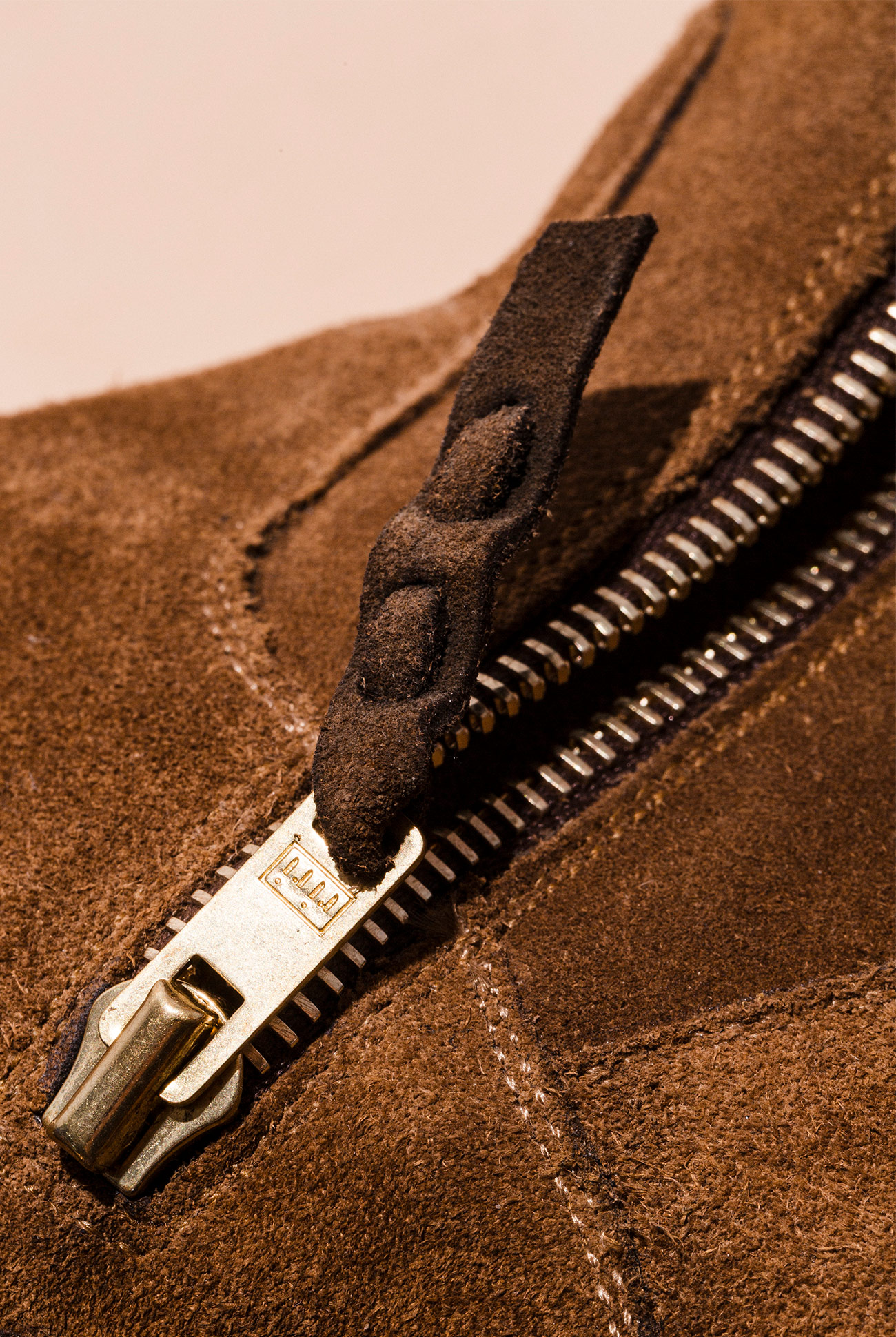
The Good: First and foremost, this is a very good looking boot. It has a slim profile and minimal flourishes, making it incredibly versatile. You can pair it with jeans for a more casual look or wear it with slacks as a Chelsea boot stand-in. The American construction is something a lot of people will get behind, and the materials are top notch. The maracca calf suede is a light shade of brown that will age more gracefully than lighter colors, and the zipper is from Riri — the best of the best. Because of the of the weight of the calf suede, these boots are comfortable out of the box and take little time to break in.

Who They’re For: The Jonah is for boot lovers. It has an incredibly versatile silhouette and blends the best qualities of roper boots with a slim profile more frequented by musicians than cowboys. If you love American-made footwear and feel waterlogged by workboots, consider this style. It’s a modern take on a boot that defined the West, suitable for a range of different wardrobes.

Watch Out For: The leather sole is not ideal for everyone. Ever take your leather soled footwear on the ice? No good. Also, if you’re worried about accelerated wear on asphalt or gravel, you can add a Vibram or Topy rubber sole-protector without greatly altering the silhouette. While the calf suede is more comfortable out of the box and breaks in faster than a thicker hide, it probably won’t have the life of a roughout boot (like Red Wing Heritage’s Pecos style). This is a boot for everyday wear; it’s not a work boot — and you should be aware of this if you aren’t already. The price is also a deterrent for some. They’re a substantial investment at almost $800.

Alternatives: There are a number of zip boots with Western silhouettes. One of the more affordable options is the Frye Campus Inside Zip, which costs $458. Like the Jonah boot, it’s made in the USA and comes in an earthy suede colorway. In an upper price tier, Raf Simon’s Calvin Klein 205W39NYC collection includes the suede Western Tod zip boot; it is made in Italy and costs $1,096. Then there’s up the Saint Laurent Wyatt Suede harness boots, which retail for $1,145, or the Tom Ford Icon Wilson leather boots for $1,790 (made in Italy with burnished leather opposed to suede).

Review: A couple years ago, I saw Snake Oil Provisions teasing its collaborative Lucchese Jonah boot on Instagram. They looked badass: a worn-suede roper silhouette tucked under a pair of raw-hemmed tapered jeans. It was equal parts cowboy, biker and rock star — a traditional boot modernized with a slim zip shaft. But time got the better of me and I didn’t get my hands on a pair of Jonahs until recently. Once I pulled them out of the box, I kicked myself for not doing it sooner.

The boots have a sleek profile akin to a few of Lucchese’s traditional Western models. Made from three pieces of maracca calf suede, the boot features a smooth and substantial Riri zipper with a leather zipper pull. The leather sole is complimented by a leather stacked heel, which has a rubber protector that can easily be replaced. The Jonah is lined with leather, sports a leather footbed and includes a steel shank for longevity.

Out of the box, these boots are very comfortable, due mainly to the use of calf suede. I’ve suffered the gauntlet of heel blisters and have come to expect as such from breaking in ropers (notably the Pecos). The suede here, though soft and easy-wearing, isn’t a cop-out. The hide ages gracefully and even looks a little better worn-in than new.

Other roper boots I own force compromises with how I wear my pants. Sometimes my jeans are too tapered and can’t cover the shaft, so they end up tucked inside. Other times, the pants can slip over the outside but can look a little wonky with the displaced silhouette. Only my traditional straight-leg pants sit over the shaft of my ropers without too much of a hassle. The Jonah looks good with all my pants, and there’s never a question of how to style it. The seven-inch shaft height is just long enough for a zip style, leaving your calves enough room to flex while still giving you coverage where you need it. Finally, the relatively simple non-embellished exterior makes this a winner for many different styles.

Verdict: This is a very cool boot. It checks many of the boxes that I personally look for: quality materials, American manufacturing, resolable, understated. It also draws upon Western traditions with a sleek foot profile and roper heel. The zip shaft is narrower than many traditional ropers, which makes it easy to pair with modern tapered jeans and chinos. If you’re looking for a versatile non-work boot style and have the budget to spare, this boot should be at the top of your list.

What Others Are Saying:

• “I’ve been waiting for years, more than 10 years, for Lucchese to come out with a slim, modern European-like boot and finally they have arrived. I purchased mine in San Antonio from the store. It took about two months for them to come in. I get compliments on mine all the time. They are comfortable but most importantly they are so slick!” — Elijah Zane, lucchese.com

• “Now, Lucchese, while being a large and well-known bootmaker, is no longer the top-quality manufacturer they once were – at least when dealing with off-the-rack boots (I’ve no experience with their custom process). The Jonah retails at $795, which is almost twice as much as smaller, more renowned Texan bootmakers — although they’re still a step up from makers like Frye. However, it’s not likely that you’ll find something that looks like a Jonah at these other shops, and I’ve only been able to find a few stockists of these boots.” — Jasper Lipton, The Styleforum Journal

• “Purchased Lucchese Jonah is espresso suede. Butter soft, fits like a glove. Only thing I would change is the price tag so I could afford all three color variations. No break-in period required — soft from the start and contours to your foot in hours. helpful to get a rubber topy sole installed for city walking — leather soles do not last unless you decide to wear them to the office and no sidewalk travels. Maybe a Dainite sole version would be best for true city walking.” — Alexander M., lucchese.com

Key Specs

Material: Maracca calf suede
Sole: Leather
Shaft Height: 7 inches
Zipper: Riri
Widths: D, EE
Sizes: Half sizes between 8 and 12, whole sizes between 13 and 15

Read More Gear Patrol Reviews

Hot takes and in-depth reviews on noteworthy, relevant and interesting products. Read the Story

Note: Purchasing products through our links may earn us a portion of the sale, which supports our editorial team’s mission. Learn more here.

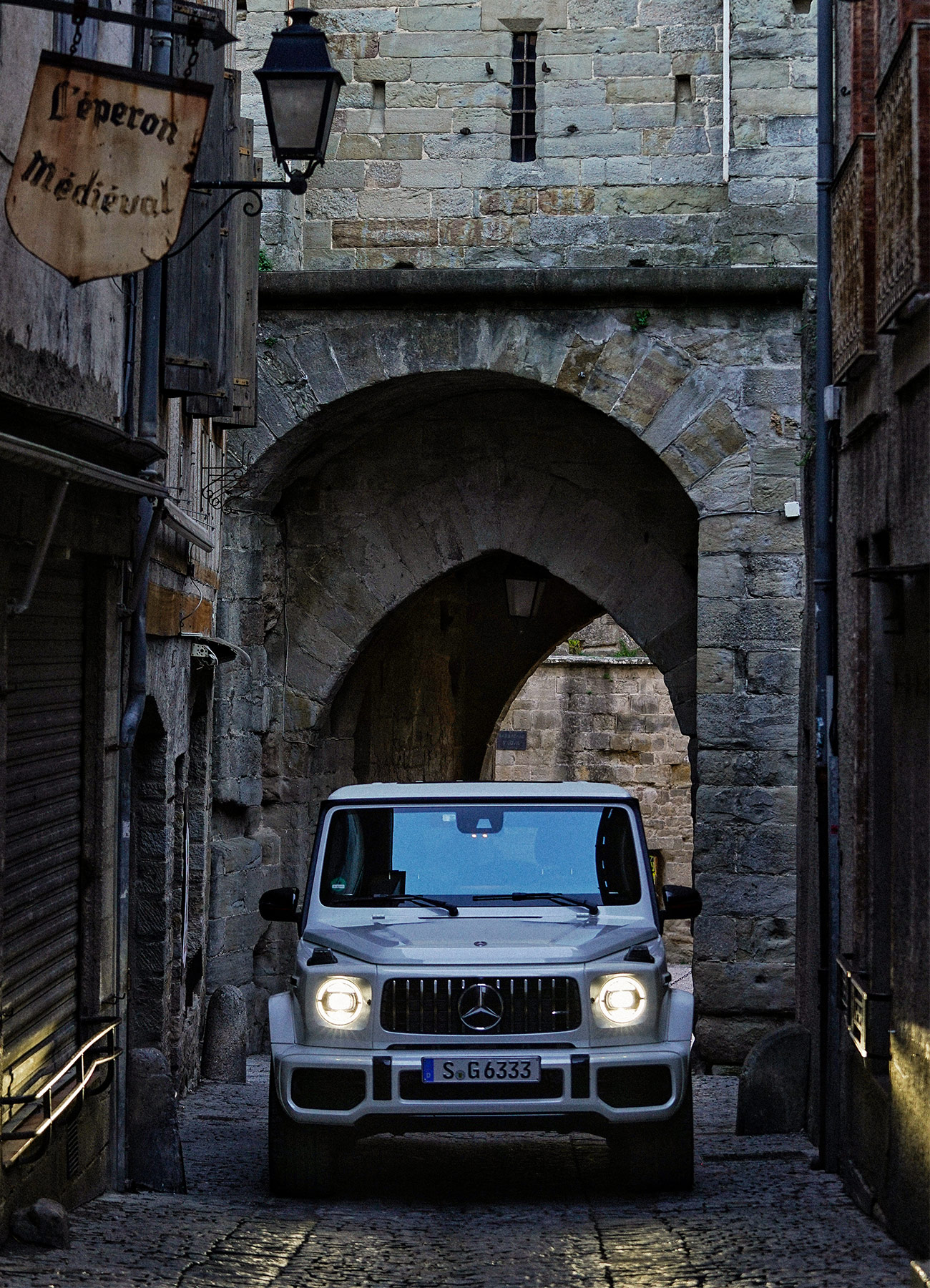
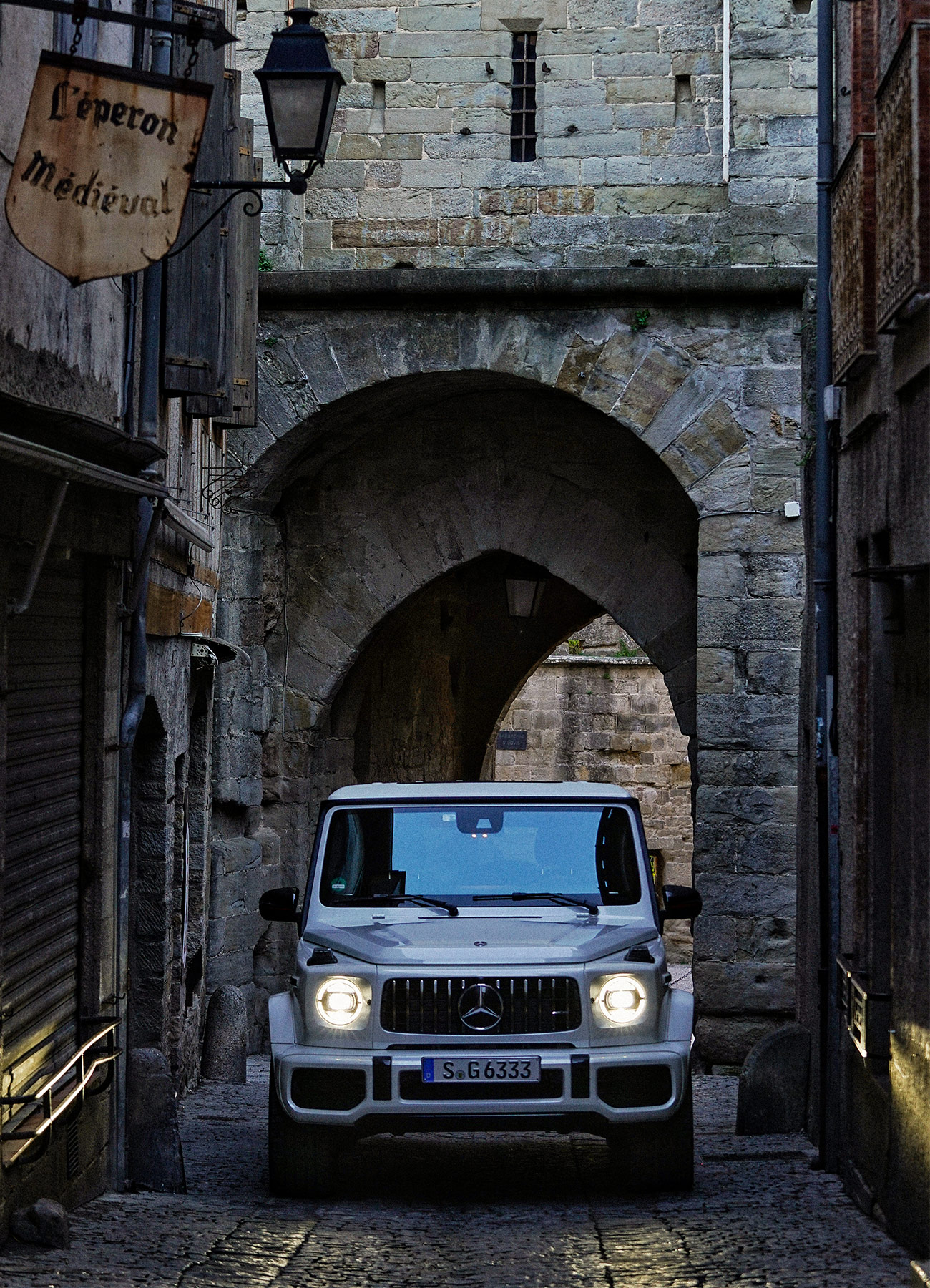
Mercedes G 550 and AMG G 63 Review: The All-New, Legendary G-Wagen Remains Iconic

The Mercedes G-Class — a.k.a the Geländewagen, a.k.a. the G-Wagen/Wagon — holds a special place in our heart, up there with vintage Defenders and Broncos. It’s a purposeful creation that follows its own North Star, and we respect that. But it’s been 40 years since the G-Class started raising eyebrows around the world, due to its sharp corners, severe verticality and decidedly anti-luxurious, militaristic disposition. Those qualities, along with its legitimate utility and off-roadability, drew fans around the world, but it was time to nudge the machine into the 21st century, even if just a hair. So Mercedes went back to the drawing board, made a variety of measured modifications to its iconic exterior and more essential enhancements underneath — and rebirthed the legend.

The Good: The core goodness, of course, rests in the improved off-road handling in both models, the G 550 and the performance-enhanced AMG G 63. Engineers retained the ladder-type frame and the three 100-percent differential locks, deeming them essential to its off-road character, but reworked the suspension and front axle to provide greater stability and crawlability, and also modernized the steering with an electromechanical system over the old recirculating ball design. They also gave it quite a bit more poise on-road — something the previous G lacked. Finally, the new G-Class is more comfortable inside, with improved seating, visibility and utility — plus, of course, all the tech accouterments that have become de rigeur across all vehicles. It still retains its character, with its unique and immediately recognizable exterior profile, but it’s a more well-rounded machine overall.

Who They’re For: Depends on which model we’re talking about. If it’s the G 550, you’re into sunrises, long runs on the beach, and hard-core off-roading. If it’s the AMG G63, you’ve never actually seen a sunrise, you go to the beach mostly to burn off a hangover and you enjoy blasting past lesser machines on the highway at triple-digit speeds while towering three feet above everyone else. We kid, of course — but the AMG G-Class is more distinct in personality from the G 550 than pretty much any other Mercedes AMG product is from its starting point. The G63 is, to be blunt, a statement vehicle — a fun bit of outrageous excess for people who crave vehicles that reflect their outrageous personalities. It’s okay, Mercedes knows this. Otherwise, they wouldn’t have birthed the six-wheeled AMG 6×6. The G 550? That’s for “normals” — those who want the car either for its utility or for their own vastly dialed-down, but still distinctive, personality preferences. Think Pimpmobile versus Popemobile.

Watch Out For: Wind and road noise. Though the G-Class is indeed a more well-rounded machine, that’s not true at the corners. The company kept those cleanly defined edges as essential to the car’s visual character, the only compromise being an ability to temper wind noise. So even though it is significantly reduced from the car’s predecessor, it’s still very much wind noise present. Tire noise is also dialed way down, but there are still detectable hints of it. So this ain’t no S-Class; but the S-Class ain’t no G, either.

Alternatives: It’s in a class by itself, of course, but the Land Rover Range Rover is the most obvious competition as a luxury SUV, and the new Jeep Wrangler will easily give the G-Class a run for its money off-road. As for which one you’d want to ride into the apocalypse, that’s up to you.

Review: You have to admire a vehicle with as many “signatures” as the G-Class — the details and qualities that designers delete from a new version at their peril. For the G-Class, these include the periscopic turn signals on the front fenders, the visible spare out back, the signature door handles, and even the satisfyingly robust clicking sound when the doors close. All remain in the new version, but they’re presented amid new signatures slyly peppered throughout the vehicle. The front headlights, for instance, now have LED surrounds that give the car a striking visage in the rearview mirrors of cars ahead of it. The front grill has a newly updated and immediately recognizable three-louver design. Coupled with other more nuanced design updates, including a slightly wider stance, the effect remains powerful and aggressive. The look is still as pure as the original’s, but it’s got a lot going on, nonetheless — a cumulative subconscious impact that thoroughly modernizes the classic look.

Performance improvements are notable throughout the G-Class. The ladder frame construction remains, as do the differential locks and low range gear reduction, to enable smoother traversals over tricky terrain. The suspension, though, gets an independent double-wishbone front axle and a rigid rear axle. This adds stability, and the ground clearance boosted a few millimeters to 270mm. Its prowess has been improved overall, with a fording depth of 70cm, which is 10cm more than its predecessor, and it can remain stable at tilt angles of 35 degrees. We tested this out in southern France on the vehicle’s launch, scrambling over the country’s hard-scrabble surface with measured stability and smoothness. The independent suspension makes for a more rigid front end, while a strut tower brace increases torsional rigidity. You don’t “feel” that as much as you see it — see the benefits of a stiffer, more capable crawler.

In both the AMG G 63 and the G 550, drivers can dial in the off-road performance or let the computer manage it, most notably in the new G-Mode. This adapts the adjustable chassis damping, the steering and the throttle behavior to maximize control. It feels precise and supremely controllable in even the more challenging — and treacherous — of skewed angles and weirdly contorted breakovers.

On-road, the same suspension enhancements also help smooth out the ride, creating a more stable feel even at triple-digit speeds. That’s not small feet for a top-heavy brick like this, but I was able to cruise effortlessly down the highway at brisk clips in the AMG G 63 — the extra 169hp, 585 total, make itself known there, while the extra 176 lb-ft of torque help out off-road — without the ever-present edge of worry that you experience in many big SUVs. It’s refreshingly car-like, even if the view up there feels absolutely stratospheric.

It’s safe to say, as well, that the myriad improvements in safety, infotainment and general ease of use — from the more accessible controls to more thoughtfully designed seats — make the G-Class compatible with daily life in a way its predecessor just wasn’t. The displays are gorgeous and comprehensible, the ride less severe, and the seating less an exercise in Cold War reenactment. It’s a vehicle you can actually enjoy while making your chosen statement, rather than merely endure.

Verdict: As a complete ground-up redesign, the new G-Class, AMG or not, is a curiously restrained execution, filled with deft tweaks and enhancements. The company could have easily decided that a 40-year run warranted something completely new and different that echoes its predecessor in name only, but they didn’t. It’s still the G, and this one will easily hold its own for another 40 years. It’s astonishing to contemplate that sort of longevity, and further to imagine what the, say, 2058 redesign might bring. But that’s getting a bit ahead of the curve. We like where we are right now, with this G-Class, and would rather imagine where it could take us than where it might go next.

What Others Are Saying:

• “You’ll still spend roughly $125K for the G 550 and $145K for the G63. Is that a lot of money or a screaming bargain? That depends on whether you see it as merely a luxurious SUV with nostalgic styling or an icon, perfected. I see it as the latter.” — Steve Siler, New York Daily News

• “The world needs the G-Wagen, even if most of them are parked in prominent valet spots at trendy restaurants in West LA. It’s an easy thumbs-up for Mercedes-Benz — for nudging the G in a direction that serves most of its buyers but not degrading the core values that put it so prominently on the automotive map to begin with.” — J.P. Vettraino, AutoWeek

• “For those who seek its rugged capability, it’s far easier to control off road without sacrificing anything in the way of outright prowess. For the on-road boulevard set, it’s significantly nicer to drive at all speeds, not to mention far more luxurious, tech-forward and outright comfortable than before.” — Steven Ewing, CNET

Key Specs: G 550 and AMG G 63

Engine: 4.0-liter V8; 4.0-liter twin-turbo V8
Transmission: nine-speed automatic
Horsepower: 416hp; 585hp
Torque: 450 lb-ft; 626 lb-ft
Weight: 5,355 lbs; 5,643 lbs
Top Speed: 130 mph; 136 mph
0-60: 5.9 seconds; 4.5 seconds
MSRP (base): $123,600

Read More Gear Patrol Reviews

Hot takes and in-depth reviews on noteworthy, relevant and interesting products. Read the Story

Note: Purchasing products through our links may earn us a portion of the sale, which supports our editorial team’s mission. Learn more here.

Mercedes G-Class Review: The All-New, Legendary G-Wagen Remains Iconic

The Mercedes G-Class — a.k.a the Geländewagen, a.k.a. the G-Wagen/Wagon — holds a special place in our heart, up there with vintage Defenders and Broncos. It’s a purposeful creation that follows its own North Star, and we respect that. But it’s been 40 years since the G-Class started raising eyebrows around the world, due to its sharp corners, severe verticality and decidedly anti-luxurious, militaristic disposition. Those qualities, along with its legitimate utility and off-roadability, drew fans around the world, but it was time to nudge the machine into the 21st century, even if just a hair. So Mercedes went back to the drawing board, made a variety of measured modifications to its iconic exterior and more essential enhancements underneath — and rebirthed the legend.

The Good: The core goodness, of course, rests in the improved off-road handling in both models, the G 550 and the performance-enhanced AMG G 63. Engineers retained the ladder-type frame and the three 100-percent differential locks, deeming them essential to its off-road character, but reworked the suspension and front axle to provide greater stability and crawlability, and also modernized the steering with an electromechanical system over the old recirculating ball design. They also gave it quite a bit more poise on-road — something the previous G lacked. Finally, the new G-Class is more comfortable inside, with improved seating, visibility and utility — plus, of course, all the tech accouterments that have become de rigeur across all vehicles. It still retains its character, with its unique and immediately recognizable exterior profile, but it’s a more well-rounded machine overall.

Who They’re For: Depends on which model we’re talking about. If it’s the G 550, you’re into sunrises, long runs on the beach, and hard-core off-roading. If it’s the AMG G63, you’ve never actually seen a sunrise, you go to the beach mostly to burn off a hangover and you enjoy blasting past lesser machines on the highway at triple-digit speeds while towering three feet above everyone else. We kid, of course — but the AMG G-Class is more distinct in personality from the G 550 than pretty much any other Mercedes AMG product is from its starting point. The G63 is, to be blunt, a statement vehicle — a fun bit of outrageous excess for people who crave vehicles that reflect their outrageous personalities. It’s okay, Mercedes knows this. Otherwise, they wouldn’t have birthed the six-wheeled AMG 6×6. The G 550? That’s for “normals” — those who want the car either for its utility or for their own vastly dialed-down, but still distinctive, personality preferences. Think Pimpmobile versus Popemobile.

Watch Out For: Wind and road noise. Though the G-Class is indeed a more well-rounded machine, that’s not true at the corners. The company kept those cleanly defined edges as essential to the car’s visual character, the only compromise being an ability to temper wind noise. So even though it is significantly reduced from the car’s predecessor, it’s still very much wind noise present. Tire noise is also dialed way down, but there are still detectable hints of it. So this ain’t no S-Class; but the S-Class ain’t no G, either.

Alternatives: It’s in a class by itself, of course, but the Land Rover Range Rover is the most obvious competition as a luxury SUV, and the new Jeep Wrangler will easily give the G-Class a run for its money off-road. As for which one you’d want to ride into the apocalypse, that’s up to you.

Review: You have to admire a vehicle with as many “signatures” as the G-Class — the details and qualities that designers delete from a new version at their peril. For the G-Class, these include the periscopic turn signals on the front fenders, the visible spare out back, the signature door handles, and even the satisfyingly robust clicking sound when the doors close. All remain in the new version, but they’re presented amid new signatures slyly peppered throughout the vehicle. The front headlights, for instance, now have LED surrounds that give the car a striking visage in the rearview mirrors of cars ahead of it. The front grill has a newly updated and immediately recognizable three-louver design. Coupled with other more nuanced design updates, including a slightly wider stance, the effect remains powerful and aggressive. The look is still as pure as the original’s, but it’s got a lot going on, nonetheless — a cumulative subconscious impact that thoroughly modernizes the classic look.

Performance improvements are notable throughout the G-Class. The ladder frame construction remains, as do the differential locks and low range gear reduction, to enable smoother traversals over tricky terrain. The suspension, though, gets an independent double-wishbone front axle and a rigid rear axle. This adds stability, and the ground clearance boosted a few millimeters to 270mm. Its prowess has been improved overall, with a fording depth of 70cm, which is 10cm more than its predecessor, and it can remain stable at tilt angles of 35 degrees. We tested this out in southern France on the vehicle’s launch, scrambling over the country’s hard-scrabble surface with measured stability and smoothness. The independent suspension makes for a more rigid front end, while a strut tower brace increases torsional rigidity. You don’t “feel” that as much as you see it — see the benefits of a stiffer, more capable crawler.

In both the AMG G 63 and the G 550, drivers can dial in the off-road performance or let the computer manage it, most notably in the new G-Mode. This adapts the adjustable chassis damping, the steering and the throttle behavior to maximize control. It feels precise and supremely controllable in even the more challenging — and treacherous — of skewed angles and weirdly contorted breakovers.

On-road, the same suspension enhancements also help smooth out the ride, creating a more stable feel even at triple-digit speeds. That’s not small feet for a top-heavy brick like this, but I was able to cruise effortlessly down the highway at brisk clips in the AMG G 63 — the extra 169hp, 585 total, make itself known there, while the extra 176 lb-ft of torque help out off-road — without the ever-present edge of worry that you experience in many big SUVs. It’s refreshingly car-like, even if the view up there feels absolutely stratospheric.

It’s safe to say, as well, that the myriad improvements in safety, infotainment and general ease of use — from the more accessible controls to more thoughtfully designed seats — make the G-Class compatible with daily life in a way its predecessor just wasn’t. The displays are gorgeous and comprehensible, the ride less severe, and the seating less an exercise in Cold War reenactment. It’s a vehicle you can actually enjoy while making your chosen statement, rather than merely endure.

Verdict: As a complete ground-up redesign, the new G-Class, AMG or not, is a curiously restrained execution, filled with deft tweaks and enhancements. The company could have easily decided that a 40-year run warranted something completely new and different that echoes its predecessor in name only, but they didn’t. It’s still the G, and this one will easily hold its own for another 40 years. It’s astonishing to contemplate that sort of longevity, and further to imagine what the, say, 2058 redesign might bring. But that’s getting a bit ahead of the curve. We like where we are right now, with this G-Class, and would rather imagine where it could take us than where it might go next.

What Others Are Saying:

• “You’ll still spend roughly $125K for the G 550 and $145K for the G63. Is that a lot of money or a screaming bargain? That depends on whether you see it as merely a luxurious SUV with nostalgic styling or an icon, perfected. I see it as the latter.” — Steve Siler, New York Daily News

• “The world needs the G-Wagen, even if most of them are parked in prominent valet spots at trendy restaurants in West LA. It’s an easy thumbs-up for Mercedes-Benz — for nudging the G in a direction that serves most of its buyers but not degrading the core values that put it so prominently on the automotive map to begin with.” — J.P. Vettraino, AutoWeek

• “For those who seek its rugged capability, it’s far easier to control off road without sacrificing anything in the way of outright prowess. For the on-road boulevard set, it’s significantly nicer to drive at all speeds, not to mention far more luxurious, tech-forward and outright comfortable than before.” — Steven Ewing, CNET

Key Specs: G 550 and AMG G 63

Engine: 4.0-liter V8; 4.0-liter twin-turbo V8
Transmission: nine-speed automatic
Horsepower: 416hp; 585hp
Torque: 450 lb-ft; 626 lb-ft
Weight: 5,355 lbs; 5,643 lbs
Top Speed: 130 mph; 136 mph
0-60: 5.9 seconds; 4.5 seconds
MSRP (base): $123,600

Read More Gear Patrol Reviews

Hot takes and in-depth reviews on noteworthy, relevant and interesting products. Read the Story

Note: Purchasing products through our links may earn us a portion of the sale, which supports our editorial team’s mission. Learn more here.

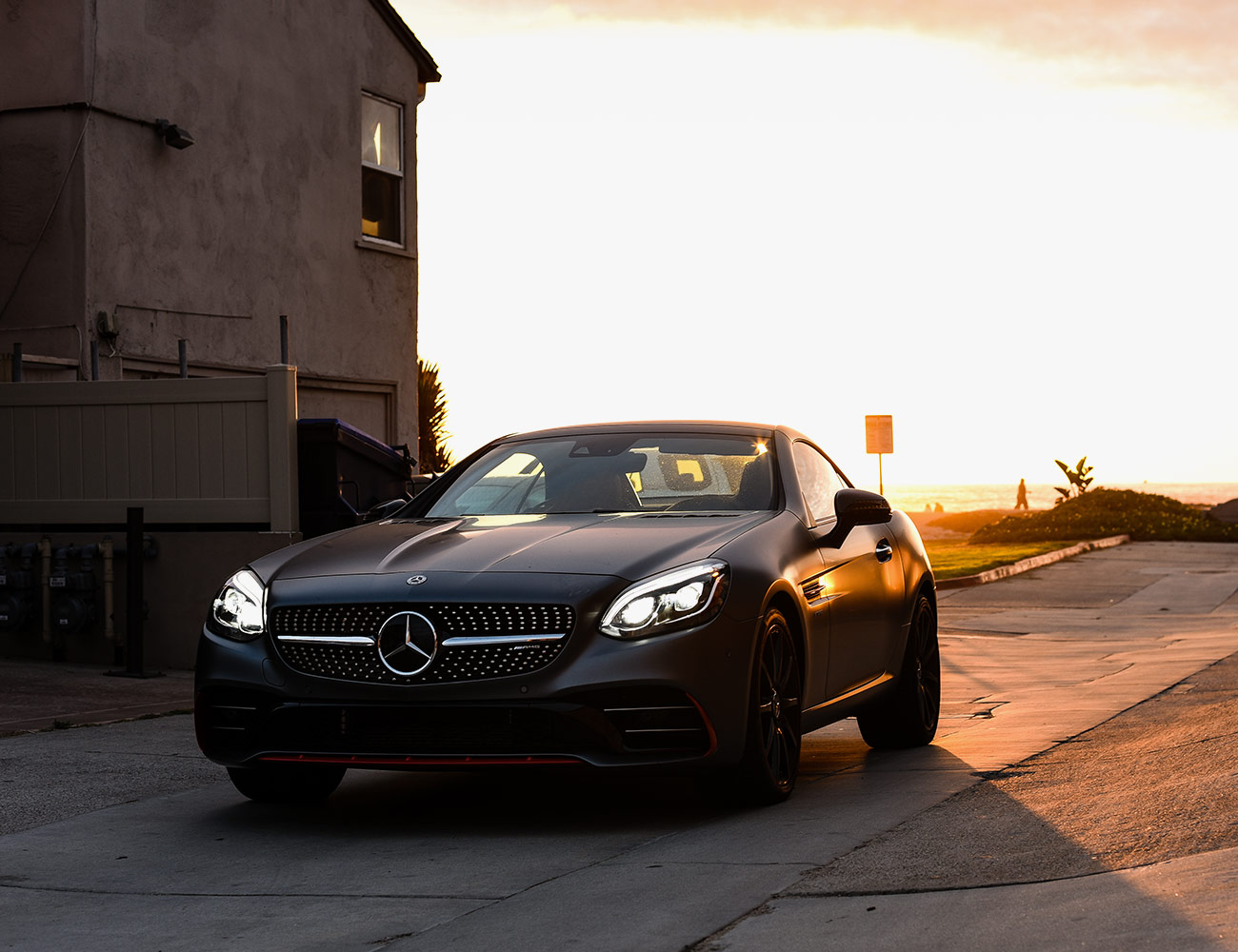
The Roadster Your Forgot Existed Is Five Different Cars In One

Long ago, back in 2004, Mercedes-Benz created the SLK 55 AMG. And it was good. Good if you wanted a powerhouse, pocket-sized roaster with a massive V8 shoved in front. Today we have its successor, the SLC 43 AMG, with two fewer cylinders, two more turbos, and… less power. This sounds like a step backward, but the SLC43 AMG is a more refined version of the pocket rocket concept.

It’s also a car most people tend to forget about because Mercedes makes a lot of convertibles and sports cars now. The flagship GT (both a coupe and a roaster); the grand touring SL; all the coupe and convertible versions of the C-CLass, E-Class and S-Class. But the top-spec SLC has a lot to love, especially if you know you want a sports car but aren’t sure what kind you want. A convertible? A coupe? A back road bomber? A highway-ready quick grand tourer? How about an acceleration-happy muscle car? Yup, the SLC 43 AMG is all of those things, and you — like much of the enthusiast community — probably didn’t realize it.

The Good: The SLC 43 AMG is a car that can do most things well, though it may not be the best at each. The phrase “Jack of all trades” comes to mind. Though historically that turn of phrase has negative connotations, I mean it as a compliment. The SLC43 AMG has lovely steering. Its acceleration, a sticking point to those who compare it to the slightly faster SLK55, still borders into “excessively fast” territory. It’s reasonably comfortable for a sports car, which means it won’t drive you mad on long trips and commutes, making it more than just a weekend toy that you spend more than $60,000 on.

Who It’s For: Somebody who wants a sports car but isn’t sure what kind of sports car they want. The SLC 43 is a great middle ground for a lot of buyers. Further, though I tested this car in Southern California, the folding hardtop will appeal to buyers in… less fortunate climates.

Watch Out For: This is a car that comes with a few compromises. For one, the folding roof means trunk space is limited — I struggled to fit a carry-on hardshell, two backpacks and a camera satchel in back. So while the car is grand touring-appropriate in its driving dynamics, don’t plan on really long trips. And while the interior is well-appointed, the infotainment system feels outdated, since it lacks a touchscreen interface and instead defers input to a clumsy-feeling knob. Finally, while the SL C43’s suspension is stiff (great for aggressive driving) it doesn’t soften up enough for truly comfortable cruising.

Alternatives: Both the Porsche 718 Boxster S and Jaguar F-Type V6 stand out as viable alternatives in the SLK43’s segment in regards to price and specs. The former is down two cylinders buts still bests the SLC 43 regarding acceleration, though the Boxster has been highly praised for its razor-sharp handling and feel and ideally suited for corner-carving. The Jaguar is similarly a critical darling for its handling prowess (and gorgeous looks), though despite having similar power figures doesn’t match the SLC43’s acceleration.

Review: The SLC 43 AMG comes with baggage. The SLK 55 AMG that came before it was a veritable madman of a machine, as most AMGs are. The SLC, on the other hand, is often decried as “not a real AMG,” with critics angrily gesturing towards the twin-turbo V6 which is not handbuilt by AMG (as is tradition), but instead merely tuned by Affalterbach’s mad scientists. It’s slower than the outgoing model by one-tenth of a second, which is just a silly complaint since its 0-60 mph sprint in 4.6 seconds still feels like a swift punch to the gut. And that acceleration comes paired with an absolutely filthy, crackling and raucous exhaust note when you lay into the throttle.

It’s more than sufficient for highway passes, and more than you really need for fun in the corners. Thankfully its short wheelbase lends itself to agile cornering and its steering feels heavily weighted and incredibly direct, a pleasant surprise given that many electric steering systems can feel numb and disconnected. The car’s suspension is firm, negating any sort of body roll — this is great for cornering but the downside is that it doesn’t soften up enough in “comfort” mode for regular cruising. The nine-speed automatic transmission is fairly sharp itself, and will, fortunately, let you take the car to redline without intervening, if you so choose.

But when you choose to drive calmly, the SLC 43 complies. When the transmission is left in automatic mode it shifts smoothly, and the accelerator is not so aggressively calibrated that smooth, civil driving requires the most delicate of touches. But the greatest boon to the SLC’s cruising acumen is its folding hardtop. In many soft-top roadsters, you still feel a vague, lingering exposure to the outdoors, but the hardtop creates a sealed, comfortable womb of a cockpit silent from wind noise and raindrops.

Even for such a small car (which, as a real-world bonus, makes it very easy to park) I had no problem fitting my five-foot-ten frame in with room to spare, and the cockpit is well-appointed. The car even features a unique “Airscarf” system which blows warm air on your neck when you’re driving with the top down. On the surface, it sounds silly, but it makes driving with the top down in slightly-chilly weather a hell of a lot more comfortable.

Verdict: This is ultimately the SLC’s greatest appeal. Move past the fact that it’s not a “real AMG” and you’ll find the SLC to be a solid performance car that doesn’t compromise on comfort, top up or down. It may not be the sharpest sports car in its price bracket, but that’s not really why you buy a car like this. You buy the SLC 43 because you want the most diversified sports car experience you can get.

What Others Are Saying:

• “The SLC43 will likely sell in larger numbers than the SLK 55. It is friendlier, more efficient, and nearly as quick empirically. It would make for a good trans-European touring companion. It is not an AMG, and that’s probably okay for the majority of people.” — Brendan McAleer, Road & Track

• “All told, this is probably the most painfully rational roadster you can get for the money. It has all of the tech you could want, and some you didn’t know existed (“Magic Sky Control,” anyone?). It is extremely competent.” — Graham Kozak, Autoweek

• “It’ll take a while to get used to the idea of an AMG that’s a bit less vigorous than some of its rivals, of course, but although the SLC 43 meets your performance expectations more meekly than you might expect, there is more power to come from AMG’s V6.” — Matt Saunders, Autocar

Key Specs

Engine: 3.0-liter biturbo V6
Transmission: nine-speed automatic
Horespower: 362hp @ 5,500 rpm
Torque: 384 lb-ft @ 2,000 rpm
0-60mph: 4.6 seconds
Fuel economy: 20/29 mpg (city/highway)

Read More Gear Patrol Reviews

Hot takes and in-depth reviews on noteworthy, relevant and interesting products. Read the Story

Note: Purchasing products through our links may earn us a portion of the sale, which supports our editorial team’s mission. Learn more here.

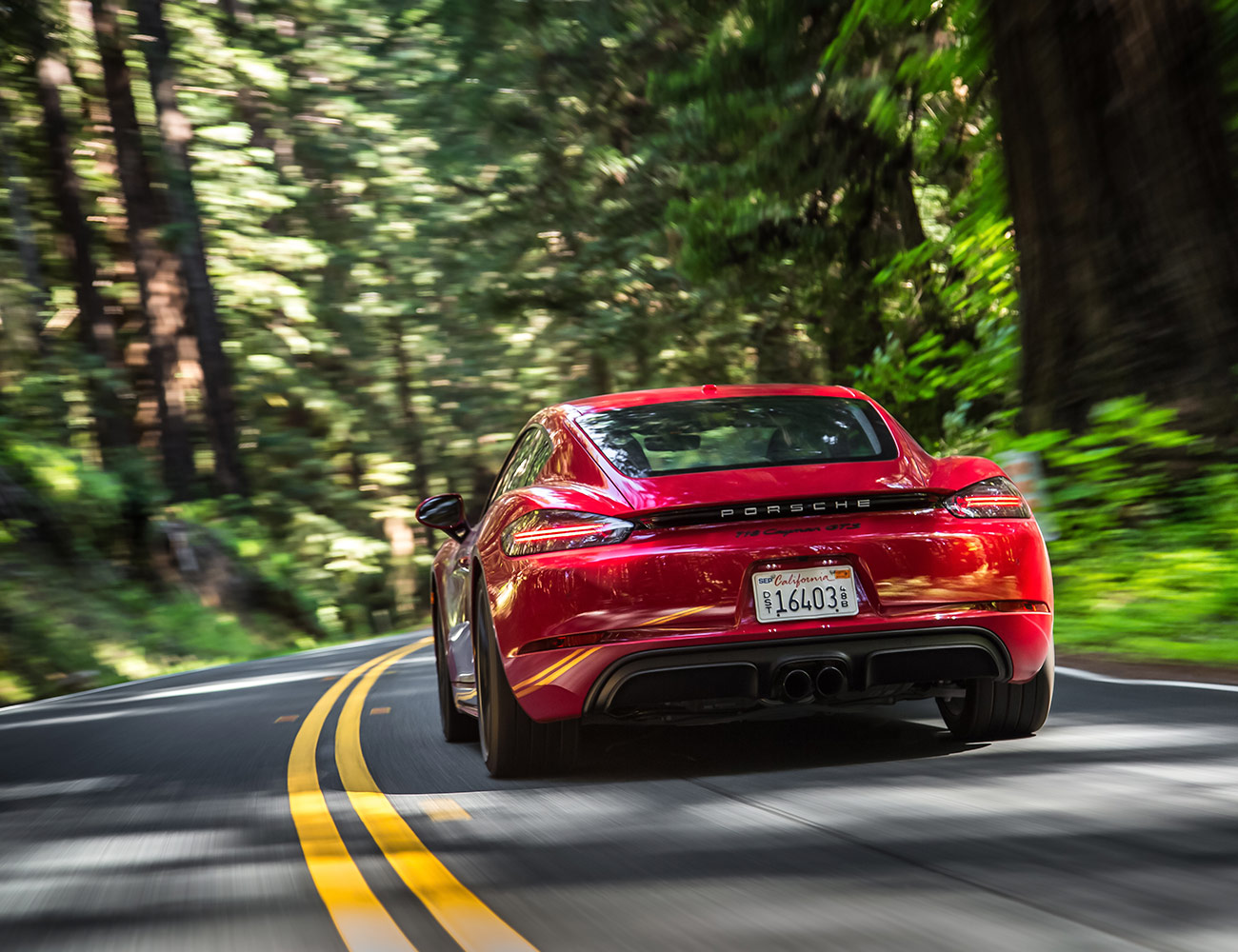
The 2018 Cayman GTS Is the Most Extreme Entry-Level Porsche

The Porsche Cayman GTS ($79,800 MSRP) sits at the highest end of the company’s “entry-level” model as a mid-engine, pared-down sports car coupe. Introduced in 2005 as a fraternal twin to the convertible Boxster range, both the Cayman and Boxster are now in their fourth generation, designated 718. Their evolution has seen consistent gains in performance, luxury, technology and cost. This model, the GTS, like the slightly more expensive Boxster GTS ($81,900) features standard aesthetic and engineering details that further increase power and torque compared to lower-versions. It comes standard with a six-speed manual and is offered with a seven-speed dual clutch automatic (called PDK, for “Porsche Doppelkupplung“). It is very fast, sounds wonderful and feels like a surface-to-air go-kart that, if you’re slightly bold, could do duty as a daily driver.

The Good: More power, more torque and better performance. Standard. Clever changes in the way air is supplied to the engine and turbocharger bump power 15 horsepower and torque up to 35 lb-ft over Cayman S models. While the engine is only a 2.5-liter four-cylinder, it develops 365 horsepower and up to 317 lb-ft of torque with the PDK (309 lb-ft for manual-transmission cars). That’s a lot of oomph and twist from a very tiny package, and it feels strong as hell. The car charges ahead and always supplied me with instant thrust, whether from a standstill (0-60 in 3.9 seconds, by the way) or on the open road (180 mph top speed).

Tha Cayman GTS also handles like a champ, thanks to a system called PASM (Porsche Active Suspension Management), which squats the car 0.39 inches lower than other Cayman models. A mechanical rear differential lock and Porsche Torque Vectoring (more engineering magic) provide extra grip and surefootedness. Tinted lights, blacked-out fascias and exhaust tips complement available black wheels; inside are deep, enveloping sport seats and Alcantara-covered everything.

Who It’s For: A driving enthusiast who’s serious about his toys. The Cayman GTS is small and austere for an $80,000 car, and it rides stiffly, like a tensed animal on high alert. Which is precisely the way it should be. It’s a relatively tiny sports car for someone who can afford to have a tiny sports car but also doesn’t want to compromise on fun and performance. If you want a Very Fast Porsche but don’t want to spend 911 money, this is your ride. Of course, if you want a convertible, the Boxster GTS is available for slightly more money and will be specced similarly.

Watch Out For: It’s small and low. Again, this isn’t a 911, which leans more ‘grand tourer’ on the size and shape end of the car spectrum. The Cayman GTS, especially with its standard “Sports Seats Plus” chairs, does not want your body to go anywhere — especially while you’re, you know, driving the car (this is good). But the seats also keep you very firmly planted when you need to exit the car, almost like they have a gravitational pull. Again, if you’re buying the Cayman GTS, this is what you want, but be sure you’re aware of what you’re getting into (and possibly not easily out of).

As mentioned above, the Cayman GTS is also quite spartan — though it’s well appointed and most of the materials are excellent, this is a car meant to be driven hard, and not to float down the road like a cloud. Some (very few, but prominent) touchpoint plastics inside feel cheap. À la carte options, as is Porsche tradition, are very pricey. Turbo noise is certainly audible, which will turn off purists (but they’ll have to get used to our Porsches-now-use-turbos reality, sorry).

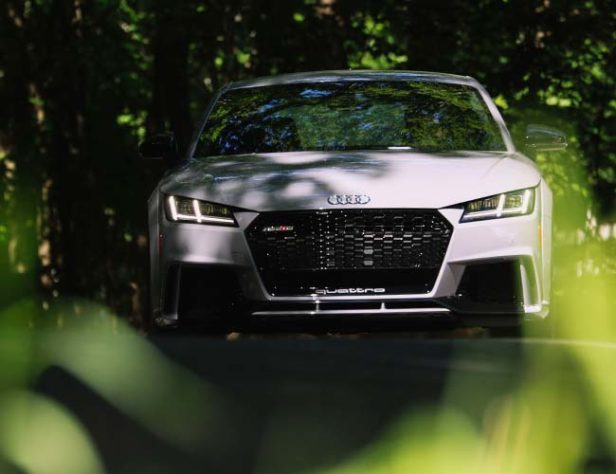
Alternatives: The obvious choice here is to stay within the German sports car clique; start there, and you really have two options in this general price range and performance band: Mercedes-AMG and Audi. The Mercedes-AMG C63 S coupe ($75,500) strikes physics just about as hard as its looks strike your fancy. It’s powered by a 503-horsepower twin-turbo V8, however, so its power delivery and dynamics are quite different from the Cayman GTS. Still, 0-60 in 3.8 seconds is excellent for a car verging on two tons. (The Cayman GTS is just over 1.5 tons.) Another option is the Audi TT RS ($64,900). In our review, we called it “a supercar at a sports car price point.” The TT RS is motivated by a 2.5-liter turbocharged five-cylinder and does 0-60 in 3.6 seconds. You could also go completely off the Reservierung and pick up a Corvette Grand Sport ($65,495), which I reviewed last year and called “stupid fun” but whose sporting experience I found lacking.

Review: I was riding shotgun just after breakfast, coffee-drunk and as rested as jet lag would allow. After climbing down into the deep sueded bucket, I clicked my seatbelt and hit… the button. The button is simultaneously one of the greatest and funniest things about a modern Porsche. It sits on the right side of the center console, just south of the shift mechanism. Its red LED light comes on automatically once the driver dials in Sport or Sport Plus modes with the steering wheel control knob, but in Normal mode, you have to toggle it manually. There is no lettering, no ceremony, just a line drawing of twin tailpipes. Sport exhaust, Ich liebe dich. Press it, and the sensory world shimmies as baffles in the exhaust open and in the Cayman GTS let the turbo-flat-four boxer engine behind your ears really hum.

Now, I like wine but don’t love wine and wine definitely doesn’t love me. That’s why my day began in the passenger seat, a two-glass-tannin-overloaded lightweight with a rollicking headache and queasy everything else. Wine is one thing Napa, California, our review locale, is good for; another is fantastic, winding, undulating roads with clear straights and beautiful sights. My driving partner took advantage of every twist. Despite my subpar condition, I enjoyed every acceleration (brutal, with shotgun upshifts), fiddled with the new infotainment/navigation system and marveled at the interior: “this Cayman GTS is businesslike,” I muttered to myself. Then, as we lolled tautly and crisply through some grape-infested scribbles of California pavement, I fell asleep. Dead asleep, even as the Cayman GTS attacked a road course seemingly designed by racing angels.

I’m not suggesting the driver skills were so refined and smooth that he purposefully left me undisturbed, like a delicate vase in a windstorm (he’s quite good, actually). But I’m absolutely saying the car is that refined and smooth. The Cayman GTS, with all its steroidal sportiness and aggressive damping/tuning/shifting/steering, is also fully capable of shorter-term grand touring. The front trunk carries more than you’d expect, but not much; the sport buckets aren’t perfect for long hauls, but are almost as comfortable on the ass as they are capable of mitigating lateral grip. Overall, the car is supple and athletic as hell — at least on smooth roads.

The power nap having revived my sporting nature, I spent the next couple hours before lunch behind the wheel, bombing down dark, flat, twisting roads wound between stoic, mossy Redwood giants. After that, I turned around and did it again. And again. In searching for a perfect photo opp, we pulled off on an empty offshoot and tried our luck, but were rewarded with no photos opps — and the harshest pavement I could have imagined. Insisting on keeping the car in Sport Plus, I bucked and bounded us forward and discovered the duality of Porsche’s clever suspension setup. This Cayman GTS is the sportiest version of the entry-level sports car, and it is capable on any road. I can sleep in the passenger seat after breakfast and slaughter the tires in the driver’s seat before lunch. But it can’t be all things, and though it has daily-driver potential, it is by and large a fun sports car only.

Its turbo-four is strong, strong, strong through almost the entire rev range, as torque hits a plateau at just 1,900 RPM. It pulls down the straights, it’s flat as glass through corners and it sounds brutal — with enough turbo whistle to remind you that this is a modern Porsche. The Cayman GTS is the car to drive if you’re an enthusiast who wants the upper echelon of small sports cars without buying more than you need to. Just don’t plan to travel the world in it. And make sure you’ve got a trusty copilot if you want to catch a few winks.

What Others Are Saying:

• “The flat-four’s aural quality is a huge point of contention within Porsche circles, even though the new engine is both more powerful and more efficient than the flat-six it replaces. Honestly, I rather like the hearty, robust growl from out back, especially accompanied by the snaps and pops of the GTS’ standard sport exhaust.” — Steven Ewing, CNET

• “Such a fanatically honed chassis begs for an engine that’s not just powerful, but also responsive. That’s a tall order for a heavily boosted four-cylinder, but this one delivers. There’s not a whiff of turbo lag, and the throttle is easy to modulate. The GTS employs the same anti-lag measures as the 718 S, including variable-geometry turbines, a technology shared with the 911 Turbo.” — Matthew de Paula, Road and Track

• “I hammered the Boxster like a bad nail. It dove into the tight corners and held on smoothly through the sweepers like the sports car it always has been, only a little better. Balance felt perfect.” — Mark Vaughn, Autoweek

2018 Porsche Cayman and Boxster GTS

Engine: 2.5-liter turbocharged opposed four-cylinder
Transmission: six speed manual; seven-speed dual-clutch automatic (PDK); rear-wheel drive
Horsepower: 365
Torque: 309 lb-ft (manual); 317 lb-ft (PDK)
0-60: 3.9 seconds
Top Speed: 180 mph
MSRP (base): $79,800 (Cayman); $81,900 (Boxster)

The Audi TT RS Is a Supercar at a Sports Car Price Point

We spent the day at Lime Rock Raceway in Connecticut to experience the 2018 TT RS on road and on the track. Read the Story

Note: Purchasing products through our links may earn us a portion of the sale, which supports our editorial team’s mission. Learn more here.

Are LifeProof’s First Backpacks as Good as Its Phone Cases?

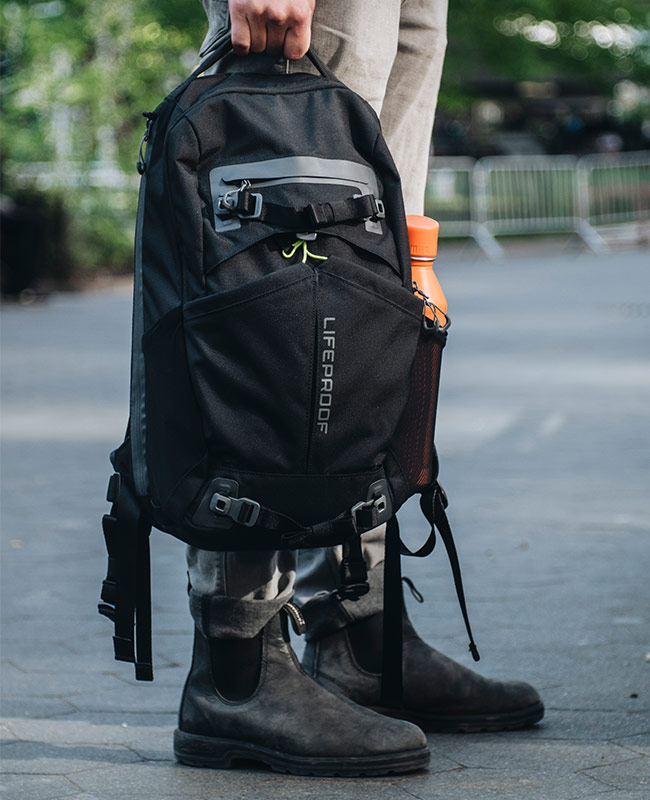
LifeProof, the maker of the original waterproof, dust-proof and smash-proof phone case, announced its first collection of products that aren’t tech-related: LifeProof backpacks. The new line features four bags: the 18-liter Quito, 22-liter Goa, 20-liter Squamish and a 32-liter Squamish XL.

Like its phone cases, LifeProof’s backpacks are generally designed for the rigors of everyday use — commuting to and from work, light activities such as hiking and biking, and travel. While each bag has unique characteristics, they’re all built with water-repellant Cordura fabric and equipped with weather-resistant tech pockets. The three bigger sizes also come with padded laptop sleeves, internal organization and hidden side “stash” pockets.

The Good: LifeProof designed its backpacks for everyday use, and many of the features found in the bags excel because they have this concept in mind. The side-access laptop sleeve is separate from the main compartment, which keeps it free from clutter and makes airport security lines less painful. The foam used in the shoulder straps and back panel is robust, breathable and light, which creates a very comfortable wearing experience. Even the bits of plastic hardware feel rugged, as we’d expect from LifeProof.

Who They’re For: Everybody. LifeProof backpacks aren’t built for specific activities, but for daily life. Those who carry laptops regularly will get the most out of the bags though.

Watch Out For: LifeProof integrated lots of organizing pockets within the main compartment of the backpack and on its exterior as well, but not many of them feel particularly useful. There’s also only one main compartment — some might desire more than that for additional organization of larger items.

Alternatives: LifeProof’s backpacks are non-technical and designed for everyday use, so there are a lot of alternative options. Thule’s Accent pack ($130) is one notable option that has a range of similar features, including a separate side-access laptop compartment and an emphasis on protection, but with a slightly different aesthetic. Evergoods’ Civic Panel Loader is a bit pricier at $229 but offers high-end design, lots of access and various carry methods. Patagonia’s $129 Black Hole Backpack puts a similar emphasis on keeping contents dry and protected.

Review: I still remember my first encounter with a LifeProof product. I visited my local Verizon store with a friend who was buying her first iPhone — a 5 — and the clerk there had a water-filled fish bowl at the ready to show off the capabilities and magic of the LifeProof Fre case. She dropped her phone into the bowl and cued her colleague to dial its number while we all watched in awe as the screen lit up to receive the call.

I’d witnessed enough cracked screens amongst my friend group to know that’d I’d need a similar case when I made the switch from flip phone to smartphone (which took place years after the rest of general society). I conducted the intensive research that only a product obsessive would, and concluded that LifeProof’s slim and impenetrable case was the best for someone prone to dumping his phone on rocks and getting pushed fully-clothed into bodies of water, as I am.

In the years since, my trust in LifeProof’s products hasn’t wavered (and I’ve never broken a phone, knock on wood). As a result, I can’t help but view the company’s sidestep into its first non-tech category, backpacks, against the high bar of experience I’ve already had with its phone cases.

I tested the 20-liter Squamish over the course of a month, integrating it into my life and used it as I would any “every day” backpack. Most of that involved commuting to and from work on bike, foot and train, and there were some weekend trips as well.

At first impression, the Squamish seemed unimpressive. The backpack category is massive, with a lot of innovative good happening inside of it, and nothing about the Squamish screamed “new” or “groundbreaking” — I thought back to the Verizon store fishbowl. Digging deeper though, I discovered features that are inherently LifeProof about the backpack. All of the hardware, for instance, is made with a hard and durable plastic similar to that which is used in the phone cases; the zipper pulls are designed with ergonomic, finger-sized loops.

Some of the backpack’s details are also fairly standard. It has one large compartment that’s lined with variously-sized pockets and tech organizers, none of which are particularly innovative or noteworthy. One of these is a fleece-lined phone pocket; I, for one, have never stored my phone in one of these pockets, and I don’t know anyone who does. I would have expected LifeProof, which we know as a tech accessory company, to have devised more thoughtful ways to organize and integrate those products into the backpack.

The Squamish does excel with prominent details though. The most notable surprise is the shoulder straps, which are ultralight to the point of feeling flimsy but are actually some of the most comfortable I’ve encountered. The back panel is made of the same foam and is equally comfortable, and more breathable than I would’ve guessed. Both of these features call back to the high level of durability provided in LifeProof’s slim phone cases and are proof of the brand’s ability to push function while keeping designs as simple as possible.

Verdict: There’s a lot to like in LifeProof’s first stab at backpacks, particularly in the Squamish. The bags excel in providing everyday comfort thanks to the shoulder straps and back panel, and the side-access laptop compartment makes getting to that larger tech item a breeze. The Squamish left something to be desired though, and doesn’t quite live up to the high standard LifeProof has already set for itself with its phone cases.

Key Specs for the Squamish Backpack

Main Body Material: Water-resistant Cordura nylon
Available Volumes: 20 and 32 liters
Available Features: Separate laptop and tablet sleeves, hydration sleeve, dual water bottle pockets, expandable front pocket, tech organization, side stash sleeve, adjustable and removable chest strap, tie-down straps for skateboards, yoga mats or other large items, durable foam straps and pack panel

Read More Gear Patrol Reviews

Hot takes and in-depth reviews on noteworthy, relevant and interesting products. Read the Story

Note: Purchasing products through our links may earn us a portion of the sale, which supports our editorial team’s mission. Learn more here.

Bose’s First 360-Degree Portable Speaker Skips the Tricks, Still Sounds Terrific

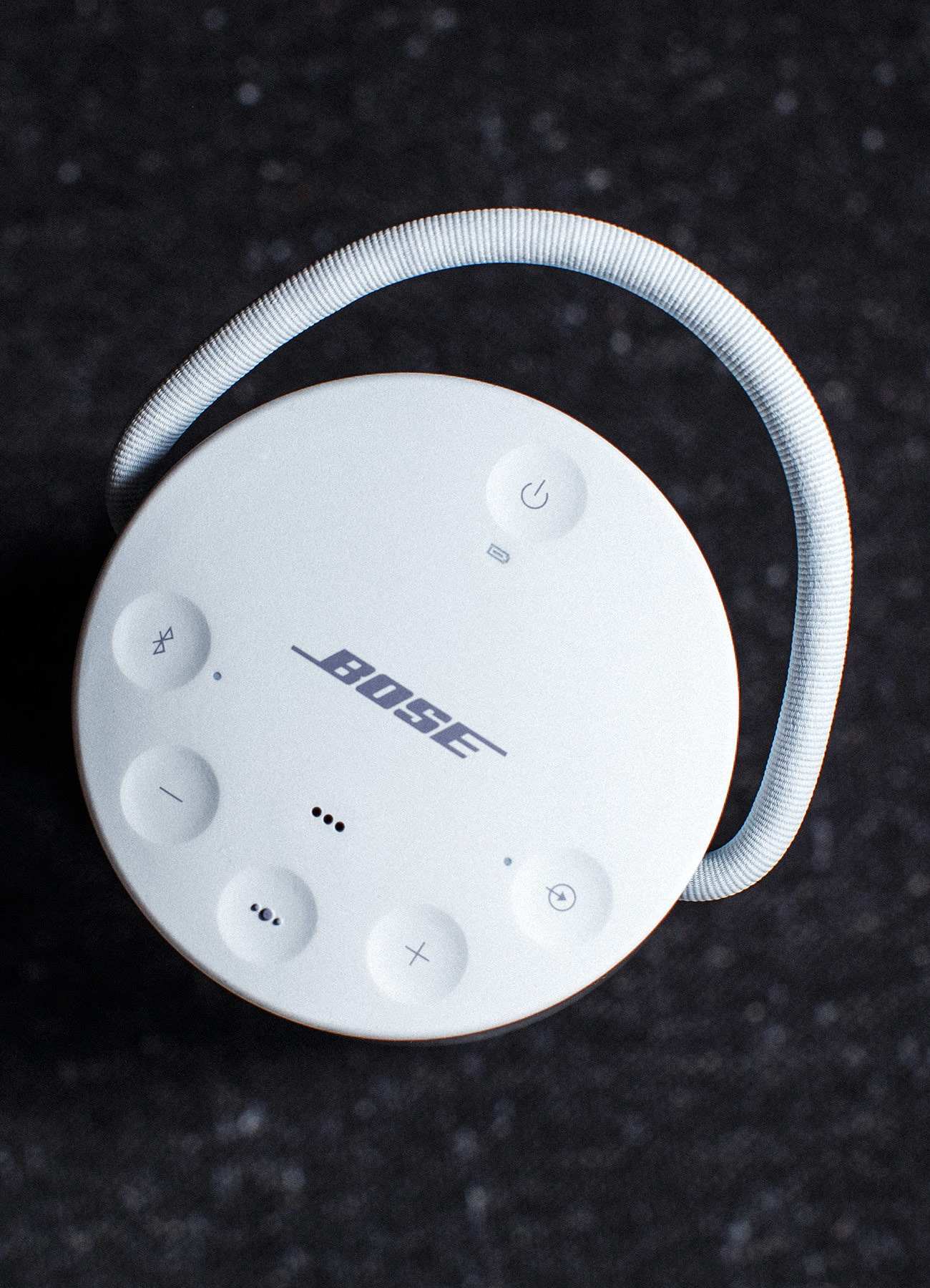
The Bose SoundLink Revolve Plus ($299) was released in spring 2017, along with its smaller sibling, the Bose SoundLink Revolve ($199), and the two are the company’s newest portable Bluetooth speakers. They are also Bose’s first cylindrical-shaped Bluetooth speakers, meaning that they play true 360-degree, room-filling sound, similar to an Amazon Echo or UE Megablast. The two speakers are specially engineered, with dual-opposing passive-radiators and an efficient transducer, to eliminate distortion and sound spacious and accurate. They’re both splash-resistant, too.

|

The Good: The SoundLink Revolve Plus sounds superb. Strong bass, which you’d expect that from a Bose speaker, but the speaker pushes impressive midrange and treble as well. At low to mid volumes, it gives you room-filling sound with negligible distortion. The speaker sounds great whether placed in the middle of the room or against a wall. It’s a surprisingly compact Bluetooth speaker, too, noticeably smaller than other speakers in the $300 price range, such as the UE Megablast. It can be grouped with other SoundLink speakers, if you have them, through the Bose Connect app. It’s simple to use, with a few straightforward buttons, and carry. It’s splash resistant. The handle is useful. And has a built-in mic so you can answer calls without having to pick up your phone.

Who It’s For: The Bose SoundLink Revolve Plus is a good standalone Bluetooth speaker for anybody, especially if those who love Bose’s signature sound. If they have other SoundLink speakers and want to pair them with the SoundLink Revolve Plus, in either “party” or “stereo” mode, even better. Also, this is Bose’s loudest Bluetooth speaker; if you plan on playing music at lower volumes, the smaller and more affordable SoundLink Revolve might be a better option.

Watch Out For: No built-in voice assistant like Alexa or Siri. It’s not as pretty as Bose’s previous Bluetooth speakers, specifically the SoundLink and SoundLink Mini II, as it looks like a lantern. At high volumes, high frequencies can lose a bit of their bite. Fairly expensive. It charges via micro-USB.

Alternatives: The UE Megablast and Blast are omnidirectional speakers that can be paired in a group set up through the UE’s companion app, just like SoudLink Revolve Plus. The other difference is that both UE speakers respond to Alexa commands (with Spotify support). The Sony SRS-XB41 is a larger and front-facing speaker with more, albeit quirky, features. Both are slightly more water-resistant than the Bose SoundLink Revolve Plus.

Review: Given the omnidirectional design of the SoundLink Revolve Plus, you’d expect it to sound best in the center of a room — and it does. Its sound is loud, immersive, warm and punchy, especially when listening to R&B and electronic music, like Childish Gambino’s “This Is America” and Avicii’s “Levels.” However, the speaker sounds good when placed against a wall, too; it actually makes the bass more intense.

If there’s a fault with the sound of this speaker, it has to do with higher volume playback. Treble can lose its crispness; I noticed this in songs like Lana Del Rey’s “Lust for Love” and London Grammer’s “Hell to the Liars,” where the vocals of the Haley and Lana kind of blend in with the upper-midrange — however this is grasping at straws for a flaw.

Even though the speaker comes with a companion app, you don’t have to download or even use it. Without the app, the speaker is still simple and intuitive to use; there are just a few well-marked buttons on the top of the speaker to control play/pause, volume and pairing. The app is really only imperative if you plan on pairing the speaker with other SoundLink speakers.

Verdict: The Bose SoundLink Revolve Plus is a terrific-sounding Bluetooth speaker that comes in a small package. You can’t submerge it like you can with other portable speakers, nor can you talk to it in quite the same capacity as you would with UE’s MegaBlast or an Amazon Echo, but the Bose SoundLink Revolve Plus has its own charm. Its easy-to-use controls, built-in mic for calls, and even its weird handle make using this speaker effortless, whether you’ve used it for months or are picking it up for the first time. Yes, it’s slightly on the expensive side, but for those who’ve loved Bose’s previous SoundLink speakers, the SoundLink Revolve Plus is an easy next buy.

What Others Are Saying:

• “The Bose SoundLink Revolve+ is a great speaker, albeit expensive and a bit dated compared to the competition. It may not have a smart assistant built in for voice controls, but for those who don’t care about that, the Revolve+ is a pleasure to use, especially if you pair it with the dock … which, unfortunately, is sold separately.” — Lewis Leong, TechRadar

• “$300 is a big outlay for a Bluetooth speaker. The Soundlink Revolve Plus has this premium pricing for several reasons: The tough chassis, water-resistance and 360-degree sound. If those things are important to you, then it’s worth the outlay. But if you don’t require those features, you could get tighter audio for the same price, for example with the V-Moda Remix.” — Stephen Charlton, SoundReview

• “The sound from the Revolve+ speakers is certainly detailed and also expansive, with a sweet treble and upper mid-range. The top end is maybe a little on the harsh side at times, though. The bass is healthily full – and can be reinforced a little by sitting the Revolve+ closer to a wall. The 360-degree sound is really impressive, without any very noticeable dead spots as you walk around the room – certainly not to the extent that you get with most 360 speakers. The SoundLink Revolve+ definitely sounds bigger and goes louder than the smaller Revolve, as you’d expect, but these are two peas from the same pod and have very similar sonic signatures.” — Simon Osborne-Walker, Trusted Reviews

Key Specs

Sound: 360-degree
Water Resistance: IPX4 (splash-proof)
Battery: up to 16 hours
Charge: micro-USB
Modes: stereo and party mode
App: Bose Connect app

|

Read More Gear Patrol Reviews

Hot takes and in-depth reviews on noteworthy, relevant and interesting products. Read the Story

Note: Purchasing products through our links may earn us a portion of the sale, which supports our editorial team’s mission. Learn more here.

This New App Makes Running on the Treadmill Actually Fun

If you hate running on a treadmill, the Zwift running app might just help motivate you to knock out those miles anyway. Zwift brings you into a virtual reality world, thanks to a variety of Bluetooth devices and a TV, phone or tablet, and allow you to run in Watopia, complete with sand, road, volcanoes, the jungle and the countryside.

The Good: Thanks to the magic of Bluetooth, you can track your heart rate, speed and cadence on the same screen that shows you running in a virtual world. Pick from a random workout on the road, or a tempo run, or speed work to help make training a bit more entertaining. You can run some of the same roads that you’re used to seeing as a cyclist if you use Zwift.

Who They’re For: If you already use Zwift, this is an easy way to incorporate more running into your training. The running functionality is built into the cost of your cycling membership, but you may need additional tracking devices to allow you to run Zwift via a treadmill.

Watch Out For: You need more than just your body and a treadmill to use Zwift. You’ll need to bring up the app on your tablet, phone, laptop or TV. If you’re lucky enough to have one, you can also load Zwift on a smart treadmill (like the BowFlex BXT116, StarTrac with Bluetooth, LifeFitness T3, True Fitness Performance 300 or Technogym MyRun). You’ll also need a footpod to track cadence (I used a Stryd, $199) and a heart rate monitor (I used the Wahoo Tickr Fit, $80).

The sensors all need to be calibrated before you can get an accurate reading on distance and stride length. There’s not really a prompt to do this in the app, so it’s good to note.

Alternatives: There are loads of treadmill apps out there — most aren’t very good, and many don’t even sync up with your treadmill or any tracking device that you’re wearing. The few we do like: Aaptiv, Nike+ Run Club and Studio. In contrast to Zwift, you can use these apps both indoors on the treadmill and outdoors. If the weather’s nice, what’s stopping you from heading out the door? The other major competitor, albeit in a different income bracket, is the Peloton Tread. The major difference is the price for the Tread itself is $3995 (plus delivery) and then a monthly subscription on top of that.

Review: As someone who despises running on the treadmill, testing Zwift was an interesting challenge. My first experience with it was at the launch event, where there were screens as big as my bed set up in front of a minimalist treadmill — so it was fun to run along and watch everything. Switching gears to the app on my phone and iPad took a little getting used to.

The setup is easy, and if you have the right devices, it takes all of ten minutes. The screen and app experience is very similar to the Zwift cycling experience. There’s a leaderboard on the side, so you can hop around view-wise, from runner to cyclist, watching how fast others are running and where they are on the course.

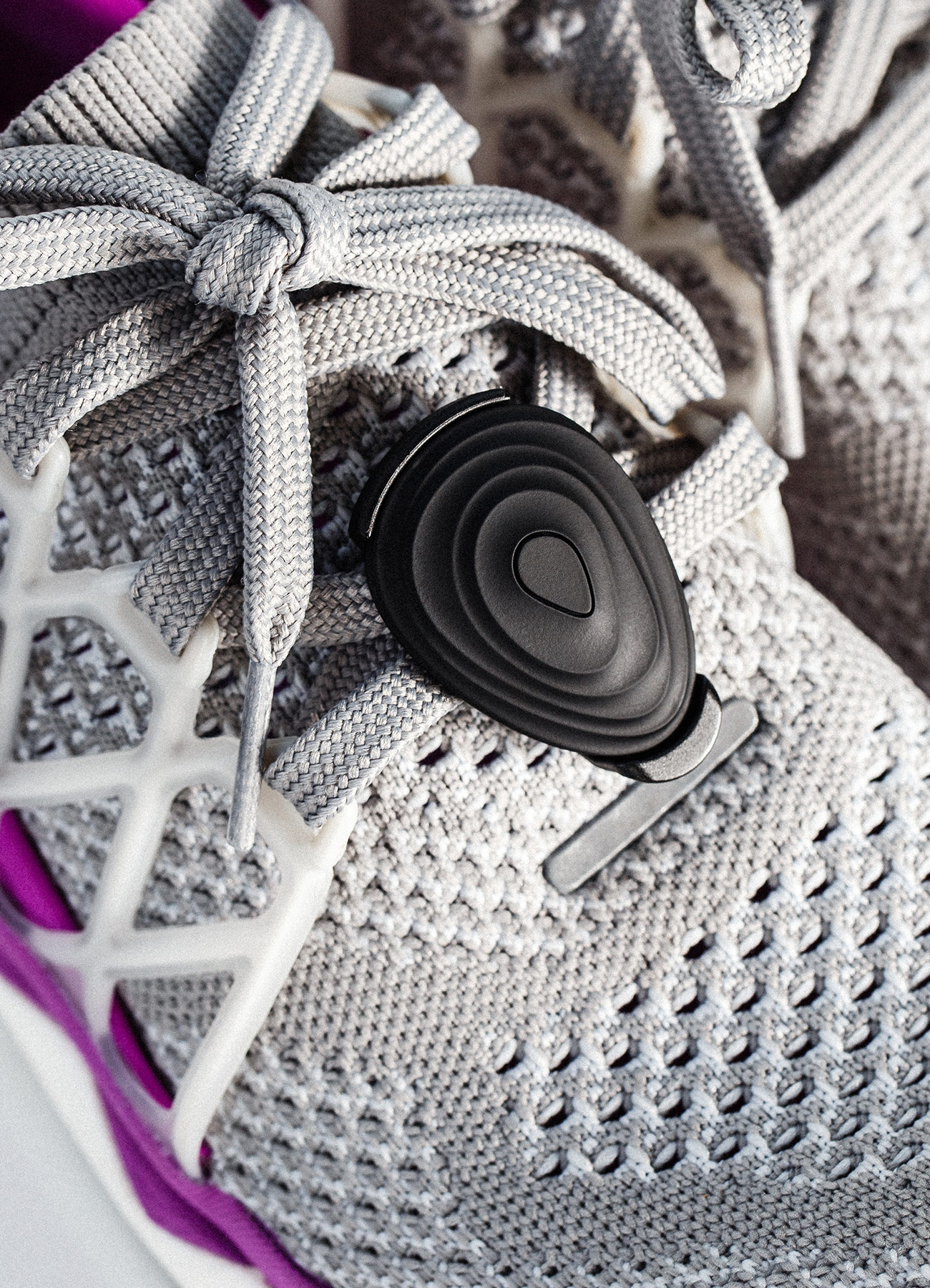
If you do want to track your run accurately, you’ll need a footpod and a heart rate monitor. With the Stryd footpod, I had to download the app first, and connect it via Bluetooth. It was simple to do and also easy to use on different sneakers with the clip-on attachment. Then I connected my Tickr Fit heart rate monitor easily. You can use an Apple watch for heart rate, but only if you’re on your phone. The heart rate monitor isn’t necessary, but it’s helpful if you’re training for a race.

Once both devices are connected, you’ll want to calibrate your footpod to the treadmill speed. This is not called out in the app, so I didn’t do it the first few times I ran and then was confused why my speed in Zwift was .2 miles per hour higher than the treadmill readout. Calibration takes 60 seconds — set a speed on the app that matches the speed on the treadmill and then the footpod will be set to go.

After that, you’re ready to run. If you want a set workout, hit ‘train’ and then pick from a tempo run, speed work or hills. Each is about an hour long, which is a long time for newbies, but again, if you’re training for a race, having the explanation of each workout is powerful. Make sure to edit your paces so that the run is challenging, but not impossible. When you sign up initially, you are given the option to input your 1 mile, 5K, 10K, half marathon and marathon time, as well as your max heart rate. The app uses these numbers to tailor your workout.

You can pick your route as well. Inspired by the English countryside, and parts of urban London, you’ll spy many familiar buildings in the islands of Watopia. There’s also an inch by inch re-creation of the 2015 UCI World Championship cycling course in Richmond, VA.

If you don’t feel like making all of those selections yourself, sign up for an event. There are group runs all the time, so you’re paced with other individuals in your speed zone. You can also set goals for the week or month (based on time or distance), and you can click on other runners to run alongside them. Whether you know them or not, it’s a great way to push yourself.

To get an accurate read of your speed, the Stryd footpod is an easy connect.

Verdict: Having an app that makes treadmill running less boring is important. That said, I’d much rather run outdoors. If I had a large TV screen in front of a treadmill that I could run through Watopia on, I’d definitely use this app more. When I used Zwift for indoor cycling, I loved using the app — simply because there was a big screen television connected to my bike trainer.

However, if you’re someone who loves the treadmill, this app could make your life more exciting with all of the variety in the programming. If you can, use this on an iPad or larger screen — the full effect of the virtual reality running comes through when you are almost surrounded by it.

What Others Are Saying:

• “The whole process felt more like an outdoor session than previous indoor sessions have and in time I can imagine home set ups to rival even the most dedicated of cycling ‘pain caves’, but for now as another tool in the training workshop of running, Zwift are offering up something pretty unique that all runners should try at least once.” — Ben Hobson, Runner’s World

• “But if Zwift can find a frequent user foothold in the market, then we might see treadmills start to cater their hardware to the app, which would likely alleviate some of the challenges of using Zwift while running.” — Ray, DC Rainmaker

Read More Gear Patrol Reviews

Hot takes and in-depth reviews on noteworthy, relevant and interesting products. Read the Story

Note: Purchasing products through our links may earn us a portion of the sale, which supports our editorial team’s mission. Learn more here.

Did Patagonia Just Make the Best Baselayer Ever?

There was a time when the term “baselayer” didn’t exist. What did was underwear, and most of it was made of cotton. Mountaineers and explorers wore wool, down and canvas over that to keep warm and guard against exposure. It was Patagonia who, in the 1980s, introduced the outdoor community to the concept of layering. The idea came about as the then-young brand sought an alternative to the cotton and wool combo and landed on synthetic polyester and fleece. Patagonia recognized the former for its ability to wick moisture away from the body, and turned it into a next-to-skin alternative to cotton and named it Capilene — it was the first performance baselayer.

Those early discoveries set Patagonia on the current path of product research and development that has made its apparel and equipment the standard upon which all others are judged. A lot has changed in the 30-plus years since though, and now the company has managed to redefine the baselayer, again, with its newest take on the category: Capilene Air.

The new Capilene Air baselayers come in three silhouettes: a hoody, a long sleeve crewneck pullover, and full-length leggings. The innovation that makes it all new is the fabric’s “exploded” yarn knit and seamless 3D structure.

The Good: A baselayer should do three things: it should provide warmth, it should be comfortable and it should wick moisture away from the body. Capilene Air does all of these exceptionally well, and more. The fabric, a 51 percent merino wool and 49 percent recycled polyester blend, provides plenty of warmth, especially given how much it weighs. Its 18.5 micron-gauge yarn is super-soft — in the world of yarn diameters, 18.5 is a great place to be — and the overall knit is form fitting but not in any way restricting.

Who They’re For: Skiers, snowboarders, mountaineers, climbers, hikers, runners, campers, mountain bikers, fishermen — everyone. If you do an outdoor activity, you should be layering, and as a baselayer, this might be the very best.

Watch Out For: Merino wool is stink-resistant; polyester is not. It follows that a near 50/50 blend of the two would land somewhere in the middle, which is true of Capilene Air. It’ll stay fresh for multiple days of use — longer than most other wool/poly blends — but don’t plan on wearing this for weeks straight without a wash. After said wash, you may notice that Capilene Air is somewhat of a lint-lover, a trait it picked up from its merino wool half that’s accentuated by the 3D knit structure. Neither of these are deal breakers though, especially given how much the product excels.

Alternatives: Within the broad baselayer category, Capilene Air stands apart. It’s the only 3D knit baselayer available. Those looking for a next-best option should opt for garments that are 100 percent merino wool. Smartwool’s Merino 250 Crew or the Yotei Powder Hoodie by Mons Royale are great options.

Review: I integrated the Capilene Air Hoody into my kit last March and have worn it every chance since. That timespan brought me to Montana, where we skied through a full-on blizzard as well as a mid-fifties bluebird in the same week. I also wore it heli-skiing and backcountry touring in Kamchatka, Russia, where we experienced just about any weather condition that the Bering Sea and Pacific Ocean could throw at us.

Beyond the points already mentioned — Capilene Air’s supreme comfort and warmth — I was amazed at the versatility of the garment. I’ll typically bring both lightweight and mid-weight baselayers on extended trips so that I can fine-tune what I wear each day depending on the activity and weather. Capilene Air might eliminate that need though. On cold, wind-pelting-your-face days, the hoody provided plenty of core warmth and functioned as efficiently as a mid-weight layer. When the sun was out, and we had thousands of feet of elevation to climb while wearing heavy packs, Capilene Air breathed and wicked, never saturating with sweat. I’ll continue to wear this is a baselayer for summer hiking and backpacking trips.

When I was in Kamchatka, I wore the Capilene Air Hoody for nearly six days straight. Seriously — I toured in it, skied in it, wore it under a sweatshirt during dinner, even slept in it. The stink-factor remained quite unnoticeable throughout, but by the end the trip my olfactory senses made me aware that it probably needed a wash. To be clear though, most baselayers with a similar blend of wool and polyester wouldn’t have lasted nearly as long.

I wore the Capilene Air top for such a long time because I just never wanted to take it off — its seamless construction, springy knit and sweater-like feel rank it among the coziest next-to-skin layers, period. It also looks good too; I wanted to wear it to work but was informed that it might be too outdoorsy for an office setting. We’ll see about that though.

Verdict: Versatility and comfort make Capilene Air quite possibly the best baselayer I’ve ever worn. I’ll still hang on to some of my 100 percent merino layers, but those just got relegated to use on laundry day.

Note: Patagonia Capilene Air will be available for purchase on August 1, 2018. The Capilene Air Hoody will retail for $149 while the Crew and Bottoms will cost $129.

Key Specs

Materials: 51% merino wool, 49% polyester
Yarn Gauge: 18.5 microns

Read More Gear Patrol Reviews

Hot takes and in-depth reviews on noteworthy, relevant and interesting products. Read the Story

Note: Purchasing products through our links may earn us a portion of the sale, which supports our editorial team’s mission. Learn more here.

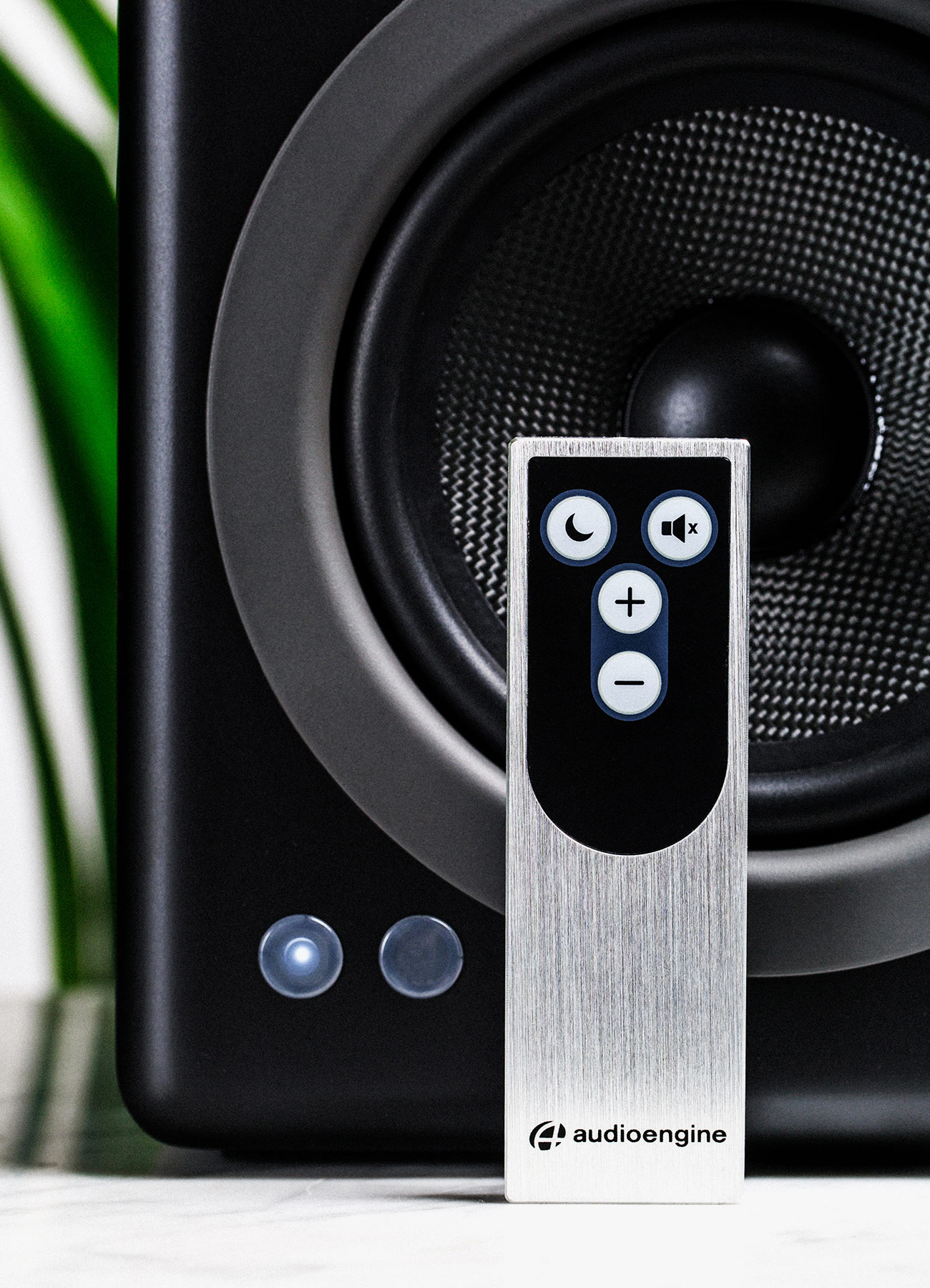
Is Audioengine’s A5+ Wireless the Best Bookshelf Speaker Under $500?

For years, Audioengine’s A5+ powered speakers have been regarded as some of the best desktop and bookshelf speakers you can buy. Audioengine designs and manufactures everything in the speaker from the ground up — it’s a bonafide audiophile-grade speaker. Recently, in 2018, Audioengine released the A5+ Wireless speakers, which are essentially identical to the Audioengine A5+ speakers, just with built-in Bluetooth so you can stream music. No need to wire the speakers up to a computer, CD player or turntable to play music, although you still can.

The Good: The A5+ Wireless speakers produce the same excellent sound quality of the A5+, but with built-in Bluetooth receiver and 24-bit DAC, it’s extremely easy to stream Spotify or Tidal from your smartphone. The speakers support high-res streaming: Bluetooth aptX, SBC and AAC. The speakers have numerous inputs and connectivity options, so if you don’t want to stream music you can connect the stereo pair to a turntable, stereo receiver or desktop. Audioengine offers a 30-day “audition period,” allowing you to get a free refund if you don’t like them (but you will).

Who They’re For: Anybody looking for versatile high-quality bookshelf speakers that aren’t super expensive. If streaming is your thing, it’s as simple as flicking a switch on the speakers and connecting via your smartphone’s or computer’s Bluetooth settings — it’s that simple. It’s easy enough to connect them to other stereo components, too. Also, they can be paired with a subwoofer.

Watch Out For: Sometimes the volume of the speakers and your smartphone speakers gets a bit mixed up; if the volume of the smartphone is really low, can be basically impossible to turn the volume up straight from the speaker. Also, the “knob feel” of the volume knob on the right speaker isn’t the best we’ve felt. It’s not a multiroom speaker and there’s built-in virtual assistant.

Alternatives: If you don’t plan on streaming music, you can pick up Audioengine’s several-year-old A5+ powered speakers and get the same audio quality for $100 less on Amazon.

Review: The A5+ Wireless speakers are nearly indistinguishable from the A5+ powered speakers you fell in love with years ago. Aesthetically, the only real change, aside from the Bluetooth antennae, is that the tweeter of each speaker is now centralized, instead of skewed to one side like on the A5+. But they produce fantastic stereo sound and more versatile than ever. However you choose to listen to them, frankly, they’re going to sound fantastic.

I spent the majority of my time with the A5+ Wireless streaming music (Spotify) to them, as that’s really what’s new and neat about these speakers. As good as they are, there are some things to consider before buying the A5+ Wireless speakers. They’re near-field speakers, so for optimal listening, you want to position the speakers so that they are both slightly angled towards you, not straight on.

The A5+ Wireless speakers handle midrange and highs very well, which is especially noticeable on tracks like Enya’s “Orinoco Flow,” and even the bass stands up on tracks like Kendrick Lamar’s “All The Stars.” Although, if you want to add a subwoofer to the stereo pair, that’s easy enough. In truth, these speakers handle the gamut of songs really well, especially in a near-field setup, and they do sound really good at high volumes. So crank it.

Verdict: At the $500 range, the A5+ Wireless are really the cream of the crop when it comes to wireless bookshelf speakers. It’s easy to stream hi-res audio from your smartphone, tablet or computer, or you can connect them to any of your existing hi-fi components. They’re versatile, sound good with or without a subwoofer, and would look good in any living room or office.

What Others Are Saying:

• “While the Bluetooth connectivity is a great feature, it doesn’t sound as good as the wired connection. This is no surprise, as we’ve never heard a wireless connection that sounds better than wired. Overall, though, it sounds very good for Bluetooth and in many cases, such as parties, the convenience factor is really what you’re looking for. When you’re ready to sit down with some friends for a critical listening session, the A5+ Wireless excels there too.” — Staff, Audio Advice

• “The Audioengine A5+ Wireless bring vibrant and lifelike sound to small and medium-sized rooms, adding the convenience of a wireless connection while maintaining the same outstanding audio performance we’ve loved for over a decade.” — Parker Hall, Digital Trends

• “Audioengine’s A5+ Wireless system delivers a high-quality Bluetooth stream in a bookshelf-style form factor that offers stereo separation and avoids dynamics-crushing DSP. Some listeners might want to beef up the audio with a subwoofer, but the system sounds great without it.” — Tim Gideon, PCMAG

Key Specs

Type: 2.0 powered (active) bookshelf-style speaker system
Output: 150-watt peak power total
Input: 3.5mm stereo mini-jack, RCA
Drivers: five-inch Kevlar woofers, 3/4-inch silk dome tweeters
Connectivity: Bluetooth 4.0; supports aptX, AAC and SBC

Read More Gear Patrol Reviews

Hot takes and in-depth reviews on noteworthy, relevant and interesting products. Read the Story

Note: Purchasing products through our links may earn us a portion of the sale, which supports our editorial team’s mission. Learn more here.

We Tested Priority’s No Maintenance Bike for a Month — Here’s What Happened

Aside from having to re-learn how to ride a bike in an urban setting, testing the Neverflat from Priority taught me that there really can be convenience in owning a bike in the city. From terrible roads to broken glass, I rode this bike all over Manhattan, Brooklyn and Queens for over a month and it didn’t flat out once.

The Good: The bike is built to be low maintenance, and it delivers. Throughout my almost daily rides to and from work, I didn’t have any tire, belt or other maintenance issues. Thanks to airless tires, an aluminum frame and grease-free carbon drive belt, the bike and tires are puncture-, water- and rust-proof.

Who They’re For: While Priority partners with Element Hotels to outfit each location with a variety of bike for the guests, these bikes work beautifully in a city for daily riding. They’re as ideal for riding along New York’s West Side Highway as they are for hopping around from coffee shop to coffee shop to beer garden in Austin or Seattle.

Watch Out For: If you’re a serious commuter, and are used to riding your commuter bike to and from work, you might find this bike to be a little heavy and a little clunky. Since the tires are made from solid rubber, there’s not as much suspension or softness as you thud over bumps and cobblestones in the road.

The bike sits a bit high, which is great for cruising around Brooklyn on a Sunday afternoon, but not so great when I’m lugging my laptop, change of clothes, lunch and another pair of shoes for the office in 174Hudson’s Pannier backpack ($80), which proved to be invaluable during this experience. Lugging around an extra five pounds of weight in the bag might seem like a small amount, but paired with the 25 pounds of the bike, it can tip over fast if you’re not super comfortable.

Alternatives: You can put airless tires on almost any bike with the Bell Sports Solid Tube NoMorFlat Bicycle Inner Tire Tube ($23) or the Tannus Tires ($89+), offered in a variety of sizes for MTB, road and hybrid bikes. In terms of similar commuter bikes, some of our favorites include State Bicycle Co. Elliston Deluxe ($469+), the Raleigh Carlton 8 ($550) and the Cannondale Bad Boy I ($1,850).

Review:
While I was excited about the prospect of biking to work every day, I was simultaneously petrified to navigate the streets of New York on a bike that weighs 25-pounds. The most exciting prospect of this was that I would never have to change the tires or tubes, which even as a former triathlete, I avoid like the plague.

Living in New York City means I was able to go and pick the bike up directly from the Priority showroom. They’re location down in TriBeCa, roughly a 15-minute bike ride from the Gear Patrol office. When I arrived, the Classic Plus was all set up for me, complete with the All Alloy Rust Free Basket ($60), the Rear Rack ($30) and a U-Lock.

The tires are Tannus airless tires, so there’s no tube and no fear of punctures. Every time I left work and cruised down Fifth Avenue to make my way to the Williamsburg Bridge, I tried my best to hit as many potholes and bumps as I could. It’s been a month now and I’ve yet to pop, injure or replace the tires. I even have a nail in the tire currently — I have no clue when I rolled over it, but it has had zero effect on my ride. While I will say the ride is a bit bumpy, I was also warned that this would be the case. The tires are solid rubber after all. While I was initially aware of it, I quickly became used to the feel of this bike and learned to avoid cobblestones — or plow right through them, depending on the day.

I was sometimes forced to keep my bike outside (when my building’s bike racks were full) so when it rained my bike wasn’t always covered. The vegan-friendly water-resistant ‘looks like leather’ seat and bar grips held a little bit of water, but after a quick wipe down from the shirt I was going to wear later (it dried!), I didn’t need to worry about it.

The grease and rust-free Gates carbon belt drive was wonderful to use — especially if I was wearing a light colored pant and accidentally bumped into the belt while walking my bike. I only ever had one issue, which occurred almost on camera thanks to all of the film crews you find in New York City. As I was riding home from work one night, my pant leg slipped down from where it had been rolled up above my knee, and as soon as I started pedaling the bottom cuff was caught in the belt. Conditioned to working with greasy belts, my first thought was not to grab the belt and lift up, freeing my pant leg, but rather to step off the bike, lift the back wheel and spin the pedals bringing my cuff around the entire belt loop. After that, I made sure to keep all fabric away from the belt drive. In the belt drive’s defense, there were no grease marks on my pants post-incident.

Verdict: If you’re someone who is good at packing light, leaving everything you need at the office and you get around exclusively on a bicycle — this works for you. If you hate changing tires and want something you can ride around town and never give a second thought, it’s a great option. If you’re on vacation and need a cruiser to get to and from the beach and then off to dinner, this bike is a breeze to use, and you never have to worry about it, no matter what the weather is.

What Others Are Saying:

• “If you’re looking for a reasonably priced commuter bike that doesn’t require regular tuning or maintenance, you might want to check out Priority Bicycles.” — Steve Fisher, Bike Rumor!

• “Don’t get me wrong, I love my loaded, geared-out and racked-up bikes and ride them every day. But, when a lunch ride is in the cards, the Classic is my choice. The easy-rolling attitude of this upright ride encourages conversation and taking it all in – a slow cycle bike with plenty of style. Shop bikes, bar bikes, city cruisers – whatever you call them they have something in common. They strip off all the extras and keep it dead simple, ready to ride and easy to make the bike your first choice when stepping out the door. The Priority Classic will sway you on this choice, and it’s an easy one to make. Take the bike.” — David Niddrie, Momentum Mag

• “And the best part is, we never missed having extra gears (even on hills, we could push it up a notch for a little more power), and we could carry this 25-pound bike with one hand while a CitiBike can take two people to lug anywhere. Despite multiple rainstorms and an unprotected bike exposed to the elements, no maintenance was required.” — Greg, Truly Outdoors

Key Specs

Frame Options: Diamond or Step-Through
Inseam: Small (26″ to 30″) or Medium (30.5″ to 32.5″)
Colors: Slate blue or gloss white
Speed: 3-speed internal Shimano Nexus Hub
Extras: Assembly tools, kickstand and water bottle cage

Read More Gear Patrol Reviews

Hot takes and in-depth reviews on noteworthy, relevant and interesting products. Read the Story

Note: Purchasing products through our links may earn us a portion of the sale, which supports our editorial team’s mission. Learn more here.

The New Continental Is Smarter and Still Completely Iconic

The 2019 Bentley Continental GT is the third generation of the automaker’s two-door grand tourer, a car that practically defines what Bentley stands for. “The GT is the very essence of our brand,” says Mark Del Rosso, President and CEO of Bentley Americas. Though slightly outsold last year by the new Bentagya SUV, the Continental GT is still very much Bentley’s bread and butter. So much so that dealers have been holding deposits from dedicated customers for years in advance of the car’s reveal. The Crewe-based team had the not-so-insignificant task of not only creating a car that satisfies loyal Bentley buyers but create something that broadens appeal to new ones, all while setting the benchmark for what a luxury grand tourer should be. No pressure, right?

The Good: The luxury of it anall is incredibly satisfying. Knurled knobs and switches feel weighty and purposeful; everything that isn’t meant to be heavy is supple to the touch. There’s something about knowing the stitch count of your likely customized diamond-quilted leather that’s oddly gratifying. (310,675 stitches, for the record.) Superb sound baffling goes a long way to keep outside noise from harshing the vibe. This is only matched by the 6.0-liter twin-turbocharged W12 centerpiece. It has 626 horsepower and 664 pound-feet of torque to give up, which it does willingly, and very low in the rev band.

Who It’s For: The older affluent crowd who see a winner and sticks with it. The Continental has a very solid customer base that recognizes the Continental’s consistency. Dutiful in its role as a usable status symbol, current customers are sure to re-up once this car is available in the spring of 2019. However, with the Bentayga now in the same showroom, newer Bentley buyers might stray away from the Conti.

Watch Out For: For all the good derived from the W12, the exhaust note is the most disappointing. Its timbre isn’t as low and syrupy as you’d expect, judging by the looks of the car. It’s something out of mind for most of the journey thanks to the sound baffling. The car isn’t a screamer, and though it can be coerced, it’s just better to let the Continental make a statement in other ways. Also, the optional rotating display: this takes the 12.3-inch touchscreen and fits it to a tumbler that will rotate the screen away to either show more veneer or three (admittedly lovely) analog gauges. It’s fun luxury theater that will be used in a handful of demonstrations and then forgotten about quickly.

Alternatives: The Mercedes-AMG S-Class Coupe, particularly the S 65, which brings its own 12-cylinder engine to the party. A more elegant and significant threat to the Bentley’s Grand Tourer title would be the Aston Martin DB11 V12.

Review:
Whether or not you’re new to the brand, there’s a certain expectation for any Bentley, particularly one as ubiquitous in luxury crowds as this one. The Continental GT has been the go-to car for the affluent for so long, it’s almost too familiar in certain circles. It’s for good reason, too, as the Continental has held up its end of the bargain of being a versatile daily driver that delivers a premium luxury experience since its debut in 2003. This latest iteration doesn’t disappoint in that regard, and with its upgraded looks, it’ll probably be a while before people get used to it.

The latest Conti largely retains the general footprint of the previous generation, but a shift to some of its proportions have brought forth changes in its visual character. The front axle moves 135mm forward, giving the GT a shorter front overhang and a longer, level hood (or “bonnet,” in this case), making for a more graceful profile. It wears the signature Bentley face of the matrix grille and large, jewel-like headlamps, but new Continental is higher and wider across the front for a more dominant presence. This is complemented by meaty haunches at the rear that meet with the fastback slope at new, simplified lip-shaped tail lights. All told, it’s a visual package that has a bold presence, and thanks to the “superforming” process of its aluminum body, the Continental GT’s curves look muscular, not bulbous.

The contemporary Continental awaited me in Kitzbüehel, Austria, where we would take a vivacious drive through the Alps and into northern Italy. It would be a journey befitting a grand tourer: mountain hairpins, rural backroads, and stretches of motorway to feed to a hungry 6.0-liter twin-turbo W12 engine.

Right from the start, the luxury experience takes hold in the Continental GT, and sitting behind the wheel feels like donning a tailored suit. The interior is replete with luxury appointments like diamond quilted leather, diamond knurled switches fitted with bronze inserts, and ten square meters of veneer that’s taken nine hours of craftsmanship to implement. The center console has an optional aluminum surface machined in Côtes de Genéve, a pattern familiar to those who know their Swiss watches. It’s all so lovely, you’d be compelled to rebuke occupants from touching things if it all didn’t invite tactile indulgence. Of all the expectations this Bentley is burdened with, its interior is the highest, and it meets it effortlessly.

If interior luxury is the highest expectation, then ride comfort and performance jockey for second place. Built on an all-new chassis and saddled with a new powertrain, the new Continental endeavors to surpass its predecessor in both. Each takes advantage of the Bentley Dynamic Ride system, a series of 48-volt actuators that can react in 0.3 seconds to counter body roll. It all rides on three-chamber air suspension and, depending on the setting, the Continental can absorb bumps like so much plush carpeting. Even in its most stiff, sport-ready setting, the ride is never remotely harsh.

The W12 under the bonnet is eager to serve up generous portions of power, proving to be the Continental’s defining feature. 664 pound-feet of torque is in play at just 1,350 rpm, which will easily push your head back into the embroidered headrests. Bentley’s claim of a 3.6-second 0 to 60 launch and 207 top speed is all the more impressive considering the car’s weight. Unladen, the Continental weighs a hair under 5,000 lbs, so wide open throttle on the Autostrada feels like being strapped to a runaway steam engine. 420mm, 10-piston front brakes make sure the Bentley stops as fast as it goes. With all that said, the Continental is surprisingly adept at corners. Entering the mountain switchbacks, I could really feel the Bentley’s heft, but active torque vectoring and an electronic center diff made rounding the repeated hairpins a much more manageable endeavor. It won’t eat a sports car’s lunch, but it’s far from a letdown. It very much reminded me of the Mercedes-AMG S 63 Coupe, where its mass was very palpable. The Continental was inexplicably capable, but you had to put the work into it, though it delivers a far smoother experience by comparison. The eight-speed dual-clutch gearbox – a Bentley first – is also a significant plus, making incredibly smooth, near seamless shifts throughout my Alpine horseplay. It’s fun to flick through in manual, but it’s surprisingly capable on its own, which I don’t say flippantly. There were a couple instances where I was about to initiate a gear change, only to have the Conti react a fraction of a second faster. This is a nice thing to be surprised by.

Verdict: Its very safe to say that the new Bentley Continental GT ticks all the boxes a generational progression requires: sharper looks, improved performance, and an overall FOMO-inducing level of refinement. The Bentley faithful will certainly upgrade, though it’s difficult to say how many new customers it will bring to the brand. It’s a gentleman’s car, but a gentleman who’s still eager to demonstrate his virility. The traditionally older cigar-chomping customer will fit seamlessly in its classical luxury appointments while a younger buyer will probably wait for a “speed” edition and forcefully insert carbon fiber throughout, as previous patterns have shown. To each their own, but whoever indulges in the new Continental GT will be thoroughly satisfied. It’s a crowd used to getting exactly what they want, and the Continental GT absolutely delivers.

What Others Are Saying:

• “True to its name, the coupe is perhaps the truest grand touring car on the market — comfort happily married to speed.” — Jason Harper, Autoblog

• “The long-travel throttle allows for meting out all that power precisely, but once the engine comes alive, it’s an absolute rocket.” — Jake Holmes, Motor1

• “Don’t get me wrong, the Bentley likes to rev, and at full-throttle acceleration is nothing short of ferocious, but it tends to sound more like a blown six rather than the more meaty V12 growl.” — Anthony Crawford, Caradvice.com.au

Key Specs
Engine: 6.0-liter, twin-turbocharged W12 TSI
Transmission: Eight-speed dual-clutch
Horsepower: 626 Horsepower
Torque: 664 ft-lbs
Weight: 4,947 lbs kerb weight
Top Speed: 207 mph
0-60: 3.6 secs

Alex Kalogiannis is a freelance automotive writer and editor based in the New york area.

15 Reasons to Immediately Sell Your House and Buy a Bentley Bentayga

Your IKEA furniture does not count as “handbuilt.” A Bentayga, though… Read the Story
Note: Purchasing products through our links may earn us a portion of the sale, which supports our editorial team’s mission. Learn more here.

Ibanez Updates Its Most Iconic Guitar Pedal with New Technology

In early 2016, Korg released its Nutube technology to the public. With an anode grid filament structure, it operates exactly like a triode vacuum tube, adding rich overtones to electric guitar tones. Unlike conventional tubes, Japanese-made Nutube utilizes vacuum fluorescent display technology; it’s smaller and more efficient. This had huge implications for the world of guitar amplifiers and electronics. Premium tone no longer requires a large footprint or substantial power source.

The first major brand to use Nutube technology in a pedal is Ibanez, which announced an updated Tubescreamer earlier this year. While some brands are content resting on their laurels, Ibanez decided to implement innovative technology into its most-respected pedal. The implications of this are great, but I needed to get my hands on a Nu Tubescreamer to see if the new technology really made for a better pedal.

The Good: This is great sounding pedal with a warm tube compression and amp-like response. The lifespan of Korg’s 6P1 Nutube is 30,000 hours, significantly longer than conventional tubes found in overdrive pedals from B.K. Butler, Electro Harmonix and others. The Nutube is also very small, so the pedal takes up much less real estate on your board compared to the aforementioned options. Compared to a TS808 or TS9, you can run this pedal at either 9V or 18V, the latter of which gives you increased headroom and gain (the area this pedal really shines). Also, the addition of a mix knob lets you blend your clean and overdriven sounds to your own liking.

Who It’s For: If you want an analog distortion that responds to touch, this is a great option. It has the signature mid-range peak that the Tubescreamer is known for along with a thicker bottom end. The harmonic richness added to the tone thanks to the 6P1 Nutube is definitely welcome and creates a different character. If you’re a devotee of traditional Tubescreamers, the new model offers a different perspective, but may not be so different that you need to splurge on it. The mix knob does allow for a new level of control over your sound, though, and could be enough justification for tonal perfectionists.

Watch Out For: This is not an inexpensive pedal. Though, compared to a vintage TS808, which start at $750, it’s a pretty good deal. It’s comparable to the price of a B.K. Butler pedal, and it’s definitely not aimed at the entry-level player. The sound of this pedal is different than traditional Tubescreamer. If you’ve got a vintage TS808 already and you love what it does for your sound, you probably don’t need one of these. On the other hand, if you’ve ever wanted more control over the sound of a Tubescreamer, it’s worth checking out.

Alternatives: Nutube technology has yet to proliferate in the pedal space. But if you want to try another overdrive that utilizes the technology, you can pick up the Soul Power Instruments Priest pedal for $359. Alternately, if you want a traditional tube overdrive pedal, you can try the Electro Harmonix English Muff’n ($201) or you can find used versions of the B.K. Butler Tube Driver ($279+) or the Ibanez Tube King ($150+). If you’re not convinced by Nutube technology and don’t care for the hassle of traditional tubes, you can always scoop a vintage TS808 starting at $750, or a used TS9 for around $75.

Review: Why update the iconic Tubescreamer? That was my initial thought when I heard that Ibanez was offering this variation. The TS808 and TS9 were — and are — favorites among countless guitar legends. They can coax a tube amp into natural distortion or add a layer of smooth distortion to an already crunchy amp. With a characteristic upper mid-range peak, they keep your guitar from getting buried in the mix. Relying on diode clipping with a 50-50 clean-to-distorted blend, the Tubescreamer is a versatile workhorse pedal.

The Nu Tubescreamer features Korg Nutube technology, which has many of the same elements as conventional vacuum tubes, but in a smaller more efficient package. Noritake Itron Corporation used its vacuum fluorescent display technology to create a tube that is less than 30 percent of the size of traditional tubes and uses less than two percent of the power. That means you can get an amp-like response out of a pedal that is no larger than traditional stompboxes.

The resulting pedal is more responsive to right-hand touch and pick attack. The bottom end seems fuller and there is increased harmonic depth in every register. Adding another layer of subtlety, Ibanez included a mix knob, which allows the player to blend clean and distorted signals to their own preference. Keep the knob at noon for the traditional Tubescreamer blend, roll it all the way counter-clockwise to use the pedal as a clean boost or turn it clockwise for a more distorted sound. As I experimented with the pedal running directly into my ’65 Princeton Reverb, I found myself really enjoying the sonic areas between 10 and noon.

Another major plus for the Nu Tubescreamer is that you can run it with an 18V power supply to juice up your tone. The increased power translates to greater headroom and increased gain, in turn giving you a wider dynamic range to explore. No matter the settings, the Nu Tubescreamer is a wonderful addition to any pedalboard, showcasing a customizable and nuanced warm tube sound.

Verdict: This is a worthy addition to the Tubescreamer famil. It’s a very cool pedal that utilizes new technology in an approachable way. If you’ve got the money, and value an amp-like response and increased tonal controls, this will make for a great addition to your pedalboard. If you’ve got a TS808 or TS9 already, and are content, you may find yourself wondering if it’s really worth the money. But if you’ve considered getting a conventional tube overdrive pedal, I’d highly recommend giving the Nu Tubescreamer a try before losing valuable space on your board.

What Others Are Saying:

• “I think Ibanez has a definite winner here. That tube response, the dynamics you get, the different type of compression compared to diodes clipping, the ability to change the blend on the clean and the overdrive signal: all these are great features that allow you to really dial in exactly the tone, and exactly the feel you want from your guitar.” — Mitch Gallagher, Sweetwater Sound

• “We’ve done what no other video channel seems to do on these things is talk ourself out of a sale. For me, I don’t really know that it offers anything that the old ones don’t do.” — Lee Anderton, Andertons Music Co.

• “I think it’s absolutely superb. Drive pedals and distortion pedals are so hard to describe the sound until you actually feel it and play it for yourself. But, this feels so much more enjoyable to play than even my original old Tube Screamer. It just feels a lot more real and a lot more natural sounding.” — John Priest, Peach Guitars

Key Specs

Analog/Digital: Analog
True Bypass: Yes
Features: Korg 6P1 Nutube
Power Source: 9V or 18V DC power supply required (sold separately)
Nutube Lifespan: 30,000 hours

Read More Gear Patrol Reviews

Hot takes and in-depth reviews on noteworthy, relevant and interesting products. Read the Story

Note: Purchasing products through our links may earn us a portion of the sale, which supports our editorial team’s mission. Learn more here.

This Versatile American-Made Boot Looks Good With Almost Everything

I’ve worn roper-style Western boots for as long as I can remember. In high school, when my feet were big enough, I got a pair vintage Red Wing Pecos from my dad. The roper style is a little different than traditional cowboy boots, which have a taller and angled riding heel. Ropers have a shorter heel, designed to handle a day of walking, and many styles are complemented with a shorter shaft as well. Over the years, I’ve picked up newer ropers from brands like Red Wing Heritage and Tecovas.

I recently came across the Jonah boot from American bootmaker Lucchese. Founded in San Antonio in 1883, the brand is distinguished in the world of Western boots, and it offers a range of modern styles that complement its traditional offerings. The Jonah boot blends a traditional roper with a narrow side-zip shaft. The Lucchese site says it’s equestrian-inspired, but apart from the zipper and slim profile, the style doesn’t scream horseman. It’s a slim boot that pairs well with modern pants, a style both versatile and rooted in tradition. To see if Lucchese’s boot really offered an advantage over my traditional ropers, I got my hands on a pair.

The Good: First and foremost, this is a very good looking boot. It has a slim profile and minimal flourishes, making it incredibly versatile. You can pair it with jeans for a more casual look or wear it with slacks as a Chelsea boot stand-in. The American construction is something a lot of people will get behind, and the materials are top notch. The maracca calf suede is a light shade of brown that will age more gracefully than lighter colors, and the zipper is from Riri — the best of the best. Because of the of the weight of the calf suede, these boots are comfortable out of the box and take little time to break in.

Who They’re For: The Jonah is for boot lovers. It has an incredibly versatile silhouette and blends the best qualities of roper boots with a slim profile more frequented by musicians than cowboys. If you love American-made footwear and feel waterlogged by workboots, consider this style. It’s a modern take on a boot that defined the West, suitable for a range of different wardrobes.

Watch Out For: The leather sole is not ideal for everyone. Ever take your leather soled footwear on the ice? No good. Also, if you’re worried about accelerated wear on asphalt or gravel, you can add a Vibram or Topy rubber sole-protector without greatly altering the silhouette. While the calf suede is more comfortable out of the box and breaks in faster than a thicker hide, it probably won’t have the life of a roughout boot (like Red Wing Heritage’s Pecos style). This is a boot for everyday wear; it’s not a work boot — and you should be aware of this if you aren’t already. The price is also a deterrent for some. They’re a substantial investment at almost $800.

Alternatives: There are a number of zip boots with Western silhouettes. One of the more affordable options is the Frye Campus Inside Zip, which costs $458. Like the Jonah boot, it’s made in the USA and comes in an earthy suede colorway. In an upper price tier, Raf Simon’s Calvin Klein 205W39NYC collection includes the suede Western Tod zip boot; it is made in Italy and costs $1,096. Then there’s up the Saint Laurent Wyatt Suede harness boots, which retail for $1,145, or the Tom Ford Icon Wilson leather boots for $1,790 (made in Italy with burnished leather opposed to suede).

Review: A couple years ago, I saw Snake Oil Provisions teasing its collaborative Lucchese Jonah boot on Instagram. They looked badass: a worn-suede roper silhouette tucked under a pair of raw-hemmed tapered jeans. It was equal parts cowboy, biker and rock star — a traditional boot modernized with a slim zip shaft. But time got the better of me and I didn’t get my hands on a pair of Jonahs until recently. Once I pulled them out of the box, I kicked myself for not doing it sooner.

The boots have a sleek profile akin to a few of Lucchese’s traditional Western models. Made from three pieces of maracca calf suede, the boot features a smooth and substantial Riri zipper with a leather zipper pull. The leather sole is complimented by a leather stacked heel, which has a rubber protector that can easily be replaced. The Jonah is lined with leather, sports a leather footbed and includes a steel shank for longevity.

Out of the box, these boots are very comfortable, due mainly to the use of calf suede. I’ve suffered the gauntlet of heel blisters and have come to expect as such from breaking in ropers (notably the Pecos). The suede here, though soft and easy-wearing, isn’t a cop-out. The hide ages gracefully and even looks a little better worn-in than new.

Other roper boots I own force compromises with how I wear my pants. Sometimes my jeans are too tapered and can’t cover the shaft, so they end up tucked inside. Other times, the pants can slip over the outside but can look a little wonky with the displaced silhouette. Only my traditional straight-leg pants sit over the shaft of my ropers without too much of a hassle. The Jonah looks good with all my pants, and there’s never a question of how to style it. The seven-inch shaft height is just long enough for a zip style, leaving your calves enough room to flex while still giving you coverage where you need it. Finally, the relatively simple non-embellished exterior makes this a winner for many different styles.

Verdict: This is a very cool boot. It checks many of the boxes that I personally look for: quality materials, American manufacturing, resolable, understated. It also draws upon Western traditions with a sleek foot profile and roper heel. The zip shaft is narrower than many traditional ropers, which makes it easy to pair with modern tapered jeans and chinos. If you’re looking for a versatile non-work boot style and have the budget to spare, this boot should be at the top of your list.

What Others Are Saying:

• “I’ve been waiting for years, more than 10 years, for Lucchese to come out with a slim, modern European-like boot and finally they have arrived. I purchased mine in San Antonio from the store. It took about two months for them to come in. I get compliments on mine all the time. They are comfortable but most importantly they are so slick!” — Elijah Zane, lucchese.com

• “Now, Lucchese, while being a large and well-known bootmaker, is no longer the top-quality manufacturer they once were – at least when dealing with off-the-rack boots (I’ve no experience with their custom process). The Jonah retails at $795, which is almost twice as much as smaller, more renowned Texan bootmakers — although they’re still a step up from makers like Frye. However, it’s not likely that you’ll find something that looks like a Jonah at these other shops, and I’ve only been able to find a few stockists of these boots.” — Jasper Lipton, The Styleforum Journal

• “Purchased Lucchese Jonah is espresso suede. Butter soft, fits like a glove. Only thing I would change is the price tag so I could afford all three color variations. No break-in period required — soft from the start and contours to your foot in hours. helpful to get a rubber topy sole installed for city walking — leather soles do not last unless you decide to wear them to the office and no sidewalk travels. Maybe a Dainite sole version would be best for true city walking.” — Alexander M., lucchese.com

Key Specs

Material: Maracca calf suede
Sole: Leather
Shaft Height: 7 inches
Zipper: Riri
Widths: D, EE
Sizes: Half sizes between 8 and 12, whole sizes between 13 and 15

Read More Gear Patrol Reviews

Hot takes and in-depth reviews on noteworthy, relevant and interesting products. Read the Story

Note: Purchasing products through our links may earn us a portion of the sale, which supports our editorial team’s mission. Learn more here.

The Newest Adidas Boost Sneaker Has Updates We Like, and Some We Don’t

The Boost franchise is crushing the competition. It’s what thrust Adidas back in the spotlight after trailing Nike for so long. Solarboost is the latest shoe in the collection and it combines a few of Adidas’ best-selling franchises into one sneaker. The neutral runner works as an everyday trainer, and handles long and short runs with ease. We tested a pair for 30 days to see how they hold up, and where on the Boost spectrum they fit.

The Good: I love the Boost technology. The little foam capsules that are melted together provide a soft, yet durable cushion underfoot — so I can run for two miles, or ten. Compared to the Ultraboost All Terrain (which I ran in quite a bit this winter and spring), the upper on the Solarboost has more structure.

Who They’re For: The Solarboost is for both long and short distance runners, as well as people who like the Boost sneaker, but want a bit more support in the toe box and upper.

Watch Out For: I found the Solarboost to run a little large. I normally go a half size up for running shoes (compared to my day-to-day sneakers), but when I did that with the Solarboost, the shoes felt clown-like with how big they were.

The upper is not the knit I’ve come to expect from Adidas. The Solarboost features a stretchy material supported with laminated stripes across the toe box and the cage is mostly fabric as opposed to a plastic that tightens around the arch of the foot.

Alternatives: Design-wise, the Adidas Alphabounce sneakers ($100) have a similar cushioning underfoot — the foam extends outside of the toebox on both the lateral and medial sides of the shoe. The Adidas Ultraboost ($200) sneakers have a similar cushioning and heel cup feel.

Review: When the Ultraboost first launched in January of 2015, I was quick to jump on the Boost bandwagon. I’ve run through many iterations of Boost — from the Ultraboost X to the latest SpeedFactory AM4NYC. Some have worked for me, and some have not. The Solarboost is the latest to join the Boost family and I was very excited to test them to see where they’d fall on the spectrum.

In the past, I’ve struggled with the arch support provided in some of the floating arch Boost models (like the Ultraboost X), and the lack of a cage on some of the Ultraboost All Terrain models. But I had none of those issues with the Solarboost.

The fibers used along the cage of the Solarboost feature Parley yarns (recycled from plastic bottles), as are the heel counter and layer of molded foxing along the outside of the sneaker where the upper meets the sole. While I’m more apt to reach for an all-black sneaker, the grey Solarboost looks more neutral for those who don’t want anything bold on their feet.

The cushion underfoot performed the same as past Adidas boost models. The Solarboost are padded and soft, yet firm. When I slipped the sneakers on, it felt like I was walking on clouds. I ran in a variety of conditions ranging from 20 to 60 degrees, yet the foam continuously felt the same. Foam typically gets softer in the heat and stiffer in the cold, but with the Boost cushioning, that’s not a worry. After two miles into my first run, I started to get the same foot pain that I normally do with stability shoes. However, a quick stop to entirely loosen the laces and tongue seemed to fix it. I have not had any issues since the first couple of miles. While I mostly enjoyed running in the Solarboost outdoors on concrete, pavement and trails, the feel of them on treadmills was almost perfection. They survived many a Mile High Running class, plus the new Peloton Tread, which had me both on and off the treadmill. My joints never cried out while on the Tread, which they have been known to do.

Verdict: If you like Adidas Boost cushioning, but have struggled in the past with getting enough support, the Solarboost might be the shoe for you. While the upper is less breathable than the knit of other Adidas Boost shoes, the Solarboosts are a smidge lighter so it’s plausible that you could get in both track work and long runs. If you’re running on a treadmill, I highly recommend the Solarboost. They performed best in classes, and can work as a gym sneaker if you’re going from the treadmill to the weight room.

What Others Are Saying:

• “The Solar Boost has a similar cushioned midsole to previous Adidas Boost shoes, but replaces the rigid midfoot cage with a lightweight fabric designed to keep the foot locked into place over that foam. The shoe also has new construction to secure the heel at the midsole, which is intended to help the Achilles move freely and focus a runner’s energy forward. Our testers found the shoe provided a relatively neutral platform and comfort for long runs.” — Caitlin Giddings, Runner’s World

• “In general, the Solar Boost provided a snappy ride and were extremely responsive. The added bounce, thanks to their midsole technology, also helped to focus energy forward and encouraged a quicker pace. Plus, with their wider heel, it’s easy to feel more grounded.” — Nicolle Monico, Competitor Running

Key Specs

Weight: 10.4 oz
Drop: 10mm

Read More Gear Patrol Reviews

Hot takes and in-depth reviews on noteworthy, relevant and interesting products. Read the Story

Note: Purchasing products through our links may earn us a portion of the sale, which supports our editorial team’s mission. Learn more here.

Don’t Ruin Your AirPods With Sweat. Instead, Run With These Truly Wireless Earphones

Jaybird is well known for its wireless sports earphones and its X3 ($100+) “neck buds” — earbuds that are tethered together by a cord but communicate wirelessly with your device — are still some of the best running earphones you can buy. The Jaybird Run ($160+) were released in 2017 and are the company’s first and only truly wireless earbuds. As the name suggests, the Run earphones are fitness-focused and sweat resistant. They also work with a companion app that comes with some neat features, like adjust the audio’s EQ.

|

The Good: The Jaybird Run have pretty much everything you want in wireless sport earphones. They have a double hydrophobic nano coating to make them really sweat resistant. They come with a number of silicon ear tips and earwings, just like Samsung’s IconX (gen-2), so you can really get them to fit securely, no matter your ear size. Battery life is above average at roughly four hours per earbud. The Jaybird MySound app is straightforward to use and lets you customize the audio’s sound signature or try out one of Jaybird’s sponsored athletes’ preferred sound signatures. Both the left and right buttons have an on/off button — a nice and rare feature among wireless earbuds that gives the wearer more control. A single press of the left earbuds accesses your phone’s voice assistant while pressing the right earbud is your play/pause button. There aren’t any swipe features to get you frustrated. They quick charge too — just five minutes of charge time in the case gives each earbud about an hour of playtime.

Who They’re For: These are wireless sport earbuds that sit at the intersection of great fit, audio quality and features — they provide a generous amount of each. If you want simple-to-use wireless earbuds that also fit securely and allow you to customize the sound, Jaybird’s Run earbuds are a great choice. The only caveat is that at $180, you’re paying a little extra for their more premium looks.

Watch Out For: Several journalists, including Adam Molina of Sound Guys, noted connectivity issues caused the audio to occasionally skip, which I only noticed when I had the Run earbuds connected to my MacBook Pro; when running and connected to a Gear Fit 2 Pro fitness tracker, I had no connectivity issues. No “hear through” technology to let you hear ambient sounds, which is a nice safety feature while running or bike riding. The companion app doesn’t have a coaching assistant, integrated step counter or heart rate sensor, like more serious running headphones such as Jabra’s Elite Sport ($220). The charging case is relatively big and charges via micro-USB.

Alternatives: Although the Jaybird Run earbuds fit securely, in terms of fit, Samsung’s IconX just edge them out. If you want more fitness features and built-in sensors to track your runs, I’d go with the more expensive Jabra Elite Sport or the Jabra Elite Active 65t earbuds (the Elite Active 65t aren’t available yet, but they are a sweat-resistant version of the Elite 65t earbuds).

Review: Over the course of a week, the Jaybird Run were my go-to earbuds for running, commuting and working. And I found a lot to like about them. They fit great; like Samsung’s Gear IconX earbuds, the Run earbuds come with a variety of silicon tips and earwings so anybody will likely find a fit that works for them. Mine fit me great. The earbuds are small, too, making them seem and feel more discreet than say the Bose SoundSport Free, which is huge. The app, too, is easy to use and customize your own sound signature is great. Pairing the earbuds with any device and turning the earbuds off is also really simple, which isn’t the case with other wireless earbuds.

On the flip side, and like many other truly wireless earbuds, the volume of the Jaybird Run doesn’t get as loud as I would’ve liked. And even with an adjustable EQ, the audio quality of the Run earbuds won’t blow you away either, which is where the Apple AirPods and Beoplay E8s (and to a lesser extent, the Bose Soundsport Free) really shine. On the fit front, the Run earbuds are great, as mentioned before, but they also fit tight which could prove uncomfortable for some.

The last thing I should mention is that Jaybird’s Run earbuds have a couple other nice touches that really hit home for me. I hate swipe gestures on earbuds because they make me feel like I can’t control the earbuds without disrupting their fit. These have buttons on each earbud that initiate simple commands. And, within the MySound app there’s a “Find My Buds” feature that, if you allow it access to your location always (which can’t be great for battery life, btw) can help you locate your misplaced earbuds.

Verdict: In many ways, the Jaybird Run are the safe option for anybody looking for a truly wireless pair of earbuds. Even though they are designed for running, you can use them for anything. They’ll work seamlessly with both iOS and Android devices. And they’re very good (almost great) in terms of fit, audio quality, features, battery life and durability. I’d argue that these are the most polished looking, especially in white, of any wireless earbuds you can buy. If you’re willing to spend around $180 or a little less, which is still fairly expensive, then these a stellar sweat-resistant alternative to AirPods.

What Others Are Saying:

• “When it comes down to it I was simultaneously impressed and unimpressed with the Jaybird Run. The build quality and discreet charging case definitely caught my attention, but it lines up with what I’d expect from a product that costs $179. Plus the quick charging feature is super useful and because the entire package is so small, keeping them in my pocket while walking to the gym was enough to charge them up enough for a full workout. The sound quality was also better than most truly wireless ‘buds I’ve tested purely because of how much the app lets you customize the sound.” — Adam Molina, Sound Guys

• “The Jaybird Run are exactly what you’d expect from a company that’s been working on wireless headphones for years. They’re comfortable, easy to use and they sound great. You’ll pay a bit more than similar headphones — even Apple’s Airpods — but it’s worth it for fitness fanatics.” — Devindra Hardawar, Engadget

• “The Jaybird Run sound great, are weather resistant and packed full of functionality. That they provide all of this at a reasonable price makes them an excellent choice.” — Séamus Bellamy, MacWorld

Key Specs

Drivers: two 6mm
Battery: 4 hours per earbud, 8+ hours with charging case
Connectivity: Bluetooth 4.1
App: Jaybird MySound
Noteworthy features: Find My Buds locator, customizable sound signature, fast charging capability

|

Read More Gear Patrol Reviews

Hot takes and in-depth reviews on noteworthy, relevant and interesting products. Read the Story

Note: Purchasing products through our links may earn us a portion of the sale, which supports our editorial team’s mission. Learn more here.

This Is the Field Watch You Buy When You Outgrow Your Timex

It’s hard to say when the current fascination with military timepieces began. Wristwatches and war have been forever linked since pilots and soldiers started strapping pocketwatches to their arms back in WWI, and militaries worldwide have issued everything from Rolexes to Bulovas. Watch enthusiasts have always seemed fascinated by these artifacts, but lately stylish young men — that aren’t indoctrinated watch dorks — have seemed to take a larger interest. An overall growth in enthusiasm for vintage watches probably has something to do with it, but Timex has played its part, too. The American watch brand has relentlessly pursued collaborations with menswear brands, notably J.Crew and Todd Snyder, and their low price tags and vintage style have made them ubiquitous.

More specifically, most of these Timexes take heaping amounts of inspiration from general issue field watches of the Vietnam era. These watches were made by a couple of manufacturers — most notably Benrus and Hamilton — but all conformed to a specific specification set forth by the U.S. Government. The forbearer for these watches was the MIL-W-3818B, introduced in 1962, which eventually morphed into the MIL-W-46374. The latter has actually persisted for decades, with numerous revisions, the last of which was specified in 1999. Tweaks and improvements have been made over the years, but the basic look and layout have endured.

Which brings us to the Hamilton Khaki Field Mechanical. It is not a continuation of these military watches, nor does it meet any current military specification. But you wouldn’t know that from looking at it — it appears nearly identical to the many mil-spec Hamiltons made decades ago and shares many of the same features. Like Timex’s collaborations, it’s an homage to those early pieces, albeit one with a touch more authenticity. What better watch to pair with a bomber jacket or leather boots?

The Good: Vintage Hamilton mil-spec watches from the ’60s and ’70s aren’t hard to come by or expensive to acquire (they’ll run you somewhere between $200 to $500), but if you buy one you’re putting up with the quirks and questionable reliability that can come with a decades-old timepiece. That’s where the Field Khaki Mechanical comes in: to the uninitiated, it looks like its an actual vintage piece from this era thanks to some thoughtful design from Hamilton. It’s a great alternative that’ll be much less of a pain to own. For $500, you get a Swiss-made hand-winding timepiece, making it an excellent value for money.

Who It’s For: Because of its low price point, this is undoubtedly going to be a potential purchase by folks wanting to get into their first mechanical watch, especially if they came to love watches though Timex’s military-inspired collaborations. That said, most watch enthusiasts, especially those who have a predilection for military pieces, are going to really enjoy the spot-on vintage design and the hand-winding movement inside.

Watch Out For: It’s hard to find a fault with the Filed Khaki Mechanical, but if there is one, it pertains lugs — they’re too long. This, for one, throws off the proportions of the case; it also means the watch wears bigger than its 38mm diameter suggests on paper. This might actually be a good thing for buyers intimidated by a sub-40mm watch, but for vintage aficionados who prefer smaller sizes, it’s a downer. The bigger issue, though, is that the gap between the spring bar (where you hook on a strap) and the case is too wide. You won’t notice it on a passthrough NATO because the part of the strap running under the case back fills in this space, but if you put it on a two-piece leather strap on the watch it’s gonna look a little goofy.

Alternatives: As said, the Field Khaki does not meet any military specifications, but if you want to buy an actual mil-spec watch, brand new, you have a couple options: Marathon builds watches to the current American MIL-PRF-46374G specification, both in quartz and automatic mechanical variants. Both also happen to cost less than the Hamilton (the Quartz starts at $200, the automatic $360), though they do not have the same sort of vintage charm as the Hamilton. Similarly, CWC makes modern versions of the British G10 from the ’80s and W10 from the ’70s, the former powered by quartz ($235) and the latter an automatic ($619).

Review: The watch industry seems to be experiencing a vintage renaissance of sorts. Yes, watchmakers have always understood the value in embracing their pasts and reviving old models through reissues, but in the last couple years, we’ve seen a more concerted effort to make reinterpretations that look and, more importantly, feel like the originals. Look at a photo of a MIL-W-46374 then look at a photo of the new Khaki Field Mechanical and see just how similar they really are. Ten, go and look at a photo of the Kahki Field Officer Mechanical that the new Khaki Field is replacing and see just how much closer to the classic mil-spec watch the new Hammy is.

First and foremost, the dial is cleaned up. There’s no extraneous branding apart from the Hamilton logo and the “Swiss Made” moniker at the very bottom of the dial. The date window is gone, leaving just a clean, purposeful and legible dial that looks way more akin to an early military field watch. The updated, printed font on the new Khaki Field looks like it was practically pulled from the MIL-W-46374, while tan-hued lume around the chapter ring and on the hands give off the convincing look of faded tritium.

The Khaki Field Mechanical is small, at least for a modern watch, at 38mm. The original mil-spec timepieces of the ’60s were a mere 34mm, a size that’s almost impossible to sell to modern buyers today. The bump in size is understandable, and at least Hamilton kept the matte-finished case super-thin at 9.5mm which, more than anything, gives the watch its vintage feel. Too often, reissues are needlessly-bloated reinterpretations of their forbearers.

Inside the watch, you’ll find an ETA 2804-2 hand-winding movement, which features hacking — a desirable feature on field watches — that stops the second hand when resetting the time, allowing the user to set to the exact time. The crown winds up the watch in a smooth, tactile way that’s sure to pull at the heartstrings of any wistful enthusiasts (and bring newbie watch guys aboard onboard the mechanical train). Its inclusion here over an automatic is key, as its simplicity keeps the watch compact and echoes the bare-bones utility of the early mil-spec watches it pays homage to.

Verdict: The affordable end of the mechanical-watch spectrum can feel lacking in captivating pieces, but the Hamilton Field Khaki has so much to bring to the table, both in terms of design and tactile joy. The considered details that make this an accurate reinterpretation of the early Hamilton mil-spec watches will surely capture the admiration of collectors both established and new. If you’ve been toying with the idea of trading up from your Timex for something with a bit more horological oomph, it’s hard to think of a watch that can offer everything the Field Khaki does at its price.

What Others Are Saying:

• “So enduring is the popularity of these watches that just this year, Hamilton has released its own homage to that first MIL-W-46374 field watch. Called simply the Khaki Field Mechanical, it is virtually a dead ringer for the originals, besides the fact that the diameter is now a more widely acceptable 38 millimeters.” — Jason Heaton, Hodinkee

• “The Hamilton Khaki Field Mechanical has apparently proven to be a huge success since its launch earlier this year. I think it shows that a reasonably priced mechanical watch, sans date, can work and that companies don’t have to throw a ton of modern conveniences in to satisfy the 80 percent of buyers out there. Plus, we finally have a nice alternative response to ‘Seiko’ when friends who are new to the watch world ask about a mechanical watch for under $500.” — Michael Stockton, Fratello Watches

• “Though vintage mil-spec Hamiltons can still be found for a relative bargain, for the wearer who wants a modern, upgraded version of a classic that’s meant to be abused in the field (or the boardroom), the Khaki Field Mechanical presents a highly attractive option.” — Oren Hartov, Worn & Wound

Key Specs

Movement: ETA 2801-2
Winding: Manual
Power reserve: 46 hours
Case diameter: 38 millimeters
Water resistance: 50 meters

Read More Gear Patrol Reviews

Hot takes and in-depth reviews on noteworthy, relevant and interesting products. Read the Story

Note: Purchasing products through our links may earn us a portion of the sale, which supports our editorial team’s mission. Learn more here.

This Affordable Commuter Backpack Has All the Right Features

Mystery Ranch has a reputation for making some of the best bags on market. Its founder, Dana Gleason, made a name for himself the three decades ago with his first backpack company, Dana Design, which set the bar for load-carriage technology and quality construction. Gleason sold the brand to K2 in ’95 and, five years later, founded Mystery Ranch. The brand’s innovations — a patented lumbar wrap, the NICE frame, the SOCOM Assault Top Loader (SATL) — caught the attention of numerous professional customers including the Navy SEALs, wildland firefighters and mountaineers.

While many of Mystery Ranch’s packs (including those in the Kletterwerks line) are made in Montana, the brand also produces a variety of bags, which retail for a lower price-point, overseas. One of these bags, the Stadt, is designed for urban use but utilizes many of the same components found in the American-made bags. To see if the bag stands up to the quality and functionality of Mystery Ranch’s other backpacks, I tested one for several weeks in New York City.

The Good: The durable Stadt has many of the features of other Mystery Ranch bags but in a smaller, more simple design. If you’re tired of bags with countless pockets, this bag is for you. It has a main compartment and two exterior vertical zip-pockets. The laptop sleeve is nicely padded and a small interior accessories pocket is enough to store small necessities. The robust zipper extends nearly to the bottom of the pack, making it easy to fully open the bag for quick access. For comfort, the bag has thick padded shoulder straps and a lightly padded back. The sub-$90 price is also a major plus for a bag of this quality.

Who It’s For: As the name implies, the Stadt is a bag aimed at city dwellers. It’s the perfect size for daily commuters to casual office environments, or it can be a nice bag for weekends around town. The simple design is very versatile and can tote camera gear or provisions for a light hike if needed. It’s a compact, no-nonsense design that’s built to last, and there are many applications for it.

Watch Out For: For those packing heavier daily loads, this bag has no chest strap or belt. If that’s an issue and you still like the bag, you can easily purchase a chest strap on Amazon for less than $10. Also, for those wanting to carry the backpack for longer periods, the back has little ventilation, but that is par for the course with this genre of packs. It doesn’t have pencil or pen organizers, and it lacks fancy ports for your headphone cables; on the flipside, that’s kind of the point. Another thing to consider if you’re a Made-in-America-or-Die type: this bag is designed in the USA, it is actually manufactured in Vietnam. That definitely helps the cut down on price but it may be a turn off for some consumers.

Alternatives: If you like Mystery Ranch’s quality and aesthetic, but you want a different design, try the Urban Assault 21L backpack or the Kletterwerks Summit 20L backpack — similar-size packs with different features. If you’d like to try another Cordura bag with a throwback design, you can try the Gregory Kletter 20L backpack (which is currently on sale for $55); it’s a fine daypack but lacks the external vertical pockets. There are a couple flap-top bags in this size including the brightly colored Topo Designs Mountain 21L backpack ($142) or the weatherproof, understated Sanction 20L backpack from Mission workshop ($205).

Review: Relatively new to Mystery Ranch’s lineup, the Stadt pack combines the convenience of a city pack with many of the features you’ve come to expect from the brand’s more technical bags. The biggest visual similarity is the addition of two vertical front pockets, which are a more subtle version of the torpedo pockets found on earlier Dana Design bags and current Mystery Ranch bags. While the OG torpedo pockets were ideal for storing waterproof shells or insulation layers, the more slimmed-down versions on the Stadt are more appropriate for slightly smaller items. I found they’re a great size for beverage containers — reusable water bottles, thermoses, cans of your favorite malt beverage, etc. They also work great for other essential items like a sunglasses case, sunscreen, a compact umbrella or, if you’re a gym rat, a fresh pair of socks and a clean tee.

The bag is cut from incredibly durable 1000D Cordura with a 1680D reinforced bottom. It features heavy-duty YKK zippers and metal hardware. That said, it will stand up to years of daily use just fine. The interior laptop sleeve and accessories pouch are a nice touch, and the main compartment is ample for a commuter. One of the more thoughtful details is the length of the zipper: it extends almost to the base of the bag, guaranteeing easy access when you need it. If you’ve tried top-entry bags and hat reaching down into your bag to fish thing things out, you’ll love this design.

For a daily-carry bag, the comfort of the Stadt pack is hard to beat. The shoulder straps have an abundance of padding and the back features a light layer of cushion to separate laptop and spine. While the lack of chest strap and belt may bother some, I found it a welcome exclusion for use in the city. I rarely use those straps while commuting, preferring them for heavier loads or day hikes. For me, the bag is on and off my shoulders constantly — out of the house, onto the subway, into a cab — so the pared-down design is quite welcome. Not to miss, the tonal olive colorway with leather zipper pulls proved versatile for everyday use. It didn’t broadcast the company’s technical prowess, yet it retained a throwback vibe similar to Kletterwerks packs.

Verdict: If you’re looking for an everyday backpack with top-quality materials and straightforward design, you should seriously consider the Mystery Ranch Stadt pack. What makes this bag great is are the frills it omits: It doesn’t have a flip-top or dangling straps. It doesn’t have personal organizer pockets with electronics ports. It doesn’t have oddly divided main compartments with variable entries. But it does have just what you need, and that’s why it’s so versatile. Top that with some very comfortable straps, and it’s an easy sell for any commuter.

What Others Are Saying:

• “The Stadt 21L pack from Mystery Ranch is a great everyday pack and can be used on the trail as well. It has a simple design with plenty of storage for a laptop, daily essentials and two front pockets that will fit a 16oz Hydroflask easily. On dry days this pack makes a solid daypack for hiking if you need to store a little extra. ” — Chasen Fairfield, Backcountry

• “In addition to being a bit hot on the back, daily commuting is a bit more comfortable. So this package is still a good commuter backpack… I feel that the mysterious ranch Stadt commuter backpack can be called an American backpack.” — smzdm.com

• “Loving this pack. The computer sleeve is a perfect size for my 13-inch laptop. The front 2 pockets are good stash pockets for smaller items.” — Eric Watford, Backcountry

Key Specs

Weight: 1.9 pounds
Volume: 1282 cubic inches
Dimensions: 18.5 inches x 13 inches x 10.5 inches
Materials: 1000D Cordura fabric and 1680D fabric bottom
Hardware: YKK zippers

Read More Gear Patrol Reviews

Hot takes and in-depth reviews on noteworthy, relevant and interesting products. Read the Story

Note: Purchasing products through our links may earn us a portion of the sale, which supports our editorial team’s mission. Learn more here.

Review: Noise-Canceling Headphones That Live Up To Marshall’s Heritage

The Marshall Mid ANCs ($269) are the company’s first active noise-canceling headphones and look and feel like Marshall’s other wireless, non-ANC headphones, the Mid Bluetooth ($80). Announced in March 2018, the Mid ANCs are on-ear headphones, so they won’t have quite the same passive noise-canceling abilities as more popular over-ear ANC headphones. They have a 20-hour battery life when ANC and Bluetooth are both turned on, and a 30-hour battery life when just Bluetooth is used. Additionally, they support Bluetooth aptX and have a collapsible design.

The Good: Marshall’s Mid ANCs have taken everything good about the Mid Bluetooth and added active noise-cancellation. They have the same 40mm custom dynamic drivers and pretty much the same sound quality, plus the same all-black design with brass details like the brand’s iconic rock ‘n’ roll amplifiers. Also, there’s a multi-directional control knob on the side of the left ear cup, which is your button for play/pause, volume control and to accept calls.

Who They’re For: Those looking for on-ear rather than over-ear headphones, and dig the black and brass design that Marshall is known for. From a sound perspective, these headphones are best for listening to music with heavy bass, such as R&B or Pop.

Watch Out For: My ears are more sensitive than most, admittedly, but I found the Mid ANCs difficult to wear longer than 45 minutes. The headband really squeezes the earcups tight to your head, which is great for noise isolation but not so great for comfort. Sound quality isn’t quite at the level that you’d expect from a fairly expensive pair of headphones; the midrange-tweeter separation can get muddled, especially when playing R&B, Pop and Rock tracks. I found it difficult to tell if the headphones were on or off, as there’s really nothing on them to indicate this; there’s an LED light on the bottom of the right earcup, but this only lights up when the headphones are charging or in pairing mode. Also, there isn’t a voice or beep when turning ANC on/off, so it can be difficult to tell what mode you’re currently in.

Alternatives: If you like the aesthetic, rather than the active noise-canceling abilities, you can buy the Mid Bluetooth, which are pretty much the same headphones, sans ANC, for just $80. For superior audio quality at a more affordable price, I’d recommend the AKG N60NC headphones ($150). The B&O Play Beoplay H8i ($399) are also another option, albeit at a much more premium price.

Review: The Marshall Mid ANC headphones held up quite well while I listened to them walking to and from work in New York City. Their passive noise-canceling was impressive, frankly — so much so that there is not too much difference when ANC is turned on or off. (That said, the ANC does cut out more ambient noise.) They sound pretty good, as they have virtually the same drivers and design as Marshall’s well-reviewed Mid Bluetooth headphones. These are definitely headphones that thrive on bass, so much so that I found the treble and midrange get often overwhelmed and drowned out, especially when listening to them at high volumes. Songs like Lorde’s Green Light and Duran Duran’s Come Undone noticeably suffered with this.

Nitpicking at sound quality aside, the Mid ANCs are pretty straightforward wireless headphones. There’s no app to adjust ANC levels or EQ. There’s a single button to pause/play music and an answer calls. And there’s a switch on the side to toggle ANC on and off. The only other qualm I could say is the user experience is almost too simple. There’s not really anything on the headphones to indicate whether they’re on or off. Otherwise, they just work. And look pretty cool.

Verdict: There’s no doubt you can find more affordable ANC on-ear headphones. The noise-canceling and sound quality won’t disappoint you, but they also won’t blow you away either. The battery life is phenomenal, though. Let’s be honest: Marshall Mid ANCs are first and foremost about style. If you dig the signature look that Marshall is known for, you’re going to dig these as well.

What Others Are Saying:

• “If you just love Marshall’s amps and brand, the Marshall MID ANC should be a comfy fit. They look good, are fairly comfortable and – while not perfect – the active noise cancellation does take the edge off city noise. However, they’re not the best you can get at the price. The AKG N60NC offer up a fuller sound, and at £239 the Marshall MID ANC are a little too close to the current street price of the best full-size headphones, such as the Sony WH-1000XM2.” — Andrew Williams, Trusted Reviews

• “The Marshall Mid A.N.C. is a unique product in the noise-canceling headphone market that melds great looks, warm and punchy sound, and the ability to seal out the outside world. They may cost a pretty penny more than the step-down Mid model, but excellent noise reduction means you get what you pay for.” — Parker Hall, Digital Trends

• “Thankfully, the headphones don’t sound drastically different with the ANC enabled or disabled. This should be a given, but with wireless ANC headphones, it hasn’t been, and we’ve tested some high-priced options that sound quite different with the noise cancellation turned on. Here, switching the ANC on or off while music is playing might affect the audio for a split second, but that even happens with some Bose QuietComfort models. So while this isn’t the most impressive noise cancellation we’ve heard, it’s certainly effective, and it gets the important things right—cutting down on noise more so than creating it, and not altering the audio performance drastically.” — Tim Gideon, PCMag

Key Specs

Drivers: 40mm
Driver type: Dynamic
Impedance: 32 ohms
Frequency Range: 20Hz-20kHz

The Best Noise-Canceling Headphones of 2018

This definitive guide to the best noise-canceling headphones of 2018 explores everything you need to know before buying your next pair of headphones. Read the Story

Note: Purchasing products through our links may earn us a portion of the sale, which supports our editorial team’s mission. Learn more here.