All posts in “Reviews”

Montblanc 1858 Geosphere Review: The World Time Watch Gets Reinvented

World time watches are an interesting lot. The complication, invented in the 1930s by watchmaker Louis Cottier, actually predates the GMT introduced by Rolex in the 1950s, but rather than tracking two time zones simultaneously, it displays every time zone simultaneously. As such, world timers generally have busy dials, making them harder to decipher, sizable cases to accommodate the complicated movement and are often prohibitively expensive. They also tend to have dressier styling than their simpler, GMT counterparts. Add that all up and it’s no wonder why the GMT tends to have more appeal.

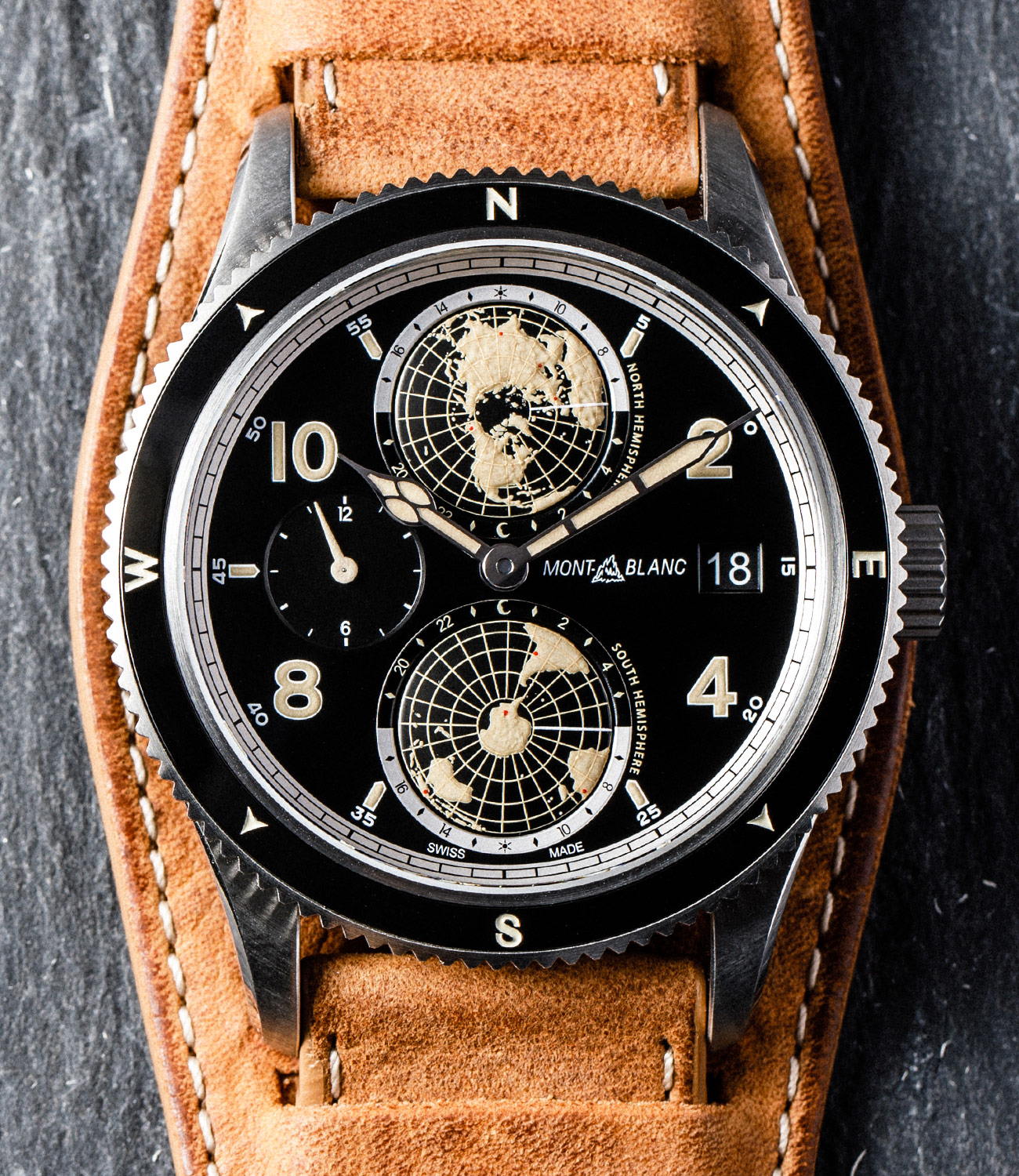
Now, however, there’s the Montblanc 1858 Geosphere, one of the watchmaker’s highlight releases from this year’s SIHH. With its Indiana Jones vibes, its relatively low price and its unique, dual-Lambert projection world time display, it’s poised to break from the world timer’s stuffy, pricy mold and offer a version of the complication more appealing both sartorially and practically.

The Good: The Geosphere is one of those watches we can lump into the always-fun, typically-nebulous “relatively affordable” category. There are few world timers that retail for less than the Montblanc does, and those that do — namely from brands like Maurice Lacroix, Ball and Frederique Constant — aren’t significantly cheaper (most retail for just under $5,000) and lack many of the details and features of the Montblanc. This, in a way, helps put the world time complication less in the “exceedingly wealthy watch collector camp” and more in the “I’m going to treat myself to a nice watch” camp. Franky, I would be happy in either camp, but that’s neither here nor there.

Keep in mind, too, that while the Geosphere’s movement isn’t produced wholly in-house (the watch is based on a Sellita movement), the world time module is a Montblanc creation, and the dual-globe layout is something you won’t find anywhere else. This layout, it should be said, also lends itself to a very handsome dial design, and the vintage tool watch look certainly appeals to those who want a travel watch in the same sort of roguish mold as, say, a Rolex GMT-Master. You can even get the watch in bronze, if you like.

Who They’re For: Montblanc markets the Geosphere as an explorer/mountaineering watch, which you can see in the styling (the faded Bund strap, for example, is right on the nose). But the exploration angle becomes more apparent when you focus on the dial’s two globes, which are adorned with a series of red dots representing the highest summit on every continent; look at the case back, and you’ll find the names of each of these mountains inscribed there. And then there’s still that compass bezel staring you right in the face. If you’re a mountaineer who uses this watch on his/her regular high-altitude exploits I’d love to buy you a beer, but let’s get real: most people buying this watch will appreciate the world timer functionality when jetting back and forth between cities like New York, London and Hong Kong for work rather than between Mts. Denali, Everest and Elbrus.

Watch Out For: There’s no seconds hand on the Geosphere, presumably to clear more space for the rest of the dial. While a seconds hand isn’t exactly necessary, it’s still a nice feature to have, especially if the watch in question is ostensibly meant to be a tool. Additionally, Montblanc rates the watch water-resistant to 100m, but there’s no screw-down crown on this one, so maybe consider that before you go for a swim.

Still, the more significant issue to consider with the Geosphere is the legibility factor of its world time displays. To be fair, legibility (or lack thereof) is an issue most world time watches grapple with — the busy dial is inherently difficult to read at a glance. But while the two-globe setup on the dial doesn’t necessarily make the rest of the watch difficult to read, parsing out the time for each zone is more difficult because, well, they’re tiny, though the longitude lines representing each time zone are helpful here. You’ll eventually figure it out, but not after staring at the teensy little globes for at least several seconds.

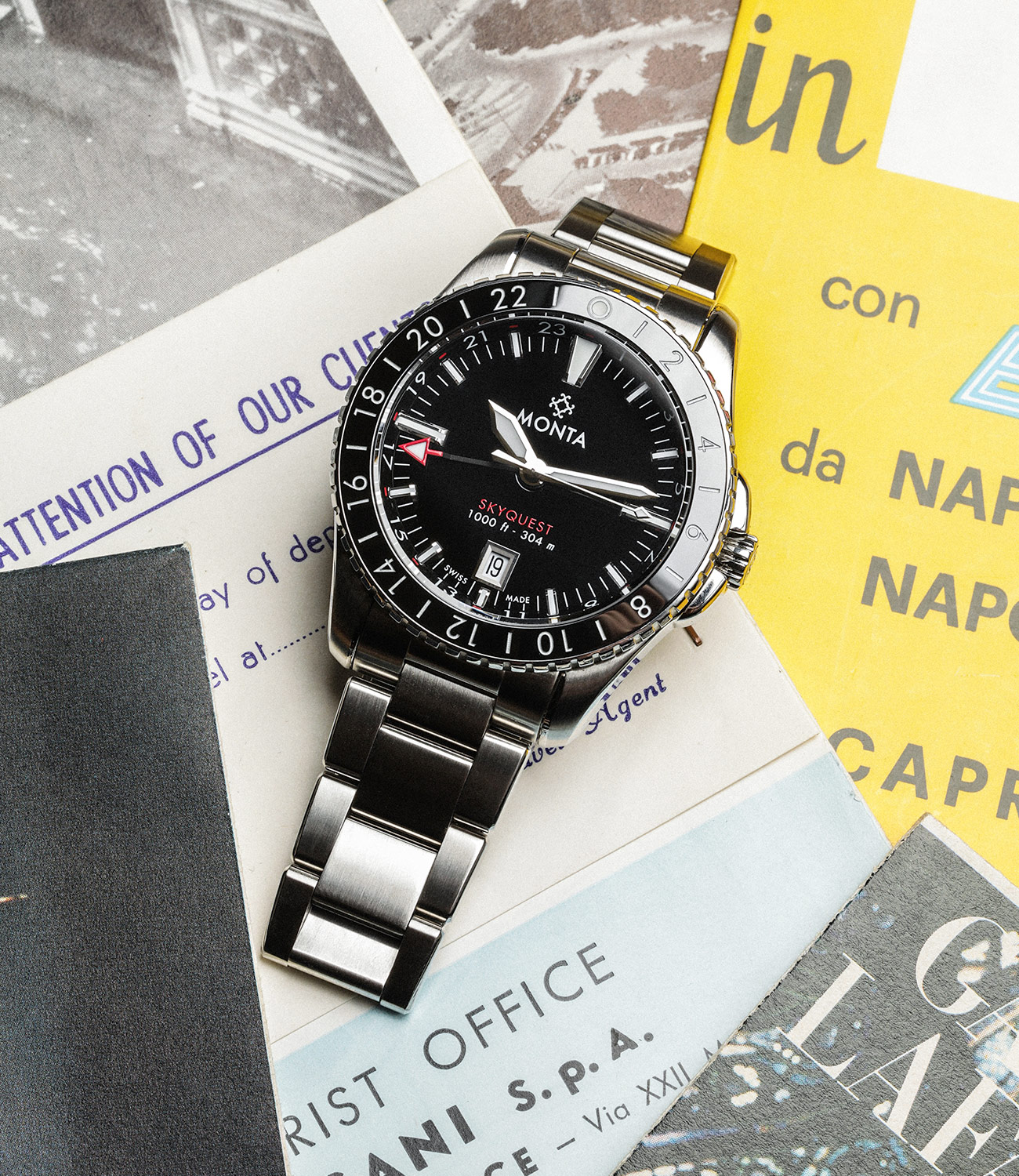
Alternatives: There are a great many GMT watches if you’re looking for a vintage-style or sports watch for traveling at a lower price. Farer’s GMT, the Monta SkyQuest and Sinn 857 UTC are just a few great options that come to mind that you can get for under $3,000. But let us say you want a world timer specifically — your pool of choices just got a lot smaller. There’s the Bremont ALT1-WT that boasts a chronograph in addition to its world time function, though it doesn’t work automatically like the Montblanc in the sense that the world time can only be read after you manually move the bezel via the crown in reference to a UTC hand. Like some sort of peasant.

You could also opt for the Ball Trainmaster World Time which is, in fact, a true automatic world time watch and comes in at a lower price than the Montblanc.

Review: You could analyze the Geosphere’s spec sheet, look at its price, then size up the competition and declare the Montblanc a winner, but this is a watch that deserves to be experienced in person to realize its charm. Yes, a lot of what makes the Geosphere such a superlative watch is what it provides, on paper, for the money, but witness it in person, and you’ll see that there are tons of little details that make this watch a stunner from a design standpoint, too.
Let’s take a look at that dial first. The numerals are coated in a thick smattering of warm, beige hue that gives the dial both a vintage feel and a degree of dimensionality — they ever-so-subtly pop from the dial’s surface. Similarly, the globes representing the northern and southern hemisphere are domed, another smart choice by the designers that adds depth to the dial. The continents upon those globes are wonderfully textured, something you can’t notice until you’re looking closely — the application of lume is almost topographical. Oh yes, those continents are all coated in Super-Luminova, giving the Montblanc one of the coolest nighttime dials I’ve ever seen on a watch.

World timers, and modern complicated watches in general, tend to be very big, and while some watchmakers try to design cases that hide that size, the Montblanc leans into it. At 41.5mm in diameter and 12.8mm thick, the Geosphere has the dimensions of a modern dive watch and wears like one, too. Notably, the case is adorned with a rotating compass bezel which helps cinch the diver-esque look while framing the dial and making it feel less expansive. The case, which is simple, somewhat slab-sided and complemented by faceted lugs, wouldn’t look out of place on your typical luxury dive watch.

This makes the Montblanc easy to wear, and fortunately, the watch is pretty easy to operate. The crown pulls out two stops, and when you reach the second position, you can set the minutes, the hour on the central dial and the position of the world time display. To set it all up, twist the crown until you have the correct date, then the correct position of the world time displays, then the correct minute hand position, but ignore the hour hand. Then, push the crown back in one stop and you can reset the hour hand while everything stays in place. Adjust it until you have the correct hour for the local time. This makes setup relatively pain-free, and when you’re traveling, it allows you to reset the hour while without disrupting anything else.

In addition to the world time display, the watch features a sub-dial at nine o’clock that lets you track an additional time zone. This dial is set by pushing a tiny pin-sized button at the 10 o’clock position on the case. This functionality may seem unnecessary when you have the time zones for all of the world at your disposal, but if you have another time zone that you need to keep tabs on constantly, it’s a nice touch that’s easy to read without having to decipher the watch’s teensy world time indicator each time.

Verdict: Qualms with legibility aside, there’s so much to love here. The Geosphere is, ultimately, a high-end complicated watch that wouldn’t feel out of place with jeans and a t-shirt or on a hiking trail — or even at the office, really. It’s handsome, wonderfully detailed, and boasts a little-seen complication in a configuration you won’t see anywhere else, and its price, for what you’re getting, is certainly reasonable. It is, in other words, incredibly well-rounded.

What Others Are Saying:

• “While the Geosphere complication isn’t entirely new for Montblanc, this is the first time it’s being utilized in a more consumer-friendly sports watch. It’s also surely going to be a talking point that brings people into the new 1858 collection, bringing some extra attention to the less complex time-only and chronograph models. On its own though, this is an interesting tool watch that offers something genuinely new in the marketplace.” — Stephen Pulvirent, Hodinkee

• “It’s fair to say there’s quite a lot going on here, but at its heart it’s a travel watch that makes quite a statement. The 42mm case is finely detailed, with a well-knurled bezel inset with a ceramic compass insert.” — Felix Scholz, Time & Tide

Key Specs

Functions: World time, second time zone, date, compass
Movement: Montblanc MB 29.25 (Sellita SW300-1 base)
Winding: Automatic
Case Size: 41.5mm diameter, 12.8mm thick
Water resistant: 100m

Read More Gear Patrol Reviews

Hot takes and in-depth reviews on noteworthy, relevant and interesting products. Read the Story

Note: Purchasing products through our links may earn us a portion of the sale, which supports our editorial team’s mission. Learn more here.

Front Runner Slimline 2 Roof Rack Review: The Best and Last Overland Rack You’ll Ever Buy

durable, user-friendly and adaptable

Front Runner Slimline 2 Roof Rack Review: The Best and Last Overland Rack You’ll Ever Buy


Automotive enthusiasts are a deeply flawed breed. Our passion for cars facilitates judgmental, irrational and fiscally irresponsible behavior. We name inanimate objects and care for them like children. Marketers feed on our weaknesses and loved ones bemoan them. There is one great benefit to our obsession, however: our keen appreciation for and understanding of motor vehicles inspires us to test their limits in the spirit of adventure.

Front Runner Outfitters gets it. Some years ago, the South African manufacturer began making smarter, more durable overland equipment because it simply couldn’t find the right gear anywhere else. Today, Front Runner has become a favorite among off-road enthusiasts, led by the success of its Slimline II roof rack. The modular “base layer” for much of the company’s equipment is available in 55 sizes to accommodate a broad range of utility vehicles. I chose to check out a full-length, tall-mount version for my 1994 Toyota Land Cruiser and put the rack to the test on some of our favorite trails. Here’s what I learned.

|

The Good: Slimline II’s distinct advantage is its modular design. Individual slats can be moved along the rack, added to create a solid floor or removed to make space for a sunroof or accessories. T-slots along the rack’s perimeter and within each slat (top and bottom) mean you can mount an M8-size bolt virtually anywhere. Customers can choose from a low-profile position for optimal aerodynamics or tall gutter mounts for under-rack accessibility. T6 aluminum construction with weather-resistant coating means the Slimline II weighs just 71 pounds and will never rust. Front Runner offers over 50 rack accessories and most non-native add-ons will fit just fine.

Who It’s For: Anyone looking to add versatility to his or her rig should consider the Slimline II. Often, cargo capacity is the first bottleneck for overlanders and therefore one of the first modifications to be completed. Whether you plan to install a rooftop tent, accessory cargo bins, tires, recovery gear or any other adventure equipment, the Slimline II can meet your needs.

Watch Out For: Because of the Slimline II’s raised edges (great for keeping gear secure), some ultra-wide accessories like tents may need a little modification to fit properly. Wood slats or raised mounts can help, but it’s worth considering flat rack alternatives if you plan to occupy the entire rack area with an accessory.

Alternatives: Prinsu Design’s 80 Series RoofRac and Rhino Rack’s Pioneer Platform are commonly cross-shopped with the Slimline II. Both systems undercut Front Runner’s rack by about $400, but neither is as easy to adjust, offers as many accessories or is available with tall mounting brackets.

Review:My drive to the campsite provided valuable insight into what owners should expect of daily driving performance. No perceptible wind noise enters the Land Cruiser’s cabin, nor did I note a major hit to fuel economy (I might have lost one mpg compared to our rack-less form). On the trail, the rack’s construction and fit are equally impressive. No rattles or squeaks were heard while clambering over rocks or bouncing through grooves.

At the site, gear is in the same position as when I set off, secured by a set of Front Runner’s Stratchits andtie down rings. The tie-down rings (available in stainless steel or black) fit anywhere along the rack and easily hand tighten. Stratchits (available in two sizes) combine the ease of use of a bungee cord with the versatility of a ratchet strap. After using these tools on this rack, it will be hard to go back to anything less intuitive.

With gear offloaded, I climbed onto the roof and stood at the rack’s midpoint — the least supported zone. Despite some engineered flex under 170 pounds of concentrated load, the rack feels incredibly solid, supporting Front Runner’s claim of 660 pounds of max cargo capacity. Short of taking a sledgehammer to the brackets, I can’t imagine anyone needing to take up Front Runner on its lifetime warranty.

Verdict: The Front Runner Outfitters Slimline II roof rack is a durable, user-friendly and adaptable platform suited to any overland adventure. If you can stomach the $1,226 price tag (cost varies by model), this may be the last rack you ever buy.

|

Read More Gear Patrol Reviews

Hot takes and in-depth reviews on noteworthy, relevant and interesting products. Read the Story
Note: Purchasing products through our links may earn us a portion of the sale, which supports our editorial team’s mission. Learn more here.

JBL Xtreme 2 Review: The Big Bluetooth Speaker for Big Parties

JBL is one of the most recognizable names in portable Bluetooth speakers. Its offerings cover the spectrum in terms of size, price and form factor, but its newest portable Bluetooth speaker — the Xtreme 2 — is the one of its largest and best sounding. At $300, it’s also one of JBL’s most expensive. Released this summer, the Xtreme 2 is the second-generation version of the Xtreme, and has upgraded drivers so that, according to JBL, make the speaker sound better with even more bass. Additionally, the Xtreme 2 is waterproof and comes with a clip-on shoulder strap, which is definitely unique. The only speaker that’s bigger than the Xtreme 2 in JBL’s collection is the JBL Boombox, which costs a hefty $450.

|

The Good: The JBL Xtreme 2 is one of the most striking portable Bluetooth speakers, not necessarily because of the way it physically looks — it’s a large cylindrical omnidirectional speaker, after all — but when it is playing bass-heavy music, you can actually see its woofers pulsating with the beat. It can be mesmeric, similar to the much higher-end Devialet Phantom, only in a portable Bluetooth speaker. The speaker sounds good and comes with an optional strap, which is unique and makes the speaker easy to travel with. It has a great battery life. It’s waterproof enough to be dunked in a pool (or the ocean) and survive. Its built-in, noise-canceling microphone effectively makes this a really good speaker. And it has a USB Type-A port, so you can use the speaker to charge other devices.

Who They’re For: This is for anybody looking for a large portable speaker. It’s great for parties because it plays omnidirectional sound and has great bass. Also, integrated into its strap is a beer bottle opener, in case you had any doubts over the speaker’s target demographic: it’s for people looking to have a good, loud time.

Watch Out For: There aren’t any wifi-enabled features with this speaker and, thus, there’s no virtual speaker like there is with the UE Blast and Megablast. (Although, you can program a bottom on top of the speaker to initiate Siri or Google Assistant from your phone.) The speaker charges via an aux cable, which many of the other gadgets I carry aren’t compatible with. It’s fairly expensive.

Alternatives: There are a number of alternatives in the increasingly competitive market of portable Bluetooth speakers. The UE Boom and Megaboom are both more affordable if slightly smaller options. There’s the UE Blast and Megablast if you value wifi functionality. The Sony SRS-XB41 is another terrific Bluetooth speaker for parties, especially if you like bright lights and quirky features. Bose’s newest SoundLink speakers are also good.

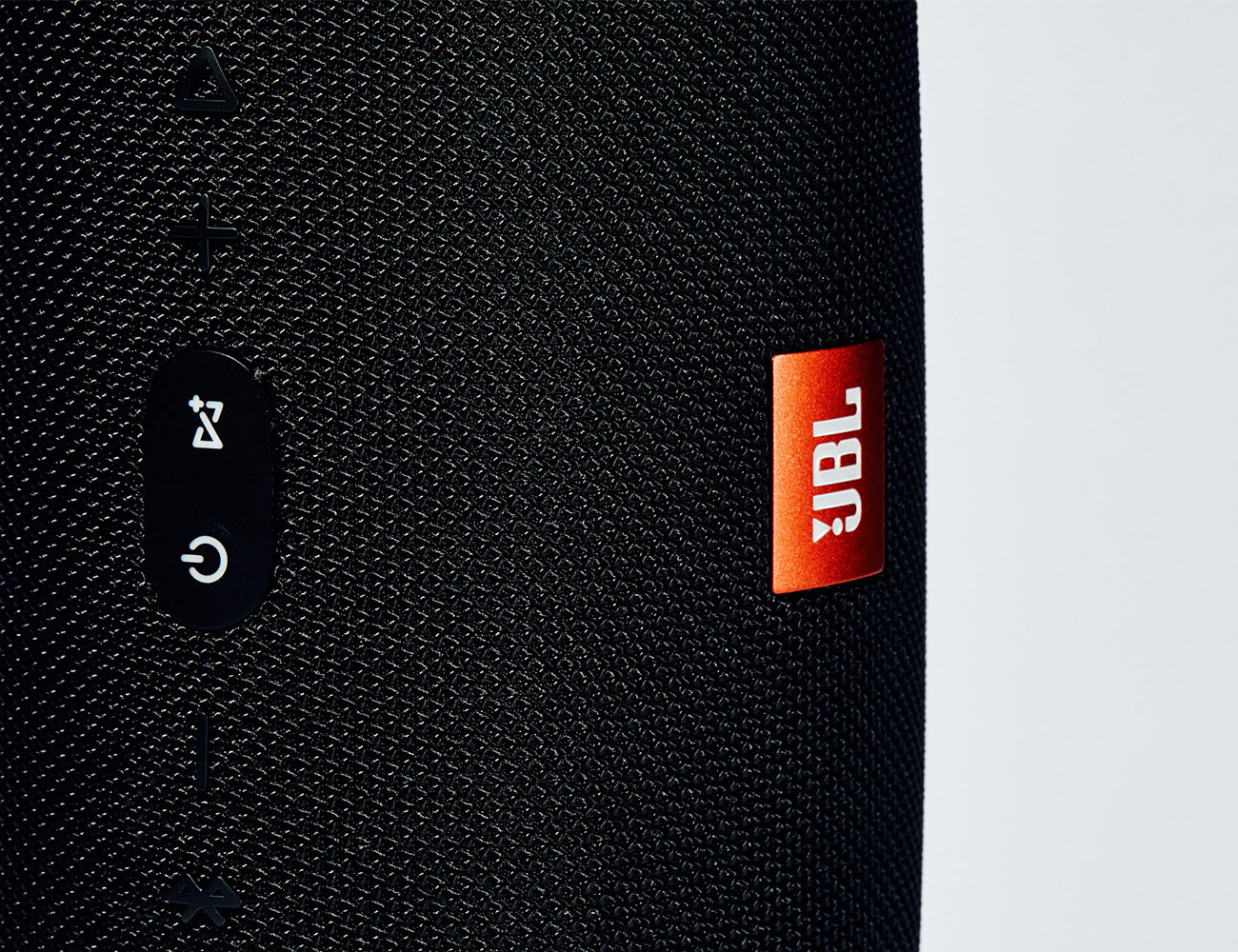
Review: The Xtreme 2 has a certain charm to it that other Bluetooth speakers lack. Its dual woofers, one on either end, pulsate with the music and it looks pretty cool. It reminded me of when I was testing the Devialet Phantom, and while they are very different speakers, the JBL Xtreme 2 can be captivating.

The Xtreme 2 is great for outdoor parties or for being placed in the center of the room. Despite its size, it’s actually not the loudest Bluetooth speaker that I’ve ever come across – I think the Sony SRS-XB41 still holds that title – but it does sound better at high volumes. The four drivers handle the highs and midrange admirably, and its punchy bass is what it’s best at.

Its battery life is amazing. On the box, it says it can get up to 15 hours on a single charge, but I think it lasted much longer. I went a whole weekend listening to the speaker and it was still at 33 percent on Monday morning when I brought it back to the office. (Granted, I wasn’t always blasting music at super high volumes.)

There are a few things that I can criticize about the speaker, other than its price. It has JBL branding on both of its woofers, and I always prefer a more subtle design. It charges via an aux cable, which seems limiting as most laptops and other gadgets require a different kind of cable. And I know its part of the waterproof design, but the rubber enclosure protecting its ports can be really difficult to pry open.

Verdict: The JBL Xtreme 2 is a party speaker, through and through. It sounds best at high volumes and when placed in the middle of the party (or the room). There is an app, but you don’t really have to mess with it. And it does come with some convenient features, like its shoulder strap and its ability to charge your other devices. Bottom line, if you want a big portable speaker, this is a great one to buy. Although, you should know that if $300 is a little too rich for your blood, there are other Bluetooth speakers that have many similar qualities.

What Others Are Saying:

• “JBL has delivered a durable waterproof speaker capable of big sound with the Xtreme 2. Between the sound quality, battery life, and extra features you can’t really go wrong with it. However, it’s also a bit on the pricey side starting at $300 and most likely out of many people’s price range. .” — Jason England, Android Guys

• “The Xtreme 2 is an improvement on the original. From a sound standpoint, it seems to be about 15-20 percent better and is in the same ballpark as JBL’s non-portable Link 300 speaker (the Link 300 sounds slightly better). It blows away JBL’s smaller Bluetooth speakers and is fuller sounding and plays louder than UE’s Megaboom and Megablast portable speakers, which are smaller, and now retail for $250 each.” — David Carnoy, CNET

Key Specs

Drivers: 4 (two 2.75-inch woofers, two 20mm tweeters)
Frequency response: 55Hz–20kHz
Connectivity: Bluetooth 4.2
Battery: up to 15 hours; 3.5 hours to charge
Water-resistance: IPX7 waterproof

|

Read More Gear Patrol Reviews

Hot takes and in-depth reviews on noteworthy, relevant and interesting products. Read the Story
Note: Purchasing products through our links may earn us a portion of the sale, which supports our editorial team’s mission. Learn more here.

2018 Mercedes-AMG E63 S Review: 603 horsepower and 627 lb-ft of torque… In a Wagon

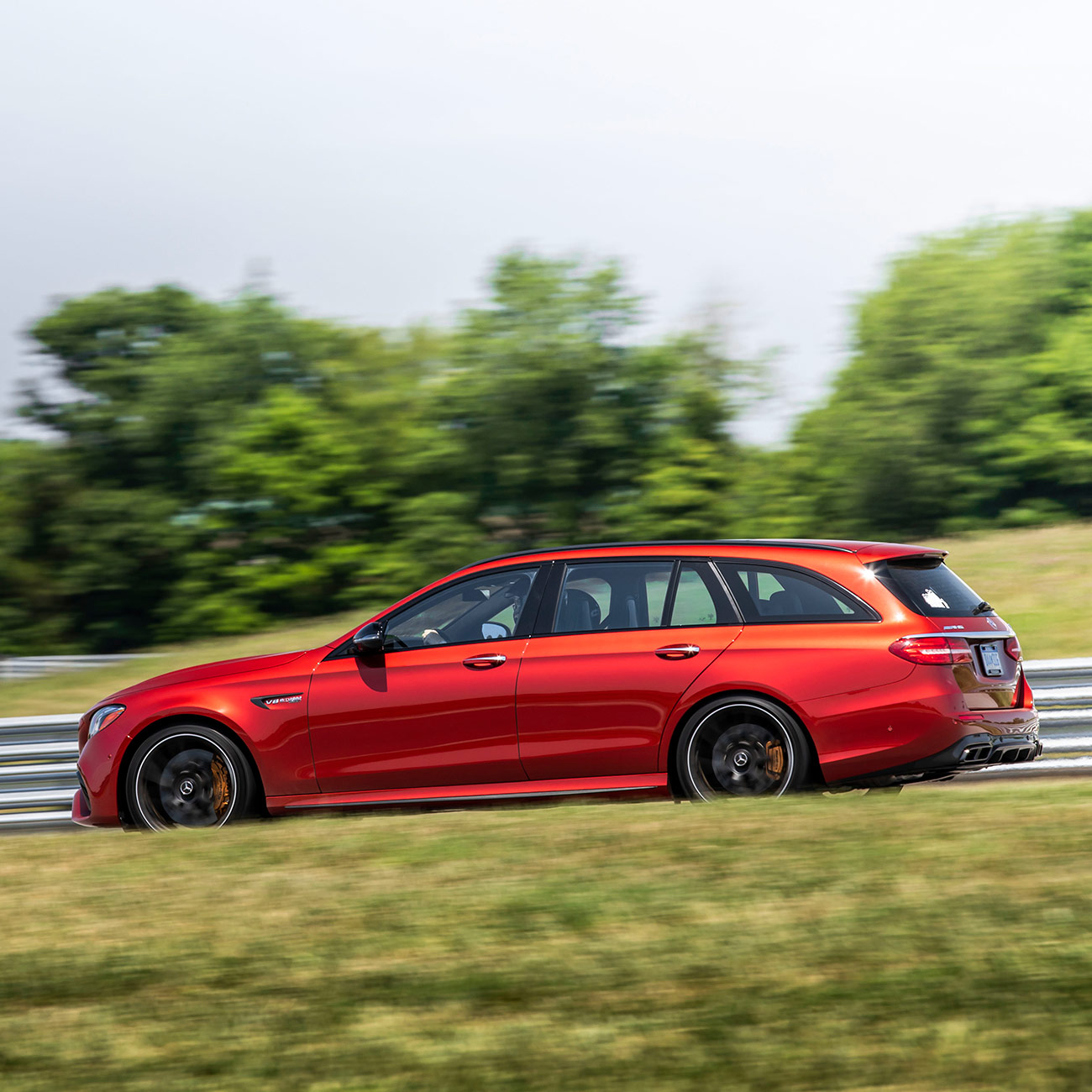
The total number of station wagons Mercedes-Benz sells in the United States is pitiably small, barely cracking five figures in any given year. This is particularly true compared to the number that fly off showroom floors in Europe. Still, the company keeps at it, working to appease the rare enthusiasts stateside or, perhaps, hoping that the sluggish pendulum of public taste will eventually swing back in the wagon’s favor. For those who do see the great appeal of a roomy vehicle that isn’t a sky-high, top-heavy monstrosity, the company has given us the fiercest yet in the AMG E63 S Wagon, the sport-tuned version of the E400. Only 300 of these pups will reach U.S. speed traps. It is, of course, an upgrade from a humble, conventional station wagon — in this case the E400 — to a 603 hp, 627 lb-ft bruiser that can deliver the kind of road trip that will thrill, or terrify, the kids.

The Good: Did I mention that 603 hp, 627 lb-ft of torque? In a station wagon? That’s the most obvious “good” in this picture. The second-most obvious is the drift mode, in which 100 percent of your prodigious torque can be sent to the rear wheels, permitting insane burnouts anywhere you want. There’s also a nicely tuned, adjustable air suspension that keeps the car planted even in the tightest chicanes. Bringing up the rear: that wagon configuration, which allows you to haul stuff and even catch some Zzzs in there if a road trip yields crushing fatigue… and the inability to pay for hotels thanks to the fact that you just spent $107,945 on a nuclear-powered station wagon.

Who It’s For: On a recent trip to Germany, I couldn’t help but notice how many sport wagons I saw bombing up and down the Autobahn. In Europe, the wagon never left. It’s logical, smart and practical — and to many is actually a more appealing visual configuration than the sedan. Besides, why not have the extra space back there? But there’s no accounting for taste, apparently, so U.S. drivers rejected the idea decades ago, on the flawed assumption that they would become like their dads if they bought a wagon. So this car is for folks who aren’t insecure, weak-minded sheep. There, I said it.

Watch Out For: Being A) a Mercedes and B) a station wagon, this is an undeniably large vehicle, tipping the scales at a pavement-pounding 4,700 pounds. It feels — and for that matter looks — like kind of a heavy thing, but Mercedes uses all of its available tricks to dial out that mass. Another quirk that might be discovered during particularly hard driving, which I experienced while pummeling NCM Motorsports Park in Bowling Green, Kentucky, is the car’s pre-accident belt-stiffener and the Pre-Safe Sound feature. In the former, the car will cinch up your belt if it anticipates an accident, while in the latter it will play a loud static-like noise through the car’s stereo, triggering an acoustic reflex that protects your ears from a far louder accident that’s on the way.

Both are brilliant, of course, but in track driving the car was frequently spooked into thinking I was going to hit the car ahead of me, and fired off both features, causing momentary disorientation as well as a bit of discomfort until the belt sheepishly relaxed itself when no big crash transpired. Ye of so little faith, E-Class! (That said, it was cool to actually experience the Pre-Safe Sound effect, a curious feature that also happens to be one of those rare things, like airbags, that Mercedes won’t just fire off during a press event to demonstrate.)

Alternatives: There aren’t many truly high-performance sport wagons out there, but what is available is generally pretty awesome. You have the Porsche Panamera Sport Turismo — though with perhaps the smallest bump in available space in the transition to a wagon — the BMW 3-Series Sports Wagon, the Jaguar XF Sportbrake S, and the Mini Clubman John Cooper Works edition. Surprisingly, all are pretty distinct from each other visually, but all possess some performance edge that sport wagon aficionados will appreciate.

Review: There’s sometimes a moment in a great drive where the car itself recedes into the background. Call it what you want — flow, the zone, man and machine becoming one, the dancer becoming the dance — but it’s a real thing and it’s downright magical. Unless, that is, there’s something about the car that inhibits that transition to true, uninhibited, high-confidence driving. Maybe its transmission is slow, or its engine not quite there for you when you need it, or it creaks and groans through every turn. With a station wagon, the risk is that the car’s general gestalt will be more utility than performance, or that even the perception of its outsize dimensions will somehow slow you down, that the extra two feet of roofline will murder your aero or something. With the E63 S, there’s very little of that. Yes, it’s a heavy car, as mentioned, but once your brain accommodates that and all the Mercedes engineering muscle come to bear, you can reach that state quite easily in the E63 S. It felt smaller than it was entitled to, and I hardly noticed the car itself — just the next turn.

On the track in Kentucky, after just a few laps of grasping the quickness of the nine-speed multi-clutch transmission, the unbelievable braking ability — via the optional $9,000 ceramics — and the precision suspension control as you have at your disposal, I indeed quickly felt one with the machine, easily maintaining my pace and pushing the car harder and harder through the track’s undulating ribbon of asphalt. In the track-ready Sport+ mode, the car blasts out of each turn with millisecond responsiveness to your throttle inputs, and the driver assists—traction, stability—keep things nice and tidy for you. There’s a manual mode available should you like that granular level of control, but it’s really not necessary — though it’s admittedly fun — since the computer’s gear selection is usually right on the money in terms of timing and delivery. The car’s stiff, form-fitting seats hold you firmly in place through the worst of it.

On the road, the E63 S is just as much fun as your bravery will permit, with a 0-60 time of 3.4 seconds when you want to feel the Gs, but docile low-speed manners and a compliant comfort mode when you actually do have your little critters in the back seat and don’t want them to spill their Pringles into the nooks and crannies of the leather seats. (Speaking of seats, the extra-firm AMG Performance seats might be great on the track, but they’ll try your patience on a long drive. Be warned.) The car also comes loaded with much the same tech as its non-hypercharged sibling, including the big dual 12.3-inch display screens, all the advanced driver assistance systems, including semi-autonomous highway cruising, and the COMAND infotainment system that’s soon to be replaced with the new MBUX system — though it won’t be available in this model until the next generation lands. This being an AMG, the E63 S also comes with the Track Pace app that can log your track-day success — or failure — by coughing up everything from gear selection to steering angle to speed.

Verdict: There’s a lot to love about this wagon, from the design touches that set it apart from the E400 — an assortment of new creases, inlets and badging, along with flashy touches like gold brake calipers and blingier 20-inch wheels — to the things it shares with it. These include the core tech, but also the elegant, gently arcing profile that gives this and other Mercedes models a distinctive common thread, as though they’re shaped like suction cups thereby holding fast to the road. Of course, all those touches vanish from view and thought when you drop the hammer, because the car flat-out goes like stink, its engine growling fiercely with every exploration of the tachometer’s furthest end. If this machine doesn’t push the pendulum of public taste back in the direction of the wagon, nothing will.

What Others Are Saying:

• “Like every AMG today, quad exhaust finishers out back give away that this car comes from Affalterbach. Gaping front air intakes contribute to an overall menacing look, yet somehow the E 63 S wagon’s design comes off as understated.” — Joel Feder, Motor Authority

• “The new E-Class’ interior is wonderful, though it’s perhaps at its best in AMG form. The slim AMG Performance seats are as comfortable as they are supportive, though they’re also a $2,500 option. Open-pore wood accents and real aluminum trim match the rich leather appointments, and every single surface is both beautiful to behold and excellent to touch.” — Steven Ewing, Road Show

• “Hour after hour, lap after lap, both the E63 S sedan and wagon deliver consistent braking, acceleration, and handling performance to satisfy any enthusiast. At day’s end, we use our biggest puppy dog eyes when asking permission to try “drift mode” – a sub-selection within Race mode that turns the E63 S into a completely rear-drive vehicle – but to no avail. Instead, Tommy Kendall (racing driver and television broadcaster) puts on a drifting demo to separate the last tread from some well-used tires.” — Miles Branman, Digital Trends

2018 Mercedes-AMG E63 S Wagon Key Specs

Engine: 4.0-liter twin-turbo V8
Transmission: nine-speed automatic; 4MATIC+ permanent all-wheel drive
Horsepower: 603
Torque: 627 lb-ft
0-60: 3.4 seconds
Top speed: 180 mph
Price: $107,945 (base)

Read More Gear Patrol Reviews

Hot takes and in-depth reviews on noteworthy, relevant and interesting products. Read the Story
Note: Purchasing products through our links may earn us a portion of the sale, which supports our editorial team’s mission. Learn more here.

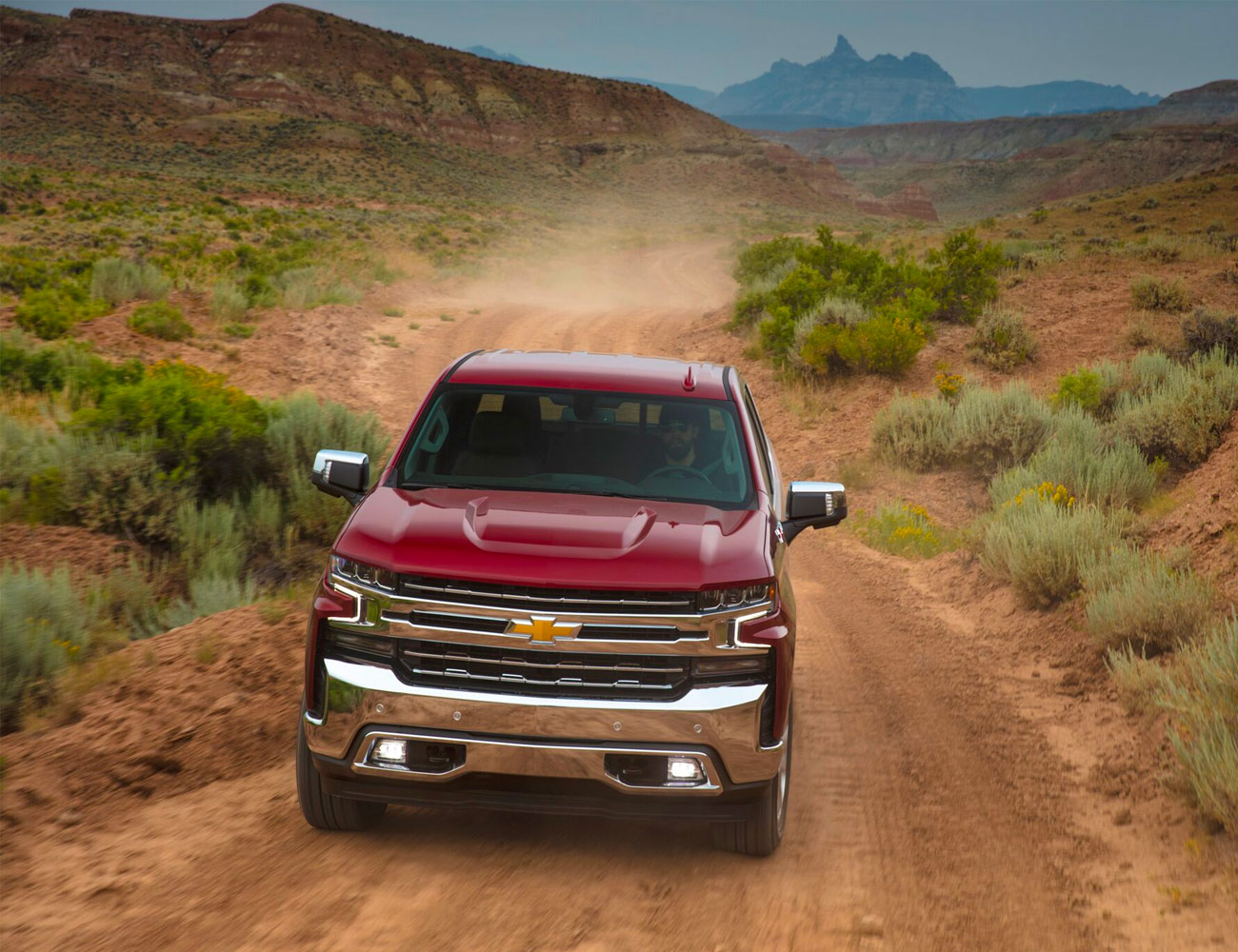
2019 Chevrolet Silverado Review: Nearly Unlimited Choices for Truck Fans

The full-sized truck market is not a Big Three pissing contest. It is the Big Three pissing contest. These are America’s best-selling and most profitable automobiles. Manufacturers pour extraordinary amounts of time, energy and engineering nous to produce updated and innovative vehicles. Ford, Chevy or Ram, the next generation will be a great leap over what came before. It needs to be. Jobs depend on it.

That competition yields quality vehicles. But, it makes distinguishing them tough. Every truck incorporates the latest and greatest options and features. Whatever distinctions arise are often too trifling to override entrenched brand loyalty. It’s hard for manufacturers to alter the paradigm.

I drove a sampling of 2019 Silverado offerings in Wyoming and Idaho. I use the term “sampling” because it would have been impossible to drive every iteration. Chevy purports to offer “unlimited choices” with the Silverado. That claim is not technically correct, but the sentiment is not far off.

The Silverado stable for 2019 includes eight different trims with unique styling, ranging from the humble Work Truck to the loaded High Country. The Silverado can have six different engines with three different transmissions depending on the trim. There are two different fuel management systems. There are RWD and 4WD versions. There are three different cabs and three different box lengths. There are four different types of tailgates. Toss in multiple convenience, towing and off-road packages. That’s just for the 1500 edition.

Chevy will give you the exact truck you want with the Silverado. Knowing exactly what you want beforehand is imperative.

The Good: The Silverado is up to 450 pounds lighter than the previous model. You feel it opening the aluminum doors, hood, and tailgate. You feel it in the handling which was agile, responsive and not boat-like for a full-sized pickup. Two-lane highways during vacation season weren’t optimal for hard driving. But, the 5.3L V8 with Dynamic Fuel Management and an eight-speed (355hp, 383lb-ft) transmission handled normal driving, overtaking and a steep, winding hill without much fuss. Visibility is good. The ride was quiet. The crew cab interior is cavernous. Even above average-sized adults should have no issues with leg room. Chevy also added at least ten cubic feet to every variation of the cargo box.

Who It’s For: Without being too glib, the longtime Chevy Silverado owner. Chevy has a massive customer base for these trucks. They cater to whims both great and small to keep them in the family.

Watch Out For: The seats felt stiff, even in the luxury trims. Chevy touts its “brutal” durability testing for driver seats; withstanding your butt and supporting it are two different things. Riding in the back of an LT Trail Boss during an off-road test was also “brutal.” Informing prospective mates you are a “6.2-liter type of guy” may be an undoubted concern. But, the badging for manufacturer, style, trim, engine volume and off-road packages can be a little much. The LTZ trim gets quite aggressive with the chrome.

What We Want To Know: Chevy has not released the EPA estimate for the four-pot 2.7L turbo. A capable (310 hp, 348 lb-ft of torque) four-cylinder, full-sized truck getting a legit 30 mpg highway on gasoline could attract a different and younger customer. We don’t have any data from the 3.0L I-6 Turbo yet, which could offer tremendous torque.

Towing: Chevy aimed to make towing easier with the Silverado. The fully loaded package includes up to four cameras, custom trailer profiles and trailer theft alert and tire pressure sensors. A trailering label in the door job removes any guesswork. There is a Trailering App to go with it. Frequent towing may be the rationale for upgrading to the 6.2L V-8 (420 hp, 460 lb-ft) with the 10-speed and DFM.

Value: As with features and capabilities, the Silverado’s price points will be similar to competitors from Ford, Ram (Ramm 1500 from $31,695) and GMC (GMC Sierra, price TBD). These trucks aren’t cheap to buy. The lesser of my testers, a 4WD LT Trail Boss Crew Cab, priced at $54,095 with options, and that was a mid-level trim. They aren’t cheap to operate. The 5.3L V-8 w/DFM gets about 17 mpg combined, meaning you pay about $18 per 100 miles. Saving a few hundred here or there won’t be the decisive factor. The real choice is whether to buy a full-size truck.

Verdict: I would select the Silverado LT or the RST trims. You get more comfort and features than the base truck. Paying extra for not so opulent High Country and LTZ trims does not seem worth it. GM offers a better lux truck with the Sierra Denali. The Trail Boss sounds and looks cool. Even with the off-road additions, it’s decent on the road. But, it’s paying for off-road capability you may not use, and it locks you into the gas guzzling V8. The LT/RST trim gives three engine choices – 2.7L, 3.0L Diesel, 5.3L V-8 w/DFM – and more modern and understated black bow tie styling.

2019 Chevrolet Silverado LT

Engine: 5.3-liter V8
Transmission: eight-speed automatic
Horespower: 355
Torque: 383 lb-ft
Towing: 11,600 pounds

Chevrolet hosted us in the Grand Teton National Park to experience the new Silverado.

Read More Gear Patrol Reviews

Hot takes and in-depth reviews on noteworthy, relevant and interesting products. Read the Story

Note: Purchasing products through our links may earn us a portion of the sale, which supports our editorial team’s mission. Learn more here.

Mercedes-Benz CLS 450 Review: Balanced to Favor Comfort and Luxury

You may have seen a heck of a lot more coupes out on the road without even knowing it. Lately, automakers have been playing fast and loose with the descriptor to jazz-up products in their portfolio that don’t meet the criteria. Now, even some SUVs are “coupes” because they’re sleek and sporty on top of being practical. If you want to trace this trend to its roots, you’ll probably end up staring at the Mercedes-Benz CLS. “14 years back 2004, we actually invented the segment of the four-door coupe,” said Bernie Glaser, Head of Product Management at Mercedes-Benz USA. Mercedes says this means they “combined the elegance and dynamic feel of a coupe with the comfort and functionality of a sedan.”

The problem is that the CLS was perhaps too successful at this mission, prompting Mercedes to consider that it should (and indeed does) endeavor to bring these characteristics to all of its sedans. And now the CLS is in danger of getting lost in a segment it helped create.

The Good: The inline six, coupled with EQ Boost, made for smooth travels, enhanced by the atmosphere manufactured throughout the interior. Call it corny, but the ambient lighting and the scent-infused climate control works well to set the tone.

Who It’s For: Anyone who wants a little more grunt than the CLA and the E-Class. Again, the straight-six motor is the main draw, second only to the styling that’s designed to hook those who have an eye for such things, though it may put off those who don’t. Also, anyone who wants to engage in debates on how their mid-size four-door sedan is a coupe until the end of their lease.

Watch Out For: Extra engine prowess is hindered by the focus on comfort. Wait for the AMG version or seek out stickier tires as a decent half-measure. The dual screen surfboard is packed with more graphics and information than occupants will know what to do with. A more user-friendly user interface would make the myriad options, settings, and configurations much more easy to sort while on the move. It certainly pushes into distraction territory.

Alternatives: The Audi A7 (or S7, for the AMG CLS 53) would be a serious rival for the CLS to counter, though the BMW 6 Series Gran Coupe is more analogous to this new Mercedes.

Review: The new CLS is the third generation of the car, which carries forward an unmistakeable profile that distinguishes itself from its brethren in the Mercedes profile. A long arch sweeps from back to front, ending at a shark-nosed front fascia that will be the face of newer Merc models in the near future. That arched line has been the defining characteristic of the CLS since the first one, and its what splits people down the middle about its looks: you love it or you hate it. For the “love it” crowds, it’s an added touch that makes it pop in a way that speaks to their aesthetic whims. If your local Mercedes dealerships were art galleries, The S-Class would be a Caravaggio, and the CLS would be a Matisse.

This new CLS also sheds some of the contours and lines that have been prolific in car design in recent years, opting for fewer edges and creases in a style dubbed “sensual purity” that is highlighted by pillar-less doors and narrow headlights. There’s been extra attention to the interior design, too, particularly in a market where sophisticated comfort is status quo for this segment. Mercedes knows it needs to differentiate itself, and it does so with, among other things, a flowing wood trim piece that stretches from door to door. It’s surrounded by turbine style air vents and every crease is crammed with fiber optics for ambient lighting. 64 color combinations are available, and the lights even change from “hot” or “cold” whenever the interior temperature is adjusted. It’s the first in many ways the CLS interacts with the passengers.

Combining the ambient lighting, scent-infused air conditioning, and seat massage functions, the CLS has an “energizing comfort” setting whereupon different programs will stimulate the senses depending on the mood you’re after. It’s a nice piece of luxury theater that won’t be part of anyone’s daily life, but it’s interesting to see the how far out of the box a luxury automaker will go for ideas to stay ahead of the game. All in all, the CLS succeeds in providing a lovely, comfortable environment to sit in while on the go. Like its “coupe” tag, the rear seats push the CLS into definition-stretching territory by claiming three additional people can sit in the back. This technically makes the CLS a five-seater, but I’d have a hard time reconciling that to be the case if I was the fifth passenger.

Furthering the tech is the 12.3-inch dashboard display that can be paired with another 12.3-inch digital gauge cluster, both of which make up a glass “surfboard” of information. Inputs are either made through steering wheel buttons, voice command, or with the center column touchpad and click wheel. There is such a wide array of menus and settings to go through that your head will spin, but thankfully there are physical shortcut buttons to quickly jump to navigation, media, or other settings for on-the-go access. Even so, it can sometimes be a little overwhelming and confusing as to which menu or sidebar you have access to. Both screens share the same large glass front, but they’re surrounded and separated by a thick bezel that doesn’t conform with the fluid aesthetics of the interior.

The intelligent drive features that have made their way from the S-Class to the E-Class now find themselves a part of the CLS. It’s a package made up of the semi-autonomous driver aides we’ve come to expect from sophisticated luxury vehicles: lane-keep assist, adaptive cruise control and collision avoidance alerts. You’ll be glad to have many of the pre-safe systems in case the worst happens – systems that mitigate injuries as much as possible – but some of the avoidance tech leaves much to be desired in certain real-world conditions. For instance, during a test of these systems on a traffic-heavy highway portion, the pre-safe “impulse side” was triggered. This meant that during a lane change, the car detected a car adjacent to me and “pulsed” me back towards the lane I was departing. Had there been a car there that I somehow didn’t see, I’d be singing this system’s praises, but as there wasn’t one, it was panic-inducing enough for me to switch it off – permanently if this was a car I purchased.

Under the hood is the first inline-six power plant that Mercedes has had in 20 years. The 3.0-liter turbo six-cylinder engine sends a substantial 362 horsepower and 369 pound-feet of torque to either the rear wheels or all four in the 4matic. It makes its way through a nine-speed automatic. If the inline-six wasn’t an interesting feature on its own, it’s supported by a 48-volt electric motor integrated into the starter generator. While it can provide a boost of up to 21 horsepower, don’t expect it to deliver an extra blast of speed like the CLS’ Formula 1 cousins. Instead, it mitigates turbo lag and delays when starting back up when the engine’s automatic start-stop feature kicks in at intersections. Naturally, it assists in fuel-saving measures and even gives the CLS the ability to engage into a “glide mode” during certain flat-or-downhill stretches, shutting the engine off and keeping the CLS coasting along well enough to delight even the most discerning hypermiler.

Dialed up to full performance, the CLS is satisfyingly engaging. Steering noticeably firms up, as does the suspension, and it ekes out acceleration quick enough to want more, yet not be disappointed. It’s attuned for the right amount of fun anyone attracted to the CLS would need. the EQ Boost does help smooth out turbo lag, but there’s enough delay in the power delivery to notice, once you get the car up to speed. The ceiling for performance is lowered even further by the standard set of Goodyear tires fitted to the 19-inch wheels. The four-door felt like it could deliver more control than the set could allow, forcing me to hold back during some of the more demanding switchbacks. The more I pushed, the more I reconciled with the feeling that the restrictions imposed on the CLS were deliberate to favor comfort over agility. It only later occurred to me that the AMG version was going to be the version to tip the balance into performance’s favor. The AMG CLS 53 will pack the same straight-six, but will be enhanced to provide 429 hp and 384 lb-ft of torque, hitched along with a speedshift nine-speed gearbox and all the other AMG goodness Mercedes can slap on. It’ll be interesting to see how the CLS shapes up when set up for its full potential.

Verdict: Its clear that the CLS was balanced to favor comfort and luxury over barnstorming agility, and that’s perfectly fine. In those regards, the CLS presents itself confidently. The divisive styling works better in this iteration than in the past, though whether it’s enough to win detractors over is yet to be seen.

Regrettably, the biggest issue with the CLS has to do with Mercedes’ propensity to make sure there’s a car to suit every need, and the overlap that it causes makes it hard for cars like the CLS to stand out. The inline-six, with its extra grunt and EQ boost functions, are the highlights here, as well as the S-Class sourced safety features, though some functions won’t be to everyone’s taste. Pricing will be a major determining factor for those in the showrooms trying to wade through the alphabet soup of the Mercedes catalog when it arrives this fall, but it has yet to be officially announced.

Call it a coupe, call it a mid-sized sedan, or call it whatever you want, the CLS is unmistakably a Mercedes-Benz, and that’s generally a good thing.

What Others Are Saying:

• “On the road, the CLS450 feels composed, its standard non-air suspension soaking up road inconsistencies and returning a smooth ride that has the makings of a great road-trip machine. ” — Andrew Krok, Roadshow

• “It’s also the first CLS to have a fifth seat, so you can torture one more person’s hairdo with the lack of headroom in the back from that drooping roofline that supplies the lie that this vehicle deserves its “coupe” branding. ” — Justin T. Westbrook, Jalopnik

• “The COMAND infotainment system itself is still cluttered; diving into navigation and vehicle settings will yield some confusing outputs.” — Jeff Perez, Motor1

2019 Mercedes-Benz CLS 4Matic Key Specs

Engine: 3.0-liter inline-six turbo
Transmission: nine-speed automatic
Horsepower: 362
Torque: 369 ft-lbs

Read More Gear Patrol Reviews

Hot takes and in-depth reviews on noteworthy, relevant and interesting products. Read the Story
Note: Purchasing products through our links may earn us a portion of the sale, which supports our editorial team’s mission. Learn more here.

Audi RS4 Avant Review: Possibly the Best All-Around Car in the World

Despite the insatiable lust for crossovers, SUVs, and anything remotely truck-like, Americans have been spoiled with “forbidden fruit” for years now. We finally have a Ford Focus RS, a Honda Civic Type-R, and we’ve had the tire-obliterating Mercedes-Benz AMG E63 Wagon for three generations. The days of pining for fast wagons and high-performance hot hatchbacks are seemingly in the rearview.

But there’s one piece missing that still makes enthusiasts weak at the knees: a fast Audi wagon. Ever since the Porsche co-built RS2 in 1994, Audi has been churning out super-fast ‘Bahn burners overseas, specifically in the form of the mighty RS6 and the hard-hitting RS4. Known as “Avant” in Audi speak, these wagons are fast, functional, and accelerate insanely quick thanks to Audi’s famous Quattro all-wheel-drive; but we’ve never had an Audi RS4 Avant here, not even in the fever dream of the 90s.

Thanks to strong sales, the Audi Sport lineup (as the RS cars are now known) is growing larger than ever, and the RS5 with which the RS4 Avant shares its underpinnings is better than ever. With America starting to fall back in love with wagons – as long as they’re lifted and all-wheel drive – could it be time for Audi to bring the RS4 to our shores? After spending a week with one in Sweden, I think you damn well better hope so.

The Good:

Oh boy, where do I start?

First and foremost, the RS4 Avant looks better than ever. While Audi’s been criticized for evolution rather than revolution in its recent designs, there’s no denying the angular, grille-heavy, LED-laden look still turns heads, and the RS4 Avant wears this design language best in my eyes. The 2018 version is longer, lower, wider and sports fender flares that are downright pornographic, the likes of which we haven’t seen much of since the 1980s. Finished in the flat Nardo Grey paint job – interestingly, the only no-cost color option – the optional black accents, massive wheels, and huge ovular exhaust tips signal that this wagon means business, but only to those who really know what they’re looking for.

The interior is a tech wonderland too, like most modern Audis have been. A crisp infotainment screen adorns the center of the dash, and the driver is treated to Audi’s excellent Virtual Cockpit display with a little bit of RS flair. One touch of a steering wheel-mounted button, and you can switch from a full-screen map, media, or vehicle info to a central combination speedometer and tachometer. The wood or aluminum that would normally adorn the dashboard was replaced in my test car with sleek carbon fiber, and the honeycomb-stitched bucket seats hug your frame just the right amount for some spirited backroad driving.

But you can get all of that from the RS5 Coupe. What you’re really here for is the wagon body, and it doesn’t disappoint in terms of comfort or functionality. Back seat passengers will find plenty of legroom and decent headroom, not to mention solid space for suitcases and more behind the seats. With the rear seats folded flat, the RS4 Avant manages 53.3 cubic feet of cargo space, which is only about seven cubes less than the Q5 SUV. Tell me again exactly why you need a crossover, would you?

And I haven’t even gotten to the best part yet: the speed. Thanks to the same twin-turbo 2.9-liter V6 in the RS5, the RS4 Avant manages about 450 horsepower and 443 lb.-ft. of torque shuffled to all four wheels via an eight-speed automatic gearbox. Sixty miles per hour comes in just about four seconds, and the top speed is capped at 155 mph but can be de-restricted from the factory to reach 174 mph. This thing is unbelievably quick for a small wagon and will plaster your eyeballs to the back of your skull with launch control engaged. There’s also immense grip in the corners, and the handling has been dramatically improved over the outgoing model thanks to a much lighter V6 engine versus the old V8, which made the RS models understeer more than they should have. It’s still not as sharp as some coupe-based rivals like the BMW M4 and Cadillac ATS-V, but those don’t come in a wagon, do they?

Perhaps the RS4 Avant’s best quality beyond speed alone is just how usable it is every single day. With Comfort mode selected, the adaptive suspension eats up imperfections on the road with aplomb, and the normally raucous exhaust note fades into the distance. It’ll even manage almost 27 mpg combined according to Audi, but you won’t get anywhere near that, unfortunately, because you’ll be gluing your right foot to the floor at every opportunity. When it comes to cars that can do damn near everything for a more reasonable price, the RS4 Avant simply can’t be matched. Well, except for the Mercedes-Benz AMG C63 Wagon, that is.

Who It’s For:

The Audi RS4 Avant is for the enthusiast who wants everything: speed, power, looks, comfort, functionality and a little bit of uniqueness. Oh, and one who has almost $90,000 to drop on a well-equipped wagon.

At the moment, you’ve also got to live abroad, as the RS4 Avant is still not available Stateside and likely won’t be for the foreseeable future. Sorry.

Alternatives: In terms of direct rivals, the RS4 Avant only has one in the form of the Mercedes-Benz AMG C63 wagon overseas. For those looking for the closest experience that’ll be on sale in the U.S., the RS5 Sportback offers the same engine and transmission, same chassis, four doors and a liftback design, albeit with less cargo space. And it’s just not an Avant, is it?

Pro Tip:

Skip the high-brow interior options like an Alcantara shifter and steering wheel in favor of bigger wheels, more performance options, or the blacked-out exterior trim package. The faux-suede is terrible on touchpoints because it gets dirty easily and loses its soft finish within the first few years. Save your hard-earned cash for something better.

Verdict:

Blisteringly fast, perfectly functional, plenty comfortable, laden with tech features and boasting a peerless pedigree, there’s truly almost nothing the Audi RS4 Avant can’t do. In fact, it might just be the best all-around car in the world… until a new, bigger and faster RS6 Avant comes along, that is.

If you’ve been saving up your European car wishes, use them on the RS4 Avant. With any luck, Audi will ride the wave of wagons sweeping the States at the moment and finally bring it overseas, but don’t hold out too much hope. If anything, there’s always the RS5 Sportback for those wanting an RS model with four doors and a hatch. It’s not quite the same though, is it?

What Others Are Saying:

• “While this fast Audi also can act as a spacious and luxurious cruiser, it fails to fully mask its sporting genes when driven calmly. Even in Comfort mode, the engine is clearly audible and throttle response is instantaneous, if not quite as hair trigger as in Dynamic mode.” — Car and Driver

• “Point-to-point, it’s a teleportation pod with ambient lighting and diamond-stitching, and though you’ll occasionally catch it napping off-boost on part-throttle mid-corner, there’s no doubt it’s the quickest, most effective wagon for this money.” — Top Gear

• “By any objective measure, this is an exceptional machine. A downsized engine combines effortless reach with an elemental punch that will be alien to owners of the old V8, and the quattro chassis conjures such stability that you suspect the RS4 Avant would simply drive away from its rivals on any road that was less than immaculately surfaced.” — Autocar

Key Specs
Engine: 2.9-liter bi-turbo V6
Transmission: 8-speed automatic
Horsepower: 450 hp
Torque: 443 lb.-ft.
Weight: 3,946 lbs.
0-60 mph: 4.1 seconds
EPA Fuel Economy: 27 mpg combined

Read More Gear Patrol Reviews

Hot takes and in-depth reviews on noteworthy, relevant and interesting products. Read the Story
Note: Purchasing products through our links may earn us a portion of the sale, which supports our editorial team’s mission. Learn more here.

Review: Does Yeti’s New Overbuilt Pack Stand Up to the Competition?

Earlier this year when Yeti announced the Hondo Base Camp Chair, it proved that it wasn’t going just to be a cooler and drinkware company. Sure, it had previously brought us duffel bags and the most overbuilt five-gallon bucket you’ll ever encounter, but it was the Hondo that proved the company was willing to make considerable lateral strides into different product categories. The launch of the Tocayo Backpack is further proof of this point.

The Tocayo isn’t Yeti’s first backpack — its softshell Hopper cooler and its waterproof Panga duffel were recently reformatted as backpacks — but it’s the first that’s designed for everyday use. It’s for commuting, hiking and weekend trips. Everything that came before it has been far more specific to particular applications; while most Yeti products can be used everyday, they may not appeal to the everyday user. The Tocayo can.

The Good: Like all Yeti products, the Tocayo is rugged as hell. It’s built with 1,000-denier nylon, which is the same material used by other brands to create the bags worn by those who fight wildfires and serve in the military. It’s held up with a ripstop backer, so unlike many of those bags, it’s sleek on the interior (and easier to clean, too). Another notable feature is the Tocayo’s ability to stand up freely with the help of EVA padding built into the base and back. It’s one of those traits that may not seem very notable but becomes so practical in use.

The Tocayo excels at integrating these features into a bag that, for lack of a better comparison, functions like an L.L. Bean school bag on steroids. It has two main compartments and all the pockets and pouches needed for everyday organization, including a side-access laptop compartment that’s separate from the rest (this feature has become a must-have for any backpack I use). Unlike similar bags, it also has two collapsible water bottle sleeves in its interior, which provides that practicality while maintaining a clean silhouette.

Who It’s For: Even though the Tocayo is Yeti’s first product that can be considered “everyday” (other than the drinkware it makes), this backpack will be loved most by a handful of particular users, mainly as a result of its construction and its price. First among these are those who favor a rugged EDC since the Tocayo is as beefy as a daypack comes. Secondly, those who like bags with elements that stem from military design will appreciate this pack. The Tocayo has a few of these elements, but they’re more subtle than other tactical backpacks. Lastly and most obviously, the Tocayo is for Yeti fans. It’s a leap from the products and materials that the brand is best known for, but it’s a backpack that’s been executed in traditional Yeti style.

Watch Out For: Like all Yeti products, the Tocayo goes all-in on durability. As a result of that, it’s probably going to be noticeably heavier than many other everyday backpacks with which you’re familiar. I also think it could’ve used even just one more organizational pocket inside, to help prevent the rest from becoming jumbled catch-alls. The backpacks front panel also offers an unused opportunity for a sleeve-style pocket or additional attachment points. Others might note the price tag here, but at $250 the Tocayo fits comfortably in with backpacks that offer similar build and quality — it’s even cheaper than some.

Alternatives: The most obvious alternative is GORUCK’s GR1 ($295). Like the Tocayo, the GR1 is available in a 26-liter size (as well as a smaller 21-liter version), is constructed with 1,000-denier nylon, and offers a very similar set of pockets and features. The main point of differentiation is that the Tocayo has two compartments while the GR1 uses one large one. Another great option is Evergoods Civic Panel Loader ($229). At 24 liters, this bag is slightly smaller but also falls squarely into the super-durable yet very practical everyday backpack.

Review: There is only one way to test an everyday backpack — to wear it every day; to fully integrate it into one’s life routine. That’s precisely what I’ve been doing for the past few months with the Tocayo. It accompanies me on my daily commute, which involves a walk, a bike ride, and a subway ride followed by another walk. A true everyday bag goes beyond all that though — camping, traveling, staycationing. It’s a catch-all, a jack of all trades, and a master of many.

The Tocayo rises to the designation. It handles my daily A-to-B with ease. I was surprised at how much stuff fits into the bag; it’s 26 liters, but it’s expansive. Even its small pockets — there’s one in each of the two main compartments and another at the top of the shoulders — are large. I rarely fill it to capacity going to and from work, but when I headed off for a weekend camping trip in northern Vermont I expected to need more; I didn’t.

My next expectation-defying discovery came in the straps and back panel. Both use plain padding without any built-in ventilation in the form of mesh or air channels — unless you count the stamped Yeti logo. And yet the bag is quite comfortable, even when fully-loaded on a hot New York City day, which, as you know if you’ve experienced one of these, is akin to taking a stroll through Hell’s second most-crowded sauna.

But for all the quality that’s built into this bag, the Tocayo doesn’t exist in a vacuum. For one, it must live up to Yeti’s well-known reputation for outstanding durability in every single product it makes, down to its stainless steel vacuum-insulated beer koozie. It’s easier to accomplish this with hardgoods than it is with softer, lighter materials. Does the Tocayo achieve this? There were moments when part of me felt that the backpack wasn’t “Yeti” enough, but after more time with it, I think it does.

The other space that we must judge the Tocayo from is that of other rugged and tactical backpacks, the most obvious and similar being GORUCK’s 26-liter GR1. In appearance, the two bags look quite similar — they’re shaped like an upside-down U and lack exterior features that would protrude from the clean profile. They’re also both made with 1,000-denier nylon fabric, have cavernous main compartments lined with smaller organizing pockets and offer separate heavily-padded laptop sleeves.

There are a few fundamental differences though. The Tocayo has two zippered compartments while the GR1 has only one. Instead, the GORUCK bag has an additional zippered pocket on its face. The GR1 also zips completely open while the Tocayo can’t, due to its interior water bottle sleeves — it’s a tradeoff between features. The GR1’s nylon isn’t backed, and the pack is noticeably lighter for it. Furthermore, while the Tocayo sports a clean silhouette, the GR1 is covered in MOLLE attachment webbing, and this gives us the best way to sum up these differences: the Tocayo is more of an overbuilt daypack while the GR1 is definitively more tactical, which makes sense as an ex-Special Forces soldier created it.

Now you’re probably expecting me to provide an authoritative statement deciding which pack is better, but I’m not going to do that. I think the bags are more similar than different, and choosing one or the other will likely become a preference on brand, color, price, or one pocket or two. Functionally, I think they’re equally capable, and that fact doesn’t reduce either product to a lesser opinion due to the existence of a similar product. In fact, I think it’s a testament to both; everybody familiar with the GR1 knows that it’s badass, and the fact that the Tocayo provides a slightly-different foil to it means that Yeti has succeeded in producing its first everyday-oriented backpack.

Verdict: The Tocayo, like every other Yeti product, doesn’t pretend to be lightweight — all emphasis is on providing daily organization through the lens of overbuilt durability. It isn’t cheap, and it isn’t groundbreakingly-innovative. But it does accomplish everything it sets out to do, in a form that’s both heavy-duty and practical. If you’re looking for a general-purpose backpack that can take on pretty much anything you need of it, the Tocayo might be it.

Key Specs

Capacity: 26 liters
Weight: 4.1 pounds
Material: PU-backed 1,000-denier nylon, 210-denier ripstop backer
Additional Features: Padded laptop sleeve, exterior stash pocket

Read More Gear Patrol Reviews

Hot takes and in-depth reviews on noteworthy, relevant and interesting products. Read the Story

Note: Purchasing products through our links may earn us a portion of the sale, which supports our editorial team’s mission. Learn more here.

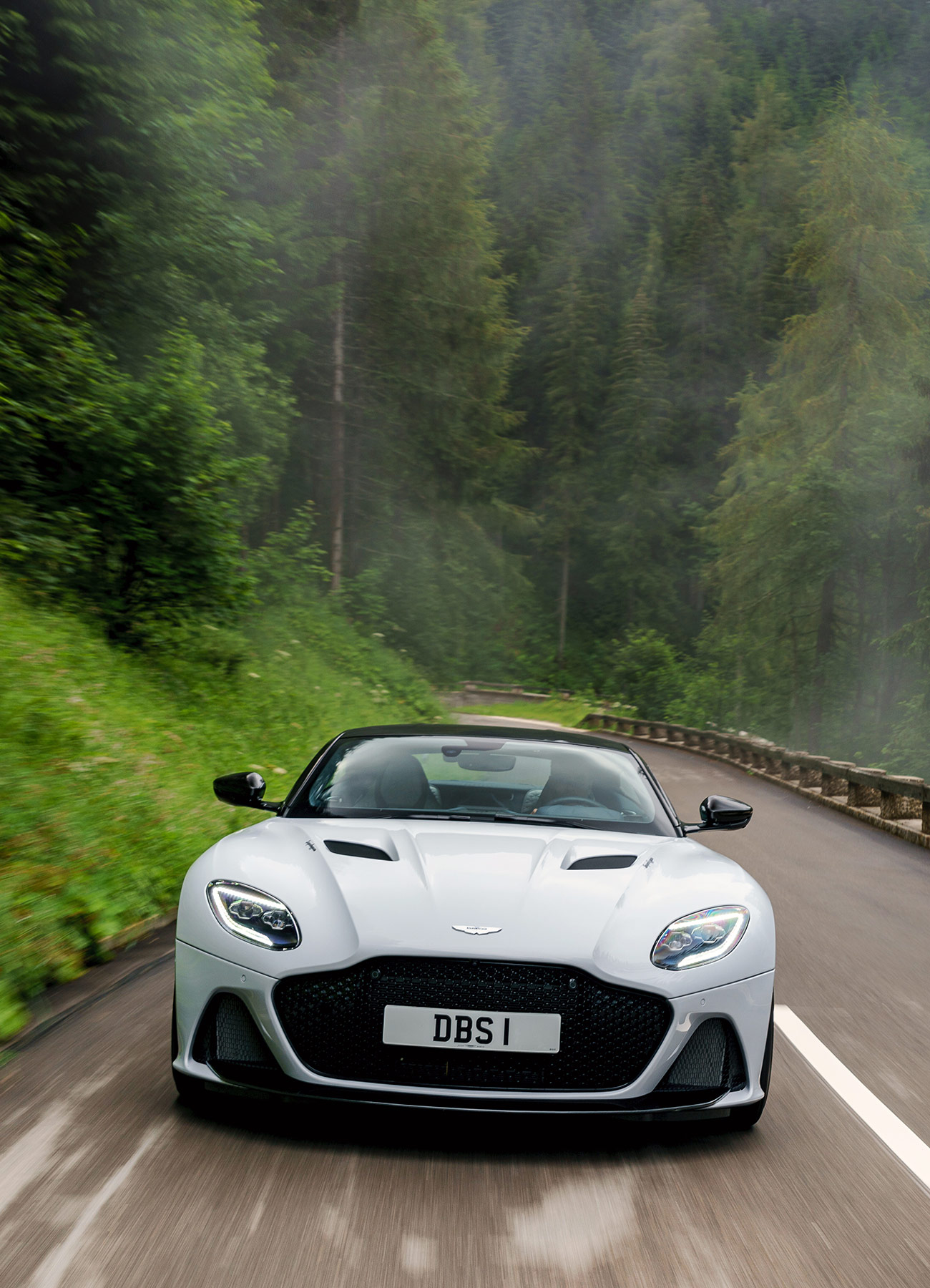
2019 Aston Martin DBS Superleggera Review: Aston Gets Wild and Crazy With a 715-Horsepower Brute

Aston Martin wants the world to imagine a “brute in a suit” when first encountering the 2019 DBS Superleggera. This phrase was repeated so often ahead of our test drive in the southeast of Germany, I started to think maybe Aston was being too harsh on its own car which – excluding the arrival of the multi-million-dollar Valkyrie hypercar – now sits at the pinnacle of the company’s current model range, both in terms of price and performance.

My sympathy for the Superleggera ended once I drove this, ahem, “brute” for myself on winding roads through the German and Austrian Alps, along with some unrestricted sections of the German autobahn. As a direct replacement for the outgoing Vanquish S, Aston’s previous high-performance grand touring car, the Superleggera has gone to some pretty extreme measures to break with its past.

The Good: Having the keys to a lightweight Aston Martin, one that’s powered by a 715-horsepower, twin-turbocharged 5.2-liter V12 engine, happens to be a pretty nice way to spend an afternoon. Aston’s engineers turned up the turbo boost of the Superleggera to 1.0 bar, which is 0.3 more than what you’ll find under the hood of the DB11. You feel every bit of it, not to mention the 159 lb. drop in curb weight that’s courtesy of the Superleggera’s lighter body, which is now made entirely out of carbon fiber.

Helping feed extra air to the engine is a front-end that consists almost entirely of a giant grille and gaping brake ducts. There really isn’t much metal or, in this new era of Aston Martin, lightweight carbon fiber, found ahead of the front wheels and engine. It’s an incredibly aggressive appearance, one that might shock brand purists.

Who It’s For: This is an Aston for someone who loves the name and heritage of the brand, but yearns for something that challenges the wildest creations from the likes of Ferrari and Lamborghini. Marek Reichman, Aston Martin’s head of design and chief creative officer, said with the DBS Superleggera, the Aston brand is “showing off, finally.” I wouldn’t accuse a DB11 or the new Vantage of being demure, though there’s no doubt the DBS Superleggera represents a big step in a new direction for the English automaker.

Watch Out For: With a starting price in excess of $300,000, the DBS Superleggera is also a significant fiscal step upward from the DB11 and Vantage, not to mention rivals like the Bentley Continental GT and McLaren 570S. Does the roughly $100,000 extra you pay for this car prove worth it from the driver’s seat? The answer to this question is more complicated than comparing 0-60 mph times and top speed figures.

Alternatives: A more traditional – and some might argue, almost ubiquitous – choice in the realm of British supercars is the Bentley Continental GT. The all-new Continental GT looks and drives better than before, thanks to its gorgeous cabin, 626-horsepower W12 engine, and pavement-subduing ride quality (which is partly attributable to its nearly 5,000 lb. curb weight).

The McLaren 570S is less intent on impressing the brandy-swirling country club crowd and, like the DBS Superleggera, makes a similarly theatrical impression everywhere it goes. It doesn’t beat you up after a long drive which, to its credit, I also found holds true in the Aston. That was if you could hold on after punching the gas pedal, and trust yourself to the supercar gods – or, at the very least, Aston Martin’s engineering team.

Review: Another new Aston Martin means another round of references to James Bond, as is tradition. The overwhelming impression when behind the wheel of the DBS Superleggera is that it feels like a supercar Spectre would construct, something to beat Bond at his very own game. This is a leaner, meaner type of Aston Martin… and it takes some getting used to.

For starters, the power available from the 715-horsepower, twin-turbo V12 is absolutely unnerving, if you’re not prepared for it. Even when you think you are, this car shows a devilish side that can be equal parts awe-inspiring, and mildly terrifying. On two-lane country roads, when accelerating around slower vehicles – i.e. everything on the road other than this British supercar – flooring the gas pedal launches the car so hard, you begin to feel sorry for the asphalt that’s being wrenched apart by the 21-inch diameter, Pirelli P Zero tires at each corner.

The sound from the exhaust is just as dramatic. The stainless-steel quad exhaust system features electronic controls that respond to whichever of the three available drive modes you’ve selected: GT, Sport, and Sport Plus. In the latter two, the exhaust pops and snarls deliciously on the overrun. It’s a fantastic sound, made all the better when you can squeeze the throttle harder once unrestricted speed sections of autobahn loom ahead. If you don’t want to announce your arrival with such chest-thumping alacrity, the GT mode proves far quieter and more subdued.

With up to 400 lbs. of downforce at speed, a mechanical limited-slip differential, torque vectoring, not to mention standard carbon ceramic brakes (16.1 inches front/14.1 inches rear), it’s clear Aston didn’t forget to include important variables – like steering and stopping – into the driving mix. The most noticeable aerodynamic tweaks are located towards the rear of the car, where a small carbon fiber lip spoiler stands proud of the trunk. Below it resides an F1-inspired double diffuser that looks all business, without being too over the top. This remains an Aston Martin, after all.

That point is driven home when you’re inside the leather and Alcantara-clad cabin. Finely-quilted leather and hand-stitching are something of a given at this level of the automotive spectrum. But the DBS Superleggera still impresses with its blend of a no-nonsense layout, along with a dash of bravado provided by the heavily sculpted gauge binnacle staring at the driver. The infotainment system and most major controls are easy to understand and a significant jump forward, especially compared to Astons from only 2-3 years ago. The flat-bottomed steering wheel is a nice touch, less so are the touch-sensitive controls for audio volume. And if we’re being picky, the designation of this car as a 2+2 borders on the criminal, at least for any hapless soul squashed into one of the minuscule rear seats.

Back to the art of how this car behaves, the handling is sharp and linear, without feeling artificially weighted down by faux levels of steering ‘feel.’ You can put the DBS Superleggera exactly where you want it on the road, even if you’re not always sure where you are in relation to the outside world. Visibility towards the front of the car, particularly over and along the curvaceous hood, is a challenge. Luckily, I never heard expensive-sounding scrapes or crashes during our drive, though it might be worth getting a measuring stick if your routine parking space involves tight spaces or sudden inclines.

The double wishbone front suspension and multilink rear do an excellent job of keeping the car flat and level, without shaking you to pieces over bumpy roads. The rear suspension assembly is rubber mounted to the aluminum frame, like the DB11, to help add an extra dose of civility. Some notable tuning changes exist between the two cars, however. According to Aston Martin, the DBS Superleggera’s chassis is 10-percent stiffer than the DB11, while it’s ride height is five millimeters lower. Not dramatically different numbers, perhaps, though it all contributes to the newfound level of showmanship and performance available in this Aston.

Verdict: The DBS Superleggera proves Aston Martin likes getting wild and crazy, too. While Lamborghini and Ferrari seemingly get to redefine themselves with every new model, Aston has been beholden to a rich history that sometimes doubles as a heavy burden. An Aston has to look and drive like, well, an Aston Martin. Right?!

In many ways, the DBS Superleggera stays true to the brand’s core messages of style, desirability, and rarefied luxury. You could drive all day in GT mode and feel like a hero. But delve deeper into this car’s performance, and you’ll be surprised at how villainous the driving experience starts to feel. Brute in a suit, indeed.

What We’ve Said About the Competition:

• “The DB11 AMR is for those who understand that faster options exist but none are quite as lovely and enjoyable. This is Grand Touring, with a capital G and T” – Jeff Glucker

• “So is the GTC4Lusso actually a weird Ferrari? It does the things normal Ferraris are supposed to do: Ferraris must be fast, Ferraris must sound ethereally demonic and Ferraris must seem to endow the driver with superhuman abilities” — Nick Caruso

• “The Continental GT has been the go-to car for the affluent for so long, it’s almost too familiar in certain circles.” — Alex Kalogiannis

2019 Aston Martin DBS Superleggera Key Specs

Engine: 5.2-liter, twin-turbocharged V12
Transmission: eight-speed automatic with paddle shifters
Horsepower: 715 horsepower
Torque: 664 ft-lbs
Weight: 3,732 lbs
0-60: 3.3 seconds
Top Speed: 211 mph

Read More Gear Patrol Reviews

Hot takes and in-depth reviews on noteworthy, relevant and interesting products. Read the Story
Note: Purchasing products through our links may earn us a portion of the sale, which supports our editorial team’s mission. Learn more here.

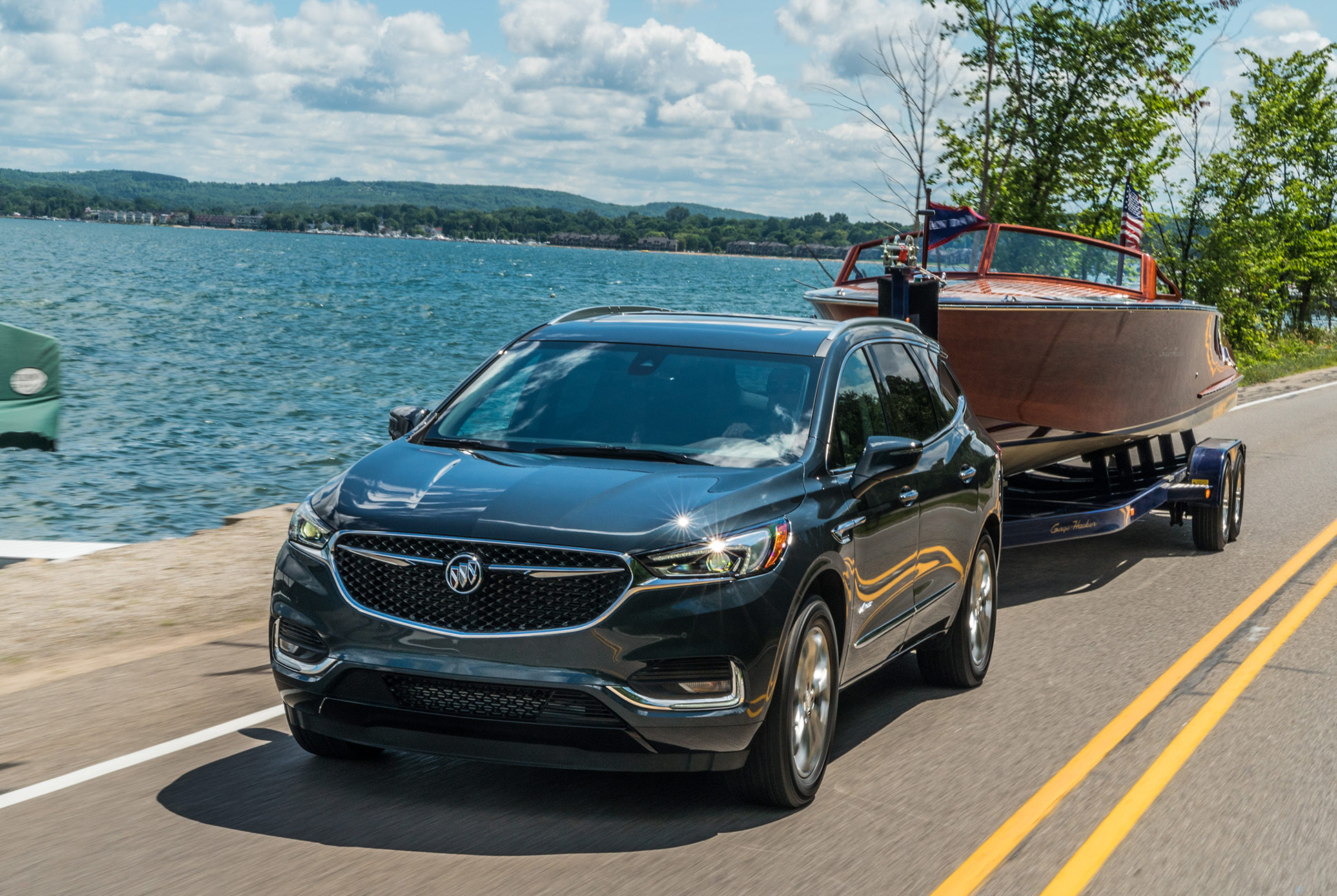
2018 Buick Enclave Avenir Review: Suddenly, a $60,000 Buick Does Not Feel So Unreasonable

Buick’s “That’s a Buick” campaign focused on a younger market. The company portrayed itself as producing cool, sleek cars that would make you forget all about that drab sixth-generation LeSabre your grandmother had that was probably beige. With the “Avenir” sub-brand Buick is extending on that premise, recasting itself for a wealthier (but still young and hip, we swear) customer.

Avenir is the French word for “future.” I had the chance to drive the future’s flagship, the Buick Enclave Avenir luxury SUV, in all its chestnut leather-clad glory, to Northern Michigan and back. The future does not come cheaply. It’s a $60,000 ($59,435 as tested) Buick. After driving it around for a week, that price point does not feel so unreasonable.

The Good: This is for an affluent, multi-child family. The parents want the practicality and the seating capacity of a minivan but swore a blood oath together never to buy one.

Who They’re For: The styling is sharp for a three-row SUV, with more defined lines than the previous generation Enclave. The drive, for a three-row SUV, is eager and agreeable. The responsive 3.6L V6 delivers 310 hp and 266 lb-ft of torque. The nine-speed automatic transmission was spot-on during casual and aggressive driving. The Enclave proved itself nimble around the corners on winding backroads. The interior, in the first two rows, is spacious. Six USB ports, a power outlet, and wireless charging should meet all device power-related needs. Climate control was excellent. I’m not sure how I have survived so many summers without ventilated cooling seats.

Watch Out For: The “Avenir Technology Package” – adaptive cruise control, automatic front braking, premium suspension – is a must have. It costs an extra $2,095. Rear visibility checks in somewhere between poor and non-existent: The small rear window tilts upward at an angle; third-row headrests obscure what little you can see (essentially semi-trucks and crossover rooftops); the B-pillar is more of a “near total eclipse” than a “blind spot.” You are mirror dependent. Combine the poor visibility with a wonky, over-engineered PRND shifter with multiple buttons and a proximity warning butt buzzer, and even routine parking becomes a nuisance.

Tech: The touchscreen felt a little less “future” and more “present or recent past.” The navigation system worked. The menus weren’t very intuitive on first use, but you would get used to them. Apple Carplay and Android Auto, the preferable options for most people, are compatible. A rear camera and bird’s-eye parking view are useful and necessary. The Enclave Avenir also has a switchable rear view mirror camera, which I found unnerving to use while driving.

Alternatives: There are many in a crowded market. GM alone offers two, the Chevy Traverse High Country and the GMC Acadia Denali. Lincoln brings the MKT Reserve. Dodge has a Citadel Anodized Platinum edition of the Durango. Those wanting more off-road capability can go for the Ford Explorer Platinum or the Jeep Grand Cherokee Summit. That is just the American segment of the three-row SUV market topping out between $50,000 and $60,000.

Value: The fully-optioned Enclave Avenir costs a few thousand more than American competitors that are quite similar down to the engine displacement and the option for a premium tri-coat white paint. It’s about $10,000 more than maxed out versions of the VW Atlas SEL Premium, the Mazda CX-9, and the Subaru Ascent Touring. In that sense, it is pricey. On the other hand, leveling up to the Enclave Avenir offers features that would rocket the price well over $60,000 in a Volvo XC90, a BMW X5, an Audi Q7, or a Land Rover.

Pro Tip: Assess whether you need the third row of seats. Versatility to do two things can mean doing neither well. The trunk, even with a false bottom offering more storage, is small. Traveling with luggage or infant gear, or even a robust grocery trip may turn this into a four or five-seater. The rear bench was uncomfortable with little leg room for a 5’11” adult during a 15-minute cruise, and there is no way more than two of me were squeezing in back there. A smaller family could make the $60,000 go further in the two-row SUV market. A family that needs three rows may want to upgrade to a full-size SUV.

Verdict: The Enclave Avenir drives better than you would expect for what amounts to an elevated minivan. The luxury, even with the mildly discordant chestnut leather, would not leave you feeling short-changed from a more traditional premium brand. Your friends may not believe it’s a Buick. But, at $60,000, it could be a Land Rover and you need never have that conversation.

2018 Buick Avenir Key Specs

Engine: 3.6L V-6
Transmission: nine-speed automatic; front-wheel or all-wheel drive
Horsepower: 310
Torque: 266 lb-ft
Max Trailering: 5,000 pounds
Price: $55,715 (base); $59,435 (as tested)

Read More Gear Patrol Reviews

Hot takes and in-depth reviews on noteworthy, relevant and interesting products. Read the Story
Note: Purchasing products through our links may earn us a portion of the sale, which supports our editorial team’s mission. Learn more here.

Nike Pegasus Turbo Review: An Everyday Trainer That Feels Fast

Since the launch of Nike’s ZoomX foam almost two years ago, elite runners like Eliud Kipchoge have been running in shoes utilizing that foam and winning marathons. However, the Vaprofly 4% shoes (which were the first with ZoomX foam) aren’t intended to be worn every single day for training runs. The Nike Pegasus Turbo is the solution to that problem. The Turbo is an everyday trainer that combines the ZoomX foam with the popular Epic React foam for a much more approachable price point of $180.

The Good: In light of the recent New York Times piece that showed a positive correlation between the VaporFly 4% and faster half and full marathon times, the desire to buy the 4% shoes for an upcoming race makes a lot of sense. But you shouldn’t wear them for your training runs leading up to the big day. The Pegasus Turbo fills that gap — it’s the shoe you’ll reach for on tempo days, on long training runs and as an everyday trainer. The Pegasus Turbo weighs less than 9 ounces (less than a can of soup) which helps you feel fast (feeling fast often translates to actually being fast), and the look mimics the feel.

Who It’s For: If you’re training for a race, this sneaker is for you. It has more support in the upper compared to the Epic React, but a similarly plush and soft feel. The marshmallow-like feel of the React is replaced with a springy bounce in each step, propelling you forward for 100-meter repeats, 5Ks in the rain or race days across bridges. If you’re a die-hard Pegasus trainer, the first step feel of the Turbo is mostly the same as the Pegasus 35, if not a bit more airy (the Pegasus Turbo is almost a full ounce lighter than the Pegasus 35). If you’ve been wanting the VaporFly 4% since they launched, and have yet to splurge on a pair, this is a good compromise.

Watch Out For: Similar to the Pegasus 35, there’s an extended heel collar, which helps eliminate pressure on your Achilles tendon but for some, it might feel uncomfortable. You may have some tightness around that area, depending on the shoes you’re used to running in.

There’s ample forefoot room (more so than the Pegasus 35), but sizing can be tricky. I usually size up in Nike kicks by half a size, but kept with my regular size for these.

Alternatives: If you like your running shoes to provide a bit more support, try the Pegasus 35 ($180). If you’re looking to get a similar feel to the ZoomX foam with that semi-plush cushioning, yet springy feel, try the Adidas Adizero Sub2 ($180+) or the Reebok FloatRide Run ($140) — both of which are race day ready for normal humans who don’t want to shell out $250 for a pair of race day shoes.

Review: Right out of the packaging, the shoes felt smooth and light thanks to the combination of ZoomX and React foam. Nike calls the ZoomX foam its “unicorn foam” as it’s the “lightest, most responsive foam we’ve ever used in a shoe,” Chris Nuelle, an EKIN for Nike (a group of Nike employees tasked with brand storytelling and marketing), explained to me. There were no tight spots, just plenty of room in the toe box compared to the toebox of the Pegasus 35s (that I’ve most recently been running around NYC in). Stepping into the shoes, I had no immediate issues — no rubbing, chafing or tightness in my toes, heels or top of my feet. The cushioning underneath felt plush and soft, but not wobbly as is described with the VaporFly 4%. There’s also no plate underfoot, as there is in the 4%.

The semi-translucent upper features a pink racing stripe down the middle to give it a fast and aerodynamic look. “You can actually see the FlyWire and some of the inner workings of the shoe. Think of those sports cars where you can see the engine in the back,” Nuelle said.

On a 5K through the city, it was easy to test out lateral movements and quick starts and stops. I could easily monitor the Pegasus Turbo’s sole traction under less than ideal running conditions, seeing as it had rained right before my run and continued to drizzle throughout. While I felt a little unstable on freshly wet concrete, I didn’t slip or slide once.

While the Pegasus Turbo’s roots come from the VaporFly 4%, this shoe works for everyday runs and runners. Nike worked closely with Eliud Kipchoge, who most recently won the London Marathon and came within 25 milliseconds of Breaking2 (the sub-two-hour marathon challenge Nike launched almost two years ago, and the birth of ZoomX foam), to create these shoes as an alternative to the 4%. “After racing in the shoe, [Kipchoge] said, ‘I want the magic of that shoe in my everyday training shoe,’ so we took the plate away and made the shoe for everyday runners,” Nuelle explained. Directly underfoot, the Turbo features a dual-layer of foam with the ZoomX foam and then the React foam. “ZoomX is right under your foot, so that gives you race day feel, but you get more durability out of it with the [additional] layer of foam under it,” Nuelle said.

I’ve been running in these shoes for about a week now, and they are fast. Beyond just looking speedy, there’s no break-in period, and the bounce I feel with every step makes me want to reach for these for every single run.

Verdict: Long story short, if you’re looking for an advantage in an upcoming race, these are the shoes you should train in. And if $250 is too much to drop on a pair of the VaporFly 4%, the Pegasus Turbo sneakers are worth testing for race day.

The shoes are available for purchase to NikePlus members as of July 19th, and will be available to the general public starting August 2.

What Others Are Saying:

• “In the Runner’s World Shoe Lab, we found its energy return to be on par with shoes using Adidas’s Boost midsole. That’s going to deliver you a bouncy, fast sensation underfoot, even though ZoomX is much lighter than Boost.” — Jeff Dengate, Runner’s World

• “After running for about a month before in the Pegasus 35 (not hungover), I can definitely feel the difference in cushioning. The Peg 35 uses a full-length Zoom Air bag which has a more snappy feel underfoot, while the Turbo gives a more plush, cushioned ride.” — Gerald Flores, Sole Collector

• “Overall, running in the Zoom Pegasus Turbo is a joyride. The outsole is reliably grippy. I love that it provides the cushion of a support shoe with the lightness of a racing flat. The main takeaway was an overwhelming sense of efficiency. You can grab these to tear up the track for 200 repeats or whiz through a mid-distance run.” — Brittany Smith, Men’s Journal

• “These definitely feel “snappy” and are as responsive as the Adidas UltraBOOST, which I used to wear a lot. (In my less-than-scientific analysis, I did run slightly faster in these than the regular Nike Air Zoom Pegasus Turbo — but who knows why!) So, I could definitely see them being good for speed workouts or race day. Compared to the Nike Epic React, these feel more supportive and cushioned, even though they technically have the same “offset,” which is the amount of foam between the forefoot and heel, Nuelle said. In my experience, the Nike Epic React fell a little flat over time, perhaps because the sole is made of one piece of foam. The Zoom Pegasus Turbo, on the other hand, has better traction underneath the foot, which might make you feel like you have more support.” — Cory Stieg, Refinery29

Key Specs

Offset: 10 mm
Forefoot Stack: 12 mm
Weight: 8.6 ounces for men’s 10; 6.9 ounces for women’s 8
Colors: All black or white with pink racing stripe

Read More Gear Patrol Reviews

Hot takes and in-depth reviews on noteworthy, relevant and interesting products. Read the Story

Note: Purchasing products through our links may earn us a portion of the sale, which supports our editorial team’s mission. Learn more here.

PKTX Folding Grill Review: This Is the Best Low-Maintenance Charcoal Grill You Can Buy Today

The design of PK’s grills is basically unchanged since the originals were made in 1952 by one Hilton Meigs. The idea was, and remains, simple — the grill capsule’s shape, use of cast aluminum and four-point vent system makes for a tougher-than-shit charcoal grill that’s easy to use and almost impossible to damage or corrode.

The original grill gained popularity among home and professional smokers, even attracting attention from the U.S. Army, who apparently ordered more than 20,000 back in the ’50s. The company, then called Portable Kitchen (hence, PK), went virtually defunct in the ’70s thanks to the surge of propane gas grills at the time. About a decade ago, an Arkansas native bought up the IP and started making them again, launching the first new-retro grill in 2016. The PKTX, which uses the same grill capsule as the original but adds a folding body for easy transport, is its newest product.

It’s a very premium stab at the compact, portable grill market — an area that could use more non-chintzy, non-gimmicky products. The PKTX shuns both chintz and gimmick, but is it worth the $400 price tag? I tested one to find out.

The Good: To my mind its greatest selling point is low-maintenance combined with a lot of cooking potential. Its aluminum body makes it virtually rust-proof and far lighter weight than you’d expect; it folds down pretty easily and there’s just not a whole lot of tiny parts that can break or wear away.

PK’s four-point vent system is simple to understand and use. It’s also effectively mobile, but remains still more of a tailgate or pre-prepped campsite option rather than a proper portable grill. Its compact size makes for a pretty stellar grill to accompany a tiny backyard as well. Most high-heat cooking endeavors are as simple as any quality charcoal grill — the aluminum body maintains temperatures to a much better degree than its steel counterparts.

Who They’re For: The aspirational charcoal grillmaster to the soot-covered charcoal veteran, it’s a pretty slick option for any who are in the market for a smoker + grill combo they can take on the road with them. It’s big enough to smoke one, maybe two large cuts of meat, but much better suited for a few chickens, ribs (cut in half prior to smoking) or a bunch of sausages.

Naturally, the PKTX excels at high heat grilling, so burgers, steaks and pork chops are all perfectly doable. If you want a rock solid charcoal grill, don’t plan on having huge backyard barbeques and need something you can move easily, this is your grill.

Watch Out For: Its grill space is pretty small — only 301 square inches. That’s about 15 burgers of total grill space (and you’re only counting half the space for smoking). I wish there was a way to raise and lower the grates, as some meats you want right above the flame during grilling, while others you need the opposite.

Additionally, the grill chamber is comprised of two pieces, which is neat, but the lid and base of the grill are not attached in any formal way. Rather, the lid rests on hinges while cooking, but isn’t screwed or bolted to the base. I didn’t have any issues of grill lids falling off during testing, but it did feel suspect.

Alternatives: These are the boxes you need to check if you’re into this grill but aren’t sure if this is the one you want: charcoal, mobility, grill and smoke capabilities, proper heat control, durability. I’d argue there isn’t another grill that’s around $400 that matches all these boxes as well as the PKTX. But, you could compromise and get the tried and true Weber 22-inch kettle ($149) — a multifunctional, lightweight, adaptable grill with some room to grow (like a cast-iron grate).

Weber’s grill isn’t nearly as durable, though, it has less grill space and is a bit trickier to master heat control with. There are probably 20 brands who make something like Char-Griller’s very popular charcoal grill ($195+), and for good reason — these grills are cheap and work pretty well. Once again, though, you lose durability by going chintzy stainless instead of cast aluminum. These grills are pretty much never as mobile or compact as the PKTX, either.

Review: I received the grill in one surprisingly small and lightweight box. For a grill that comes completely disassembled, it assembles far more quickly than expected — 15 to 30 minutes at most. The first thing I noticed when putting it together was the lack of a bolt or screw to secure the grill’s lid to its base. It opts instead for a sort of self-support hinge, which makes it feel sort of incomplete (though, again, no incidents occurred as a result) but does permit it to be taken apart rather quickly if needed. The grill’s scissor stand folds into what’s basically a light hand truck, and both the base and the grill capsule have hook spots for bungee cords to secure it when on the road. On the whole, it’s compact when grilling and folds down into about half the space in travel mode.

Vents on a grill are your primary method of heat control once the cooking process has begun — close vents for less oxygen and lower heat, open them out to turn up the heat. All PK grill capsules use four vents — one on either side of the lid and base — which make smoking and heat control about as easy as it gets without a proper smoker. Essentially, you’re placing your fuel (charcoal, lump coal or something more interesting) under one side of the grates, a tray of water under the other side and your food over the tray of water. Once the fire is good and going, open the grate closest to the coals and above the meat; this allows the heat and smoke from the fuel to travel up and through the food and out of the top grate. It’s simple and effective, and the ribs I smoked came out tender and smokey.

As mentioned previously, this system cuts the already small grill space in half (down to 150 square inches), keeping enough space for one pork shoulder, two smallish butts, a couple racks of ribs (cut in half) or about three chickens.

Its durability is pretty much unchallenged in the grill market. The cast aluminum grill capsule was a stroke of genius in the ’50s when it was introduced, and it continues to be so — its naturally even heating abilities reduce hot spots, and rain could literally not matter less to it. Read through grilling forums and you’ll find folks whose PK grill is older than them.

Aluminum is much lighter than iron, so weight isn’t really an issue — I was able to pick up and move the entirety of the grill without much trouble, though you shouldn’t have the need to pick it up all too often. The rubber wheels suring up the base are a ray of sunshine in a world of shitty plastic wheels. They roll smoothly and they aren’t going to shatter because you wheeled the grill over a curb.

Verdict: As outlined before, this is the ideal charcoal grill and smoker for anyone who prizes durability, versatility and mobility. It’s easy to assemble and disassemble; moisture and rain does absolutely nothing to it; and its minimal heat control system is effective and easy to manage. Grill space could be an issue, but expected for a grill this size. While I do think a system to raise and lower the grate would greatly improve the grilling experience, it operates as any charcoal grill operates: it gets blazing hot and chars meats and veggies gorgeously.

Key Specs
Weight: 45 pounds
Grill Space: 301 square-inches
Total Length: 48 inches
Grill Body: Aluminum
Wheels: 5-inch rubber
This Might Be the Best Tailgate Smoker You Can Buy

A $400 electric wood pellet smoker could very well be the best in its class. Read the Story

Note: Purchasing products through our links may earn us a portion of the sale, which supports our editorial team’s mission. Learn more here.

The Monta Skyquest Is A Quality GMT That Won’t Break The Bank

Ahh, the venerable GMT watch – that most useful of complications for travelers. Ever since Rolex released the now-classic GMT Master Ref. 6542 in 1954 for Pan Am pilots and crew, both watch enthusiasts and laymen have embraced the idea of being able to track a second time zone on one’s wrist. Most watch enthusiasts seem to agree that Rolex does this particular complication best, and anything without the Crown on the dial seems to be grouped into a vague “other” category. Thankfully, in the past few years, a new crop of GMT watches has come into existence that manages to combine dual or triple-time zone functionality with ruggedness and aesthetic appeal. Most recently, American microbrand Monta, based in St. Louis, MO, has developed the Skyquest, a new GMT watch that checks all these boxes and more.

The Good: “Tool” GMTs are a tough category in that you often have to drop several thousand dollars in order to acquire a good one. Monta, who re-jiggered the pricing on one of their original watch models in response to feedback from customers, has kept the price accessible with the Skyquest (at least with respect to value) – for $1730 on bracelet or $1575 on rubber ($1925 after the pre-order is over), you’re getting a pretty damn well-made watch. The Skyquest features the Selitta SW330 (essentially a Swiss-made copy of the ETA 2893-2) with independently-adjustable GMT hand and date at 6 o’clock, a bi-directional 24-hour ceramic or steel bezel, a screw-down crown and case back offering 304m of water resistance, a choice of steel Oyster-style bracelet or a vulcanized rubber strap in black or blue (plus a NATO strap with either option), two dial colors, and a 42-hour power reserve. You also get a parallel flat sapphire crystal with a unique seven-layer anti-reflective coating applied on the inside, giving the watch a very manageable case depth that easily sneaks under a cuff. This is a watch that, while taking the inevitable aesthetic cues from the classics, clearly features its own distinct design language and looks great to boot.

Who They’re For: When Rolex developed the original GMT Master for Pan Am flight crews in the 1950s, jet travel was new and still relatively expensive, and flying was a novelty reserved for the wealthy – indeed, the original GMT Master was a precision instrument designed with a specific professional in mind. Nowadays, of course, many more people travel quite frequently, and so the appeal of a GMT watch is wide-ranging, and anyone who is frequently crossing time zones or has family in another country will appreciate the ability to track a second (or third) time zone. The Skyquest appeals to this person, and has the added benefit of appealing to a particular subset of this person who can’t necessarily afford to drop $10k+ on a Rolex GMT Master, new or vintage. And because the Skyquest features dive-watch like water resistance and comes in multiple dial and bezel combinations, its appeal is even wider.

Watch Out For: Really my only gripe with this watch is that I struggled to fit the rubber strap onto the case, which likely has more to do with my own incompetence than with a design flaw from Monta. The rubber straps are extremely comfortable and well-made – they’re produced by Monta sister-brand Everest, which makes aftermarket straps specifically for the Rolex market. The ends of the included straps are curved to fit the Skyquest case, much like many of the Everest straps that are designed specifically with a Rolex Submariner case in mind. They curve upward toward the lug ends (difficult to describe – you really have to hold one in your hand), and for whatever reason, I found it extremely difficult to seat the spring-bars once I got one end in the lug hole. Other than this trouble with the rubber strap, I really do believe that any other gripes with this watch would probably have to be aesthetic ones, and these are largely subjective and depend on the individual wearer (I’m not crazy about the crown guards on this case, for example, but they’re certainly functional and someone else might love them). The only (perhaps) legitimate gripe I can see someone formulating concerning the watch would be that the Selitta SW330 features an individually-adjustable GMT hand, rather than an hour hand, but if you want this feature, you really have to shell out for a Rolex or similarly-priced offering.

Alternatives: As I mentioned earlier, there are finally some “affordable” mechanical tool-watch GMT options out there on the market, though many of them are priced above the Skyquest (the Lander from British micro-brand Farer is a noticeable exception at $1425, though I wouldn’t necessarily put it in the same bracket as the Skyquest in terms of robustness and inspiration; another option may be the Airman 42 GL0064, a watch with a similar feature set from Glycine’s famous Airman line that generally seems to retail for roughly $750, but I havne’t yet had my hands on any of Glycine’s new offerings – hopefully we’ll be able to get our hands on one of these for a review in the future). There’s the Oris Big Crown Pilot Pro for $1,595, but it doesn’t feature a rotating bezel, so tracking a third time zone is out. For $2630 you can grab yourself a Sinn 857 UTC VFR, which is a watch designed for use in extreme environments (though it features a 60-minute rather than a 24-hour bezel, so again, you can’t as easily track a third time zone, though you can dive with it). Of course, if you want to really go all out, you can spring for any one of numerous Roelx GMT Masters released over the years (good luck picking up the newest iteration, released in 2018, however).

Review: While I didn’t have the opportunity to wear the Skyquest on a serious trip (though I did wear it for a long weekend at the Jersey shore – does that count?), I do generally keep track of three time zones: the time here in NYC, the time back in Israel where I lived until recently and still have many friends and family, and the time in LA, where my brother lives. I haven’t had a chance to wear a GMT recently that allows me to easily track all three time zones, and the Skyquest certainly made that a cinch.

I set the local time to EST, put Israel (7 hrs ahead of NYC) on the jumping GMT hand in conjunction with the inner 24-hr rehaut, and set the 24-hr. bezel to track California time by calculating the offset with the GMT hand (if you’ve never done this before on this type of GMT watch and are not mathematically inclined, this initially takes some mental gymnastics, but once you understand the concept and set the watch, you figure out how to read it fairly quickly). Having a bi-directional, chunky bezel with a solid click and a GMT hand with a lumed red arrow pointer make this much easier.

GMT functionality aside, let’s talk about the dial. While the Skyquest is available in two finishes, I opted to review the black variant, as gilt dials aren’t so much my thing. The hour indices are applied, and both indices and hands are coated in a generous amount of blue-variant Super Lumi-Nova BG W9 (“BlueMinova?” Anyone? Buehler?). Let me tell you – this lume is bright – like, really bright – it blew the lume on my go-to dive watch right out of the water. What with the applied indices and 24-hour scale on the rehaut, the dial actually has quite a bit of depth to it, and though I normally don’t like a date window anywhere but at 3 o’clock, I must say the 6 o’clock placement really didn’t bother me here – there’s something inherently pleasing about the symmetry of this dial.

The rhodium-plated sword hands are well-proportioned and easy to read, and there are also some red accents that lend a “vintage Sub”-type quality, including “Skyquest” written in red font, the aforementioned tip of the GMT hand, and the even numbers of the inner 24-hour rehaut, which take the form of red horizontal lines sitting nicely above the main indices. In short, I think this is an attractive dial and my supposition is that many people out there will agree with me.

The 40.7mm case on the Skyquest is polished (sides)/brushed (lug tops) 316L stainless steel and approximately 12mm thick, which is roughly comparable to my Sub. The two crown guards protect the chunky screw-down crown and the case back is transparent mineral crystal (while my review model was a prototype whose case back was devoid of writing, the final versions will be evidently be engraved with the MONTA name, “SWISS MADE”, depth rating, and the individual number; additionally, the movement rotor will be decorated with stripes and the MONTA logo in gold). The steel portion of the case back itself is also nicely engineered, with a 12-sided (Dodecahedron? Never thought I’d actually get to use that word), notched design. Beating inside is the Selita SW330, a 25-jewel, highly-tuned automatic Swiss movement with a 38-hour power reserve that’s accurate to +/- 5 seconds per day and features an independently-adjustable GMT hand. Both bezel options (steel or ceramic) feature illuminated pips and are 72-click bi-directional. This is a chunky bezel with good action, though the choice of 72 clicks is interesting – some quick math will tell you that the bezel is thus calibrated in 20-minute increments, and as certain time zones are displaced by GMT by an extra half-hour, you won’t be able to set the bezel to exactly line up with one of these. Still, though, most zones align with the hour, so this shouldn’t be a problem for the majority of users.

One of the best value-adds on the Skyqeust is quite frankly the included bracelet. From his work with sister company Everest straps, Michael Demartini is clearly a bracelet and strap guru and used that expertise when he and his team designed the watch’s Oyster-style offering. The links are brushed with polished sides and form a nice continuous surface when they integrate with the case at the 20mm lugs, and the smaller links feature set screws for easy size adjustment (there are also four levels of micro-adjustment available within the clasp). The bracelet tapers to a slimmer clasp that itself feels extremely solid with a satisfying click when closed and features the Monta logo. By virtue of being an Oyster-style bracelet, of course, the design of the links is inherently derivative, but so many brands out there have adopted this style that I’m not inclined to call Monta out on it, and this particular example is particularly well-made.

As I mentioned before, the included vulcanized rubber strap (there are black and blue options available) is also incredibly well-made and comfortable, though I wouldn’t expect less from Everest straps. The curved ends help fit the strap precisely to the curvature of the case and feature Rolex-style heavy spring bars, and a heavy-duty steel buckle rounds out an already impressive feature set. I went for a run on an extremely hot day and barely noticed the watch affixed to my wrist when using the rubber strap, though as I said I had a particularly tough time mounting it on the watch. The Nato option was similarly comfortable and features the heavy-duty hardware of its rubber cousin, though I personally would have preferred a slightly longer option in order to wrap the excess beneath the keepers and keep the end out of the way, ensuring it will eventually fray less quickly (again, this is a personal preference and will not likely bother most people).

I’d be remiss here in my duties if I didn’t mention the watch’s packaging. I received the Skyquest in an outer cardboard box printed with the Monta logo, inside of which was a gorgeous inner presentation box complete with the watch on a pillow, a leather travel pouch, rubber and Nato straps, strap-changing tool and mini flat-head screwdriver, and instruction manual. Having worked briefly in vintage and pre-owned watch sales and having seen a fair amount of presentation boxes from various brands, I can safely say that this sort of packaging competes with watches whose price tags are higher than that of the Skyquest by factors of ten. This, of course, isn’t a reason to buy the watch, but it’s certainly a very nice touch, and shows that the guys at Monta are thoughtful about the presentation of their products. Overall, very impressive.

Verdict: I’ve really enjoyed my time with the Skyquest. There’s something inherently romantic about the GMT complication about which we watch nerds like to wax poetic – you wear one, and because you’re constantly referencing the time in another place (or two other places), you can’t help but dream of those places. It’s true that while today you can indeed find sub-$1k GMT offerings, very few (none?) will offer the kind of robust, no-nonsense build quality and attention to detail in its accessories and presentation that you will get for your money with the Skyquest. There are other offerings (see above) that cost slightly more than the Skyquest and offer similar feature sets, but if you’re comfortable with the aesthetics of this watch, why spend more? What you’re getting here is a diver-style GMT watch with multiple bracelet/strap options for under $2k that looks great and is available in several dial and bezel options – to my mind, Monta is filling a niche here in the GMT market, and they’re doing it with an attention to detail that typically costs much, much more.

What Others Are Saying:

• “My take with Monta Watches, and this certainly applies for the Skyquest, is that these watches need to be seen in person to be fully appreciated. The passerby glance might dismiss the Skyquest as a watch that’s similar to the GMT-Master but, again, a closer look reveals differentiating details and thoughtful design.” — Michael Stockton, Fratello Watches

• “The Monta Skyquest is a display of what microbrands can be capable of when they really seek something better. While many microbrands relegate themselves to the under-$1,000 price point, Monta has shown that microbrands can produce a really high-quality watch complete with the finer details we would expect on a higher-end Swiss piece.” — Russel Nanney, A Blog To Watch

Key Specs

Movement: Selitta SW330
Winding: Automatic
Case Diameter: 40.7mm
Case Thickness: 12mm
Water Resistance: 304m (1000ft)
Unique Features: GMT hand, 3 time zone tracking, several bracelet/strap options

Read More Gear Patrol Reviews

Hot takes and in-depth reviews on noteworthy, relevant and interesting products. Read the Story
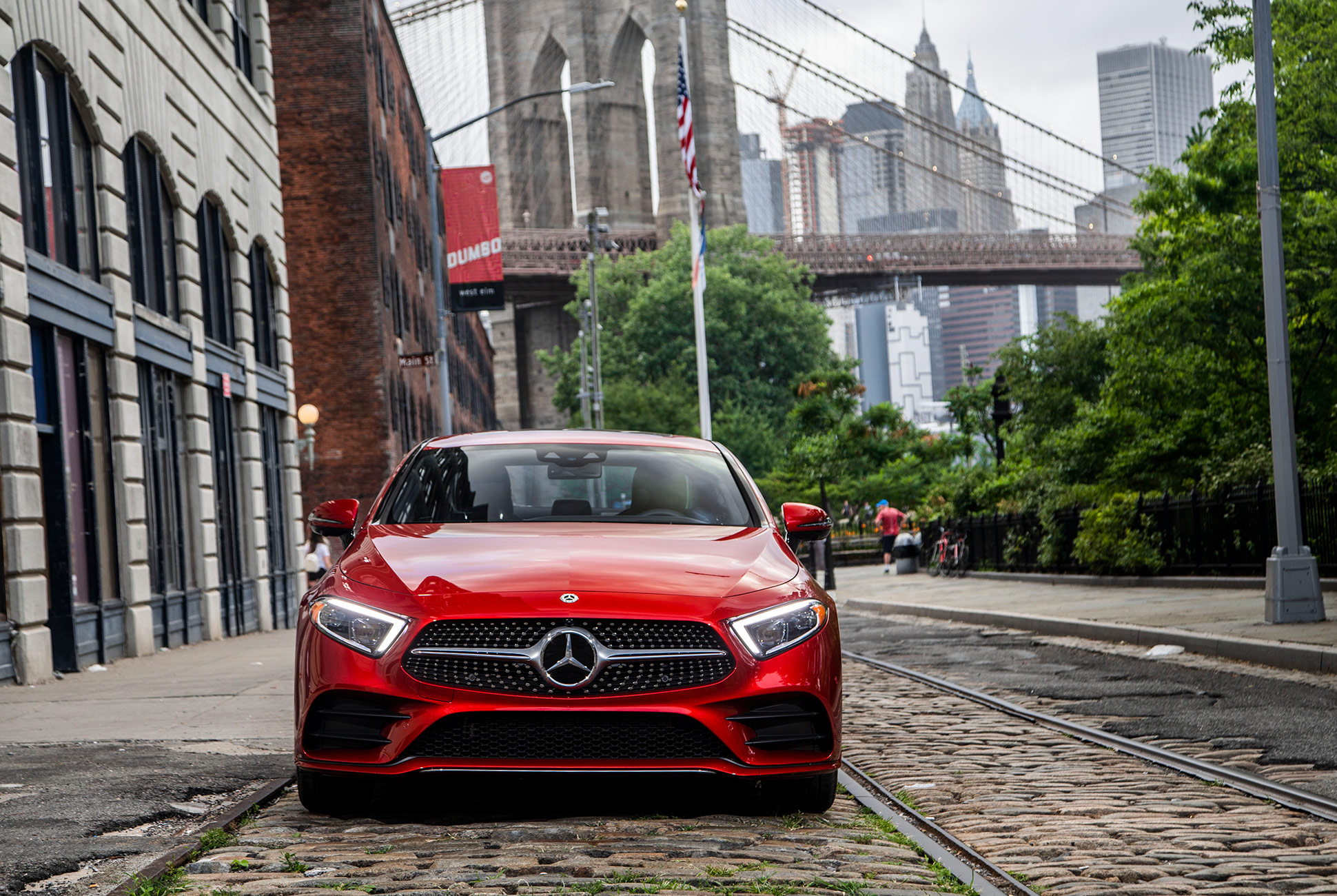
Note: Purchasing products through our links may earn us a portion of the sale, which supports our editorial team’s mission. Learn more here.

Meditation App Shootout: Pzizz, Headspace and Inscape

Meditation has far-reaching benefits — everything from alleviating anxiety to helping you sleep better, even altering your response to pain. The trickiest part is sitting down to actually do it. I had ‘begin meditating’ on my calendar for months before I finally carved out a moment to do so. In my search for easy ways to meditate, I talked to countless experts, tested out a variety of classes in NYC and downloaded what seemed like 10 apps. The three that stood out, and required more involved testing were Inscape, Pzizz and Headspace. Each focuses on mindfulness and improving breath awareness, just during different times of the day. Here’s how a week with each of them played out.

| |

The Good: The seven-day trial period for all three apps gives you plenty of time to figure out which one works best for you, what time is best to meditate and how long you need to feel calm again. All three apps are simple to use, have well-designed user interfaces and are a breeze to navigate. There’s a lot more design in the Headspace app because you’ll watch videos in addition to listening to a soothing voice.

Who They’re For: These three apps are for people who are looking to start meditating but are not sure where to begin. Newbies are welcomed with open arms in all three apps, and you’ll feel guided each step of the way until you feel comfortable enough to decide if you actually like the app or not.

Watch Out For: All of these apps require you to look at your phone to get started, which is kind of the opposite effect of what mindfulness is supposed to do for you. Some are worse offenders than others. Pzizz makes you turn the alarm off in the morning, meaning you’re looking at your phone screen first thing. Whereas with Inscape, you can just let it play out and then not worry about an alarm in the morning.

Alternatives: There are mountains of alternatives in the App Store and Google Play. Stop, Breathe & Think, Calm and 10% Happier are all viable alternatives. It just depends on your budget and what you’re looking to get out of each meditation.

Review: For my week with Pzizz, I started on a Monday night and immediately decided I was going to only use it at night for the Sleep meditations. There are also nap and focus options, but the path of least resistance was at night — at least for me. The app is a pretty basic one, where you hit sleep and then a button will pop up asking what time you want the app to wake you. While I didn’t initially realize this meant the app would sound the alarm at 7:04 or whatever time I selected, after one night of use, I began to set an alarm exclusively through the app. You have the option to listen to a female or male voice, and after a full week of listening to the female, the male is the default. The music and voice can be raised or lowered so that you can adjust to your preference. At first, it seemed like just music to me, and then I realized there was a lot of talking. Sometimes I felt it kept me up for longer than necessary because I was straining to hear what was said, and the (sometimes long) gaps in the music and voice tripped me up, especially as I drifted to sleep. I would hop up to check that it was still going (thinking that my alarm wouldn’t sound if I didn’t) and then realize it was still working.

In the morning, the app is supposed to wake you up gently with a soothing bell and wind sounds (very spa-like), but I would bolt upright as soon as I heard the initial noises. Even after using for longer than a week, I am still attuned to it. You do have to pick up your phone in the morning to turn the app off, and the first few mornings, I hit snooze instead of ‘OK’ not thinking I needed to shut it off completely.

Headspace opens with the option to try the Basic session for 10 days straight, which is a bit longer than I budgeted out for this project. Nonetheless, the combo of funny-looking cartoons, short videos and the powerful one-page Instagram-like quotes cheered me on each day. The option to pick a three, five or ten-minute meditation gave me a sense of purpose and also sparked the competitive streak in me to push for 10-minute sessions, but also go easy on myself if I couldn’t fit in even five minutes.

At the end of ten days, Andy Puddicombe, the founder of Headspace and the voice behind it all, talked about having a healthier, happier mind, which is a good goal to keep in mind. While I didn’t stick to this every single day (it took me closer to 15 days to finish the 10 initial sessions) the gentle reminders every day and easy-to-fit in sessions made this accessible.

Inscape begins with an introduction over the course of three days. The same voice speaks all of Inscape’s meditations. There’s no option for how long to listen to the intro meditations, and you’re exposed to movement during the ten-minute period. There’s a lot of instruction here, so if your mind is active and you find it hard to focus, especially during meditation, Inscape gives you things to do during each meditation. You slowly work up to meditating in silence, which might be your goal. What I enjoyed most on Inscape were the sleep meditations. I may have listened to Inscape so often that my brain now associates the voice with sleep, but almost every time I select a sleep meditation before I drift off, I’m able to ease into sleep. When my mind was racing with tasks on my to-do list for the next day, and I couldn’t settle into sleep, I would pop one of these on my cue. And if I needed a quick-hit calm moment, I would use the Breathe tool in the app to take a few deep breaths.

Verdict: While meditation is very individualized (you may hate one of the voices), I found that Headspace worked for me during my morning commute and Inscape was what I reached for at night. If I could finagle a seat on the subway, I could close my eyes, but if not, I just listened to Puddicombe’s voice and tried to cut out the MTA noises and other voices. Most nights I don’t have trouble falling asleep, but when I’m traveling and sleeping in an unfamiliar bed, the Inscape app helps me feel at home, calming my brain.

So, did I feel zen-like each week I tested one of these apps out? None of these turned me into a peace-keeping, go-with-the-flow human, but they did provide me with tools to feel more productive when I needed to. The faster I fall asleep at night, the more sleep I get and the more awake I am during the day. On the days I took the time to use one of the apps in the morning, I felt a sense of calm walking into the office, especially on days where we had reviews and other intense meetings.

| |

Read More Gear Patrol Reviews

Hot takes and in-depth reviews on noteworthy, relevant and interesting products. Read the Story
Note: Purchasing products through our links may earn us a portion of the sale, which supports our editorial team’s mission. Learn more here.

Yeti SB100 Review: A Speedy Climber That Dominates on Technical Downhills

Colorado-based Yeti Cycles has updated nearly every bike in its line in the past several years with a new suspension platform called Switch Infinity. It provides Yeti’s bikes with an extremely stable pedaling platform, which means you don’t bob around wasting energy on the climbs — the suspension supports you. On the downhills, the suspension feels bottomless, like you’ll never use it all. The Switch Infinity platform looks a lot like a secondary shock, but works more like an extra pivot point that adjusts the rear wheel’s path of travel as you use the bike’s suspension.

The only bike Yeti hadn’t updated with this new platform was its short-travel, cross-country oriented ASR. So when they announced the new Yeti SB100 this spring, a 100mm travel bike with a new version of Switch Infinity (and a likely replacement for the ASR), I couldn’t wait to get one out on the trail. I received the bike in April, and have since ridden it daily, in a variety of conditions including kitty litter desert in Baja, Mexico, rooty, rocky and often wet Vermont trails, and epic gravel climbs and technical descents of Pisgah, North Carolina.

The Good: If you love riding, and think that five hours in the saddle is a good start, this is the bike for you. It’s designed to make the miles fly by while giving you everything you need to tackle gnarly descents anywhere on the planet. The SB100 climbs like a hardtail and descends like a trail bike. Like all Yeti bikes, the SB100 is built for people who love to ride uphill and downhill. According to Yeti President Chris Conroy, the design challenge Yeti posed when it set out to develop a new short travel bike was, “How capable can we make it?” The answer? Very. The SB100, affectionately dubbed the “Hundo,” comes with 2.3-inch Maxxis tires (a beefy Minion DHF up front and an Aggressor in back) that grip in all conditions. It’s a welcome departure from the ultralight tires that come standard on many other bikes (some companies put on ultralight tires to keep the bike’s catalog weight down). Yeti specs the bike with a 760mm wide handlebar and a 180mm front brake rotor, because Yeti expects riders to push this bike to its limits. And, for the first time on a Switch Infinity bike, there is space for a water bottle inside the front triangle instead of underneath it.

The frame geometry, which uses an uninterrupted seat tube, lets riders run a longer seat post than on other Yeti bikes. This helps make the Hundo more adept than you’d expect in technical descents. So, while I’d run a 125mm dropper post on other size medium Yetis, on the SB100 I could run a 150mm dropper. Even with only 100mm of travel in the rear, the suspension has a relatively bottomless feel. That’s thanks to the Switch Infinity platform, which Yeti redesigned in the SB100, making it smaller and lighter and moving it from an exposed position at the bottom of the seat tube to under a cover behind the seat tube.

Who It’s For: If your top priority is riding the lightest bike available, take a hard pass on the Hundo. If you want a bike that rockets up climbs, and that rides downhill with cohones not belied by its specs, this one is for you.

Watch Out For: This bike has the angles to handle technical downhills (a 67.8° headtube, and 74.2° seat tube on a size medium frame), but at the end of the day, it only has 100mm suspension. So when you hit a steep slope littered with chunky rocks and slithering roots, prepare for the ride to be a bit more jarring than on a 150mm, 160mm or bigger travel bike. And if you’re riding buttery smooth trails and speed is your objective, a true XC race bike might be your best choice.

Alternatives: The Rocky Mountain Element is a decent comparison, though you’ll need to use the handlebar-mounted lockout switch to open and close the suspension as you climb and descend. I prefer Yeti’s clean handlebar and extremely stable and supportive pedaling platform, which almost never requires switching the shock from open to trail or closed modes. Weight weenies should consider the Scott Spark RC, a bike closer to a purebred XC steed with 100mm of suspension in the front and rear. The Spark RC weighs under four pounds for the frame, compared to Yeti’s five and a half pound frame. The Scott also has a steeper head tube angle, so it’s insanely fast, but not as fun on technical descents.

Review: On the very first ride with this bike, the day before Yeti’s media launch in Los Barilles, Mexico, it blew my mind that a 100mm-travel mountain bike could be so fun and trail capable. After climbing steep, tight switchbacks, where I expected it to excel (and it did), I bombed down a cactus-lined technical singletrack through large, square-edge rocks and ball-bearing sand. On descents, speed is often your friend. So against instinct, and perhaps better judgment, I let go of the brakes and the bike sailed down the trail with the same stable, confidence-inspiring steering and wheels-on-the-ground suspension as every other current Yeti.

Yeti took its time replacing its most cross-country oriented bike, the ASR, with the SB100 because it had both philosophical and design challenges to overcome. Yeti is a company that’s race-bred and ride-driven. Its website proclaims, “We build bikes we want to ride.”

The design challenge was to make a short suspension bike fun to ride while climbing and descending, not a cross-country race bike. Yeti also knew it had to have a water bottle inside the main triangle, where riders expect it to be. In order to do that, Yeti had to revisit its signature Switch Infinity platform, which looks like a secondary shock but is, in fact, a kind of additional pivot co-designed with Fox Racing Shocks that adjusts the bike’s axle path. As the bike moves through its travel, the carrier slides upwards on rails, creating an axle path for the rear wheel allowing maximum pedaling efficiency. Then, as the rear wheel goes deeper into its travel, the carrier direction switches directions to reduce the amount of chain tension, which helps the suspension best deal with hard impacts. For this bike, Yeti made the Switch Infinity lighter and moved it from the front of the seat tube to the back without any perceptible change in performance.

While Yeti wanted to keep the weight low, it also wanted to make sure that the bike rode with the rowdy-makes-you-want-to-hoot-and-holler descending power of its other bikes. Yeti opted for a Fox Stepcast 34 fork, which is just as stiff as a standard 34 but sheds some weight. It has 120mm travel, which gave me enough cushion to feel like I could ride almost anything on this bike. Four months into testing it, I find that it’s the bike I reach for nearly every ride. It makes me stronger where I am weak — the climbs. On this bike, I started passing my riding partners on climbs, and getting questions like, “Wow, how’d you get so fast?” In fact, I’ve been accused of “Hundo doping.” But I’m not winning on climbs to give up the thrill of the downhill — my face splitting grin is just as big on the technical descents. Would I ride lift-served trails on it? Not if I had another option, but I have ridden it on blue trails at Killington and Burke Mountain and had fun.

Verdict: Where would I grab this bike over any other? Stage races and epic rides where I wanted to balance going fast, conserving energy and flying down mountains. If your riding ranges between XC and trail, dipping into enduro and spanning many miles and hours, get your hands on a Hund — you won’t regret it.

What Others Are Saying:

• “It may be a race-influenced bike, but it’s much more playful, and too damn good on the descents, to be pigeonholed as a cross-country bike. It’s a fast bike up hills and down, capable enough for fun times on rowdy trails. It’s as raceable as it is shreddable.” — Matt Phillips, Bicycling

• “With the seat out of the way, the SB100 wants to be tossed around like it’s done something wrong, and it was a ton of fun anytime the trail presented a unique line or opportunity to manual or get a bit sideways.” — Mike Levy, Pinkbike

Key Specs

Price: Starting at $5,999 for a complete bike
Wheel size: 29 inches
Suspension travel: 100mm rear/120mm front
Frame material: Carbon
Frame weight: 5.5 pounds a size medium

Read More Gear Patrol Reviews

Hot takes and in-depth reviews on noteworthy, relevant and interesting products. Read the Story
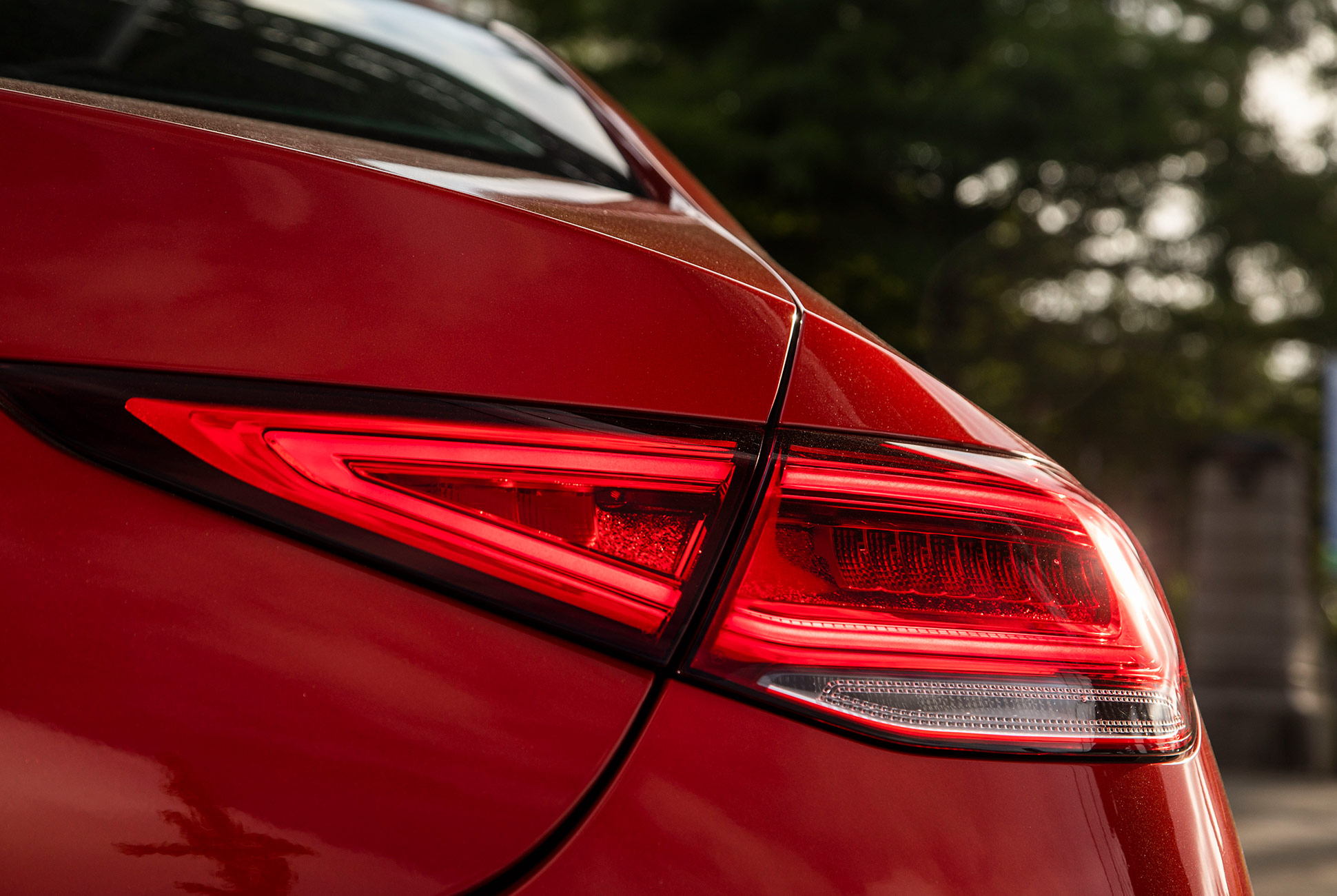
Note: Purchasing products through our links may earn us a portion of the sale, which supports our editorial team’s mission. Learn more here.

Anker Soundcore Space NC Review: Noise-Canceling Headphones for Less Than $100

Anker remains an industry leader in portable batteries, wall chargers and other smartphone accessories, but the company has branched out in the last year; it now makes for some of our favorite portable projectors, Bluetooth speakers and true wireless earbuds. The common theme that runs throughout all their products, no matter what is it, is good quality at a really good price. Take the Anker Soundcore Space NC ($99), the company’s first ever pair of wireless active noise-canceling headphones, for example. A pair of these over-ear headphones costs just under $100.

In the past, most of Anker’s other affordable audio products have been well reviewed, but the Soundcore Space NC feels different. Anker has done Bluetooth headphones before, but never over-ear models. Not only that, but the Soundcore Space NC marks the first time that the company has dabbled in active noise-canceling, a territory that has been dominated by Bose and, more recently, Sony. But at just $99, Anker’s Soundcore Space NCs aren’t really competing with wireless ANC headphones that cost between $300-$400. Instead, they’re in a category all their own.

The Good: The Soundcore Space NC headphones are extremely affordable and deliver better-than-average sound quality. They’re very comfortable, too, and have a collapsible design making them easy to travel with. The battery life, even in wireless and ANC modes, is exceptional. The natural, passive noise isolating ability of the headphones is pretty good. The headphones are backed by a “worry-free” 18-month warranty.

Who They’re For: Anybody who wants comfortable wireless over-ear headphones, and who doesn’t want to spend big. They’re some of the cheapest active noise-canceling headphones you’re likely to find, although their ANC ability doesn’t stack up to much more expensive models.

Watch Out For: You won’t be blown away by their active noise-canceling ability; it handles low-frequency noises decently and actually does an admirable job of attenuating background music, but you can still hear conversations, especially in office settings, loud and clear. With the ANC turned on, it muddles the mid-range so most audio tracks don’t sound nearly as good. As far as looks go, the headphones are pretty generic looking. They also have pretty prominent branding on the earcups and headband. Charges via micro-USB, which feels dated.

Alternatives: If you’re looking for the best wireless active noise-canceling headphones, you’re going to have to spend 2x, 3x or 4x more than what these Ankers cost. You can find our favorite wireless ANC headphones here.

Review: These days, it’s difficult to not trust that Anker is going to deliver a quality product. Of its recent audio products, I’ve been thoroghly impressed with its wireless running headphones, the SoundBuds Slim ($26), its true wireless earbuds, the Zolo Liberty ($99), and its newest portable Bluetooth speaker, the Anker Soundcore Flare ($60). And to be honest, the Anker Soundcore Space NC were just as impressive.

The sound quality on these headphones is definitely decent. Over the last week, I’ve put the Soundcore Space NC through my usual tests, streaming mostly London Grammar, Grouplove and Led Zepplin, and all the tracks sounded good — on par with my Apple AirPods ($159), but with better passive noise-isolation. The midrange and treble are loud and clear. And while the bass isn’t as punchy as over-ear models by Beats and Bose, it’s definitely still there.

Now, while the audio quality is there, the active noise-canceling of these headphones leaves something to be desired. As I mentioned before, I mostly wore these headphones around the office. We usually have background music playing, mostly jazz, and the headphones were are able to noticeably attenuate that music. The ANC also worked well while I was walking home from the office, on things like passing cars. However, conversations of any kind were still loud and clear. I could hear my colleagues talking, 10 feet away, as if the ANC wasn’t even turned on.

There were a few features with the Soundcore Space NCs that weren’t great, however. I’m not the biggest fan of swipe gestures in general — I’m more of a “button guy” — but the swipe gestures on these headphones, which are located on the right earcup and can be used to play/pause, adjust volume and skip tracks, aren’t nearly as intuitive or responsive as on other wireless ANC headphones, such as the Sony WH-1000XM2. I had to swipe and hold to do any of those things, and they didn’t always work (especially play/pause). That said, there were times where weirdly responsive; when adjusting the headphones off, I’d graze the right earcup with my hand and the track would pause or skip. It was just a little frustrating. Another little thing that I learned pretty quickly was that you have to hold the power button, for a second or more, to pair the headphones to my iPhone each time. You can’t just tab and go. The same is true with the “phone” button when answering and hanging up phone calls.

As they’re just $99, they don’t have a lot of the other features found in higher-end models. There’s no companion app, which is both good and bad in my opinion, so you can’t adjust EQ settings. There’s no ambient noise mode to better year your surroundings. There aren’t any optical sensors to detect when you put on and take off the headphones. And there’s no integrated virtual assistant, like Alexa or Google Assistant, which seems the in vogue thing to do for other headphone manufacturers.

Verdict: I can’t overstate this: the Anker Soundcore Space NCs are some of the most comfortable over-ear headphones that I’ve ever worn. They have a killer battery life. If you can get over the generic aesthetic and sometimes frustrating swipe gestures, these are a real no-brainer buy. They’re good wireless over-ear headphones, with decent noise-canceling abilities, at a ridiculously affordable price.

What Others Are Saying:

• “Anker makes a lot of promises about the Soundcore Space NC, most of which it lives up to. I was extremely impressed with the battery life, for example. Anker promises 20 hours of wireless playback with ANC enabled, and 50 hours of wired ANC-enabled playback. In my experience, this is about right. It’s nice not having to worry about your headphones dying on you mid-week, especially if you’re as bad as I am at remembering to charge things. Over the testing period, I think I’ve only had to fully recharge the cans once..” — Matthew Hughes, The Next Web

• “There are few headphones that are universally loved. But at $99, the Anker Soundcore Space NC might just be the final word in noise-canceling and wireless sound. Add to this a fantastic sound quality and you have one sure-fire headphone, folks.” — Carroll Moore, Major Hi-Fi

• “I listened to the Space NC through numerous apps and phones and found they took some getting used to. Straight out of the box, the Space NC are tuned a bit too much toward the bass end of the spectrum. While bass was tight and punchy, mids and highs fell a bit flat. R&B and electronic music shined via the Space NC, but I was not impressed with the sound of rock or metal. Acoustic and vocal performances had a warm sound that at times came across as overly compressed.” — Eric M. Zeman , Phone Scoop

Key Specs

Type: Over-Ear, wireless active noise-canceling headphones
Drivers: 40mm dynamic
Connectivity: Bluetooth 4.1
Battery: 20 hours in wireless NC mode, 50 hours in wired NC mode
Companion app: None

Read More Gear Patrol Reviews

Hot takes and in-depth reviews on noteworthy, relevant and interesting products. Read the Story

Note: Purchasing products through our links may earn us a portion of the sale, which supports our editorial team’s mission. Learn more here.

2018 Ducati SuperSport S Review: A Sport Bike for the Average Rider

The Ducati SuperSport came back in 2017 from a 10-year hiatus to bridge the gap between the upper echelon of the Ducati lineup and more approachable bikes. The SuperSport brings the elegant, looks-fast-standing-still design and technology from the Panigale to riders who aren’t used to reigning in 200 horsepower on a daily basis.

High strung sportbikes are one-trick ponies, as eye-catching and blisteringly advanced as they are. Bikes that are born from racing but adapted to the streets while still retaining impressive stats are compromised for everyday riding. Ergonomics, torque curves and power bands well-suited to produce lightning fast lap times are a bike’s most significant weaknesses on a daily commute while dodging traffic going from stop light to stop light. The Ducati SuperSport S cherry picks the best aspects from longer distance bikes and the sport bike world to give the average rider a taste of top-tier Ducatis on a daily basis.

The Good: Styling on the SuperSport is one of its main draws. What used to be out of reach for most riders — those who didn’t want a high-performance track machine but adored the styling — can now enjoy one of Ducati’s best designs in years.

A host of electronic aids and layers of menus let riders customize the character of their bike. You and a friend could both get a SuperSport, but through the eight-level traction control and three level ABS system, you can mix and match the computer’s level of intervention so much that you could share the same bike but have two completely different experiences.

Who It’s For: Commuters who are looking for a premium bike to use almost every day but don’t want the aggressive and cramped ergonomics of a track bike.

Watch Out For: The SuperSport only comes in two colors, but there’s a catch. The base model just comes in red, so if your heart is set on the white, you ‘ll have to spring for the S model and throw down an extra $1,700. And if you can live with red, a non-adjustable suspension and adding an optional quick-shifter, I’d stick with the base model, because those are the only differences.

One of the most egregious flaws of the SuperSport is undoubtedly its mirrors. I’m somewhat broad-shouldered, so with the SuperSport’s mirrors on such short stalks I had to keep pinching my shoulders and elbows in to get a view of what was behind me. That annoyance, however, had nothing on vibrations that rendered the mirrors all but useless at night. A bike with that big of an engine, with so few cylinders will, of course, not ride very smoothly — there are bound to be vibrations and a lot of them. The mirrors vibrated so much that during the day my rear view was closer to a French impressionist’s interpretation of reality and at night, I gave up entirely and just used quick glances over my shoulder.

Alternatives: The only real direct competitors are the Kawasaki Ninja 1000 and Suzuki GSX-S1000F. Both the Japanese bikes are more powerful than the Italian at 140 hp and 148 hp respectively and also both get power from inline-four engines, affording a smoother ride.

All three have similar price tags and multi-level traction control systems, but the Ducati is the only bike of the three to offer fully-adjustable suspension, three ride modes (Sport, Touring and Urban) on top of the eight-level traction control system and three level ABS.

Review: I never got the chance to take the SuperSport on to a track to explore or even get close to the limits of what can do, but then again, the majority of riders picking this bike up won’t either. In my week with the SuperSport I commuted back and forth from Manhattan to Jersey City through the Holland Tunnel during a heatwave, did a few highway blasts on the way to see friends and took a trip down to the beach for the weekend. In other words, I lived my life as I usually would, I just happened to have a Ducati underneath me. And, for an everyday rider, the SuperSport followed through on Ducati’s promise of versatility and performance.

I already had it in my head that Ducati’s idea of a ‘comfortable’ sport bike was simply bolting the footpegs lower on the bike and calling it a day. And with styling so close to that of the Panigale superbike, it was all too easy to write the SuperSport off almost immediately. Getting proved wrong the second I sat on the bike was the most jarring moment of the entire week.

Yes, the pegs are lower, opening up more leg room, especially for taller riders, but so is the seat. Combine that with the raised position of the handlebars and I was sitting nearly bolt upright. On longer rides or even short bursts through the city where body position is continuously changing, that freedom of movement affords the rider back an incredible amount of endurance.

In slipping in and out of traffic to and from work, useable torque is the SuperSport’s calling card. If the SuperSport boasted superbike performance to match its looks, all the power you need would be comically high in the rev range. Instead, Ducati moved most of the torque to just above 3,000 RPM, so you can ride around at a pace which won’t earn you any tickets or summons, but you can still get your money’s worth from the power you paid for. You can thank the punchy 937cc L-Twin for that because the more rev-happy inline-four competition from Japan make you go searching for power above the 9,000 RPM mark, which can be useful on the highway but you’ll rarely see that on city streets.

The engine gives the Ducati trademark vibrations throughout the bike — it renders the mirrors absolutely useless and becomes temperamental at low speeds, on light throttle. Trundling through the Holland Tunnel, where there’s no passing and traffic moves at crawling pace on a regular basis coasting was difficult. At low RPM, power delivery was choppy, causing the bike to jerk slightly. I wasn’t anywhere near the point of stalling the bike; the engine just didn’t like the lazy pace — noting the bike’s air-temperature thermometer read 122 degrees Fahrenheit in the middle of the tunnel, neither did I.

Verdict: If you look at the price tags and performance numbers alone, the Ducati doesn’t sit at the top of its class. The Kawasaki and Suzuki easily beat it out there, offering more power for the same if not less money. But – and this is very big, obvious ‘but’ – numbers aren’t everything.

The full experience on the Ducati SuperSport is more than just numbers. Superior design, sound and the way it effortlessly takes on corners are the reason anyone leans towards a Ducati. Throw in the everyday usability of the SuperSport and you know have a beautiful bike, packed with performance and technology, without the torturous ergonomics of a superbike set up as a track weapon. The engine does have its flaws but as a whole package, Ducati scored a major win by opening up more riders to the more exclusive and intimidating part of the dealership.

What Others Are Saying:

• “Ducati may have designed this ride to bridge the gap between the laid-back riders and the more spirited ones, but the look is all sport and distinctly Ducati.” — Top Speed

• “Agile on city streets, comfortable on the motorway and superlative on out-of-town twisties, the SuperSport is super-versatile. Relaxed rider and passenger positions, good airflow deflection from the height-adjustable Plexiglas screen and the mileage provided by the 16-liter fuel tank also make the Ducati SuperSport a cool companion on medium-distance rides.” — Total Motorcycle

• “The SuperSport S is marketed as perfect for road riding without compromising its sporting spirit, to paraphrase Ducati. The subsequent lack of any soreness after riding definitely backs up that statement. The seating position makes for a pleasant commuter ride, while the handlebar set-up allows you to sit high, and the soft, wide – but not quite Honda Gold Wing wide – leather seat is perfect for stylish road riding.” — The National

Ducati Super Sport S Key Specs

Engine: 937cc L-Twin
Transmission: Six-speed
Horsepower: 110 hp @ 9,000 RPM
Torque: 69 lb-ft @ 6,5000 RPM
Weight: 463 lbs

Read More Gear Patrol Reviews

Hot takes and in-depth reviews on noteworthy, relevant and interesting products. Read the Story

Note: Purchasing products through our links may earn us a portion of the sale, which supports our editorial team’s mission. Learn more here.

Whoop Tracker Review: A Game-Changing Fitness Tracker

The Whoop Strap 2.0 is a high-tech fitness tracker worn 24/7 that looks at everything from heart rate variability to sleep. The all-black device, worn on your wrist, is no larger than a set of matches. Athletes like Michael Phelps, Mike Mancias and Lawson Craddock all use it. Whoop is approved for use in the MLB and as a recovery tool for the NFL — even the Navy SEALS use it. Because of the high price point (think $500 for the device alone or $1,000 to $2,000 per player on professional and collegiate teams), the device was only available to elite athletes until recently. In May 2018, Whoop changed to a subscription model, charging $30 a month, and becoming accessible to the masses. I wore Whoop Strap 2.0 for over a month to test out the accuracy, ease of use and to see if it would change the way I work out.

The Good: The Whoop Strap 2.0 logs your movements 24/7, collecting data 100 times a second. Average heart rate, calories burned and your daily activity provide cues for what the device calls “day strain,” while heart rate variability and resting heart rate change your recovery score. Each night, the Whoop app tells you how many hours of sleep to get. It also tracks your time in bed and your sleep performance. These hard numbers are helpful if you know what to do with them, but luckily the app breaks down whether or not you need to sleep more, workout harder or improve your fitness.

Who It’s For: Whoop started just for elite athletes, but with the price reduction, the Whoop Strap 2.0 is more accessible to the everyday athlete. If you’re someone who is interested in improving your physical fitness, learning more about your sleep and reducing any chance of overtraining, Whoop is for you. Marathoners, triathletes and other endurance athletes will be able to monitor training schedules and adapt them as if a personal trainer was working with them directly.

Watch Out For: Initially, I had some issues connecting the band to the app and had to keep disconnecting and re-connecting my phone’s Bluetooth setting. Depending on your phone, it might take a few tries to connect.

Charging Whoop is a breeze in theory, but physically charging it on the go was a bit tricky. The device arrives with a portable battery charger that slides right on top of the Whoop band, so you don’t have to take the tracker off to juice it up. I struggled to remember the battery pack for the first few days, so there are more than a few hours of data missing from my training. I also had to get used to checking the battery life before bed because if I received a notification that the battery was less than 10 percent at 4 AM, there was no chance I was getting up to plug it into an outlet. There were a handful of times when I went to bed and woke up at 7 AM, only to realize that the battery had run out. But once I made it a routine to check the app, these instances occurred less frequently.

There’s no watch face, so Whoop won’t replace anything you already wear on your wrists. I like to wear my Apple Watch, but I can’t wear Whoop on the same side (because the Bluetooth signals can get crossed). I had to wear Whoop on the other wrist. Many people stopped me (even strangers in the subway) to ask me if I was wearing two Apple Watches.

Alternatives: There’s nothing else out there like the Whoop band. If you want a device that tracks your heart rate variability (an easy measurement to see how fast you’re improving athletically), the Polar H7, H10 Bluetooth Heart Rate Sensor ($60+) or the Garmin Premium Heart Rate Monitor ($31+) all measure it, but are all chest straps.

Review: Whoop comes in what looks like a Lego version of an individual cupcake holder. The bottom is a plug, so all you need to do is flip out the two arms, and plug in the USB cord to charge your device. The set up is simple and takes less than five minutes.

Compared to other fitness trackers, it’s relatively simple design-wise. The stock all-black strap is stretchy and easy to cut, so it works for wrists of all sizes. You don’t need to order a longer strap to fit larger wrists. The black device looks like plastic, but I had no issues with its durability. And if you need something a bit nicer, you can dress it up with a Hydroband, Truman or Churchill band.

The Whoop band can charge to about 60 percent in just 46 minutes. You can charge up the portable battery separately, so you never lose data due to a drained battery. While the battery pack adds bulk to your wrist, I hardly noticed it during the hour or so that I was charging it.

When I first opened the app, I had to familiarize myself with the three screens: day strain, recovery and sleep performance. It’s these three pillars of measurement that Whoop Strap 2.0 uses to calculate your levels of fitness.

It takes a baseline of four days of data before Whoop can provide adequate feedback and actionable steps. The daily strain is based on the stress put on the cardiovascular system over 24-hours, on a scale of 0 to 21. Intense workouts are 18 or above, while walking is somewhere between 10 and 14. Recovery is measured between 0 and 100 percent and is shown in three colors: red (run down), yellow (okay to operate) and green (peaking physically). The number comes from a combination of the questions you answer each morning after you wake up (are you stressed? sore? injured?) as well as your heart rate variability, resting heart rate and hours of sleep. Sleep performance is based on the total amount of sleep you need compared to what you actually get — also logged on a 0 to 100 percent scale.

For me, the key to using Whoop effectively was keeping my recovery score high, while also pushing my limits on strain (ideally over 10+) to continue improving my physical fitness. In June, my recovery score only dipped below 34 percent (in the red) three times, while it mainly stayed between 34 and 66 percent (in the yellow) and went above 66 percent only 12 days that month. Too many green days in a row meant that I could’ve worked harder.

During workouts, I didn’t have to tell Whoop I was exercising. It automatically tracked changes in heart rate and logged the workout. I trusted the app to log workouts for me.

The trifecta of scores would include a high recovery and strain score, with sleep performance clocking in at over 70-percent. Recovering sufficiently at night was where I failed most days. While I’m diligent about getting to a workout every day, sleeping the requisite number of hours each night proved to be more difficult. I only hit my goal ten days in June. Every other day I saw a message somewhere along the lines of “falling behind” or “getting by.” If I were to train for a race, I’d have to pay attention to exactly how much sleep I need to hit my peak performance, and not just “get by.”

Thanks to my daily check-ins with the Whoop Strap 2.0, I can now rattle off my heart rate variability (HRV) and resting heart rate (RHR) ranges and recognize immediately if those numbers are off. During a recent trip to the emergency room after a water skiing fall, the nurse took my RHR as 86, which I knew was off and meant something was probably wrong. I had been sitting in a car and the ER for over an hour, so there was no external strain on my body, and the number should’ve been no higher than 65 at that time of day. It turns out I broke my wrist, and my heart was merely responding to the issue.

Verdict: Despite not having a watch face, once I got used to checking the app every single morning on my way to work, it was easy to see how I was feeling and what workout I was down to try. One of the biggest mistakes athletes make is to train on empty, and when looking at the data from Whoop, it’s impossible to do that. Even if I woke up feeling like crap, if Whoop told me I was in the green, I took it as my cue to workout and push it as hard as I could. The tracker pushed me to new limits on days where I didn’t think I was ready, similar to the role a coach or personal trainer would play. As a data geek, it provided an easy-to-read insight into my physical stats. For upcoming marathons and triathlon training schedules, Whoop is an unexpected advantage. There’s no workout it can’t track. Whoop drastically reduces the risk of overtraining (and getting hurt) for elites and everyday athletes. For just $30 per month, this has the potential to be a game-changing tracker for anyone who needs an edge in fitness competitions or races, or if you need actionable advice from a tracker to improve your workouts.

What Others Are Saying:

• “Whoop is about hacking your performance, not putting something pretty on your wrist. As sleek as the band is, Whoop’s software is the true star of the show. Whoop is perfect for people who do activities like CrossFit or Iron Man competitions, where peak performance is essential.” — Brett Williams, Mashable

• “These professional athletes are strapping the WHOOP (rather than a Fitbit or Apple Watch) to their bodies because it provides an enormous amount of data on their performance day and night, in pre-game warmups and during post-game recovery. And if it’s good enough for the pros, it’s definitely fair play for this minor league father of two.” — John Patrick Pullen, Time

• “What makes Whoop different, in essence, are two key metrics: heart rate variability—a first for consumer fitness trackers—and sleep tracking. Whoop measures the amount of time you spent in light sleep, slow-wave (or deep) sleep, and REM; it also tracks how many times you woke during the night and your overall time in bed. The device functions as a pseudo-sleep coach, offering advice on how much your body has recovered and how hard you should train the following day.” — Matthew Giles, Men’s Journal

Key Specs

Band Material: Lightweight, flexible polyester woven fabric
Waterproof: Strap, yes. Charger, no.

Read More Gear Patrol Reviews

Hot takes and in-depth reviews on noteworthy, relevant and interesting products. Read the Story

Note: Purchasing products through our links may earn us a portion of the sale, which supports our editorial team’s mission. Learn more here.

Review: Should You Buy a BlackBerry in 2018?

Nostalgia strikes with the BlackBerry Key2 smartphone ($649+). It’s the next-generation of 2017’s BlackBerry KeyOne and despite looking similar, the two models are different in all the right ways. The new model is slimmer, lighter and sturdier than its predecessor. The bezels on the Key2 are less prominent and its keyboard has been redesigned with 20-percent larger keys and a new “speed key” that lets users program their own shortcut to a specific app without going to the home screen. The Key2 has all its traditional specs bumped (processor, display, etc.) that you’d expect from a next-generation smartphone, too. And it’s the first Blackberry to ever have a dual rear-camera system. So in a world where BBMs are dead and iMessage is king, do you still need a smartphone with a smaller display and a physical keyboard?

|

The Good: Picking up the Key2 feels similar to using a mechanical keyboard with a computer — it’s different and sometimes difficult, but typing (texts, emails and Slack messages) is that much more enjoyable. The keyboard itself also comes with some neat tricks, such as 52 programmable shortcuts (one for each key), swipe gestures (which seems strange, but, for instance, you can scroll and erase messages by just swiping across the keyboard) and a fingerprint reader that’s in the spacebar. There’s an easy-access “Productivity Tab” that streamlines things like emails and calendar events. Blackberry put a number of features and apps, such as its well-known DTEK app, into the Key2 that take security to the next level. The rear-camera system is pretty decent for most photos. There’s a headphone jack.

Who They’re For: Any business person looking for a smartphone that’s primed for productivity (aka, somebody who sends a helluva lot emails via from their smartphone). It’s also not optimal for streaming videos or spending a lot of time looking at apps such as Instagram or Facebook, so the person probably shouldn’t care too much about that.

Watch Out For: Unlike many of the current crop of flagship and mid-range smartphones, the Key2 isn’t waterproof and doesn’t support wireless charging. Its display is tiny compared to pretty much every other smartphone in its price range. The keyboard can be frustrating at times, especially when you want to add symbols or numbers. The camera system isn’t great in low light.

Alternatives: In terms of other smartphones with physical keyboards, your only other option is last year’s Blackberry KeyOne, which is nowhere near as spec’d out as this much-updated Key2. At the $649, the Key2 is in line with other mid-range or older smartphones, such as the OnePlus 6, Google Pixel 2 or Samsung Galaxy S9, all of which have bigger displays and better camera systems.

Review: Full disclosure: I never had a Blackberry growing up. I never had the joy of BBMing or asking somebody, “Hey, what’s your pin?”. So getting my hands on the Blackberry Key2 was a novel experience — I hadn’t ever used a smartphone with a full keyboard before.

So let’s talk about the keyboard. Obviously, I use a keyboard on my desktop and laptop every day, so the physically typing on the condensed keyboard didn’t feel as abstract as I initially thought. The keys are small, true, but that was never really frustrated me. Instead, it was typing symbols and numbers that gave me the most problems, as navigating the Alt and Shift keys with just my thumbs felt aberrant.

The “speed key,” — that universal shortcut key — is located in the bottom-right corner of the keyboard and is surprisingly useful. It allows you to program up to 52 quick shortcuts to open apps without ever having to click the home button. I used it with just a few of my most-used apps — Twitter, Slack, Spotify, Gmail, Instagram — and I used it quite frequently. The keyboard has some swipe gestures, too, which first felt odd. You can switch between home screens, scroll up/down articles you’re reading and even delete words by just quickly moving your thumb over the keys. It’s honestly like the keys feel what I was trying to do — like a phantom touchscreen was there — but after a day or two of use, these swiping gestures kind of become second nature.

The keyboard is well-designed and feels great, but the great irony is that it actually made me a slower typer. I obviously have to caveat that point by saying two weeks of using a completely different smartphone isn’t enough time to break my habits, but still, I’m guessing most people used to typing on a touchscreen keyboard will have a similar problem.

The main star of the Blackberry Key2 is its keyboard, true, but the smartphone is also about privacy and security. As mentioned before, it has features and apps that bring this to the forefront. The DTEK app will tell you how secure each app is and let you manage permissions (it’ll tell you which apps have access to your microphone or certain log-in information, for example). The Redactor app allows you to black out sensitive information, too, so people standing near you can’t read what’s on your screen.

The other big difference is, as a result of that physical keyboard, that the Key2 has a smaller screen than other smartphones. The Key2 has a 4.5-inch display, which is slightly smaller than the 4.7-inch screen of the iPhone 8 and the five-inch screen of the Google Pixel 2, but it’s noticeably bigger — those smartphones are nearly all-screen.

For the most part, I didn’t have an issue with the smaller screen size. Apps like Gmail, Slack, Twitter, Google Maps and Messages all felt the same. However, the small screen has some noticeable drawbacks. The borders of Instagram Stories were cut off and watching landscapes videos on Netflix and YouTube is awkward. The resolution isn’t great either.

That said, the Key2 is a smartphone that’s not really meant for those things. Nor is it meant for taking photos, despite the fact that it’s the first Blackberry with a dual camera system and actually takes pretty decent photos. (I took a number of photos at my friend’s wedding and liked them enough to post on Instagram, which is saying something.) The camera, admittedly, isn’t great in low-light situations — photos can look flat — and it generally won’t impress you in the same way as the most recent iPhone, Samsung Galaxy or Google Pixel smartphones.

Verdict: At its core, the Blackberry is a very good mid-range smartphone. It’s fast, dependable and has a more than an adequate camera. Most importantly, it’s fun to use — a flash from the past. However, it’s really designed as a productivity weapon for business folks and doesn’t offer the supreme specs that are found in all today’s best flagship smartphones. The display isn’t big or beautiful, and it lacks features that have become ubiquitous, such as wireless charging and water resistance. If you want a second phone for business, or you’re just a big fan of Blackberry, the Key2 is a great choice. Otherwise, for $650, you can buy another midrange Android or an older iPhone and probably be happier.

What Others Are Saying:

• “BlackBerry Mobile managed to fix most of the issues, so if you were holding off on a KeyOne, you’ll probably love this phone. For everyone else it’s about figuring out whether you can get to the point where tapping away at a physical keyboard, like pen on paper, brings you enough fulfillment that you forget about all the things you’re losing in the process.” — Daniel Bader, Android Central

• “It might sound like I’m damning the phone with faint praise, but whatever: The BlackBerry Key2 is the best Android-powered BlackBerry ever made, and it improves on last year’s formula in almost every way. That said, the Key2 remains a questionable option for most smartphone shoppers — you could get a more-powerful Android phone like the OnePlus 6 for less money, and I suspect most people have moved on from physical keyboards without looking back. That said, for the right people — people who long for tactile keys and data privacy — the KEY2 just might be the right device at the right time.” — Chris Velazco, Engadget

• “On paper, it might be the best camera system ever put in a BlackBerry. But the Key2 doesn’t hold a candle to smartphone camera staples like the Pixel 2 XL and the iPhone X. After all, business users also want to take great photos with their phones, but the Key2 clearly isn’t cut out for that.” — Stefan Etienne, The Verge

Key Specs

Processor: Qualcomm Snapdragon 660
OS: Android 8.1 Oreo
Display: 4.5-inch IPS LCD (1,620×1,080)
Rear Camera: dual 12-megapixel camera system; 4K video at 30fps, 1080p video at 60fps
Front Camera: 8-megapixel
Key Features: headphone jack, USB-C charging,
Battery: 3500mAh

|

Read More Gear Patrol Reviews

Hot takes and in-depth reviews on noteworthy, relevant and interesting products. Read the Story
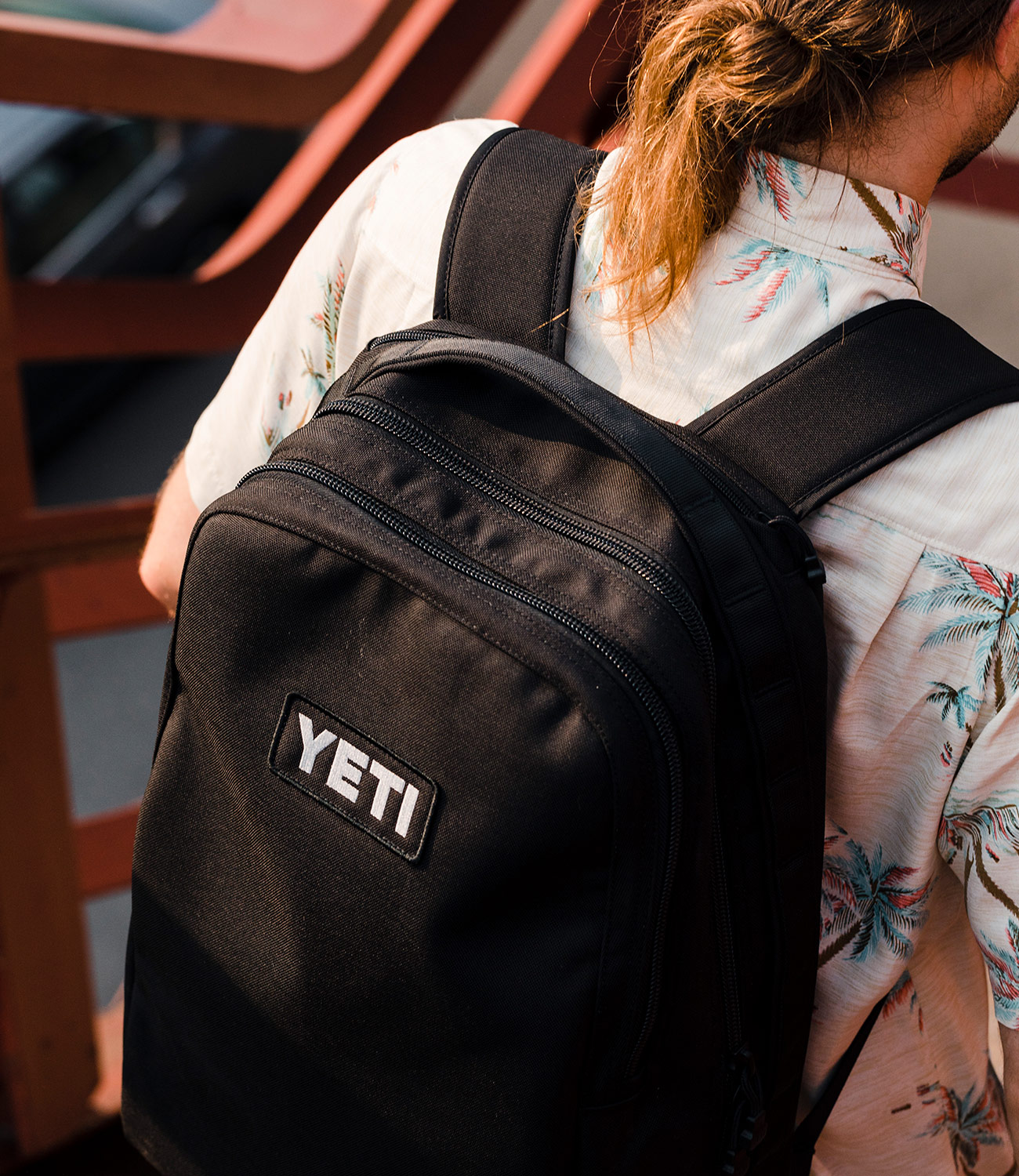
Note: Purchasing products through our links may earn us a portion of the sale, which supports our editorial team’s mission. Learn more here.

Blackberry Key2 Review: The Joys and Perils of a Smartphone with a Physical Keyboard

Nostalgia strikes with the BlackBerry Key2 smartphone ($649+). It’s the next-generation of 2017’s BlackBerry KeyOne and despite looking similar, the two models are different in all the right ways. The new model is slimmer, lighter and sturdier than its predecessor. The bezels on the Key2 are less prominent and its keyboard has been redesigned with 20-percent larger keys and a new “speed key” that lets users program their own shortcut to a specific app without going to the home screen. The Key2 has all its traditional specs bumped (processor, display, etc.) that you’d expect from a next-generation smartphone, too. And it’s the first Blackberry to ever have a dual rear-camera system. So in a world where BBMs are dead and iMessage is king, do you still need a smartphone with a smaller display and a physical keyboard?

|

The Good: Picking up the Key2 feels similar to using a mechanical keyboard with a computer — it’s different and sometimes difficult, but typing (texts, emails and Slack messages) is that much more enjoyable. The keyboard itself also comes with some neat tricks, such as 52 programmable shortcuts (one for each key), swipe gestures (which seems strange, but, for instance, you can scroll and erase messages by just swiping across the keyboard) and a fingerprint reader that’s in the spacebar. There’s an easy-access “Productivity Tab” that streamlines things like emails and calendar events. Blackberry put a number of features and apps, such as its well-known DTEK app, into the Key2 that take security to the next level. The rear-camera system is pretty decent for most photos. There’s a headphone jack.

Who They’re For: Any business person looking for a smartphone that’s primed for productivity (aka, somebody who sends a helluva lot emails via from their smartphone). It’s also not optimal for streaming videos or spending a lot of time looking at apps such as Instagram or Facebook, so the person probably shouldn’t care too much about that.

Watch Out For: Unlike many of the current crop of flagship and mid-range smartphones, the Key2 isn’t waterproof and doesn’t support wireless charging. Its display is tiny compared to pretty much every other smartphone in its price range. The keyboard can be frustrating at times, especially when you want to add symbols or numbers. The camera system isn’t great in low light.

Alternatives: In terms of other smartphones with physical keyboards, your only other option is last year’s Blackberry KeyOne, which is nowhere near as spec’d out as this much-updated Key2. At the $649, the Key2 is in line with other mid-range or older smartphones, such as the OnePlus 6, Google Pixel 2 or Samsung Galaxy S9, all of which have bigger displays and better camera systems.

Review: Full disclosure: I never had a Blackberry growing up. I never had the joy of BBMing or asking somebody, “Hey, what’s your pin?”. So getting my hands on the Blackberry Key2 was a novel experience — I hadn’t ever used a smartphone with a full keyboard before.

So let’s talk about the keyboard. Obviously, I use a keyboard on my desktop and laptop every day, so the physically typing on the condensed keyboard didn’t feel as abstract as I initially thought. The keys are small, true, but that was never really frustrated me. Instead, it was typing symbols and numbers that gave me the most problems, as navigating the Alt and Shift keys with just my thumbs felt aberrant.

The “speed key,” — that universal shortcut key — is located in the bottom-right corner of the keyboard and is surprisingly useful. It allows you to program up to 52 quick shortcuts to open apps without ever having to click the home button. I used it with just a few of my most-used apps — Twitter, Slack, Spotify, Gmail, Instagram — and I used it quite frequently. The keyboard has some swipe gestures, too, which first felt odd. You can switch between home screens, scroll up/down articles you’re reading and even delete words by just quickly moving your thumb over the keys. It’s honestly like the keys feel what I was trying to do — like a phantom touchscreen was there — but after a day or two of use, these swiping gestures kind of become second nature.

The keyboard is well-designed and feels great, but the great irony is that it actually made me a slower typer. I obviously have to caveat that point by saying two weeks of using a completely different smartphone isn’t enough time to break my habits, but still, I’m guessing most people used to typing on a touchscreen keyboard will have a similar problem.

The main star of the Blackberry Key2 is its keyboard, true, but the smartphone is also about privacy and security. As mentioned before, it has features and apps that bring this to the forefront. The DTEK app will tell you how secure each app is and let you manage permissions (it’ll tell you which apps have access to your microphone or certain log-in information, for example). The Redactor app allows you to black out sensitive information, too, so people standing near you can’t read what’s on your screen.

The other big difference is, as a result of that physical keyboard, that the Key2 has a smaller screen than other smartphones. The Key2 has a 4.5-inch display, which is slightly smaller than the 4.7-inch screen of the iPhone 8 and the five-inch screen of the Google Pixel 2, but it’s noticeably bigger — those smartphones are nearly all-screen.

For the most part, I didn’t have an issue with the smaller screen size. Apps like Gmail, Slack, Twitter, Google Maps and Messages all felt the same. However, the small screen has some noticeable drawbacks. The borders of Instagram Stories were cut off and watching landscapes videos on Netflix and YouTube is awkward. The resolution isn’t great either.

That said, the Key2 is a smartphone that’s not really meant for those things. Nor is it meant for taking photos, despite the fact that it’s the first Blackberry with a dual camera system and actually takes pretty decent photos. (I took a number of photos at my friend’s wedding and liked them enough to post on Instagram, which is saying something.) The camera, admittedly, isn’t great in low-light situations — photos can look flat — and it generally won’t impress you in the same way as the most recent iPhone, Samsung Galaxy or Google Pixel smartphones.

Verdict: At its core, the Blackberry is a very good mid-range smartphone. It’s fast, dependable and has a more than an adequate camera. Most importantly, it’s fun to use — a flash from the past. However, it’s really designed as a productivity weapon for business folks and doesn’t offer the supreme specs that are found in all today’s best flagship smartphones. The display isn’t big or beautiful, and it lacks features that have become ubiquitous, such as wireless charging and water resistance. If you want a second phone for business, or you’re just a big fan of Blackberry, the Key2 is a great choice. Otherwise, for $650, you can buy another midrange Android or an older iPhone and probably be happier.

What Others Are Saying:

• “BlackBerry Mobile managed to fix most of the issues, so if you were holding off on a KeyOne, you’ll probably love this phone. For everyone else it’s about figuring out whether you can get to the point where tapping away at a physical keyboard, like pen on paper, brings you enough fulfillment that you forget about all the things you’re losing in the process.” — Daniel Bader, Android Central

• “It might sound like I’m damning the phone with faint praise, but whatever: The BlackBerry Key2 is the best Android-powered BlackBerry ever made, and it improves on last year’s formula in almost every way. That said, the Key2 remains a questionable option for most smartphone shoppers — you could get a more-powerful Android phone like the OnePlus 6 for less money, and I suspect most people have moved on from physical keyboards without looking back. That said, for the right people — people who long for tactile keys and data privacy — the KEY2 just might be the right device at the right time.” — Chris Velazco, Engadget

• “On paper, it might be the best camera system ever put in a BlackBerry. But the Key2 doesn’t hold a candle to smartphone camera staples like the Pixel 2 XL and the iPhone X. After all, business users also want to take great photos with their phones, but the Key2 clearly isn’t cut out for that.” — Stefan Etienne, The Verge

Key Specs

Processor: Qualcomm Snapdragon 660
OS: Android 8.1 Oreo
Display: 4.5-inch IPS LCD (1,620×1,080)
Rear Camera: dual 12-megapixel camera system; 4K video at 30fps, 1080p video at 60fps
Front Camera: 8-megapixel
Key Features: headphone jack, USB-C charging,
Battery: 3500mAh

|

Read More Gear Patrol Reviews

Hot takes and in-depth reviews on noteworthy, relevant and interesting products. Read the Story
Note: Purchasing products through our links may earn us a portion of the sale, which supports our editorial team’s mission. Learn more here.