All posts in “Porsche”

The Porsche Vision Gran Turismo

I’m sure you’ve all heard about the Gran Turismo game series, a Japanese video game developed by studio Polyphony Digital Inc., a subsidiary of Sony Interactive Entertainment, where the Vision Gran Turismo program, also known as Vision GT or even VGT has given us some of the most impressive concept cars, mostly fictional, but still utterly amazing to look at and imagine driving them … which you can do in the game naturally.

The first car that comes to mind is the 2015 Bugatti Vision GT, an absolutely stunning concept that was built as a show car to the 2015 IAA in Frankfurt, but let’s not forget the equally impressive-looking McLaren Ultimate Vision GT or the stunning Lamborghini V12 Vision Gran Turismo in her satin green livery, and now there is a new concept released.

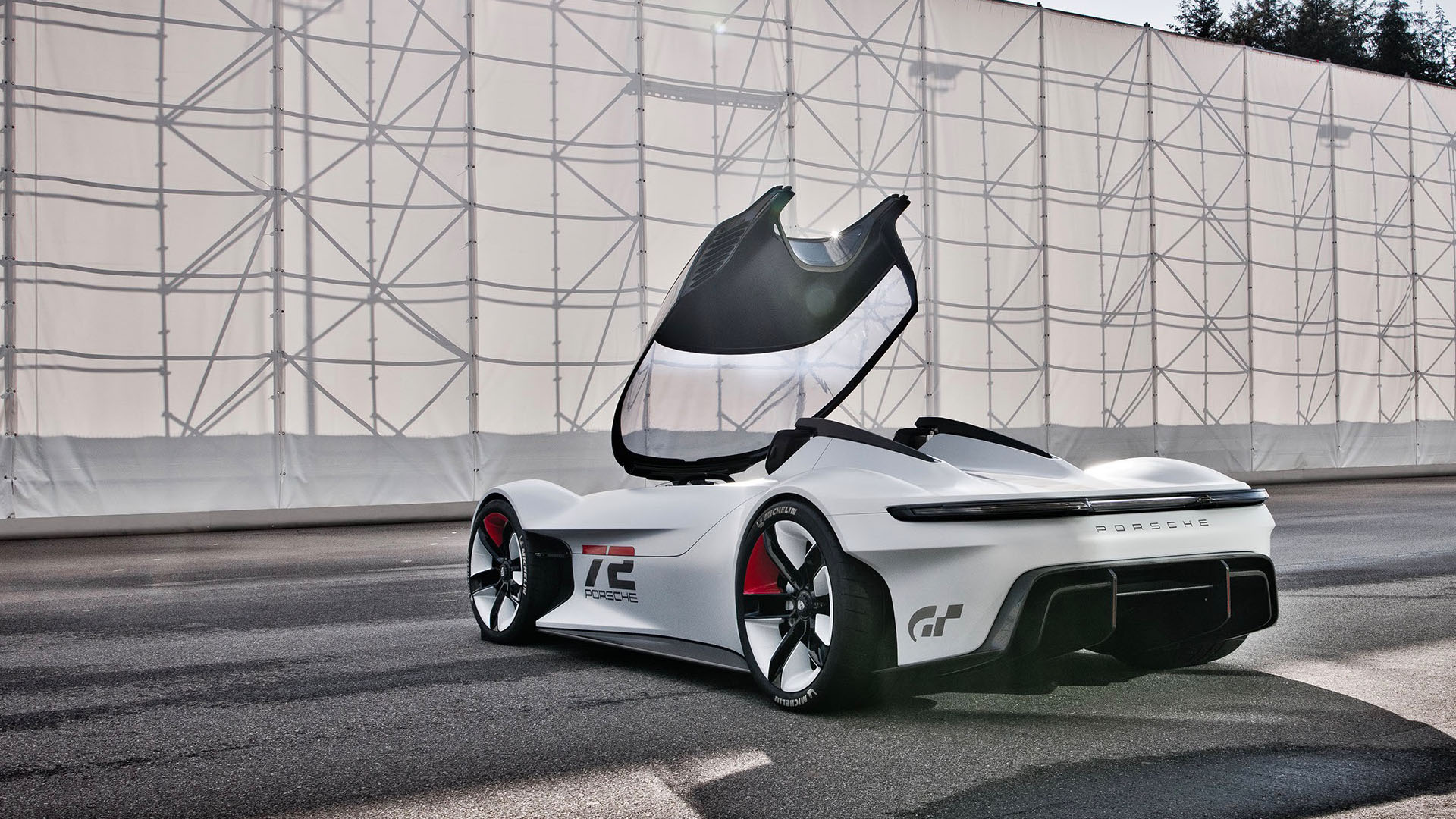
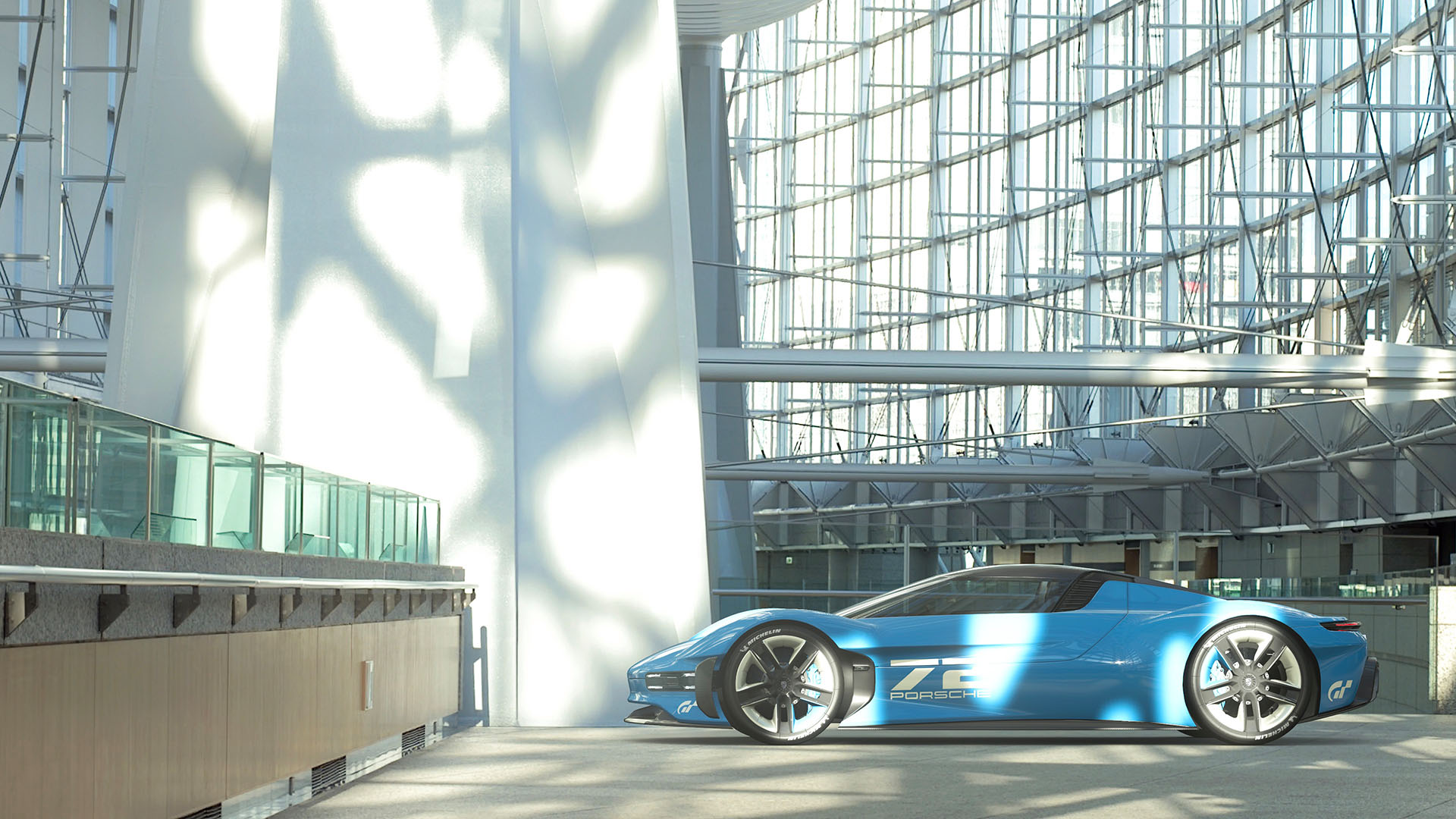
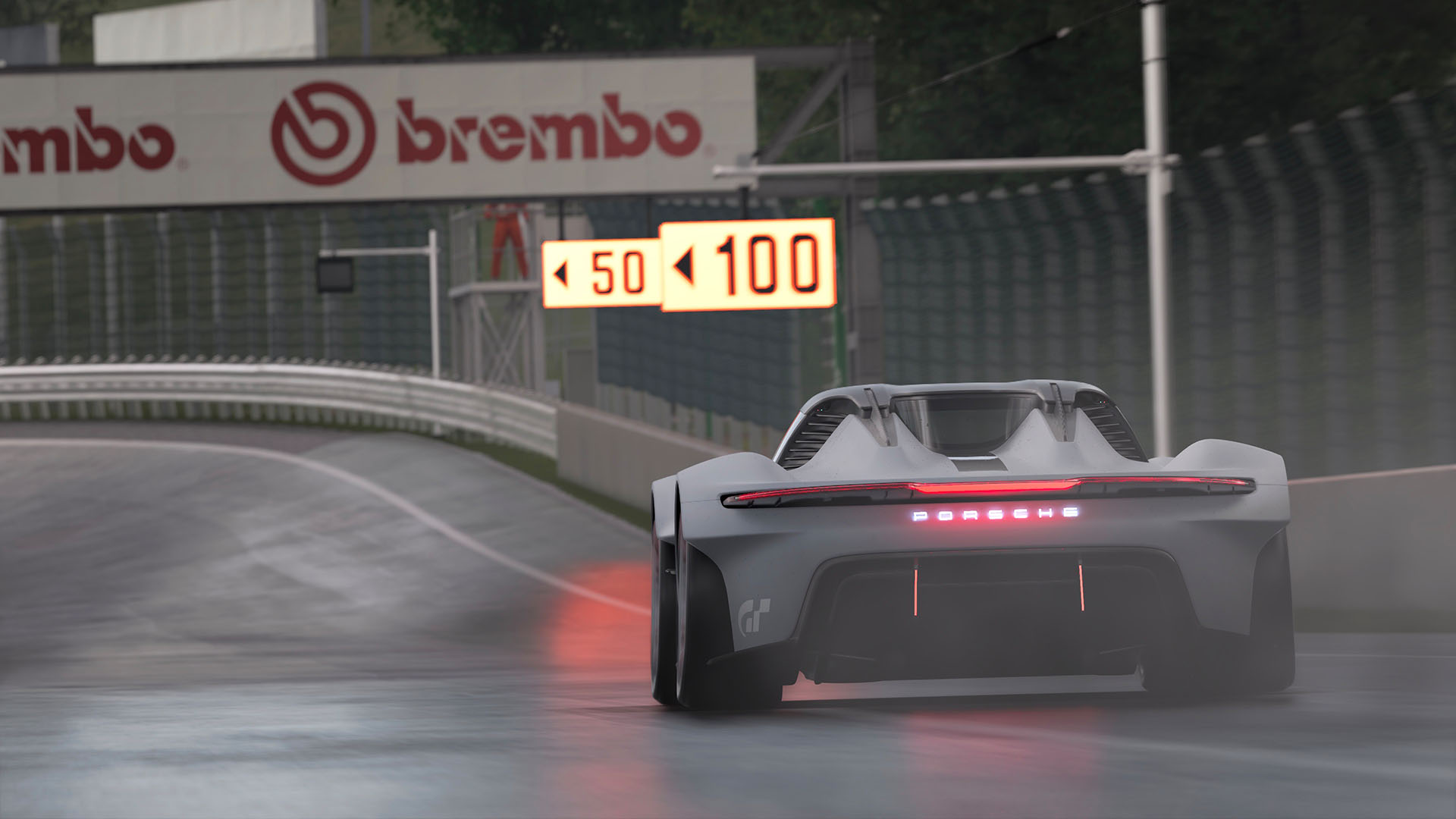
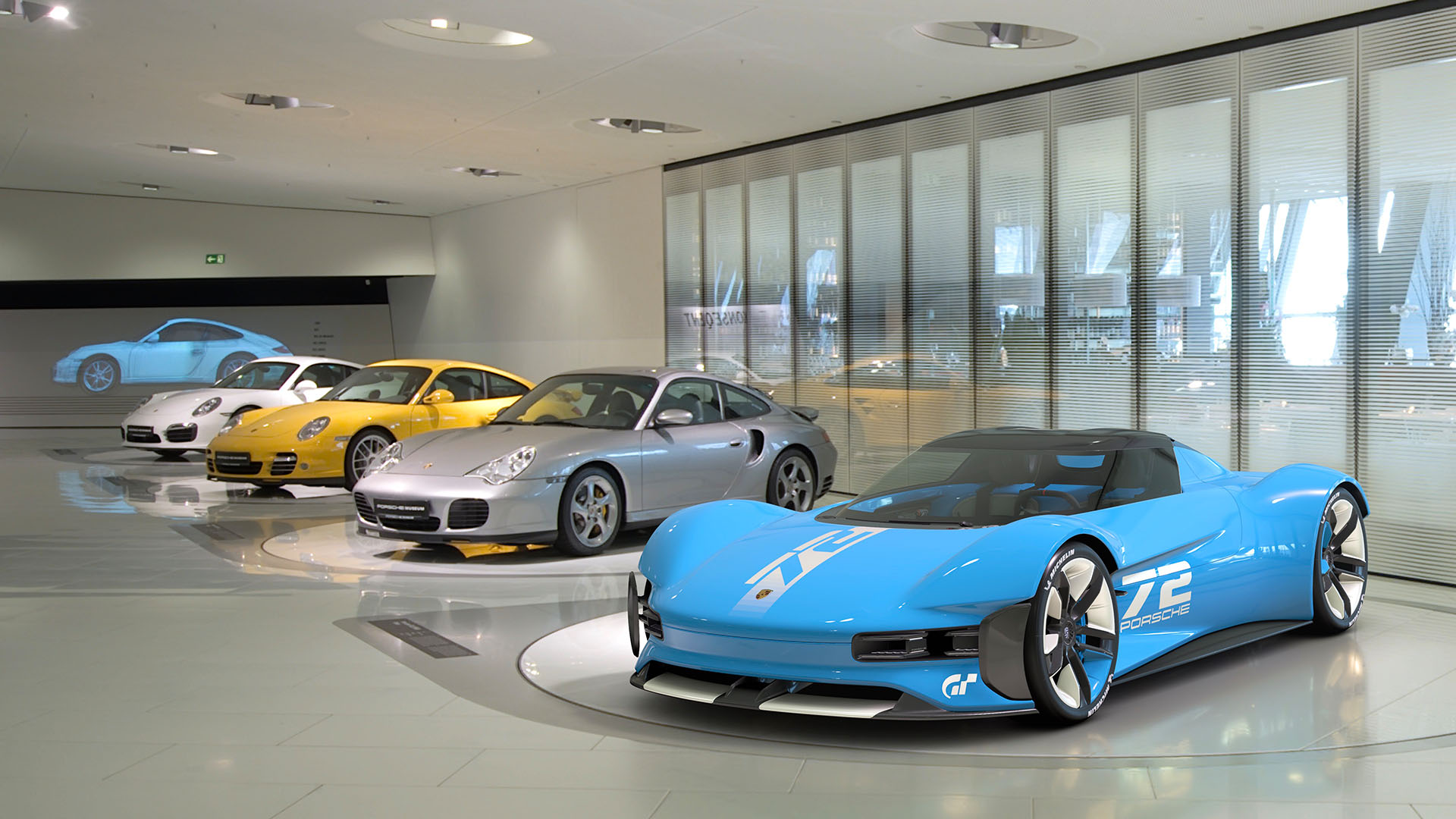
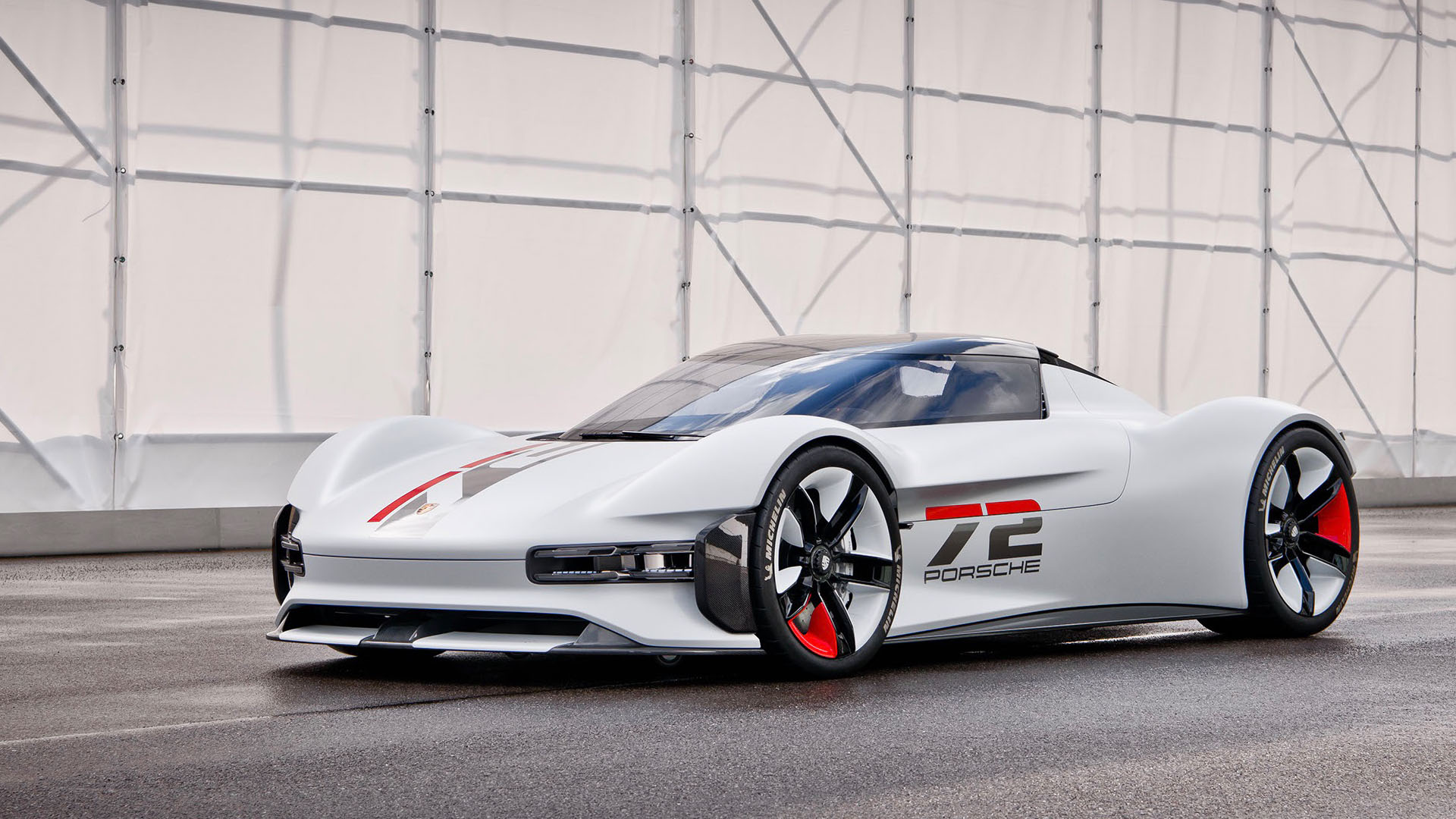
Porsche has joined the ranks of the Vision GT program, aptly named the Porsche Vision Gran Turismo, this concept was created purely for the virtual world of the 7th edition of Gran Turismo to be released on March 4 2022 for both the PlayStation 4 and the PlayStation 5, “A vehicle designed purely for the virtual world opens up exciting possibilities for us that are otherwise heavily regimented in a regular design process for a series production car,” says Michael Mauer, Vice President Style Porsche. “Projects such as the Porsche Vision Gran Turismo are particularly valuable for us in the creative process. Further developing our clearly defined Porsche Design DNA and exchanging with designers from other industries is an important part of our work.”

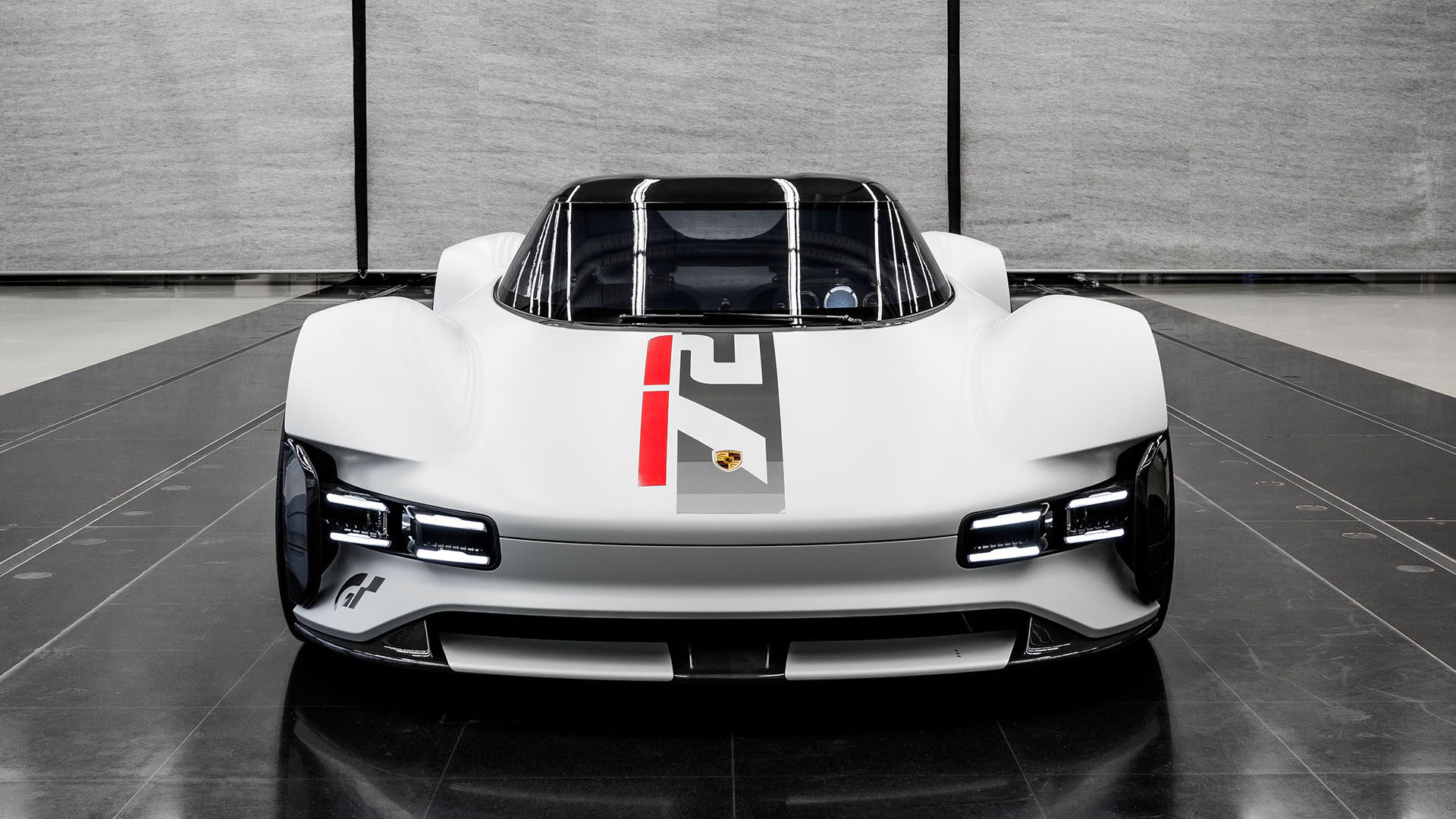
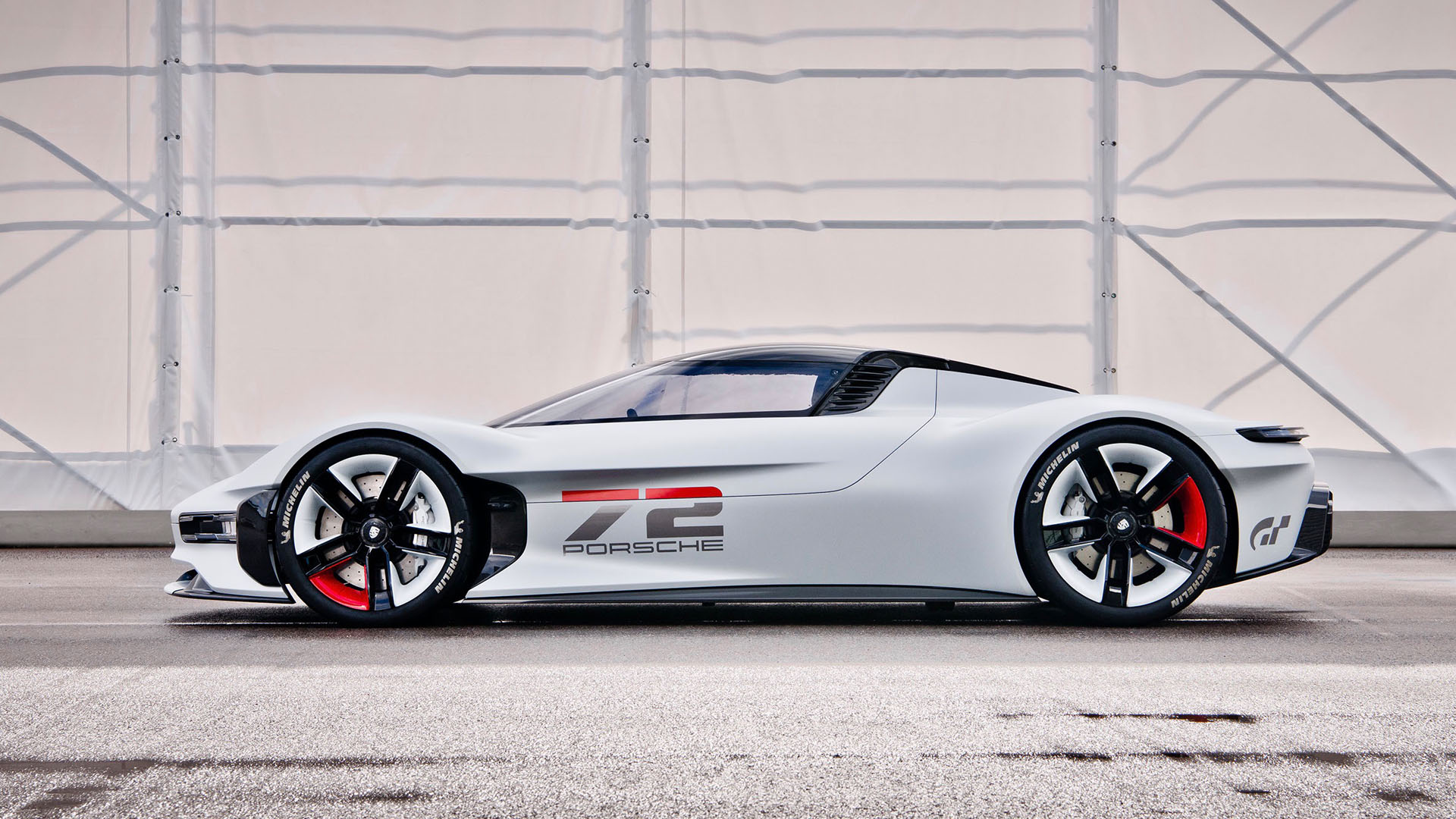
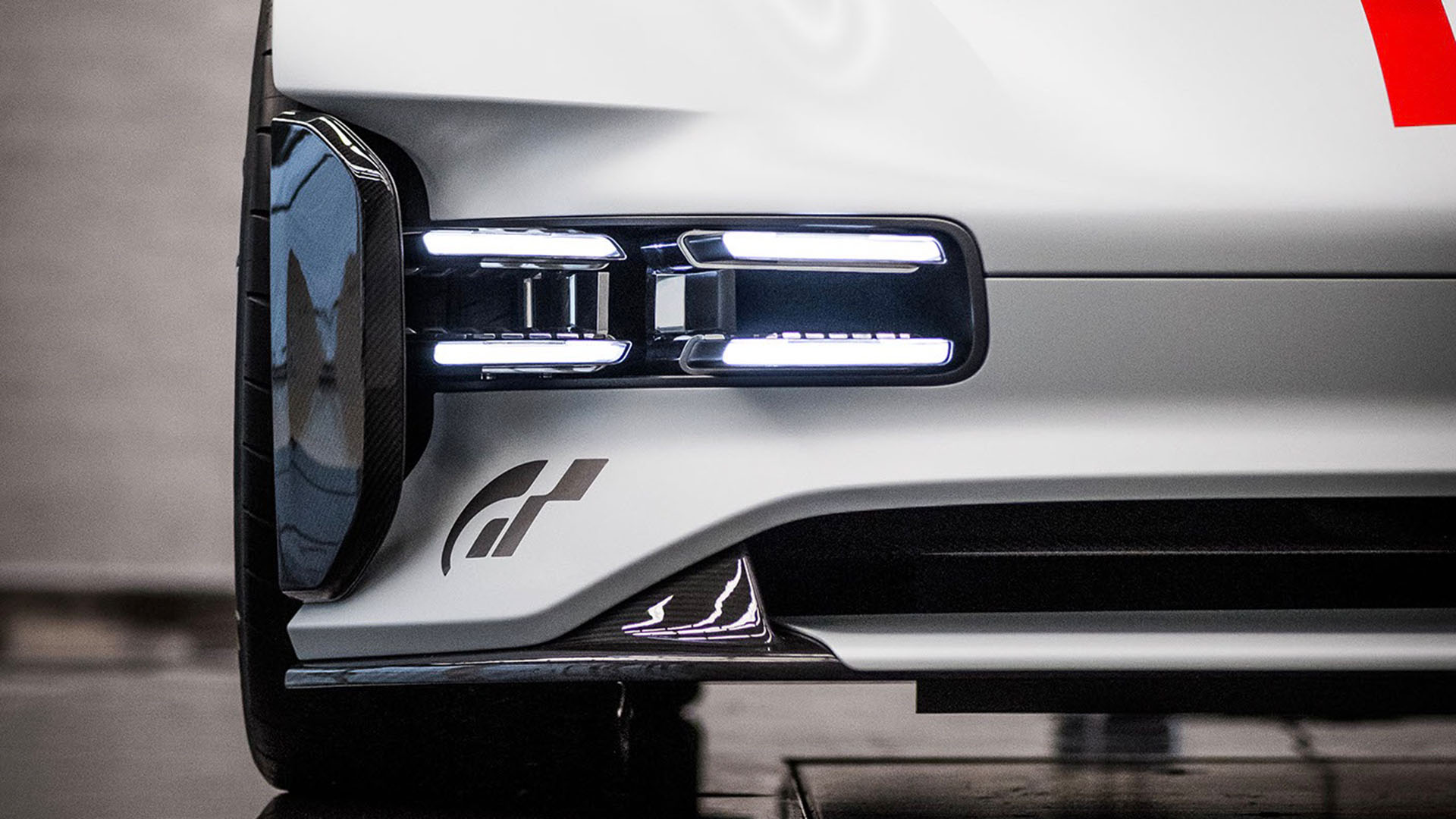
Porsche’s Vision Gran Turismo might be very futuristic-looking, but she does boast some very recognizable features that make her undeniably a Porsche, like the typical proportion between height and width of the design, a very low bonnet with large, round wings alongside, while the pure style of the front with the air intakes remind us of the Porsche Taycan, and yes, the Vision Gran Turismo is all-electric in case you were wondering.

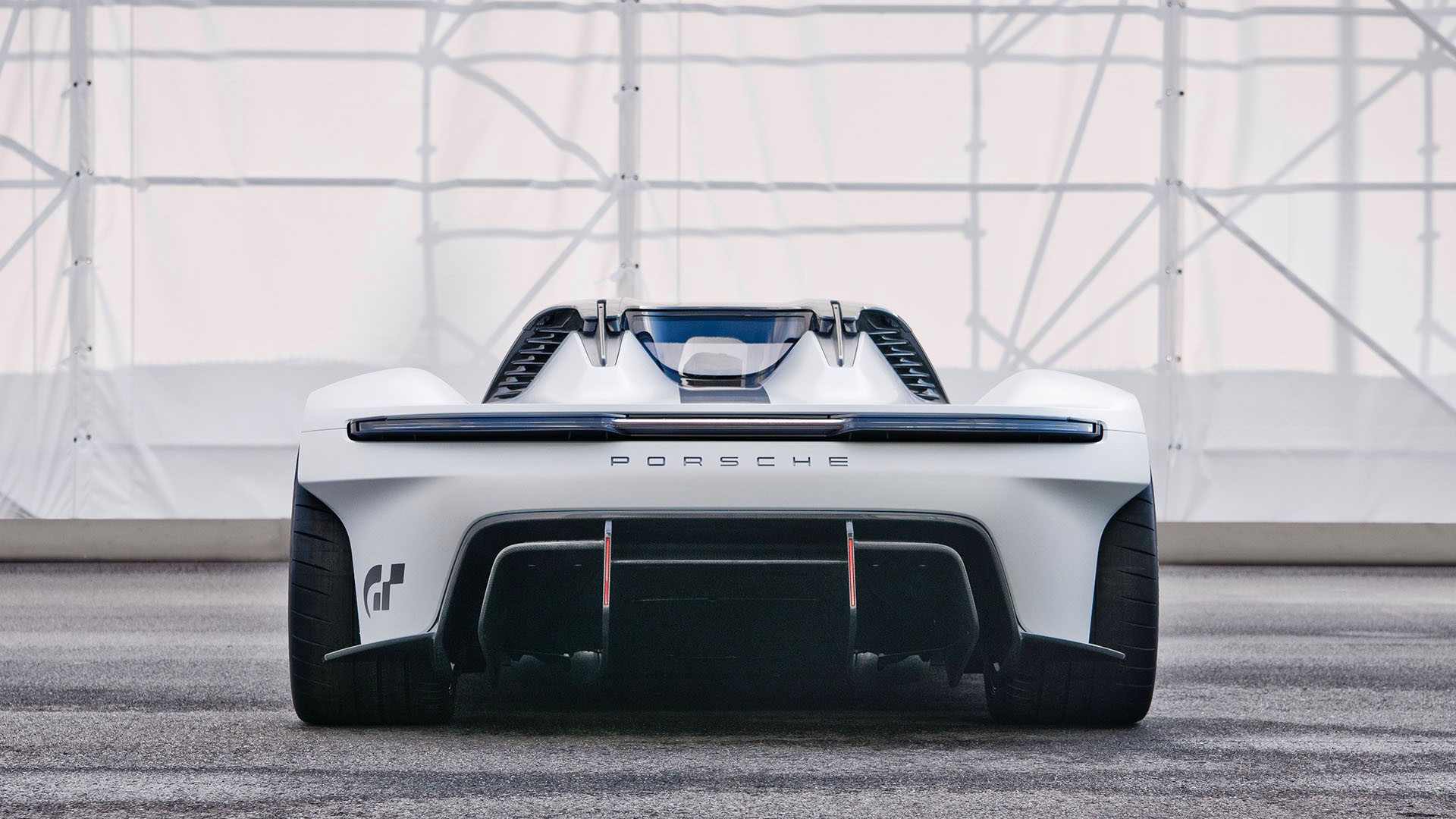
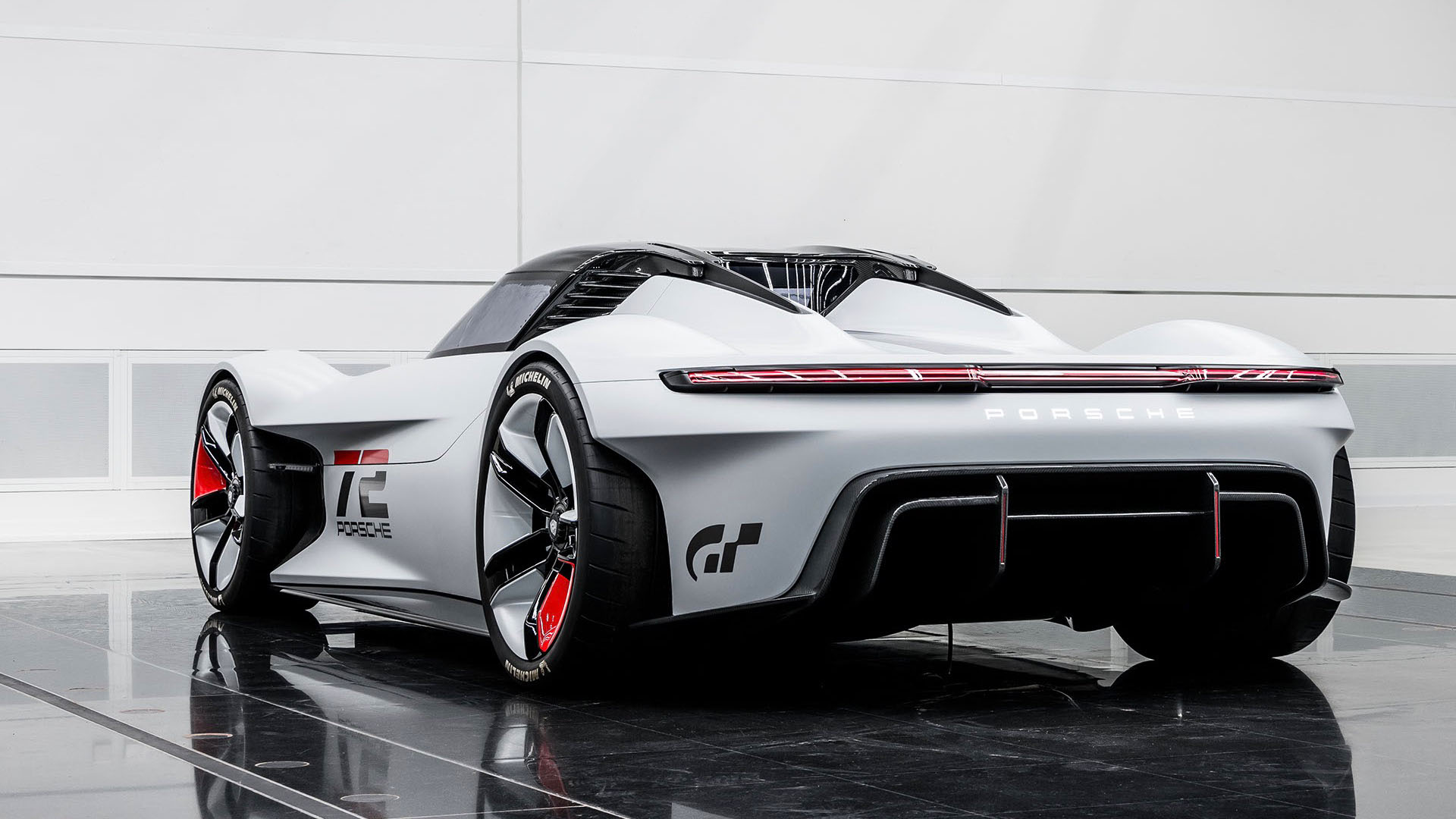
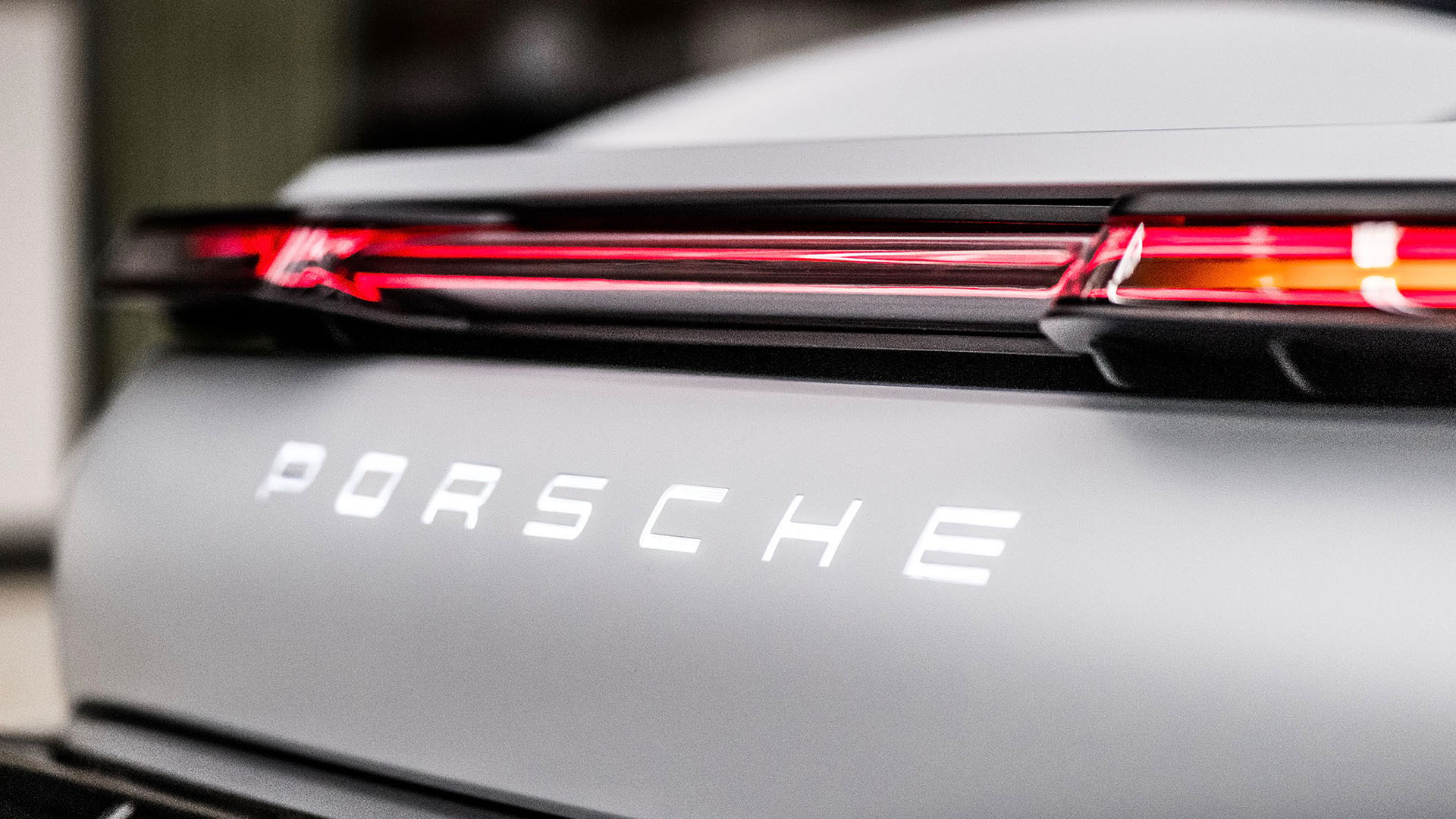
At the back, we find that typical narrow strip of lights, inspired by both the 911 and the Taycan, with a very aggressive looking diffuser, no exhausts as there is no ICE engine, but note how the rear fenders, especially the section behind the rear wheels is almost carved out of the body to create a dramatic look and exposes part of the rear tires at the same time, just an amazing detail on this concept car, I really like the vertical red lights integrated into the fins of the diffuser by the way.

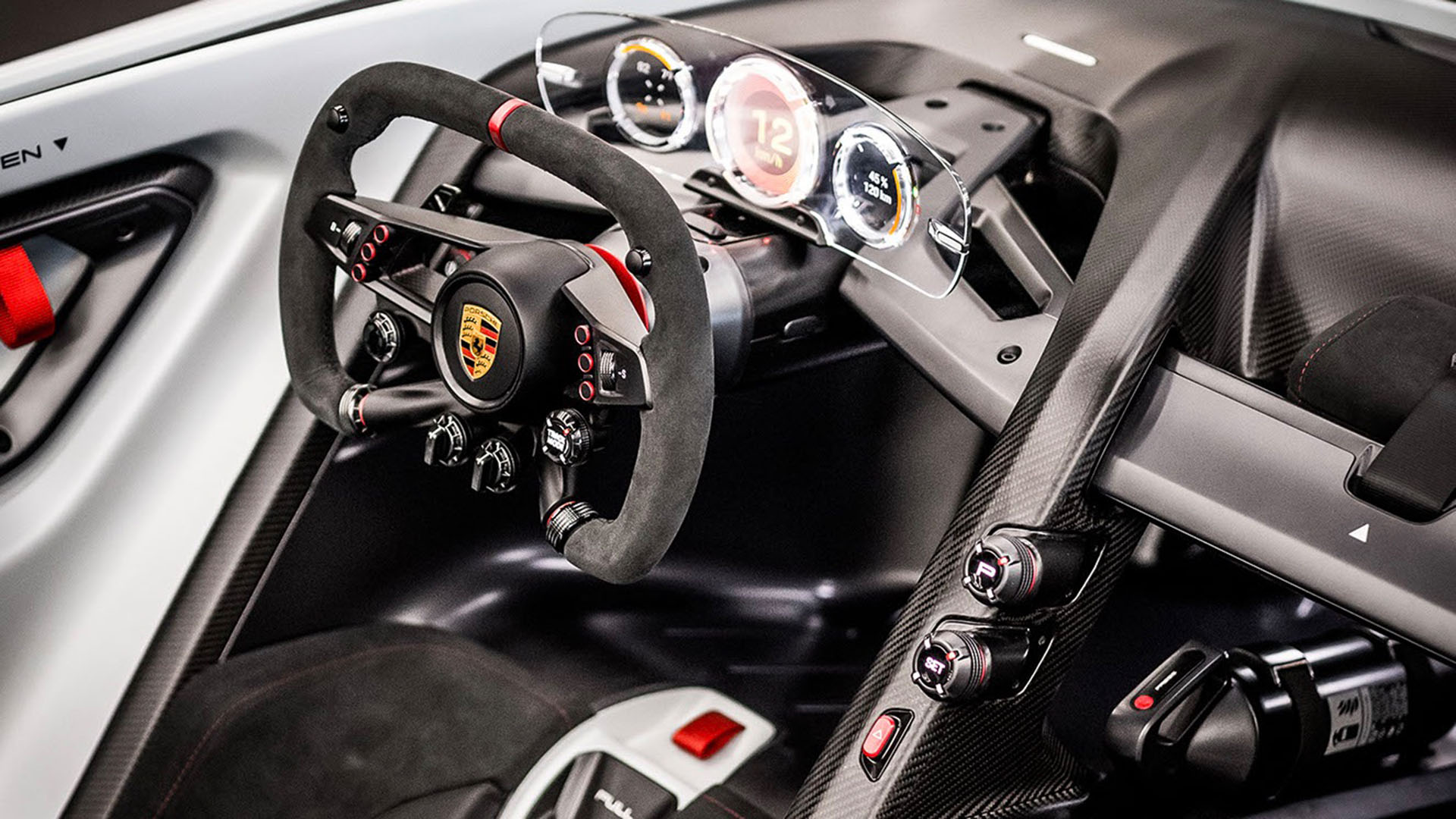
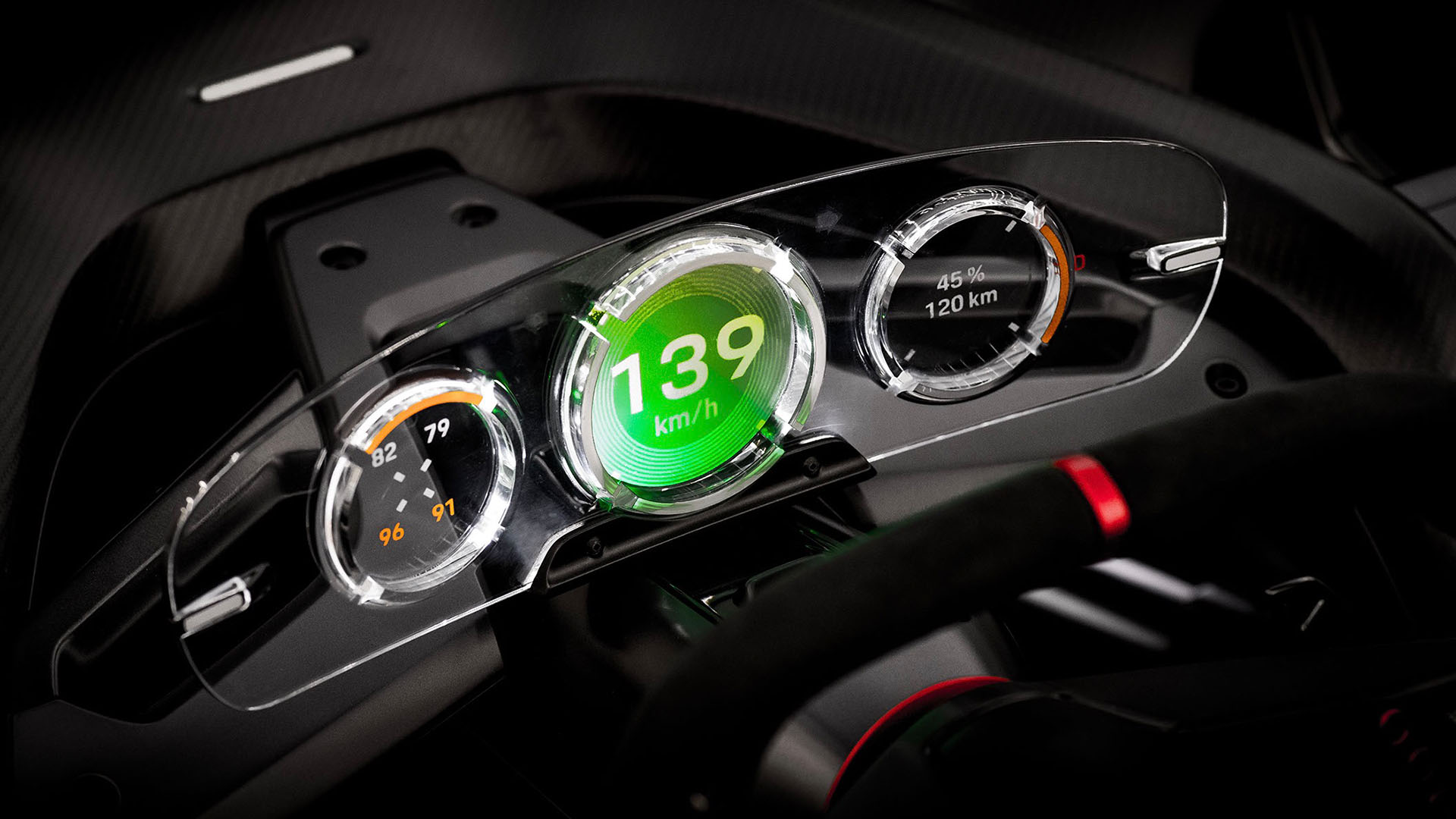
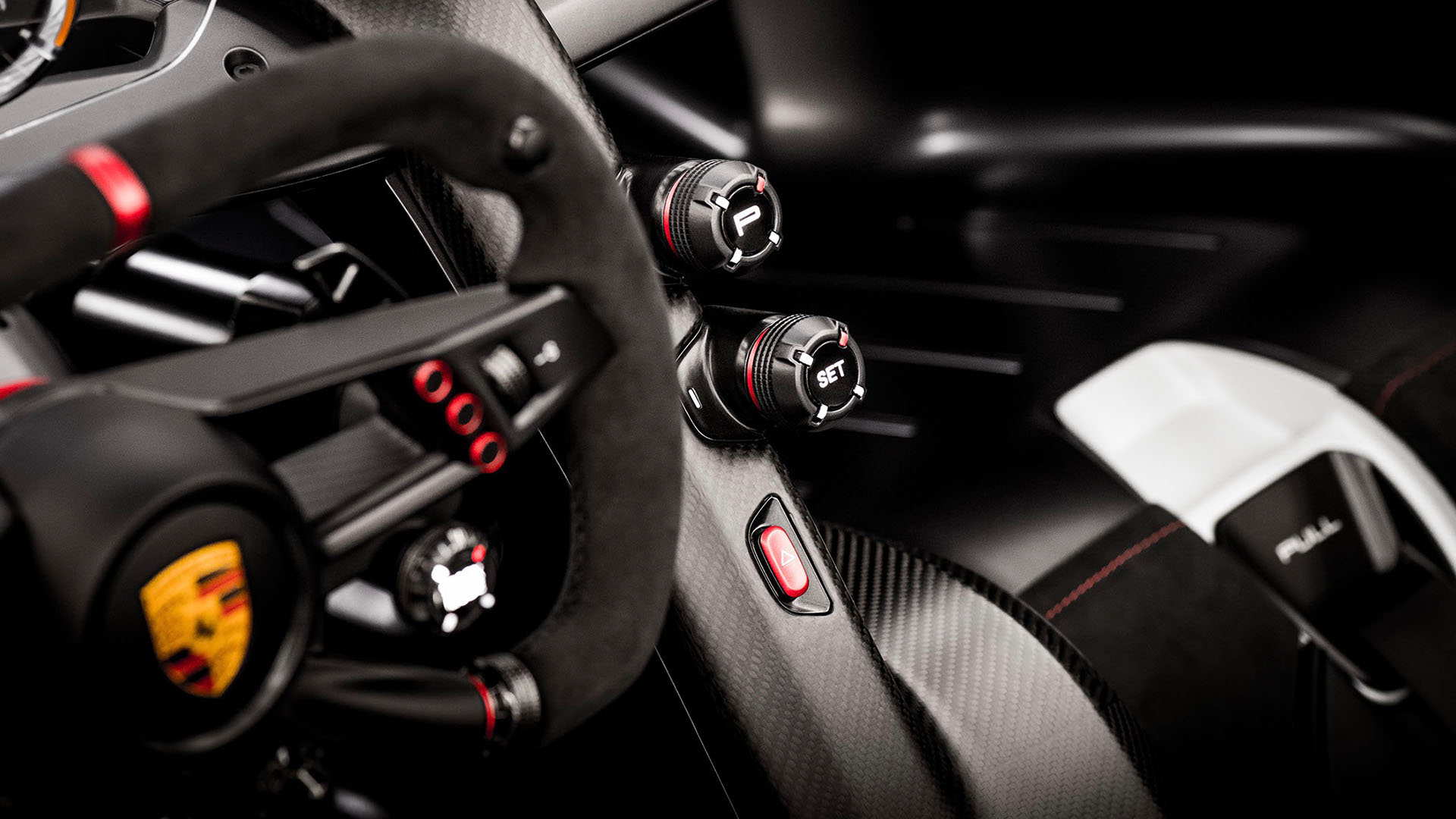
On the inside, the Porsche style is continued with a curved hologram display that seems to float in the thin air above the very special steering wheel, because the seats are placed so low into the body you just feel the dynamics at play, even standing still, the inside is created from carbon fiber and titanium to reduce weight and increase performance in one go, Porsche used entirely vegan materials in the concept car.

“The appeal of a Porsche comes from its purist design,” says Kazunori Yamauchi, President, Polyphony Digital. “And in terms of engineering expertise, both we and Porsche follow the same perfectionist philosophy. We share the same passion for racing and are looking to the future of the car.”

Naturally, there is a strategic advantage for Porsche to expand into the vast gaming industry. “We can engage young and digital target groups in the place where their automotive dreams are born: the world of gaming,” says Robert Ader, Vice President Marketing at Porsche AG. “The partnership with Polyphony Digital and ‘Gran Turismo’ is a perfect fit for Porsche, because motorsport – whether real or virtual – is part of our DNA.”

Check out this amazing launch video on the Porsche Vision GT:

[embedded content] [embedded content]

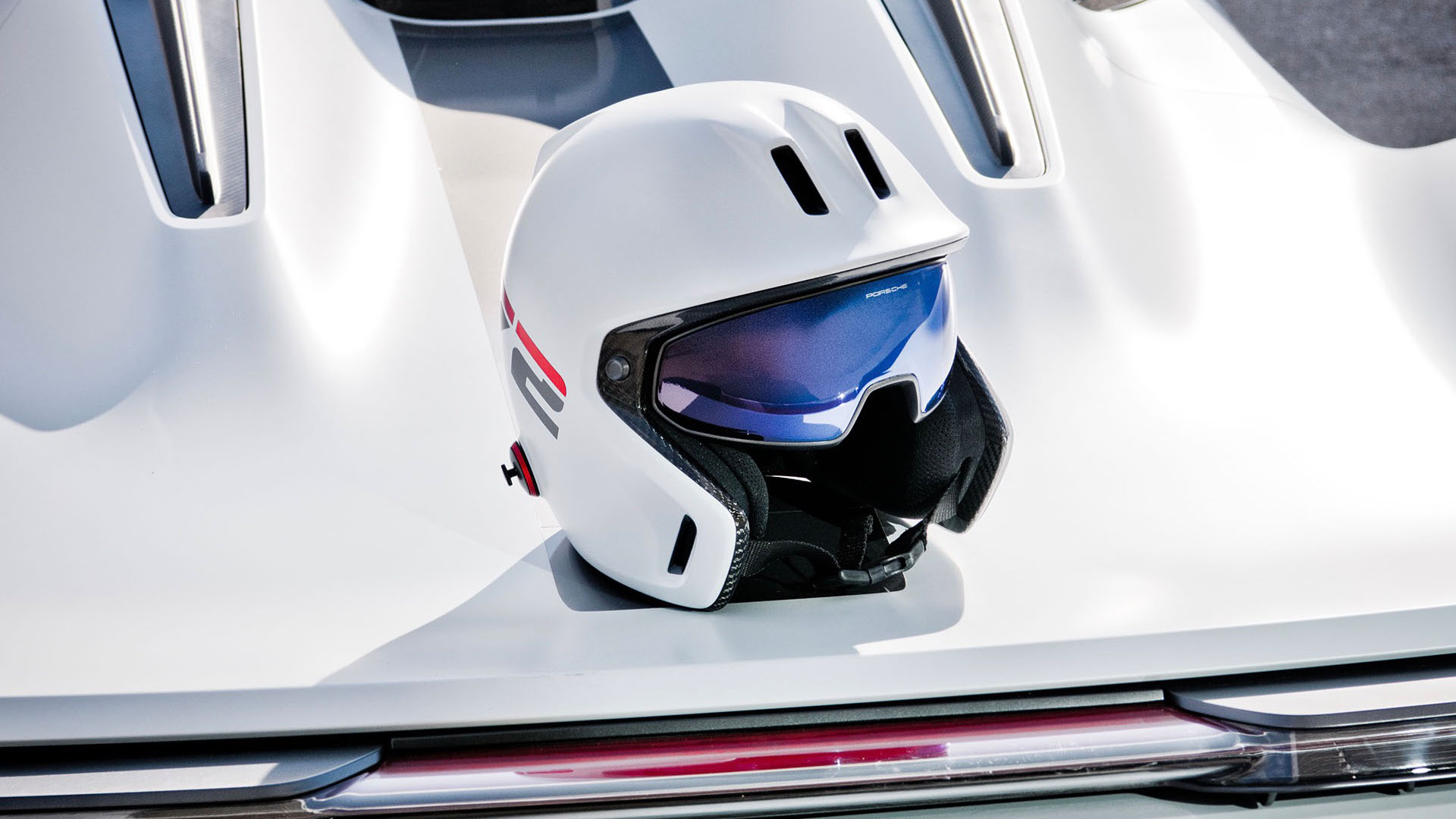
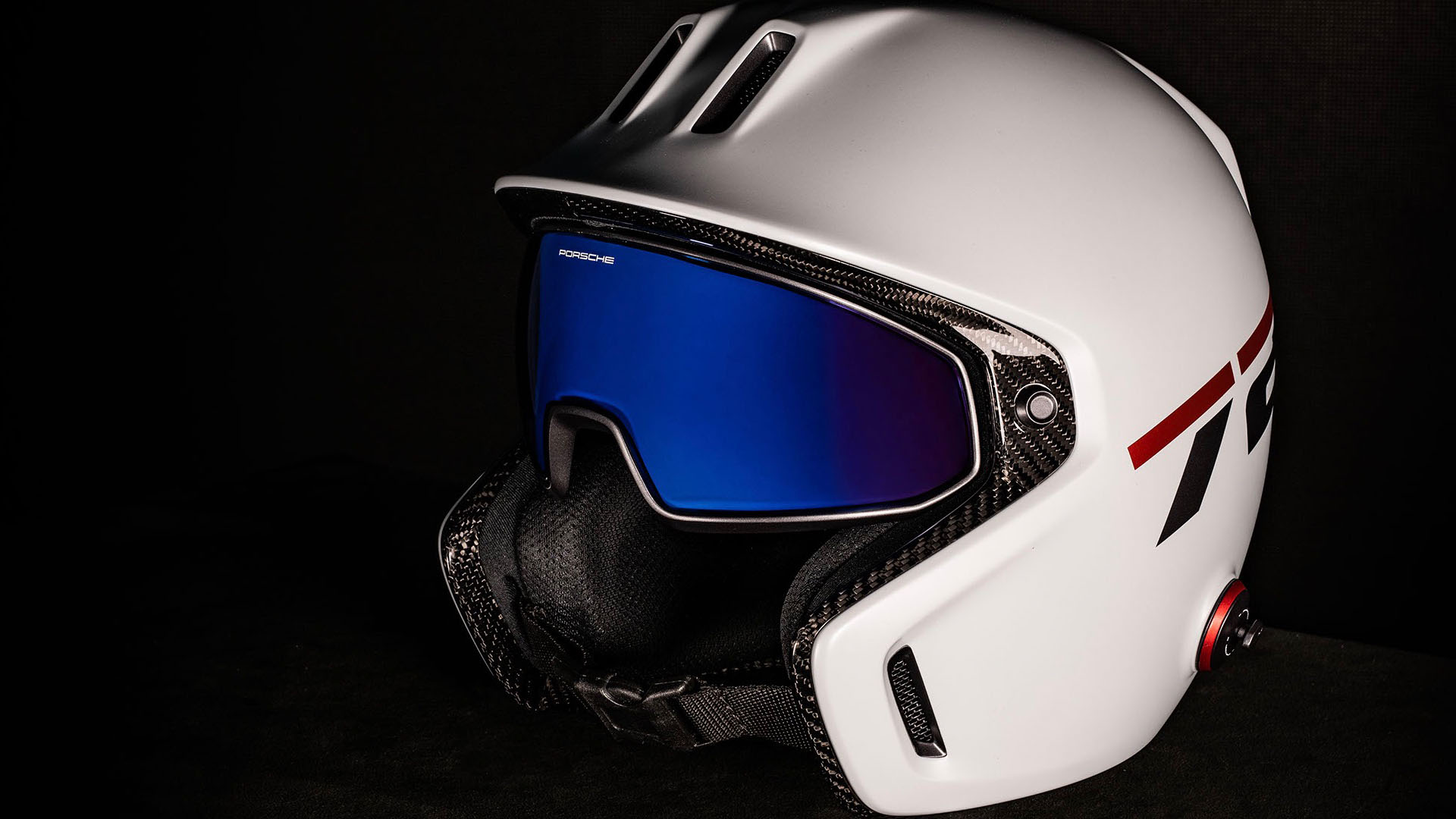
After viewing the above video, let’s enjoy some more details of this amazing looking Porsche Vision Gran Turismo, there’s even a bespoke helmet:

Porsche Riding Giddy Heights With the Wildly Successful Taycan

In the first nine months of 2021, Porsche sold 28,640 Taycan units, about 13.2% of the carmaker’s total volume and a massive year-on-year increase of over 160%. More impressive is the fact that the EV outsold Porsche’s iconic 911 for the first time over the same period.

It is worth mentioning here that the Porsche Taycan is only in its 2nd full year of production, having been launched at the 2019 Frankfurt Motor Show. Sales likely would have been even higher, were it not for the effects of the ongoing COVID-19 pandemic and the global chip shortage ravaging the automobile sector. The sales volume paints a pretty upbeat picture when you remember that the Taycan’s prices range from $81,000 to $185,000, depending on the model variant.

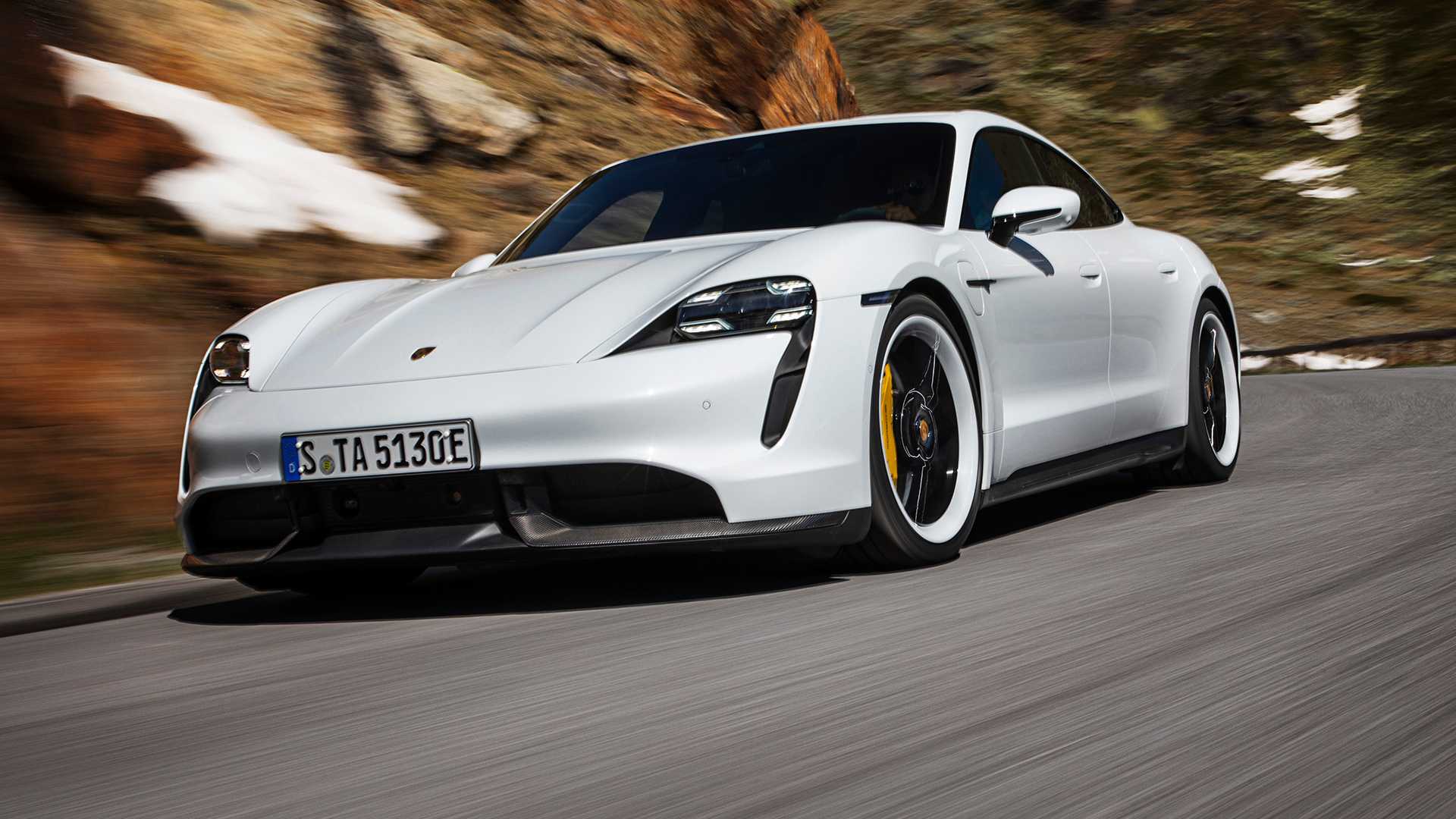
2020 Porsche TaycanVia Motor1.

Today, the Taycan ranks only behind the Cayenne and Macan (both SUVs) in global sales. Clearly, Porsche has hit a home run with its sole EV offering.

The Taycan’s remarkable achievement, in such a short period, perfectly sets the stage for Porsche’s electrification drive as the carmaker looks to expand its EV offering to other vehicle types in its lineup.

The Porsche Taycan: Sowing the Seeds

It is possible Porsche might not have anticipated the runaway success of what is currently the only all-electric vehicle in its lineup. However, that does not mean the carmaker did not put in the work needed to ensure the Taycan had a smooth introduction into the market. The launch of the Taycan was the result of several years of research and development rather than a quickfire ‘bandwagon’ approach.

Interestingly, you would have to go back to the roots of the carmaker’s history to establish Porsche’s connection with electrification. Ferdinand Porsche, the company’s founder, was always fascinated by electricity.

In 1893, Porsche was able to successfully install an electric system at his parent’s house. Four years later, he was Head of Testing at an electrical engineering firm called Vereinigte Elektrizitäts-AG Béla Egger in Austria, and the first vehicles he designed had electric drives.

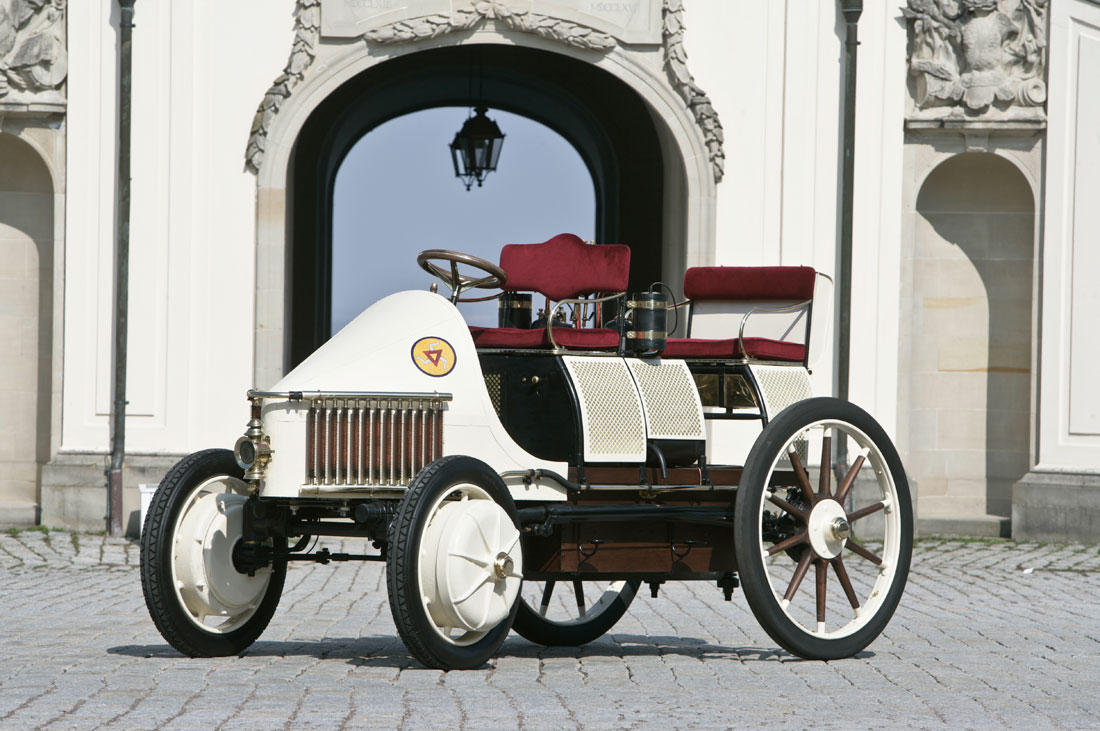
In 1900, Porsche was responsible for the world’s first functional hybrid car, dubbed the ‘Semper Vivus,’ Latin for ‘always alive.’ a year later, the production version of the vehicle, known as the Lohner-Porsche Mixte, was ready.

Lohner Porsche Semper VivusVia Cartype.

The Mixte was far ahead of the technology at the time, which ultimately proved to be its undoing. The available infrastructure just was not ready for any form of large-scale electromobility research and development.

The dream, though, never really died. The idea of electrification was finally revived at Porsche AG, about a century later, buoyed by advancements in the development of lithium-ion batteries.

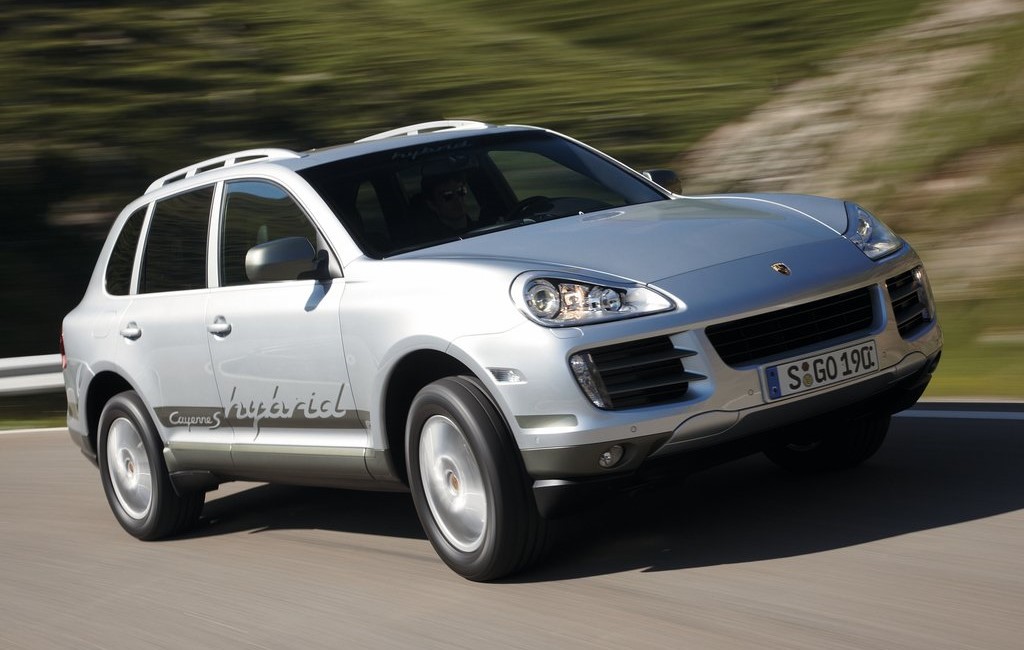
2010 Porsche Cayenne S HybridVia netcarshow.

First, there was the 2010 Porsche Cayenne S Hybrid, followed by the 2012 Panamera S Hybrid. Porsche also conducted tests with three all-electric Porsche 911s in 2011.

Other cars, like the 918 Spyder and 911 GT3 R Hybrid race car followed, with each breakthrough allowing Porsche to gain valuable experience to develop its first all-electric vehicle. There were no cutting corners with the Taycan. By the time the production spec was ready, Porsche had invested about $1 billion with over 1,000 employees involved during the development process at one point or the other.

From Mission E to the Porsche Taycan

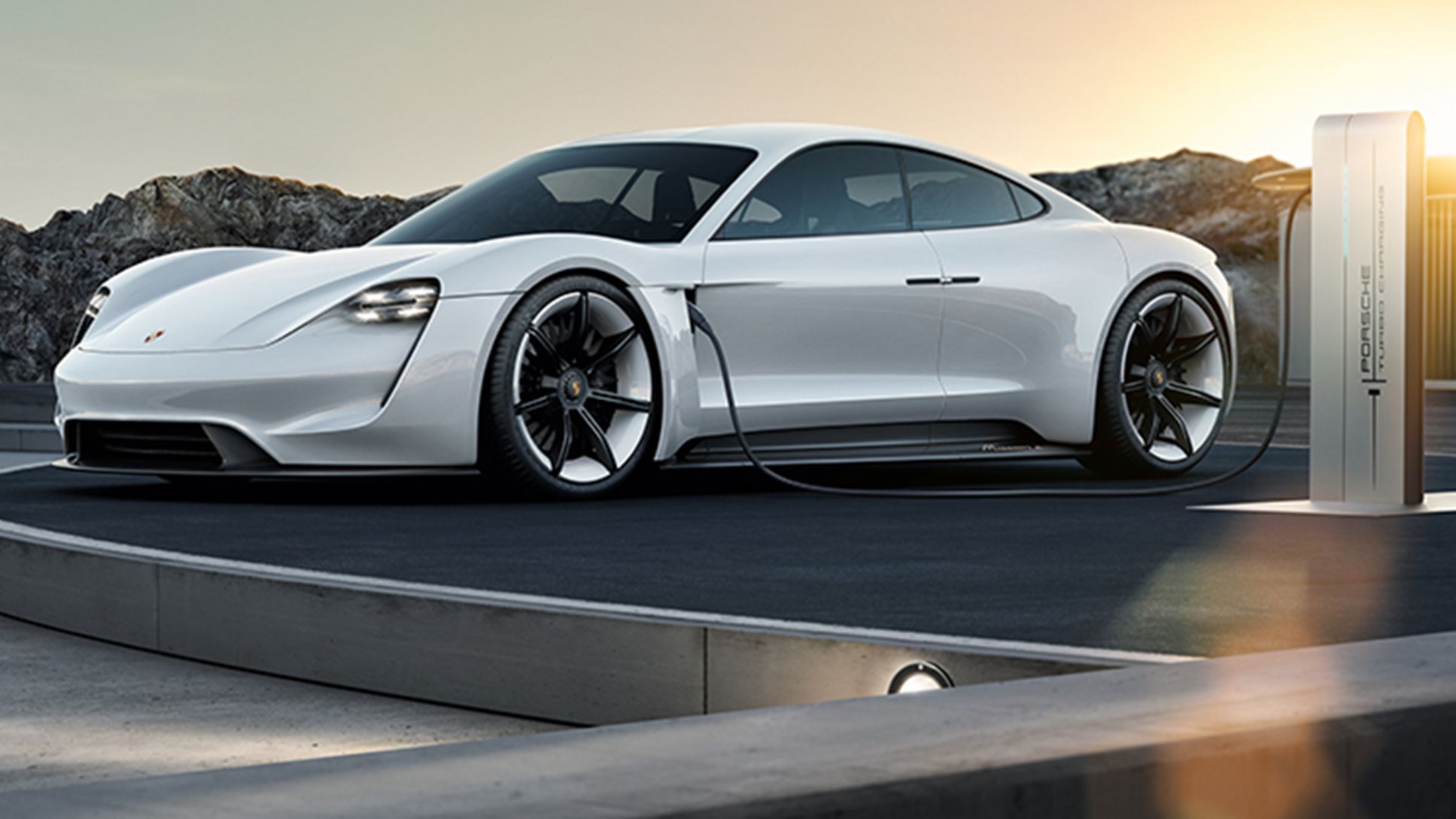
Porsche Mission E ConceptVia Porsche Newsroom.

One of the highlights at the 2015 Frankfurt International Auto Show was the Mission E, a concept car showcased by Porsche. The EV concept had an 800-volt drive system, boasted more than 600-hp and a battery range in excess of 300 miles.

The Mission E was very fast too, with the ability to rocket from 0 to 60 mph in as little as 3.5 seconds. The interior featured innovative technology with instruments controlled via eye-tracking and hand gestures. Porsche, with the board’s full support, were clear about their intentions to bring the car into production before the end of the decade.

By June 2018, the name of the planned production all-electric sports car was revealed as the Taycan. Picking the name was an elaborate process that involved whittling down a selection of over six hundred ideas.

Taycan is a blend of two Turkish terms that roughly translates to ‘soul of a spirited young horse.’ Interest continued to build up in the launch of the Porsche Taycan, and reservations hit 30,000 deposits by July 2019, forcing Porsche to revise initial production estimates of 20,000 units in the first production year.

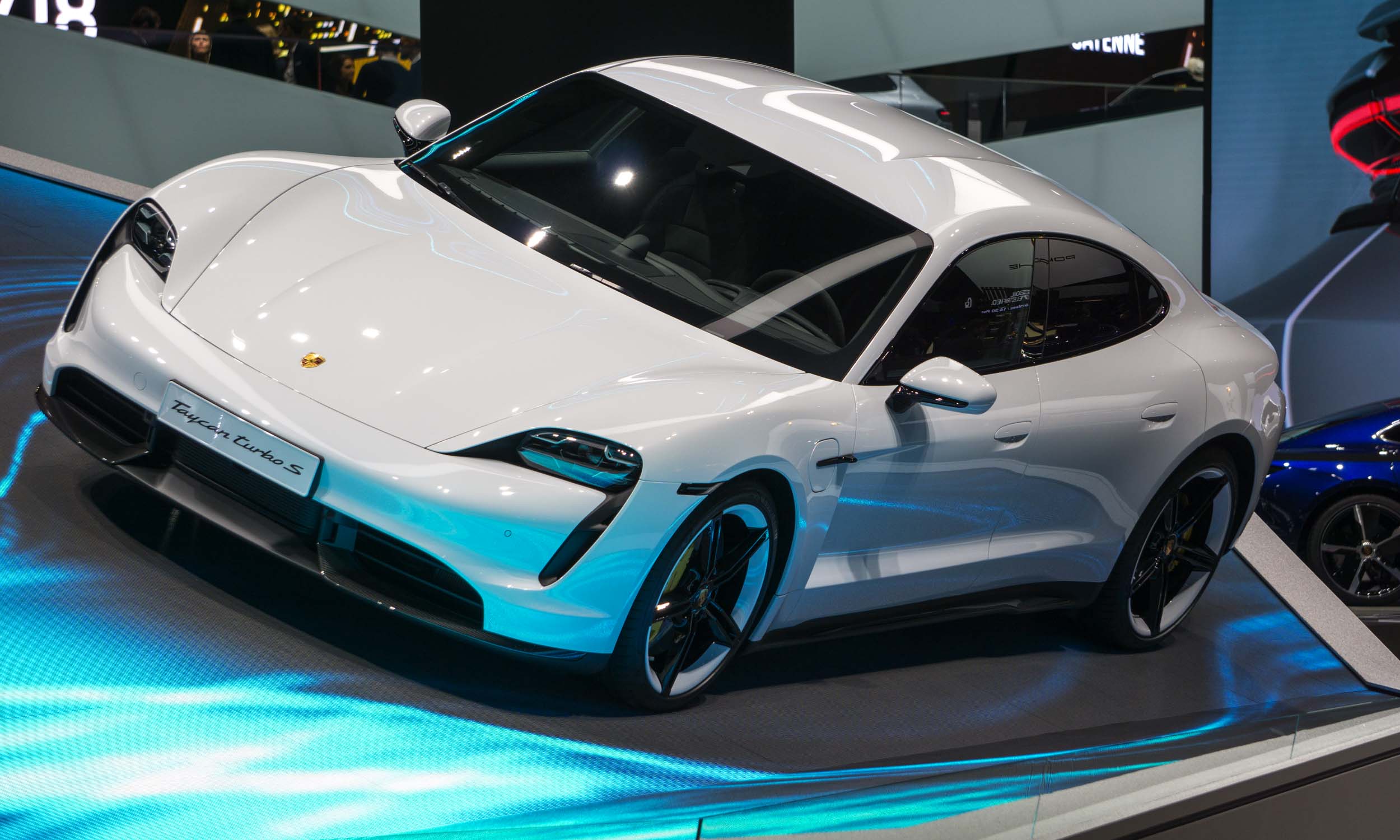
Porsche Taycan Turbo S at the 2019 Frankfurt Auto ShowVia Our Auto Expert.

Finally, in September 2019, after four years of hard, relentless work, the German carmaker debuted the production version of the Taycan. It was the first production all-electric vehicle to utilize a two-speed transmission and an 800-volt architecture for quicker acceleration and faster charging times.

Porsche tried as much as possible to stick to the design language of the Mission E, but there were differences—like the wider intakes and a deployable rear wing on the Taycan. The Taycan also ditched the suicide doors of the concept and adopted a flatter roofline to create more headspace for rear passengers.

Model Variants: Milking the Porsche Taycan

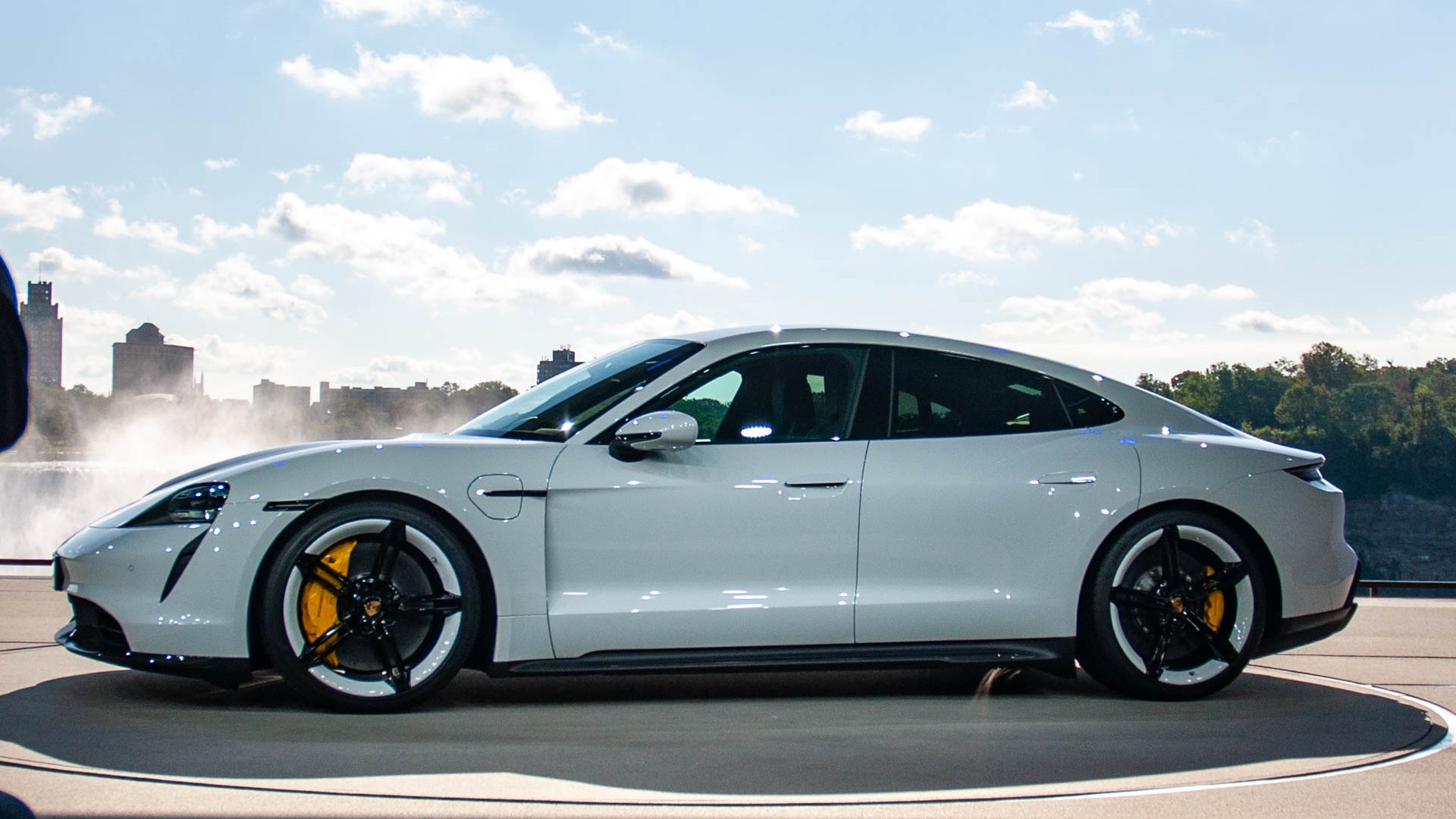
2020 Porsche Taycan TurboVia Motor Authority.

Porsche took advantage of the strong interest surrounding the Taycan and made the car available in two variants at launch. There was the Taycan Turbo and the more potent Taycan Turbo S version.

Both variants generate a restricted 616-hp to protect the drivetrain from overheating. Still, there’s an ‘overboost’ function that can briefly push this number out to 670-hp for the Turbo and a thumping 750-hp for the Turbo S.

The Taycan Turbo S, making full use of its instant torque and all-wheel-drive, could fly to 60 mph in a scant 2.4 seconds, matching the time set by the Tesla Model S in Cheetah mode. The Turbo version wasn’t far behind, with a 0 to 60 mph sprint clocked at 3 seconds flat.

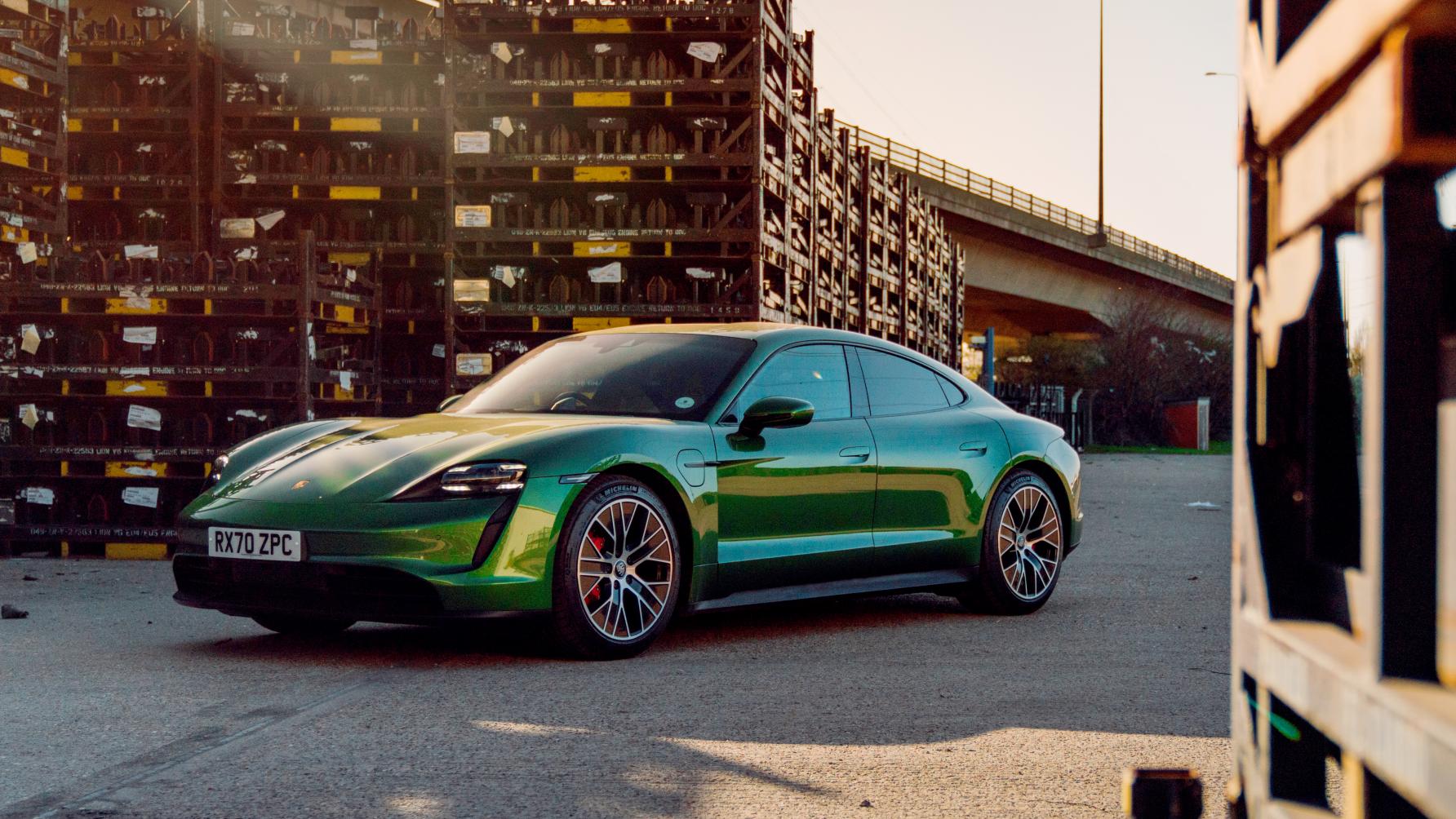
Green Porsche Taycan 4SVia Top Gear.

The launch models were quickly followed by the Taycan 4S, offered with a choice of two battery packs for different performance levels. The lower capacity 71 KwH battery pack was good for 522-hp, and the 83.7 KwH pushed up to 562-hp to all four wheels. They were not as quick as the Taycan Turbo models, but they cost less and allowed Porsche to capture more of the market.

In 2021, Porsche went further and introduced an even cheaper new base Taycan model that was rear-wheel-drive only. This one came with a standard 79.2-kWh battery and a rear permanent-magnet synchronous electric motor that made 402-hp. It cost over $20,000 less than the Taycan 4S and helped keep up the sales momentum for the Taycan brand.

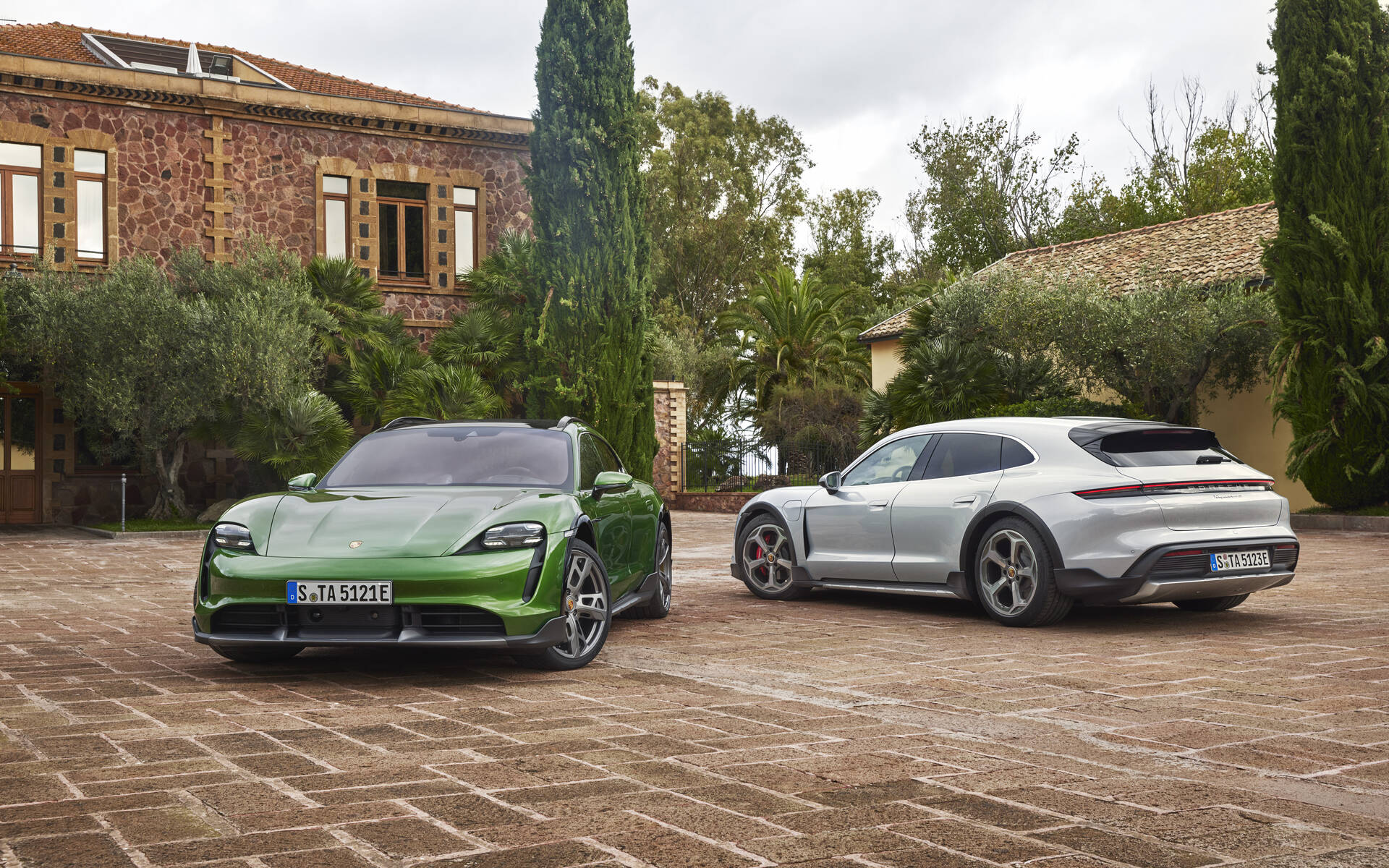
Two Porsche Taycan Cross Turismo carsVia Guide Auto Web.

Today, a quick visit to the Porsche website will show that you can now purchase the Taycan in eight different model variants. In addition to the ones earlier mentioned, there is now a Taycan Cross Turismo that can be obtained in four different variants—the Taycan 4 Cross Turismo, Taycan 4S Cross Turismo, Taycan Turbo Cross Turismo and the Taycan Turbo S Cross Turismo.

Apart from introducing new models, Porsche has also continued to tweak the architecture of the existing lineup, making the Taycan an even more capable performance EV. For example, the 2022 models feature better thermal management setups, an improved operating system, and can now be parked remotely using a smartphone.

The Journey Ahead for the Porsche Taycan

Porsche’s 2021 performance for the first three quarters shows a 13% increase year on year. SUVs like the Macan drive this growth, but the Taycan has also played a significant role with a nearly three-fold increase in deliveries, even though the Taycan generally costs significantly more than rivals in the same segment.

For example, the Taycan Turbo S costs about $80,000 more than the Tesla Model S Performance. Porsche executives will be undoubtedly pleased by this as it tells them their customers are quite receptive to their EVs. It bodes well for the carmaker, especially as an all-electric Macan is expected to join the Taycan next year.

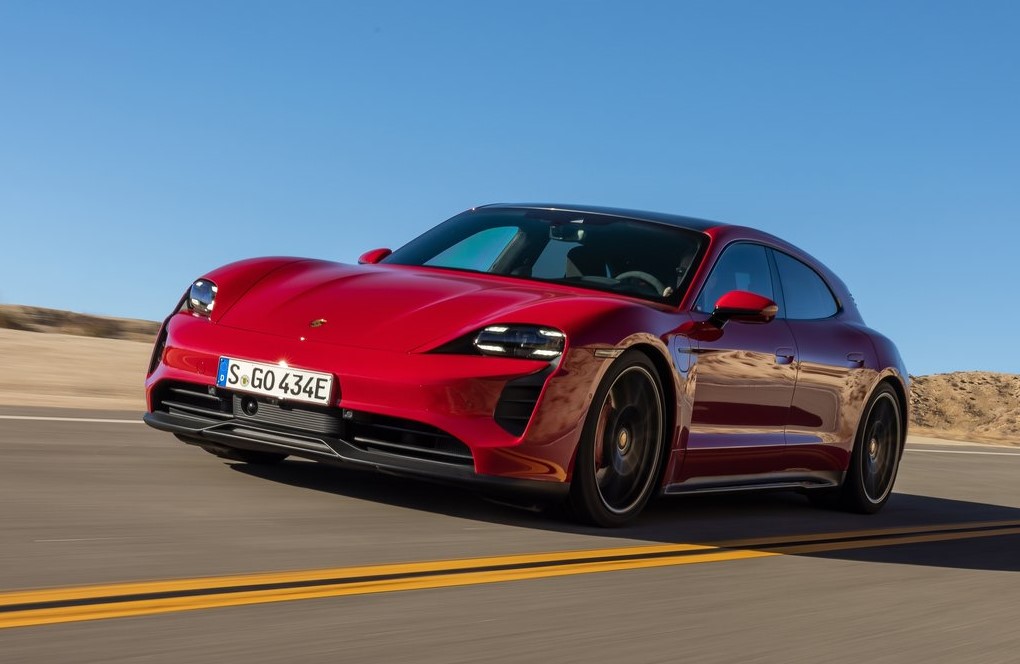
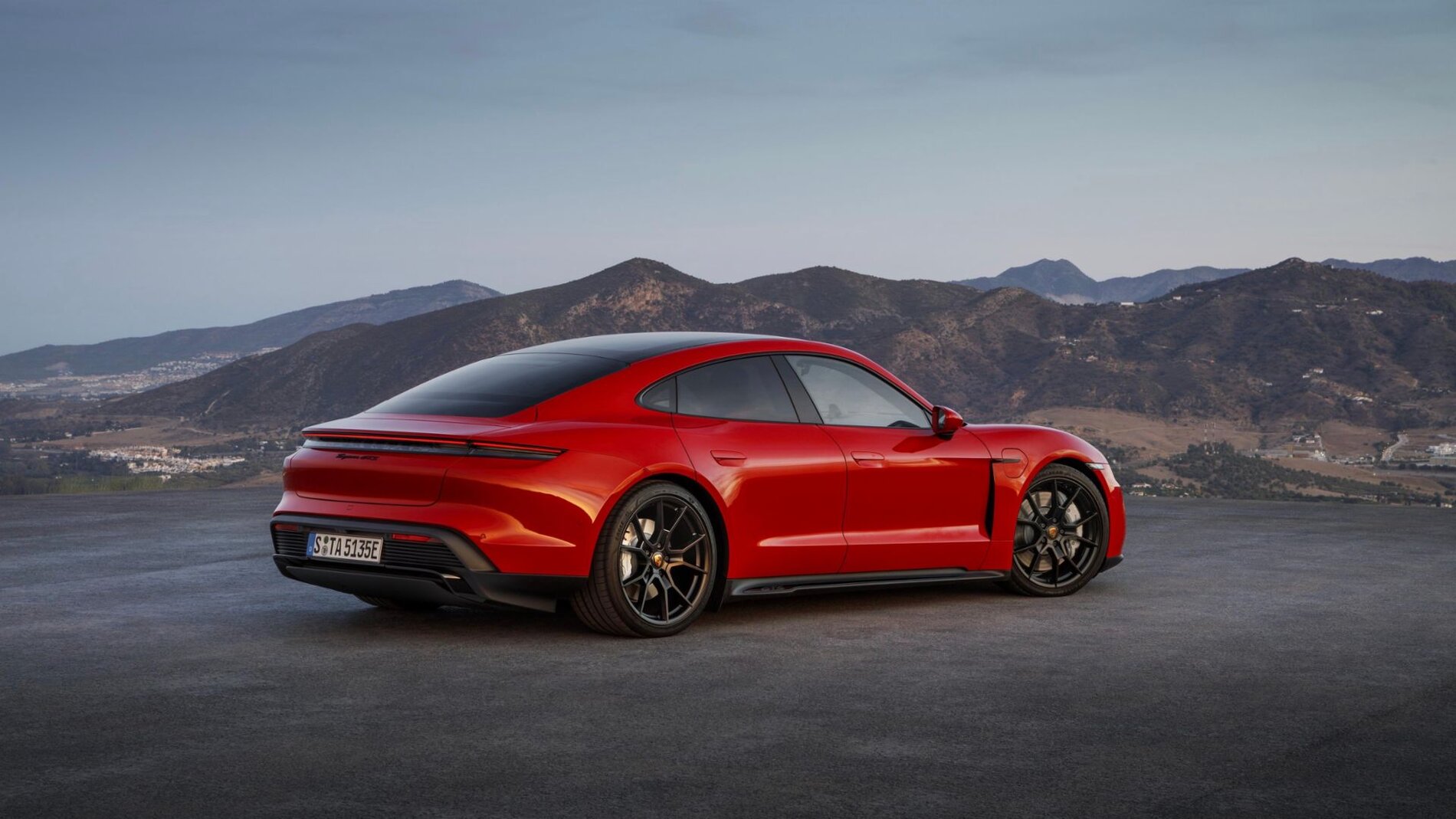
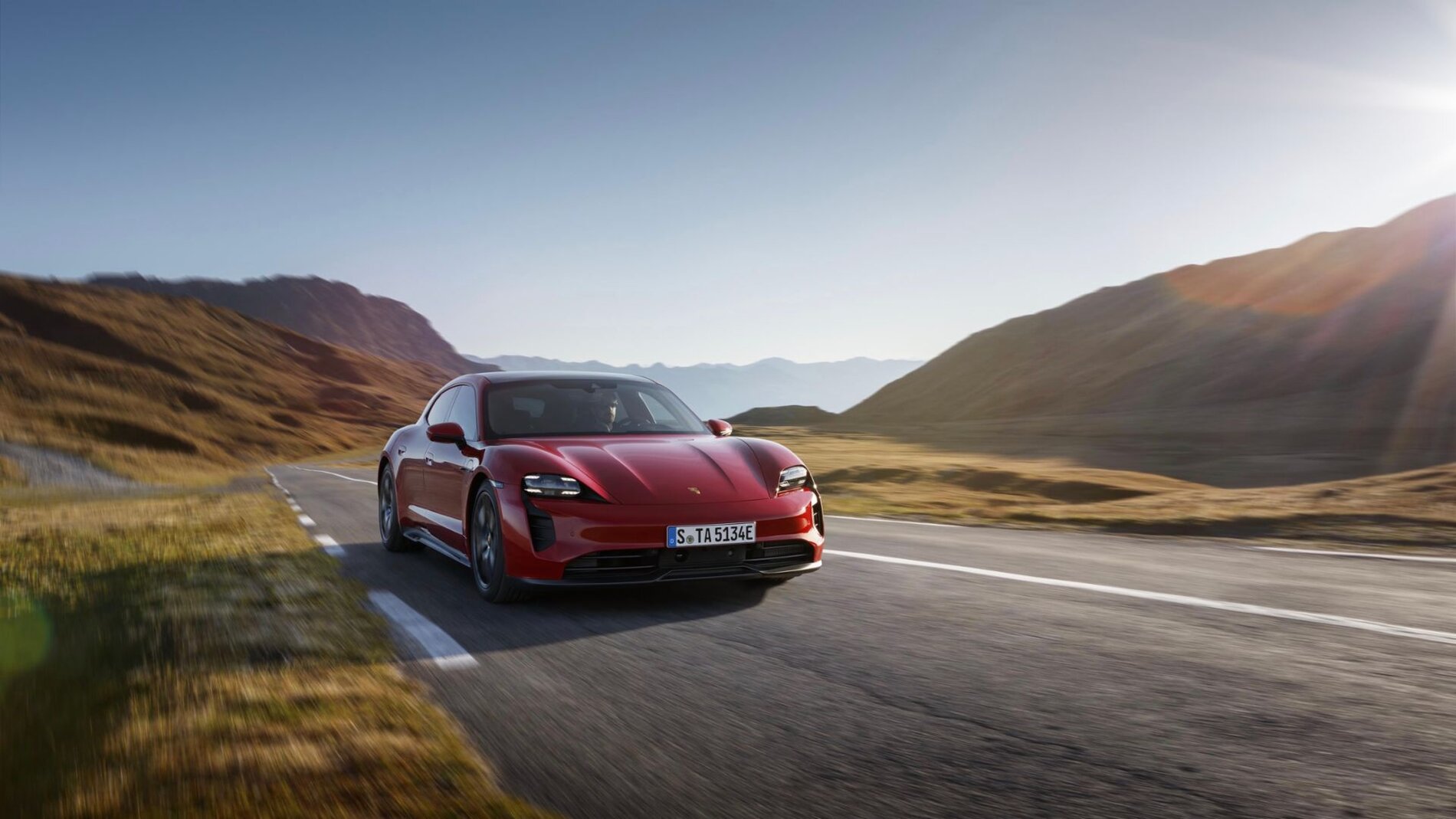
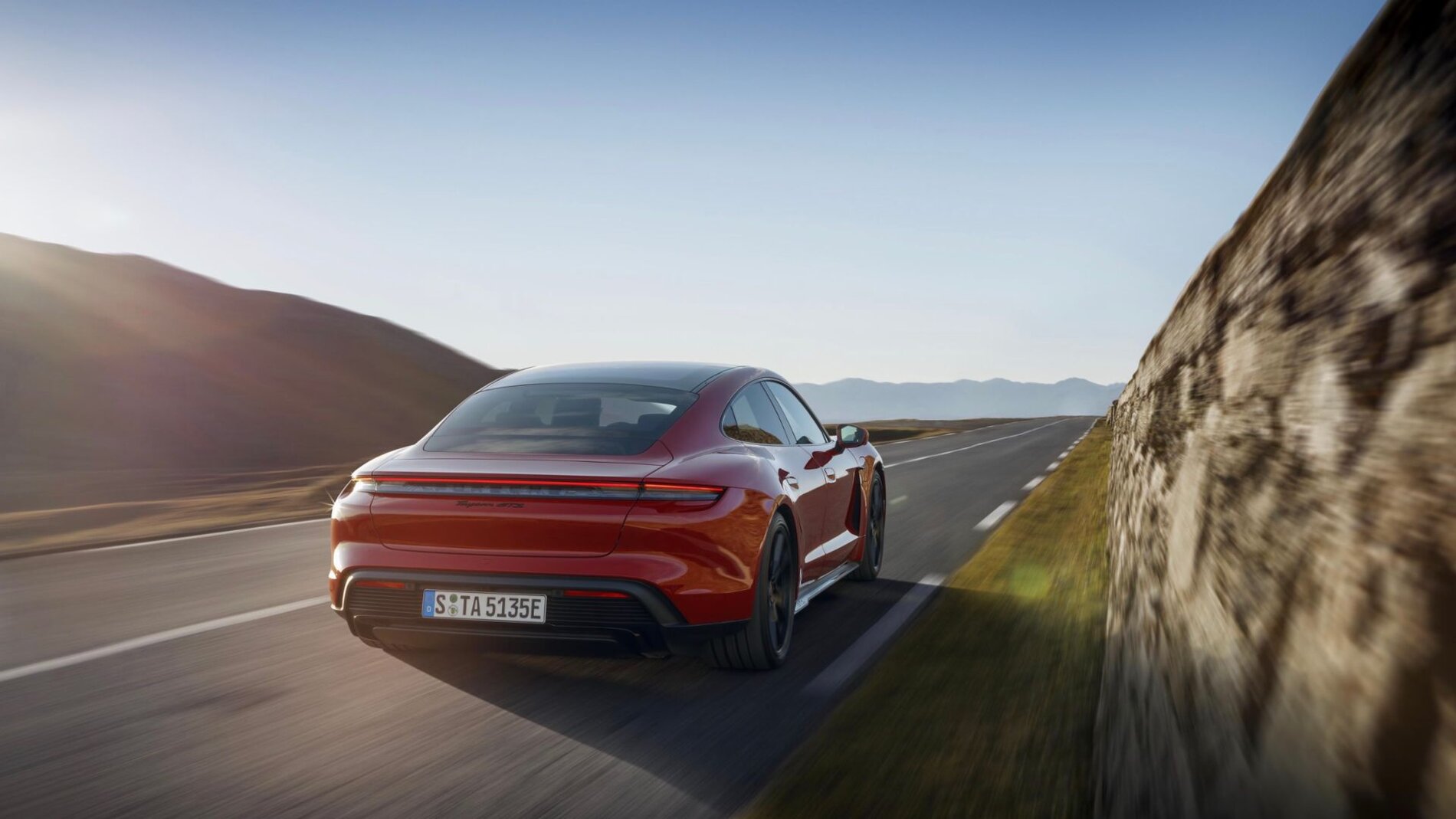
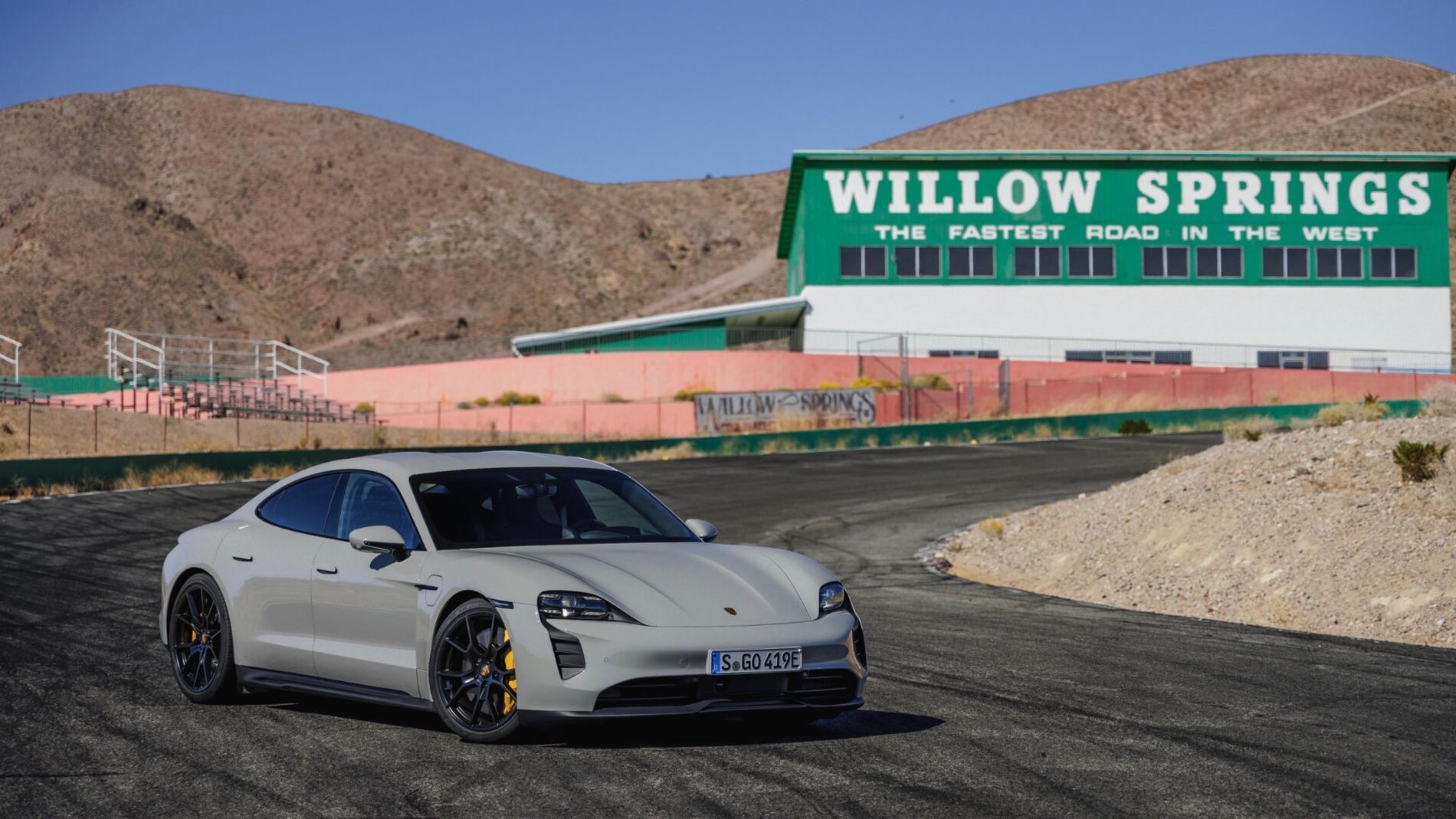
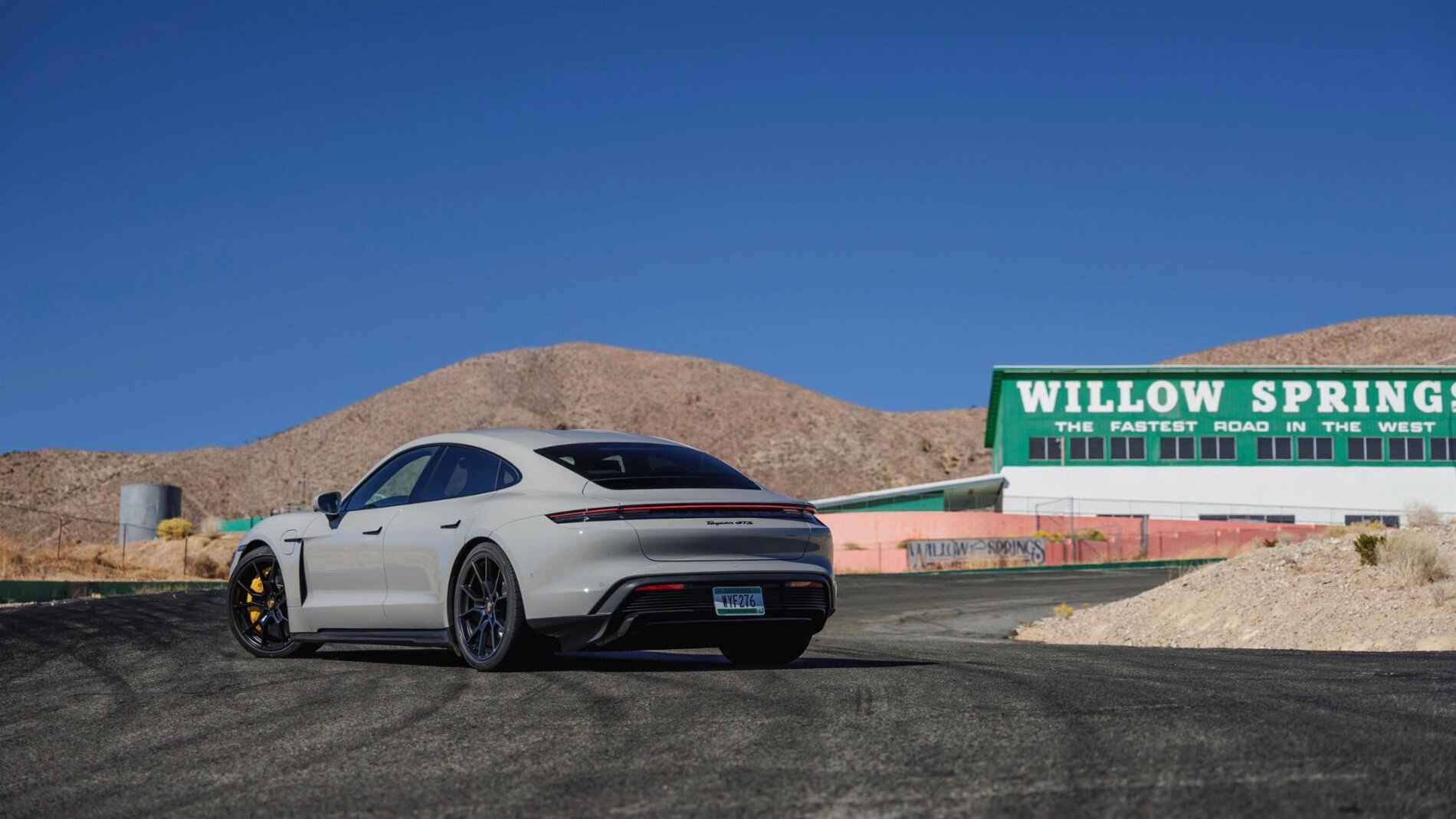
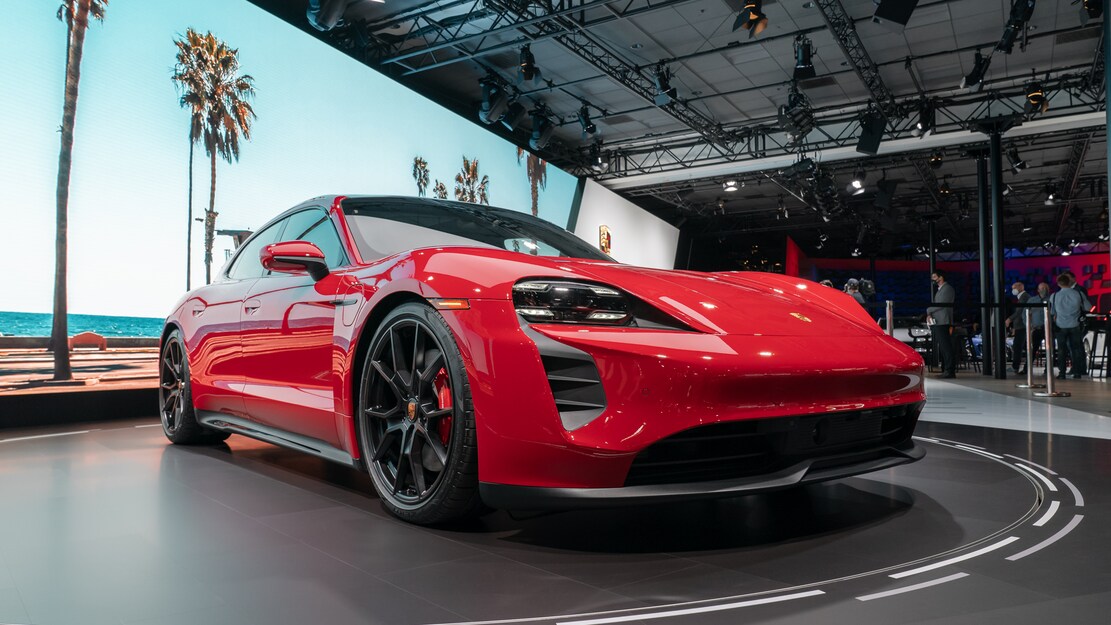
2022 Porsche Taycan GTSVia Motortrend.

The Taycan’s success is still on an upward trajectory, judging by recent happenings. There might be eight Taycan models currently available in the market, but Porsche is not done yet, and who can blame them?

The carmaker just unveiled the 2022 Porsche Taycan GTS and the Taycan GTS Sport Turismo at the 2021 L.A. Auto Show. The Taycan GTS boasts a 504km (313 miles) driving range, the first Taycan model to crack the 500km barrier. The new additions will roll out to dealers in the Spring of 2022.

2022 Porsche Taycan GTS Sport TurismoVia netcarshow.

Prior to the announcement of the new additions to the Taycan family, Porsche CEO Oliver Brume gave another indication of how well the Taycan was performing during a September 2021 interview with Reuters.

Brume confirmed there’s now a six-month waiting list for a new Taycan. That’s up from the usual four-month wait. He added that the planned 2021 production limit was 20,000 Taycans, but the carmaker sold that amount in the first half of the year alone.

The challenge now would be for Porsche to find a way to ramp up production in the face of the automobile sector’s current challenges. It is a ‘good’ problem to have, but resolving it will be vital for preventing the Taycan from becoming a victim of its own success.

That may yet turn out to be an extreme scenario, though, and I wouldn’t bet against the German carmaker finding a way to turn things around as far as production capacities are concerned. For now, they can continue to bask in the Taycan’s success.

Porsche brings back classic paint colors with Paint to Sample

Porsche Exclusive Manufaktur is bringing back historic color shades on all Porsche models with the new Paint to Sample and Paint to Sample Plus option: “Unusual paint finishes have been familiar throughout the history of our brand and are an important differentiating feature,” says Alexander Fabig, Head of Individualisation and Classic. “With this offer, we are reviving cult-classic colors and expanding the extensive range of standard and special colors across all the model series by more than 160 shades.”

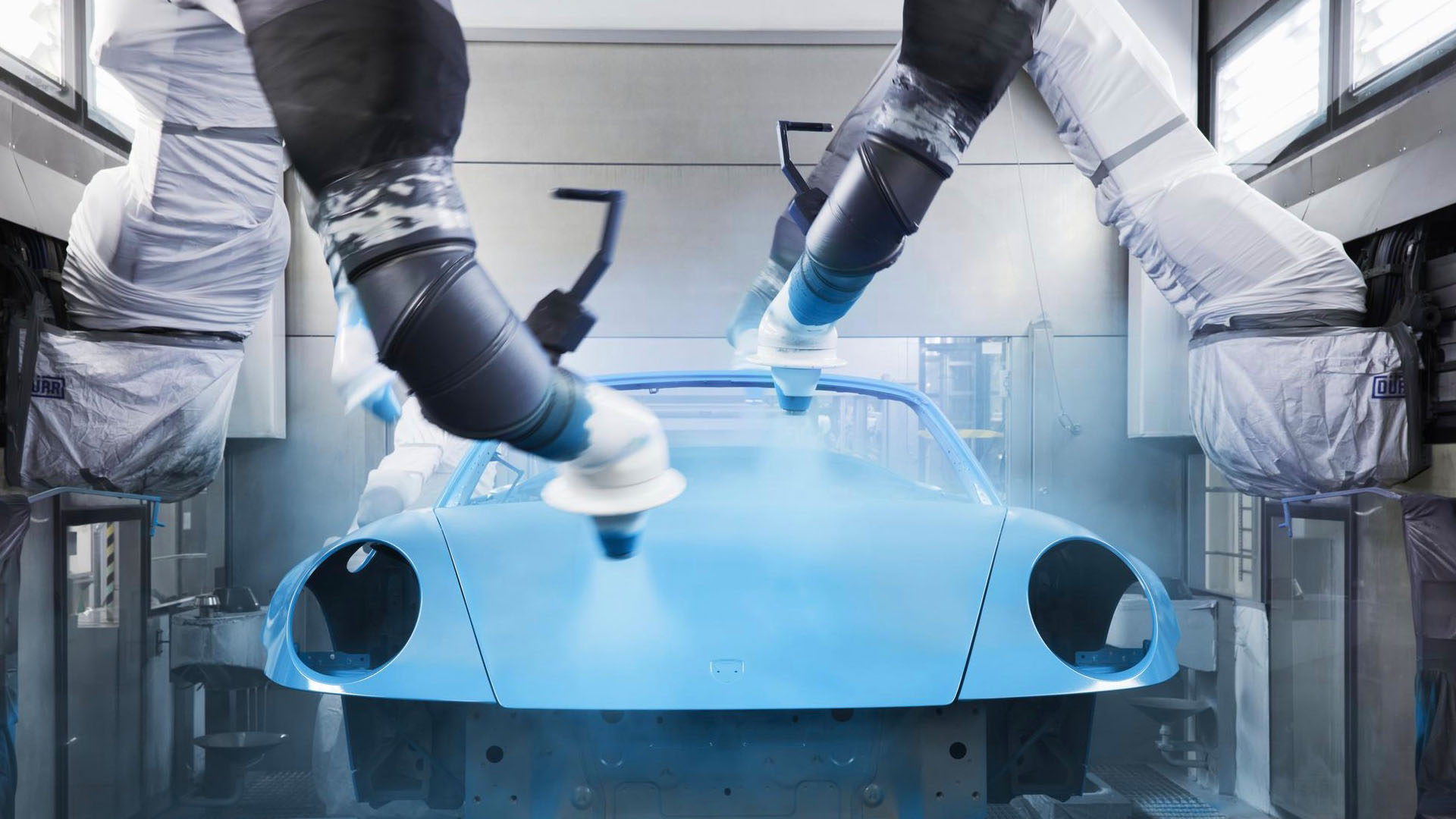
Custom-painted Porsches have been gaining popularity over the years, customers want to have a bespoke paint on their brand new car from Zuffenhausen, something that Porsche Exclusive Manufaktur is playing into with their Paint to Sample option, to accomplish this they’ve installed a brand new color-mixing system at the factory, allowing specialists to mix up the exact shade a client requested, from combining dozens of ingredients with milligram precision.

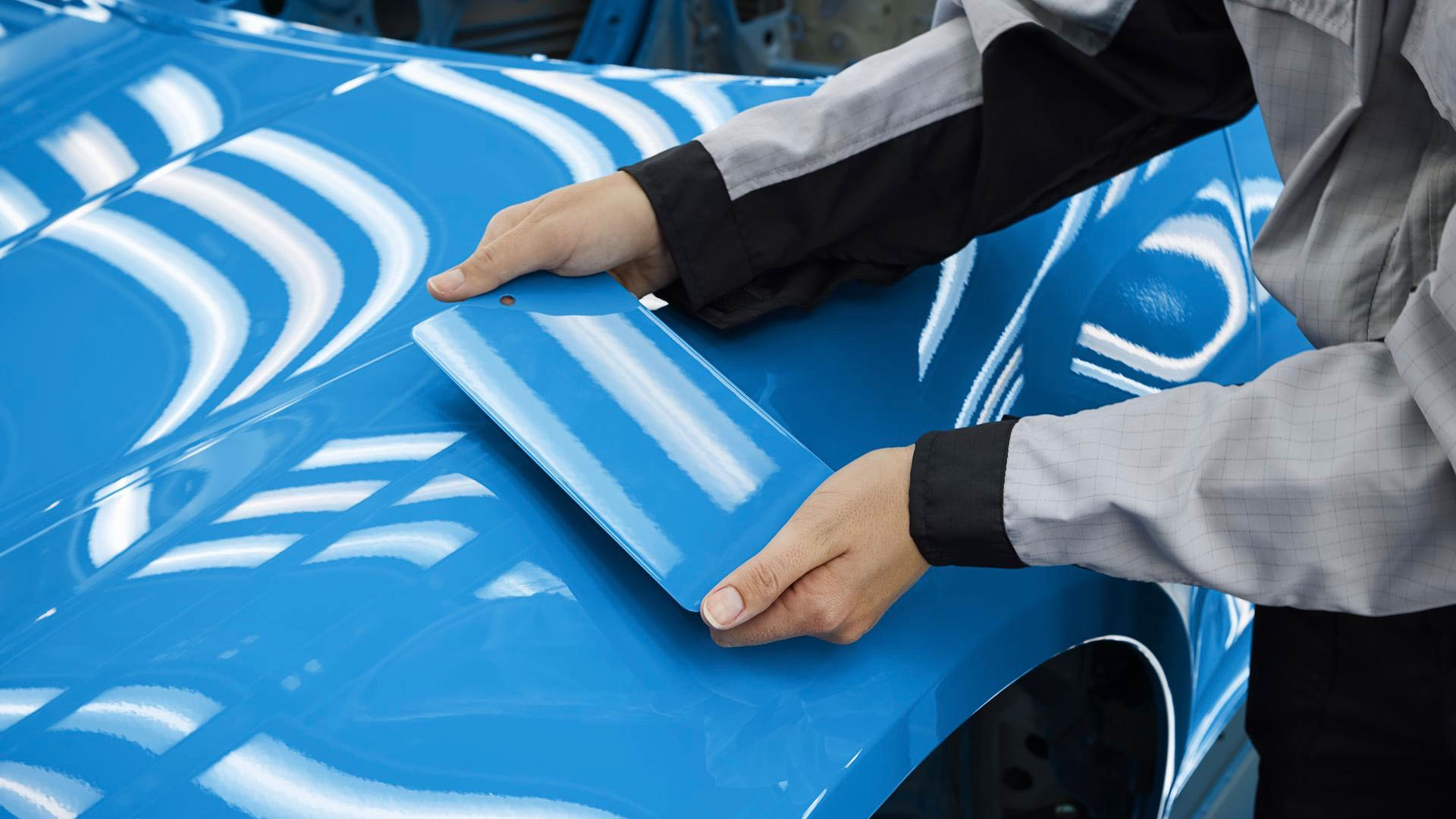
Each batch of paint is made for two paint pots, one that will be used for the bodywork of the new Porsche while the second one will be applied to the add-on parts, because the mix of aluminum parts, plastics, and carbon fiberglass, the mixture to be applied has to be slightly different depending on the surface that has to be coated … they even paint a comparison plate to reference against the finished car as a final inspection.

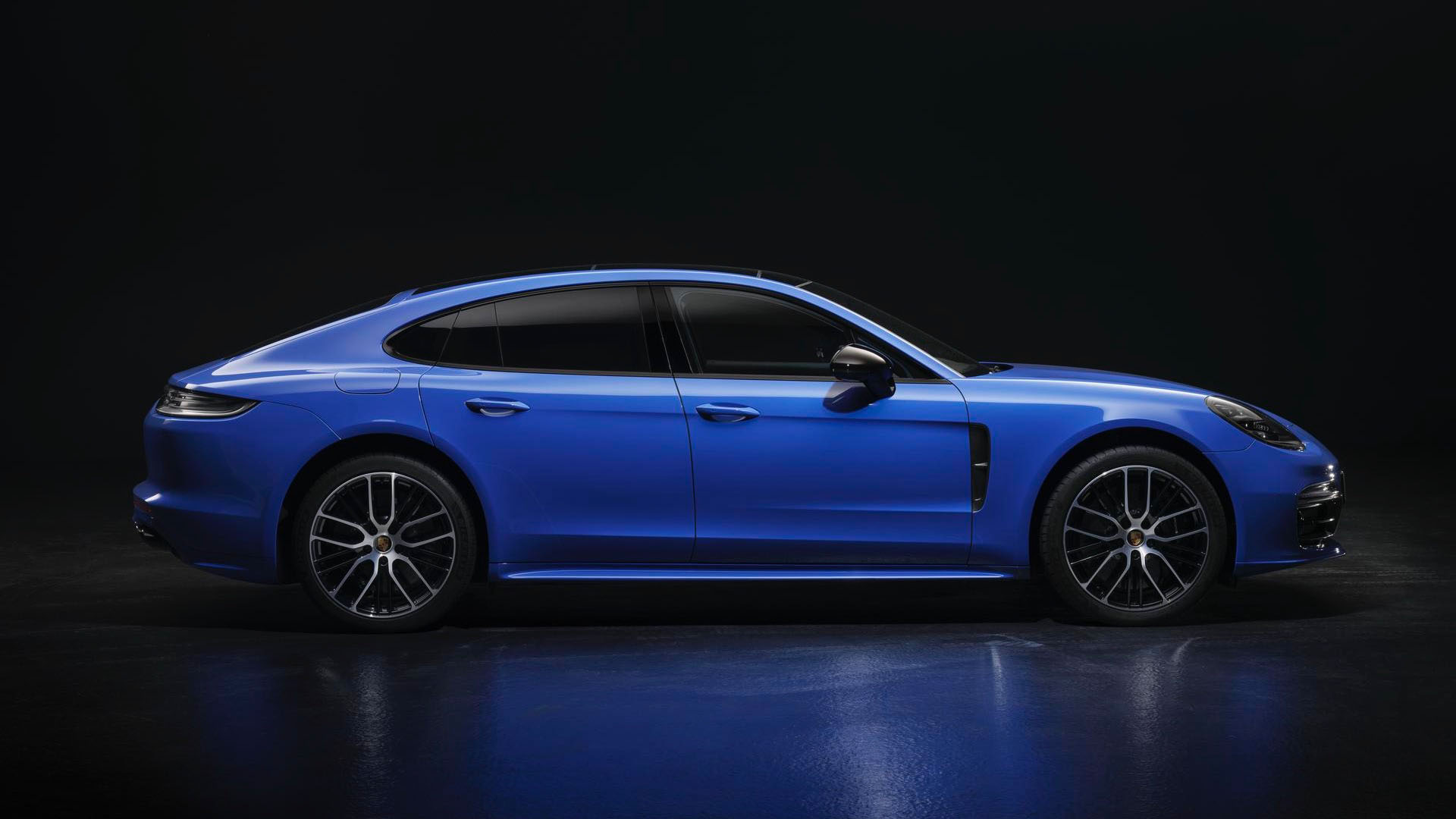
But Paint to Sample not only covers custom colors on special demand, but they also resurrected some classic shades from the 90s, color mixtures that are already known by Porsche’s paint specialists, like Maritime Blue as seen on the Porsche Panamera below, a deep, not too dark shade of blue that gives a classic but luxurious look to this four-door model, if you want to stand out even more a set of gold-painted wheels would do the trick.

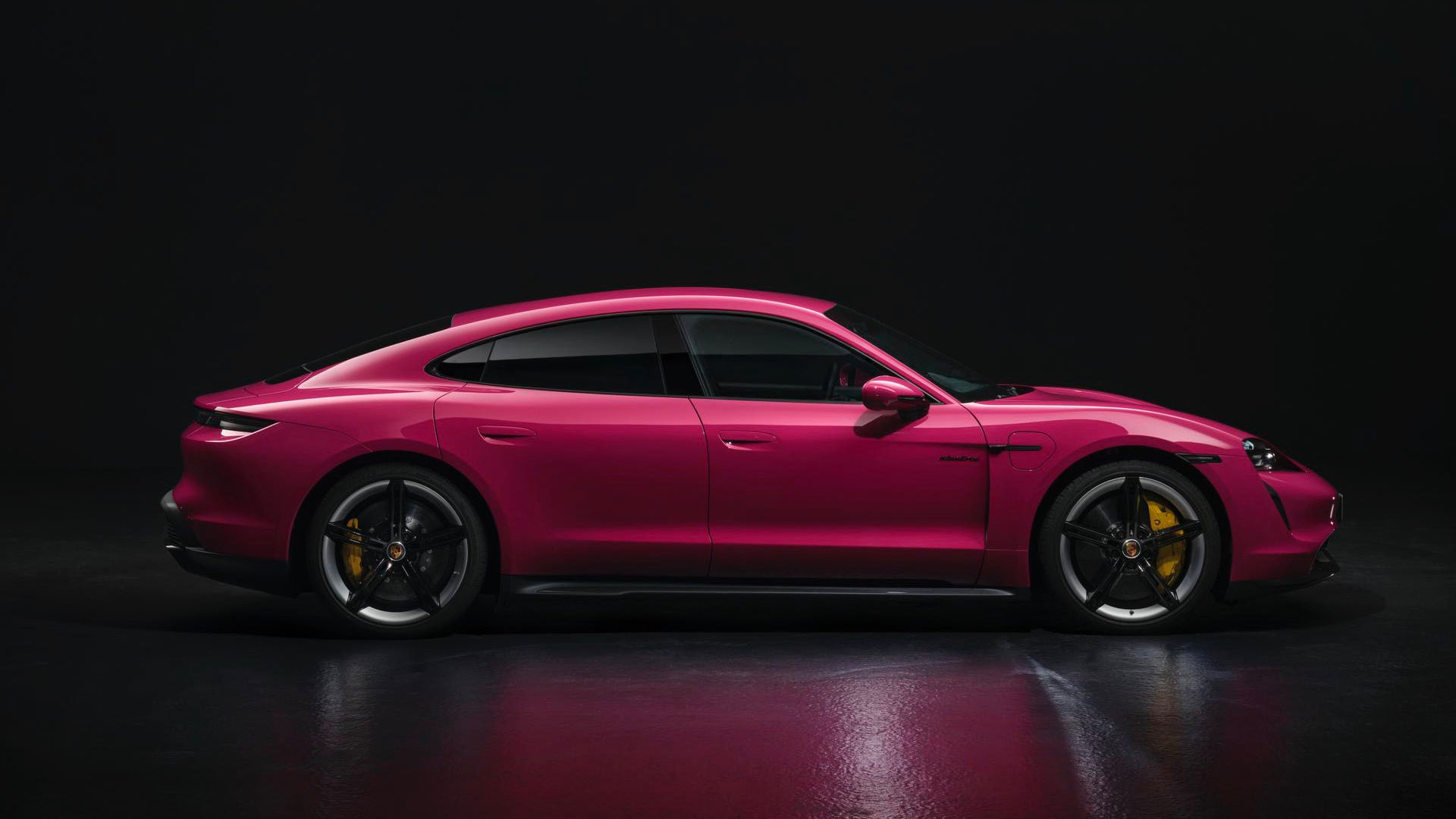
Or how about Rubystar Red, a rather special shade of red with a more pink hue to it, which looks amazing on this Porsche Taycan, at least it’s something different from the large amount of white Taycans I usually see driving around over here, it seems some markets only order black, dark grey, and white, while other markets have a much more diverse taste in colors on their luxury cars.

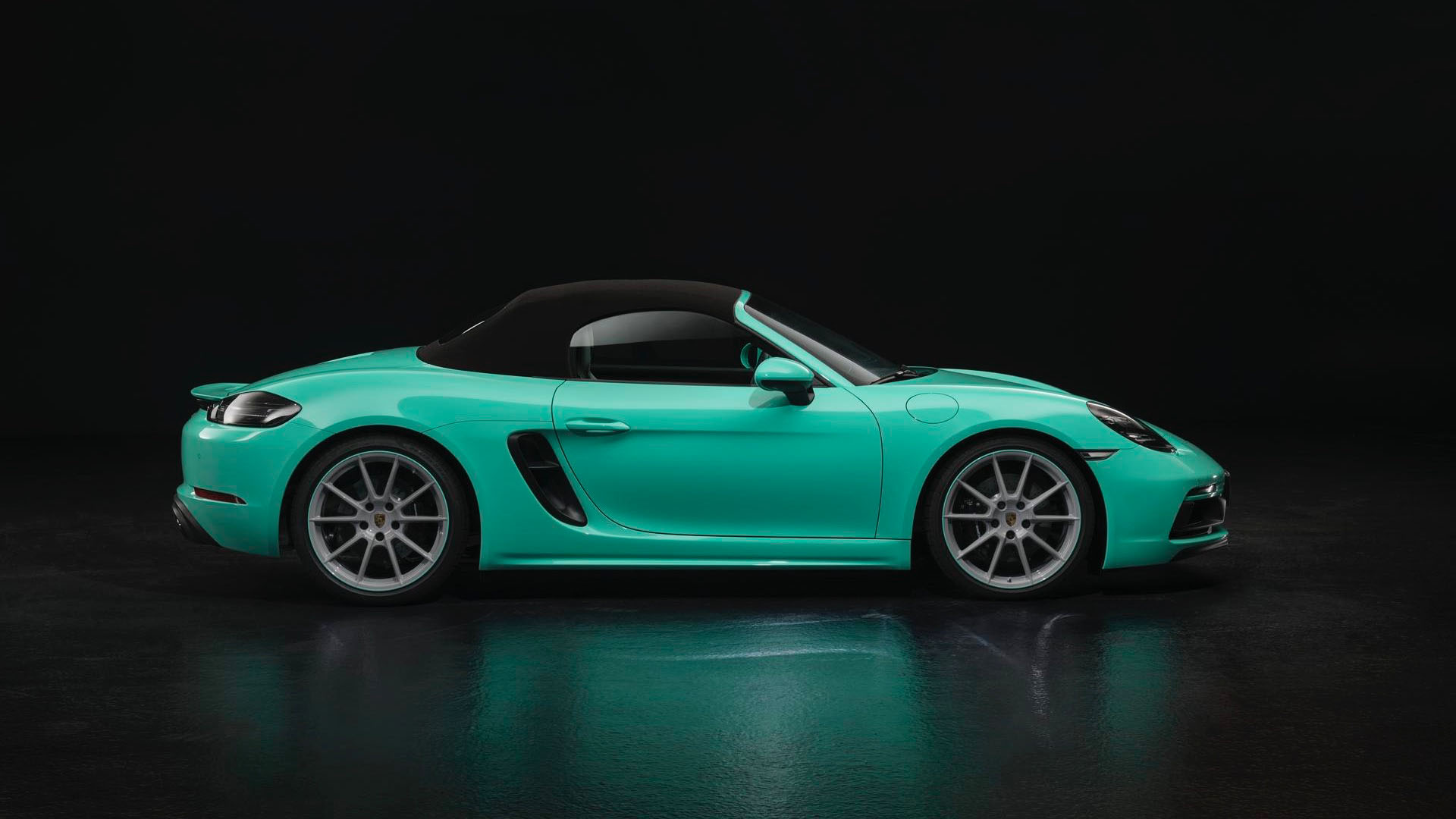
And let’s not forget about Mint Green, I remember seeing a 911 in this shade with color-coded leather seats, very special looking and perfect in tune with the Nineties, perhaps today a more subtle interior shade might be a better idea, but I still think black seats with their centers in matching Mint Green would look killer on this car:

The number of different paint color options largely depends on the specific Porsche model and where they are actually built, when looking at the 911 and the 718 model the list of paint colors goes beyond 100, while on the Panamera, Macan, and Cayenne, the list contains a little over 50 options, while a further 65 colors complete the palette on the all-electric Porsche Taycan.

While it is possible to order your ‘Paint to Sample’ specific shade for your new car right at the local Porsche Centre, you’ll have to keep in mind an additional three-month delivery time compared to the basic color options, and if you really want something unique, you can opt for the ‘Paint to Sample Plus’ finish, which is limited to the Porsche 911, 718, and Taycan … but here there is just about no limit whatsoever on which shade you want, it all begins with the customer supplying a sample of his or her color to a Porsche Center.

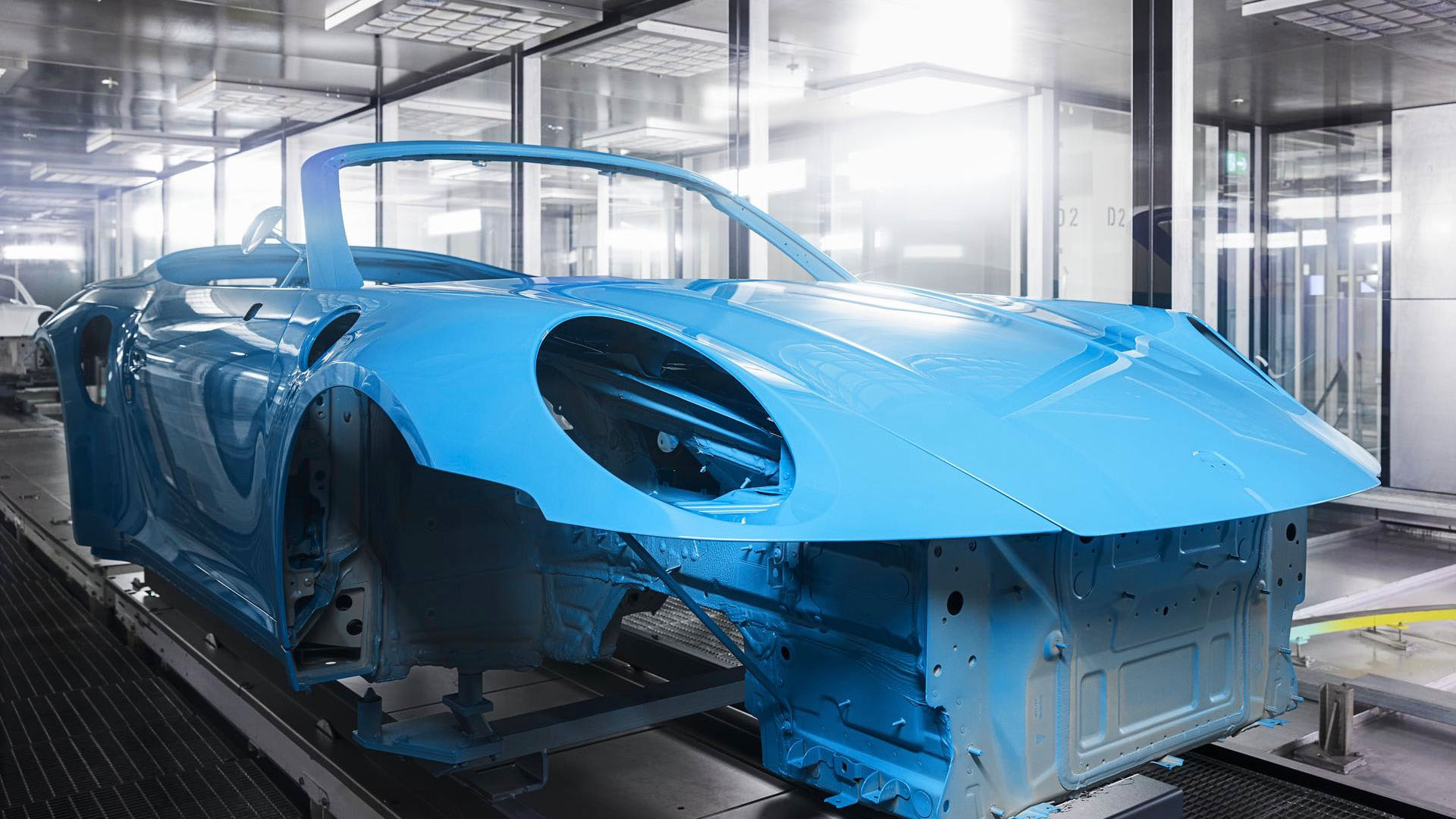
And this doesn’t need to be a piece of painted metal, how about a bottle of nail varnish, or a pair of shoes to match, a handbag, or a piece of clothing … anything goes, as it is sent out to Porsche AG for an initial feasibility check, which can take a few months, before Porsche’s color wizards create the magic formula to be tested on a car body and add-on parts … but that’s not the customer’s car yet, the first application of this custom shade is done onto a test-body, at Porsche’s expense, and only if all tests are good and they’ve determined the details, such as layer thickness, will the customer’s Porsche be painted in this bespoke shade.

Such individual vehicles can only be ordered through Porsche Exclusive Manufaktur, and not every Porsche Center will be a partner, at the time of writing about 100 Exclusive Manufaktur partners are present globally, these are specifically selected Porsche Centers who are specially equipped and have trained specialists able to provide advice on the Exclusive Manufaktur product range if you really want to get the best-of-the-best you can always travel to the heart of the brand in Stuttgart-Zuffenhausen, but you’ll need a commission number before you are able to visit the HQ.

Just in case you are wondering about just how much something like this would set you back, here are some indications of price, the Paint to Sample will set you back between €8,806 and €9,877 depending on the exact model, while the even more intricate Paint to Sample Plus goes from €17,612 to 19,754, note that all prices are MSRP for Germany including 19% VAT, if you want to know the exact cost in your case you should really visit a local Porsche Center and inquire about this when ordering your brand new, bespoke build Porsche supercar.

Top Gear Dives Into The New Porsche Cayman 718 GT4 RS

As part of the recent “Green Promise” that many car manufacturers are heading for, we all know that the most powerful, fastest, extreme, and best handling supercars and hypercars of the near and distant future will be electric. Bugatti Rimac has been formed as part of that promise, and Porsche has a major stake in the company through both its own investments and through its parent, Volkswagen Group.

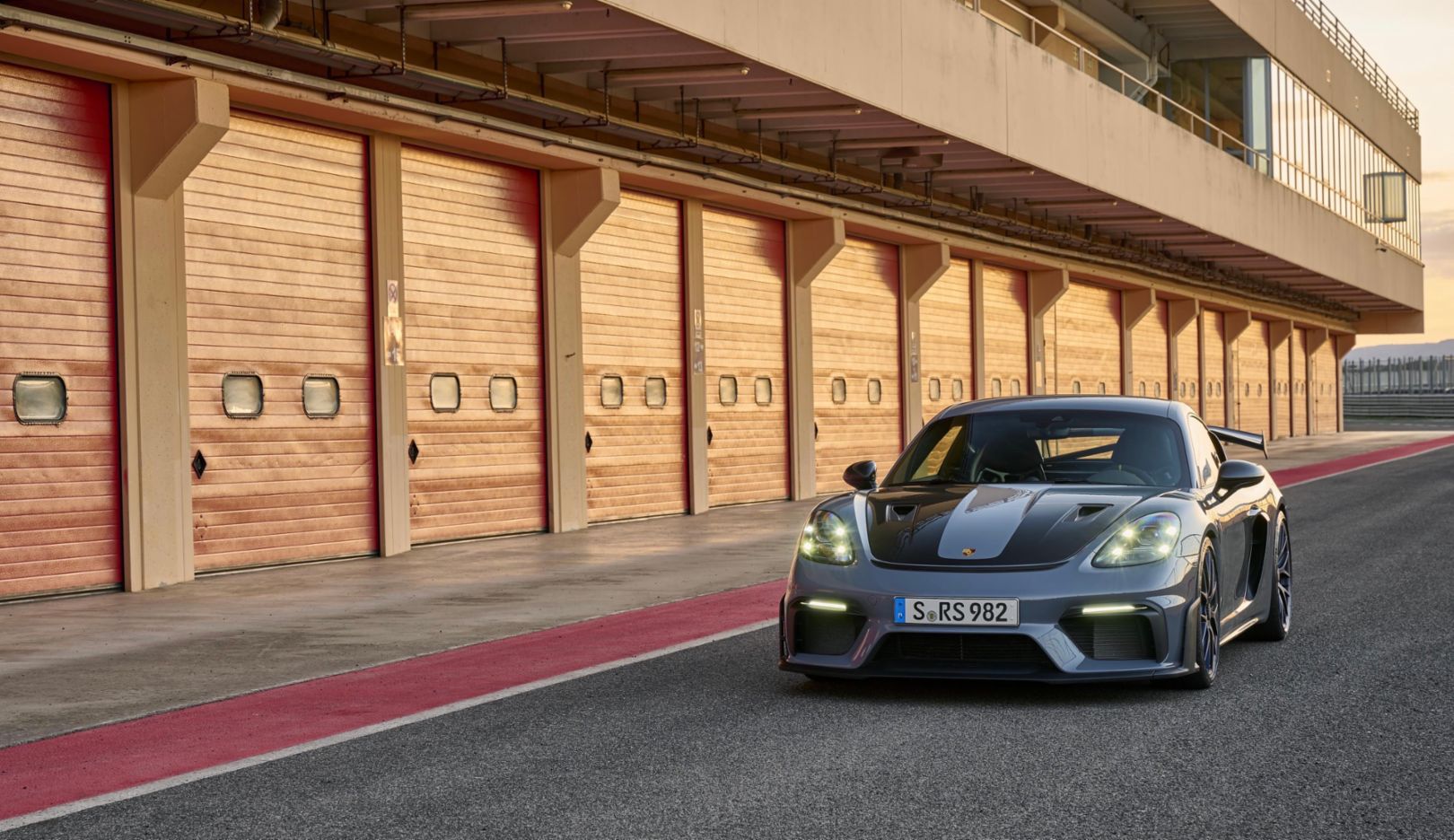
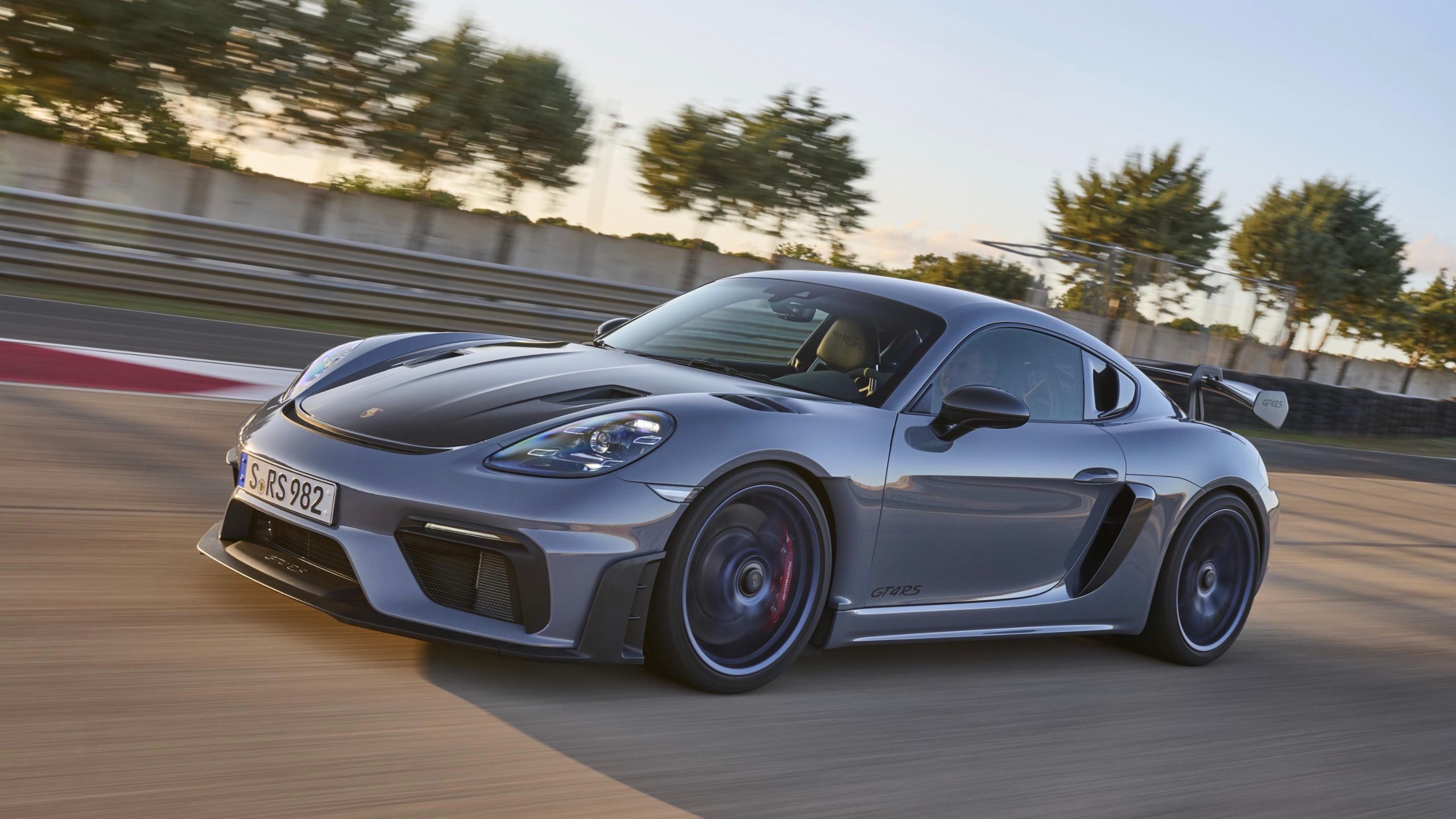
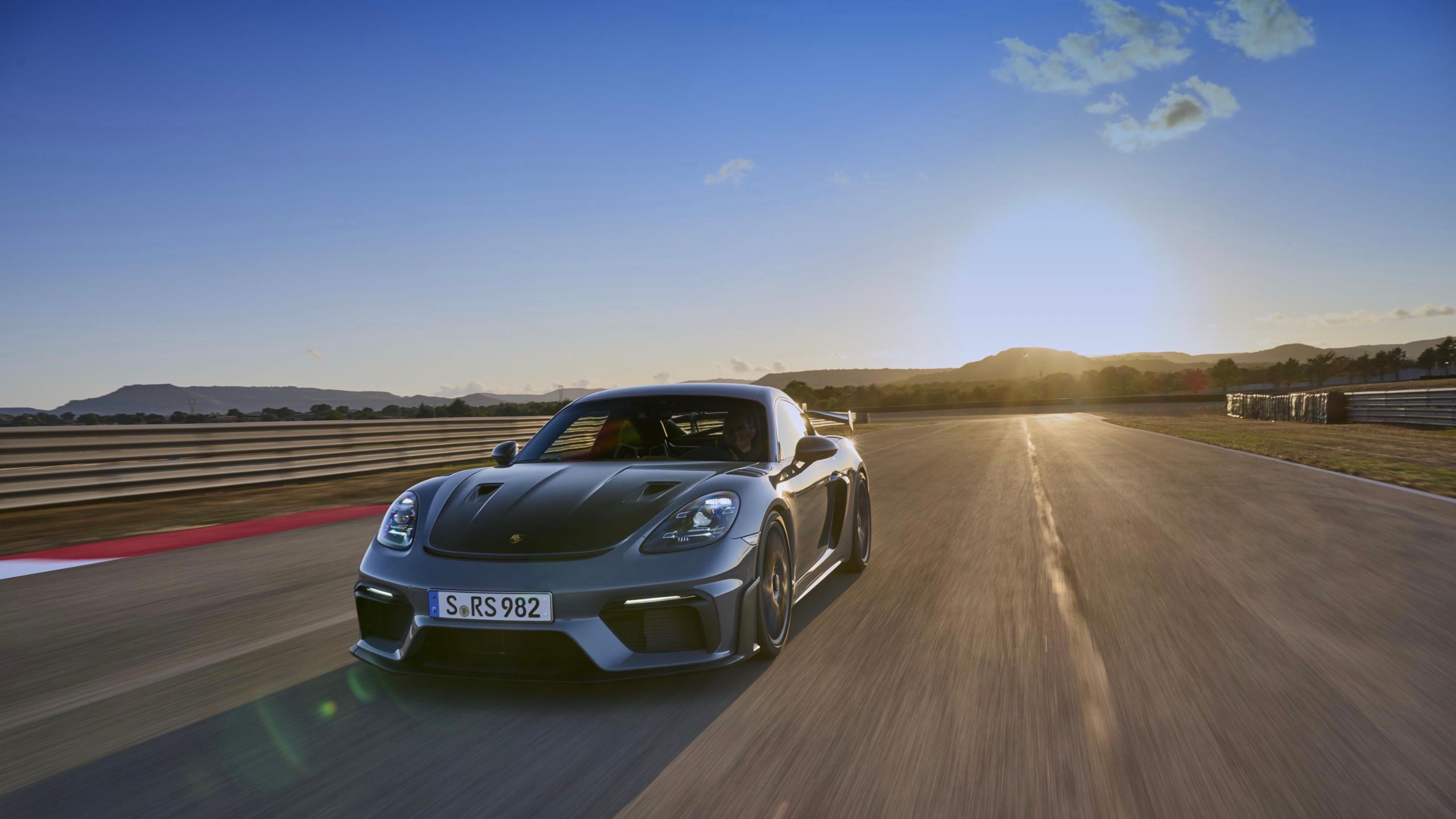
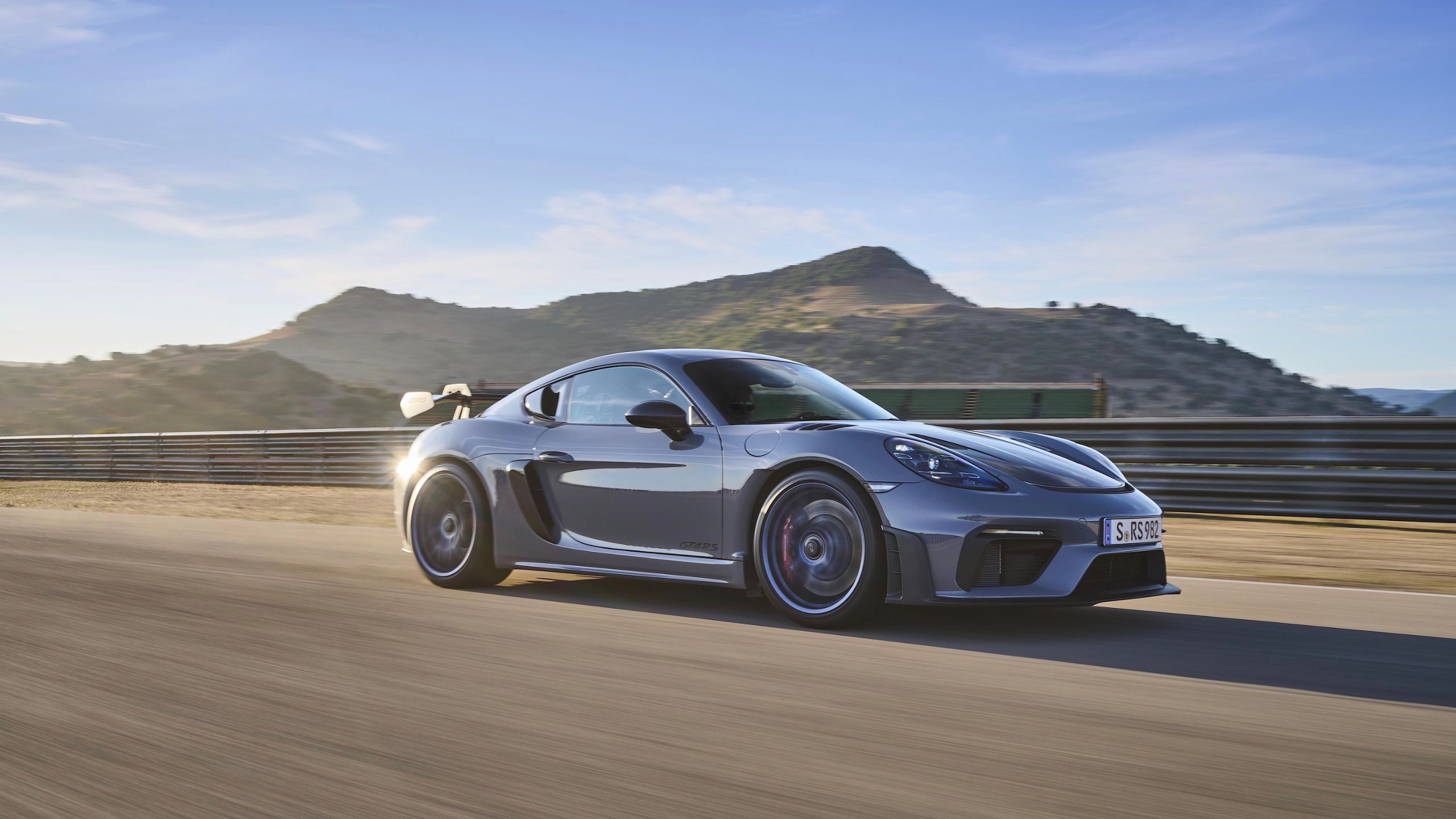
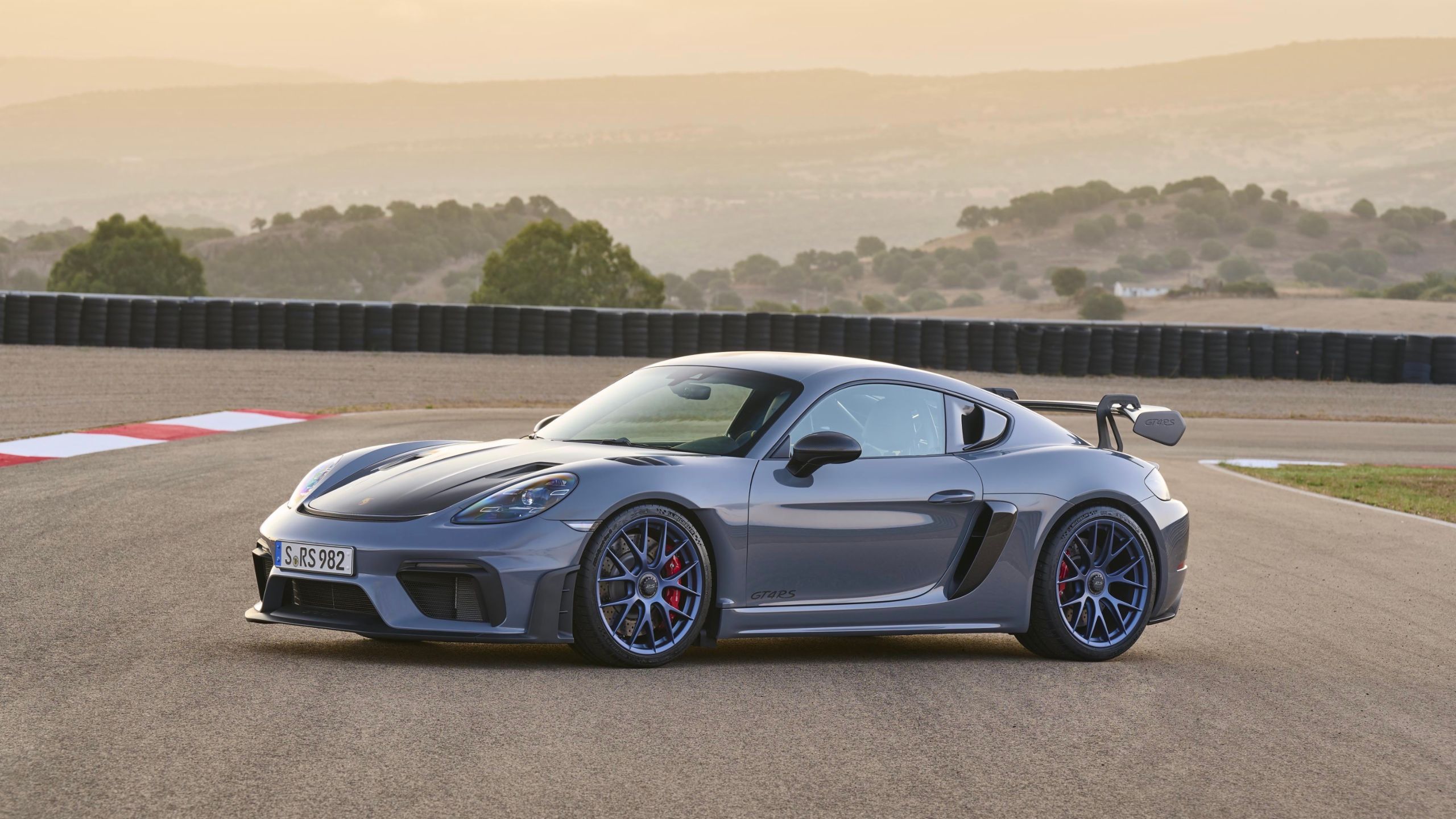
Porsche Cayman 718 GT4 RS
Porsche Cayman 718 GT4 RS The new 2022 Porsche Cayman 718 GT4 RS with the Weissach Pack option

This is not to say, however, that Porsche is going to quietly shuffle their engines that run on recycled dinosaurs into the storage room, however, not at all. Instead, they’ve turned around and let the GT department, their skunkworks team, at Stuttgart go slightly (read: completely) insane. The result is a $145,000 USD Porsche Cayman that carries a 4.0L flat-six engine from a Type 992 GT3 with the wick turned up to 11, has exhausts with the bare minimum of baffles to pass road legality making it the loudest Cayman ever made, and can keep up with a Lotus Exige in terms of handling.

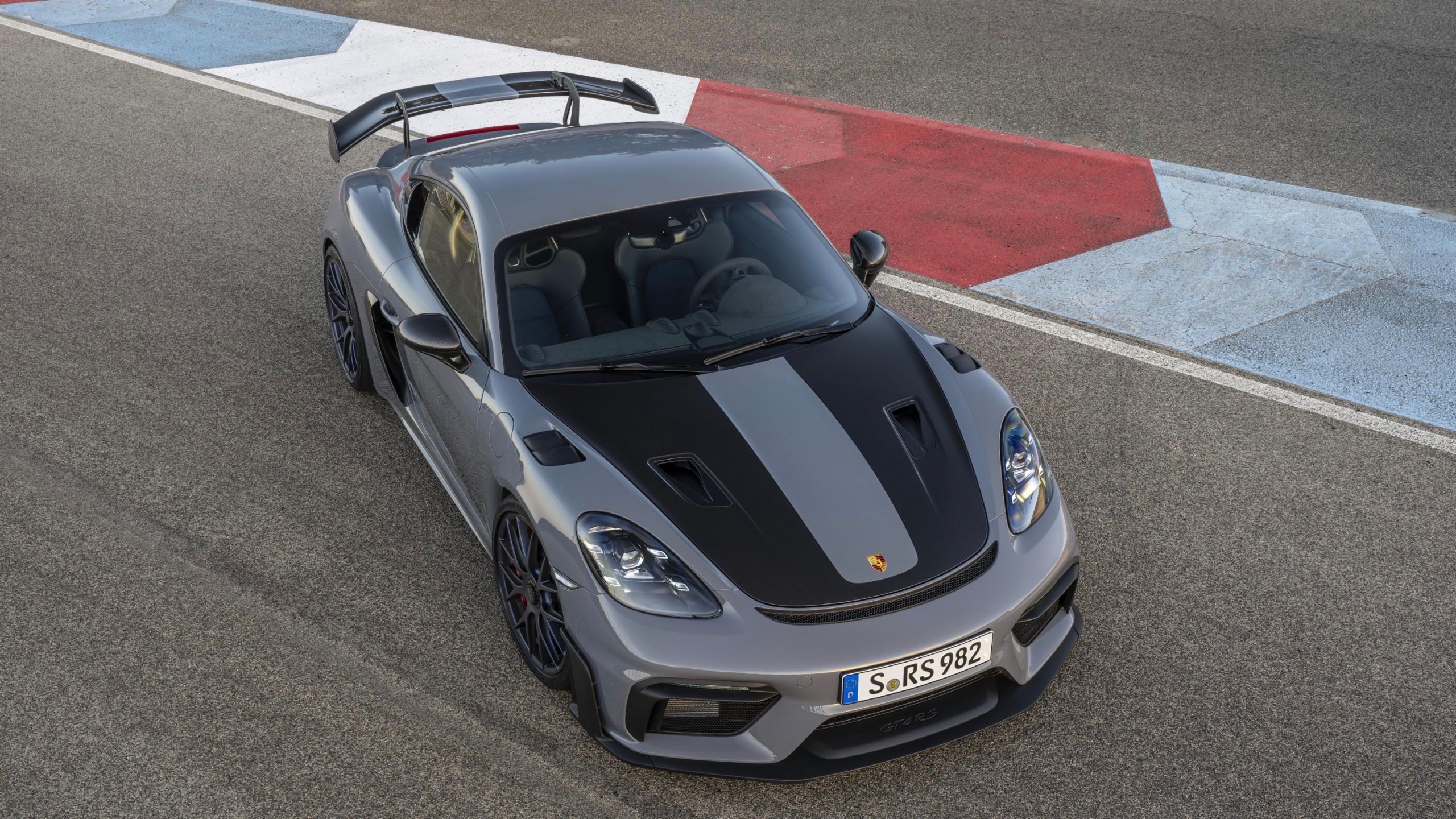
Porsche Cayman 718 GT4 RS
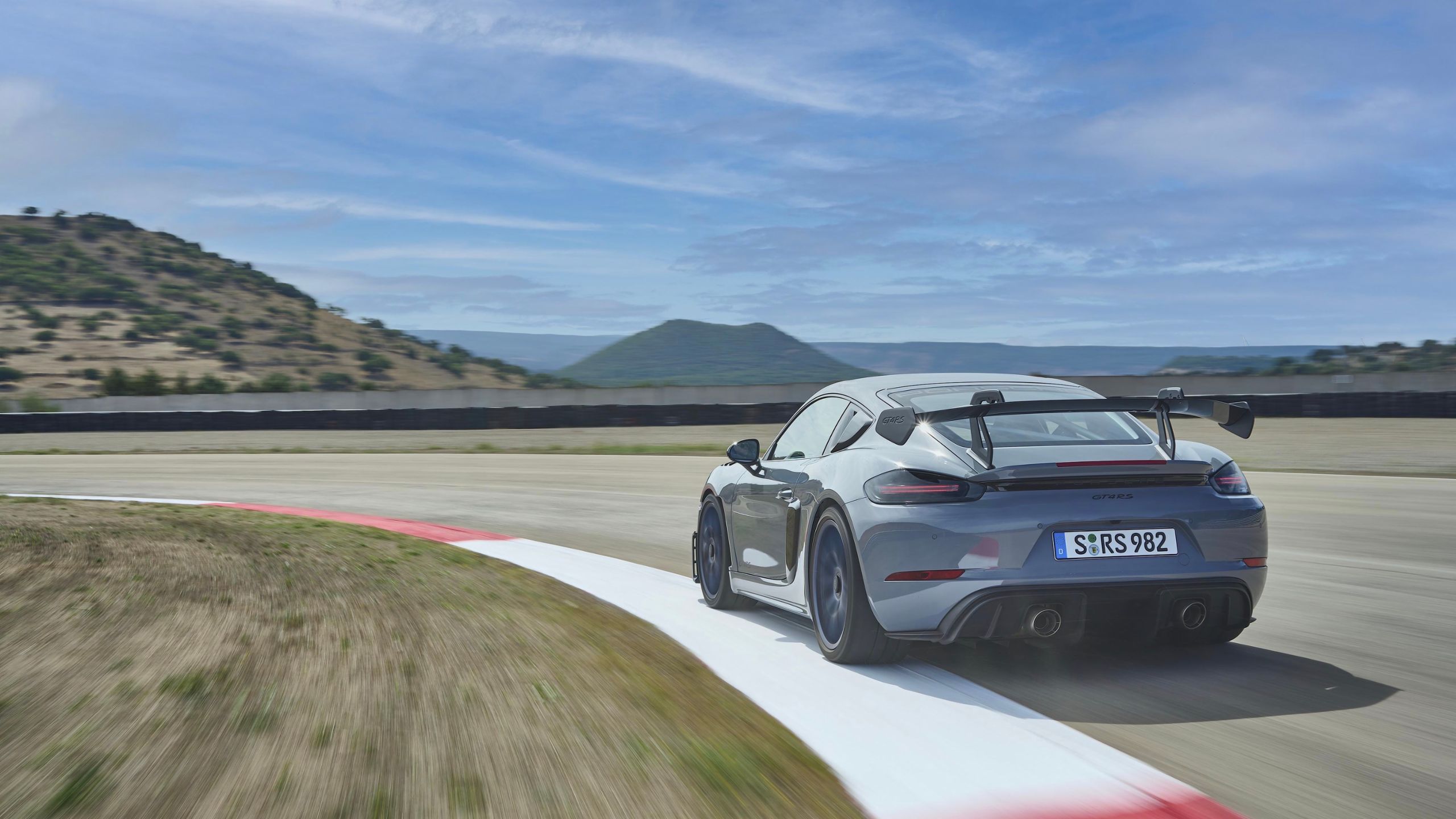
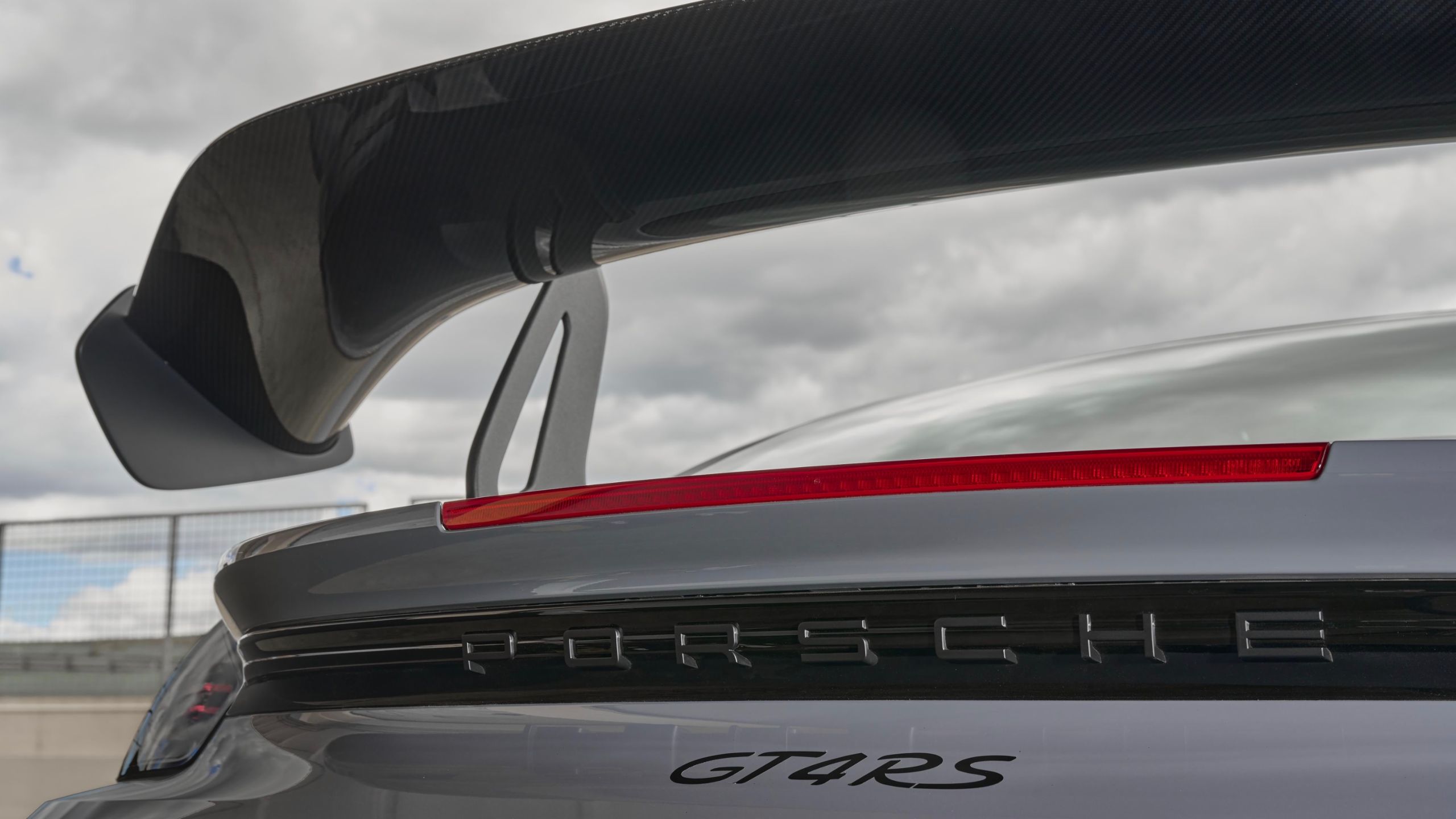
Porsche Cayman 718 GT4 RS Part of what makes the Cayman GT4 RS handle as well as it does is the specifically tuned aerodynamics that give it downforce without adding any more drag to the car

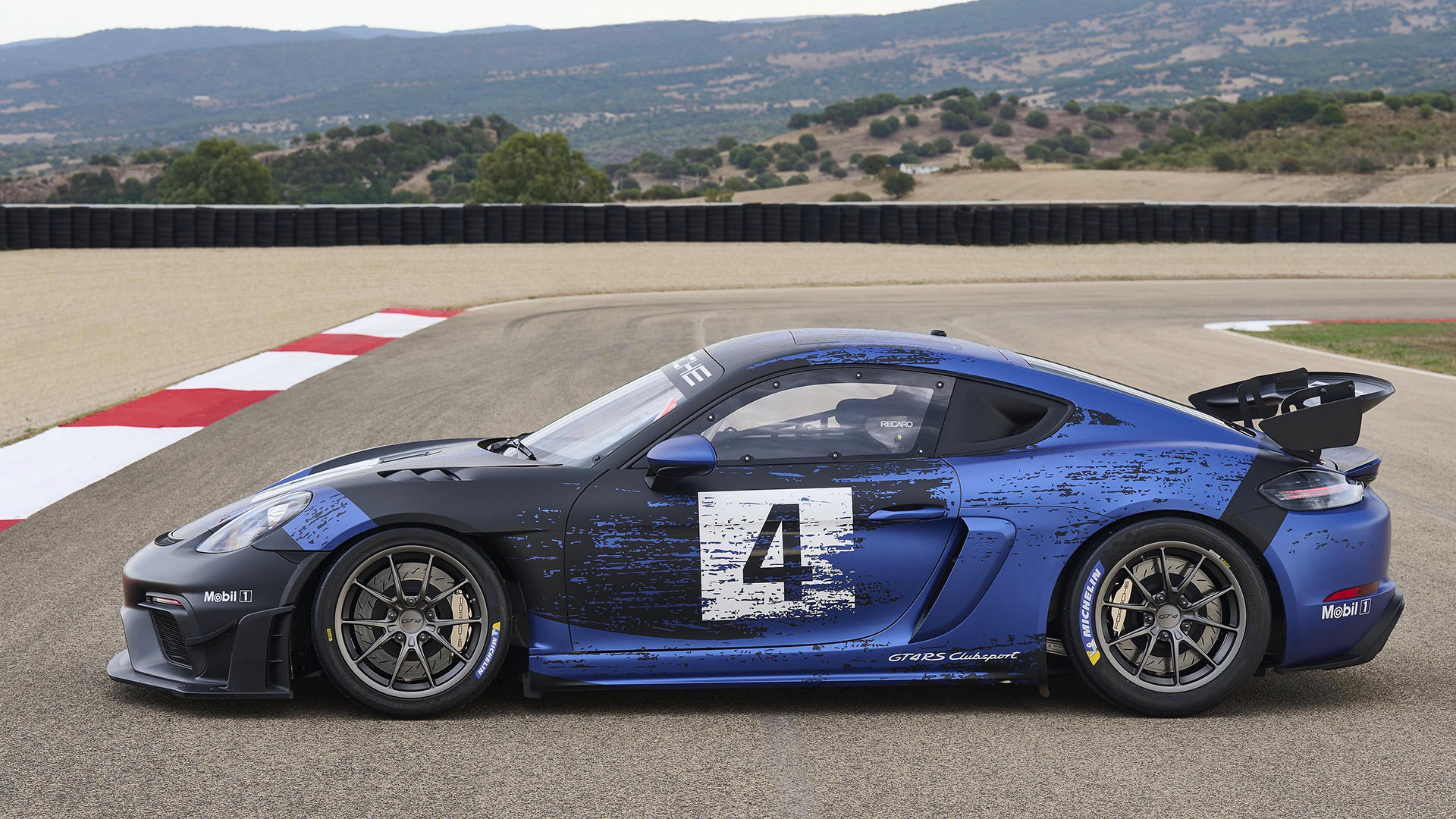
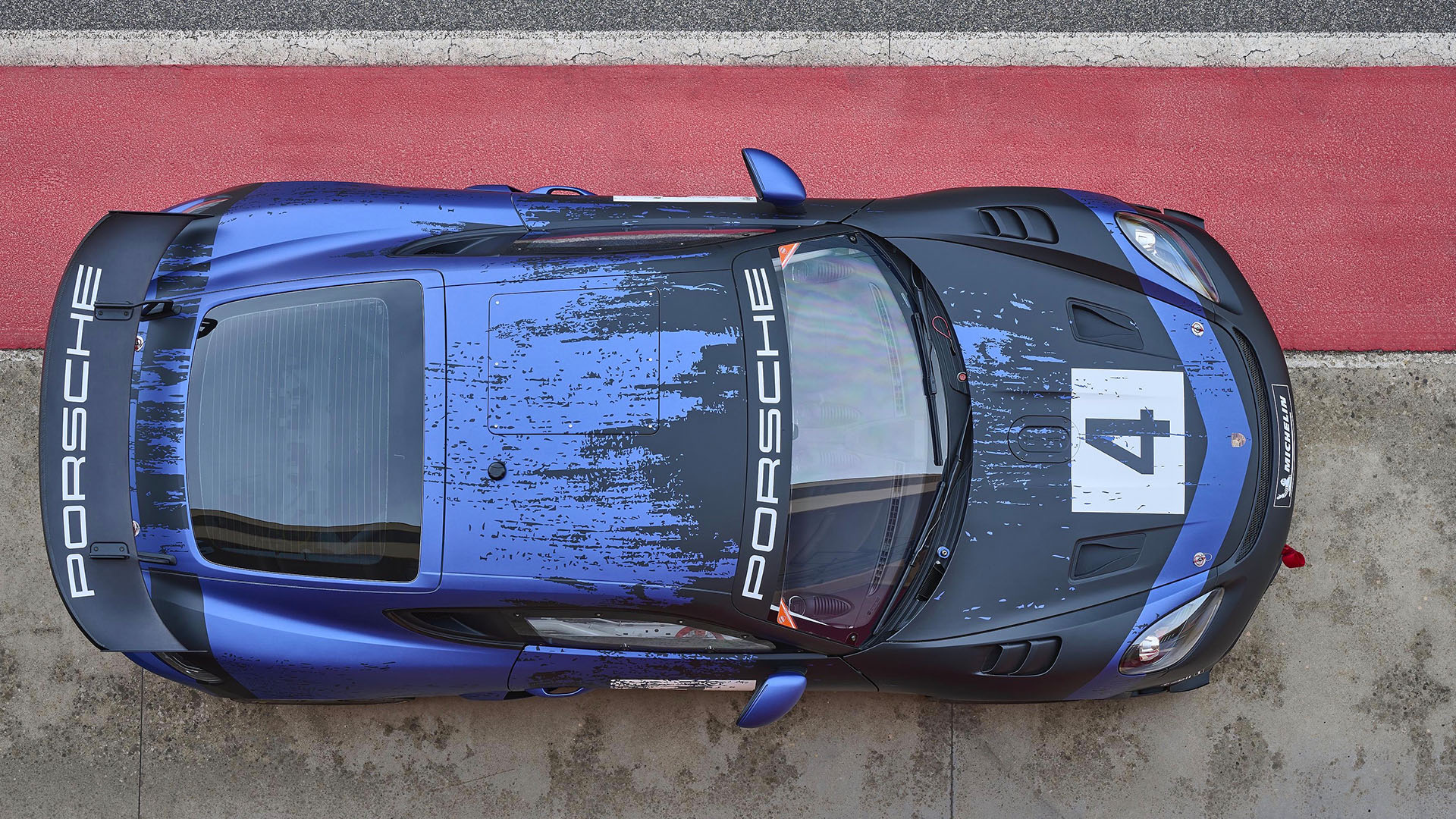
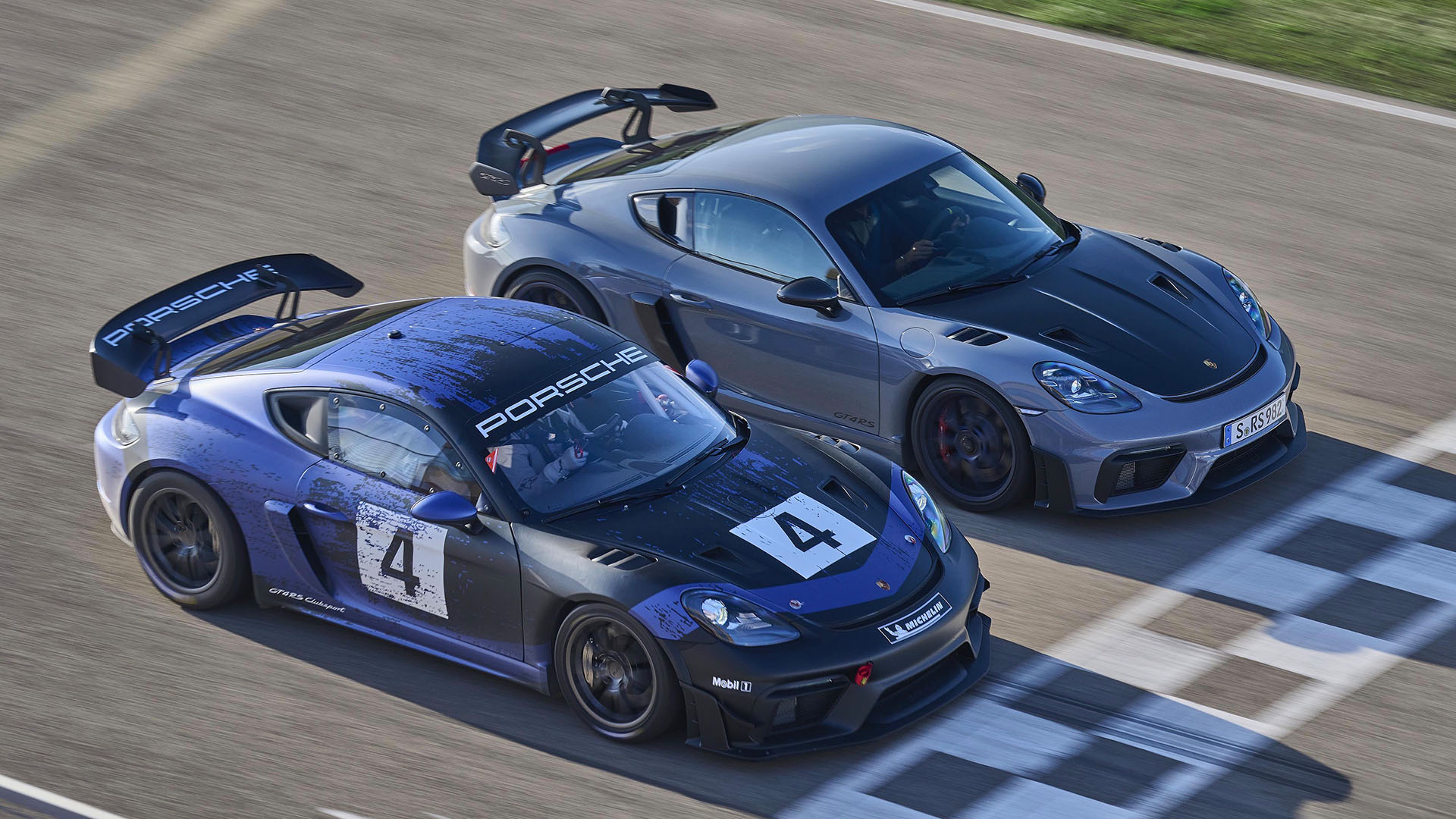
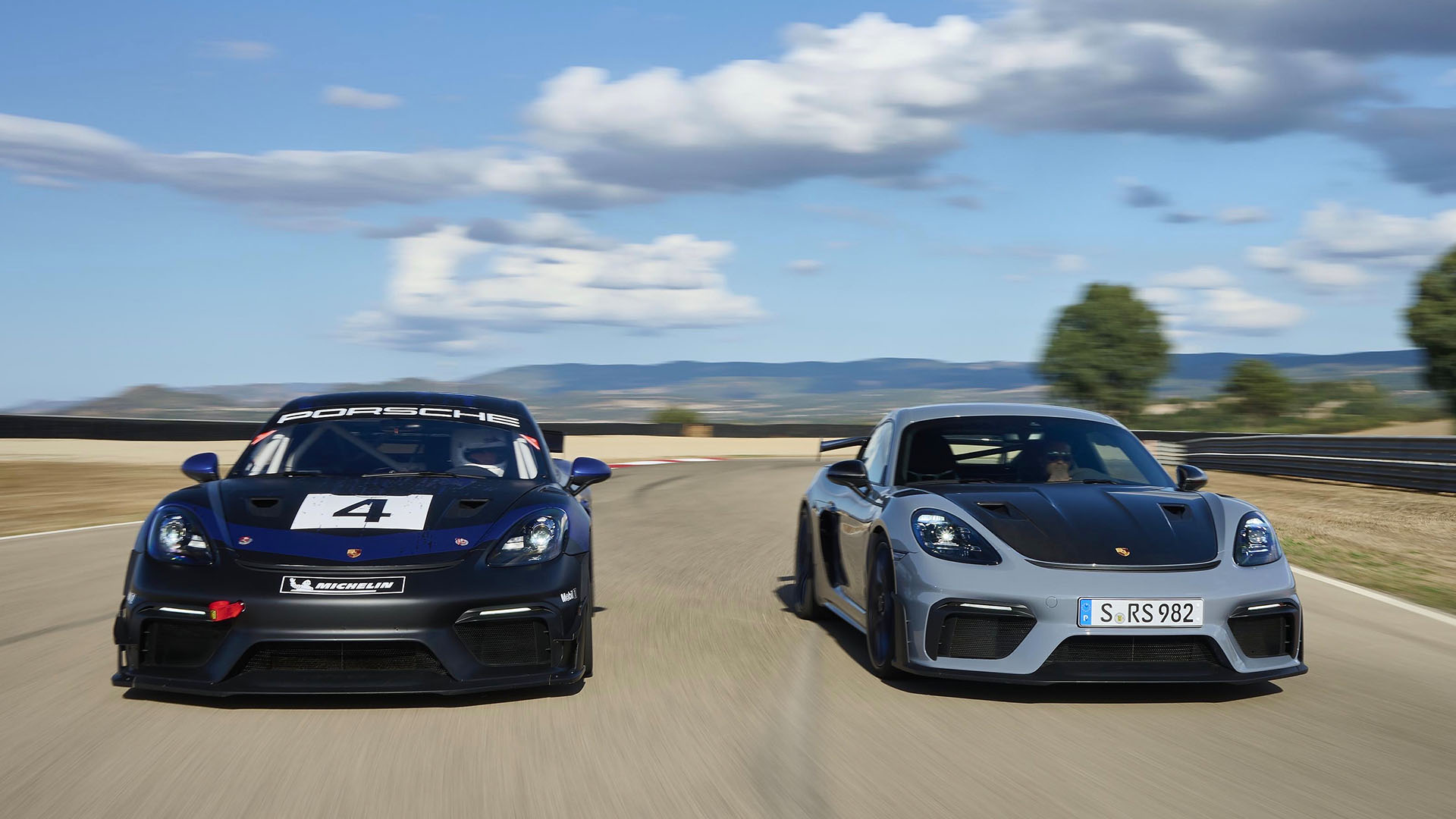
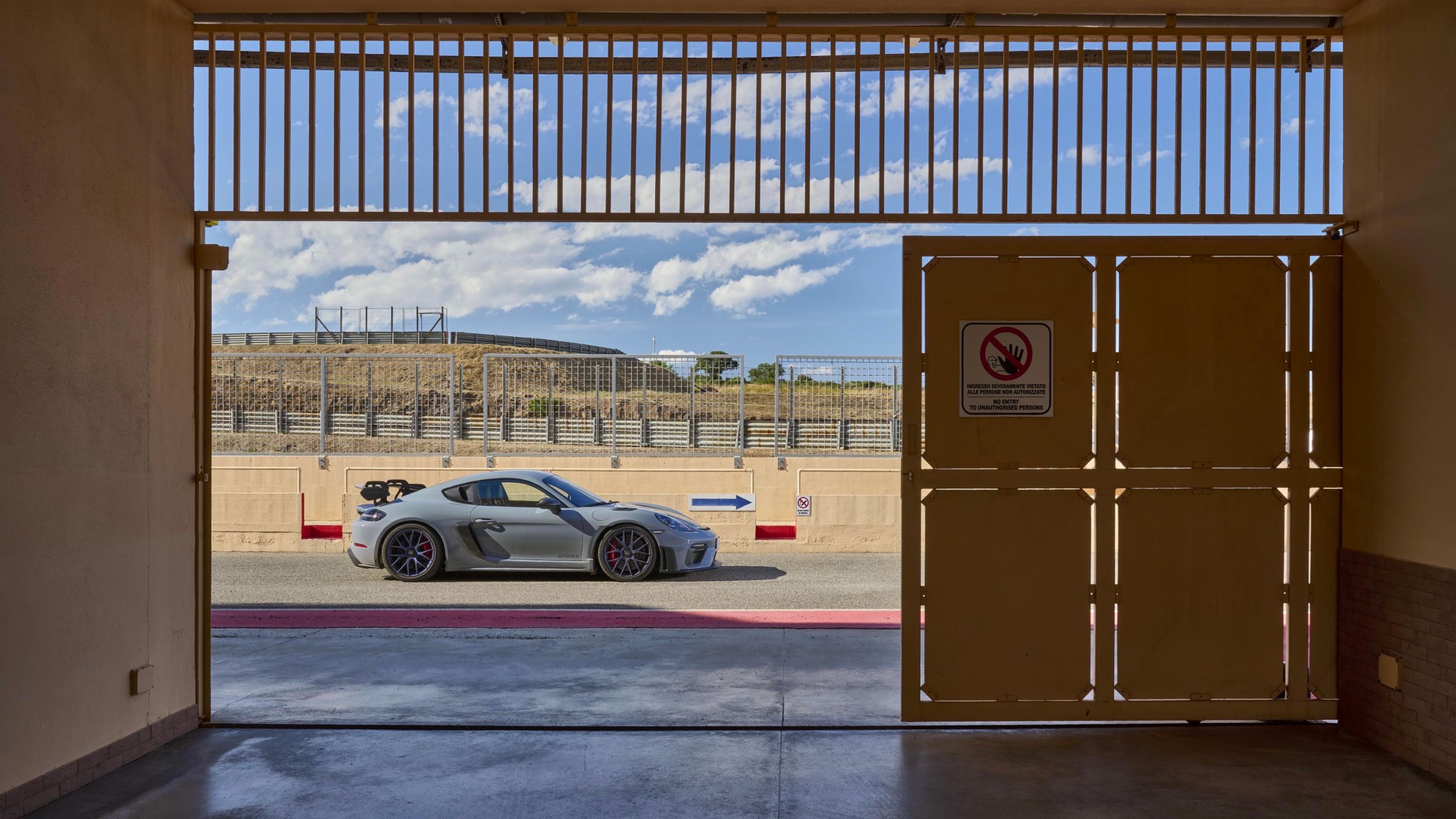
The new Cayman 718 GT4 RS, according to Porsche themselves at least, is not meant to be a track monster. It certainly can be, and there is a customer-spec version of the GT4 race car coming in the GT4 RS Clubsport, dedicated to track only use. This beast is meant to be an “experience,” a car that makes the driver become part of the machine, the two symbiotically working together to scream bloody murder out those nearly direct-port exhausts and catapult the car to the horizon as fast as possible.

Top Gear GT4 RS overview
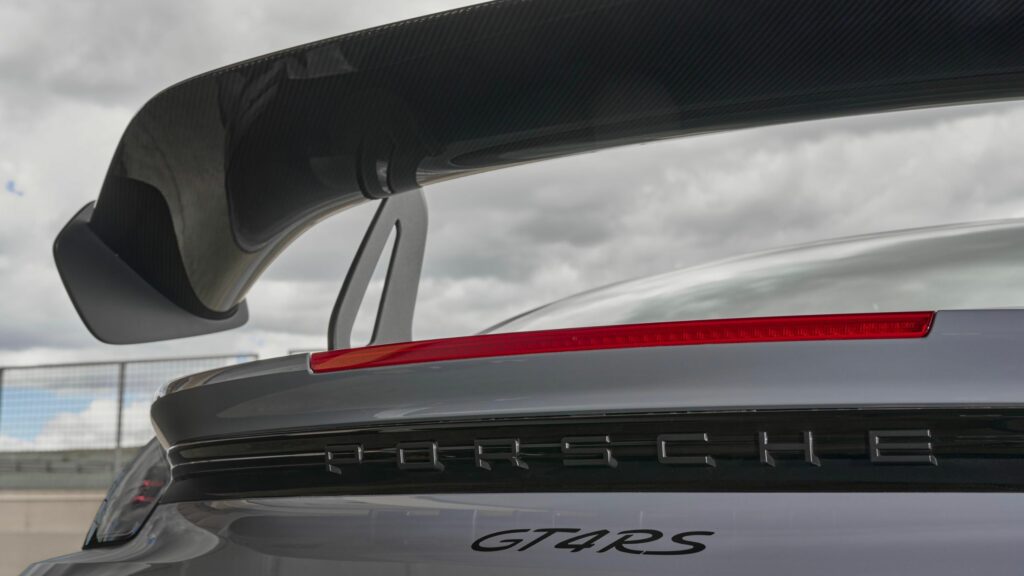
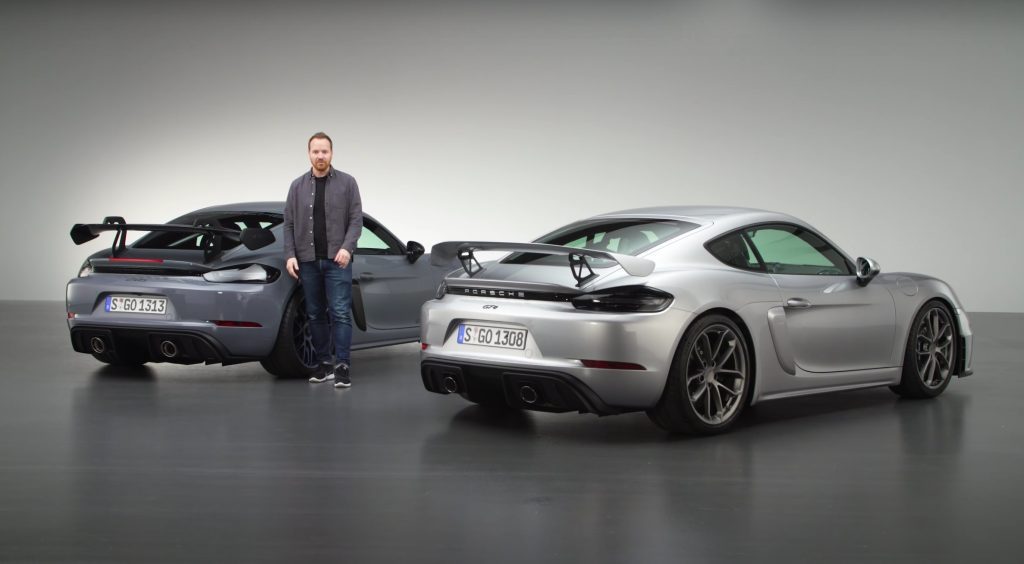
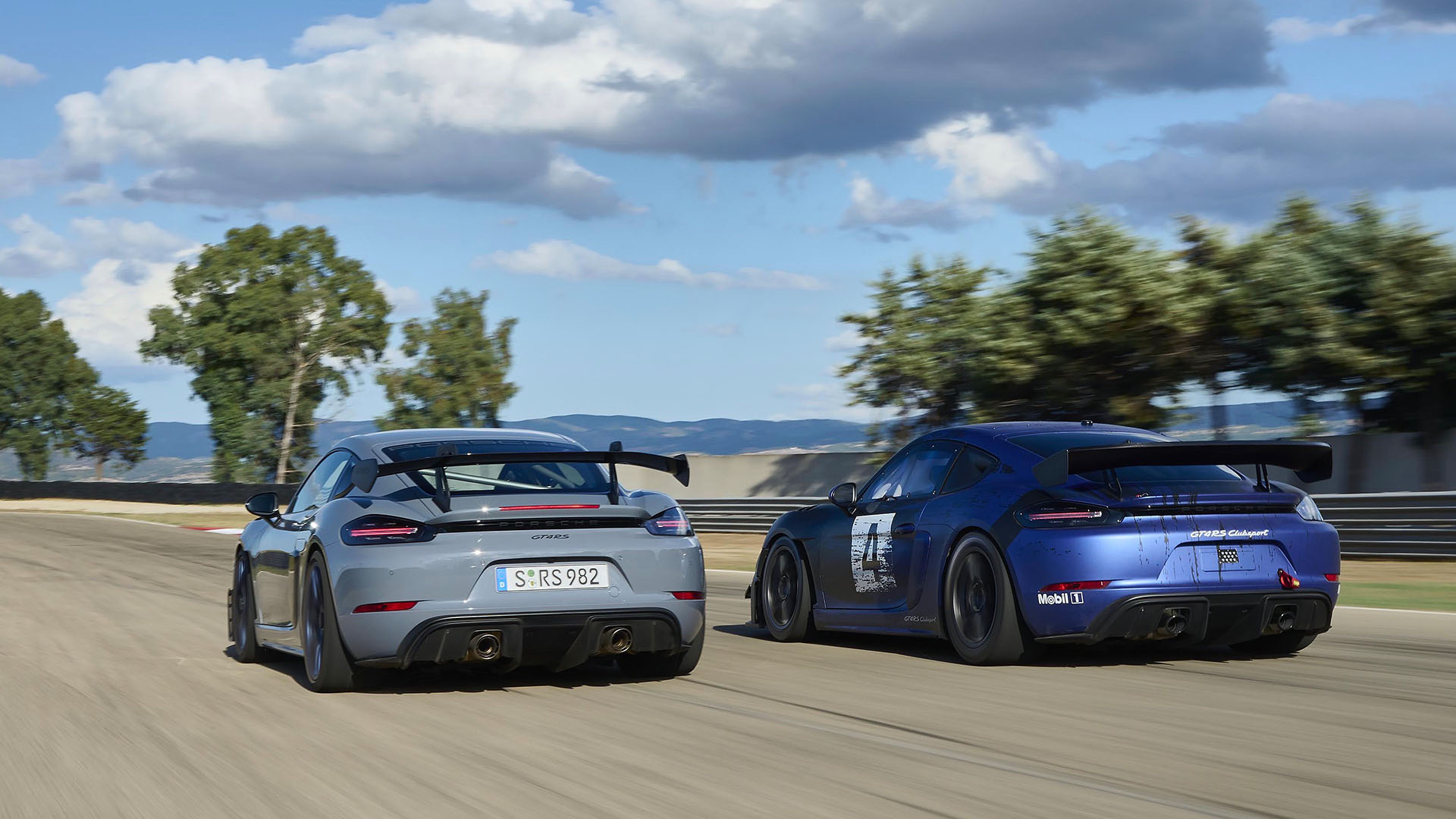
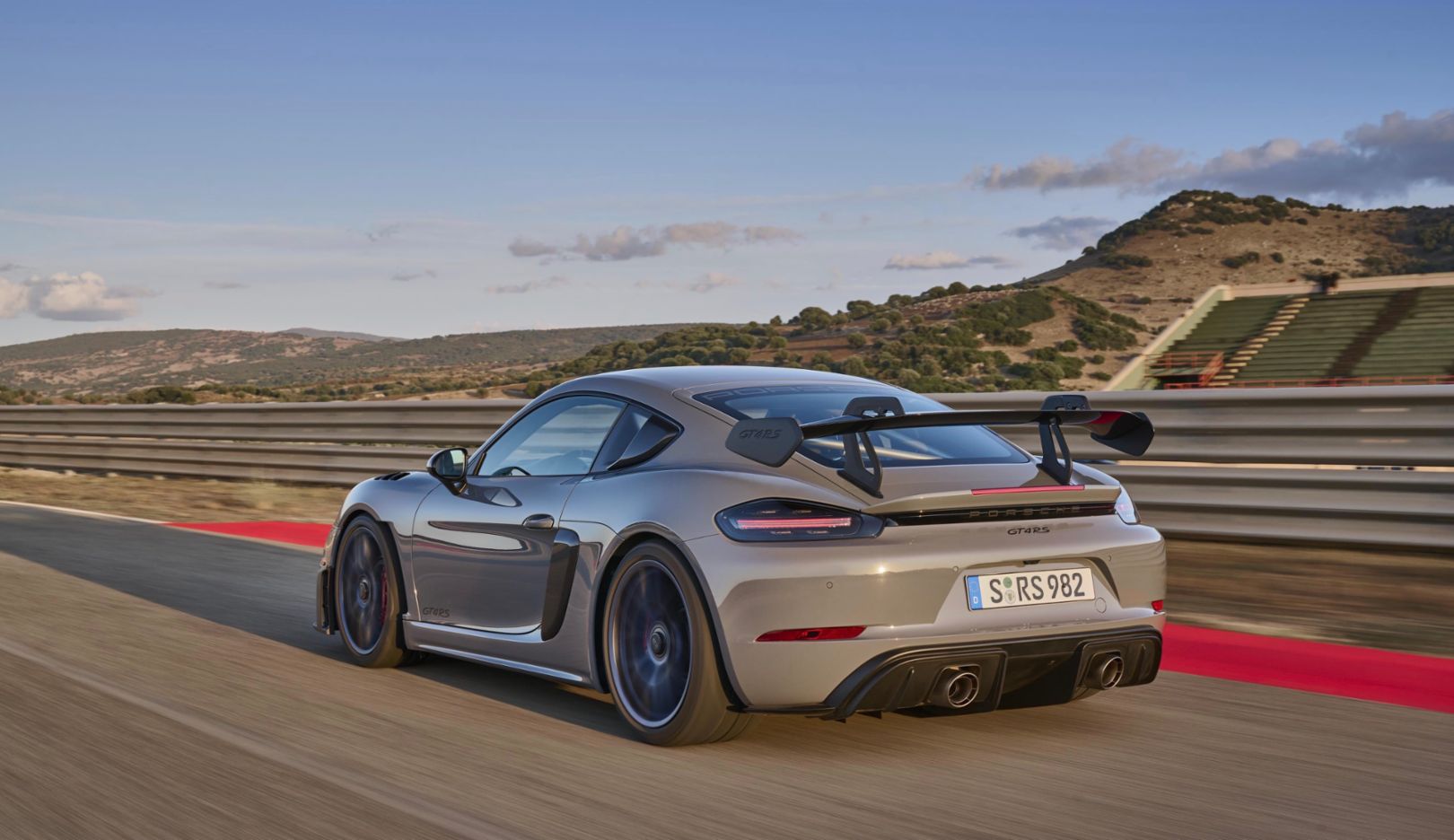
Top Gear GT4 RS overview Regular GT4 on the right, GT4 RS on the left. Notice the far more aggressive diffuser, “hang down” wing, and larger exhaust exits

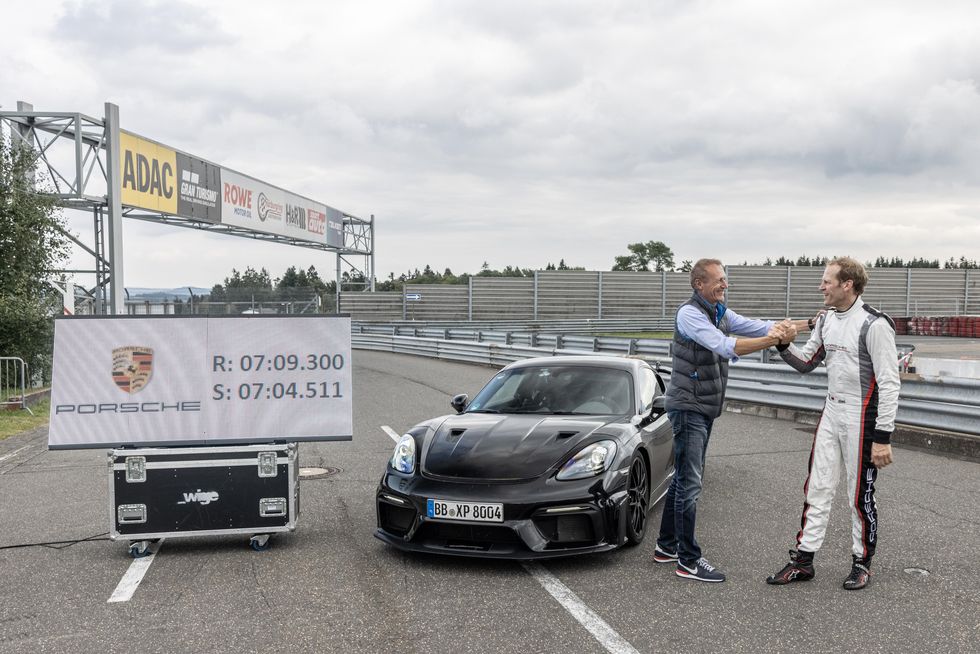
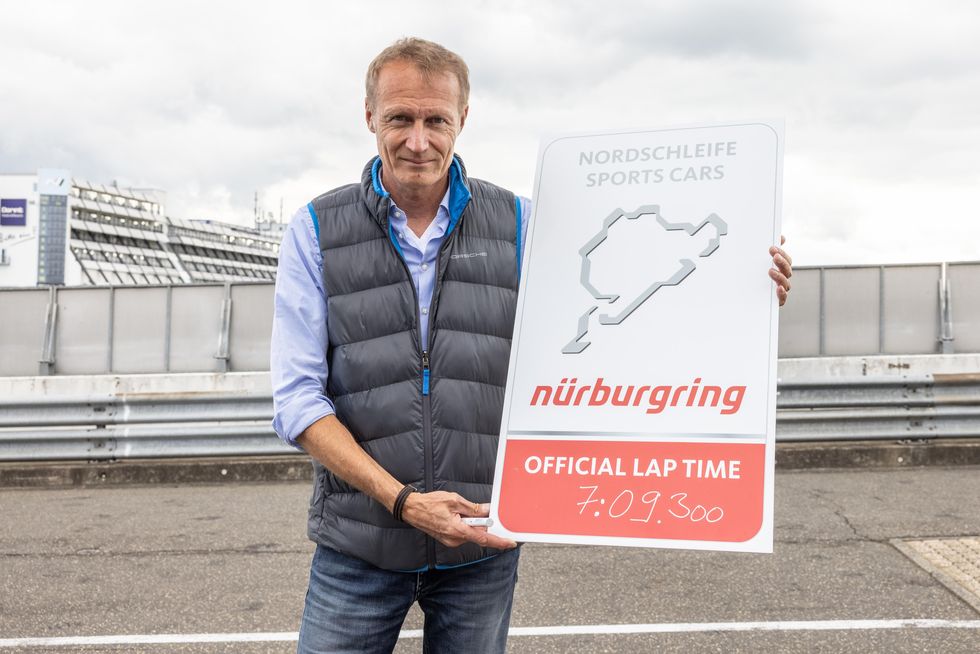
Sure, it can lap the Nurburgring’s famous Nordschleife track in 7 minutes and 4 seconds. Sure, it has unbelievably good handling and its aerodynamics are machined and tuned to precision German standards. But by letting the GT department off the leash, they’ve also made, as Top Gear describes it in the video below, a car that is steeped in the highest levels of “engineering nerdery.”

[embedded content] [embedded content]

Our take? While there are still petrol-powered engines around, Porsche should let the GT department off the leash more often, if this is what results from the German equivalent of going mental!

The new Porsche 718 Cayman GT4 RS Clubsport

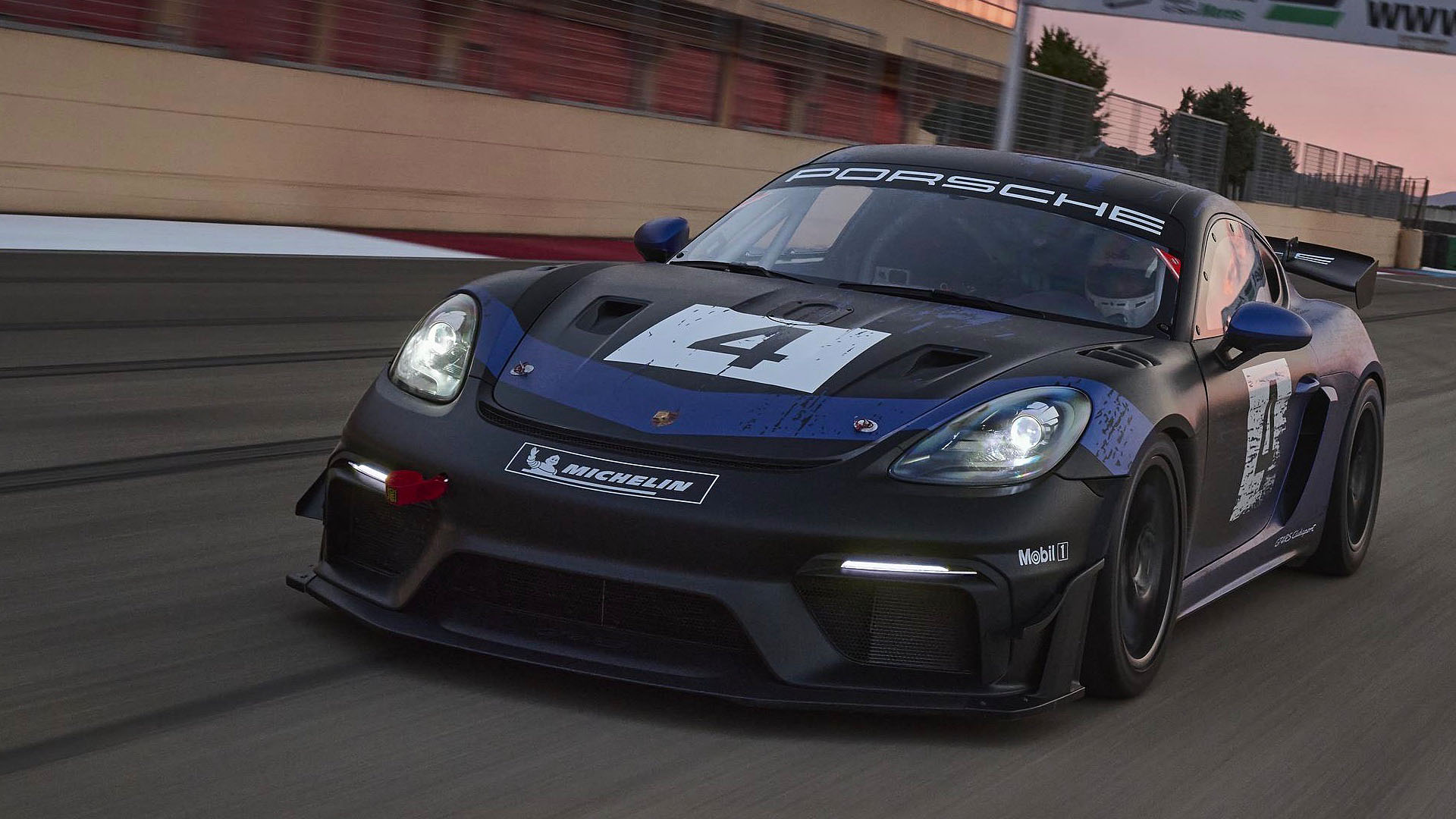
Porsche only just revealed the new 718 Cayman GT4 RS at the Los Angeles Auto Show, but there is even more news in their 718 range, simultaneous Porsche also unveiled their latest mid-engined race car, the 718 Cayman GT4 RS Clubsport, with the 4-Liter six-cylinder boxer engine taken directly from the 911 GT3 Cup race car, pumping out 500 PS in the 718 Clubsport version, an increase of 75 PS compared to the previous GT4 Clubsport edition.

Depending on the track and series-specific regulations, the new 718 Cayman GT4 RS Clubsport can achieve lap times that are over two percent quicker than the previous model. The homologated vehicle is track-ready straight from the factory in Weissach and can be used in SRO racing series around the world without the need for additional modifications, pricing starts at 196.000 Euro or 229.000 Dollars, not including specific taxes.

“We have incorporated our experience of the last three years of running the previous GT4 Clubsport as well as customer wishes into the development of the new car,” said Michael Dreiser, Manager of Sales and Distribution at Porsche Motorsport. “Faster lap times combined with a further improvement in driveability offer our customers a competitive product for the upcoming racing seasons in GT4 class racing competitions around the world.”

The first Cayman GT4 Clubsport was introduced back in 2016 already based on the 981 generation, to offer customers a very competitive race car, in just two years a total of 421 were built, for 2019 a new model based on the 718 Cayman GT4 debuted, of which about 500 would find clients, mostly thanks to the low running costs of these GT4 race cars in the hands of customer teams.

This tradition is continued with the brand new 2022 718 Cayman GT4 RS Clubsport, the 4-Liter boxer engine replaces the previous 3.8-liter six-cylinder unit, and it is about 18% more powerful with its 500 PS at 8,300 rpm thanks to an optimized air intake, also note this new engine car sustain up to 9,000 rpm while it comes with a torque of 425 Nm at 6,600 rpm, resulting in a broad speed band, making the car easier to handle for amateur drivers, but still powerful enough for professional race car drivers.

Upgrades include the use of two-way adjustable shock absorbers with improved characteristics, in addition to adjustable sword-type anti-roll bars front and rear. Vehicle height, camber, and toe are also adjustable. Furthermore, three different spring rates for front and rear axles are now available. Special NACA ducts in the bonnet are designed to direct the airflow more efficiently to the large racing brake-ing system fitted with 380-millimeter steel brake discs.

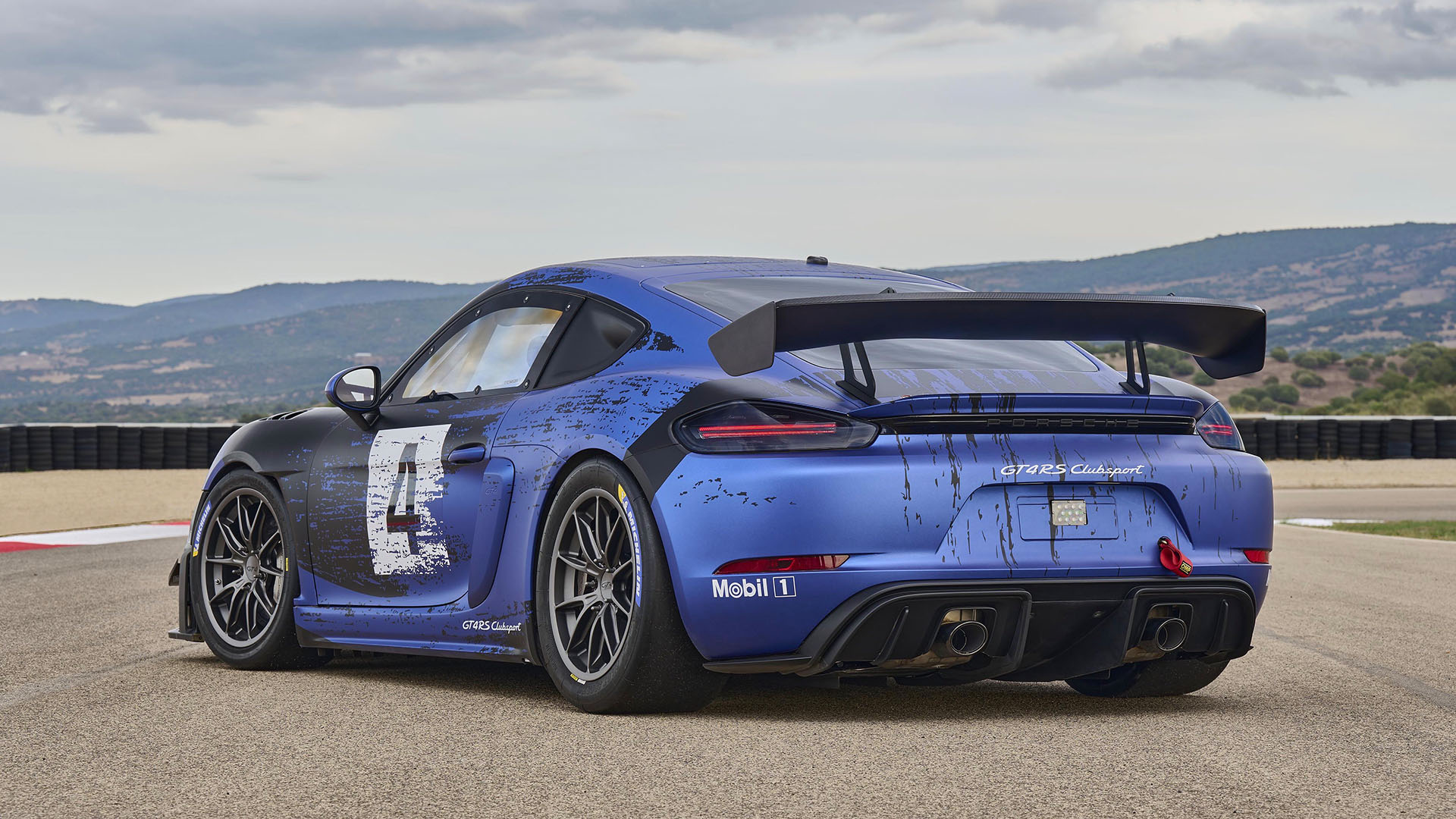
The 718 Cayman GT4 RS Clubsport comes with a further extended front spoiler lip compared to the road car for additional downforce, while vents on the wheel arches were inspired by the 911 GT3 R model and vertical fins on the front bumper create an air curtain for the front wheels, naturally, the entire underbody is closed for this race car and it doubles as an optimization for the rear diffuser.

The ‘hanging’ rear wing, also called swan neck, comes with a 20mm long Gurney flap, with an additional pair of adjustment ranges added for more personalization during racing.

Porsche Taycan GTS Specs and Pricing

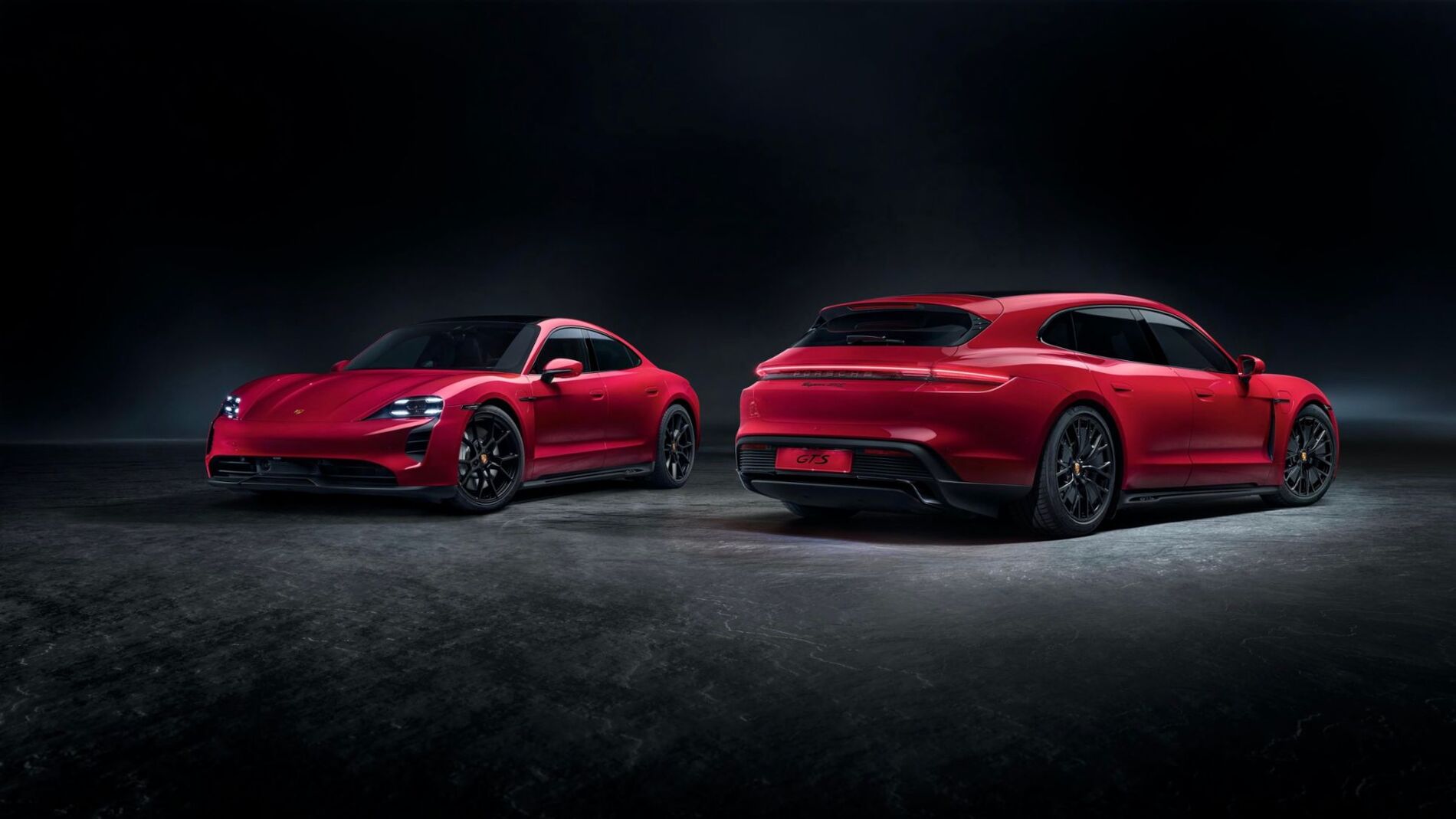
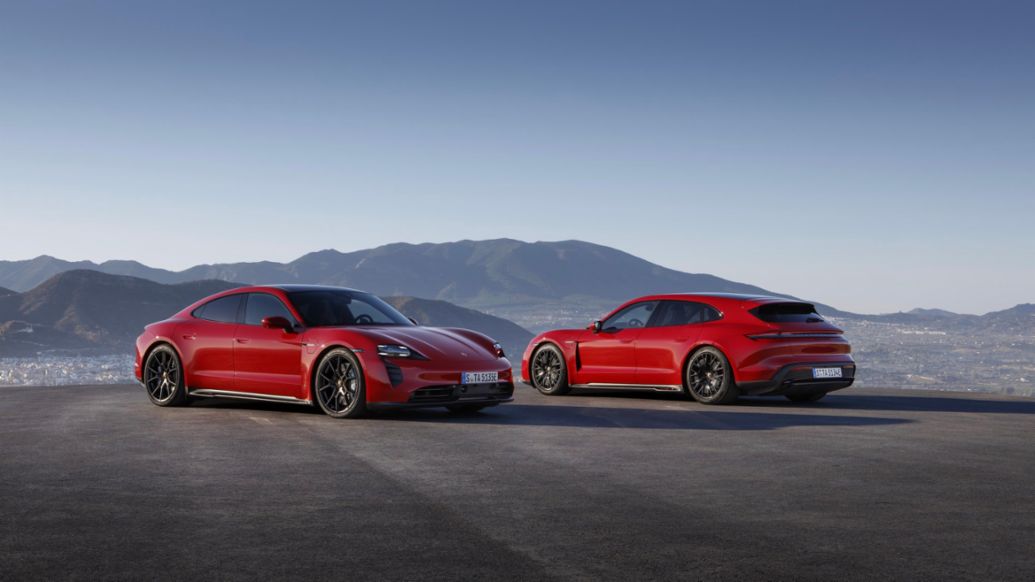
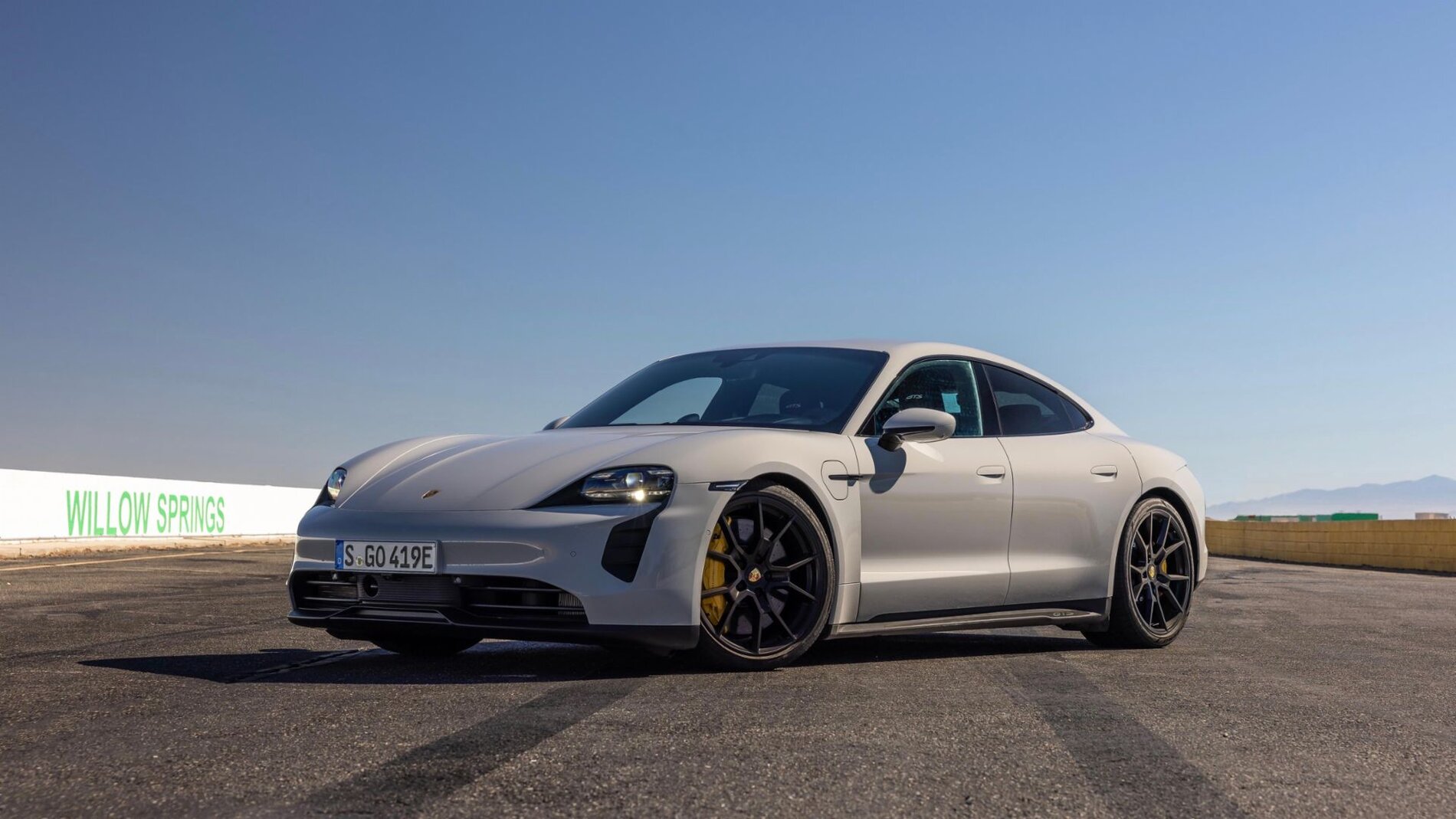
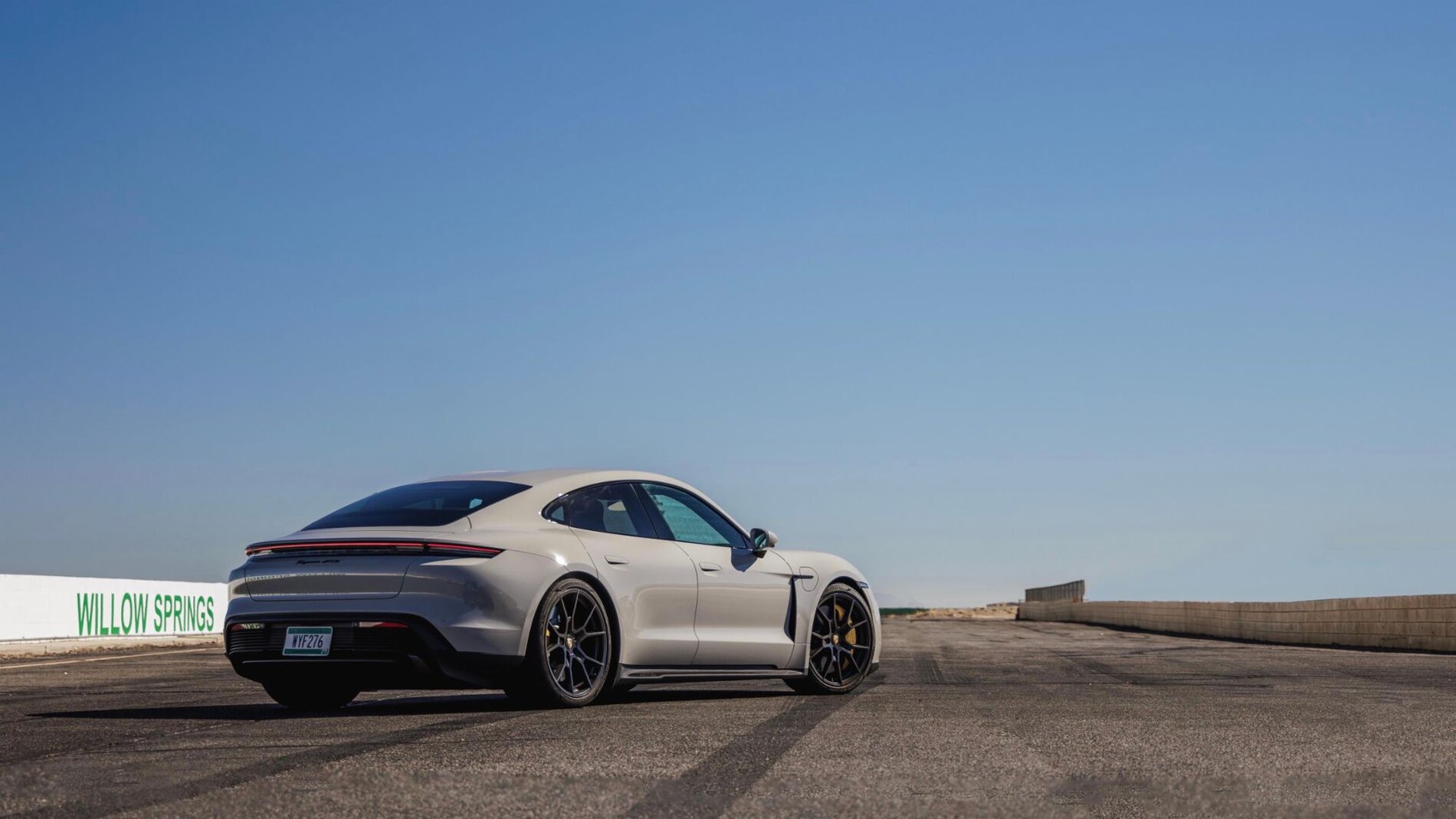
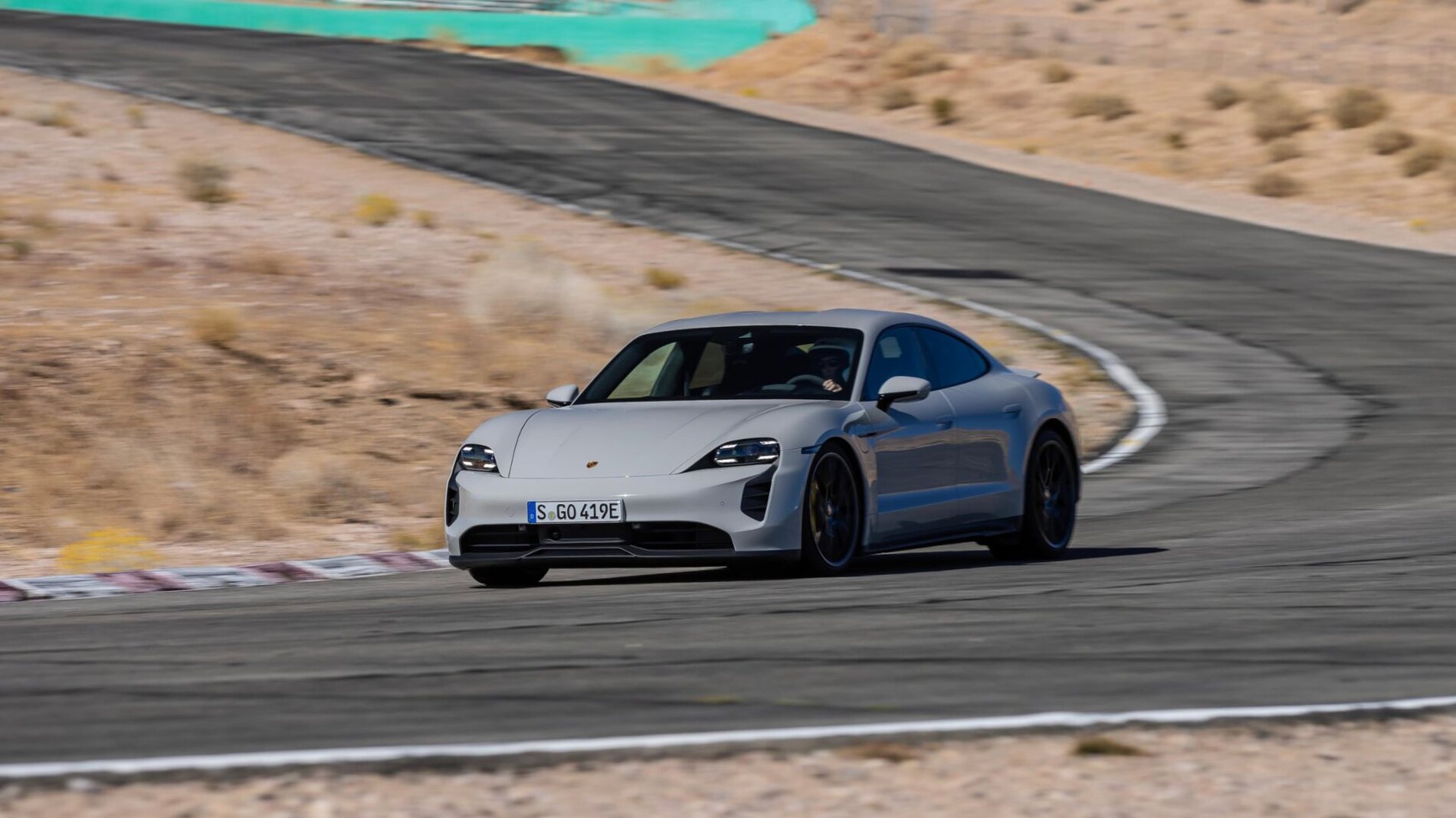
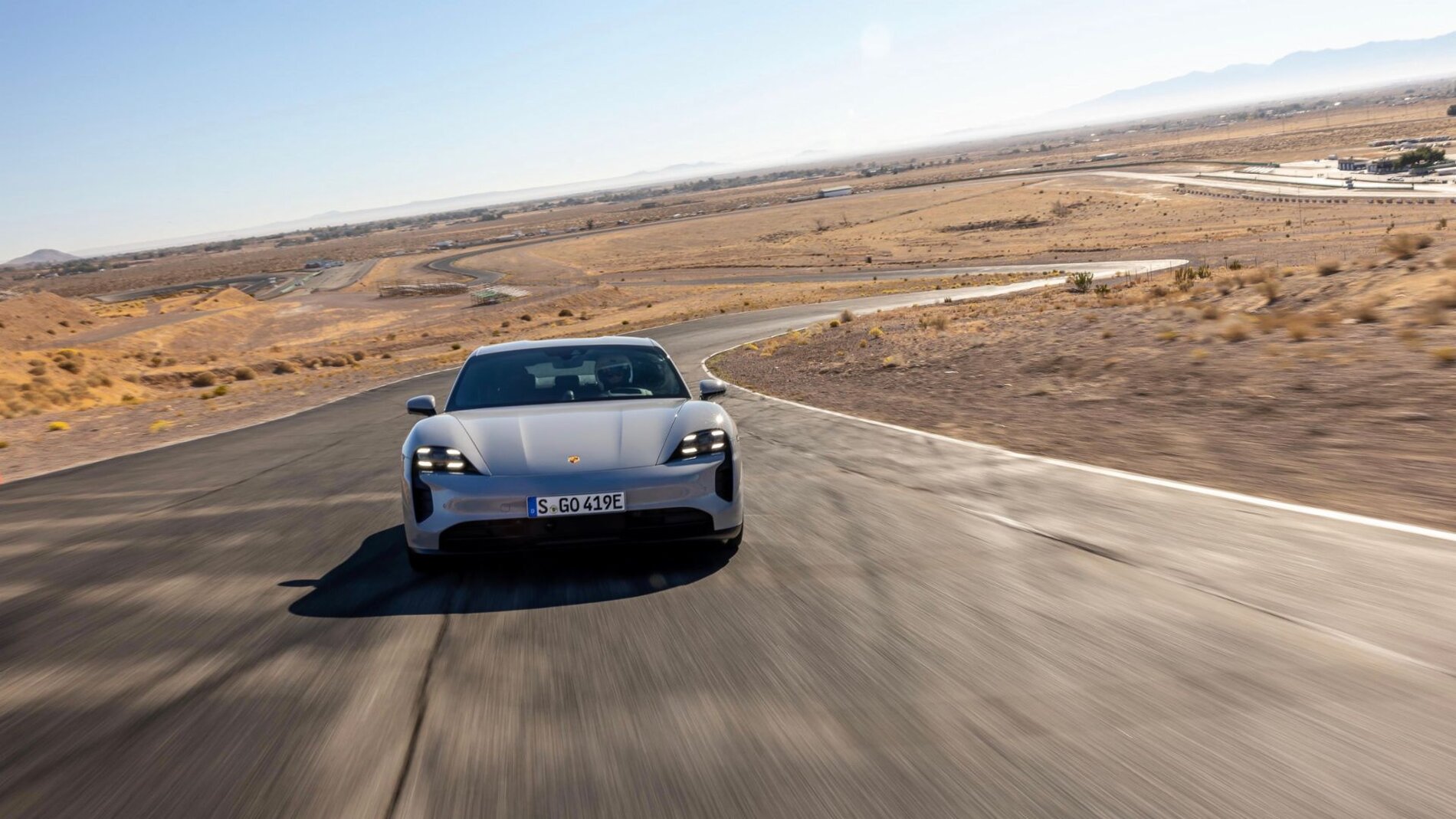
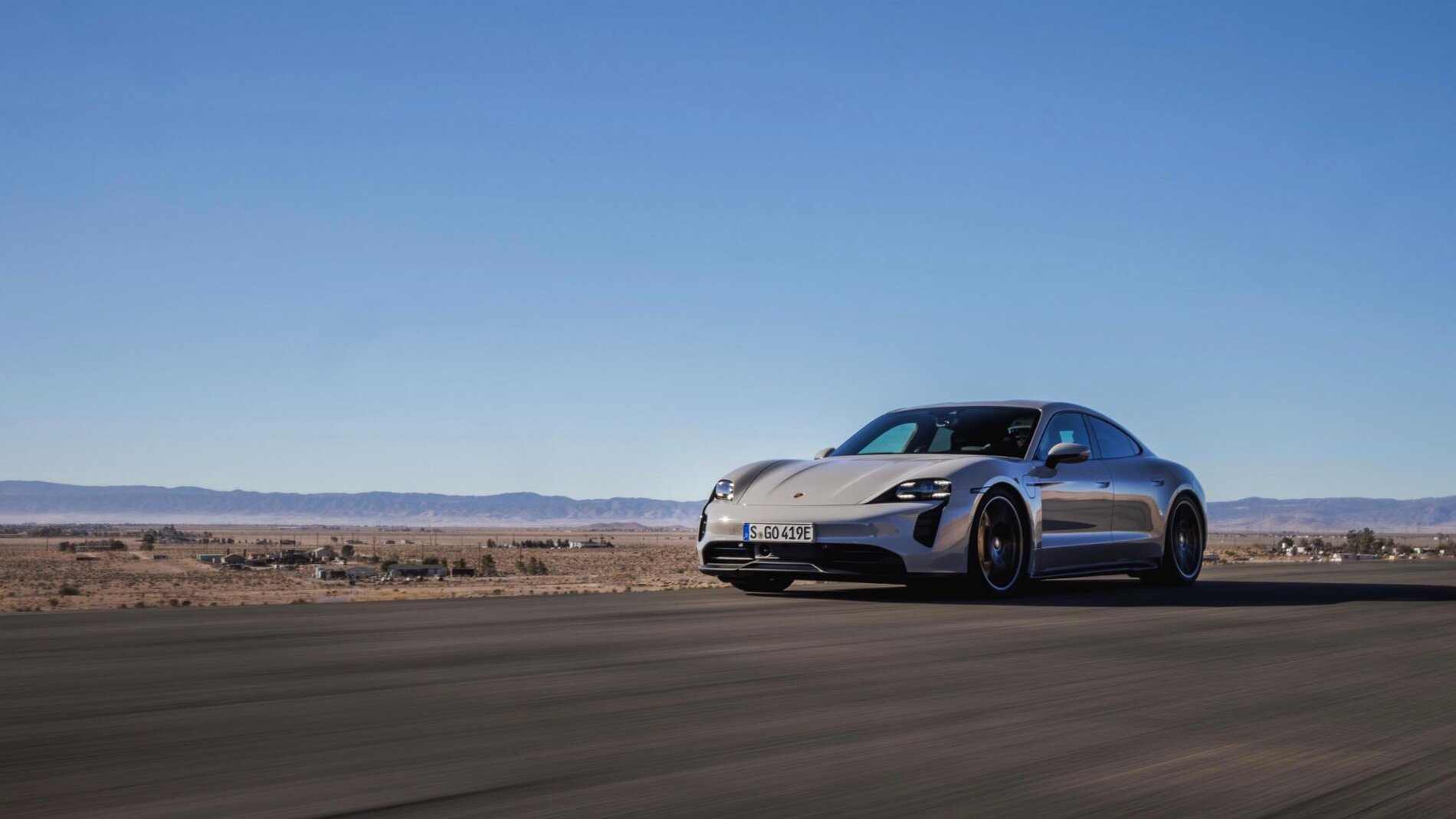
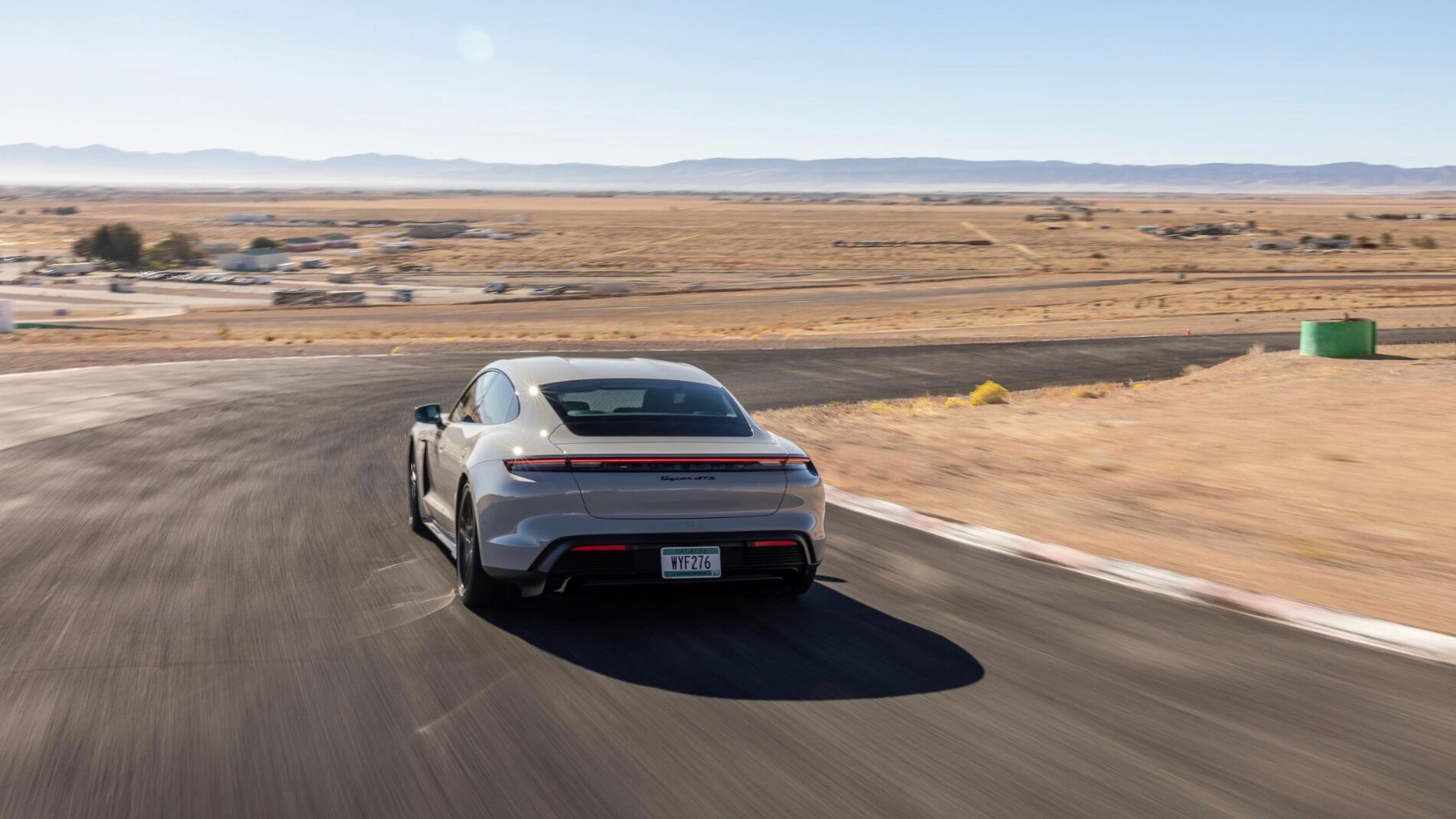
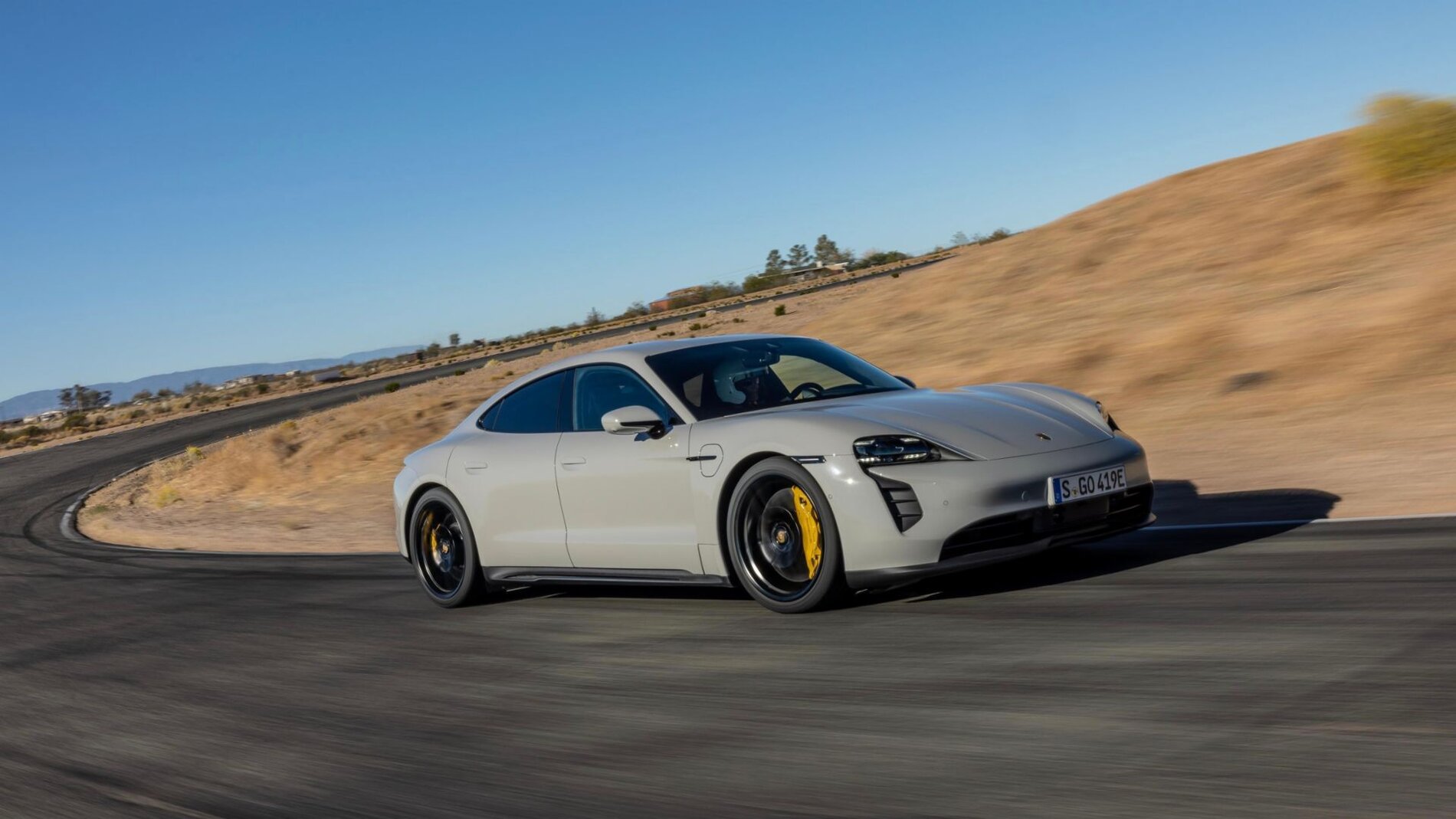
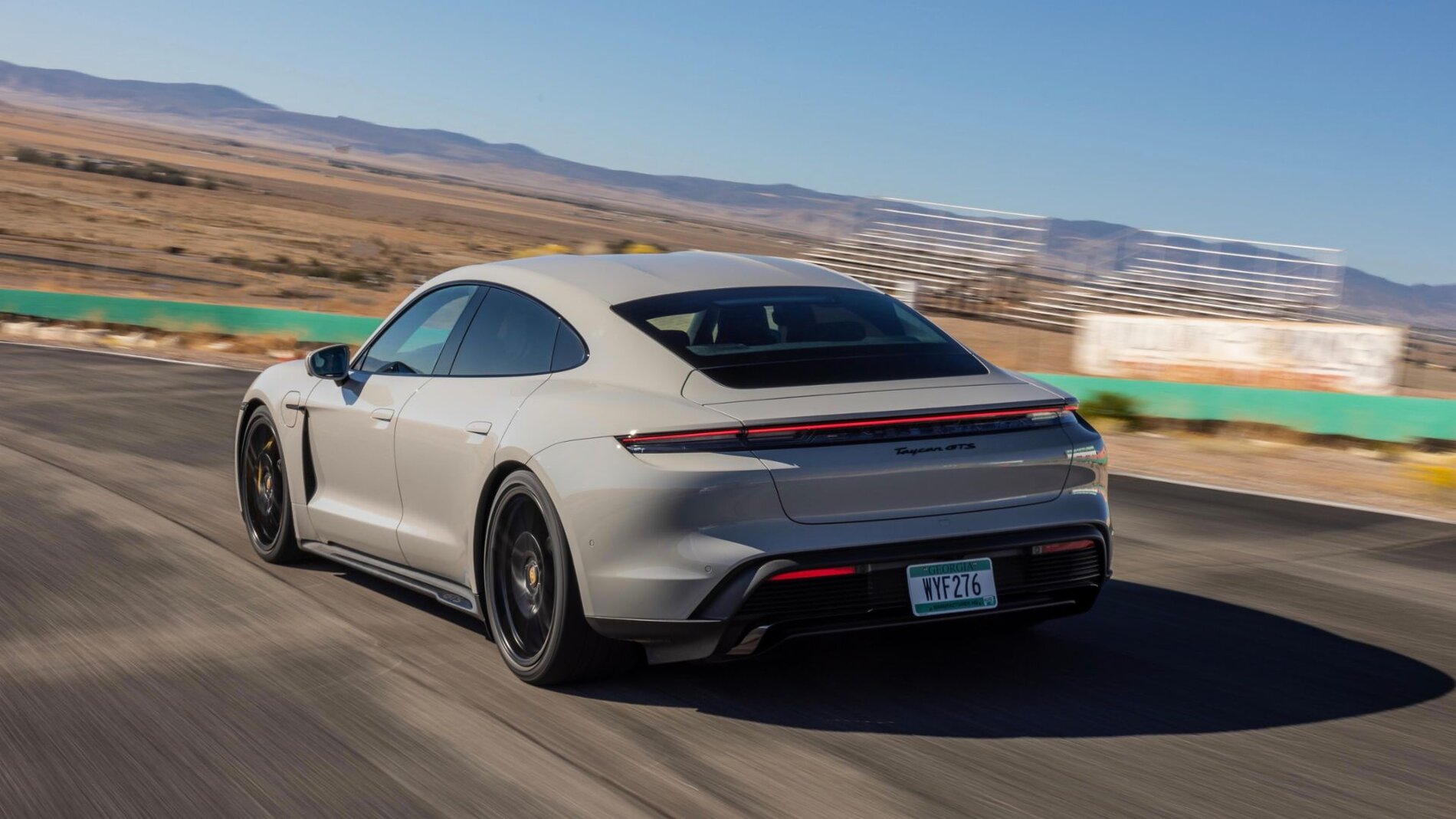
Porsche has revealed the new Taycan GTS electric sports car at the LA Auto Show 2021 together with the third body version of the first all-electric Porsche model series in the form of the Taycan GTS Sport Turismo. The Sport Turismo joins the Cross Turismo and sedan body variants in the model lineup.

The new Taycan GTS is the sporty all-rounder of the Taycan range. The model delivers an output power of 598 PS when using launch control. The acceleration from 0-100km/h is achieved in 3.7 seconds and the maximum speed is limited to 250km/h. Additionally, the new GTS features a range of up to 504 km based on WLTP figures making it the first Taycan to break the 500km mark.

Porsche Taycan GTS Specs and Pricing

Power 2 Electric Motors, one on each axle
Transmission All Wheel Drive
Gearbox 1 Speed Direct Drive at the front axle
2 Speed Auto at the rear axle
Output 598hp
Range 504km
0-100km/h 3.7s
Top Speed 250km/h
Price in USA Taycan GTS: $131,400 (USD)

Taycan GTS Sport Turismo: $133,300 (USD)
Price in UK Taycan GTS: £104,190 (GBP)
Taycan GTS Sport Turismo: £104,990 (GBP)
Price in Norway To be Announced
Price in Canada Taycan GTS: $150,100 (CAD)
Taycan GTS Sport Turismo: $152,700 (CAD)

Price in Germany Taycan GTS: €131,834 (euros)

Taycan GTS Sport Turismo: €132,786 (euros)

The model also features an adaptive air suspension, Porsche Active Suspension Management (PASM) fitted to the benefit of the lateral dynamics and a sportier rear axle steering as optional.

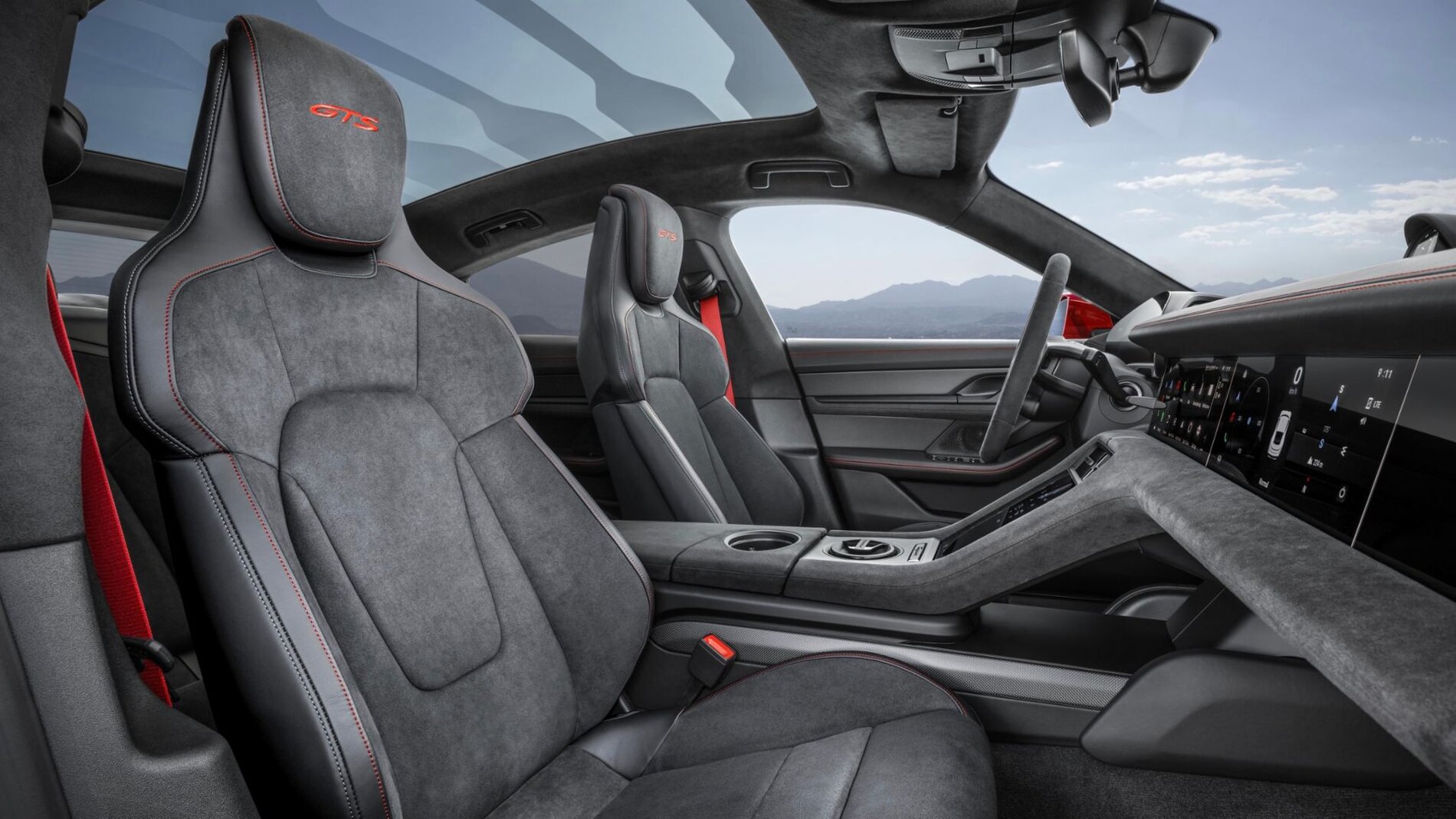
The Taycan GTS features a unique interior and exterior design. The exterior consists of black or dark details on the front apron, bases of the mirrors and on the side window trims. On the other hand, the interior has been finished in numerous Black Race-Tex features and the brushed aluminium interior package with Black anodized finish is fitted as standard.

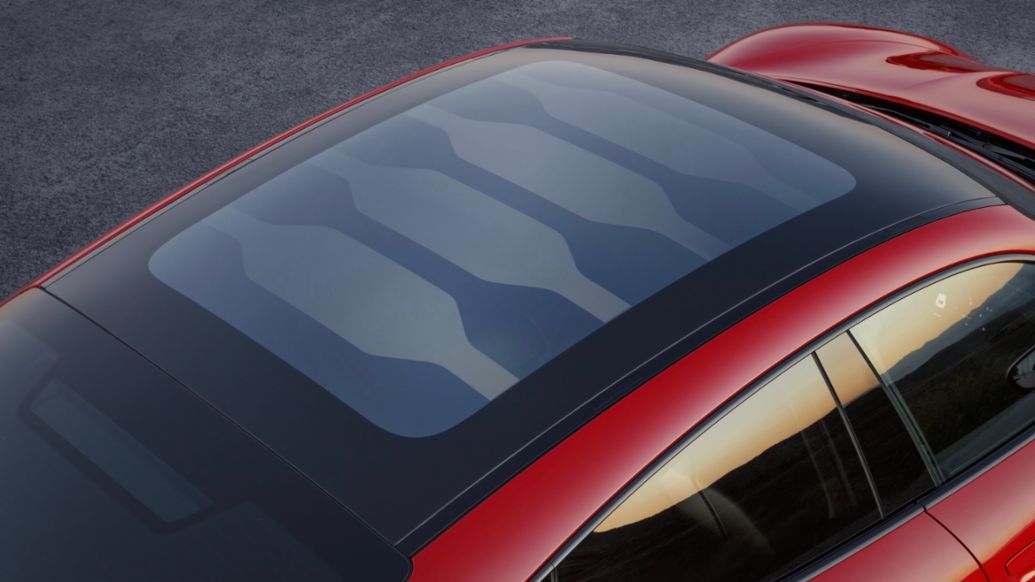
The Taycan GTS also features a new panoramic roof with Sunshine Control as optional. The roof can be changed from clear to matt through an electrically switchable liquid crystal film thus protecting the occupants from glare without darkening the interior.

The roof is divided into nine segments that can be switched individually and in addition to the clear or matte settings, semi and bold can also be selected for a choice of wide or narrow segments.

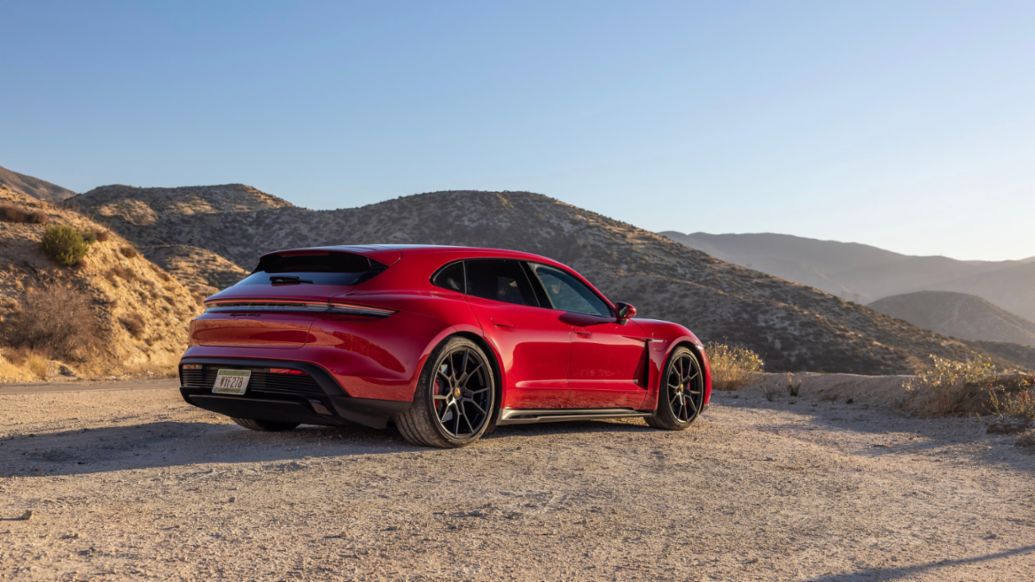
The Taycan Sport Turismo is aimed at customers who want a similar level of everyday practicality as offered by the Taycan Cross Turismo as well as on-road performance similar to the Taycan sport saloon. This new derivative is simply the best of both Taycan worlds and means the model family now includes three body variants.

The Taycan Sport Turismo features a sporty silhouette, a rearward-sloping roofline and the functional design of the Taycan Cross Turismo. The rear headroom is larger than that in the Taycan Sport Saloon and the load capacity under the tailgate is more than 1200 litres. However, the Taycan Sport Turismo does not have off-road design elements or packages.

Prices for the Taycan GTS and Taycan GTS Sport Turismo start from 131,834 euros and 132,786 euros. German prices include 19% VAT and country specific equipment.

Porsche x LA Auto Show: Porsche 718 Cayman GT4 RS Specs Revealed

Late last month, we brought you coverage of Porsche’s confirmation that there would be a GT4 RS model after all. Not a whole lot was known at that time, though what was presented to us was more than sufficient in painting the picture of just how great of a car it was shaping up to be. The most noteworthy fact was that it set a blistering lap time of 7:04.511 at the Nürburgring Nordschleife. This is some 23.6 seconds quicker than the 718 Cayman GT4, suggesting that virtually no part of the car was spared the ‘RS’ treatment.

Now we know a lot more about the ‘how’ and the ‘why’, and Porsche has decided to provide those details to us as part of their participation in the 2021 LA Auto Show, alongside their unveiling of the new Taycan GTS models and the Panamera Platinum Edition. At the forefront of this is the GT4 RS’ engine. It was public knowledge that the powerplant would be a 4.0L naturally-aspirated flat-6 unit, likely a derivative (read: detuned version) of those used in current 992 GT3 and GT3 Touring. Porsche have certainly fulfilled these parameters. You can view a recording of the livestream event, below:

[embedded content] [embedded content]

What was much less expected or known, was how the confirmed power figures would tally up. There were some suggestions that based on the Nürburgring lap time, as much as 500 hp would be on tap for the 718 Cayman GT4 RS. At the time, that still felt a bit farfetched for a number of reasons, the most notable of that being it would mean the new range-topping 718 would be infringing too deep into 911 GT-level territory. However, that prediction has essentially come good, with the GT4 RS producing 493 hp (500 PS)—the same as a 991.1 GT3 RS.

It revs to 9,000 rpm and makes a bit less torque—331 lb-ft vs 346 lb-ft in the 992 GT3—which Porsche says is the result of a more complicated exhaust design, but that’s not likely to matter in the grand scheme of things. After all, the platform known best for its extraordinary balance and superb handling dynamics, is still good from a blistering 0-60 mph time of 3.2 seconds in its new RS-guise. That’s plenty quick. As we correctly predicted, the GT4 RS comes exclusively with a 7-speed PDK transmission, which further highlights the car’s race-bred intentions and stays true to the (modern) ‘GTx RS’ mantra.

[embedded content] [embedded content]

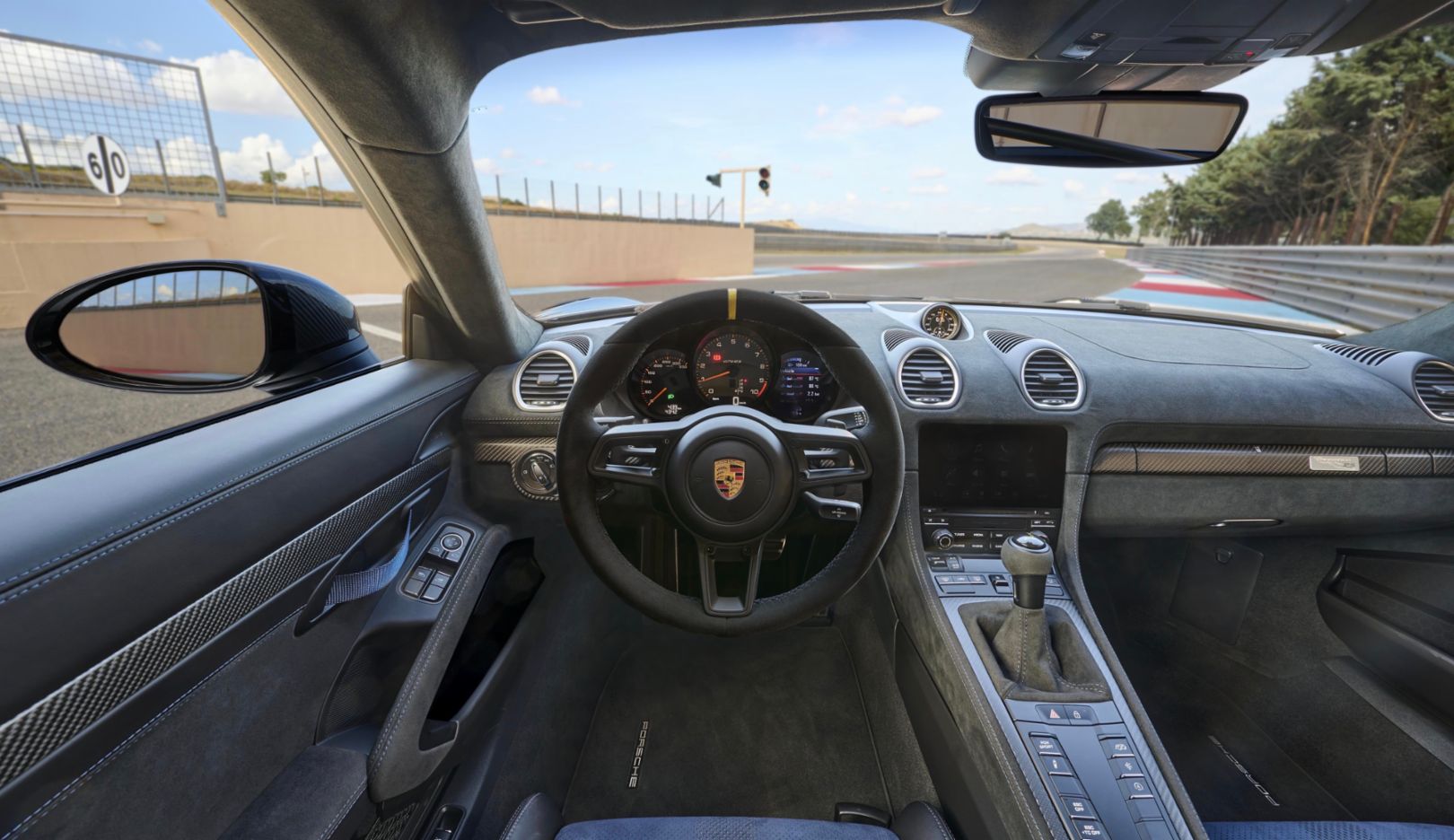
According to Dr. Frank Walliser—Vice President of 911 and 718 Product Lines—the GT4 RS will tip the scales at 3,120 lbs, making it around 49 lbs lighter than a similarly-equipped 718 GT4 with PDK. Much of the weight savings are the result of a healthy carbon fiber diet, with the front fenders, bonnet, door panels and other fixings now made from the good stuff. It will also sit 30 millimeters lower than a regular Cayman and now comes standard with a ball joint suspension system, replacing the rubber bushings used in previous models. The dampers, springs and sway bars have also been revised for more hardcore applications. All of these will afford the RS superior handling precision and a heightened connection with the tarmac.

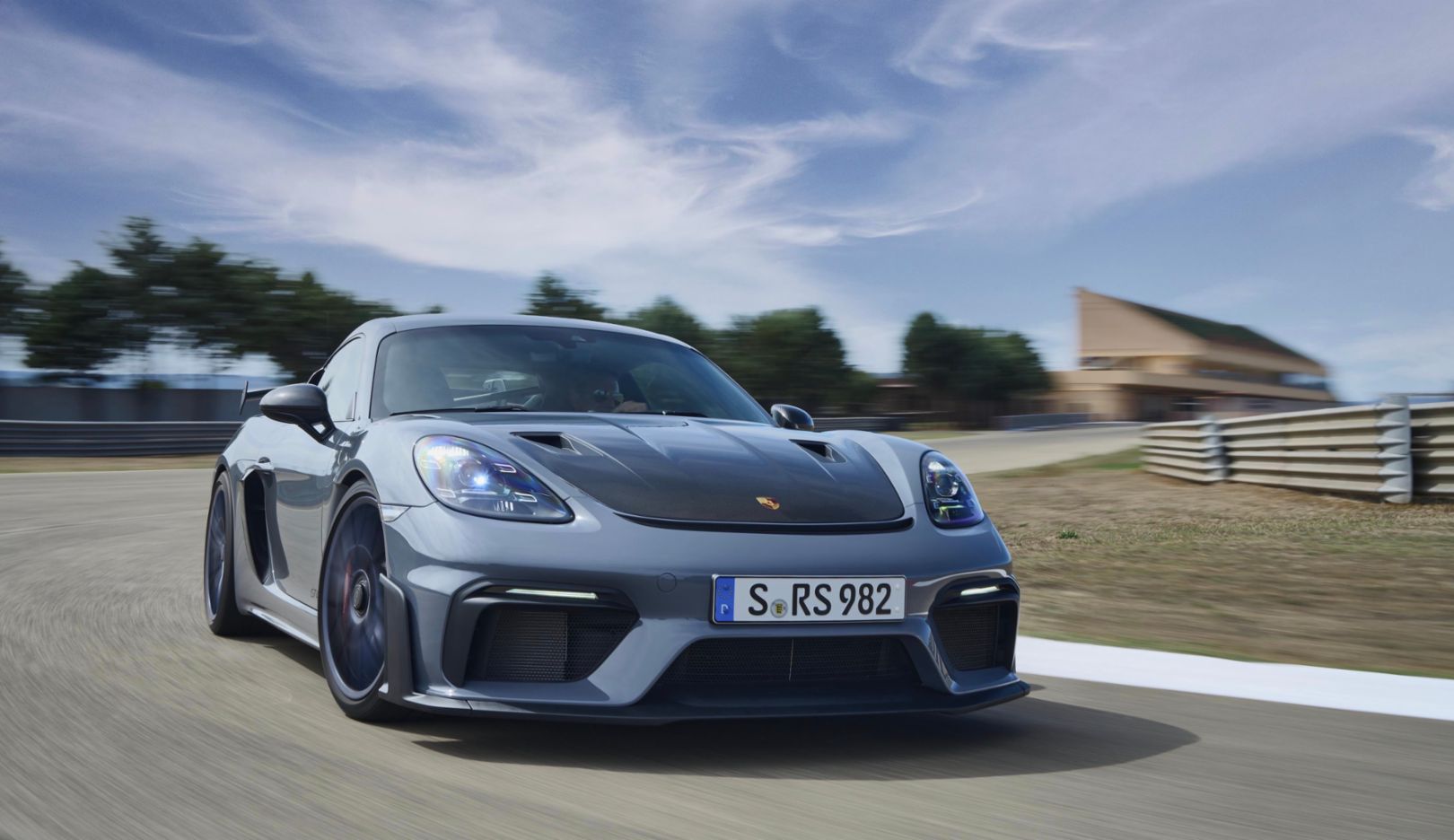
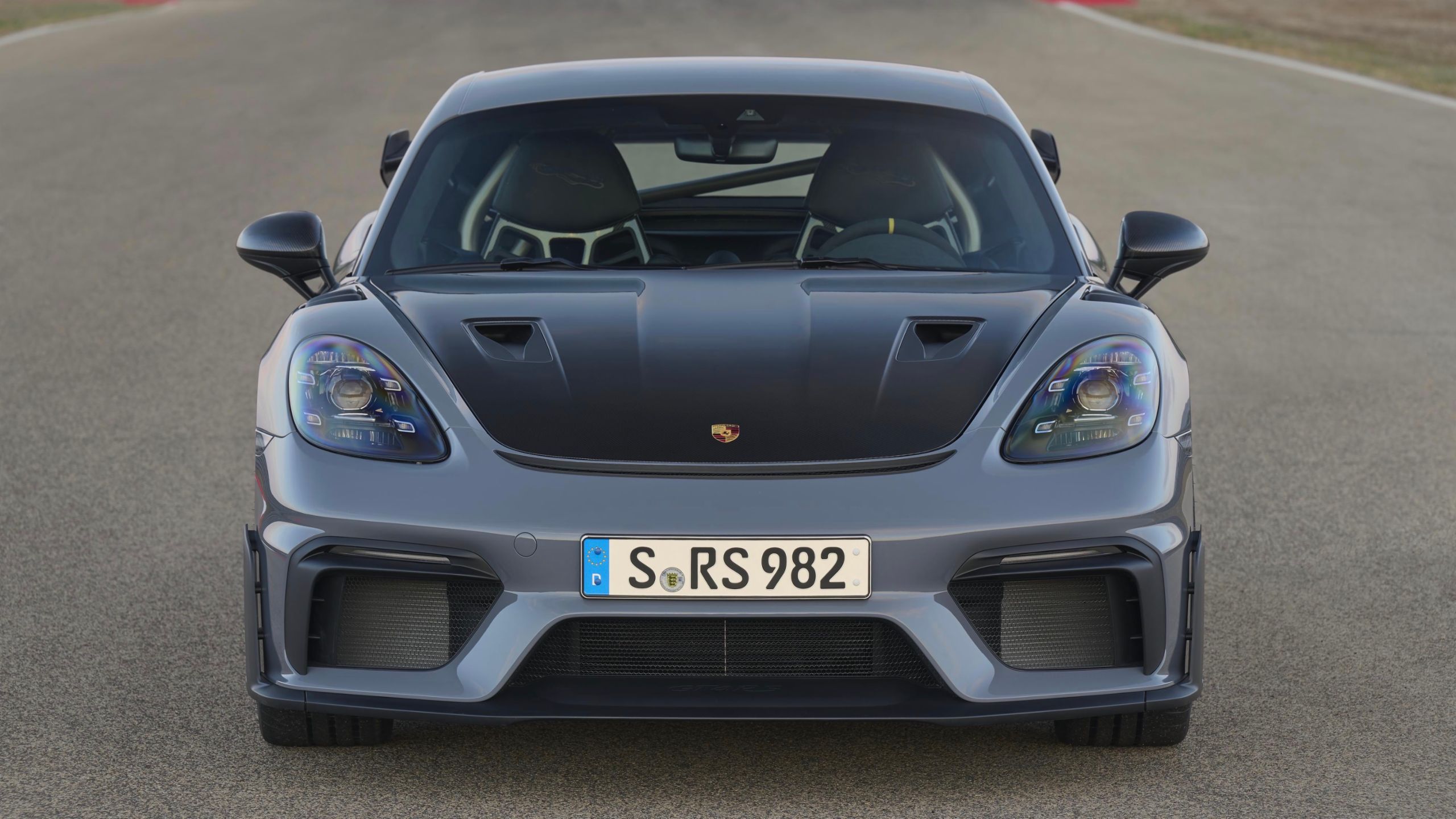
At a glance, the biggest differences between the GT4 RS and the other models are ones that are visually telling, with the swan-neck rear wing being the most eye catching of its features. The rest of the body gets the typical RS workout, with streamlined underbody panels, a more aggressive (and adjustable) front splitter, a larger rear diffuser, side blades and huge air intakes, all forming part of this new equation. These of course, are all completely functional changes as well, with the GT4 RS able to produce up to 25% more downforce than the GT4, while also improving engine and brake cooling.

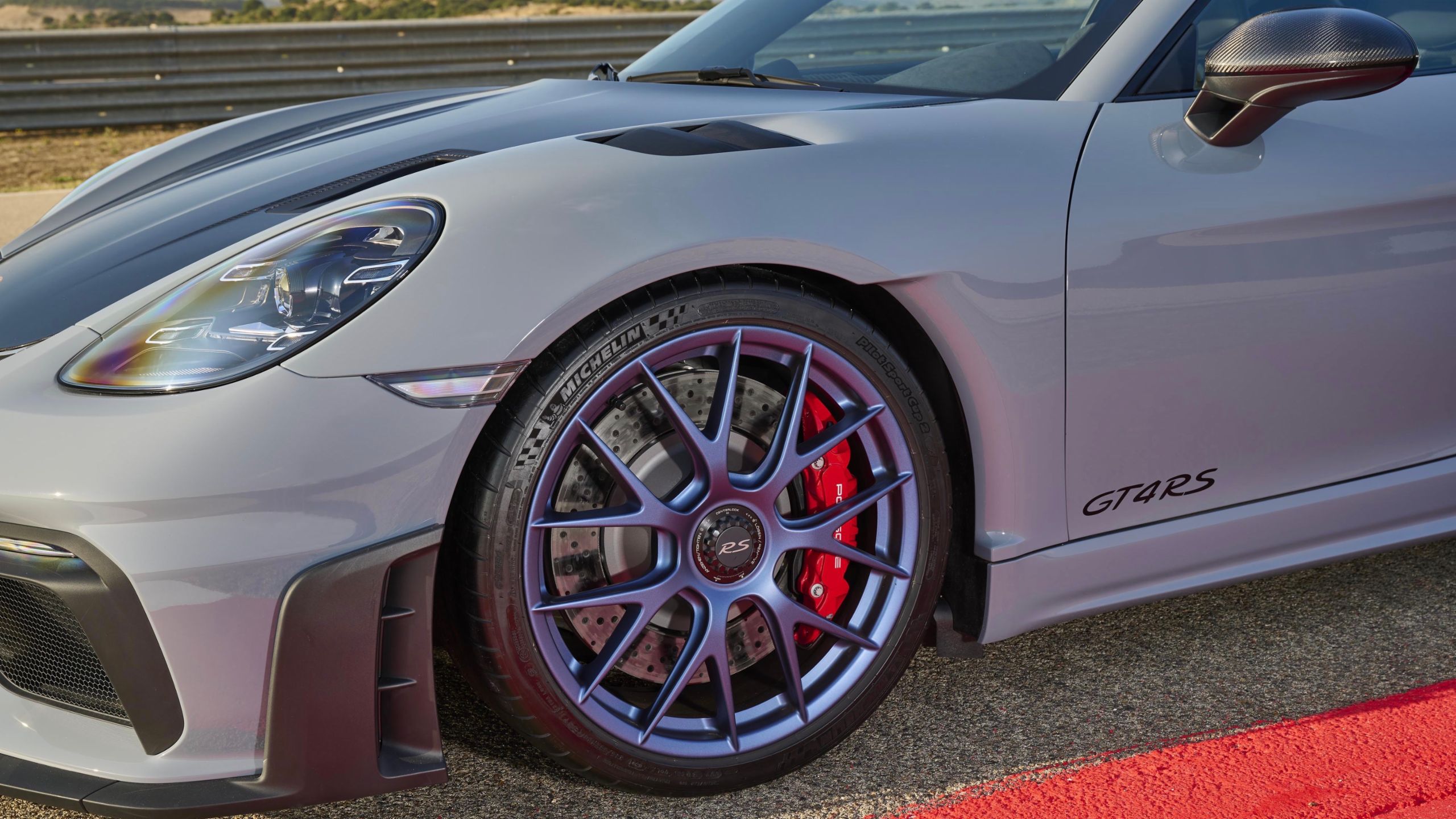
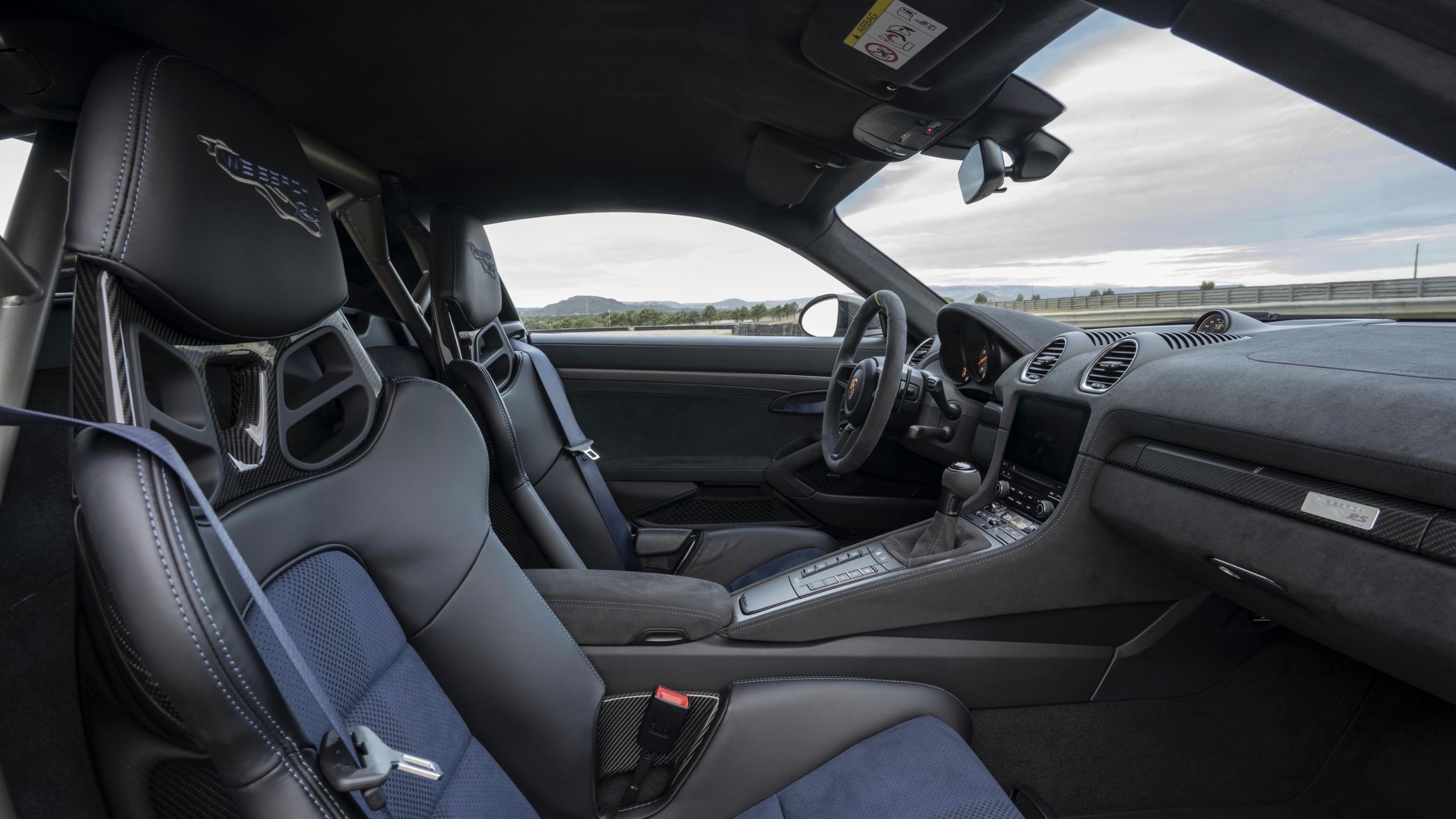
The new Porsche 718 Cayman GT4 RS is also responsible for a few important ‘firsts’ in the history of the Cayman. Besides being the platform’s inaugural RS representative, it’ll also be the first time the Weissach Package is offered for the model, following the trend made popular by the most recent GT3 RS and GT2 RS. The Weissach Package for the GT4 RS will use the same formula which incorporates exposed carbon fiber exterior panels, titanium exhaust tips, magnesium wheels and a roll cage (in jurisdictions where it’s legal to have one from the factory). Center-lock wheels are also a debutant feature on the Cayman, via the RS.

Compared to other trims, there isn’t a significant list of other notable options to pick from—notwithstanding front-axle lift, and a unique Porsche Design watch—because the RS already comes comprehensively equipped, as anyone buying a car with the badge should expect. I was also pretty bang on with my prediction in terms of pricing, with the base MSRP of the Porsche 718 Cayman GT4 RS sitting at $141,700 USD. Waiting lists are already looking long, relative to the number of allocations being given, so you should get your name in the hat now, if you’re interested in picking up Porsche’s latest—and arguably, their most impressive—RS model.

Porsche 718 Cayman GT4 RS Porsche 718 Cayman GT4 RS Porsche 718 Cayman GT4 RS Porsche 718 Cayman GT4 RS Porsche 718 Cayman GT4 RS Porsche 718 Cayman GT4 RS Porsche 718 Cayman GT4 RS Porsche 718 Cayman GT4 RS Porsche 718 Cayman GT4 RS Porsche 718 Cayman GT4 RS Porsche 718 Cayman GT4 RS Porsche 718 Cayman GT4 RS Porsche 718 Cayman GT4 RS Porsche 718 Cayman GT4 RS Porsche 718 Cayman GT4 RS Porsche 718 Cayman GT4 RS

Porsche x LA Auto Show: Porsche Taycan GTS Models Unveiled

As part of their LA Auto Show appearance, Porsche has just unveiled their new Taycan GTS models. Available for both the sedan and new Cross Turismo body-styles, the GTS—as has been the tradition with other Porsche models—slots into the Taycan range between the 4S and Turbo trims. This also marks the first time that the venerable GTS badge will feature on an all-electric car.

[embedded content] [embedded content]

Much like its GTS predecessors, this places the new model in that “sweet spot” within the existing roster. What this translates to for the Taycan GTS, is a model that continues to provide an exemplary performance package without the need to opt for the Turbo models, the latter of which tend to come with an excess of features (and with them, a higher price) that the typically-pragmatic GTS owner would rather forgo.

Just a cursory glance at the specs and features immediately suggest that the Taycan GTS also strikes that perfect balance of power and handling, making it not only the better choice as an everyday car, but arguably for the race track too. Both the Taycan GTS and Taycan GTS Cross Turismo come standard with the 93.4 kWh battery and carry over the 800-volt architecture. They also retain the same dual motor all-wheel drive configuration and produce 590 hp, compared to 426 hp and 670 hp in the 4S and Turbo respectively. This makes the GTS models good for 0-60 mph in 3.5 seconds.

Porsche also states that the GTS models incorporate the suspension setup from range-topping Taycan Turbo S, though they’ve also done further tuning and tweaking in order to optimize the geometry for the models and their intended audience. This should make it the most spirted trim in the lineup in terms of driving dynamics, road feel and responsiveness, making for a Taycan that is more driver-focused and fun to drive than any other model in the roster.

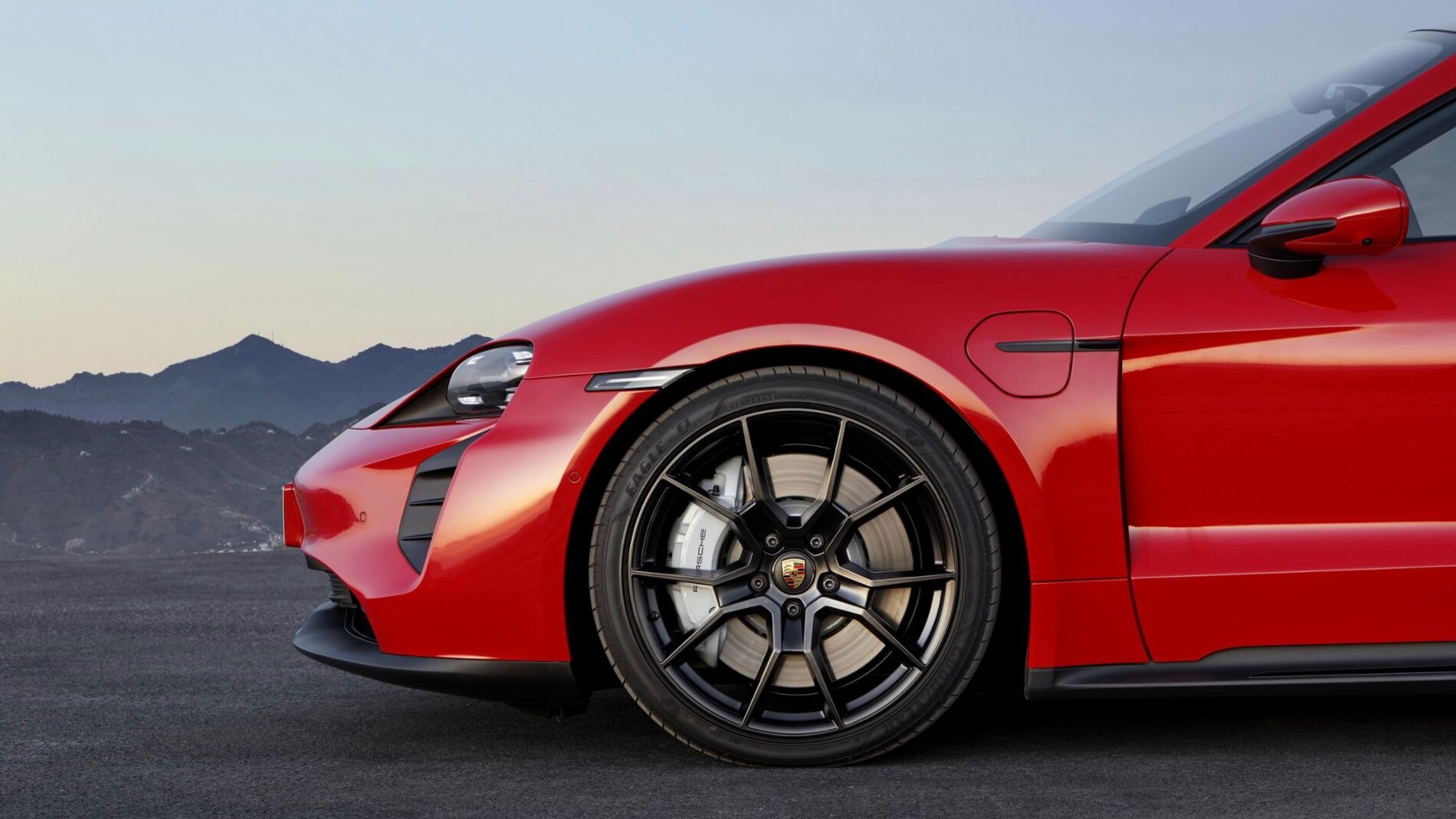
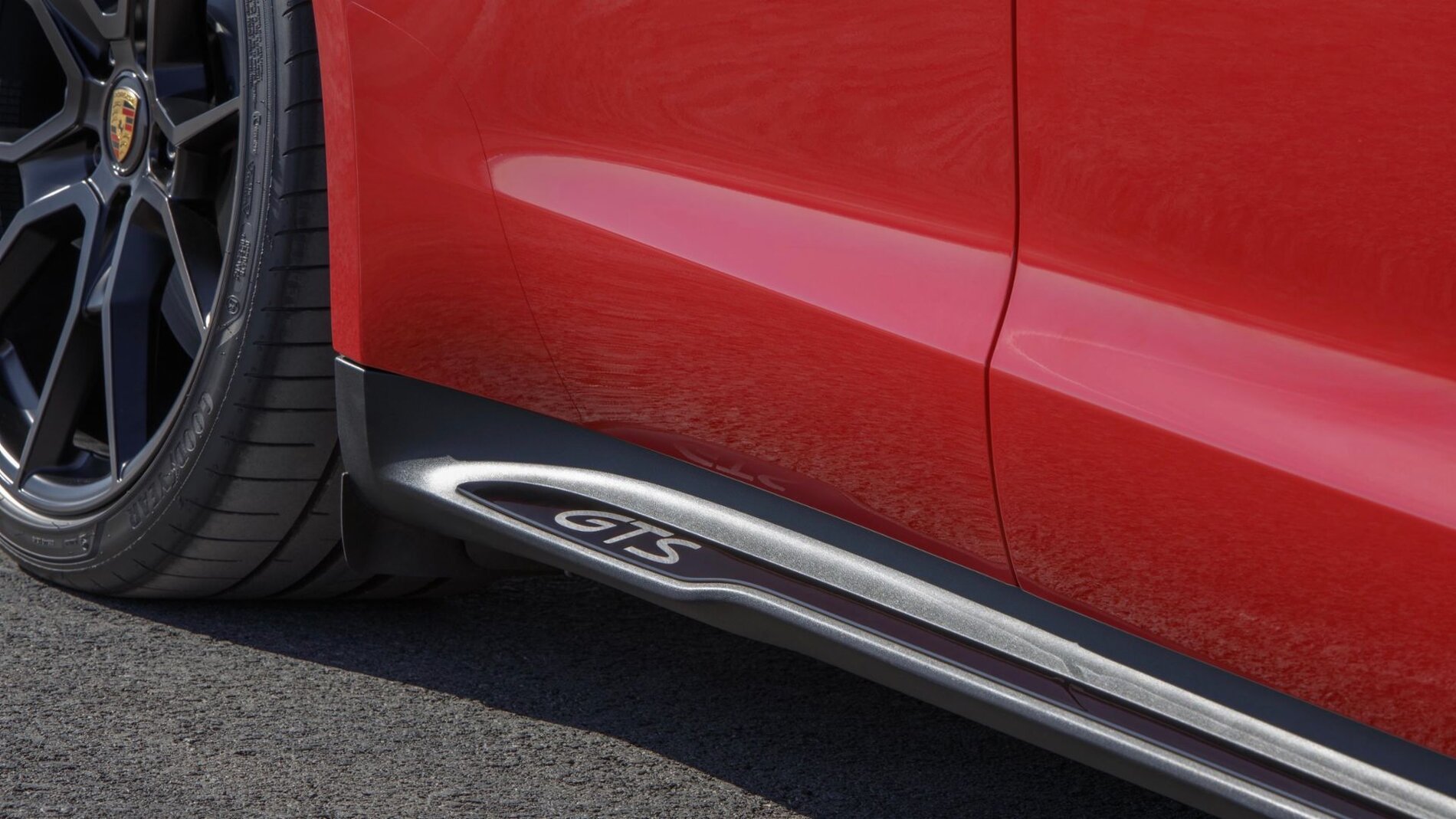
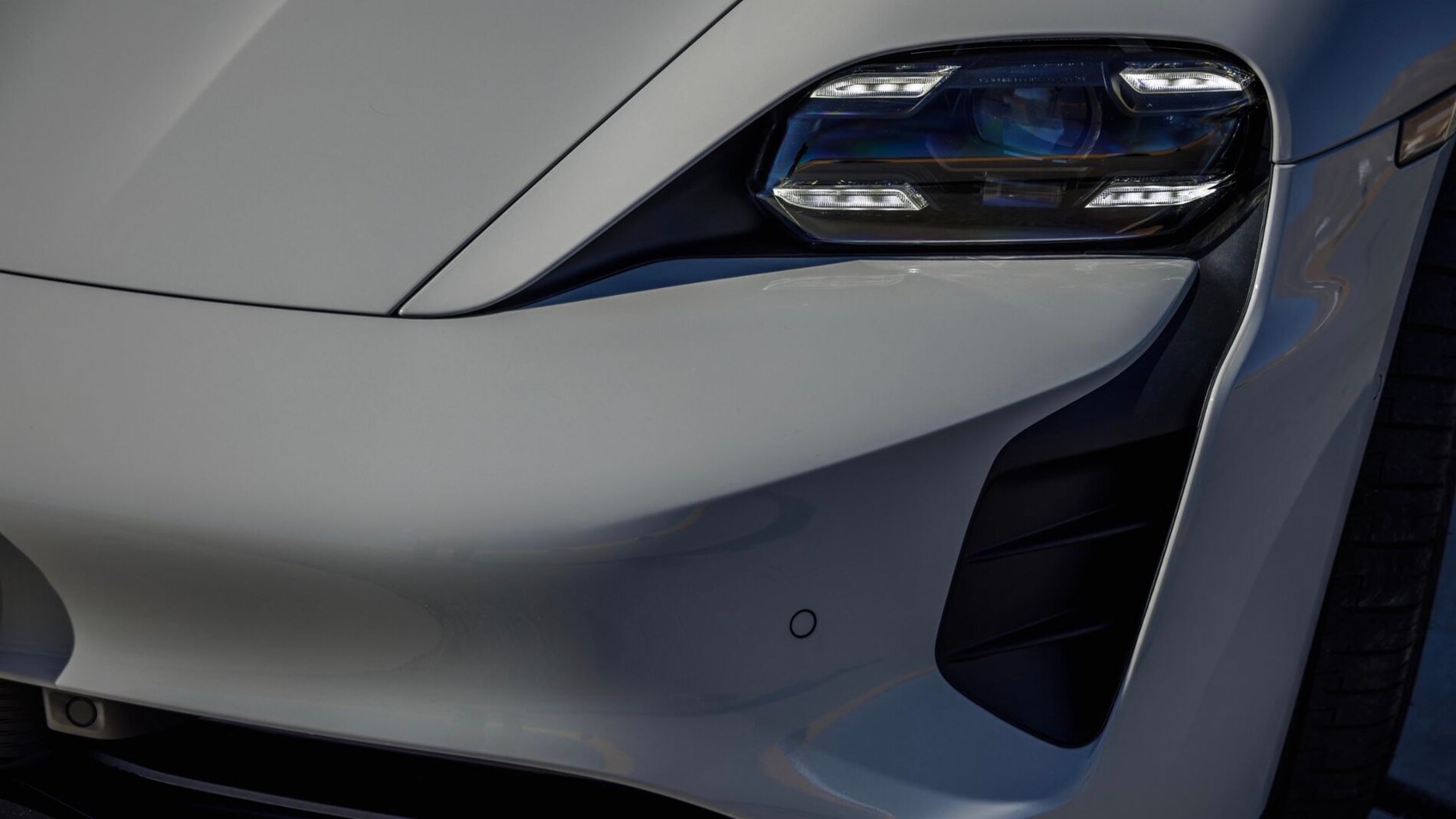
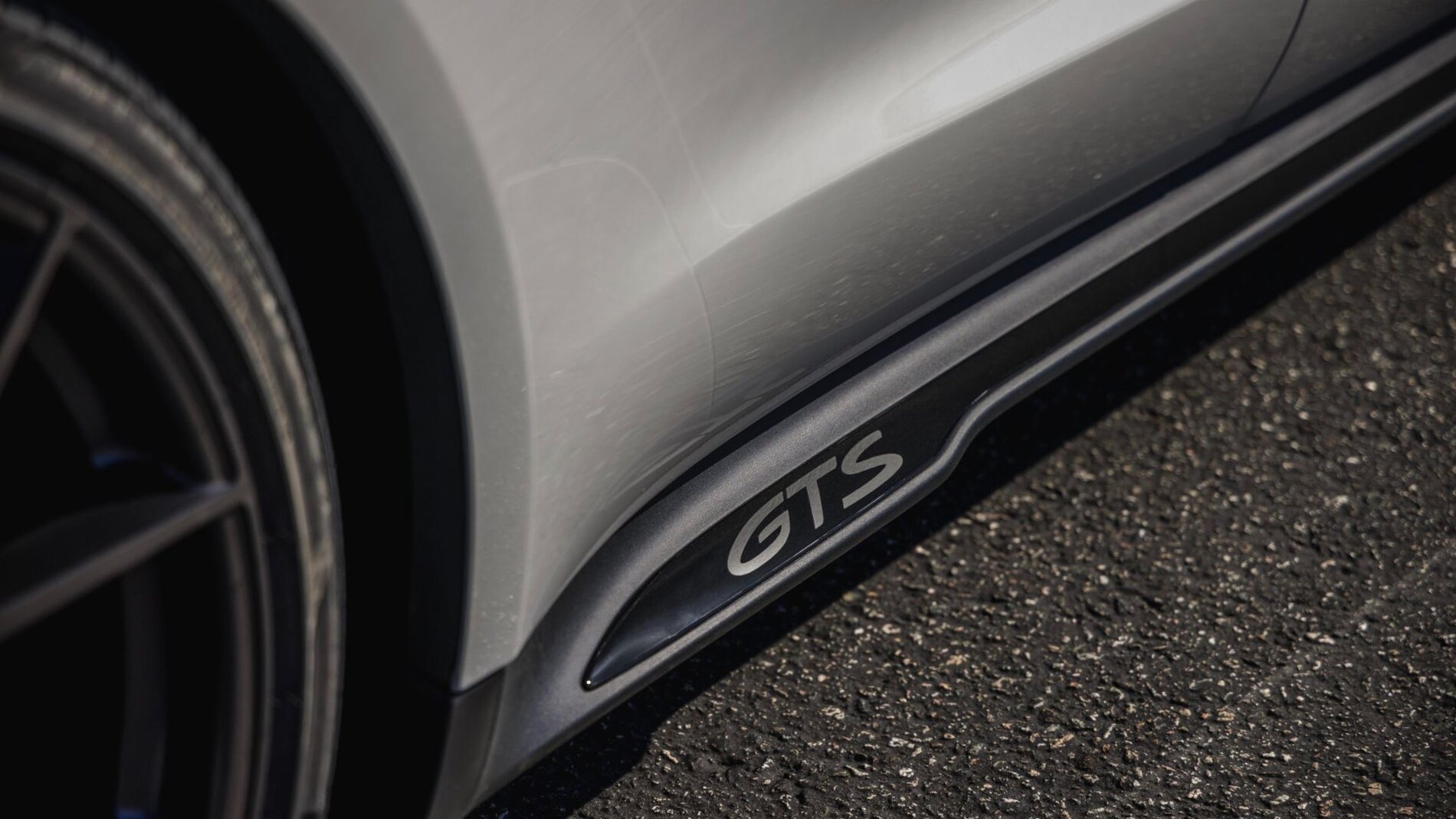
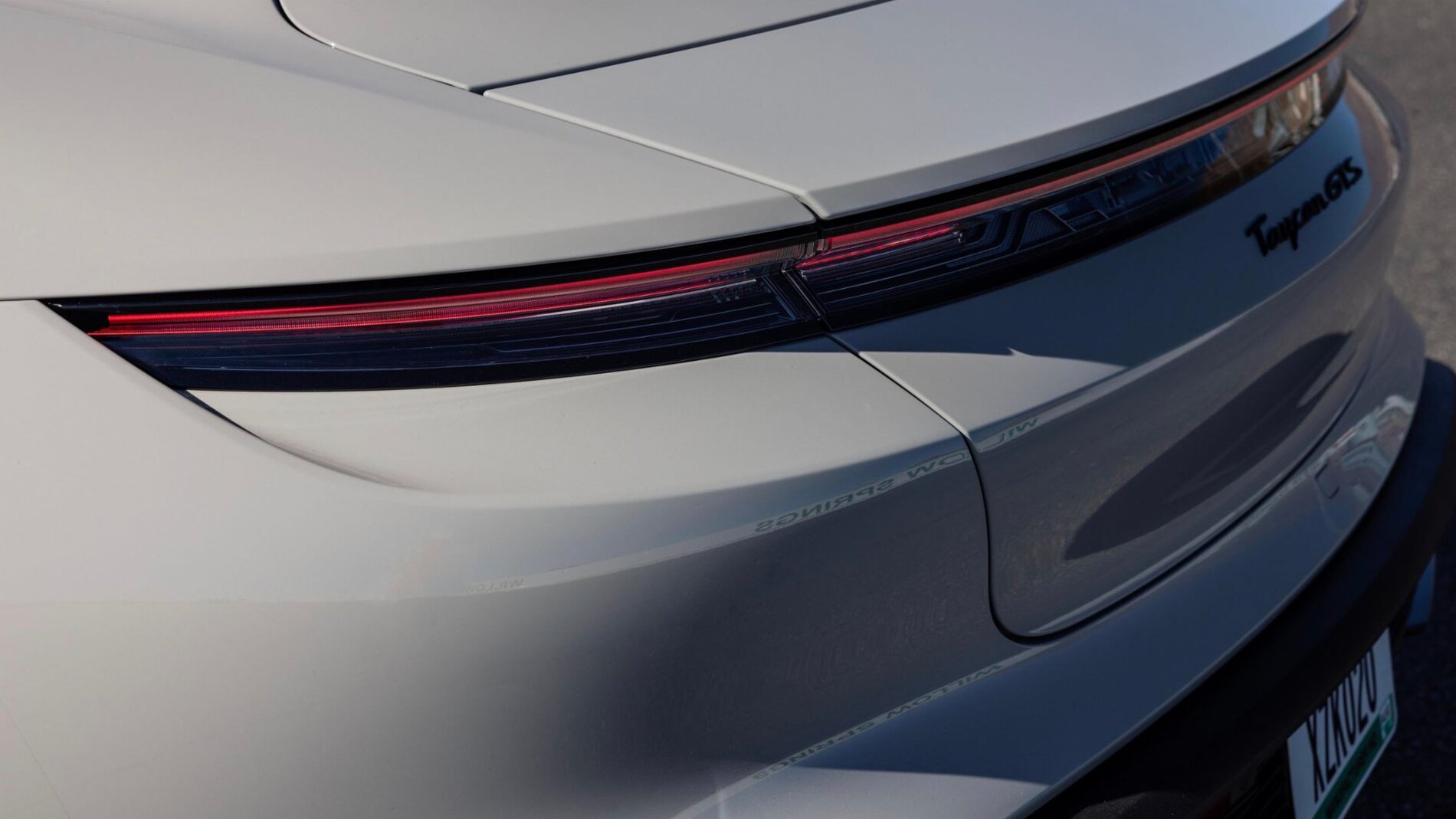
The Taycan GTS models also distinguish themselves visually, with the latest trim coming standard with the SportDesign exterior package along with special GTS logos. The side skirts, rear diffuser and window trim are also painted in high-gloss black as standard. The Cross Turismo GTS also differs from other CT models by having its rear spoiler painted to match the main body color, and most notably, there is an absence of plastic cladding over the wheel arches seen on all other trims.

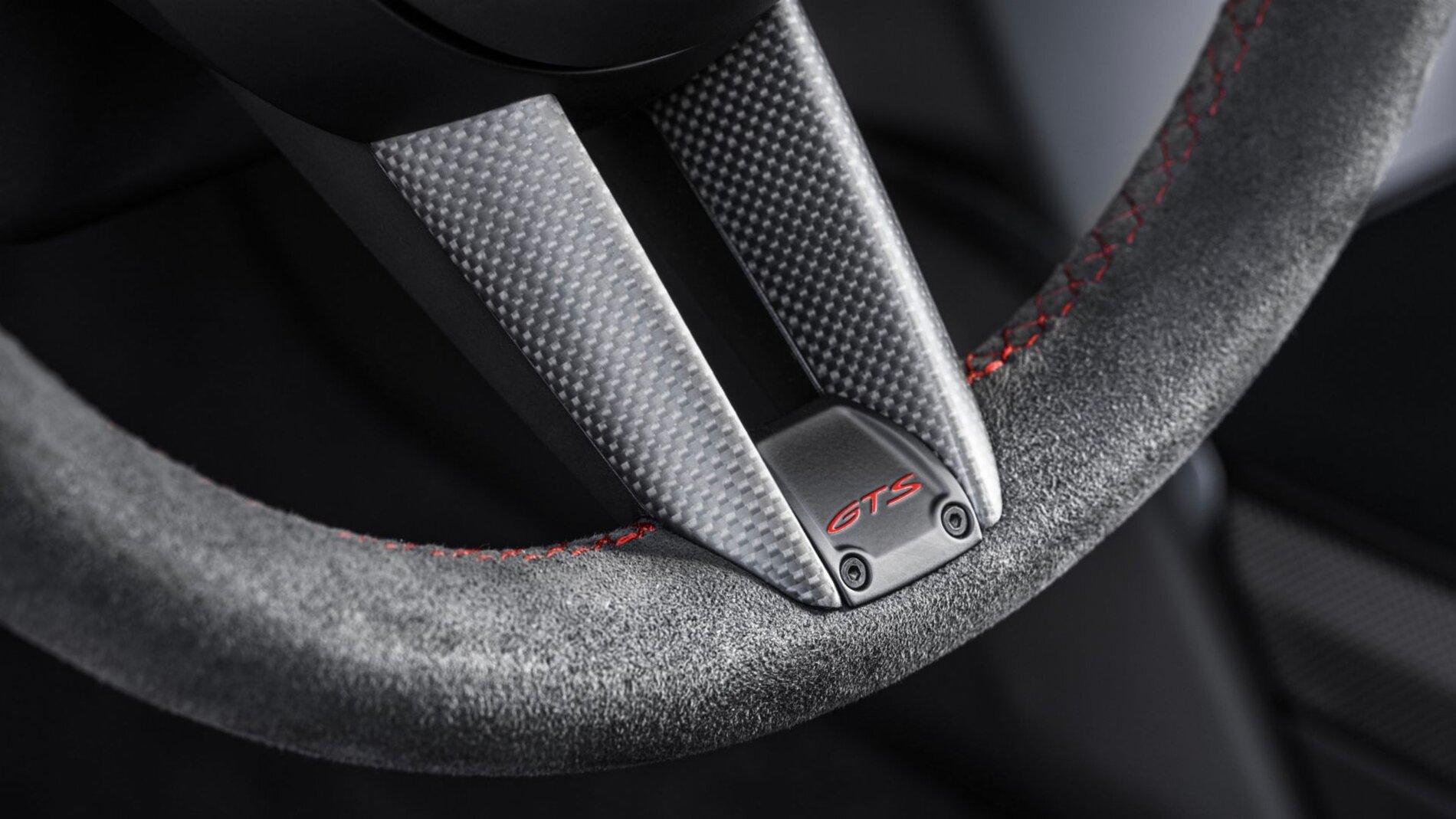
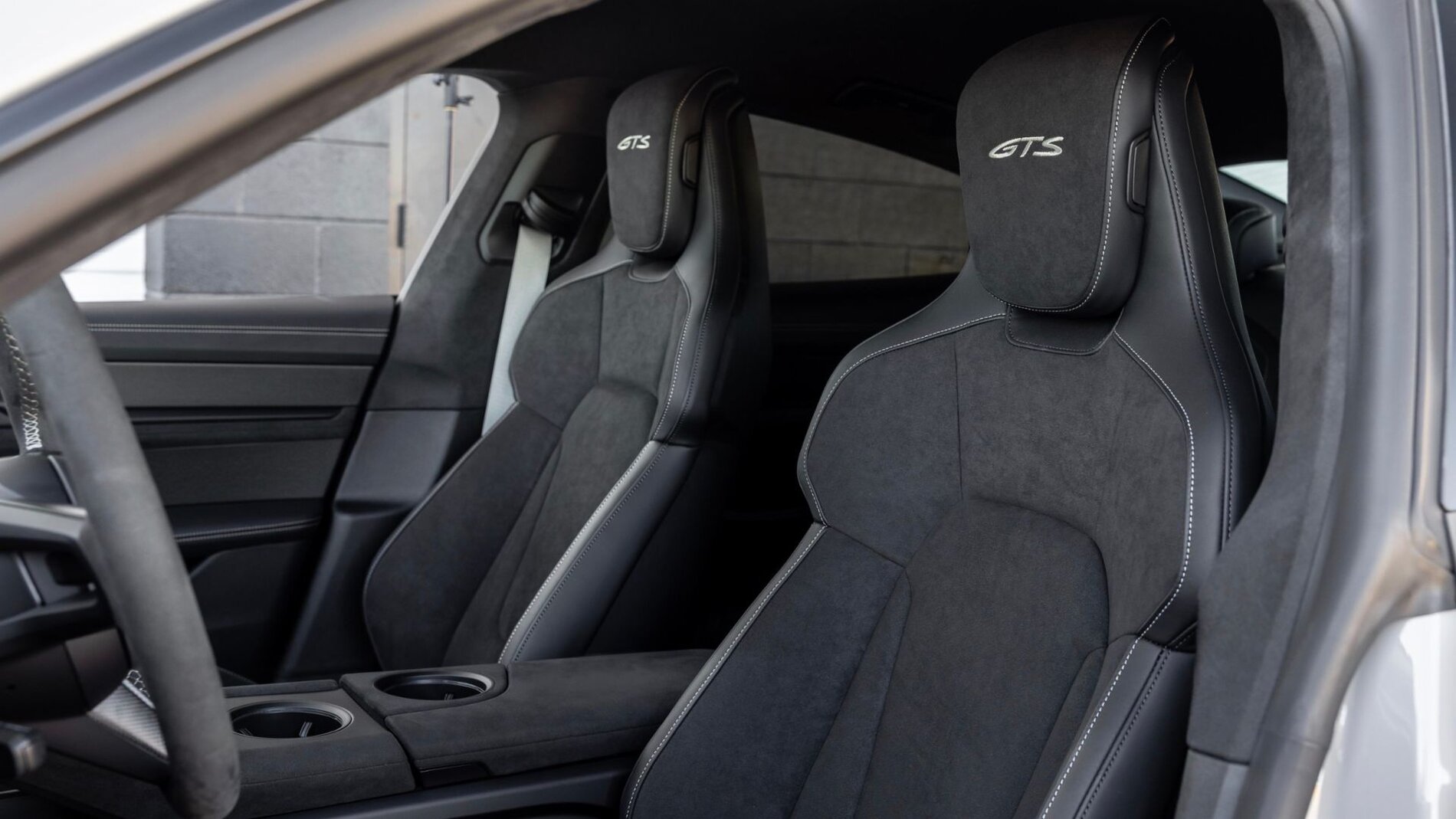
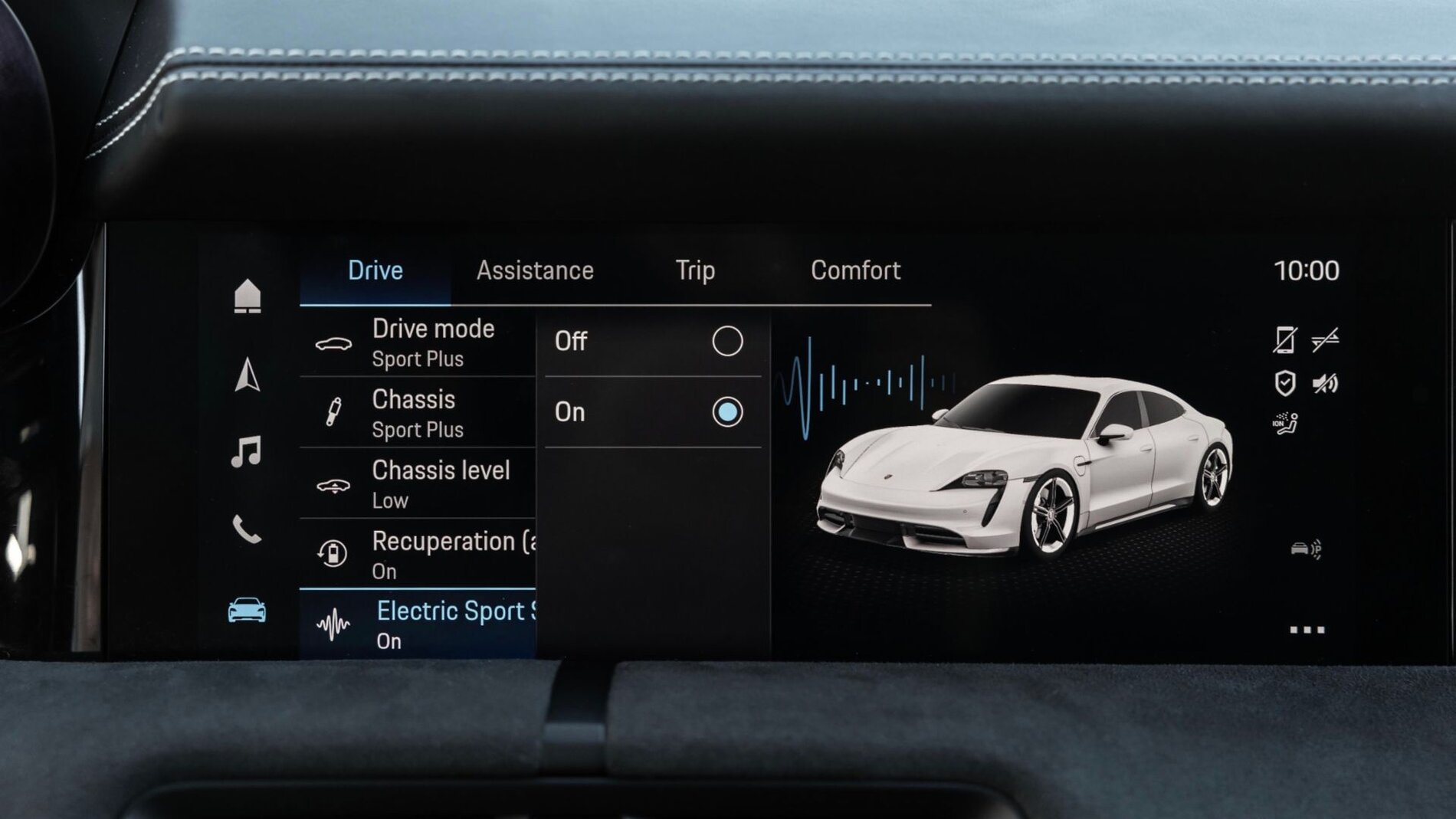
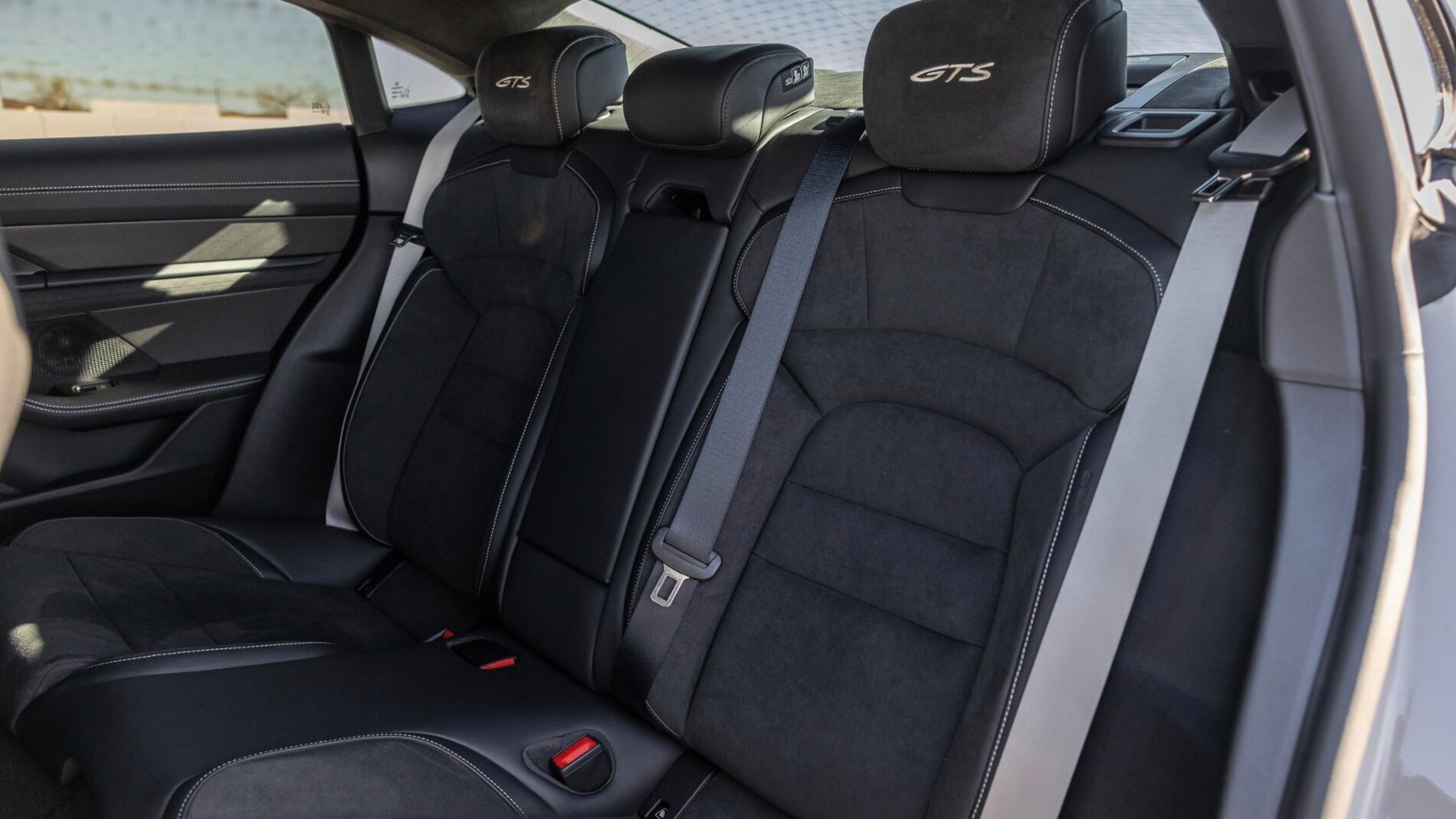
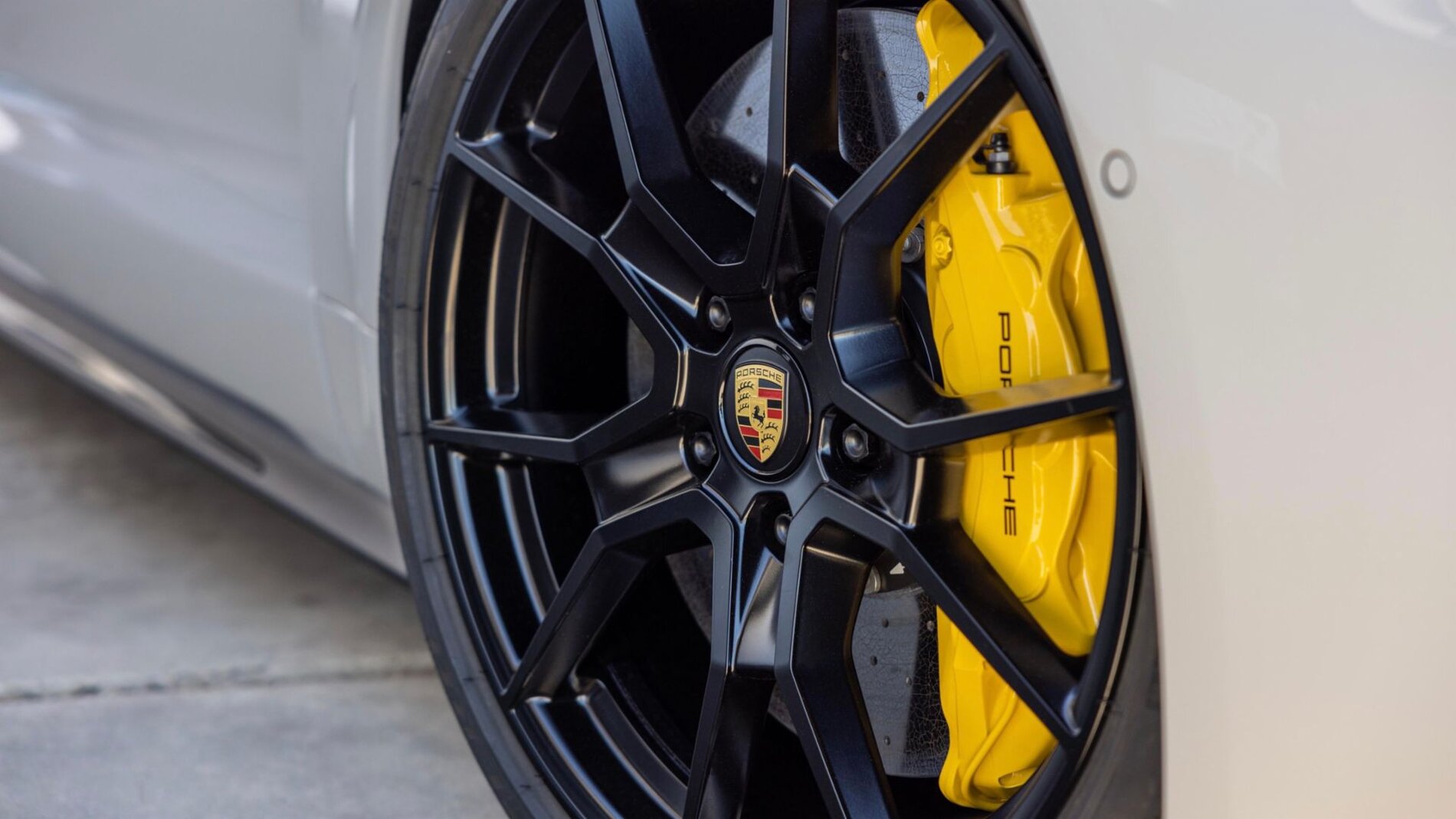
Other distinctive standard features include larger front rotors (390 mm) than those on baseline 4S models (360 mm), and the GTS also has a unique Race-Tex interior that’s similar to what is seen in other GTS-badged Porsche cars. According to Porsche, the Electric Sport Sound is now “deeper and louder” from both inside and outside the car. Also standard fare are Adaptive Air Suspension, PASM, PTV Plus and Sport Chrono Package. Features such as PDCC, PCCB, 21″ wheels and rear-axle steering remain as options. Also exclusive to the GTS is the optional “GTS Interior Package” which includes deviated stitching, unique embroidery and matte carbon fiber finishes.

As for pricing, the GTS sedan starts at $131,400 USD while the GTS Cross Turismo has a base price of $133,300 USD. Porsche is taking orders right now, with deliveries scheduled to begin in the second-quarter of 2022.

Considering the total package, I believe that the Porsche Taycan GTS and Porsche Taycan GTS Cross Turismo models are the most impressive Taycan models to date. For most of us, this shouldn’t be surprising if even up for debate—after all, the GTS badge and the word “best”, have become somewhat synonymous over the past few years when it comes to Porsche cars. It’s definitely the one I would buy, if I had to do it all over again.

Porsche Taycan GTS Red Porsche Taycan GTS Red Porsche Taycan GTS Red Cross Turismo Porsche Taycan GTS Red Porsche Taycan GTS Red Porsche Taycan GTS Red Porsche Taycan GTS Red Porsche Taycan GTS Red Porsche Taycan GTS Red Porsche Taycan GTS Red Porsche Taycan GTS Chalk Porsche Taycan GTS Chalk Porsche Taycan GTS Chalk Porsche Taycan GTS Chalk Porsche Taycan GTS Chalk Porsche Taycan GTS Chalk Porsche Taycan GTS Chalk Porsche Taycan GTS Chalk Porsche Taycan GTS Chalk Porsche Taycan GTS Chalk Porsche Taycan GTS Chalk Porsche Taycan GTS Chalk Porsche Taycan GTS Chalk Porsche Taycan GTS Chalk Porsche Taycan GTS Chalk Porsche Taycan GTS Chalk Porsche Taycan GTS Chalk Porsche Taycan GTS Chalk Porsche Taycan GTS Chalk Porsche Taycan GTS Chalk Porsche Taycan GTS Chalk

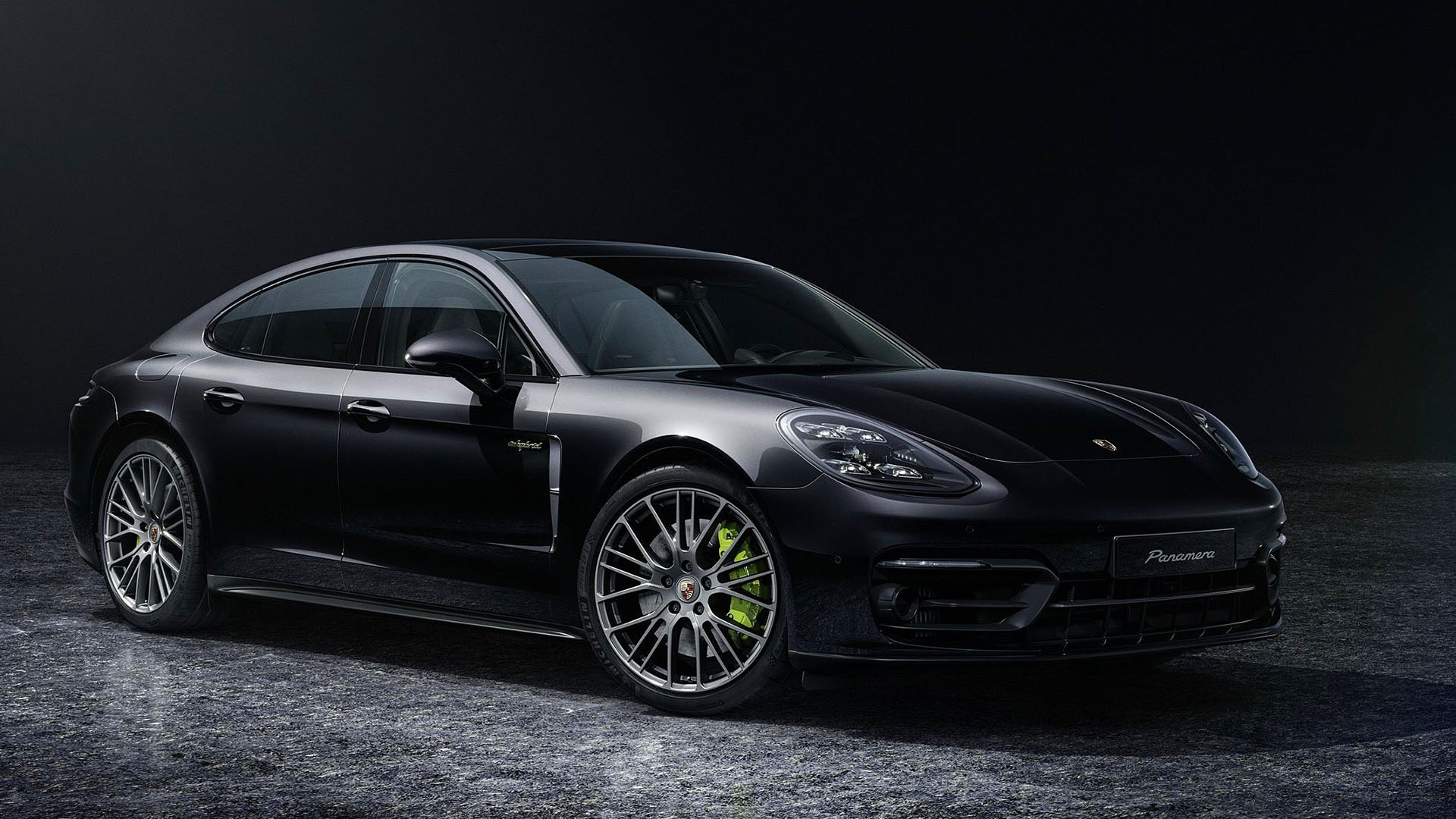
The Porsche Panamera Platinum Edition

At the Los Angeles Auto Show on November 17 Porsche will unveil their latest addition to the successful Panamera line up, the Platinum Edition, a top of the line spec available on either the Panamera (not in Europe), the Panamera 4, and even the Panamera 4 E-Hybrid, while only in Europe you can order this Platinum Edition also on the Sport Turismo models while the Chinese market includes the Porsche Panamera Executive models, which come with an extended wheelbase, first deliveries are foreseen for late January 2022, pricing in Germany start at €111,945 VAT included.

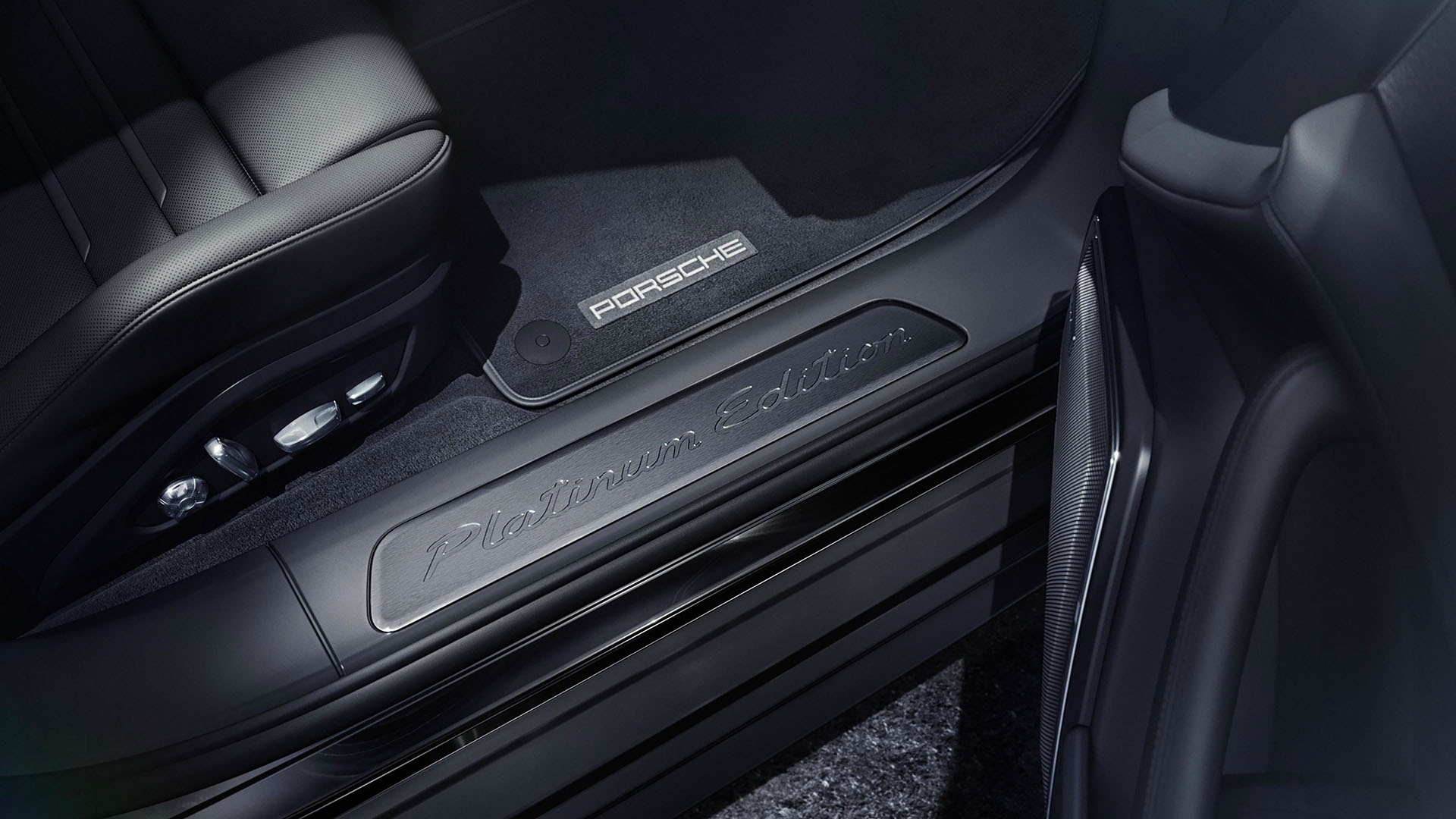
This special trim level combines the discretion of the Satin Gloss Platinum design features with a vast array of standard equipment that’s optionally available on the regular Porsche Panamera, and as usual with a ‘package deal’, the sum of all options would be a lot more expensive than the premium for this Platinum Edition option.

For starters, the Platinum Edition comes with the must-have option of adaptive air suspension with Porsche Active Suspension Management (PASM), but also includes automatic dimming exterior mirrors, LED matrix headlights with Porsche Dynamic Light System Plus (PDLS Plus), the large panoramic roof, and just in case, the Park Assist with reversing camera, If you opt for the E-Hybrid version an on-board AC charger with 7.2 kW charging power comes as standard too.

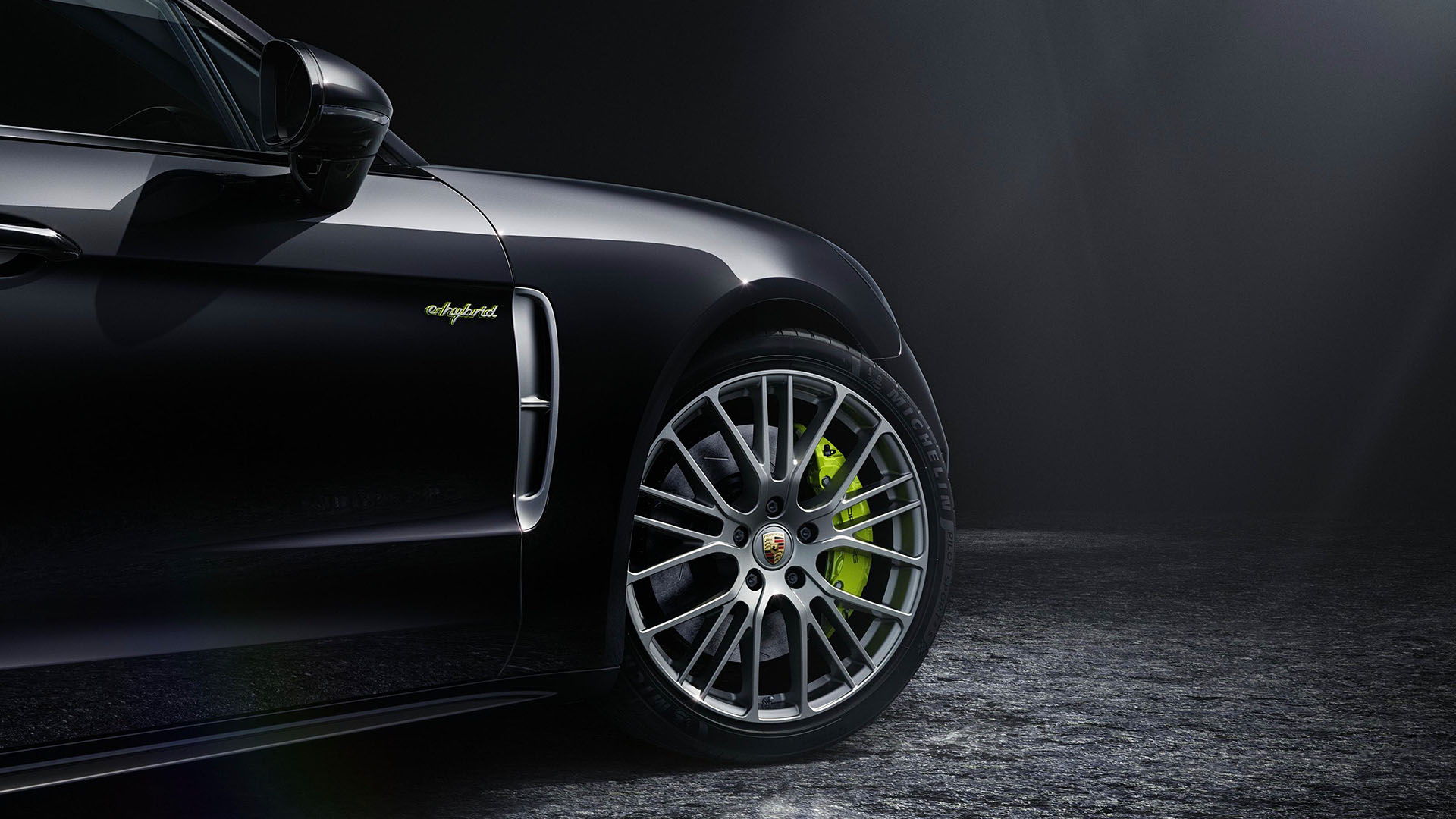
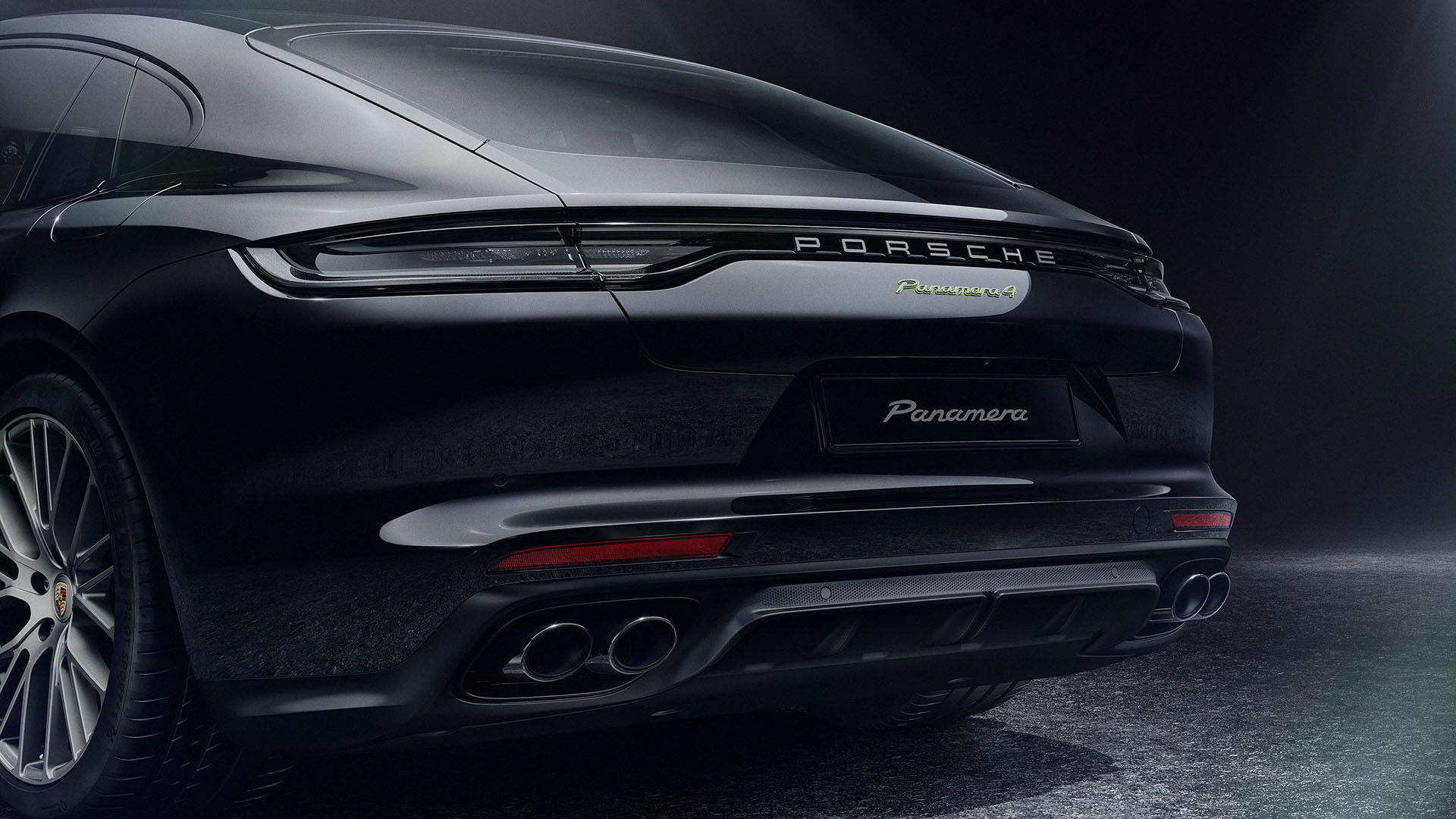
The Platinum-painted 21-inch Exclusive Design Sport wheels look amazing, and for that really intimidating look, Porsche fits black sports tailpipes and dark-tinted privacy glass while the side windows are trimmed high-gloss black, as a final statement the Exclusive Design taillights emphasize the Porsche Panamera’s dynamic elegance.

The Panamera Platinum Edition wouldn’t be complete without platinum painted details on the exterior, like the air vents behind the front wheels, same as the famous Porsche logo and Panamera model designation on the rear hatch, in case of the E-Hybrid, the logo on the side gets a platinum finish too, and if you’re not a fan of massive 21-inch wheels, the options list includes 20-inch Panamera Style wheels in Platinum too.

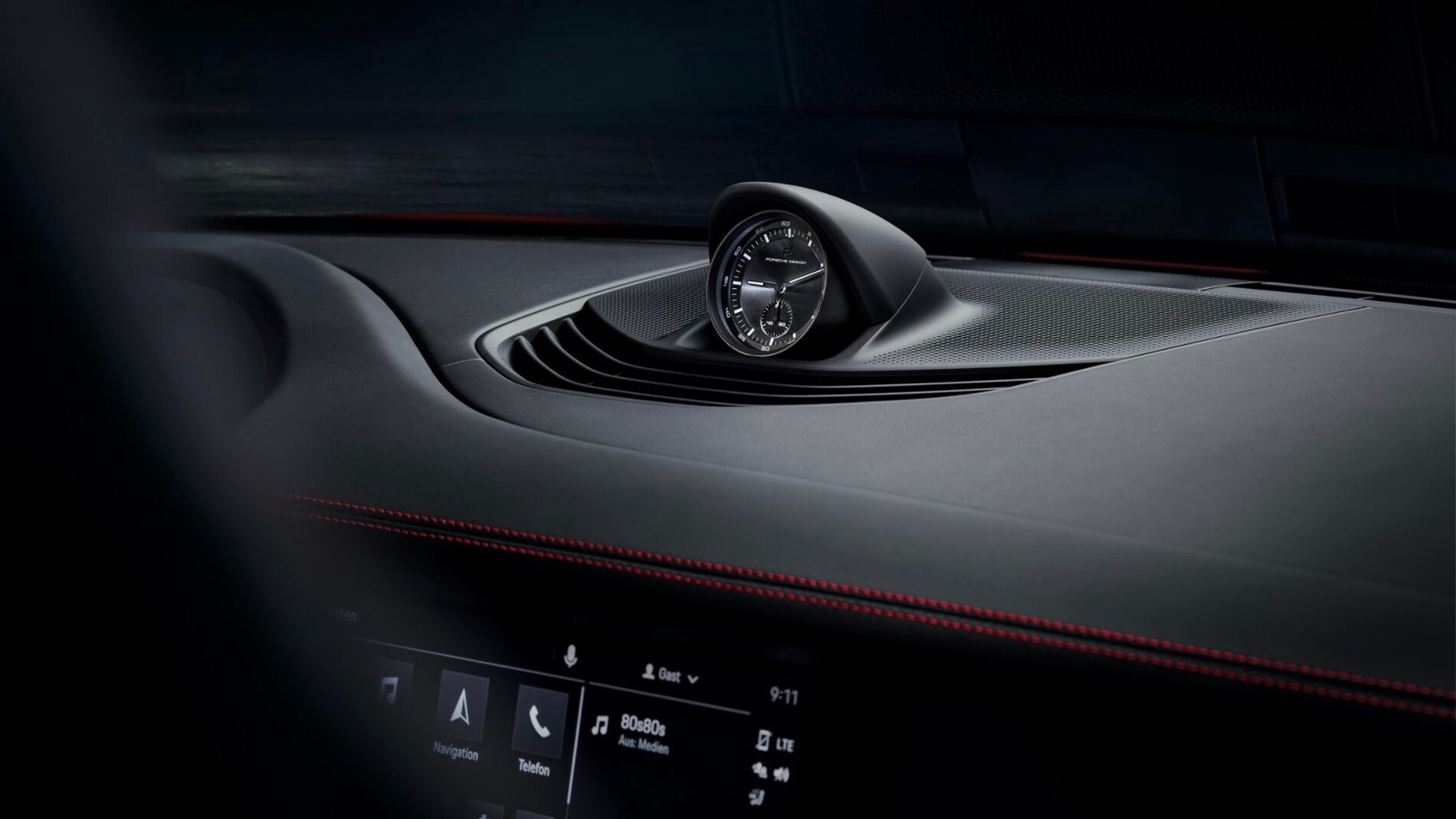
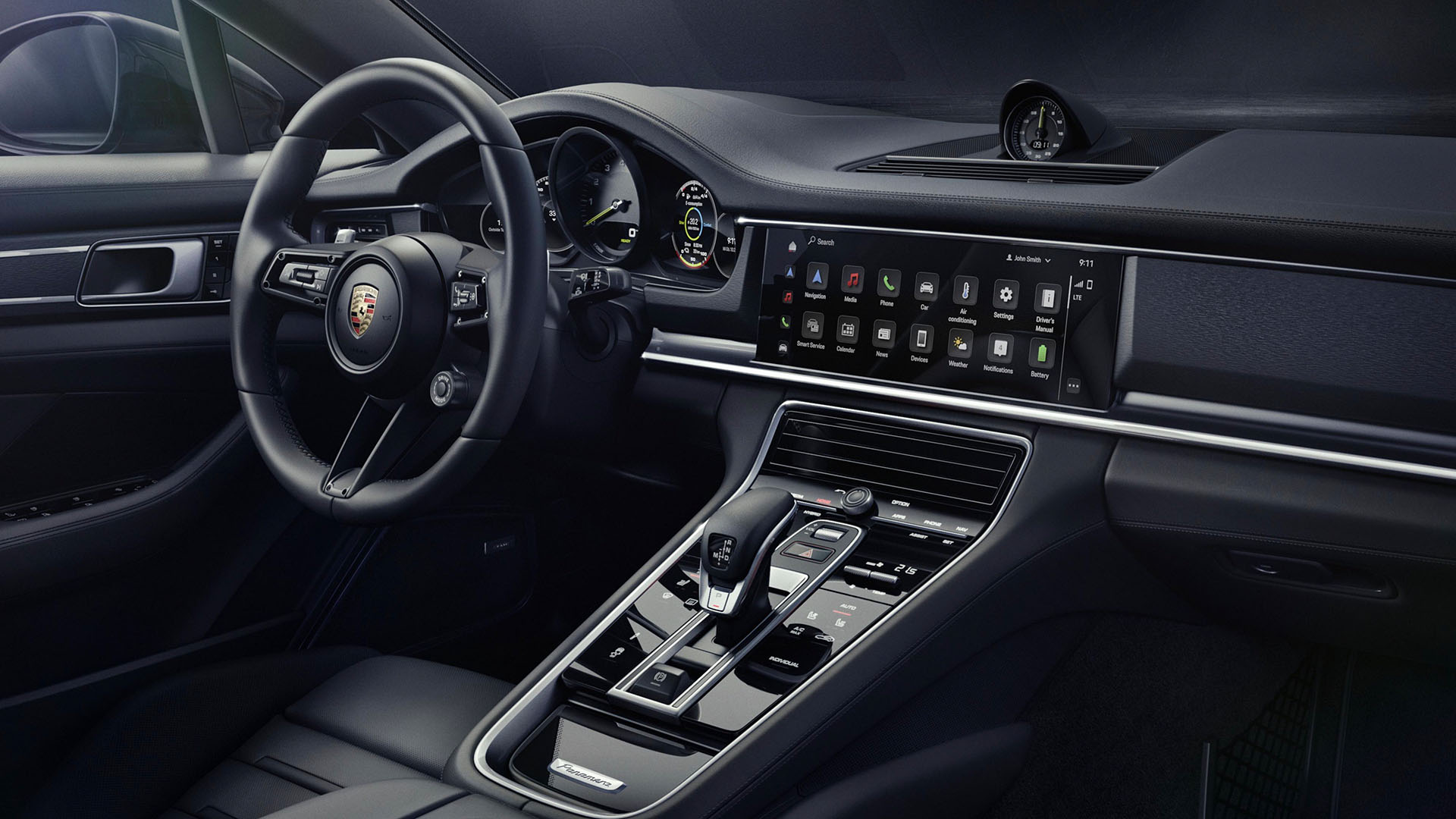
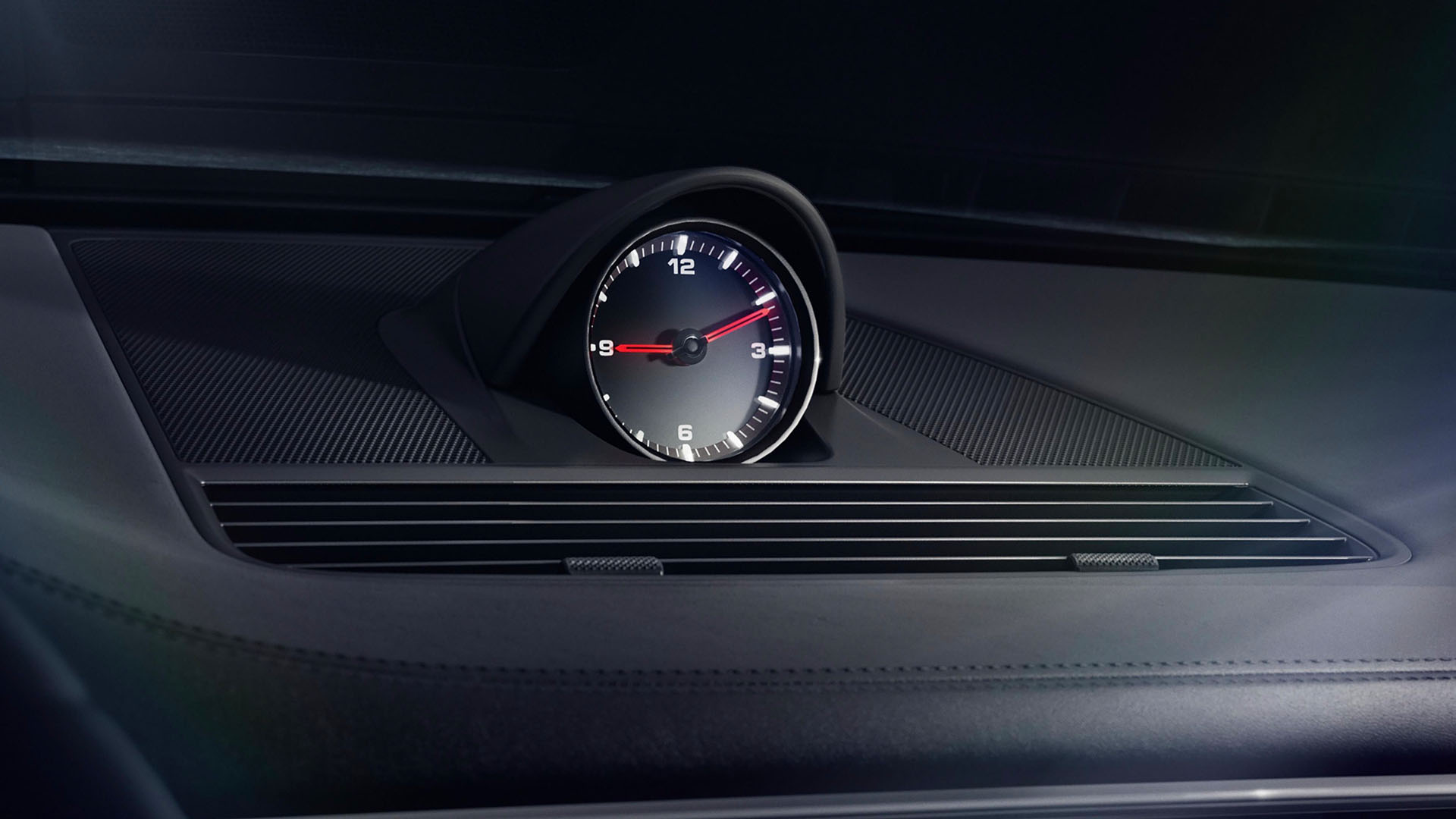
Opening the door will bring you into the lap of luxury, with the GT sports steering wheel complete with Power Steering Plus, Lane Change Assist, but the Platinum Edition also offers soft-close doors with Comfort Entry, 14-way electrically adjustable comfort front seats with memory package, heated rear seats, the magnificent sounding BOSE® Surround Sound system. Furthermore, the brushed aluminum interior package in black and naturally the Porsche crest on the headrests had to be included in this package too, and just as a final touch of class, all Platinum Edition will come with an analogue clock in the dashboard as standard.

Porsche 911 Hybrid: It’s Real and It’s Happening. Right Now.

Amidst all the fanfare surrounding EVs—much of it starting from within Porsche’s own camp—the thought of the company’s flagship 911 model being subjected to some form of electrification has often been overlooked. This sentiment is overwhelmingly a reflection of enthusiasts and consumers who, deep down inside, are resigned to the fact that this is inevitable if the 911 lineage is to continue in the years and decades to follow. Porsche themselves though—reluctantly, or not—have already been hard at work embracing this notion, and are now showing tangible evidence of what the path forward will look like.

In my personal experience, I believe that Porsche’s fully-electric platform—exclusively represented by the Taycan range for now—provides very promising prospects and a solid template for a future with ICE-less 911 models. But that’s something we won’t have to think about much, at least for now, as hybridization, rather than full-on electrification, will be Porsche’s immediate solution to address the changing automotive landscape; and it’s more than likely that we’ll see this come to fruition during the current 992-generation.

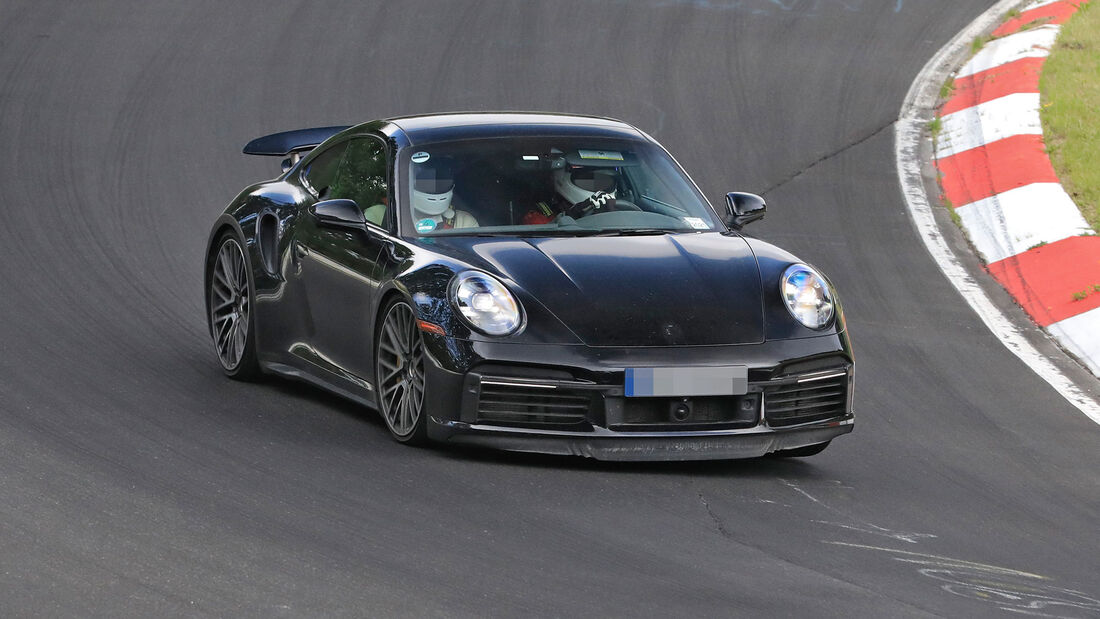
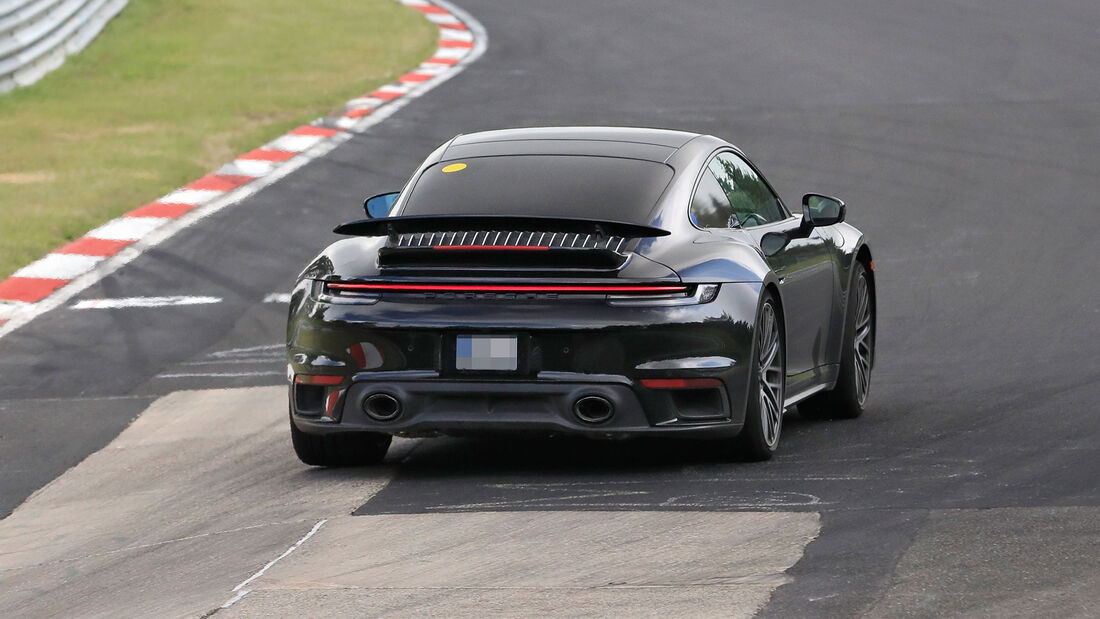
To quell any doubts of this being the case, the proof is in the pudding, as they used to say. The video below (credit: CarSpyMedia) shows what conspicuously appears to be a 911 Hybrid being tested at the Nürburgring Nordschleife earlier this month.

[embedded content] [embedded content]

As the video footage reveals, these are still the very early days of prototyping; the car appears to struggle from handling issues likely born from all the extra weight the car is carrying with the new hybrid system installed. We can all remain confident that Porsche will take the necessary steps to balance the car and engineer a happy medium between the chassis and its xeno-drivetrain—after all, they’ve already proven they can do as much via the 5,000 lbs+ Taycan platform.

Few details about the car are known, but we do know that Porsche’s ‘E-Hybrid’ nomenclature—currently used in the Panamera and Cayenne lineups—will be adopted for the 911 range. The first 911 trim likely to be ‘E-Hybridized’ will be the Turbo S model, and it will likely sit at the very top of the range in terms of price and overall performance. The current word is that Porsche 911 Turbo S E-Hybrid will feature a 400-volt system, which will compliment the existing 3.7L twin-turbocharged flat-6 petrol engine.

Some outlets are suggesting that it won’t be a plug-in hybrid model, though I’d be surprised if this was the case; the fully-electric Taycan uses 800-volt architecture, while conventional ‘mild’ hybrid systems (which aren’t plug-ins) are well under 100-volts. But then again, EV technology is improving at a rapid pace. As a hybrid, we can expect the new 911 to be mechanically the same, or similar, everywhere else. That should mean no changes in the transmission department, with a 7-speed or 8-speed dual clutch transmission sending power to all four wheels. The suspension and chassis are sure to be tweaked and tinkered with to ensure that the essence of the 911’s driving dynamics remain intact, if not enhanced, by the hybrid drivetrain—it should turn out to be the very same 911 that we’ve all come to love, only with some slightly different hardware.

Just how soon will the Porsche 911 Turbo S E-Hybrid be a real thing? We’re told that it’ll likely arrive as a 2023 or 2024 model, meaning it could debut as early as the tail-end of next year —yes, it’s coming that fast and just in time to usher in the ‘992.2’ era. Porsche has yet to officially confirm that such a car even exists, but as has been proven before—most recently with the new GT4 RS—actions certainly speak louder than words, or lack thereof. In fact, the 911 isn’t even the first Porsche model to feature in recent conversations with regards to hybridization or electrification; Porsche has already announced that it plans to introduce an EV to the 718 range no later than 2025.

My Thoughts:

While the development of eFuels is a positive step in extending the life of the 911 without having to consider full-on electrification, hybridization is a rather obvious next-step in the timeline of Stuttgart’s most iconic and long-standing model. The big-wigs at Porsche are already suggesting that this latest version of eFuels may even allow internal combustion cars to achieve a smaller overall carbon footprint than an electric car, particularly when taking into consideration, the byproducts created from battery manufacturing. “This technology is particularly important because the combustion engine will continue to dominate the automotive world for many years to come,” said Porsche R&D Executive, Michael Steiner. “If you want to operate the existing fleet in a sustainable manner, eFuels are a fundamental component.”

“Porsche is committed to three powertrains: purely electric, plug-in-hybrids, and highly efficient gasoline engines. From Porsche’s point of view, eFuels open up an opportunity for our plug-in hybrid models as well as our icon, the 911—either with a combustion engine or as a very sporty hybrid. This means that we could continue to drive the 911 for many years to come, which will certainly make our customers and fans happy.”

Either way, the existence of the combustion engine—either as a standalone unit, or complimented by electric motors—is realistically viable for “many years to come”, to quote Michael Steiner. For fans of the 911 this can only be good news; even if you’re not a fan of hybrids, today’s hypercars have certainly showcased how impressive the technology is from just a performance standpoint, and if the prospect of that (that being, a 1,000 hp+ Porsche 911 from the factory) doesn’t excite any car enthusiast, I don’t know what will.

Porsche 911 Turbo S E-Hybrid Porsche 911 Turbo S E-Hybrid Porsche 911 Turbo S E-Hybrid

Porsche 911 Turbo S E-Hybrid

Porsche 911 Turbo S E-Hybrid

Porsche 911 Turbo S E-Hybrid

Porsche 911 Turbo S E-Hybrid

The Best Porsche Engines Ever Made

Collectively, Porsche is arguably our favorite automaker here at supercars.net, and they are most certainly my personal preference. My fanaticism is born from places far beyond the scope of the Stuttgart automaker’s most recent renditions; a storied history of motorsports success and automotive savant-ism are responsible for producing some of the greatest automobiles ever to grace our planet over the past many decades.

I think most of us would agree that the greatest cars are a product of the engines that power them. Now, one would be forgiven for assuming that the greatest Porsche cars—and as such, the greatest Porsche engines—is a shortlist dominated by the Porsche 911 flagship model, but I’m pleased to say that this list we’ve compiled is a little more diverse than that.

I believe every entry here is no less deserving of recognition than any of the others. Even so, I’ve thrown in a couple that are bound to be highly controversial too. Hint: one doesn’t use petrol, and the other never featured in any Porsche production road cars. Oh no!

Here are the Best Porsche Engines Ever Made.

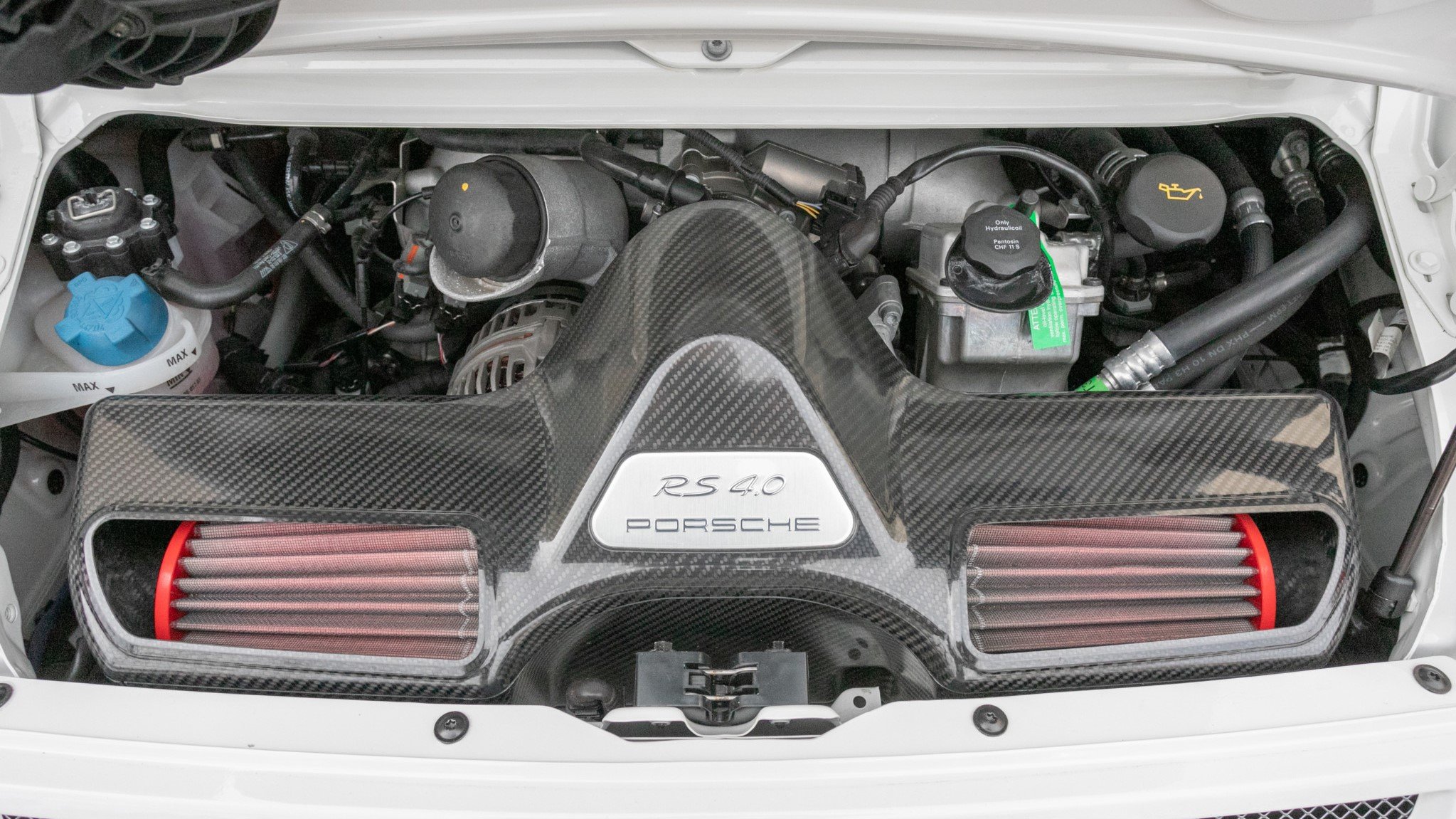
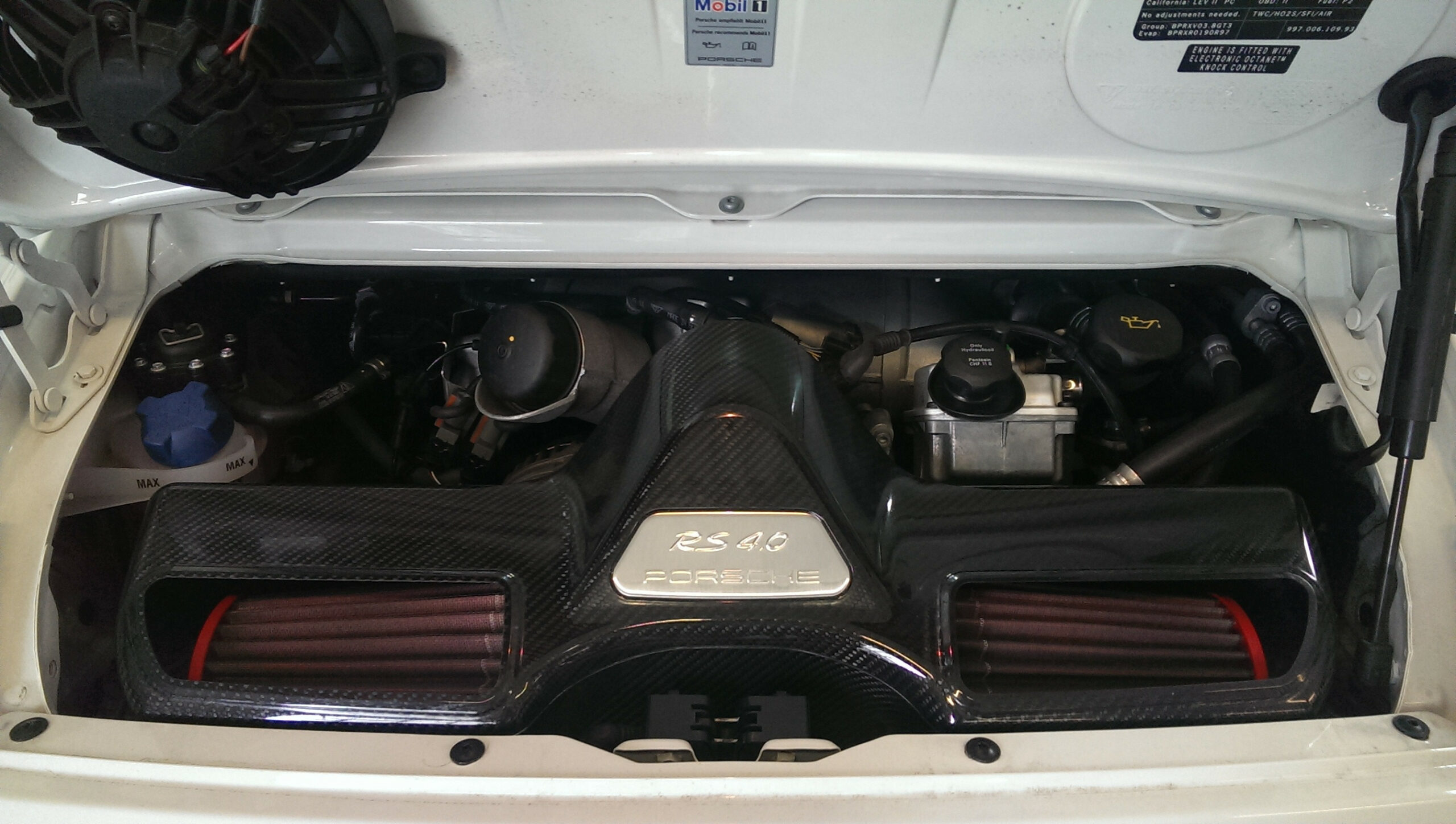
Porsche M97.74 Engine

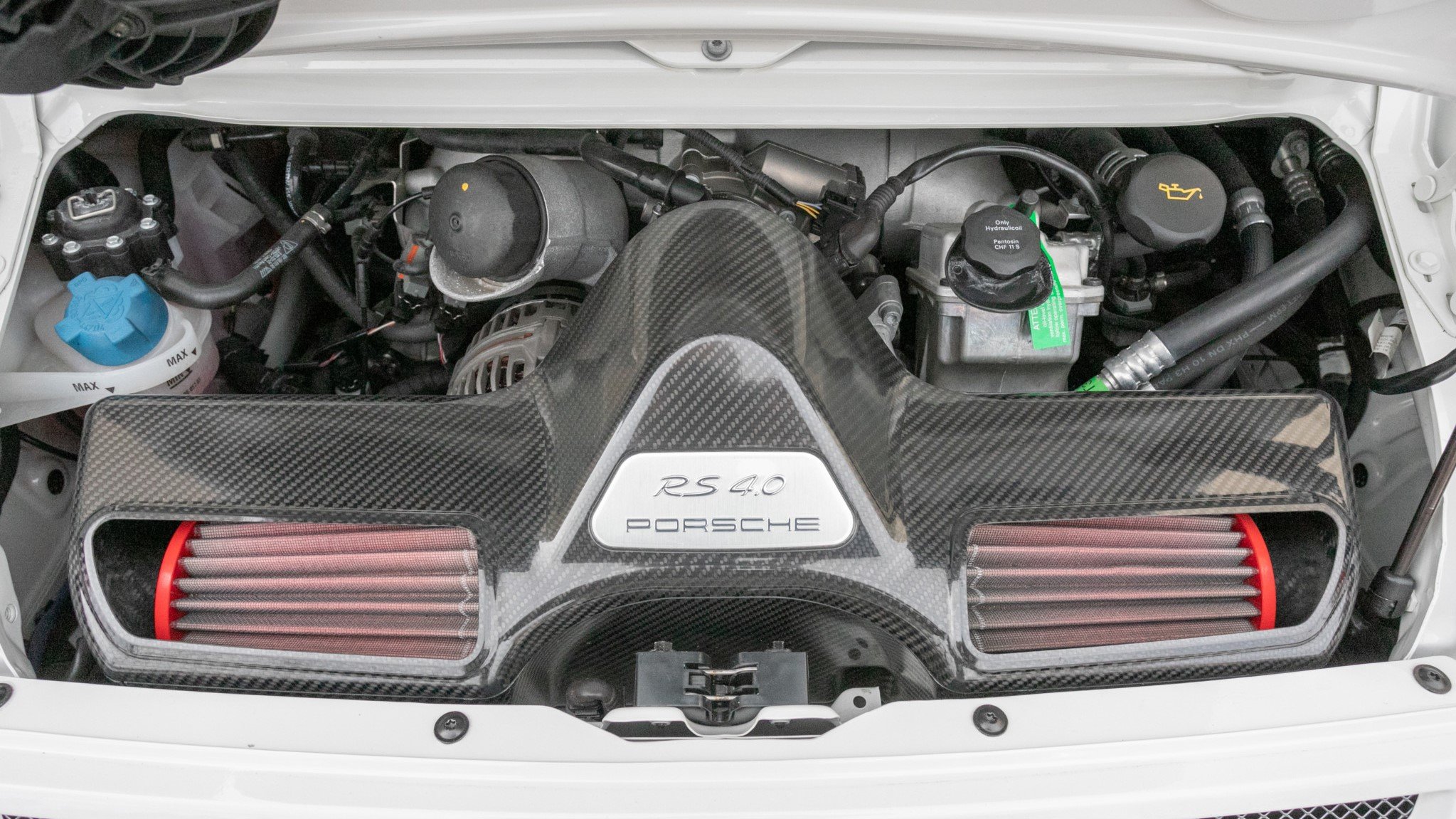
Porsche 911 GT3 RS 4.0 Engine M97.74

Appearing in the 997.2 GT3 RS 4.0, this truly special engine was the swan song for both the 997-generation (2005-2012) of Porsche 911 cars, as well as the Mezger engine design.

Borrowing a number of components from the RSR race car, the 3.8L engine in the ‘regular’ 997 GT3 RS was then upgraded to a 4.0L flat-6 (hence the name), which produced 500 hp and 339 lb-ft of torque, while having an astronomical 8,500 rpm redline.

So convincing was this move, even to Porsche’s own brass, that the following two generations (991 and 992) of 911 cars would continue to employ the 4.0L naturally-aspirated engine in the GT3 lineup, proving that the ‘godfather’ RS 4.0 was also well ahead of its time.

With the proliferation of PDK transmissions, amongst other safety-centric technological advancements, many consider the M97.74 and the GT3 RS 4.0 it powered, to be the final rendition of the purists’ GT3 RS.

Porsche 980/01 Engine

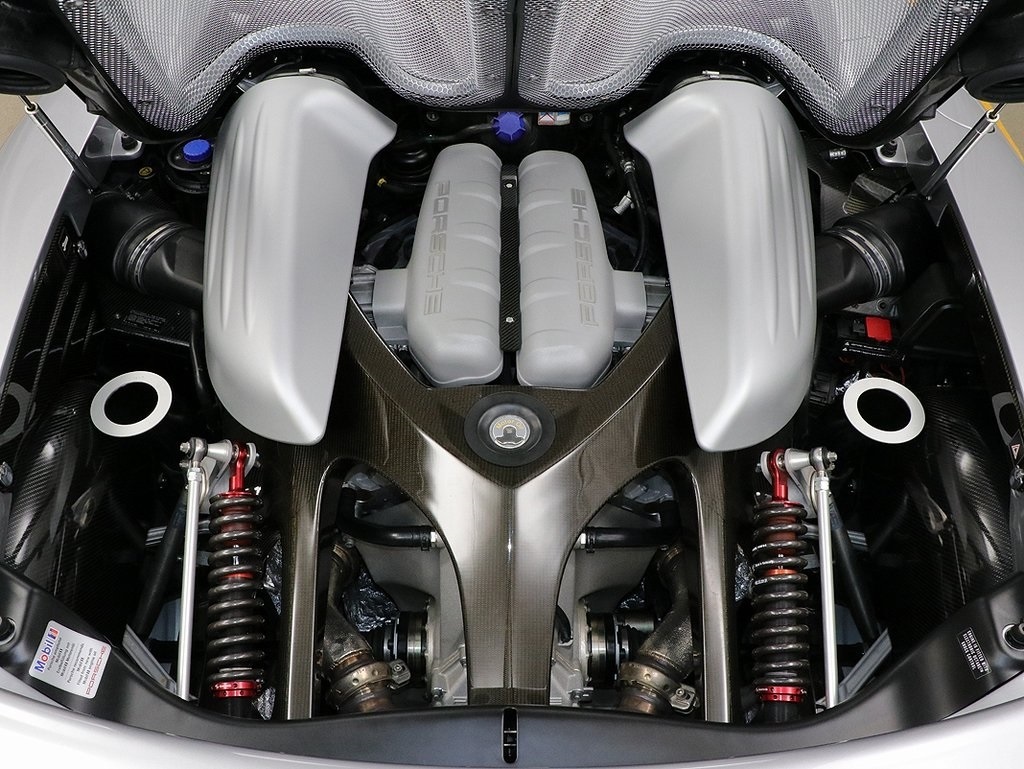
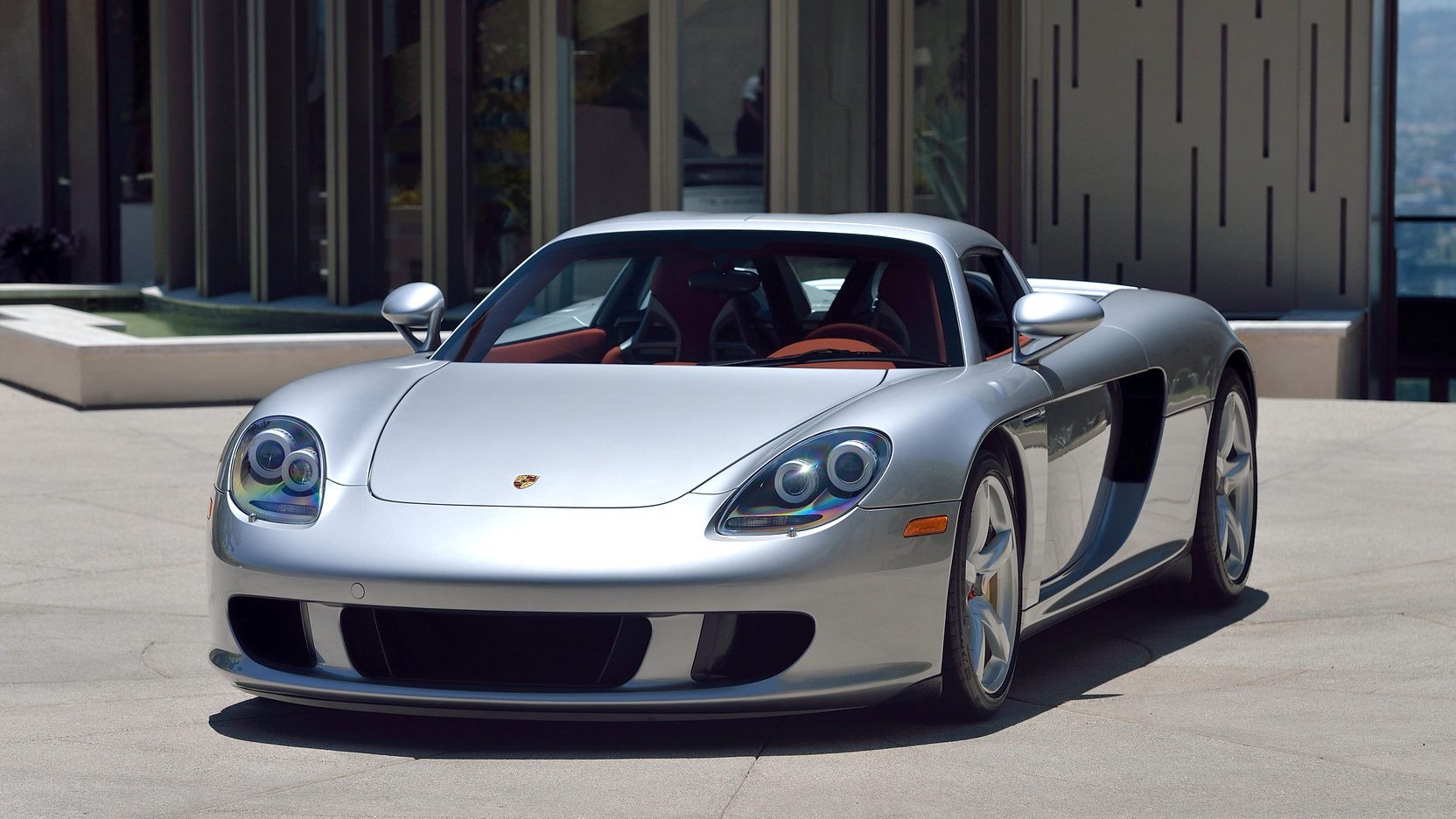
Porsche Carrera GT Engine 980/01

What makes the Porsche Carrera GT engine so special is that it is technically a race car engine. Not in that loosely-based sense—as is often used as a gimmick by salespeople—but in the true sense of the word.

In the late 1990s, Porsche engineers in Zuffenhausen were assigned the task of developing a naturally-aspirated V10 concept engine, which was to later be used in a race car for the infamous 24 Hours of Le Mans endurance race. Sadly, the completion of that race car never came to fruition, but the efforts of the engine builders would not go to waste.

Porsche decided to adapt the engine for use in the Carrera GT. They not only refined the engine to satisfy production car protocols but also managed to make it a more powerful version than the original unit.

The result is a 5.7L naturally-aspirated V10 engine, which produces 612 hp @ 8,000 rpm and 435 lb-ft of torque @ 5,750 rpm. This allowed the Carrera GT to accelerate from 0-60 mph in 3.8 seconds and 0-100 mph in 6.9 seconds, with a top speed of 205 mph.

Porsche MDH.NA Engine

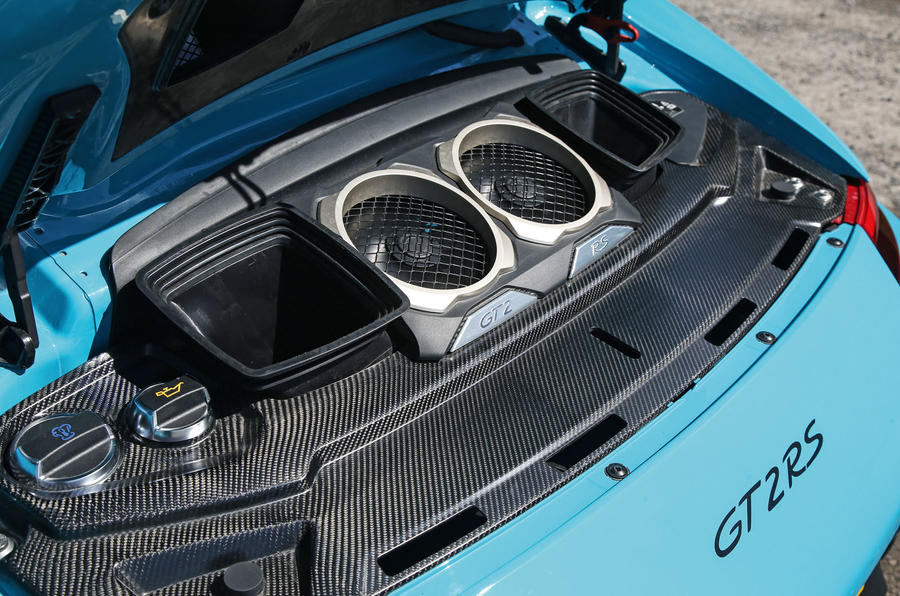
Porsche 911 GT2 RS Engine MH.NA

Suffice to say, the 991 GT2 RS is the absolute peak of 6-cylinder performance. The GT2 RS in its entirety is more closely based on a Turbo S than it is to its closest GT relative, the 911 GT3 RS.

After all, at the heart of the GT2 is a revamped version of the Turbo S engine (known as MDH.NA), while the GT3 has its own unique naturally-aspirated 4.0L power plant. The 3.8L flat-6 was fitted with larger variable-geometry turbos and was given an increase in peak boost to 22.5 psi, which is 24% higher than the Turbo S.

Larger intercoolers, a water-spray system, larger exhaust manifold primaries and redesigned pistons work in synergy with the aforementioned to provide the GT2 RS with 700 horsepower @ 7,000 rpm and 553 lb-ft of torque.

Porsche has long buried the traditional notion of “turbo-lag” in its cars with VarioCam Plus, and the GT2 RS is no different, making peak torque from 2,250 rpm to 4,000 rpm. This helped the GT2 RS to a production car record at the Nürburgring-Nordschleife, where it set a lap time of 6:43.300.

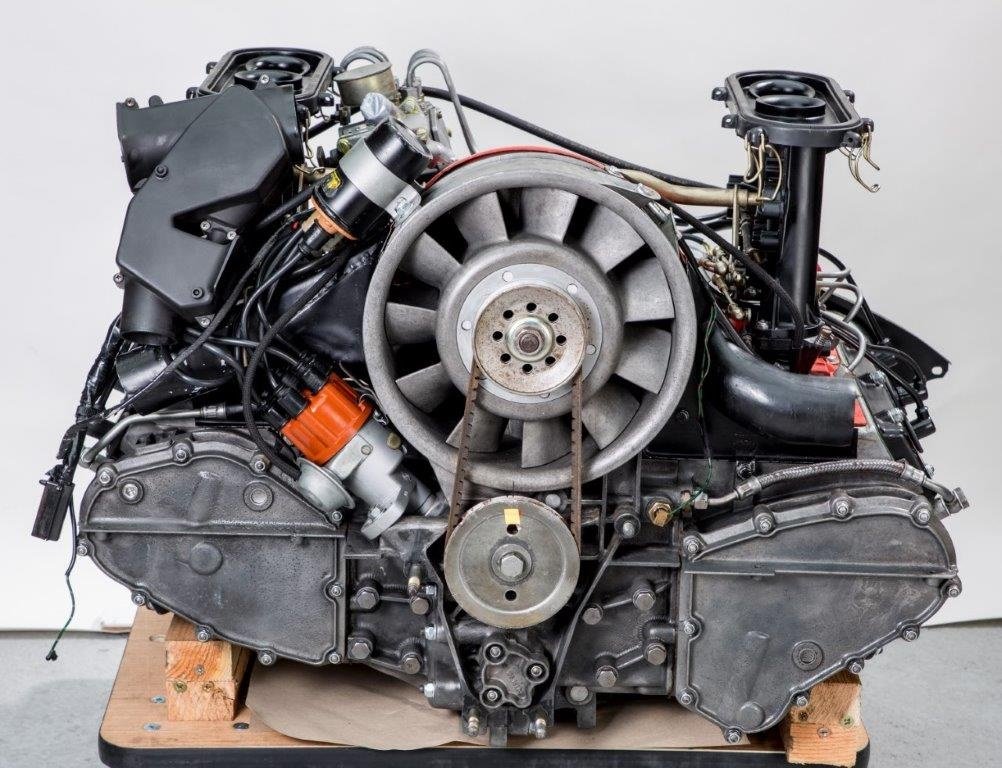
Porsche 911/83 Engine

911/83 Carrera 2.7 RS Engine

The 911/83 is our lone air-cooled-production-engine entry on this list, and is our pick out of all the amazing air-cooled options out there. Apart from that being in the interest of keeping this list compact and more easily digestible, there’s also some good reasoning behind this, as it was responsible for powering none other than the legendary 1973 Porsche 911 Carrera 2.7 RS.

This partnership between the 2.7 RS and its 911/83 engine culminated in the fastest production 911 of its time, and is considered to this day to be one of the best Porsche road cars ever produced.

Made for the purposes of homologation, the 2.7 RS and its 210 hp 2,687 cc engine—benefitting from the experience gained during the 917 racing program—elevated the 911 into the 2,500 cc–3,000 cc racing class, where it could compete with heavyweight opposition such as Ferrari Daytonas and DeTomaso Panteras.

Initially, the 2.7 RS was not legal in the U.S. for anything other than racing use or car shows. As a European-spec road-race car, it lacked virtually all of the emissions equipment required. Fortunately, the EPA would eventually relax emissions standards enough to allow Porsche 911 Carrera 2.7 RS owners to legally drive these cars on public roads, some years later.

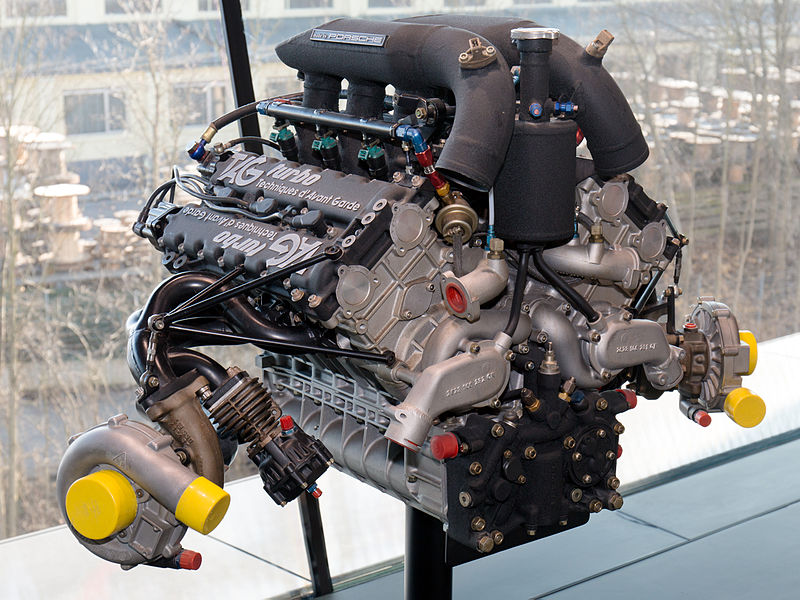
Porsche TTE P01 (TAG Turbo) Engine

TAG Turbo Engine Formula 1

These days, Porsche and Formula One are names that are hardly synonymous with one another; but once upon a time, this was certainly the case. The Porsche-TAG TTE P01 engine—commonly referred to as the TAG Turbo—was an engine developed by Porsche and funded by TAG (yes, that TAG), specially for use by the McLaren F1 team in the mid-1980s.

The TAG Turbo was a 1.5L twin-turbocharged V6 engine which produced anywhere between 750 hp–1,000 hp depending on the selected tune, and was fitted to the McLaren MP4/2 and MP4/3 race cars.

Porsche-philes will be happy to learn that the engine actually did feature in a Porsche 930 Turbo, though this lone example strictly served as a test mule and no production versions of this amalgamation were ever made.

That’s probably a good thing, considering that the powerplant could rev in excess of 10,000 rpm, forgoing almost any possibility of it becoming a road-going model—at least one which could be kept compliant within road laws, emission standards and amateur-level driving abilities.

Between 1984 and 1987, the McLarens that were powered by the TAG Turbo would win 3 Drivers’ Championships and 2 Constructors’ Titles, with race driving legends such as Niki Lauda, Alain Prost, and Keke Rosberg behind their wheels.

Needless to say, Porsche’s brief appearance in Formula One is one which provides more than just an easter-egg of a cameo; in fact, their contribution is a pretty significant one.

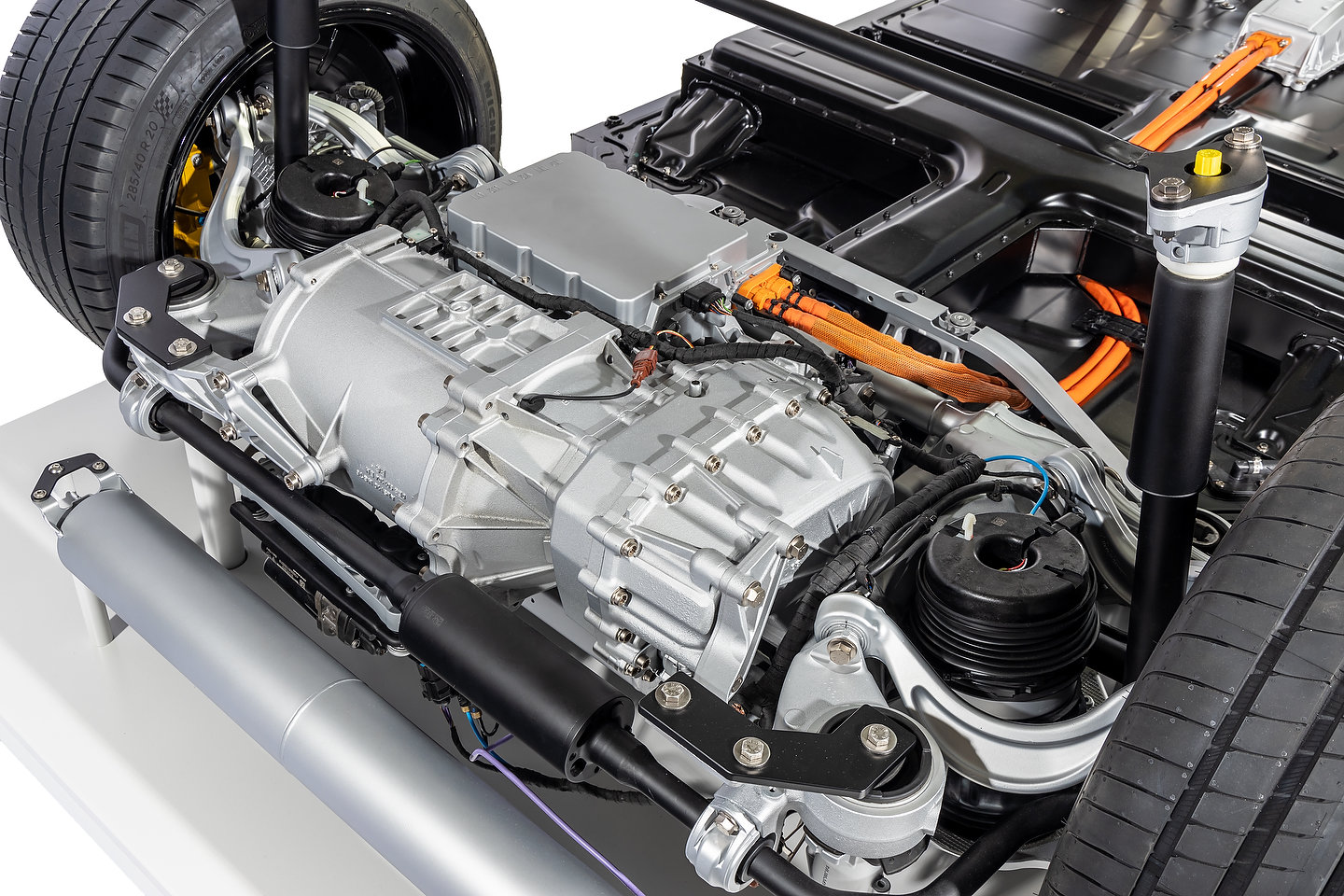
Porsche Dual Permanent Magnetic Synchronous AC Motors

Porsche Taycan Synchronous AC Motors Drivetrain
Porsche Taycan | Photo: Porsche

Queue the pitchforks and torches! This isn’t your traditional engine (if you can even call it that) but it certainly is about to become a conventional one—and for good reason, so hear me out!

With breathtaking acceleration figures, along with its continuously and instantaneously available power output, Porsche’s new EV platform—currently represented exclusively by the Porsche Taycan—embodies everything you would desire in a true sports car.

The top-of-the-line Taycan Turbo S is able to produce up to 750 hp and 774 lb-ft of torque, allowing the car to annihilate the 0-60 mph benchmark in just 2.6 seconds (mind you, this is in a machine that weighs north of 5,000 lbs).

Crucially, with all of that also comes the notion of repeatable performance; the Taycan doesn’t suffer from the overheating issues that plague its competitors when the all-electric drivetrain is subject to prolonged racing conditions.

Despite this still being the early days—and the fact that charging the Porsche Taycan can be tricky, due to a lack of charging infrastructure in many places—Porsche’s new EV architecture has already established itself as the company’s driving force for the future.

While the emergence of biofuels may prolong the combustion engine of some time to come, there is no doubt that this technology will become the basis on which the company stays relevant and competitive going forward.

Best Naturally Aspirated Engines Ever Made

The number of entries – and the variety of automakers involved – onto this list is proof that the naturally-aspirated engine reigns supreme when it comes to the most important characteristics of what makes a good engine, and subsequently a great car. There’s always a temptation to default to turbocharged engines as being the most capable, particular in an age where 0-60 mph times are considered gospel when it comes to determining performance credentials and bragging rights. While turbochargers are typically needed to make monstrous hp numbers and remain the bread and butter of even greater aftermarket tuning potential (if getting into the 4-figures is a big deal for you), all true enthusiasts know that some of the most desirable traits of the best cars in the world come from having an NA engine. Astronomical rev ranges, unmatched acoustics and unrivaled versatility, balance, dependability and endurance. After all, what’s good for race cars is good for road cars, I’d say.

Porsche M97.74

Porsche M97.74

Appearing in the 997.2 GT3 RS 4.0, this truly special engine was the swan song for both the 997-generation (2005-2012) of Porsche 911 cars, as well as the Mezger engine design. Borrowing a number of components from the RSR race car, the 3.8L engine in the ‘regular’ 997 GT3 RS was then upgraded to a 4.0L flat-6 (hence the name) which produced 500 hp and 339 lb-ft of torque, while having an astronomical 8,500 rpm redline.

So convincing was this move, even to Porsche’s own brass, that the following two generations (991 and 992) of 911 cars would continue to employ the 4.0L naturally-aspirated engine in the GT3 lineup, despite the fact that the Mezger design was shelved and further proving that the ‘godfather’ RS 4.0 was also well ahead of its time.

With the proliferation of PDK transmissions, amongst other safety-centric technological advancements, many consider the M97.74 and the GT3 RS 4.0 it powered, to be the final rendition of the purists’ GT3 RS.

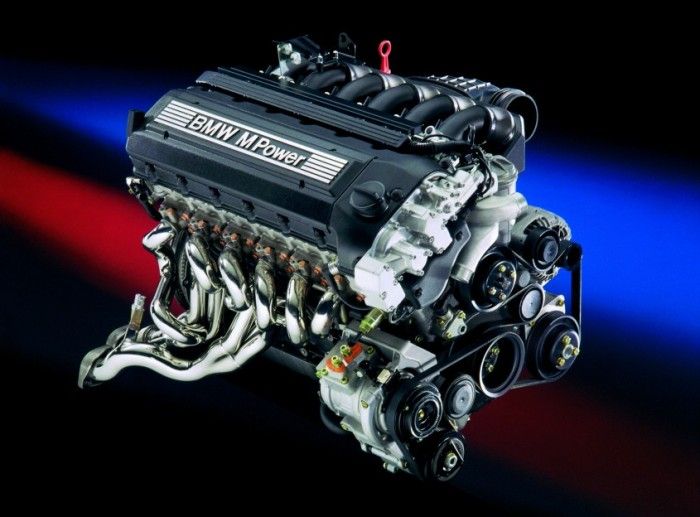
BMW S54B32

BMW S54B32

Collectively, the BMW E46 M3 (2000-2006) is one of our favorite cars here at supercars.net, and this is in no small part thanks to its S54B32 inline-6 engine. The naturally-aspirated unit is as pure as it gets from the Bavarian company, with a peak 333 hp being produced at 7,900 rpm on route to its 8,000 rpm redline. Other stand-out features include individual throttle bodies and drive-by-wire operation, further accentuating the car’s inherent rawness and driving purity.

When mated to the 6-speed manual transmission, it really doesn’t get much better than this – from BMW or any other company, for that matter. If BMW ever wanted to revert back to a more minimalist philosophy, the S54B32 and E46 M3 would be writing the playbook.

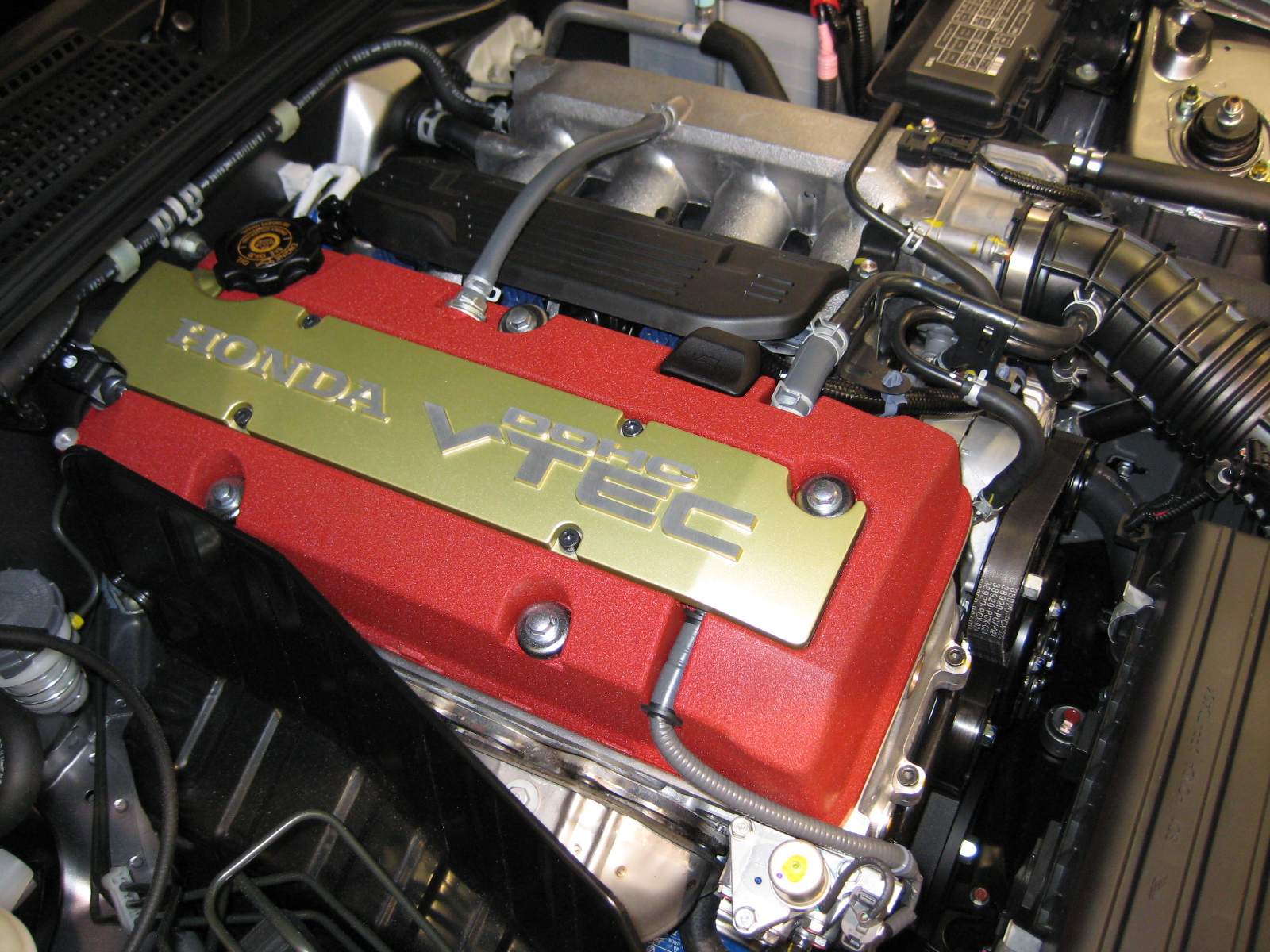
Honda F20C/F22C

Honda F20C/F22C Engine

When the Honda S2000 first made its appearance in 1999, its naturally-aspirated F20C engine stole the spotlight. It was revolutionary for its time, and in many respects maintains that reputation to this day. A 9,000 rpm redline and being able to produce 120 hp/liter would be the main attractions at first, but the F series engine has also proven to be dependable and well regarded to this day.

It’s a huge reason the S2000 is one of the most sought after cars on the used market today, often fetching astronomical prices not too far off the original MSRP (or sometimes more). Halfway through the car’s lifecycle, the engine would see its displacement increase to 2.2L (with an 8,200 rpm redline) while power figures remained virtually unchanged; acceleration and low-end response were slightly improved as a result.

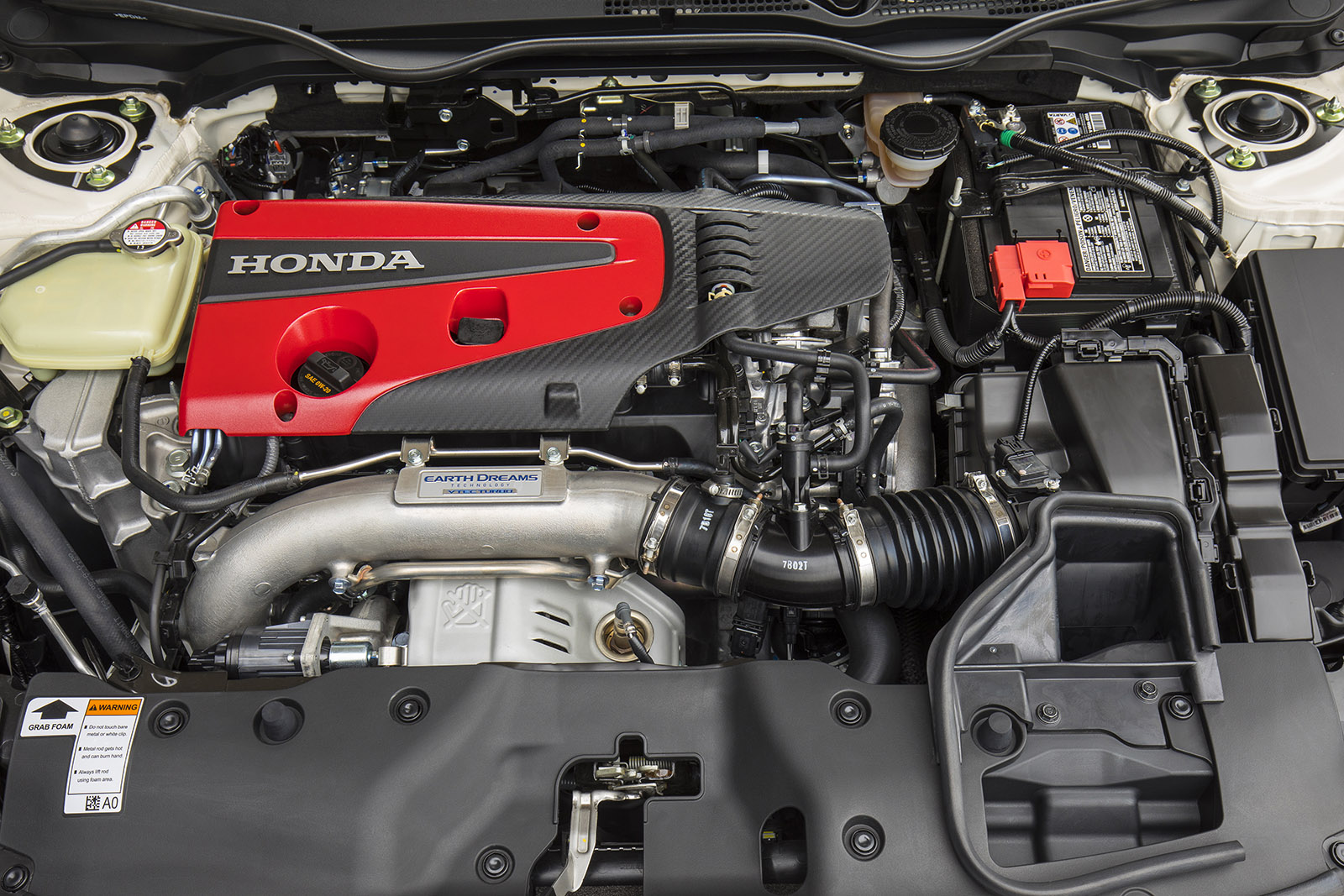
Honda K Series

Honda K Series

The K Series would ultimately replace the outgoing B Series engines (which would be in the honorable mention section, if there was one) for a number of Honda vehicles, most notable of which included the likes of the Civic Type R and Integra Type R.  The most recent and advanced version of the K series engine has found its way into the current Civic Type R, with the turbocharged K20C1 supplying the company’s popular sports saloon with 316 hp and 295 lb-ft of torque.

Such is the K20C1’s reputation that Honda Performance Development has recently begun to offer crate engines for use in racing and off-highway applications. Other notable K Series engines include the K20A2 (Integra Type R, RSX Type S) and the K24A2 (Acura TSX). Honda reliability, fantastic performance – I don’t doubt that we’ll be talking about the K Series engines for many more years to come.

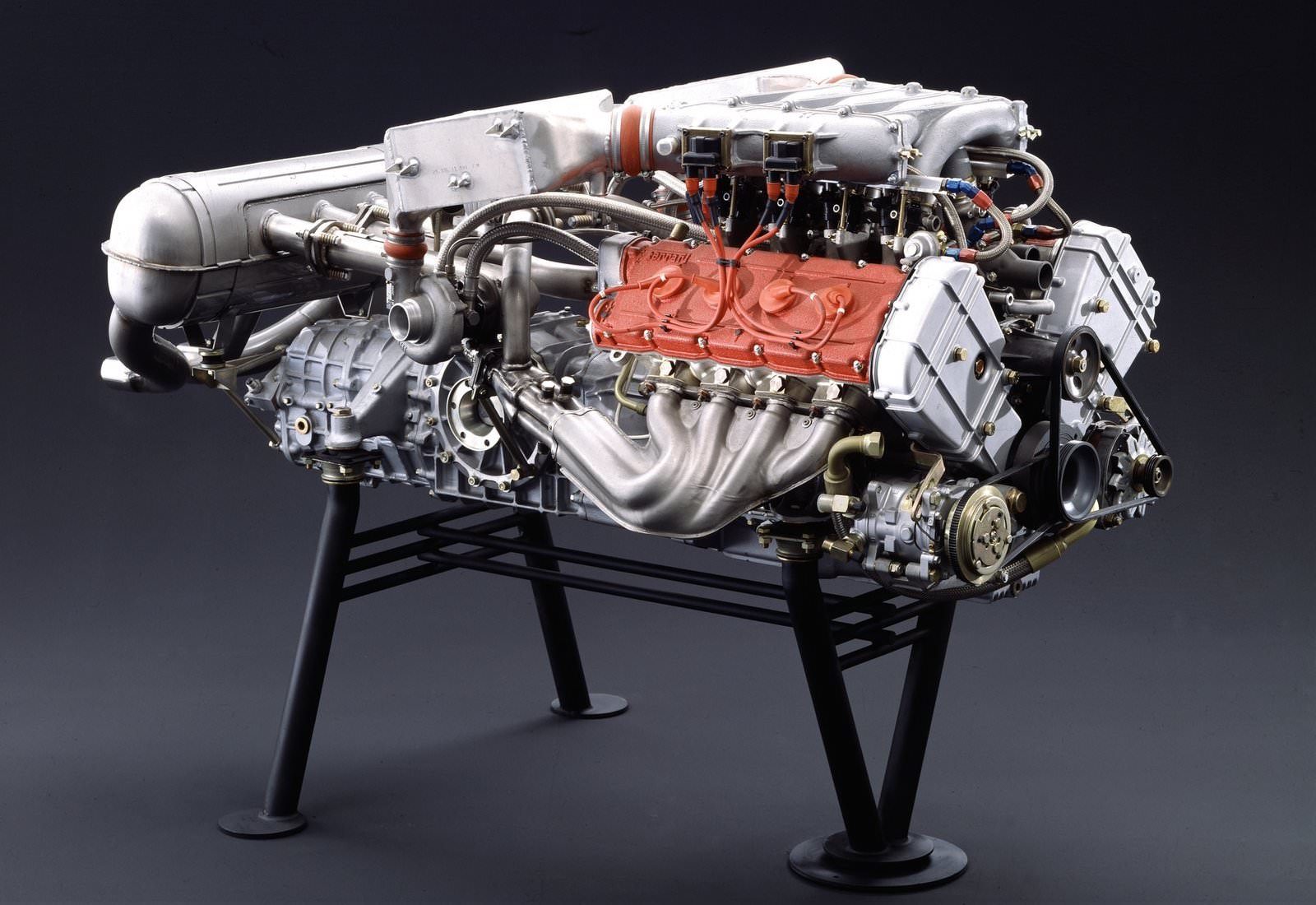
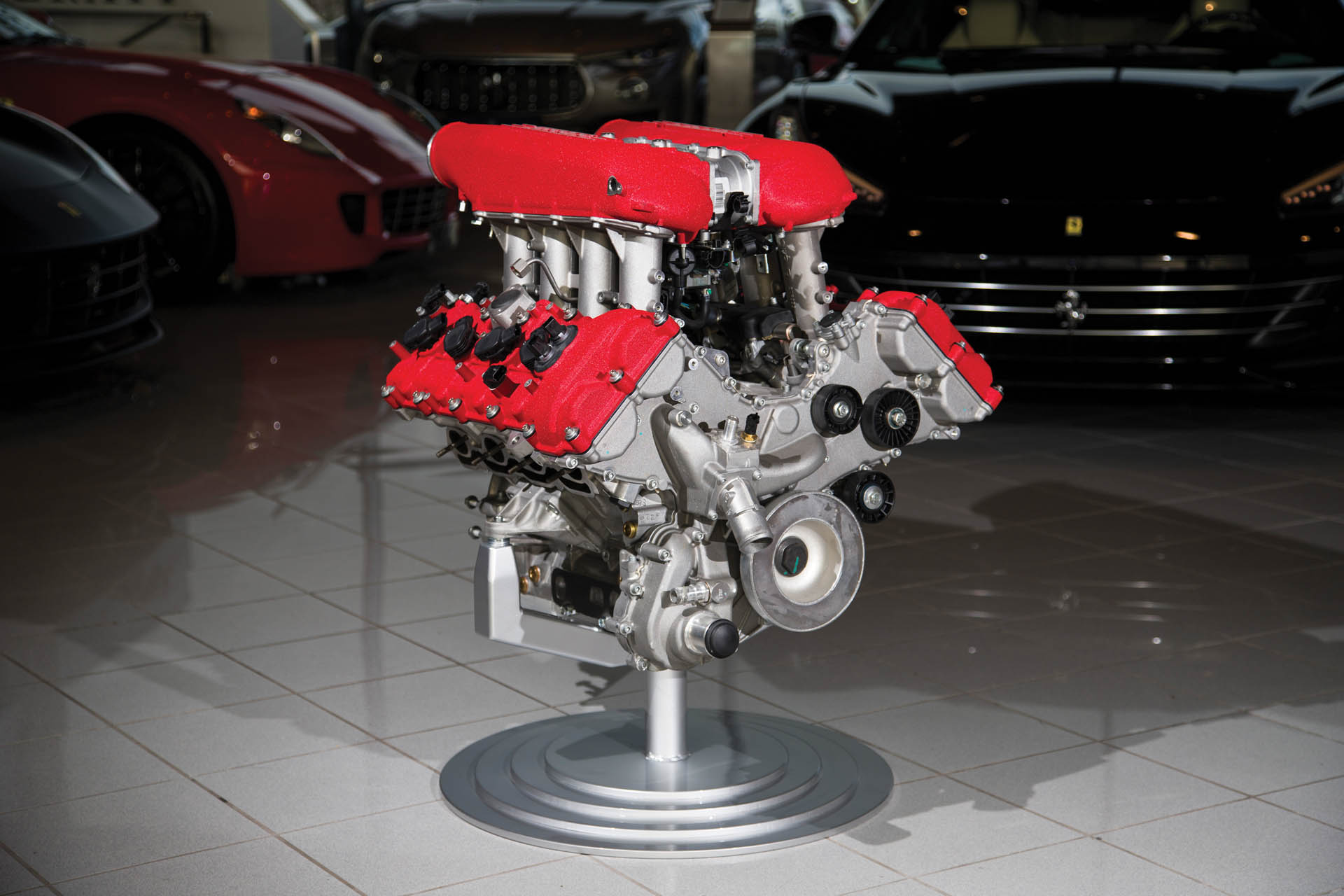
Ferrari F106

Ferrari F106 Engine

Ferrari’s F106 V8 engine dates as far back as 1973, where it first featured in the Dino 308 GT4. Right from the get-go, it produced an impressive 250 hp from a 2.9L naturally-aspirated engine, which featured a flat-plane crank and dual-overhead cams.

Such was the longevity and capability of the F106 unit, that it continued to be used – with significant updates and revisions along the way, including electronic fuel injection and multi-valve heads – for more than 30 years. Notable models which were equipped with the engine include the F355360 Modena, and arguably the most famous Ferrari of them all; the Ferrari F40, which fashioned a twin-turbocharged version of the F106 producing 471 hp.

Ferrari F136

Ferrari F136 engine

The F136 succeeded the legendary F106, first appearing as a 4.3L naturally-aspirated engine in the 2004 Ferrari F430, producing 483 hp. Like the F106, the F136 would see widespread application throughout the Ferrari lineup; however, it was also featured on a number of Maserati models in concert with the relationship between the two marques.

Most notably, a 454 hp, 4.7L version of the F136 featured on the Maserati GranTurismo and is widely regarded as having one of the best engine/exhaust notes to come out of the V8. The F136 would reach its zenith in the Ferrari 458 Italia Speciale, where it cranked out a massive 597 hp from its 4.5L naturally-aspirated power plant.

Perhaps the most significant (and regretful) fact about the F136, is that it is the last naturally-aspirated V8 engine Ferrari would ever produce. It was replaced by the twin-turbocharged F154 V8 engine in 2015, where it debuted on the Ferrari 488 GTB.

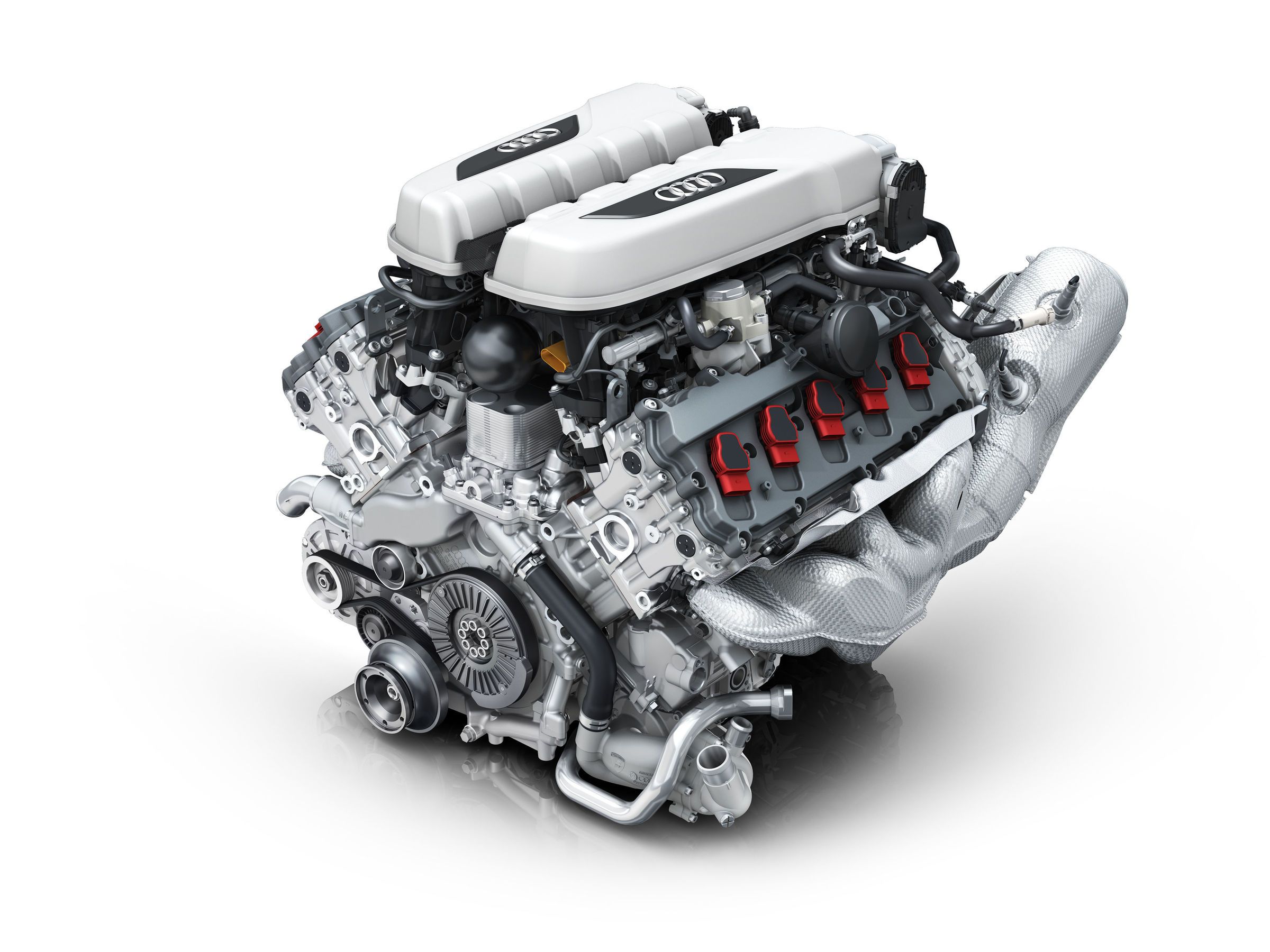
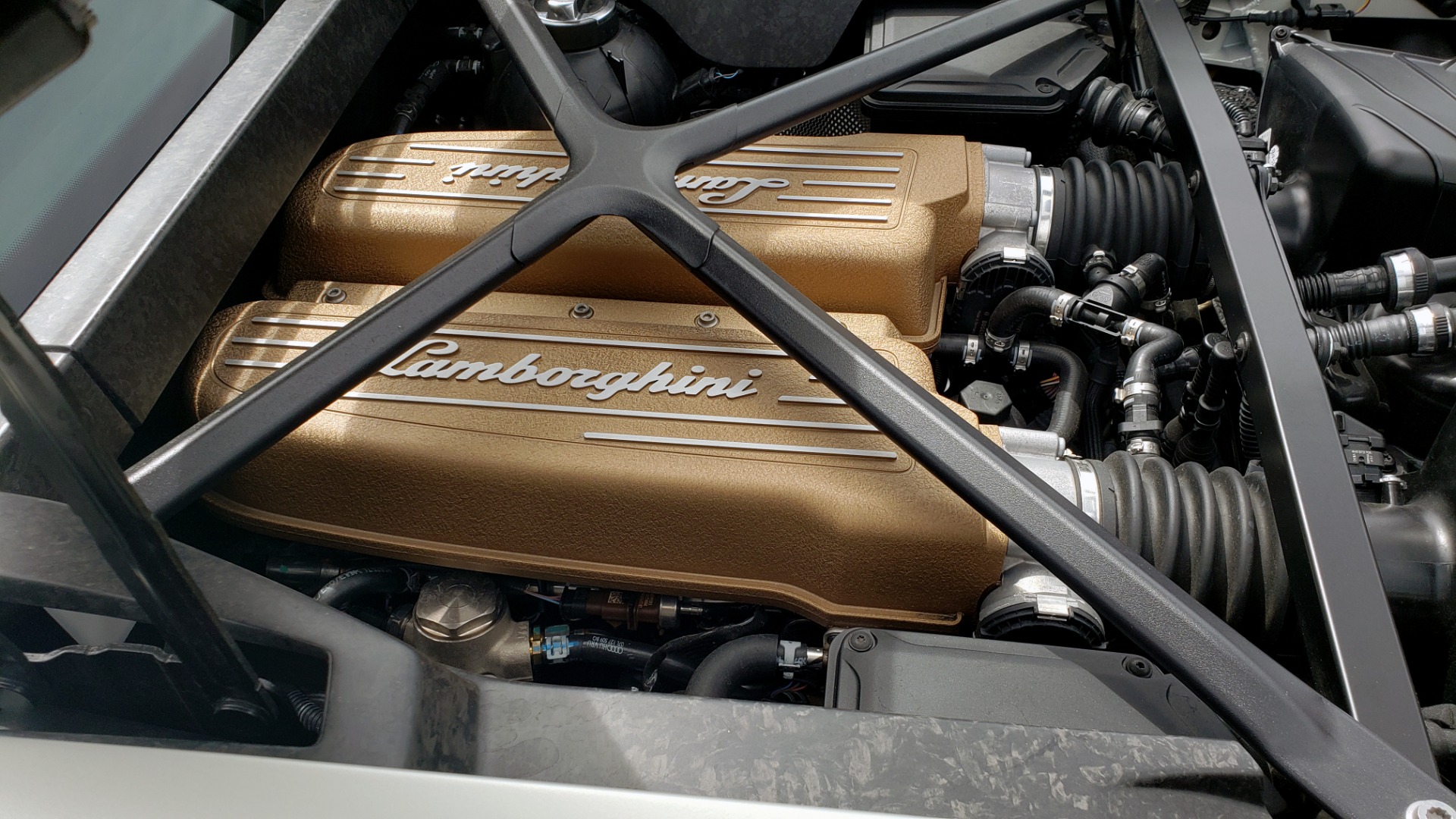
Lamborghini / Audi 5.2L V10

Lamborghini / Audi 5.2L V10 engine

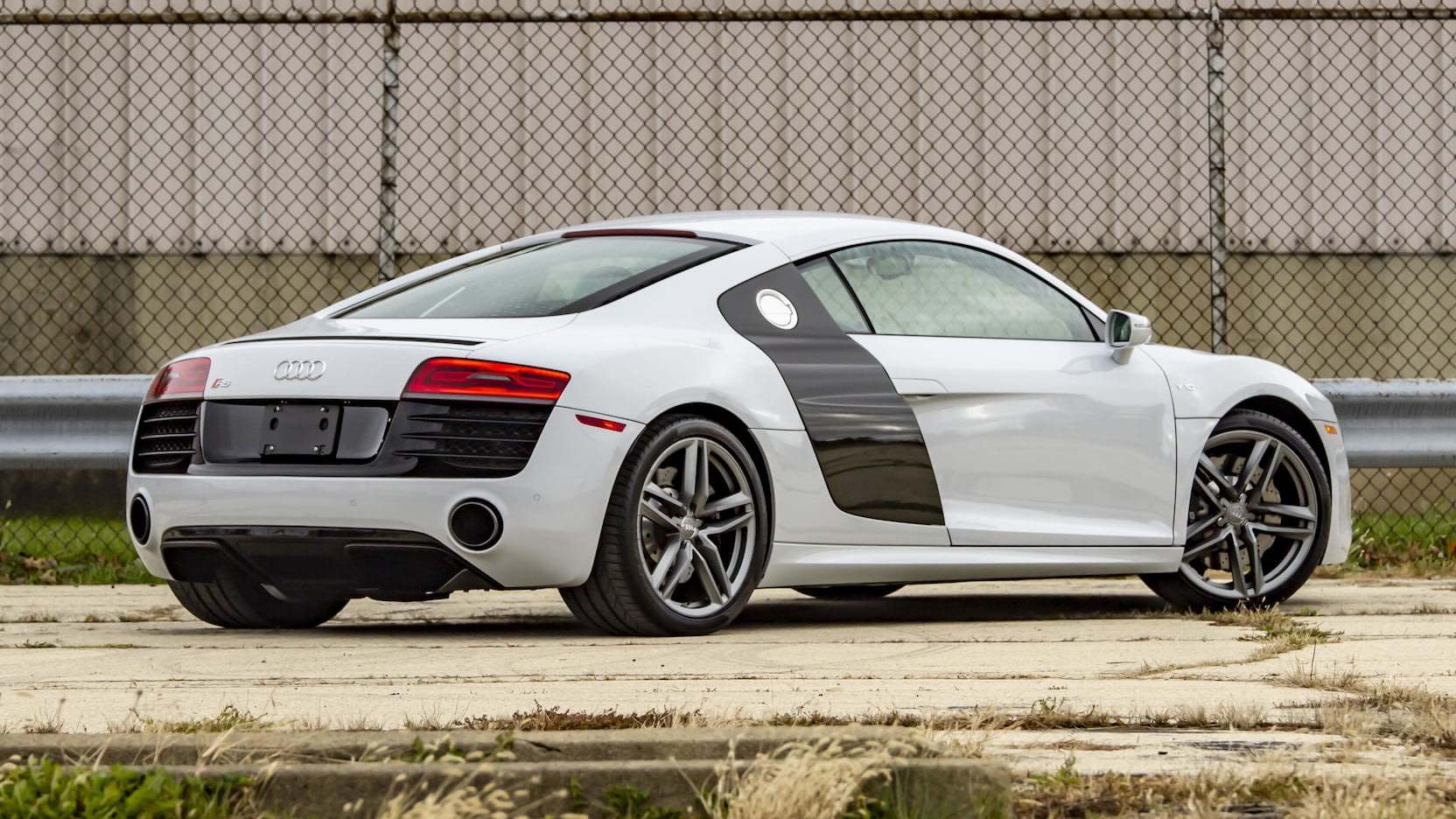
Ever since 2008 – when the refreshed Lamborghini Gallardo LP 560-4 was released – all V10 engines used in the Lamborghini line-up have been based on the 5.2L architecture. This has carried over to the Gallardo’s successor – the Lamborghini Huracán – with each and every one of its models having been fitted with the aforementioned power plant, up to this point. In the current stage of its evolution, the 5.2L naturally-aspirated V10 is mechanically identical to Audi’s version of the engine (which uses ‘Fuel Stratified Injection) and is seen in Audi’s own R8 supercar; however, power outputs vary depending on the trim levels of the respective models.

Lambo 5.2L V10 engine

The 5.2L naturally-aspirated V10 power plant we’ve been speaking so much about in this list is at the peak of its evolution via the current Lamborghini Huracán Performanté. In this configuration, the engine produces 640 hp @ 8,000 rpm and 443 lb-ft of torque @ 6,500 rpm; this makes the supercar good for 0-100 km/h in 3.1 seconds and a blistering top speed of 325 km/h, all without the assistance of any type of forced induction. Augmented with the greatest technologies available today, the motor produces its power more efficiently than ever before as well, with more than 70% of its torque already available as early as 1,000 rpm.

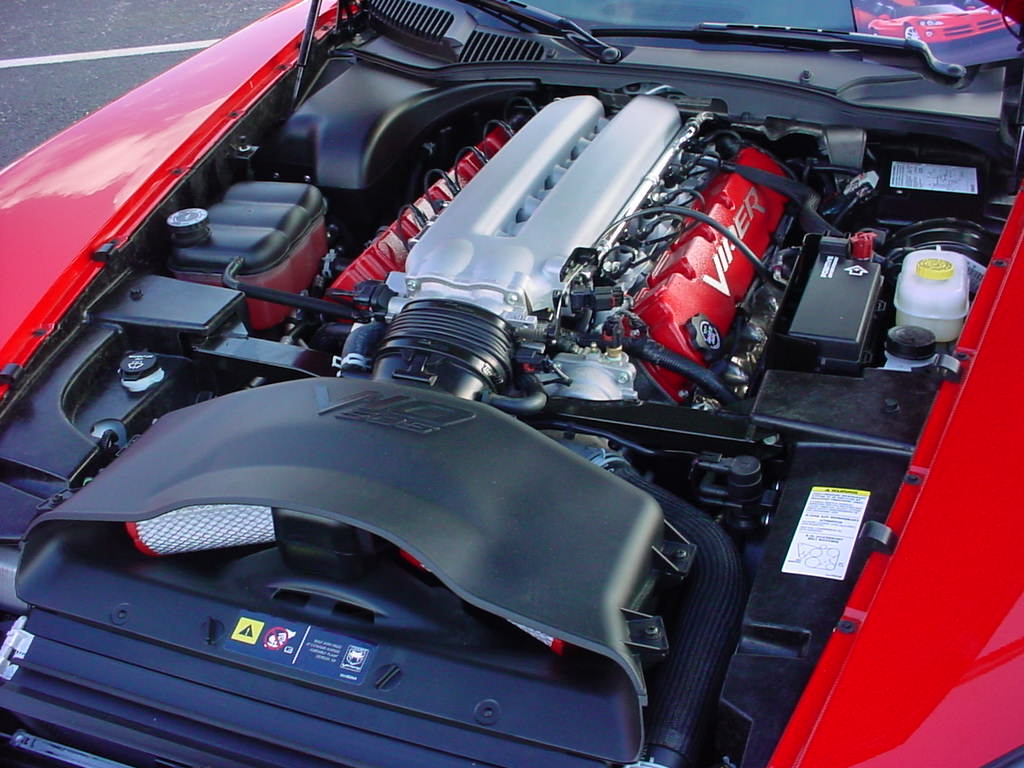
Dodge Viper ACR 8.4L V10

Dodge Viper ACR 8.4L V10 engine

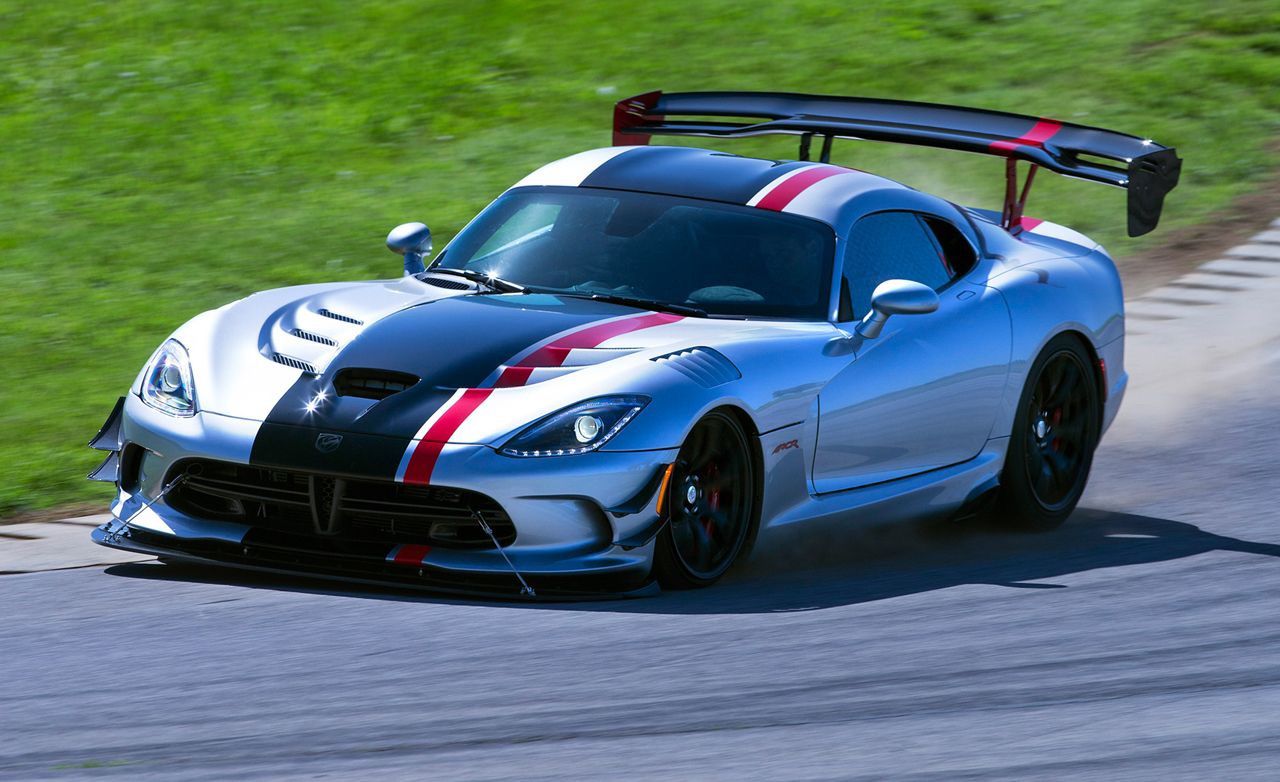
Even if the Dodge Hellcat is hogging all the headlines these days, there’s always something you have to admire about the lunacy of a naturally-aspirated 8.4L V10 engine. No, the Dodge Viper doesn’t do subtlety very well. Yes, it does happen to fall under the ‘Old Testament’ definition of “awesome”. With 640 hp and 600 lb-ft of torque being produced from that colossus of an all-aluminum engine, the Viper has the exhaust note of a semi-dormant volcano. It would make absolutely no sense at all if it wasn’t just so damn fast. Variants such as the SRT-10 and ACR-X took the road-going version of the car to the next level, with the latter being a turn-key, non-street legal race car that participates in Viper racing leagues around the world.

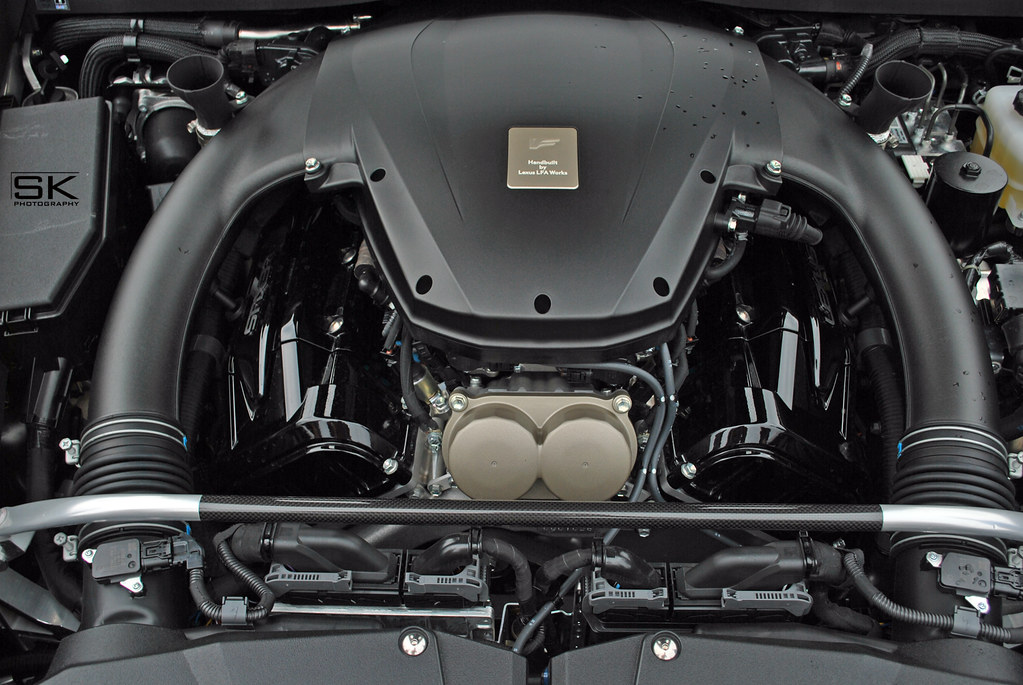
Lexus LFA 4.8L V10 (1LR-GUE)

Lexus LFA 4.8L V10 (1LR-GUE) engine

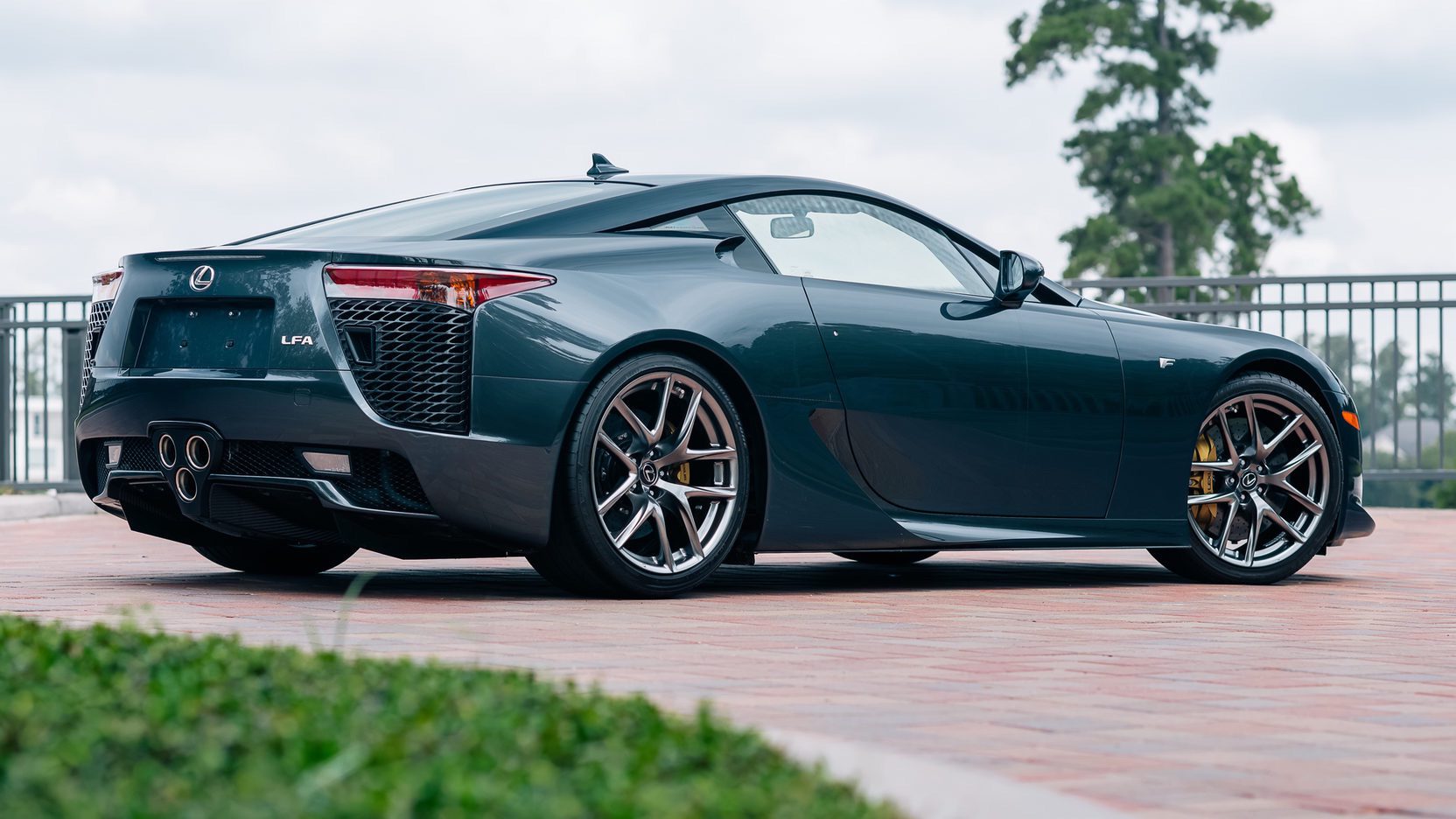
Many regard the Lexus LFA as one of the best supercars ever made. Lexus only made 500 units, and I assumed those 500 sold out quickly. I was wrong. Despite the fact that Lexus hasn’t produced the LFA since 2012, there are still seven brand new LFA supercars for sale in the US, according to Carscoops. With all that said, the LFA came with one of the best V10 engines ever produced by a Japanese automaker. The 4.8L naturally-aspirated V10 – dubbed 1LR-GUE – made 552 hp and 352 lb-ft of torque. Developed in collaboration with Yamaha, it was a free-revving engine with an exhaust note that is truly unlike any other on the planet. As the sole representative from Japan, the 1LR-GUE is certainly one for the ages.

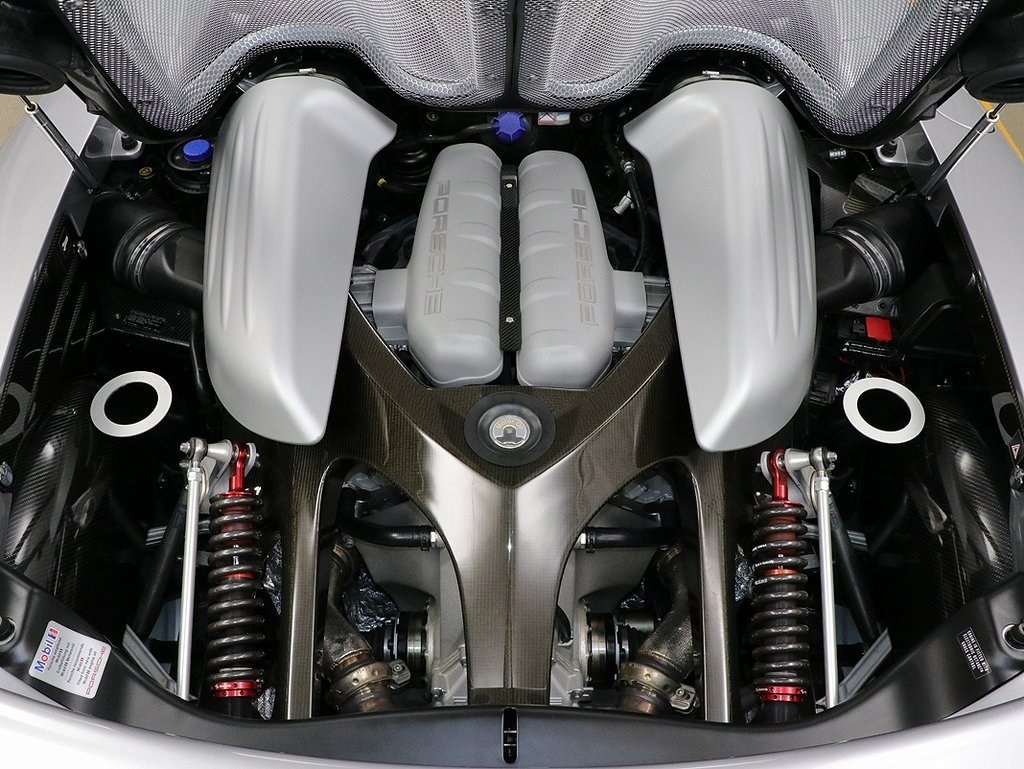
Porsche Carrera GT 5.7L V10 (980/01)

Porsche Carrera GT 5.7L V10 (980/01) engine

What makes the Porsche Carrera GT engine so special is that it is technically a race car engine. Not in that loosely-based sense – as is often used as a gimmick by salespeople – but in the true sense of the word. In the late 1990s, Porsche engineers in Zuffenhausen were assigned the task of developing a naturally-aspirated V10 concept engine, which was to later be used in a race car for the infamous 24 Hours of Le Mans endurance race. Sadly, the completion of that race car never came to fruition, but the efforts of the engine builders would not go to waste.

Porsche decided to adapt the engine for use in the Carrera GT and took the necessary steps to not only refine it in order to satisfy production car protocols but also managed to make it a more powerful version than the original unit. The result is a 5.7L naturally-aspirated V10 engine, which produces 612 hp @ 8,000 rpm and 435 lb-ft of torque @ 5,750 rpm. This allowed the Carrera GT to accelerate from 0-60 mph in 3.8 seconds and 0-100 mph in 6.9 seconds, with a top speed of 205 mph.

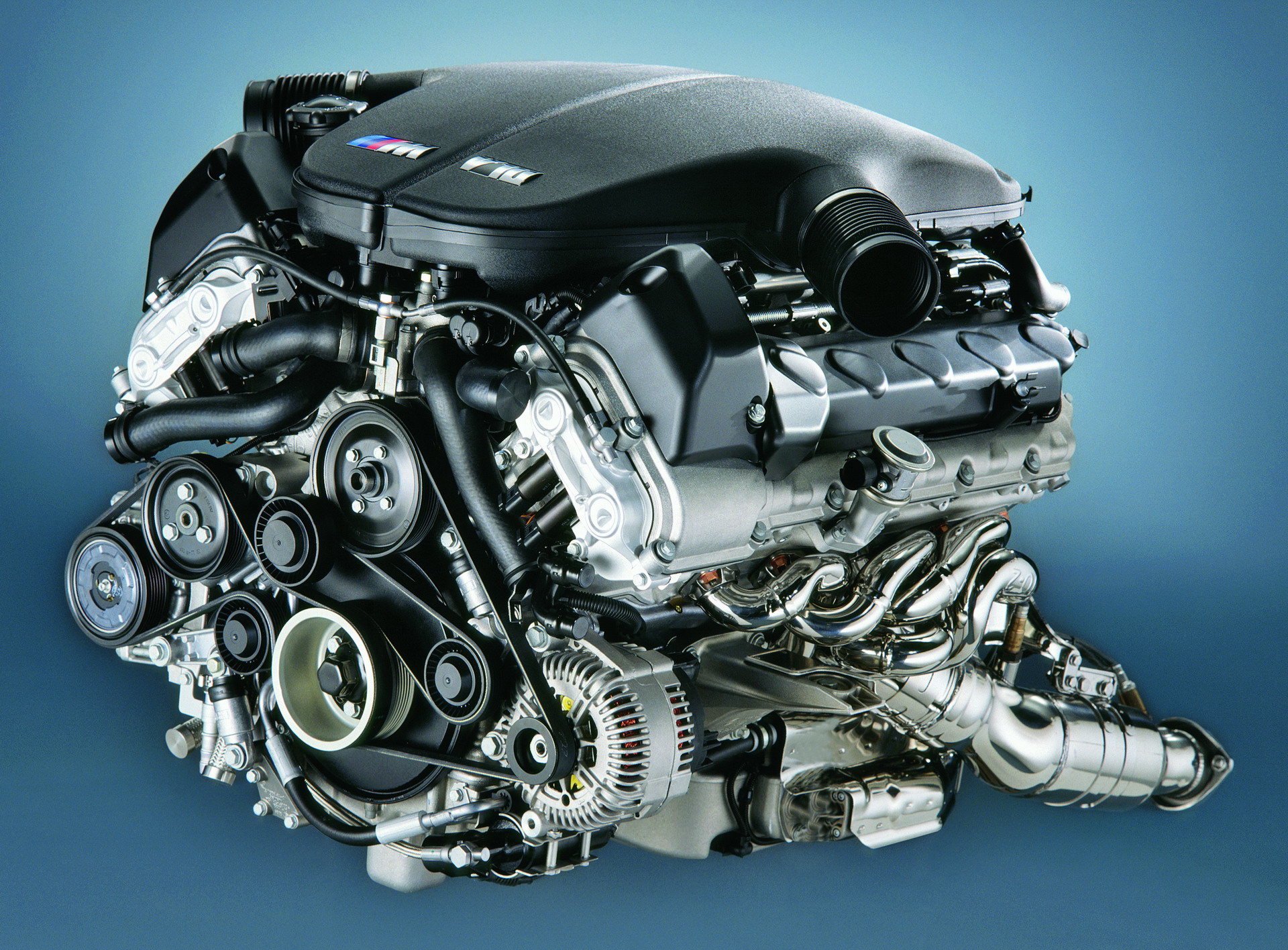
BMW M5 V10 (S85)

BMW M5 V10 (S85) engine

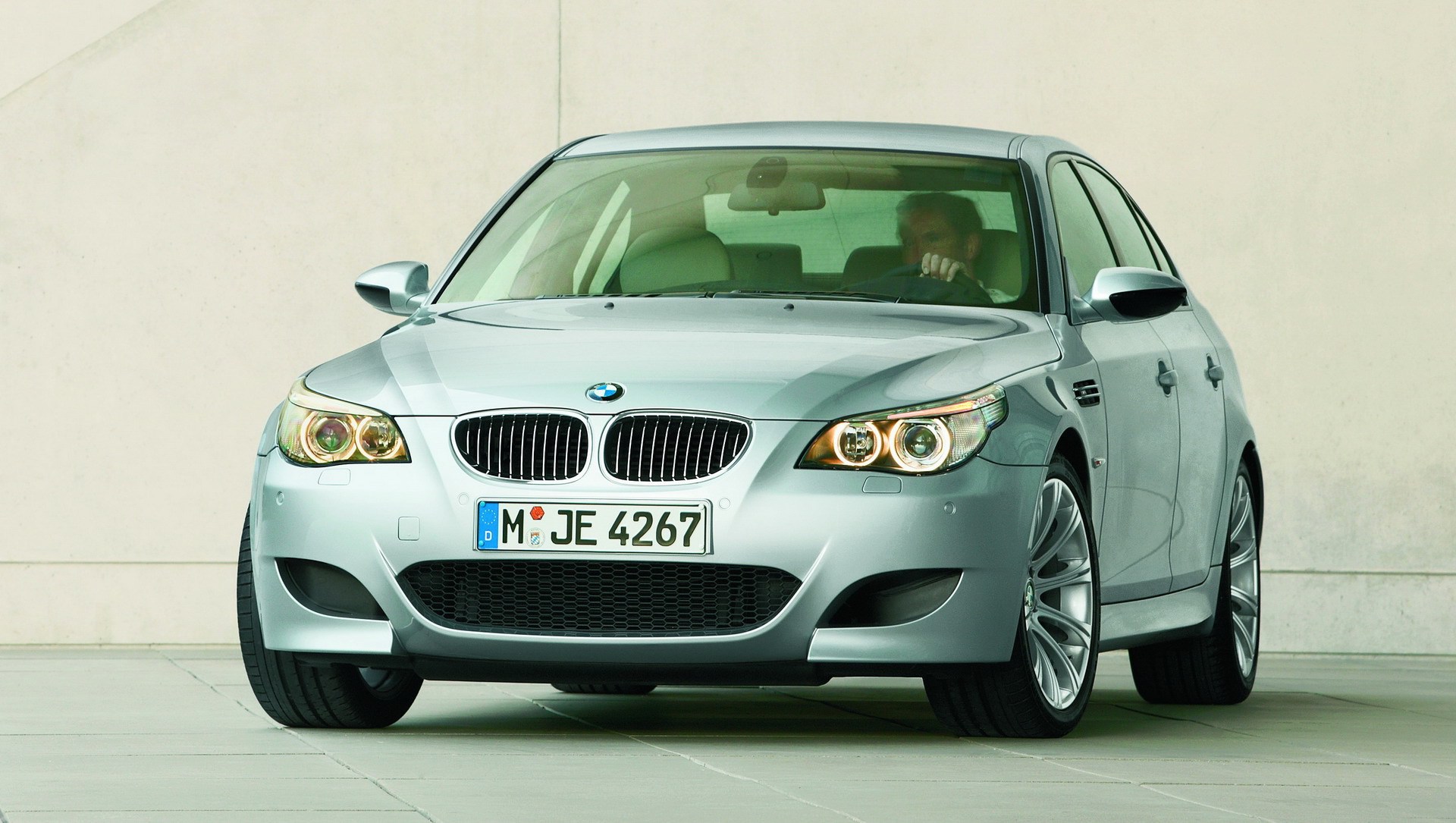
Released in mid-2005, the E60 M5 sedan featured a high-revving and ultra-powerful V10 engine, which was the only one of its kind in a series-production car at that moment in time (while also being the marque’s most powerful production car engine ever made). The 5.0L naturally-aspirated unit shared more than just the same number of cylinders as the Formula 1 engine that powered the BMW Williams F1 team. Technology forged in the heat of motorsport had enhanced the processes and components used in creating this new powerhouse. As you would expect from BMW M, this high-performance motor generates enormous pulling force over its entire speed range.

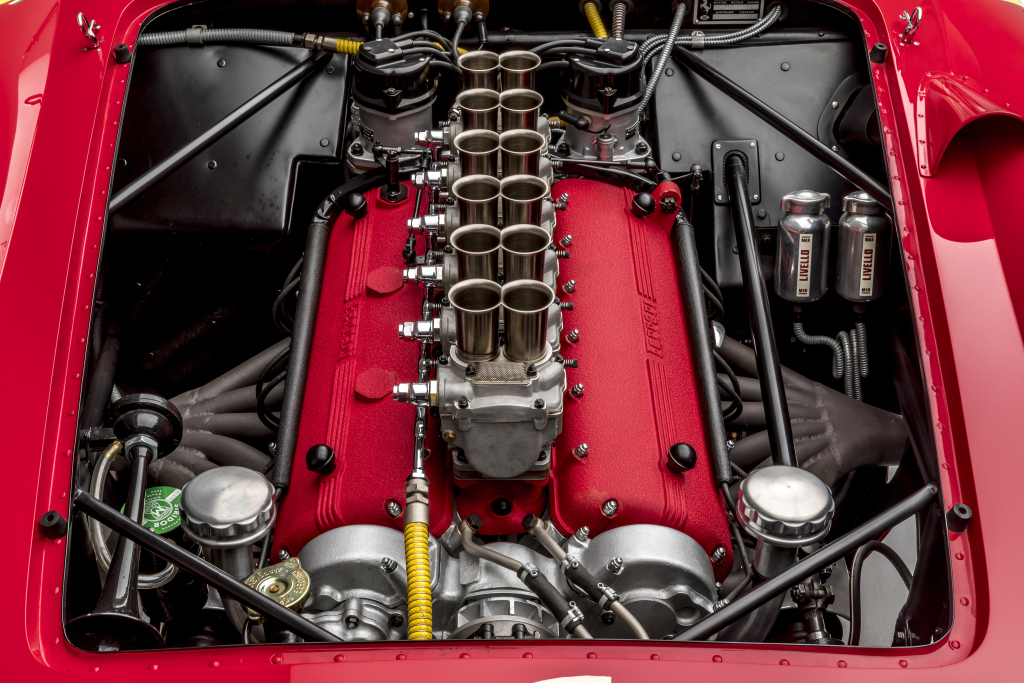
Ferrari Colombo V12

Ferrari Colombo V12 engine

Originally designed by Gioacchino Colombo, this engine can trace its roots back to the very first Ferrari-branded model designed by Ferrari Enzo – the 1947 Ferrari 125 S – where it debuted as a 1.5L V12. The core design of the engine would persevere for more than 4 decades; along the way growing in size, having various levels of forced induction, and becoming a dual-overhead-cam configuration with EFI. Many credit the motor’s longevity to its reputation for being bulletproof.

Successful in both road-going and race track derivatives, the list of Ferrari cars this engine has graced has no shortage of automotive icons; the Ferrari 250 Testa Rossa, Ferrari 250 GTO, and Ferrari 365 GTB/4, just to name a few.

BMW S70/2

BMW S70/2 engine

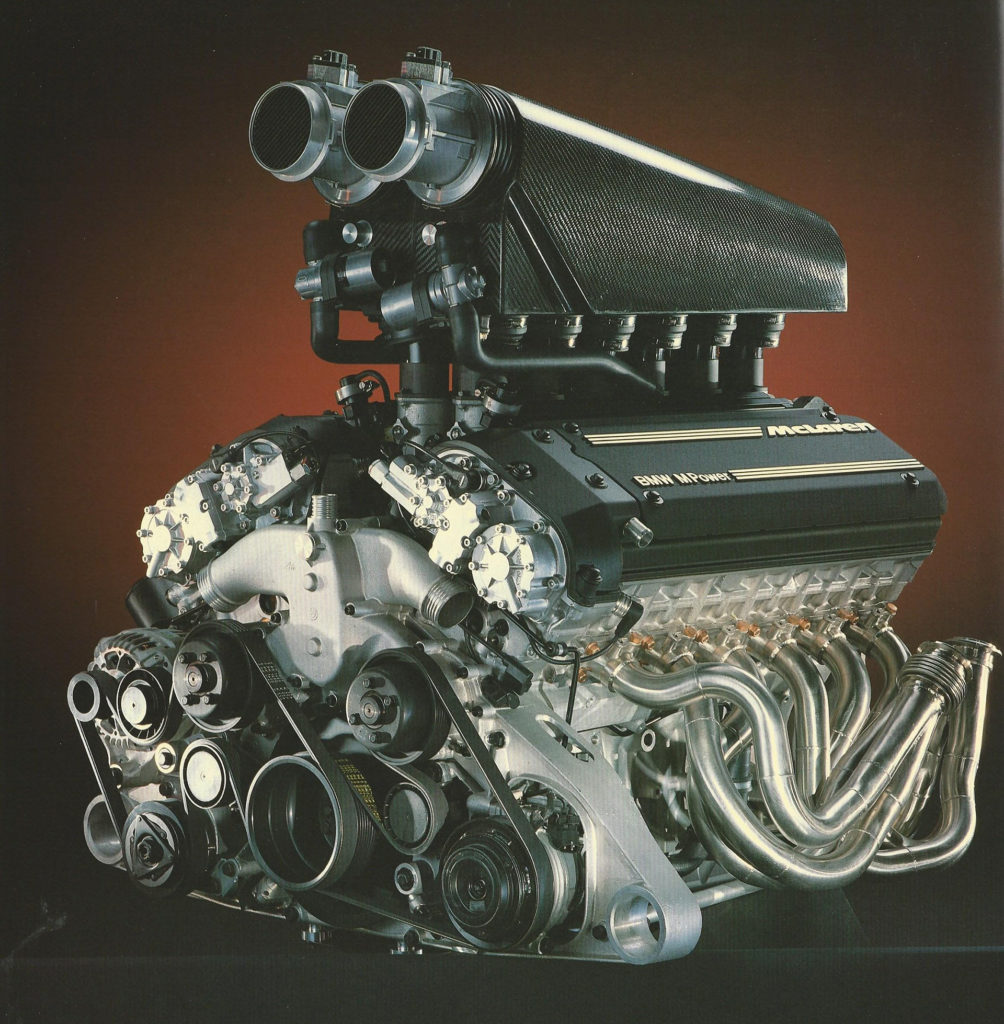
Despite being produced by BMW, the S70/2 didn’t feature in one of the Bavarian automaker’s own production cars. Nevertheless, it did end up powering none other than arguably the most iconic supercars ever made – the 1992-1998 McLaren F1. The 6.1L naturally-aspirated unit produced 627 hp and was capable of 0-60 mph in just 3.2 seconds, and had a top speed of 240 mph. It wouldn’t be until the next millennium before those figures could be surpassed.

Interestingly enough, BMW wasn’t Gordon Murray’s first choice to supply the engine for his groundbreaking supercar, with collaborations with the likes of Honda and Isuzu falling apart before they would opt for the Munich-built power plant. Whatever might’ve happened if things turned out differently, who’s to know? But what we do know is that BMW got things absolutely spot-on with the S70/2, which continues to be regarded as one of the true and timeless masterpieces in automotive history.

Lamborghini V12 L539

Lamborghini V12 L539 engine

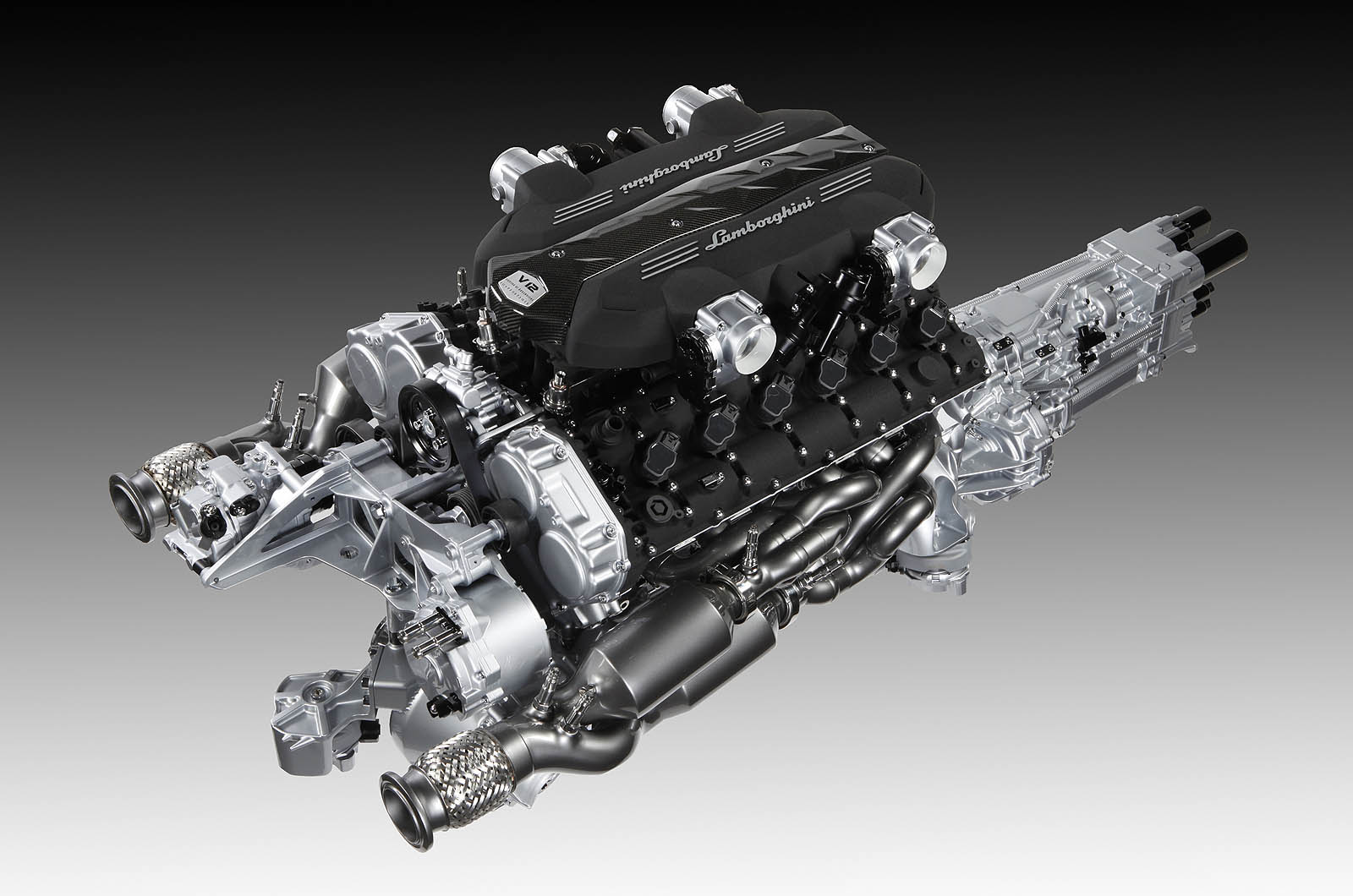
Like Ferrari, Lamborghini also has a long and storied history with V12 engines, having created its very own first version of this power plant for its mid-’60s era Lamborghini 350GT production car. Starting off as a considerably brawny 270 hp 3.5L naturally-aspirated unit, the “Bizzarrini” engine would evolve into a 661 hp 6.5L naturally-aspirated unit and be fashioned by models as recent as the 2010 Lamborghini Murciélago LP-670 SV.

As long as the Bizzarrini engine persisted, we feel that the most significant statement of Lamborghini’s V12 mastery comes in the form of its latest iteration of the engine, dubbed ‘L539’. This power plant would share its debut with the 2011 Lamborghini Aventador, of which it initially powered with 690 hp via a 6.5L naturally-aspirated configuration. With a fresh design, the new engine was over 18 kg lighter than its predecessor and was programmed with a new firing order.  The all-wheel-drive supercar would see significant improvements during its lifecycle, with the latest iteration of the L539 car producing 770 hp in the limited-edition 2021 Lamborghini Aventador Ultimae.

Ferrari F140

Ferrari F140 engine

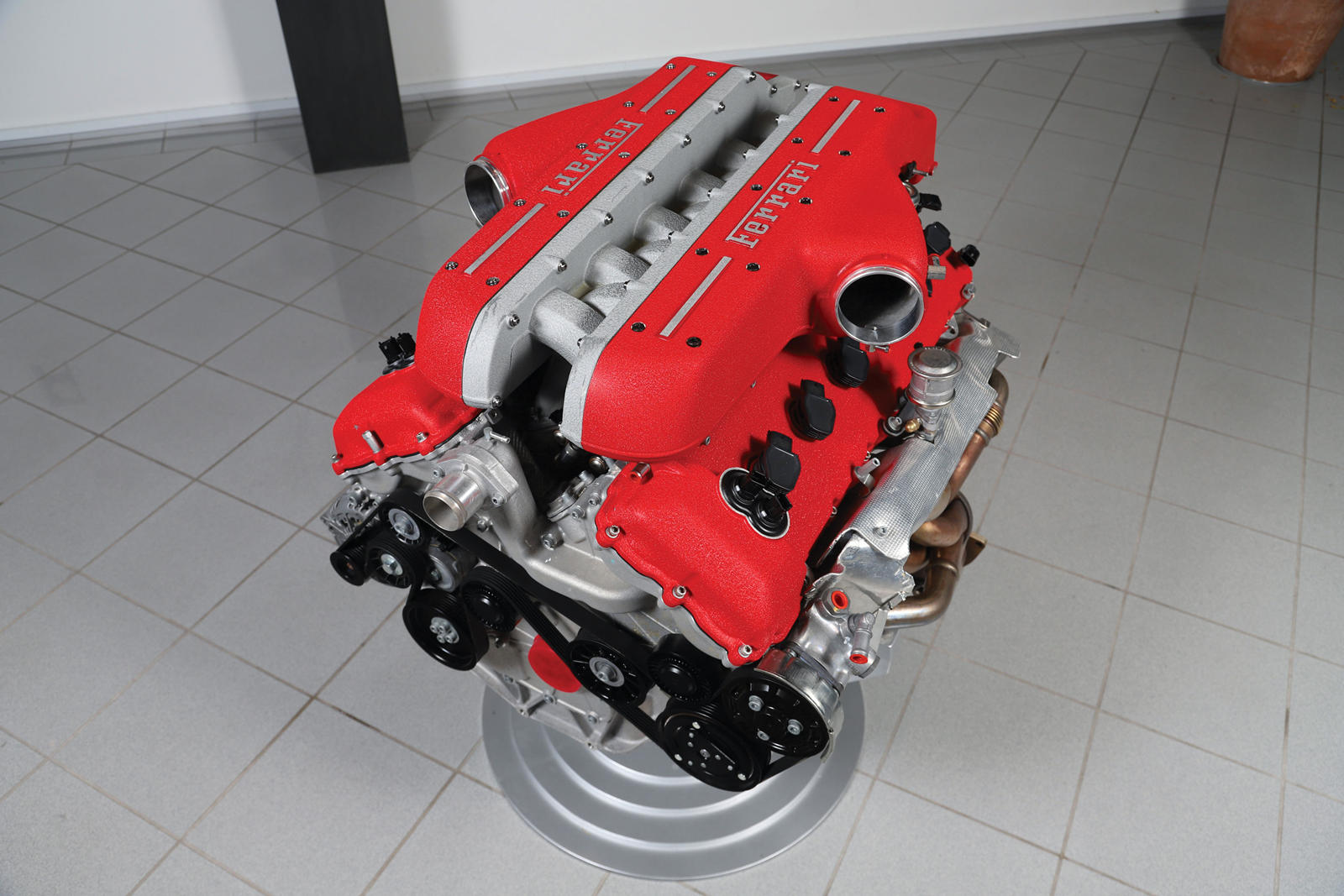
If the F140 had only powered the (2002-2005) Ferrari Enzo – the first Prancing Horse model where it featured – it would have been no less significant or legendary than it is today. The 65-degree V12 engine debuted on the Enzo as a 6.0L naturally-aspirated V12 unit which produced a staggering 651 hp @ 7,800 rpm and 458 lb-ft of torque @ 5,500 rpm. Over the years, 6.3L versions of the F140 have powered the likes of the hybrid LaFerrari and the F12berlinetta.

It has since evolved to its current peak as a 6.5L power plant – dubbed the F140 GA – which produces 789 hp @ 8,500 rpm and 530 lb-ft of torque @ 7,000 rpm in the 812 Superfast; this makes it the most powerful naturally-aspirated production car engine ever produced to this day. It is likely that this could be one of the final generations of Ferrari V12 engines – whether it be naturally aspirated, turbocharged, or even hybridized – so appreciate it while it’s still around!

Mercedes-Benz M120 / M297

Mercedes-Benz M120 / M297 engine

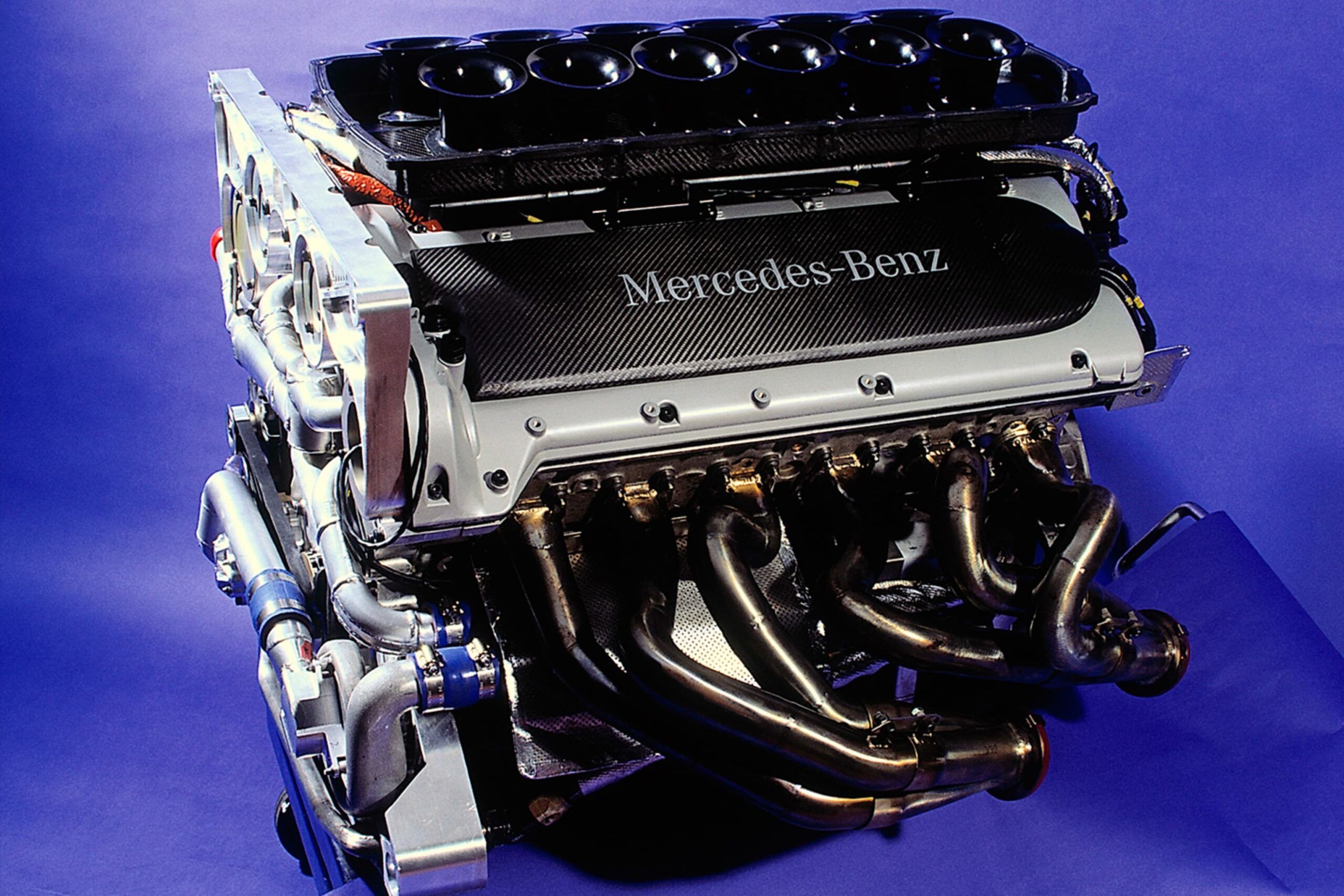
When Mercedes-Benz caught wind of archrival BMW’s side-hustle with Gordon Murray, let’s just say that there was no resting on any laurels going on at their Stuttgart headquarters. With a clever riposte, Mercedes would debut their first-ever V12 engine through the 1993 600 SEC (later to be renamed the S600 Coupé, and frequently referred to as the S-Class). The 6.0L naturally-aspirated power plant was good for 389 hp, 420 lb-ft of torque, and a top speed of 155 mph in its initial configuration.

Not only did Mercedes-Benz one-up BMW by using the engine for their own cars, but they also borrowed a page from their opponent’s playbook and had their M120 engine fashioned for use in the magnificent Pagani Zonda supercar as well. Hand-built and tuned by AMG, the M120 also featured on the Mercedes-Benz CLK GTR race car and also saw its displacement increased to 7.3L for use on the SL73 AMG and CL73 AMG – and at which point it was commonly referred to as the M297.  The most powerful iteration of the M120 features in the Pagani Zonda Revolución, with the non-street-legal car good for 789 hp and 538 lb-ft of torque.

Aston Martin NA V12

Aston Martin NA V12 engine

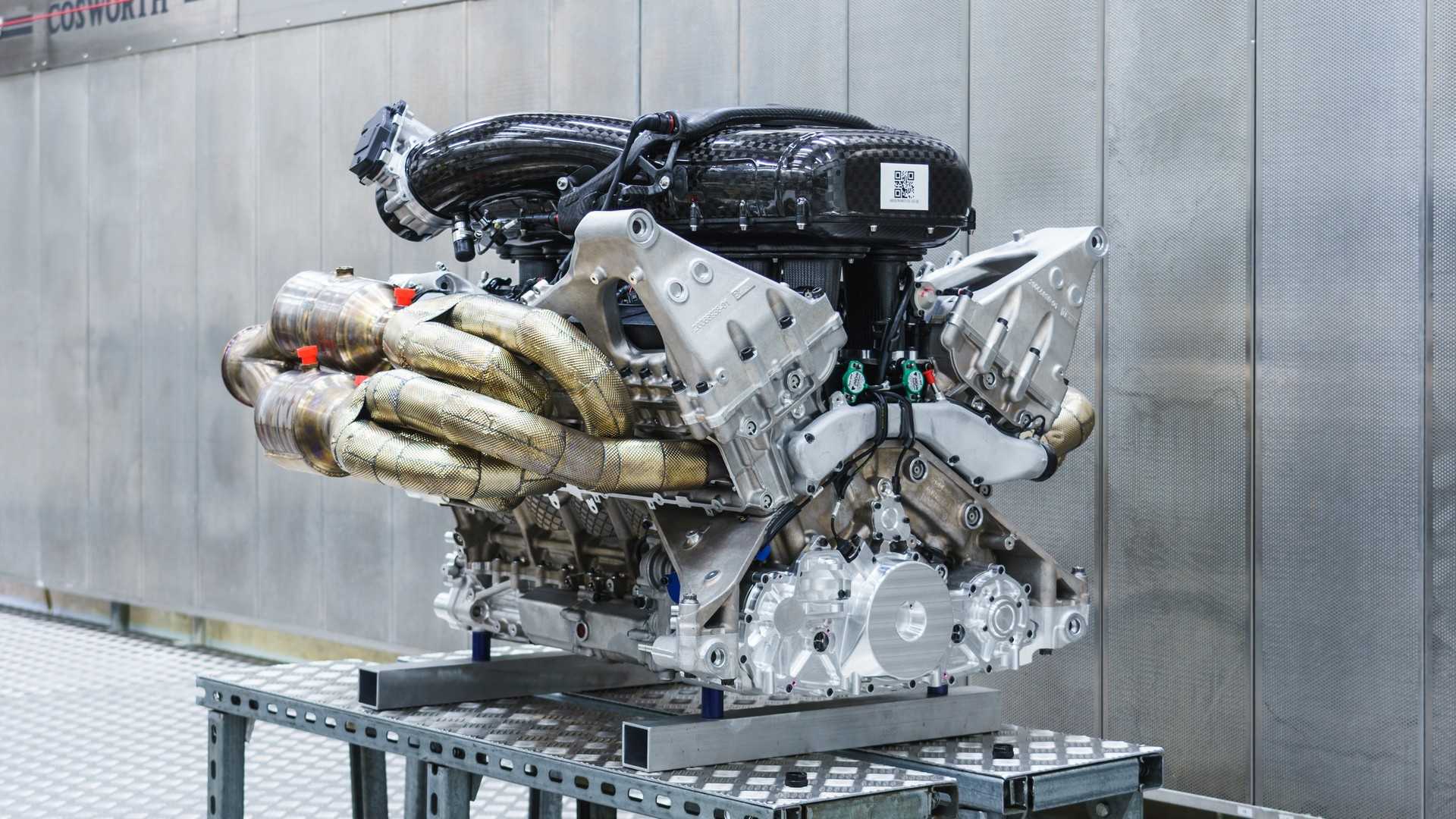
With one of the best sounding V12s (and automobile engines, period), the story of how the Aston Martin (naturally-aspirated) V12 came to be is rather more peculiar and convoluted. The project had less, should we say, glamorous beginnings, when things basically started off with the development of a 2.5L naturally-aspirated V6 engine. This particular unit was essentially the brainchild of Suzuki and Mazda, with the latter’s then-majority owner, Ford, then taking the blueprint to Cosworth, who would go on to build the Duratec V6.

Needless to say, the story didn’t end there, and Aston Martin would end up bolting two of those engines together to create the 5.9L naturally-aspirated V12 it would stamp its name on (and market as a 6.0L). Having more in common with a Ford Taurus than owners or enthusiasts would like to admit, the motor produced 414 hp and 398 lb-ft of torque in the 1999 DB7 V12 Vantage. Aston Martin continues to employ a V12 engine to this day, with the 2017 DB11 having fashioned a 5.2L twin-turbocharged version. More recently, the company has referred back to the naturally-aspirated configuration, with a 6.5L unit designed to power its Valkyrie hypercar with over 1,000 hp @ 10,500 rpm (plus an additional 160 hp with its hybrid-electric system).

GMA Cosworth V12

GMA Cosworth V12 engine

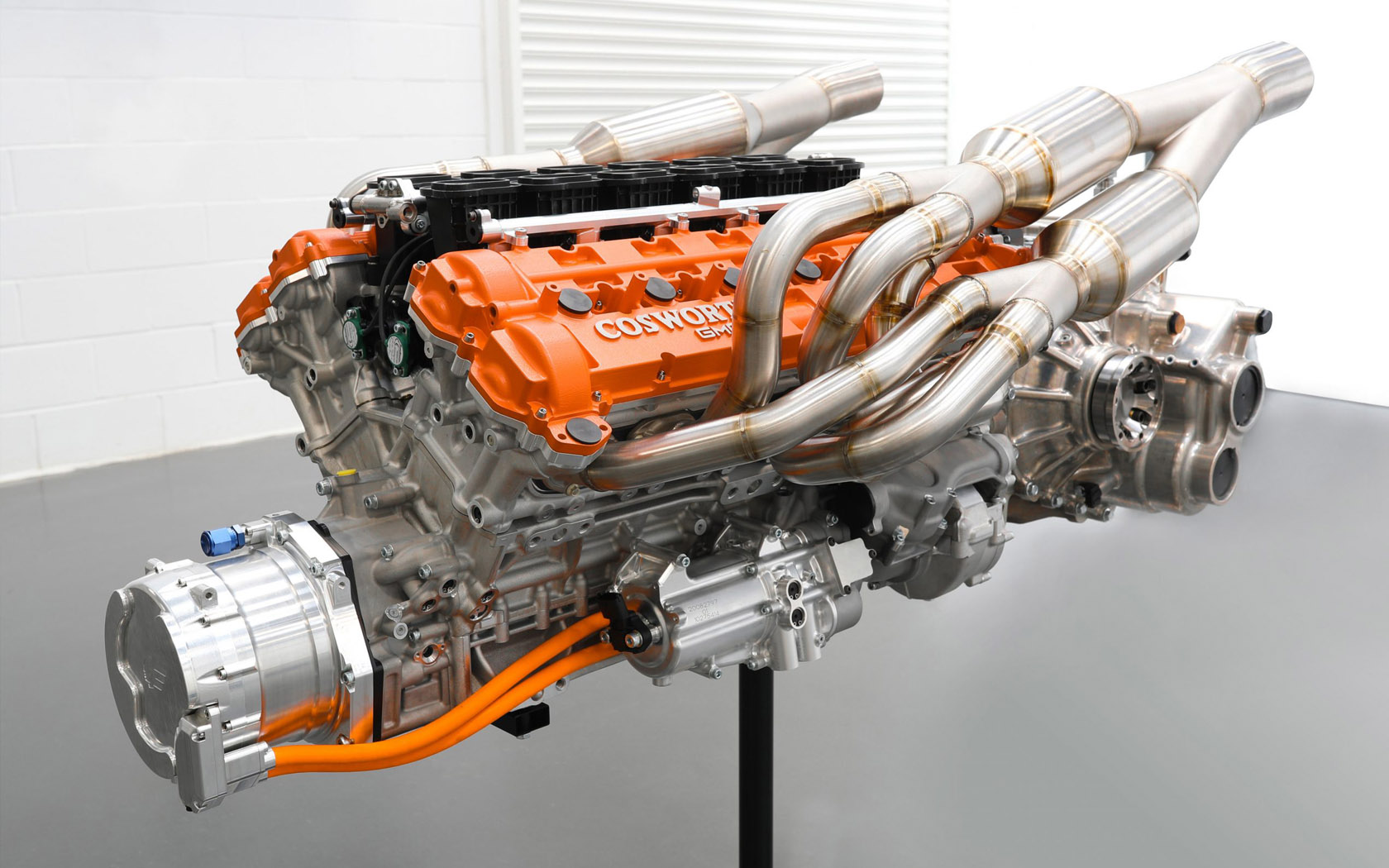
It’s impossible to speak about the naturally-aspirated engine in the GMA T.50, without getting into how it’s involved in so much more than just spinning the new supercar’s rear wheels, or about how other design elements of the car are built around it. As impressive as a 12,100 rpm redline sounds, its 654 hp and 345 lb-ft of torque doesn’t sound extraordinary by today’s standards. But rest assured this engine, and this car, are on the cusp of a truly “redefining” moment in automotive history. Crucially weighing at just 178 kg, the engine plays a huge factor towards the T.50’s overall curb weight of just 980 kg – about one-third that of a contemporary supercar or hypercar.

The GMA T.50 is the culmination of decades of Gordon Murray’s aerodynamic and mechanical engineering experience. Part of what makes the T.50 so exciting, is that it incorporates the design and function of the infamous Brabham BT46 “Fan Car.” A gigantic fan –  powered by the camshaft of the engine and coupled with the curved underbody of the BT46 – created an active venturi effect that quite literally vacuumed the car onto the road, and allowed it to corner at barely believable speeds and levels of grip. The T.50 will feature something similar, and likely more advanced. On a road car. We can’t wait to see this in the flesh.

Toyota 1GZ-FE

Toyota 1GZ-FE engine

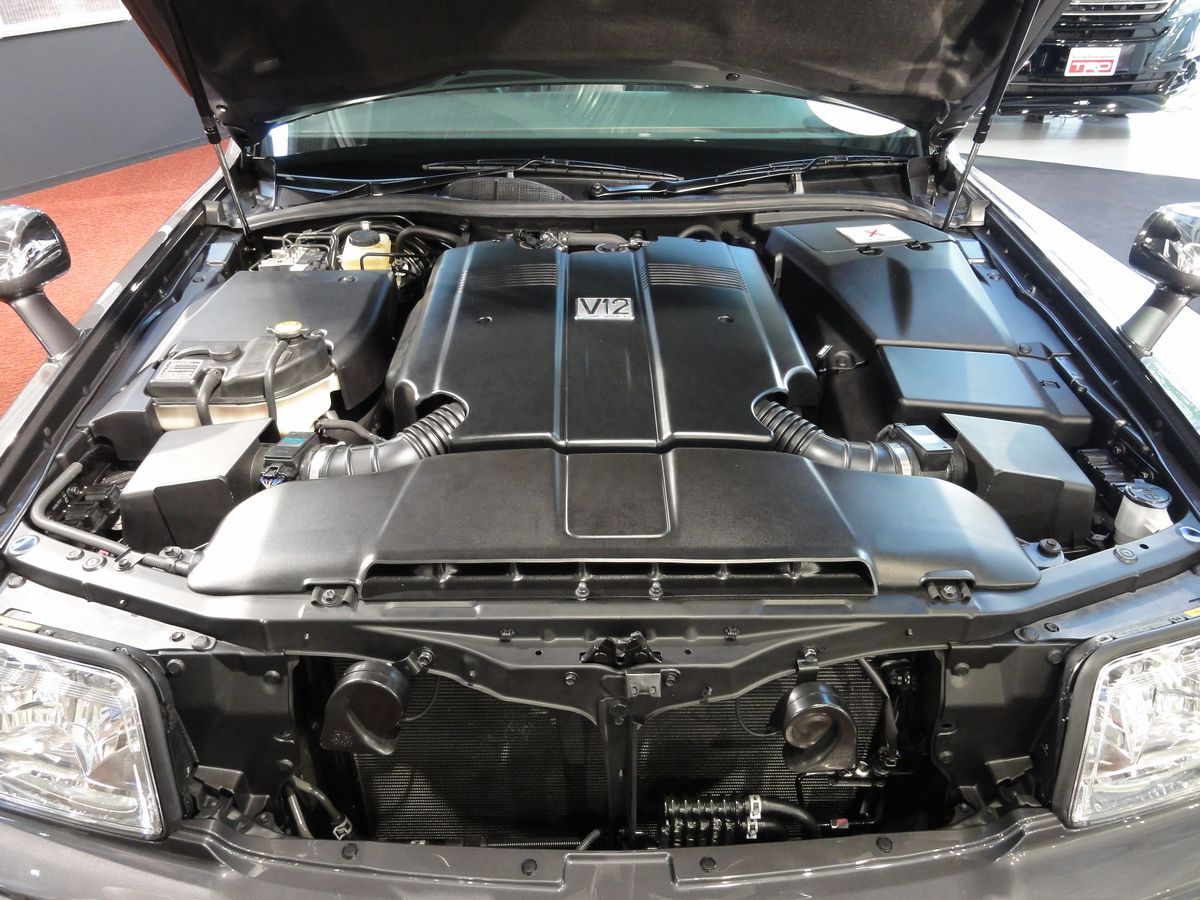
To call Toyota’s 1GZ-FE the “Godfather” of Japanese automobile engines would be neither an understatement nor unbefitting. After all, the venerable V12 from the land of the Rising Sun – which exclusively powers the Toyota Century luxury sedan – is both one-of-a-kind and has a penchant for attracting a particular type of “underworldly” owner in its homeland. It’s the only production V12 engine to come from Japan and still manages to invoke all of the essential philosophies of Japanese craftsmanship – such as reliability, build quality, and refinement.

That being said, it’s certainly not the most powerful engine on this list and remained at around the 300 hp mark during its lengthy production run from 1997-2016. Nevertheless, it remains one of the most unique engines on this list and is no less iconic than its near-1000 hp contemporaries. This engine is prime for swapping into other platforms, with automotive personality Smokey Nagata fitting a twin-turbocharged version to his ‘Top Secret’ Toyota Supra. Thanks in large part to its distinctive engine, the Century remains a status symbol in Japan; in the way a Rolls-Royce Phantom does the same just about everywhere else.

Top 10 Non-Rally All-Wheel Drive Race Cars

We tend to look at all-wheel drive as one of more recent automotive inventions, but its roots could be traced way back to the dawn of motorsports years and the 1903 Spyker 60-HP four-wheel drive racing car. But this drivetrain found its ground in rallying, courtesy of the ice breaking Group B Audi Quattro and Lancia Delta that followed.

In between Spyker and Audi, a number of engineers and companies have experimented in the earlier eras of motorsport, trying to make cars faster around the tracks. But as many have found out, this system didn’t always give contenders the edge. Later on, all-wheel drive was heavily regulated and more or less unanimously dismissed, but some cars in recent years used power on both axles to their advantage.

Given that all-wheel drive cars were much more successful in rallying than in closed course racing, a number of cars on the list were chosen for interesting backstories, unique engineering solutions and cool effect rather than results in their respective competition formats. So, let’s go!

Non-Rally AWD Race Car #1: Porsche Cisitalia Typ 360

Porsche Cisitalia Typ 360 in showroomVia: Drivetribe.

Cisitalia is a name highly respected for its immense impact on the modern sports car world, yet rarely known outside of enthusiast circles. The reason for that are financial troubles that stranded Piero Dusio’s quest to produce Italy’s finest automotive marque.

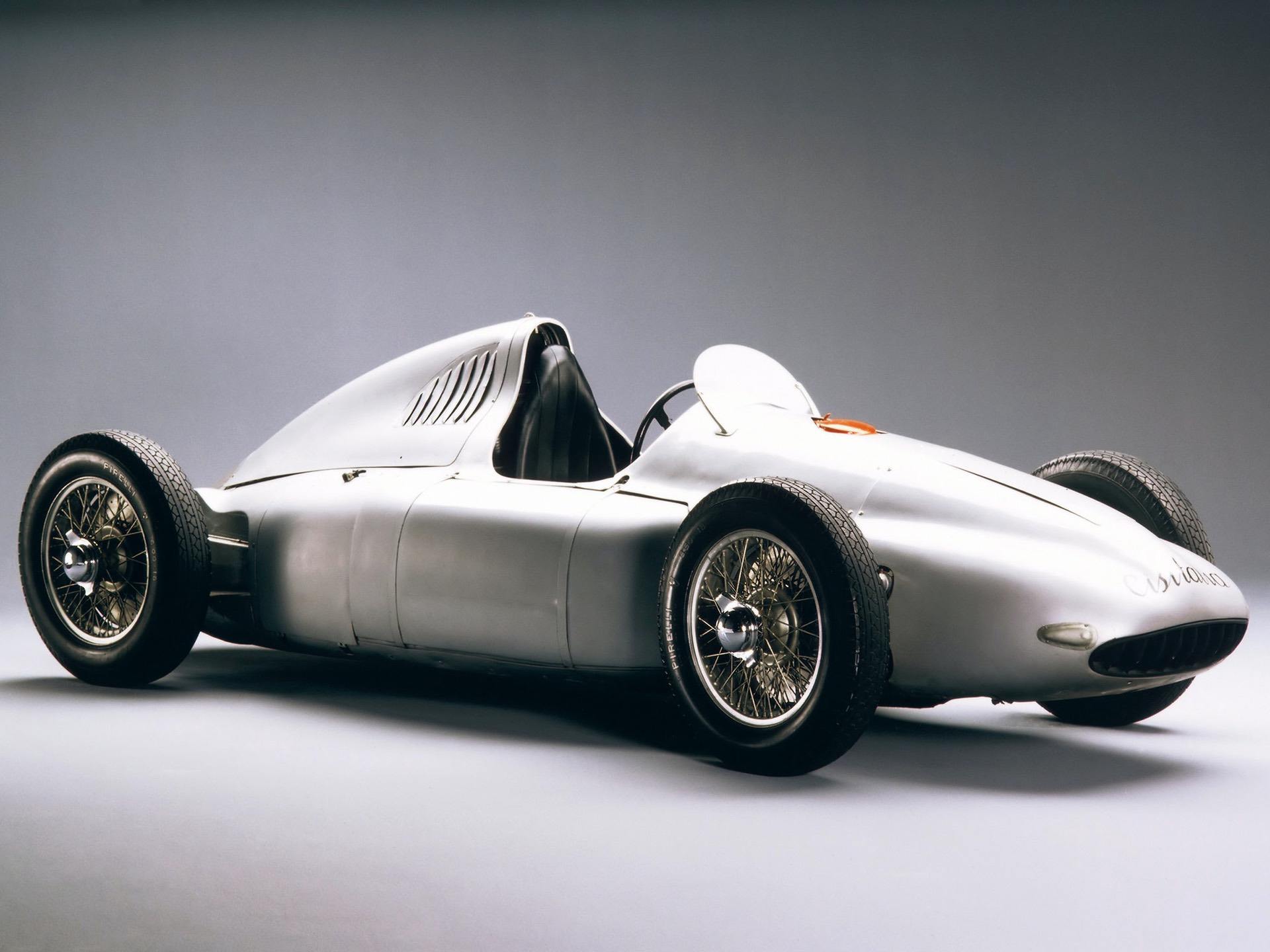
Anyway, if you think the 959 PSK was the first all-wheel drive system engineered by the Porsche family, you’d be wrong, because the Cisitalia Typ 360 open wheel racer came way earlier. By far the most advanced car of the post-WW2 Grand Prix revival era, this mid-engined open wheeler was designed by Ferdinand Porsche himself through 1946 and 1947.

The Typ 360 featured a supercharged 1.5-liter flat-12, a sequential manual gearbox and selectable all-wheel drive, allowing the driver to activate the system whenever they deemed necessary.

Sadly, the Typ 360 never got to race as it was faced with Dusio’s bankruptcy, but the lone example was fortunately preserved, and it now resides in the Porsche Museum.

Non-Rally AWD Race Car #2: Ferguson Climax P99

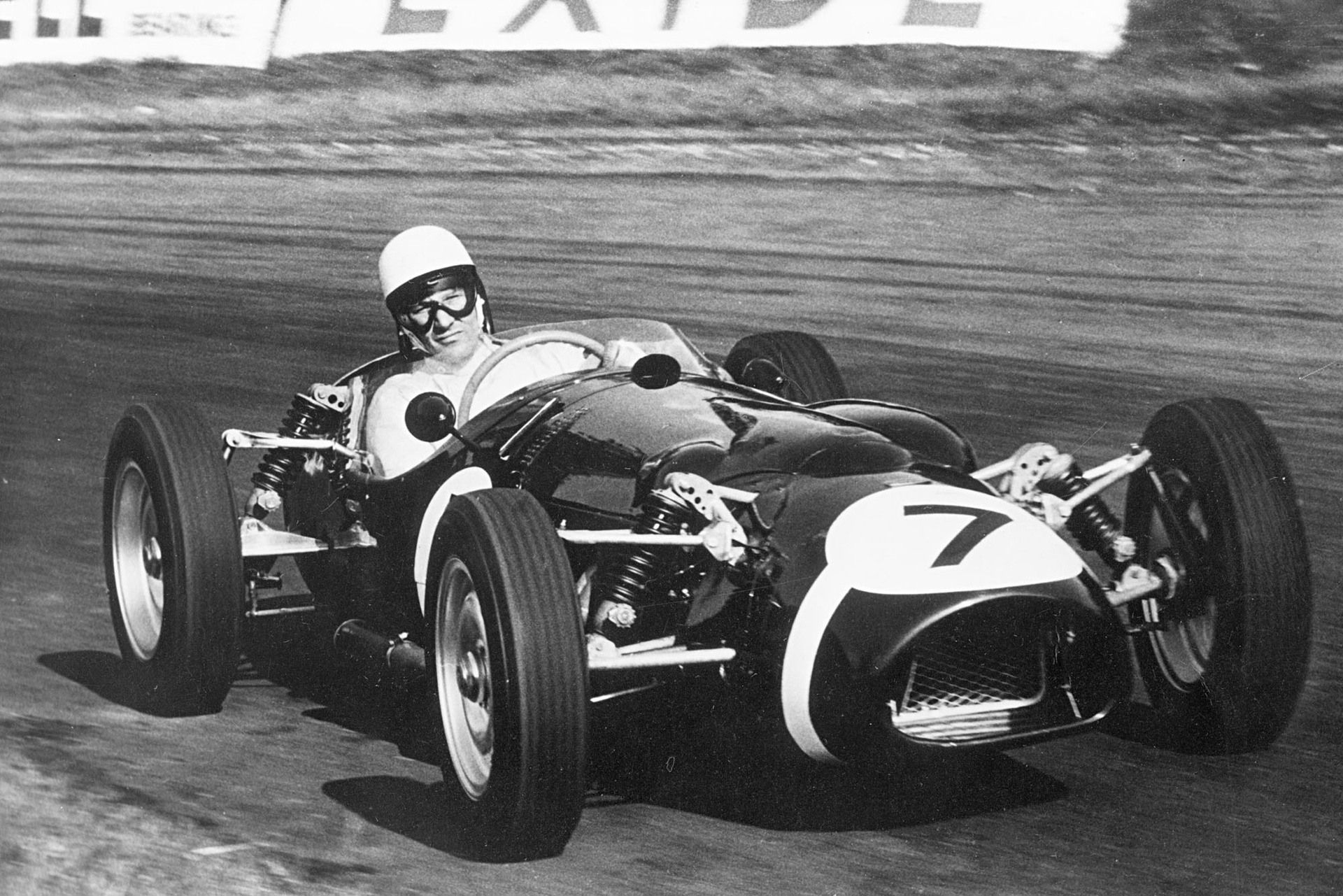
Ferguson Climax P99 driven by Stirling MossVia: Motor Sport Magazine.

The early 1960s were a turning point for race cars as an increasing number of open wheelers turned to mid-engined layout, which proved to offer far better weight distribution, thus improving overall performance. Among those revolutionary cars, one front-engined Formula 1 car stood apart for going in the exact opposite direction.

The Ferguson Climax P99 was a car envisioned by racer Tony Rolt and through working with Claude Hill and Harry Ferguson, the P99 was born. Sadly, Ferguson didn’t see the car in action as he passed in 1960, but the work on the car was completed for the 1961 season.

The Ferguson Climax P99 had less than a stellar debut at the 1961 British Empire Trophy, crashing on lap 2 of its inaugural race, only to be disqualified from the 1961 British Grand Prix, the next event it appeared on. However, at the 1961 International Gold Cup event at Oulton Park, Sir Stirling Moss drove it to victory, the first for an all-wheel drive Formula 1 car and the last for a front-engined one.

Non-Rally AWD Race Car #3: STP-Paxton Turbocar

STP Paxton Turbocar driven on track by Parnelli JonesVia: Road & Track.

The late 1960s were an era of freedom and wild experiments even in the racing world, meaning turbine-powered cars were a thing for a few visionary constructors. Conceived by Ken Wellis and backed up by Andy Granatelli of STP fame, the STP-Paxton Turbocar, or Silent Sam as it was dubbed by the press, was one of the most advanced racing cars of its era.

Powered by a 500 horsepower ST6B-62 gas turbine engine with no clutch or gearbox and with Ferguson all-wheel drive, the Turbocar put on a show at the 1967 Indianapolis 500, where Parnelli Jones led throughout the race—until the transmission gave out with just eight miles to go. The car raced once more at the 1968 Indianapolis 500, but with no success as its driver Joe Leonard crashed it during practice.

A modified version of the same engine was used to power the Lotus Type 56 experimental Grand Prix car which also featured all-wheel drive. Colin Chapman first campaigned the car at the 1968 Indy 500. In Formula 1, the Type 56 had its best result at the 1971 Italian Grand Prix, where Emerson Fittipaldi piloted it to eighth place.

Non-Rally AWD Race Car #4: Matra MS84

Matra MS84 on track in black and white photoVia: Wikipedia.

Be it in civilian use or on the racetracks, Matra was well-known for unorthodox and experimental cars, so it’s no wonder it had a foray into all-wheel drive Formula One cars during the late sixties.

The Matra MS84, a predecessor to the 1970 Matra-Simca MS 120, was more related to Jackie Stewart’s 1969 championship-winning MS80, built on a steel tubular chassis rather than aluminum monocoque. The Cosworth V8 was mated to Ferguson all-wheel drive system and the front brakes were moved inboard as well.

Despite all the efforts, the MS84 didn’t prove successful, with Johnny Servoz-Gavin scoring sixth at the 1969 Canadian Grand Prix. It was, however, the best result for a rear-wheel drive car at that event.

Non-Rally AWD Race Car #5: Porsche 961

White Porsche 961 on trackVia: Total 911.

The highly advanced Porsche 959 proto-hypercar was designed to conform to FIA’s Group B regulations and as such it featured a highly advanced all-wheel drive system (PSK).

The Group B rulebook applied both to close circuit racing and rallying, so Porsche eventually outed the 959’s racing derivatives to two of the most famous events in each discipline. The rallied-up 959 won the 1986 Dakar Rally, while the Porsche 961 entered the 1986 24 Hours of Le Mans, finishing at respectable seventh overall.

The 961 had two more appearances, at the 1986 24 Hours of Daytona and 1987 24 Hours of Le Mans—where it eventually crashed and caught fire, prompting Porsche to cancel the project for the remainder of the season. Today, this car is on display at the Porsche Museum, finished in its iconic Rothmans livery.

Non-Rally AWD Race Car #6: Bugatti EB110 SS LM

Blue Bugatti EB 110 SS LM on trackVia: Twitter.

The Porsche 961 wasn’t the only four-wheel drive supercar to test its sophisticated mechanics on the world’s most famous endurance race, since the Bugatti EB110 SS famously entered the 1994 24 Hours of Le Mans. Competing in the GT1 category, it showed heroic pace, qualifying 5th in its class and 17th overall.

Team owner Michel Hommell and engineers from Campogalliano managed to shed more than 600 lb of weight in order to retain the EB110’s all-wheel drive system. Sadly, a number of mechanical troubles plagued this independent entry on the very race day, starting from the fuel tank leak in the opening stages of the race all the way to turbo failures.

Hommell’s dreams of returning Bugatti to its glorious days at Le Mans finally came crashing down in the closing hours of the race when a punctured tire caused the car to crash, rendering it unable to finish.

Non-Rally AWD Race Car #7: Audi 90 Quattro IMSA GTO

Audi 90 Quattro IMSA GTO on trackVia: Top Gear.

Audi so utterly dominated the 1988 Trans-Am series in a 2.2-liter compact sedan that the governing body banned it for the subsequent season, but how did that exactly happen? The secret (or not so much, given that the car had the word “quattro” inscribed literally all over it) was in the car’s all-wheel drive.

The 500-odd horsepower machinery was powered by a longitudinally mounted inline-five sending power to all four wheels via a center Torsen differential and limited slip differentials in the front and rear. Give that rally-dominating technology to world-class drivers Hurley Haywood, Hans-Joachim Stuck, and Walter Rohrl, and you’ll end up with 8 wins in 13 races.

Following the 1988 ban, the car moved to the IMSA series, where Audi’s engineers modified the base car even further into a carbon composite silhouette racer on a tubular frame with upwards of 700 German ponies. Missing the season-opening Sebring and Daytona due to the car still being in development, Audi finished the season in second place mainly thanks to Haywood and Stuck’s phenomenal driving.

The 1989 season was also the final one for the Audi 90 Quattro IMSA GTO, as Audi focused on the domestic DTM racing championship, giving America one of the sleekest, coolest and most capable import race cars of all time.

Non-Rally AWD Race Car #8: Alfa Romeo 155 Ti DTM

Alfa Romeo 155 Ti DTM on trackVia: Collier Automedia.

In 1993 FIA introduced Class 1 and Class 2 Touring Cars, with the former allowing a greater degree of liberty, effectively turning touring cars to silhouette racers rather than race-ready variants of their respective roadgoing counterparts. For Alfa Corse, that meant only one thing: thoroughly re-engineering the already competitive 155 sedan it campaigned in the DTM championship.

The new Alfa Romeo 155 initially got a longitudinally mounted 60° 2.5-liter V6 producing astonishing 420 horsepower at 11,500 RPM, while the power figures grew to 483 horsepower at 11,900 RPM in 1996, courtesy of a new 90° 2.5-liter V6. The all-wheel drive was sourced from none other than the Lancia Delta Integrale HF, the most dominating rally car of the era.

In 1993, Nicola Larini dominated the championship, yet himself and Alessandro Nannini had to settle for third and fourth respectively in the 1994 season. Year 1995 didn’t bring much for Alfa Romeo, and for 1996, DTM was merged into a series dubbed International Touring Car Championship with only three entries: Opel, Mercedes-Benz and Alfa Romeo.

Even though Opel won the 1996 ITC, hardly anyone remembers. The Martini-branded Alfa 155 was the car everyone remembered this series for.

Non-Rally AWD Race Car #9: Audi R18 e-tron quattro

Audi R18 e-tron quattro racing on trackVia: Audi AG.

Looking back at Audi’s touring car efforts, it seems that quattro was the only all-wheel drive system successful both in rallying and track racing. Another testament to this claim is a Le Mans-conquering R18 e-tron quattro.

The utmost evolution of the R18 LMP1 prototype, the R18 e-tron quattro was a 3.7-liter V6 diesel-hybrid in which the front wheels were driven by energy accumulated during braking. As per the regulations, the power on the front axle was available only during speeds upwards of 75 mph, meaning that the R18 e-tron quattro didn’t have permanent all-wheel drive like other cars on the list.

Still, this car is remembered for its great results. The R18 e-tron quattro won at the Le Mans in 2012, 2013 and 2014 marking the end of an era for Audi domination in the WEC championship. After Audi, Porsche had its winning streak with the equally impressive 919 Hybrid prototype.

Non-Rally AWD Race Car #10: Toyota TS050 Hybrid

Toyota TS050 Hybrid on race trackVia: Toyota.

Toyota’s bid to prove itself as a top contender in motorsports produced its first results in 2018, when the Japanese giant finally tasted victory at the 24 Hours of Le Mans after narrowly missing the title in 2016 and 2017. Toyota repeated its success in 2019 and 2020 as well, and the car which brought it victory was the TS050 Hybrid.

The Toyota TS050 utilized a mid-mounted 2.4-liter twin-turbocharged petrol V6 and two motor generator units—one powering the front axle and the other sending additional oomph to the rear. A combination of power, reliability and experienced crews led the TS050 Hybrid to become only the second Japanese car to win at the Le Mans, the first being Mazda 787B in 1991.

After the TS050 had its three back to back victories, Toyota claimed another Le Mans title in 2021 in the new Hypercar class with the GR010, a car with a bright future at the Circuit de la Sarthe.

T’s Corner – Porsche Taycan 4S Updates & More

Ladies! Gentlemen! Wow, time really flies, and now we are in the midst of our first taste of winter here in Western Canada. It has certainly been a while since my last “T’s Corner” update, where I looked back on a full year of Taycan ownership. This also marks a bit of a breather for myself after a busy summer; a FIFA World Cup, a few track days (a bit more on that later), some travelling, and whatnot. Now I can finally get back on the mic at T’s Corner.

Porsche Taycan 4S
Porsche Taycan 4S
Mid-tire-swap while getting the Taycan ready for the impending snow fall

In terms of my supercars.net obligations and duties, I have still been keeping quite busy with those over the past few months. The new Corvette Z06, the confirmation of the GT4 RS (finally), an in-depth look at the 812 Competizione –  you know, stuff like that (and a lot more other content too)!

Back to the Taycan. I know it doesn’t make for compelling content, but yeah, nothing really has changed since the 1-year anniversary update. It hasn’t even been in for service since I last wrote about it, such are the service demands of owning a Porsche EV. I’ve taken it to around 22,500 km on the odometer, and the car has continued to be a stout performer in terms of its driving dynamics, while still being subject to the unavoidable drawbacks of being a fully electric sports car.

Cold weather affects not only range, but charging speeds too. Above: charging speeds during warm/ideal weather Below: charging speeds when it’s cold outside – both sessions completed at same 350 kW fast charger

The 3 free years of charging at Electrify Canada stations kicking in earlier this year, has been the biggest boon and has ultimately changed my charging habits to where I almost never charge at home now. So again, nothing new; and I consider this a win, particularly as an owner. Stability and predictability are inherently boring; c’est la vie and that’s kind of the whole point, if I may say so.

Free juice for 3 years is definitely a huge plus

I mentioned in one of my first TC posts that I’d start chronicling my track days. I also mentioned earlier in this post that I attended a few track days this year, but I’ve decided to hold off on blogging about them until next season for a variety of reasons. The first, is that I got a new track car (as the feature image and image below might’ve already hinted) and I spent those driving events getting to know the car better.

2016 Porsche 911 GT3 RS
2016 Porsche 911 GT3 RS @ Castrol Raceway

I also figured that getting proper lap timing / video recording equipment would be pertinent to showcasing better quality and more meaningful content, which I’ve held off from doing in the interest of learning to truly enjoy the car before getting hyper-focused on lap times and personal bests. I’ve reached a level with the car where I know that next season will be ripe for doing just that – plus a new track will be opening just 25 mins from where I reside, so the timing feels as right as it could ever be. Black Friday / Boxing Day is shaping up to be very busy and hopefully just as fruitful!

Below is some HD footage recorded by my friend Austin while I was driving the RS for some parade laps at Rocky Mountain Motorsports, where myself and others were some of the very first people to experience what’s in store for us when the track is fully complete and open next spring.

[embedded content] [embedded content]

Stay tuned for more TC content as my journey with the Taycan continues, and as I prepare for next year’s track season with the RS!

Thanks for reading.

-T

The 10 Best Cars that Came with V10 Engines

V10 engines, like many of their internal combustion counterparts, are an endangered breed today as carmakers continue to explore alternatives like hybrid and all-electric powertrains. But even in their prime, ten cylinders arranged in a ‘V’ were never as popular as other engine types. Automobile manufacturers would either go all out by using the monster V12 in their vehicles or take the conservative route by opting for compact and less-complicated V8 units.

The V10 engine did have its moments, though, and these engines found their way into some pretty impressive cars—as you will discover in a moment. Here’s our list of the 10 best cars that came with V10 engines.

Best Cars with V10 Engines #10: Porsche Carrera GT

Silver Porsche Carrera GT outside buildingVia Mecum.

The magnificent Porsche Carrera GT is considered a legend today, and rightfully so. This hypercar debuted with a host of revolutionary technology that set it apart from the competition.

It was the first car to utilize carbon fibre reinforced plastic for both its monocoque and engine carrier. It also led the line when it came to the use of forged magnesium wheels.

Then, there’s that glorious mid-mounted aluminum V10 power plant at the heart of the vehicle’s performance. It was derived from Porsche’s cancelled LMP 2000 racing program and shares similarities with the 3.5-litre F1 engine of the 1992 era.

The 5.7-litre packs a pretty potent punch, too, able to crank out 605 hp at 8,000 rpm and 435 lb-ft of torque at 5,750 rpm. It delivers all that power with one of the best-sounding engine notes ever emitted by a production car.

Best Cars with V10 Engines #9: Lexus LFA

 Forest green Lexus LFA parked in city near railingVia Mecum.

Lexus did not muck around when it decided to create its first-ever and only supercar to date. The LFA program took off in 2000—an entire decade before the car itself went into final production in 2010.

This supercar earned praise for its excellent grip and handling, but it received the loudest plaudits for its V10 beating heart. The engine unit howls like a banshee, all the way to a 9,000 rpm redline, churning up an impressive 552 hp and 354 lb-ft of torque. It also supplied enough grunt to rocket the LFA to 60 mph in 3.6 seconds, on its way to a 202 mph top speed.

Best Cars with V10 Engines #8: Lamborghini Gallardo

Red Lamborghini Gallardo parked on street with brick wall in backgroundVia Mecum.

The Lamborghini Gallardo is one of the company’s most successful models. Over 14,000 units were sold during a production run that spanned ten years (from 2003–2013).

The Gallardo’s engine played a crucial role in that success story. In its base form, the V10 put out 520 hp and 374 lb-ft of torque. That power could propel the sports car to 60 mph in less than 4 seconds and up to a 196 mph top speed.

Later variants were even more powerful. Tweaks to the engine led to a power bump, resulting in 552 hp and 398 lb-ft of torque in the 2014 Gallardo LP560-4 model.

Best Cars with V10 Engines #7: 2006 Dodge RAM SRT-10

Silver 2006 Dodge RAM SRT-10 parked in front of treesVia Mecum.

During the 2000s, pickups were mostly seen as work trucks; just a means to haul small cargo from one point to another. The hulking Dodge RAM SRT-10 did not quite fit that mould, though, when it debuted in 2004.

A lowered ride height, among other modifications, meant this truck was not a very practical road-hauler. What it did have was a reputation as one of the fastest production trucks in the world—enough to earn it some serious bragging rights.

The SRT-10 could barrel its way to 60 mph in just 4.8 seconds. That bonkers performance came courtesy of a Dodge Viper-sourced V10 engine, good for 500 hp and 525 lb-ft of torque.

Best Cars with V10 Engines #6: 2008 Audi RS6 Avant

 Blue 2008 Audi RS6 Avant parked in front of brick wallVia Top Car Rating.

The 2008 Audi RS6 Avant created quite a stir when it hit the market. Here was a formidable super wagon that boasted well over 550 hp and had enough of an arsenal to surprise the unwary sports car driver on the highway.

The 5.0-litre V10 at its core was a reworked version of the same engine unit in the Audi S6. It produced a thumping 580 hp at 6,250 rpm and 479 lb-ft of torque from just 1,500 rpm.

That power combined well with Audi’s famous AWD Quattro system to send the RS6 to 60 in about 4.4 seconds. That’s over a second faster than a Mustang sports car from the same period.

Best Cars with V10 Engines #5: Lamborghini Huracan Evo

Red Lamborghini Huracan Evo cornering on trackVia Mecum.

Lamborghini had found a winning formula with its V10 engine, and the carmaker stuck with it when designing the successor to the Gallardo. The Lamborghini Huracan was named after a fighting bull—and true to form, the supercar was no slouch.

The naturally aspirated V10 engine in the Huracan Evo is a 5.2-litre powerhouse that generates 631 hp, up from 602 hp in the base model. The Huracan Evo was designed to be more of a daily driver compared to the hardcore Performante variant, but it can still check off the 0 to 60 mph sprint in about 2.5 seconds.

Best Cars with V10 Engines #4: 2005 BMW M5

Silver 2005 BMW M5 parked in showroomVia BMW Blog.

This sports sedan marked the end of an era for BMW’s ‘M’ division. It was the last M5 super-saloon that got a naturally aspirated engine, but what an engine it was!

The engine in this car was developed at the same facility used by BMW to build Formula One engines at the time, and it displayed a similar level of technological advancement. Back then, the powertrain packed the most powerful ECU unit ever fitted on a production car.

The 5.0-litre V10 was primed to produce an impressive 500 hp and 383 lb-ft of torque. That power output put it right in the mix with rivals like the RS6 Avant and the Mercedes Benz E55 AMG.

Best Cars with V10 Engines #3: 2016 Dodge Viper ACR

2016 Dodge Viper ACR cornering on trackVia Car and Driver.

The Dodge Viper thrilled gear heads for over two decades before it finally bowed out in 2017. But there was no way this all-American sports car was just going to slip quietly into the sunset, and the swansong 2016 Dodge Viper ACR was one of the most potent variants.

This performance car was a beast on race tracks, with a slew of aero upgrades and a gigantic wing for maximum downforce as it attacked corners. It did not disappoint in the power department, either—a massive 8.4-litre V10 shoehorned into the car’s hood provided up to 645 angry horses at peak 6,200 rpm.

Best Cars with V10 Engines #2: Audi R8

White Audi R8 parked outside near chain-link fenceVia Mecum.

You don’t need to be clairvoyant to know that the Audi R8 is on its last legs. The model line has been trimmed for 2021 and will eventually be phased out as Audi repositions itself for an EV future. Whatever happens, though, the Audi R8 will no doubt leave behind very fond memories.

This car debuted at the 2006 Paris Motor Show as a V8 model, but it soon gained a V10 powertrain—one that has been a part of the supercar ever since. The first V10 was based on the same engine that powered its sibling rival, the Gallardo. It had 525 hp for the 2008 model, but that number has been bumped up over time with various modifications and tweaks.

The V10 in the 2021 Audi R8 boasts up to 602 hp—the same output as the Lamborghini Huracan RWD.

Best Cars with V10 Engines #1: Volkswagen Touareg V10 TD1

Silver Volkswagen Touareg V10 TD1 parked on roadVia Car Throttle.

The infamous Volkswagen ‘Dieselgate’ emissions scandal has left a permanent stain on the reputation of the V10 engine that powered this vehicle. It’s such a shame, because the powertrain showcased the best of the carmaker’s engineering prowess when it first launched in 2004 with the Volkswagen Touareg TDI.

This SUV had a well-appointed luxurious interior that targeted the upper-middle-class segment. Even better was its 10-cylinder twin-turbo 5.0-litre diesel engine. Horsepower output was just about average at 309 hp, but it had a truly impressive 553 lb-ft of torque from just 2,000 rpm. Fifth Gear journalists demonstrated the strength of the torquey Touareg TDI when they used it to haul a Boeing 747 aircraft!

The 10 Biggest Wings Found on Stock Sports Cars

There is an important reason why performance carmakers will often stick a wing, also known as a spoiler, to the rear of their automobiles. That reason is simply called downforce. As the name implies, it pushes down on the vehicle and keeps it planted on the road as it’s being driven at the very edge of performance limits.

The function in principle is very similar to an airplane wing—only this time, it’s in reverse. The air coming over the car flows beneath the wing, creating lower pressure underneath to force the car down (downforce).

For some automobile manufacturers, the wing adds to the overall aesthetics of the vehicle. Others care less about beauty and instead opt for the largest available wing that offers maximum benefits without too much compromise in overall performance.

Here, you will see some of the biggest wings ever fitted to sports cars, straight from the factory. You can decide whether each one serves the dual purpose of aesthetics and performance or if it’s purely a case of function over form.

#10: Bugatti Chiron Sport

Blue Bugatti Chiron Sport 110 Ans Edition outside garageVia Bugatti.

The imperious Chiron Sport followed in the path of the Veyron Super Sport when it debuted in 2018 at the Geneva Auto Show. Here was another car capable of mind-numbing acceleration as it powered on to an electronically-restricted 261 mph top speed.

An impressive feat, no doubt, but another striking feature was how quickly it could scrub off all that forward momentum. The Chiron Sport needs less than 10 seconds and just 491 metres to come to a complete stop from 249 mph!

To achieve this, the 2.2-ton hypercar relies on powerful carbon-ceramic brakes and what has to be one of the largest stock rear spoilers out there today. That massive wing can generate almost 2,000 lbs of downforce when fully deployed. In addition to this crucial function, there’s no doubt the wing, especially in a raised position,  gives the Chiron a cool stance, adding to its overall appeal.

#9: 2019 Porsche 911 GT3 RS

Green 2019 Porsche GT3 RS being driven on trackVia Traction Life.

The ‘RS’ badge on any Porsche sports car automatically implies that its natural habitat remains the race track while still remaining road-legal. This seventh-generation 911 GT3 RS is no different and was designed with a singular purpose: maximum performance.

Porsche approached this task with brutal efficiency, and at the time of the car’s debut, it was the most powerful naturally-aspirated Porsche ever made, with a 520-hp power output. That is enough to supply all the oomph this car needs—just like that huge rear wing, designed to help the car with downforce as it whips around corners or hurtles down straights.

The wing, made from carbon fibre, can also be manually adjusted to a ‘performance position,’ creating 40% more downforce than the previous generation 911 GT3 RS. When it’s not called upon to do its thing on the track, that wing is actually large enough to double as a very effective snack table between runs.

#8: Mercedes Benz AMG GT Black Series

Mercedes Benz AMG GT Black Series being driven around curve on highwayVia Motor1.

As far as performance is concerned, this is AMG’s ‘top dog,’ at least until the arrival of the hotly anticipated AMG One. Everything about the AMG GT Black Series is designed to convey this impression, from its eye-watering $325,000 sticker price to the formidable 720-hp twin-turbo V8 tucked under the hood and the unique twin rear-wing setup.

The setup is not only manually adjustable, but the upper blade has an active aero element that tilts by as much as 20 degrees depending on the driving mode. Altogether, that wing produces as much as 880 lbs of downforce at 155 mph, helping the car stay planted on the road as the driver flirts with its redline.

#7: McLaren Senna

Rear view of black McLaren Senna being driven down track at high speedVia McLaren Automotive.

Let’s face it. The McLaren Senna is a pretty ugly supercar, but then again, McLaren did not design the car so we could all fawn over sleek lines and nice angles. No. The focus was on raw performance, and McLaren prioritized this over all else (except maybe if you consider their curious decision to add see-through doors).

The McLaren Senna pushes the boundaries of what a track-focused performance machine should be and manages to do so while remaining road-legal at the same time. A key reason the car handles so well is that humongous wing that almost looks like an afterthought, hanging over the rear end.

That wing changes pitch and helps the car increase downforce, trim drag, or act as an air brake when needed. The dynamics of the wing impressed Top Gear journalists so much they declared it the ‘Wing of the Year’ for 2018.

#6: 2017 Dodge Viper ACR

Driver in blanket lying on spoiler of 2016 Dodge Viper ACR and sleeping under starsVia Motortrend.

‘ACR’ stands for American Club Racing and is indicative of the purpose behind the design of this all-American race car. The 2017 Dodge Viper ACR was the last hoorah for the legendary sports car, and what a send forth it was!

This vehicle boasted custom tires, race-tuned suspension and a massive 8.4-litre V10 that generated 645-hp and 600 lb-ft of torque. Then there was an Extreme Aero Package that delivered almost 1 ton of peak downforce at top speed.

The most prominent part of that package is the massive adjustable dual-element carbon fibre rear wing. As you can see from the image above, the wing can also double up as a camp bed should you, for some reason, opt to spend the night in the open with your Dodge Viper ACR.

#5: Apollo Intensa Emozione

Apollo Intensa Emozione on white backgroundVia Top Gear.

It’s hard to argue against the fact that the Apollo Intensa Emozione (Apollo IE) is one of the most extreme modern cars ever built. Intensa Emozione is Italian for ‘Intense Emotion.’ As the name implies, it is designed to invoke powerful feelings in you as the driver, passenger or just some passer-by gawking at that uber-aggressive profile.

You will immediately notice that gigantic top-mounted wing. Who wouldn’t? It’s not just there for ‘shock and awe,’ though. According to Apollo, it can generate a scarcely believable 2,976 lbs of downforce at 186 mph. That means the 2,755-lb hypercar can theoretically drive upside down, and if that ever happens in the real world, you can be sure that wing will have a primary role to play.

#4: Koenigsegg One:1

Rear view of Koenigsegg One:1 sitting on country roadVia 95octane.

The Koenigsegg One:1 is a special car indeed, one that offers up approximately one horsepower for every kilogram of the car’s weight (hence the name One:1). What’s more? The Koenigsegg One:1 debuted with what was the world’s first top-mounted, active rear wing.

There is an entire video clip where Christian Von Koenigsegg explains just how unique the wing structure is. The wing moves through various settings as determined by the selected handling mode and throttle/brake use.

It is not your average-sized carbon fibre strip either. This wing is massive and extends well over the rear end of the car. Impressively, the entire structure weighs only 22 lbs, allowing for maximum performance with minimal compromise on the hypercar’s overall weight.

#3: McLaren P1

Rear view of yellow McLaren P1 outside garageVia Top Gear.

Have you ever seen a McLaren in race mode? The suspension lowers by 50mm, the rear spoiler rises to 11.8 inches and extends at a 29-degree angle. It reminds one of an attack dog, just straining at its leash and waiting for the ‘go!’ command.

That sweeping wing is one of the most distinguishable elements of the McLaren P1, and it makes a strong case for the fact that downforce does not have to be ugly. The wing has various automatic settings that help the hypercar produce up to 1,320 lbs of downforce. One has to see it in action to truly appreciate how impressive the setup is.

#2: 1969 Dodge Charger Daytona

Red and white 1969 Dodge Charger Daytona sitting outside near treeVia Mecum.

The ‘69 Charger Daytona was one half of the famous Chrysler ‘Wing Cars’; the other half was the 1970 Plymouth Superbird. This car had the most prominent stock wing fitted on any vehicle during that period. Even today, the Charger Daytona has only a few rivals when it comes to that towering structure over the trunk.

The wing was the idea of a certain John Pointer, a rocket scientist who Chrysler later recruited. He was tasked with making the Charger go faster on the racing circuit, and the wing was one of his innovative ideas. It worked too. In 1970, the Dodge Charger Daytona became the first NASCAR racecar to break the 200 mph barrier.

#1: Porsche 911 (930 Turbo) ‘Whale Tail’

Porsche 911 Turbo 'Whale Tail' on white backgroundVia Old New Club.

This ‘70s sports car is widely regarded as the first Porsche 911 Turbo and was one of the fastest production cars at the time, with a top speed of about 162 mph. The bemusing ‘Whale Tail’ nomenclature directly references the car’s flared rear stance and a huge spoiler that gave the car its distinctive look.

Like all modern performance cars, that wing directed airflow over the car. In addition, its position, directly above the engine bay, also meant that it vented air into the engine, ultimately improving its performance. The ‘Whale Tail’ spoiler was also known as ‘Tea Tray’ at some point in the life of the turbocharged sports car.

This is the 2022 Porsche 718 Cayman GT4 RS

Porsche has revealed photos of the upcoming 718 Cayman GT4 RS, the model impressively demonstrated its dynamic potential on twisty roads and on the race track and the premiere is scheduled for November 2021.

The Porsche 718 Cayman GT4 RS completed the short 20.6 km lap in the Nurburgring-Nordschleife circuit in 7:04:511 minutes, the new record was 23.7 seconds faster than the 718 Cayman GT4.

The vehicle has been equipped with racing seats and optional Michelin Pilot Sport Cup 2 R tires to protect the driver when travelling at high speeds. During development, the new GT4 RS was fitted with lightweight body elements, more downforce, more power and high level of responsiveness and feedback to the driver inputs.

The new Cayman GT4 RS has been designed to perform best on road and on the racetrack and it is currently considered as one of the sharpest vehicle ever developed by Porsche.

More information to be released soon.

Officially Confirmed: Porsche 718 Cayman GT4 RS

Porsche has confirmed under no uncertain terms that there will be a 718 Cayman GT4 RS model. This comes after many months of testing camouflaged mule cars (with accompanied spy shots) which had long hinted that the GT4 RS was going to be a real thing – we finally know that this will indeed be the case. Porsche has stated that they are in the process of wrapping up the final stages of testing.

As part of the first phase of this official news, Porsche has released the first sans-camo photographs of the car. Beyond that, not much is really known about the car – that information will be revealed in November, when the car is scheduled to have its full unveiling ceremony. However, we do know one very important thing for sure: it set a blistering lap time of 7:04.511 at the Nürburgring Nordschleife. This is some 23.6 seconds quicker than the 718 Cayman GT4, suggesting that virtually no part of the car was spared the ‘RS’ treatment.

[embedded content] [embedded content]

The GT4 RS will come equipped with a 4.0L naturally-aspirated flat-6, though Porsche has not yet provided any horsepower figures. Besides being obviously more than that of the GT4, many media outlets are predicting that it could make as much as 500 hp, especially considering the measurable difference in their ‘Green Hell’ lap times. Other telling differences can spotted visually, with the GT4 RS being subject to the customary aerodynamic transformation. This includes a more aggressive front splitter, front fender vents, and a swan-neck rear wing (similar to that of the 992 GT3).

As the ultimate performance model in the 718 range, the GT4 RS will likely follow suit with other existing ‘RS’ models and come exclusively with the PDK transmission. Those who would prefer to opt for a manual transmission will probably have to look at the regular GT4, or wait for Porsche to release some sort of 911R-equivalency for the GT4 RS. On similar grounds, the possibility of a Boxster Spyder RS is also highly unlikely.

Lastly, pricing; yes, we’re still waiting for more details on this subject as well, and it could be a particularly tricky one to predict in the meantime. Needless to say, the GT4 RS is not only well within 911 territory, but it is also just steps away from infringing on the latest GT3. It’s obviously not going to be priced the same as the latter – that would be marketing suicide – but it may as well come pretty close. It’ll be somewhere between the price of a GT4 ($100,200 USD) and GT3 ($161,100 USD), likely on the higher end. Our guess would be a base price of around $140,000 USD. We look forward to providing more details as they become available.

Best of the Current Porsche Lineup

Collectively, Porsche is arguably our favorite automaker here at supercars.net and they are most certainly mine, personally. So please bear with me, while you’re being subjected to the extra skip I had in my step while putting together this list (plus the monologue you’re reading right now). Porsche has come a long way since the company basically had to be “rescued” from the jaws of financial capitulation by the Boxster back in the mid ’90s, and has gone on to thrive as one of the world’s most respected car manufacturers.

The company’s first SUV – the Porsche Cayenne, which debuted in 2002 – really took the Stuttgart-based producer to the next level, first by broadening market appeal and then subsequently, expanding their customer base by significant proportions. For us enthusiasts, we really do have the Cayenne to thank for the proliferation of the brand’s performance cars, as the revenues from its sales were instrumental in funding Porsche’s most innovative and inspiring endeavors thereafter.

Fast forward to 2021, and where do we even begin with the brand? There are the fully-electric Taycan sports sedans/crossovers which can do 0-60 mph in as quick as 2.5 seconds. The GT lineup of cars are impressive as ever, with variants of the 718 and 911 being amongst the most revered performance automobiles on the planet, while GTS and Turbo models offer the very best in grand touring cars. The Cayenne continues to excel, offering a wide (and almost excessive) array of trims to cater to just about every taste that’s out there. The relatively new Macan has been tasked with bringing the company success in the increasingly competitive high-performance crossover segment. Perhaps the only model to be struggling right now is the Panamera, due to the significant overlap it has with the Taycan, despite having the opposite drivetrain philosophy.

Needless to say, there is a Porsche model for everyone out there. Here are the best of those, which can be purchased brand new today.

Porsche 911 GT3 (992)

Porsche 911 GT3 and GT3 Touring

Base MSRP: $180,300 USD (GT3), $180,300 USD (Touring)

Porsche unveiled its new 992-generation Porsche 911 GT3 via digital livestream on YouTube. First deliveries are just starting to trickle in now, making it likely to be designated as a 2022 model. Semantics aside, this new GT3 becomes the seventh iteration of one of Porsche’s most established and beloved automobiles. More importantly, it continues to embody the spirit of previous GT3 models by amalgamating all that is awesome about the 911 – and the Porsche brand – in a single road car.

The automaker has continued the use of the naturally-aspirated 4.0L 9A1 flat-6 power plant in the 2022 Porsche 911 GT3. The only key differences between the engine used in the race car and the one used in the 992 GT3, are the exhaust system and ECU. Otherwise, the two engines share virtually all the same components, such as individual throttle bodies. As such, the new GT3 needed no “sound engineering” and inherently sounds amazing. With its astronomical 9,000 rpm redline, the GT3 produces 502 hp @ 8,400 rpm and 346 lb-ft of torque @ 6,250 rpm. 

Overall, the silhouette of the new 911 GT3 remains a largely familiar one – and that’s not a bad thing.  In fact, this is probably great news for Porsche and GT3 enthusiasts, who would contend that there was never anything wrong with the previous GT3 in the first place. One of the most visually notable changes is the “swan-neck” rear wing derived from the 911 RSR competition car, which further emphasizes the link between Porsche’s race cars and its road cars. Those who desire something a little less extroverted, but no less capable, may now also opt for the Touring version which had been promised from the very beginning.

Porsche has even gone as far as pricing both cars with the exact same base MSRP, meaning that you only have to worry about making your decision – on what GT3 variant you really want – based on your personal tastes, and not be forced into one because of a difference in price. We see this as nothing but a good thing. Just pick what looks better to you. Which to be fair, might be easier said than done – oh Porsche, you make things so, so interesting.

Porsche 718 Cayman GT4 / 718 Boxster Spyder

Porsche 718 Cayman GT4 Boxster Spyder & 718 Boxster Spyder overall review

Base MSRP: $101,200 USD (GT4) / $98,300 USD (Spyder)

The first iteration of the Porsche Cayman GT4 made its debut in 2015, drawing a conclusion to the third generation of Boxster/Cayman (981). Since that time, the GT4 has become a cult hero amongst purists with its absence of frills (not to be misheard as ‘thrills’), relative affordability and undisputable demi-god-status as one of the ultimate driver’s car.  It is a Porsche model that every fan now lusts after.  For Porsche’s GT department, the blueprint used in creating the GT4 was simple – a naturally aspirated engine, 6-speed manual gearbox, and access to the 911 GT3 parts bin. Combined with the Cayman’s mid-engine layout and a signature emphasis on performance and driving dynamics, the GT4 became an instant hit.

That was then, and this is now – some things have changed, while others haven’t. Shortly after the release of the 981 Cayman GT4, Porsche ushered in the fourth generation of the Cayman/Boxster (982) in 2016 which are marketed as the 718. The most welcome fact about the new 718 GT4/Spyder models is that they marked the reintroduction of the naturally aspirated 6-cylinder into the Cayman/Boxster series, and for the first time into the 982 generation; many were initially concerned about the possibility of a turbocharged engine being used for the range-topping models, which all the other 718 Cayman/Boxster variants had been using up to that point (until the GTS 4.0 was released, which gets mentioned later).

With the main difference between the two cars being that the GT4 is a coupe while the Spyder is a drop-top, both cars are mechanically identical and benefit equally from the typical GT-treatment we have all come to adore. Like the inaugural GT4, the new GT ‘twins’ once again infringe on Porsche 911 territory with their stunning performance metrics to rival Stuttgart’s own flagship car. However, there is some irony in this as a Porsche GT car has never put an emphasis on padding the spec sheet, and the new GT4 and Spyder are no different. The famed Motorsport division continues to use their cars to highlight the pinnacle of vehicle driving dynamics and enjoyment, so it’s safe to say that we are in for one hell (or two hells?) of a ride.

Porsche Taycan (All Models)

2021 Porsche Taycan Cross Turismo

Base MSRP: Starting at $79,900 USD (Sedan) / Starting at $90,900 USD (Cross Turismo)

Porsche’s first EV was the statement car of 2020, proving that a future with electrification can still embody the soul of a true sports car in the Taycan Turbo and Taycan Turbo S. Shortly after their release, Porsche added a slightly detuned version of the Taycan in a trim level known as the Taycan 4S. The company has since expanded the Taycan sports sedan lineup with even more versions, including a rear-wheel drive base model, with a future GTS version rumored to be in the works.

With the introduction of the new Cross Turismo range of Porsche Taycan models in 2021, we’ve now entered the second act of the company’s electrification strategy. The Porsche Taycan Cross Turismo carries over the EV-platform and performance from its sedan counterpart, then amalgamates them with the utilitarianism of a sporty crossover/estate. What this means is that you can expect the same 800-volt battery architecture powering the car, with 93.4 kWh as the standard fare on all models (certain sedan trims could be had with a smaller 79.2 kWh pack). The Porsche Taycan Cross Turismo is currently available in four distinct trim levels – 4, 4S, Turbo, and Turbo S – with relative performance figures and standard features across the range, mostly in parallel with that of the sedans.

Now having two distinct body styles and enough trims to satisfy anyone from soccer moms to performance junkies, there are sufficient permutations to create a Taycan for every type of owner and occasion. With the introduction of the Taycan, and now the Taycan Cross Turismo, we’re amidst being ushered into a new age of Porsche cars and a new era for all automobiles. No longer are electric cars something that have to be a compromise. We’re just getting started, and things are only going to get better from here.

Porsche Cayman / Boxster GTS 4.0

718 Cayman GTS 4.0

Base MSRP: $88,150 USD (Cayman) / $90,250 USD (Boxster)

In the new 718 Boxster and Cayman GTS, Porsche has replaced the 2.5L turbocharged four-cylinder with a 4.0L naturally-aspirated flat-six engine, pulled from the GT4 and Spyder which were released earlier. The 4-pot turbo engine is still available in every trim level up to the Cayman S/Boxster S, but the new GTS gets the 6-cylinder powerplant, as it should. Granted it is a detuned version of those found in the GT4 and Spyder, making a little less power as it pumps out 394 hp and 309 lb-ft of torque. There’s more good news, too; this car can only be had with a 6-speed manual transmission. It also comes standard with Porsche’s symphonic sport exhaust system – a perfect compliment to its high-revving heartbeat.

Additional upgrades include a ride height that’s 0.8″ lower than the standard car, 20″ wheels finished in black, 13.8″ brake rotors up front and 13″ brake rotors in the rear, and 6-piston calipers. In addition to the performance upgrades, the GTS gets some blacked-out trim, more Alcantara on the inside, plenty of carbon fiber, and two different interior packages: Carmine Red or Chalk. For those who desire a true driver’s car – but are less interested in the hardcore-ness of the GT4 and Spyder – the GTS looks to be a really proper choice. Kudos to Porsche for acting on this opportunity to broaden their potential Cayman/Boxster customer base, while pleasing the company’s most hardcore fans, all at the same time.

Amidst all of these changes, the effort that Porsche makes to be in touch with their customer base has remained as concerted as ever. As if they were eavesdropping on every conversation ever had about the 982-gen, they have gone on to once again answer the wishes of the people with the release of the new GTS 4.0. It’s the ideal stablemate for the GT4 and Spyder models, and slots in perfectly within the 718 roster.

Porsche Macan GTS (2022 MY)

2022 Porsche Macan GTS

Base MSRP: $79,900 USD

As Porsche continues to refresh the Macan lineup, the company also unveiled an updated version of the GTS late in 2021. Orders for it can be placed now, but deliveries aren’t expected to arrive until early next year where it will be designated as a 2022 model. Currently, the new Macan GTS replaces the now-discontinued Macan Turbo as the highest trim offering; and with that promotion, it has also inherited the latter’s 434 hp twin-turbocharged V6. It’s a bit strange for the GTS to be the top dog in any range of models, yet the Macan GTS still seems to carry on its reputation of really hitting that “sweet spot” relative to other cars. This is in part, due to the fact that the whole Macan roster has been upgraded (with each trim getting an engine “hand-me-down” from last year’s step-up models).

With that being said, all of the new models (including the base and S trims) have been subject to a slight price bump, but not by a substantial amount. In the new GTS model’s case, the base MSRP has only increased by $7,800 over last year’s model, and is still $4,700 less than the outgoing Macan Turbo. That alone builds a pretty good argument to consider the new GTS, but you’re also getting other upgrades such as a retuned adaptive suspension, a revised front and rear end, and updated infotainment and convenience features. Changes aside, you can still expect the same world-class driving dynamics that you would get in a high-performance sports car, but in a crossover SUV.

As a selling point, one could think of the new model as “Turbo performance at a discount”, or a “GTS with Turbo Performance”. Outgoing 2021 models are likely to be offered with price reductions too, but based on all the aforementioned talking points, the new Macan GTS looks like a sure winner and we highly recommend taking a close and hard look at one, if you’re in the market – the premium and the wait, appear to be very much worth it. Either way, it’s a good time for anyone who’s looking to purchase a new Porsche Macan.

Best Naturally Aspirated Cars Ever Made

Top 20 Naturally Aspirated Cars Ever

As a preamble, it is important to note the context and the era in which this list is being created. The automotive industry has already begun its transition towards a future dominated by electrically powered vehicles, with the vast majority of automakers aiming to have their entire lineups at the bare minimum, hybridized, before the turn of this decade.

Going back just a little further, the wheels were already in motion for the sweeping changes we’re seeing today. It can be argued that the first step towards a more fuel-efficient (and eventually, fuel-less) future started with the mass proliferation of turbocharged engines. For long before that, turbochargers were perceived as a centerpiece for many high-performance sports cars, which hardly had a reputation for being eco-friendly. However, with improvements in technology, their application evolved to that of a more widespread and economical nature.

We’ve already crested over the peak of this transition period in recent times; the likes of Ferrari and Porsche forgoing naturally aspirated engines in favor of the more emissions-friendly, forced-fed power plants. Today, we’re seeing the EV and high-performance hybrid taking the stage. The absence of the naturally aspirated automobile leaves a gaping void; one which will likely never be filled.

Suffice to say, the process of phasing out of the naturally aspirated engine has been long and drawn out but hardly subtle nor evitable. Now that process looks to be on a trajectory that is accelerating exponentially with perpetual improvements to EV technology, driven by the acknowledgement and acceptance of this changeover on a global scale.

This has brought us to a stage of reminiscing and nostalgia; our favorite atmospherically-strung power plants are soon to be a thing of the past. There was, is, and always will be, a lot to love about the most iconic NA cars ever produced – astronomically high revs, a satisfyingly linear power delivery, unparalleled aural soundtracks, instantaneous throttle response, underappreciated durability, and some of the world’s most epic displays of technology on four wheels.

Here are some of the best naturally aspirated cars made, ever, in no particular order.

Ferrari 812 Superfast

The Ferrari 812 Superfast is the successor to the Ferrari F12 and is now the company’s fastest front-engined GT Car. Wrapped in a curvaceous Italian body and paired to one of the greatest chassis we have ever experienced, the 812 Superfast is one for the ages.

The 812 Superfast carries a new 6.5L V12 engine that delivers an astounding 789 hp @ 8,500 rpm and a maximum torque of 718 Nm @ 7,000 rpm. The engine is still front-mid mounted, making the car that much more unique in the already crowded luxury grand touring segment. It can reach speeds of 340 km/h and can sprint from 0-100 km/h in just 2.9 seconds.

It features a 7-speed dual-clutch gearbox, advanced active aerodynamics, and four-wheel steering. Despite the controversy that is sometimes associated with a Ferrari engine sitting in front of the driver, the 812 Superfast remains an absolutely engaging and soul-satisfying Ferrari experience every single time you get into it. The perfect car. The perfect Ferrari.

Porsche 911 R / Speedster

Arguably the purest form of the 911 model range, the 2016 Porsche 119R pays homage to the brand’s epic heritage with the most modern of concoctions. Providing a manual transmission alternative for Porsche’s range-topping-naturally aspirated model is what the 911R is known best for, but it ends up being so much more than just that.

It is the perfect blend of spartanism and elegance that you can call upon in the crowded lineup of 911 models. The absence of outrageous aerodynamics purposes the car more for canyon runs than Nürburgring records, but that’s also the beauty of it. For those who want the absolute best of the 991-gen 911 – without the obligation of having to prove its value on the race track – the 911R is undoubtedly a very proper and special car. 

The 911 Speedster is spiritually the convertible version of the 911R, following the same purist principles as its coupé counterpart. Released in 2019, it has some slightly newer tech and a bit more power too. Its schematic has forged a 911 with a silhouette based on the 4S Cabriolet body, carbon fiber bits borrowed off the 911 R, and front and rear bumpers from the GT3 Touring. That is not to say that there aren’t any unique offerings on the Speedster, with its shorter, more inclined windshield frame and lower fly-line being amongst its exclusive features.

Honorable mention: The 997 GT3RS 4.0, for being the grandfather of these cars.

Honda S2000

For many years, Honda’s beloved roadster held the distinction of producing the most hp per liter of any car on the planet via its F20C engine. Despite being a convertible, the S2000 is renowned for its rigid chassis, which helps to provide one of the most raw driving experiences one can have in a production road car. The slick 6-speed manual – the only choice of transmission – was a perfect match to the car’s 2.0L VTEC powerplant, which produced 240 hp and revved all the way up to 9,000 rpm. Later variants of the S2000 featured a strokered 2.2L engine which delivered more power in the lower rev-range and had slightly shorter gearing to improve acceleration.

Speaking of nostalgia, the Honda S2000 has found a way to tug at many car lovers’ heartstrings, with the used market completely blowing up over the last 10 years. Many examples are going for prices near brand new MSRP, with newer and more rare models (such as the CR) commanding even higher amounts. The Honda S2000 embodies everything that is awesome about a naturally aspirated sports car that is built around the driver; and now, many enthusiasts and collectors alike are seeking to own their piece of its brilliant history.

Lexus LFA

The Lexus LFA features a naturally aspirated 4.8L V10 engine which produces 552 hp and 354 lb-ft of torque. That may seem rather modest in this age of 1,000 hp hypercars, but the LFA is more of an analog machine than most of those vehicles and is regarded by many as one of the best supercars from the last decade.

Lexus only made 500 units, and I assumed those 500 sold out quickly. I was wrong. Despite the fact that the automaker hasn’t produced the Lexus LFA since 2012, there are still seven brand new LFA models for sale in the US, according to CarscoopsWith all that said, the LFA came with one of the best V8s ever produced by a Japanese automaker. This makes the car ripe for following a similar fate to the Porsche Carrera GT, which didn’t sell well when it was first released before going on to establish a cult following many years later. I would imagine that someday these cars will be worth a lot more than their original MSRP. 

Dodge Viper ACR

Even if the Dodge Hellcat is hogging all the headlines these days, there’s always something you have to admire about the lunacy of having a two-seater sports car powered by a naturally aspirated 8.4L V10 engine. No, the Dodge Viper ACR doesn’t do subtlety very well. Yes, it does happen to fall under the ‘Old Testament’ definition of awesome.

With 640 hp and 600 lb-ft of torque being produced from that colossus of an all-aluminum engine, the Viper has the exhaust note of a semi-dormant volcano. It would make absolutely no sense at all if it weren’t just so damn fast.

Variants such as the SRT-10 and ACR-X took the road-going version of the car to the next level, with the latter being a turn-key, non-street legal race car that participates in Viper racing leagues around the world. The Dodge Viper SRT-10 in particular boasts more of what performance aficionados crave: kick-in-the-pants, throw-back-in-the-seat power, combined with benchmark braking, world-class ride and handling, a race-inspired interior, and bold exterior styling.

Ferrari 458 Italia

Collectively, the Ferrari 458 Italia is one of our most-loved vehicles here at supercars.net. You wouldn’t have to dive very deep to find out why that might be the case, as even just a cursory glance at the car is more than suggestive enough.

Whether it be its sleek and timeless Pininfarina design or its epic 562 hp naturally aspirated V8 engine with a 9,000 rpm redline; the 458 was destined for greatness the moment the first car drove off the production line. It has already become a modern classic. Let’s also mention that its F136-FB V8 engine provides one of the most thrilling soundtracks produced by any road-going vehicle out there, courtesy of an orchestra that octaves all the way to 9,000 rpm. Bellissima!

Such was the car’s influence that it would also go on to serve as the platform for the models which followed – namely, the 488 GTB and F8 Tributo – with the original spirit of the 458 Italia remaining intact and on full display through its successors.

Subsequent models and trims such as the Spider, Speciale and Challenge commanded varying degrees of premium in terms of performance, features, and price, over the original car.

Chevrolet Corvette C8 Z06

The C8 Corvette serves as an example of keeping things simple and going back to what worked best. The previous-gen C7 Corvette Z06 was the first of its kind to feature a supercharged version of its V8 engine. While this certainly made it the most powerful Z06 ever produced, the force-inducted unit was widely susceptible to overheating issues on the race track.

Chevrolet has already confirmed that their upcoming Z06 – based on the new mid-engined C8 platform – will be reverting back to a naturally aspirated power plant. This will undoubtedly address most of the shortcomings of the outgoing Z06 and make it much more viable for track use.

While many Corvette enthusiasts were hoping for a return of the monstrous 7.0L naturally aspirated LS7 engine from the C6 generation, we’re currently being told to expect a 5.5L V8 flat-plane crank engine which will redline at close to 9,000 rpm and produce roughly 650 hp – around the same as the C7’s supercharged unit. This smaller, lighter engine will be an essential part of the new Corvette’s mid-ship design, and we can’t wait to see it.

Honorable mention: The C6 Corvette, for reminding Chevy that less can still do more.

BMW E36 M3

BMW has a long history of building amazing cars and an equally long history of powering those cars with awesome engines. There isn’t just one path to producing a great engine, and the folks at BMW have shown over the years that they are adept at trying new things and experimenting with technology to great effect.

The E36 M3 was the model that really launched BMW’s M division to the masses. It targeted the executive buyer who wanted performance but in a tamer package than the original E30 (which was more of a true enthusiast’s car). The second iteration of the M3 brought classiness and refinement that the first generation didn’t deliver.

With a 240 hp 3.0L naturally aspirated inline-6 that was silky smooth and rock-solid, the car had plenty of low-end power and was easy to drive right off the bat. Our pick of the lot is for the 1996 model year cars; the engines were upgraded to a 3.2L displacement, producing the same horsepower but with more torque than the original unit.

Honorable mention: The E30 M3 and E46 M3, for being almost as cool.

Honda Integra Type R

Known for producing legendary naturally aspirated engines and front-wheel-drive cars in its heyday, Honda built the Integra Type R to have both of those things. Nimble like a go-kart and durable like… well, a Honda… the Integra Type R was a popular choice for the weekend racer on a budget. The DC2 platform (1996-2001) is certainly the most popular, with its 4-cylinder B18C5 VTEC engine able to produce 197 hp @8,000 rpm and 130 lb-ft of torque @ 5,700 rpm.  Already a classic because of these inherent characteristics, the Integra Type R is becoming a bit of a collector’s car.

Like the Honda S2000, the aforementioned DC2 ITR has created a bubble in the used marketplace, with many examples currently going for astronomically high prices. The newer DC5 (2001-2005) Integra Type R variants are far less popular as a whole, although their engines (K20A) are often swapped into the DC2 platforms. While the idea of doing so would irk preservationists, the K20A / DC2 combo is widely considered to be an all-around performance upgrade.

McLaren F1

Launched in 1992, the McLaren F1 would go on to revolutionize the supercar industry with many of its core characteristics still referenced in the production of today’s most exotic vehicles. It paved the way for increasingly mainstream use of materials such as carbon fiber, kevlar, and titanium in sports cars and was the first production car to use a monocoque chassis.

Designed by the legendary Gordon Murray, who had one goal in mind, the McLaren F1 was built to be the fastest and best-handling production car in the world. Namely, the ultimate road car – one that is enjoyable in everyday conditions while still at the zenith of road car performance.

To plug Honda and its enthusiasts, Murray has been less than coy when it comes to where he drew his inspiration for the creation of the F1. Indeed, it was the Honda NSX that set the precedence and direction for the F1 and its overall design directive, ultimately having a profound effect on the end product.

Furthermore, Murray initially wanted to leverage McLaren’s relationship with the Japanese automaker and had initially envisioned Honda supplying the engine for the McLaren F1. However, they would end up partnering with BMW’s M Division to commission a power plant exact to Murray’s desired specifications – he wanted an engine with at least 4.5L in a V10 or V12 configuration and without forced induction. 

This collaboration would end up being the catalyst in creating one of the best engines ever made – a naturally aspirated 6.1L V12 with 627-horsepower. Throughout the project, Murray was adamant about not using turbochargers or superchargers to achieve those figures, as he felt that this would help in emulating the resilience of the Honda NSX’s immensely reliable motor.

Ford Mustang GT350

The Shelby GT350 is a powerful yet nimble version of the Mustang that is equally at home on the race track as it is on the city streets. One of its most remarkable traits is its super high revving 5.2L V8 engine which redlines at an astronomical 8,250 rpm. The sport-tuned suspension is very capable on the circuit but refined enough for daily use.

The GT350R is available for those who prefer to have a more hardcore track-toy or weekend warrior via an even firmer chassis and a set of lighter carbon fiber wheels. Arguably better than its faster supercharged big brother, as it is a more balanced unit, with the NA engine making for a better feeling experience.

Our favorite version of the GT350 / GT350 R is the Heritage Edition. Ken Miles is best-known for driving the Ford GT at Le Mans to help Ford beat Ferrari. However, Miles also raced a 1965 Ford Mustang GT350 fastback on occasion. To commemorate this, Ford has rolled out a new Shelby GT350 and GT350 R in the same colors colorways as Miles’ race car. The car features a Wimbledon White paint job with Guardsman Blue stripes. The car also gets GT350 rocker lettering at the rear.

Lamborghini Aventador SVJ

In late July 2018, the Lamborghini Aventador SVJ became the latest production car to break the lap record at the legendary testing ground that is the Nürburgring Nordschleife. It would be more than a month later before the car was officially unveiled to the public, during Monterey Car Week taking place in Pebble Beach, California. It was going to take nothing short of special to dethrone the Porsche 911 GT2 RS, and Lamborghini’s new flagship car is something beyond even that.

Becoming a production car lap record holder at the ‘Ring takes a lot more than just a flashy paint job and hype. To power it’s way around this treacherous course, the Aventador SVJ employs a naturally aspirated 6.5L V12 engine which delivers 770-horsepower at 8,500 rpm and 530 lb-ft of torque at 6,750 rpm to its all-wheel-drive system. It is able to do 0-100 km/h in only 2.8 seconds and has a top speed of over 349 km/h.

With the prolific use of carbon fiber and lightweight materials throughout the car, the SVJ weighs only 1,525 kg. Four-wheel steering remains a feature on the SVJ, and it also benefits from suspension upgrades over the regular Aventador to improve overall mechanical grip, rigidity, and driving feel. Production numbers of the Aventador SVJ will be limited to just 900 units (which is includes the special edition SVJ 63).

Lamborghini Huracán STO

No Lamborghini model range would be complete without a healthy serving of special editions and one-off versions, and this is certainly no different when it comes to the Huracán. While it doesn’t yet boast the plethora of uber-rare cars that its predecessor (the Gallardo) can, special edition models are coming in thick and fast as we approach the final 3 years of the Huracán era.

The Lamborghini Huracán STO is the latest of this batch and also functions as the latest track-focused variant of the Huracán. Too hardcore to simply be considered a replacement for the Performanté (of which an Evo version is likely on the way), the STO possesses remarkable aerodynamic features such as a roof snorkel and extra-large rear wing. Carbon bucket seats with race harnesses also come standard.   

The 2021 Lamborghini Huracán Super Trofeo Omologata (STO) is inspired by the Huracán Evo Super Trofeo race car developed by Lamborghini’s motorsport division – Squadra Corse – to run in its own competitive race series. The key difference between the two cars is that the STO is completely street-legal.

The STO has clearly been made to carve up any race track, which is highlighted by a 5.2L naturally aspirated V10 engine that produces 640 hp and is mated to a 7-speed dual-clutch transmission sending power to the rear wheels. Around a lap, the STO will be the fastest street-legal Huracán by a considerable margin. The base price is listed at US$334,133, with the first deliveries expected to arrive later in 2021.

Honorable mention: The Huracán Performanté, for being the basis upon which the new Evo variants and the STO were inspired.

Aston Martin One-77

Probably the least well-known car on this list – as there were only 77 ever produced – the One-77 is considered to be Aston Martin’s ultimate expression of design, engineering, and craftsmanship. The proverbial blank check along with the green light to do as they sought fit…if you will.

After three years of teasers and prototypes, Aston Martin put the One-77 into production in early 2011. This completely hand-built supercar was boldly marketed as an alternative to the Bugatti Veyron. The 7.3L naturally aspirated V12 engine was based on the power plant used in the DB9 and was designed by engine builder Cosworth. Producing 750 hp and 750 Nm of torque, the One-77 was the most powerful naturally aspirated road car in the world when it was first released.

Porsche Carrera GT

The Porsche Carrera GT has become one of the most iconic and sought-after Porsche models in the realm of exotic car idolization and ownership. It is hard to believe that things didn’t really start off that way.

When the Porsche Carrera GT was released in 2004, it was anticipated to stir up plenty of fervor. It certainly had all the attributes to do so. It was a mid-engined V10 hypercar – one of the first to be considered a step beyond supercar status – and introduced a variety of industry-first technologies and features to the production car market.It was hard to argue against the Carrera GT having the performance, appearance, and stature to justify its $440,000 USD price tag when brand new.

Nevertheless, Porsche dealerships would have a difficult time selling them despite costing over $200,000 USD less than a new Ferrari Enzo; the Carrera GT’s intended target and rival. The slower than forecasted sales are likely the cause for Porsche ending production after just 1,270 units. Though a run of 1,500 units were originally planned, the German marque went on record to blame “changing airbag regulations” for their decision to ax the car. Thankfully, this turn of events would not prove ominous for the Porsche Carrera GT over the long run. In fact, quite the opposite.

Interestingly enough, we can thank the ongoing technological advancements taking place in the automotive industry for the Porsche Carrera GT’s resurgence into the limelight. Besides being equipped with a wicked state-of-the-art, naturally aspirated, 612 hp engine which was ahead of its time, the Carrera GT was otherwise an extremely analog machine, and it is this very characteristic that would elevate its appeal over time. This was helped on mainly by the fact that since the Porsche Carrera GT was released, the exotic car landscape has shifted dramatically to the production of more user-friendly, technologically refined, and easy-to-live-with supercars – the fastest for the masses, if you will.

Ferrari Enzo

Branding race-derived technology to road cars is not a new idea, especially to Ferrari. Up until the late 1950s, Ferrari’s road cars and racing cars were essentially the same product. Since that time, safety regulations, manufacturing costs, and practicality have more clearly distinguished the cars we race from the cars we drive on the streets. The goal of the Enzo was to bridge this gap.

Racing-inspired technology lays the foundation of the Ferrari Enzo. As such, the chassis is built from carbon fiber and aluminum honeycomb panels, forming a rigid tub. At the center of the chassis is an all-new, 12-cylinder naturally aspirated engine. Dubbed the F140, it is one of the largest Ferrari engines, only being eclipsed by the Can-Am units. Having such a large displacement allows the Enzo to deliver a healthy amount of torque; specifically, 137 ft-lb more than the F50 and at 1,000 rpm sooner. Despite the engine’s large displacement, it still manages to achieve 110 hp per liter, thanks to many variable systems.

With no hybrid setup, no turbochargers, and no dual-clutch transmission, the Ferrari Enzo is the last old-school Ferrari supercar before those dang hypercars came around. It is also the last naturally aspirated Ferrari supercar, with a wonderful 6.0L V12 that just screams. With 650 hp, a claimed 0-60 mph time of 3.1 seconds, and a top speed of 217 mph, the Enzo had performance figures that spoke for themselves. The Enzo’s sharp detailing and Formula 1-derived aerodynamics look just as good today as they did back then. It’s  a tough car to drive fast, and that’s what we love about it – a true old-school supercar.

Honorable mention:  The Pagani Zonda for sharing the same engine.

Ferrari F12berlinetta

The most exciting car to be announced by Ferrari in 2012 was the F12berlinetta. It is the third-gen Ferrari GT which follows the 599 GTB Fiorano and 550 Maranello and would be eventually become the predecessor of the 812 Superfast also mentioned in this list. When released, Ferrari called it the fastest Ferrari ever built and cited a lap time around the Fiorano test track of 1:23.

A highlight of the car is its 65º V12 engine which produces 750 hp without the aid of turbochargers or superchargers. This unit uses variable timing and direct gasoline injection for improved efficiency. Power is sent to the rear wheels through a dual-clutch transmission and an active electronic differential.

In 2015, Ferrari revealed the F12tdf which pays homage to the Tour de France – the legendary endurance road race that Ferrari dominated in the 1950s and 1960s, particularly with the 1956 250 GT Berlinetta which won four consecutive editions in a row. The F12tdf shares the same engine with the F12berlinetta and is the ultimate expression of an extreme road car that is equally at home on the track. Only 799 were built.

Mercedes Benz AMG SLS Black Series

Inspired by the SLS AMG GT3 racing version, the fifth Black Series model from Mercedes-AMG boasts a fascinating mix of breath-taking design, outstanding driving dynamics, and uncompromising lightweight construction. The Black Series features a 6.3L naturally aspirated V8 engine which produces 631 hp @ 7,400 rpm and accelerates the most iconic ‘gullwing model from 0-100 km/h in just 3.6 seconds, on its way to a top speed of 315 km/h.

The Black Series’ engine is an improvement over the one found inside the regular AMG SLS in many key areas; the redline was increased from 7,200 to 8,000 rpm, revised camshafts were installed, restrictions were reduced, and the ECU retuned. As a front mid-engine configuration, the power plant was mounted behind the front axle, which helps to provide a weight distribution that is favorable to high-performance driving.

Audi R8 V10

The Audi R8 underwent a facelift recently. It now has more aggressive styling. It’s the best looking the R8 has ever been. The front fascia is different, and it has new side skirts, a new rear bumper, a new rear diffuser, and a new spoiler. Inside, the cabin looks more or less the same.

For the 2021 model year, Audi has announced that the R8 will be permanently available in the rear-wheel drive configuration going forward. The 532 hp rear-wheel-drive R8 takes its place in the lineup as the entry-level R8 variant; if you want Quattro, you will have to opt for the Performance model. Both variants continue to be powered by a 5.2L naturally aspirated V10 engine. Thanks to the rear-wheel-drive now being the standard offering, the base price of the car is almost $30,000 lower than the previous year – making the Audi R8 as attractive a buy as perhaps it has ever been.

If the regular R8 is not enough, you can make the jump to the Audi R8 V10 Performance and get 602 hp and 413 lb-ft of torque. Naturally, all-wheel-drive continues to come standard in this trim, although this year makes for a more significant case with the elimination of Quattro in the non-Performance (now known as RWD) version. The power bump and addition of all-wheel drive go a long way to padding the performance figures in a desirable fashion, with the 0 to 60 mph time down to 3.2 seconds and top speed up to 205 mph. The Audi R8 has always been a true performer, and now it looks better than ever, too.

Gordon Murray Automotive T.50

The T.50 represents a culmination of Gordon Murray’s lifetime of aerodynamics, design, engineering, and Formula 1 experience. He was the original architect of the McLaren F1; to this day, still one of the greatest cars, let alone supercars, ever made. Ok, so the T.50 isn’t the F1. However, Murray himself said, “It’s not £20 million, so I point out to customers this is a car that delivers the same experience [as the F1], but better in every way, and with an 80 percent discount.” Well…when you put it that way, the GMA T.50‘s $2.6 million sticker price sounds like a steal.

According to EVO, the T.50 features a naturally-aspirated V12 engine that was built by the well-known engine developer Cosworth. This engine powers the rear wheels through a traditional six-speed manual transmission. It offers a 3.98L displacement, a 12,100 rpm redline, and will act as a stressed member of the chassis. There is, though, a 48-volt mild hybrid system that will work in tandem with the V12, producing a combined output of about 700 hp. While this technically means that the T.50 isn’t naturally aspirated by the letter of the law, the 12,000 rpm redline tells us that we ought to let this one slide.