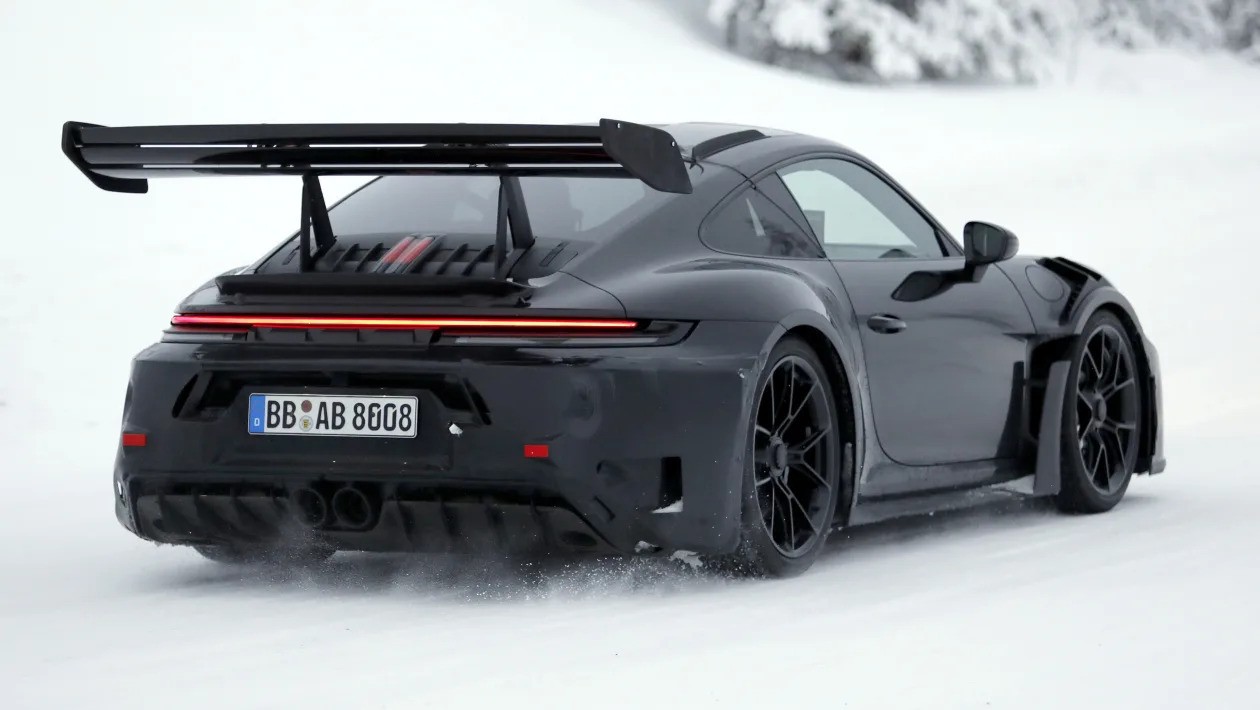
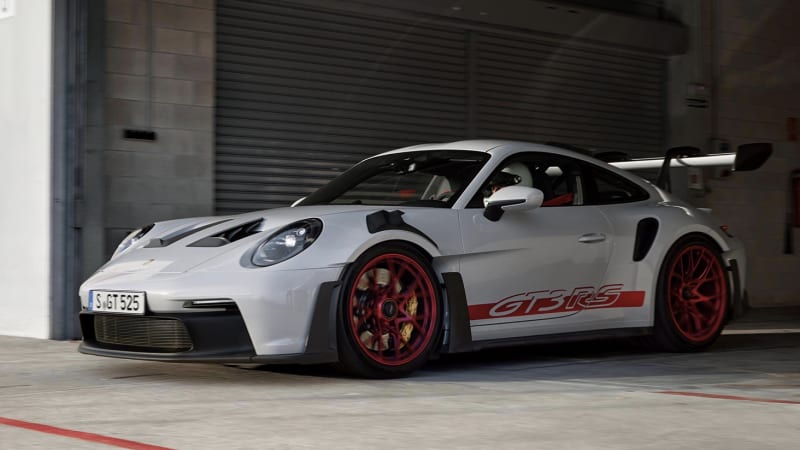
Recently spotted testing on the frigid Scandinavian tundra, the latest test mule for the upcoming 992.2 GT3 RS, even at just a glance, reveals some very telling details. But for as much as it does answer, it also presents many more new questions. Or challenges.
Let’s start with the nitty-gritty of what’s verifiable through either our eyes or by spoken truths. We’ve become accustomed to Porsche’s mid-cycle “facelifts”—as they’ve broadly come to be known—featuring slight cosmetic refreshes, and a few relatively small tweaks or refinements to the suspension geometry or other driver-centric features.
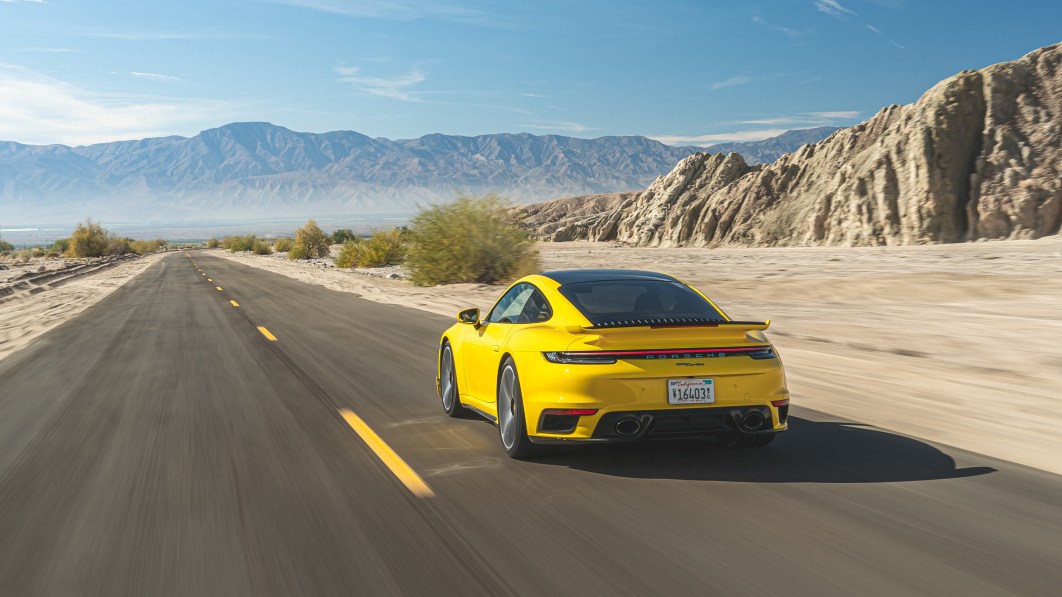
That’s still very much the case for the upcoming 2027 Porsche 911 GT3 RS. Based on the spy photos, the new GT3 RS is the beneficiary of a new headlight design and a reimagined front fascia design. It also now features what looks to be a 3-element DRS (an upgrade from the 992.1’s 2-element), suggesting that another tier of active aero performance will now be unlocked. Everything checks out, so far.
But Wait, There’s More!
Most revealing of the “minor” changes, perhaps, are the larger front intake ducts and a revision of the exhaust system which appears to have added 2 additional exhaust pipes—one on either side-of the center-exit dual tailpipes. Eagle-eyed observers also pointed out additional air outlets on the rear bumper. All of this, ultimately, is hinting at much, much more.
Now, had the engine remained relatively or even completely untouched, it looks like all of the boxes have been ticked for this to be adequately deemed a “facelift”. Even with just the surface-level details, we can also confidently assume that Porsche will make some small adjustments to the suspension and other metrics such as steering/gear ratios and electronic nannies, all in an effort to deliver a more involved driving experience. I expect to see the new carbon buckets, as debuted on the 992.2 GT3, featured here also.
The 992.2 GT3 RS has smashed that convention to pieces now, introducing—as some might have already derived from some of the empirical evidence on hand—a new turbocharged powerplant to the once exclusively naturally-aspirated nameplate.
But Why?
At the offset, the reason for this monumental shift in philosophy looks to be two-pronged in its approach. The most obvious would have to be in relation to the same emissions regulations—namely, Euro 7—which propelled Porsche towards its first foray into the EV market, as well as the decision to begin turbocharging or hybridizing many of its existing models for the first time. Given that regulations are only getting stricter, all of that it seems, was a test-run leading up to this very moment. It was going to happen at some point, and here we are.
The next, might not be as apparent, depending on where your biases lie and how much real-estate the bubble you live in covers. In and of itself, the 992 GT3 RS is undoubtedly a marvel on the racetrack. The adoption of elaborate active aerodynamics technology and use of a full double-wishbone suspension design for the first time on the platform, are some of the things hugely responsible for the production car’s initially undisputed domination on the circuits.
That gap has certainly been diminished since the 992 GT3 RS’s debut, with other marques now offering legitimately competitive alternatives to Porsche’s quintessential track car and at much lower price points, particularly for North American customers. Cars like the latest Corvette ZR1 and Ford Mustang GTD immediately come to mind.
With the 525 hp 4.0L naturally-aspirated flat-6 very much tapped out for power—especially as it relates to remaining emissions-compliant—the only sure-fire way for Porsche to re-establish the GT3 RS at the top of the hierarchy is through a massive power bump. The nature of which only a turbocharged (or hybrid, or both) powerplant can afford. Afterall, you could say that the current GT3 RS is massively hamstrung compared to its latest rivals, which boast 1,064 hp and 815 hp, respectively, through the use of a 5.5L twin-turbocharged V8 and a 5.2L supercharged V8, respectively.
The Future
If not for inflation on its own, the 992.2 GT3 RS was always going to be more expensive than the outgoing version. One of the biggest questions the latest proposition raises is how much pricing will be affected by the addition of a turbocharged powerplant. If we were to use recent history as a reference point—via the 991 GT3 RS and 991 GT2 RS—then we might be in for quite a significant bump in MSRP.
To a certain limit, I don’t think most Porsche loyalists will care too much about pricing, as long as the new car is able to smoke its competition (and predecessor) out of the water. At a minimum, that has to be the main mission for the successor. As far as race-bred road cars go, this is the kind of aura that Porsche still commands, particularly in relation to brands like Chevrolet and Ford. People, in general, are willing to pay a premium for the Porsche badge….at least for now.
A New Path
Some argue that Porsche might even have made the current 992.1 GT3 RS too capable, too quickly. It’s a car that galvanized other manufacturers to fast-track their motorsport R&D in an effort to prevent Porsche from getting too far ahead. With how that has played out, Porsche have now basically been strong-armed into making the next GT3 RS—whether it was going to be a refresh or next-gen overhaul—a turbocharged car. Emissions regulations were always taking us on this path, but the current state-of-play has likely sped that process up faster than the Stuttgart suits would’ve liked.
It also muddies the waters a little bit when it comes to the upcoming 992 GT2 RS. The primary distinction between the GT3 RS and GT2 RS up to now, has always been that they were exclusively naturally-aspirated and turbocharged, respectively. Now, the upcoming GT3 RS has blurred the lines between the two cars, making us wonder how they are going to manage to be principally different cars going forward. That being said, early speculation has already suggested that the new GT2 RS will feature a mild-hybrid setup, so there’s that.
Somehow, all of this news is just a blip in the grand scheme of things—a precursor for a chain of events to follow. I believe that the GT3 RS becoming turbocharged, is emblematic of so much more. I think that in earnest, the new GT3 RS marks the end of naturally-aspirated Porsche 911s. The only naturally-aspirated model which will run concurrent to the 992.2 GT3 RS is the 992.2 GT3, and as such, more than likely presents the last realistic opportunity to purchase a 911 which isn’t turbocharged, hybrid, or perhaps worse….
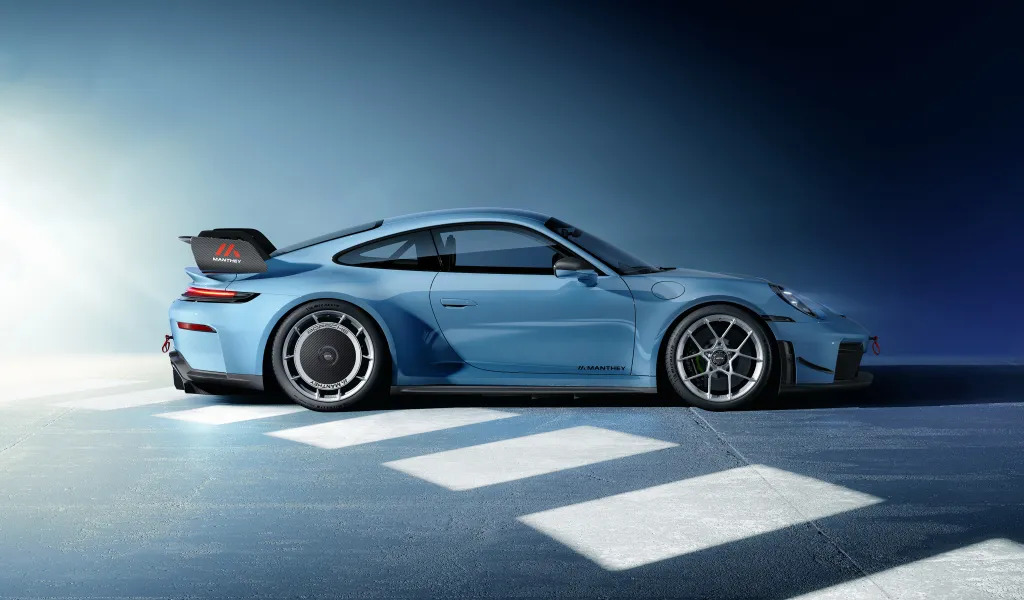
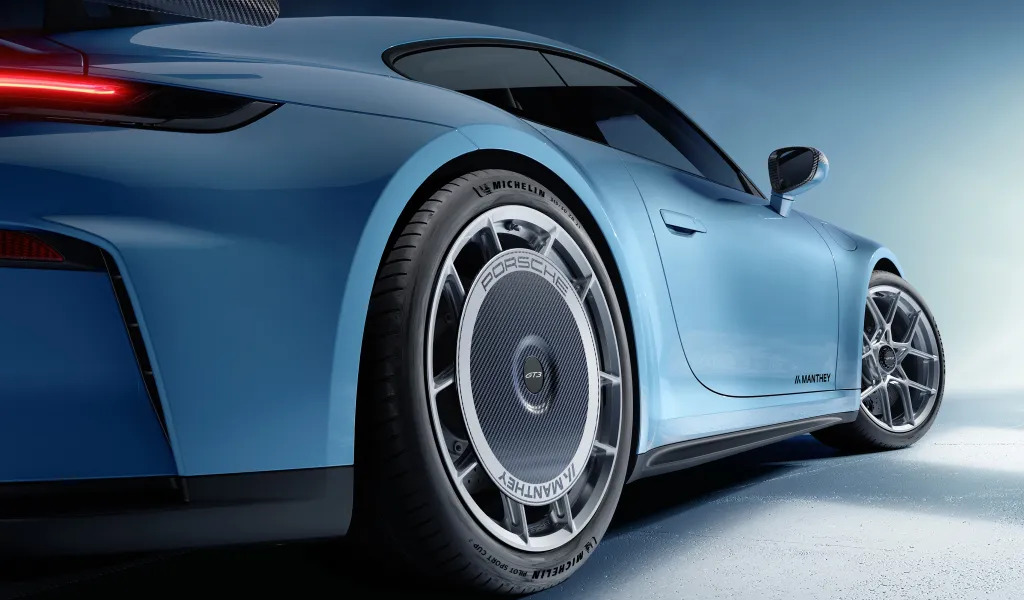
In the same way that the 992.2 Porsche 911 GT3 was given small but impactful improvements over the previous iteration, so too has the new Manthey Kit released today. After a year in development, Manthey claims that their freshest reimagination of uncompromising performance “pushes the limits between racetrack and road”.
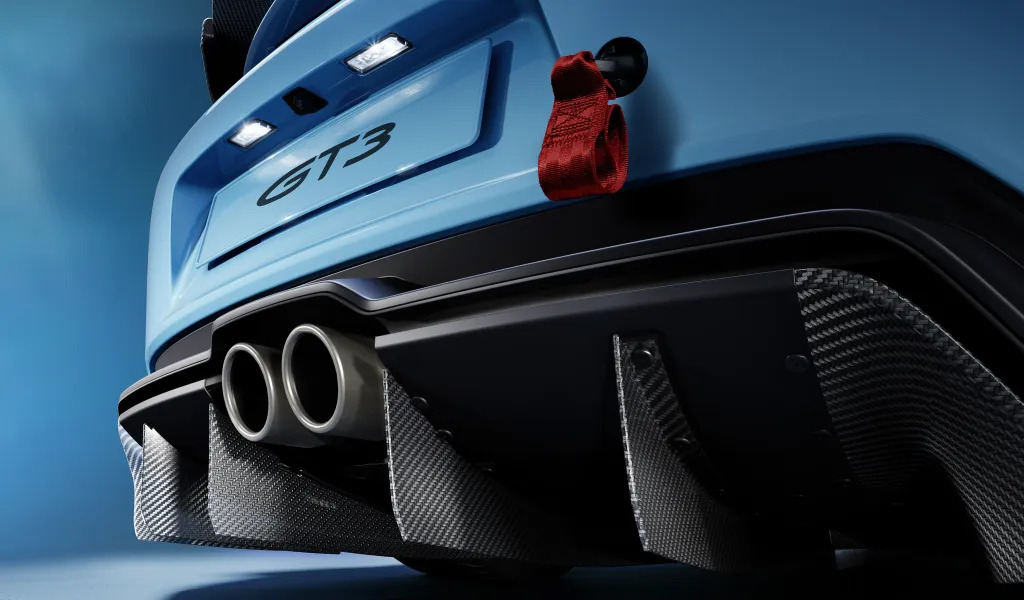
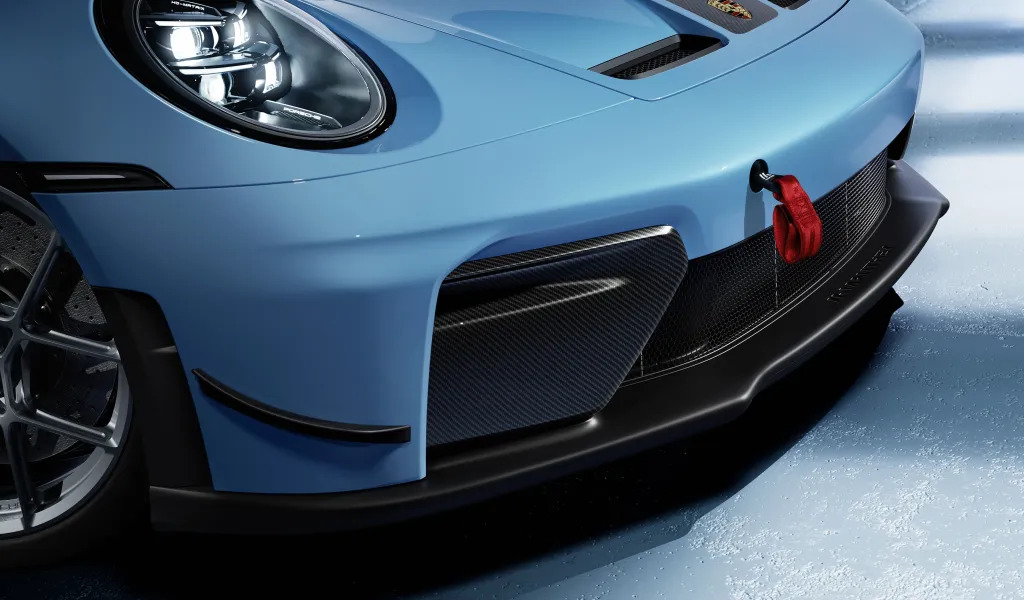
The Manthey Kit, as its name suggests, is offered as a package of upgrades to help achieve this goal. The standard offering—which retails for €41,911—includes a concert of aerodynamic components which increase overall downforce to 540 kg at a speed of 285 km/h. Manthey says that this adds no additional drag while improving peak downforce by 100%. These aero components make up much of the cost of the entire Kit, and feature the likes of carbon aero wheel discs, front and rear underbody/diffuser panels, a larger rear wing, and more.
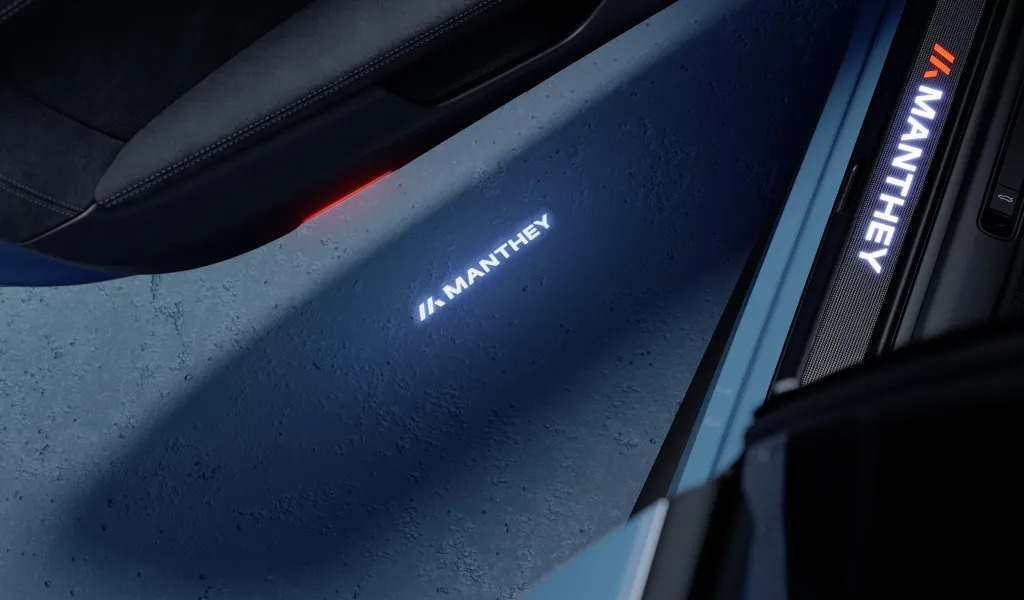
Also part of the Kit are track-optimized adapted springs, steel brake lines, racing compound brake pads, and special Manthey carbon/illuminated door sill guards. As per tradition, a variety of optional equipment can be added to the Kit or purchased separately, with notable components such as lightweight magnesium wheels, fully aluminum 4-way adjustable dampers, and a carbon kit, made available for those who want to take things to the next level.
Under “less than ideal conditions” current DTM champion Ayhancan Güven was still able to pilot a Manthey 992.2 GT3 around the Nürburgring Nordschleife in just 6:52.981. Despite having to traverse plenty of damp patches amid frosty temperatures, the car managed to be faster than the Manthey 992.1 GT3 by 2.76 seconds. As part of the Porsche Tequipment catalogue, all Manthey parts can be ordered via a Porsche Center and cars will also retain their factory warranty if installation is performed at the dealer.
November 21, 2025 / Comments Off on Manthey Unveils Latest Kit For 992.2 Porsche 911 GT3
Living with an EV isn’t what it used to be. And after a week in Porsche’s latest electric offerings—the new Macan Turbo EV and second-generation Taycan 4S Cross Turismo—I’m more optimistic than ever that the tipping point has arrived. No hypermiling, no app-juggling charger hunts, just proper driving in proper cars. Both delivered on their promise of over 300 miles of range, even when driven as if they were combustion-engined. In fact, I barely thought about range at all.
Collected from Porsche GB with full batteries, both the Macan and Taycan showed range estimates of 300 miles. In reality, that number was remarkably accurate. My driving style didn’t change: air-con on full blast, cooled seats in the Macan, and every horsepower used as intended. I didn’t precondition the batteries or nurse them to chargers. I simply drove.
Macan Turbo EV
The Macan, finished in stunning Copper Ruby Metallic with massive wheels that looked spectacular but gave the ride a slightly brittle edge, felt every bit the Porsche SUV it claims to be. Control weights were perfect, the seating position spot-on. Despite its 2.6-tonne mass, the Macan Turbo EV moved with conviction, thanks to its 630bhp twin-motor setup and sophisticated chassis. On the road to Silverstone, I stopped at a Porsche dealership to charge, but spent more time taking photos than waiting for battery percentage to climb. Later, a 400kW supermarket charger delivered 32kWh in eight minutes, jumping from 15% to 51%, with the cabin cooling me in 35-degree heat, massage seats and all.
The Taycan 4S Cross Turismo offered a different flavour: a more dynamic seating position, less in-cabin tech frippery, and a marginally softer ride. It lacked cooled seats, which I sorely missed during London’s heatwave, but its drivetrain remained characteristically sharp. On my 50-mile daily commute, a five-minute top-up at a fast charger more than sufficed. Even without home charging in London, I never once experienced range anxiety or inconvenience.
The Taycan featured Porsche Active Ride, a new suspension system that quietly transforms the experience behind the wheel. Using high-speed hydraulic actuators at each corner, the system actively manages body movement, keeping the Taycan astonishingly level and composed—even during hard cornering or over poor surfaces. It enhances comfort, sharpens dynamics and helps disguise the cars’ weight. It’s also available with the latest generation Panamera.
That’s the real revelation. These EVs finally offer the ease and confidence of ICE cars, thanks to battery and infrastructure advancements. The second-generation Taycan uses a new 105kWh battery with improved cell chemistry, and the Macan’s 800V PPE architecture allows it to charge from 10 to 80% in just 21 minutes under ideal conditions.
But not everything is perfect. At over £100,000 as-tested, interior materials in both cars didn’t quite meet expectations. Some touchpoints felt plasticky and out of step with the badge on the bonnet. As with many EVs, both the Taycan and Macan face tough questions around depreciation and long-term desirability.
Still, there’s no mistaking the Porsche-ness. From the way they steer to the way they hunker down into corners, these are true products of Weissach. That the Macan, now in its second generation and 1 million units deep, has evolved into something so advanced yet still recognisable is impressive. With these cars, Porsche proves that the future can be electric with next to no compromise.
July 31, 2025 / Comments Off on Porsche Macan Turbo EV & Taycan 4S Cross Turismo Review: EV Life is Better Than Ever
Autoblog is now live on your smart speakers and voice assistants with the audio Autoblog Daily Digest. Say “Hey Google, play the news from Autoblog” or “Alexa, open Autoblog” to get your favorite car website in audio form every day. A narrator will take you through the biggest stories or break down one of our comprehensive test drives.
Related Video: Corvette ZR1, Honda Civic Type R and Mercedes-AMG SL 63 | Autoblog Podcast 843
More Information
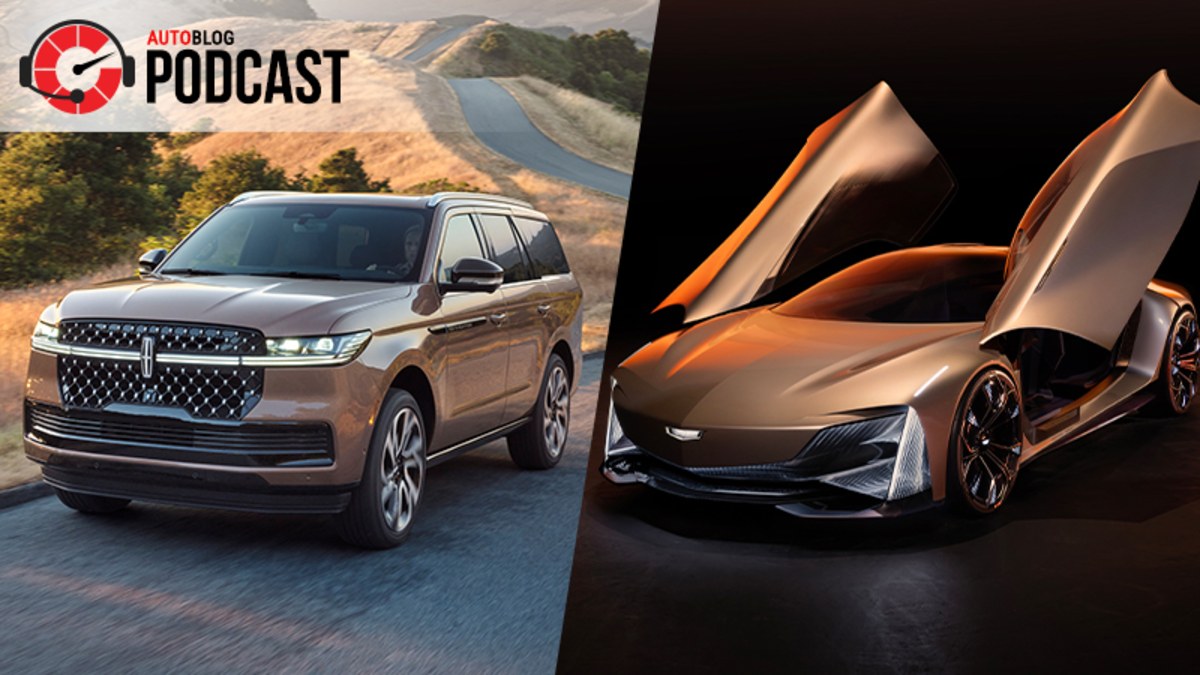
August 23, 2024 / Comments Off on Monterey Car Week recap, 2025 Lincoln Navigator and more | Autoblog Podcast #845
The last time we visited Kalmar Automotive, the Danish coachbuilder was gunning its Rally Special-6 (RS-6), a rooster-tailing off-roader based on either a 993- or 996-series Porsche 911, through the mud. At The Quail, A Motorsports Gathering, the company debuted its latest, the Kalmar 9X9. This is a mashup of ideas covering just about everything from the 959 to today’s 911 Turbo and GT3. A 993-series 911 lays the foundation, stripped and laid up with a hidden roll cage beneath CFD-honed carbon bodywork. The new panels and their 959-like rear end reportedly create 3,263 pounds of peak downforce. That’s 212 pounds above the coupe’s 3,051 claimed weight in its heaviest stock configuration.
There are three variants: 9X9, 9X9 Sport, and 9X9 Leichtbau (Lightweight). The 9X9 is the hi-po grand tourer, using the 3.8-liter flat-six from today’s 911 Turbo S. Instead of making the factory car’s 640 horsepower, the standard 9X9 makes 930 horses. Power goes to all four wheels through Porsche’s seven-speed double-clutch transmission. Rear-wheel drive also comes standard.
The 9X9 Sport turns down the power to turn up the focus. A turbocharged 3.0-liter flat-six contributed by the 911 GTS makes 650 hp, 172 ponies over a store-bought GTS. This comes with a seven-speed manual, the PDK an option, as is rear-wheel steering. “More direct suspension components,” less sound insulation, and the 2,866-pound curb weight should heighten the fury and the sound with this one.
The 9X9 Leichtbau goes with the naturally aspirated 4.0-liter from the GT3 making 530 horsepower, 28 hp above factory output. A rear-driver only, with a seven-speed manual for the purists, this one comes in at a claimed 2,811 pounds.
Every 9X9’s engine has been upgraded with items like a new intake system, beefier cooling, ceramic bearings in the turbos, and an Inconel exhaust. They all sit on active engine mounts, too. The drivetrain rolls on a custom double wishbone suspension working pushrod-style Tractive dampers in front, the work of Italy’s Danisi Engineering. Magnesium wheels on Michelin tires hide carbon ceramic rotors clamped by CarboBrake’s 3D-printed titanium calipers.
The interiors go heavy on lightweighting, with no radios and no central infotainment screens. A centrally located analog tach dominates the gauge cluster, flanked by two small screens that we’ll guess are used to display information from Bluetooth paired devices.
All three flavors are on sale now through U.S. distributor Canepa Group, first deliveries scheduled for July 2025. Prices weren’t mentioned, that fact and the debut location should let you know if you’re in the target audience.
More Information
August 18, 2024 / Comments Off on Kalmar 9X9 condenses 40 years of Porsche 911 ideas into one package
In this episode of the Autoblog Podcast, Editor-in-Chief Greg Migliore is joined by Senior Editor, Electric, John Beltz Snyder. They’re both jazzed after driving the off-road-ish and totally sublime Lamborghini Huracán Sterrato. John recently drove the new GMC Acadia, Greg spent some time in the Toyota Camry, and they also discuss Autoblog‘s long-term Subaru WRX. In the news, the Porsche 918 Cayman and Boxster are reportedly ending production, while it’s officially the end of the road for the Nissan GT-R and Volvo S60. Fisker has officially filed for bankruptcy. Cadillac has shown off a couple cool Blackwing special editions in honor of Le Mans. Finally, we reach in the mailbag and help a listener pick a sporty convertible in this week’s Spend My Money segment.
Send us your questions for the Mailbag and Spend My Money at: Podcast@Autoblog.com.
Autoblog Podcast #837
Get The Podcast
Apple Podcasts – Subscribe to the Autoblog Podcast in iTunes
Spotify – Subscribe to the Autoblog Podcast on Spotify
RSS – Add the Autoblog Podcast feed to your RSS aggregator
Autoblog is now live on your smart speakers and voice assistants with the audio Autoblog Daily Digest. Say “Hey Google, play the news from Autoblog” or “Alexa, open Autoblog” to get your favorite car website in audio form every day. A narrator will take you through the biggest stories or break down one of our comprehensive test drives.
Related video:
June 21, 2024 / Comments Off on Lamborghini Huracan Sterrato and GMC Acadia driven | Autoblog Podcast #837
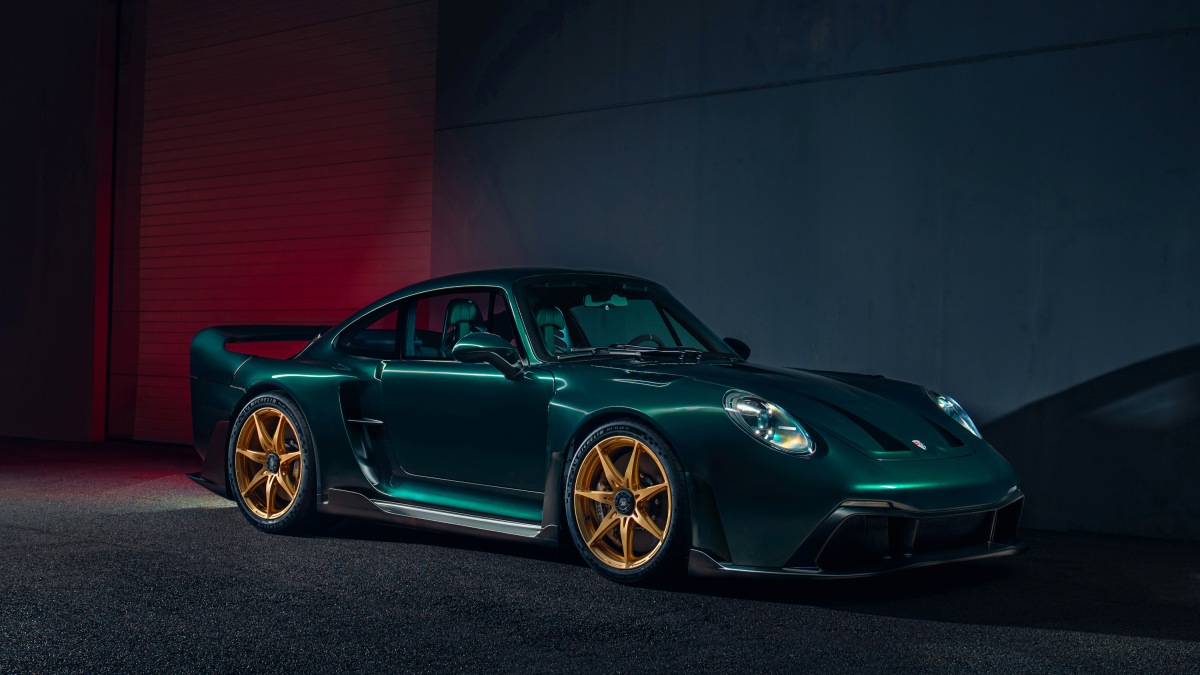
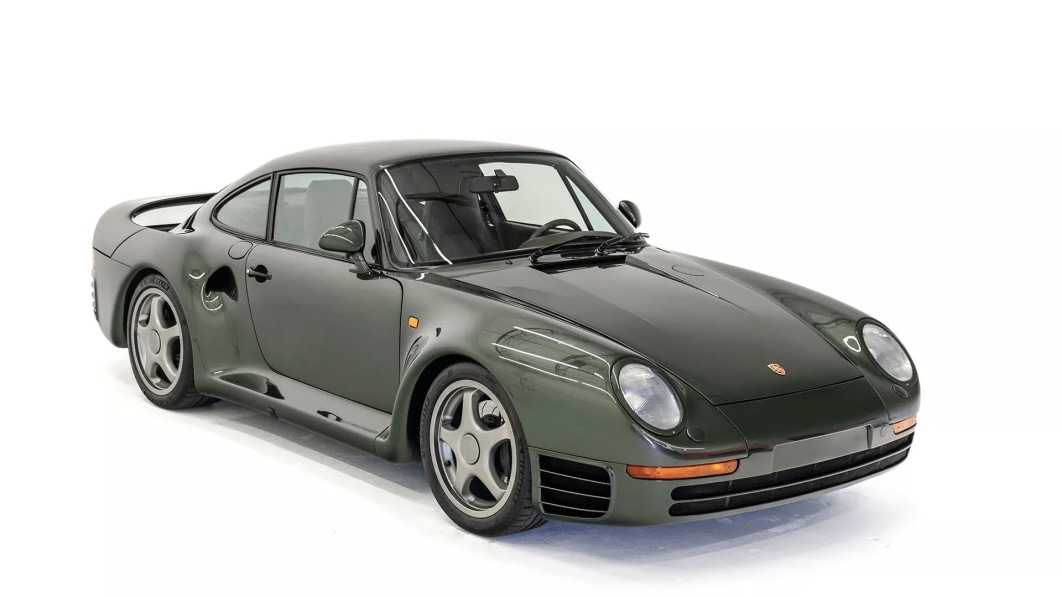
Broad Arrow Auctions is taking a 1988 Porsche 959 SC Reimagined by Canepa to this year’s sales at the Amelia Island Concours d’Elegance, this example even more special than the average 959. The first bit of plumage setting this bird apart is documentation that shows it was a benchmark car Nissan bought to develop the all-wheel-drive system in the R32 Skyline GT-R. The second splash of color, literal and otherwise, is a four-year overhaul from Porsche specialists Canepa finished in metallic green. Both of those items contribute to a pre-sale estimate of between $3.25 and $3.75 million.
The Skyline-959 connection is a favored bit of lore in the GT-R’s history. However, the GT-R’s connection to Porsche goes well back before the R32. In 1964, a Porsche 904 beat the factory team of Prince Skyline S54 GT cars fielded by Japan’s Prince Motor Company. Prince engineers, including Dr. Shinichiro Sakurai, returned to their offices to design a new engine and a new car that could beat Porsche. The Prince R380 did that two years later at the 1966 Japanese Grand Prix, its engine becoming the basis for the S20 inline-six that would power the first Nissan Skyline GT-R that debuted in 1969 but only lasted until 1973.
Fast forward to 1984: Nissan, which merged with Prince in 1966, was looking at its tech-heavy but unloved R31 Skyline, at Porsche’s monumental 959, at a trophy cabinet lacking silverware from the top class, and at a corporate bank account filling with Bubble Economy profits. Naganori Ito, said to be Sukurai’s “number one student,” was put in charge of developing the R32 Skyline that returned the GT-R badge to the market.
To help him do that, the engineering team wanted to study a Porsche 959; a Nissan engineer would tell Car magazine at the R32’s debut, “We reckon Porsche makes the best-handling cars. And the 959 is reckoned to be the most advanced supercar ever made. We wanted to beat the 959.”
But Porsche wouldn’t sell Nissan a 959. So a Belgian national bought a 959 Komfort on behalf of the Japanese engineers, Belgian dealer D’Ieteren Brothers shipping the car to Yokohama. The fruit of this subterfuge became the GT-R’s Advanced Total Traction Engineering System (ATTESA ET-S), tuned to dial out understeer and maintain agility with the help of Super HICAS all-wheel steering.
The Porsche 959 harvest continued closer to home as well, the tech in that car previewing what would come for the 911 range like water cooling, AWD, and the twin-turbo setup.
The paperwork shows that this 959 ended up in the hands of one of the GT-R engineers, who never registered it and so barely drove it. After having it for 30 years, he sold it to someone in the U.S. In 2019, that owner sent it to Canepa’s shop for the SC treatment with less than 900 miles on the odometer. The nuts-and-bolts teardown and rebuild took four years and cost $950,000. Canepa rebuilt the twin-turbo 2.8-liter flat-six engine with its Stage III kit, featuring gear like titanium con-rods, ceramic-coated headers, Borg-Warner turbos, and a two-stage titanium and stainless steel exhaust that increases output to more than 800 hp and 650 pound-feet of torque, compared to the original engine’s 444 hp and 369 lb-ft. The Komfort’s adaptive suspension was switched to the lighter, simpler 959 Sport setup riding Penske shocks and titanium springs. The custom 18-inch wheels hide upgraded brakes, a necessary step when the coupe needs just 2.5 seconds to hit 60 miles per hour and top speed is a claimed 230 mph.
Bruce Canepa says he’s only doing 50 of his SC-spec cars, limiting his builds to low-mileage examples. Each owner is asked to choose a unique color combination, this one finished in an unusual, unforgettable Oak Green over tobacco leather.
Lot 220 hits the block March 1-2 at Amelia.
February 26, 2024 / Comments Off on 1988 Porsche 959 SC with famous history headed to Amelia Island auctions
“With the concept, we have shown the technology we want to put in the car, the performance profile, and the feedback we got at our 75-year celebration was massively positive, so it’s a great motivation for us to do the car,” company boss Oliver Blume told Australian site CarSales.
Of course, putting a car on the path to production takes more than motivation. Feasibility will ultimately play a major role in deciding whether the Mission X will be remembered as a wild-looking concept car or as the 918 Spyder’s successor. It helps that the coupe looks far more realistic than the average design study; it wouldn’t take much tweaking to turn it into a production car, at least from a design perspective.
Technology is another hurdle the Mission X needs to clear. The concept is electric, and while Porsche didn’t detail the drivetrain it noted that the system offers a power-to-weight ratio of “roughly one horsepower per 2.2 pounds.” It also promised more downforce than the current 911 GT3 RS and quick charging thanks in part to a 900-volt electrical system. However, these claims remain hypothetical, and Blume has previously suggested that the performance his team envisions for an electric hypercar can’t be achieved with the current battery technology.
None of these issues are insurmountable: battery technology is improving at a rapid pace, and we’re sure that a production-bound Mission X would sell out quickly even if it comes with a seven-digit price tag. Porsche has historically done well with limited-edition cars. Blume told CarSales that “the idea is to make the decision this year,” so we should learn more about what the future holds in the coming months.
Related video:
February 22, 2024 / Comments Off on Porsche will soon decide whether to build the Mission X hypercar
President Joe Biden went on Conan O’Brien’s podcast, “Conan O’Brien Needs a Friend,” recently, and he had a lot to say about cars. There’s plenty to unpack from the clip that you can watch above, but at one point he mentions that he recently took a Porsche up to 171 mph on the Secret Service’s private test track. Now that’s the kind of gearhead stuff we like to hear from politicians!
“I got a Porsche up to 171 mph,” Biden says while explaining how launch control works to O’Brien. Biden didn’t specify which Porsche model he was driving, but we’d bet it’s likely a 911. Of course, plenty of other Porsches are capable of 171 mph, so we don’t really know, but if any White House correspondents are reading, we wouldn’t mind if you asked Biden next time you see him.
In addition to Biden enjoying a Porsche at high speed, he said that he’s done the same with his 1967 Chevrolet Corvette, reaching 132 mph on the Secret Service airstrip test track. Biden even said that Jay Leno offered to buy his Corvette from him at one point for $144,000, but that he had to turn him down.
“They take me out to the Secret Service test track, which is an old runway. I got my Corvette up to 132 mph. It’s only a 327,” Biden remarks to O’Brien.
And speaking of Corvette news, we’ve already heard Biden spill the beans once on this topic, but yet again he makes the claim that an electric Corvette is on its way, and says it will do the 0-60 mph run in 2.9 seconds. That’s what the gasoline-powered C8 Stingray will do now with the performance exhaust, but we’re betting an electric Corvette would obliterate that time and be somewhere in the 2.0-2.5-second range.
It wasn’t just an electric Vette that Biden took to talking about, though, as he also claims to have driven an electric Ford Bronco.
“Oh and by the way, I drove one of those big Ford Broncos, electric. 4.9 seconds. Mine is 5.2,” Biden says making the comparison to his old Corvette.
We’re not exactly sure what he means by claiming to have driven an electric Ford Bronco. Such a vehicle does not exist from Ford currently, but there are restomods of original Broncos converted to electric power. There’s also the vague possibility that Biden has some inside scoop from Ford execs about future products, but it’s unclear from the interview. Regardless of the product implications, watching President Biden talk cars with O’Brien is an entertaining watch, so make sure you check out the video at the top of this post.
December 21, 2023 / Comments Off on President Biden says he took a Porsche up to 171 mph
Ruf is revealing three Porsche builds at The Quail, A Motorsports Gathering this week in the Monterey Peninsula. Two are totally new builds called the Ruf Tribute and the Ruf R Spyder. The third is an update to the Ruf CTR3 Clubsport, which gains the new name of CTR3 Evo.
Starting with the Tribute (seen in the gallery at the top of this post), this Ruf is powered by a 3.6-liter air-cooled engine designed by Alois Ruf that is meant to be an homage to the air-cooled 911s of the past. However, this new engine features loads of new tech such as a four-cam three-valve design, variable valve timing and lift and dry-sump lubrication. It makes loads more power than naturally aspirated air-cooled engines ever did from Porsche, as Ruf claims a heady 550 horses. Ruf says its drivetrain is similar to that of the SCR and Yellow Bird Anniversary it unveiled a few years ago. Carbon fiber is used liberally throughout (not to mention the carbon tub chassis), and it features an integrated roll cage, as well.
The other new Ruf is the R Spyder, which might remind you of the also-open-top Bergmeister from last year’s Monterey Car Week. Of course, the R Spyder is better and more powerful than what Ruf managed to screw together before. This open-top Ruf is powered by a 4.0-liter naturally aspirated flat-six that cranks out 515 horsepower and 350 pound-feet of torque. That power is sent to the rear wheels via a six-speed manual gearbox.
Each occupant has their own little cocoon, separated by a carbon fiber bar. You get a small windshield, and screens are mounted on either side of the carbon fiber dashboard. Ruf says the car uses a McPherson strut front suspension and multi-link rear design. All that said, Ruf is still calling this car a “design concept,” so we’re not sure if it will be produced and sold yet.
The last Ruf is the CTR3 Evo, and Ruf says it’s the most powerful vehicle it’s ever produced. Output from the 3.8-liter (water-cooled) twin-turbo flat-six is an astounding 800 horsepower and 730 pound-feet of torque. This is paired with a seven-speed dual-clutch transmission, and all that speed is hauled in by carbon ceramic brakes. A top speed of 236 mph and the carbon-composite body just make it all the more alluring.
Related video:
August 18, 2023 / Comments Off on Ruf reveals air-cooled Tribute, open-top R Spyder and CTR3 Evo at The Quail
Porsche — with CEO Oliver Blume behind the wheel — has zipped by a number of milestones over the past several years. Its share price has gained more than 36% since its IPO in September 2022 and profit margins are at an enviable 18%.
And yet, Blume isn’t satisfied.
“We are driving the company like a sports team,” Blume said earlier on the sidelines of the company’s 75th anniversary celebration. “After a success, focusing [on] what we can do more… going for the next goal.”
The next goal, Blume said, is 20% margins. The road to get there will be paved with investments in new segments and maybe even a seven-figure hypercar.
Timing is everything
The last nine months haven’t been kind to other automakers that went public in the past few years, particularly companies like Canoo, Fisker, Lucid Motors and Polestar that merged with special purpose acquisition companies. Even Rivian, the 2021 IPO darling that debuted at $78 a share, has seen its price fall some 82%.
Porsche has managed to avoid a similar fate — a result that Blume credited to years of preparation.
“It was a process over years, where we developed the company,” Blume said. “Five years ago, Porsche would never have been able to go to the stock market, and now it was the right moment.”
That preparation required a renewed focus on the fundamentals: margins, profits and cash flow. But, don’t think all that has made the company boring. At Porsche’s 75th birthday party in Stuttgart, Blume unveiled the Mission X, a hypercar designed to be the fastest production car ever made, not the most profitable.
Pushing into the luxury segment
When it comes to growing profit margins, it’s hard to do better than the luxury segment.
Though Porsche is certainly a premium manufacturer, its reputation has been built on performance, not poshness. A pivot to challenge brands like Mercedes-Benz or Rolls-Royce is not to be made lightly.
“Before we decide to go to a new segment, we make a deep analysis of the markets, of the profit pools and different regions of the world, and we think the segment of luxurious SUVs is quite huge, and with a very strong development potential from the future, and strong profit margins. What’s missing is a very sporty one there,” Blume said.
In other words: Buyers have many luxurious and stylish options in the premium SUV segment, but none of them has the character of a Porsche.
Learning from the Cayenne
It’s a similar story to what drove Porsche to introduce the Cayenne SUV 20 years ago. Though not particularly luxurious, the tall, big and wide Cayenne was a massive departure from the company’s pure sports offerings.
Cayenne sparked controversy, with many brand purists saying that Porsche had lost its way. Far from the beginning of the end, Cayenne is now Porsche’s biggest seller, while the company’s portfolio of fast, desirable sports cars is broader than ever.
By heading to green pastures, Porsche found huge success, and now Blume hopes to do so again.
That next expansion is a new SUV that Blume referred to by its code name: K1. This new SUV, first mentioned in March and due by 2027, will be bigger than Cayenne. It’ll be quick, too, but the focus here is on luxury.
Performance will come from a fully electric powertrain, Blume said, in keeping with Porsche’s goal of delivering 80% EVs by 2030. However, the look and layout of the car might be a little unfamiliar. “You will be surprised by the design,” Blume said.
Blume also said that the K1’s systems and software, the car’s “technology profile,” will be unique.
Wanted: Software engineers
To create innovative technologies found only in Porsches, the company is on a hiring spree — a notable difference from an industry that is laying off workers.
Porsche has more than 1,000 technical positions open, including many on the software side. Blume said that this is an increasingly core part of the company’s identity: “We think that the IP we are developing is very specific,” Blume said. “100% portion of this kind of costs are important for our brand identity and for our product identities. Therefore, that is our core business.”
For Blume, this clarifies the build versus buy debate.
“You can buy solutions in the market in areas, which are not your core business… And so for us it is very clear where to tap into that focus, where we will get the best talent from the market to develop our core competencies,” he said. “And in other areas, where it is not so important… we will work together with partners, but they are the best partners in the market.”
When it comes to that core experience, Blume said: “All the touch and feel and coming up to the software experience into the car should be unique for Porsche.”
Bringing a luxury all-electric SUV — catnip for American buyers — might make sound financial sense. However, for extremely low-volume hypercars (Porsche sold just 918 of the 918 Spyder), the value proposition is often a bit more nebulous.
Blume cited the brand-building impact of a record-setting halo car like the Mission X: “All our hypercars are icons,” he said. But, there are some more tangible benefits, too. “In the hypercars, we show the best the company is able to develop, to produce, to show what our technologies [are] for the future. We will later bring [them] to other serial cars, and so, it’s not only a showcase, it’s real life, to bring innovations, to develop innovations,” he said. “The whole team is focused, motivated, pushed to develop a hypercar, and that is the best the company is able to deliver.”
Mission X: To be or not to be?
Porsche Mission X Concept
Blume declined repeatedly to indicate whether or not the Mission X would be produced, but we shouldn’t have to wait long to find out.
He said the decision will be made “during the next month.” Should it get the green light, its first official duty will be recapturing the fastest production car lap record around the Nurburgring Nordschleife. For Blume, that iconic, 13-mile race track cut through the forests of western Germany is part of Porsche’s DNA: “When we design and build the concept of a car, the Nurburgring Nordschleife is the measure for Porsche.”
Porsche’s last hypercar, 2013’s 918 Spyder, itself set the fastest lap time for a production car, with a time of 6:57. The current record, set by the $2.7 million Mercedes-AMG One, sits at 6:35. That will likely be the target for the Mission X, the existential goal for a car built by a nearly octogenarian company still intent on proving its mettle on the track.
Related video:
July 4, 2023 / Comments Off on How Porsche plans to grow margins with luxury and speed
Volkswagen execs would tell you some very unfunny things happened on the way to electrification: Design decisions wrought years of damage, vehicle platform and software catastrophes scotched launch timelines for not just one but at least three brands, and chaos piled high enough to unseat a CEO. Those execs might not be correct about that middle one, though, if Volkswagen Group CEO Oliver Blume is telling the truth. During a presentation laying out the conglomerate’s ten-year plan at the annual capital markets day, Blume said the Scalable Systems Platform (SSP) will launch on time, in 2026. This counters recent reporting as well as complaints from individual brands late last year and this year. Due to ongoing problems with the software needed to make the SSP work, Automotive News Europe reported last July that Audi’s first vehicle with the new software had been delayed up to three years, to 2027. A few months later, Autocar reported that Porsche updated its IPO prospectus with a warning that software holdups might delay the battery-electric 718 twins and Cayenne.
We don’t know how the company got things back on track, but investors will be pleased and customers should be, too. Blume’s presentation made clear that VW expects to launch a platform even more potent than the one we were told about two years ago. Previous CEO Herbert Diess gave a similar presentation in 2021 explaining that the SSP would serve every group brand, and serve every kind of vehicle from city cars with as little as 114 horsepower to supercars with as much as 1,140 hp. Blume, however, said the SSP will be able to power drivetrains making as much as 1,700 hp — 560 hp more than the last projection.
But wait, there’s more. SSP development will break down into three paths: Urban city cars for Volkswagen, Audi, Skoda and Cupra; compact and mid-size vehicles for VW, Audi, Porsche and Skoda; and large vehicles for Audi, Porsche, Bentley and Lamborghini. Note the absence of Bugatti.
This one skateboard chassis will eventually replace the current MQB, MLB, MSB and MMB internal combustion platforms, the present MEB, PPE and J1 electric platforms, and the MEB+ arriving in 2025. It will be powered by new “unified” batteries of various chemistries developed in-house and running on an 800-volt electrical architecture. The charging time to take the batteries from 10% to 80% SOC will be 12 minutes, compared to the 35 minutes needed for the current MEB battery-electric platform; the interim MEB+ platform will lower that time to 21 minutes. The fleshed-out software dubbed 2.0 will enable Level 4 hands-free driving.
To get a sense of scale and return on investment when this is all put together, the current MEB platform sits under about ten models total, from the ID.3 to the Audi E-tron GT. The large SSP will support 14 models from Audi, Bentley, Lamborghini and Porsche by itself. According to Blume, those 14 SSP-based models are predicted to sell about 1.14 million units between debut and 2038, netting the group more than 150 billion in revenue, with profit margins above 20%. For comparison, Porsche’s 2022 operating profit was 18%.
It’s not clear which vehicle will introduce the world to the SSP in 2026, but we do know the second-generation all-electric Audi Q8 E-Tron, Audi’s Project Artemis and Volkswagen’s Project Trinity have all been penciled in around that time. If Blume’s assertions still hold weight at that time, then a line from Herbert Diess’ 2021 presentation could still come true: That come 2030, VW will make more money in the EV business than the ICE business.
Related video:
July 1, 2023 / Comments Off on Volkswagen’s SSP vehicle architecture back on track for 2026 debut
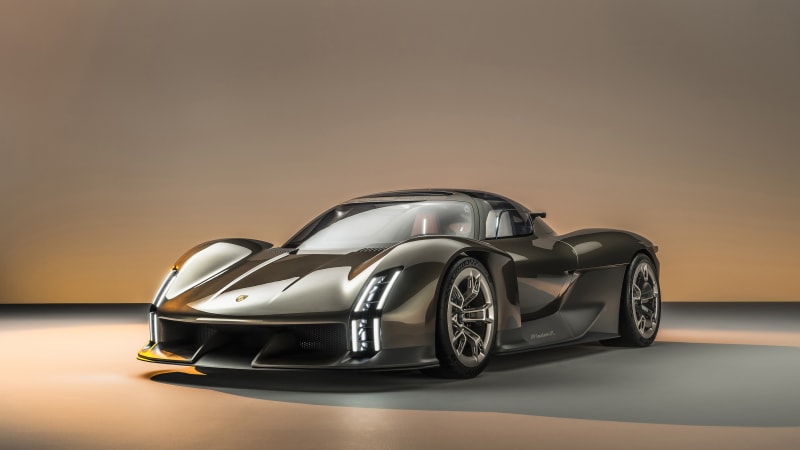
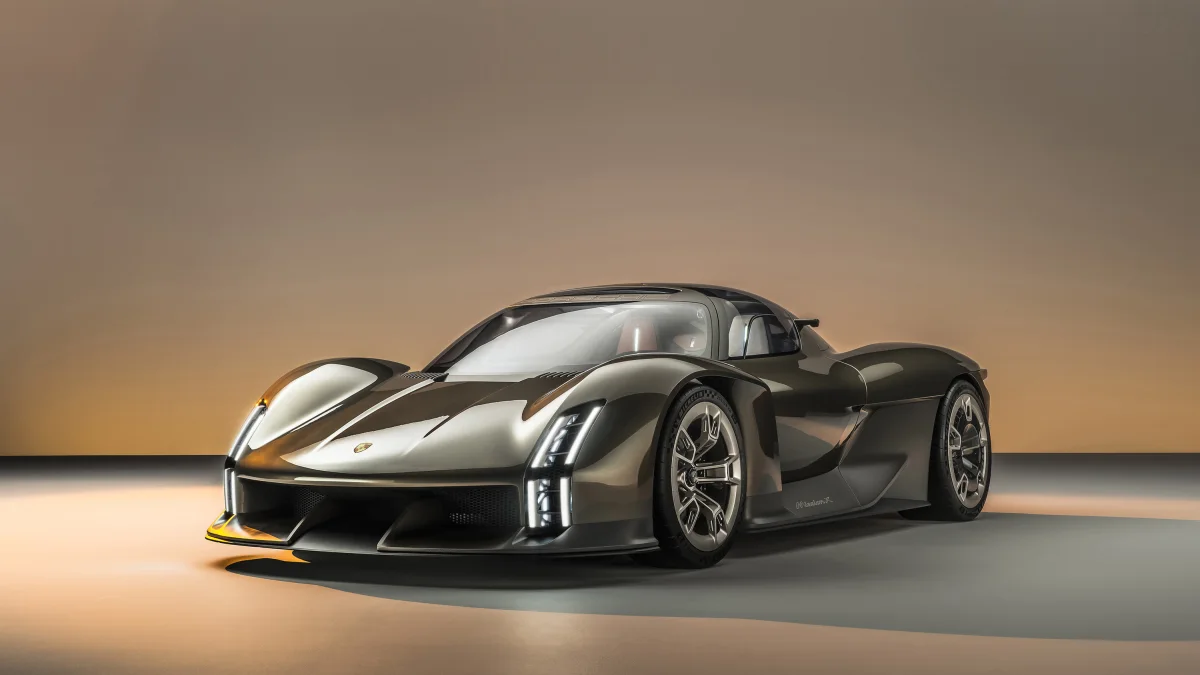
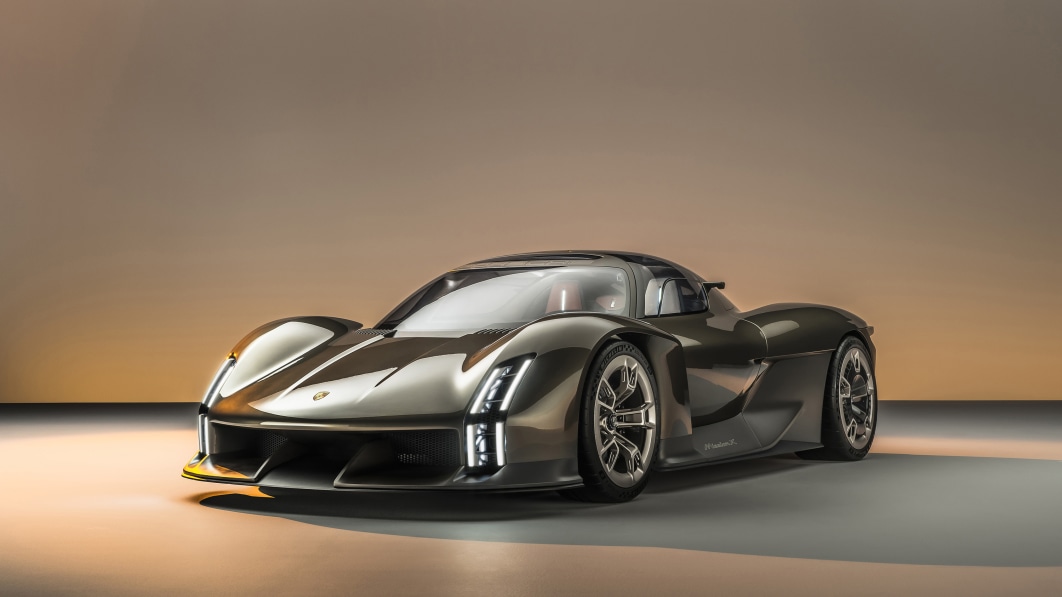
Frequent interviews with Porsche CEO Oliver Blume include a question as to when we’ll see another Porsche hypercar. He once answered the queries with some version of “not until the middle of the decade at the earliest least.” His most recent answer, from April of this year, pushed that back toward the end of the decade; Blume and R&D chief Michael Steiner say current battery technology isn’t prepared to satisfy the demands a Porsche hypercar would make on it, so everyone will need to wait for next-gen cells due in four or five years. So the car you see here, the Porsche Mission X concept, isn’t the next Porsche hypercar and at the moment isn’t planned for sale. However, the battery-electric two-seater with the “ultra high-performance” powertrain is full of indicators about what might be down the road.
Dressed a specially created Rocket Metallic with satin carbon fiber accents, dimensions 177 inches in length and 78.7 inches in width fit the concept into same rough footprint as the 2003 Carrera GT and 2013 918 Spyder. The 20-inch wheels in front and 21-inchers in back eat up nearly half the two-seater’s 47.2-inch height. Since this concept counts as one of the brand’s 75th birthday presents to itself, historic cues mix with modern ones. The illuminated DRLs in the photos rework the four-point signature seen on the automaker’s road cars. At the same time, the DRLs and the four LED main beams buried in the lattice support structure call back to the stacked double headlights that sat inches off the ground on Le Mans racers like the 906 and 908. Passengers enter through doors that swing up and forward like those on top-class Le Mans prototypes going back decades, then sit under a glass dome built around a skeleton of carbon fiber reinforced plastic. And the Mission X marks the debut of Porsche’s new crest.
It’s all modern in back. A horizontal lattice supports thin, ornate LED taillights that bracket floating, illuminated Porsche logotype. When charging, the “E” pulses in white.
The cabin begs even onlookers to hit top speed. The carbon-backed seats and their six-point harnesses appear largely built into the tub. Both feature Andalusia Brown lowers, the driver’s throne additionally signified by the Kalahari Gray upper. There are four paddles behind the steering yoke — we’re not sure what they control other than the obvious guess of regen braking. The ornate stopwatch in front of the passenger is a removable unit clipped into a bayonet system on the instrument panel, created by Porsche Design. At the track, the stopwatch could be used in conjunction with the multiple built-in cameras. One imagines other accessories, like a screen, could go here when not on the track.
Porsche calls it a “reinterpretation of a hypercar,” but we don’t know enough about the Mission X yet to understand what that means. Drivetrain and output specs weren’t included with the reveal. We’ve been told the battery sits behind the cockpit in a way that mimics mid-engined dynamics, the setup called “e-core.” The automaker said that were the street-legal coupe to get a production run, it would aim to “be the fastest road-legal vehicle around the Nürburgring Nordschleife; have a power-to-weight ratio of roughly one hp per 2.2 lbs.; achieve downforce values that are well in excess of those delivered by the current 911 GT3 RS; offer significantly improved charging performance with its 900-volt system architecture and charge roughly twice as quickly as the current Porsche frontrunner, the Taycan Turbo S.”
Starting from the top, the Mission X has the Mercedes-AMG One in its sights, the other Stuttgart hypercar maker owning the Nordschleife record with a time of 6:35.18. That’s about 22 seconds faster than the 918 Spyder ran the lap, the 918 the first production car to break the seven-minute barrier.
The power-to-weight ratio is measured in metric horsepower, so 0.986 of our American ponies per kilogram. The 918 Spyder weighed about 3,650 pounds, or 1,656 kilograms. Given the weight of an electric hypercar — the Rimac Nevera weighs about 5,070 pounds or 2,300 kg — we might think a Mission X comes in at 1,700 hp on the extreme low end to as much as 2,300 hp.
The GT3 RS produces as much as 860 kg (1,896 pounds) of downforce but uses a giant wing and other aero addenda to do it, meaning the undisturbed Mission X concept’s glasshouse and upper surfaces are hiding an underbody full of chicanery.
And the Taycan Turbo S maxes out at 270-kilowatt charging to go from 5% to 80% state of charge in a little more than 20 minutes. Read: The Mission X concept should fill-up quick.
As for the chances of a version you can buy, Porsche says Mission X “production to be decided in due time.” We have no doubt the phones at HQ have been ringing with “name-your-price” offers all day. We don’t see why Porsche would miss the chance to celebrate its birthday with a cool new concept, some treats for its best clients, some icons for posterity and a stupendous haul of loot.
Related video:
June 8, 2023 / Comments Off on Porsche Mission X concept points at brand’s next hypercar
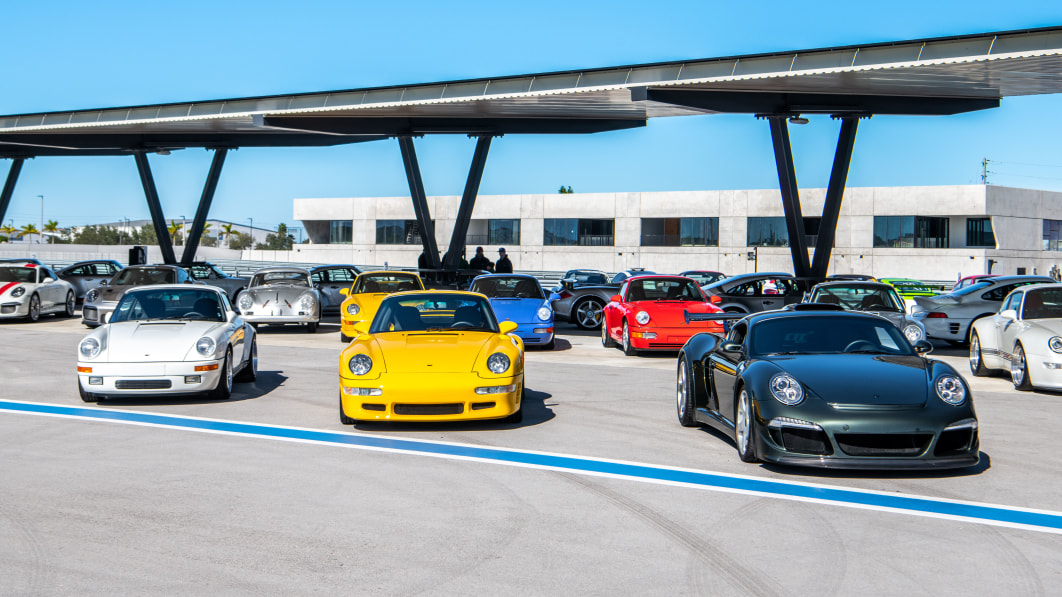
RUF, a respected Porsche tuner who notably turned the 911 into the 213-mph CTR Yellowbird in the 1980s, will open its North American headquarters in 2023. The company is setting up the facility to distribute cars, provide parts and service, and organize brand-related events.
Executives chose to set up shop at the Concours Club, a facility located in Miami, Fla., that markets itself as an automotive country club. It looks like the idea place for RUF’s North American division: it features a two-plus-mile race track, garages that enthusiasts can rent to store their cars in, and a space companies can use to organize events. The Concours Club is located in the Miami-Opa Locka Executive Airport, meaning customers will be able to book an appointment with RUF, fly in, and spend time on a track before signing the dotted line.
RUF hasn’t revealed which model(s) it will sell in the United States. Its recent line-up includes a 710-horsepower, twin-turbocharged tribute to the 1980s Yellowbird called CTR Anniversary and built around a carbon fiber monocoque designed in-house, a naturally-aspirated, 510-horse variant called SCR, and a 777-horsepower coupe named CTR 3 Clubsport and powered by a mid-mounted, 3.8-liter flat-six engine. It also performs tuning work for other companies: it notably tuned the engine that powers the wild, 911-based Marc Philipp Gemballa Marsien.
We expect to hear more about RUF’s plans for our market in the coming months. It will inaugurate its headquarters in the summer of 2023.
Related Video
March 19, 2023 / Comments Off on Porsche tuner RUF opening North American headquarters
Autoblog is now live on your smart speakers and voice assistants with the audio Autoblog Daily Digest. Say “Hey Google, play the news from Autoblog” or “Alexa, open Autoblog” to get your favorite car website in audio form every day. A narrator will take you through the biggest stories or break down one of our comprehensive test drives.
Related video:
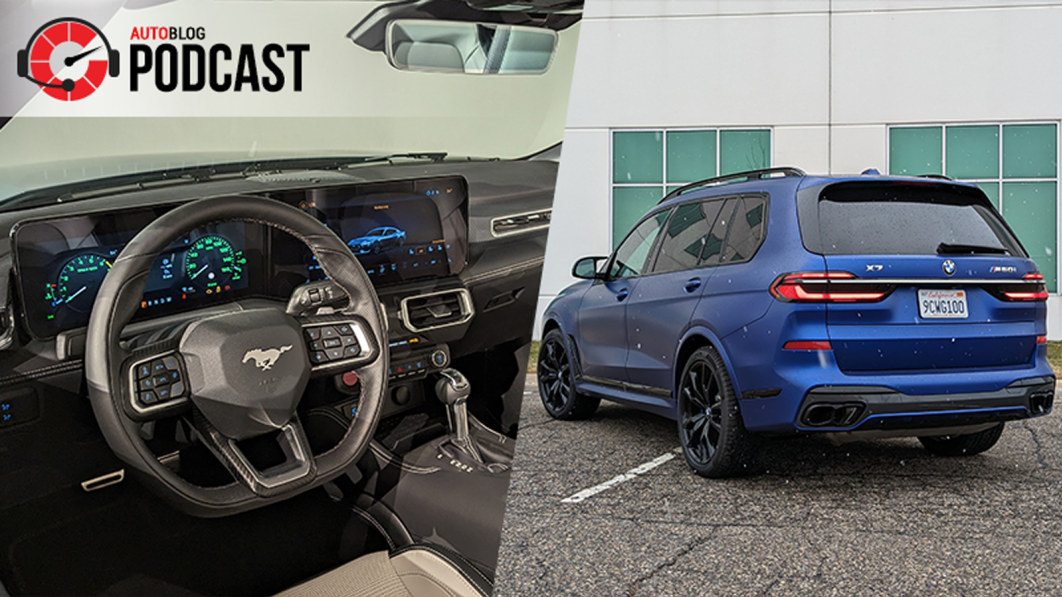
March 10, 2023 / Comments Off on 2024 Ford Mustang interior, and we drive the BMW X7 M60i | Autoblog Podcast #771
Auction house RM Sotheby’s is giving enthusiasts the chance to bid on the supercars that they had posters of when they were kids. It’s organizing a live sale in Miami, Florida, in December 2022 that’s limited to 60 high-end models built between the 1970s and the 2010s.
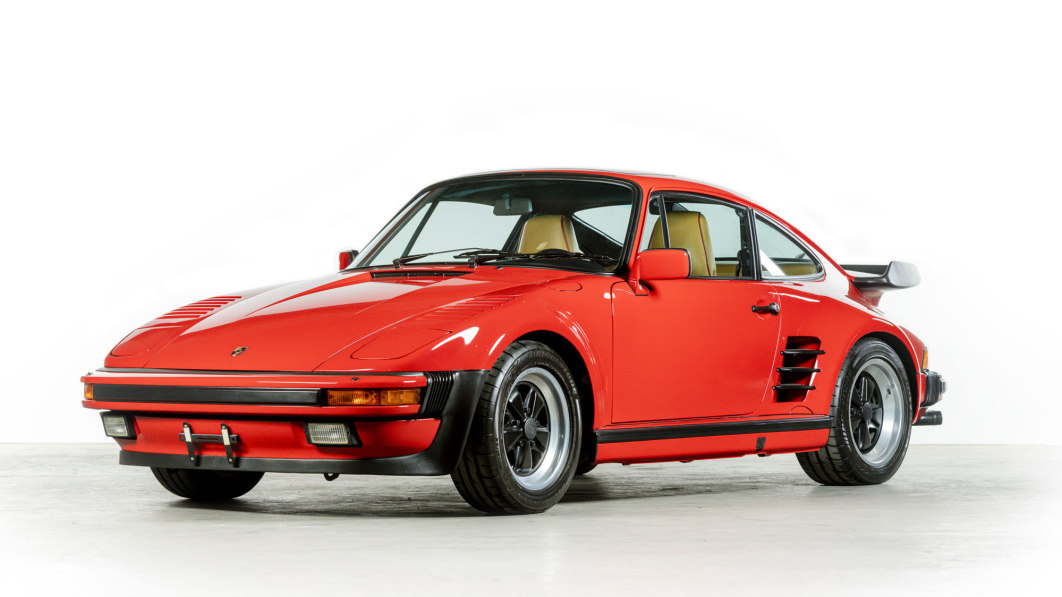
The oldest car in the catalog is a V12-powered 1974 Jaguar E-Type, though keep in mind that only 20 of the 60 available slots have been filled so far. At the other end of the spectrum, the newest model is currently a 2014 BMW M5. If your automotive tastes are firmly anchored in the 1980s, there’s a wide selection of cars to choose from such as a 1989 Lamborghini Countach 25th Anniversary Edition and a 1987 Porsche 911 Turbo with a flat-nose conversion. If your heart belongs in the 1990s, RM’s sale includes a 1990 Lamborghini LM 002, a 1995 Ferrari 512 M, and a 1996 Porsche 911 Turbo. Bentley models and a 2008 Mercedes-Benz SLR are among the newer classics.
Carmakers weren’t alone in pursuing speed, style, and extravagance in the 1980s; tuners fought hard for a piece of the pie as well, and RM’s sale reflects that. Collectors will get the rare opportunity to bid on a number of pre-merger AMG models like a 1982 Mercedes-Benz 500SL 5.0 (R107), a 1987 Mercedes-Benz 560SEC 6.0 (C126) with a wide-body kit, and a 1989 Mercedes-Benz 560SEL 6.0 (W126). BMW-based Alpina models are well represented, too: RM accepted a pair of 6 Series-based 1987 B7 coupes and a 3 Series-based B6 2.8.
There are several slots left so it’s not too late to submit your car. If you’re a buyer, plan on being in Miami on December 9 and 10, 2022. We suggest clearing up space in your garage first: every car is offered with no reserve, so the selling price will be the highest bid.
Related Video
September 18, 2022 / Comments Off on An assortment of emblematic supercars is headed to auction
Porsche’s track-focused 911 GT3 RS returns for 2023 with more power and tech than ever before – at a correspondingly eye-popping price point. The Turbo S may be the flagship 911, but to many car geeks, the GT2 and GT3 RS represent the true pinnacles of 911-ness thanks to their back-to-basics focus on extracting performance at the expense of virtually everything else. They may not be the quickest in a straight line, but when it comes to on-track composure and raw human-machine interaction, they simply can’t be beat.
It would be easy to argue that the RS is basically a race car. The 992 GT3 RS is as close as you can get to a 911 Cup car while still being street-legal, but as a street car, it’s unhindered by series regulations or classifications. In other words, Porsche’s engineers can turn the performance dials up just as high as they please without running afoul of a sanctioning body while simultaneously sanding off some of the Cup car’s sharper edges so as to preserve the internal organs of customers who will never drive their RS models at the track. Yeah, you know they’re out there.
To wit, while the 992 Cup car makes do with 510 horses and a six-speed sequential gearbox, the 2023 GT3 RS extracts 518 horsepower and 346 pound-feet of torque from its naturally aspirated 4.0-liter flat-six and puts it to the ground through a far more refined seven-speed PDK. Porsche says that’s good for a 0-to-60 time of 3.0 seconds flat. From here, Porsche reaches into a different motorsports parts bin for some aerodynamic cleverness. Trickling down from the 911 RSR and GT3 R is a new center-mounted, single-piece radiator that clears way on either side for a new active aerodynamics package.
This new active aero system utilizes continuously adjustable wing components front and rear to allow for fine control over performance no matter the situation. In combination with the rest of the RS’ air-channeling fixtures, it can provide 900 pounds of downforce at 124 mph and a whopping 1,895 pounds at 177 mph. Flip it over to drag reduction mode and the wings go flat, helping the GT3 RS achieve its 184 mph top speed. The wings can also be deployed in max-drag mode to act as supplemental air brakes.
The RS gets a brake upgrade over the standard GT3, with larger (by 2 mm) front pistons grabbing 408 mm discs; the rear axle retains the GT3’s 380 mm discs and four-piston fixed calipers. An optional carbon ceramic (PCCB) package returns with larger rotors (410 mm up front; 390 in the rear). Center-locking wheels also return (20 inches up front; 21 in the rear) wrapped in Michelin Pilot Sport Cup 2s in 275/35R20s and 335/30R21s, respectively. Weight is kept to an athletic 3,268 pounds thanks to a generous helping of carbon-fiber reinforced plastic (CFRP) body and interior components.
The popular Weissach package also returns with its forged magnesium wheels, carbon exterior panels and an even more extensive CFRP regimen (front and rear anti-roll bars, the rear coupling rods and the shear panel on the rear axle). Porsche says the mag wheels alone knock off nearly 18 pounds of unsprung weight.
But while some may still view the 911 as the everyman’s supercar, the GT3 RS is far from a bargain even at sticker price. For 2023, that’s $225,250 (including $1,450 for destination) — roughly 20% more than the “suggested” price for the old 991-generation GT3 RS. Not that it matters much in a market that treats sticker price like the Pirate’s Code. Look for the RS to arrive stateside in the spring.
Related video:
August 17, 2022 / Comments Off on 2023 Porsche 911 GT3 RS hits the track with 518 horsepower