All posts in “performance”

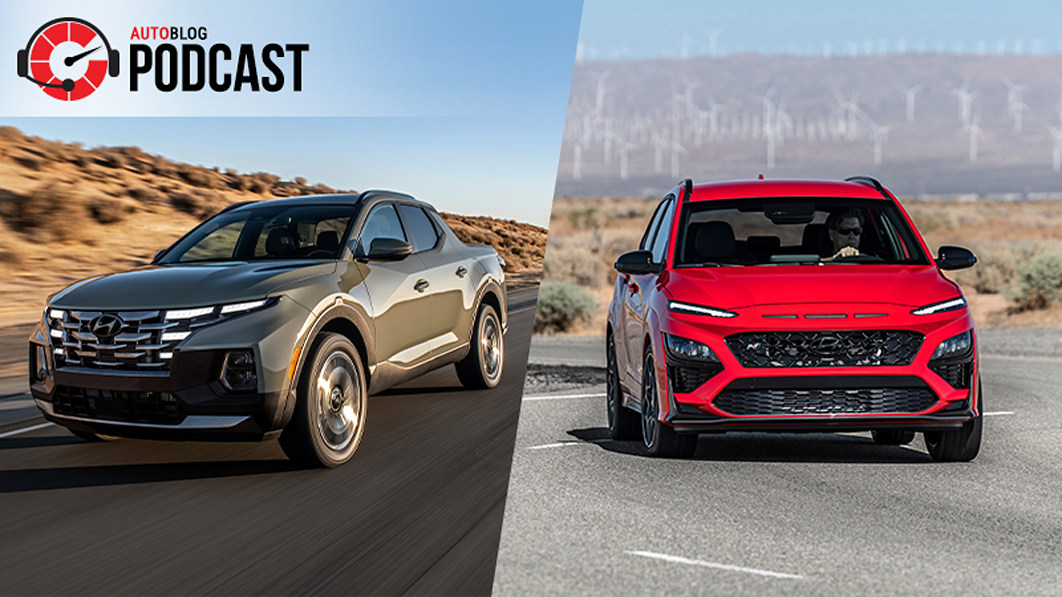
Hyundai Santa Cruz, Kona N and Elantra Hybrid | Autoblog Podcast #691

In this episode of the Autoblog Podcast, Editor-in-Chief Greg Migliore is joined by West Coast Editor, James Riswick. They’ve been driving a lot of new cars, including the 2022 Hyundai Santa Cruz pickup, 2022 Hyundai Kona N, 2021 Hyundai Elantra Hybrid, 2021 Acura TLX Type S and 2022 Hyundai Genesis G70. Lamborghini revealed a modern interpretation of the Countach, for better or worse. Finally, they heelp a listener replace a 2013 Ford Edge in this week’s “Spend My Money” segment.

Send us your questions for the Mailbag and Spend My Money at: Podcast@Autoblog.com.

Autoblog Podcast #691

Get The Podcast

  • Apple Podcasts – Subscribe to the Autoblog Podcast in iTunes
  • Spotify – Subscribe to the Autoblog Podcast on Spotify
  • RSS – Add the Autoblog Podcast feed to your RSS aggregator
  • MP3 – Download the MP3 directly

Rundown

Feedback

Autoblog is now live on your smart speakers and voice assistants with the audio Autoblog Daily Digest. Say “Hey Google, play the news from Autoblog” or “Alexa, open Autoblog” to get your favorite car website in audio form every day. A narrator will take you through the biggest stories or break down one of our comprehensive test drives.

Related Video:

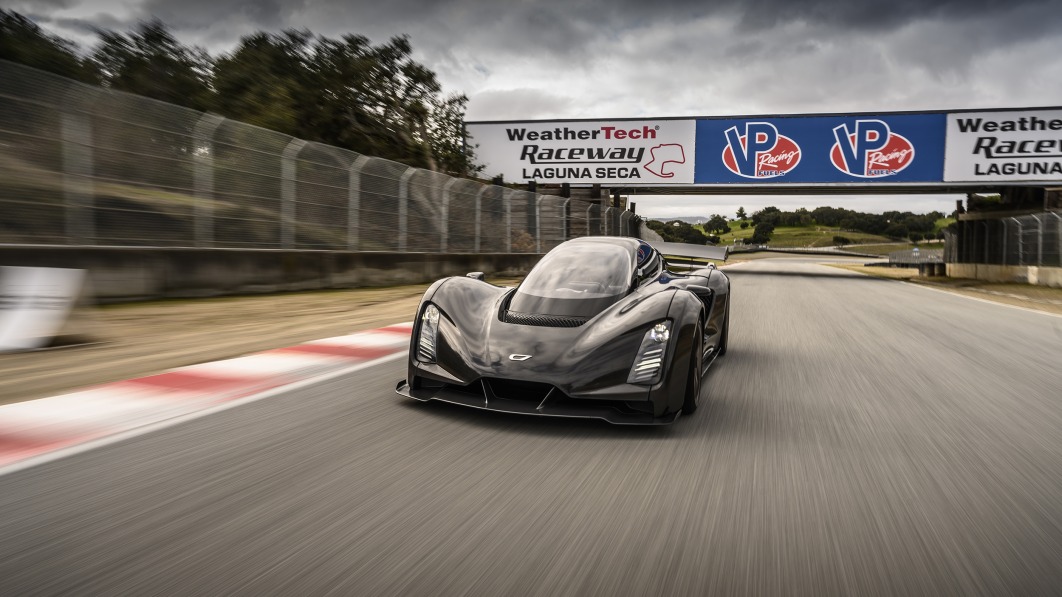
3D-printed Czinger 21C supercar breaks Laguna Seca lap record

Los Angeles-based supercar builder Czinger claims to have broken a Laguna Seca lap record with a prototype of its 21C. The time of 1:25:44 is said to have been set by driver Joel Miller, and eclipses the old track record of 1:27.62, set by Randy Pobst in a McLaren Senna.

The time would seem to back up the ambitious specs laid out by the supercar startup. The strong hybrid electric is powered by a 2.9-liter twin-turbo V8 and dual electric motors for an output of 1,331 horsepower. The entire car will weigh less than 2,800 pounds, putting 0-62 times at what the company says is just 1.9 seconds, on its way to a top speed of 268 mph.

The Czinger was engineered to be built via 3D-printing, allowing for dramatically shortened development times and cost savings. Advantages include being able to produce, say, a suspension arm without having to manufacture the tooling first. Still, each tandem-seater supercar takes 3,000 to 4,000 hours to make.

Only 80 units will be made, for a price of about $1.7 million. Included in that tally is a more track-oriented widebody version. The car was supposed to be shown to the public in 2020, first at its Geneva Motor Show debut, and then at the Goodwood Festival of Speed, but both of those events were canceled due to the COVID-19 pandemic. During the downtime, however, Czinger says they’ve been making incremental improvements to the car.

Production has been delayed, partially due to the chip shortage caused by the pandemic. After 21C production ends, Czinger says they’re looking to offer three additional models. Some will utilize what they’ve learned in making the 21C for a lower-priced model.

The Laguna Seca lap record proves that the car has solid design behind it. We look forward to seeing what production looks like when it begins in 2022.

McCall Motorworks Revival Photos | Monterey kicks off with fancy airport party

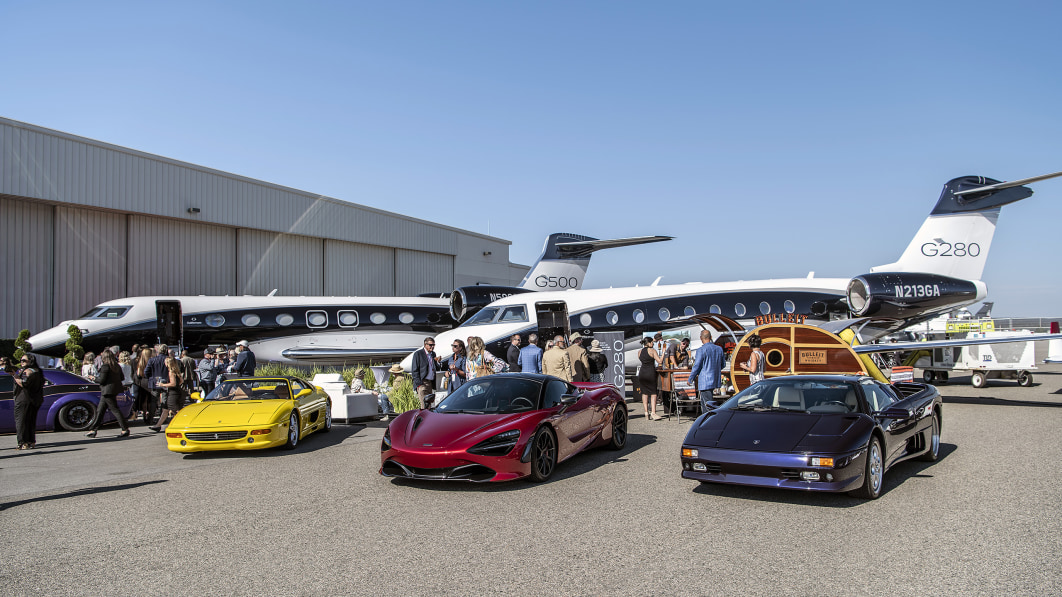
Yesterday, the McCall’s Motorworks Revival happened, for the 30th time no less, kicking off Monterey Car Week. Which is another way of saying it happened before most people showed up. 

So what is it? Fancy cars parked among fancy planes while fancy people walk about with fancy food and cocktails. This differs from other Monterey events, such as the Pebble Beach Concours d’Elegance and The Quail, A Motorsports Gathering, in that it takes place at an airport rather than a golf course. It’s also more of an evening affair than a garden party, complete with a DJ, a band and dancing. Oh, and the cars are less impressive. That, admittedly, says more about the prime metal displayed elsewhere, especially at Pebble. There’s still a lot to ogle, even if you didn’t get to enjoy the fancy food and cocktails. We dispatched ace photographer Drew Phillips to take it all in and to put down an offer for us on that Citation Longitude. 

Amongst the new cars on display, most brought there by their manufacturers, we see a Corvette Stingray, Lucid Air, Aston Martin DBX, Land Rover Defender, Polestar 1, Hennessey Venom F5, Ruf 911s, and a big showing by Ford with a GT500, a Mustang Mach-E, a Bronco and multiple GTs. Two were done up to match an original parked alongside it, while the Bronco flanked an original prototype from 1966. Neat. Hopefully no one spilled Perrier Jouet on it. 

Classics? There were aplenty, but frankly, we’re most fond of the two VW buses: one towing the No. 22 1957 Denzel 1300SS Roadster in front of that Citation Longitude and another from Meyers Manx supporting an adorable flying boat with “Smiles for Miles” written on the side. Now that’s the kind of private plane I could get behind.  

Pininfarina Battista production car revealed to kick off Monterey Car Week

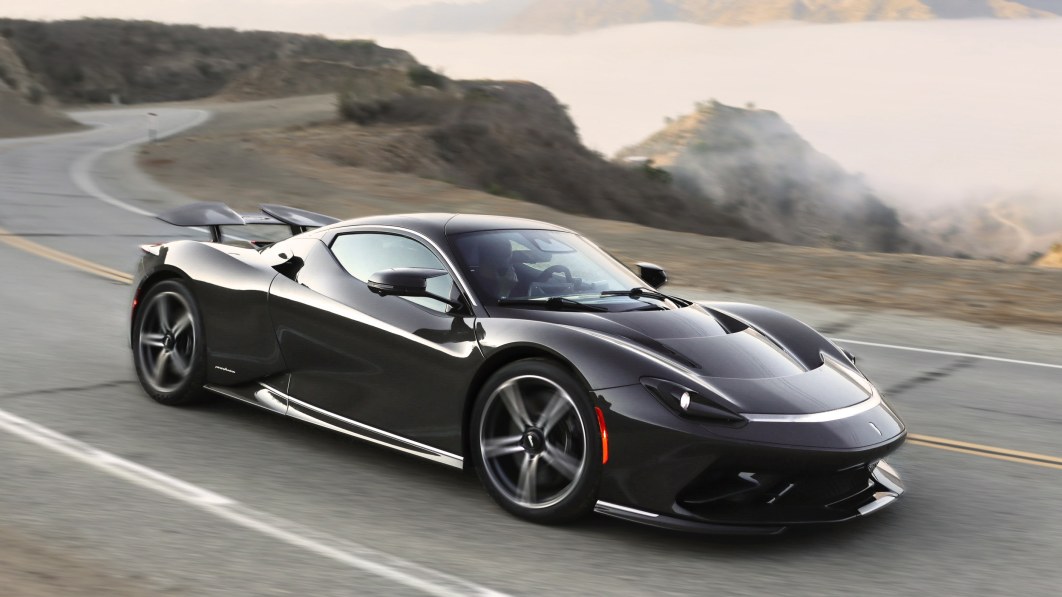
The Pininfarina Battista is officially here in production form. Pininfarina released the first images and video of the production car today, tooling around Southern California roads ahead of it being displayed during Monterey Car Week.

There are no additional specs or figures available beyond what has already been announced. The Battista will produce 1,900 horsepower from its four electric motors, have a range of about 280 miles on a full charge and hit 60 mph in “under 2 seconds.” Those in Monterey will have a chance to see the exposed carbon bodywork in person for the first time. Plus, potential clients will be provided the opportunity to go for a ride.

It’s not just this single Battista that will be shown, either. Pininfarina says it will also be debuting a Battista Anniversario. This special edition of the Battista will have “aerodynamic enhancements and tailored detailing producing a uniquely dynamic personality.” It will also be limited to just five total vehicles worldwide. Seeing it at Monterey may be the first and last chance you get to ever lay eyes on one.

The one nugget of information Pininfarina gave us today besides the new photos is detail on the Battista’s sound. It takes after a sound philosophy conceived by Italian composer Giuseppe Verdi. Any multiple of 432 Hz is said to be a “pure sound” according to Verdi, so Pininfarina used 54 Hz (a multiplier of 432) as the core frequency of noise for the Battista. As you accelerate, the frequency will continue to increase in multiples of 54 Hz to keep the in-cabin sound pure and consistent with Verdi’s principles. How very Italian.

“Every driver has an emotional bond with a car, and the sound of Battista will nurture this connection, not by replicating a familiar car sound, but with one that radiates the beauty of Battista’s design both inside and out,” says René Wollmann, product platform director for sports cars at Automobili Pininfarina. “This way, the Battista will not only impress with its aesthetic appeal and performance, but also on a new emotional level enhanced through the sound. We look forward to the input we will receive from clients in the U.S. as we fine-tune Battista’s sonic experience.”

We’ll look forward to hearing the sound ourselves one day. For now, the wait is on to see the ultra-exclusive Battista Anniversario. Look out for more Pininfarina news soon as Monterey Car Week revs up.

Related video:

New Lamborghini Countach teased again with three images

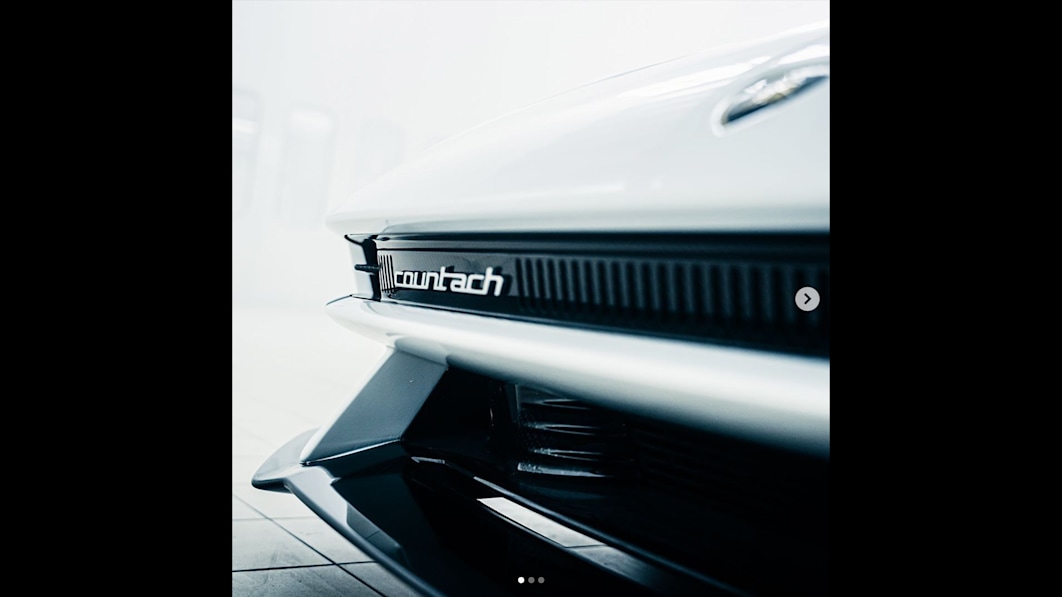
Lamborghini posted three more teaser photos of the coming Countach resurrection to its Instagram page. We’ll have to let the pictures do most of the talking since we don’t have any more information than we did when the first tease dropped a couple of days ago. We get a shot of a nose unlike any other Lamborghini in the current stable. A narrow black grille just inches wide splits the upper and lower section of the front fascia, recalling the area where the original exotic placed its black front bumper and fog lights. The name “Countach” appears on the right side of the coupe, in all lowercase letters just like the original, but stretched and angular befitting the brand’s modern design language.

A second shot exposes the engine cover, this a new design based on the clear cover that can be fitted to the Aventador. Three flat hexagon panels, thickly bordered in black, step down from the roof to the tail. Beneath them is the longitudinal and posterior V12 portion of the LPI 800 powertrain. The initialism stands for Longitudinale Posteriore Ibrido, and we’re still waiting for any information on that last bit, the hybrid. The V12 in the Lamborghini Sian FKP 37 received help from a supercapacitor, but that special edition didn’t get official designation as a hybrid. The last car from Sant’Agata to do so was the 2014 Asterion LPI 910-4 concept from the 2014 Paris Motor Show. The Asterion hid a V10 in back for the rear wheels, and two e-motors with a combined 296 horsepower on the front axle powered by a lithium-ion battery. The Sian produces about 785 horsepower, the Countach will deliver about 789, the Aventador S makes 690. So Lamborghini isn’t using electricity to chase gaudy numbers. Yet.  

The last pic presents the area behind the side window. This is a slightly tighter shot of an image that a site called Lamborghini Specs posted a few days ago, snagged somehow from the automaker’s customer-only site, Lamborghini Unica. This reveals a Huracan-like intake treatment, the opening descending from the roof to the rear fenders. Ahead of the intake, a row of slats harks back to Gandini’s Countach prototype that arranged a flat row of vents along the fender, just behind the glasshouse. The fender is decorated with a cap that could be the fuel filler or a charging port or something else.

Way back in 1987, Lamborghini worked up a Countach Evoluzione prototype to test new technologies that made their way into the last of the production Countach run and the successor Diablo. This Countach could be doing something similar. The brand has already been taking orders for whatever’s coming, so there’s an excellent chance it will be sold out by the time it debuts on Sunday, August 15, at Monterey Car Week.

Ford GT test mule spied, and rumors of a new engine are swirling

This isn’t what we expected to see today, but one of our spy shooters just caught a Ford GT mule rolling around Allen Park, Michigan. We’d all but put the Ford GT off to the side at this point, as production was expected to wrap up shortly. 

There’s always the chance of a special edition-something at the end, but we didn’t expect to see any GTs with emissions testing pipes driving around Ford’s test laboratory where it performs EPA testing on future vehicles. The longstanding assumption, of course, was that the GT would use its 3.5-liter twin-turbo V6 engine until the end. Any suggestion otherwise seems easy to dismiss and semi-unfathomable at first blush. However, the presence of this test mule, and some recent reports that we’ll get into, throw this assumption into doubt.

We’ll start with a recent Ford Authority report, wherein they cite an unnamed source telling them Ford is testing a GT in metro Detroit with an engine other than the twin-turbo V6. The report goes on to say that this mystery powertrain GT sounds “very different” from the V6 we’re accustomed to at this point.

Next up, our spy shooter is also telling us he’s heard rumors of a different engine making its way into the GT. The rumor, and we’re not giving it any more credit than that, points to the 7.3-liter Godzilla V8 with a pair of turbos strapped to it — there are even more rumors to back this rumor up. It sounds fairly far-out to us, but do keep in mind that the 7.3 is a significantly more compact pushrod motor, not a DOHC design like the 3.5-liter V6 is. Maybe Ford could make it work.

Where is any kind of evidence for these musings? Well, the spy shots do indicate that Ford is up to something with the GT’s powertrain. For one, this engine’s oil cap (circled in red in the closeup) is sitting atop the glass where a standard GT’s trunk would extend to. That’s a clear hint that all isn’t normal underneath the engine cover. Plus (and it’s very difficult to tell), the exhaust routing in and around all of the chassis and suspension components doesn’t look identical to that of a regular GT. The blurriness of the photo and general mess going on underneath keep us from getting a super clear comparison, but some of the twists and curves in the exhaust appear slightly changed. All that said, we’ll need a better photo comparison to come to any grand conclusions.

All of the above put together is enough to put us on high alert for Ford GT news. Ford is up to something with its mid-engine supercar, and it seems certain at this point that it won’t be letting the GT go silently into the night.

Related video:

Watch a Ferrari Roma get trapped in a narrow Italian street

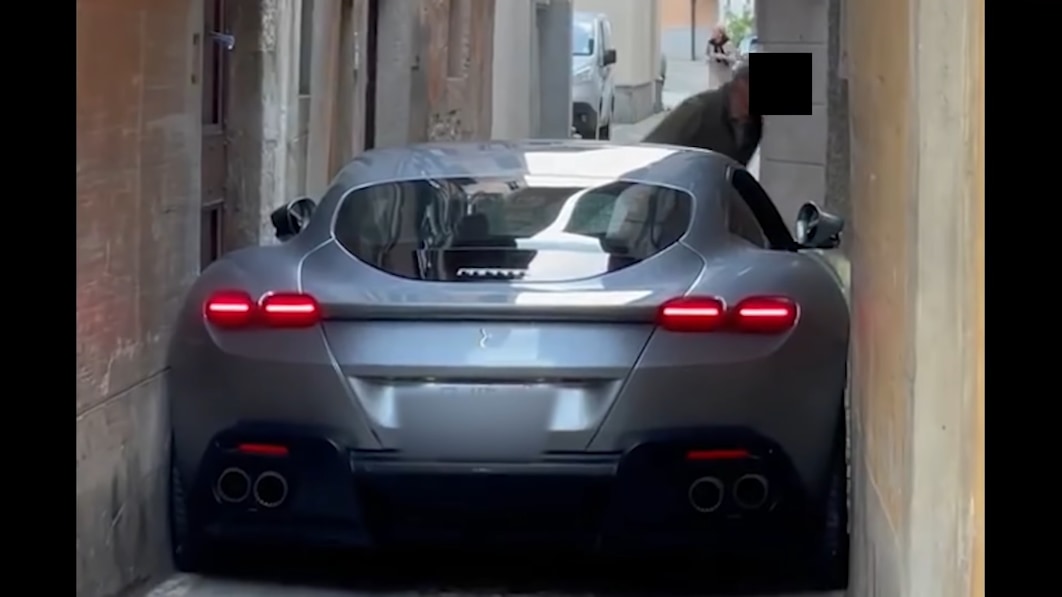
The Ferrari Roma is named after one of the most beautiful cities in Italy. In an odd turn of events, an Italian city could have a street named in honor of the Roma (if its mayor has a sense of humor) after one got stuck in a narrow street. Footage showing the $225,000-plus grand tourer scraping its sides on centuries-old buildings surfaced on YouTube.

Where the video was shot is up in the air. It was taken in a small street that’s partly paved with cobblestones and located somewhere in Italy. There are thousands of strade that meet this description. They’re picturesque, and we fully understand the temptation to explore them, but what the driver seemingly forgot is that the Roma is not a small car. At 77.7 inches wide, it’s about three and a half inches narrower than a Chevrolet Suburban. And, while “low clearance” signs are common around the world, “tight street” indications are rarer.

It looks like the Roma fit (barely) until the narrowest part of the street trapped its quarter panels. Seeing the coupe stuck, a bystander tried to help the driver through but stopped when a presumably very angry woman came running with her hands in the air. At that point, the bystander calls it: zero for the Ferrari and one for the street.

The video doesn’t show the aftermath, so we can only guess how the Ferrari was freed and how much damage it drove (or was hauled) away with. What’s certain is that the driver now understands why small cars reign supreme in Italy. And, nothing suggests the street will be named after the Roma, but it would be a creative way to spur tourism.

While it’s tempting to blame this incident on human error, especially when we’re talking about a car that costs more than the average house, it’s important not to forget about the possibility that technology played a role in embedding the Roma into its home country’s architecture. Navigation apps don’t know that your Ferrari is too wide for the street they’re sending you on. You’re ultimately responsible for how you drive, where you turn, and which detours you take, but the main takeaway here might be “don’t blindly follow directions” rather than “don’t blindly assume it fits.”

Related Video:

A new Lamborghini Countach is coming soon

Lamborghini just announced that a new Countach is coming. Let us repeat. Lamborghini just announced that a new Countach is coming!

OK. Let that soak in for a few seconds, or minutes, however long it takes. We’re a bit shocked over here, too.

There’s one teaser image to go off of, and Lamborghini hasn’t let loose any details beyond giving us the name. You can see the car under a car cover and shrouded by haze in the photo above. However, there’s a video that’s been posted to Twitter that you can watch below.

We get some great engine noises, and the new Countach appears to be parked a long way away from the camera at the end of the video. It appears to be painted white, but that’s all we can tell about it from that distance. There’s no doubt that Lamborghini is leaning heavily into nostalgic feelings, as you see original Countach posters pinned up to a kid’s room in the video. Lamborghini seems intent on recapturing that wild, exotic magic that the old Countach brought to the supercar landscape. It’s tough to say what the styling will be like besides being a wedge like most Lambos. It could be a very retro design, sort of like the Miura concept from over a decade ago. It could also be a thoroughly modern Lamborghini design that happens to have a classic nameplate attached. For what it’s worth, Lamborghini’s design boss seemed to be against anything overtly retro as of a few years ago.

For the time being, our best guess is that this could be the car housing a hybrid V12 powertrain. The Italian supercar maker has said the only way to keep the V12 alive is to hybridize it. Starting off with a hybrid V12 Countach sounds like one hell of a way to kick off a new era of hybrid Lamborghinis. Plus, with an anticipated launch date of 2023 for a hybrid, the timing would be pretty good for the new Countach.

We’ll just have to wait and see what it is before we get too far ahead of ourselves, though. Lamborghini says it “is coming,” but doesn’t say when. For now, all we can say is stay tuned.

Related Video:

Aston Martin Valkyrie is set to lose its roof at Pebble Beach with roadster variant

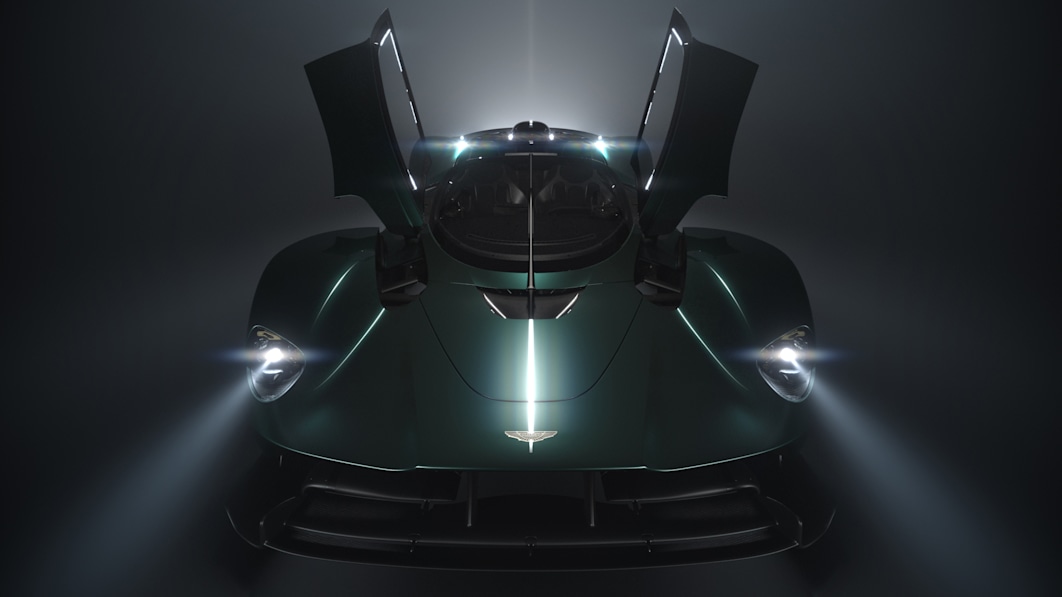
Aston Martin is coming to Monterey Car Week with a new car reveal. The specific model name isn’t explicitly mentioned by Aston, but one look at the “teaser” gives us all the information we might need to suss it out.

The Valkyrie is losing its roof for a new Roadster variant that will join the existing hardtop and racing-only AMR Pro model. You must look rather closely at the roof area of the teaser, but upon inspection, the roof of the Valkyrie shown here is missing. Additionally, the doors have a new design to accommodate the missing roof. Instead of opening via the roof in gullwing fashion, they appear to be scissor doors. Beyond these details, we’re left to guess at the rest. The car looks similar to the standard coupe up front, and the convertible appears to keep the roof scoop, too.

Aston says the wraps will officially be taken off this new model on Thursday, August 12. After being revealed at a private event, the car will be available to see by invitation-only beginning the following day at the Aston Martin Club 1913. All Aston will say about the model so far is that it’s “a new product from the brand which extends the company’s performance credentials a step further.”

In addition to the new Valkyrie, Aston is also bringing the Valhalla supercar to North America for the first time. You can read all about that mid-engine car here, and then go check it out on Pebble Beach’s 18th fairway. If you want one, Aston just made its production run official — only 999 Valhallas will be built over the next two years.

Related video:

McLaren 765LT Spider drops the roof on the 755-horsepower supercar

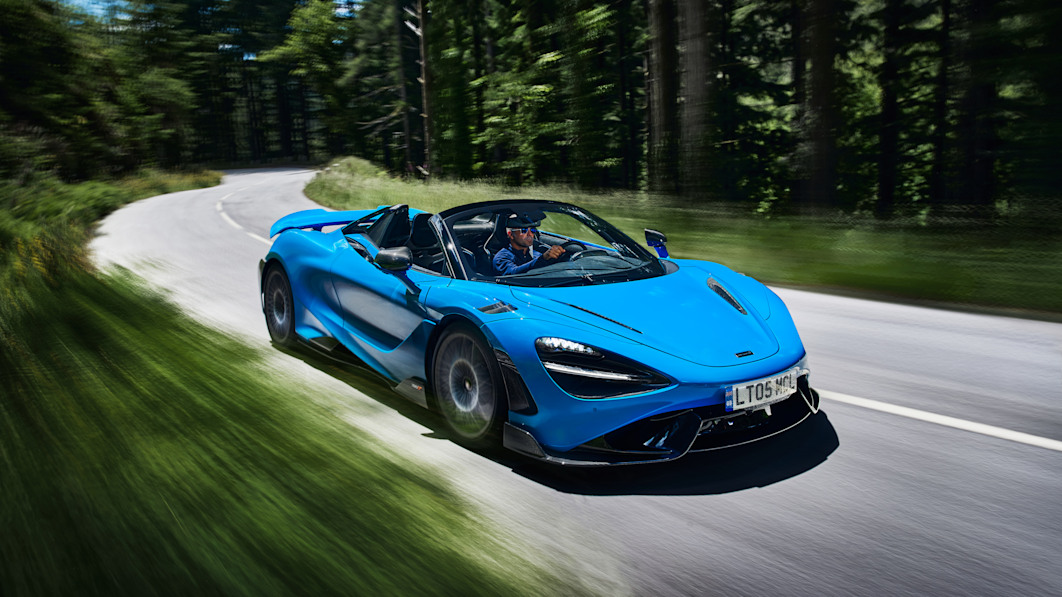
The McLaren 765LT Spider is here, and just like the coupe, it’s a total monster. In fact, it’s a near carbon copy of the 765LT coupe in every way that it could be.

We’ll start with what’s new and different about the Spider. The power retractable roof is a single slab of carbon fiber. McLaren says it completes the opening or closing procedure in just 11 seconds at speeds up to 31 mph. The roof mechanism is also far more refined than McLaren Spiders of the past, as McLaren promises the mechanism produces half as much noise as the 675LT Spider’s roof does.

McLaren LT cars are known for shedding pounds, and this 765LT Spider is no different. It weighs 176 pounds less than the 720S Spider it’s based on. This weight savings is accomplished through a variety of means. The LT’s forged wheels drop 49 pounds. The carbon fiber seats shed another 40 pounds. A lightweight battery drops 6.6 pounds. All the new carbon bodywork offers 11 pounds of weight savings. Deleting the floor carpet loses another 5.3 pounds. The titanium exhaust weighs 40% less than the standard stainless steel system. And lastly, McLaren deletes the air conditioning and radio as standard, dropping another 22 pounds and 3.3 pounds respectively. You can option both A/C and the radio back on as no-cost options, which is something we’d recommend you do.

Of course, making a removable roof version of the coupe means adding weight back. McLaren says the Spider is 108 pounds heavier than the coupe, a relatively light penalty for losing the roof. McLaren says the inherent stiffness of its carbon monocoque is enough that it didn’t need to add in a bunch of additional stiffening to keep the car rigid. Acceleration times are hardly diminished with the added weight. It has an identical 0-60 time as the coupe at 2.7 seconds. Unfortunately, the 0-124 time is reduced by 0.2 second to an agonizingly long 7.2 seconds (/sarcasm). Top speed is a coupe-matching 205 miles per hour.

Those bonkers acceleration capabilities come courtesy of the same mega powerful engine used in the coupe. The 4.0-liter twin-turbo V8 makes 755 horsepower and 590 pound-feet of torque. You can listen to the exhaust via the powered rear window that brings you closer to the noise even if the top is up.

Just like the coupe, the Spider gets bespoke wheels, tires and brakes to add performance. All the aero enhancements for increased downforce are impossible to miss on the car’s heavily modified exterior — it makes 25% more downforce than the 720S Spider. Plus, the suspension is enhanced with more bespoke LT parts for the springs and dampers. It also gets a wider front track, lower ride height and unique suspension tuning above and beyond the 720S Spider. 

Getting your hands on a 765LT Spider coupe prove difficult due to the low production run McLaren is setting. Only 765 will be sold around the world, and McLaren says one-third of the production will come to the U.S. The starting price is $382,500. That’s $24,500 more than the coupe for those who are keeping track.

Related video:

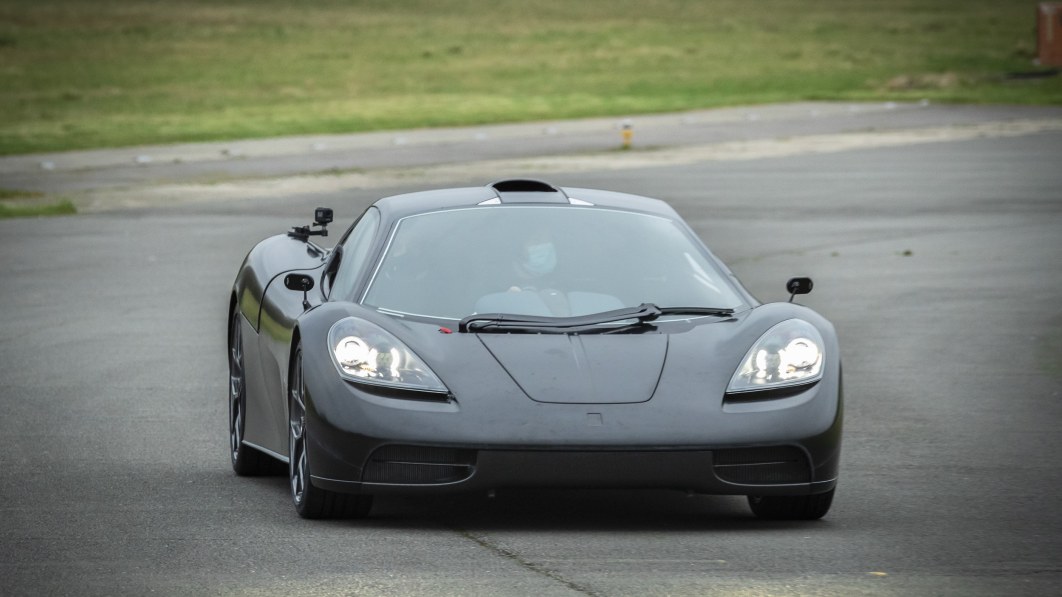
Listen to the Gordon Murray T.50’s V12 exhaust note

The Gordon Murray Automotive T.50, promised to be the greatest — and perhaps last — analog supercar, is still undergoing testing. When we last saw a T.50 prototype, its naturally aspirated, mid-engined V12 was rev-limited to low speeds. Now, GMA has released another video showing two test mules at slightly higher velocities, giving us a better idea of what kind of exhaust note we can expect.

The testing takes place at the Dunsfold, England, test track famous for its appearances on “Top Gear.” Though the Cosworth-built 3.9-liter V12 is said to have a redline of 12,100 rpm, in these tests it’s still limited to 5,000 rpm. Still, that’s enough to give us an idea of what kind of aural assault the car will deliver.

As it turns out, at low rpm there’s a lot of the baritone rumble that seems to be de rigueur in modern performance cars. At higher speeds, the engine provides a bit more of the high-pitched hum of the T.50’s spiritual predecessor, Murray’s McLaren F1, though overall the exhaust note is quite loud. There’s definitely more of a primal roar than the F1’s all-business precision engineering whir.

But while it may sound like other supercars, Murray has been adamant that the T.50 will remain the anti-supercar supercar. It will prioritize agility and handling over raw horsepower, with styling that’s more subdued than modern look-at-me-mobiles.

As such, Murray says the T.50 will be about the size of a 718 Boxster and lighter than a Mazda MX-5 Miata. Though the output of 654 horsepower at 11,500 rpm and 344 pound-feet of torque at 9,000 rpm may not win armchair bragging rights, its power-to-weight ratio should better the Ferrari LaFerrari’s.

Production of the 1+2 seater is slated to begin in 2022. A production run of only 100 units has been promised, so if you think you might want to drop the $3 million on the last pure naturally aspirated, internal combustion-only sports car by arguably the greatest living supercar engineer on Earth, you should act fast.

Bugatti’s final Divo is a tribute to its last official Le Mans entry

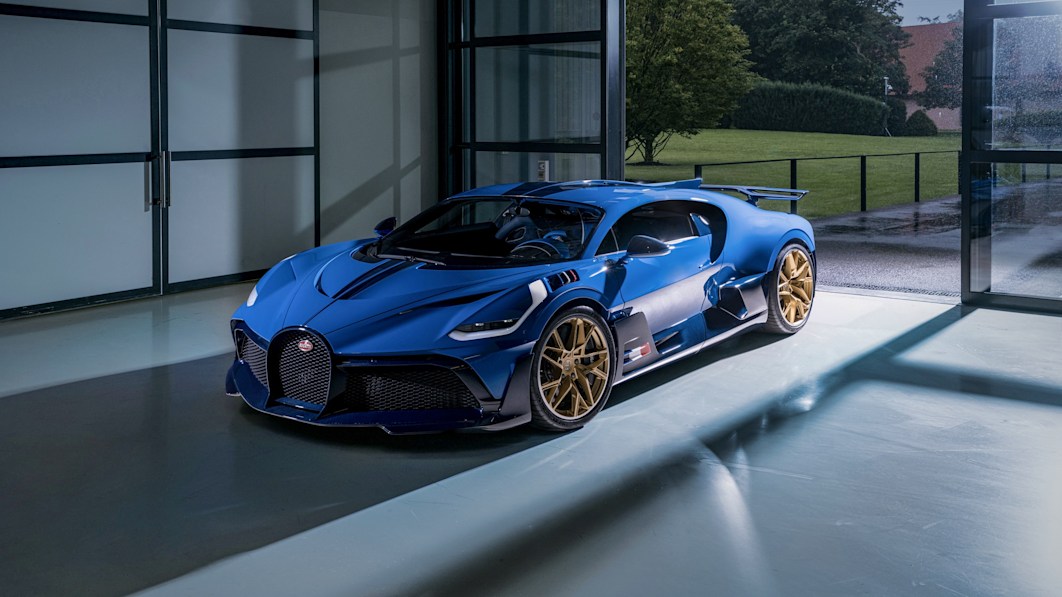
Bugatti’s last official Le Mans entry served as a source of inspiration for its final Divo. The last unit in a sold-out 40-car run left the French firm’s headquarters wearing a blue livery that echoes the track-bound variant of the EB110.

Unveiled at the 2018 edition of the Pebble Beach Concours d’Elegance, and priced at around €5 million (nearly $6 million) before customization options, the Divo stands proud as the first coachbuilt Bugatti released during the 21st century. It’s much more than merely a rebodied Chiron; it’s its own thing, and the two cars are technically different.

“As well as unique design, customers who buy a coachbuilt model enjoy a new, individual driving experience. Each small series undergoes the same degree of development as would a larger production run,” explained Pierre Rommelanger, the head of overall vehicle development at Bugatti, in a statement.

The final Divo’s anonymous owner wanted to channel the spirit of the EB110 that competed in the 24 Hours of Le Mans in 1994. Most of the exterior is painted in light blue, just like the race car, and the wheels are finished in gold. Parts of the lower body wear a darker shade of blue chosen to forge a link to the modern era, according to Bugatti.

Blue also dominates the interior. French Racing Blue and Deep Blue were used to wrap parts like the seats and the dashboard, though it’s interesting to note that the design isn’t symmetrical. The driver’s seat is lighter than the passenger’s seat. Elsewhere in the cabin, matte gray carbon-colored trim pieces provide a touch of contrast.

Spotting the final Divo won’t require a well-trained eye. Bugatti notes none of the 40 examples built were identical. Customers worked directly with the brand to customize the paint, the leather upholstery, the stitching, and the trim. What doesn’t vary from car to car is the engine: it’s an 8.0-liter W16 quad-turbocharged to 1,500 horsepower.

Selling cars is relatively easy; building them and delivering them on-time is harder. Bugatti ticked all three boxes, and the Divo project is finished. The one-of-a-kind La Voiture Noire (which reportedly cost $13 million) has been completed as well, so the French company is now working on bringing the EB110-inspired Centodieci to production.

Related video:

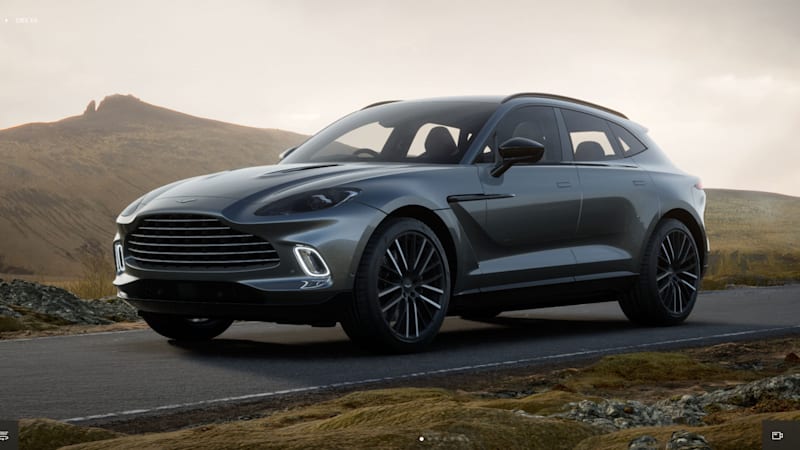
Aston Martin makes the DB11 and its configurator more powerful

Aston Martin sold 4,150 cars last year, but the luxury automaker said its configurator served up more than two million specification sessions. Going with the overwhelming numbers, for 2022 Aston Martin has focused on “the customer journey” for imminent and aspirational buyers by rolling out a new and highly featured configurator. At last, the firm greets potential customers and the merely curious with the kind of luxury one expects of the brand. This is especially important for a company working through its Project Horizon turnaround, and also because, as the official Safety Car and Medical Car sponsor of Formula 1, traffic to Aston Martin’s web site spikes every time its Vantage and DBX are called out on track during races.  

The configurator’s been built using Epic Game’s Unreal engine, a digital creation tool building portals for everything from real estate to fashion, supplemented by Nvidia GTX graphics. In the present Phase One, visitors can place their chosen model in studio or outdoor environments, with daytime or nighttime lighting, and get high-res, zoomed-in beauty shots of their their vehicle details. Yet while Aston Martin poured new features into the configurator, it has reorganized and simplified the site’s use. For instance, individual elements such as exterior paint are broken into six color groupings like Blacks & Greys and Bronzes & Oranges, providing users a glimpse at the range of hues on offer without overwhelming them into analysis paralysis.

The surfeit of choice carries on inside, naturally — there are eleven carpet colors on offer and 12 shades of headliner. The simplifying rationalization carries on in the cabin, too, with three themes available to establish a quick baseline for personalization. The starter theme is called Create, showcasing ornate stitching on the seat bolsters, perforated, patterned seatbacks, door cards, and arm rest. Next up is Accelerate, which “will appeal to customers who wish for a more focused interior.” This one puts Alcantara all over, notably on the entire seat faces and bolsters, with leather trimming the seat sides and headrests. Create and Accelerate can be had in ten colors in monotone and duotone arrangements. Inspire, the topmost theme and “the epitome of luxury,” can be had in 38 colors and in monotone, duotone, and light duotone. This one comes with “the very best of material and color choices,” even more ornate stitching and broguing, trim inlays, and — get this — seatback veneers for anyone diminutive enough to curl into the back seat of one of the coupes to enjoy them. 

As to the objects of configuration, Aston Martin has made a few tweaks to next year’s lineup. The DBX, which has provided half of the company’s sales so far this year, adds wireless charging and a new 23-inch wheel. The coupe formerly known as the DBS Superleggera becomes just DBS, and the V12 DB11 AMR sheds its AMR suffix, but nothing else. The 4.0-liter twin-turbo V8 in the DB11 gets a 24-horsepower boost to 527 hp, and a higher 192-mph top speed. Drivers intending to use all of that puissance should option the new Sport Plus Seats which provide more shoulder, torso, and leg support. Finally, the DBS and DB11 can be had with new 21-inch wheel designs. 

The configurator is live now and has reported for service. Enjoy.

Related video:

Here’s the first Pininfarina Battista customer car

Pininfarina continues its slow drip of news about the electric Battista hypercar today with details about the personalization program and photos of the first Battista commissioned.

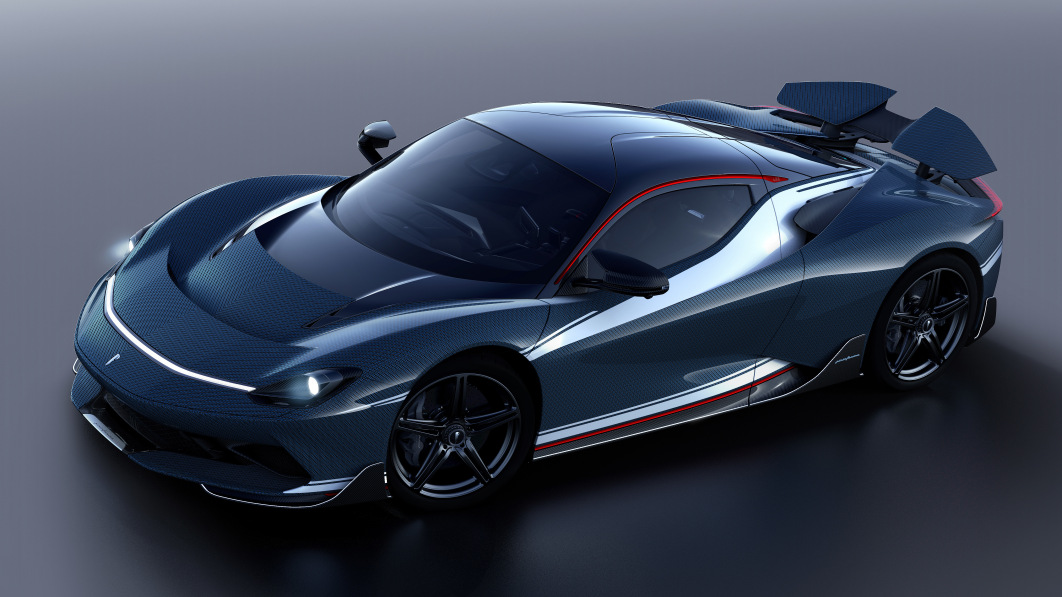
Above, you can see the Battista in question. Pininfarina didn’t reveal who the client was, but did say that the car’s appearance is “inspired by New York City.” The dominating exterior element is carbon fiber done in Iconica Blu thread. The carbon fiber is black, of course, but Pininfarina uses the Iconica Blu thread in it to make the car appear blue. It’s a rather dark shade of blue, but you can easily see the black carbon fiber weave underneath the paint, providing an extra pop. It drifts heavily into the ‘Murica theme with the red “Exterior Jewellery Pack” adorning the windows and side sills. Plus it also has hand-painted white stripes, adding some sparkle to the exterior. Pininfarina says the white paint for those stripes is named Bianco Sestiere Metallic.

The wheels are done in Dark Matt Grey and have a black center-lock ring to match the roof, rear diffuser and wing. Its final touch is a light-up Pininfarina logo in front made of brushed and polished anodized aluminum. Just like the owner of this Battista, anybody who orders one will get to personalize it from nose to tail. Pininfarina says its customization program allows for a total of 128 million combinations, so there shouldn’t be any Battistas that are exactly alike. You’ll choose from numerous paint finishes, carbon fiber bodywork, different exterior trims and so on.

Pininfarina didn’t show photos of this car’s interior, but it says the car will have black leather upholstery with Iconica Blu Alcantara inserts to match the exterior’s blue-and-black combo. Iconica Blu stitching is matched with more red and white stitching. Plus, it gets white seatbelts and the same Iconica Blu thread on the back of the carbon fiber seats. 

There are very few stones left unturned — even the chassis plate engravings can be customized to whatever you’d like. Only 150 Battistas will ever be built, says Pininfarina, and every single one of them will have the owner go through a customization process that puts them at the actual location of production — the Cambiano facility — to make all of their build decisions.

Related video:

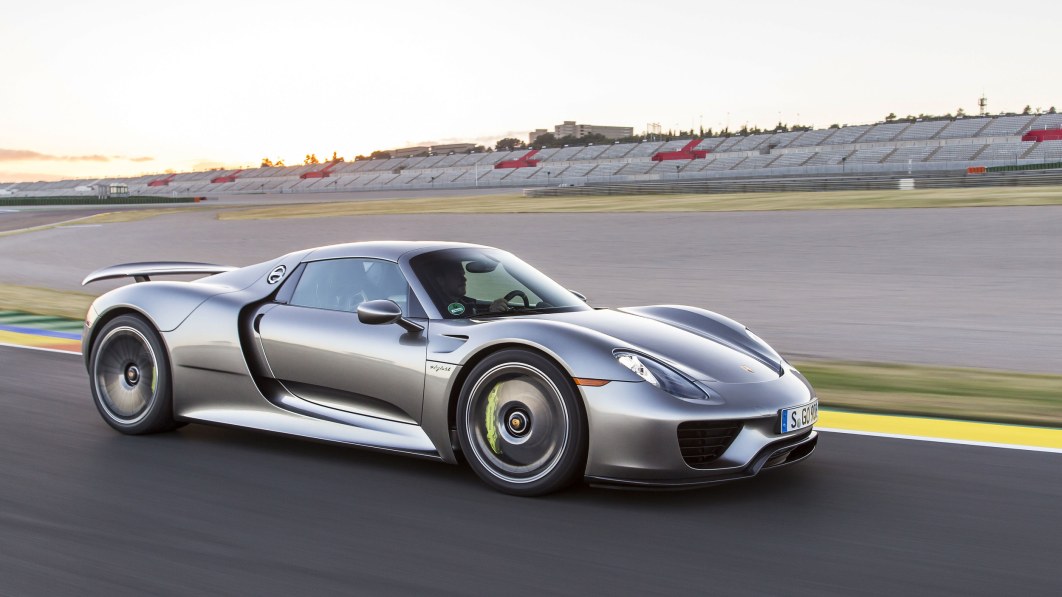
Porsche’s follow-up to the 918 Spyder hypercar turns up in the rumor mill

It’s been nearly a decade since Porsche introduced its last hypercar, the 918 Spyder, and a recent report claims the model’s long-awaited follow-up is almost ready. It’s so close that the firm has reportedly started taking orders.

Spike Feresten, a former Seinfeld writer and a Porsche enthusiast, spoke about the mysterious car with comedian and noted collector Jerry Seinfeld on his podcast. “Right now, if you’d like to, you can put a deposit down on a Porsche GT1,” he revealed without citing sources, according to Drive. “The rumor is, they’re going to announce this in August. There is going to be a new Porsche GT1 mid-engined special car that will follow in the footsteps of the Carrera GT and the 918,” he added. None of this is official, but some of it might not be as far-fetched as it sounds.

Porsche has vaguely discussed the 918’s successor on several occasions, though it significantly hasn’t confirmed it’s releasing the model, let alone provided a precise idea of when we’ll see it. If it’s indeed around the corner, we’re not surprised to find out the order book is already open. Carmakers routinely show new limited-edition models to their most loyal (and wealthiest) clients before revealing them to the public. That’s why many hypercars are sold out by the time they break cover. And, we have every reason to believe production of the next 918 will be limited.

Presenting the car in August makes sense, too. Monterey Car Week is back on the calendar, after all. Porsche could hold a private unveiling, or it could introduce the model at one of the dozens of high-octane events, like The Quail.

What the rumored GT1 will look like is still up in the air. It could be related to the 911, like the 1996 911 GT1 was, or it could be an entirely different beast. One inspired by the 680-horsepower hybrid prototype Porsche will enter in endurance races starting in 2023, perhaps? Or, something along the lines of the 919 Street built in 2017 and first shown in 2020? It’s too early to tell. However, we know Porsche wasn’t out of ideas when it came to improving or replacing the 918, it shed light on four never-before-seen hypercar prototypes in late 2020, and some of their genes could get spliced into the new project. What’s seemingly certain is that it won’t be purely electric; the German firm hinted in 2020 that it’s not interested in following companies like Lotus and Rimac into the EV hypercar segment.

At this point, anything is possible, including Porsche steering well clear of the hypercar segment in the foreseeable future. If the report is accurate, additional details about the flagship will undoubtedly emerge in the coming weeks.

Featured Video

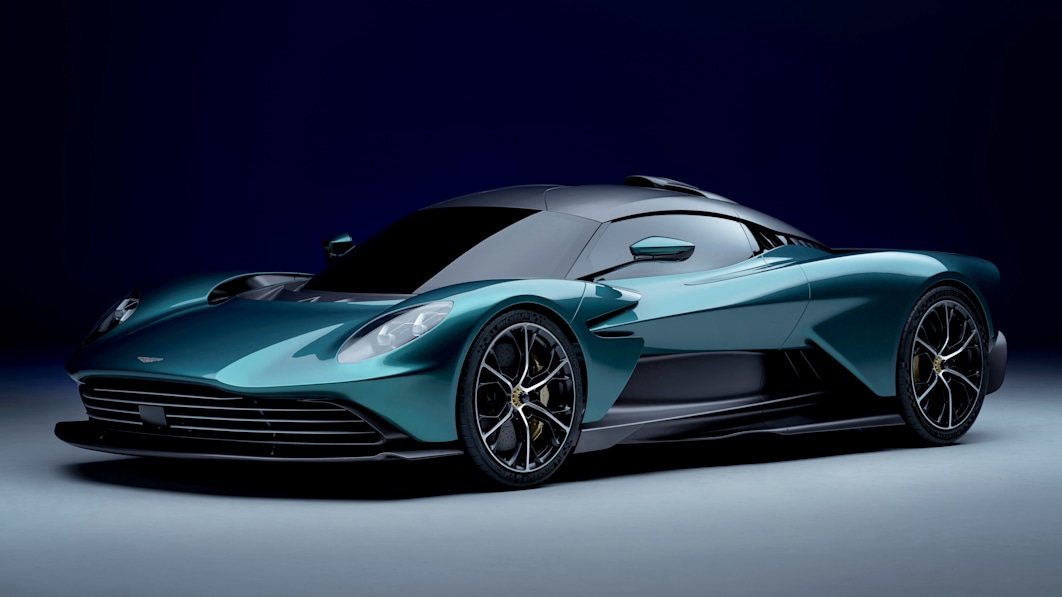
Aston Martin Valhalla is ready to Ragnarok with 937 plug-in horsepower

The Aston Martin Valhalla is here. The company’s first series-production, mid-engine monster packs 937 plug-in hybrid horsepower in a lightweight carbon fiber chassis. This 217-mph hypercar is expected to run a 6:30 lap around the Nürburgring Nordschleife.

Originally, the hopeful Ferrari killer was referred to as Project 003. It was later renamed Valhalla and was on track to make its debut with an in-house, 3.0-liter turbocharged V6 – the first engine Aston developed in-house since a 5.3-liter V8 entered production in 1969. After Daimler increased its stake in the British luxury builder in 2020, those plans went out the window. 

Rather than an in-house V6, the Valhalla will now be powered by a customized AMG Black series V8 plug-in hybrid powertrain. The twin-turbocharged, 4.0-liter flat-plane-öcrank V8 makes a respectable 740 horsepower all on its own. Two electric motors combine for an additional 201. That should add up to 941, not 937; we’re assuming a few stray horses drowned crossing the Great Sea of Unit Conversion. 

The engine and motors are paired to a unique eight-speed dual-clutch automatic gearbox that has no physical reverse gear. Instead, the electric motors are run the opposite direction to simulate a backward gear, saving both weight and complexity in the gearbox. This is mated to an advanced torque vectoring all-wheel drive system can send 100% of available electric power to either the front or rear axles.

Aston Martin says it will do 0-60 in just 2.5 seconds on the way to a 217 mph top speed. Around town, it can also cruise in electric-only mode for up to 9 miles up to a speed of 80 mph, but we suspect you’ll deplete the battery much more quickly than that if you floor it up to its top EV speed. 

“Preserving the essence of an exceptional concept car is vital when meeting the challenge of bringing it into production,” said CEO Tobias Moers. “With Valhalla not only have we stayed true to our commitment to build a world-beating supercar, but we have exceeded our original aims. The result is a pure driving machine — one which exists right at the cutting edge of performance and technology yet allows the driver to feel the emotion and thrill of complete connection and control.”

Its carbon fiber body construction makes it ultra-light (just 3,417 pounds, which is nothing for a PHEV) and super rigid. Its adaptive spring and damper suspension was developed with Multimatic, and like most modern supercars it offers adjustable ride height and a front-axle lift system for clearing troublesome obstacles. The aero was inspired by (and in some ways borrowed from) F1 and produces 600 kg (1,322 pounds) of downforce at 150 mph. 

While this may be a series-production model, don’t expect to see too many of them around town. In fact, we wouldn’t be surprised if they’re all already spoken for. Stay tuned for more details as Aston Martin ramps toward production and reveals more details about the Valhalla’s driving experience. 

Related video:

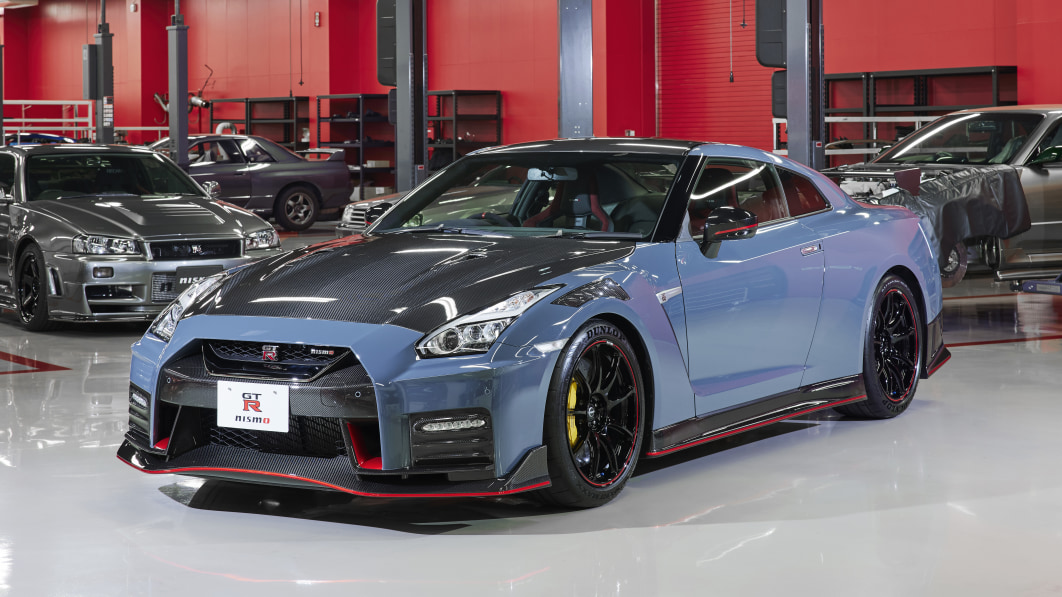
The next Nissan GT-R will reportedly be pure ICE

A new report coming out of Japan says that the Nissan GT-R will be a pure internal combustion engine model. That’s an unexpected turn, as it was widely believed that the current generation, called the R35, would be succeeded by an electrified R36 of some kind.

Instead, according to a Best Car report, the next GT-R will be a heavily reworked version of the R35. It’s a template many carmakers are turning to these days if they still want to offer a low-volume performance model at a reasonable price — see Subaru BRZ, Dodge Charger, Lexus IS, and Nissan’s own Z.

It had been reported that Kazutoshi Mizuno, the top engineer behind the GT-R, had been developing a mild hybrid version of Godzilla as the R36. However, Mizuno retired from Nissan, delaying that version’s progress. Still, the R35’s end-of-production date in 2022 was said to be a hard stop, so it seemed as if there would be a hiatus where the GT-R skipped at least one model year before the R36 was ready.

Now, according to Best Car, the R36 will continue as a pure gasoline-powered car, picking right up where the R35 leaves off in early 2023. There will be no gap in GT-R model years like the long absence between the R34 and R35.

The article also states that a gasoline-only GT-R might be made possible due to Nissan’s strong position in EV and e-Power hybrid sales. Fuel economy and emissions savings on those fronts can help balance the GT-R bringing down the average in fleet calculations.

Of course, if true, this doesn’t mean the R36 will stay gasoline-only for long, especially if the generation lasts as long as the R35. We can expect continuous improvements as Nissan has done with the current gen, and it’s not a long shot to assume electrification during its lifespan.

Related video:

Editors’ Picks June 2021 | Hyundai Tucson, Kia Sorento, McLaren 720S and more

A mix of crossovers and family cars were awarded Editors’ Picks status this month. Plus, we got into a Porsche and a McLaren that share in the accolades. We finally spent some quality time in the Kia Carnival, too, which was the only minivan missing from our minivan-heavy month of Editors’ Picks back in March. There were some near misses, with none closer than the updated Nissan Pathfinder.

In case you missed our previous couple Editors’ Picks posts, here’s a quick refresher on what’s going on here. We rate all the new cars we drive with a 1-10 score. Cars that are exemplary in their respective segments get Editors’ Pick status. Those are the ones we’d recommend to our friends, family and anybody who’s curious and asks the question. The list that you’ll find below consists of every car we rated in May that earned the honor of being an Editors’ Pick.

2022 Hyundai Tucson

Quick take: The new Tucson is a design marvel for the compact crossover segment, and its wide range of powertrains combined with big utility means it has the usefulness to be a great family car.

Score: 8

What it competes with: Honda CR-V, Toyota RAV4, Nissan Rogue, Mazda CX-5, Kia Sportage, Subaru Forester, VW Tiguan, Mitsubishi Outlander, Ford Escape, Chevrolet Equinox, GMC Terrain

Pros: Unique and attractive styling, wide range of powertrains, packed with tech

Cons: Thrashing base engine, lack of volume knob

From the editors:

Associate Editor Byron Hurd — “I was really impressed by my brief time behind the wheel of the new Tucson. It’s comfortable, quiet and (in hybrid form) surprisingly peppy and responsive. Hyundai really nailed the interior too. I smell a winner.”

In-depth analysis: 2022 Hyundai Tucson First Drive Review | A bold leap forward


2022 Kia Carnival

Quick take: This minivan wins big in the style and interior tech department. It’s super smooth and comfortable to drive, but the lack of powertrain options is disappointing. No matter, the numerous positives win out.

Score: 7.5

What it competes with: Chrysler Pacifica HybridChrysler PacificaToyota Sienna, Honda Odyssey

Pros: Superb design, luxurious interior, excellent tech and driver assistance features

Cons: No hybrid or AWD option, VIP seats clunky for family use

From the editors:

Road Test Editor Zac Palmer — “I and my friends had more fun in this minivan than any before, and that’s totally thanks to the epic, reclining VIP second row seats. This van is more than just fancy seats, though. It drives super smoothly, has top-notch tech and a design that has every other minivan beat.”

Senior Editor, Green John Beltz Snyder — “In the right trims, the Carnival looks really neat. It’s a great minivan for hauling people in comfort and — dare I say — luxury. Excellent driver assistance technology makes things easier on the pilot, too. The 3.5-liter V6 is a great engine, but the lack of a more economical offering and no available all-wheel drive feel like missed opportunities to appeal to more customers.”

In-depth analysis: 2022 Kia Carnival First Drive Review | The stylish one


2021 Kia Sorento

Quick take: The new Sorento is considerably more stylish than the last generation, and packed with the latest tech. A compact but usable third row provides practicality, and the more rugged X-Line versions add utility to this solid crossover.

Score: 7.5

What it competes with: Mazda CX-9, Toyota Highlander, Nissan Pathfinder, Subaru Ascent, GMC Acadia

Pros: Perky powertrains, attractive looks, high-tech interior

Cons: X-Line’s ride suffers, subpar interior materials quality

From the editors:

Senior Editor, Green John Beltz Snyder — “I spent hours wandering the snowy country backroads in this thing, enjoying the comfort and tech. When the roads dried up, the gutsy 2.5-liter turbo-four made running errands much more entertaining. I’ve already recommended this new Sorento to friends with kids for its space, safety and Kia’s excellent warranty.”

News Editor Joel Stocksdale — “That turbocharged 2.5-liter really is amazing with how much torque it produces, and how you don’t have to wait for the turbo to kick in. It’s also super stylish and gives you a lot for your money. I just wish it handled better and had a more composed ride.”

In-depth analysis: 2021 Kia Sorento Review | What’s new, price, hybrid fuel economy, pictures


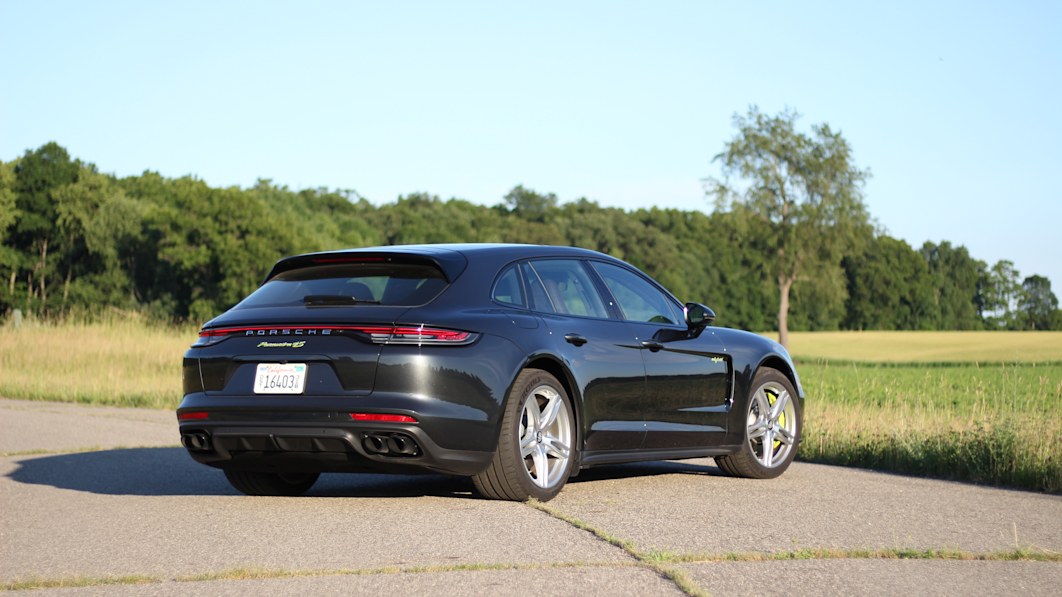
2021 Porsche Panamera

Quick take: The Panamera in virtually every form drives brilliantly, has a useful, pretty interior and features attractive styling. Its biggest downside is value, as many other luxury sedans and wagons are significantly cheaper in comparison.

Score: 7.5

What it competes with: Audi A7 (S7 and RS 7), BMW 8 Series Gran Coupe, Mercedes-AMG GT 4-Door, Maserati Quattroporte

Pros: A performance level for everyone, stellar handling, pretty wagon variant

Cons: Sedan has average looks, shockingly expensive, poor value with options

From the editors:

Road Test Editor Zac Palmer — “Another fantastic Porsche. Big surprise. Stuttgart can’t miss these days, and every version of the Panamera I’ve tried makes a great argument as the one to buy. Still, I’m partial to the Sport Turismo, because wagons rock.”

Associate Editor Byron Hurd — “It’s really hard to articulate just how much smaller the Panamera feels compared to other similarly sized sport sedans. More clinical than an AMG or BMW M, it’s amazingly buttoned down and rewarding to drive fast.”

News Editor Joel Stocksdale — “If it weren’t for the Panamera’s huge sticker prices, it would be just about the perfect all-around car, especially the plug-in hybrid ones. They offer staggering performance that’s accessible and fun, and will even let you tackle short commutes gas-free.”

In-depth analysis: 2021 Porsche Panamera Turbo S First Drive | S is for ‘spicy’


2021 McLaren 720S

Quick take: Even years after its debut, the 720S is still a performance masterpiece. We’d take it in either Coupe or Spider form. The handling, acceleration and drivability is difficult to beat, even compared to other fantastic supercars.

Score: 8

What it competes with: Ferrari F8 Tributo, Lamborghini Huracan Evo, Porsche 911 Turbo S, Audi R8 V10 Plus

Pros: Mind-melting acceleration, top-notch handling, proper supercar looks

Cons: Seat controls are annoying, poor infotainment system, lack of storage

From the editors:

Associate Editor Byron Hurd — “This is a 3,200 pound go-kart with Hellcat-level power and yet it’s a complete teddy bear in normal driving. The interior is a bit sparse but still charming in an Alfa Romeo 4C kind of way, and man does it move. One of the most impressive things I’ve ever experienced.”

Consumer Editor Jeremy Korzeniewski — “There’s no doubt that the McLaren 720S is the fastest car I’ve ever been handed the keys to for a days-long test on the open road. Its acceleration can only be described as brutal. Sure, its interior trim may not compare favorably with the likes of Ferrari and Lamborghini, but its engineering certainly does.”

In-depth analysis: McLaren 720S Spider First Drive Review | Absolutely corrupted by power


Related video:

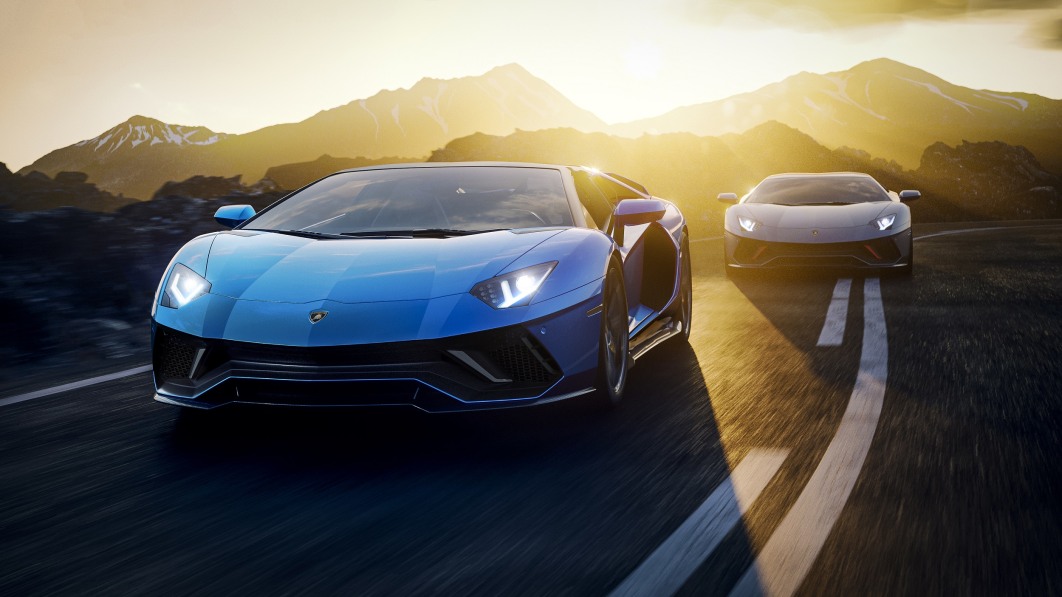
Lamborghini’s Aventador replacement will receive a new V12 engine

Lamborghini is about to close one of the longest and most significant chapters in its history.

It announced the Aventador Ultimae unveiled in July 2021 is the last non-electrified, V12-powered street-legal model it will build. The car’s successor, whose name hasn’t been revealed yet, will inaugurate a gasoline-electric hybrid powertrain built around a new V12 engine. Company boss Stephan Winkelmann filled us in on some of the details.

Sending off the non-electrified, V12-powered supercar is a big deal for Lamborghini, so a lot of time and resources went into increasing the engine’s output for the grand finale. It develops 770 horsepower at 8,500 rpm and 531 pound-feet of torque at 6,750 rpm, figures that eclipse both the Aventador S and the Aventador SVJ. Winkelmann told Autoblog that 770 horses was “the best possible power output we could get” out of the 6.5-liter engine.

It’s the end of the road for this V12, because the Aventador’s replacement will receive a new engine. Winkelmann said it’s too early to reveal specific details, like its displacement, but he stressed it’s not something we’ve seen before. And the hybrid system is notably not related to the technology that powered the limited-edition Sián.

“The technology is different, it’s a completely new engine, a completely new drivetrain, a new battery, everything is completely new. There’s nothing out of the Sián or out of the Aventador [in the next flagship],” he said.

Some things won’t change. Winkelmann cited carbon fiber construction, four-wheel-drive, active aerodynamic technology, and a four-wheel steering system as attributes from the Aventador that are worth keeping. And, adding a turbo (or two, or three, or four) to the new V12 was never considered — forced induction adds weight and puts unnecessary stress on an engine. Besides, the V12 has “horsepower en masse.” Natural aspiration is here to stay.

Regulatory hurdles are part of what’s driving Lamborghini towards electrification, so the Ultimae truly is the last of its kind. However, the non-electrified V12 could live on in some few-off models built for track use, like the Essenza SCV12.

“For homologated cars, it’s a no. For the others, we will see. It’s not planned so far, but there could be an opportunity,” Winkelmann replied when asked if future V12-powered race cars could eschew a hybrid system.

This is it, then. Lamborghini will build 600 units of the Aventador Ultimae, a number split 350-250 between coupes and roadsters. One will join the firm’s museum at its headquarters in Sant’Agata Bolognese, Italy, but officials haven’t decided how they will configure it, or which one they’ll keep. It won’t necessarily be the last Aventador. In the meantime, there are still build slots left if you want to add a slice of Lamborghini history to your collection.

Looking ahead, the Raging Bull isn’t out of ideas. Winkelmann told us its 2022 books are full of projects that need to reach production (either limited or series), so there’s a lot to come from the company in the next few years. 

“You have to always give the maximum to succeed in the market. The effort is never enough,” he said. “You have to start working when the others stop. This is one of the things that’s part of Lamborghini’s way of thinking.”

Related video:

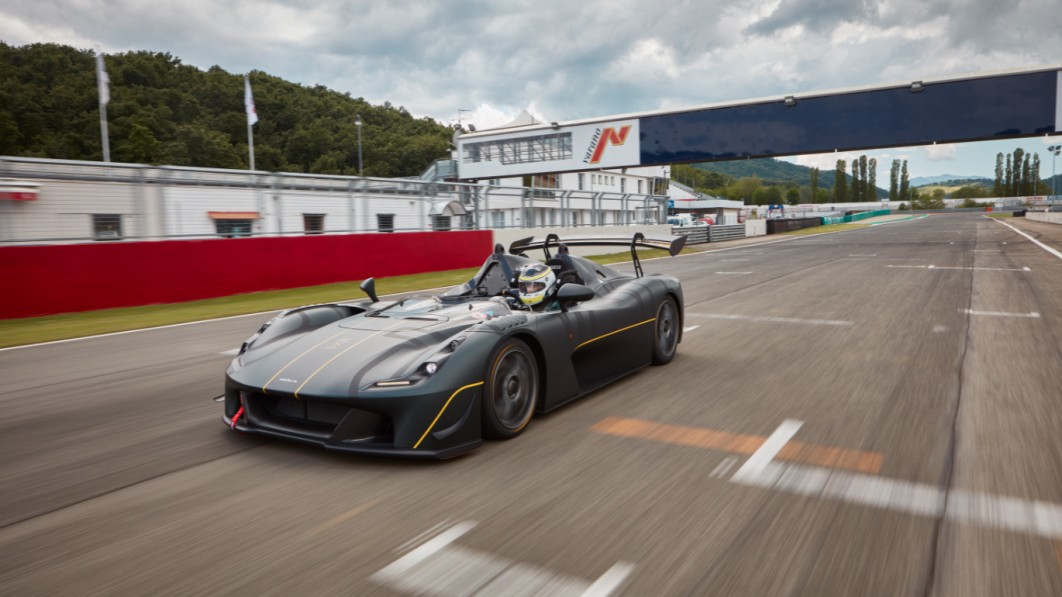
Dallara EXP is a track-only toy based on the Stradale road car

Dallara just revealed a new sports car, but this one is for the track, unlike the road-focused Stradale. It’s called the Dallara EXP, and it’s what happens when you remove all road-going intentions from the Stradale.

You can see that there is no roof, and there isn’t a windshield either. Its design is heavily modified with high downforce in mind. There’s still a little Stradale in there, but most of the bodywork is modified to make it stick to the ground through corners. Visually, we can see a massive rear wing, a totally new front end and an enormous diffuser among many other added elements. Dallara says it produces 2,756 pounds of downforce at its top speed of 178 mph.

The neat thing about this Stradale-to-EXP exterior turnabout is that the entire package is modular. You can transform the EXP into the Stradale and back again if you so choose. Buyers in the U.S. are better off just sticking with the EXP configuration, though, because the Stradale is not federalized. That means the EXP will be for track-use-only here.

The Ford 2.3-liter turbocharged four-cylinder is still being used as the power source, but it’s making significantly more power than it does in the Stradale. Output is raised to 492 horsepower and 516 pound-feet of torque, and the 0-62 mph time is now 3.2 seconds. Shifting is done via a six-speed sequential gearbox. Dallara claims a dry weight of only 1,962 pounds, the true key to making the EXP as good as it is.

And that’s all Dallara is saying for now. Dallara claims its car laps Mugello in Italy quicker than GT3 competition cars, so there’s no doubt it’s a serious performer. Pricing isn’t out yet, and timing isn’t either. For some perspective, though, the street Stradale sells for about $200,000 (approximate U.S. dollar equivalent) in the places where you can buy it.

Related video: