All posts in “Outdoors”

Outdoor Survival Experts Swear By This Weird, 42-Year-Old Product

Last year, Sea to Summit came out with a compact and clever frying pan for camping and expeditions called the Alpha Pan. The frying pan is made of aluminum and stainless steel, it has a non-stick coating, its handle folds down to save space inside a backpack, and, in its biggest, 10-inch-diameter size, it weighs 11.8 ounces — less than a can of beer.

When students arrive at the National Outdoor Leadership School, a leading wilderness school with branches all over the world, they receive a set of standard-issue gear to get them through courses that might have them living outdoors for three months, or more. They do not receive an Alpha Pan in that set of survival essentials; they get a Fry-Bake. (I should know; I’m a NOLS grad myself.)

A Fry-Bake is about a simple as cookware gets. It’s circular with tall, near-vertical walls and calls to mind a cast-iron skillet without a handle. It isn’t cast iron — it’s aluminum with an anodized, semi-non-stick hard coat surface — although it is inspired by those heavier pans, which used to be a common choice when going off-grid.

According to A Worthy Expedition: The History of NOLS, it was a 14-inch cast-iron skillet that Pam Banks hauled around Utah’s canyonlands during a family camping trip in 1977 that inspired her to create a new, lighter type of pan for outdoor cooking. Aided by her father, who worked in metal manufacturing, she got to to work designing one.

Early prototypes were too shallow, so they heightened the sidewalls. Banks tapped NOLS for feedback — to no surprise, she is both a former student and instructor — and even supplied early prototypes to its courses. Once she had a final design, she partnered with the school to make the first production run.

fry bake pan

Stanford Adventure Program

That was back in 1979, but the Banks Fry-Bake Company still makes the Fry-Bake pans like they used to, albeit in various sizes to suit different types of trips. Functioning as something of a cross between a skillet and a dutch oven, backcountry chefs can fry, steam, sauté and even bake in them. You can clean it out by scrubbing it with sand without worrying about destroying its cooking surface. In place of a handle, Banks Fry-Bake Co. sells a product called PotGripz, which is simply a pair of angled pliers.

NOLS still uses the pans, as it has since ’79. “NOLS considers the Fry-Bake essential because it’s lightweight, durable, easy to clean in the field, and the lid works really well for twiggy fires,” explains Kevin McGowan, retired NOLS Rocky Mountain Equipment Manager. There are a number of versions, including the small Alpine Pan, weighing in around 7 ounces, to the larger Expedition Pan that NOLS uses, which is closer to 19.

Size is important. “You can cook enough food for three hungry, hungry people in a Fry-Bake,” says Rich Brame, an instructor and director of alumni relations at NOLS. “Our philosophy is food is more than just fuel,” he continues. “You can get away with canned Vienna sausages for a weekend, but when you’re out for weeks, you really want and crave and need other culinary options.” (Brame also notes that in a pinch, you can use a Fry-Bake lid to shovel snow for a tent platform when camping in the mountains.)

The pan and the process of learning how to cook everything from pizza to cinnamon buns in it over a single gas burner — sometimes in the vestibule of a tent or beneath a tarp during a rainstorm — might even offer lessons of its own. That to make do with what’s at-hand can be a liberty, not a constraint. Or, perhaps more directly, that versatility and simplicity are essential in the wilderness, even if it means shouldering a few extra ounces in your backpack to get it.

LEARN MORE

This content is created and maintained by a third party, and imported onto this page to help users provide their email addresses. You may be able to find more information about this and similar content at piano.io

The 8 Best Camping Coffee Makers

A proper outdoor trip involves temporary abstinence from a lot of everyday habits — watching television, counting Instagram likes on your phone, checking email and so on. But abstaining from drinking coffee? Not happening. That feeling — a warmth that creeps over you as you stoke the campfire on a golden morning, sipping and listening — is simply too great to give up. And with one of these collapsible, packable, lightweight camping coffee makers, you won’t have to.

Best Overall

Courtesy

AeroPress Go

amazon.com

$31.95

The Aeropress is among the most portable full-on coffee systems ever, yet its flavor quality, according to career baristas all over the world, rivals that of cafe-grade coffee machines. There are certain patented reasons for that: a major one being that it imparts less carbon dioxide, leading to sweeter, less bitter coffee. The best part? The newer Go version packs down to the size of a mug, and you can use the case it comes in as a mug. That makes it the perfect coffee maker for camping, though be warned: everybody will want you to make them a cup.

Best French Press

Courtesy

GSI Outdoors Java Press

backcountry.com

$37.45

Quick, light and tough as a Nalgene bottle, GSI’s Java Press is a French press made for any outdoor adventure, from car camping to thousand-foot-high portaledge hanging. Wrapped around the five-cup carafe is a ballistic nylon sleeve, which keeps the coffee hot and the press impact-resistant. And when the pot’s empty, cleaning is a cinch — just a dump and a rinse, basically.

Best for Brewing over a Fire

Courtesy

Stanley Adventure Cool Grip Camp Percolator

stanley1913.com

$40.00

Brew coffee at camp just like the cowboys of old did, without getting nasty grounds in your mouth. Simply toss in a few scoops, add water, hang it over an open flame (for the full cowboy get-up, use a stick), and then, when the pot starts whistling, pop on the silicone grip and serve. It holds six cups, which makes it ideal for serving an group.

Best Pour-Over

Courtesy

Snow Peak Coffee Drip

backcountry.com

$29.95

Camping solo? A simple coffee drip is all you need — just make sure you know how to brew a pour-over. Snow Peak’s coffee drip is incredibly lightweight (4.9 ounces, lighter than the GPS watch on your wrist), and folds flat (like a bookmark for the adventure novel you brought with you).

Best Ultralight Coffee Maker

Courtesy

MiiR Pourigami

amazon.com

It doesn’t get more simple than Miir’s Pourigami. The collapsible pour-over is little bigger than a credit card — it’s made up of three flat pieces of powder-coated, medical-grade stainless steel that puzzle together thanks to strategically placed slots. The pieces extend enough to perch over your favorite camp mug for direct-to-cup brewing. The whole thing weighs roughly four ounces, and it’s easy to cram into any bag (even overpacked ones).

Best for Espresso

Courtesy

Handpresso Espresso Pump

handpresso.com

€82.50

Nature purists might shun anything that could rightfully be classified as a “gizmo.” Still, if the coffee that comes out of this pressurized espresso maker is good enough for Adrian Ballinger to bring it with him to climb K2 without oxygen, it’s worth its space at any campsite. The Handpresso uses a pump to build the pressure required for making espresso and works with ground coffee or unique pods. The entire brewing process takes less than a minute, so if you get saddled with the job of base camp barista, you won’t be working overtime.

Best Integrated Coffee Maker

Courtesy

Jetboil Flash Java Kit

rei.com

$119.95

The Jetboil system condenses the steps of the standard French press process — boiling water, dropping in grounds, pressing them down before the pour — into one. That means delicious coffee in five minutes or less (the Flash cooking system can get two cups of water boiling in 100 seconds), which is good for getting everybody caffeinated before breaking camp. The Flash Java Kit includes a coffee press and a sample roast from Green Mountain Coffee, but the stove will work for any drink or meal that calls for hot water, so this kit can also help you whip up dehydrated meals, soups, teas and cocoa.

Best Coffee Maker Alternative

Courtesy

Kuju Coffee Premium Single-Serve Pour Over Coffee

amazon.com

$21.99

Of course, you can also skip the extra weight of a coffee maker entirely, and you can do it without going the cowboy coffee route too. Kuju Coffee’s single-serve packs consist of a filter packed with premium, pre-ground beans. Rip off the top and extend the little paper arms over the edge of your cup and begin the pour-over routine. The used grounds are nicely contained for packing out too.

This content is created and maintained by a third party, and imported onto this page to help users provide their email addresses. You may be able to find more information about this and similar content at piano.io

The 7 Best Fixed Gear Bikes of 2021

If you seek cycling in its purest form, look no further than the fixed-gear bike. No gears, no freewheeling, and (sometimes) no brakes — just rider and bicycle completely synced. Pedal forward, the bike goes forward; pedal backward, the bike goes backward. This simple design dates back to the late 19th century but continues to enjoy a cult following in the bike world — and even pop culture, occasionally (we’re looking at you, Premium Rush). Indeed, the humble fixed gear remains a vital part of urban cycling, with track bike meccas like San Francisco and New York pushing the envelope and getting more and more riders on fixies.

While a fixed-gear isn’t the most common bike around, if you know what to look for — namely, a single cog in the back and endless pedaling — you’ll start to see them everywhere. You can catch athletes riding fixies on the track in the Summer Olympics, racing laps around a banked oval at speeds rarely seen on two wheels. You’ll see messenger bag-toting couriers marauding through city streets, weaving in and out of traffic to deliver parcels on time. There are clandestine alley cat races, sanctioned criteriums, off-road tracklocross races, skid competitions and trick contests all over the world that keep the fixie community thriving. Just look up the Red Hook Crit or Mission Crit or Tracklocross Nationals to see some of the craziest people on bikes doing their thing, and doing it fast.

But fixed-gear bicycles aren’t just for Olympic athletes, pro cyclists and psycho bike messengers. A fixie leaves no movement wasted — all of the power pressed to the pedals is transferred directly to the wheels. Thanks to this efficiency, fixies make for an exciting commuter or even a quad-burning training alternative to a normal road bike. Once you get the hang of it, they’re just plain fun. Of course, everyone is different and so is every fixed gear. Just like with bikes in other categories, it is important to determine what style of ride you’re looking for and what price point you want before buying. That’s what we’re here for — and here are the best fixies you can buy.

Best Overall Fixed Gear Bike

Courtesy

State Bicycle Co. 4130 Steel

statebicycle.com

$459.99

State has made its name with good-looking, durable builds and some of the coolest collabs in the industry, including NASA and Notorious B.I.G. When buying a State, you can spend a lot or a little, but when it comes to all-around excellence at a great price, look to the 4130 to meet your fixed-gear needs. It owes its name to the double-butted 4130 Chromoly steel used in the frame and takes its cues from race bikes without being overly aggressive.

The latest edition features internal cable routing and minimal branding for a clean, streamlined look, but what sets this bike, and many State bikes, apart is the ability to customize. You can fine-tune a number of components — including the handlebars, pedals and saddle — before you even order. Doing so ensures the bike is exactly how you want it right out of the box, saving you the headache of constant upgrading — though you’ll probably want to anyway.

Best Upgrade Fixed Gear Bike

Courtesy

All-City Big Block

allcitycycles.com

$1,199.00

Minneapolis-based All-City is one of the most fun bike brands around. It’s not uncommon to see #partybrand tagged on Instagram posts with an All-City in the frame. This mentality reflects the brand’s dedication to having a good time and making sure everyone feels worthy of a ride, no matter who they are and how they identify. But just because its people like to party does not mean they don’t understand quality — they make some of the best production steel frames you can buy.

One standout is the Big Block, the brand’s street-focused fixie. Its geometry is a little more relaxed than what you’d find on a track bike, making it more comfortable for long rides and more versatile for day-to-day use. Thanks to its hardy frame, you can feel comfortable adding a rack to the front or the back and drape any number of bags on the handlebars, under the top tube or under the saddle. It comes with a reliable Cane Creek 40 headset and features All-City’s excellent crankset, which is often used by cyclists who build up their own fixies from scratch.

Best Value Fixed Gear Bike

Courtesy

6KU Urban Track Fixed Gear Bike

citygrounds.com

$299.00

This shockingly affordable option takes its looks from the track and the street. The biggest difference from the other bikes here is that this one is made from aluminum as opposed to steel. This material not only saves weight — the 6KU weighs in at 18 to 22 pounds, depending on size — but it also allows for the frame shape to be more aggressive and sleek looking without necessarily being painful to ride.

This bike definitely takes things up a notch look-wise, too. The deep-walled wheels bring the bikes of the track to mind, but they aren’t so deep that you’ll be blowing in the wind. (Pro tip: when buying spare inner tubes, make sure to get extra-long valves.) The riser handlebars are also fitted with comfy Oury grips, which bring a retro vibe while still being incredibly modern and functional.

Best Belt Drive Fixed Gear Bike

Courtesy

Priority Bicycles Ace of Spades

prioritybicycles.com

$799.00

The Ace of Spades does something few fixies can: take the guesswork out of chain tension. See, chains stretch over time, causing a sag in tension and forcing you to fiddle with the wheel position from time to time; if it’s too loose, you lose that smooth power transfer that makes fixies so fast and fun. But instead of a chaine, this bike boasts something you’ll find on every Priority bike: a Gates Carbon Drive belt. It will never stretch (or rust, or break, or need lube) so you always have perfect tension and maximum energy return with every pedal stroke.

Another thing we love about the Ace is just how damn good it looks. Black almost always suits a steel frame and the white dip on the fork and seat and chainstays adds a nice touch. The 22-pound alloy/carbon fiber machine is also ready for a rack and panniers, which is not common with fixed gear bikes but an excellent upgrade whether you’re commuting or toting a picnic to the park. Note: you do need one more component — a 20t CDX Fixed Gear Sprocket ($80) — to ride this bike fixed, but in our experience it’s totally worth it.

Most Stylish Fixed Gear Bike

Courtesy

SE Lager

sebikes.com

$529.99

If you’ve been out riding around, odds are pretty high you’ve seen an SE Lager or two in your time. This bike is quite popular and not just because it is affordable. Historically a standout BMX brand, SE values undeniable style, and the Lager is no exception. The two colorways (black frame, blue wheels and blue frame, yellow wheels) manage to not look cheap, which tends to happen when a brand throws too much color on a bike.

Finish it off with some alloy cranks and brakes, a flip-flop hub and Freedom ThickSlick tires, and you’ve got a beautiful bike that rides like a dream. The complete Hi-Ten steel build comes in at 26 pounds, which isn’t light, but when you’re riding a fixie, weight doesn’t matter too much. The Lager is also weather-ready; it has fender mounts that will come in handy when things get wet.

Most Colorful Fixed Gear Bike

Courtesy

Retrospec Harper

retrospec.com

$299.99

If you want a wallet-friendly fixie that still looks great and rides easy, check out the Retrospec Harper. Made for cruising and commuting through the city, the Harper is as simple and low-maintenance as a fixie can get, but that doesn’t mean it is boring. The geometry is solid, and Retrospec eschews gaudy branding for an understated typeface that looks sharp on the steel tubing. Where the personality really comes through is in the colors, as there are nearly a dozen options.

Like many of the bikes here — but unlike a number of more focused fixies — the Harper comes with a flip-flop hub. There are two cogs in the back, one fixed and one freewheel, so you can choose between riding fixed or single-speed by just flipping the back wheel around. Switching out of fixed-gear mode can be a welcome respite for your legs and your mind, and it’s handy if a fixie-averse friend needs to borrow your ride.

Best Tracklocross Frame

Courtesy

Squid Bikes SO-EZ V2

squidbikes.com

$666.00

In Northern California, and all over the world, a select group of fixie enthusiasts prep their bikes for a cyclocross race like no other — Tracklocross. This kind of racing — which involves putting wide tires on a track bike and taking it off road — inspired our final pick here. This recommendation is different than the others because it is solely a frame, but for the more serious fixed gear rider, that makes it an exciting opportunity to build a bike that is 100 percent unique to you.

The SO-EZ from Sacramento-based Squid Bikes is one of the funkiest frames you can buy. It’s like a cyclocross course and a velodrome got together and made the perfect bike to conquer them both (but mostly the former). Loaded with Squid’s love for fixie culture and cyclocross racing, this frame is designed to be ridden fixed, and only fixed, but with big, knobby cyclocross tires that can go off-road. Even cooler? For an extra $136 you can choose between a number of styles and colors to have the frame and fork custom painted. This makes any SO-EZ a 1 of 1, the only of its kind.

These Awesome New Bikes and Accessories Prove No Price Is Wrong

High and lows. Lows and highs. Don’t know about you, but it seems like the past year has been packed with those two extremes. Of course there has been at least one constant: bikes are the best. Not only do they help us get away from life’s heavy moments but they’ve also been rolling into the fight for racial justice and social progress. So awesome.

On a lighter note, thinking about that gamut brought to mind another place we see a shockingly wide range: price points. So with our newest roundup of two-wheeled magic, we decided to showcase bikes from both ends of the spectrum and accessories along similar lines.

No matter your budget, you’re sure to find a few things that’ll help you traverse your next bike adventure’s own highs and lows — also known as hills and valleys — with confidence and style.

Bikes

Diamondback Metric 1

Courtesy

Diamondback Metric 1

This affordable urban explorer has the soul of a road bike but the spirit of a mountain bike. An aluminum frame and Shimano Acera 8-speed drive train keep it light (26.43 pounds) and lively, while a more upright, stable geometry and burly 35c tires let you jump curbs and navigate uneven ground.

Canyon Grizl CF SLX 8 Di2

Courtesy

Canyon Grizl CF SLX 8 Di2

Building on the success of its Grail series, Canyon just launched the versatile new Grizl gravel line. Highlights include seven frame sizes (and seven models — this one’s 2.09-pound frame makes it the priciest), beefy 45mm tires, numerous mounts and internal routing, so it’s easy to add a dropper post. The brand also teamed up with Apidura on some sweet bikepacking bags.

Retrospec Beaumont Rev City Electric Bike

Courtesy

Retrospec Beaumont Rev City Electric Bike

E-bike makers are getting ever more clever with their battery placement, and Retrospec just figured out a sneaky approach that’s affordable too. The new Rev City sandwiches the battery within the integrated rear rack. It’s a cleaner look that may make it easier to lug up and down stairs (for those used to stashing cargo in that area anyway).

Stromer ST2 S-Pedelec e-Bike

Courtesy

Stromer ST2 S-Pedelec e-Bike

The Swiss brand’s bikes are known for beautifully combining power, range, connectivity, comfort and safety. Its latest release boasts pedal assistance up to 28 miles per hour, 75 miles of range, a five-speed internal hub with twist shifters and a first-ever component for Stromer: in place of a chain, the stunningly smooth and low-maintenance Gates Carbon Drive.

Accessories

Smith Express MIPS

Courtesy

Smith Express MIPS

Led by Thousand’s Chapter and Specialized’s Align II, super safe, functional and good-looking urban bike helmets are blowing up lately. Smith’s latest offering drops in between those two on price point while packing 13 vents, a removable visor, an integrated rear light and the noggin-guarding feature they all have in common: MIPS.

Bionic Cycling Gloves

Courtesy

Bionic Cycling Gloves

We like the price, breathability and reflective accents. But what we love about these gloves is the patented Dream Pad. The extra cushioning on the palms is specifically designed to take pressure off the ulnar nerve. The pad reduces numbness, relaxes your grip and provides some built-in shock absorption so you can ride longer and stronger.

    Le Col Pro Air Jersey

    Courtesy

    Le Col Pro Air Jersey

    One of our highest-mileage in-house cyclists calls this luxe jersey “the best I’ve worn for humid days.” Which is another way of saying that when it gets steamy out, the ultra-light four-way stretch mesh fabric moves heat and moisture quickly off the body to keep you cool. Oh, those funky lines? Historic cycling climbs.

    MAAP x Suplest Edge+ Road Pro Shoe

    Courtesy

    MAAP x Suplest Edge+ Road Pro Shoe

    Nothing to see here. Just a high-end, 8-ounce collab packed with foot-friendly features. Standouts include a Carbonshield lining that eases pressure and boosts power transfer, a streamlined microfiber upper and rubber studs on the forefoot and heel that protect the carbon sole while helping you walk like a normal human.

    This content is created and maintained by a third party, and imported onto this page to help users provide their email addresses. You may be able to find more information about this and similar content at piano.io

How to Camp without a Tent (and Why You Should Try It)

When we think about camping, we tend to imagine a tent. It may be that simple, triangular archetype that we never glimpse at a campsite — though it is an emoji — but it’s a tent nonetheless. Camping and tents go hand-in-hand, or rather, stake-in-dirt. If this is how you envision camping, then it’s time to pull your head out of the ripstop nylon and realize that it’s wholly possible to camp without a tent.

Don’t trust us? Then trust Yvon Chouinard, the founder of Patagonia and a highly accomplished mountain climber. A 1998 New York Times profile includes an anecdote in which he and some friends take on British Columbia’s Mount Waddington without tents (or sleeping bags), choosing instead to bed down in a hollowed-out snow pit with nothing beyond waterproof shells for protection.

Then there’s a photograph of Chouinard in his book, Some Stories: Lessons from the Edge of Business and Sport, depicting a minimalist campsite in Grand Teton National Park during a trip in 1958. His setup is made up of what looks like a canvas tarp with an ice axe for support. The caption is a quote: “I didn’t own a tent until I was in my forties — and that’s not my sissy air mattress.” (There is indeed a vacant blue air pad in the foreground, presumably the photographer’s.)

You don’t have to be a self-proclaimed dirtbag to camp without a tent though, and it doesn’t have to be uncomfortable either. Chouinard’s whole schtick with tents was that they were heavy, and one could cover more distance without them. Recent advancements in outdoor equipment have made tents lighter and more packable, but the same is true of their alternatives, too.

Camp with a Tarp Instead

hyperlite echo 2 catenary cut tarp

Hyperlite Mountain Gear

The classic tent alternative is a tarp. And if you’re thinking of those noisy blue ones you can buy at the hardware store, think again. Today’s class of camping tarps offer the same straightforward construction — they’re usually rectangular and have reinforced loops or grommets spaced along the edges — but are made of the same ultralight fabrics as tents and pack down smaller to boot. Plus, they’re a lot more affordable.

There are endless ways to set up a tarp for camping (you can even just plop it on the ground as a waterproof barrier and unstuff your sleeping bag on top of it). The classic setup is the A-frame. To set one up, you have to create a taut central ridgeline either by using a rope or cord strung between opposing trees or, when none are available, by using a pair of trekking poles as supports. From here, you can stake the corners of the tarp directly into the ground or use more cord to lift them higher and create more space inside. There are plenty more configurations (check out REI’s guide for detailed step-by-step instructions on how to erect them).

Beyond the savings in weight and backpack space, camping with a tarp instead of a tent offers increased ventilation, views and versatility; you can set them up in some places that don’t suit tents. Cons include increased exposure to the elements and bugs and a less straightforward setup (you’ll get the hang of it quickly, though).

To camp with a tarp, you’ll want to make sure you have guylines, extra cord for a ridgeline, stakes and trekking poles in addition to the tarp itself. Many tarps come with some of these items.

Camp with a Hammock Instead

sea to summit pro hammock

Sea to Summit

Camping without a tent doesn’t always have to entail sleeping in the dirt, thanks to hammocks. Again, we’re not talking about the netted rope kind you might pitch in your yard; camping hammocks are made of ultralight, ripstop fabrics and often pack down to the size of a grapefruit.

Hammocks aren’t as versatile as tarps in that their setup requires anchors. These don’t always have to be trees, though — rocks and human-made structures work well if you aren’t in the woods. Hammocks are similar to tarps in that you aren’t confined to one way of sleeping in them, though, thanks to a variety of accessories; extra-long straps, insect nets, rain flys and underquilts can make hammock camping feasible in nearly any environment.

What’s an underquilt? It’s an insulated blanket that hammock campers sometimes attach to the exterior of a suspended hammock to protect from wind and cold. First timers will quickly learn that one of the cons to suspended sleeping is cold butt (unofficial term), which occurs because hammocks don’t provide any insulation. When your body compresses a sleeping bag’s fill against a hammock’s sidewalls, it loses its ability to hold warmth. An alternative to an underquilt, which can be expensive, is to bring your sleeping pad with you into the hammock for extra protection.

kammok hammock

Kammok

Other hammock camping accessories are more straightforward. Insect nets provide bug protection (some are integrated, some aren’t), while rain flys provide weather protection (tarps work for this too). Keep in mind that most camping hammocks don’t come with straps, which are sold separately in various lengths and widths.

The pros of hammock camping are tent-like protection from the ground and elements, particularly when kitted out with a full suite of accessories. The downsides are that when you add all these together, a hammock camping setup can be as expensive as a tent, and they aren’t appropriate for environments where anchor points are few or far between.

Skip the Shelter Altogether

The cowboys did it, Yvon Chouinard did it (though for different reasons), and you can too. There’s something about laying your camping pad and sleeping bag directly onto the ground — perhaps next to the waning glow of a campfire — that just feels pure. If what you want out of your wilderness trip is that perhaps-cliché yet very-real cleansed feeling of leaving civilization behind, this is the ultimate way to get it. There’s no extra gear necessary to camp without a tent in this manner, but maybe you want to consider a bug net. (And pray to your deity of choice that it doesn’t rain.)

This content is created and maintained by a third party, and imported onto this page to help users provide their email addresses. You may be able to find more information about this and similar content at piano.io

This Is the Ultimate Trail-Friendly Picnic Kit

Some of the best days of summer are spent off the grid. Escaping the buzz of work and city life and heading to a secluded lake with no cell service — that’s our idea of paradise. Although, the reality of having a picnic by the water, or hiking to the top of a viewpoint, or getting into the backcountry and off the beaten trail, is not always as idyllic as it sounds — the logistics of transporting everything you need to the site and keeping it all cold and fresh can be challenging to say the least. Well, this summer that concept got a whole lot easier. Hydro Flask just launched the ultimate trail-friendly cooler in the 20L Day Escape Soft Cooler Pack, which offers plenty of features to make your vantage point picnic one to remember. And to complement the 20 L Day Escape, we’ve curated the perfect picnic kit with everything else you need. Whether you want to hang at the lake, have lunch with a view or spend the day at the river, we have everything you need to escape to your favorite spot this summer.

Hydro Flask 20 L Day Escape™ Soft Cooler Pack

hydroflask

Gear Patrol Studios

hydroflask

Gear Patrol Studios

hydroflask

Gear Patrol Studios

hydroflask

Gear Patrol Studios

Logistically it’s not always easy to carry your favorite beverage, favorite snack and plenty to share to your favorite place — but the 20 L Day Escape Soft Cooler Pack from Hydro Flask changes that. Designed to take you further, this cooler is the ultimate companion for your adventures this summer. It’s made with lightweight and durable materials like a 600D polyester shell and a self-healing TRU® Zip watertight zipper, which simply slides to re-align if for some reason it separates during your excursion. It also offers 36-hour insulation while keeping the weight down, so you can take your picnic that extra mile to the quieter and more secluded lake. Plus, the welded seams and attached gear loops ensure that you won’t be halfway to the lake leaving a trail of your favorite IPA behind you. Prefer to carry the weight cross-body instead of with the attached backpack straps? No problem. The Day Escape is also available in an 18 L and 26 L tote with included cross-body straps, letting you size up or down depending on what you have planned. The Day Escape Soft Coolers offer multiple carry options for convenient hands-free carrying — you might not even notice you have it on you. Each cooler in the collection also offers fixed latch points for easily adding the new Hydro Flask Dry Storage. Plus the 20 L includes a side stretch pocket for stashing your Hydro Flask bottle within easy reach — you won’t need much else for your day on the trail.

Price: $150+

SHOP NOW

To Round Out The Kit

hydroflask

Gear Patrol Studios

NanoLoft Puffy Blanket by Rumpl $179

Chair One XL by Helinox $175

24 oz Lightweight Wide Mouth Trail Series Bottle by Hydro Flask $45

Boom 3 by Ultimate Ears $150

Pale Ale by Sierra Nevada $12

Gear Patrol Studios

What’s an Integral Pocket Knife? Here’s an Awesome New Example

While the most recent pocket knife innovations have introduced new shapes and materials to one of our oldest tools, the archetypal design hasn’t drastically changed. It’s why Opinel’s wood-handled folder remains one of the best affordable knives available a century after its inception and why new brands revive old patterns like the friction folder.

New types of knives do exist, though, and one to have on your radar is the integral.

Perhaps somewhat curiously, integral knives are characterized more by their handle than their blade. While most folding pocket knife handles consist of two scales secured together and just far enough apart to make a channel for the blade to rest in, integral handles are more or less one piece. There’s no backspacer because there aren’t two handle scales, and other hardware is limited too. The result is a sleek, uncluttered knife with fewer parts.

“Fewer parts equals less maintenance and lifelong durability,” says The James Brand’s Ryan Coulter. Part of the company’s purpose is to bring a modern, minimal and aesthetically concerned perspective to pocket knives and EDC, so it makes sense that its latest release is an integral called The Barnes.

The Barnes includes a titanium pocket clip and lanyard. 

Courtesy

The Barnes, in-hand.

Courtesy

As an integral knife, The Barnes’s handle is milled from a single piece of titanium, features a frame lock that includes a steel insert for longevity and includes a lanyard-equipped pocket clip. Made of Bohler M390 steel, which is commonly referred to as a “super steel,” its 3.5-inch drop-point blade is no slouch either.

Coulter says that The Barnes has been a two-year project for The James Brand due to the difficulty of making an integral knife at scale. The handle begins as a block of pure titanium about the size of a checkbook box and takes form through a lengthy (not to mention exacting and expensive) process of five-axis milling. It’s not dissimilar to how Apple makes the bodies of its Macbook Pros.

All the parts that make The James Brand’s first integral knife, including its single-piece titanium handle.

Courtesy

Few knife companies make integrals precisely because they’re so difficult and expensive to produce (Spyderco’s Paysan and Benchmade’s Anthem are two other examples). The history of integral knives is hazy, but it’s generally agreed upon that the design comes from the custom knifemaker world, not mass production. Coulter explains that it was partly about demonstrating the mastery of their craft and their skill at machining. “It started out as an exercise in ‘Can we pull this off?'” he says.

It should go without saying, then, that if you’re interested in acquiring an integral, prepare to shell out for one. Think of it along the same lines as the aforementioned Macbook Pro or a high-end road bike. Custom ones can go for thousands; The Barnes is $599 (and it comes in equally thoughtful packaging with a lanyard and custom coin for warding off age-old knife gifting superstitions).

Price: $599

SHOP NOW

This content is created and maintained by a third party, and imported onto this page to help users provide their email addresses. You may be able to find more information about this and similar content at piano.io

The Best New Knives and EDC of May 2021

You may have missed it, but there was a week back in April that we referred to unofficially within Gear Patrol as “knife week.” It’s sort of like Shark Week, except instead of airing fictional documentaries, we revamped loads of our coverage on knives — there were substantial updates to our guide to the best fixed-blade and bushcraft knives and our guide to knife blade shapes and new content on the best pocket knives available plus a discourse on so-called super steel.

Knife week is unofficially over, but the knife coverage keeps coming with our monthly blade bulletin. For May, we see a new mini model from Benchmade, a notable CRKT upgrade and more.

Buchanan-Smith’s Axe Handbook

buchanan smiths axe handbook

Courtesy

Buchanan-Smith calls it a handbook, but that designation only applies to the practical nature of the information inside; at over 200 pages, the project is a tome of axe lore. Fear not, however — there are plenty of gorgeous images and helpful illustrations interspersed amongst the pages.

Price: $21

SHOP NOW

Benchmade Mini Osborne

benchmade mini osborne

Courtesy

As part of a 20th-anniversary celebration of its Osborne design, Benchmade is introducing this pint-sized version of the popular folder. Whereas the original Osborne has a 3.4-inch blade, the Mini’s is 2.92, and total weight savings amount to nearly a full ounce. All the good stuff remains, including CPM-S30V steel, a reverse tanto blade, sliding lock, thumb stud and pocket clip. The Mini also includes titanium handle scales, a noteworthy upgrade over the aluminum featured in the full-size model.

Price: $175

SHOP NOW

WESN Samla

wesn samla

Courtesy

You don’t see many new friction folder pocket knives these days, though that’s the design WESN chose for its most compact EDC knife to date. Called the Samla, the non-locking pocket knife is available with titanium or rosewood handles and features a 2.45-inch sheepsfoot blade. WESN imagined this one for use outdoors, though it’s sleek enough to act as a daily driver too.

Price: $59+

SHOP NOW

CRKT CEO Blue

crkt ceo blue

Courtesy

In 2019, a panel of industry judges selected CRKT’s slim CEO as one of the best pocket knives of that year. Now the company is giving it a couple subtle upgrades. The more apparent one is a new blue handle made of canvas Micarta, but the more substantial change is a swap to CPM S35VN blade steel, a premium type that balances steel qualities.

Price: $135

SHOP NOW

Filson Bird & Trout Knife

filson bird and trout knife

Courtesy

Filson recently stocked its knife shop with new USA-made blades that feature classic Americana patterns. Among the new batch is this fixed blade, which Filson made for anglers and wing shooters in need of a sharp and corrosion-resistant tool that they can use in the field. It has a full-tang construction and Micarta handles, and it comes with a leather sheath.

Price: $115

SHOP NOW

Hydro Flask Flatware Set

hydro flask flatware set

Courtesy

The simplest way to wean yourself off plastic forks and knives is to ensure you always have a set of reusable ones in your bag. Hydro Flask released just the thing as part of its new outdoor kitchen collection — each utensil is made of 18/8 stainless steel and comes in a small pouch, though they also have circular cutouts that allow you to toss them onto a keychain too.

Price: $25

SHOP NOW

Craighill Offset Keyring

craighill offset keyring

Courtesy

Speaking of keychains, Craighill recently cooked up this minimalist belt hook. With a carabiner-inspired design, it’s made of stainless steel and features one compartment that locks closed for your keys and another that stays open for quick hooking and unhooking to a belt loop or key fob.

Price: $38

SHOP NOW

The James Brand The Midland

the james brand the midland

Courtesy

The James Brand also recently revealed its take on the belt loop keychain. The Midland is one piece of solid titanium that also places a hook atop a closed loop for safe key carry, but it also includes a bottle opener.

Price: $75

SHOP NOW

This content is created and maintained by a third party, and imported onto this page to help users provide their email addresses. You may be able to find more information about this and similar content at piano.io

5 Surprising Things You Didn’t Know a Swiss Army Knife Can Do

Welcome to Product Support, a column devoted to helping you get the most out of the stuff you already use.

Recently, Victorinox, the maker of the fabled Swiss Army Knife, unveiled a new version of the iconic pocket knife that can only be described as colossal — despite measuring 2.5 by 3.6 inches. Dubbed the Swiss Champ XXL, the tool packs a whopping 73 functions within the 15 tool layers sandwiched between its familiar red ABS handle scales.

It’s not even Victorinox’s biggest Swiss Army Knife, either. That distinction goes to the Swiss Champ XAVT, which has even more tools and includes a digital clock in its handle. Both pocket knives — though perhaps they’re multi-tools, or something else entirely — beg the question: why? What sort of tasks necessitates a pocket knife becoming a 12.5-ounce brick?

As you might’ve guessed, the answers are equally odd and specific.

Fish Scaler

Victorinox’s fish scaler tool looks like a three-ish-inch ruler with a curved, jagged edge. The ruler is short but can help you decide whether a fish is the right size to harvest, at which point you’ll employ the scaler. By rubbing that edge back and forth across the side of a fresh catch, you can remove its scales and prep it for the pan, all in the comfort of a minimal outdoor kitchen. (Some SAK enthusiasts also note that the edge is adept at carving pumpkins for Halloween.)

Hook Disgorger

At the tip of the fish scaler is a small, U-shaped tool called a hook disgorger. This one is also for anglers, who can use it to remove a hook from a fish without harming it.

Pruning Blade

Here’s a unique one that’s only available on a few Swiss Army Knife models, including both the Swiss Champ XXL and XAVT. The pruner is a small hawkbill blade, a type characterized by a cutting edge that curves downward. Historically, these types of knives have been used for pruning and foraging — consider that it looks like a small scythe — as well as jobs like cutting carpet.

Sewing Tool

Even many small Swiss Army Knives come with an awl — that blade-like tool with a hole in its side. The implement is a multi-tool in its own right with the ability to punch or widen holes in cloth, leather and aluminum. That little hole is used similarly to a needle for sewing (click here to read our guide on how to do it).

Pharmaceutical Spatula

The pharmaceutical spatula, a tool with a stem that widens into a broader, rounded tip, calls to mind a tiny pizza paddle and might be the most obscure Swiss Army Knife tool. You can use it to mix powders or creams and, supposedly, to count pills, though you can probably get that done without the help of a pocket tool. In fact, it’s hard to imagine needing this thing at all.

Price: $316

SHOP NOW

This content is created and maintained by a third party, and imported onto this page to help users provide their email addresses. You may be able to find more information about this and similar content at piano.io

How to Start Fly Fishing

Fly fishing is to fishing what road cycling is to biking, stick-shifting is to driving and using a straight razor is to shaving. It’s a sport that requires precision, poise and patience and grants those who practice it a lifetime of pursuit. It’s not easy, but it is incredibly rewarding.

Though easy to romanticize, fly fishing is also a practical method of fish catching. Many species of fish, especially trout, will only eat a carefully presented fly. That’s a big reason the discipline crossed the Atlantic from Britain in the late 19th century and became ubiquitous on U.S. rivers by the early 20th century.

According to the most recent statistics, nearly seven million Americans fling flies from Washington State to rural Maine to the Gulf of Mexico and just about everywhere in between. And that number is on the rise.

Ask a hundred anglers why they fly fish and you’ll get a hundred different answers. For some, simply casting a fly rod is an exercise in achieving a yoga-like flow state. For others, it’s a surgical technique that unlocks close encounters with some of the world’s most beautiful and exotic fish species.

Therein lies its poetry. Fly fishing is a living sport; with its origins in antiquity and its future being constantly reimagined by intrepid innovators, it is one of a handful of sports — like golf, skiing or soccer — that has changed so little yet come so far. Here’s what you need to know to get started.

1. Where to Go (and When)

Contrary to the imagery you typically see, you don’t have to be on the banks of a slow moving British chalk stream or in the seat of a drift boat out West. Fly fishing can be done in just about any body of water that holds fish. By employing different rod types and weights and a selection of species-specific flies, you can fly fish for anything from striped bass to carp, northern pike to tarpon, brook trout to salmon. However, the majority of fly fishing is done on streams or rivers for various species of trout.

While trout are present in most rivers and streams (that can support trout to begin with) year-round, you’ll have the most success catching them when the water temperatures range from the mid 40s to mid 60s Farenheit. For most US states, that means late spring and mid-autumn.

In summer months, tailwaters — rivers downstream of a dam — can continue to fish well, especially if the dam is a bottom-release dam. These structures release cold water from the bottom of the reservoir, keeping the water temperatures conducive to trout feeding regardless of season. Rivers like the White River in Arkansas, the Bighorn in Montana and the Farmington in Connecticut are treasured by anglers and produce record-challenging catches nearly every year.

fly fishing

Chandler Bondurant

Stillwater fishing on lakes and ponds can be incredibly fun and diverse. While one could fly fish for bass and pike with topwater lures when conditions are right, there are several times of the year when different species of trout are near the surface and will take dry flies or small nymphs.

Fly fishing in salt water can be challenging — ever present wind, blazing sun, choppy seas — but introduces exciting battles with powerful fish like tarpon, permit and bonefish. While saltwater wading is possible, most outings are done from a flats boat or small craft and require the knowledge of a local guide. For most, saltwater fly fishing provides much needed sun and warmth when lakes and rivers are frozen, and can become a lifelong pursuit in its own right.

Several outfitters and companies offer condition reports for the nation’s premier fisheries. Orvis, for one, provides interactive maps with detailed condition reports contributed by local Orvis-endorsed guide outfits. Most rivers are monitored by the USGS and will have flow and temperature gauges. These gauges provide real-time reports and historical data. Knowing flows and scheduled releases is crucially important when fishing tailwaters; a large release from a dam can make rivers unfishable and can even cause water levels to rise quickly, making wading dangerous. Apps such as the RiverApp can be set up to provide alerts and are handy tools for fishing on the go.

Other factors such as spawning activity, a hatch or migration of a significant food source can alter fish behavior and catchability. Therefore, working with a local fly shop, guide service or lodge is always the most reliable way to set yourself up for success on the water.

2. What You’ll Need

All told, you should be able to purchase a full beginner selection of gear for less than $350. Outfitters like Orvis and Bass Pro Shops make it easy to get everything you need in one location and often have experts on call for more specific questions. While there are many options that only get more nuanced with experience, a beginner package should include: a nine-foot, 5-weight rod with matching reel, a WF 5-weight floating line, two to three 3,4 or 5X leaders and a few spools of corresponding tippet. A small box of ‘universal’ flies would suffice in most North American waterways. Now, wtf does all that mean? Keep reading…

Rod

L.L. Bean Double L Fly Rod

llbean.com

$249.00

Fly fishing is often regarded as an expensive hobby, but it doesn’t have to be. Simple, solid rod, reel and line bundles can be purchased from L.L. Bean, Orvis and Bass Pro Shops at very reasonable prices. Rods and reels are broken down by weight, ranging from 1 to 12, and come in three action classes: fast, medium and slow action. While rods come in a range of lengths as well, a nine-foot rod is the most common and a suitable length for just about every freshwater consideration.

With this in mind, a five-weight, nine-foot, medium-action rod is the best all-around setup for trout, panfish and smaller bass. Stepping up to a six weight can be a good choice for beginners, especially if you’ll be targeting more bass than trout, as the added backbone will help deliver larger bass flies. Heavier weight rods — usually seven to nine weight — are more suitable for saltwater species, larger bass or pike and steelhead. An eight-weight, nine-foot fast-action rod is a good choice for those quarries.

Reel

Orvis Battenkill III Disc Drag Fly Fishing Reel

amazon.com

$169.00

Reels should match the rod weight, though many manufacturers specify a range of weights for reels. Reels can also come in a small or large arbor. The size of the arbor dictates how quickly you can retrieve slack line. A small arbor is adequate for most trout and bass whereas a large arbor is more suited to strong, aggressive fighters like bonefish, pike and steelhead.

Line

Rio Gold Fly Line

amazon.com

$84.87

As with reels, your line should match your rod weight. A line that is too light or too heavy will not load the rod correctly and limit your casting. Nowadays there are very specific line designs that cover cold and warm climates, different species, different casting types and bodies of water. Selecting a cold or warm water is really only important at the extremes; using a line designed for cold freshwater won’t flex properly in the heat of the Caribbean. There are floating and sinking lines. Sinking lines are necessary for getting deep and are most often used for lakes, deep saltwater or large, fast-moving rivers. They are broken down by weight and sink rate which is measured in inches per second (ips).

The most common line is a weight-forward floating line; this refers to the thicker section of line at the end that assists with casting. A WF floating line of the correct weight can be used for almost any type of fish and style of fishing. Orvis, Rio and Scientific Anglers are all good options for lines and make the process of pairing with and rod a reel intuitive. As always, consulting a local fly shop or guide is a great way of identifying the right type of setup to use.

Leaders and Tippet

Rio Powerflex Trout Leaders

amazon.com

$12.95

At the end of your line you’ll need a leader. Today, leaders are a single piece of extruded nylon that tapers from a thick butt section to a fine end. Leaders are also broken down by weight from 0x to 8X (the lower the number, the thicker the gauge of the leader) and come in a variety of lengths. For a five weight rod/reel setup with WF 5-weight floating line, a 5X nine-foot leader is best, though 3X and 4X leaders can be used for feistier fish. Meanwhile, 6X to 8X leaders are considered ultrafine and are best for small fish or more experienced anglers.

Rio Powerflex 5X Tippet Line

amazon.com

$9.98

Add a piece of tippet to the end of your leader. Tippet resembles standard fishing line and is affixed to the leader end in 8- to 12-inch sections. Tippet protects the end of the leader from being continuously snipped back when you change flies or get broken off. Like leaders, tippet is measured by gauge from 0X to 8X. Most often, your tippet material should match or be one gauge smaller than your leader. Thus, a 5X leader would pair best with 5 X or 6X tippet, a 4X leader with 4X or 5X tippet, etc. Using similar gauges will make your knots stronger and help with casting and presentation.

Leaders and tippet are the most consistent costs, as they wear out over time. Flies can also be lost or worn out, but you are able to reuse them indefinitely with some care and a bit of maintenance. For example, drying flies out after use will help prevent degradation of material and rusting of hooks.


Flies

Chandler Bondurant

Fly selection is heavily dependent on species, location, conditions and time of year. There are several ‘standard’ flies that cover a wide swath of variables, but consulting a local shop or guide is crucial for knowing what to use and when. Most fishing reports will include a rundown of ‘hot’ flies and hatch charts of the most commonly found insects for each month of the year.

Accessories

While purchasing the required fly fishing tackle will get you fishing, having a few basic accessories will prepare you for fully-fledged outings and, most importantly, catching fish. Gear like packs and vests, nets and garments are highly personal choices and will also need to be tailored to the type of fly fishing you intend to do. While a pair of comfortable shorts, flip flops and a lightweight sun shirt, sunglasses and a brimmed hat are just about all you need on a trip to the Florida Keys, other climates — and quarries — will necessitate a bit more.

Specialized equipment like waders, wading boots and rain gear can make some cost-conscious enthusiasts bristle, but there is a silver lining. Advancements in outdoors equipment as a whole have found their way to the fly shops, making it easier than ever to get quality technical gear that is designed for fly fishing for less. What’s more, most equipment will last for many seasons without needing replacement. At the very least, you should make sure you have a pack or vest to carry flies and additional tackle, a fish-friendly net, polarized sunglasses and an earth-tone hat.

As you dial in your fishing, so too will your gear needs and preferences evolve. Use this guide to get oriented to the best accessories and gear to get started. Fishing in colder climates? Check out this cold-weather checklist.

3. How to Cast

Casting is the most important part of a beginner fly fisher’s journey. An effective, accurate cast is essential to delivering your fly to the fish. If your cast is too short or too far from the fish, it will likely not spot and eat the fly. If your cast is too long or too close, the fish will spook or disappear altogether. Casting techniques differ with species, conditions and type of fly, but being able to put the fly exactly where you want it, the first time, is paramount to success. Whether you’re casting 20 feet or 60, the mechanics of a good cast adhere to the same central idea: a smooth acceleration of the rod to a stop.

A fly rod is a linear spring. An appropriately weighted line will bend the tip of the rod as you begin to cast. This is called loading. As you work out the line, the rod will load with more energy and transfer that energy to the line when you stop the rod on your final forward cast. But like riding a bike or shooting a basket, casting a fly rod is much easier done than described. Orvis hosts beginner fly fishing classes at various locations across the United States, which are highly recommended for a first timer.

flyfishing

Chandler Bondurant

Should you prefer self-learning, YouTube and other outlets are rife with casting videos, tips and tricks. One of the best ways to practice your cast is to take your fly rod to a yard, ballfield, park or any other grassy area free of trees and shrubs. Use a small bundle of yarn to simulate a fly (it’s much safer than a fly with a hook!) and set up a target. Start with a large target — think the size of a hula hoop — and work your way down until you can consistently hit a target with a 6- to 8-inch diameter.

Here are a few mechanical tips to keep in mind when you’re practicing:

10 o’clock to 12 o’clock

A good caster lets the rod do the work. To maximize the rod’s spring-loaded potential you should think of casting between 10 and 12 o’clock with a decisive acceleration between these two stops.

Stand up straight with your shoulders and hips square. Hold the rod in your hand and with your upper arm tight to your body, bend your elbow until the rod tip is directly out in front of you, keeping the rod and your forearm parallel to the ground. This is nine o’clock. With your upper arm stationary and your wrist locked, raise the tip of the rod until it is perpendicular to the ground. It should be pointing directly overhead. This is 12 o’clock.

Now, lower your forearm until it and the rod are at a 50-degree angle to the ground. This is 10 o’clock. As you cast, force yourself to stay within 10 and 12 o’clock, stopping briskly at each location. This is your casting window. Extending forward of 10 will cause the cast to go limp and tumble into a pile of line. Passing 12 will cause the line to drop behind you, hitting the ground (or whatever else) behind you, losing valuable energy.

As you get more confident and your accuracy improves, you can loosen your upper arm, hip and shoulders until your casting stroke feels light, natural and effortless.

Don’t break your wrist

One of the most common mistakes when fly casting is breaking your wrist on your back cast. It’s a terrible habit and can delay your casting development by years. To avoid it, grasp the handle of the rod with your thumb on top, pointed toward the tip of the rod. There should be a straight line from the tip of your rod through your hand and forearm to your elbow. As you cast, maintain this straight line. Breaking your wrist will cause your rod tip to move down behind you — well past 12 o’clock — and destroy your cast. It may feel awkward at first, but your cast will benefit from proper technique over time.

If you have trouble breaking your wrist, try one of two hacks. First, you can use a rubber band to hold the butt of the rod to the underside of your forearm, limiting your ability to bend your wrist as you cast. You can also rotate your grip on the rod so that your forefinger points down the rod instead of your thumb. Your extended forefinger will keep your wrist from bending backwards.

Go slow

Simply put, most beginners cast too fast and use too much force. A nine-foot rod can store and deploy a lot of energy and its tapered shape is very efficient at transferring that energy to the line. Practice casting as slow as possible at first, ensuring brisk stops at 10 and 12 o’clock. You’ll be amazed just how much energy the rod will generate. If you’re struggling with speed, remove the yarn from the end of your leader. Casting too quickly will result in the leader cracking like a whip. Slow down until the cracking stops.

Too much force on the rod will break a cast down quickly. Many beginners cast like they’re chopping wood. Think of your rod as a spoon full of whipped cream; a light flick is all you need to send it flying.

Pocket Knives Are Now Made of Super Steel, but What Is That?

With names like Vanax SuperClean, Elmax and M390, the current reality of knife steel seems to be mimicking science fiction. All three of these steel variants are colloquially known as “super steels,” a class whose roster includes only the highest quality metal available. The term has been around for decades and is becoming increasingly common, but what actually qualifies steel to earn “super” as a descriptor?

What Is Super Steel?

“There definitely is a performance difference — it’s quantifiable,” says Martin Mills, who manages Benchmade’s technology center. The knife industry judges steel based on traits like corrosion resistance, edge retention, ability to withstand sudden impact (called toughness) and wear resistance, among others.

“When people refer to super steels, it’s largely edge retention,” explains Mills, referring to a blade’s ability to maintain a sharp cutting edge through regular use. (Everlasting sharpness does seem like something out of a fantasy novel.) Another key quality is corrosion resistance, a metal’s immunity from rust and acidic degradation.

The thing is, knife steel traits are often inversely related. Such is often the case with edge retention and corrosion resistance; dialing one up results in the other’s expense. But some of the manufacturing processes resulting in today’s super steels subvert the tendency.

A very basic description of conventional casting is that a smith tosses a few different metals into a vessel, heats them until they melt into a liquid and combine, and pours that liquid into a mold for cooling. Voilá, a steel alloy.

It’s a centuries-old process; powder metallurgy, however, is not. The technology by which a machine extrudes liquid metal through a tiny nozzle and cools it rapidly with liquid or gas so that it hardens as a particle was only commercialized in the 1970s. It’s a far more fine-tuned process that allows metallurgists to adjust a steel’s element recipe — in ways that would cause it to fail if attempted through conventional casting.

last shift in a 500 year old iron cast company

Barcroft MediaGetty Images

Industrial innovations like powder metallurgy are what allow knife makers to create blades with maxed-out properties, and continuing advancements have given rise to super steel. Mills describes how some manufacturers are figuring out how to force nitrogen into steel by working with a furnace that sits in a pressure chamber similar to those that SCUBA divers are placed in if they get the bends.

“That requires another level of equipment and processing,” he says. But the result is steel that simultaneously amplifies what might otherwise be inversely related traits, like edge retention and corrosion resistance.

That said, “super steel” is by no means an official industry classification. For contrast, “stainless steel” is — a steel’s recipe must include roughly 11 percent chromium to earn that grade. There is no threshold of edge retention or corrosion resistance that qualifies steel for a super ranking, though brands marketing super steel knives often describe these traits with adjectives like “extreme” and “exceptional.”

Why Is Super Steel So Expensive?

As Mills describes, the advanced processes required to make steel that exhibits high and sometimes contradictory performance characteristics are far more involved than traditional methods. They’re more intensive and hands-on, and they call for investment in specialized equipment. Super steels also frequently include alloys that are rarer or more difficult to mine.

That investment is on the mill’s side of the equation, but working with super steel incurs costs too. Steel that exhibits excellent edge retention is also harder to grind, which forces knife makers who want to work with it to invest in new manufacturing processes, equipment and coatings.

All of these factors contribute to the price of high-end knife steel.

gerber fastball cleaver

Gerber

Should You Buy a Super Steel Pocket Knife?

When choosing what pocket knife to buy, think about what you want to use it for. Consider that a knife with a blade made of super steel will likely hold its edge for a noticeably long time, but it won’t be as straightforward to sharpen when it does eventually dull. You can still do it at home; you just might need to invest in new tools, like a diamond stone-equipped sharpener.

Those who are simply looking for a utility-first knife might be better off with something more affordable that will dull faster but remain easy to sharpen. You may also want to go that route if you are prone to losing knives — that pain is a lot easier to swallow when you’ve spent $30 rather than $150 or more.

Where Does Super Steel Go from Here?

Because super steel is a vague classification, the term is likely to stick around. It won’t always refer to the same types of steel, however. Mills offers nanotechnology as a potential frontier, imagining a process in which metallurgists go even smaller than powder, building their recipe atom by atom.

“Thirty years from now, what we are considering as super steel today is going to be average, run-of-the-mill stuff,” he says. “Who knows what’s going to be coming down the line?”

This content is created and maintained by a third party, and imported onto this page to help users provide their email addresses. You may be able to find more information about this and similar content at piano.io

Curious About Friction Folding Pocket Knives? This Is the One to Get

Before there were slide locks, liner locks and frame locks, there were friction folders. A friction folder is a type of knife with no lock at all; instead, it has an extended tang that protrudes from the handle when closed. Open, this section of metal sinks between the handles to hold the knife in its open position using, fittingly, friction. (Lay a thumb on top of the blade tang during use for even more non-locking leverage.)

Thanks to such a low-tech design, friction folders were among the first folding pocket knives known to man. Advancements in knife design have largely replaced them — even slip-joint knives, which are also non-locking but significantly sleeker, are more popular — but the EDC-focused brand WESN just revealed its contemporary take on the classic pattern, and it’s well worth checking out.

WESN imagined its friction folder, called the Samla, for hiking and general wilderness use. The company aimed to create a durable tool that can handle typical campsite chores along with meal prep. Other than the friction folding construction, the pocket knife features a 2.45-inch sheepsfoot blade made of Sandvik 14c28n steel and a choice between titanium or rosewood handles. (WESN describes it as lightweight, but doesn’t mention an exact ounce count.)

Open, the extended tang on WESN’s Samla is completely concealed.

Courtesy

A hallmark of friction folders is that they aren’t inherently sleek. The extended tang that characterizes the design will always jut out from the handle when the blade is closed. Nevertheless, WESN’s Samla proves that friction folders can attain a clean form factor that aligns with today’s minimal, everyday carry-focused pocket knife trend through its uncluttered design. The old-timey appeal is a bonus, but it also means this knife is legal anywhere that locking blades aren’t (like the United Kingdom).

WESN is currently funding the Samla on Kickstarter and has already reached its financing goal. Expected shipping is set for October 2021.

Price: $59+

SHOP NOW

This content is created and maintained by a third party, and imported onto this page to help users provide their email addresses. You may be able to find more information about this and similar content at piano.io

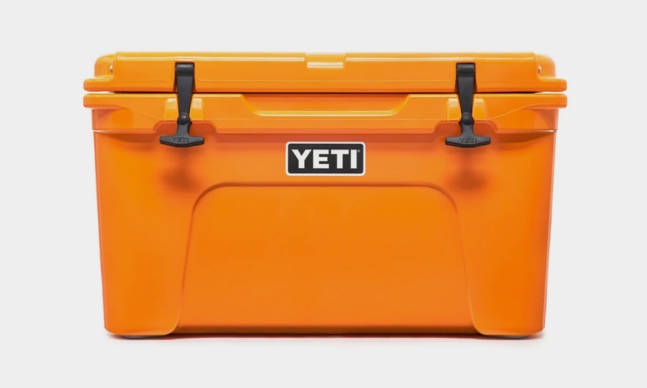
Yeti King Crab Orange Collection

The folks at Yeti just unveiled a new, limited-production colorway that pays homage to coastline and crustaceans of the northwest with its King Crab Orange Collection. The rich orange shells of the venerable (and tasty)…

The post Yeti King Crab Orange Collection first appeared on Cool Material.

Kuckoo Bruno Camping Trailers

If the COVID times have taught us anything, it’s that we really don’t need to be around other people other that much. What we really want is the warmth, relaxation and respite that only the…

The post Kuckoo Bruno Camping Trailers first appeared on Cool Material.

9 Bike Racks that Blend Seamlessly Into Your Home

This definitive guide to the best indoor bike racks for your house or apartment covers everything you need to know before storing your bike indoors. In it, we compare various indoor bike racks based on size, installation, sturdiness, capacity and price.

More Great Indoor Bike Racks

    Leaving a bike on a New York City sidewalk is like going for a swim in shark-infested South African waters; limbs are lost, spokes are shaken, nothing left but the bones. During idle hours, city bikes need a safe place to rest inside: enter the indoor bike rack. City dwellers are masters at making a square foot somehow larger, and they’ve come up with some creative ways to store bikes. Whether it’s standing in the corner, blending in with wall decor or just plain out of the way, the method comes down to you (and your wallet). These indoor racks will keep your bike dry and safe at night.

    Delta Cycle Michelangelo

    Courtesy

    delta Cycle Michelangelo Two-Bike Gravity Stand

    Delta Cycle amazon.com

    $53.00

    Best Leaning Bike Rack

    Delta Cycle’s Michelangelo rack may be on the bigger side, but it’s the only wall mounting indoor storage option that doesn’t require installation — no drills, no screws. Instead, the rack works with gravity, using the weight of the bikes to create a stable downward force that can support two horizontally hung bicycles. The Michelangelo is constructed with steel tubes and rubber bumpers that prevent any scuffs and scratches and can support up to 80 pounds of bike weight.

    Feedback Sports Velo Column

    Courtesy

    Feedback Sports Velo Column

    Feedback Sports amazon.com

    $178.50

    Best Freestanding Bike Rack

    Most indoor bike racks and stands involve drilling and mounting, but not the Velo Column. This freestanding bike stand, made of anodized aluminum with rubber-coated hooks, holds itself up like a spring-loaded curtain rod, and its rubber ends won’t damage the floor or ceiling. It saves on space by stacking two bikes vertically on top of each other. (You can buy extra arms to max it out to four bikes as long as their total weight doesn’t exceed 160 pounds.) Its smartest feature, though, is its disjointed cradle system, which allows you to adjust the height of each hook individually to accommodate bike frames of any shape.

    Park Tool Storage Hook

    Courtesy

    Park Tool Storage Hook

    Park Tool competitivecyclist.com

    $3.95

    Bust Budget Pick

    Indoor bike storage doesn’t have to be complicated. The simplest solution can be found at your local hardware store (or, in this case, on Amazon). It’s a standard rubber-coated hook that can be easily installed with nothing more than a drill, allowing you to hang your bike freely from the ceiling or against the support of a wall. The hooks come in different sizes, which means you can store road bikes, mountain bikes and everything in between — just be sure to buy the right size.

    CLUG Bike Clip

    Hornit

    Hornit Clug Bike Clip

    Hornit competitivecyclist.com

    $19.95

    Best Minimalist Bike Rack

    The CLUG is as minimal as it gets — it’s nothing more than a simple, polycarbonate C-shaped clip that allows you to balance almost any bike against a wall, vertically or horizontally. It should be noted that the CLUG has specific size requirements and it’s not a hanger — make sure to buy the right size and install it correctly based on the bike you’re storing.

    Ibera Horizontal Bike Wall Hanger

    Courtesy

    Ibera Horizontal Bike Wall Mount Hanger

    Ibera amazon.com

    $39.99

    $35.98 (10% off)

    Best Single-Bike Horizontal Rack

    The most straightforward and most affordable indoor bike storage solutions tend to position bikes vertically, not the Ibera Horizontal Wall Hanger, though, which identifies its distinction right in its name. It doesn’t so immediately reveal that you can adjust its padded cradles independently to accommodate bikes with angled top tubes or that its main support telescopes make room for wide handlebars. This rack does require installation on concrete, masonry or a stud and can support bikes up to 39.6 pounds.

    Saris The Boss Bike Stand

    Saris

    Saris The Boss Bike Stand

    Saris amazon.com

    $59.99

    Best Floor Stand

    Wall mounts, hangers and racks have many benefits, but if you’re looking for a more straightforward option that prioritizes accessibility and doesn’t require installation, then a classic bike stand is a good choice. The Boss is small and conveniently portable. It grabs and holds a bike’s rear axle with a rubber-coated fork that keeps enough pressure on the bike to keep it from toppling over, all while preventing scratches to the rim or damage to the spokes. The Boss also folds up when you aren’t using it to tuck it out of sight.

    Steadyrack Classic Bike Rack

    Steadyrack

    Steadyrack Bike Rack

    Steadyrack amazon.com

    $89.99

    $79.99 (11% off)

    Best for Storing Multiple Bikes On a Wall

    There are plenty of wall racks that use a tray-like system to cradle your bike and keep it off the ground, but Steadyrack does it best. The wall-mounting storage rack uses two arms to hold a bike’s front wheel in place while the rear sits in a small clip to keep it from swinging. The Steadyrack can also be swung from side to side nearly 180 degrees, allowing you to stack multiple bikes against each other and maximize available space. When not in use, the arms fold up on themselves to create a less obtrusive profile.

    CB2 Wood Bike Storage

    CB2

    CB2 Wood Bike Storage

    CB2 cb2.com

    $49.95

    Best Contemporary Bike Rack

    Bike racks have a tendency to either blend into the wall or stick out like a sore thumb. This wood bike rack from CB2 is a simple space saver with room for your bike, plus storage for cycling gloves, a water bottle and snacks — anything you don’t want to forget before you head out for that early morning ride. The rack only works with bikes that have straight top tubes, but it holds up to 40 pounds, thanks to solid, sustainable acacia wood. (You can totally impress your design friends with that knowledge.)

    Racor Bike Lift

    Racor

    Racor Bike Lift

    Racor amazon.com

    $40.00

    $29.68 (26% off)

    Best for Spaces with High Ceilings

    Wall mounts are great, but they require a bit of lifting and demand that the bike become a visual highlight in the arrangement of any room. Racor’s Bike Lift brings the bike to the ceiling, up and out of the way of your regular interior movements. The lift uses two simple hooks that grab a bike (up to 50 pounds) by the handlebars and saddle, and works with a rope and pulley system that can elevate your ride up to 12 feet. Excess rope secures to a separate wall cleat. Despite the Bike Lift’s simple components, it offers a unique way to free up space inside (if you have it).

Yeti Has a New Gear Collection, and It’s Inspired by Crabs

It’s always notable when Yeti adds something new to its growing collection of rugged gear — even when that new thing is simply a color. And leave it to a brand that counts barbecue pitmasters and ranchers among its roster of ambassadors to look to the people who have one of the most dangerous jobs in the world for hue inspiration. We’re talking about king crab fishermen, and the color orange.

Yeti calls the new shade “King Crab Orange” and has slapped it on a wide swath of products that includes water bottles, tumblers, mugs, can koozies, dog bowls and, of course, coolers. But not all of its coolers, mind you; Yeti kept the new orange to its smaller and most versatile ice chests, including the Tundra 45, the smaller Roadie 24 and the soft-sided Hopper M30.

Yeti also teamed up with Mike Jackson, a former king crab fisherman, to celebrate the launch. When a buoy inadvertently knocked Jackson into the Bering Sea 12 days into a shift, he gained a new perspective on just how dangerous his work was while pitching in the cold waves and hoping he didn’t get caught by his own boat’s propeller. He was rescued by the captain, who used a hook to pull him up the side. The experience led him to team up with his brother to found Grundéns USA, which makes protective clothing for fishermen.

Despite the harrowing experience, Jackson still harbors a love for the sea and for crabbing. In a video Yeti produced to celebrate the launch of the new color, he describes the thrill of pulling up a pot and finding a catch: “It’s a wonder when the pot starts to materialize out of the deep,” he says. “It doesn’t matter if it’s shrimp or crab, King Crab or Dungeness crab.”

He notes how it’s color contrasting with the blue of the water that signals a catch. Of course, he also notes, crabs don’t take on their bright orange shade until you cook them.

SHOP NOW

This content is created and maintained by a third party, and imported onto this page to help users provide their email addresses. You may be able to find more information about this and similar content at piano.io

The 10 Best Bushcraft Blades of 2021

This guide provides information on the ten top knives available for bushcraft and outdoor survival. In it, we break down each model based on key features like length, weight, materials, price and more. Keep scrolling past our picks to learn about what makes a knife good for bushcraft and what to consider when buying one.

More Great Bushcraft Knives

    The backcountry is seldom a forgiving place — weather changes in an instant, the terrain offers challenges unheard of in our modern lives. That’s why outdoor enthusiasts know the value of effective gear. A dry sleeping bag on a cold, wet night can mean the difference between waking up refreshed in the morning and… hypothermia.

    A good knife can be just as important. Whether you’re cleaning game in the field or cutting wood to build an impromptu shelter, a reliable knife can be the deciding factor that makes your job easier or keeps you alive. When you’re miles from the nearest road, the last thing you want to think about is if your knife is capable of performing its job. When it comes to your blade, you need to trust it’ll get the job done.

    Cold Steel SRK SK-5

    Courtesy

    Cold Steel SRK SK-5

    Cold Steel amazon.com

    $38.00

    Best Beginner Blade

    Cold Steel offers some of the best knives inspired by tactical uses. The SRK series is often used by Navy SEALS and tactical law enforcement personnel — but that doesn’t mean it isn’t a great first-time knife that anyone can rely on. Its carbon steel construction is tough and reliable, sacrificing neither quality or usability. The handle is robust, sturdy and easy to work with for beginners learning to handle a knife. Plus, at five ounces, it hardly weighs anything, so you can carry it all day and forget it’s there.

    Blade Length: 5 inches
    Blade Material: carbon steel with black Tuff-Ex finish
    Blade Type: plain edge, clip point
    Handle Material: Kray-Ex
    Weight: 5.1 ounces

    Ka-Bar Becker BK2 Companion

    Courtesy

    KA-BAR Becker BK2 Campanion

    KA-BAR amazon.com

    $123.54

    $89.79 (27% off)

    Upgrade Pick

    This is the big boy of the group, weighing in at a full pound. The BK2 Companion will hack the crap out of kindling and skin game with ease thanks to its 1095 Cro-Van carbon steel, which is infused with chrome/vanadium carbides for added strength and wear resistance. The black Grivory handle has front and rear guards for safety under hard use, and you can even remove the handle scales and use the full-tang blade as a spear attachment.

    Blade Length: 5.25 inches
    Blade Material: 1095 Cro-Van steel
    Blade Type: plain edge, drop point, flat grind
    Handle Material: Grivory
    Weight: 16 ounces

    Morakniv Companion

    Courtesy

    Morakniv Companion

    Morakniv amazon.com

    $19.99

    $16.49 (18% off)

    Best Budget Bushcraft Blade

    Don’t let the simple construction of the Morakniv Companion fool you — this is one capable blade that can prep meat for dinner or cut tinder for the campfire. It’s made of Swedish stainless steel for a sharp, durable tool that’ll resist rust in whatever outdoor environment you find yourself in. A TPE rubber handle is soft yet creates a lot of friction for a solid grip. It comes with a polymer sheath featuring a clip that can attach to a pack or belt. Best of all, it’s less than $20.

    Blade Length: 4.1 inches
    Blade Material: 12C27 stainless steel
    Blade Type: drop point, plain edge
    Handle Material: rubber
    Weight: 4.1 ounces

    Ontario Knife Company Journeyman

    Courtesy

    Ontario Journeyman

    Ontario Knife Company bladehq.com

    $39.65

    Best Military-Inspired Blade

    Reminiscent of a World War II-era pilot’s survival knife, this blade doesn’t just look the part — it does the job. The handle is leather-wrapped to offer superior grip even when your hands are grimy or wet. The blade is shorter and lighter than Ontario Knife Company’s pilot-specific Air Force Survival Knife, making it an easy blade to carry through the bush. It boasts a sheepsfoot blade with a serrated spine that’ll saw through whatever job you throw at it.

    Blade Length: 4 inches
    Blade Material: 55-57HRC high carbon steel
    Blade Type: sheepsfoot, serrated, plain
    Handle Material: leather
    Weight: 8.9 ounces

    CRKT Parascale

    Courtesy

    CRKT Parascale

    CRKT amazon.com

    $95.00

    Best Folding Bushcraft Knife

    Sometimes, the best blade is a folding one. Expert knife designer TJ Schwarz built a paracord-wrapped folding knife that enhances grip and functions like most folders you’ve come to know. Thanks to the CRKT’s Deadbolt locking mechanism, which employs steel bolts to lock the blade in place and one-button disengagement, the open blade is sturdy enough to take on rigorous bushcraft tasks. With roughly four feet of paracord attached, it’s a unique tool you can rely on miles from your vehicle.

    Blade Length: 3.19 inches
    Blade Material: D2 steel
    Blade Type: plain edge, drop point
    Handle Material: glass-reinforced nylon
    Weight: 5 ounces

    Jeo-Tec No. 18

    Courtesy

    JEO-TEC Nº18

    JEO-TEC amazon.com

    $109.95

    Best Wooden Handle

    Jeo-Tec produces knives for anglers, hunters and outdoor enthusiasts who need a sharp edge that’ll get the job done. Designers have taken great care to ensure their blades function under rough outdoor conditions, and the No 18 can handle them all. The blade is constructed of razor-sharp Sandvik steel for excellent performance and superior corrosion resistance. But this knife isn’t all about work — with an option for a handle wrapped in Cocobolo wood from Central America, it’s pretty enough for a display case too.

    Blade Length: 4.5 inches
    Blade Material: Sandvik 12c27 stainless steel
    Blade Type: plain edge, drop point
    Handle Material: micarta, cocobolo wood
    Weight: 14.1 ounces

    Fallkniven A1

    Courtesy

    Fallkniven A1

    Fallkniven amazon.com

    $314.95

    $177.58 (44% off)

    Best Craftsmanship Blade

    Some of the finest knives in the world come from Sweden, and the A1 is no exception. It surpasses international standards for security capabilities and strength, making it a beast in the backcountry. The full tang, laminated VG-10 steel blade can chop, cut and shave with the best of them. An option for a black coating made from CeraKote, a Teflon and ceramics paint used on military equipment, prevents reflection and corrosion.

    Blade Length: 6.3 inches
    Blade Material: VG-10 steel
    Blade Type: drop point, plain edge
    Handle Material: Kraton
    Weight: 11.3 ounces

    ESEE-5

    Courtesy

    ESEE 5

    ESEE amazon.com

    $141.10

    Best Tactical Blade

    Military SERE instructors designed the ESEE-5 as a downed pilot’s survival knife, so this tool is born to tackle gnarly situations. The ergonomic grip is made of micarta so that it’s durable and feels good in the hand for stabbing, cutting and slashing. The carbon steel blade is coated to prevent rusting, a must when you’re spending weeks exposed to the elements. In other words, you can rest easy knowing you can rely on this blade when you need it most.

    Blade Length: 5.25 inches
    Blade Material: 1095 carbon steel
    Blade Type: drop point, serrated, plain edge
    Handle Material: canvas Micarta
    Weight: 16 ounces

    Benchmade Leuku

    Courtesy

    Benchmade Leuku

    Benchmade bladehq.com

    $140.25

    Best Premium Bushcraft Knife

    To make a versatile, long-bladed bushcraft knife for a wide range of outdoor-oriented tasks, Benchmade found inspiration in the knives used by indigenous Scandinavians known as the Sámi people. The characteristics the Leuku pulls from those knives include its long, broad blade and a handle that’s super grippy, even when it’s wet. The Leuku’s blade is shorter than Sámi knives at 5.19 inches, and its handle is a synthetic material called Santoprene instead of birch, but it functions all the same and only weighs 5.3 ounces.

    Benchmade built the Leuku with a flat-grind, drop-point blade made of a newer steel type called CPM-3V. One of this steel’s characteristics is its high toughness, which describes a blade’s ability to withstand sudden impacts that might cause it to crack or chip — that makes the Leuku perfect for chopping and hacking. The steel also has high edge retention, so it’ll stay sharp longer too.

    Blade Length: 5.19 inches
    Blade Material: CPM-3V steel
    Blade Type: drop point, flat grind, plain edge
    Handle Material: Santoprene
    Weight: 5.31 ounces

    Buck Knives 119 Special

    Courtesy

    Buck Knives 119 Special

    Buck Knives amazon.com

    $85.00

    $59.99 (29% off)

    Best Large Blade

    The 119 Special is one behemoth of a knife that is as solid as it looks. It’s constructed of 420HC steel for a long-lasting edge and, at 10.5 inches in total length, can tackle just about any task you come across. But the knife won’t weigh you down — at only 7.5 ounces, it’s an easy carrier, even on your belt. And if the fact that Buck Knives has been constructing quality blades in the United States for more than 100 years doesn’t earn your trust, this bushcraft knife’s lifetime warranty will.

    Blade Length: 6 inches
    Blade Material: 420HC high carbon steel
    Blade Type: trailing point, plain edge
    Handle Material: Phenolic
    Weight: 7.5 ounces

    What Is a Bushcraft Knife?

    Bushcraft knives are often considered more generally as survival knives — they’re designed to handle a wide range of outdoor tasks like building a shelter, starting a fire with a Ferro rod and batoning (splitting wood with a knife and mallet or a stick used as a hammer).

    Bushcraft knives are almost always fixed-blade knives with long blades with a flat edge. (Short blades limit the thickness of the wood you can process with the knife, and serrated edges aren’t adept at the cutting and chopping tasks mentioned above.) Bushcraft knives typically also have a grippy handle, which, these days, means that most are made of synthetic material, though some still do use wood.

    What to Look for in a Bushcraft Knife

    When shopping for a bushcraft knife, you should first consider the core traits mentioned above; some knives are marketed as bushcraft knives even though they don’t meet all these traits. You should also consider what you plan to use the knife for — maybe you want a knife that you can use with a Ferro rod to start fires, but you don’t plan to do any batoning, in which case you can get by with a smaller knife that’s lighter and easier to pack. Here are some general considerations to keep in mind.

    Knife Construction: Look for a knife that has a full-tang construction. This means that the steel that makes the blade also runs through the handle to the butt of the knife. This makes for a heavier knife but a much more robust construction that will stand up to hammering and leveraging.

    Blade Steel Qualities: Not all steel is the same, and maximizing one trait typically happens to the detriment of another. Most bushcraft knives prioritize toughness, which is a measure of a blade’s ability to withstand sudden impacts and forces (think chopping). Toughness often relates inversely to edge retention, which is why many bushcraft knife blades use carbon steel, which is also easier to sharpen in the field. The downside to carbon steel is that it isn’t as resistant to corrosion as stainless steel. Again, there are always trade-offs, and it comes down to what you plan to use the knife for.

    To learn more about knife steel qualities, read our guide.

    Handle: Wood handles might impart a classic look, but they’re often not as grippy or lightweight as modern synthetic materials. Remember that a bushcraft knife is primarily a tool, and you need to be able to use it as such, sometimes for long periods, without it slipping in your hand. Don’t discount comfort either.

Apple’s New AirTags Are Perfect for Helping Keep Track of Your Outdoor Gear

Apple’s recent announcement of AirTags — tiny, item-tracking devices you can attach to anything you don’t want to lose — featured a video of a man literally spelunking into the depths of his couch to locate his keys. That’s likely the sort of mission upon which most people will deploy AirTags…but the video brought to mind another role for the trackers that a friend of mine posted to Instagram a few days earlier.

In it, security camera footage showed two unidentifiable men breaking into the locked storage compartment of her apartment building, where she kept her bike, skis and a pile of outdoor gear, and rolling it all away. There’s little to no hope she’ll get that thousands of dollars worth of equipment back, sadly. But I can’t help but wonder: if a few of those bins or items had Apple’s new homing beacons stuck to them, would those odds improve?

There are, of course, a mountain of potential applications for AirTags — indeed, a list that surpasses similar item-tracking gadgets like Tile simply because Apple inspires so many accessory makers to get creative. Apple’s site already lists AirTag holders that include keyrings and lanyards (along with a $449 leather one by Hermès); it’s easy to imagine connecting one of the $29 trackers to the key fob present on so many hiking, climbing and ski packs these days, not to mention the everyday ones we carry around town.

But third-party makers are already thinking more creatively about AirTag. Moment, a photography gear company, is offering pre-orders on strong adhesive mounts that promise to secure AirTags to multiple surfaces. With an all-black, low-profile construction, they’re far sleeker than the ones Apple’s currently selling too.

With these, you could stick trackers to the bottom of a bike seat, the top of a snowboard or the inside lid of a Yeti cooler. A stretchy mount that attaches onto fabric even opens up tracking for your rain jacket or a rugged duffel.

We can only expect AirTag mounts to proliferate over the coming weeks and months. But even if Moment’s discreet ones are still too tech-y for your outdoor ethos, you can always opt for a decidedly low-tech option: tape. No would-be bike thief will question a slightly bulgy electrical tape wrap on a top tube, and duct tape is a badge of honor when affixed to outerwear (at least in some circles).

At the very least, do Mother Earth a favor and slap one on your water bottle — they aren’t reusable if you keep losing them.

SHOP NOW

This content is created and maintained by a third party, and imported onto this page to help users provide their email addresses. You may be able to find more information about this and similar content at piano.io

Gear Up for Camping Season With Backcountry

Camping season is here and if, like us, you are counting down the days to your next outdoor adventure, check out the spring gear from Backcountry. Whether you are a first-timer or you’re in need of a serious upgrade to your current gear, Backcountry has you covered. If you are looking for a roomy solo or cozy two-person tent, the Kelty Dirt Motel Tent is a solid choice. If you are looking for the ultimate chair to circle up around the campfire, look no further than Helinox’s lightweight and portable Chair One. Most importantly, to keep your end-of-day IPAs cold, look no further than the Yeti Roadie Cooler. For all these and much more, check out what Backcountry has to offer.

SHOP NOW

This content is created and maintained by a third party, and imported onto this page to help users provide their email addresses. You may be able to find more information about this and similar content at piano.io

The 9 Best Fixed-Blade Knives Available

This guide provides information on the nine top fixed blades for a variety of activities and applications. In it, we break down each model based on key features like length, weight, materials, price and more.

More Great Fixed-Blade Knives

    On September 19, 1827, a fight broke out on a Mississippi River sandbar. What started as a formal duel between two notable Louisiana families ended in a skirmish in which Jim Bowie, originally just a supporter on the sidelines, was shot and stabbed before drawing out a large knife and killing a man named Norris Wright. Bowie survived his injuries, took up the knife as his trademark weapon and became an American folk hero.

    The fixed-blade knife has been steeped in hyperbole ever since. Large blades loom massive in pop culture — Rambo’s massive serrated spine knife and Crocodile Dundee’s giant clip-point are two notable examples. Such slabs of steel present a satisfying flash in front of a camera lens but don’t offer more in the way of utility. In fact, their unwieldiness probably makes them less adept at performing the simple, everyday tasks that a fixed blade is most commonly used for.

    When used to its best purpose, a knife is a multipurpose tool. (Who really wants to be in a knife fight anyway? Bowie barely survived his first one). A sharp blade is near limitless in its functions, from filleting a freshly caught fish to making an emergency repair on a ripped tent.

    Gerber Terracraft

    Courtesy

    Gerber Terracraft

    Gerber gerbergear.com

    $150.00

    Best Overall

    The Terracraft debuted Gerber’s Reserve program, which consists of limited runs of pocket knives that are made in the USA with high-grade materials. It’s a fitting blade to kick off the program, given that it calls to mind classic American hunting and outdoor knives despite its modern materials, colors and angles. Its four-inch, drop-point blade is incredibly versatile in a wide range of scenarios but its looks aren’t explicitly survival- or tactically oriented.

    On its face, the Terracraft is expensive at $150, but that price is actually quite reasonable considering it uses high-grade S30V steel that balances knife steel properties better than any $50 blade can, and will hold up to years of heavy use (Gerber also backs it up with a limited lifetime warranty). If you don’t want to spend that much, the best option is to go with our budget pick knowing that you’ll likely have to replace it.

    Overall Length: 9.1 inches
    Blade Length: 4 inches
    Blade Material: S30V steel
    Blade Type: drop point
    Handle Material: Micarta
    Weight: 6.4 ounces

    The James Brand Hell Gap

    Courtesy

    The James Brand Hell Gap

    The James Brand bladehq.com

    $275.00

    Best Fixed Blade for Camping

    The Hell Gap isn’t only one of our top choices for a fixed-blade knife, it’s one of the 10 best outdoor products to come out in 2019. At 7.8 inches with a 3.8-inch drop-point, full-tang blade, it’s the perfect length, maintaining just the right amount of edge and belly for any campsite task, from cutting cord to slicing veggies. It’s neither tactical nor survival-oriented, but some combination of both (plus a dash of kitchen knife), and its Crucible S35VN steel offers better toughness (resistance to chipping) than the Terracraft’s S30V steel.

    Overall Length: 7.8 inches
    Blade Length: 3.8 inches
    Blade Material: Crucible S35VN steel
    Blade Type: drop point
    Handle Material: Micarta
    Weight: 3.1 ounces

    Morakniv Companion

    Courtesy

    Morakniv Companion

    Morakniv amazon.com

    $18.57

    Best Budget Fixed Blade

    Typically, a price tag as low as $20 is a red flag and a marker of equally low quality. But somehow Morakniv manages to eke by with a budget blade that holds its own. The Companion is as basic as a fixed-blade knife gets, but for many, that’s wholly adequate. It has a 12C27 stainless steel blade that’s highly resistant to corrosion and wear, which is ideal for new knife users who don’t want to fuss over maintenance. Quality is hard to come by at this price, which is why the Companion also cracked our list of the best bushcraft knives.

    Overall Length: 8.75 inches
    Blade Length: 4.1 inches
    Blade Material: 12C27 stainless steel
    Blade Type: drop point
    Handle Material: rubber
    Weight: 4.1 ounces

    Craighill Desk Knife

    Courtesy

    Craighill Desk Knife

    Craighill craighill.co

    $70.00

    Best Fixed Blade for Your Desk

    Craighill’s Desk Knife’s most apparent differentiator is that it’s a solid hunk of metal — no rubber or wood handle here. But that’s what makes it perfect for your desk — its form is tasteful instead of tactical; it’s not far off from a letter opener except in that it’s sharp enough to handle more than paper. The sharpened portion of the Desk Knife is only an inch or so long, but that’s plenty for routine office jobs like opening packages. In addition to the stainless steel pictured here, the Desk Knife is available in black ($75) and solid brass ($85).

    Overall Length: 5.25 inches
    Blade Material: stainless steel or brass
    Blade Type: utility
    Handle Material: stainless steel or brass
    Weight: 4.5 ounces

    Benchmade Hidden Canyon

    Courtesy

    Benchmade Hidden Canyon

    Benchmade bladehq.com

    $195.50

    Best Small Fixed Blade

    With a construction that emphasizes strength over pocketability, fixed-blade knives tend to be on the larger side of the spectrum. But you can still find models that strike that optimal balance between utility and portability, like Benchmade’s Hidden Canyon. The knife is 6.3 inches long with a 2.67-inch blade and weighs just over three ounces, but it’s still large enough to be comfy in hand during use, thanks to an oversized guard that blends into the grip. What’s more, the Hidden Canyon uses premium-grade materials, including CPM-S30V stainless steel and either a G10 or Dymondwood handle.

    Overall Length: 6.32 inches
    Blade Length: 2.67 inches
    Blade Material: CPM-S30V steel
    Blade Type: drop point
    Handle Material: G10 or Dymondwood
    Weight: 3.53 ounces (G10), 3.19 ounces (Dymondwood)

    Ka-Bar Becker BK2 Companion

    Courtesy

    KA-BAR Becker BK2 Campanion

    KA-BAR amazon.com

    $123.54

    $89.79 (27% off)

    Best Bushcraft Fixed Blade

    Ka-Bar’s Becker BK2 Companion tops our list of the best bushcraft blades through strength. It’s a workhorse of a knife, with a blade large and strong enough to take care of firewood processing and shelter construction. Its steel is 1095 Cro-Van, a carbon variant infused with chrome and vanadium carbides that help bolster its resistance to inevitable wear and tear. This knife isn’t all brawn though; its drop-point blade shape can take on tasks that require more finesse too.

    Overall Length: 10.5 inches
    Blade Length: 5.25 inches
    Blade Material: 1095 Cro-Van steel
    Blade Type: drop point
    Handle Material: Grivory
    Weight: 16 ounces

    CRKT Minimalist

    Courtesy

    CRKT Minimalist

    CRKT amazon.com

    $39.15

    Best Neck Knife

    Neck knives are, as their name implies, knives that you wear around your neck with a piece of cord or chain. The benefits of doing so are quick access and discretion, among many others. Neck knives are almost always fixed blades and are typically very minimal, as is this aptly named model from CRKT. It comes with colorful polished resin handles and is available in a variety of blade shapes including a mini Bowie, cleaver, tanto, drop point and more.

    Overall Length: 5.13 inches
    Blade Length: 2.13 inches
    Blade Material: 5Cr15MoV
    Blade Type: clip point (others available)
    Handle Material: polished resin-infused fiber
    Weight: 1.6 ounces

    Helle Utvær

    Courtesy

    Helle Utvaer

    Helle amazon.com

    $224.00

    Best Wood Handle Fixed Blade

    Norwegian brothers Steinar and Sigmund Helle founded their forge on a straightforward yet oft-ignored concept in the age of large-scale production: “Quality craftsmanship is best preserved by quality craftsmen.” That idea holds for Helle to this day and is displayed in the four-inch Utvær. The company named the knife after the group of islands where Norway meets the North Sea and constructed it with a Sandvik 12C27 stainless steel blade and a gorgeous curly-birch handle.

    Overall Length: 8.25 inches
    Blade Length: 4 inches
    Blade Material: Sandvik 12C27 stainless steel
    Blade Type: drop point
    Handle Material: curly birch
    Weight: 5.64 ounces

    Bubba Multi-Flex Interchangeable Set

    Courtesy

    Bubba Multi-Flex Interchangeable Blade

    Bubba amazon.com

    $89.86

    $79.07 (12% off)

    Best Fixed Blade for Fishing

    The Bubba version of preparedness on the water is a knife that comes with four blades instead of one. The interchangeable system includes seven-, eight- and nine-inch blades that offer a variety of stiffnesses, shapes and edge types. All of them are full-tang and lock securely into the handle with an easy-to-use system that’s bolstered by a magnetic insert. The handle becomes the core of this knife and provides plenty of utility with its grippy construction and a shape that includes oversized guards and a trigger-style finger hold.

    Overall Length: 13-15 inches
    Blade Length: 7-9 inches
    Blade Material: titanium-nitride-coated steel
    Blade Type: fillet
    Handle Material: non-slip synthetic
    Weight: varies by blade