Honda’s New Classic Restoration Program Makes Performance Top of Mind
Tyler Duffy
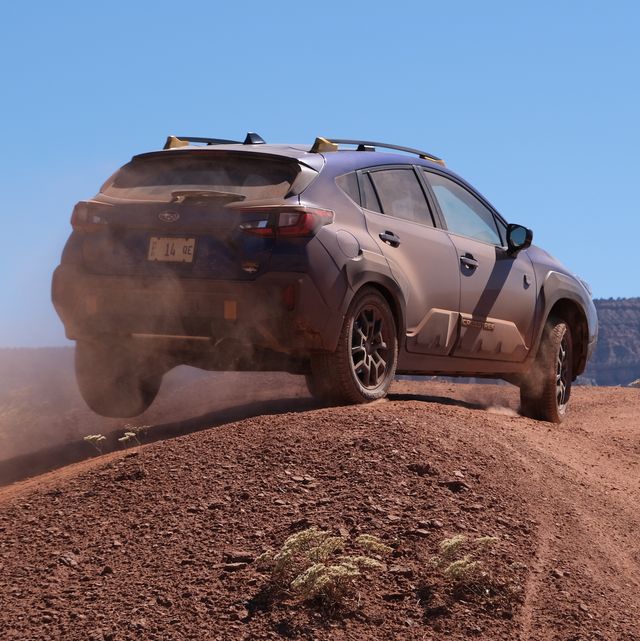
The crossover is the result of a simple formula. Use a unibody car platform, to keep the vehicle light and relatively well-handling compared to a Jeep Wrangler, but add of the ride height and off-road capability people like from conventional SUVs. Boom — sales success.
The fad started late in the 20th Century with early progenitors like the Jeep Cherokee XJ and Subaru Outback, and it swiftly became a phenomenon, subsuming much of the rest of the car market. Crossovers made up nearly 48 percent of vehicle sales in 2023; 14 of the top 20 bestselling non-trucks in America in 2023 were crossovers. Want more proof of the category’s dominance? Here in 2024, the Ford Motor Company — maker of iconic cars like the Taurus, the Focus, the Lincoln Town Car, the Gran Torino, and so many more — only sells a single non-crossover, non-SUV and non-truck vehicle in the U.S. — the Mustang.
And because crossovers are both what people want and what the market is selling, when we provide our best car buying advice in real life … it’s often best crossover-buying advice. To simplify matters, we’ve pulled together this list of the best crossovers you can buy in 2024.
Advertisement – Continue Reading Below
Advertisement – Continue Reading Below
When I got into motorcycling at a relatively advanced age — for motorcycling, anyway — the biggest inspiration for the first and only bike I ever bought was the late, great Steve McQueen. With visions of The Great Escape dancing in my head, I had no choice but to snag a gently used, classic-looking Triumph cafe racer.
While I have alternately loved and hated my 2014 Bonneville T-100 over the past six years, I’ve never dreamt of riding a sport bike. Yet, when the opportunity arose to test-ride one — on a race track no less — I couldn’t resist.
What follows is a rather unique review: field notes from the first two days I ever spent on a proverbial crotch rocket, learning pro-level technique as a student at the Yamaha Champions Riding School. I guess viewing my riding through the Steve McQueen lens is fitting; dude loved to race, after all.
Yamaha Champions Racing School
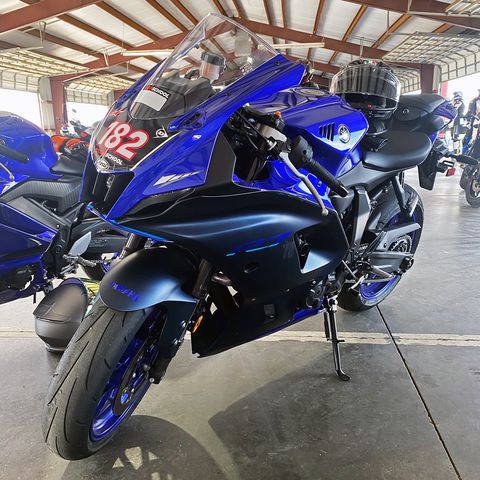
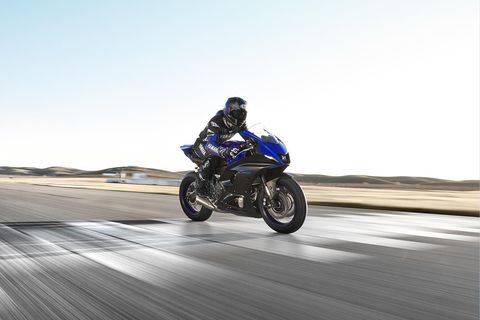
Not brand-new. It rolled out in the latter half of last year. Nonetheless, I was stoked to put it to the ultimate test: two days of tight turns on the track at New Jersey Motorsports Park.
Steve Mazzucchi
Steve Mazzucchi
The R7 plate has a bit of history: the original R7 appeared in 1999, just 500 units created to compete in endurance races such as the Superbike World Championship and Suzuka 8 Hours. Super Streetbikes once listed it as one of “The 10 Most Exotic Bikes Ever,” but in reality, it proved to be kind of a cruddy, underpowered race bike.
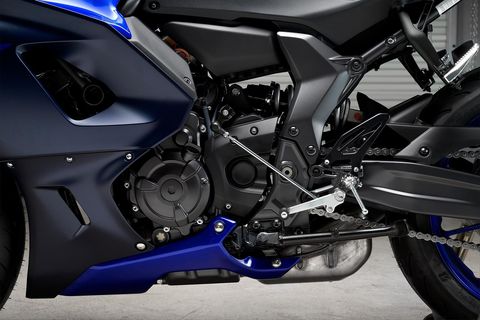
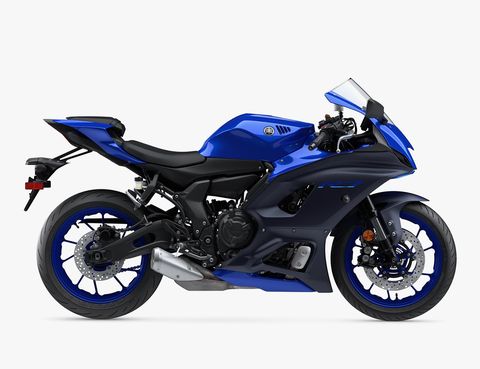
The new R7 has a different focus: it’s a $1,300 step-up from Yamaha’s $7,700 MT-07 Hyper Naked Motorcycle — and a more cuddly successor to the brand’s legendary R6, a fantastic race-ready bike that’s rather uncomfortable on the streets. Shooting the gap between those two models, the R7 aims to be a fun, flexible street bike that can tear up the track without tearing up your wallet.
Yamaha
So here’s the part where you should probably get out a salt shaker and set a few grains aside. Having never ridden a sport bike before — not counting Zero electric motorcycles, which are a different kind of beast — I have little basis for comparison. All I can share are my experiences on this one, trying my best to follow the YCRS coaches’ advice to “ride the motorcycle as it was designed to be ridden.”
Which, in all honesty, worked out pretty damn well. While I was initially apprehensive about the battle between the nearly 33-inch seat height and my 29-inch inseam, the R7 is incredibly well balanced — and, at 414 pounds wet, light enough to one-foot with relative ease.
The YCRS instruction is incredibly dialed-in, with an emphasis on getting in the right state of mind, understanding the physics of your body and the bike, respecting the power of braking and making moves smoothly, rather than abruptly. With such guidelines in my head, I found the R7 to be super-responsive to all the acceleration, slowing, leaning and turning required to navigate a serpentine 12-turn racetrack.
My laps were a mess at first, but that owed entirely to rider incompetence — and actually made for good testing, as I could see how well the bike responded when I totally f’ed up, which happened a lot.
Yamaha
Yamaha
The R7 proved to be a real champ at bailing me out of mistakes, be it hitting a straightaway in the wrong gear, entering a turn too slowly, or missing an apex at high speed and nearly running off the course. Every time I goofed, the bike was capable enough to help me avert anything catastrophic.
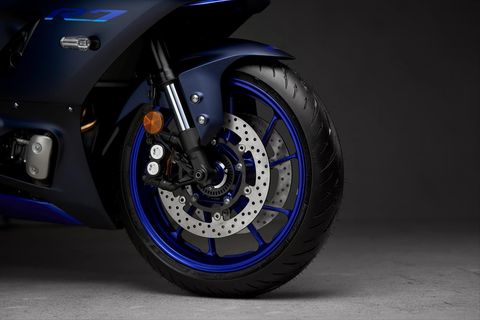
I attribute such a feat to the R7’s logical ergonomics, well-calibrated suspension, shockingly smooth six-speed transmission — and, perhaps most critically, a hyper-responsive front brake highlighted by a radial-pull Brembo master cylinder. One of the drills we did was flooring it before smoothly squeezing the brake to see how effective it is, and damn did I go from 60 to zero pretty quickly.
By the afternoon of the second day, when all the coaching finally started to click, I was whipping around the course at a decent pace, passing other students here — and there and, while not yet dragging a knee like our Lord and savior Valentino Rossi, hitting the apexes at a semi-respectable lean angle. Perhaps more importantly, I spent that second day on the track simply having a hell of a lot of fun.
Now it’s time for another caveat: as much time as I spent on the R7 in two days, all of it took place on the track, not on the street. (Hell, the bikes they had set up for us to ride even eschewed turn signals and mirrors.) That is bound to give one a skewed perspective of a consumer motorcycle, and an incomplete one.
With that in mind, I do have one beef, which applies less to everyday street riding and more to the highway. Starting the first lap of each session, I was pretty happy with the R7’s 0 to 60 speed, which has been clocked at 3.27 seconds. However, on that big straightaway that passes through the finish line on the way to the next lap, I wished the acceleration after 60 mph was a bit more lively. Yes, it’s still gonna be plenty zippy enough to get around just about every four-wheeled vehicle you’ll encounter on the open road, but I felt like I could use a bit more oomph than this 689-cc jackrabbit could deliver.
Yamaha
One other, more positive observation: I found the relatively aggressive posture of the bike to be surprisingly forgiving. I rode for the better part of two days without ever feeling my back or legs tighten up, or my neck hurting from leaning forward with my eyes up.
All of which leads to this conclusion: I’ve long been wary of sport bikes for fear of being uncomfortable, uncertain and unsafe. But if the joy, speed and confidence I experienced on the R7 is any indication, the right sport bike can rise above all those gripes — and at a nice price to boot.
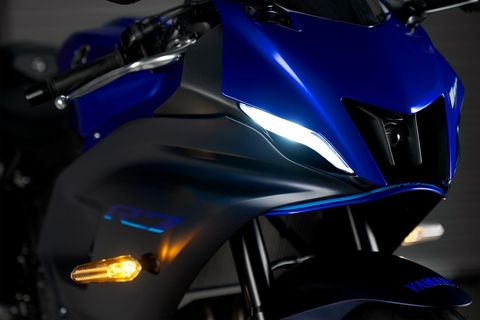
The base price is $8,999 for both colorways: Team Yamaha Blue and Performance Black. Featured accessories include a Fender Eliminator, GYTR Quick Shifter Kit, Frame Shifters, Radiator Guards and Seat Cowl.
Yamaha
Engine: 689cc liquid-cooled, 4-stroke, DOHC inline twin-cylinder
Gearbox: six-speed
Seat height: 32.9 inches
Wet weight: 414 pounds
0 to 60: 3.27 seconds
Top speed: 139 mph
EPA Fuel Economy: 58 mpg
This content is created and maintained by a third party, and imported onto this page to help users provide their email addresses. You may be able to find more information about this and similar content at piano.io
Looking for even more great savings? Head over to Today’s Best Deals page to see all our top deals from today.
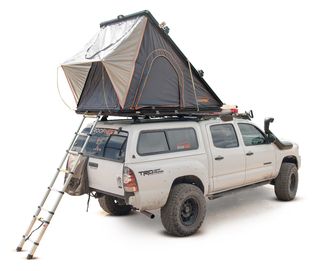
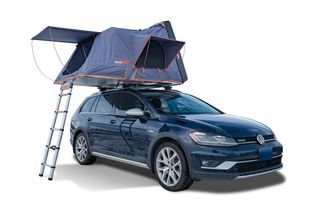
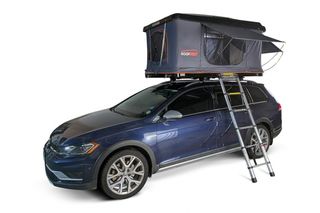
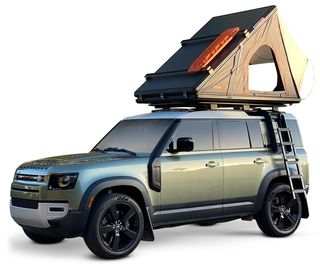
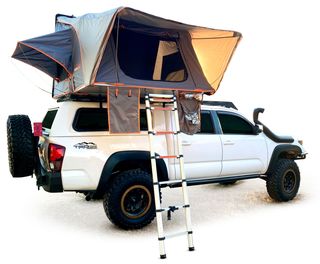
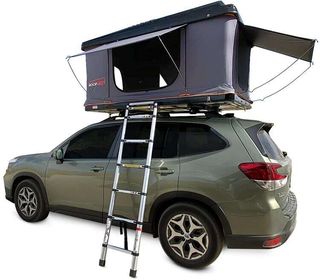
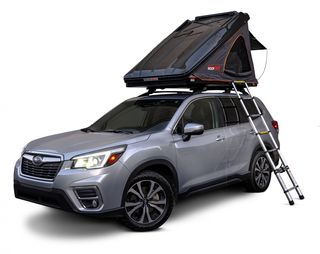
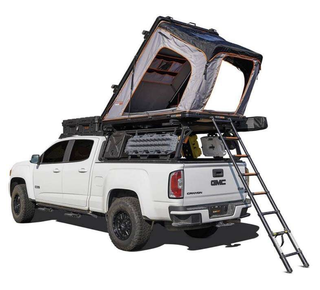
The last few years have been pretty rough for all of us, but there have been silver linings to the dark clouds that have dominated this decade so far. For one, many of us gained a newfound appreciation for outdoor pursuits like car camping — an escape made all the better these days by the bevy of excellent rooftop tents for your ride. These high-mounted hideaways bring a bounty of added security and comfort to camping…even if they do make the occasional nocturnal pee trips a dash more interesting.
Of course, rooftop tents are usually significantly pricier than the ground-dwelling ones — and the stellar, extra-durable, ultra-cozy tents made by Colorado-based Roofnest are no exception. That’s where this Memorial Day sale comes in, however. Starting today, May 26, Roofnest is offering $300 off all of its tents, including the small-footprint Condor models, the overlander-beloved Falcon tents and the wide range of Sparrow models, as well.
While supply chain worries continue to stymie many holiday gift plans this year, Roofnest assures us — and the world, as it’s right on the front page of their website — that they have all of their tents in stock and ready for delivery within 10-15 days. The clock is ticking, both in regards to this sale and the warm, camping-ready weather, so you’ll want to take advantage of both ASAP.
This content is created and maintained by a third party, and imported onto this page to help users provide their email addresses. You may be able to find more information about this and similar content at piano.io
German Patent and Trademark Office
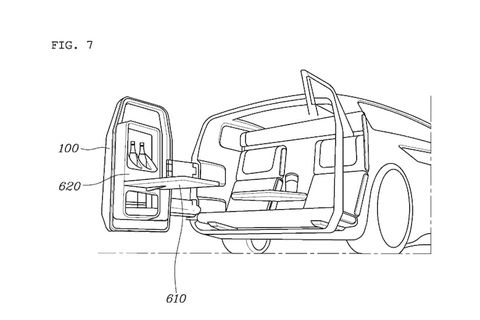
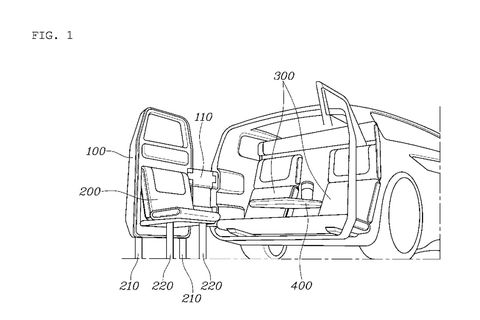
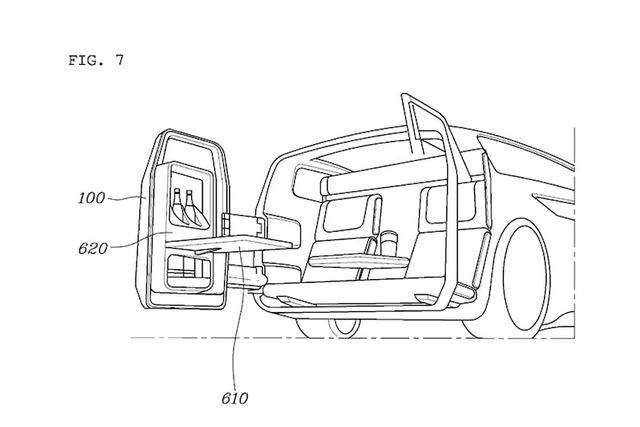
The great tailgate wars have traditionally been confined to full-size pickups, with the Big Three battling to get the most functionality (whether actually helpful or not) into the rear of the cargo bed. But it appears that Hyundai may be planning to bring trick tailgates to SUVs: CarBuzz has uncovered a Hyundai patent in Germany for a rear hatch that would be a cut above your standard SUV liftgate.
German Patent and Trademark Office
German Patent and Trademark Office
Hyundai’s idea would replace the standard SUV liftgate with split rear doors like a Mini Clubman. Unlike in the Clubman, the doors would extend out from the car’s body, and they would include added features like fold-out jump seats or a beverage cooler and a fold-out table. The drawings also depict the SUV having rear-facing trunk seats like a Mercedes E-Class wagon, with a table in-between.
The result would be a terrific, turnkey tailgating setup, whether you’re enjoying your active lifestyle in the great outdoors or parked outside a college football stadium. Car manufacturers patent many weird things, but this seems like an idea that could make it as an accessory available for the Palisade or the eventual production Ioniq 7 SUV. Even if — like an open concept kitchen for entertaining — it would be a feature one would use far less than one thinks. Most buyers would probably prefer a wide conventional opening and enough space for a Yeti Tundra Haul.
The split-door entertainment station is not the only trick tailgate for SUVs Hyundai has been looking at. Last month, reports found a Hyundai patent application for a quirky sliding SUV tailgate that would travel onto the roof instead of hinging and opening with a conventional liftgate. That feature could help open the trunk in tight spaces.
This content is created and maintained by a third party, and imported onto this page to help users provide their email addresses. You may be able to find more information about this and similar content at piano.io
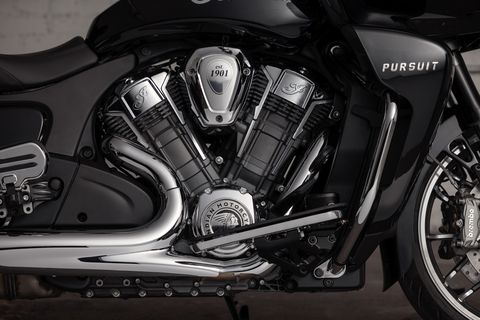
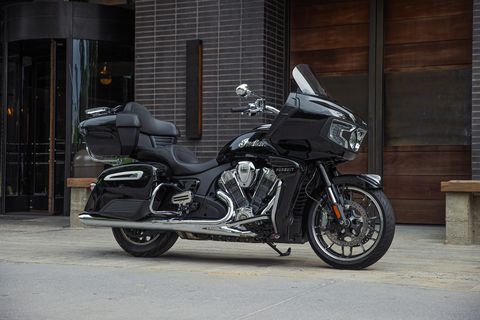
Indian Motorcyle is one of the most prestigious American motorcycle manufacturers, with a pedigree dating back to 1901, predating its rival Harley-Davidson. The brand just unveiled its newest model, the Pursuit. It may sound like a bike that you would see pulling you over on the highway. But it’s actually a luxury tourer that Indian calls “the most capable and refined American touring machine on the road.”
Indian Motorcycle
Indian Motorcycle
The Pursuit uses the same 180 cubic-inch liquid-cooled V-twin engine as the Indian Challenger, with 122 horsepower and 128 lb-ft of torque. Indian says the Pursuit has a PowerPlus calibration for better low-speed drivability. And it comes loaded with comfort features for long rides like an adjustable windscreen, vented lower fairings, heated grips, a new Touring Comfort seat and a cargo trunk and saddlebags providing a combined 35 gallons of power-locking storage.
The Pursuit comes in two trims, the Pursuit Limited and Pursuit Dark Horse. The latter, as you might expect from the name, has a more sinister and blacked-out appearance. You can pair each trim with a Premium Package, including an all-new Fox electronically adjustable rear suspension and Smart Lean Technology that adds cornering control to the dynamic traction control and ABS. The Premium Package also scores you a heated seat and integrated driving lights within the lower fairings.
Pricing for the 2022 Indian Pursuit starts at $29,999 for the Pursuit Limited and $30,999 for the Pursuit Dark Horse. The Premium Package costs an additional $3,000. Indian says it will begin shipping Pursuits to American and Canadian dealers in early 2022.
This content is created and maintained by a third party, and imported onto this page to help users provide their email addresses. You may be able to find more information about this and similar content at piano.io
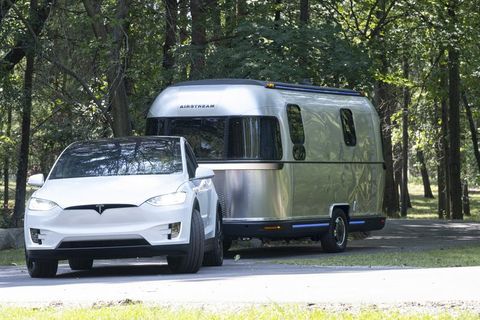
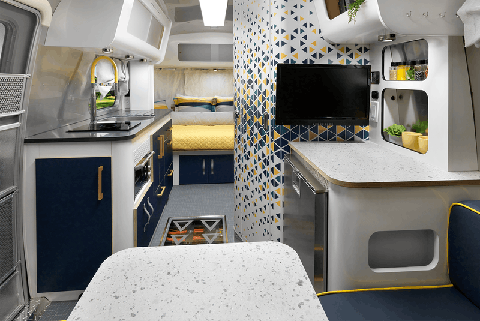
Like the automotive world, the camping world will be shifting to battery electric power in the near to intermediate future. The big-name brands plan to be ahead of that curve. Winnebago recently showed off an electric RV concept, and now, Airstream has a new eStream concept — which, with its battery-electric powertrain, looks like the exciting electric camping trailer of the future.
This content is imported from YouTube. You may be able to find the same content in another format, or you may be able to find more information, at their web site.
In Drive Mode, the eStream can help propel itself. This ability makes the trailer less of a load for the tow vehicle, which improves range in electric cars like the Rivian R1T — which don’t get great range while towing — or gas mileage in a conventional combustion-powered truck. The electric motors can also help distribute the weight on the hitch, eliminating the need for a special weight-distributing hitch.
Airstream
Airstream
The eStream can also drive itself in low-speed situations. This feature lets you direct the trailer remotely via smartphone in complex, low-speed maneuvers like hitching and unhitching, reversing into a parking spot or maneuvering around a campsite. That feature alleviates much of the stress of owning and operating a camping trailer.
The eStream seems very much to be a concept at this stage. Airstream offers few specifics about production specs, pricing — conventional Airstream trailers can get pricey — and availability timeline.
One key factor not mentioned is how much the eStream weighs. Lithium-ion battery packs are heavy. So there might be some question about how efficient an eStream trailer would be on the highway vs. just towing a lighter trailer without the battery packs. Though Airstream uses a Tesla Model X for towing, which would suggest the eStream would weigh less than 5,000 pounds.
This content is created and maintained by a third party, and imported onto this page to help users provide their email addresses. You may be able to find more information about this and similar content at piano.io
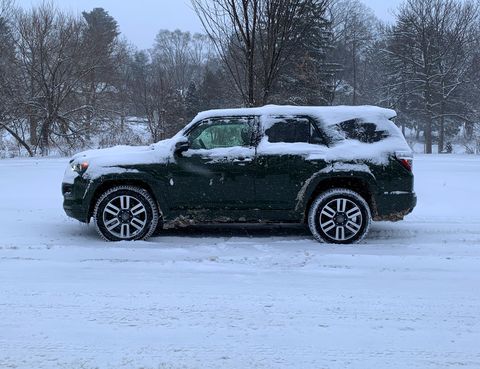
I love the Toyota 4Runner. It’s brash. It’s old-school. It has a ton of space. I would happily drive one daily — if it weren’t expensive for what you get and the thought of the planet my children will inherit warming didn’t keep me up at night.
Even so, there are about five or six snowy days per year where I kick myself for not owning a 4Runner. This year, however the fates aligned — and the press fleet dropped off a 4Runner just as a snowstorm was about to hit.
The storm didn’t end up being the Great Blizzard of 1899 that the media prepped me for, but my kids missed two days of school, and I got a $50 ticket for not moving my VW out of the street in front of my house. So it was enough snowfall to get a taste of the Toyota 4Runner in winter.
On the face of it, the 4Runner has pretty much everything you want for suburban wintering. You get proper four-wheel-drive high and low gears shifted with an easy-to-use knob. You get about nine inches of ground clearance, which is all you need if you’re not climbing the Rubicon trail. And you get excellent visibility with large, vertical windows and (now standard) LED low beams, high beams and fog lamps.
I had the new TRD Sport trim, which had some 20-inch rims. I would have preferred smaller wheels and the fatter tire, but it was a solid setup nonetheless.
Tyler Duffy
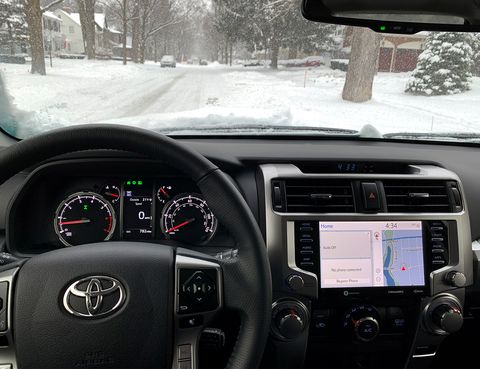
There are a few options you want if you’re driving a 4Runner in winter. The TRD Sport trim had no automatic climate control. I found this out the hard way after setting it to defrost for a bit, coming out to bring my daughter to daycare and realized I had not turned the fan up for the defrost. The TRD Sport trim also had no heated steering wheel and no heated seats. And the heater didn’t do a great job getting down to my cold, wet, sneaker-clad feet in the footwell.
One option I would not choose for winter running would be the automatic running boards, which my tester had equipped for an extra $1,500. These running boards are bound to collect patches of snow and boot sludge in winter. I had that happen. Then it got colder at night…and that snow and boot sludge turned to ice, which was impossible to remove short of wearing it down with boiling water — and had me driving around the rest of the week with a warning light.
Tyler Duffy
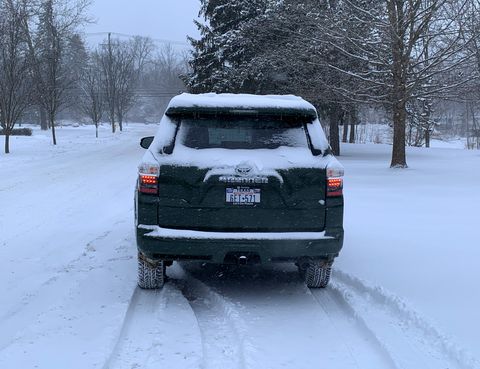
The 4Runner has no trouble getting going in four-high. I reversed out of my unplowed driveway into the unplowed street without any issues, and was able to get going multiple times with half the car parked on a sheet of ice. The 4Runner can live up to its reputation and get you home — indeed, probably at a higher rate of speed than the conditions would warrant in most cars.
That said, four-wheel drive does not make a difference helping you stop in the snow. And the heavy 4Runner can build up a head of steam. I had a few minor skids on some slick spots where I lost traction and the ABS kicked in.
So, the 4Runner, while capable, is not some mythical rig not subject to the laws of physics. You have to be cautious like everyone else.
The 4×4 TRD Sport trim 4Runner starts at $42,025. Options — including $1,585 to upgrade to an 8.0-inch touchscreen. Add-ons and the $1,215 delivery, handling and processing fee brought the total to $48,631 for an SUV without automatic climate control. And, of course, that’s just the MSRP. The average Toyota is now leaving the lot with a $1,015 dealer markup, and the 4Runner is more popular than the average Toyota.
Tyler Duffy
Price (Starting / As Tested): $42,025 / $48,631
Powertrain: 4.0-liter V6; 5-speed automatic; 4×4
Horsepower: 270
Torque: 278 lb-ft
EPA Fuel Economy: 16 mpg city, 19 mpg highway
This content is created and maintained by a third party, and imported onto this page to help users provide their email addresses. You may be able to find more information about this and similar content at piano.io
Most car companies these days are positioning themselves more broadly as “mobility tech firms“. Doing so generates buzz that excites shareholders, but it’s also a strategic play — one that makes plenty of sense in a market where traditional car brands may soon be generating more profit from their technology than selling cars.
The trouble for car buyers is that — whether the intention is to look trendy and tech-forward or just to show off new features — that technology ends up in the cars we buy, making them more complicated and costly. And much of that technology sits unused, in the best case scenario, or worse, converts routine tasks into an absolute nuisance.
Here are seven car tech features found in modern vehicles that we could do very much do without.
Cadillac
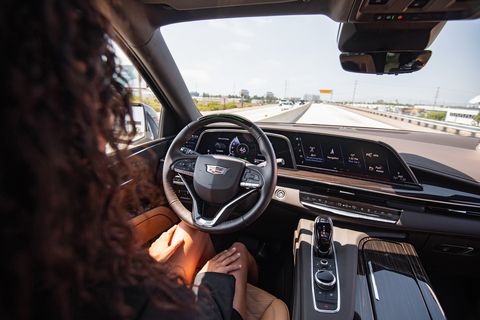
We can debate whether full self-driving is mere tech solutionism or a feature that real-life buyers want from their car. What’s not in dispute is that current hands-free driving systems are not fully self-driving. The best systems, like GM’s Super Cruise, can do impressive things, but such systems still place an undue attention burden on the driver, rendering their ultimate benefit — slightly less fatiguing highway drives? — nebulous.
Ford
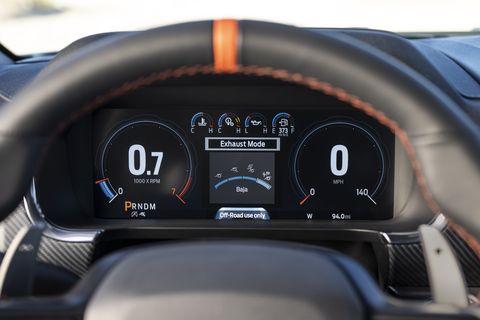
Drive modes work well — in theory. Who doesn’t want a car that can shape-shift to meet your needs in different situations and conditions? In practice, however, fancier cars can end up with a dizzying number of drive modes, plus individual settings that can create more customizations. It’s overkill.
Most drivers seldom, if ever, move out of the default (often called “comfort”) mode. When they do, it’s often because the presence of a sport mode enticed the engineers to limit the throttle response too much in normal mode. And if they do use the individual settings, it’s to correct that very problem — by giving them a combination where they have sport throttle response without the more harsh suspension settings that often come in sport mode in cars with active suspensions. Drive modes have a place, but more is not necessarily better.
Tom Kirkpatrick
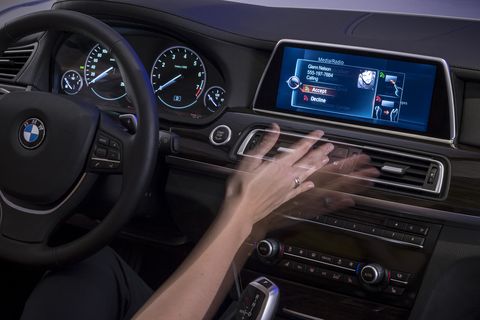
Touchless interfaces may be the future in many facets of society, but they are not the present in cars. Gesture recognition technology isn’t precise enough. The effort involved to nail the exact gesture so that the system can recognize it means the driver winds up diverting their attention from the road, thus creating the very problem the feature supposed to eliminate. And it’s not clear why anyone would want to change the volume in their BMW via hand jive rather than buttons on the wheel.
Getty ImagesGetty Images
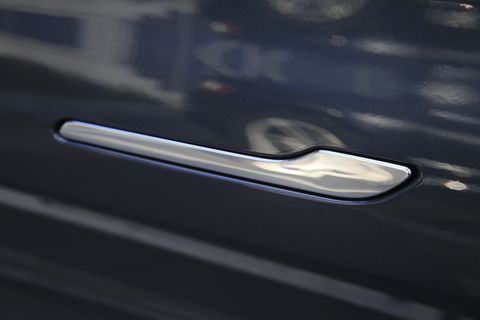
Tesla has been an innovator in door handle complication technology, and other manufacturers have followed suit. Now, we have door handles that sit flush and pop out when they detect your approach, or use haptic mechanisms to activate. (Hell, Tesla may try to eliminate the door handle entirely.)
None of these tech-laden door handles work more simply and effectively than a classic mechanical one, which is also straightforward in a safety situation — and won’t become a problem when coated in ice.
VW
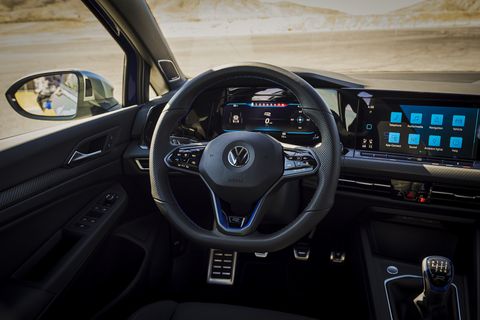
Designers don’t like the cluttered look of physical buttons. Drivers don’t enjoy navigating through touchscreen menus to perform essential functions. Enter the haptic button arrays in new cars like the Volkswagen ID.4 and GTI as a compromise. They look futuristic, but they’re also far more aggravating and less satisfying to use than conventional buttons. Touching them requires exactitude, which detracts attention from the road. The only thing haptic buttons make it easier for you to do is inadvertently adjust the climate controls.
Cadillac
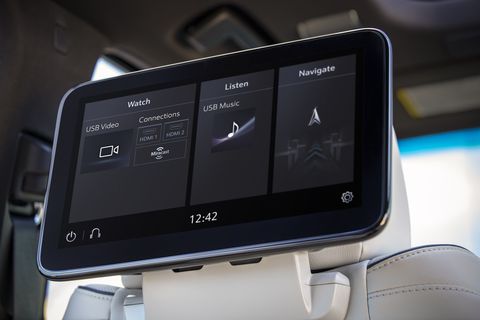
Luxury family haulers like the Cadillac Escalade and Chrysler Pacifica show off fancy rear-seat entertainment systems. Moving forward, many vehicles will have Amazon Fire TV live-streaming technology built right in. Sounds great for families, right? Take it from a parent: it’s not.
Older kids come with their own ubiquitous screens and headphones. Younger kids, meanwhile, can’t operate the system independently — and they launch kicks right where the screen is. Some of them may be in car seats that face away from the screen (and have fun firing up Encanto for just one of your two children). And even if it all works out…do you really want that episode of Paw Patrol to follow you into your car?
Getty Images
Head-up displays work great — in principle. They display salient information like speed, navigation and alerts on the windshield itself to minimize the amount of time the driver must look down. The trouble is, most driving occurs during the daylight hours. Many drivers wear polarized sunglasses in those conditions — and those all but block out a head-up display.
This content is created and maintained by a third party, and imported onto this page to help users provide their email addresses. You may be able to find more information about this and similar content at piano.io
We know you’re likely currently thinking about things like Christmas and New Year’s, but the car world calendar never stops — which means we’re already looking forward to the Tokyo Auto Salon that’s happening in January 2022. Mitsubishi has teased some intriguing new performance brand offerings already, but they’re not the only carmaker doing so. Subaru just announced four new STI-branded performance cars that they will bring to the show. And those new cars could highlight some exciting developments for vehicles heading to America.
Subaru describes this concept vaguely as “a new project launched with an aim of gaining experience and practice in new technologies in the world of motorsport which is making its way toward a carbon-neutral era.” In other words: it will be an electric Subaru STI-branded vehicle, which is notable for a company that has been a laggard about getting hybrid models into production. We don’t yet know where it resides on the continuum between a thought experiment and an imminent production model like the Solterra SUV.
Subaru
We just drove the new WRX performance sedan; this concept teaser reveals the next-gen WRX front fascia with an STI logo, so we’re guessing it should offer a preview of what the WRX’s high-performance big brother will look like. Subaru says the WRX will show off a carbon rear spoiler, a performance muffler and customized STI performance parts.
Subaru does not sell the road-going Levorg wagon in America. We’ve heard it drives as well as you would imagine, but has no shot of arriving Stateside — because Americans don’t buy wagons. This concept is a Levorg tarted up with STI performance parts.
This car — notably not labeled as a “concept “— is a BRZ with “cherry red decorations to express driving enjoyment” and STI performance parts. America already gets the BRZ. So this could be a look at some OEM accessories that Subaru could offer — if not an eventual STI version of the BRZ.
This content is created and maintained by a third party, and imported onto this page to help users provide their email addresses. You may be able to find more information about this and similar content at piano.io
Back in 2020 (remember 2020? It feels like a decade ago),Land Rover at long last revived the Defender nameplate as a new, unibody-based-but-still-seriously-off-road-capable SUV. The brand carried over many elements from the previous model, like the short-wheelbase two-door 90 version you can now get with a V8. One option from the classic Defender that didn’t make the current version, however, was the soft-top convertible version.
But that doesn’t mean you can’t get one.
Heritage Customs
Dutch Land Rover specialists Heritage Customs has just announced they will be building coachbuilt Valiance Convertible builds based on the new Defender 90. They will produce a limited run of just five vehicles for the first generation in 2022.
Buyers will be able to choose from three build options: Convertible Côte d’Azur (Blue), Convertible Solihull Sand (Green) and Convertible Kokkini Paralia (Matte Red). Each build includes a semi-electric soft top, bespoke wheels and bespoke interior and Magic Metal exterior elements.
Heritage Customs says the Valiance Convertible will cost $160,000 before taxes and shipping — a lot, sure, but par for the course when it comes to custom Defenders. The price presumably includes the cost of the stock Land Rover Defender 90 itself. No word yet on build times.
If you like what Heritage Customs is doing aesthetically but want it in a more practical Defender 110 model and without the chopped top, the brand offers Valiance conversions starting around $23,000. Heritage Customs also sells its 20-inch and 22-inch wheels for the new Defender a la carte.
This content is created and maintained by a third party, and imported onto this page to help users provide their email addresses. You may be able to find more information about this and similar content at piano.io
The environmental proposals Congress inserted into the Build Back Better plan appear to be on hold right now. But the White House is taking some executive action that should provide a significant push promoting electric vehicles in the American marketplace.
A new EPA rule announced Monday would raise the projected car mileage standards to 40 mpg by 2026. That figure is 25% higher than the Trump administration’s revised goal of hitting 32 mpg by 2026, and it’s higher than the 38 mpg the Biden administration proposed back in August. According to the EPA, meeting that target will mandate improvements of between 5-10% per year in fleet-wide emissions between 2023 and 2026.
NICHOLAS KAMMGetty Images
Perhaps the most prominent way manufacturers will meet those efficiency targets is by selling battery-electric or substantially electrified plug-in hybrid vehicles. The administration’s goal is for 17% of new cars sold in 2026 to be electric or PHEV, up from 7% currently.
President Biden has, so far, generally proven to be a booster of electric vehicles. He was on hand for Ford’s first public unveiling of the F-150 Lightning, and has managed to climb behind the wheel of GM’s electric Hummer (as seen above). His administration’s legislatic priorities have backed up his enthusiasm; the infrastructure bill passed earlier this year includes a hefty investment in EV chargers, and the Build Back Better plan intended to offer up to a $12,500 tax credit on new EV purchases, although the future of that bill remains in doubt.
Automakers have already been moving toward producing more electric and electrified vehicles. Many luxury brands are planning to be all-electric by the end of the decade. General Motors will try to do so by 2035. Even typically EV skeptical brands like Dodge and Toyota announced ambitious EV plans in 2021.
Much of that is because customers are far more willing to buy EVs than initially anticipated. The biggest challenge for manufacturers may be building enough of them to meet demand. Ford is planning a dramatic expansion of Mustang Mach E production to produce around 200,000 vehicles per year by 2023. The brand is also ramping up production for the F-150 Lightning. Ford had to shut down F-150 Lightning reservations with a backlog of 200,000 vehicles to work through.
This content is created and maintained by a third party, and imported onto this page to help users provide their email addresses. You may be able to find more information about this and similar content at piano.io
Audi has announced plans to go all-electric by 2033, and the next-generation Audi R8 — if there is one — will be an all-electric vehicle. But that doesn’t mean that Audi has finished developing the current combustion model: Top Gear is reporting that Audi has a wild new version of the R8 sports car in the works.
Sebastian Grams, the head of Audi’s RS division, confirmed to Top Gear that Audi has more R8 vehicles coming.
“What I can say is that we have plans to do more. There will definitely be more [cars] to come on this generation of R8 platform. And as you can see from the R8 with rear-wheel drive, we are trying to bring ‘fun-to-drive’ to the front,” Grams told Top Gear.
“What we are doing is trying to make the most out of the [car’s] life cycle. At the moment people are enjoying the R8 and we have a lot of sales. But I can tell you we have enough ideas for the future.”
Audi insiders told Top Gear that the brand might revive the name R8 GT for the new version. The first-generation R8 GT was a limited run higher-performance V10 model with more horsepower, a fixed rear-wing and substantial weight reduction. That first-gen version used Audi’s quattro all-wheel drive system. Grams reportedly smiled and declined to comment when asked whether the car would be AWD, or use the now-possible rear-wheel drive setup.
Per the report, Audi would reveal the new R8 sometime in fall 2022 and keep it in production for the R8’s final year in 2023. Stay tuned.
This content is created and maintained by a third party, and imported onto this page to help users provide their email addresses. You may be able to find more information about this and similar content at piano.io
Earlier this year, Ford unveiled the all-new F-150 Lightning electric pickup. Demand has been far higher than Ford anticipated, with the truck offering quite the compelling value proposition — and plenty of crossover appeal to non-truck buyers. Still, the question has remained: when exactly will all those interested people actually be able to order an F-150 Lightning?
Well, we now have a bit better of a picture — after the Lightning Owners forum uncovered Ford’s playbook for dealer orders (first spotted by The Drive).
Per the document, Ford will open up orders to F-150 Lightning reservation holders starting in January. The company will proceed in waves until the 2022 production allotment is filled. Customers who can’t get their preferred configuration can opt to postpone their reservation or get a full refund. Reservation holders who aren’t selected for 2022 can transition to 2023, or receive a refund.
In other words: if you don’t currently have a reservation, landing an F-150 Lightning could take some time. Ford shut down new F-150 Lightning reservations last week with around 200,000 in the books. Not all those reservations — made with a $100 refundable deposit — will become orders, but even a reasonable percentage of reservation holders following through could well exceed Ford’s production capacity.
Ford has doubled its production targets for the F-150 Lightning twice, with the current goal to hit 160,000 F-150 Lightning trucks per year by 2024. However, the current production capacity will be significantly less. And there’s no word yet on when Ford will open reservations back up to the public. Ford says F-150 Lightning production and deliveries will start in Spring 2022.
Ford has been on a tear of late, releasing tons of cool new vehicles. Three new Ford products were featured in this year’s GP100. But having groundbreaking new cars is only valuable if customers can buy them. And extensive production delays have plagued both the new Bronco and the hybrid version of the Maverick.
This content is created and maintained by a third party, and imported onto this page to help users provide their email addresses. You may be able to find more information about this and similar content at piano.io
This story is part of our end-of-year series This Year in Gear, rounding up the most notable releases of 2021.
2021 was a landmark year for electric vehicles. Many brands made bold pledges to go 100% electric by 2030 or at least come close to it. Absolutely game-changing new vehicles have entered the market on dedicated EV platforms. And the key problem for manufacturers seems to be not whether buyers want EVs but whether they can build enough of them to meet demand. Even longtime EV skeptic Toyota has revealed some wild battery-electric plans.
We spent much of the year covering new electric vehicle reveals, assessing their impact on the marketplace and driving them at home and in the wild. Here are our favorite electric vehicles from 2021.
Will Sabel Courtney
Starting from a clean sheet of paper meant Rivian could think about things differently than other carmakers, unburdened by existing platforms or parts or suppliers or architectures. There’s one electric motor per wheel — twice the number most all-wheel-drive electric cars boast. Not only does the EV design mean there’s room for a frunk big enough to hide a person where an ICE motor would go, but the Rivian R1T squeezed in a hidden pass-through between cabin and bed that’s big enough to hide a second human — and added yet another space under the bed floor to stash a full-size spare.
Ford
Automotive manufacturers have been offering different takes on the electric pickup. Rivian built a lux adventure vehicle. GM went for pricey, all-out performance. Tesla did…well, whatever the Cybertruck is going to be. Ford has taken a different tack with the F-150 Lightning: It’s the F-150 Americans love, just electric and with some cool features the standard truck does not have. And they gave us a ride in it.
Will Sabel Courtney
Brush aside those zealots screaming heresy, and the idea of making a Mustang Mach E electric SUV works from a business perspective. After all, electric cars will only succeed if the masses can be persuaded to trade their gas-powered rides away, and the best way to do that is to make EVs cool. The Mustang has cool to spare.
Mercedes-Benz
Few cars are quite as much of an investment in tomorrow as the Mercedes-EQS sedan.This new luxury car isn’t the first electric vehicle to ever wear a three-pointed star, but it may well be the most important yet. After all, it’s the first new car to use Mercedes-Benz’s bespoke EV platform, which will serve as the foundation for most the automaker’s onslaught of new electric vehicles
Mercedes-Benz AG – Global Communications Mercedes-Benz Cars & Vans
Averaging just 14 mpg combined, the Gelandewagen is one of the worst-polluting passenger vehicles on sale in America. That, however, is about to change. Mercedes is launching a “G” sub-brand, much like Ford has done with the Bronco and Mustang…and part of that G-Class future will be an electric version dubbed the Concept EQG.
Audi
Audi unveiled the E-tron a couple of years back. It was a good car. But, it was just the beginning. Audi unveiled the Q4 E-Tron and Q4 Sportback E-Tron SUVs, which slot below the E-Tron. They’re smaller, but they cost less, are more efficient — and should better capture the U.S. market. And they could be Audi’s most important new cars.
Will Sabel Courtney
At first, the Audi E-Tron GT‘s name might lead you to believe it’s a version of the E-Tron all-electric crossover. Alas, your gut would be misleading you. The E-Tron GT is, in fact, an entirely separate model — a low-slung sedan with the looks of a sports car concept. And unlike the E-Tron SUV — which can easily be confused for one of Audi’s other, internal-combustion crossovers at a glance —once you see it, there’s no mistaking the E-Tron GT for anything other than what it is.
Buddy Wilinski
In May, we found out that Harley-Davidson planned to branch LiveWire out into an independent, partially Silicon Valley-based electric motorcycle startup. Their first bike will be called the LiveWire One, which makes a dramatic departure from HD’s Serial 1 electric bicycle by spelling out the number. It offers impressive range and an impressive discount over the original LiveWire.
Porsche
GTS means this is one of the company’s Goldilocks models, which balance all-around performance against price to create one of the better bargains in the Porsche fleet; and Sport Turismo means it’s a station wagon, not to be confused with the ostensibly soft-roader-esque Cross Turismo models. Putting it simply: it’s an electric sport wagon that’s mean to be a ton of fun to drive.
Hyundai
Hyundai revealed its eagerly anticipated Ioniq 5 EV. It’s not the first electric car to come from Hyundai; the brand already sells the Ioniq EV (which, confusingly, is unrelated to the Ioniq 5) and the Kona EV — but it is the first of three new cars launching under Hyundai’s new Ioniq sub-brand. And it brings
Kia
Like much of the automotive world today, Kia is going in hot and heavy on electric vehicles. The brand’s newest one is called the EV6, which rides on the same E-GMP platform as the Hyundai Ioniq 5 — and as we’re learning, it’s a far cry from the staid Niro EV that currently makes up the heart of the Kia electric lineup.
Subaru
Subaru unveiled its first electric vehicle: the Solterra. The Solterra is a compact crossover twinned with Toyota’s first EV, the bZ4X. On paper, it looks like the vehicle many Subaru customers will want: a familiar-feeling Subaru crossover that just so happens to be electric.
Fabian Kirchbauer
The i4 is a classic BMW sedan (or, as they like to describe its swoopy shape, a four-door gran coupé) that has 530 horsepower, can accelerate from 0-60 mph in about four seconds and appears to be supremely competent on track. Basically, we’re talking about an electric version of the new M3.
GMC
GMC promises up to 830 horsepower for the Hummer EV SUV, and a 3.5-second 0-60 mph acceleration time when Watts to Freedom mode is “armed.” Though highly impressive, that’s a bit less than the 1,000 hp and 3.0-second figures for the Hummer EV SUT.
Stellantis
As promised, the Magneto is an all-electric Jeep Wrangler, and it’s electric in a way that Wrangler traditionalists will love. It’s a two-door model — and it has a functional six-speed manual transmission.
Genesis
Genesis described the GV60 as a “sleek and athletic coupé crossover utility vehicle” (we’d also accept fancy hatchback). The brand revealed some more specifics about the new electric SUV, including a top model with nearly 500 horsepower and a drift mode.
https://www.gearpatrol.com/cars/g37805297/genesis-gv60-drift-mode/
Genesis
The name is, admittedly, confusing. Most manufacturers use “electrified” to describe hybrid vehicles — but for Genesis, electrified means an electric version of a combustion car. Genesis already launched the new GV70 compact crossover in the U.S. for 2022; the Electrified GV70 is the battery-electric version of it, running on the same platform.
Will Sabel Courtney
To hear Volkswagen tell the tale, the new ID.4 electric crossover (or, in foreign markets, the closely related ID.3 hatchback) is the biggest thing for the brand since the Beetle. Not the New Beetle with the flower vase, mind you — the original Beetle, the one that sold more than 21 million copies over more than 60 years and set the stage for Ferdinand Porsche’s “people’s car” project to eventually become one of the world’s largest automotive conglomerates.
Canoo
Canoo is calling its electric pickup “the most cab forward and space-efficient” truck on the market, and the preliminary specs impress. Canoo’s truck will come in both single- and dual-motor versions; the most capable will pack 600 horsepower and 550 lb-ft of torque. The truck will be able to accommodate a 1,800-pound payload; the target range is north of 200 miles. It will be the same approximate height and width of a Ford F-150, but more than two feet shorter than the smallest version — and with a longer bed, to boot.
This content is created and maintained by a third party, and imported onto this page to help users provide their email addresses. You may be able to find more information about this and similar content at piano.io
Toyota announced a dramatic shift toward electric vehicles, unveiling a lineup of 15 new EVs that will join the oddly-named bZ4X, including a new Toyota pickup and a cool compact Land Cruiser SUV. Lexus will join many rival brands by converting 100% to EVs in America by 2030. And Lexus has offered us a complete look at what should be the first and perhaps the most important of those new EVs, the RZ. The Z stands for “zero” and will be Lexus’s EV brand.
Lexus
Lexus
Lexus builds some of our favorite SUVs on the market. But while the all-new LX arrives soon and a new GX may be soon to follow, the brand’s best-selling SUV, by a long way, is the RX midsize crossover. It’s reasonable to presume the Lexus most buyers will want a few years down the road will be the RX — but electric. That’s pretty much what the RZ will be.
Firm details from Lexus are few at this stage. But the RZ looks like a Lexus-ified version of the bZ4x. And it should run on the same platform as it and the Subaru Solterra. We can probably expect that the RZ will get more horsepower than either of those two vehicles, and it should get Lexus’s new Direct4 all-wheel drive system for EVs. Lexus should at least have more details for us sometime next year.
Speaking of next year, 2022 should be a landmark year for electric vehicles. It will be the year brands begin pumping out battery-powered versions of the vehicles buyers want to drive, like conventional full-size pickups and luxury compact crossovers. And judging from the tsunami of early reservations for new EVs like the F-150 Lightning, buyers should be receptive to an offering like the RZ.
This content is created and maintained by a third party, and imported onto this page to help users provide their email addresses. You may be able to find more information about this and similar content at piano.io