All posts in “Motorcycles”

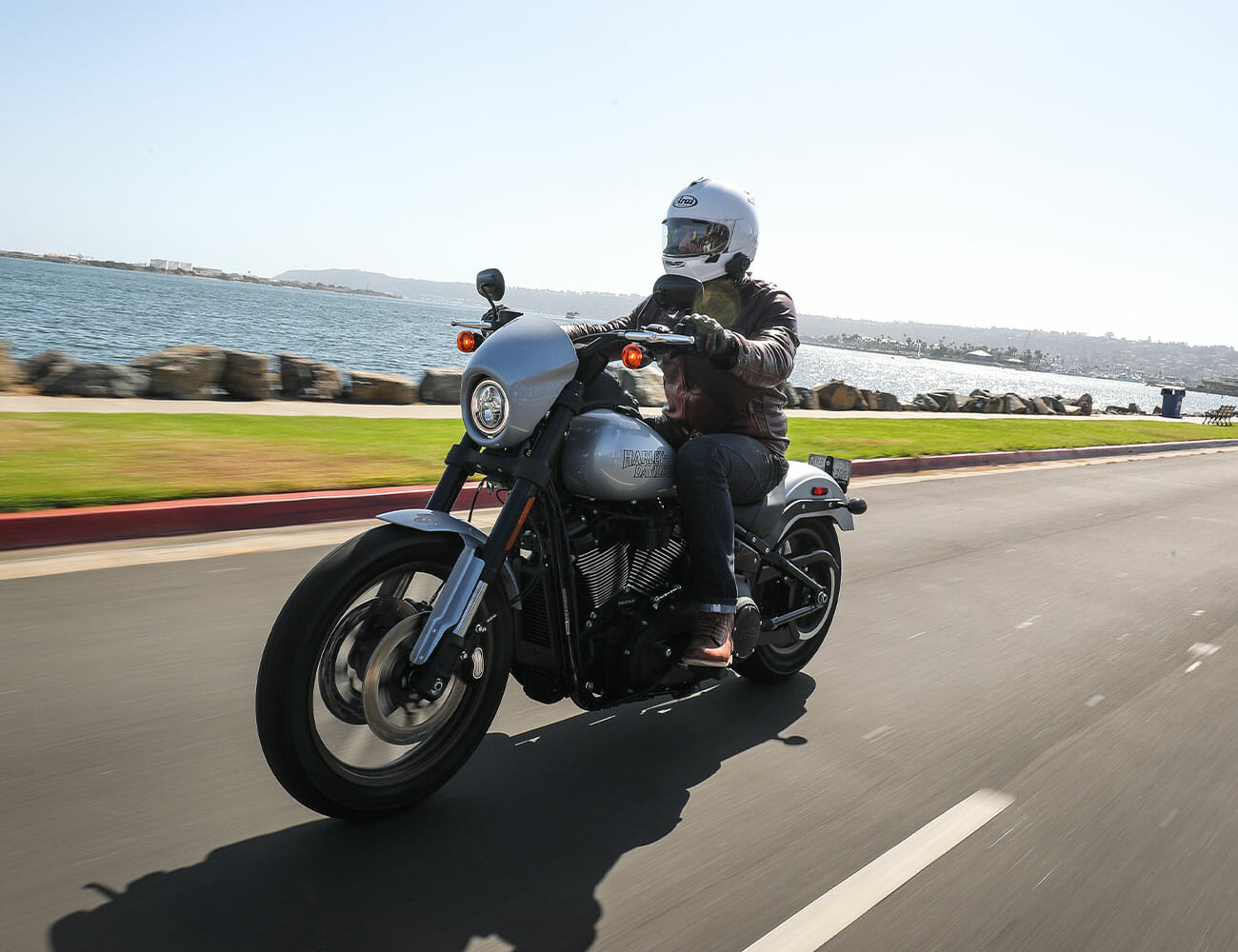
2020 Harley-Davidson Low Rider S Review: An Icon, Reborn

Brand: Harley-Davidson
Product: Low Rider S
Powertrain: 114-cubic-inch V-twin, six-speed belt drive transmission; 119 pound-feet of torque
Price: $17,999+
From: harley-davidson.com

There’s no denying Harley-Davidson’s importance to the world of motorcycling. Despite faltering sales of late, they still command the lion’s share of the North American market, and every move they make draws attention and scrutiny. With their recent foray into battery power (the LiveWire) and a stated commitment to exploring turf not currently populated by Bar-and-Shield logos, Harley-Davidson is clearly aiming to maintain its prominence by reaching new demographics.

But what about the riders already bleeding orange and black? Do these moves mean Harley-Davidson is willing to sacrifice the faithful audience that’s built their current empire? Not a chance. In fact, Harley’s getting better at what they already do best. Case in point: the 2020 Harley-Davidson Low Rider S.

What We Like

There’s a reason why H-D’s official name is The Harley-Davidson Motor Company. The 45-degree, 114 cubic-inch, Milwaukee-Eight V-Twin engine powering the Low Rider S is a monstrous lump of noise and torque. Throttle response is smooth and intuitive; with barely a half-rotation of the grip, there’s more than enough grunt to surge away from damn near anything.

Displacing nearly two liters (1,869cc) of space, there’s 119 pound-feet of twist available from a mere 3,000 rpm. That not only turns on-ramps into drag strips, but makes powering through the canyons an absolute blast. With such a grunty mill, you rarely need worry about downshifting to set up a corner or pop out to pass slower-moving vehicles. Vibrations can get a bit heavy when you crest 5,500 rpm, but an upshift cures that.

And then, of course, there’s the sound. I don’t worship at the church of “loud pipes save lives”, but there’s really nothing else like the rumble of a Harley V-Twin. At idle, sure, it’s a loping potato-potato affair, but between 3,200 and 4,500 rpm, the Low Rider S bellows gruff Americana. Combine that with the silhouette the Low Rider S throws, and it makes a strong argument for the “live to ride, ride to live” mindset.

Much of the credit for the Low Rider’s greatness goes to its Softail architecture. The hard-bits beneath are both stiffer and lighter than the outgoing Dyna frame, so handling is more communicative on the 2020 Low Rider S (which shall heretofore be referred to as the LRS).

The suspension has been upgraded, too. Up front, the LRS rides on a set of inverted 43mm Showa internal-cartridge forks; in the rear, there’s a preload-adjustable coilover shock. Running through the kinks that pervade the Laguna Mountains outside of San Diego, the LRS felt planted, stable and hungry for more. It doesn’t take long to hit the 30.1-degree lean angle limits; thankfully the pegs aren’t rigid-mounted. I wouldn’t go so far as to call this bike flickable, but a reduction in rake geometry (from 30 degrees to 28), certainly makes tossing all 680 pounds of bike to-and-fro an easy affair at speed.

The brakes don’t feel affected by that weight, either. A twin set of four-piston Nissin calipers hug discs at either side of the 19-inch bronze mag in the front end, and two-fingers of pull are often enough to reign things in. The back brake is but a single-unit, two-piston affair, but I applaud Harley’s engineers for their pedal placement. Often on cruisers, that actuator sits too high, so you either need to contort your right leg to get things right or you end up applying more whoa! than needed (or you just ignore the back brake altogether). That just isn’t the case at all here, which comes in handy (pun intended) during spirited riding. And if you do happen to get a little overanxious, know that ABS is standard at both ends.

From the 26.5-inch-high saddle, there’s definitely a reach to the wide, elevated bars. It’s part of the look for the LRS, and if you’re unfamiliar with that riding posture, it can feel a bit unnerving at first. It’ll also wear on even the most seasoned Bar-and-Shield veterans after a while. My lower back and tailbone started to complain after about an hour’s worth of riding; that said, the seat itself is plush, supportive and well-shaped to keep you from shooting off the back when you crack the throttle.

Watch Out For

From the riding position, the speedo is barely perceptible, while the tach may as well have been left in Milwaukee. For aesthetic reasons, the gauge cluster is housed in a center-stack mounted on the fuel tank, well out of sight. You need to take your eyes off the road to search for information –a form-over function design decision that seems  especially dumb when you spot the slab of empty black plastic above the four-inch risers, behind the nacelle.

Also, Harley-Davidson has recently developed a suite of electronic rider aids. The system, which they’ve dubbed RDRS (Reflex Defensive Rider Systems), features a Bosch inertial measurement unit (IMU) that regulates both the traction control, linked braking and ABS in cornering situations; there’s also a baked-in Drag Torque Slip Control feature that acts like an advanced slipper-clutch to smooth downshifts. This is the technology critics of the brand have been asking for for years, yet RDRS doesn’t come on the Low Rider S — or any of H-D’s cruisers.

Other Options

Most of the competition for the Low Rider S comes from the same dealer floor. The Fat Bob 114 ($18,849+) and FXDR 114 ($21,349+) both offer the same incredible engine in a performance-minded package. If you wanted something a little more in tune with boulevard cruising, the standard Low Rider does that for $3,100 less than the S.

That being said, there are other performance cruisers out there. Interested parties should check out the Indian Chief Dark Horse ($18,499.00+), Suzuki Boulevard M109R B.O.S.S. ($15,199+)  and Ducati Diavel 1260S ($20,395+).

Verdict

With the new Low Rider S, Harley-Davidson has created a better-handling, more powerful take on one of their most iconic bikes from the now-defunct Dyna era. It has more than enough style and substance to keep the dyed-in-the-wool faithful foaming at the mouth, but should also be on the radar for cruiser riders looking for a bike that rewards hard use.

The Low Rider S is a cruiser to be sure — but boulevards be damned, it was designed with these canyon roads in mind. The Dyna is dead. Long live the Low Rider S.

Harley-Davidson provided this product for review.

Note: Purchasing products through our links may earn us a portion of the sale, which supports our editorial team’s mission. Learn more here.

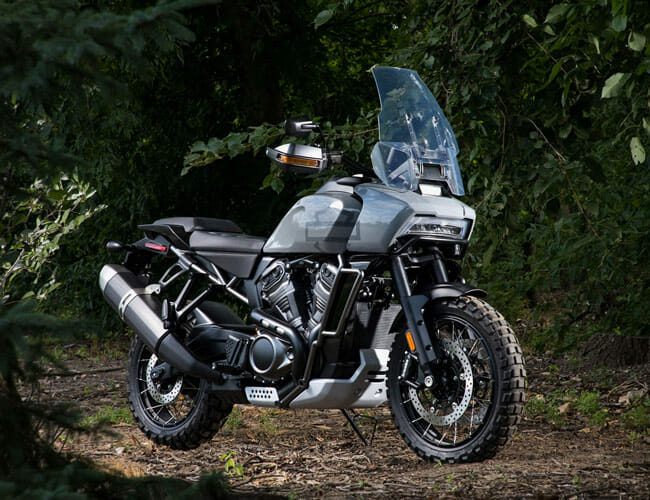
Harley-Davidson Rolls Out Pan America Adventure Bike

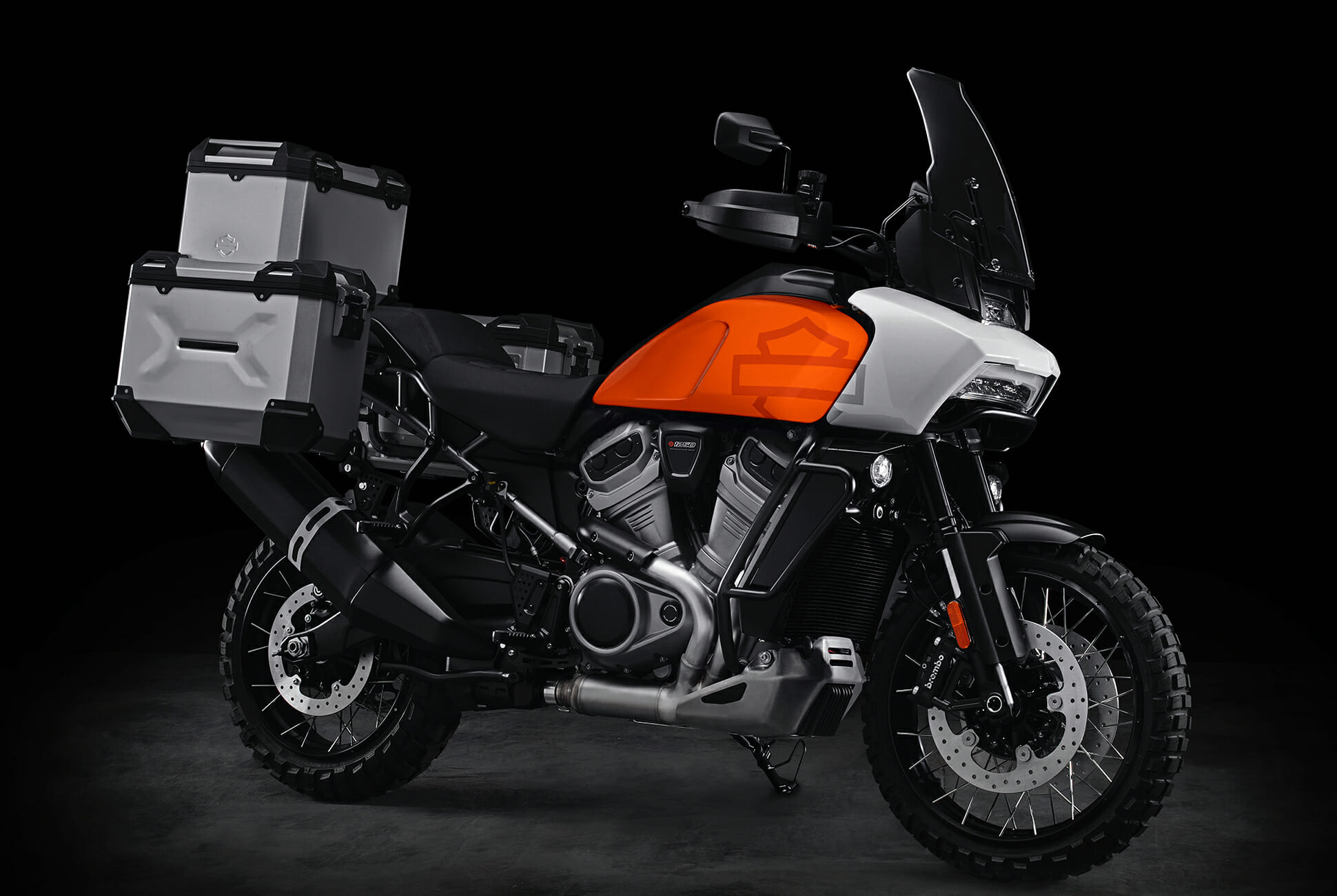
The forthcoming Pan America is Harley-Davidson’s first ever adventure bike. Like all hogs, it is powered by a V-twin. A liquid-cooled Revolution Max 1,250 cc engine to be exact. Any similarities to a normal Harley end right there. Brembo built the braking system, Michelin developed the tires specifically for the bike. It’s a departure. Built for departures. Big ones. The Pan America will hit HD dealership floors sometime in mid 2020.

[embedded content]

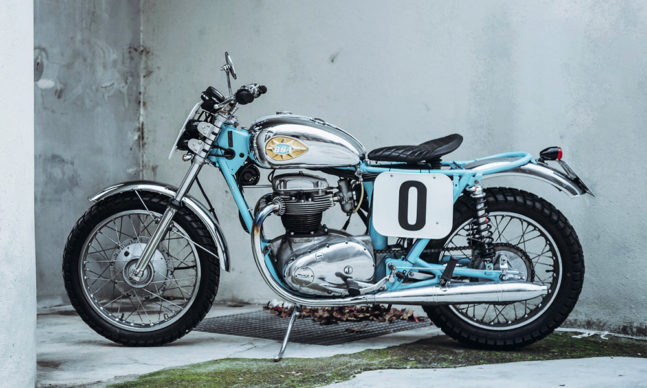
Soiatti Moto Classiche 1971 BSA A65 Thunderbolt Restomod

We’ve covered more than our fair share of restomod bikes over the years. While all the bikes that have before have been beautiful, this Soiatti Moto Classiche 1971 BSA A65 Thunderbolt Restomod is in a…

The Most Important New Motorcycles and Riding Gear of 2019

This roundup is part of This Year in Gear, a look back at the year’s most notable releases. To stay on top of all the latest product news, subscribe to our daily Dispatch newsletter.

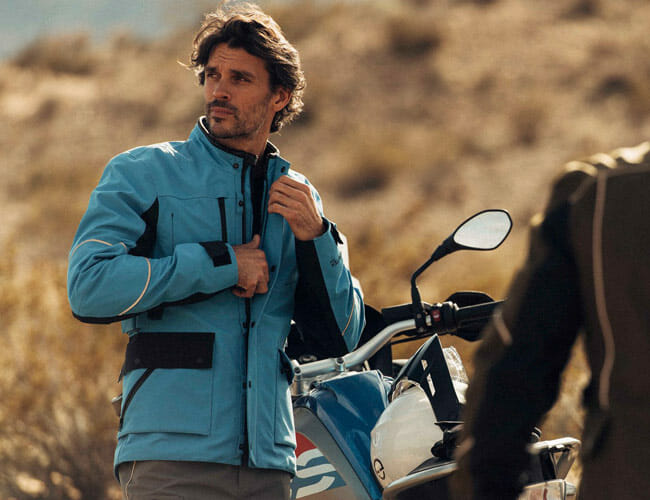
Aether Divide Jacket

Price: $996
From: aetherapparel.com

Aether is renowned for making some of the finest riding apparel money can buy; their Divide jacket builds upon that reputation by incorporating user feedback about past gear, which means bigger pockets and a sealed Gore-Tex liner. (And a steeper price tag…but, y’know, can’t have everything.)

|

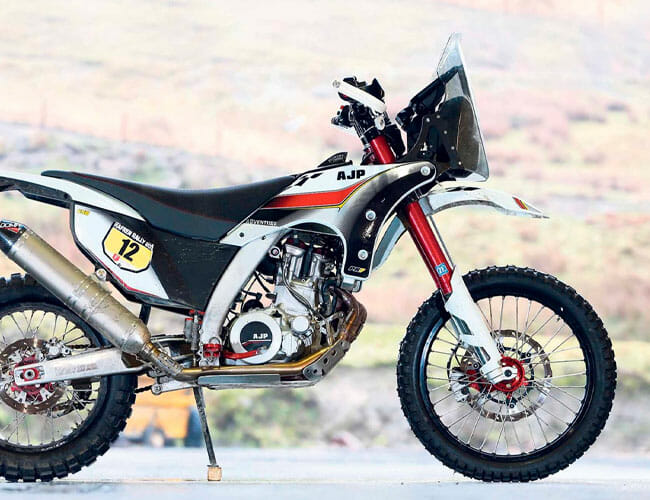
AJP PR7 Rally

Price: $9,995+
From: motoajp.com

Odds are good you’ve never heard of AJP, but it’s high time you correct that. The small Portuguese-based motorcycle maker’s new adventure bike, the PR7, is a delightful blend of off-road capability and all-around usability — at a price that’s easy to digest.

|

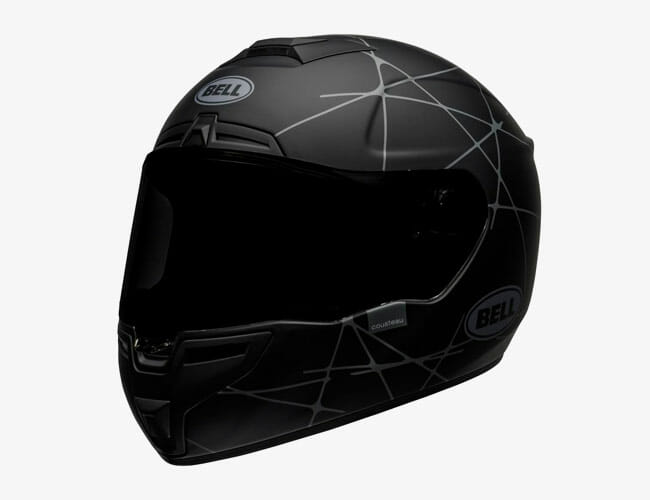
Bell SRT Cousteau Helmet

Price: $220
From: revzilla.com

Snapping up a helmet adorned with artwork by Nuno Henriques — better known by his handle Hello Cousteau — has traditionally been fairly difficult, given the rarity of his works. Now, however, he’s partnered with Bell to bring his designs to the masses.

|

Blacktrack Motors BT-03

Price: $P.O.R.
From: blacktrackmotors.com

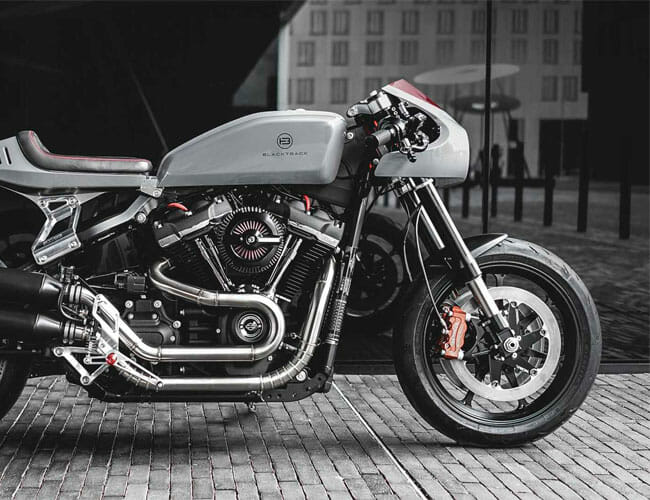
Believe it or not, there’s a Harley-Davidson Fatbob underneath all that sexy sheetmetal. But Luxemburg-based Blacktrack Motors has turned one of Milwaulkee’s old-school rides into something new and distinctively fresh.

|

Harley-Davidson Bronx

Price: $TBD
From: harley-davidson.com

The Bronx is Harley’s new streetfighter, a lean machine packing a 975-cc version of H-D’s Revolution Max engine that spits out more than 115 horses and 70 lb-ft of torque. We won’t know how much it costs until it goes on sale next year, but we can ogle it now.

|

Harley-Davidson LiveWire

Price: $29,799+
From: harley-davidson.com

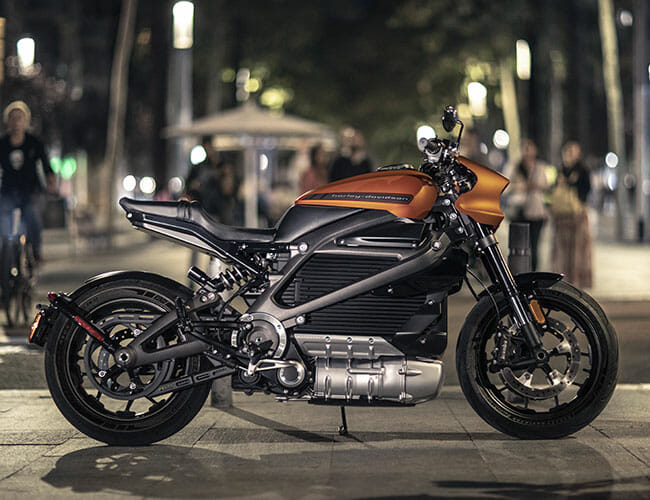
The LiveWire may well be the most important machine in Harley-Davidson’s long history —  an all-electric motorcycle with looks that could kill, fast-charging capabilities and more than 100 miles of range. Future, thy name is Harley.

|

Harley-Davidson Low Rider S

Price: $17,999+
From: harley-davidson.com.com

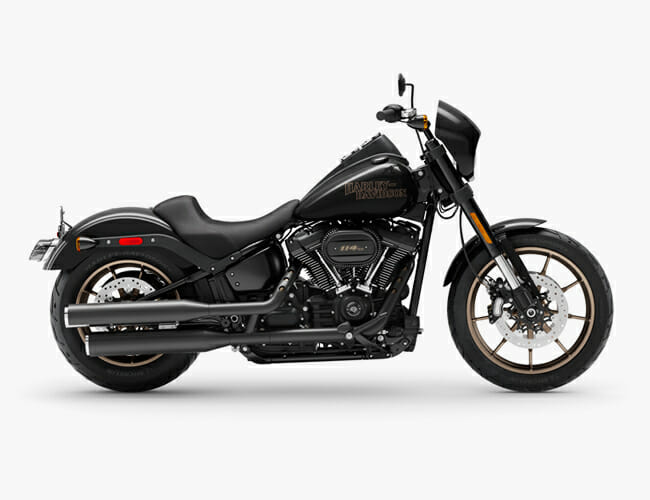
The Harley Low Rider S proves that the company still knows how to make some sweet ol’-fashioned knuckle-draggers. In case there was any doubt.

|

Harley-Davidson Pan America

Price: $TBD
From: harley-davidson.com

The Pan America may not be as big a deal as the LiveWire, but it still represents a big first for Harley: it’s the brand’s first ADV. Built with a little help from the likes of Brembo and Michelin, this powerful adventure bike is set to tear up roads and trails alike in 2020.

|

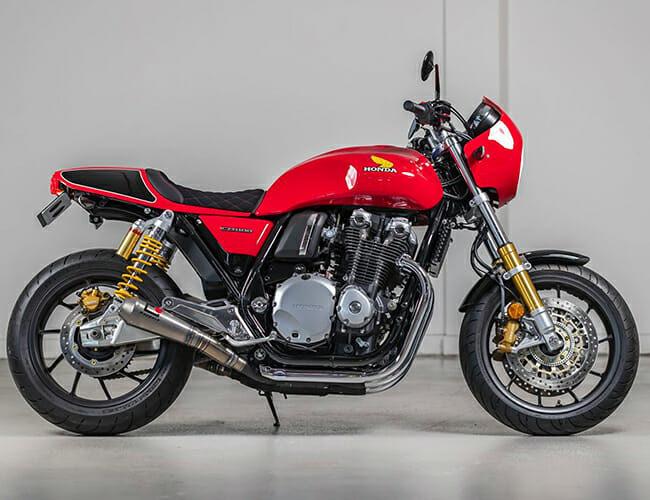
Honda CB1100 RS 5Four

Price: ~$20,748
From: hondaengineroom.com

Like what you see here? Too bad — this tribute to the enduro bikes of the ’80s is only on sale in the U.K., and only in extremely limited numbers. Just 54 will be made, each at a tall price…but you’re sure to get a lot of looks when you ride down the street.

|

Indian Challenger

Price: $21999+
From: indianmotorcycle.com

This giant Indian comes with practically every feature you could imagine wanting on a bike (and probably a few you never even considered wanting). Sure, the price tag is in line with a decent car, but would you rather have a decent car…or an insane motorcycle?

|

Kawasaki KLX 230R and KLX 300R

Price: $4,599+
From: kawasaki.com

Kawasaki’s pair of new dirt bikes are, in a nutshell, the epitome of affordable outdoor fun. They’re taut, they’re light, they’re cheap —  and they only come in lime green.

|

Lego Creator Expert Harley-Davidson Fat Boy Building Set

Price: $100
From: harley-davidson.com

Legos have usually been seen as toys for kids. Harleys are often viewed as toys for grown-ups. Bring ’em together, and you’ve got a toy for everyone.

|

Moto Guzzi V85 TT

Price: $12,990+
From: motoguzzi.com

Moto Guzzi’s new ADV seems tailor-made to give Triumph and its Scrambler 1200 a competitor in the realm of off-beat adventure motorcycles. If you’re looking for retro-styled fun on pavement and dirt alike, the V85 TT is worth a look.

|

Roeg Peruna Helmet

Price: ~$271
From: getroeg.com

Dutch brand Roeg’s Peruna helmet may look like it’s from the ’70s, but it’s very much a modern-day lid, what with its strong, lightweight fiberglass shell and face hole large enough for 21st Century goggles.

|

Sotera Advanced Active Safety Helmet

doucet motorcycle helmet concept future safety gear patroldoucet motorcycle helmet concept future safety gear patrol

Price: $N/A
From: joedoucet.com

You can’t buy Joe Doucet’s Sotera helmet, unfortunately — it’s just a design concept for the time being. But with its color-changing shell designed to let other riders and drivers know where you are and what you’re doing, we can hope somebody takes this idea and runs with it.

|

Triumph Rocket 3

Price: $21,990+
From: triumphmotorcycles.com

Triumph’s new muscle bike packs the largest motorcycle engine ever to hit the streets: a 2,500-cc triple that makes 165 horsepower and 163 lb-ft of torque. It also looks, in a word, badass.

|

Triumph Tiger 900

Price: $12,500+
From: triumphmotorcycles.com

The Tiger 900 line of adventure bikes come in several trims, but all these Triumphs have something in common: they want to get dirty and play around — which makes us want to do the same.

|

Yamaha Ténéré 700

Price: $9,999
From: yamahamotorsports.com

Yamaha’s new middleweight desert rally adventure bike is not only a stunningly capable machine for weekend riders; it’s also an incredibly affordable machine for what it is.

|

Note: Purchasing products through our links may earn us a portion of the sale, which supports our editorial team’s mission. Learn more here.

Will Sabel Courtney is Gear Patrol’s Motoring Editor, formerly of The Drive and RIDES Magazine. You can often find him test-driving new cars in New York City, cursing the slow-moving traffic surrounding him.

More by Will Sabel Courtney | Follow on Instagram · Twitter · Contact via Email

Death Machines Of London Built a Samurai Streetfighter

Death Machines Of London has a cool name and they build wild bikes like this one, called Kenzo. Hard to believe it’s a 1977 Honda Gold Wing underneath the handmade aluminum paneling,  precision 3D printed parts, & composites, but it really is. So even though it looks like a street-fighting Samurai, it will ride like Grandpa’s Cadillac.

There’s a Massive Sale on One of Our Favorite Helmet Brands Right Now

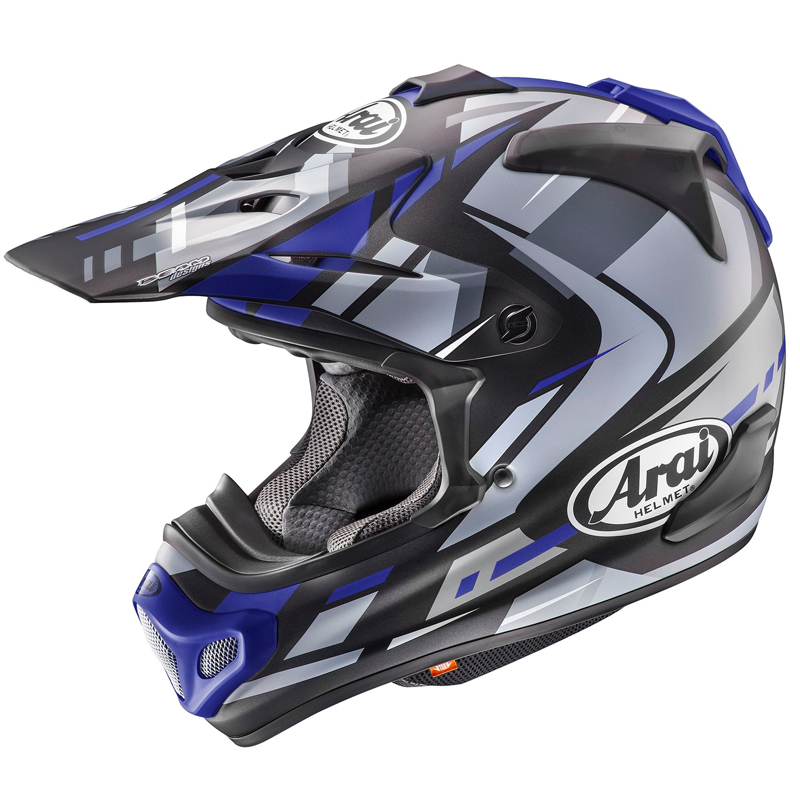
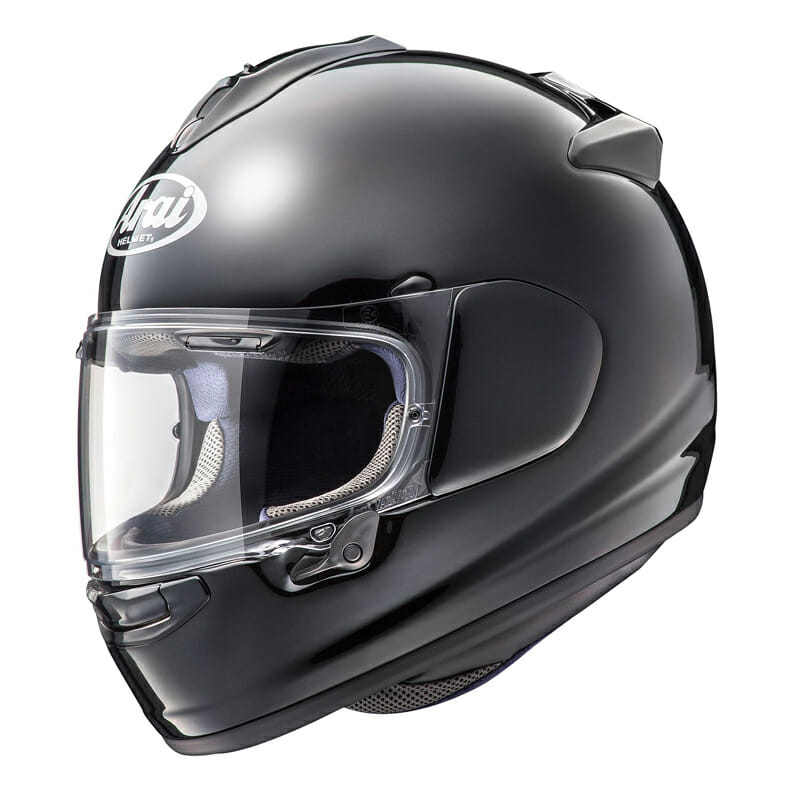
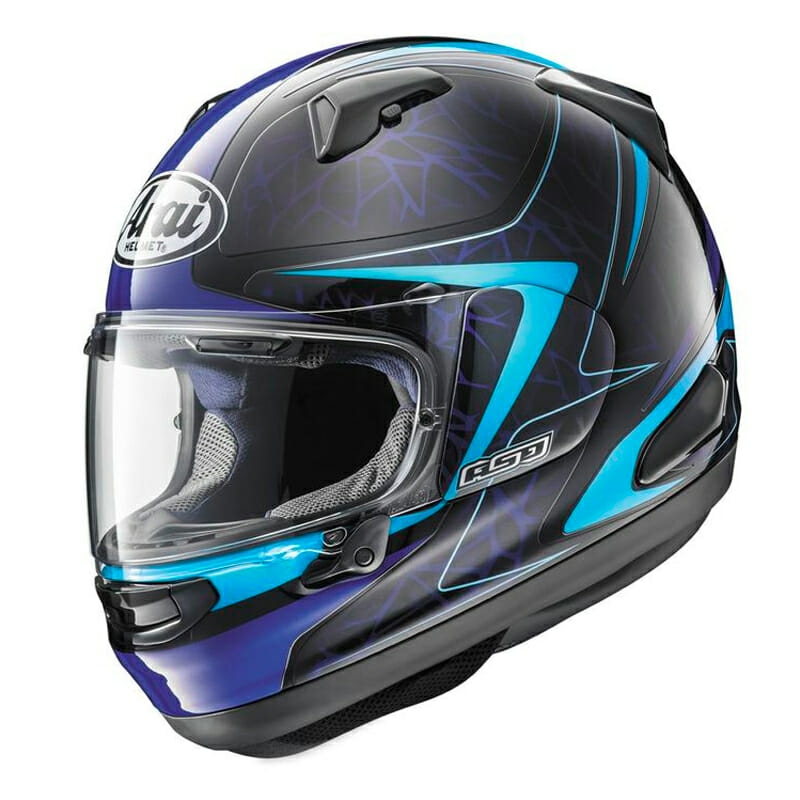
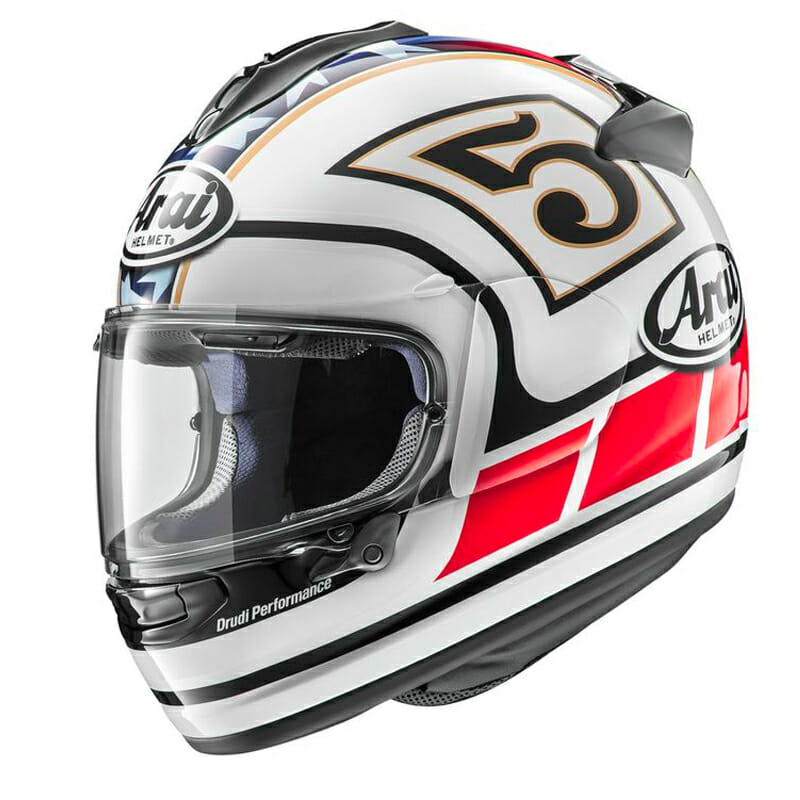
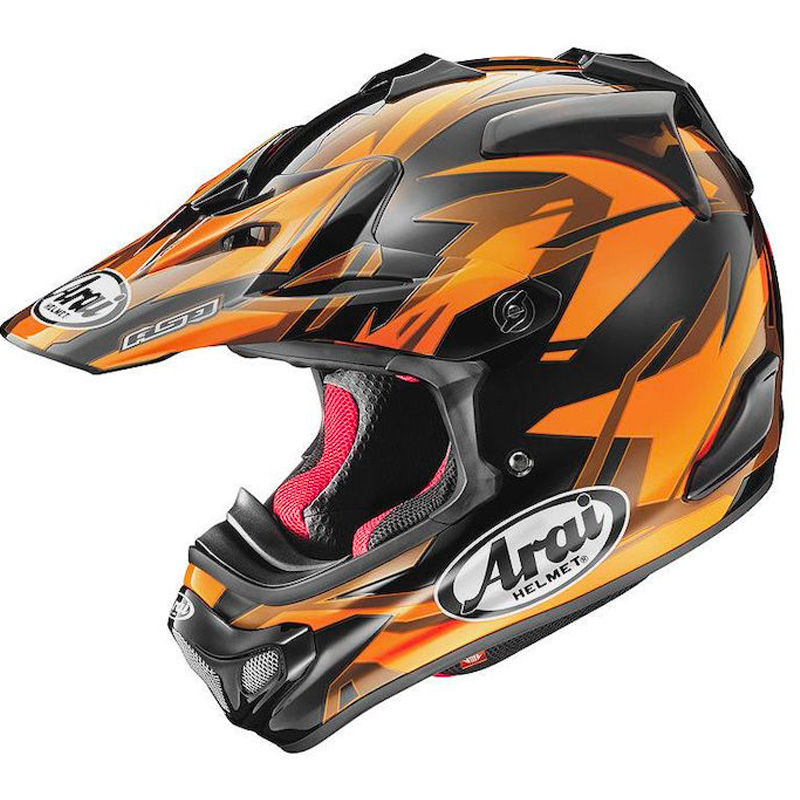
Fall may be here and winter closing in quickly, but you’d be hard-pressed to know it based on the climate across much of America these days. Skiiers may not be stoked about that, but motorcycle riders sure are. And if this added burst of nice riding weather has you stoked to hit the road every chance you can before the snow flies, then why not take this chance to grab a new Arai helmet for up to 60 percent off at RevZilla’s closeout sale?

The sale covers a wide spectrum of Arai’s high-quality lids, with numerous colorways, liveries and styles to choose from. Helmets for both off-road and on-road riders are up for grabs, with several versions of Arai’s VX Pro for the former and plenty of variants of the DT-X (as well as examples of the Signet-X and Quantum-X) for the latter, all for hundreds of dollars less than you’d pay at the store.

We’ve culled a few of our favorites below, but if you don’t see anything you like here, hit up RevZilla’s site directly to peruse all the options up for grabs.

VX Pro 4 Bogle Helmet by Arai $750 $390

DT-X Helmet by Arai $600 $400

Quantum-X Sting Helmet by Arai $830 $450

DT-X Edwards Legend Helmet by Arai $740 $400

VX Pro 4 Dazzle Helmet by Arai $750 $300

DT-X Pace Helmet by Arai $730 $400
Gear Patrol also recommends:
Bell Eliminator Helmet ($400)
Shoei RF-1200 Helmet ($486)
Bell Bullitt Helmet ($400)
Note: Purchasing products through our links may earn us a portion of the sale, which supports our editorial team’s mission. Learn more here.

‘We’re Full-On Petrolheads:’ A Talk With Norton Motorcycle CEO Stuart Garner

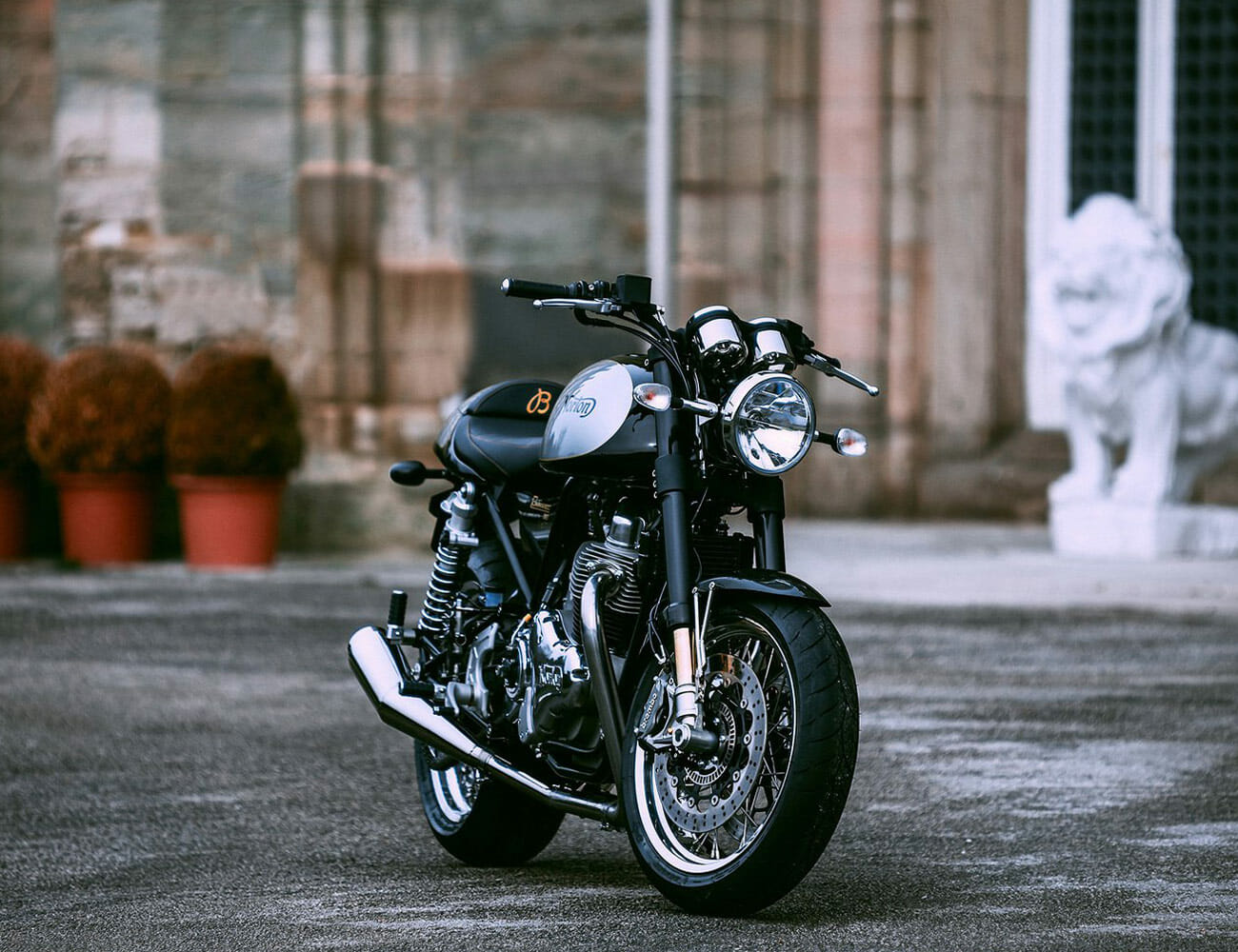
When Stuart Garner bought the rights to Norton Motorcycles in 2009, the famed British brand had been bouncing around between owners since the 1950s. Since then, the brand has slowly but surely grown its portfolio of bikes, expanding from the Commando 961 that relaunched it a decade ago into a range of 10 models and submodels that stretch from the scrambler-like Atlas Ranger to the screaming high-performance V4 RR.

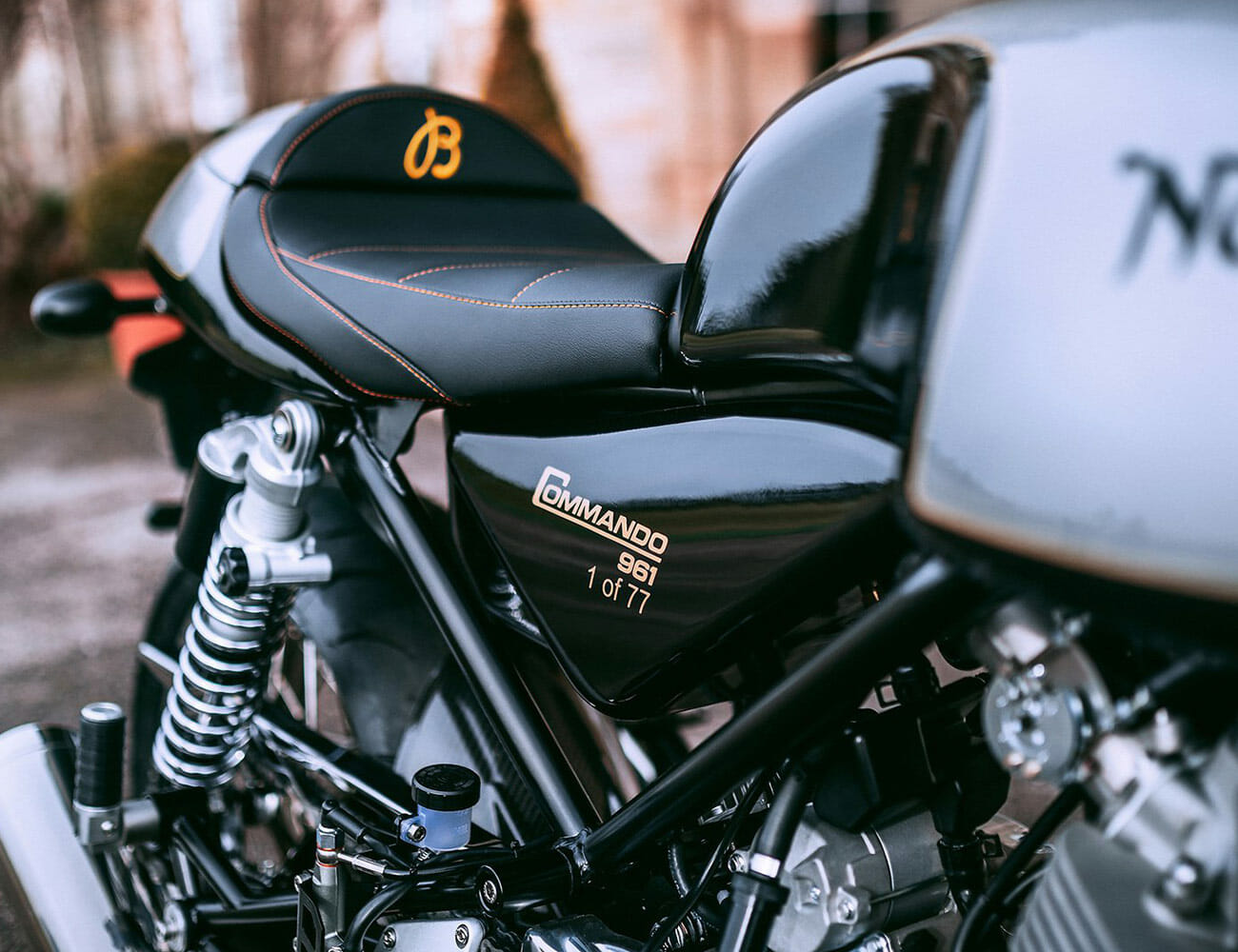
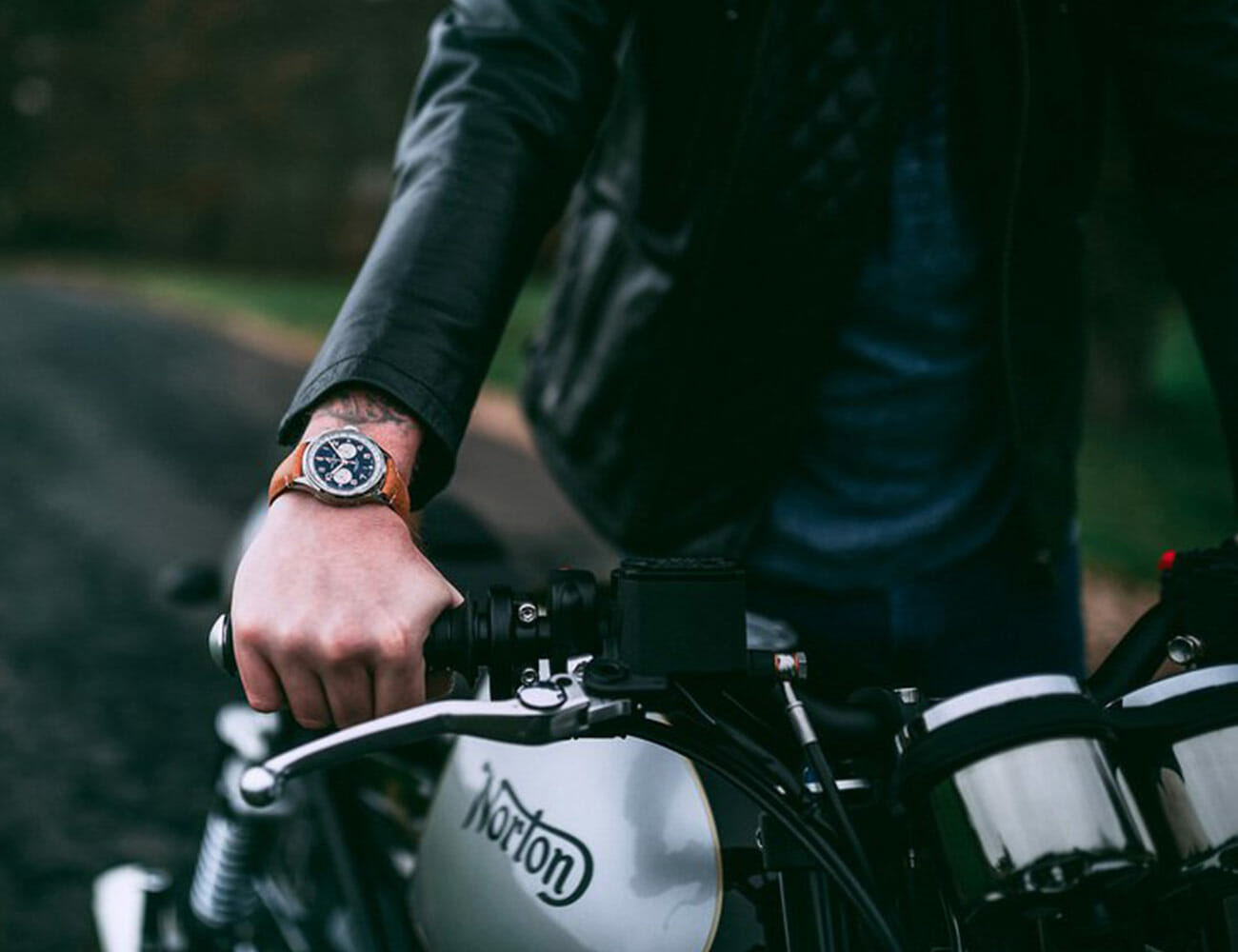
Norton’s newfound solid footing and steady expansion have done more than bring the brand back to prominence in the minds of motorcycle riders; it’s also helped the brand find new partners to work with that elevate its status further. In March, the motorcycle maker announced the fruits of a partnership with famed watchmaker Breitling: the Breitling Sport, a limited-edition motorcycle designed in conjunction with the timekeeping company.

Gear Patrol sat down with him in Breitling‘s New York showroom to discuss Norton‘s partnership with the watch brand, the changing face of motorcycle owners — and why he’ll never ride an electric motorcycle.
Q: How did this partnership come about?
A: Breitling called us. It was quite clear that Georges [Kern, Breitling ‘s CEO] and Breitling wanted to reposition [the brand] a little bit. We got a call to say, they were looking at different partnerships, with air, land and sea; they saw motorcycles as a great extension of land, [so] would we be interested? And what a brand Breitling is, with all the racing over the years with the Bentley relationship. And we said, we’d love to be a part of it.

And it was super-cool; they actually sent a couple of guys over to live with us for a few days, to check us out, to make sure that we were genuine. A lot of companies would just say, “Yep, sign that,” take a cheesy picture, and we’ve got a partnership. They actually came out and put the legwork in. And then we went back to see them, in their hometown. So we got to know each other before we ever did anything.

And both teams care about the products. When we went to look at how do you design a watch, how do you make a watch…the parallels were unbelievable. They start with a sketch in the design brief, then that goes to manufacturing, et cetera, et cetera. But all the time, with Breitling knowing where that watch is going to be positioned and what it needs to be, going through design and drawing through to engineering and manufacturing, exactly the same process as a motorcycle. So not only did we have some historic brand parallel, and a very strong, customer-focused pair of brands, we also had some really strong parallels in the way that we designed and manufactured.

When Georges and I chat, we totally focus on really cool, exclusive product, but [having it be] available in an inclusive way. The product’s exclusive, but everybody that’s interested is included. And its exclusivity in an inclusive way. And there’s not many brands that can capture that; you’re either super-inclusive and you’re mainstream, or it’s super-exclusive and it’s almost…there’s a bit of an arrogance, it’s just a bit stuffy, know?

And I think Breitling sees that, if you’re into your watches, you’re into your watches, and you deserve to be looked after and treated well, regardless of who you may be or how you may conduct yourself. And we do the same at Norton; it’s all about the motorbike. Whether you’re a guy cleaning the roads or a judge or a barrister, if you’re into your bikes, you’re into your bikes, and you’re very welcome at Norton.

Q: Norton’s been around for, what, 10 years now?
A: I bought it in October 2008.

Q: Back from the dead, basically. How has that been?
A: Oh, it’s been a huuuuge adventure.

Q: That’s a polite way of putting it. [laughs]
A: I would never do it again. Never ever. I would never not do it; I’m super glad I did it, but I’d never do another one. I think the pressure of a historically huge brand like Norton, bringing it back in the digital age — with websites and social media, Instagram, Facebook — you have so many people that know and follow the brand, from yesteryear that have a view, et cetera. And then so many people that see the brand for the first time today, in the last 10 years, you have to be so careful to respect the brand and respect all of the owners, whether they’re really old guys back from the `60s and `70s, or whether it’s a new owner from today. And that gives you kind of a very tight…margin for error, if you like, in the way that you bring the brand forwards and how inclusive you have to be to bring forwards the rider and owner from 1970 and also the rider and owner from 2019.

Q: How do you do that?
A: Ultimately, it’s all about the motorbike. Which is why we have great commonality with Georges and Breitling. But being about the motorbike and respecting the brand…it kind of finds its own way. You have to be almost less corporate and less restrictive; in a bizarre way, Norton finds its own way [all by] itself.
Q: It’s a little bit of a Field of Dreams thing. If you build it, they will come.
A: A hundred percent. On day one, when I purchased the brand, I looked back to 1898, and saw what Norton was doing. And I made a brand timeline, with the start being 1898 and the end being where I stood. And I kind of metaphorically looked over my shoulder, back to 1898, followed all those touchpoints to today, and then turned back and looked forwards. You kind of feel the brand behind you, pushing you in a direction. And somehow, it became very obvious: that’s the way the brand has to go. The weight of the brand behind you is telling you which way to go with it, and I think you would only get that if you’re into your bikes, and you understood, if you build it, they will come.

If you’re into your bikes, you go, “If I had a bike brand, I’d do that.” And if you’re an accountant, you’d look at the balance sheet, and make sure my materials were profitable and I had a good margin. We didn’t give a shit about that. It was about building a nice motorcycle. We didn’t do it to be wealthy. We did it to bring the brand back. And as a biker, we just wanted to make cool bikes. We got the brand right, but we only got the brand right because we built what we thought was the bike we all wanted.

Q: What would you say makes a Norton a Norton?
A: When we design it, we say, you need to take a little bit of your history, and bring that forwards to the next bike. but also you need to break a little bit of fresh ground, otherwise, it’s just same-old-same-old. We say, you need to see a bit of old in the new, and you need to see a bit of new. And the acid test for us is to take the name off the motorbike and be able to identify the bike from the silhouette and the visual. When we’ve done that, we know we’ve gotten the design right.

But there’s a heck of a lot that goes into understanding all of that. We go and do all of the motorcycle shows ourselves; we all ride bikes, we’ve all got our finger on what the next trend is, what other manufacturers are doing. And when you stand there and do the motorcycle shows, there’s nothing as honest and blunt as a motorcyclist. If you’ve got it wrong, they will kill you. In a very nice way: “Boys, that’s shit.”

I have a theory: If you’ve been a lifetime on your motorbike, it will have broken down; you’ll be out in the rain and get super-wet; you’ll be in a crash, somebody in a car will knock you off. You have to have some humility. It knocks away your ego and your arrogance. And as you design the bike and look to speak to bikers, if you are one and you understand that, you realize, you don’t need bullshit. Just do it honestly, and as you would expect as a customer and an owner and a rider. That’s been our biggest lesson, just keeping it about the bike.

Q: Who do you admire in the motorcycle space right now?
A: I think over in India, Royal Enfield are doing very well. Not particularly in the big bike space, but as a brand, the last few years, phenomenal how they’ve come forwards. I think Indian have done a great job, with the guys positioning the brand into Harley, bringing out the FTR and some of their new models. Polaris has done a great job in buying that brand. Very brave to close Victory, and then go pretty full-on with Indian. Very, very brave decision by corporate to close a company that had strong revenue overnight and go, “Right, we’ve got Indian.” Super-brave, I couldn’t believe it. But they’ve proven to be absolutely right.

I think the industry in some ways is in a little bit of trouble, because the dynamic of the industry is changing. What motorcyclists want is changing. Everybody’s chased big bikes, horsepower and stats, and I think you see the retro, the coolness and the simplicity coming back. And I think some brands probably aren’t as prepared for that as they should be. I think lifestyle is going to become more of a factor; lifestyle of the brand, of the bike. If you buy a Norton, or a Harley, or an Indian, it’s a lifestyle proposition. It’s not about the numbers. And we continually, as a society, are becoming more brand- and lifestyle-driven. I think some of the Japanese brands will struggle to do lifestyle; they’re big volume guys, and they do big volume brilliantly like nobody else can. But equally, lifestyle proposition is difficult for some of those guys. So I think some of the smaller niche brands have probably got a strong future in the next few years, as it feels like that’s where the market’s going. Who knows. I hope I’m right! That’s where we’re headed.

It feels like that’s where the market’s going. There’s a few demographic changes; in the U.K., lady riders are the fastest-growing demographic. And we see 40-, 50-, 60-year-olds coming to bikes for the first time. They didn’t have a bike when they were 18 or 20, they didn’t have a bike, ever! And now they’re going, “Hey, that looks cool.” And they’re buying a motorcycle and taking their test for the first time.

There’s starting to become a coolness about having a motorcycle. Not in a Harley-Davidson way, where you’re foot-first, and you’ve got your tassels and your hells angels — it’s not in that way. It’s the coolness of having a ride out with your friends. I see the first signs of motorcycling becoming a nice, well-to-do pastime, where for a long time, it’s been kind of frowned-upon. It’s noisy, it’s loud, anti-social; motorcycles have carried that stigma, but I can see that changing a little bit. Maybe it’s already changed and we’re past that already.

And it would be a great thing if that happens, because it would kind of clean up the industry, in a way. Give the industry a nicer feel and a bit better reputation. ‘Cause, well, that stuff goes back to the 60s, when they were doing cafe racers, y’know? And fighting guys on scooters. 60 years ago.

Q: How do you see technology changing the motorcycle experience?
A: A motorcyclist is just about the purest petrolhead you can find. So…if you enjoy your big V8 or your V12, you probably don’t want to kill that with technology. And that’s not an [anti-] electric vehicle statement…you don’t want endless traction control and a Tiptronic gearbox. You want a manual. You want traction control off. You wanna drive the car. Motorcycling is about the purest form of speed. In essence, you sit on an engine with wheels. So there’s an element where, if you’re on a track bike, and you want your rider aids and your anti-wheelie and launch control, we have that — we have all that at Norton, and it takes the bike into a level of performance that you pretty well gotta be a professional rider to maximize and enjoy. We see a lot of our guys and girls, they want the rawness of motorcycling. It’s almost an escape from technology.

And I think one of the reasons why some of the retro bikes are super-cool and coming back, the simplicity of riding a 1950s, `60s, `70s bike is so refreshing! I’ve not got the digital screen; I’ve got four gears. It’s so easy, and it’s not fast, so it’s enjoyable. It doesn’t feel dangerous, because I’m not going that fast. The simplicity of riding the bike means I’ve got more mind space to enjoy the ride more. I think there’s a place for technology in the sports bike market, primarily for track days, and maybe some of the cruisers just to make long rides a bit more comforting. But general motorcycling, I think, is everything technology isn’t. Because it’s about that free spirit, the wind in your face — you know.

We’re not technology-driven at Norton. We have it — bristling on our V4 bike, it’s all over — but if you ask me what’s my favorite bike, it’s my 1950s 500cc single. It’s just so easy to ride. You get on it, and off you go. Beautifully simple.
Q: Have you tried riding any of the EV bikes that are coming out?
A: Man, I don’t wanna do something that’ll make me turn in my grave in years to come. No, I’ve not.

I think…y’know, we all want to leave the planet better than we found it. We’re learning that now. We didn’t know this shit 30, 40, 50 years ago. We’ve obliviously kinda destroyed sections of the planet. I don’t think anyone would say that’s a good thing, or that they’ve enjoyed it. And we all want to do the right thing. But…I think the technology hasn’t shown itself yet, for cars or motorbikes. Full electric, to me, doesn’t seem to be the correct way for cars. and certainly doesn’t work for motorbikes. It works for A-to-B, short mobility, for a motorcycle. It works, for sure, off-road, in a 20-30 minute competition, motocrossing or similar; you’ve got less noise, it’s less anti-social; probably cruising, where you can have a bigger battery, that probably works. But general motorcyclists, battery-limited performance, limited range — the concept doesn’t work at all.

When you come away from the concept and the practicality of it, when you start your bike, what’s the first thing you do? Put your key in, start the bike, rah, rah — you give it a couple revs! Motorbiking’s all about the visceral experience. It’s not just about the speed or the look, it’s the whole package. The sight, the smell, the noise. And an electric bike doesn’t give that visceral experience that a combustion engine does.

And I think we’re kind of playing with fire if we all move over to electric. It could ruin the industry. And it might be different in a couple of generations, when we haven’t experienced the smell of two-stroke and the noise of V8s or a big V4 screaming along, or a 500 single. But at the moment, I think if we move too quickly, we risk losing some bikers. And you might see some of the old retros just become everlasting, just because nobody wants to go electric.

And, y’know — it’s interesting, isn’t it, the planet thing? I think we need to find solutions that work commercially, that are commercially viable and sustainable, and not forced upon industries. And I do have concerns about the electric market and emissions being forced upon the motorcycle market by politicians. And in some instances, I don’t think it’s suitable. And I wouldn’t like to see an industry and jobs ruined because of this EV push. I think if we’re sensible, there are categories and sectors where it could work, and there are categories and sectors where it won’t work. But as yet, I don’t think we’ve found the solution.

We’re probably at the front end of looking at hybrid. So far as I know, nothing’s being launched or delivered in a hybrid motorcycle, but if anybody can crack hybrid…you could be zero emissions in town, because everybody wants that, but have full combustion engine out of town. And I think maybe there’s a compromise there, where the industry could move forwards and have a really sustainable, valuable product.

As a small company like Norton…we can’t afford to be the first mover, to break new technology. We can’t risk putting our investment into a technology that might be the wrong one. So we’ve gotta look to see which technology is gonna be industry standard and adopted, and then move to get behind it. But for now, we’re full-on petrolheads, and fully committed to motorbikes as we all know them.

Note: Purchasing products through our links may earn us a portion of the sale, which supports our editorial team’s mission. Learn more here.


Tarform Electric Motorcycles Wheelie Toward 100% Green Mobility

Designed & built in Brooklyn, startup electric bike builder Tarform has created a futuristic urban assault bike with a clean, minimalist design. There are currently few details on performance, power, or specs but the brand is talking about integrating machine learning, AI, and bio-materials into the build. The bikes are currently in pre-order phase with an estimated street date of late 2019.

Zero Motorcycles is Bringing Their Flagship Adventure Bike To the USA

For 2020, California-based electric motorcycle maker Zero is introducing the formerly EU-only Black Forest DSR Adventure Bike to the global market. Powered by a silent 14.4 kWh electric motor, it features a whole range of adventure essentials, and lockable cases for ample on-board storage. Numbers. A range of 82 miles in the city & 39 on the freeway; top speed 98mph.

[embedded content]

2019 Indian Chieftain Limited Review: More Bike Than You Need, In the Best Way

It’s kinda hard to remember now, but there was a time before the internet. Back then, when you didn’t know something, you couldn’t just look it up. You went with your gut, or you stalled, or you b.s.-ed your way through; in effect, you felt your way to a functional sense of reality.

Coincidentally, if my childhood memories serve, those pre-internet days were also a time when majestic cruiser motorcycles seemed to rule the road. Why “coincidentally,” you ask? Because I’m writing this review of the 2019 Indian Chieftain Limited while wedged into a cramped seat on a cross-country flight, in a plane that — despite prior assurances to the contrary — lacks WiFi.

So what you’re about to get is a pre-internet-style review of the bike I’ve spent the past month riding, featuring a heavy reliance on gut feelings — but that just might get us closer to the truth.

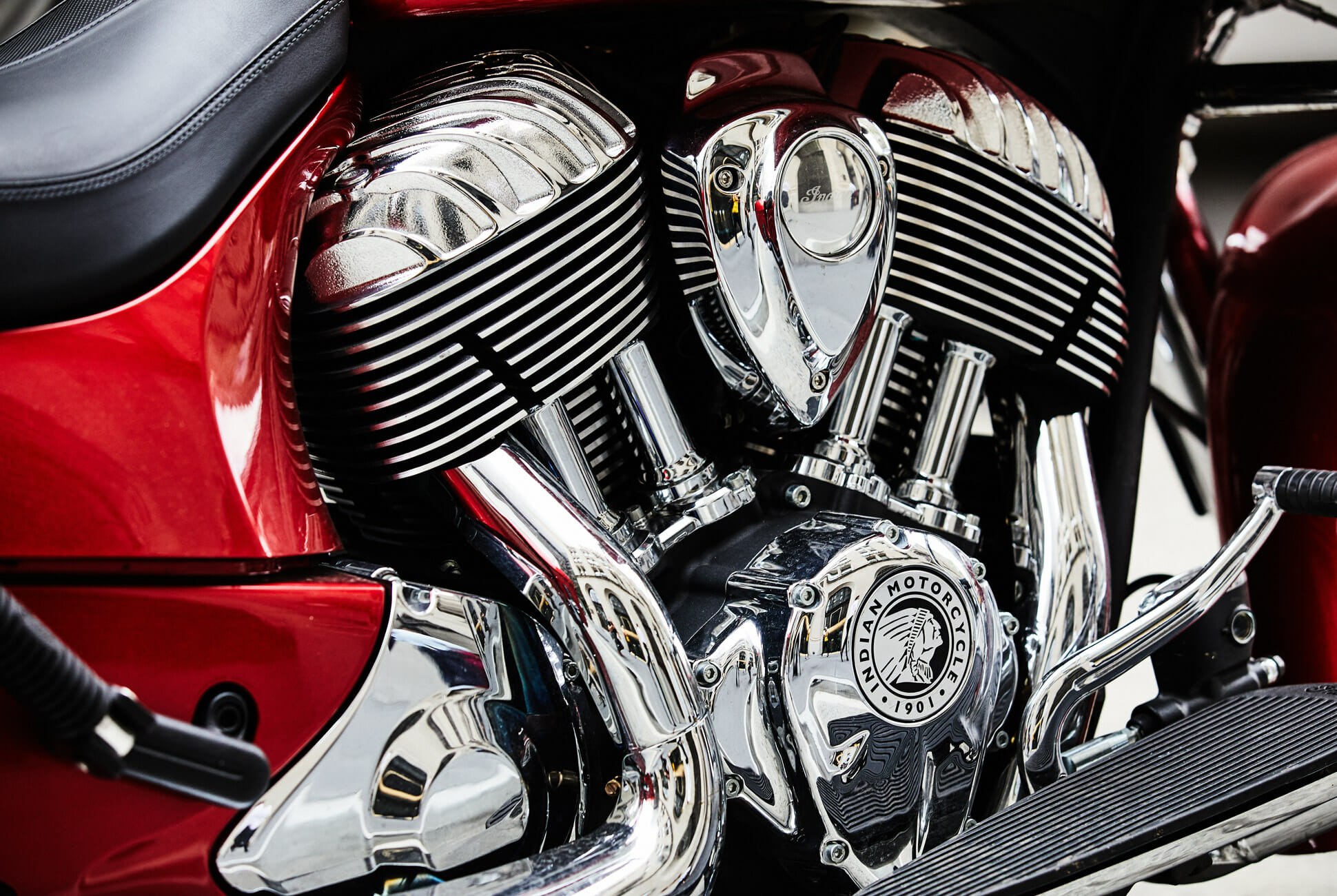
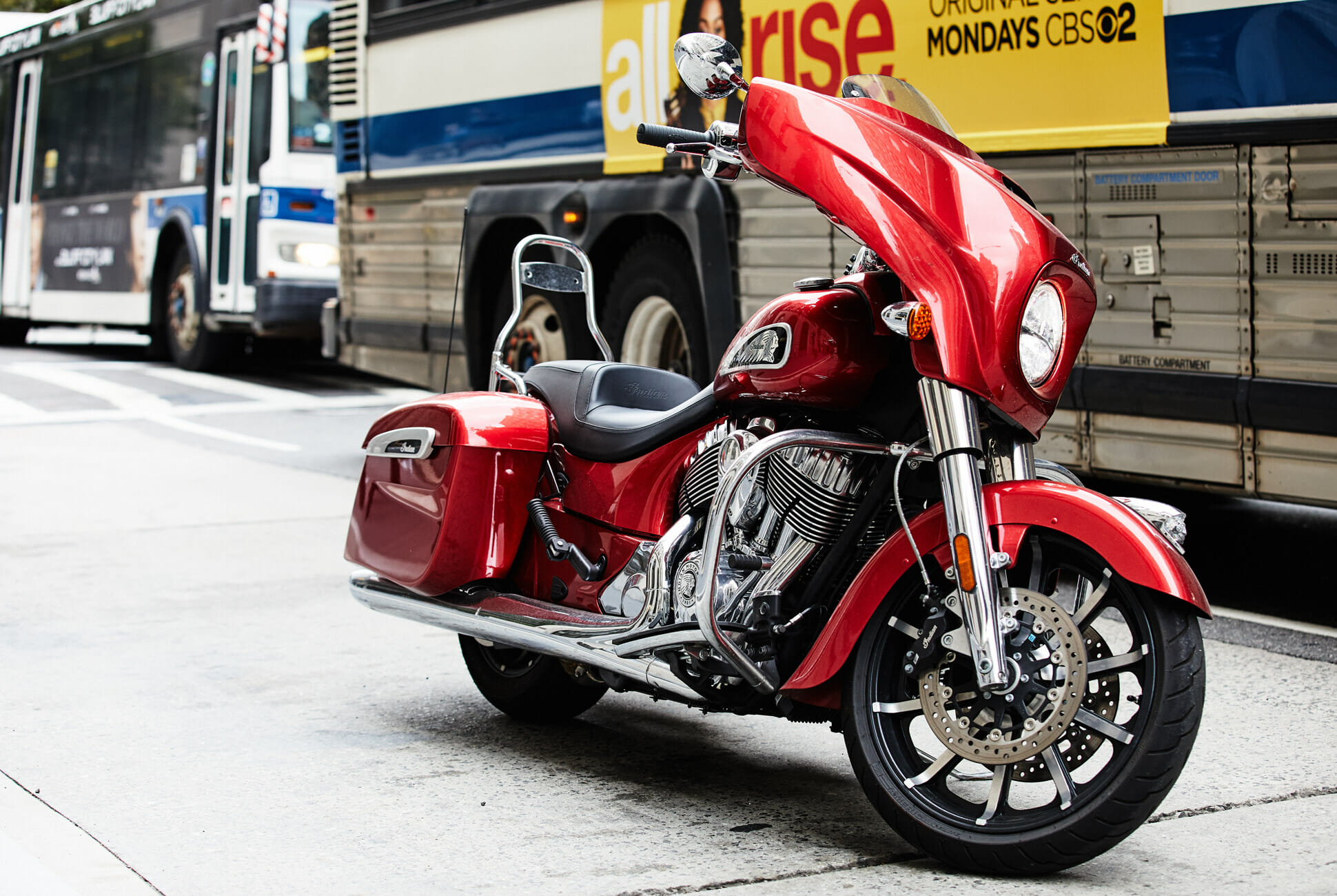
First Impressions: Let’s start with a few facts about the Chieftain line, courtesy of the press kit I downloaded before my trip. This year marks a full redesign of the series that launched to much acclaim in 2013. Highlights include more aggressive lines, ultra-bright full LED lighting, three ride modes (touring, standard and sport), a 100-watt premium audio system and a low-slung stance with more than four inches of rear suspension travel.

Of course, none of those notions ran through my head when I picked the bike up from a dealership in Connecticut and rode it back to Manhattan. No, when I first laid eyes on this Ruby Metallic machine, all I could think was: she’s big and she’s beautiful.

That said, the dry weight of this bike is 795 pounds — a good 300 more than my daily rider, a 2014 Triumph Bonneville T-100. So I was maybe just a bit intimidated, too. But the moment I pushed the power button and a big swirl of animated smoke unveiled the Indian logo on the 7.0-inch touchscreen, I felt stoked.

I paired the sound system with my phone, queued up a classic rock station on Pandora and hit the (keyless) ignition switch, and the Chieftain quite literally roared to life. I blasted onto the highway to the strains of Whitesnake’s “Here I Go Again.” Old-school tunes for a throwback-style ride, if you will.

The Good: From a pure performance standpoint, the Chieftain is a dream on the highway. I took it on a 500-mile weekend roundtrip to central Pennsylvania, and it devoured the distance, even negotiating an unexpected stretch of climbing up a gravel off-road path. The bike feels super-stable, even when surrounded by wind-shearing semis. And the V-twin engine paired with a six-speed transmission is smooth and responsive — to the point where you can easily hit 90 miles per hour without noticing just how fast you’re going.

I’ve ridden other big, somewhat similar bikes, including Harley-Davidson’s Heritage Softail, where the shifts can best be described as “clunky.” Meanwhile, the Chieftain’s casually flickable gear-shift peg and ample torque make for lively, borderline-effortless acceleration. The anti-lock brakes are another strength, allowing gradual deceleration without panic, along with the ability to quickly cut speed without, um, skid marks of any kind.

Even at high speeds, both the handlebar and touchscreen controls are quite user-friendly. On the handlebars, you can skip songs, adjust volume and pause music, all via one left-hand switch. Its counterpart on the right side lets you do something even cooler: raise and lower the windshield a few inches, so you can alternately savor your music or soak up the breeze.

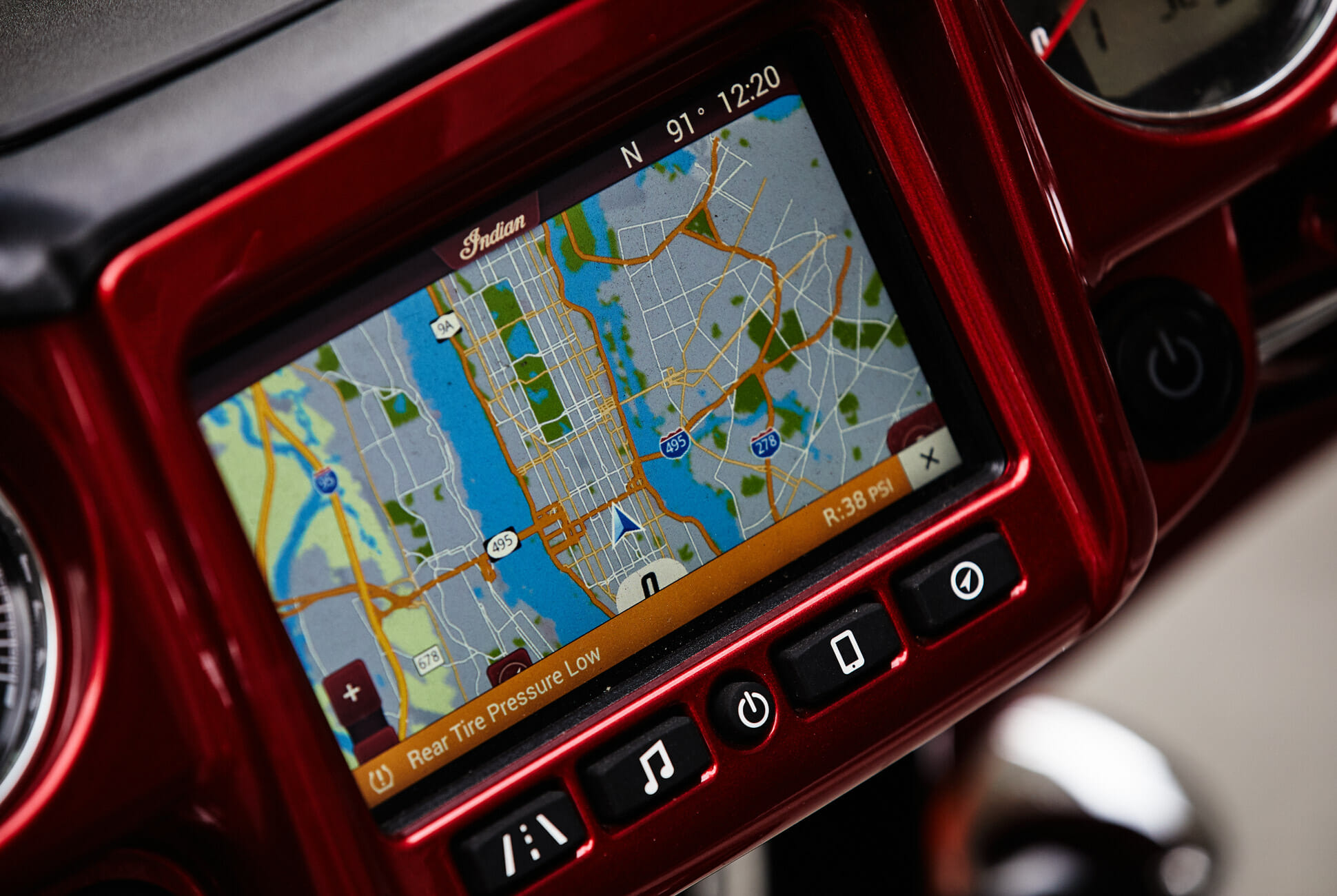
Meanwhile, the glove-friendly touchscreen lets you do even more: switch up the music, change the riding mode, view a full-screen map of where you’re headed and monitor diagnostics; for example, it alerts you when you need gas, asking if you’d like to locate a station. It even lets you know if, say, your rear tire pressure is low. A split-screen view allows you to multi-task at a glance.

But back to the aforementioned music. Indian upgraded its stock audio system for the Chieftain series. Separating the tweeters from the mid-range speakers amps up the output and clarity, while a customizable dynamic equalizer actually adjust frequencies to compensate for road, wind and engine noise. All I noticed is that it’s pretty damn loud, especially when zipping around the city. The music only gets choppy when you go over 75 miles per hour with the windshield down.

Bonus: the infotainment is separate from the engine power, so you can pull up, cut the motor and keep on rocking while you dismount and compose yourself. And did I mention the volume goes to 11? No, really — it does.

Watch Out For: All that said, I do have a few issues with this bike. One is more substantive than the others: the built-in navigation system is a nightmare. The mapping’s not bad, but we’re all so accustomed to using our phones and their intuitive apps to get around. Apple CarPlay and Android Auto are clearly where car and motorcycle nav systems should be headed.

This bike is nowhere close to that. Instead, I spent valuable minutes entering addresses that it often could not locate. It literally couldn’t find my apartment; I resorted to entering the name of a nearby flower shop to get home. At one point, after visiting friends in New Jersey, I just wanted to get some gas and cash from an ATM before hitting the road. The nav system, in turn, took me to two banks that were not banks and a crumbling gas station that had clearly been shuttered for years. I ended up playing my phone’s navigation through the speakers to get where I needed to go.

I do love the Chieftain’s storage capacity; it has two large saddlebags, plus a handy little slot above the touchscreen that’s great for connecting/charging your phone and stashing a bit of tollbooth cash. But on several occasions, I found the saddlebags difficult to lock. You have to push down on them in just the right way so they click into place, then hit the lock button on the key fob. I was always able to get them to lock, but it often took a few tries, which isn’t ideal.

One other issue: I’m maybe 5-foot-8 on a good day, and more than once, depending what angle I parked the bike at, the kickstand could be tricky to fully reach and pull back. I would have to sit way up on the seat, carefully lean the bike to the right and then strain my left leg to reach and disengage it. So if you’re sized closer to Kevin Hart than The Rock, you may have issues.

On a somewhat related note, this bike is definitely a challenge to ride around the city. While it excels on open roads, steering around obstacles at slow speeds, heck, even parking, I needed maximum focus to avoid dumping the bike in the middle of Fifth Avenue. But you know you’re getting nitpicky when you’re knocking a bike’s performance in an area it’s not really designed for; is any bike this size designed for the controlled chaos of New York City?

Alternatives: Harley-Davidson Street Glide Special ($27,699+); Kawasaki Vulcan 1700 Vaquero ($16,799+); Honda Gold Wing ($23,800+)

Verdict: You’ve got all the info you need to decide if this bike’s for you, but I’m still 600 miles from Seattle. So I’ll add two more things.

First, if you can’t tell from the photos and description, the Chieftain is sexy AF, as the kids say. From the styling to the paint job to the sound system to the rumbling engine, it turns heads in and out of the city and puts huge smiles on the faces of passengers and passersby alike. (At one point, I was sitting at a traffic light on Bleecker Street, and a guy just walked over and hugged the faring.) Beauty is a little tougher to quantify than engine size, but man, does it count for a lot.

Second, one of the last times I rode the Chieftain, I was cruising the Westside Highway around 10 p.m. on a weeknight, bopping to The Revivalists’ “Wish I Knew You,” when I pulled up behind an ambulance at a red light. Standing up for a break, I could see inside, where an EMT sat next to a man on a gurney with a ghostly pallor. He had clearly seen better days. I felt bad for the dude. I was also reminded that the clock’s ticking for all of us, and we’ve gotta make the most of the time we have.

The light turned green. I took one last look at the guy and said a little prayer for him. Then I cranked up the music, and started kicking through the gears as I sped around the ambulance, reveling in the music and feeling the wind rush past me. Life is just too short to not ride something big, red and fast.

Indian Chieftain Limited: Key Specs

Powertrain: 1,901-cc V-twin; six-speed transmission
Torque: 126 pound-feet
Peak Torque RPM: 2,900
Weight: 798 pounds (empty fuel tank)
Fuel Tank: 5.5 gallons

Indian provided this product for review.

Read More Gear Patrol Reviews

Hot takes and in-depth reviews on noteworthy, relevant and interesting products. Read the Story
Note: Purchasing products through our links may earn us a portion of the sale, which supports our editorial team’s mission. Learn more here.
Alpinestars Tech-Air vs. Dainese D-Air: Motorcycle Airbag Systems, Compared

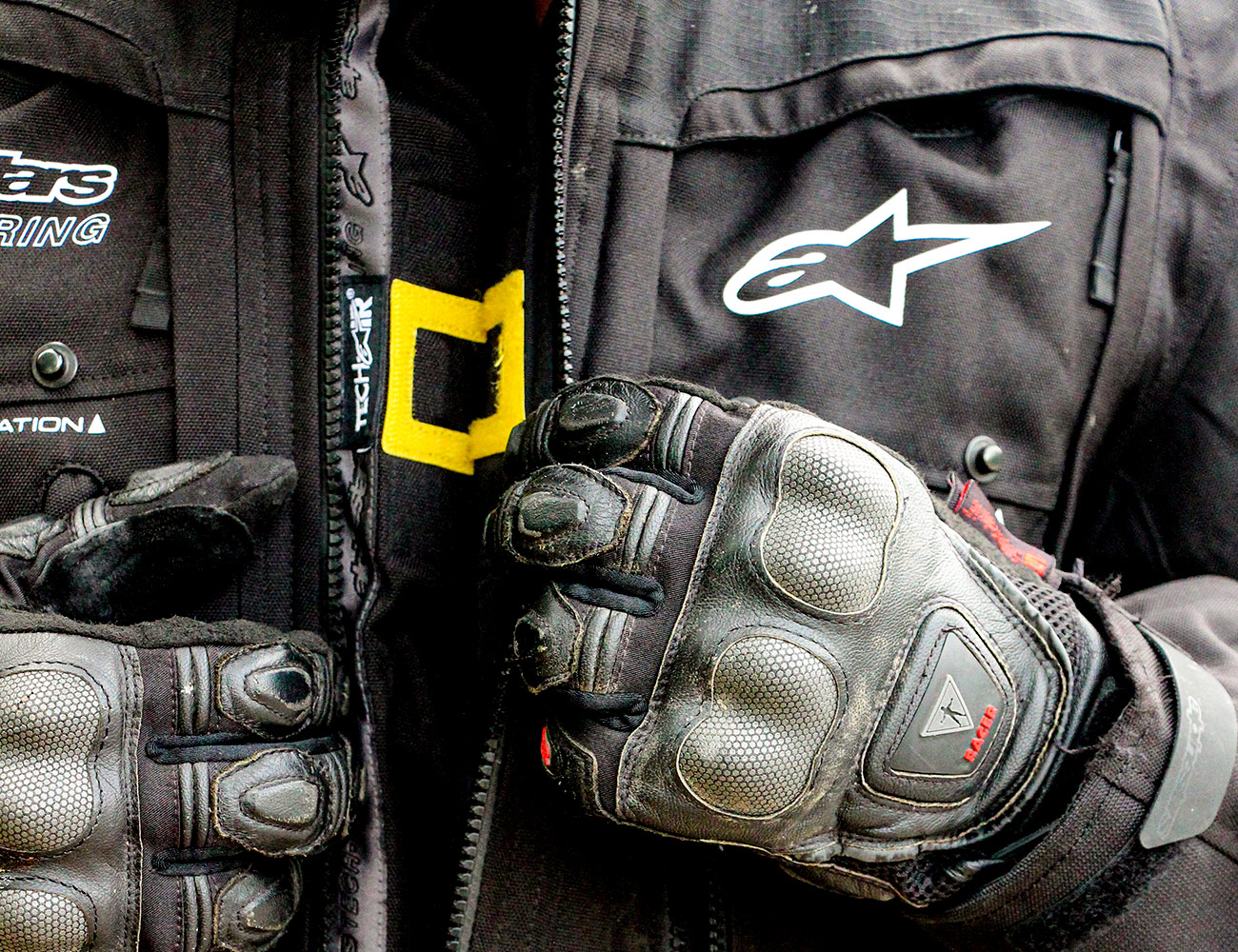
Airbag technology for motorcycle riders is quickly entering the mainstream — and two Italian brands, Alpinestars and Dainese, are at the forefront of the trend. Both of their respective systems, known respectively as Tech-Air and D-air, are completely autonomous; there are no tethers between rider and bike. In the event of a crash, both can fully cocoon a rider’s upper body in less than half the time it takes our brains to react to the same stimulus.

The Dainese D-air system made it to market first, with public protection available for track use in 2011 and a street system making its debut in 2012. Alpinestars Tech-Air line, on the other hand, didn’t hit store shelves until 2014, but was able to pull data from a much larger pool of professional MotoGP riders to hone and refine their technology, enabling it to boast being the first rider airbag system to not rely on a physical tether the way early D-air systems did.

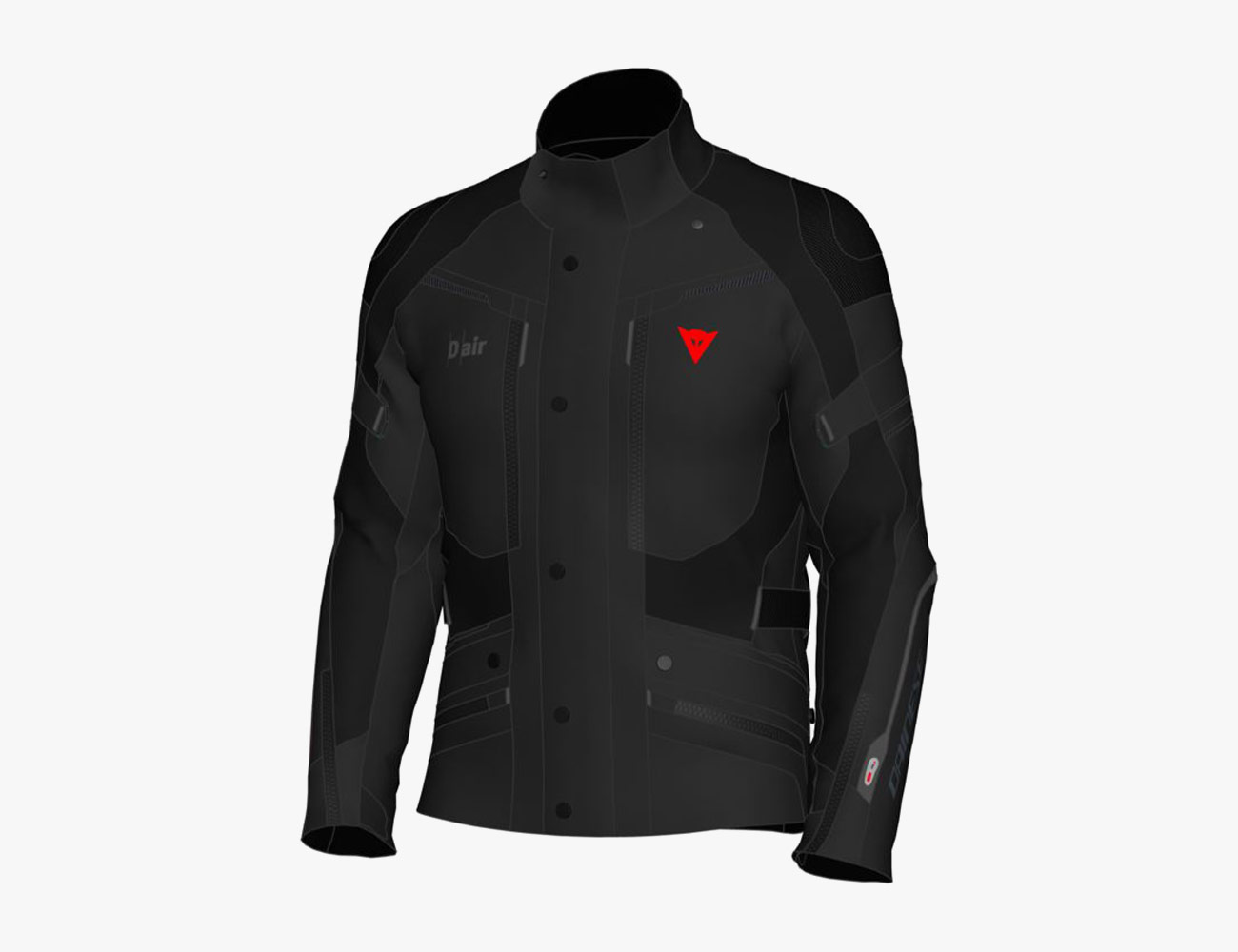
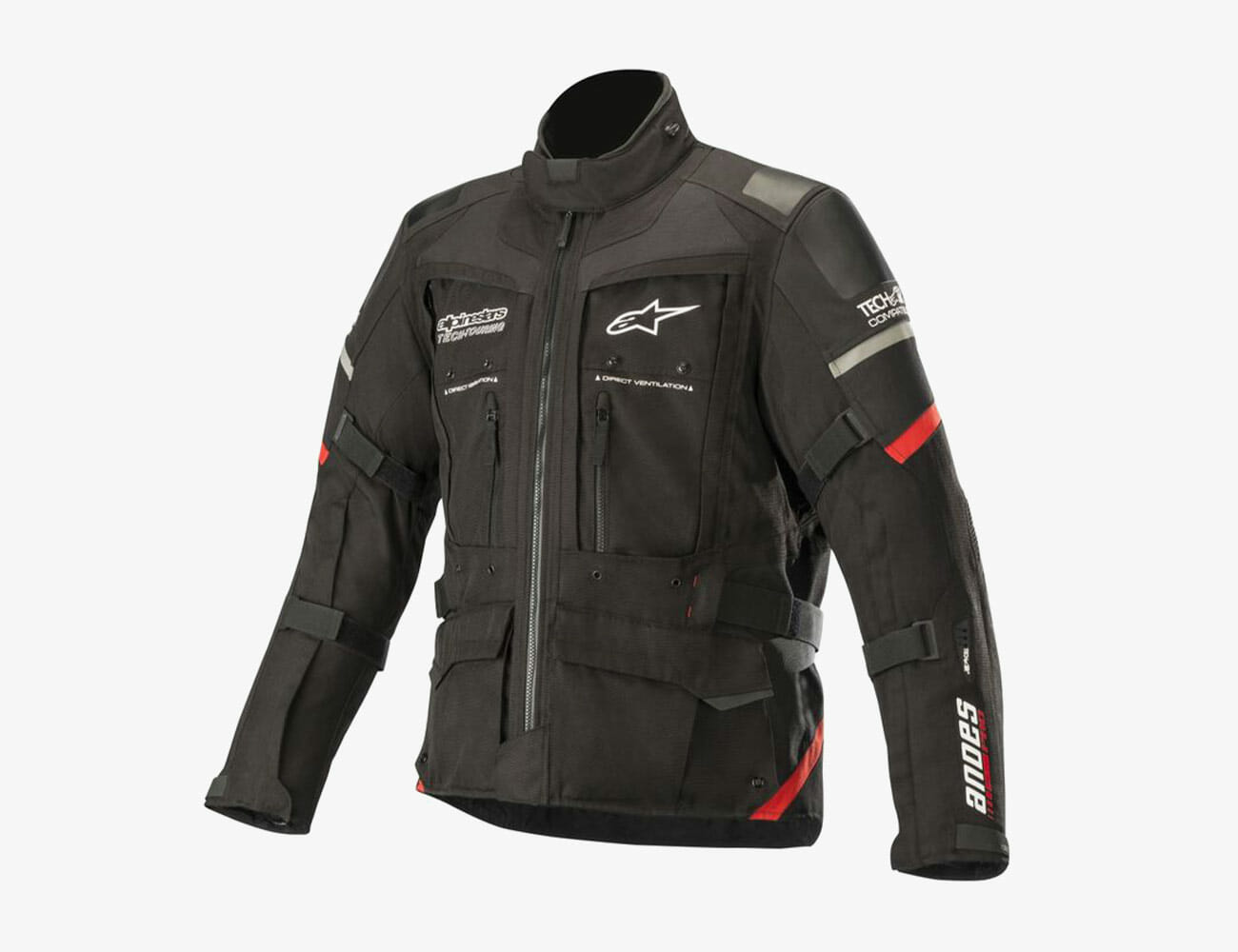
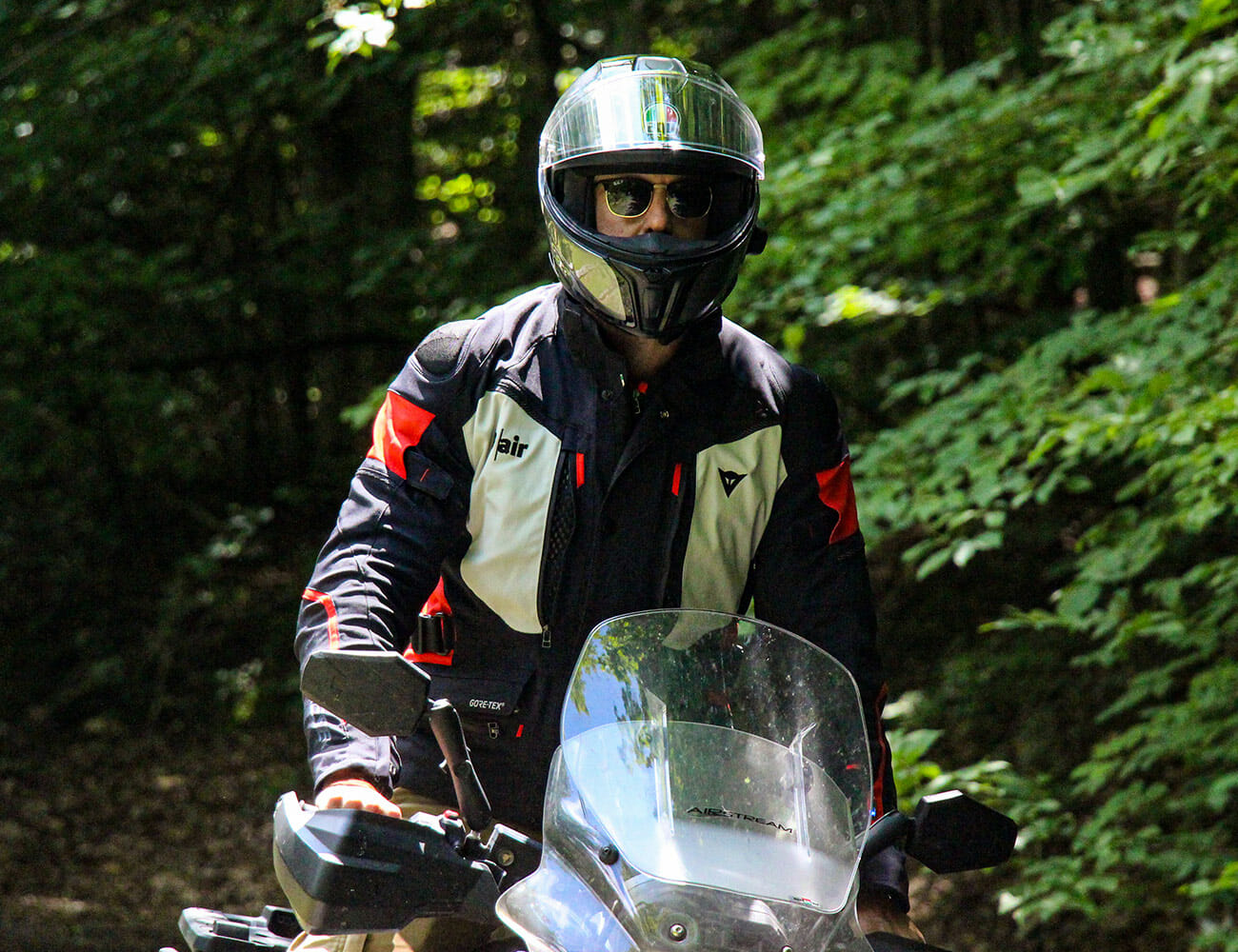
Both systems are good. In fact, I’d argue that every rider on today’s streets should be wearing one or the other. But is one better? Since the beginning of the season, I’ve been riding exclusively with either the Alpinestars Tech-Air Touring vest (installed into its Andes Pro jacket) or the Dainese D-air street system (integrated into the Carve Master II jacket) to figure that out. Here are their pluses and minuses.

Technology

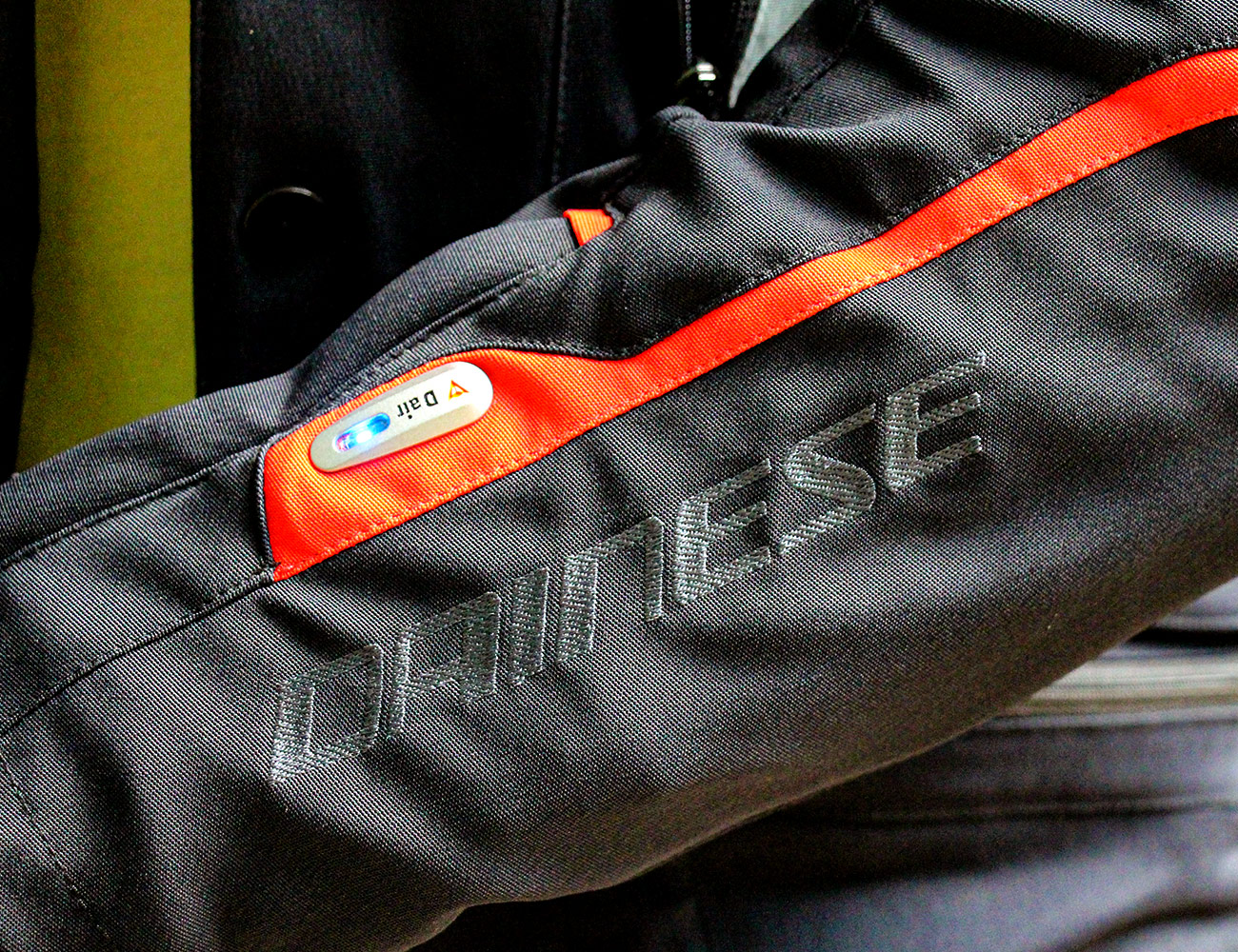
Now in its third generation, Dainese’s D-air system incorporates three gyroscopes, three accelerometers and a GPS unit that monitor conditions and converse with one another more than 1,000 times per second as part of the network called the Intelligent Protection System (I.P.S.). The data collected and analysed during a ride is filtered through an algorithm designed to detect events ranging from collisions and high-sides to mild low-sides that don’t result in the rider separating from their bike.

If an “event “ is recognized by the I.P.S., and you’re moving faster than 30 mph, a gas canister will fire, causing the wearer’s neck, chest and back to be enveloped in four liters of inflated protection within 45 milliseconds. The internals of the airbag itself are constructed using Dainese’s patented Microfiliament technology: both sides of the inner lining of the airbag are connected to each other by millions of fibers, all to ensure the bladder opens evenly across its entire coverage zone, providing equal protection density throughout. The D-air airbag transmits a mere 450 pounds (2 kilonewtons) of external forces to the rider.

Alpinestars Tech-Air Street system works in a similar manner, in that accelerometers and a gyroscope is employed to monitor conditions. Just like D-air, there are three accelerometers in play; however, only one gyroscope is included in the information loop, and there is no GPS. Regardless, the inertial algorithm employed by the Tech-Air Airbag Control Unit (A.C.U.) is able to detect and respond to an incident within 30-60 milliseconds, depending on its speed or force. And, unlike D-air, the A.C.U in the “street” version of Tech-Air remains active even when stopped, to protect against hits from behind when stopped at the lights.

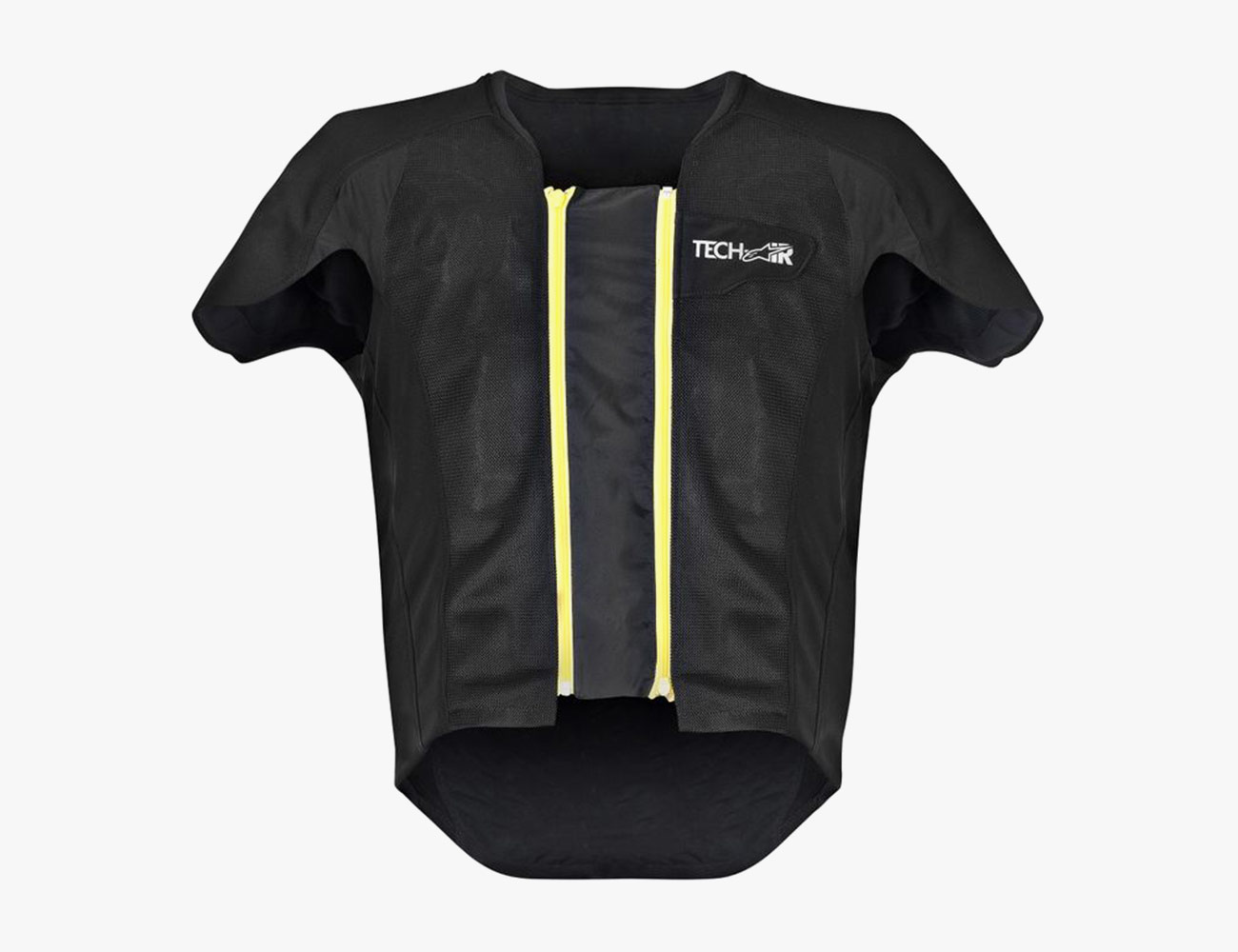
The A.C.U. itself is housed in a CE-Level II rated back protector that is incorporated into the Tech-Air vest, along with twin argon gas canisters. Once initiated, inflation takes approximately 25 milliseconds, cocooning an even larger area of the rider than D-air covers (back, shoulders, kidneys, chest and upper abdomen) for a full five seconds before deflating.

Both systems have the ability to receive firmware updates, which is a simple and easy affair once plugged into a computer. (Only the D-air system is Mac compatible, at least for now.)

Advantage: Alpinestars Tech-Air

Functionality

Thankfully, I haven’t had to rely on either the Tech-Air or D-air systems to save my bacon, so I can’t speak firsthand as to how well either does in the ultimate test. But in terms of everyday usability, there are some important differences between the two.

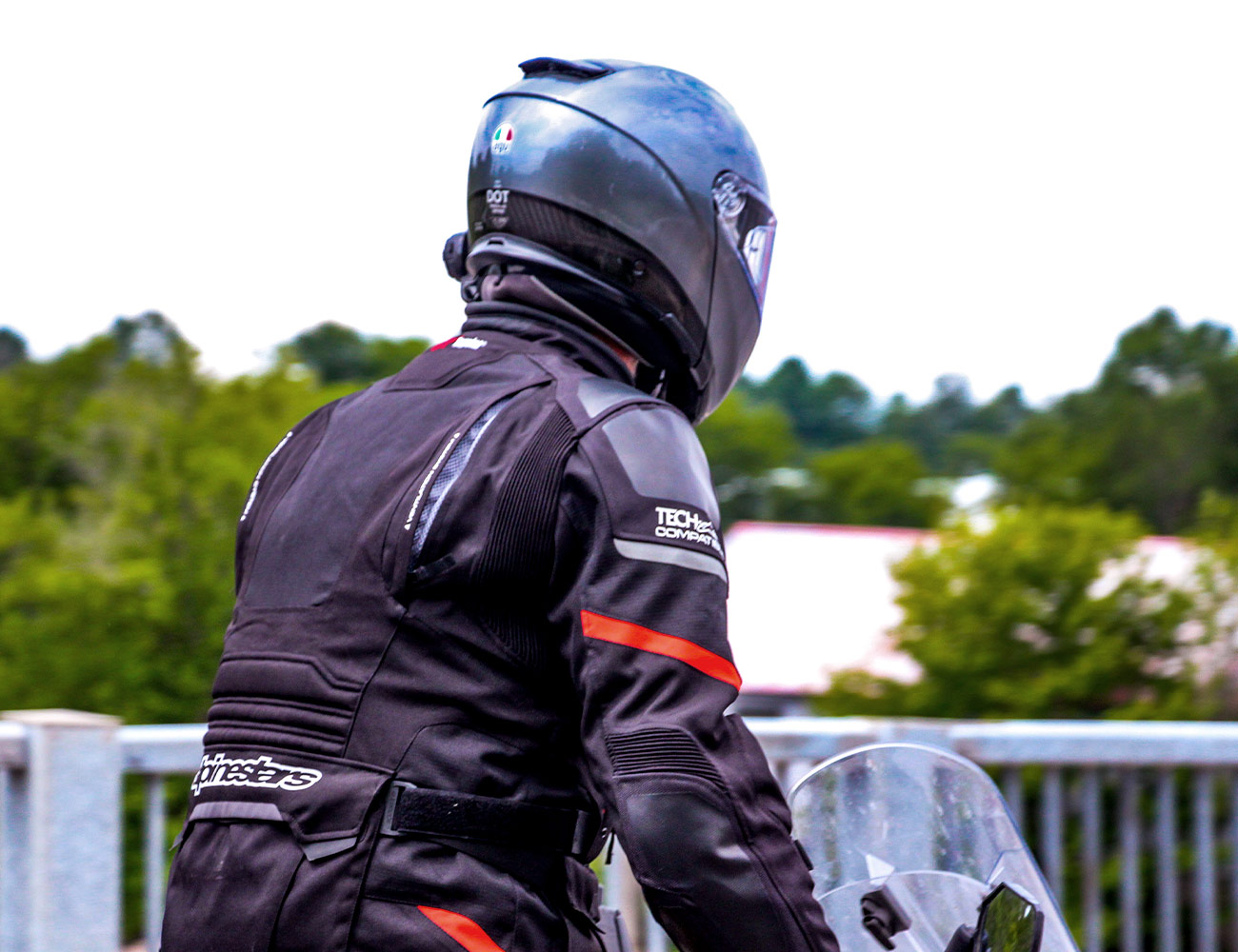
First and foremost, Alpinestars’ decision to run with a modular airbag system should be applauded. For many of us, the type of bike or riding style we engage in will change from year to year — or, for some with multiple steeds in the garage, even day to day. And with those swaps, the style of jacket chosen will often change too. Provided you buy into their Tech-Air Compatible line of offerings, Alpinestars can afford you the same levels of protection sheathed in textile or leather, with designs that stretch from a vintage look to something more futuristic — or even an abrasion-resistant hoodie.

Dainese, on the other hand, fully integrates their D-air system into the jacket you’ve chosen. Aside from the obvious potential issue of not being able to approach protection with chameleonic adaptability, it also means that should you have an airbag-deploying event, your entire jacket needs to be sent in for repair and recharging — an issue the Tech-Air customer will not suffer.

All being said, the Dainese D-air system is noticeably lighter, both when in hand and when riding around. And the Carve Master II I’ve been testing it in wears like a well-tailored jacket. The Tech-Air Andes Pro feels clunky and quite heavy in comparison, and needed more adjustment via the jacket itself to properly fit. Even when cinched to match your body’s profile, it remains clear that this is a two-piece system.

Advantage: Alpinestars Tech-Air

Jacket

Both the Dainese Carve Master II D-air and Alpinestars Andes Pro Tech-Air compatible jackets I’ve been wearing are classified as adventure/touring jackets. In other words, both are textile jackets with a longer, three-quarter length cut, a bevy of pockets and some form of all-weather treatment. And while both tick all of these boxes well, it wasn’t exactly a fair fight. The Carve Master II is a premium, top-of-the-line model jacket, while the Andes Pro is Alpinestars’s entry-level Tech-Air adventure/touring jacket. There are higher-end jackets in the Tech-Air compatible lineup, but they come at a premium that prices them well beyond the D-air Carve Master when they’re equipped with a Tech-Air Street vest.

The Tech-Air Compatible Andes Pro comes equipped with CE-Level I protection at the elbows and shoulders, while the Carve Master offers up CE-level II composite cups at these locations. The fabric used on the D-air Carve Master II, which Dainese calls Mugello, has a much more premium feel to it. Comprised of an abrasion-resistant blend of micro nylon and elastomers, it has enough stretch to allow easy movement in the saddle (and airbag deployment) while remaining well-fitted. The Carve Master II also comes equipped with a zip-in/zip-out liner and a removable thermal collar, making it better for cooler days.

The Andes Pro utilizes Alpinestars’s proprietary weatherproofing system dubbed Drystar, which does a great job of keeping the rain out while keeping the jacjet breathable. Add to this the ability to open two huge vents running from collarbone to navel, and you have a jacket that works quite well in the summer months. On a recent trip from Toronto to North Carolina, I saw temperatures range from the low 40s through the 90s, rode right through a deluge at the northern tip of Ohio — and the Andes Pro served me perfectly fine.

Dainese, on the other hand, tapped industry leader GoreTex for their integrated waterproofing membrane while also dosing the exterior fabrics with a secondary treatment of weather resistance. Combined with the storm flap covering the entirety of the main zipper, little to no rain is getting in. And despite the lack of massive vent flaps, there is enough air movement to stay cool on warm days.

Both jackets also feature waterproof pockets large enough to stash phones in when the heavens open up, and can be attached via zipper to a set of like-branded pants. But the premium fit and finish of Dainese’s jacket score it the win here.

Advantage: Dainese Carve Master II D-air

Annoyances

There’s ultimately little to complain about with either of these jackets — and less still that stems from their airbag system. That being said, the D-air unit does give off more of a hunchback vibe, as its I.P.S. has a bulge that sits right between the shoulder blades. Thanks to its tailored fit, the bulge is fairly pronounced.

Another issue with the Carve Master II concerns its main zipper. To avoid the need for a two-way zipper, Dainese stitched the base of their zip higher on the body of the jacket, which makes getting the zipper started a frustrating experience. Things usually refuse to line up properly; you need to contort the jacket to have both ends meet properly.

The Andes Pro, on the other hand, suffered some fraying at the ends of both cuffs after barely 1,200 miles of riding. None of the stitching let loose, but this shouldn’t be happening so soon in any jacket’s lifespan, entry-level or not.

Advantage: Dainese Carve Master II D-air

Value

The Dainese Carve Master II D-air jacket currently sells for $1,550. For that money you get a truly premium adventure/touring jacket equipped with bleeding-edge safety technology. That isn’t an insignificant amount of money for a jacket, but when you consider the levels of performance motorcycles offer at a fraction of the cost of their four-wheeled equivalents, splurging on your health and safety isn’t a bad idea.

The Alpinestars Andes Pro Tech-Air Compatible jacket retails for a reasonable $550, but without the Tech-Air Street vest, it’s just another jacket. That vest will set you back an additional $1,150, which means the total package rings in at $1,700. However, thanks to its modularity, that additional $150 buys you the ability to spend even more to have more than one Tech-Air equipped piece of kit.

Advantage: Alpinestars Tech-Air

Verdict

Choosing between the Dainese D-air and Alpinestars Tech-Air systems is a Coke vs. Pepsi affair. For many of us, it will come down to personal preferences and brand loyalty, as the safety tech offered by both is both similar and effective.

But looking at these two products through an objective lens, the extra $150 for the Alpinestars kit seems like a worthwhile investment. I personally like the idea that I can swap the Tech-Air system in and out of a multitude of jackets to match a look, bike or mood. I also appreciate that, should I have an off that cause the system to deploy I’m not left without my entire jacket while it’s serviced. Additionally, the fact that the Tech-Air system remains active even when stopped is a huge bonus. Especially if you ride in an area where lane-splitting and traffic filtration is still frowned upon.

Note: Dainese has now released its D-air Smart Jacket, which is a modular system that can be used under or on top of any riding jacket, regardless of brand.

.

.

Dainese and Alpinestars provided these products for this review.

Is an E-Bike Better for Commuting than a Motorcycle? We Find Out

E-Bikes are growing in popularity for their ability to offer commuters and fitness enthusiasts a means to cover greater distances without having to expend as much energy. As a motorcyclist, I believe time spent on two wheels is a matter of therapy; it’s religion, freedom and fun, all wrapped up in one. Anything that can bring that to more people more easily, well, it’s good in my book.

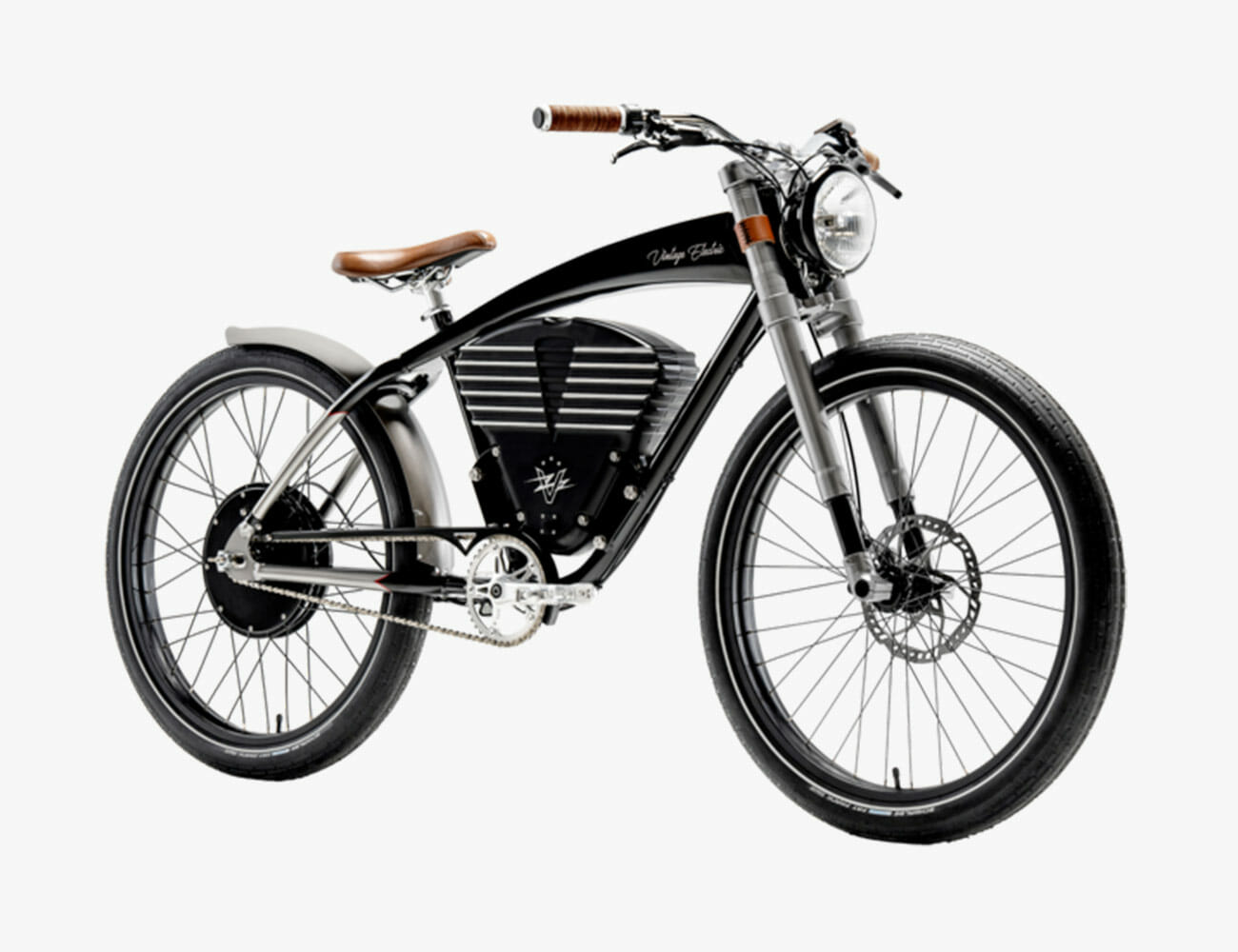
The Vintage Electric Roadster e-bike can best be described as an electric-powered beach cruiser featuring design elements reminiscent of classic American and British motorcycles. Its most notable features are an LED headlamp, inverted front forks, beefy spoked tires and a prominent V-twin-shaped battery pack.   

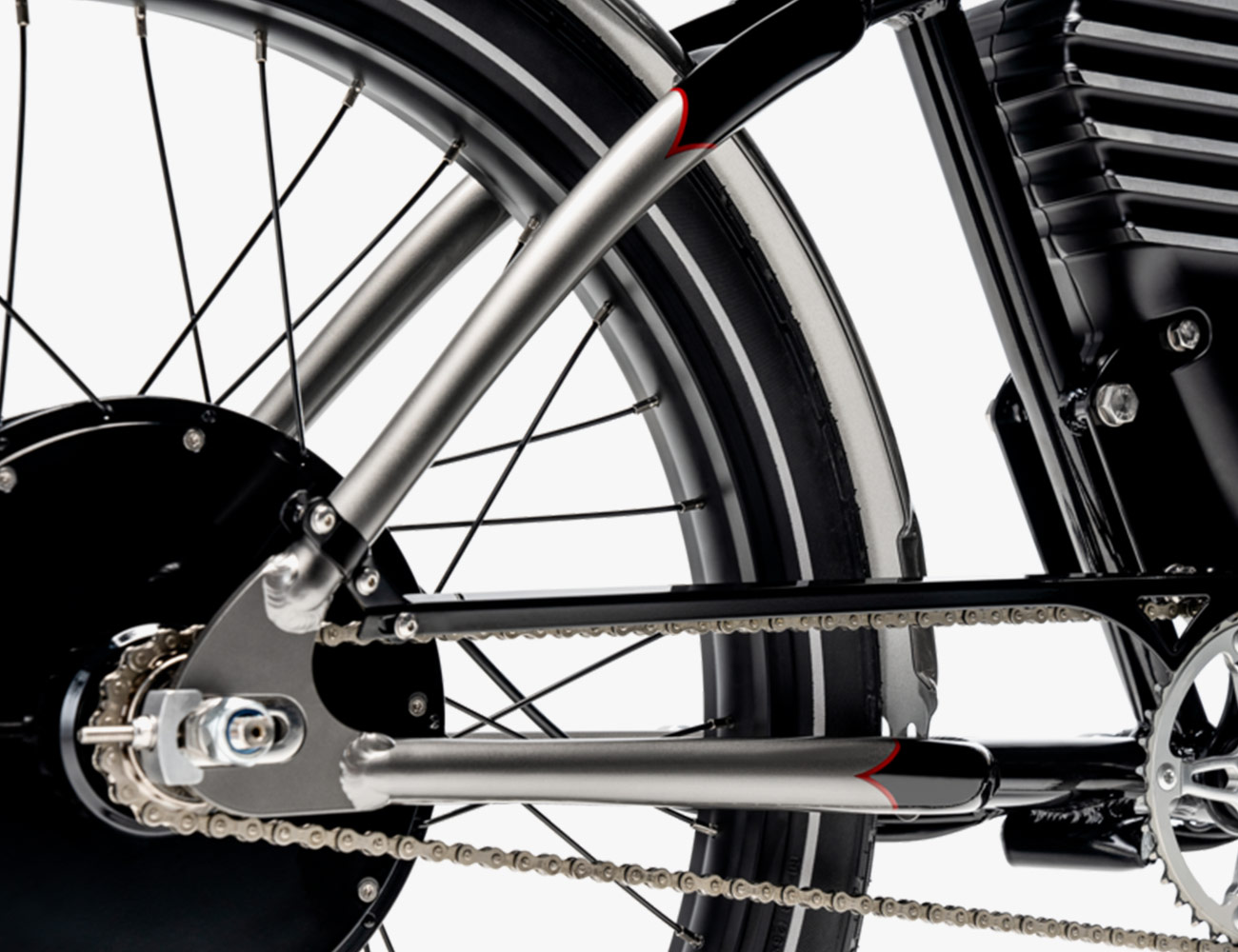
Electric power comes in the form of two delivery options: a pedal assist mode, where the rear-wheel-mounted electric hub motor helps propelling the bike forward as the rider pedals like on a normal bike; or a thumb-throttle similar to that found on a jet ski that allows the rider to manually control the rear wheel hub, removing the need to pedal.  

An easy-to-navigate LCD panel with three buttons rests on the left handlebar with gauges like battery life, speedometer and odometer. Through this menu, riders can select the degree of power assist being served up to them. Setting one provides minimal power, while setting five provides full juice.

Power Delivery and Battery Specs

Powered by a 48-volt, 1123-watt-hour rear wheel hub motor, the Vintage electric produces 750 watts in Street Mode, with a limited speed of 21 mph and a range of about 40-75 miles per charge. At best, I was able to manage 50 miles on a charge on flat land using only the throttle-assist with power set at setting three.

Where the Roadster shines is in the form of a removable race key that screws into the battery pack and unlocks the 3000-watt Race Mode. In that mode, with power set to level five, the Roadster can reach speeds up to 36 miles per hour. But that will take its toll on the battery pack; the best range I could muster after flogging it in Race Mode on flat ground was 22.3 miles. (Also, for the record: This feature is for use only on private property, as electric bikes are limited by law to 21 miles per hour on public roads.)

What It’s Like to Ride

It’s hard to look at the Vintage Electric Roadster and not acknowledge how stunning it is from almost any angle. Little about it screams electric bicycle; the designers took pains to incorporate classic motorcycle cues into its overall aesthetic.

Once on the Roadster, it is fairly comfortable. if not a little small for larger individuals like myself; at 6’5’’, the Vintage Electric Roadster is not suited for my stature. (Sadly, it only comes in one size.) Pedalling this 86-pound fixed-gear bike is not very desirable, and for this reason, I came to rely almost entirely on the thumb-throttle to maintain speed during my time riding the Roadster.

Overall, the ride is smooth and predictable — and a sheer delight on flat ground. With electric power set to the max, the Roadster is capable of tackling inclines, but it does so at reduced speed. The beefy 26-inch Schwalbe Fat Frank tires provide exceptional grip at high speeds and inspire a good deal of confidence when cornering. I found myself testing their limits along the boardwalk with a handful of sand and asphalt in my path. Not once did the Roadster waiver.

Though the tires have decent mass to soak up imperfections, don’t expect too much; bumps and road imperfections are easily felt throughout the chassis. With very little suspension to speak of and no shock absorption in the saddle stock, shockwaves are quickly and noticeably transmitted into your spine when rolling over remotely rough terrain. The front inverted fork has only 60 millimeters of travel, and is suited to absorb light imperfections.

With a good amount of punch to keep you moving, it’s equally important to have good brakes. The Promax Lucid hydraulic disc brakes front and rear provide ample stopping power; I found myself relying on the front brake more than the rear, as its strength in slowing down the 86-pound bike was necessary. More often than not the rear brake was too soft, and sounded more like a squeaky drum than a refined caliper biting a disc.

Can an Electric Bike Compete with a Motorcycle?

As a motorcyclist who commutes every weekday and ventures out the canyons and racetracks every other weekend, I’ve always been curious to see how an electric bicycle experience would compare to a motorcycle in real life. I understand a machine like this would be right at home in a dense city such as New York or Austin, but I live in Los Angeles — and there is nothing short about our commutes here.

Living in Redondo Beach and working in Santa Monica, my daily commute via motorcycle is 15 miles in each direction. 90 percent of that commute is relegated to the world’s most famous parking lot: the 405 freeway. Thanks to lane splitting, I’m able to make the trip in roughly 24– 28 minutes, depending on how ballsy I’m feeling as I slice through traffic. However, if I opt to take surface streets, my commute extends to 40 minutes.

I did not expect my commute time on the Vintage Electric Roadster to be greatly reduced compared with the motorcycle, but over the course of three weeks of weekday riding, my average commute time wound up being 46 minutes door-to-door. Though the ride time was longer, my commute was made more peaceful; I enjoyed 8 miles of non-stop traffic-free riding along the beach in each direction.

Overall traffic speeds in urban areas rarely exceed 40 miles per hour; at one point in my commute, I kept pace with a Ducati Panigale V4 over the course of two miles simply because traffic dictated our paces. Though the Ducati was splitting lanes, I was able to navigate through even-tighter spaces than the Panigale. (When I pulled up alongside him, he began asking me about the Roadster.)

Once at work, I would plug the Roadster in, and the bike would charge back to full battery power in four and a half hours. Let’s see a Ducati do that.

Where Does It Fall Short?

Right off the bat, the $6,995 price tag will be hard for many to swallow. But the design is second to none and the attention it commands out on the boardwalk certainly makes it a conversation piece. The absence of any kind of real suspension caused by sticking so close to a traditional beach cruiser design limits how and where you will choose to ride the Roadster. As time went on, I found myself standing on the pedals and riding the Roadster like a BMX bike above 20 miles per hour when the ground got rough.

The Vintage Electric Roadster comes in one size only and sadly, one size does not fit all. If you are north of six feet tall, like me, the Vintage Electric Roadster will feel mighty small. Pedalling this fixed-gear e-bike will become more of an awkward burden than a pleasure. Sure, I rarely pedaled the Roadster, but it’s still something to consider — because when the battery dies, that’s how you will need to get the bike home.

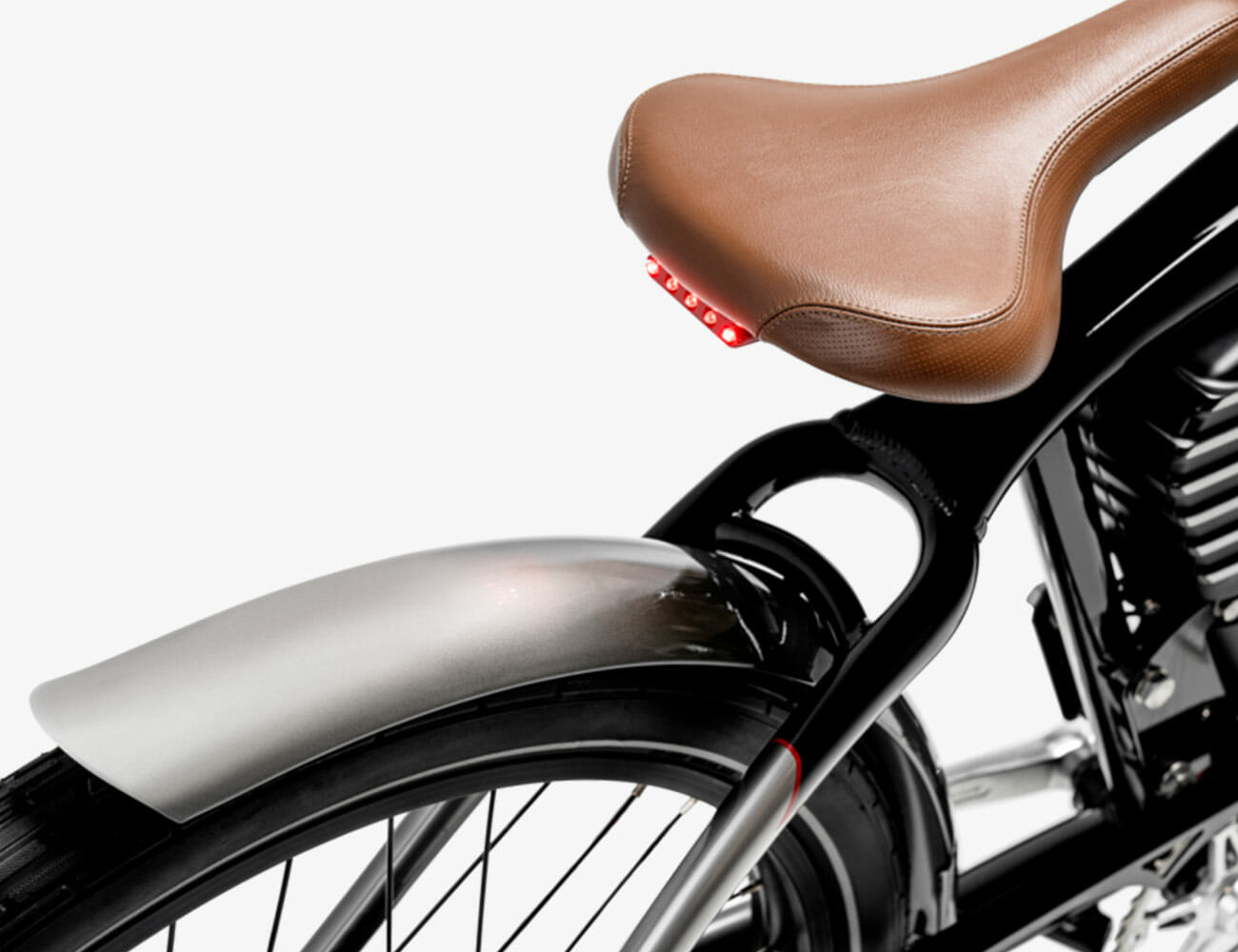
As for comfort, I would like to have seen Vintage Electric feature a cushy and broader saddle. The current saddle looks fantastic, but after 20 minutes of riding, I was begging for something more kind to my rear end and lower back.

Verdict: I am not going to be giving up my motorcycles for an e-bike anytime soon. However, I love that we are living in an era of innovative mobility solutions. I do foresee myself investing in an e-bike system in addition to my motorcycles in the next couple of years, because these machines provide a fun, practical means for getting around an urban area without the need for insurance.

More importantly, they have reignited my love for bicycles once again. The Vintage Electric Roadster is a fun, very stylish take on an e-bike — and further shows how the lines between motorcycles and bicycles are changing in the 21st Century.

Note: Purchasing products through our links may earn us a portion of the sale, which supports our editorial team’s mission. Learn more here.
Indian Celebrates 100 Years of the Scout with 2 New Badass Bikes

Lots of new stuff going on with Indian’s 2020 lineup of American-made cruisers. Chief among them, two new Scouts: the 100th Anniversary limited edition Scout & the Scout Bobber 20. The Anniversary bike features a red & gold paint scheme inspired by the 1920 original. The bobber features wire wheels, a floating saddle, bobbed rear fender & blacked-out finishes. Both are powered by the brand’s 100-horsepower V-Twin motor.

Make Motorcycle Riding More Fun With These Amazing Helmet Deals

If you’re reading this, odds are good you know we here at Gear Patrol are always looking out for you motorcycle riders out there — and your heads in particular. Well, so are the fine folks at Revzilla by offering a bunch of great helmets at low prices in their closeout sale.

Not only are the helmets on this list painstakingly designed to keep your dome safe, many of them are vibrant and stylish, but some are downright loud…and sometimes loud is fun.

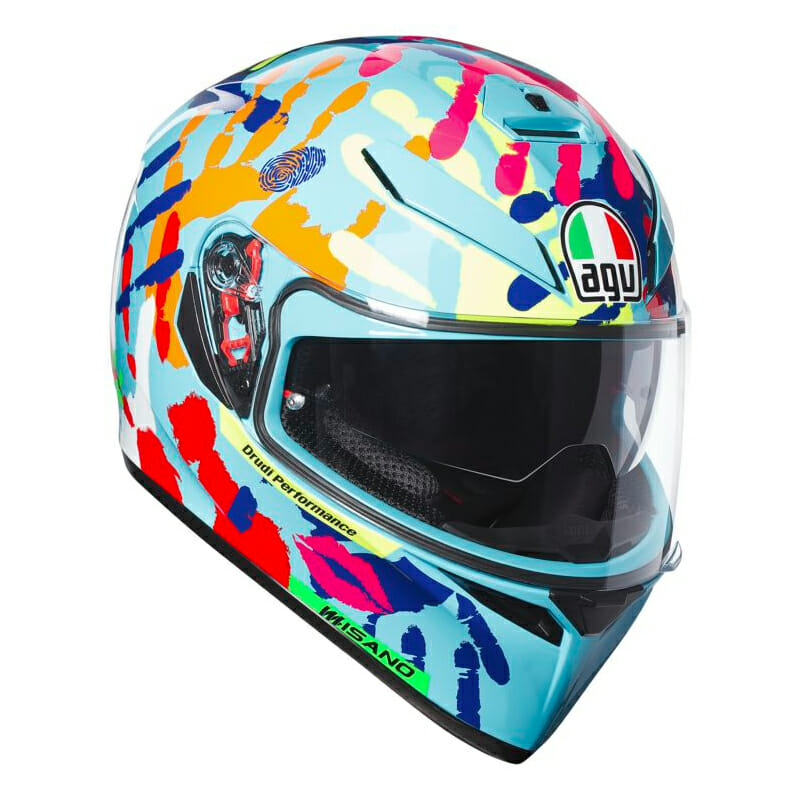
AGV K3 Misano

Modern, sleek and aggressive — with one hell of a finish. This AGV is designed to be aerodynamic, not only to cut through the wind for maximum speed, but for high-speed stability. Fast and safe.

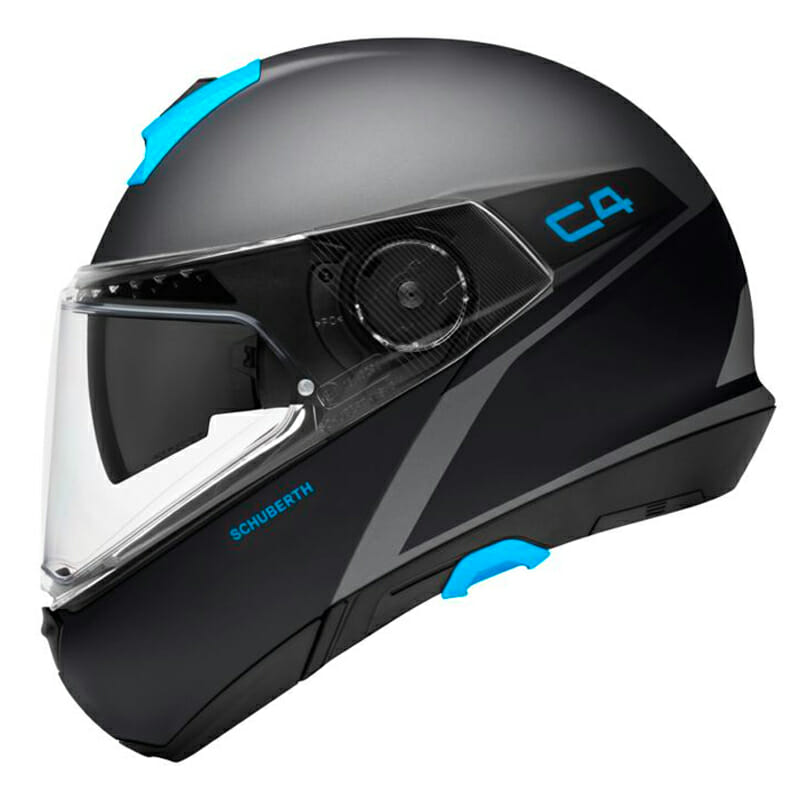
Schuberth C4 Spark

The Schuberth C4 is a perfect marriage of lean design and luxury — German-engineered practicality with a touch of flair. (Well, it comes in red.)

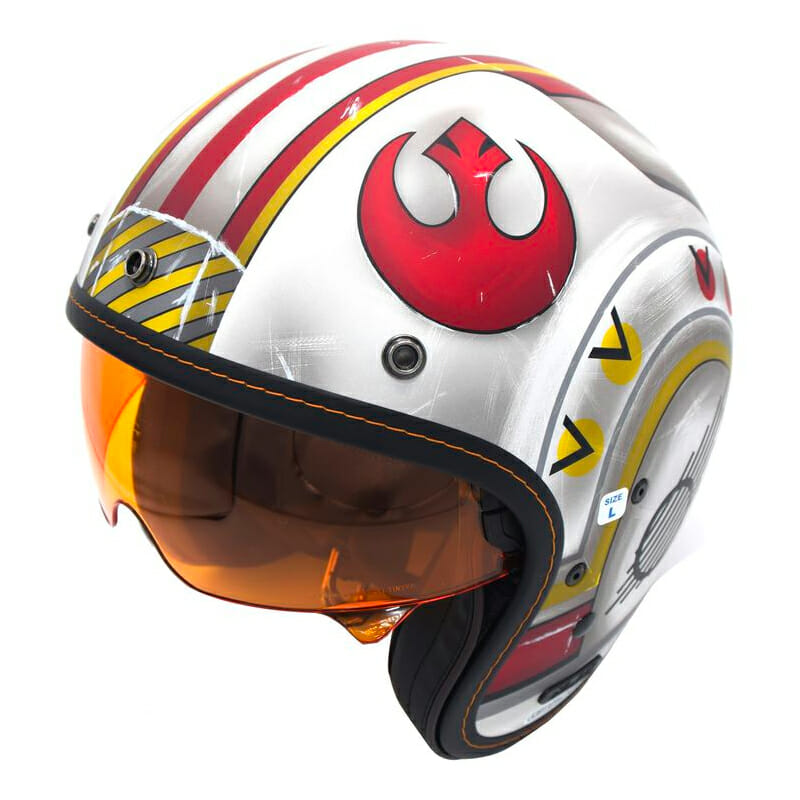
HJC IS-5 X-Wing Fighter Pilot

>I mean, come on. This is just fun. This HJC helmet’s lightweight polycarbonate shell is made for style and comfort. The killer drop-down Star Wars-inspired visor just makes it delightful. May the force be with you.

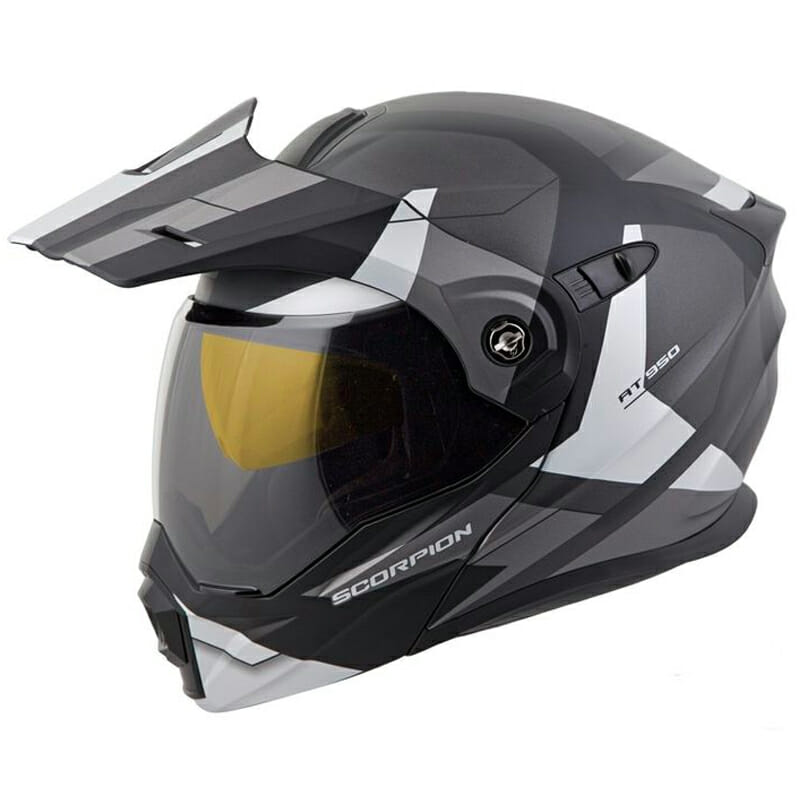
Scorpion EXO-AT950 Neocon

IMAGEHere’s one for the dual-sport homies. The Scorpion packs heavy-duty construction designed especially for winter riding, with features like dual-layer lenses and snow visor.

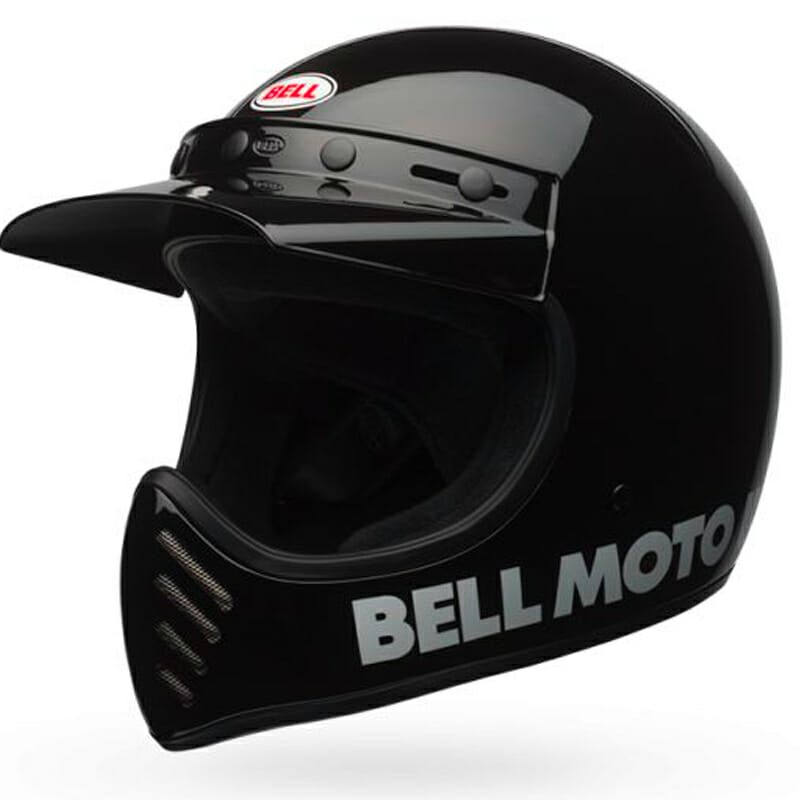
Bell Moto-3


Beyond a classic, the Moto-3 is a staple in the helmet marketplace. Its honest, faithfully vintage look belies all the modern safety features. Perfect for the dirt or the streets.

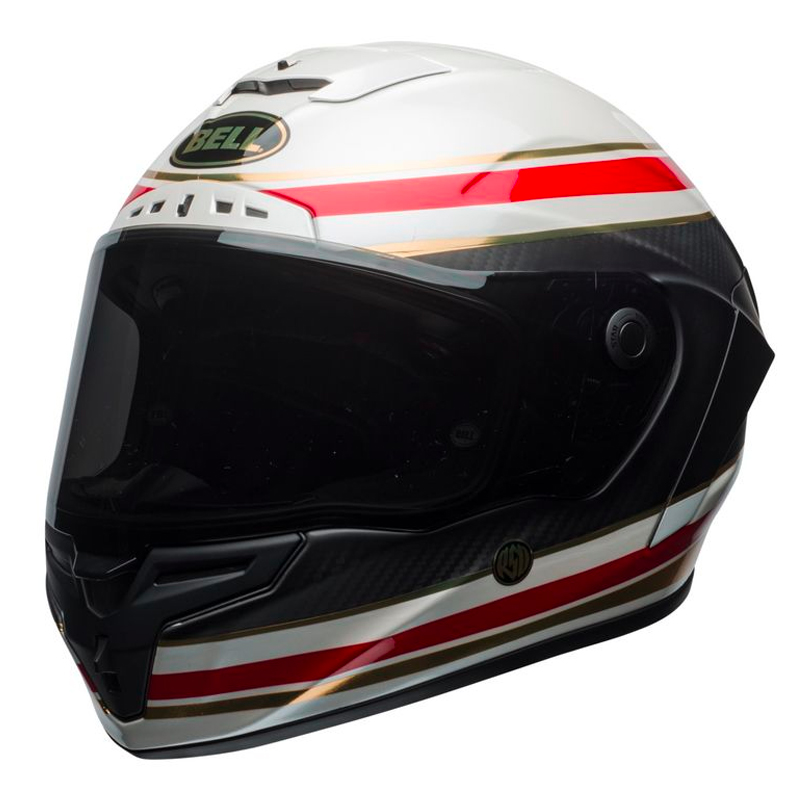
Bell Race Star RSD Formula

Carbon fiber. Wind-tunnel testing. This Bell helmet has some serious engineering behind it, but that doesn’t mean it’s afraid to look good.

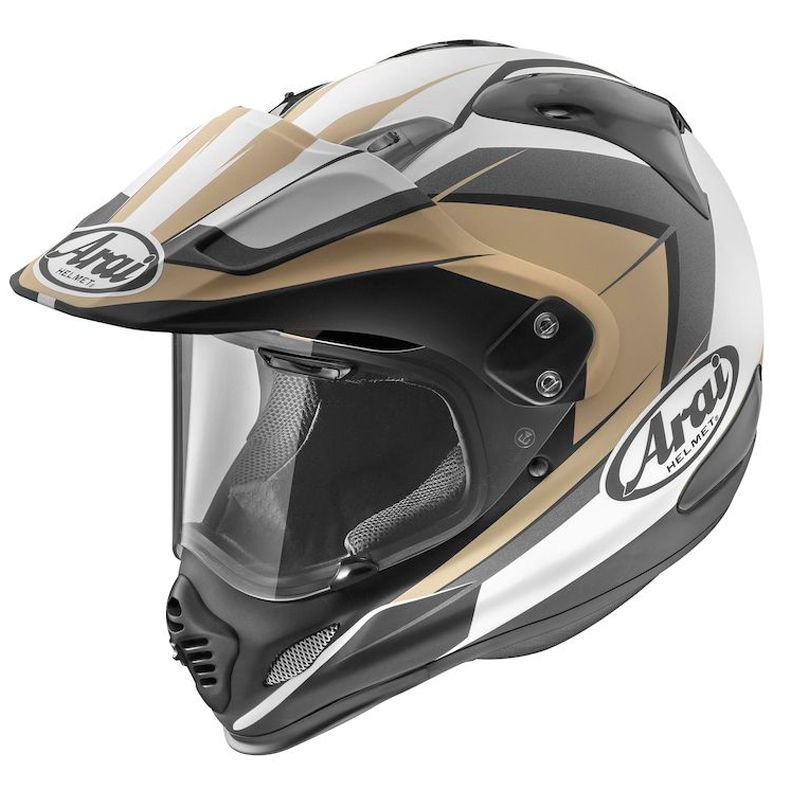
Arai XD-4 Flare

All the high-octane race pedigree you’d expect, wrapped up in a dual-sport touring helmet yearning to get out in the dirt.

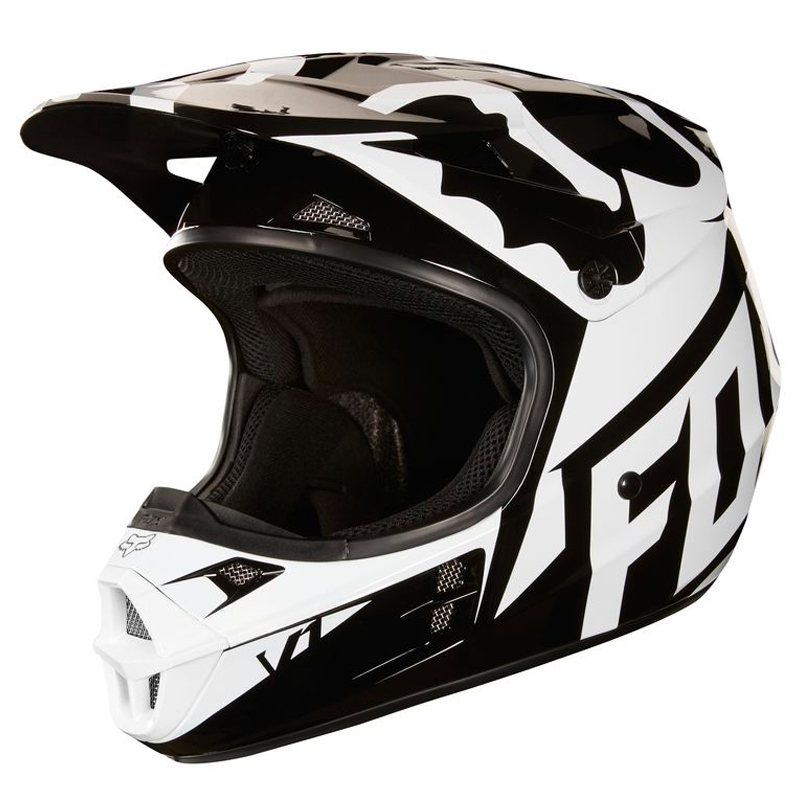
Fox Racing V1

Braaaap! Don’t worry dirt bikers, we have one for you too. A trusted name in safety and comfort for the dirt track, the Fox V1 has a slew of air vents to help with all the dust and a polycarbonate shell to reflect any rogue stones sent your way. Plus, the V1 comes in color options almost as loud as your two-stroke.

Note: Purchasing products through our links may earn us a portion of the sale, which supports our editorial team’s mission. Learn more here.

Harley Davidson Introduces Electric Bikes for Tykes

Motorcycle ridership in the USA is dying fast. Rather than prep for the funeral, Harley Davidson is taking a longview, building electric bikes for kids, who they hope will become the next generation of motorcyclists. To that end they’ve created two new kids push bikes, the Iron E12 for riders age 3-5 & the Iron E16, for riders age 5-7. They have no pedals but instead feature electric hub motors that allow for speeds up to 11MPH which can be set & adjusted by parents. Battery run-times: 30-60 minutes.

2020 Harley-Davidson LiveWire Review: The Future of the Motorcycle?

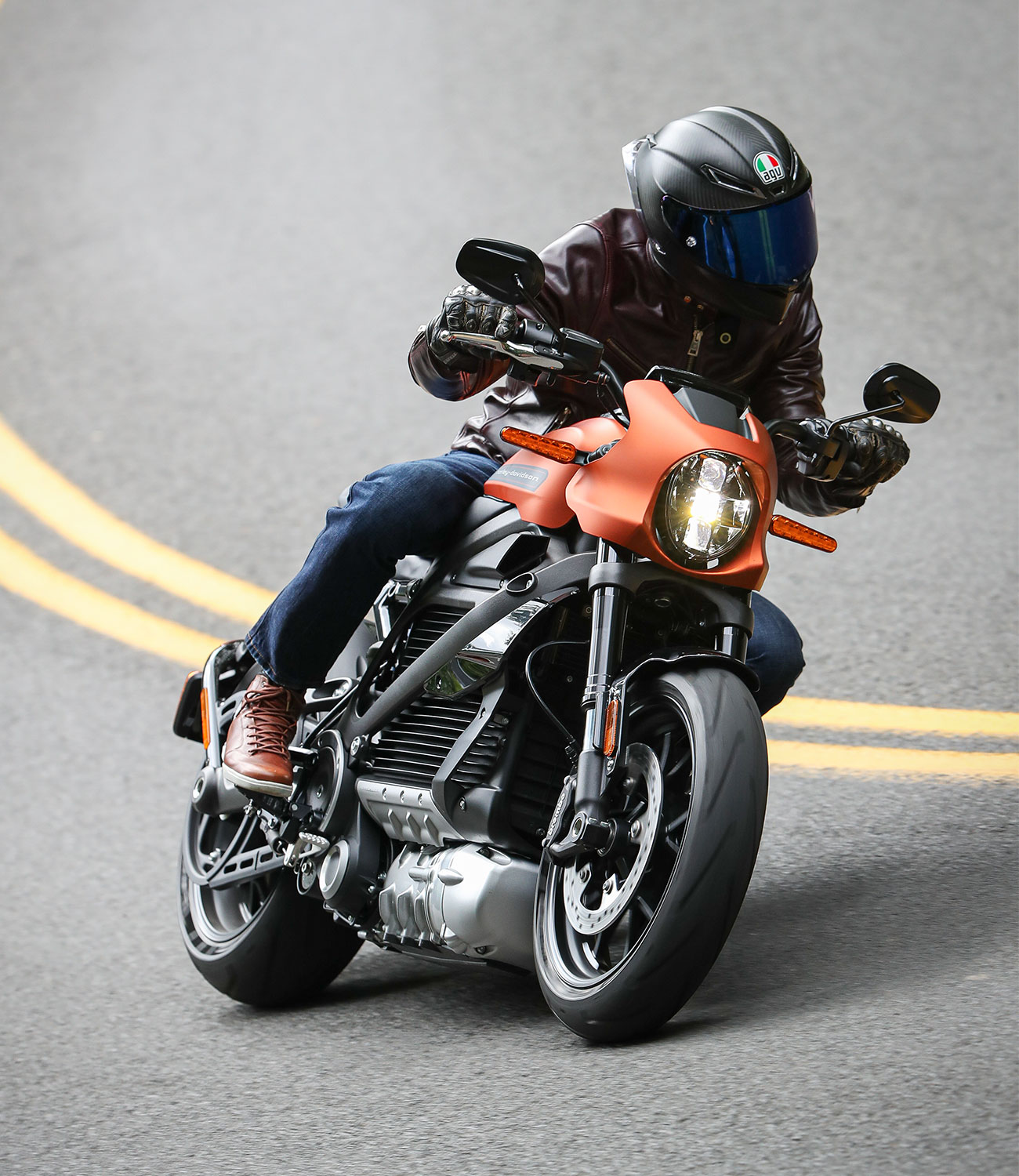
There it is, slung beneath a monolithic 15.5-kWh battery and shrouded in a polished cast-aluminum casing. Dubbed ‘Revelation’ for obvious reasons, the electric motor powering the Harley-Davidson LiveWire represents a massive leap beyond the venerable internal combustion V-twin. The philosophical shift involved in refining the drivetrain was so significant, it required some nine years to develop and fine-tune the setup and calibration. As such, the motor is the visual and ideological centerpiece in the 549-pound LiveWire, a point of pride that aims to leave the 116-year-old brand’s woes behind and propel it fearlessly into the future.

Launched with a $29,799 pricetag that puts it in unabashed luxury-product territory, the LiveWire goes whole hog on the electrification theme. There are high-tech touch points baked in throughout: a touchscreen TFT display, a well-executed Harley-Davidson Connect app, a fresh-off-the-presses partnership with Electrify America, and two years of free charging at participating Harley-Davidson dealerships. But is the first-ever electron-powered Harley good enough to convert the old school cognoscenti, or is it a high-priced halo that will alienate eco conscious millennials?

The Good: From the precise-but-smooth throttle response to the way it intuitively turns into corners and whooshes away on straights, the LiveWire’s dynamic capabilities are remarkably good for any motorcycle, let alone one that’s powered by a battery.

Who It’s For: The million-dollar question: Who wants a $30,000 Harley-Davidson that a) is probably too radical for H-D traditionalists, and b) too expensive for the young buyers the brand is hoping to attract? Harley admits this is an aspirational bike with a premium price tag, but LiveWire also kicks off a string of less-expensive EV products, including a cute-as-a-button electric minibike and a battery-powered bicycle. Regardless, it’s hard to get around the fact that LiveWire occupies a curious niche; it’s unlikely to become a volume seller for the brand.

Watch Out For: Something had to give when it came to packaging the LiveWire’s charging options, and that something wound up being true Level 2 charging. Though LiveWire takes a speedier (and harder-to-find) DC Fast Charge, which can replenish 80 percent of the battery in 40 minutes, plugging in a Level 2 charger unfortunately yields Level 1-speed recharging; it takes an agonizing 12.5 hours to go from empty to full.

Alternatives: Competitors in this space have had the benefit of time-testing their battery-powered wares and evolving into their respective niches. First to mind is the $18,995 Zero SR/F, which offers 109 miles of combined range and up to 200 miles of city range with an add-on Powertank. Sportbike fans might gravitate towards the $34,000 Energica Ego, which is motivated by a maniacal 145-hp motor. And last but not least, design nerds will geek out over the $14,000 Cake Kalk and Kalk&, post-industrial EVs that throw out the rulebook with fashion-forward geometrical styling.

Review: There’s an easily overlooked feature of the Harley LiveWire that speaks volumes to the meticulous thought process behind this remarkably important bike: the so-called heartbeat. About halfway through the development process, engineers decided the EV needed to feel more “alive” when the bike was at rest. Enter the “heartbeat,” a haptic pulse that emanates from the motor. It’s a subtle element that can be dialed up, down or entirely off at a Harley dealership, serving as a tiny reminder that the thing you’re riding isn’t dormant when it’s in so-called propulsion mode.

And then there’s the sound, a fascinating combination of mechanical whine from the bevel-geared primary drive and a manufactured electronic thrum that more resembles a science fiction soundscape than a physical resonance. But if you’ve just lifted the LiveWire off the kickstand, you’re most likely to first notice two things: a feeling of heft, and the switchgear that combines familiar Harley bits (like a turn-signal button on each side, which flies against industry convention) with a few unfamiliar elements (such as a joystick on either side — one for Bluetooth audio controls, another for menu navigation).

The 4.3-inch TFT screen operates intuitively, with configurable displays that easily reveal which of the seven (yes, seven) ride modes you have engaged. Four of those settings — Road, Sport, Range and Rain — can be toggled via a hard button on the left grip, while three can be customized when not riding using sliders on the touchscreen to calibrate power output, regeneration level, throttle response and traction control. Settings can be dialed in by one-percent increments between 1–100, while traction control can be set to low, medium, high or off. And lest you worry that you have to be fully parked to disengage traction control, fear not, my hooligan friend: simply press the TC button while stopped, and the electronics will disengage and allow you to indulge in long, eerily quiet burnouts simply by grabbing the front brake and twisting the throttle.

(Doing so won’t destroy your range too badly, either: At the end of my 65-mile ride, which involved heavy-handed throttle application and a smoky burnout or two, the onboard computer indicated 41 miles of remaining range — a figure that lends credence to Harley’s claimed 95 miles of combined range, 146 miles in the city or 70 miles of constant highway cruising at 70 mph.)

Naughty, earth-unfriendly antics aside, the LiveWire handles its weight rather well at low speeds, threading through traffic precisely thanks to a relatively stiff chassis and upmarket Showa suspension that’s calibrated for responsiveness over float. Boost your speed, and the bike seems to egg you on for even more velocity, feeling stable and secure as it whisks past posted speed limits.

You won’t get an instant hit of G-forces off the line, primarily because the direct-drive link between the motor and the rear wheel means the 15,000-rpm powerplant takes you all the way to an electronically-limited 110 mph without shifting gears. Though you’re not maximizing the motor’s 105 horsepower at lower speeds, those 86 pound-feet of torque make minced meat of inertia rather rapidly once the power starts building; 60 mph arrives in only three seconds flat, giving it supercar-like acceleration. And things only get blurrier if you keep it pinned: the leap from 60 to 80 mph takes a mere 1.9 seconds, giving this electric-powered rocket a sensation of thrust unlike anything ever to hail from Harley’s York, Pennsylvania plant. Unlike most internal combustion motorcycles, which require a well-timed orchestration of clutch, shifter and throttle for maximum acceleration, clutch-free electric bikes simply need a committed twist of the right wrist.

Similarly, cornering is a refreshingly mindless task. Rather than focusing on gear selection and rev-matching downshifts, you can just lay off the throttle and, if the regenerative braking is set aggressively enough, use the regen to slow the bike down ahead of a curve. Maintain your desired speed through the turn by feeding or bleeding the throttle, then whack it at the corner exit.

I repeated this process over and over on the wonderfully twisty roads outside of Portland, Oregon, and quickly became addicted to the ease of riding so quickly, so smoothly. Though not as nimble as a supermoto or as responsive to mid-corner corrections as a sportbike, the sensation of flinging this EV through corners is refreshingly devoid of the sound and fury that can make a gas-powered superbike such a socially objectionable endeavor; float through corners on an electric motorcycle, and you can hear birds chirping if you listen closely enough. It’s a paradigm-shifting experience, one that completely recalibrates your concept of speed and high-performance riding.

Verdict: The Harley-Davidson LiveWire is far from the first electric motorcycle to hit the market, and there are certainly other bikes that offer quicker charges, longer range, or more power. But the first EV from the Motor Company delivers something few, if any, other manufacturers have managed: a well-rounded, battery-driven two-wheeler that comes with a distinctly formed sense of identity. Thanks to well-executed user interface details and an engaging riding experience, the LiveWire delivers more than you might expect, especially given Harley’s predictable propensity for V-twin-powered thump-a-lump. Say what you will about the hefty MSRP or the charging limitations — the LiveWire manages to surprise and delight enough to make Harley-Davidson’s future look very bright, indeed.

2020 Harley-Davidson LiveWire Key Specs

Powertrain: AC permanent-magnet motor and 15.5 kW lithium-ion battery, direct-drive transmission
Horsepower: 105
Torque: 86 pound-feet
Lean Angle: 45 degrees
Curb Weight: 549 pounds

Harley-Davidson hosted us and provided this product for review.

Read More Gear Patrol Reviews

Hot takes and in-depth reviews on noteworthy, relevant and interesting products. Read the Story
Note: Purchasing products through our links may earn us a portion of the sale, which supports our editorial team’s mission. Learn more here.