All posts in “luxury”

Koenigsegg details outrageous new Gemera specs with Dark Matter e-motor

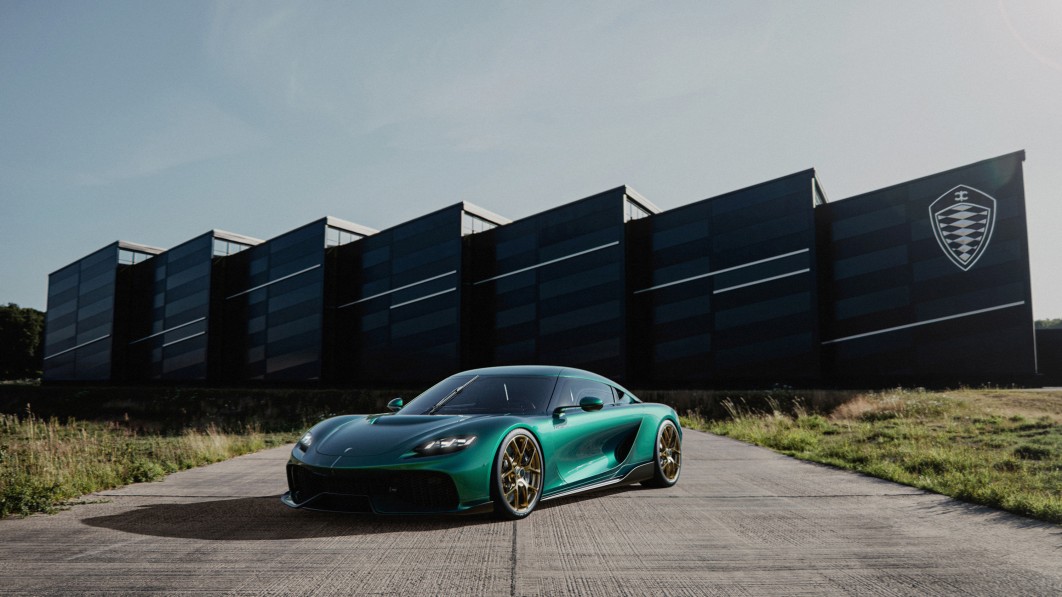
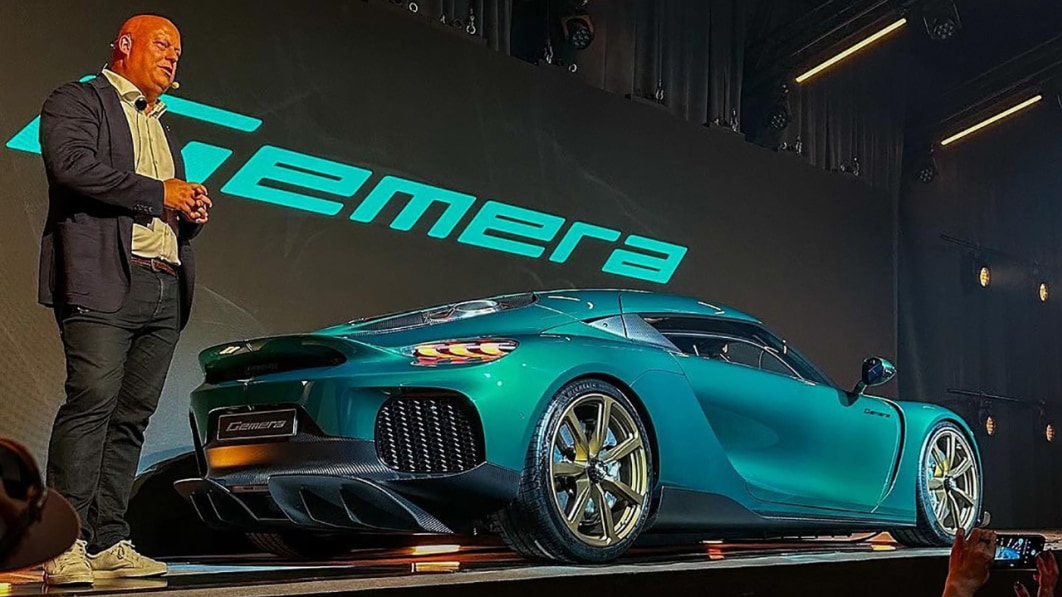
Koenigsegg recently held an event to celebrate an expansion of its campus headquarters in Angelholm, Sweden. We got some initial bits out of it from Koenigsegg Registry, focusing on changes to the production-spec Gemera such as the option to swap the turbocharged 2.0-liter three-cylinder engine for the 5.0 TTV8 from the Jesko. It looks like the Swedes saved the juiciest details for now. Coming straight from founder and boss Christian von Koenigsegg, the Gemera hasn’t only been improved by a lot, it’s got some outstanding new tech that started with the question of an engine and transmission swap.

Engineers had developed a nine-speed gearbox called the Light Speed Transmission (LST) for the Jesko’s TTV8. The LST dispenses with a flywheel and clutch or hydraulic coupling, making the TTV8 engine’s output shaft the LST’s input shaft. At some point during Gemera development, someone wondered if the Gemera could fit the TTV8 and LST instead of the planned Direct Drive transmission from the Koenigsegg Regera. The short story is the engineers answered that question in the affirmative with what’s now called the LSTT, the Light Speed Tourbillon Transmission. In the lingo of jewel-like Swiss watch internals, a “tourbillon” is a mechanical feature that makes a watch more accurate. Reworking the LST for its new employment made it smaller, lighter, and better.

Alongside that, engineers created a new six-phase e-motor to replace the three, three-phase Quark e-motors that had been paired with the 2.0-liter Tiny Friendly Giant (TFG) engine. The one motor to rule them all is called Dark Matter, designed as a blend of radial flux and axial flux topologies called “raxial.” In the original powertrain, two of the Quark motors on the rear axle could each make a maximum 500 horsepower and 738 pound-feet of torque, the third Quark on the crankshaft made 400 hp and 369 lb-ft. transmission. Their combined output in operation came to 1,100 hp. 

The Dark Matter makes 800 hp and 922 lb-ft. Pairing a single Dark Matter with the LSTT makes the TFG powertrain lighter and smaller, improving acceleration and performance. New control logic means the Dark Matter can drive the Gemera on its own, the TFG can power the car, or both can be called to action. When operating together, max output comes to 1,400 horsepower and 1,365 pound-feet of torque. The Gemera retains its all-wheel drive, four-wheel steering, and torque vectoring.

Thanks to the more compact transmission and single e-motor, the TTV8 could find a home in the Gemera’s engine bay. That required more development, mostly changing the turbo setup to a hot vee, putting the exhaust into the valley between the cylinders. Note the more pronounced pipes emerging from beside the rear window.

Previous info said going to the V8 would add $400K to the Gemera’s price. It also makes a huge difference to output. With 1,500 hp coming from the TTV8 and 800 hp coming from the Dark Matter, final output is rated at 2,300 hp and 2,028 lb-ft. of torque. Well then. 

This Gemera iteration is called the Client Specification. It’s what those who managed to get on the Germera reservation list will fly to Sweden to configure in the new extension called the Gripen Atelier. Production begins toward the end of next year, first deliveries planned for early 2025.
Aston Martin Valour gets retro looks and a manual-backed V12

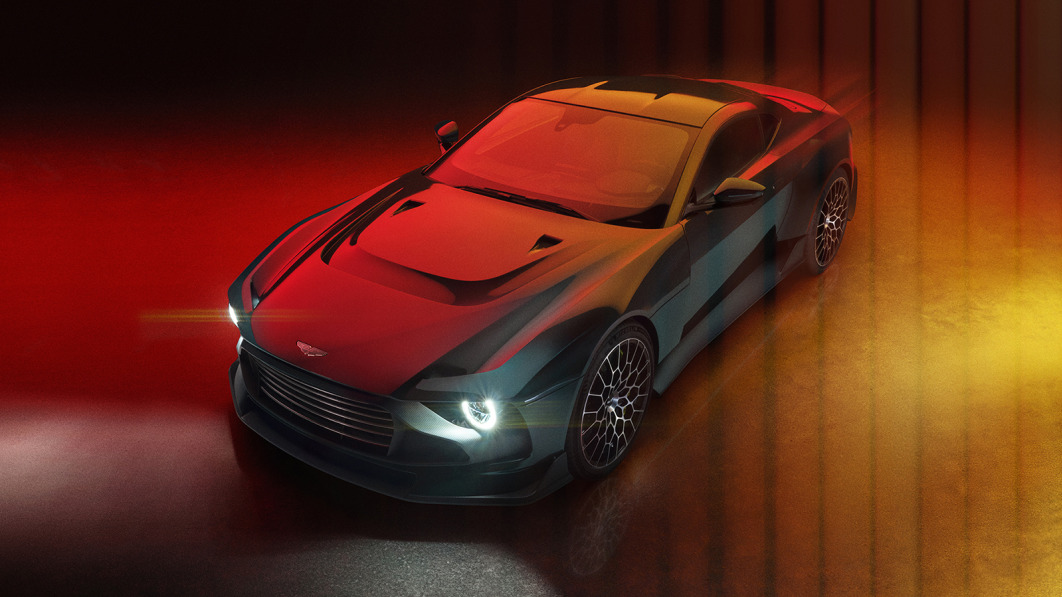
A few years ago, Aston Martin stunned the supercar world with its Victor. It took the V12 and other mechanicals of some of the most advanced and exclusive Astons of the modern era, such as the One-77, and gave it ’70s retro looks and a retro transmission: a six-speed manual. The problem, though, was that it was a one-off. Beautiful to look at, but out of reach for even the most well-heeled customers. We have a feeling a good number of those prospective buyers were ringing up Aston begging to give them money for something like it, because the new Valour offers a taste of Victor … y.

Though Aston doesn’t explicitly say so, we’re confident that the Valour’s based on the DB12 platform, considering the shape of the greenhouse as well as the twin-turbo 5.2-liter V12 that we’ll get to shortly. But you probably won’t notice that connection at first because of the radical restyling. Just like the Victor, the Valour takes styling inspiration from the V8 Vantage of the 1970s with its forward-leaning nose, boxy fenders and subtle lip spoiler. It even gets unique round LED headlights to drive home the classic look. But there are many other nifty exterior touches to this carbon fiber bruiser. Its grille slats and rear trim are made of real aluminum, and there are aerodynamic aids throughout, such as the vents and scoops in the hood, the air ducts on the outboard ends of the front bumper, and even the rear window louvres help with aero.

Under that perforated hood is Aston’s twin-turbo 5.2-liter V12 making more power than the DB12, but less torque. Total output is 705 horsepower and 555 pound-feet of torque. Again, Aston didn’t explicitly say, but we wouldn’t be surprised if the torque was turned down a bit to accommodate the six-speed manual transmission, the only gearbox available for the Valour. We doubt prospective buyers will be bothered by the lower torque number when they’re getting to shift for themselves. That power goes only to the rear wheels through a mechanical limited-slip differential. The adaptive suspension has its own unique tuning not shared with other Astons, and it comes standard with carbon ceramic brakes with six-piston front calipers and four-piston rear calipers. Connecting everything to the ground are 21-inch wheels with 275-mm-wide front and 325-mm-wide rear Aston-specific Michelin Pilot Sport S 5 tires.

Owners will spend time in the Valour’s unique and carbon fiber-laden interior. The centerpiece is definitely the manual shifter, which has its linkages exposed and is capped with a luxurious knob crafted from a choice of aluminum, titanium, carbon fiber or walnut wood. The options expand in regards to color and fabric. Aston equipped the debut car with tweed upholstery, a nod to the 1959 DBR1 race car. This is one of the many special upholstery options. And on the topic of customization, the exterior has extensive choices, too. Four sections of the car can be painted different hues: the front, hood, sides and rear. There are 21 colors on offer as standard, but with even more money, the Q program will let you choose completely custom hues, stripes and other graphics, and even tinted carbon fiber.

No pricing was announced for the Valour, but with the limited production nature of the car, and its special design and powertrain, it likely doesn’t matter to buyers. Only 110 will be built, and they’ll probably be sold out soon after this reveal, if not already. Production starts in the third quarter of this year, with deliveries starting by the end of the year.

Related video:

Koenigsegg shows production Gemera with TTV8 option

The Koenigsegg Gemera is taking the scenic route to production, making stops along the way that buyers will appreciate. Koenigsegg Registry attended an event to inaugurate a new production line for the Gemera, company boss Christian von Koenigsegg telling the audience the mid-engined four-seat hypercar can be optioned with the 5.0-liter twin-turbo V8 that powers the Koenigsegg Jesko. The V8 adds $400,000 to the price and about 500 horsepower to the spec sheet, while decreasing torque by about 500 pound-feet, the announced figures being 2,300 hp and 2,028 pound-feet of torque on E85. The TTV8 makes 1,280 hp and 738 lb-ft by itself on premium fuel, 1,600 hp on E85. The remaining output comes from the Gemera’s three electric motors. The nine-speed Light Speed Transmission (LST) would also make the jump from the Jesko. 

The Gemera debuted in 2020, the original spec sheet boasting 1,700 horsepower and 2,583 pound-feet of torque from a plug-in hybrid drivetrain that could get the four-seater from 0-60 miles per hour in 1.9 seconds. A turbocharged 2.0-liter inline three-cylinder called the Tiny Friendly Giant (TFG) sends 600 hp and 443 lb-ft of torque to the front axle. It’s frugal enough that the company lists gas-powered range as 590 miles. Three Quark electric motors turn the rear axle, two motors for each wheel, another between the crankshaft and the Hydracoup direct-drive transmission. The axle motors each produce 500 hp and 738 lb-ft of torque, the crankshaft e-motor makes 400 bhp and 369 lb-ft of torque. Their combined output in the powertrain comes to 1,100 bhp.

The Gemera shown on stage at the event sported physical side mirrors instead of the cameras on the concept car. Those will be a necessity for markets like the U.S. that haven’t approved digital outside mirrors yet. It’s not clear if the camera system will be offered in places like Europe that do allow such. 

The options sheet grows again with the addition of a Ghost Package. This installs a larger front splitter, an S-duct in place of the traditional hood, and a rear wing. Aggression and downforce get amped up, but practicality diminishes since the S-duct front end replaces the frunk. That would be a shame considering the four-season, nuclear family potential of the car. The Gemera comes with all-wheel drive, all-wheel steering and torque vectoring on both axles. The 16.6-kWh battery can power up to 31 miles of all-electric range on the WLTP cycle. The interior’s been designed with four heated seats, tri-zone climate control, infotainment screens for front and rear passengers, wireless chargers front and rear, and a few climate-controlled cupholders among the beverage receptacles. 

After production begins, 300 Gemeras will come off the line. As part of the improved headquarters, customers visiting Sweden to configure their cars will find a new showroom, lounge, experience center and retail space. 

Related video:

How Porsche plans to grow margins with luxury and speed

Porsche — with CEO Oliver Blume behind the wheel — has zipped by a number of milestones over the past several years. Its share price has gained more than 36% since its IPO in September 2022 and profit margins are at an enviable 18%.

And yet, Blume isn’t satisfied.

“We are driving the company like a sports team,” Blume said earlier on the sidelines of the company’s 75th anniversary celebration. “After a success, focusing [on] what we can do more… going for the next goal.”

The next goal, Blume said, is 20% margins. The road to get there will be paved with investments in new segments and maybe even a seven-figure hypercar.

Timing is everything

The last nine months haven’t been kind to other automakers that went public in the past few years, particularly companies like Canoo, Fisker, Lucid Motors and Polestar that merged with special purpose acquisition companies. Even Rivian, the 2021 IPO darling that debuted at $78 a share, has seen its price fall some 82%.

Porsche has managed to avoid a similar fate — a result that Blume credited to years of preparation.

“It was a process over years, where we developed the company,” Blume said. “Five years ago, Porsche would never have been able to go to the stock market, and now it was the right moment.”

That preparation required a renewed focus on the fundamentals: margins, profits and cash flow. But, don’t think all that has made the company boring. At Porsche’s 75th birthday party in Stuttgart, Blume unveiled the Mission X, a hypercar designed to be the fastest production car ever made, not the most profitable.

Pushing into the luxury segment

When it comes to growing profit margins, it’s hard to do better than the luxury segment.

Though Porsche is certainly a premium manufacturer, its reputation has been built on performance, not poshness. A pivot to challenge brands like Mercedes-Benz or Rolls-Royce is not to be made lightly.

“Before we decide to go to a new segment, we make a deep analysis of the markets, of the profit pools and different regions of the world, and we think the segment of luxurious SUVs is quite huge, and with a very strong development potential from the future, and strong profit margins. What’s missing is a very sporty one there,” Blume said.

In other words: Buyers have many luxurious and stylish options in the premium SUV segment, but none of them has the character of a Porsche.

Learning from the Cayenne

It’s a similar story to what drove Porsche to introduce the Cayenne SUV 20 years ago. Though not particularly luxurious, the tall, big and wide Cayenne was a massive departure from the company’s pure sports offerings.

Cayenne sparked controversy, with many brand purists saying that Porsche had lost its way. Far from the beginning of the end, Cayenne is now Porsche’s biggest seller, while the company’s portfolio of fast, desirable sports cars is broader than ever.

By heading to green pastures, Porsche found huge success, and now Blume hopes to do so again.

That next expansion is a new SUV that Blume referred to by its code name: K1. This new SUV, first mentioned in March and due by 2027, will be bigger than Cayenne. It’ll be quick, too, but the focus here is on luxury.

Performance will come from a fully electric powertrain, Blume said, in keeping with Porsche’s goal of delivering 80% EVs by 2030. However, the look and layout of the car might be a little unfamiliar. “You will be surprised by the design,” Blume said.

Blume also said that the K1’s systems and software, the car’s “technology profile,” will be unique.

Wanted: Software engineers

To create innovative technologies found only in Porsches, the company is on a hiring spree — a notable difference from an industry that is laying off workers.

Porsche has more than 1,000 technical positions open, including many on the software side. Blume said that this is an increasingly core part of the company’s identity: “We think that the IP we are developing is very specific,” Blume said. “100% portion of this kind of costs are important for our brand identity and for our product identities. Therefore, that is our core business.”

For Blume, this clarifies the build versus buy debate.

“You can buy solutions in the market in areas, which are not your core business… And so for us it is very clear where to tap into that focus, where we will get the best talent from the market to develop our core competencies,” he said. “And in other areas, where it is not so important… we will work together with partners, but they are the best partners in the market.”

When it comes to that core experience, Blume said: “All the touch and feel and coming up to the software experience into the car should be unique for Porsche.”

Bringing a luxury all-electric SUV — catnip for American buyers — might make sound financial sense. However, for extremely low-volume hypercars (Porsche sold just 918 of the 918 Spyder), the value proposition is often a bit more nebulous.

Blume cited the brand-building impact of a record-setting halo car like the Mission X: “All our hypercars are icons,” he said. But, there are some more tangible benefits, too. “In the hypercars, we show the best the company is able to develop, to produce, to show what our technologies [are] for the future. We will later bring [them] to other serial cars, and so, it’s not only a showcase, it’s real life, to bring innovations, to develop innovations,” he said. “The whole team is focused, motivated, pushed to develop a hypercar, and that is the best the company is able to deliver.”

Mission X: To be or not to be?

Porsche Mission X Concept

  • Porsche Mission X Concept

Blume declined repeatedly to indicate whether or not the Mission X would be produced, but we shouldn’t have to wait long to find out.

He said the decision will be made “during the next month.” Should it get the green light, its first official duty will be recapturing the fastest production car lap record around the Nurburgring Nordschleife. For Blume, that iconic, 13-mile race track cut through the forests of western Germany is part of Porsche’s DNA: “When we design and build the concept of a car, the Nurburgring Nordschleife is the measure for Porsche.”

Porsche’s last hypercar, 2013’s 918 Spyder, itself set the fastest lap time for a production car, with a time of 6:57. The current record, set by the $2.7 million Mercedes-AMG One, sits at 6:35. That will likely be the target for the Mission X, the existential goal for a car built by a nearly octogenarian company still intent on proving its mettle on the track.

Related video:

Volkswagen’s SSP vehicle architecture back on track for 2026 debut

Volkswagen execs would tell you some very unfunny things happened on the way to electrification: Design decisions wrought years of damage, vehicle platform and software catastrophes scotched launch timelines for not just one but at least three brands, and chaos piled high enough to unseat a CEO. Those execs might not be correct about that middle one, though, if Volkswagen Group CEO Oliver Blume is telling the truth. During a presentation laying out the conglomerate’s ten-year plan at the annual capital markets day, Blume said the Scalable Systems Platform (SSP) will launch on time, in 2026. This counters recent reporting as well as complaints from individual brands late last year and this year. Due to ongoing problems with the software needed to make the SSP work, Automotive News Europe reported last July that Audi’s first vehicle with the new software had been delayed up to three years, to 2027. A few months later, Autocar reported that Porsche updated its IPO prospectus with a warning that software holdups might delay the battery-electric 718 twins and Cayenne

We don’t know how the company got things back on track, but investors will be pleased and customers should be, too. Blume’s presentation made clear that VW expects to launch a platform even more potent than the one we were told about two years ago. Previous CEO Herbert Diess gave a similar presentation in 2021 explaining that the SSP would serve every group brand, and serve every kind of vehicle from city cars with as little as 114 horsepower to supercars with as much as 1,140 hp. Blume, however, said the SSP will be able to power drivetrains making as much as 1,700 hp — 560 hp more than the last projection.

But wait, there’s more. SSP development will break down into three paths: Urban city cars for Volkswagen, Audi, Skoda and Cupra; compact and mid-size vehicles for VW, Audi, Porsche and Skoda; and large vehicles for Audi, Porsche, Bentley and Lamborghini. Note the absence of Bugatti.

This one skateboard chassis will eventually replace the current MQB, MLB, MSB and MMB internal combustion platforms, the present MEB, PPE and J1 electric platforms, and the MEB+ arriving in 2025. It will be powered by new “unified” batteries of various chemistries developed in-house and running on an 800-volt electrical architecture. The charging time to take the batteries from 10% to 80% SOC will be 12 minutes, compared to the 35 minutes needed for the current MEB battery-electric platform; the interim MEB+ platform will lower that time to 21 minutes. The fleshed-out software dubbed 2.0 will enable Level 4 hands-free driving. 

To get a sense of scale and return on investment when this is all put together, the current MEB platform sits under about ten models total, from the ID.3 to the Audi E-tron GT. The large SSP will support 14 models from Audi, Bentley, Lamborghini and Porsche by itself. According to Blume, those 14 SSP-based models are predicted to sell about 1.14 million units between debut and 2038, netting the group more than 150 billion in revenue, with profit margins above 20%. For comparison, Porsche’s 2022 operating profit was 18%. 

It’s not clear which vehicle will introduce the world to the SSP in 2026, but we do know the second-generation all-electric Audi Q8 E-Tron, Audi’s Project Artemis and Volkswagen’s Project Trinity have all been penciled in around that time. If Blume’s assertions still hold weight at that time, then a line from Herbert Diess’ 2021 presentation could still come true: That come 2030, VW will make more money in the EV business than the ICE business.

Related video:

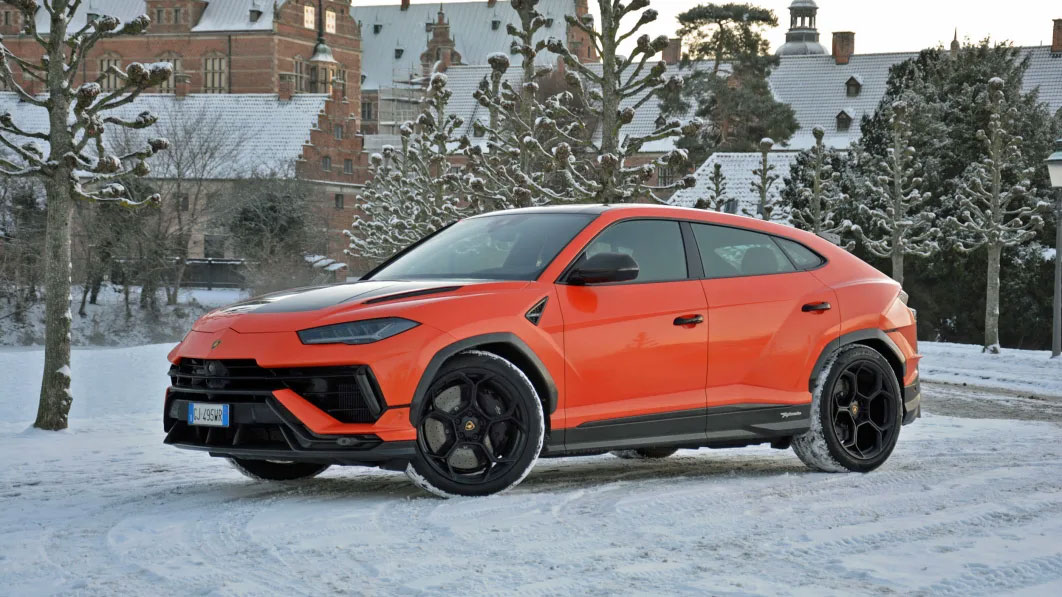
2025 Lamborghini Urus to drop gas-only model, go PHEV-only

After introducing the first hybrid to the brand this year in the Revuelto, Lamborghini’s transformation takes two more big steps next year. Autocar reports that toward the end of 2024, the Urus will switch to a PHEV-only powertrain. We’ve known for a while there was an electrical cord headed to the Urus’ flanks, but we didn’t expect Lamborghini would give up the pure ICE variant. Brand honcho Stephan Winkelmann confirmed to Autocar the engine will be a twin-turbo 4.0-liter V8, but didn’t give output figures. A 2021 report in Car magazine — back when the purported Urus PowerHybrid was due in 2022 — predicted the engine in question is coming from Porsche and would produce about 660 horsepower and 660 pound-feet of torque. The horse count would rise with help from a 168-hp electric motor in the transmission. However, the gearbox’s internals wouldn’t allow any more than 660 lb-ft. That’s still a perfectly fine number; the 6.5-liter V12 and three electric motors in the new Revuelto “only” throw a combined 783 lb-ft.

Today’s Urus romps with a twin-turbo 4.0-liter V8 making 657 horsepower and 627 lb-ft. in both S and track-focused Performante trims. Theoretically, the Urus PHEV could crank that to about 830 hp and 660 lb-ft. The additional power would be partially offset by additional weight, as much as 551 pounds if Car is correct. This SUV would carry on until 2029, when an all-electric version ushers in a second generation.

The Lamborghini Huracan successor is expected to debut before the PHEV Urus but go on sale about the same time as the Urus. Since that successor will use an adapted version of the engine headed to the Urus mated to the transmission in the Revuelto, we expect the release of vital details to begin as soon as the new baby coupe makes its introduction, thought to be around next spring. 

To hear Winkelmann talk, we’re ruminating now on the last hurrah of old-school, visceral, ICE-powered Lamborghinis. The brand has a high-riding battery-electric 2+2 GT penned in to debut in 2028 with about 300 miles of range. That will be the next big sign of things to come. He told Autocar, “You go with the most difficult legislation, which is the US, and is really California. Other states adopt California’s rules — typically big cities and that’s where we sell cars. …

Even if it [legislation] is not banning EVs, taxation will be a killing factor. Then mega-cities are talking of abolishing non-EVs before 2035 regardless.” And despite the work of sister brand and collaborator Porsche, Winkelmann’s not sold on synthetic fuels yet. For him, they’re “more about keeping alive the current car parc,” not creating new ICE-powered models using said fuels.

Related video:

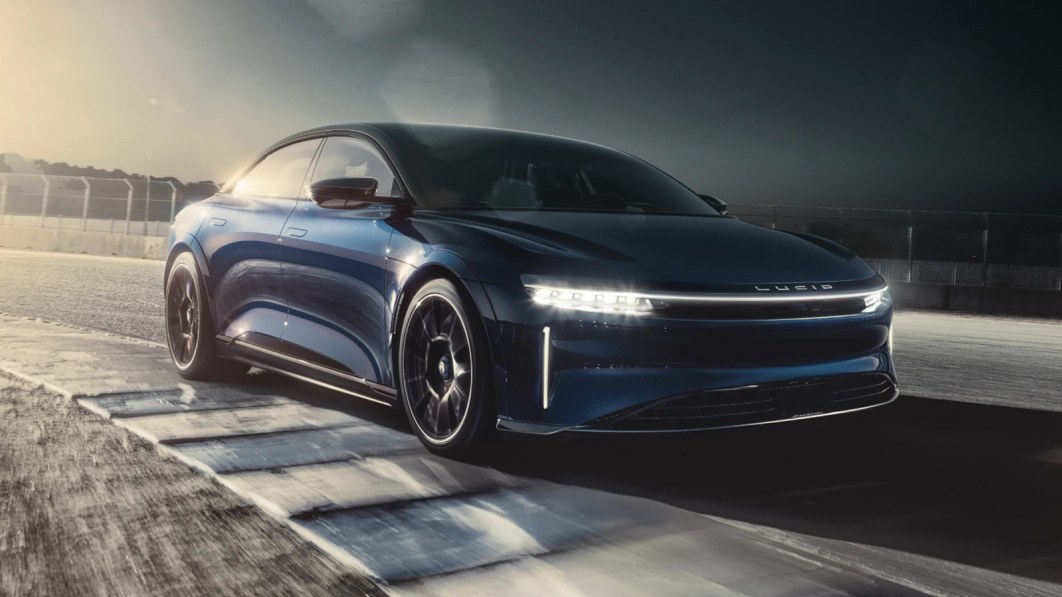
Aston Martin ties up with Lucid, extends deal with Mercedes-Benz

Aston Martin Lagonda Global Holdings is tying up with Lucid Group Inc. on electric vehicle technology, uniting the storied British carmaker and relative automotive newcomer both backed by Saudi Arabia’s sovereign wealth fund.

Aston Martin will pay $232 million in shares and cash to Lucid in exchange for battery-electric powertrain components, the companies said Monday. The UK manufacturer also extended a years-long cooperation with Mercedes-Benz Group AG, though it will no longer issue more stock to the German carmaker that already owns a roughly 9% stake.

The announcements sent Aston Martin shares soaring as much as 15%, their biggest intraday jump in over a month, while Lucid advanced as much as 9.1% in premarket US trading.

“The proposed supply agreement with Lucid is a game changer for the future EV-led growth of Aston Martin,” Chairman Lawrence Stroll said in a statement.

Stroll, 63, is three years into an effort to turn around the 110-year-old British manufacturer with a long history of financial trouble. Aston Martin has needed several capital raises since he rescued the company in early 2020, the most recent of which made China’s Zhejiang Geely Holding Group Co. and Saudi Arabia’s Public Investment Fund major shareholders.

The Public Investment Fund, or PIF, owns about 49% of Lucid and 18% of Aston Martin, according to data compiled by Bloomberg.

Aston Martin’s longstanding financial woes have made it increasingly reliant on partners for technology that other automakers consider core to their products. Models including the DBX sport utility vehicle and DB12 sports car are powered by Mercedes engines.

While Mercedes will continue to provide access to powertrains and electric architectures for current and future Aston Martin vehicles, Aston Martin will pay in cash rather than shares as previously planned.

An Aston Martin spokesman said Lucid’s technology is available now, whereas Mercedes’s AMG electric platform isn’t accessible until late 2025.

The deal with Lucid — which has been producing its lone EV, the Air sedan, since September 2021 — will help Aston Martin toward its ambitious electrification targets. The UK carmaker plans to launch its first plug-in hybrid supercar, the Valhalla, early next year and its first battery-electric vehicle in 2025. By the following year, all new product lines will have an electrified powertrain option.

Aston Martin said it will make phased cash payments to Lucid totaling $132 million and has committed to spending at least $225 million on the EV maker’s powertrain components. Aston Martin also will pay another $10 million to Lucid for integrating its technology into its vehicles.

Related video:

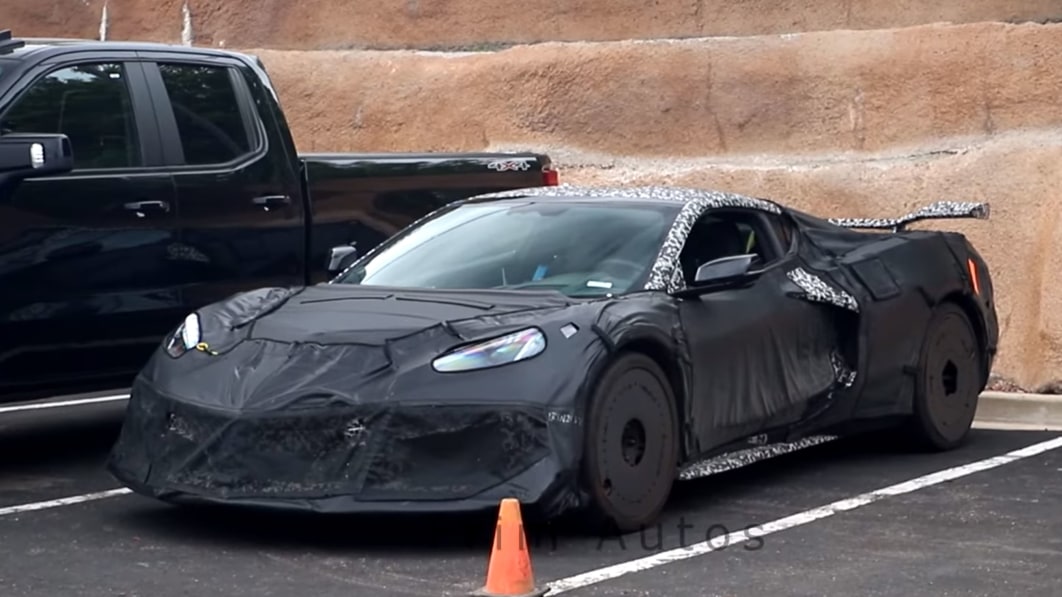
Likely Chevrolet Corvette ZR1 prototypes spotted in Colorado

Chevrolet is engineering its next hot Corvette variant, the process far enough along to get prototypes out on the roads. In May, spy shooters caught a gaggle of Corvettes in heavy camo cruising around Detroit with an escort including a Corvette Z06 convertible, a Corvette E-Ray, and a Porsche 911 GT2 RS. At least one of the camouflaged cars could very well be the coming ZR1, said to be due next year as a 2025 offering. Now YouTube channel Frim Autos has caught another group of Corvettes testing in Golden, Colorado. The same school of cars got caught at a different location in Colorado a few days earlier. The E-Ray and the 911 GT2 RS didn’t make the trip out west, but there was another Z06 among the field.

To recap, the ZR1 is basically a twin-turbo version of the naturally aspirated Z06. Instead of a 5.5-liter V8 making 670 horsepower and 460 pound-feet of torque, the ZR1 would make up to 850 horsepower and up to 825 pound-feet of torque. The engine code for the ZR1 will be LT7, one up from the LT6 in the Z06.   

Corvette watchers have wondered if the ZR1 will keep the Z06’s flat-plane crank or if Chevy will go to a cross-plane crank with the addition of turbos. Engineers driving the prototypes in Colorado pulled out of the hotel parking lot with barely any throttle, so it’s impossible to detect the turbos much less the crank arrangement. What we tell from this video and the earlier photographs is that something interesting is happening in the frunk area. The vinyl camo on one of the ZR1s in the photos couldn’t hide Y-shaped lines below, while another prototype wore a raised flat panel over the frunk. The three prototypes in Colorado got the raised panel, but it’s affixed to the adjacent camo panels differently.

One school of thought believes whatever’s happening at the front could have to do with active aero devices. Another school of thought suspects the ZR1 could get an electric motor in front like the E-Ray and be all-wheel drive. The non-believers think Chevy is withholding active aero for the hybrid AWD Zora flagship, and that the E-Ray and Zora will be the two AWD Corvettes in the range.  

Both spy sightings have shown the purported ZR1 wearing the cow-catcher front splitter and stepped rear wing from the Z07 package available for the Z06. The ZR1 will be available without those, two of the Colorado cars featuring a tamer front and and a low spoiler on the decklid.  

Related Video

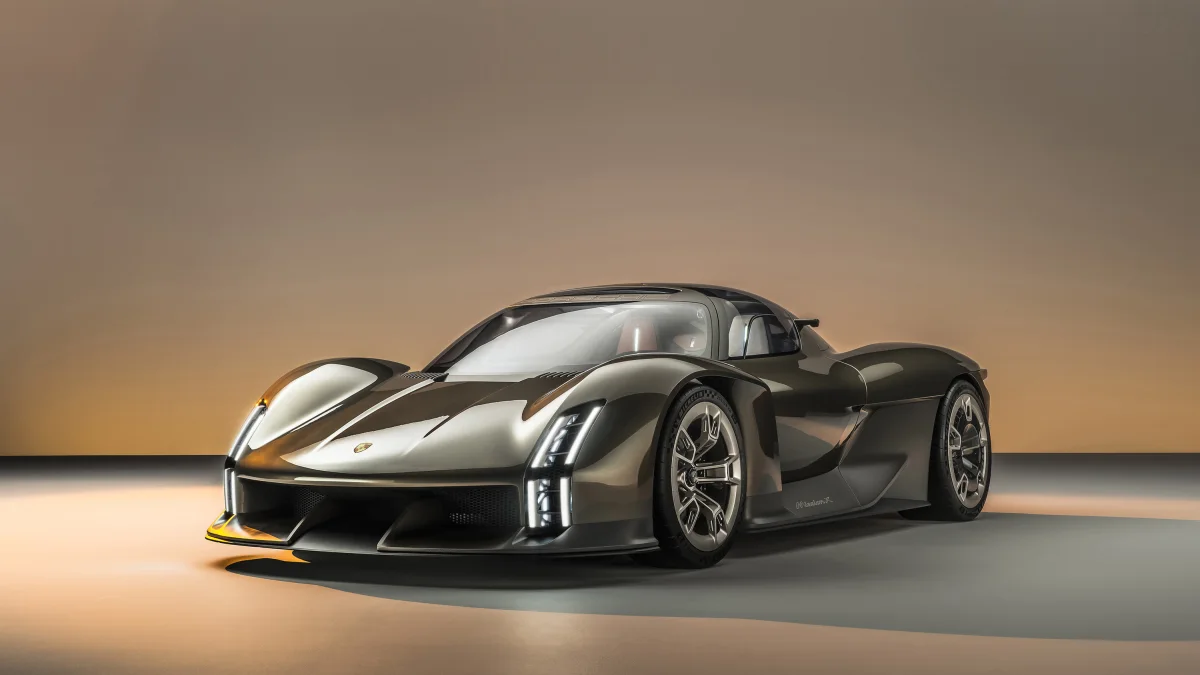
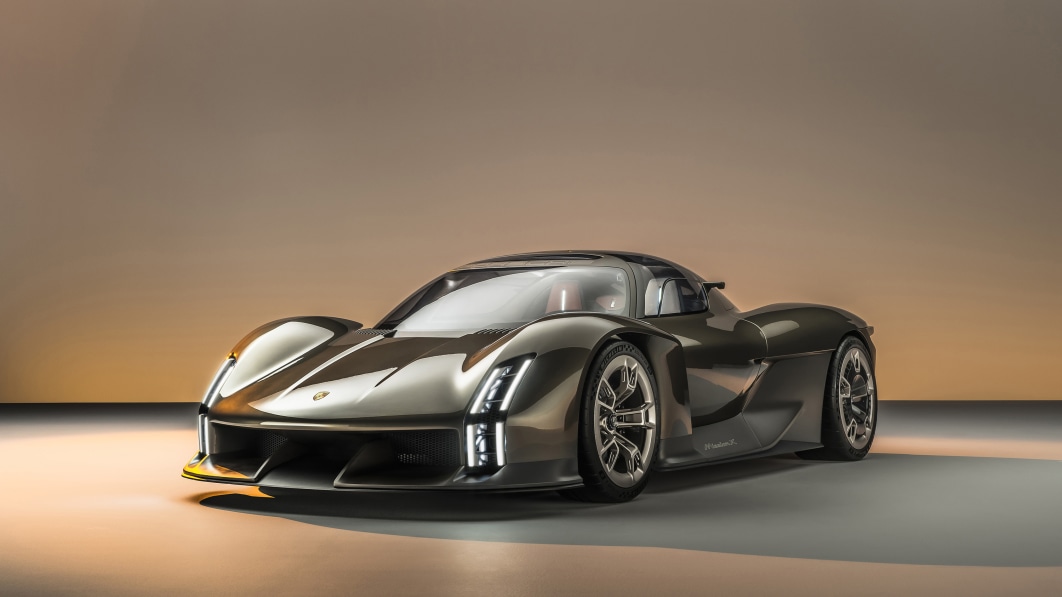
Porsche Mission X concept points at brand’s next hypercar

Frequent interviews with Porsche CEO Oliver Blume include a question as to when we’ll see another Porsche hypercar. He once answered the queries with some version of “not until the middle of the decade at the earliest least.” His most recent answer, from April of this year, pushed that back toward the end of the decade; Blume and R&D chief Michael Steiner say current battery technology isn’t prepared to satisfy the demands a Porsche hypercar would make on it, so everyone will need to wait for next-gen cells due in four or five years. So the car you see here, the Porsche Mission X concept, isn’t the next Porsche hypercar and at the moment isn’t planned for sale. However, the battery-electric two-seater with the “ultra high-performance” powertrain is full of indicators about what might be down the road.

Dressed a specially created Rocket Metallic with satin carbon fiber accents, dimensions 177 inches in length and 78.7 inches in width fit the concept into same rough footprint as the 2003 Carrera GT and 2013 918 Spyder. The 20-inch wheels in front and 21-inchers in back eat up nearly half the two-seater’s 47.2-inch height. Since this concept counts as one of the brand’s 75th birthday presents to itself, historic cues mix with modern ones. The illuminated DRLs in the photos rework the four-point signature seen on the automaker’s road cars. At the same time, the DRLs and the four LED main beams buried in the lattice support structure call back to the stacked double headlights that sat inches off the ground on Le Mans racers like the 906 and 908. Passengers enter through doors that swing up and forward like those on top-class Le Mans prototypes going back decades, then sit under a glass dome built around a skeleton of carbon fiber reinforced plastic. And the Mission X marks the debut of Porsche’s new crest.

It’s all modern in back. A horizontal lattice supports thin, ornate LED taillights that bracket floating, illuminated Porsche logotype. When charging, the “E” pulses in white. 

The cabin begs even onlookers to hit top speed. The carbon-backed seats and their six-point harnesses appear largely built into the tub. Both feature Andalusia Brown lowers, the driver’s throne additionally signified by the Kalahari Gray upper. There are four paddles behind the steering yoke — we’re not sure what they control other than the obvious guess of regen braking. The ornate stopwatch in front of the passenger is a removable unit clipped into a bayonet system on the instrument panel, created by Porsche Design. At the track, the stopwatch could be used in conjunction with the multiple built-in cameras. One imagines other accessories, like a screen, could go here when not on the track.   

Porsche calls it a “reinterpretation of a hypercar,” but we don’t know enough about the Mission X yet to understand what that means. Drivetrain and output specs weren’t included with the reveal. We’ve been told the battery sits behind the cockpit in a way that mimics mid-engined dynamics, the setup called “e-core.” The automaker said that were the street-legal coupe to get a production run, it would aim to “be the fastest road-legal vehicle around the Nürburgring Nordschleife; have a power-to-weight ratio of roughly one hp per 2.2 lbs.; achieve downforce values that are well in excess of those delivered by the current 911 GT3 RS; offer significantly improved charging performance with its 900-volt system architecture and charge roughly twice as quickly as the current Porsche frontrunner, the Taycan Turbo S.”

Starting from the top, the Mission X has the Mercedes-AMG One in its sights, the other Stuttgart hypercar maker owning the Nordschleife record with a time of 6:35.18. That’s about 22 seconds faster than the 918 Spyder ran the lap, the 918 the first production car to break the seven-minute barrier

The power-to-weight ratio is measured in metric horsepower, so 0.986 of our American ponies per kilogram. The 918 Spyder weighed about 3,650 pounds, or 1,656 kilograms. Given the weight of an electric hypercar — the Rimac Nevera weighs about 5,070 pounds or 2,300 kg — we might think a Mission X comes in at 1,700 hp on the extreme low end to as much as 2,300 hp.

The GT3 RS produces as much as 860 kg (1,896 pounds) of downforce but uses a giant wing and other aero addenda to do it, meaning the undisturbed Mission X concept’s glasshouse and upper surfaces are hiding an underbody full of chicanery.

And the Taycan Turbo S maxes out at 270-kilowatt charging to go from 5% to 80% state of charge in a little more than 20 minutes. Read: The Mission X concept should fill-up quick.

As for the chances of a version you can buy, Porsche says Mission X “production to be decided in due time.” We have no doubt the phones at HQ have been ringing with “name-your-price” offers all day. We don’t see why Porsche would miss the chance to celebrate its birthday with a cool new concept, some treats for its best clients, some icons for posterity and a stupendous haul of loot.   

Related video:

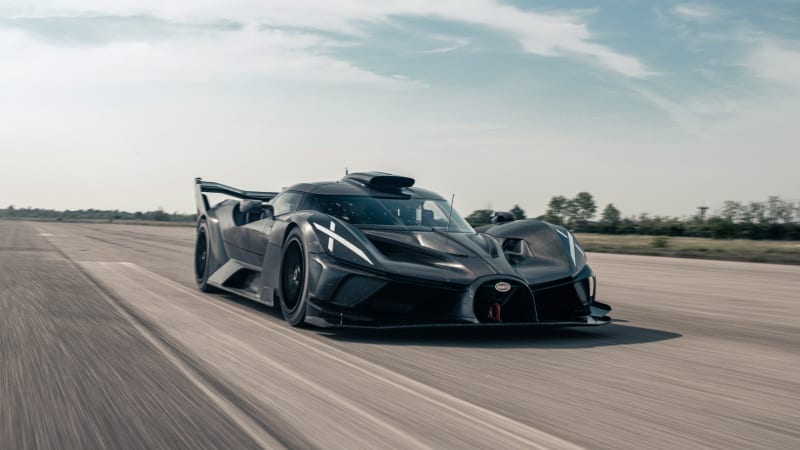
Watch (and listen to!) the Bugatti Bolide go flat-out on an airstrip

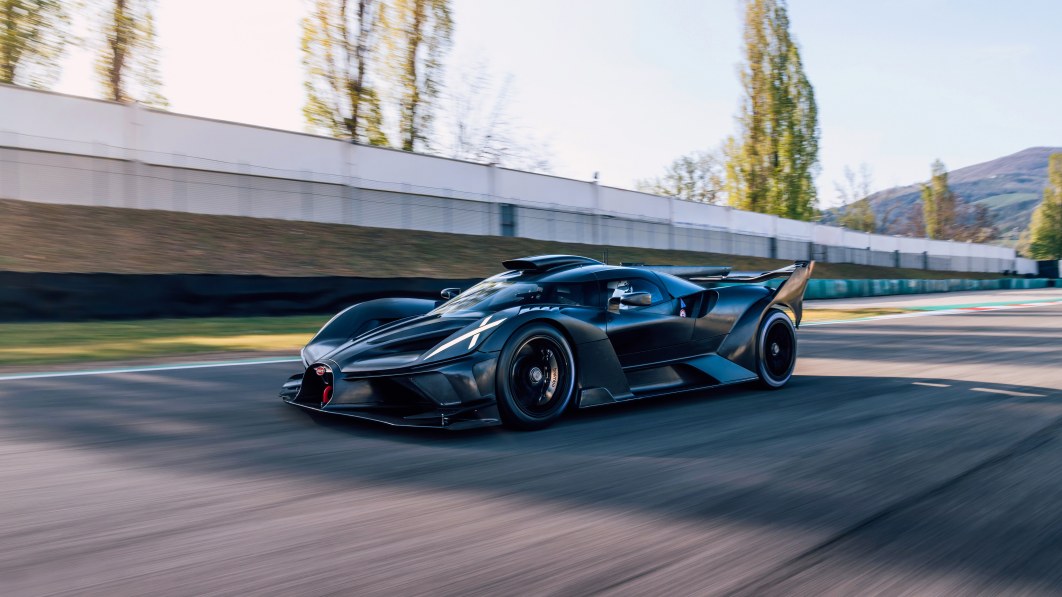
Development of the track-only Bugatti Bolide has reached a significant milestone. After finalizing the hypercar’s design and building the first prototypes, the French brand has started testing the model on an airstrip to fine-tune parameters like the amount of downforce it generates.

Power for the Bolide comes from an 8.0-liter W16 engine that’s quad-turbocharged to 1,578 horsepower — you know we’re talking serious power when the horsepower figure includes a comma. While this is the same basic engine that powers the Chiron, among other models, the major similarities between the two models stop there. Bugatti didn’t design the Bolide for street use so its engineers were unfettered by the regulations that shaped your daily driver. They focused on keeping weight as low as possible while designers created a race car-like body.

So far, the tests have confirmed what months of computer simulation predicted: the 3,200-pound Bolide can handle up to 2.5 Gs of lateral forces, meaning it can take a corner really, really, fast, and it generates up to three metric tons of downforce (that’s about 6,600 pounds) depending on the speed it’s traveling at. Bugatti explains the car’s front splitter helps achieve this downforce: air hitting the car gets compressed under the splitter and expands under the diffuser to create the suction that helps pin the Bolide to the pavement. There’s much more to it, and all of the aerodynamic add-ons are functional. The shape of the passenger compartment, which is narrow compared to the Chiron’s, was selected in part to maximize airflow to the side-mounted intercoolers. The door mirrors channel air to the intercoolers as well.

While the mirrors add drag, Bugatti explained that they make more sense than cameras because they give the driver a better idea of where they’re positioned compared to other cars. “Every technical consideration has been translated directly into an aesthetic design,” said Frank Heyl, the company’s deputy design director, in a statement. “Design and technology flow into one another in the Bolide,” he added.

Bugatti will continue testing the Bolide on race tracks around the world in the coming months, and it plans to begin delivering the car in 2024. If you’re not already on the waiting list, it’s too late: production is limited to 40 units and they’re all spoken for in spite of a base price pegged at €4 million (about $4.29 million at the current conversion rate). Alternatively, there’s a 905-piece Lego kit that’s not sold out and that only costs about $50 excluding tax. It doesn’t need to be tested on a race track, but we can’t guarantee it will provide three tons of downforce.

In addition to bringing the Bolide to production, Bugatti is busily developing the yet-unnamed model that will replace the Chiron. Details are vague, but Autoblog learned the model will use a plug-in hybrid powertrain and feature many new components, including the monocoque.

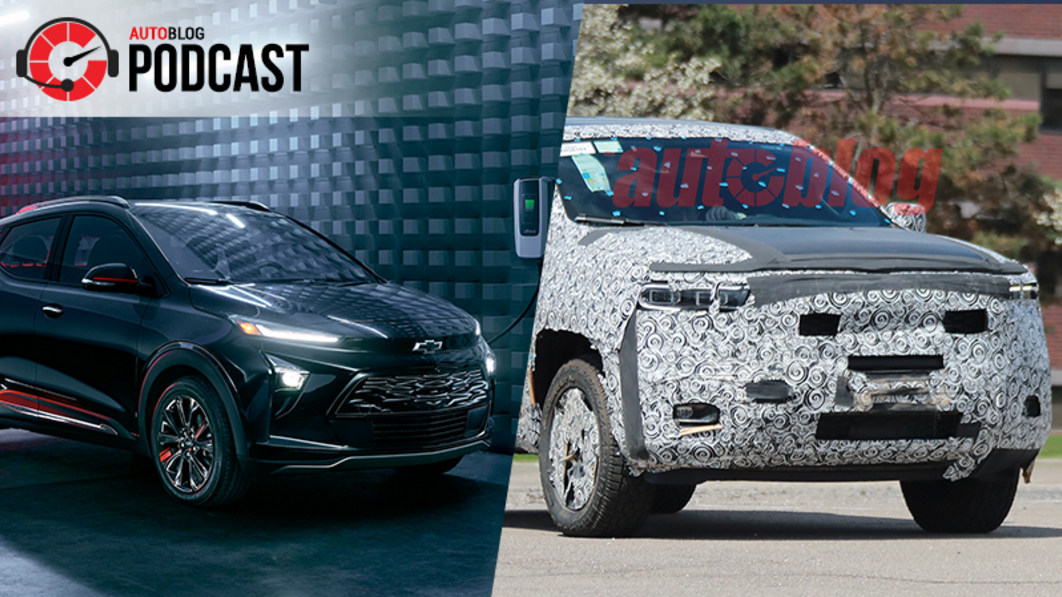
Goodbye Chevy Bolt, hello baby Ram and electric Chrysler 300 replacement? | Autoblog Podcast # 779

In this episode of the Autoblog Podcast, Editor-in-Chief Greg Migliore is joined by Senior Editor Jeremy Korzeniewski. They kick things off this week with some news. The Chevy Bolt and Bolt EUV will be discontinued. The McLaren 750S gets revealed and a four-door new flagship McLaren are rumored. Did Chrysler show dealers an electric 300 replacement, did we spy a new compact Ram, and are we closer to a production version of the Genesis X Convertible? Also, Greg recently visited Michigan Central Station, which Ford is revitalizing.

In this week’s fleet, your hosts discuss driving the Genesis Electrified GV70, Chevy Tahoe RST Performance Edition and the Polaris RZR XP. Finally, they take to Reddit for this week’s “Spend My Money” segment.

Send us your questions for the Mailbag and Spend My Money at: Podcast@Autoblog.com.

Autoblog Podcast # 779

Get The Podcast

  • Apple Podcasts – Subscribe to the Autoblog Podcast in iTunes
  • Spotify – Subscribe to the Autoblog Podcast on Spotify
  • RSS – Add the Autoblog Podcast feed to your RSS aggregator
  • MP3 – Download the MP3 directly

Rundown

Feedback

Autoblog is now live on your smart speakers and voice assistants with the audio Autoblog Daily Digest. Say “Hey Google, play the news from Autoblog” or “Alexa, open Autoblog” to get your favorite car website in audio form every day. A narrator will take you through the biggest stories or break down one of our comprehensive test drives.

Related video:

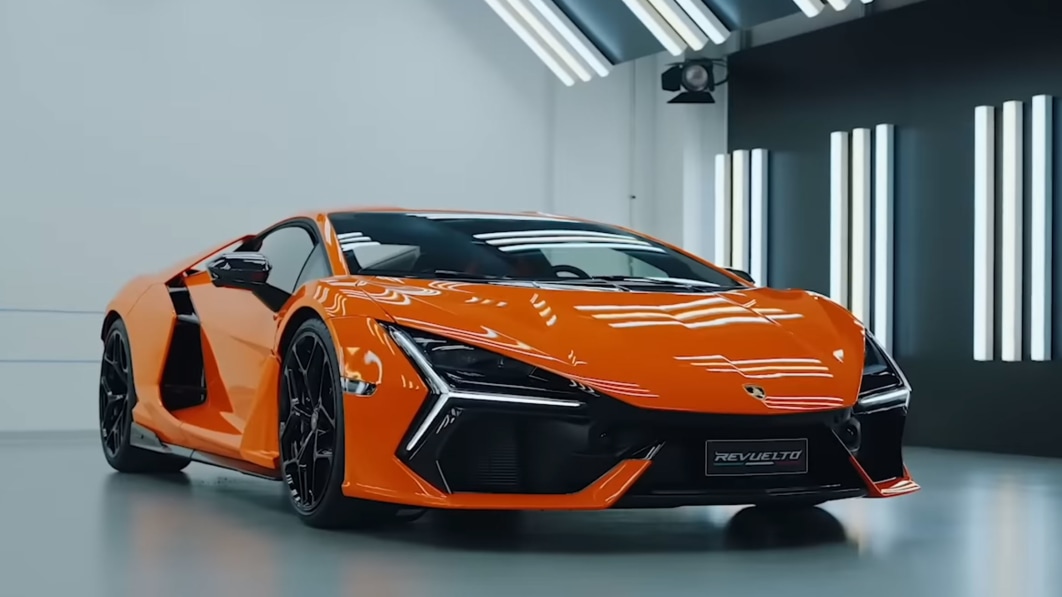
Lamborghini Revuelto gets its closeup, makes some noise

Lamborghini revealed the successor to the Aventador at the end of March. The new biggest, baddest bull from Sant’Agata is called the Revuelto, powered by a hybrid V12 designed to celebrate the most feral side of Lamborghini’s take on internal combustion while also providing everyday hybrid manners in the city and meeting global emissions regulations. The first public viewing happened at Auto Shanghai in April, the Revuelto taking its first European bow late in the month at Milan Fashion Week, where Lamborghini also showed versions of the 60th Anniversary Huracan models. Now we’re getting more details on the new V12 in Lamborghini’s own words, thanks a seven-minute video called “The Challenge.”

Most importantly, we’re getting a taste of the Revuelto’s sounds. A leaked trademark application in Europe from earlier this year put a clip of the Revuelto’s pure EV mode on YouTube. That video’s been banished, but at 3:10 in this new vid there’s a sample that sounds similar to the leak. It opens up a discussion of techniques the sound engineers used to represent the new frontier for the brand, that section ending with a short blast of V12 noise.

Technical officer Reuven Mohr runs through some of the special numbers defining the Revuelto: The carbon fiber “monofuselage” is composed of RTM, pre-preg, and forged carbon fiber and weighs 10% less than the previous carbon tub while being 25% stiffer; and the V12 makes 30% more power than the final Aventador while producing 30% fewer emissions. There’s also an animation of the new eight-speed double-clutch gearbox that houses an electric motor. Replacing the former longitudinal transmission placed between the cabin seats with a compact unit mounted behind the engine meant being able to move the engine forward. Mohr gives the impression the relocation enabled designers to add a proper, deep diffuser. However, the 2017 Centenario gave us a taste of what we have now, including the visible chunk of rear tire.

There’s so much more we’re still waiting to find out about the new Italian flagship, but you can start your studies with the video above.

Related video:

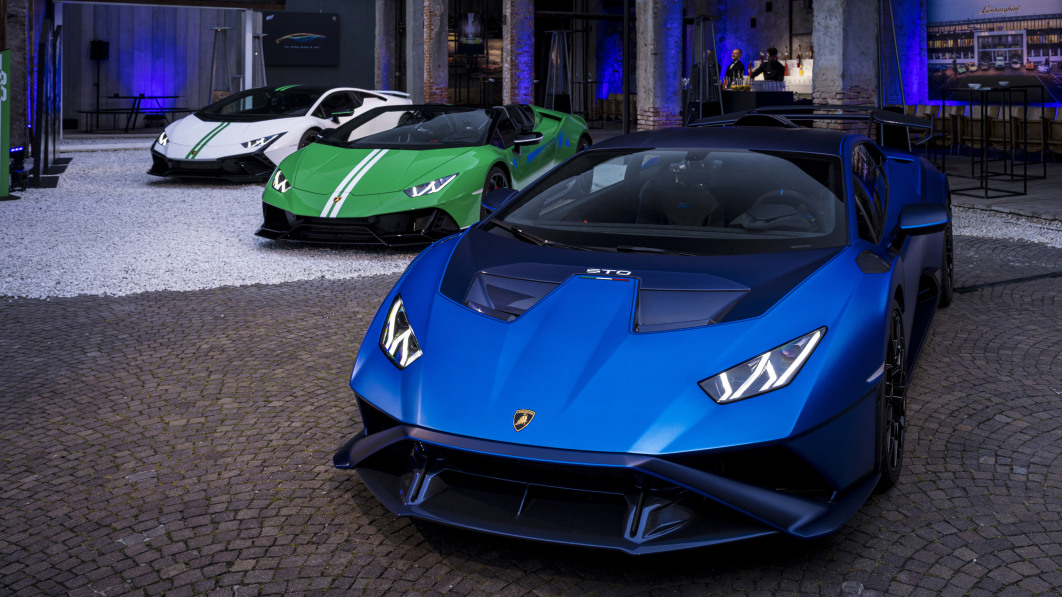
Lamborghini shows off 2023 Huracan 60th Anniversary models at Fashion Week

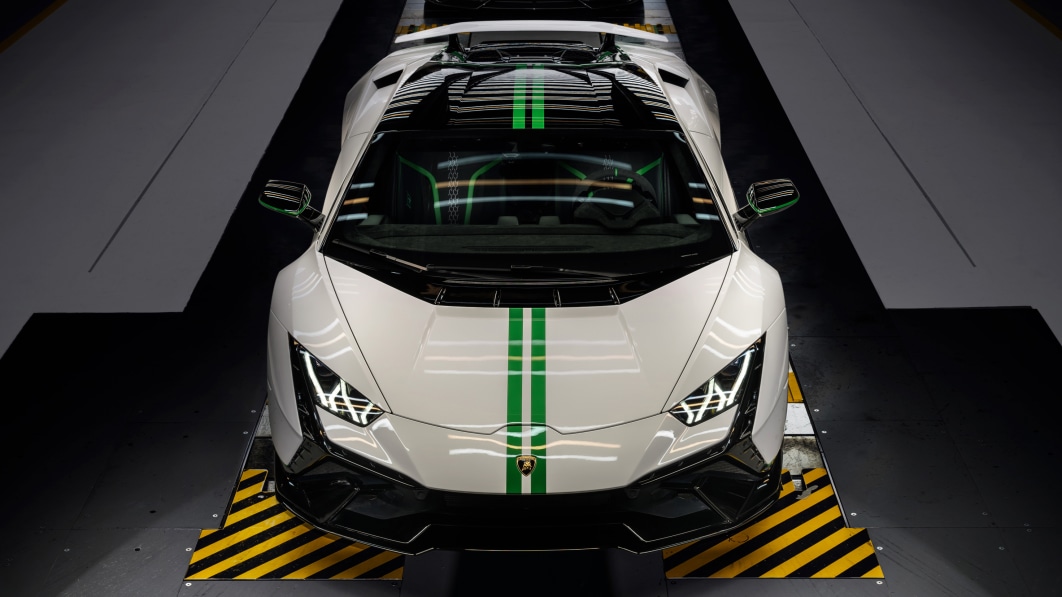
As promised, Lamborghini pulled back the covers on its run of 60th anniversary Huracans. The three trims, Super Trofeo Omologata (STO), Tecnica, and EVO Spyder each come in two fashion-influenced colorways, and each will come in a run of 60 units for a total of 180 produced. The STO is inspired by sportwear and the athletic team kit. The first version comes in various shades of blue over black, the second version in gray over black. The Huracán Tecnica looks to motorsports liveries and the Italian flag, one variant in gray over black and red, the other in white with green stripes over black. The droptop EVO Spyder is a remix of the other two, available in either blue and white over black, or green with white strips over black.

Of note, CEO Stephan Winkelmann said “The special editions of the Huracán not only celebrate the 60th anniversary of our brand, but also give our customers maybe the last chance to purchase an otherwise sold-out V10-powered Lamborghini.” We think “maybe” is an important word in this sentence. The high-riding Sterrato only got 1,499 units that disappeared faster than wet cotton candy. The standard Huracan is sold out through 2024, as is everything else coming out the Sant’Agata Bolognese factory. Yet the Huracan successor isn’t due until the end of 2024, according to a Road & Track report. Eighteen months that will include the afterglow of a huge birthday year is a long time to go without one-third of the lineup, especially at a company that loves — and succeeds so well at — special editions.

As for that successor, about the only agreement among rumors is that the chassis be a modified version of the platform created for the flagship Revuelto. Car magazine says the hybrid V12’s carbon-heavy “monofuselage” will be reworked with aluminum to lower the price. As recently as last November, some pubs said they expected Lamborghini to stick with a V10, Auto Express writing about Lamborghini technical officer Rouven Mohr saying, “[the new car is] not a range-oriented hybrid and there will be no kind of downsizing,” the mag saying Mohr conveyed the sentiment “that it’s against Lamborghini’s philosophy to reduce the engine size and then ‘compensate’ with electrification as some rivals have done.” 

A twin-turbo hybrid V8 has come up more recently, this engine being of Lamborghini’s design. No longer having a corporate sibling in the Volkswagen Group stable to share V10 hybrid costs and upkeep with, a hybrid V8 makes much more sense. The Group is awash in V8s and will be using hybridized versions in models from several brands. The scuttlebutt on this engine alleges about 850 horsepower of total output, turbos that don’t spool up until 7,000 rpm, and a 10,000-rpm redline. 

Related Video

McLaren 720S successor teased with startup sound, rear view

A report from February this year pegged April as the official reveal date for the McLaren 720S’ successor, and it’s proven true. McLaren released a teaser on Twitter today, saying that the reveal of a new “benchmark supercar” is coming at 7 p.m. ET tomorrow, April 25.

This vehicle will undoubtedly be the 720S successor, which is currently rumored to be named the 750S. The teaser video associated with the news is a video clip in which the soon-to-be-revealed supercar is started up. You can hear the engine of the 750S fire up and idle for a few seconds before the audio is cut. Listen below.

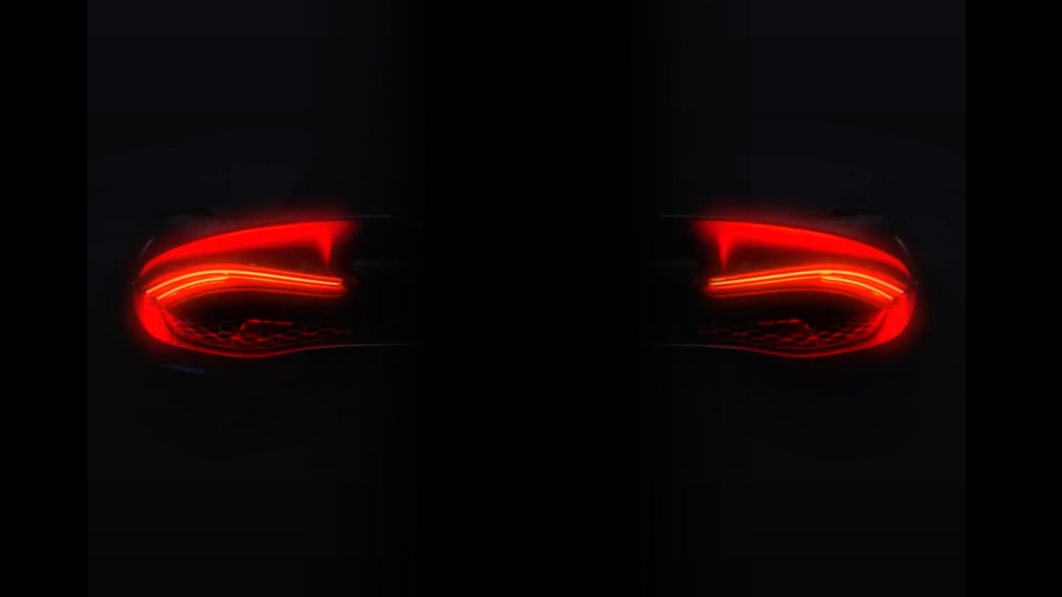
The report about this new supercar suggested that the 750S will receive an updated version of the 4.0-liter twin-turbo V8 used in the 720S. However, power will be raised to approximately 740 horsepower instead of the previous car’s 710 horsepower. The teaser footage isn’t very revealing, but we can see some red LED taillights appear out of the darkness in the video. They look similar in shape and size to the taillights on the 720S, but we don’t know what the rest of the vehicle will look like.

Make sure to tune in tomorrow evening to see what McLaren has in store for us with its next supercar that is following hot on the heels of the PHEV Artura.

Kimera EVO37 Martini 7 celebrates Martini Racing’s seven WRC trophies

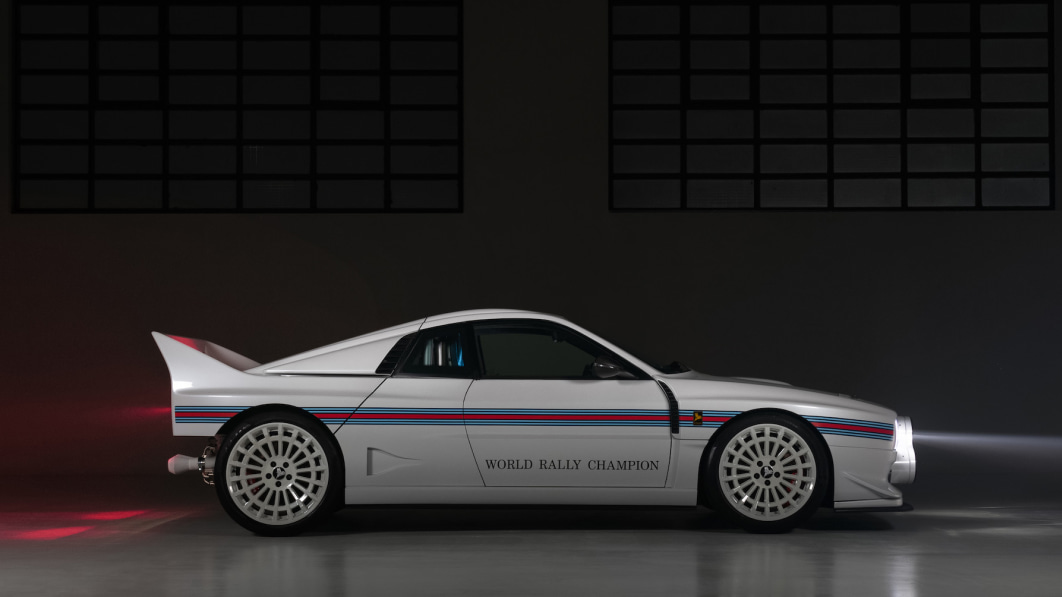
Two years ago, Kimera launched its EVO37, a modern and thoroughly gorgeous tribute to the 1983 Lancia 037 World Rally Championship car. When Kimera put its EVO37 on the start line of the Sardinia Rally last year, the coupe wore the same Martini Racing Team colors used by the 1983 car. This year, Kimera is using a different Martini Racing livery to debut an evolution of the Kimera EVO37 that’s even closer to the original and celebrates the seven Lancia-powered Martini Racing Team World Rally Championship titles. The 037 won a single title, the last two-wheel-drive WRC entry to do so. The Lancia Delta S4 and its variations won the remainder. Company boss Luca Betti again worked with Miki Biasion, who won back-to-back WRC Driver’s Championships piloting the Lancia Delta, and Lancia engineers of the time to lighten and sharpen the EVO37 into the Martini 7.

Starting with the performance mods, the supercharged and turbocharged 2.1-liter four-cylinder now makes 550 horsepower instead of 505 hp, and 406 pound-feet of torque. Power heads to the rear axle via a standard manual or optional sequential transmission, but the gears have shorter, more rally-like ratios. Gawkers are invited to further appreciate what lies behind the cockpit thanks to the new quick-release lower bumper as was found on the Lancia 037 Evo 2. Undoing the clips shows quad pipes in a white ceramic coating matching the new paintwork that runs all the way up the exhaust runners.

The new carbon fiber aero package adds intakes behind the front doors, vents on the tops of the fenders, and additional descending steps in the engine cover surround. The new wheels recall the Delta Evoluzione, as does the passenger compartment, now made entirely from carbon fiber and getting the car down to about 2,425 pounds. The seats are inspired by those in the Delta S4, trimmed in blue perforated Alcantara with red stitching that matches accents on the door cards and ceiling. The gauges glow in fluorescent orange, the buttons and knobs laid out just as they were in the 1983 Lancia 037.

The pearl effect white Martini Racing Livery with blue, light blue, and red strips comes most resembles that of the special edition Lancia Delta Martini 5 and Martini 6 cars, produced in the early 1990s to celebrate the Delta’s fifth and sixth WRC trophies. The other obvious indications this is something different are the “World Rally Championship” script along the sides and “Martini Racing” on the rear spoiler. 

As with the first iteration, Kimera will make just 37 of the EVO37 Martini 7. We hope those light bars are part of the package, because it would be criminal to drive this without them. Kimera didn’t release a price, but somewhere north of the 480,000 euros ($533,700 U.S.) of the original is a good place to start dreaming.

$4.4M Bugatti Bolide moves down the track and closer to production

Unveiled in 2020, and approved for production a year later, the Bugatti Bolide is one step closer to hitting the track. The automaker just published photos of the car being put through its paces, and it released details about some of features that differentiate it from the Chiron.

Writing off the Bolide as a rebodied Chiron would be an oversimplification. While the two cars share an 8.0-liter, quad-turbocharged W16 engine, the list of Bolide-specific parts is long. Bugatti explains that its engineers designed the model around a new carbon fiber monocoque, and they were unfettered by the various rules and regulations that shape modern cars because the Bolide isn’t street-legal. It’s exclusively a track car. Changes were made to the cooling system, the suspension system, and the transmission; the suspension is notably three times stiffer than the Chiron’s, and it includes uniball bearings. Several 3D-printed parts, including titanium rockers, will be used to build it.

Even the engine isn’t carried over; not quite. In the Bolide, the four turbochargers always provide boost because the 16-cylinder is expected to spend a lot of time at higher revolutions. In comparison, the Chiron uses a sequential setup: The two smaller turbos generate boost at up to 3,800 rpm, and the two bigger units kick in beyond that. The end result is 1,578 horsepower in a car that tips the scale at 3,196 pounds. 

Slick tires designed by Michelin put the power to the ground, while a carbon-ceramic braking system keeps it in check. Interestingly, Bugatti designed new calipers that generate and absorb heat to help the brakes warm up as quickly as possible (they’re less effective when cold).

Bugatti will begin delivering the Bolide in 2024. Production is limited to 40 units, and the model is sold out in spite of a base price pegged at €4 million excluding taxes, which represents approximately $4.39 million at the current conversion rate. If that’s too much, or if you missed your chance to buy one, one alternative is a 905-piece Lego Technic kit that stretches about a foot long and that costs about $50.

It’s too early to tell what’s next. We know that the Bolide is one of the last W16-powered Bugatti models along with the Mistral convertible and the final examples of the Chiron. The 16-cylinder chapter is about to end, and Bugatti confirmed that the Chiron’s replacement (which hasn’t been shown or given a name yet) will use a plug-in hybrid powertrain and feature a design described as “leaner and more athletic.”

2023 Lamborghini Huracan celebrates 60 years with 180 special-edition cars

A person’s 60th birthday is the diamond jubilee, considered one’s entry into the golden years and the autumn of life. Lamborghini’s blowing out its 60 candles this year, the new Revuelto proving the Sant’Agata Bolognese automaker plans no such dissolution. The next phase of the party involves the 2023 Huracán 60th Anniversary Edition, three limited-run specials numbering 60 examples each put together with custom color combinations and badging. Dicing matters further, each limited edition comes in two color configurations, making a total of six across the range, all embellished with “1 of 60” plaques in carbon fiber and the “60th” on the bodywork and seats. 

Both versions of the hardcore Huracán Super Trofeo Omologata (STO) are said to be inspired by vibrant sportwear and the iconic two-tones of athletic team kit. The first version is all kinds of blue, something like the Squadra Azzurri Italian national soccer team. This one gets Blu Aegeus bodywork with Blu Astraeus contrasts, and can hit the hat trick with exposed carbon fiber trim in Blu Mira. The interior is in Nero Cosmus (black) and Grigio Octans (gray) Alcantara, offset by Nero Ade (another black) trim and Blu Amon (another blue) embroidery. The second Huracán STO does its showing off inside. It goes for a muted Grigio Telesto (gray) and Nero Noctis (yet another black) with traditional carbon fiber accents. This cabin comes in Nero Cosmus and Grigio Octans Alcantara, the leather accents and stitching in Rosso Alala (red). A set of 20-inch forged aluminum Hek rims in matte black complete both.

The Huracán Tecnica looks to motorsports liveries and the Italian flag, called the Tricolore. One variant wears Grigio Telesto (another gray) bodywork with Nero Noctis and Rosso Mars (another red) details. Opening the door reveals a Nero Ade Alcantara cabin with Rosso Alala accents. The other variant comes in Bianco Asopo (white) bodywork with double stripes in Verde Viper (green), the cabin in Nero Ade Alcantara and more Verde Viper. 

Finally, the Huracán EVO Spyder remixes the arrangements on the other cars. Going back to the blue well, one version’s dressed in Blu Le Mans bodywork adorned with Bianco Isi (another white) details. The cockpit sticks with the popular Nero Ade Alcantara, this time punctuated by Blu Amon embroidery and piping in Bianco Leda (another white). The alternative is a Verde Viper droptop with Bianco Isi stripes, its interior lashed up with Nero Ade Alcantara plus Rosso Alala and Bianco Leda accents.

The Tecnica and EVO Spyder both sit on 20-inch Damiso shiny black rims.

All three cars will be unveiled in full on Friday, April 21, at the Segheria in Milan.

Lamborghini reveals more details about the Aventador’s hybrid successor

Lamborghini has released additional details about the Aventador’s long-awaited successor. Called LB744 internally, the model will stand out as the company’s first series-produced hybrid car, and the latest teaser gives us a better idea how the system is set up to behave.

Quick recap: Power comes from a gasoline-electric hybrid drivetrain rated at about 1,001 horsepower and made up of a new, 6.5-liter V12, an eight-speed automatic transmission, and three electric motors. This configuration allowed Lamborghini to dial in a 44% front and 56% rear weight distribution; engineers also fitted stiffer anti-roll bars and reduced the steering ratio by 10% compared to the Aventador Ultimae

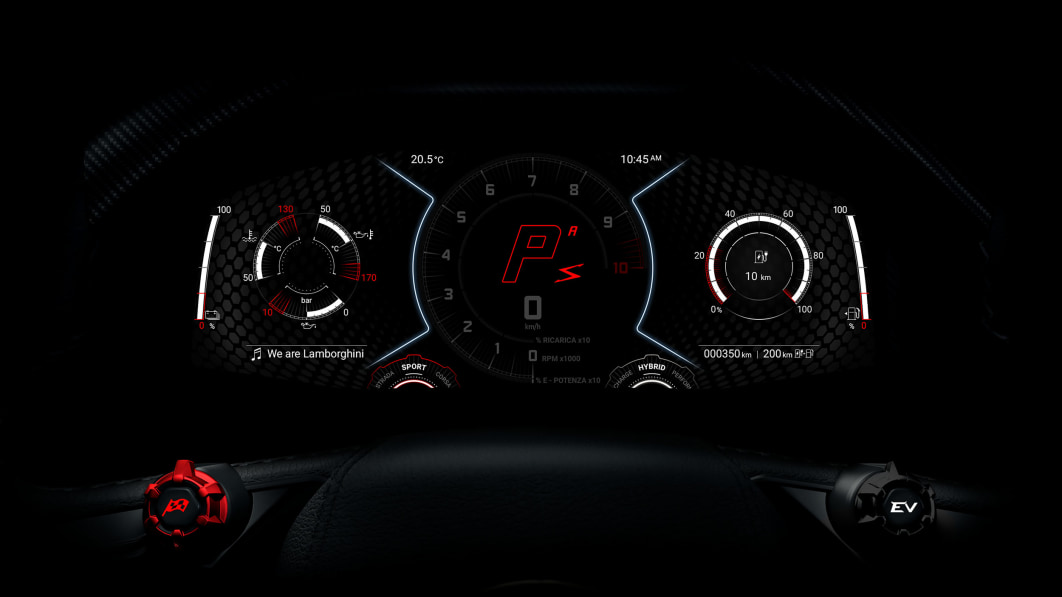
Enthusiasts will have four driving modes called Città, Strada, Sport, and Corsa, respectively, to choose from. They’ll also be able to select one of three powertrain modes named Recharge, Hybrid, and Performance. As its name implies, Recharge relies on the V12 to charge the lithium-ion battery pack in a couple of minutes, for example. The LB744 is also capable of driving on electricity alone for short distances.

Selecting Strada (“road” in Italian) caps the drivetrain’s output at about 873 horsepower. Sport mode unlocks 894 horsepower and brings with it profile-specific settings for the transmission, the suspension system, and the active aerodynamic parts. Finally, selecting Corsa (“race” in Italian) unleashes the drivetrain’s full potential and configures the drivetrain’s electrified components for maximum performance. Drivers will also have the option of disabling the electronic stability control system, and the LB744 will come with a launch control function.

Going hybrid allowed Lamborghini to add electric torque vectoring to the front axle. We’re told that slowing down the front wheel that’s on the inside part of a corner makes the LB744 more agile while improving stability during high-speed driving. This technology works hand-in-hand with the four-wheel steering and brake-energy recuperation systems; it sounds like there’s a lot of electronic wizardry happening here.

Details such as the car’s weight haven’t been released yet. All we know at this stage is that Lamborghini designed the LB744 around a new carbon fiber monofuselage that includes a carbon fiber front structure (in contrast, the Aventador used an aluminum front structure). The active aerodynamic parts increase aerodynamic efficiency and downforce by 61% and 66%, respectively, in high-load situations, while a carbon-ceramic braking system that includes huge, 10-piston front calipers and four-piston rear calipers keeps the power in check.

Lamborghini will fully unveil the LB744 in “just a few days.”

Lamborghini highlights Aventador successor’s carbon fiber chassis

Earlier in March 2023, Lamborghini detailed the gasoline-electric hybrid drivetrain that will power the Aventador’s successor. We still don’t know what the model (which is called LB744 internally) looks like, but the firm revealed one way it kept the hybrid system’s weight in check.

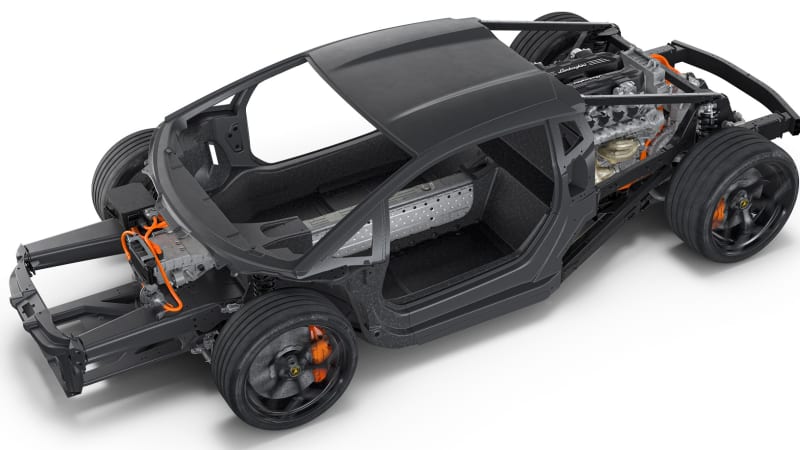
Lamborghini built the LB744 around a new chassis called a “monofuselage” that consists of a carbon-fiber monocoque and a front structure made with Forged Composites, an innovative material the company has used since 2008. While the now-retired Aventador featured a carbon-fiber monocoque as well, its front structure was made with aluminum. Switching to a composite structure unlocks many advantages: It’s 20% lighter than the Aventador’s front structure, and it helps make the overall monofuselage 10% lighter than the Aventador’s chassis.

Out back, the structure that the engine, the transmission, and parts of the hybrid system are mounted on is built with high-strength aluminum alloys. It incorporates a pair of hollow castings that the rear suspension system’s shock towers and the powertrain’s suspension system are integrated into. Here again, this layout saves weight by reducing the number of parts that need to come together to assemble the car.

Power for the LB744 comes from a gasoline-electric plug-in hybrid drivetrain that consists of a new, 6.5-liter V12 engine located directly behind the passenger compartment, an eight-speed dual-clutch automatic transmission mounted transversally behind the engine, a small electric motor integrated into the transmission, two electric motors on the front axle (one per wheel), and a 3.8-kilowatt-hour lithium-ion battery pack housed in what was previously the transmission tunnel. The system’s total output checks in at 1,001 horsepower. This layout delivers through-the-road all-wheel-drive, meaning that there’s no mechanical connection between the front and rear axles.

Lamborghini will unveil the LB744 in “a few weeks.”

Related video:

Atelier Jalaper’s new watch made from Lamborghini Miura bulkhead

Last August, French watchmaker Atelier Jalaper announced itself with an automatic timepiece whose dial was cut from the hood of an Aston Martin DB5. The next collection is ready, this one with an Italian flavor. After another lengthy search, the company located a burned-out Lamborghini Miura P400S in Avignon, France. We’re told a section of the aluminum bulkhead between the engine and the trunk escaped the fire, and with this, Atelier Jalaper created the AJ-P400.

Instead of the Miyota automatic movement used in the DB5’s AJ-001 and AJ-002 watches, the AJ-P400 is based around a Sellita SW200-1 manual caliber. Anyone without a watch winder will need to restore the power reserve after about 45 hours. The oval-shaped 39.5-millimeter satin-finished steel case shows off the first Miura connection: An oval outer bezel surrounding a circular dial, recalling the oval “eyelash” treatment around the Miura headlights. The chapter ring around the bezel comes in four colorways close to original Miura hues of Azzuro Cielo (blue), Verde Miura (green), Arancio Miura (orange) and Nero Cangiante (black). The Miura wreck provides the aluminum dial, its face textured and anodized matte black. The lengthy hash marks and somewhat crowded numbers are inspired by the Miura’s speedometer. At bottom, instead of a Lamborghini logo and unit indicator, the watch shows the power reserve meter. And the band makes a callback to Miura seats.

Last year’s Aston Martin watch was produced in a run of 1,200, costing from €800 ($852 U.S.) to €1,150 ($1,225 U.S.). The Miura timepiece will be more rare and more dear, coming in a run of 400 examples, each costing $2,000. Orders are open now, the first samples to be delivered in July.

Related video: