All posts in “Lamborghini”

Lamborghini Announces The Aventador LP780-4 Ultimae

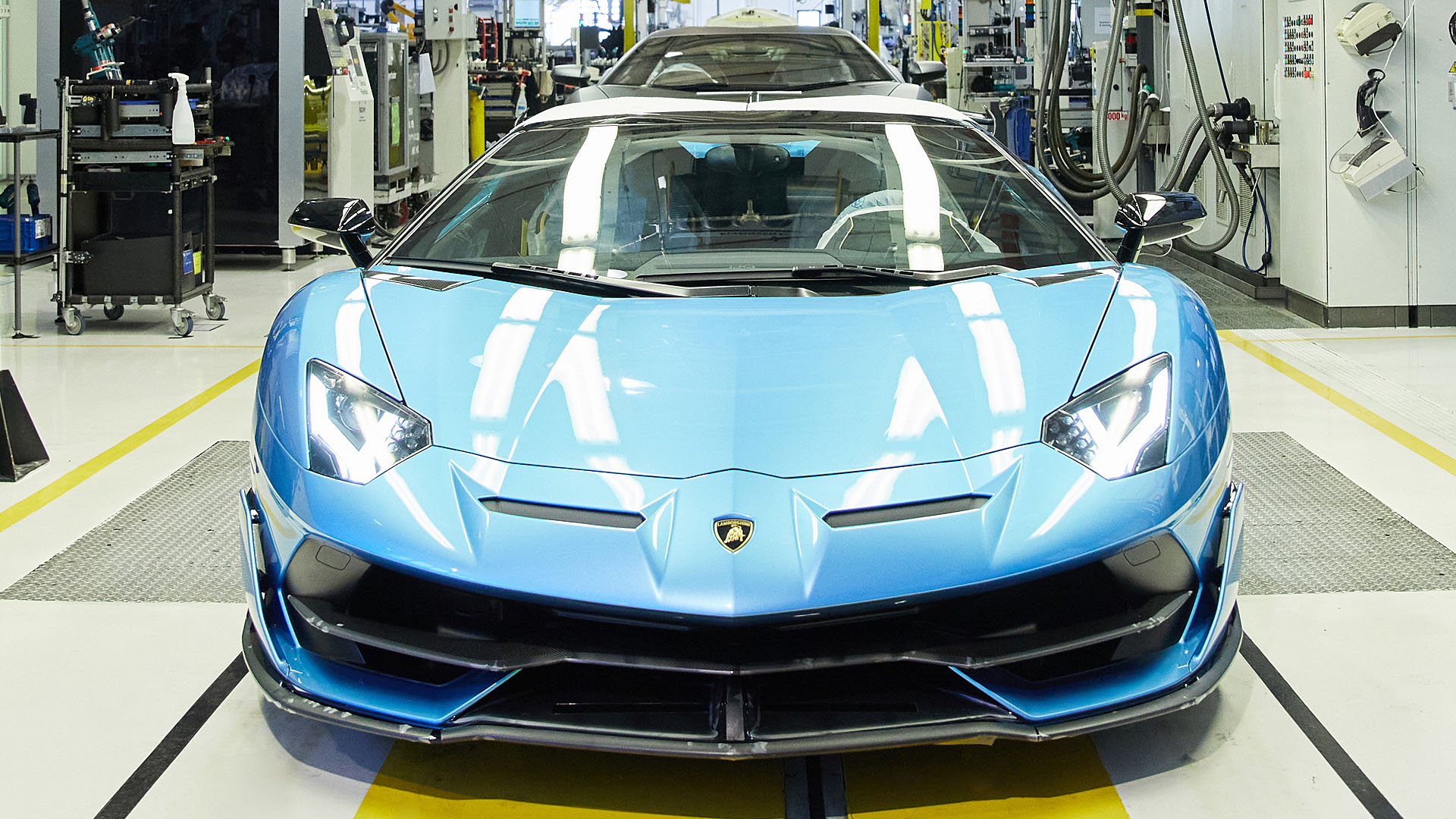
The Lamborghini Aventador, in one way or another, has been around for a decade now. Throughout that time, it has had multiple special editions, one-offs, and has even had the ultra-high-performance Sian based on it.

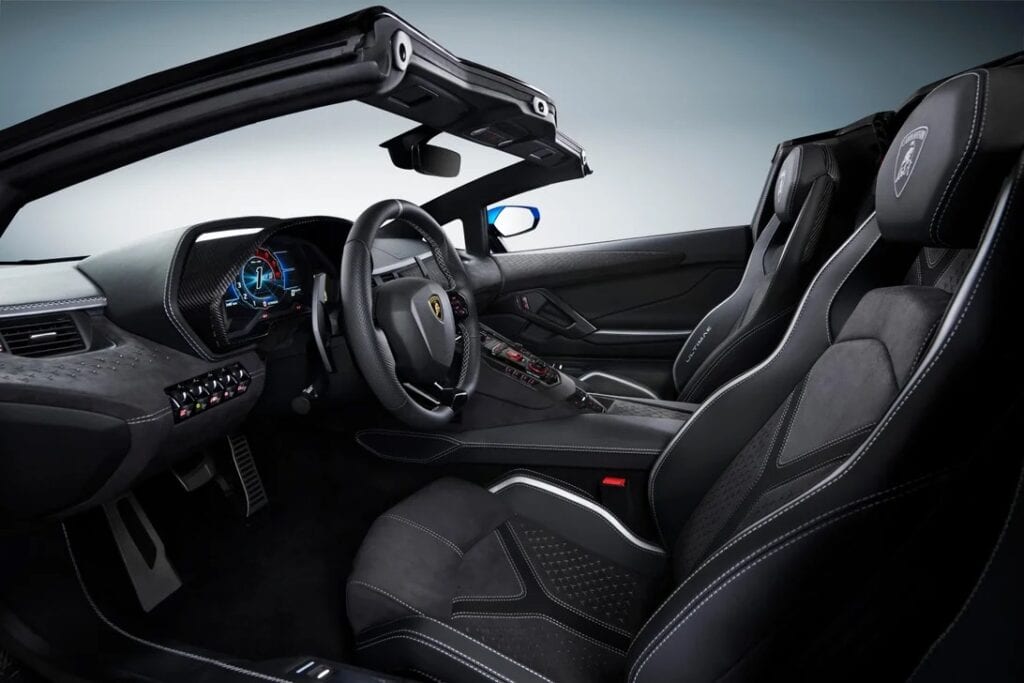
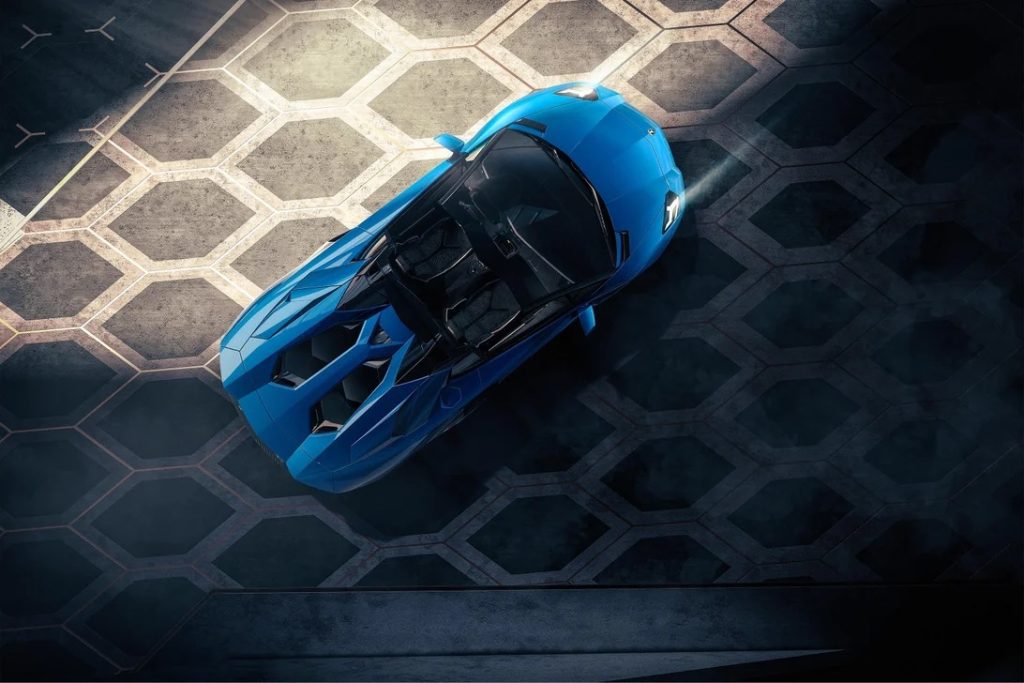
2022 Lamborghini Aventador LP780-4 Ultimae

2022 Lamborghini Aventador LP780-4 Ultimae

Now, however, Lamborghini has brought out the Aventador LP780-4 Ultimae, which is in their own words “the perfect synthesis of the performance of Aventador SVJ and the sophisticated design of Aventador S, in a new definitive model produced to celebrate the iconic V12 super sports car.”

2022 Lamborghini Aventador LP780-4 Ultimae

2022 Lamborghini Aventador LP780-4 Ultimae

The Ultimae will be a limited series car, with 350 examples of the coupe, and 250 examples of the roadster built. And what a limited series it will be.

2022 Lamborghini Aventador LP780-4 Ultimae

2022 Lamborghini Aventador LP780-4 Ultimae

Power will come from the single most powerful V12 Lamborghini has fitted into an Aventador. Just about 780 HP will sing its opera through 12 Italian cylinders at the rate of 8,500 RPM, pushing the Ultimae to a 355 KPH (221 MPH) top speed.

2022 Lamborghini Aventador LP780-4 Ultimae

2022 Lamborghini Aventador LP780-4 Ultimae

0 to 100 KPH (0 to 62 MPH) disappears in 2.8 seconds without using launch mode, and 0 to 200 KPH (0 to 124 MPH) soars by in under 9 seconds. This is because, using the technology developed through the Sian project, the Aventador Ultimae will be made almost entirely of reinforced carbon fiber and weigh a scant 1,550 kg (3,417 lbs) dry.

2022 Lamborghini Aventador LP780-4 Ultimae

2022 Lamborghini Aventador LP780-4 Ultimae

The entire body is also shaped especially for downforce, with an entirely new front bumper/air intake area that guarantees front downforce no matter the speed. It takes cues from both the SVJ and the Sian, shaping the side intakes and skirts to also guarantee lateral downforce for ultimate cornering grip.

2022 Lamborghini Aventador LP780-4 Ultimae

2022 Lamborghini Aventador LP780-4 Ultimae

The ultimate reason for the Ultimae is, however, a bit of a sad tale. As the Aventador model lineup winds down, the Ultimae is the last variation of the raging bull that will carry the iconic 12 cylinders of Italian fury. Every new car from now on out will either be hybrid with smaller engines such as V8’s or even V6’s, or fully electric.

2022 Lamborghini Aventador LP780-4 Ultimae

2022 Lamborghini Aventador LP780-4 Ultimae

So, in a way, this is the last pure, classic Lamborghini… ever.

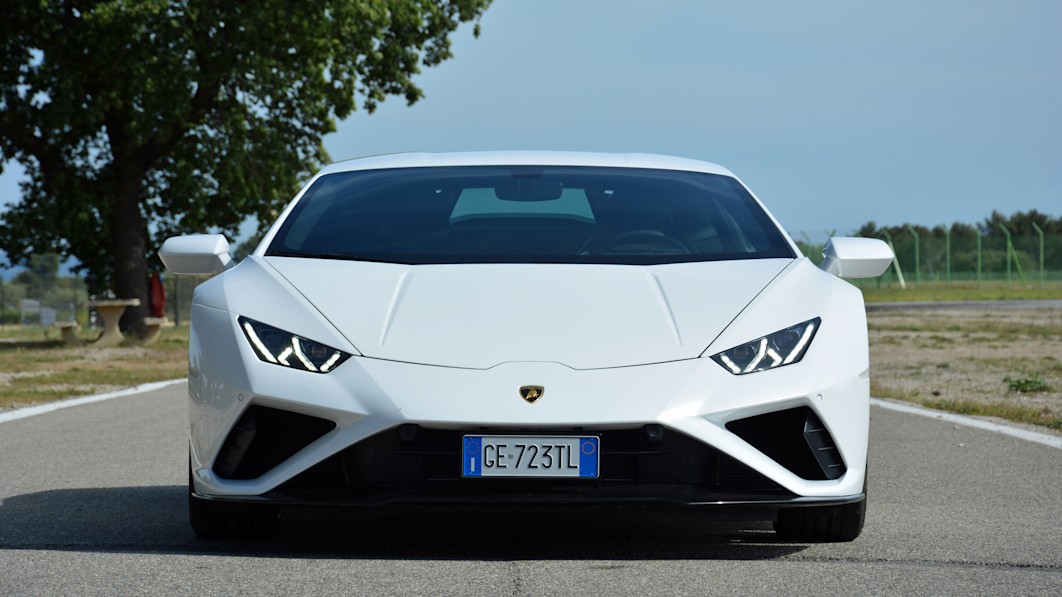
2021 Lamborghini Huracán Evo RWD First Drive | One smart, well-groomed bull

LE CASTELLET, France — Growing up in the 1990s, the Italian supercars I read about sounded like the automotive equivalent of kayaking over a waterfall — thrilling, unforgettable, and potentially very hazardous. The industry’s elites were often described as cramped, unpredictable, and generally finicky but extremely rewarding for the few skilled enough to tame them.

It’s a stigma that still hovers above the supercar segment like a dark cloud in 2021, yet with a handful of notable exceptions, it hasn’t been accurate in many years. It takes little more than a lively jaunt in a 2021 Lamborghini Huracán Evo RWD to spot how Italy’s unique breed of road weapon has evolved over the past few decades.

Autoblog has spent time in the Huracán Evo before, but it was in an all-wheel-drive model that we put through its paces on the Willow Springs track in Southern California. Fast-forward to 2021, and I’m in a rear-wheel-drive coupe on the picturesque winding roads surrounding the Paul Ricard circuit in Southern France. I couldn’t sneak my way onto the track for a few laps because Super Trofeo and GT3-spec variants of the Huracán hogged it all weekend.

Several carmakers positioned all over the automotive spectrum have used the Evo designation. In Lamborghini-speak, it denotes not a rally-bred sports sedan but an evolution of the Huracán with subtle design tweaks that add downforce and increase the amount of cooling air channeled to the engine bay. It still looks like a Huracán, but you don’t need a magnifying glass to tell the updated model apart from its predecessor, especially from the back.

Lamborghini saves scissor doors for its V12-powered models, like the Aventador S, so the Huracán’s swing out like in a normal car’s. Once inside, the first thing you notice is that it feels like a proper luxury car. The cabin is dominated by Alcantara, leather, and a type of carbon fiber called Forged Composites (which was developed in-house by the brand). It’s all very well put together; the fit and finish is excellent. In the driver’s seat, you face a digital instrument cluster whose layout changes depending on the driving mode selected (they’re called Strada, Sport, and Corsa, respectively) and a three-spoke steering wheel with a switch that lets you select the three aforementioned profiles.

Even a supercar needs technology in 2021. Stuffing a mammoth engine in a lightweight chassis hidden under an attention-grabbing body is no longer enough to lure enthusiasts. Lamborghini knows this, so one of the tricks it taught the Huracán before assigning it the Evo nameplate is a new infotainment system displayed on an 8.4-inch touchscreen. This is a major update, because the original Huracán released in 2014 didn’t have a touchscreen. Its infotainment system was displayed in the instrument cluster. Specific to Lamborghini, the software is quick, straightforward to navigate, and the screen’s graphics are almost as sharp as the exterior design. Better yet for technophiles, Amazon’s Alexa voice assistant is programmed directly into the system.

Embedding a tablet-like screen into the center console allowed Lamborghini to send a variety of buttons back to the parts bin, including the volume knob, but there’s one that hasn’t been dethroned yet: the ignition switch. It’s located under a red flap, fighter jet-style, and pushing it fires off a naturally-aspirated, 5.2-liter V10 tuned to deliver 602 horsepower at a screaming 8,000 rpm and 413 pound-feet of torque at a slightly less riotous 6,500 rpm. It’s mounted directly behind the driver, where you’d find booster seats and/or a load of suitcases in more pedestrian sports cars, and it spins the rear wheels via a seven-speed dual-clutch automatic transmission. Rear-wheel-drive is this version of the Huracán’s party trick: it swaps four-wheel grip for oversteer and loses about 70 pounds by relinquishing its front axle and the all-wheel-drive model’s rear-wheel steering system. It also lets 29 horses escape from its cavalry.

We know the Huracán is capable of great things on the track — there’s a good reason Lamborghini makes no major chassis modifications to the cars it builds for its Super Trofeo one-make series — but it lives up to the hype even if you prefer not to don a racing suit. It whooshes off the line with a soft brutality that makes you immediately understand the definition of a supercar as its exhaust system trumpets out an addicting racecar-like tune. The 29-horsepower difference between the rear- and all-wheel-drive Huracán isn’t instantly perceptible, there is plenty of power to go around, and hitting 60 mph from a stop takes about 3.1 seconds. Having less weight over the front axle also makes a difference in terms of handling, especially in Sport mode. Corsa mode kills all electronics and is best saved for the track.

Sport is the sweet spot in the driving mode hierarchy, then. It makes Lamborghini’s smallest bull high-strung without turning it into a beast that can’t be tamed (or, worse, one that tames its driver), and it unlocks just the right amount of aggression to make twisty roads feel like a roller coaster. With your foot buried in the throttle, and your right hand on the carbon fiber shift paddle, ready for a split-second upshift, the Huracán displays a level of agility that’s more natural than what you get in the all-wheel-drive model with its trick four-wheel steering system. It’s not better or worse; it’s a different breed of supercar. The steering is direct and accurate, the suspension keeps body roll at bay, and brake rotors the size of a medium pizza slow the Huracán at least as quickly as it accelerates.

Don’t get the wrong idea: Grip is phenomenal, even without the front wheels receiving power. That’s partly due to the electronic wizardry happening behind the scenes, and to styling revisions that increase downforce on the front axle.

On a track, the fun only ends when the safety car comes out, or when the checkered flag stretches its threads. On the street, motorists routinely encounter situations that are tedious, annoying, or plain bland. The V10 is as bored as I am humming behind a Citroën C15 — a simple, do-it-all van with a life expectancy that rivals a red dwarf star’s — on a narrow road with too many oak tree-lined blind corners to pass, but it doesn’t show it. Flick the steering-wheel-mounted switch to engage Strada mode (which numbs most chassis settings and hushes the exhaust), crank up the radio, and comfortably follow along as the air conditioning keeps you cool. This compliance shows another facet of the Huracán, and it’s part of what sets this car apart from its less docile predecessors.

Drawbacks? Yep, even in a Lamborghini, you’ll find a couple. Cargo capacity is largely symbolic, so you’ll need to get creative if you plan to spend a week on the road. I don’t think anyone makes a trailer hitch for a Huracán, but several aftermarket vendors sell roof boxes that look really cool. And, it goes without saying that subtlety isn’t available from Sant’Agata Bolognese. While the Huracán can make you feel like you’re flying, it’s never under the radar. These quirks have been passed down from generation to generation; the V12-powered Miura was hardly a role model in the realm of practicality.

Configured with rear-wheel-drive, the Lamborghini Huracán Evo is one of the purest expressions of the supercar ethos money can buy. It’s quick, head-turning, loud, expensive, and unapologetically rowdy, which is exactly what it should be. Anything less would be a monstrous insult to the Italian gods of motoring, especially coming from one of the companies that laid the foundations of the segment as we know it in 2021. On a secondary level, it’s relatively easy to live with thanks to a luxurious interior and just the right amount of in-car technology. Sure, it falls short in nearly every category when compared to the all-wheel-drive model on paper, but its character can’t be quantified.

Supercars have never been merely about numbers, after all.

Related Video:

Would Lamborghini be sold for $11.5 billion?

Last week we found an article stating a Swiss investment group called Quantum Group AG made VAG, the VW Group, an offer of €7.5 billion ($9.2 billion at today’s currency conversion) to buy Automobili Lamborghini SpA, and they did mean business, as they wanted everything, the HQ in Sant’Agata in its entirety … but the VW Group denied the offer and officially stated Lamborghini is not for sale.

If the Quantum Group came up with this offer a while ago, when we had the ‘Dieselgate’ going on, they might have had a chance to make a deal, as VAG was looking for money at that point, and there was a rumor they were looking at selling some of their ‘other’ makes like Bentley, Bugatti, Ducati, and Lamborghini.

At one point there was even a rumor of Automobili Lamborghini SpA ‘going public’, there was an intention to offer shares of Lamborghini on the stock exchange, VAG, or more precisely Audi AG, would still keep a controlling amount of shares, but people like you and me could buy a part of the company … but that never materialized either.

Quantum Group’s representative, Rea Stark mentioned to Reuters that they are still interested in buying Automobili Lamborghini SpA from Audi AG, and to make their point even more interesting, they would add up to €2 billion more for a total amount of €9.5 billion (about $11.5 billion) to cover future investments and even go as far as offering a guarantee for all employees currently under contract at Lamborghini for the next five years … if the VW Group is open to negotiations, they are even considering to go further up.

Quantum Group AG would not only buy the rights to the name Lamborghini, but also the entire factory at Sant’Agata, including the Squadra Corse department, for the first five years they would like to keep a supply chain from Audi open to be able to keep the current models in production, but the goal is to share battery development between them and Audi well into the future.

And electrification is the future, Stephan Winkelmann, CEO of Automobili Lamborghini SpA made that clear in his latest presentation, we already knew the Aventador and Huracán successors would become hybrids for sure, but Lamborghini will be investing a total of €1.5 billion over the next years to have a fully electric fourth model in the lineup by 2025, while the Aventador successor that will be available by 2023 will most likely keep a V12 engine, but get electric motors added to become the first hybrid production model from Sant’Agata.

After the first offer from Quantum Group AG, the spokesman for the VW Group made it very clear there was no intention of selling Automobili Lamborghini SpA … at that time, might an increase of more than 25% be enticing now? Only the future will tell, but Lamborghini has been making money and had a healthy production figure for the last several years, so what would make the VW Group want to sell a successful company at this point in time?

Road to Full Electric Cars: Lamborghini Lays Out 10 Year Roll-Out Plan

Lamborghini officially released the new Direzione Cor Tauri, a roadmap to decarbonization of future Lamborghini models and of Sant’Agata Bolognese site which is based on providing support to its environmental sustainability plan. Direzione Cor Tauri means ‘Towards Cor Tauri’.

Lamborghini will currently focus on identifying technologies and solutions to ensure top performance and driving dynamics remain a tradition, Cor Tauri is the brightest star in Taurus Constellation and it represents Lamborghini’s future move towards electrified vehicles.

In addition, the Cor tauri lamborghini roadmap will consist of three phases, Celebrating the combustion engine, Hybrid transition and the First fully-electric Lamborghini.

Celebrating the combustion engine is the first phase and it will run from 2021- 2022, the phase will be presenting models paying tribute to the company’s success. It will be identified by the development of combustion engines for models that pay homage to Lamborghini’s history and its past and present iconic products. This first phase will also focus on celebrating Lamborghini’s steady sales growth, iconic super sports cars, unique designs and technology innovations as well as the craftsmanship. Two new V12 model line-up cars will be announced in 2021.

The Hybrid transition is the second phase that will begin by the end of 2024. Lamborghini is expected to launch its first hybrid series production car in 2023 and by 2024 the entire range will be electrified. The engineers focus will be on building a performance vehicle with an authentic driving experience, to develop new technology for the models as well as use lightweight carbon fiber materials to reduce the weight of the vehicle due to electrification. The main goal for this phase will be to reduce the CO2 emissions by 50% by 2025.

Lamborghini will use 1.5 billion euros investment reserved for over four years to lead the hybrid transition, this is a sign of the company’s sense of responsibility towards the need for concrete response through innovations to transformation affecting the automotive industry.

The first fully-electric Lamborghini will launch during the third phase, signaling a fourth model in the future. The technological transformations on this phase will focus on ensuring high performance as well as positioning of the product at the top. Cor Tauri will be represented by a fourth full-electric model.

Lamborghini Joins Asphalt 9 Legends with the Essenza SCV12 Hypercar

Lamborghini Essenza Asphalt

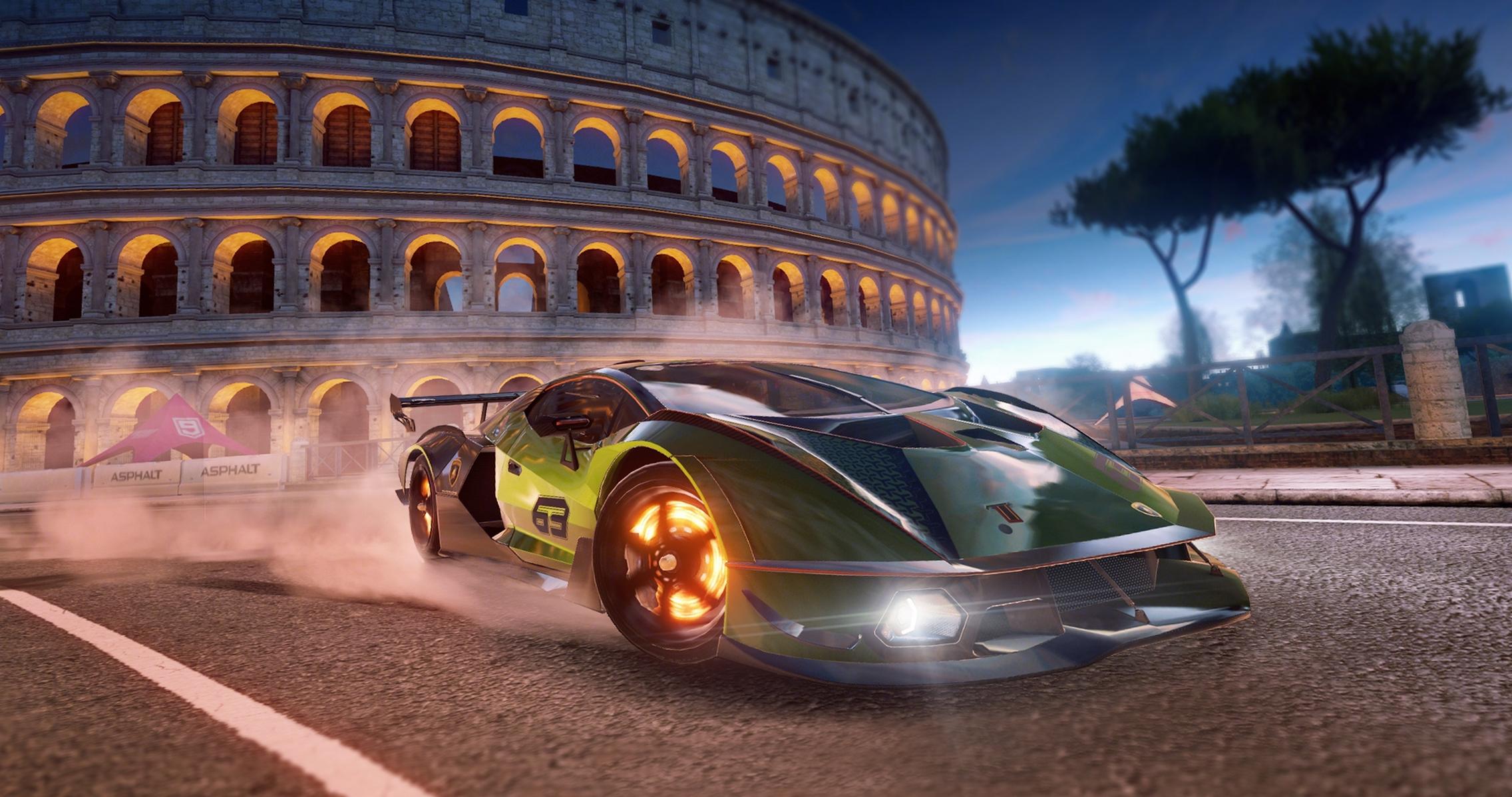
Lamborghini has officially made its debut in Asphalt 9 Legends video game with the Essenza SCV12. Players will be able to try out the car on the most famous roads in the world for the first time.

The Essenza SCV12 is a track-only hypercar manufactured by Lamborghini with production limited to only 40 units. The vehicle will debut in Asphalt 9: Legends, the latest game in the Asphalt franchise as a tribute to its recent success of crossing the 1billion download mark across the series.

Gameloft is the developer and publisher company behind Asphalt, the Essenza SCV12 was chosen because of its uniqueness, sleek design, the advanced aerodynamic and the powerful engine.

The Essenza is the most powerful naturally aspirated V12 engine from Lamborghini with an output of 830hp. The vehicle was presented in 2020, developed by Squadra Corse and designed by Lamborghini Centro Stile. Owners of the Essenza belong to an exclusive club that provides them with access to special programs to drive their cars on all prominent circuits around the world.

Lamborghini Essenza

Players from all around the world will be given a chance to choose ‘their’ Essenza SCV12 from the eight colors available and compete in the first “Lamborghini Essenza SCV12 Challenge”. The competition will be held in one round of three open qualifying sessions starting from May 13th. The first session will be from May 13th-16th, second session from June 10th -13th and the third session from July 1st to 4th.

The top 100 players will participate in a closed qualifying session from August 5th to 8th and the best 8 players will battle for the finals on September 18th.

Lamborghini Essenza wallpaper

Lamborghini in the Rocket League game

I don’t know if you’re familiar with Rocket League? It’s a multi-platform video game that apparently has won more than 150 “Best Game” awards all over the world, it’s a combination of two of the most popular passions ever: sports cars and soccer.

Psyonix is the production company behind the Rocket League game, and they opted to add the new Lamborghini Huracán STO for its unique design inspired by Lamborghini race cars and for its performance figures (top speed 310 km/h, acceleration from 0 to 100 km/h in 3.0 seconds). The virtual version of the Huracán STO is available for gamers around the world from today through April 27 and will be used to compete in the Battle of the Bulls during the Rocket League Championship Series X Lamborghini Open of which Automobili Lamborghini is the official sponsor.

The purchased package includes the car in Blu Laufey and Arancio California and with different liveries and customization options. The package is completed by the roar of the engine, two sets of tires, and the exclusive “Huracán STO Player Banner” and “Antenna” systems developed by Psyonix.

Stephan Winkelmann, President, and CEO of Automobili Lamborghini commented: “The debut of Huracán STO in the world of Rocket League is a further step in the digital strategy of Lamborghini, which entered eSports in 2020 with its own one-make championship. Gaming and simulation are phenomena of particular interest to the automotive industry, important for engaging the new generations and making our cars even more popular with young people.”

“Battle of the Bulls” will be played in a five-match series from the 23rd to the 25th, and fans can follow the action live on Twitch. The best Rocket League gamers will compete in a series of one-on-one matches, an event format created for Lamborghini, and each winner will receive a prize of US$5,000.

Lamborghini at the Auto Shanghai 2021: Essenza SCV12 Steals the Show

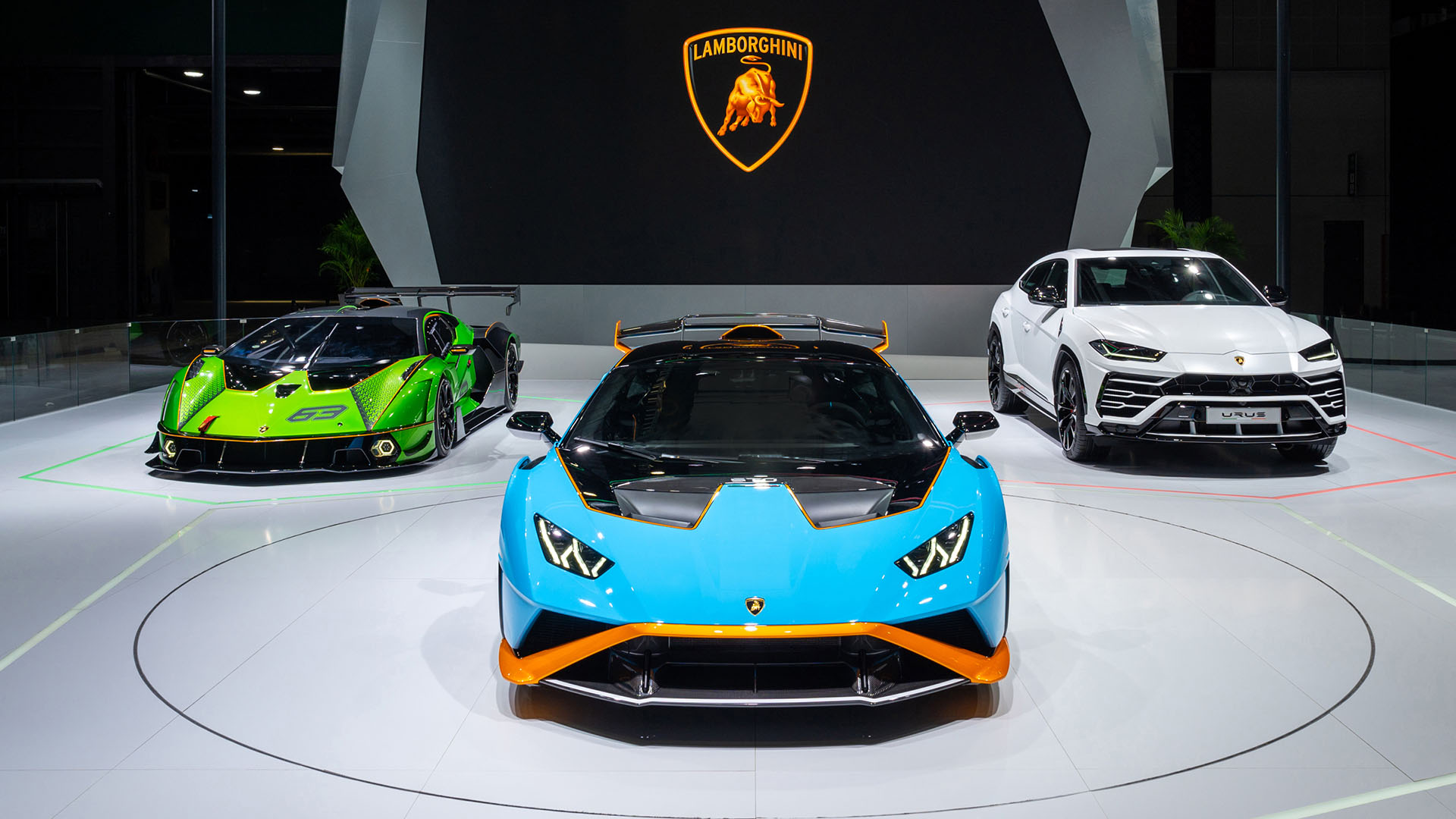
Lamborghini celebrated three premiers at the Auto Shanghai 2021 motor show by unveiling the new Essenza SCV12 which is limited to only 40 units worldwide, a homologated track car Huracan STO made its debut in China and Huracan Flou Capsule which was also unveiled in the Asia Pacific for the first time. The Urus SUV also joined the line-up rounding up to a powerful Lamborghini tour de force.

The Essenza SCV12 has a powerful naturally aspirated V12 engine developed by Lamborghini and a direct descendant of Miura Jota and Diable GTR. The SCV12 generates over 830 hp and also obtains an additional power boost from the RAM effects at high speeds. Its new X-trac sequential gearbox has been fitted on the chassis and combined with a rear wheel drive system to handle the power as well as ensure a greater torsional rigidity.

The track-only Essenza SVC21 has also been fitted with a large rear wing, side fins and a front splitter all inspired by the Huracan Super Trofeo EVO and GT3 EVO to enhance the efficiency as well as generate higher downforce levels compared to a GT3 car, 1,200kg at 250km/h.

In addition, the Essenza features a power-to-weight ratio of 1.66hp/kg as a result of the new generation carbon fiber monocoque chassis without an internal roll cage.

The Lamborghini Huracan STO is a street homologated super sport car that made its first ever appearance in China, the car regenerated from the Lamborghini Squadra motorsport prowess and heritage.

The Huracan STO is powered by a naturally aspirated V10 engine which generates an output of 640 hp and 565 Nm of torque at 6,500rpm. The vehicle can accelerate from 0-100km/h in 3 seconds, 0-200km/h in 9 seconds and the top speed is set at 310km/h.

The new Huracan STO features a high level of downforce as well as best aerodynamic balance thanks to its exterior design which optimises the airflow. The exterior design features a unique cofango and one-piece carbon fibre on the front bonnet, front bumper and on the fender. Other features include rear fenders with air intakes, rear bonnet with air scoop, manually adjustable rear wing and an integrated shark fin.
Over 75% of the exterior panels are made of carbon fibre which gives the car a weight-to-power ratio of 2.09 kg/hp with 1,339kg dry weight. The vehicle features three driving modes, STO, Trofeo and Pioggia. STO mode is default and ideal for curvy roads whereas Trofeo and PIoggia are ideal for wet and dry roads. The Huracan STO has been fitted with new heat resistant Brembo CCM-R braking units derived from F1 applications that ensure performance and consistency.

The new Lamborghini Huracan EVO Flou Capsule debuted in Asia Pacific for the first time, the vehicle was unveiled in matte Verde shock (green). In addition to the show car color scheme, four interior and exterior configurations including Arancio Livrea (orange), Celeste Fedra (blue), Arancio Dac (orange) and Giallo Clarus (yellow) all combined with matte black will be available for the Capsule.

The Lamborghini Urus also joined the lineup at the Shanghai motor show, the unit pictured was fitted with 23 inch wheels and red brake callipers available as an option.

The Lamborghini stand at the Shanghai auto show was completed by a display of branded clothing lines, accessories and projects dedicated to the Lamborghini brand extension.

Lamborghini sets records … again

While some companies are really struggling to stay afloat in the current economy, it seems Lamborghini managed to keep a really good pace in selling their amazing supercars from Sant’Agata, the first quarter of 2021 again set record figures never seen before since 1963, when Automobili Lamborghini SpA was founded.

Over a period of only 3 months, from January 2021 to March 2021, they managed to deliver a total of 2,422 cars to their fortunate owners, which is a record over their entire history, and while it’s a 25% increase over the same number from Q1 in 2020, it also a very impressive 22% higher than the same period back in 2019, which set the record two years ago … Lamborghini is on a roll here.

And it isn’t slowing down, Stephan Winkelmann, President, and CEO of Automobili Lamborghini SpA confirmed they already have the next nine months of production completely sold out, so for the entire production capacity for the rest of 2021 they are already fully booked as we speak, that’s impressive considering we are talking about cars that are well over the $200,000 mark each, with some more than triple that amount.

As we would expect, the Lamborghini Urus Super SUV is the best-selling Raging Bull at the moment, 1,382 units were sent out to customers, the V10 powered Huracán is not too far behind with 753 units while the aging flagship, the V12 Aventador still reached 287 units during the first quarter of 2021 … as usual the United States, China, and Germany are the markets that seem to be growing again.

And it seems the V12 Aventador reign isn’t over yet, despite being unveiled ten years ago, at the 2011 Geneva Motor Show, we are still having to wait at least another year before a successor will be unveiled, Stephan Winkelmann mentioned in an earlier press release we are going to see two more V12 derived models later this year.

At the moment there is no official information yet on what these V12 models will be, but keeping in mind you can’t actually order any Aventador model anymore at this time, what might be on the horizon next for the Lamborghini flagship? You can’t walk into an authorized Lamborghini dealership right now and custom order an Aventador S or Aventador S Roadster anymore, they still have brand new cars in stock, and a very few are still incoming, but you can’t change the options on them, those are stock models. The same thing with the SVJ Coupe and SVJ Roadster … both were a limited edition model, and they are sold out.

The factory is apparently only building the Aventador SVJ, SVJ Roadster, and their ’63’ versions, the final units of the ‘one of ten’ Xago models, and naturally the remaining units of the 63 Sian Coupe while production of the 19 Sian Roadster will start soon … so what could be the two V12 based models that are still coming?

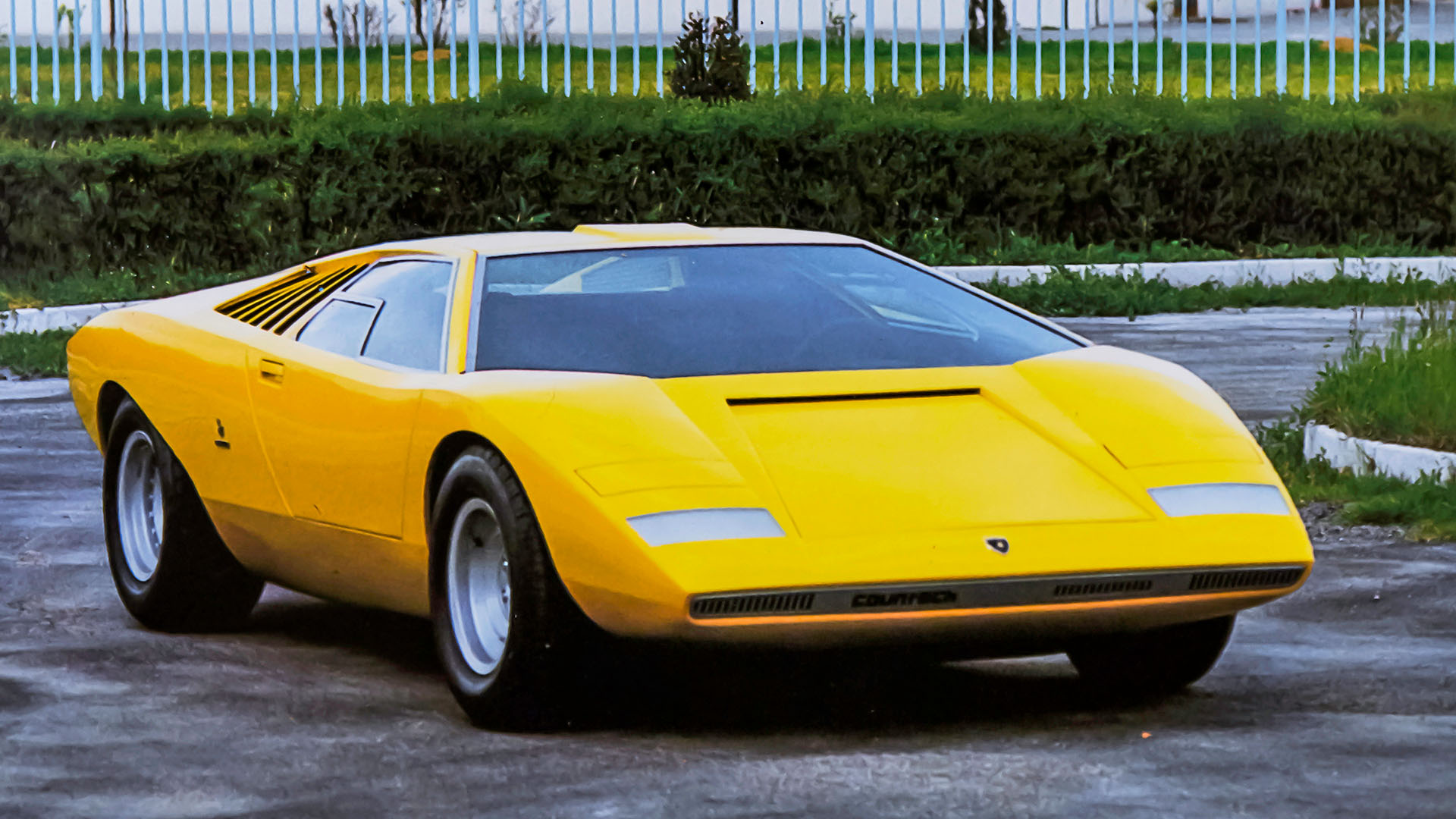
Rumor has it one of these will be a very limited production Countach homage model to celebrate the Countach Prototype’s 50th anniversary, based on the Aventador chassis and V12 engine, there is mention of a hybrid setup that will be an evolution of the Sian Supercapacitor, so perhaps a little more total power, with a price in the same range as the Sian. And what could be the second model then? An Aventador GT as a swansong to the model, an ultimate track-inspired model like the Huracan STO then, or perhaps a one-off like the SC20 for another high-net-worth customer?

Who knows, but it’s clear when you read between the lines of the Q1 results press release there is no intention of an Aventador successor in 2021 already, the current production capacity is already sold out, so they need the Aventador production line going until at least the end of this year, and they still have two more V12 models to unveil, which will also have to be built in the end, are these already sold out and calculated into production yet?

My guess is that we will be seeing the first Aventador successor in early 2022, probably the initial pre-production models of the successor will be built at the special Research & Development facility in Sant’Agata while the actual production line inside the factory gets converted from building the Aventador into the new model, which as we all know, will come with a Hybrid V12 initially … I for one can’t wait to see what Lamborghini comes up with next …

Lamborghini Gallardo Buyer’s Guide

Owning a Lamborghini is a dream of many, and with the number of cars leaving the factory doors in Sant’Agata over the last years, many seem to be able to fulfill this dream with relative ease, spending $250,000 and more on a brand new Raging Bull, spec’d to their taste sounds great, but it’s not possible for most enthusiasts.

All of the official, factory-authorized Lamborghini Clubs these days are ‘owners clubs’, you need to be the proud owner of a Lamborghini to be able to be a member, so how do you get in without spending $250,000 and more? Check out our Gallardo buyer’s guide …

At the time of writing a nice example of the early Lamborghini Gallardo will set you back around $100,000, which is still a lot of money, but it’s a lot less than a new Lamborghini, and you still get one of the ‘modern’ cars from Sant’Agata. Sure there are cheaper Lamborghini to be found, but we want to focus on a car you can get in and drive away, not a project car with lots of work to be done before you can enjoy it.

You might think an old Lamborghini Urraco is a bargain, but think again, this was the first V8 Lamborghini made back in the Seventies, only 520 were ever built (of the P250), and they are getting rare today, especially a good, preferably restored one, so expect prices well over $100,000 to add an Urraco on your driveway, and this is a classic supercar, with all the classic car gremlins that come with it … expect to be stranded on the side of the road with a 50-year-old car, that’s part of the charm.

So why not the next V8 from Lamborghini, the Jalpa from the Eighties (let’s not consider the beautiful Silhouette here, it’s way too rare with only 52 ever made, and a lot less that still exist) … those are found for about $60,000 and more. Only 410 were built between 1981 and 1988, and while I love the removable roof panel to offer open-top driving, it’s still a classic Lamborghini, and it comes with the same classic car troubles … if you’re into that, great, but let’s consider having a modern era Lamborghini … which leads us to the Gallardo, Lamborghini’s first V10 production model.

The Lamborghini Gallardo 5.0 was launched in 2003 at the Geneva Motor Show, and it joined the Murciélago flagship as an ‘entry level’ Lamborghini, sales quickly picked up, and by the time the Huracán took over in 2014, a total of 14,022 Gallardo were built in an overwhelming amount of versions and special editions, but if you are looking for a bargain, you’ll end up with the original 5.0 version.

If you look for a budget Lamborghini Gallardo online, you’ll end up with prices starting at €65,000 in Europe and from $80,000 up in the USA, those are usually the early cars, 2004 and younger, some even with the semi-automatic E-Gear transmission, but remember, the Gallardo was built in an era where a manual gearbox was still offered by Lamborghini, so you might prefer the latter.

Remember, the Gallardo does not have the upward-opening doors you might love on a Lamborghini, that feature is still reserved for the V12 flagship models, but there are a lot of aftermarket companies that can transform the hinges on the Gallardo … just be careful when looking at a modified Lamborghini Gallardo, because so many were built, and prices have dropped to a level many can afford, a lot of these early V10 Lamborghini have been modified, some with good taste, some not so much … and sadly many have been driven very aggressively too, to the point of abuse … remember these early Gallardo are 15 years old or more by now, wear and tear is setting in.

So you will probably be looking at a Gallardo built between 2003 and 2008, that will be either a coupe or a spyder, if you can stretch a little over $100,000 you can find the LP560-4 evolution on the market, overall a further-developed engine and with different looks, but it demands up to a 25% premium over the earlier cars, the best of the first years of production in the Gallardo series are the MY2006 and younger ones.

The Gallardo 5.0 Coupe and Spyder

As already mentioned, Lamborghini built a lot of versions of their V10 Gallardo, and that already starts with the 5.0 coupe launched in 2003, followed by the Spyder version in late 2005 … strangely enough a manual coupe might be harder to find than an E-Gear Spyder at the time of writing. But there was another version launched in the Summer of 2005, the Gallardo SE, for Special Edition, and it came with a rearview camera mounted on the rear wing, and new wheels.

The original Lamborghini Gallardo 5.0 was launched with silver Cassiopeia wheels, for the Spyder version Lamborghini kept to more intricate Callisto wheels from the Gallardo SE.

The Gallardo SE

Only 250 units of the Gallardo SE were ever built, most of them with full-option order sheets, the SE came with the new ‘Callisto’ wheels, had the otherwise optional glass engine cover as standard, but most importantly the SE got the upgraded 520hp engine before Lamborghini would fit it to the MY2006 Gallardo to replace the 500hp version of the initial release.

The Gallardo Nera

In 2006 Lamborghini made a second, limited edition Gallardo, the Nera, this time only 185 units would be made, all finished in glossy black with some parts in matt black, on the inside a combination of white and black leather … and Q-Citura stitching, which would become an option of the ‘normal’ Gallardo models.

The Gallardo Superleggera

Launched in 2007, just before the LP560-4 edition, the lightweight Gallardo Superleggera is probably the most sought after model of the early series, it came with even more horsepower (523hp) and lost 100kg in the process of creating the Superleggera, it even came with lightweight seats covered in Alcantara, and this version introduced the stunning ‘Scorpius’ wheels.

Don’t get tempted by any of the ‘specials’ in the Gallardo range if you’re on a budget, especially the Superleggera will demand a serious premium over all other versions, you’ll be way over the price of an LP560-4 model, and don’t even think about the later LP570-4 Superleggera or LP570-4 Performante … you’re in second hand Huracán pricing at that point.

The Gallardo LP560-4 Coupe and Spyder

If you can spend the extra money, try to get a low mile 2008 or younger Gallardo LP560-4 edition, this model comes with 552 hp and benefitted from ongoing improvements over the earlier cars, even the Gallardo LP560-4 Spyder can be found for $110,000 today, so it’s within reach, just make sure to find the right one.

The Gallardo LP570-4 Superleggera and Super Trofeo Stradale

If your budget is high enough, you’ll be able to shop for one of these top-of-the-line Gallardo models, either the Superleggera or the limited edition Super Trofeo Stradale, both in LP570-4 version with the most powerful V10 engine of that time from Lamborghini.

And if you really have a very healthy budget you could opt for the Gallardo Performante, which is none other than the Spyder version of the LP570-4 Superleggera.

How to find the right Gallardo for you

1. Mileage:

This is where things get tricky, what is ‘the right car’ for you? It might be the cheapest one, or the best-value-for-money one, or perhaps the lowest mileage one … personally, I would look for a Gallardo that has some miles, not a garage queen with next to no miles, you are bound to run into expensive repairs with a car that has been sitting for too long.

If you are really on a tight budget, you’ll probably end up with a high-mileage one, which might not be a problem, but you’ll have to expect some repair bills to come up very shortly due to the normal wear over time.

If shopping for a pre-2006 model Gallardo I would try to get one between 20,000 and 30,000 miles on the clock, this means the car was driven, but not excessively, and if you can verify it hasn’t had 10 or more owners, it has probably received the necessary maintenance too, which is extremely important on any Lamborghini.

A Gallardo between 2006 and 2008, with the 520 hp engine, I would even go as low as 15,000 miles, that’s a little over 1,000 miles per year, but it’s still a car that’s been enjoyed then, and hopefully not abused.

Once you’re into the LP560-4 model you really should try to find one with less than 15,000 miles, many of these Gallardo are still relatively new, so a low mileage one in the right spec should be relatively easy to locate, but as already mentioned, expect at least a 25% premium over the earlier cars.

2. Color:

It might come as a surprise, but not every Lamborghini Gallardo has left the factory doors in a bright, flashy color, if you are looking for a great deal, you might end up with a rather bland-looking car, if you could ever call a Gallardo bland.

But you’ll have to admit a silver metallic Gallardo doesn’t have the same animal-like attraction as a bright green metallic Verde Ithaca one. Which happens to be the most sought-after color, the pearl metallic green. But most Gallardo left Sant’Agata in orange, yellow, and white, some came in a very nice metallic blue, but that wasn’t a popular color … strangely back in those days black wasn’t ordered a lot either.

Just be careful with a wrap, try to avoid a Gallardo that’s still wearing a vinyl wrap, you never know how good, or bad the original paint underneath is. It wouldn’t be the first time you rip away a badly executed paint job when trying to remove a wrap, also a wrap can hide scratches and nicks on the paint underneath … just avoid it while shopping.

3. Manual or automatic:

While the optional E-Gear sounds like a great deal on the second-hand market, make no mistake, it is very expensive to repair if it fails, expect an invoice for $10,000 or more … and a failing E-Gear transmission is a total stop usually, rendering your new Gallardo useless.

While a manual Gallardo might be more fun to drive, make sure to have a service center check the clutch life … they can show you just how much more the clutch can withstand before it needs replacing, which is rather expensive too. Try to get a MY2008 or younger manual gearbox Gallardo, the earlier ones were prone to going through a clutch every 10,000 miles or so.

4. Maintenance records:

It’s always best to find a big folder with maintenance records and invoices that come with the Gallardo you’re interested in, it shows how well the car was cared for by the previous owners … and yes, that’s plural. Most of the Lamborghini Gallardo you’ll find listed for sale today will have been through a lot of hands already … a one-owner, 2,000 miles 2008 Gallardo is a unicorn.

The problem with the Gallardo is that prices have gone down to levels that make it affordable to buy for a large group but being able to perform the correct, and required maintenance can become expensive quickly, so many owners will sell the car again when major maintenance has to be done … beware of those.

5. Get a look and feel before buying:

Especially the very early Lamborghini Gallardo came with a lot of plastic on the inside, and when using the wrong products to clean that, it gets infected with the ‘sticky button syndrome’ … this will mean the price will be lower, but make no mistake, if you want to replace those trim pieces or buttons, it gets expensive in a hurry.

Either get a PPI on a Gallardo you are interested in, or at least go see the car in real life, sit in it, and look at parts like the steering wheel, the pedals, feel the seat bolsters … a Gallardo showing a few thousand miles with a very glossy steering wheel, worn down pedals, seats that offer next to no side support anymore … it’s probably been tampered with, and has a lot more miles under her belt than what the odometer shows.

If you’re looking at a manual Gallardo, don’t worry too much about scratches on that nice ‘ball’ on top of the gear shifter … even looking at it crooked will leave a scratch, anybody with a ring on their fingers driving a manual Gallardo or Murciélago will know exactly what I’m saying here.

6. The options:

I know having lots of options from the factory sound interesting to most buyers, and sellers will point them out, but remember, some options are better avoided when buying a second-hand Gallardo.

The glass engine cover was a very interesting option on the early Gallardo models, it allowed a peek onto that amazing V10 engine, just make sure the glass isn’t scratched and it opens and closes with all the normal space around … just remember, it is glass, and it can crack.

Carbon ceramic brakes might sound great, and they offer better braking when warmed up first, but just think about the long run, it was a very expensive option to begin with, and replacing a set of these disks is still extremely expensive.

From the MY2006 Gallardo you could have a rearview camera system that was fitted on top of the rear wing, just keep in mind the navigation system was still a separate option to this, so you might want to look out for that on your decision making, most of the 2006 navigation systems are completely outdated anyway … and there is still your mobile phone right?

After 2005 the Gallardo could come with a front lift system, and this is a good thing to avoid scratching the front bumper, but it’s also rather expensive to replace faulty shocks in this case.

7. Look out for these ‘hidden’ issues:

The Lamborghini Gallardo comes with an aluminum body, which is nice and light, but not every bodyshop will be able to repair dents and dings on it, make sure you check the entire body while shopping for your Gallardo.

If the front bumper on a 15-year-old Gallardo looks spotless, chances are it has been repainted, and this could be an issue on those amazing, pearl metallic shades Lamborghini offers, check for color mismatching, preferably in direct sunlight, and also open the hood and doors to check for overspray.

You will probably find a lot of the early Gallardo that have been retrofitted with the newer LP560-4 front bumper … and while that might be because one of the previous owners liked the new styling better … or this car was involved in an accident. Getting a third-party look-alike LP560-4 bumper is cheaper than an OEM original one, keep that in mind.

The Gallardo Superleggera came with an Alcantara interior, including the steering wheel, and many regular Gallardo had an Alcantara steering wheel fitted too, this looks amazing when new, but a well-used car will start to show a shiny steering wheel, better to go for a leather-wrapped one.

Double-check the tires, both for wear, but also cracks … as already mentioned, many buyers of these Lamborghini Gallardo don’t bother with maintenance or putting a new set of rubber on their car before they sell it again … remember there is a date code on tires too, with the size a Gallardo runs, these can get expensive for a set of four, make sure to calculate that into your offer.

Try to check the underside of the car before buying, especially the front bumper on a low-riding car like the Lamborghini Gallardo, it easily scrapes, so make sure there aren’t any really deep marks on it, that could mean more damage than meets the eye. Also, try to get the car onto a lift and remove the cover underneath the engine to check for leaks … a lot of fluids can drip onto that plate from the massive V10 before you’ll see anything on the floor.

8. Wheels:

I rather like putting custom wheels on my cars, but in the case of a Lamborghini Gallardo, I would stay away from those that come with non-factory wheels. Keep in mind most of these V10’s are all-wheel drive, and any misalignment of sizes front to rear will ruin the VT coupling, even fitting the wrong tires on a standard wheel might cause issues, so try to go for a Gallardo with factory fitted wheels.

Check for damage on the wheels, these V10 come with 19-inch wheels and rather low-profile tires, so catching a curb is quickly done, putting a nice scratch on the outer rim, or even worse, take a nick out of it, avoid those cars if possible, a scratch might not be a problem, but a real dented wheel can be expensive to repair.

The original Gallardo 5.0 model from 2003 right up to 2008 had the silver-finished Cassiopeia wheels as factory fitment, from 2005 you could opt for a titanium finish on these wheels, while many owners painted them black too.

From 2005 on an additional wheel became an option, the beautiful multi-piece look Callisto, first seen on the Gallardo SE in titanium, a few months later on the Gallardo Spyder in silver, when the Gallardo Nera was unveiled in 2006, she came with these Callisto wheels painted in glossy black.

In 2007 a return to OZ-Wheels was made with the introduction of the titanium finished Scorpius wheel limited to the Gallardo Superleggera at that time, later this same wheel would make a return on the Gallardo LP550-2 Balboni special and some other limited edition Gallardo versions.

When the Lamborghini Gallardo LP560-4 was introduced in 2008, along came two new wheels, a stylish five-spoke Apollo wheel in silver replaced the up to the standard Cassiopeia one.

An optional, chrome finished cross-spoke wheel called Cordelia appeared in 2008 too, which could also be ordered in gloss black.

To complicate things, the 2010 Gallardo LP570-4 Superleggera was fitted with a new, double five-spoke design finished in titanium … called Scorpius, this version was made by Fuchs and would later be used in glossy black on the Super Trofeo Stradale version one year later.

For the ‘Nuova Gallardo’ that was unveiled at the 2012 Paris Motor Show, the Appolo wheel was shown in black with machined fronts on the spokes, a very interesting look.

9. Final words:

With as many as 14,022 units of the Lamborghini Gallardo built between 2003 and 2014, many have been crashed, some of them repaired, but also a lot of these V10 Lamborghini have been modified in some way, either aerodynamics, wheels … or engine tuning.

Adding turbochargers to the Gallardo V10 engine has been seen a lot, and some of these are very professionally done, and these will demand a serious premium … while others look a little … strange, if a high-power Gallardo is the one for you, I’ll let you decide for yourself, personally, I would go for a well maintained, factory spec one with some nice options, but that’s just me.

One final tip … when you look around for a Lamborghini Gallardo, you’ll get the comment to go for an Audi R8, “it’s the same car, but for about half the price” … well, just have this answer ready: “It’s NOT a Lamborghini, period”. Not even an Audi R8 V10 model is the same as a Lamborghini Gallardo when it comes to impact on the road … get a Gallardo and enjoy it.


1999 VECTOR M-12

I still remember watching a movie called ‘Rising Sun’, where one of the lead characters was driving a red Vector W8, I absolutely loved it, and at that time didn’t know too much about that car, so I researched it, turns out this futuristic-looking car was the brainchild of Gerald Wiegert, who founded Vector Aeromotive Corporation and built 17 customer cars of his Vector W8 between 1989 and 1993.

Powered by a 6.0-Liter Rodeck twin-turbocharged (Garrett) V8 engine coupled to a GM 3-Speed Turbo-Hydramatic gearbox, the 625hp at 8 psi could be raised to 1,400 hp with a dial in the interior that set the psi at 14 … the prototype reached a top speed of 242 mph (389 km/h) on the Bonneville Salt Flats … and that was in the Eighties!

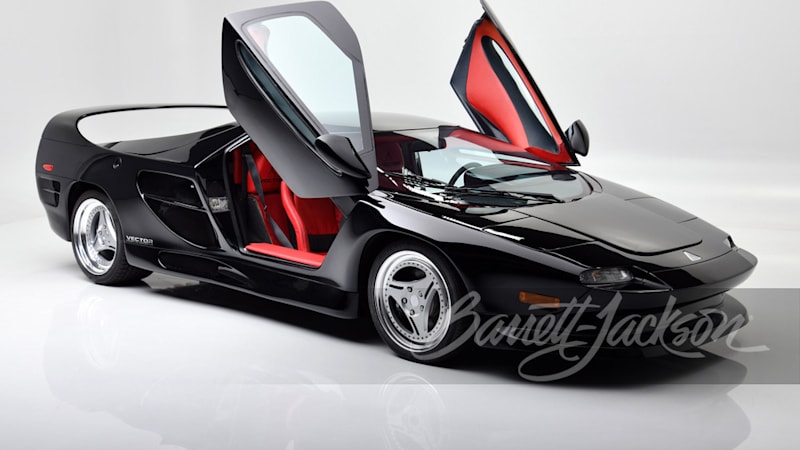
1999 VECTOR M-12 – photo courtesy Barrett-Jackson Auctions

Vector Aeromotive Corporation went into receivership in 1993 but emerged as Vector Motors Corporation in 1995, complete with a new car, the Vector M12, and here is where things get interesting in history. The Vector W8 used the W from Wiegert’s own name, and the 8 for the V8 engine, but by 1995 Gerald Wiegert no longer owned Vector Motors, a group called Megatech, from Indonesia, took over, they even moved the entire operation from Wilmington, California to Green Cove Springs, Florida, where Megatech also housed the US branch of Automobili Lamborghini SpA.

1999 VECTOR M-12 – photo courtesy Barrett-Jackson Auctions

So the M12 name comes from Megatech and the fact there’s a V12 engine behind the occupants, severing the connection with Gerald Wiegert, and that massive V12 was sourced from none other than Lamborghini! That’s right, the Vector M12 came with a Lamborghini Diablo engine, which shouldn’t be a big surprise, because at that time Megatech also owned Automobili Lamborghini SpA, they bought the Italian supercar company from Chrysler in 1994, only to sell to Audi AG in July of 1998, who still own it today.

1999 VECTOR M-12 – photo courtesy Barrett-Jackson Auctions

The Vector M12 was a redesign by Peter Stevens of the Vector AWX-3, and used mainly Lamborghini Diablo sourced mechanics, most importantly the V12 engine, 5,707cc with 492hp and 576 Nm of torque, which was the Diablo VT unit, not the more powerful Diablo SE30 or Diablo SV engine, still the Vector M12 could reach a top speed of 304 km/h (189 mph) with an acceleration from 0 to 60 mph in 4.8 seconds, for comparison, the 1994 Diablo VT would reach 328 km/h (204 Mph) and get to 100 km/h in 4.09 seconds.

1999 VECTOR M-12 – photo courtesy Barrett-Jackson Auctions

It seems Megatech managed to ship several Diablo engines from Italy between 1995 and 1998 before they sold the company to Audi AG, so they made three pre-production prototypes for development and preparation for a production run of 14 customer cars, the car coming up for auction later this month seems to be #12 of only 14 ever made, being a 1999 model is was built when Megatech didn’t own Lamborghini anymore, so their source for V12 engines dried up and production of the Vector M12 would be halted shortly after this black on red unit was finished.

1999 VECTOR M-12 – photo courtesy Barrett-Jackson Auctions

The current owner of Vector M12 chassis #1V9MB1224X1048010 states this car was ordered by none other than the Prince of Brunei, who we all know has a vast car collection, finished in an intimidating black paint combined with a bright red leather interior, it is unclear if the car was ever delivered to Brunei, but today this rare supercar is located in the United States, in late 2019 Scuderia Automotive Service performed an engine-out service on the V12, complete with an upgraded ceramic flywheel.

1999 VECTOR M-12 – photo courtesy Barrett-Jackson Auctions

The listing also mentions the interior was modified to offer more room for a taller driver and passenger, while they added a more Italian supercar-style look-and-feel while still retaining the original layout and design, and while not original anymore, it does look amazing nonetheless.

1999 VECTOR M-12 – photo courtesy Barrett-Jackson Auctions

With only 14 Vector M12 ever made, and the fact they rarely change hands on the open market, chances are this black US-made supercar from the late Nineties will not go cheap, if you are interested in adding this rare car to your collection, make sure to follow the Barrett-Jackson auction.

Lamborghini-powered Vector M12 supercar is ultra rare, obscure, and for sale

It’s an excellent week for fans of obscure American supercars that never really took off. One of the seven Falcon F7s built is currently being auctioned on Cars & Bids, and one of the 14 Vector M12s made will cross the auction block during Barrett-Jackson’s Scottsdale sale taking place in March 2021. Better yet, it’s offered with no reserve.

Finished in black with a gorgeous red leather interior, this M12 was designed and built for the Prince of Brunei, according to Barrett-Jackson boss Craig Jackson. High-end cars that end up in Brunei rarely leave the microstate. The Sultan’s collection allegedly includes more than 7,000 luxurious vehicles that are almost never shown to the public, yet this M12 somehow returned to the United States and found its way into the Larry Winkler collection.

Although it has traveled around the world, this M12 has evidently been driven sparingly. Its odometer shows merely 2,160 miles, and they’re claimed to be original. Barrett-Jackson also points out that it received a major, engine-out service in November 2019 during which the clutch was replaced and an upgraded ceramic flywheel was installed. Interestingly, the interior was also redesigned to make it easier for taller drivers to take the wheel.

Power comes from a 5.7-liter V12 engine borrowed from none other than the Lamborghini Diablo. It develops 492 horsepower and 425 pound-feet of torque, and it spins the rear wheels via a five-speed manual transmission built by ZF. Vector pegged the M12’s zero-to-60-mph time at 4.5 seconds, an impressive number in the 1990s. In comparison, the standard Diablo’s zero-to-60-mph time hovered around four and a half seconds, too.

M12s rarely trade hands, and they’re not cheap when they do. When this example crosses the auction block in March 2021, the market will decide what it’s worth, because there’s no reserve. The highest bidder will take it home, regardless of where bidding stops. If you want a shot at adding it to your collection, you can register to bid online.

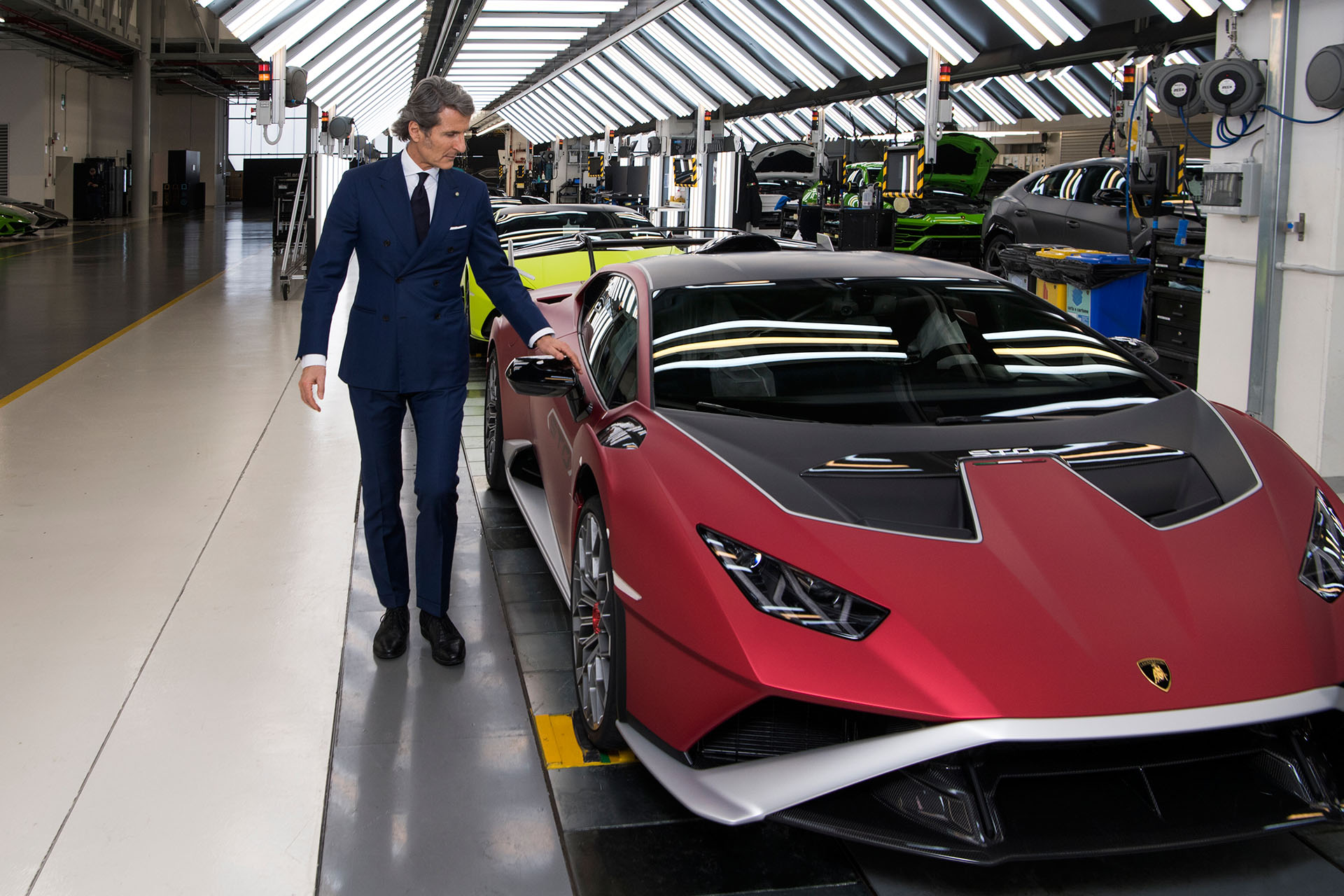
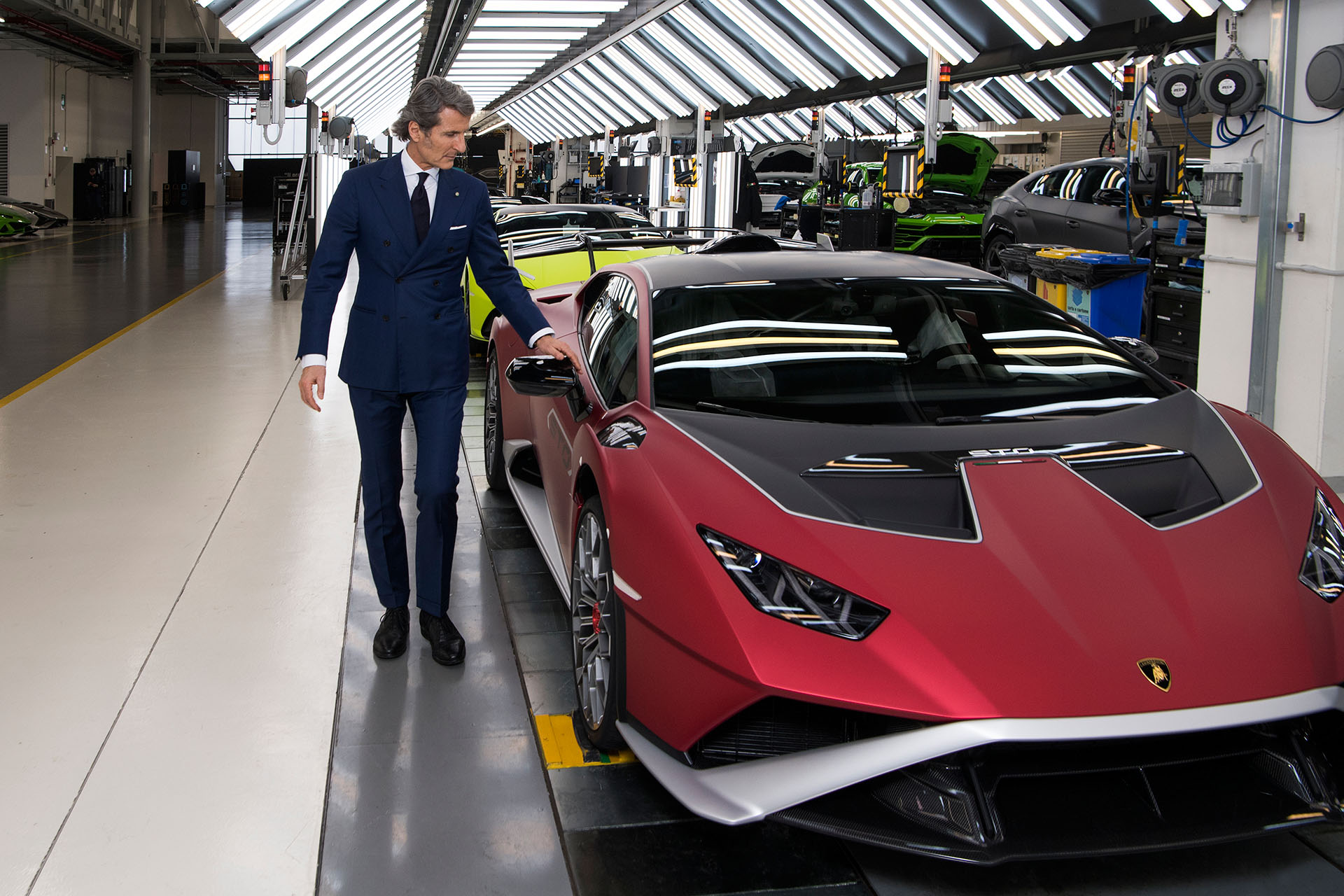
Five facts on the Huracan STO

The new Lamborghini Huracán STO has been traveling all over the world to entice people to order one … as if getting a street-legal Super Trofeo race car isn’t enough incentive, still Lamborghini marketing deemed it necessary to put the car in front of an audience anyway, and it seems to be working, as orders for this 640 hp V10 Raging Bull pile up … first deliveries are foreseen later this year.

The Super Trofeo Omologata is off course inspired by the Huracán EVO Super Trofeo developed by Lamborghini Squadra Corsa to run in their own race series, as well as the Huracán EVO GT3, the three-time winner of the 24 Hours of Daytona and two-time winner of the 12 Hours of Sebring.

Automobili Lamborghini just launched ‘#Focu5on’, a monthly series that will bring us “The 5 things you do not know about…”, giving anecdotes and behind the scenes information about Lamborghinis so that both owners and enthusiasts of the ‘Raging Bull’ can learn more about, as Lamborghini states: “the more unusual and less-known enigmas of a company that is much more than just a car manufacturer of global excellence”.

The first issue of Lamborghini #Focu5on lists The 5 things you do not know about the Huracán STO:

COFANGO, a “Made in Lamborghini” design solution

The term Cofango derives from the fusion of two Italian words: cofano (hood) and parafango (fender), coined by Automobili Lamborghini to describe the design solution in which the hood, fenders, and front bumper are integrated into a single component. This innovative system created by Lamborghini engineers is inspired by the Lamborghini Miura and the more recent Sesto Elemento, and on the STO is made entirely of very light carbon fiber.

The key to opening the fastenings on the STO’s Cofango is unique: it was developed in-house by the R&D team and made using an innovative 3D printing technique.

Dynamic pit stop in just three seconds

There is not much that can be changed in three seconds, but the set-up of the Huracán STO is one. Three new driving modes – STO (normal driving), Trofeo (race mode), and Pioggia (raining or wet) – adapt the set-up of the car to match high-performance driving environments.

The Huracán STO allows the driver to experience a dynamic pit stop as if a team of mechanics was right there!

Three times around the world in simulator tests

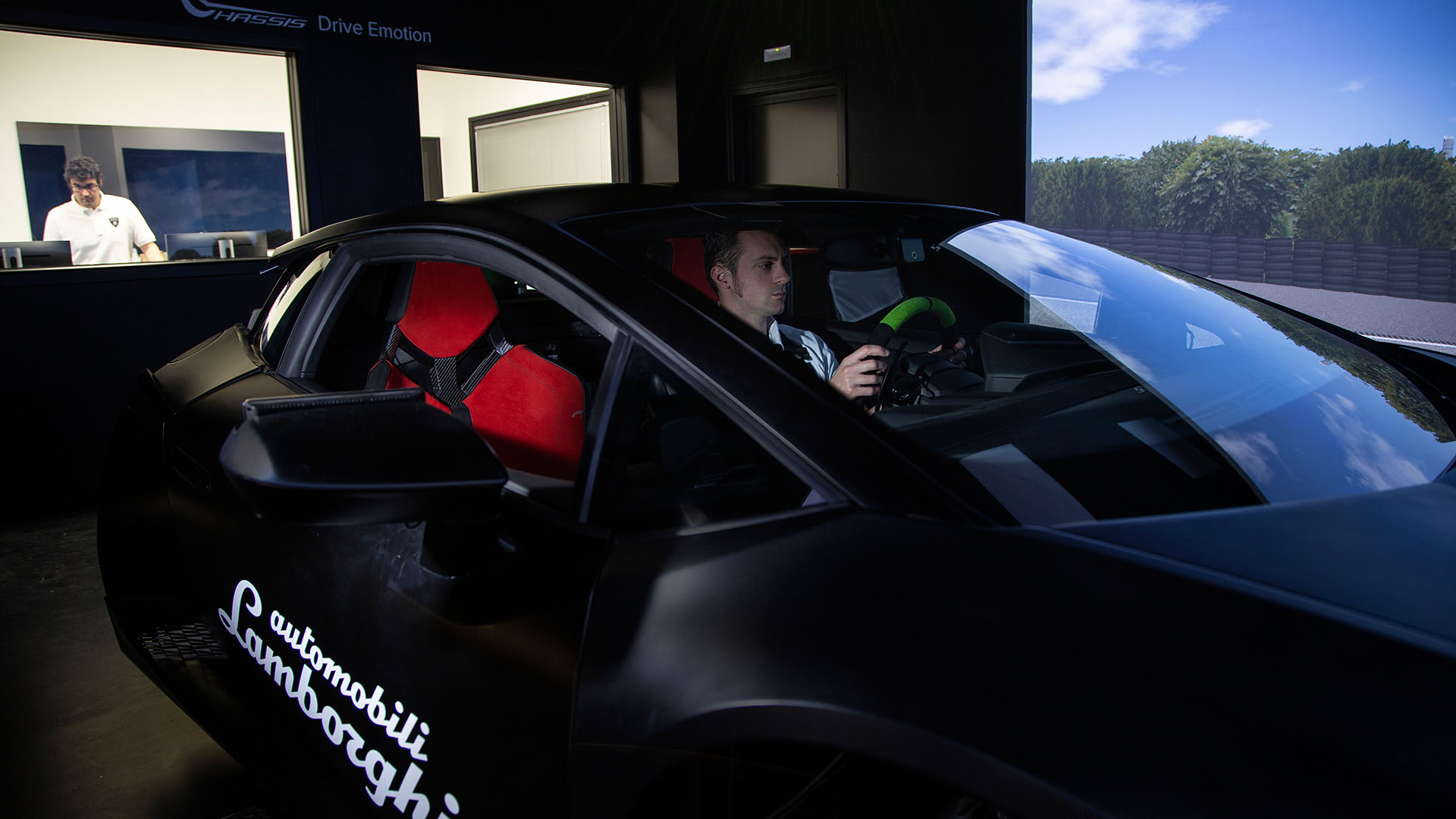
Lamborghini’s R&D team drove a distance equivalent to three times around the world in simulator tests before starting the Huracán STO’s road tests. State-of-the-art simulator technology allowed Lamborghini engineers to save time on quality control, lead times, and emissions by verifying that every part of the car fully complied with standards during different stages of the STO’s development, certifying, and testing.

2,750 components to make an STO

“Do you want to build a Huracán STO 1:1?”. It will take a lot of patience because there are over 2,750 components needed to build the latest car from Sant’Agata.

Connected telemetry thanks to 25,000 lines of code

The Huracán STO introduces an advanced connected telemetry system where the link between car-on-board cameras Connected Cloud Lamborghini and the App Lamborghini UNICA allows, thanks to an intuitive data analysis system and videos enriched with dedicated widgets, to transform the exclusive App dedicated to Lamborghini customers into a real track engineer. The development of this technology on the Lamborghini UNICA App required more than 25,000 lines of code.

Most Popular Lamborghini Urus Bodykits in 2020/2021

It’s the most popular super SUV in the world right now. The Lamborghini Urus is by far the best selling Lamborghini ever made, over 70% of the Urus sales are from buyers new to the brand according to the company figures. That said, tuners did not waste any time with this model either. Most Urus owners want to take it a notch higher by having a different-looking car from the crowd. This is where real money is made – the aftermarket scene.

While most owners only touch the basics (wheels and a wrap just to name a few), a significant number will invest in a whole makeover kit. Below are the most popular Lamborghini Urus bodykits in the market right now.

Novitec Lamborghini Urus – Novitec Esteso

Novitec Lamborghini Urus Esteso by Nino Hooymans Exclusive
Photo by Bas Fransen

As wide as they get. The Novitec kit will come with widebody parts, 23-inch wheels and a new exhaust system. It is aptly known as the Novitec Esteso kit. They will also tune your engine to 782hp and up to 1,032nm!

Mansory Lamborghini Urus – Mansory Venatus Evo

Mansory Lamborghini Urus
The Mansory kit needs no introduction either, the entire front apron has been restyled before the application of a widebody kit. You have the option of all types of carbon fiber materials including naked carbon, forged carbon and painted carbon. Engine tuning will bump up the power all the way to 810hp. They call it the Mansory Venatus Evo.

Price Gross: €556,800
Price Net: €480,000

1016 Lamborghini Urus


If you come across a widebody Urus in North America, chances are it’s equipped with a 1016 Industries bodykit. A quick #urus search on instagram will reveal several of them in different shades. The pricing is also friendly with a start price of around $30k.

TopCar Lamborghini Urus

TopCar Urus
TopCar has been active for quite sometime now and when the Urus was launched they jumped on board with their unique offering. They particularly specialize in carbon fiber parts, don’t be surprised to find your Pagani sharing the same quality of carbon fiber as a TopCar Urus. The bodykit is also priced fairly with prices starting around 40,000 euros.

Manhart x TopCar

They also teamed up with performance specialist Manhart for extra power. This combo will give you an all round package with 800hp and 1040nm torque. Your sound will also improve thanks to the Manhart Slip-on Exhaust with Valve Control, Downpipes Sport with 300 Cells HJS Catalytic Converters. The 4 x 100 mm tailpipes can either be finished in Carbon or Ceramic Coating.

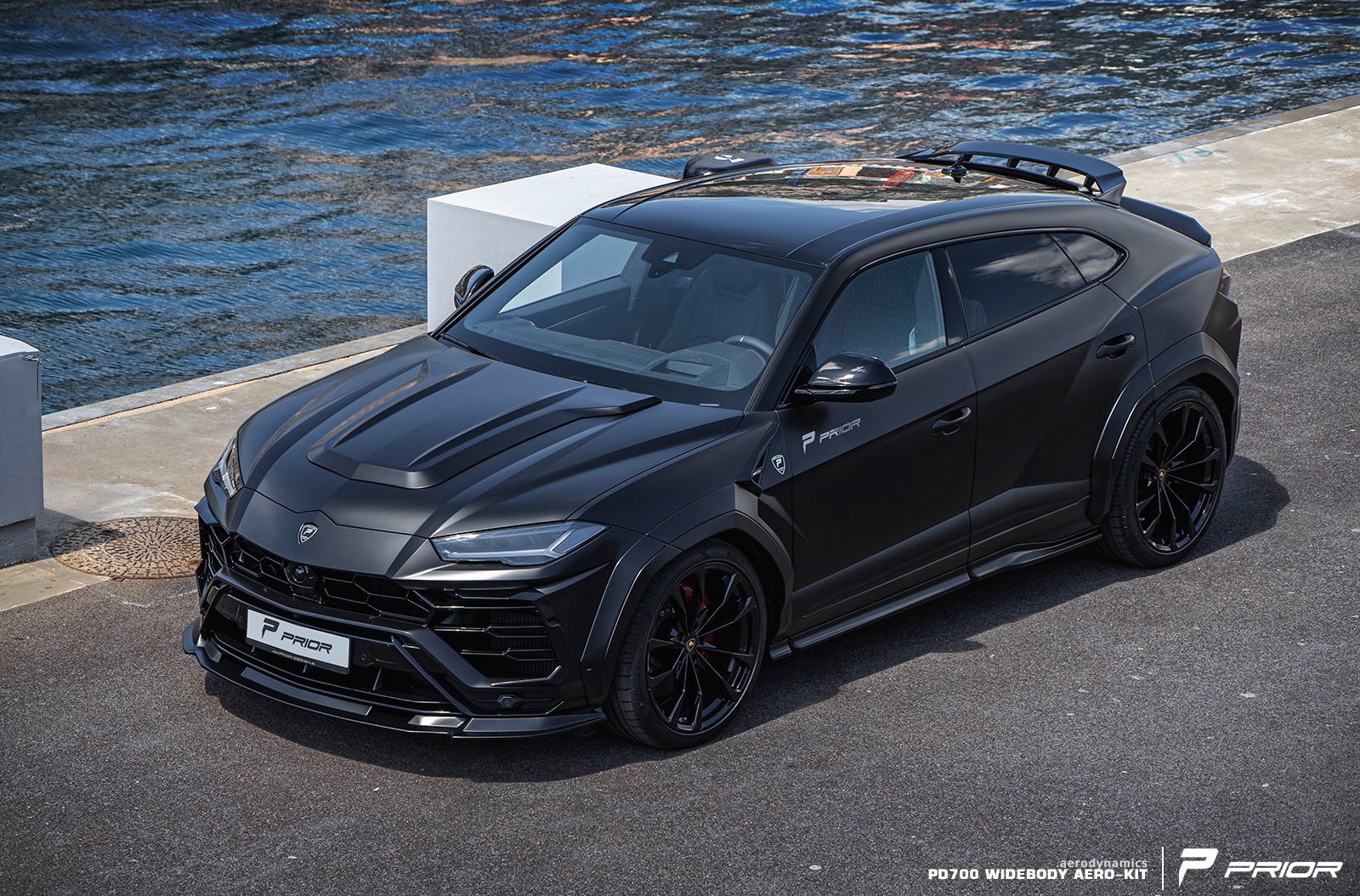
Prior Design Lamborghini Urus

Prior Design Urus
European widebody specialists with bases around the world. Prior Design has been known to create widebody kits for almost all performance sports cars. Their Lamborghini Urus is no exception. The kit has everything from modified air intakes, diffusers, side skirts and spoilers. The kit is designed by Roberto Geissini.

Urban Automotive Lamborghini Urus

Urban Automotive Urus
UK based aftermarket design company is not only known for their G Wagon kits, but their extensive line of kits covering other brands. They became the first to offer a bodykit for the new Land Rover Defender. Their Urus kit is designed by Nero Design LTD and it comes with items such as Carbon fibre rear diffuser, Carbon fibre wide arch add-on, 2 piece carbon fibre rear wing, vents, intakes and more.

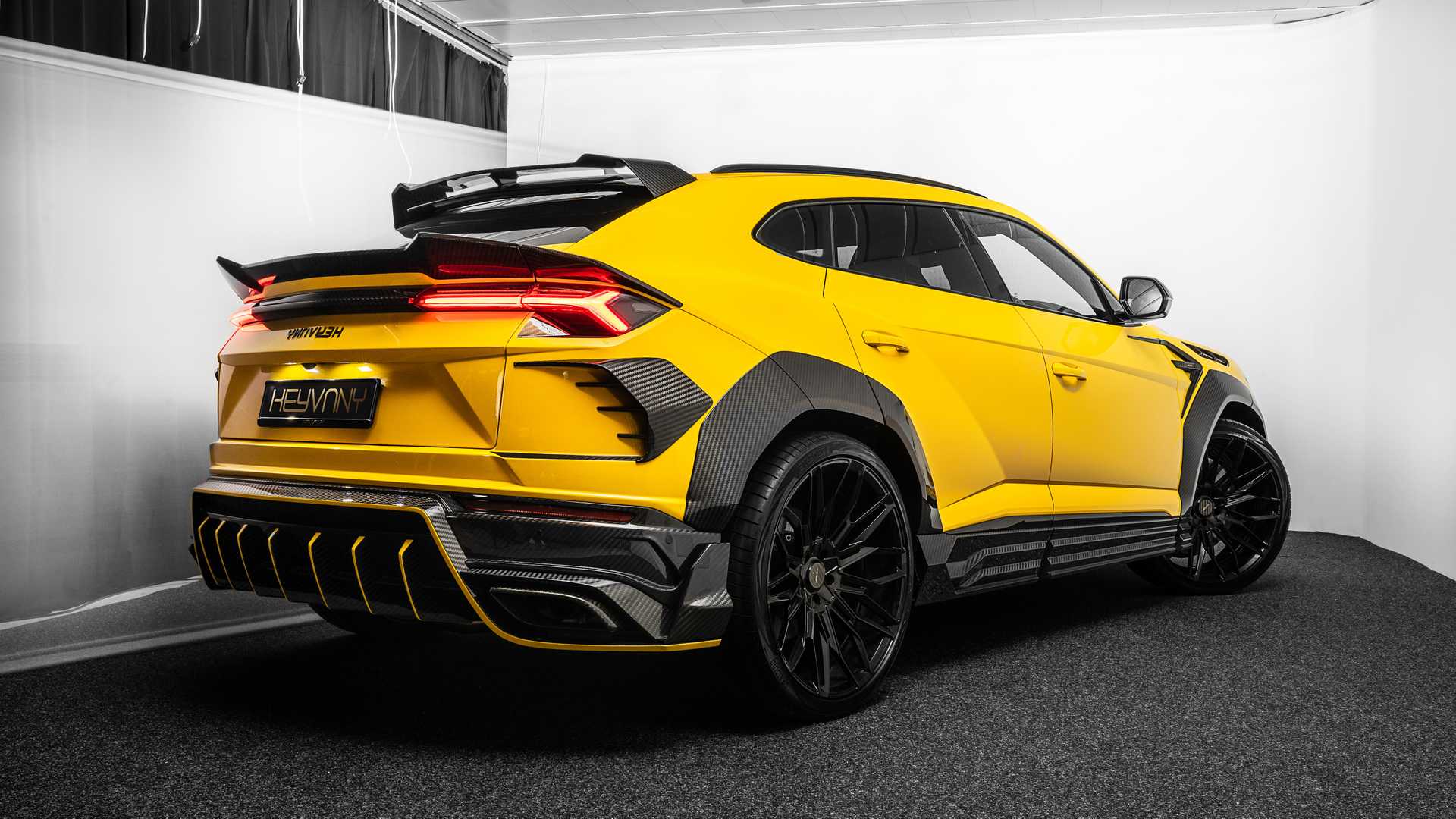
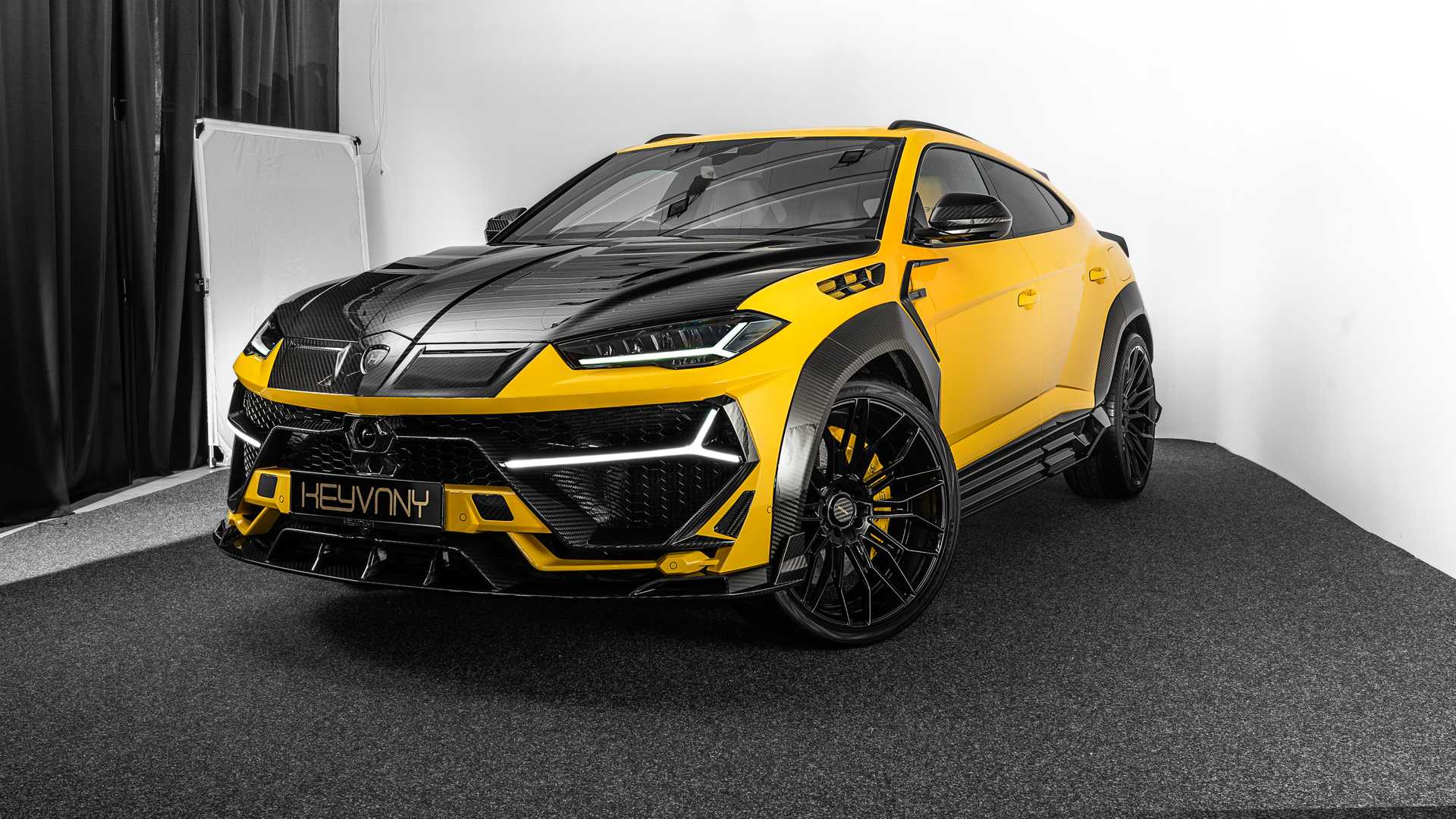
Reyvany Lamborghini Urus

Keyvany Urus
Relatively new in the scene, the company was founded in 2018 by experts in the world of vehicle customization. Their Lamborghini Urus kit was an internet sensation, extreme with a full interior overhaul. They call it the Keyrus. The outside begins with a $50,000 widebody kit made entirely out of carbon fiber. Other parts include a straight pipe exhaust system, carbon hood, carbon roof spoiler and more.
Keyvany Urus front

Lamborghini Huracan STO revealed as the most extreme Huracan yet

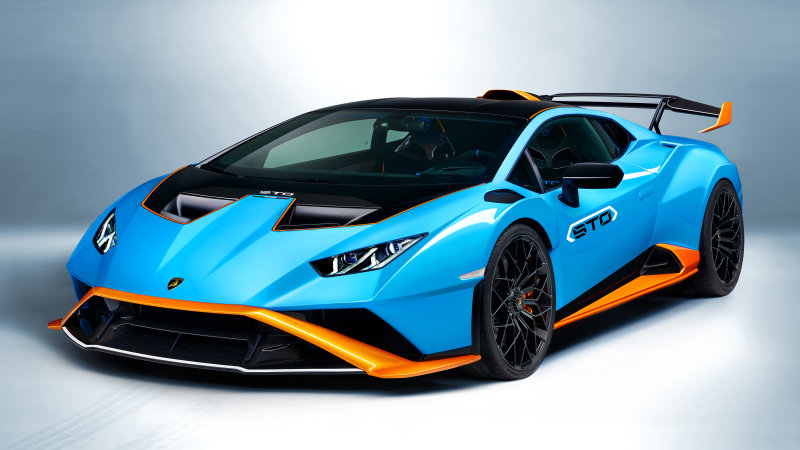
Mercedes-AMG just snagged the Nürburgring production car lap record from Lamborghini, but the Italians might already have an answer. It’s called the Lamborghini Huracán STO, with the STO being short for Super Trofeo Omologata. And yes, this one is even more extreme than the already bonkers Huracán Performante.

Lamborghini says two of its race cars inspired it to make this road-legal high-po Huracán — the Super Trofeo EVO and the GT3 EVO. As we’d expect, it’s still powered by the 5.2-liter V10. The good folks in Sant’Agata have found 10 more horses above the Performante, meaning the STO makes 640 horsepower. Torque sits at 417 pound-feet, which is actually down quite a bit from the 443 pound-feet of the Performante. There’s no lack of acceleration, though. Lamborghini claims a 0-62 mph time of 3.0 seconds and top speed of 192.6 mph. Those numbers are great, but they’re not what the STO is about. No, this Lamborghini was designed to set fast lap times, meaning aerodynamics and weight were the two key areas that were enhanced.

The STO is 95 pounds lighter than the already light Performante. We imagine the bulk of that can be attributed to Lamborghini making the STO rear-wheel drive, not all-wheel drive. Yes! A rear-drive Lamborghini — we love to see it. But there’s also a greater use of carbon fiber for exterior panels (75% are made of carbon now). Additionally, the windshield is 20% lighter than a Performante, and it’s riding on magnesium wheels as opposed to aluminum alloys wheels. On the inside, Lamborghini uses carbon fiber sport seats, full carbon door panels, removes the carpeting (replaced with bare carbon fiber) and coats other surfaces with its Alcantara-like Carbonskin. All this combined results in a car with a dry weight of 2,952 pounds.

Pushing it into the ground is an impressive downforce package. Lamborghini has added air ducts in the front hood for better airflow to the radiator and to generate downforce. A new front splitter better directs air to a totally new underbody meant to create greater downforce. And the front end’s new design better directs air around the front wheels to reduce drag. New front brake ducts enhance cooling to the improved “CCM-R” brakes (new design drawing on racing brakes for even more thermal durability than standard carbon ceramics). Lamborghini calls the new front end “cofango,” which is a fancy mashup of Italian for “hood” and “fender.”

The new rear fender design decreases overall drag, but a new NACA air intake integrated into the fender also serves as the engine’s intake. Lamborghini says this shortened duct allows for “a 30% decrease in status pressure losses.” A revised rear engine cover features another integrated air scoop for cooling purposes. There’s a shark fin on that rear cover that helps straighten and direct airflow to the wing, thereby increasing downforce in corners. Speaking of the giant wing, it’s a manually adjustable piece with three settings. Lamborghini didn’t quote any figures on total downforce, but it does say downforce is increased by 53% over the Performante, and “overall airflow efficiency” goes up by 37%.

Underneath, Lamborghini has increased the wheel track, fitted stiffer suspension bushings, model-specific anti-roll bars and its MagenRide 2.0 dampers. You get rear-wheel steering, a new fixed steering ratio and quicker gear changes from the seven-speed dual-clutch transmission. A new “STO” drive mode is also available to select for enthusiastic road driving, but you’ll want Trofeo mode for the best track performance.

Lamborghini says the STO will go on sale in spring 2021, and prices will start around $328,000.

2021 Lamborghini Huracan Evo Fluo Capsule lets you match your favorite highlighter

Lamborghini isn’t a car company that’s lacking in the bright paint color department, but that isn’t stopping it from pushing the boundaries of luminosity. With the Lamborghini Huracan Evo Fluo Capsule, the company is offering a quintet of fluorescent hues, each of which is paired with matte black accents to emphasize the main color’s brightness.

Five colors are available: Giallo Claris (yellow), Verde Shock (green), Arancio Livea (orange), Arancio Dac (dark orange) and Celeste Fedra (blue). Funny enough, the colors seem to match the most common highlighter colors you’ll find at OfficeMax. Contrasting the colors are the aforementioned matte black body panels on the roof, mirrors, front bumper intake, rear diffuser and side skirts. Each of those get thin stripes of color.

The interior is sort of the inverse of the exterior. Everything is finished in black leather or Alcantara. The starter button cover and the embroidered Lamborghini emblems in the seatbacks feature the bright exterior color.

Other than the colors, the Fluo Capsule is just like a regular Huracan Evo, complete with 631 horsepower and 443 pound-feet of torque. The new colors are available on the 2021 model, though no pricing has been given.

Related Video:

Volkswagen may ‘carve out’ Lamborghini to list on the stock exchange

FRANKFURT — Volkswagen is drawing up plans to set up Lamborghini as a more independent unit, and is discussing long-term supply deals that could make it easier to list it on the stock exchange, two sources familiar with the matter told Reuters.

“Volkswagen is in the process of carving out Lamborghini, and to organize future supply and technology transfer deals,” one of the sources familiar with the matter told Reuters.

The Italian sportscar brand, which is currently a division of Audi, could be partially listed, with Volkswagen retaining a controlling stake, the first person familiar with the talks said.

There is no formal decision to divest Lamborghini, a second source said, adding that the timetable of any deal remained unclear.

“This is a first step which gives VW the option to list the unit further down the line,” the second source told Reuters.

A third source familiar with the discussions said the future of Bugatti, Lamborghini and Ducati was discussed during a supervisory board meeting last Friday.

The possibilities for how to electrify the Lamborghini and Bugatti brands through partnerships and investors was discussed, the third source said.

Bankers and potential cornerstone investors in an IPO have been approached by the carmaker, the sources said.

Volkswagen declined to comment.

Volkswagen Group’s Chief Executive Herbert Diess on Wednesday said the carmaker will announce “important steps” about the company’s future before the close of the year.

Volkswagen is reviewing what role its high-performance brands Lamborghini, Bugatti and Ducati will play within the multi-brand carmaker as part of broader quest for more economies of scale, senior executives told Reuters.

A global clampdown on combustion-engined vehicles has forced carmakers to accelerate development of low-emission technology for mainstream models, leaving Volkswagen managers struggling to find resources to electrify low volume sportscar models.

Related Video:

Lamborghini Essenza SCV12 Unveiled: Hardcore, Track-Only!

The Lamborghini Essenza SCV12 joins a growing marketplace for no-limits hypercars. It seems that, for the super-rich, they are the must-have accessory.

Aston Martin has its Vulcan, Ferrari has its FXXK, McLaren has its Senna GTR; and now Lamborghini has the Essenza SCV12. It is also the first GT car developed to respect FIA prototype safety rules.

Developed by Lamborghini Squadra Corse and designed by Lamborghini Centro Stile, the Essenza SCV12 is limited to just 40 examples.

In its press release, Lamborghini evokes some hardcore history. Cars like the Miura Jota and Diablo GTR. The Essenza SCV12 has big boots to fill!

Details remain a little loose. Lamborghini has confirmed that the SCV12 is powered by a V12 rated to 830 hp. The power increase is said to be caused, in part, by RAM effect at high speeds.

Lamborghini has gone outside for the exhaust pipes which were designed by Capristo. A new X-trac sequential six-speed gearbox is structurally mounted to the frame.

The Essenza SCV12 gets a new-generation carbon fiber monocoque chassis which makes do without an internal rollcage.

Push-rod rear suspension is installed directly onto the gearbox. Pirelli tires are mounted on magnesium rims (19” front, 20” rear), which frame the brake discs and callipers supplied by Brembo.

Lamborghini Essenza SCV12

The unique aerodynamics achieve a staggering 1,200 kg of downforce at 250 km/h. The looks are dominated by a large adjustable double-profile rear wing, while other components are inspired by the Lamborghini Huracan race cars.

Essenza SCV12 customers will become part of an exclusive club with a bespoke program at the most prestigious circuits in the world. It will include a storage service in a new hangar built in Sant’Agata Bolognese exclusively for the Essenza SCV12 club.

Each car will have a personalized garage and dedicated services. The facility will also house the “Lamborghini Squadra Corse Drivers Lab” which offers athletic training programs similar to those followed by the official Lamborghini racing drivers.

The track calendar will start in 2021 with “arrive and drive” events held at FIA Grade 1 homologated circuits. Assistance will be provided by the Squadra Corse technical staff with the support of Emanuele Pirro and Marco Mapelli.

The price for this unique hypercar has not been announced.

Lamborghini Essenza SCV12 is an 830-horsepower track weapon

Following in the footsteps of the likes of the Diablo GTR and the Miura Jota, the new Lamborghini Essenza SCV12 is the latest limited-run, uber-performance GT car that offers more power than any other naturally aspirated V12 model Lamborghini has ever produced.

To say the Essenza SCV12 is purpose-built would be understating it. From the carbon fiber monocoque and the adjustable aerodynamics to the structurally integral gearbox, everything about the Essenza SCV12 was engineered expressly for speed by Lamborghini’s motorsports division. Lamborghini says the V12 actually makes more than 830 horsepower, but didn’t offer us anything more specific.

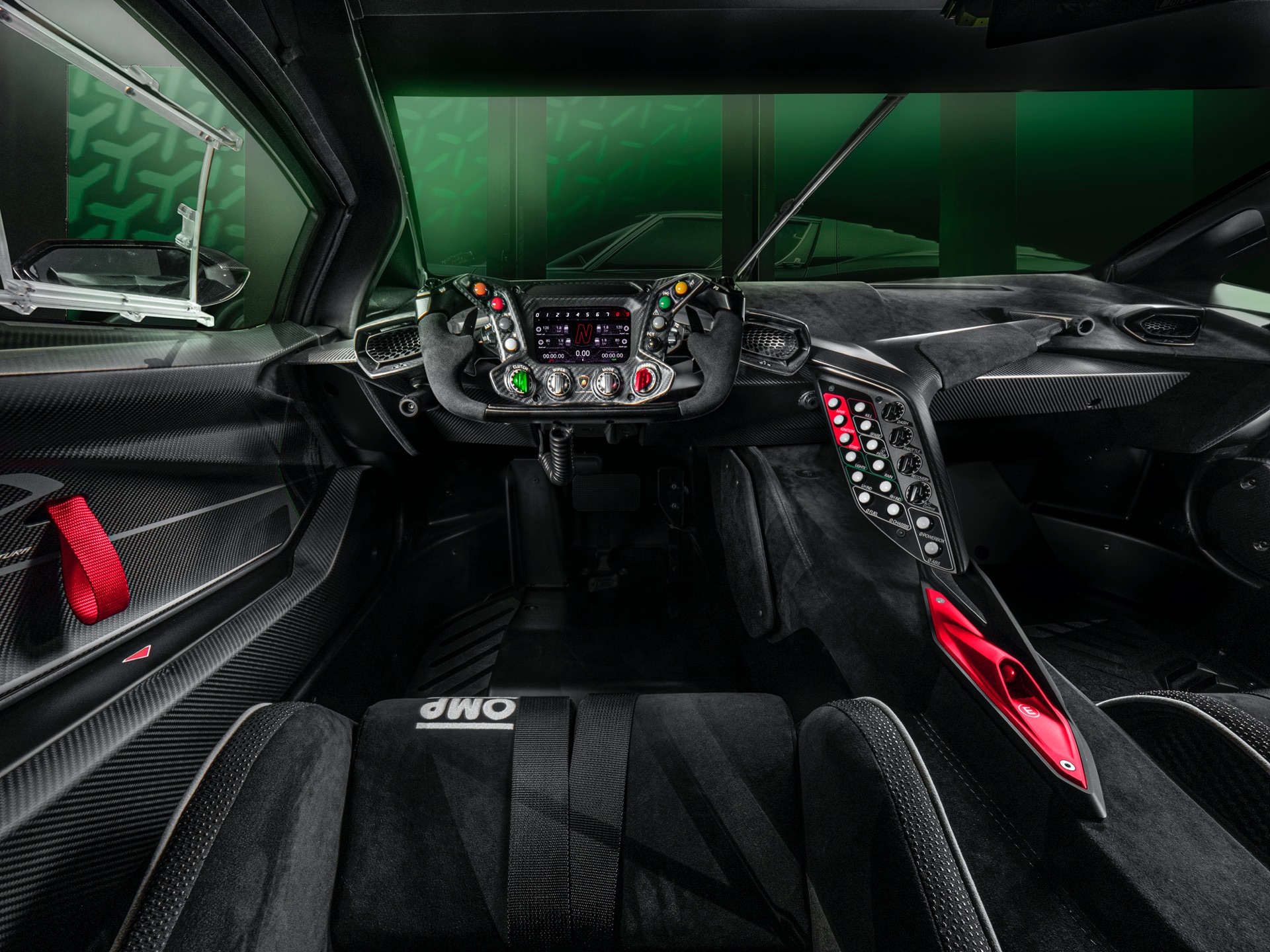
Its multi-function wheel was even inspired by the control interfaces found in Formula One, and the rest of the cockpit is similarly racecar-spartan, down to the FIA-homologated carbon-shell seats. The exterior bodywork comprises just three sections to facilitate quick repair and replacement. All four wheels are magnesium alloy and the brakes were developed by Brembo.

“Essenza SCV12 represents the purest track driving experience that our brand can offer, an engineering feat that highlights the inextricable link between our cars and the asphalt of the track,” said Lamborghini CEO Stefano Domenicali in the company’s announcement. “Lamborghini is a brand constantly looking to the future and searching for new challenges, but we never forget our roots and who we are: Essenza SCV12 is the perfect combination of our unconventional spirit as a super sports car manufacturer and our true passion for motorsport.”

The Essenza SCV12 puts all 830 horsepower to the ground via the rear wheels. The aforementioned structural gearbox is a six-speed sequential unit and the mounting point for the rear pushrod suspension. The aero elements, which were borrowed (with modifications, of course) from Lamborghini’s racing cars, produce more than 2,600 pounds of downforce at 155 MPH — more than you get from the aero on a GT3 race car. 

Making the deal even sweeter is the fact that purchasing one of these 40 Essenza SCV12s also confers access to a series of exclusive track events along with storage space in a new building (a hangar, Lamborghini says) that the company has built at its facility in Sant’Agata Bolognese. 

“We wanted to elevate not only performance and driving pleasure but also the experience off the track,” said Giorgio Sanna, Head of Lamborghini Motorsport. “Customers can take advantage of exclusive and highly customizable services to fully experience the best of Italian hospitality and become part of the Lamborghini Squadra Corse family.”

Related Video:

2021 Lamborghini Aventador SVJ Xago is all about the hexagons

Every modern-day hypercar needs to have loads of limited-production special editions. Even the most exclusive cars such as the Bugatti Chiron aren’t exclusive enough. And as a result of needing to satiate the demand for special hypercars, there are some odd limited editions. The latest is the 2021 Lamborghini Aventador SVJ Xago Edition. It’s special because of hexagons.

Well, it’s not just hexagons. It also celebrates Lamborghini’s Ad Personam customization program and the fact that customers can now participate in the program virtually instead of flying out to Italy. As it so happens, this special Aventador can only be ordered through the virtual version of the program.

So what’s the connection between an online customization program and hexagons? We have no idea. And the connection is more tenuous when you see that Lamborghini says its hexagonal patterns for the car were inspired by the hexagonal clouds on Saturn’s north pole. Yes, you read that right. Oh, and the name? We also don’t know, but it might just be that they’re the middle letters of Lamborghini’s design theme called “hexagonita.”

Among the hexagon details are silver patterns that fade in and out on the paint. The interior upholstery features a hexagonal pattern all the way down, too. Outside of that, the customer gets to pick the paint colors, which will also be reflected by contrast panels on the seats. Otherwise, it’s a regular Aventador SVJ, which is still pretty exciting with a blistering Nürburgring lap time and 770 horsepower.

Only 10 of these hexagonal Aventadors will be built, and that leaves us a bit vexed. Shouldn’t Lamborghini build a number of these cars divisible by six? A very mild hex upon the person that missed the opportunity to sextuple down on the hexagon theme.

Related Video:

Hybrid Sián Roadster becomes Lamborghini’s most powerful convertible

Lamborghini chopped off the Sián’s top to create its most powerful convertible model to date. The limited-edition Sián Roadster features an innovative hybrid powertrain and a wide panoply of customization options.

Viewed from the front, the Roadster is nearly identical to the Sián coupe introduced at the 2019 edition of the Frankfurt auto show. Its long, low nose wears a carbon fiber splitter and Y-shaped LED headlights. It’s the same story out back, where the shape of the lights again draws a subtle parallel between the Sián and the Countach built between 1974 and 1990. The engine remains visible through a horizontal wings made with carbon fiber, but they’re flanked by deep scoops that start right behind the occupants and flow into a set of air vents.

Surprisingly, the Roadster is just as aerodynamic as the coupe. Autoblog learned it will not come with any kind of roof.

Technology reigns supreme in the cabin. The driver sits in front of a digital, configurable instrument cluster, and a touchscreen integrated into the slanted center stack displays the infotainment system Lamborghini designed in-house. The air vents are 3D-printed, and buyers can customize them by adding their initials. Nearly every part of the interior can be personalized, including the upholstery and the type of the materials used to make trim pieces.

Mitja Borkert, the head of Lamborghini’s design department, previously promised no two examples of the Sián coupe will be identical. It’s reasonable to assume that every Roadster will be equally unique.

The Sián lost its top without losing any of its mechanical panache. The Roadster is identical to the coupe, meaning it’s equipped with Lamborghini’s first production-bound hybrid system. The powertrain consists of a mid-mounted, naturally-aspirated V12 engine and an electric motor integrated into the transmission. It draws electricity from a supercapacitor to inject 34 horses into the driveline, bringing the setup’s total output to 819 horsepower. Lamborghini quotes a 2.9-second sprint from zero to 62 mph, and a 217-mph top speed.

Using a supercapacitor instead of a lithium-ion battery pack is not the easiest or cheapest way to build a hybrid, but engineers claim it’s the best solution. It’s three times more powerful than a battery with a comparable weight; put another way, it’s three times lighter than one with a similar power output. It stores enough electricity to let the motor power the Sián at ultra-low speeds, like when parking or backing up. More important, the jolt of electricity it sends to the wheels ensures the car continues to accelerate even when the transmission is changing gears.

Engineers found ingenious ways to cool the drivetrain. For example, the cooling vanes integrated into the rear end are made with a patented material that reacts to heat. They gradually rotate open as the exhaust gets hotter.

Lamborghini will make 19 examples of the Sián Roadster, and they’re all spoken for. Pricing hasn’t been announced, but the coupe model (which is sold out, too) allegedly starts at $2 million before options. Enthusiasts who want to add the Sián to their collection will need to wait until a used example comes up for sale. In the meantime, they can pick up a 23-inch long, 3,696-piece Lego Technic replica, or they can spend $3 million on one of the 63 Sián-inspired, 4,000-horsepower yachts an Italian shipbuilder named Tecnomar will launch starting in 2021.