
Axis Ashtray
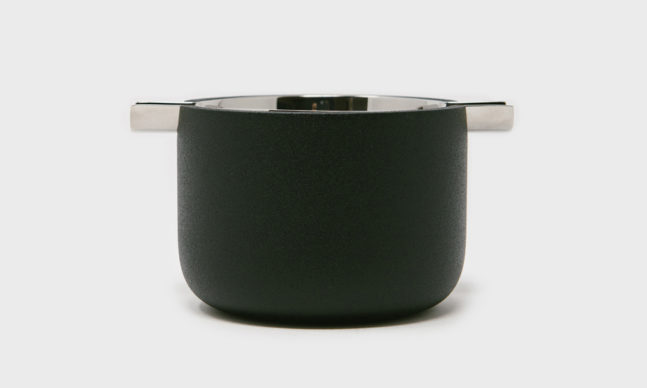
Whether you’re the kind of guy that stills enjoys an occasional cigarette, a celebratory stogie or the mind-altering comfort of a rolled stick of wacky tobacky, you’re going to need an ashtray that’s up to…
Whether you’re the kind of guy that stills enjoys an occasional cigarette, a celebratory stogie or the mind-altering comfort of a rolled stick of wacky tobacky, you’re going to need an ashtray that’s up to…

Bongs and water pipes function slightly differently, but they’re essentially both filtration devices used for smoking tobacco, herbal substances or, most commonly in our experience, the electric lettuce. The idea behind it and the basic…
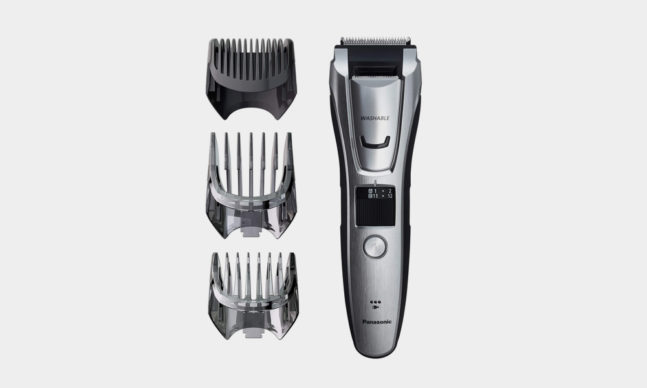
Panasonic was founded in the early 1900s as a manufacturer of lightbulb sockets, but our experiences with their products growing up was limited to high-end televisions, turntables and stereos. Once we were old enough to…
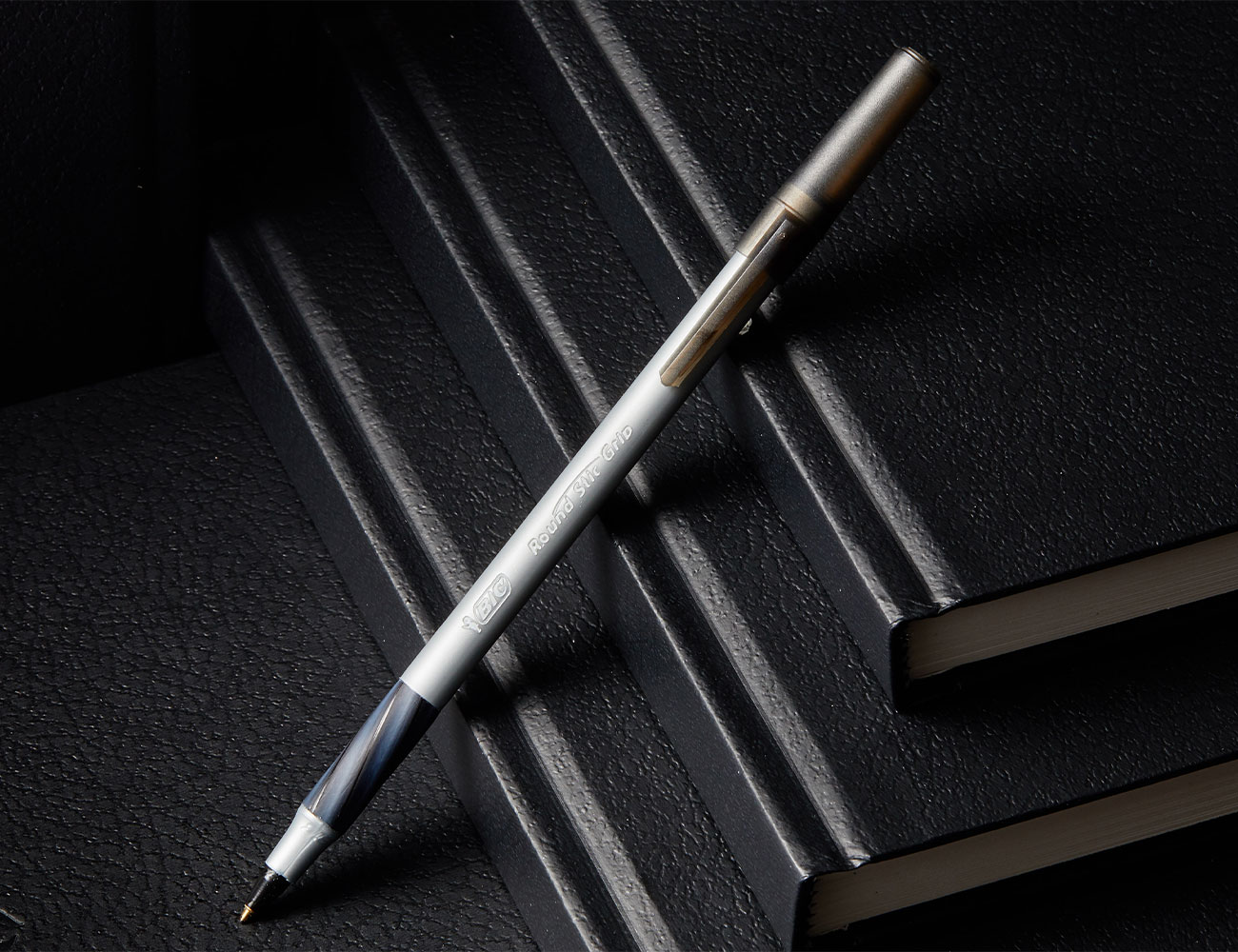
Part of working at Gear Patrol is participating in neverending product debates: Are boutique skillets worth the price? What are the best wireless earbuds for running? Can a single watch count as a collection? But the most passionate debates always revolve the things we all have and use daily. Like pens. From the mighty Sheaffer to the humble Bic, these are the pens you’ll see around the GP office.
“I’ve tried every type of pen. Ballpoints, fountains, rollerballs. These cheap Bics work the best and I’ve been buying them, in bulk, since high school. They have the ‘fine tip’ (‘fine’ is important), they’re inexpensive and, most importantly, they don’t run or smudge.” — Oren Hartov, Assistant Editor, Watches
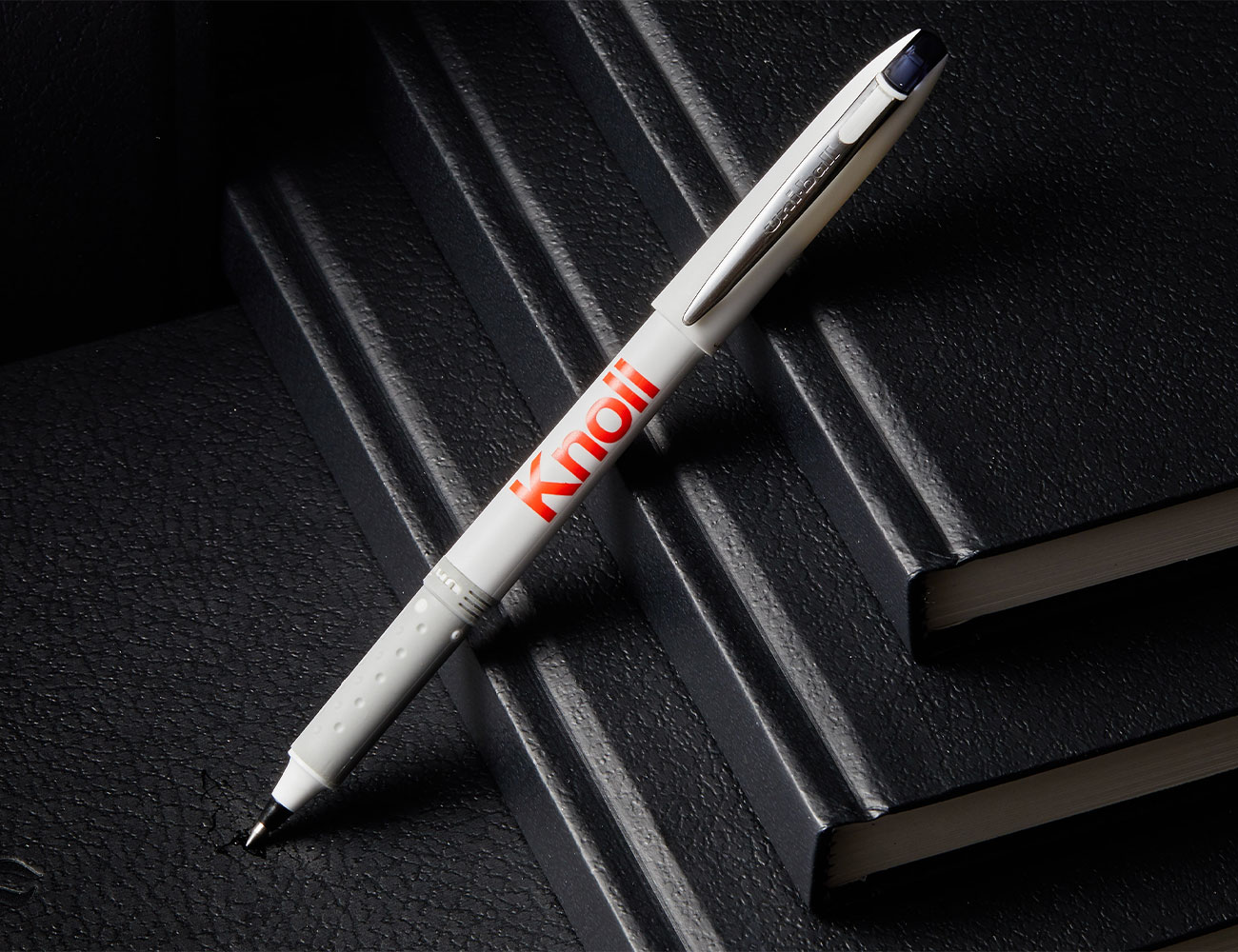
“The Uni-ball Grip is a classic — simple, smooth and saturated. This one has the Knoll logo, which happens to match my tote bag.” — AJ Powell, Project Manager, Gear Patrol Studios
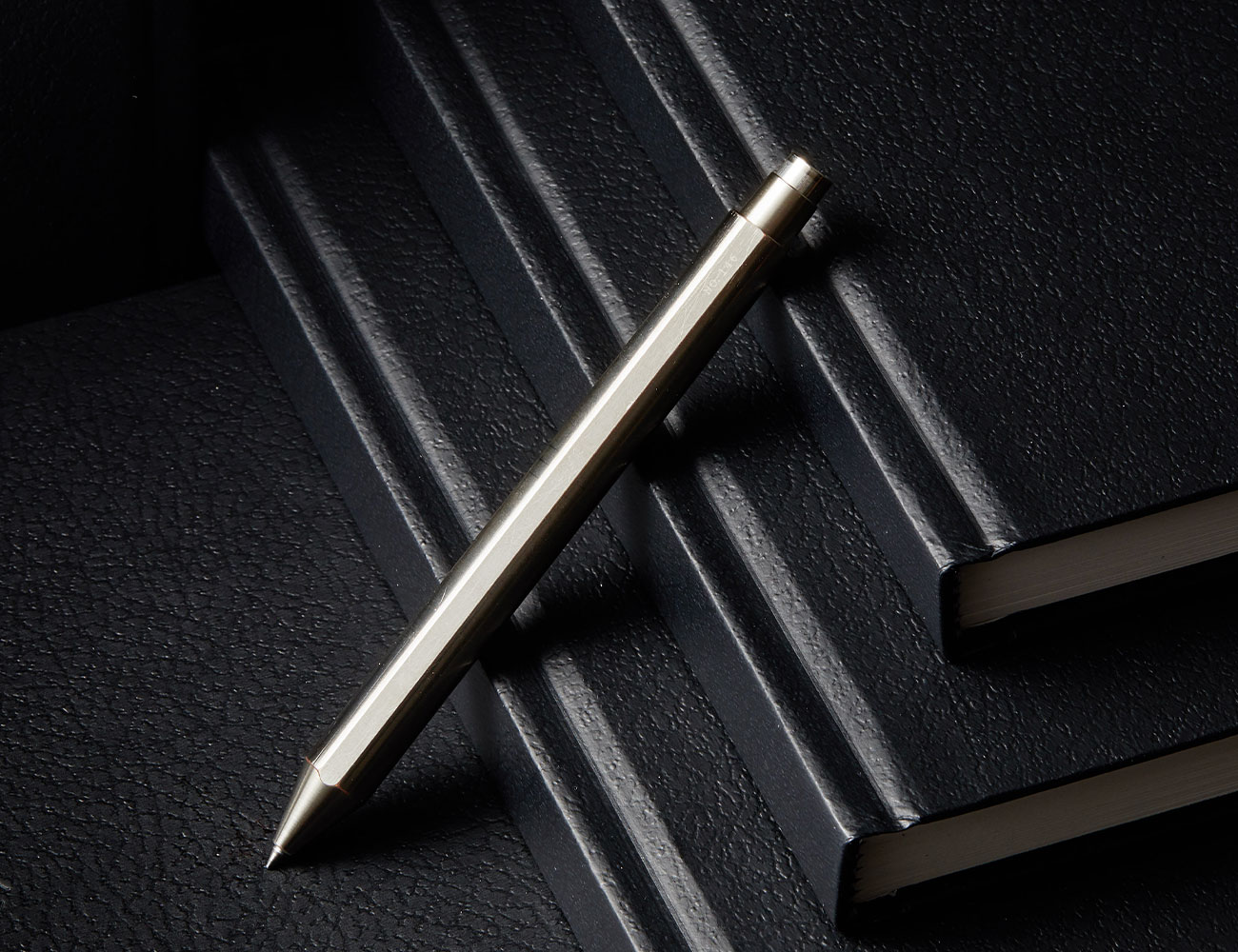
“The Inventery Mechanical Pen is one of those writing instruments that just feels right in your hand. Every pen stroke feels strong and deliberate. Ink delivery is smooth from its German Schmidt P8126 ink cartridge. The design of this pen is very minimal; it looks like it’s just a stack of 3 cylinders. However, it features a flattened edge so it never rolls off your desk, which is good because this 57g pen is machined out of pure brass.” — Hunter Kelley, Associate Designer
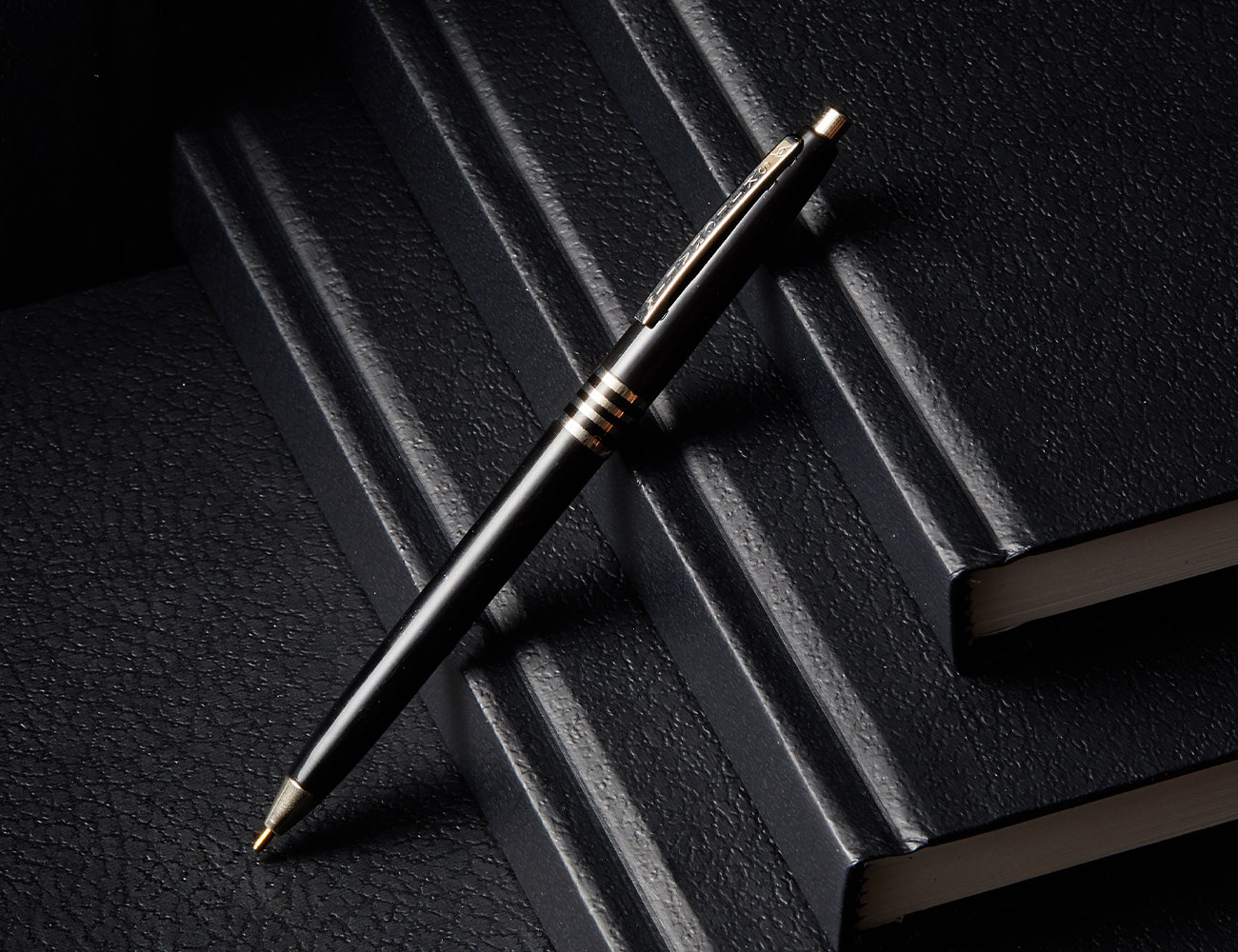
“I got turned onto these ballpoint pens by an editor at my college paper who had been in the Army. He always had a whole mess of them around the office and I would always take them. What I enjoy about them is how strikingly plain they are, yet they stand out. They are a bit sleeker than most retractable pens, they barely have any branding and have these three silver bands on the barrel. They write OK, too — smoother than most ballpoints, in my opinion. These pens have been made in the USA by National Industries for the Blind for US Government agencies since 1968 — and remains virtually unchanged. Being made for the government they have to meet some lengthy requirements, including being able to write continuously line for one mile and work in extreme temperatures.” — Charles McFarlane, Content Producer, Gear Patrol Studios
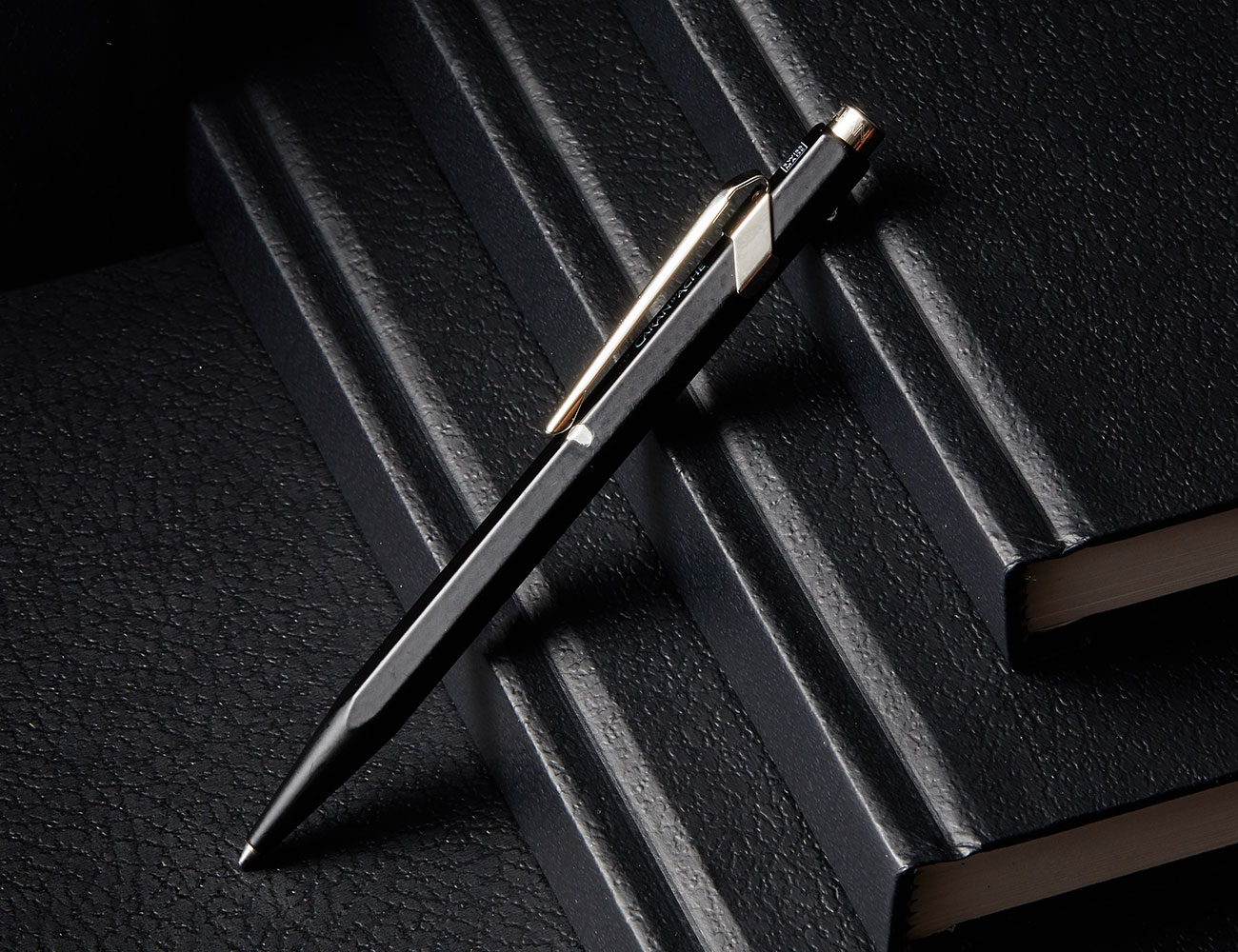
“The hexagonal body ensures that it’ll never roll off a table or pad, which is a nice little detail. It’s got a smooth action and the classic pocket clip completes that retro look Caran d’Ache is going for with this one. This one is made even more special as it was an anniversary present from my wife, and since it takes Goliath ink cartridges I’ll have it for the rest of my life.” — Ryan Brower, Project Coordinator, Editorial Operations
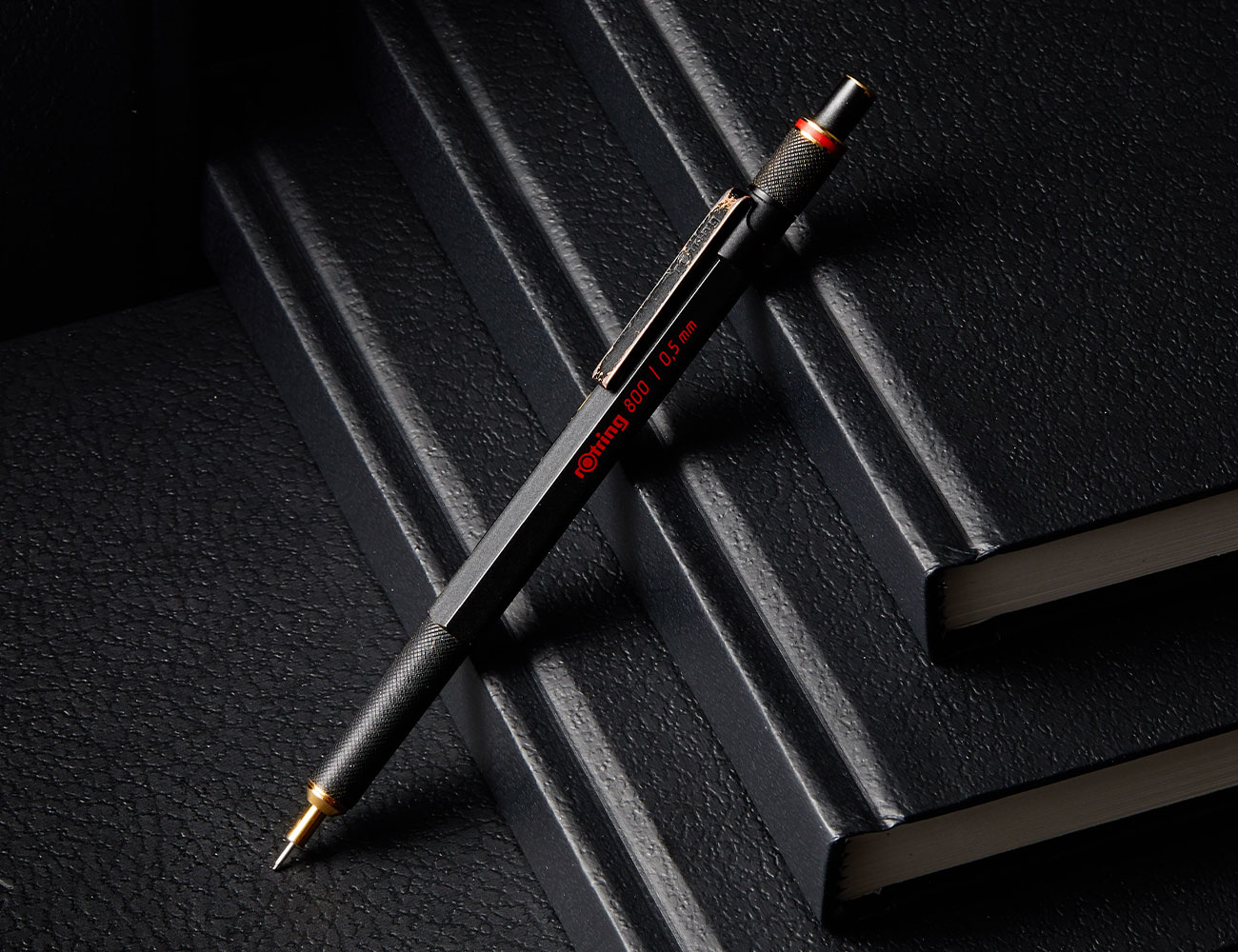
“I’m an inveterate sloppy writer with commitment issues that extend to putting ink on paper, so using pens just stresses me out. The only problem is that nice mechanical pencils are rarely pocketable, and the few that have retractable tips tend to be butt ugly. The exception, which I’ve been loving for the better part of two years, is the Rotring 800. With a fully retractable tip mechanism, angular German design and hefty metal body, it’s a joy to fiddle with, look at and use. But it does come with a fair number of caveats, the main one being reliability. I read dozens of reviews complaining of permanent mechanical failure (I’ve had nothing of the sort so far) and wobbly tips (a real but purely aesthetic issue) but I’ve yet to have serious or unfixable problem that couldn’t be solved with its eraser’s built-in unjamming rod or a little bit of fiddling. Still, I worry every time I drop it.” — Eric Limer, Editor, Tech
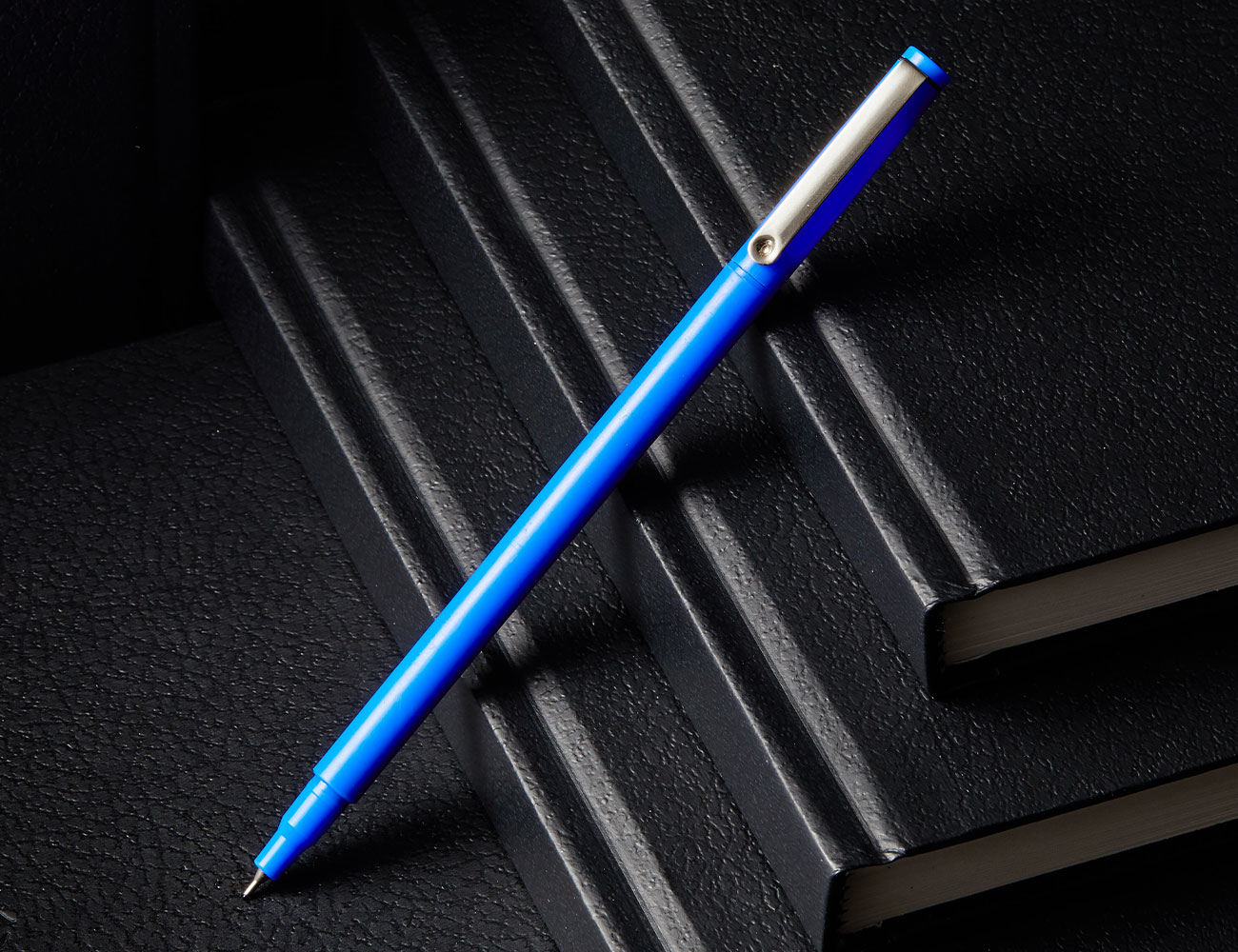
“My 4th grade teacher, Pearl Bayliss — a fellow lefty with similarly poor handwriting — evangelized the LePen, and I’ve followed suit. Its felt tip makes my shitty writing look better (think about how your signature looks in sharpie versus fine point) and something about the ink composition means that when you drag your left hand across freshly written words, things tend to stay put.” — Henry Philips, Deputy Photography Editor
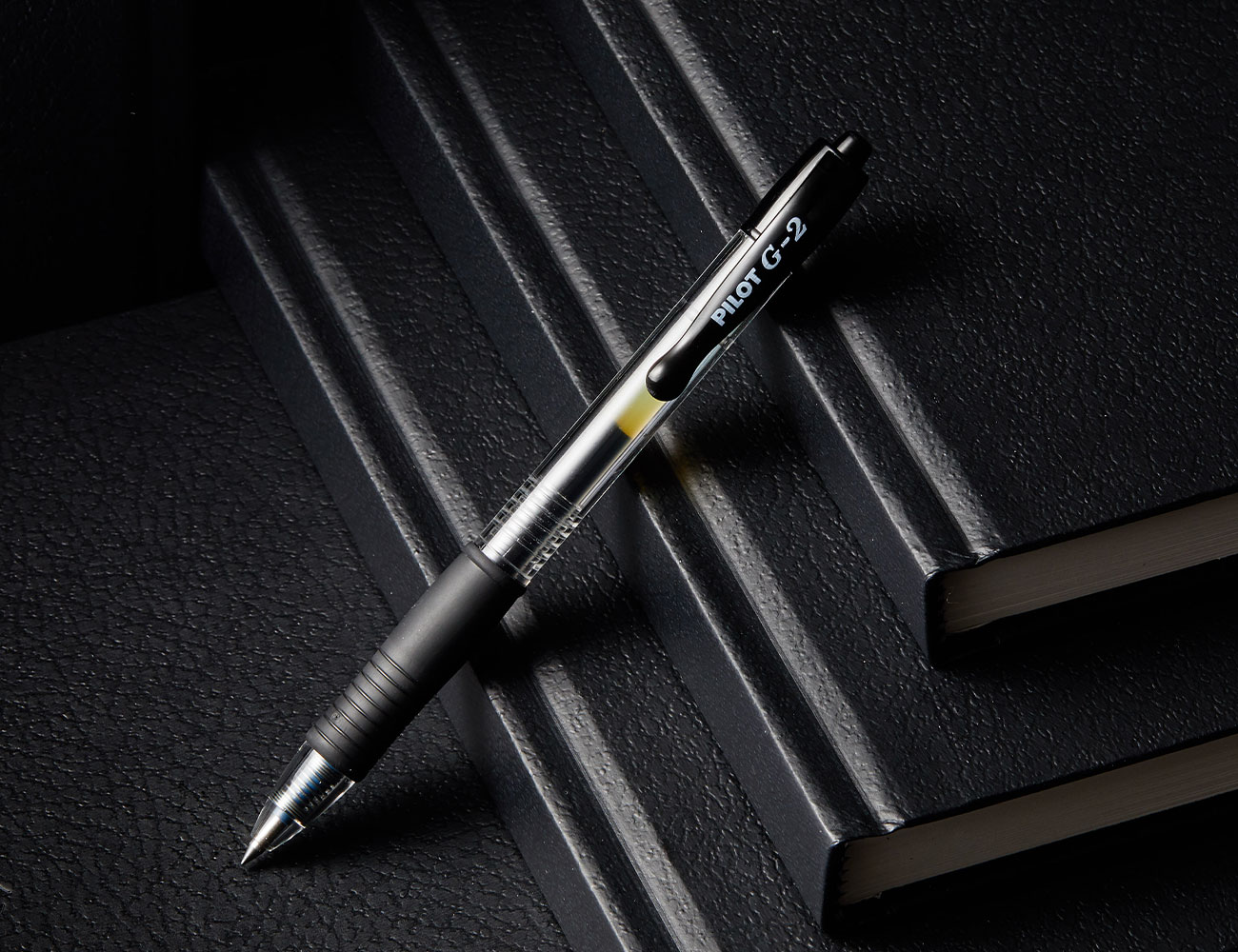
“This pen is the equivalent of a Toyota Highlander. Widely available, versatile, ‘no-worries-if-lost’ price, premium Japanese build quality, reasonably handsome. The gel offers thick, opaque coverage on most surfaces while avoiding that dreaded railroad effect and the retractable function keeps paper and pockets tidy, at least for me. Oh, and it’s safe on a plane. The circumference of the barrel fits my hand the best and though it’s a bit slower at drying and maybe not as loved by the pen nerds, it suits me best. I don’t need anything fancier, but then I don’t feel like I’m slumming it either. Why 0.5mm? Because 0.3 is like writing with an X-Acto knife and 0.7mm is essentially a crayon. 0.5mm seems to roll the smoothest within the confines of my office jockey note-taking work life.” — Eric Yang, Founder & Editor-in-Chief
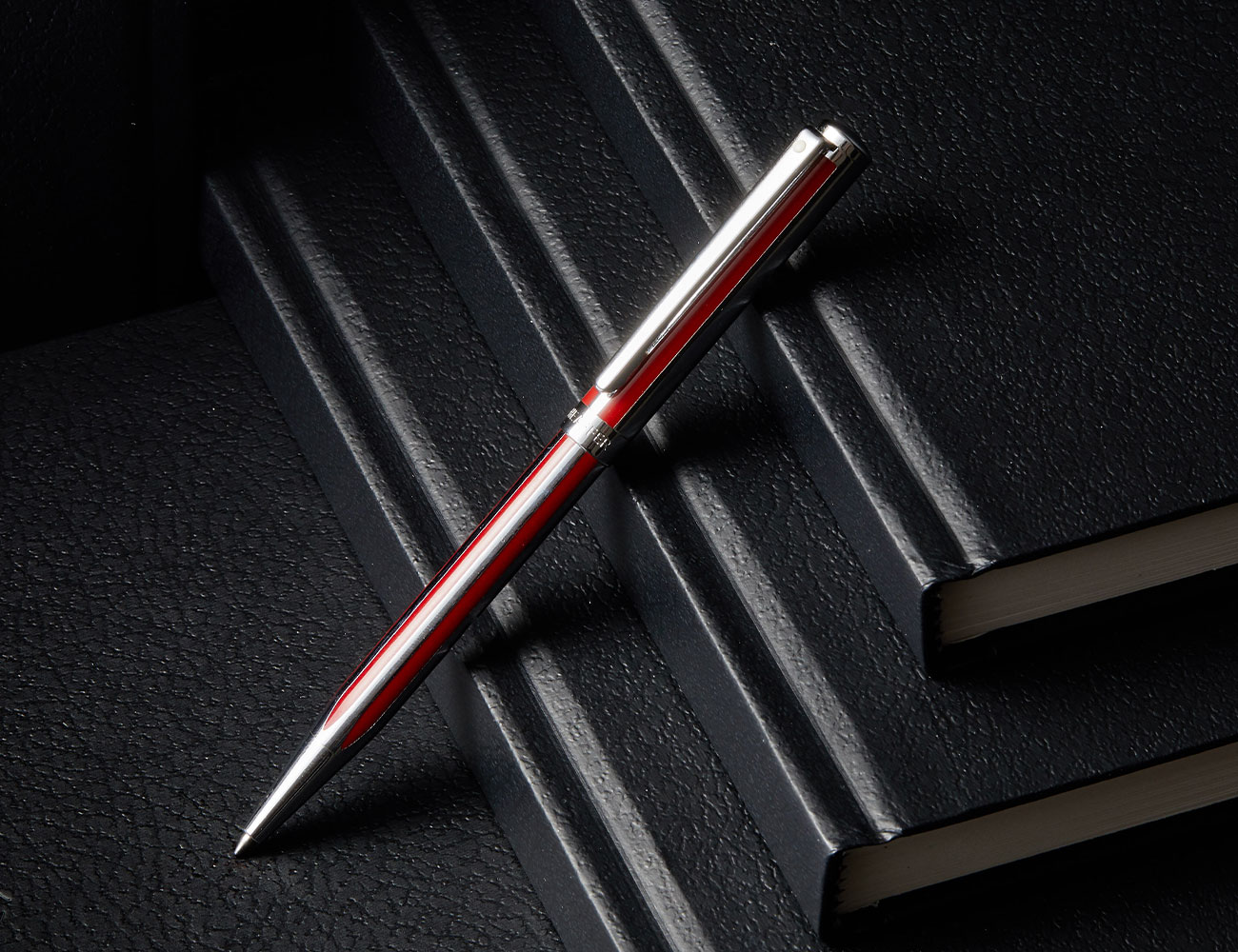
“When I received this as a gift, the idea of ‘appreciating’ a pen was new to me. But a smooth twisting action to reveal or conceal the tip turned out to be as satisfying as the feeling of actually writing with it is. With a nice heft in the hand, it looks super sharp to pull out something obviously ‘nice’ like this in the right situations.” — Zen Love, Staff Writer, Watch Desk
“There are many reasons that the Pilot G-2 0.38 is my favorite pen but to put it simply, it doesn’t let me down. Many pens are great but there is always one fatal flaw. I have found none with the 0.38. It somehow puts down a thin line of ink that is heavy while never skipping a beat. The click action is sturdy and bouncy for all of your nervous ticks. The grip is commanding and comfortable. I love this pen so much I often buy a twelve pack just to give to people in the office. I then see them using the 0.38 for the next year.” — Joe Tornatzky, Art Director
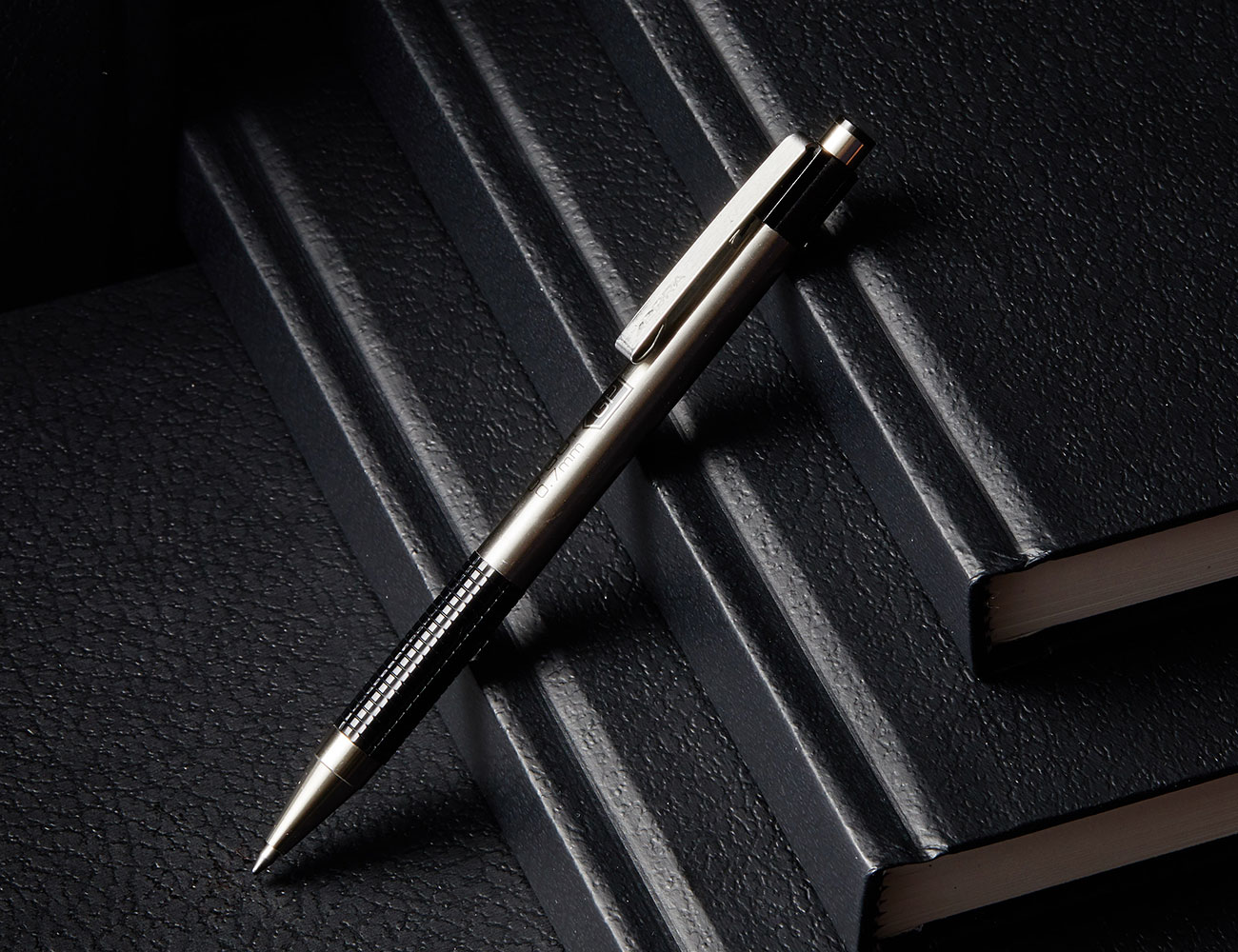
“As someone who uses a paper notebook and is left handed, finding a pen that won’t leave streaks on the paper and my hand can be somewhat challenging. This Zebra G-301 Gel Retractable Pen is a very solid everyday pen that travels well and doesn’t leave a mess. Be aware that the pens do run out of ink quickly so stock up on refills if possible.” — Zach Mader, Vice President, Advertising & Partnerships
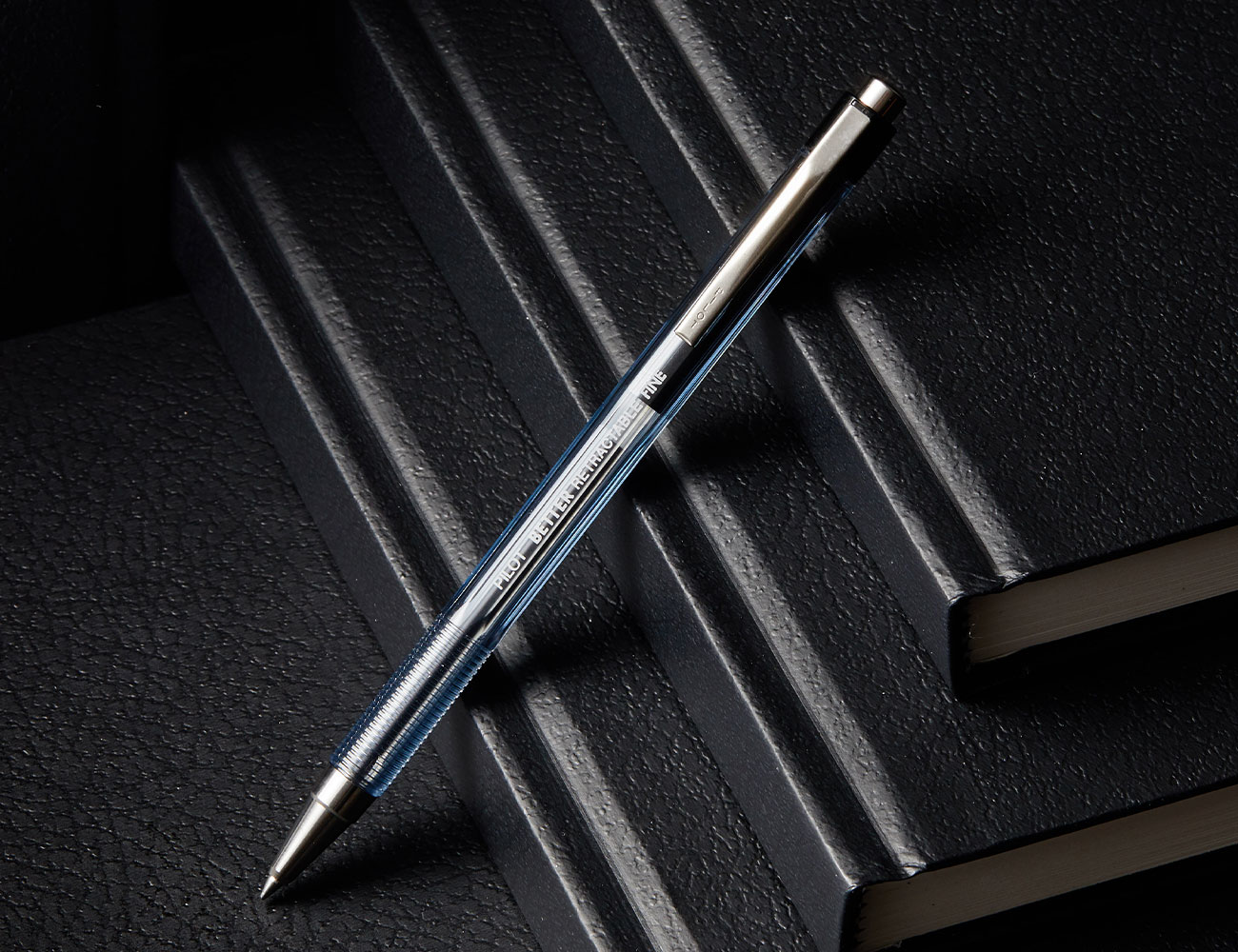
“I first used these in college to take notes which, coincidentally, was the first time I’ve used a pen until it ran out of ink. They’re affordable, for one, but the Better Retractable feels perfect, from its ribbed grip to its confident click. These write smoothly and come in three colors and various point sizes; I prefer the 0.7mm fine point.” — Nick Caruso, Coordinating Producer
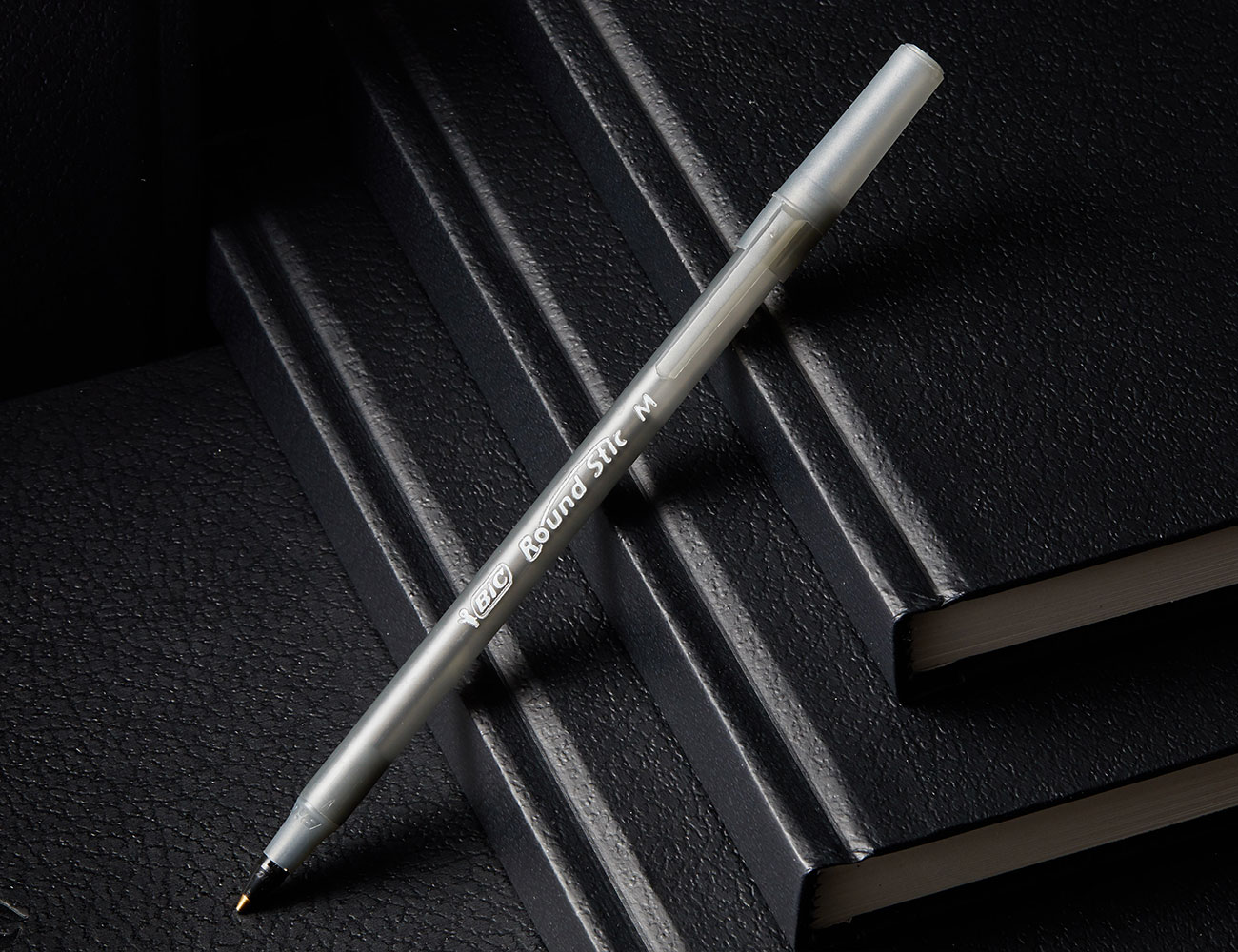
“I’m currently out of stock of my favorite Pilot Precise V5 Stick Rolling Ball Pen in green, which I started using because my old boss swore by them — she did all her edits in green to make the document look more uplifting, rather than super negative with a bunch of red marks all over the place. I followed suit and used these for as long as I could, but my backup is the classic Bic Round Stic Xtra Life Ballpoint Pen, Medium Point. The grip is just right, the black ink doesn’t smudge and it’s lightweight to boot. The flow of ink is perfect whether I’m writing out a to-do list, story ideas and thank you notes. It hasn’t run out on me yet.” — Meg Lappe, Staff Writer, Outdoors & Fitness

“Nendo, the Japanese creative firm that designed this pen, described it as the pen equivalent of a compact car ‘that fulfills small needs of our daily lives.’ In other words, it’s not for the pen enthusiast, it’s for my dumbass, and I love it for that. It’s got a not-too-sticky rubber grip, the tip is brass-weighted and the clicking noise makes me just a little too happy.” — Will Price, Staff Writer, Home & Design
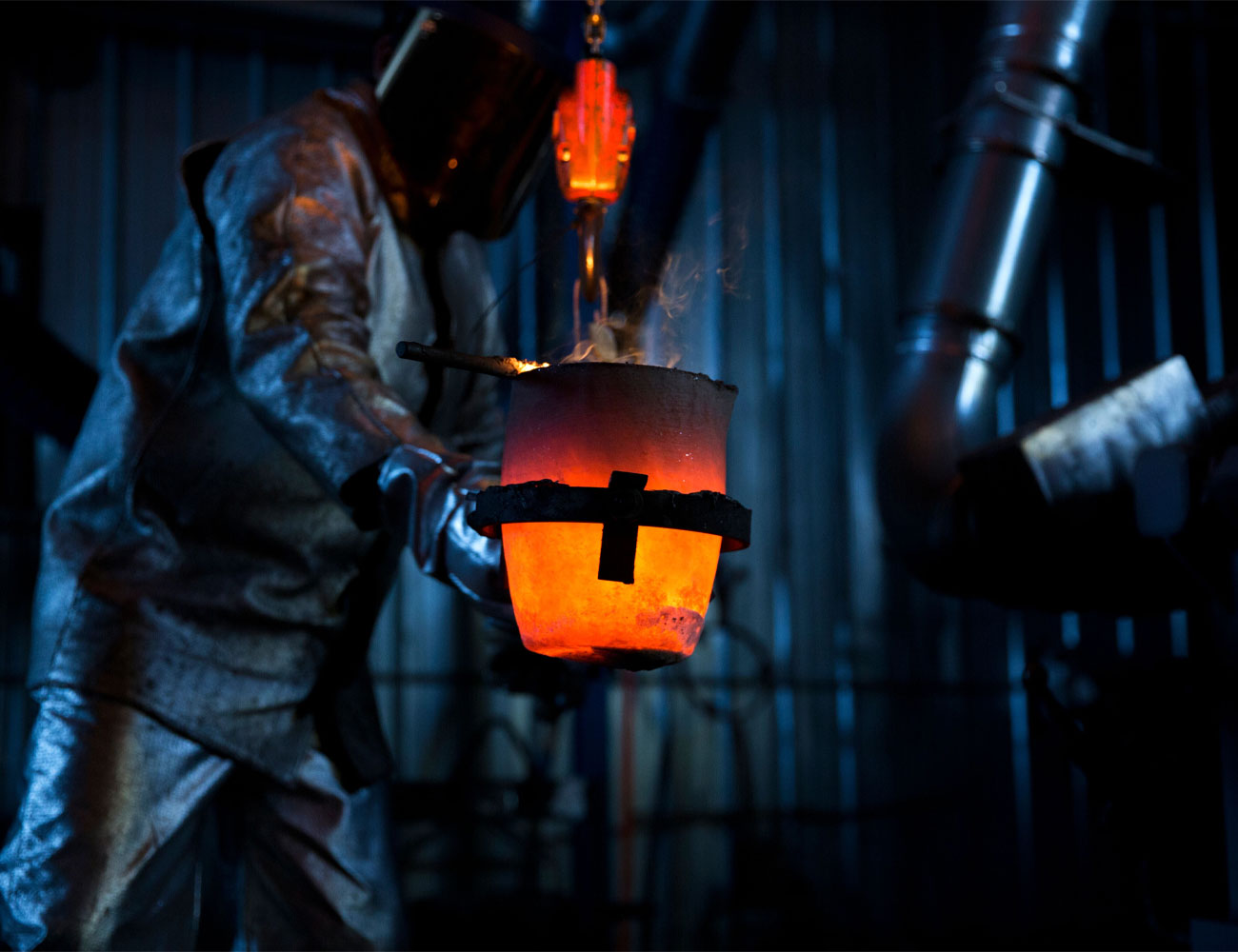
When gear-testing celebrity and co-founder of America’s Test Kitchen Christopher Kimball describes your pots and pans as “the Tiffany of cast iron cookware,” you’re doing something right.
Based in Owego, New York and owned and operated by Liz Seru and John Truex, Borough Furnace just launched a Kickstarter for what will be the only American-made enameled Dutch oven. A semi-gloss, blacked-out, hand-enameled pot that combines the company’s modern touch with designs from classic French brands like Le Creuset and Staub.
Like Staub, the 5.5-quart pot opts for the tight-fitting lid and basting knubs on the ceiling of the oven. Like Le Creuset, its cooking surface is a same semi-gloss enamel, which enables more effective browning than the matte interiors of some Dutch ovens.
But because Staub, Le Creuset and other cast-iron cookware makers attach lid handles after casting, the pots are always temperature-capped (neither are safe to use above 500 degrees) and the handles can show wear quickly (screws hold them in place, which can either unfasten or rust over time). Truex and Seru got around this by casting the lid and its handle into a single piece of iron, eliminating both issues while creating a handle shape and size more friendly to a gloved grip.
And unlike many macro or craft cast iron makers of today, Borough Furnace melts, pours, casts and finishes all its own iron. For the Dutch ovens, Seru and Truex will be applying the enamel coating to them as well.
The first batches of ovens will be available to Kickstarter supporters for $180, almost half the eventual $350 retail cost. The campaign is live for the next 30 days.
It used to be that pellet grilling was for nerds. Invented in the ’80s by a guy who owned a heating company in Oregon, wood pellet grills are powered by electricity and fueled by wood pellets. An auger pushes compressed wood from a holding chamber on the side of the grill to a fire pot under the grates, where a temperature gauge and a fan work together to maintain a stable heat.
The first wood pellet grills, all made by Traeger Grills, did not seriously threaten the dominance of their gas and charcoal counterparts. Those days are gone. Here are four reasons why pellet grills are here for good.
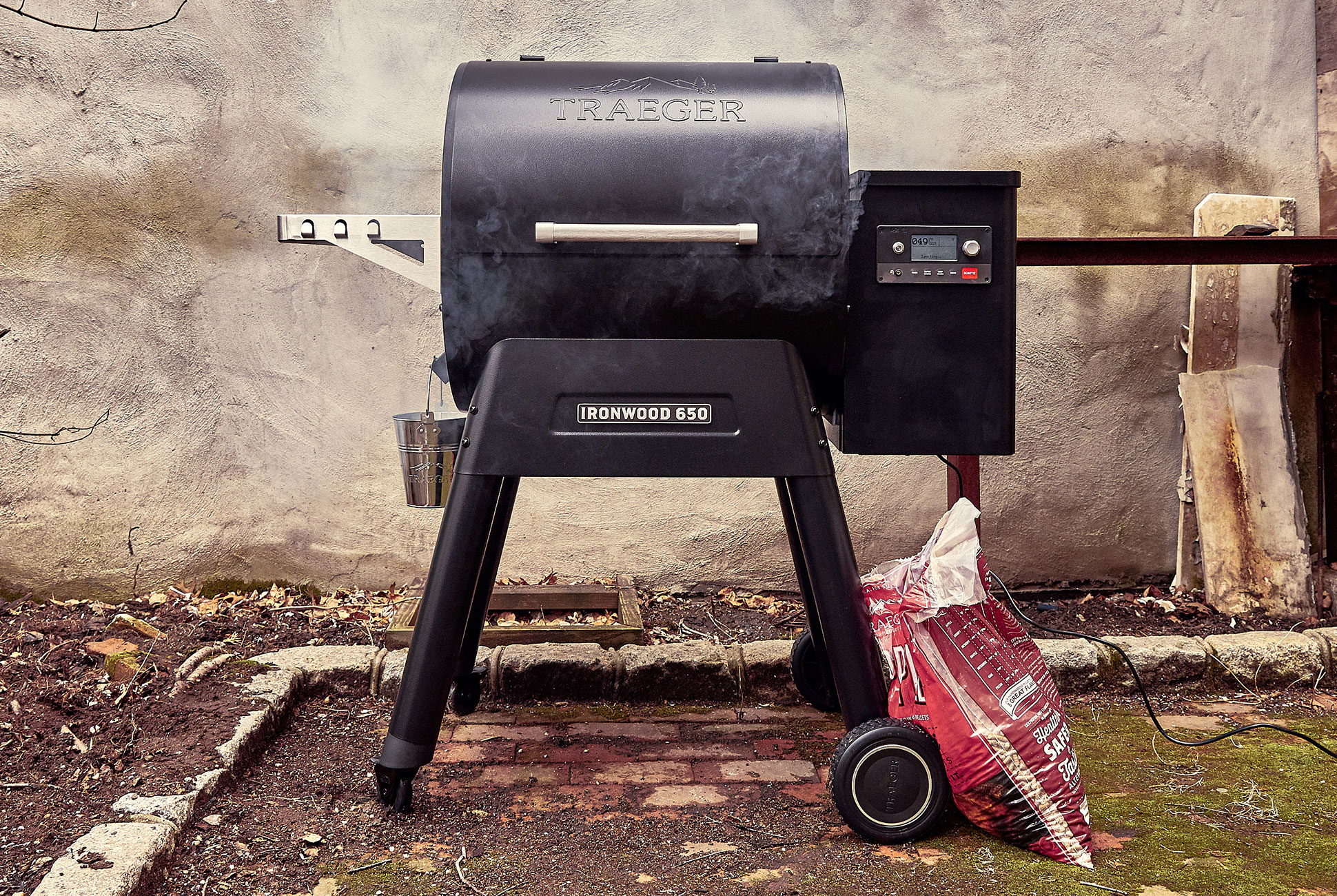
Whether would-be pitmasters want to admit it or not, part of the allure of barbeque is its inherent difficulty. Fires, fuel stacks, air flow, internal temperatures, ambient temperatures and humidity levels — all must be monitored for hours (sometimes days) on end. To some grillers, that sounds like a great use of a weekend. To others, a nightmare.
Pellet grills make things easier. Set the temperature, press “ignite” and wait ten minutes. Once it hits the target temperature, the grill’s onboard computer does all the monitoring for you, automatically adjusting fan speed and pushing pellets into the firepot as necessary. If you’re into barbeque for the flavor, not the craft, it’s the most efficient way to go — properly smoked meats and vegetables with minimal effort.
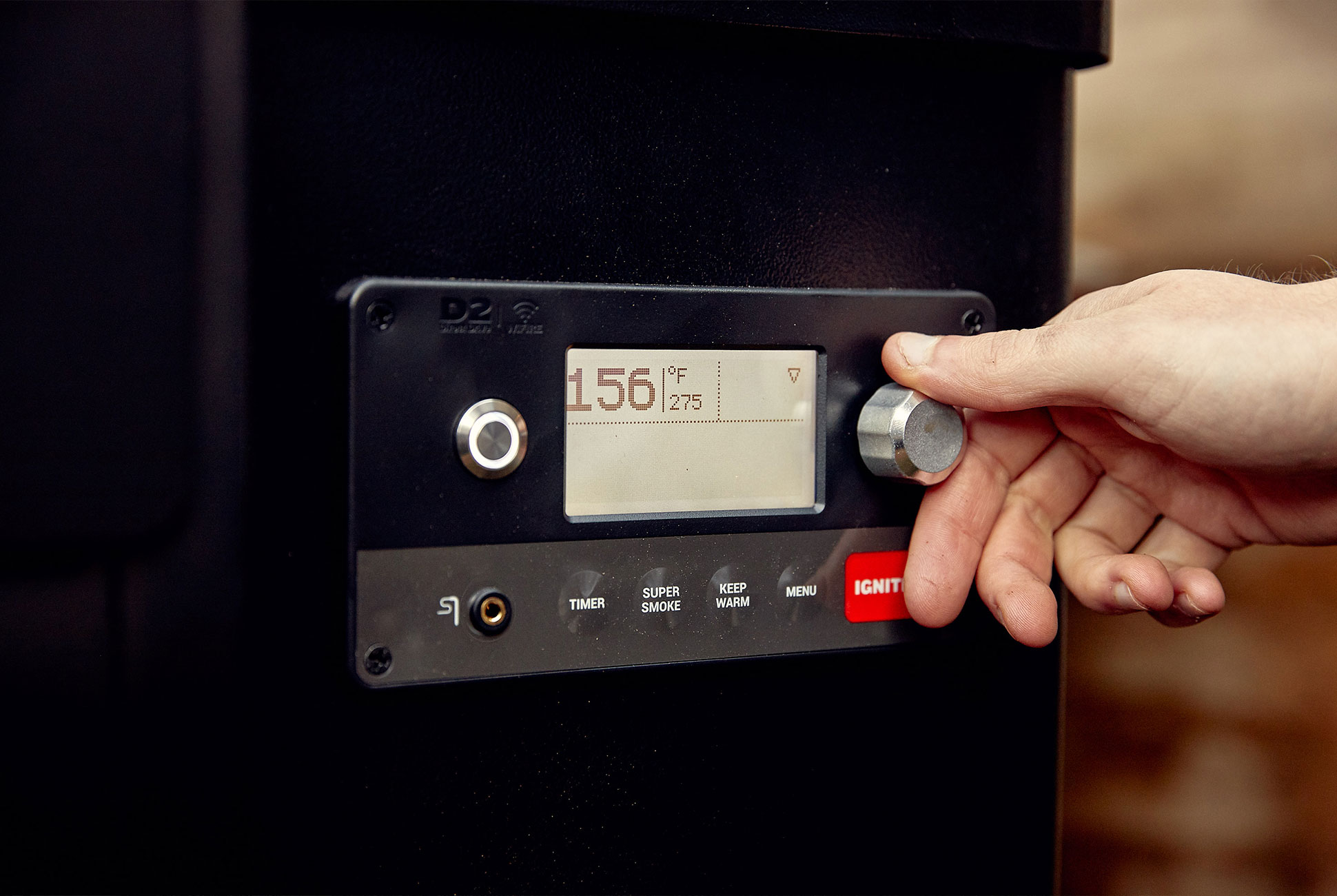
Smart tech may feel anachronistic to the very analog nature of cooking meat over fire, but it’s immensely helpful in the pellet grill arena. Wood pellet grills monitor temperature in the firepot, ambient air temperature in the grill and internal temperature of the meat you’re cooking by default.
Today’s grills connect to your home’s Wi-Fi, and you connect to them via smartphone app, meaning you can control them even when you’re not connected to your home’s Wi-Fi (like, say, if you go on a quick beer run). And though you can operate the grill using the interface on the front of the grill, all the functions found there are available on the app, and a little more. Load recipes from your phone onto the grill and set it on cruise control and troubleshoot any grill performance issues that arise, too. It’s simple, non-invasive smart technology that you can use, or not use.
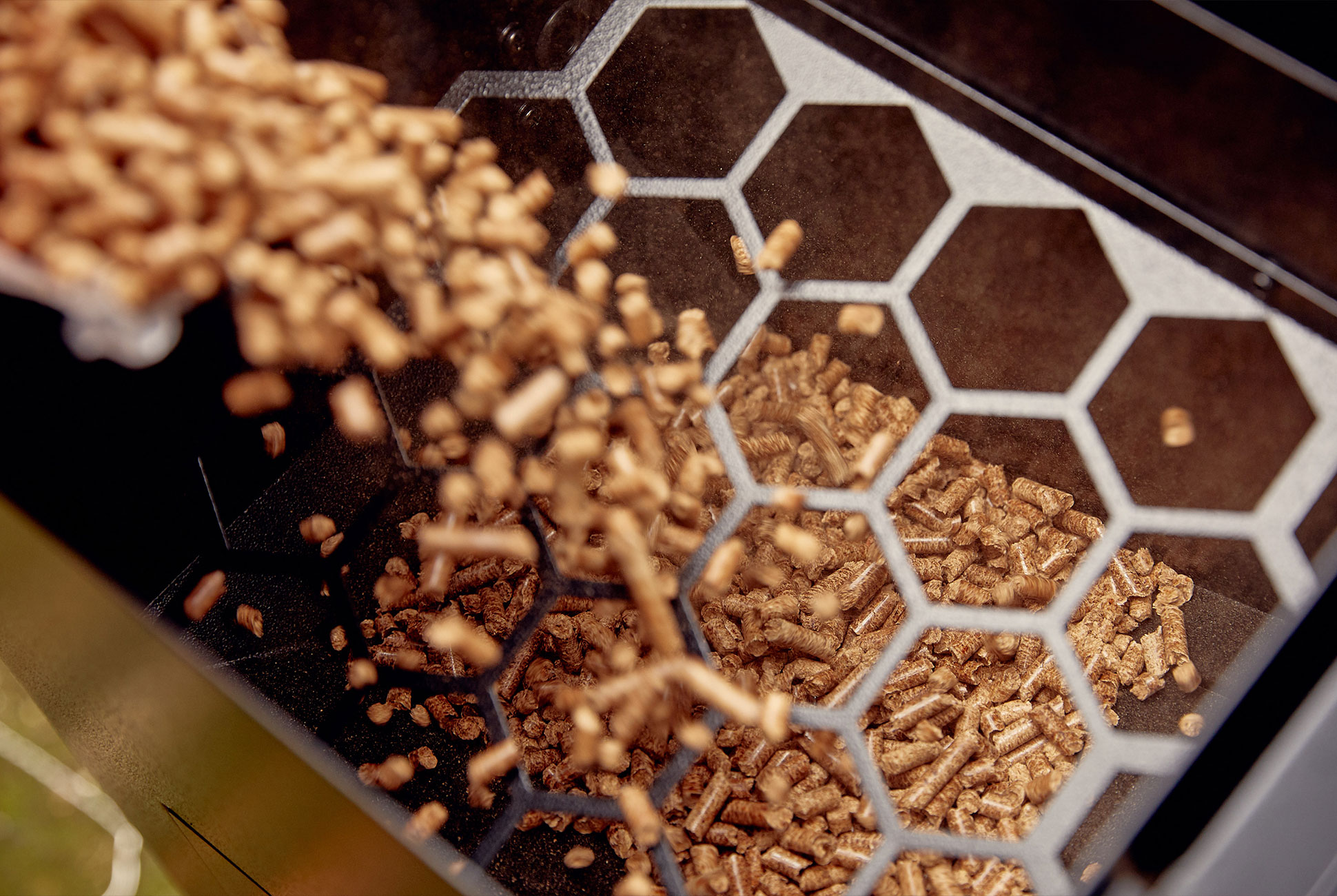
A bag of wood pellets costs about $20. When cooking at smoking temperatures, these grills burn about a pound every two to three hours, which comes out to roughly $1 per hour of cook time and 50 hours of cook time per bag. For the sake of comparison, propane gas tanks are usually $30 for a full tank and $20 for refills. You’ll typically get 20 hours of cook time out of propane grills, even when cooking on low. Charcoal and lump coal are even less efficient.

Pellet grills aren’t perfect. The most legitimate complaint against them is their inability to create the quick char of their gas and charcoal brethren. That’s because wood pellet grills typically have a sheet of metal over the fire pot, thus they cook with indirect heat rather than the standard direct heat from traditional grills.
No wood pellet grill is capable of safely reaching the 800-plus temperatures of gas and charcoal. But newer grills from Traeger and companies like Green Mountain do show marked improvement. Both companies now make grills that meet or exceed 500 degrees at grate-level (they used to top out around 400 degrees). That’s ample energy to effectively sear a steak or pork chop. In short: it won’t keep up with the searing chops of a gas or charcoal grill, but it’s plenty capable in its own right.
Listing a place on Airbnb and actually getting it ready for guests are two different things, the latter of which takes some serious thought and research. Not only should a short-term rental have all of the things a visitor might expect from a hotel room — coffee-making supplies, a comfortable mattress and clean, crisp linens — but, if you want to maximize your bookings, you should consider items that also add comfort and style.
We scoured forums and tested products from a handful of companies to come up with a list of the stuff we think hits the sweet spot in terms of looks, quality and affordability. Outfitting a rental space doesn’t have to mean buying the best-quality goods, but your guests don’t have to know that.
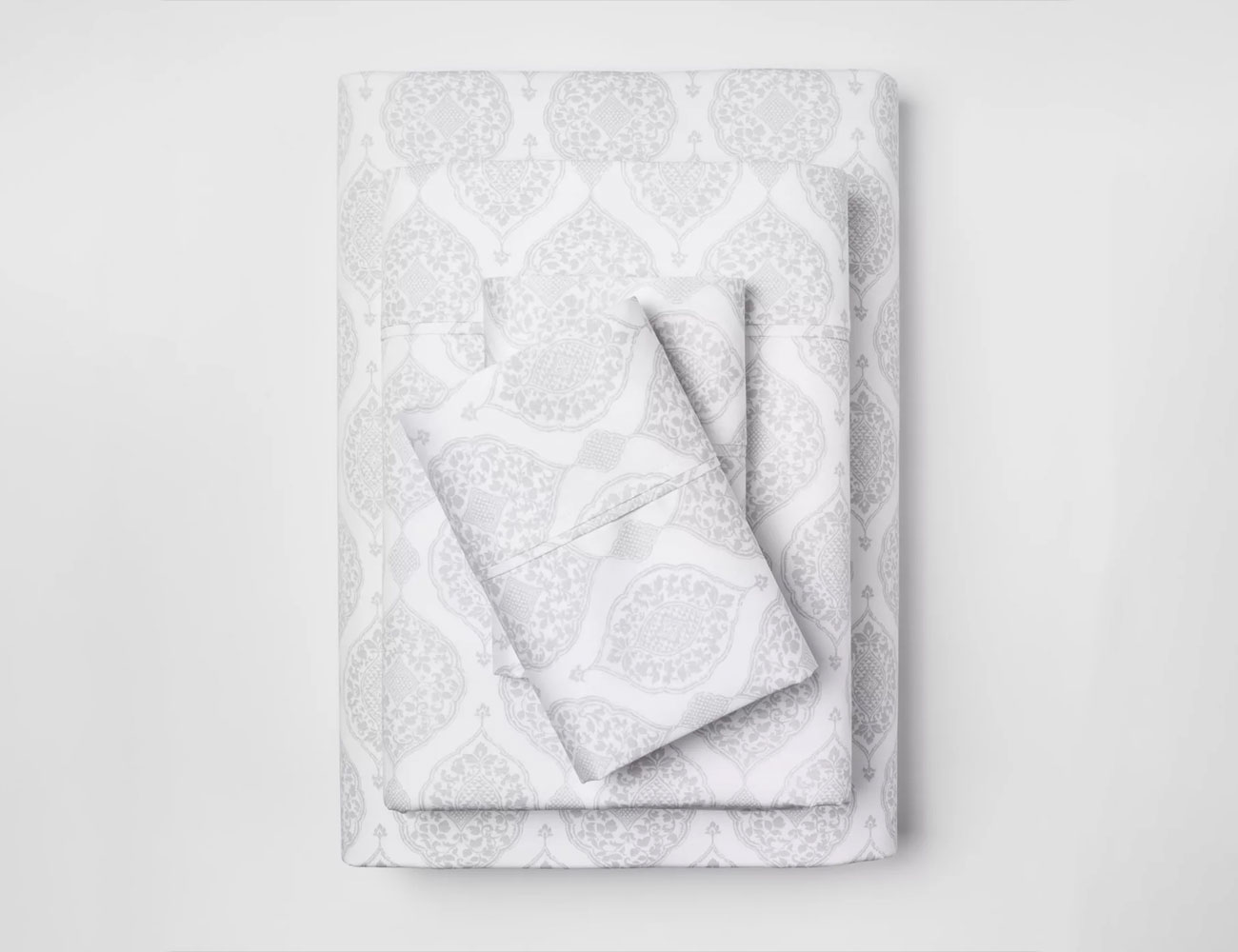
Soft, silky and, most importantly, starting at $30 a set, Target’s cotton sateen sheets come with fresh prints and absolutely no harmful chemicals (in fact, they’re Oeko-Tex certified). You’ll want to keep at least two sets of sheets per bed on-hand so you can rotate them per guest. They’ll wear out faster than you think, so it makes sense to keep the price tag low.
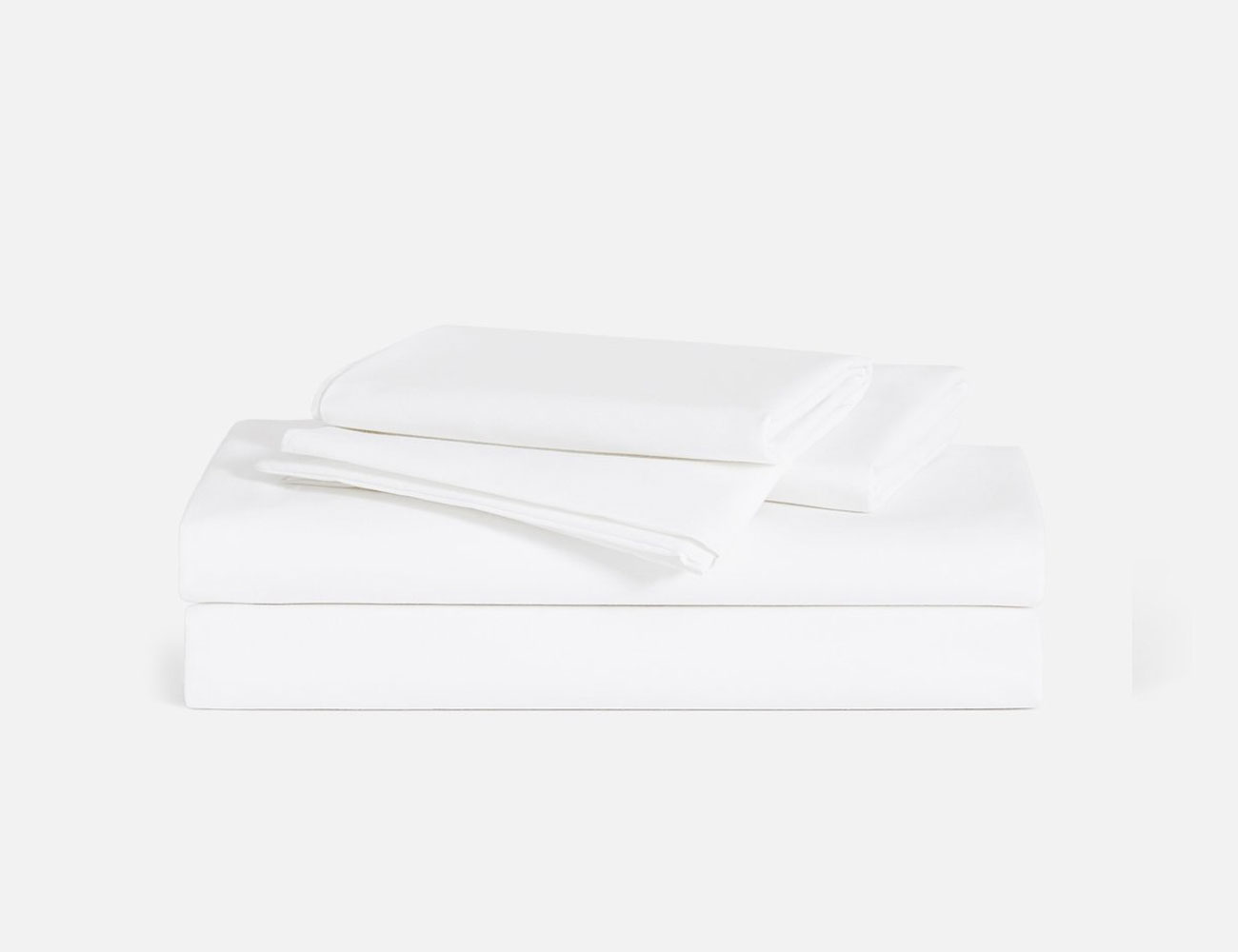
To up the quality but still score a bang for your buck, opt for Brooklinen’s 270-thread count cotton bundle, which includes a sheet set and a matching duvet cover. Buying the bundle will take 25 percent off the retail price, which comes in handy when you start pricing out individual duvet covers.
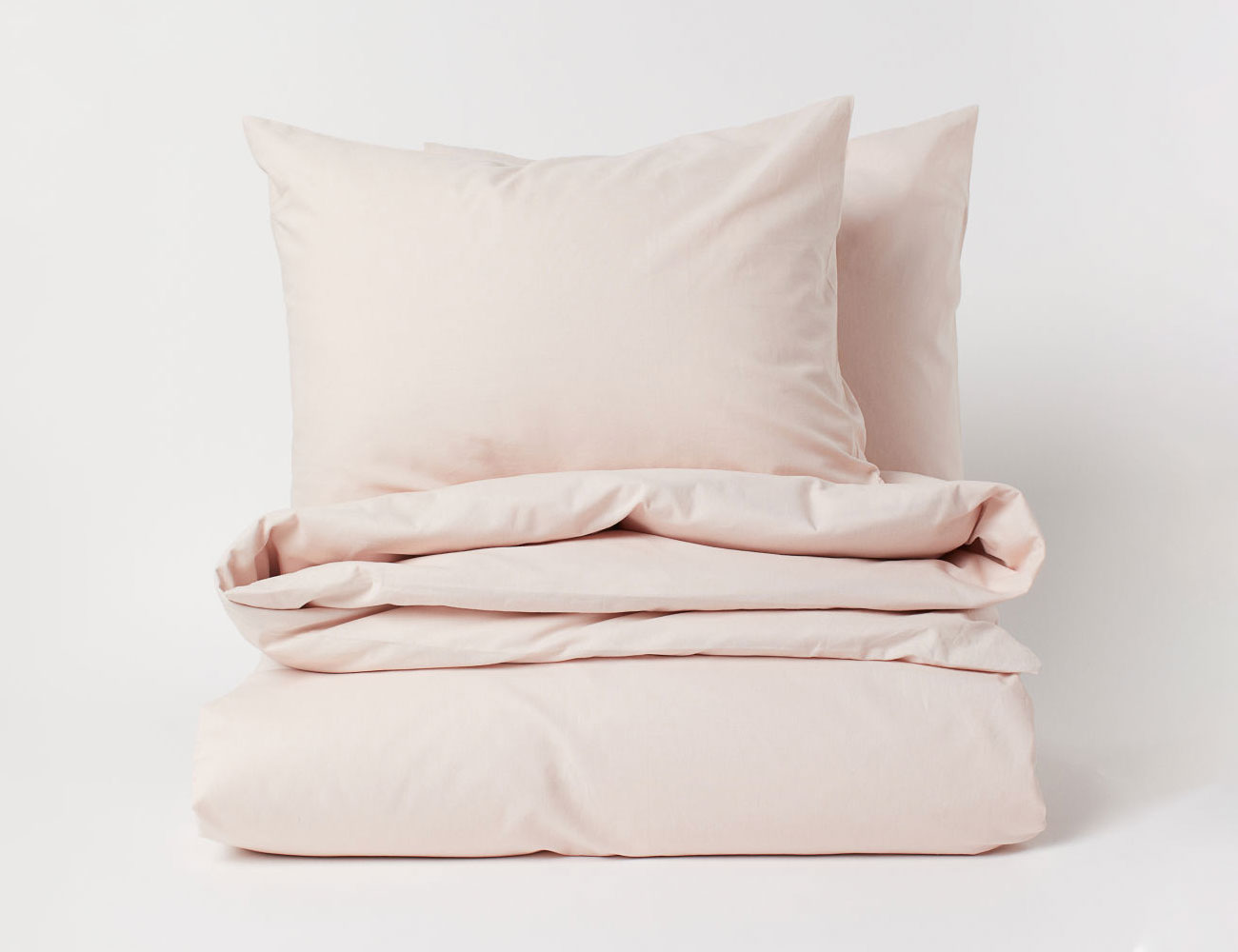
Duvet sets usually run upward of $100, so it’s smart to spend less when you need at least two for rotating. H&M’s Cotton Duvet Cover Set is just as comfortable and stylish as its more expensive offerings, and it won’t break the bank.
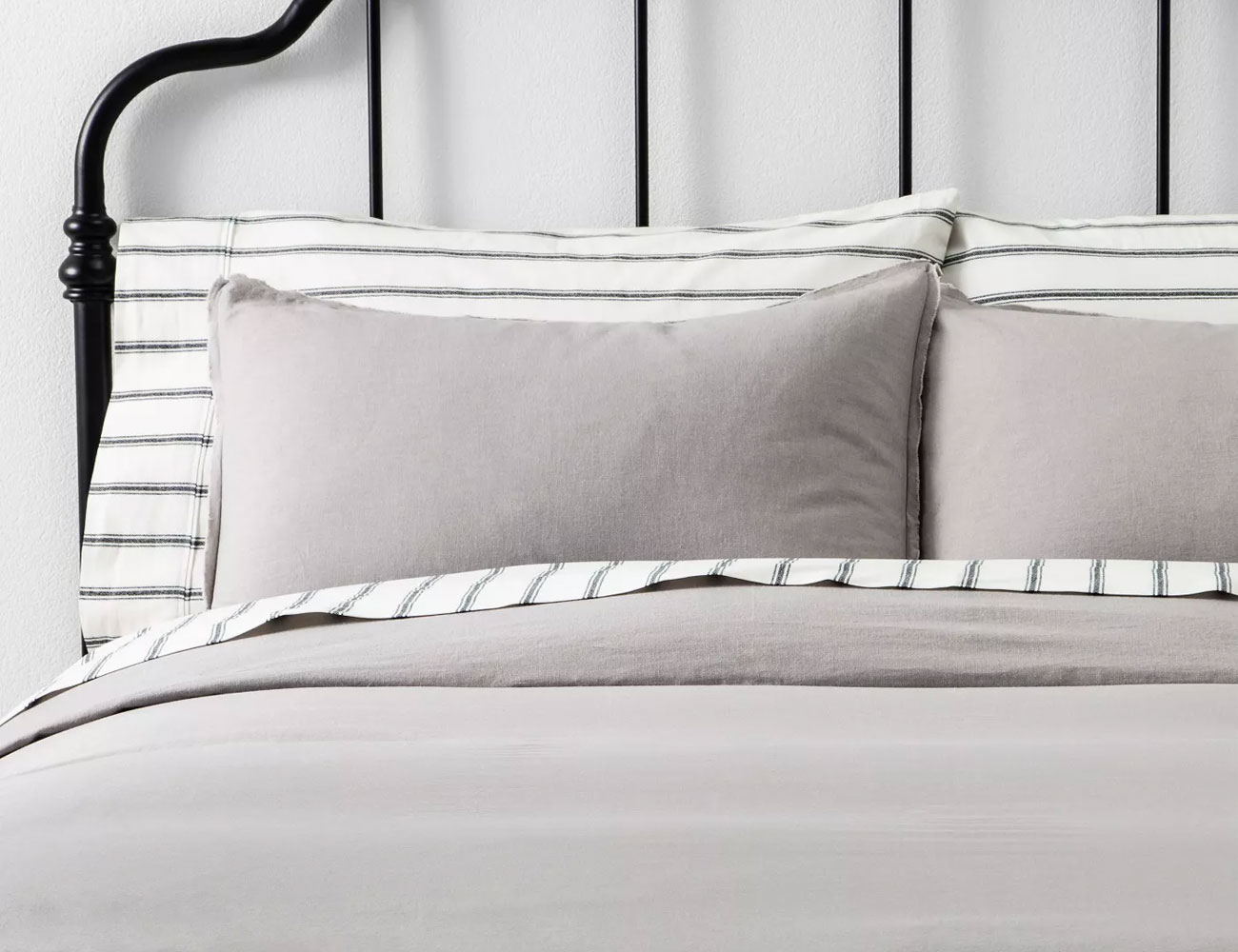
If you have to have linen, check out this Target set designed in conjunction with Hearth & Hand, Chip & Joanna Gaines’s exclusive line for Target. There’s nothing course about it, which is sometimes an issue with linen.
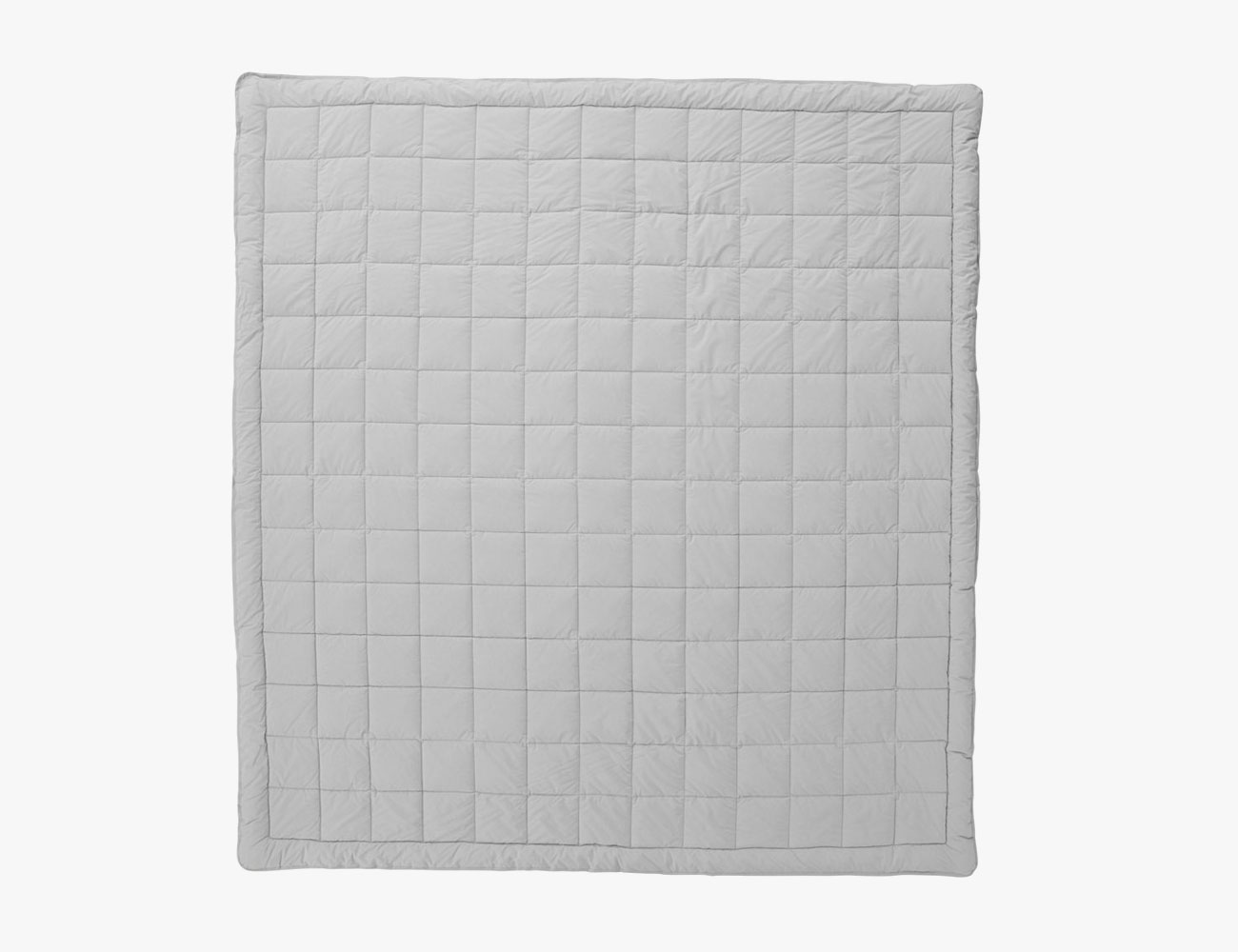
If you live in a place with multiple seasons, having something you can layer up or down is key. L.L. Bean’s Ultrasoft Cotton Comforter is stuffed with polyester and fiberfill, which means it works in the summer, unlike down. Once the white stuff falls outside, you can layer it with a toasty Polar Fleece Blanket from L.L. Bean ($59).
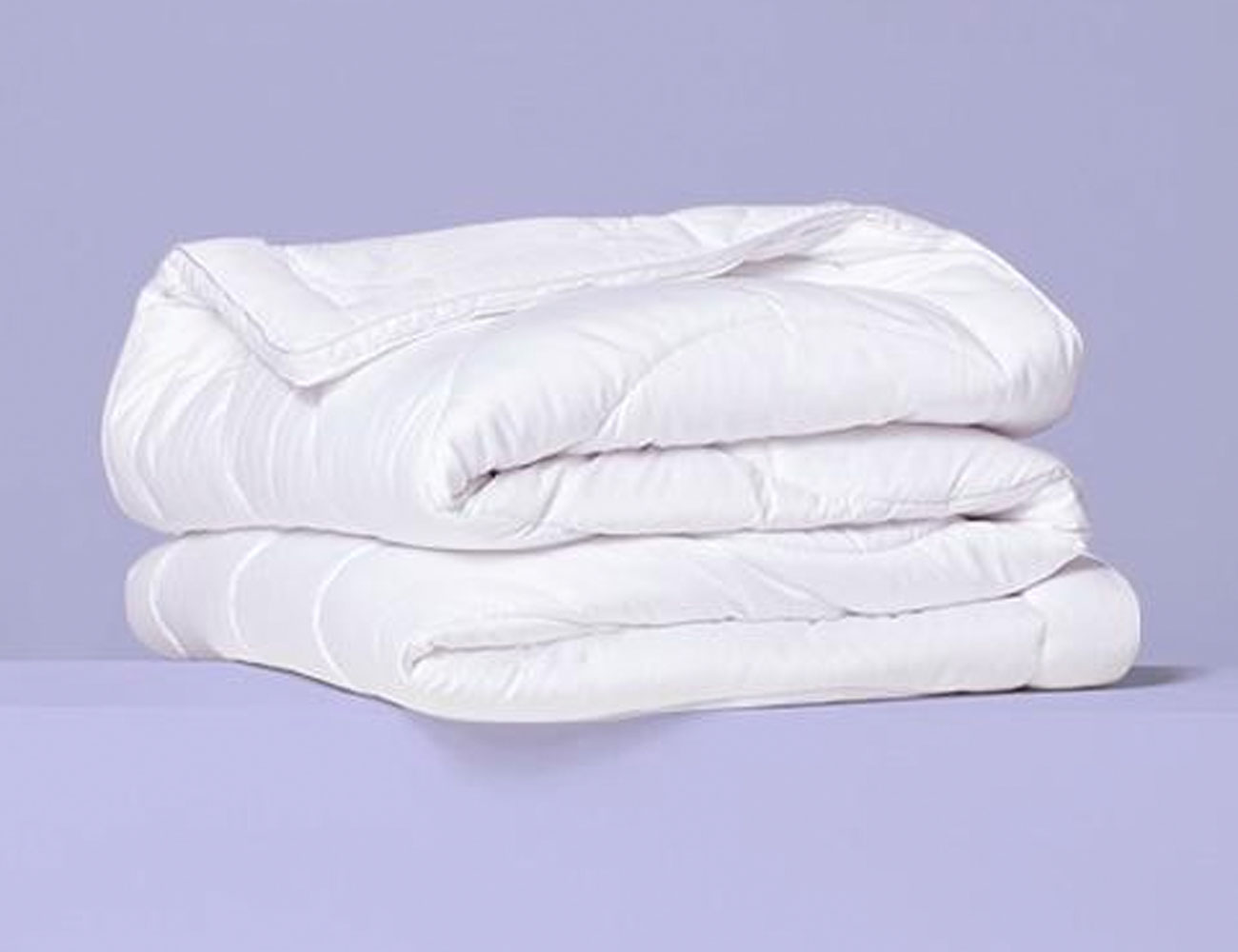
For something less puffy, try Buffy’s comforters, which optimize warmth while minimizing volume — The Cloud is good in cooler weather and The Breeze is optimal for warm nights because it has more seams for releasing warm air. Guests may be allergic to down, so it’s smart to explore alternative insulators; The Breeze is made from eucalyptus fibers but there’s none of the scratchiness that sometimes comes with natural materials.
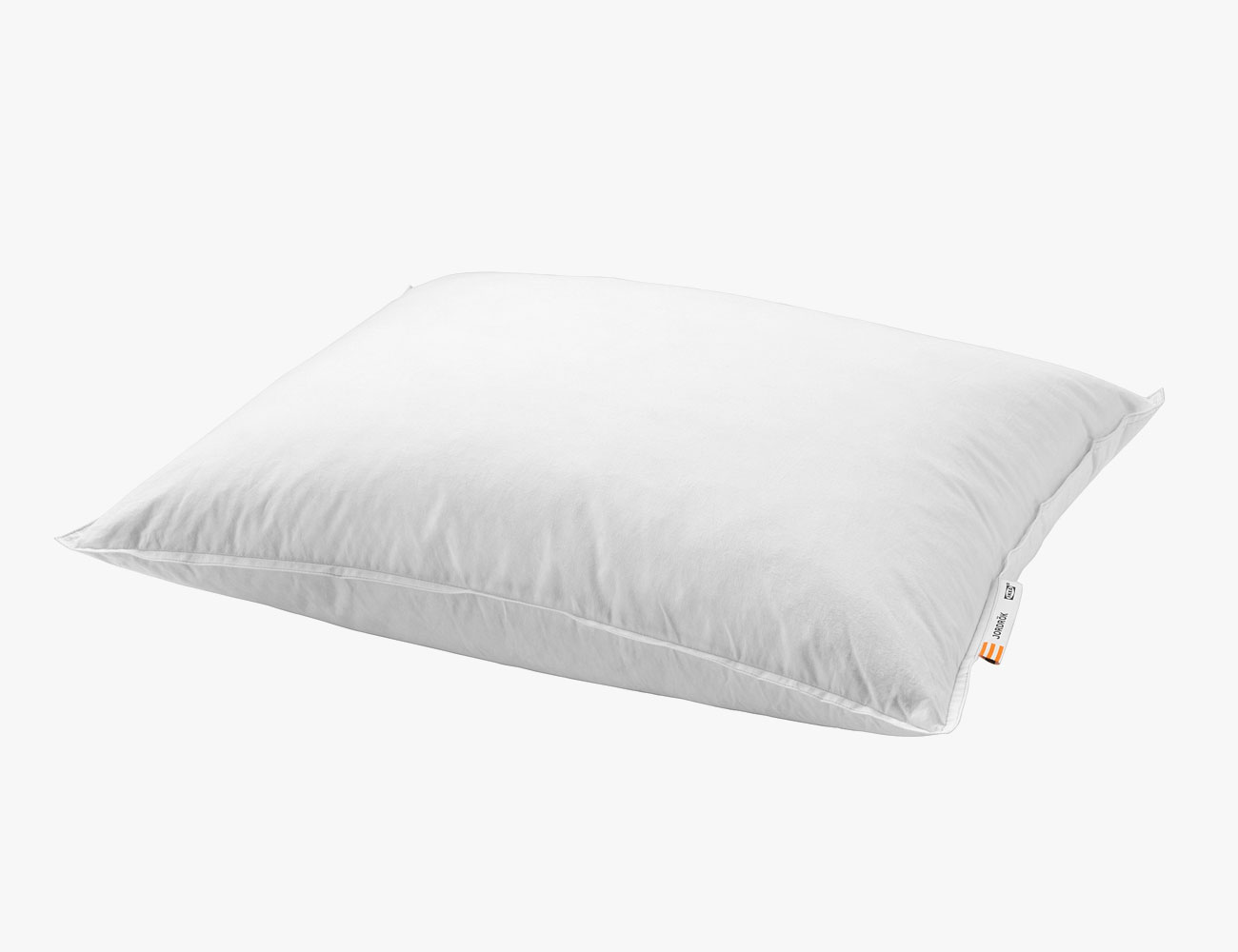
You’ll want a variety of pillows on-hand — some soft and smushy, some firm and voluminous. We like Ikea’s Jordrok pillows — which come in both soft and firm. At $13 a pop, they pair perfectly with straight-up polyester-filled pillows from Target ($4) and give your guests a variety of options.
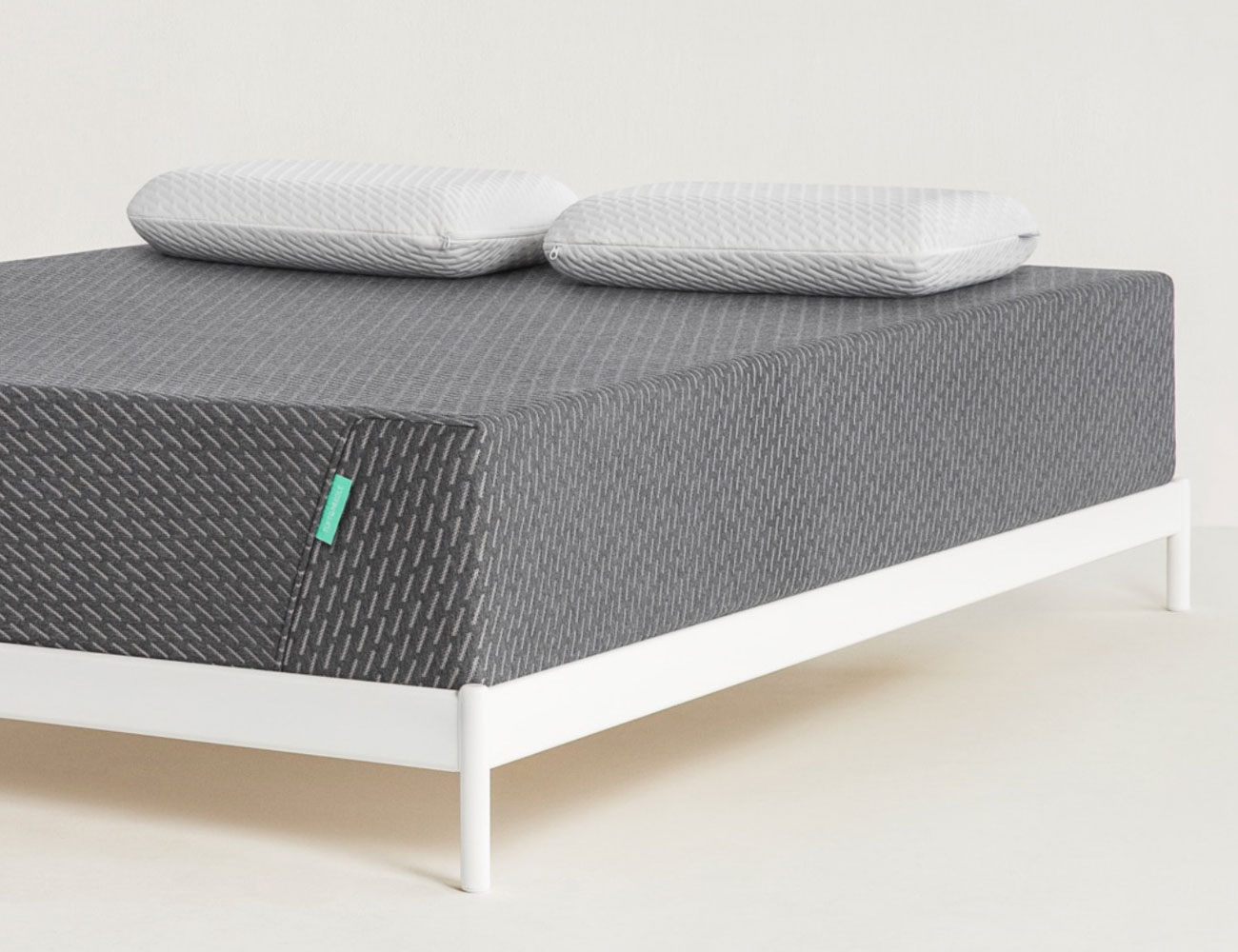
This bed is engineered with layers of gradual support and 30 percent more cooling beads than other foam mattresses. And it starts at just $445.
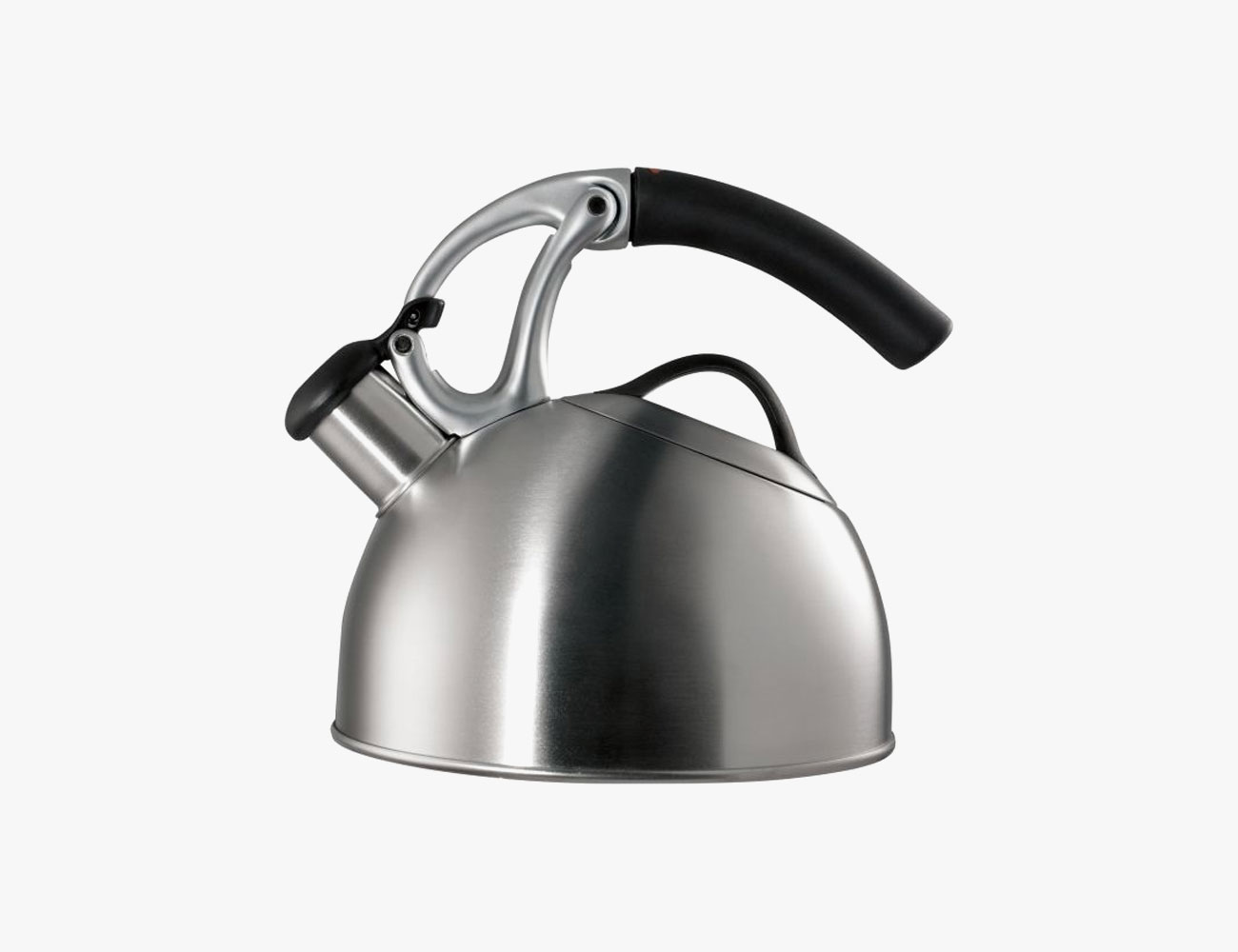
Just as in a hotel, guests expect to be able to make coffee and tea in your rental space so having supplies on-hand is a must. No tea kettle is more reliable than this one from Oxo. It’s well-designed, doesn’t require any fuss and the water won’t volcano out when its piping hot.
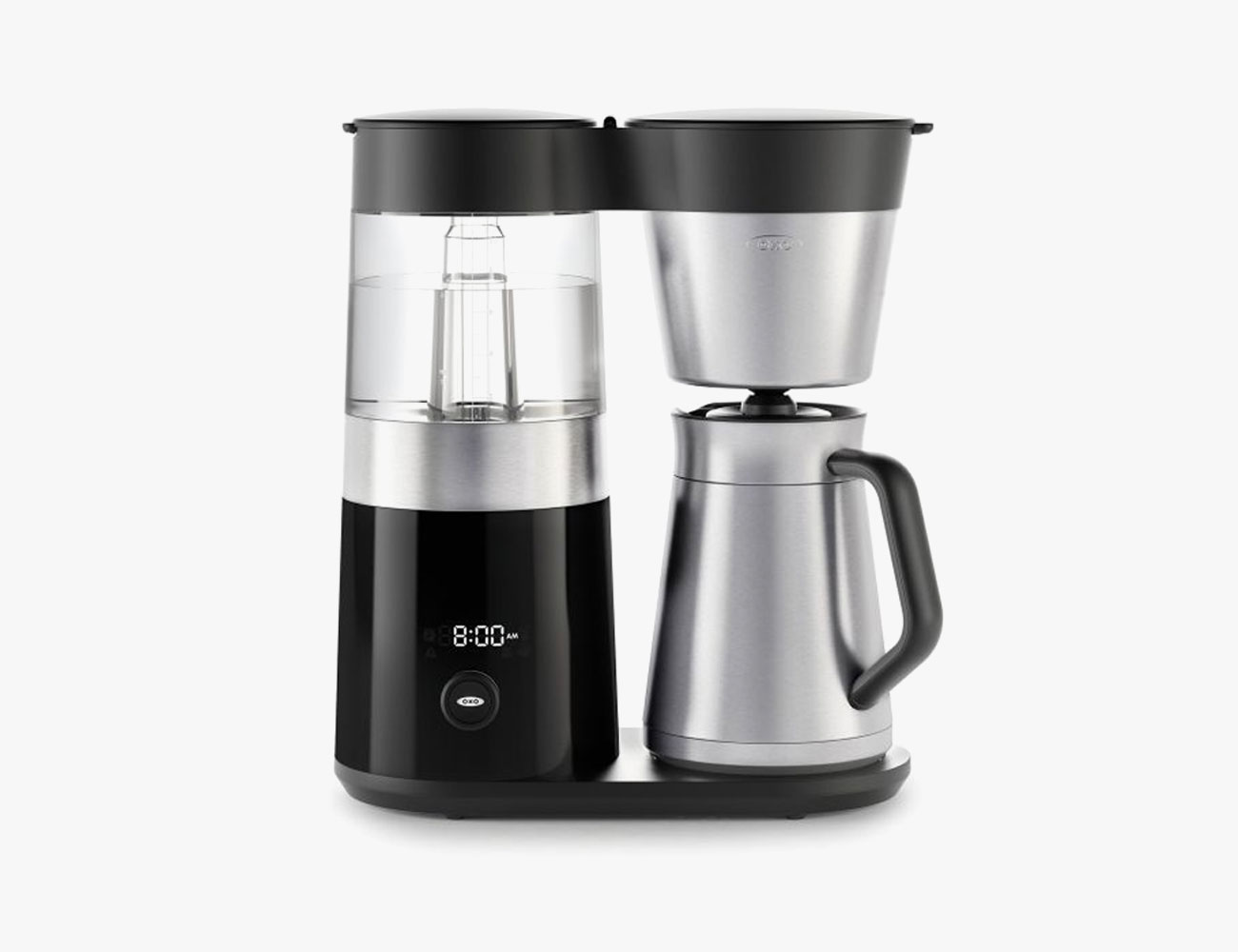
Counter space matters. That’s why we like Oxo’s 9-cup coffee maker. It’s not too big but it can brew up one sophisticated cup of coffee.
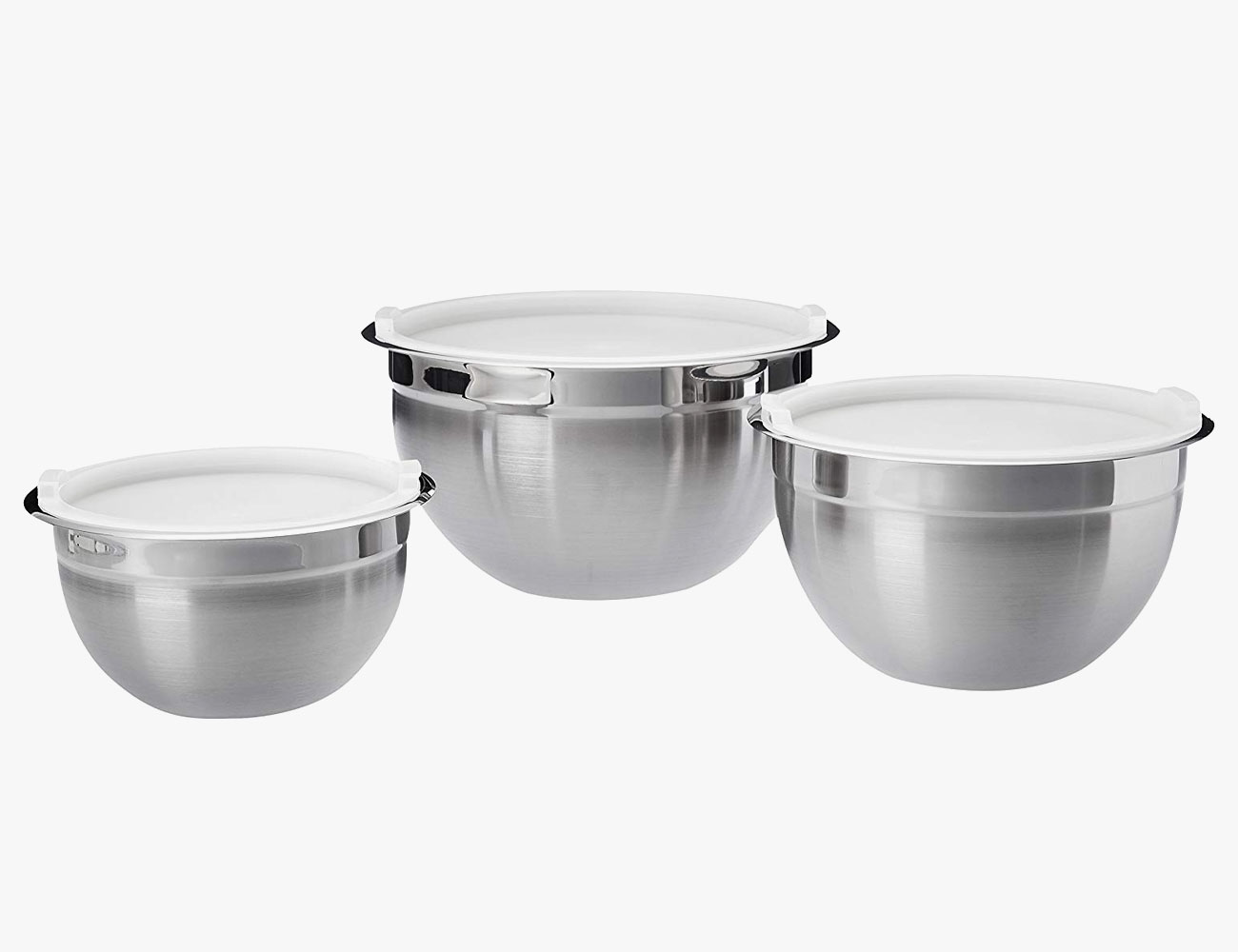
Your guests may eat out every night or they may cook dinner. You have to be prepared for both. AmazonBasic’s Mixing Bowls come with lids so it’s easy for guests to store leftovers.
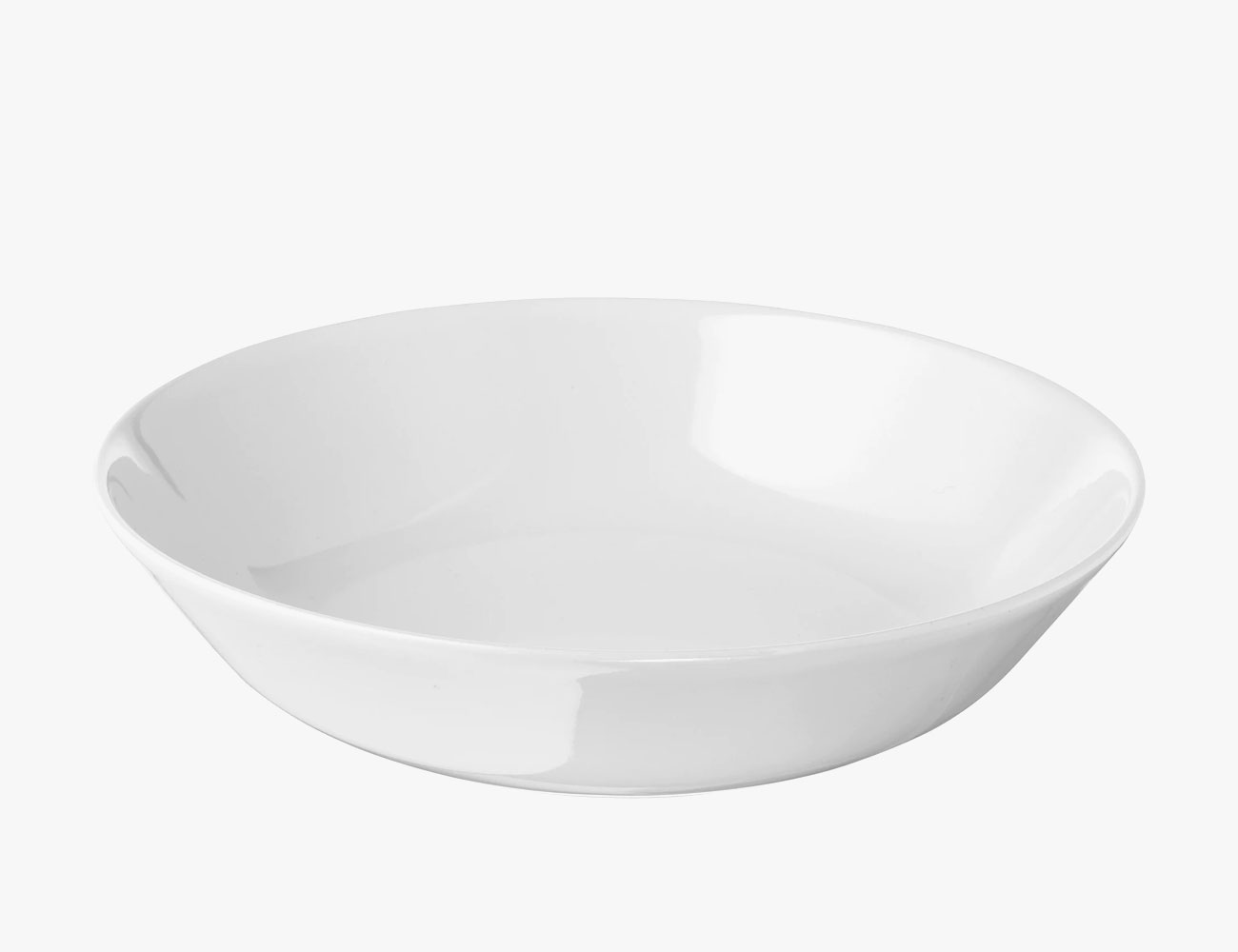
These shallow bowl-plates work for things that require bowls, like soup, or things that don’t, like pasta. And they’re just cheap enough that you won’t be upset if a few get broken.
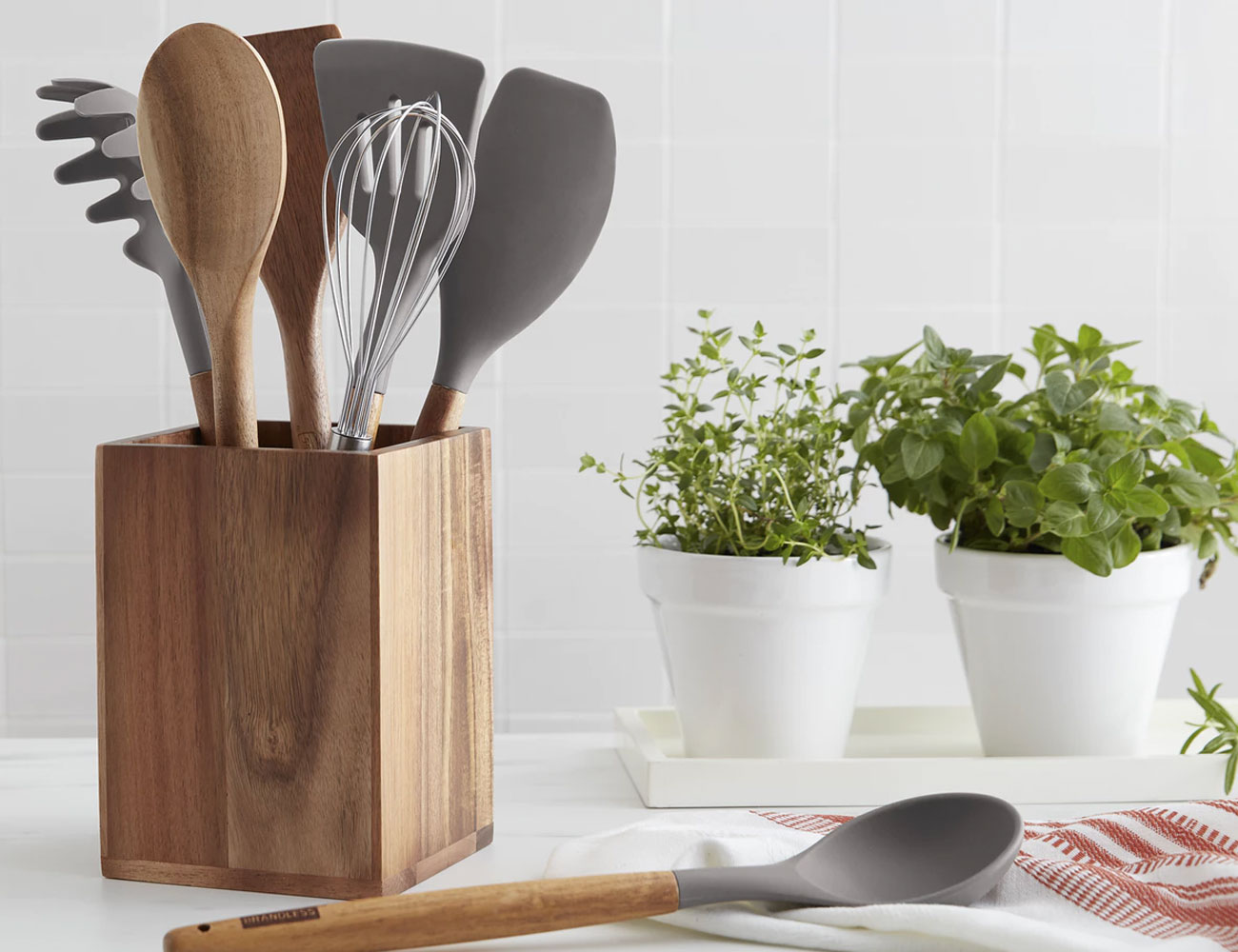
Brandless makes it easy to make your kitchen look super stylish for very little money. Its Silicone Utensil Tools Bundle comes with matching wood-and-silicone utensils and an Acacia wood box for storing them.
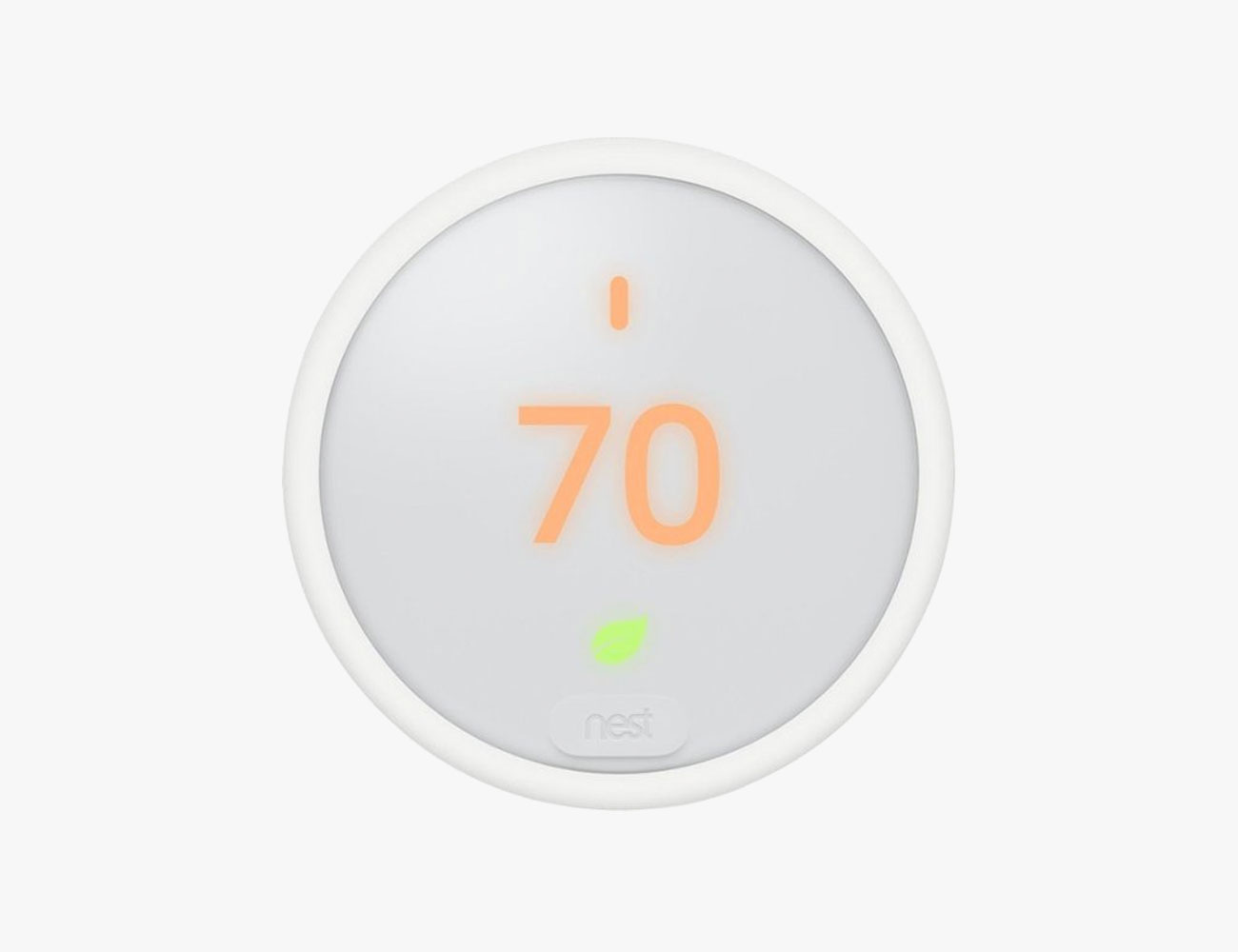
Being able to control the temperature remotely is important. If guests leave and forget to turn off the air conditioner or heat, you’ll want access — especially if you can’t be there in person. A Nest Thermostat can be controlled by app from your phone. And, you can also set a range of acceptable temperatures so your guests can’t crank the heat to 90 and then forget it after they’ve checked out.
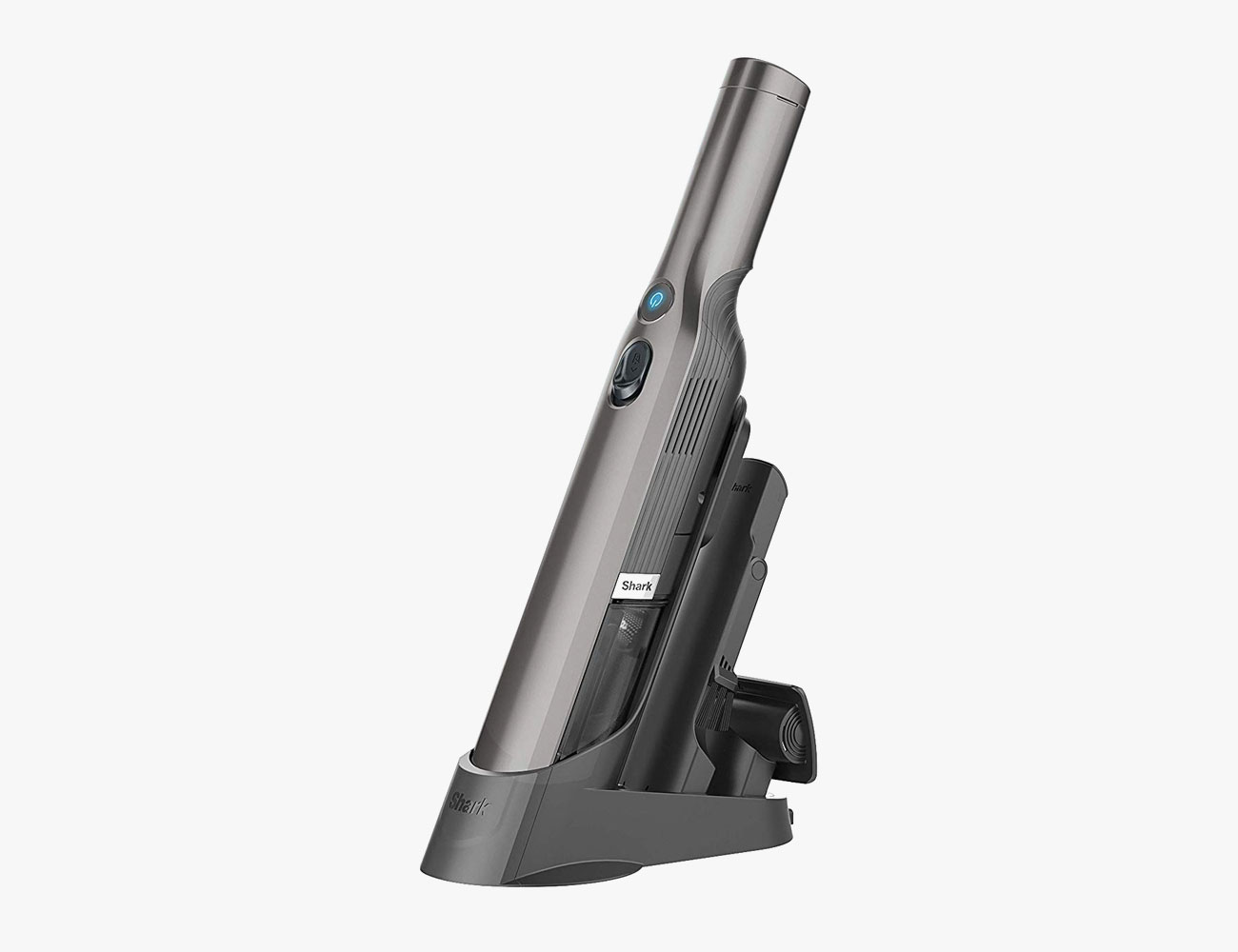
Keeping cleaning supplies on-hand for guests is vital just in case they have an accident and want to tidy things up before your house cleaner gets to it. Today’s Dustbuster is the Shark Wandvac Handheld Vaccuum. It’s sleek, mountable, dependable and easy to use.
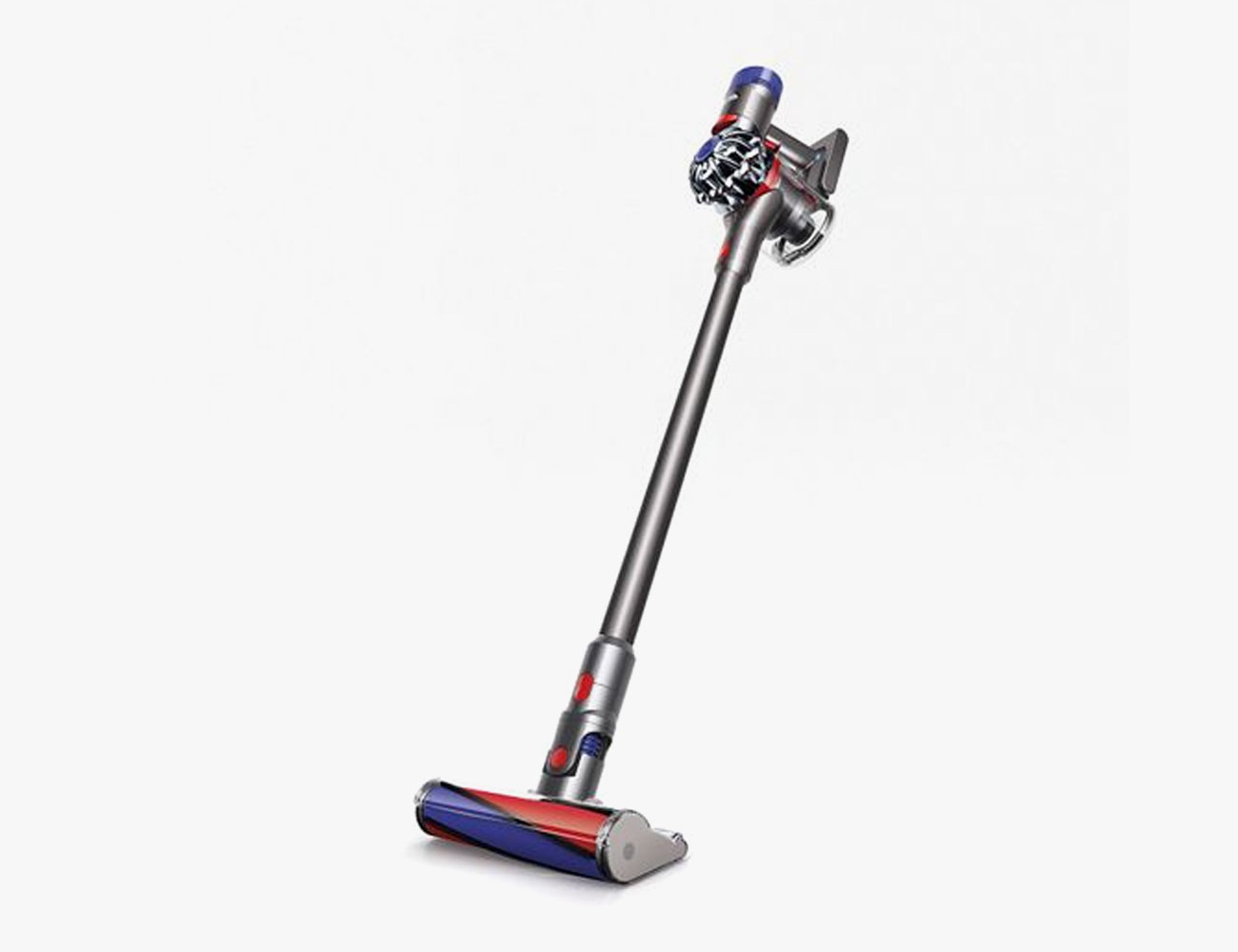
If you’d rather just keep one vacuum on-hand, make it a cordless stick vacuum like Dyson’s V8, which is more affordable than their latest top-of-the-line vacuum, the V11. The V8 will get the job done as well as any Dyson vacuum, won’t take up space and makes cleaning up easy because there are no cords to unhook from furniture.
George Howell wasn’t sure how to make iced coffee work for his esteemed chain of coffee roasters and cafés. The way he sees it, iced coffee is vastly better than cold brew (and he’s not alone), but making it is a pain — you either have to pour hot coffee over ice and dilute the coffee with melting water, or wait for a blast chiller to bring a batch of hot coffee down to 40 or so degrees (which could take 45 minutes to an hour).
Then Howell found the Coldwave.
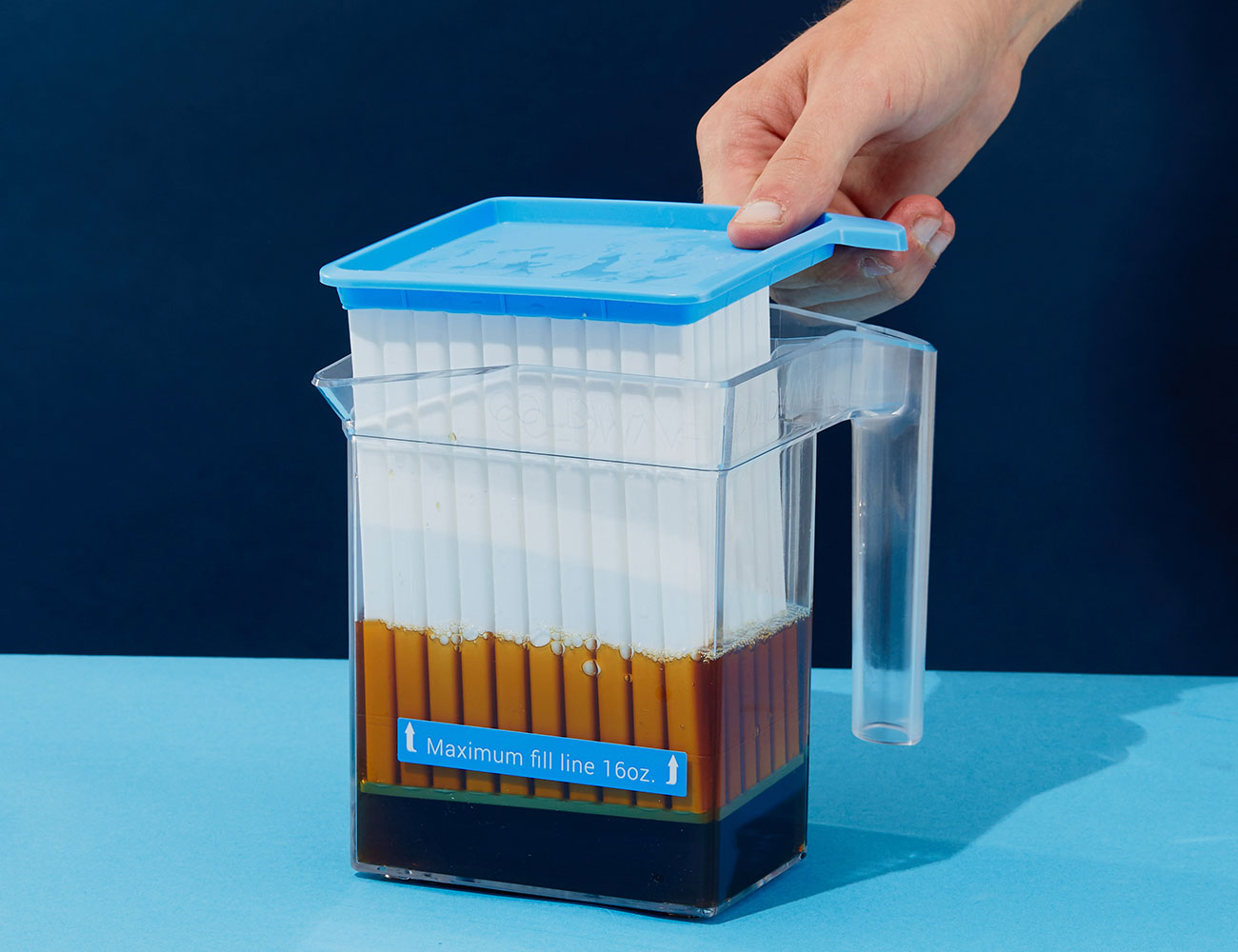
The $40 pitcher comes with a plastic insert with a whole lot of white tubes filled with water on it. After the insert is frozen overnight, fresh hot coffee is poured into the pitcher and the insert is dropped into the coffee. A minute and a half later, you have iced coffee.
Howell explains that the consumer Coldwave isn’t an elegant fix to his cafés’ commercial problem, and it certainly isn’t the end-all, be-all solution; after one, 16-ounce chill — about three good-sized cups — the insert must be rinsed off and re-frozen. But he thinks it’s just fine for iced coffee at home.
“It’s the best gadget for this I’ve found so far,” Howell says. “It’s dead simple and … it does the job faster and cleaner than anything else I’ve used recently.”
For home brewing during the warmer months, it still isn’t as easy as batch-brewing cold brew and keeping it in the fridge for a week. But it does allow you to brew your regular pot of hot coffee and chill it without adding much to your morning routine.
“This levels the playing field for iced coffee,” Howell says.
You can get a cup of coffee at Coffee Supreme’s Midland Park store, but please do not call it a café.
For 22 years, one of the best coffee roasters in the world operated out of a retail shop the size of a shoebox in Wellington, New Zealand. In 2015, it expanded, adding new stores in its hometown and Christchurch while handling a surge in popularity in neighboring Australia. Lost in the shuffle was the company’s Midland Park concept store, located right around the corner from the original flagship.
According to shop managers Erin McGarvey and Alex Kyne, the store’s primary focus isn’t to turn out lattes, but to help you buy better coffee gear which they say is the difference between an okay brew and an unforgettable one. Everything about the shop is tailored to guide visitors not only to gear that’s good, but that tools that work for them.
The store is broken into sections — one for the beans, one for different brewing methods (espresso, drip, pour-over, etc.), one for cupping and brewing coffee and one for all the stuff you can buy. The intention is for shoppers to come in, ask questions and get hands-on with the brewing equipment before buying it. This setup may sound like it’s only suited for to experienced home brewers, but Kyne says that’s not always the case.
“We love geeking out with a coffee fanatic, but it is during these conversations that we figure out where the customer is at, where their flavor preferences lie and we gauge the level of effort they’re willing, and able, to put into making a cuppa.”
Effectively, this makes Coffee Supreme’s Midland Park operation part retail outlet, part brewing education center and a spot where you can, if you’re so inclined, get a cup of coffee. Of course, this also means the Midland Park location is slammed with an incredibly well-edited collection of coffee making paraphernalia. Multi-colored Moccamasters, various pour-over devices, Hasami’s stackable mugs and Porlex hand grinders abound — it’s a coffee nerd’s paradise. Here are three of McGarvey and Kyne’s favorite pieces of gear in the shop, and why.
“When people dream of their future house they often think of the bathroom tiles or that indoor-outdoor flow. Instead, we toy with the idea of flexing a Millennial Pink Moccamaster on our kitchen bench. Moccamasters are easy to use, clean and make consistently great coffee. Handmade in the Netherlands, they’re design classics. Being able to quickly brew a batch at home or in the office, they’re the crowd’s champion. We love the idea of water cooler chat turning into Moccamaster chat.”

“As part of our residency at the La Marzocco Seattle Cafe, we produced a set of Mugs Not Drugs stacker mugs to use for service in the cafe. We planned to sell them at the end of our stint. However, they were such a hit that people, by the time it came to do so, were gifting them to themselves for free. I think we call that stealing here, but honestly, we were pretty chuffed that people loved them so much. Stack ’em up and save some space for the rest of your gear. Take yourself more seriously.”
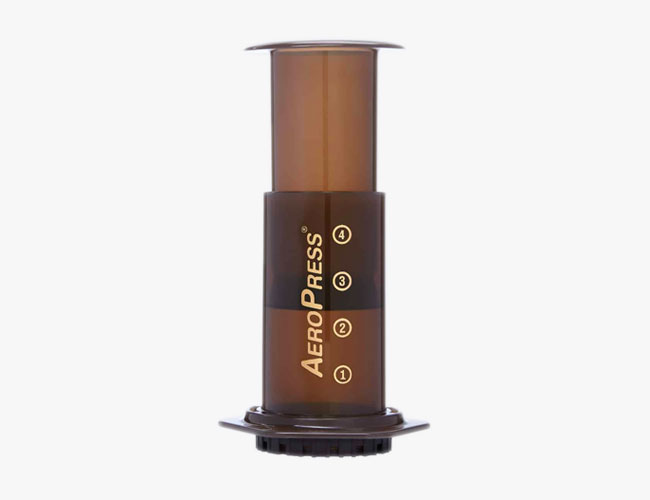
“The AeroPress is our number one manual brew recommendation — that desert island item. And the Porlex Mini Hand Grinder is the ultimate sidekick. It even fits all snug inside the AeroPress chamber, making it the optimal — and pretty damn cute — grab and go.”
|
Nathan Myhrvold almost fainted. “What?” he said, “that can’t be right.”
After a series of escalating experiments, Myhrvold had proven what he thought was nonsense: the best way to make a steak juicier is to punch a bunch of holes in it.
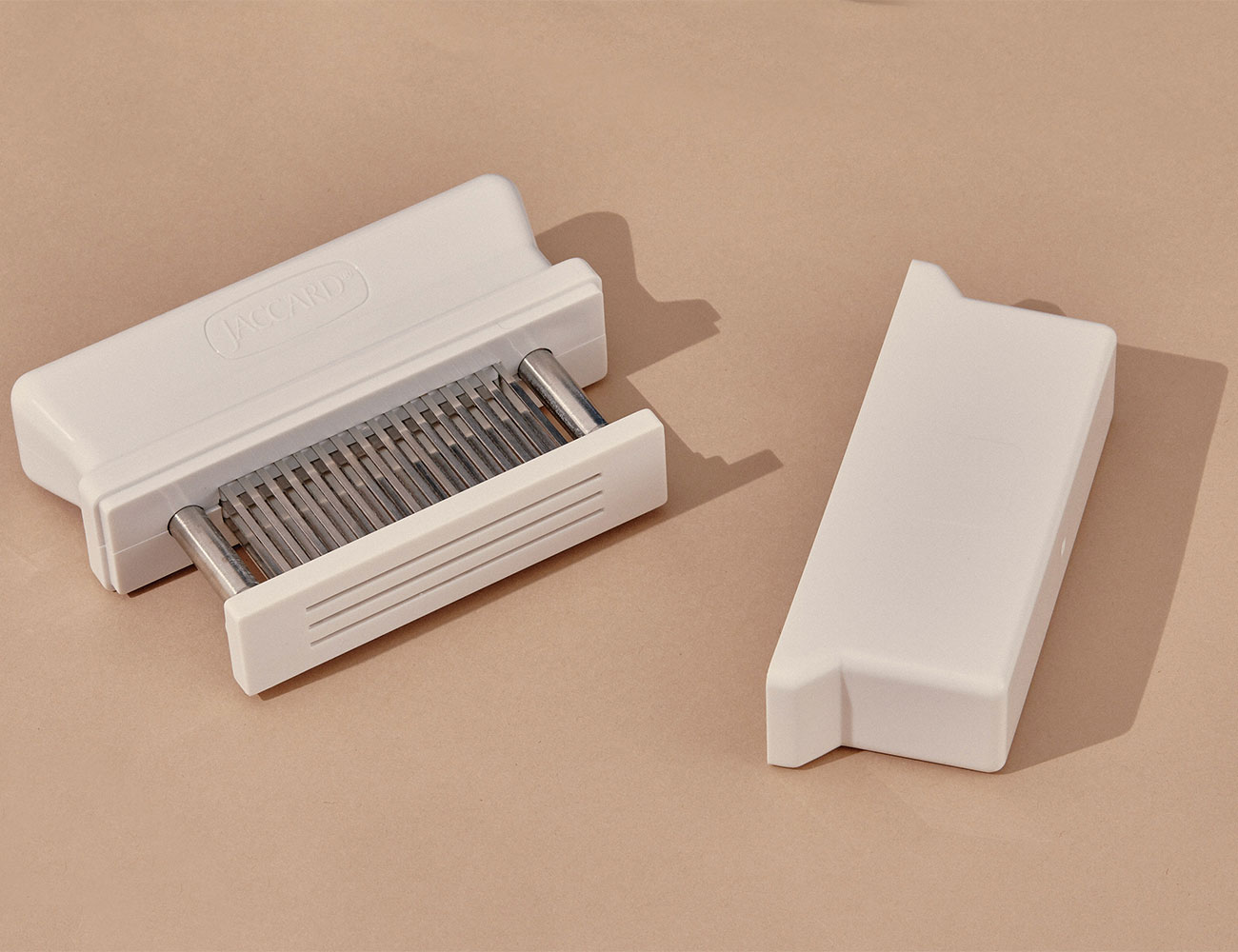
Myhrvold is the founder of an invention company, a former CTO of Microsoft and a peer-reviewed physicist. Recently, he’s the founder of Modernist Cuisine, a culinary lab and food research institution in Bellevue, Washington that publishes its own cookbooks. Following his deep dive into moisture levels in meat, Myhrvold became a strong believer in punching holes in a steak before cooking it. His choice tool: Jaccard’s $17 tenderizer.
“It’s just a white brick with a bunch of tiny knives. You punch it down on a steak before cooking — pchunkpchunkpchunk — and the final product will be better than it would’ve otherwise been,” Myhrvold said.
Myhrvold says the magic is in the muscle fibers. As you cook a piece of meat, you cause all the fibers that connect the muscle together to rapidly contract. When they contract, he says, it’s “a little like wringing out a wet washcloth.” The Jaccard tenderizer’s job is the stop this from happening.
“The little knives cut those little fibers, so when those fibers shrink with the heat, the meat is squeezing itself less effectively,” Myhrvold explains. “This is also why the ‘oh, you’re searing to seal in the juices!’ is total bullshit. Searing naturally dries the meat out.”
In his tests, steaks tenderized with the Jaccard retained 20 percent more fluid than those that didn’t. Happy grilling season.
There is nothing exciting about vacuuming except for the prospect of not having to vacuum for a while. Of course, there are some vacuums that get the job done faster, more efficiently and provide some added benefits in the process. James Dyson specializes in these vacuums.
Dyson started making vacuums in the ’80s and he became so proficient at it that he later earned a knighthood from the Queen of England. His innovations are numerous — bagless emptying, cyclonic suction, swiveling heads, fade-free batteries and more — but the number pales in comparison to the number of vacuums in the brand’s portfolio. Within the four greater categories — cordless, corded, handheld, canister — there are models and submodels of those models, not to mention a whole world of attachments. Words like “Animal,” “Torque Drive” and “Cinetic” pepper the marketing materials for each.
Don’t know where to start? We don’t blame you, which is precisely why we made this cheat sheet to all the Dyson vacuums you can buy.
The names of new Dyson vacuums are followed by an adjective, such as Motorhead, Animal, Absolute or, in the case of the new V11, Torque Drive. Each one denotes a different number of “extras” that come with the vacuum. These usually take the form of detachable heads for different uses, like a narrower head for cleaning stairs, a slimmer head for fitting in tight spaces and so on. In most cases, Motorhead models come with the fewest number of attachments, while the pricier Absolute models come with the most.
The runtimes listed Dyson’s cordless vacuums can be deceiving. The number you see is the maximum runtime, meaning it’s how long the vacuum will run on the lowest suction setting, which isn’t indicative of how people use vacuums. It’s safe to assume you will get 20 to 30 percent less runtime off a full battery than what’s listed, as you’ll be moving between high suction and low suction fairly often.
As new vacuums come out and old vacuums get older, prices change. Dyson vacuums are also frequently on sale through major online retailers like Amazon, Ebay, Jet and Walmart. The takeaway: the prices listed in our guide are approximations and subject to change. One thing we do know: if you want the best value for a Dyson vacuum, go with an older generation model.
If you ever find a suspiciously low price on a Dyson vac, it’s likely a refurb. Here’s what the company has to say about its refurb program: “Our refurbished machines have been thoroughly tested to meet like-new performance standards. Units may have some cosmetic blemishes that include scratches and/or other surface imperfections, that do not affect functionality.”
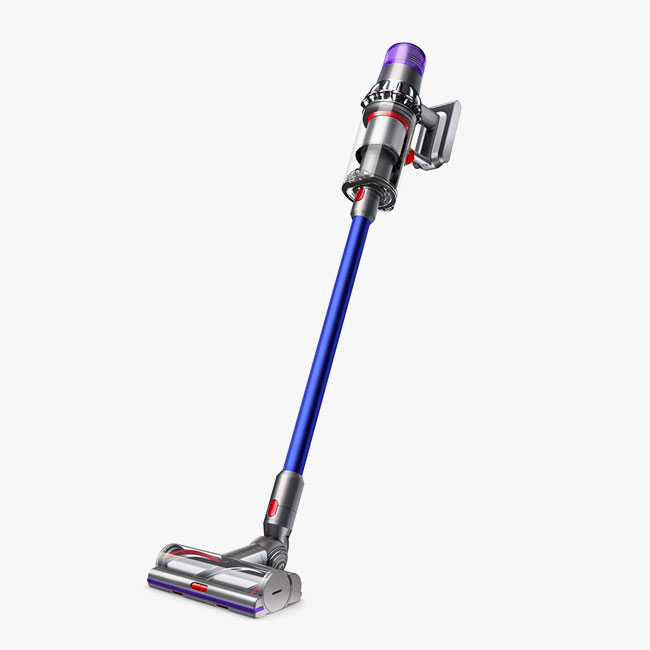
The brand’s latest vacuum continues down the path of more: more battery life, more suction, more space in the dustbin. In Auto mode, it’s able to adjust suction on the fly according to the surface you’re cleaning — high-pile rugs means more suction, hardwoods means less. The higher-tier model, called Torque Drive, has an LCD display on the handle that shows you exactly how much runtime the battery has left as well as any immediate maintenance requirements. Both features are firsts in the vacuuming world.
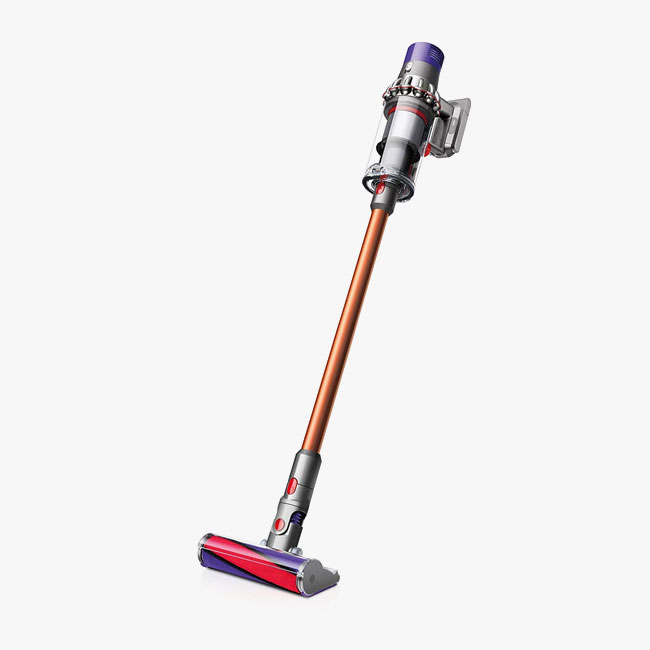
The V10 marked a Rubicon-crossing moment for Dyson. Upon its release, the company declared it would no longer invest R&D into its classic upright vacuums, opting instead to push further into the world of cordless vacuums.
It was also the first of Dyson’s cordless catalog to feature the vertical dustbin, which allows you to eject vacuumed contents without putting your hands in dirt’s way. It comes with a standard fully sealed, washable, full-machine HEPA filtration system, too. Since its 2018 launch, the V10 has been passed by the V11 in every category but runtime, where both tools can operate for up to an hour in low suction mode. But a reduced price makes it a higher value buy a year later.
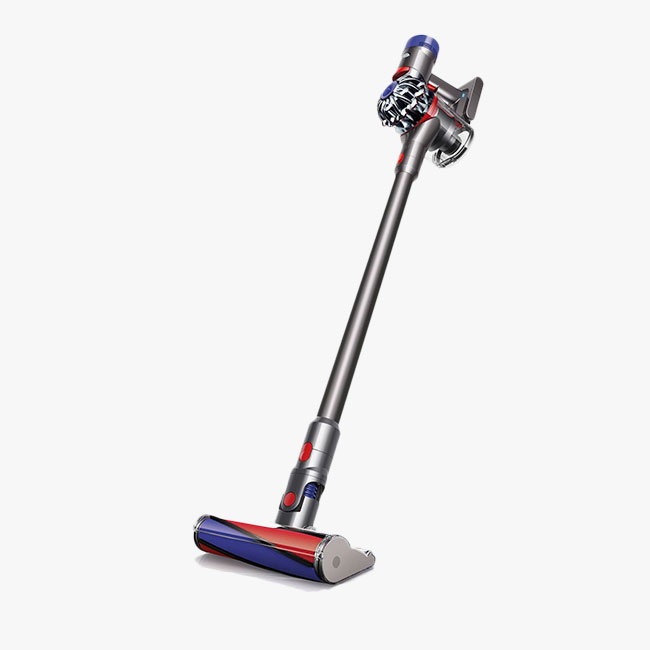
The V8 represents the best balance of price and performance you’ll find in the Dyson catalog. It boasts plenty of suction and a full-machine, washable HEPA filter (this means you don’t have to replace the filter every few months), and it is frequently on sale. For an added layer of frugality, go for the manufacturer refurbished models, which come with a truncated warranty but are ensured by Dyson to perform up to the standards of its brand new equivalents.
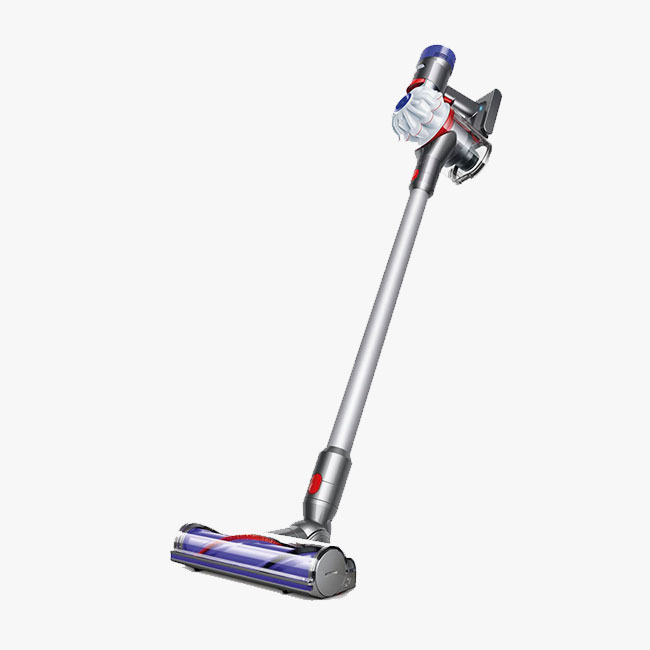
Billed as a more affordable V8, the V7 packs similar suction levels, the same dirt ejection system and much of the same shape. It does not, however, come with a washable HEPA filter. Like the V8 and other older Dyson models, it’s often the subject of significant markdowns on major ecommerce sites like Amazon, Ebay and Jet.
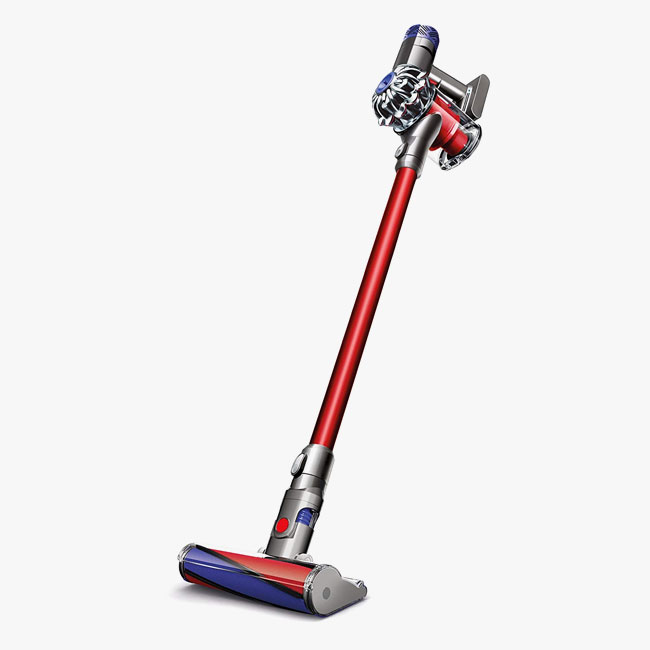
The V6 was Dyson’s first serious attempt at a cordless vacuum that could rival upright, corded models. The V6 is almost always on sale and readily available as a manufacturer refurb, but its weak battery life can be problematic for owners who live in a big house or have tons of carpet. It features pre-motor HEPA filtration but the filter must be replaced every three to six months of consistent use.
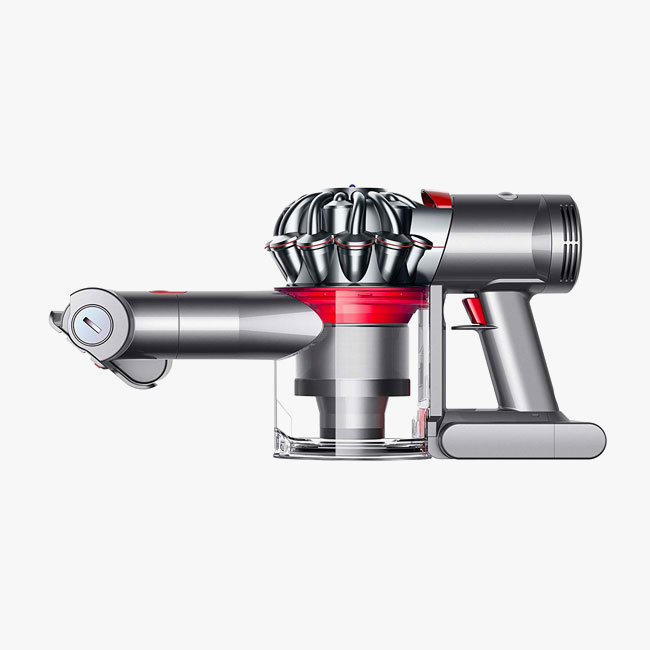
The newest Dyson handheld is smaller, lighter, more powerful and more energy-efficient than its predecessors. The Trigger model is the bare bones vacuum body with a small crevice, motorized and general use attachment head, while the Car + Boat comes with more attachment heads as well as car chargers.
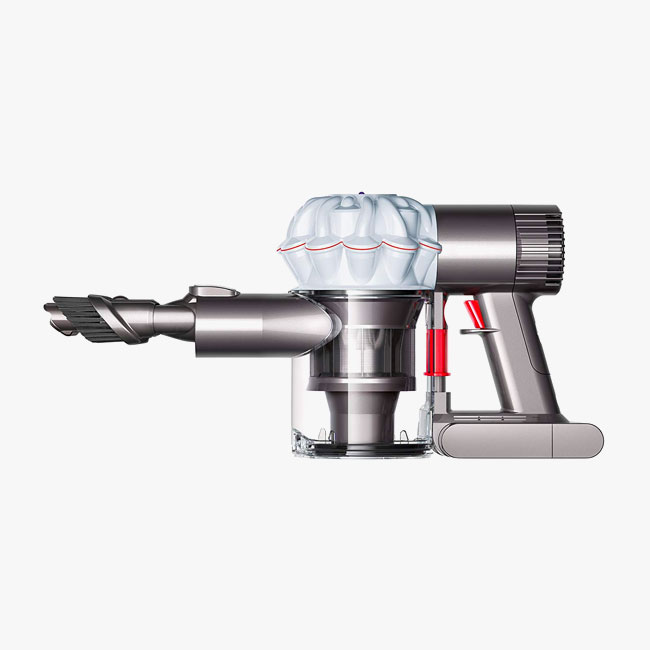
Though discontinued by Dyson, the V6 is still available on Amazon and Ebay. This model boasts fade-free battery control (meaning a low battery level won’t reduce suction) and a lightweight build. The only difference between the host of different models the V6 Handheld comes in is the type of suction heads, so check each to figure out which is best for you.
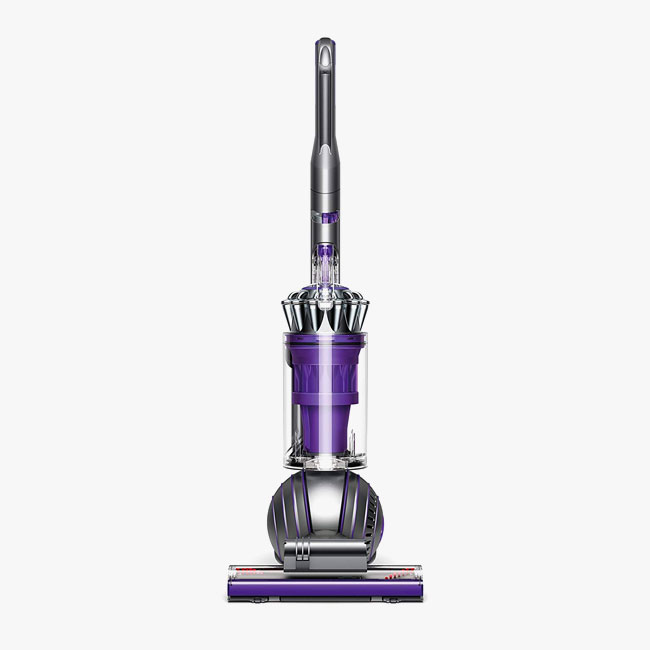
The Ball, sometimes called the Ball Animal 2, is the highest suction vacuum Dyson produces across all categories. It comes with full-machine HEPA filtration standard (though you will have to clean the filters after a while), a small head attachment to clean stairs and an bonus attachment meant specifically for untangling hair from carpet or rug. This model is frequently on sale and available through the brand’s certified refurbishment program, both of which net you significant savings from the retail cost.
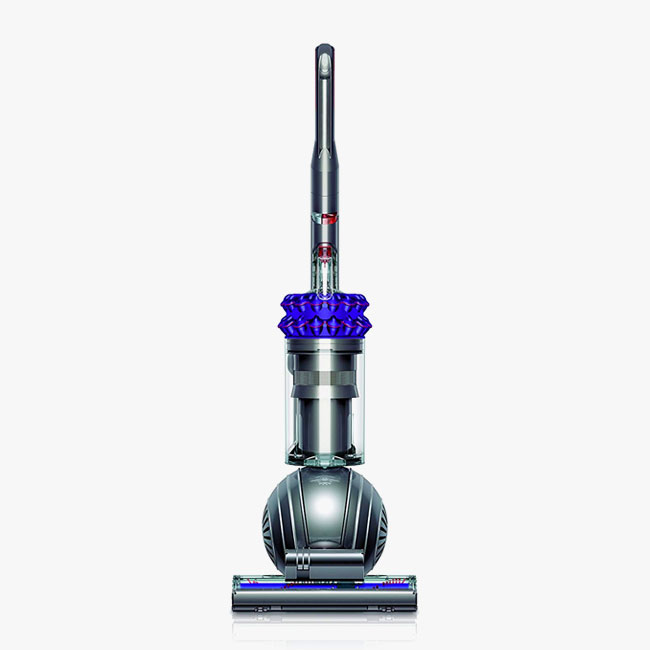
The Cinetic separates itself from other Dyson uprights in a boring, but ultimately helpful, way: you don’t need to replace or wash the filters. Other allergen-eliminating vacuums — like the rest of Dyson’s offerings — typically require their filters be replaced every three to six months or require you to wash them by hand. Neither is ideal.
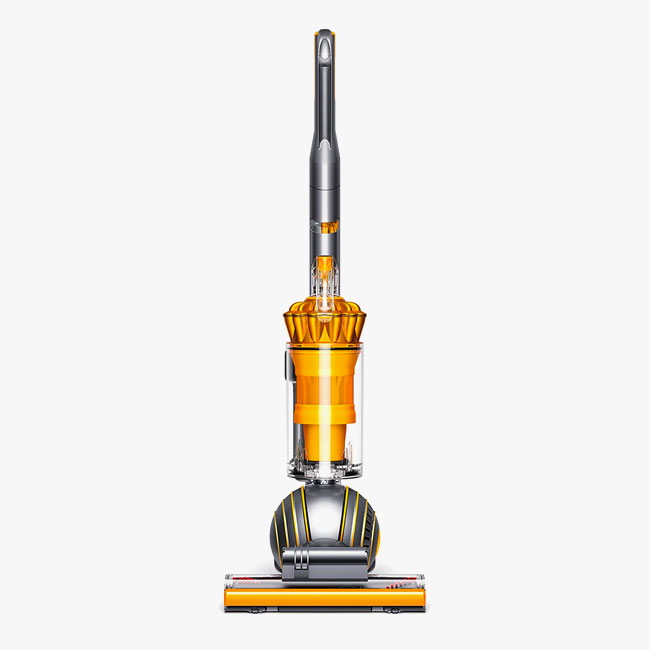
You can probably guess how the Multifloor is different than the Cinetic or standard Ball models. The suction head of the vacuum raises and lowers according to the surface you’re cleaning — an especially handy feature for those with a mix of high-pile rugs and hardwood floors. It’s significantly lighter than other options in the category, but it packs the least suction of the bunch.
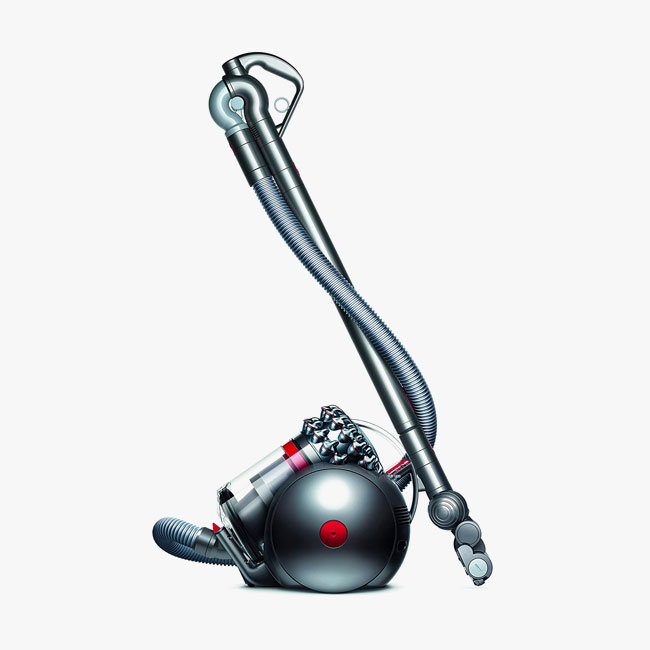
No bags, no filters that need replacing, no suction loss over time — the canister vacuum is for the person that has a lot of space that needs deep and consistent vacuuming. Think multiple large rugs and carpeted floors, not a New York City apartment. This model comes with a dustbin ejection system that doesn’t leave dirt all over your hands.
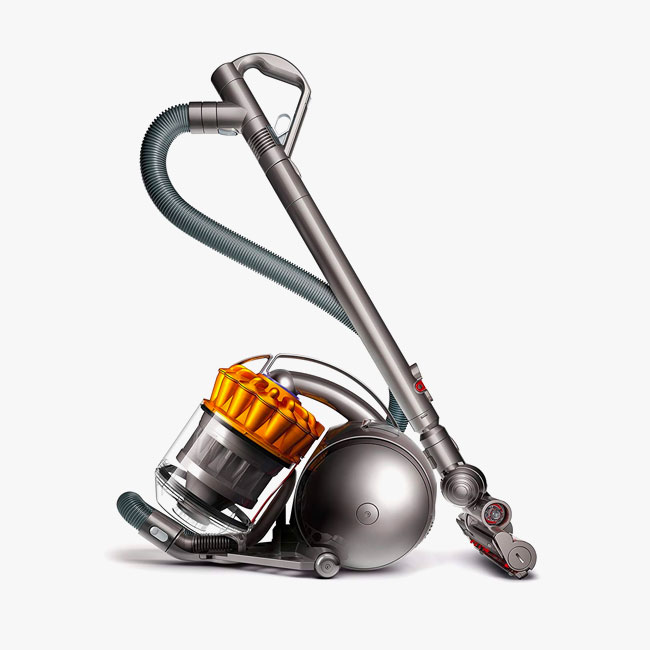
Think the Cinetic canister vacuum, but with HEPA-certified filters that will need washing and eventual replacing over time. The Big Ball Multifloor functions at the same suction level as the Cinetic, weighs the same and is otherwise the same vacuum (apart from some minor aesthetic detailing).
Sixty years ago, Weber Brothers Metal Works, later called Weber-Stephen Products, used to make mailboxes, fireplace equipment and a number of various other metal-based products. George Stephen, Sr., a salesman at the company, then decided the grills of the day weren’t up to snuff. Now his solution is the most popular grill in America.
The Weber Kettle charcoal grill — complete with dome lid, ventilation, enameled steel and rust-resistant aluminum — is the most stable, consistent grill money can buy. “We initially considered designing a grill that could work with multiple fuel sources,” Jeff Broadrick, senior product engineer behind Spider Grills new wood-pellet Weber attachment, “but you are fighting an uphill battle if you set out to design a grill as simple, trusted, and elegant as the Weber Kettle.”
Broadrick says that consistency has elevated the grill into something more. “At this point, the Weber Kettle is more of a platform than a stand-alone product,” he says. Out of dozens of community-driven updates and upgrades, these are the best Weber Kettle add-ons money can buy.
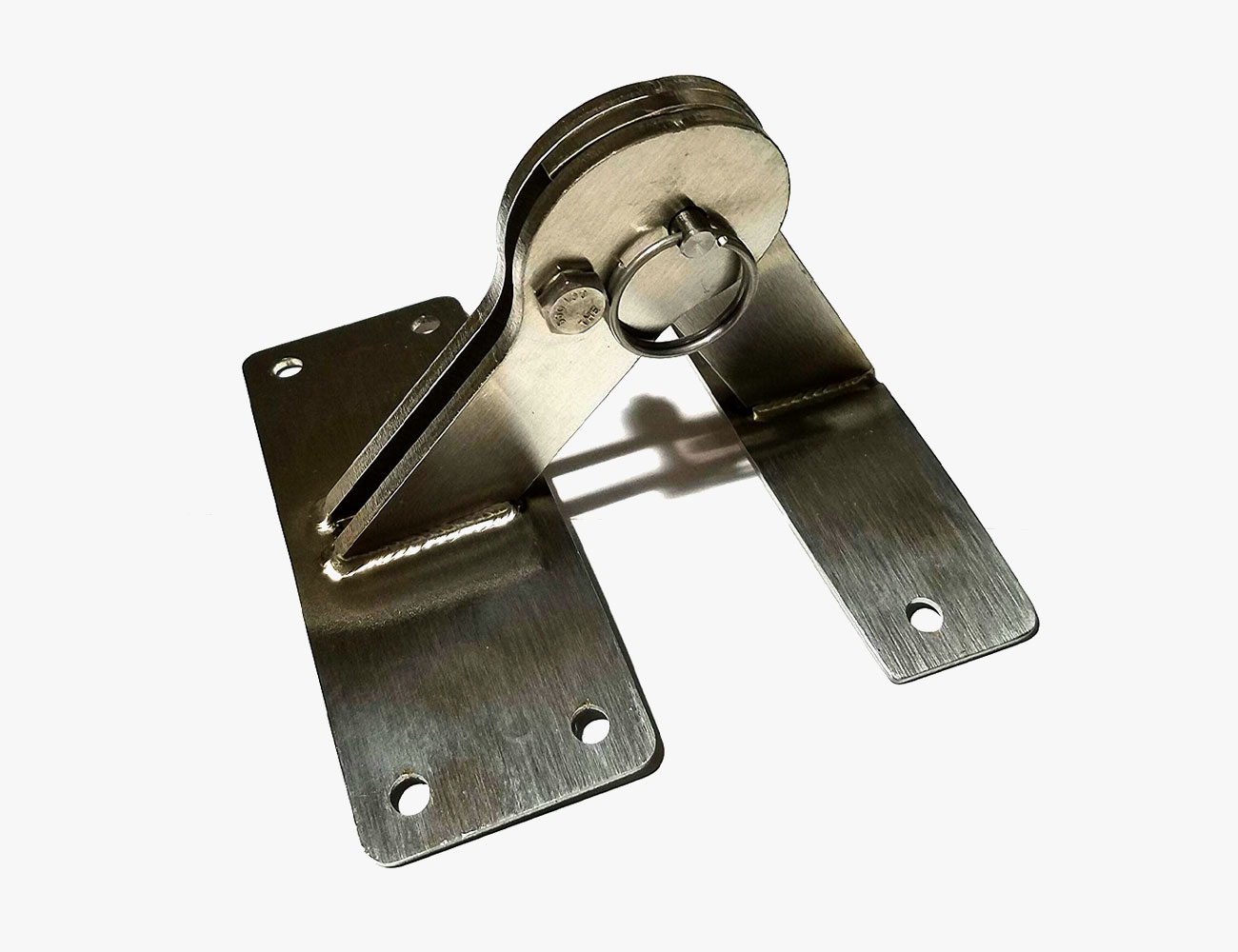
The most boring product on this list may be the most necessary. The kettle’s lid is either all the way off or fitted around the grill — the hinge allows you to keep the lid slightly ajar and, more helpfully, not have to find a place in your backyard for a flaming-hot lid whenever you take food off it.
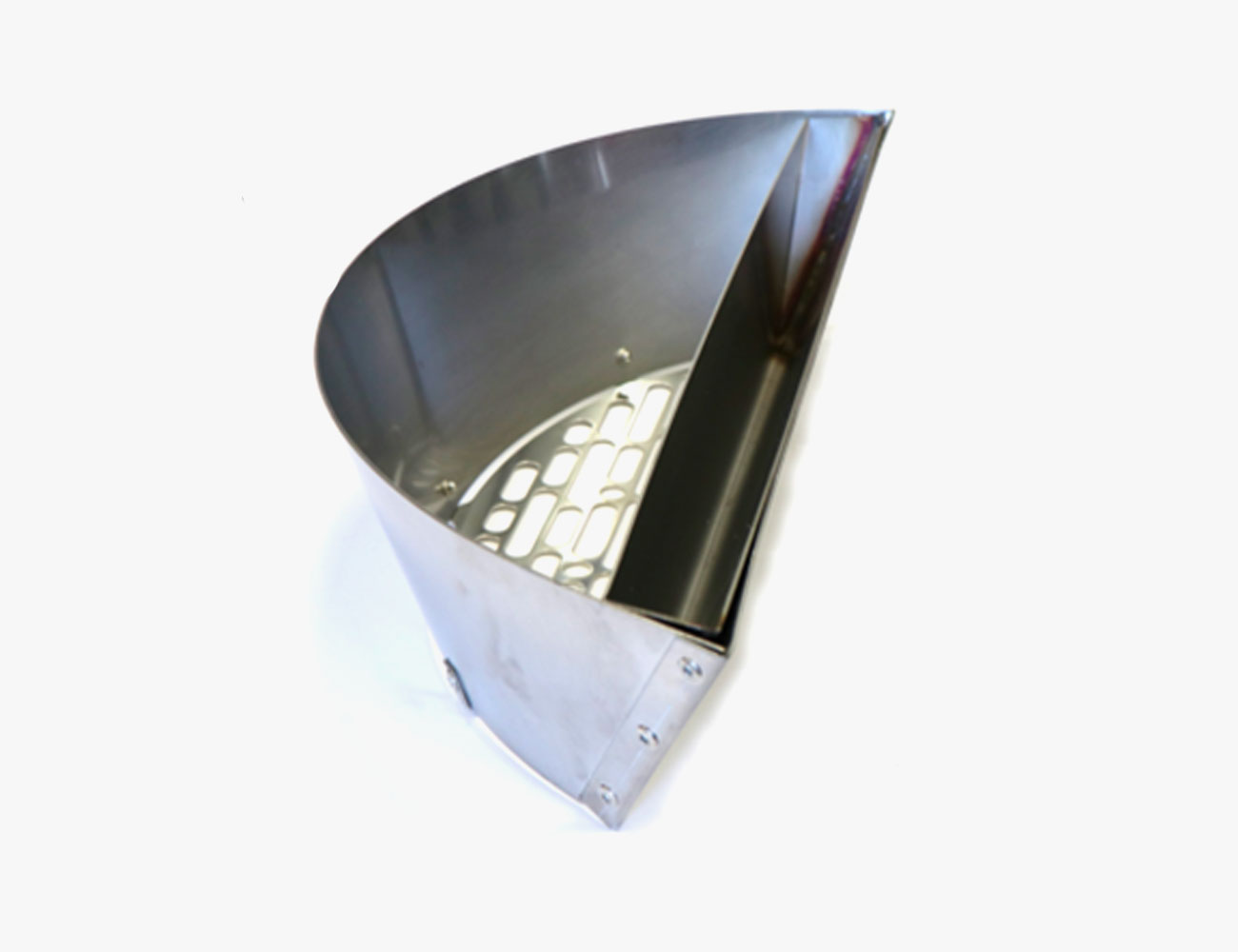
By far the easiest way to smoke meat on your Weber. The Slow ‘N Sear splits your grill in half — one side full of hot coals, the other an open cooking area. Put food in the latter for six to eight hours and you’ve got barbeque, put it over the coals and you still have a perfectly good high-heat grill. Plus, the veteran grill gear testers at Amazing Ribs call the Slow ‘N Sear the “single best accessory for the Weber Kettle ever.”
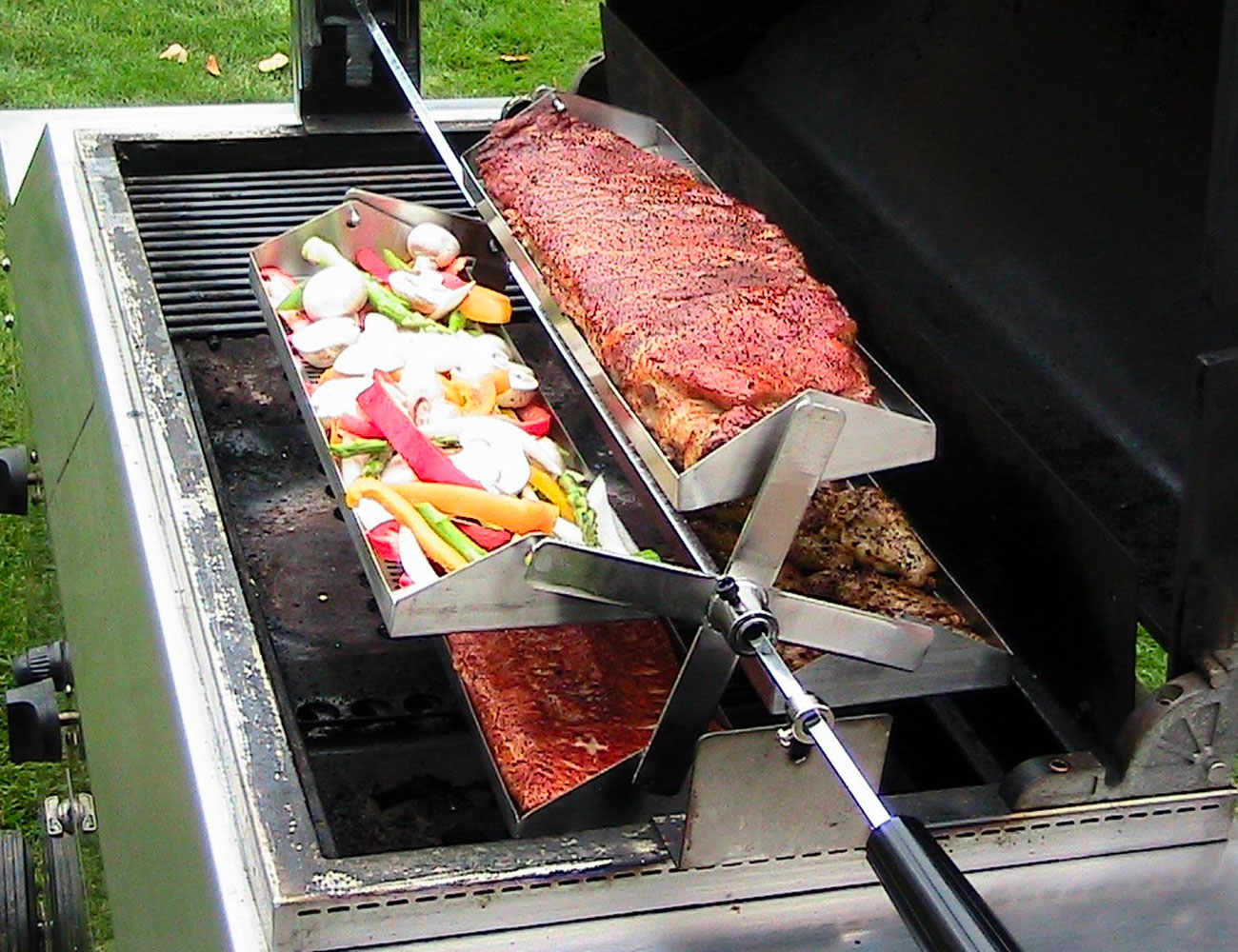
It’s difficult to fit many ribs on a standard 22-inch Weber. The Rib-O-Lator solves this and acts as a horizontal rotisserie for whatever you’re cooking. Best used on low-and-slow cooks.
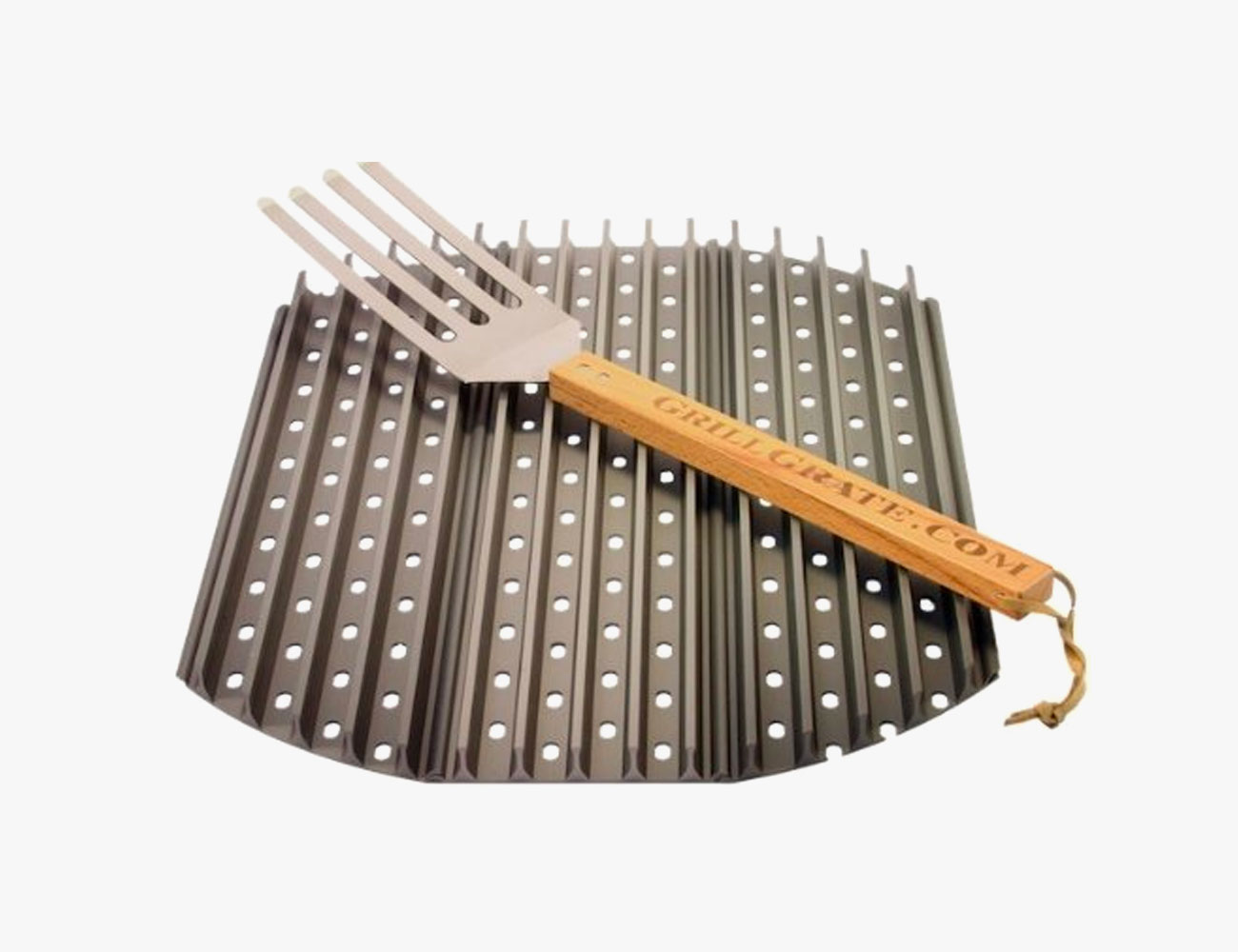
Made of anodized, rust-resistant aluminum, GrillGrates feel like a product Weber would offer themselves. Grates are elevated over a heavy base that’s lined with holes. As the fire heats the base, an even heat flows through the holes, creating both the ideal cross-hatch and a move consistently cooked meal.
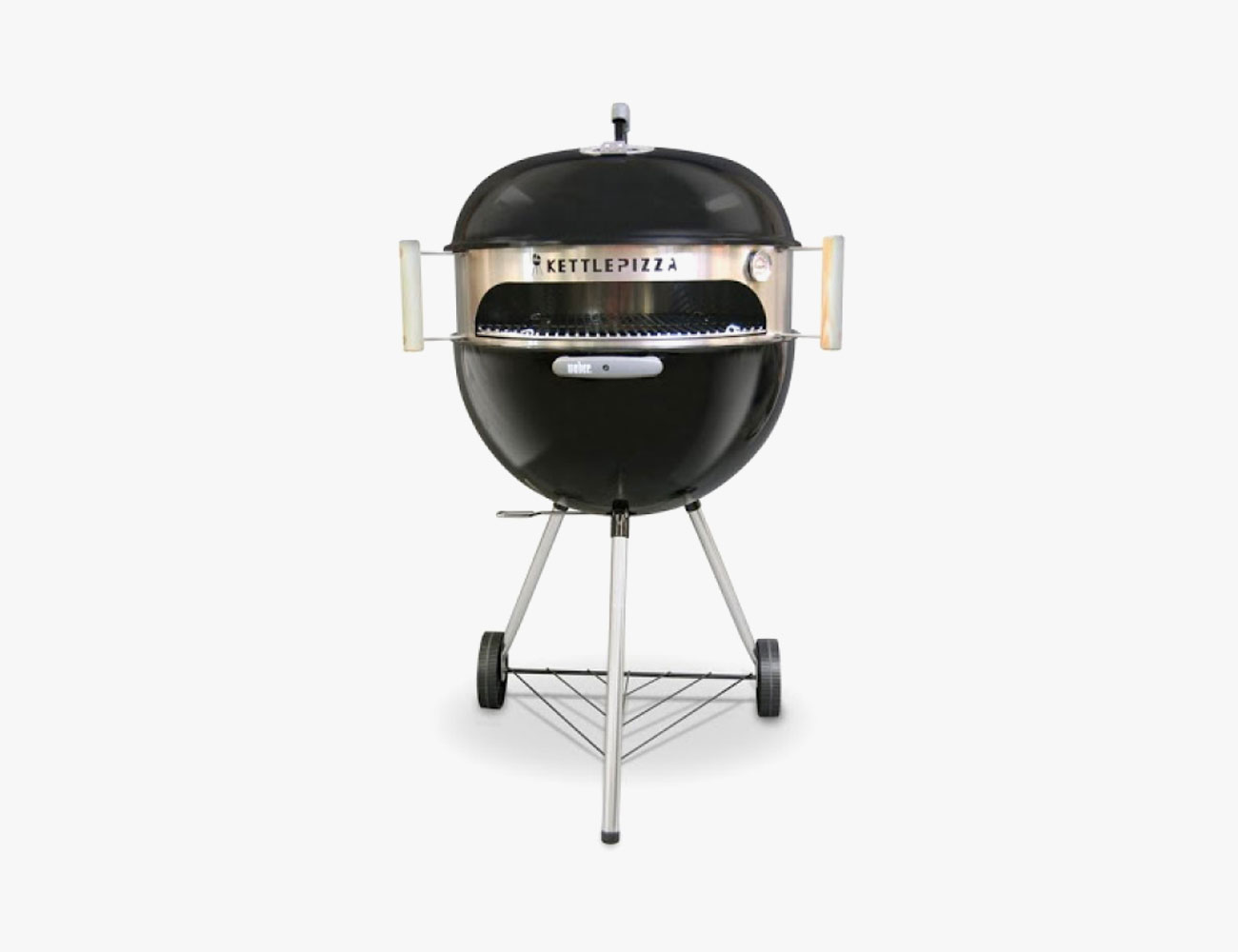
The pizza-making insert lifts the lid of your Weber up, allowing greater air circulation and creating a gap large enough to slide a pizza in and out of while still maintaining temperatures requisite to making a pizza. The basic kit comes with an aluminum pizza tray, but we recommend using a classic pizza stone for a crispier foundation.
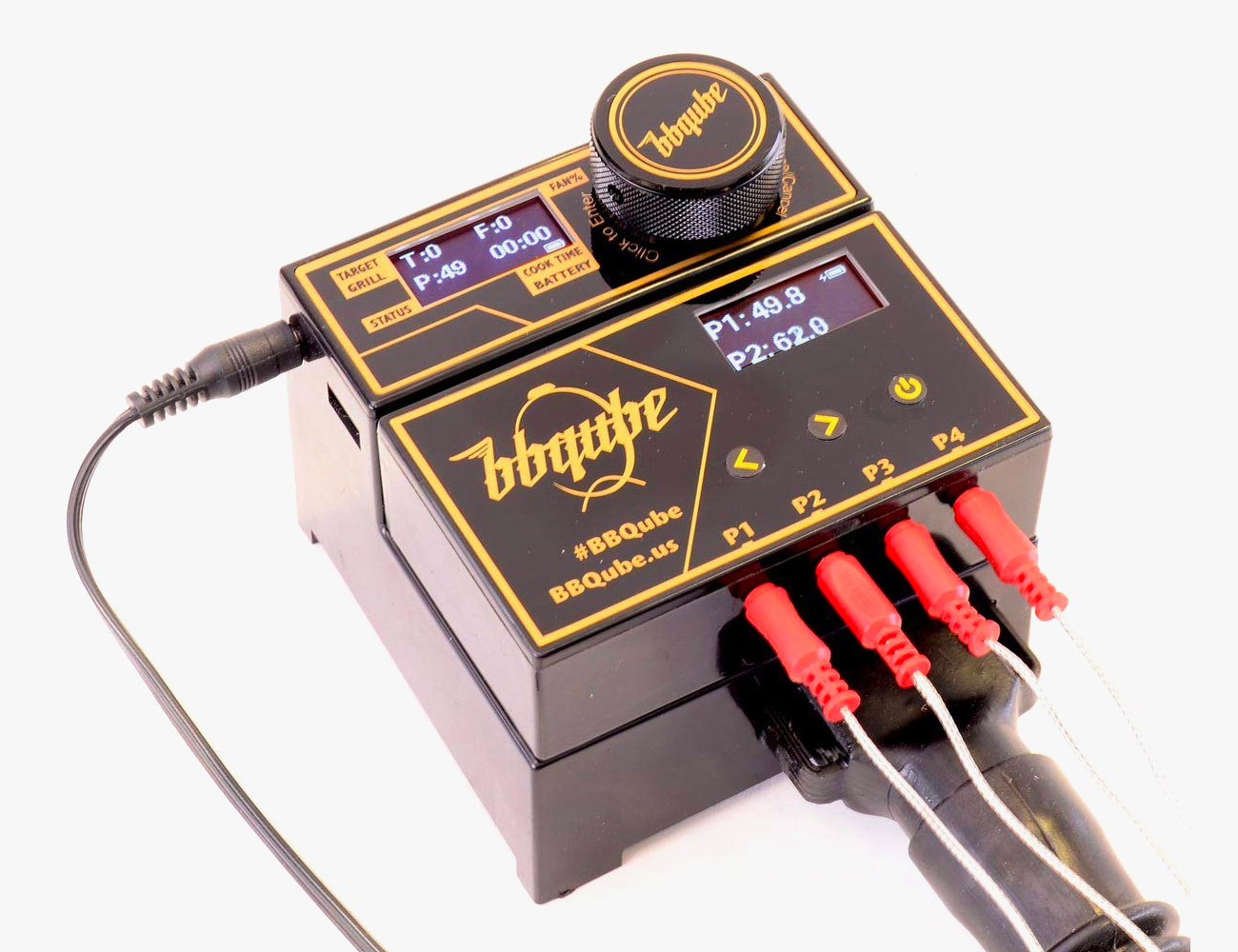
BBQube’s tiny, pricy black box is not an amp. It’s a four-probe temperature tracker and ventilation control system that feeds all the grilling data you could want to your phone. If your fire is gaining too much heat on a low-and-slow pork shoulder, the Tempmaster will cut back air flow to cut the heat down. Plus, it’s operated with a very satisfying knob.
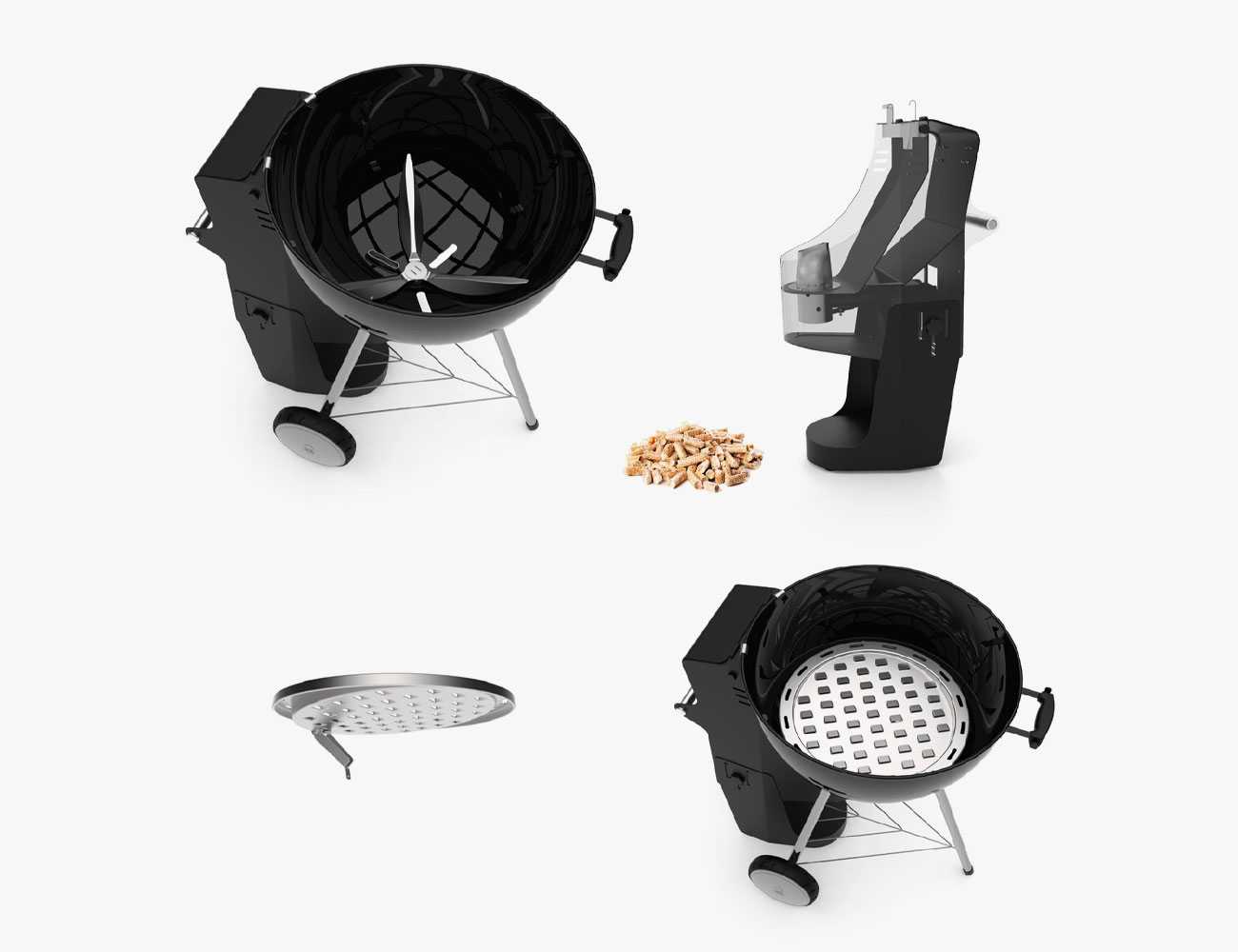
Spider Grills Pella manages to make the charcoal-fueld Weber a wood-pellet grill in an elegant and weirdly easy way. It just snaps on to the side of the thing. Why would you want to grill with pellets? It’s the most-automated path to low-heat smoking possible while remaining perfectly capable of high-heat grilling. Pella’s adapter operates from 175 to 500 degrees.
You bought a grill, extra-long tongs and a bag of charcoal. What followed was the slow realization that your out-of-the-box setup is limited. The grates create flare-ups, the coals take too long to light and you’ve burned off every hair on your forearm. Sound familiar? Then this guide is for you.
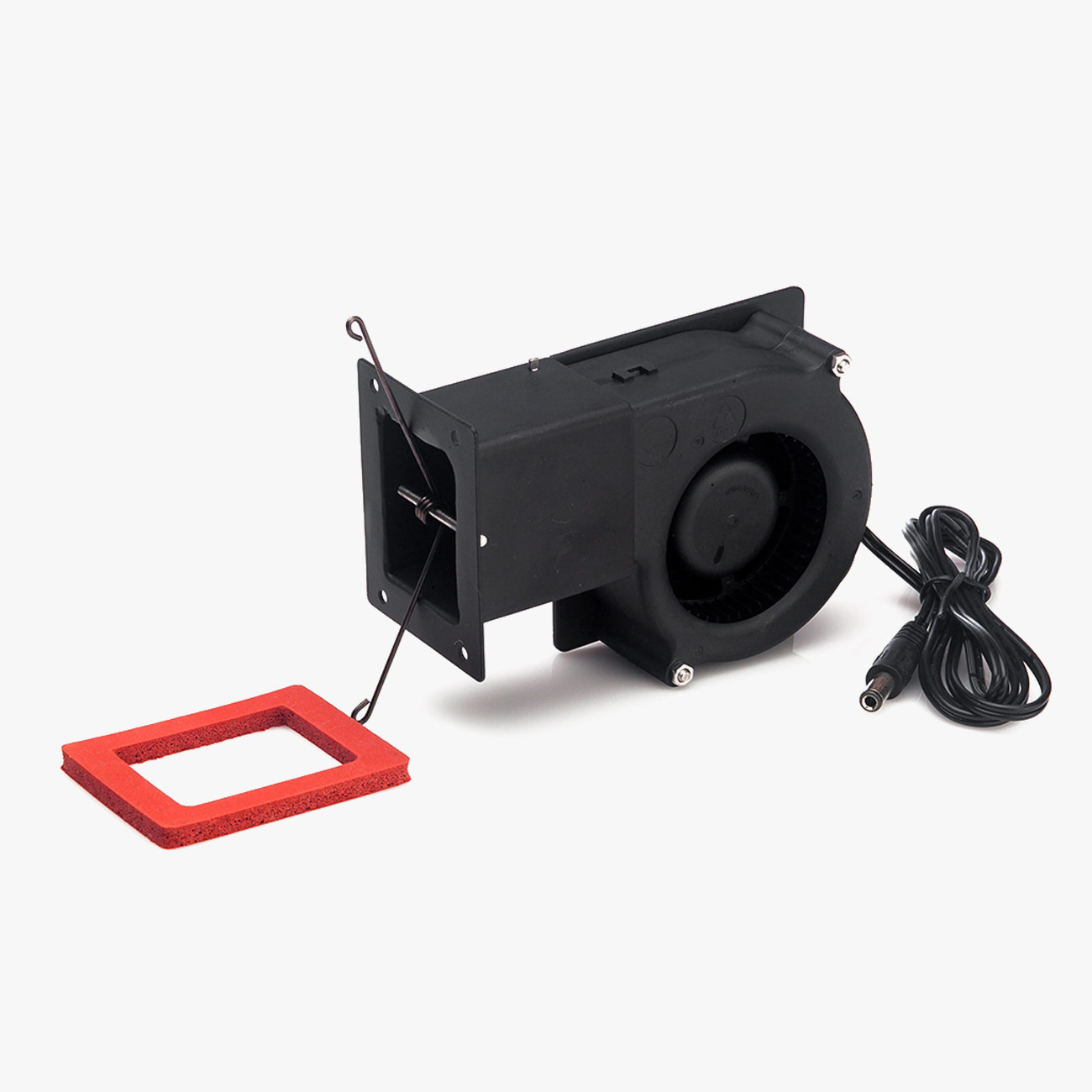
Temperature is paramount when it comes to cooking with wood or charcoal, and for those natural fuel sources, airflow is king. Feeding more air into a bed of coals generates more heat, bottlenecking airflow creates a lower heat environment. FireBoard’s snap-on blower fits directly into most ventilation holes and turns airflow regulation from an art to a science.
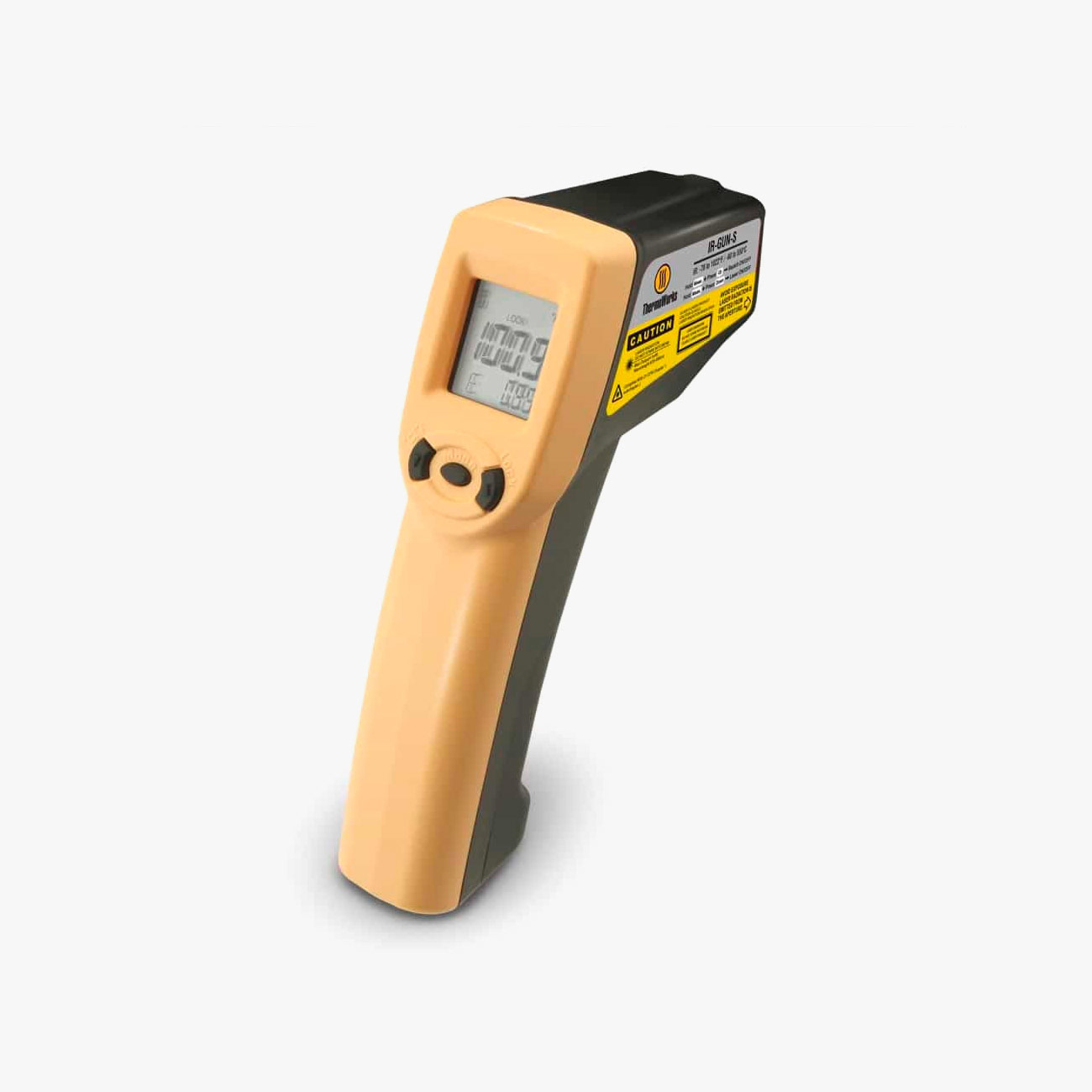
Utah-based ThermoWorks might be the most trusted name in temperature telling. Its infrared temperature-tracking gun is less popular than its industry-standard thermometers, but it’s nearly as essential. Fire it at the grates to track when you’re building enough heat to properly sear a steak.
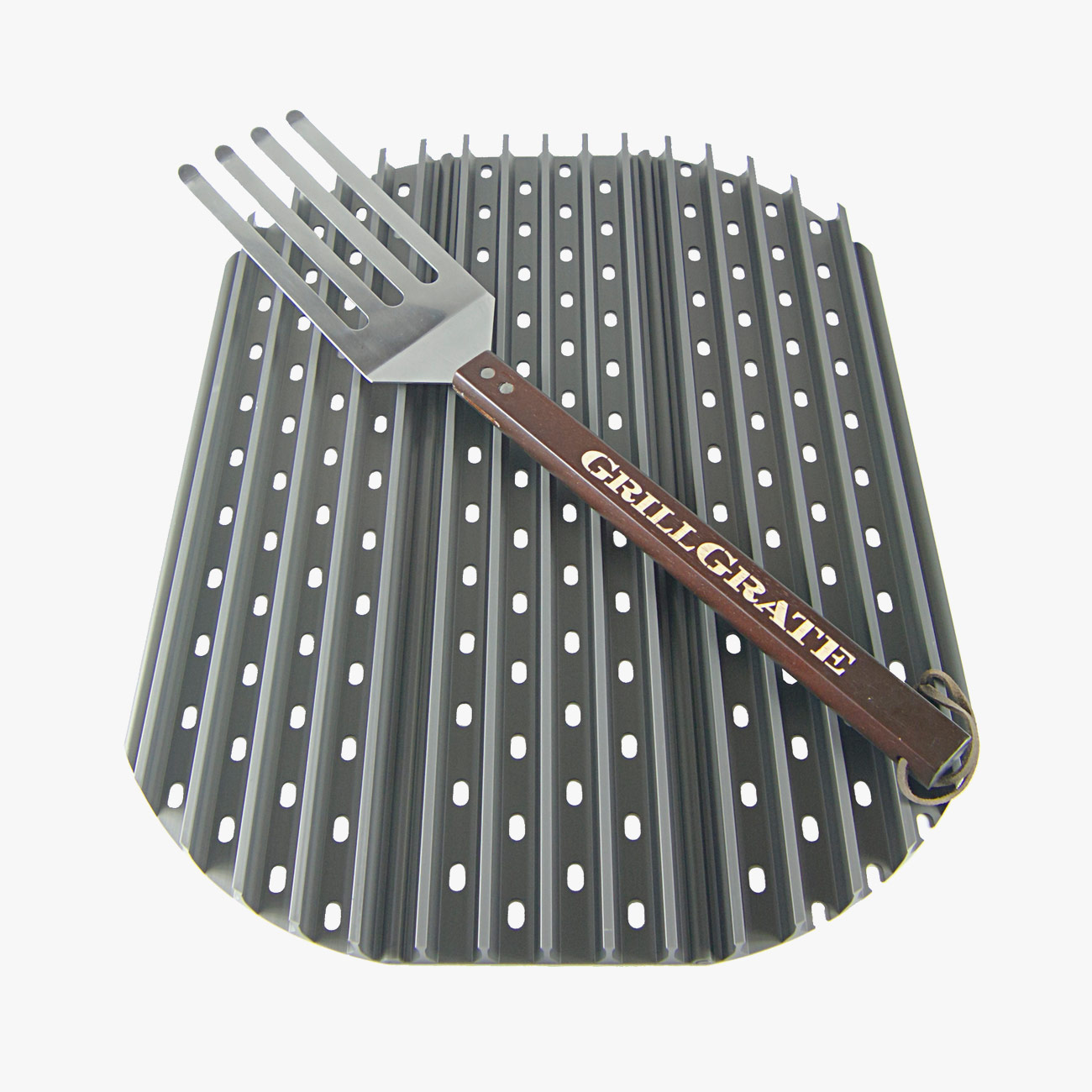
Endorsed as the “best thing to happen to gas grills and pellet smokers since salt and pepper” by the grill testers at Amazing Ribs, these cast-aluminum grates are rust-resistant and distribute heat more evenly across whatever you’re grilling.
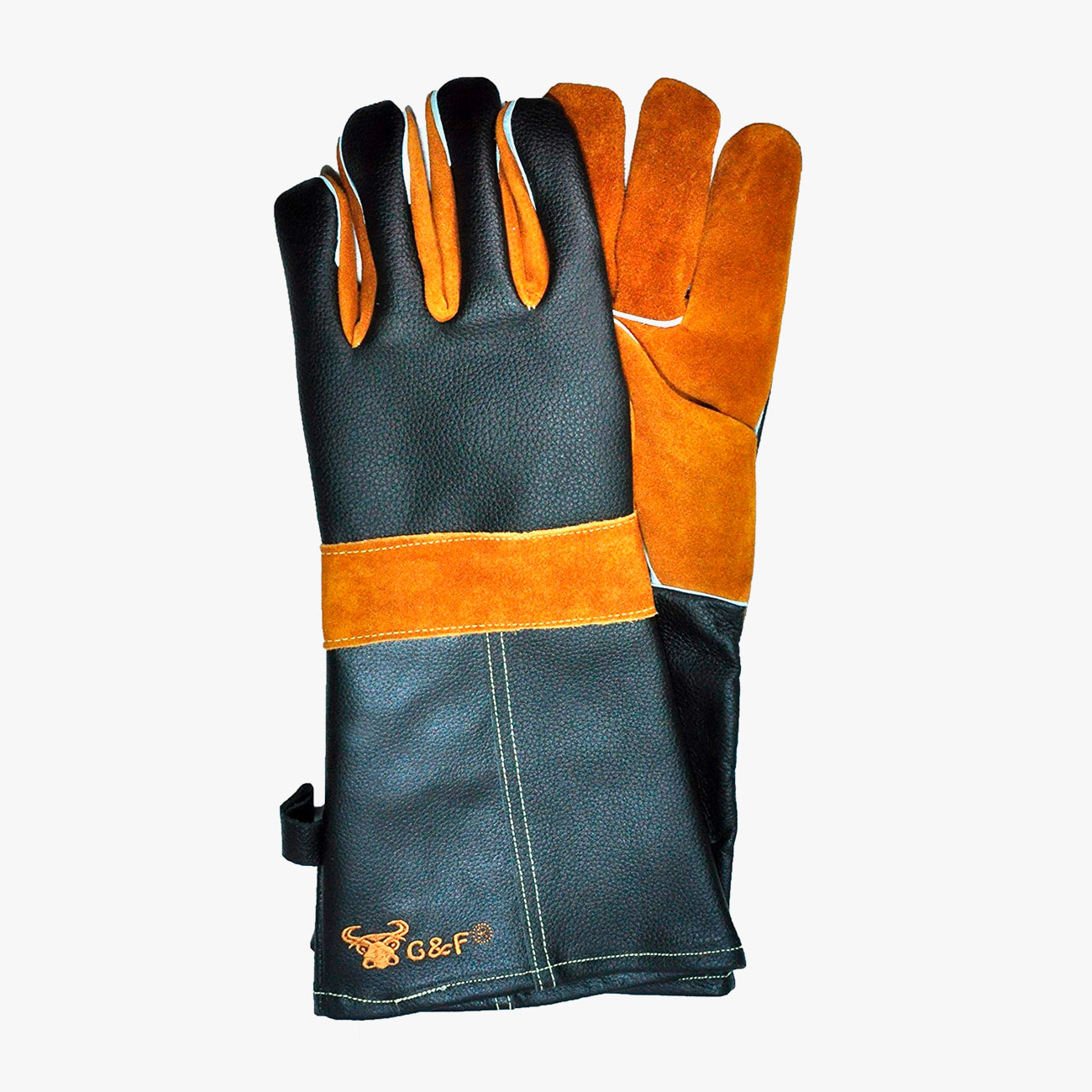
Oven mits are poor stand-ins for grill-safe gloves, and most grill-safe gloves suck. Instead, get welder’s gloves — they go further up your arm, are safer at higher heat levels and allow your fingers freer movement.
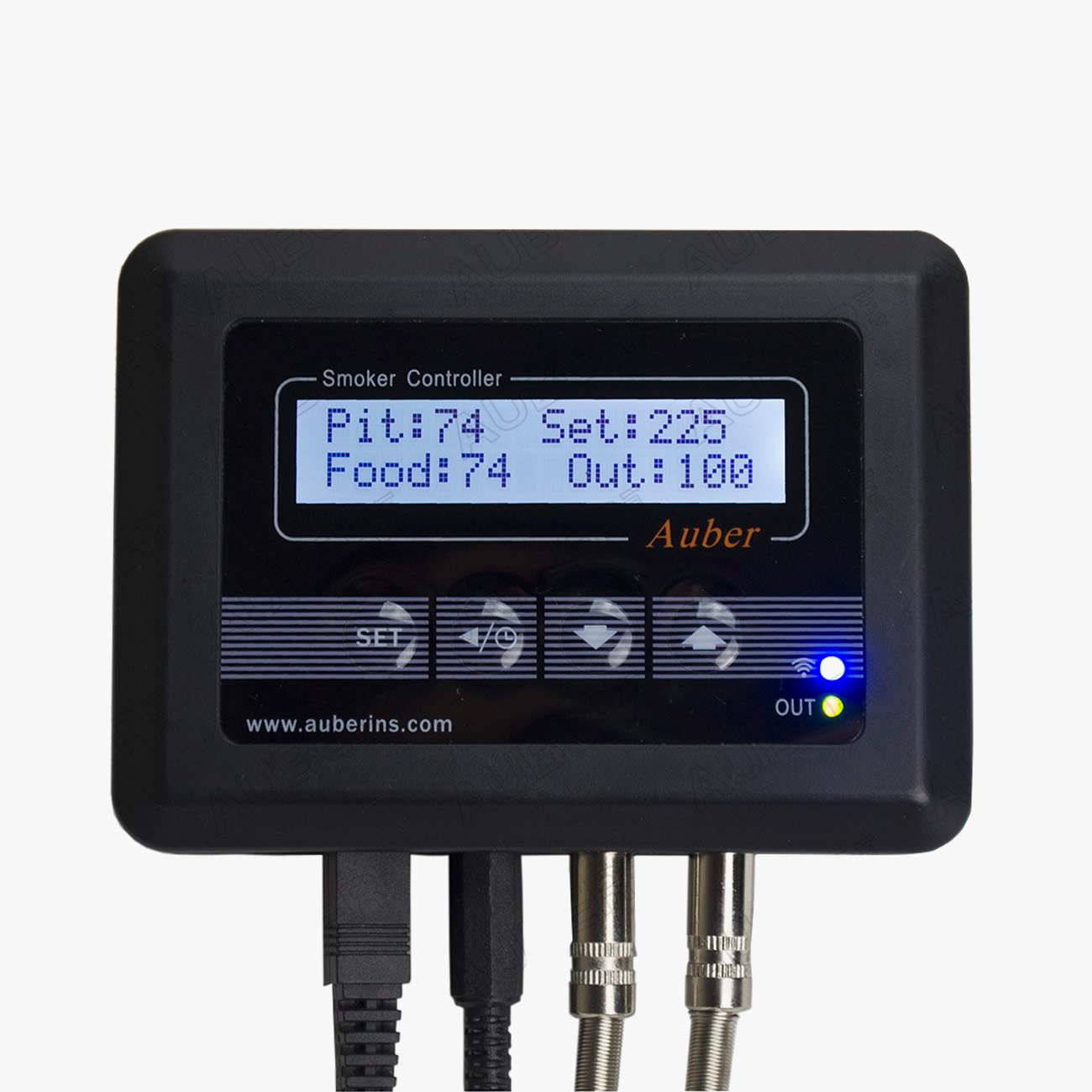
Designed for professional pitmasters to use on overnight smokes, Auber Instruments’ grill controller is only for the most serious of home smokers. Just plug a probe into your meat and another at fire level, set your desired internal temperature for the meat and the temperature you want to smoke at. The controller does the rest, automatically adjusting airflow and air speed at coal level and feeding all cook data into an app on your phone.
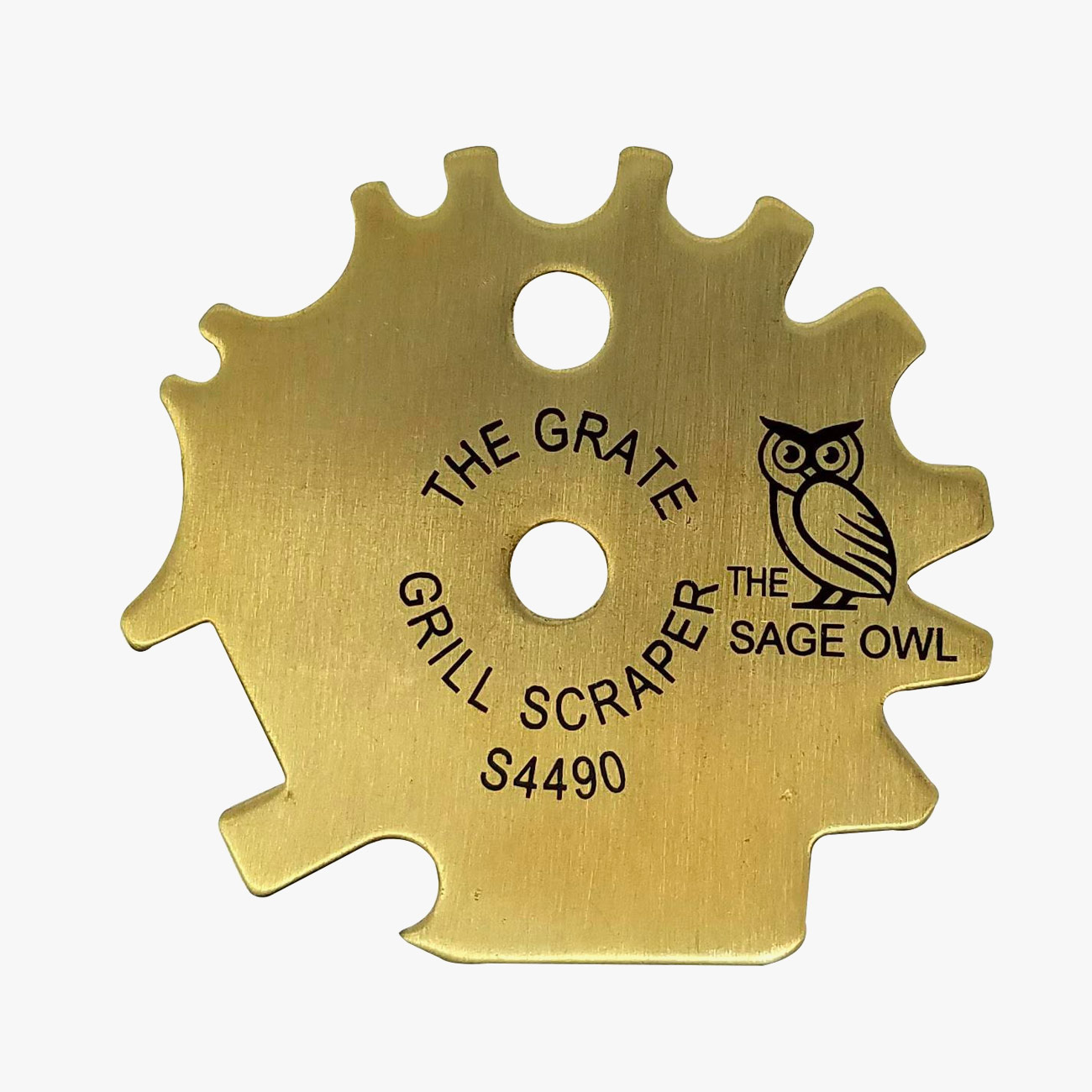
Still using bristley brushes to gleaing your grates? You should stop, unless you like putting indegistible metal in your guest’s burger. Instead, get a simple, cheap, hard-wearing universal grill scraper from Sage Owl, which come in various brass and stainless steel finishes.
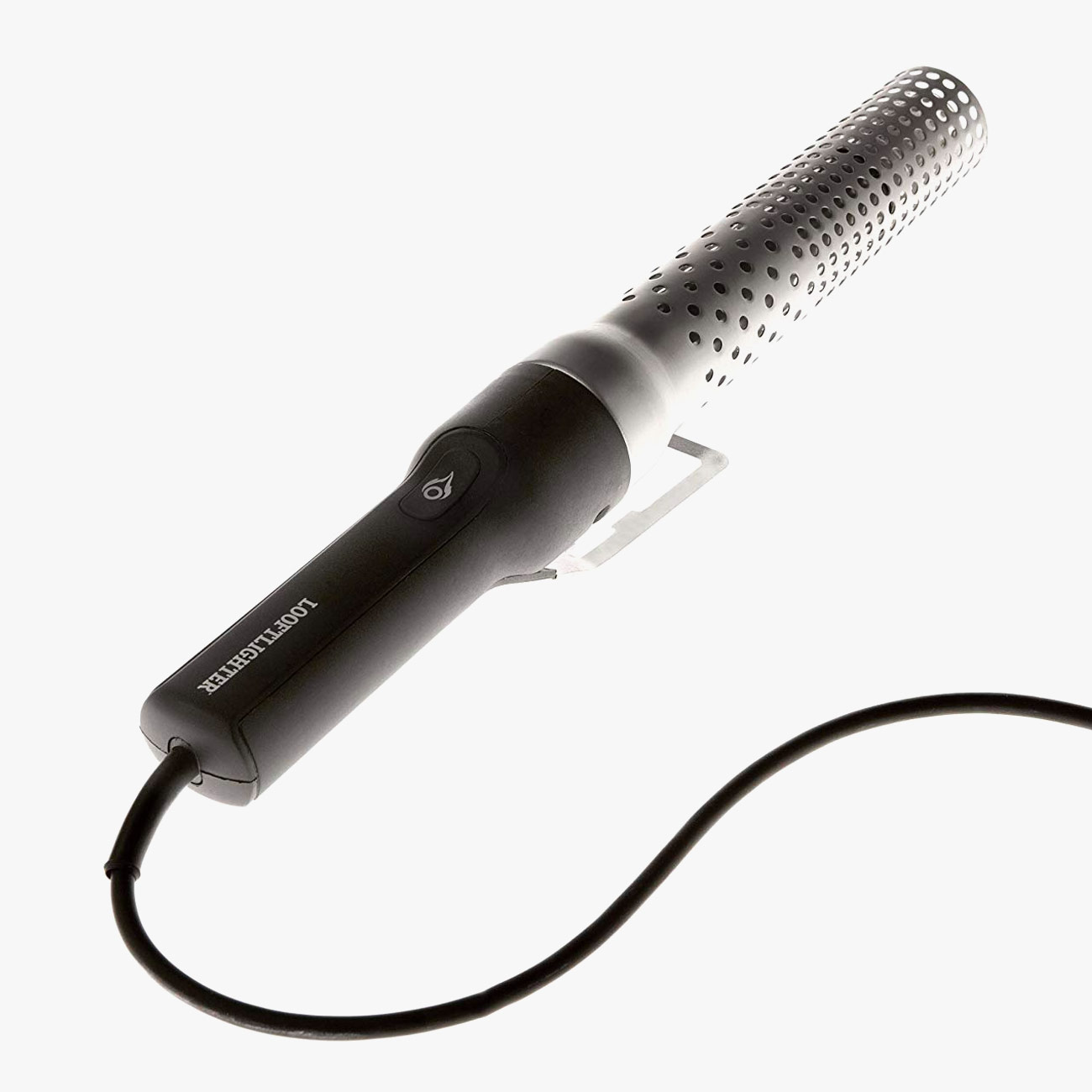
The first step to getting coals lit more quickly is buying a chimney. The second: a Looflighter. What looks like an overcharged hair curler can set stone cold charcoal ablaze in 60 seconds or less. You’ll never need to use instant-light charcoal again.
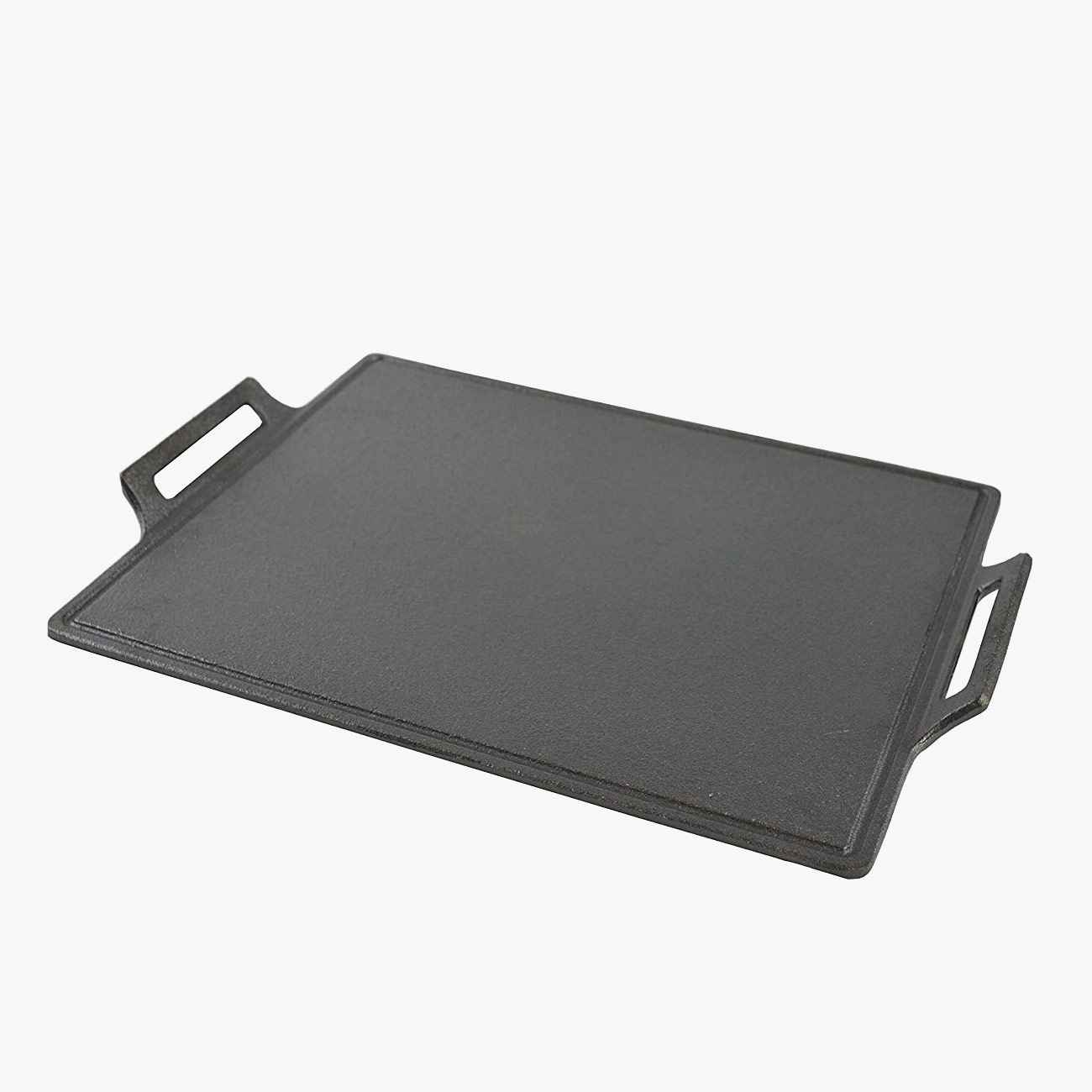
Planchas are hotter and heavier than griddles and one of Francis Mallmann’s favored ways of grilling. Use one to grill foods that would otherwise fall between or stick to the grates — like vegetables, whole fish and shrimp.
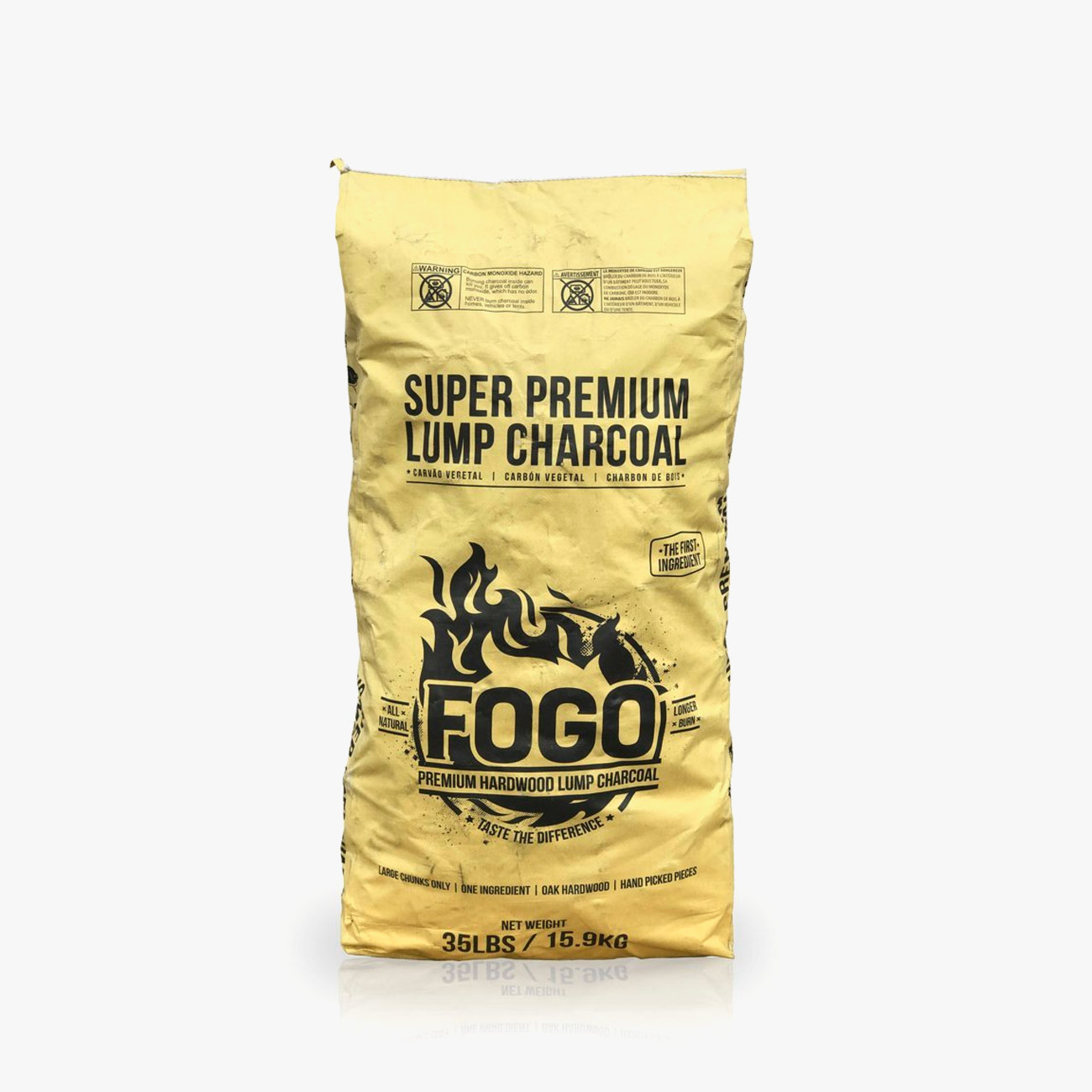
Some people believe pre-cut charcoal is better than coal because every piece will be the same size, lending to more even heat distribution over your fire. But thanks to a more dense make up and larger size, lump coal is capable of reaching higher temperatures and burning for longer than regular charcoal. Give it a try.
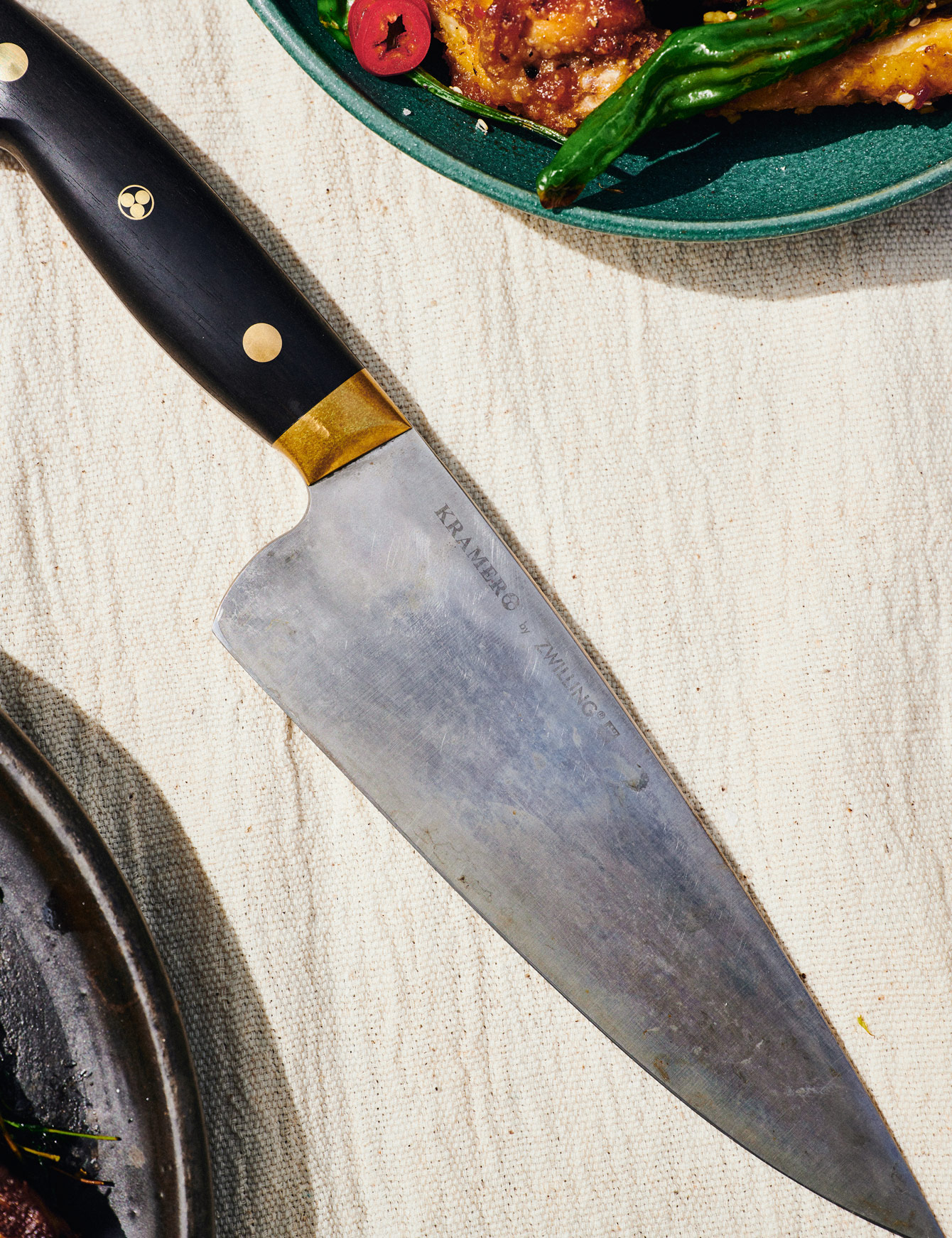
Magnus Pettersson has been caring for the knives of professional chefs for more than 25 years. He often jokes that he’s a knife doctor, and he both loves and hates carbon steel knives. If you ask him what you would get from a carbon steel knife that you wouldn’t a stainless steel knife, he’ll laugh, “Rust!”
From a practical point of view, chefs use high carbon blades because they can get sharper and hold their edge better than knives made from stainless steel. There’s also a certain level of romanticism, one even Pettersson says he isn’t immune to. “Knives are utilitarian for me. They’re tools,” he says. “Tools that tell stories, and nothing tells a story like a carbon steel knife.”
Now a lead sharpener at new mail-in knife sharpening service KnifeAid, Pettersson likens a carbon steel knife to a pair of worn-in jeans. “I can tell whether the person who owns the knife uses a push cut or pull cut motion, how they store the knife and their dominant hand pretty quickly. It’s beautiful.” Here’s how to take care of a carbon steel blade, according to an expert.
Stains and rust are naturally occurring when using carbon steel knives. “If you’re bothered by having to wipe the knife every so often while cooking, or mind a little rust, I wouldn’t [use a carbon steel knife],” Pettersson says. “Most nicer stainless steel knives are so good today there isn’t that huge of a difference in edge retention and whatnot.”
With his personal knives, Pettersson says the first thing he does is force a patina onto the blade to protect it from rust. “You can do it with almost anything with acid in it: instant coffee, vinegar, potatoes — lots of things,” he says. “Just rub it on the blade and polish them in. This makes a better shield for the steel than whatever it ships with.”
To prevent rust, Patterson recommends washing your knife shortly after use and oiling the blade. “Food-grade mineral oil is probably the best [oil] you can use,” he says, “many other oils will become like a resin over time and get really, really sticky. [Food-grade mineral oil] doesn’t get that way. It’s always smooth and keeps a good shine.”
“[Knife blocks] are usually in the kitchen, so they’re in the danger zone,” Pettersson says. “Splashes of water or liquid can get in the block, and some people don’t dry the blade 100 percent before putting them in. This makes the knife block a rust factory, basically.” On top of that, knife blocks are typically breeding grounds for bacteria. Pettersson uses a magnetic strip on the wall to store his knives but also recommends wrapping carbon steel knives in cloth or paper.
According to Pettersson, anyone who knows how to sharpen a knife by hand or is interested in learning should go carbon steel over stainless steel. “They’re just easier to sharpen than stainless — the metal rubs off more cleanly and doesn’t chip as easily.”
Pettersson says knowing the makeup of your knife is the best way to know how delicately you need to treat it. “If you have high-carbon steel knives — like .8 percent carbon and up — they get really reactive to rust. Between .3 and .8 percent, it rusts less and will be a little easier to take care of.”
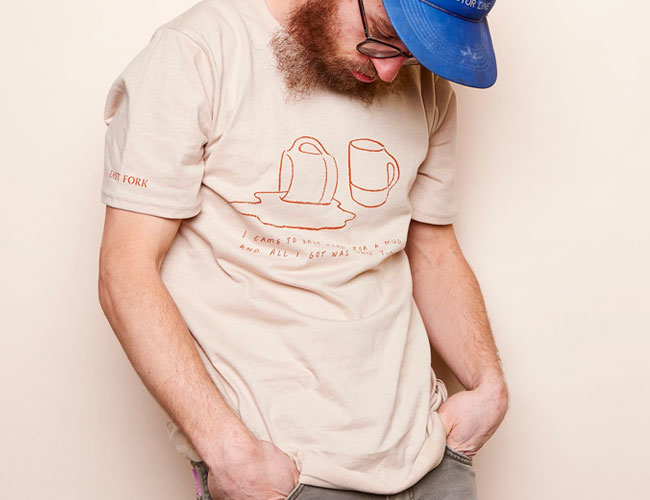
“What have we done?” Alex Matisse often asks his wife and business partner, Connie, at the end of a long day juggling parenting duties with the making of the “internet’s favorite” product.
The Matisses are cofounders of East Fork, a clay pottery company based in Asheville, North Carolina. In a journal entry on the company’s site titled “Big Feelings from the CEO,” Alex let the public know that he is trying to make more of the coffee mug he can’t keep in stock.
Dubbed #TheMug by Instagram, East Fork’s coffee mug is a web phenomenon. Every Tuesday at noon, its web stock is refreshed and, within minutes, depleted. Why?
“When other companies in our cohort need more stock, they call up the factory they’re working with overseas and say, ‘Send us more, please.’ We’re making our own product five feet away from the desks we’re selling it from,” said Connie Matisse, who runs the creative marketing arm of the business. “No one on our [Creative Marketing team] has had any prior experience in marketing, but I think we’ve done a really good job figuring it out.”
The Mug starts as clay from a pugmill. It’s then cut into long pieces, placed in a mold for the first time, pressed and left to dry for a day. Handles, made from die casts, are pressed and cleaned up by hand and later applied to the mug by hand. The handled-mug dries for another day before its first firing, after which it’s glazed and partially waxed by hand. Another firing, quality control, sanding and touch-ups follow before it is ready for sale. Connie Matisse describes the production as a choreographed ballet, “or a Formula-1 pit crew.” All told, East Fork’s capacity is 450 mugs a week.
The stratospheric launch of its coffee mug came quickly. Tim McKeough included it in a guide to mugs in The New York Times, it was mentioned on the Food Network and, quickly after, the mug sold out. Other sites piled on, and the mug became the most-coveted piece of coffeeware on the internet.
In an interview in Fast Company, Connie Matisse acknowledged the strangeness of East Fork’s position. “We have one foot in the world of Warby Parker, and the other foot in the world of Asheville’s artist community.”
East Fork realizes it might frustrate customers who aren’t able to purchase the mug whenever they wish, but the Mattisses are stubborn to compromise. Firmly planted in an actual artisanal production process while still appearing and operating as a modern direct-to-consumer company, Connie Matisse says they won’t sacrifice the artisan nature of their product and they won’t increase the price (the last price change was last summer, when The Mug dropped from $42 to $36).
In Alex Matisse’s open letter to those lusting over his mug, he writes “We are not the Warby Parker of pottery — as much as journalists like to lean on that line. We can’t flip a switch and make more overnight. All we can do is show up every day and try to make more than we did the day before.”
This definitive guide to the best coffee makers of 2019 covers everything you need to know before you buy your next morning companion. We tested what most experts consider the world’s best coffee makers, comparing size, speed, price and performance, to identify which machines to buy (and avoid) in 2019.
In the world of coffee brewing, pour-over, cold brew, French press and Aeropress get all the buzz. Yet, for the vast majority of people, these methods of making coffee are not ideal — at least not for those grueling minutes between sleep and getting out the door every morning. Much to the chagrin of coffee purists, the mighty drip coffee maker is still most coffee drinkers’ preferred choice due to speed and convenience.
In the past decade or so, a thousand and one companies have pushed their way into market, though very few have the intention (let alone the ability) to manufacture coffee brewers that make truly good coffee. After testing what most experts consider the world’s best machines, we narrowed our list down to just six: here are the best coffee makers you can buy in 2019.
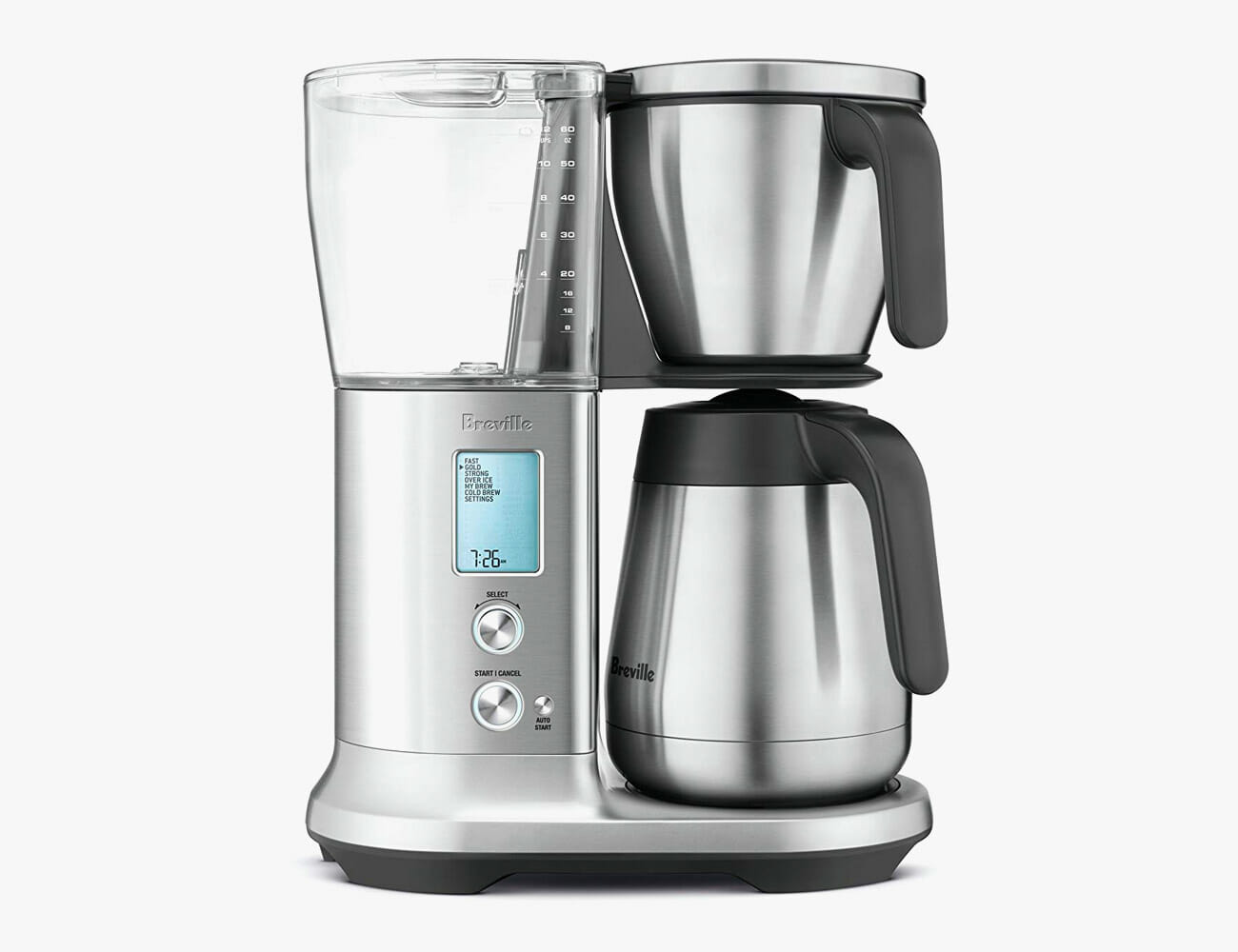
Breville’s prime directive is to make the most powerful, versatile, impressive version of whatever it decides to put together. Its coffee maker, though somewhat large, is as customizable as coffee makers get. The build quality is exceptional, standing out in a space filled with mostly plastic components.
Read our full review here.
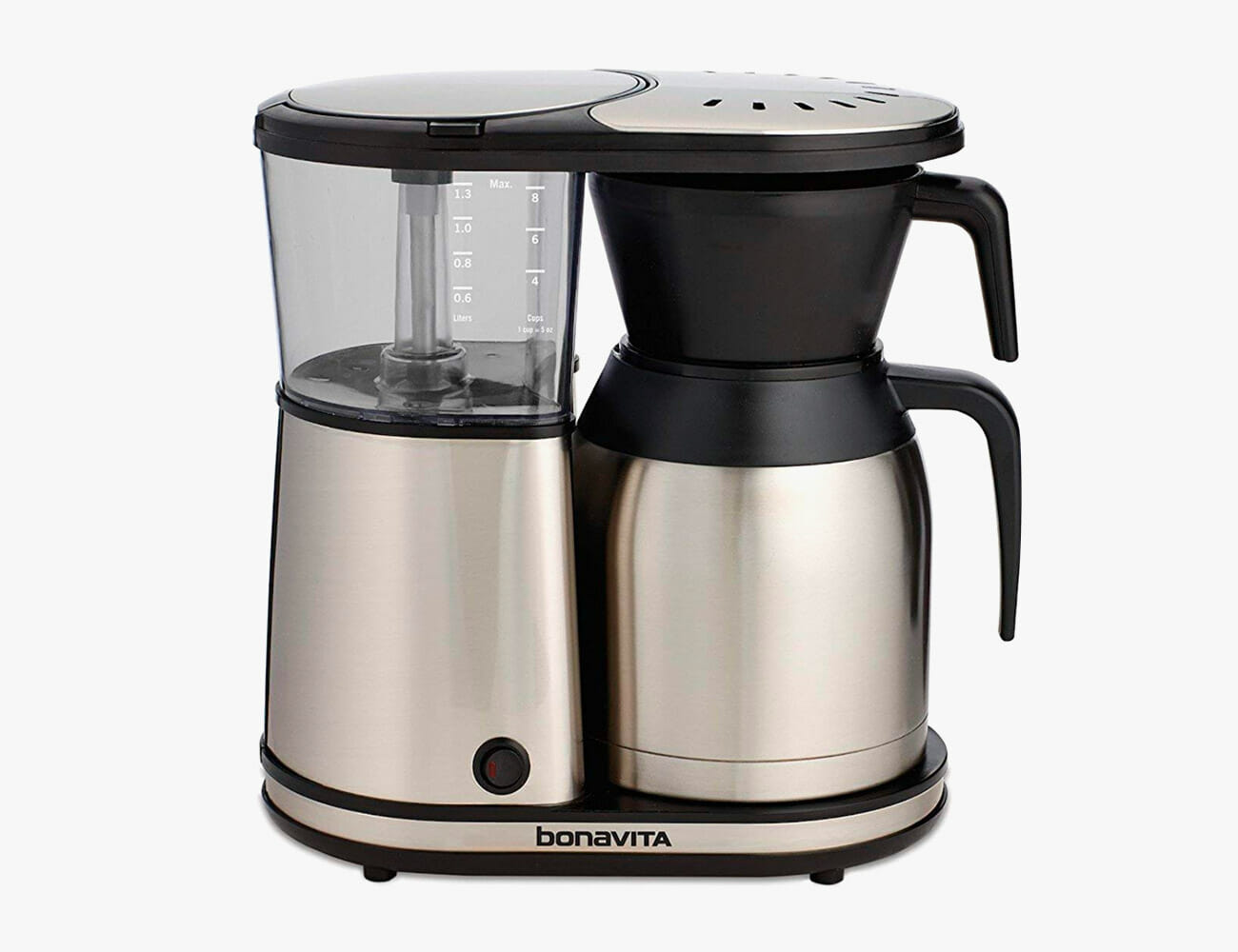
Bonavita makes one thing: specialty coffee equipment. This model earned the mark of approval of the Specialty Coffee Association — specialty coffee’s most important trade organization — and it brews quickly and evenly. It’s also dead simple to operate. It makes coffee that’s well-bodied but not overbearing, and it’s small and cheap enough to work for almost everybody.
Read our full review here.
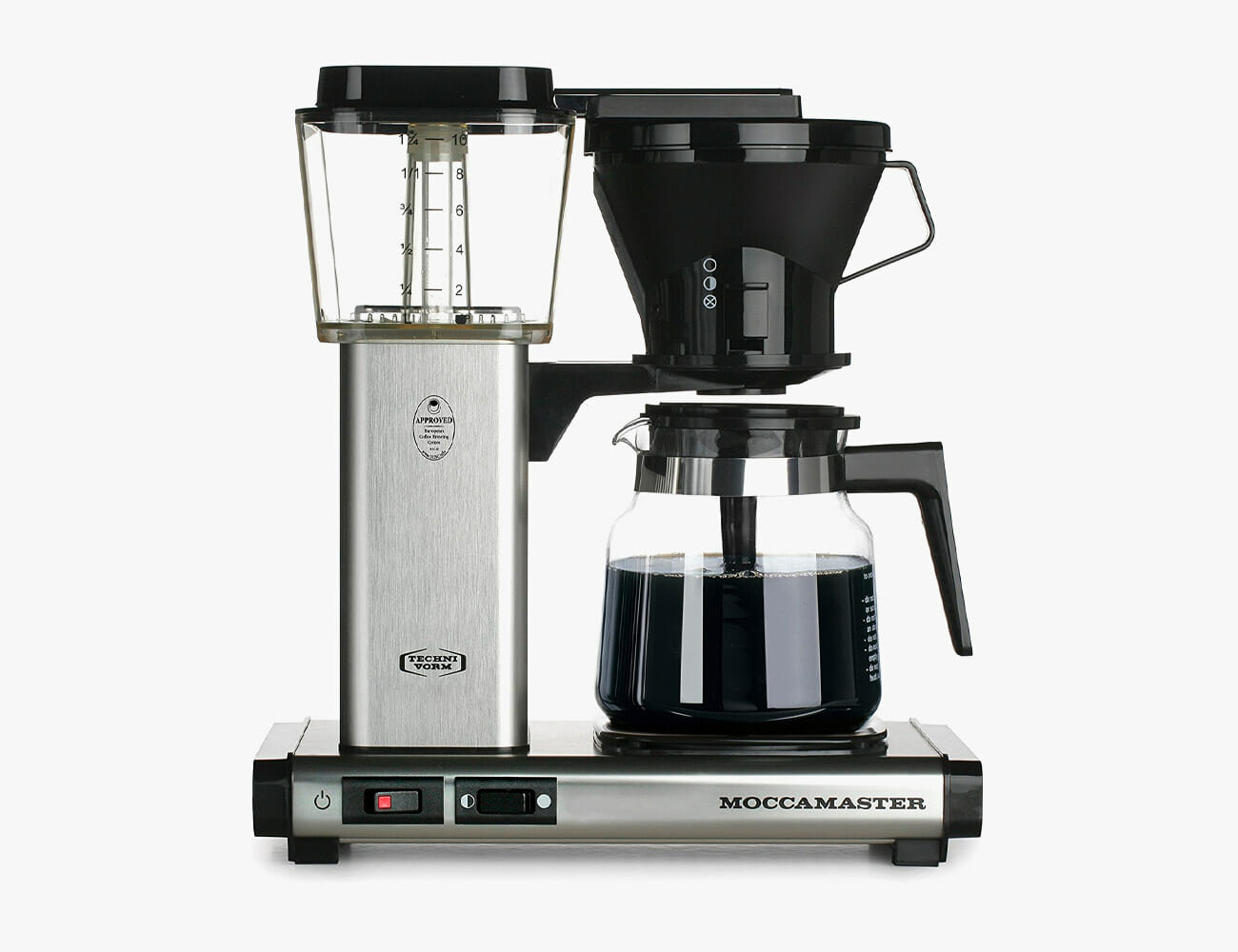
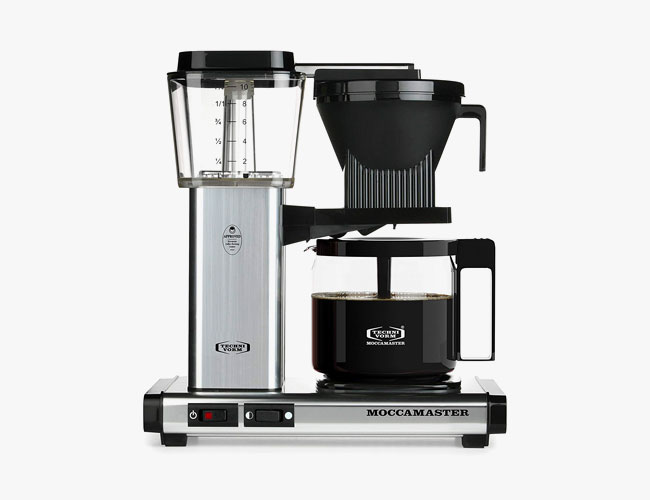
Technivorm’s Moccamaster has remained among the absolute best coffee makers in the world since it was invented in 1969. Thanks to a special copper heating system, it’s one of the fastest brewers, and it is lauded for its consistently outstanding pots of coffee. It’s uniquely disassemblable, meaning you can pull it apart for cleaning or troubleshooting yourself (Technivorm’s customer service is one of the best we’ve encountered).
Read our full review here.
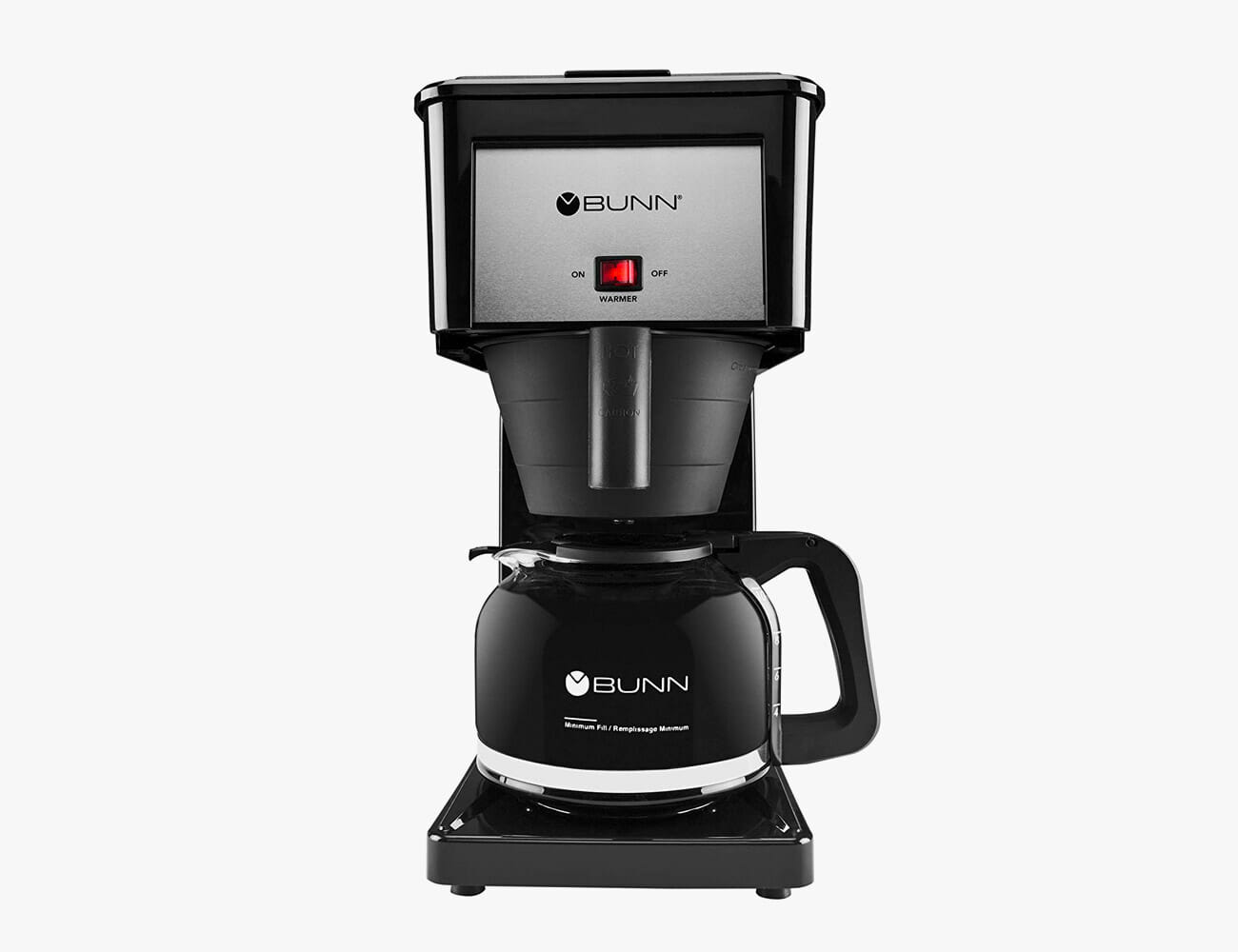
If you’re looking for a coffee maker to take up less space, you want one that’s designed to be deeper than it is wide. Bunn made its name over the years designing utilitarian coffee makers that are compact, easy-to-use and just plain work. This model is only seven inches wide, goes on sale often and pumps out a very good 10-cup pot of coffee in just over three minutes.
Read our full review here.
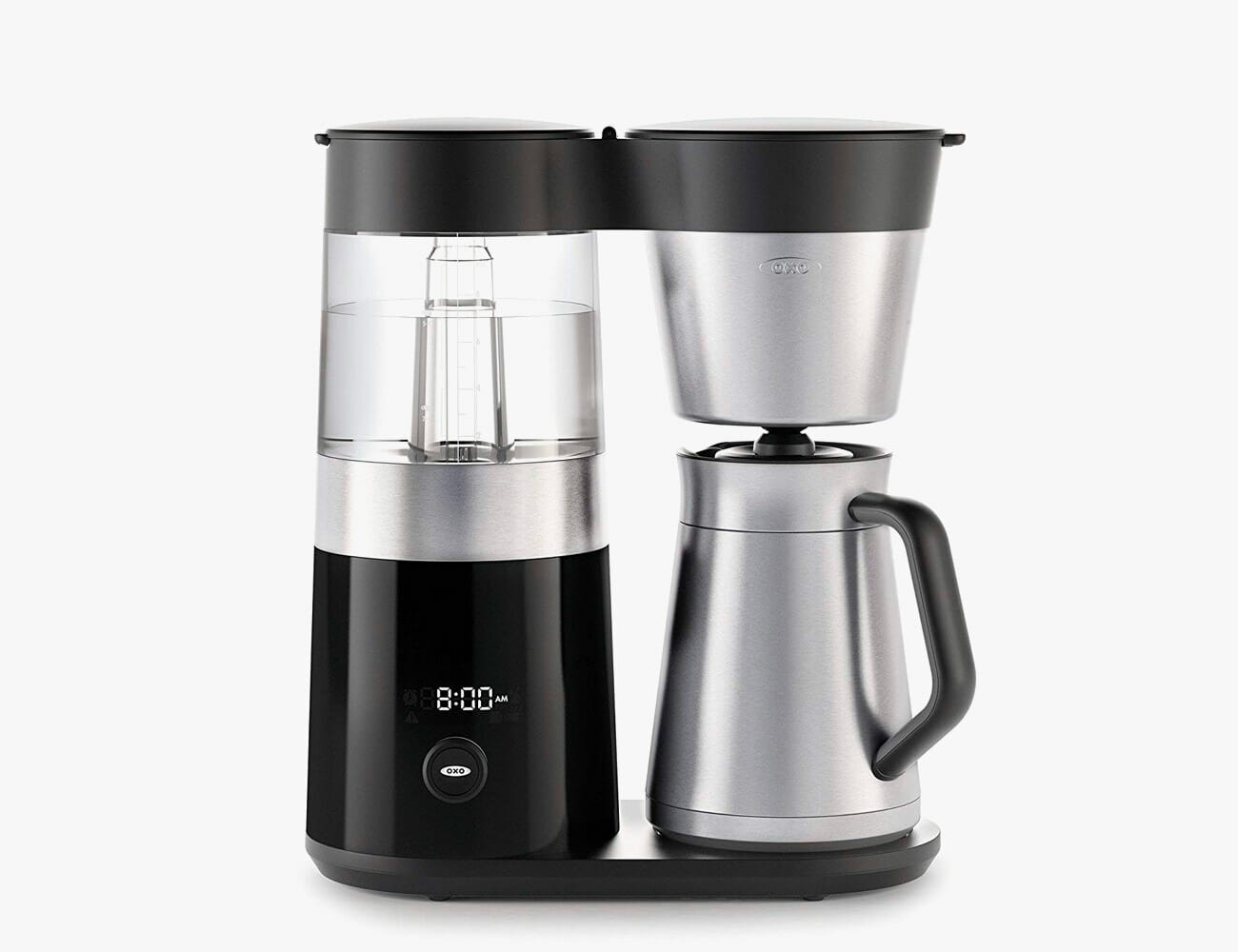
Though buying coffee pre-ground or leaving grounds in the machine overnight isn’t ideal for freshness (more on that here), it is convenient. We found many programmable coffee makers leaned too hard into “smart” tech in lieu of making good coffee. OXO’s 9-Cup Barista Brain didn’t. Other than its one-button brew timer, it’s a high-performing, nice-looking machine, made with better materials than most of its competition.
Read our full review here.
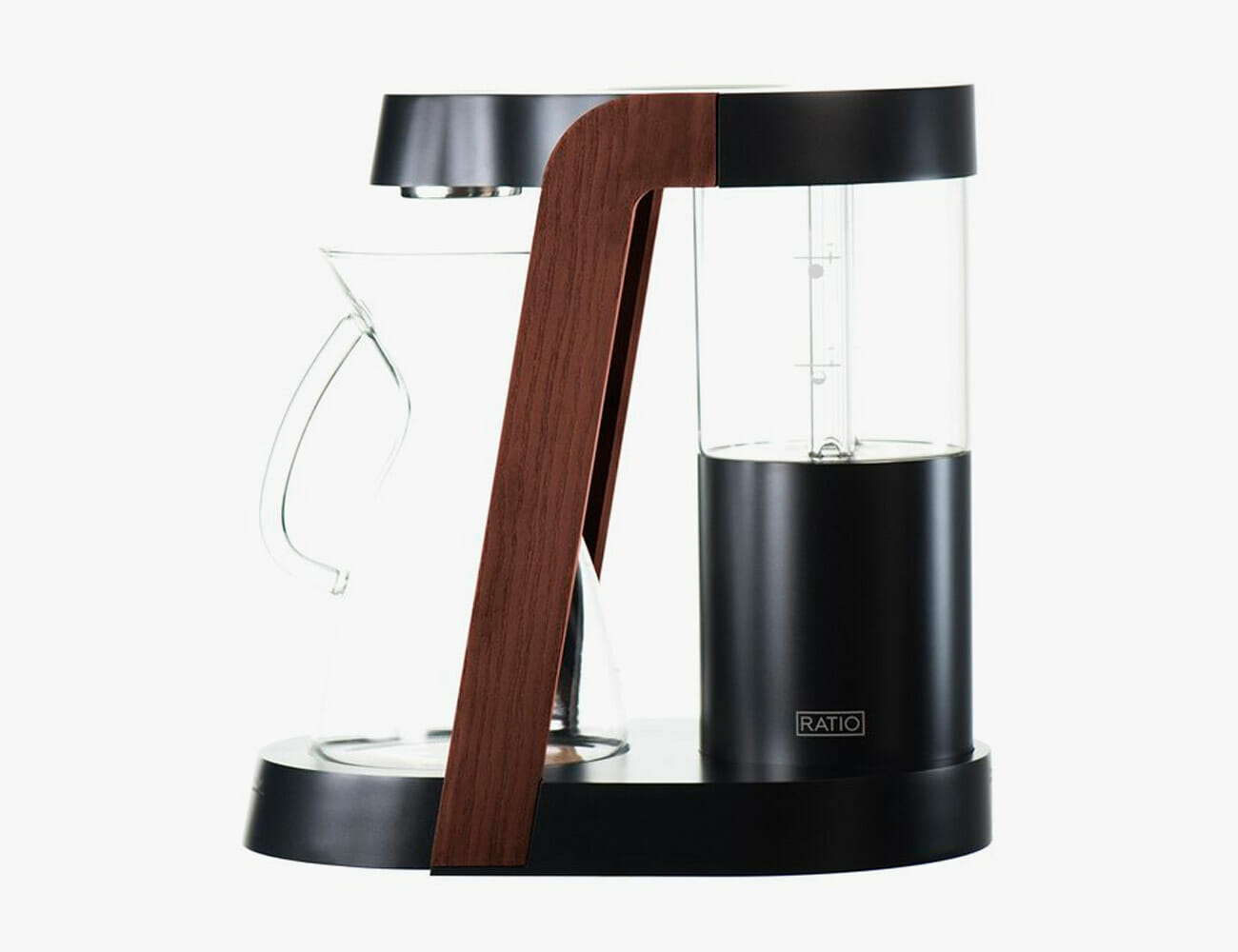
Though a subjective trait, it’s hard to dispute how good its walnut arms and matte black tower look on a countertop. The automatic pour-over brewer is basically a Chemex that you don’t have to fiddle with (it uses Chemex filters, too). And yes, it is expensive, but it also might be the last coffee maker you ever have to buy.
Read our full review here.
Speedy coffee makers make batch-brewed joe more convenient, but there’s more to it than that. The SCA’s rigorous certification program, which has long separated the best coffee brewers from those that cut corners, only accepts brew times of four to eight minutes, and those aren’t made-up numbers. Coffee brewed any quicker than four minutes will be under-extracted (weak) and over eight minutes will be over-extracted (bitter).
Because the higher water temperature is the agent that extracts and dissolves coffee solids and oils from coffee grounds, brewing temperature is one of the best indicators of a machine that could make a decent cup of coffee. According to the Gold Cup standard, coffee should be brewed between 195 and 205 degrees Fahrenheit. Brew at a lower temperature and coffee and risk under extraction (weak, sour coffee), or brew above 205 and you’re bumping up against boiling water, which will dissolve more coffee than is preferable (heavy, extra-bitter).
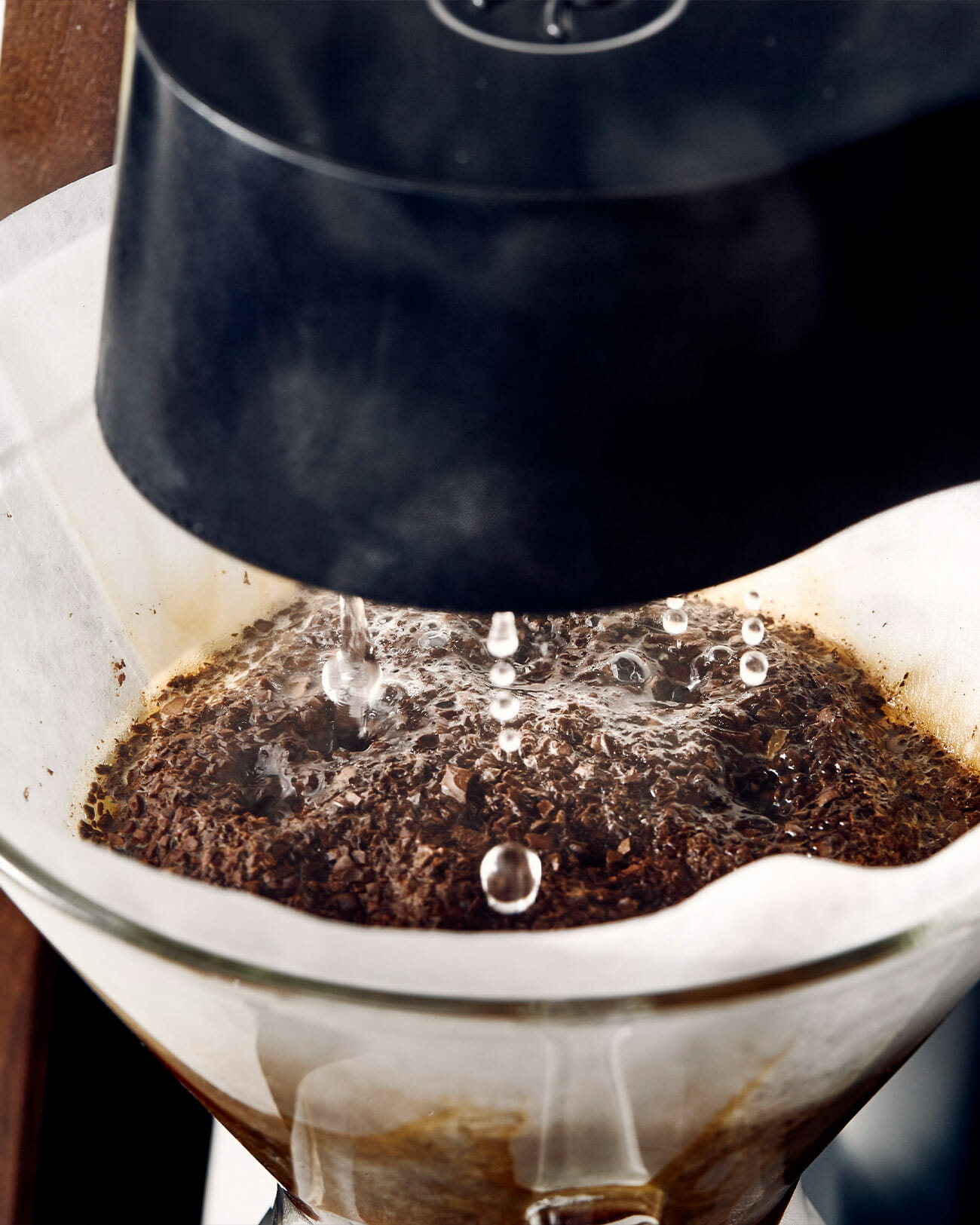
Often ignored when considering a new purchase is how simple the upkeep is. Because coffee makers are working with hot water, an ideal breeding ground for mold and limescale, it’s doubly important. Making sure the machine and as many components as possible can be disassembled and cleaned is of the utmost importance to both performance and health.
This guide might look different if we completely ignored the role cost plays in the buying equation. But, seeing as not everyone is willing to spend multiple hundreds of dollars on a machine, excluding price as a primary factor is a fantasy. At the same time, the quality of the machine can’t be sacrificed to save $30, because extra-cheap machines will catch up to you in the form of leaky brew baskets, worn-out buttons, inconsistent extraction and so on.
What We Like: Lightning fast brew times, presets that are actually useful and unmatched versatility, for starters. The Precision Pro can brew with flat-bottom filters, cone filters and it even has a pour-over attachment (you can literally put your pour-over device under the shower head). It can brew cold brew coffee, brew coffee to the exacting Gold Cup standard and it’s the only coffee maker we know of that allows you to customize options like flow rate and bloom time. If you or someone you know if keen on experimenting with coffee, there is no better coffee maker.
What We Don’t Like: It’s kind of enormous in comparison to other coffee makers. You will have to pull the whole thing from under the cabinets to load coffee and water into it. The price is high but, compared to what you get, it’s not a problem of value.
Verdict: Highly recommended
What We Like: This brewer makes pots of coffee that are excellent for the vast majority of coffee drinkers, and it offers a gateway into more complex brewing ideas. The coffee it makes isn’t as light as most of the higher end machines, but it’s not as oppressively dark as with cheaper models. An identical coffee maker is available as a programmable version for a few dollars more, but programmable coffee makers (unless they have built-in grinders) can’t account for the loss of freshness.
This one is a nicely balanced size that is short enough to open when positioned under cabinets and not so wide as to take up enormous tracts of the countertop. We also like that it brews a full pot in about four minutes, and maintains consistency no matter how many cups it’s brewing. On top of this, Bonavita’s customer service is exceptional, and the price is tough to beat.
What We Don’t Like: Like most coffee makers we tested, the shower head will drip water onto the machine after use. The thermal carafe and its lid could also be better (it helps to pre-heat the carafe by filling it with hot water prior to brewing) at maintaining high temperatures. Finally, the filter basket sits on top of the carafe — this means you have to take it off and put it on the counter (or in the sink) in order to fit the lid on or pour coffee. (Bonavita released a newer, slightly pricier option called the Connoisseur that addresses this issue.)
Verdict: Highly recommended
What We Like: There are many Moccamaster models, but this is the one that we recommend most. This model uses a glass carafe and electric hot plate instead of the typical steel carafe. The glass makes it simpler to tell how much coffee is left and is much easier to clean (it’s difficult to see inside steel carafes). Thanks to a copper-based heating element, all Moccamasters are lightning quick to heat and brew coffee — we clocked in a full 10 cups of brewing in just over five minutes.
Additionally, this model features a manually adjustable brew basket, which is a fancy way of saying you can control pre-infusion of the grounds and you can seal the brew head when you pull the carafe away from the machine. This pretty much eliminates the annoying water drip most coffee makers are plagued with. It’s also more disassemblable than most coffee machines, making it simple to clean and troubleshoot other potential issues.
What We Don’t Like: The price isn’t very friendly. Also, the brew basket itself feels cheap for an otherwise super-premium coffee maker.
Verdict: Highly recommended
What We Like: We chose this Bunn brewer because it was small and it didn’t compromise on brewing performance
What We Don’t Like: Some may take issue with the brewer keeping water at or near brew temperature at all times. This is the trade-off for the quickest button-press-to-cup time we’ve ever tested (that’s all 10 cups, mind you). Some reviews noted the coffee it brews isn’t as hot or strong as preferred, but the coffee we brewed was consistently around 190 degrees post-brewing, and was stronger than expected for such a quick brew cycle.
Verdict: Recommended
What We Like: Instead of offering dozens of programmable settings and options, the Barista Brain gives you one — a 24-hour timer to set before you go to bed. Most importantly, this simple addition to the machine is secondary to how good the machine is at its primary duty (making pots of coffee). The coffee maker heats and brew quickly (about 6-and-a-half minutes for a full pot) and carries with it the SCA’s brewer certification. It’s also simple to use — one button controls pretty much everything the machine does — and looks good enough to leave on your countertop.
What We Don’t Like: $200 isn’t cheap and the everlasting issue of water dripping from the brew basket onto the base below is present. The water tank will often fog up after brewing, too, which is slightly bothersome at most.
Verdict: Recommended
What We Like: Its black aluminum body and walnut frame give the Ratio Eight a look that is unique unto itself. Its coffee brewing style is essentially an automated version of a Chemex brew (pre-infusion included), and produces similarly light-bodied and super floral cups of coffee. As we’ve noted before, the glass carafe is a nice departure from steel, as you always know how much coffee remains and can see the brew process in action.
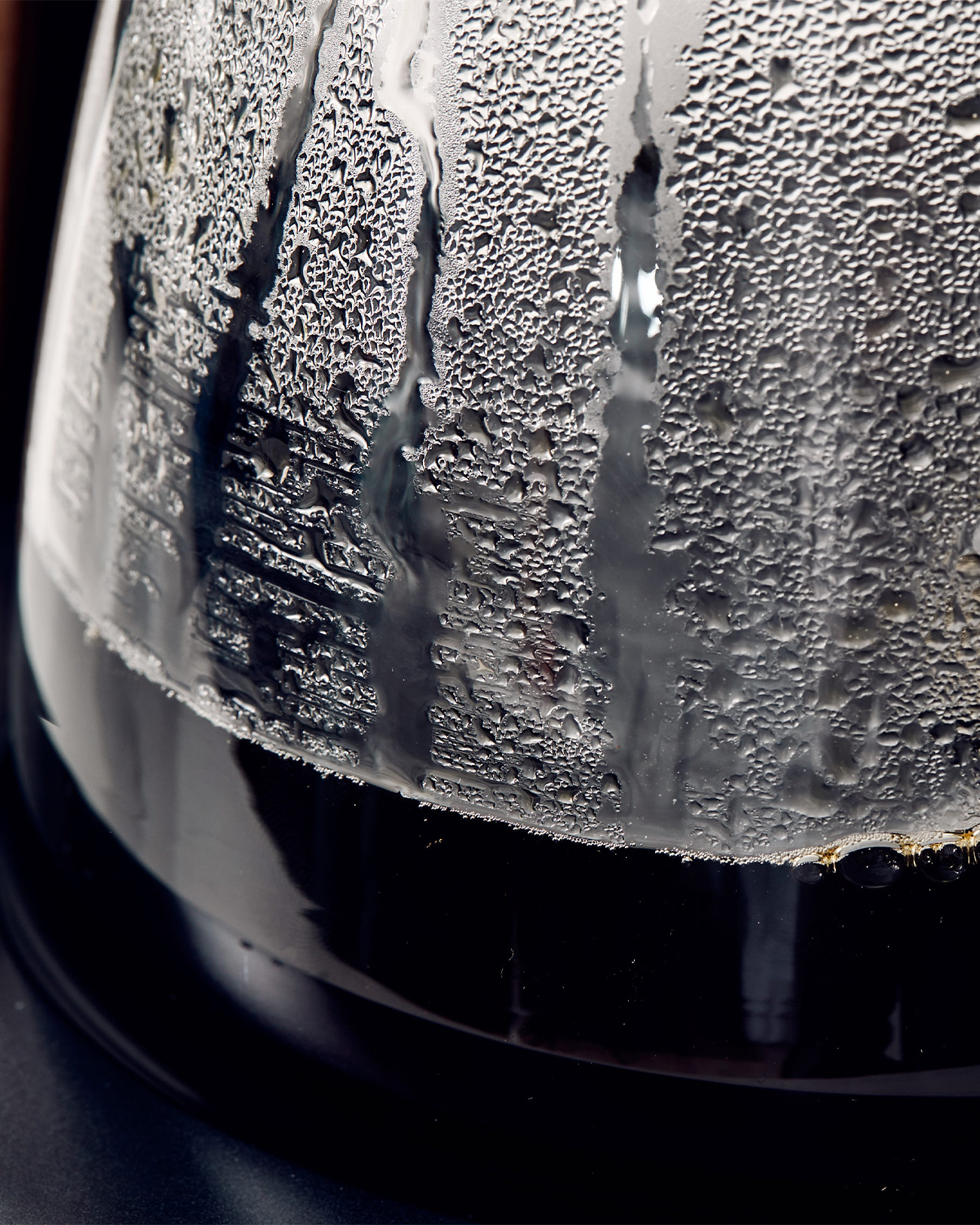
What We Don’t Like: It’s a pretty luxurious buy, and as such there’s no escaping the price associated with such things. Apart from that, condensation tends to build up around the top of the machine during brewing.
Verdict: Recommended, with reservations

What We Like: Behmor’s connected brewer uses an app for complete customization of your pot of coffee — adjustable options include water temperature, brew speed, pre-infusion, programmable timers and so on (it even adjusts temperature with the altitude the machine lives in). It was the runner up for “Best All-Out Coffee Maker” to the Breville because of this. Also because of this, it doesn’t brew just one type of coffee, so coffee drinkers of all types should be satisfied with the final pot. It’s also takes very little space on a countertop.
What We Don’t Like: The app works for the most part, but, as is the nature of apps, it occasionally had trouble connecting to smartphones.
Verdict: Recommended, with reservations

What We Like: $80 retail is an excellent price for a coffee maker, especially one that goes on sale so regularly. It also comes with a helpful “Clean” button that alerts you when the machine needs to be de-scaled or have a cleaning solution run through it. It’s very simple and easily programmable, too. The Mr. Coffee also receives good reviews fairly frequently (like a recommendation from Consumer Reports).
What We Don’t Like: The coffee this machine brews is regularly over-extracted — this means every pot is aggressively bitter, even when using fresh, specialty-grade coffee grounds. There were also problems with the connection between the lid and the brew basket, and there was a pretty regular need to wipe down the surrounding countertop after brewing because of it. Finally, it frequently didn’t use the entirety of the water needed for whatever cup amount was selected, leaving hot, standing water in the chamber overnight. The water reservoir in the back was also had a very small pouring area.
Verdict: Not recommended

What We Like: Hamilton Beach’s coffee maker is inexpensive (and goes on sale often) and its programmable function works consistently and is easy enough to set up. It’s also got an automatic drip stop when you pull the carafe from the machine, which means you’re able to pour a cup before it’s completely finished brewing and coffee won’t drip onto the base below. The detachable water reservoir is also a nice touch.
What We Don’t Like: As Wirecutter notes in its positive review of the machine, it’s really not for people who want above average coffee. The pots it brews are, like the Mr. Coffee, over-extracted, bitter and quell much of coffee’s natural flavor. The machine also over soaked the grounds to the point that the filter bent over and into the grounds, which caused some water to fall through to the carafe having not touched any coffee.
Verdict: Not recommended

At the end of a long day we like to decompress with some peace and quiet and two fingers of the good stuff. This candle will help set the mood. Expect hints of mild sandalwood…
The forums are abuzz: “Dang, just when I was going to offer my Ivory for sale or trade.” “That’s gonna deflate the resale value of the Canadian versions.” “Wish they had these in Australia!”
We are not talking about sneakers, Supreme drops or foldable smartphones. We are talking, of course, about Weber kettles.
Old Weber grills, like vintage products from any classically American brand, are highly collectible. By virtue of “PAT PENDING” being etched into the top-side vent, a kettle from the late ’60s, early ’70s is currently selling for more than $1,500 on eBay. But the first layer of Weber kettle collectibility is more obvious: color.
Since the kettle’s shape was more or less finalized in 1956, Weber has rotated through a number of permanent and limited-edition colorways — greens, blues, yellows and, most famously, reds (“redhead” kettles belongs to the permanent collection at the Smithsonian’s National Museum of American History). Vintage grills of every color are regularly bought, sold, traded and discussed on forums like Weber Kettle Club.
This month, Weber threw its enthusiasts a bone. It added four new colors — slate blue, ivory, smoke and spring green — to its Master-Touch series, which is the most-upgraded version of any Weber kettle (BBQ Guys has a nice breakdown here). They’re available now, priced at $249 a pop.
Seasonality is everything in coffee. So when it comes to choosing the best beans to brew at home, our recommendation is simple: just look to what’s new. Here, three fresh batches from some of the country’s best roasters — Onyx Coffee Lab, Huckleberry and Blueprint.
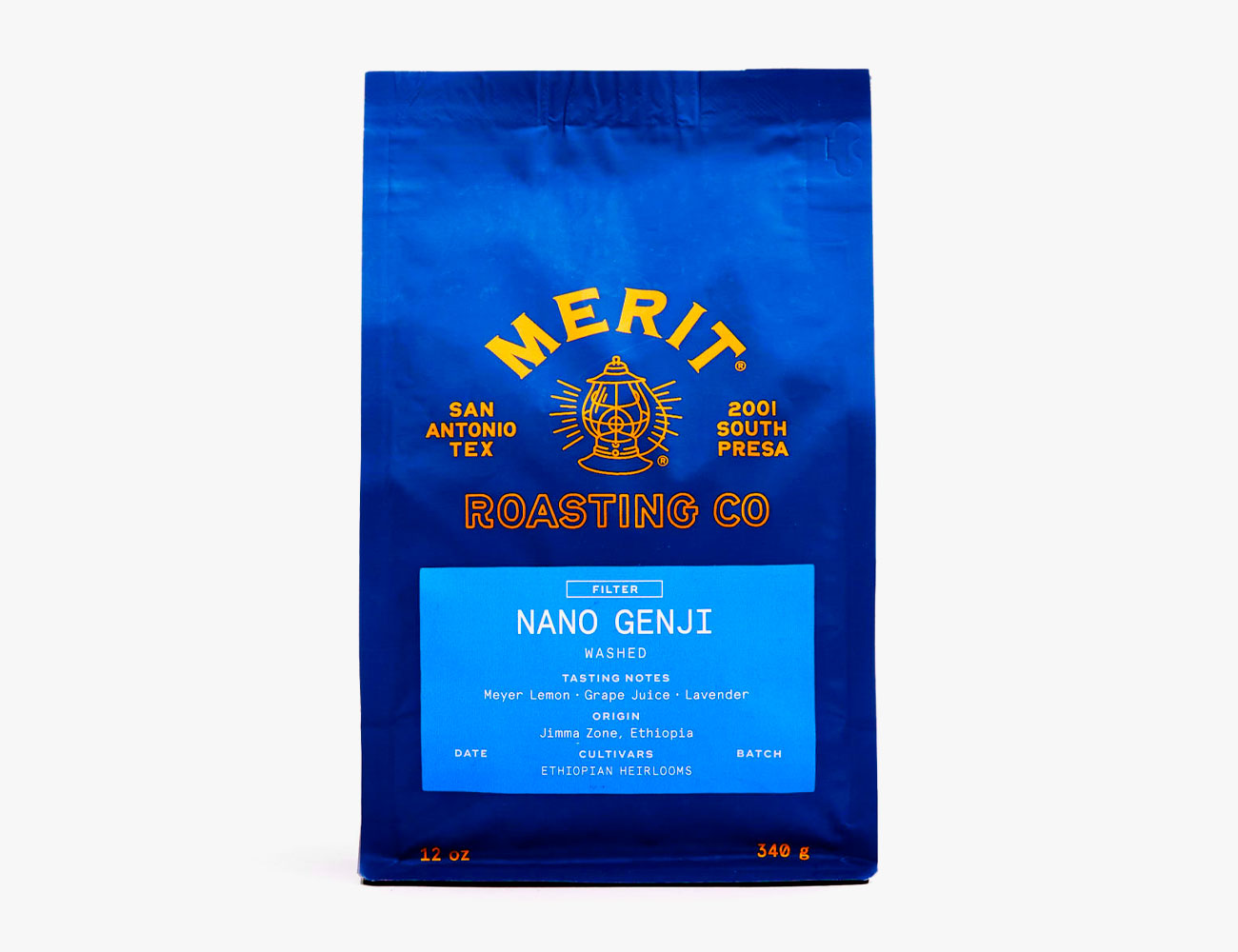
One of the first harvests from a brand new coffee washing station in the heart of Ethiopian coffee country, Merit’s latest is a lightly sweet, bright and floral tribute to coffee’s most-loved origin. Best brewed pour-over.
Origin: Jimma Zone, Ethiopia
Roast Level: Light-Medium
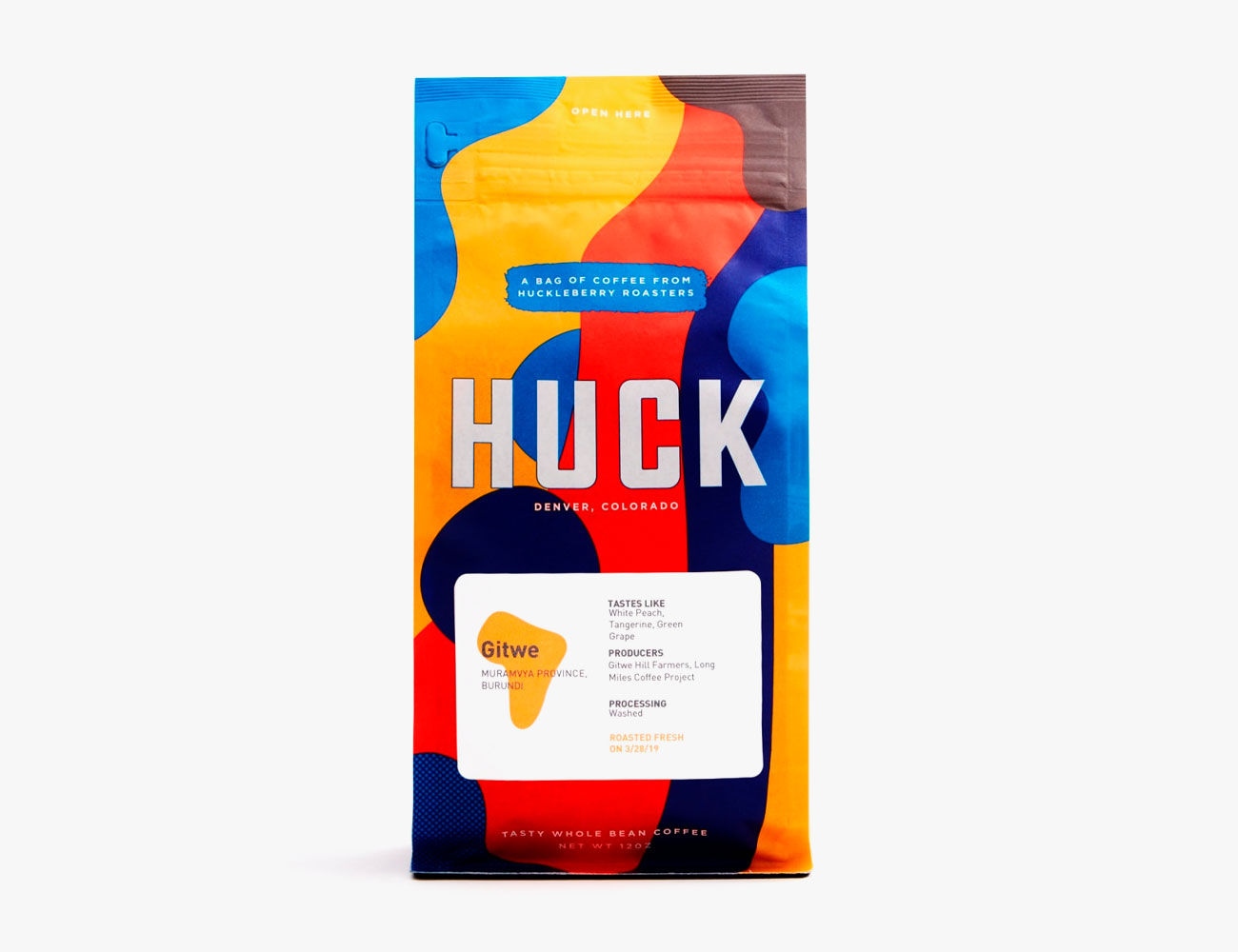
In her first year on the competitive coffee roasting circuit, Huckleberry’s head roaster Shelby Williamson took America’s top prize: the U.S. Roasting Championship. This new bag, a Trade exclusive, grows for years on Gitwe, a mountain in Africa’s Eastern Rift range before harvest. The roaster’s tasting notes include peach, graham cracker and tangerine.
Origin: Muramvya Province, Burundi
Roast Level: Light-Medium

The best way to understand the enormous effect processing has on beans is to try a coffee that’s undergone natural processing. Grown on the slopes of Mount Elgon in Eastern Uganda, Blueprint’s just-harvested medium roast is the perfect place to start. The beans boast huge sugar and acid content, making for a fruit bomb of a bag (Trade describes it as “deeply reminiscent of your favorite berry-flavored cereal”). The beans are harvested from three coffee plant varietals, including SL34, one of the best plants for coffee quality in the world.
Origin: Kapchorwa, Uganda
Roast Level: Medium
Seasonality is everything in coffee. So when it comes to choosing the best beans to brew at home, our recommendation is simple: just look to what’s new. Here, three fresh batches from some of the country’s best roasters — Merit, Huckleberry and Blueprint.
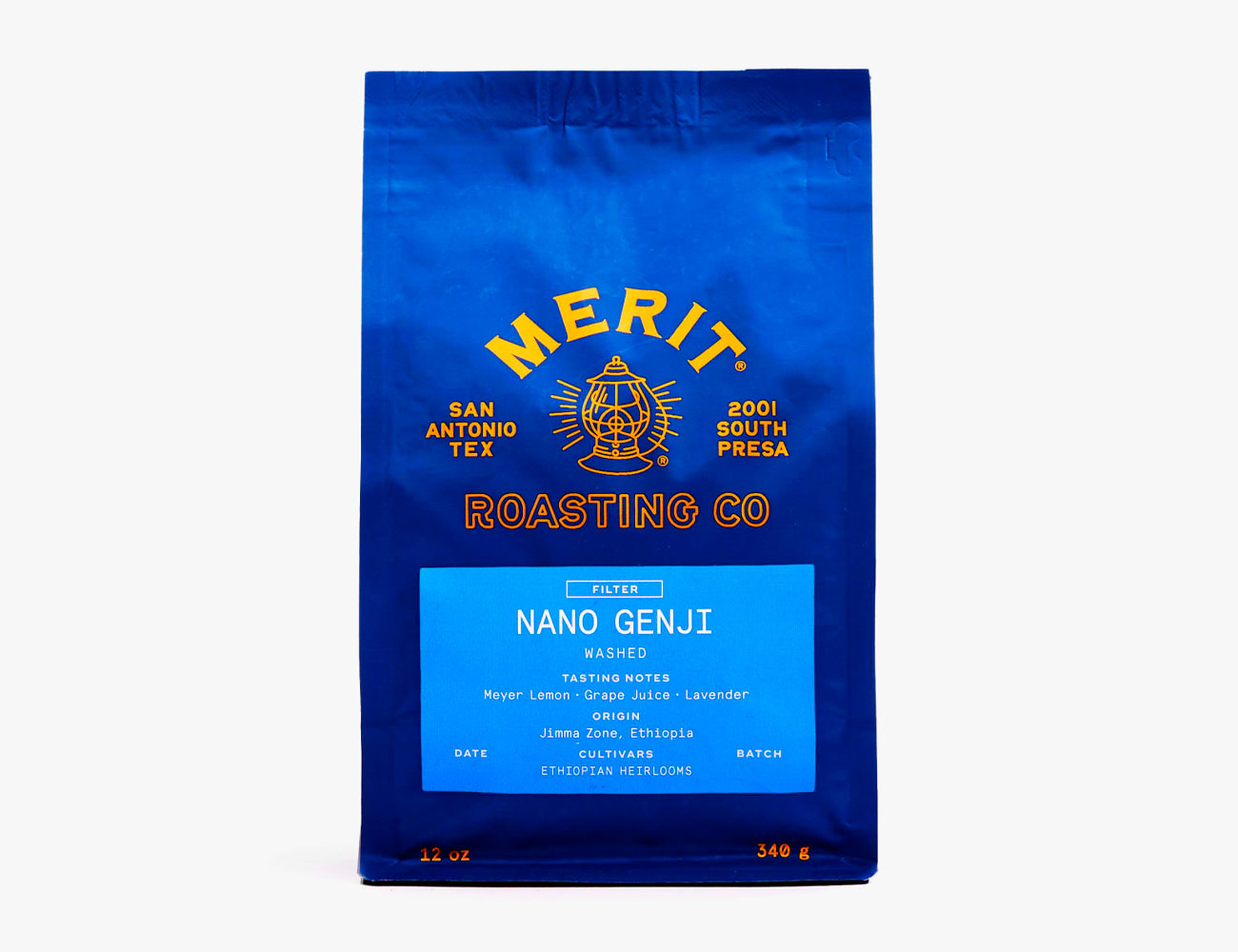
One of the first harvests from a brand new coffee washing station in the heart of Ethiopian coffee country, Merit’s latest is a lightly sweet, bright and floral tribute to coffee’s most-loved origin. Best brewed pour-over.
Origin: Jimma Zone, Ethiopia
Roast Level: Light-Medium
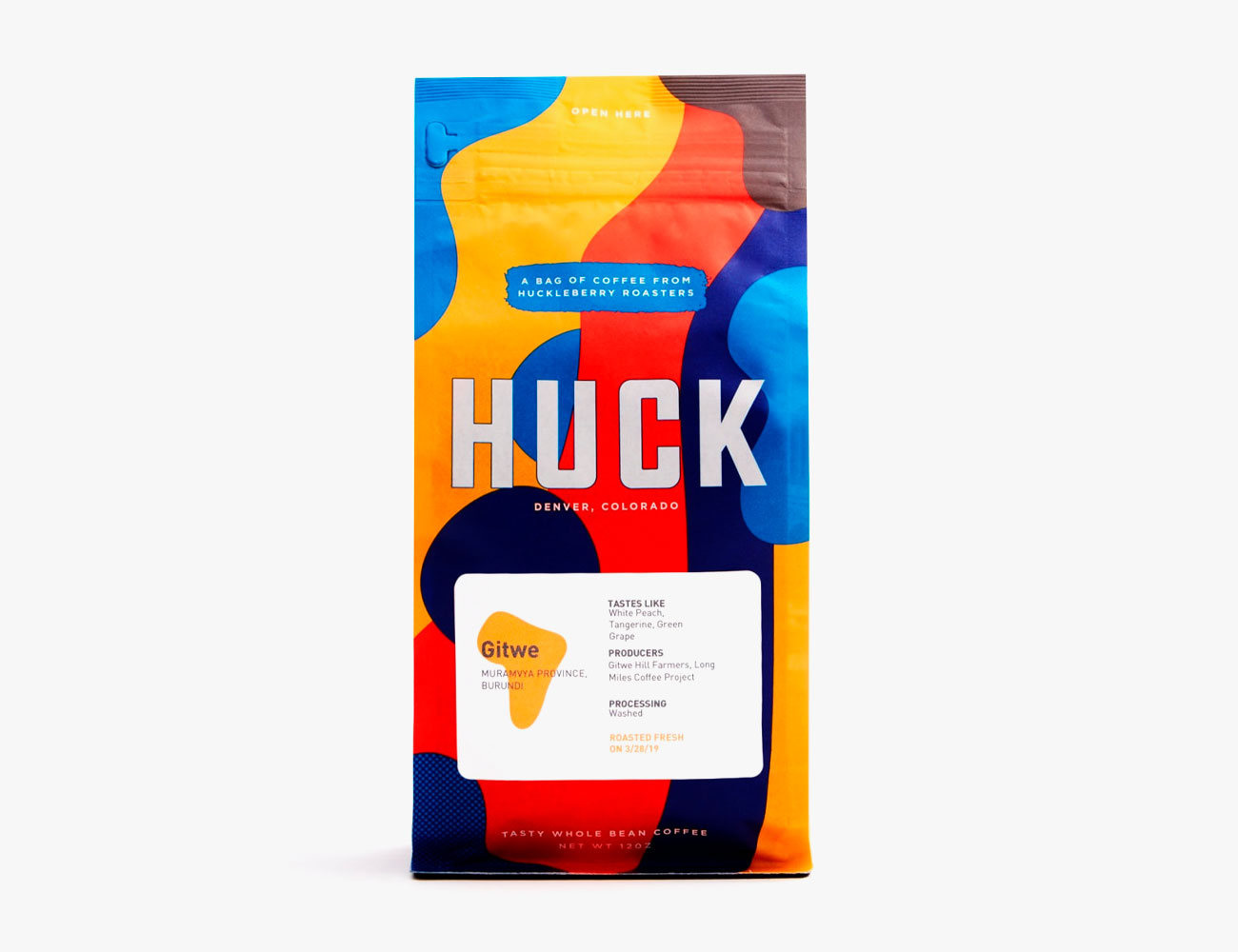
In her first year on the competitive coffee roasting circuit, Huckleberry’s head roaster Shelby Williamson took America’s top prize: the U.S. Roasting Championship. This new bag, a Trade exclusive, grows for years on Gitwe, a mountain in Africa’s Eastern Rift range before harvest. The roaster’s tasting notes include peach, graham cracker and tangerine.
Origin: Muramvya Province, Burundi
Roast Level: Light-Medium

The best way to understand the enormous effect processing has on beans is to try a coffee that’s undergone natural processing. Grown on the slopes of Mount Elgon in Eastern Uganda, Blueprint’s just-harvested medium roast is the perfect place to start. The beans boast huge sugar and acid content, making for a fruit bomb of a bag (Trade describes it as “deeply reminiscent of your favorite berry-flavored cereal”). The beans are harvested from three coffee plant varietals, including SL34, one of the best plants for coffee quality in the world.
Origin: Kapchorwa, Uganda
Roast Level: Medium


 /a>
/a>


