All posts in “Home”

A Fire Pit Made a New Charcoal Grill That’s Meant to Get Hotter, Faster

<!–A Fire Pit Made a New Charcoal Grill That’s Meant to Get Hotter, Faster • Gear Patrol<!– –>

This Is Grate


Solo Stove makes sturdy, semi-portable fire pits that getting extremely hot, extremely fast. The brand’s new charcoal grill borrows that tech and puts it to work.

It’s made of sturdy stainless steel, assembles quickly and looks slick, but if there were one selling point for Solo’s first go at a grill, it’d be air control. What the brand calls 360-Degree Airflow is meant to guarantee quicker coal lighting and ready times. Air flows through the holes at the base of the drum and through what amounts to a wind tunnel that leads directly into the coal bed, feeding the coals the right amount of oxygen to get (and keep) the fire going.

Like its fire pits, Solo’s grill is double-walled and features a removable ashtray for cleaning as well. Right now, the brand is holding a pre-sale for the grill bundle, which comes with a grill grill stand, grill shelter, basic grill tools and a bag of all-natural charcoal. Grills are scheduled to ship early September.

Note: Purchasing products through our links may earn us a portion of the sale, which supports our editorial team’s mission. Learn more here.
Will Price

Will Price is Gear Patrol’s home and drinks editor. He’s from Atlanta and lives in Brooklyn. He’s interested in bourbon, houseplants, cheap Japanese pens, and cast-iron skillets — maybe a little too much.

More by Will Price | Follow on Contact via Email

<!–

–>

<!– –><!–

–>

This Slick Coffee Table Is the Result of Customer Complaints

<!–Dims.’ New Coffee Table Is Bigger and Better Than Before • Gear Patrol<!– –>

Dims., a Gear Patrol-favorite flat pack furniture brand, just launched a new table: the Caldera L. The coffee table is a larger and longer updated version of its two-year-old Caldera.

The Caldera L addresses qualms customers had about the size of the original Caldera, namely its small size. John Astbury, an English-born designer, and Kyuhyung Cho, a Korean designer, worked together on the updated version, which has a dimpled surface for display or storage purposes (it also just looks nice). The design is available in natural oak and ink black.

All of Dims.’ pieces, which includes furniture like the Cleo stacking chairs and Barbican Trolley bar cart, are sustainably made, easy to assemble and reasonably priced.

The Caldera L goes for $595, but the first 100 pieces are available now at a special pre-order price of $545.

Note: Purchasing products through our links may earn us a portion of the sale, which supports our editorial team’s mission. Learn more here.
Tyler Chin

Tyler Chin is Gear Patrol’s home writer. He’s from Queens, where tempers are short and commutes are long. But nothing can get in the way of his love of coffee, beer and random home goods.

More by Tyler Chin | Follow on Instagram · Contact via Email

<!–

–>

<!– –><!–

–>

You Probably Need to Repot Your Houseplants ASAP. Here’s How

We all love a good indoor plant. They brighten up spaces and make great company. Some may worry about giving their plants enough sunlight or water, but there’s one factor they may not consider regarding their plant’s longevity — the pot. If you’re keeping your plants in their nursery pots, you’re going to kill them.

Nursery pots are those plastic containers that plants usually come in when you first buy them. These pots are not meant for long-term plant storage as they will stunt your plant’s growth by compacting its roots. Even if you’ve already potted your plant once before, you might need to do so again once it outgrows its home. You wouldn’t wear the same sized shoes if your feet kept growing, would you? We asked Bloomscape’s director of plant programs, Joyce Mast, for some tips and a how-to on repotting your precious houseplants. Here’s what you need to know.

Pot Pointers

Buy the right-sized pot

Size matters when it comes to pots. Repotting plants is about giving its roots enough space to grow and thrive. According to Mast, you should choose a pot that is at most two inches larger in diameter. Any smaller and you’re wasting your time repotting; any larger and you’ll have too much soil, which will retain excess moisture and lead to bacteria growth.

Don’t waterboard your plants

Your pot needs a drain hole. Watertight pots won’t allow water to escape and you risk drowning your plant or promoting bacteria growth in the soil and plant’s roots. You don’t need to water you plant every day. As long as the soil remains somewhat moist, your plant will thrive. And when you do water, make sure all water drains through the drain hole before replacing it atop the saucer.

“Many retail stores do not wish to deal with the excess water while the plants are on display. This type of thinking sets up the customer for failure with their plants once they purchase and take home. In most cases, the plant is already dying a slow death because the roots are drowning and the new plant parent thinks they have done something wrong which is not the case,” Mast says.

Some believe you can add rocks on the bottom of a watertight pot and they’ll act as a draining system. They won’t. “Placing stones in a pot without a drainage hole is not the answer. It will only take a bit longer for the pot to fill with water causing the plant to die,” Mast says.

Always use fresh soil

You wouldn’t settle for sloppy seconds, and your plants won’t either. Mast says, “using fresh potting soil will ensure that your plants get a good nutrient boost.” A bulk-sized bag of potting soil shouldn’t cost too much, and it’s good to have on-hand for future repotting duties.

How to Repot Your Plant

1. Grab your new pot and fill a third of it up with fresh soil.

2. Carefully shimmy your plant out of its current pot. If you’re transferring out of a nursery pot, gently squeezing it can help dislodge the plant and its roots. Otherwise, gently shaking your plant from its current pot may help with extraction. Take scissors or pruning shears to dead or excessively long roots. Mast recommends using rubbing alcohol to clean the shears after each snip lest you spread bacteria from infected roots to good ones.

3. Center your plant in its new pot. The top of its root ball should be an inch below the top of the pot.

4. Add soil to the pot leaving an inch or two between the top layer of soil and the top of the pot. Light pack in the soil around the roots.

5. Give the plant a thorough watering so the water starts to flow from the pot’s drain hole. Allow to drain fully and place it on its saucer.

Note: Purchasing products through our links may earn us a portion of the sale, which supports our editorial team’s mission. Learn more here.
Tyler Chin

Tyler Chin is Gear Patrol’s home writer. He’s from Queens, where tempers are short and commutes are long. But nothing can get in the way of his love of coffee, beer and random home goods.

More by Tyler Chin | Follow on Instagram · Contact via Email

Lil Yachty Is Obsessed With His Touchscreen Toaster. Here’s Why

<!–Lil Yachty Is Obsessed With His Touchscreen Toaster. Here’s Why • Gear Patrol<!– –>

Get That Bread


Rapper Lil Yachty, whose hits include “Broccoli,” “1 Night” and “Minnesota,” loves a futuristic toaster. The rapper posted a TikTok in which he hypes up his touchscreen toaster that lets you swipe through different toast levels and bread options so you know what you’re getting before you put your bread in.

The toaster in question is the $300 Revolution R180. The innovative two-slice toaster features a sleek stainless steel design with a large backlit touchscreen display. The R180 has five food settings: bread, bagels, English muffins, waffles & toaster pastries (or as Yachty calls them, accurately, Pop-Tarts), and there are seven browning levels for those who want a slight toast to those who want their food cooked to hell. Your toast pick will dictate the heat level and time your food stays in the toaster, and you can be sure you’ll be getting what you saw on the touchscreen display. When not in use, the display acts as a clock, and the toaster will even let you know when it’s time to clean the crumb tray.

The Revolution Toaster is available at most retailers. Follow Lil Yachty’s TikTok for more food content like a Five Guys milkshake hack, Dunkaroos and Hot Cheeto chicken sandwiches.

Note: Purchasing products through our links may earn us a portion of the sale, which supports our editorial team’s mission. Learn more here.
Tyler Chin

Tyler Chin is Gear Patrol’s home writer. He’s from Queens, where tempers are short and commutes are long. But nothing can get in the way of his love of coffee, beer and random home goods.

More by Tyler Chin | Follow on Instagram · Contact via Email

<!–

–>

<!– –><!–

–>

10 Tools You Need to Take Your Grill Setup to the Next Level

You bought a grill, extra-long tongs and a bag of charcoal. What followed was the slow realization that your out-of-the-box setup is limited. The grates create flare-ups, the coals take too long to light and you’ve burned off every hair on your forearm. Sound familiar? Then this guide is for you.

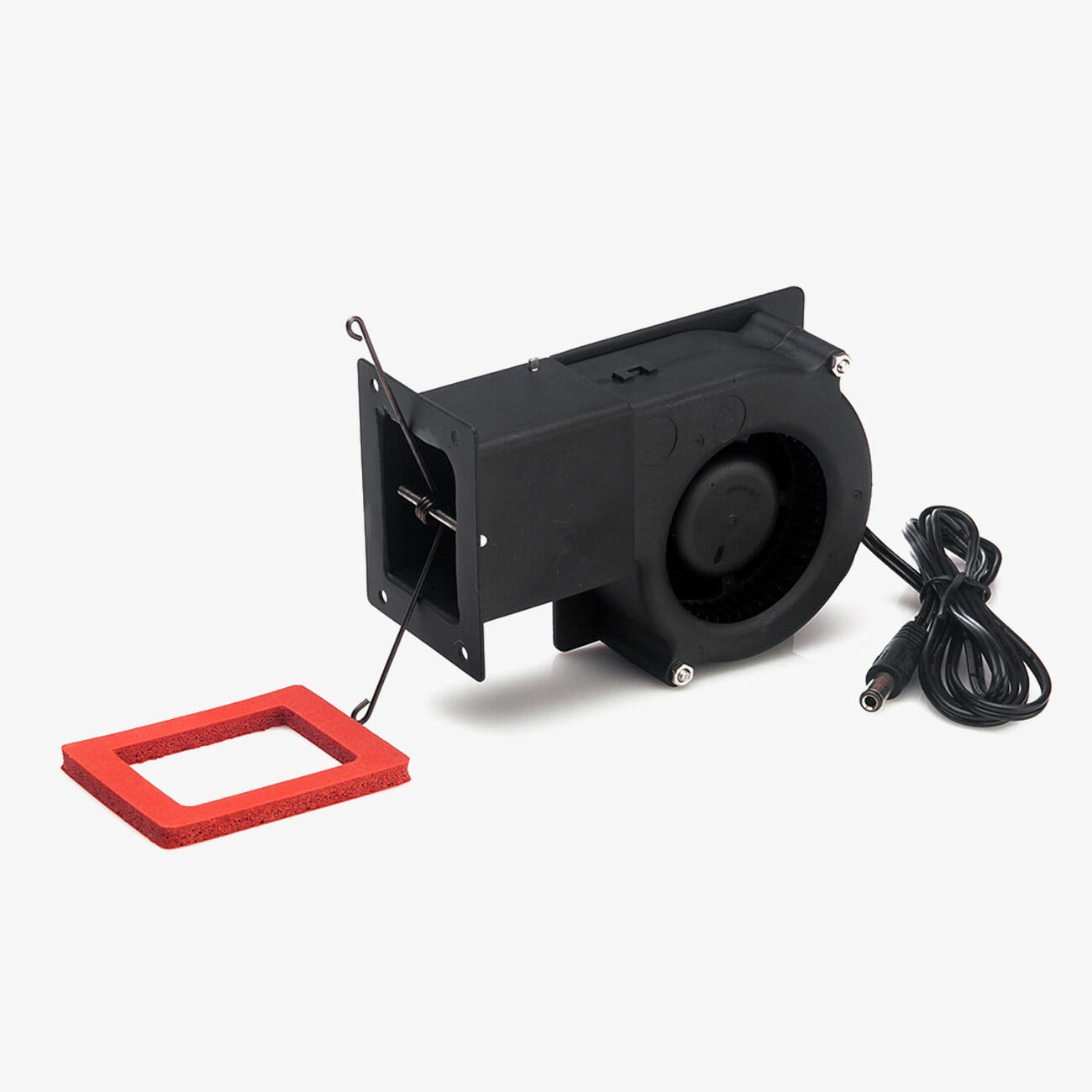
FireBoard Snap-On Blower

Temperature is paramount when it comes to cooking with wood or charcoal, and for those natural fuel sources, airflow is king. Feeding more air into a bed of coals generates more heat, bottlenecking airflow creates a lower heat environment. FireBoard’s snap-on blower fits directly into most ventilation holes and turns airflow regulation from an art to a science.

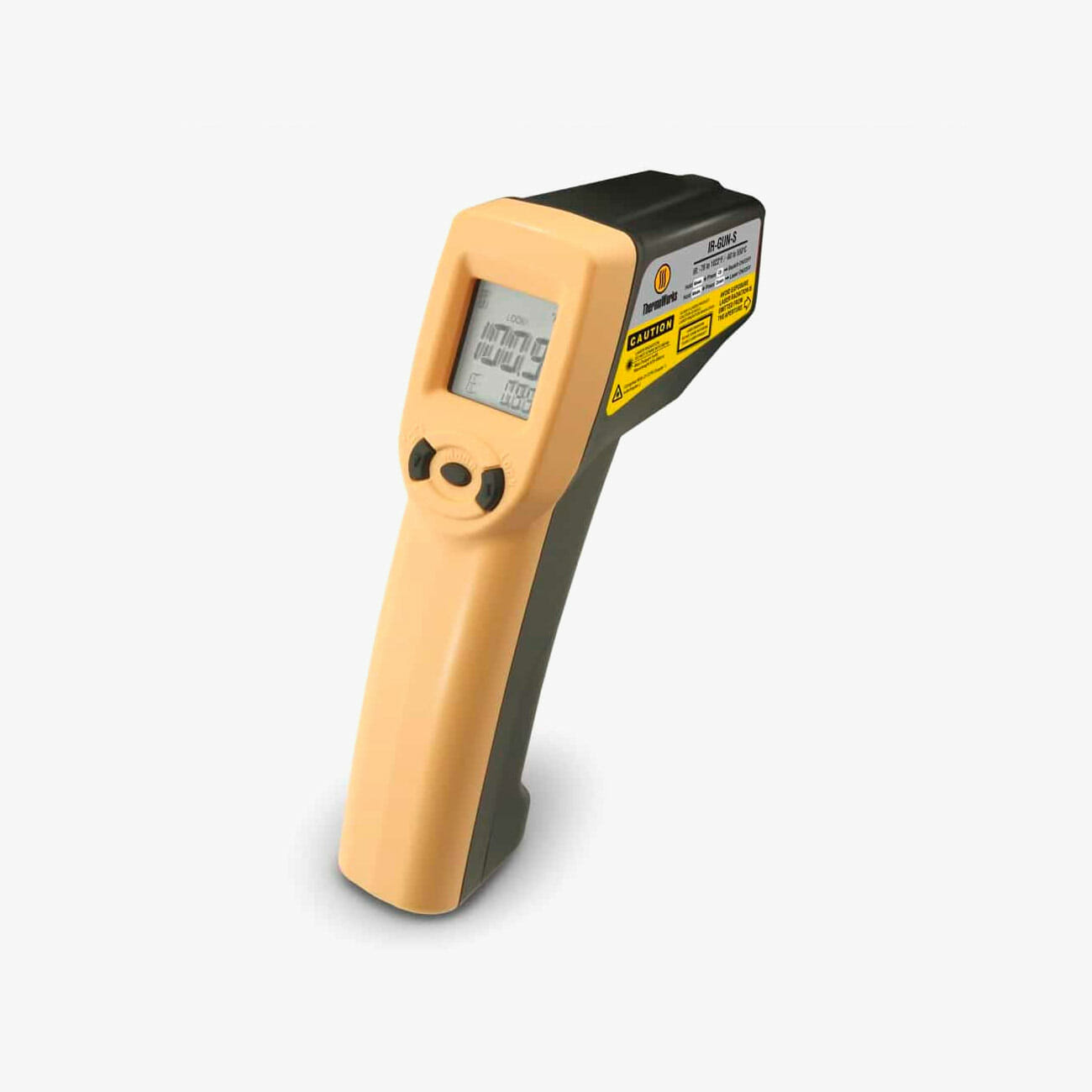
ThermoWorks IR Gun

Utah-based ThermoWorks might be the most trusted name in temperature telling. Its infrared temperature-tracking gun is less popular than its industry-standard thermometers, but it’s nearly as essential. Fire it at the grates to track when you’re building enough heat to properly sear a steak.

Pizzacraft 7-Inch Square Mini Pizza Stones

Up your pizza-making game with pizza stones. This grill upgrade ensures even heating on pizza crusts and other baked goods. You’ll get perfectly crisp crusts on your homemade pies, leftover slices and frozen pizzas.

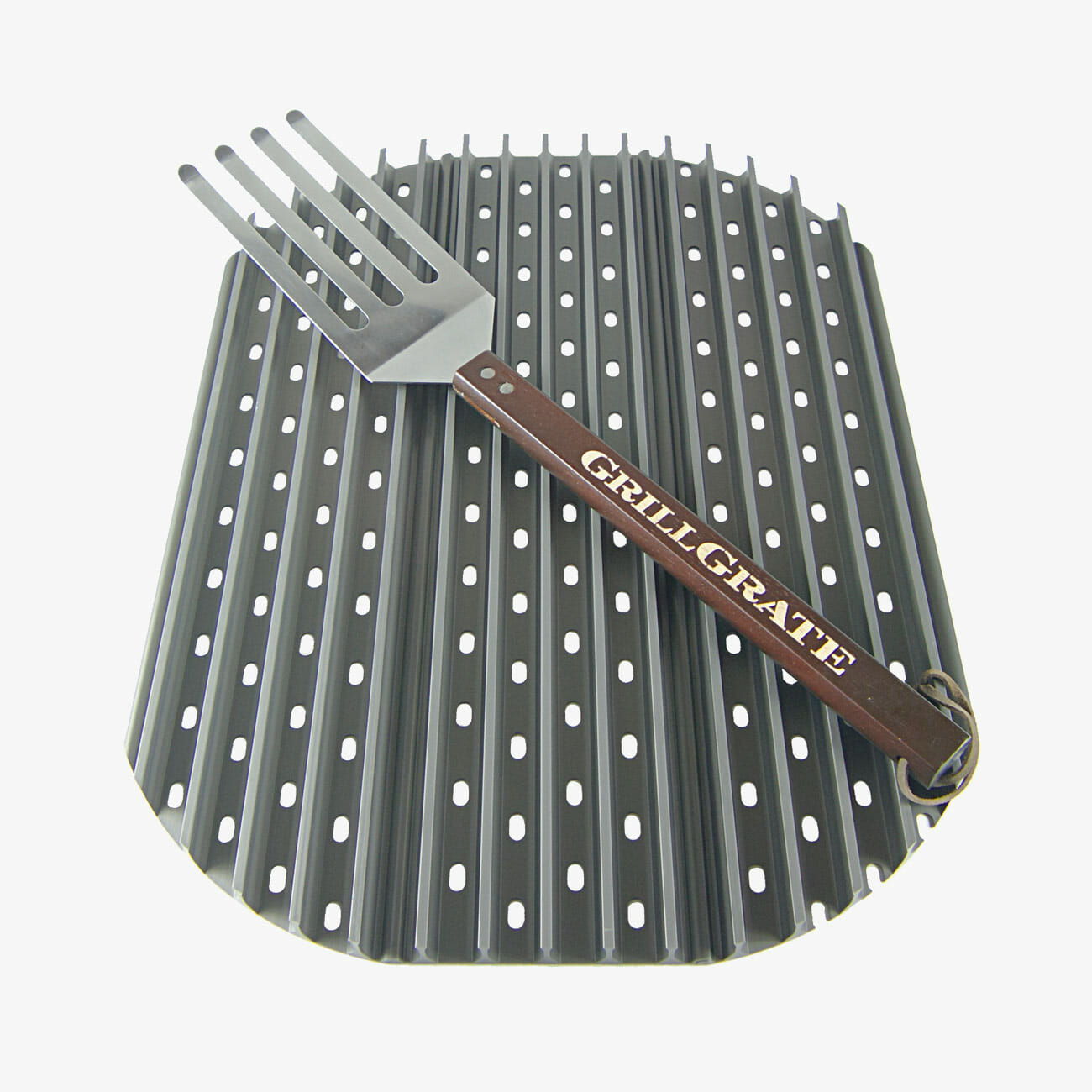
GrillGrates Upgraded Grates

Endorsed as the “best thing to happen to gas grills and pellet smokers since salt and pepper” by the grill testers at Amazing Ribs, these cast-aluminum grates are rust-resistant and distribute heat more evenly across whatever you’re grilling.

Video: Traeger Ironwood Grill Review

Watch more of This Week In Gear video reviews.

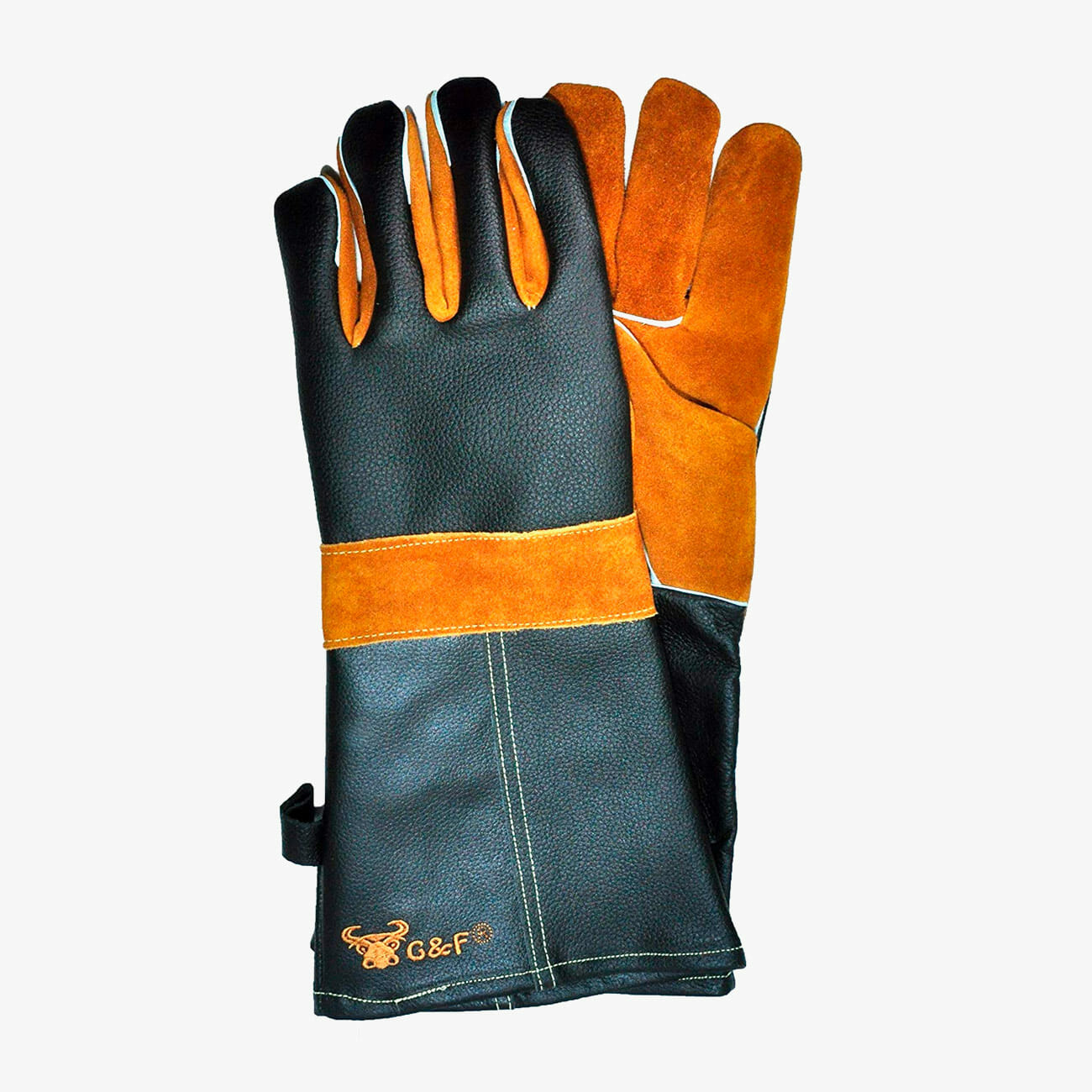
G&F Welder’s Gloves

Oven mitts are poor stand-ins for grill-safe gloves, and most grill-safe gloves suck. Instead, get welder’s gloves — they go further up your arm, are safer at higher heat levels and allow your fingers freer movement.

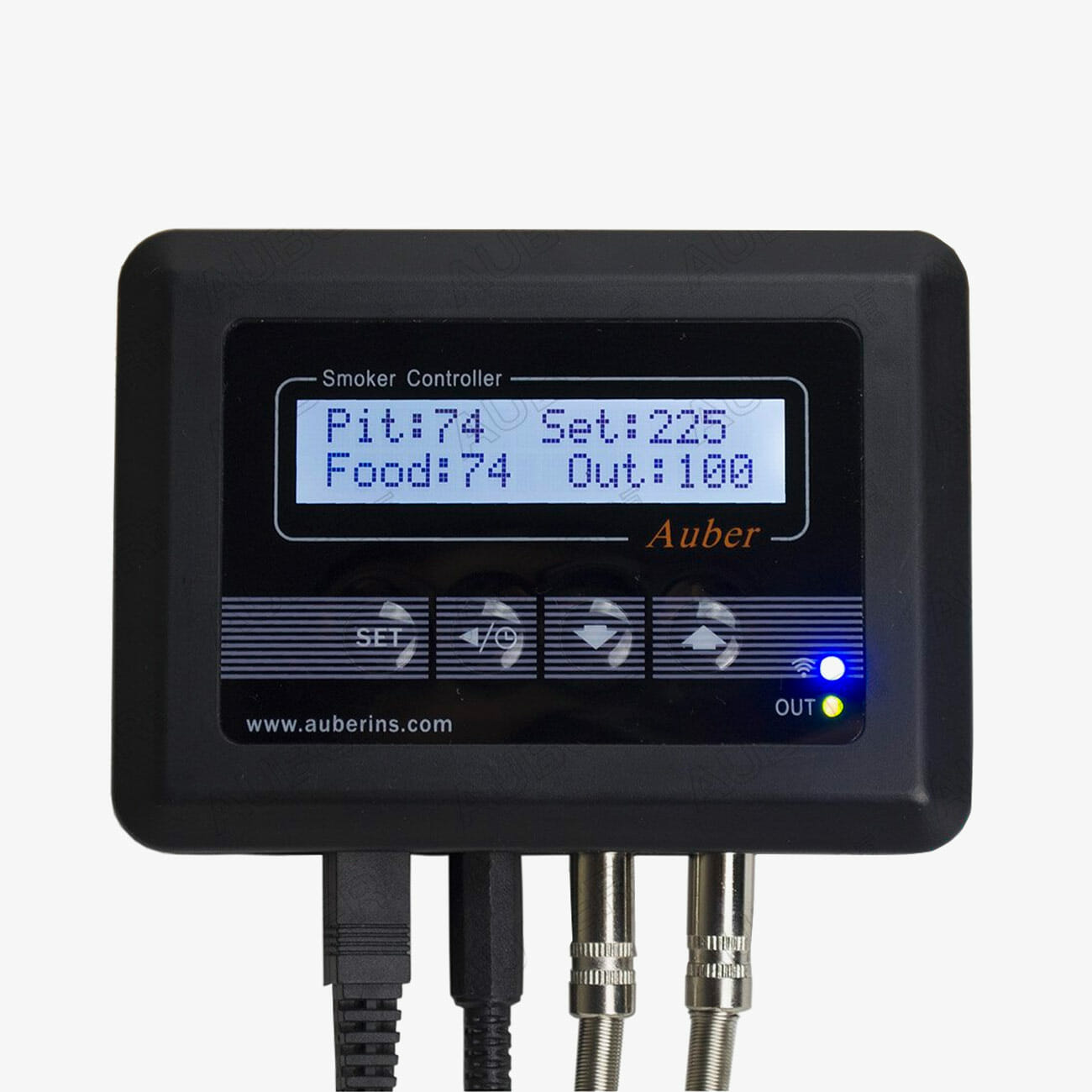
Auber Instruments Wi-Fi Controller

Designed for professional pitmasters to use on overnight smokes, Auber Instruments’ grill controller is only for the most serious of home smokers. Just plug a probe into your meat and another at fire level, set your desired internal temperature for the meat and the temperature you want to smoke at. The controller does the rest, automatically adjusting airflow and air speed at coal level and feeding all cook data into an app on your phone.

Sage Owl Brass Grill Scraper

Still using bristly wire brushes to clean your grates? You should stop, unless you like putting indigestible metal in your guest’s burger. Instead, get a simple, cheap, hard-wearing universal grill scraper from Sage Owl, which come in various brass and stainless steel finishes.

Looftlighter Fire Starter

The first step to getting coals lit more quickly is buying a chimney. The second: a Looflighter. What looks like an overcharged hair curler can set stone cold charcoal ablaze in 60 seconds or less. You’ll never need to use instant-light charcoal again.

Steven Raichlen Cast-Iron Plancha

Planchas are hotter and heavier than griddles and one of Francis Mallmann’s favored ways of grilling. Use one to grill foods that would otherwise fall between or stick to the grates — like vegetables, whole fish and shrimp.

Fogo Lump Coal

Some people believe pre-cut charcoal is better than coal because every piece will be the same size, lending to more even heat distribution over your fire. But thanks to a more dense make up and larger size, lump coal is capable of reaching higher temperatures and burning for longer than regular charcoal. Give it a try.

Note: Purchasing products through our links may earn us a portion of the sale, which supports our editorial team’s mission. Learn more here.
Will Price

Will Price is Gear Patrol’s home and drinks editor. He’s from Atlanta and lives in Brooklyn. He’s interested in bourbon, houseplants, cheap Japanese pens, and cast-iron skillets — maybe a little too much.

More by Will Price | Follow on Contact via Email

8 Ways to Make Your Kitchen Knives Last Forever, According to an Expert

David Olkovetsky is the founder of Artisan Revere, a new knifemaking company creating blades out of hardwearing stainless steels.


Taking care of your kitchen knife isn’t as hard as it seems. And while it might be tempting to let your knife sit with the other dishes in the sink (don’t do it), or toss it haphazardly into the dishwasher (really, don’t do it), regular maintenance will make a world of difference. Maybe you like cooking, or maybe you cook purely to survive. When your knife maintains its incredibly sharp edge — and glides effortlessly through rib eyes and rock-hard squash alike — you’ll start to truly enjoy rolling up your sleeves and conquering the kitchen.

They say that a bit of prevention is better than a cure. Here’s what you need to know to keep your knives in mint condition.

Use the knife on food, food and only food.

Perhaps it’s obvious — but it needs to be said.

Think about the number of times you’ve used your kitchen knife to pry open a can, open boxes, break down a small animal and hammer through frozen foods. Any of these can and will dull, twist or chip your blade because your kitchen knife is designed to cut through (non-frozen) foods only. Using it for any other purpose can seriously damage your cutting edge. Specialty boning knives are meant exclusively for breaking down poultry, bone-in meats and fish — so don’t use your chef knife, santoku, or nakiri for hacking through bones.

Photo by Henry Phillips

Wash and dry every single use.

When you’re done with meal prep, wash your knife with dish soap and warm water. When washing your knife, make sure to use a non-scratch sponge. Some sponges use aluminum oxide on the abrasive side, which can leave scratch marks on your blade and dull your edge. After washing, dry your knife immediately. We recommend knife magnets for storage (more on that later). I’ve seen knives of all types fall victim to rust spots, discoloration and worse just from being left out on the counter, or with all the other dirty dishes in the sink. It can be reversed, but it’s best to avoid an expensive lesson and take just a few seconds to wash and dry your knife.

Treat your knife with mineral oil.

An occasional drop or two of food-grade mineral oil throughout the handle and the blade can keep your blade from reacting to highly acidic foods like lemons and limes. It will also prevent acidic or salty solutions from stripping your blade of its free chromium layer, which is a fancy way of saying it will prevent patina and rust. Food-grade mineral oil isn’t just great for preventative knife care; it will also reverse patination on a stainless blade. Something like this mineral oil will do the trick — and also work wonders for your cutting board. If your knife is a high-carbon, “non-stainless” blade, you should apply a layer of food grade mineral oil after every single use, as this will prevent corrosion. If you’ve already got some corrosion, as evidenced by orange spots on your blade, we suggest attempting to remove it with mineral oil. If that doesn’t do the trick, purchase some Simichrome All Metal Polish.

About the Author

David Olkovetsky is the founder of Artisan Revere, a knife company that blends high-end design with hardwearing materials. artisanrevere.com

Use the right cutting board.

There are only a few cutting boards that you should use to keep your knife sharp and maintain a sanitary kitchen: wood, plastic or synthetic rubber. Stick with wooden cutting boards, made with walnut, cherry or maple wood for fruits and vegetables. The janka hardness of walnut and cherry woods is just right for your knives, while maple is a bit harder and less expensive, but will require more frequent sharpening.

Plastic boards are inexpensive, and absolutely fine for fruits and vegetables, but these boards are best used for meats and fish because they can be sanitized in the dishwasher.

Additionally, synthetic rubber boards, like this one from Hasegawa, are superb for advanced knife users who primarily employ slicing motions — they’re grippy and also do less damage to your knives. Rock choppers should avoid these as the boards are a bit too soft.

Please, stop scraping food off your cutting board with the knife.

If you’ve been using your knife’s edge to transfer foods and organize your cutting board, you’re not alone — many top chefs we’ve worked with do this too. Here’s the bad news, this is the easiest way to roll your knife’s edge, especially on those thinner knives.
Avoid this practice before it becomes tough to break the habit. I suggest picking up an inexpensive bench scraper. When all else fails, use the spine of your blade to transfer food.

Never, ever the dishwasher.

Let’s put it this way: your dishwasher is a hurricane of scorching hot water and highly abrasive detergent. It’s a perfect storm that can chip, dull and corrode your knives. Not to mention the high likelihood of pitting corrosion — a particularly nasty, localized form of corrosion. Even if your blade miraculously comes out of the dishwasher intact, the high temperatures and wet conditions will rapidly eat away at the epoxy that holds your handle together — translation: you’ll ruin your gorgeous knife, guaranteed.

Keep your knife away from the dishwasher at all costs, and clean it by hand only. PSA: the dishwasher voids most knife warranties.

Knife blocks suck. Get a knife bar.

The best place to store your knives is on a magnet. Wood or bamboo covered magnets are best, as they’re not as harsh on your knives as steel magnets: steel on steel is never ideal. Large wooden blocks are sub-optimal for several reasons: they’re difficult to clean, dull your knife edge and take up unnecessary space.
Importantly, when placing your knife on or removing your knife off a magnet, remember to maintain spine contact. Place the knife on the magnet via the spine of the blade, and then slowly rotate the knife face onto the magnet. Reverse this when removing the knife. Your goal is to avoid any contact between the cutting edge and the magnet — this will keep your edge sharper for longer and you won’t cut into the magnet.

Know when to hone (and sharpen) your knife.

All knives will eventually dull as the steel abrades over time. We use a third-generation high alloy particle metallurgy tool steel (which is 30-times more expensive than generic knife steel) that will stay sharp much longer — but even our knives will eventually need a tune-up.

We suggest weekly ceramic rod honing for home cooks and daily for professional cooks. Cook’s Standard makes a quality, fairly priced ceramic rod. Remember to wipe your blade down after you’ve honed it.

Note: Purchasing products through our links may earn us a portion of the sale, which supports our editorial team’s mission. Learn more here.

9 Mechanical Pencils for Your Everyday Carry

Somewhere in between the notes application on your phone and the box of Ticonderogas in the back-to-school section lies the mechanical pencil. If you carry a notebook, you’ll need a reliable, EDC-worthy writing utensil to go along with it. Pens are one option, but if you like the feeling of lead on paper and the freedom to erase without carrying Wite-Out, a mechanical pencil is your best option. Whether you plan on losing one every week, or you’re keeping it in a glass case on your solid oak desk, you have choices, but it’s easy to go wrong and wind up with something you’ll never use. These are our favorites.

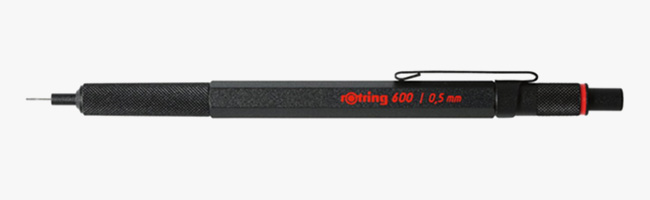
Rotring 600

Rotring-Gear-PatrolRotring-Gear-Patrol

Best Overall: We can’t say enough about this pencil. Several of us in the office carry it everywhere. The complete metal construction gives the pencil weight and balance. Its hexagonal shape is comfortable and prevents it from rolling around on your desk. Everything about the 600 fits together smoothly and tightly. They actually have an 800 line that’s a little pricier, as well as the 800+ which has a built-in stylus — but we still prefer the 600’s simplicity.

Alvin Draft-Matic
Alvin-Draft-Matic-Gear-PatrolAlvin-Draft-Matic-Gear-Patrol

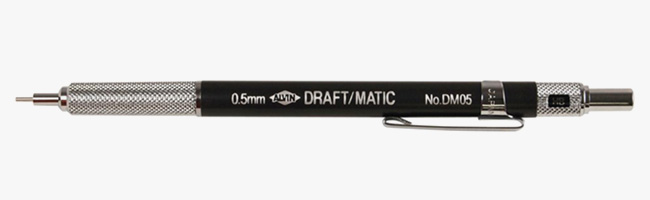
Best Budget: If you like different colors and don’t mind different lead thicknesses, the Draft-Matic is great. The .3mm is a bright yellow and there’s also black, blue and maroon offerings at 0.5mm, 0.7mm and 0.9mm respectively. The rough metal grip is similar to the Rotring, though maybe a little sharper, and the body is made of a hard plastic. That being said, it’s a high-quality plastic that feels almost like smooth rubber to the touch and ages nicely.

Autopoint Twinpoint All-American
Autopoint-Automatic-Gear-PatrolAutopoint-Automatic-Gear-Patrol

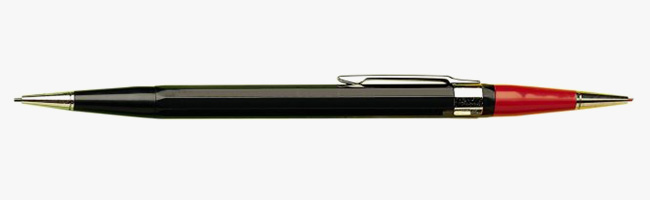
Most Versatile: Twist one end, black lead, twist the other, red. That’s what the Twinpoint does differently. We recommend the 9mm black/9mm red, but with almost every combination of lead colors and thicknesses available, you aren’t short on options with this pencil from Autopoint.

Lamy 2000
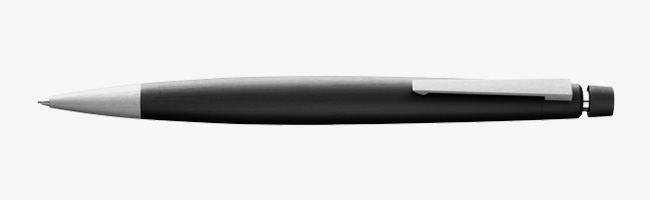
Lamy-Gear-PatrolLamy-Gear-Patrol

Most Elegant: The smooth body of this German-made pencil is its most remarkable feature. Unlike the Rotring, the Lamy is made from polycarbonate makrolon (read: high-end plastic) but it is brushed in such a way that it feels more like hardwood to the touch. As with other Lamy writing utensils, the pocket clip is spring loaded, which is a nice touch and a step above the traditional style.

3 Things to Consider

1. Material

Weight, balance and touch are the most important effects that a pencil’s material has on its use. Heavier pencils can reduce writing fatigue by allowing for a looser grip. They also tend to feel more balanced as you write, with a smoother motion, rather than the jerkiness that sometimes accompanies a lightweight utensil. Lastly, like the cold bottom of your MacBook, a metal pencil can be cool to the touch and will heat up more slowly than a rubber grip. On the other hand, metal pencils are more expensive and, frankly, heavier, which is not a feature everyone wants.

2. Advance

Real aficionados geek out over a pencil’s advance precision. For the layman, advance is how a pencil produces lead. A more precise advance means that lead comes out evenly and with a consistent click. Often, but not always, more expensive pencils have better precision. Different pencils also produce lead at different rates, meaning with each click, the pencil advances a specific length of lead. The Staedtler, for example, advances 0.7mm per click.

3. Lead

Lead width and hardness are really what we’re talking about here. Most mechanical pencils will take lead of any hardness, and many of the higher-end options have a rotating indicator so that you know which type of lead you have loaded. Width, however, is another matter. Each pencil has a specific lead width, and putting the wrong kind into the pencil can damage the advance mechanism or clog the barrel. When you’re buying a pencil, know that as the lead gets wider, the feel becomes softer and the line work becomes broader. For most people, this is a preference acquired quickly, but if you’re not sure, a 0.5mm or 0.7mm lead is a good place to start.

Staedtler 925 2.0mm
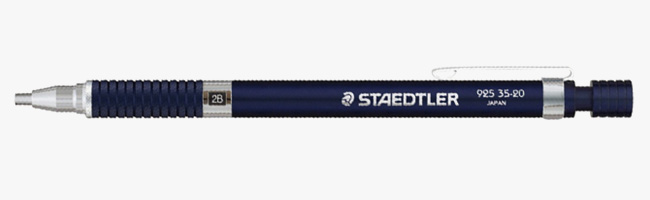
Staedtler-Gear-PatrolStaedtler-Gear-Patrol

Best for Sketching: The Staedtler 925 series comes in a bunch of thicknesses, but the 2.0mm is definitely the most interesting. The thick-casing aluminum body adds weight and makes the pencil cold to the touch, but it’s the thick lead emerging from the pointed tip that really impresses. This thing could draw on a cave wall. Just make sure you get a lead pointer that fits the Staedtler tip, because not all do.

Pentel EnerGize

Pentel-Gear-Patrol-Pentel-Gear-Patrol-

Best in Bulk: This is not a pencil that will stand out on your desk, nor is it one that your likely to want to show off to your buddies, but it writes damn well, especially for just over two bucks a pop. The silver edition with black accents actually looks pretty good for mass supplier Pentel, and the rubber grip is neither slippery nor limiting in terms of grip, which can’t be said for a lot of similar pencils. If you know you aren’t good at keeping track of things, but want a pencil that works better than the bright green one you had in middle school, a box of EnerGizes is probably the right choice.

Porsche Designs Tec Flex

Flex-Gear-PatrolFlex-Gear-Patrol

The Modern Marvel: Okay, this one definitely will impress your buddies. Porsche Designs, founded by the grandson of the Porsche 911 designer, makes, among other high-end personal affects, luxury pencils. The Tec Flex in black is made of woven stainless steel that flexes with your grip and is about as bad-ass-looking as a pencil can be. Alternatively, you can get the silver with gold accents (that’s gold like the element, not just the color).

Faber-Castell Grip 2011

Faber-Castell-Gear-PatrolFaber-Castell-Gear-Patrol

Best for Making Mistakes: The inventive grip system on the appropriately named Grip 2011 is made up of a series of small rubber bumps that stretch from one end of the pencil to the other, not limiting the user to holding the pencil by a more common solid rubber grip near the tip. Additionally, the pencil comes with an extendable eraser. While the lead clicks out of one end, the replaceable eraser advances out of the other with a twist.

Yard-O-Led Victorian Diplomat

Yard-O-lead-Gear-Patrol-Yard-O-lead-Gear-Patrol-

Most Case-Worthy : Yard-O-Led sounds like it would be the Party City of mechanical pencils; it is anything but. The small company is based in Birmingham, England, and has been making sterling silver pens and pencils since 1934. Of the eight employees who hand craft all of the company’s products, three have worked with Yard-O-Led for over 40 years. The Victorian Diplomat is intricately decorated and, like all of their products, is individually numbered, so you’ll know you’re writing with one of a select number of hand-hammered beauties.


Can’t Afford an Eames Lounge Chair? Here are 5 Worthy Alternatives

The Eames Lounge Chair is the Holy Grail of indoor furniture. But buying one doesn’t necessarily mean you know anything about design or furniture — you might just have $5,000 to spare. For the budget-minded, design-conscious shopper, thankfully, there are options between Ikea-tier and reliable-used-car-tier pricing. Whether you’re shopping on a budget or want to avoid joining the Eames cult, here are five great lounge chair options worthy of your living room — no knock-offs, no replicas; just well-designed alternatives.

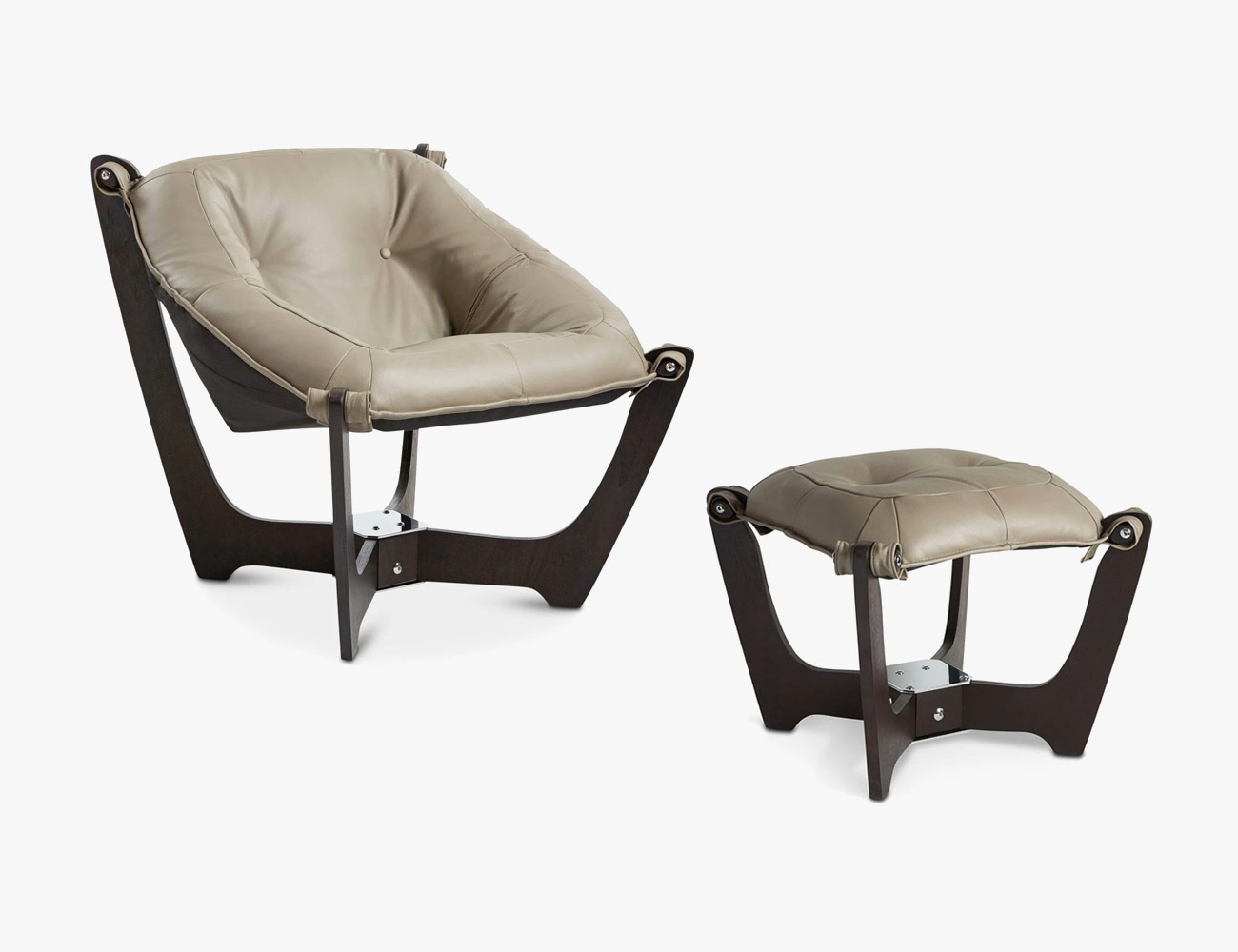
Odd Knutsen Luna Low Back Chair

Norwegian designer Odd Knutsen unveiled the Luna chair in 1970, 14 years after the Eames Lounge Chair made its debut. Like the Herman Miller classic, Luna’s seat resembles a baseball mitt, perfect for cradling your body. A crossbar frame suspends the seat, creating a weightless, floating sensation for the sitter.

|

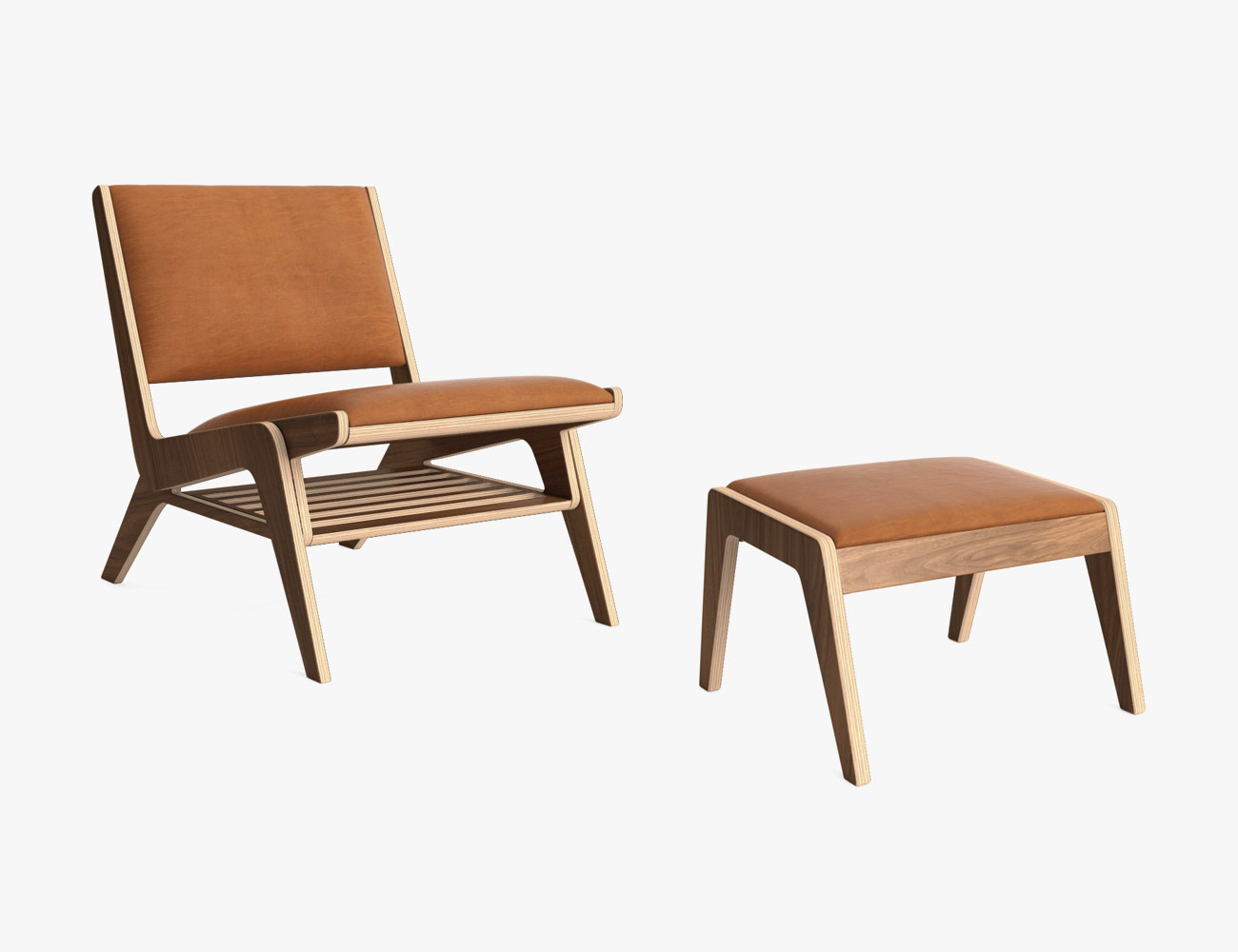
Inside Weather Edgar Lounge Chair

On the other end of the provenance spectrum, Inside Weather, a direct-to-consumer customizable furniture brand, partnered with the Frank Lloyd Wright Foundation on the Usonia collection, a line of furniture inspired by some of the architect’s most famous works. The Edgar chair, inspired by Wright’s Fallingwater, and the West ottoman, inspired by Taliesin West, pair perfectly for an enviable lounge setup. With no inventory, Inside Weather cuts production costs by making pieces to order, and the savings are reflected in the price you pay. Plus, you can put it together in around five minutes.
|

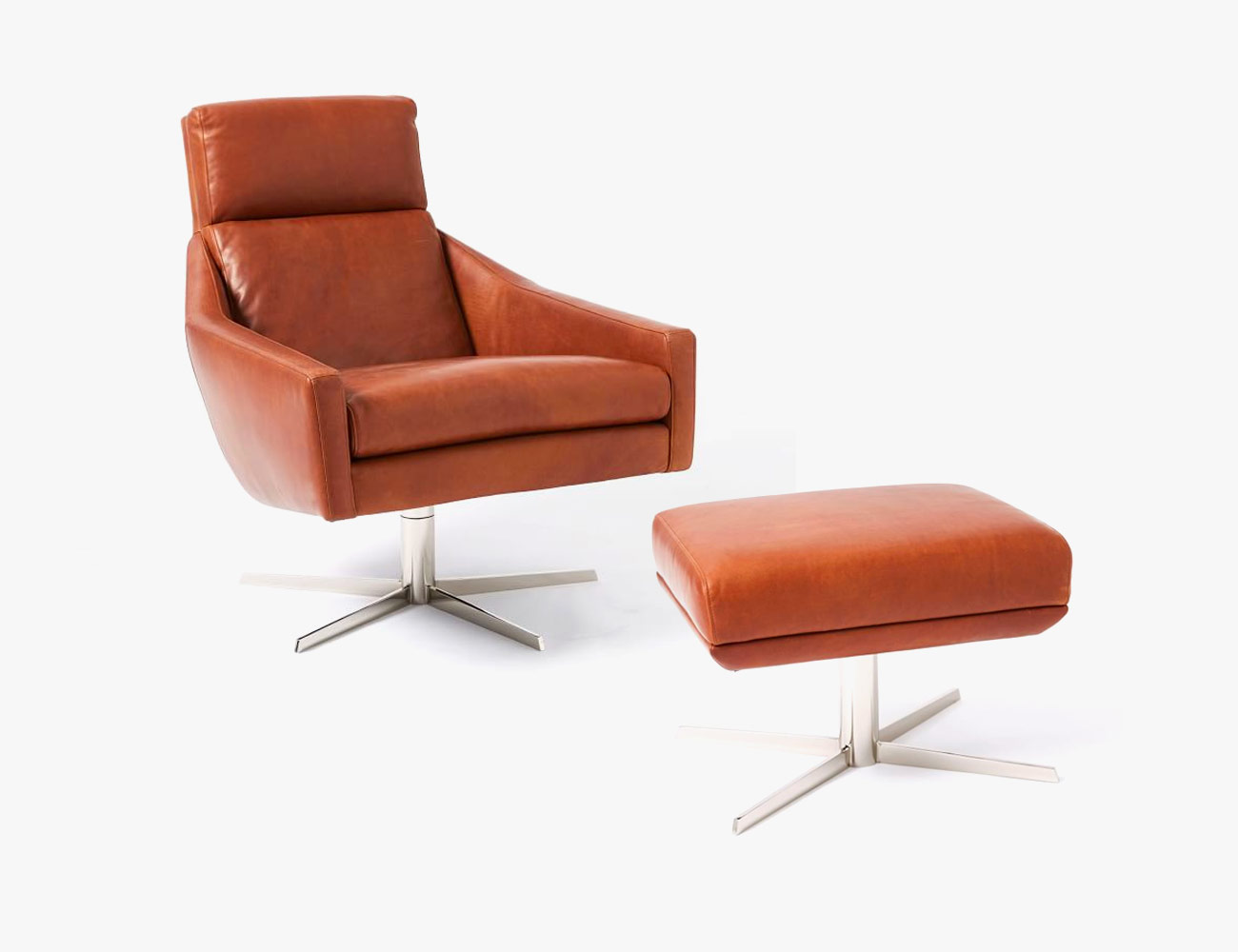
Austin Swivel Armchair

This armchair from West Elm is a winner with its beautiful supple leather and elegant polished nickel base. The piece has 360-degree swivel motion like the Eames Lounge Chair, minus the wood frame. West Elm regularly holds sales, so keep your eyes peeled for discounts.
|

San Rafael Safari Chair

San Rafael Workshop, a 20-person team based out of Mexico City, made its safari chair with a haya wood frame and caramel-colored leather. The chair and ottoman are designed with clean, straight lines and a slingback seat. Design-wise, the pair is a far cry from the Eames Lounge Chair, but we think you’ll appreciate the simplistic beauty of the San Rafael set, and it shows off how leather and wood can come together in completely different ways.
|

Crate and Barrel Greer Leather Wood Arm Recliner

Forego the ottoman, and buy the Greer recliner from Crate and Barrel. The chair reimagines those old clunky recliners for something a more streamlined seating option made with an American-grown walnut frame and plush leather cushioning.

Note: Purchasing products through our links may earn us a portion of the sale, which supports our editorial team’s mission. Learn more here.
Tyler Chin

Tyler Chin is Gear Patrol’s home writer. He’s from Queens, where tempers are short and commutes are long. But nothing can get in the way of his love of coffee, beer and random home goods.

More by Tyler Chin | Follow on Instagram · Contact via Email

You’re Not as Tall as You Think. These 8 Stepladders Will Help You Reach Greater Heights

If you can touch you’re ceiling, your home is either too small or you’re too tall — perhaps both. At 5-foot 9-inches, I’m about average height and there are still cabinets in my home that are beyond my reach, even when I’m on my tippy-toes. To reach the top shelf, I need help. A chair, perhaps? No. Worker’s Comp organizations make posters that say “Don’t you dare stand on a chair” on them. You can even read 162 falling-from-chair horror stories on the US Department of Labor’s Occupational Health & Safety accident catalog. Climbing on the counter is similarly daunting. The solution is a nice-looking stepladder, which you might (wrongly) believe to be an oxymoron. Usually relegated to the garage, the unsightly contraptions hide in darkness, gathering cobwebs and dust, until there’s a top-shelf conundrum. How about we skip the garage bit? These 8 stepladders will help you move up in the world and don’t look terrible doing it.

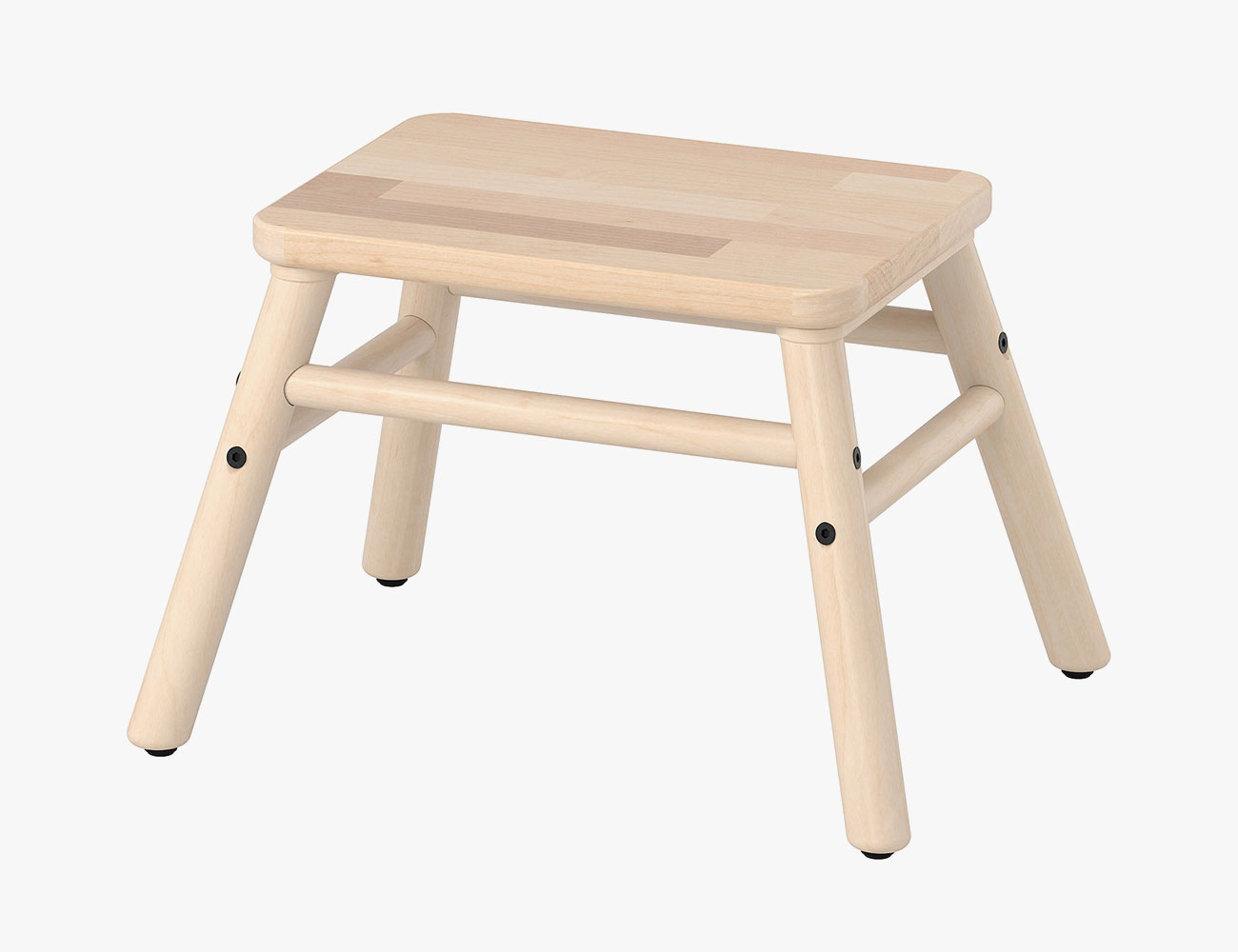
Ikea Vilto

It’s not a ladder, but Ikea’s Vilto will give you a 10-inch vertical boost at $2 an inch

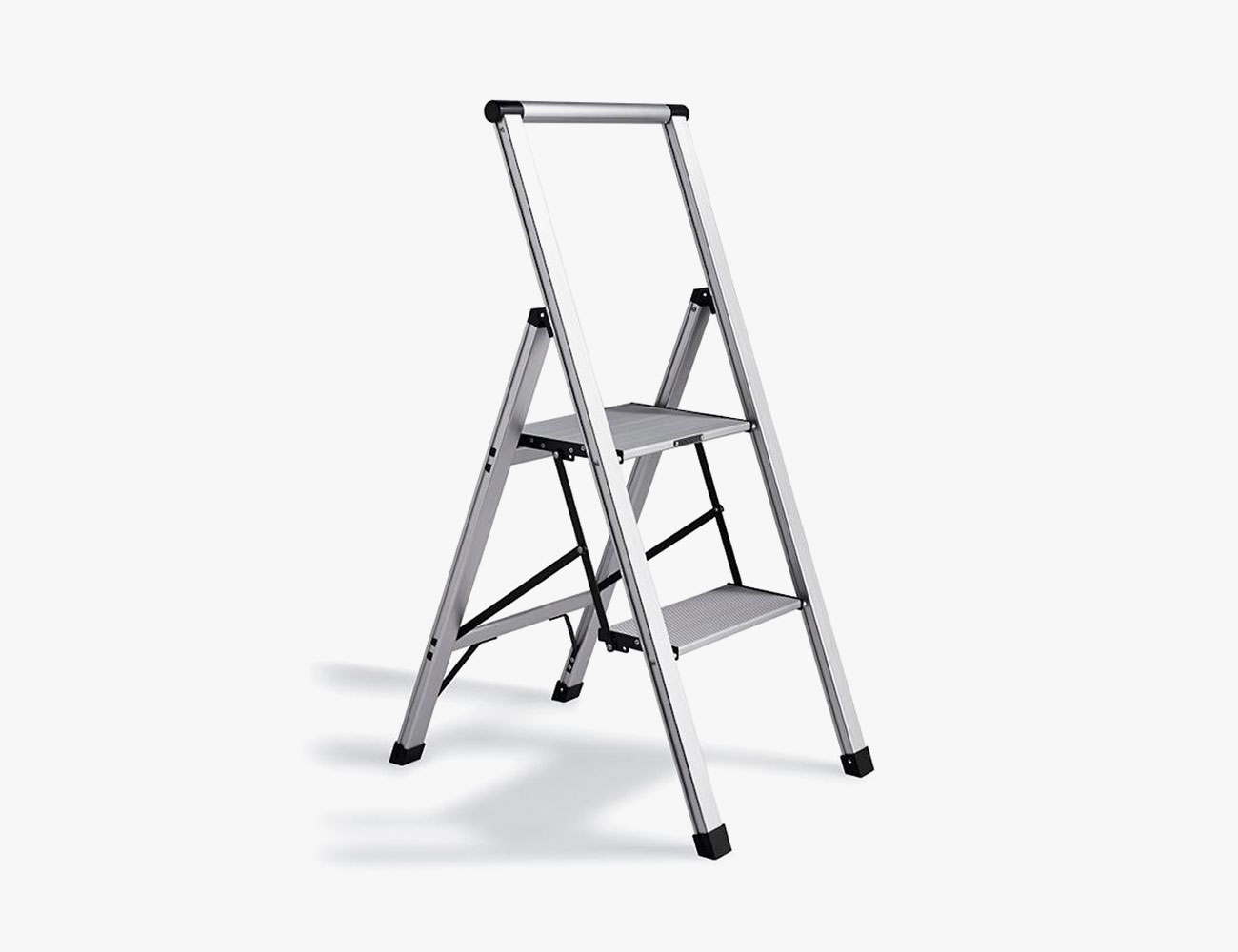
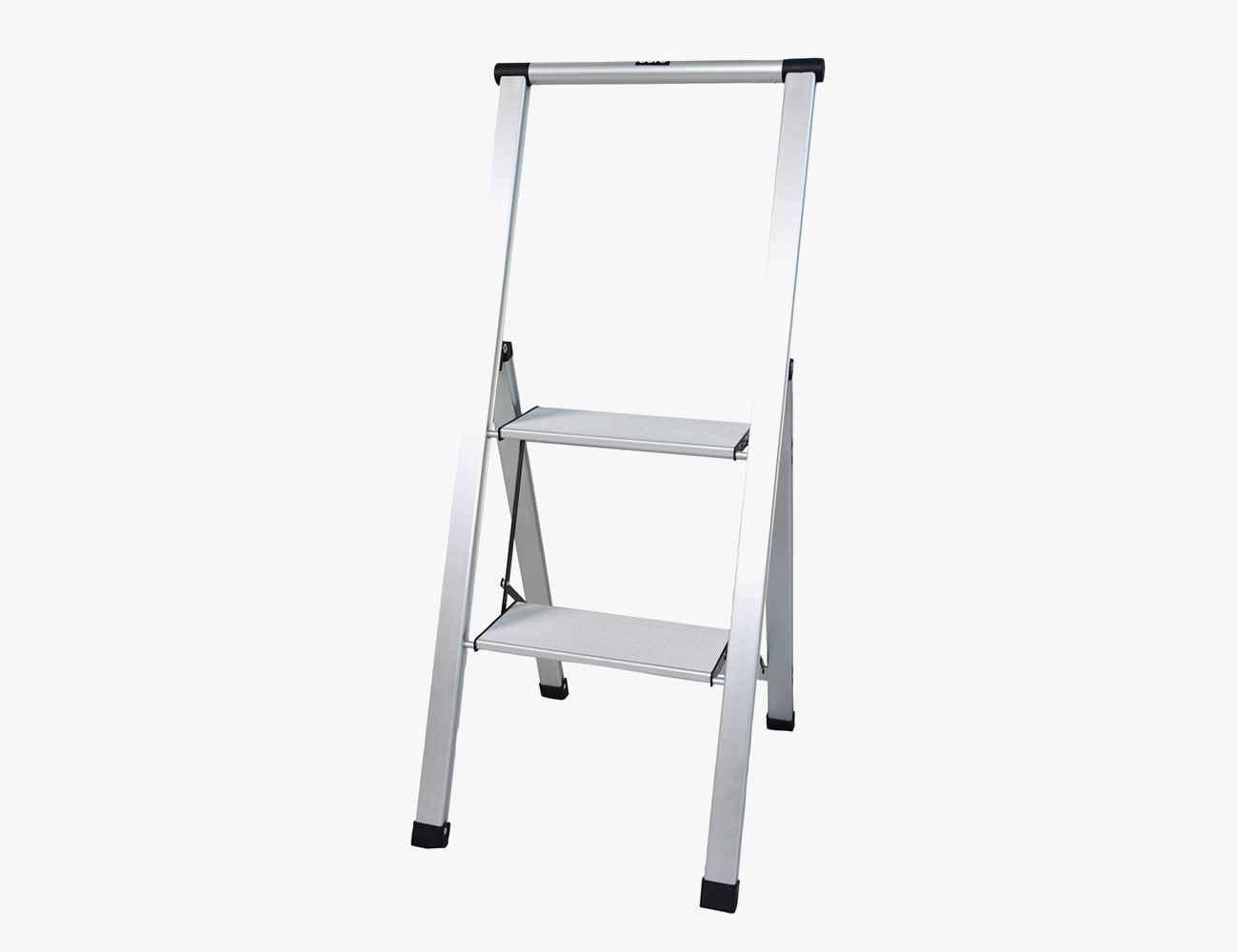
Xtend & Climb SL2HLight Slimline 2 Step Ladder

Xtend & Climb’s home series of stepladders is made of industrial-grade aluminum that’s lightweight and sleek. The stepladder has a slim profile so it can be stowed away in tight places.

Frontgate Ultralight Slimline 2-Step Ladder

Frontgate ladders come in a variety of bold colors so they’re a standout piece as much as they are functional. The 7-pound ladder has nonslip steps and rubber feet for extra safety.

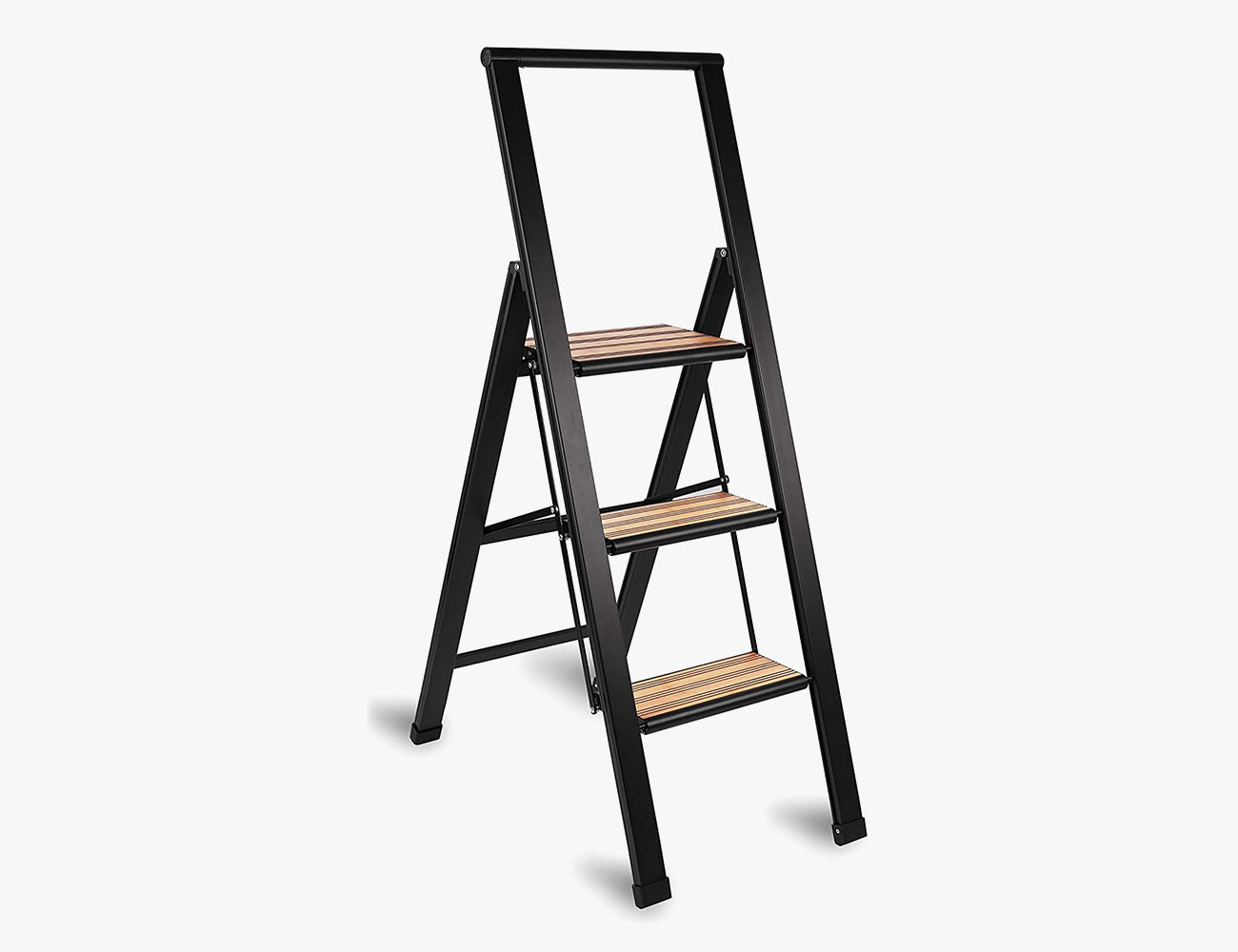
Sorfey Aluminum/Bamboo Folding 3 Step Ladder

A similar shape to the Frontgate, Sorfey’s stepladder is about the same price with an extra step. The black frame and wood-like platforms are a nice design touch.

Metaphys Lucano Stepstool 3-Step

The Metaphys Lucano Stepstool is a collaboration between Metaphys, an award-winning design lab, and the Hasegawa Kogyo Company, which has been making ladders and scaffolding in Japan for over 60 years. The stepladder is made of hand-assembled aluminum and steel with a satin powdercoat finish in a color of your choice.

Hasegawa Ladders Tuscania Step Ladder

The Tuscania is a piece of well-crafted furniture in and of itself. It’s made of 90 percent beechwood and 10 percent plastic, and reviewers say they’ve never felt safer on a ladder.

Kartell Upper Stepladder

Kartell’s Upper stepladder, designed by Alberto Meda and Paolo Rizzatto, is a combination of transparent polycarbonate and chromed steel. Although it’s foldable, you might want to keep it open and have it as a stand for plants and other small pieces of home decor.

Design House Stockholm Step

Truly a vanity piece, this $525 stepladder won accolades from Wallpaper and Sweden’s Elle Decoration. It’s made of solid oak and comes with a hook so you can hang it on the wall.

Note: Purchasing products through our links may earn us a portion of the sale, which supports our editorial team’s mission. Learn more here.
Tyler Chin

Tyler Chin is Gear Patrol’s home writer. He’s from Queens, where tempers are short and commutes are long. But nothing can get in the way of his love of coffee, beer and random home goods.

More by Tyler Chin | Follow on Instagram · Contact via Email

7 Ways You’re Ruining Your Pour-Over Coffee

Pour-over coffee is more prone to human error than any other coffee brewing method. Whether you’re using a Kalita, Hario, Chemex or other brewer, there are myriad ways you could be compromising your cup of joe. Here, we outline seven to keep in mind. If you’re going to put in the effort to make a pour-over, make sure you aren’t self-sabotaging by making one of these mistakes.

Using water that’s too hot

We all love our hot coffee, but if you’re using water that’s too hot, then you’re burning your coffee grounds. We tend to associate burnt flavors with bad coffee, so save yourself the disservice of drinking crap coffee by using water heated between 195°F and 205°F, per the Specialty Coffee Association’s recommended pour-over protocols.

Grinding beans to the wrong size

Coffee grind size is not one size fits all. Pour-over coffee calls for a medium-coarse grind to ensure proper extraction. Grounds that are too fine will result in over-extracted, bitter coffee; grounds that are too coarse result in under-extracted, sour coffee. A medium-coarse grind will look like rough sand, and different beans might require some fine-tuning to get a coffee that achieves your desired taste.

Not rinsing your filter

You aren’t imagining that papery taste in your coffee. Chemexes, Hario V60s and other drippers that use paper filters can impart an unpleasant flavor if they aren’t rinsed first. You might not notice the papery flavor if you’re brewing a dark roast bean, but the unsavory flavor will be prominent in light roast brews. Before you pour water to bean, place your filter in the dripper, pour over hot water and dump out the water that falls through. Plus, removing the papery taste with hot water is sort of a two-bird-one-stone situation, because…

Brewing into a cold container

Brewing hot coffee into a cold container will result in lukewarm coffee once you’re ready to serve. Bringing your carafe (and mug, if you’re slightly crazy) up to temperature will make your coffee stay hotter for longer.

Forgetting to “bloom” your grounds

We’re all trying to get our cup of coffee as fast as possible, but you have to “bloom” your coffee grounds before going all in. Blooming requires pouring double the volume of water to coffee grounds to let the gases in the coffee release. Otherwise, if you just start drowning the beans, the carbon dioxide bubbles coming out of the coffee will prevent water from getting to the grounds to extract properly, which can throw off flavors dramatically.

Missing the bed of coffee while pouring

When you’re pouring water over the grounds, make sure you’re actually hitting the coffee bed. As the water level drops and coffee grounds stick to the sides of the filter, you may be tempted to aim your water kettle at those orphaned grounds on the edges of the filter. Don’t do that. Any water that hits the side of the filter — or brewer — may slide straight down the side of the brewer into the brewed coffee below, making for a severely watered down pot of joe.

Grinding beans too far in advance

Oxygen is coffee’s greatest enemy. Grind your beans right before you’re about to start brewing. It may be more convenient to grind your beans the night before, but in doing so you’re exposing the grinds to aggressive oxidation and off-gasing, which will — even in one evening — warp the flavor of the brewed coffee. Also, be sure to keep your whole beans in airtight containers — either the bag they came in, or capsules like these from Fellow.

Note: Purchasing products through our links may earn us a portion of the sale, which supports our editorial team’s mission. Learn more here.
Tyler Chin

Tyler Chin is Gear Patrol’s home writer. He’s from Queens, where tempers are short and commutes are long. But nothing can get in the way of his love of coffee, beer and random home goods.

More by Tyler Chin | Follow on Instagram · Contact via Email

This Leather Camp Chair Is Way Too Nice to Use at Camp

<!–This Leather Camp Chair Is Way Too Nice to Use at Camp • Gear Patrol<!– –>

Camping in the Living Room


Revival Rugs makes reasonably priced one-off rugs that are handmade from high-quality materials. Its first line of furniture is full of straight heat, but it’s the Aide-De-Camp Chair that really stuck out to me.

The brand connected with Turkish designer Gizem Yuce for the design. Yuce sought to improve a classic camp chair, so she elevated the piece with luxury materials like pale solid oak and tan leather and, although it would look out of place in the outdoors, the Aide-De-Camp Chair can fold up storage or travel (but I’d keep this baby out in the open 24/7).

“Our homes have increasingly become the central location of our lives and we wanted to give people more options, because maybe you’re all set on rugs but you need a well-made, well-priced desk that fits in your living room,” Ben Hyman, Revival Rugs’ co-founder and CEO, said in a press release.

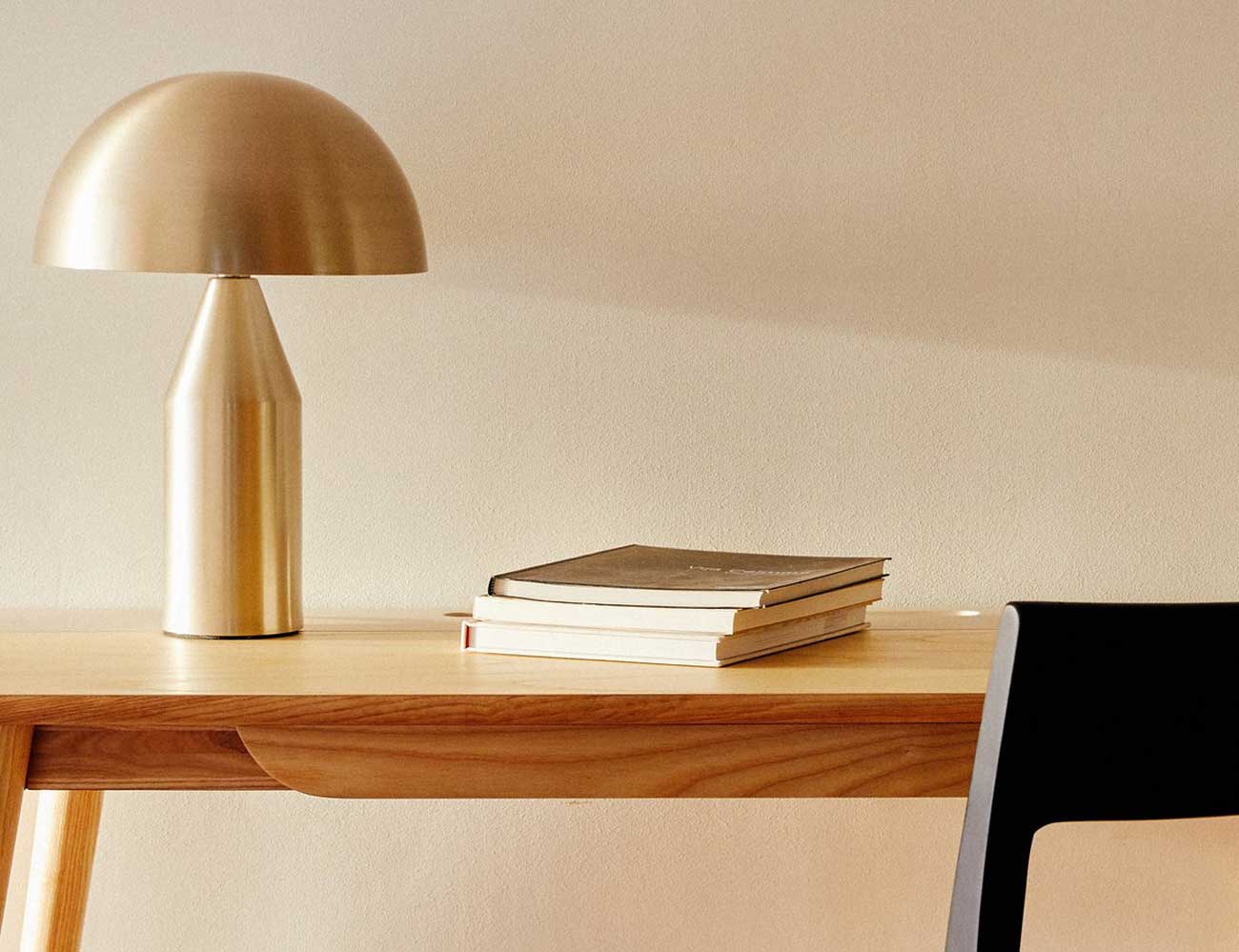
Each piece in the collection is a complement to the rugs that the brand does so well. Other callouts include a striking pedestal table, a mushroom-shaped desk lamp and a trio of handwoven baskets.

To celebrate the inaugural collection, Revival Rugs is offering up to 15 percent each piece. Everything is available in limited qualities, so act fast. Prices range between $139 and $799.

Note: Purchasing products through our links may earn us a portion of the sale, which supports our editorial team’s mission. Learn more here.
Tyler Chin

Tyler Chin is Gear Patrol’s home writer. He’s from Queens, where tempers are short and commutes are long. But nothing can get in the way of his love of coffee, beer and random home goods.

More by Tyler Chin | Follow on Instagram · Contact via Email

<!–

–>

<!– –><!–

–>

Home Offices? Old News. Get a Minimalist Work From Home Shed Instead

<!–Home Offices? Old News. Get a Minimalist Work From Home Shed Instead • Gear Patrol<!– –>

Zen Work Pod


Autonomous, an office product designer with a knack for ergonomics-focused chairs and desks at decent prices, recently unveiled the most extreme reaction to what could be an extended WFH future. Meet the Zen Work Pod.

Designed to be plopped in a spacious backyard, the structure offers “fresh solution completely redefining the home office, providing maximum focus during every working hour,” according to the company behind it. It features floor-to-ceiling windows and an angular roof; plus a sturdy oak, walnut and aluminum build. The Philip Johnson-esque pod comes with shelves, drawers and the like built-in, plus the company’s Smartdesk 2 and Kinn chair. Strangely, it does not feature an air conditioning unit, though there are switches and space for one to install yourself.

Buyers can expect delivery in two to four days and setup service in less than 72 hours after delivery. Autonomous’ Zen Work Pod will retail for $14,900, but early buyers pay much less — starting at $5,400. The discounted prices — available near the bottom of the webpage — is available only to early backers. The company says pre-orders will begin next month, assuming interest level is high enough, with pre-orders delivered two months after that.

Note: Purchasing products through our links may earn us a portion of the sale, which supports our editorial team’s mission. Learn more here.
Will Price

Will Price is Gear Patrol’s home and drinks editor. He’s from Atlanta and lives in Brooklyn. He’s interested in bourbon, houseplants, cheap Japanese pens, and cast-iron skillets — maybe a little too much.

More by Will Price | Follow on Contact via Email

<!–

–>

<!– –><!–

–>

Yakusha Design Minimalist Glass ‘Air Cabin’ Concept

We’ve covered more than a few mind-bending and seemingly imperceptible housing concepts over the years, but few compare to the sheer absurdity of the Yakusha Design Minimalis Glass ‘Air Cabin’ Concept. As they describe it,…


Related Stories


Japanese Chef’s Knives Are the Shit. Here Are the 8 Styles You Need to Know

Japan’s long-standing tradition of crafting high quality blades extends beyond katanas. The country produces some of the world’s best kitchen knives. Professional chefs and home cooks alike tend to lean either German or Japanese when it comes to their blades, with Japanese knifemakers leaning more on specialization and task-specific designs. From the gyuto to the yanagi, these are the eight most important Japanese kitchen knife styles to know.

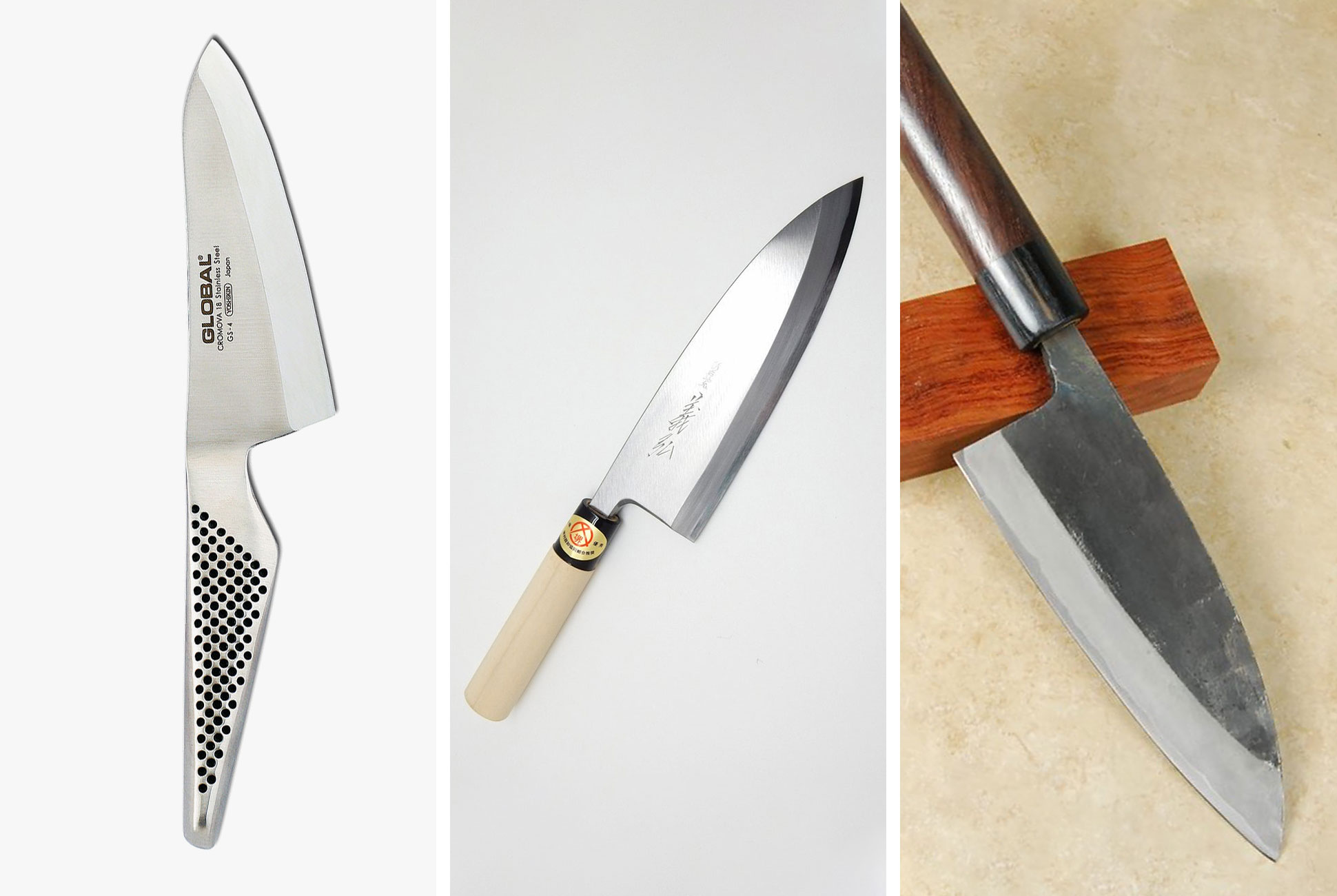
Deba


Deba knives are sturdy, somewhat petite blades used primarily for working with fish. Fishermen and fish mongers use deba knives to scale, behead and filet fish without damaging the flesh, and the blade is strong enough to cut through thin or weak bones. Don’t try to chop through thicker bones, however, or you’ll risk damaging the knife. Instead, opt for the yo-deba knife, which is more adept for cutting through bones and shellfish.

Three to Consider (From Left to Right)
Global Deba Knife ($95): Global knives are funky. The holey, hollow handle makes the knife lightweight, and the single piece of Cromova stainless steel is tough and corrosion-resistant.
Goh Umanosuke Yoshihio Kasumi Deba Knife ($125): This is a single-bevel deba knife made for right-handed people. The Yasugi steel is native to Japan, and the handle is made of magnolia wood.
Kajiwara Blue #1 Kurouchi Deba ($165): This knife looks like it’s done its fair share of chopping off fish heads. That worn-in look is due to the kurouchi finish, which protects the carbon steel blade from corrosion.

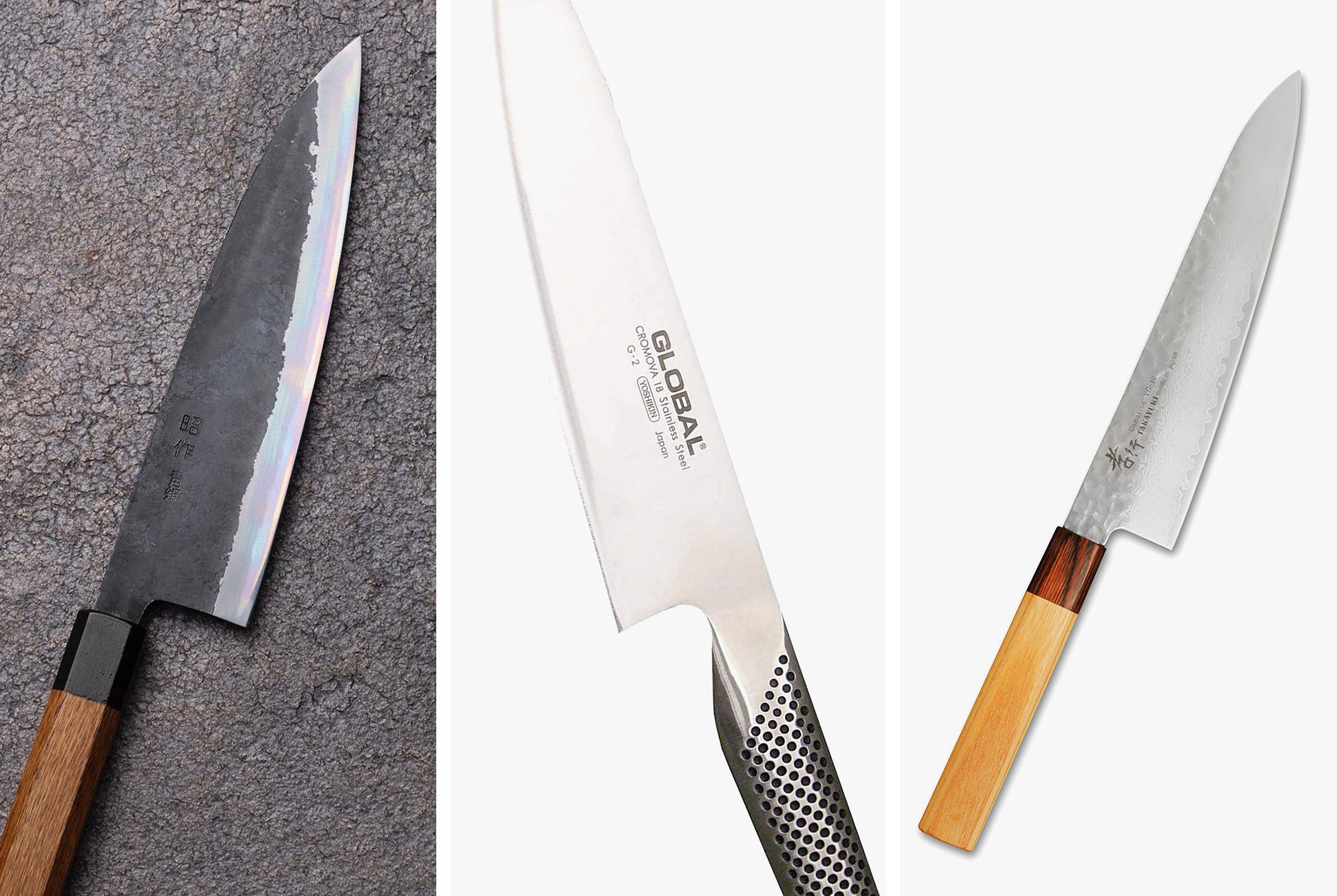
Gyuto


Gyuto knives have impressively sharp tips for precision cutting, versus softer-tipped santoku knives. The original purpose of the gyuto knife was to cut and break down beef (gyuto translates to “cow sword”) but they’re good for chopping, slicing and mincing basically anything.

Three to Consider (From Left to Right)
Akira-Saku White #1 Funayuki Gyutou ($125): The carbon steel is graded White Steel #1, which means it’s made with more carbon than a carbon steel of grade White Steel #2. The added carbon makes the blade harder, which can be sharpened to a finer, but also more brittle, edge.
Global 8-inch Chef’s Knife ($159): A durable, interesting-looking knife that is always on sale for nearly half-off (around $85, usually).
Sakai Takayuki Damascus Hammered VG-10 Gyuto ($160): Japanese knife makers pride themselves on their handles nearly as much as their blades. This knife’s octagonal handle is a mix of keyaki and mahogany, and the blade features 33 layers of Damascus patterning.

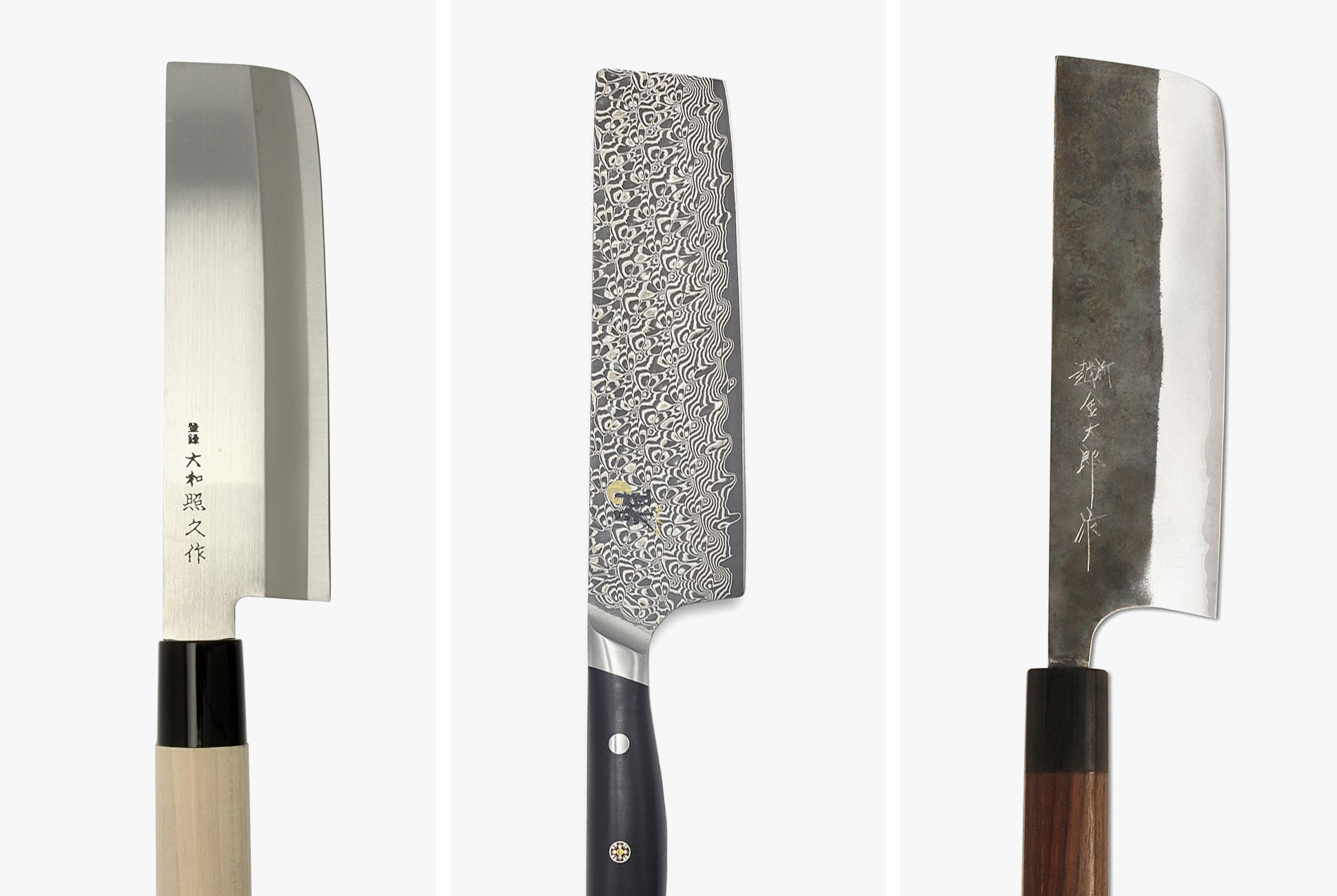
Nakiri


With its rectangular blade, nakiri knives resemble western-style cleavers. Unlike cleavers, nakiri knives are too thin to cut through animal bone and are typically used for chopping vegetables. The nakiri knife can produce ultra-fine cuts through a guillotine cutting motion (sometimes called the “push-pull” cut) rather than a rocking action.

Three to Consider (From Left to Right)
Kotobuki Teruhisa Nakiri ($20): You get what you pay for, but Kotobuki’s nakiri knife is surprisingly efficient and sharp for a $20 pickup.
Miyabi Hibana Nakiri ($180): The 49-layer Damascus patterning is sure to draw in knife shoppers, but the knife’s ability to seamlessly cut through a veritable field of vegetables is the main selling point.
Kintaro Aogami Super Kurouchi Nakiri ($210): Yoshimi Kato, a licensed craftsman based out of Fukui, Japan, hand forges, grinds and finishes every Kintaro-branded knife. The nakiri’s blade is a combination of carbon steel and stainless steel, so you get the benefits of carbon steel minus maintenance and reactivity to food.

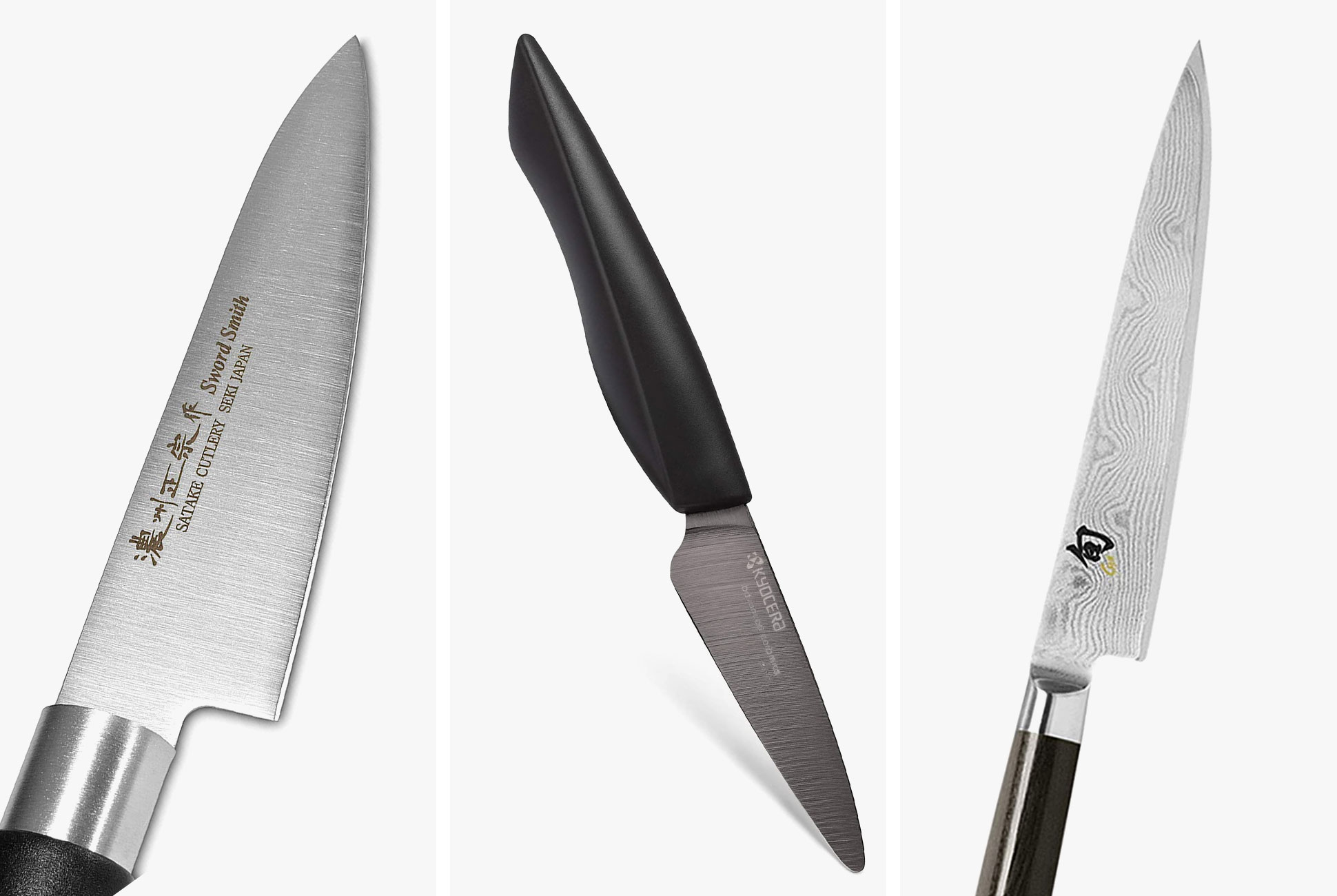
Petty


The Japanese petty knife is essentially a smaller version of the Japanese gyuto knife, perfect for small tasks like peeling produce, creating decorative cuts and completing other delicate tasks. It’s basically a Japanese paring knife, but a little bigger.

Three to Consider (From Left to Right)
Seki Petty Knife ($17): Seki, Japan is known for its knife production, much like Sabae, Japan is known for its output of high quality sunglasses. These are cheap and get the job done without much fuss.
Kyocera Innovation Ceramic Kitchen Knife ($40): Kyocera’s patented ceramic blade is meant to be more durable than standard ceramic.
Shun Classic 6-inch Utility Knife ($70): Shun is one of few Japanese knife manufacturers that’s seen success in the American market. Its petty knife has a lightweight handle that makes for easier control when working on precise cuts.

Santoku


Santoku knives may be the most common style of Japanese knife to make headway in western kitchens. This style of knife is as versatile as the gyuto knife and chef’s knife, but typically shorter in length and feature a straighter edge and less sharp tip. The term santoku translates to “three virtues,” which either represents meat, fish and vegetables or chopping, slicing and dicing.

Three to Consider (From Left to Right)
Henckels Forged Premio Hollow Edge Santoku Knife ($35): It’s not made in Japan it’s not made with Japanese steel, but Henckels’ German-inspired knives are still a great value for amateur cooks. Its santoku knife also features dimples so wet foods slip off the blade when chopping.
Global G-48 7-inch ($85): Santoku knives rarely run longer than 7-inches. The Global santoku knife maxes out that standard and does so with its hardwearing Cromova 18 stainless steel.
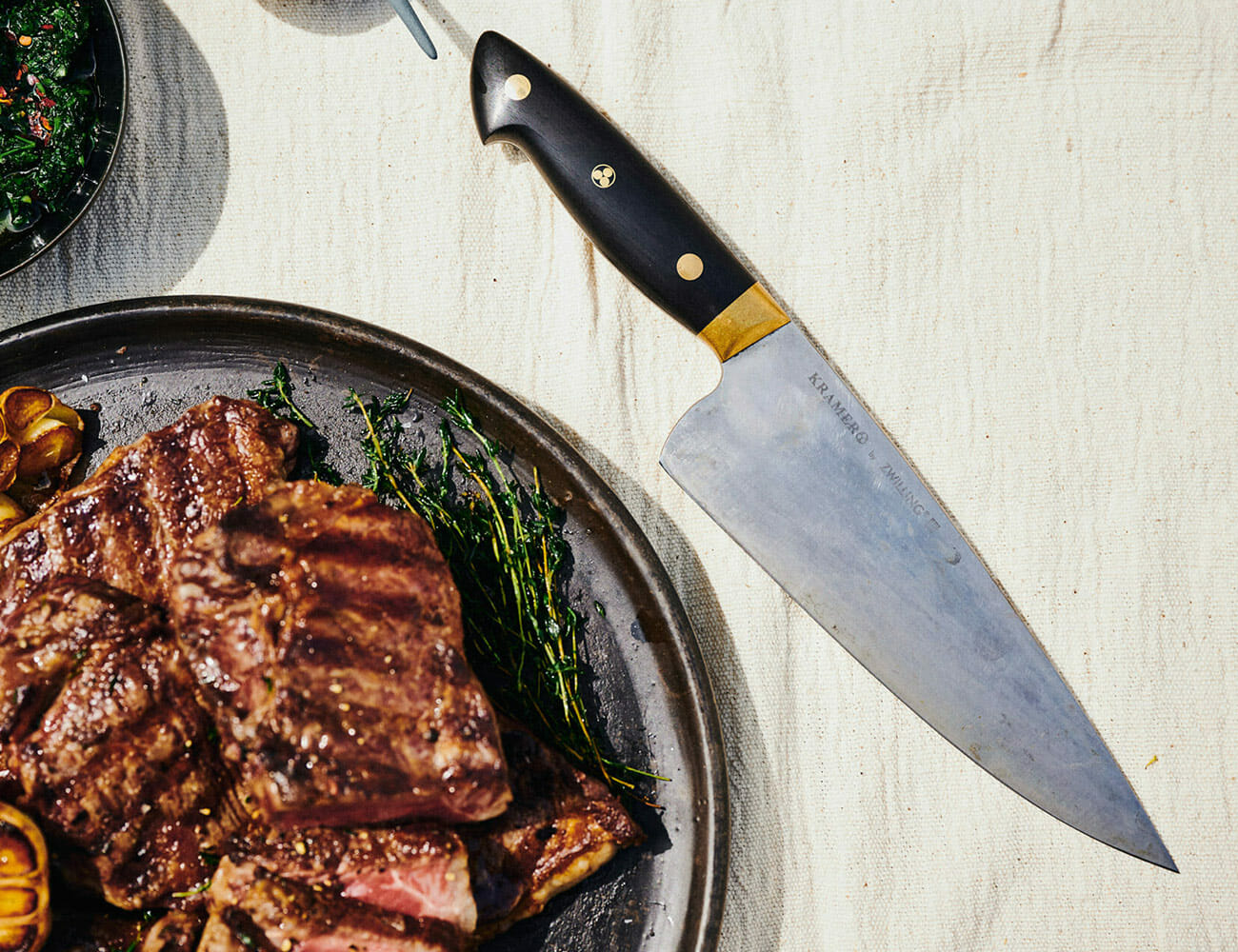
Bob Kramer by Zwilling 7-inch Santoku ($200): Zwiling’s collaboration with Bob Kramer produced a line of knives signed off by the legendary bladesmith you can actually buy.

Sujihiki


Sujihiki knives are comparable to the common carving knife and can be used for the same tasks. The long thin blade glides through protein without having to saw back and forth. The sujihiki knife is also a more approachable version of the yanagi knife (more on that later), which is used for slicing sashimi.

Three to Consider (From Left to Right)
Kanetsugu Molybdenum Sujihiki ($42): If you’re not carving meat very often, you probably don’t want to drop stacks on a knife that carves meat. This one is under $50 and made of molybdenum vanadium, a stainless steel with a reputation for being cheap, sharp and durable.
Sakai Takayuki Damascus Hammered VG-10 Sujihiki ($188): Sakai’s 9-inch blade offers enough length to cut meat in one fell swoop, minimizing friction.
Yoshihiro Mizu Yaki Black Finish Blue Steel #1 Kurouchi Sujihiki ($190): Blue Steel #1 refers to the added carbon content in the steel, making for better edge retention and durability.

Usuba


Usuba knives may look like the nakiri knife, but are recommended for expert knife users. The usuba knife is a single-bevel knife, which means only one side of the knife is sharp. Because it has a single bevel, usuba knives come in either left-handed or right-handed options. These knives require more precision than cutting with a nakiri knife, and inexperienced knife users are more likely to injure themselves without proper training.

Three to Consider (From Left to Right)
Masahiro Seki Japan Usuba ($63): Masahiro’s usuba is made of yellow steel, which some might deem an inferior steel. But the knife is made in Seki, Japan, and it’s hard to find a crappy knife from there.
Shun Pro 6-1/2-Inch Usuba Knife ($165): Shun owners can attest to the brand’s commitment to making superior knives. The Shun Pro line of knives are for those who take cooking seriously, and the knife features high-carbon VG-10 steel, pakkawod handles and a graffiti-etched blade.
Yoshihiro Shiroko High Carbon Steel Kasumi Edo Usuba ($220): Cooks who are willing spend over $200 on a usuba knife better know how to use one. This one from Yoshihiro will help cooks get those signature vegetable sheets.

Yanagi


Unless you’re a sushi chef, you probably don’t need a yanagi knife, but they’re cool enough to want anyway. Used for slicing sashimi, the yanagi knife is a single-beveled knife that makes delicate and precise cuts. The knife’s fine edge is dangerously sharp so it should be reserved for those who have spent years learning how to use it.

Three to Consider (From Left to Right)
Global G-11 Yanagi Sashimi Knife ($95): If you’ve picked up a recent sushi-making hobby, Global’s ultra-sharp yanagi knife is a great pick for cutting perfect slices of fish without butchering it.
Sakon Molybdenum Yanagi ($100): Get Sakon’s yanagi knife if you’re worried you can’t maintain one of the more expensive options. The molybdenum vanadium is still a great choice of steel and you won’t be upset with the results.
Sukenari White Steel 2 Yanagi ($290): The Sukenari yanagi knife is sharp. We wouldn’t be surprised if Jiro gave it a thumbs up. MTC Kitchen, the store selling the knife, writes that “the initial sharpening is generally headache-free.”

Note: Purchasing products through our links may earn us a portion of the sale, which supports our editorial team’s mission. Learn more here.
Tyler Chin

Tyler Chin is Gear Patrol’s home writer. He’s from Queens, where tempers are short and commutes are long. But nothing can get in the way of his love of coffee, beer and random home goods.

More by Tyler Chin | Follow on Instagram · Contact via Email

20 Black-Owned Home and Design Businesses to Support Right Now

Black people continue to face racism, discrimination and injustice every day. The absolute least we can do as allies to the Black community is to shop Black-owned businesses, now and always. These Black-owned home and design businesses deserve their time to shine and are just a fraction of what’s out there.

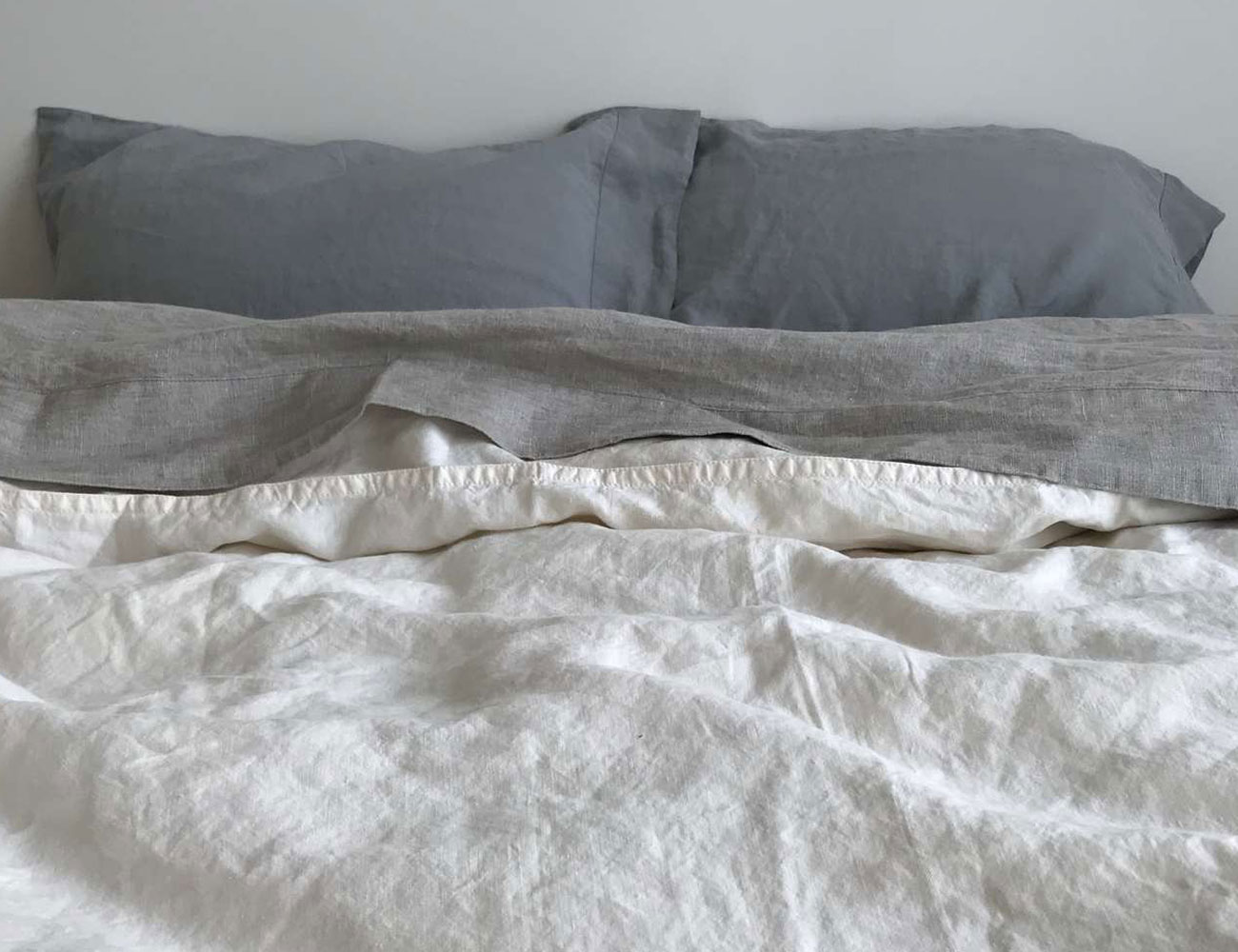
Bedding

Linto

Linoto: We can’t recommend linen bedding enough. Jason Evege, founder and creative director of Linoto, feels the same way. Evege started Linoto, which cuts and sews every piece of linen in its New York workshop, to make premium linen bedding at an accessible price point without eschewing quality.

Robin Wilson Home: Robin Wilson expanded her design firm to include a line of bedding, towels and kitchenware as part of her mission to create a well-rounded lifestyle brand.

Furniture

Lichen

Lichen: When Jared Blake sold Ed Be a Herman Miller chair, their fate was sealed. The pair founded Lichen to sell expertly curated vintage furniture without costing an arm and a leg. The brand is a community of design-conscious individuals with a passion for art, creativity and coffee.

Jomo Furniture: Jomo Tariku is an Ethiopian American designer who incorporates African art and culture with into his contemporary furniture designs.

54kibo : Nana Quagraine founded 54kibo because finding contemporary African designs in America was like a treasure hunt despite the continent’s influence on nearly everything. The brand sells a truly impressive array of home and design products rooted in African culture, tradition and design.

Marie Burgos Design: Marie Burgos combines her experiences growing up in Paris and her family’s roots in Martinique, a French region in the Caribbean, to create clean, simple furniture designs with an added dimension.

Home Decor

Jungalow

Jungalow: Justina Blakeney turned her design g, Jungalow, into a marketplace for nature-inspired home goods like planters, throw pillows, and more all with the idea of “[bringing] good vibes home.”

Rochelle Porter: Rochelle Porter turns her original artworks into shoppable home fabrics and textiles from pillow covers to face coverings. Her website says Porter combines the “breezy hues of her Caribbean roots, the stark simplicity of Scandinavian design and the bold geometrics of West African weaves” to create her eye-catching patterns.

Bolé Road Textiles: The reason we should shop at brands started by people of diverse backgrounds is because their backgrounds influence their products. Hana Getachew was born in Ethiopia, and her designs are directly inspired by her childhood in Ethiopia and her cultural experiences.

Kintsugi Candles: Founder Allison Jones was diagnosed with a brain tumor in 2018 and used aromatheraphy as a form of self-care and healing. Jones created Kintsugi, which is named for the Japanese tradition of filling cracks with gold lacquer, to help others in times of need through calming, mood-invigorating scents.

Reflektion Design: Reflektion Design sells home items, like pillow covers, throw blankets and tableware, inspired by Ghana.

Yowie: Shannon Maldonado’s Philadelphia-based store sells an assortment of home and living products from independent and under-the-radar artists and designers.

Interior Design

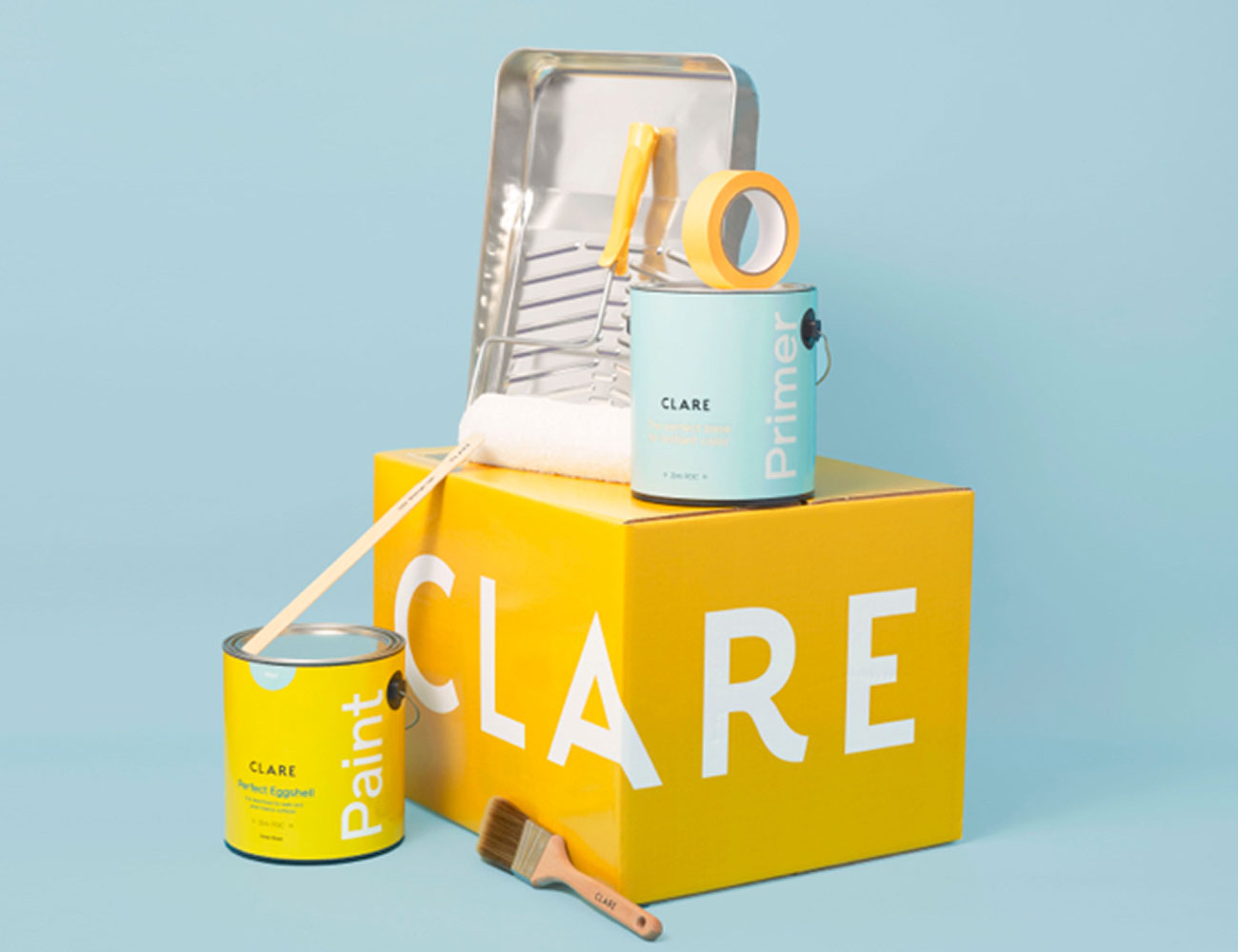
Clare

The Black Home: Neffi Walker is an award-winning designer known for her use of bold colors amid black backgrounds. At The Black Home, Walker sells candles and tableware and offers free design inspiration.

Duett Interiors: Tiffany Thompson’s interior design brand helps homeowners fully realize their dream home with a little help from Thompson’s background and design expertise. Duett Interiors’ homeware line is a collection of pillows inspired by her grandma because the “grandma aesthetic” has never been tacky.

Clare: Forget Home Depot and Benjamin Moore. Clare, founded by Nicole Gibbons, is a direct-to-consumer paint brand with an impressive array of colors, toxic-free paints and a technological approach to interior design. We hate to say a brand is “disrupting” an industry, but Clare may very well be doing it best.

Sheila Bridges Design: Sheila Bridges is one of the most recognized interior designers in America. Her work has been covered in a number of publications and her fabrics are the best way to get her work into your home. Harlem Toile reimagines French toile by replacing the French scenery motifs with images that satirize Black stereotypes.

Pottery

Lolly Lolly

Lolly Lolly Ceramics: Based in Columbus, Ohio, Lolly Lolly sells handmade mugs and dishware made by Lolly herself, Lalese Stamps.

SampleHAUS: Diana Adams creates pottery and ceramics by upcycling interior design waste and discontinued marketing samples. The results are one-of-a-kind pieces of pottery, ceramics and art.

Pottery by Osa: This Baton Rogue-based pottery brand is a one-woman operation. Osa Atoe uses red stoneware clay carved and stamped geometric designs to “hint at prehistoric or primitive ceramics.”

Tracie Hervy: Tracie Hervy creates elegant and simple ceramics that are as minimalistic as possible to allow the shape of the pieces to shine through.

Donate to Support Black Lives Matter

grey_placeholdergrey_placeholder

In the wake George Floyd’s on-camera murder by officers of the Minneapolis Police Department, protests against police brutality have sprung up across the United States. Here’s where you can donate to support them. Read the Story

Note: Purchasing products through our links may earn us a portion of the sale, which supports our editorial team’s mission. Learn more here.
Tyler Chin

Tyler Chin is Gear Patrol’s home writer. He’s from Queens, where tempers are short and commutes are long. But nothing can get in the way of his love of coffee, beer and random home goods.

More by Tyler Chin | Follow on Instagram · Contact via Email

A Coronavirus Era Tool That Looks as Good as It Works? We’ll Take It

<!–A Coronavirus Era Tool That Looks as Good as It Works? We’ll Take It • Gear Patrol<!– –>

you can touch this


Since coronavirus crippled the world, people have been understandably hesitant to touch public surfaces. Workarounds to touching elevator buttons, doorknobs and the like have involved a lot of elbow maneuvering and spare napkins. A number of brands have released no-touch tools for people to safely interact with their environment without using their bare hands, but few have looked good while doing so.

Craighill, the New York-based brand making some of our favorite useful knick-knacks, just released its Sigma touch tool. Named and shaped after the Greek letter Sigma, the little brass gadget acts as an intermediary between yourself and high-touch surfaces. Health officials have said that coronavirus can live on surfaces for days, but copper surfaces, like those made of brass, are an exception. Studies show that surfaces made of copper, which is antimicrobial, kills bacteria and viruses almost immediately on contact.

While Craighill’s Sigma touch tool won’t solve all your problems, it is an extra line of defense for making sure you don’t contract or spread coronavirus. The Sigma touch tool is available now for $30 on Craighill’s website.

Note: Purchasing products through our links may earn us a portion of the sale, which supports our editorial team’s mission. Learn more here.
Tyler Chin

Tyler Chin is Gear Patrol’s home writer. He’s from Queens, where tempers are short and commutes are long. But nothing can get in the way of his love of coffee, beer and random home goods.

More by Tyler Chin | Follow on Instagram · Contact via Email

<!–

–>

<!– –><!–

–>

Love Hultén Mid Century Modern Arcade Coffee Table

There are few things we love more than a new gaming-inspired piece from Love Hultén. After tackling the ‘Game of Life,’ briefcase video game consoles, and a Battleship-inspired console system, the legend himself has turned his…


Related Stories


9 Things Your Dad Taught You About Grilling That Were Completely Wrong

When you’re a kid, your dad’s advice sounds sagely and unimpeachable. When you’re an adult, well, things change.

This rings true especially in the realm of grilling advice, where shortcuts and mysticism are trusted as law, and “the way we always do it” reigns supreme. One summer long ago you may have learned the basics of grilling from your dad, which means it’s likely you’ve been subjected to such drivel. From the death of grill marks to the dangers posed by metal wire brushes, here’s all the stuff your dad taught you that you should unlearn ASAP.

Grill Marks Are Not a Good Thing

Sing it from the rooftops. Steaks, porkchops, chicken and anything else that goes on the grill is not bettered by lines. As leading internet grill sage Meathead Goldwyn writes, these marks represent “unfulfilled potential.” The marks show where the maillard reaction — that wonderful process that makes the sear so desirable — was and was not successful. A proper piece of grilled meat should be covered in maillard reaction, and it should be a uniform brownish color, not pitch black.

The Less (Visible) Smoke the Better

Plumes of white-grey smoke is the sign of poor fire management, not good barbeque. That thick, cloudy smoke is the result of coals or wood that aren’t completing the combustion process in the fire, which causes the fuel to launch microparticles into the air and onto your food. This doesn’t taste like smoke, it tastes like burn. The salve is a hotter fire, which results in the whispy blue smoke pitmasters want.

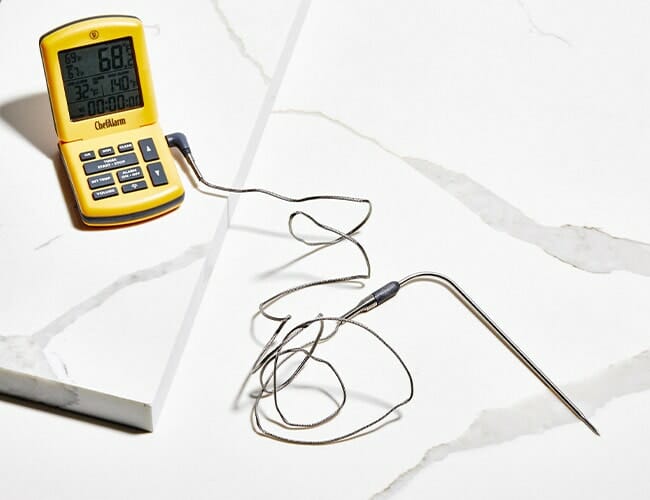
Temperature probes come in all shapes, sizes and price points. Our favorite is the MK4 ($84), made by Utah-based company Thermoworks.

Buy. A. Meat. Thermometer.

The thermometer built into your grill’s hood — yes, even your super-expensive grill — is mostly useless. Brands don’t invest in quality thermometers, and, even if they did, it would cover the less useful half of temperature tracking on a grill. Unless you and your family are fond of undercooked meat, the internal temperature of a piece of protein will always be more important than the temperature on the interior of the grill. Get a temperature probe from Thermoworks or Lavatools and quit doing that thing where you touch the steak and then your thumb — it’s weird and ineffective.

Stop Oiling Grill Grates

A common method to ensure food doesn’t stick to grates is to spray the burning-hot grates with Pam or wipe them down with an oily paper towel — this is folly. Oil applied to grates of a lit grill, unless the grill is operating at low temperature, will do nothing but burn. When the oil lands on the grate that has surpassed its smoke point (which are typically 400 and below), it instantly smokes up and carbonizes on the grates. This is more likely to make things stickier than they already were. The fix: oil the meat itself before placing on the grill.

BTU Is a Mostly Pointless Metric

BTUs are to grills what thread counts are to sheets — mostly bullshit. Short for British Thermal Unit, the BTU is a measure of the heat required to raise the temperature of one pound of water by one degree Fahreneheit. BTU counts are plastered all over many gas grills, but the measurement has issues. For one, it’s typically measured at the grill’s maximum output, which is not how we use grills at home. In the grilling world, it’s also more of a measure of how much fuel a grill burns to raise the temperature, which means a highly inefficient, fuel-eating grill can earn a massive BTU count. Instead of BTUs, ask for maximum temperature when shopping for natural gas or propane grills.

You might save 5 minutes using lighter fluid instead of a charcoal chimney. Plus, it’ll be more expensive. Weber’s chimney costs under $15.

Rid Yourself of Lighter Fluid and Instant-Light Coals

Google “lighter fluid health concerns” to get a taste of what comes with your need for a faster fire. Plus, there’s an option that’s nearly as quick, and comes with less potential for actual explosions — charcoal chimneys. Coals in the top, paper in the bottom and a lighter is all that’s needed to get coals ready to grill with in 10 minutes or less. Plus, it doesn’t smell as bad.

Hard Pass on Wire Bristle Grate Brushes

Though it’s been reported on over and over again, it bears repeating: metal wire grill brushes can be dangerous. The bristles may dislodge from the brush, wedge themself in the grate and enter the food on the grill. This can result in a trip to the hospital at worst and significant pain at a minimum. A common hack to avoid using the brush is to crumple up a ball of aluminum foil tightly and scrub the grates (with a gloves hand) until clean. It’s best to do this before the grill has come to temperature.

Stop Soaking Wood Chips

Think about why your dad told you to soak wood chips (or, heaven forbid, logs of wood) before grilling — “it keeps them lit longer.” I mean, technically? The wet wood can’t smoke, which is what it’s there for, until it rids itself of the water that’s covering it. That smoke that comes off the wet chips when you throw them on hot coals? That’s steam, and you just significantly lowered the temperature of your coals, which can create problems addressed in the “The Less (Visible) Smoke the Better” section above. If you’re worried about wood burning too fast, place it around the edge of your coal bed. Just don’t soak it.

Water Doesn’t Put Out Flare-Ups

Applied by a spray bottle or dumped from a cup, water is not the solution to large flare-ups. Water serves only to spread the burning fat — the cause of the flare-up — around the grates and coalbed. That’s problematic for the same reason water doesn’t solve a grease fire in the kitchen, but water also creates huge plumes of charcoal dust which can coat your food and create undesirable flavors. Instead of panicking, close the lid and the vents. Fire feeds off oxygen first and foremost, so cutting off the supply will dull the flame.

Note: Purchasing products through our links may earn us a portion of the sale, which supports our editorial team’s mission. Learn more here.
Will Price

Will Price is Gear Patrol’s home and drinks editor. He’s from Atlanta and lives in Brooklyn. He’s interested in bourbon, houseplants, cheap Japanese pens, and cast-iron skillets — maybe a little too much.

More by Will Price | Follow on Contact via Email

Please Stop Buying Cloth Bath Mats. They’re Gross and Weird

Bath mats are a breeding ground for bacteria and viruses, according to a study by the American Society for Microbiology. Their location in the dampest room in your home creates a wonderful environment for microorganisms to grow in. The issue lies with the material of the bath mat — usually a cloth fabric that absorbs water with nowhere for it to go. Why not buy a wooden one instead?

Unlike the cloth variety, wooden bath mats will stand up better to water, staining and bacteria. Plus, you won’t need to step onto a sponge after every shower. Wood won’t get as gnarly and is easier to clean than cloth, which require machine washing. Besides being better for you, wooden bath mats are a modern, minimalist and usually inexpensive way to make your bathroom feel more like a calming Japanese onsen.

5 to Buy

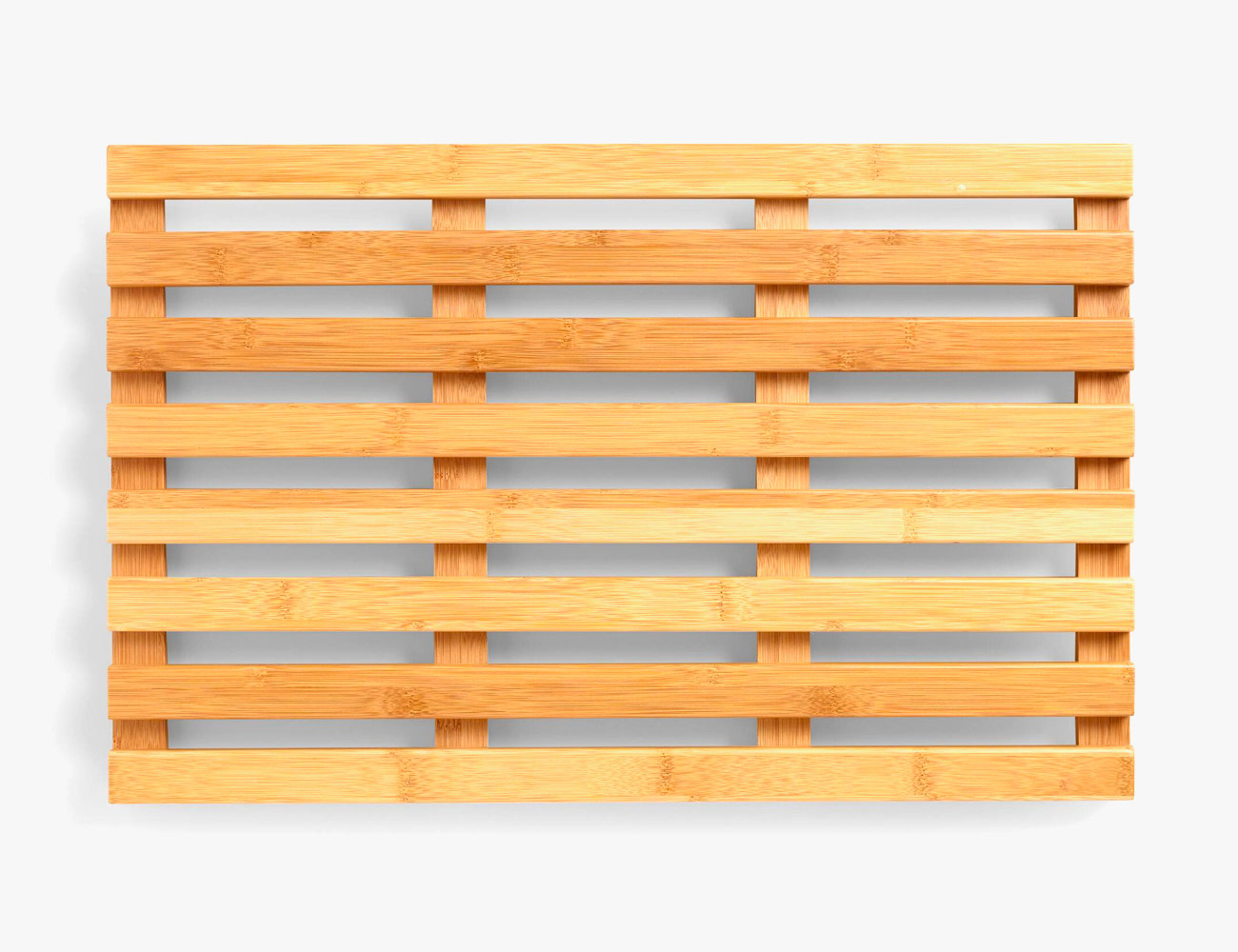
Bamboo Bath Mat

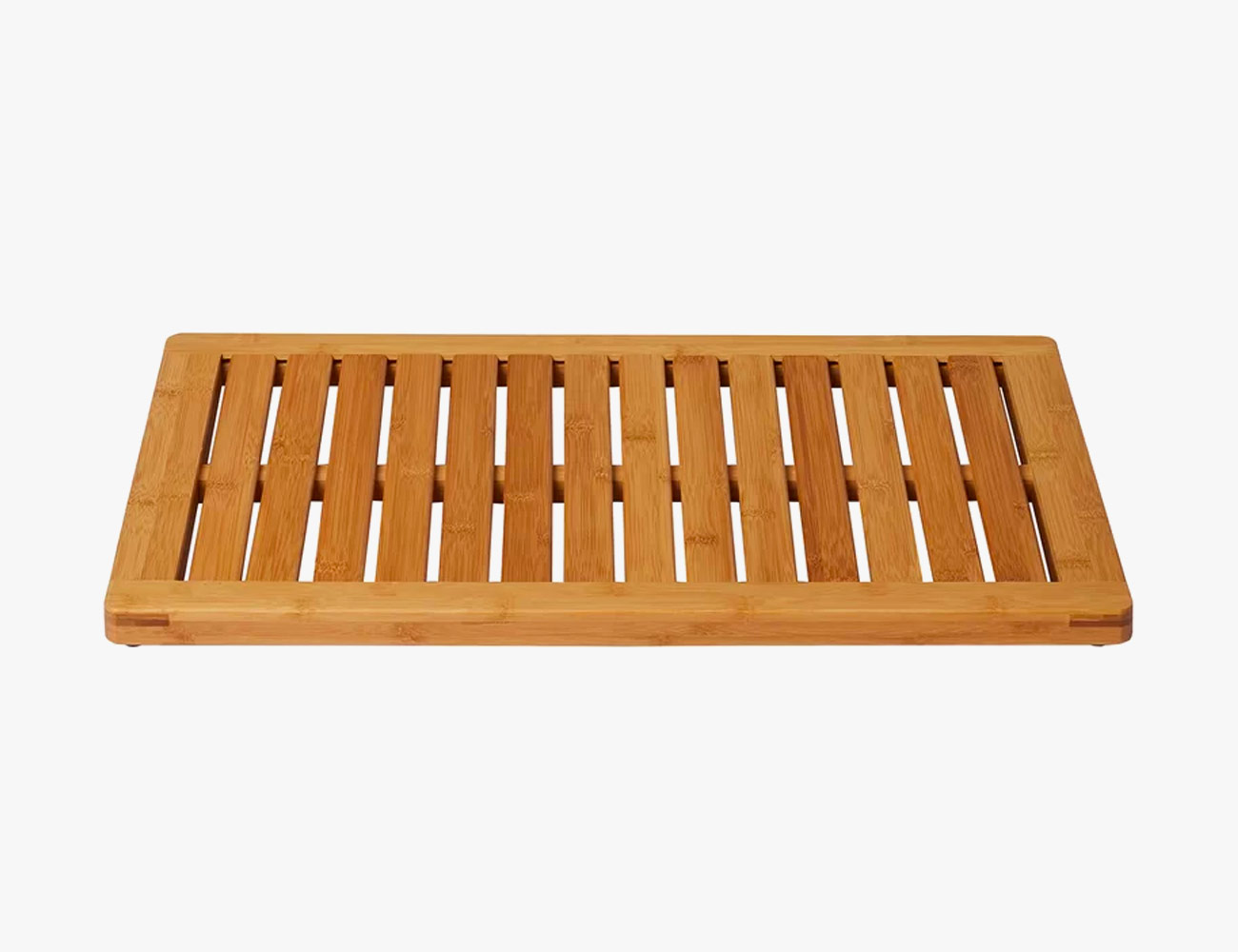
This simple and affordable bamboo bath mat has widely spaced slats, which make for easy cleaning and open ventilation. Its height off the ground will also allow water to more easily evaporate instead of being trapped under the mat.

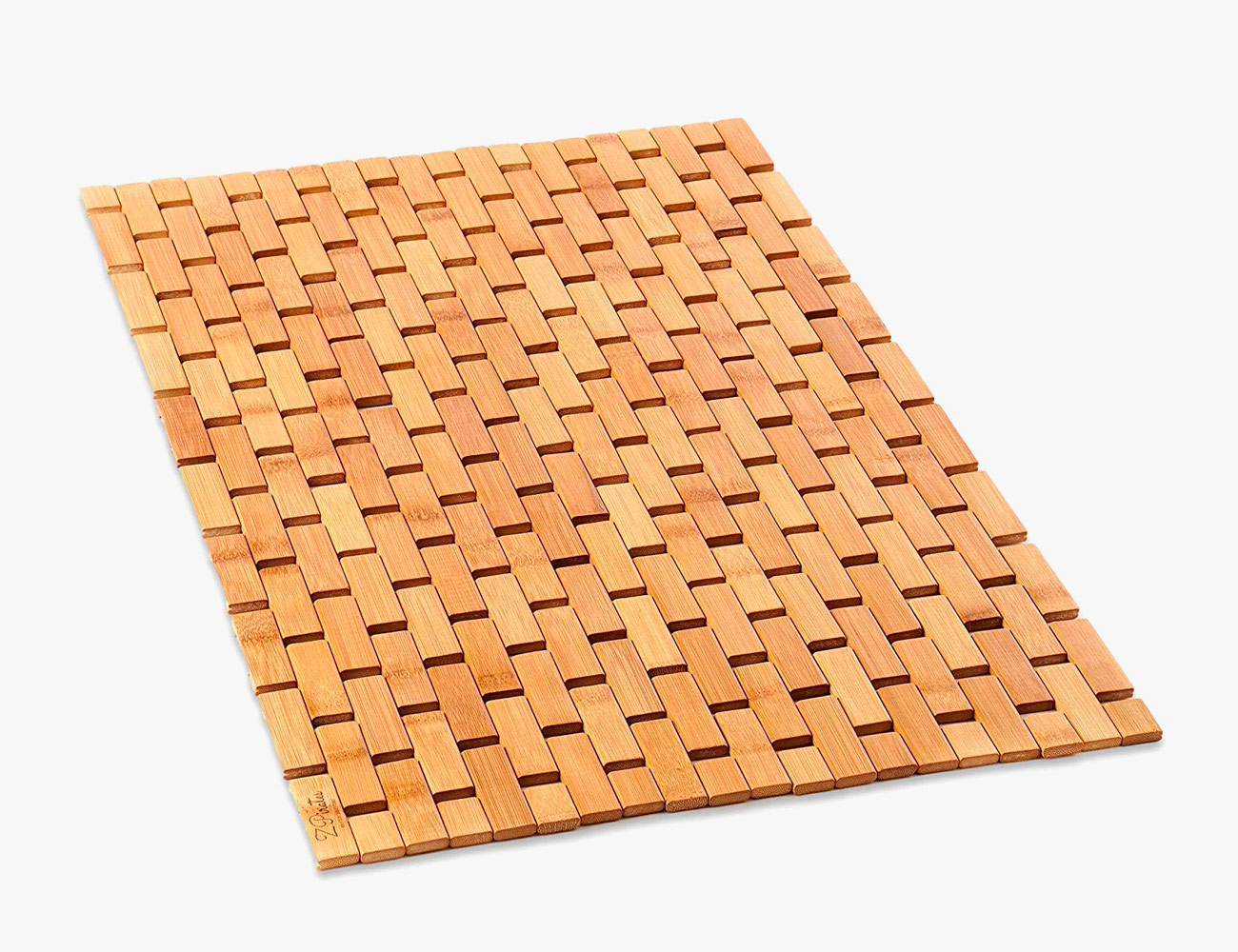
ZPirates Natural Bamboo Wood Bath Mat

The lattice design of ZPirate’s bath mat prevents water from pooling on the surface while giving enough ventilation for the water to evaporate. The mat is easy to roll and has silicone rubber pads underneath to prevent slippage. Some may prefer this mat’s lower profile rather than elevated options.

AllModern Almonte Shower Mat

Another bamboo option, the Almonte’s rubber feet will prevent slippage, and the slats are spaced a little closer together for those who feel like their toes may slip between the planks.

Tosaryu Hinoki Bath Mat

Tosaryu’s bath mats are made of hinoki wood, which is highly resistant to mold and mildew. Tosaryu uses locally-harvested, high quality hinoki cypress, and the brand believes in being respectful to the environment; every part of the hinoki is used from the oil to make soap to the leftover wood flakes to make cutting boards. Hinoki wood has a reputation for releasing a calming aroma when wet, so you might find yourself purposely dampening the mat.

Okawa Hinoki Workshop Hinoki Wood Bath Mat

The Okawa Hinoki Workshop has been handcrafting furniture for four generations, with an expertise in working with hinoki wood. Its craftspeople’s attention to detail and quality means bath mats take over a week to complete, and the result is a beautifully designed accent piece to all bathrooms. Like the Tosaryu mat, the hinoki wood emits a pleasant, soothing smell once wet.

Note: Purchasing products through our links may earn us a portion of the sale, which supports our editorial team’s mission. Learn more here.
Tyler Chin

Tyler Chin is Gear Patrol’s home writer. He’s from Queens, where tempers are short and commutes are long. But nothing can get in the way of his love of coffee, beer and random home goods.

More by Tyler Chin | Follow on Instagram · Contact via Email

The James Baldwin Book That Hit Me the Hardest About Racism

Editor’s Note: Gear Patrol stands in solidarity with the worldwide protests against racism and discrimination. As a publication with a worldwide reach, we developed a plan of action to address the intolerable injustices the Black community faces every day. We hope our readers will take a stand with us. Gear Patrol stands with the Black community, and we know Black Lives Matter.

To read about racism, rather than experiencing it, is a privilege. Despite this, some refuse to read about discrimination against Black people because they believe it does not apply to them, an idea that is, in and of itself, racist.

The police killing of George Floyd has sparked protests from Minneapolis, Minnesota, to Cape Town, South Africa. Floyd’s death has led many non-Black people to check their privilege, especially through reading texts about racism and discrimination. Anti-racist books are topping the best-sellers lists on Amazon and Barnes & Noble; the top-selling book on Amazon, as of publishing, is White Fragility: Why It’s So Hard for White People to Talk About Racism. I find myself revisiting James Baldwin’s Notes of a Native Son.

Based on Baldwin’s life through the 1940s and ’50s, Notes of a Native Son is a compilation of essays by the legendary writer, playwright and social critic. Baldwin’s writing is an observation, reflection and critique of his experiences. His essays come just prior to the civil rights movement, and similarities between then and now are haunting; just how little has changed is truly terrifying.

Amid tensions between Black people and police, I think back to one particular essay, “Equal in Paris,” in which Baldwin, having recently moved to Paris, finds himself in the hands of the police. The French police, Baldwin finds, is an institution steeped in discrimination and prejudice not dissimilar to “their American counterparts,” despite the French being, what he writes, “an ancient, intelligent, and cultured race.”

“Certainly their uniforms frightened me quite as much, and their impersonality, and the threat, always very keenly felt by the poor, of violence, was as present in that commissariat as it had ever been for me in any police station,” Baldwin writes.

The essays of Notes range from topics on Black representation in film to instances of racism across America and Europe. To distill Baldwin’s work would do him a disservice, underplaying his outrage and grief. No amount of reading Black texts will ever replicate the feelings of racism that Black people face every day. Subjecting oneself to the plight of one race will further the idea that we are one people fractured by the discrimination of Black people.

Donate to Support Black Lives Matter

grey_placeholdergrey_placeholder

In the wake George Floyd’s on-camera murder by officers of the Minneapolis Police Department, protests against police brutality have sprung up across the United States. Here’s where you can donate to support them. Read the Story

Note: Purchasing products through our links may earn us a portion of the sale, which supports our editorial team’s mission. Learn more here.
Tyler Chin

Tyler Chin is Gear Patrol’s home writer. He’s from Queens, where tempers are short and commutes are long. But nothing can get in the way of his love of coffee, beer and random home goods.

More by Tyler Chin | Follow on Instagram · Contact via Email