All posts in “Home”

The Best Gear for the Coziest Bedroom Imaginable

Since late March, Social distancing measures have made homebodies of us all. How to cope? We’re cooking more, working out in our living rooms, streaming everything and playing more videogames than ever. But distractions aren’t infinite, and there comes a time when the extra months of stress we’re putting on our homes begins to take its toll – the cheap mattress, hand-me-down blanket and old pillow show their true colors in wear and tear and stiff necks.

In fact, since the pandemic spread, the bedroom and the things in it have become something of an oasis inside isolation. Survey results from Ally Home suggest the number of Americans who view the bedroom as their favorite room has grown by nearly 20 percent. Here’s everything you need to upgrade yours.

The Best Mattresses You Can Buy

Avocado Mattress

From budget-minded mattresses to the best of the best, this definitive guide offers up the best mattresses for every kind of sleeper.

Read the Story

Sleep Hot? Get a Breathable Comforter

Pottery Barn

If you’re a someone who needs to be covered to fall asleep, these comforters offer all the coziness of a duvet, minus the night sweats.

Read the Story

Adjustable Pillows Are Popping Off

Coop

Adjustable pillows are the latest innovation to hit the bedding world. Simply add or remove fill or inserts until you reach your desired firmness. While some may chalk up body aches and bad sleep nights to a crappy mattress, some of those issues are a result of sleeping on a worthless pillow.

Read the Story

Hemp Bedding > Linen

Buffy

Hemp is in. The less-famous strain of cannabis sativa won’t get you high, but it is lauded by environmentalists for its sustainability and health benefits. How to get in on it? Sleep.

Read the Story

A Guide to Buying Bed Sheets That Don’t Suck

Brooklinen

This definitive guide to the best sheets of 2020 answers everything you need to know to buy better bedding this year. We tested 34 different sets to find the best sheets for every type of sleeper, at every budget.

Read the Story

A daily magazine of immersive stories, deals, buying advice, product-forward editorial, and reports from far-flung places.

This content is created and maintained by a third party, and imported onto this page to help users provide their email addresses. You may be able to find more information about this and similar content at piano.io

The Best Pour-Over Coffee Maker You Can Buy Costs $26

This definitive guide to the best pour-over coffee makers of 2020 compares the Chemex, Hario V60 and Kalita Wave. We spoke to three coffee veterans to break down which brewer is best for the at-home coffee brewer

When I asked Dylan Siemens, the 2017 Brewers Cup Champion and Head of Coffee Education at Onyx Coffee Lab, what pour-over systems have over automated drip machines, his answer was technical, practical and scientific.

“There’s really no way to replicate the feeling of making a pour over the right way if you use a machine.”

“It’s much simpler to make the exact amount of coffee you want and you can bring most pour overs with you if you travel or go somewhere else and still want great coffee. There’s also a lot more experimentation you can get into with changing pour technique, water temperature, pour over device and all that,” he said. “But I think for most people it’s a lot about the ritual of it. I feel like I still learn something every time I make a cup of pour over.”

Edward O’Hickey, Educator at Toby’s Estate, echoed Siemens’s sentiment. “There’s really no way to replicate the feeling of making a pour over the right way if you use a machine,” he said. “It’s a completely different experience — it just puts me in a better mood.”

Steve Willingham, Director of Coffee at Oklahoma-based KLLR Coffee said much of the same: “[Pour over] doesn’t make this magical, unattainable cup of coffee, but it does make excellent, fresher coffee — it’s almost meditative. It’s a completely different experience.”

I asked each coffee pro which pour-over brewers are the best, and each said the same three names: Chemex, Hario V60 and Kalita Wave. “Those are the big three. There are others, but none are close to those in popularity,” Willingham said.

So we rigorously tested each for convenience and quality to determine which is the best for you. Here’s what we found.

The Winner

Kalita Wave

The Best Pour-Over Coffee Maker: Unlike the Chemex and V60, Kalita’s Wave brewer isn’t cone-shaped; it has three drip holes instead of one. This changes things more than you’d think. The flat-bottomed brewer ensures the all water that’s poured over it, one way or another, interacts with the coffee grinds. Water sloping down the sides will run into the coffee before it can reach the holes in the base. Combine that with the lightest filter of the bunch and the extended water-coffee interaction time, the Wave produces a cup of coffee with the strongest body of the three.

Siemens won the 2017 Brewer’s Cup using a Kalita Wave and says the brewer is the most user-friendly and forgiving of the three, but it’s not completely without flaws. “I find it requires a lot more manual agitation than the others. The coffee isn’t as easily moved by normal pouring, and you can get really wonky coffee if that happens.”

(Onyx Coffee Lab’s Kalita Wave instruction video demonstrates what Siemens means when he says agitation — stirring the grinds with a spoon during brewing or more heavy-handed pouring.)

It’s super small size is a strength and weakness — its small and light enough to work as a coffee option for hiking, camping or regular travel, but its short height means making more than 2 cups at a time will be a stretch.

The Wave comes in ceramic and glass, but the stainless steel model, which is $25 on Amazon, is the most used by the pros.

Verdict: The Wave is the easiest brewer to nail down quickly. The compact size makes it a poor choice for making large batches, but it’s perfect for one- or two-person households, outdoorsy people or frequent travelers. Two of our experts said it was the most user-friendly, while the third said it was second.

Buy Now: $26

The Competition

Chemex

Easily the oldest and prettiest of the trio, the Chemex is almost as visually pleasing as it is an effective coffee brewer. Chemex separates itself from its peers in two key areas — one obvious, one not so much. It comes in three- to 10-cup variations, and it acts as its own carafe. Place a cone filter in the top, dump in coffee grinds and pour a few times.

The second distinguishing feature is a very, very thick filter. All three of the experts we spoke with said this was the most important thing to know about the Chemex. “It’s pretty, but the filter is doing most of the coffee work,” O’Hickey said. A thicker filter means less coffee material getting down into the coffee. The final cup is decidedly lighter in body, and it highlights bright, floral, sweet notes especially well.

“[The filter] is why I use it the most. It brings a lot of clarity to coffee, and I think it puts a spotlight on some of the flavors that are sometimes harder to pick up,” Willingham said. All three experts noted (multiple times each) the heightened importance of soaking the chemex filter before brewing as well, indicating that, because the paper is so thick, a pre-soak will ensure the early extraction doesn’t simply soak into the paper.

Also noted was the increased precision needed when pouring the water over the coffee. Because of the Chemex’s cone shape, which drops down into a single large hole, if you pour water above the coffee, or right on the edge, you’re essentially diluting your final cup. “The is basically going to run straight through that filter, onto the glass wall and down to the carafe without ever touching your coffee,” O’Hickey said.

Finally, its glass makeup, while visually striking, makes for a slightly annoying issue. Glass is quick to heat, but quick to lose heat as well — this means that coffee is going to cool faster sitting in a Chemex than it would in your mug or most walled carafes. This doesn’t present a brewing problem so much as it does a thorn in your side.

It’s worth noting Chemex’s are rarely used in professional café settings, which heavily favor the following two pour over devices. None of the three brewers are particularly expensive, but the Chemex is barely the priciest, starting at $37 for the three-cup.

Verdict: The Chemex brewer is the objectively superior pour-over device for households where more than two people want coffee — neither the V60 or the Wave can compete with its scale. And thanks to its looks, it acts as one part coffee brewer, one part décor when sitting on the counter. It brews a lighter bodied cup of coffee, that will lose temperature faster than the other two brewers on this list. Thanks to its slightly less forgiving brewing needs, it’s not the best entry-level pour over brewer.

Buy Now: $47

Hario V60

The V60 is popular among coffee professionals — both in café and competition settings. The Japanese import comes in ceramic, stainless steel, plastic and glass varieties, but our experts unanimously chose the ceramic as the best option. “I wouldn’t bother with the other varieties, the ceramic holds heat the best,” Siemens said.

It is defined by its small size, cone shape, lighter filters and a single large hole in the base. Unlike the Chemex, V60 filters are lighter (but should still be washed before use) and allow for a stronger bodied cup of coffee. According to Siemens, who competed in this year’s brewer’s cup with the V60, it’s a bit more difficult to “dial in” than the other brewers. But it is much more versatile. “You have to pay a lot of attention to how much and how fast you’re pouring water,” he said. “Pour intentionally and you’ll be alright.”

Siemens recommends pouring concentrically, starting inside, then slowly working your way outside, then back in. The cone shape brings the same issue of water running down the sides of the brewer and not making contact with coffee as the Chemex, so neither brewer is a pour-and-forget system (spoilers: none are).

Our experts agreed the V60 brews clear, light cups of coffee, but not nearly as light as the Chemex. They also agreed that you’ll taste more classic coffee flavors – chocolate, toffee, honey, nutty.

The V60 varies in price between materials and size, but the model our experts recommended, the ceramic size two, is $25 SRP (and frequently discounted on Amazon).

Verdict: The cup of coffee that the V60 produces sits right between the Chemex and the forthcoming Wave — light, but not too light. It’s not ideal if you’re brewing for more than two people, but its small size does allow it to tuck into a suitcase should you want something a bit better than hotel coffee.

Our experts each had a different opinion on the degree of difficulty to make a balanced cup of coffee, but after a couple practice runs, it wasn’t challenging to get a decent cup (again, don’t miss the coffee with the pour). It’s important to note that while you can brew directly into your chosen mug with the V60, if you’re brewing more coffee, you’ll need a carafe that holds heat reasonably well.

Note: Purchasing products through our links may earn us a portion of the sale, which supports our editorial team’s mission. Learn more here.

Assistant Editor, Home and Design Will Price is Gear Patrol’s home and drinks editor.

This content is created and maintained by a third party, and imported onto this page to help users provide their email addresses. You may be able to find more information about this and similar content at piano.io

25 Products to Make Your Home Office Feel More Like Home

Like most of the world, Gear Patrol is currently working from home to help prevent the spread of COVID-19. Not all of us have dedicated home offices, instead refashioning our dining table or bedroom corner into a makeshift workplace. Even though these “offices” are inside our home, they can start to feel detached. If you’re looking to spruce up your home office to be more personal, here are 25 products to get you started.

Delfonics Rollbahn Notebook

Courtesy Delfonics

Delfonics, a Japanese stationery brand, makes a great array of notebooks, pens and other desk essentials. The Rollbahn notebook, named to sound like a European stationery brand, is in a league all its own. We love the perforated pages, the 70 GSM yellow-hued paper and the assortment of colors the books come in.

BUY NOW: $13

Flock Foods Chicken Chips


We miss our office snacks. Satisfy your salt cravings with these keto-friendly fried chicken skins, available in flavors like BBQ and salt and vinegar.

BUY NOW (8-Pack): $24

Hasami Porcelain Mug


We rave about East Fork’s mugs all the time, but sometimes they’re a little hard to come by (though their presale option, which makes it easier to scoop up as many as you want, just went live). Hasami Porcelain’s mug is just as well-crafted, but much easier to find.

BUY NOW: $24

Hay Bottle with Cork Stopper


Keep a bottle of water by your side to stay hydrated throughout the day. Hay’s bottle design is more sophisticated than a Brita pitcher, and popping off the cork stopper is foreshadowing what’s about to go down at happy hour.

BUY NOW: $50 $30

Glencairn Whiskey Glass


Once the clock strikes 5, whip out a Glencairn glass (our favorite whiskey glass) and pour yourself a dram.

BUY NOW: $8

Sri Lanka Print by Chris Delorenzo


For our Journey art print series, we worked with photographers to get shots like this one taken in Sri Lanka. You’re not going on vacation any time soon, so bring a bit of the outdoors inside.

BUY NOW: $29+

Yamazaki Tower Deskbar


Clutter can really dampen the mood. Yamazaki’s Tower Deskbar will keep your paperclips, phone and other miscellaneous scraps in order so you can hunker down and get to work.

BUY NOW: $30

SmartSweets Gummy Bears


SmartSweet makes reduced-sugar versions of your favorite childhood sweets. Eat a whole bag and feel about 75 percent less guilty.

BUY NOW (12-Pack): $33

Bloomscape Red Prayer Plant


If you’re living alone, get an indoor plant to keep you company. The Red Prayer Plant from Bloomscape is one of the easiest plants to care for; just give it somewhere sunny to sit, keep the soil moist and spritz it weekly to let it thrive. Plus, caring for a plant can jumpstart a new gardening hobby.

BUY NOW: $35

Chemex


Anything is better than the industrial coffee maker in most offices. The Chemex is a sound choice for making a bigger batch of pour-over coffee than a Kalita Wave or Hario V60. Because the Chemex produces less coffee than a drip coffee machine, you’ll have to brew more often, which means you’ll have more fresh cups of coffee.

BUY NOW: $40

Umbra Shift Junip Waste Can


A waste basket holds garbage, but it doesn’t need to look like trash. The matte body is offset by a chrome trim, and Umbra’s use of contrasting shapes makes for a functional, yet beautiful, waste can.

BUY NOW: $40

Gideon Dagan Perpetual Calendar


We’re all a little confused as to what day it is. Created for MoMA, Gideon Dagan’s Perpetual Calendar is a beautiful and minimalistic way to keep track of the days. No more waking up on Sunday thinking it’s a workday.

BUY NOW: $67

Vitra Rotary Tray


While Vitra’s striking furniture collections get all the airtime, its smaller housewares are slept-on. Take the rotary tray, which features a tiered shelving system with a rotating top shelf. It’s simple, intuitive and contemporary.

BUY NOW: $45

The Home Upgrade


Doctor’s orders: take a break from the screen every 20 minutes. Instead, flip through the pages of The Home Upgrade. Published by Gestalten, The Home Upgrade is a photo book of renovated homes that defy standard convention. Use the book when you’re not reading it to prop up a desk monitor so it’s closer to eye level.

BUY NOW: $60 55

Purple Royal Seat Cushion


Whether you’re using a stool, dining chair or office chair, your rear could use some extra cushioning. The Royal Seat Cushion supports your backend for up to eight hours of comfort, and the cushion is engineered to support your body like those fancy office chairs we write about.

BUY NOW: $79

Schoolhouse Concrete Tape Dispenser


No one wants to see your plastic roll of Scotch tape on your desk. Add some Brutalism to your office with this sturdy concrete tape dispenser. It makes a stellar paperweight, too.

BUY NOW: $79

Ferm Living Shay Quilt Cushion


If you’re a fan of Hay (or new Scandinavian design in general), Ferm Living is a brand to know. The Scandinavian interior design experts make enviable home furnishings like this color-blocked cushion to give you a little extra back support. It makes a great nap pillow, too.

BUY NOW: $89

Vitruvi Oil Diffuser


We didn’t rank Vitruvi at the top of our list for oil diffusers, but its looks make it one of the nicest diffusers we’ve seen. It’ll make you wonder why you’ve stuck with candles so long.

BUY NOW: $119

Grovemade Walnut Monitor Stand


Grovemade makes beautifully crafted home goods, and we really dig its monitor stand made from American black walnut. The design allows for additional storage underneath your monitor, which will clear up desk space. It also has serious Eamesian vibes.

BUY NOW: $120

Anglepoise 90 Mini Mini Desk Lamp


Anglepoise makes one of our favorite desk lamps, and every size version of it is a winner. We’re a big fan of this anodized brushed aluminum, and we think you will be, too.

BUY NOW: $150

Faribault Woolen Mill Co. Cabin Throw


Perfect for chilly winter days and A/C-induced ice ages, Faribault throws are durable and reliable for camping and indoor office work.

BUY NOW: $150

Sonos One SL


Some people like to work in complete silence, but others need noise in the background to get things done. If you’re the latter, the Sonos One SL is the perfect speaker for your home office, with impeccable sound and ease of use. Dish out an extra $20 for the Sonos One, which has a microphone for voice control.

BUY NOW: $179

Dims. x Gear Patrol Utility Cart


We collaborated with Dims. to revamp their Barbican Trolley with a dark blue powder-coated steel, all-weather wheels and drain holes. The utility cart works great as a bar cart but we’ve also seen some people fashion it into a temporary desk.

BUY NOW: $319

Revival Rugs Rojda


A rug can really tie the room together. Artisans in India hand-knit this rug from 100 percent New Zealand wool, and the plush pile feels great on bare feet.

BUY NOW: $389

Herman Miller Sayl Task Chair


Invest in a good office chair. Your productivity, posture and over well-being will thank you. If you can’t splurge on the $1,000 throne, the Sayl task chair provides great bang for your buck, even if you never work from home again.

BUY NOW: $545

Tyler Chin is Gear Patrol’s Associate Staff Writer.

This content is created and maintained by a third party, and imported onto this page to help users provide their email addresses. You may be able to find more information about this and similar content at piano.io

Ditch Your Wood and Plastic Cutting Boards for a Rubber One. Here’s Why

Late in 2019, Chef Jordan Terry of Dirty French showed me the way. “This isn’t some thin, plastic malarkey. It’s a solid, beautiful and terribly functional cutting board,” he said of the three-quarter-inch-thick rubber cutting boards on sale at JB Prince. “They are just a joy to cut on,” Chef Terry said. He goes on to say the rubber board has the upper-hand on the wood and plastic board in almost every way. How could that be? Here’s what you need to know.

Longer Lasting Edges

The base function of a cutting board is to provide a surface to piece apart food that won’t damage your knife, not to protect surfaces from your knife. Chopping onions on a granite countertop is odd and dangerous to a blade’s integrity. Plastic boards are too hard, still, and some wood boards are too tough (bamboo in particular). Rubber boards absorb knife strokes instead of fighting back against them. This means the edge on your knife will last longer and won’t require as much honing and sharpening in the long run.

Heavy Duty

Rubber cutting boards are meant to stay put. Where a 12″ x 24″ plastic board may weigh in around half-a-pound, a rubber board of the same dimensions will be close to five pounds. This added weight — and thickness, depending on what you buy — mean warping is less likely (high heat situations are the only real risk) and the board won’t be going anywhere.

Easier Cleanup

Plastic boards win the clean-up round by way of machine-wash safe materials, but lose every other round. But rubber boards have an advantage over wood boards in one key area — they don’t need to be oiled. If you don’t oil a wood board, it will become brittle and crack. Rubber boards require a quick soap-and-water hand wash and they’re good to go.

Time-Tested

Knife-friendliness and longevity are where rubber and wood boards separate themselves from plastic. After months of abuse, boards will have gashes, stains and divets all over them. Rubber and wood boards can sand those away with ease. Rubber can even be sanded by sans-machine.

Ones to Buy

Notrax Sani-Tuff

Because they’re favored more in Japan than Stateside, rubber boards are typically pricier and harder to find than their wood or plastic counterparts. Sani-Tuff boards are the exception. Made in the US and almost always under $100, its antimicrobial cutting boards are National Sanitation Foundation-certified (NSF) and come in various sizes and thicknesses. These are solid blocks of rubber and require handwashing (machine-washing can warp 100 percent rubber boards).

BUY NOW: $97

Yoshihiro Hi-Soft

The most available Japanese-made rubber boards are made by a company famous for its high-carbon steel knives. Yoshihiro’s Hi-Soft boards are made of a polyvinyl acetate that’s softer than any wood or plastic and most rubber boards, meaning the board takes the beating instead of the knife. Like most rubber boards, you can sand (or thoroughly rub) off unsightly cut marks or stains.

BUY NOW: $100+

Hasegawa

Hasegawa boards are the gold standard in rubber cutting boards. They’re made of a synthetic rubber that covers a wood core. The combo makes the board lighter — 1.5-inch blocks of rubber are not easy to handle — and prevents serious warping issues. The downside is the price and availability; you’ll be hard-pressed to find a suitable Hasegawa board for under $200, and they’re only available at specialty shops and restaurant supply stores.

BUY NOW: $220+

Note: Purchasing products through our links may earn us a portion of the sale, which supports our editorial team’s mission. Learn more here.

Assistant Editor, Home and Design Will Price is Gear Patrol’s home and drinks editor.

This content is created and maintained by a third party, and imported onto this page to help users provide their email addresses. You may be able to find more information about this and similar content at piano.io

15 Good-Looking Cheap Desks You Can Buy Online Right Now

So it looks like the work from home life isn’t going to let up as soon as we’d like. While some workers are allowed to get back to the office, many are opting to continue working from home to reduce the risk of catching and spreading coronavirus. If you’ve been holding out on buying a desk for your home, you might finally be tempted to give your dining table, sofa or bed a break. Costing less than $200 each, these are the best cheap desks on the internet.

Furinno Computer Desk


Listen, it’s a cheap desk and it’ll give you somewhere to work on without breaking your back. And the side shelves are a nice touch for something that costs less than dinner for two.

Buy Now: $52

Mind Reader Home Office Computer Desk


Roll your new desk wherever you please to work while standing up. It has an adjustable height and two tiers for optimal working conditions.

Buy Now: $70

Ikea Micke Desk


Leave it to Ikea to make an under-$100 desk that doesn’t suck. The Micke has a simple design with ample storage space and a clever storage system for hiding cords and wires. “The goal was to create a real dream product with maximum functions in a minimum space,” Henrik Preutz, Micke’s designer, writes on the website.

Buy Now: $79

Thinktoo Wall-Mounted Desk


For those living in tight quarters, opt for this wall-mounted desk that provides a plethora of storage.

Buy Now: $88

Inbox Zero Solid Wood Desk with Hutch


This solid wood desk with a metal frame adapts to whatever you need it to be: work desk, gaming hub, writing table, etc.

Buy Now: $96

Zinus Soho Rectangular Table


Shoppers might recognize Zinus as a mattress brand, but it dabbles in other furniture categories, too. The Soho table is a no-frills work station with a smooth vinyl top and steel frame. You can work on it and eat on it, but don’t call it a dining table. Maintain a healthy distance between your living spaces and your work space.

Buy Now: $106

Barry Floating Desk


For those tight on space and working on a tighter budget, this floating desk from Wayfair carves out a little working area for you to get things done. The two drop-down shelves keep things hidden away for an added dose of storage to what might already be a too-tiny space.

Buy Now: $107

Heng Console Table


The Heng desk looks a bit like an elementary school-style desk with its rounded corners (no waist bruising) and all-wood design. Hide your notes in the cubbies, but you probably have no one to pass them to.

Buy Now: $130

SHW L-Shaped Corner Desk


You may not have a corner office, but you can have a corner desk. This L-shaped desk from Amazon features a large work surface with a useful storage nook.

Buy Now: $135

SHW Home Office Desk


For a more minimalist, streamlined version of the SHW desk above, this option features an engineered wood surface with a white steel frame and no shelving.

Buy Now: $139

Ikea Alex Desk


For a splash of color, buy a blue Alex desk from Ikea. At about 52 inches wide, the desk requires a bit more space than the other low-profile desks on this list. But who’s to say you don’t sit two people right next to each other? (Respect social distancing rules unless you live with said person.)

Buy Now: $149

Home Depot Computer Desk with Shelf


Throw your laptop or computer monitor on the desk’s shelf to bring it closer to eye level so you aren’t huddled over and hurt your back. Additional accessory storage is great for those who want to turn this work desk into a gaming station.

Buy Now: $170

Designa Computer Desk


For an industrial-style desk, check out Designa’s two-tiered option, which allows for dual monitors and has ample space for decor.

Buy Now: $197

Flash Furniture Sit-Down-Stand-Up Desk


A sit-to-stand desk for under $200? Yeah, we’ll take it.

Buy Now: $197

Urban Outfitters Metal Tubing Desk


Urban Outfitters remains one of the most slept-on furniture retailers out there. Make up for that by buying this sleek desk for all your work-from-home needs.

Buy Now: $199

Tyler Chin is Gear Patrol’s Associate Staff Writer.

This content is created and maintained by a third party, and imported onto this page to help users provide their email addresses. You may be able to find more information about this and similar content at piano.io

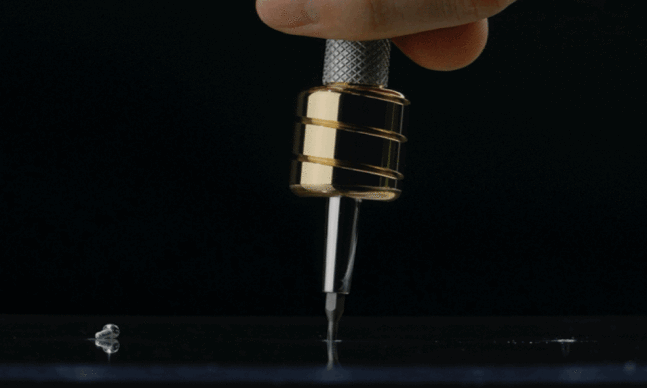
The Kinetic Driver Is the Best Precision Screwdriver We’ve Seen

We’re willing to bet that every single one of you reading this has a set of “precision screwdrivers” that you bought yourself, were gifted or acquired over the years. Throw them all out and back…

Ghost Pacer Gives You a Holographic Buddy to Train Against

Maximizing daily workouts is easier when there’s competition involved. It can be hard to get that on a track, but it doesn’t have to be with Ghost Pacer. Ghost Pacer is the world’s first mixed…

HUNT3.0 Is the World’s Smallest Multi-Function Flashlight

Gadgets are judged on how well they do their jobs despite being in the smallest packages possible–the HUNT3.0 Ultra Compact Flashlight reigns supreme. This latest iteration takes all the life-proof features of the previous models…

NADA Studio WTBA Concrete Cantilevered House

The WTBA house might not be real, but it sure looks to be. Created by Sebastian Benitez of NADA Studio, the house sits on the edge of a cliff directly overlooking the water below. The…

Every Serious Home Cook Needs a Japanese Chef’s Knife. Here Are the 8 Styles You Need to Know

Japan’s long-standing tradition of crafting high quality blades extends beyond katanas. The country produces some of the world’s best kitchen knives. Professional chefs and home cooks alike tend to lean either German or Japanese when it comes to their blades, with Japanese knifemakers leaning more on specialization and task-specific designs. From the gyuto to the yanagi, these are the eight most important Japanese kitchen knife styles to know.

Deba

Deba-Japanese-Knives-Gear-Patrol

Deba knives are sturdy, somewhat petite blades used primarily for working with fish. Fishermen and fish mongers use deba knives to scale, behead and filet fish without damaging the flesh, and the blade is strong enough to cut through thin or weak bones. Don’t try to chop through thicker bones, however, or you’ll risk damaging the knife. Instead, opt for the yo-deba knife, which is more adept for cutting through bones and shellfish.

Three to Consider (From Left to Right)
Global Deba Knife ($95): Global knives are funky. The holey, hollow handle makes the knife lightweight, and the single piece of Cromova stainless steel is tough and corrosion-resistant.
Goh Umanosuke Yoshihio Kasumi Deba Knife ($125): This is a single-bevel deba knife made for right-handed people. The Yasugi steel is native to Japan, and the handle is made of magnolia wood.
Kajiwara Blue #1 Kurouchi Deba ($165): This knife looks like it’s done its fair share of chopping off fish heads. That worn-in look is due to the kurouchi finish, which protects the carbon steel blade from corrosion.

Gyuto

Gyuto-Japanese-Knives-Gear-Patrol

Gyuto knives have impressively sharp tips for precision cutting, versus softer-tipped santoku knives. The original purpose of the gyuto knife was to cut and break down beef (gyuto translates to “cow sword”) but they’re good for chopping, slicing and mincing basically anything.

Three to Consider (From Left to Right)
Akira-Saku White #1 Funayuki Gyutou ($125): The carbon steel is graded White Steel #1, which means it’s made with more carbon than a carbon steel of grade White Steel #2. The added carbon makes the blade harder, which can be sharpened to a finer, but also more brittle, edge.
Global 8-inch Chef’s Knife ($159): A durable, interesting-looking knife that is always on sale for nearly half-off (around $85, usually).
Sakai Takayuki Damascus Hammered VG-10 Gyuto ($160): Japanese knife makers pride themselves on their handles nearly as much as their blades. This knife’s octagonal handle is a mix of keyaki and mahogany, and the blade features 33 layers of Damascus patterning.

Nakiri

Nakiri-Japanese-Knives-Gear-Patrol

With its rectangular blade, nakiri knives resemble western-style cleavers. Unlike cleavers, nakiri knives are too thin to cut through animal bone and are typically used for chopping vegetables. The nakiri knife can produce ultra-fine cuts through a guillotine cutting motion (sometimes called the “push-pull” cut) rather than a rocking action.

Three to Consider (From Left to Right)
Kotobuki Teruhisa Nakiri ($20): You get what you pay for, but Kotobuki’s nakiri knife is surprisingly efficient and sharp for a $20 pickup.
Miyabi Hibana Nakiri ($180): The 49-layer Damascus patterning is sure to draw in knife shoppers, but the knife’s ability to seamlessly cut through a veritable field of vegetables is the main selling point.
Kintaro Aogami Super Kurouchi Nakiri ($210): Yoshimi Kato, a licensed craftsman based out of Fukui, Japan, hand forges, grinds and finishes every Kintaro-branded knife. The nakiri’s blade is a combination of carbon steel and stainless steel, so you get the benefits of carbon steel minus maintenance and reactivity to food.

Petty

Petty-Japanese-Knives-Gear-Patrol

The Japanese petty knife is essentially a smaller version of the Japanese gyuto knife, perfect for small tasks like peeling produce, creating decorative cuts and completing other delicate tasks. It’s basically a Japanese paring knife, but a little bigger.

Three to Consider (From Left to Right)
Seki Petty Knife ($17): Seki, Japan is known for its knife production, much like Sabae, Japan is known for its output of high quality sunglasses. These are cheap and get the job done without much fuss.
Kyocera Innovation Ceramic Kitchen Knife ($40): Kyocera’s patented ceramic blade is meant to be more durable than standard ceramic.
Shun Classic 6-inch Utility Knife ($70): Shun is one of few Japanese knife manufacturers that’s seen success in the American market. Its petty knife has a lightweight handle that makes for easier control when working on precise cuts.

Santoku

Santoku-Japanese-Knives-Gear-Patrol

Santoku knives may be the most common style of Japanese knife to make headway in western kitchens. This style of knife is as versatile as the gyuto knife and chef’s knife, but typically shorter in length and feature a straighter edge and less sharp tip. The term santoku translates to “three virtues,” which either represents meat, fish and vegetables or chopping, slicing and dicing.

Three to Consider (From Left to Right)
Henckels Forged Premio Hollow Edge Santoku Knife ($35): It’s not made in Japan it’s not made with Japanese steel, but Henckels’ German-inspired knives are still a great value for amateur cooks. Its santoku knife also features dimples so wet foods slip off the blade when chopping.
Global G-48 7-inch ($85): Santoku knives rarely run longer than 7-inches. The Global santoku knife maxes out that standard and does so with its hardwearing Cromova 18 stainless steel.
Bob Kramer by Zwilling 7-inch Santoku ($200): Zwiling’s collaboration with Bob Kramer produced a line of knives signed off by the legendary bladesmith you can actually buy.

Sujihiki

Sujihiki-Japanese-Knives-Gear-Patrol

Sujihiki knives are comparable to the common carving knife and can be used for the same tasks. The long thin blade glides through protein without having to saw back and forth. The sujihiki knife is also a more approachable version of the yanagi knife (more on that later), which is used for slicing sashimi.

Three to Consider (From Left to Right)
Kanetsugu Molybdenum Sujihiki ($42): If you’re not carving meat very often, you probably don’t want to drop stacks on a knife that carves meat. This one is under $50 and made of molybdenum vanadium, a stainless steel with a reputation for being cheap, sharp and durable.
Sakai Takayuki Damascus Hammered VG-10 Sujihiki ($188): Sakai’s 9-inch blade offers enough length to cut meat in one fell swoop, minimizing friction.
Yoshihiro Mizu Yaki Black Finish Blue Steel #1 Kurouchi Sujihiki ($190): Blue Steel #1 refers to the added carbon content in the steel, making for better edge retention and durability.

Usuba

Usuba-Japanese-Knives-Gear-Patrol

Usuba knives may look like the nakiri knife, but are recommended for expert knife users. The usuba knife is a single-bevel knife, which means only one side of the knife is sharp. Because it has a single bevel, usuba knives come in either left-handed or right-handed options. These knives require more precision than cutting with a nakiri knife, and inexperienced knife users are more likely to injure themselves without proper training.

Three to Consider (From Left to Right)
Masahiro Seki Japan Usuba ($63): Masahiro’s usuba is made of yellow steel, which some might deem an inferior steel. But the knife is made in Seki, Japan, and it’s hard to find a crappy knife from there.
Shun Pro 6-1/2-Inch Usuba Knife ($165): Shun owners can attest to the brand’s commitment to making superior knives. The Shun Pro line of knives are for those who take cooking seriously, and the knife features high-carbon VG-10 steel, pakkawod handles and a graffiti-etched blade.
Yoshihiro Shiroko High Carbon Steel Kasumi Edo Usuba ($220): Cooks who are willing spend over $200 on a usuba knife better know how to use one. This one from Yoshihiro will help cooks get those signature vegetable sheets.

Yanagi

Yanagi-Japanese-Knives-Gear-Patrol

Unless you’re a sushi chef, you probably don’t need a yanagi knife, but they’re cool enough to want anyway. Used for slicing sashimi, the yanagi knife is a single-beveled knife that makes delicate and precise cuts. The knife’s fine edge is dangerously sharp so it should be reserved for those who have spent years learning how to use it.

Three to Consider (From Left to Right)
Global G-11 Yanagi Sashimi Knife ($95): If you’ve picked up a recent sushi-making hobby, Global’s ultra-sharp yanagi knife is a great pick for cutting perfect slices of fish without butchering it.
Sakon Molybdenum Yanagi ($100): Get Sakon’s yanagi knife if you’re worried you can’t maintain one of the more expensive options. The molybdenum vanadium is still a great choice of steel and you won’t be upset with the results.
Sukenari White Steel 2 Yanagi ($290): The Sukenari yanagi knife is sharp. We wouldn’t be surprised if Jiro gave it a thumbs up. MTC Kitchen, the store selling the knife, writes that “the initial sharpening is generally headache-free.”

Note: Purchasing products through our links may earn us a portion of the sale, which supports our editorial team’s mission. Learn more here.

This content is created and maintained by a third party, and imported onto this page to help users provide their email addresses. You may be able to find more information about this and similar content at piano.io

This New Leather Camp Chair Is Way Too Nice to Use at Camp

Revival Rugs makes reasonably priced one-off rugs that are handmade from high-quality materials. Its first line of furniture is full of straight heat, but it’s the Aide-De-Camp Chair that really stuck out to me.

The brand connected with Turkish designer Gizem Yuce for the design. Yuce sought to improve a classic camp chair, so she elevated the piece with luxury materials like pale solid oak and tan leather and, although it would look out of place in the outdoors, the Aide-De-Camp Chair can fold up storage or travel (but I’d keep this baby out in the open 24/7).

Revival-Rugs-Furniture-Gear-Patrol-Amb

“Our homes have increasingly become the central location of our lives and we wanted to give people more options, because maybe you’re all set on rugs but you need a well-made, well-priced desk that fits in your living room,” Ben Hyman, Revival Rugs’ co-founder and CEO, said in a press release.

Each piece in the collection is a complement to the rugs that the brand does so well. Other callouts include a striking pedestal table, a mushroom-shaped desk lamp and a trio of handwoven baskets.

The collection is available at Revival Rugs’ own website, and Huckberry recently added the line to its store.

Buy Now (Revival Rugs): 139+ | Buy Now (Huckberry): $139+

This content is created and maintained by a third party, and imported onto this page to help users provide their email addresses. You may be able to find more information about this and similar content at piano.io

Ireland’s Most Haunted House Is for Sale for Around $3 Million

Located on the Hook Peninsula in Wexford, Ireland, Loftus Hall is a palatial estate with just over 27,000 square feet of space that includes its own private beach, 63 acres of land and more bedrooms,…

When Did We All Become Obsessed with Coffee Table Books?

In her history of coffee table books, Australian journalist Phyllis Stylianou identifies the first documented mention of a book whose function had nothing to do with reading. The honor goes to the French humanist philosopher Michel de Montaigne, who, in his 1580 essay Upon Some Verses of Virgil, writes: “I am vexed that my essays only serve the ladies for a common movable, a book to lay in the parlor window.”

Three-hundred-and-eighty-one years later, the term “coffee table book” made its first appearance in a 1961 issue of Arts Magazine. According to Merriam-Webster, the term refers to “a large expensive book with many pictures that is typically placed on a table for people to look at in a casual way.”

best sofas couches gear patrol lead full
Burrow’s Serif Coffee Table ($395) in Oak.

Chandler Bondurant

A take for you: if you’re only looking at a book in a casual way (especially an expensive one), you’re doing it wrong.

In a 2017 op-ed in Publisher’s Weekly, Bridget Watson Payne, senior editor of art publishing at Chronicle Book, makes the case against the “coffee table book,” a term which she decries as diminishing what should be called art books to a furniture role.

“Why did we (or, just as often, someone who loves us) spend a chunk of change—often a considerable one—on this heavy thing? Was it so it could sit there in the middle of the living room, silently proclaiming to whoever walks by that we are people of taste and class? Let’s be honest: quite possibly.”

But Payne, who has edited more than 100 of these books, believes they’re perfectly capable of serving shallow and deeper purposes alike.

Tiffany Thompson, an interior designer and founder of Duett Interiors, finds herself firmly in Payne’s camp.

Tiffany Thompson’s Current Display

“It’s important that these aren’t just for display. Make sure you are reading them and you’re knowledgeable on what’s beyond the cover so that they can lead to conversation,” Thompson says. “If [my client and I] are trying to make a strong statement and create a deep conversation for guests, then I make sure we open the book to display a page that is going to create some positive tension.”

German publisher Gestalten is one of the leading producers of art books, or as its founder Robert Klanten, likes to refer to them as “illustrative books.” (Another nickname!)

Robert Klanten’s Current Display

“You can compare print to the music industry. On the one hand, you have services like Spotify and then, on the other hand, you buy the vinyl and you go to the concerts,” Klanten says. “The more and more people go digital, the more there is an urge to build a tangible foundation that reconfirms who they really are. Some books can help the reader find an answer.”

To Klanten, coffee table, art or illustrative books are “something permanent in an oblivious, ephemeral digital environment.” They are physical signals chosen to represent passions that drive you. Doesn’t that sound like something worth reading?

This content is created and maintained by a third party, and imported onto this page to help users provide their email addresses. You may be able to find more information about this and similar content at piano.io

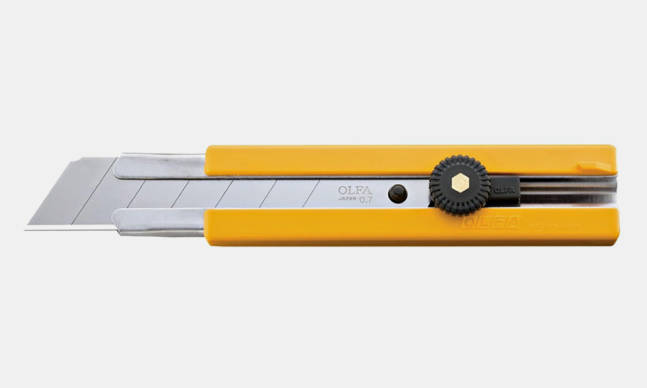
At Home: Open All of Your Packages with This Affordable, 5-Star Utility Knife

Ordering things online for delivery is something we can all but guarantee everyone reading this has been doing for years. But we’re also willing to bet that you’ve been having even more things delivered during…

Want to Build a Cabin in the Woods? Start Here

Den Outdoors, a new company that sells cabin designs, is releasing a bit of light reading on the subject of actually building the cabin.

How to Build a Cabin Book: Built in Nature is a 76-page guide to building a cabin in the woods, penned by the company’s founder, Mike Romanowicz. The book is part-inspiration, but is mostly pragmatic advice and how-tos – picking a site, budgeting, safety, electricity, water lines and so on.

den field guide

Den

Romanowicz’s company is one of a number of A-frame, kit or secondary home brands to see growth connected with prospective home buyers looking for ways to put distance between themselves and others in the COVID-19 era. Unlike many competitors, Den Outdoors doesn’t sell the whole kit, opting instead to sell various barnhouse-style cabin and A-frame plans and passing the role of builder on to customers (many of which might hire a building team to execute the build).

Den’s DIY cabin guide is available on pre-order now for at an introductory price of $20 and ships in September.

This content is created and maintained by a third party, and imported onto this page to help users provide their email addresses. You may be able to find more information about this and similar content at piano.io

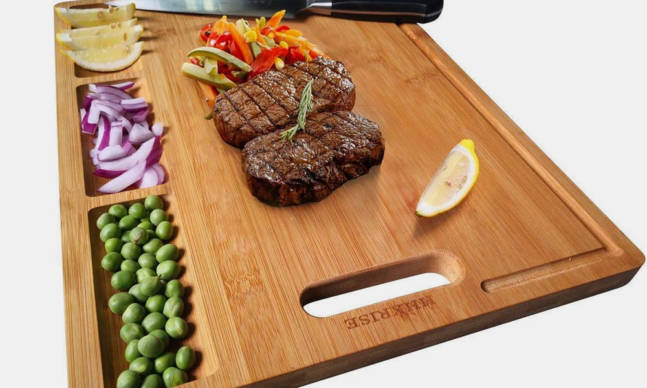
At Home: Upgrade Your Kitchen with This Compartmentalized Cutting Board and Chopping Block

At this point in the weird world of 2020, we’ve upgraded our coffee, whiskey decanters and chef’s knives, along with learning to pick locks, cook like Bourdain and sharpen our knives at home. Now that…

Hot Wheels x IWC Racing Team Transport Set

Hot Wheels produces some of our absolute favorite diecast toy model cars. International Watch Company–aka IWC–produces some of our favorite timepieces. Those two favorite brands teamed up for the Hot Wheels x IWC Racing Team…

This Cheap Standing ‘Desk’ Is a Strange Solution For Stranger Times

<!–This Cheap Standing ‘Desk’ Is a Strange Solution For Stranger Times • Gear Patrol<!– –><!– –>

stand and deliver


As we continue our work from home lives, new brands continue cropping up offering solves to problems that arise therein. How about this one: a cheap standing desk that isn’t really a desk.

Storkstand isn’t new (its Kickstarter campaign launched in 2014) but it’s making waves across the internet for the ingenious way it can convert an office chair into a standing desk. The portable desk is essentially a slab of wood with an aluminum fastener that hooks onto the the back of an office chair. The desk can support up to 50 pounds, and it’s large enough to fit up to a 17-inch laptop (plus a mouse). The original iteration of the Storkstand featured an elastic band to wrap around the chair, but the latest version uses tension to prevent the desk from tipping over. The brand claims the desk works with 90 percent of office chairs. If for some reason your chair falls into the 10 percent of incompatible chairs, the Storkstand works as a portable lap desk to keep your overheating computer off your lap (admittedly, this would be a bummer).

The Storkstand, available in black and white hardware, just hit Huckberry and is available for $149.

Note: Purchasing products through our links may earn us a portion of the sale, which supports our editorial team’s mission. Learn more here.
Tyler Chin

Tyler Chin is Gear Patrol’s home writer. He’s from Queens, where tempers are short and commutes are long. But nothing can get in the way of his love of coffee, beer and random home goods.

More by Tyler Chin | Follow on Instagram · Contact via Email

<!–

–>

<!– –><!–

–>

The 8 Best Air Mattresses You Can Buy in 2020

Air mattresses are a convenient way to make sure you always have a place for guests, both expected and unexpected, to lay their heads. A good air mattress should be durable, portable, comfortable and firm enough to hold up human bodies. These are the best air mattresses to buy for every possible scenario.

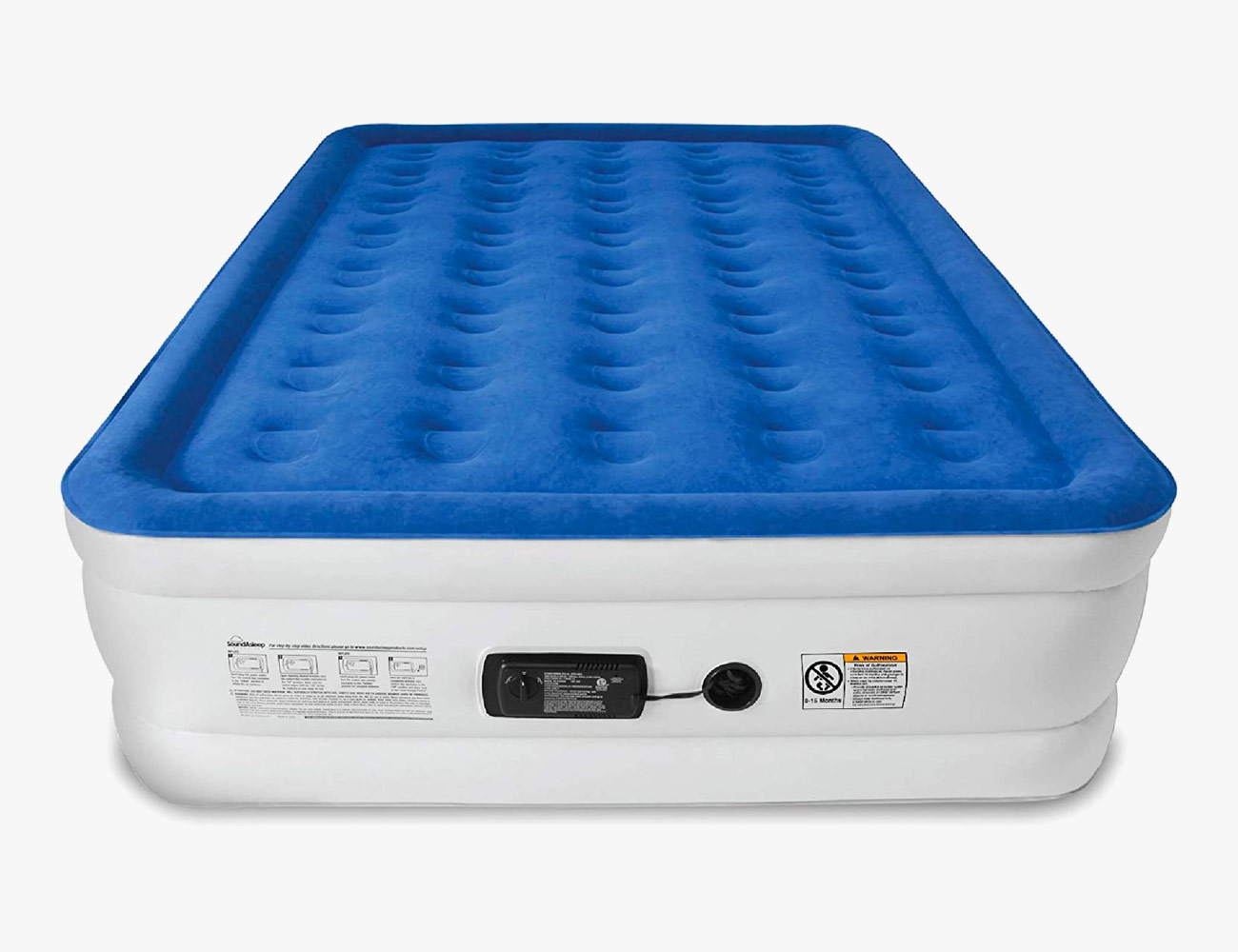
Overall Best Air Mattress: SoundAsleep Dream Series Air Mattress

At $120, SoundAsleep’s Dream Series Air Mattress is not a cheap buy, but its features justify the cost. The mattress uses what the brand calls ComfortCoil Technology, which is a system of internal air coils to prevent sagging and drooping. The air coils also give the mattress significantly more stability than standard air mattresses (it feels nearly as firm as a regular mattress). SoundAsleep considers this mattress a double-high air bed, and at 19-inches high, it is on the tall side. Active sleepers will appreciate the SureGrip bottom so the mattress stays put on slick surfaces, while the top surface is waterproof and puncture-resistant.

This is meant to be an at-home mattress; weighing 20 pounds, it’s unrealistic to schlep this on a hike. The convenient built-in pump is pretty much standard with modern air mattresses, and it takes around four minutes to inflate and deflate — a bit long, but what’s the rush?

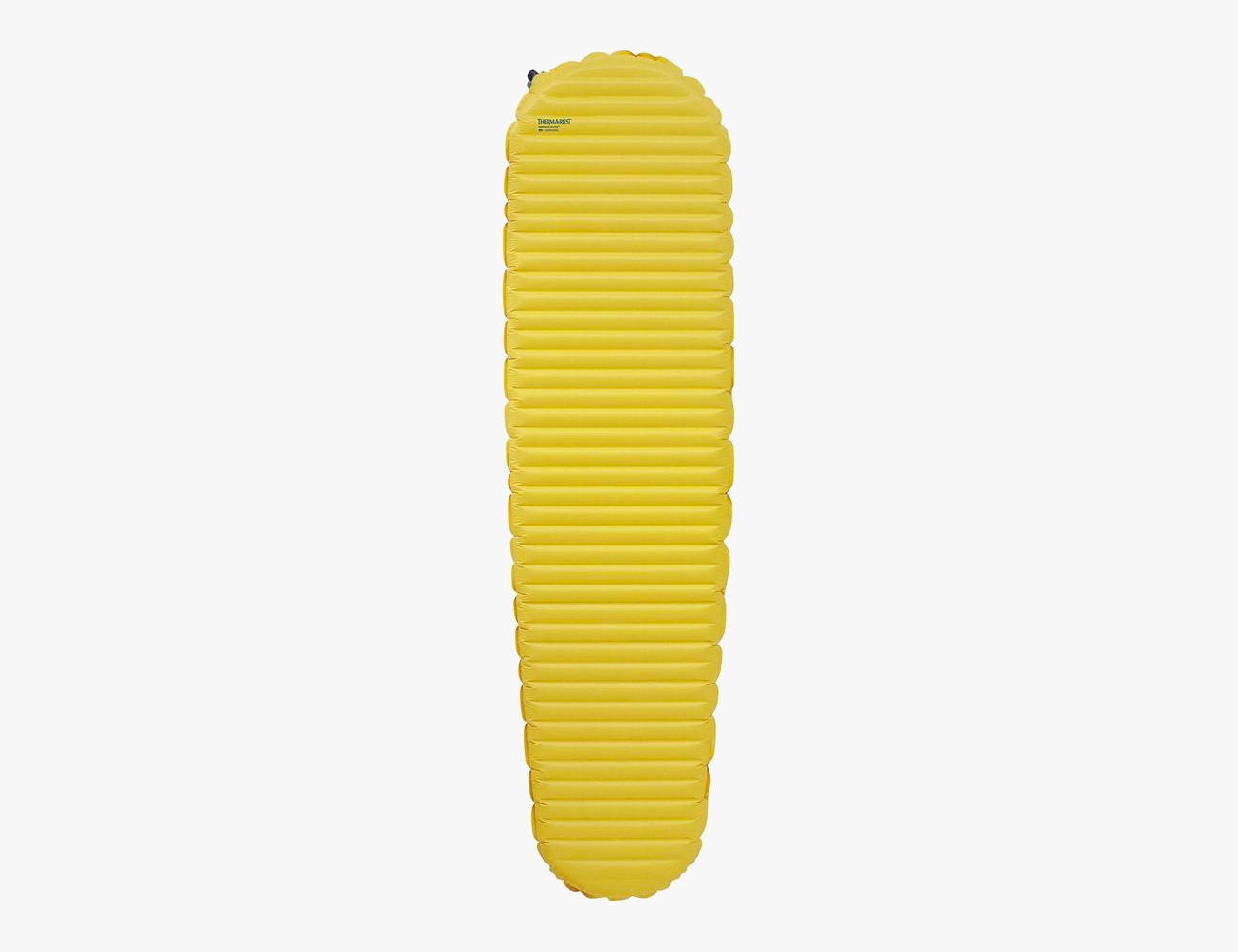
Best Air Mattress for Camping: Therm-a-Rest NeoAir XLite Sleeping Pad

The mummy-shaped Therm-a-Rest NeoAir XLite Sleeping Pad is the choice pick for those hitting the trail. It is low-profile and lightweight, weighing just one pound for the long size. The mattress’ ThermaCapture is a reflective coating that prevents body heat loss by returning it back to you. A patented Triangular Core Matrix offers the best warmth-to-weight ratio, which is why the technology is used in most of the brand’s best-selling gear.

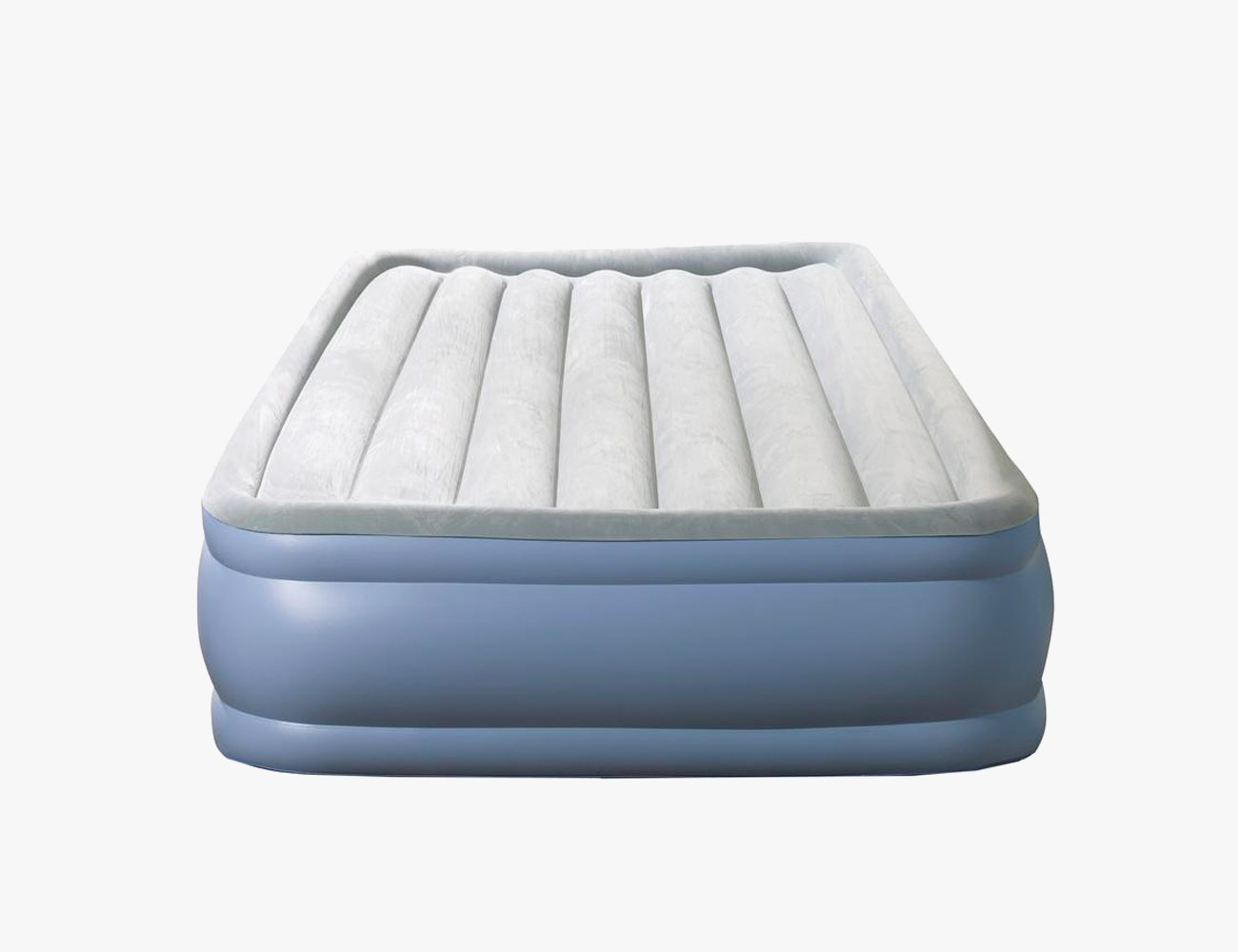
Best Cheap Air Mattress: Beautyrest Simmons Hi-Loft Air Mattress

If you don’t foresee too many drop-in guests, you probably don’t need to spend a lot on an air mattress. The Hi-Loft is under $100, even for the queen-sized, and it still works wonders for sporadic uses. It’s 17 inches tall and comes with a plug-in pump for speedy inflations. Picky sleepers can adjust the mattress’ firmness with single-touch controls. A raised perimeter prevents sleepers from rolling off, and the vertical beam construction was designed to provide ergonomic back support. While the mattress has a velvet top for comfort, we always recommend using a sheet on an air mattress for hygiene.

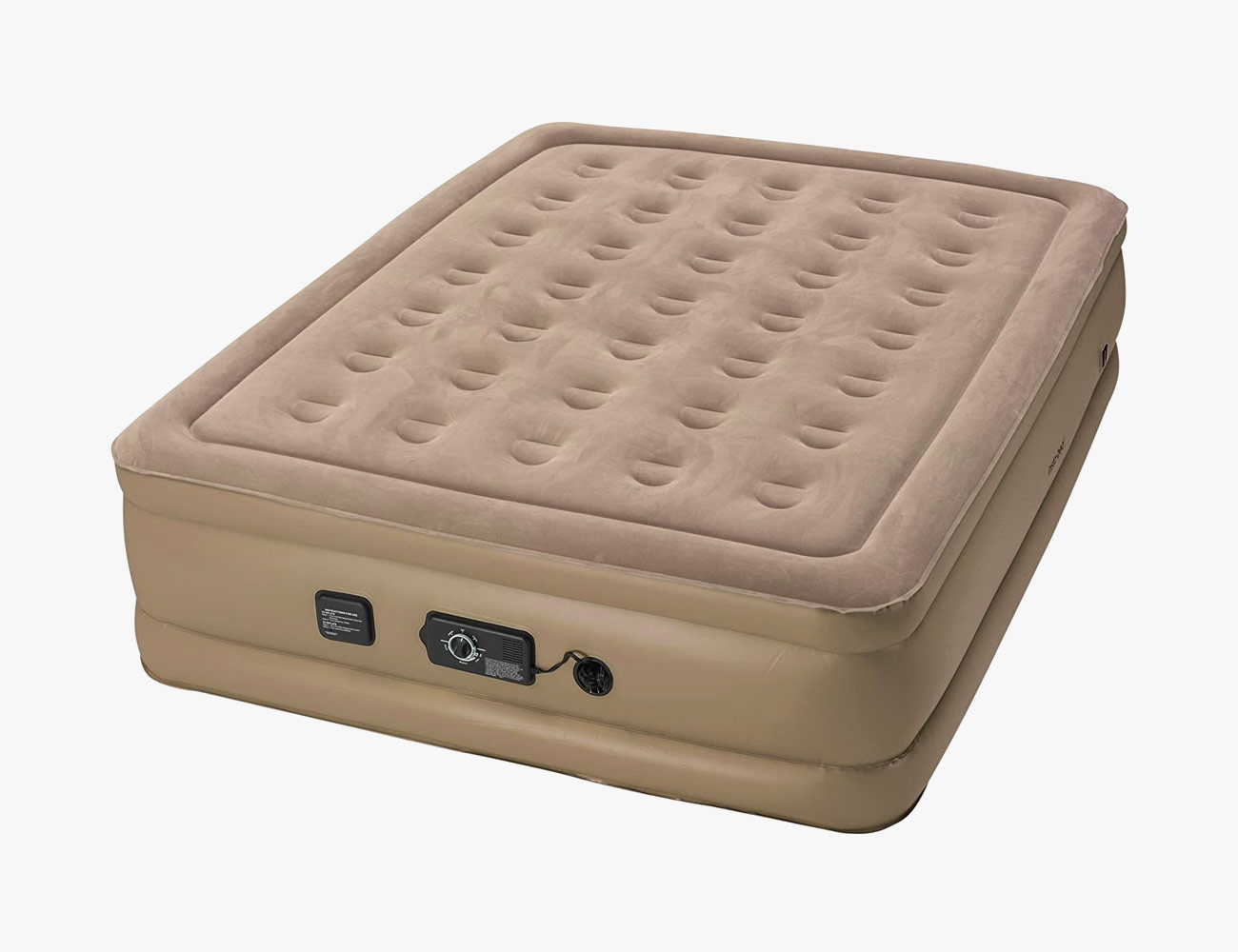
Best Self-Inflating Air Mattress: Insta-Bed Raised Air Mattress with Never Flat Pump

The Insta-Bed nails its inflating technology in a way that few other air mattress brands have managed to achieve. The mattress has two pumps: its primary pump quickly inflates and deflates, and with the turn of a dial, sleepers can choose their desired firmness; a secondary pump monitors air pressure throughout the night and kicks in if it detects a loss of air.

Best Luxury Air Mattress: Aerobed Pillowtop Queen Air Mattress

The Aerobed Pillowtop stands at two feet high, making it easy to mount and dismount. A luxe pillowtop makes for a supremely comfortable feel, and a built-in USB charger is a highlight for anyone with an electronic device. The “Whoosh” valve is an ingenious name and way to deflate the mattress quickly when you’re in a hurry, and a firmness control wand is the ultimate lazy person’s tool for custom comfort at the touch of a button.

Best Air Mattress for Everyday Use: SoundAsleep Dream Series Air Mattress

If it’s going to be the best overall mattress, then it’s going to be the best everyday mattress, too. While we don’t recommend sleeping on an air mattress regularly, the SoundAsleep Dream Series Air Mattress offers some of the best features for an air mattress you would want to use daily. To reiterate, this air mattress uses ComfortCoil Technology for comfort, firmness and longevity while the built-in pump is a convenient feature for inflating and deflating. The material is also resistant to stabs and punctures, and a SureGrip bottom ensures the mattress doesn’t slide around at night.

Best Air Mattress for Kids: Intex Kids Travel Bed Set

Resembling a shallow pool, this mattress from Intex is a choice pick for kids who might manage to roll off the bed. If you need another sleep surface, remove the inner mattress to accommodate an extra person. A hand pump is included, and it might be easy enough to get your kids to inflate their own bed.

Best Air Mattress Repair Kit: Coghlan’s Airstop Sealant

Regardless of how durable an air mattress claims to be, accidents happen and you will eventually find yourself with a leak. Coghlan’s Airstop Sealant creates an airtight seal on PVC material whether it be your air mattress or a rain jacket. While sticker patches might seem easier to use, you’ll go through them quickly because they’ll be used for small holes and big gashes alike. Use only as much sealant is necessary to patch up a leak, and you’re good to go for many more fixes.

Note: Purchasing products through our links may earn us a portion of the sale, which supports our editorial team’s mission. Learn more here.
Tyler Chin

Tyler Chin is Gear Patrol’s home writer. He’s from Queens, where tempers are short and commutes are long. But nothing can get in the way of his love of coffee, beer and random home goods.

More by Tyler Chin | Follow on Instagram · Contact via Email