All posts in “Green”

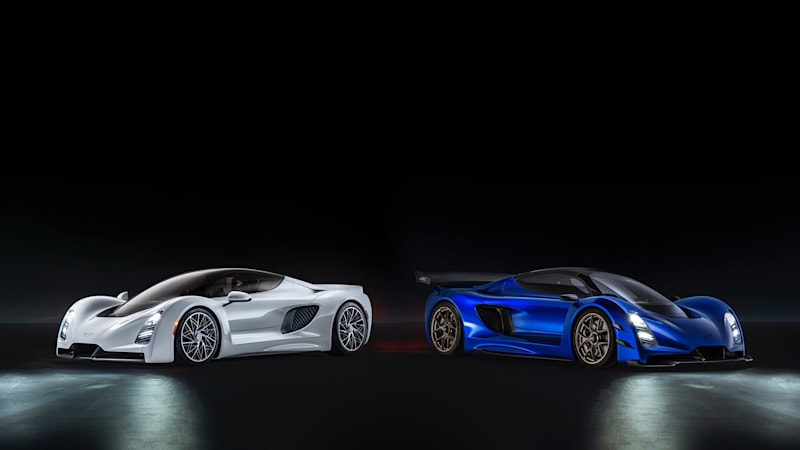
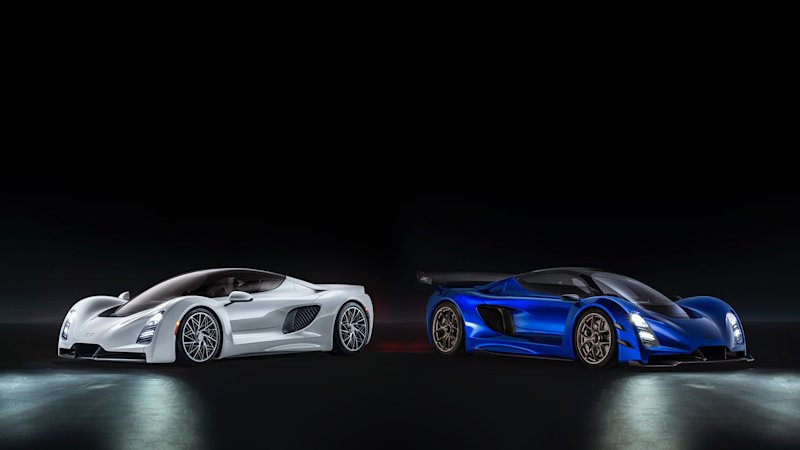
Czinger 21C comes in 1,331-hp widebody version, too

Two months after Czinger introduced its 21C tandem-seater hypercar in regular and track-focused trims, there’s already another variant on the table. Jens Sverdrup, the company’s chief commercial officer, told Pistonheads that Czinger wanted to have a widebody derivative with a higher output ready for the Geneva Motor Show, but that didn’t happen. Sverdrup detailed the new version, explaining that engineers tweaked the 2.9-liter twin-turbo V8 and the twin high-power electric motors to increase output by an extra 98 horsepower, from 1,233 hp to 1,331, without increasing the weight of the 992-pound entire hybrid powertrain. This makes what was already the most power-dense V8 engine in the world even more power-dense. The widebody component shows itself in new bodywork over a wider track and wider tires, and it gets its own chassis tune. Said Sverdrup, “Anybody who buys one of our 80 21Cs can tick for a widebody version on the options list, giving them a hypercar that might not be the best for narrow Scottish or Welsh roads, but will definitely be great for the race track.”

Czinger’s spending the time before deliveries begin in 2021 honing engine characteristics to ensure tractability throughout the V8’s 11,000-rpm rev range. We’ve been promised a coupe that’s tame around town, Sverdrup saying, “With the hybrid system you can lean more on the batteries at low revs for more refinement at low speed.” Get above 6,000 rpm, however, and it apparently sounds like “an old F1 engine.”

The California company’s vision for life after the 21C is also in the works, with three models slated to launch starting in 2023. These could be more practical than the opening act, adopting 21C philosophies from the powertrain to the build, and continuing the push toward synthetic fuels. With Czinger backed in part by 3D-printer Divergent 3D and Hong Kong venture capital, engineers are already considering how to design a monocoque with built-in cavities for wiring and fluids, and “complex internal structures that enhance crash safety.” 

The 80 planned builds for the 21C should keep the company busy for the next few years, each car said to take 3,000 to 4,000 man-hours to print and assemble. As for the question of whether Czinger will be around that long, of course, one never knows, but the company supposedly has funding for the next three projects already and, unusual in this space especially, Czinger isn’t asking for deposits for the 21C in order to pay for production. Seeing the dealer network is planned to include “20 established supercar sellers in Europe” by the end of this year, further insight into what’s ahead shouldn’t be long in coming.

Related Video:

McLaren hybrid sports series prototype spied, possible 570S successor

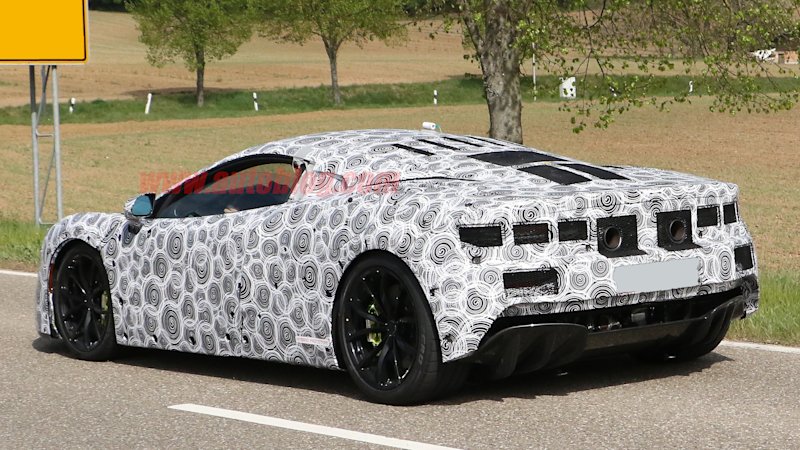
McLaren has repeatedly said it plans to go hybrid with all of its vehicles in the future. The latest rumors out of Britain point at plans to reveal the first of this new hybrid lineup sometime this year. This heavily camouflaged prototype could be the one we’re waiting for — it even says “hybrid prototype” on the side sill.

Its size and general shape means it’s likely part of McLaren’s Sports Series. The camo does an excellent job of disguising what the sheetmetal underneath looks like. If we had to guess, this car looks like it’d be a replacement for the 570S model. Assuming we’re right about that, it’s probably hiding McLaren’s yet-to-be-revealed twin-turbo V6 engine. Add the electric power into the equation, and it’s likely going to be making much more combined power than the twin-turbo V8 is able to produce on its own now. McLaren’s hybrids are also rumored to be of the plug-in variety, capable of driving about 20 miles off electric power.

The camouflage over top of the engine bay appears to be tented, and it looks a bit like the McLaren GT because of it with the gently sloping line to the back. We don’t even get to see how large the side air intakes are since McLaren has covered these up quite well, too. The high-mounted dual exhaust has us giddy. Its placement reminds us of the 720S exhaust pipes. Under all that is a giant diffuser and wide rubber pushed to the edges of the car.

Last we heard, McLaren was going to release a hybrid model this year, and it would go on sale in 2021. We wouldn’t be surprised if these targets are pushed back due to delays stemming from the coronavirus.

Related video:

2020 Lamborghini Huracan Evo has the biggest price discount in America

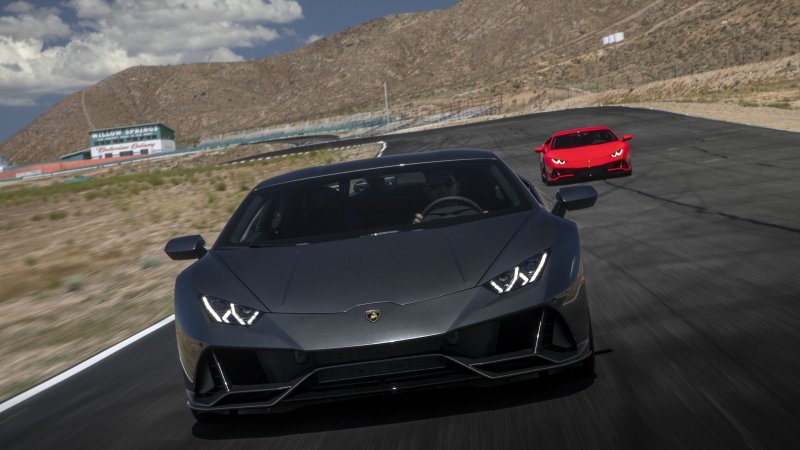
Right now, buyers of the 2020 Lamborghini Huracan Evo are paying an average of $248,000 to drive the brand-new supercar off the dealer lot. That’s a hefty chunk of change, but it represents $16,269 off the car’s average $264,969 retail price, according to data provided to Autoblog by Truecar. That’s the largest discount in America on a new vehicle for the month of April, 2020 when judged by the dollar amount in savings off the sticker.

It’s not all that uncommon to see a lot of money taken off the sticker price of expensive luxury cars. This month, right behind the Lamborghini sits the 2019 BMW 8 Series with a few bucks shy of $11,000 in savings, which is hardly surprising. Though it’s a very sleek and entertaining car in some of its various incarnations, it hasn’t exactly proven to be a hot seller for the German automaker. The fact that there are a total of 15 (!) possible configurations probably doesn’t help. Two other BMWs, the 2020 7 Series ($10,164 in savings) and the 2019 i8 ($10,145) are also on the top 10 biggest discounts list.

In between that BMW sandwich are the 2019 and 2020 editions of the Acura NSX. It doesn’t really matter which one a buyer chooses to drive off the lot, either way lopping off more than $10,000 off the sticker price means the electrified supercar will cost just under $150k.

For a look at the best new car deals in America based on the percentage discount off their suggested asking prices, check out our monthly recap here. And when you’re ready to buy, click here for the Autoblog Smart Buy program, which brings you a hassle-free buying experience with over 9,000 Certified Dealers nationwide.

Related Video:

Koenigsegg Gemera and Jesko Absolut strut on the supercar maker’s runway

The world seems like a pretty terrible place right now, but there are good things in it, like the two monster Koenigsegg supercars the company revealed a month ago. The Koenigsegg Gemera four-door supercar and the Jesko Absolut high-speed hypercar were showstoppers from the Geneva Motor Show that didn’t happen. And now Koenigsegg released more photos of each at the airfield where its headquarters is located.

Leading the galleries is the Gemera, the newest of the two cars. Besides its unusual shape, a result of having four seats all suitable for adults but still just two doors, it has remarkable technology backing it up. It’s a plug-in hybrid using three electric motors and a turbocharged three-cylinder engine with no camshafts. And it makes a total of 1,700 horsepower. It even has heated and cooled cupholders for each passenger. It’s brilliantly outrageous.

The Jesko Absolut is also wild. It’s aiming to be the fastest car in the world, which would mean a top speed in the 300-mph range. It has potential with the same 1,600-horsepower twin-turbo V8 from the regular Jesko, but is more aerodynamic by losing the rear wing and other drag reductions. It also gets the nifty automatic transmission that can shift to any gear immediately, even out of sequence.

Related Video:

GFG Style evolves Giugiaro design in the Bandini Dora and Vision 2030 Desert Raid

Fabrizio and Giorgetto Giugiaro, the father-son duo who paired up to create automotive company GFG Style, have been swept up in the wave of the times and gone all-in on electric. In the past four months, GFG Style unveiled three new concept vehicles, all of which use batteries and electric motors for propulsion. The Vision 2030 and Vision 2030 Desert Raid offer new perspectives on off-road-ready supercars, and the Bandini Dora evokes Italian history in a stylish barchetta.

GFG Style started in 2015 and has been hard at work envisioning the future of the automobile. Since opening its doors, the design and consultation firm has crafted seven concept cars, including the Kangaroo, an electric all-terrain supercar that was one of the coolest and most interesting vehicles at the 2019 Geneva Motor Show. It seems Fabrizio and Giorgetto couldn’t get the core conceptual nature of the Kangaroo out of their minds, as they debuted another all-terrain EV called the Vision 2030 in November 2019 at the Riyadh Motor Show in Saudi Arabia.

Vision 2030

Pegged as a zero-emission all-wheel-drive hypercar designed for Saudi Arabian roads, the Vision 2030 is named after Saudi Vision 2030, a plan to help the country diversify its core businesses and move away from an independence on oil. “Saudi Arabia asked us to design a model that would perfectly adapt to their region, made up of completely new and decidedly wide roads, but also of deserts with dunes and rough terrains,” Fabrizio said in a press release. Fabrizio continued that the point of the car was a design study in wheels and suspension, which largely dictated the shape of the carbon fiber and aluminum car.

To accommodate the multiple types of terrain, the car’s suspension automatically adjusts based on driving conditions. The Vision 2030 also offers three driving modes, Race, Road and Off-Road, which change the ground clearance between 5.5 to 8.7 inches. Inside, six different digital screens ensure the car is properly connected and the driver is properly informed.

GFG Style says the two-seater Vision 2030 has a 90-kWh battery pack and a single-charge electric range of more than 280 miles. It makes a claimed 510 horsepower and 502 lb-ft of torque, good for a 0-62-mph sprint in 3.8 seconds. 

Vision 2030 Desert Raid

The Desert Raid is one of two concepts that were originally intended to debut at the 2020 Geneva Motor Show before it was canceled due to precautions surrounding the coronavirus outbreak. As indicated by the name, the Desert Raid is an alternate variation of the Vision 2030. GFG Style says the Desert Raid underlines “the true capacity of this project: not to become a hypercar but a hyperSUV.” 

The Desert Raid has the same battery, power, and general performance specifications as the Vision 2030, as they share the same electric powertrain setup. The bodywork, save for the rear, is also the same, but small tweaks make this vehicle specialized for off-roading. Whereas the Vision 2030 had multiple driving modes, this version only has one setup skewed toward handling rough terrain. Thus, it remains at 8.7 inches of ground clearance at all times. It also has a wider track, smaller wheels, new carbon fiber mudguards, and a visible spare tire integrated into the top rear portion of the car. 

Bandini Dora

The second prototype meant for Geneva is the Bandini Dora. Like the other prototypes, it has a space frame aluminum chassis, carbon fiber bodywork, and a 90-kWh battery pack that provides a claimed range of more than 280 miles per full charge. Compared to the Vision 2030 cars, however, the Dora is slightly more amped up. Two electric motors, one on each axle, account for 536 horsepower and 502 lb-ft of torque. Equipped with all-wheel drive, the Dora has a claimed 0-62-mph time of 3.3 seconds.

Riding on 21-inch wheels, the Dora is the work of a collaboration with Bandini, an Italian manufacturer founded by Ilario Bandini that originally ran from 1946 until 1992. The company was resurrected as Bandini Automobili s.r.l, thanks to Ilario’s great grandson Michele, and this car is meant to be an ode to Bandini barchetta race cars of decades past. GFG Style’s Geneva stand was planned to include a Bandini 750 Sport Internazionale from the Mille Miglia Museum.

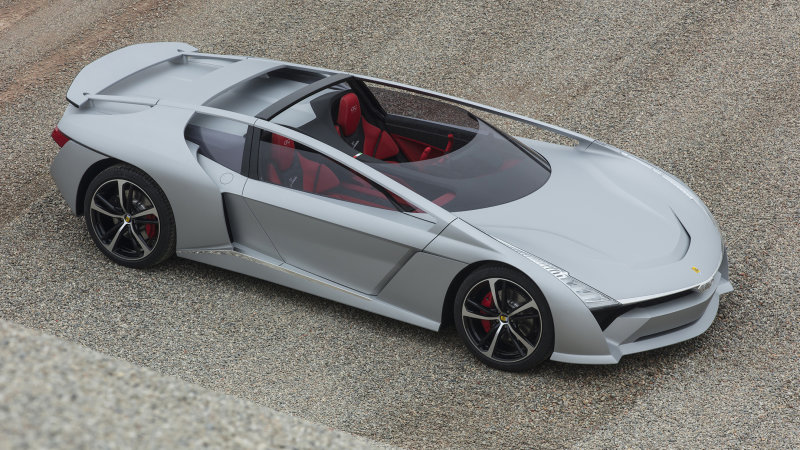
The Bandini Dora is an open-top two-seater, but its clever design is unlike anything of the past or present. Look closely, and the lines reveal that the windshield and encapsulated cockpit are entirely separate from the car’s roof arches. This was the result of blending old design with new safety standards.

“Today, it is difficult to conceive a Barchetta without considering the evolution there has been in the car concerning safety,” Giugiaro was quoted in the press release. “Inspired by the Halo of Formula One, we thought about creating a car that had a clean windshield as it used to be used with no reinforcements, thus being as linear and light as possible. To solve this need, I thought of an out-and-out superstructure that would integrate into the style with an accentuated structural and protective function for both the driver and passenger.” 

To properly appreciate the affect this design has on the car, it must be looked at from all angles. The prominent lines extends from the front bumper, curve over the front wheels, and swoop inward toward the rear to become part of the active aerodynamics. Because they don’t connect with the glass at any point, they creates all types of negative spaces, intersections, and design features that you just don’t see on normal cars. From the front, it almost looks as if one car has overtaken another car that lives beneath it.

For now, all three vehicles are just prototypes. The video below shows a press conference in which GFG Style announced the new designs.

[embedded content]

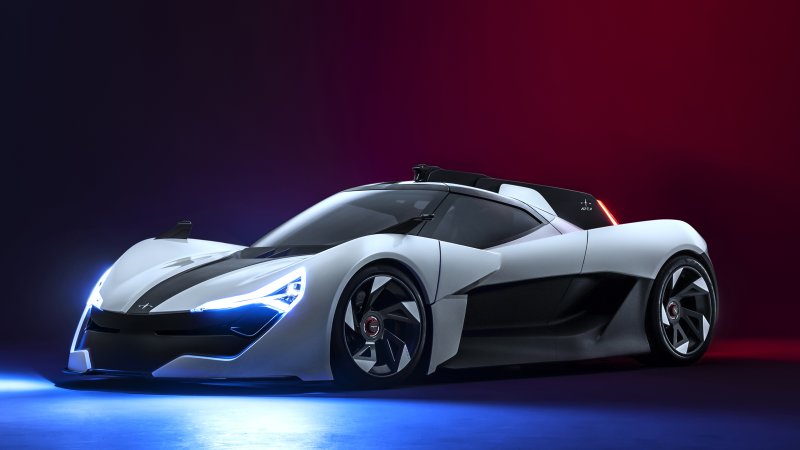
The Apex AP-0 is a 649-hp EV that weighs 2,645 pounds

Apex Motors sounds like a brand new name in the game, but the Hong-Kong-based company’s been around for more a few years and through a few transformations. In 2015 a maverick outfit of car designers banded together under the name Elemental to reveal the RP1, powered by 1.0-liter and 2.0-liter EcoBoost engines. By 2017, the 1,278-pound coupe could produce 2,205 pounds of downforce and was running Goodwood. By 2019, the Elemental RP1 had turned into the even-more-evolved Apex AP1, putting out 400 hp from a 2.3-liter EcoBoost four-cylinder and blitzing from 0 to 60 miles per hour in 2.5 seconds.

The brand new AP-0 is the follow-up. As the naming scheme suggests, it takes the top spot in the lineup ahead of the AP-1 by having battery-electric power, a single electric motor turning the rear axles with 649-hp and 427 pound-feet of torque, a 320-mile range on the WLTP cycle, and a 0-60 time of 2.3 seconds. Top speed is 190 mph.

Just as remarkable, and even more unusual for an EV, the whole package weighs 2,645 pounds. Compared to a McLaren 720S, the AP-0 is 4.5 inches shorter but 3.4 inches wider, and while the Apex gives up 61 hp and 131 lb-ft to the Englishman, the AP-0 weighs almost 500 pounds less than the 720S. Compared to performance EVs, the Apex weighs about 1,380 pounds less than a Tesla Model 3 Performance, 1,700 pounds less than a Rimac Concept 2, and almost 2,500 pounds less than a Porsche Taycan Turbo S.

The Apex packs a floor-mounted, 90-kWh lithium-ion battery that consumes 1,213 pounds of its curb weight. When plugged into the right CCS charger, the pack can refill 80% of its charge in 15 minutes; on a standard Type 2 charger, filling up from empty takes eight hours.

The chassis and bodywork is entirely carbon fiber, a central carbon tub and modular spaceframes laid on a rigid carbon spine connect the front to the rear. Outside, the Le Mans-like fin houses a retractable LIDAR system up front and a cross-shaped taillight in back. Built as a road-legal racer for gearheads and sitting just 3.7 inches off the ground, there’s an adjustable pushrod suspension with automatic ride-height adjustment, 14-inch carbon ceramic rotors with six-piston calipers in front and four-piston in the rear, and a pair of 19-inch center-lock wheels up front paired with 20-inchers in back. 

Behind gullwing doors, the carbon, aluminum, and leather interior makes every occupant feel like a racer with a single-seater-style, reclined and feet-up seating position. Three displays for the driver sit atop the instrument panel behind a square steering wheel. To help drivers make the most of track days, Apex says the AP-0 can “gamify the way drivers can learn new racetracks and deliver the ultimate immersive racing experience” through augmented reality projection. The software-based “instructor” can be improved through over-the-air updates. To ensure the instructor knows what it’s talking about, Apex said it wants to build an FIA-approved race track, followed by a racing academy, around its Hong Kong HQ. 

The ambitions only begin there. When off the track, that LIDAR unit is intended to provide Level 3 autonomous capability at launch, with the company saying Level 4 potential is already built in. More handily, the AP-0 will come with automatic emergency braking, adaptive cruise control, and lane keep assist. That’s all down the way, though, the AP-0 not scheduled to enter production until the latter half of 2022, costing around $195,000 for U.S. buyers. If all goes well from here to there, Apex plans to build up to 500 units per year in Britain, what it calls its second home, on the way to introducing a wider lineup of offerings.

Related Video:

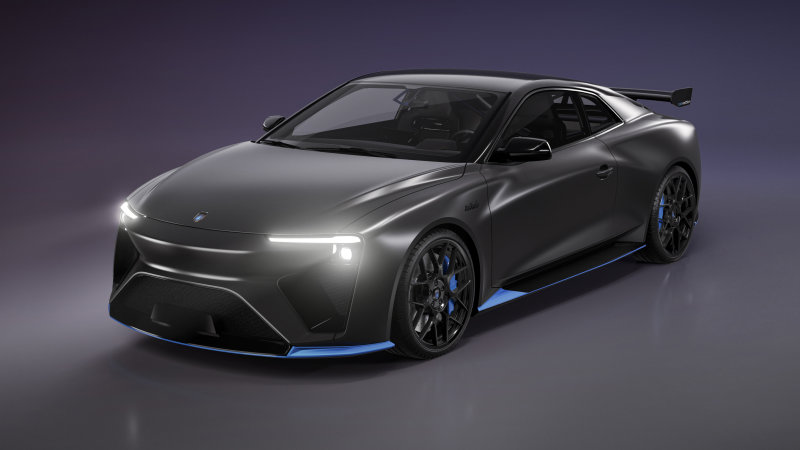
Roland Gumpert Nathalie is a methanol fuel-cell supercar because why not

Roland Gumpert launched his Apollo more than 10 years ago, eventually losing his fearsome coupe to insolvency and Consolidated Ideal TeamVentures. Gumpert, however, was working on more models, one of them called the Explosion, shown in Geneva in 2014. Based on looks and power specs, our best guess is that Gumpert took the Explosion with him into a new partnership with Chinese automaker Aiways, which owns the carmaker now known as Roland Gumpert, and slowly turned it into the Nathalie supercar meant for debut at this year’s ill-fated Geneva show. Gone is the 2.0-liter turbo four-cylinder with 420-horsepower. In its place, a methanol-fueled powertrain that combines a fuel cell, a buffer battery, and four electric motors. Combined capacity of methanol, fuel cell, and battery is 178 kWh, combined system output tallying 536 hp and more than 730 pound-feet of torque.

It starts with a 17.2-gallon tank that holds the methanol, which takes three minutes to fill. In a process that reverses the laboratory creation of methanol, the alcohol is heated to between 572 and 752 degrees Fahrenheit, separating the liquid into carbon dioxide and hydrogen. The hydrogen gets sent to a 15-kW fuel cell to produce electricity, which is not sent to the battery, but straight to the electric motors located at each wheel, those four motors coordinated by two, two-speed gearboxes. All that chicanery is said to propel the 14-foot-long coupe from standstill to 62 miles per hour in 2.5 seconds, on to a top speed of 190 miles per hour, and a range of 510 miles at 75 miles per hour. When driven in Eco mode, range extends to about 745 miles.

The Nathalie looks mild on the outside, like some JDM-only coupe found in Gran Turismo that spent a little time in the tuning shop getting a huge wing. Yet the Nathalie’s made of supercar build techniques — a chromoly tube chassis overlaid with a skin made of flax and carbon composites for light weight, plus a full FIA roll cage behind the cabin seats. The doors open in the scissor fashion Lamborghini has made famous. A McPherson front suspension and double wishbone rear handle the dynamism. The front brakes are enormous, and so are the rears. Thin lights front and rear, large intakes, and conspicuous ground effects complete the look. The Nathalie’s lines can be seen in another product from Aiways, the U6ion concept (traditional) electric crossover coupe also intended for debut in Geneva, both breathed on by Aiways lead designer Ken Okuyama, who penned the Ferrari Enzo and led Pininfarina design for a spell.

RG will build 500 of the Nathalie, which includes a small number of the First Edition example shown, with deliveries scheduled to begin next year. Each one will run €407,000 ($455,000 U.S.) before taxes. Where is an owner expected to get methanol if he doesn’t live near a race track or commercial depot? Gumpert said, “An overnight delivery service has been installed for the exclusive customer base for Germany, Austria, Switzerland and is currently being expanded throughout Europe. The North America and Middle East regions are also currently being developed.” What’s more, RG will pay for the methanol supply for the first year after delivery.

Related Video:

Pikes Peak Hill Climb Record | Behind the Wheel S02 // E09

“Behind the Wheel” is a video series that shows you a bit of what it’s like to work at Autoblog. The editors and video producers will show you the cars we have in our fleet, and you’ll get a behind-the-scenes look at some of the personalities who help make the site run. 

In this episode, Senior Producer Christopher McGraw packed up his bags, got in the car and moved out to the fantastic state of Colorado. After getting settled in the mountains, his first assignment was to cover VW’s attempt at setting the course record for the Pikes Peak Hill Climb. What followed was one of his favorite days on the job.

Where are you traveling to in 2020? We’d love to hear from you, so please comment below!

Gear used to make this: 

Panasonic GH5s: https://amzn.to/2QsJdHE

Panasonic Lumix 12-35mm F2.8: https://amzn.to/34bl3W4

Rode VidMic Pro: https://amzn.to/2qrDHKN

Tiffen 58mm Variable ND Filter: https://amzn.to/2XpizRw

GoPro Hero 7 Black: https://amzn.to/2Qr3Bcm

Adobe Premiere: https://amzn.to/32ZTA8B

Autoblog is a participant in the Amazon Services LLC Associates Program, an affiliate advertising program designed to provide a means for sites to earn advertising fees by advertising and linking to amazon.com. These deals are available through our affiliate partnership with Amazon.com. Deals are subject to Amazon’s schedule and availability.

Automobili Pininfarina unveils its next vehicle (sort of)

TURIN, Italy — Today, at its headquarters near Turin, Automobili Pininfarina unveiled for an exclusive group of reporters’ eyes only, a concept that very firmly presages its next production vehicle.

The boutique electric automotive subsidiary of famed coachbuilder and design consultancy Pininfarina Spa wowed attendees at the Geneva Motor Show last year with its $2.5 million, battery-powered hypercar, the Battista, and promised, back then, that more models were forthcoming. This concept, the Pura Vision, is an ultra-luxury, ultra-potent, four- or five-passenger SUV that is meant to combine the sportiness of the Lamborghini Urus with the five-door grand-touring shooting-brake practicality of the Porsche Panamera SportTurismo at a price that slots in above both of them but below that of more extortionate high-riders like the Rolls-Royce Cullinan. It thus has in its competitive SUV sights on offerings like the forthcoming Aston Martin DBX and Ferrari Purosange. Pricing wasn’t revealed, but we’re expecting something in the mid- to high- $200,000s range.

The Pininfarina’s unique selling proposition is two-fisted. First, as one would expect from an Italian company that spent many decades as the designers for Ferrari, is design. Though we were strictly forbidden from sharing images of the vehicle, we can attest to its stunning and unique shape. More than 16.5 feet long, and quite broad, the aluminum-skinned SUV features a blunt and grille-less front end, minatory slits of narrow headlamp, a surprisingly long hood given its engineless-ness, tucked-in Coke bottle flanks, rear-hinged “suicide” rear doors, extremely muscular haunches that mimic the flared and spatted rear wheels of the Battista, a fastback rear, and protruding razor thin taillights.

“We wanted to get rid of designs that are messy, and go back to basics with great proportions,” says Automobili Pininfarina head of design Luca Borgogno, referring to the elongated GT-inspired dash-to-axle ratio and short rear overhang of this sporting form. “And the SUV shape is great because, when you think of the EV platform, with the battery pack down low, it’s simpler to integrate in a higher riding vehicle. You can still be super-fast, and deliver some all-terrain capability with the ride height. It’s a perfect mixture.”

True to the second half of its name, the Pura Vision also has a fully glass roof, inspired in part by the bubble-topped Superflow concepts Pininfarina created for Alfa Romeo in the middle of the past century. Of course, in the contemporary case, the glass is ultra strong, undergridded by supports, and self-darkening. “It encloses you so much while surrounding you in this glass teardrop,” Borgogno tells us. “It links you with the environment, connecting you with the idea of sustainability.”

In fact, sustainability, or something like it, is the Pura Vision’s other significant attribute. Built on a new platform that will also underpin future Pininfarina automobiles, it hosts a battery pack large enough to produce 1,000 hp, powering what promises to be a hefty chunk of vehicle from 0-60 mph in fewer than 3 seconds on the way to a top speed of over 180 mph, whilst providing a claimed 550 km (340 miles) of range. Putting all of this power to the Pura’s Pirelli P-Zeros — mounted, to stunning effect, on gigantic 26-inch wheels — is accomplished with a quartet of torque vectoring electric motors. And, in case you were still wondering about its sporting, go-anywhere, grand touring intentions, it has carbon ceramic brakes and a 46/54 front/rear weight distribution, just like the Ferrari GTC4Lusso.

The vehicle’s interior also shines with distinctive materials and material usage. A wooden prow surrounds occupants above and along the dash and along the tops of the doors, kind of like in a Riva speedboat. Echoing this Italian nautical heritage, the fully flat floors can also be spec’d in unvarnished wood. This trim, though probably not the floors (?) can alternately be ordered in carbon fiber for a more technical effect. The rear seat can be configured in a two-place, first-class-esque arrangement with the de rigueur recline feature, or as a more conventional bench. Either way, the passenger compartment is sealed off from the cargo area, and the seat doesn’t seem to fold flat, so don’t plan on carting home sheets of plywood. Not that you’d want to risk getting splinters in all the sustainably tanned leathers, processed with (what else?) olive oil.

Pininfarina plans to build at least three other vehicles on this same platform, and some veiled, ghost-like images in the presentation the executives showed us suggested to our eyes that these would be: a smaller SUV-like thing; a grand-touring coupe of indeterminate number of doors; and a two-door convertible. The Battista hypercar is going to be hand-assembled in an atelier, so in order to build these slightly higher-volume exclusive supercars, Pininfarina is seeking out an existing factory nearby to their headquarters in Italy’s famed Motor Valley that they can convert to a production facility. In addition to vehicle assembly, it will also host prototype, product development, purchasing, supply chain management, testing, training, customer experience, and delivery services. Fortunately, one of the areas into which the Italian design house has recently expanded has been architecture, so they’ll handle the conversion of said factory in-house.

Borgagno warns us that the concept that we saw was not precisely production ready, but that it is “very close.” He says that we should expect to see the wheels decrease in diameter to “just” 24 inches, and the rear suicide doors to be replaced with traditional front-hinged ones, but didn’t specify much else that would change. We don’t typically get too worked up about SUVs, but this one promises to be a bit different, should it retain its current form. “It’s almost romantic,” Borgogno says wistfully, glancing again at the Pura Vision’s glass bubble-top. “To look around at the sky, the sun.” 

Related Video:

Watch Rimac test the C_Two’s active aerodynamics on track

The founder of electric sports car builder Rimac Automobili, Mate Rimac, when not helping create new cars, creates YouTube series about those cars. They include series such as Discover Rimac Today and Mondays with Mate. One of the more intriguing series is the documentary-style look at the C_Two electric supercar‘s ongoing development, and the latest episode shows two C_Two prototypes testing new upgraded suspension and active aerodynamics as part of testing announced back in December

The two vehicles seen sharpening their senses at the Automotodrom Grobnik track outside Rijeka, Croatia, look similar but have significant differences underneath. One has an old suspension setup and no active aerodynamic technology, while the other has an upgraded and improved suspension and Rimac’s full active aero kit. The most noticeable feature of the system is the rear wing that moves up and down. Meanwhile, hearing the cars whir about is fascinating in its own right.

If you’re craving more footage of the C_Two, Rimac has you covered. The EV builder has captured the car’s aerodynamic wind tunnel testing, the crash testing, as well as the computational methods used throughout the process.

When the C_Two finally launches, it will immediately become one of the most advanced vehicles on the market. At its conceptual debut in 2018, Rimac claimed the C_Two would have four electric motors at each wheel and would be powered by a 120-kWh lithium-ion battery pack. In total, the C_Two is said to make 1,888 horsepower and 1,696 lb-ft of torque, and it still claimed 404 miles of range on a single charge (by the New European Driving Cycle standards). The four-digit power pushes the car from zero mph to 60 mph in 1.9 seconds, down a quarter-mile in 9.1 seconds, and all the way up to a 258-mph top speed. Only 150 examples of the car will be produced.

Czinger releases full specs on 21C hybrid hypercar

A week ago, LA-based Czinger teased its 21C hypercar with a video and a promise of “dominating performance.” Now that all the specs are out before the coupe’s reveal at the Geneva Motor Show, on paper at least, it appears “dominating” was the correct choice of words. We’ll start with the performance: Zero to 62 miles per hour in 1.9 seconds — making 0-60 perhaps faster; the quarter-mile in 8.1 seconds at 170 mph; zero to 186 mph and back to zero in 15 seconds; zero to 248 mph and back to zero in 29 seconds, which would eclipse the Koenigsegg Regera’s record of 31.49 seconds set last September.

Assuming the 21C can bring those numbers to life, how does the coupe do it? There’s a 2.88-liter twin-turbo V8 with a flat-plane crank stowed amidships driving the rear wheels, good for 950 horsepower. (To get a sense of the march of progress, the 2.855-liter twin-turbo V8 in the 1984 Ferrari 288 GTO produced 350 hp.) Each front wheel gets a high-powered electric motor, serving up all-wheel drive and a combined output of 1,232 horsepower and 600 lb-ft of torque at 10,500 rpm, 500 rpm short of redline. The 21C in standard road guise without the big rear wing has a curb weight of 1,250 kilograms (2,756 pounds), and with a metric horsepower rating of 1,250 hp, we’re talking about a 1:1 power-to-weight ratio. The 21C Lightweight track-focused car with the big rear wing weighs just 1,218 kg (2,685 pounds). Shifting through a seven-speed automated manual transmission, the road car maxes out at 268 mph, the track car produces more than three times the road car’s downforce so its top speed comes in at 236 mph.

The e-motors get juice from a lithium-titanate battery, the same pack composition used by the Mitsubishi i-Miev and Honda Fit EV, an integrated starter-generator helping to deliver power where needed. Czinger says the entire powertrain was designed and is built in-house, and it’s flex-fuel — owners can fill up with Vulcanol, described as “a renewable methanol made from captured carbon dioxide,” assuming they can find it.

Czinger is only making 80 examples of the 21C, using its proprietary “vertical assembly,” 3D-printed build processes that combine carbon fiber, high-performance alloys, and other materials, topped off with book-matched carbon fiber bodywork. Road & Track has a good writeup on the production system. Company founder Kevin Czinger explained that the 3D-printed parts are expected to last the lifetime of the car, but if any need to be replaced, they can be dissolved into their original powder and reconstituted to serve a different purpose.

Each 21C comes with a reported price of $1.7 million before the obligatory options and fripperies. We look forward to checking this one out in Geneva, and we’ll take the one with the wing, please.

Production Rimac C_Two coming next year in Geneva, with prototypes testing now

Rimac likes to make sure we don’t forget about them. The company consistently shares intriguing bites of news with us, like behind the scenes aero development or crash tests for its upcoming $2.1 million electric hypercar. Rimac is doing the same today, as it announced that Rimac C_Two prototype testing is beginning at various tracks and testing facilities. This will be followed by a pre-production phase starting in early 2020.

Rimac says it’s going to make 17 prototype vehicles in total. As of now, Rimac has plans to produce and sell 150 C_Twos, so 17 separate cars for testing purposes is a significant amount. As one would expect, each of the prototypes will be made with different testing purposes in mind. For example, Rimac says one will be tortured in chassis rigidity testing, while another will be used for high-performance autonomous driving development.

The final production version of the C_Two is set to be unveiled at the 2020 Geneva Motor Show, where Rimac will give the car a proper name — C_Two has only been a placeholder. Rimac went on to say that the production car will differ from the concepts we’ve seen in 2018 and 2019 “with improvements in design, ergonomics and performance.” Customer deliveries are scheduled to begin at the end of 2020.

The predicted power figures are still the same as before, as Rimac claims the C_Two will make 1,914 horsepower and 1,696 pound-feet of torque from its four electric motors.

The Mercedes-AMG One sounds just like a Formula One car

Billed as the closest thing to a road-going Formula One car, the Mercedes-AMG One, unveiled as a close-to-production concept at the 2017 Frankfurt auto show, is still under development. Mercedes-Benz’s go-fast division released an update on the project that shows the hypercar in action.

Six-time Formula One champion Lewis Hamilton took a break from winning races around the world and trying to save the planet to check in with the team developing the One. Designing a groundbreaking hypercar is an expensive and time-consuming process, and the One stands out from its peers because it uses a street-legal version of the powertrain found in AMG’s championship-winning Formula One car. This explains why development has taken so long. Deliveries are now tentatively scheduled to begin in 2021, about two years later than originally announced, but it sounds — literally — like AMG’s most powerful street-legal model will be worth the wait.

“The sound is pretty much exactly the same as it is in the race car,” Hamilton pointed out. Video footage of the One going around a track hints it will take a turn like a race car, too.

The turbocharged, 1.6-liter V6 is the One’s main source of power, and its main source of delays. Getting it to comply with emissions regulations was easier said than done. It idles at 1,200 rpm, which is high for a road car but low for a Formula One car, which turns at a stratospheric 5,000 rpm when it’s waiting on the starting grid. The electrified part of the powertrain consists of four electric motors, including two that zap the front wheels into motion, and they also need to be fine-tuned for road use. All told, the One will put over 1,000 horsepower under the driver’s right foot. The tradeoff is that the powertrain will require a major overhaul after about 30,000 miles.

Mercedes-AMG will cap One production at 275 units, and pricing starts at $2.7 million. That’s an eye-watering sum, but the hypercar market is stronger than ever, and every build slot was spoken for before the model made its official debut. Don’t expect to bag a used example shortly after deliveries begin; AMG is going to great lengths to ensure reservation holders don’t flip their car for a profit.

McLaren hybrid tech will create one of the quickest cars in the world

McLaren’s entire range of models will be electrified by 2023, and hybrid technology will help the British firm build one of the quickest cars in the world. The company’s chief executive outlined an unnamed upcoming model that will boast an organ-displacing zero-to-60-mph time of 2.3 seconds.

Speaking about the firm’s future with Car & Driver, McLaren CEO Mike Flewitt provided crunchy new details about the next-generation platform and the gasoline-electric hybrid powertrain the firm plans to unveil in early 2020, possibly during the next edition of the Geneva Motor Show. The 2.3-second car’s secret ingredient will be an electric motor that will zap the front wheels into motion. It will work with a mid-mounted engine, likely a twin-turbocharged V8, to deliver through-the-road all-wheel drive. We expect a generous serving of carbon fiber will keep the model’s weight in check.

Though there’s much more to a sports car than an impressive zero-to-60-mph time, 2.3 seconds would put McLaren’s looming hybrid on par with the sold-out Dodge Challenger SRT Demon, and ever so slightly ahead of hypercars like the Bugatti Chiron (2.4 seconds). McLaren’s limited-edition P1 hybrid took 2.6 seconds, and the hardcore Senna (pictured) is a tenth of a second slower.

Looking ahead, McLaren will gradually replace the current members of its range with new models built on its next-generation platform. The cheaper, less powerful ones will surf the downsizing wave sweeping across the industry by adopting a V6 the company hasn’t unveiled yet, while the bigger cars with higher horsepower ratings will carry on with a twin-turbocharged V8. All of the upcoming models will come standard with hybrid power, and they’ll be capable of driving for up to 20 miles on electricity, yet they’ll weigh as little as 65 pounds more than the supercars they’ll replace. The weight difference will likely increase when all-wheel drive, a V8 engine, or both enter the equation. 

McLaren has talked about building an electric car for years, and it even turned the 720S into a test mule to put the drivetrain though its paces, but Flewitt reaffirmed the technology isn’t ready. While solid-state batteries expected to merge into the mainstream halfway through the 2020s could make an electric McLaren more feasible, Flewitt warned the firm might not completely ditch gasoline for another three decades. Profitability is a deciding factor, too, especially as the company eyes an IPO.

Finally, Ferrari’s contentious but seemingly inevitable move into the SUV segment hasn’t changed his mind about launching a high-riding model. No means no, regardless of what rivals are doing. Instead of seeking additional ground clearance, McLaren is developing the first supercar it plans to release on its new platform. The model will make its debut in late 2020, and it will go on sale in early 2021.

Rimac CEO rules out SUVs, says brand will stay focused on supercars

It sometimes seems as if the entire automotive world is consigned to a future of nothing but high-riding sport utility vehicles, even among brands known for high-end sports cars. Porsche long ago gave into the craze with the Cayenne, Lamborghini has given us the Urus, we just saw Aston Martin unveil the DBX, and Ferrari has its own plans for a lifted performance family hauler. But Croatian electric vehicle maker Rimac Automobili is signaling that it’s not going down that road.

CEO and founder Mate Rimac spoke with Top Gear about plans for future models, telling the site, “We ourselves? No. We will not do a performance SUV. For sure.” He told the site he understood why automakers like Aston give in to the SUV craze, but insists Rimac will remain focused on two-seat supercars with innovative features in areas of aerodynamics and weight. “But I don’t want to make SUVs or stuff like that,” he added for good measure.

For now, Rimac has been working on homologating the C_Two, a limited-edition, 1,914-horsepower battery-electric supercar that it unveiled in 2018 in Geneva. It’s powered by four electric motors that draw from a 120-kilowatt-hour battery pack, boasts a range of 404 miles on the generous NEDC cycle, a top speed of 258 mph and adds 1,969 pound-feet of torque to the mix.

Production is set to start next year, capped at 150 examples, which have long been sold out at a base price of around $2.1 million. We’ll reportedly see the production version in March at the Geneva Motor Show.

Bugatti considering electric four-seater as second model

Bugatti’s long-rumored additional model could run on electricity rather than gasoline, according to a recent report. The company is tentatively planning a downward expansion without diluting its image.

Downward is a relative term when spoken in the same sentence as Bugatti. The company isn’t interested in chasing volume with an alternative to the Volkswagen GTI. Instead, Bloomberg wrote it’s envisioning an electric four-seater priced between 500,000 and one million euros, sums that represent about $555,000 and $1.1 million, respectively. Bugatti CEO Stephan Winkelmann told the publication that convincing parent company Volkswagen to fund the model requires a “hard fight,” however.

“The industry is changing fundamentally, and we have to address what opportunities there are to develop Bugatti as a brand going forward,” he explained. Releasing a second, cheaper model would mark a dramatic shift for the prestigious automaker, which has stuck to a one-core-model strategy since its renaissance in 1998. The EV could bump its annual output from about 100 to 600 cars.

Winkelmann was the driving force behind the Urus when he ran Lamborghini, which has led to speculation that Bugatti’s second model will be an SUV. Speaking to Autoblog, a spokesperson for the company again doused cold water on the rumors. “It would not be an SUV,” we learned.

The representative stressed nothing has been decided yet, so it’s still too early to tell precisely when the second model would enter production if it receives the proverbial green light for production. Less than 100 Chiron build slots remain available, but the French company has its work cut out for the coming years. It will deliver the first of 40 planned examples of the Divo in 2020, send the one-off La Voiture Noire to its mysterious new home in 2021, and build the first of 10 Centodiecis (pictured) in 2022. Additional Chiron variants (like the record-breaking 300+) aren’t out of the question, either.

The idea of an electric Bugatti isn’t without precedence. In 1931, company founder Ettore Bugatti built a battery-powered runabout named Type 56 to drive on his property. It was never meant to be a production car, but requests from wealthy clients (including Belgian king Leopold III, who wanted one for his wife Astrid) convinced Bugatti to make 10 examples between 1931 and 1936. Four remain in 2019, including one in original condition that Autoblog got the opportunity to drive in 2018.

2019 SEMA Show Mega Photo Gallery | Wild West show

LAS VEGAS — Car shows across the planet are struggling, as automakers look for fresh ways to reach the buying public. But out in Las Vegas at the SEMA show (SEMA stands for Specialty Equipment Market Association, in case you didn’t know), things have seemingly never been better. This year’s show has 2,400 exhibiting companies with 3,000 products on display, filling five halls. Off-road, performance, racing, hot-rods, coolness, weirdness — there’s something different around every corner.

The show ends Friday, so unless you’re about to hop a plane, you might just miss it. But here, from the comfort of your own home or cubicle, are the highlights — 45 cars that caught our eye. So sit back, crack a Zima and SEMA it up:

2020 Acura RDX with Concept A-Spec AccessoriesAcura shows off RDX accessories and 2020 NSX at SEMA

B is for Build Twin-Turbo V8 Huracan Widebody2015 Lamborghini Huracan is getting twin-turbo Chevy power for SEMA

Button Built Ferrari BB355TTToyo Tires will bring another wild catalog of rides to SEMA

2020 Chevrolet COPO Camaro John Force Edition – The Force is with you in this one-off Chevy COPO Camaro

2021 Chevrolet Colorado ZR2 Dusk Edition – 2018 Chevy Colorado ZR2 Midnight and Dusk Editions to debut at SEMA

Chevrolet Performance E-10 ConceptChevy truck transformed from farm work to 450-horsepower electric hot rod

2021 Chevrolet Silverado HD Carhartt Special EditionYou’ll know the 2021 Chevrolet Silverado 2500 HD Carhartt Special Edition when you see it

2020 Dodge Challenger Drag Pak2020 Dodge Challenger Drag Pak comes solely with supercharged power

Factory Five Romulan V12 SupercarFactory Five developing new supercar with 755-hp LS V12

Foose Jaguar E-Type Chip Foose cooks up a custom 1974 Jaguar E-Type for SEMA

Jay Leno’s GT500-powered 1968 Ford BroncoThis classic Ford Bronco has a modern GT500 engine and a manual

Ford F-Series CustomsFord previews custom F-150s and Mustangs for SEMA

Ford F-Series Super Duty CustomsCheck out the Ford Super Duty lineup rolling into SEMA 2019

Ford Mustang CustomsFord previews custom F-150s and Mustangs for SEMA

Ford Mustang LithiumLithium Mustang EV from Ford and Webasto is lightning in an bottle for SEMA

Ford Ranger Customs2019 Ford SEMA builds feature off-road-ready Rangers and wild Transit Vans

2020 Ford Ranger RTR 2019 Ford SEMA builds feature off-road-ready Rangers and wild Transit Vans

Ford SUV CustomsFord will bring more than 50 tricked-out vehicles to SEMA: Here’s a preview

Hennessey Jeep Gladiator Maximus Hennessey Maximus turns 2020 Jeep Gladiator into a 1,000-horsepower monster

Honda Civic Si Formula Drift CarHonda to show custom 1968 S800 Coupe, three Civic Si builds at SEMA

Honda CR-V CustomsHonda CR-V, Passport and Ridgeline highlighted at SEMA

Honda Rally PassportHonda CR-V, Passport and Ridgeline highlighted at SEMA

Honda Ridgeline HFP ConceptHonda CR-V, Passport and Ridgeline highlighted at SEMA

Honda Vintage VehiclesHonda to show custom 1968 S800 Coupe, three Civic Si builds at SEMA

Hyundai Kona Ultimate ConceptHyundai Veloster N ‘Type R Killer’ and lifted Kona on their way to SEMA

Hyundai Veloster N Performance Concept2020 Hyundai Veloster N Performance Concept gets an aftermarket makeover

Hyundai VelosterRaptor N ConceptHyundai Veloster N ‘Type R Killer’ and lifted Kona on their way to SEMA

Jack Roush Edition Mustang Jack Roush Edition Mustang brings 775 horses to Ford’s pony car

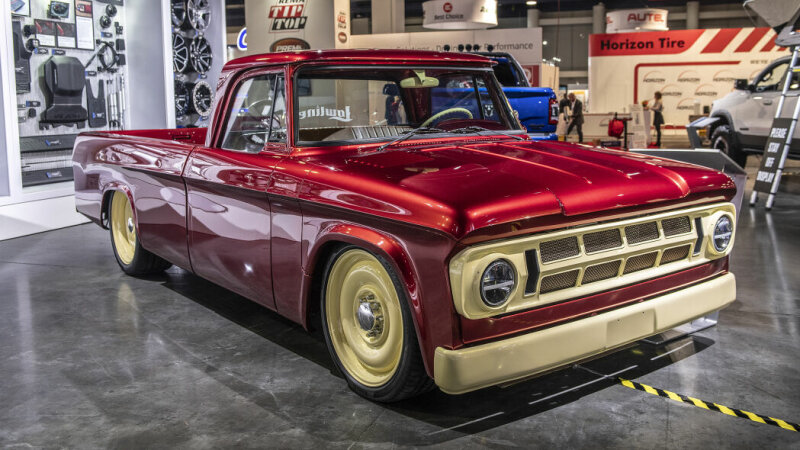
Mopar Lowliner Concept1968 Dodge D200 ‘Lowliner’ adds low-down diesel torque to a lowrider

Moparized Jeep Wrangler RubiconRam 1500 diesel overlander, off-road Jeep Wrangler show present and future of Mopar

Nissan Global Time Attack TT 370Z ProjectNissan Frontier 600-hp desert-runner, 370Z with 750 hp lead assault on SEMA

Nissan Frontier Desert Runner ProjectNissan Frontier 600-hp desert-runner, 370Z with 750 hp lead assault on SEMA

Nissan Kicks Street Sport ProjectNissan Frontier 600-hp desert-runner, 370Z with 750 hp lead assault on SEMA

2020 Nissan Titan with Genuine Nissan AccessoriesNissan Frontier 600-hp desert-runner, 370Z with 750 hp lead assault on SEMA

Nissan Titan XD Dually Project

1958 Plymouth Fury ‘Christine’ Tribute 1958 Plymouth Fury ‘Christine’ tribute has a 1,000-hp Hemi crate engine

Quintin Brothers Dodge ChallengerThis Dodge Challenger was stolen, used in police chases and recovered all in the week before its SEMA debut

Ram 1500 Rebel OTGRam 1500 diesel overlander, off-road Jeep Wrangler show present and future of Mopar

Ring Brothers 1969 Chevrolet Camaro ValkyrjaRingbrothers 1969 Chevy Camaro ‘Valkyrja’ ready to take SEMA to Belgium

Ruffian Ford MustangToyo Tires will bring another wild catalog of rides to SEMA

Russell Built Porsche 911 BajaToyo Tires will bring another wild catalog of rides to SEMA

Shelby GT500 Dragon SnakeShelby brings Dragon Snake GT500, Super Snake F-150 truck to SEMA

Speedkore AWD Twin-Turbo Dodge Charger WidebodySpeedkore AWD twin-turbo Carbon Charger, best birthday gift ever

Toyota Avalon TRD Pro ConceptToyota floods SEMA with a slew of Supra concepts

Toyota GR Supra CustomsToyota floods SEMA with a slew of Supra concepts