All posts in “Future Vehicles”

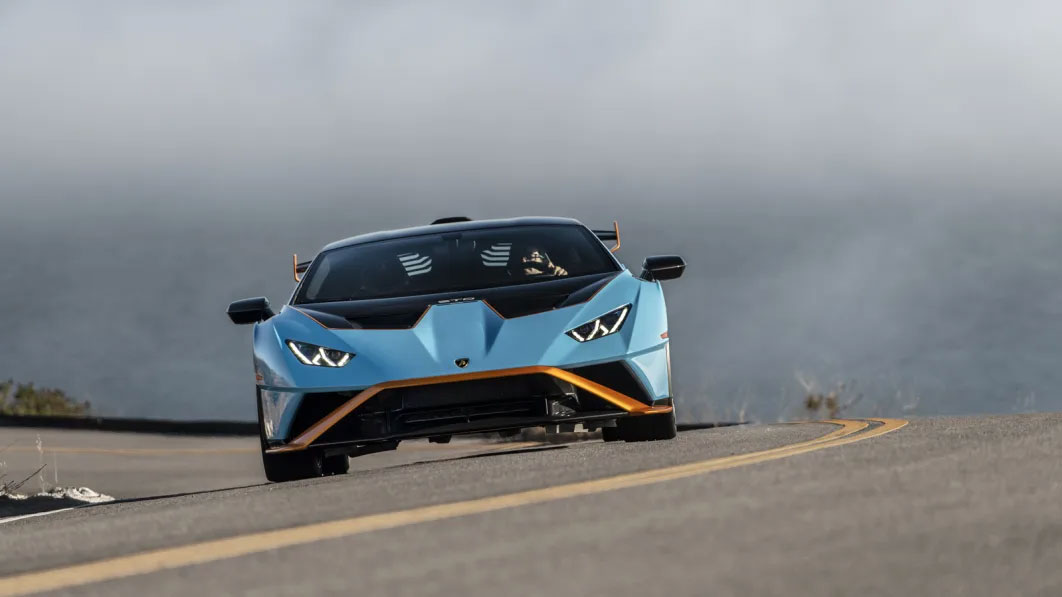
Lamborghini Huracan could become an 850-hp PHEV next year

So far, Lamborghini is celebrating 2022 with record sales and odes to the internal combustion engine thanks to a raft of special editions. The Italian automaker’s plunge into electrification starts next year with the next-generation Huracán and its plug-in hybrid powertrain. Lamborghini’s head of research and development said, “The engine will be bespoke for Lamborghini. On the final details we can’t yet communicate this, but I would say more than six and less than 12 cylinders for the combustion engine.” The easy (well, easier…) option would be to tweak one of the Volkswagen Group’s twin-turbo V8s to work with a pair or trio of electric motors. Auto Express says its sources suggest two bits of intel on that engine, the first being that it could be an in-house design “not sourced from VW Group,” the second that combined output might exceed 850 horsepower. Such a theoretical coupe would be 169 horses more potent than the Huracán STO and easily satisfy Mohr’s assertion that the new generation “from the performance point of view … will again be a big step.”

Lamborghini is spending $1.8 billion on its path to an electric future. It’s possible the firm could take part of that money to develop a V8 for itself, instantly setting itself apart from the other high-dollar brands in the VW Group. Naturally, we’d love to see that, or even a hybrid V10; what a monster that could be, although heavy, and engineers have been clear about waging a war against weight. The Wolfsburg parent is known to be a huge fan of scale, though, and a V8 or V10 that only serves two vehicles — the Aventador will continue with a V12 even as a plug-in hybrid — seems like a stretch to get approval. Parsing this also depends on how the automaker could define “in-house design.” We’ve seen massively revised engines built around an existing block considered “all-new.”

The Huracán could debut as soon as next year, one year ahead of the automaker’s commitment to electrifying the whole three-car lineup. Autocar says that looking ahead from there, we’ll finally get eyes on the battery-electric Lamborghini in 2028. Last year, the predicted window was sometime between 2025 and 2027, and an interview with Lamborghini chief Stephan Winkelmann has clarified a few bits. Autocar says the EV will “be an all-new, radically styled 2+2 crossover” that looks back to the 2008 Estoque concept for “light inspiration” but “significantly more dramatic styling” than anything else in the range so it’s understood as an EV on sight. Within two years of its launch, Lamborghini will introduce a battery-electric Urus.

If things stay as they are, that would mean a four-vehicle lineup consisting of two PHEV-only models, one electric-only model, and the Urus offering both.

Related video:

Red Bull RB17 to be a $6.1M, 1,250-hp track hypercar due in 2025

Following the Mercedes-AMG Project One and the Delage D12, the burgeoning era of Formula 1 cars for the street has another entrant. Red Bull Advanced Technologies (RBAT) and head designer for the Oracle Red Bull Racing F1 team Adrian Newey have decided to pick up where they left off with the Aston Martin Valkyrie, announcing the Red Bull RB17. A summary of the design philosophy is: “All the tricks we’ve learned in F1,” “Adrian’s greatest hits,” a combination of the “performance-enhancing technologies that have subsequently been banned in F1.” That means carbon tub, active suspension, side skirts, ground effects tunnels, blown diffuser, hybrid energy recovery system, and around 1,250 horsepower — everything but the fan, really. It also means a limited production run at an F1 price: 50 examples costing £5,000,000 each ($6.1M U.S.).

Here’s the background. In 2016, when Aston Martin was the primary sponsor of the Red Bull F1 team, both parties announced development of the AM-RB 001, which would become the almost-no-holds-barred Valkyrie road car and no-holds-barred Valkyrie AMR Pro track car. In 2020, two years after the Valkyrie was meant to be delivered to customers, Lawrence Stroll’s takeover of Aston Martin had the carmaker cozying up to new partner Mercedes on the road and the track, securing Mercedes engines for passenger cars and the Aston Martin F1 team. Aston Martin and Red Bull separated in the F1 paddock, and although both said they were committed to finishing the Valkyrie, eventually Aston Martin took charge of completing the project.

Six months before the first Valkyries were delivered to customers at the end of last year, Newey was already saying of RBAT, “Yes, absolutely, we would like to do another vehicle. Exactly what that is and what it’s targeted at is subject to debate.” While it could be that the Valkyrie AMR Pro didn’t go as far as Newey wanted, it’s definitely true that the eight-year-old technology arm RBAT was looking for more commercial outlets for its knowledge. Red Bull team principal and CEO Christian Horner said that with the sport’s current budget cap, “If you want to retain resources, there have to be projects that can justify their existence.”

Enter the RB17 to fill all the gaps. The name is a bit of inside baseball; when F1 made rule changes to save money in 2020 during the pandemic, teams used mainly carryover chassis’ in 2021. Red Bull’s naming convention began in 2005 with the RB1, representing the constructor’s first year in the sport. The team’s 2020 car was the RB16, this year’s car is the RB18, the 2021 car should have been the RB17. But because the 2021 car was so similar to the 2020 car, RB called it the RB16B. That left RB17 lurking in limbo like the 13th floor. Here is the alphanumeric’s escape hatch from the ghost world.

All we have are snippets for the moment about a track car said to be in “advanced stages” and due in 2025. Power will come from a twin-turbo V8 of undisclosed displacement, working with that mild hybrid system to develop 1,250 hp. Both are expected to be built by an unnamed third party to RBAT’s specs. This is speculation, but F1’s rumormill has Porsche already paired with Red Bull come 2026, and Porsche is coincidentally running a hybrid twin-turbo V8 in its 963 LMDh car. Newey said the hybrid system won’t just be about filling in the ICE power troughs, as the energy recovery system “also helps in other areas, which I don’t really want to go into at the moment.” Almost everything else about the car will be developed and built in-house at a rate of 15 RB17s per year, meaning a production run of more than four years. The purchase price — which is an estimate, by the way — will also pay for service and maintenance, access to Red Bull simulators, and on-track instruction.

Newey said the only limits will be physics, the need to use standardized tires, and the need to fit two people, “at least one being quite tall.” Otherwise, “it’s effectively a no-rules car” that worships the god of lap times, “which is ultimately all that counts.”

Oh, well, there is one other thing that counts, as Horner said: “It will sound fantastic, like a track car should.” 

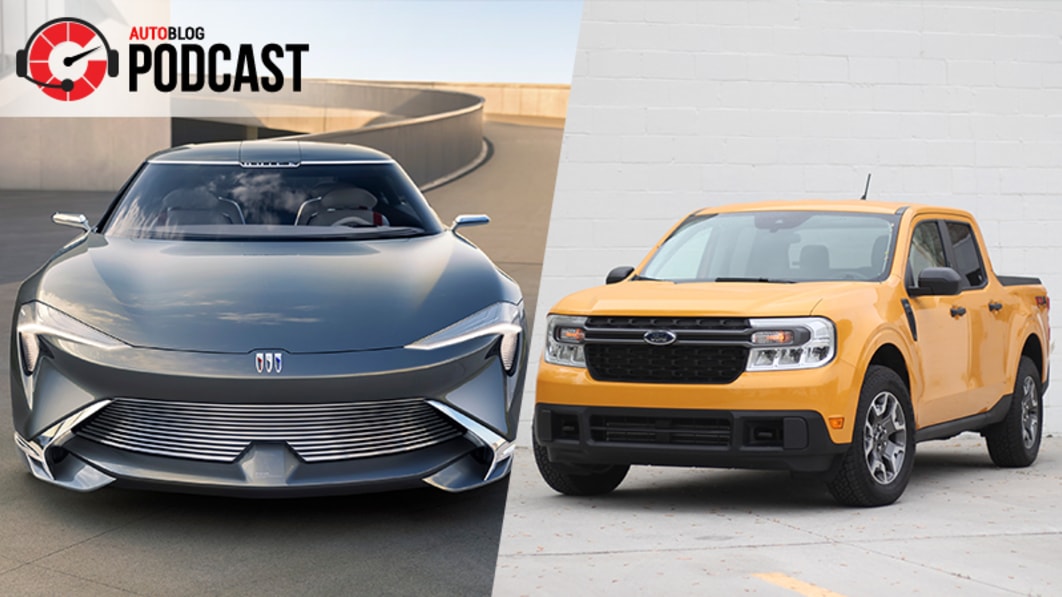
Buick Wildcat and Electra concepts, Ford Maverick | Autoblog Podcast #732

In this episode of the Autoblog Podcast, Editor-in-Chief Greg Migliore is joined by Road Test Editor Zac Palmer. They lead off with a discussion of the news. This section touches on the DeLorean Alpha5, Buick Wildcat EV Concept reveal, revival of the Buick Electra name, production reveal of the Mercedes-AMG One and some scuttle about Volkswagen’s recently-bought Scout brand. After that, they move on to the cars they’ve been driving, including the Ford Maverick and Chrysler Pacifica Hybrid.

After the pair finish with what they’ve been driving, the podcast transitions to an interview between Greg Migliore and former Car and Driver Editor-in-Chief Eddie Alterman. Finally, Greg and Zac wrap things up with some more spring and summer beer recommendations.

Send us your questions for the Mailbag and Spend My Money at: Podcast@Autoblog.com.

Autoblog Podcast #732

Get The Podcast

  • Apple Podcasts – Subscribe to the Autoblog Podcast in iTunes
  • Spotify – Subscribe to the Autoblog Podcast on Spotify
  • RSS – Add the Autoblog Podcast feed to your RSS aggregator
  • MP3 – Download the MP3 directly

Rundown

  • News
  • Cars we’re driving
  • Interview with Eddie Alterman

Feedback

Autoblog is now live on your smart speakers and voice assistants with the audio Autoblog Daily Digest. Say “Hey Google, play the news from Autoblog” or “Alexa, open Autoblog” to get your favorite car website in audio form every day. A narrator will take you through the biggest stories or break down one of our comprehensive test drives.

Related video:

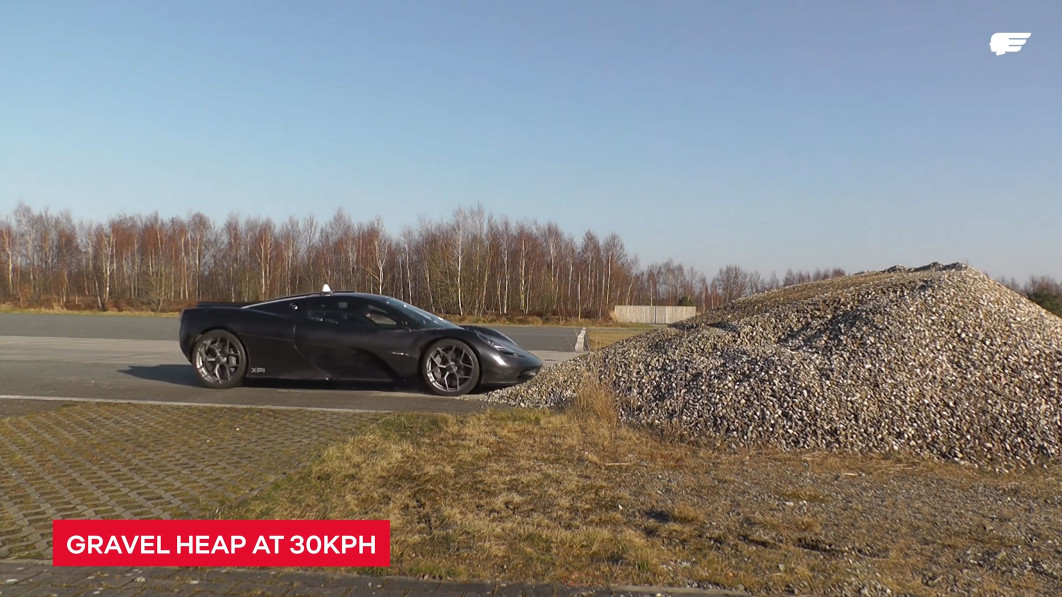
Gordon Murray Automotive torture tests the T.50 hypercar

Prepping the Gordon Murray Automotive T.50 for customer deliveries around the world means testing its systems and safety akin to that of a regular production car. For GMA, this mean taking validation prototype XP1 to Automotive Testing Papenburg (ATP) in Germany for a series of torture tests that would be comical if they weren’t so brutal on a real live $2.9 million coupe. As narrator Dario Franchitti explains, many of the tests are to ensure that the airbag deployment systems know how to tell one extreme circumstance from another, so the bag deploys in a crash instead of when the T.50 is launched into a gravel pile. Yep, that’s real. The T.50 was run at nearly 20 miles an hour into — and then up — a seven-foot pile of rocks. We have no idea what the test is meant to simulate but the T.50 aced it, beaching itself over the crest, its airbag un-deployed.

The other challenges drew a more direct line to real-world driving. There’s a 37-mph dash over Belgian cobblestones and another at the same speed over a speed bump, a simulated pothole strike for “anyone who has the misfortune of driving on UK roads,” and a mad dash over a fake railway crossing. The ramp test sends the 2,173-pound, 654-hp coupe flying off a 10-inch ramp at 43 miles per hour. The steel beam test simulates plowing the wheel face into a curb, this experiment breaking a tie rod and damaging a tire. Then there’s washboard at nearly 50 miles per hour, and finally, plowing into a “simulated wild boar” that weighs 180 pounds.

The man behind the machine clearly hasn’t forgotten how to design fast cars that protect their drivers. If Murray had given the T.50 a bit more ground clearance, it might make a decent bug-out ride for anyone who knows how to travel really light.

Related Video

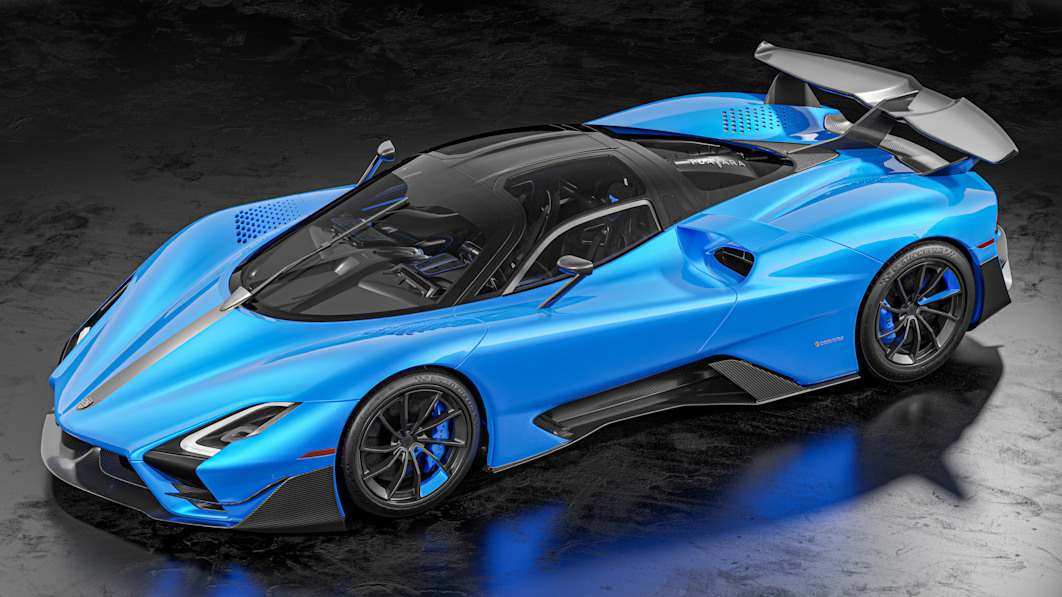
SSC will make a hybrid, all-wheel-drive hypercar alongside the Tuatara

Washington-based SSC announced it will expand its range of hypercars with a hybrid, all-wheel-drive model in the next few years. The limited-edition car is currently being developed, and it’s one of two new models that the firm plans to launch in the not-too-distant future.

Speaking to Motor Authority, company founder and CEO Jerod Shelby hinted that the hybrid model won’t necessarily be part of the Tuatara line. It’s too early to tell how many units will be made, but they won’t be part of the 125-car run that SSC is planning for the Tuatara. And, the gasoline-electric car might not even wear the Tuatara nameplate; SSC could use another name to dial in a further degree of differentiation.

Power will come from a hybrid drivetrain consisting of a gasoline-powered engine mounted behind the passenger compartment and a pair of motors integrated into the front hubs. This setup will give the car through-the-road all-wheel-drive, meaning that there won’t be a mechanical connection between the front and rear axles. SSC has chased speed records in recent months, but electrification isn’t a way to go faster.

“The electrification of the car will make it a more well-rounded vehicle,” Shelby told Motor Authority. He added that going hybrid will notably improve acceleration, on-track performance, and lower-speed characteristics. There’s no word yet on how powerful the model will be, but we’re expecting a significant amount of power: the Tuatara is powered by a 5.9-liter V8 that’s twin-turbocharged to 1,750 horsepower.

Meanwhile, the carmaker also hopes to open a bigger factory in about 2025 to manufacture a smaller (and presumably more volume-oriented) model that Shelby envisions as “a little brother” to the Tuatara. It sounds like SSC has its work cut out for the 2020s.

European dealer working with Koenigsegg on a CC12 secret project

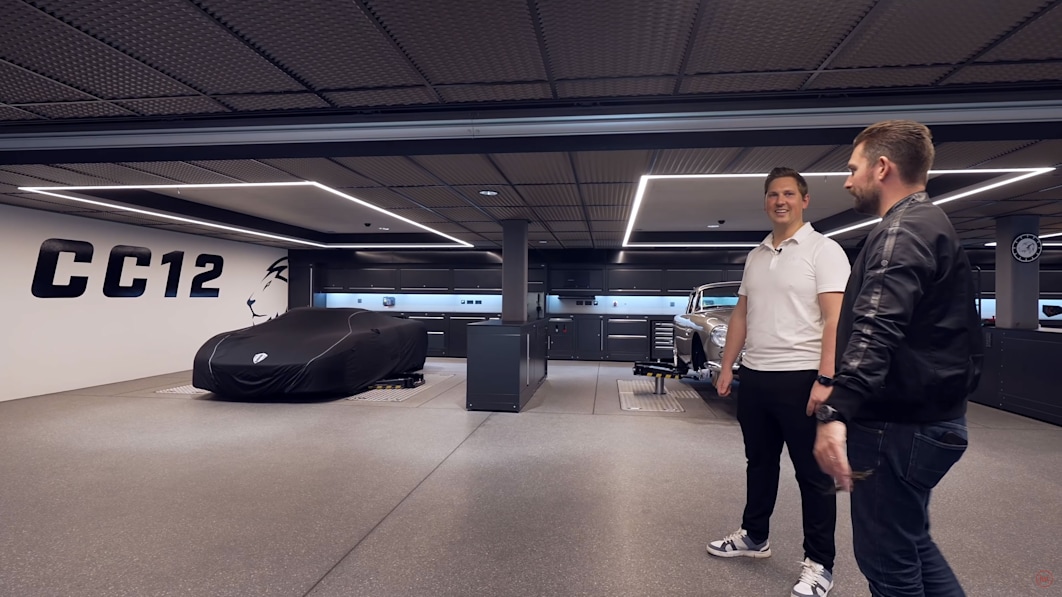
We tuned into James Walker’s latest episode on YouTube because The Supercar Blog reported there’s a special Koenigsegg on the way called the CC12. There isn’t much known about the coming coupe, just that was supposedly commissioned by a European dealer in ultraluxurious things called Carage. Upon tuning in to the 51-minute video, we discovered that Walker talks about the CC12 for maybe ten seconds (38:47) — he doesn’t even call it by the name written on the wall next to it, and the project is so secret that his host won’t say a word about it. Here’s the thing: The episode is called “The Best Garage in the World?”, and the answer might be “Hell yes.” We showed up for one car, we stayed because of all the amazing car stuff.

We’d never heard of Carage before, a dealer with showrooms in Lucerne, Switzerland and Marbella, Spain that specializes in “modern hypercars [and] unusually sporty vintage cars.” If a line could win an award for Swiss understatement, this is it. Walker tours just some of the Swiss facility, which is five floors and nearly 54,000 feet of luxury architectural space housing many millions of dollars in cars. The Koenigsegg room is designed to create Swedish vibes. The five cars parked inside it include CC8S Chassis #002, the first customer car of the first model Koenigsegg built, one of two Trevita’s with white carbon and clearcoat with diamond dust, and the Agera Prototype Chassis #077 that was not only the development vehicle for every evolution of the Agera, it was customized with a trunk.   

There’s are a few rooms with Aston Martins (12:50) including James Bond’s DB10 (25:15), another with Ferraris, a modern Iso Rivolta (11:30), and the most magnificent tool and replacement parts sets we have ever seen (32:05) created for the Aston Martin DB4GT Continuation. Then there’s the garage, with the obligatory lifts and clean-room appearance. The garage also contains an indoor wash bay, because Carage washes every vehicle before working on it; there’s an exhaust vent on a rail that can be fitted to any vehicle in the garage; there are tire fitting and alignment machines in custom colors to match the garage; and a pump system to send used oil into a large containment tank beneath the garage. Plus the on-site carbon production and CNC machines. And other things. Carage is spectacular.

Back to that Koenigsegg CC12, though. It hasn’t been commissioned by Carage, it’s being built by Carage, CEO Kim Struve saying he’s working with Koenigsegg on the project, but he wants to show potential clientele what Carage can do. The form under the tarp looks like the CC8S that, earlier in the video, Struve says was bought “for a special project that’s going to be released in a year’s time.” But we can’t know if the two are related. What we do know is that Koenigsegg built just six examples of the CC8S, its name partly signifying the modular Ford V8 behind the cockpit. The re-engineered and supercharged 4.7-liter small block produced 646 horsepower and 553 pound-feet of torque. The automaker switched to CCR and CCX names after the CC8, never making a CC12. Whatever Carage is up to, we’re looking forward to it, and if the 12 in the name refers to the cylinder count, all the better.

Related video:

2022 New York Auto Show Roundup | All the reveals, reviews, pictures

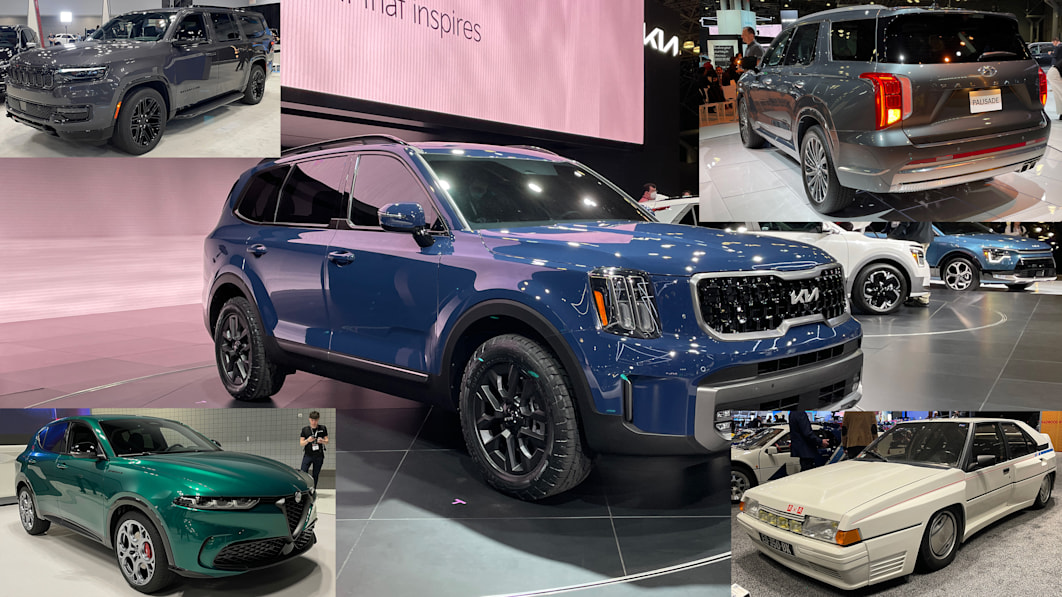
NEW YORK — In case you missed it, the New York Auto Show took place this year after being canceled in both 2020 and 2021 due to Covid. A lot of manufacturers showed up in force, but not everybody did. No matter, we were there, and we brought you news, photos and scoops from the floor throughout the show. All of our New York-related stories can be found at our central hub here, but if you’d rather just get a small taste of everything in a quick and digestible format, keep scrolling.

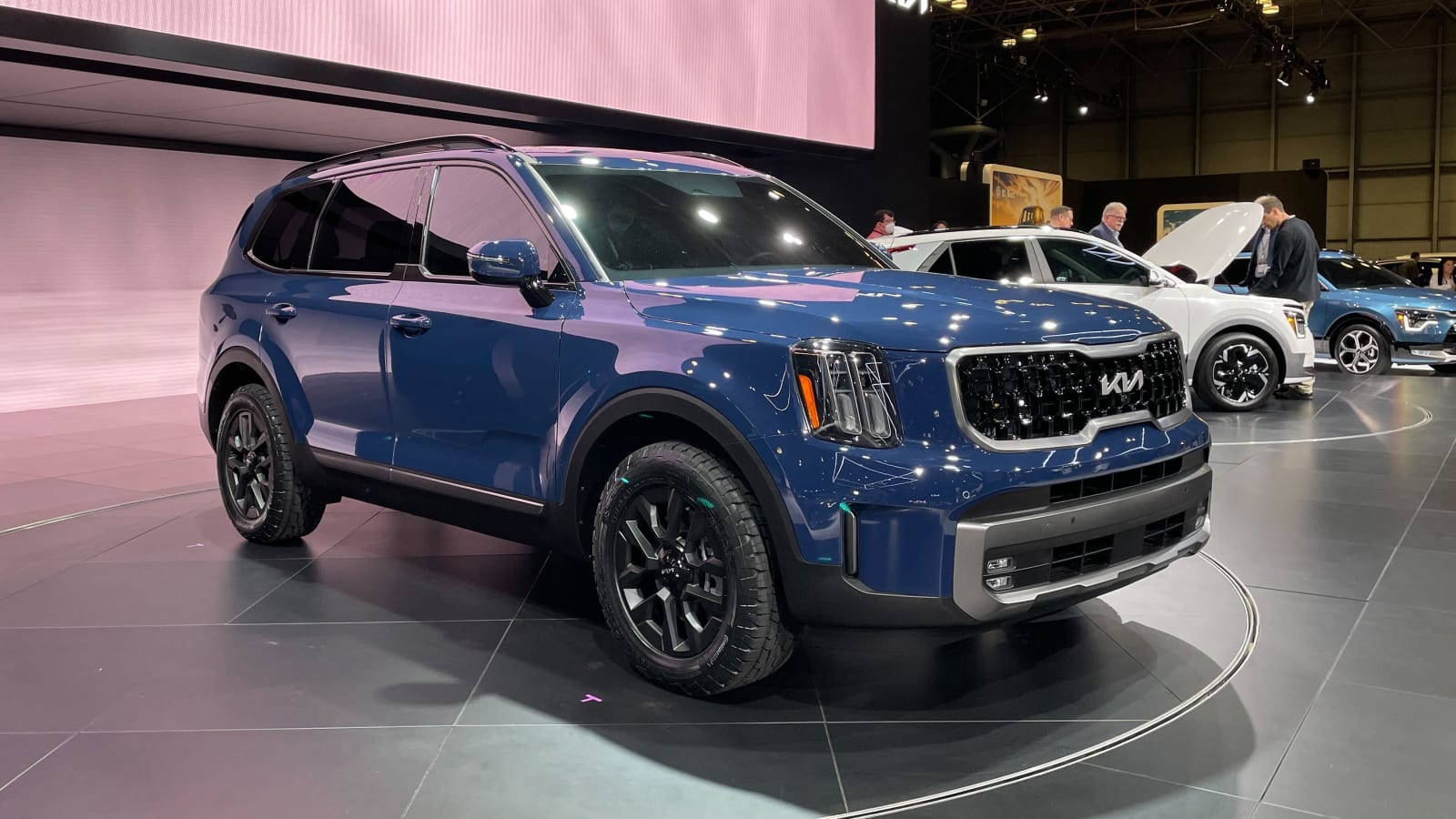
Kia revealed the Telluride’s first major refresh at New York, and it makes the three-row crossover a little bit more desirable without screwing up what we liked about it before. There’s a new X-Line and X-Pro trim for someone who might want a little more off-road capability, and a number of tech improvements. Most notably, a newly-designed dash features new and bigger screens.

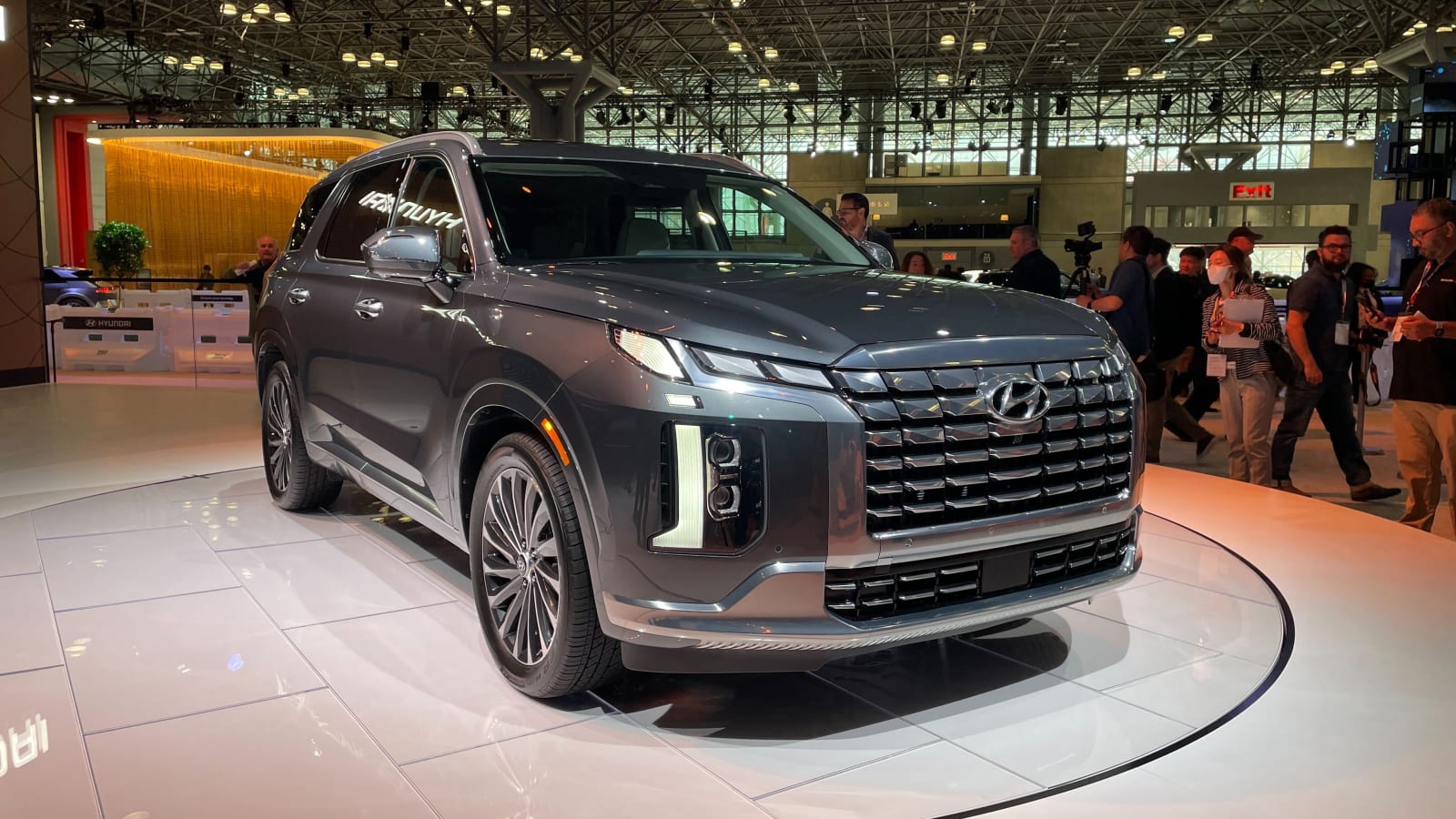
The Telluride’s sister car from Hyundai was treated to a similar refresh. Like the Telluride, Hyundai gave the Palisade a slightly revised look, a new off-road trim (called XRT in the Palisade’s case), more tech inside and a new dash design with full-width air vents. If we had to choose, we’re a little more impressed with the Telluride’s refresh, as a number of us on staff actually prefer the pre-refresh Palisade styling over the new one.

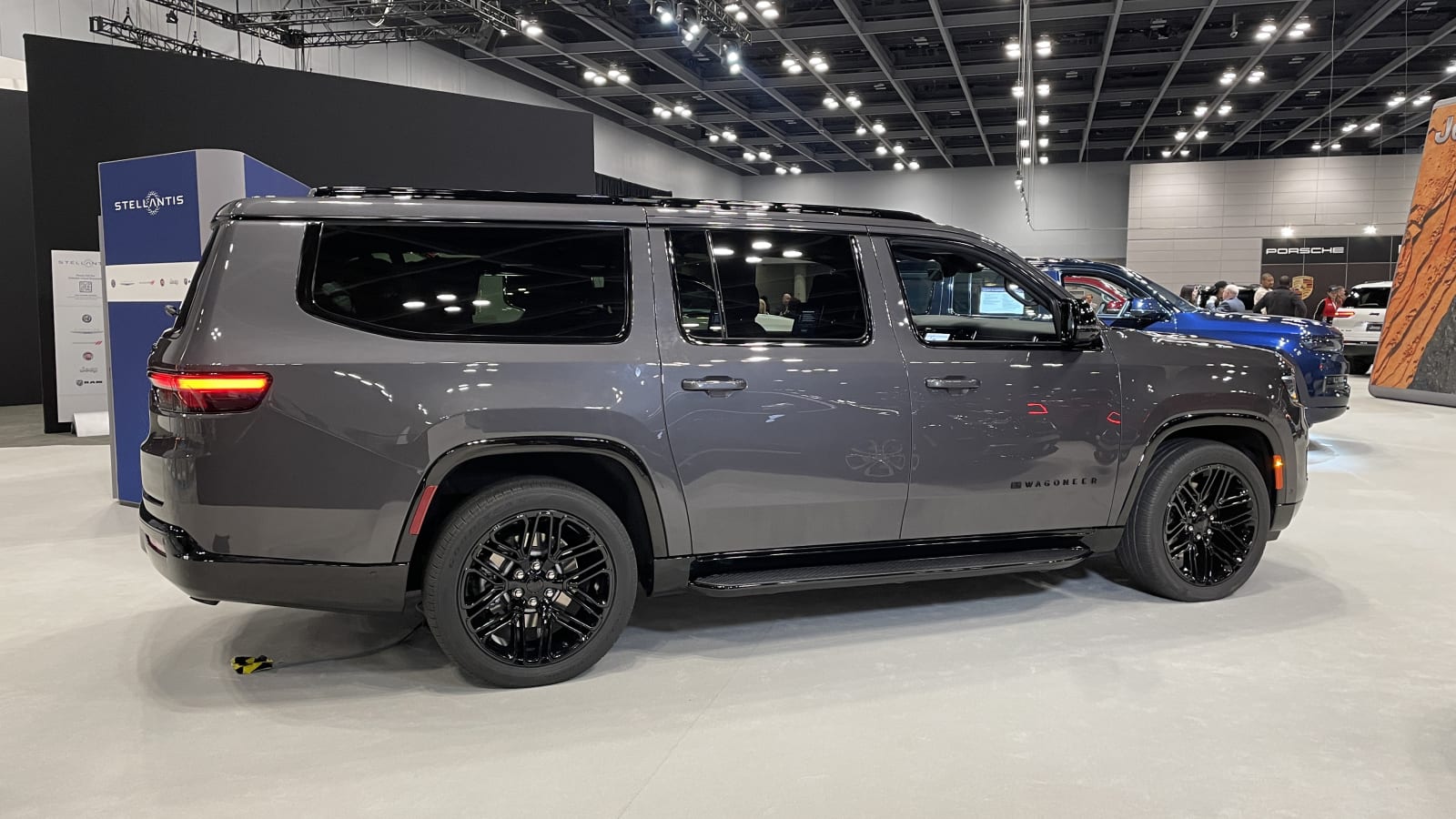
This one was inevitable. Jeep revealed the longer, roomier versions of its Wagoneer and Grand Wagoneer in New York, and they’re designated with an “L” at the end of their names. Total length grows by a foot, and the wheelbase goes up by 7 inches versus the standard Wagoneer models. Jeep has essentially allocated all this extra room to the cargo area, as it now offers a staggering 44.2 cubic-feet of space behind the third row.

Besides the L, Jeep announced that its new Hurricane inline-six engine would find its first home in the Wagoneer. Efficiency gets a small boost, and power is more than sufficient at either 420 horsepower (standard output) or 510 horsepower (high-output version) from the twin-turbo I-6.

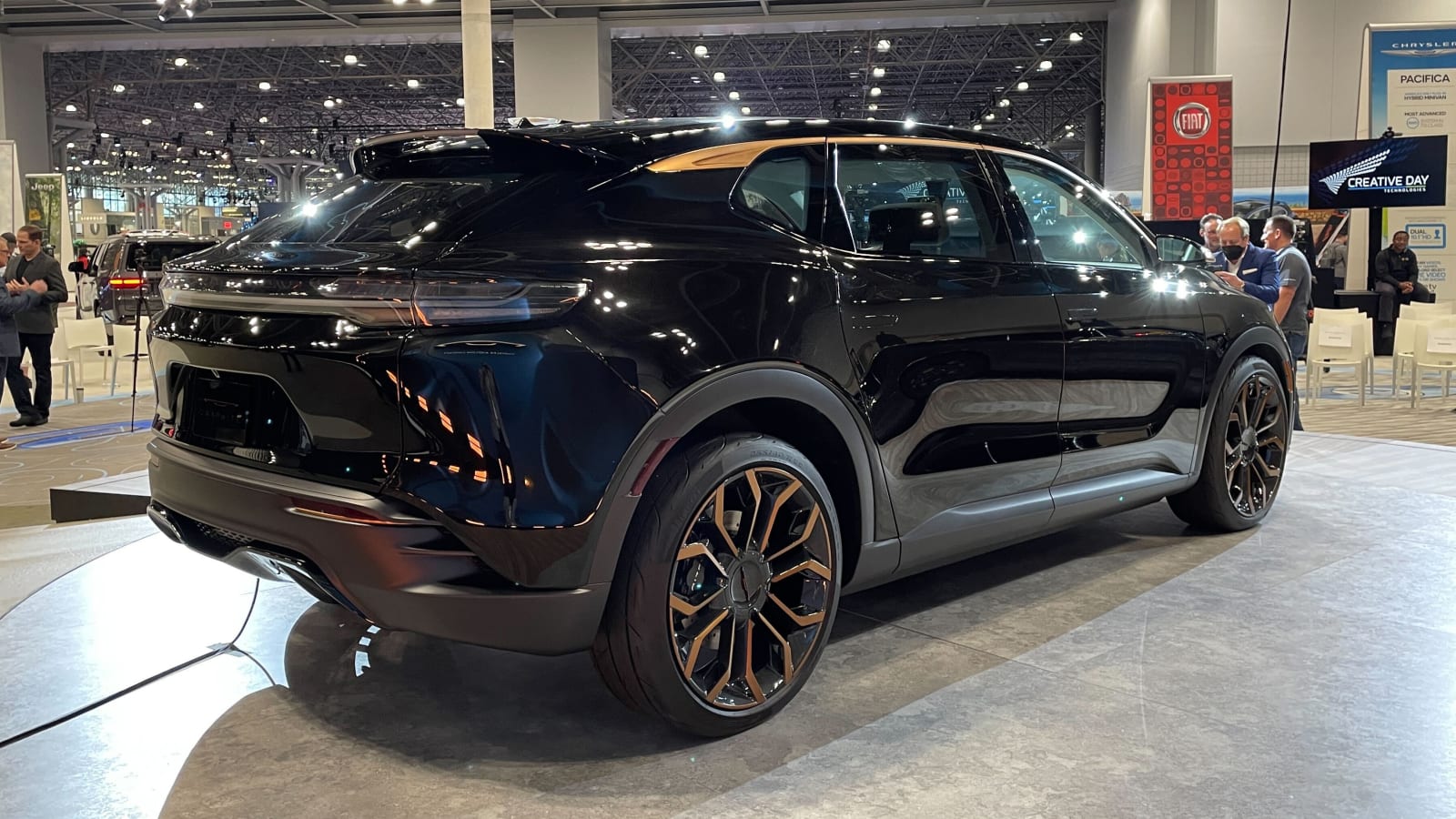
The Stellantis party continues with Chrysler and its slightly revised Airflow. Re-styled for the New York market after initially debuting at CES in Las Vegas, the Airflow Concept gets new paint, changed accent colors, a slightly changed interior design and a new interpretation of the Chrysler logo.

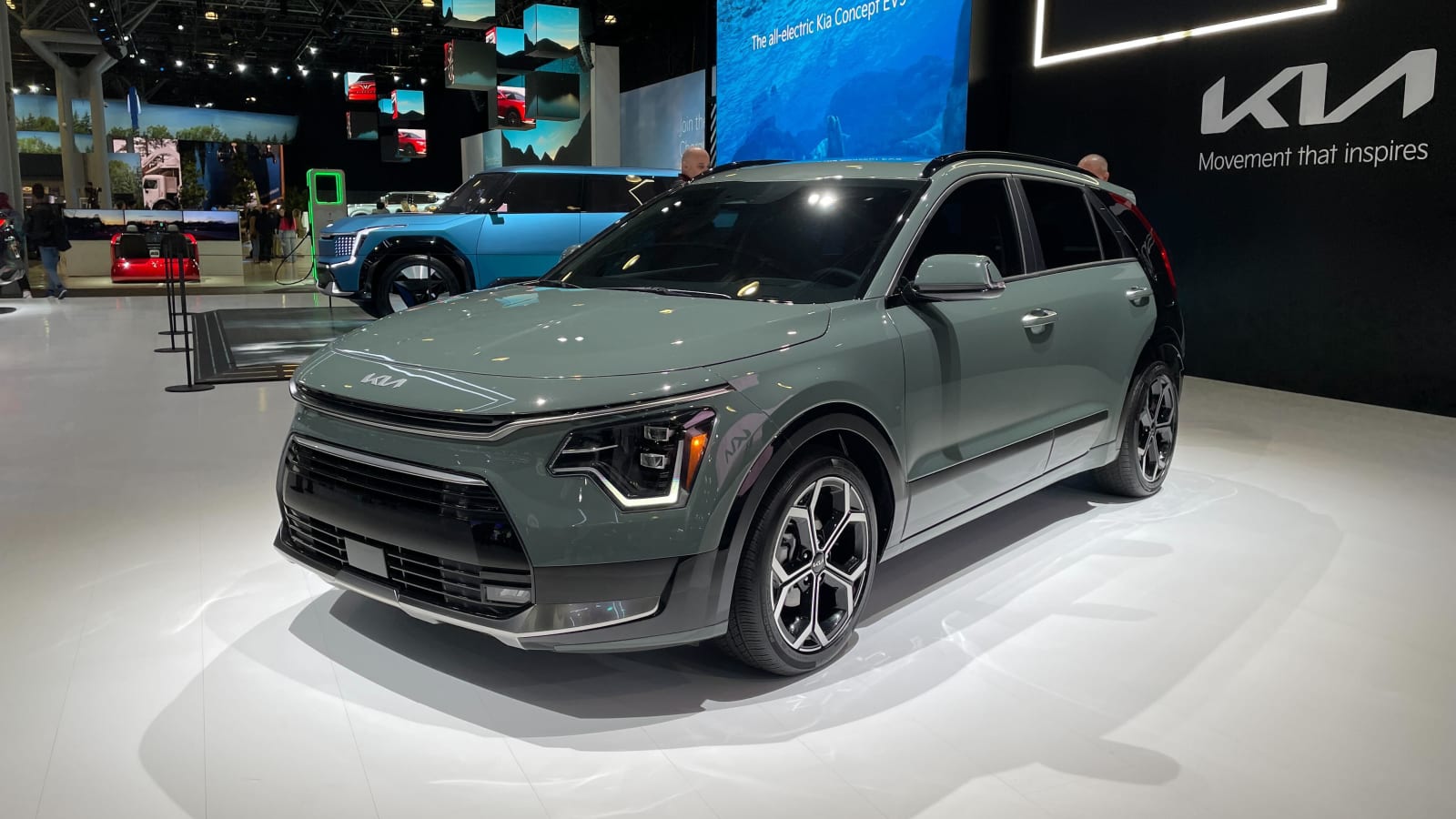
This was our first chance to get a good in-person look at the new Kia Niro models headed our way, and we were impressed. It gets a totally new design, massaged powertrains in all three variants and an EV6-inspired interior. We even got to take a little deep dive into the standout Aero Blade design feature seen on all new Niros.

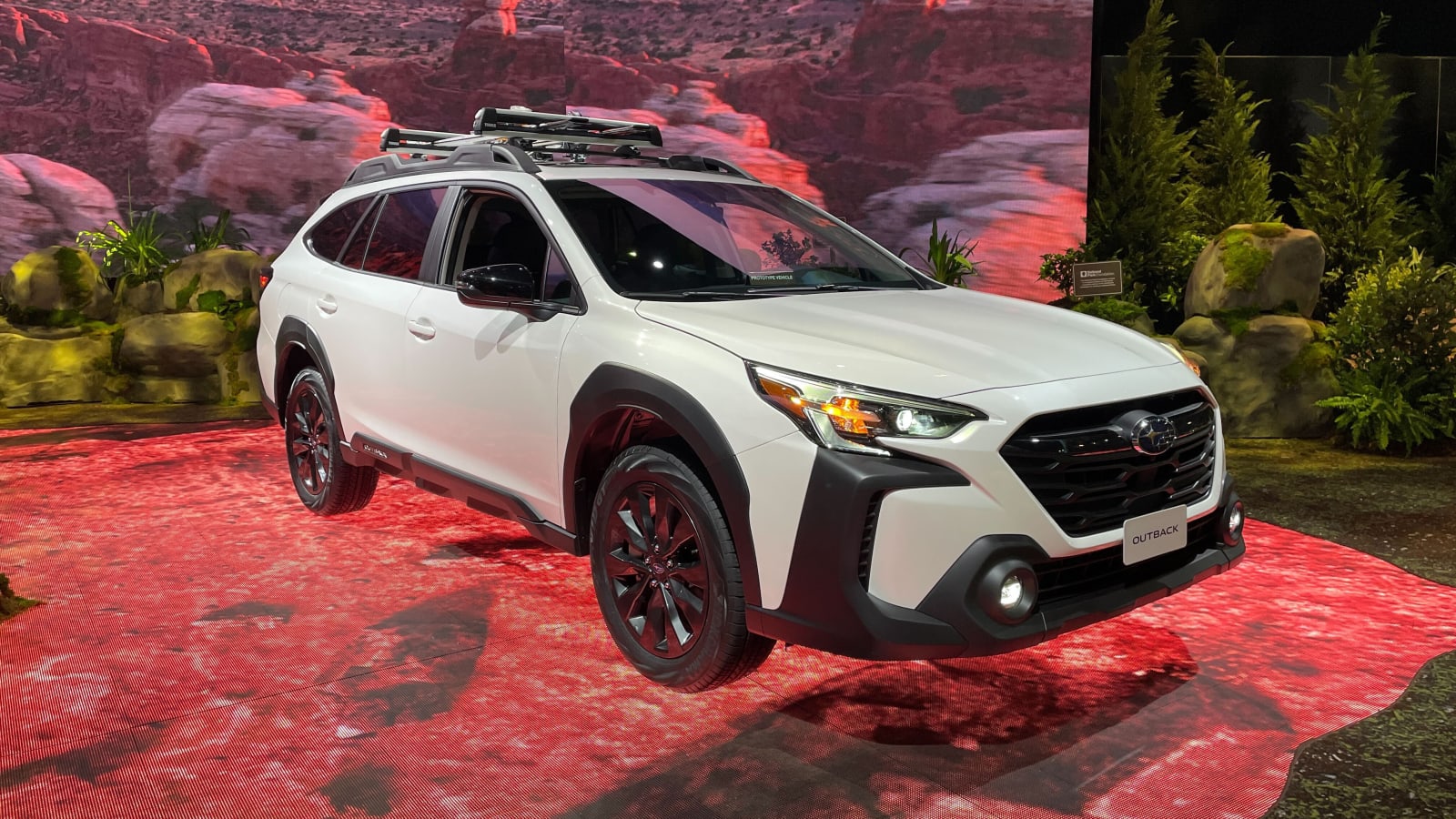
This was one of the minor debuts of the show — Subaru didn’t even hold a press conference. But the Outback was there on the show floor, and it was showing off its new Wilderness-inspired looks. The cladding is much more prominent, it has new lights up front, and Subaru packed it with a number of new tech features.

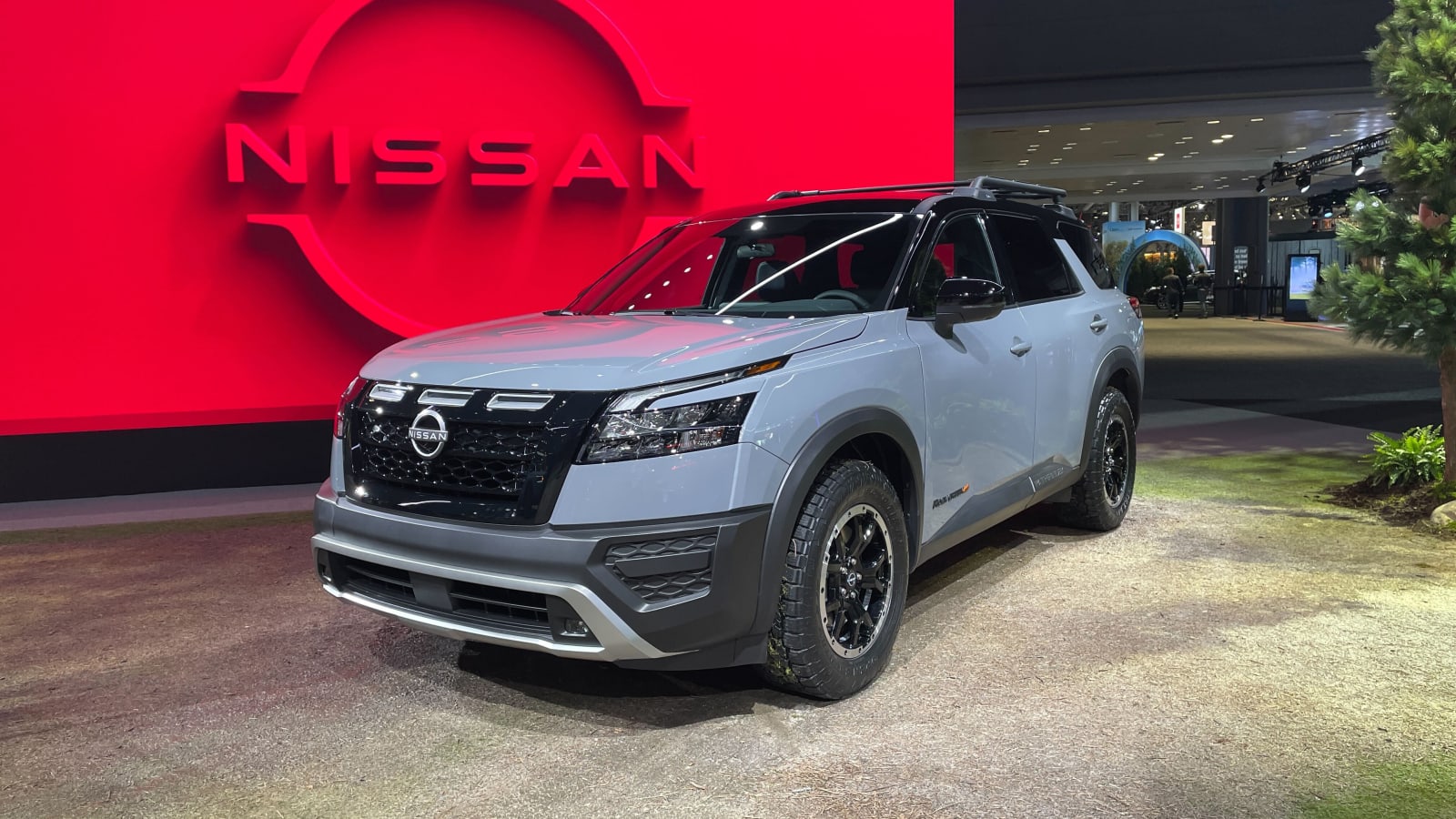
One year on from the Pathfinder being all-new, and Nissan just added an off-road-focused Rock Creek trim. It gets a slightly revised suspension, more power when run on premium fuel, all-terrain tires and a fairly comprehensive styling package. We liked the looks of it on the show floor, and while it may not be a super-capable SUV, having the option of a more rugged-looking SUV is seemingly a good thing to have in dealers these days.

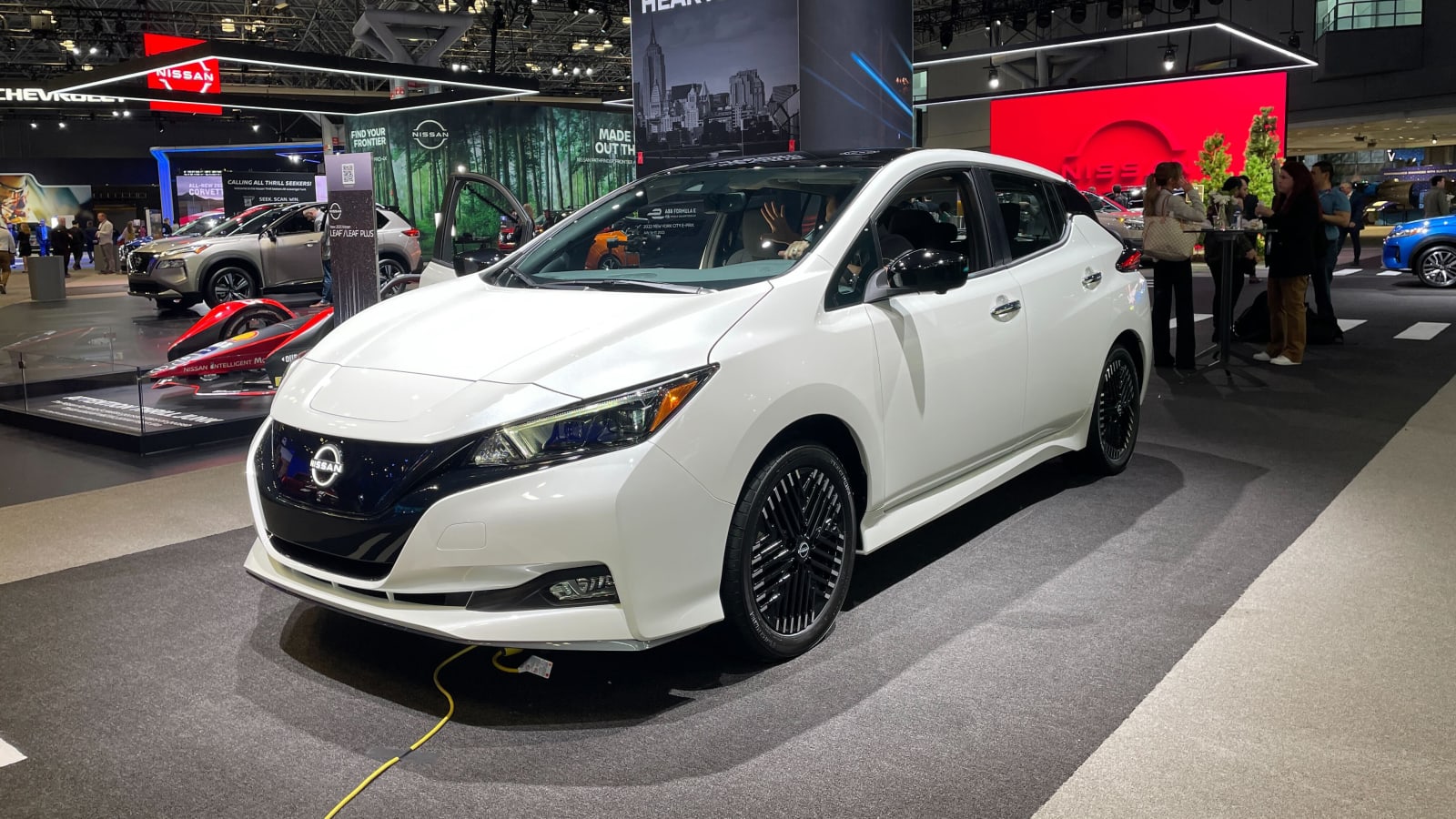
The Leaf is getting outpaced by EVs with far more range, better tech and more power, but that hasn’t stopped Nissan from giving it a small nip-and-tuck. It gets a new grille, light-up Nissan logo, wild new wheels and a couple of aero enhancements.

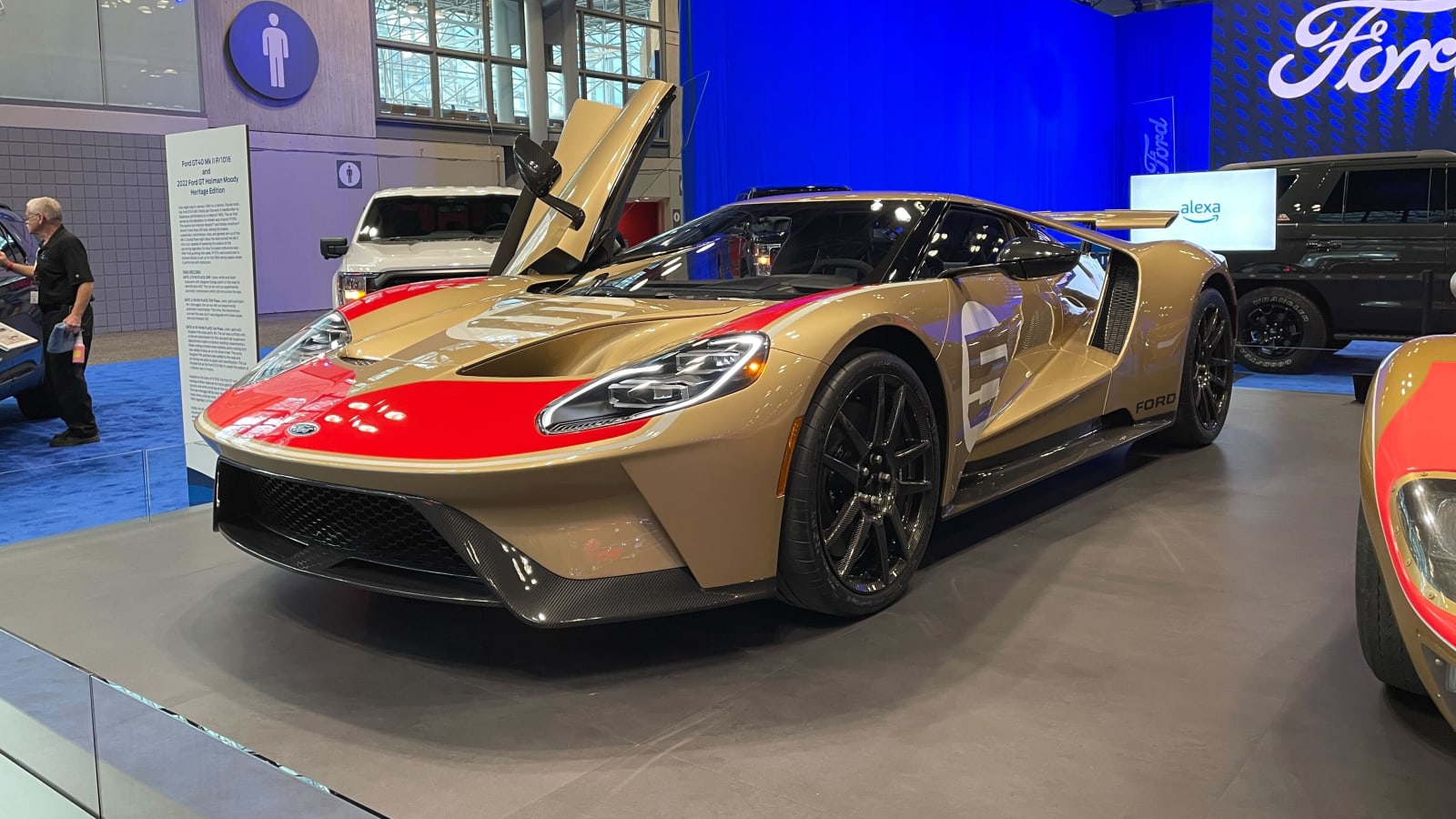
This special-edition Ford GT pays tribute to the third-place car at the 1966 running of the 24 Hours of Le Mans. It re-creates that car’s look via matching paint, red accents and a number of other small details. Ford put it on display next to the car that raced at Le Mans back in 1966, making it an excellent display for any racing history geeks.

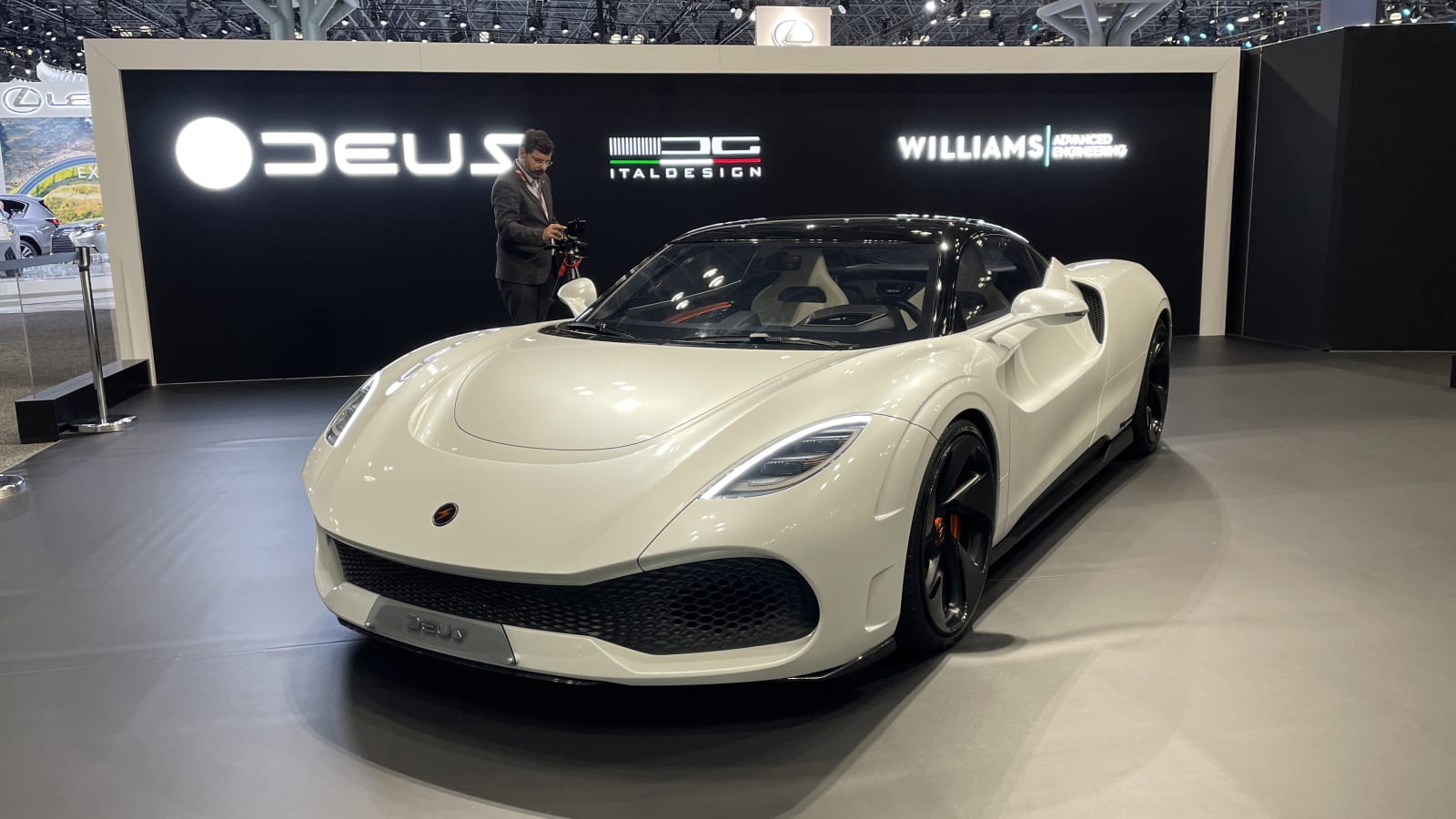
A collaboration between Williams Engineering, Italdesign and Deus, this electric hypercar is planned for super-low production, but incredibly high performance. Output is meant to be “more than 2,200 horsepower” and it has a claimed 0-62 mph time of 1.99 seconds. Only 99 are meant to be built, but we know that will be a tough, uphill battle to accomplish. Maybe, just maybe, you’ll see a Deus outside of the N.Y. Auto Show stand one day.

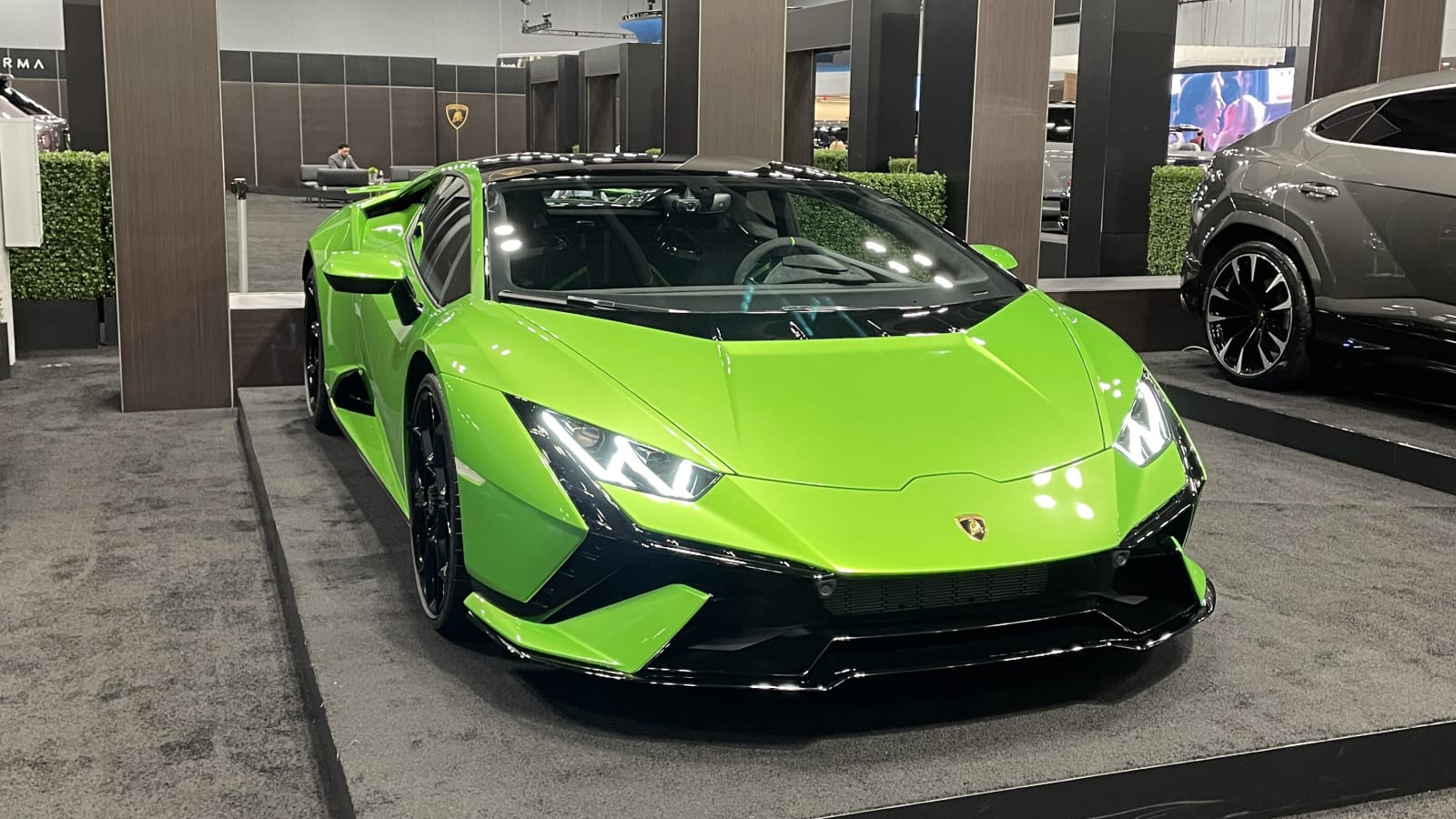
Yes, it’s another Huracán variant. This one steals a lot of the go-fast STO parts, but pairs them with a much more subdued appearance. It does well to make the appearance stand out as different from other Huracáns, and the 631 horsepower being sent to the rear wheels sound like Italian supercar bliss.

2023 BMW X7 M60i

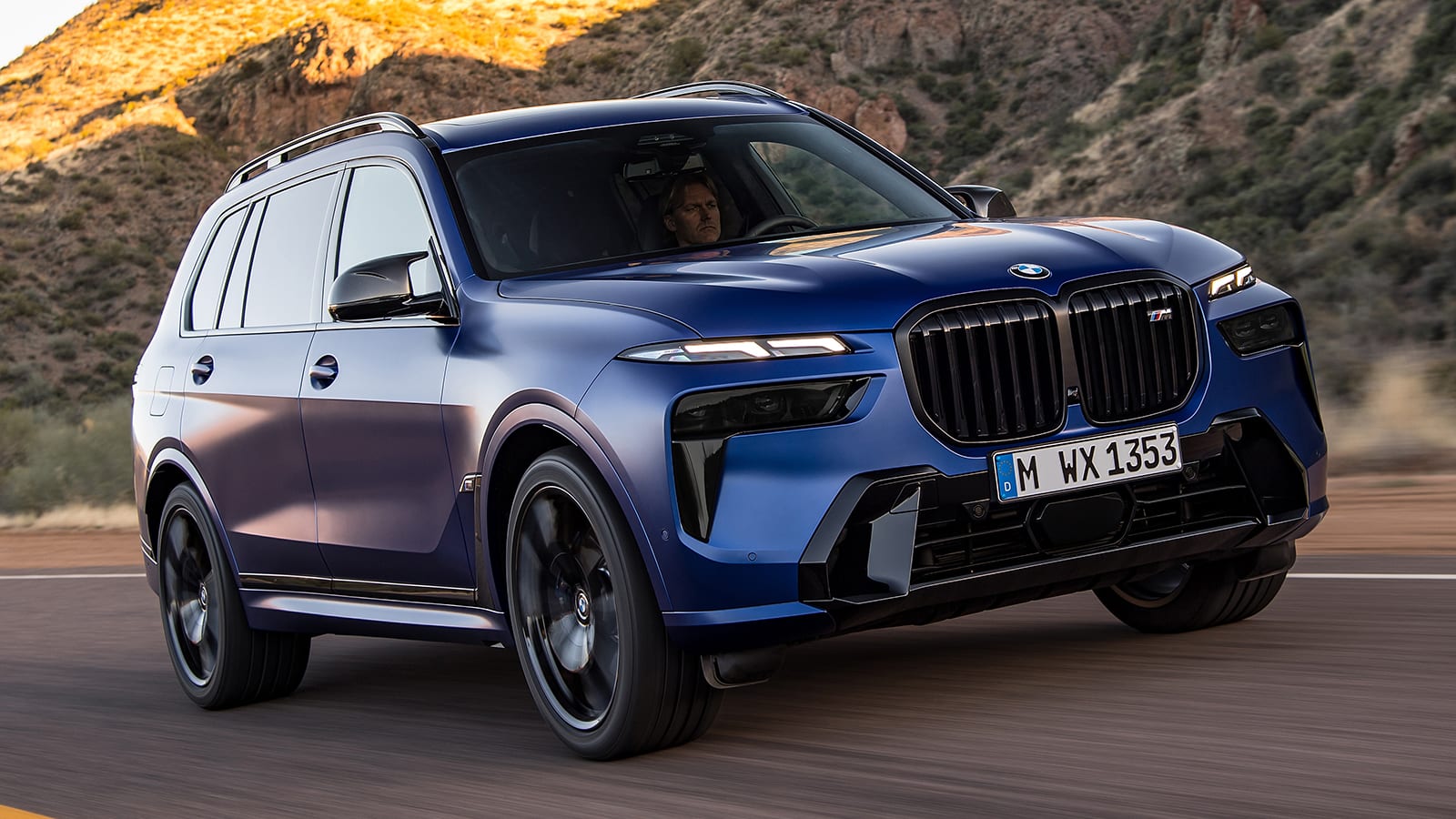
BMW didn’t bring it to the show floor, but we still got to see the refreshed X7 in New York this week. The design both inside and out gets a heavy revamping. Its look certainly isn’t for everyone, but nobody can deny that the car is turning heads. We’re impressed with the new interior, and the base xDrive40i powertrain gets a huge performance boost, giving the entry-level X7 a whopping 375 horsepower.

Debuting alongside the regular X7 was the Alpina XB7 that received its own styling tweaks to keep it current. It also adds 8 horsepower, bringing it up to 621 ponies from the twin-turbo V8.

Genesis X Speedium Coupe

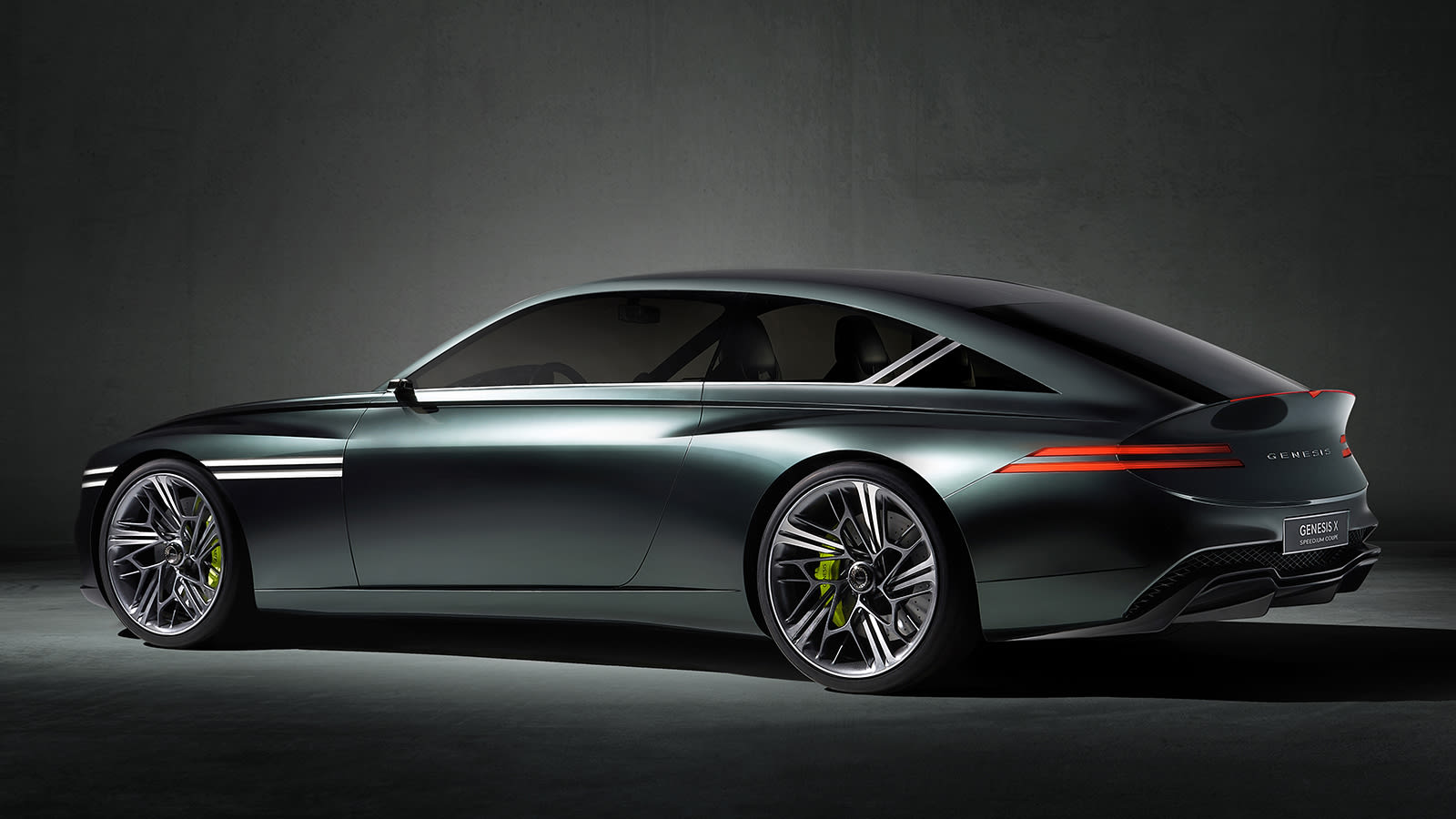
It wasn’t on the show floor, but Genesis still revealed it in New York during auto show time. The X Speedium Coupe Concept is far and away the most beautiful thing there. Its shooting brake/fastback design is long and wide, and its proportions make it a total stunner. The concept is electric, and while Genesis hasn’t committed to putting it into production, we can hope to see it on the roads one day.

Random other musings

Fiat 500 Electric

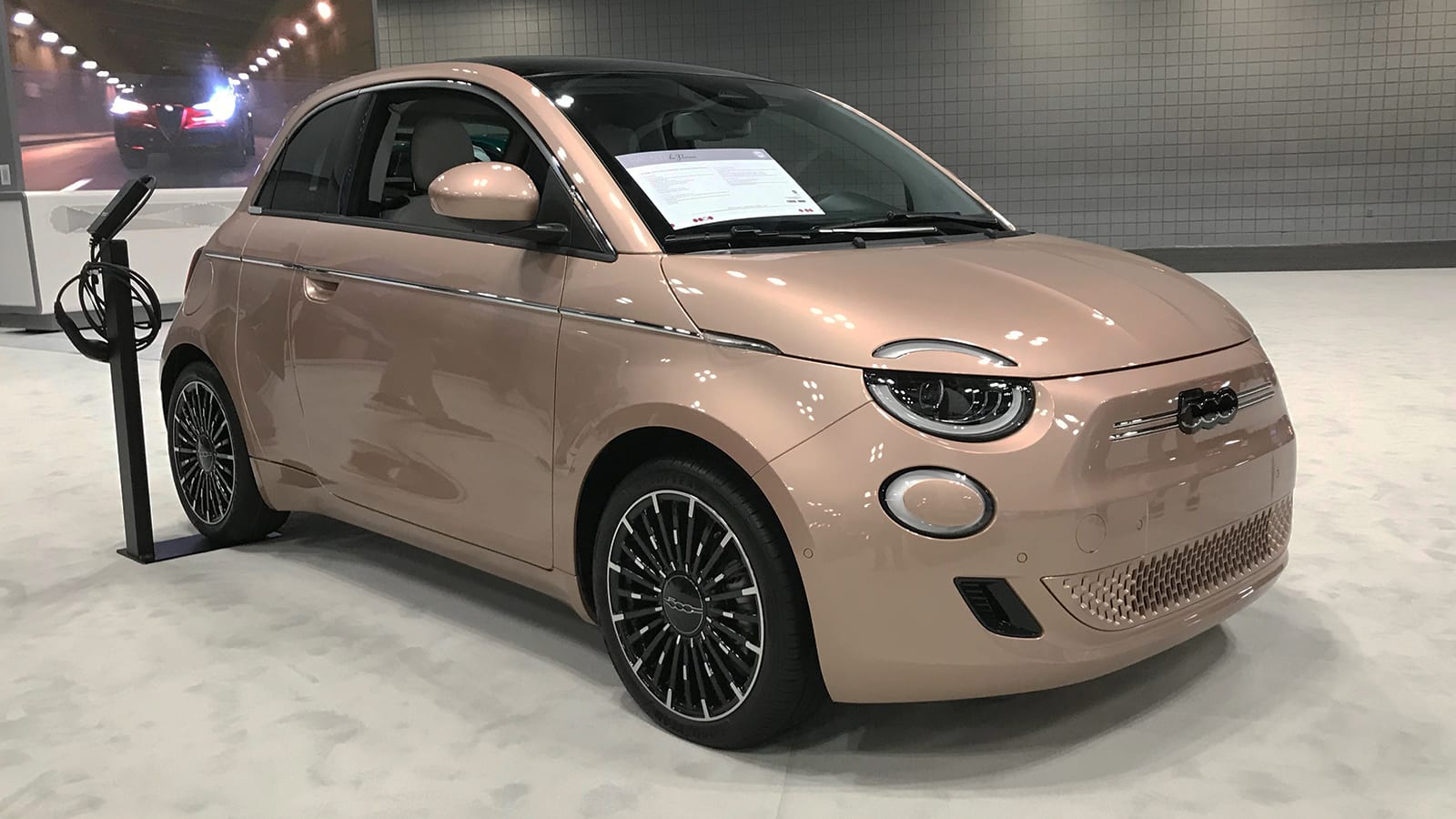
For whatever reason, Fiat brought the Europe-only electric 500 to N.Y. Our Joel Stocksdale took a close look at it, and made a case for why Stellantis should bring the little EV to America.

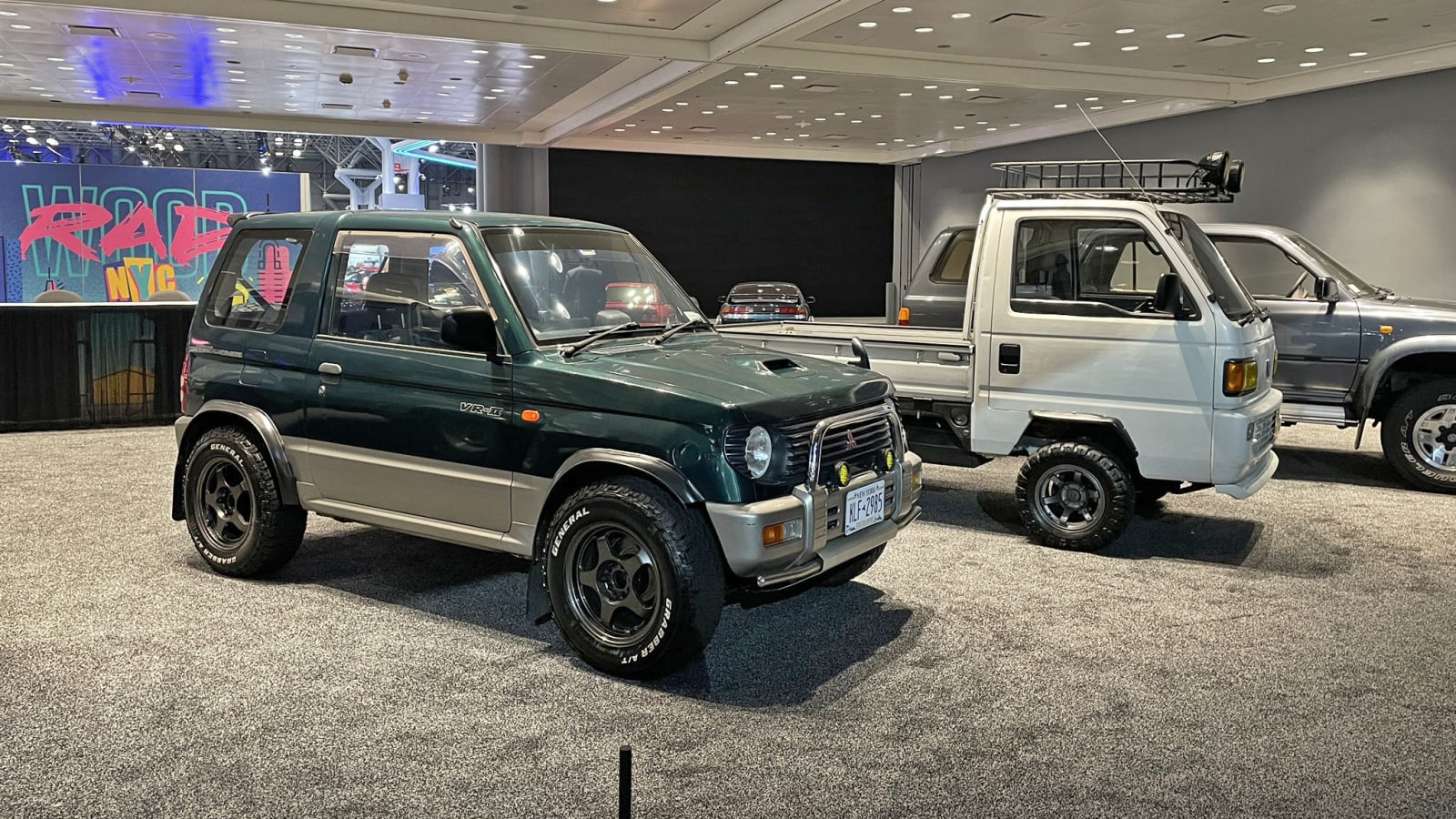
Radwood showed up with a large collection of epic cars from the 1980s and 1990s. They were easily the coolest part of the show, and if you’re in town, it may be worth going just to see this group of cars at the Javits Center.

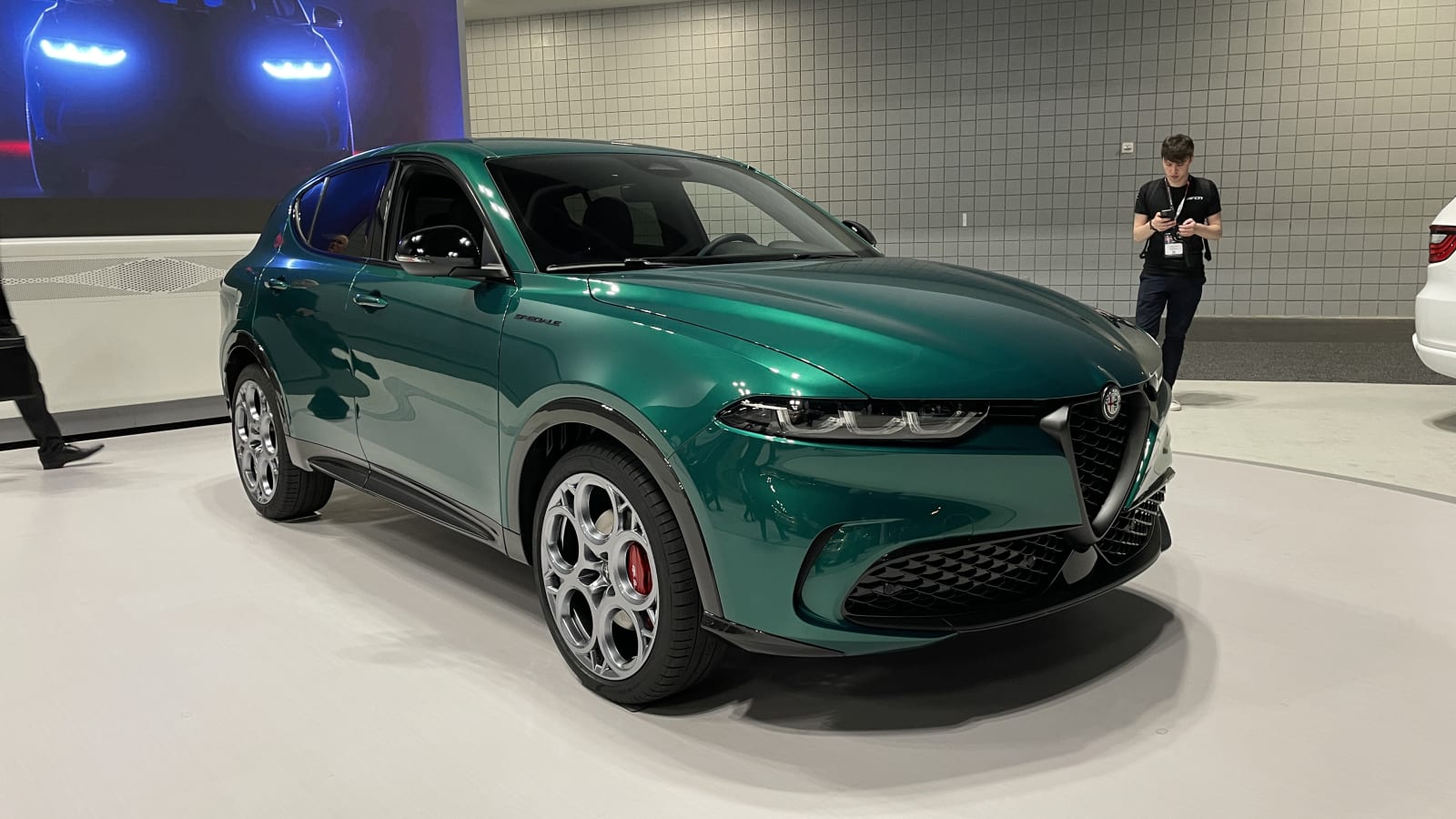
Lastly, Alfa brought the Tonale for us to check out in a gorgeous Montreal Green paint. It’s a sharp little crossover in the flesh, and we’re really looking forward to seeing how this Alfa drives.

Related video:

Deus Vayanne EV hypercar reaches for 2,200 horsepower

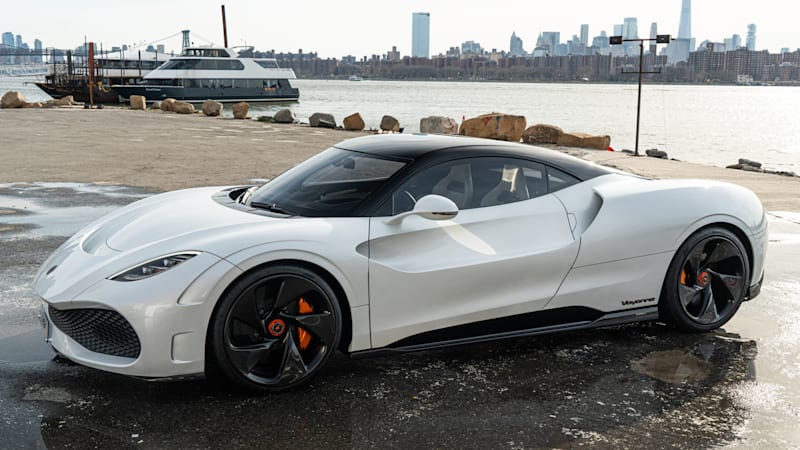
The Deus Vayanne has touched down at the New York Auto Show. Despite a word salad press release about timelessness and infinity and symmetry and divinity, the battery-electric hypercar from an Austrian-led consortium looks like courtly but pretty standard stuff. We’re told that with “a ground clearance of 4.7 inches and useable storage space, the car integrates performance and practicality” and “truly deserves the title of master of versatility.” Hmmm. Perhaps the definition of “versatility” has changed recently.

The coupe is built on an EV platform created by Williams Advanced Engineering and Italdesign, the bodywork penned by Italdesign according to Deus’ ambitions. The front and rear grilles are abstractions of the infinity symbol. Between them is the undeniable shape of a mid-engined ICE super sports car, and since everyone’s going to pick another car or cars to compare this to, we’ll go with the silhouette of a McLaren 720S from the side. The interior checks all the hypercar boxes—sleek design, stitched leather, toggle switches, chunky shifter. It’s perfectly fine.

The wild side of the Vayanne is its target performance figures; the company wants to make this the first production EV with more than 2,200 horsepower. The Aspark Owl already touted a pony count of up to 2,012, the the Lotus Evija, Rimac C Two, and Pininfarina Battista are at or above 1,900 hp, so if Deus succeeds, it will put daylight between itself and the competition. Combined with 1,475 pound-feet of torque, Deus says it expects a teleport from zero to 62 miles per hour in under 1.99 seconds and a top speed beyond 248 miles per hour. Two vital caveats here: Deus didn’t mention any powertrain specs, and all of these stats and figures are derived from computer simulations.

We’re told there will be just 99 Vayannes produced, the first one reaching customers in 2025 for an as-yet-undisclosed price. However, the version on display in New York at the moment is still a “production-oriented concept,” so anyone reaching for their wallet might want to hold off to see what changes may come in the next three years. Until then, we’re going to go find a dictionary and look up some words that start with “V.”

Related video:

Deus Automobiles’ Vayanne electric hypercar headed to NYC

It feels a smidge heretical to say, “Oh man, another electric hypercar. From what country this time? (Sigh…)” But here we are, and here’s another electric hypercar hailing from Vienna, Austria — a first-time national entry in the segment that will offer more choice above six figures than there are cars costing less than $20,000 in the States. The company is called Deus Automobiles, not to be confused with the Australian motorcycle and cafe brand. In this case, the name is because it wants customers to anticipate “divinity,” and the first of its planned “ultra-limited” and “timeless” products is called the Vayanne, pronounced vy-ahn. Deus claims it is “an exclusive brand born from the unique technical partnership with Italdesign and Williams Advanced Engineering, ready to shape the future of 100% electric and luxury hypercars.”

We don’t know what that means, but we’ll see the first fruits at the New York Auto Show next month. Based on the 13-second video and a few teaser shots, the Vayanne bears quite a few traits one would expect of a mid-engined super sports car, like a trio of mesh-filled intakes in front, mesh-filled rear fender intakes, and a rear fascia with even more mesh. The photo gallery below includes three shots from Deus, two of which have been brightened for a better view of the details. Our guess is that the intakes mainly serve aero purposes, especially in front; the hood looks like little more than a vent to usher that front intake air over the body in a clean sweep.

We also don’t know who’s behind Deus, but other outlets have reported that Deus was “part of a group of businesses with more than 30 years success in industries ranging from publishing to packaging.” This would make sense, as the Vayanne looks like a packaging exercise. A year ago, Williams Advanced Engineering announced a modular electric vehicle platform called EVX it created with Italdesign to be a “complete, high-performance EV solution.” According to WAE, after buying the platform, it “is ready for customization by the Italdesign styling team who will shape the final vehicle to match the brand’s requirements in terms of marketing positioning, design direction etc.”

The EVX architecture can fit batteries of 104, 120, or 160 kWh and power motors of up to 1,341 horsepower, or a round 1,000 kilowatts. We expect to find out which battery has gone underneath the Vayanne’s bodywork and how much power comes on tap when the debut takes place at 1 p.m. EDT April 13.

Related video:
Aston Martin teases V12 Vantage twice more ahead of debut

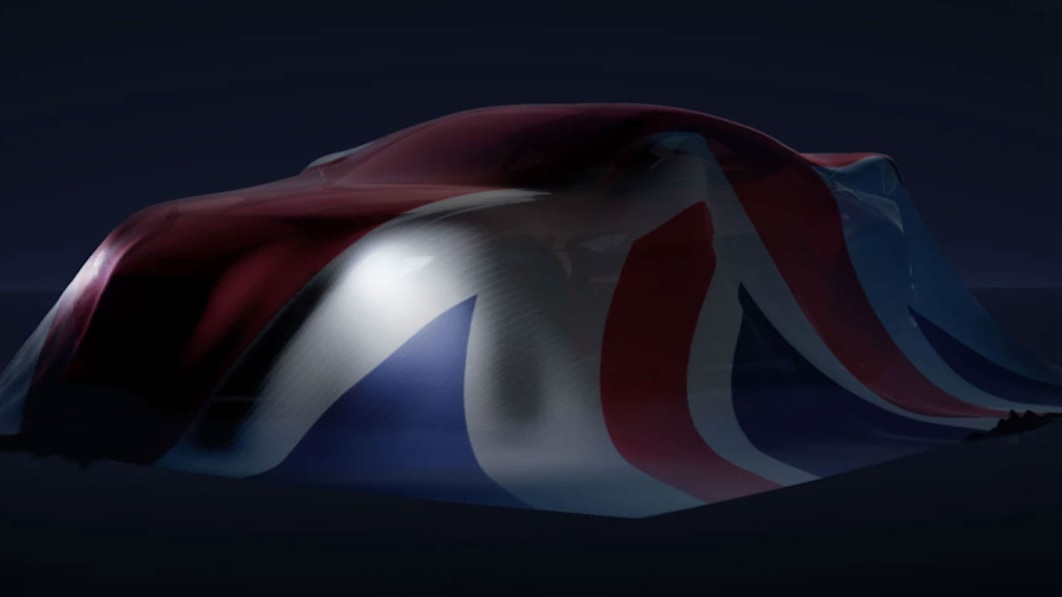
If you can handle another tease of the coming Aston Martin V12 Vantage, here are two. The first is a photo of what will certainly be a riotous super coupe under a partially opaque Union Jack. We can’t spot anything on the obscured car that we don’t know about from prototypes (or suspect from reports); the headlights, side mirrors, fender vents, and wheels are all there. Phew!. Out back, the drapery hangs high, pulled over a high wing that will be part of the V12 Vantage’s numerous aerodynamic accoutrements. The test vehicles we’ve seen have been wingless, fitting nothing more than a Gurney flap to the Vantage’s tidy ducktail, so we’ll have to find out if the wing is standard fit or an option. 

Behind the extra large grille, everyone is expecting the brand’s 5.2-liter V12. In the limited edition Speedster, which married the Vantage’s chassis to the Superleggera’s front end, that 12-cylinder made 690 horsepower and 555 pound-feet of torque. Predictions for V12 Vantage out range from about 600, roughly in line with the DB11, to about 670, which would be a massive hoot while leaving room enough not to fluster Speedster owners.

The second teaser is a brief Twitter video mood board with the admonition to “Never leave quietly.”

We’ll hear the supercar’s noise and find out about its backside on March 16, when the reveal happens. We should also find out then how many Aston Martin plans to make. A previous rumor put that production number at 299. The vehicle itself is expected to arrive for the 2023 model year as part of the standard Vantage’s model update, sources saying there will only be 299 made. The standard 2023 Vantage will be part of an overhaul of the front-engined Aston Martins that result in more power, better dynamics, and better interiors.

Related Video

Hennessey Venom F5 continues high-speed stability testing

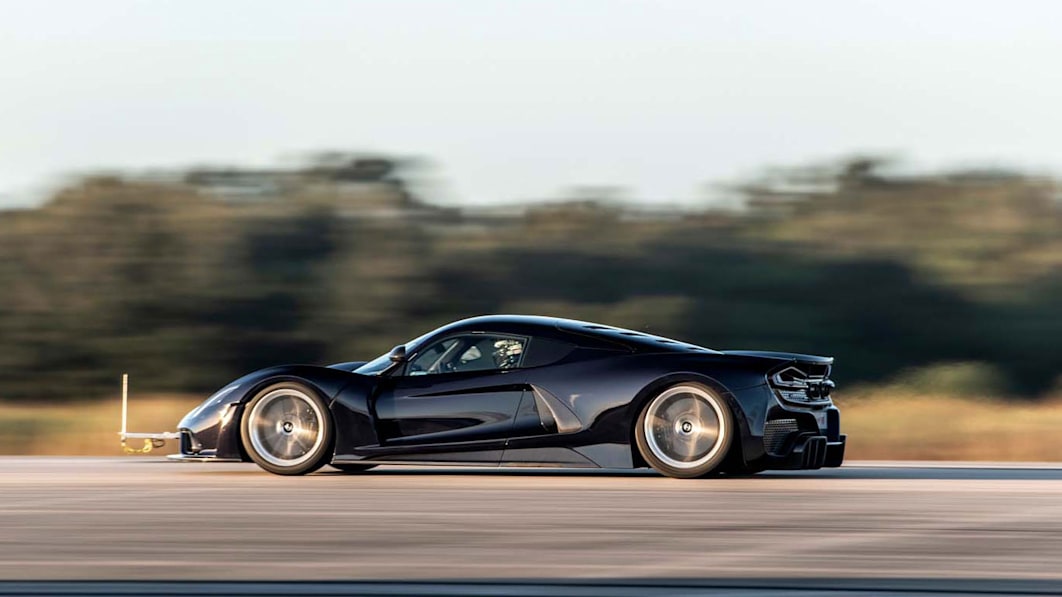
Having just posted about Hennessey putting its Venom F5 “Fury” engine on the dyno, we wondered when the total package would be showed on test. Well, here you go. The Lone Star manufacturer of gangbuster machines took a Venom F5 to the Johnny Bohmer Proving Grounds on Merritt Island, Florida, for high-speed stability and vehicle dynamics testing, with ex-GM engineer John Heinricy on piloting duties.

This follows other speed runs in places like Hennessey’s Sealy, Texas, home base, the UK’s Silverstone Circuit, and a runway at an ex-U.S. Air Force base in Arkansas. The day had nothing to do with testing the upper limits of the car’s velocity, merely how the Venom felt as it approached those limits. Having said that, Hennessey tells us that when Heinricy chose the F5 driving mode, he made it past 250 miles per hour at least once. 

That F5 setting unlocks the entire 1,817-horsepower potential of the 6.6-liter twin-turbocharged pushrod V8 nicknamed “Fury” when the tank is filled with E85. When not in that mode, the redline comes down by 300 rpm, to 8,200 rpm. 

It’s said there’s a proper top speed run planned for the not-too-distant future, again on Merritt Island, along with testing runs at Texas’ Circuit of the Americas and California’s Laguna Seca. Before the year is out, we should know if the Venom will be equal to the purpose it was created for: hitting 311 miles per hour. With a hotspur goading it on, the Venom F5 certainly does make a sweet noise on the way up there.

First 2023 Chevrolet Corvette Z06 to be auctioned

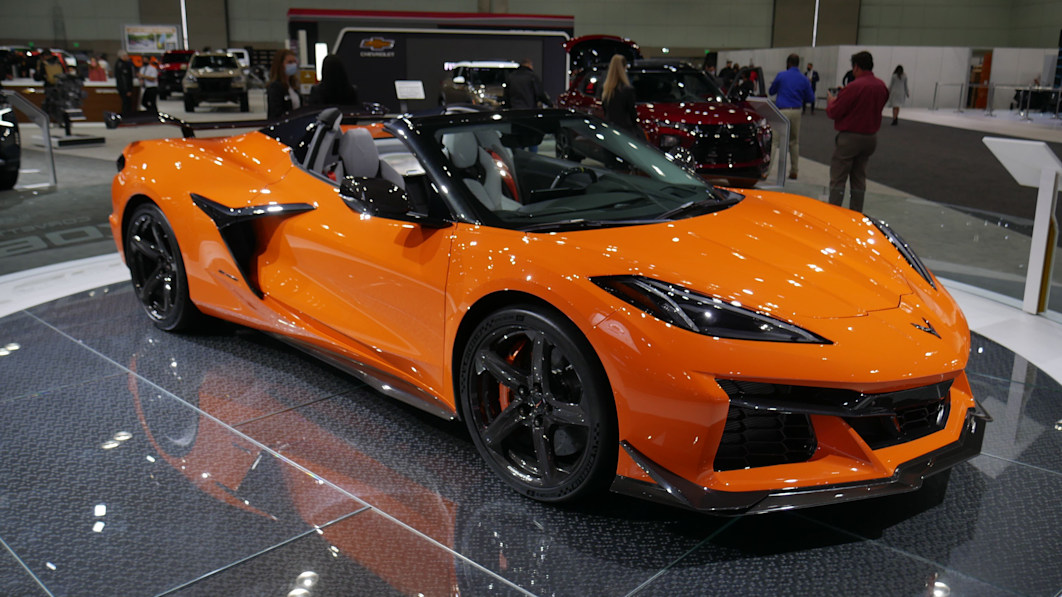
We expect the 2023 Chevrolet Corvette Z06 to break at least one record before the coming super-coupe has been objectively timed and tested. Barrett-Jackson will auction the first retail example of what should be the most amazing Z06 the world has ever seen during the auction house’s annual Scottsdale, Arizona, event on January 29 at around 8:30 p.m. The last charity Corvette the auction house sold was the first 2020 C8 Corvette, which NASCAR team owner Rick Hendrick bought for $3 million. With his winning bid, Hendrick set the benchmark hammer price for a Barrett-Jackson charity car, and eclipsed the $2.9 million paid for the last front-engined Corvette in 2019. Although not assured, it doesn’t take much imagination to conceive of bidding for the 2023 Z06 cruising right past $3 million to a new record.  

Whatever the final tally is, every cent of the hammer price for lot #3009 will be donated to a charity called Operation Homefront, Barrett-Jackson forgoing its usual fees. The 20-year-old nonprofit Operation Homefront exists to help the post-9/11 wounded, military families, and veterans with financial assistance and housing support.

The car on the block will be a stand-in hardtop, not convertible, the Z06 not scheduled to enter production until September of this year. It sounds unlikely the winning car will be VIN 001, with language noting the coupe could be “subject to a state-issued VIN and/or other state requirements” depending on where the owner hails from. After winning, the buyer will be invited to configure what will be the first retail example of the production line, meaning choosing one of 12 exterior colors and seven interior and wheel treatments, then making the even bigger choice of whether to append the Z07 Performance Package that adds frills like a big rear wing, canards, and carbon fiber wheels.

And with two more powerful Corvette versions thought to be on the way — the ZR1 and the performance hybrid perhaps called Zora or E-Ray — the Z06 likely won’t hold for long the benchmark among its kind for price at the gavel.

As for the everyday buyer, it’s going to require a few trips around the sun to take delivery of a new Z06 even for those who put reservations in months ago. Buyers in one thread on the C8Z06 forum talked about making $2,000 refundable deposits with one dealer as soon as the reservations system opened, then being told they were as far back as between 4,000 and 5,000 on the waiting list. And that’s just one dealer. Might not be too soon to start thinking about putting money aside and making friends at a dealership to get a good shot at the C9.

Related video:
Spyker is back again, maybe

The motto of Dutch car company Spyker was, “Nulla tenaci invia est via.” That’s Latin for, “For the tenacious, no road is impassable.” If nothing else, no other outfit has lived its motto more fully than the outfit still headed by Victor Muller. After buying Saab in 2010 and foundering under the purchase, going bankrupt in 2014, being bought by private equity in 2015 and foundering again, declaring new investors in 2020 before going bankrupt again in 2021, we have another new announcement that Spyker is back. The investors this time are the same as in 2020 — when funds never came through and Spyker went bust again — Russian businessmen Boris Rotenberg and Michail Pessis. According to a press release, a new round of meetings last month led to new agreement between all parties about the direction of the company, so hands will finally get to work building new cars.

Rotenberg owns SMP Bank in Russia, title sponsor of SMP Racing that Rotenberg co-owns with Pessis. He also co-owns energy company SGM Group and runs BR Engineering, which entered the BR Engineering BR1 in the World Endurance Championship. Pessis owns luxury firm Milan Morady out of Luxembourg and the automotive tuner R-Company in Germany. Both are Spyker owners, Pessis saying in August 2020, “Since Boris Rotenberg and I ordered our first Spyker almost a decade ago, we passionately fell in love with the beauty and craftsmanship of these hand-built sportscars. As of 2015, the cooperation with Spyker intensified through Milan Morady, which now culminates in the collaboration agreement announced today. Moreover BR Engineering and Milan Morady have for the past few years already been involved in the development and production of a number of Spyker C8 Ailerons in so-called Limited Edition BR configuration in our German facilities.” 

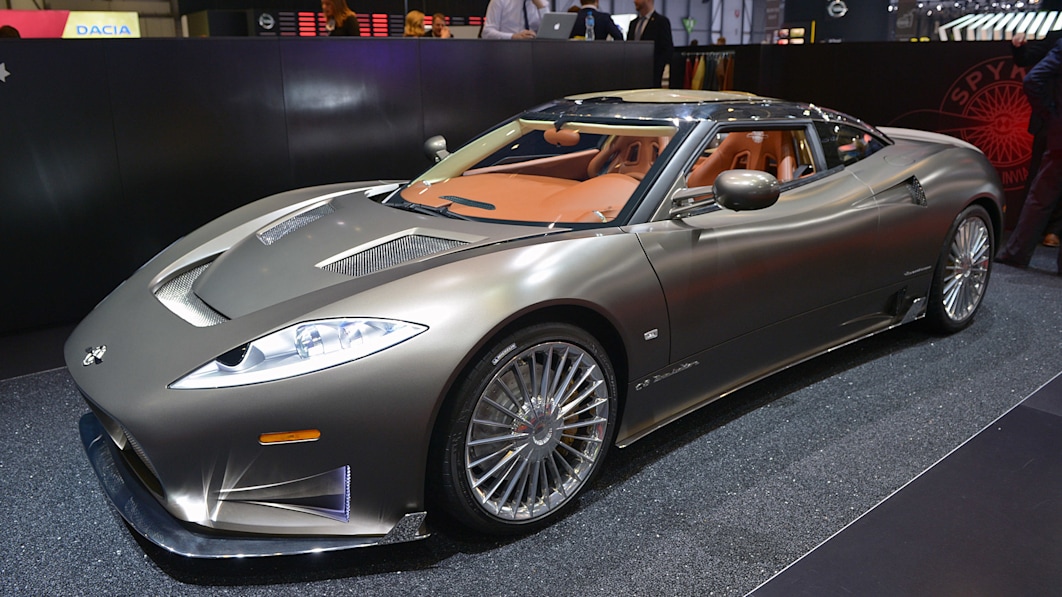
Muller wants to pick up where Spyker left off years ago, building the C8 Preliator (pictured) and B6 Venator cars, and D8 Peking-to-Paris crossover starting this year. The Preliator debuted in 2016 as the most recent version of Spyker’s core C8 model in production since 2000, powered by a supercharged version of the 4.2-liter Audi-sourced V8 that was Spyker’s favorite engine. The Venator was from 2013, powered by a V6 to provide a lower cost of entry to the range. The D8 was from 2009, once touted to employ a V12, then rumored with that Audi V8. The brand wants to go racing again, too. That could be down the line, but backing from SMP Racing could make such a venture much easier.

We don’t know which cars will come to life this year, if any, but we’ve been promised that any which do come will use internal combustion engines. They’ll also employ an international workforce; Germany and Russia will lead model development, Russia will supply carbon fiber bodies, the hand-built workforce will toil in a new production facility in the Netherlands, Luxembourg accountants will attend to Spyker’s finances, and there will be new service centers in the South of France and somewhere around the Benelux area.  

The caveat to all of this is that the presser informs us, “As soon as a written agreement is reached and the use of trademark rights secured, activities can restart.” Spyker has taught us that anything can happen on the way to the finish line, so perhaps hold off on sending deposits to the Netherlands just yet.