All posts in “Features”

Why Does America Love Bass Fishing?

A

ll around the boat, Lake El Salto was waking up. A purple glow seeped over the Sierra Madres, turning the lake’s surface into a puddle of ink. Tropical birds stirred along the bank, whooping like monkeys; high above them, an eagle circled with the regularity of a drone. In the little inlet where our boat was currently parked, fish the size of saucers — tilapia, gray with flamingo-pink-mottled bellies — flipped briefly out of the water and back in, like badly skipped stones, snatching at bugs no bigger than motes of dust.

Joe Thomas and Jim Kramer ignored all that. B-roll footage at best. Too much of that kind of thing, Kramer had quipped earlier, was for nature shows, not fishing ones. If there was a story to be told here, it was under the surface, hungry for breakfast.

Which is why their eyes, and the lens of Kramer’s camera, were locked on a small piece of plastic wriggling across the surface of the lake, its underside laden with treble hooks the size of a crooked finger. Thomas reeled in this “jitterbug” topwater bait using a long, sturdy fishing rod that could double in a pinch as a spear; the reel he cranked had a high-tech drag system that reminded me of a sport’s car’s disk brakes; his braided fishing line was all but impossible to break.

“Here, fishy fishy,” Kramer muttered. A bead of sweat ran into his eye. He didn’t flinch.

And then, like a stick of dynamite blowing up just beneath the surface, a Florida-strain largemouth, the mean mother of the largemouth world, engulfed the lure. Thomas arced his back, setting the hook with a yell. “Oh my gawsh!”

Kramer’s lens was trained on the fight. But then Thomas’s excitement flagged. The fish came easily to the surface, towed in toward the boat by Thomas’s fast reeling.

“It’s a small one,” Thomas said. Kramer lowered his camera rig and wiped his brow.

A small one? That was the biggest bass I’d ever seen. But I’d come here to watch Thomas and Kramer create their Outdoor Channel show, Stihl’s Reel in the Outdoors with Joe Thomas, and to try to understand what made their 30-minute fishing stories that fans watched from the couch work. And at El Salto, one of the world’s best bass fishing lakes, the story is something straight off the old treasure map: Here there be monsters.
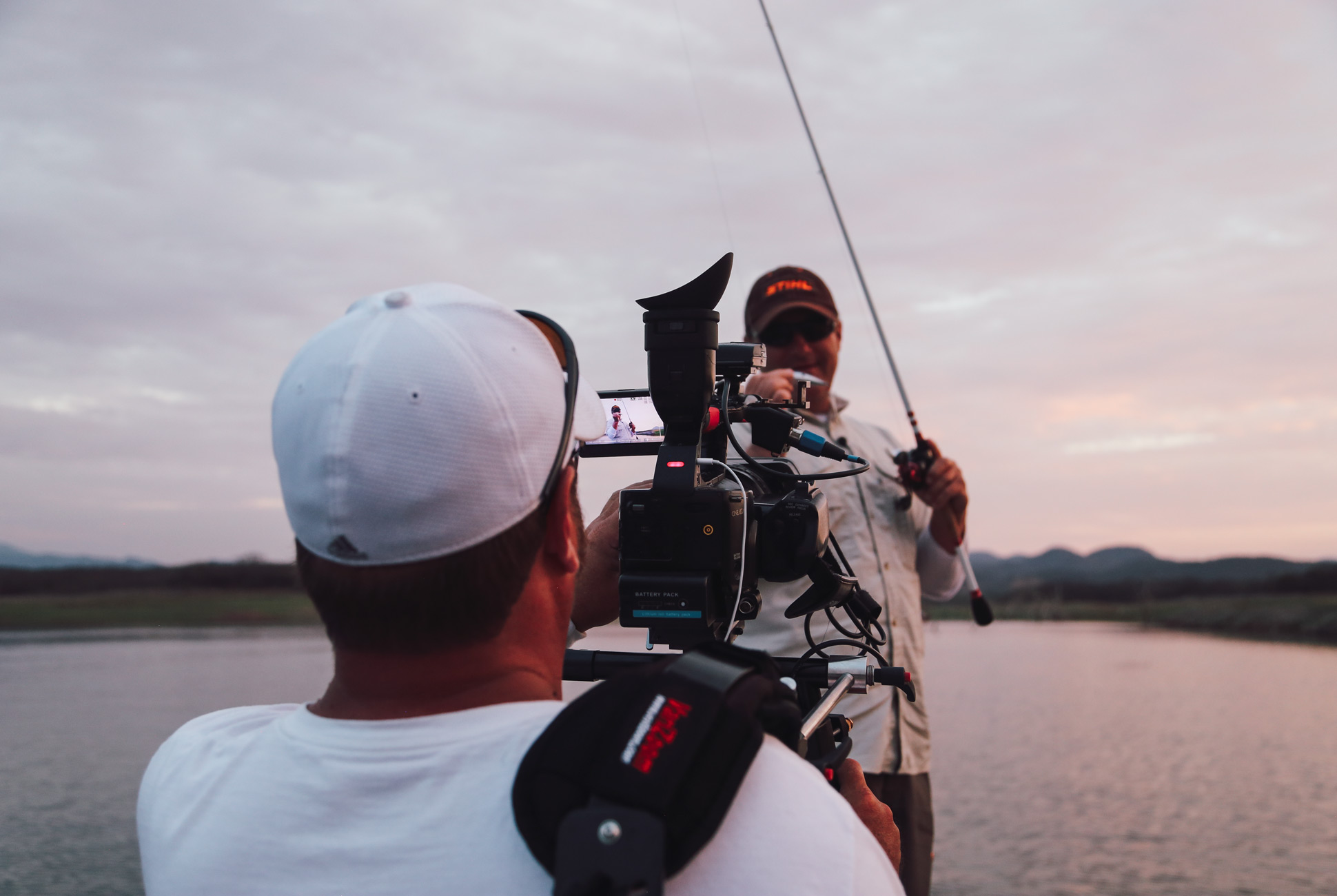
Producer, editor and cameraman Jim Kramer is constantly behind host Joe Thomas as he fishes, stalking the scene with his surprisingly small Sony XD camera on a shoulder mount.

Producer, editor and cameraman Jim Kramer is constantly behind host Joe Thomas as he fishes, stalking the scene with his surprisingly small Sony XD camera on a shoulder mount.

Thomas is square-jawed and thickly athletic. If you need a fish caught, he’s a good guy to have around. He competed on the professional bass fishing circuit for 30 years, making a good living fishing, and once won $1 million in a single tournament. In 10 seasons and with a relatively low budget, Thomas’s show has taken anglers to untouched blackwater lagoons in the Amazon, man-made lakes in the flyover states loaded with largemouth bass, and deep sea fishing in the Florida Keys.

“I was at the right place at the right time,” Thomas said. But it was more than that. He wrote a book called Diary of a Bass Pro in 1996 that was made into a television show, Angler on Tour, combining bass fishing and reality TV just as both waves were crashing into the public consciousness. On a boat and in front of a camera, he’s a normal, level-headed guy from Ohio who also happens to have a flair for funny, goofy ebullience without coming off disingenuous. On the boat that morning at lake El Salto, Thomas told me his three keys to a great fishing show: a) be entertaining; b) choose locations that are unique and have great fishing; and c) teach the viewer something. I got the sense that he understood entertainment just as much as he did the whims of a largemouth bass.

“Here, fishy fishy,” Kramer muttered. A bead of sweat ran into his eye. He didn’t flinch.

The other half of the show, Jim Kramer, is a city slicker turned outdoorsman, thanks to the fate of the job market. He and Thomas are partners in showrunning; Kramer handles camerawork, direction, production and editing. “I try to approach it in a documentary, or almost cinema verite style,” he said. “Look, let’s see what happens. Flexibility is a good thing, especially when you’re depending on a creature with a brain the size of a peanut.”

Much of Kramer’s work is behind the scenes, but on the lake, he is constantly behind Thomas as he fishes, stalking the scene with his surprisingly small Sony XD camera on a shoulder mount. It’s tough work: physically exhausting, mentally intense, and requiring a keen eye for the bigger picture amid what is in equal parts chaotic and boring.

“Originally, fishing shows had a very passive type of filmmaking,” Kramer said. The cameraperson was almost always in a second boat, taking in the whole scene of fishing, using a zoom when necessary. “What I want to do is get close. I’m trying to look at it as a person who’d be viewing it as a fishing partner.”

“Bass fishing has so many variables and options,” Thomas said. Based on types of water and season, the techniques are endless. You just keep learning.”

I remembered that “passive” camerawork from my childhood. On Saturdays, while other fathers and sons geared up for college football, me and my dad tuned into early morning sessions of ESPN2: 23-minute segments of overly tanned men, dressed in lightweight button-down shirts and baseball caps, standing in the bows of small, high-tech motor boats, fishing.

We exulted in grainy footage of Jimmy Houston, his bright blonde bowl cut not yet adopted as the go-to styling of Hollywood’s young manic pixie dreamgirls, drawling away and kissing the bass he caught on the lips before releasing them. Jose Wejebe, the zen master and happy hippie behind The Spanish Fly, chased enormous saltwater monsters with his fly rod. Bill Dance staged slips and falls, his guest hosts guffawing till they looked like they’d keel over.

But ESPN eventually canned their outdoors coverage, replacing it with all manner of mainstream-sports talking heads. The fishing show, of course, was not gone. Its sort of entertainment, both vapid in its appeal to fishermen (guys catching fish!) and touching somewhere deep inside their souls (guys exploring every emotional and cerebral aspect of the fishing life that I adore!), simply moved to greener pastures: dedicated mediums like the Outdoor Channel, now beamed into 42 million homes throughout the US, its every aspect tailored to the outdoor life. No need to try to hook the football crowd when you’ve narrowed your audience to just guys who know what the word “tippet” means.

Yet while the forum for sharing the fishing show has honed in, the appeal of fishing itself has broadened. Last year, 45 to 50 million fishing licenses were sold in the US, making it one of the top leisure time activities in the country. Those changing demographics are reflected on Stihl’s Reel in the Outdoors. “There has always been a stereotype of some good old boys in a leaky johnboat, putting back some PBRs and catching some fish. But any more, that’s not the case,” Kramer said.

On their show, the framework centers on Thomas catching monster fish, which he does almost every episode. But the excitement comes more from Thomas himself, and his guests, whom Thomas clowns with and gets to know intimately in equal parts. There is adventure and excitement beyond just casting: In Florida, Thomas was almost thrown overboard by a huge goliath grouper; in the Amazon, he and Kramer spent hours (in the show, a few minutes) trying to navigate mangrove swamps and find an untouched fishing hole that felt more sacred than secret.

Thomas and Kramer make their money differently than other shows, too. Their main sponsors are mostly “non-endemics” that are not directly tied to fishing, like Stihl. “A lot of outdoor shows are highly commercial,” Kramer said. “I get it, but the old joke we used to tell is that when a guy gets one, it’s “Aw, get out from under that Ranger bass boat! Oh, he’s in my Evinrude outboard. Oh man, he’s got my Trilene line tangled up in my Motorguide trolling motor!”

Juan, 30, makes his living as a guide on Lake El Salto. The Mexican government flooded the valley when he was just a child to create a lake for farming tilapia; when I ask him where he grew up, he pointed to the water about 50 yards from where we were casting.

Juan, 30, makes his living as a guide on Lake El Salto. The Mexican government flooded the valley when he was just a child to create a lake for farming tilapia; when I asked him where he grew up, he pointed to the water about 50 yards from where we were casting.

The magic of the fishing show, though, remains obscure. “We still have people who approach us and say, how do you catch all those fish in a half an hour?” Kramer said. “They’re not really aware of what goes on behind the scenes.”

The more time I spent among Joe Thomas’s biggest fans at Lake El Salto, the more I understood how such ignorance was possible. Why should the audience care what kind of cameras Kramer used, or how Thomas and Kramer mapped out their story lines and edit points? It was just like the rest of the entertainment world: it’s all about creating a good story and staying the hell out of the way.

Bass fishing is, Thomas said, the perfect sport for building an avid membership. “Bass are everywhere. You can catch bass in every state in the US except Alaska. That gives everybody an opportunity to catch them, whether that’s in a tiny farm pond or a huge river. You have variables and options. Based on types of water and season, the techniques are endless. You just keep learning.”

Fishing, like all great sports, can sink its hooks in deep. It’s as addicting as good drugs, as mesmerizing as good philosophy. It helps to remember that the greatest American novel, Moby Dick, is really just a fishing story in which the fisherman becomes so obsessed he goes mad. (Happens all the time.)

At El Salto, my first brush with the cult of bass fishing — and Joe Thomas fans — was the gang of fishermen staying at the Angler’s Inn fishing lodge along with the show’s crew. They were twanging with excitement. They were young and middle-aged and old. They were oil derrickmen and engineers and bankers. (There was one woman, a wife who had become as obsessed with bass fishing as her husband.) And they were utterly, bitterly, ass-clenchingly obsessed.

Take Bruce. Bruce was from Ohio, about 65 years old, big bifocal glasses, friendly, midwestern twang. When he fished during the day, he wore a red bass fisherman’s jersey emblazoned with sponsors.

“I first heard of Joe Thomas about 25 years ago,” he told me. “He was a local guy from Ohio, and I’m a local guy from Ohio. And so I started rooting for him in the pro circuit. He makes the great fishing he does easy to understand for dummies like me.”

I try to approach it in a documentary, or almost cinema verite style,” Kramer said. “Look, let’s see what happens. Flexibility is a good thing, especially when you’re depending on a creature with a brain the size of a peanut.”

I try to approach it in a documentary, or almost cinema verite style,” Kramer said. “Look, let’s see what happens. Flexibility is a good thing, especially when you’re depending on a creature with a brain the size of a peanut.”

Bruce met Thomas, who invited him to fish with his crew in El Salto. “But back then I was a family man and I didn’t have the money,” Bruce said. (Three and a half days of fishing at the Angler’s Inn, the best lodge on the lake, including food, drink, and guiding services included, costs $1,650, plus airfare.) Years later, Bruce was retired and his kids were out of the house. He met Thomas again at a local event, and Joe invited him to go fishing in Mexico. “My wife told me to go. So we saved up for a few months, and now I’m here,” he said.

Earlier that day, Bruce had caught his personal record bass. When he told me about it, I thought he might cry, he was so happy.

The bass fishing at lake El Salto has been life-altering for an entire region. The lake is actually a dammed up river that flooded a huge range of valleys, drowning everything in its way but people. Today the dead trees still litter the edge of the shoreline, their limbs reaching eerily out of the shallows.

While fishing with Thomas and Kramer, I asked our guide, Juan, 30, where he grew up. He pointed to the water about 50 yards from where we were casting.

When the Mexican government flooded the valley that is now El Salto Lake, they displaced about two villages and several graveyards. Juan said this was not a bad case of eviction: most villagers went happily, with money and supplies to build much bigger homes in the villages on higher ground 10 minutes from here. He was three when his family moved. He has one memory of his original home: being bitten by his aunt’s dog.

Today his family’s home is one of his secret spots to fish on the lake. Not bittersweet to him at all. It’s great fishing, not to mention his livelihood.

At night, all the lodge’s guests sat under the lodge’s open-air cabana, breathing in the sultry air, shooting the shit, sharing stories. Earlier in the day a storm had rolled over the Sierra Madres and exploded over the lake, dropping bolts of lightning every minute or so. All the guides and guests had fled back to the lodge, except for one boat. An older man and his son had stayed out. Now he unspooled what it was like hunkering down in the deluge, convincing the guide to stay out. He and his son had caught two monsters, one of them a ten-pounder, the ultimate prize of El Salto. He had felt so alive, out there, in danger, fighting the biggest bass of his life, he said.

A man, buzzcut and ink suggesting a biker vibe, who had stayed quiet most of the trip spoke up from the back. He understood the feeling, he said. He told a story while everyone sat still and deadly silent under the cabana.

About five years ago he had to go get a cholesterol check. His doctor asked him when he’d gotten his last physical. It had been 25 years, so the doctor demanded he give the man one. What he found was not good.

An emergency surgery followed, followed by many other surgeries, followed by a diagnosis that the man was going to die.

The man did not take the news well. Even though he had two kids and a wife, he found that nothing could keep him happy — that doctor’s voice kept ringing in his ears when he was with the people he loved, or doing the things that used to make him happy. You’re going to die, soon, he heard. What could life mean when this was where we were all headed?

The man had always wanted to get a tattoo, so he did. During the four hours it took, the pain did something nothing else had been able to do. It took his mind off of death.

He started getting more tattoos.

The tattoos helped. But six months, then a year, went on, and he had more surgeries, more bad diagnoses. There was not enough ink in the world, he realized, that could keep him going. He started planning his suicide. He told no one, but he made sure his kids would be taken care of, and he started saying goodbyes, subtly, to his friends and family.
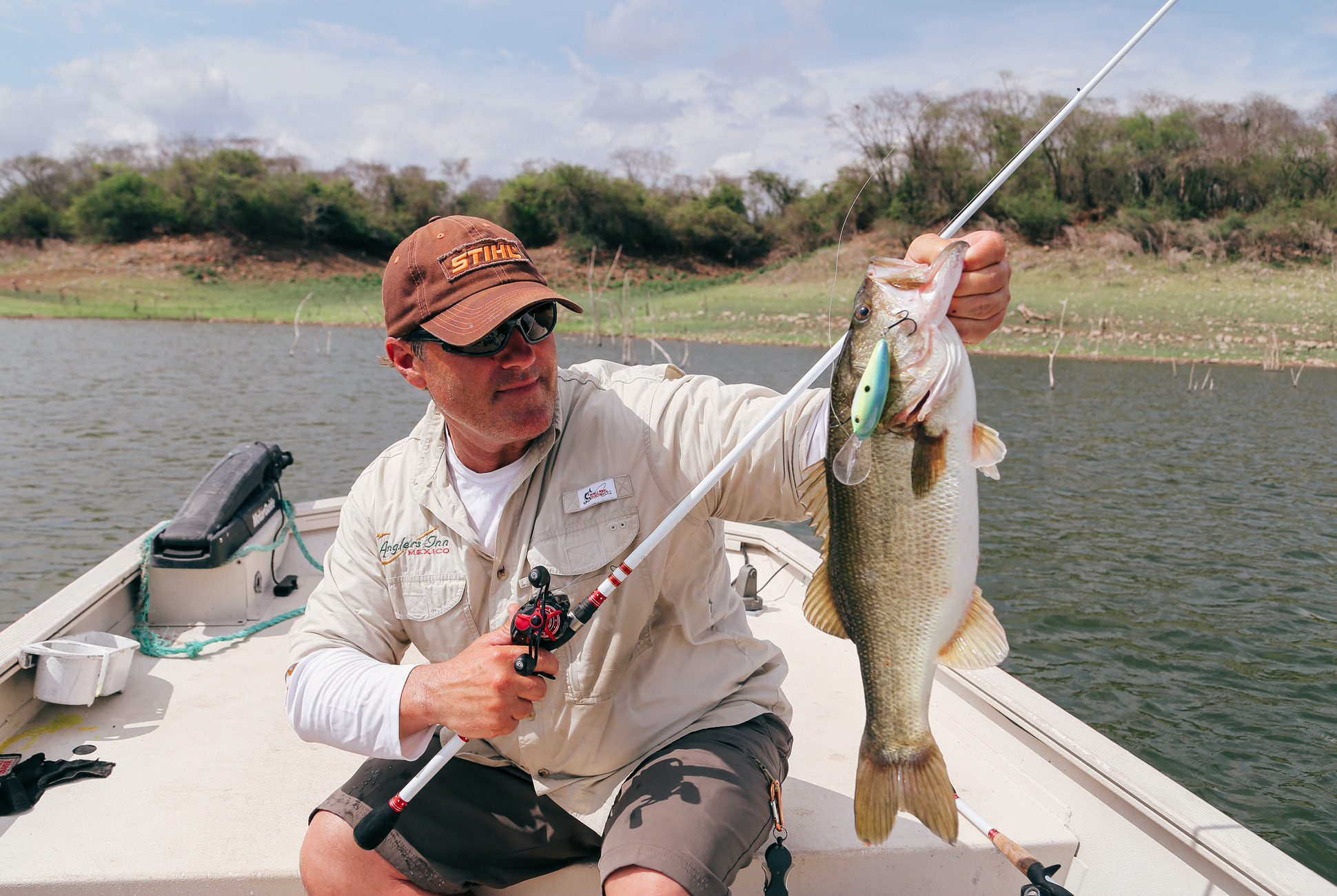
“The secret is,” Kramer said, “Joe still really likes this. He’s having fun. The best stuff that we get is when the fishing’s really good. And he and his guests are having a good time. And they forget the camera is there.”

“The secret is,” Kramer said, “Joe still really likes this. He’s having fun. The best stuff that we get is when the fishing’s really good. And he and his guests are having a good time. And they forget the camera is there.”

He went to see his nephew, who had MS — bad — but was close to graduating high school. The nephew told the man he was his hero. Because he had survived his disease and kept on fighting, the nephew knew he could survive, too.

The man did not kill himself.

He got one more tattoo, of his nephew’s portrait, on his side. Under the cabana, he pulled up his shirt to show it to everyone. Underneath it, I read the words “My strength and my courage.”

“When I ran out of space to get tattoos, and I still needed therapy to keep my mind off death,” the man said, “I started bass fishing.”

“At the end of the day,” Jim Kramer told me later, “I want a guy to be able to turn on our show, crack open a beer, and forget about the bills he has to pay or the transmission that has to be fixed. I want him to be able to take thirty minutes off and enjoy life.” That, he said, is what fishing is all about.

“People come up to me and tell me they like my show because I act normal,” Thomas told me. “They say, ‘We see you feeling bad after messing up and losing a big fish, and then when we mess up and lose a big fish, we don’t feel as bad.’” Could it be that fishing is so big that all Joe Thomas and Jim Kramer have to accomplish is being themselves and catching fish for 23 minutes? They make that look easy, sure. But could the secret to a good fishing show be so simple as the fact that fishing inherently brings its own implications about life, death and happiness to the equation?

One day, as we watched Thomas casting again and again to the same spot, Kramer told me Thomas’s secret: “He still really likes this. He’s having fun. The best stuff that we get is when the fishing’s really good. And he and his guests are having a good time. And they forget the camera is there.”

On the last full day at El Salto, Thomas and Kramer were hustling to finish their footage for the show, and the fishing was tough all of a sudden. Juan and I, casting occasionally from our boat nearby, had caught two small ones near his old home. From what I could tell, Thomas had caught only jack and shit.

Juan lifted his big crank bait out of the water and handed me a beer. “See that cross up there?” He said. I had seen it — a big white stone cross atop an island hill, in sight of the lodge. I’d figured it was something along the lines of the Virgin Mary shrine that sits atop the high cliff in the middle of the lake, where someone had said once a year men gather with 20 cases of beer to shoot off their submachine guns.
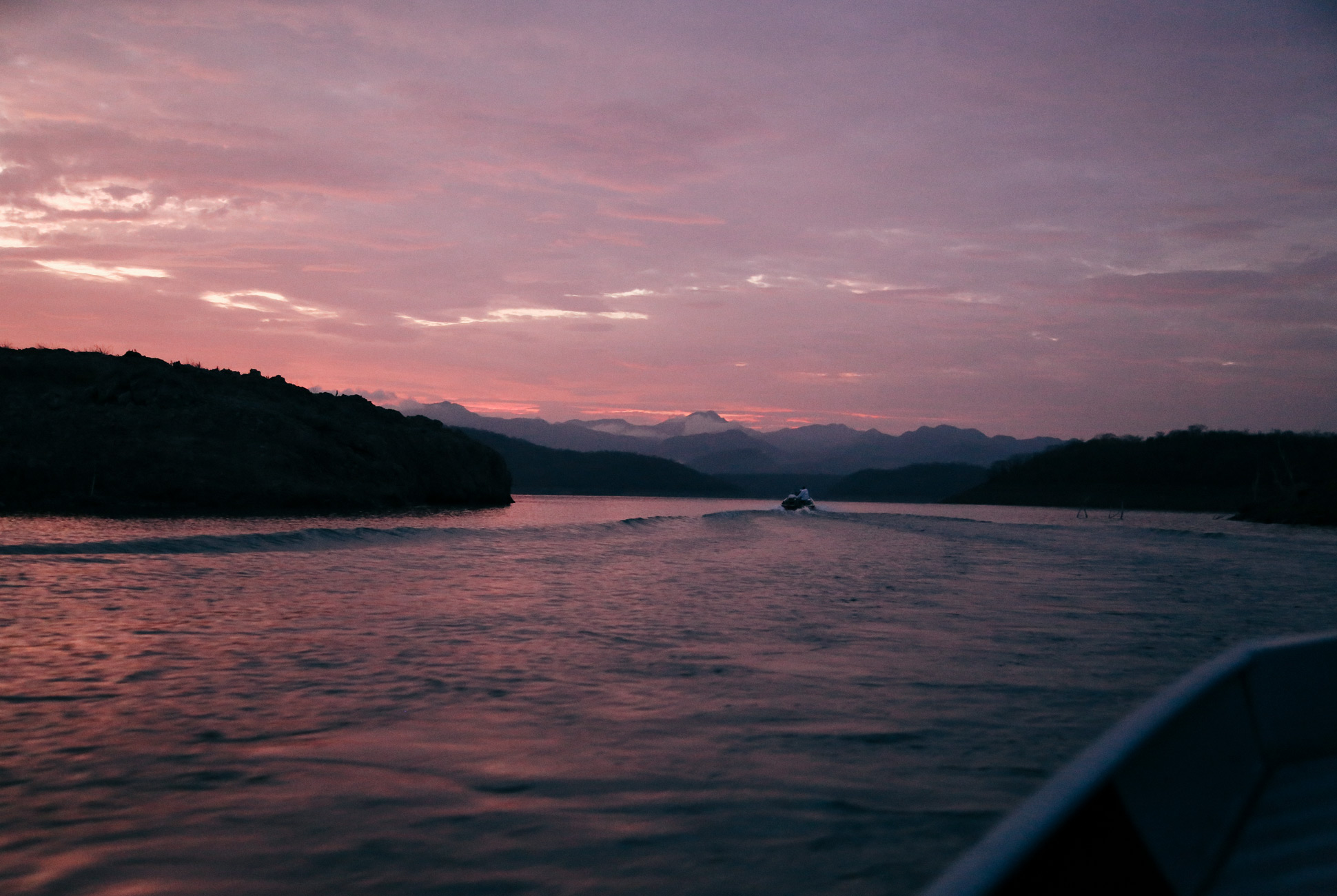
“At the end of the day,” Kramer told me later, when we’re out on the water, fishing alone, “I want a guy to be able to turn on our show, crack open a beer, and forget about the bills he has to pay or the transmission that has to be fixed. I want him to be able to take thirty minutes off and enjoy life.”

“At the end of the day,” Kramer told me later, when we’re out on the water, fishing alone, “I want a guy to be able to turn on our show, crack open a beer, and forget about the bills he has to pay or the transmission that has to be fixed. I want him to be able to take thirty minutes off and enjoy life.”

“It’s for a fisherman here, nicknamed El Tigre.” An American, he said, who’d loved the lake so much he’d requested his ashes be spread in its waters. The lodge had paid for the monument.

Five minutes later Juan had beached the boat and I’d climbed the hill, skipping from rock to rock in my crappy boat shoes, keeping an eye out for rattlers I was sure would be sunning themselves in the evening sun. At the crest of the hill I found the cross, the inscription facing the lodge and the Sierra Madres beyond. It read “August Tigre Hansch. At Peace in El Salto. 9/16/1920 – 7/23/1997.” Below the name was a fishing lure, a crank bait, embedded half into the rock like an ancient fossil.

I poured out a sip of my Pacifico for anglers that’ve gotten away. I heard a big splash and a joyous hoot down below, and scrabbled over the lee of the hill, into view of the swath of the lake, flashing its silver against the all-knowing mountains beyond. Joe Thomas and his boat were down there. Joe’s rod was bent in half. The camera was trained on him, and he was fighting a big bass.

Bass Fishing, America’s Biggest New Collegiate Sport

college-bass-fishing-gear-patrol-featured

Bass fishing, along with lacrosse and volleyball, is one of the fastest-growing collegiate club sports in the country. We found out why. Read the Story

The Complete Guide to Cutting Your Own Hair

We’ve finally closed the book on what seemed like a never-ending winter. Good. Riddance. With warm weather consistently filling the 10-day, it’s officially the season of activity, both professionally and socially, meaning it’s time to…

The 9 Most Interesting Metro Cards Ever Released

New York City is one of the most art-influenced and art-influencing places in the entire world. Aside from being packed with museums, art houses, theaters, galleries, and music venues, it’s the kind of city whose…

Inside the Black Roses: NYC’s Fastest and Most Elusive Run Club

every year. The top 100 finishers have their name printed on the front page of the

New York Times for all to see. It’s a huge moment for any runner, professional or otherwise. In 2011, Knox Robinson did just that. He finished in 100th and found himself on the front page of one of most well-known papers in the world. How did he get there? That question played on the minds of both runners and non-runners alike. And in true form to his personality, Robinson could not let that question go unanswered.

While you can call Robinson’s trajectory to running success atypical, there are certainly some similarities to running superstars like Mo Farah and Abdi Abdi Raman. He started running in high school, then for the first few years of college at Wake Forest, but “I was dead set on becoming a spoken word artist,” says Robinson. So he quit. His success in the music industry rivals his running success — he’s interviewed everyone from Kayne West to Diplo, The Roots to M.I.A. After taking his 20s off for “sex, drugs and hip-hop,” he jokes, “I got back into running after witnessing the birth of my son 14 years ago.”

Robinson quickly jumped back into the game. “I just saw the hobby of running on the margins of my life…and then there was this shift [after the New York City marathon],” Robinson says. “‘This guy’s in the music business and a magazine editor, how did he get 100th?’ People were asking me how do I work out, how did I transfer to the marathon?” Robinson realized there was a need for training information. “I begrudgingly started to share my point of view on basic training.”

Robinson and Jessie Zapo gathered a group of passionate runners and on January 1, 2013, what’s now known as the Black Roses held its first practice. The group enticed both men and women runners, especially those engrossed in New York City’s downtown life. “There were downtown folks that you’d expect, and then everyone from nurses to out of work bartenders, and marketing types to DJs,” all evenly split in gender, Robinson says. “It’s a cool and eclectic mix. The curiosity of getting into the mysteries of running and also those passionately interested in New York City street culture. Those two twin pulls were the starting [point], and we’ve gone on from there.”

“Our group is based on men and women training together and doing the same work — working together in a collective effort,” says Robinson.

“[Black Roses] is not a coaching program, it’s about developing yourself as runners and as people,” Robinson says. Therefore, Robinson is not really a coach. He’s a leader, he sends texts and emails each week with the training times, but never outlines the actual practice. Yes, each individual has goals, but Black Roses as a group also has goals. Robinson pushes the team to think beyond their own goals and to look at how their group affects the New York City running culture and more broadly, the running culture in general.

The 20-25 person group fluctuates in size throughout the racing season but meets every Tuesday and Thursday, often with a long run on Saturday as well. Among the run crews in the city, the Roses are unique in that they have structured track practices. While it’s a crew you can voluntarily show up at (if you know where to go), you have to get invited to wear the infamous black bib. And practices are fast. In similar fashion to how Robinson trained when he was in Africa with elite runners, the Black Roses mantra is all about the feel, the fast feel. In Robinson’s eyes, race day should be easy since you’re putting in all the work now. Practices range from five 1Ks to descending ladders of 5K, 3K, 1K, 300m, etc. Even reasonably fit athletes will likely struggle to keep up. You have to dig deep to find the endurance to keep going, but Roses encourages that. In other words, practices are not for the casual runner.

From an outsider’s perspective, the team seems intimidating. It’s an invite-only crew, and they are fast –think Boston-qualifying, sponsored-athlete, pro-runner fast.

At any race in NYC, you’re sure to notice the Black Roses — they’re in all black everything, they travel in a pack and they’re likely in race coral one. They’re friendly but focused. They’re all working towards ‘goals beyond,’ which is the theme for this season, chosen by Robinson. It was “prompted by a lesser known jazz album by John McGlaughlin. What, as a collective, are our goals? What’s beyond them after that? What happens after we qualify for the Olympic Trials and for Boston?” Robinson says.

The Black Roses exist and operate in a part of running culture that seems counter to the major marketing campaigns. They are unique; an outlier. “Black Roses comes from an 80s/90s classic song from Barrington Levy, which was super popular in Jamaica and dancehall culture,” says Robinson. “Thematically, it’s about the rarest flower in the garden — the kind you never see. But as far as a party tune, we get excited when it comes on at the club.”

Work hard, party hard. Both are an essential part of Black Roses culture — it’s a balancing act. People seek out the team because the practices are intense. It’s not a group run you can join off the couch. You’re going to work hard at practice, even if you don’t want to. “You have to put in the work to earn that singlet,” Danni McNeilly, a member of the Roses since 2014 says. And the all-black racing kit is fitting for an NYC running crew. “We want Black Roses to have the look and feel of what it means to be alive and vital at the time in the greatest city on the planet,” says Robinson. “All black everything is the dress code in NYC and when it comes to running culture in NYC, we like to hold it up as much as anything else.”

Meet the Team

Chelsea Beasley

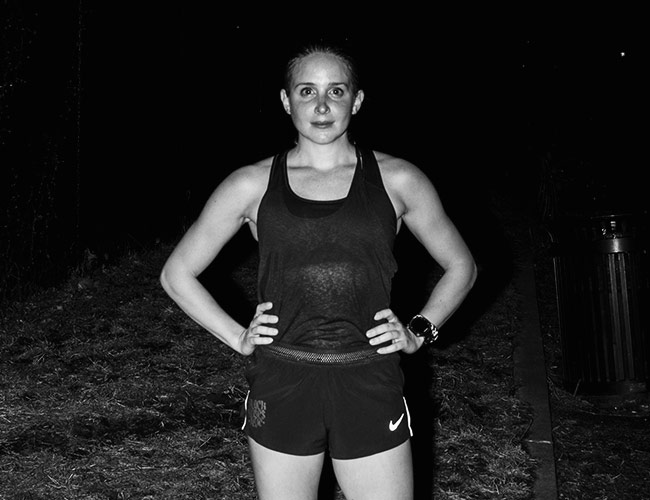
Chelsea Beasley is a 31-year-old digital marketing consultant who is currently training for Boston. Before she joined the Roses in the summer of 2016, she met Robinson at the Montauk Project, an immersive running weekend in the summer of 2013. After running her first marathon in 2016, Chelsea realized she had big goals. “I grew up in Boston, so on Patriots Day, I would watch in person or on TV every year. But I never saw myself running it. When I realized it was something potentially within my reach, I got in touch with Knox and ended up coming out to a couple summer sessions. I ended up joining a few weeks later.” Robinson “was always having me do an extra rep, or pushing me to do long runs in what one would consider the ‘off-season,” says Beasley. Fast forward to the Erie Marathon in September 2017 and she “ran it conservatively and still qualified for Boston by over 10 minutes,” Beasley says. “And then two weeks later I ran the Berlin marathon.” That’s the type of hard training the Roses are known for. “I’m close with a lot of women on the team. Being close with people on a life-level has really intensified the aspect of team training.” She’s currently running in the Nike React, Zoom Fly and 4% on race days.

Danni McNeilly

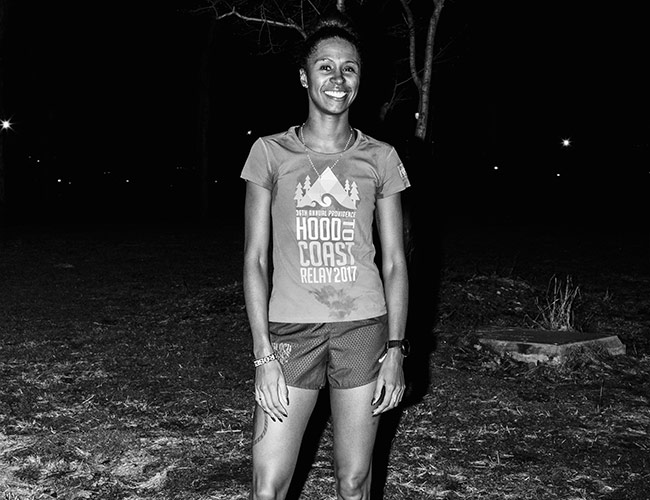
Danni McNeilly joined the Roses in the summer of 2014. “I used to run with Bridge Runners, and they’re the godfather of crews. They’re the organization where a lot of other [Black Roses] runners came from and where Roses stemmed from.” At the DC Women’s half in 2014, she met Robinson through other Roses and Bridge Runners, and he invited her to come run with them. “I didn’t know what I got myself into, but I went and it was cool, so I came back.” Now, the Roses “are the people I would hang out with, the people I talk to every day — they’re like family to me. Friends are family that you choose, and I choose to be around them.” McNeilly admits that it wasn’t love at first sight though. “Your first season with Roses, which is half a calendar year, you get adjusted to the training and the people. It’s the second season, when you’re adjusted, that you can be yourself.” The 32-year-old administrator is currently training for Boston in the 4%.

Jenn Pagan

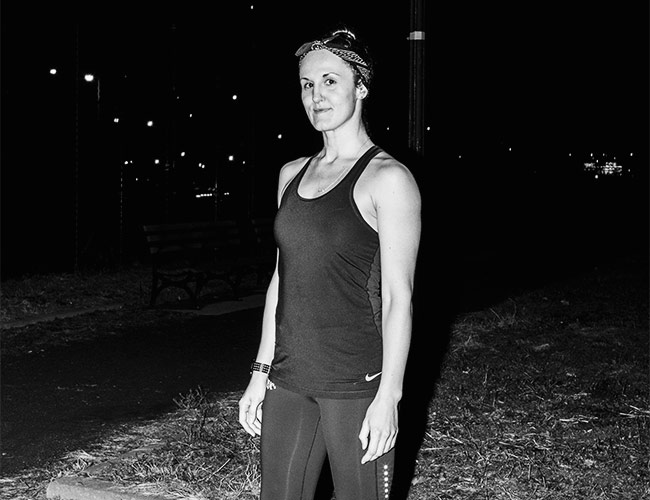
In early 2016, Jenn Pagan, a 33-year-old photo editor and producer officially started running with the Black Roses. “I started running with the Orchard Street Runners, and during the offseason, a lot of Roses runners join practice because it’s fast and tempo-paced — in line with the intensity of a Roses’ style workout.” From there, she became involved in the early Nike Run Club days and met Robinson. She joined the team and is currently training for the Valencia half with much of the team this March. “Whether you’re in tip-top shape, PR-ing, or just trying to maintain, we’re all out there together putting in the work,” says Pagan. “[Robinson will] utilize other teammates and connect us in saying, ‘Okay, you two work together,’ so someone closer to my pace, or just a little past my pace will work with me. It’s teamwork for sure.” She’s currently running in the Epic React.

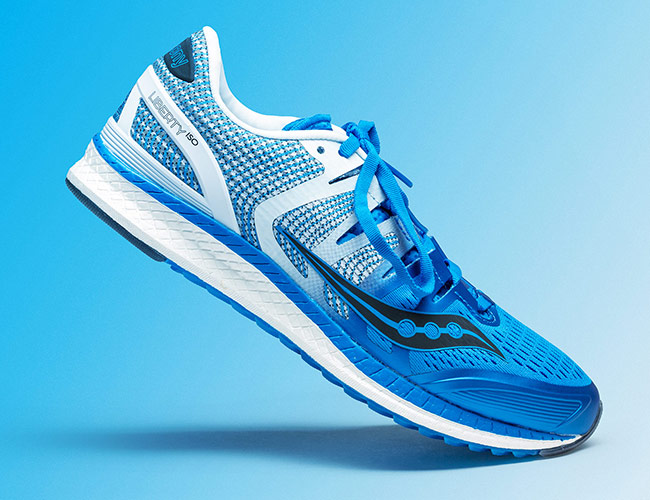
The 12 Best New Running Shoes of Winter 2018

There’s something for everyone. Read the Story

Espresso Makers for Every Level of Coffee Fanatic

Great coffee used to be exclusive to the oldest and most hip coffee shops. Their precise measurements and techniques demanded lines and served up Instagram-worthy lattes. The problem? These drinks aren’t cheap. Luckily, you can…

10 Outdoor Clothing Shops You Should Know

When it comes to outdoor clothing stores, most of the traditional options are, well, a bit shit. You can have the outdoorsy flannel, hunting jacket or pair of all-weather pants built for everything from fishing…

The Best New Podcasts to Listen to This Spring

Podcasting is still a relatively new industry, so there isn’t really a season in the way that television debuts fall dramas or film pumps out summer blockbusters. As such, there’s no set time of year…

New York Auto Show 2018 Highlights

Just weeks after the Geneva Motor Show the international automotive scene crossed the Atlantic for the next major event on the calendar: the New York International Auto Show 2018. Javits Center on the shores of the Hudson river in Manhattan forms the stage for a dozen new world premieres along with nearly 50 US premieres.

The automotive year started with a deception at the North American International Auto Show in Detroit but the vibe in New York is different. The halls are packed both with exhibitors as well as media representatives from all over the world. The decline of Detroit clearly leaves New York unaffected. A very strong customer base in New York and the surrounding East coast along with the general appeal of the city that never sleeps makes that manufacturers and visitors like to be here.

Before we share our highlights of the New York Auto Show with you we start with two events that took place on the sidelines of this year’s NYIAS: the Meet Mercedes preview event taking place the evening prior to show opening and the World Car of the Year Awards Ceremony.

Meet Mercedes-AMG – New York Auto Show 2018 Preview

Mercedes-Benz Manhattan hosted a select group of media representatives for the Meet Mercedes preview event. This new format was first introduced at the Geneva Motor Show last year and allows media to take a closer look at some of the new world premieres from Mercedes-Benz in a relaxed atmosphere. The first New York Meet Mercedes was slightly smaller and compact version of the Geneva Meet Mercedes but still gave us ample opportunity to check out the three new AMG cars and two US premieres.

With all five of the vehicles on display coming from Affalterbach it was no surprise AMG CEO Tobias Moers was the main Daimler representative present. Following a short introduction and update about the US market, which is going very well for Mercedes-Benz and AMG; record sales and high annual growth, we checked out the individual cars.

The first is the Mercedes-AMG C63 Limousine which received the same updates as its non-AMG counterparts shown in Geneva. Slightly revised front and rear and a updated interior with new infotainment displays and software.

Next to the C63 Limousine we found the C43 Convertible and C63 S Coupe. Both received exterior updates similar to the limousine. The C63 S Coupe particularly caught our eye with the magno grey paint job. A very desirable car that has become even more desirable with this facelift. And that is without even factoring in the mouthwatering and supercar-like sub-4 second sprint from 0 – 100 km/h.

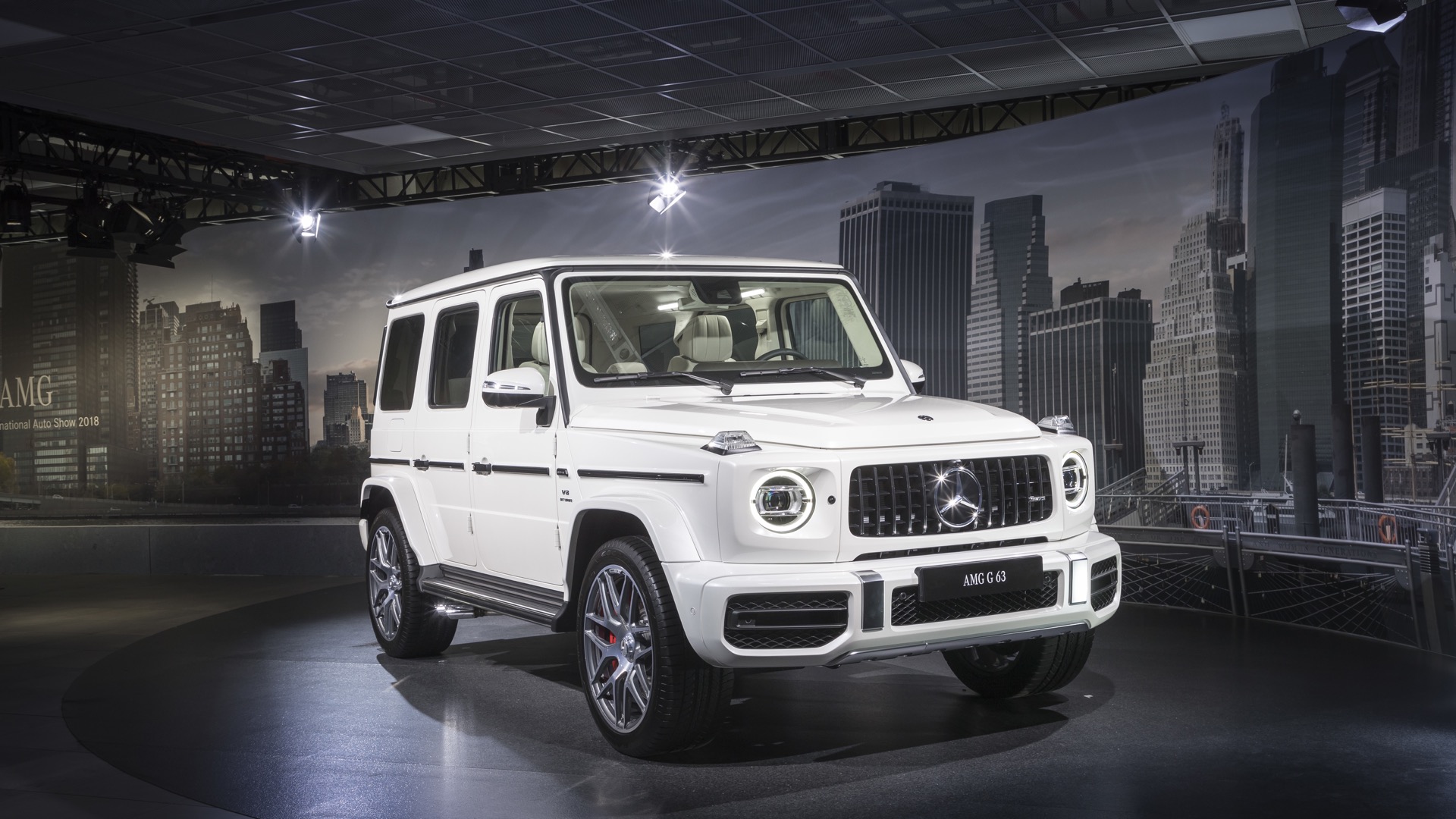
Besides these three world premieres AMG also brought the new GT 63 S four-door coupe to New York along with the new G63. Both celebrated their world premiere in Geneva where they stole the hearts of many. The new G63 represents the biggest change to the iconic G wagon in decades with only a handful of parts carried over from the previous generation. We can’t wait to drive it in a few weeks.

The Mercedes-AMG GT 63 S opens up a whole new segment for AMG and is set to go head-to-head with the Porsche Panamera. The exterior and interior are largely inspired by the AMG GT while the technical platform is provided by the excellent E-Class platform. New features includes digital displays in the center console and a dedicated four seat setup. In the rear passengers have more head room than the new Mercedes-Benz CLS.

World Car of the Year Awards 2018

After a short night sleep duty called again at 7.15 for the annual World Car of the Year awards ceremony in the special events hall of Javits Center. In a setting worthy of a black tie gala executives from the nominated manufacturers mixed with ‘WCOTY’ jurors from all over the globe witnessed the awards in six different categories.

First up was the ‘Design Car of the Year Award’ with the Lexus LC500, Range Rover Velar and Volvo XC60 as final nominees. Chairman Peter Lyon slowly opened the envelop with the winner in an Oscar-style fashion and announced the Range Rover Velar as this year’s winner.

Next up was the Green Car of the Year which was won by the Nissan Leaf. A category that is particularly close to our interests at GTspirit: the World Performance Car of the Year was claimed by the BMW M5. The Audi A8 truly deserved the title as Luxury Car of the Year with it’s cutting edge technology and revolutionary interior design.

The Volkswagen Polo took the Urban car of the year award leaving only the main award still to be announced. For the World Car of the Year a list of over 40+ contenders was brought down to three competitors by the 80+ judges worldwide including yours truly. The Range Rover Velar and Volvo XC60 were among the final three again along with the decent-but-not-overwhelming Mazda CX-5. And with the words ‘This year’s World Car of the Year Award 2018 goes to…’ the Volvo XC60 took the main award home to Sweden.

New York Auto Show 2018 Highlights

The auto show in New York is one of the most pleasant shows on the annual motor show calendar. Pretty much all the action is concentrated in just one hall, with only trucks on display in the lower level hall. The air-conditioning works wonders, which is quite a relief after the sauna like temperatures in Palexpo in Geneva, and there is a good crowd but it is never too crowded. Overall the perfect conditions to take in all the new cars and have interesting conversations throughout the day.

Corvette ZR1 Convertible

Combine a 6.2 liter small block V8, a massive supercharger and a drop-top version of the mighty Corvette ZR1 and you have the new ZR1 Convertible. It nails the 0-100 km/h in less than 3 seconds and has a top speed well over 200mph. The immense wing on the back will make sure the new ZR1 Convertible will not go unnoticed when you cruise down your local boulevard while providing the downforce needed to put those 755hp down on the tarmac.

Audi RS5 Sportback

Audi Sport put their hands on the Audi A5 Sportback and transformed it into a 444bhp and 600Nm V6 powered four-door sportscar for the United States and Canadian market with other markets to follow later. 0 to 60mph is done in 3.9 seconds and the RS5 Sportback continues to a top speed of 174mph. The Sonoma Green Metallic color is available as an exclusive option.

Volkswagen Atlas Cross Sport Concept & Atlas Tanoak Concept

Following the introduction of the 7-seater Volkswagen Atlas in 2016 Volkswagen now presented two near-to-production concept versions of future Atlas models. The first is a plug-in hybrid and 5-seater version dubbed the Atlas Cross Sport Concept which combines two electric motors with a V6 petrol engine producing 355hp. It is set to go in production in VW’s Tennessee factory in 2019.
The next one is a dual cab, short bed pick-up truck based on an extended Atlas chassis called the Volkswagen Atlas Tanoak Pickup Concept. The 276hp V6 engine with all wheel drive system provides power for all possible duties. The true strength of the Tanoak concept is found in the exterior and interior design providing a fresh and clean technology advanced style not found in other products in this segment. There are no plans for immediate production but if interest is there the Tanoak might make it into production.

Mercedes-AMG C63 S Coupe

Just weeks after the unveil of the new Mercedes-Benz C-Class facelift models AMG follows suit with the new C63 Limousine, Estate, Coupe and Convertible. All receive the new AMG Speedshift MCT 9G gearbox with wet clutch which allows even faster sprints from standstill. The 4.0 liter V8 is available in S and non-S guides providing 510 or 476hp. Along with tweaks to the exterior customers can now opt for the fully digital cockpit. With wider tracks and aggressive looks it is one of our favorite new Benzes in New York.

Mercedes-AMG GT 63 S

US debut for the Mercedes-AMG GT 63 S. The four-door all-wheel drive Porsche Panamera competitor. Combining the DNA of the AMG GT with the chassis of the E63. Brace yourself as AMG squeezed even more performance out of the 4.0 liter V8 biturbo engine – now delivering 639hp and 900Nm of torque. The GT 63 S can sprint from standstill to 100 km/h in 3.2 seconds and tops out at 315 km/h.

Jaguar F-Pace SVR

Jaguar produced more F-Pace SUVs last year as all cars that left the factory back in 2011. Needless to say the F-Pace is an important car for Jaguar and they continue to expand the F-Pace range. In New York the high-performance F-Pace SVR celebrated its world premiere. Equipped with Jaguar’s very own 5.0 liter V8 supercharged it produces 550hp and 680Nm of torque. This allows a 0-100 km/h sprint in just 4.3 seconds and a top speed of 283 km/h.

Porsche 911 GT3 RS Weissach

Porsche unveiled the next level version of the new Porsche 911 GT3 RS in New York. This optional Weissach package is another 18kg lighter than the already lightweight GT3 RS. On the outside you can clearly see two of many parts that have been created in carbon-fibre reinforced plastics: the front bonnet and the roof. The large PORSCHE logo on the rear wing also hints at the Weissach package.

Bugatti Chiron Sport

The Bugatti Chiron Sport celebrates it’s US premiere in New York. Like the GT3 RS Weissach it is 18 kg lighter than the base vehicle. The Chiron Sport is aimed to deliver a sportier ride with firmer chassis settings, torque vectoring and new sport focused suspension setup. Inside the sporty character is expressed through a mix of alcantara, leather and carbon. The rotary drive mode knob and engine start button are finished in black anodised aluminium. On the outside the new four-pipe exhaust can’t be missed.

Koenigsegg Regera

Koenigsegg recently announced the full production of 80 Regeras has been sold out. Still the Swedish plug-in hybrid hypercar with a combined power output of 1,500hp is worth a closer look. The 5.0 liter V8 alone produces 1,100hp and 1,280Nm of torque. The electric motors which provide a full electric range of 35 kilometers add another 700hp and 870Nm to the mix with torque fill and torque vectoring functionality.

Rimac C_Two

Having just wrapped up the Geneva Motor Show Croatian electric supercar manufacturer and tech firm Rimac flew their brand new C_Two – which stands for Concept Two – to New York to present it to press and possible customers. Promising some breathtaking performance figures like a 0-60 mph time of 1.85 seconds, 1,914hp and 2,300Nm of torque. Enough for a top speed of 412 km/h. Add a carbon-fibre monocoque with state of the art technology like all-wheel torque vectoring and a 650 km full electric range and you have one hell of a promising electric hypercar.

Rolls-Royce Phantom Series VIII

Although not a US let alone a world premiere the Rolls-Royce Phantom made it into our New York Auto Show 2018 Highlights for one simple reason; it looks amazing in black. We haven’t seen this typical New York spec of the new Phantom yet and it works incredibly well. Rolls-Royce North America was keen to add that this is a popular color in New York whereas customers in Florida and California tend to be more outspoken and exotic in their color choices.

Pagani Huayra BC

Right outside the main hall we found the multi-million dollar and 750hp+ Pagani Huayra BC on display at the Brembo booth. Finished in red with exposed carbon fibre this limited edition Huayra looks the money.

Conclusion

This year’s New York Auto Show proves that motor shows still work and have a place in the shifting automotive landscape. Next stop on the Motor Show calendar is the Beijing Motor Show in a mere 3 weeks. We look forward to take you there and provide you with the latest new cars from the single most important car market globally. We have already seen a few new cars and concepts due to appear in Beijing and there will be some fireworks.

In the meantime join us on Facebook, Instagram or Twitter for the latest automotive news and daily updates from our team members around the world.

The 10 Best Titles Coming to Netflix in April

As always, a new month means new movies and shows coming to Netflix. Also as always, we have some recommendations for how you should spend your streaming time. This April, get ready for some crime,…

8 Movies We Can’t Wait to See this Spring

Spring has officially sprung, and while we’re looking forward to dusting the cobwebs off our swim trunks and stepping outside into direct sunlight for the first time since November, we’re also looking forward to something…


This Is the Ultimate Post-Workout Beer. Here’s Why.

A

s an endurance athlete, Caitlin Landesberg loves the camaraderie that follows a race. Everyone grabs a beer, chats, offers up high fives and re-lives the highlights. So when she had to give up gluten in order to save her health, one of the first things she noticed was how integral beer and pizza were to the endurance community. Running, racing and drinking beer go hand-in-hand. After she collapsed during an ultra relay race, she was diagnosed with an autoimmune deficiency — she’d have to be on medicine for the rest of her life. For someone who has always “identified as an athlete,” and ran anywhere from 50 to 100-miles a week in her backyard of the Marin Headlands, this was a tough pill to swallow.

One of the suggestions given to her was to remove gluten from her diet, and she took it. “All of a sudden my joints were feeling better, and within two weeks, I stopped taking medications for migraines, my hair grew back, my skin was better, I was sleeping better, I was running faster — it was like I had become a better human by 30%,” Landesberg says. “I knew gluten was out of my life. The big bummer was beer and pizza immediately crossed my mind as things I would never be able to enjoy — and that camaraderie went with beer.”

After an extremely tough time convincing her friends to drink obscure gluten-free beers, her husband got tired of listening to her complain and bought her a beer-making course, so she could learn how to brew gluten-free beer herself. “I was excited about the microbiology of ingredients [in beer], so I started taking extension courses at UC Davis. It has a renowned brewing school for people to learn about home brewing or small batch brewing,” Landesberg says. She realized that beer is made from a lot of all-natural ingredients (potassium, iron, calcium and magnesium), so it isn’t all that bad of a recovery drink post-workout.

Before she knew it, she was running a bootleg home brew operation out of her home in her spare time. Through her job at Strava, she worked with endurance athletes who came to ask for bottles of beer at each training camp and race.

To test out how her beers would hold up to the competition, and if people would even give them a try over more reputable beers, Landesberg and her husband drove to trail races on the weekends in San Francisco. “I would ask the race director, ‘Can I put 15 to 20 of my beers alongside your big brand names?’ They’d have Lagunitas and Sierra Nevada and I would throw my cans in there and watch.” She observed and learned from a primary research perspective. What did people want post-race in a flavor profile?

“I was a one lady entrepreneur, who didn’t realize she was an entrepreneur.”

Despite not being passionate about brewing beer, Landesberg threw herself into it. In October of 2015, she married, and the most important part of the wedding was the beer they were serving. “I wasn’t worried about the dress or the flowers; I wanted my beer to be right,” she says. After the beer was a resounding success, she finally admitted to herself that she had something. She hired a brewmaster to help with balance and understanding flavors and expanded.

“Sufferfest is a happy accident,” she quips. The name was inspired by one of the first races Landesberg signed up for, the Double Dipsea. In May of 2016, she released the Epic Pilsner and the Taper IPA into the market. Then, her Pilsner won the Good Food Awards in 2017 — a definitive success. It proved that a craft, gluten-removed beer for athletes could stand up to the competition.

Today, Sufferfest can be found at races like The Camelbak Pursuit, the Transrockies (where they’re now the official beer) and even community events like run clubs, CrossFit Boxes and bike shops. It’s not a marketing-driven, venture capital-funded growth. “Our vision is to be at every finish line,” says Landesberg. “We have one sprinter van that goes to all these races to allow you to celebrate the way you should celebrate.” Landesberg acknowledges that the endurance community that inspired her beer has been integral to its success. “It’s a word of mouth product,” she says, “and there’s no better referral than from a running friend or coach.”

First Impression: Mercedes-Maybach G650 Landaulet

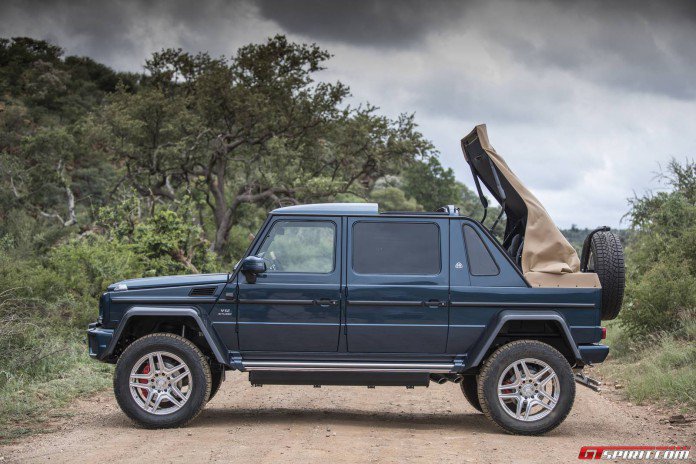
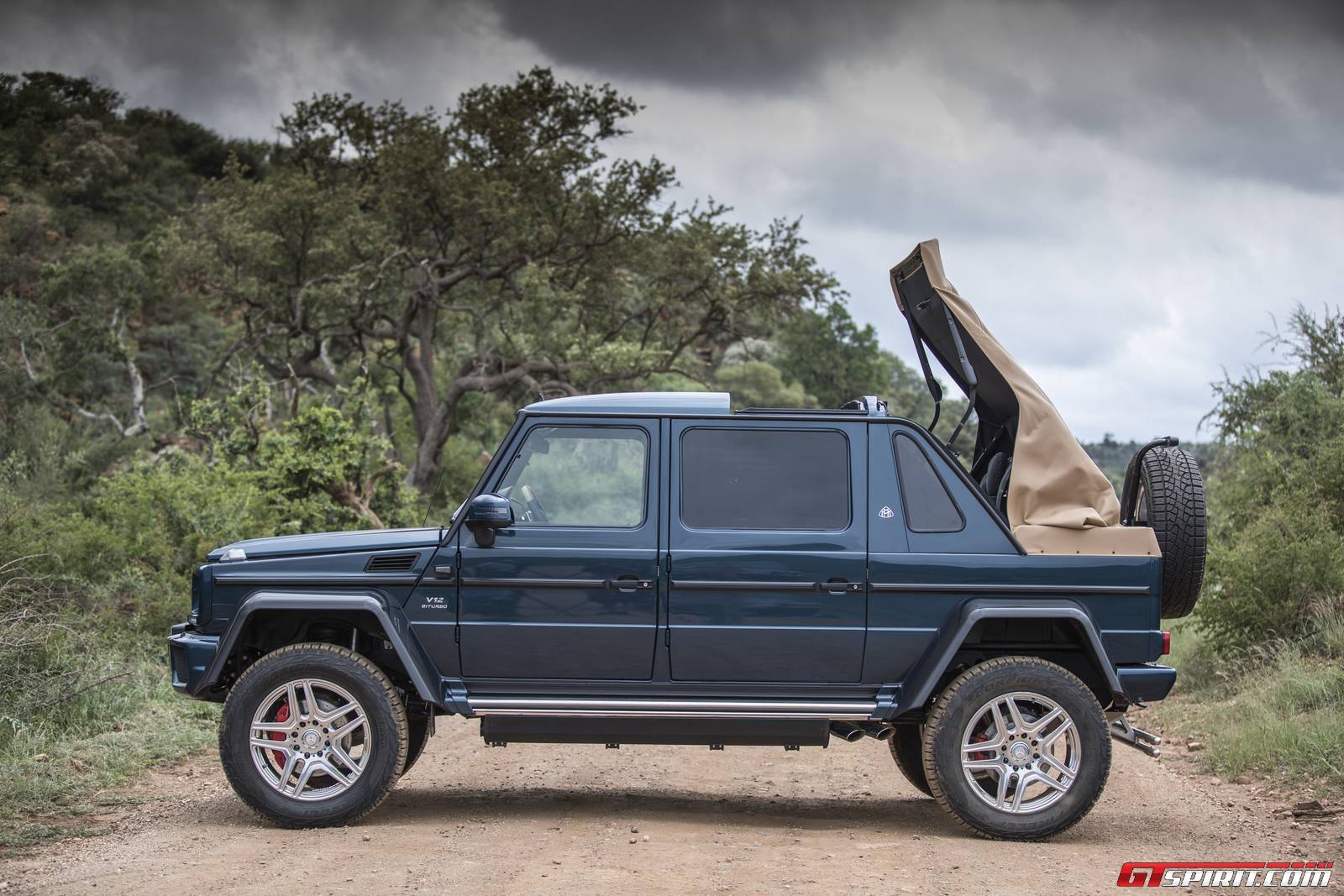
Well into its 38th year, the Mercedes-Benz G-Wagen is more successful than ever. Originally conceived as a military vehicle, with the civilian version little more than an afterthought, it has become a fashion item par excellence, coveted by the rich and famous all over the globe.

MercedesG 650 Landaulet Press Test Drive South Africa 2017

It’s a tough act to top a G-Wagen (or G-Class, as the Daimler marketing guys insist). In fact, the only way it can be accomplished is by creating an even more extreme version of the same car. In 2013, the G63 6×6 AMG took away the auto community’s breath; well over 100 were built, far byond projections. In 2015, Daimler fitted the G500 with the new, AMG-GT-derived 4.0-liter V-8, and added the Unimog- and 6×6-inspired portal axles. But this year’s masterpiece, while devoid of a third axle, has set out to beat them all: Meet the Mercedes-Maybach G650 Landaulet.

The model designation already gives away part of the story: The engineers stretched the wheelbase by 22.8 inches, took the portal axles of the aforementioned special editions, added the “first-class” rear compartment of the Maybach S-Class, and fitted an updated version of the power-operated fabric top that was purged from the regular lineup four years ago. The engine under the hood dwarfs both the G63 6×6 and the 4×4-square: This G-Wagen is fitted with the ultra-powerful 6.0-liter V-12 that powers the AMG G65.

Without doubt, this engine is one of the all-time pinnacles of engineering, rated at 630 horsepower at an earth-scorching 738 lb-ft, or 1000 Newtonmeters, of torque. The torque is served up on a lofty plateau that stretches from 2300 to 4300 rpm. Mated to a 7-speed automatic, this engine fires up like a gunshot, it emits a dark and menacing hiss, and it can hurl this 3.3-ton behemoth to 100 kph in less than 6 seconds. Top speed is governed at 180 kph, but we are assured the Maybach could reach around 250 kph. Which seems like a tempting proposition…

While the straight-line performance of this G-Wagen is impressive, its off-road capabilities are truly incredible. With 325/55 R22 tires and a clearence of a full 45 cm, there are plenty obstacles that you simply drive over. Like on every G, a low-range transfer case and three differential locks are standard.

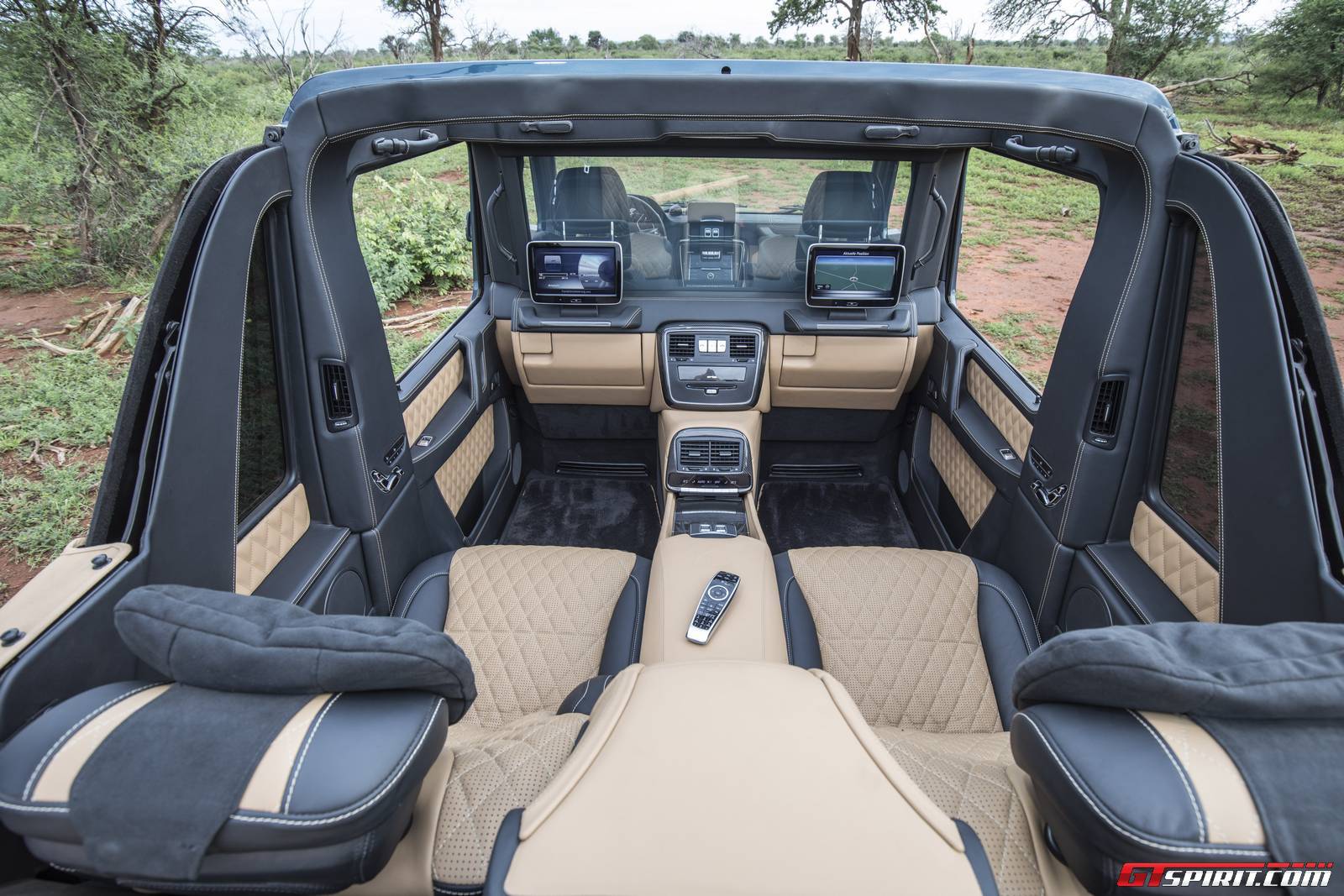
And there is yet another area where this off-roader is second to none: We are talking about the rear seats, the ultimate lap of luxury. The “first-class” Maybach seats and the folding tables are a familiar sight from the Maybach S-Class, as are the massive, silver-plated champagne flutes by Robbe & Berking. On top of that, there are two glove compartments and a center console taken straight from the G-Wagen’s cockpit, an electrically operated partition that switches from transparent to opaque – and no less than eight handles to grab.

MercedesG 650 Landaulet Press Test Drive South Africa 2017

You will need them when you fold down the power top and stand up to scout your surroundings. The window frames are fixed – that’s what turns this G-Wagen into a Landaulet – but there is plenty of fresh air coming into the rear compartment. The cockpit, by contrast, is not exactly pedestrian – but it is almost identical to a regular G-Wagen, albeit , of course, a fully optioned one.

Four paint colors are available, three fabric top colors – and several distinct interiors. Daimler will make exactly 99 units; they could cost as much as a half million euros, and they will be delivered from this autumn onwards. If you want to secure an example of the most extreme G-Wagen ever built, we suggest you talk to your dealer sooner rather than later…

Photos: Andreas Lindlahr/Daimler

Geneva Motor Show 2017 Preview

There are quite a number of new cars to look forward to in 2017, and you can see them here from our earlier post. Geneva Motor Show 2017 will be home to most of those debuts and it’s only fit that we do a proper preview. This is what you should expect to see from the show and more so, what we will focus on during our coverage.

The McLaren 720S, Ferrari ‘F12M’, Pagani Huayra Roadster and the Huracan Performante are just a few of the highly anticipated supercar debuts. There is so much more including concepts and the latest from the tuning scene. This list will be updated regularly in the coming weeks as we approach the Geneva Motor Show 2017.

Geneva Motor Show 2017 Preview

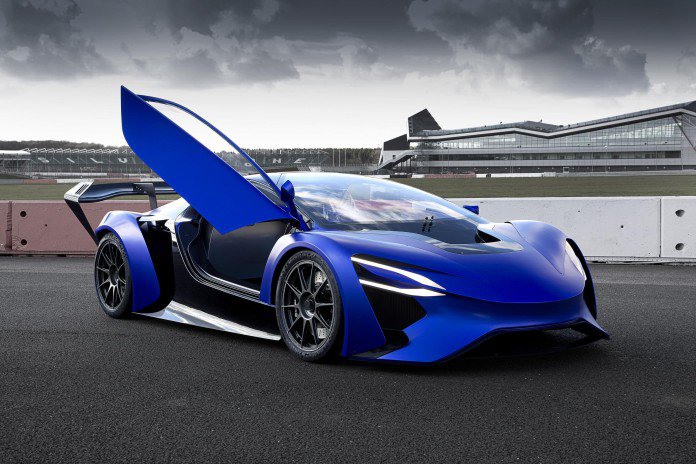
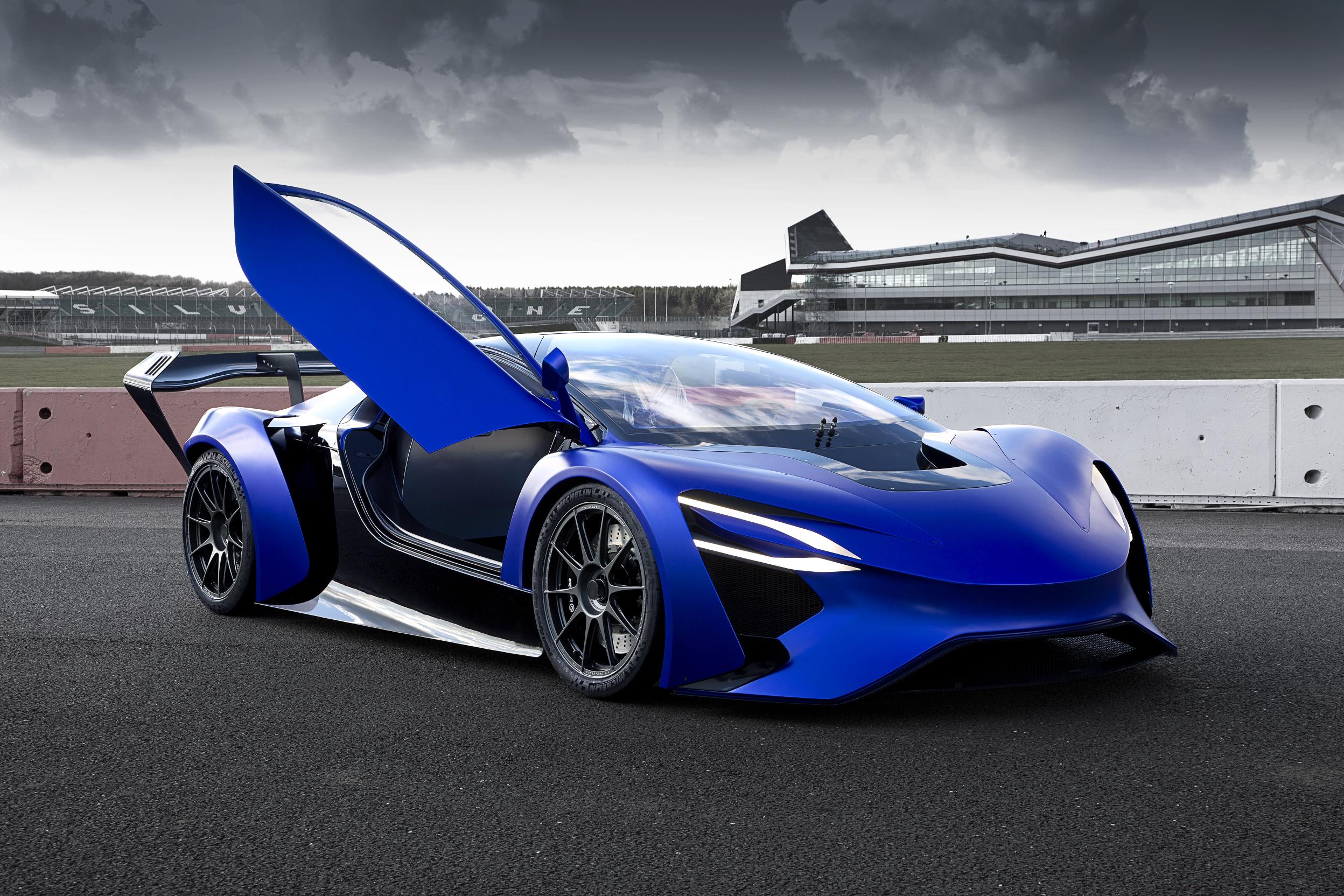
25. Techrules GT86


We already saw the concept back at Geneva 2016 and one year later Techrules has the production version ready. As a concept, the output was rated at 1030bhp with a 0-60mph time of 2.5s, the top speed was 217mph. It had an interesting and unique plug-in hybrid style system. Rather than a traditional petrol powered engine, this system uses a micro-turbine to generate electricity and charge a 20 kilowatt hour Lithium-Manganese-Oxide battery pack. We will provide details of the production version in coming weeks.

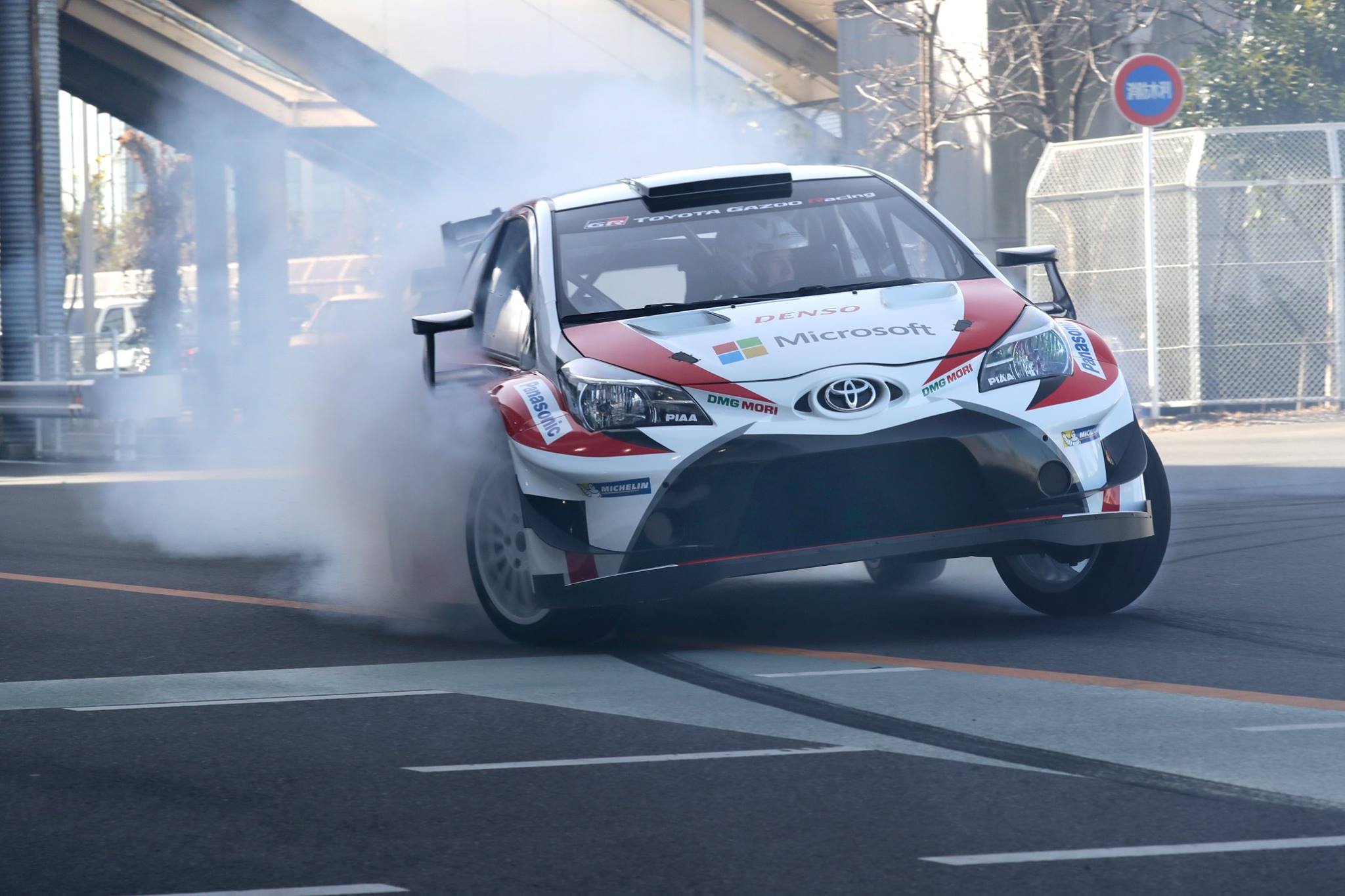
24. Toyota Yaris Hot Hatch


Toyota Yaris WRC

With Toyota back in WRC, the Yaris is set to receive an even hotter FWD version with three doors. Like other WRC manufacturers, Toyota is bound to have a roadworthy version of their Yaris WRC. No details have been revealed but we expect a limited production and a power output in the region of 220hp or more.

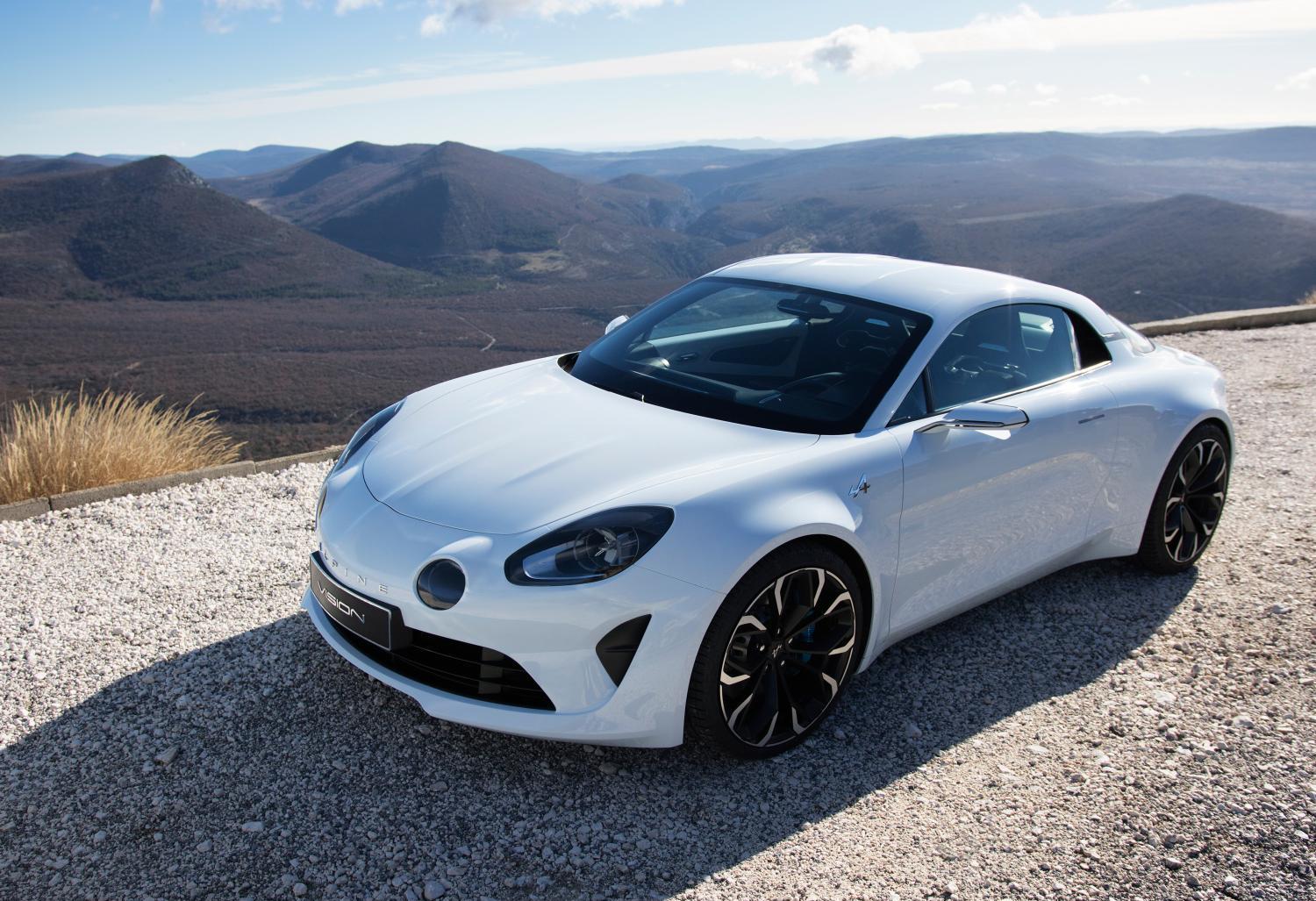
23. Alpine A120 Coupe


Alpine revived its sports car brand with the Vision Show Car last year, months later we began seeing prototypes of what will become their first mid-engined coupe. Dubbed the A120, the new car will debut at the Geneva Motor Show 2017.

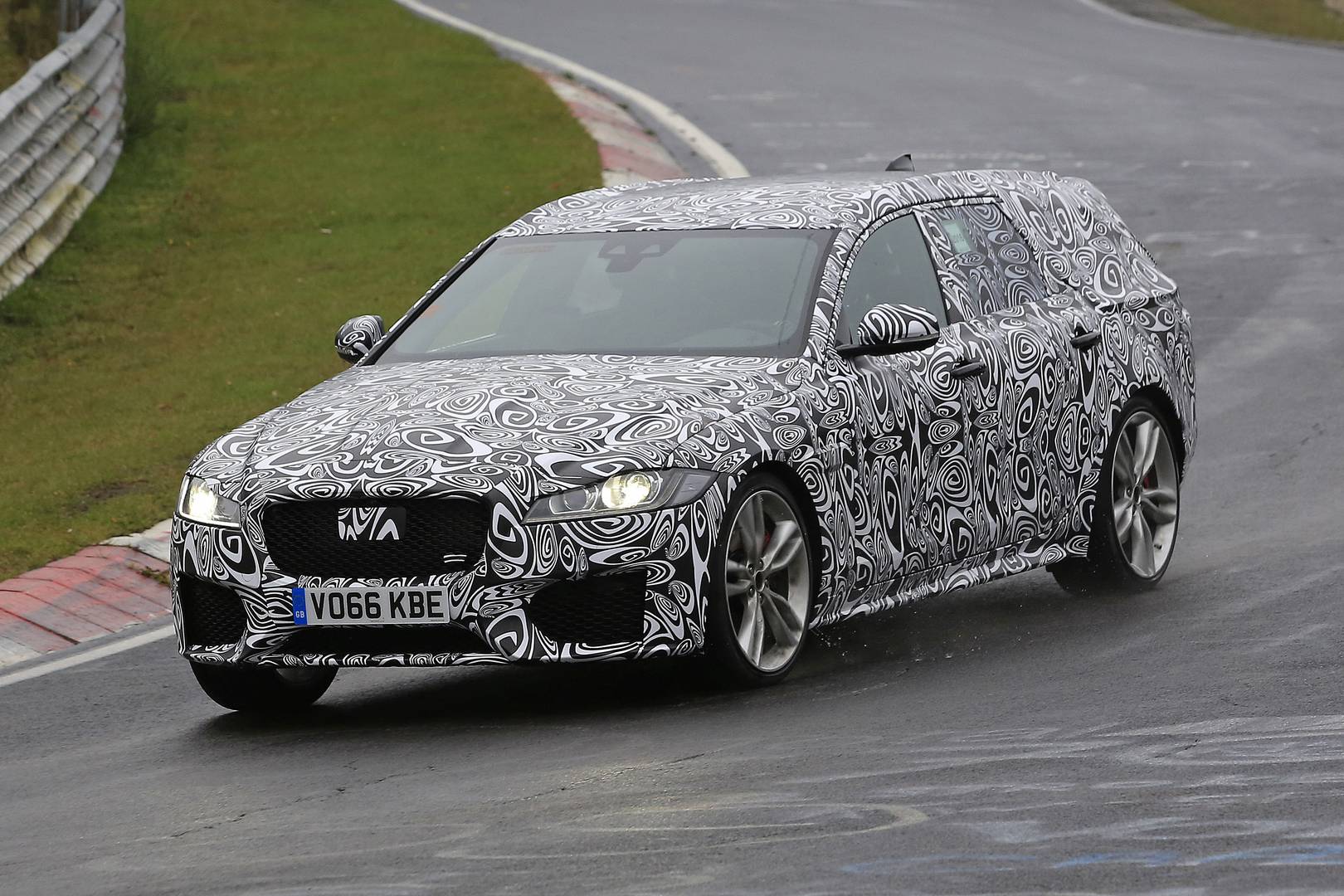
22. Jaguar XF Sportbrake


Not too long ago Jaguar was still debating whether to introduce a wagon variant of their business saloon, as the market seems to be declining and competition is fierce from its German rivals. The E-Class estate, Audi A6 Avant and 5 series touring are all well established models, especially in their dominant home market Germany. To keep up with the competition, Jaguar will launch the XF Sportbrake at Geneva Motor Show 2017.

21. BMW M4 Facelift


BMW have recently updated the BMW M4 and BMW 4-Series range to offer a mildly tweaked exterior design together with a set of interior features. The car will be unveiled to the public at Geneva 2017 and even though the changes are hard to notice, the 4 Series has reached halfway its lifecycle. The M4 gets a slight power bump to 431 hp while the Competition package gets 450hp.

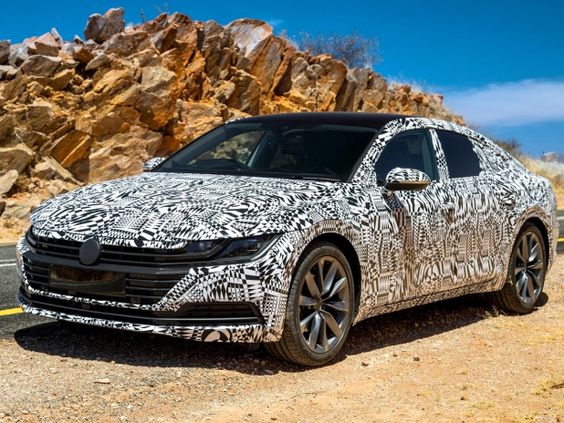
20. Volkswagen Arteon


With the Phaeton out of production, expect a new premium sedan from VW that will replace the CC. Little is known of this model but word is there could be a shooting brake version as well. As for the powertrain options, we expect to see VW move towards clean energy with hybrid versions leading the way.

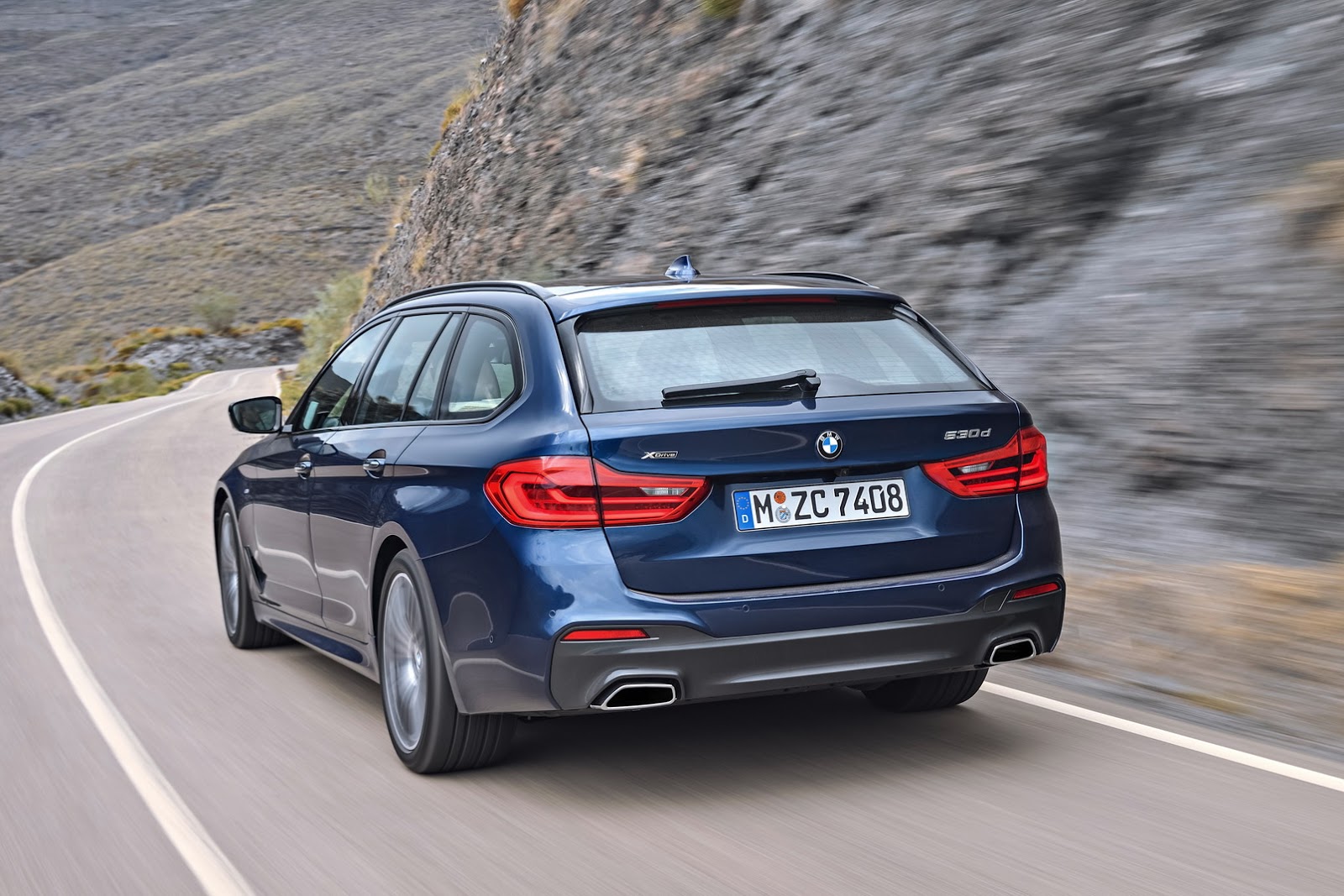
19. BMW 5-Series Touring


With deliveries of the new BMW G30 5-Series already in play, a Touring version will join in soon after its public debut at the Geneva Motor Show 2017. The boot capacity has grown to 570 litres, 1,700 litres with the seats folded down. It can now handle 120 kgs or 720-730 kgs with the seats down. The interior is pretty much the same as seen on the sedan version. No word on whether the M5 will receive a Touring version.

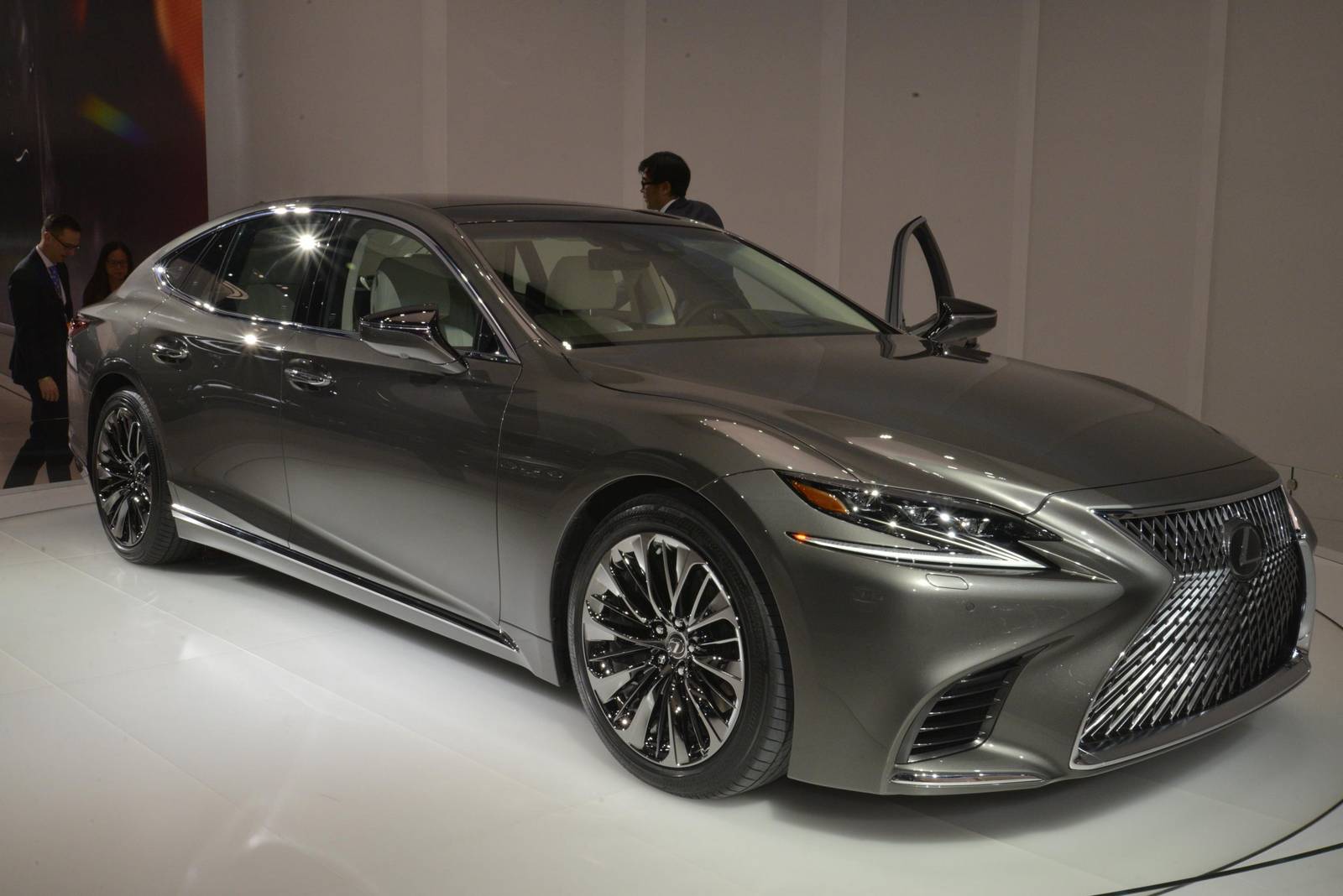
18. Lexus LS


The new Lexus LS was unveiled at Detroit Motor Show 2017 and competes with the Mercedes-Benz S-Class, BMW 7-Series and Audi A8. The new LS sports a sleeker, more Coupe-esque shape. It sits on a rear wheel drive platform which was also used for the new LC Coupe. It is 0.6 inches (1.5 cm) lower than the outgoing model with a six-side window design.

Power comes from a new 3.5-liter twin-turbo V6 engine. Total output is 415 hp and 600 Nm of torque, enough for a projected 0-60 mph (96 km/h) acceleration time of just 4.5 seconds. The power is driven to the rear wheels through a 10-speed automatic torque converter transmission.

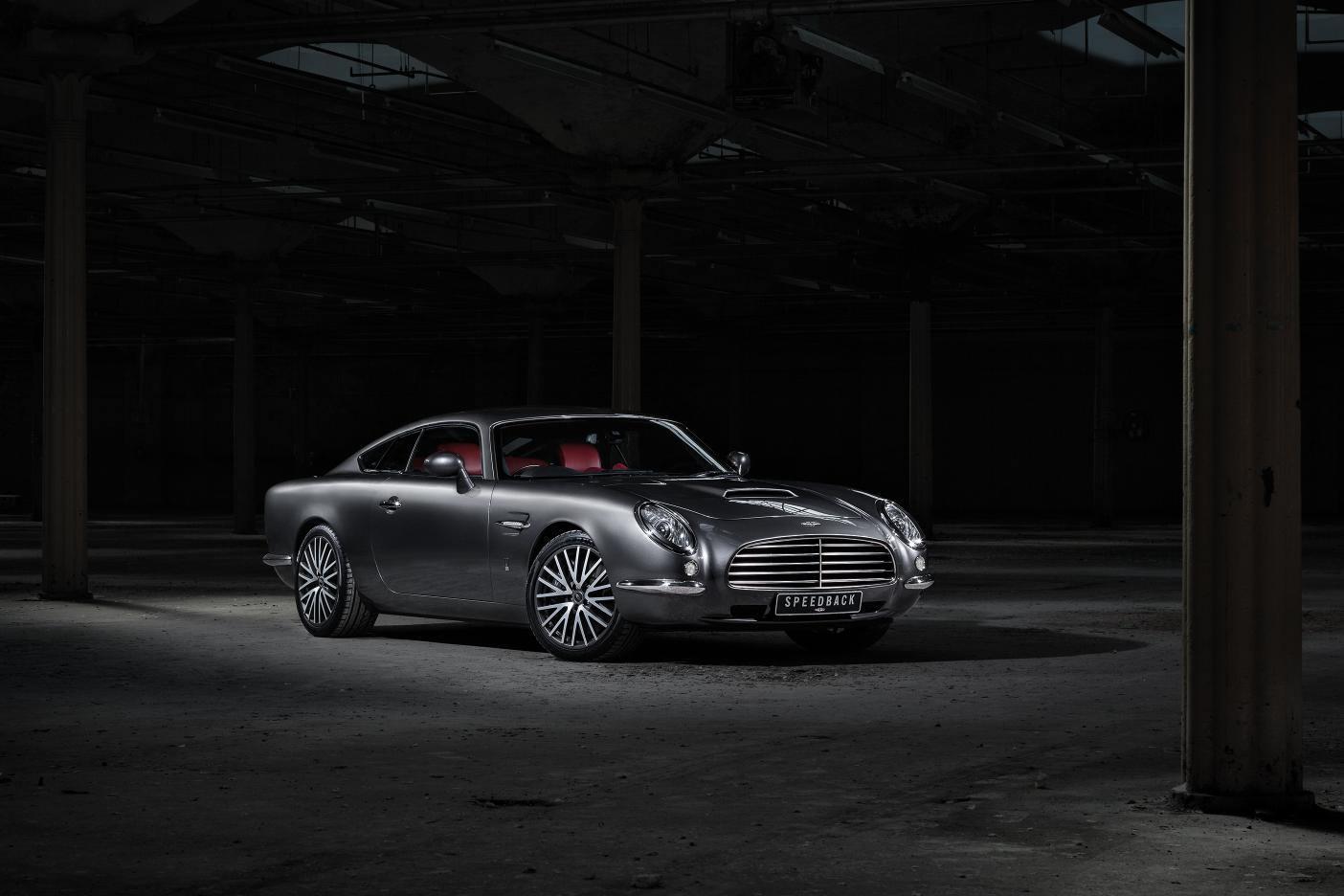
17. David Brown Speedback GT


David Brown Speedback GT Launched in the US at $753,000

David Brown will reveal the updated Speedback GT at the Geneva Motor Show 2017. New features include refined design, new colors and extra bespoke features. The Speedback GT is based on a Jaguar XKR chassis and drivetrain, this unique coachbuilt car costs £600,000.

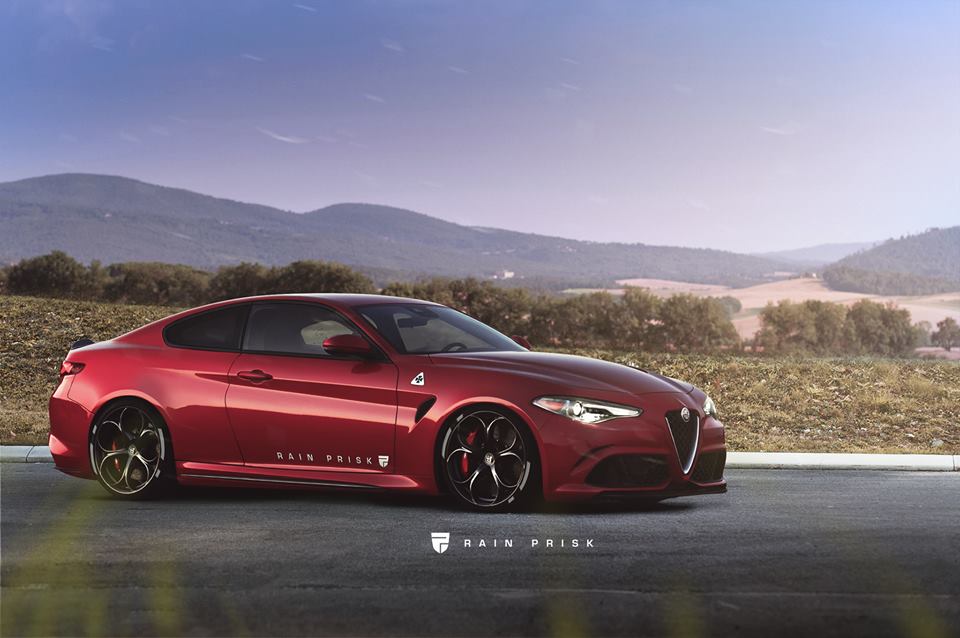
16. Alfa Romeo Giulia Sprint


Render by Rain Prisk

The new Alfa Romeo Giulia has truly brought back the spirit of Alfa Romeo to the masses, the QV model has garnered popularity in a segment dominated by the likes of the BMW M3 and the Mercedes-AMG C63. To spice things up a little bit, Alfa Romeo will introduce a Coupe version dubbed the Sprint with the same powertrain options including the range topping V6 used on the QV.

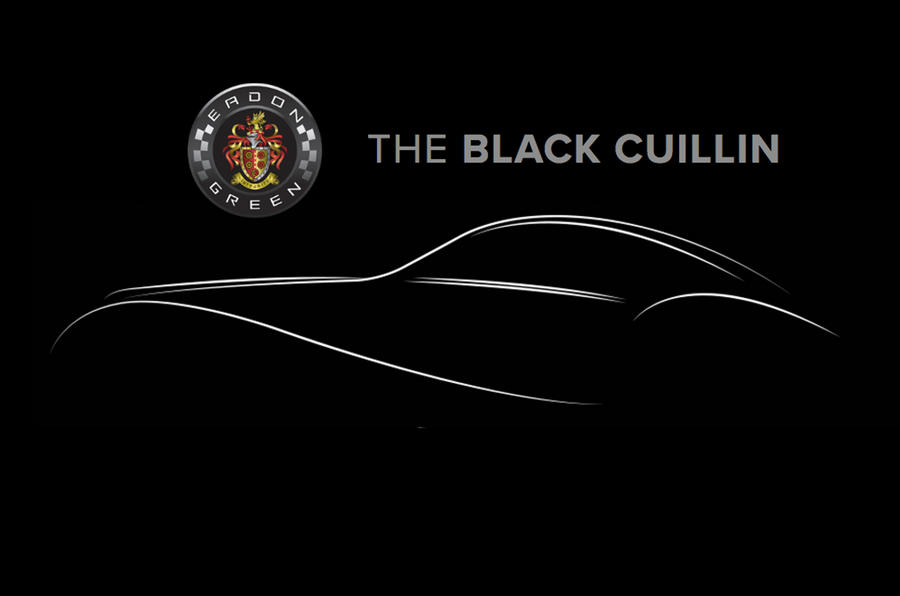
15. Black Cuillin


Created by Morgan rival company Eadon Green, the Black Cuillin is a retro-styled Coupe set to launch at the Geneva Motor Show 2017. The teaser image released by the company resembles Morgan’s Aeromax, full details will follow soon including official images.

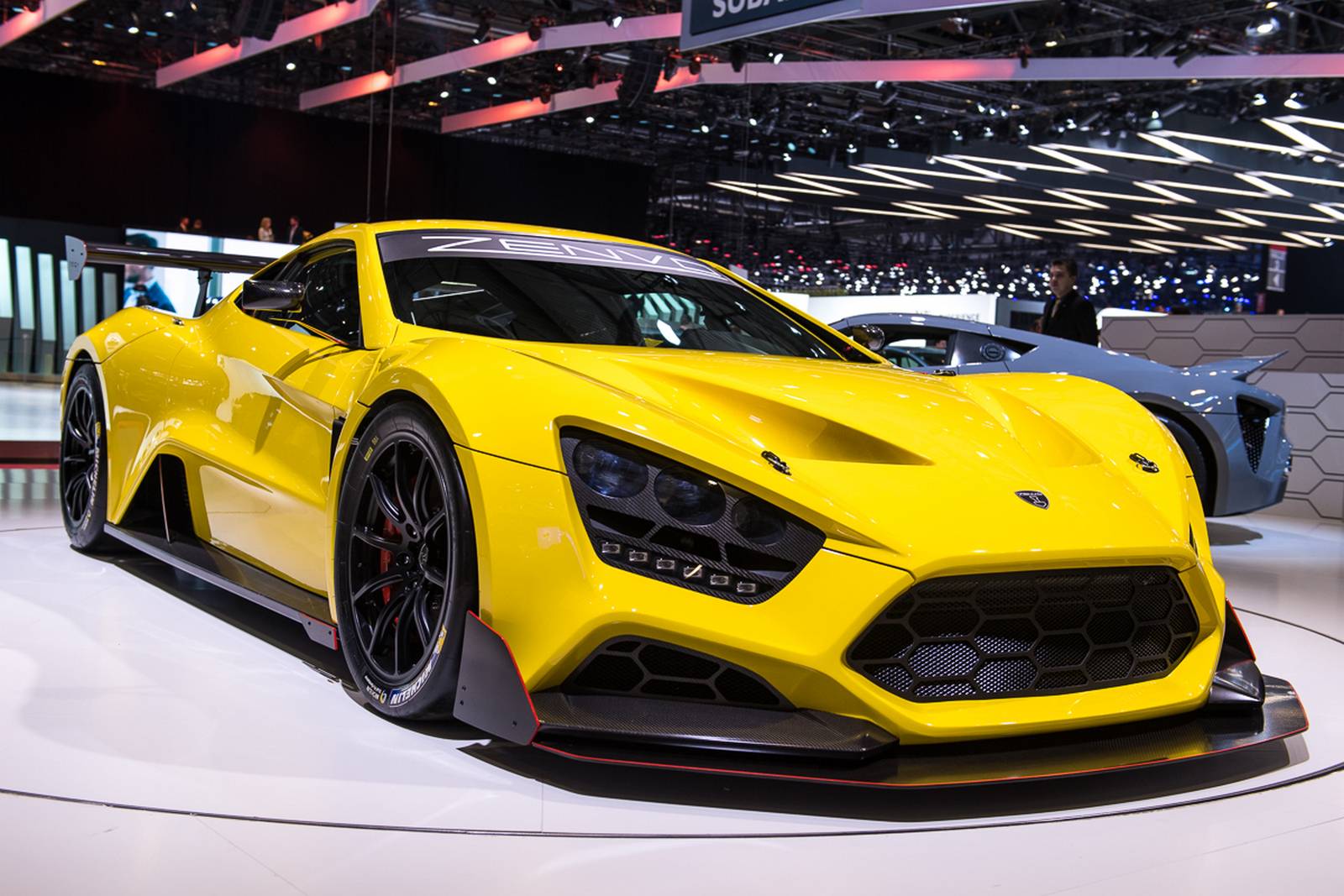
14. Zenvo TS1 Anniversary Edition


Zenvo will mark their 10th anniversary with a special model based on the TS1 set to debut at the Geneva Motor Show 2017. The TS1 was revealed at Geneva 2016, it’s powered by a 5.9 litre twin supercharged V8 engine producing over 1,100hp.

13. Vanda Dendrobium Electric Hypercar


Singapore’s first hypercar has been officially revealed ahead of its worldwide release at the Geneva Motor Show 2017 which starts next month. The fully electric supercar, named the Dendrobium Concept, has been designed in collaboration with Williams Group’s Williams Advanced Engineering arm and will be built by the company as a concept.

The Dendrobium Concept is the brainchild of electric mobility experts Vanda Electrics. It is set to feature advanced aerodynamics, lightweight composites and an electronic powertrain. The concept features an automatic roof and doors designed to open in a theatrical manner, reminiscent of the dendrobium genus of orchid common to Singapore.

12. Range Rover Velar


As if the F-Pace wasn’t enough, Land Rover will reveal a new SUV coupe dubbed the Range Rover Velar. It aims to compete against the likes of the Mercedes GLE Coupe, BMW X6 and Porsche Macan, at a time when SUV coupes are increasingly gaining popularity among manufacturers. We expect to see a different range of engines including both petrol and diesel as well as an SVR version.

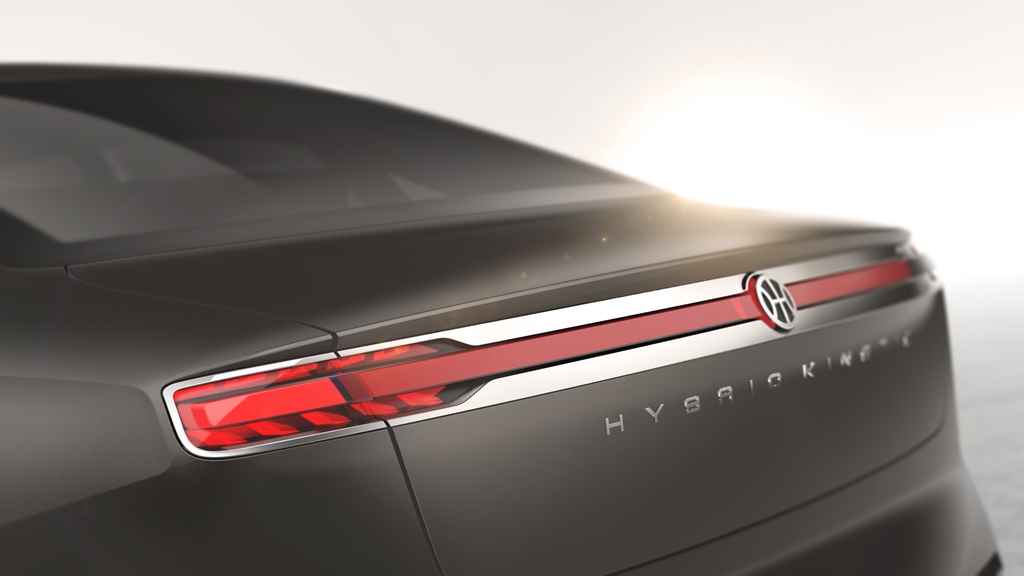
11. Pininfarina H600 Eco Luxury Sedan


The Pininfarina H600 Eco Luxury Sedan is said to combine a luxury sedan body with a new energy propulsion system. Little is known about the show car except the it was designed and manufactured by Pininfarina for the Hybrid Kinetic Group. Information on the innovative propulsion system is available on the Hybrid Kinetic Group and appears to indicate that the engine runs on compressed natural gas, backed up by electric batteries and a small gasoline tank.

10. Mercedes-Maybach G650 4×4 Landaulet


The Maybach brand is growing at a fast rate, and it has moved up levels to the G-Class. The Mercedes-Maybach G650 4×4 Landaulet with a G65 AMG engine is the ultimate G-Class in terms of luxury. Like the Maybach S650 Cabriolet, the G650 4×4 Landaulet benefits from an ultra luxurious interior while retaining the off-road capabilities of the G500 4×4. Read our first impressions here (link coming soon).

9. Koenigsegg Agera RS and Regera


Koenigsegg Agera RS chassis #125 – Photo by @photochristofferf

Koenigsegg has been busy with deliveries over the past couple of months, we expect to see Regera deliveries kick off soon. At Geneva Motor Show 2017, expect to see a new production Regera unit as well as the Agera RS or RSR. We shall confirm the details in coming days.

8. 2017 Mercedes-AMG E63 S Estate


Following the launch of the sedan version last year, the
Mercedes-AMG E63 Estate will make its debut at Geneva Motor Show 2017. Power comes from the 4.0-litre V8 biturbo engine tuned to produce an output of 571 hp for the normal variant and 612 hp for the E 63 S. Respective torque figures are 750 Nm at 2,250 rpm to 5,000 rpm and 850 Nm at 2,500 to 4,500 rpm for the E 63 S. Combined with the AMG Performance 4MATIC+ all-wheel drive system, it is able to deliver a staggering 0 to 100 km/h time of just 3.5 seconds, setting new performance benchmarks for the performance estate market.

7. Aston Martin Vanquish S Volante


The Aston Martin Vanquish S made its debut last year, an upgrade over the normal Vanquish coupe. Deliveries of the coupe began in December 2016 and will be followed by the debut of the Volante at the Geneva Motor Show 2017. The Vanquish S packs 600 hp from its naturally-aspirated 6.0 litre V12 engine. It is of course the same product evolution the original early-2000’s Vanquish experienced mid life. Larger inlet manifolds allow a greater flow of air to the engine, improving throttle response and stronger power delivery.

6. Audi RS Q8


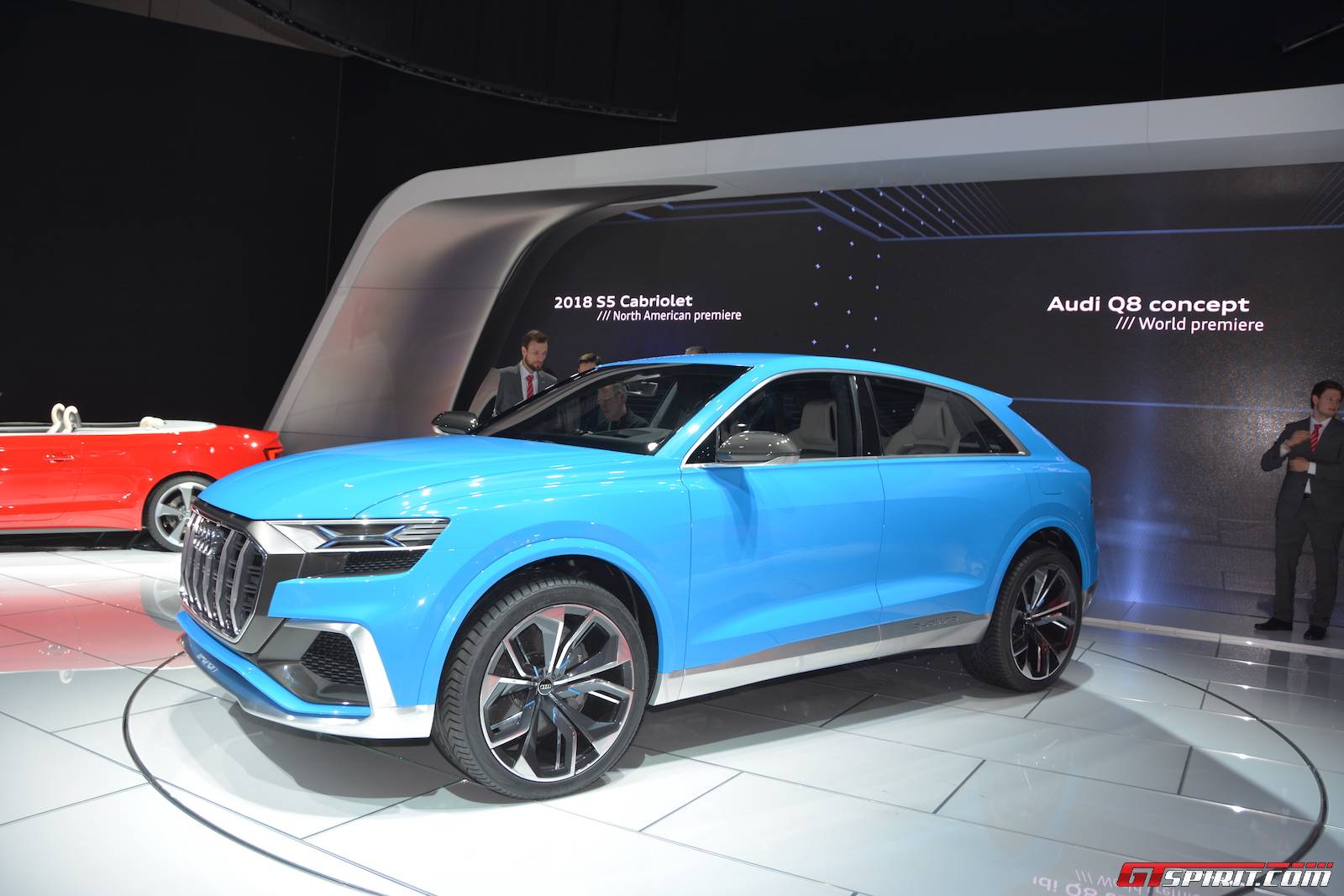
The Audi RS Q8 Concept will debut alongside the RS Q5 model at the Geneva Motor Show 2017. We already saw the Q8 Concept back in Detroit, and is Audi’s way of getting back at BMW for the X6 and Mercedes for the GLE. That said, the RS Q8 will compete against the X6 M and the GLE 63 among others. The Q8 Concept had a hybrid powertrain but the RS Q8 should receive the same twin-turbo V8 found on other bigger RS models, more so the output should mirror that of the S8 Plus or RS6 Performance – 605 hp or more.

5. McLaren 720S


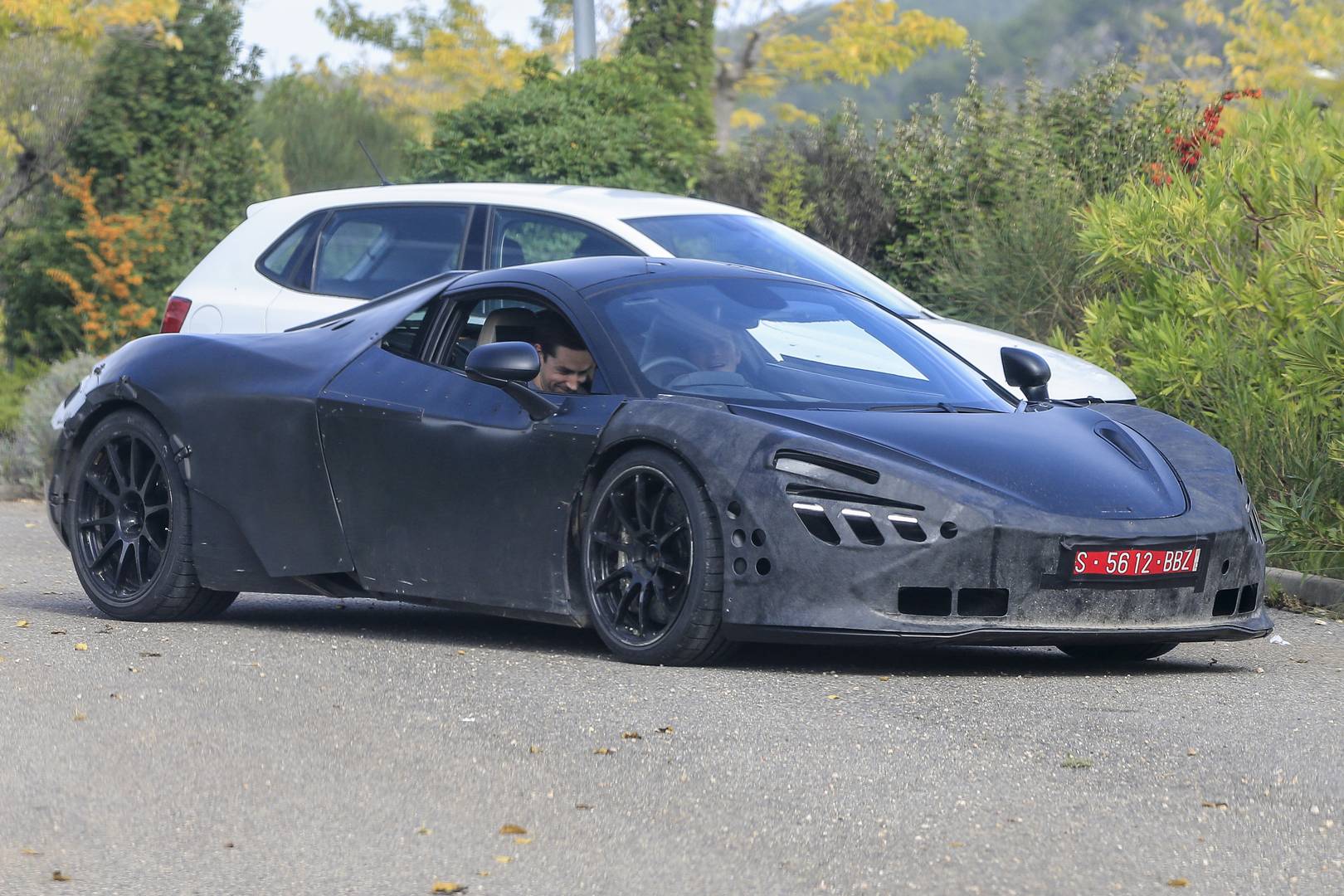
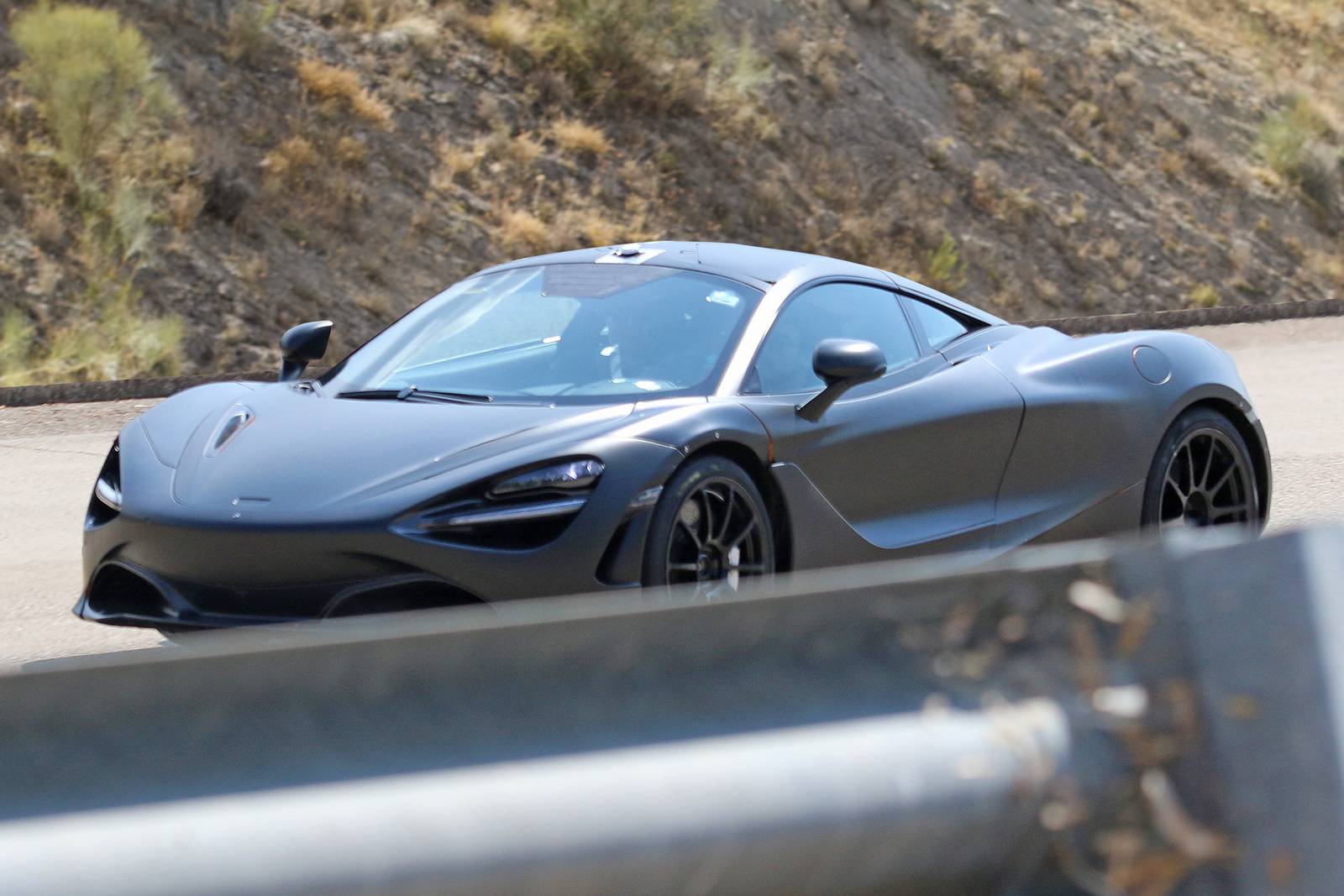
The McLaren 720S will replace the outgoing 650S, McLaren has revealed a few details about it including the use of a new carbon fibre Monocage II body structure. It will be lighter, faster and a lot of other things. The 3.8L V8 TT has done McLaren quite some wonders across their model range, the 570S alone is a really fast car so expect some gaga performance with the new 720S. Details regarding powertrain have not been revealed but we shall know that soon as it debuts at Geneva Motor Show 2017.

McLaren P14

4. Porsche 991.2 GT3


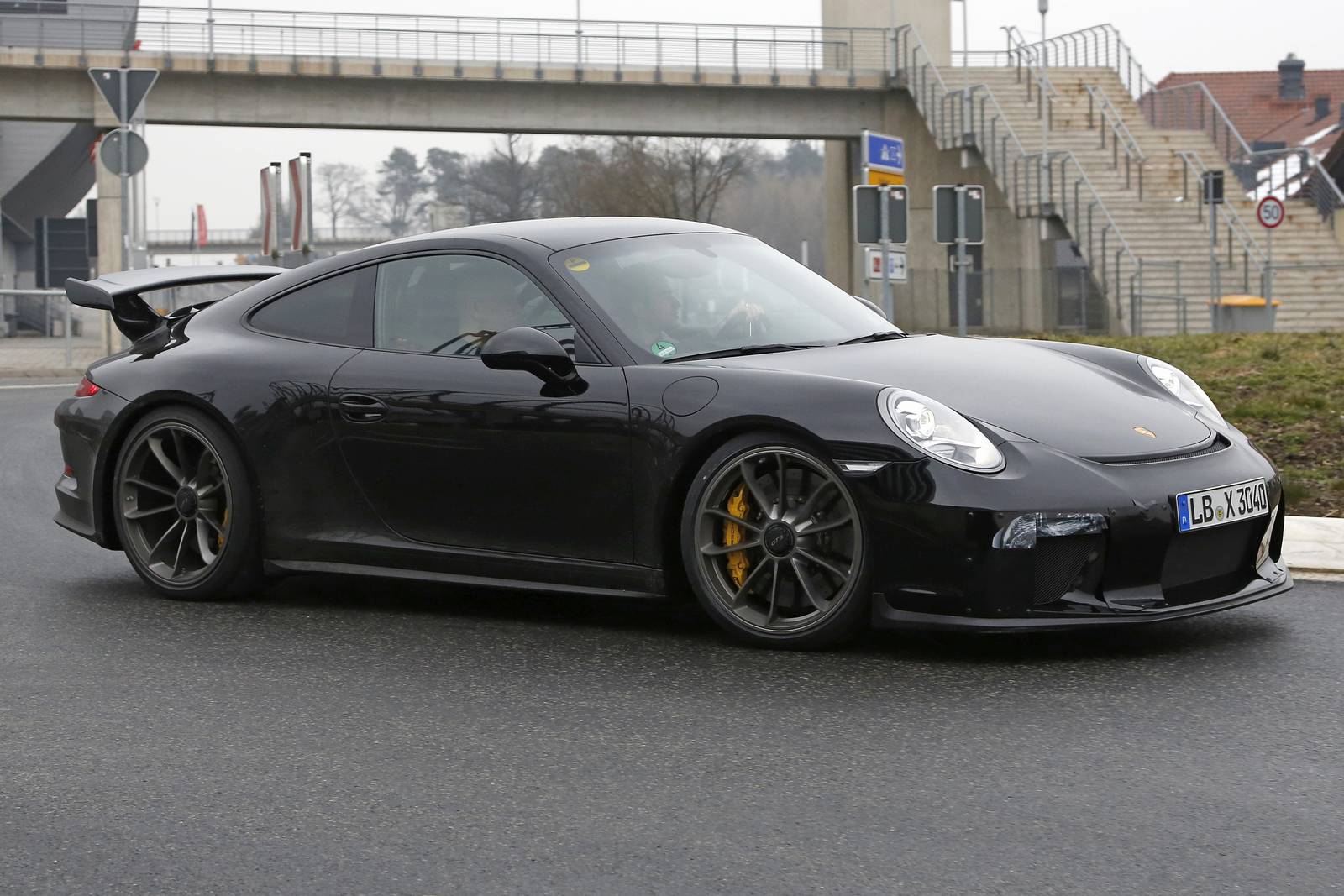
The 2018 Porsche 911 GT3 facelift will harbor a plethora of changes key among them being a new 4.0L H6 unit tweaked from the 3.8L unit found on the current model. Additionally, a six speed manual transmission will be offered for the first time since the 997 GT3 ceased production in 2011. This and a few exterior changes will make the 991.2 GT3 an even more people’s Porsche. Power output should increase from the current 475hp to around 500hp found on current GT3 RS and R models. A Geneva 2017 debut is imminent.

3. Lamborghini Huracan Performante


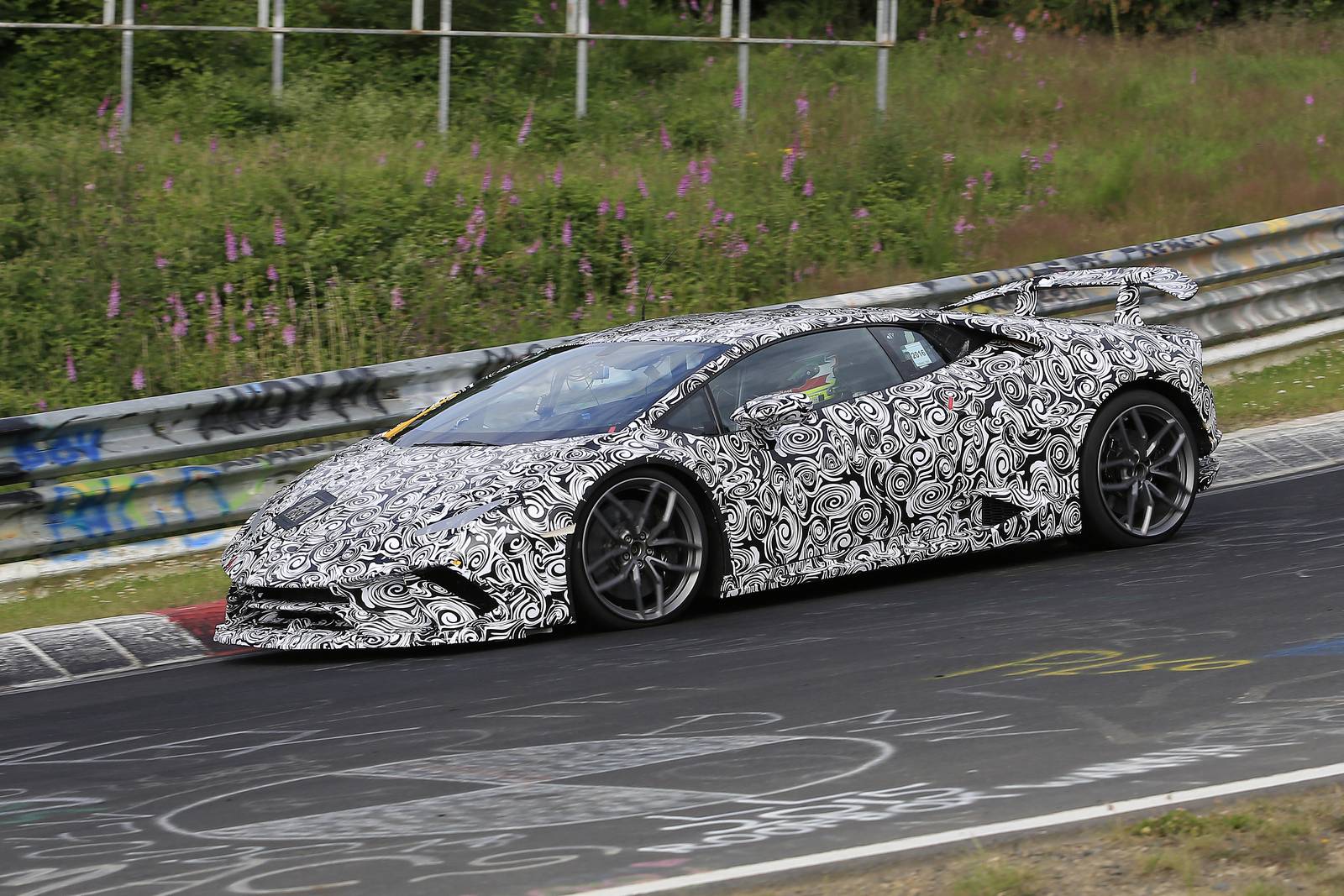
A lighter version of the Lamborghini Huracan has been testing for quite some time now. We expect to see it at the Geneva Motor Show 2017 wearing a new badge with lightweight being the focal point just like the Gallardo Superleggera. The Huracan Superleggera is expected to receive a power boost of 10-20 horsepower or even more over the standard car, bringing output of the supercar’s 5.2-liter V10 to 620-630hp or more. Lamborghini will also strip 100 kilograms of weight from the Huracan in moving to the lightweight Performante model. With the Gallardo, the Performante was the convertible version of the Superleggera.

2. Ferrari F12M


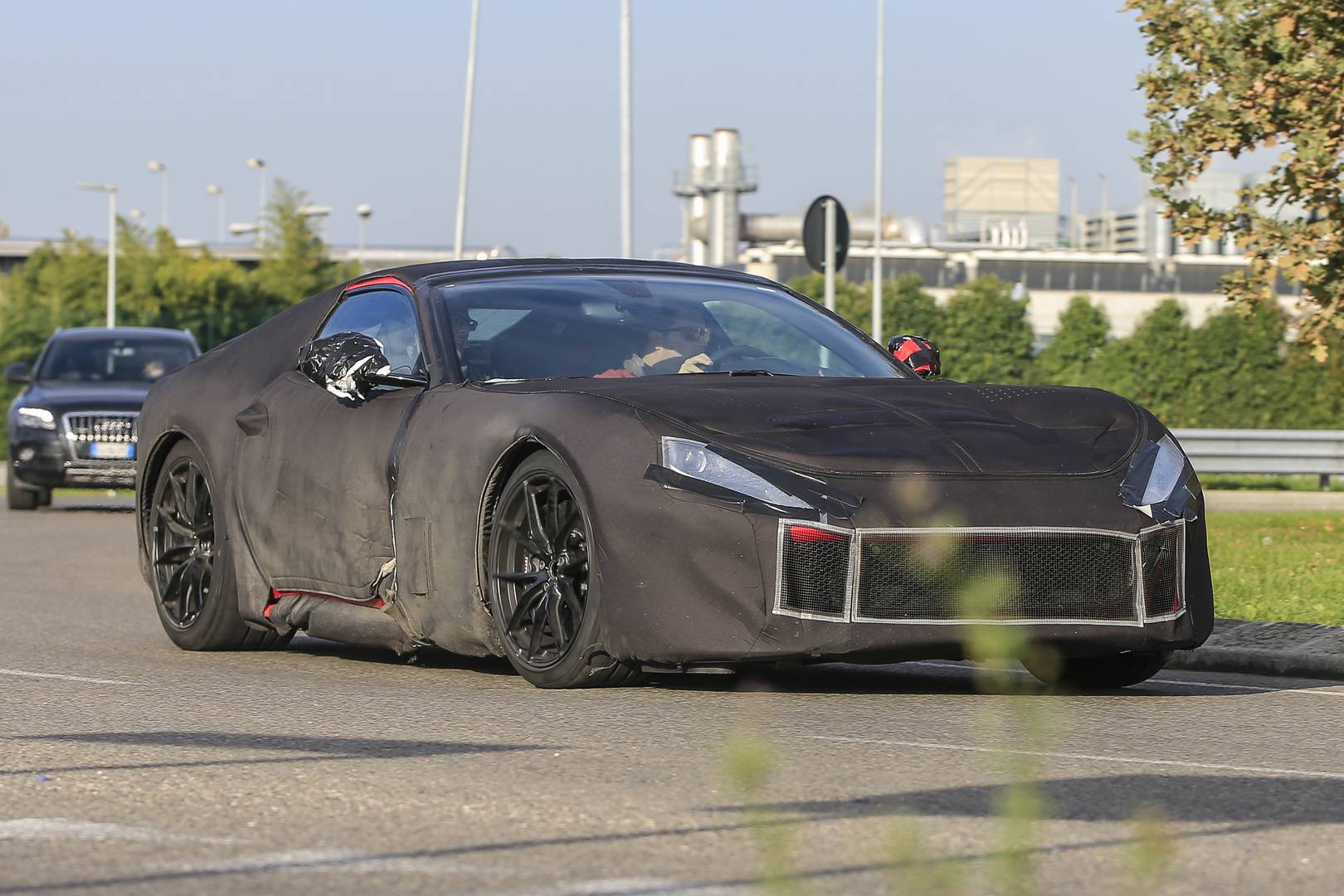
Not its official name yet, the Ferrari ‘F12M’ will be the final version of the F12berlinetta. It will be the last naturally aspirated V12 from Ferrari and although not as exclusive as the F12tdf, its very nature of being the last N/A V12 will place it in a class of its own demand. That said, expect F12tdf prices to shake off a bit, more so, the F12berlinetta prices should fall. This model is similar to Lamborghini’s Aventador S. We expect to see it at the Geneva Motor Show 2017 in March, special viewing will be carried out before then to select Ferrari clients around the world.

1. Pagani Huayra Roadster


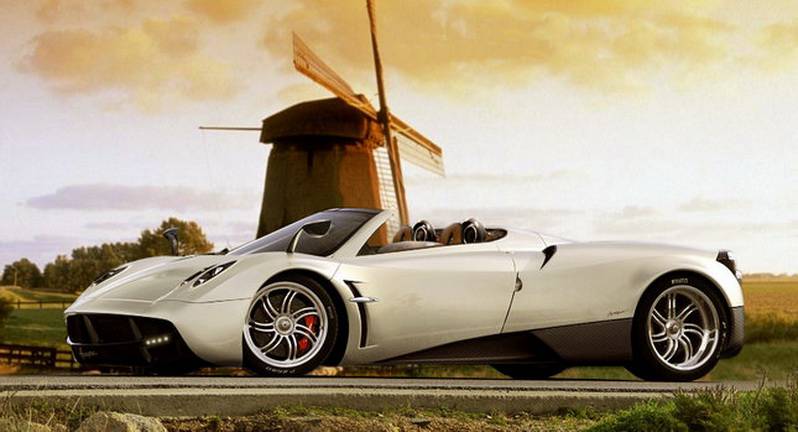
The Pagani Huayra Roadster will debut at the Geneva Motor Show 2017. Pagani has already dropped a few teasers showing what to expect beforehand. The renders reveal the new glasshouse layout with tall buttresses fitted with rows of venting. The render reveals that the front gets a front splitter similar in style to the Tempesta package. More details will follow in coming weeks.

2017 Pagani Huayra Roadster