All posts in “Cars”

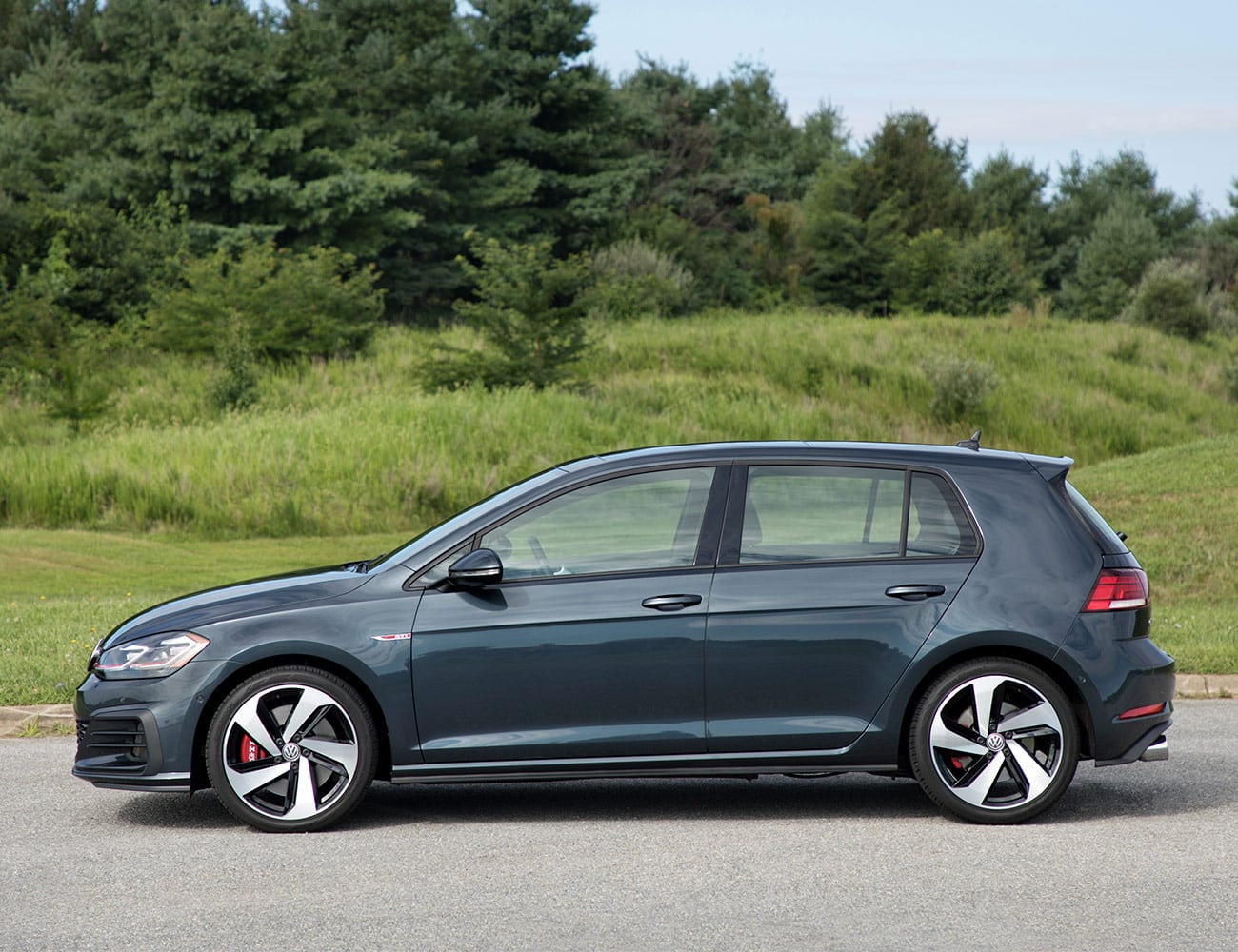
The 2016-2019 Volkswagen Golf GTI May Be the Best Ever

Base MSRP: $27,595
• 228 horsepower and 258 lb-ft of torque
• Exceptional balance and utility
• “The GTI is subtle and understated, a car for adults.”

The Volkswagen Golf, as James May noted in his BBC documentary series, is the preeminent people’s car. The well-regarded hatchback offers fun driving and practicality at an affordable price. The Golf has seen off all comers during a production run approaching 50 years. It killed off the old Beetle. It will bury the new Beetle, which, truth be told, was a Golf beneath its retro styling.

German engineers designed the Golf. So, it took all of a few minutes before someone inserted a more powerful engine, tuned it for racing and stumbled upon something brilliant. That brilliant creation became the Golf GTI. The Mk1 version debuting in 1975 became an icon, birthing a new market segment for the “hot hatchback.” The latest and perhaps greatest GTI, the Mk7, should prove a collectors’ item in its own right.

|

VW has come up with some goofy catchphrases for the current GTI. A brief sampling includes “the stylish hot hatchback” and “raw power, fully cooked,” whatever that means. The trouble stems from VW not being able to touch on what the Mk7 GTI is: perfection. Doing so would leave no reason to upgrade to the Golf R (raw power, burnt?). It would make buying a standard Golf or any other Volkswagen, by definition, imperfect.

The GTI has a proven basic formula: precise handling, peppy engine with strong torque and a smooth manual transmission. VW has refined that formula for 40-plus years. Some batches have been a touch weak, heavy or outmoded. But, the Mk7 came out just right, capturing all of the car’s heritage and accrued wisdom. It may be the best-balanced car on the road, not only for its price point.

With 228 horsepower and 258 lb-ft of torque, the GTI offers the exact power optimal for exuberant driving. You can push the GTI on real roads at speeds that won’t see you carted away in handcuffs. Automobile writers have extolled the car’s handling with every synonym of the word “sublime.” It rounds corners masterfully. Despite packing all that performance, the GTI is also still a Golf. You can park it easily, help a friend move and get a well-equipped base model for less than $30,000.

The GTI’s style exhibits its refinement. Other “hot” cars (the Honda Civic Type-R, for example) announce their presence like young rock stars, strutting around in the automotive equivalent of indescribably tight, red leather pants. The GTI is subtle and understated, a car for adults. It has a clean exterior and an elevated interior. What flair the GTI does offer – the red grille lipstick, the tartan seats, the golf ball shift knob – is traditional. You don’t know what you’re looking at with the GTI unless you know what you’re looking at.

The Mk8 GTI will arrive in 2020. Changes, mild and drastic, will be afoot. The best GTI we have yet seen – the current Mk7 – may be the best we ever get, or at least the purest incarnation of the GTI’s initial vision.

VW developed the new GTI during an awkward transition period. Dieselgate has cost Volkswagen AG $33 billion and counting, sapping resources and forcing a complete reorientation of production strategy. VW plans to phase out the combustion engine in 2026. Meanwhile, trucks and SUVs continue dominating the market. Plowing R&D into further perfecting an already perfect gasoline-powered hatchback, when well enough would do, makes little sense.

Golf sales have dipped in the U.S., so moving toward the market may work against getting an optimal GTI. To sell more Golfs, the hatchback will have to get longer and wider to be more viable families. The purist-favored three-door alignment may be scrapped altogether. We can presume VW won’t drop the manual (yet). But, development will go toward more fuel-efficient hybrid powertrains and improving the automatic transmission. VW has also hinted at a fully digital cockpit overhaul, which, if it does not annoy present buyers, will date the car, as technology tends to do, in the decades to come.

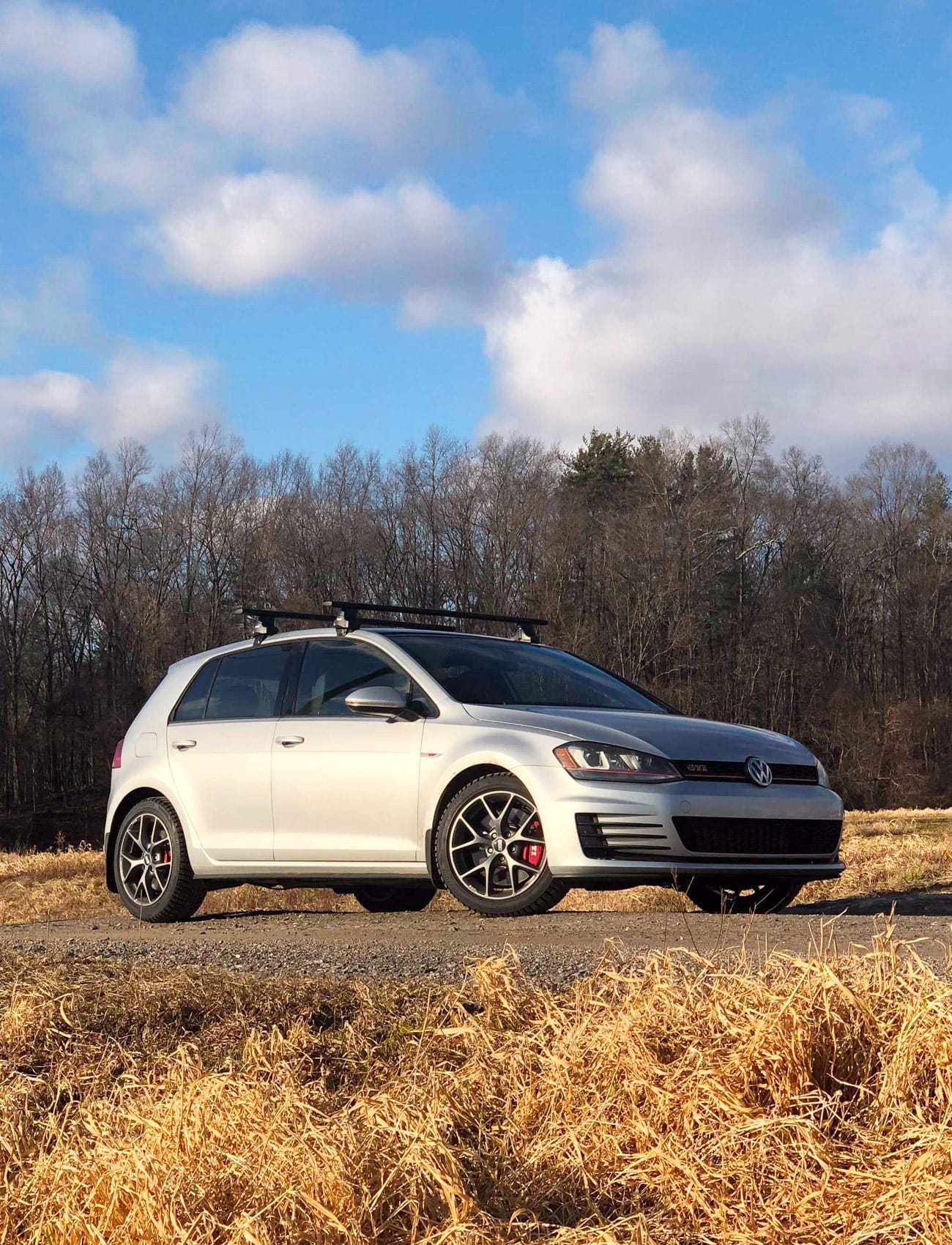
An MK7 GTI, tastefully modified for winter conditions – Photo: Hunter Kelley

If the base Golf goes more family-friendly, the Volkswagen likely would differentiate the GTI further by making it hotter. Expect more power. Ditto for more aggressive styling. The “Rabbit” and “Autobahn” trims, as well as the bevy of metallic paint options, may prove a harbinger of what is to come. It may be faster. Though, the balance and sophistication of the present model, not to mention the reasonable MSRP, may be difficult to preserve.

The Mk7 GTI arrived when Volkswagen was a car manufacturer and the best modern technology went toward producing an optimal driving experience. The Mk8 GTI will be a showcase for the Volkswagen Group’s broader ambitions as a mobility-oriented tech firm. The driver will always be connected, for better or more probably worse. We may get objectively more efficient and better-performing GTIs moving forward (and the climate will be better for it). But, they won’t feel the same.

Cars of the future will be electric or powered by other eco-friendly means. Many will be automated. Fewer than now will be individually owned. Driving a classic internal combustion car will be an expensive pastime, if not outlawed in some areas altogether (Aston Martin is prepping for that eventuality).

“Ludicrous” performance will be obtainable from EVs. The gas-powered cars that still resonate will be those that provide a unique, well-tailored and deep-rooted driving experience that disconnects the driver. The Mk7 GTI, perhaps the best Volkswagen creation to date, does that.

So, cover a Mk7 Volkswagen GTI in bubble wrap and store one in a climate-controlled garage, right? No. Save for retirement like a normal person. Use the GTI as the extraordinary daily driver it was designed to be.

Don’t Wait For the New Jeep Pickup. Just Get This ’84 J10

If you’re in the market for a mid-sized pickup in 2019, you’re spoiled for choice. The Ford Ranger recently joined the fray, taking the fight to the Toyota Tacoma and Chevy Colorado. Later this year, Jeep will hop in the ring with the hotly anticipated Gladiator. But, if you’ve been chomping at the bit for the new Jeep pickup and can’t stand to wait any longer, this 1984 Jeep J10 Pickup should hold you over.

Not only are mid-sized pickups coming back into fashion, but brands are putting energy into trims that focus less on work-truck aesthetics and performance and cater more toward off-road and adventure lifestyles. Back in ’84, however, the J10 pickup was already one hell of a workhorse – and the perfect canvas to make an open-bed overlander.

Even in stock trim, the J10 was a capable machine. But this modified example comes with custom bumpers with recovery points, an LED lightbar, roll bar and a suspension lift to provide room for massive 33-inch mud tires. The interior is also refurbished and comes with a modern Pioneer stereo.

One thing to keep in mind is that the five-digit odometer reads 91,000 miles, and it’s easy to assume this truck rolled past 99,999 at least once. The extensive list of replaced parts — distributor, spark plugs, and ignition wires, battery, and starter, valve covers and gaskets, belts and hoses, air cleaner, fuel and oil filters, brake master cylinder and steering box — seems to back up that assessment, too.

Even considering its list of new parts and unknown mileage, this J10 looks well taken care of from the photos. Sure, it’s a little dirty, and there’s some surface rust here and there, but the body is in fantastic condition, especially for an off-roader. If you need to scratch that Jeep pickup itch before the 2019 Gladiator lands this spring, this J10 will undoubtedly do the trick.

2019 Suzuki Jimny 4×4: Super Functional and Super Small

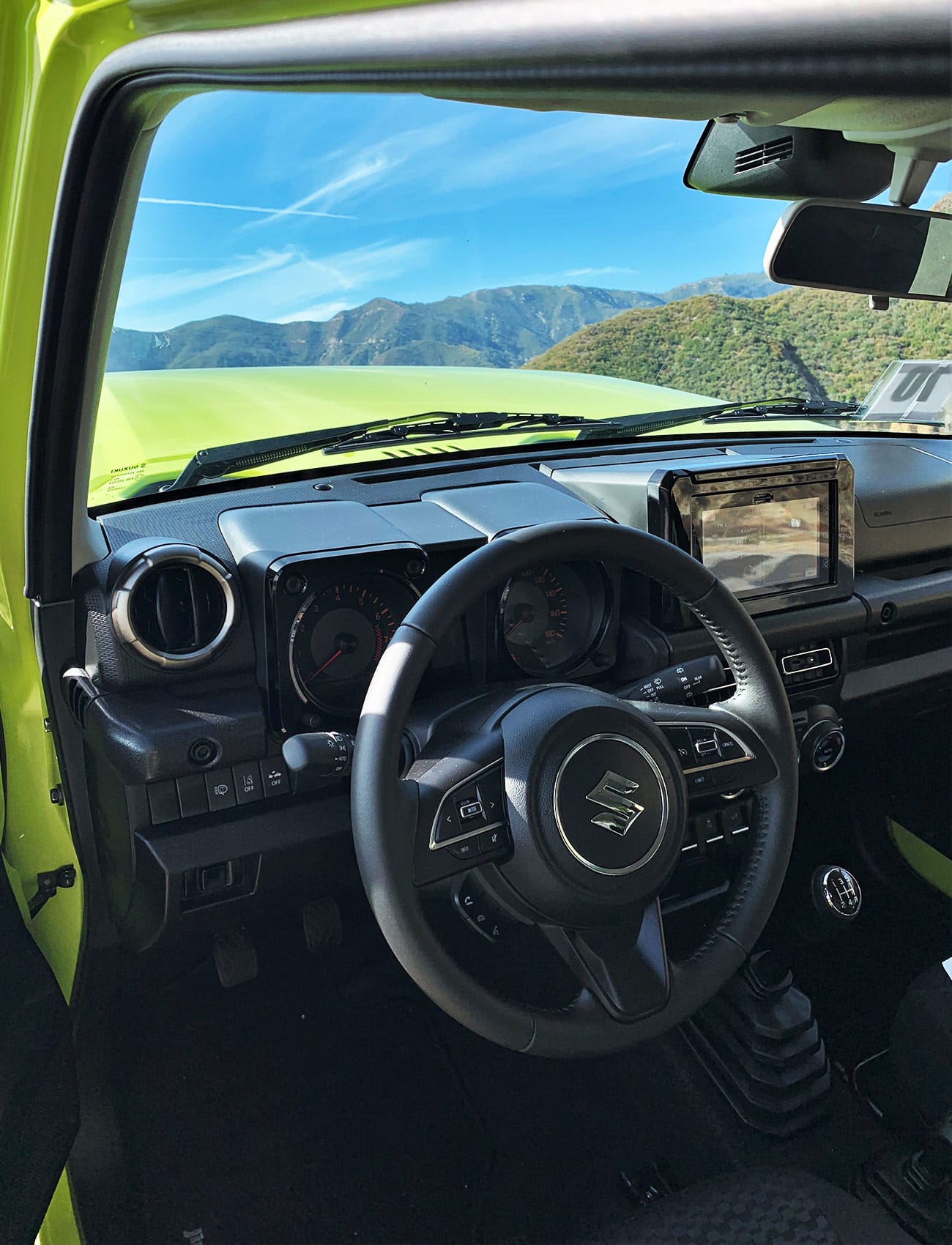
Just after Thanksgiving, automotive Twitter erupted in a micro flame war over a micro-SUV, the Suzuki Jimny. When images of the fourth-generation, Jeep-like 4×4 began circulating, and a pair of banana-yellow samples showed up in Los Angeles during a media drive just before the auto show, debate about its merits ran rampant. Half the tweets bemoaned the fact that the model isn’t for sale in the United States; the other half laughed at those in the former group for being such gullible chumps. The core question emerged: Is it even worth getting into a tizzy about?

The two that were spotted cruising up and down Angeles Crest Highway, north of Pasadena, were shipped stateside by Suzuki so that jurors in the World Car of the Year Awards – a group of 48 journalists from around the world – could sample the cars during the large test-drive event held just before the L.A. auto show. It happens that I’m one of those jurors, and I took one out for a spin to see what all the fuss was about.

Because it’s meant to be an economical off-roader, 4×4 aficionados scoffed at its presumably cheap and flimsy construction and likely negligible ability to manage any serious terrain challenges. The car, which presumably would sell here in the U.S. for around $20,000, if not less, is small and light, and much of the pro-Jimny enthusiasm centered on its ‘cuteness’ – a kiss-of-death of you’re trying to win a Twitter battle. After all, cute don’t feed the bulldog when you’re trying to wriggle through a rocky slot canyon before sunset.

While I didn’t get to test the vehicle in an off-road setting, I can say two things about it from my drive up into the mountains on the pavement: 1) It’s not a piece of junk, and 2) it is awfully cute. Remember, the Jimny was introduced in 1970 as a compact and affordable 4×4 that smacked of a micro-Land Rover Defender. That means it’s fully a 50-year-old model, one that the company has nurtured more or less with respect through the years. Though there was definitely an awkward phase in its third generation, with a design crippled by too-rounded corners and too many soft details, the new one is appropriately butch and properly proportioned. It’s back to being Defenderesque, in a good way. After all, there’s twee cute and there’s earnest cute, and the Jimny is very much the latter. It’s a good-looking, functional 4×4 that just happens to be super small.

Its 4×4 trail-creds are perfectly acceptable: body-on-frame construction for maximum stiffness, solid live axles and smart ABS for traction distribution across a wide swath of challenges. No, it won’t be able to get out of the same jams that a Jeep Wrangler can, and its 1.5-liter, 100-hp, 101 lb-ft of torque three-cylinder engine won’t triumph in any OHV-course stare-downs. But its power is right-sized for its mass, which is just 2,500 pounds, by the way.

On the road, I didn’t feel the least bit perturbed by any excessive vibration or tire roar. There was the expected wind noise at highway speeds, given its cubic construction, but it otherwise felt solid and nicely tuned for on-road comfort. It was also tons of fun to drive the five-speed manual transmission up and down the steep (paved) inclines. It’s roomy enough for tall adults in the front seats, and never lacked for power on the highway, despite its minuscule motor and modest 90 mph top end. With the window down and your arm on the sill, it’s a blast, both on the highway and while inching around at low speeds. Early reports from those who have taken the upgraded new model off-road indicate it’s just as startling there, Twitter trolls be damned.

Would this car thrive in the U.S.? Sure. It’s cool and fun and will take you where you want to go for thousands less than its closest competitor. And yeah, it’s cute, too.

A Restored Vintage Off-Roader That’s Actually Affordable

From Icon 4×4 to East Coast Defender to Gateway Bronco, there is no shortage of pure craftsmanship dedicated to breathing new life into much loved vintage overlanders. However, all that fine handy work and attention to detail comes at a hefty price. Gateway Broncos builds start at just over $100,000, East Coast Defenders typically land in the $200,000 range and the Icon 4×4 flirts with $350,000. Thankfully, there are still some lightly restored overlanders out there carrying a much, much more affordable price tag, like this ’84 Land Cruiser, currently going for $13,000.

This FJ60 isn’t a frame-off restoration by any means, but the 4.2-liter 2F inline-six is rebuilt by Man A Fre, all the fluids were swapped, and the muffler, brake pads and spark plugs are all new. To top it off, the power steering pump, fan clutch, oil cooler, clutch, driveshaft, radiator and water pump are new as well. There are 233,000 miles on the chassis, but from some of the 400-plus photos available, it looks to be in remarkably good condition. Once you take a look the list of aftermarket add-ons, though, it’ll be easy to ignore the odometer.

ARB bumpers have you covered front and rear and come equipped with Hella lights and a Warn winch in front. Out back, there’s a swing out tire carrier, basket and dual tow-points. On top, you get a Wilderness Systems roof rack and underneath there’s a Man A Fre 38-gallon fuel tank, an Old Man Emu suspension lift kit and new BF-Goodrich All-Terrain tires. What looks like a two-tone paint job is actually Linex rubberized coating along the lower section for protection against dirt and mud.

The interior is delightfully civilized and stylish. Striped cloth front seats with chocolate-brown leather bolsters flank a lockable center console. There’s also a Uniden CB radio and Alpine CD-player with upgraded speakers for another touch of modern.

Last year was without a doubt overly saturated with full-on resto-modded vintage overlanders. But, if it means the market — small-time builders and enthusiasts — is spurred on to keep better care of, repair and upgrade old off-roaders like this, 2019 will be a treasure trove of four-wheelers.

Maxlider 1966 4-Door Ford Bronco ‘Four Horseman’ Custom

Maxlider Brothers Customs is a classic car and restoration shop built on the idea of reliving or making new memories with old school rides. Unlike other shops out there, they’re not afraid to use their…

Driving Gloves: a History and Buying Guide

When cars debuted in the 1890s, long-distance travel became more accessible to a wider audience, but the physical act of driving was no easy task. Roads were unpaved and cars lacked windshields and hardtops. Drivers were exposed to the weather and they needed specially designed clothes and accessories to make driving more comfortable and safe. Retailers quickly realized the monetary potential of this new apparel sector full of wealthy people. One advertiser wrote, “You may have perfectly good tires and lots of gas and oil… but if you are not comfortable yourself, you don’t enjoy riding.” Then they pushed their apparel: “you need proper motoring clothes” (The Clothier and Furnisher, ’63).

Proper motoring clothes consisted of heavy, waterproof coats, hats, boots, goggles and gloves. Imagine cranking a car to get it started, then gripping a metal steering wheel with no power steering in the winter. Drivers often traveled with two pairs of gloves, one for gripping the steering wheel and one for changing tires. They were essential to early drivers and started out looking much different than they do today. Since steering mechanisms and logistics were rather crude, gloves were made of thick leather, sometimes lined with wool, that reached all the way back to cover the cuff of your coat. (Think Robin Hood.) Once a driver was off the road, these gloves weren’t very practical, so they would leave them in the aptly named glove box.

During the 1930s, heating in cars began to effectively keep drivers and passengers warm. So the profile of the driving glove developed evolved into a more popular, tight-fitting and shorter shape made of thin leather. The gloves often featured extra stitching on the palms for enhanced grip and perforations to keep your hands from sweating. These features kept drivers comfortable and allowed them to use less grip strength when grasping the wheel. They also became a status symbol: you were considered high class if you had light-color gloves that were kept clean, which indicated you were able to afford a pair for work and one for presentation.

As heating systems became more efficient and the technology that was incorporated into cars improved, the popularity of driving gloves began to decline. Non-slip, rubberized steering wheels were easy to grip with bare hands and power steering meant the wheel was much easier to turn. Stylish men like Steve McQueen and characters like James Bond continued to wear driving gloves, so they stayed part of mainstream culture even though they were no longer needed for everyday driving.

Nowadays, driving gloves have been featured prominently in movies that focus on driving. The characters in Drive, Spectre and Baby Driver all wear driving gloves so they can operate their car with precision, sticking precisely to the wheel and gear shift. People who own vintage and racing cars are typically the demographic that wears gloves now.

Driving gloves today are typically unlined and made out of soft, grippy leather. They can be machined or hand sewn, with or without fingertips, with or without knuckle holes, in a wide range of colors and back styles. Below you’ll find the styles we like best.

Buying Guide

Chester Jefferies The Drive Gloves

Pickett London Men’s Leather Driving Gloves

Autodromo Stringback Driving Gloves

Fort Belvedere Driving Gloves in Lamb Nappa Leather

Note: Purchasing products through our links may earn us a portion of the sale, which supports our editorial team’s mission. Learn more here.

Essential Gear for Car Owners: Be Ready for the Road

The Magazine

Let us take you on a journey of the world. Each issue of the Gear Patrol Magazine comes packed with adventures, guides and stories exclusive to the magazine. Stunningly designed, printed on high quality stock and ready for your coffee table. Biannual. $39.

The Newsletter

Get GEAR PATROL in your inbox with the DISPATCH, including Today in Gear and all our new stories. Daily, 5pm. Free.

The Jimny Black Bison Edition by Wald International is Aggressively Awesome

Suzuki produces the Jimny, a small, simple, and supremely capable off-roader. There are no plans to sell the new version in the United States, which is a shame. I think there’s a niche for it in the American market, undercutting the Jeep Wrangler on price. As evidence in support of that argument, I offer the Suzuki Jimny Black Bison edition from Japanese tuner Wald International.

American car buyers love nothing more than black paint and detailing. Virtually every car on the market, from the ZR2 to Alfa Romeo, offers some form of “Midnight” or “Nero Edizione” package to meet this demand. Off-road buyers love nothing more than aggressive flair. The aftermarket has exploded to the point where dealers have begun offering those customizations in-house.

These trends combined can be over the top. It’s a fine line between in-your-face awesomeness and teenage hooligan. But, with the Jimny, incorporating these trends works. The Black Bison mods cancel out the cuteness. They convert the Jimny from a surprisingly great off-roader to advertising what the Jimny is out front. Do you need aero scoops on a Jimny? Absolutely not. But, since when does need come into it?

The Jimny pickup may take the mania a step too far for American tastes. But, the Black Bison edition gets it just right. Waiting 25 years to import one just got a bit harder to swallow. But, hey, egregious online fawning brought the Defender back to the U.S. Maybe there’s hope?

For more Jimny, read Andrew Connor’s review of the last-generation Jimny, which he named the “best worst car” he’s ever driven. Or, wallow in misery with Tyler Duffy as he laments that the United States suffers from a distinct lack of Jimny.

The 2020 Land Rover Defender May Be an Incredible Disappointment

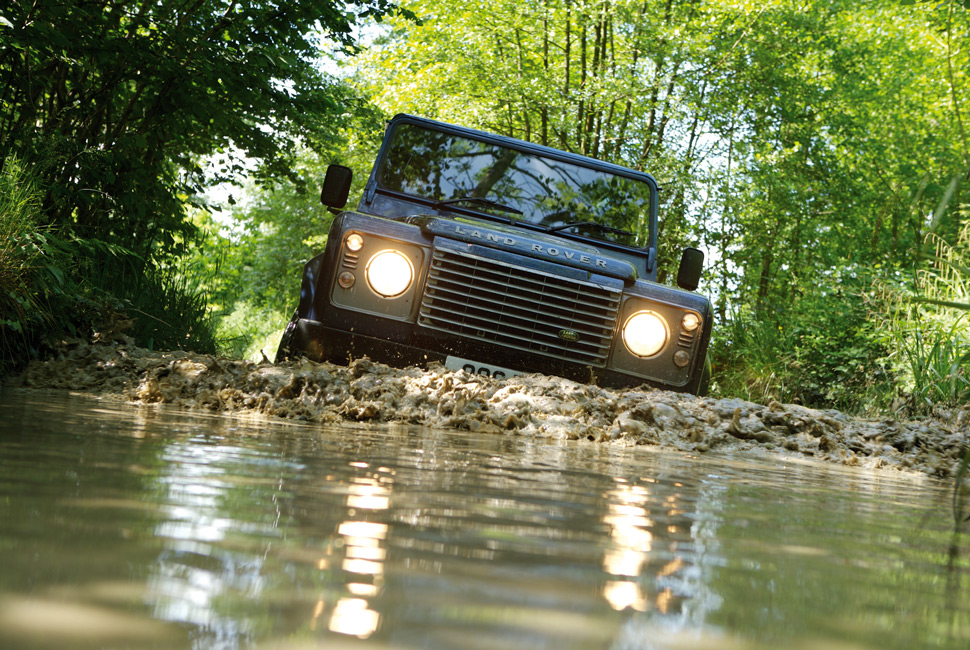
The Land Rover Defender is an icon. The rugged off-roader traveled the Globe with the British army. It was a vehicle fit for both queen and commoner. The world bid a fond farewell to it when its 67-year production run ended in 2016. The Defender is also a cultural phenomenon. It has become one of the most exclusive vintage cars.

Prices inflate in the U.S. We’re limited to imports and survivors from a limited U.S. production run that ended in 1998 when we unworldly Yanks decided to require front airbags. But, even factoring that in, vintage Defenders fetch ludicrous prices. Clean versions, whatever the mileage, can run $70,000 to $100,000 – enough to buy a new Range Rover. Custom resto-mods can run much higher.

Land Rover believes it can capitalize on that phenomenon. The company will relaunch the Defender in 2020, and that SUV will be sold in the U.S. The new Defender will be one of 2019’s most anticipated car debuts. That debut could be an incredible disappointment.

The engineering challenge is enormous. Reinventing the Defender is more than just a square peg/round hole problem. You can convert a boxy, body-on-frame truck into a unibody, shared platform vehicle that meets modern safety and emissions standards. The trick is doing so while retaining the original vehicle’s charm. Jeep has never resolved this dilemma with the Wrangler. The company’s solution has been punting the problem as far into the future as it can. It’s easy to aim for a Wrangler, make a few necessary compromises, and end up with something more akin to Renegade, much easier than getting it right.

Land Rover must nail the styling. The Defender’s appeal has nothing to do with everyday performance. Those sought after originals, being completely honest, were janky, uncomfortable and underpowered. It’s all in the chic appearance and exclusivity. The Defender dream is having ECD Automotive Design build a more comfortable, reliable car with a Land Rover shell.

The new Defender can be as luxe and off-road capable as Land Rover can make it. But, it has to look appealing and, just as important, distinctive. There’s little margin for error. If the new design doesn’t grab us immediately, the car will blend right into the Land Rover background.

It’s not clear where the Defender’s market niche will be. Like the Wrangler, Land Rover will make their money with the four-door version. The trouble is Land Rover already dominates the four-door, upscale, stylish, off-road specialist SUV market. Variations of that exact car are Land Rover’s entire lineup. The Defender’s base price will probably come in where the Wrangler market tops out. Will the new Defender lure Jeep buyers to spend more? Or, will it be luring away drivers from the rest of the Land Rover stable?

Pulling off a complete Defender overhaul that recaptures the original and meets expectations will require a bold feat of engineering and design innovation. That’s not really Land Rover’s element. You don’t go to Barbour to redefine the jacket for the modern era.

We may get the perfect fusion of past and future for the modern off-roader with the new Defender. I’d put my money on it only being a slightly boxier Discovery. I hope I’m wrong.

Top 14 Car Dash Cams

E

veryone, hands up if you’ve ever been in a road accident. Okay, keep those hands up if it was your fault. None of you? Really? We’re sorry, we’re sure you’re all excellent or at least pretty good drivers, but we find that hard to believe. If only there was a device that could determine whether or not you’re telling the truth. Well, there is…car dash cams.

You might remember these from the ten-thousand or so bizarre videos from all over the world that always seem to capture the very worst moments of someone’s life. While that’s (mostly) very amusing, the car dash cam’s actual purpose is supposed to provide unarguable evidence in the event of a crash, accident, or traffic violation.

This provides the owner with protection when challenged over the truth – as long as it’s not their fault.

This is great news for the careful and responsible drivers among us. Meanwhile, it could be an issue for the less talented drivers among us. That’s right, we know who you are!

If you’re tired of being blamed for accidents that weren’t your fault, however, car dash cams will help you out. Heck, you could even exert some revenge on those who’ve wronged you by following them all day to capture proof of their depravity.

That said, buckle up and join us to check out the best car dash cams on the market today.

What are the main things to consider when buying a dash cam?

We see you’ve decided to purchase a dash cam. Congratulations, from now on you’ll never need to worry about the back and forth uncertainty of ‘He said, She said.’ Plus, you’ll never need to feel concerned about how safe your car is and you’ll also pick up a couple of hilarious videos along the way.

Before you settle on which car dash cam is the best one for you, there’s a couple of things you’ll need to consider first. This will help you out by making sure you don’t get taken for a ride.

Resolution:

In the 21st century, everything is high definition, perhaps too high definition sometimes. Whatever car dash cam you choose to buy, you can rely on it having a satisfactory image resolution. However, there’s still a range of different image qualities that you’ll notice when it comes to car dash cams.

The most common to run across is 720p, 1080p, and 1440p.

You may not know what this means, which is totally cool, few do. These same things can be seen in computers and televisions too. That said, what does 1080p, for example, actually mean? The “P” in the example stands for “progressive.”

You may see 720i as well, where the “I” stands for “integrated.”

Both are the same type of thing, it’s simply the way pixels are laid out. In the P version of things, pixels are up and down. Meaning from the top of an image to the bottom, pixels are formed. This gives an HD, defined image or video that you might see a movie in.

Meanwhile, the I version has pixels that go from side to side. This offers a crisp, sharp image or video. The P version is often better at these things which is why it’s used for car dash cams.

The higher the resolution is, the more likely the video will catch the smallest of details.

Looping:

Car dash cams with looping capabilities allow you to avoid the need for switching the camera on or off. The reason for this is due to the loop allowing the camera to automatically turn on. It’ll begin recording as soon as you switch your car on thanks to hardwiring.

If you’re somebody whose memory isn’t as great as you’d like, this is essential. Even if you have a great memory, it could be insanely useful. Plus, it’ll be another thing you won’t have to worry about.

Night Vision:

Cameras with great night vision will save you a lot of stress if an accident occurs in low-light conditions. Night driving is in some ways safer due to there being fewer cars on the road, but this is not 100% true at times. It’s also a time where people feel perfectly happy to not only hit but also run.

Hey, think about it, it’s dark, nobody saw!

Unfortunately for them, if you have a dash cam when you’re involved in a nighttime collision, they can’t truly get away. Some cameras have better night vision recording than others, however. That means you need to be sure to find one that provides as clear an image as possible once the sun goes down.

G-Sensors:

Finding and purchasing a car dash cam with G-sensor capabilities is essential for protecting your footage. It’ll help keep it perfectly fine in the event of a crash or collision without it getting overwritten by the newer footage. Cameras with G-Sensor technology will automatically switch off when they recognize the car’s ignition has been turned off.

It will then ‘lock’ the footage to ensure that is doesn’t disappear into the ether.

Driver Assistance:

Sometimes there’s a lot going on while your driving, but you’re a good driver, right? It may not matter. Clearly, you can’t be expected to do this successfully all the time sadly. In fact, you might not notice something until it’s too late.

To prevent this, the car dash cams come with collision and pull-out alerts.

This recognizes potential disaster before it happens.

Not only will you have some proof after an accident, but you’ll also be able to prevent accidents altogether. This pretty much makes you a superhero. Who needs the Batmobile anyway?

Parking Mode:

Worried about your car at when you’ve parked it? Maybe there’s been a spate of vandalism around the neighborhood recently? You’re not going to sit up all night waiting to catch the perp, after all, you shouldn’t have to.

Why do all the work when your dash cam can act as a lookout for you?

Parking mode operates using motion sensors, so you don’t need to worry about wasting the battery overnight. If someone comes within range of the car, the camera will switch on. This is sure to catch crooks and idiot kids and hopefully makes sure they don’t cause any more damage.

You might also get the occasional curious critter, but we can live with that.

Rear Camera:

Finding a car dash cam with both front and rear camera functionality ensures you get the widest range of protection possible. You can drive wherever you please without fear of possible accidents they are not caught on camera. Clearly, the best cameras can give you this.

However, it can be a bit more expensive…so you need to think before you buy.

Do you need a rear cam? We’d say it could sure offer more protection in the event an accident occurs…especially in the back of the vehicle you happen to drive. However, the normal car dash cams can do a lot for you too. That said, this will just depend on how much you’re willing to spend.

Storage:

Most car dash cams will have a built-in memory function that’ll record and subsequently save any footage that’s captured during your drives. However, what will you do once you run out of space? By using high definition video, you’ll be treated to excellent and clear footage that will identify culprits without a shadow of a doubt.

The problem is that this awesome quality also means a lot of storage space is used up. Those files can get pretty large. Cameras with high-capacity storage will be a great asset to you, without a doubt. You may also want one that can install a microSD card for even more space.

This will save you the hassle of deleting footage all the time, without much time in-between.

What are the main benefits of car dash cams?

Car dash cams are tremendous for most. The reason is mostly due to what they provide the average, every day, driver. Think about it this way, your protection and how people believe your story could hinge on these things. Car dash cams have gotten police officers out of hot water as well as fired.

That is some major power to hold.

Imagine too if you’re a young black man in America. Traffic stops are routine for them, as well as Hispanic men (even if you do nothing wrong). Most tend to go well, but at times things can get really bad.

Car dash cams can be maneuvered to get the entire ordeal on tape if something goes bad.

It’s your word against the officer’s word, which means your word is useless without proof. However, this tape you happen to have will help exponentially prove he or she was in the wrong. Heck, even the presence of one will help. This is useful for a number of other instances too, so let’s go over them.

Accidents:

Many of us have suffered an accident, been on the wrong end of a fender bender, or encountered some douchebag who thinks he owns the road. However, if we had a car dash cam, we could have had an excellent way to prove that we were, in fact, in the right.

Memories might be pretty clear, but there’s no substitute for video evidence. It’s an eyewitness that doesn’t blink, so take advantage while you can.

Peace of Mind:

Even if we have a good idea of where our vehicle is, we may still worry if it’s safe. It could be the area you’ve parked in, it could be the place on the road, it could just be that you’re very protective. Maybe too protective perhaps? With a car dash cam, any fears will be (mostly) alleviated.

The dash cam won’t necessarily save your car from damage when you leave it parked somewhere. However, it will help you identify who was responsible. This will help the local law enforcement hunt them down, then you’ll finally get the justice you deserved all along.

Fraud Prevention:

The unfortunate truth is that some drivers will go out of their way to cause collisions, accidents, and other inconveniences. They will then try to make it look as if you were at fault for their mistake. How horrible, right?

With car dash cams, you can become a hero of the road.

Well, you’ll be your own superhero. You won’t be a Batman or Green Arrow out there or anything…this is only a dash cam. However, you’ll help you avoid dealing with people who try to make you look at fault. These frauds need to be stopped and you can do just that.

Not Just a Camera:

Well, it still is a camera, but the dash cam is so much more. It can act as a parking assistant, provide collision alerts, and parking protection. Furthermore, most cameras will also have GPS capabilities. This will not only pinpoint exactly where an accident occurs but will also show your speed.

This will allow you to make sure you never go over the speed limit. We know you will, but at least you’ll have an idea of the speed limit in areas you are not familiar with.

That GPS thing is pretty handy, for sure.

The Memories:

Car dash cams are mostly associated with covering you or somebody else in the event of an accident. However, you can also use them to record your road trips! Seriously, you can.

This is pretty awesome if you ask us.

If you like packing up your stuff, jumping in the car and saying goodbye to the city for a couple of days, the dash cam will be there. It’ll catch everything so you can watch how things went when you’re done. You can check out the gorgeous scenery and marvels of nature you came across.

Heck, you can even put together in a travel video as a memento that won’t go anywhere.

Pure Entertainment:

We’ve all seen those hilarious/interesting videos captured by the sheer luck of a driver having a dash cam. If you haven’t seen them, trust us, you’re sorely missing out. While entertainment was not the intended purpose of car dash cams, you can have endless hours of weird and wonderful examples.

You can come across some of the strangest goings on in everyday society, especially when people don’t think they’re being watched. Just remember not to use these powers for evil. That’s not cool, dude.

Is it easy to set up and install car dash cams?

It really should be easy to set up car dash cams. However, that is not exactly the case regardless of how good it would be. There are certain rules regarding placement and other issues that you really need to pay attention to.

Not doing so could result in footage not working well or even become useless in court under certain situations.

Heck, you could even be breaking the law! To avoid your jail time, we wanted to make sure we made you aware of key things you need to know about. Check this out.

Where can you mount it?

Dash cam mounting isn’t as simple as the everyday hands-free mount you’ve used with your smartphone for years. Instead, it must be placed behind the rear-view mirror. This allows the image to be perfectly centered and it captures the widest angle of the road.

This includes both lanes, as well as any signs that you pass along the way.

But what about the cables?’ you lament while ignoring everything we’ve just said. Well, hold on a second. Car dash cam wires are long enough to reach a power source. This ensures there’ll be no issues with connectivity.

What kind of mount, though?

Car dash cams come with either a suction-mount or one that employs double-sided tape. Both work well, but the suction cup is much more reliable than the double-sided tape version. This is mostly due to it being easy to reset and start over if you put it somewhere wrong.

It can also go from vehicle to vehicle without much issue.

Remember, with every incorrect mounting with double-sided tape, you’ll lose precious adhesiveness. That could result in your camera tumbling from its perch, probably just before an accident occurs. With that being said, we’d advise the suction version.

How do you connect it?

Your car dash cam will come with the aforementioned wires that’ll connect to ports within your car. This will more than likely be the cigarette lighter port. However, you can elect to hardwire your camera, which will connect it to the main electronics of the car.

There are a few benefits from this, including having the wires hidden. It can also turn on whenever you switch on the ignition so you’ll never forget. Most car dash cams can be hardwired, but you can’t do it yourself. This means you’ll need to employ a professional to make sure it’s done correctly.

That said, it’s an extra expense you may or may not want.

What are the laws related to car dash cams?

Car dash cams were mostly designed to help you in the event of collisions. However, you need to be careful about whether or not you’re using them in a legal way. Remember, laws are a bit annoying but we must follow them. We know, we thought they just handed out chocolate bars too.

Why can’t we just take them, right?

That said, we put together a guide on a few nations and their laws regarding car dash cams to help you out a bit. Take a look.

United States:

In the United States, car dash cams themselves are not technically illegal. However, in the majority of states, windshield obstruction is, in fact, illegal. As long as you’re not impeding your own view of the road, then you should be okay.

We’d suggest getting in touch with a lawyer, police officer, or local DMV just to be on the safe side.

There’s also the issue of data protection, which would inhibit the privacy of anyone traveling in your car. A solution to this, though, is to either turn off the audio recording or simply inform them that they’re being recorded. Some states do not have any laws on recording someone.

This is the same for video and audio recording, as there are not as many specifics.

In many states, only one side has to know of a recording. That means, since you’re the one side, you’re good. Not every state is the same, so call up local police stations or a DMV to see what they suggest.

However, you truly want to tell someone even if you don’t have to. Proper ethics, of course.

Canada:

There are no laws about installing a car dash cam of any kind in the country of Canada. In fact, recording your journeys on the road is perfectly fine as they are considered public areas. This means you’re not intruding on anyone else’s privacy.

However, if the camera is not mounted correctly, you could suffer similar charges to those in the United States.

Obviously, you don’t want to operate one while driving, as this is very illegal in Canada as it is in America. This falls under the same type of charge as using cell phones while driving. It may be a bit minor, but too many can add up.

United Kingdom:

Car dash cams are perfectly legal in the United Kingdom, throughout every single area. However, if it is mounted incorrectly, you could face fines from local police who see this.

You could even have any footage you’ve recorded deemed inadmissible in a courtroom setting.

If you work for a ride-sharing company like Lyft or Uber or even just as a taxi driver, then you need to inform the passenger that they’re being recorded. This is technically needed in both Canada and the United States in states or provinces that have such rules.

Anywhere Else?

In case you’re planning a trans-continental trip, we should mention that you’re prohibited from having a car dash cam at all. This includes countries such as Switzerland, but could also apply elsewhere in the world.

Before going anywhere, do your research and save yourself the hassle.

Most of the time, taking car dash cams overseas or to nations close by would be weird. After all, there are a lot of rules on rental cars and most airports won’t let you take stuff like this on a plane. That said, avoid assuming it’s okay. You honestly don’t need it in many nations.

Simply use a normal camera if you’re worried things might get bad somewhere.

1) Rexing V1 Car Dash Cam

The Rexing car dash cam is designed to blend in seamlessly with the car to keep your focus squarely on the road, as well as ensure that it doesn’t look too obvious for other drivers. This model offers plenty of features to get excited about.

One of them is the full HD recording, which ensures crystal-clear images both day and night. Furthermore, the 170-degree lens achieves an incredibly wide angle, which manages to get nearly every inch of the road.

For increased protection and driver safety, there’s also accident auto-detection.

This will activate long before you’ve even realized something is up. This should offer a minor alert to allow you the ability to avoid possible accidents before they happen. Of course, this should allow everyone to make it to their destination with very few issues.

Now, isn’t that what we all want from car dash cams? We think so.

Check Product Price // Read More Reviews

CHECK PRICE  READ REVIEWS

2) Garmin Dash Cam

Garmin is a major leader for the technology you’ll use in or for your vehicle. It comes as a shock to no one that they made excellent car dash cams too. The video quality is better than most normal cameras, which is saying a lot. Filming at a remarkable 1440p, you’ll never be straining to see the content in videos again.

This will make you the best eye-witness on the road.

Also included are exceptionally accurate lane departure and collision warning systems. This is sure to save you and others from potential crashes during the busiest times of the day. Furthermore, voice-recognition software means the whole camera is entirely hands-free.

This allows you to switch it on and off with simple voice commands. Don’t focus on pictures on a screen, focus on the road and let the camera do the hard work for you.

Check Product Price // Read More Reviews

CHECK PRICE  READ REVIEWS

3) Lukas LK-7900 Car Dashboard Camera

The Lukas HD car dash cams come with a provided 16GB of internal storage. Included is an array of awesome and incredibly useful driving features you’ll absolutely love. With 1080p HD video, the footage is exceptional and clearly capable of getting every detail.

Meanwhile, the powerful auto exposure feature means that regardless of the weather conditions, you’ll always have perfectly viewable images.

There are also four different recording modes that can be adapted to suit your preference on how you want to record something. These modes include continuous recording and motion detection. This will surely come in handy when the car is parked overnight, at the game, or out to dinner.

Check Product Price // Read More Reviews

CHECK PRICE  READ REVIEWS

4) Anker Roav Dash Cam

With motion activated sensors and extreme temperature resistance, the Anker Roav Dash Cam is a superb product. It is able to withstand all elements, situations, and conditions. It isn’t just designed for your annual adventure across Antarctica sadly.

We know, “technology,” right?

The camera delivers more than enough features to keep you and your car protected no matter where you drive it.

Its Nighthawk Vision means that you’ll receive awesome, clear videos during the darkest of nights. Meanwhile, the built-in WiFi smartphone transfer means it’s never been easier to view your videos. This will be filmed in expansive panoramic views to capture as much as possible.

Anker gets it done with several other products, but their car dash cams are absolutely stunning.

Check Product Price // Read More Reviews

CHECK PRICE  READ REVIEWS

5) Vantrue N2 ProDual Dash Cam

Offering nearly 360-degrees of coverage, the Vantrue N2 ProDual Dash Cam is an awesome choice for anyone. Especially those who wish to get home safe or like to capture crazy people on the road.

This camera provides you with both road camera and interior camera viewership.

This ensures you capture as much as possible so you are always able to back up any claims. We have to agree with the late Billy Mays who once said, “wait, there’s more!”

These car dash cams are also equipped with a 24-hour parking mode. This will detect motion should someone or something get a little too close. Meanwhile, the G-Sensor and looping mechanism ensure that you can set it and never worry if it’s recording. It surely will be.

Check Product Price // Read More Reviews

CHECK PRICE  READ REVIEWS

6) Garmin Dash Cam 35

Garmin is back again, this time with the Dash Cam 35 model. This car dash cam provides accurate forward collision warnings and G-Sensor incident detection. This guarantees constant vigilance on the road and protects your footage as soon as something happens.

Along with this, you’ll also have a dash cam player. This allows for clear playback of anything that does happen, without having to upload it to another device.

There’s also a red light and speed camera warning system. However, you do need to pay extra for this privilege. It fits comfortably above the rearview mirror and the suction cup is very reliable, even on the most uneven roads or during heatwaves.

Be sure you’re aware that there are no audio recording capabilities. This is good and bad. While you won’t be recorded as you belt out your favorite tunes, it also won’t record audio in the case of an incident during a traffic stop.

Check Product Price // Read More Reviews

CHECK PRICE  READ REVIEWS

7) Transcend 32GB Drive Pro Car Video Recorder

With a 32GB internal memory, you can record hours of road trips. Even if it’s just to and from the office (although we recommend you get out more, dude). Overall, the Transcend Drive Pro allows you to do exactly that.

You can drive like a pro without being concerned it won’t work or back you up in the case of an accident.

This is due to the built-in G-Sensor that’ll protect any recordings upon a crash, as well as snapshot features to capture the clearest images possible. For your convenience, these car dash cams also have access to the exclusive DrivePro520 application.

This means you can download and stream all your adventures, then identify when that idiot pulled out in front of you without warning.

Check Product Price // Read More Reviews

CHECK PRICE  READ REVIEWS

8) Z-Edge Z4 2K Dash Cam

The perfect camera to give you the edge over other drivers on the road, this Z-Edge Z4 Dash Cam comes with 2K video capabilities. It truly is an awesome camera that will hang nice and discreetly from your windshield. It’s also packed full of useful features that make it more than a simple camera.

This includes collision detection, 150-degree wide angles, and parking monitor motion sensors. All of this combines to give you some of the best protection available from the sea of car dash cams. The Z-Edge also comes at an excellent price when compared with other cameras and ensures (essentially) endless hours of recording.

Just remember to overwrite existing footage. Otherwise, you may run out. That endless thing isn’t exactly infinite apparently.

Check Product Price // Read More Reviews

CHECK PRICE  READ REVIEWS

9) KDLinks DX2 Super Wide Angle Car Dash Cam

If you’re looking for the most complete coverage you can possibly find, the KDLinks super wide front and rear dash cam is the product for you. With 290-degrees of filming capability, it uses a 2-lens system that makes sure to capture every single detail.

Meanwhile, the superior F1.6 six-glass lenses provide night vision capability unseen anywhere else in the world.

Along with this, these car dash cams also come with emergency lock buttons to protect footage. This also comes with an auto-switch to turn the dash cam on as soon as you turn on the ignition. This ensures that you’ll always be protected even on those days where your brain hasn’t caught up to your body yet.

With so much high-quality coverage, the KDLinks DX2 is the answer to getting every angle you need. Plus, it could lower those insurance premiums a bit.

Check Product Price // Read More Reviews

CHECK PRICE  READ REVIEWS

10) THINKWARE F800 PRO 2 Channel HD Dash Camera

The THINKWARE F800 PRO may very well offer the car dash cams that are perfect for the thinking man. It contains both front and rear filming capabilities, but this is just the tip of the filming iceberg. It’s designed to offer you the utmost coverage and protection from both sides of the road.

It also provides incredibly crisp night time footage that will keep your car alert even when you’re not driving it.

The THINKWARE makes this possible with its reliable motion sensors that activate whenever someone walks too close. As for the performance on the road, there’s advanced driver assistance.

This will recognize when hazards are present and let you know before it’s too late.

Meanwhile, you can also keep an eye on everything from afar by using the mobile viewer. Sure it’s on the expensive side, but for those of you who are truly “in love” their cars, money isn’t an object.

Check Product Price // Read More Reviews

CHECK PRICE  READ REVIEWS

11) Transcend 16GB DrivePro 200 Car Video Recorder

The Transcend 16GB is a high-capacity piece of tech that’ll ensure you won’t have any mysteries during your drive-time. Coming with a 16GB microSD card, you’ll have more driving footage than Top Gear and maybe even more entertaining shots too.

The camera comes with a free app and WiFi connectivity. This makes it easier than ever to view, stream, and share your footage with the world.

Well, at least the relevant authorities.

With a 160-degree angle lens, you can ensure you’ll get greater coverage than you thought possible. Meanwhile, the G-Sensor is more sensitive than other cameras and will have your back in the event an accident with emergency recording.

Unfortunately, these car dash cams don’t come with parking mode or GPS. However, for a budget product, there’s still a lot to give you peace of mind while driving.

Check Product Price // Read More Reviews

CHECK PRICE  READ REVIEWS

12) TomTom Rider 550PAPAGO Car Dash Camera

The PAPAGO Car Dash Camera boasts incredible HD recording footage that ensures you’ll capture every little thing possible. Along with top quality images, there’s 64GB microSD support that’ll capture hours of video. Plus, all of this can be viewed with the complementary app.

Unfortunately, this app is only compatible with Android, for now at least. However, if you’ve embraced Android over Apple, then this is perfect. You also get two different mounts to suit you and your car, which is pretty cool. It also comes with a Driver Assist feature that goes that extra mile to keep you protected and keep that insurance low.

If you’re looking for good car dash cams that more than provides what you need at a reasonable price, the PAPAGO is a tremendous option.

Check Product Price // Read More Reviews

CHECK PRICE  READ REVIEWS

13) YI Compact Dash Cam

If compact is your style, then the YI Compact Dash Cam might feel like it’s been designed especially for you. One of the cheapest products on our list, it still boasts a range of great features that feel like it should cost much more.

These features include high-quality day footage and even good footage for night time recordings.

Despite its size, it’s also very sturdy and should withstand knocks or tumbles with ease. On the software side, the app is relatively straightforward to use. It also provides the opportunity to look back on exactly what happened in any situation you run into.

For those in warmer areas, the built-in cooling system will keep it protected against the sun. However, there have been some instances of melting, so be careful.

Check Product Price // Read More Reviews

CHECK PRICE  READ REVIEWS

14) APEMAN 1080p Dash Cam

Our final choice for the best car dash cams is the APEMAN Full HD Dash Cam. It lives up to its name with high-quality video footage that allows for seamless video recording. It even does this during the day and night, both with clear results.

While the camera doesn’t technically have night vision, it still offers F1.8 exposure that’s ideal for low-light situations.

These car dash cams also come with a built-in G-Sensor that recognizes exactly when a crash occurs and locks the footage for your protection. Meanwhile, the 170-degree wide angle lens captures the majority of the road, so even the most inconspicuous happenings are recorded.

Our only real issue is that you can only mount up to a 32GB microSD card. This is a good amount, but we’d like it if there was potential for just a little bit more storage. Otherwise, feel free to go ape-man, over the APEMAN

Check Product Price // Read More Reviews

CHECK PRICE  READ REVIEWS

On a Collision Course, Or Maybe Not…

With so many car dash cams on the market it can be a challenge to choose one that’s right for you. However, you know your driving, know your area, and know which is the best for your needs. When it comes to car dash cams, it doesn’t need to be the best, the brightest, the fanciest.

Instead, it needs to be something that you trust will keep you protected in the event of a collision.

The thing about car dash cams is that they’re not just there to place the correct blame. In fact, they’re also there to keep you honest too. It’d be great if everybody drove like they had a car dash cam, but we all know that’s not the case.

Instead, it’s up to people just like you to do your bit in keeping yourself and others in check.

We’re all prone to the odd bout of road rage every now and again. However, with proper car dash cams, perhaps things will be a little different. Why not shift into a different gear and take it a little bit easier?

It would make the road a much more peaceful place to be.

This Is the New 2020 Land Rover Defender, and It’s Coming to America

FYI:
Pricing: TBA
On Sale: 2020 (possibly late 2019)
Status: Extreme terrain/weather/altitude testing underway
Camo comes off: 2019, date TBA

After a few weeks of online buzz and sightings of the camouflaged prototype on U.S. shores, Land Rover formally announced today that it would bring its storied Defender back to the U.S. The company released images of the off-roader, still in camo, while teasing that the full reveal would come sometime in 2019.

Nevertheless, there’s still much that can be learned about the coming vehicle by peering at the spy shots and the released images. Of course, the Defender – sold here for just over a decade until 1997 – was valued for its iconic, straight-edge and boxy design, and its prioritization of utility over comfort. The new Defender clearly won’t have quite that same aura. Though definitely boxier than the already boxy Range Rover, it will be a bit thicker at every surface than previous Defenders thanks both to meeting U.S. regulations and to the market’s preferences for luxury and comfort.

So it feels at the outset like perhaps a slightly more rugged Range Rover, and it clearly carries the design cues from its stablemates. The language of the teaser release, extolling the versatility and rawer virtues of the previous generations, bears that out: “With an all-new exterior and interior design, as well as a suite of the latest driver assistance and connectivity features available, the next-generation Defender will be a revolutionary product for Land Rover with even broader public appeal. When it debuts in 2019, the new model will represent 70 years of innovation and improvement in just one model year, honoring the model’s history for rugged durability, while thoroughly remaining a Defender for the 21st century.”

Many will likely find that need to serve two roles – luxury and utility. Disappointing, especially because Mercedes proved you can still build a vehicle faithful to its own vibe and heritage when it released the second-generation G-Class last year. In the Mercedes lineup, that SUV is clearly the odd man out, which is precisely how its fans like it – though even that SUV had to still ride the luxury wave, and neither is necessarily the kind of machine that you’ll rip around your sheep farm in all day then hose it out in the evening. But the Defender looks, at first blush, like it will be visually very similar to the Discovery, Range Rover, Evoque, etc. On the other hand, it does appear to sit lower and wider than other current Land Rovers, and is a bit more vertical, as well. So perhaps the vehicle will have a rougher edge to it despite the need to still rank as a “luxury” ride. Once the camo comes off later in 2019, prior to going on sale in 2020, we’ll know for sure.

The Absolute Worst Trend in Automotive Design Today

No matter the industry, trends come and go with the tide — some fizzle out and don’t catch on, some can really hit the mark and truly define an era, while others are just plain awful. The automotive industry is no different. In the ‘50s there was jet-age styling with turbine-inspired intakes and fins sprouting up everywhere. In the ’80s it was turbos and stylized graphics down the door panels.

A couple of years ago, seemingly damn near every sports car needed to have a vent of some size or shape behind the front wheels — a trend we’re still very much in the throes of. Which isn’t as bad as the fake intake vents designers seem to be using as a crutch to fill the massive amount of space on the front of cars. But the most recent and most egregious design quirk that has been quietly swelling in popularity is fake exhausts. Stainless steel pipe ends built into bumpers just for show.

There are even varying levels of this design lie. The first high-profile case was the first generation Lexus IS-F. A car that, at a glance, looked like it had a unique set up: two pipes vertically stacked on either side of the car. But if you took a closer look you’d see the bottom exhaust tip of each pair wasn’t actually connected to anything. And if you look at most luxury cars on the road today, you’ll see the “exhaust tips” aren’t connected to anything other than the bumper. They just masquerade as big, wide-mouthed sport exhausts with puny, seemingly unfinished pipes just sort of hanging out behind them and hidden under the car. Now that you know you won’t be able to unsee it — you’ll notice fake exhausts everywhere.

One of the most recent examples I’ve come across is the 2018 Audi SQ5. I reached out to Audi (and a few other manufacturers) to ask what the point of it was, but none responded. Maybe because there is no good answer. What Audi did (and what other brands are guilty of as well) was design the lower rear bumper to look like it has a chiseled, edgy, performance-orientated quad exhaust; in reality, it’s just black plastic.

Which, plainly speaking, is just a waste of perfectly good plastic. Why even bother? What’s the point? Are we that addicted to the connotation of performance that Audi would have felt ashamed had it not added fakes? At this point, Audi is no better than the guys who bolt on false hood scoops or the ones who buy BMW M and AMG badges and stick them on their Corollas.

Newsflash: guys, we know.

Here Are Some Details We Absolutely Love

A car is certainly more than the sum of its parts. Read the Story

The Only Feature You Should Spend Extra Money On When Getting a New Car

Our cars are so laden with technology and creature comforts that luxury options are almost becoming burdens. Infotainment systems are the epicenters of that information overload, and gauge clusters are also now one of a handful of screens that cram every gigabyte of data they can get onto one of the even smaller screens in the car. Navigation, tire pressure, suspension height, ride settings, radio station, who’s calling you; in sportscars it’s track time and horsepower meters on top of the speedometer and tachometer stalwarts. And those are just a sliver of what some cars can come with. Option lists go on ad infinitum across the board.

At what point does a relaxing drive turn into a source of stress? We’re at a point where most of these options are a waste of money because you stop using them or never used them at all. But if you’re buying a new car, save time, money and stress — skip all the frivolous extras and focus on the seats. You won’t regret it.

According to J.D. Power rating report, at least 20 percent of new-vehicle owners have never used 16 of the 33 technology features measured. The five features owners most commonly report that they ‘never use’ are the in-vehicle concierge, mobile routers, automatic parking systems, head-up display, and built-in apps.” Not only that, but those are also among some of the features listed that drivers actively won’t get in their next car. But, as far as the interior goes, seats are most assuredly features you can’t forgo. Therefore, they should be as good as possible.

While pedals pretty much come as they are and steering wheels can be fitted with heaters and switches for ancillary options, think about how much of your body touches the wheel and, inversely, how big of a contact patch you have with your seat. Then consider that you’ll spend about 300 hours in that seat next year alone. All of a sudden, money spent on a better seat is incredibly more appealing than dropping an extra $3,000 just to have satellite navigation — something your smartphone can telegraph through the speaker system with a $10 cable.

Seats aren’t merely a common-sense expenditure anymore, with the best seat options you’re really getting your money’s worth. Manufacturers spend a massive amount of time developing seats, which makes sense since the driver’s seat is the most significant interface the driver has with the car. It’s also quite literally one of the largest objects in the vehicle, second only to the back seat if there is one (and probably the driver).

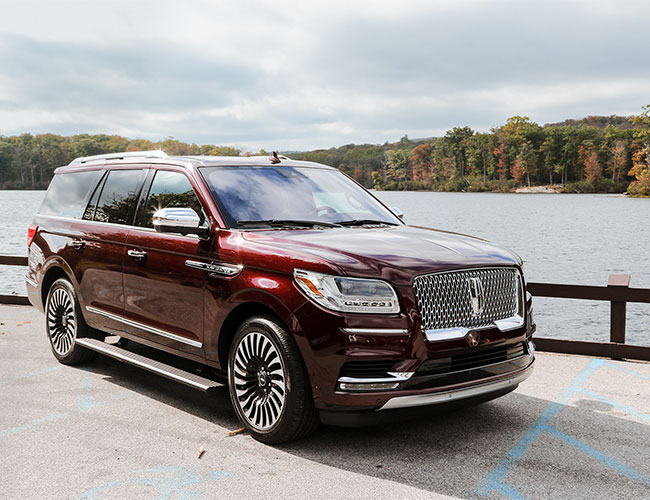
According to Jonathan Line, Lincoln’s Advanced Seat Innovation Supervisor, when it comes to their flagship captains chairs, for instance, Lincoln started development on them in 2011, debuted them in 2016 with the Continental and premiered a new-and-improved version in the 2018 Navigator. “We were really striving to achieve an experience, not so much to outdo the competition with features but we were going after the greatest human experience we could find in a seat to make them optimally comfortable,” Line admits. You don’t spend six years, as Lincoln did, just to come up with a porch swing. Lincoln dedicated a 15-20 person team to study materials, suspensions and structural composites, and went even further to study biometrics and pressure points to analyze where the body needs to be supported and how to increase blood flow for both comfort and alertness while driving. The result is a 30-way adjustable seat that’s both heated and air-conditioned, massages your back and legs and supports every square inch of you than rests on it — stopping just short of supporting you emotionally.

Now, I’m not saying any less research and development goes into a Sport mode, Apple Carplay, or whatever you can think of that can connect wirelessly to your car. Or, it should be said, any other manufacturer’s premium seats. But, much like “if a tree falls in the forest and no one is around to hear it, does it make a sound,” if a luxury option or creature comfort goes completely unused, is it any good? Is it worth it? There’s no practical circumstance wherein you’re in your car and not using the seat. It stands to reason that you’ll always appreciate the time and money you spend optioning it out to its fullest capacity. Get the best seats you can.

The Chair that Comes with a Navigator

Simply put, the Navigator does the “big luxury SUV” thing far, far better. Read the Story

Camper Van Restoration Pros at Peace Vans Make Modern Magic of Retro VWs

Harley Sitner didn’t plan on owning an auto body repair shop. He’s a tech entrepreneur by trade with a long tenure at Microsoft on his resume, and he’d helped launch a few businesses throughout his career, including a skin care line and a nursery. Van repair wasn’t in his 10-year plan – that is until he bought his first VW camper van in 2008.

It’s hard to get older vans repaired, Sitner said, and he struggled to find a shop in the Pacific Northwest that could help him get the parts he needed for his new purchase. Then he found a small van repair shop in Seattle, WA called Peace Vans. The business was about to shut its doors, which gave Sitner an idea: What if he bought the place?

“I was like wow, I think I can do this. I’m passionate. I know what the market needs,” he remembered, laughing. “My wife was like ‘Really? This is what you want to do next?’ But I did it.”

When Sitner sets his mind to something, it’s clear there’s really no stopping him. It’s been six years since he purchased the shop and Peace Vans is now a small empire hidden behind a rather unremarkable storefront in Seattle’s Sodo neighborhood. Sitner has grown the business into one of the biggest camper van repair shops in the United States, with a staff of talented auto body repair folks in tow. He attributes the business’s quick growth to great customer service, deep expertise and a community vibe.

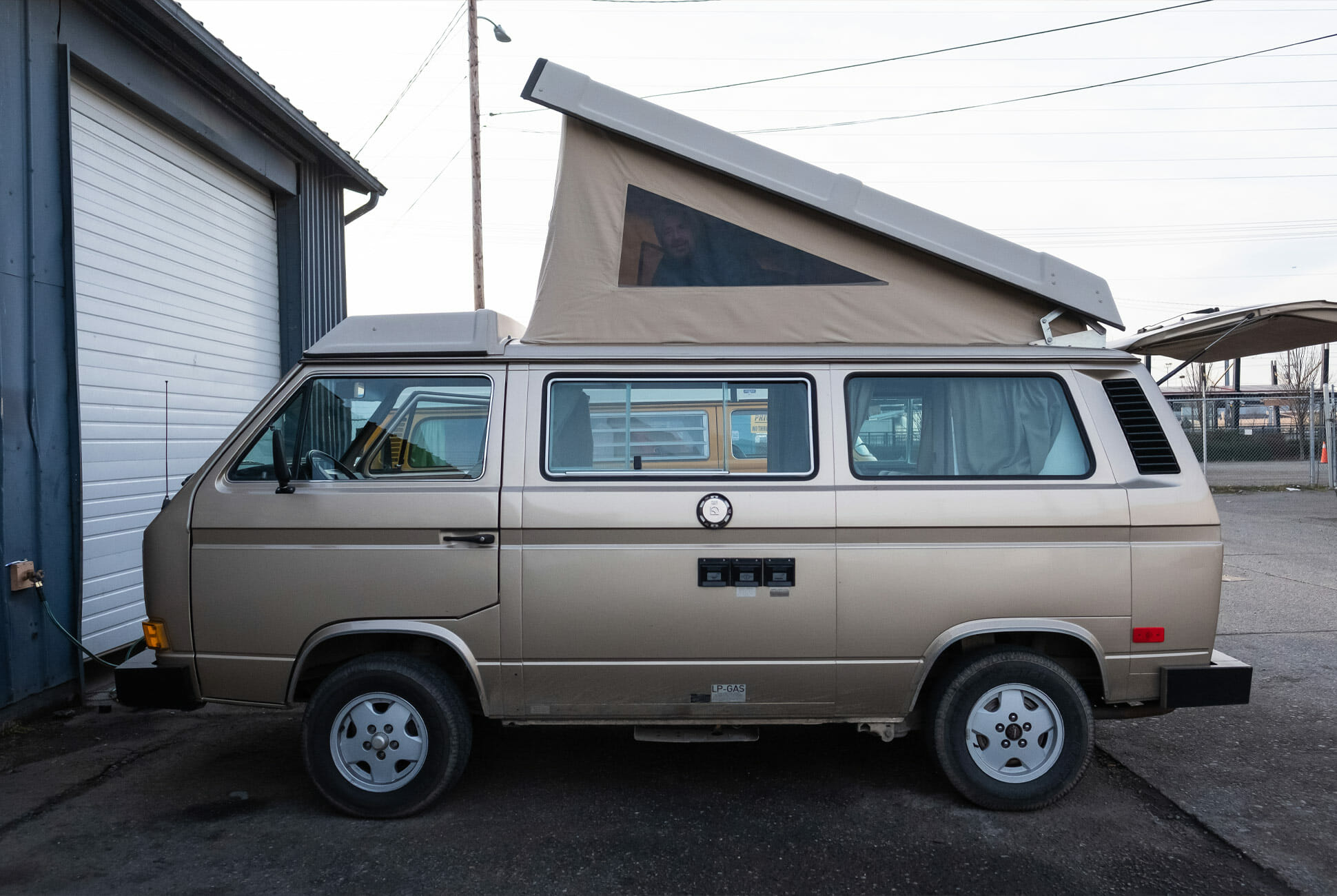
Peace Vans is made up of three parts. The first and largest is the repair shop, which boasts a month-long waitlist and offers fixes for all types of retro camper vans, especially Vanagon Westfalias. Most of the repairs are basic, focused on safety concerns like brakes and fuel. A few cases are more serious, requiring updates on motors or transmissions. Still fewer are bespoke projects, which Sitner only takes on when someone has a very clear and reasonable vision of what they want. In fact, Sitner says he was once offered his own television show about bespoke van repairs – but he turned it down. “They wanted me to put an aquarium in a van,” he said. “That’s ridiculous!”

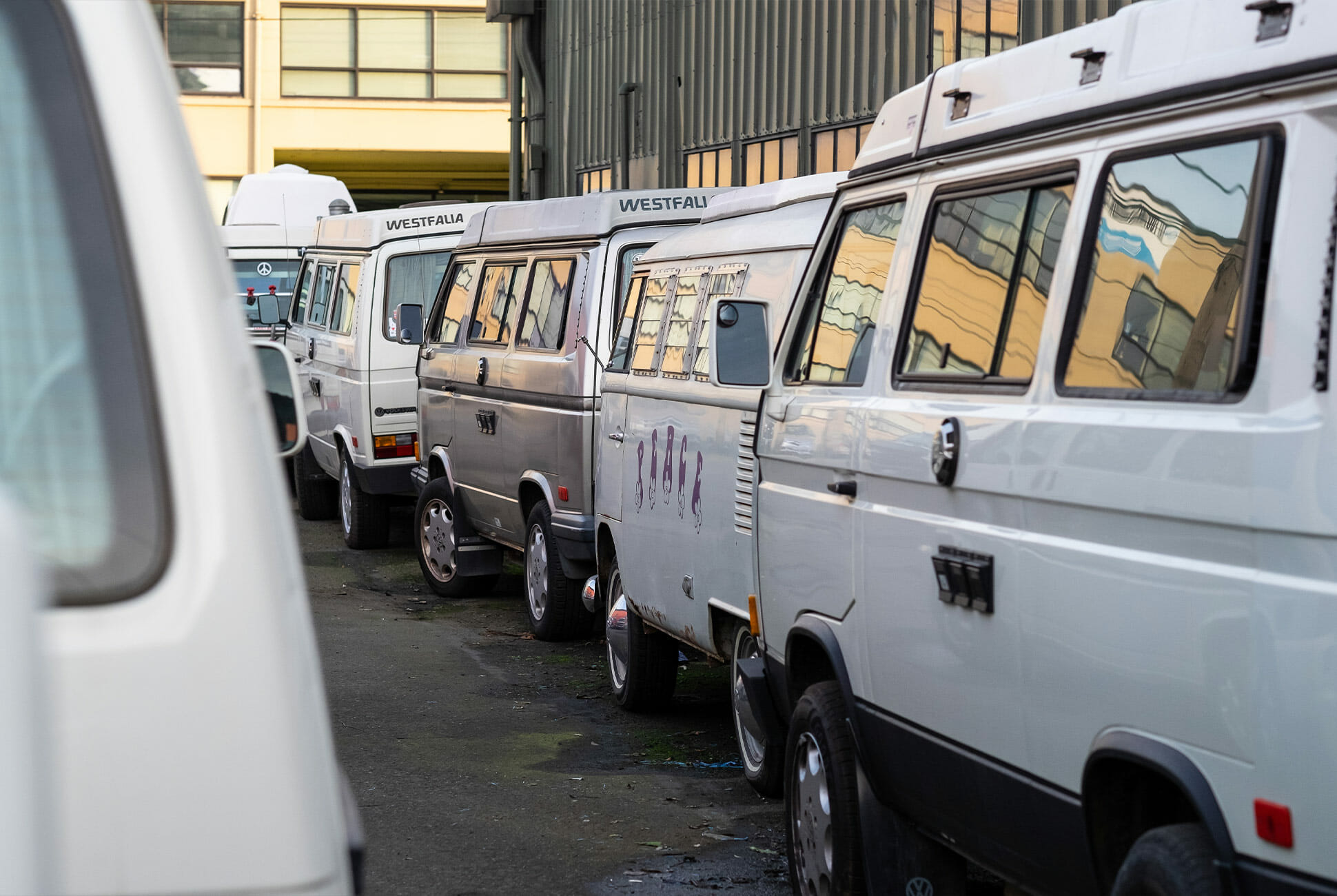
When I visited the Peace Vans shop in the early fall months, camper vans were lined up end-to-end in the side yard, three deep. Sitner pointed out specific projects, like a van that a father-son pair had driven from the east coast to Seattle for a winter re-up. This is typical, Sitner said. Many of his clients come from far away because owning a Vanagon Westfalia is no small undertaking and finding a good repair shop is a big deal. Parts can be tough to find, although Sitner said VW recently sprung up a whole business dedicated to creating new parts for their older vehicles.

“It’s tough to work on these vans,” Sitner said. “Most of the ones we work on are children of the ’80s, and the ’80s were a weird period in automotive engineering. At this point, a lot of the vehicles we fix are 30 to 40 years old and they have deferred maintenance.”

Sitner also cultivates relationships with folks who make certain parts for older vans (some are even 3D printed) and Peace Vans sometimes strips older vans for parts, too. Still, he said, this is a hard business to move forward. Retro van repair is a dying art, something he’s all too aware of as he tries to keep his employees engaged. After all, the business depends on people with niche knowledge.

You can rent camper vans from Peace Vans, too, which is the second branch of Sitner’s business. For a not-so-low price, Sitner will hand you the keys to a retro VW van stocked with all the gear you need for a week or two out in the Pacific Northwest wilderness. The vans come with fridges, beds that fold down, pop tops, tables and other well-thought-out features. They’re typically reserved months in advance by out-of-town visitors who plan to explore the Pacific Northwest during the summer months.

The third part of the Peace Vans business is new. They’ve partnered with Mercedes-Benz to turn the newest fleet of 2019 Mercedes vans into camper vans. For people who are interested in a high-end camper van experience, this is the way to go, Sitner said. When I visited, he was coaching an older couple on their options for decking out their new Mercedes-Benz van, including a trailer for e-bikes and enough power to support other essentials.

Not to be forgotten in this business equation is Sitner’s ability to build a strong community, which is more than likely the secret to a deeply loyal clientele. He said that people often bring six-packs of beer into his office at the end of the day, asking for free bits of advice about the best updates they can make to their vans. He’s happy to share what he knows because he truly believes in this lifestyle – so much so that he lives it, too. Sitner recently returned from Burning Man, where he slept in his maroon VW camper van the whole time. “Van life is evocative of authenticity and nostalgia, of simpler times, of an escape and disconnection,” he said.

Sitner is also set on sharing the van love with his eight-year-old daughter. Recently, they went on a four-night father-daughter van trip to the Olympic Peninsula. They spent their time together making crafts, reading and cooking their own food. “There was never once a ‘Dad, can I use your phone?’ or ‘Dad I’m bored,’” he said. “That’s magic.”

Winter Car Prep and Snow Driving Tips from a Rally Pro

Though an affordable older car is a great way to spare your shiny performance car the pains of driving through winter, it can also make for fun and safe winter conveyance. Ironically, beaters make great winter cars because they lack many of today’s standard safety features. “ABS brakes can take twice as long to get a car stopped on snow than a halfway decent driver without them,” says Wyatt Knox, special projects director at Team O’Neil Rally School and Rally America 2WD National Champion. “Traction Control will cut your engine power or apply brakes when it senses spinning wheels, such as when you try to drive up a hill, meaning you might not make it and could potentially go sliding back down. Without these systems, you know what you’ve got. You know exactly what the car will do when you give it a specific input, you quickly learn what it can and can’t do, then just operate within those boundaries and you’re fine.”

Knox also notes that while four- and all-wheel drive are great advancements, they aren’t the be-all-end-all for winter driving. Proof positive is his personal choice of car, a 1996 Mazda Miata, which he uses year-round — yes, even in the winter, in New Hampshire. “I guess I’ve always just liked the challenge of getting around with only two-wheel-drive. It makes you think more, work harder, plan ahead, be smooth, and you really don’t get away with too many mistakes. It’s great training,” said Knox. “You also slide around more, which is always good entertainment.”

Should you decide to tackle winter in an older car, it’s best to be prepared. Understand the importance of knowing how your car reacts in the snow, and, equally importantly, be open to doing a little wrenching (or pay for someone to do the wrenching for you). Knox shared some tips for getting any old car ready for the imminent snowfall.

First and foremost: tires. “Number one will always be acquiring the best possible winter tires that you can find and afford, mounting them to all four wheels,” says Knox. Winter tires are thinner, taller sidewalls and rubber compounds that offer more grip in low temperatures — if you’re going to do one thing for winter, make it a tire upgrade. But Knox notes traction goes beyond just having the right tires. “Tire pressure changes about one psi per ten degrees, so if you set your tires at thirty-two psi on a sixty-degree day, you might be surprised to see that on a zero-degree morning they only have twenty-six psi in them. If you take a corner hard or get right up to highway speeds, that tire could easily have a catastrophic failure.”

Winterize your car. There are tons of little things you can do to make your car operate optimally in low temperatures. Knox suggests topping of the anti-freeze, swapping oil to a thinner viscosity, mounting winter windshield wiper blades and adding de-icing washer fluid. Knox also highly recommends making sure the car is caught up with regular maintenance before wintertime. “If your car breaks down at night on a back road, it can turn into a legitimate survival situation pretty quickly. ”

Rally-School-Gear-Patrol-Slide-21

Pack a survival kit. In case you do get stranded, pack a duffle with some essentials: a first aid kit, blankets, extra winter clothes, matches, flashlight, tow straps, jumper cables, an extra phone charger, road salt and/or traction mats and water and snacks. “The peace of mind alone is worth the effort,” says Knox.

Change up your suspension. “If you’re going to be driving quickly in the snow and ice, there are a number of things you can do to have more fun and get around a little better. You really want more ground clearance and much slower, more exaggerated weight transfer in the winter,” said Knox. When turning and accelerating or decelerating the weight of the car can affect the amount of traction the wheels get. But with slower and smoother weight transfer, the risk of sudden added (or removed) traction from the wheels reduces the likelihood of spinning. To achieve this, Knox recommends adding a taller, softer suspension, and fitting lighter sway bars (or removing them completely).

Adjust your brake bias. Normally, your car’s braking power is biased towards the front on dry pavement because when you stop, the vehicle’s weight transfers towards the front, thus more braking power at the front means quicker stops. However, when on slippery surfaces like snow and ice, less weight transfers to the front in the absence of traction, which means less braking power. When setting up a car to perform better on slippery surfaces, a brake-proportioning valve can be used to send more brake fluid to the rear brakes than usual, increasing stopping power at the back. Knox notes this technique really only works properly on cars without antilock brakes. ABS, generally, is a great safety feature to have in inclement weather, but should you disable it or drive a car without it, be prepared to master threshold braking.

If you want to go the extra mile, install a limited-slip differential. When you execute a turn in a car, because the outside wheel is covering more distance, an open differential makes it turn at a faster rate, which in turn facilitates stable cornering. But on cars with open differentials, it allows all driven wheels to continue to spin in the absence of traction, while the other wheel with traction remains stationary. The fix here is a limited-slip differential, which will provide more power to the wheel with more traction. While it’s ideal to have a car already equipped with a limited-slip diff, according to Knox, “You can usually find limited-slip or other replacement differentials pretty easily and have them replaced.”

Be a better driver. Knox’s final point: if you really want to drive safely in the snow, take the time and effort to learn from professionals how to master driving in bad conditions. “If you do get into a skid and start to lose control, there’s always something you can do to either regain control or, at the very least, minimize the damage to your vehicle if you know it’s going to crash. Our specialty is training drivers to see these things ahead of time and to take action before a bad situation occurs, and also giving them the skills they need to get out of those bad situations when they are absolutely unavoidable.”

The Best Car In the Porsche Lineup Is the New 718 T

Setting aside the 911’s legendary status and even taking into consideration the 23 different versions currently on sale, that rear-engined sports car is not the best car Porche builds. That title now belongs to the 718 T. Porsche just took its entry-level mid-engine sports car and gave it the ‘Touring’ treatment. They’ve stripped out a few unnecessary extras to save weight, added a few performances parts and created a supremely well-balanced drivers’ car.

Porsche’s Touring trim level, recently reintroduced on the 911, is aimed at putting the focus back into the joy of driving and less on track times and lap records. An empty cargo space replaces the Porsche Communication Management infotainment system as standard (you can opt to have it installed) and nylon straps replace conventional door handles to save weight (admittedly, not much).

The charm of the new 718 T Cayman and Boxster is in full force when the base-level 296 horsepower turbo 2.0-liter flat-four is paired with Porsche’s Sport Chrono package. In a sports car weighing a little over 3,000 lbs, 296 horsepower and 280 lb-ft of torque are more than enough to keep things interesting for most drivers. But what they’ll need is a better way to control it all. The 718 T is lowered by nearly an inch and puts active suspension and a mechanical limited-slip differential to work in order to power out of turns flat and planted.

The most entertaining cars to drive on real-world roads aren’t the high horsepower headline grabbers. It’s cars like the MX-5, Subaru WRX and Corolla Hatch – well-rounded, compliant performers. The 718’s natural balance is only amplified by the handling upgrades. What you’ll get with the Touring upgrade is one of the more rewarding road-going experiences available: driving a (relatively) slow car, fast.

2019 Porsche Cayenne Review: A Proper Porsche, and One You’ll Pay For

The Cayenne is Porsche’s larger mid-size luxury SUV. For its third generation, the self-described “sports car for five” has gotten lighter, faster, and more performance-inclined to distinguish itself from external competitors and similar internal competitors like the Audi Q8 and the Porsche Macan S.

The Good: Porsche designed it. Quick for an SUV. Excellent balance and low center of gravity. Responsive steering. Intuitive transmission. Notably comfortable front seats.

Who It’s For: Affluent SUV buyers who want Porsche cachet and performance. Perhaps a one-car Porsche enthusiast whose kids have outgrown the 911’s rear seat.

Watch Out For: Engine noise underwhelms. Standard suspension feels tight. The option tree gets pricey and borderline exploitative.

Alternatives: Other high-end European performance geared SUVs in this general price range include:
Range Rover Sport ($67,050, base)

Audi Q8 ($67,400, base)

BMW X5 ($60,700, base)

Review: The thing about driving a Porsche around Napa for a day is you can’t describe it as work. Social mores mandate at least a knowing smirk when you say that. We all know why. Porsche means premium, precisely engineered, and damn near perfect. When Porsche needed to redefine the Cayenne for its third generation (and differentiate it from its Audi Q8 cousin using the same MLB platform and engine) the answer was to play up just how much of a Porsche this midsize SUV is.

Porsche made the Cayenne more athletic. The SUV has gotten lighter (down 120lbs) from the last generation. The new 3.0L Turbo V6 in the base model generates more power (+35hp) and torque (37lb-ft) than the last model. Getting lighter, more powerful, and having the driving dynamics improved makes it faster. Every iteration of the Cayenne will do 0-60mph in under six seconds.

Porsche wants the Cayenne to look more like a Porsche. Truth be told, it looks similar to Gen 2. But, Porsche wants the wide shoulders to remind you of the 911’s characteristic, much fawned over back end. The new Cayenne also incorporates a number of performance features from other Porsches. It has staggered front and rear wheels, replacing the predecessor’s square alignment. It can be fitted with rear axle steering and launch control. The Cayenne will be the first Porsche fitted with proprietary Porsche Surface Coated Brakes (PSCB). These deliver most of the benefits of ceramics, cost much less, and leave a boss mirror finish.

Upping the Porsche quotient (surprise, surprise) produces an engaging SUV to drive. The Cayenne is quick. It is well-balanced. The steering is responsive. It has a low center of gravity and an impressive amount of grip. The transmission intuits what the driver wants seamlessly. It’s a keen corner taker. It behaves when bottled up behind a Subaru on a two-line highway. About the only criticism is the engine note which was either too mild or too mild to puncture the noise canceling glass.

Rest assured. Porsche did not go full-on “SAV” here. The Cayenne is still an SUV. The grab bag of Porsche sports car features available did not include the PDK transmission, because Porsche believes its 8-Speed Tiptronic is better for off-roading and towing. The Cayenne has multiple off-road terrain settings. The closest we got to testing them was ducking into a scenic roadside lookout for pictures.

The Adaptive Air Suspension is worth the expense. The standard one felt very tight and unforgiving on our morning tester with 21-inch wheels. The air suspension gives a smoother and more composed ride. Even when the car is being pushed, the copilot can settle into a notably comfy front seat for a post-lunch snooze.

I would lean toward taking the PSCB brakes as well. I found them too touchy starting out at slow speed. I missed how easily they stopped the car when I didn’t have them. The standard brakes are adequate. The PCSBs, as they should be for the cost, are better and look cool.

I didn’t futz with the infotainment system too much. The Cayenne has dual customizable 7-inch displays behind the wheel and a 12.3-inch tablet screen in the center. The design was clean. Menu progression was natural. I wish the big screen had been angled toward the driver slightly more.

Where the Cayenne offers the truest Porsche experience is when you reach for the checkbook. Porsche makes nearly everything, including many features most luxury cars would make standard, options. Those options get expensive in a hurry. Embark with me on a quick configurator journey.

Let’s add the air suspension ($4160) and the PSCB brakes ($3490). The latter require you to upgrade to at least 20 inch wheels ($1720 minimum). That alone is approaching $10,000. You probably want adaptive cruise control ($2000) and lane change assist ($950) on your kid transporter. Sunroof? That’s an additional ($1850). Want your car to remember your seat settings ($1900) and heat up during the winter? ($530 for just the front).

Does the performance stuff intrigue you? The Sport Chrono package for launch control and sport plus driving mode ($1130) is a must have. There’s the rear-axle steering ($1650) Do you plan to use your Cayenne for SUV stuff? That will be an additional off-road package ($2000) and tow rig ($660). Yeah, I dig that Biscay Blue Metallic paint ($800) too. This stuff only scratches the surface of the customization options.

Our lightly outfitted, base model tester vehicles were pricing out north of $80,000 for what, reminder, is the third best engine you can have in a Cayenne. That price tag factors into the perception. The Cayenne provides a great drive for an SUV. It’s an all-around, capable, and fun car. It’s recognizable as a Porsche. It’s more than a profitable placeholder in the Porsche lineup. But, an $80,000-plus or more car should have some outstanding quality that makes that expenditure feel justified. However improved or formidable, the Cayenne in the base trim doesn’t.

The Cayenne will be more than enough SUV for most buyers. Porsche will sell a number of them. The cachet from that Porsche emblem alone will keep many Cayenne customers happy. It better, because they are paying a steep premium for it.

Verdict: The Cayenne is a proper Porsche. It’s top notch engineering. It performs just about every task well. It will be more than enough for most buyers. But, a near $90,000 car, SUV or no, should give you the giggles. It should have one exceptional quality that excites you about spending that much money. The Cayenne didn’t.

What Others Are Saying:

• “It took Porsche 53 years to sell a million 911s. Porsche has sold 770,000 Cayennes in the 15 years since it was launched in 2002, and the millionth will probably be built in about three years. As much as we love and cherish the sports cars from Stuttgart, Porsche in the 21st century is the house that the Cayenne SUV built.” – Tony Quiroga, Car and Driver

• “If you’re willing to pay the premium, though, the new Cayenne delivers precisely what cargo-hauling Porsche fanboys consistently insist they want: an SUV that satisfies the sport part of the equation while offering a level of functionality and people-moving they can’t get in a 911 or 718. – Basem Wasef, Autoblog

2019 Porsche Cayenne Key Specs

Engine: 3.0L Turbo V6
Transmission: 8-Speed Tiptronic
Horsepower: 335hp
Torque: 332lb-ft
Weight: 4,377 lbs
0-60: 5.6sec (with Sport Chrono package)
Top Speed: 152mph

Porsche hosted us and provided this product for review.

Read More Gear Patrol Reviews

Hot takes and in-depth reviews on noteworthy, relevant and interesting products. Read the Story
Note: Purchasing products through our links may earn us a portion of the sale, which supports our editorial team’s mission. Learn more here.

Frank Sinatra’s Bizarre 1985 Chrysler LeBaron Wagon Is Up for Auction

The early-to-mid 1980s is a forgotten era of American car manufacturing. That’s for good reason. Even if some Internet irony-fueled automotive normcore car movement could get you to appreciate that era’s aesthetics, the poor build quality would slap you back into reality.

An emblematic car from that era is the wood-paneled 1985 Chrysler LeBaron Town & Country wagon. Even with a turbo and leather seats, it remains a hideous icon from an era that nearly killed the station wagon. It’s about the last car one would expect to lead a British classic car auction. But, this Town & Country wagon is special. Frank Sinatra sat in it hundreds, if not thousands of times.

H&H Classics is selling Frank Sinatra’s LeBaron in a live online auction in February. The LeBaron Town & Country is about the last car one would have expected an A-plus list celebrity to be chauffeured around in, which is why Sinatra purportedly spent the last 10 years of his life doing just that.

Sinatra owned a myriad of better cars during his life. He opted for a 1970 Lamborghini Miura during a mid-life crisis. He owned a 1984 Rolls Royce Corniche given to him for his 70th birthday that recently went up for auction. But, he also owned the beige Town & Country with what appear to be faux wood rivets.

The ad doesn’t bother to give the mileage. No one is buying this car for a pristine edition of Chrysler’s 2.2 liter I-4. Old Blue Eyes’ butt once gracing this T&C with its presence is the difference between many thousands of dollars at auction and a scrapheap.

If celebrity 1980s LeBaron woody nostalgia is your thing, Jon Voight’s LeBaron convertible is probably the better long-term investment.

The 15 Best Gift Ideas for Car Guys

Buying a gift for a car guy doesn’t have to be as daunting as getting caught in a conversation about the differences between horsepower and torque or why slow cars are more fun to drive. When it comes down to it, they’re some of the easiest to shop for. Keep it simple and classy but purposeful and you’ll see their faces light up like the headlights of an E46 M3. To help get you off to the right start, we curated some of the best gift ideas for car guys.

Forza Horizon 4

The latest installment to the Forza Horizon series might be the most ambitious yet. You get free reign over the open countryside of Britain with over 450 cars at your disposal. And, for the first time in a racing game, you’ll have to deal with changing seasons and the weather that comes with it.

Dyson V7 Car+Boat Cord-Free Handheld Vacuum Cleaner

The Dyson V7 is compact and cordless, but most importantly it has the power to keep any-sized car dust, dirt and crumb free.

Meguiar’s Complete Car Care Kit

If keeping the interior clean is high up on the car guy’s priority list then making sure the exterior shines and glistens is even higher. Meguiar’s Complete Car Care Kit is a 12-piece cleaning arsenal complete with everything needed to make sure every inch of the exterior shines. It also comes with a few sprays and wipes to put some final touches on the interior as well.

Oak & Oscar The Jackson Chronograph

The Oak & Oscar The Jackson Chronograph gets its name from America’s first road race, called the Chicago Times-Herald, which ran from Jackson Park to Evanston in 1895. Cars only averaged a blistering 7 mph over 54 miles, but it still needed to be timed. The Jackson is a 40mm manually wound chronograph with a 60 hour power reserve, date function and a stacked register.

LEGO Creator James Bond Aston Martin DB5

There are Lego recreations of Hollywood cars, and then there’s the LEGO Creator James Bond Aston Martin DB5. When all is said and done, 1,290 pieces come together to make the most iconic Bond cars of all time, complete with hidden machine guns, tire scyths and revolving number plates.

Porsche Design Lacie 2TB Hard Drive

Porsche Design isn’t a random wing of the German brand that pumps out key chains just for the sake of it. If ‘Porsche’ is branded on it it you know it’ll be designed to the highest standard and come with an equal amount of perfromance. Case and point: this two-terabyte Lacie external hard drive.

Peugeot Nostalgie Walnut Coffee Mill

Before it made cars, Peugot was in the business of coffee mills and bicycles. So if your car guy loves coffee, this manual coffee bean grinder is an easy win.

Schott Asset Leather Jacket

Schott is one of the most iconic leather jacket companies in the world; their most notable collection is the Perfecto series, whiched warmed the shoulders of Marlin Brando in the The Wild One. It’s safe to say the rest of its line is just as iconic, too. The Asset café racer-styled motorcycle jacket, with its four zippered front pockets, black metal trim & 100 percent wool herringbone lining, is an obvious choice.

Range Rover Classic County

This Range Rover was meticulously maintained by an American dealership with only Land Rover OEM parts; it has since been garage kept. As it sits now it can make an ideal daily-driver or a the perfect chariot for weekend get-aways off the beaten path.

Craighill Nocturn Catch Valet Tray

Valet trays might one of the more underrated home accessories to the general population, but leave it to the car guy to place his keys on a pedestal. A sturdy walnut Craighill Nocturn Catch Valet Tray won’t go unappreciated by a true car and definitely won’t go unnoticed by his friends.

Harman Spark

The Harman Spark is an incredibly easy way to bring older cars up to date (1996 or newer). The Spark fits right in the OBD II outlet and immediately gives your car features like emergency services, 4G LTE hotspot WiFi, theft alert and location tracking.

L.L.Bean Signature Leather Duffel

A good leather duffel bag is essential up to the countryside for the weekend. The 44-liter L.L.Bean Signature Leather Duffel is made of oiled cowhide leather with a cotton canvas lining. In other words it’s made to last and look good its entire life.

Deakin & Francis Steering Wheel Sterling Silver Enamelled Cufflinks

Car guys are all about the details – that includes how they dress. Steering Wheel Sterling Cufflinks by Deakin & Francis are a subtle sterling silver and enamel way to show off a love of cars.

If You’d Just Let Me Finish by Jeremy Clarkson

If you think a book by Jeremy Clarkson is just a long, one-sided conversation about cars, you’re sadly mistaken. Give this man enough time and space to get his thoughts down and you’ll hear rants about “How Blackpool might be improved by drilling a hole through it, the problem with meditation, a perfect location for rebuilding Palmyra and why Tom Cruise can worship lizards if he wants to.”

Gear Patrol Magazine

Perfect for whoever is manning the back seat. Inside its 200-plus pages, we explore what it takes to turn an office chair into a thing of beauty, an accidental invention into a culinary essential and a 1970s French automobile into one of the most evocative cars of the last century. Plus much more.

Note: Purchasing products through our links may earn us a portion of the sale, which supports our editorial team’s mission. Learn more here.

This 2006 M3 Is the Last Great BMW

Most of, if not all of, the cars BMW has made since 2006 can be considered good cars — they get the job done and meet the purpose they were built for, which is to provide transportation. But the last great BMW? That’d be the one pictured above; the 2006 M3 CS — peak BMW.

The 2006 M3 CS (Competition Package, in the U.S) was the absolute best BMW had to offer when trying to define ‘the Ultimate Driving Machine.’ There was nothing extra on the car to numb the thrill of carving through a turn, nailing an apex, shifting the gears yourself or eliciting feedback from the wheels. And, at the same time, it wasn’t an over-the-top, stiffer-than-hell track focused car you dreaded spending more than 10 minutes in like the more hardcore CSL. The M3 CS cherry-picked the best parts from the CSL and the standard M3 to give the driver rewarding performance without being torturous.

On the CSL, air conditioning, the radio and navigation were no-cost optional extras and sound deadening foam was deleted, all in the name of saving weight. So if you got lost on a hot day, you’d start to question a few life decisions – and then the rock-hard track-tuned suspension and fixed bucket seats would shatter your lower back. The CS, on the other hand, came with all of those basic luxuries, plus adjustable heated leather seats and a softer, more liveable suspension. What the CS did take from the CSL was its steering rack, M-Track Mode traction control and larger, better brakes at the front and rear. It had everything you needed and/or wanted and nothing you didn’t.

2006 was also the last year before BMW overhauled its design language and went down a swoopy and character-line-laden path. Pre-2007, the 3-Series style was clean, uncluttered and focused. It didn’t try to look sporty, because it didn’t have to – the driving experience spoke for itself in volumes.

Right now, this M3 CS is sitting at $15,000, but considering it’s the last example of an era almost unrecognizable to BMW today, don’t expect the price to stay that low for too long.