All posts in “Cars”

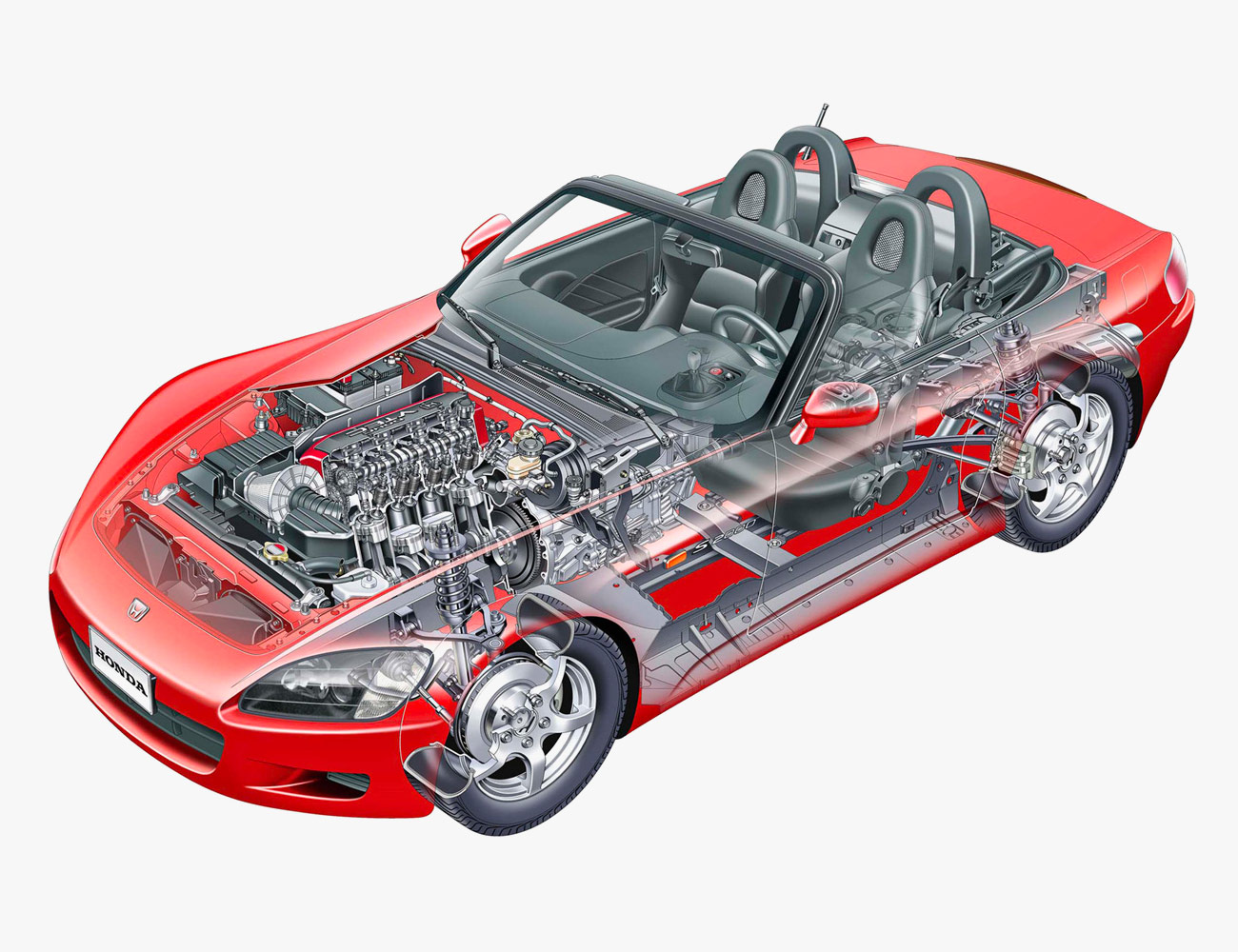
Affordable Dream Car: The Honda S2000 Is an Incredible All-Rounder

Honda S2000
Price When New: $34,995-$37,995
Expect to Pay: ~$15,000-$30,000
Model Years: 1999-2009
Powertrain: 2.0-Liter / 2.2-Liter inline-four; six-speed manual; rear-wheel-drive
Horsepower: 237+
Weight: 2,809 lbs

After England and Italy all but gave up on two-seater sports cars, Japan swooped in and took up the reins. And, arguably, did a better job at it. The Nissan Z cars have enjoyed a long legacy, the Supra just made a comeback and the list starts and ends with the Mazda MX-5. Still, overall, the relatively short-lived Honda S2000 is the pick of the litter. Its high-revving engine, lightweight and low chassis and relative affordability make iconic, classic Japanese performance accessible.

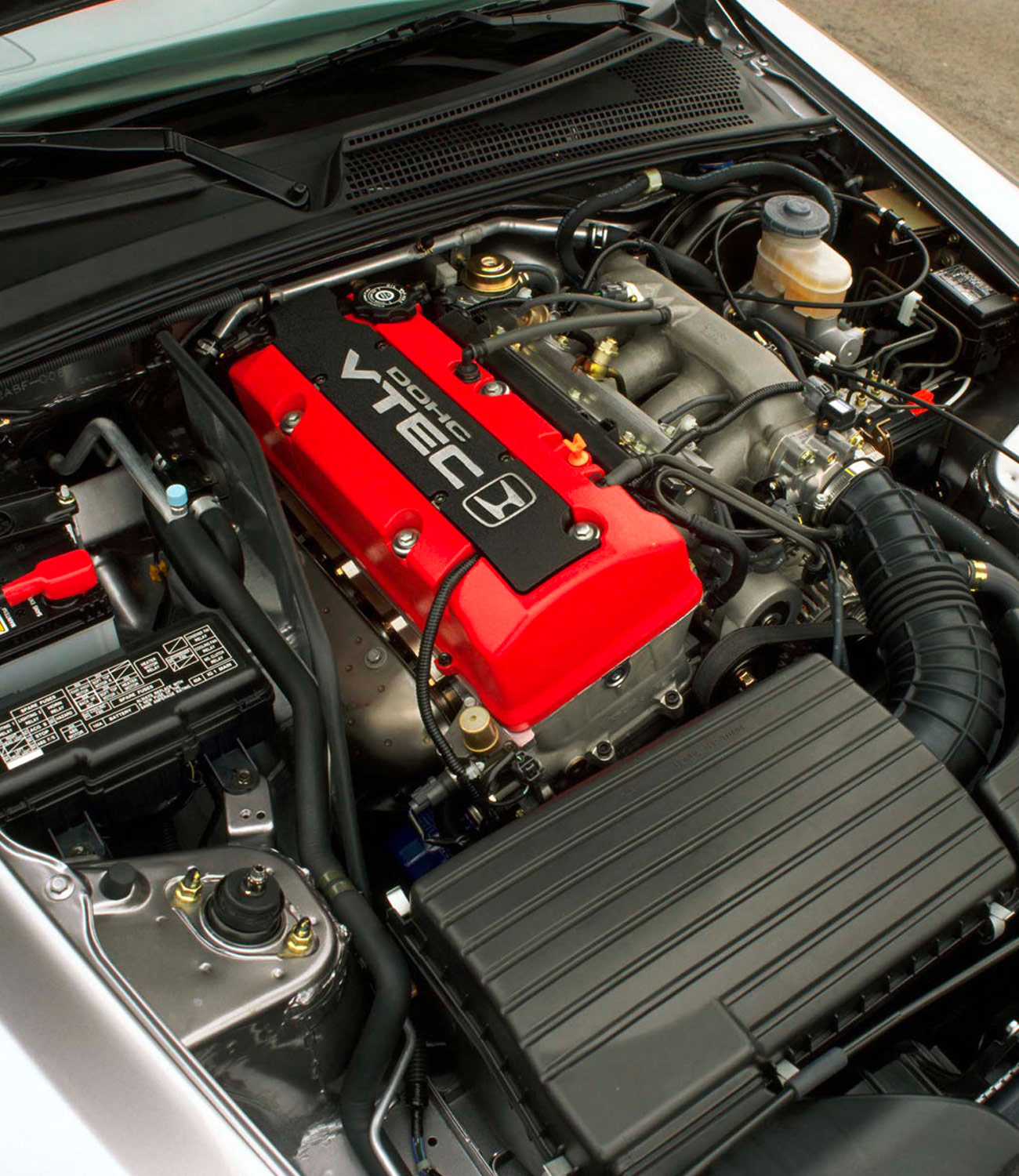
When it was brand new, the S2000 boasted facts and figures that still widen a few eyes compared to today’s sports cars. For instance, the inline-four engine was mounted entirely behind the front suspension to provide a perfect 50-50 front-rear balance. That configuration is considered front-mid-engined — something you’ll find more common in cars named Corvette or Ferrari. The little 2.0-Liter powerplant also revved up to a screaming 9,000 rpm redline and with 247 horsepower on tap (in the Japanese market) it claimed the title for the highest output per liter of any car in the world at the time. What’s more, with only 2,809 pounds to push around the S2000 was in a class of its own — it was almost as light as the Mazda MX-5 but had twice the power.

Unfortunately, the S2000 was one of those stars that burned hot and bright, living only for ten years before Honda called it quits in 2009. It came along at the tail end of as era wherein Japan was absolutely dominating the affordable sports car market. And so, it’s easy to see why it gained such a cult status — it punched way above its weight and for a fraction of what its rivals cost. The same can easily be said for the older Supras, but where those are commanding high five-figure price tags and in some cases six-figures, the S2000 remains humble. The two-seater was one of those cars that was dragged into tuner culture, resulting in many being flogged to hell and back and/or tuned within an inch of their lives.

Find an S2000 of any vintage in good condition, though, and you’ll only spend between $15,000-$30,000. Since production only lasted from 1999-2009, low-mileage examples are still out there, too, and not hard to find. Between price and the performance, it’s the easiest way to experience legendary Japanese performance without crushing your accountant’s soul.

Examples:
eBay: 2001 S2000, w/ 40,415 miles $15,300
KBB: 2001 S2000, w/ 72,626 miles $16,991
eBay: 2006 S2000, w/ 25,923 miles $22,900
CarGurus: 2008 S2000, w/ 61,620 miles $22,991

5 Automotive Trends We Want to See Dominate This Year

Big auto shows like last month’s NAIAS are an excuse for dozens of car manufacturers to all gather under one roof and show off upcoming models, technology, concepts and future plans. It’s also one of the few times throughout the year you’ll get rival names like Ford and Chevy to amicably park their latest and greatest in adjacent square footage. Take a longer look around the show floor and key themes begin to crop up – design details, technologies and vehicle types begin to reveal themselves more as industry trends than unique news from an individual marque.

Trends and technology naturally become obsolete over time. That’s why we don’t see big taillight fins or jet-age styling anymore; instead, we have homogenous CUVs and cars nearly drive themselves. It’s all a matter of fashion and engineering capability. These are the design, technology and style trends we hope to see more of in 2019.

More Factory-Built Overlanders

Jeep has been in on the adventure lifestyle game for years now, offering whole catalogs full of factory add-ons, particularly to make their iconic Wrangler 4×4 even more capable off-road and custom-fit to individual owners’ tastes. Considering how much interest has poured into overlanding in the past few years, it makes sense that other manufacturers are starting to follow suit.

Ford, of course, is introducing the new Bronco later this year, but the Ranger pickup is the Blue Oval’s first modern attempt at building a truck purely for recreational entertainment. It only takes one look at the Ranger’s options list – which includes 30-plus Yakima products like roof racks, roof top tents and bike racks – to realize where Ford is aiming its new mid-sized pickup. Chevy has the Colorado Bison AEV edition, Jeep is doubling down with the Gladiator and Toyota recently revamped the TRD line.

At this point, if a manufacturer is still only considering an overlanding-focused version of its SUV or pickup or just testing the waters with concepts like the Kia Telluride, they’re only delaying the inevitable. If those marques wait any longer, they risk getting left behind — which is why 2019 will be more likely than not see an explosion of adventure vehicles straight from the factory.

Light Weight To Take Importance Over Power

The current horsepower war needs to end soon. Whether you look at the 650 hp Cadillac CTS-V, the new 700 hp-plus Mustang GT 500 or the handful of supercars flirting with or eclipsing the four-digit mark, no matter the price range, it’s getting ridiculous. Not only are the majority of these cars’ power being not being put to use, super-high horsepower is counter-intuitive to the direction the industry is heading as a whole.

McLaren already announced its push to focus more on lightweight technologies rather than “just” cranking up the boost on the turbos. Performance wise, a lighter car means there’s less weight for the engine to move and less weight transfer in corners. Efficiency-wise, less weight effectively means better fuel consumption. Lotus founder Colin Chapman said it best: “Adding power makes you faster on the straights; subtracting weight makes you faster everywhere.” We’re already at a point where most cars crank out a surplus of power, most of it going unused most of the time. A usable level of power combined with a well-tuned, lightweight chassis can be a true track weapon, not to mention wildly entertaining on a canyon road.

Affordable, Good-Looking All-Electric Cars

Compared to 10 years ago, we’re spoiled for choice when it comes to good-looking electric cars. There’s the upcoming Porsche Taycan, the entire Tesla range and the out-of-this-world Rimac supercar. Still, throw in “affordable” as a criterion and you’re left the Tesla Model 3. There are other affordable electric cars, but the Kia SOul EV and Smart Fortwo don’t exactly scream design excellence.

It’s a shame “affordable EV” translates to oversized kitchen appliance with wheels, but 2019 could be a year of change. Ford hinted that an all-electric Mustang car was on the way; the Audi e-Tron inherits Audi’s understated design language; the Volkswagen I.D line looks promising. Electric vehicles are the way forward, but if manufacturers want the masses to adopt them, faster, desirable, emotion-evoking designs are a nust.

More “Back to Basics” Trim Sports Cars

BMW recently made it known that the next BMW M3 and M4 will come with a new “Pure” trim level featuring a manual transmission and rear-drive-only drivetrain. The Pure trim will also feature basic interiors, going so far as to delete some creature comforts to save weight and lower the price. This could be in response to the success and applause Porsche garnered when it announced its Touring trims for the 911 and 718 ranges which also focused more on the driving experience rather than low lap times.

The world of sports cars is increasingly becoming laden with computer aides, electronic steering systems, active suspensions and aerodynamics. While all of that technological progress is inevitable, it can seem overwhelming, especially for purists. There aren’t any doubts the Pure M cars will be a hit like the Porsche Touring models. Hopefully, more marques catch on and offer similar trims.

Hybrid Power for More Affordable Performance Cars

Aside from the Acura NSX, the only performance cars using battery power to suppliment engine power are multi-million dollar supercars. Of course there are plenty of hybrid economy cars and sedans that deploy battery power to help the engine along, but more for efficiency than speed. When it come to outright performance, the technology comes at a price.

However, this may be the year affordable performance cars will finally see hybrid powertrains make their way to the segment. Based on patents filed by Chevy and Ford, both the highly anticipated mid-engine Corvette and an upcoming Mustang are rumored to get hybrid power. The current-generation Porsche 911 was built with a hybrid model in mind and Porsche all but confirmed it will be the quickest accelerating 911 in history. Once these top-tier sports cars take on the technology, it’ll only be a matter of time before it trickles down to even more affordable performance cars, but expect the trend to get its start this year.

Note: Purchasing products through our links may earn us a portion of the sale, which supports our editorial team’s mission. Learn more here.

Small, High-Performance SUVs are the New Hot Hatch

SUVs are not a fad. They are the present and future. Buyers want, above all other considerations, ride height and robust cladding. Automakers are reorienting themselves as SUV companies first. The definition of “SUV” is broadening, with slightly raised vehicles expanding into every non-supercar niche as traditional body styles wither and die on model trees. EVs, judging by current concepts, will look a lot like crossovers.

That sounds bleak for the car industry. But, it won’t be all bad. SUVs share platforms with cars. They don’t need to sacrifice performance and efficiency. “SUVs” can include vehicles heavy on the “sport” and low on the “utility.” While we may hear the death knell for many sedans in the near future, the hot hatchback segment looks like it will not just survive but flourish, under a different name. Freed from the “hatchback” stigma, de facto hatchback SUVs can be sold as full-fledged luxury cars.

Mercedes offers the AMG GLA 45, a “compact performance SUV.” The GLA 45 puts out 375 hp and 350 lb-ft of torque. It can accelerate from 0-60 mph in 4.3 seconds. You can add an “AMG Gloss Black” rear spoiler for it to look extra cool. The GLA 45 is five doors and small (same rough footprint as a VW Golf, less cargo and passenger volume). It looks just like a hatchback. But, again, it’s a “compact performance SUV” which carries no stigma and permits Mercedes to charge $50,000-plus for it.

BMW chose a similar direction with the m35i edition of the X2 “Sports Activity Coupe.” It’s not a full bore BMW “M” car. But, it is BMW putting its most powerful four-pot into its smallest SUV, generating 302 hp, 332 lb-ft of torque and a sub-5.0 second 0-60mph time. Lexus, with the UX begging for more power, is having “active conversations” about an F-brand crossover.

Audi is not yet in this hot SUV segment, but expect them to enter soon. Q3 sales declined 18 percent year over year in 2018, while Q5 and Q7 sales carried the water. Efforts to liven up the compact SUV segment are afoot. Reports have Audi bringing what looks like an RS Q3 to the American market with the inline-five from the RS3. The first generation Q3 had an RS variant (362 hp) in Europe. The hotter engine could also be paired with the potential Q4 coupe recently spotted.

A de facto hot hatch would be a bit of a departure for Volkswagen AG. Lamborghini Urus aside, VW brands have taken a traditional, approach to the SUV. The Touareg does not even feign being anything but a practical kid hauler. Porsche has brought sporty features to the Cayenne, though that’s a much larger car. Even the smaller Macan is in a much heavier weight class.

A great automotive thing is occurring. Luxury automakers, under a different guise, are finally giving the hot hatch its due effort. Purists, however, will struggle to enjoy it. Acceptance means admitting defeat and joining the ride height obsessed hordes. Some car enthusiasts may still prefer holding a candle for the RS4 Avant wagon that isn’t coming.

Lexus LC 500 Flare Yellow Edition

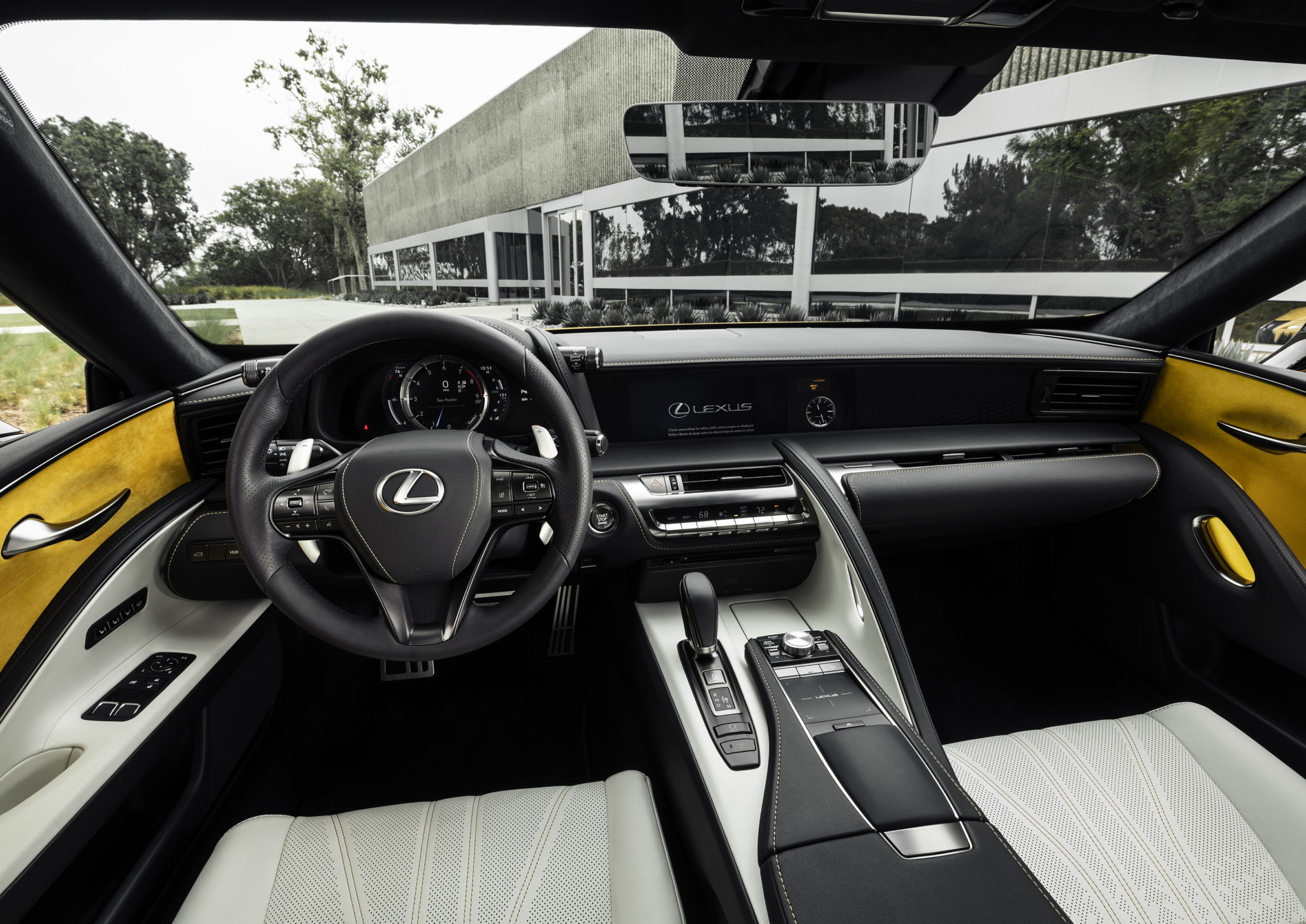
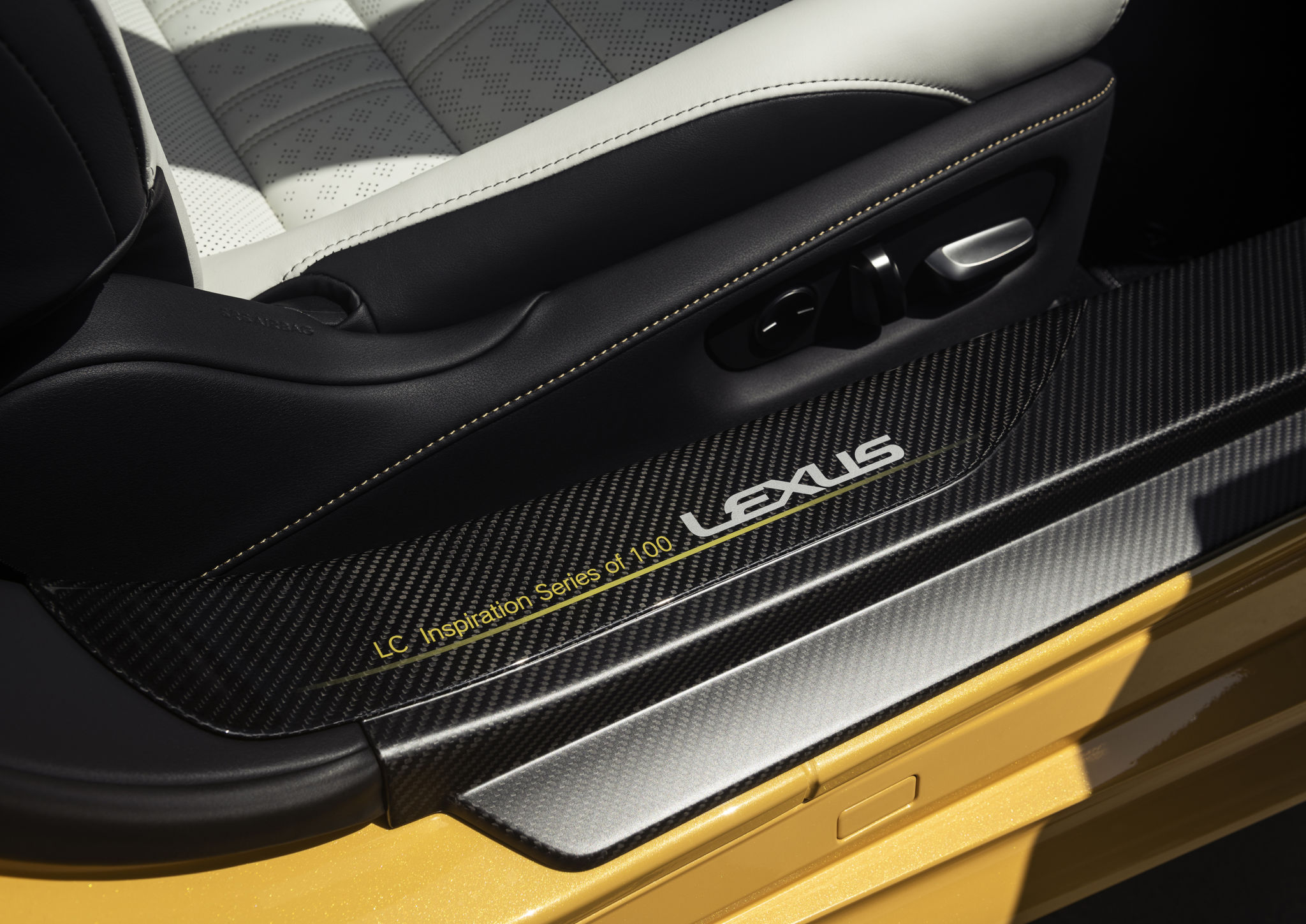
This is the 2019 Lexus LC 500 Inspiration Edition, in a bizarrely alluring Flare Yellow paint job. It’s one of the most notable sights at the Chicago Auto Show.

First seen as a concept at the Monterey Car Week, the coupe goes for sale in April for $106,210. Folks in the United States should act fast, though. Lexus is only bringing 100 of these bad boys stateside.

Apart from its striking color, the LC 500 Inspiration Edition is flecked with exposed carbon fiber elements. You’ll find those on roof and the lower grille insert. You’re also looking at a set of 21-inch wheels with an array of Y-shaped spokes. Needless to say the black wheels offer a sharp contrast to the car’s overall coat. It almost look like a sleeker version of Bumblebee.

The yellow bleeds inside. You’ll find yellow Alcantara door panel inserts that complement the exterior. The seats feature white semi-aniline leather upholstery with yellow stitching accents, no less.

Nothing special on the powertrain department, just the same as a regular LC 500. The 5-liter V8 engine tops up to 471 horsepower and routes to the rear wheels through a 10-speed automatic. The coupe hits zero to 60 in just 4.4 seconds.

In addition to the car, buyers get a garment bag with Flare Yellow lining and matching stitching.

It’s not clear if Lexus is planning to put this LC 500 variant into mass production. It’s seriously hinting about it, though. We’re totally here for it.

CHECK IT OUT

Photos courtesy of Lexus

Audi Performance Might Find Its Way to the New VW Golf

We recently declared the current (Mk7) VW Golf one of the best out of the entire family tree. But, just as those words started to warm our screens, new reports suggest the next generation Golf lineup is about to get even better.

Over in Germany, Auto Bild claims the next Golf will be supplemented by a standard version of the GTI with a 245 horsepower powerplant but also, apparently, a new, additional performance trim will crank out around 300 horsepower. And according to the VW website, the GTI Performance would be nipping at the heels of the current Golf R, which in turn suggests that at an even higher-performance R model is in the pipeline too.

This all might sound like we’re connecting red string, but last year a “Golf R” was spotted testing, supposedly powered by what sounded like the Audi five-cylinder currently on duty in the RS3. It’s possible the VW Golf R420 project is alive and well.

It sounds insane to put 400 horsepower into a tiny hatchback, but if VW gives the top-tier Golf the same all-wheel-drive system from the R (which is basically Audi Quattro) it should be one hell of a hot hatch. The supposed R420 will definitely come with a higher price; the question is, by how much? The current Golf R starts at $40,395 and the Audi RS3 sits at $56,200. It wouldn’t be a stretch to think the R420 will get a price tag just below the RS3 — even with the Audi technology and performance, the four-ring badge is still worth a few hundred dollars on today’s market.

We’d expect more news and information on the 2020 Golf lineup to trickle in over the summer. The official reveal of the next-generation Golf will likely take place at this year’s Frankfurt Auto Show in September.

An All-New Tacoma Is Coming. Here’s What Toyota Should Fix

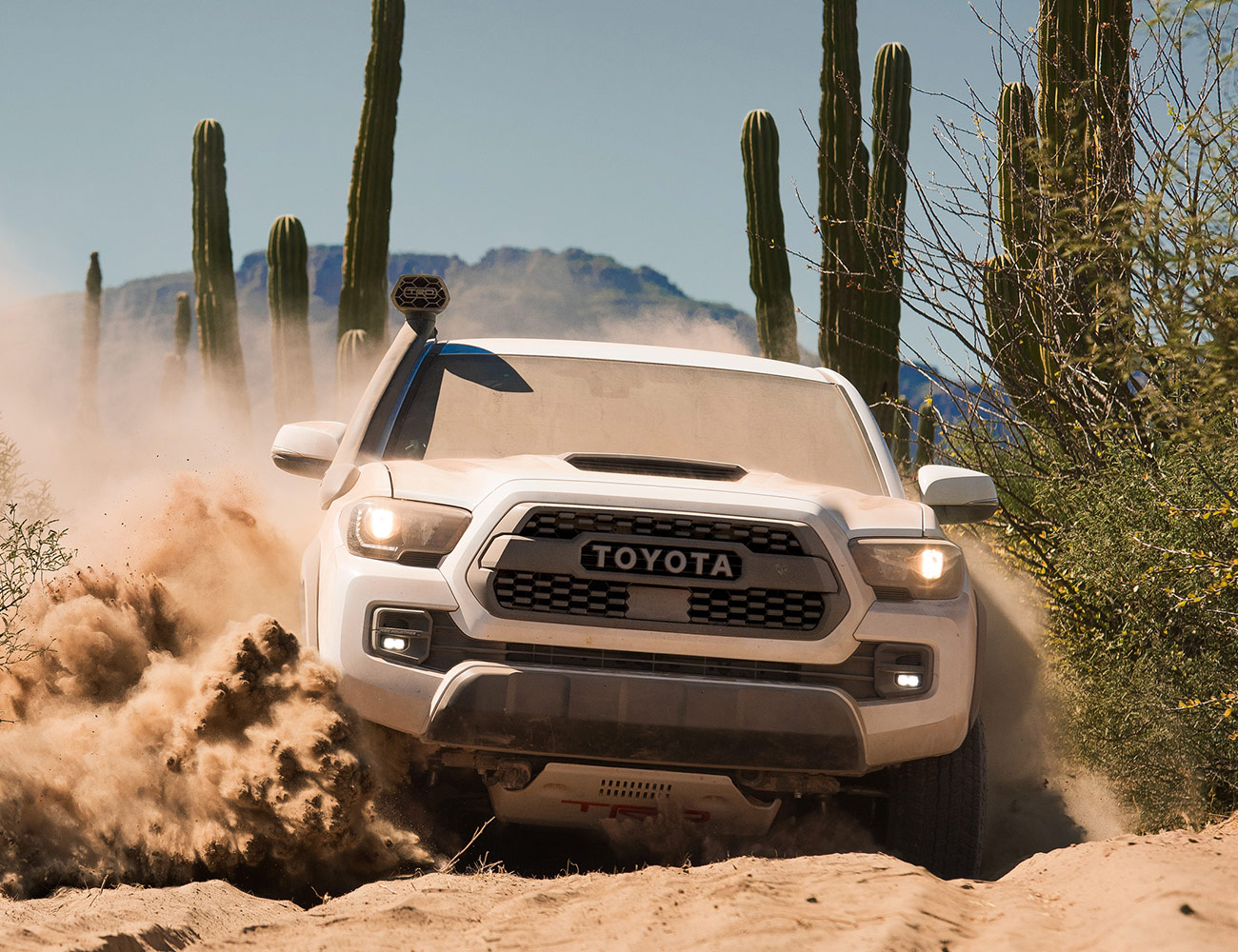
Toyota teased the 2020 Tacoma on Twitter ahead of its 2019 Chicago Auto Show reveal. Normally, Toyota would not change much. The Tacoma is a charming, capable off-roader. New Tacomas sell like crazy. Used Tacomas have absurd resale values. The company has owned the midsize truck segment. With sales up 24 percent in 2018, Toyota’s major Tacoma issue was producing enough of them to meet demand. Why take any risks?

Moving forward, however, that paradigm for Toyota may change. Big Three automakers are coming after the Tacoma’s market share. Chevy has a well-regarded competitor with the Colorado ZR2. Ford plans to resurrect the Ranger this year. Jeep is launching the Gladiator as well. The off-road-oriented midsize truck segment will get much more competitive.

The Tacoma is charming. But, it’s far from perfect. Here are a few weaknesses Toyota should address if changes move beyond what appear to be new headlights.

The Automatic Transmission

Most new trucks have modern, intuitive automatic transmissions. The Tacoma’s six-speed automatic is dated and brutal. It exacerbates the mediocre V6 powertrain, which is the bigger engine. The Tacoma accelerates and climbs with the verve of a just woken teenager. Highway passing is an unpredictable adventure. The persistent low rev upshifting for fuel economy does not improve fuel economy that much. Thankfully, Toyota has kept the six-speed manual as an option.

Lack of Luxury

Toyota builds trucks to be durable. Tacomas in their natural offroad habitat must be easy to clean. Still, the Tacoma veers too hard toward the utilitarian, airport terminal end of the spectrum. There’s a lot of cheap plastic. Even cheaper materials could look smarter with a bit of styling. Toyota could raise the luxury a bit at the top end to match the competition. If a Volkswagen feels like an Audi inside, the Tacoma feels like what should be a much older Toyota. Power seats are something to get excited about.

Apple CarPlay and Android Auto

Toyota has been futzing around with its proprietary Entune infotainment app suite through multiple generations. Like every proprietary automaker system, the setup is wonky and the functionality is minimal. The device in every potential buyer’s pocket will always be simpler and more capable. Toyota has been a notable laggard about adding Apple Carplay and Android Auto when that is all customers want or need.

Cabin Space

Confined space can charm in your impeccably restored British roadster. It should not be an endearing quirk of your brand new truck. The dual cab gets crowded quickly with multiple adults and an infant car seat. A Tacoma does not need to be cavernous, but it could be more comfortable. And, hey, a little extra storage wouldn’t hurt either.

10 Vehicles Have Been Named the Best Value in America

Vincentric has released its 2019 Best Value in America Awards, and the list of well-built cars, trucks and SUVs is populated, thankfully, by a terrific number of truly desirable picks. The 10 below are our favorites from the list, but the full group consists of 37 in total.

In brief, the Best Value in America Award is determined by measuring “cost-of-ownership using eight different cost factors: depreciation, fees & taxes, financing, fuel, insurance, maintenance, opportunity cost and repairs. Using a statistical model, winners were identified by measuring which vehicles had lower than expected ownership costs given their market segment and price.”

If you’ve already got one or more of the below, well done. And if you’re in the market, this is a great place to start your search.

Passenger Cars

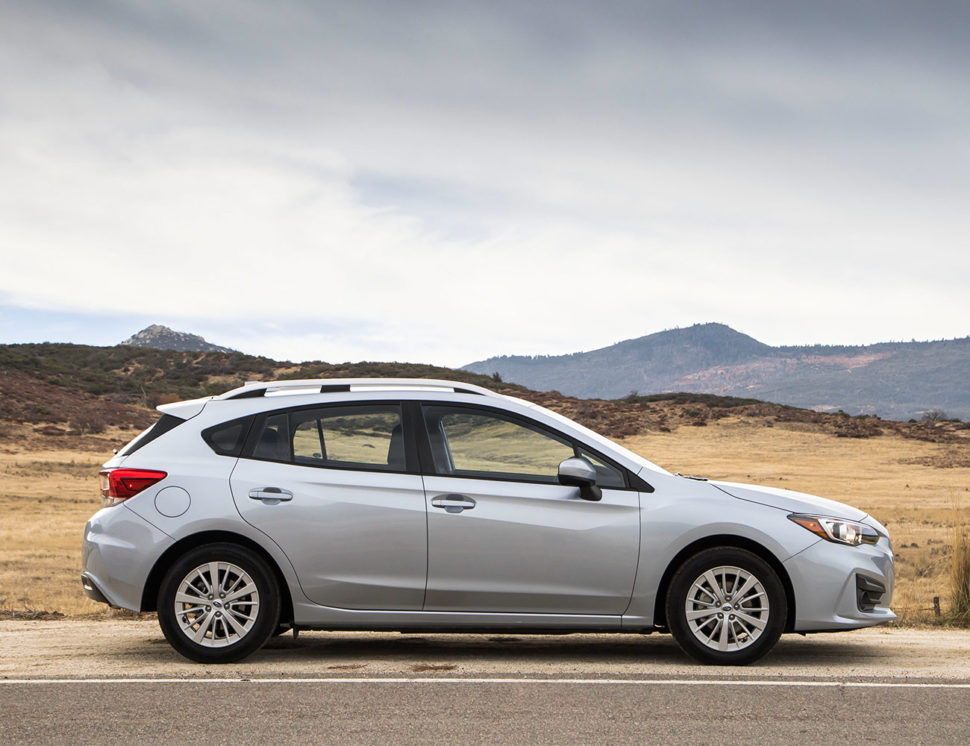
Compact Hatchback: Subaru Impreza

Read Now: We receontly named the Impreza’s big brother, the Subaru Outback, the best family car under $30,000.

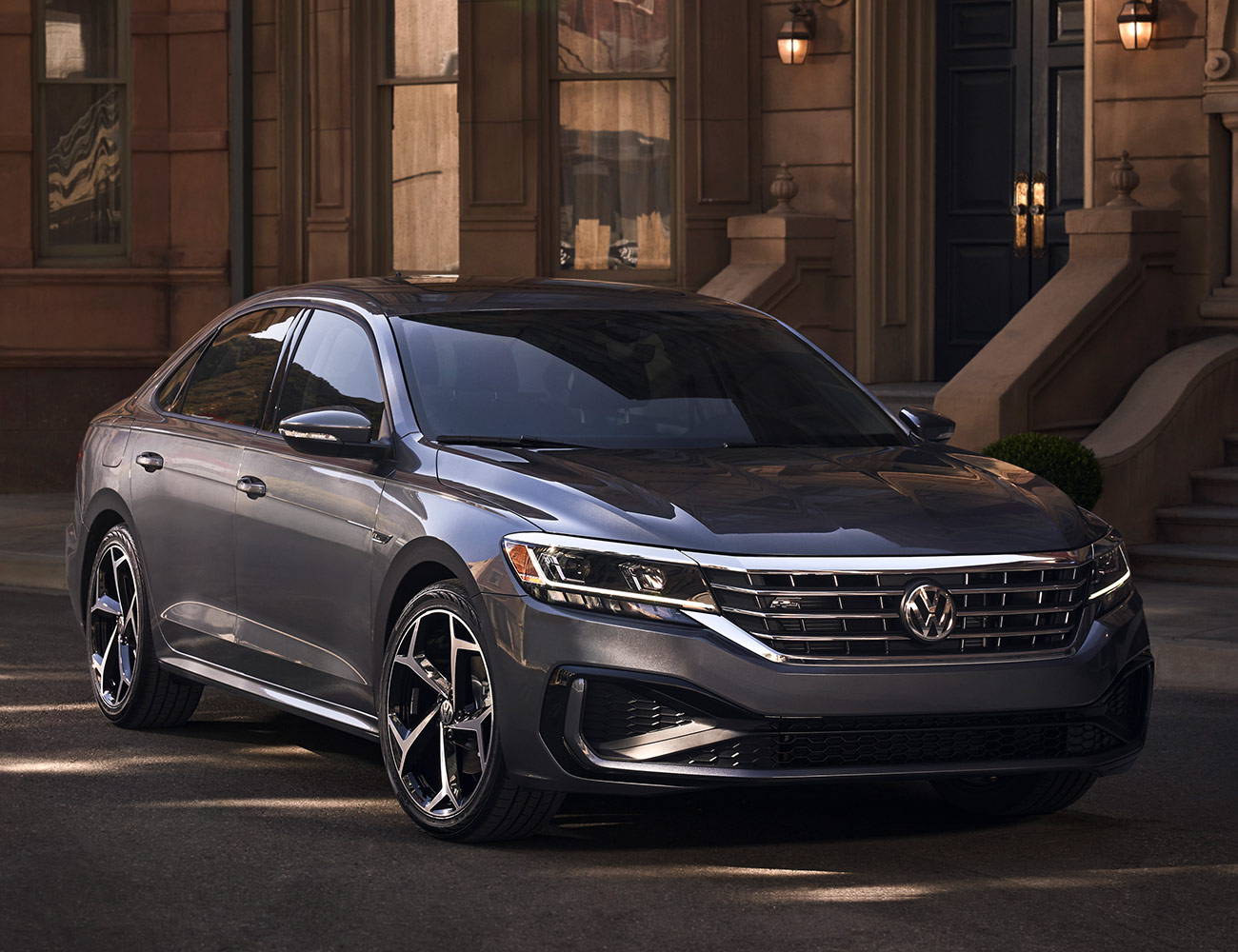
Mid-Size: Volkswagen Passat

Read our overview of the all-new, forthcoming 2020 Passat here.

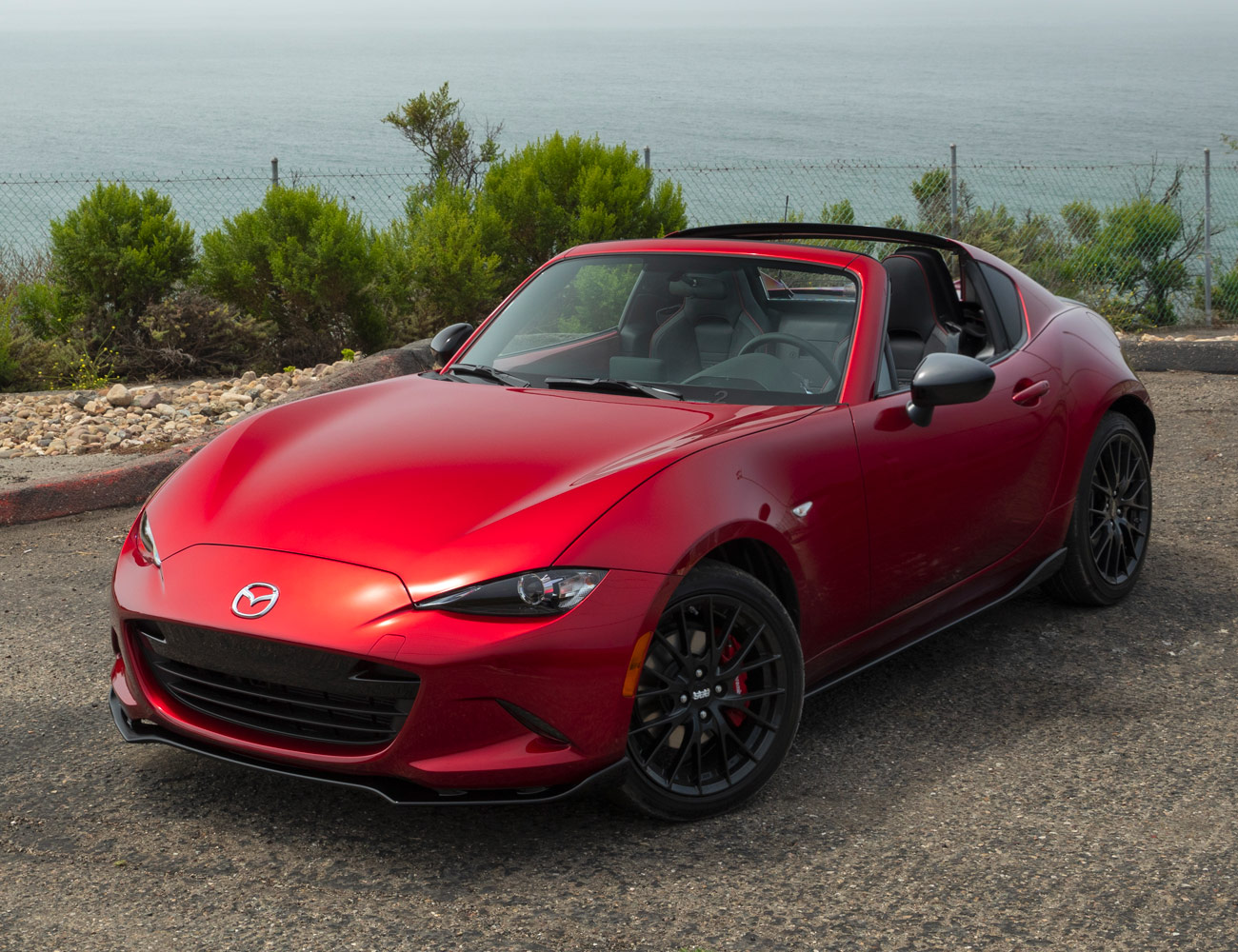
Sports Car: Mazda MX-5 Miata

Read our review of the Miata RF here.

Luxury Cars

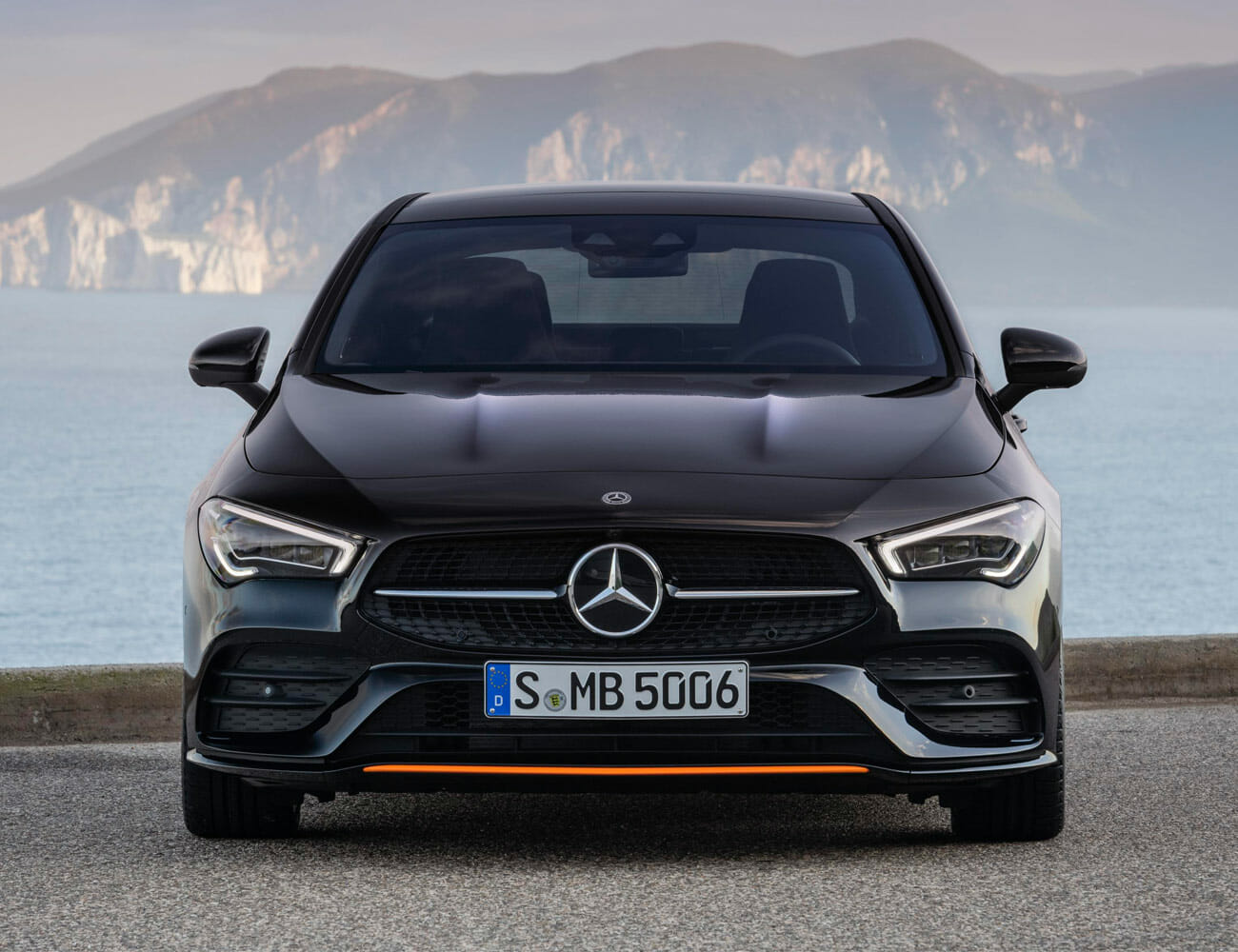
Luxury Compact: Mercedes-Benz CLA-Class

Read our review of the 2020 Mercedes-Benz CLA here.

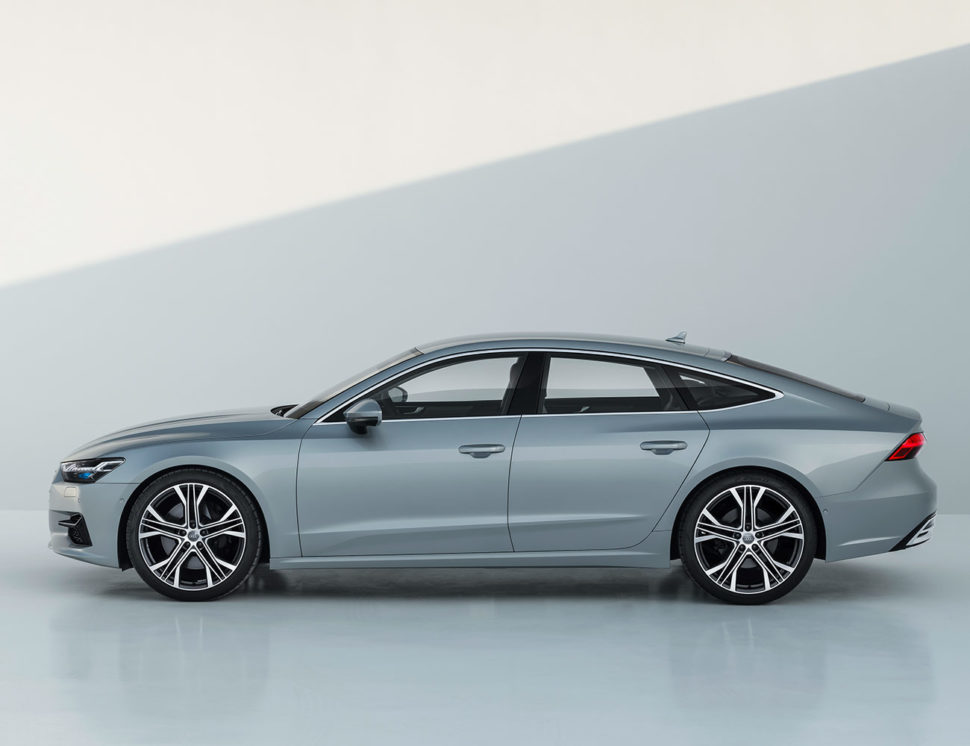
Premium Luxury Mid-Size and Large Sedans: Audi A6 and A7

Read our review of the 2019 A6 and A7 here.

|

SUVs, Crossovers and Vans

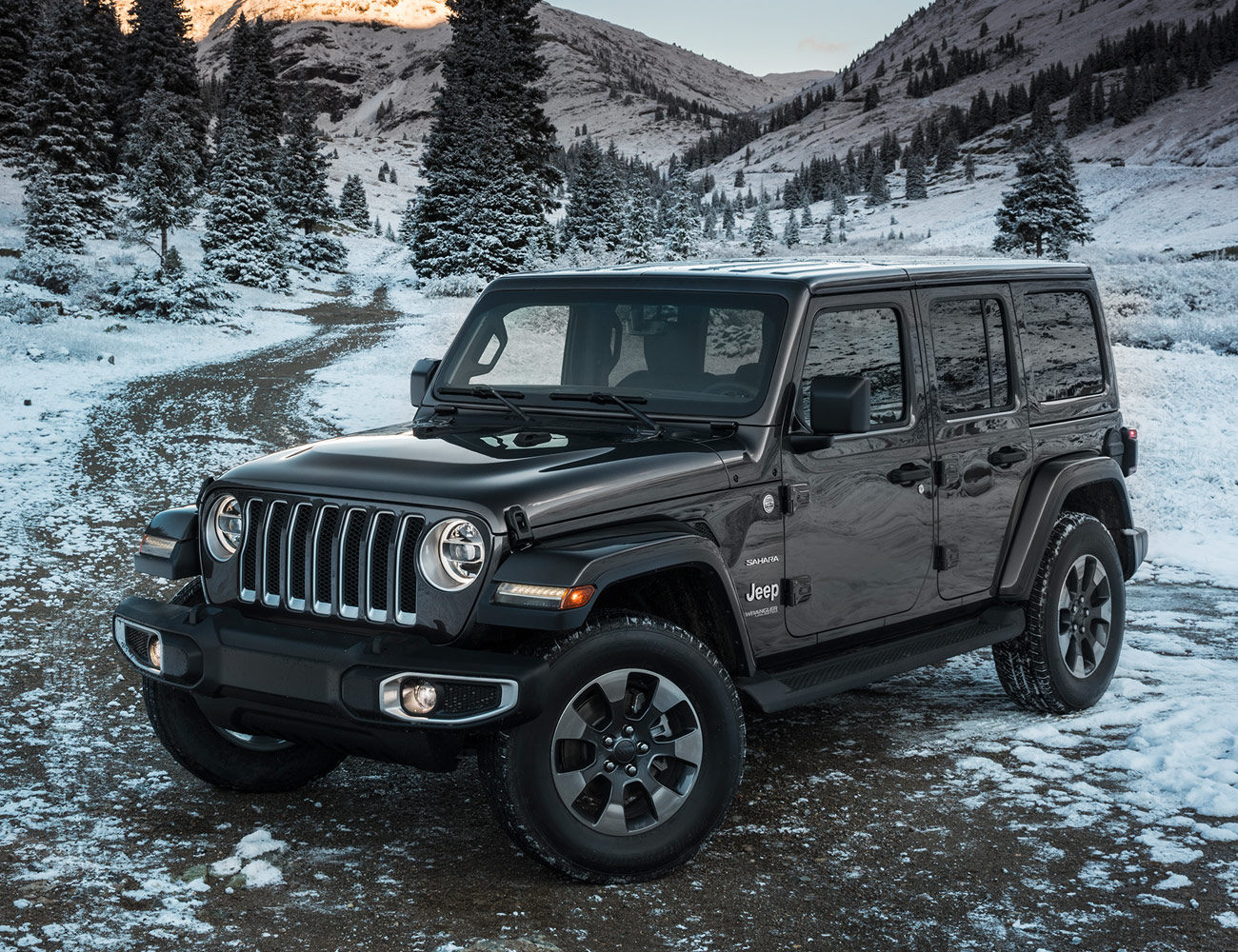
Compact SUV/Crossover: Jeep Wrangler

Read our review of the new Jeep Wrangler here.

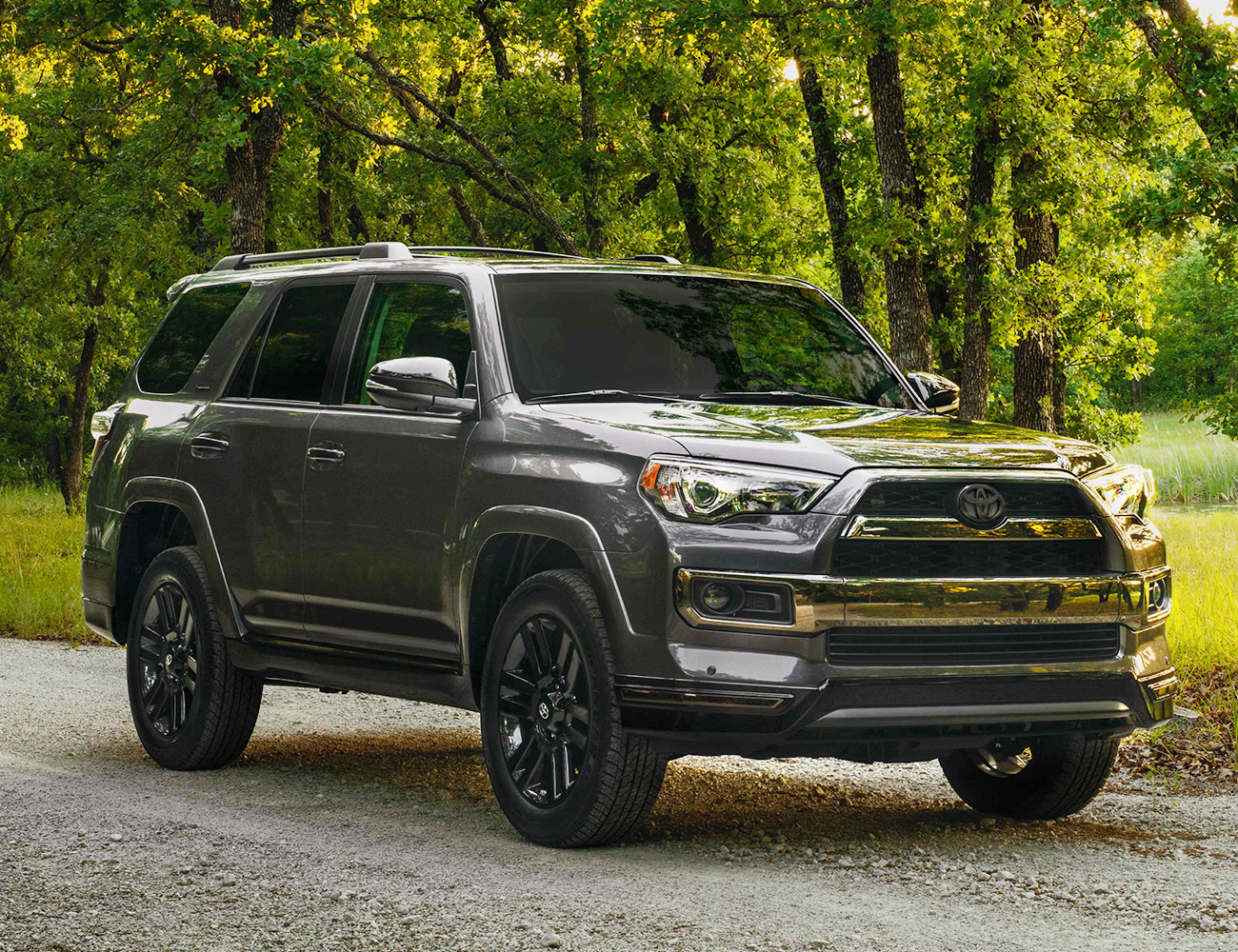
Mid-Size SUV/Crossover: Toyota 4Runner

Read our overview of the Toyota TRD SUVs and trucks here.

Luxury Crossovers

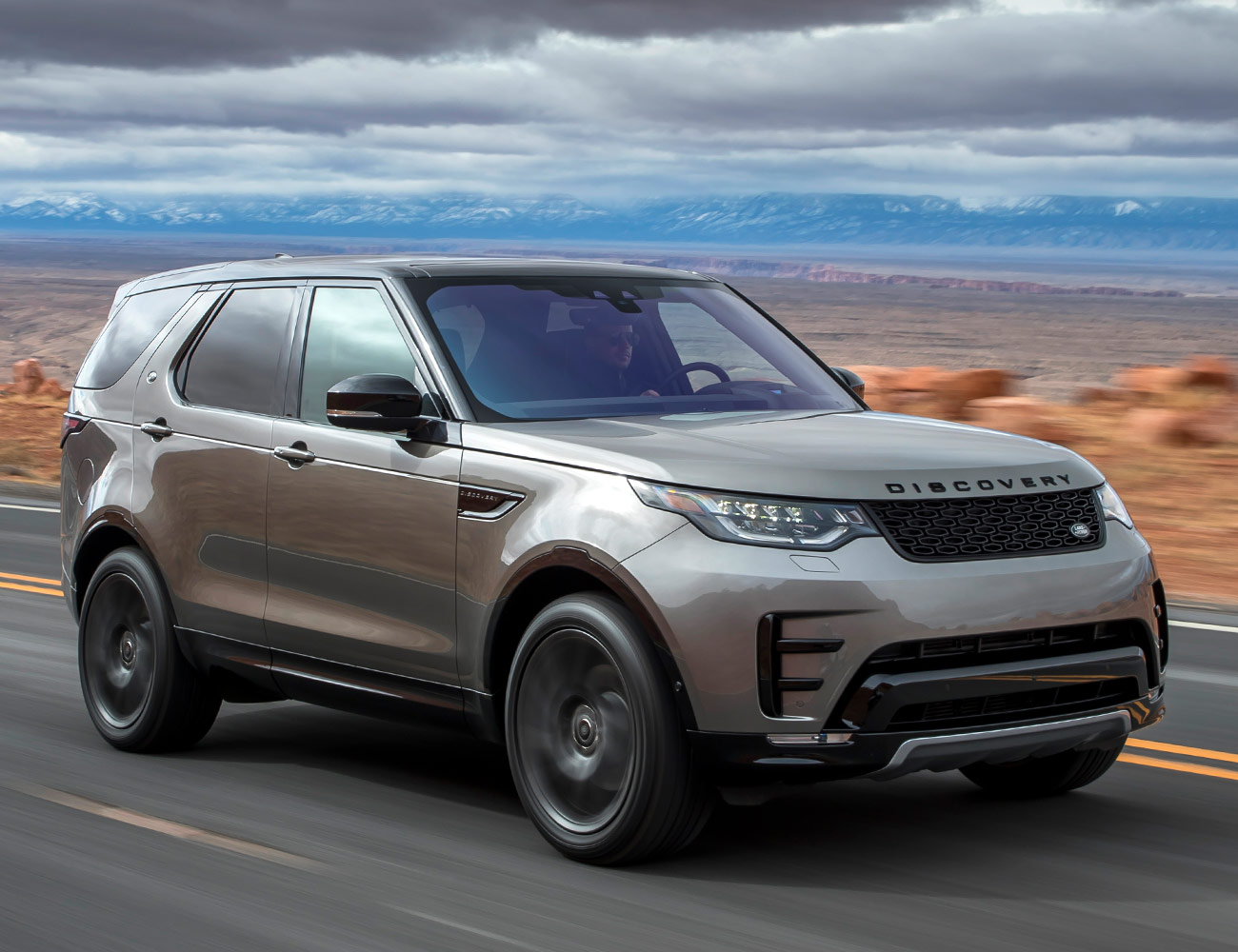
Luxury Mid-Size SUV/Crossover: Land Rover Discovery

Read our review of the Land Rover Discovery here.

Trucks

Small/Mid-Size Pickup: Toyota Tacoma

Read our review of the Toyota Tacoma TRD Pro here.

Full-Size 1/2-Ton Pickup: Ford F-150

Read our review of the Ford F-150 Raptor here.

The 2016-2019 VW Golf GTI May Be the Best Ever

Base MSRP: $27,595
• 228 horsepower and 258 lb-ft of torque
• Exceptional balance and utility
• “The GTI is subtle and understated, a car for adults.”

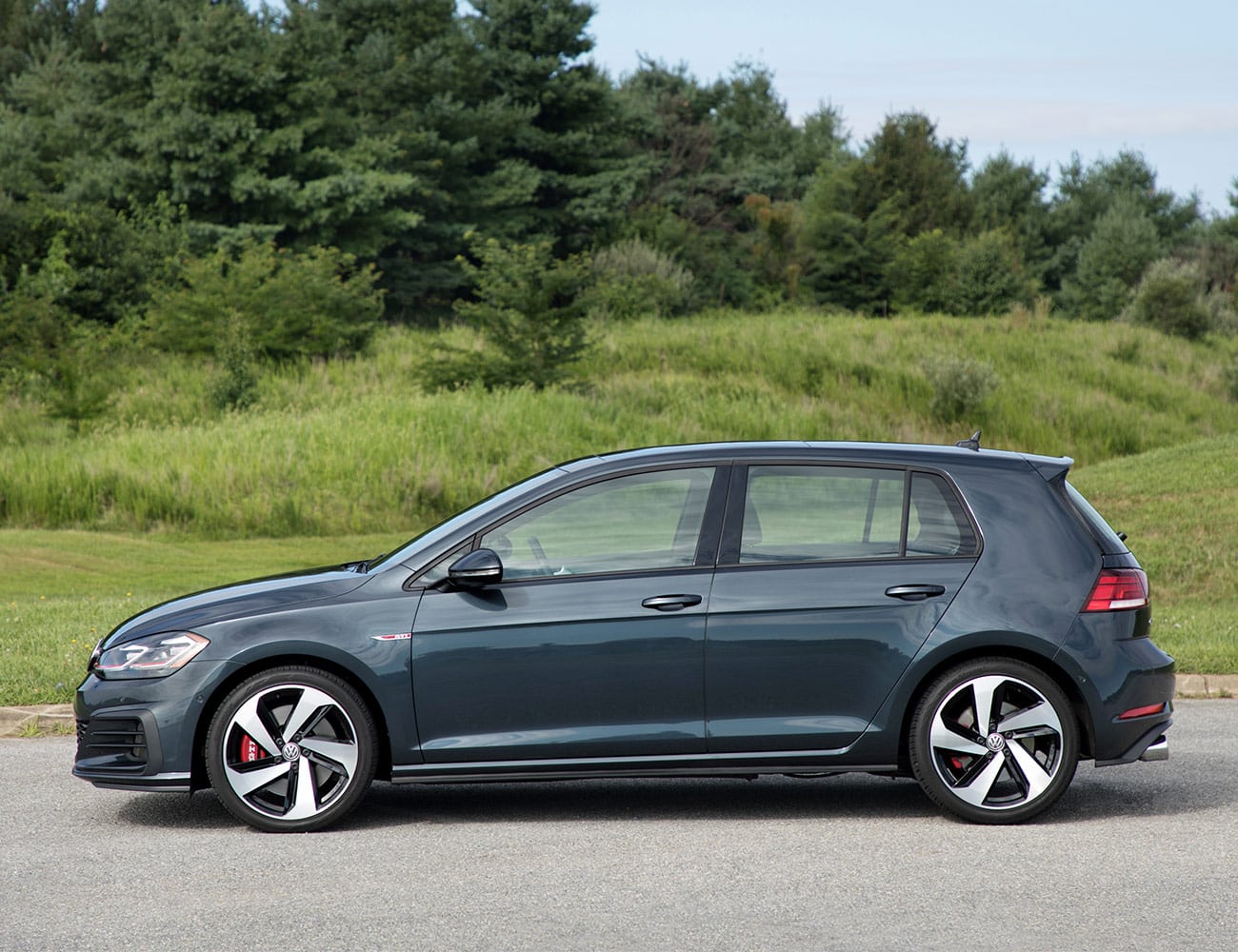
The Volkswagen Golf, as James May noted in his BBC documentary series, is the preeminent people’s car. The well-regarded hatchback offers fun driving and practicality at an affordable price. The Golf has seen off all comers during a production run approaching 50 years. It killed off the old Beetle. It will bury the new Beetle, which, truth be told, was a Golf beneath its retro styling.

German engineers designed the Golf. So, it took all of a few minutes before someone inserted a more powerful engine, tuned it for racing and stumbled upon something brilliant. That brilliant creation became the Golf GTI. The Mk1 version debuting in 1975 became an icon, birthing a new market segment for the “hot hatchback.” The latest and perhaps greatest GTI, the Mk7, should prove a collectors’ item in its own right.

|

VW has come up with some goofy catchphrases for the current GTI. A brief sampling includes “the stylish hot hatchback” and “raw power, fully cooked,” whatever that means. The trouble stems from VW not being able to touch on what the Mk7 GTI is: perfection. Doing so would leave no reason to upgrade to the Golf R (raw power, burnt?). It would make buying a standard Golf or any other Volkswagen, by definition, imperfect.

The GTI has a proven basic formula: precise handling, peppy engine with strong torque and a smooth manual transmission. VW has refined that formula for 40-plus years. Some batches have been a touch weak, heavy or outmoded. But, the Mk7 came out just right, capturing all of the car’s heritage and accrued wisdom. It may be the best-balanced car on the road, not only for its price point.

With 228 horsepower and 258 lb-ft of torque, the GTI offers the exact power optimal for exuberant driving. You can push the GTI on real roads at speeds that won’t see you carted away in handcuffs. Automobile writers have extolled the car’s handling with every synonym of the word “sublime.” It rounds corners masterfully. Despite packing all that performance, the GTI is also still a Golf. You can park it easily, help a friend move and get a well-equipped base model for less than $30,000.

The GTI’s style exhibits its refinement. Other “hot” cars (the Honda Civic Type-R, for example) announce their presence like young rock stars, strutting around in the automotive equivalent of indescribably tight, red leather pants. The GTI is subtle and understated, a car for adults. It has a clean exterior and an elevated interior. What flair the GTI does offer – the red grille lipstick, the tartan seats, the golf ball shift knob – is traditional. You don’t know what you’re looking at with the GTI unless you know what you’re looking at.

The Mk8 GTI will arrive in 2020. Changes, mild and drastic, will be afoot. The best GTI we have yet seen – the current Mk7 – may be the best we ever get, or at least the purest incarnation of the GTI’s initial vision.

VW developed the new GTI during an awkward transition period. Dieselgate has cost Volkswagen AG $33 billion and counting, sapping resources and forcing a complete reorientation of production strategy. VW plans to phase out the combustion engine in 2026. Meanwhile, trucks and SUVs continue dominating the market. Plowing R&D into further perfecting an already perfect gasoline-powered hatchback, when well enough would do, makes little sense.

Golf sales have dipped in the U.S., so moving toward the market may work against getting an optimal GTI. To sell more Golfs, the hatchback will have to get longer and wider to be more viable families. The purist-favored three-door alignment may be scrapped altogether. We can presume VW won’t drop the manual (yet). But, development will go toward more fuel-efficient hybrid powertrains and improving the automatic transmission. VW has also hinted at a fully digital cockpit overhaul, which, if it does not annoy present buyers, will date the car, as technology tends to do, in the decades to come.

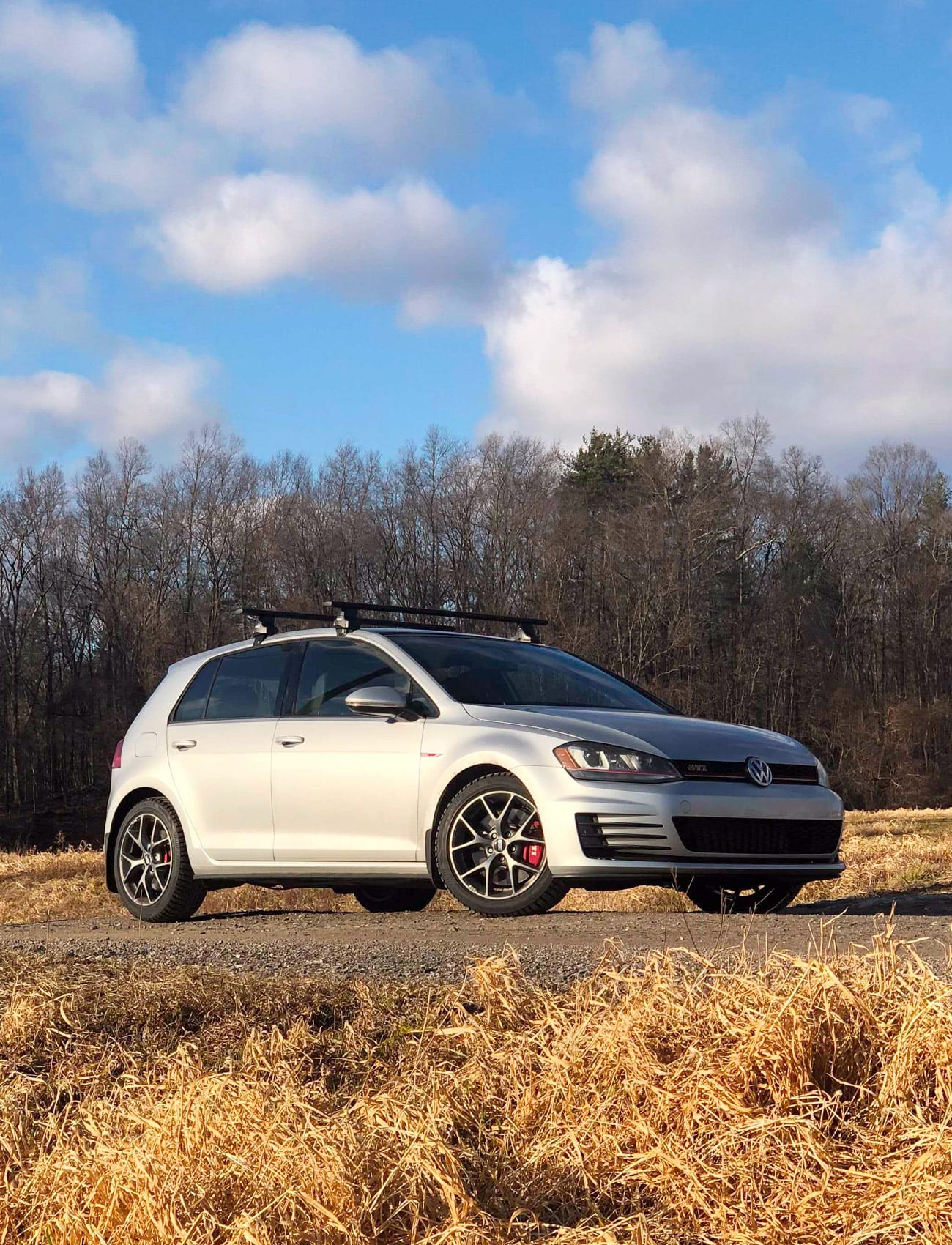
An MK7 GTI, tastefully modified for winter conditions – Photo: Hunter Kelley

If the base Golf goes more family-friendly, the Volkswagen likely would differentiate the GTI further by making it hotter. Expect more power. Ditto for more aggressive styling. The “Rabbit” and “Autobahn” trims, as well as the bevy of metallic paint options, may prove a harbinger of what is to come. It may be faster. Though, the balance and sophistication of the present model, not to mention the reasonable MSRP, may be difficult to preserve.

The Mk7 GTI arrived when Volkswagen was a car manufacturer and the best modern technology went toward producing an optimal driving experience. The Mk8 GTI will be a showcase for the Volkswagen Group’s broader ambitions as a mobility-oriented tech firm. The driver will always be connected, for better or more probably worse. We may get objectively more efficient and better-performing GTIs moving forward (and the climate will be better for it). But, they won’t feel the same.

Cars of the future will be electric or powered by other eco-friendly means. Many will be automated. Fewer than now will be individually owned. Driving a classic internal combustion car will be an expensive pastime, if not outlawed in some areas altogether (Aston Martin is prepping for that eventuality).

“Ludicrous” performance will be obtainable from EVs. The gas-powered cars that still resonate will be those that provide a unique, well-tailored and deep-rooted driving experience that disconnects the driver. The Mk7 GTI, perhaps the best Volkswagen creation to date, does that.

So, cover a Mk7 Volkswagen GTI in bubble wrap and store one in a climate-controlled garage, right? No. Save for retirement like a normal person. Use the GTI as the extraordinary daily driver it was designed to be.

The Complete Audi Buying Guide: Every Model Explained

Audi is a German luxury car manufacturer based in Ingolstadt and owned by Volkswagen. The Audi name dates back to 1910. VW consolidated multiple companies into the modern “Audi” in 1969. Audi made its name in motorsport with the four-wheel drive rally champion Audi Quattro in the early 1980s. Volkswagen has positioned Audi as its upmarket competitor for Mercedes and BMW.

Audi follows a simple naming format, for the most part, employing letters and numbers. Base models have an “A” designation. Sportier luxury models get an “S.” The sportiest, pared-down “RennSport” models get an “RS.” Audi uses “Q” for its SUV line. The TT, R8, and e-tron exist outside that nomenclature.

Audi pairs letters with numbers 3 through 8. Higher numbers can mean different things. It could mean a larger, more powerful car. It could mean a near identical car with a different body style. Whatever the distinction, it will be more expensive. Most Audi models offer Premium, Premium Plus, and Prestige trim levels with added tech and luxury features.

The major Audi news for 2019, besides canceling the European vacation delivery option, is the company dropping the manual transmission entirely from the U.S. market or the first time.

Audi Terminology

Cabriolet: French for “convertible.” For Audi, a Cabriolet has a back seat.
e-tron: This is Audi’s electric performance sub-brand. Cars with an “e-tron” label employ either a hybrid or full-electric powertrain.
quattro: Audi’s trademark all-wheel-drive system. Audi spells it with a lowercase to distinguish quattro from the Audi Quattro model. Almost every Audi vehicle except the barest base models come equipped with it.
Sportback: This is Audi’s preferred term for the fastback body style with a continuous slope through the back end of the car. The exception is the A3 Sportback, which is a hatchback. Sportbacks cost significantly more than sedans.
TFSI Turbo Fuel Stratified Injection. This is VW engine technology. The engine is turbocharged. The engine also directly injects fuel into the combustion chamber. This makes the engines more powerful and more efficient.

Buying Guide

A3, S3, and RS 3
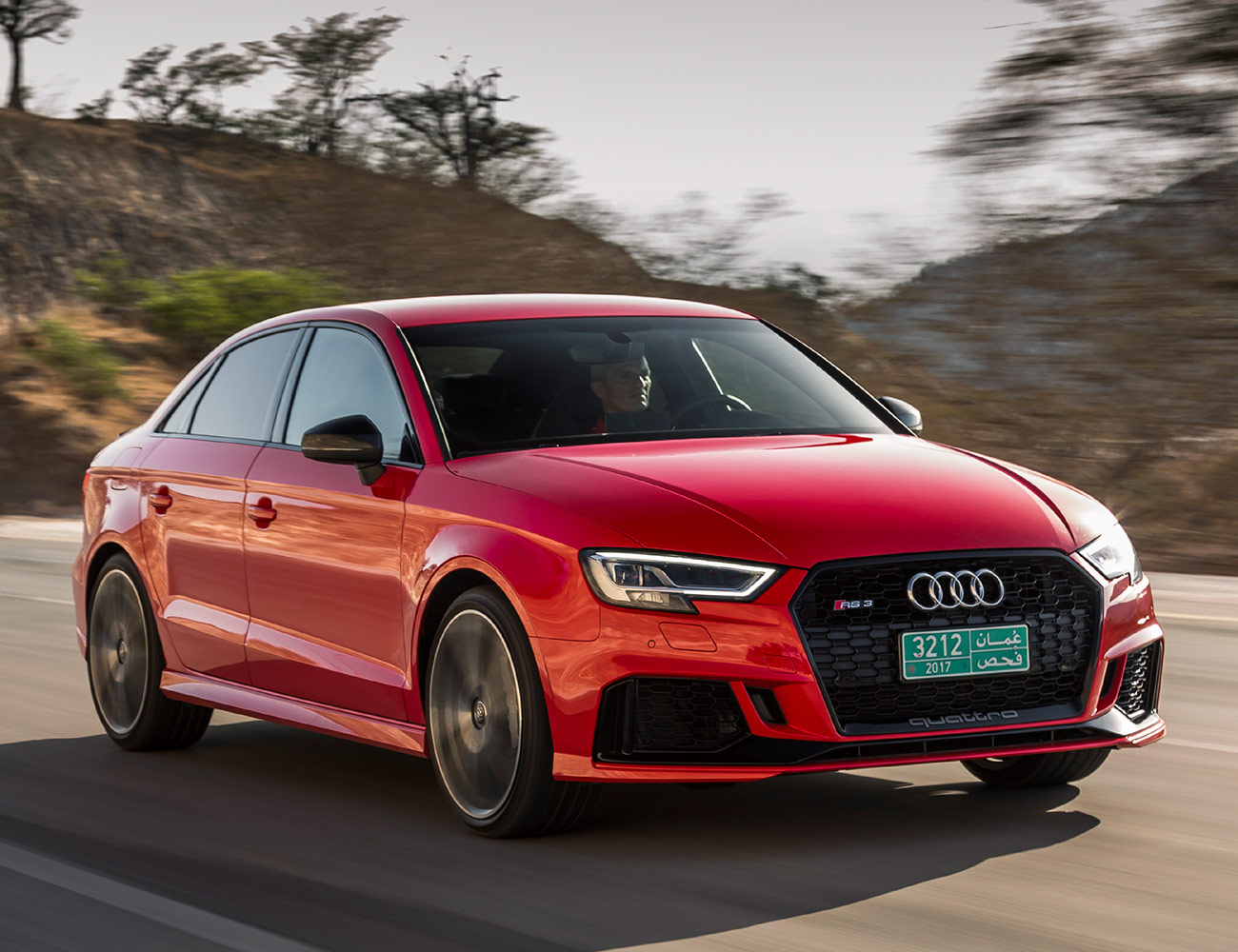
The A3 is the subcompact, entry-level Audi. It comes in three U.S. versions. A3 sedans and cabriolets come in either 184 hp FWD or 228 hp quattro AWD versions. The A3 Sportback e-tron uses a plug-in-hybrid generating a combined 204 hp.

Audi offers two sportier sedan variants. The S3 ($44,500) uses the same 2.0-liter turbo as the Golf R, generating 288 hp and 280 lb-ft of torque. The RS 3 ($56,200) employs a 2.5-liter five-cylinder turbo producing 394 hp and 354 lb-ft of torque. It accelerates from 0-60 mph in 3.9 seconds. It featured in Gear Patrol’s list of best AWD cars.

Body Styles: Sedan, Sportback, Cabriolet

Models:

• A3 Sedan
• A3 Cabriolet
• A3 Sportback e-tron
• S3
• RS 3

Engines:

• Turbocharged 1.4-liter TFSI inline-four PHEV (75 kW)
• Turbocharged 2.0-liter TFSI inline-four
• Turbocharged 2.5-liter TFSI inline-five

Base MSRP: $32,500

Read our review of the Audi RS 3.

A4 and S4
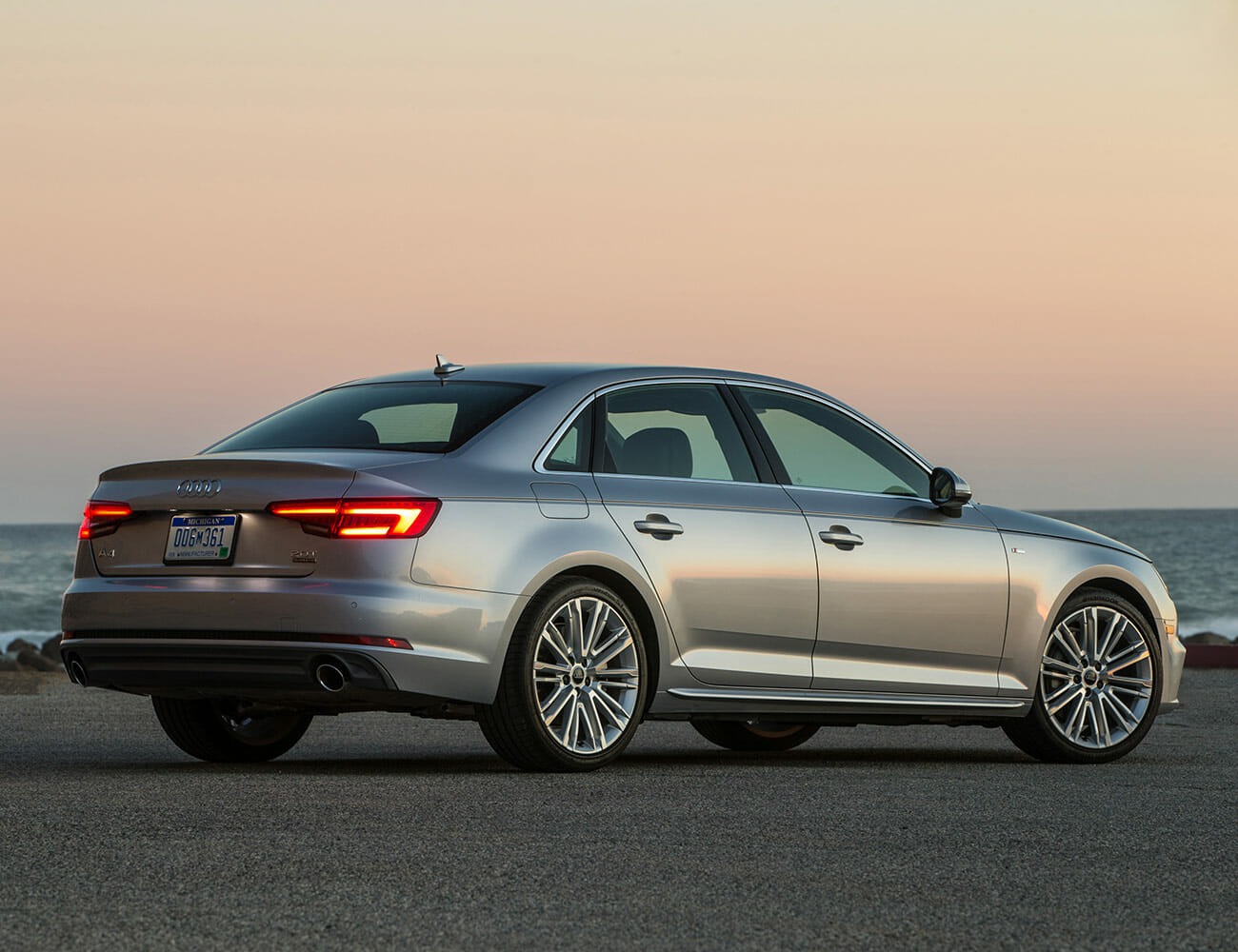
The A4 is Audi’s compact vehicle offered as a sedan and more rugged “allroad” wagon. The A4 sedan uses slightly more powerful versions of the 2.0-liter I-4 (188 hp FWD, 248 hp AWD). It was one of the final Audi models to lose a manual transmission option or 2019. The allroad ($45,700), the Audi lineup’s only U.S. wagon, only uses the 248 hp AWD engine.

The A4 gets one sportier entry, the S4 sedan ($50,200). The S4 upgrades to a 3.0-liter V6 engine producing 349 hp and 369 lb-ft of torque. Audi does make a stupendous 450 hp RS 4 Avant wagon, but won’t sell it to Americans.

Body Styles: Sedan, Wagon

Models:

• A4 Sedan
• A4 allroad Wagon
• S4

Engines:

• Turbocharged 2.0-liter TFSI inline-four
• Turbocharged 3.0-liter TFSI V6

Base MSRP: $37,400

Read our review of the S4.

A5, S5, and RS 5
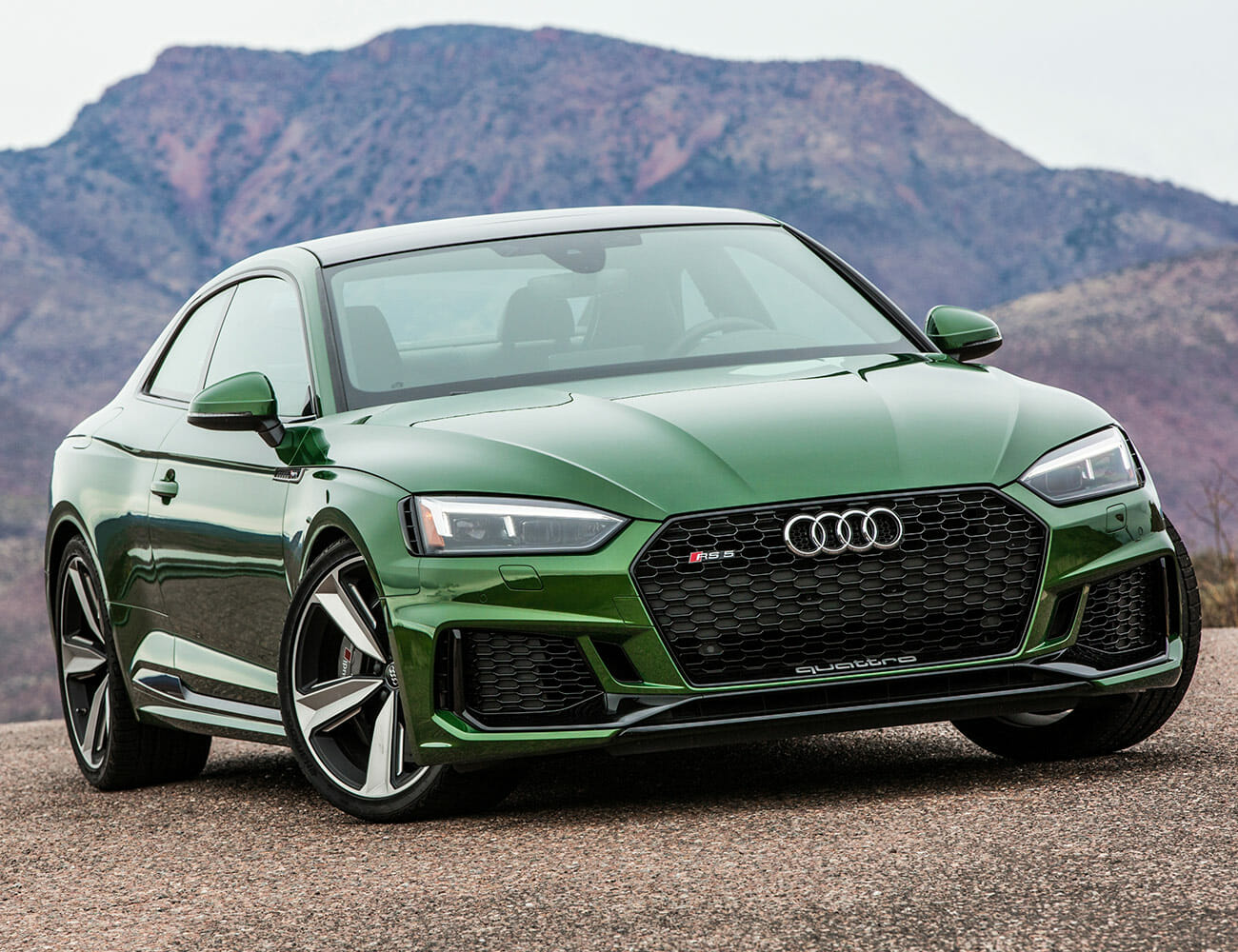
Audi’s A5 is essentially an A4 with a more expensive body style. The sportback, coupe and cabriolet each employ the same 248 hp 2.0-liter I-4 from the A4. The A5 was the other vehicle to lose its stick option for 2019.

S5 sportback, coupe and cabriolet versions ($52,400) use the same 349hp 3.0L V6 found in the S4. Even sportier RS 5 sportback and coupe models ($74,200) use a 2.9-liter biturbo V6 that offers 444 hp and 443 lb-ft of torque. The RS 5 can accelerate from 0-60 mph in 3.7 seconds. It has earned a “Ph.D. in performance.”

Body Style: Sportback, Coupe, Cabriolet

Models:

• A5 Sportback
• A5 Coupe
• A5 Cabriolet
• S5 Sportback
• S5 Coupe
• S5 Cabriolet
• RS 5 Sportback
• RS 5 Coupe

Engines:

• Turbocharged 2.0-liter TFSI inline-four
• Turbocharged 3.0-liter TFSI V6
• Twin-Turbocharged 2.9-liter TFSI V6

Base MSRP: $44,200

Read our review of the RS 5.

A6 and S6
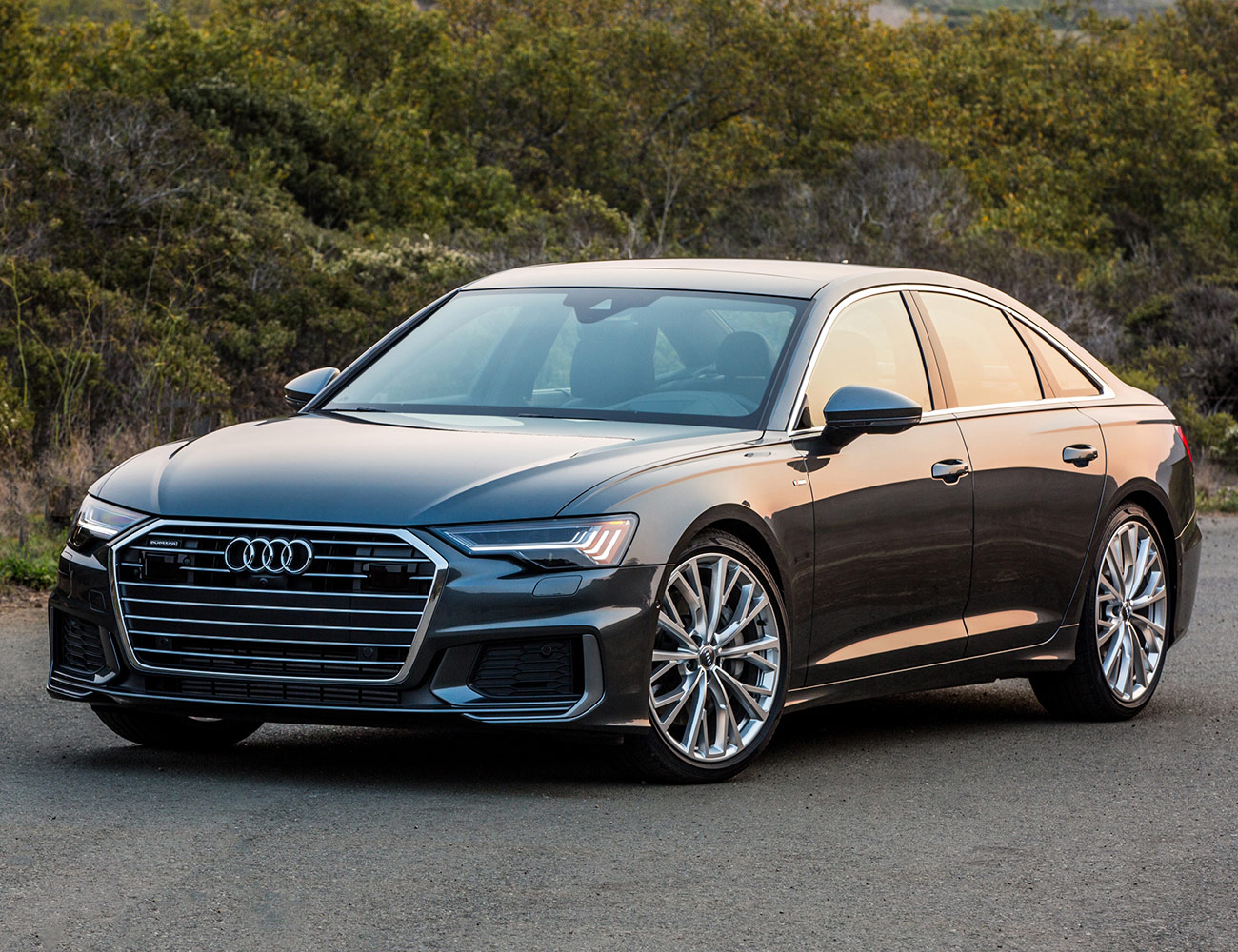
The A6 is Audi’s midsize luxury sedan that has been redesigned for the 2019 model year. It gets 335 hp and 369 lb-ft of torque from the 3.0-liter V6 engine. Critics deride the A6 as a boring car bought by German bankers. That reputation is not entirely fair. Nor is it entirely unfair.

The higher performance S6 version ($71,900) upgrades to a 4.0-liter V8 putting out 450 hp and 406 lb-ft of torque. An RS 6 Avant wagon fit for incredibly awesome German bankers is not sold in the U.S.

Body Style: Sedan

Models:

• A6
• S6

Engines:

• Turbocharged 3.0-liter TFSI V6
• Turbocharged 4.0-liter TFSI V8

Base MSRP: $58,900

Read our review of the A6.

A7, S7, and RS7
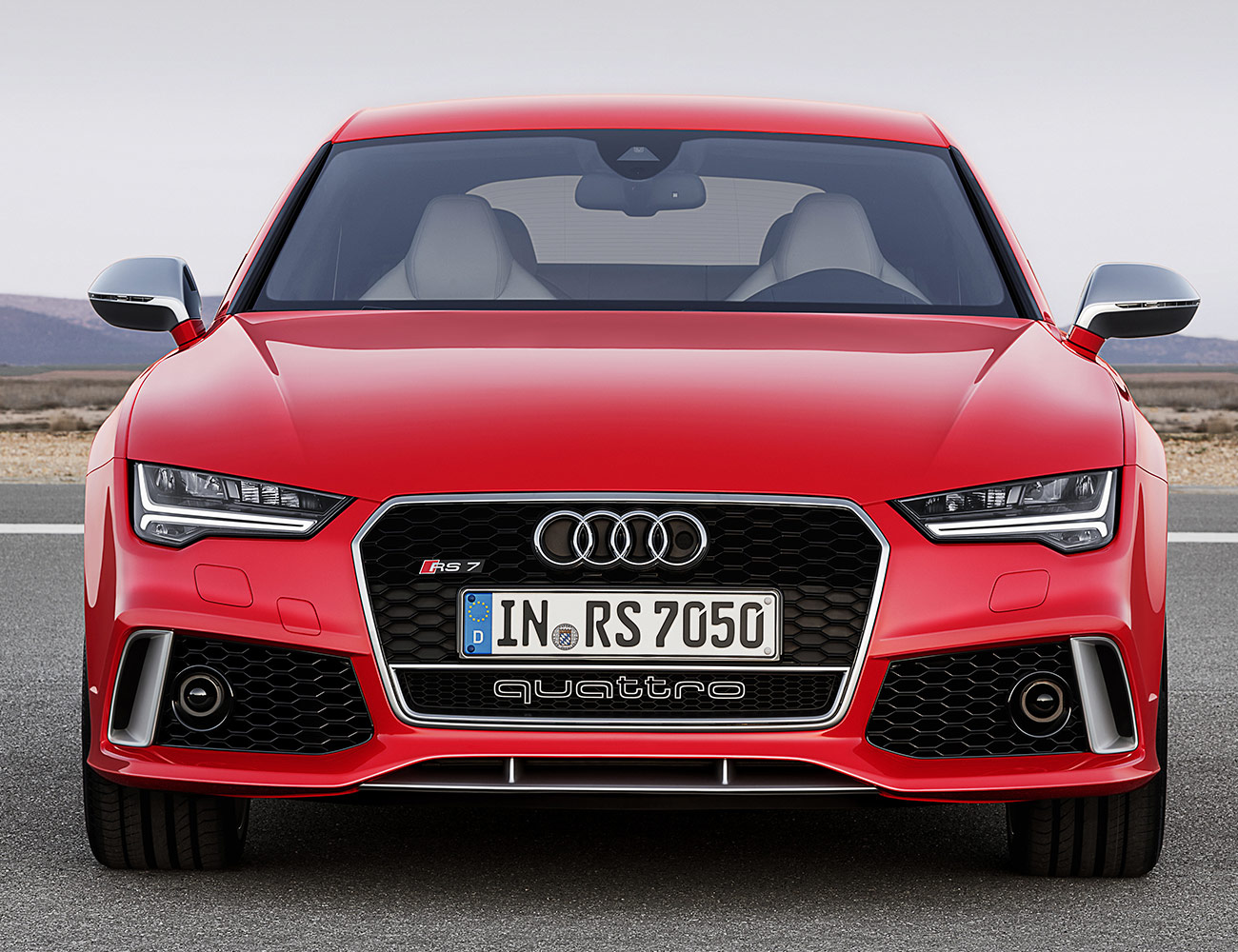
The A7, also redesigned for 2019, is the Sportback version of the A6 that costs an additional $10,000. It uses the same 335 hp 3.0-liter V6 engine. The S7 ($81,200) upgrades to the same 450 hp 4.0-liter V8 as the S6, delivering “powerful performances that demand an encore.”

Audi also offers an even higher performance RS 7 ($113,900) version. A twin turbo setup supplements its 4.0-liter V8 to 605 hp and up to 553 lb-ft of torque. The RS 7 accelerates from 0-60mph in 3.6 seconds.

Body Style: Sportback

Models:

• A7
• S7
• RS 7

Engines:

• Turbocharged 3.0-liter TFSI V6
• Turbocharged 4.0-liter TFSI V8
• Twin-turbocharged 4.0-liter TFSI V8

Base MSRP: $68,000

Read our review of the A7.

A8
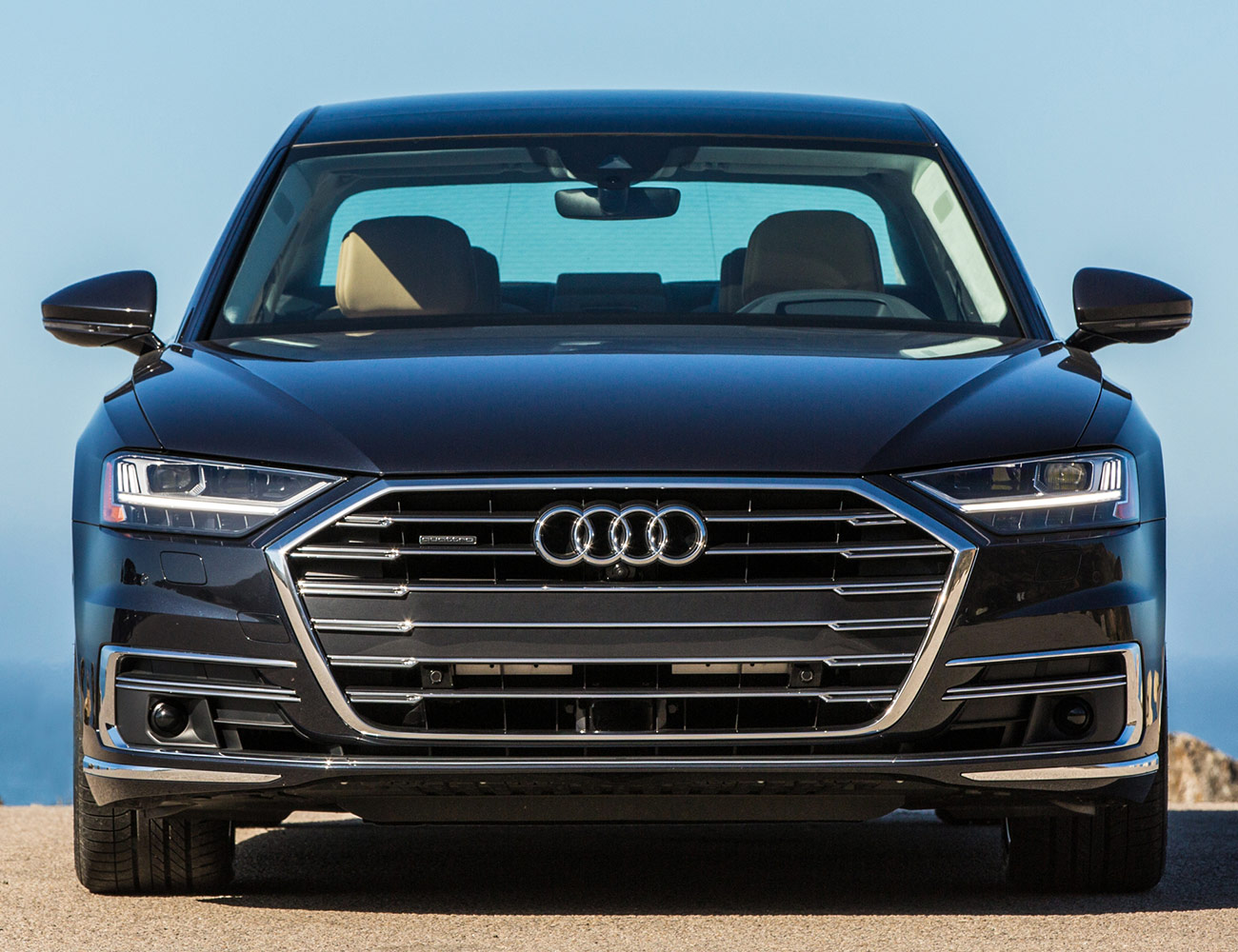
The A8 is Audi’s flagship full-sized luxury sedan. It uses the same 3.0-liter V6 with 335 hp as the A6. Audi terms the A8 “experience for the senses.” The A8 is loaded with luxury, driver assistance and advanced tech features. The A8 is only available with the long wheelbase in the U.S. It is a car to be driven in as much as driven. An available “Executive Rear Seat Comfort Package” includes a foot massager among other features.

Body Style: Sedan

Models:

• A8

Engines:

• Turbocharged 3.0-liter TFSI V6

Base MSRP: $83,800

Read our review of the A8.

Q3
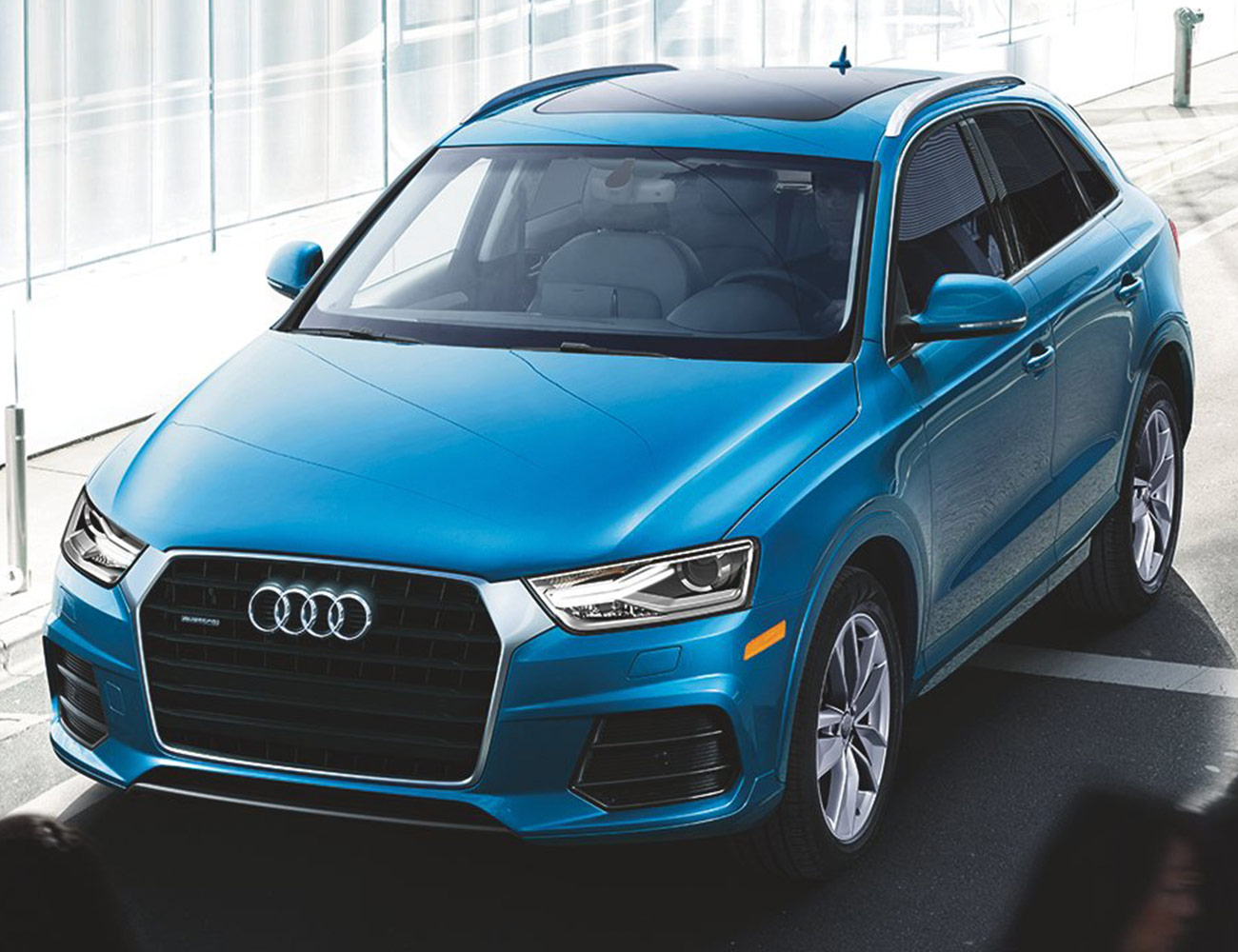
The Q3 is the SUV equivalent of the A3. It’s a subcompact crossover, the smallest “Q” vehicle. Similar to the A3, the 2019 Q3 will have 184 hp and 228 hp variations of the 2.0-liter I-4 and be available in FWD and AWD. A 2018 redesign offered more sophisticated and aggressive design language and received better reviews. Rumors have some hotter Q3s making it to the U.S.

Body Style: SUV

Models:

• Q3

Engines:

• Turbocharged 2.0-liter TFSI inline-four

Base MSRP: TBA ($32,900 in 2018)

Read our overview of the Q3.

Q5 and SQ5
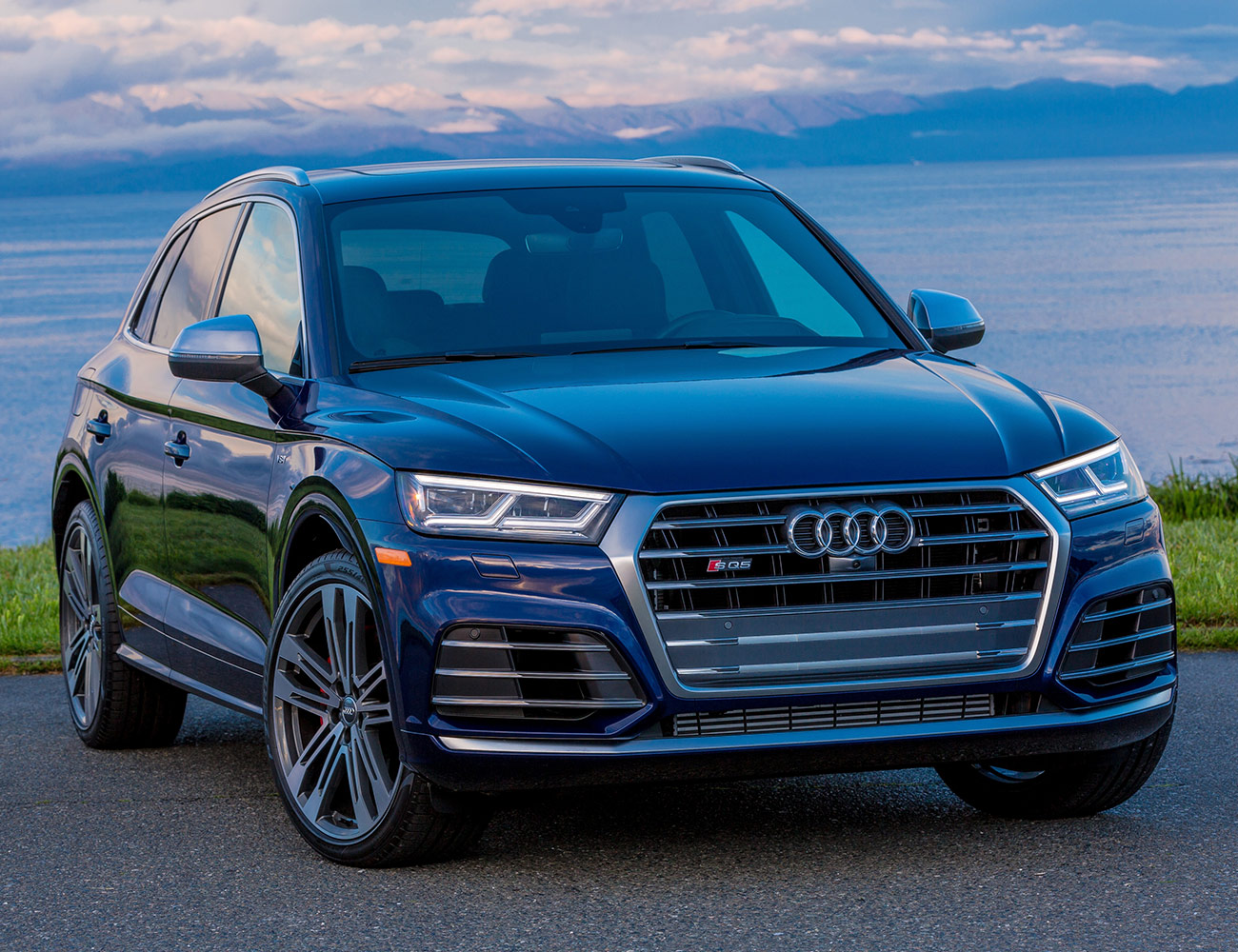
The Q5 is Audi’s compact luxury SUV. It’s the company’s best-selling vehicle in the U.S. market. It uses a 248 hp and 273 lb-ft of torque variant of the 2.0-liter I-4 engine. A 2018 redesign of the Q5 made a myriad of improvements on a new platform. For about $10,000 more, the SQ5 ($52,400) upgrades to the 349hp 3.0-liter V6 and an eight-speed transmission.

Body Style: SUV

Models:

• Q5
• SQ5

Engines:

• Turbocharged 2.0-liter TFSI inline-four
• Turbocharged 3.0-liter TFSI V6

Base MSRP: $42,950

Read our review of the Q5.

Q7
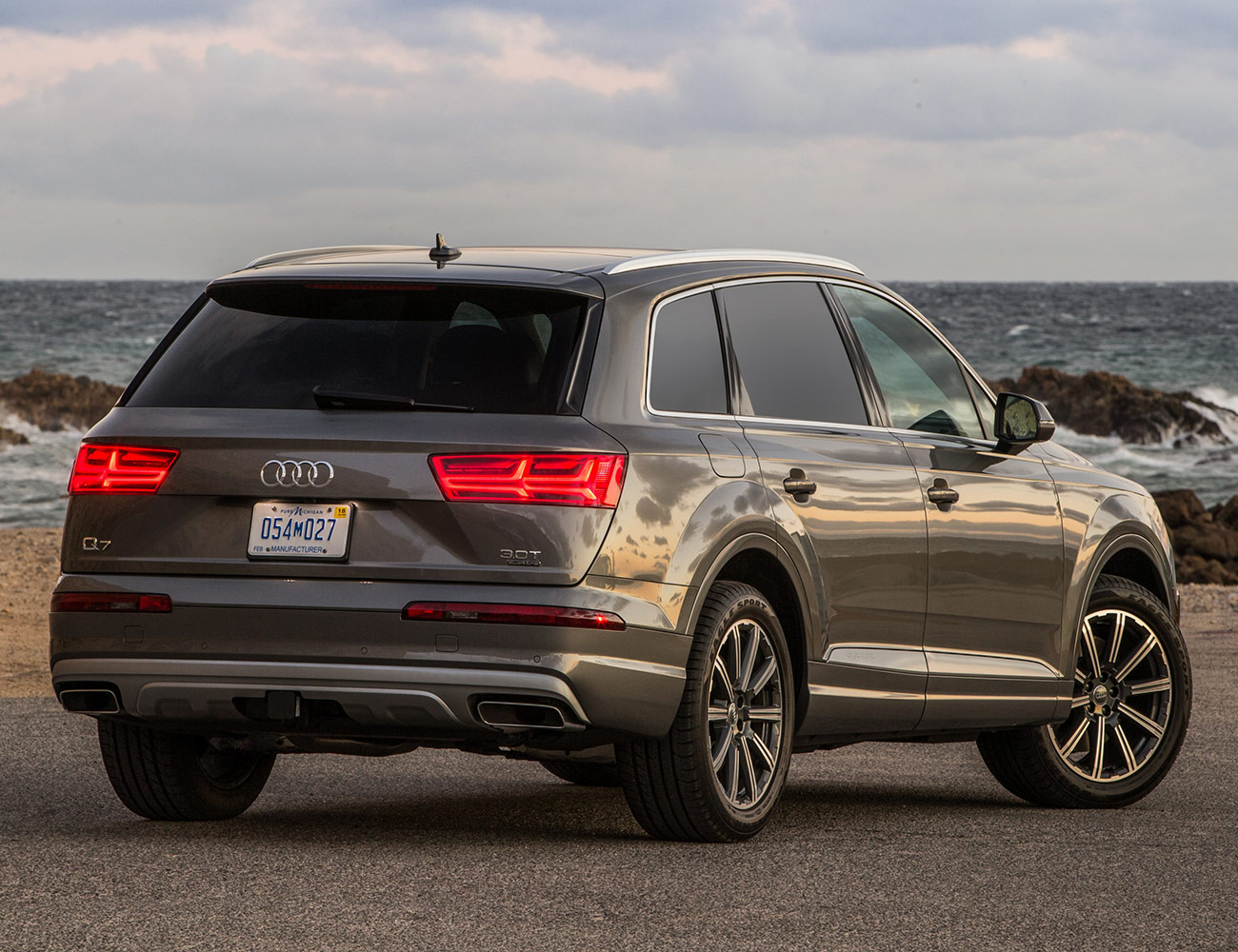

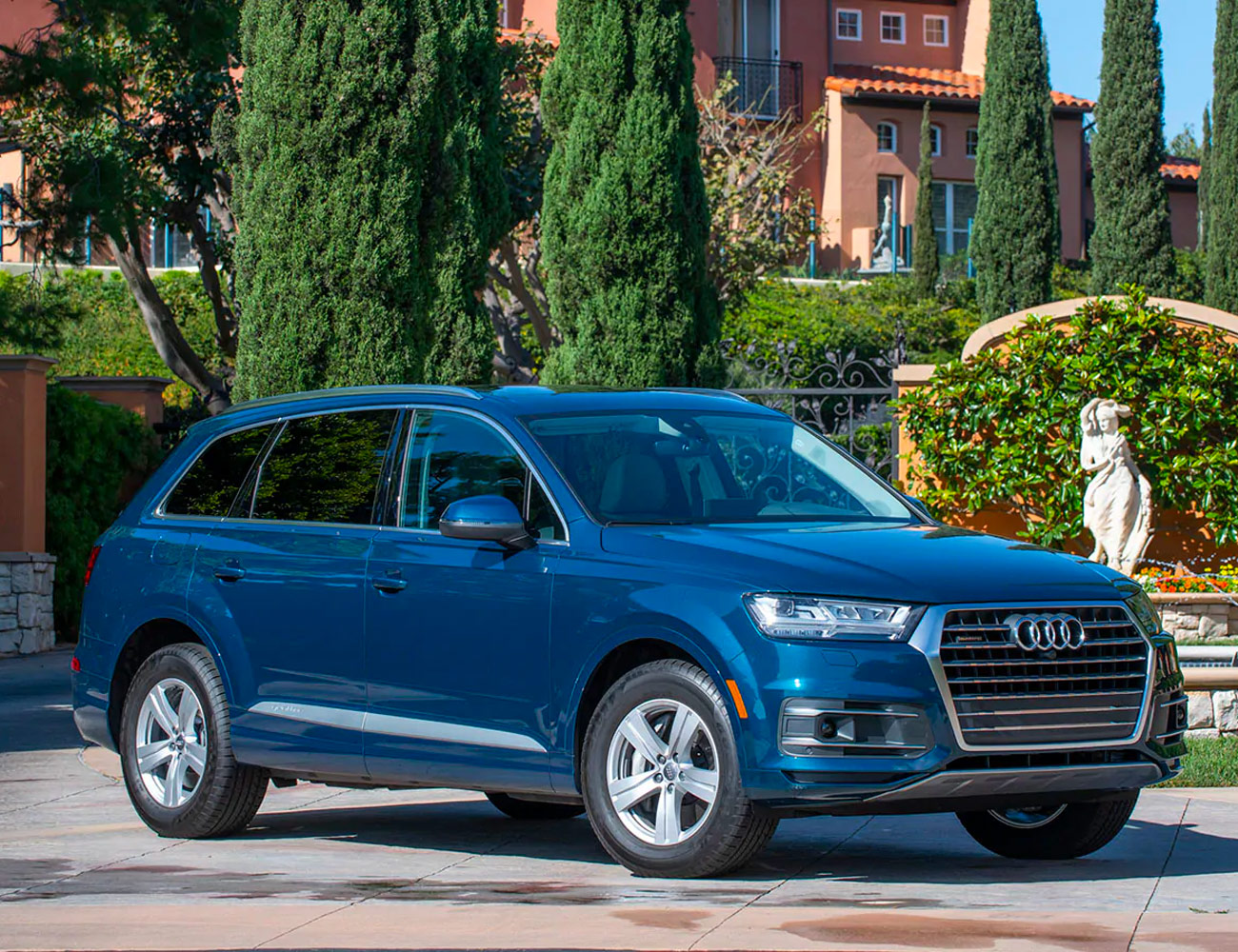
The Q7 is Audi’s full-sized luxury crossover SUV. It was the first Audi SUV model launched in 2005. The base engine is the 248 hp 2.0L I-4. Buyers can also outfit any Q7 trim with a 329 hp 3.0-liter V6. It can offer up to 71.6 cubic feet of cargo space with the seats folded.

Body Style: SUV

Models:

• Q7

Engines:

• Turbocharged 2.0-liter TFSI inline-four
• Turbocharged 3.0-liter TFSI V6

Base MSRP: $53,550

The Q7 is among the best cars to buy in 2019, according to Kelley Blue Book.

Q8
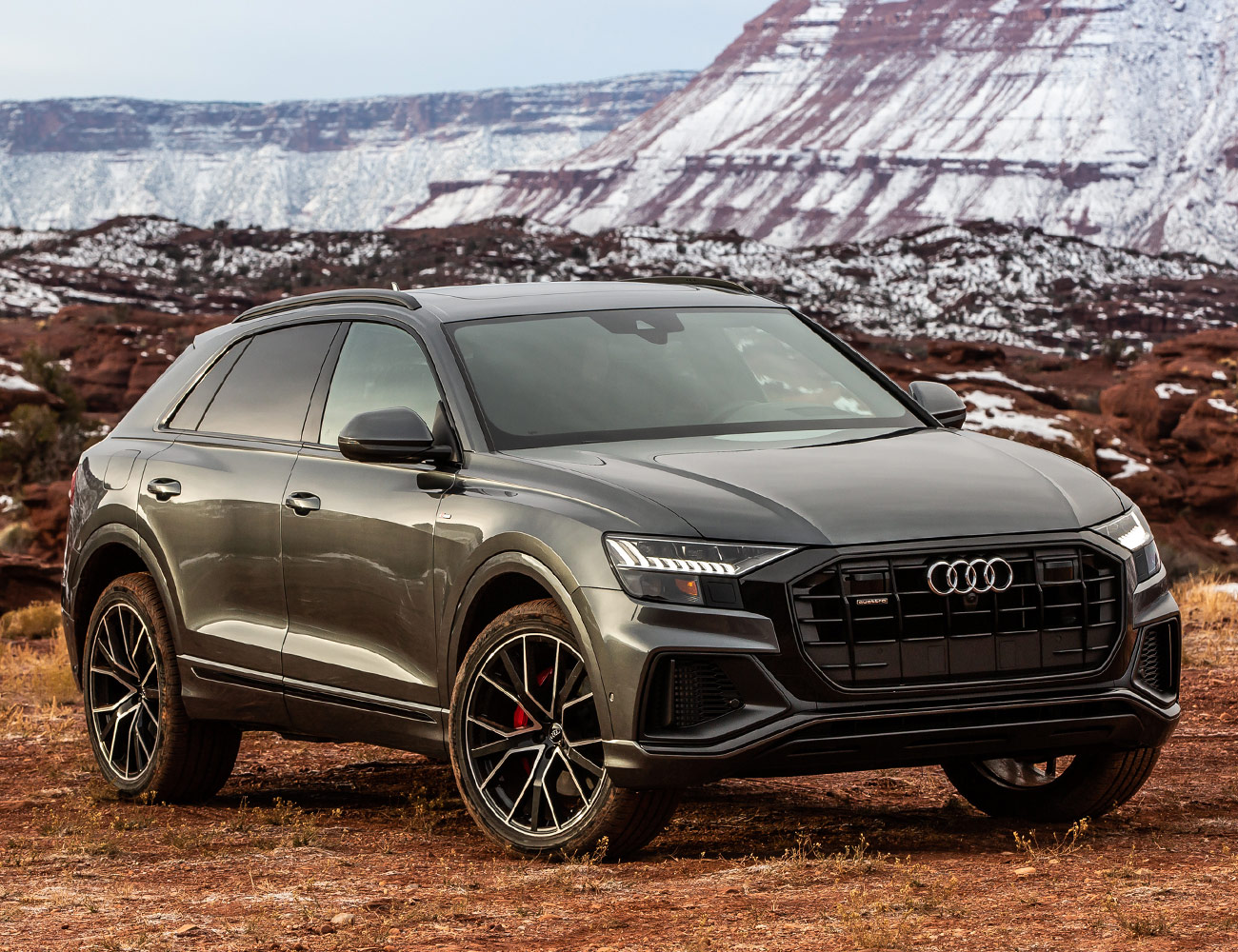
The Q8 is Audi’s SUV equivalent of the flagship A8 sedan. Introduced in the 2018 model year, it shares a platform, powertrain (335 hp 3.0-liter TFSI V6), and relative price point with the base model Porsche Cayenne. Buyers can add features such as four-wheel steering. The Q8 can accelerate from 0-60mph in 5.6 seconds.

Body Style: SUV

Models:

• Q8

Engines:

• Turbocharged 3.0-liter TFSI V6

Base MSRP: $67,400

Read our overview of the Q8.

e-tron
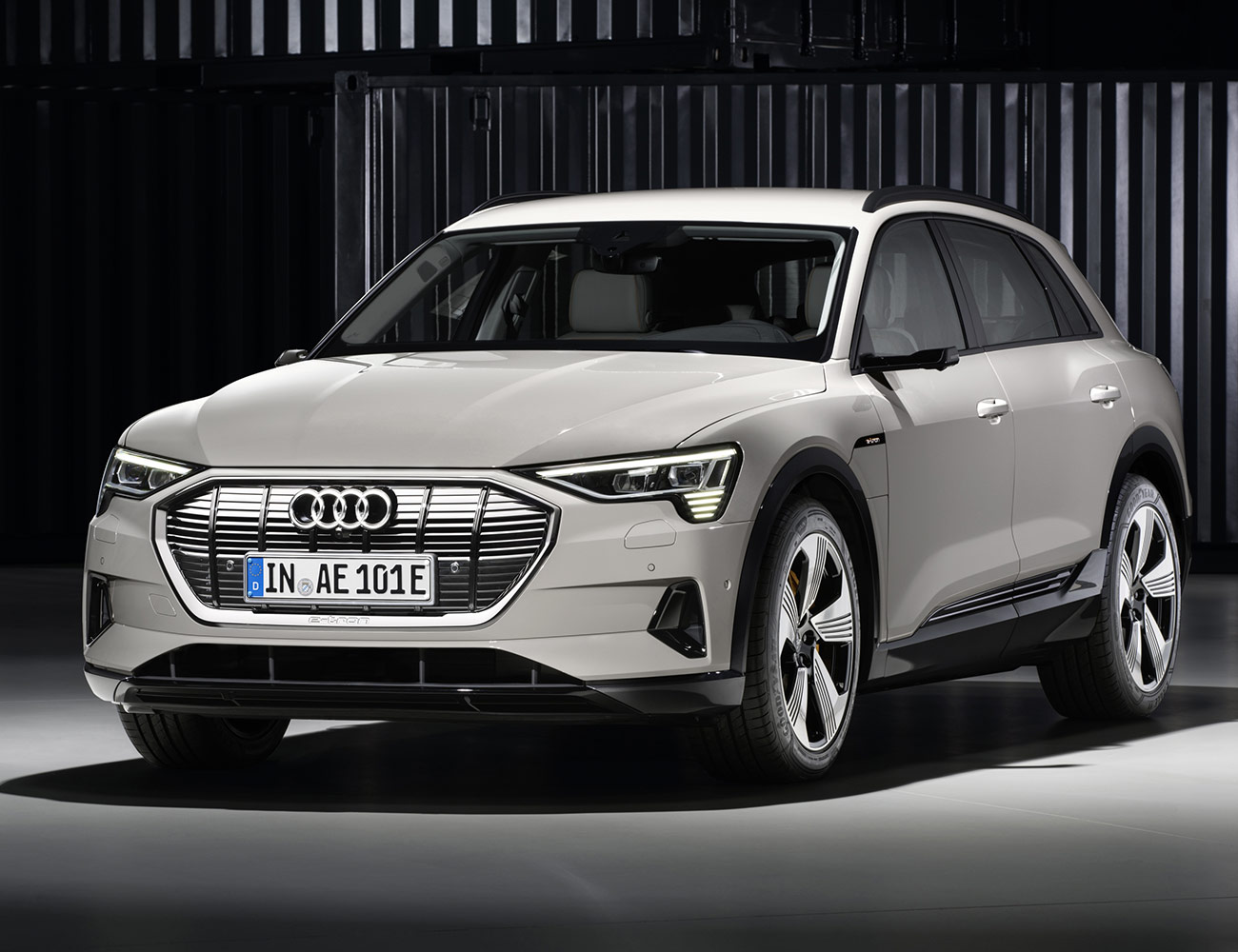
The e-tron is Audi’s premium all-electric SUV which goes into production this year. Audi is taking reservations but has yet to release key details such as range (it is expected to be between 200 and 220 miles per full charge). The e-tron will accelerate from 0-60 in 5.5 seconds and a top speed of 124 mph. It will have a five-mode adaptable air suspension.

Body Style: SUV

Models:

• e-tron

Engines:

• Dual electric motors

Base MSRP: $74,800

Read our review of the e-tron.

TT
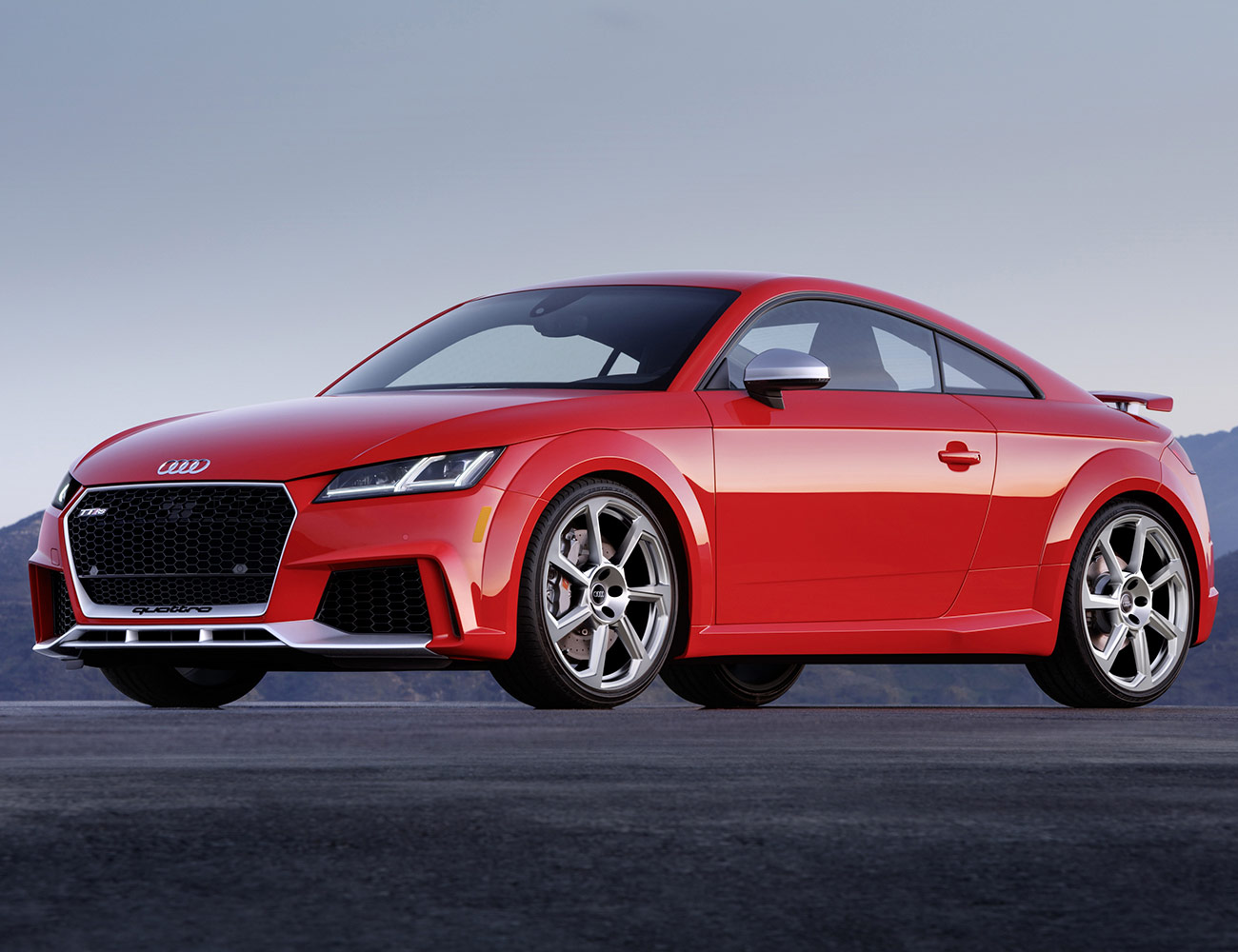
The Audi TT is a two-door sports car. It comes in both coupe and convertible roadster form. It comes with all-wheel drive and the 228 hp 2.0-liter I-4 Turbo. There are two higher performance versions. The TTS ($53,800) has the 288 hp version of the 2.0-liter I-4 Turbo from the Golf R. The TT RS ($64,900) upgrades to the 400hp 2.5-liter I-5 Turbo found in the RS 3.

Body Style: Coupe, Roadster

Models:

• TT Coupe
• TT Roadster
• TT S Coupe
• TT RS Coupe

Engines:

• Turbocharged 2.0-liter TFSI inline-four
• Turbocharged 2.5-liter TFSI inline-five

Base MSRP: $44,900

Read our review of the TT RS.

R8 and R8 Spyder
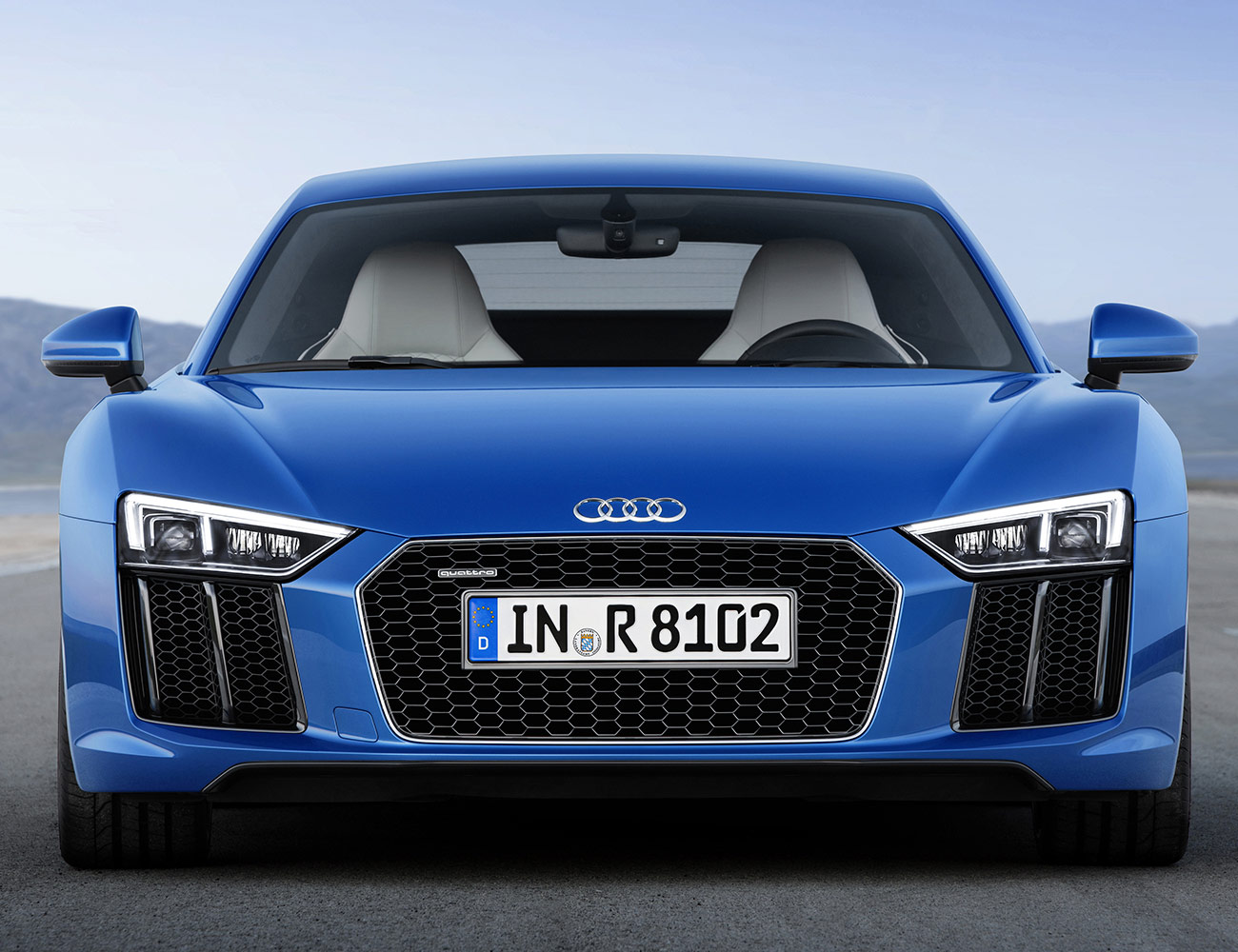
The R8 is Audi’s supercar. It uses a naturally aspirated 5.2-liter dual injection V10. The standard edition gets 532 hp and 398 lb-ft of torque. The “plus” version produces 602 hp and 413 lb-ft of torque. The plus version can accelerate from 0-60 in just 3.2 seconds. Audi is also producing a limited run R8 RWS which will have the 532 hp V10 but reduced weight and rear-wheel drive. The R8 Spyder offers the same powertrains and an R8 Spyder, or convertible, ($177,100) for a steep premium.

Body Styles: Coupe, Roadster

Models:

• R8
• R8 Spyder

Engines:

• 5.2-liter FSI V10

Base MSRP: $138,700

Read our overview of the R8.

10 Used Foreign Cars You Can Finally Import in 2019

New year, new you, new list of cars that can finally be brought to the United States. If you’re a car enthusiast, arguably the best part of rolling into a new year is the opportunity to purchase cars that were once forbidden fruit, made possible now that they’re a quarter of a century old. And trust me, 2019 has some real good shit in store, ranging from a Porsche-tuned station wagon to a few rally homologation specials to an apocalypse-ready minivan.

Keep in mind, you’ll have to wait until 25 years from the month your import was produced for it to be fully legal. (Read about the “25 Year Law” here.) But if you’ve been after any one of these wonderful obscurities, consider the wait nearly through.

Audi RS2 Avant

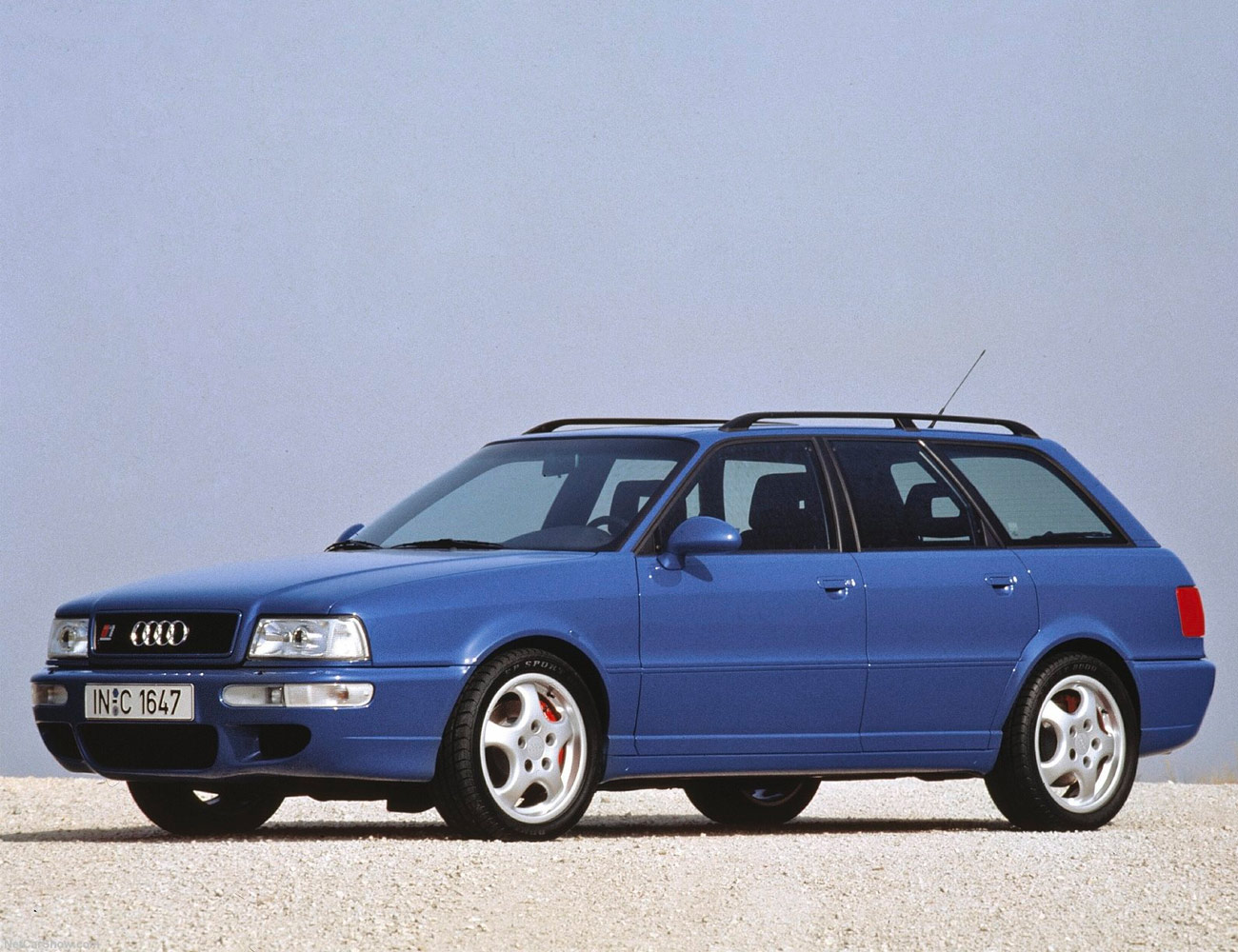
Arguably the most anticipated import car for 2019 will be the Audi RS2 Avant, grandfather to all hardcore sports wagons. Launched in March of 1994, the RS2 was a collaborative venture between Audi and Porsche and the harbinger of Audi’s insane “RS” cars. Based on the vanilla Audi 80, the RS2 was assembled at the same Porsche factory that made the legendary 959. It was bestowed with a turbocharged inline five-cylinder engine tuned by Porsche to produce well over 300 horsepower and sent to all four wheels via a six-speed manual gearbox. That glorious combination of running gear made a 0 to 60 mph sprint possible in under five seconds, which was supercar-rivaling acceleration at the time. Other goodies include Brembo brakes and Recaro sports seats.

Unfortunately, the RS2 was a particularly limited-run car, with fewer than 3,000 examples built. As such, the RS2 is already seeing massive demand in Europe, with prices extending well beyond $35,000 for a good example. So if you want one stateside next year, you’ll need fairly deep pockets.

Maserati Quattroporte IV

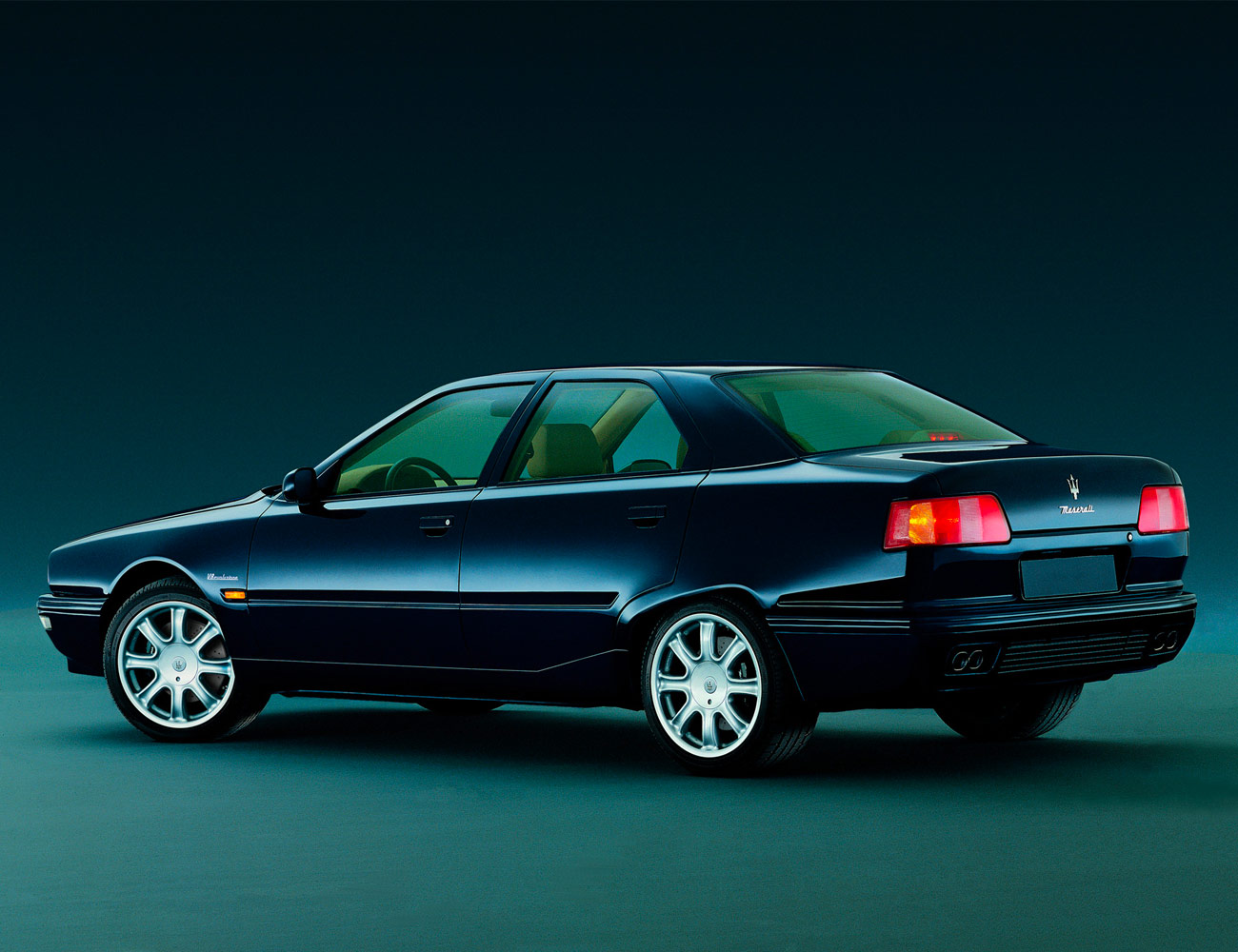
Most Maseratis of the ‘80s and ‘90s were weird, but also strangely desirable. The Quattroporte IV – a generation of the marque’s four-door we never saw stateside – is certainly no different. The car’s wedgy and angular styling was penned by Italian design legend Marcello Gandini (whose credits include the Lancia Stratos, Lamborghini Miura and De Tomaso Pantera). The engine powering it was a twin-turbo V6 (a couple of years later a twin-turbo V8 was also offered). That was good for a top speed of just over 160 mph and a 0 to 62 mph sprint in under six seconds, according to Maserati.

So it’s a reasonable performer then, with a luxurious interior, and it’s a bit of a rarity, to boot. Only some 2,400 Quattroporte IVs were made during its run between 1994 and 2000; it’d certainly stand out on American roads today. So if you want one, good news: you can find early examples in good condition for under $20,000. Bad news? It’s a 25-year-old, Italian exotic. Know what you’re getting into.

Toyota Celica GT-Four (ST205)

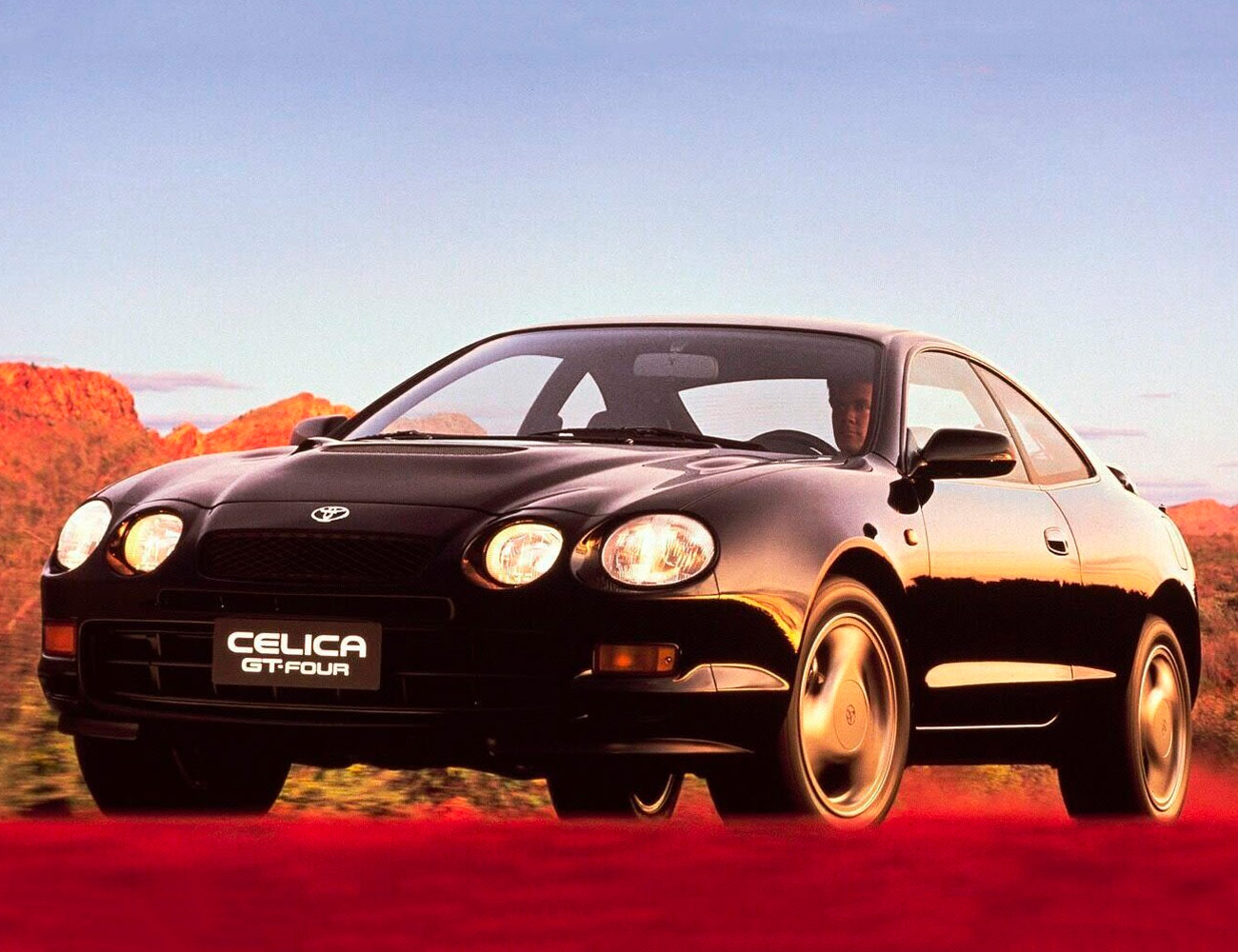
Think WRC homologation car and your mind probably conjures up images of Lancia Deltas and Audi Quattros sliding through the dirt and snow. But the Celica GT-Four ST205 is, arguably, one of the most underrated homologation specials to what is, arguably, the most infamous rally car of all time. In short, the Toyota Celica GT-Four competing in Group A rallying used a device that was able to bypass the turbo restrictor plate during competition yet could appear completely normal under inspection. This, supposedly, gave the car a 50 horsepower advantage over the competition. The technical explanation is longer and far more clever than just that – so much so that FIA president Max Mosley called it “the most sophisticated device I’ve ever seen in 30 years of motorsport.”

The road-going variant of the Group A car, introduced in February 1994, was just as much a friend, sporting an all-wheel-drive system, a 2.0-liter turbocharged four-cylinder producing 255 horsepower and a big-ass spoiler. It even featured all the plumbing needed to install an anti-lag system. It’s a little-known gem from the height of Toyota’s experimental phase, and that alone makes it worth seeking out (as if the rally-like handling and ear-piercing turbo noises weren’t enough).

Subaru WRX STi

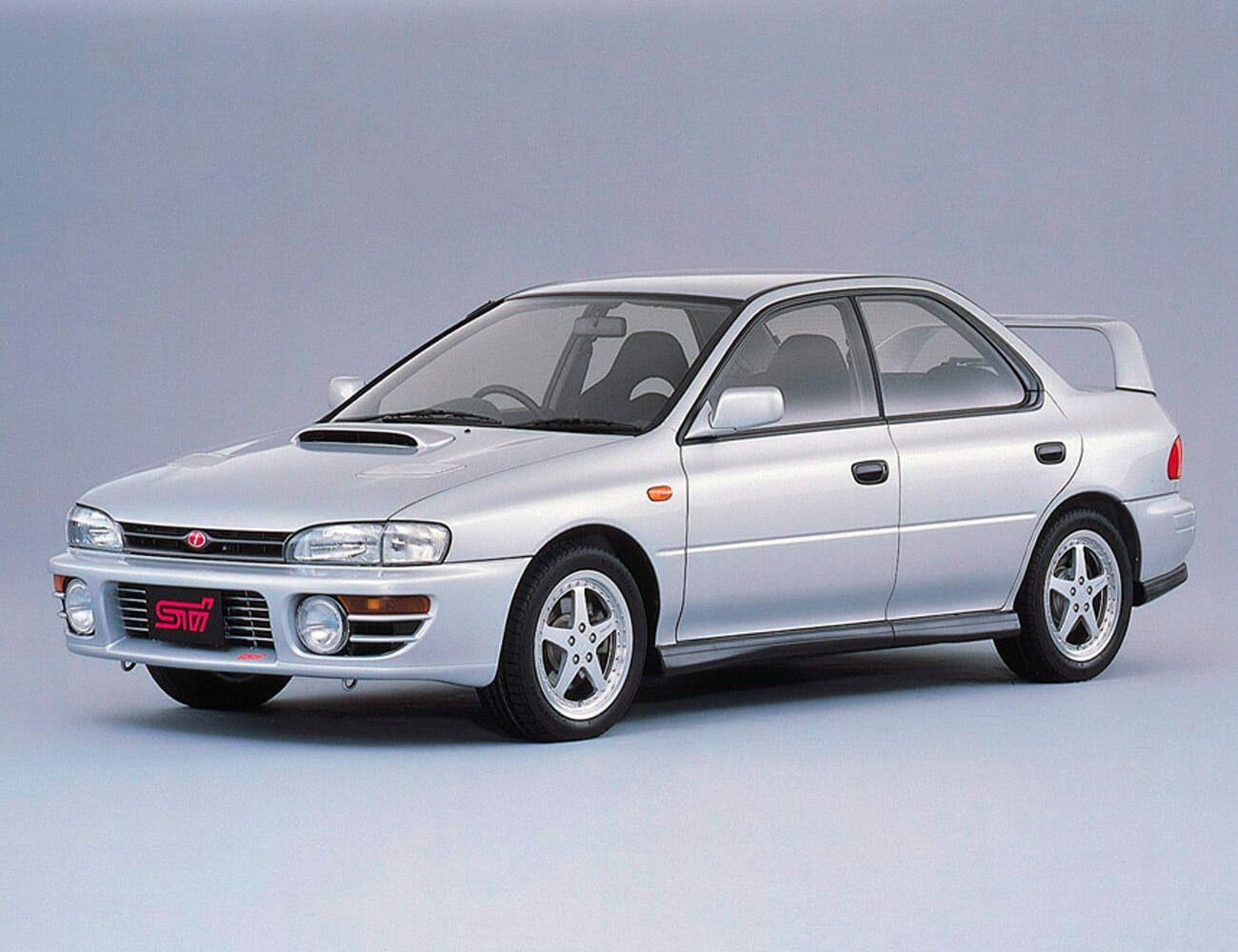
While the rally-bred Subaru WRX STi has been available for a few generations in the U.S., the very early cars – the ones that first made Subaru a sensation with tuners and boy racers – was a Japan-only affair. The earliest WRX came into being in 1992, but the coveted variant warmed over by Subaru Technical International was introduced two years later. The first cars were essentially finished WRXs taken from the production line, then modified by STi. The 2.0-liter turbocharged four-pot received a modest power boost, from 240 horsepower to 250, while upgraded suspension and transmission components were added for good measure.

Mitsubishi Lancer Evo II

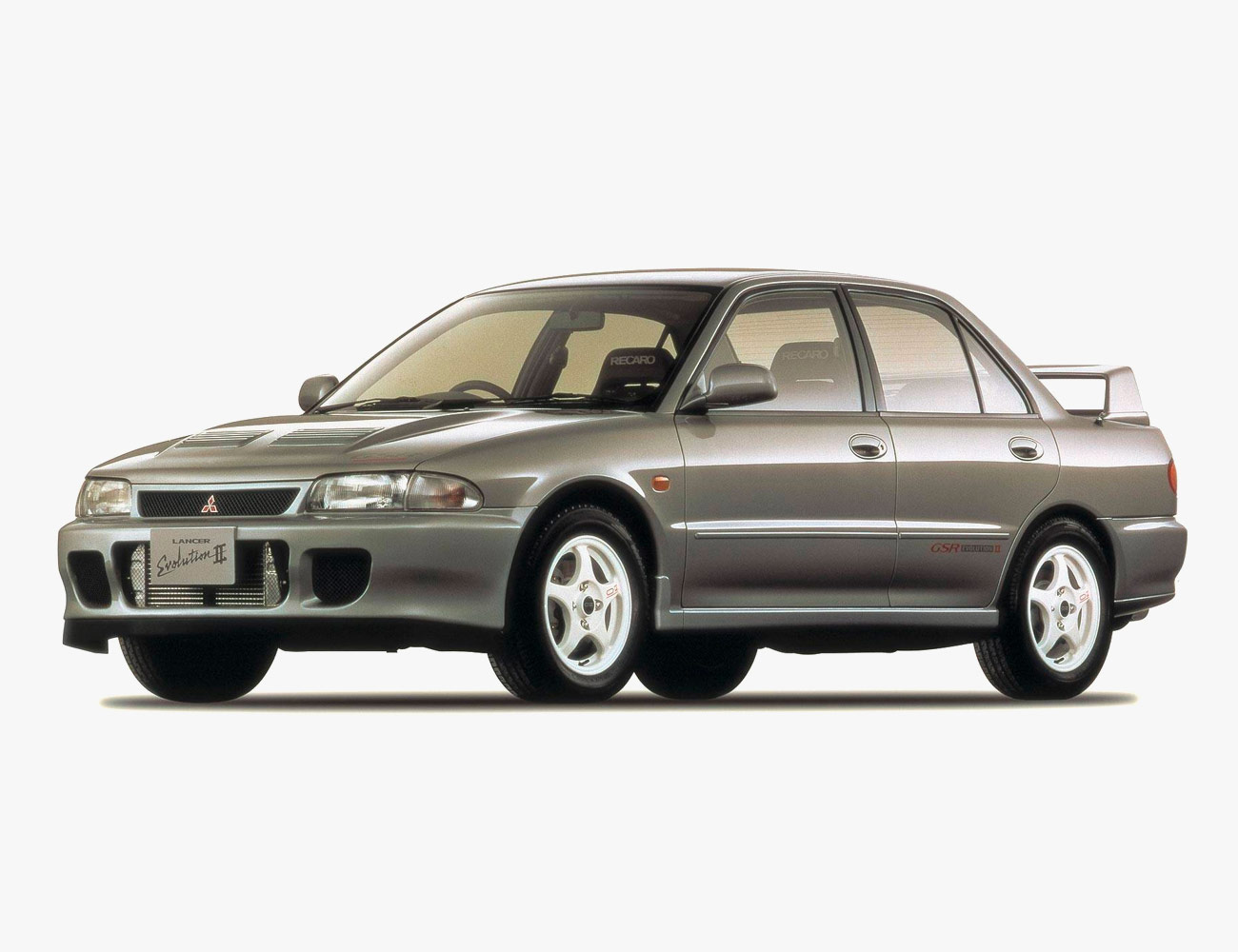
The first Lancer Evo has been legal in the U.S. for about two years now, but in 2019 you’ll be able to import that car’s successor. On the surface, there isn’t much to distinguish the Evo II from the original, mostly because the improvements made were incredibly subtle. That included a slightly lengthened wheelbase, wider tires and improved sway bars. Most notable, though, was a modest increase in power, now up to 252 horsepower over the original’s 244hp.

Mitsubishi Delica Space Gear

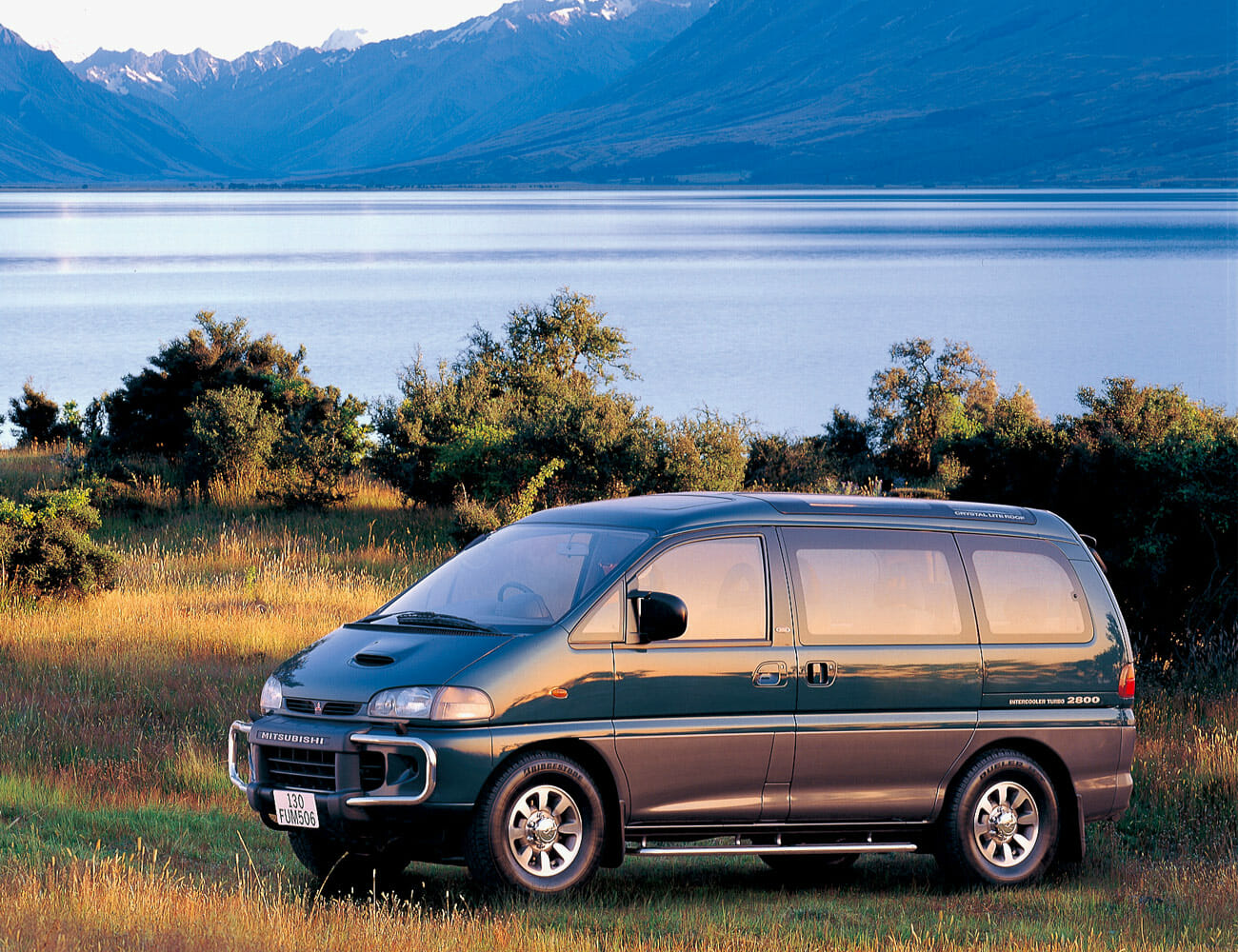
Mitsubishi’s off-road-ready third-generation Delica has been an import staple in the US for years now, but this year we’ll likely start seeing the car’s fourth-gen successor make its way stateside. In addition to the new “Space Gear” moniker, the fourth-gen Delica received smoother, more aerodynamic design language, perfect if you’re going for that “helicopter parenting in the end times” look. Though it lacks the edgier look of the third-gen, the Space Gear has a more refined interior, and it still retains — in 4WD guise — all the off-road underpinnings you’d need for an adventure: high-riding suspension, transfer case and a locking differential.

Mitsubishi Pajero Mini

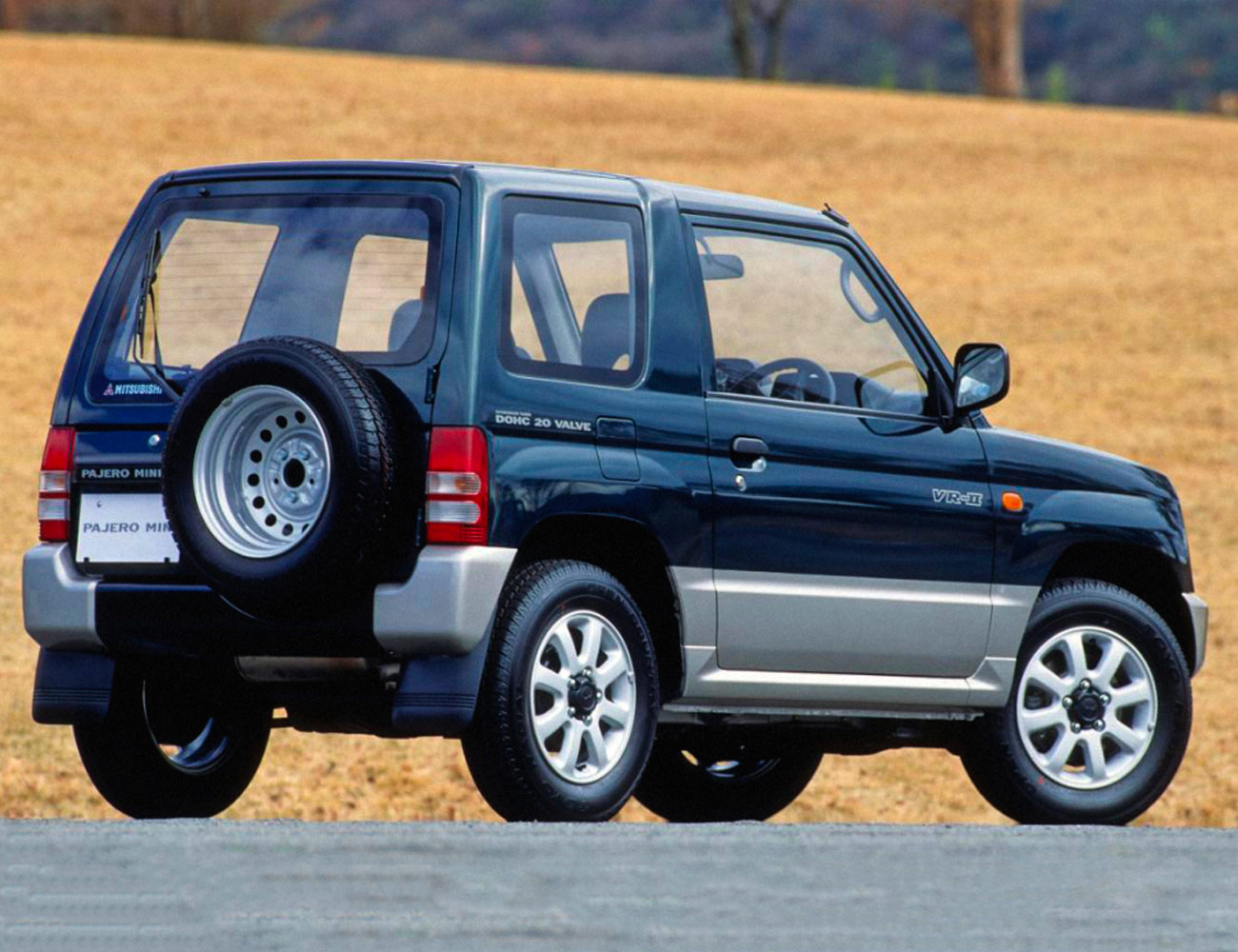
Maybe you’ve fallen in love with the fourth-generation Jimny (we don’t blame you), but the idea of waiting a full 25 years for one is disparaging. For a replacement in the interim, might we suggest the Pajero Mini?

As the name suggests, the Pajero Mini takes inspiration from the legendary Mitsubishi Pajero SUV but is small enough to fit into Japan’s “Kei” class of microcars. That means you get a tiny 659cc engine and the car is even shorter than the modern Mini Cooper, but you get a 4WD system and transfer case for proper backwoods shenanigans.

Mitsubishi FTO

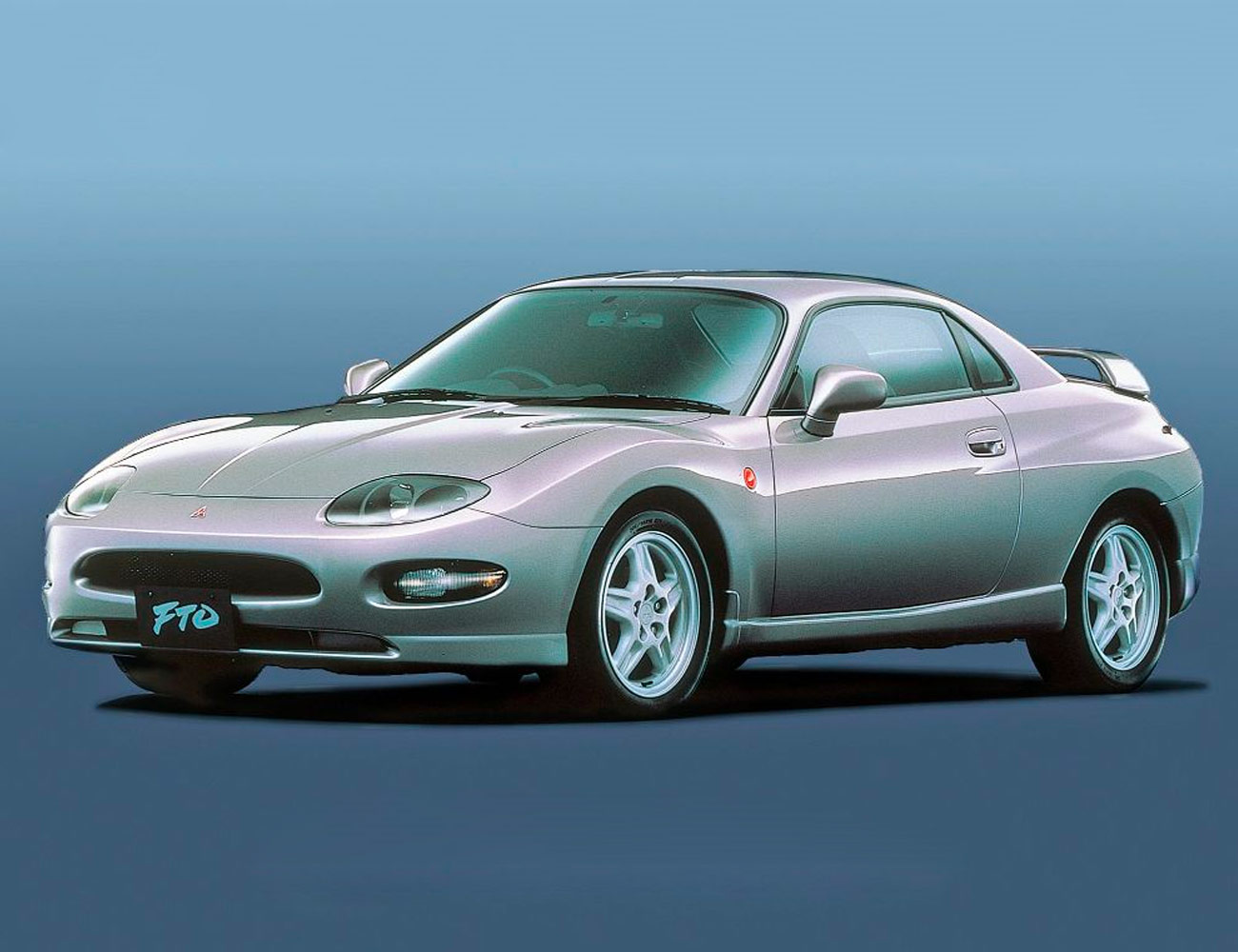
Clearly, 1994 was a big year for Mitsubishi, as it also saw the introduction of the FTO, the brand’s compact, FWD sports coupe. It’s an obscure little car, unless you spent a lot of time playing Grand Turismo as a kid, but was available with a revvy 2.0-liter V6 that pumped out 170 horsepower – or nearly 200hp in “GPX” trim (a smaller four-cylinder was the base option). Transmission options boil down to a five-speed manual or a four- or five-speed automatic with selectable gears that can “learn” your driving style and shift accordingly.

Nissan Rasheen

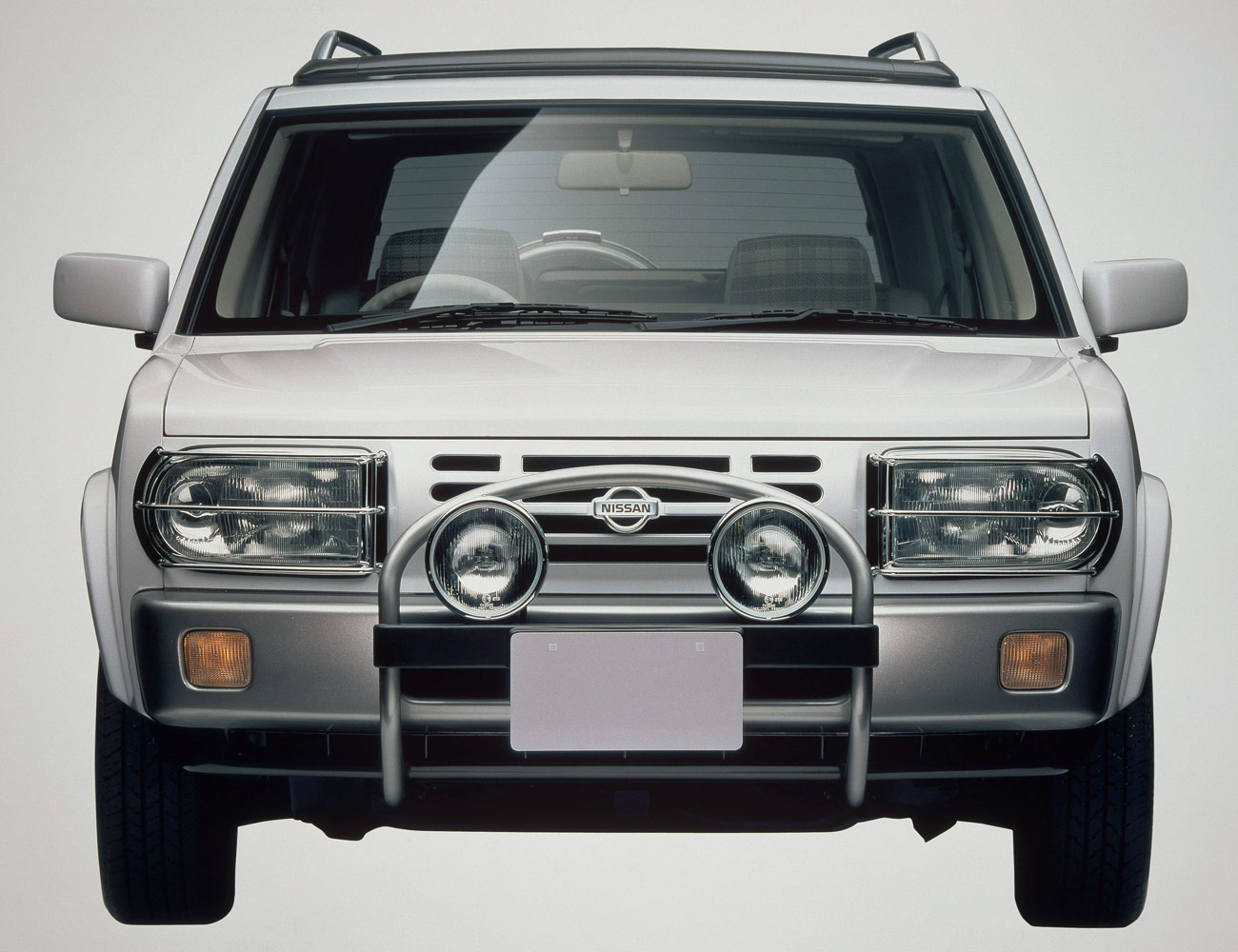
Compact crossovers are a dime a dozen these days, but if you want something small and practical that’s a bit more forward-thinking and quirky, the Nissan Rasheen might be your chariot. The Rasheen’s pseudo-retro styling looks inspired by the Wartburg 353 and smacks of Nissan’s oddball “Pike Factory” cars. Mechanically, there’s nothing particularly notable: it’s powered by a trio of small four-cylinders (1.5, 1.8 and 2.0-liter options were available) and Nissan’s ATTESA all-wheel-drive system. What is notable, however, is the option for plaid seating! Expect the earliest examples of the Rasheen to become eligible for import starting in November.

Peugeot 106 Rallye

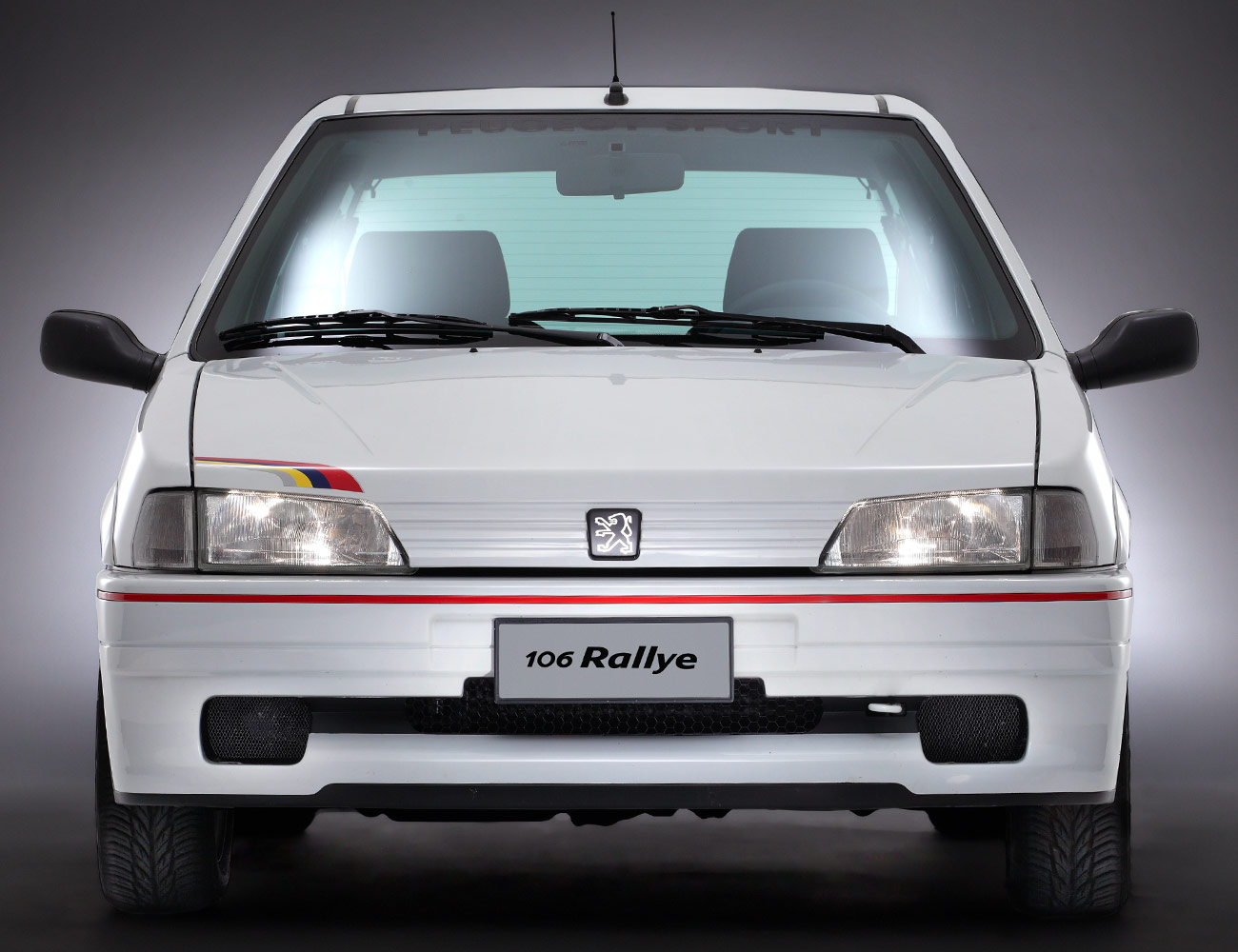
This year is the year of the import rally car. In addition to the Celica GT-Four, WRX STi and Lancer Evo II, you’ll be able to import this: the Peugeot 106 Rallye, which was Peugeot’s homologation special for competing in 1,300cc class rally back in the day. The car’s humble (but high-revving) 1.3-liter engine only puts out around 100 horsepower, but with a stripped interior and a lightweight chassis, it only has to move around 1,800 pounds, making it a tossable little corner carver.

Note: Purchasing products through our links may earn us a portion of the sale, which supports our editorial team’s mission. Learn more here.

Opinion: Ford’s Biggest Problem Is That It’s Simply Not Cool

Ford is flailing. That’s what the media coverage will tell you at least. 2018 was a disaster. Profits were down. Presentations for the future underwhelmed. Shareholders are antsy. TheFord-VW alliance does not go far enough. Execs will be doing public penance for the sake of the stock price. Spot CEO Jim Hackett scuttling around the Dearborn campus with tools and plaster to keep the edifice from crumbling.

That narrative may overstate matters a bit. Ford still has solid fundamentals, and there are some things to like moving forward. We’re still talking about profit, in the billions. Last time I checked, no Ford vehicle was built in an impromptu tent in 2018.
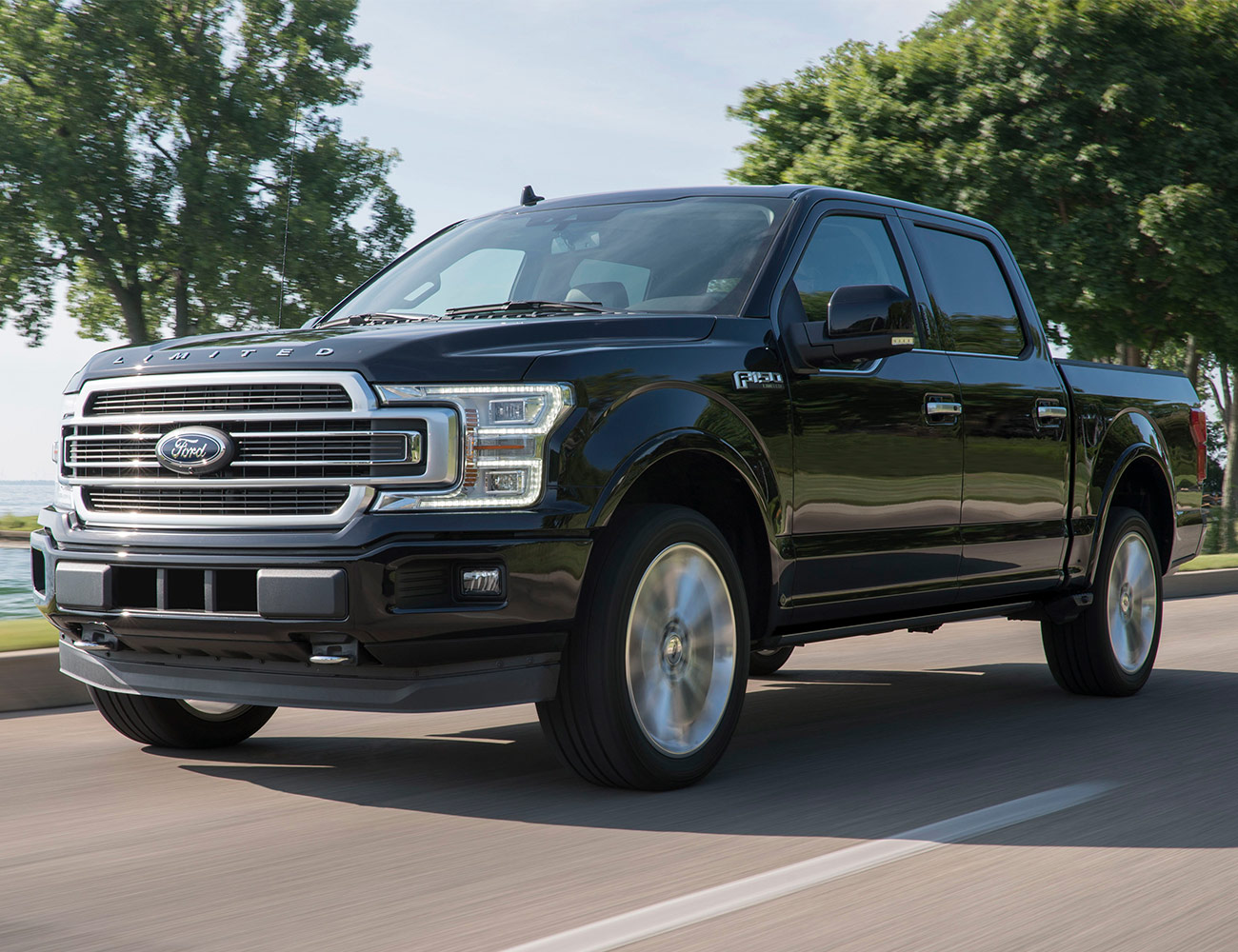
Ford still claims the automotive industry’s biggest gold mine. The companysold more than 900,000 F-Series pickups in 2018. It turns a significant profit on each truck. The gap between the F-150 and the No. 2 best-seller Chevy Silverado, about 324,000, is close to the number of Honda Civics sold. Selling trucks now funds mobility, connectivity and every other buzzword.
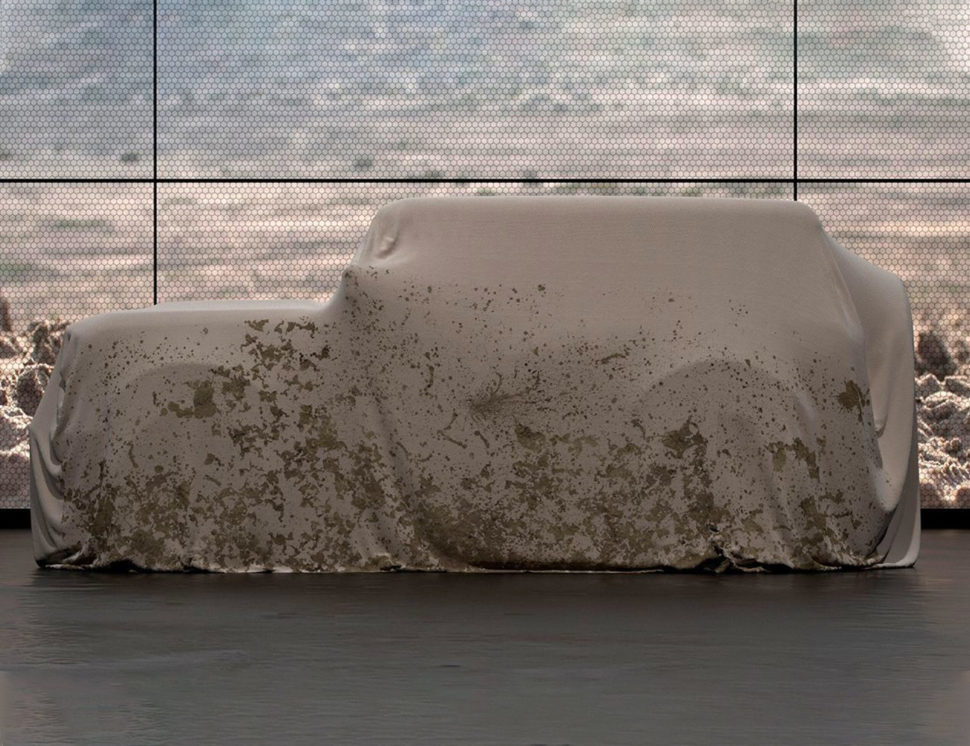
Ford still produces good cars. It’s hard to find a segment where an American competitor makes a better vehicle. The Mustang remains a cut above the Camaro or the Challenger, whatever the horsepower. It’s still the world’s best sports car per dollar spent. The new Bronco will be the most anticipated 2020 automotive debut. Ford drew laments for getting out of the traditional car market because cars like the Focus and Fiesta were fun to drive.

Ford does things the right way, relatively. Ford, as often noted by Ford, never took a government bailout. Ford isn’tstill in court hashing out a multi-billion dollar safety settlement. Media coverage gets lost in investor jargon about streamlining and reducing Ford’s infrastructure costs. Those costs are euphemisms for people working, often in well-compensated union jobs in the Midwest.

Much of Ford’s volatility has not been Ford’s fault. 2018 was the worst year for stocks in a decade. Declining revenue projections hit share prices like Zeus bolts, even in Silicon Valley. Applelost 12 percent of its value in December and could drop further in 2019. Last July, Facebook posted the largest one-day drop (19 percent) in stock market history. The Tariff War and an economic slowdown in China aren’t Ford’s fault. Ford made an $877 million payment to its pension plan to cover for stock market losses. Ford estimates tariffs cost the company $750 million. That accounts for a lot of the lost revenue.

Ford is doing what its shareholders should want. Ford has emphasized the profitable part of the business (America, trucks, and SUVs). It is paring back unprofitable foreign investments and cars dramatically. Ford is investing in EVs, automation technology and, well, scooters. In an uncertain automotive market, Ford is getting more flexible. Sure, the market may shift back toward smaller vehicles and EVs. But, smaller more efficient vehiclescan still be trucks and SUVs. Having an established, expandable platform sharing and development partnership with Volkswagen would not be a bad hedge for that eventuality.

The chief issue for Ford is simple. Ford can’t be the cool new thing, despite the company’s best efforts. Ford doesn’t fit the modern Silicon Valley innovation paradigm. It’s the already grown company, established in 1903, Silicon Valley wants to disrupt. Ford doesn’t produce the quirky, ludicrously performing sports cars venture capitalists and their friends buy. Not being cool has ramifications with investors and beyond that with recruiting talent. There’s a reason Ford bought Michigan Central Station and plans to become a fixture in happening Corktown, Detroit.

As Apple and others have found out, however, the car industry is not the tech industry. Innovation can change the industry. But, it’s much easier for established players like Ford to catch up on technology than it is for a small EV company to scale up to mass production.

Moreover, this is not the first time the media consensus has doubted Jim Hackett. His last high-profile gig was interim University of Michigan athletic director. Hackett inherited a tire fire of scandal, alumni alienation and football underperformance. Reporters convinced themselves he was a dilettante. The national media rubbernecked around Michigan’s coaching search, waiting for the inevitable train wreck. It didn’t work out that way.

Hackett hired Jim Harbaugh, the NFL’s hottest head coaching candidate, to coach a college team. He modernized Michigan’s brand with a $174 million Nike deal. He walked off into the sunset, then to a bigger management role at Ford.

There’s still a chance Ford’s changes could work. Hackett could make a lot of skeptics look stupid. But, Ford desperately needs better headlines. Maybe the new Bronco will be Ford’s Jim Harbaugh.

Affordable Dream Car: The Poor Man’s Porsche

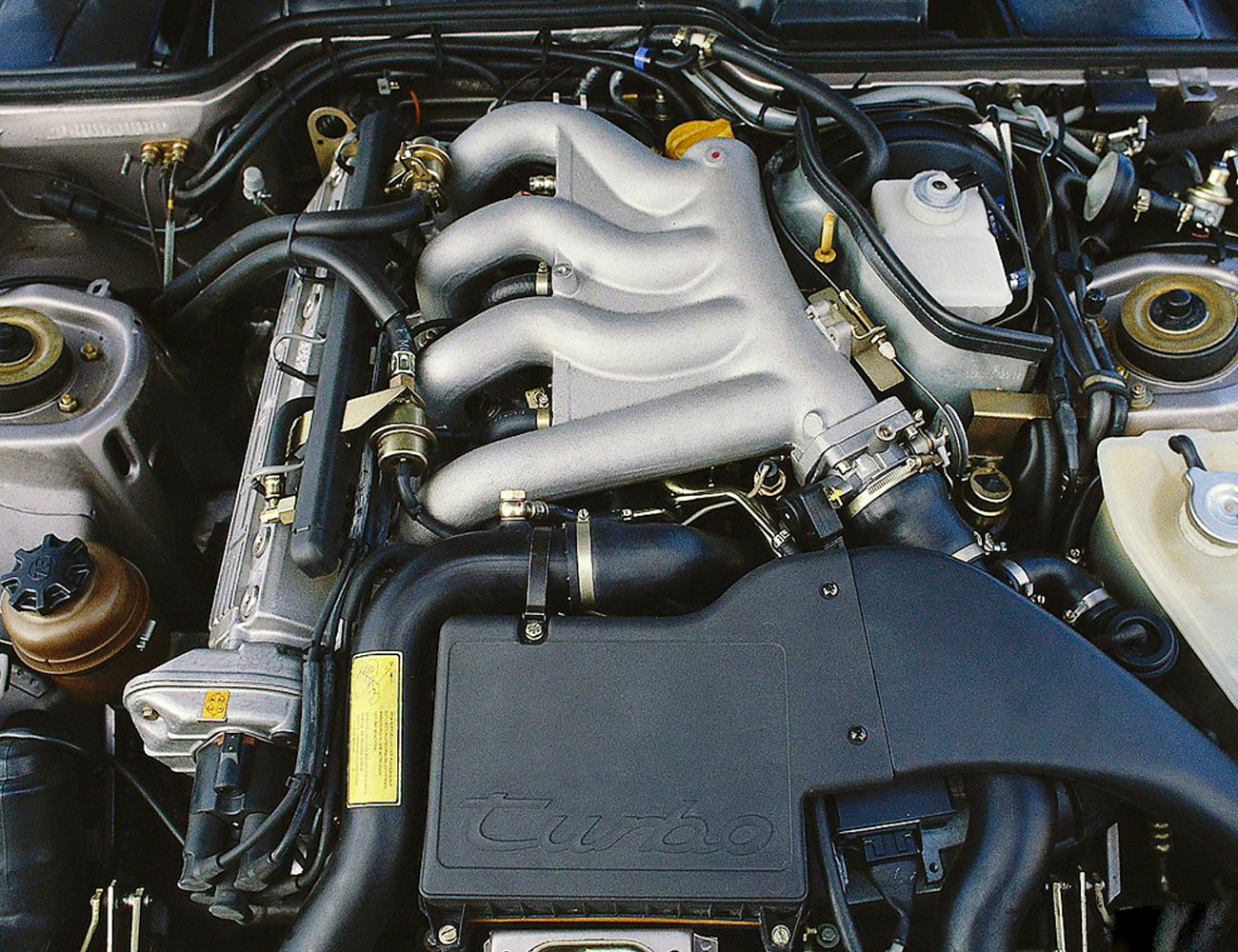
Porsche 944 / 944 Turbo
Price When New (1985): $25,550 / $33,255
Expect to Pay: ~$8,300-$36,000 (good condition)
Model Years: 1982-1991
Engine: 2.5-Liter inline-four, 2.7-Liter inline-four / 2.5-Liter Tubro inline-four
Horsepower: 147 / 247
Weight: 2,932 lbs / 3,122 lbs

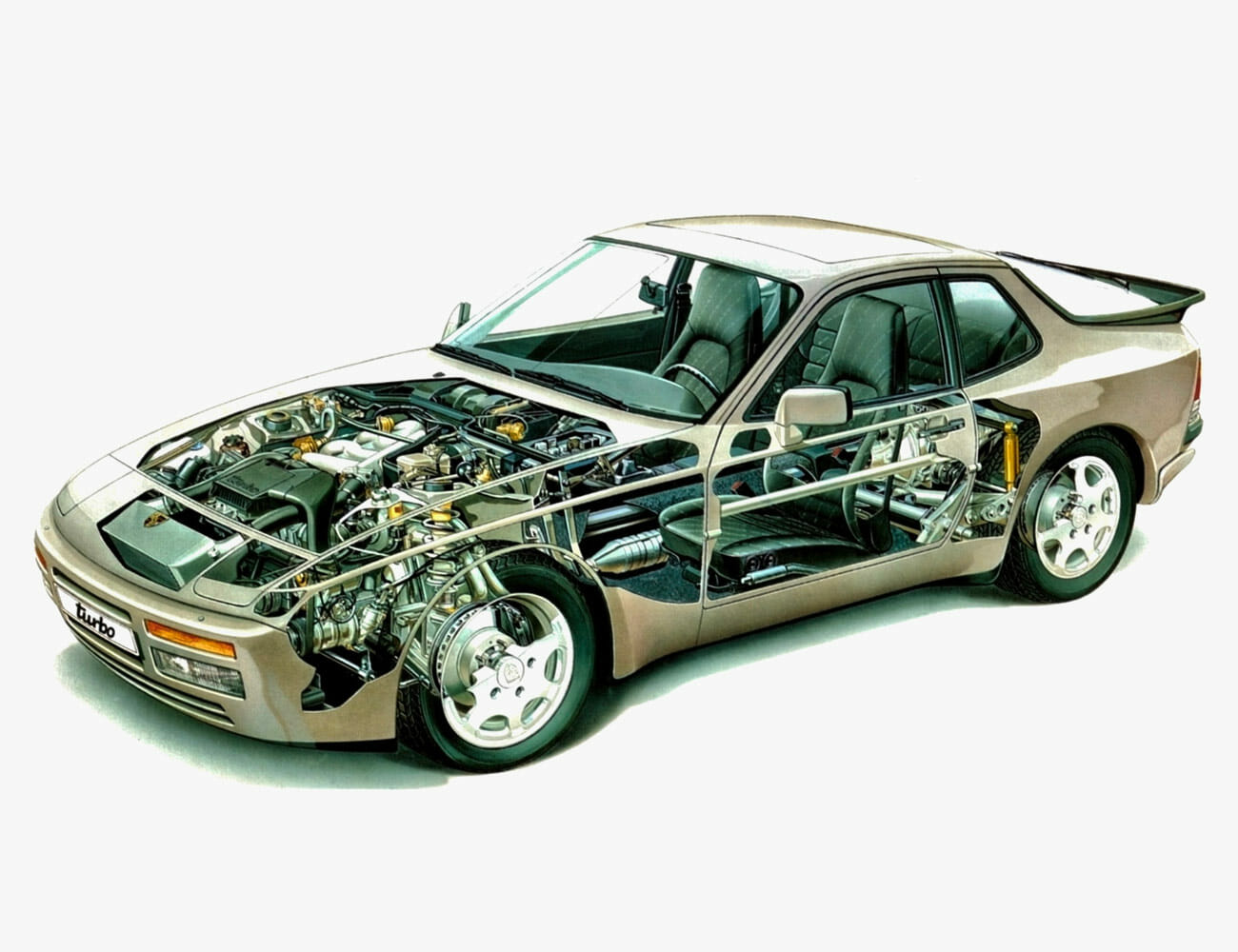
Before the mid-engined 718 Cayman and Boxster established themselves as Stuttgart’s entry-level benchmark, their predecessors made do with a front-engine, rear-wheel-drive setup and even with that, left some massive shoes to fill. From 1976-1995, the 924, 944, and 968 progressively got better performance-wise, but when design and the current going price are factored in, the 944 is a perfect balance, the Goldilocks option of the three.

Despite working with a front-engine architecture, Porsche built the 944 with a near perfect 50/50 weight balance. Between the 147 horsepower of the base model and the 247 hp output of the turbo, the chassis was never overpowered. Rounding corners, it’s poised and predictable and lauded as one of Porsche’s best-handling cars, on top of being one of its best-selling, ever.

If you want to look for a modern sports car to go head-to-head with, the Mazda MX-5 is an excellent place to start. It’s that good. While other ’80s-sports cars were trying to kill its drivers with massive power curves and no electronic aides mixed with short wheelbases (namely Porsches own 911 Turbo), the 944 kept an even keel, was easily controllable and enjoyable to almost everyone.

A total of 56,921 standard 944s, 13,982 Turbo models, and over 14,000 944 “S” variants made it to US shores, so the entry-level Porsche isn’t exactly a rare find. And seeing as how they’re relatively ubiquitous, it’s easy to come across one in absolute disrepair sitting right next to another in mint-condition, on the same site. However, when a Porsche is described as “mint-condition,” shelling out heaps of cash tends to comes soon after — not the 944. A pristine 944 can run from below $10,000 to just below $40,000 for a turbo, but considering they’re known for classic Porsche performance and handling (and what a 718 cayman goes for today), these are absolute bargains and an easy way to be part of the Porsche party.

Examples:
CarGurus: 1988 944 Coupe, w/ 60,282 miles$13,995
KBB: 1985 944 Coupe, w/ 49,769 miles$9,900
eBay Motors: 1986 944 Turbo, w/ 43,150 miles$23,395
KBB: 1986 944 Turbo, w/ 85,975 miles$24,900

The Best Cars to Buy in 2019

Kelley Blue Book announced a slew of awards late last year for the best cars to buy in 2019. And, since January is the official month of “New Year, new everything,” now’s a good as time as any to dive into what new cars will be the smartest automotive purchases of the year.

As segments split into subsegments, the decision process arguably gets more robust, more complicated. For this year KBB added new categories that better define the evolving platforms car companies continue to produce. Once broken down, KBB considers “affordability, quality, driving dynamics, dependability, and low cost to own,” which might mean the winners aren’t necessarily top sellers, just the smarter buy.

There are a few no-brainers on the list — it shouldn’t come as a surprise that Honda swept six of the 14 categories. But, Hyundai, winning the overly crowded subcompact SUV segment and earning the best performance car award show just how far the South Korean brand has come. The same can be said for Volvo taking top honors as the “Best New Model,” too. Going into 2019, the market was always going to be packed with choices, no matter the segment you’re leaning towards, but Kelley Blue Book’s list should help you through the decision process.

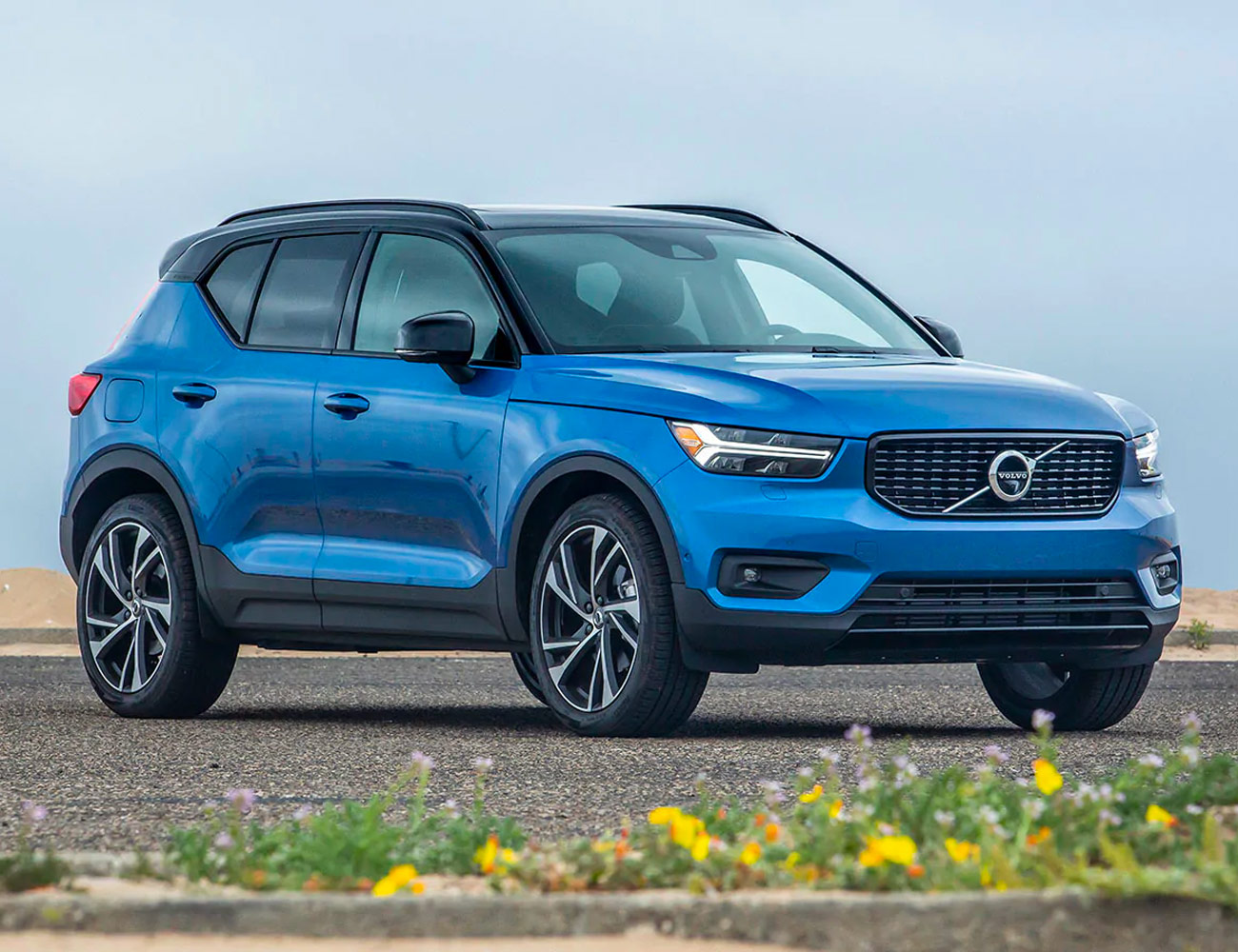
Best New Model / Subcompact Luxury SUV: 2019 Volvo XC40

Read Our Review: Here

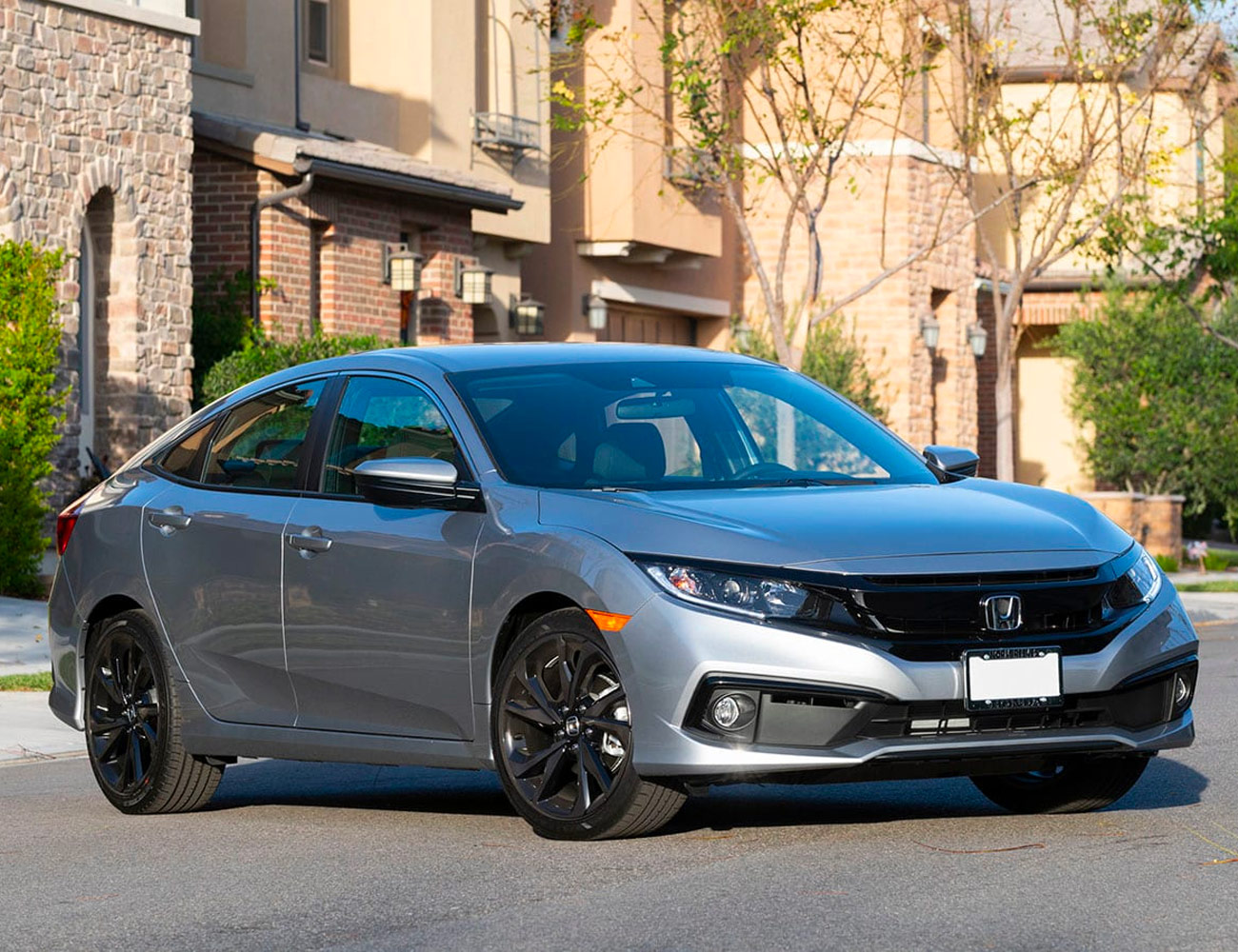
Compact Car: 2019 Honda Civic

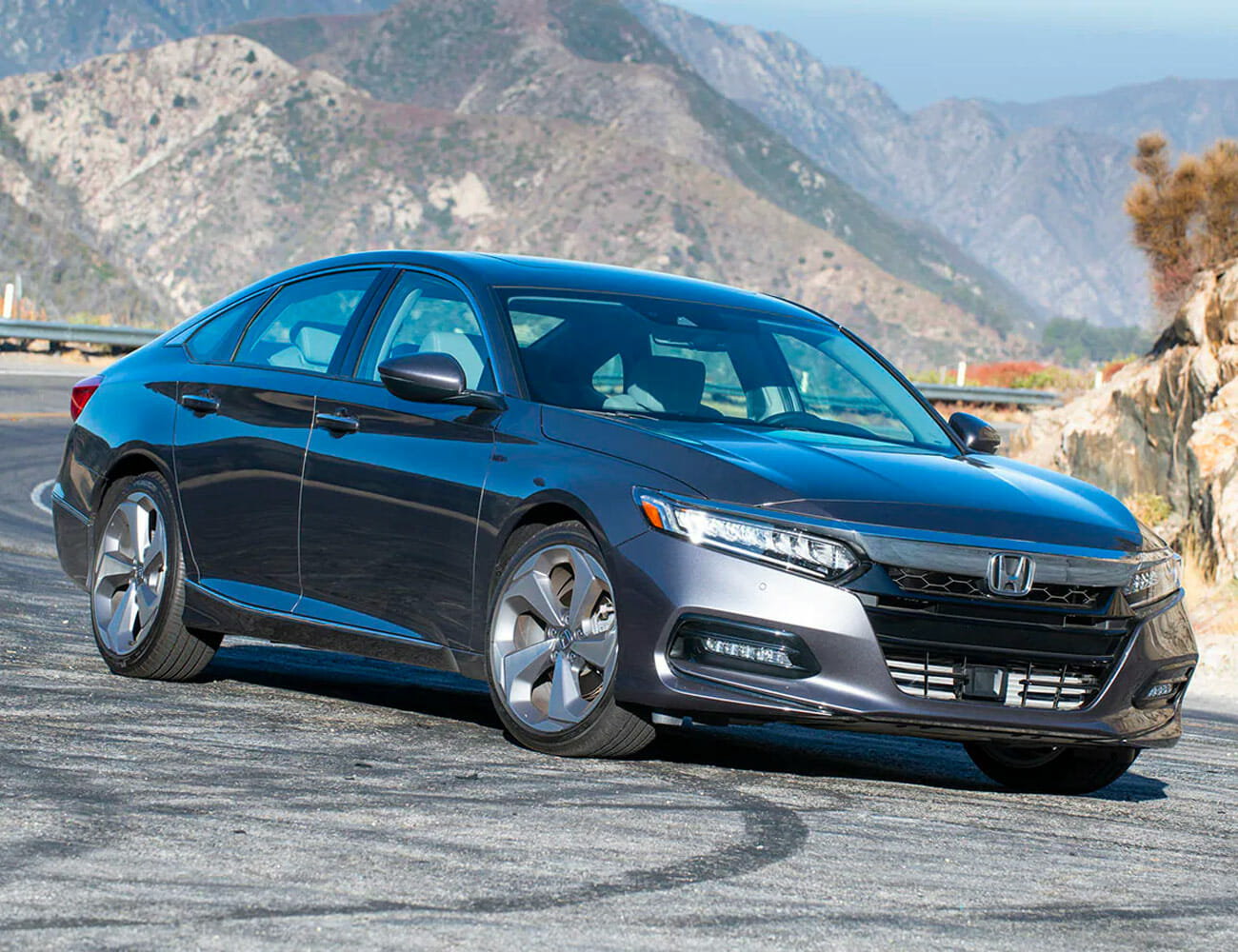
Midsize Car: 2019 Honda Accord

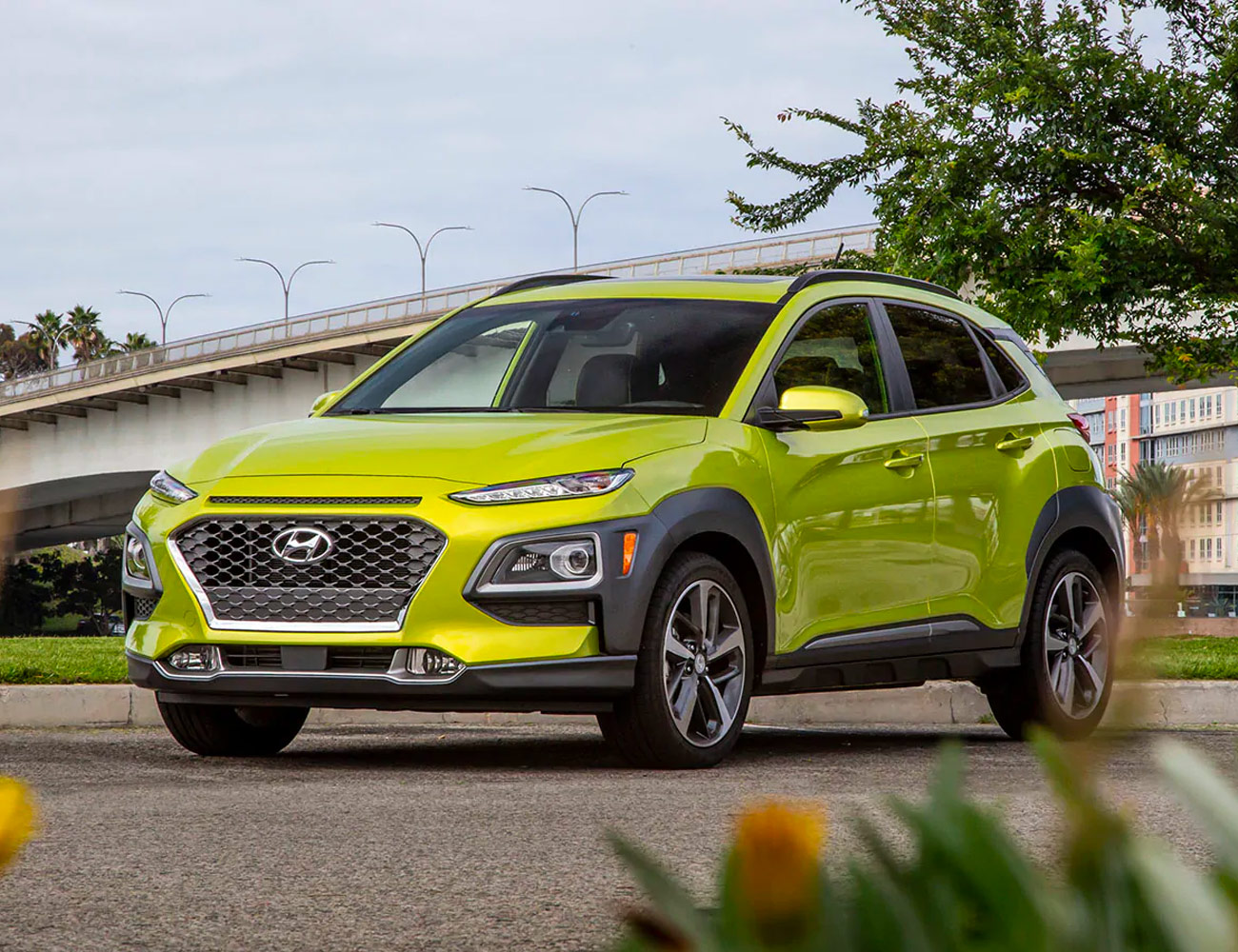
Subcompact SUV: 2019 Hyundai Kona

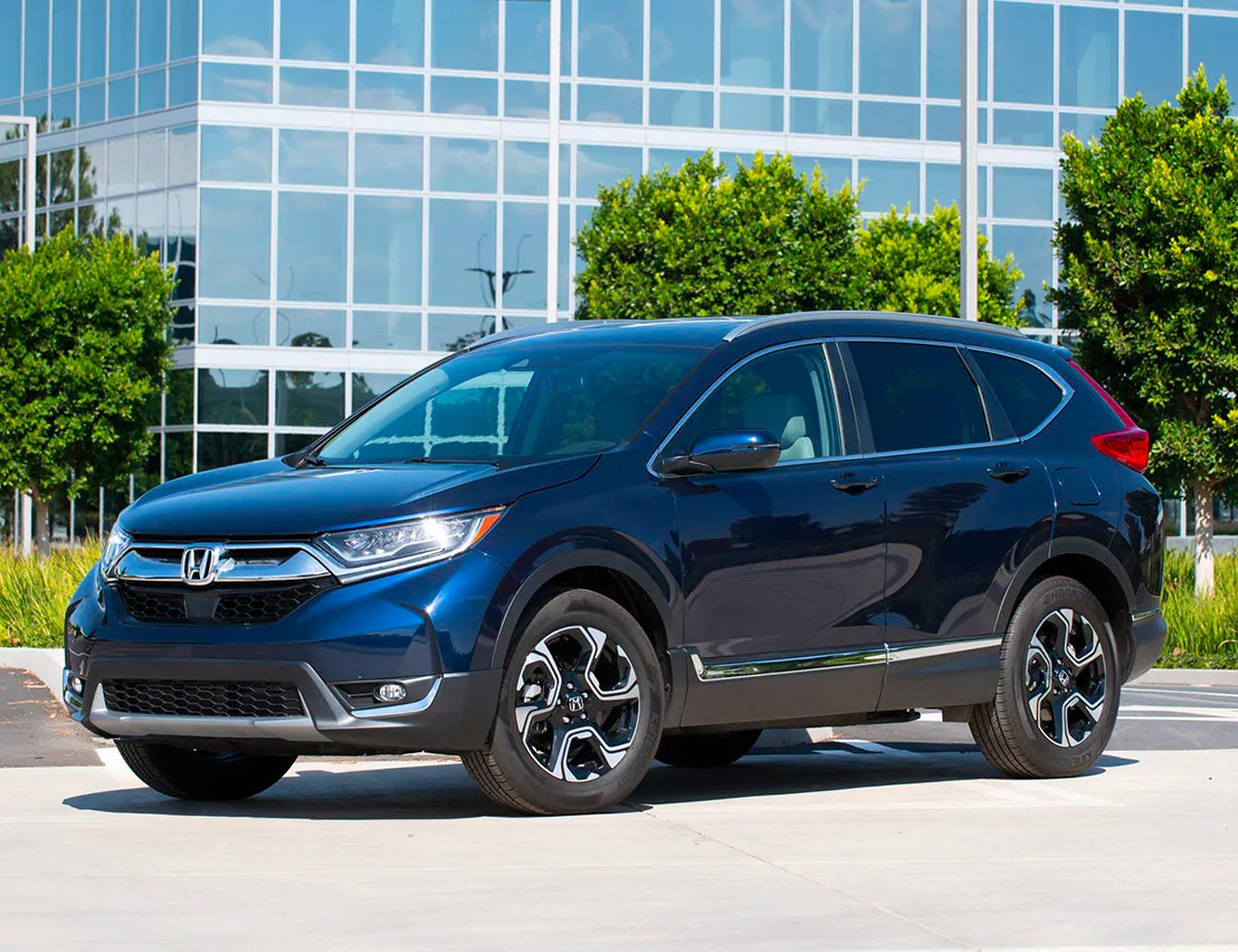
Compact SUV: 2019 Honda CR-V

Read Our Review: Here

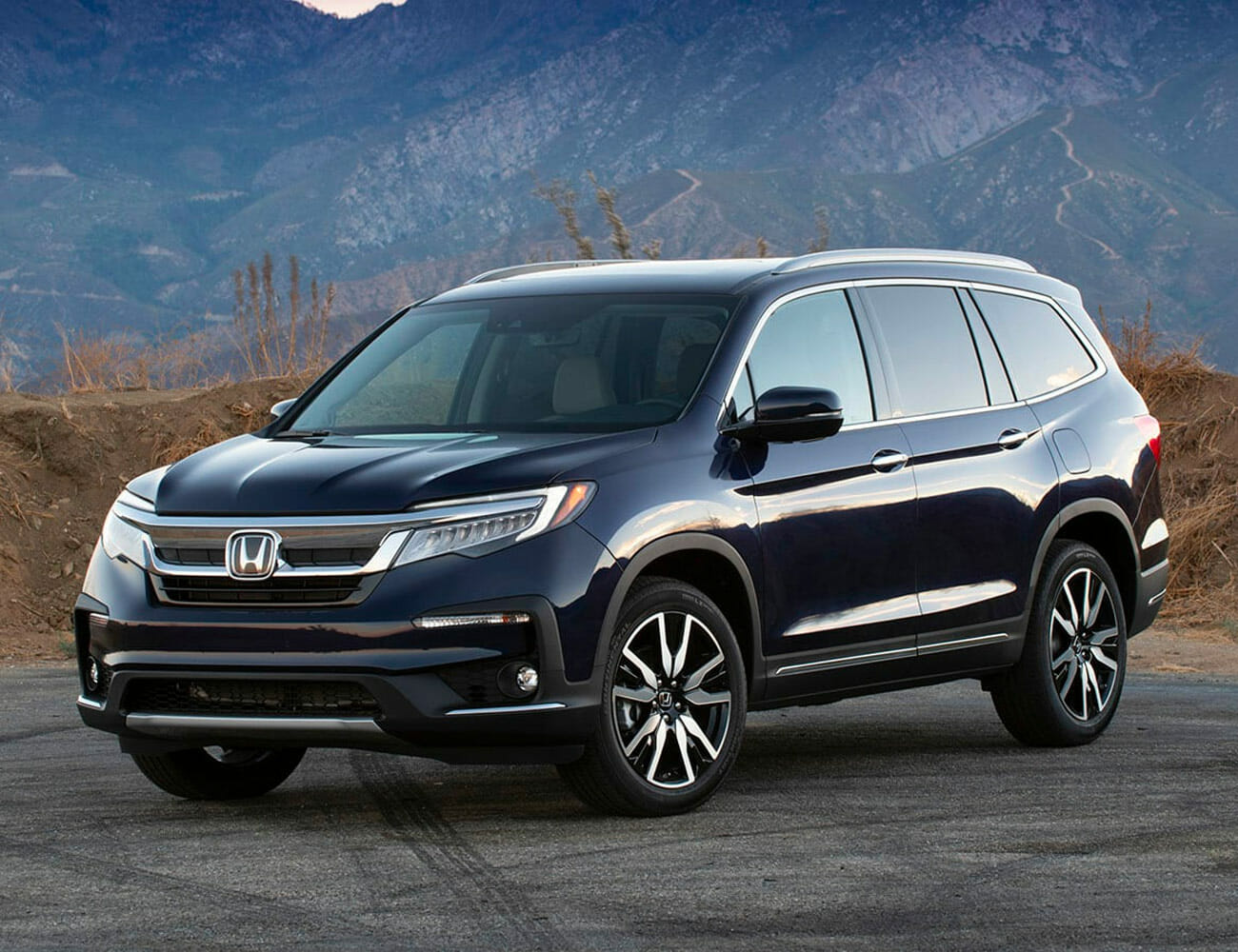
Midsize SUV: 2019 Honda Pilot

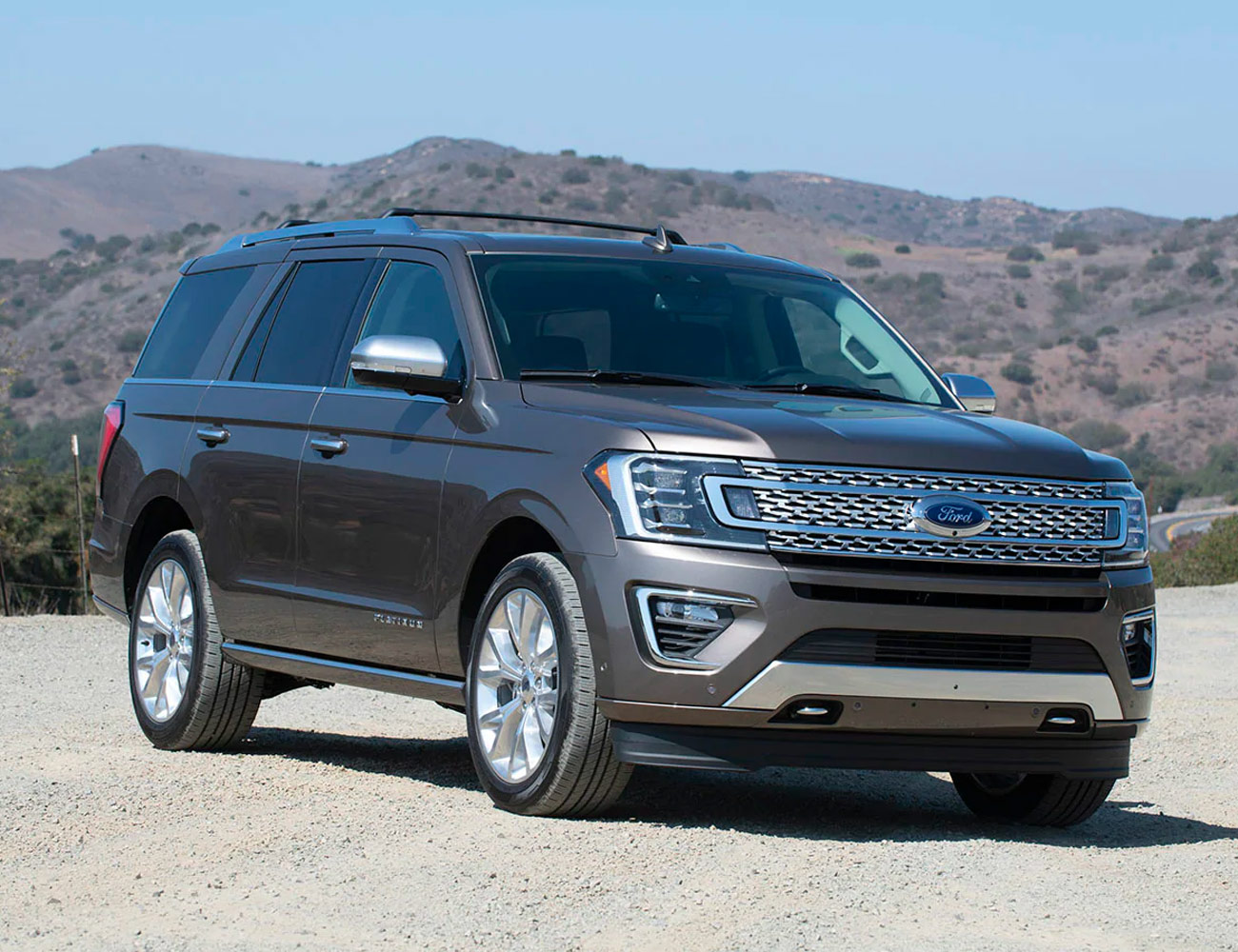
Full-Size SUV: 2019 Ford Expedition

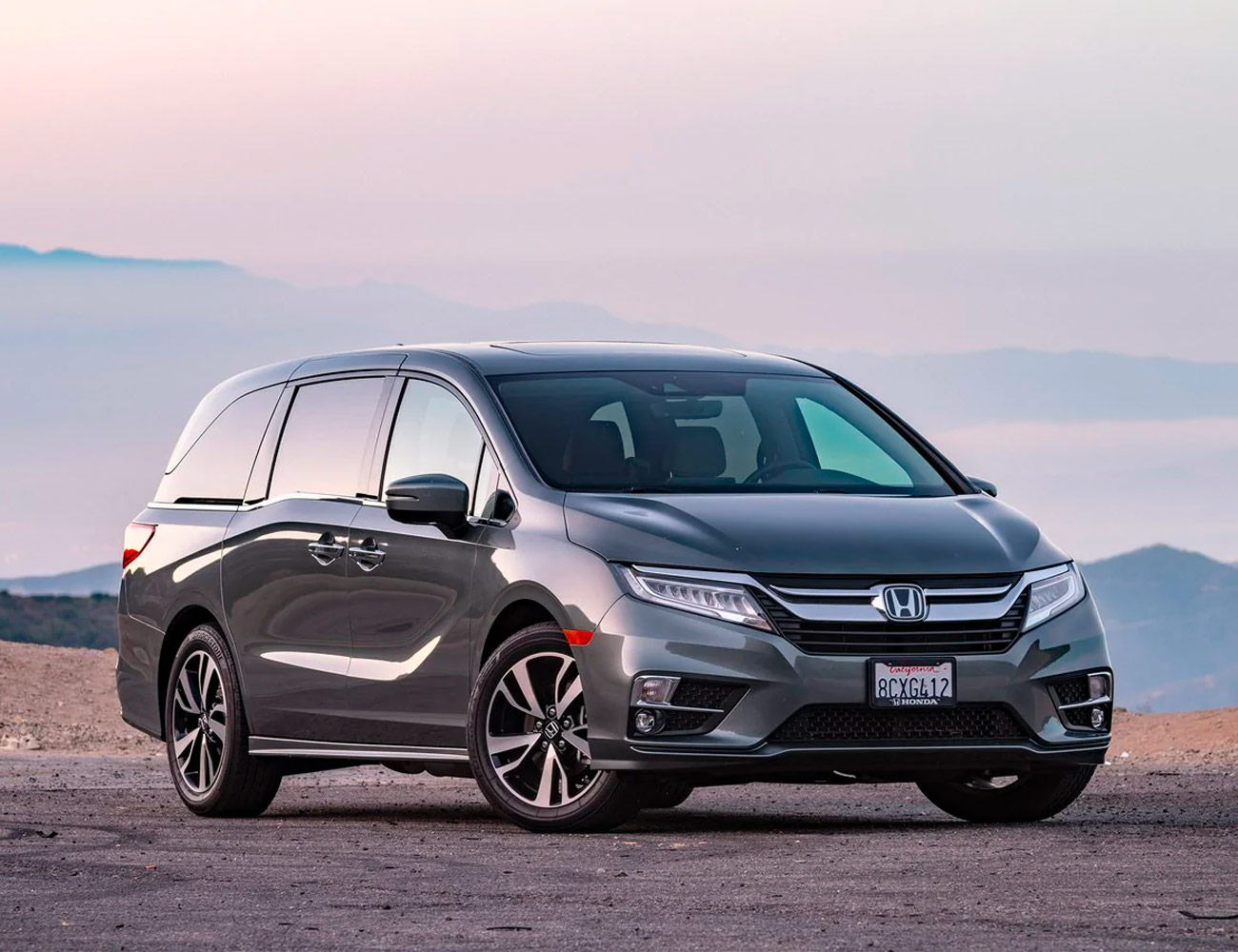
Minivan 2019: Honda Odyssey

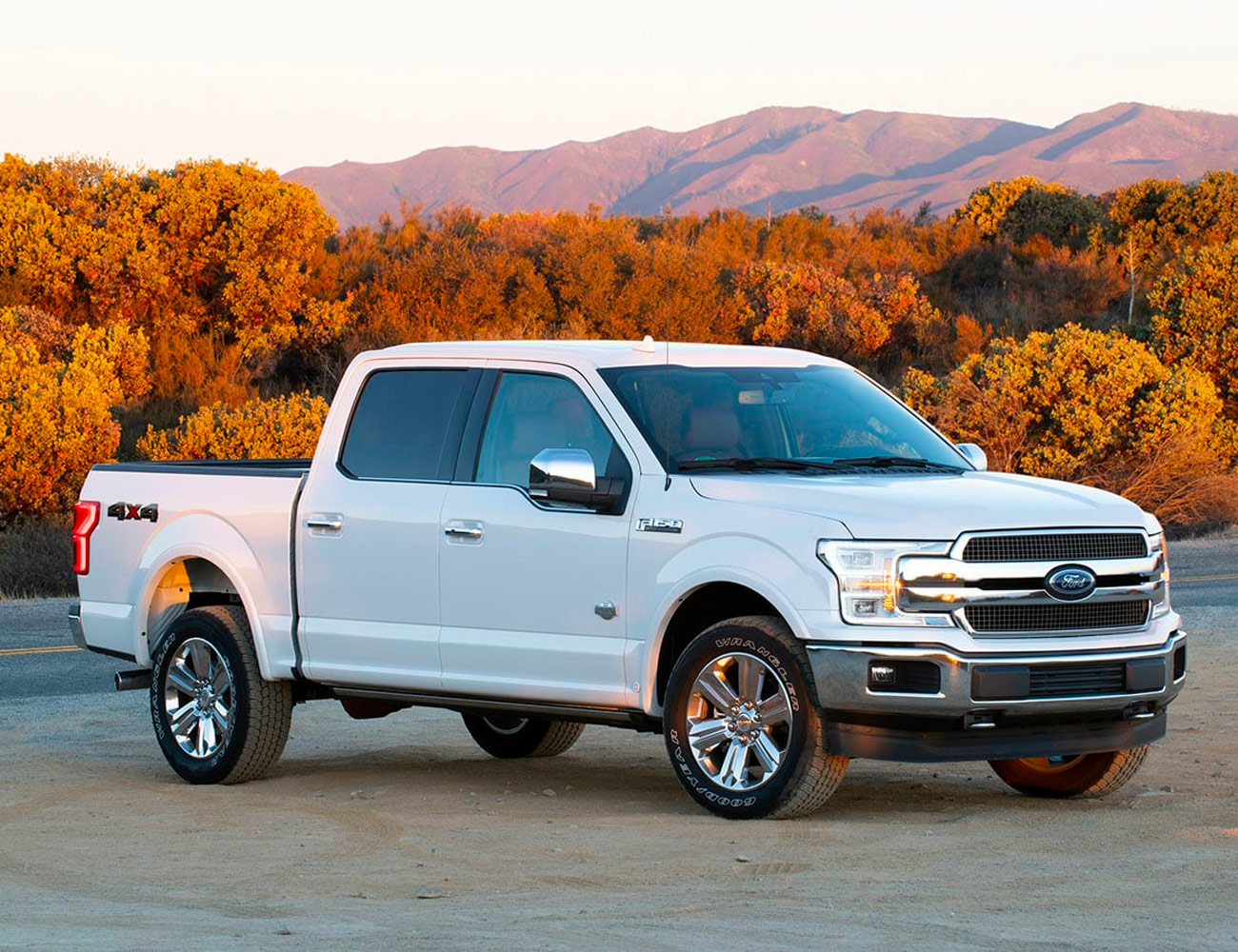
Pickup Truck: 2019 Ford F-150

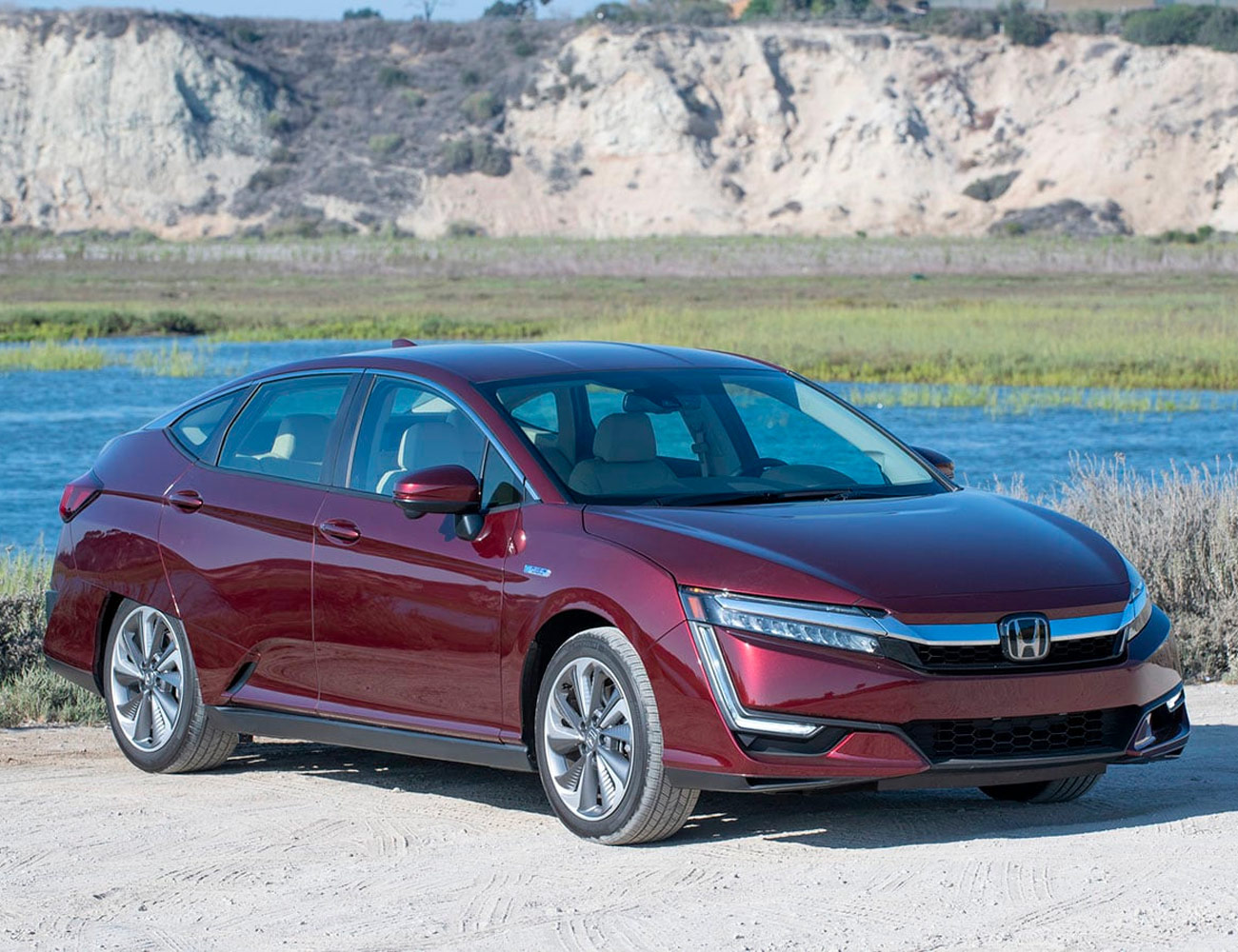
Electric/Hybrid Car: 2019 Honda Clarity PHEV

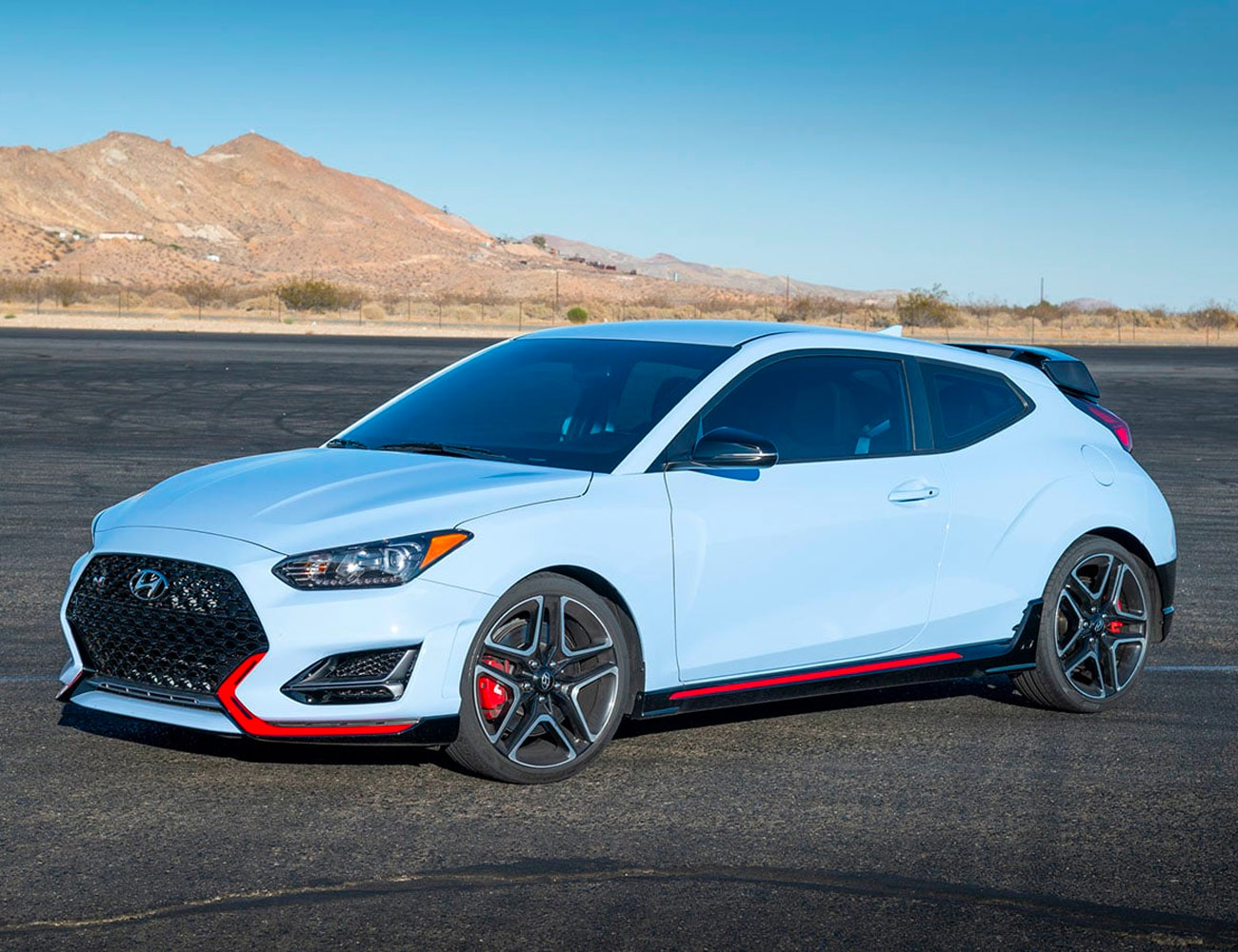
Performance Car: 2019 Hyundai Veloster N

Read Our Review: Here

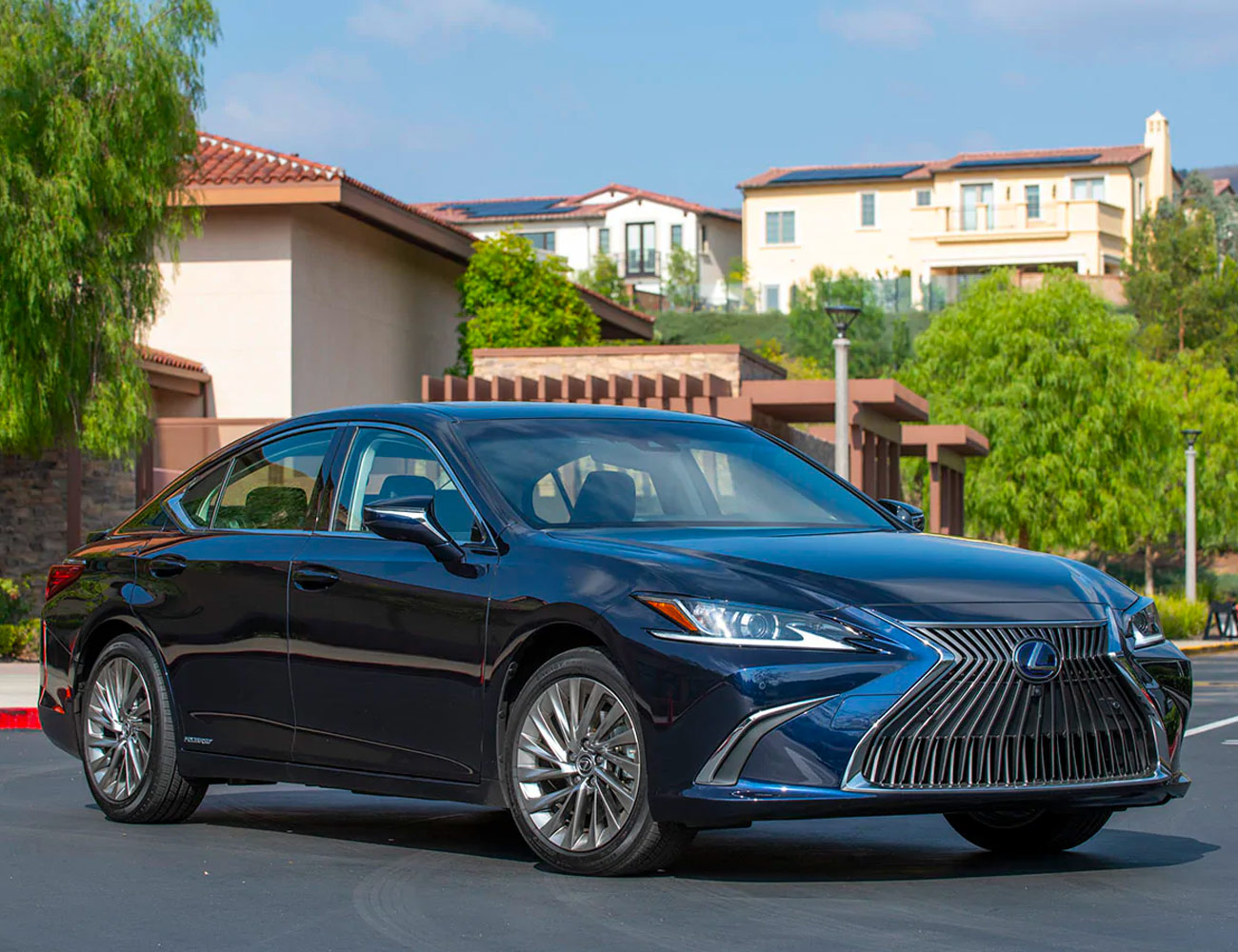
Luxury Car: 2019 Lexus ES

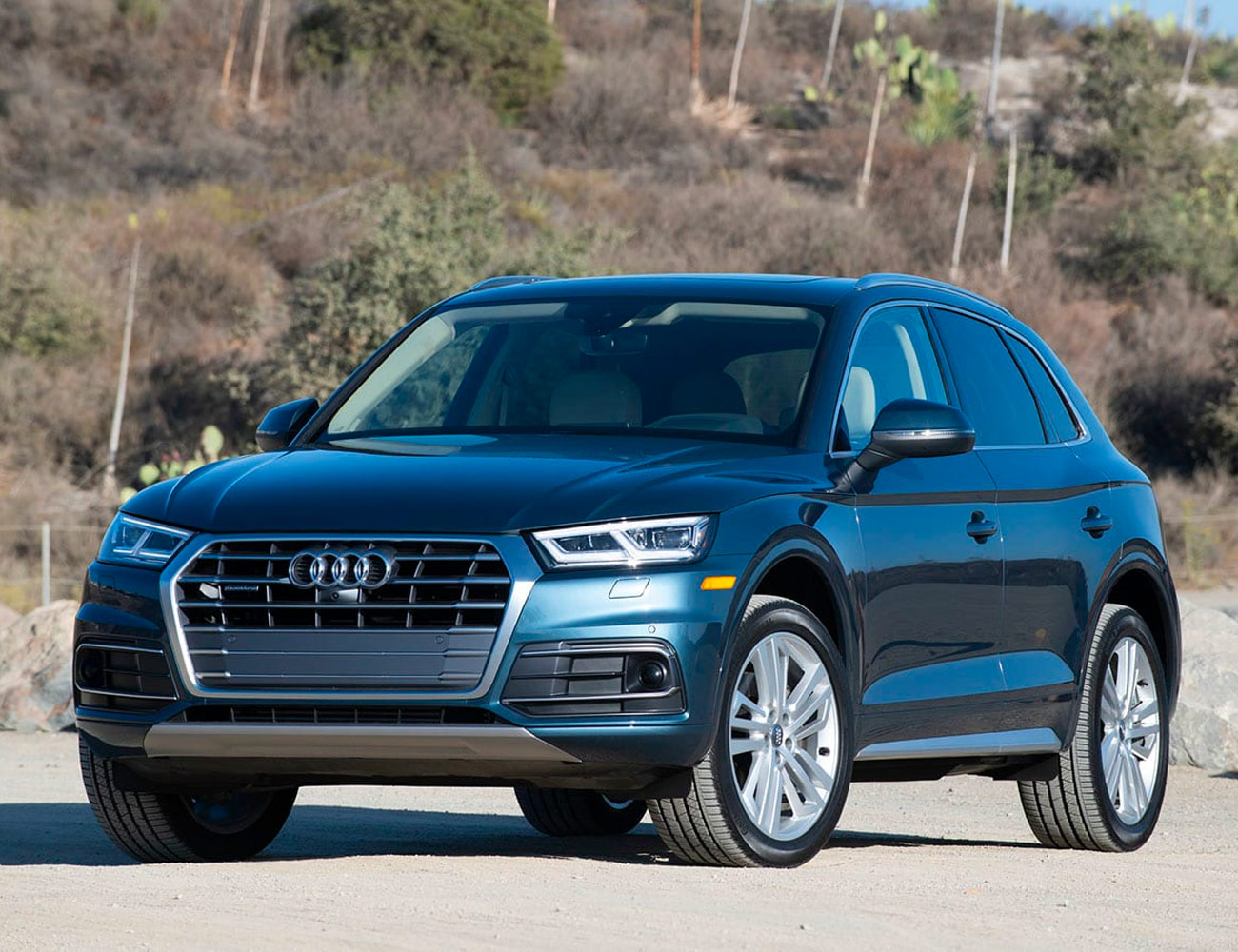
Compact Luxury SUV: 2019 Audi Q5

Read Our Review: Here

Midsize Luxury SUV: 2019 Audi Q7

Note: Purchasing products through our links may earn us a portion of the sale, which supports our editorial team’s mission. Learn more here.

The Best Used 4x4s We’d Buy for $10,000 Right Now

Go into any dealership, tell the salesman you have a strict budget of $10,000 and you want to buy a new car. First, he’ll smile and try to hold back a laugh, then he’ll point in the direction of the “used car” lot. You can’t get much for $10,000 when it comes to new cars except for, maybe a couple things off the options list on a Porsche 911. On the other hand, in the used car realm, $10,000 opens up your world: sports cars, vintage cars, big, small, foreign or domestic, you’re spoiled for choice of halfway decent vehicles. That’s why used car shopping online can quickly spiral into an internet rabbit hole. To narrow the field, this time around we stuck to 4x4s and a budget of $10,000.

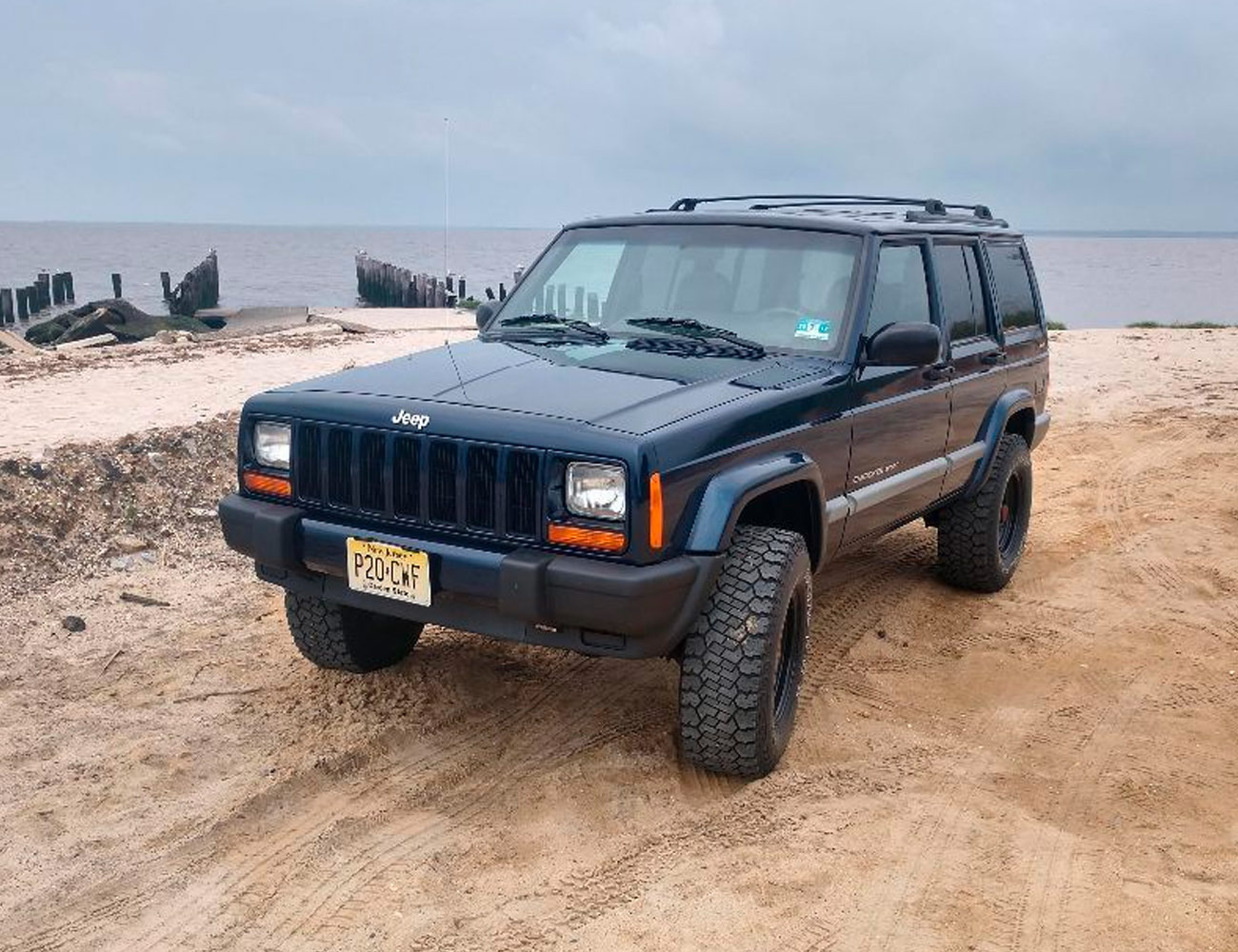
2001 Jeep Cherokee Sport

The search for a Cherokee began about a year ago, born of a desire to have an all-purpose vehicle that could accommodate fly fishing gear and go off-roading and still cruise comfortably on the highway to and from New York City. The four-door Cherokee Sport offers the cabin room I’m looking for while still being relatively compact when compared with modern SUVs. Finding a simple, unmolested example is tricky as so many of these have been hacked up to be rock crawlers and mudders.

Crisp examples can still be found for under-$10,000, which makes these really approachable for an off-duty utility vehicle you wouldn’t think twice about putting through its paces. Besides, its boxy body design is charming by today’s standards and the wide array of available aftermarket parts makes it a great base for just about any application. — Jacob Sotak,, Content Director, Gear Patrol Store

Mileage: 133,000 miles
Original MSRP: $21,915

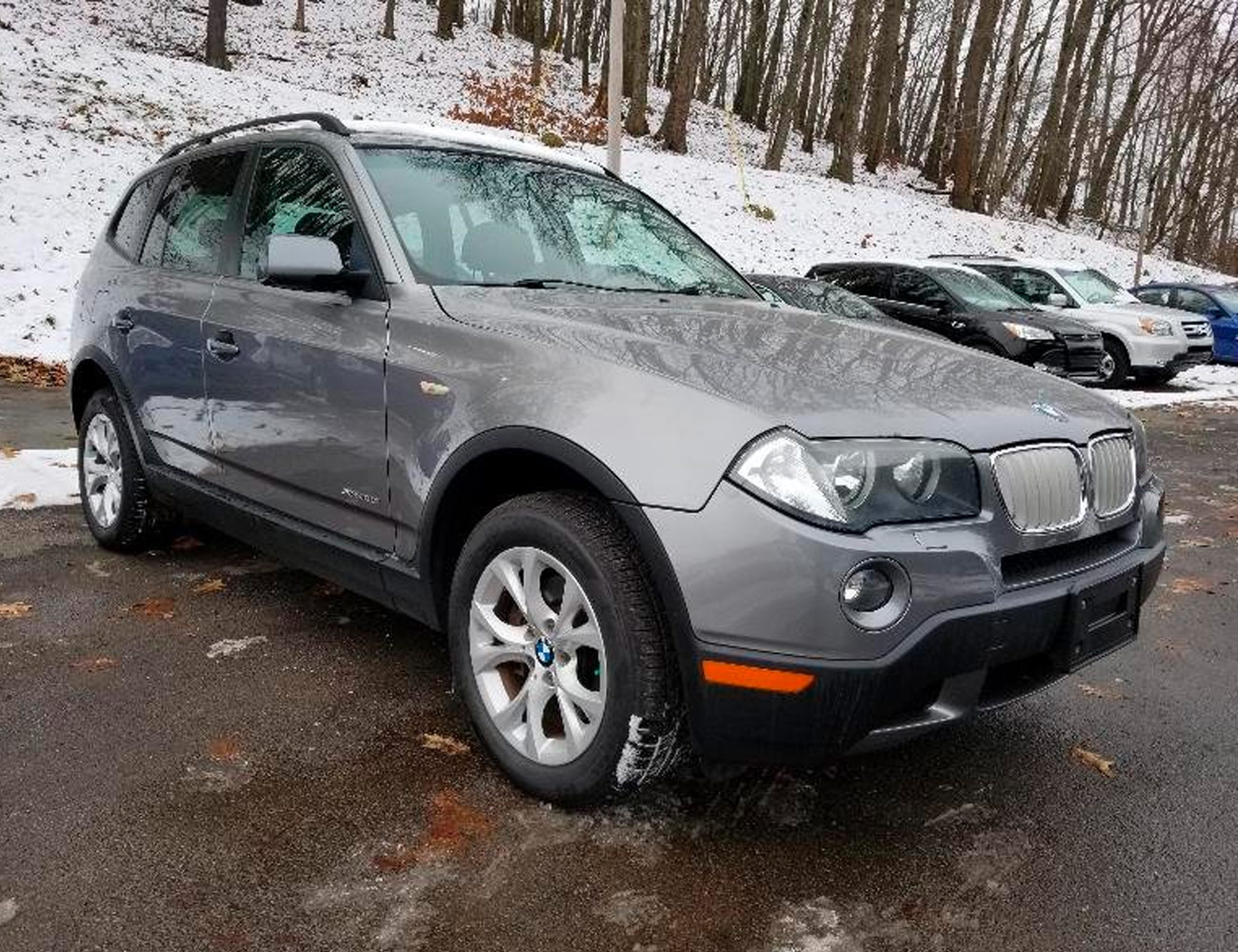
2009 BMW X3 xDrive30i

In a world where crossovers make up the vast majority of manufacturers’ stock, the BMW X3 is at an interesting point in the marketplace. When it first debuted, the X3 was a hit and BMW made a ton of them, particularly in the e83 body style. Its decently powered straight-six, sports sedan-like handling and nice lines make it an easy-to-flog weekend workhorse. And it turns out you can now find a ton on the used market, many with only a single previous owner. Many also have low miles due to so many having been leased. There are so many, in fact, that you find a trove of clean examples under $10,000 with less than 100,000 miles clocked and have your choice of color too. — Kyle Snarr, Head of Marketing

Mileage: 84,034 miles
Original MSRP: $39,700

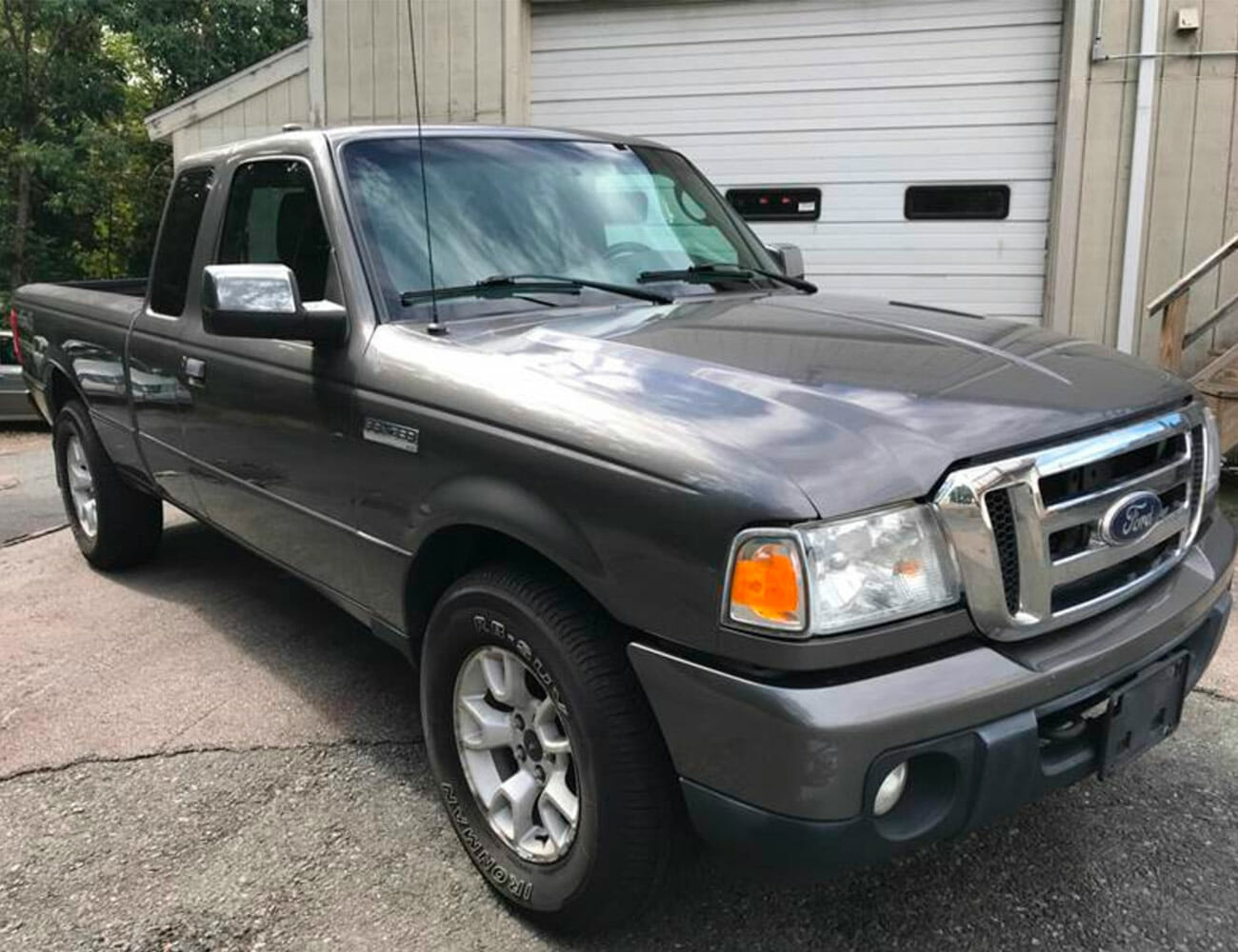
2010 Ford Ranger Sport

I drove a bitchin’ new Ranger my junior and senior years of high school. It was red with color matching steel bumpers. It was a Sport 4×4 model. It had those squirrely Firestone tires that tended to blow up. This is not that truck, and I’d wager that it’s a lot worse. But it’s still what I’d get, due mostly to nostalgia alone. Edmunds lists its cons as “cramped interior with dated design, choppy ride, subpar handling and braking, lacks many modern-day convenience and safety features.” So, you know, everything about it kinda sucks. Moreover, in 2010 the Ranger received a weaksauce mid-cycle refresh that only served to make it worse. This one features a V6 (“pep in the step,” says the dealer) and a two-tone interior (which is terrible). But there are few things like a simple little truck, especially from an era when trucks were trucks and crossovers – the invasive species that they are – were still an unknown. — Nick Caruso, Coordinating Producer

Mileage: 130,115 miles
Original MSRP: $25,800

1988 Toyota 4Runner

When it comes to buying 30-year-old-plus trucks, it doesn’t get much better than this. This first gen 4Runner comes with the original six-cylinder 3VZ-E engine, plus an upgraded transmission, transfer case and cable shifters and an aftermarket rear bumper. Inside it’s got an upgraded head unit and speakers, as well as working windows (the owner replaced the window board with new relays). The seats are in decent shape too. And best of all, the paint doesn’t look half bad for an old truck. Yeah, it’s got 280,000 miles on the clock, but who would own a 4Runner for this long and not drive the hell out of it? — Chandler Bondurant, Associate Staff Photographer

Mileage: 240,000 miles
Original MSRP: $16,000

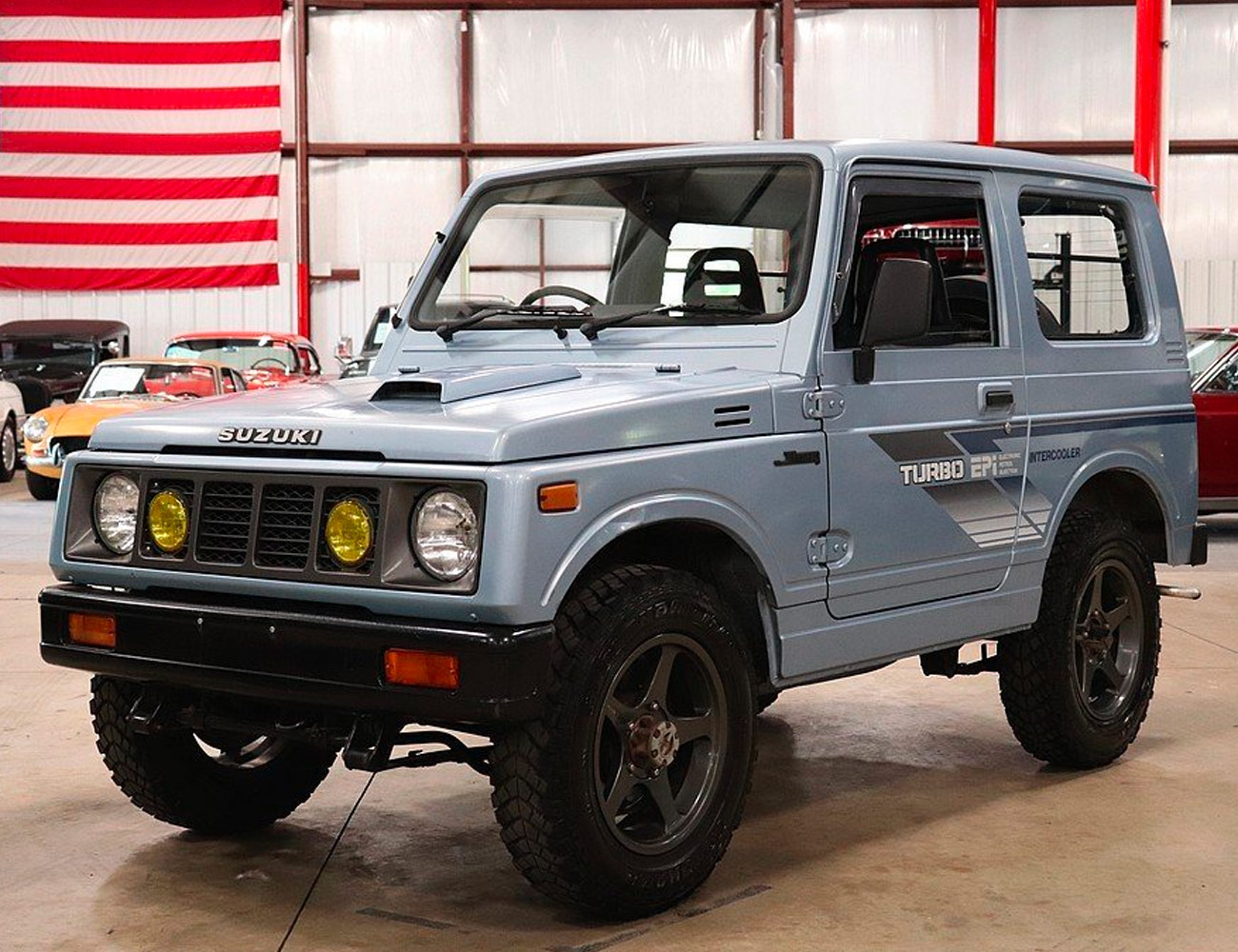
1974 Suzuki Jimny

Here we have a 1974 Suzuki Jimmy, a fun-sized JDM 4×4 with a manual transmission and the words “TURBO EPI INTERCOOLER” written across the side. This example has only done roughly 41,073 miles. If you’re good at math, that means less than 1000 miles on average were put on this little guy each year. This thing is absolutely mint and I want it.– Hunter D. Kelley, Associate Designer

Mileage: 41,073 miles
Original MSRP: $2,800

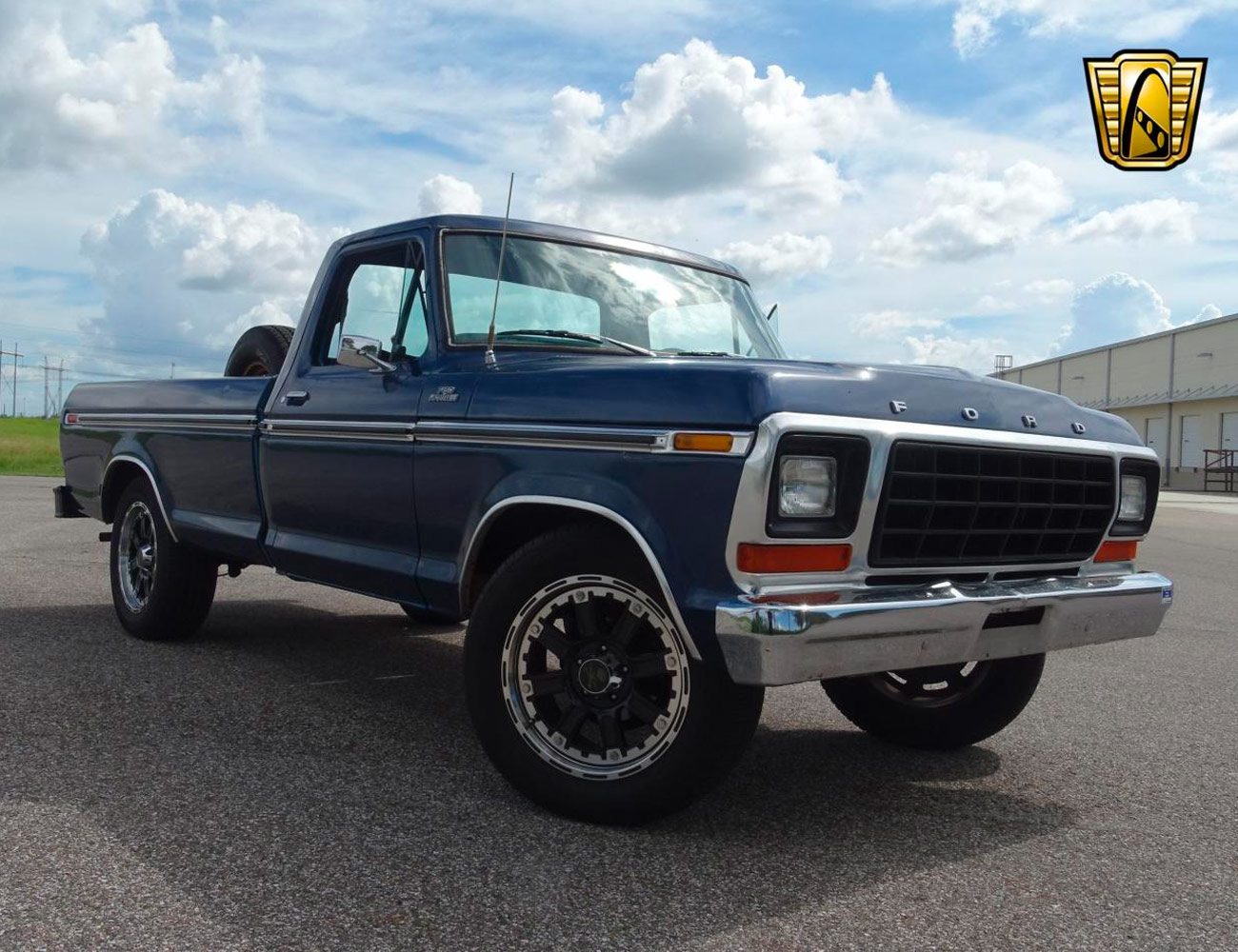
1978 Ford F-150 Ranger

There’s a reason everyone is excited to see the new Ranger back on the road. When it left us back in 2012, the Ranger was a little lackluster, but the original F-150 Ranger was one of the F-150’s top trims. It was also one of the first models to get front disc brakes and a fuel tank located outside of the cabin and underneath the bed. That change afforded the Ranger more space in the cabin, and, you know, safety too.

Overall, this ’78 Ranger isn’t in ery bad shape given its age. The undercarriage looks like it still has some life left in it, but judging by the way the engine bay looks, its a solid bet this isn’t the first time the five-digit odometer has seen 69,145 miles. With that said, these old Fords were built like tanks so even if the next few miles are rough, it’ll take them in stride. — Bryan Campbell, Staff Writer

Mileage: TMU
Original MSRP: $5,500+
Note: Purchasing products through our links may earn us a portion of the sale, which supports our editorial team’s mission. Learn more here.

11 Cars We Can’t Wait To Drive in 2019

Over the next twelve months, the automobile market is going to get a serious refresh. The many new-model reveals from this year’s Detroit Auto Show and all the announcements made late last year herald incredible metal coming down the pipeline. Some of the reveals and announcements were expected, some demolished expectations. We’re still anxiously awaiting exact details from others. After taking it all in, these are the cars and trucks we’re looking forward to driving the most in 2019.

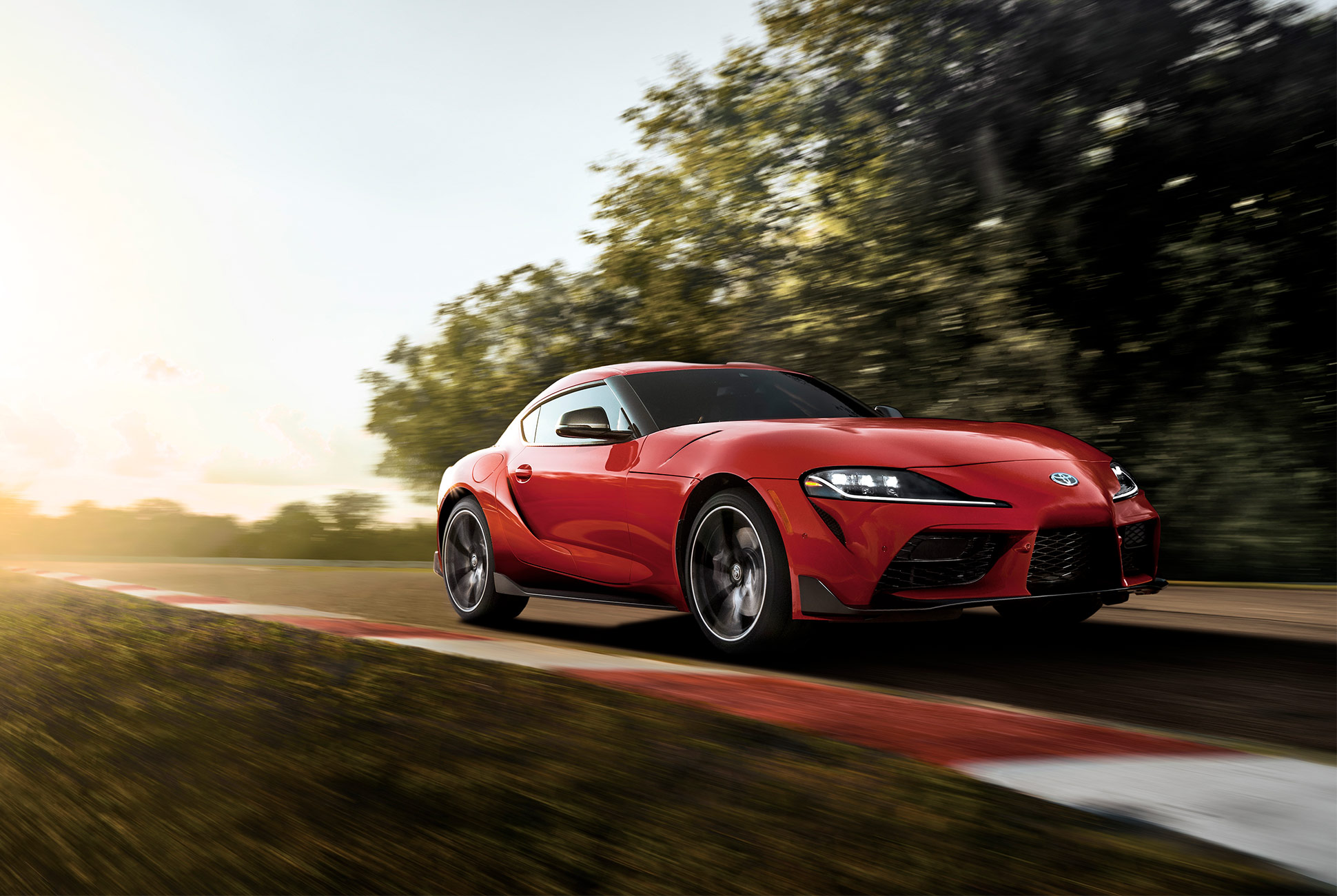
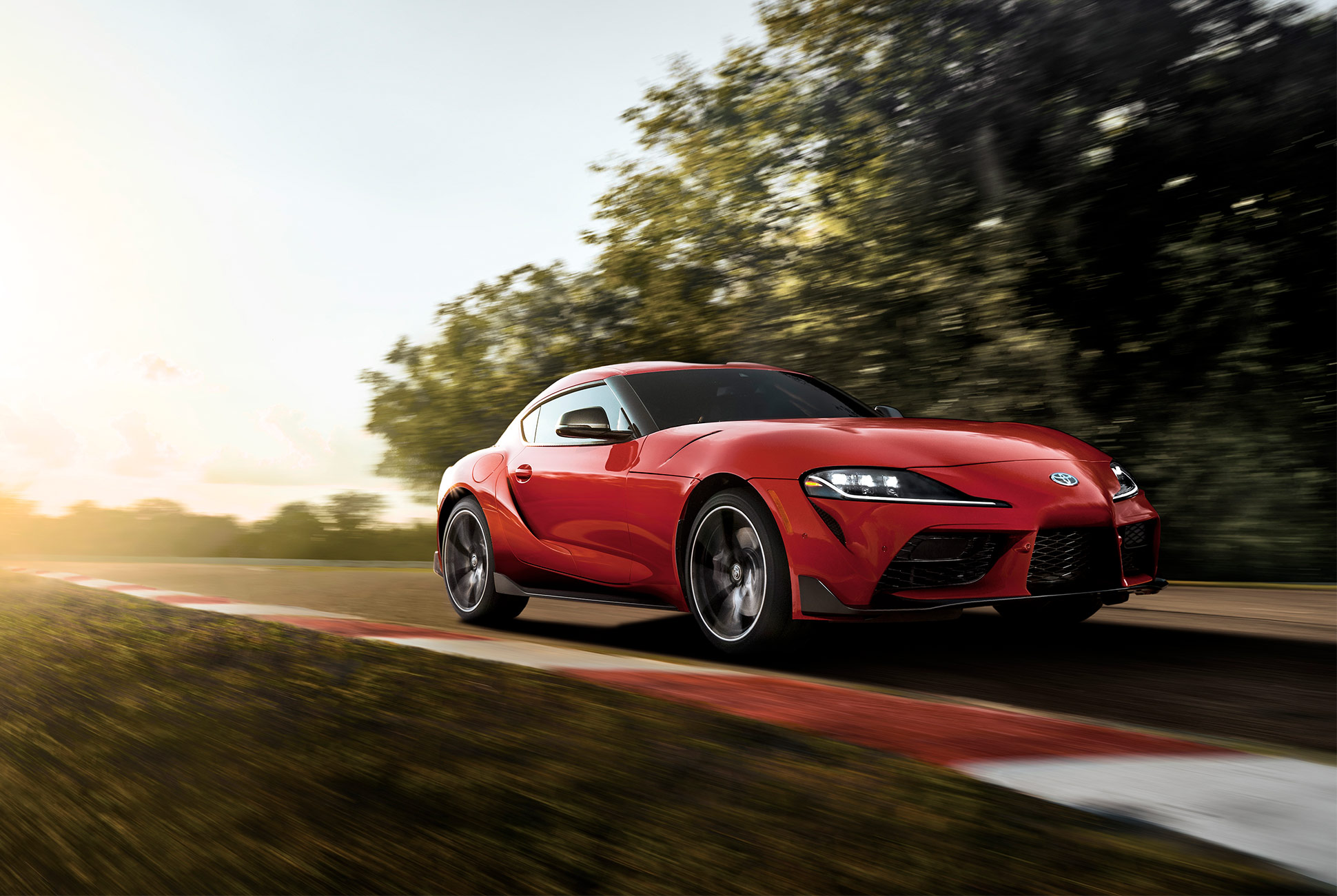
2020 Toyota Supra


This one should come as no surprise. We’ve seen leaked images and teasers for at least a couple years now, so it was a relief to finally behold the Supra in the metal. Its stats look promising and given Toyota’s recent winning streak, it should hold up to all the hype.

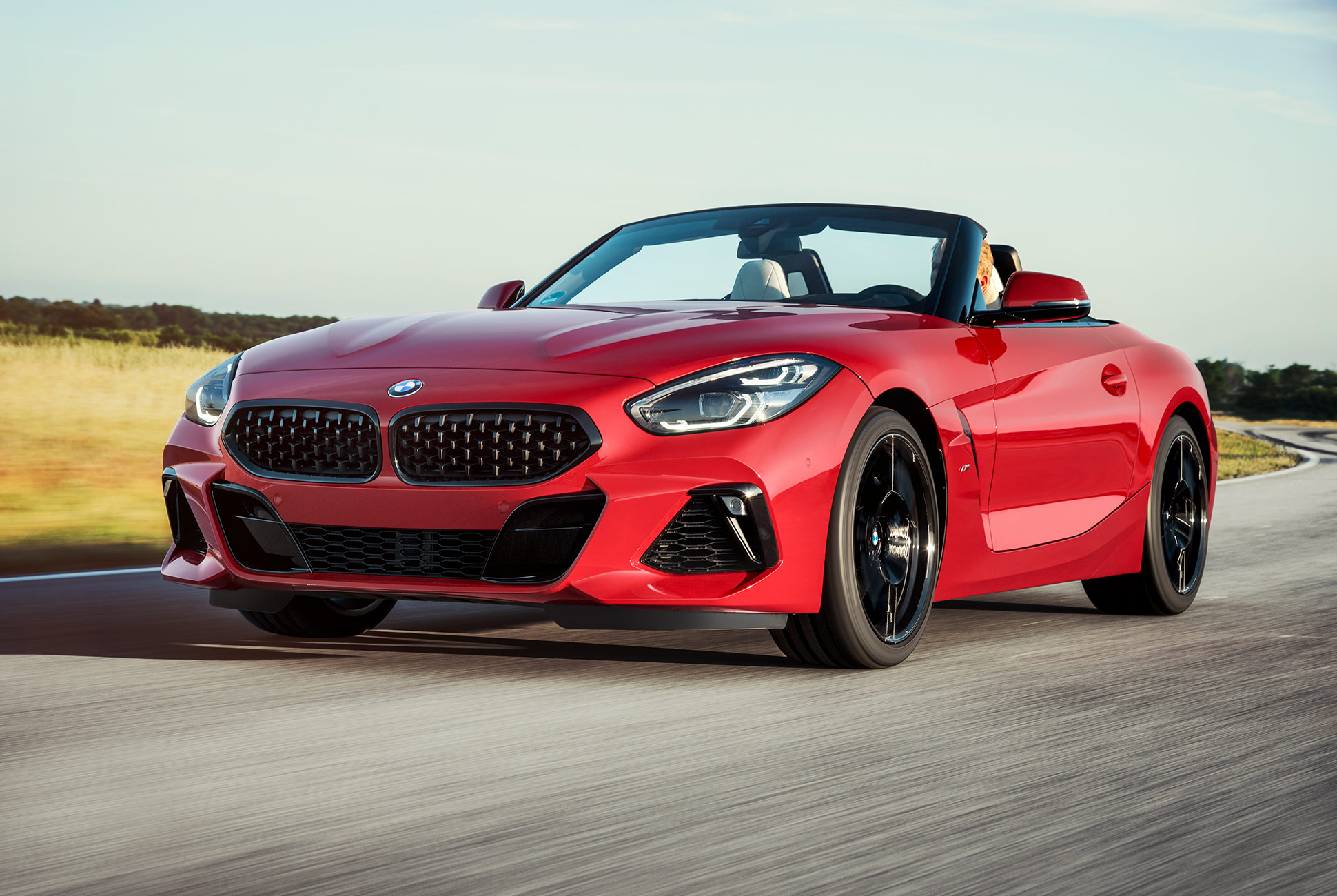
2019 BMW Z4


Driving the BMW Z4 is part and parcel of driving the Supra since they were jointly developed. The final products from each manufacturer are [likely] worlds apart but it’ll be interesting to see the siblings side by side.

2019 BMW 8-Series


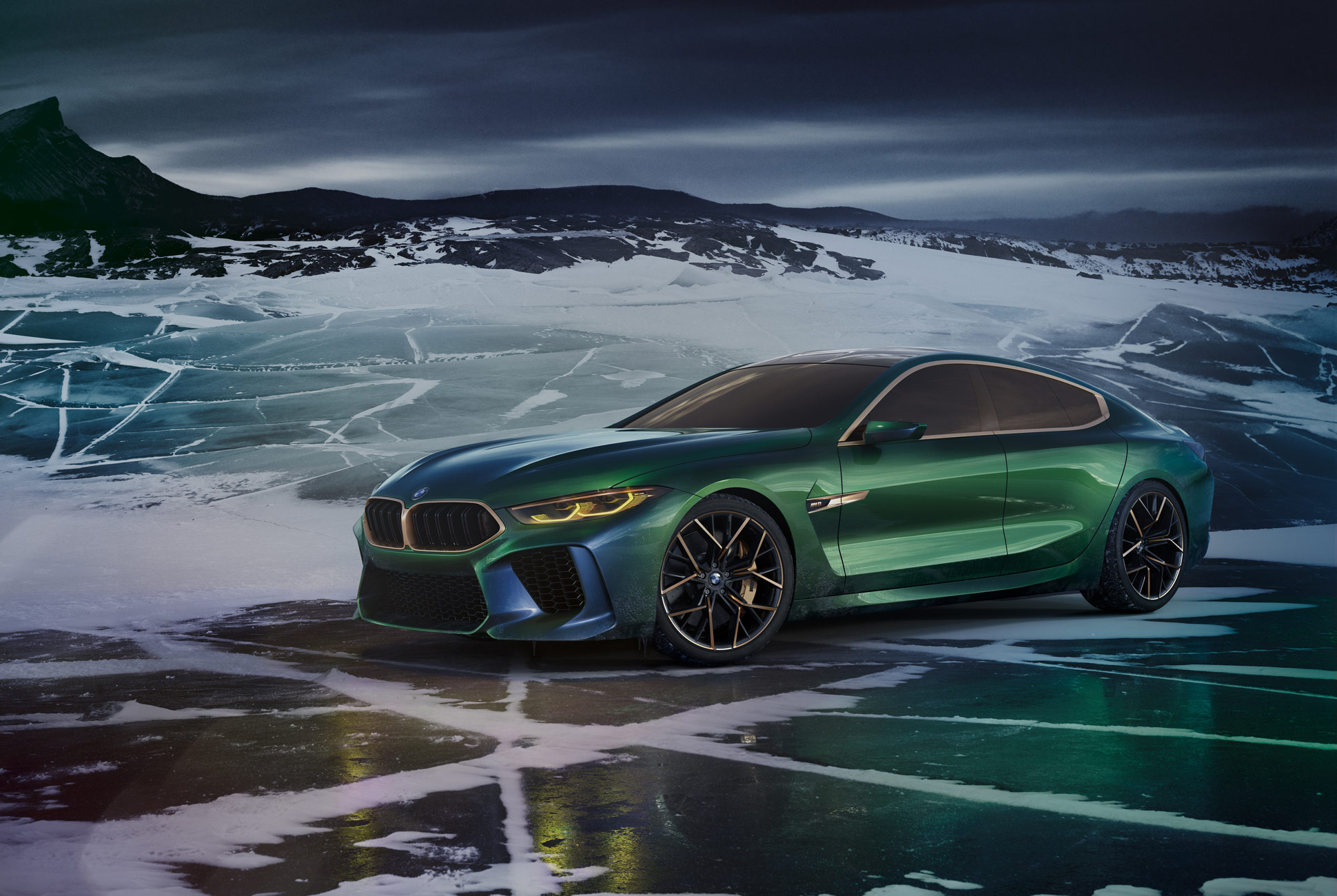
Like the Supra, the BMW 8-Series is another ’90s icon making a comeback. Once again BMW will have a top-flight luxury sports coupe/sedan. It’s abut time – the Mercedes S-Class has had it too easy for too long.

2019 BMW X7


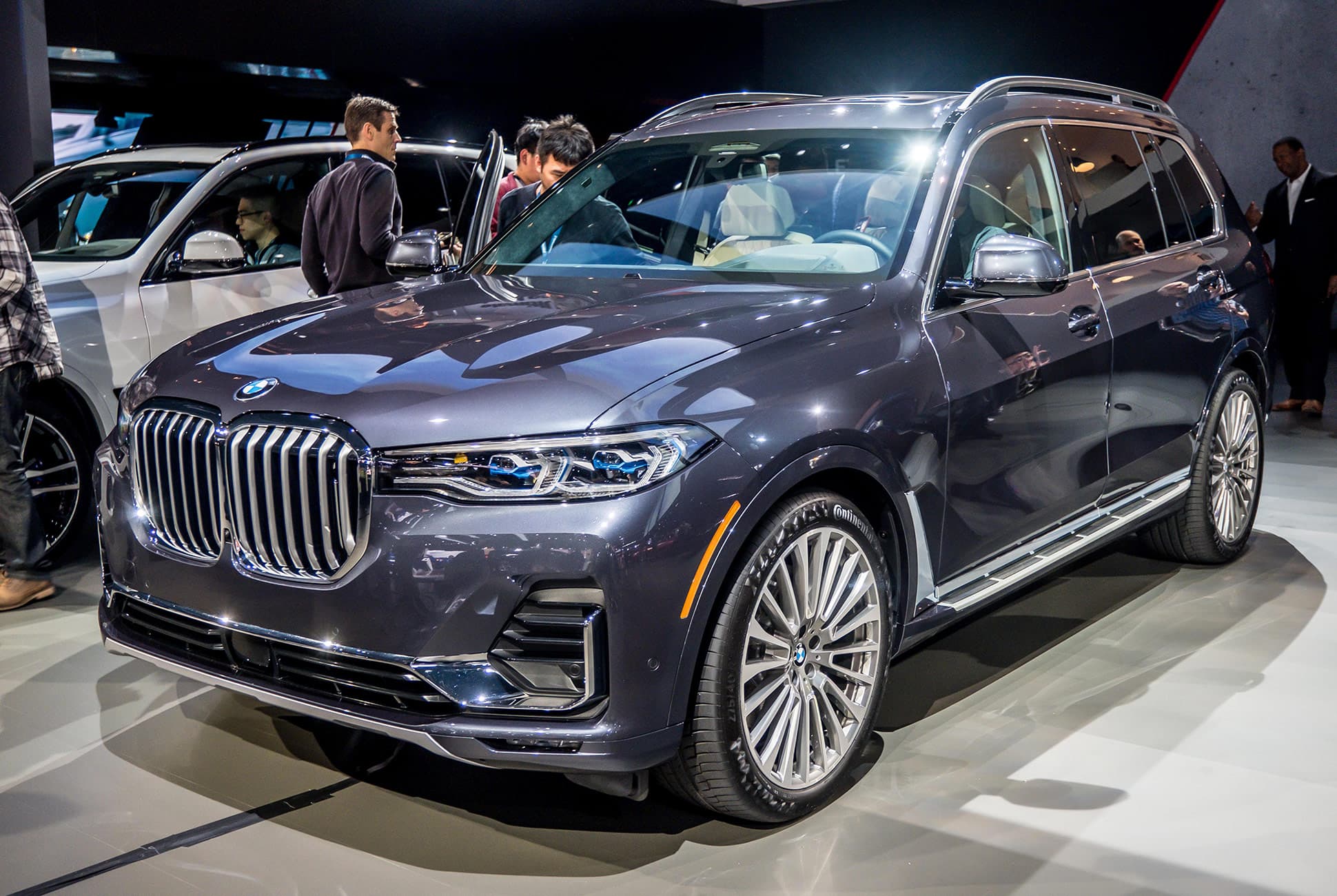
Speeaking of a long time coming, BMW finally enters the three-row SUV game. The X3, X5 and X6 are well respected SUVs; it’s easy to assume the X7 will follow suit. But, since the X7 is the Bavarian’s first outing, it’s still up in the air whether it can compete in an already crowded market.

2019 Jeep Wrangler Gladiator


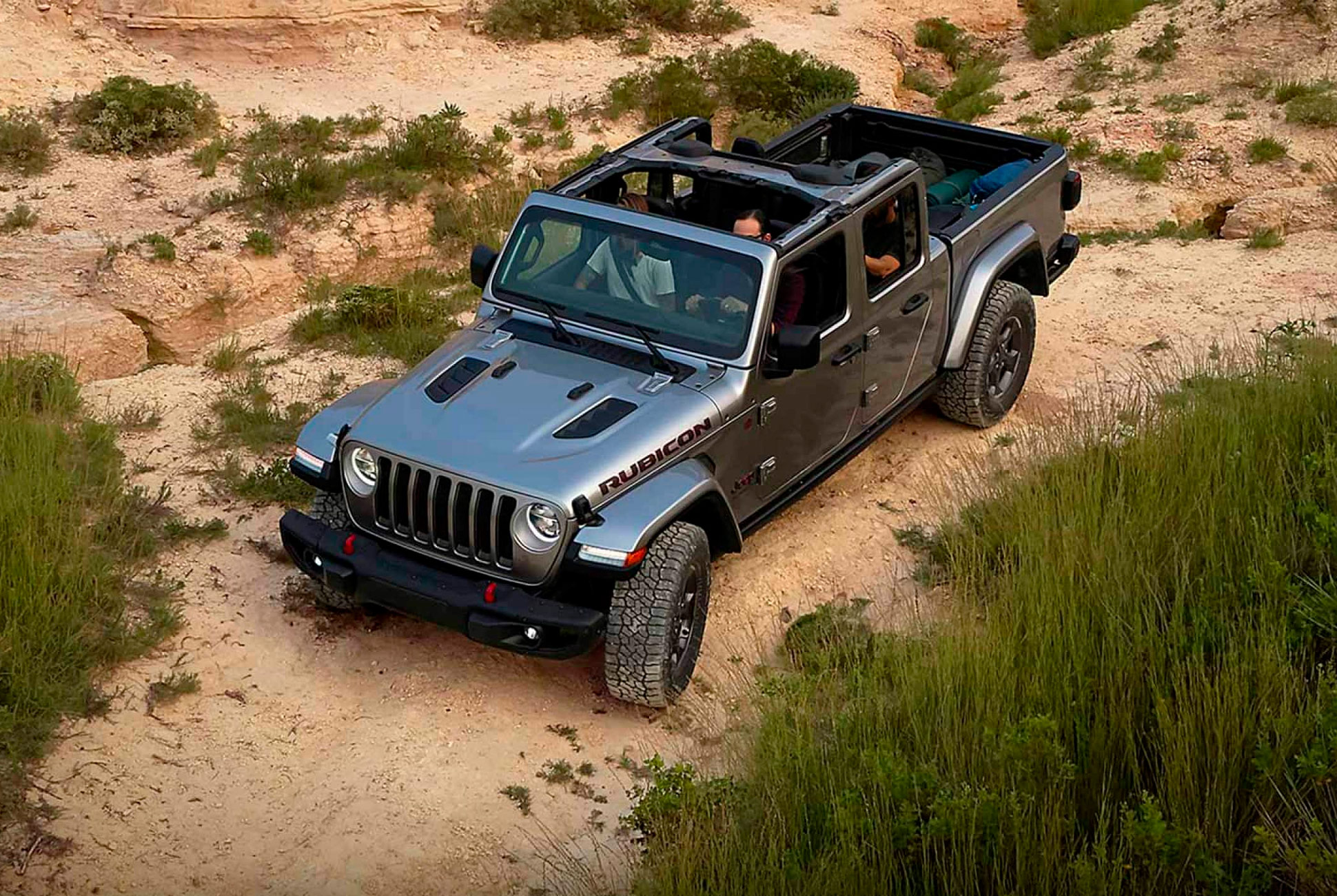
Ever since Jeep teased a possible pickup version of the current-generation Wrangler, it’s been the enthusiast’s conversation topic of choice. It might have sown divided opinions, but there’s no denying its architecture perfectly lends itself to the adventure lifestyl. Maybe even more so than the standard Jeep Wrangler.

2020 Lincoln Aviator/ Ford Explorer


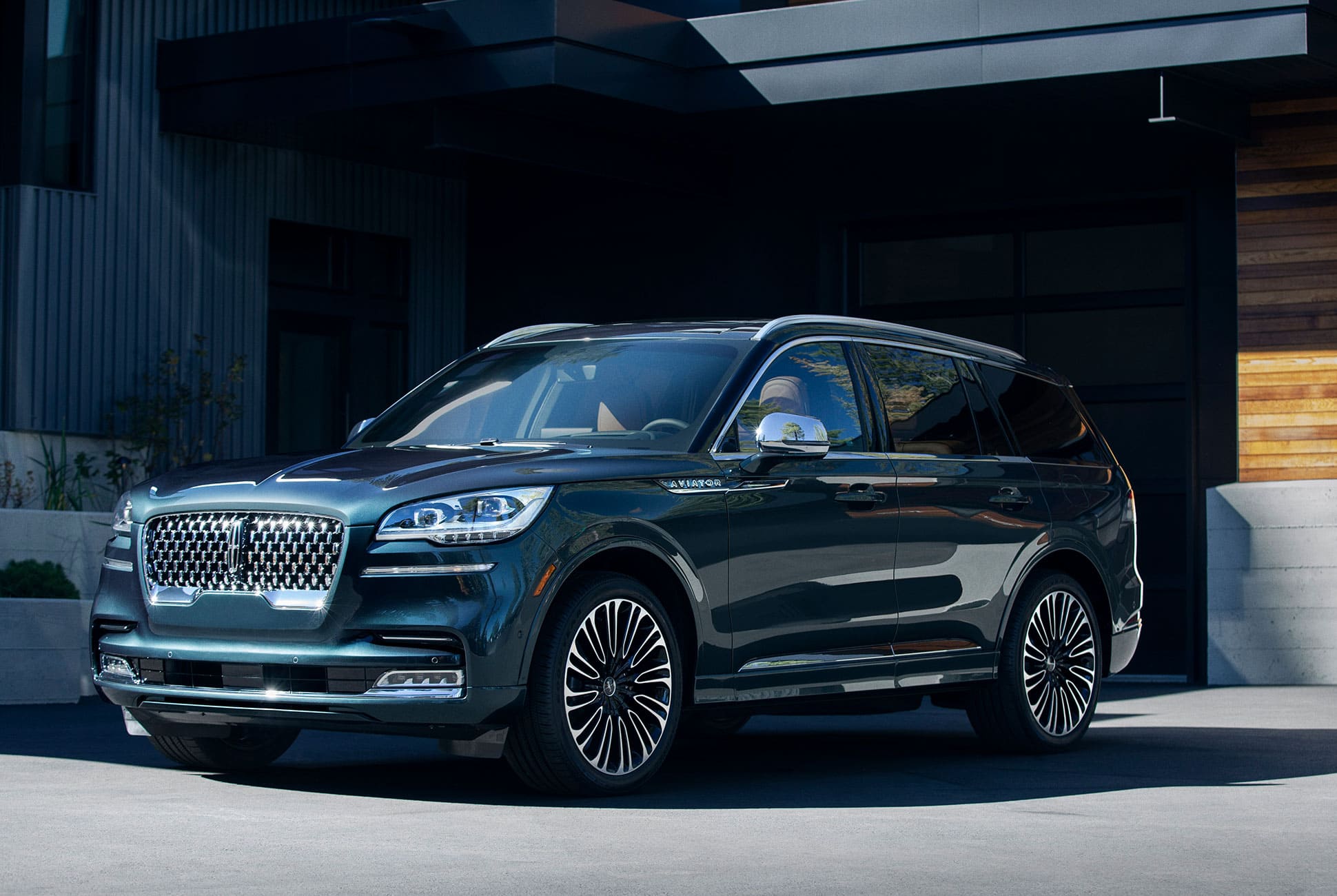
Ford didn’t simply swap badges and emblems on these two SUVs and call it a day. The two three-row SUVs sit on the same, all-new rear-wheel-drive platform and share the same basic architecture, but that’s where the similarities stop. The Aviator aims to tackle the highest echelon of premium owner, while the Explorer will take on adventurous families and, probably, with a lot of success.

2019 Kia Telluride


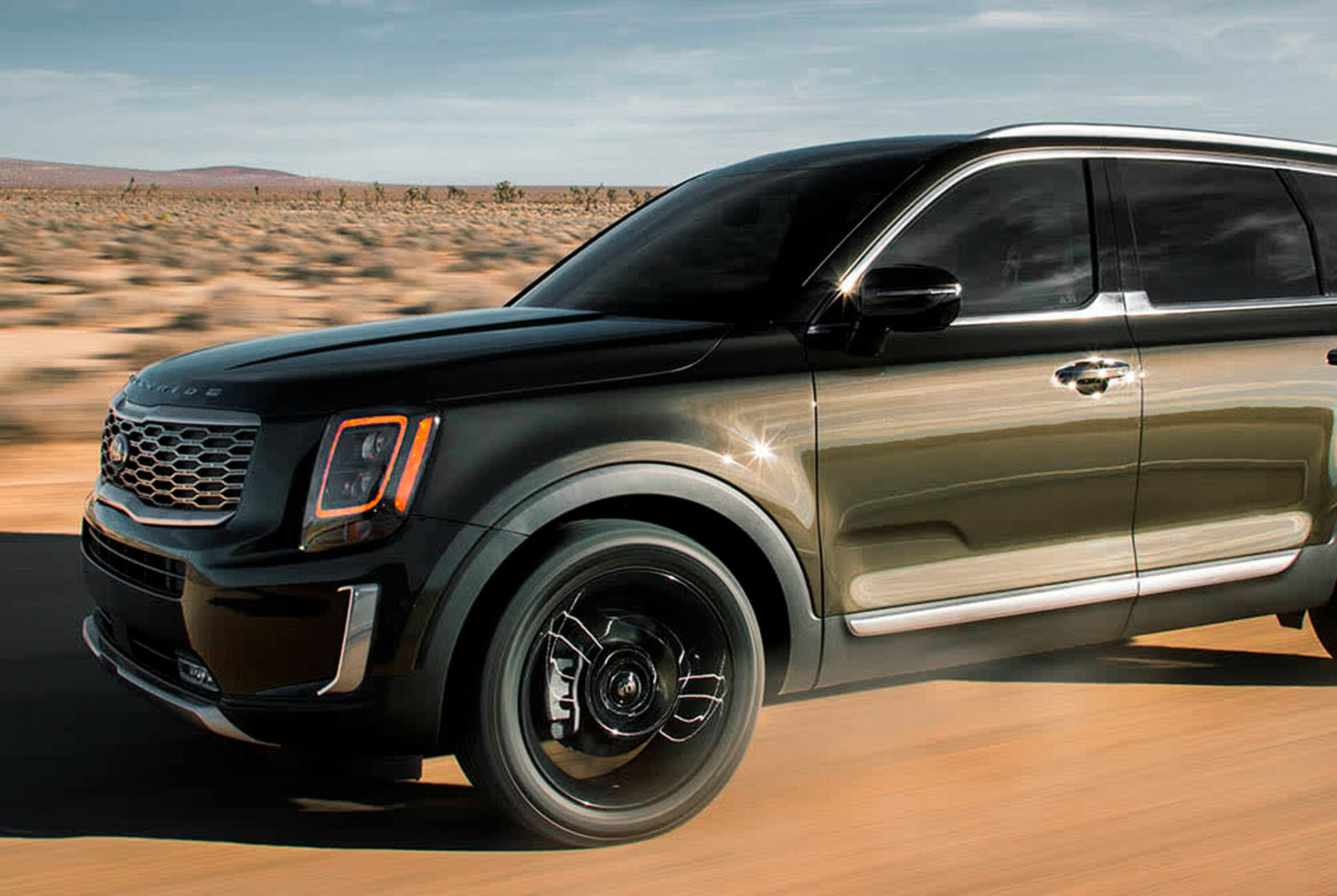
Kia is another manufacturer really hitting its stride. The automaker went gloves-off with the Stinger sport sedan, and the Telluride will attempt to follow up that success as Kia’s first-ever full-sized SUV. The prospect of a more off-road-focused trim in the pipeline only sweetens the deal.

Subaru STI S209


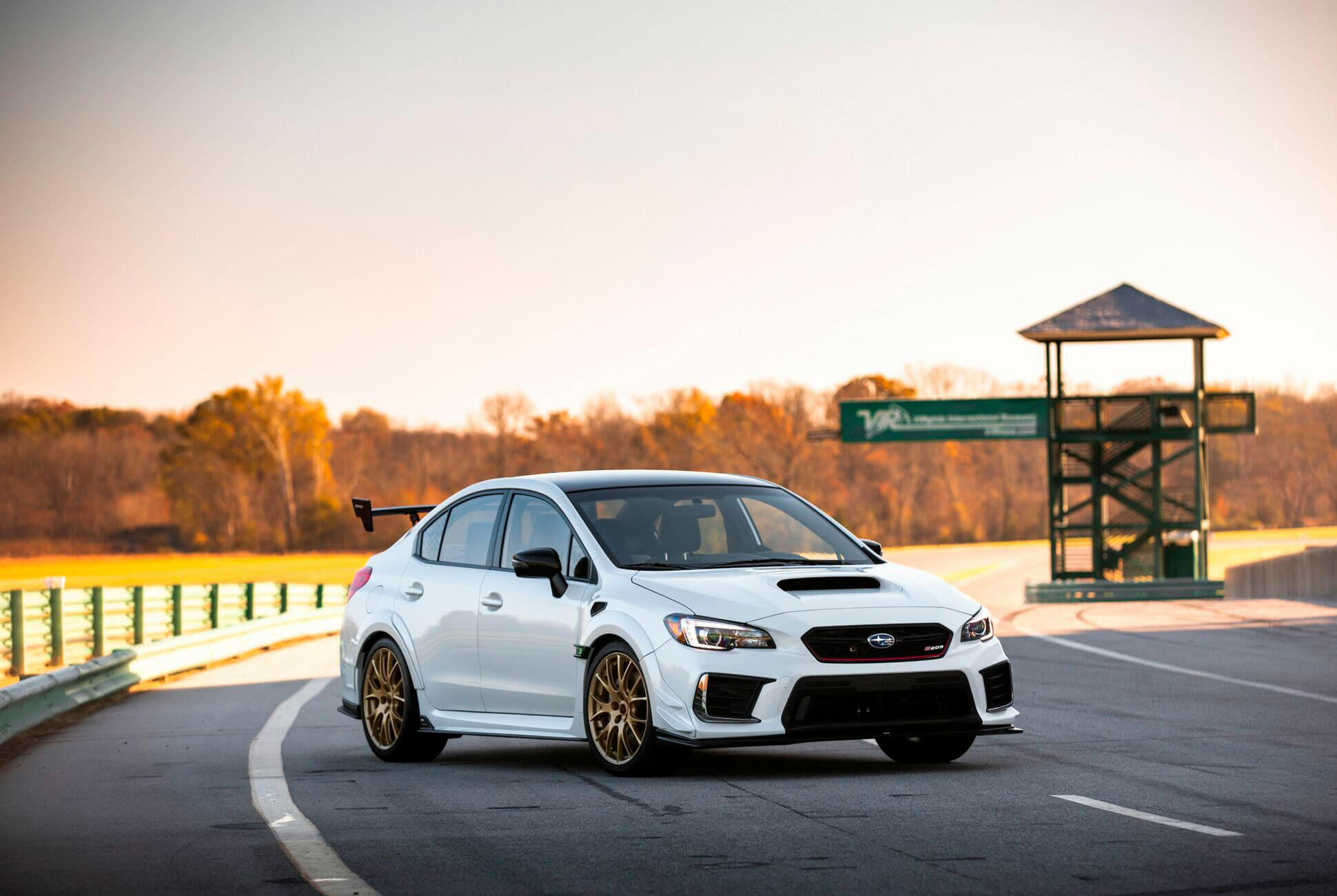
The Subaru STI S209 is the the first-ever of Subaru’s “S” models to make the leap across the Pacific to our shores. As the highest point in Subaru’s performance hierarchy, it will sit above even the Type-RA, which is saying a lot.

2020 Ford GT500


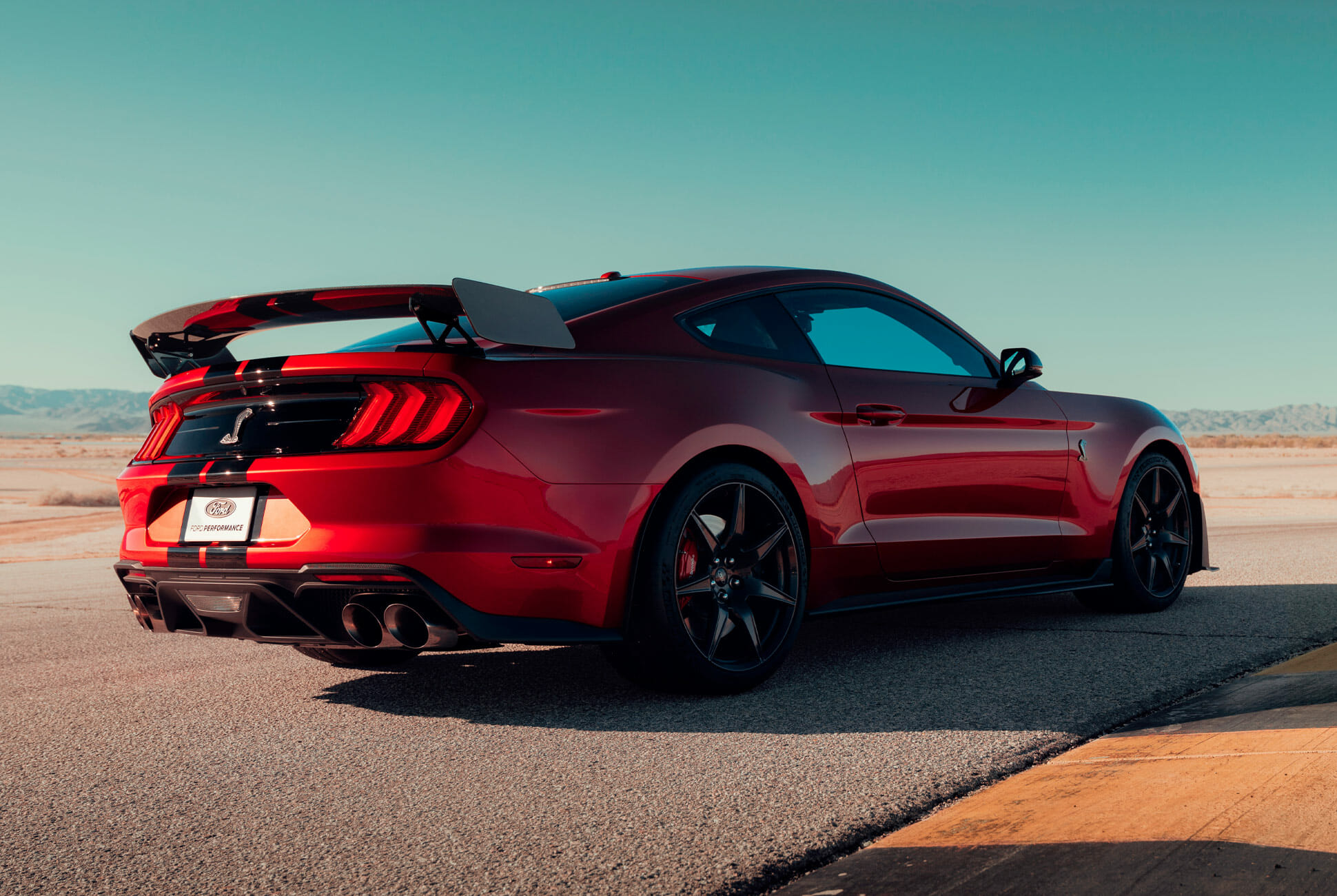
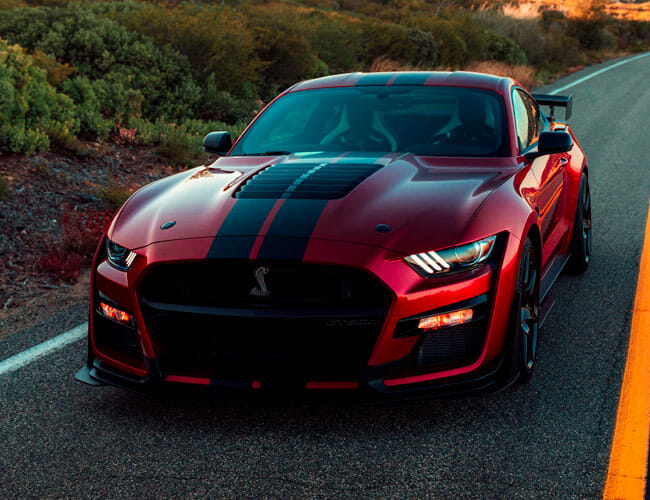
As one of the most anticipated reveals at NAIAS this year, the new Mustang GT500 drew a big crowd and for good reason. Ford claims the new pony car will pump out over 700 horsepower, but is mum on the exact count. Discovering just how many – and forcing them all to the rear wheels – will be a high point of 2019.

2019 Cadillac CT6-V


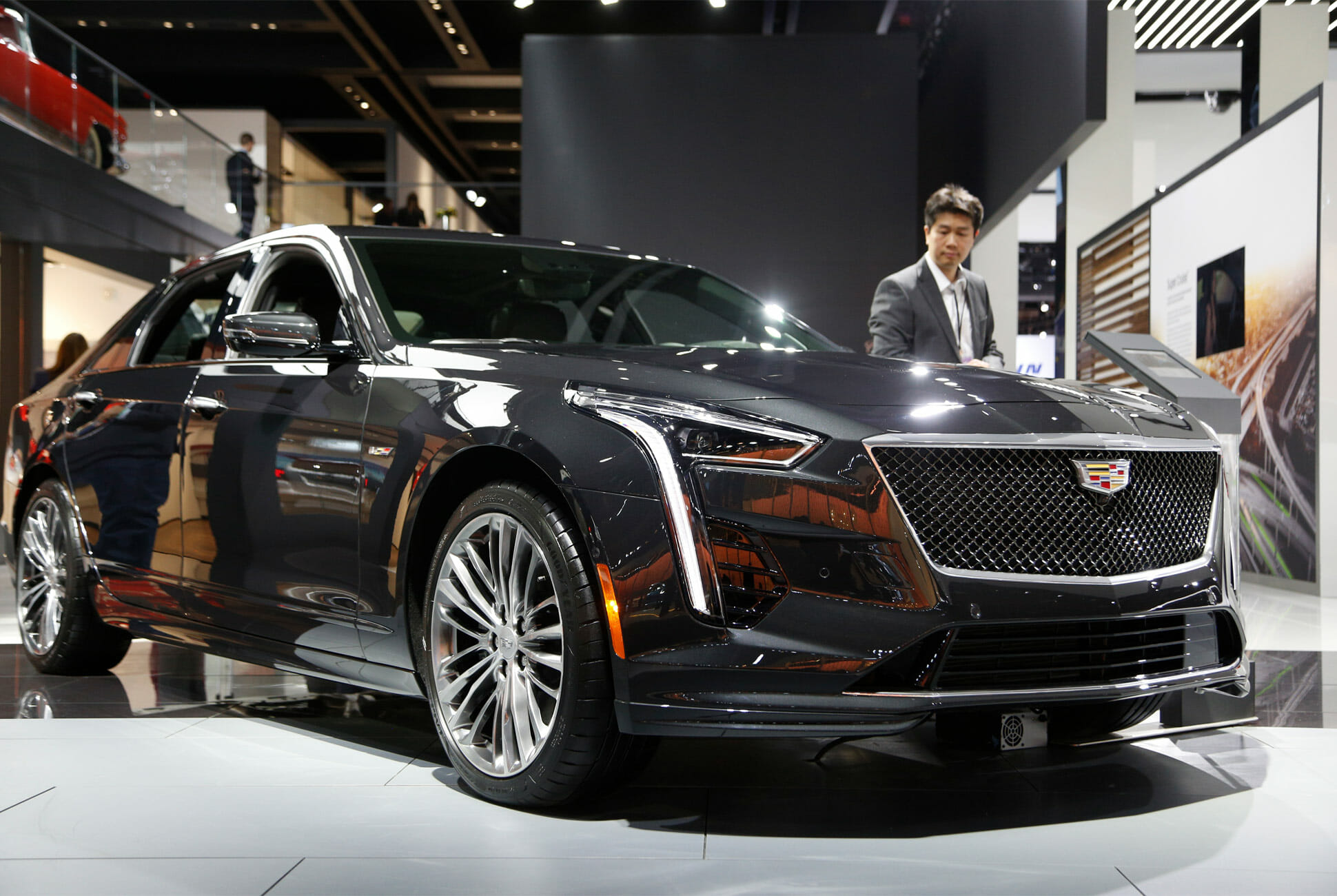
Whether Cadillac knew what it was doing or not remains a mystery, but suffice to say the CT6-V is an instant classic. Powered by Cadillac’s new 4.2-Liter Blackwing V8, rated at 550 hp and 647 lb-ft, all 275 CT6-Vs allocated for the US sold out within hours.


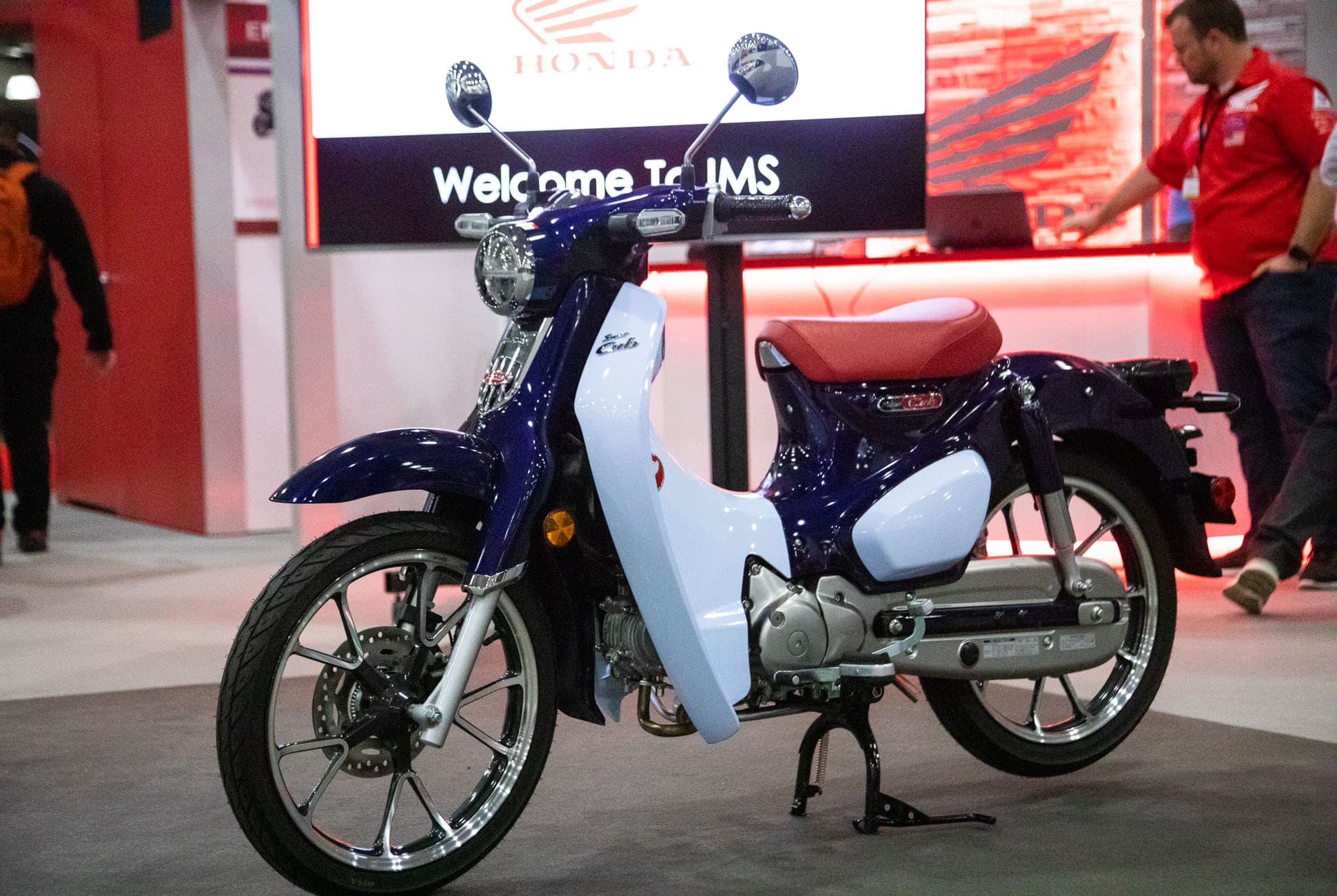
Ok, so technically this isn’t a “car” and it was first last month at the 2018 NYC Motorcycle Show, but the Talon is Honda’s first foray into the sport SxS market. And with power from a tuned-up Africa Twin engine paired to the first DCT transmission in the segment, the Talon could be a game-changer.

The Best of NAIAS 2019

If the 2019 Detroit auto show is any indication of the next year or two, it seems manufacturers are just as sick of monotonous committee-built cars as we are. Read the Story

Note: Purchasing products through our links may earn us a portion of the sale, which supports our editorial team’s mission. Learn more here.

2019 Chevy Silverado: Seriously, Just Get the V8. Here’s Why

Chevy revealed the 2019 Silverado in Wyoming last summer. One of the outstanding questions from that drive concerned the turbocharged 2.7-liter four-cylinder engine. The listed outputs, 310 hp and 348 lb-ft of torque, would be capable enough to attract truck buyers to a full-sized four-pot-powered truck. What Chevy did not yet have were the EPA estimates.

To understate matters, the eventual EPA numbers were disappointing. The four-cylinder earned a 20 city 23 highway rating from the EPA. That was a one-mpg improvement over the 5.3-liter V8. Four-wheel drive versions of the four-cylinder did one mpg worse (19 city, 22 highway), which is the same as the V8. GM’s response was to ignore the numbers on the implication the Silverado would perform better in real-world driving. The 2.7-liter Silverado actually performed worse.

Car and Driver run their own highway fuel economy test that approximates 75 mph highway driving over 200 miles of travel. Their 2.7-liter Dual Cab RST tester earned just 18 mpg in that test. For perspective, the 5.3-liter Crew Cab RST earned 21 mpg in that test. The 2.7-liter earned the same rating in that test as Ford’s high-performance Raptor and GMC’s 6.2-liter V8 Sierra Denali.

Turbocharged four-cylinders work great in smaller cars. But, they still have to work to push a full-sized truck at speed. Diesel engines aren’t great for the environment either. If you’re buying a Silverado, you might as well stick with the 5.3-liter V8.

The Best Driving Gloves of 2019: A History and Buying Guide

When cars debuted in the 1890s, long-distance travel became more accessible to a wider audience, but the physical act of driving was no easy task. Roads were unpaved and cars lacked windshields and hardtops. Drivers were exposed to the weather and they needed specially designed clothes and accessories to make driving more comfortable and safe. Retailers quickly realized the monetary potential of this new apparel sector full of wealthy people. One advertiser wrote, “You may have perfectly good tires and lots of gas and oil… but if you are not comfortable yourself, you don’t enjoy riding.” Then they pushed their apparel: “you need proper motoring clothes” (The Clothier and Furnisher, ’63).

Proper motoring clothes consisted of heavy, waterproof coats, hats, boots, goggles and gloves. Imagine cranking a car to get it started, then gripping a metal steering wheel with no power steering in the winter. Drivers often traveled with two pairs of gloves, one for gripping the steering wheel and one for changing tires. They were essential to early drivers and started out looking much different than they do today. Since steering mechanisms and logistics were rather crude, gloves were made of thick leather, sometimes lined with wool, that reached all the way back to cover the cuff of your coat. (Think Robin Hood.) Once a driver was off the road, these gloves weren’t very practical, so they would leave them in the aptly named glove box.

During the 1930s, heating in cars began to effectively keep drivers and passengers warm. So the profile of the driving glove developed evolved into a more popular, tight-fitting and shorter shape made of thin leather. The gloves often featured extra stitching on the palms for enhanced grip and perforations to keep your hands from sweating. These features kept drivers comfortable and allowed them to use less grip strength when grasping the wheel. They also became a status symbol: you were considered high class if you had light-color gloves that were kept clean, which indicated you were able to afford a pair for work and one for presentation.

As heating systems became more efficient and the technology that was incorporated into cars improved, the popularity of driving gloves began to decline. Non-slip, rubberized steering wheels were easy to grip with bare hands and power steering meant the wheel was much easier to turn. Stylish men like Steve McQueen and characters like James Bond continued to wear driving gloves, so they stayed part of mainstream culture even though they were no longer needed for everyday driving.

Nowadays, driving gloves have been featured prominently in movies that focus on driving. The characters in Drive, Spectre and Baby Driver all wear driving gloves so they can operate their car with precision, sticking precisely to the wheel and gear shift. People who own vintage and racing cars are typically the demographic that wears gloves now.

Driving gloves today are typically unlined and made out of soft, grippy leather. They can be machined or hand sewn, with or without fingertips, with or without knuckle holes, in a wide range of colors and back styles. Below you’ll find the styles we like best.

Buying Guide

Chester Jefferies The Drive Gloves

Without fingertips, these gloves have an extra sporting look while still evoking the classic driving glove style.

Pickett London Men’s Leather Driving Gloves

The most traditional glove features open knuckles, an open back and perforated fingers to keep a driver’s hands from sweating.

Autodromo Stringback Driving Gloves

The stringback is a different way to maintain cool and dry hands. The short, split cuff on these allow you to show off your watch.

Fort Belvedere Driving Gloves in Lamb Nappa Leather

Handmade in Hungary, these gloves are more decorative with a contrasting arrow pattern, evoking the dynamics of speed.

Note: Purchasing products through our links may earn us a portion of the sale, which supports our editorial team’s mission. Learn more here.

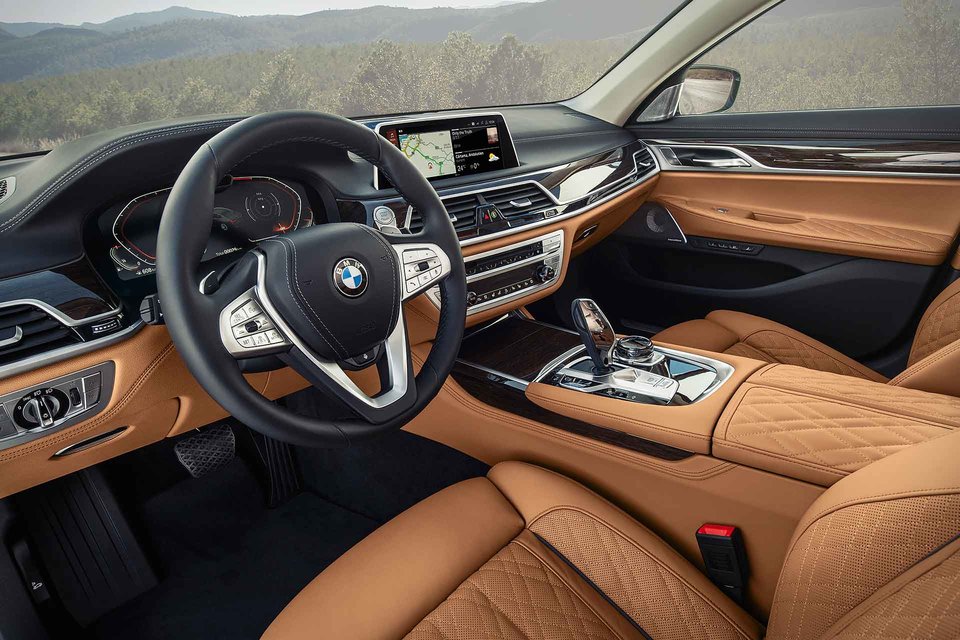
2020 BMW 7 Series

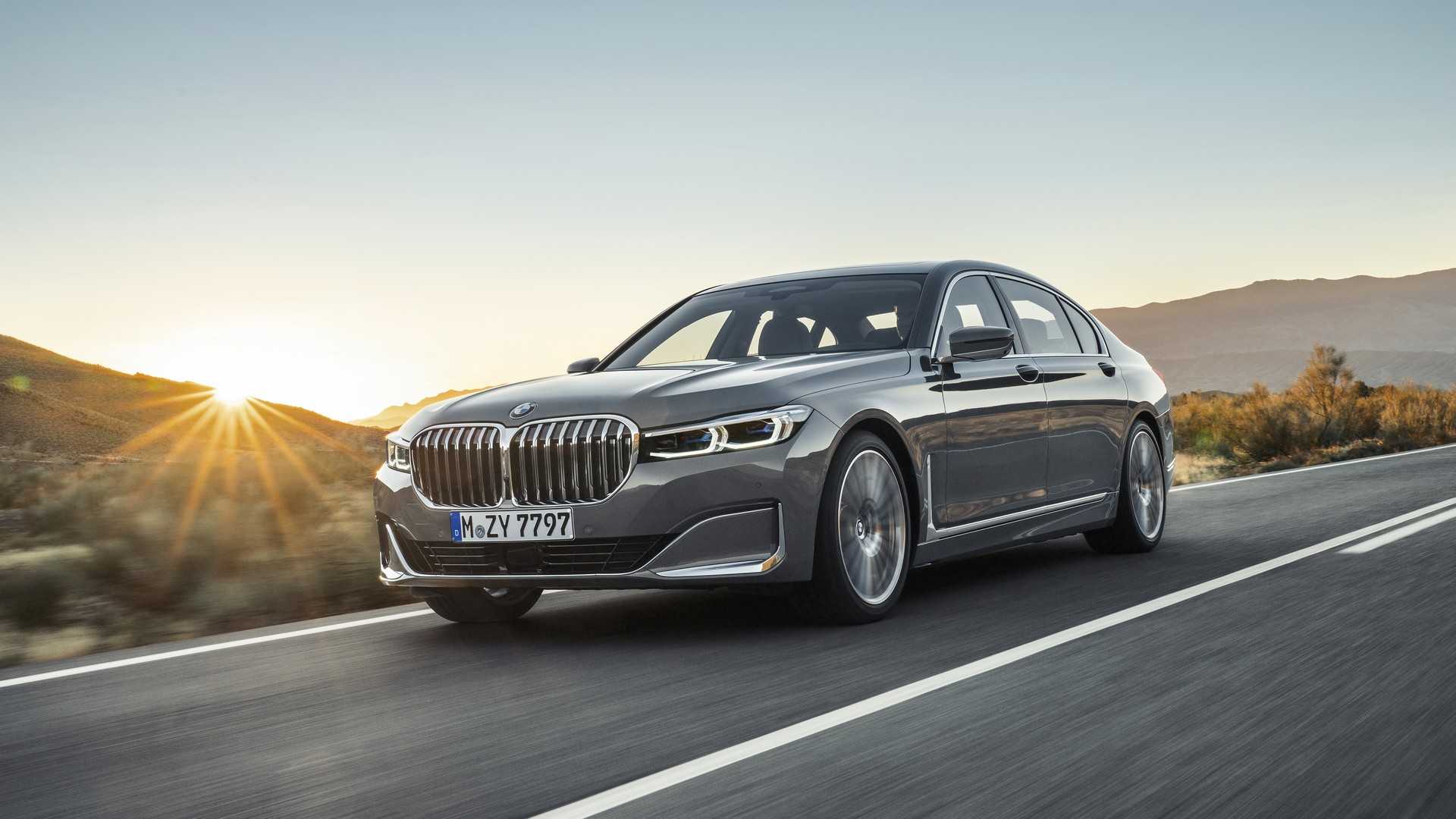
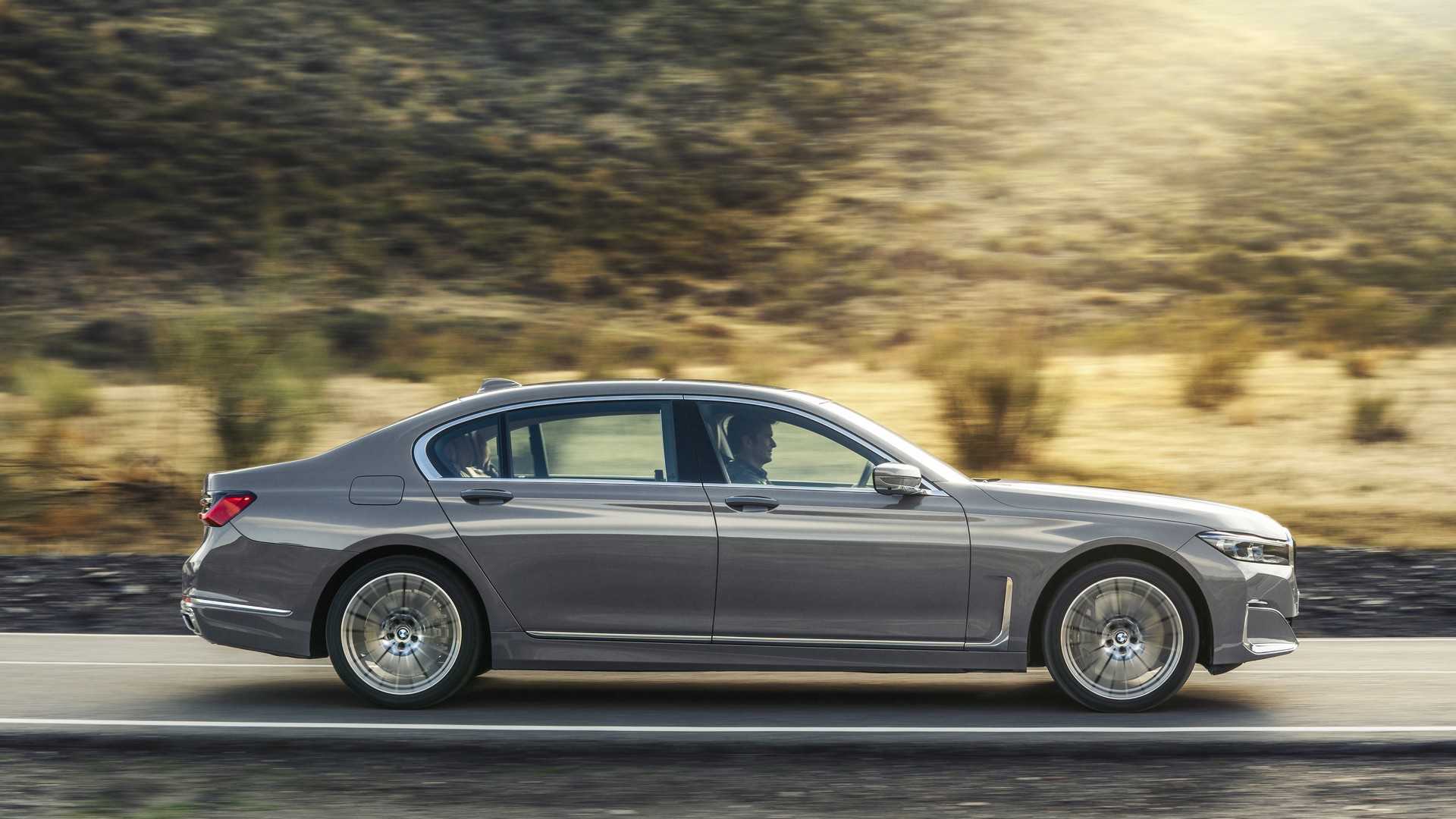
The 7 Series sedan is one of BMW’s most impressive staples, no doubt about that. Updated for 2020, this revamped lineup now gets a Twin Kidney Grille that’s 40% larger than the last model.

Change is hard, but often they’re necessary. The new design is either one you’ll love or hate, but do keep in mind that the increased opening provides more cooling for the motor and brakes. Form follows function.

That’s not to say the updated 7 Series sedan is hideous. Far from it, actually. You get redesigned headlights with adaptive LED technology, but you can get lasers if that’s more of your thing. BMW also freshened up the hood with a slightly reshaped design. Plus, the fenders are now a tad bit more muscular.

You can get the entry 740i model as a rear-wheel-drive, while the rest come with BMW’s xDrive all-wheel-drive system. Hop inside and you’ll find the latest-gen digital instrument cluster also found on the 8 Series and X5.

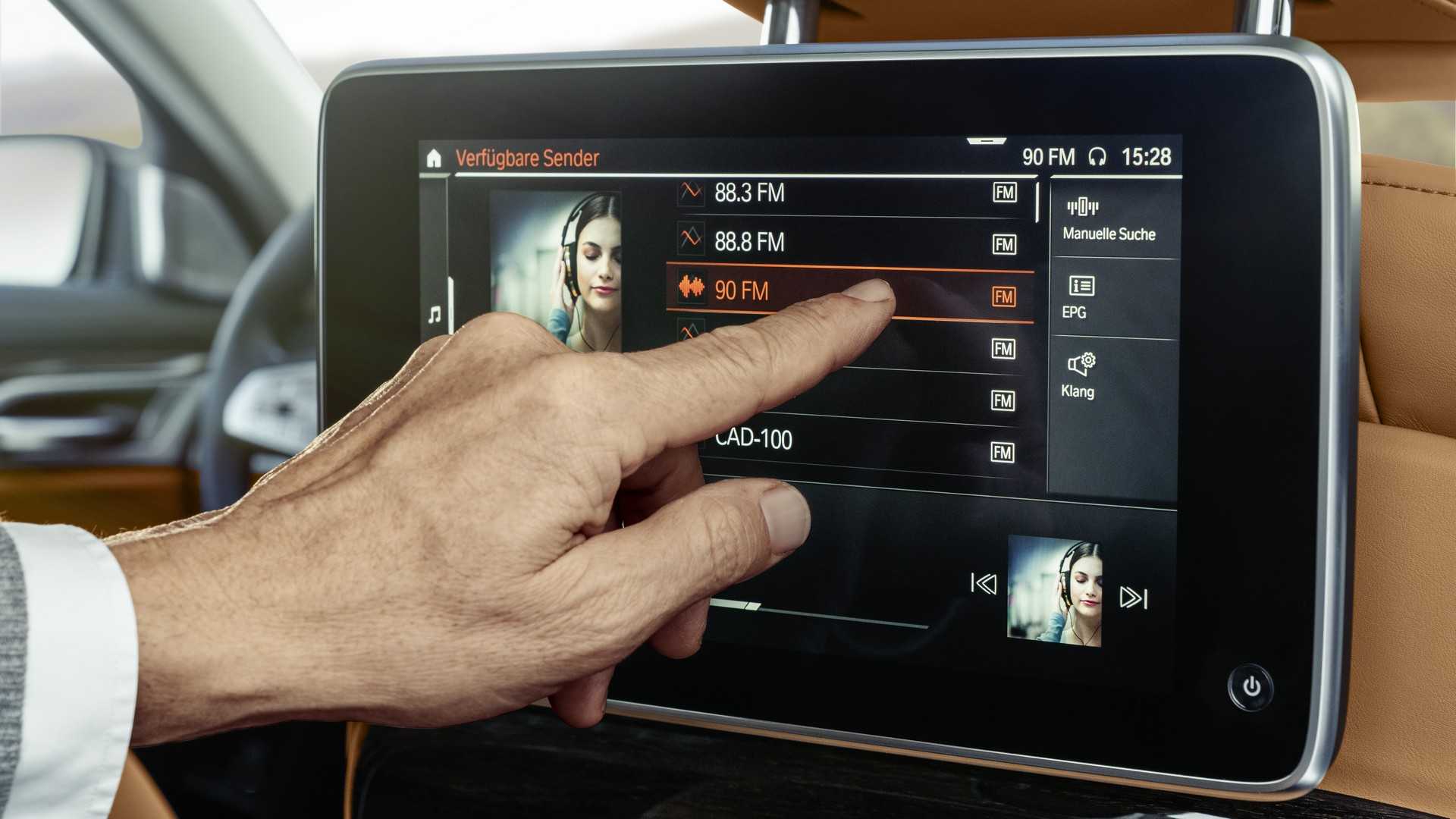
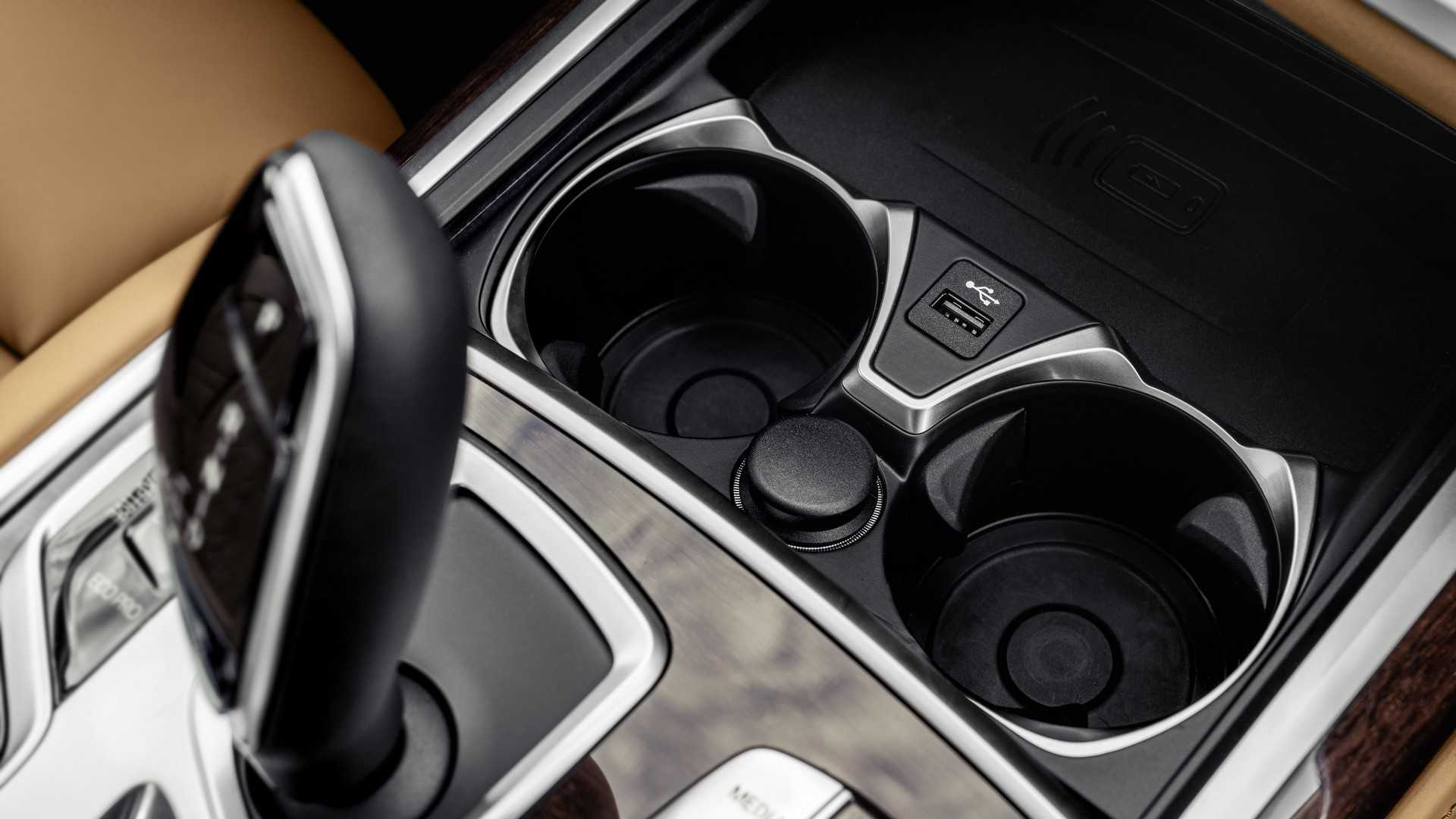
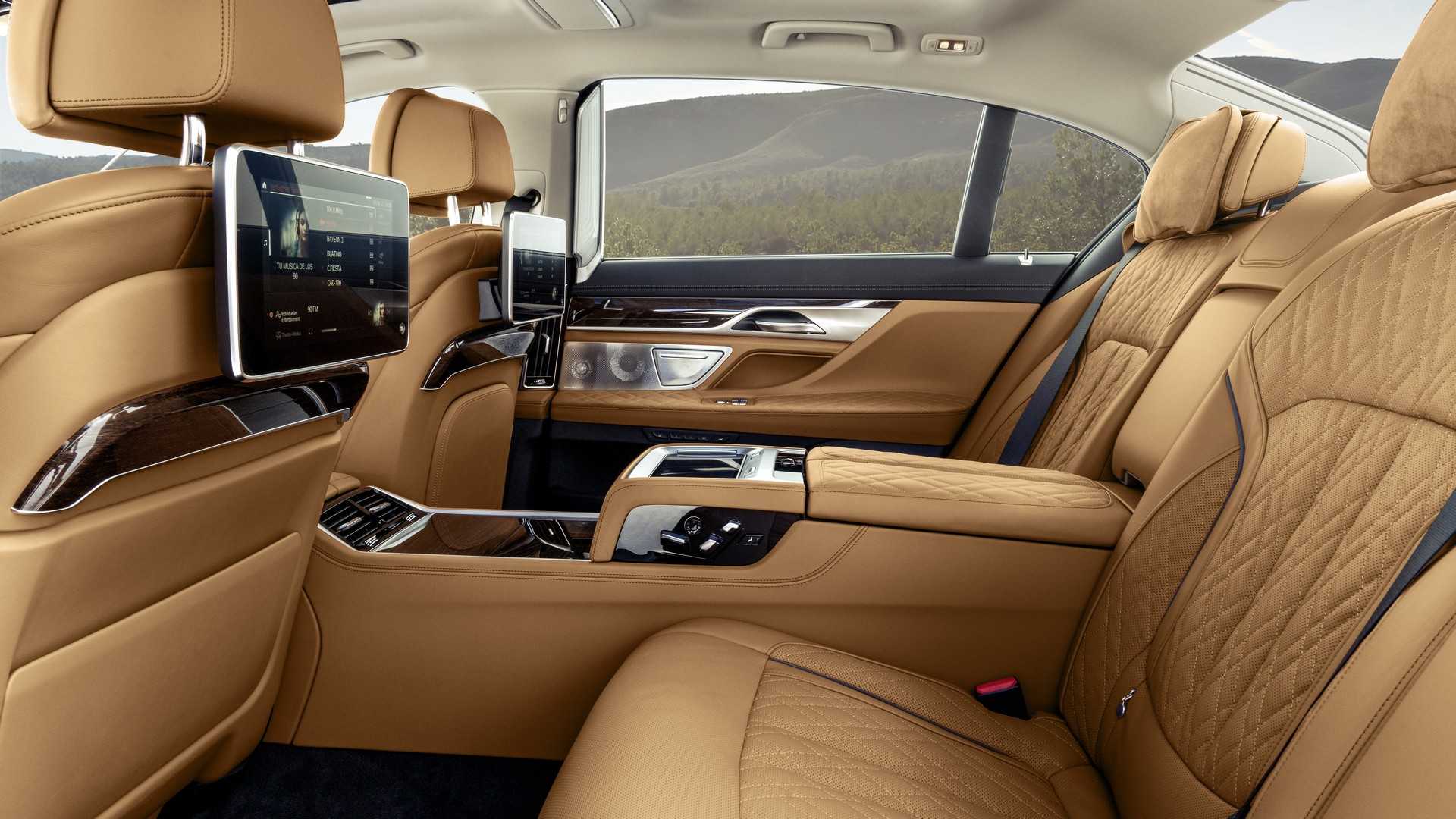
There will be new leather and trim options, says BMW. That’s on top of what the carmaker says is improved acoustic comfort. And by the way, there’s now wireless charging in front of the cup holders for easier access.

The top-dog V12 engine with its 600 horsepower and 627 pound-feet of torque is still king, of course. But for the budget-conscious, BMW introduces the re-engineered version of the 4.4-liter V8. It now generates an increased horsepower of 523 and up to 553 pound-feet of torque, much more than before.

At launch, you can get a hybrid option with the best of both worlds: a six-cylinder inline engine with 280 horsepower combined with an electric motor rated at 113 horsepower. Not too shabby.

MORE FROM BMW

Photos courtesy of BMW

Affordable Dream Car: Great Handling, Mid-Engined, $40K

S2 Lotus Elise
Price When New: $40,780
Expect to Pay: $30,000-$40,000
Model Years: 2005-2011 (in the US)
Horsepower: 217
Weight: 2,055 lbs

Think of all the mid-engine cars that typically fill dream garages: Ferraris, Lamborghinis, and Porsches, old and new. You’ll quickly realize that prices for most live well above the $200,000 mark and are unobtainable to the average enthusiast. But, there are cars with mid-ship-mounted engines that also come with a more down to Earth price tag. The Lotus Elise is the most respected of the lot. It doesn’t churn twelve, ten, eight or even six cylinders — it makes do with an inline-four. Lotus adheres to a lightweight, moderate-power philosophy; consequently, the Elise is one of the best handling mid-engine cars you can get for under $40,000.

Released in ’96, the first-generation Elise used a mostly fiberglass and aluminum architecture to keep its weight down to a hair under 1,600 lbs. Since the 1.8-Liter engine didn’t have to worry pull much heft, its 118 horsepower, fed to the rear wheels, was more than enough. Its featherweight characteristics also helped a achieve an insanely low center of gravity which made handling the Elise’s biggest strength.

Fast forward to 2005. In its second generation, the Lotus Elise was finally legal on US roads. The engine in the middle 2q switched to a Toyota 1.8-Liter inline-four good for 189 horsepower. Its 0-60 mph time was an impressive 4.9 seconds despite the new generation tipping the scales at 1,896 lbs. Lotus continued to refresh the Elise, adding new trim levels and special, higher-powered editions until 2011 when they introduced the third generation. That car got even more power but was only available in the US for its first production year after which federal regulations ended our stateside fun.

Ued Elises can be had for comfortably under $40,000 – these are mostly earlier examples of the second generation, from between 2005-2008. And, as far as mid-engined exotica goes, the Elise’s four-cylinder Toyota engine makes it damn reliable and returns a respectable MPG. Drawbacks? There’s a reason the mileage is curiously low on almost every Elise of this vintage: the stiff suspension, incredibly short wheelbase and visceral driving experience make it more suited for the track than everyday driving. If you’re willing to sacrifice comfort, spending less than $40,000 is a small price to pay to taste top-tier sports car performance.

Examples:
CarGurus: 2005 Lotus Elise w/ 29,000 miles $29,999
Ebay: 2008 Lotus Elise, w/ 37,344 miles$32,980
CarGurus: 2005 Lotus Elise, w/ 24,181 miles$34,995
Carfax: 2005 Lotus Elise, w/ 19,296 miles$37,970

Ford, Toyota and Land Rover Will Bank on Nostalgia in 2019

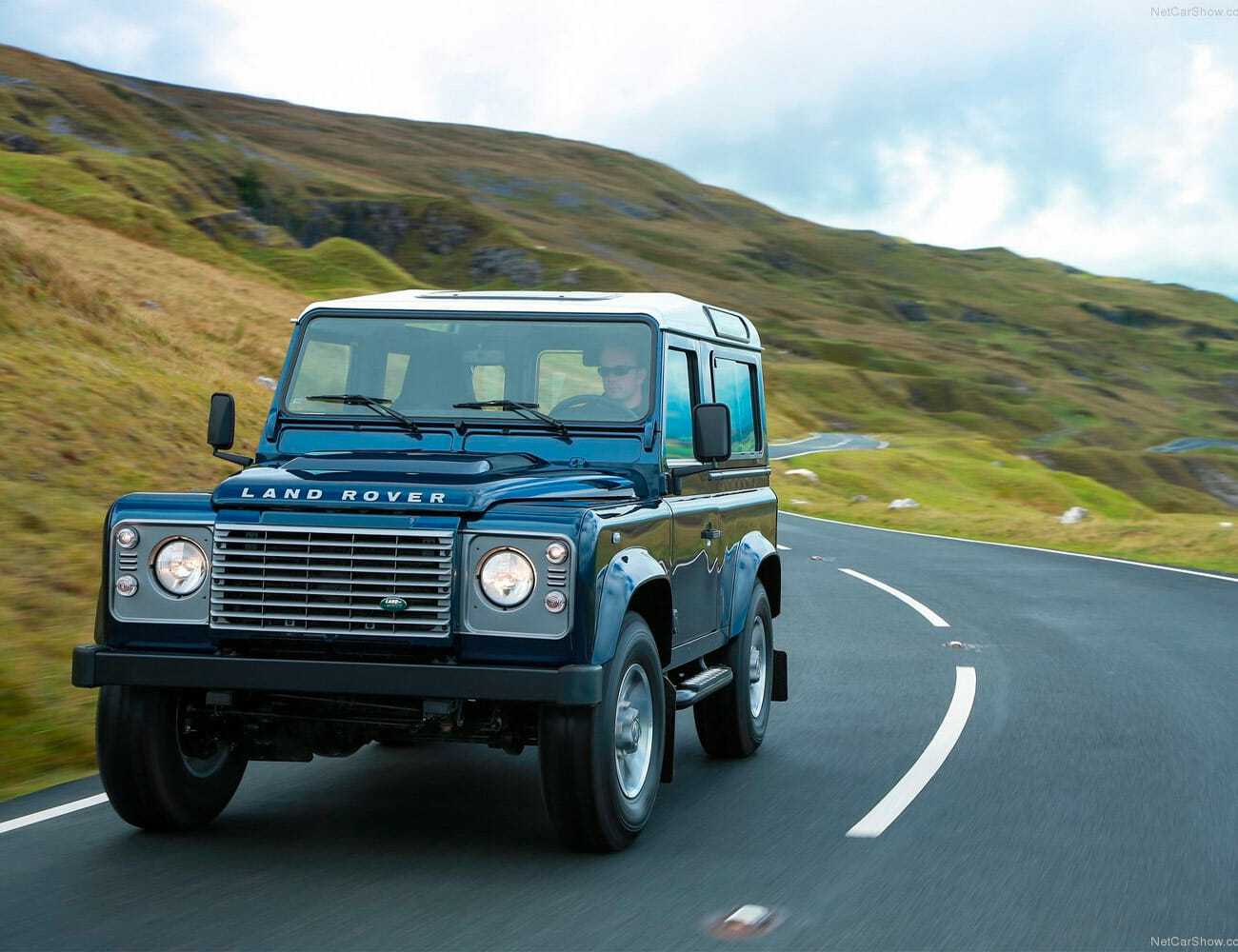
A prominent automotive trend for 2019 will be nostalgia from the rad 1990s and beyond. Toyota brought back the Supra after a 20-year hiatus at NAIAS. Ford did not bring a Bronco down from the rafters. But, that revival is en route. So is another much-anticipated launch, the new 2020 Land Rover Defender, poised to make a return to the U.S. One presumes it will be with airbags this time.

We’ve seen nostalgia crazes before. VW launched the new Beetle in the late 1990s. BMW made Mini it into its own brand in the 2000s. But, the current comebacks are different. These cars don’t stem from marketing blitzes. They want to capitalize on organic, already rampant enthusiasm on the Internet.

The Supra, Bronco and Defender are being revived because, besides being cool, classic versions are going for stupid six-figure prices. Clean, low mileage Supras have crossed the $100,000 barrier in online auctions. East Coast Defender has been importing Land Rover shells and converting them into bespoke six-figure luxury cruisers. Gateway Bronco has signed a licensing agreement with Ford to manufacture first-generation Broncos and sell them for six figures.

Automakers’ natural reactions to that level of interest is to profit from it. It’s like how Jeep and others are co-opting a multi-billion-dollar aftermarket parts industry by customizing at the dealer level, for a healthy premium. What’s uncertain is whether that enthusiasm will translate to new, modern vehicles.

The Supra has the easier task. The sport coupe transcends eras. A 3.0-liter V6 remains socially acceptable. BMW’s involvement with the engine and tuning for it only intrigues car guys more. It should be a tremendous drive. Its performance for price package will appeal regardless of nostalgia. The one misstep may have been foregoing a manual in favor of raw performance. It’s the stick Supras that are selling for bonkers prices.

Ford and Land Rover must climb a tougher hill. The small, body-on-frame off-roader no longer exists as a segment. It’s contrary to everything going on in the car market. Land Rover had to kill the original Defender because it would not meet modern emissions standards. The concept needs to be rethought.

New Defenders and Broncos need to capture the essence of the originals, beyond aesthetics, while sharing platforms and making compromises (four doors) to appeal to families. The Jeep Wrangler, in a purer form, will still be there as formidable competition for both of them. Not to mention the updated classic versions will still be there for buyers who can afford them.

Faithfulness is only part of the equation. Those cars must also advance the concept. Looking enough like the original Mini got the Cooper buzz. Being a better version of the original pint-sized driver’s car vision is what has kept it around for two decades (and unfortunately spawned the Countryman).

Everyone will hope these reimagined cars are like the Battlestar Galactica remake. But, Toyota, Ford, Land Rover and others could, quite easily, be Magnum P.I. without Tom Selleck.