All posts in “Cars”

2019 Jaguar F-Pace SVR Review: The Saber-Toothed Cat of Sporty SUVs

This year could very well go down in history as the year of the legitimization of the super-sporty SUV. The new Lamborghini Urus is enough to make the case for that on its own—but others from Porsche, Mercedes-AMG, and BMW abound as well, bringing such high-powered enablers as active anti-sway bars and hyper-responsive suspension systems to the crossover game.

Now, Jaguar is entering the fray with the SVO—that’s Special Vehicle Operations—version of its F-Pace. It doesn’t deploy many fancy performance parlor tricks, but it uses a lot of engineering finesse and know-how to reign in this SUV’s top-heavy mass and make it a legitimate performance vehicle…one that can also make Ikea runs.

The Good: Significant grunt from the supercharged V-8 makes this an unquestionably fun SUV. Its sleek aerodynamic treatment, including functional hood vents and side ports, work to keep temperatures in check and improve aerodynamics. That means plenty of power and grip under hard driving. It’s got ultra-growly acoustics, of the sort not seen on a Jaguar seen since the F-Type roadster popped onto the scene with its crackling, popping exhaust note. The F-Pace SVR isn’t quite that over-the-top, but it’ll still grab people’s attention.

Who It’s For: Anyone who wants a morning blast of giddyup on the way to work. The F-Pace delivers both the commanding view of an automotive high-rise along with the firm cosseting of a true performance vehicle. In other words, it feels like a fantastic place to be—and conquer the world from. So the meek shall not apply. (Nor should the particularly eco-conscious, as the supercharged V-8 delivers a scant 18 miles per gallon combined.)

Watch Out For: The F-Pace’s occasionally awkward design touches—though “quirky” is a more generous interpretation. Example: the window controls, which are used frequently, sit high up on the door sill out of natural reach—while the seat memory controls, used only rarely, are right at your fingertips on the armrest. 

Alternatives: The Mercedes-AMG GLC 63 S would be a good start, followed by the BMW X5 M. Both offer similar power and performance numbers, but for tens of thousands more than the Jag’s $80,000 price tag. Also, consider the basic Porsche Cayenne, which isn’t as fast or powerful, but is still fun—and comes in more than $10,000 less than the F-Pace SVR.

Review: Southern France, I found, has some of the best roads in the world. Of course, this is entirely personal preference; some drivers love abundant hairpin turns in mountain twisties, others are all about 12-mile-long desert straights. I prefer long stretches of gently swaying racing lines and sweeping arcs—speed over acceleration, with a reasonable expectation of being able to push the steering to the limits at ridiculous speeds as you dive into the occasional bend. But by any objective measure, the pavement of the French countryside just north of the Riviera is enthralling, adequately challenging anyone with an itchy right foot. So testing the F-Pace along the countryside near Nice and Saint Tropez yielded much in the way of perspective—and visceral thrill.

The thing that struck me first about the F-Pace SVR was actually the seats. They’re tight, firm, and remarkably thin, compared with the bulky thrones most luxury vehicles arrive with. Once my drive partner and I set off on our test drive, I suddenly found myself fixated on the F-Pace SVR’s headrest, noting how remarkably thin it was, and how that must have major benefits for rear-seat room and overall cabin airiness. I’m sure my drive partner was freaked out by my fixation on his headrest, but I couldn’t help it. I’d never seen one so slim. (Turns out, of course, that Jaguar is well aware of the benefits; the slimline performance seats are standard on the SVR SUV.)

It’s only once the person in the driver’s seat starts to engage with the Jag that things really spring to life. Pushing the SVR through its paces proved that the tweaks are far more than skin deep: The chassis enjoys new tuning with better damping and spring rates, while the aero package adds lower, sharper sides and a rear spoiler. An assortment of functional vents enhance brake and engine cooling and zap pressure from inside the wheel well, cutting drag and helping contribute to the downforce generated elsewhere.

When powering up a mountain road, the electronic active rear differential combines with the rejiggered responsiveness of the chassis and the engine’s mighty power to deliver sublimely persistent acceleration, with no interruption to the power flow or hiccup in its targeted application. The big Jag simply kept pushing, taking whatever the mountain could throw at it in stride.

Ultimately, that’s the real value of the F-Pace SVR’s improvements—the way SVO adjusts the tuning and calibration to created a highly advanced performance package. You see it in the steering, in the lightened brakes and wheel systems and the adaptive sport suspension designed to work with them, and the promptness of the eight-speed automatic transmission’s shifts. It’s not a dual-clutch affair—that’s the current gold standard for performance cars—but it worked exceptionally well in this vehicle, and never left me wanting for something faster or more punchy. There are plenty of aggressive, ’roided-up SUVs out there, but one that can give you such smooth yet forceful performance without breaking traction or the bank is a valuable machine indeed. 

Verdict: Jaguar’s performance-oriented SVO division has been kicking in earnest since 2014, developing hard-charging variants of the cars like the F-Type and the wicked XE-based Project 8. If those machines got our attention, then the F-Pace SVR held it, mile after mile. It’s a fun, aggressive, hyper-responsive trouble magnet of a crossover, and we wouldn’t have it any other way.

2019 Jaguar F-Pace SVR Specs

PRICE: $79,990
POWERTRAIN: 5.0-liter supercharged V-8, eight-speed automatic, all-wheel-drive
POWER: 550 horsepower, 502 pound-feet of torque
0-60 MPH: 4.1 seconds
TOP SPEED: 176 mph

Jaguar hosted us and provided this product for review.

Read More Gear Patrol Reviews

Hot takes and in-depth reviews on noteworthy, relevant and interesting products. Read the Story
Note: Purchasing products through our links may earn us a portion of the sale, which supports our editorial team’s mission. Learn more here.

The Most Beautiful Engine Bays of All Time

Enzo Ferrari once said, “I don’t sell cars; I sell engines. The cars I throw in for free since something has to hold the engines in.” There’s no doubt Ferrari put his heart and soul into making beautiful cars to hold those engines—but then again, he did need something worthy to frame the masterpiece under the hood.

Generally, if a car’s engine — as well as the bay it sits in — is beautiful, the rest of the car’s design follows suit. And since most of a car’s moving parts are under the hood, there are nigh-infinite possibilities for masterful design work. That’s why it’s a shame to see most modern manufacturers cover up the engine with cheap plastics and crowd the engine bay with machine-stamped, mass-produced parts; it conceals the magic beneath. As you’ll see below, many of our favorite engine bays mechanical works of art of all time date back to before that trend was common — but we still found a few newer cars with gorgeous guts beneath their hoods.

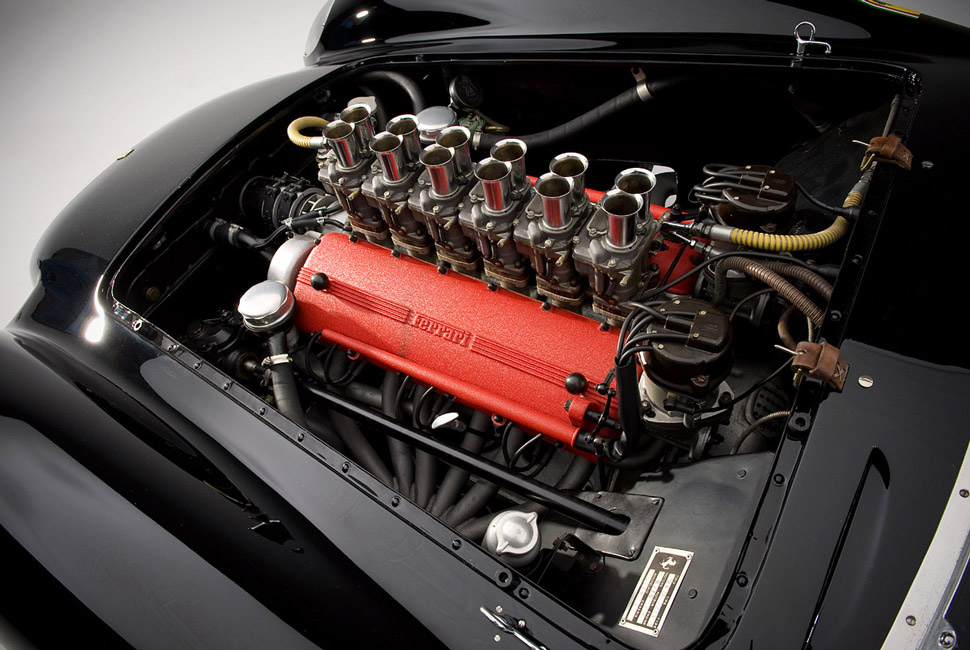
1957 Ferrari 250 Testa Rossa

Making a case for redheads since 1957.
The Ferrari 250 Testa Rossa is one of the most beautiful, exotic cars in the history of the automobile. Each curve can steal your gaze for longer than you ever though sheet metal could — and that’s just the outside. However, the true masterpiece, as Enzo Ferrari would say, is under the hood. The deep black compartment frames the bright red cam covers that give the car its name — “Testa Rossa” translates to “redhead.”

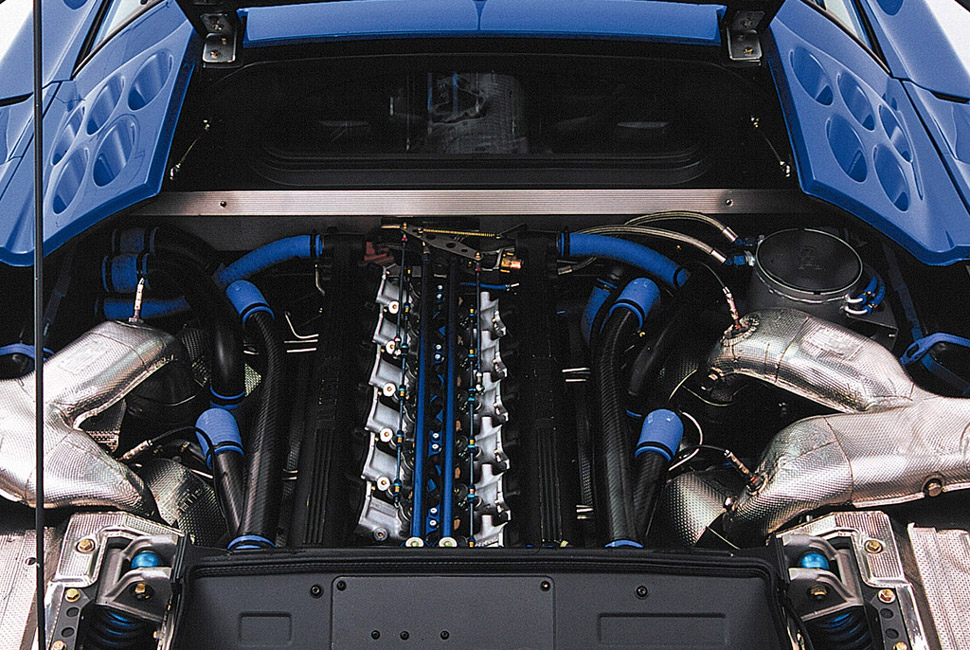
1991 Bugatti EB110

Seeing the throttle bodies at work is like watching a tiny ballet on the valve covers.
The Veyron did a magnificent job of bringing the Bugatti name back into the headlines — but where that car is an engineering marvel, its EB110 predecessor was impressive in its own right. It’s not very often you get to see exposed throttle bodies on top of a V-12.

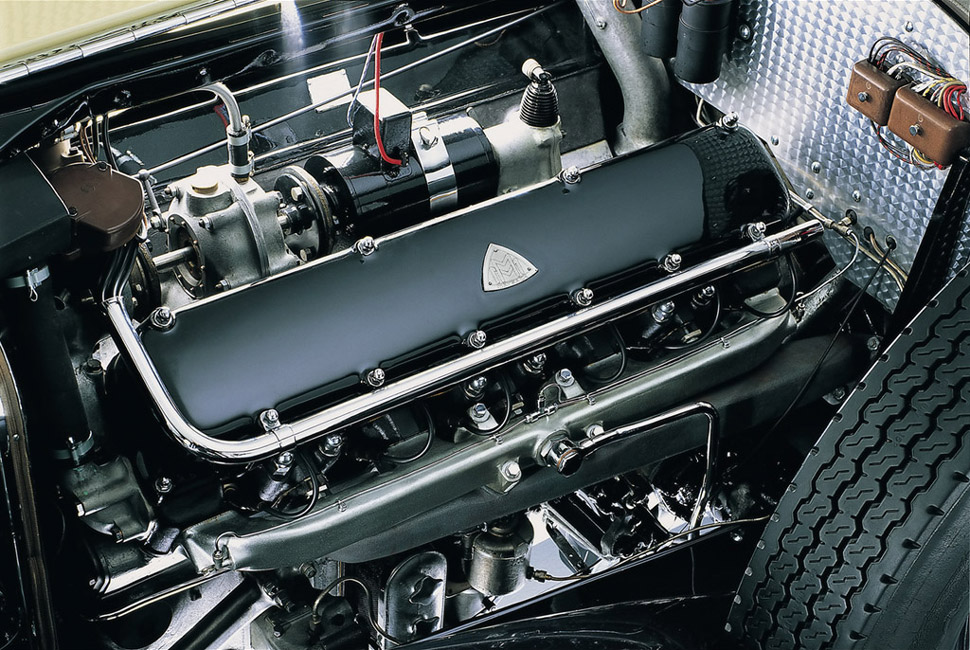
1932 Maybach Zeppelin DS8 Sport Cabriolet

Even the engine was given a luxurious amount of space.
Maybach built its name on being the ultimate distillation of luxury, delivering incredible comfort, performance, and design. If you think that stops when you lift the side-hinged hood, you’re wrong.

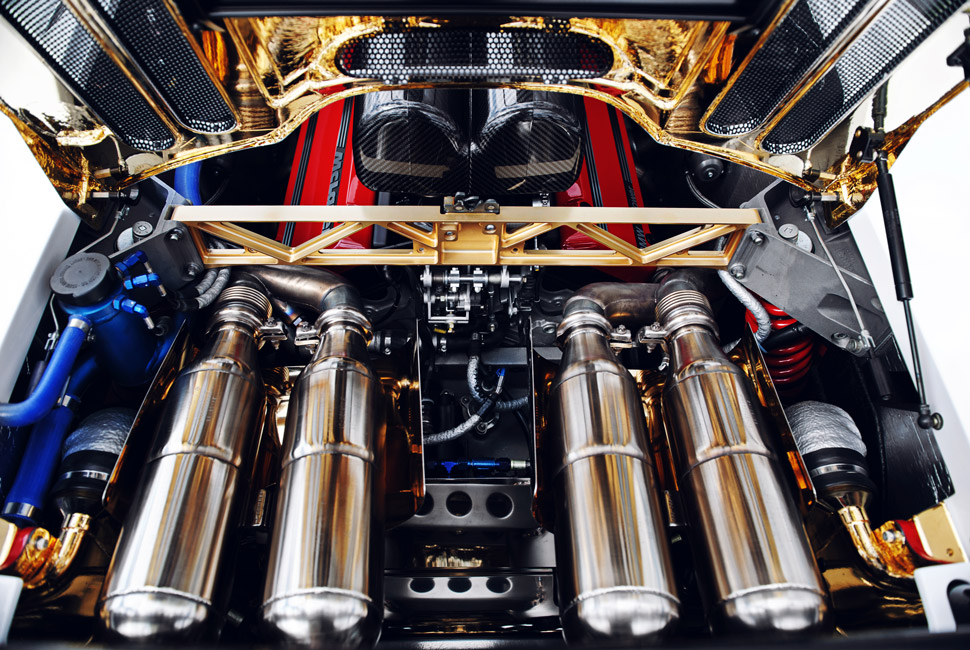
1992 McLaren F1

Even the most opulent cars in the world aren't lined with gold.
There are ultra-luxury cars with rare metals and wildly expensive materials throughout their interiors, but only the McLaren F1 put gold in its engine bay to help with heat soak so it could hit its 243-mph top speed.

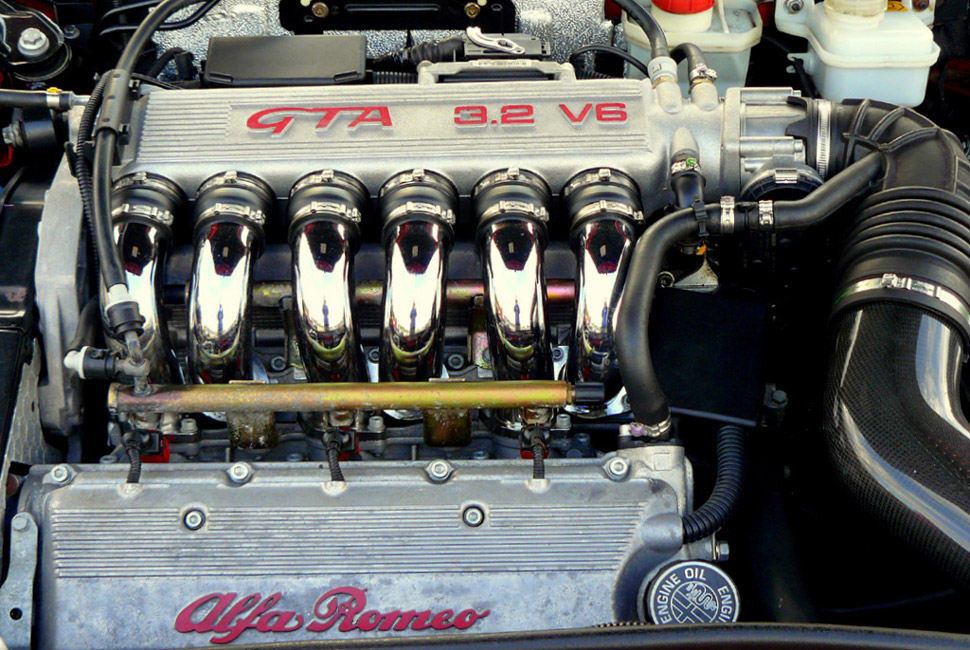
2001 Alfa Romeo 156 GTA

Bravo to Alfa Romeo for leaving that beautiful chrome waterfall exposed.
Not only is the Alfa Romeo GTA V-6 one of the best sounding engines of all time, but the polished works of art that are its intakes also make it one of the most beautiful. It’s not often you get an engine that sounds like honey to the ears and is just as sweet to the eyes.

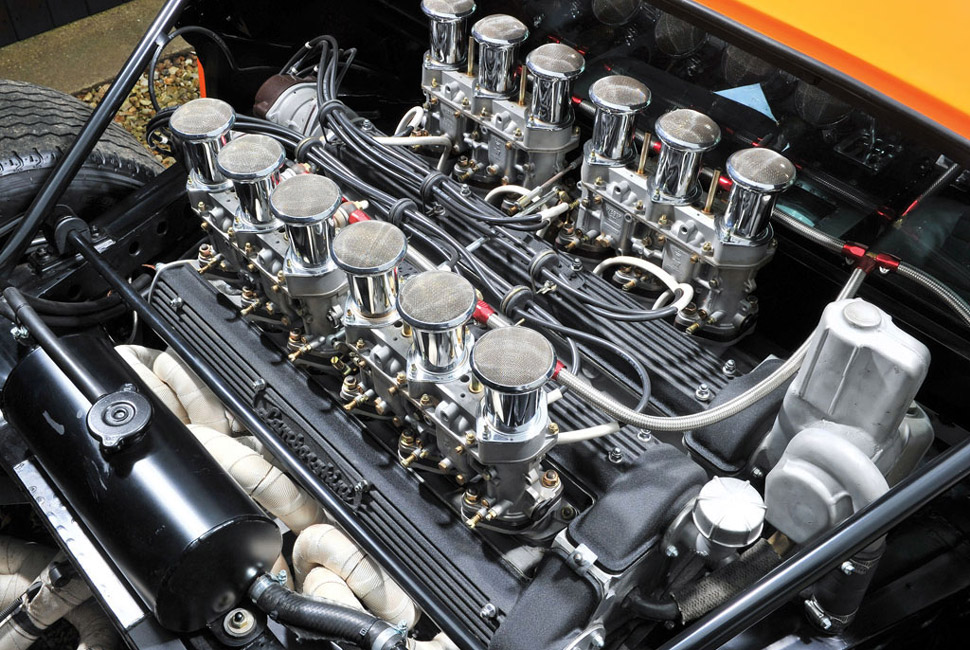
1966 Lamborghini Miura

A transverse V12 sprouting Velocity stacks? It would have been a sin not to include the Miura's V12.
When you lift the hood of the Lamborghini Miura, the engine appears to be floating between the wheels and the firewall — and half the beauty comes from knowing that it all comes together to make one of the most legendary supercar experiences of all time. The transverse-mounted V-12 helped dictate the Italian supercar’s design, but the visceral nature of the engine itself gave the car its sound and spirit.

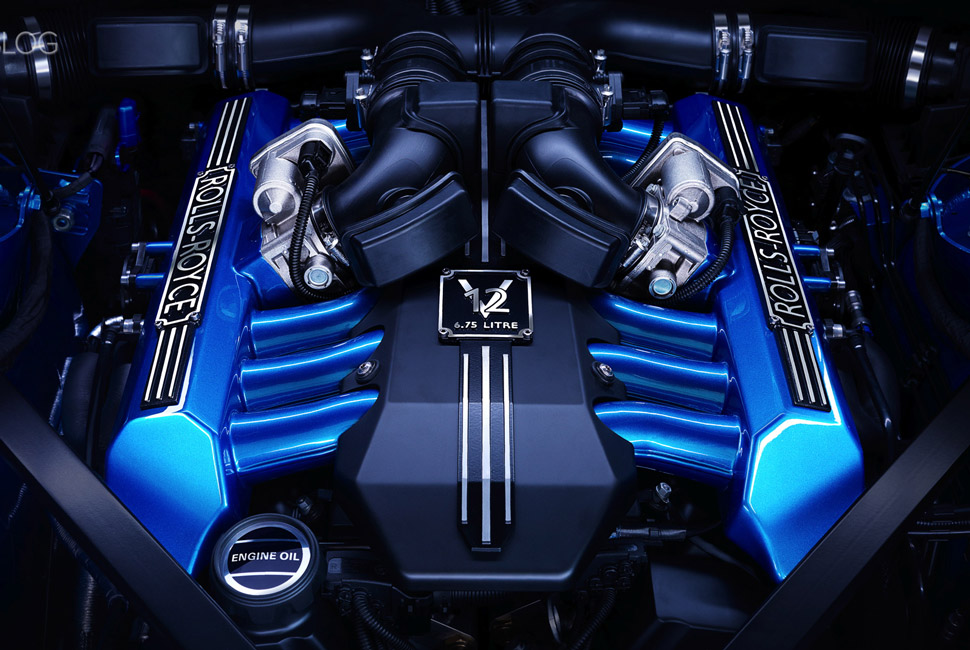
2014 Rolls-Royce Phantom Drophead “Waterspeed” Edition

As far as modern engine bays go, Rolls Royce does not disappoint.
The problem with most modern engine bays: Manufacturers insist on throwing heaps of plastic over them to hide the fact the rest of the engine is unsightly. The 2014 Rolls-Royce Phantom Drophead “Waterspeed” Edition, on the other hand, displays bright sapphire intakes swimming in a deep sea of uniformly-packaged black metal.

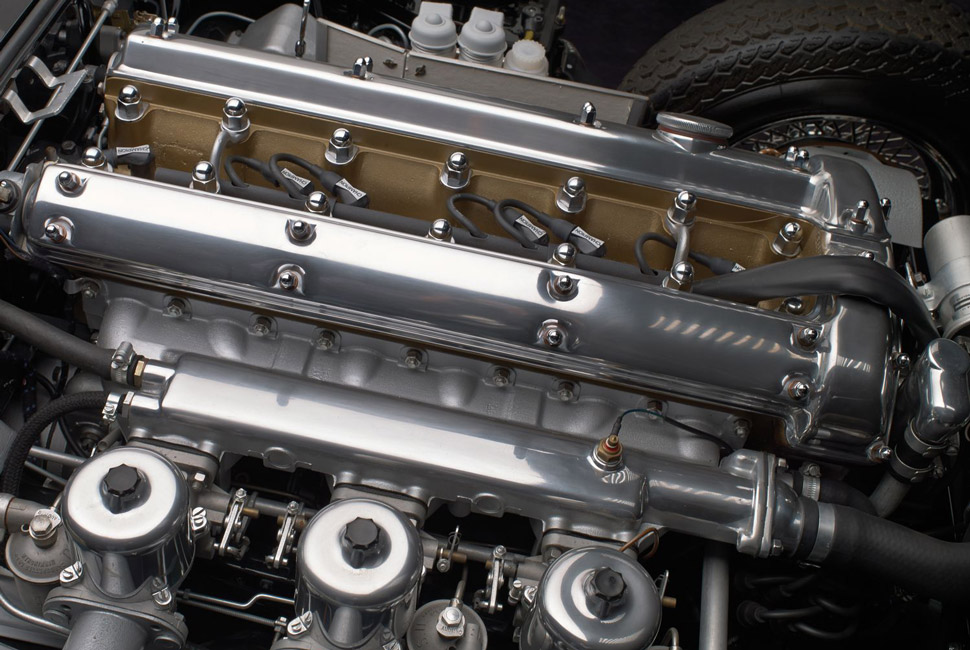
1961 Jaguar E-Type

We're very happy to hear Jaguar is making a move back to straight-six engines. (Photo: Hemmings)
Enzo Ferrari himslef once claimed the E-Type was the most beautiful car ever made. Knowing his affinity for engines, he probably included what was under the Jaguar’s long clamshell hood as well.

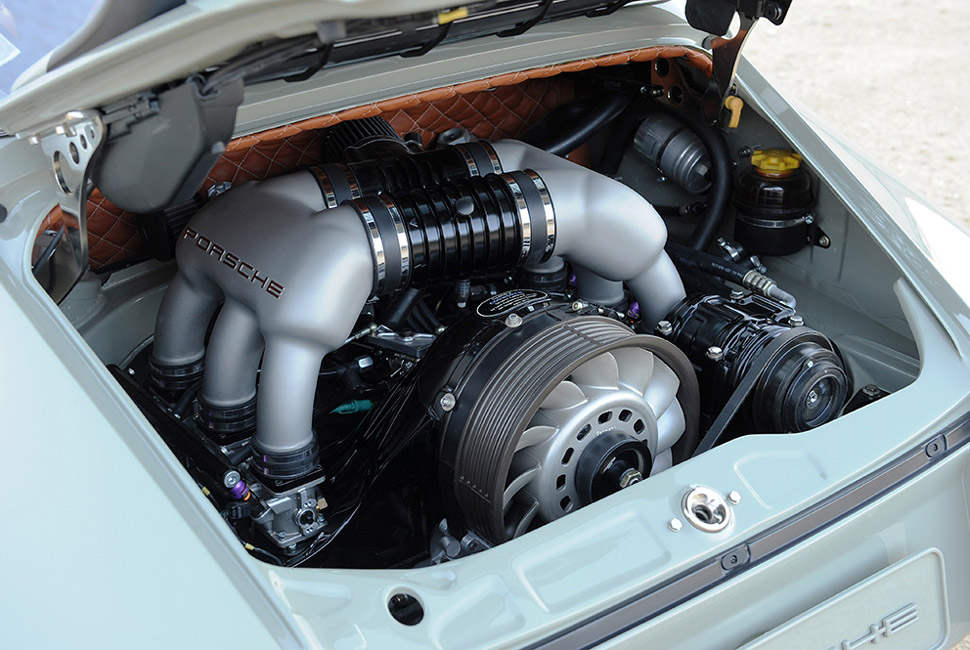
Porsche 911 Reimagined by Singer

There's not much room creativity in the back of a standard 911, but give Singer some quilted leather and they'll work wonders.
Singer is known for poring over every detail and not taking any short cuts, including in the (incredibly cramped) Porsche 911 engine bay. There’s not much room for creativity in the back of a standard 911, but give Singer some quilted leather, and they’ll work wonders.

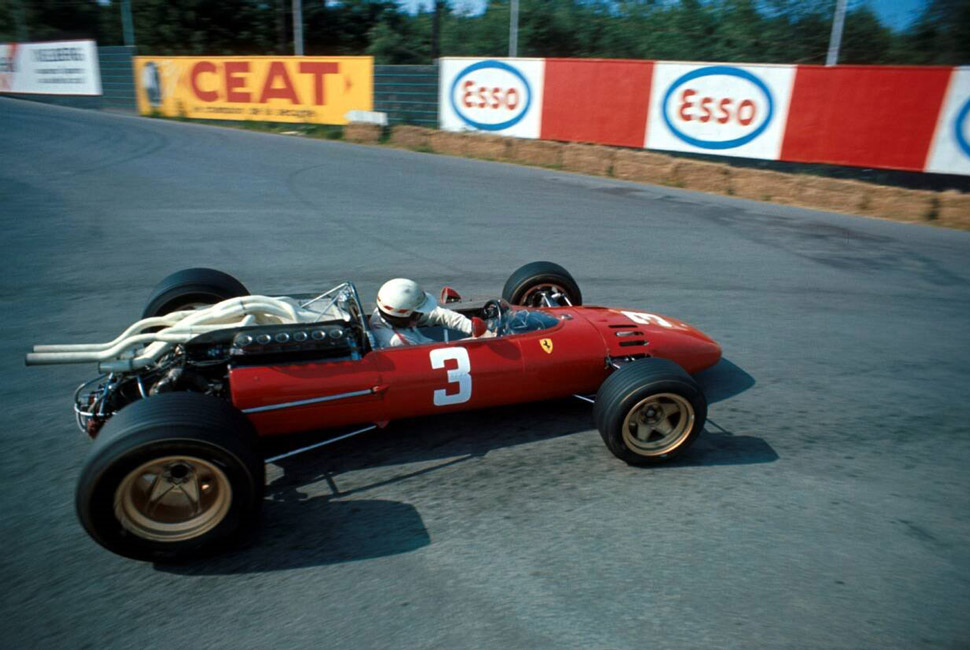
1967 Ferrari 312 F1

Whether this qualifies as an engine bay is debatable -- but as a work of art there's no question.
Whether this qualifies as an engine bay is debatable — but as a work of art, there’s no question. The Ferrari 312’s powder-coated center-mounted equal-length exhaust pipes are a thing of absolute beauty.

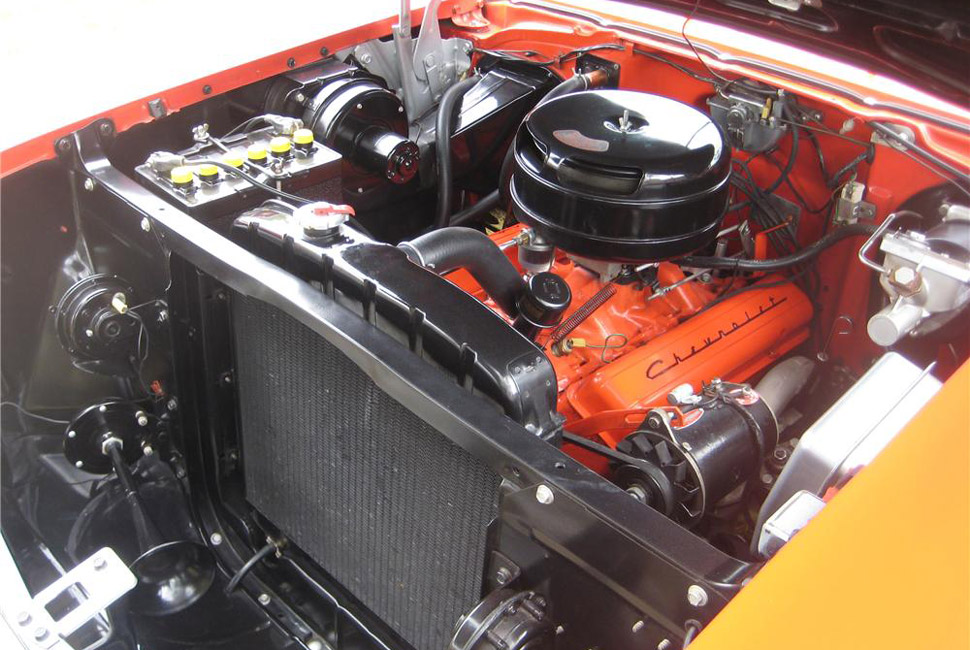
1957 Chevrolet Bel Air

Even with a 4.7-liter V8, there's still enough room to fall in on either side.
The 1957 Chevrolet Bel Air might be one of the more mechanically-simple engine bays on the list (there’s practically enough room to  fall in next to the engine), but there’s something about the simple industrial style of the space that deserves praise.

1930 Cadillac V16 Convertible

Can you believe this is a (very distant) relative of the ETC? [WHAT'S ETC?]
Cadillac is fighting to resurrect the world-beating standard it once held, but it’s unlikely to ever reach the heights it was at when the V16 Convertible was rolling around the streets of America. It wasn’t efficient and it didn’t produce all that much power, but the sheer excessiveness of the V16 puts it in the same breath as the Bugatti Veyron.

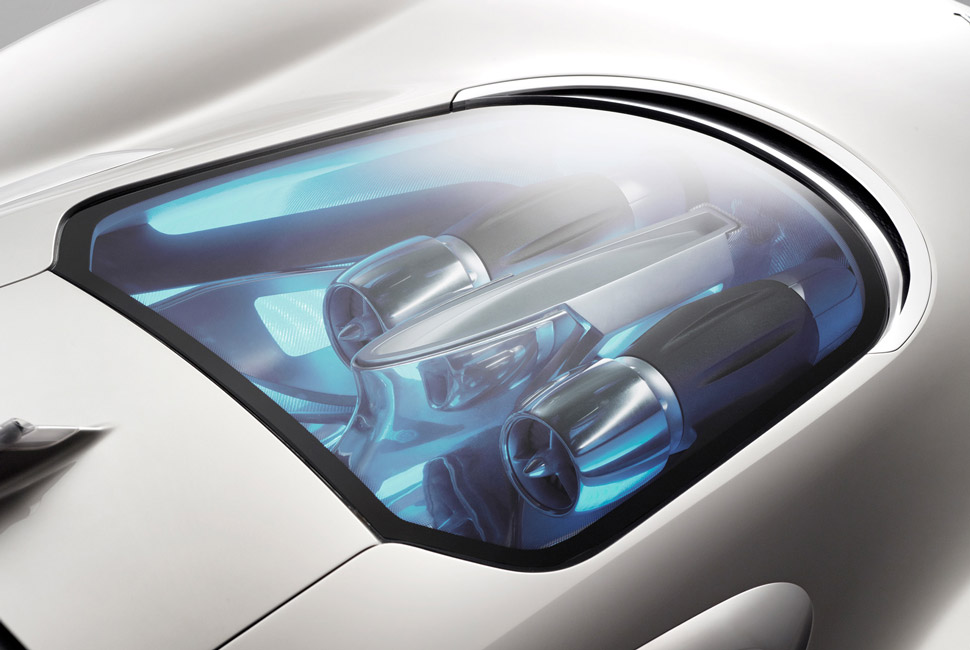
Jaguar CX-75

If you have a pair of mid-mounted turbines, you have to make sure they're properly illuminated for everyone to see.
This Jaguar will likely remain a concept forever, which is a shame. Even as we move into a futuristic world of all-electric cars and fully autonomous driving, the well-lit turbines under the CX-75’s hood still look ahead of our time.

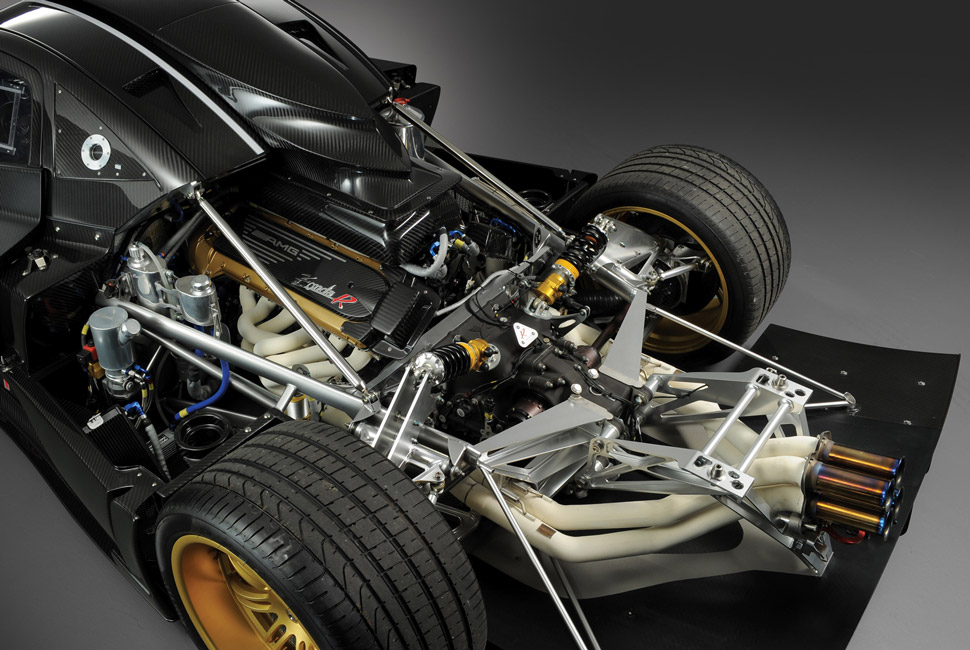
2011 Pagani Zonda R

Suspension, chassis, engine -- all are bolted together like one mechanical nervous system of high-strung performance.
The beauty of the Pagani Zonda R is the mechanical system of the suspension, chassis, and engine, all bolted together to create a structural web of metals and carbon fiber. Well, that and the sonorous tune that bursts forth from it.

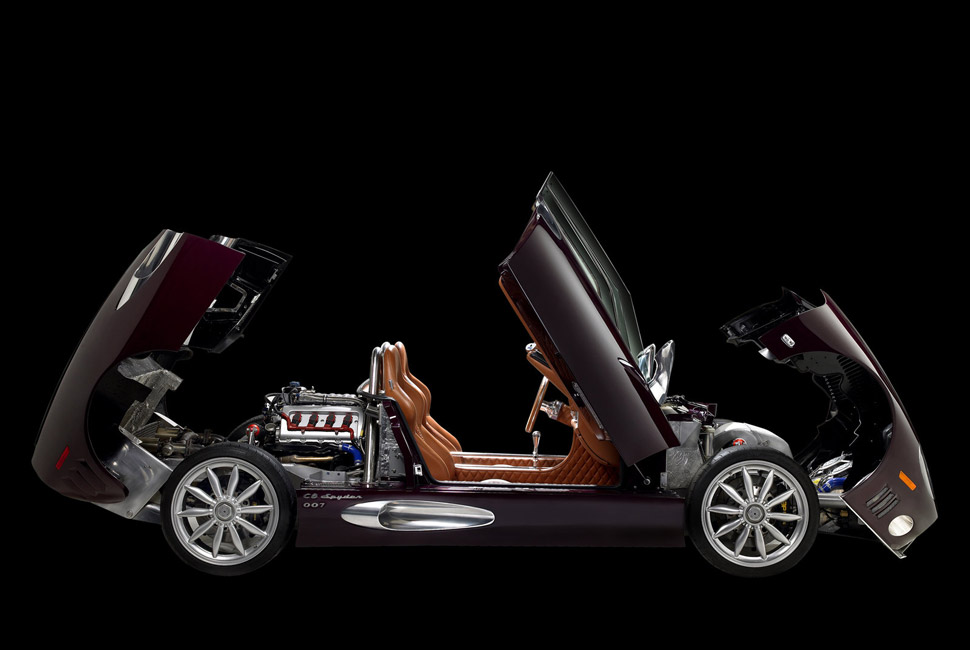
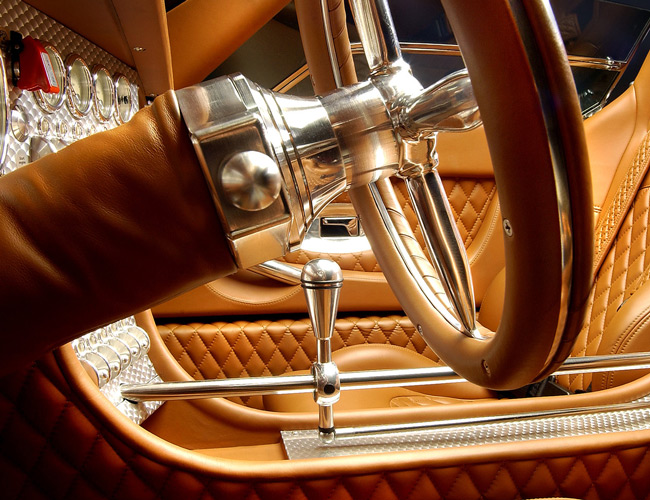
2001 Spyker C8

Almost everything on the C8 is designed to perfection. That includes the details you can't always see.
If there was such a thing as a “designer car,” the Spyker C8 would qualify. Every detail inside and out is beautifully overdone and over-the-top, but somehow, tastefully so — like a modern suit that borders on high fashion.

Other Gorgeous Details

Automotive-Features-Gear-Patrol-Lead-Featured

Engine bays aren’t the only beautiful little details we love. Look over our favorite finishing touches (superficial and functional). Read the Story

The New Toyota Supra Has Another Surprise for Us

Back in January, Toyota revealed the new Supra at the North American International Auto Show. The initial plan had Americans exclusively receiving the turbocharged 3.0-liter inline-six version, with a base-model four-cylinder version would also bound for Japan. Now, it appears Toyota may have plans to bring the base-model turbo-four Supra to the US, as well.

On Monday, Automobile Magazine revealed it had uncovered California Air Resources Board certification documentation for BMW’s turbocharged 2.0-liter inline-four engine. The list included the array of BMW models that use that engine…and one Toyota: the new Supra. (The new Supra and Z4 were co-developed by BMW and Toyota as a cost-saving measure.)

In Japan,Toyota sells two different tunes of the four-cylinder Supra: a 194-hp, 236-lb-ft base version (which shares an engine with the Z4 sDrive 20i) and a 255-hp, 295-lb-ft version (shared with the Z4 sDrive 30i). A 194-hp Supra would make little sense, as it would overlap with the extant Toyota 86; expect the 255-hp version here. 

Why is this important? Affordability. A four-cylinder Supra would presumably cost less than the six-cylinder, which starts north of $50,000. That would open the car to a range of buyers who might opt for a Subaru WRX STI or a Ford Mustang EcoBoost. The 2.0-liter should also, in theory, be more fuel-efficient than the 3.0-liter, though the six-cylinder Supra scored impressively in EPA testing with a 24 mpg city/31 mpg highway rating. (Also, the cheaper four-cylinder would make it a better candidate for anyone planning an engine swap; every dollar not spent on the existing powertrain is another dollar to spend on that 2JZ.)

Hoping for a manual? Keep on hoping, for now. The document lists an eight-speed automatic transmission as the only option for the 2.0-liter Supra. However, BMW has been known to pair that engine with a stick on some models, so it’s conceivable a manual Supra could materialize if there’s enough demand for it. 

New Land Rover Defender Pictures Reveal a Curvy-Faced Off-Roader

There are, no doubt, thousands upon thousands of Land Rover enthusiasts scattered across the world clamoring with baited breath for any crumb of news about the all-new 2020 Defender—folks who set Google News alerts for “2020 Land Rover Defender,” contribute to forums dedicated to boxy British off-roaders, and order vanity plates like “4WDKING” for their classic, doted-upon Defenders.

Presumably, these are also the same sort of people who knew April 30th was also known as “World Land Rover Day,” a fact that had escaped us until now. But to mark that occasion—and throw a bone to the ravenous fans out there—Land Rover has released a new batch of images of the 2020 Defender, including one that gives us our best look yet at the next generation of JLR’s burliest, boxiest vehicle.

Well, “boxiest” is somewhat of a relative term. While the Defenders pictured still wear camouflage, one example—a prototype soon headed to Kenya’s Borana Conservancy to help the Tusk Trust, a British wildlife conservation non-profit, with its work—is clad in less cloaking material than the others—a skin-tight wrap instead of a three-dimensional disguise.

It’s that Tusk Trust Defender that gives us a look at the new model’s lines—and unexpected curves. While the shape after of the A-pillar looks every bit as square as expected from a Defender, the front fascia looks much more rounded than earlier images had led us to believe. Indeed, the curved headlights and rounded hood and chin bring to mind nothing so much as the original Land Rover Freelander.

Land Rover also took advantage of its self-titled holiday to reveal that, so far, the 2020 Defender development fleet has covered almost 750,000 miles during testing at locations across the planet, including vehicle dynamics development work at Germany’s famed Nurburgring Nordschleife, rock-crawling in Moab, Utah (where Jeep sends its own experimental off-roaders for work and play), winter driving work in Sweden, and city driving tests here in Gear Patrol‘s own hometown of New York.

As we mentioned earlier this month, the 2020 Land Rover Defender is expected to debut in September. Will it be a disappointment, or live up to all our expectations? Guess we’ll find out in a few months.

The Complete BMW Motorcycle Buying Guide: Every Model, Explained

BMW automobiles have long set themselves apart in the crowded luxury marketplace by being driver-oriented machines, offering a dynamic experience behind the wheel while maintaining a high degree of refinement. Products from BMW Motorrad are no different, bringing equal amounts of sportiness, capability and luxury to the table.

But just as BMW’s cars have adapted to changing times, so too have BMW’s motorcycles. Constant innovation, with a focus on safety and accessibility, have made their efforts to mint new riders among the most successful in the industry. Entry-level single-cylinder bikes and scooters seek to bring the joy of riding to urban mobility. Adventure and heritage motorcycles equipped with the brand’s signature boxer engine are instantly recognizable, thanks to the horizontally opposed cylinders—and even those Beemers that don’t bear such obvious marks can still be clearly identified, as all of them wear the iconic blue-and-white roundel on the gas tank.

BMW Motorrad History

BMW stands for “Bavarian Motor Works” (or Bayerische Motoren Werke, in German) and while the company is best-known for its cars, its motorcycle engine manufacturing predates their first automobile by nine years. BMW AG was founded in Munich in 1916 and produced airplane engines during World War I; in 1921, it began building motorcycle engines for other manufacturers before building their first bike, the R32, in 1923. (That R32 was the foundation of BMW motorcycles for decades; its shaft drive was in use until 1994.)

Following World War II, the company was given permission to start building motorcycles again in Western Germany in 1947; however, it had to start from scratch, as all its surviving blueprints and plans were at the facility in Eastern Germany under Soviet control. Following a trademark lawsuit in 1952, motorcycles produced at the Eisenach plant in East Germany wore a red-and-white roundel bearing the name EMW (Eisenacher Motoren Werke)to distance them from BMW. (If you think those bikes are highly sought-after collector’s items these days, you’d be correct.)

How BMW Names its Motorcycles

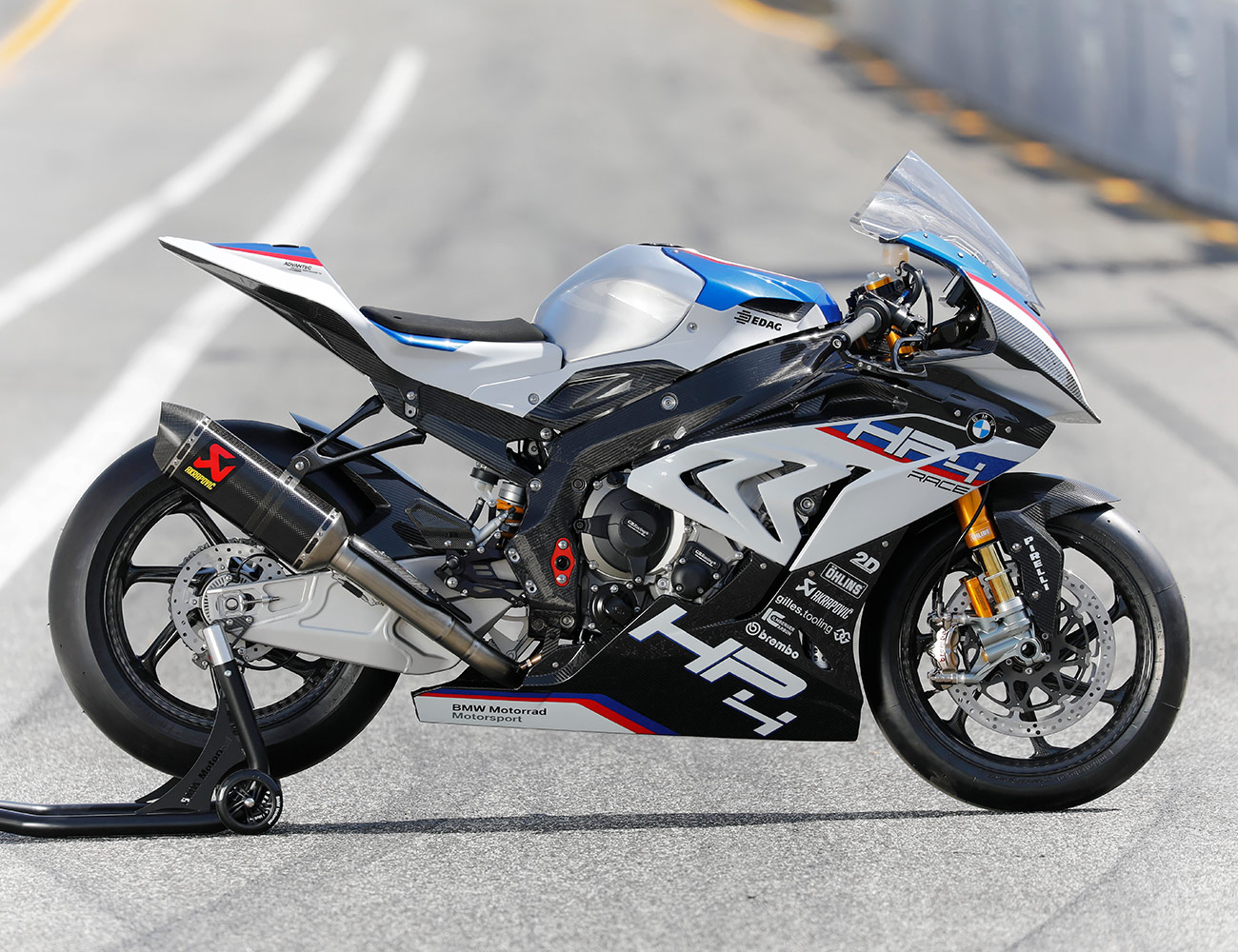
As is the case with its cars, BMW Motorrad uses an alphanumeric naming system for their motorcycles. The first part of the name is a letter, which corresponds to an engine type; currently, the BMW Motorrad lineup has six engine types that vary from scooters names start with a C (parallel twin-cylinder engines attached to a constantly variable clutch) to sport bikes like the $78,000 HP4 Race (high-performance four-stroke four-cylinder). Between those extremes, you have bikes starting with the letter S (four-cylinder sport motor), R (opposed twin-cylinder), G (single cylinder), F (parallel twin-cylinder), and K (three or more cylinders).

The second part of the name is comprised of numbers, which represent the size of the engine’s displacement in cubic centimeters….except when it’s actually just a random series of numbers instead, which does happen.  Currently, models with the numbers 310, 400, 650, 750, 850, 1000, 1200, 1250, and 1600 fill up the lineup.

Lastly comes the letter or letters following the numbers—the part of the name that explains the purpose of the bike: A (for Adventure, sometimes spelled out), S (sometimes Sport or Strasse, the German word for street), G (from the German word Gelande, which means terrain), GT (sport touring), RR (road racing), RT (road touring), L (luxury), T (touring), GTL (luxury sport touring), B (bagger), R (road), X (extreme), and GSA (grand sport adventure, sometimes spelled out) all see use in 2019.

BMW Motorrad Terminology

BMW Motorrad: Pronounced “Moto-rad” (meaning “motorcycle” in German), this has been BMW AG’s motorcycle division since 1923.

Beemer/Beamer: Traditionally, “Bimmer” is the nickname for BMW cars, while “Beemer” or “Beamer” applies to the motorcycles. Why? Well, the etymology comes from the post-WWII era. BMW was competing with British bike company BSA, whose bikes were nicknamed “Beesers.” The “Beemer” nickname was attached to the BMW bikes in an effort to keep it from seeming like the staunch German brand.

Flat Twin: BMW’s iconic engine layout of choice, with two horizontally opposed cylinders mounted across the frame.

Airhead:  The flat twin engine with two valves per cylinder produced from 1969 to 1995 that is cooled by air.

Oilhead: Partial oil cooling, which came to the flat twin boxer in 1995, when the cylinders gained two valves for a total of four.

Precision Cooling: A glycol/water coolant mixture is sent to the hottest part of the engine around the combustion chamber. This accounts for 35% of engine cooling; air and oil account for the other 65 percent. Precision water cooling arrived on the GS line of bikes in 2013.

GS: The literal translation of Gelände/Straße is “Off-road/Road,” but GS is also used interchangeably to mean Gelände Sport. The first BMW GS produced was the R80/GS in 1980 and continues through today;  the line is easily identified by the long travel suspension and upright riding position, and bikes are often optioned with long distance touring accessories.

Shaft Drive: The final drive system of choice for BMW since the R32 arrived in 1923, consisting of a shaft that connects a gear inside the gearbox to another gear inside a hub on the rear wheel.

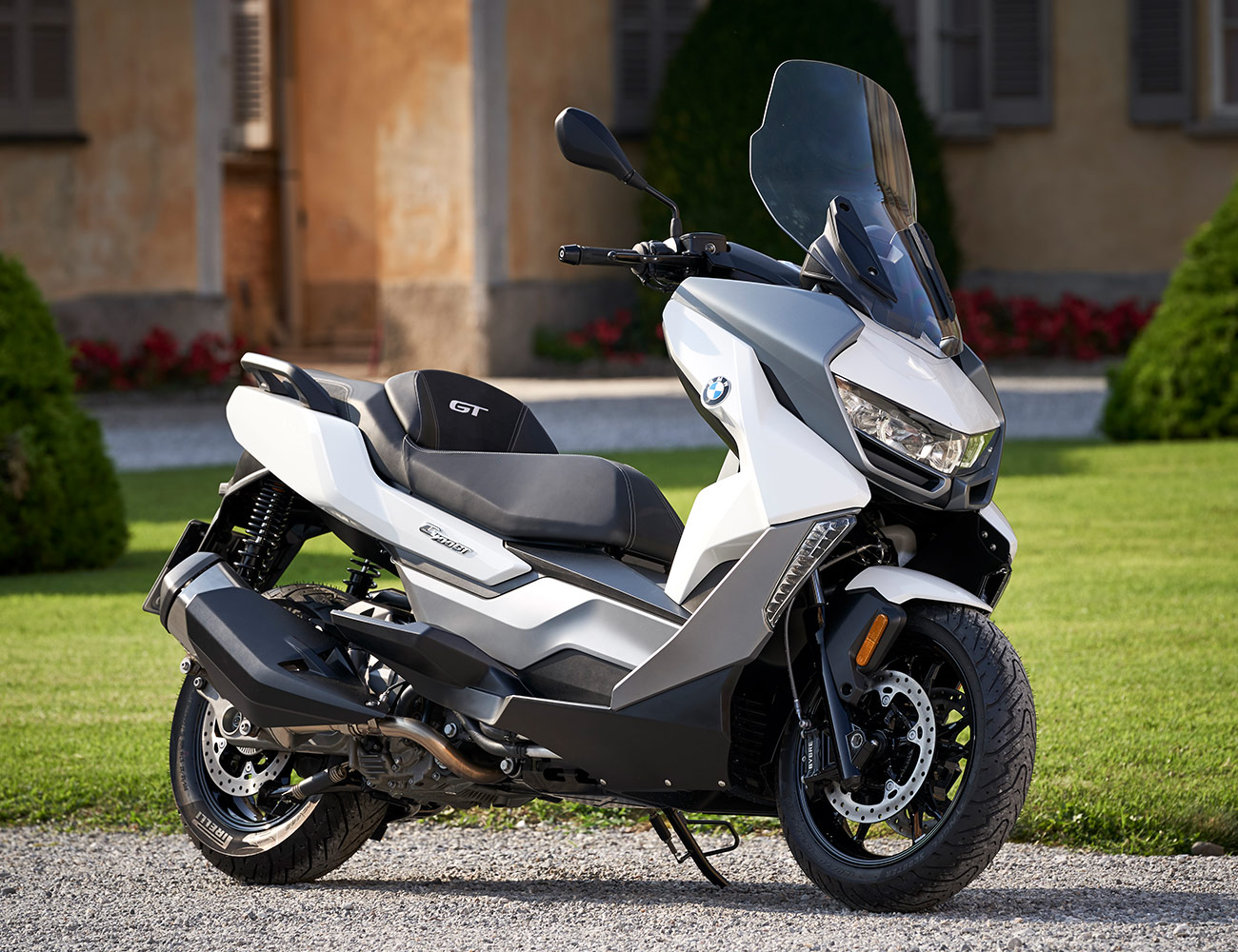
Urban Mobility (Scooters)

BMW Motorrad’s Urban Mobility segment consists of three scooters: two gas-powered models and a fully-electric model. The fuel burners are the C650 GT ($10,995) and C400 X ($6,795); the former is capable of covering long distances easily in addition to being a premium two-wheeled city street slayer, while the latter is a modern mid-size commuter with built-in smartphone connectivity. The single cylinder in the 400 X delivers 34 hp and 67 mpg, while the twin cylinder of the 650 GT offers 60 hp, 51 mpg, and a 112-mph maximum speed.

The fully electric C evolution ($13,995) has a powerful little electric motor with 48 hp and 53 lb-ft of torque, good for a 0-30 time of 2.8 seconds. It’s quick, futuristic looking and has a 99-mile range.

Models:
• C400X – $6,795
• C650GT – $10,995
• C evolution – $13,995

Engines:
• 350cc single
• 647cc inline twin
• 133v air-cooled lithium-ion high voltage battery

Adventure

When BMW introduced the R80 G/S in 1980, it kicked off a whole new segment—one that has risen to new heights of popularity in the past few years, as smaller, more approachable adventure bikes have hit the market. So it stands to reason that the company that started it all would be producing the bikes to beat.(Car nerds, you can think of BMW’s “GS” motorcycles as the 3 Series of Motorrad.)

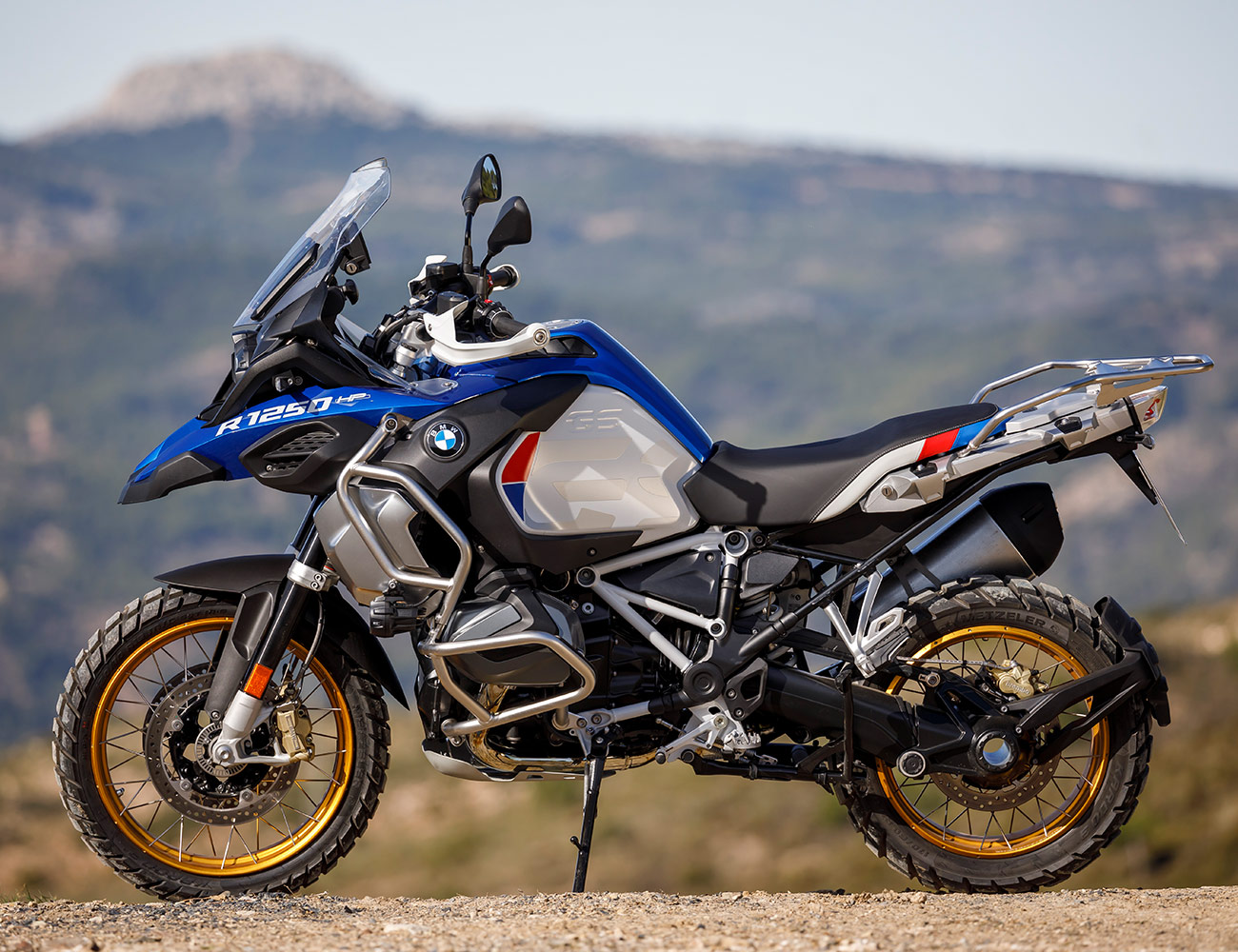
They range from the very accessible, fun-to-ride single cylinder G 310 GS ($5,795) up to the iconic R 1250 GS Adventure ($19,945), which can be found conquering continents with its 136-hp four-stroke flat twin. In between these two ends of the spectrum lie a number of great rides, including the F750 G S($10,395) with standard stability control and ABS, and the new F850 GS Adventure ($14,295) with a new 90-hp parallel twin cylinder engine and a smoother, more easily-operated clutch to reduce fatigue in tricky situations. Also noteworthy is the S 1000 XR ($16,895) which combines a 165-hp inline four-cylinder engine and sport bike riding dynamics with GS ergonomics and styling. There are countless ways to set up these bikes, but regardless of how you spec it, a GS is ready to eat up a ton of miles.

Models:
• G 310 GS – $5,795
• F 750 GS – $10,395
• F 850 GS – $13,195
• F 850 GS Adventure –$14,295
• S 1000 XR – $16,895
• R 1200 GS – $16,895
• R 1250 GS – $17,695
• R 1250 GS Adventure – $19,945

Engines:
• 313cc single
• 853cc parallel twin
• 853cc inline twin
• 999cc inline four
• 1,170cc stroke flat twin

Heritage

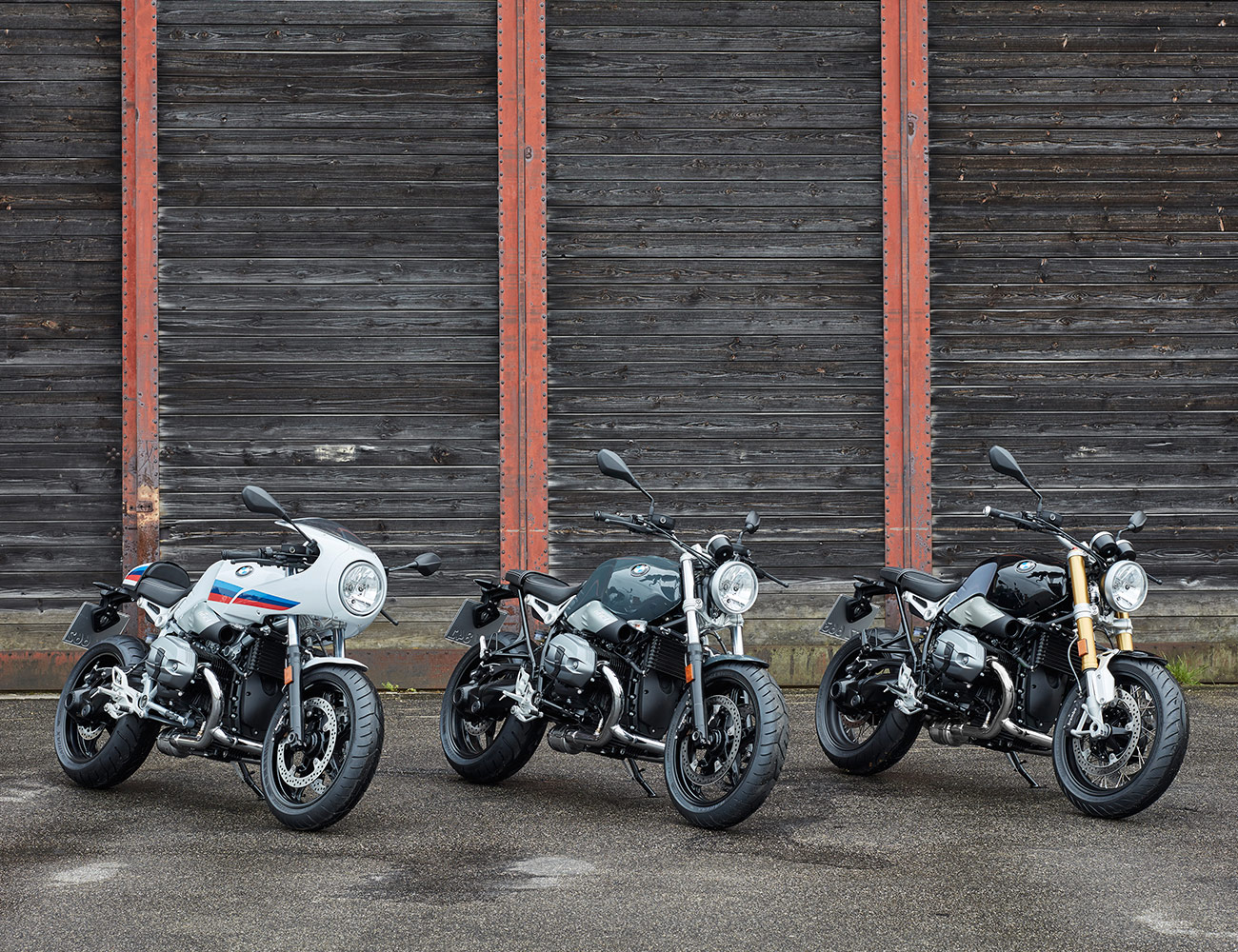
It was only a matter of time before stripped-down retro themed bikes had their moment. When BMW launched the R NineT in 2013, it was that moment. Here was an air-cooled boxer BMW with classic lines, but with optional heated grips and a factory warranty.

Since the launch, the R NineT family has expanded to five distinct models, ranging from the stripped-down, ready-for-customization R NineT Pure ($9,995) to the original R NineT ($15,495). There’s an R NineT Racer ($13,545), which boasts a sexy throwback front cowl and one of the most aggressive seating positions on the market. Then there’s the homage to the R80 G/S, the R NineT Urban G/S ($12,995); finally, there’s the R NineT Scrambler ($12,995) which brings knobby tires, a brown leather seat, and high-mounted dual exhaust. All five bikes use the same air/oil cooled twin cylinder boxer engine making 110 hp 86 lb-ft of torque. Oh and regardless of whether you go for the stock exhaust or optional Akropovic setup, they all sound phenomenal.

Models:
• R nineT Pure – $9,995
• R nineT Scrambler – $12,995
• R nineT Urban G/S – $12,995
• R nineT Racer – $12,545
• R nineT – $15,495

Engines:
• 1,170cc flat twin

Roadster

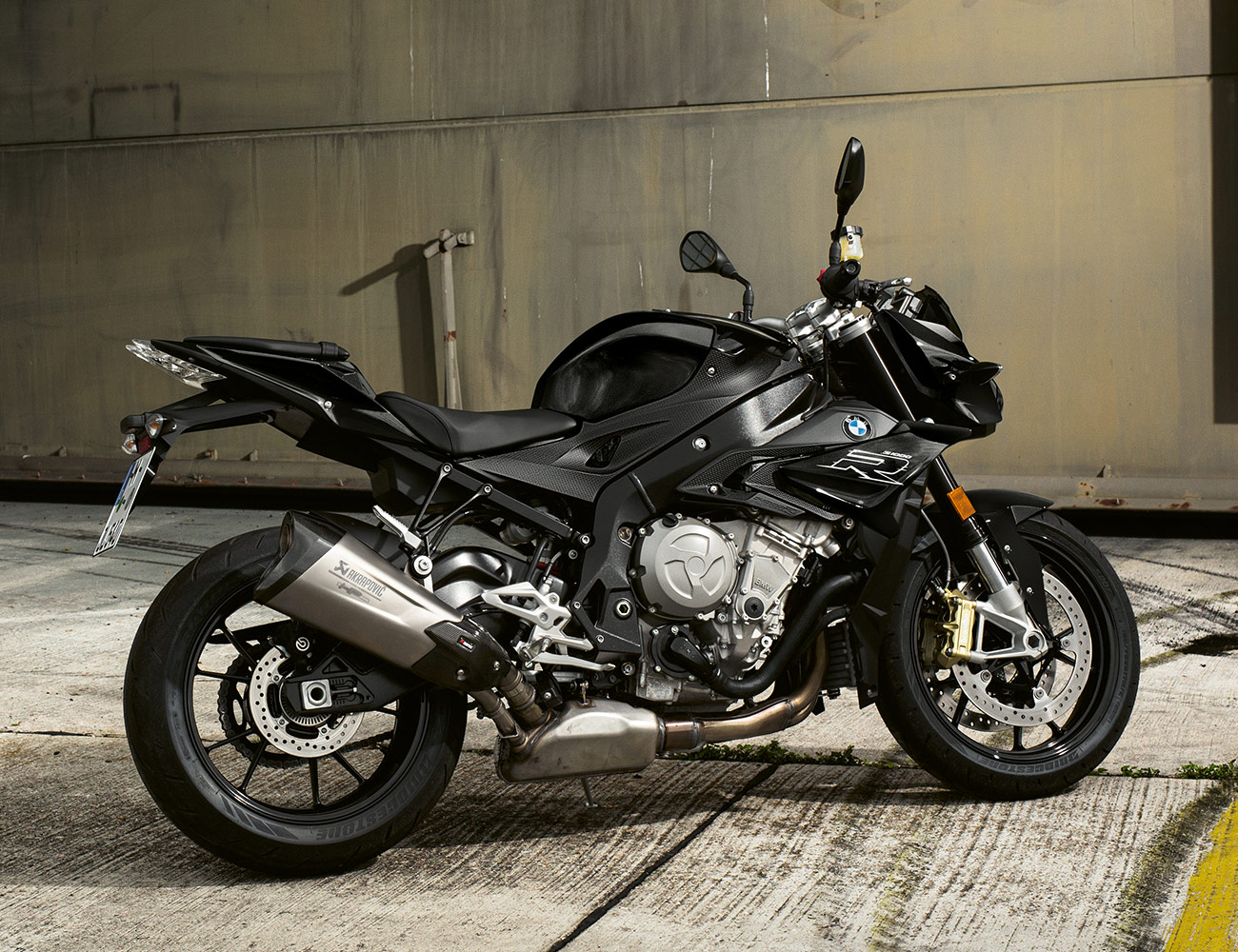
The Roadster segment is comprised of just two bikes, but the G 310 R ($4,750) and S 1000 R ($13,995) are hardly afterthoughts. The former represents an incredible value-for-money proposition, while the latter is a 165-hp beast with a standard titanium exhaust. The G 310 R is the more urban-oriented of the single-cylinder entry-level bikes, has already attracted a wide-ranging audience from new riders to custom builders. With a low center of gravity that’s been shifted towards the front wheel by rotating the cylinder head 180 degrees (thus giving the whole cylinder a rearward tilt) and a fully-fueled weight shy of 350 lbs, it offers an engaging riding experience that novices and veterans can both enjoy.

The S 1000 R, on the other hand, is just shy of being a full-blown sport bike. It’s an enthralling, stripped-down piece of machinery that somehow remains comfortable enough for commuting. It notably comes standard with Gear Shift Assist Pro, which lets you skip the hassle of engaging the clutch when ratcheting off shifts at full tilt.

Models:

• G 310 R – $4,750
• S 1000 R – $13,995

Engines:

• 313cc single-cylinder
• 999cc inline-four

Touring

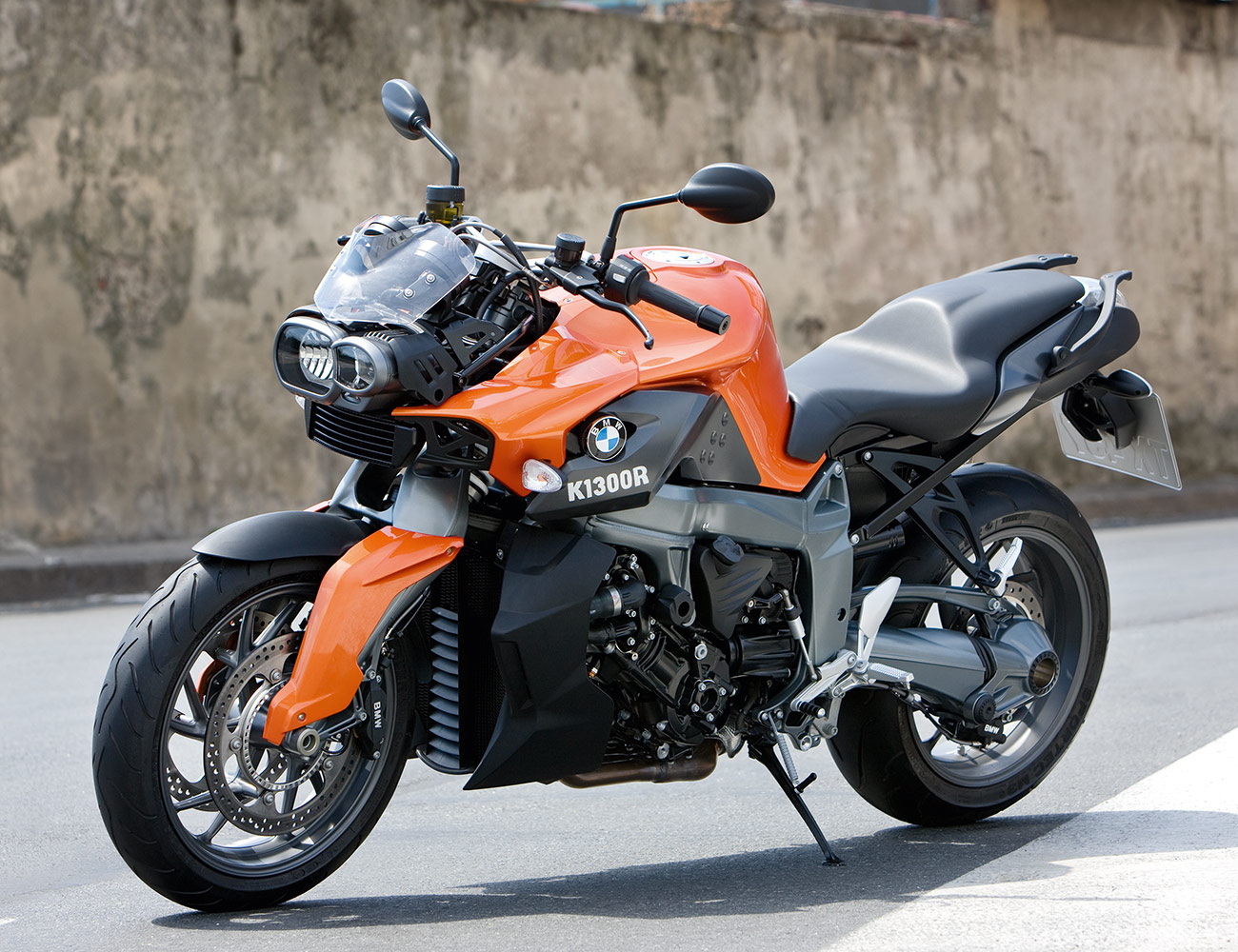
This is the other big segment for BMW, next to their Adventure bikes. BMW touring bikes can be found covering large swaths of land around the globe—and if you swing through notable riding zones like the Tail Of The Dragon, you’re guaranteed to spot a few well-to-do folks cruising in comfort on them. It’s kind of outrageous that the K 1600 B ($20,095) even exists; after all, when you think of BMW motorcycles, you don’t think of baggers. But there it is: six cylinders all in a row, a low-slung silhouette, taillights you can’t ignore, and an incredible amount of road presence.

The R 1250 RT ($18,645) boasts a new twin-cylinder boxer making 136 hp and 105 lb-ft, and makes use of a new variable camshaft control system dubbed “BMW ShiftCam” that gives access to more torque across the powerband by using variable valve timing. On a big bike like this, that’s exactly what riders are looking for: ease of riding, comfort, and doing the long rides in style. None do it better than especially the K 1600 GTL ($25,995) which has dual adaptive xenon headlights and an electrically-adjustable windscreen. (Yes, you read that right.) Other than the HP4 Race, it’s BMW’s most expensive motorcycle—but read the build sheet and you’ll understand why.

Models:
• K 1600 B – $20,095
• K 1600 Grand America – $25,595
• K 1600 GTL – $25,995
• K 1600 GT – $22,995
• R 1250 RT – $18,645
• R 1200 RT- $18,395

Engines:
• 1,170cc boxer twin
• 1,649cc inlin- six

Sport

For a brand that’s had so much success in racing and is generally associated with “sportiness” by consumers, oddly enough, sport bikes aren’t the first thing that comes to mind when most people think of BMW Motorrad. Perhaps it’s because the Adventure and Touring bikes dominate in their respective categories and all those Italian sport bikes just scream “FAST”—but make no mistake, BMW builds seriously capable sport bikes.

A new S 1000 RR ($16,995) is on the way; the release date is still unconfirmed, but when it arrives, it’s going to shake things up in the sportbike scene faster, lighter, and nuttier than the current S 1000 RR ($15,995). The inline four-cylinder engine is now making 205 hp at 13,000 rpm, and redline doesn’t arrive until 14,600 rpm. With the optional M Package selected, weight is reduced by an extra 7.7 lbs to bring the bike down to 427 lbs.

Should you want to take your track day to the ultimate level, there’s the HP4 Race ($78,000) with carbon-fiber frame and wheels. Here the inline four-cylinder makes 215 hp, while the curb weight rings up at 322 lbs. It’s their ultimate handmade two-wheeler, and BMW’s building just 750 of them, so plan accordingly—and act fast.

Models:
• HP4 Race – $78,000
• S 1000 RR – $16,995

Engines:

• 999cc Inline Four

We Drove Every Jeep Concept From the 2019 Jeep Easter Safari — Here’s the One They Should Build

For 53 years Jeep has gathered the faithful in the Utah mountains for Jeep Easter Safari, an annual celebration of all things off-roading, rock-crawling and American-made, WWII-bred 4x4s. For a week each spring, the town of Moab is overrun with dented Wranglers rolling high on humongous studded rubber and motel parking lots are filled with the clanging sound of wrenching and the disembodied legs of impromptu mechanics scrambling under a stuck winch or busted sway bar.

And as per tradition, Jeep made unto the Easter Safari a grand offering of functional, meticulously designed concept vehicles for 2019—wild, colorful, official corporate imaginings that hint at the possible future thinking of the design and accessories teams, even the go-fast Mopar performance division, and are made available for shakedown runs along lightly challenging mountain trails.

As expected, the 2019 concepts were built almost exclusively on the new Gladiator chassis, the adoringly reviewed return of Jeep’s pickup truck nameplate. Themes ranged from the tongue-in-cheek — the Flatbill, named for the straight hat brims favored by motocross racers — to the ludicrous aggression of Five-Quarter’s 707-horsepower Hellcrate engine and steampunk-peyote design.

Jeep promises to make none of these vehicles, but here’s a look at what they’ve teased—and which one gets our vote for a proper production run.

In ascending order of preference:

Gladiator Gravity

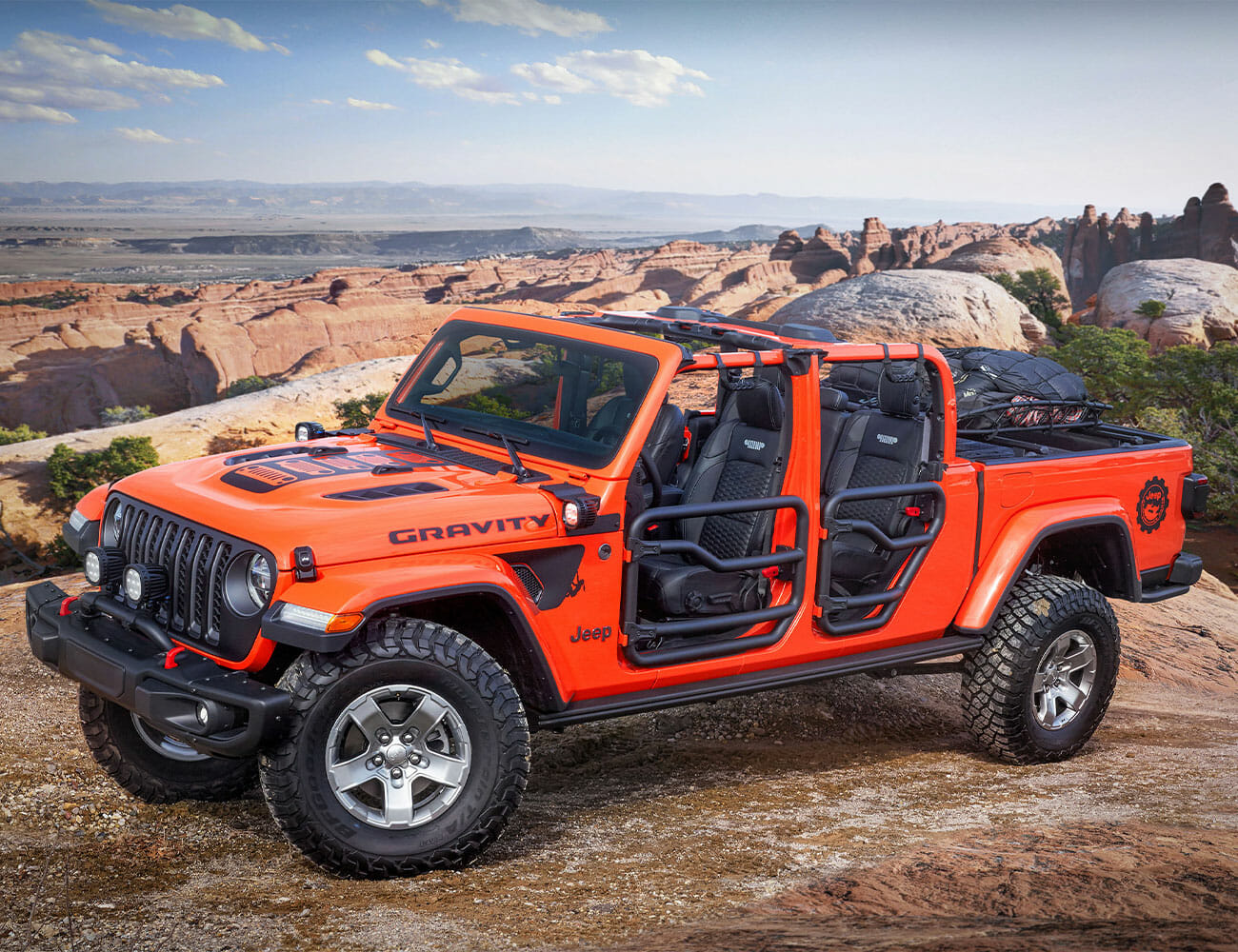
You have to be deep in the life for the Jeep Gladiator Gravity’s stripped down build for rock-climbers — roofless, tube doors, with a two-inch lift kit, heavy steel rock rails, 35-inch tires and a cargo basket. Arguably the most interesting part about the Gladiator Gravity, which started life as a Gladiator Rubicon, is that most everything on the heavily modified truck is purchasable from the Mopar parts catalog. The truck even comes with a cat-back exhaust. But the slidable and lockable drawers in the bed of the truck, enough to hold large amounts of climbing gear, are custom.

Five-Quarter

The Five-Quarter was a fan favorite even after some custom hose blew during the first trail run and it spent much of the day on a rock being worked on with its hood up. Probably because the Five-Quarter looked as if it was meant to be on a rock being worked on with its hood up, set against the vast umber of the Utah mountains like a body spray commercial.

The Five-Quarter has many excellent details. Forty-inch tires on 20-inch beadlock wheels. A 1968 M-715 chassis — the military’s version of the original Gladiator — with a three-speed automatic transmission and cueball shifters. Chopped roof, carbon fiber. A six-foot aluminum bed with integrated wood slats.

And in keeping with the unsubtle theme: a 707 horsepower Dodge “Hellcrate” engine, the drop-in version of the infamous Hellcat powerplant.

Once up and running it was a blast to drive in short bursts, but as the name suggests the Five-Quarter (for a one-and-one-quarter ton, aka five-quarter ton, truck) was overstuffed. Too much power, too many over-the-top details, too aggressive. Imagine alternating every two seconds between silence and redfaced screaming; that’s trying to modulate the throttle. Trekking across the slow, considered crawling route, it just wanted to leap around and smash into things.

The Five-Quarter’s got style to spare if that’s your thing, but for others it will lose points for being the antithesis of the small, humble, go-anywhere Jeep.

Flatbill

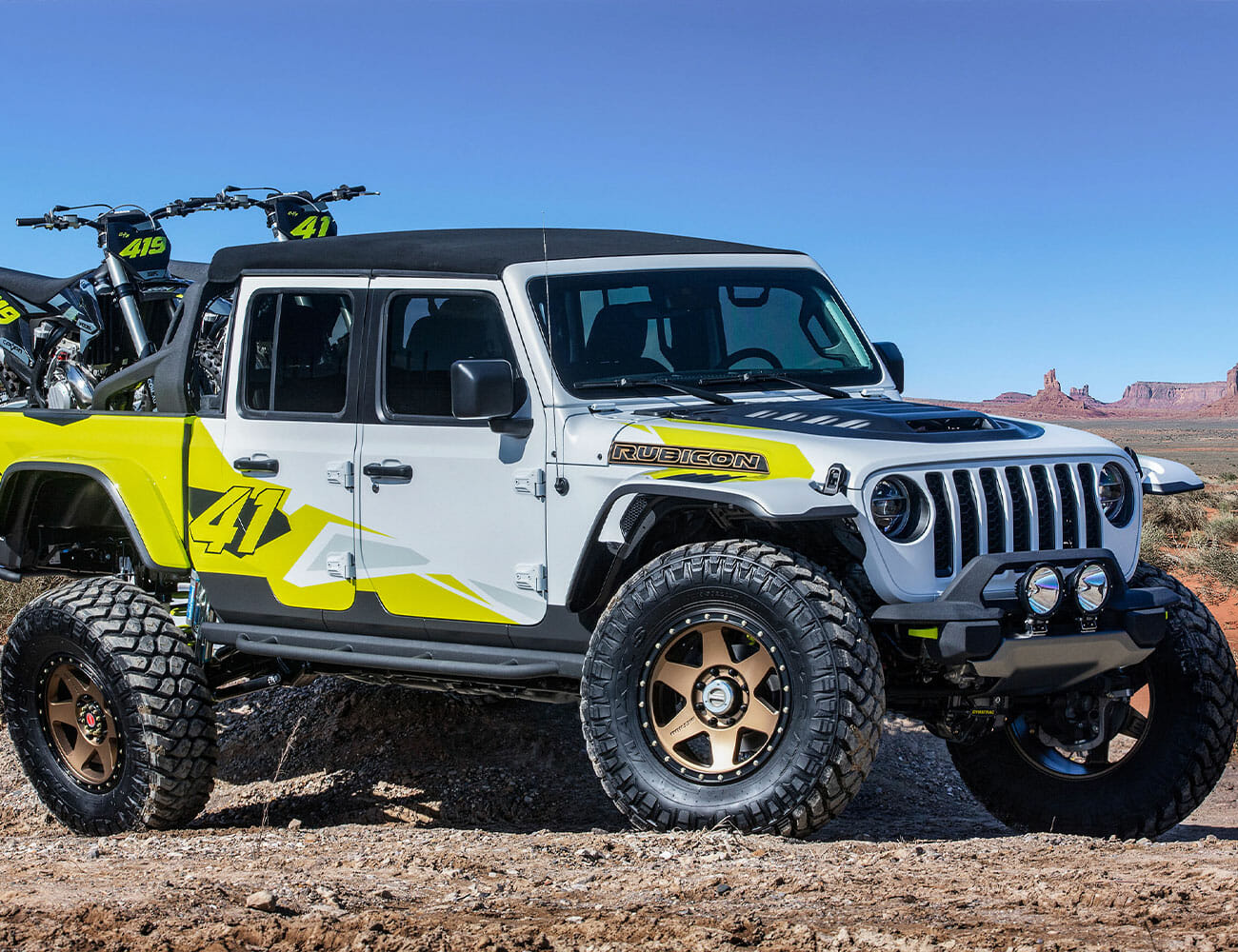
The name’s a flippant nod to the motocross crowd’s flat-brimmed caps — instead of a “Trail Rated” badge, this concept is “Bro Rated”; the seats read “Brah” — but Jeep sure took the build seriously, with a four-inch lift, huge 40-inch tires on 20-inch wheels, overbuilt running gear (Dynatrack Pro Rock 60 front and rear axles) and a cold-air intake for the 3.6-liter Pentastar V-6.

Whomever chose the pair of what I believe were KTM 250 SX-Fs in the back has excellent taste in motorcycles. Even more impressive was that you heard the squeak of the bikes in their custom slidable mounts more than you felt the weight of the motorcycles, even while crawling along steep, bumpy ascents and descents or at moderately extreme angles. The truck felt capable of hauling a pair of motorcycles and several people into the exact middle of nowhere without breaking a sweat.

As a sales proposition, the truck would be far more palatable with something other than the current, spilled-energy-drink-on-a-tablecloth color scheme.

Wayout

The overlanding community is currently setting up camp somewhere on the internet full of craft beer and opinions about the Jeep Wayout, an Instagram-perfect #homeiswhereyouparkit build with a heavy-duty roof rack system that supports a pop-up tent for two. (We climbed into the tent; it was comfortable if cozy with just one person inside.) There’s a snorkel, a winch, fuel cans integrated into the rear side panels, and 17-inch painted steel wheels wrapped in 37-inch mud rubber. A color scheme like an army boot and a party-prepper personality: there’s an on-board air machine, and a margarita machine housed in the slidable drawers in the bed, the latter being demonstrated to good use in the parking lot of a local restaurant.

Like the Flatbill, the weight carries easy for the Gladiator-based Wayout despite the stock 3.6-liter V-6 and eight-speed automatic transmission. Everything feels balanced, secure; the truck is surprisingly nimble, the inputs easy to modulate. It suggests the Gladiator platform is as robust as claimed.

J6

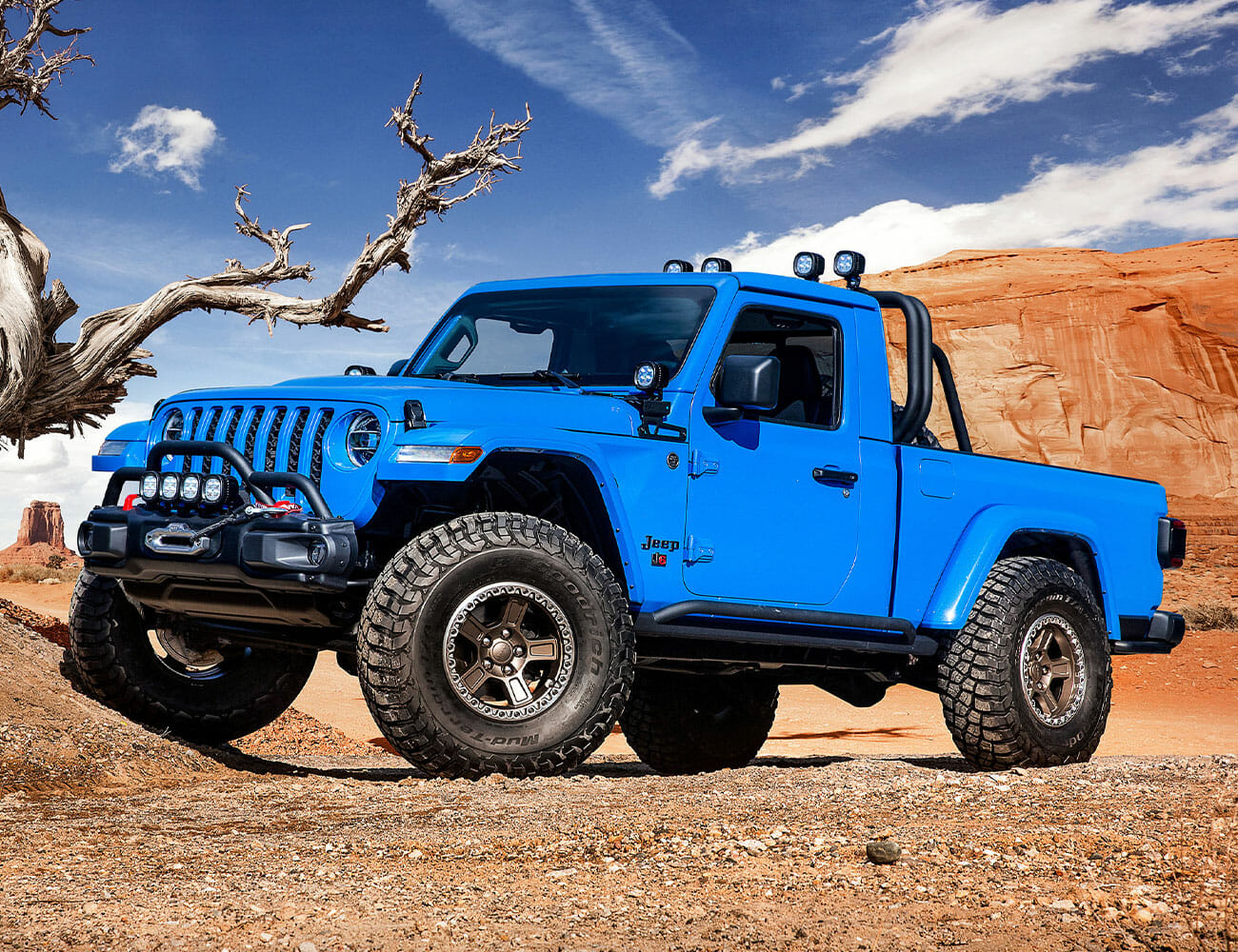
The undisputed king of the show, what a two-door Gladiator might look like, and easily the best-looking of the bunch, the J6 looked like a bright blue matchbox truck come to life, and therefore had the intended effect on the Jeep die-hards, some of whom actually stamped and yelled, “I want it! You have to build it! Build it now!” during the vehicle presentation.

The vehicle’s proportions, including the custom light rack and tire carrier mounted in the bed, work beautifully in part because Jeep fitted the J6 with a six-foot bed, a full foot more than the Gladiator bed, yet the concept is 17.1 inches shorter than the Gladiator. It rides just as fun as it looks thanks to the 118.4-inch wheelbase of the Wrangler Rubicon chassis that underpins it.

There’s a custom stinger bar on the bumper and a removable hardtop roof and 17-inch beadlock wheels with 37-inch tires. The bright blue paint is lifted from the ‘78 Jeep Honcho, and there’s a prototype color-matched spray-in bedliner that Jeep seems keen on developing as an option, assuming it wants to go through the process of properly matching enough colors and working it into the vehicle-finishing process.

The J6 hits every mark to be hit, yet it’s not the best prototype of the show, at least according to this reckoning. And while it’s suspect to fault a concept vehicle for ignoring certain realities, a production version of the J6 is as close to a sports car as you’re going to come in Moab: a big, beautiful toy to be envied for the lifestyle it represents. Even if they make one — and they’ll probably make one — even most Wrangler buyers won’t be able to muster the rationalization.

JT Scrambler

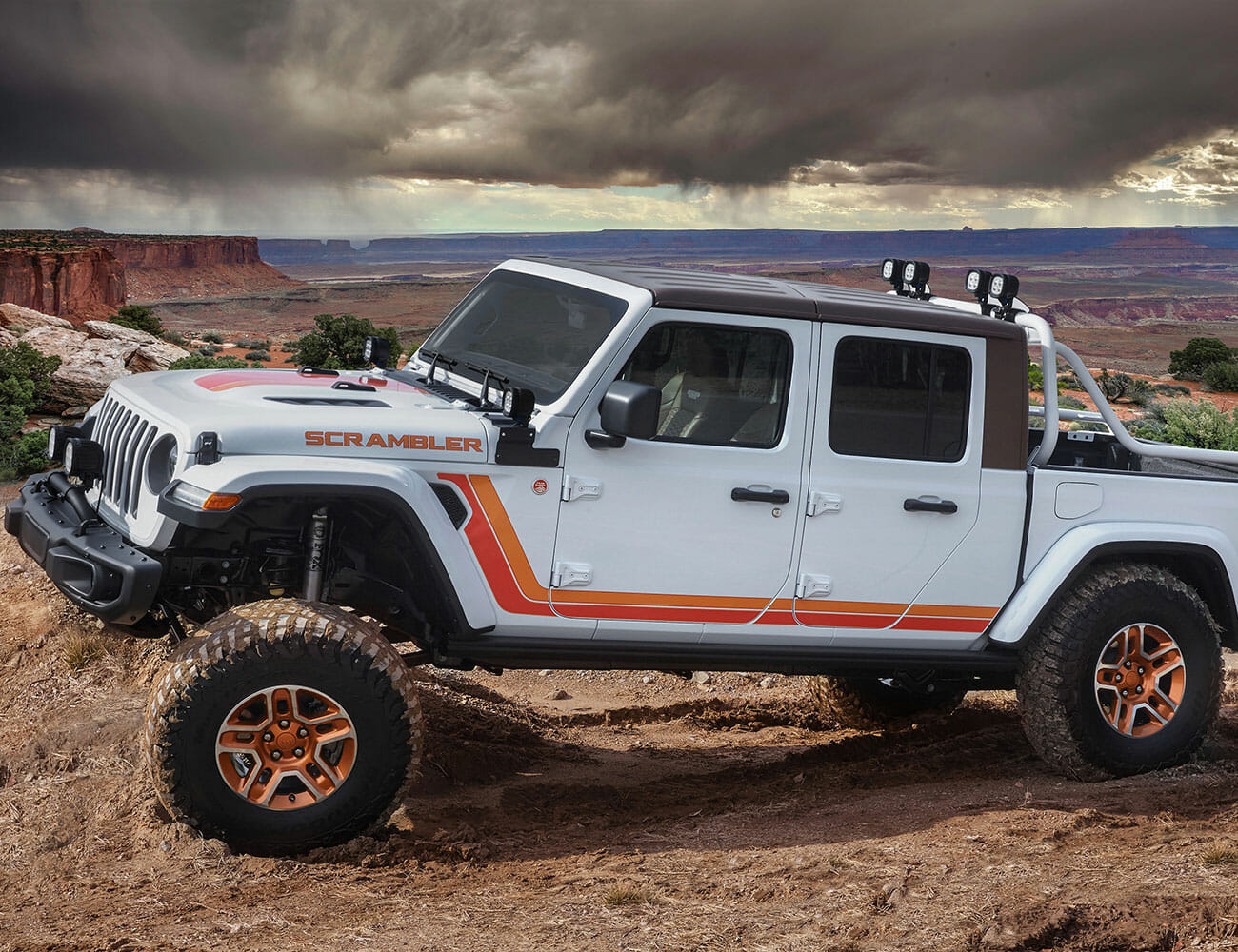
Simple subtraction involving my age will invariable suggest bias when I declare the 80s-decked JT Scrambler the best of Easter Safari, but fashion is cyclical and the fact remains that orange and red stripes and a brown top on a white truck with 17-inch metallic bronze wheels simply appears good and right and proper at the current moment.

Chances are exceedingly small that anyone needs more capability than found on the stock Gladiator, but just in case Jeep Performance Parts gave the JT Scrambler a two-inch lift — which helps fit the 37-inch tires — plus rock rails, and a cat-back exhaust system and a cold-air intake.

There is also a beautiful designed two-inch tubular steel light rack, painted white and mounted with four five-inch LEDs. There are more LEDs, at the A-pillars and brush guards, the name “Scrambler” along the hood, and a “Trail Rated” badge delete to make room for the stripes.

Apart from the rolling accessories rig that is the Gladiator Gravity, the JT Scrambler is the least “concept” of the group, and that’s why it’s the best: it has reasonable but effective performance upgrades, is comfortable and everyday usable, has a graphics package that seems easily deliverable — but surely throw in the retro Jeep script and badging from the Five-Quarter and J6 — and best of all, is essentially a vehicle that someone high enough up at Jeep could snap fingers and decide to offer the following month.

Or, better yet, a host of retro Gladiator packages.

2020 Mercedes-AMG GT R Pro Review: Track Weapon Extraordinaire, Rain or Shine

The Mercedes-AMG GT R is a 577-horsepower, asphalt-devouring beast that comes standard with a yellow knob that lets you dial in how much you want to drift. It’s practically daring you to dance up to its limits. Oblige, and you’ll find the GT R is pretty much the car version of that one kid in high school who was enviably good at everything he tried.

But the wizards of Affalterbach decided the twin-turbo 4.0-liter V-8 coupe could be faster—imbued with even more agile handling, more stiffness, and more downforce. The result of chasing all that “more” is the 2020 Mercedes-AMG GT R Pro, a high-performance sled that should strike a little fear into the hearts of Porsche 911 GT3 RS drivers as it runs up on them from behind.

When AMG brought your humble author and a group of other journalists to the Hockenheimring Formula 1 circuit—home of the German Grand Prix—to test the GT R Pro, we were ecstatic. Until the 40-degree temperatures and constant rain arrived. Then we were trepidatious. However, the inclement weather actually helped prove that the apex of AMG performance is not just astoundingly capable, but also approachable.

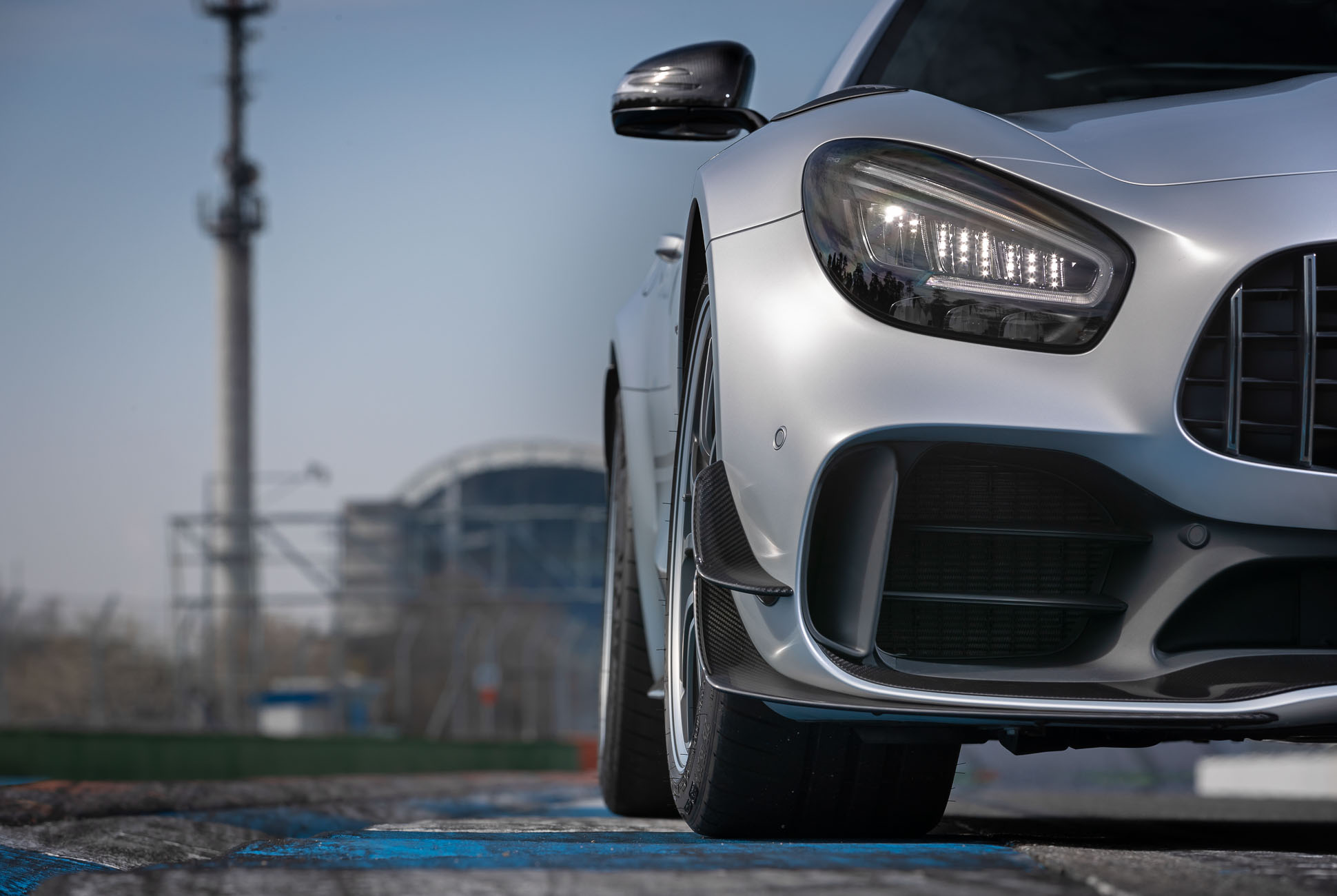
The Good: AMG left the GT R’s prodigious powerplant alone, instead porting over learnings from the AMG GT3 and GT4 race cars to give the GT R Pro superior handling and aerodynamics. (Don’t fret—it’s not lacking in power in the slightest.) A new coil-over suspension offers adjustable compression, via an integrated dial on the damper. Additional ball joints supplant bushings to afford more precise cornering under high loads. Louvres and canards abound, harmoniously working with large diffusers and splitters to increase downforce by 200 pounds at 155 mph over the regular GT R. Plus, the thing just looks menacing, no?

Who It’s For: Anyone who already has several track day toys in the garage. Inherently, the increased stiffness and circuit-focused tweaks make will make this a rather unpleasant grand tourer or daily driver, so it should be reserved for motorsports-minded buyers who will adore the fact that AMG shaved about 20 pounds off the regular GT R by swapping in forged aluminum rims and Recaro buckets.

Watch Out For: U.S. pricing has yet to be announced, but assume the GT R Pro will come in well above $225,000. And there’ll be a limited amount of units allocated for the Americas, so serious buyers will have to act fast. A big bummer comes courtesy of government side-airbag rules, which precludes AMG from offering the U.S. the Track package that includes a rear rollover bar, fire extinguisher, four-point harness, and those lithe Recaro seats.

Alternatives: The most direct competitor is the Porsche 911 GT3 RS, which has two fewer cylinders and is down 77 horsepower, but absolutely shreds on track. The track-focused monster from Flacht clocks in around $210,000, a little under the GT R Pro is likely to. Prospective buyers also may cross-shop the newly-released $242,000 McLaren 600LT, Woking’s mid-mounted V-8, 592-horsepower coupe designed for circuit work. Or a Lamborghini Huracan Evo with all-wheel drive and four-wheel-steering, which gives you 631 horsepower from a naturally-aspirated V-10 for $261,000.

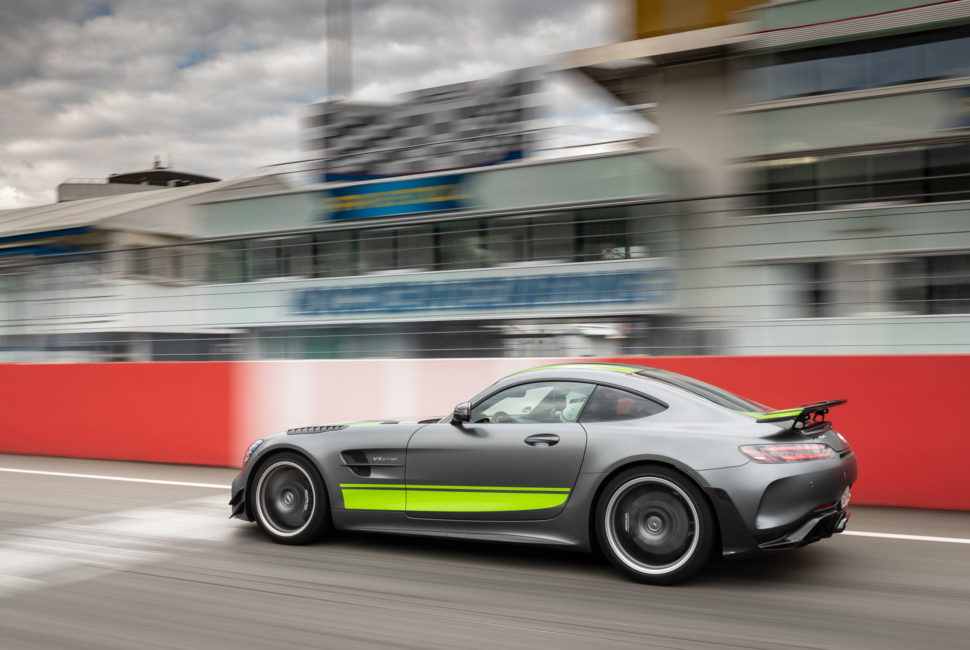
Review: While the photos here depict a dry and welcoming track, trust me: the Hockenheimring was soaked, with more than a few spots of standing water. Our lead instructor, five-time DTM champion driver Bernd Schneider, touched our tester’s Pirelli P Zero street tires (affixed in lieu of the standard Michelin Pilot Cup 2 semi-slicks due to the rain) and shook his head in disappointment.

“They won’t get warm,” he sighed. “Keep your traction control on, please.”

Five minutes later, I was hammering down the Parabolica curve watching my speed crest 145 miles an hour—while panicking, because there was virtually no visibility. Schneider’s tires were creating an enormous cloud of mist, and I peered hard to see where the braking zone began. A faint flicker of red blinked somewhere ahead in the gray fray, so I mashed the brakes and hoped for the best. The prow dove as the roaring V-8 barked and snarled through several downshifts and flung me into the four-point harness as the car shuddered down to a manageable speed for the next turn, a sharp right hairpin.

I waited until just after the apex to jump back on the throttle. The rear end immediately wagged in disapproval. Gingerly, I squeezed the power and tried to catch Schneider, some several hundred yards ahead at this point. Even with careful application of the go pedal, there was wheelspin at around 85 mph as the car shifted from second to third. But the car still hooked up and dug in every time; Schneider’s wet line provided enough grip to allow the car to bite and turn as intended. (Deviation from that path, however, was met with four-wheel slides.) Patience with the throttle—sometimes a five-second delay or longer was required—saw cleaner exits.

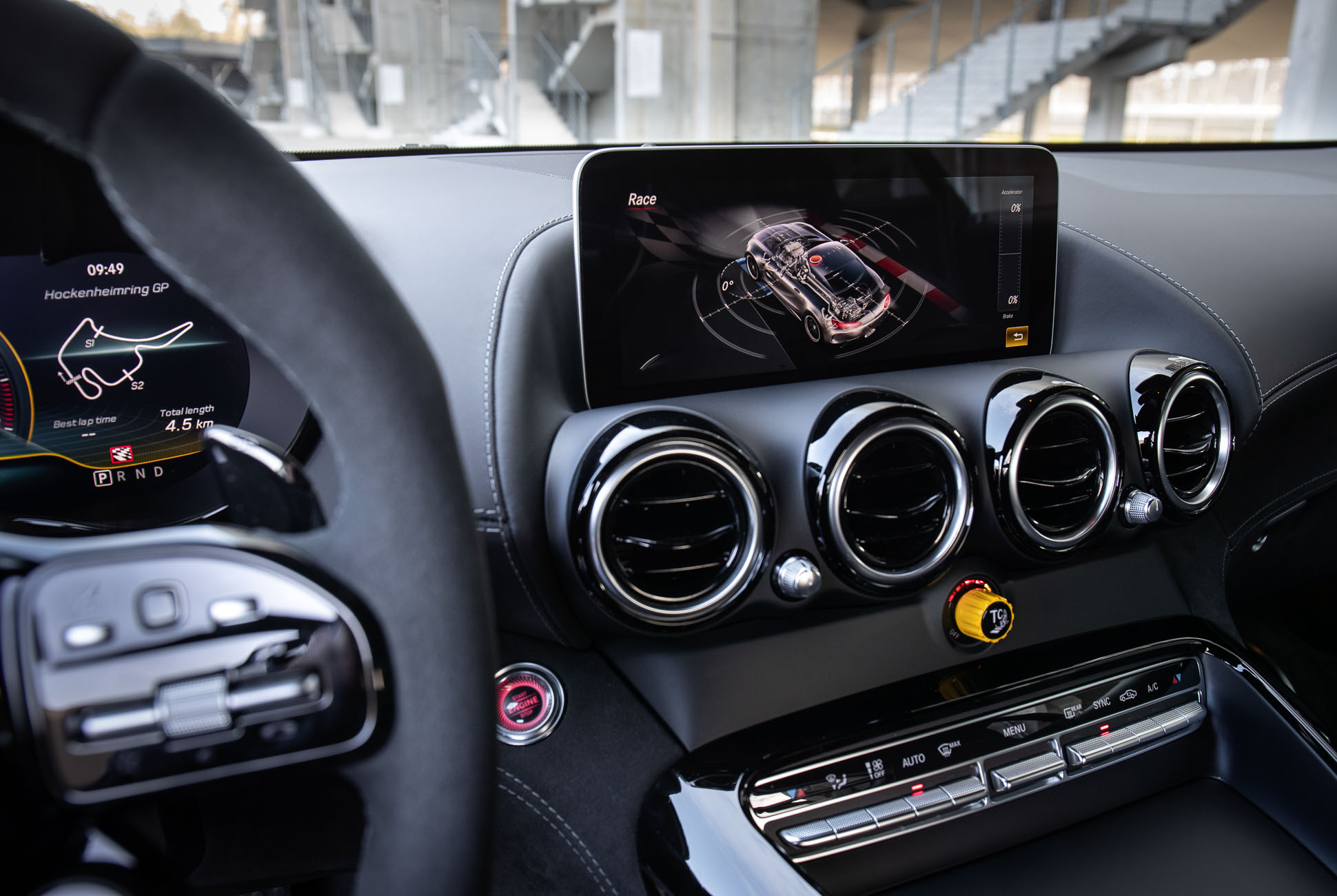
The GT R Pro’s driving modes include “Slippery,” though the instructors encouraged the use of “Sport Plus” in a testament to the car’s prowess in these horrible conditions. The introduction of the “AMG Dynamics” integrated dynamic control system to the GT line means that the ECU is monitoring things like yaw rate, wheel speed and spin, and steering input to figure out how much to intervene, if at all. The vehicle tries to anticipate future behavior based on those variables and plan accordingly. Should the GT R Pro sense itself over-rotating, it’ll trim the throttle back and provide some brake-based torque vectoring to right the car’s path. In ESP Sport, the car grants you a longer leash, but also bites back harder, applying as much as double the brake vectoring compared to normal ESP.

Add in the GT3 and GT4-inspired suspension bits (a carbon fiber shear panel, an adjustable carbon fiber front anti-roll bar, the adjustable coil-overs), and you’ve got a planted, predictable ride, even in the wet. All of that combines to inspire confidence. AMG GT3 driver Maro Engel shredded the Nurburgring Nordschleife in 7:04:63 in the GT R Pro—an impressive six seconds faster than the GT R. I couldn’t come close to experiencing that kind of performance in the cold and damp of that German spring morning, but it was clear that it was there for the taking in better weather.

Hopping in Schneider’s right seat for a few ride-along laps was illuminating. When he wanted to drive cleanly, the GT R Pro dutifully complied, agilely rotating around snaking corners without drama or understeer. But when Schneider wanted to attack a corner and flew in super-hot, the car was equally poised, seemingly laughing at the conditions as I laughed at how tidy Schneider was able to keep his driving.

The day at Hockenheim started with six AMG GT R Pros and finished with the same half-dozen cars unscathed—a testament to the car’s exemplary engineering. If it’s this good in the crud, I can’t imagine how much fun it must be in ideal conditions.

Verdict: Whether you’ve spent hundreds of hours turning thousands of laps or it’s your first time, the Mercedes-AMG GT R Pro will have you pushing your limits within minutes. It makes the edge so accessible, you find the car spurs you on to find the limit—yet makes sure you’re not exceeding it.

2020 Mercedes-AMG GT R Pro Specs

Price: Not yet announced
Powertrain: 4.0-liter twin-turbo V-8; seven-speed dual clutch automatic with manual shift mode; rear-wheel drive
Horsepower: 577
Torque: 516 lb-ft
0-60 MPH: 3.5 seconds
Top Speed: 198 mph

Mercedes-AMG hosted us and provided this product for review.

Read More Gear Patrol Reviews

Hot takes and in-depth reviews on noteworthy, relevant and interesting products. Read the Story
Note: Purchasing products through our links may earn us a portion of the sale, which supports our editorial team’s mission. Learn more here.

Roughchild Moto Is Giving Classic BMW Motorcycles a New Lease On Life

There are many reasons to love motorcycles, but two specific ones brought me into the fold of licensed riders: the sound and the style of classic bikes.

I started out riding new motorcycles with modern safety equipment that were perfect for easing into the world of riding, especially in the distracted driver-packed asphalt hellscape that is Los Angeles. But it didn’t take long for me to desire an even more direct connection with the machine: more noise, more gasoline aroma, a more involved riding experience. What I didn’t desire: the headaches that come with riding a classic, such as (but not limited to) physical and mental discomfort, mechanical failure, a comparative lack of safety, and the increased chances of theft.

Fortunately, there are ways to have your cake and eat it too when it comes to old bikes. Roughchild Moto is a company mission is to minimize the headaches associated with classic BMW motorcycles, while retaining the attractive qualities of those bikes. Or, to put it in their words: “We are dedicated to the passionate study and preservation of the world’s most respected motorcycles, optimizing their aesthetic appeal with a fresh perspective and modern techniques.”

Robert Sabel and his team got Roughchild off the ground in 2012, focusing on careful restoration and thoughtful optimization of the classic BMW “R-Series” motorcycles produced from 1970 to 1995.

“I prefer the client explains what they want to achieve and let us source the donor as although they seem similar,” Sabel said. “All the airheads from 1970-1995 have different qualities; it’s much more efficient to modify the bike with correct core qualities.”

Once a donor is in the door od their downtown Los Angeles facility, it’s up to the client to lay out their ideas. Roughchild Moto prioritizes safety, reliability, and—of course—a high degree of aesthetic appeal in its builds; beyond that, it’s up to the owner to say what the bike will become. All the hardware used on the bikes is top of the line, from Brembo brakes to Motogadget speedometers. All upgrades are up to OEM standards, or improve upon the original high-quality German engineering; while they were stout and impressive machines in their day, the shop does an excellent job bringing them into the modern era without losing the details that made the R-Series bikes so enjoyable in the first place. Roughchild doesn’t cut corners, even if you ask them to.

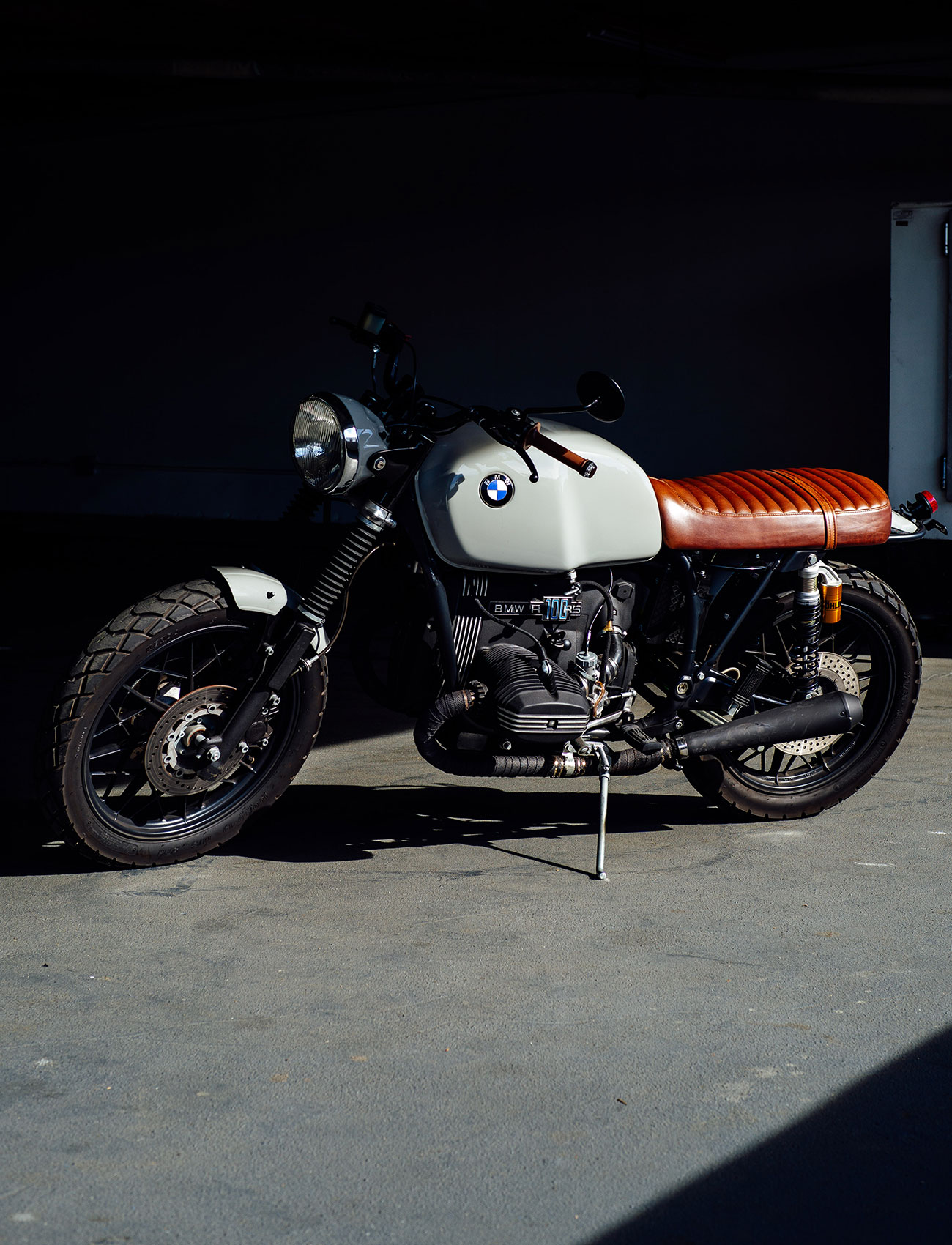
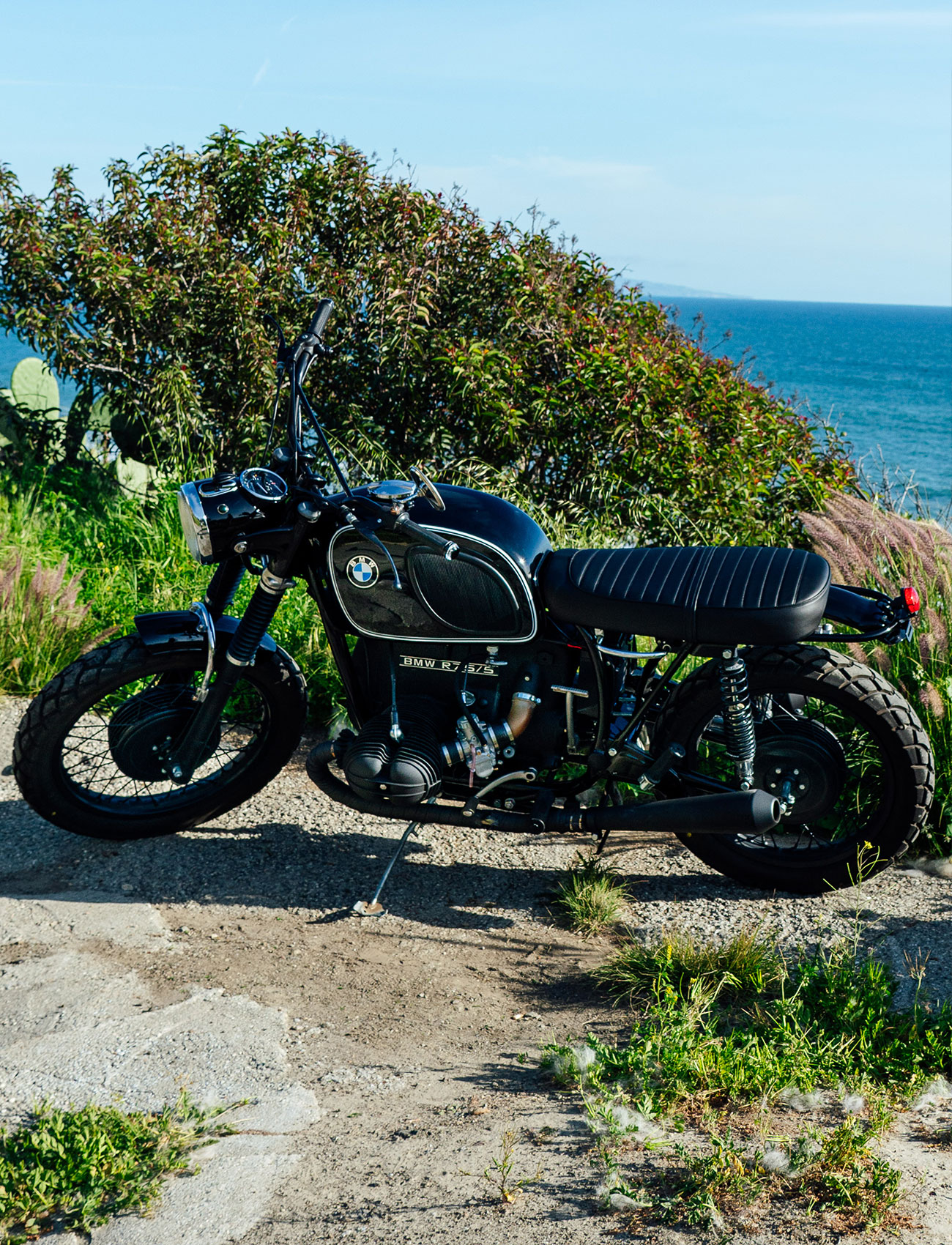
The first bike of theirs I swung a leg over was a sexy, blacked-out extended-wheelbase 1973 R75/5 that had received a light scrambler treatment. I found it to be quite the stable bike, offering a surprisingly smooth ride on LA’s bumpy highways. There certainly was no lack of go with the damn thing either. The 750cc engine tucked inside a gloss black powder-coated frame had been rebuilt to factory specs, and featured machined heads with new valves, honed cylinders, and new piston rings. Brand-new Mikuni carbs and a reverse cone exhaust setup gave it a soul-stirring sound; the classic boxer thrum you’d expect from a BMW is there, with the noise escalating into a glorious basso profundo racket as the throttle advances. It’s a bike that urges you to go faster—and farther —than you’d expect.

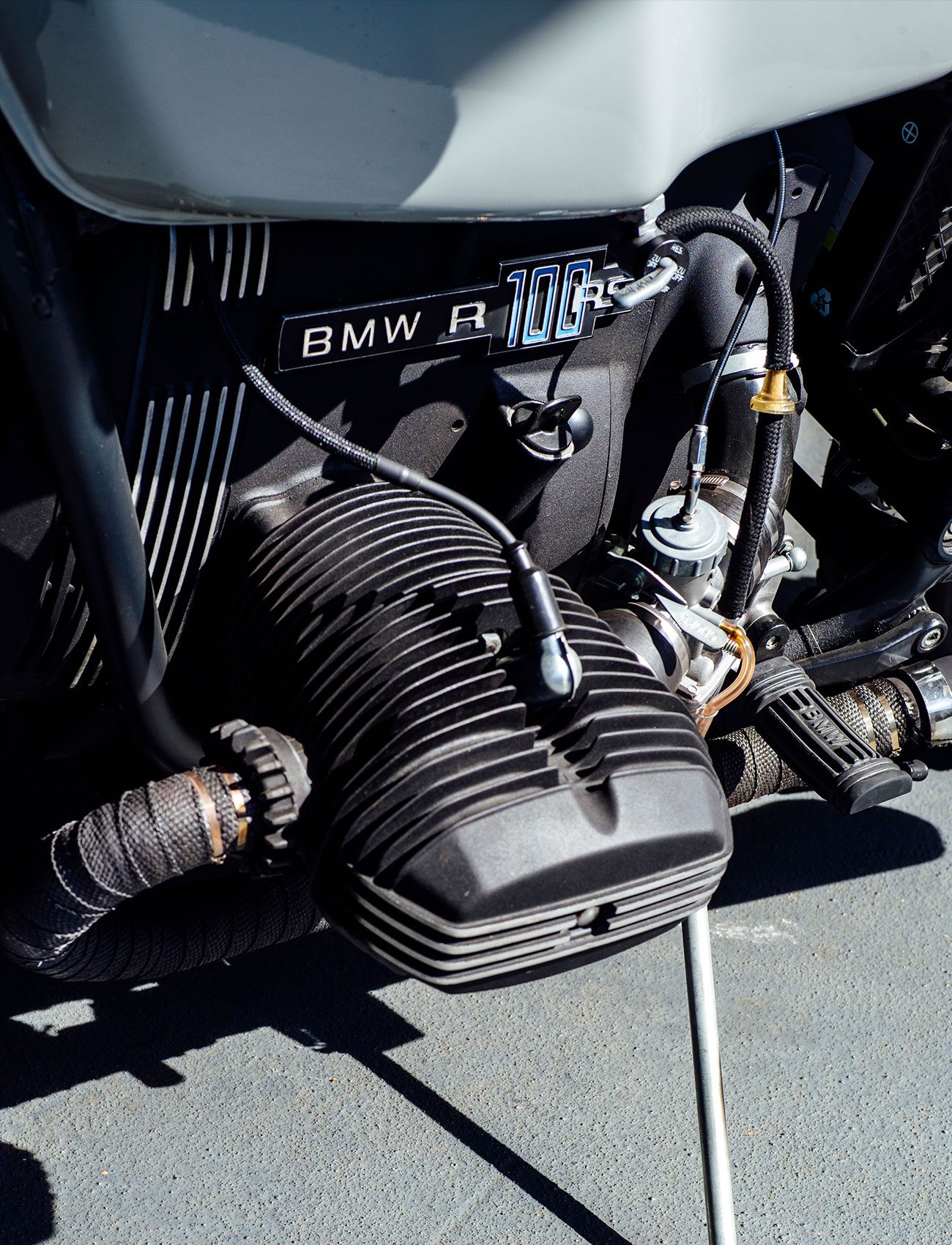
As much as I liked the blacked-out R75/5, the second bike I rode stole my heart.  The R100 RS was the high-performance air-cooled machine of my dreams. Producing 70 horsepower in stock form and with reverse cone exhaust setup making an enjoyable racket, this bike offered up a riding experience I’d be hard-pressed to forget.

The Roughchild R100RS pushed me to stay on top of it, methodically tackling curve after curvy road. The lines of communication between me and the bike weren’t as crystal-clear as with othe vehicles; gear changes and throttle use had to be well-planned, or else the bike would wind up doing something very different than I wanted. The machine doesn’t do the bulk of the work for your, like a new bike does; you really have to ride it. It leaves you sore in places you didn’t know you could be sore, but damn, does it feel worth it.

There were other benefits to this beautiful bike, as well. When I parked the R100RS each night, I couldn’t help but stand and stare at the gas tank; it was painted “Fashion Grey,” a Porsche color from the 1950s commonly found on the 356, and, when paired with the brown leather seat, iconic gold Ohlins shocks and shiny silver Brembos, made for an extremely aesthetically-pleasing package. (Not surprisingly, the owner of this particular bike is also into air-cooled Porsches.)

Roughchild’s restorations start at $15,000 for a finished bike (including the donor vehicle) and top out around $20,000, which isn’t bad for a rebuilt and upgraded piece of 20th Century motorcycle magic that happens to come with a 12-month warranty. Quality doesn’t come cheap, especially when it comes to the restoration and improvement of iconic machinery. That being said, there’s a ton of subjective value in these builds; the experience of firing one up and ripping away in first gear is worth the price of admission alone. Add to that the unquestionable visual appeal, and anyone who buys a Roughchild Moto machine likely has a lifetime of satisfaction to look forward to.

The 7 Best Car Infotainment Systems You Can Buy

If you’re shopping for a premium car, you want the best technology systems and interfaces available, yet manufacturer features infotainment systems geared toward different drivers. This guide explores the seven best premium infotainment systems currently on the market, including history of the technology, future advances and more.

Prefer to skip directly to the picks? Click here.

Introduction

Infotainment — a clunky but now industry-standard portmanteau of “information” and “entertainment” is the umbrella term describing the main technological interface of a car. This is where all core electronic functions, like stereo, navigation, HVAC, etc., are controlled. Though simpler infotainment systems are available in many vehicles at all price points, they are fixtures in premium cars that serve as the vehicle’s welcome mat. They offer bright, dynamic visual centers that perk up when you climb aboard, delivering elegant swooshes of sound and graphics and glittering logos before depositing you on the system’s home screen.

Thanks to advances in user interfaces, computational power and display tech, infotainment systems have become exceptional across the board, but this is our guide to the best of the best — the rock stars of the premium infotainment world.

The Best Infotainment Systems

Best Organized: Acura ODMD 2.0
Best Controls: Audi MMI and Virtual Cockpit
Most Innovative: BMW iDrive
Best Design: Jaguar Land Rover Touch Pro Duo
Best Content: Lexus Enform
Best Integration: Mercedes-Benz COMAND
Least Pretentious: Porsche PCM

About Our Expert
Eric Adams is a writer, editor and photographer based in eastern Pennsylvania. His subjects include automotive, travel, technology, gear, health and fitness, aviation, general science and astronomy. In addition to Gear Patrol, he has edited and/or written for Men’s Health, Popular Science, Wired and many other publications. He is on Instagram as @ericadams321.

History of the Infotainment System

In-car audio, navigation and vehicle-control centers have come a long way in just the last decade. At around the turn of the 21st century, onboard information systems in cars were bland, uninspired LCD interfaces that were limited as much by the quality of the display hardware as they were by the division of all the systems it aimed to control. So in most cases, you had only rudimentary graphics, little color and not much to control outside of primitive, CD-based navigation and audio systems. But throughout the Aughts, vehicle systems grew more integrated, and the interfaces used to access them more advanced.

Mind you, dashboard interfaces have always lagged behind other consumer electronics by several years. Smartphones — the gold standard for display systems and fully integrated technology — have far shorter development cycles and product lifespans, with new models coming out annually. Those devices are generally limited to one to two years of moderate use. Systems designed for automotive use, on the other hand, take several years just to design and develop for a single car — especially when multiple vehicle systems are involved — and they have to perform to higher standards of durability and longevity. Cars need to withstand prolonged exposure to heat and cold, for instance, and they have to last 10 years or more.
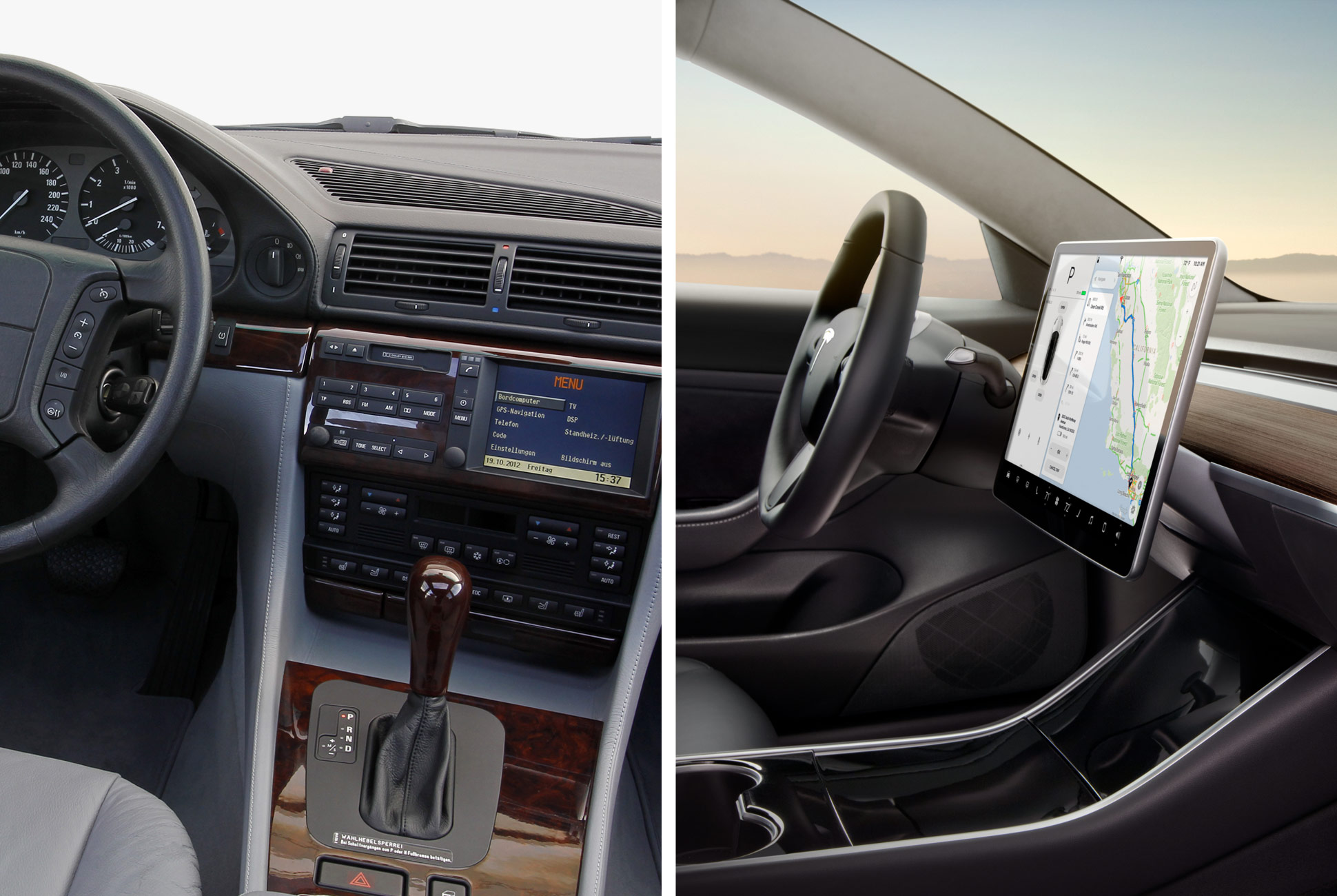
They also have to be exceptionally reliable and free of any and all glitches, which in a car can spell disaster. (“Can’t access your air conditioner? Too bad!” is not an option.) For all of these reasons, infotainment systems are now very nearly military-grade technologies. But as those systems have achieved such performance, they’ve also brought numerous new capabilities along with them. In today’s systems, car owners can with a few taps on the screen make calls, search destinations, access vehicle cameras for easier parking or off-roading, control seat massagers, analyze track-racing performance, adjust suspension settings, dial-in audio performance and many other things. The infotainment center is increasingly becoming the car’s do-everything hub. Look no further than Tesla for proof — all of its models have central displays that handle every vehicle function, in some cases with the only physical buttons present on the dash being those required by law, such as hazard lights.

Exciting Advances and the Future of Infotainment

We’re in the midst of a steady convergence of the automotive and computer industries. Though this is mostly manifested in electric cars and semi- and fully-autonomous vehicles now in development, it’s also present in the infotainment systems, which draw much inspiration — and brainpower — from those who’ve honed interfaces in the digital realm. That relationship will only grow more intense as the years go by, and as a result, in-car experiences will make immense technological leaps forward.

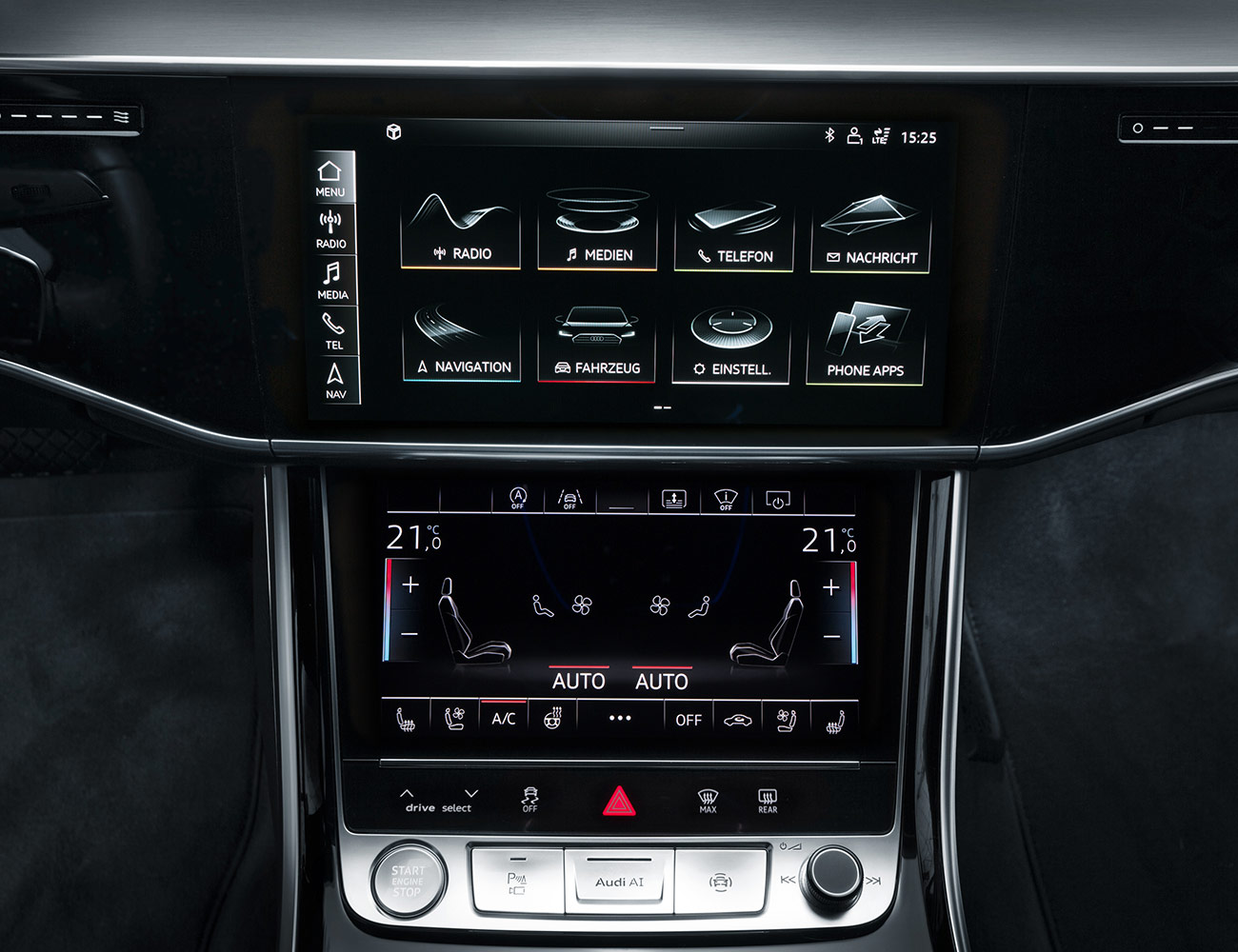
In the near future, there are two standout systems on the horizon. Audi’s newly redesigned A8, the flagship sedan coming to the U.S. later this year, will bring with it a new MMI (Audi-speak for “multimedia interface”) that features dual touchscreens with a subtle haptic feedback mechanism designed to ease interactions, natural-language voice control and a routing system for the navigation that analyzes previous drives to determine the best — or simply preferred — route to a destination. Meanwhile, Acura’s new RDX crossover will have a unique and intuitive new touchpad interface that replicates the geometry of the screen above it, so instead of using the pad to aim a cursor on the display, your finger placement will simply correspond directly with the “buttons” on the screen. If the target is on the bottom left of the screen, just aim your finger to the same area of the pad and press. It’s instant and doesn’t require hunting around for a cursor or lit-up tile.

Looking beyond these systems, we’re already seeing concept cars that have digital displays stretching the entire width of the vehicle — the better for providing information and entertainment in the age of self-driving cars — and there are even concepts that remove the actual windows completely, allowing movies and games to be displayed in their place, for an all-encompassing experience while the car chauffeurs you through traffic on the way to work.
But before all that comes along — autonomy is still decades from widespread adoption, after all — augmented reality will arrive in vehicles to give infotainment systems a major boost. BMW, for instance, is developing augmented-reality glasses that provide drivers — and motorcycle riders, in particular — with data streams right in their field of view. So instead of having to glance down to various displays on your dashboard or in your instrument cluster, the information will be right in front of you, perhaps even integrated into the landscape around you. Navigation instructions will appear on the road ahead of you; audio tracks in the sky above. Though it will start with glasses or goggles, augmented-reality displays will eventually migrate to the vehicle windows, in all directions.

How will you interact with these interfaces? Lots of ways — through voice commands and gesture controls, for starters. BMW’s 7-Series and 5-Series sedans already allow you to control your audio system and call-answering with specific hand and finger movements that it detects with cameras mounted above the dashboard. What’s to come after all this? Mind control, maybe?

Ultimately, it’s quite possible that even the infotainment head unit will go the way of the 8-track, replaced completely by virtual displays.

The Current State of Infotainment

Until then, though, there is much to learn about the latest and greatest infotainment technologies that you can opt for right now. In the descriptions below, note that there are variations within each manufacturer’s lineups. The top-end models — the Audi A8 sedan, the Mercedes S-Class — tend to have the most features, of course, but because all the cars are on different production cycles within each company, they may leapfrog each other in capabilities in order to stay the most current. So at any given time, an entry-level model, for instance, may feel better equipped and more modern than even the top-end flagships, simply because its release date is more recent.

Also, packages vary even within individual models, with some capabilities coming standard (backup cameras, say) while other enhancements (head-up displays) are optional. Lastly, and perhaps most importantly, because each infotainment packages can vary even within a manufacturer’s lineup, pricing varies widely from system to system depending on what features you select and what car you purchase. Still, the below guide speaks to each system’s strengths.

The Best Infotainment Systems of 2018

Best Organized: Acura ODMD 2.0
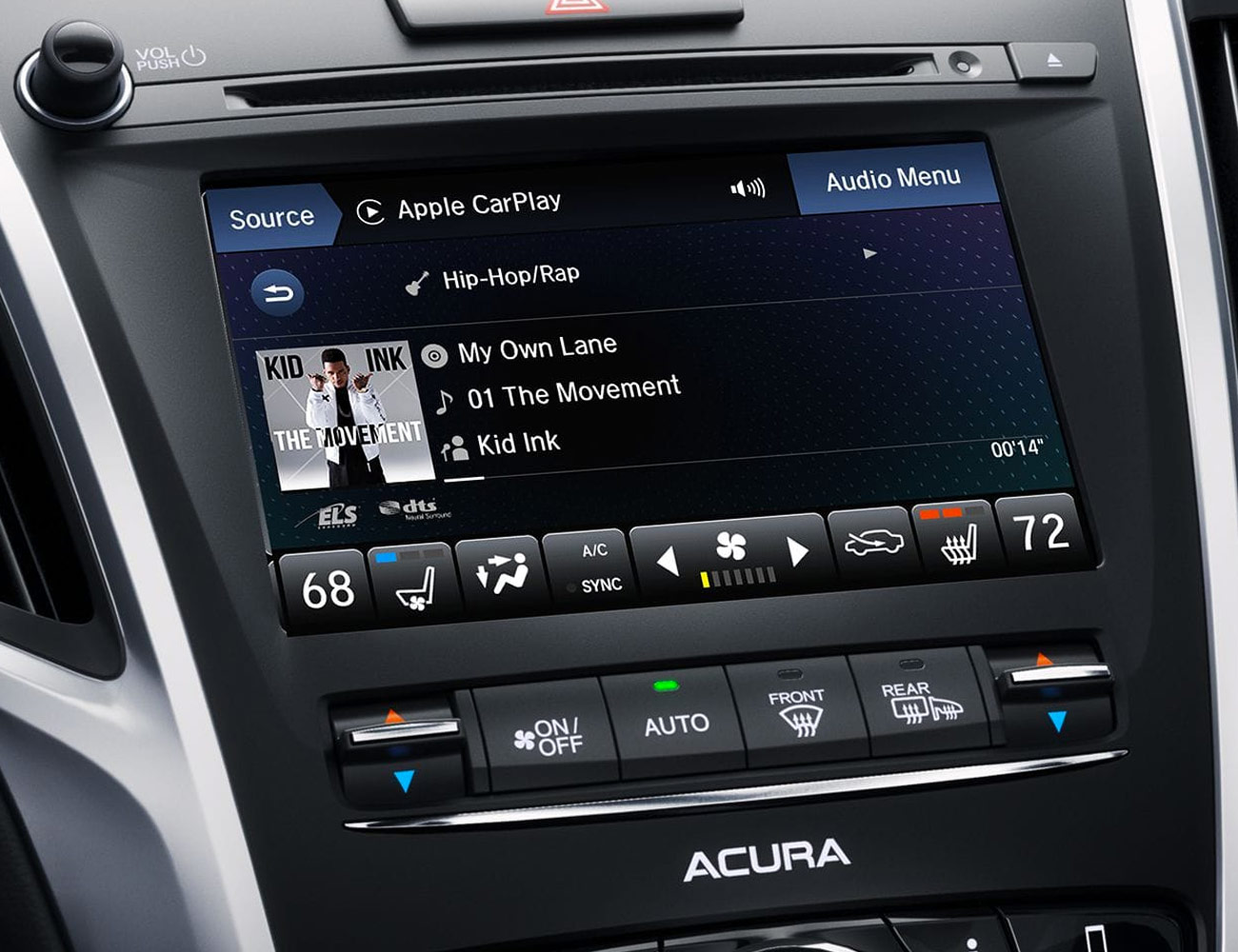
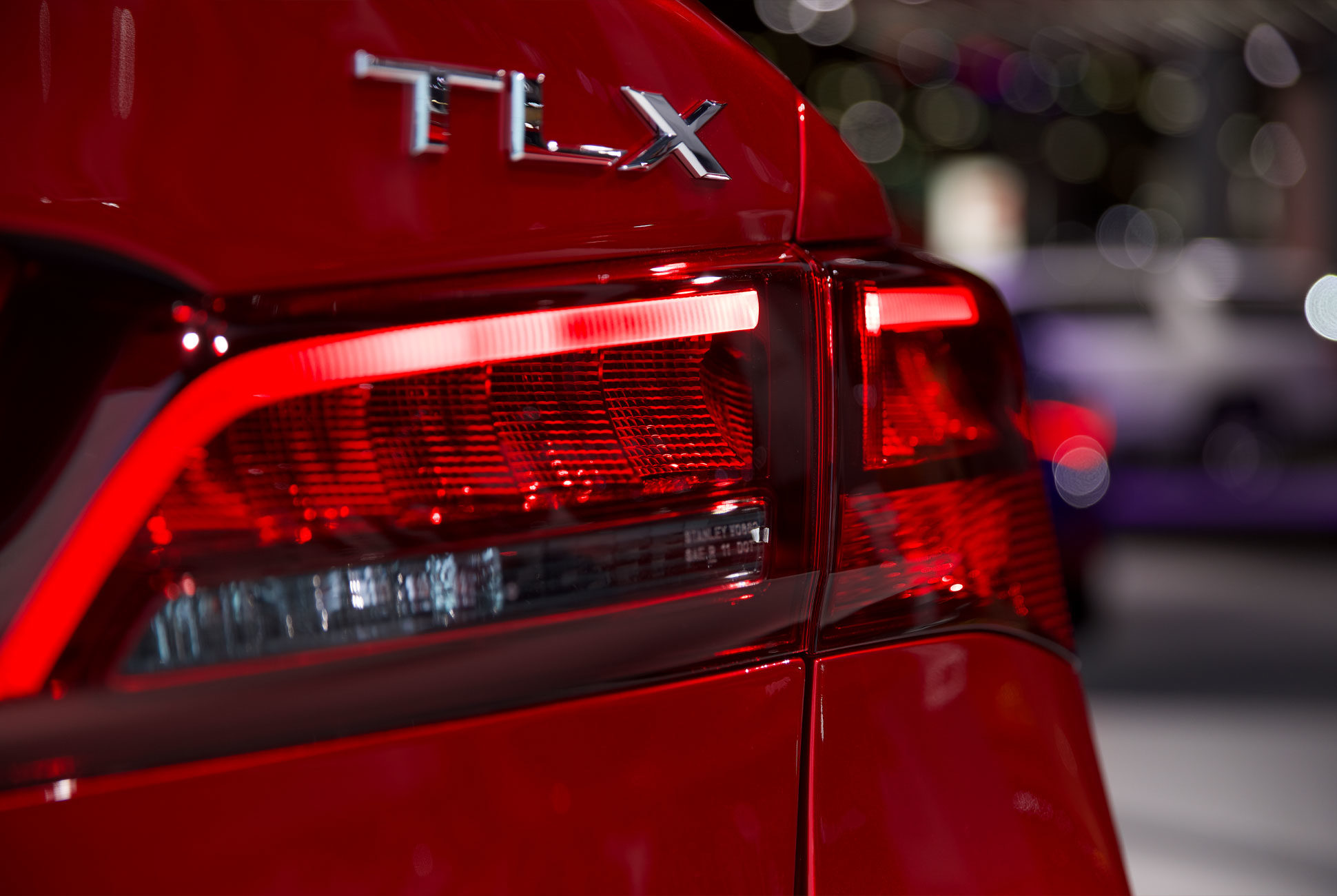
Acura is all about speeding up its interfaces these days — not just in terms of their responsiveness, but also in usability. It’s worked to prioritize information based on what features people use most, and making it easy to get where you want to go. The company’s recently updated On Demand Multi-Use Display 2.0 — appearing first in the TLX sedan and the MDX three-row SUV — includes faster processing and improved access to functions via improved menu structures.

What’s Good: Dual screens. In models that offer it — it’s standard on the TLX and MDX — the strategy places navigation, backup camera views, phone, and Apple CarPlay or Android Auto into the top screen, comfortably within the driver’s line of sight, and audio, climate controls on the lower touchscreen. This means there’s less clutter in each screen, and faster access once you get the hang of it — particularly thanks to the simplified menu system introduced in the current generation.

What to Watch Out For: Dual screens. (Yes, they’re good and bad.) I’ve driven many Acuras with the dual screen setup, but I still find my hand hovering indecisively for a beat while I work to remember which screen does what. Actual owners will quickly get over this, but newcomers to the car and guests might find it befuddling at first.

Design and Interface: The systems are controlled via touchscreen interfaces, and the dual-screen arrangement allows for continued access to climate controls even when connected to Apple CarPlay or Android Auto, which in other vehicles often requires flipping back and forth between the smartphone interface and the native interface to make changes elsewhere. Overall, the look of the system is sleek and modern, yet efficient and clear when it needs to be.

Special Features: The new version features clearer capacitive displays as well as faster response times from the upgraded software — up to 30 percent quicker. This means you don’t have to endure those extra milliseconds of hang time after you press the button, which can, in reality, be quite frustrating. The systems also support Apple CarPlay and Android Auto, through the top screen.

Verdict: Acura’s system used to look like a bad Powerpoint presentation, but in recent years it has modernized to the point of being vastly more functional and appealing. ODMD 2.0 has been a breath of fresh air, and the upgrades coming out in the new RDX promise to jack up its usability even higher.

Best Controls: Audi MMI and Virtual Cockpit
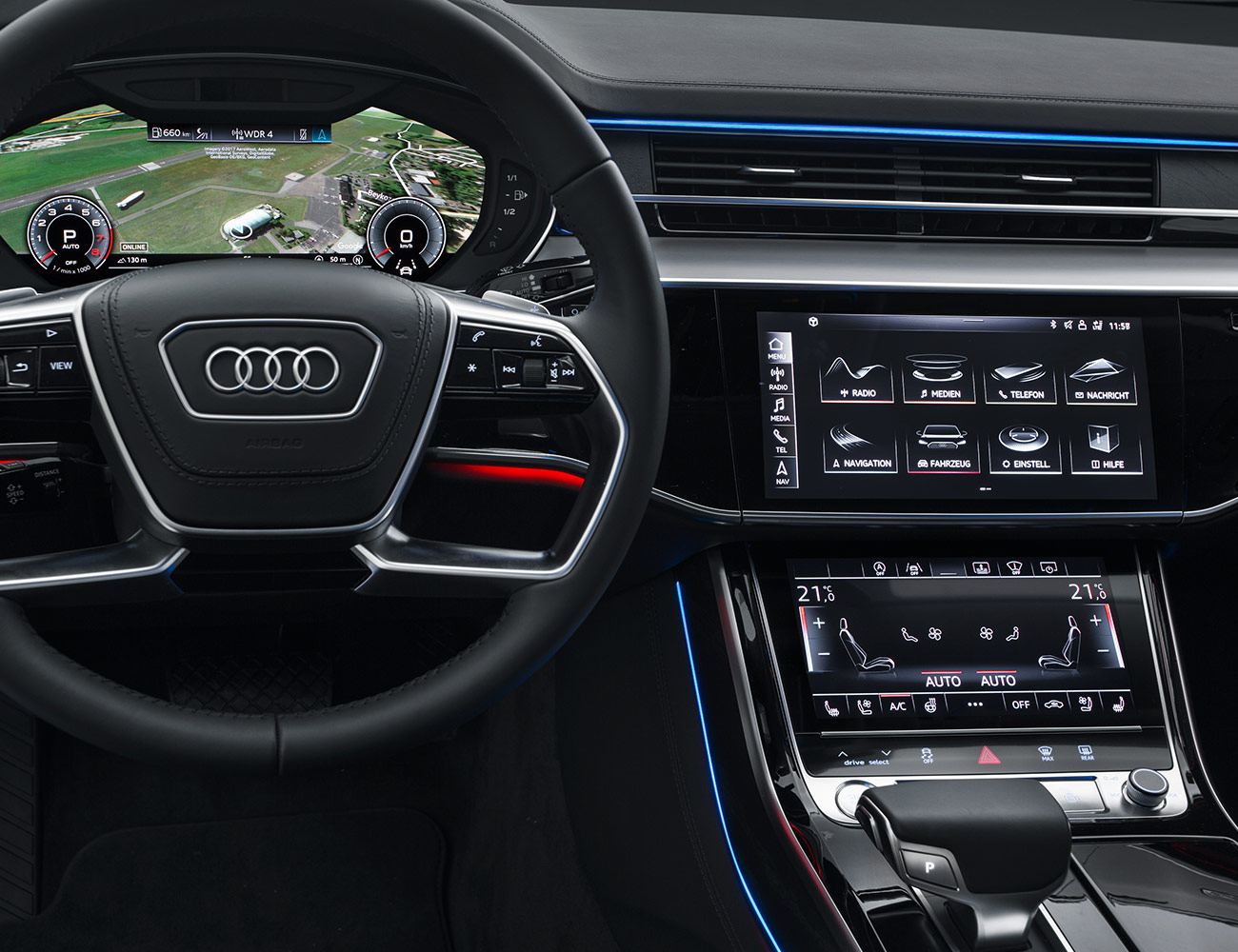
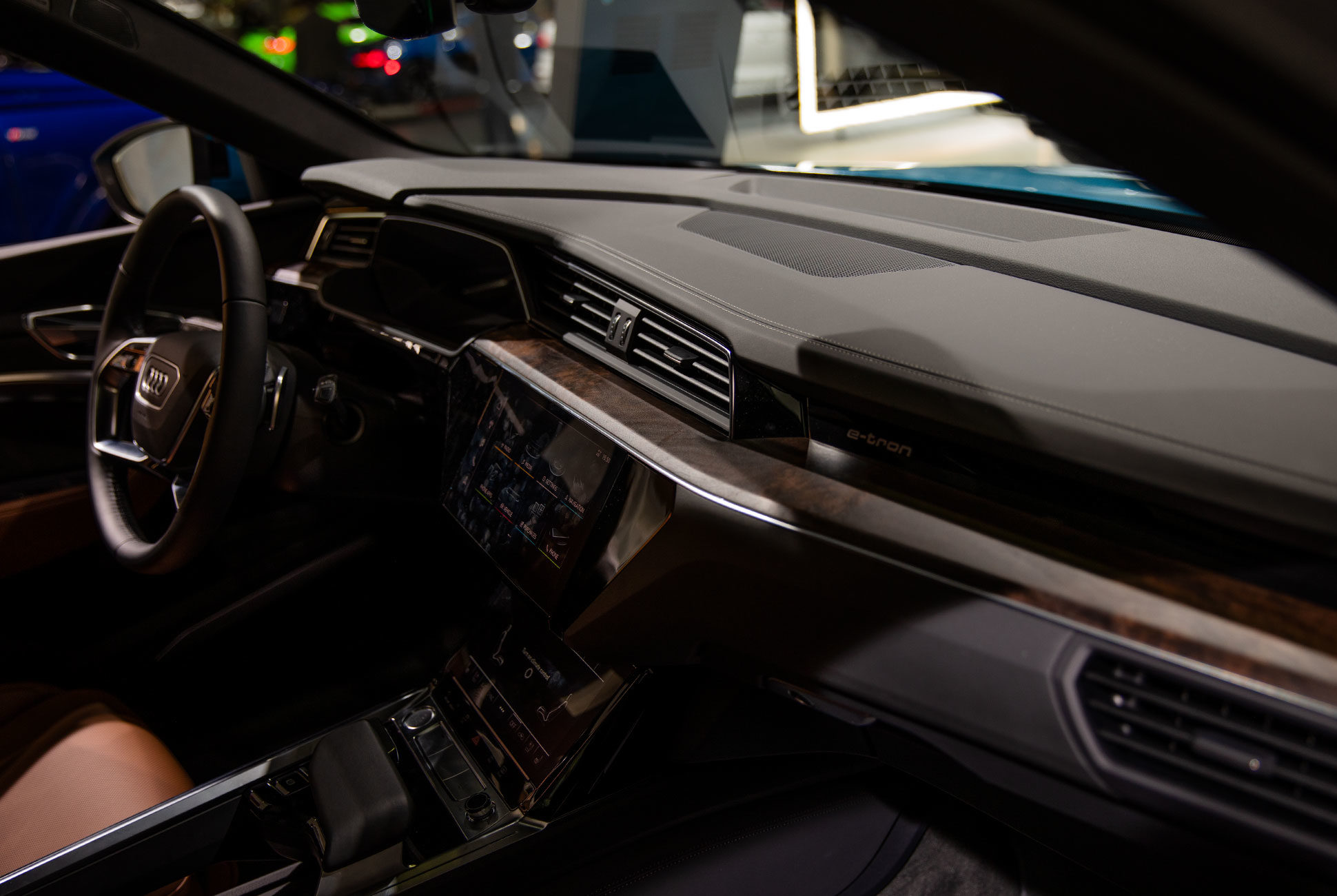
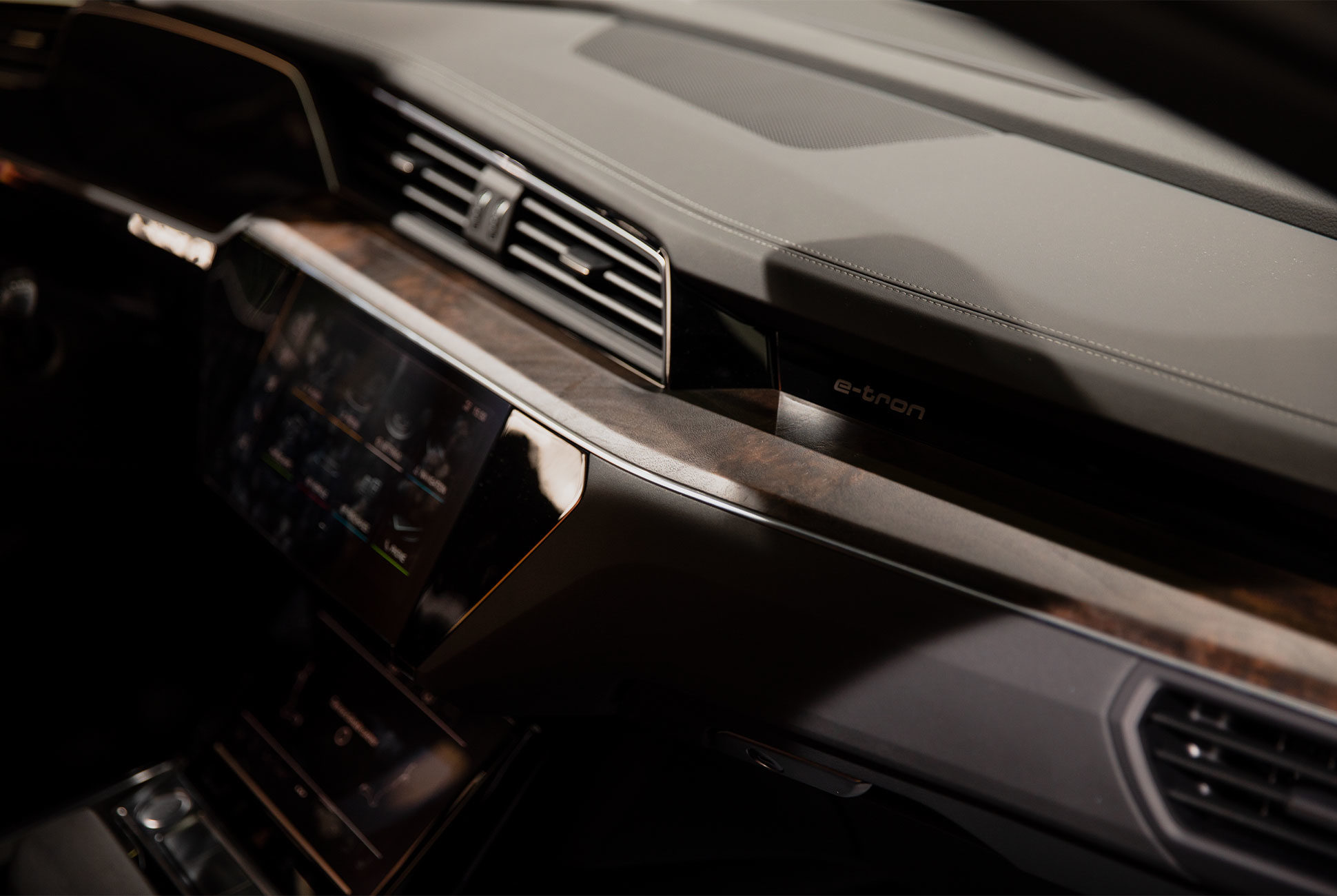
Audi’s MMI interface is one of the best in the business, featuring smartly designed touchpads and input dials, super-smooth Google-based mapping and a virtual cockpit that allows for better-than-average customization of the layout and appearance in the display directly in front of the driver.

What’s Good: Google-based 3D mapping provides excellent, familiar context when navigating new environments, particularly in cities. Its touchpads are also very smartly designed with, in some cases (depending on the specific model’s available real estate and the vehicle’s place in the Audi hierarchy) dedicated buttons for numerals. But all provide handwriting recognition for speedier inputs of destination or favorites info.

What to Watch Out For: Voice commands can be terrific aids, but only if you remember the precise way your system likes to hear its instructions. Audi’s systems include a list of 30 or so commands you can enter vocally, but you’ll only likely use a few with any real frequency. Keeping the list handy in the car for the first few months of ownership will help you internalize more of the commands.

Design and Interface: As with all manufacturers, the systems vary from car to car but typically retain the core functionalities. When combined with Audi’s new Virtual Cockpit display, the dashboard becomes IMAX-worthy in terms of beauty and is functionally in-depth.

Special Features: If you opt for the connectivity feature, the car will provide hotspot functionality as well as local traffic and weather, news and other features. The hotspot is particularly useful while traveling, as sometimes it pulls in a better signal than your own smartphone can thanks to its more robust antenna system.

Verdict: Audi’s current MMI is a notably excellent system, particularly the gorgeous Virtual Cockpit display when in map mode. There, the Google Earth imagery helps orient you to your surroundings and lets you keep better tabs on your route. This system, though, is now several years old, and the version rolling out with the new A8 later this year will hopefully revitalize it.

Most Innovative: BMW iDrive
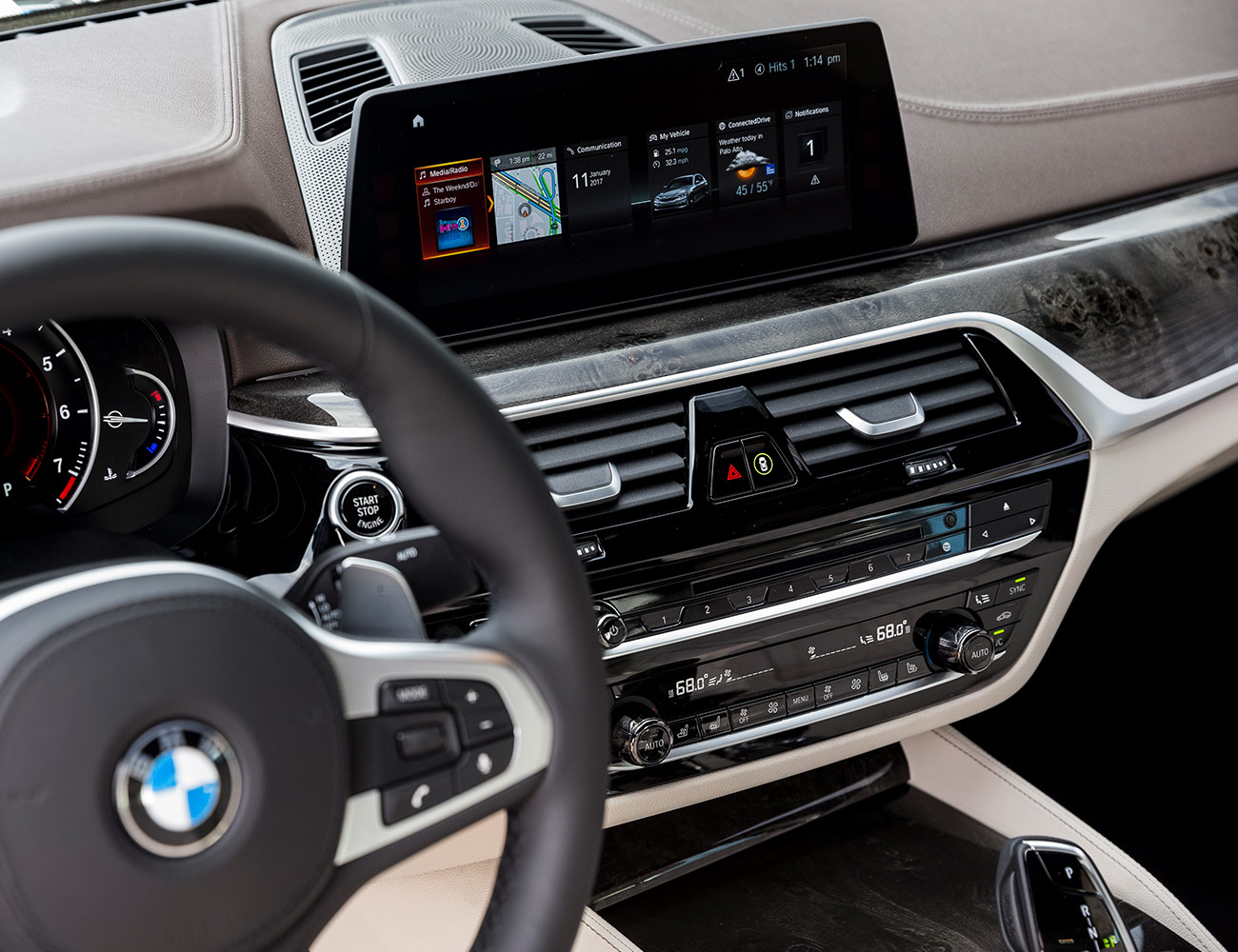
BMW’s iDrive system has evolved into the smooth, sophisticated interface everyone expects from BMW. Its combo joystick/dial allows crisp navigation of the menus, while voice controls, its new gesture controls — first appearing in the 5-Series and 7-Series — and a modest smattering of physical buttons help plug the gaps in its use. Most importantly, its overall organization and design feels like it’s from a company that has learned a thing or two along the way.

What’s Good: The big knob: a straightforward single-point interface with the system, which can be easily augmented via alternative buttons and gestures. It remains the signature feature of the system, and over the years BMW has honed its look, feel, and action pretty much to perfection. The buttons surrounding the knob offer familiar shortcuts — home, back, etc. — and everything works briskly and efficiently to get you where you want to be with little fuss.

What to Watch Out For: Interface overload. When you have the option of talking, touching, pressing and gesticulating to control it, a system designed to simplify interactions can actually end up cluttering your console. That’s not such a big deal with owners, but for those new to the car, it can quickly become overwhelming.

Design and Interface: The newest versions feature larger head-up displays in front of the driver, and the company has also recently added — first in the X3 crossover — touchscreens with moveable tiles to enhance customization. The graphics are also crisp and modern, with nicely legible text and icons, helping minimize distraction during use. The system’s voice control also incorporates natural language comprehension, so you can just speak to it casually without having to constantly bone up on a bunch of pre-scripted commands and instructions.

Special Features: Obviously, the gesture control system is the big trick here. With this, users can execute a variety of discrete motions with their hands to adjust the audio volume (a slowly spinning finger), answer or reject calls (a swiping motion), or execute customizable commands — a two-finger jab can be programmed to take you home, mute the volume, etc. At first, it feels kind of silly, then it feels like the future.

Verdict: iDrive has consistently been among the highest quality infotainment systems out there. It got off to a rocky start years ago and became something of a whipping-boy for haters thanks to its initial awkwardness, but it got over that period quickly and remains a solid, intuitive system. The fact is, sometimes with dynamic, high-end infotainment controls, users struggle with basic controllability. iDrive simply isn’t that. You get in, and you get it.

Best Design: Jaguar Land Rover Touch Pro Duo
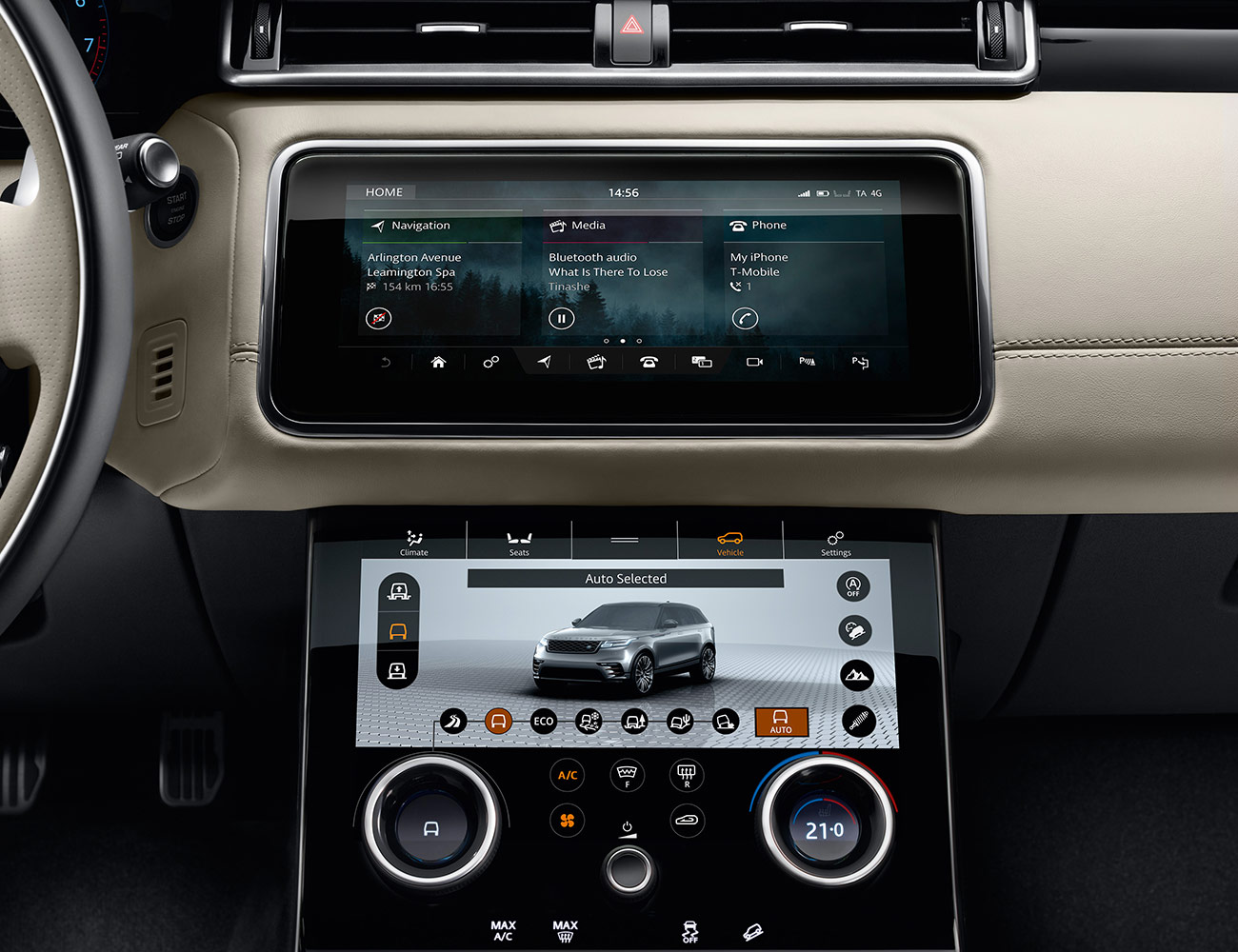
Jaguar/Land Rover’s newest infotainment system appears in the Range Rover, Range Rover Velar, and Range Rover Sport, as well as the new I-Pace electric SUV. But the system really owes its success to its visual kinship with the Velar, the high-design SUV ride that’s both streamlined and minimalist yet still a fully capable Range Rover. Similarly, the Touch Pro Duo system, which debuted with the Velar, is both gorgeous — even when turned off — and simply an excellent interface for its vehicles.

What’s Good: Land Rovers and Jags are together cut from a different cloth, with a uniquely British flair. The infotainment system reflects that with its clarity, ease of use, and visual appeal. In the Velar, two high-def 10-inch touchscreens anchor the system, with the upper screen divided into three panels — media, navigation, and phone — and the lower screen focused on vehicle systems, including climate control and the off-road-oriented Terrain Response system. This lower panel operates without the dynamic flash of the upper screen, meaning it’s a steady presence and always ready for direct, immediate action.

What to Watch Out For: Systems that rely on vast expanses of glass tend to draw a lot of smudges and fingerprints when in use — and they can also generate a good bit of glare. Resistance to these hazards is embedded in the glass coatings — and it indeed seemed glare-free even in direct light — but the smudging remains a minor issue. Keep a microfiber cloth handy and give it a little polish every now and then. Also, capacitive-touch controls, such as those found in this system, can be prone to accidental activation. But this didn’t emerge as a real problem during testing.

Design and Interface: Of all the touch-oriented systems, this one has perhaps the most familiar and smartphone/tablet-like interface. It looks and behaves like its handheld counterparts, allowing easy swiping left or right to change screens and pinch-to-zoom while scanning maps. It also possesses an exceptionally sleek construction that blends in perfectly to the console that surrounds it. Even the dials are high-tech, with the two primary ones featuring embedded LCD displays that can change function from temperature to massage seat settings to the off-road mode selection.

Special Features: An Intel quad-core processor keeps things brisk and responsive, and persistent connectivity allows for a stream of news and weather reports, as well as the ability to send your location and ETA to a chosen contact via email or text message. On arrival, the maps will convert to a 360-degree interactive view of your environment that includes street-level imagery to help you orient yourself, find parking, etc. Finally, there’s a Planner app that lets you program your route in advance from a smartphone and upload it straight to the car.

Verdict: Thumbs-up. The system sets a high bar that in many ways exceeds that of all its competitors. A key part of the reason for this is that the system is engaging, intuitive and, frankly, fun. It makes you feel like it was designed just for you, and that’s a tough thing to do.

Best Content: Lexus Enform
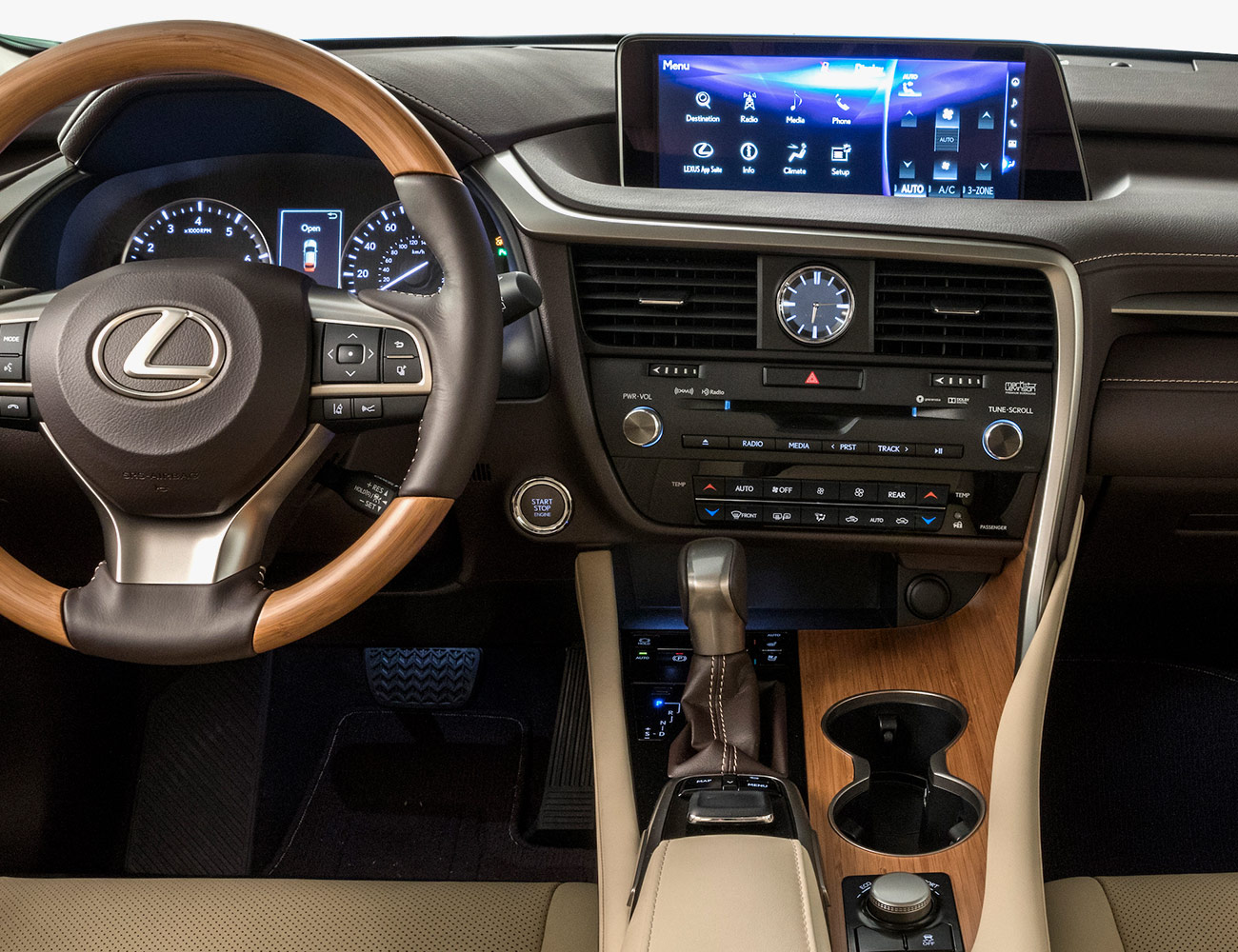
In addition to including the expected baseline of capabilities — Bluetooth, navigation, etc. — the Lexus Enform infotainment system brings a lot of cool surprises to the table, including 10 years of complimentary emergency assistance and a wide roster of third-party apps that help you immediately customize your entertainment and information options. Plus, its onboard connectivity option keeps everything updated and current automatically.

What’s Good: The app system provides access — via the optional connectivity package — to a variety of familiar services, including Yelp, Slacker, Pandora, NPR, and sports, news, and financial information. You can also order movie tickets, book restaurant reservations, find gas and lodging quickly and easily, and generally search for services or destinations you need.

What to Watch Out For: Be wary of overreliance to even these top-shelf onboard information systems. Even though they are updated persistently, in my own sampling of such systems they haven’t always been the last word on what’s available — whether it’s restaurant options or gas locations. Sometimes it’s better to double-check via a broader smartphone search than to rely on an app with a database of uncertain provenance.

Design and Interface: Particularly in the flagship LS, Lexus’s infotainment design and assorted interfaces are all very high quality. The LS boasts a large 12.3-inch center display, as well as a staggeringly good 24-inch head-up display. You can even program in a customized image to greet you when you enter the car. The steering-wheel controls and the dynamic touchpad are also fluid and intuitive in practice.

Special Features: The big trick up Enform’s sleeve is Dynamic Navigation, which uses the onboard connectivity to monitor traffic while deciding on routing options, provide points-of-interest that are of actual interest to you and stay updated with new map content.

Verdict: Lexus undeniably produces a quality product from bumper to bumper, and this is just as true with the infotainment system. It’s not particularly exciting or energetic in its presentation, but overall the look and feel is very smart and upscale.

Best Integration: Mercedes-Benz COMAND
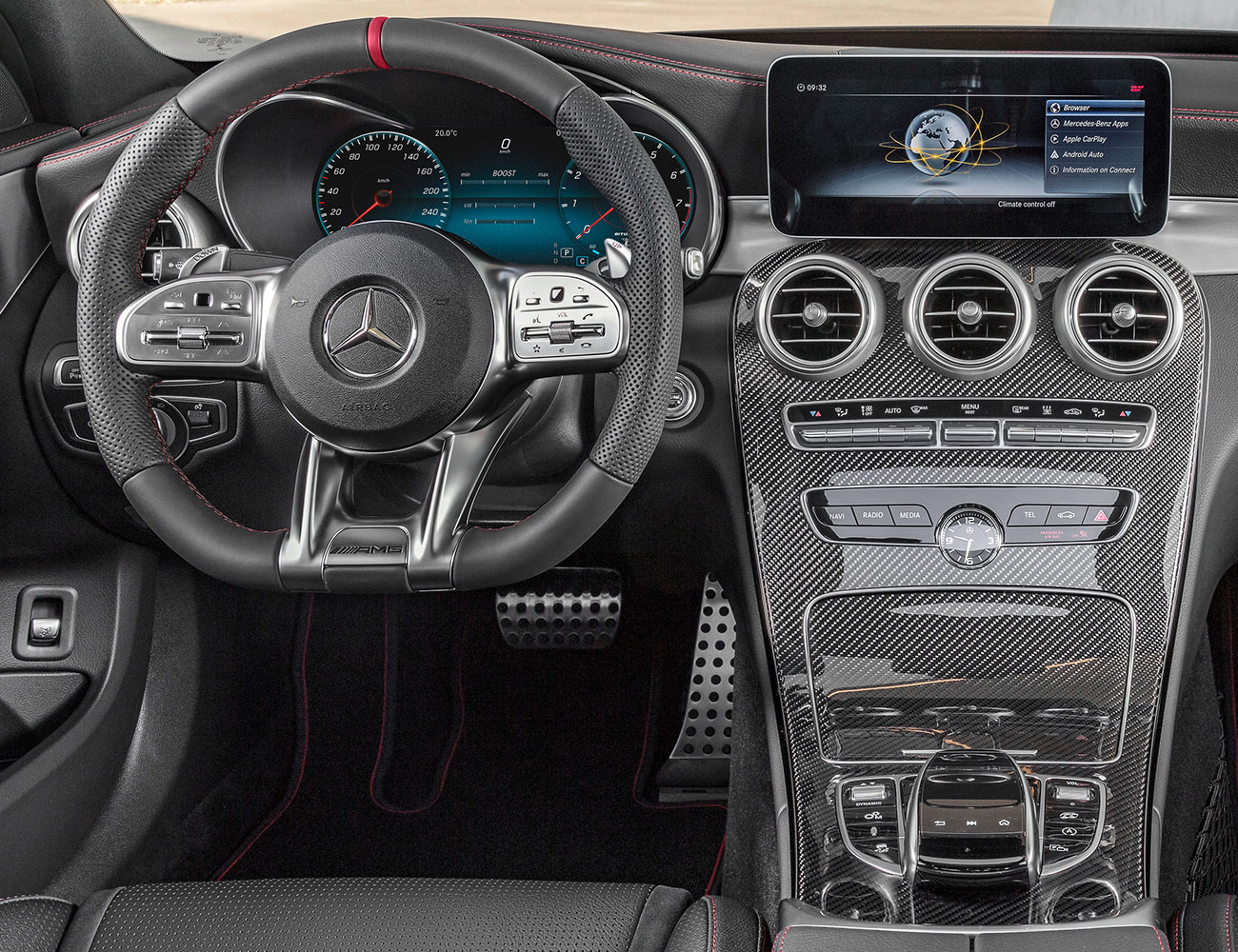
The Mercedes COMAND infotainment system is a classic example of the challenges associated with keeping such systems current. Introduced in the early 2000’s it has been updated along the way but never completely replaced — a huge process that required deep-tissue integration into new vehicles. Fortunately, the company revealed its new MBUX system at the Consumer Electronics Show in Las Vegas in January, though it won’t begin its rollout until the new A-Class arrives this fall. While the COMAND system is really showing its age, with outdated graphics, a cumbersome scrolling-tile system in most applications and no touchscreens, it does still have a lot going for it.

What’s Good: The current system does indeed do a great job of integrating all the vehicles’ systems, and that’s no small achievement. Access to all vehicle systems is quick and easy, and crossover compatibility — for instance, muting the audio when a call comes in — is exceptionally well executed. It also helps that the Mercedes Mbrace suite of connectivity functions gives a modern set of capabilities to the system, including remote access and assorted Internet-based audio services.

What to Watch Out For: The lack of a touchscreen is the current systems biggest drawback, especially considering that Apple CarPlay and Android Auto were designed around such interfaces. But the primary controller is quick and easy enough to help compensate.

Design and Interface: The newest display technologies — the wide display in the recently refreshed S-Class, for instance — make the system menus and assorted screens look pretty great, thanks to their high contrast and glossy feel. The controller and touchpad, which permits handwriting recognition, are comfortably placed and work really well with the system, allowing quick navigation and data entry. Voice controls help, as do the new micro-touchpads found on some models’ steering wheels. These Touch Control Buttons allow you to quickly swipe in various directions with your thumbs — or press to make selections — to control the multimedia system.

Special Features: In the case of the S-Class, the widescreen cockpit display includes both the instrument cluster and the COMAND screen, providing a seamless digital cockpit effect. It’s customizable, so you can fine-tune the appearance to suit your tastes.

Verdict: Its time has come, and fortunately Mercedes is finally replacing the system. The new one, MBUX, looks like it could be one of the best available when it starts appearing in new vehicles. Until then, new Mercedes buyers may not exactly be excited by the current system, but it’s still perfectly functional and useful. It gets the job done, if little else.

Least Pretentious: Porsche PCM
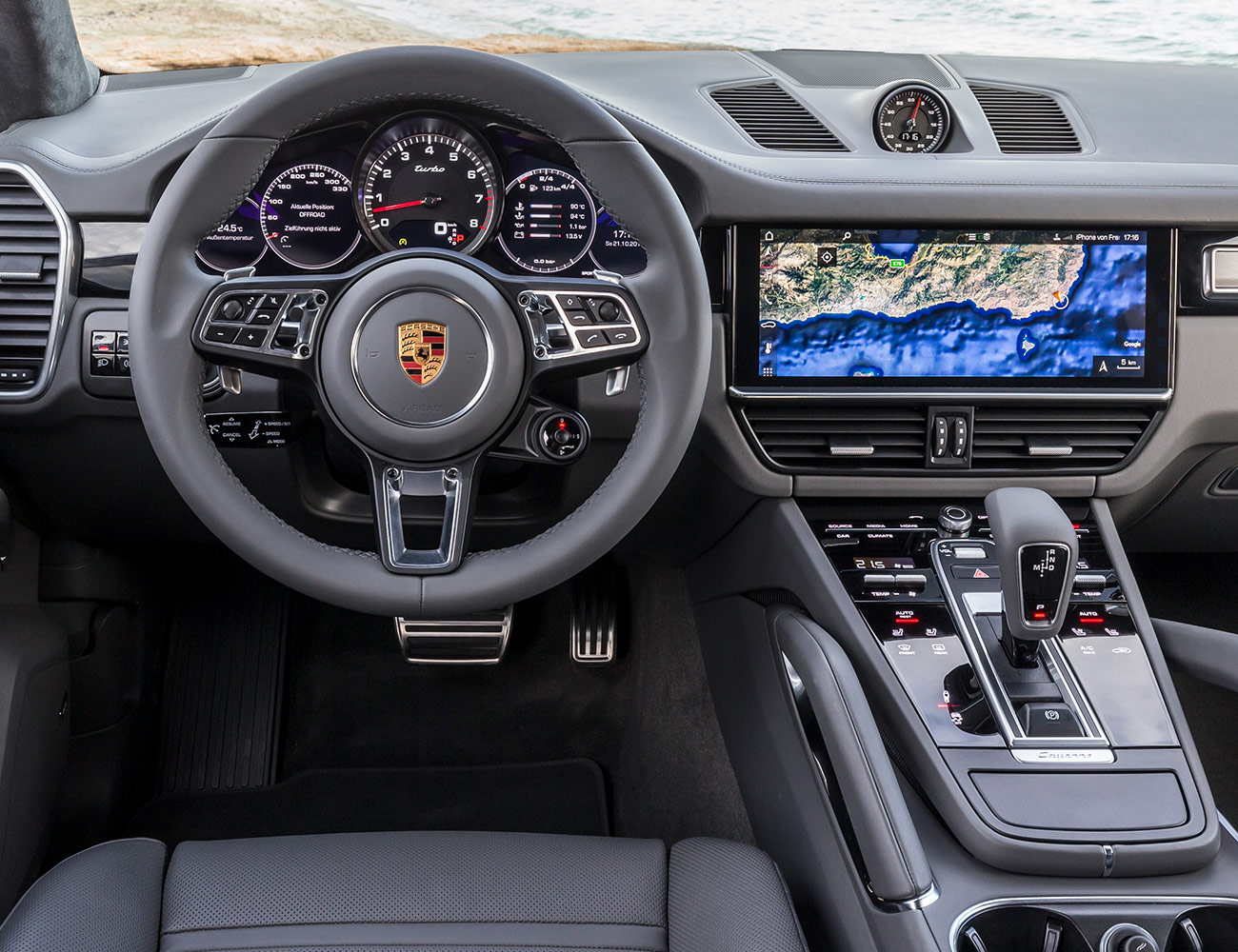
Porsche drivers don’t spend a lot of time fussing over dancing graphics and things like handwriting recognition. Porsche drivers care about going fast. Everything else is a distraction. So it makes perfect sense that of the premium infotainment systems out there, Porsche’s would be the most straightforward and packing the least window dressing. The latest Porsche Communication Management systems look great, mind you — but they cut straight to the chase whenever possible. I like that.

What’s Good: The system’s bright, high-definition screen — up to 12 inches in some models, including Panamera — features a proximity sensor that can detect your hand’s presence near the screen and whisk away visual clutter, allowing for full-screen presentation of a function without a lot of extraneous buttons present. The home screen design and customizable widgets provide high flexibility and immediate access.

What to Watch Out For: Just keep your eyes on the road. Fortunately, Porsche’s infotainment interfaces are designed to present minimal distraction as well as minimal interference when you are trying to use them.

Design and Interface: Everything in Porsche’s PCM is clear and comprehensible at a glance, which is important in enthusiast driving. The systems vary from car to car but share basic functionality and input systems, including touchscreens and voice command functionality. They fit in seamlessly with the vehicles without drawing attention to themselves. Again: no distractions.

Special Features: An internal hard drive sounds pretty old-school, but what better way to store your racetrack playlist without your smartphone banging around the console? There are also app-based features available through Porsche Connect — the car’s optional connectivity system: Porsche Car Connect lets you access vehicle data from your smartphone, control vehicle functions like firing up the air conditioning and send route information straight to the car. Also available: smartphone apps that let you record video and vehicle data while off-roading or on the racetrack.

Verdict: PCM has long balanced between basic, contemporary functionality and service to enthusiast drivers. Its current system meets all expectations and even throws in some bonus features for the driving enthusiasts, via the smartphone apps and various data tracking. It’s precisely what a Porsche infotainment system should be.

The 10 Best SUVs Under $50,000
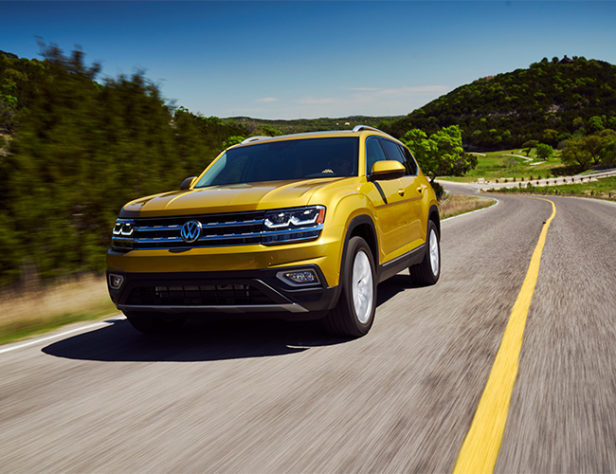
The average price for an SUV 2017 was just under $40,000 — to cover all the bases, we bumped the budget up to $50,000 and chose the best new SUVs you can buy in 2018. Read the Story

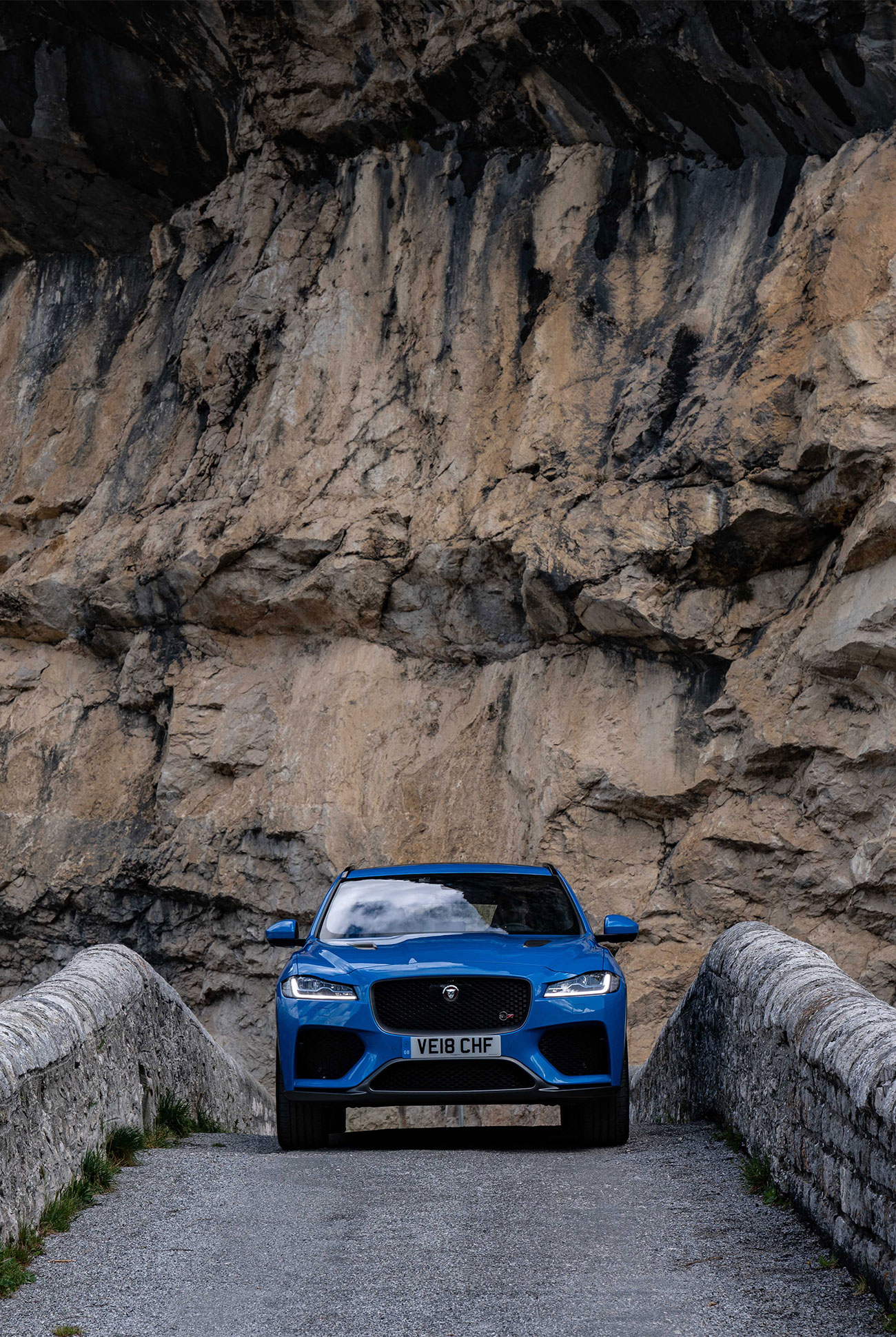
The Perfect Jeep Wagoneer Does Exist, and It’s This Restomod

The secret to a well-done restomod is to design and build a thoroughly-updated car without giving away that it’s anything other than factory-spec from the outside. The team over at New Legend 4×4 are masters of the craft, bringing vintage vehicles up to date with modern performance without losing that original vintage flair—and this freshly-built Jeep Wagoneer they made in collaboration with Iron & Resin just provides further proof of their skill.

Both New Legend 4×4 and Iron & Resin emphasize the importance of high-quality, handbuilt goods, striving to pay tribute to an era when that was the manufacturing norm. So, with the two brands coming together, it shouldn’t be a surprise the resulting ’78 Wagoneer is what it was always meant to be in spirit: a perfectly rugged, well-appointed four-wheeler that’s ready for adventure.

This isn’t the first time New Legend 4×4 and Iron & Resin have joined forces (they made a kickass Scout not too long ago), but this ’78 Wagoneer arguably raises the bar for the duo’s future restorations. From a distance, you’d be hard to tell this was anything other than an immaculate vintage Jeep. Rven the new upholstery courtesy of I&R looks period-correct and fitting for the Wagoneer, though the materials are quite the update over stock; Iron & Resin went to town on the interior with swathes of Horween Leather, waxed canvas, & Del Sol diamond serape trim.

Once the brand-new V-8 fires up, however, it becomes fairly obvious very quickly this isn’t any ordinary Wagoneer. New Legend 4×4 dropped in a new 5.3-Liter LS V-8 packing more than doubling the original 1978 engine’s horsepower from 1978, and bolted it to a four-speed transmission; they rebuilt the axles, fitted new brakes, and lifted the suspension an extra three inches to help fit chunky new BFGoodrich all-terrain tires underneath. They also slipped on a three-inch single exhaust to let the V-8 shout about itself a little better. The resulting product probably isn’t cheap…but hey, you have to pay for quality, right?

The Most Beautiful Details Hidden Throughout the New York Auto Show

Walking through the 2019 New York International Auto Show can be overwhelming. With all the shiny sheet metal on display—some of it for the first time—it’s easy to lose yourself in all of the big news and announcements. But, if you take some time and keep your eyes peeled, you’ll see there are a lot of beautiful design details peppered throughout the show’s attractions that you might have missed otherwise. Yes, concept cars will have bucket loads of futuristic moldings and supercars are packed with aerodynamic facets, but even something as mundane as a family sedan can hide an interesting quirk or two.

So, in case you missed them, these are the most beautiful details hidden throughout the cars at NYIAS 2019.

Acura TLX Taillights

NYIAS-Details-Gear-Patrol-TLX-Slide-1
NYIAS-Details-Gear-Patrol-TLX-Slide-2

Acura deserves a huge amount of credit for the bold design choices it’s made over the past few years. Acura’s design language is polarizing, to say the least, but if you look closely, you’ll spot intricacies that deserve appreciation. The taillights on the TLX are one of them: They mirror the car’s headlights, making what could’ve been a run-of-the-mill tail lamp into a delightfully complex display.

Audi E-Tron Dashboard

NYIAS-Details-Gear-Patrol-E-Tron-Slide-1
NYIAS-Details-Gear-Patrol-E-Tron-Slide-2

Open-pore wood isn’t anything new as far as car interiors go, but the Audi E-Tron pulls it off brilliantly. The all-electric SUV is a vision of the future for Audi, and the designers could have gone the usual clinical design route for such things, but it’s nice to see organic material in there instead; it nicely complements the future-forward E-Tron.

Genesis Mint Concept Seats

There are a lot of details to fawn over on the Genesis Mint concept car, but if one stands out above the rest, it’s the seats. If they look askew in the photo, that’s because when you open the door, they automatically slide back and rotate for easier ingress and egress. And it might only be a concept car for now, but Genesis brand boss Manfred Fitzgerald says he wants to see something like the Mint on the road in the near future.

The Whole Kia HabaNiro

When autonomous driving takes operational responsibility away from the passengers, the experience of driving as a whole will shift; there will more time to appreciate and interact with the interior, for one thing. Designers are starting to cater to that in concept cars like this funky Kia, by pouring more energy into details like seats and dashboard design. The Kia HabaNiro might look like the crossover of tomorrow on the outside, but the not-so-subtle crimson flair on the inside would be a welcome addition to the Korean automaker’s lineup.

Koenigsegg Jesko Rear Wing

The Koenigsegg Jesko’s rear wing isn’t exactly a “hidden detail,” seeing as how it’s one of the largest objects on the show floor. It helps the Jesko achieve 2,200 pounds of downforce when deployed, but can level out to reduce drag and let the Swedish supercar hit its supposed 300-mph top speed.

Lincoln Corsair Taillights

Lincoln is quickly becoming a powerhouse in the American luxury car market. It’s very rare an automaker adopts a design language which works on all of its cars, no matter the body style. The Corsair can easily be described as a mini-Navigator, but it also has its own unique details worth a mention. The taillights, for instance, look like the full-width setup Lincoln has applied elsewhere; move in closer and the design begins to resemble a stylized eagle’s wing.

Nissan GT-R50 Taillights

NYIAS-Details-Gear-Patrol-GTR-Slide-1
NYIAS-Details-Gear-Patrol-GTR-Slide-2

You’ve probably seen the Nissan GT-R50 by now, and drooled over as much as everybody else has. (Just ignore the $1.1 million price tag.) The car was a chance for Italdesign to flex its creative muscles, so it’s packed with design touches. Walk around the back, and you’ll see the semi-floating tail lights that look like jet engines; they compliment the moveable rear wing with its aircraft-like actuators.

Range Rover Velar SVAutobiography Dynamic Center Console

Range Rover has been moving towards minimalism for a while, but the new Velar SVAutobiography Dynamic highlights how far the company’s interiors have come—and how well they’re executed.

Note: Purchasing products through our links may earn us a portion of the sale, which supports our editorial team’s mission. Learn more here.

The Most Beautiful Details Hidden Across the New York Auto Show

Walking through the 2019 New York International Auto Show can be overwhelming. With all the shiny sheet metal on display—some of it for the first time—it’s easy to lose yourself in all of the big news and announcements. But, if you take some time and keep your eyes peeled, you’ll see there are a lot of beautiful design details peppered throughout the show’s attractions that you might have missed otherwise. Yes, concept cars will have bucket loads of futuristic moldings and supercars are packed with aerodynamic facets, but even something as mundane as a family sedan can hide an interesting quirk or two.

So, in case you missed them, these are the most beautiful details hidden throughout the cars at NYIAS 2019.

Acura TLX Taillights

NYIAS-Details-Gear-Patrol-TLX-Slide-1
NYIAS-Details-Gear-Patrol-TLX-Slide-2

Acura deserves a huge amount of credit for the bold design choices it’s made over the past few years. Acura’s design language is polarizing, to say the least, but if you look closely, you’ll spot intricacies that deserve appreciation. The taillights on the new TLX are one of them: They mirror the car’s headlights, making what could’ve been a run-of-the-mill tail lamp into a delightfully complex display.

Audi E-Tron Dashboard

NYIAS-Details-Gear-Patrol-E-Tron-Slide-1
NYIAS-Details-Gear-Patrol-E-Tron-Slide-2

Open-pore wood isn’t anything new as far as car interiors go, but the Audi E-Tron pulls it off brilliantly. The all-electric SUV is a vision of the future for Audi, and the designers could have gone the digital and clinical route, but it’s nice to see the soft, organic material nicely complement the future-forward E-Tron.

Genesis Mint Front Seats

There are a lot of details to fawn over on the Genesis Mint concept car, but if one stands out above the rest, it’s the front seats. If they look askew in the photo, that’s because when you open the door, they automatically slide back and rotate for easier ingress and egress. And it might only be a concept car, but Genesis brand boss Manfred Fitzgerald says he desperately wants to see something like the Mint on the road in the near future.

Kia Habanero

With autonomous driving taking more operation responsibility away from the driver, the experience of driving as a whole is on the verge of a paradigm shift. There will more time to appreciate and interact with the interior, so designers are starting to cater to that by pouring more energy into details like seat and dashboard design. The Kia Habanero might look like the crossover of tomorrow on the outside, but the not-so-subtle mid-century flair on the inside would be a welcomed addition to the Korean automaker’s lineup.

Koenigsegg Jesko Rear Wing

The Koenigsegg Jesko’s rear wing isn’t exactly a “hidden detail,” seeing as how it’s one of if not the largest objects on the show floor, it’s hard to miss. It helps the Jesko achieve 2,200 pounds of downforce when deployed but can level out to reduce drag and let the Norwegian supercar hit its supposed 300 mph top speed.

Lincoln Nautilus Taillights

Lincoln is quickly becoming a powerhouse in the American Luxury market. It’s very rare an automaker adopts a design language which works on all of its cars, no matter the body style. The Nautilus can easily be described as mini-Navigator, but it has its own unique details worth a mention. The tail lights, for instance, look like the full-width setup Lincoln has applied elsewhere but move in closer and the design takes on a sort of stylized eagles wing.

Nissan GT-R50 Taillights

NYIAS-Details-Gear-Patrol-GTR-Slide-1
NYIAS-Details-Gear-Patrol-GTR-Slide-2

You’ve probably seen the Nissan GT-R50 by now and drooled over as much as everybody else has (just ignore the $1.1 million price tag) because it was a chance for Italdesign to flex its creative muscles. Walk around the back, and you’ll see the semi-floating tail lights which look like jet engines, so they compliment the moveable rear wing with aircraft-like actuators.
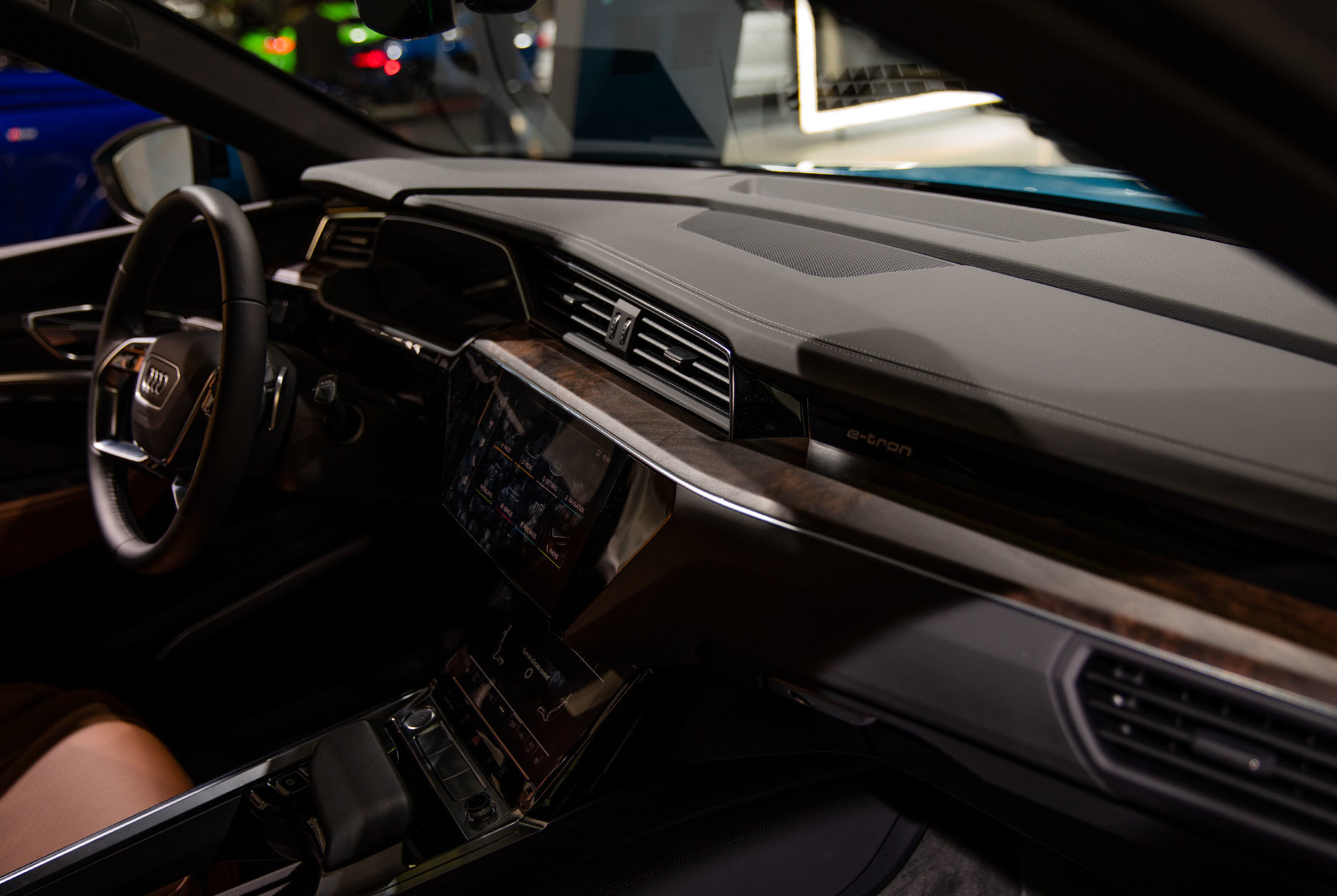
Range Rover Velar Center Console

Range Rover has been moving towards this level of minimalism for a while, but the new Velar SVAutobiography Dynamic highlights how far Range Rover interiors have come and how well they’re executed.

Note: Purchasing products through our links may earn us a portion of the sale, which supports our editorial team’s mission. Learn more here.

This Is the New York Auto Show Trend You Have To Know About

They’re breeding like Tribbles on the starship Enterprise. They’re blowing up like no other vehicle category on the planet. They’re compact crossovers, and the New York International Auto Show is chin-deep in the latest specimens.

For novelty’s sake—or maybe the planet’s—the new crop of high-riding sorta-hatchback models included some intriguing electric vehicles. Mercedes-Benz promised that its gussied-up EQC Edition 1886 will reach showrooms by 2020, alongside the standard EQC that is the first fruit of Benz’s “EQ” sub- brand. A sizable 80-kWh battery tucks below the eggshell-smooth body, with a pair of asynchronous electric motors, all-wheel-drive and a promised range of 293 miles…or less, if drivers liberally apply the EQC’s 402 horsepower and 564 pound-feet of torque that make it good for a claimed 4.9-second sprint from 0 to 60 mph.

Above: Mercedes-Benz EQC 1886

The painfully punny Kia HabaNiro cranked up the Scoville scale with an out-there electric concept: an industrial-mawed crossover EV with four butterfly doors, as well as artificial intelligence to monitor and adjust the interior according to its driver’s mood. Kia envisions the HabaNiro offering enough self-driving capability to let occupants watch movies projected on a head-up display that spans the entire windshield, thus making it very clear this is a concept car.

Above: Kia HabaNiro Concept

In contrast to those EV sizzlers, Audi’s redesigned 2020 Q3 made a relatively quiet debut, even if it exponentially more Americans will actually buy the Audi. And compared with its underwhelming predecessor, this Q3 may actually be worth buying, offering everything from Audi’s Virtual Cockpit display to a jumped-up 2.0-liter turbo four with 228 horsepower and 258 pound-feet of torque. The Q3 reaches showrooms in summer, at a price of $35,695 to start.

Above: 2020 Audi Q3

Ford’s luxury car division debuted its third new SUV in as many New York Auto Shows in the form of the compact 2020 Lincoln Corsair. Sharing a modular platform with the latest Ford Escape, the new Corsair bucked one all-too-common small crossover trend: It just wants to be stylish, comfy and luxurious, with a refreshing lack of claims-to-sportiness that end up being broken promises in so many SUVs.

Above: 2020 Lincoln Corsair

In an update from the Too Little, Too Late Department, Mazda dropped its serially-delayed Skyactiv-D diesel engine into the otherwise excellent CX-5 crossover. Inexplicably, the diesel makes less horsepower and torque than the CX5’s optional, 2.5-liter turbo four—168 horses and 290 pound-feet, versus the 2.5’s respective 250 and 310. More inexplicably, at 28 mpg combined, the 2.2-liter diesel delivers a negligible 2-mpg gain over the basic gasoline-powered CX-5.

Of course, the show wasn’t just smallish crossovers; companies up and down the Javits Center also rolled out lower-riding vehicles, from the show-stopping Porsche 911 Speedster to the Genesis Mint concept. Hyundai was among the automakers putting a brave face on the waning family sedan category in New York, showing its dazzler of a 2020 Sonata and reminding us that Americans are still buying 5 million traditional cars each year. 

“While some automakers have lost interest in these buyers, we haven’t,” said Brian Smith, chief operating officer of Hyundai’s American arm. (Hint: Smith is referring to the geniuses running Ford and Fiat Chrysler, who are largely abandoning traditional cars in the hope that every last American can be talked into a pickup or SUV.) And the Alabama-built Sonata looks like a home run, from its swoopy, expressive body and daring lighting signatures to leading-edge technology like a smartphone-based virtual key that can manage locking/unlocking, remote starting, and myriad presets for multiple users.
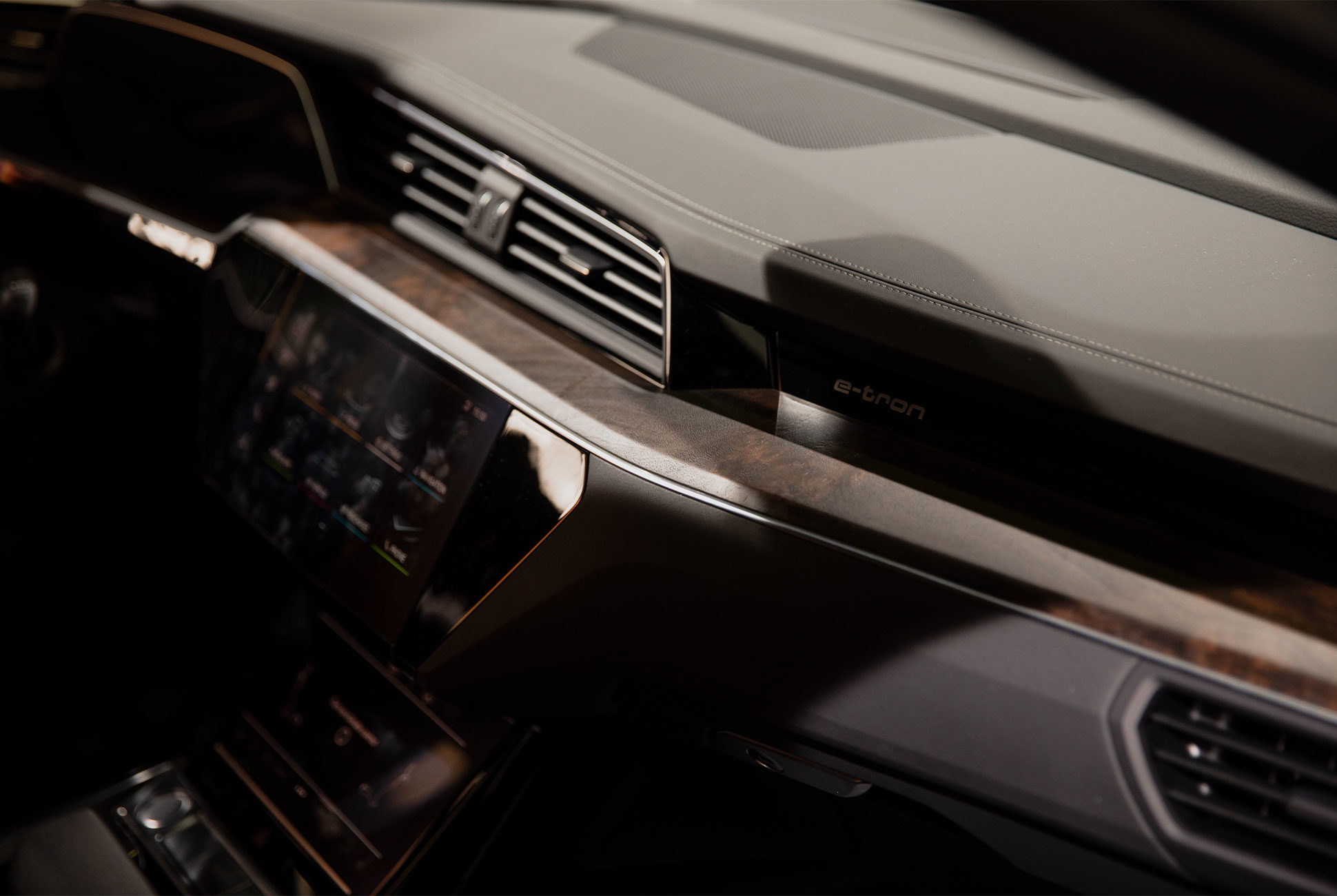
Yet even Hyundai couldn’t resist unveiling another crossover SUV, giving it a total of six on sale by the end of 2019. The Hyundai Venue is a funky, cocktail-weenie-sized urban runabouts, and executives quietly promised it will start from less than $20,000 when it goes on sale by year’s end. Measuring 5.1 inches shorter than a Hyundai Kona, the Venue is tiny, but surprisingly substantial looking, and you can even have a six-speed manual transmission. Stick shifts in SUVs? Now there’s a crossover trend that’s easy to get behind.

2019 BMW i8 Roadster Review: Yesterday’s Vision of Tomorrow

The BMW i8 Roadster is, in one sense, the Bavarian Motor Works‘s halo car—a range-topping two-door with a lofty price tag that represents where the company is headed. On the other hand, it’s a middling compromise, neither as fast (or fun to drive) as its similarly-priced competitors nor as efficient as many other modern-day vehicles boasting wheel-powering battery packs and electrical ports.

The Good: It’s hard to argue with a sports car that can accelerate from 0 to 60 miles per hour in four seconds and get the combined equivalent of 69 miles per gallon between its gas engine and battery pack. Still harder when it looks as wild as the i8 does, with its gullwing doors and aquatic predator lines.

Who It’s For: People whose primary reasons for buying a six-figure sports car are more along the lines of showing off on the streets and drawing stares than shooting for lap times or carving up rural B-roads. In other words, probably the majority of people who buy six-figure sports cars.

Watch Out For: Climbing in and out, which is pretty much impossible to do with any decorum. Also, mockery from anyone owning a newer luxury car in the same price bracket; the i8’s interior would look cheap in a car half the price to the discerning eye.

Alternatives: The all-new 2020 Porsche 911 Carrera 4S Cabriolet ($133,400), the Mercedes-AMG GT C Roadster ($158,850), the Audi R8 Spyder ($182,100). Oh, and there’s the brilliant all-new Aston Martin Vantage ($149,995), if you’re not wedded to that convertible body style.

Review: The problem with visions of the future is that they rarely come true—and they tend to date quickly when they don’t. The i8 first reared its head a decade ago; granted, it was called the Vision EfficientDynamics then, but a glance at that concept car is all it takes to see that most of its style and substance made it to the streets. In those days, the idea of pairing a compact gas-powered engine to a plug-in battery pack was fresh and exciting; after all, General Motors had just unveiled the production version of the Chevrolet Volt, and Tesla was still three years away from flipping the automotive space on its head with the Model S. The i8’s idea of allying a turbocharged inline-three with a lithium-ion battery pack and electric motor to make a car that combined Porsche performance with econo-car efficiency felt like a window into a better tomorrow—one where even the threat of $7/gallon gas couldn’t suppress our sports car dreams.

But in 2019, when fully electric vehicles have been embraced—by the zeitgeist, if not the mass market—the i8 feels like a throwback, not a look forward. It’s a feeling that’s exacerbated the moment you swing your legs over the awkward door sills and plop into the interior, which already feels dated. The all-digital instrument panel looks two sizes too small by today’s standards, with an unfortunate amount of black plastic bezel on each side of the screen. Same goes for the iDrive screen, though at least that now includes touchscreen capabilities—handy for operating Apple CarPlay, if nothing else. The wiper and blinker stalks feel old and cheap. And the radio presets allocated via iDrive, oddly enough, don’t correspond to the hard buttons next to the volume knob.

It’s not all bad, though, The orange-leather-and-gray-cloth trim found in my tester add a distinctive touch; the color combination is a matter of personal taste, but the material pairing feels premium in a way that breaks it apart from the six-figure car pack. The seats are comfortable—far more accommodating than the hard-sided Recaros and their clones found in many similarly-priced sports cars whose owners want to hit the track (or at least make it seem like they do).

The exterior, though, is how i8 sales are made. The car is still every bit as visually arresting as it was a decade ago, even now resembling a refugee from Minority Report or I, Robot—a shape too irrational to co-exist with ‘97 Honda Accords and late-model Chevy Silverados and busted-up panel vans. Low and slippery, it looks like a well-oiled shark as it cuts through traffic towards you. And unlike some hardtops that meet the Sawzall, the drop-top conversion does the look no harm; it’s still every bit as alien on the road, it just happens to now let others see the human hosts within. And the roof’s quick transition time means you won’t be caught with your top down often; it can flip from open to closed in 16 seconds—shorter than plenty of traffic lights.

Going Roadster also alleviates some of the flaws of the coupe. It allows for near-silent top-down running, which is both delightful and rare; in fact, I’m pretty sure this the only convertible on sale today that lets you drive under electric power alone, allowing you to savor the rush of the wind and the smell of the air, undisturbed by clattering pistons or carcinogenic exhaust. It makes driving the i8 more about enjoying the experience of motoring as a whole, rather than just the kinetic thrills of carving through corners and blasting past speed limits.

Which is good, because this Bimmer lacks the power to punch as hard as its competitors. The i8 received the mildest of performance updates for 2018, but you’d be hard-pressed to tell the difference the added battery power (capacity rose from 7.1 to 11.6 kilowatt-hours, and the electric motor went from 129 hp to 141) brings to the table. The maximum system output of 369 horses is hardly the sort of fact worth whipping out at the bar in an era when Dodge sells four cars making more than that for around $40,000 or less.

Still, the more I drove the i8 over the course of a week, the more it grew on me. It’s legit fast when you floor it, the electric motors and turbochargers joining forces for an immediate shove of torque off the line and speed alike. Thanks to that rifle-blast kick of instant power, it feels faster than even its 4.1-second 0-60 time would lead you to believe.

Three cylinders and a turbocharger aren’t what most motorheads would consider the orchestra needed for a melodious internal combustion soundtrack, but the i8’s gas-burner doesn’t offend the ears once you’re really pushing it in Sport mode—aided, somewhat cheaply, by subtle synthetic enhancement that plays through the speakers. At lower speeds and rpm, though, it’s a bit clattery, hardly the sort of purring soundtrack.

Leave the car in the default Comfort mode or toggle up Eco Pro, and you won’t have to deal with that; unlike Sport, which leaves the engine on all the time, those fuel-sipping modes kill it at every opportunity around town, using the front axle-powering electric motor to hum from A to B. They’re not completely silent, but the only time you’ll hear their high-pitched whine is with the stereo off and the roof shut at low speeds—and even then, it’s hardly annoying.

Still, electric driving comes with its quirks. While the motor can carry you at speeds of up to 75 mph, getting the most out of that requires some very delicate feet. The accelerator tricky to modulate in maximum-efficiency Eco Pro mode; it’s resistant to input at first, leaving the i8 falling behind traffic when pulling away from a light, but push too hard and the gas engine clatters to life unnecessarily. Likewise, the brakes’ battery-recharging capabilities are difficult to master; there’s a bit of lift-off recapturing—about 25 percent of the full ability, according to the gauge—but even the slightest tap on the brake pedal pushes it way beyond that into the friction braking zone.

But if the electric motor is handy, the battery pack that feeds it may be its worst characteristic. That 11.6 kWh of electron capacity only delivers a claimed 18 miles of zero-emissions range; based on my time with the car, that estimate ought to come with an asterisked caveat along the lines of: *with a sole occupant and no cargo, on a perfectly flat surface, at a speed of 40 miles per hour, when the external temperature is between 68 and 72 degrees Fahrenheit, when driving towards the moon at high tide. 15 miles seems more realistic in real-world conditions. Even if the full 18 miles were easily attainable, though, it’s just not very much for practical purposes—only enough to cover the average American driver’s 16-mile commute if he or she can recharge at the office.

Which brings me to one grand ol’ your-mileage-may-vary caveat: I spent my week with the i8 in New York City, which is arguably one of the worst places to live with a plug-in car. To use them most effectively, plug-in hybrids and EVs require a garage at home or a parking spot at work with a dedicated outlet—somewhere you can reliably depend on leaving the car for several hours so it can charge while you’re away.

Which is exactly the sort of thing most New Yorkers lack.

Those who commute via private vehicle can rarely depend on having the same place to park every day, while most of those who own cars but commute via mass transit leave them parked —where EV charging ports are few and far between. Tesla, at least, offers a fair number of Superchargers scattered around the Tri-State area—and besides, they have enough battery capacity to make once-a-week charging a possibility. The i8, however, doesn’t offer such luxuries, forcing New Yorkers to cobble sketchy extension cord chains out their apartment windows if they want to charge up at home.

And even then, it’ll take a long time to add power: Seven hours suckling on a 110-volt wall outlet yielded between six and seven miles of EV range. In an ironic twist, the fastest way to add electric driving range seems to be to drive it hard with the gas engine running; five miles of stop-and-go between 0 and 45 mph—about 20 minutes of driving—loaded the battery up with five additional miles of electric-only driving range.

Still, even under less-than-ideal conditions, the i8 proved itself fairly efficient. My average fuel economy sat right around 25 miles per gallon over 100 miles of mostly city driving, which favors electric motivation. Plugging it into the wall socket in every day and gaining even those six miles of battery power from a free source would have probably sent that up a bit. Considering any comparable Mercedes-AMG GT would be lucky to hit its EPA-rated 16 miles per gallon over the same stretch.

Verdict: Decent fuel economy isn’t enough to excuse the biggest issue with the i8: It’s neither sporty enough nor green enough to justify the price. At $165,000, those looking for straight-line thrills or virtue-signalling power would be better served with a Tesla Model S P100D; or, on the flip side, if your ultimate goal really is to be kind to the planet while still driving a sexy, speedy German drop-top, it’s hard not to argue in favor of buying a Porsche 911 Carrera GTS Cabriolet and spending the extra 20 grand on carbon offset credits. (Fun fact: At $5 per 1,000 pounds of offsets, that $20K could offset 4 million pounds of carbon dioxide—the equivalent of 78,430 gallons of gasoline.)

Still, there’s a specific space out there for the i8 Roadster. If you can reliably plug in your car for a few hours each day, and if you’re more concerned with the lifestyle aspects of sports car ownership than driving engagement, the i8 will treat you well. Otherwise, though, there are better choices for the money.

2019 BMW i8 Roadster Specs

Powertrain: 1.5-liter turbocharged three-cylinder connected to rear axle via six-speed automatic transmission; AC synchronous electric motor connected to front axle via two-speed automatic transmission
Total Maximum Horsepower: 369
Total Maximum Torque: 420 pound-feet
0-60 MPH: 4.1 seconds (Car and Driver testing)
Cargo Capacity: 2.3 cubic feet

BMW provided this product for review.

Read More Gear Patrol Reviews

Hot takes and in-depth reviews on noteworthy, relevant and interesting products. Read the Story
Note: Purchasing products through our links may earn us a portion of the sale, which supports our editorial team’s mission. Learn more here.

New GMC Syclone Brings America’s Greatest Sport Truck Back to Life

The GMC Syclone of the early Nineties is an absolute legend in the automotive world. A modified, high-performance version of the Sonoma pickup truck with a turbocharged 4.3-liter V-6 producing 280 horsepower and 350 lb-ft of torque, it was ludicrously quick; the Syclone could accelerate from 0-60 miles per hour in 4.3 seconds, making it the quickest-accelerating production car of 1991—even faster than a Ferrari 348. And it looked rad as hell, too—slammed close to the ground and only available in black with red graphics.

Syclones are quite rare; GMC only made it for one year, with a production run of fewer than 3,000 units. But now, you can buy a modern-day version of the Syclone—sort of. Speciality Vehicle Engineering of New Jersey has announced it will produce a run of 100 2019 Syclone sport trucks based off both two-wheel-drive and four-wheel-drive versions of the GMC Canyon pickup.

The 2019 Syclone’s sport suspension drops it to the ground by two inches up front and five inches in the rear. The truck will use a supercharged 455-hp 3.6-liter V-6—noted by “455HP” badging on multiple areas of the truck—along with myriad other performance upgrades, including a cat-back dual exhaust. SVE won’t make any claims about beating Ferraris, but promises the new Syclone will be “outrageously fast.”

The Syclone will also have 20-inch wheels, rocker panel extensions, a body-color grille, a numbered dash plate, and Syclone badge inside, outside, and on the key fob. It will be available in the Canyon’s full range of factory colors, though why get anything but black?

The price for these mods? Steep. The conversion costs $39,995—in addition to the price of the Canyon itself, which starts at $32,195 in 4WD form. That’s far more than what one would pay for an original Syclone in fine shape these days. (You can buy this one for $37,900, for example.)

Oh, and as for that oddly-spelled name? Turns out GMC had to use an “S” at the front because Ford held the rights to “Cyclone”—but General Motors wasn’t going to let that deter them from calling the truck what they wanted.

These Four Cars Were Named the Best In the World This Year

The 2019 New York International Auto Show is upon us—and that means so are the annual World Car Awards. The WCA jury is made up of over 80 automotive journalists and industry professionals from more two dozen countries, who come together to decide the absolute best cars across six different categories.

This year, however, only four cars took home awards. That’s because the 2019 Jaguar I-Pace not only swept up the Green Car and Design of the Year Awards, it also took home the big one: World Car of The Year. The other winners include the Audi A7, Suzuki Jimny 4×4 and McLaren 720S.

Check out the full list of winners below—and be sure to read Gear Patrol’s associated reviews of each, for more insight into what makes these cars so award-winningly special.

World Car of The Year/ Green Car of the Year/ Design of the Year

2019 Jaguar I-Pace “The I-Pace has a great deal of Jaguar DNA flowing in its shape. Jaguar designer Ian Callum’s pen is strong here, and there’s a clear through-line between this car and his other works, like the Jaguar F-Pace, though I feel like there’s even a hint of Jaguar C-X75 in its overall form.” – Alex Kalogianni, Contributor

World Urban Car

2019 Suzuki Jimny 4×4 “Would this car thrive in the U.S.? Sure. It’s cool and fun and will take you where you want to go for thousands less than its closest competitor. And yeah, it’s cute, too.” – Eric Adams, Contributor

World Luxury Car

2019 Audi A7 “An even more elegant upgrade, though, sits at the corners, with the headlights and taillights, which in the upper trims – namely the Prestige – perform brisk little light shows each time you lock and unlock the vehicle. The HD Matrix-design LED headlights feature distinctive vertical bars, and can be augmented with an optional laser light booster that doubles the reach of the headlights ahead of you.” – Eric Adams, Contributor

World Performance Car

2019 McLaren 720S “Thanks to a strong focus on ergonomics, the 720S is just as easy to park in a garage as it is to take on a road trip as it is to scream around a race track.” – Nick Caruso, Coordinating Producer

Read More Gear Patrol Reviews

Hot takes and in-depth reviews on noteworthy, relevant and interesting products. Read the Story
Note: Purchasing products through our links may earn us a portion of the sale, which supports our editorial team’s mission. Learn more here.

The 2.5RS Is the Unsung Hero of the Subaru Impreza Family

While most of the world watched Subaru dominate the World Rally Championship in the mid-’90s while simultaneously enjoying the fruits of those labors in the form of the race-bred road-going Subaru WRX STI, those of us the United States were left wanting. But in 1998, to test the waters, Subaru gave us the Impreza 2.5RS—and the success of that car is the reason Subaru finally brought the WRX to our shores in 2001.

The two-door Impreza 2.5RS, like the one above, is somewhat of the last of its kind, in that Subaru stopped making coupe versions of the now-legendary performance sedan in 2000. Considering it also  “first high-performance Subaru Impreza in the US” status, and the 2.5RS seen here might be a collector car someday.

That said, this particular 2.5RS currently on sale on Bring a Trailer isn’t exactly in show-car condition, but it is an affordable way to get a taste of early-2000s AWD entertainment. From the factory, the Impreza 2.5RS pumped out 165 horsepower and 167 lb-ft of torque from its 2.5-liter flat four engine before sending that to all four wheels. With such a short wheelbase, the handling was sharp and responsive—the sort of behavior pro drivers might describe as “lively.”

The interior and exterior are in decent condition, except for a bit of corrosion on the undercarriage and in the engine bay—but for a car that spent its life in the Salt Belt and is showing 88,654 miles on the odometer, it’s par for the course. And the relative lack of aftermarket parts make this Impreza a bit of a rarity, as a lot of ’90s Japanese performance cars were modified to hell and back; this Subaru’s owner only added Borla headers and a cat-back exhaust to help the flat-four engine breathe a little better.

As of this writing, this 2000 Subaru Impreza 2.5RS is currently listed at $3,100 with two days left on the auction block, but don’t count on it staying that low; other examples of the 2.5RS from the same year with more than double the miles are selling elsewhere for a little over $10,000. Is owning a unique slice of Subaru history worth that kind of money? If you’ve ever driven one, the answer is an obvious yes.

An Oven for Pizza Idiots, the 2019 BMW X7 & More

In this episode of This Week In Gear: Eric Yang and Will Price test Breville’s countertop pizza oven, Henry Phillips discusses the $5K Leica Q2 and Nick Caruso raves about the all-new BMW X7. Also in this episode, a Bryan Campbell reviews the Honda Talon side-by-side – in 30 seconds – and AJ Powell explains why the Sennheiser Momentum True Wireless earbuds are the last thing he bought.

This episode of This Week In Gear is presented by Crown & Caliber: the convenient online marketplace for pre-owned luxury watches. Visit crownandcaliber.com/gearpatrol to get $175 towards any watch purchase until May 31st.

Featured Products

Breville the Smart Oven® Pizzaiolo

“This thing is fuckin’ awesome at what it does. It works for the pizza idiot to the pizza savant.”

|

Leica Q2

“All the improvements feel iterative, deliberate and genuinely helpful to the end user. The Q was my general price-no-object recommendation for a great camera for basically everyone. The Q2 takes that place no problem.”

|

2019 BMW X7

The X7 very well may be everything great about BMW, fully realized.

|

Honda Talon SxS

“Add an exciting application of DCT technology and it’s fair to say that while the Talon 1000R and 1000X aren’t necessarily game changers, they’ve sure as hell raised the bar.”

|

Sennheiser Momentum True Wireless Earbuds

“I believe the Momentum earbuds could replace each headphone in my current rotation — including my Bowers & Wilkins P5 on-ear headphones.”

|

Note: Purchasing products through our links may earn us a portion of the sale, which supports our editorial team’s mission. Learn more here.