All posts in “Cars”

The Complete Porsche Buying Guide: Every Model, Explained

Porsche is a German luxury and sports car manufacturer, based in Stuttgart and founded in 1931. The company is best known for its powerful, precise-handling sports cars, most famously the iconic 911. While capable on track, Porsches distinguish themselves by being entertaining on the street and comfortable enough for daily driving.

This century, Porsche has broadened its lineup to include four-door vehicles — both SUVs (the Macan and Cayenne) and sedans (the Panamera). This model expansion has greatly increased sales, making the company more stable and profitable.

Volkswagen has had close ties with Porsche since its founding. Ferdinand Porsche designed the Volkswagen Beetle, and that car’s rear-engined legacy still endures to this day in the 911. The companies are closely aligned in business, as well; Porsche and Volkswagen formed an “integrated automotive group” in 2011, and many Porsche vehicles share platforms, parts, and engines with Audi, Bentley, Lamborghini, and other VW brands.

While Porsche only produces five models, the lineup can get confusing quickly. As of this writing, Porsche is selling two generations of the 911, leaving buyers to choose between 28 different trims. Efforts at continuity can also create confusion: Three-digit model numbers like 911 and 718 that were once tied to actual generations now have become historical designations; the new 911 is known internally as the 992 model, while the 718 Cayman and Boxster are known as the 982 inside the company and among die-hard fans. And Porsche still offers “Turbo” trims, even though almost every Porsche now uses a turbocharged engine.

Brand Terminology

Air-Cooled: 911s through the late 1990s had air-cooled engines, which ran air over the engine oil to cool the engine rather than using a water-based radiator. These engines are generally simpler, lighter and sound better than newer water-cooled engines, and vehicles with them are highly valued by Porsche purists. Porsche replaced them with water-cooled engines for better performance, better reliability, and to meet modern emissions standards.
Base MSRP: This is the starting point for negotiations. A common term, but worth reiterating here; Porsche’s option tree is notoriously large and steeply-priced.
Boxer Engine: An internal combustion engine with horizontally-opposed pistons, used most commonly by Porsche and Subaru. It helps to lower the car’s center of gravity. Production is usually more expensive than a V-shaped engine, however, which is why it is used less commonly.
Carrera: “Race” in Spanish. Porsche initially used the term to celebrate class wins in Mexico’s Carrera Panamericana in the 1950s. Porsche has used the term over the decades to designate racing-oriented models, or to make base models sound more racing-oriented.
PDK: Short for Porsche Doppelkupplunggetriebe, or “Porsche dual clutch gearbox.” Known for its exceptionally quick shifts. It is the only transmission choice on top-tier 911s, as well as on all Panameras.
RS: Stands for “rennsport,” which means “racing” in German.
Targa: A retro body style that is part coupe, part convertible. The top roof panel retracts, but a distinctive roll bar remains in place. Porsche started offering it in the 1960s when it was feared the U.S. might outlaw convertibles for safety reasons.
Tiptronic: An automatic transmission with a manual shifting mode.
Turbo: The term “Turbo” originally designated a turbocharged engine. Now that almost every Porsche is turbocharged, “turbo” means a powerful, high-performance version of that particular model.

Buying Guide

718 Cayman
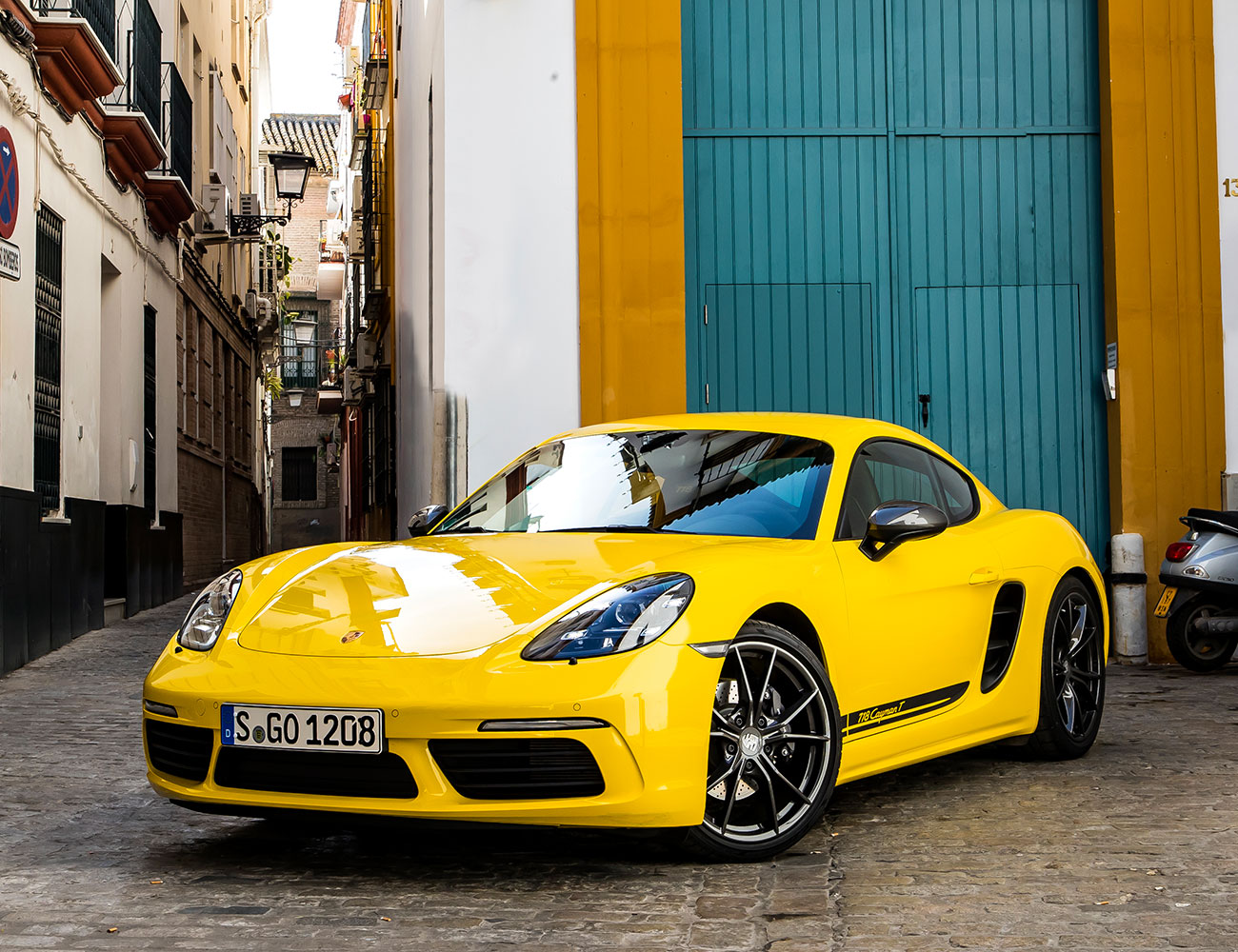
The 718 Cayman is Porsche’s entry-level sports car. It’s a two-door, two-seat, mid-engined coupe. With its exquisite balance and handling, it’s recognized as one of the best driver’s cars on the market; like BMW’s M3, it’s the sort of gold standard other automakers aspire to beat. The latest generation moved from flat-six engines to turbocharged four-cylinder motors. The base Cayman uses a turbocharged 2.0-liter boxer-four making 300 horsepower and 280 pound-feet. The $69,300 718 Cayman S upgrades to a turbocharged 2.5-liter boxer-four making 350 hp and 309 lb-ft. Both trims can be paired with a six-speed manual or a seven-speed PDK.

Body Style: Coupe

Models:

• Cayman
• Cayman S

Engines:

• Turbocharged 2.0-liter boxer-four
• Turbocharged 2.5-liter boxer-four

Base MSRP: $56,900

718 Boxster
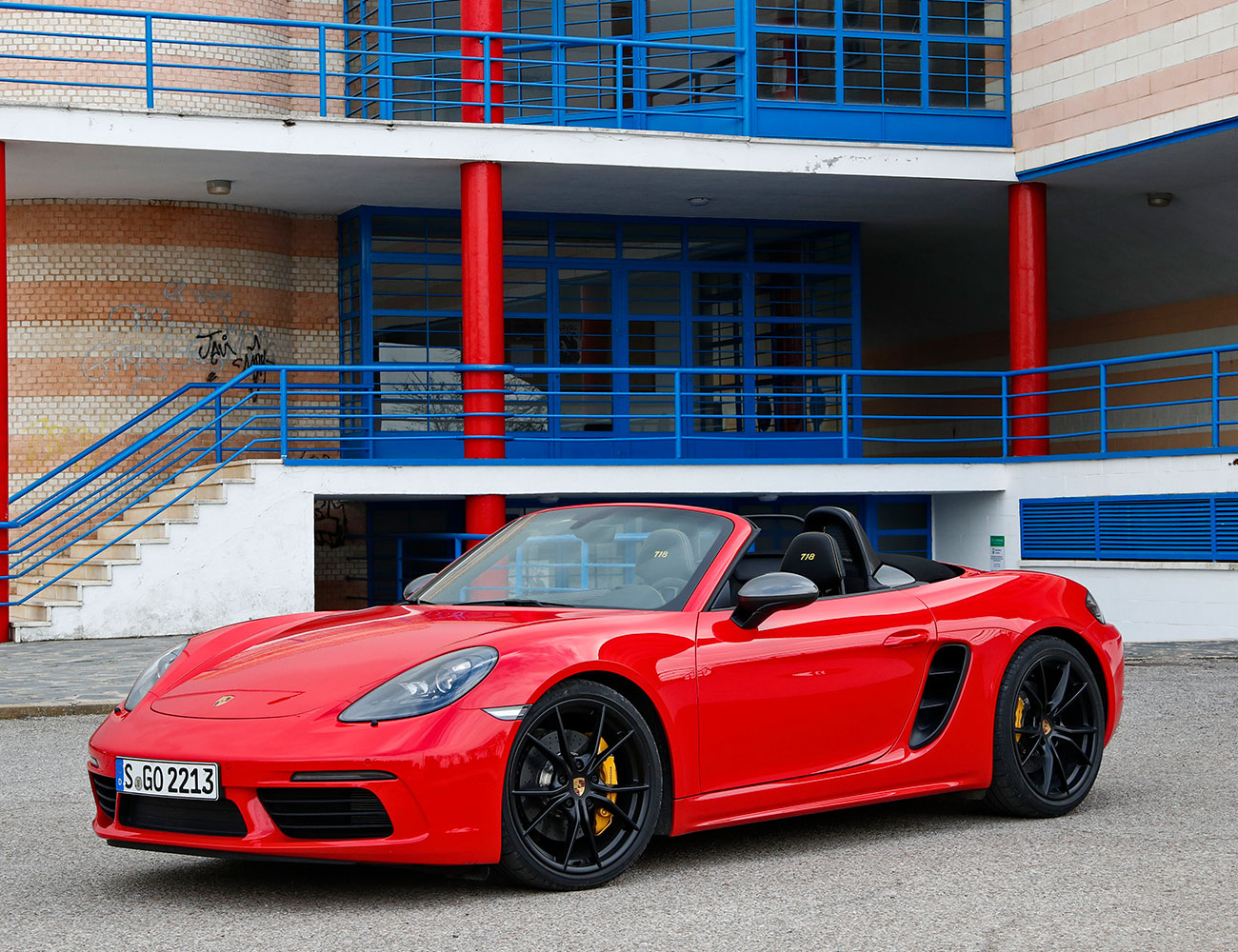
The “Boxster,” a word that’s a combination of “boxer” and “roadster,” predates the hardtop Cayman. The more affordable car helped keep Porsche solvent in the late 1990s. The Boxster is a mechanical sibling to the Cayman, but for the soft top and the $2,100 price difference.

Body Style: Convertible

Models:

• Boxster
• Boxster S

Engines:

• Turbocharged 2.0-liter boxer-four
• Turbocharged 2.5-liter boxer-four

Base MSRP: $59,000

718 Boxster / Cayman GTS
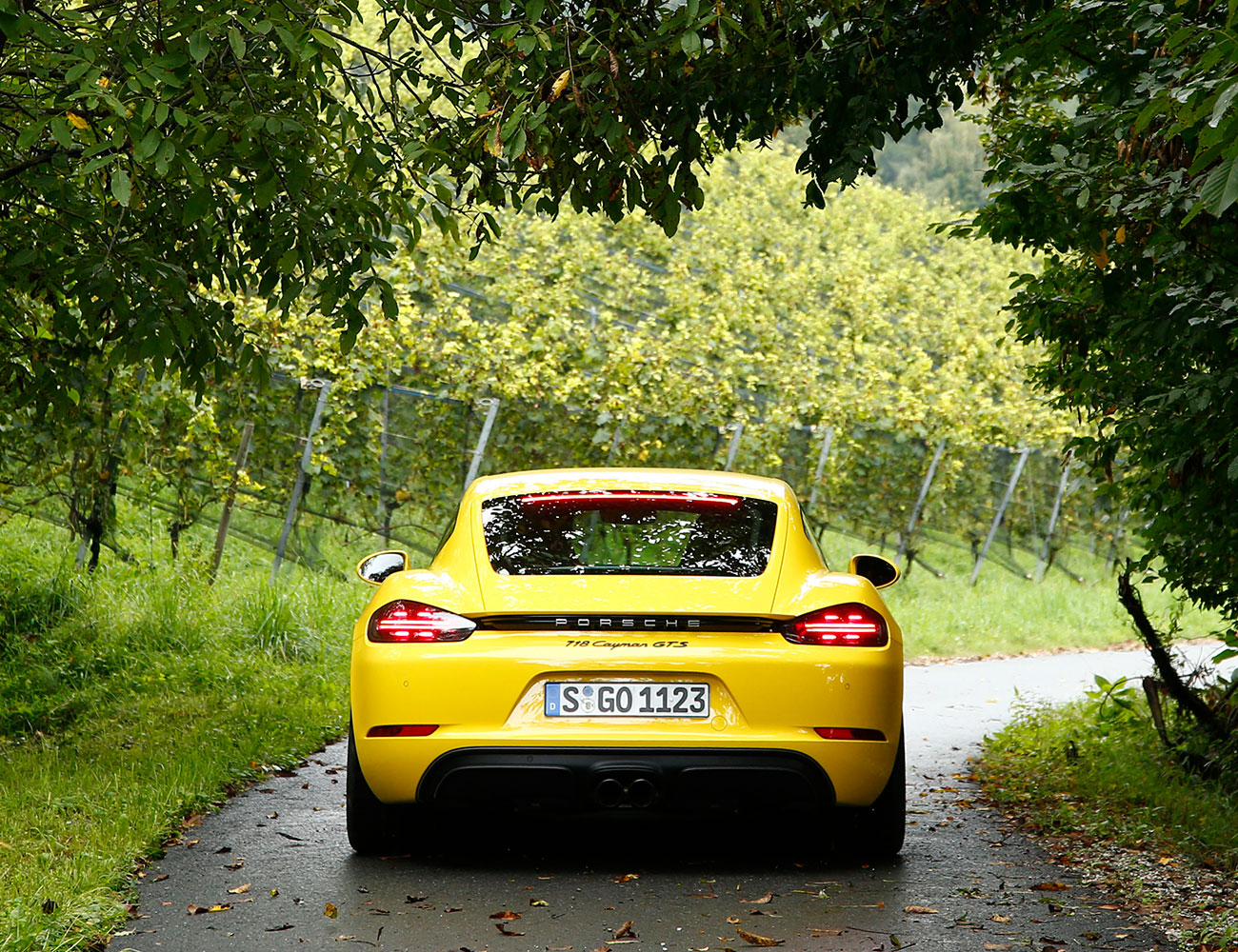
The GTS is the performance model of the 718, available as both a Cayman and a Boxster. The 2.5-liter boxer-four gets tuned up to 365 hp, a hair below the base 911. It’s available with both a manual transmission and a PDK. The PDK has more torque (317 lb-ft versus 309 lb-ft) and accelerates more quickly.

Body Style: Coupe, Convertible

Models:

• Cayman GTS
• Boxster GTS

Engines:

• Turbocharged 2.5-liter boxer-four

Base MSRP: $80,700

911 Carrera
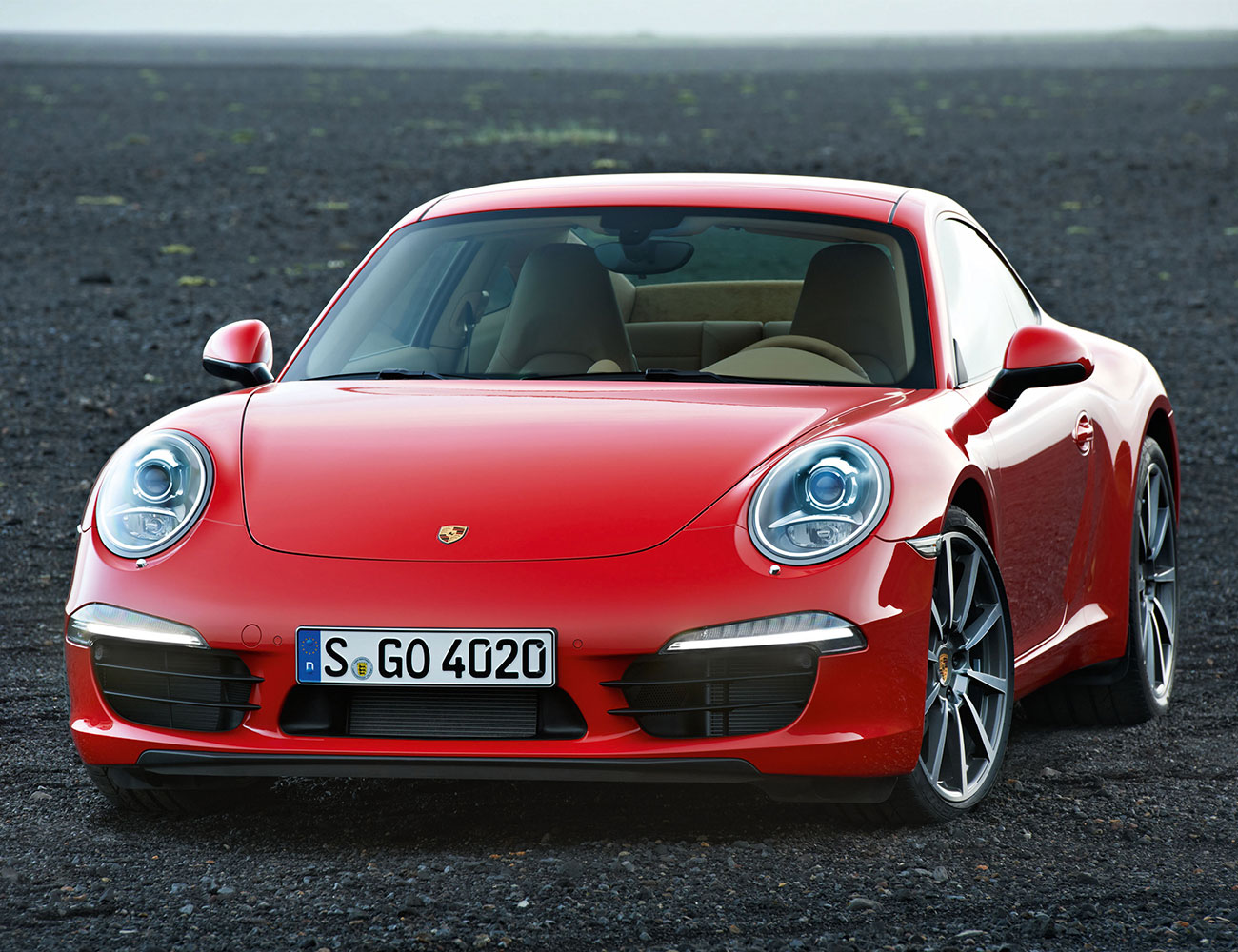
The 911 is Porsche’s legendary sports car. It’s a two-door, two-plus-two seat, rear-engine performance vehicle. The Carrera is the base model 911. The Carrera has 370 hp, while the Carrera S provides a bump to 420 hp for an extra $14,000. The “4” versions have all-wheel-drive instead of rear-wheel-drive, for an extra $6,900. The Carrera comes as both a coupe and a convertible, known as a Cabriolet. All Carreras can be fitted with either a manual or a PDK.

Body Style: Coupe, Convertible

Models:

• Carrera/Carrera 4
• Carrera S/Carrera 4S
• Carrera Cabriolet/Carrera 4 Cabriolet
• Carrera S Cabriolet/Carrera 4S Cabriolet

Engines:

• Twin-turbocharged 3.0-liter boxer-six

Base MSRP: $91,100

New 911 Carrera S  (992-generation)
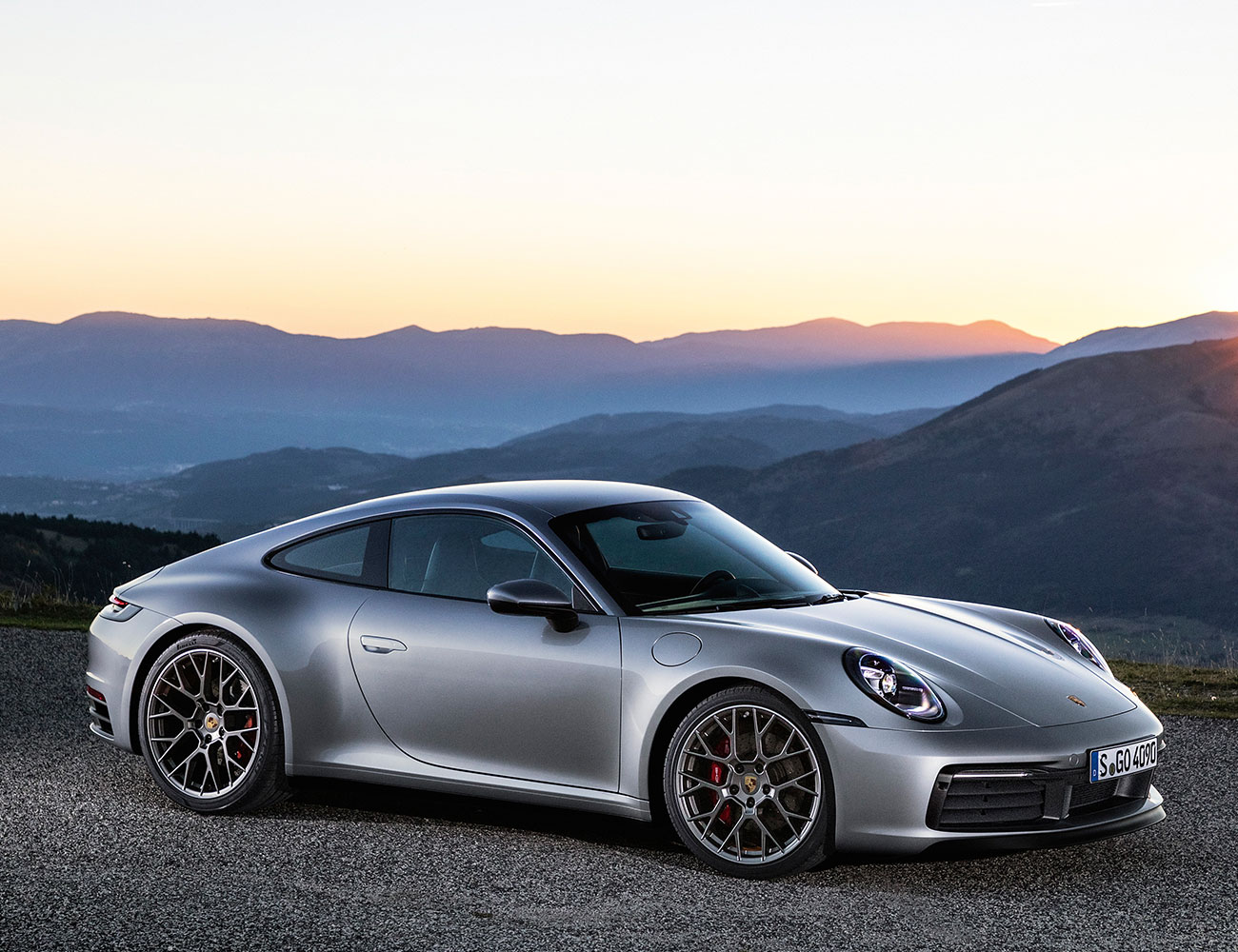
Porsche launched the new 992 generation of the 911 with the Carrera S and Carrera 4S, selling them concurrently with the outgoing 991 generation. The new models get an additional 23 hp (for a total of 443 hp) and 22 more pound-feet of torque (for 390 lb-ft) and accelerate quicker than the old ones: The 991-gen 911 Carrera 4S goes from 0-60 mph in 4.0 seconds, while the 992 model will do it in 3.4 seconds. It only comes with an eight-speed PDK at this time, but a manual is expected to be added in the near future.

Body Style: Coupe, Convertible

Models:

• Carrera S/Carrera 4S
• Carrera S Cabriolet/Carrera 4S Cabriolet

Engines:

• Twin-turbocharged 3.0-liter boxer-six

Base MSRP: $113,300

911 Carrera T
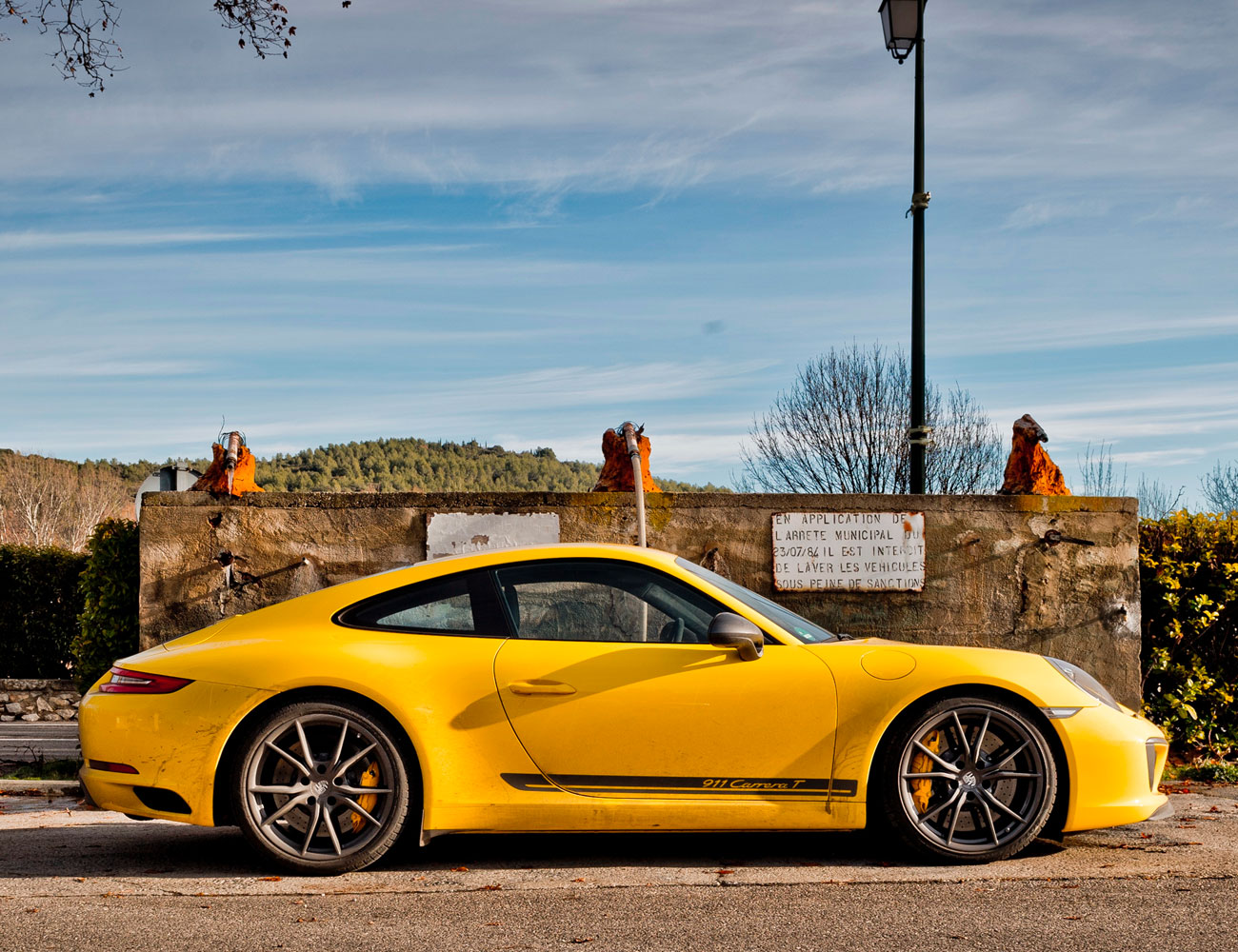
The Carrera T is a specialized gem made for driving enthusiasts. It uses the same engine as a base Carrera but, for an additional $10,000, drops some weight, adds performance features, and stiffens the suspension. A buyer can also delete the rear seat. The Carrera T can come with a seven-speed manual or a PDK. This car is meant to provide the purest 911 driving experience, even though you could get a more powerful Carrera S for $3,000 more.

Body Style: Coupe

Models:

• Carrera T

Engines:

• Twin-turbocharged 3.0-liter Boxer 6

Base MSRP: $102,100

911 Targa
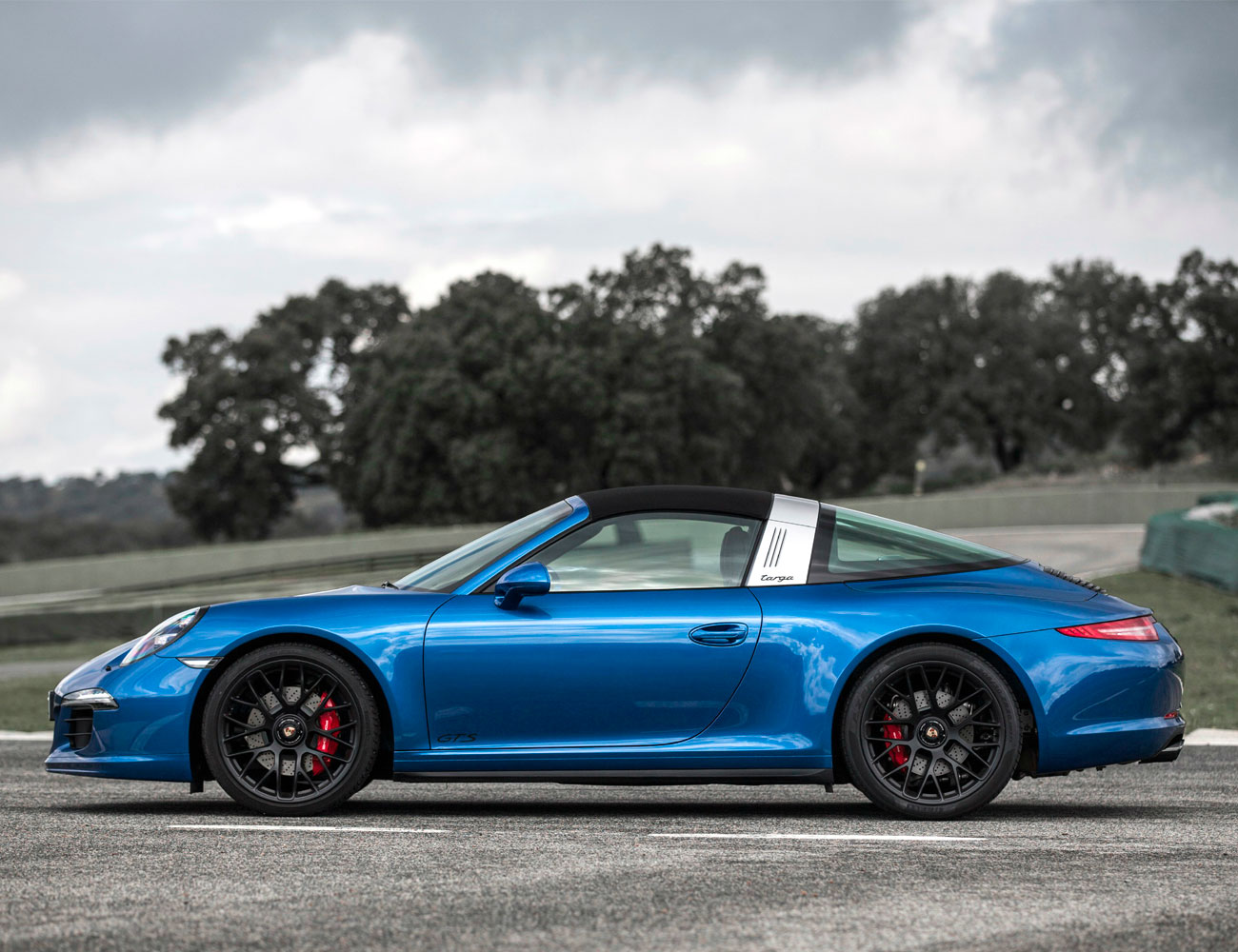
The Targa is a retro bodystyle variant of the Carrera. It splits the difference between coupe and convertible with a retractable roof panel that leaves a distinct roll bar and rear window erected. Porsche began using the Targa top in the 1960s. The Targa only comes with AWD.

Body Style: Targa

Models:

• Targa 4
• Targa 4S

Engines:

• Twin-turbocharged 3.0-liter boxer-six

Base MSRP:$110,300

911 Carrera GTS
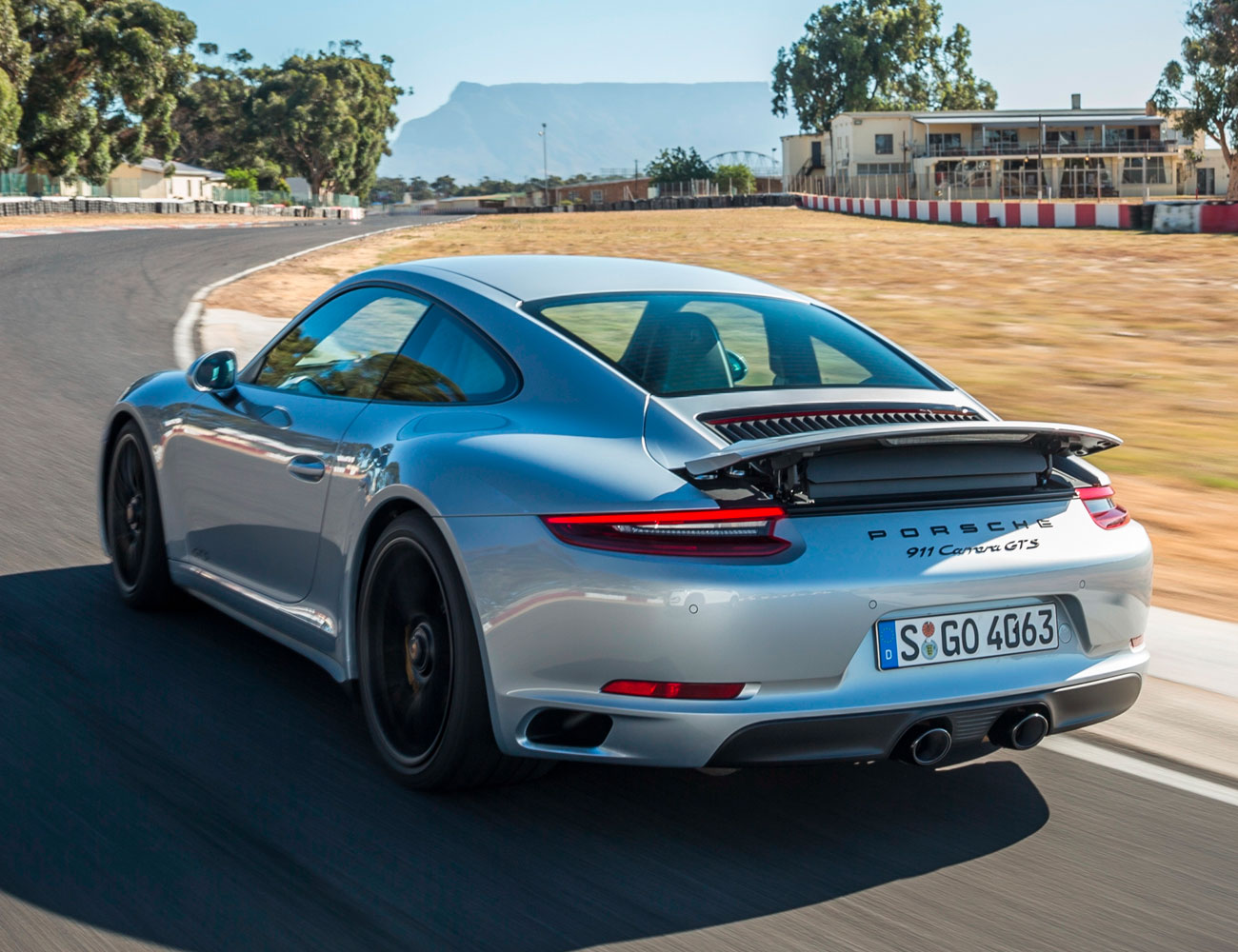
The 911 Carrera GTS is a performance variant slotting above the Carrera S. It can come as a coupe, convertible, or Targa. Buyers can chose between RWD and AWD (except the Targa GTS, which is AWD only) and between a manual or a PDK. The 3.0-liter flat six is tuned to 450 hp and 405 lb-ft of torque. The Carrera 4S GTS with the Sport Chrono package and PDK can accelerate from 0-60 mph in 3.4 seconds.

Body Style: Coupe, Convertible, Targa

Models:

• Carrera GTS/ Carrera GTS Cabriolet
• Carrera 4 GTS/ Carrera 4 GTS Cabriolet
• Targa 4 GTS

Engines:

• Twin-turbocharged 3.0-liter boxer-six

Base MSRP: $120,700

911 Turbo
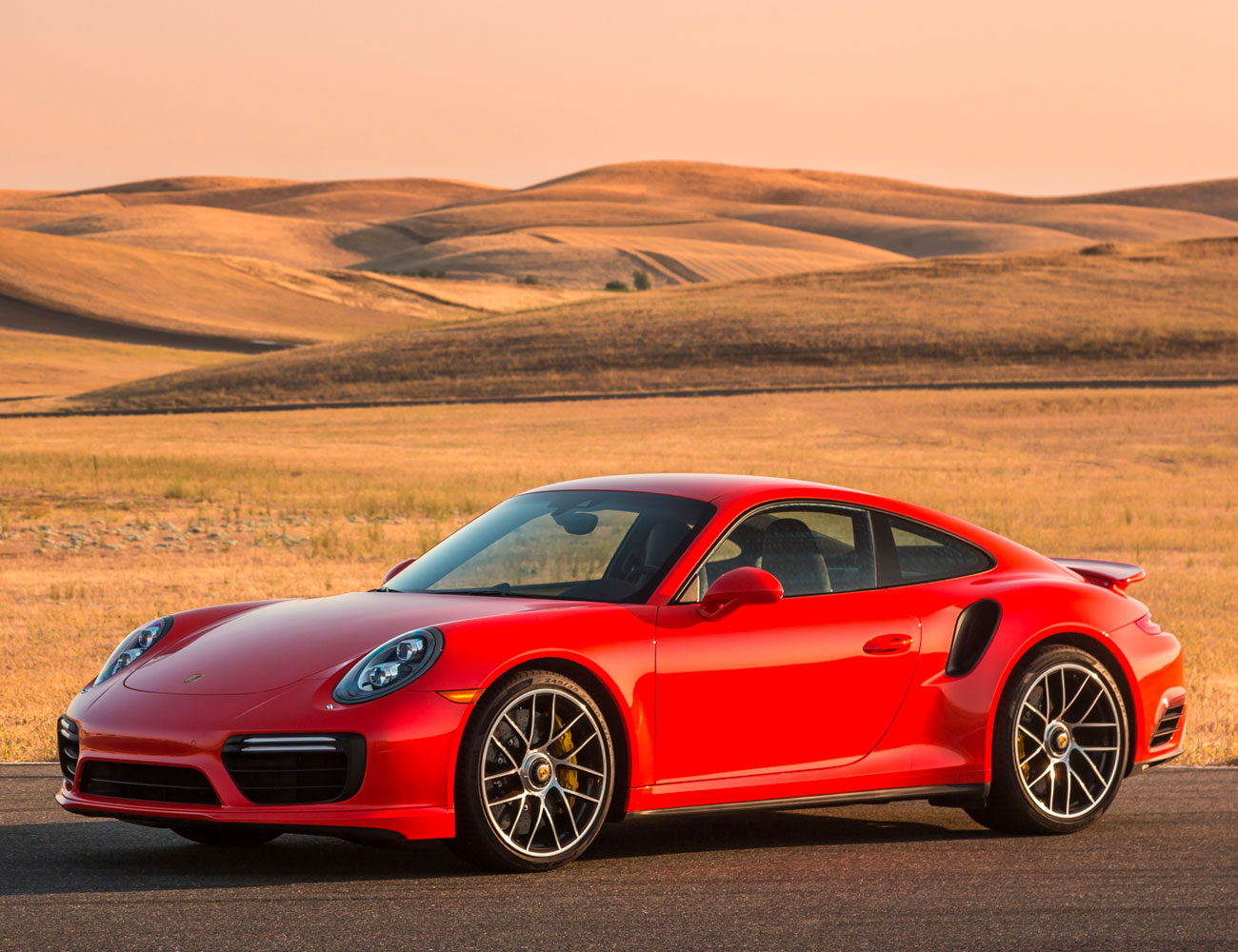
“Turbo” should mean less now than it used to, since almost every Porsche uses a turbocharged engine. But Porsche has kept the historic moniker for its high-performance ranges. The 3.8-liter flat six is tuned up to 540 hp for the Turbo and 580 hp for the Turbo S. Every Turbo can accelerate from 0-60 mph in 3.0 seconds or less with the Sport Chrono package. The Turbo range shoots for raw performance over tradition: There is no manual option, and all Turbos are AWD.

Body Style: Coupe, Convertible

Models:

• Turbo / Turbo Cabriolet
• Turbo S / Turbo S Cabriolet

Engines:

• Twin-turbocharged 3.8-liter boxer-six

Base MSRP: $161,800

911 Speedster
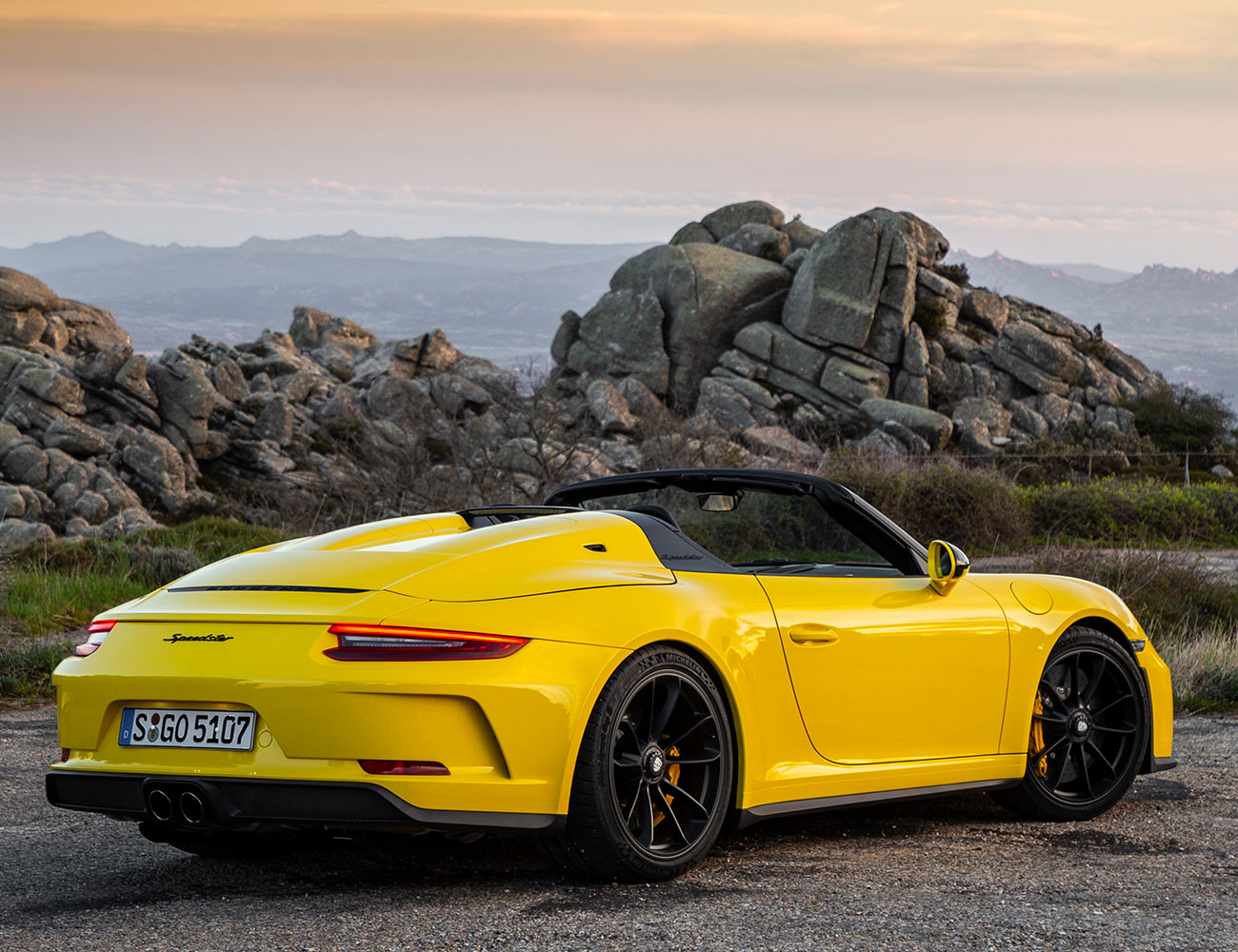
The 911 Speedster is a 1,948-unit limited run of the 991-generation model. It’s a tribute to the classic Porsche 356, a lightweight open-top sports car. The Speedster caters to Porsche purists with a naturally aspirated 4.0-liter flat six making 502 hp and delivering a 3.8-second run from 0-60 mph. A manual transmission is the only option. Base MSRP is $274,500, more than $100,000 more expensive than the 911 Turbo.

Body Style: Convertible

Models:

• 911 Speedster

Engines:

• 4.0-liter boxer-six

Base MSRP: $274,500

911 GT3
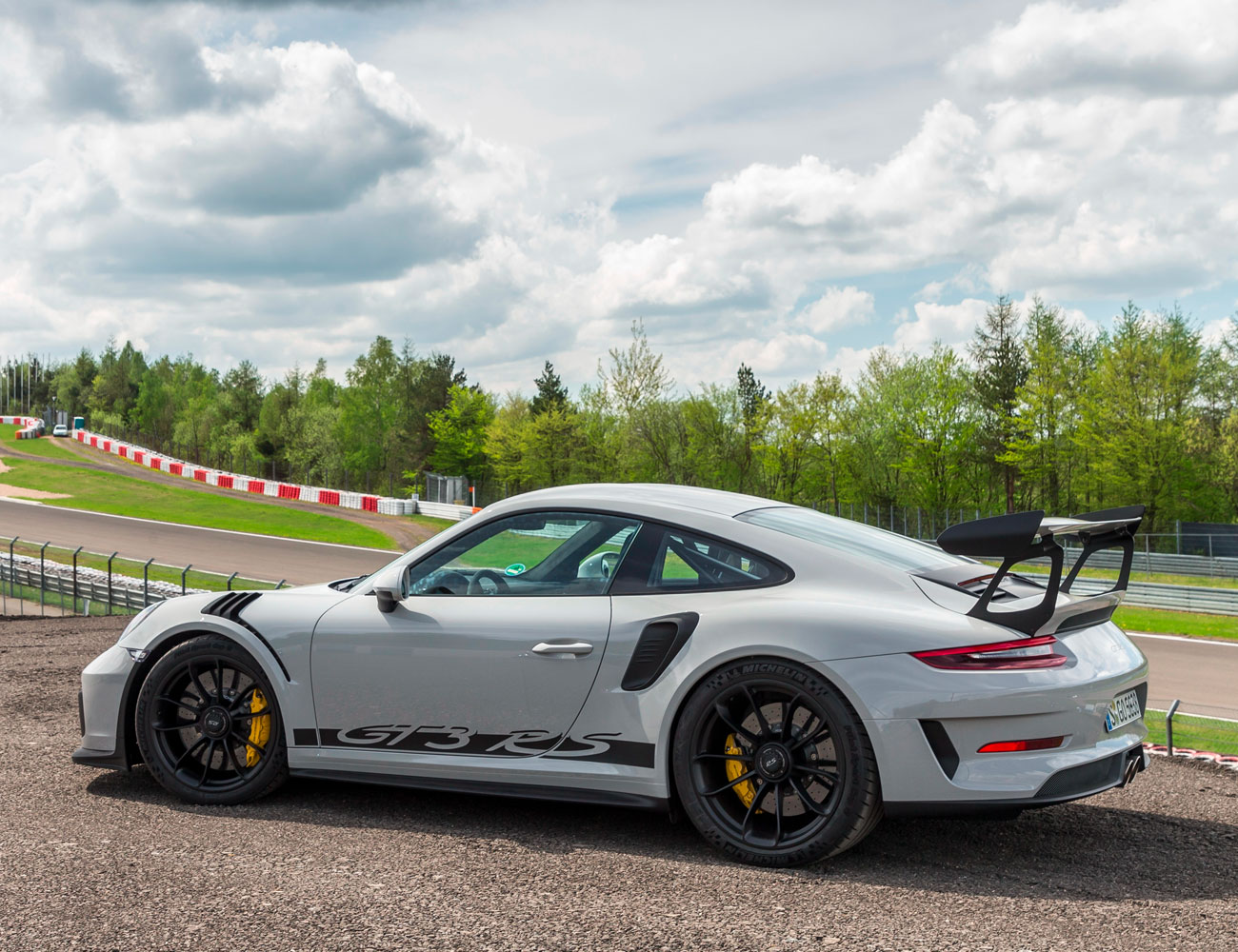
The GT3 is a track-tuned high-performance version of the 911. It comes in two trims: the GT3 (500 hp, 0-60 mph in 3.8 seconds) and the GT3 RS (520 hp, 0-60 mph in 3.0 sec). Both employ a 4.0-liter naturally-aspirated flat six. The GT3 RS only has a PDK, but in large part due to American 911 enthusiasts, the GT3 can come with that or a six-speed manual.

Body Style: Coupe

Models:

• GT3
• GT3 RS

Engines:

• 4.0-liter boxer-six

Base MSRP: $143,600

911 GT2 RS
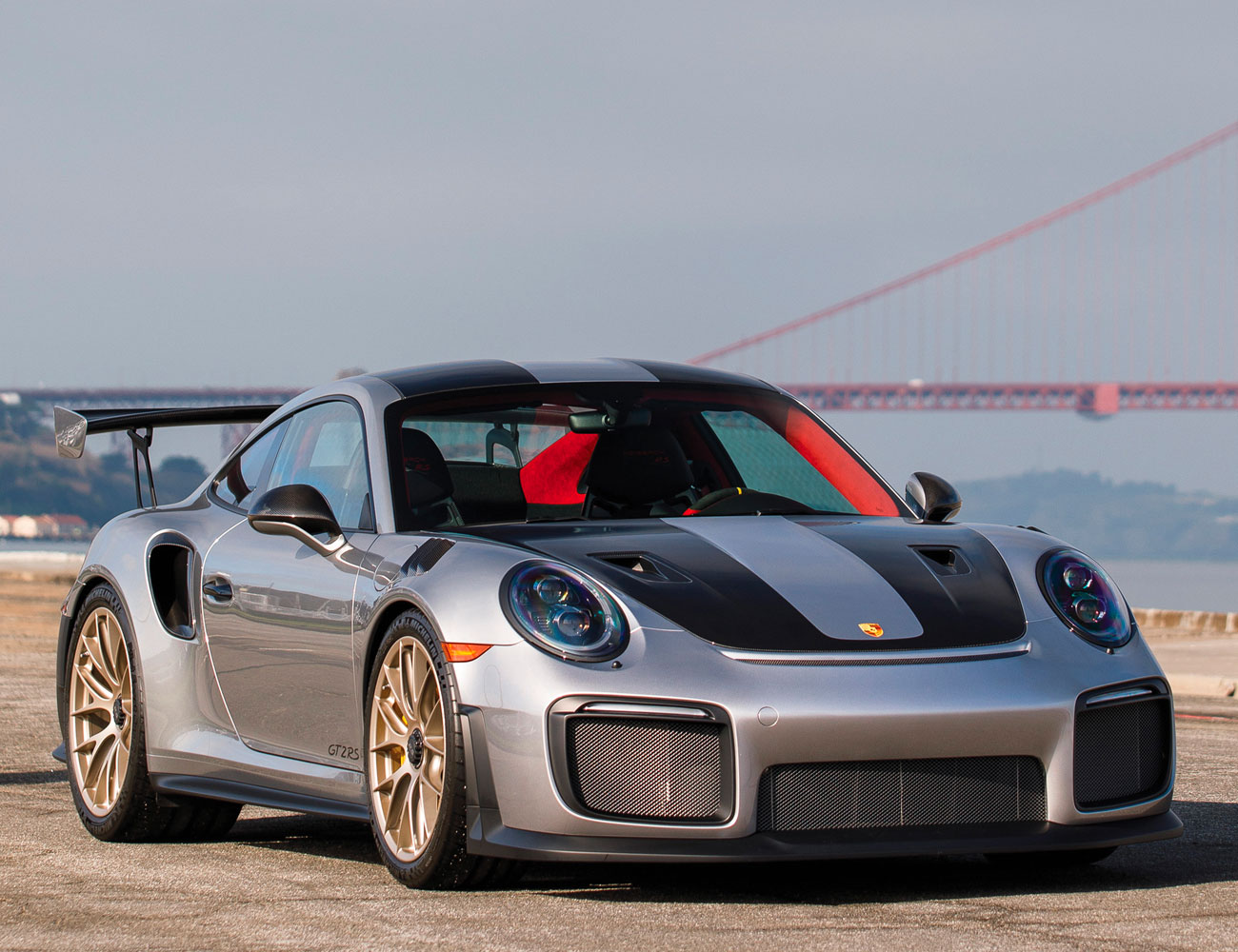
The 911 GT2 RS is Porsche’s range-topping rear-engined sports car. It’s the most powerful factory-built Porsche 911 ever, producing 690 hp from a twin-turbo 3.8-liter boxer six. It accelerates from 0-60 mph in 2.7 sec and reach a top speed of 211 mph. It’s only available with a PDK transmission and RWD. It’s the most expensive 911, with a base price of $293,200 — more than three times the cost of the base Carrera.

Body Style: Coupe

Models:

• GT2 RS

Engines:

• Twin-turbocharged 3.8-liter boxer-six

Base MSRP: $293,200

Panamera
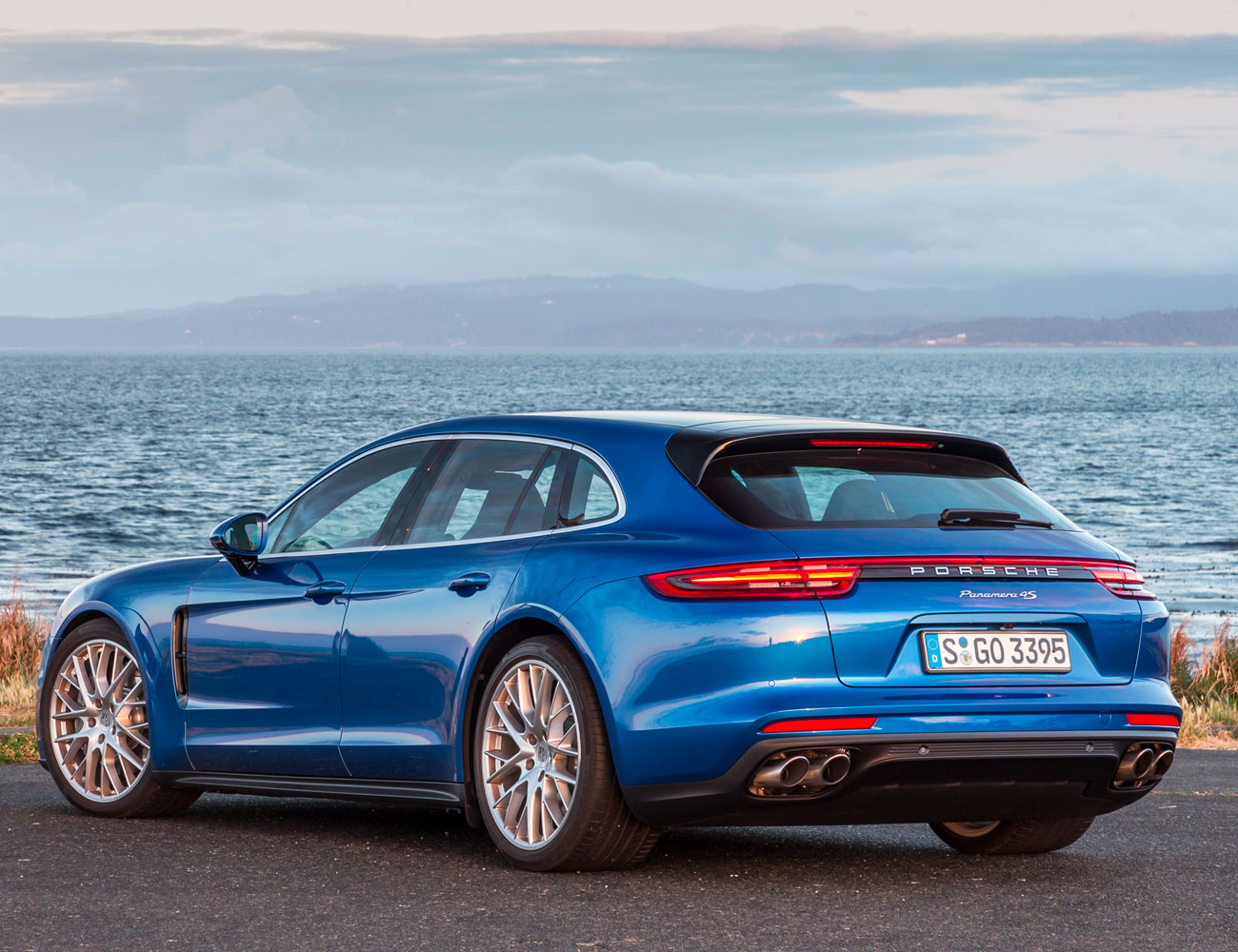
The Panamera is Porsche’s front-engined, four-door luxury sedan. The base Panamera uses a 330-hp 3.0-liter V6 and is available in RWD and AWD. The S versions get a twin-turbo 2.9-liter V6 that puts out 440 hp and accelerates to 60 mph in 4.2 seconds. There are three Panamera body styles: a standard fastback sedan; the Executive, which has an extra-long wheelbase for more leg room; and the Sport Turismo, which is basically a station wagon. All Panameras come with an eight-speed PDK.

Body Style: Sedan, Executive Sedan, Wagon

Models:

• Panamera
• Panamera 4/4 Sport Turismo/4 Executive
• Panamera 4S/4S Sport Turismo/4S Executive

Engines:

• Turbocharged 3.0-liter V6
• Twin-turbocharged 2.9-liter V6

Base MSRP: $86,300

Panamera GTS
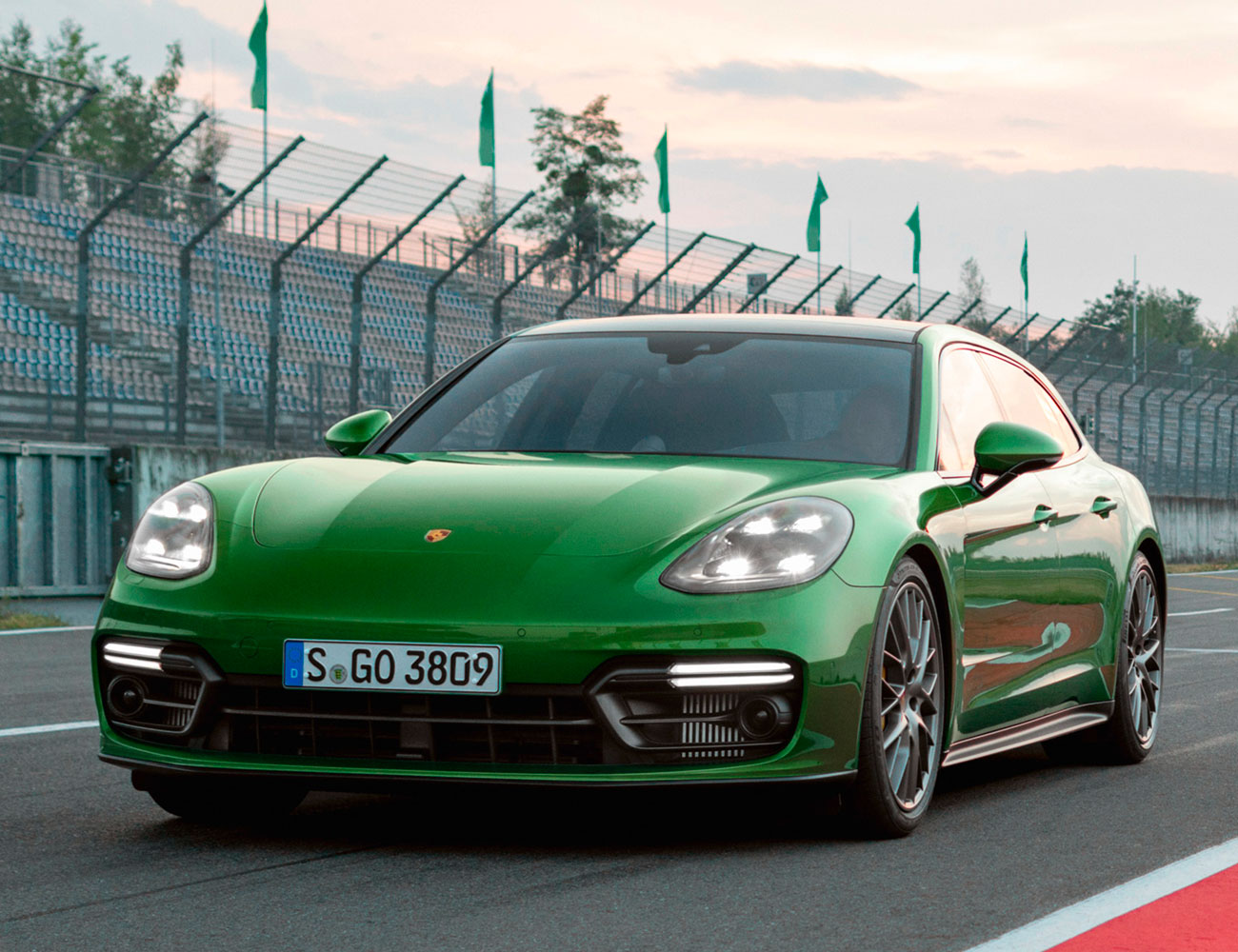
The Panamera GTS is a higher-performance Panamera trim. It’s available in both the standard fastback and Sport Turismo wagon styles. The twin-turbocharged 4.0-liter V8 produces 453 hp and 457 lb-ft and propels the car to 60 mph in 3.9 seconds with the Sport Chrono package.

Body Style: Sedan, Wagon

Models:

• Panamera GTS/GTS Sport Turismo

Engines:

• Twin-turbocharged 4.0-liter V8

Base MSRP: $128,300

Panamera Turbo
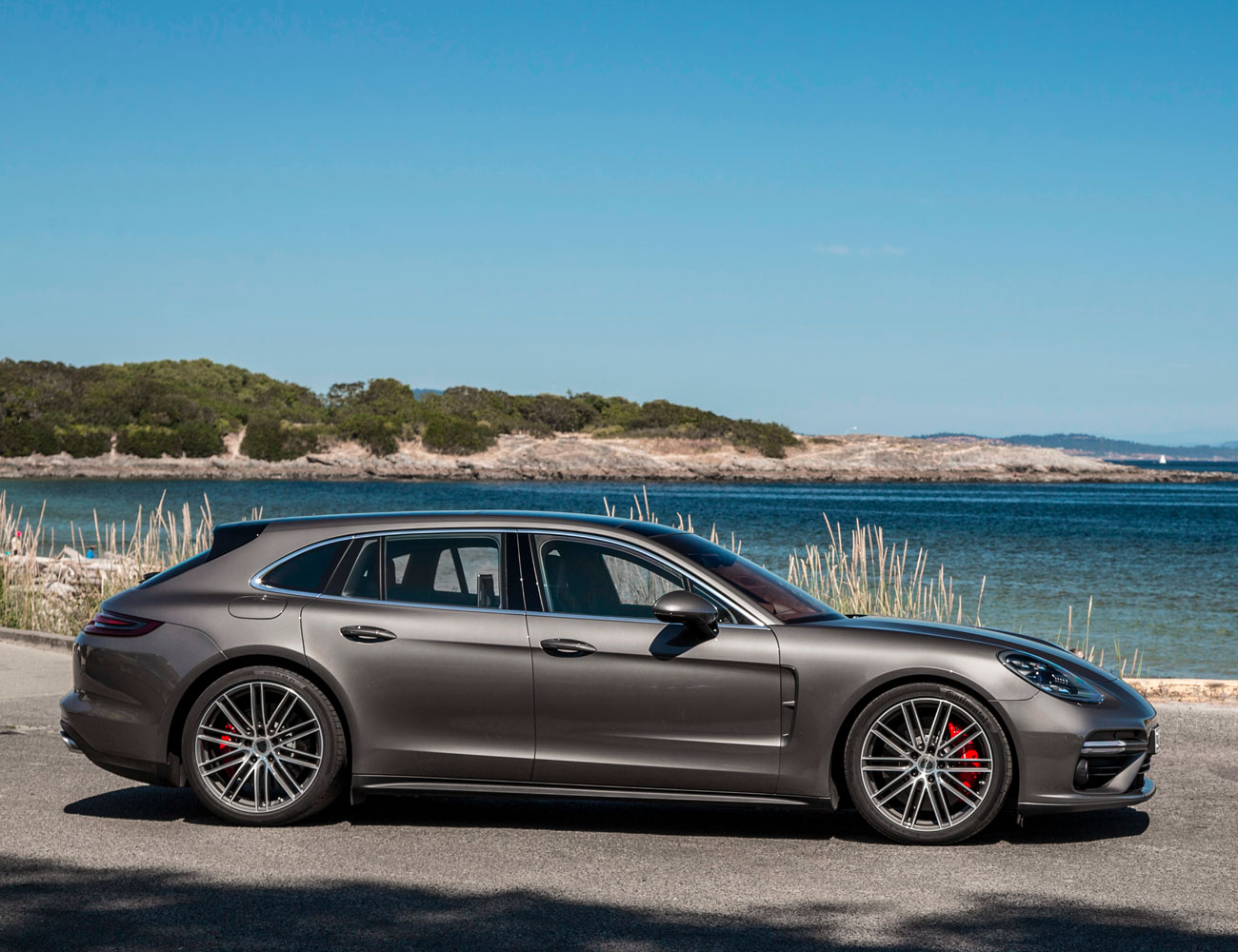
The Panamera Turbo is the most powerful conventionally-powered model in the Panamera range. With 550 hp and 567 lb-ft from its V8, the AWD Turbo gets to 60 mph from a stop in 3.6 seconds and reaches a top speed of 190 mph. It’s available in regular, Executive and Sport Turismo versions.

Body Style: Fastback Sedan, Wagon, Executive Sedan

Models:

• Panamera Turbo/Turbo Sport Turismo/Turbo Executive

Engines:

• Twin-turbocharged 4.0-liter V8

Base MSRP: $151,500

Panamera E-Hybrid
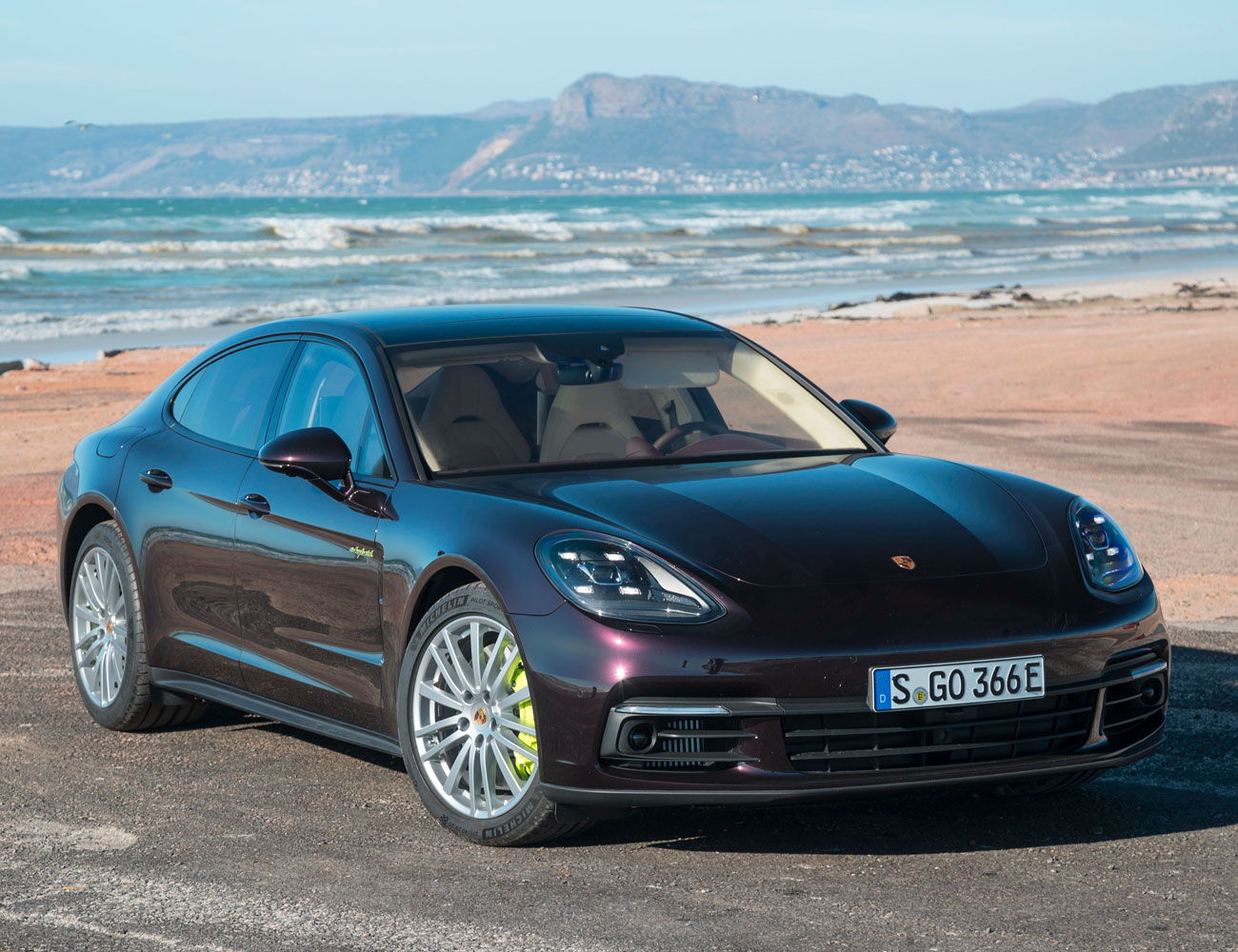
Porsche offers two E-Hybrid ranges of the Panamera. The Panamera 4 range uses a 2.9-liter V6 and an electric motor, putting out 457 hp and 516 lb-ft combined. It accelerates to 60 mph in 4.4 seconds and earns 23 mpg combined. The Panamera Turbo S range, which starts at more than $80,000 more, utilizes a 677-hp 4.0-liter V8 and an electric motor, getting to 60 mph in just 3.2 seconds and hitting a 192 mph top speed.

Body Style: Fastback Sedan, Wagon, Executive Sedan

Models:

• Panamera 4 E-Hybrid/E-Hybrid Sport Turismo/E-Hybrid Executive
• Panamera Turbo S E-Hybrid/E-Hybrid Sport Turismo/E-Hybrid Executive

Engines:

• Twin-turbocharged 2.9-liter V6 w/14.1-kWh lithium-ion battery
• Twin-turbocharged 4.0-liter V8 w/14.1-kWh lithium-ion battery

Base MSRP: $102,900

Macan
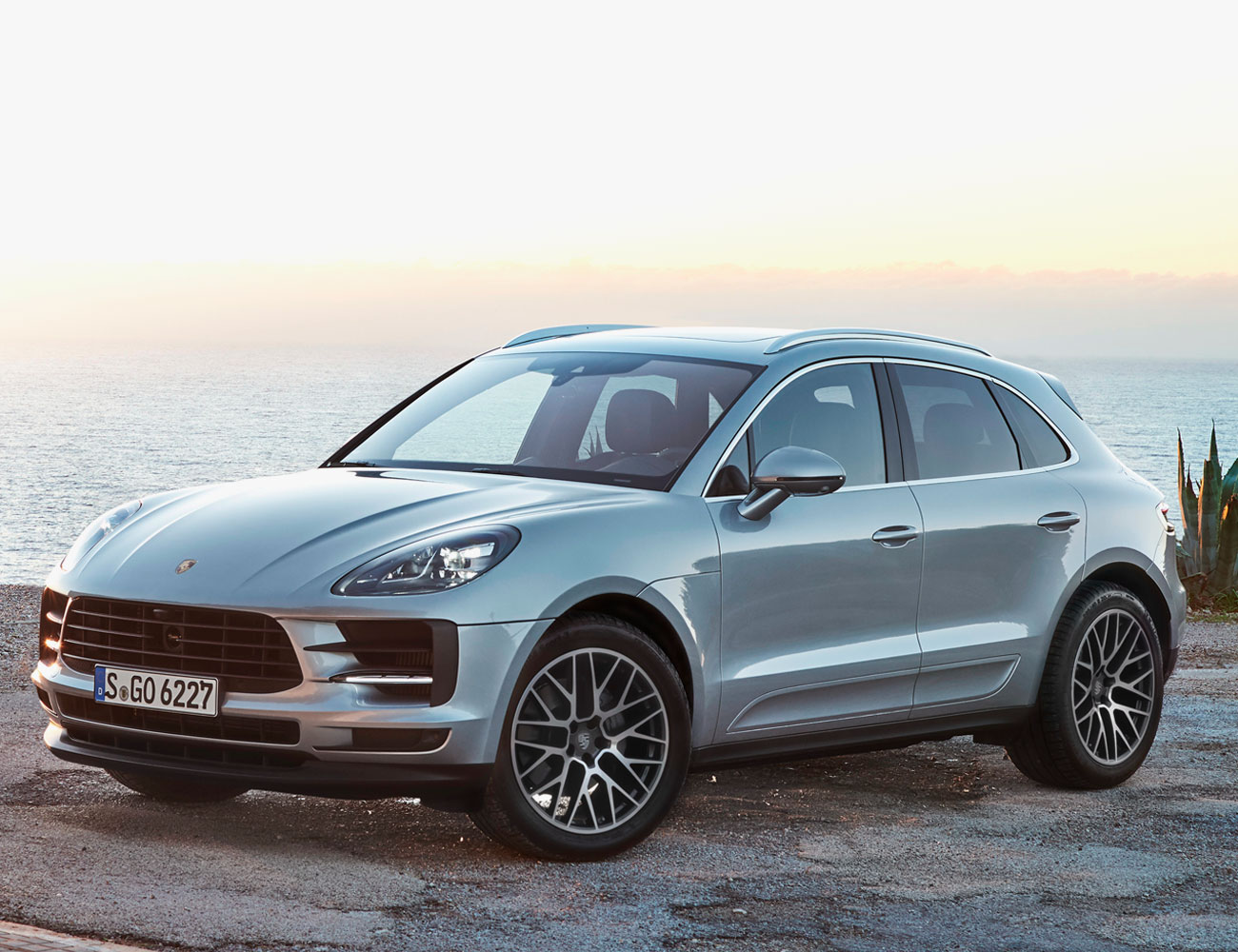
The Macan is Porsche’s entry-level compact crossover SUV. It is Porsche’s cheapest and best-selling model by far. The base Macan has a 248-hp 2.0-liter inline-four and goes from 0-60 mph in 6.3 seconds. The $58,600 Macan S brings a 348-hp 3.0-liter V6 and a 0-60 mph time of 5.1 seconds to the table. All models have a PDK transmission. Porsche plans for the next-generation Macan (if it’s still called that) to go fully electric.

Body Style: SUV

Models:

• Macan
• Macan S

Engines:

• Turbocharged 2.0-liter inline-four
• Turbocharged 3.0-liter V6

Base MSRP: $49,900

Cayenne
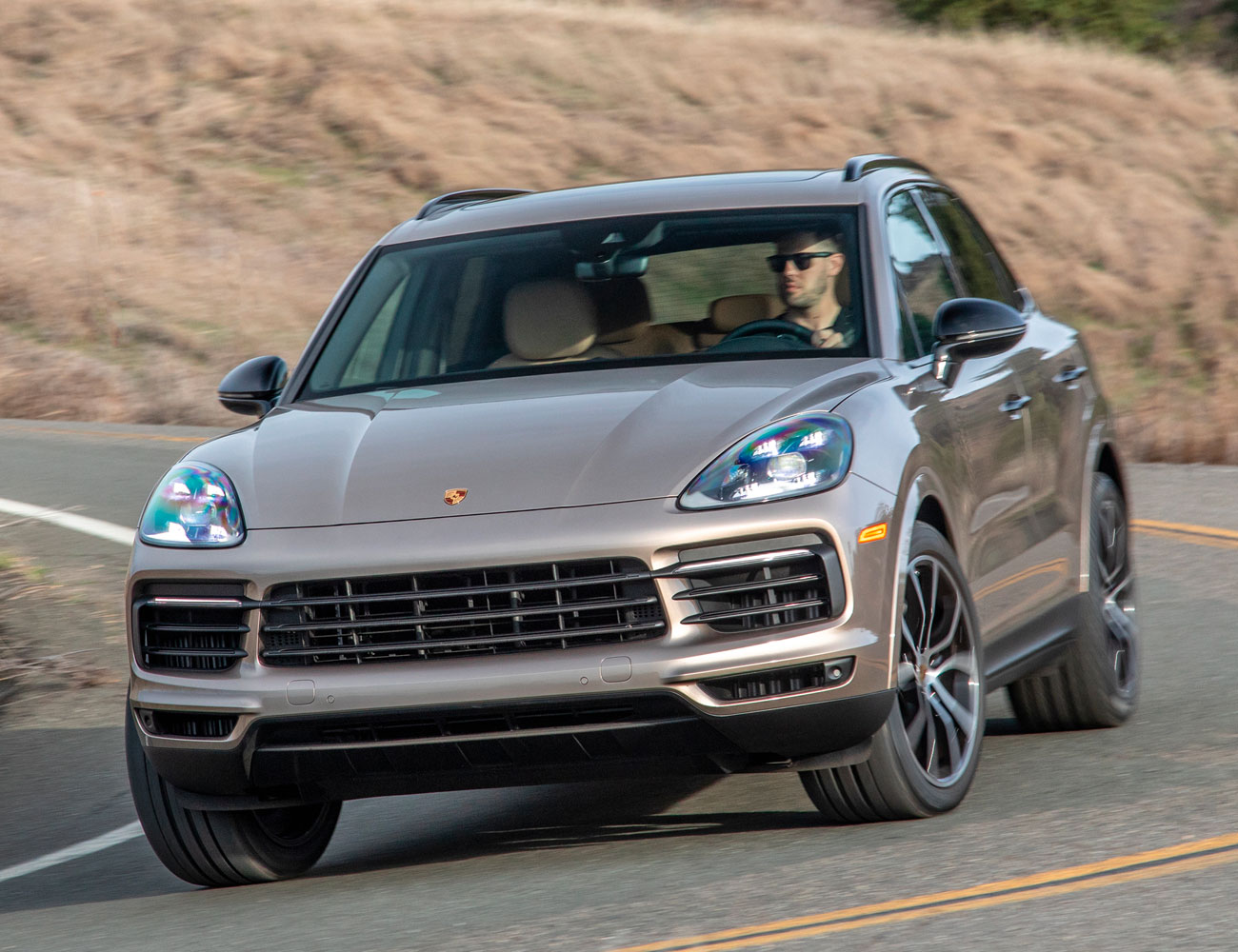
The Cayenne is Porsche’s midsize luxury SUV. Pure gasoline engines come in three trims: the base, with a turbo V6 making 335 hp; the S, with a twin-turbo V6 making 434 hp; and the Turbo, with a twin-turbo V8 making 541 hp and launching it from 0-60 mph in 3.9 sec. The Cayenne also comes in a 477-hp E-Hybrid version, with EPA fuel economy estimates estimates pending. Notably, the Cayenne uses an eight-speed Tiptronic automatic transmission instead of the Porsche PDK.

The Cayenne may be the Porsche vehicle that shows the carmaker’s integrated, parts-sharing relationship with the broader VW Group better than any of the rest. It shares all three engines with Audi, in one form or another, and it’s built on the same VW MLB Evo platform as the Audi Q8, the VW Touareg, the Lamborghini Urus and the Bentley Bentayga.

Body Style: SUV

Models:

• Cayenne
• Cayenne S
• Cayenne Turbo
• Cayenne E-Hybrid

Engines:

• Turbocharged 3.0-liter V6
• Turbocharged 3.0-liter V6 w/14.1 kWh lithium ion battery
• Twin-turbocharged 2.9-liter V6
• Twin-turbocharged 4.0-liter V8

Base MSRP: $65,700

Cayenne Coupe
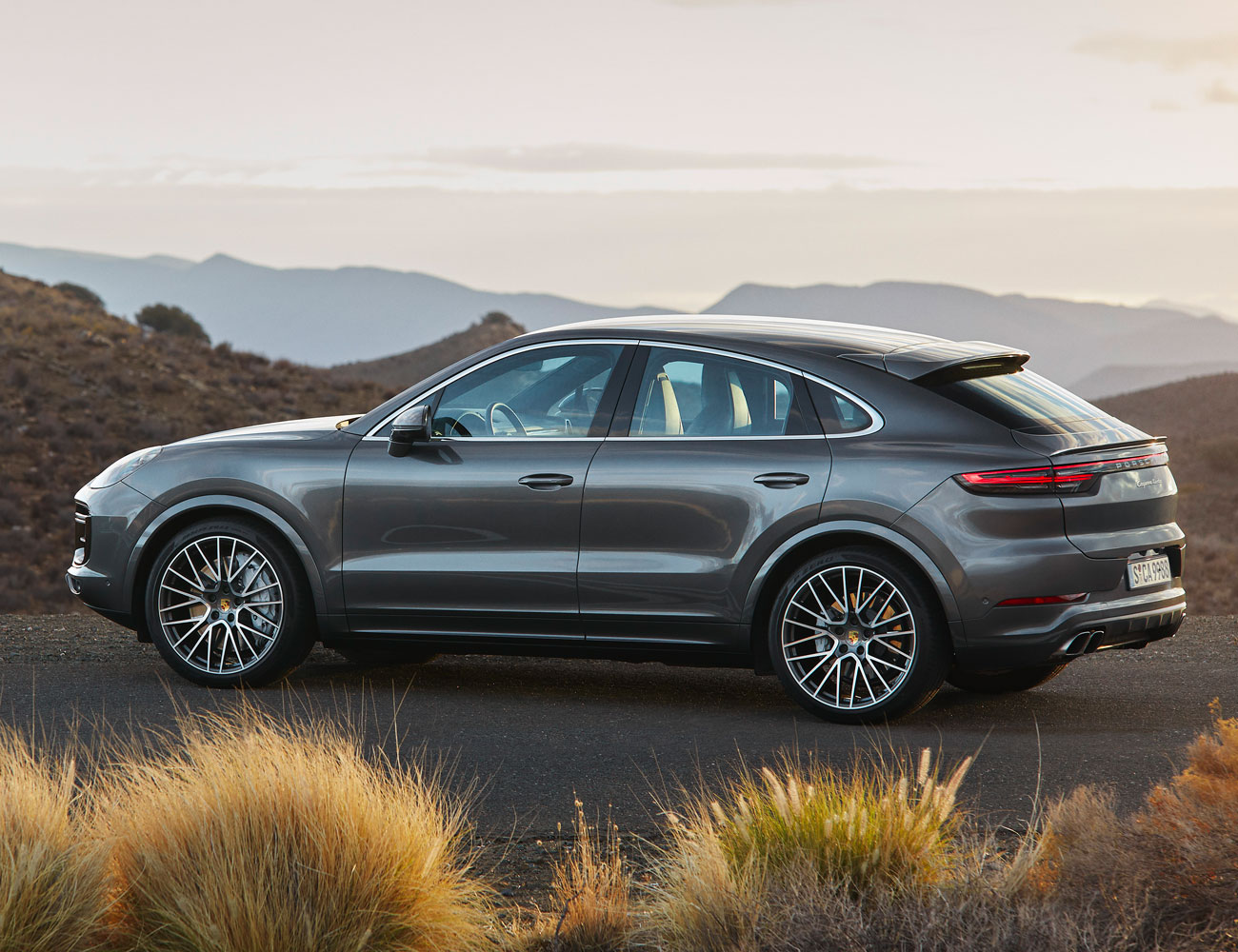
Yes, the word “coupe” has been stretched to fit a four-door SUV. The Cayenne Coupe is a trendy new variant of the Cayenne, offering a sporty, rakish back end on an SUV. The trim levels and mechanicals are the same as the standard Cayenne, but the cost goes up. In its defense, it looks more like a “typical Porsche” than the regular Cayenne, and selling these is what helps pay for the Porsche sports cars you like.

Body Style: Fastback SUV

Models:

• Cayenne Coupe
• Cayenne Coupe S
• Cayenne Coupe Turbo

Engines:

• Turbocharged 3.0-liter V6
• Twin-turbocharged 2.9-liter V6
• Twin-turbocharged 4.0-liter V8

Base MSRP: $75,300
Note: Purchasing products through our links may earn us a portion of the sale, which supports our editorial team’s mission. Learn more here.

The Best Used Off-Roaders We’d Buy for Less Than $10,000 Right Now

In the used car realm, a budget of $10,000 can go a long way. That’s maybe even more true for off-roaders, where the prices on new models have climbed to El Capitan-like heights in recent years. Sure, the mileage on those used $10K rock crawlers may be on the high side, and those miles may have been a little more brutal than the ones on your average Lexus ES, especially if previous owners were genuine adventure seekers. But just think of that as “real-world testing.” It makes your new-to-you off-roader even more authentic.

Naturally, now that trail-cruising season is in full swing, we couldn’t help ourselves from parsing through the used car listings for some affordable off-roaders. Using $10,000 as a budget cap, these are the best off-roaders we’d buy right now.

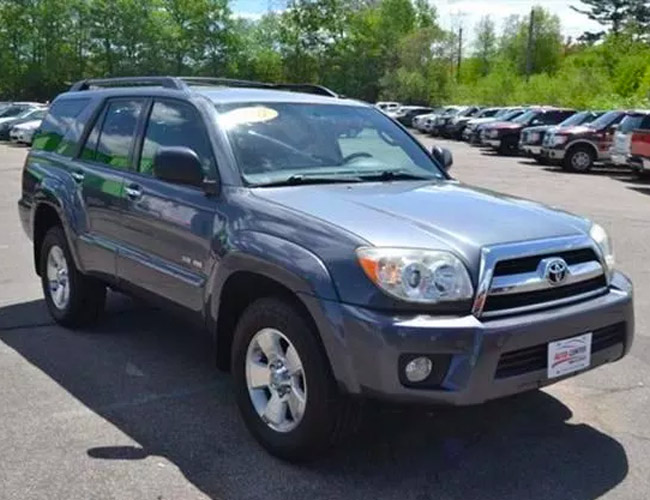
2007 Toyota 4Runner SR5 4WD

4Runners command high prices and hold their value incredibly well, for good reason: They’re reliable, solid, and capable. Nearly 150,000 miles may seem high, but for a clean Toyota, that’s not bad at all. And luckily, I’ve still got plenty of mix CDs to slide into the dashboard player… — Will Sabel Courtney, Motoring Editor

Mileage: 145,280 miles
Original MSRP: $30,555

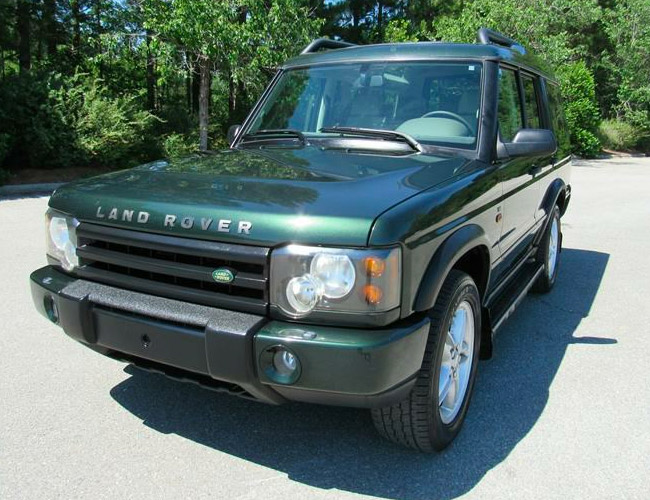
2004 Land Rover Discovery SE II

For a short period of time, my dad owned a Land Rover Discovery II: the “Disco.” It was metallic gold, and it was my favorite car ever — until the engine overheated and caused a warped head. Typical Land Rover. 100K miles seems to be the breaking point on these aluminum-block engines. When it worked, however, it was the coolest thing to drive, with its extremely upright seating position and a cockpit that gave you the confidence to tackle any and all roads. The styling of these has aged extremely well, in my opinion; it’s one of the last boxy Land Rovers that looks fit for an African safari. I’d take one in green, but would pay close attention to the maintenance, of course. — Hunter D. Kelley, Associate Designer

Mileage: 86,065 miles
Original MSRP: $34,995

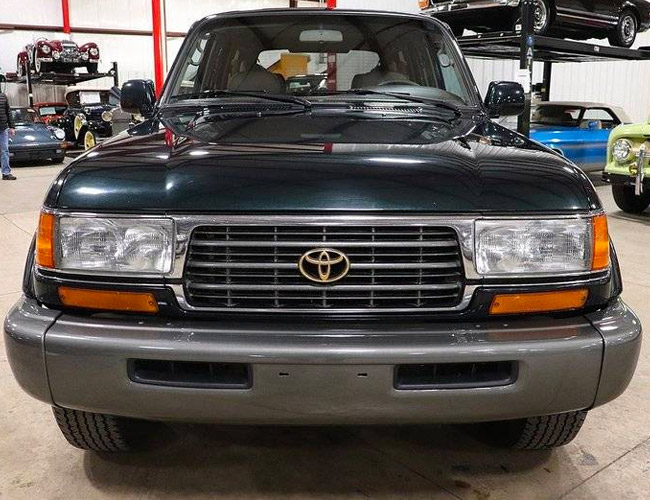
1996 Toyota Land Cruiser

Sure, some might be put off by an off-roader — or any vehicle, really — with 312,409 miles on it. But as far as I’m concerned, that just means this ’96 FJ80-generation Toyota Land Cruiser can truly, madly, deeply take a licking and keep on kicking. Judging by the nearly endless photos in the listing (100, to be exact), she has been pretty well taken care of, all things considered. The exterior and interior look surprisingly good. Yes, there’s significant rust under the hood and on the undercarriage, but this four-wheeling beauty ain’t exactly your Sunday driver. She’s a well-traveled 25-year-old warrior (oh, if those wheels could talk) ready for her last hurrah. I’d love to hop in, slide a disc into the Sony CD player, tear around like a maniac and push the limits till she up and quits — then take my leftover $2,200 and buy rounds of Narragansett for everyone at the bar till the sun comes up. Is that so wrong? — Steve Mazzucchi, Outdoor & Fitness Editor

Mileage: 312,409 miles
Original MSRP: $40,258

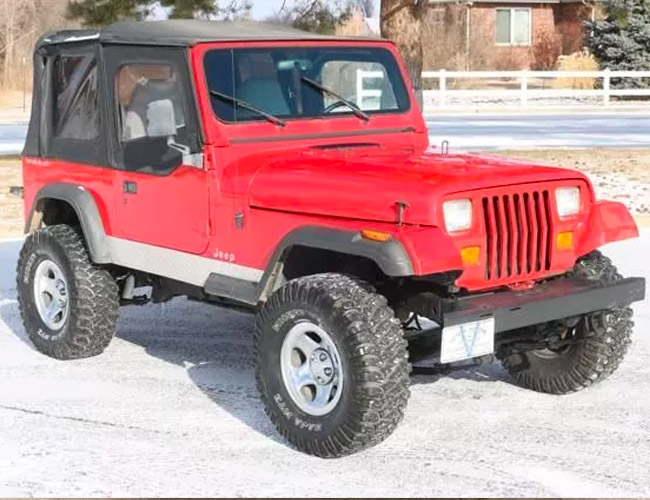
1995 Jeep Wrangler S

Even in base-level trim, a fresh-from-the-factory Jeep Wrangler is still a competent 4×4. Which means it doesn’t take much to turn the adept trail-rider into an outstanding off-roader. Take this particular 1995 Jeep Wrangler S; the only upgrade the owner saw fit to add was a set of grippy 33-inch Micky Thompson all-terrain tires. Despite having 146,000 miles on the ticker, I have no doubt in my mind this grunge child of the ’90s can still tear up a trail or two with ease. — Bryan Campbell, Staff Writer

Mileage: 146,000 miles
Original MSRP: $15,983
Note: Purchasing products through our links may earn us a portion of the sale, which supports our editorial team’s mission. Learn more here.

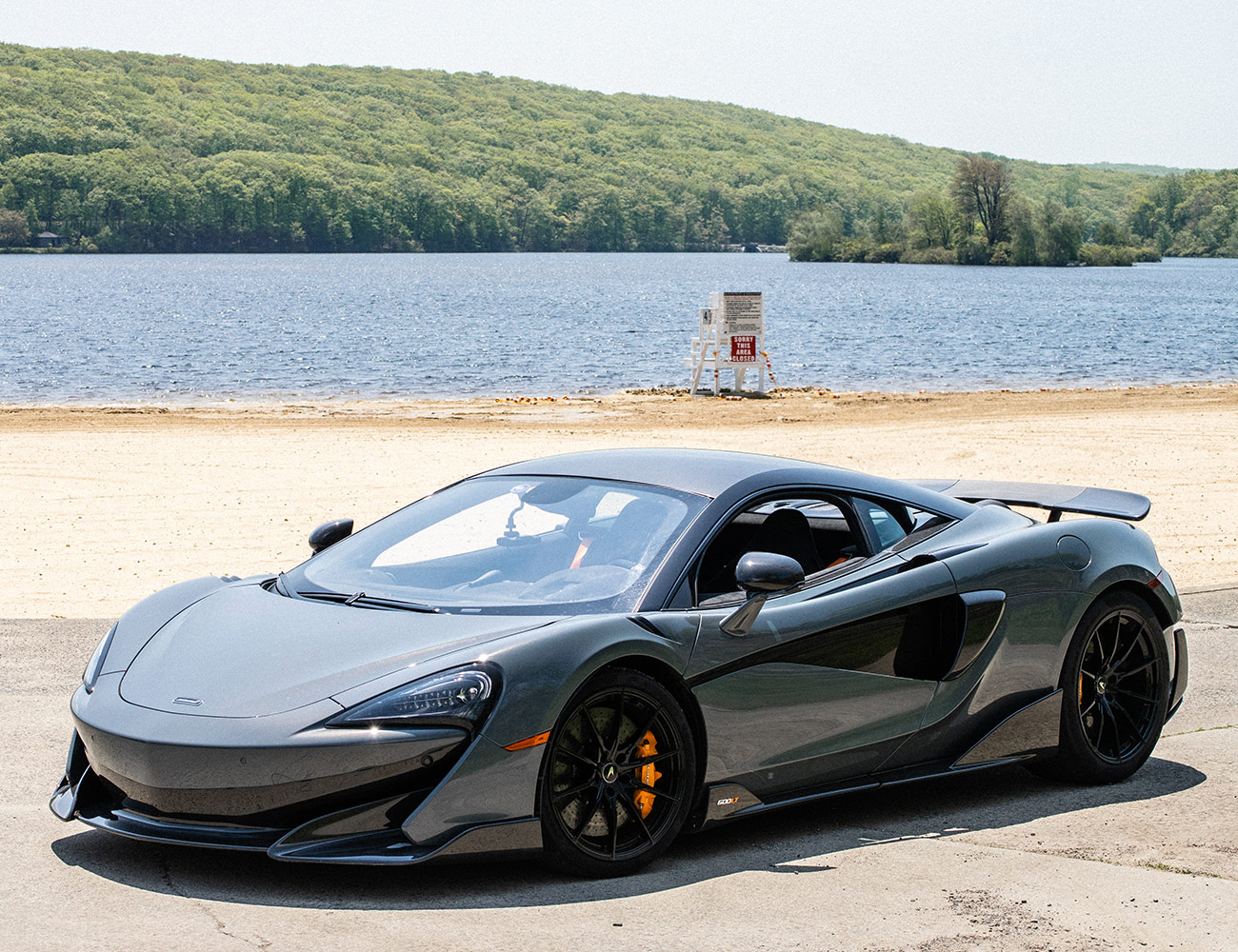
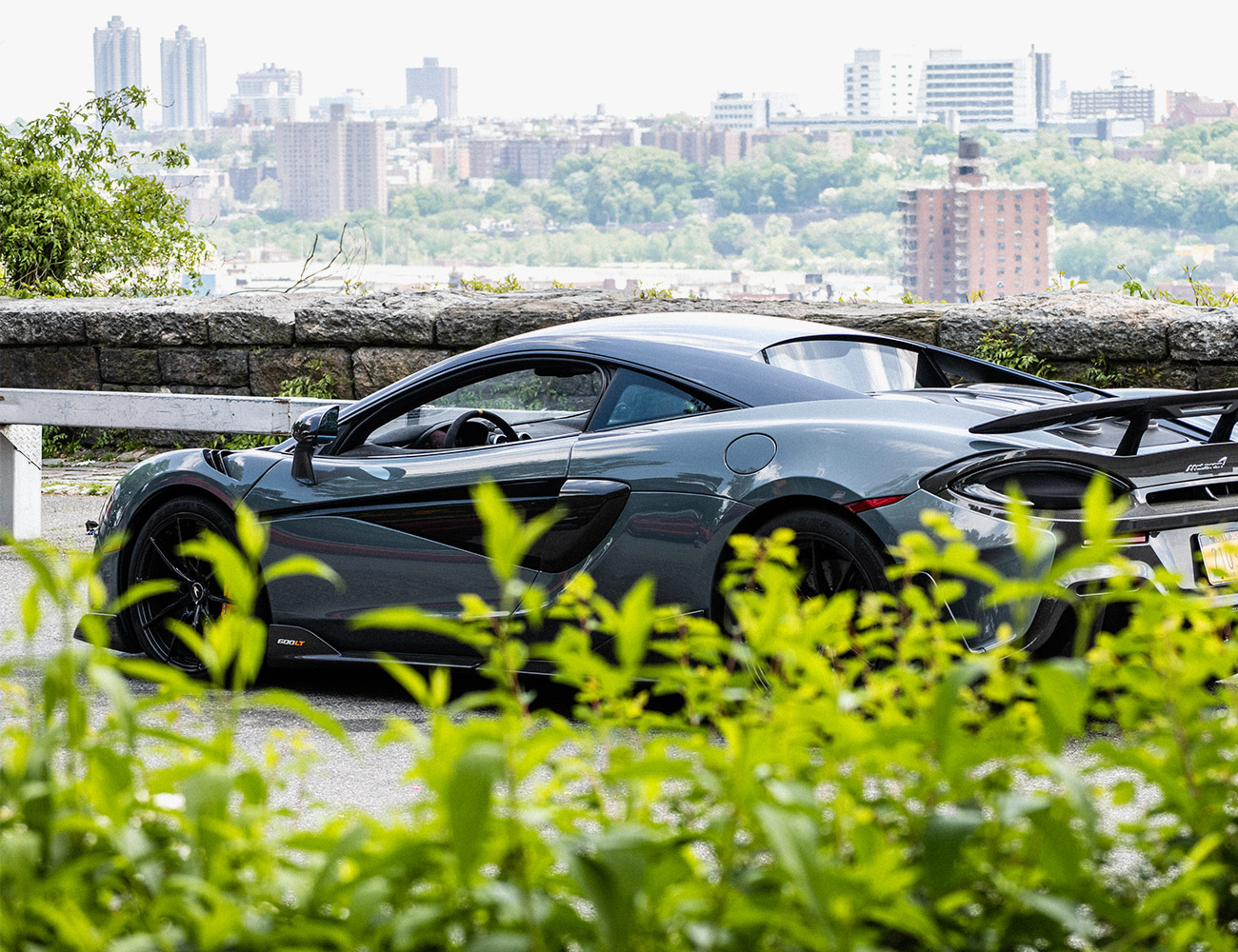
2019 McLaren 600LT Review: A Driver’s Car, Not a Supercar

The McLaren 600LT is not a supercar.

Sure, it might seem like one at first glance: It’s low-slung and mean-looking, with a potent engine mounted between the driver and the rear axle and doors that swing up instead of opening out. But the old axiom about books and covers and judgment applies here as well as ever.

Supercars, you see, are an automaker’s most extreme vehicles; they’re the flagships, the technological leaders, the fastest and most expensive and most superlativiest cars. The 600LT, though, is a member of the company’s Sport Series family — the cheapest, least powerful cars in the McLaren showroom. Granted, that’s like saying an NBA player has the worst vertical leap at the Slam Dunk Contest, but the point still stands: It’s not a supercar.

What the 600LT is, however, is a driver’s car. A vehicle made with the goal of satisfying the cravings of true wheelmen and wheelwomen, people who list “driving” as a hobby on their dating profiles and stretch their dollars to buy better rides rather than save up for weddings or retirement. People, quite possibly, like you.

The Good: Making a fast car isn’t hard to do, if you’re an automaker; there’s almost always more power to be found if you’re willing to spend a little time and a little money. Making a car that’s fun…well, that’s another story. Especially if it’s also fast, counterintuitively; when a car is designed to excel at high speeds, it can be tough to make sure it’s involving at lower ones. But McLaren made it happen with the 600LT, delivering a car that’s as enjoyable at five over the speed limit as it is at 100 over.

Who It’s For: Those whose concept of an ideal weekend involves several hours in a car, tackling curve after curve of winding asphalt, and value that above pretty much else in an automotive purchase. And, of course, have the money to drop on one.

Watch Out For: Much like arch-competitor Porsche, the options can add up quickly — especially if you start getting frisky with the pen when it’s over the section of the order sheet dedicated to McLaren Special Operations, the carmaker’s in-house customizing group. “MSO Defined” exterior carbon fiber add-ons alone added nearly $27,000 to my tester’s $306,440 price.

Something else to watch out for: speed bumps, dips, ramps, and every other sudden change in angle in the asphalt ahead, as that very expensive carbon fiber front splitter will scrape on most of them if you aren’t ready to raise the nose with the hydraulic lifter at every opportunity. (Pro tip from having driven a few exitic cars: If there’s any question in your mind about if you should use the lifter…use the lifter.)

Alternatives: Porsche 911 GT2 RS ($293,200), Ferrari 488 GTB ($256,550), Aston Martin Vantage AMR ($184,995), Mercedes-AMG GT R Pro ($TBA)

Review: The first hint of the 600LT’s driver-centric soul comes the moment you first turn the steering wheel. The power steering system designed to help you push those big 10-spoke wheels around is an old-school hydraulic rack, not one that uses an electric motor like most new cars today. In part because of that, and in part because of all the hard work done by the wizards at Woking, the steering is as close as you can come to ideal in a car made in 2019. It’s heavy with purpose, yet so sharp by today’s standards, like those katanas that can bisect a piece of silk dropped on them from above. It’s instant, natural, the alcantara-covered wheel quickly merging with your arms. It’s a revelation, especially after the likes of the BMW i8 or the Toyota Supra and their numb, electrically-boosted helms.

In spite of the intensity about which it performs its missions, the 600LT works fairly well as a daily driver, too. Those comparatively-concise proportions that make it easy to place on narrow back roads also work to its advantage in traffic, enabling it to slip between cars more easily than Super Duty-wide supercars. (On the off chance you find yourself street-parking your quarter-million-dollar sports car, you’ll find they help with parallel parking, too.)

More impressively, though, it never feels like too much car for the mission, the way the speed machines farther up the performance ladder can. It never feels like it’s too much for the road; it’s never too wide, never too powerful. Like other truly great driver’s cars — stretching from the Mazda MX-5 Miata to the Porsche Boxster to even the Lamborghini Huracan Performante — you never feel like you have to push it deep beyond the legal limits to have fun.

The power isn’t absurd, and neither is the way it’s delivered. You definitely know when the boost comes on; floor it below 2,000 rpm in seventh gear, and velocity increases as slowly as in a straining Hyundai Elantra. Once the snails are hot and the revs climbing the torque curve, though, watch out; it builds speed the way meteors do as they enter earth’s gravity well, all the way up to the 8,500 rpm redline. Be glad that it forces you to keep it on boil, though; it makes it all the easier to drive responsibly when you’re not seeking to tempt Johnny Law.

That said…it’s still every bit worth it to find a chance to uncork the Macca. The numbers speak for themselves: 0 to 62 miles per hour in 2.9 seconds, 0-124 mph in 8.2, the quarter-mile in 10.4, a top speed of 204 mph. What the numbers won’t tell you is just how enjoyable it is to feel that in person — to feel the urgency in every darting motion left or right, to feel the steering, the seat, the air itself crackle with kinetic energy as it howls past pedestrian cars the way other cars howl past pedestrians.  Every car can accelerate, turn, and brake; that’s their job. The McLaren is one of those rare examples where you can tell it really, really enjoys its work.

Granted, the 600LT driving experience isn’t without its issues. The pedal controlling the carbon-ceramic brakes is remarkably sensitive, but only after you nudge down through the first half-inch of travel, where pretty much nothing happens. This half-inch of dead pedal also happens to be right about as deep as your foot wants to travel when holding the car at a stop, so if you’re not paying attention, it’s easy to suddenly find the carbon-fiber prow of your pricey car inching towards the fellow ahead of you — who presumably has no idea you’re there, as the low-slung Macca’s roofline sits at or below the belt line of the average new crossover. And for a car this wild-looking and powerful, the sounds coming out of the engine compartment are a bit of a letdown. There’s rage in the engine’s cry as you wind it up, but it’s not enthralling or dramatic — it’s just raw fury.

The bigger issues lie with more mundane things. The wisecracks about British cars and their electronics fermented into cliche decades before your humble author was born, let alone the 600LT, but that doesn’t mean there isn’t truth to them. The stereo, at one point, began oscillating back and forth between two channels for no apparent reason. Another time, it refused to play whatsoever. The music streaming off my phone through the USB cable and Bluetooth occasionally mystified it; it would refuse to restart after pausing, or respond with a lag time practically measured in minutes. Even when the portrait-oriented Iris infotainment system was working correctly, picking through it for the desired effect can be a challenge; the user interface can seem at times as though it were designed by an alien species whose brains evolved to handle the logic of a world where cause and effect lacked the close correlation they do on Earth. 

Those issues, though, are minor criticisms for a sports car. More troubling was the sonar-based parking sensor system’s decision to repeatedly throw a code while creeping through Manhattan. More than once, it started screaming as though it were surrounded by invisible cars instead of empty air, as though the hours of dealing with New York drivers had given it a case of PTSD. And speaking of parking issues, McLaren’s decision to move the rear view camera’s display from the infotainment screen to the instrument panel does makes for a bigger, clearer image, but it also makes it harder to use; the thick carbon fiber spokes of the steering wheel block the feed the moment you start dialing in lock, defeating the purpose of the damn thing.

Still, there’s plenty to like in the McLaren’s stripped-down, Alcantara-lined cabin. The racing seats (sourced from the P1, which is a supercar) may look intimidating, but they’re surprisingly comfortable, with more than enough leg room for even lanky limbs to stretch out between their high sills. The controls all fall nicely to hand, and visibility is more than satisfactory. (So long as you’re not looking backwards, at least.) Amd for a track attacker, there’s a shocking amount of spare room; the frunk ate up a large roll-aboard suitcase with room to spare, and the parcel shelf behind the seats is big enough to take a couple good-sized backpacks without impugning on what little rear visibility there is.

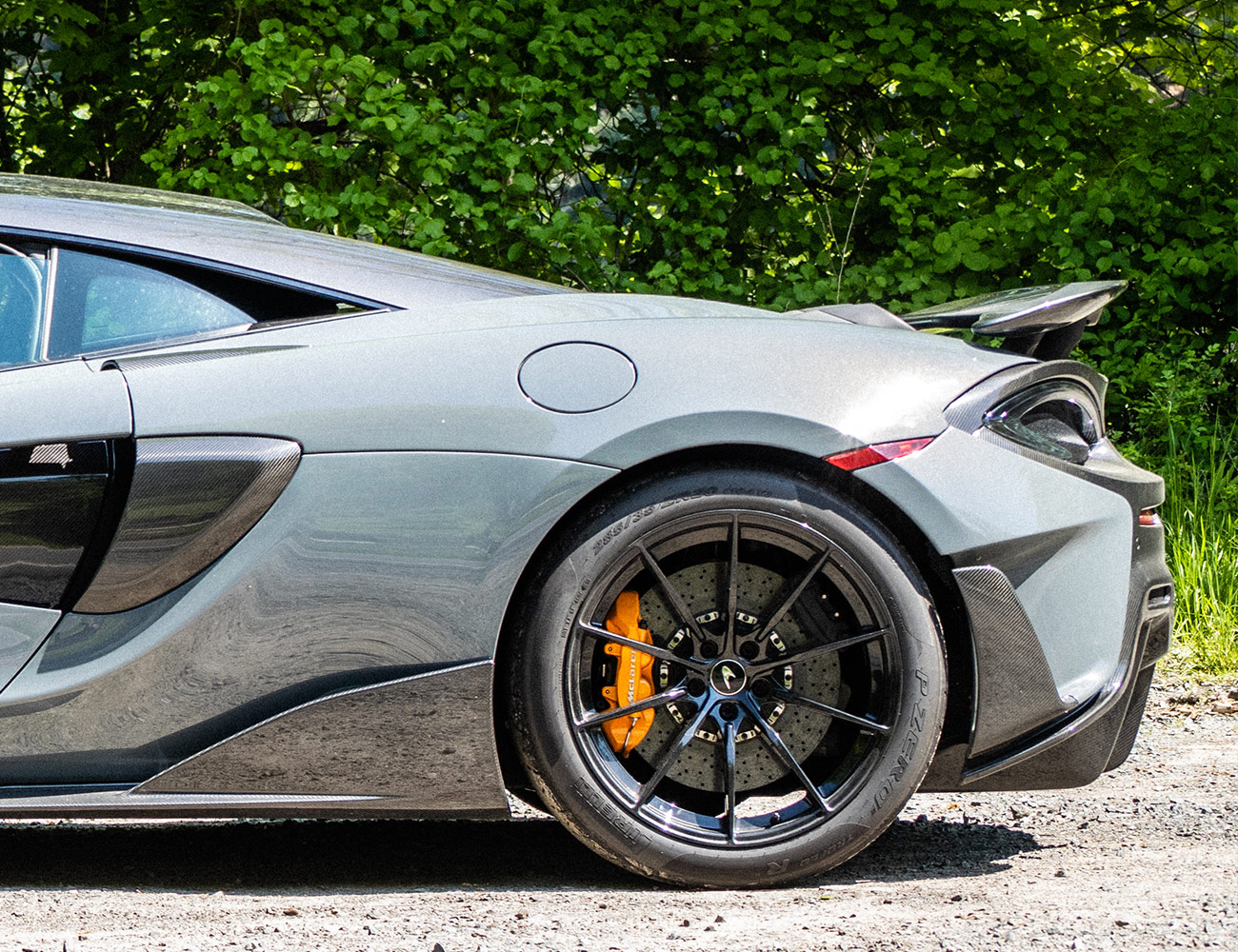
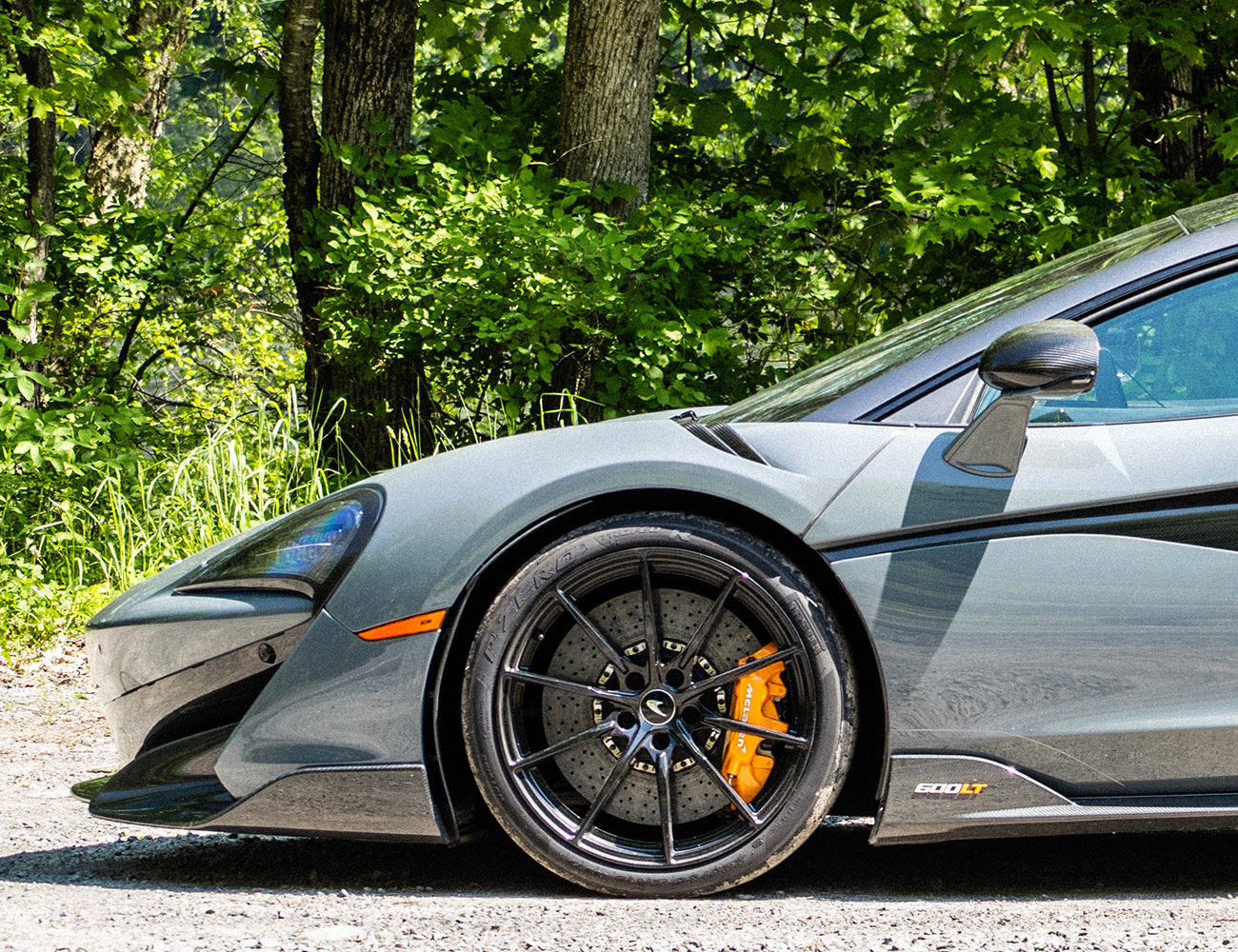
Better yet, walking to or from that interior gives you a chance to soak up the 600LT’s complex-yet-compelling design. Whereas other Sport Series Maccas can seem a little snubby, those extra millimeters of ass give the car a more balanced look; that the rear end’s proportions happen to call up memories of the McLaren F1 is no doubt intentional, and greatly appreciated. Like with the 720S, color choice is key; luckily, the flat gray color McLaren calls “Chicane Effect” that was on my tester is a perfect match for the shape, especially framed against the black accents and wheels. (You can’t tell in the pics, but there’s actually a hint of ruby shine in the paint that only comes out when the sun hits it.)

Verdict:  Honestly, would you really want to drive a supercar with any regularity? Supercars are so fast that using them on public roads is too easy, to the point that there’s often little fun in it — like LeBron James playing against a ninth-grader. The 600LT, on the other hand, still feels relatable. It’s the Captain America to the Senna’s Thor — unmistakably exceptional, yet still close enough to normal that you don’t feel alienated by it. It may not be cheap, but unlike some flash-in-the-pan automobiles with rising doors and mid-mounted engines, you never get the sense that the money was spent on anything other than the mission of building a car that’s dynamite to drive. And if I had the money, it’s the McLaren I’d be most likely to park in my garage.

2019 McLaren 600LT Coupe Specs

Powertrain: 3.8-liter twin-turbo V-8, seven-speed dual-clutch automatic, rear-wheel-drive
Power: 592 horsepower, 457 pound-feet of torque
0-60 MPH: 2.9 seconds
Top Speed: 204 mph
EPA Fuel Economy: 15 mpg city, 23 mpg highway

McLaren provided this product for review.

Read More Gear Patrol Reviews

Hot takes and in-depth reviews on noteworthy, relevant and interesting products. Read the Story
Note: Purchasing products through our links may earn us a portion of the sale, which supports our editorial team’s mission. Learn more here.

Nissan Built a Fleet of Custom Overlanders. We Drove Them to the Grand Canyon

The great thing about the Grand Canyon — apart from the obvious — is that you never really know it’s there until you almost fall in. The terrain near the South Rim is high in elevation but flat in aspect, so unlike most of the world’s signature natural landmarks, such as mountains, glaciers, and buttes, there’s nothing looming in the background when you’re in the vicinity. You just wander out of a pine forest and get the wind knocked out of you by the sight of the the striated abyss. It’s a fantastic effect, a clever twist Mother Nature chose to inflict on the unsuspecting.

To score that thrill, you can cruise up the smooth asphalt of Arizona State Route 64, pull into the South Rim visitor’s center and mosey on over to the fence, selfie stick in hand. Or you can do what I did with a group hosted by Nissan: Scramble through the woods along the same trail used by stagecoaches to get from Flagstaff to the Grand Canyon more than a century ago. (Fun fact: Back then, the trip cost $20—the equivalent of $500 in today’s money.)

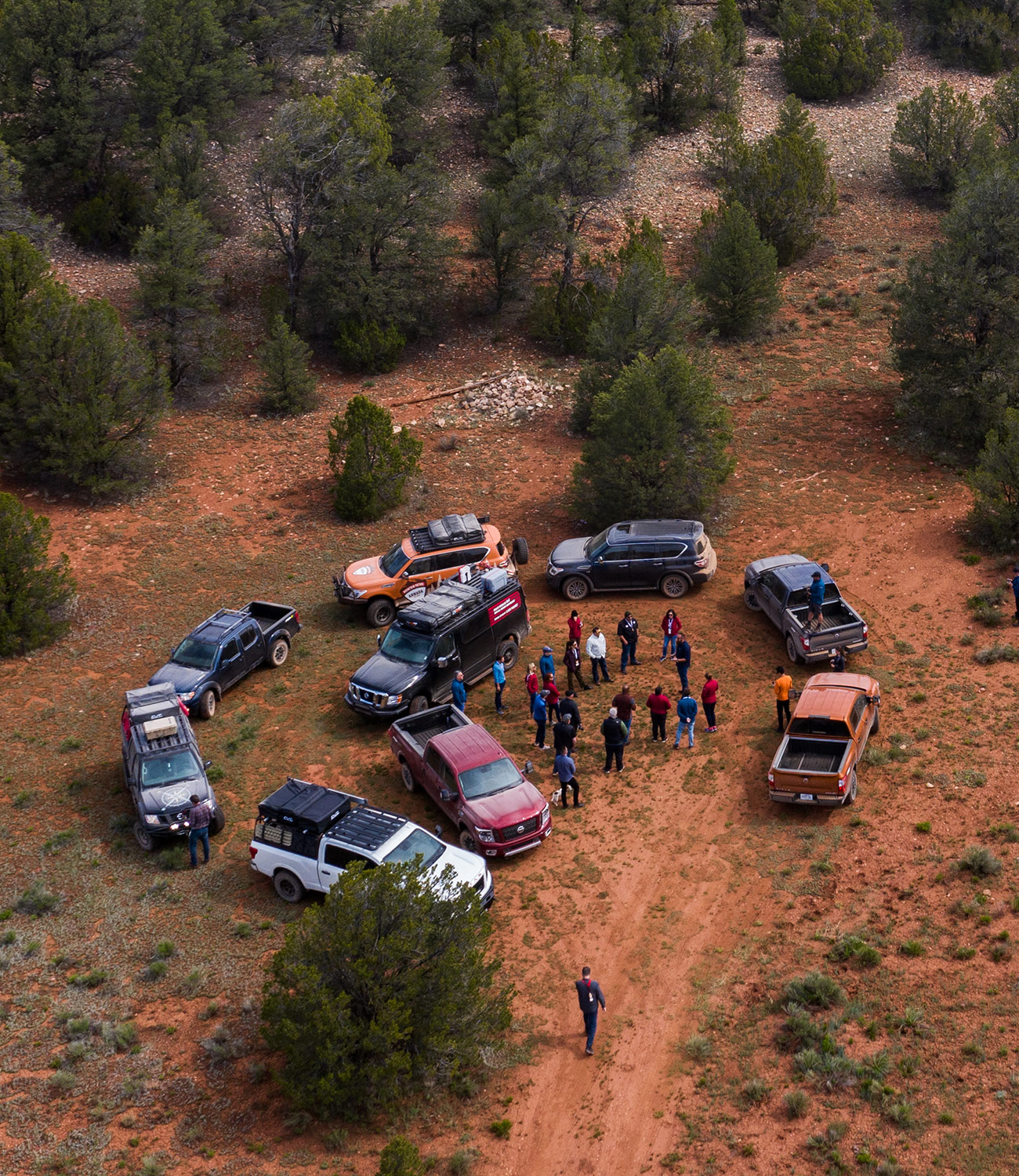
We didn’t do the entire stretch — most of the trail has yielded to civilization — but we bounced over enough miles of ancient, hard-packed ground to get a sense of what a grand, miserable adventure the whole experience must have been riding on top of a stagecoach, cutting-edge as its suspension may have been at the time. We, on the other hand, were tackling the terrain in vehicles designed in the 21st Century for just this sort of adventure — a fleet of Nissans modified for overland expeditions.

This included, most notably, the new Destination Frontier, a variant of the company’s compact pickup designed to keep overlanding costs down to Earth. For less than $40,000, the Frontier Crew Cab Midnight Edition (base price: $32,295) can be fitted with a Nisstec three-inch lift kit, a Leitner bed rack, Baja Designs lights, rock sliders, a WARN winch, and even a Dometic freezer/refrigerator among other gnarly overland accessories. A CVT Mt. Shasta tent sat perched on the roof, though unfortunately, we didn’t get to try it out.

On the trail, the seemingly-top-heavy truck made the extra load feel nonexistent as it gamely rolled over the undulating terrain. Everything felt as secure as the contents of a true Conestoga wagon — absent the tin pans clattering about on the sides.

Our other rides included a selection of conventionally-outfitted Titan XD pickups and a beastly orange Nissan Armada dubbed Mountain Patrol. This vehicle, built on a stock 2018 Armada 4WD, debuted last year at the Overland Expo West—where the Destination Frontier debuted during the 2019 event—and it features 17-inch Icon Bronze Rebound wheels with 35-inch Nitto Ridge Grappler tires. These sit beneath a Calmini six-inch lift kit and Icon coil-over suspension with extended A-arms. Up top, it has Baja Designs lights mounted on a Rhino Rack Backbone cargo system. It also has a Warn winch, Calmini rock rails and its own roof-mounted Mt. Shasta tent, as well as ARB drawers, air compressor and refrigerator.

Not to be outdone—and easily the greatest surprise of the group—was a NV3500 SL van similarly tricked out for overland expeditions. That’s right: Nissan’s homely passenger transport, most commonly seen as an airport shuttle or church-mobile. With the right tires, a lift kit and a partial drivetrain transplant from a Titan to give it four-wheel-drive, it too can conquer Forest Road 320 on the way to the Grand Canyon.

On our drive in this armada of the Armada, the Titans, the Frontier, and the NV, we stopped at Moqui Stage Station, which still possesses the remains of a watering hole for replenishing stagecoaches and their horses, before reaching the Grandview Lookout Tower on the Arizona Trail. This structure, tucked in the Kaibab National Forest, rises above the trees and gave us our first glimpse of the Grand Canyon, which — unbeknownst to us — was lurking barely a mile away.

We covered the short remaining distance quickly to reach the end of the trail, then finally emerged from the pine trees for our first full, all-its-glory view of the Canyon. Sure, we ultimately wound up in the same place as everyone else, doin the same thing everyone else did — parking at the visitor’s center and moseying over to the fence, selfie-sticks in hand — but I’d wager that our approach to the massive maw made our visit all the sweeter. Absent the modern road, countless billboards, roadside restaurants, hotels, and souvenir stands that line Route 64, we experienced the G.C. the way Mother Nature intended: a breathtaking surprise at the end of a long trail through an ocean of green pines. Having seen it like that, I wouldn’t have had it any other way.

Some of the Best Modern Coffee Table Books for Car Lovers

Books and cars may not seem like an obvious pairing, but the two have more in common than you might think. A well-written book and an expertly-built car can be objects of beauty to behold, and they both can transport their users to distant locales, in their own way.

Of course, car lovers would likely rather drive a car than read about one. But you can only experience one car at a time that way — and unless you have a cavernous warehouse of a dream garage, your selection of four-wheeled transportation available to play with is probably capped at one or two options. There’ll always be new cars, new roads, new experiences just out of reach.

A good coffee table book, however, can be a literary remedy for your mechanical conundrum. Here, then, are some of the best modern coffee table books for car lovers: packed cover to cover with insider information and filled to the brim with stunning photography, letting you fawn over and appreciate vehicles of all kinds from all across the globe.

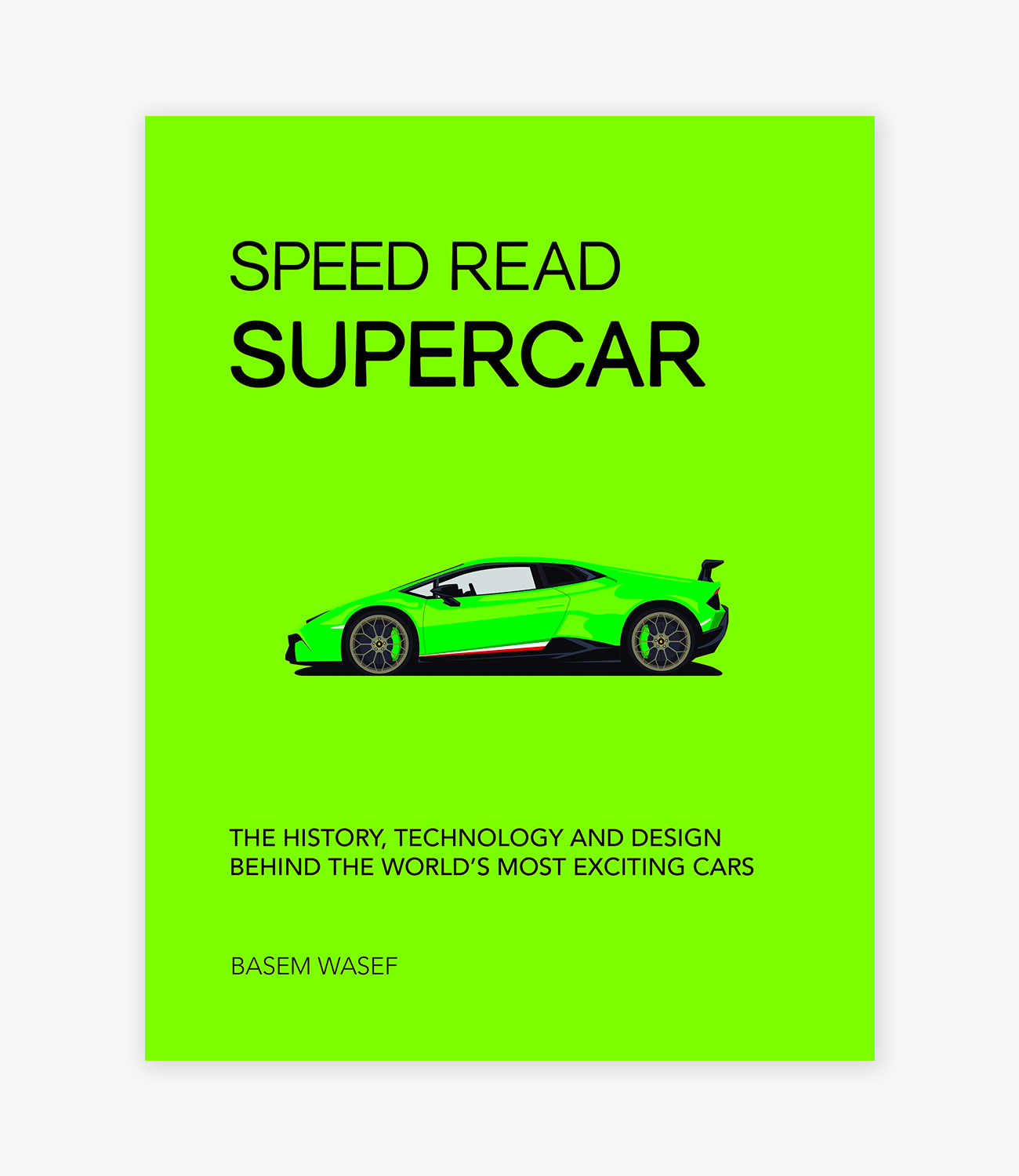
Speed Read Supercar: The History, Technology and Design Behind the World’s Most Exciting Cars

Only a minuscule percentage of the population has regular access to supercars — and while that adds to their mystique, it also keeps the engineering marvels out of reach of many of their their biggest admirers. Speed Read Supercar: The History, Technology and Design Behind the World’s Most Exciting Cars, penned by veteran automotive journalist Basem Wasef, puts the lofty thoroughbreds in the hands of the masses with a deep dive into supercar history and culture, providing explanations about why they exist and the creative decisions that went into their designs and mechanical makeup.

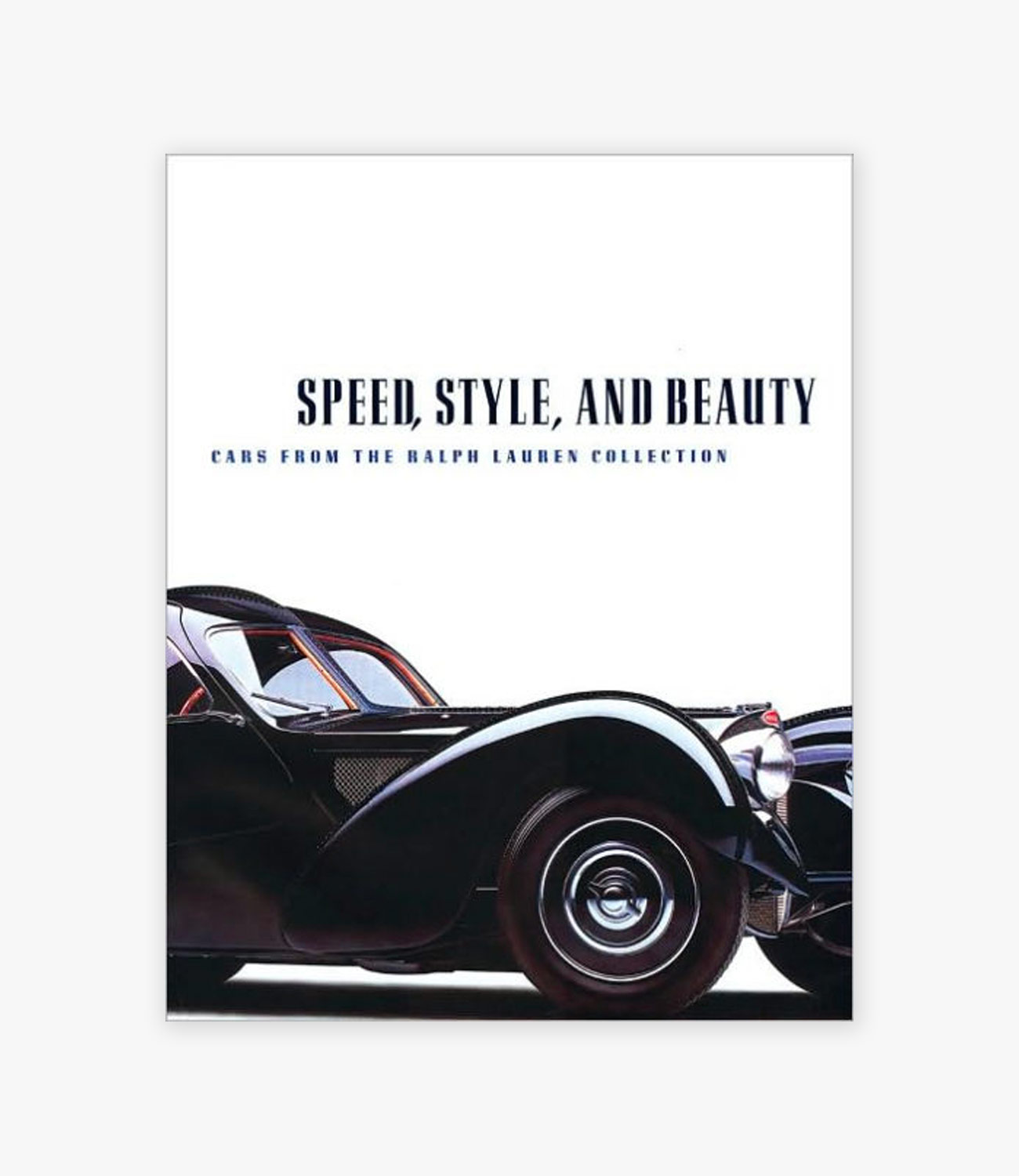
Speed, Style, and Beauty

Not many people around the world can boast about having dozens of cars cars in their personal collection, and even fewer people put said car collections on display. Ralph Lauren, however, is one of those few. Speed, Style, and Beauty is 210 pages of full-page photographs depicting 29 automotive legends hand-picked by Ralph Lauren’s from his personal collection. Highlights include a 1938 Alfa Romeo 8C 2900 Mille Miglia and the iconic beauty that is the 1938 Bugatti Atlantic Coupe, as well as stunners from Jaguar, Ferrari and Porsche.

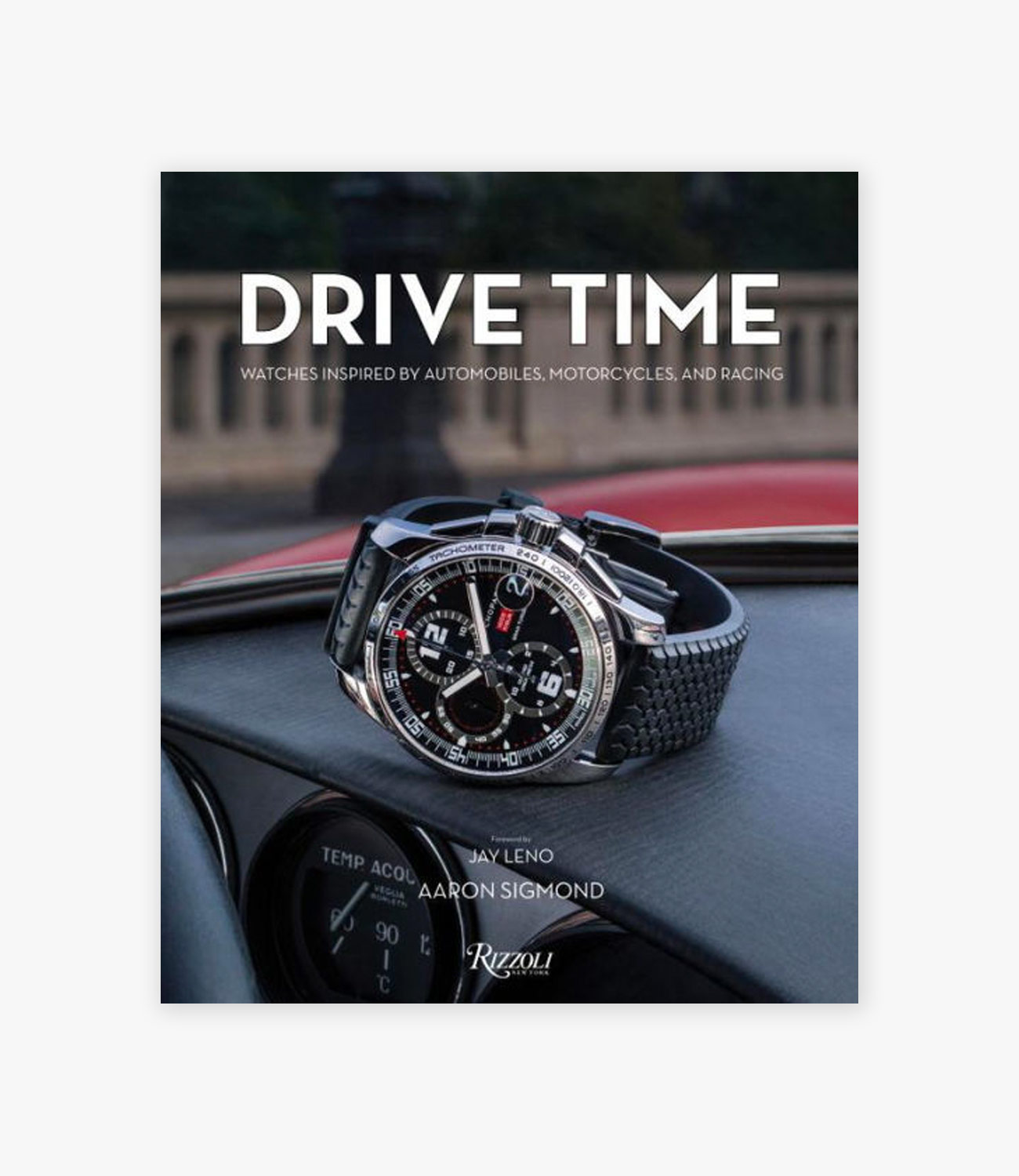
Drive Time: Watches Inspired by Automobiles, Motorcycles and Racing

It might not be a book focused on the automobile per se, but Drive Time: Watches Inspired by Automobiles, Motorcycles and Racing celebrates the iconic timepieces that have the strongest relationships to the automotive world. Culture, inspiration, design — any aspect that connects the watch and car worlds is fair game for Drive Time.

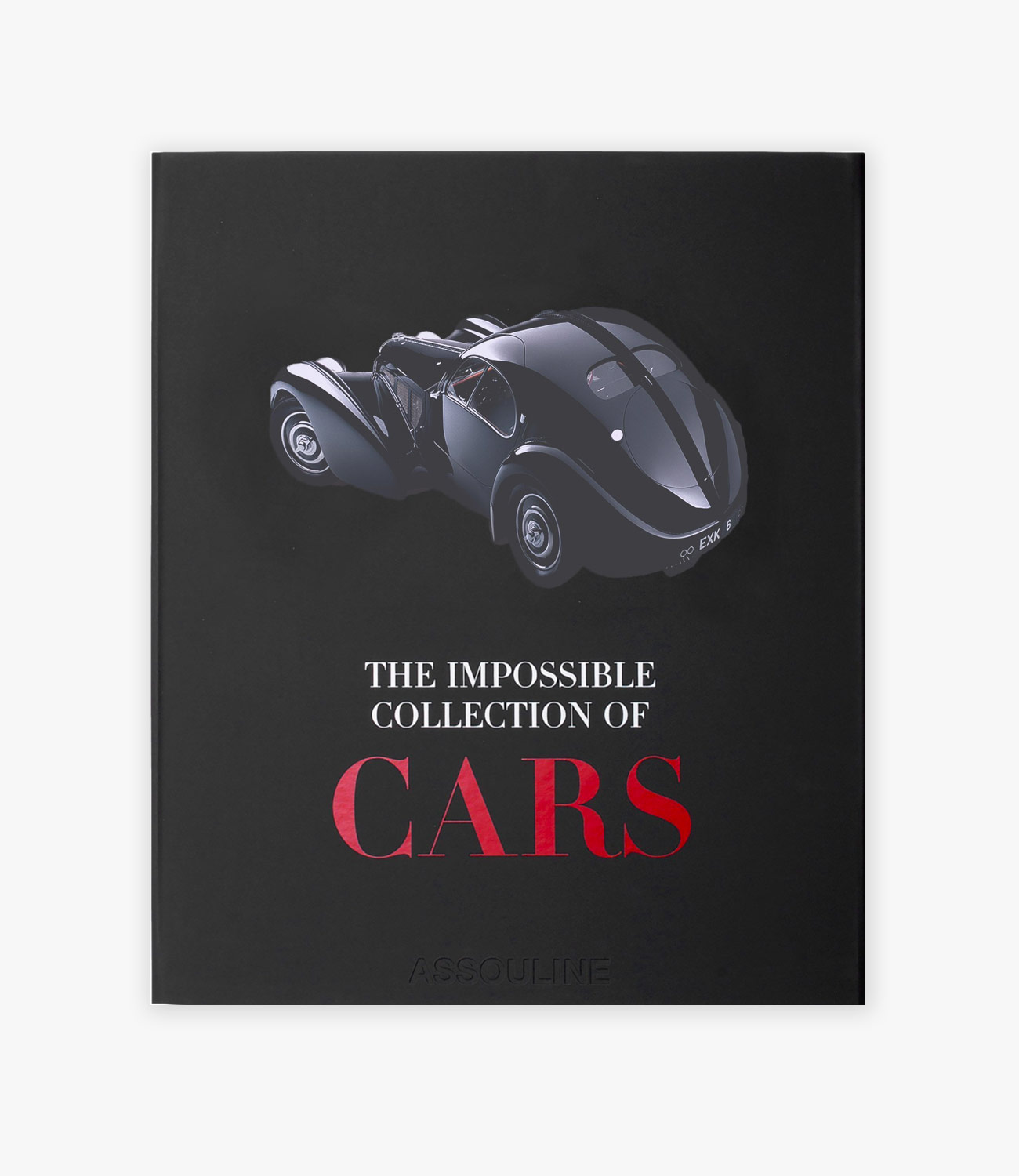
The Impossible Collection of Cars

The title pretty much says it all. The Impossible Collection of Cars is a collection of 100 of the most significant cars from the 20th Century, or, as the title suggests, an unbelievable group of machines never seen all in one place at the same time. You know, aside from the pages of this book.

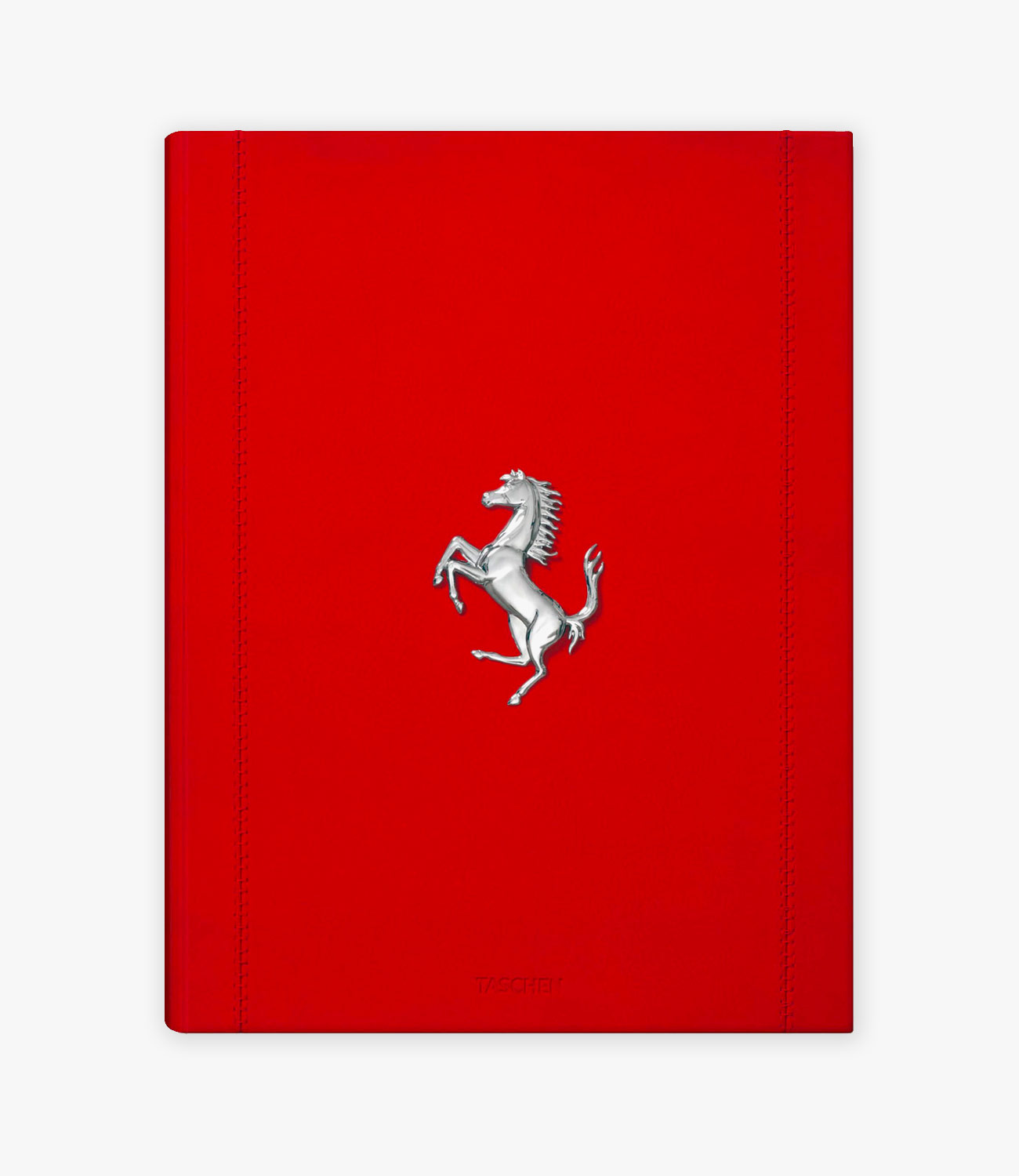
Ferrari Book by Pino Allievi

Old man Enzo Ferrari didn’t mince words, especially about putting more emphasis on what was under the hood of his cars than the surrounding sheet metal. “I build engines and attach wheels to them,” he once said. However, that doesn’t mean the rest of us can’t fawn over the rolling Italian artwork that came out of the Maranello factory — and that’s exactly what Ferrari Book by Pino Allievi is meant for. Not only does the book catalog and celebrate every Ferrari ever made, but it does so in spectacular fashion, coming in an aluminum case designed to emulate the company’s iconic Testa Rossa valve covers. The $6,000 price tag is definitely worth a mention — but then again, this is the Ferrari of coffee table books.

Note: Purchasing products through our links may earn us a portion of the sale, which supports our editorial team’s mission. Learn more here.

The Latest From Maranello

ferrari sf90 stradale gear patrol hybrid

Packing three electric motors and all-wheel-drive, the new range-topping SF90 Stradale deviates farther from the front-engined/rear-wheel-drive layout originally used by Enzo Ferrari than any F-car before. Read the Story

One Man Designed the Sexiest British Cars of the Last 30 Years. These 5 Are His Best

On June 4th, legendary automotive designer Ian Callum announced that he will be leaving his position as Jaguar design director after two decades. While he plans to stay affiliated with Jaguar as a consultant, he will also be using his newfound freedom to pursue other projects.

The announcement of Callum’s quasi-retirement quickly resonated throughout the industry. Besides being a universally-acknowledged good fellow, he has produced some of the sleekest, sexiest, and most forward-thinking car designs of the past 30 years. 

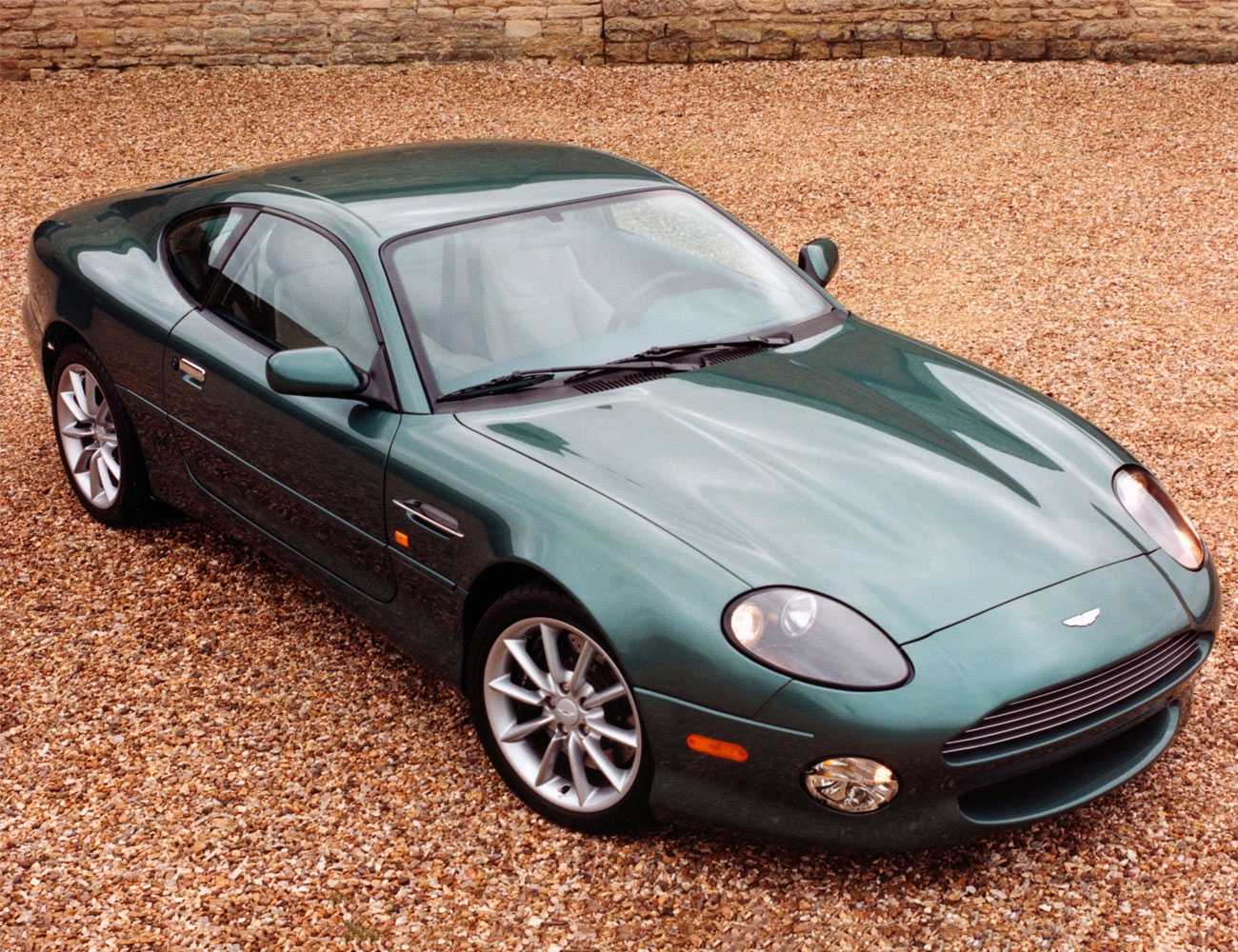
Callum had a distinguished early career at Ford and TWR, before going on to designed the classic Aston Martin DB7 and the Aston Martin Vanquish — two vehicles that helped stabilize the brand and set the table for its move into the modern era. He also contributed to Ford of Europe icons like the Ford Escort Cosworth and Ford Puma.

But Callum will be most remembered for revitalizing Jaguar during the 2000s. He broke the brand out of a nostalgia trap, retiring the staid, aristocratic dad cars in favor of a fresh, aggressive look. His bold-yet-refined design language recaptured Jaguar’s sporting ethos and made the carnaker a progressive force at a time of significant change in the automotive industry.

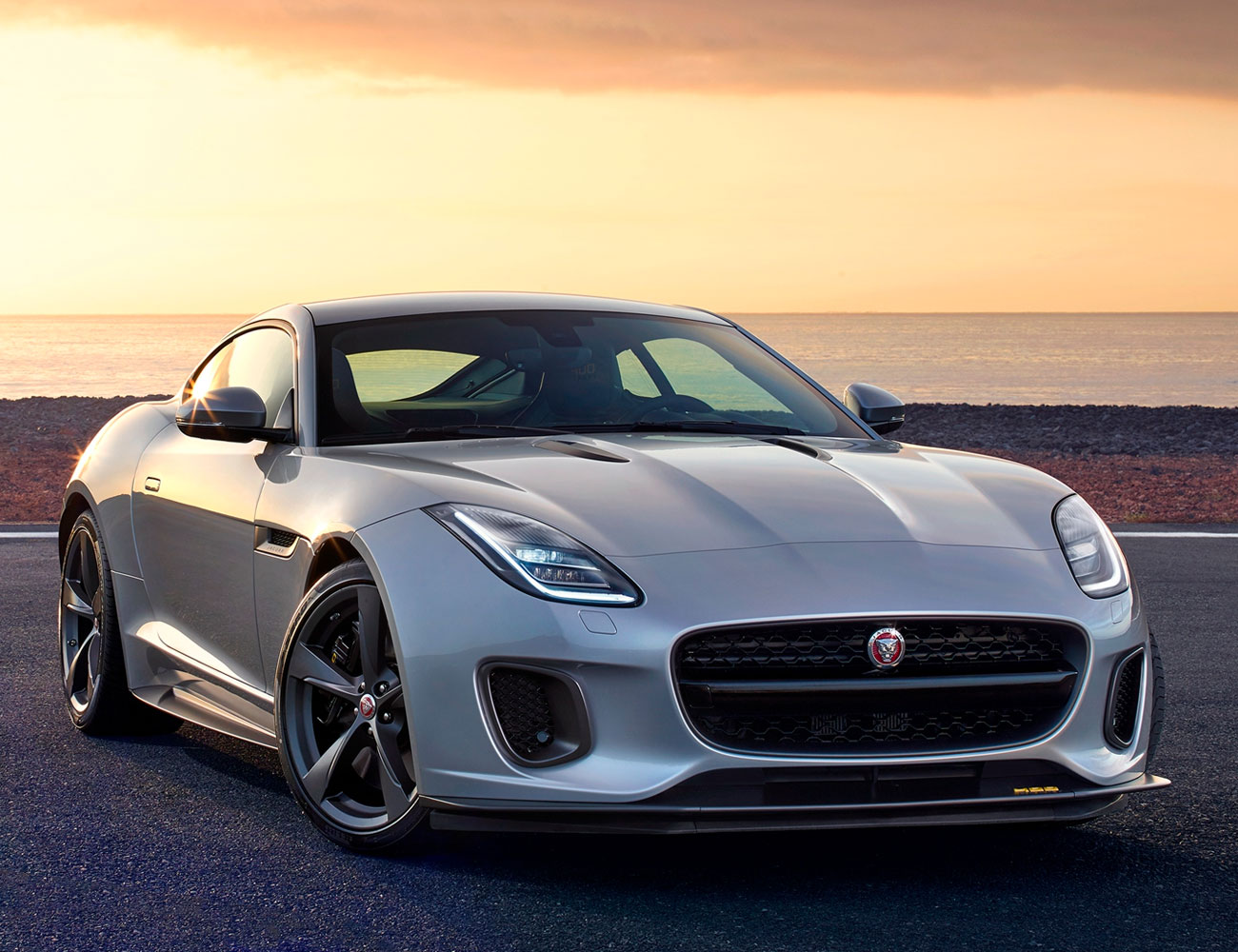
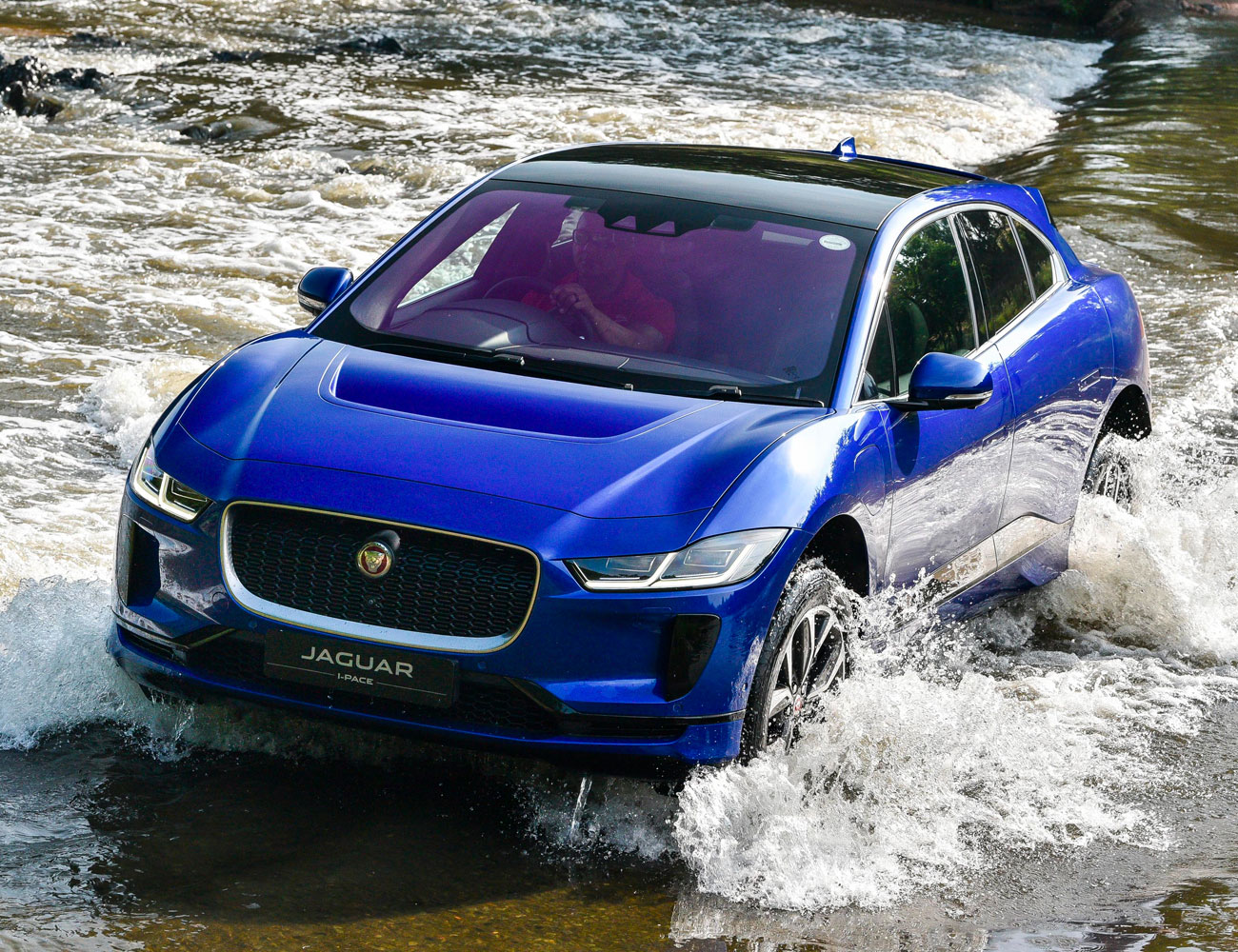
If there’s a surprising part to the news, it’s that Callum is not stepping back during the victory lap phase of his career, but at its apex. Under his guidance, Jaguar has produced three World Car Design of the Year award winners – the F-Type, the F-Pace, and the I-Pace – since 2013. The I-Pace, the most exciting electric vehicle to date not produced by Tesla, also won World Car of the Year and World Green Car of the Year in 2019.

While the automotive world awaits his “other design projects,” we at Gear Patrol have pulled together five of Callum’s most notable car designs, both in honor of his hard work…and because, well, we’ll take any excuse to ogle these beauties.

Aston Martin DB7 (1994-2004)

grey_placeholder

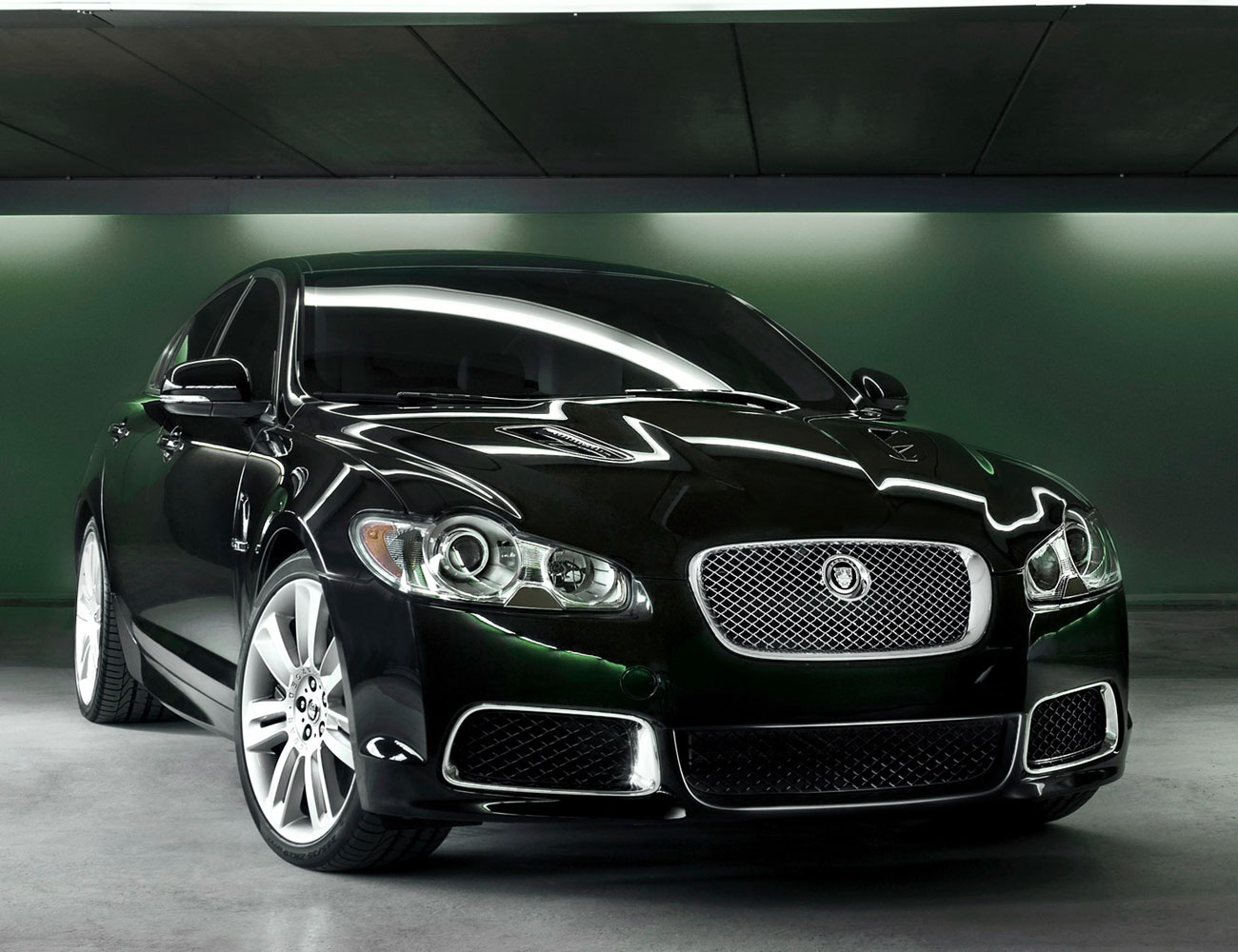
Jaguar XF (2007-2015)

grey_placeholder

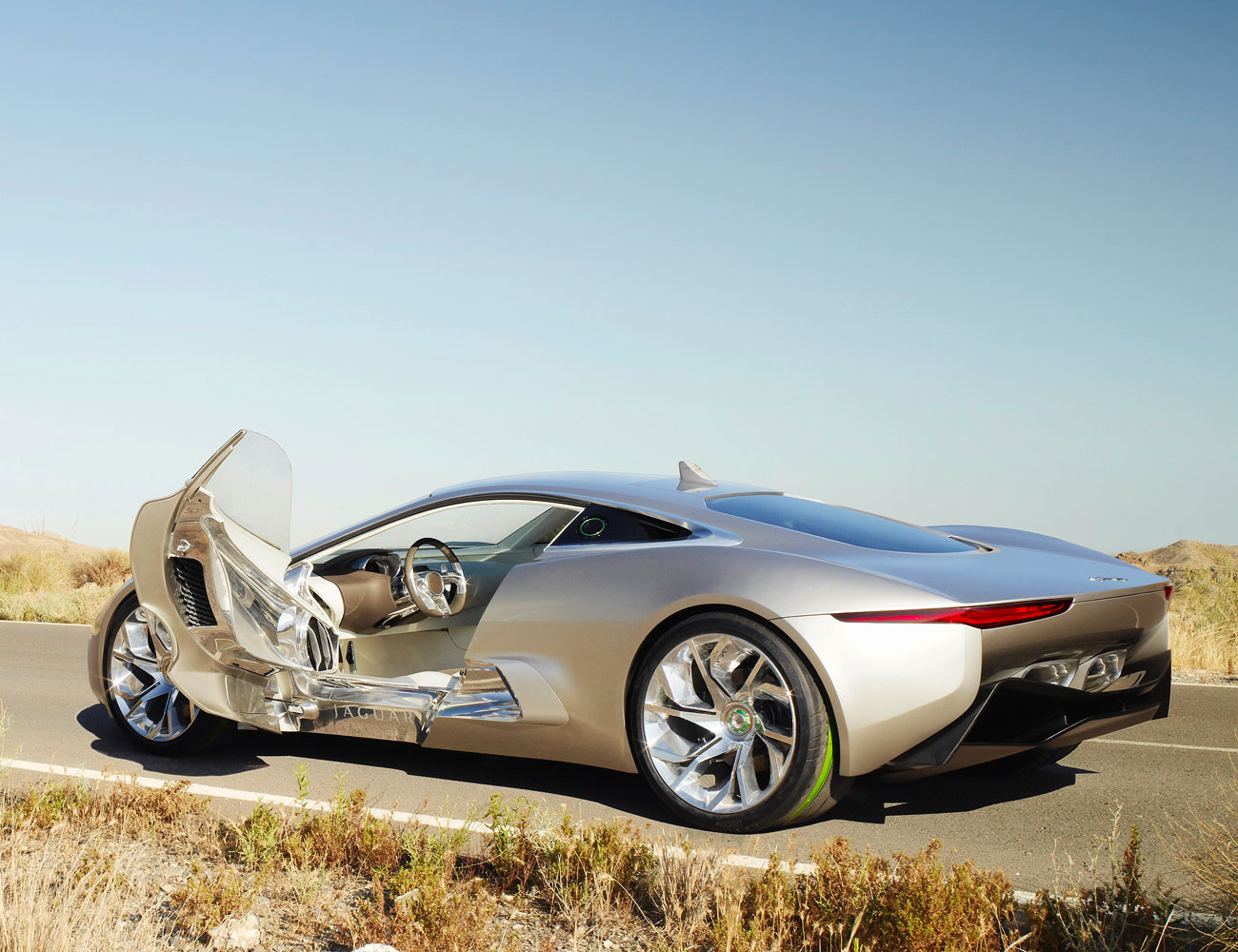
Jaguar C-X75 (2010 Concept)

grey_placeholder

Jaguar F-Type (2013-Present)

grey_placeholder

Jaguar I-Pace (2019-Present)

grey_placeholder

Note: Purchasing products through our links may earn us a portion of the sale, which supports our editorial team’s mission. Learn more here.

These Are the Best Car-Themed Movies You Can Stream for Free Right Now

Given the emotional resonance and stunning visuals that often go part and parcel with them, it’s not all that surprising that cars have played memorable, even central roles in many iconic films. From silly British comedies to poignant documentaries and tense thrillers, the automobile has long been a staple of great cinema. And these days, thanks to the magic of widespread video streaming, watching or rewatching these great flicks is easier than ever.

Not all o great car movies are available to stream without an additional fee, as studios increasingly herd their content onto proprietary streaming services. But, here are 10 car films that are available, as of this writing, to view on Netflix, Hulu, Amazon Prime, and a few free video streaming services. 

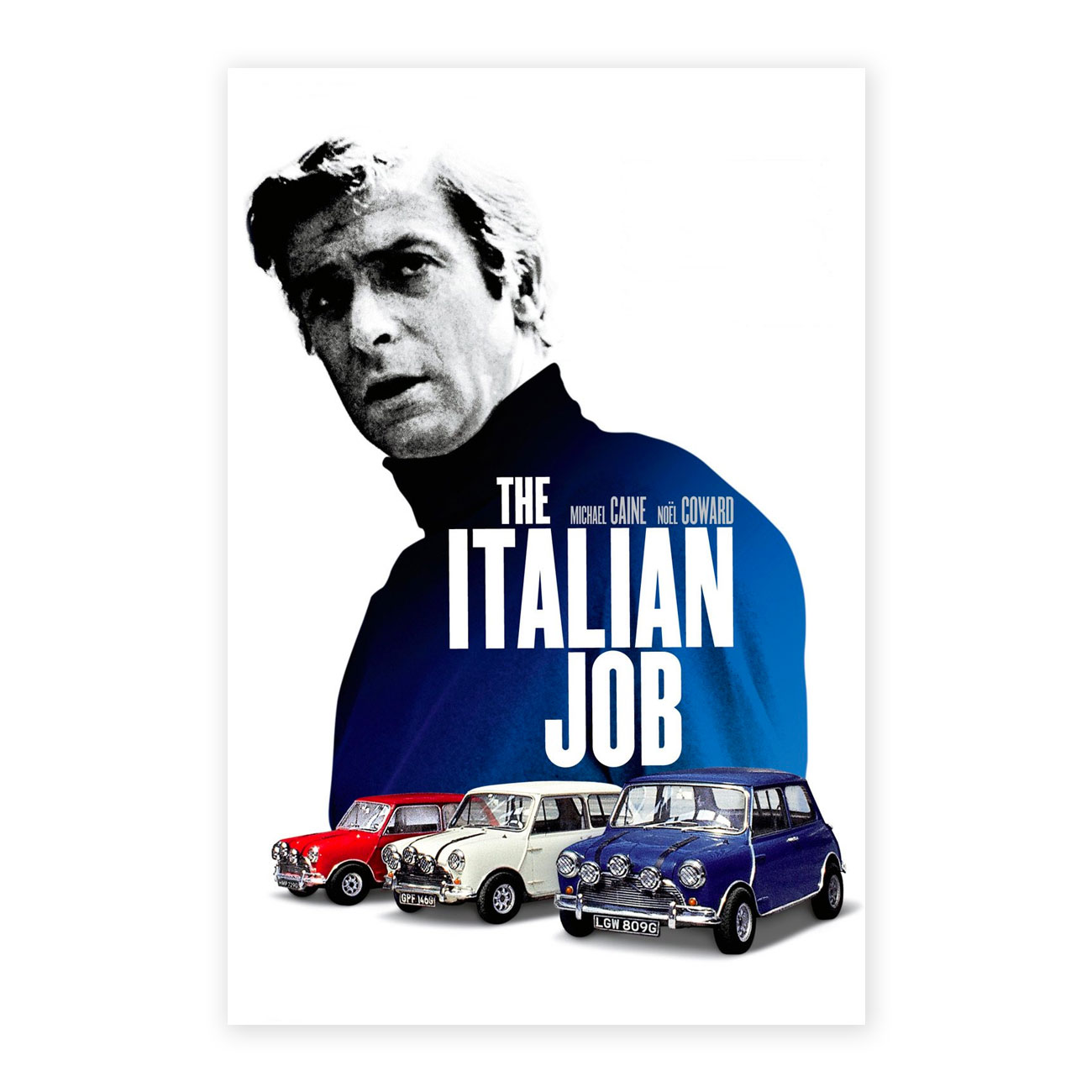
The Italian Job (1969)

The Italian Job is a classic British heist movie starring a nattily-dressed Michael Caine. There’s the cheery humor and the literal cliff-hanger ending to enjoy, sure, but The Italian Job may be most notable for being the single best car-spotting movie in history. The film opens with an orange Lamborghini Miura cruising through the Great St. Bernard Pass. The heist’s iconic escape cars are red, white, and blue Minis. An Aston Martin DB4 convertible and E-Type Jags play supporting roles. Heck, even the cops drive Alfa Romeo Giulias.

The Fast and the Furious (2001)

An uncommonly handsome blue-eyed cop infiltrates a crew of illegal street racers-slash-highjackers. Predictably, he faces a moral dilemma. The Fast and the Furious features a bevy of drool-worthy late ’90s tuner cars, including the Toyota Supra, the Mazda RX-7 and the Mitsubishi Eclipse, as well as some classic muscle cars. It’s safe to say that at the time, no one saw this fun summer action flick spawning one of Hollywood’s most bankable film franchises, with eight additional films and counting…

Mad Max (1979)

The original Mad Max was one of the most successful films ever, at least in terms of budget (less than $500,000 in Australian dollars) versus box office revenue ($100 million). Cars are featured prominently — most notably, Max Rockatansky’s supercharged V8 Interceptor based on a 1973 Ford Falcon XB GT Coupe, because a supercharged V-8 should always be your go-to choice in a post-apocalyptic universe where gas is hard to come by. In addition to inspiring decades of fatalist visions of the future, Mad Max inaugurated what would become a common Mel Gibson trope: getting sweet revenge on the people who murdered his family.

Days of Thunder (1990)

Days of Thunder is a formulaic Tom Cruise movie emblematic of Hollywood excess — basically, Top Gun with stock cars instead of fighter jets. It’s not clear why anyone thinks that’s a bad thing. The movie celebrates all things NASCAR; plot points were based on real NASCAR lore, and the racing series cooperated to the point of letting the movie cars run in actual races for filming purposes. And for pure Bush Sr.-era nostalgia, it’s hard to get more “1990” than Cruise’s raffish mullet, Mello Yello sponsorship, and Cary Elwes in a leading role.

Gone in 60 Seconds (1974)

The 2000 remake with Nicolas Cage and Angelina Jolie is not available to stream for free — but you can watch the original Gone in 60 Seconds from 1974, in which the versatile H.B. Halicki serves as director, producer, screenwriter, and star. Sure, there’s technically a plot about stealing 48 cars by a deadline…but really, it’s just a prelude to the more-than-half-hour-long, gratuitously destructive car chase at the end.

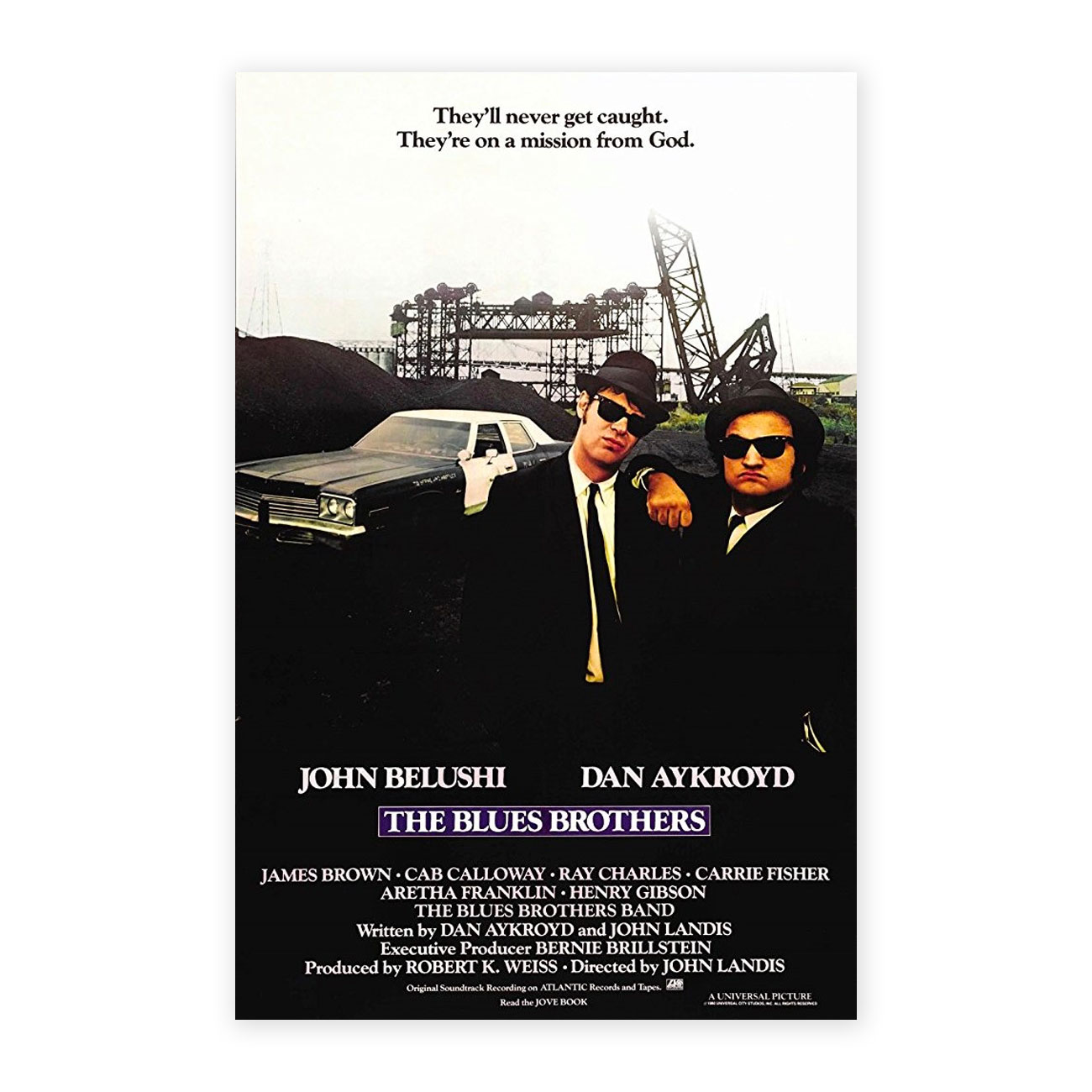
The Blues Brothers (1980)

The Blues Brothers is a music-based comedy, but cars play a central role. The most memorable character besides Jake and Elwood is the Bluesmobile, a 1974 Dodge Monaco sedan with the police-spec “440 Magnum” squad car package that filmmakers made jump a drawbridge and crumble to pieces on command. 

Cars 3 (2017)

The Cars franchise isn’t all that well-respected among Pixar aficionados, viewed as more of a commercial phenomenon than a series of quality animated films. But Cars 3 has some sweet moments and salient life lessons that resonate. It’s better than Cars 2, at any rate — and it’s also a veritable lifesaver for stay-at-home parents staring down the barrel of a 17th viewing of Coco over a four-day period.

The 24 Hour War (2016)

This documentary from Adam Carolla and Nate Adams covers Ford’s epic quest to unseat Ferrari as the perennial champions of the 24 Hours of Le Mans. The film traces the process from Henry Ford II’s failed effort to buy Ferrari in 1963 — Enzo wanted to keep control of the racing division — through the development of the fabled Ford GT40 and Ford’s eventual triumph. A feature film version of the story starring Christian Bale and Matt Damon comes out in 2019.

Senna (2010)

Senna is a powerful, award-winning documentary about three-time F1 champ Ayrton Senna, perhaps the greatest racing driver and loafer-wearer of all-time. Using racing footage and home videos, Senna chronicles the Brazilian legend’s life, career, and heated rivalry with teammate and fellow world champion Alain Prost. It also looks at the resonance of his untimely death at age 34 in a crash at the 1994 San Marino Grand Prix.

Williams (2017)

This BBC Films documentary examines the personal and professional life of British racing team owner Frank Williams, the founder and team principal of the Williams F1 team. The film looks at his early life and journey to the pinnacle of F1 success, as well as the response to Frank’s 1986 near-fatal car accident that left him paralyzed.

Note: Purchasing products through our links may earn us a portion of the sale, which supports our editorial team’s mission. Learn more here.

These Are the Best Rental Cars to Grab This Summer

It’s that time of year again: Summer. That, of course, means traveling to spend time with friends and family, gorging on backyard BBQ — and all too often, renting a car. But if the words “rental car” conjure up nightmarish memories of a sad Dodge Caliber your parents got stuck with on a family trip, you need to adjust your frequency: These days, rental car agencies offer plenty of models that are far more pleasurable than the rolling penalty boxes that often spring to mind at the mention of the term.

To make this last minute decision go smoothly, we at Gear Patrol did a little bit of combing through the more prominent rental car companies, and picked out the best cars they have on offer, so you can make the most of your summer road trips and travel.

Hertz

Ford Mustang GT


What’s more ideal than cruising down to the beach in a Ford Mustang GT sporting a 460-horsepower 5.0-liter V-8? Not much. It might be surprising to see such a high-powered sports car available for rent, but Hertz has been offering Mustangs for decades now. Skip the Ford Fiesta this year and treat yourself to some real performance.

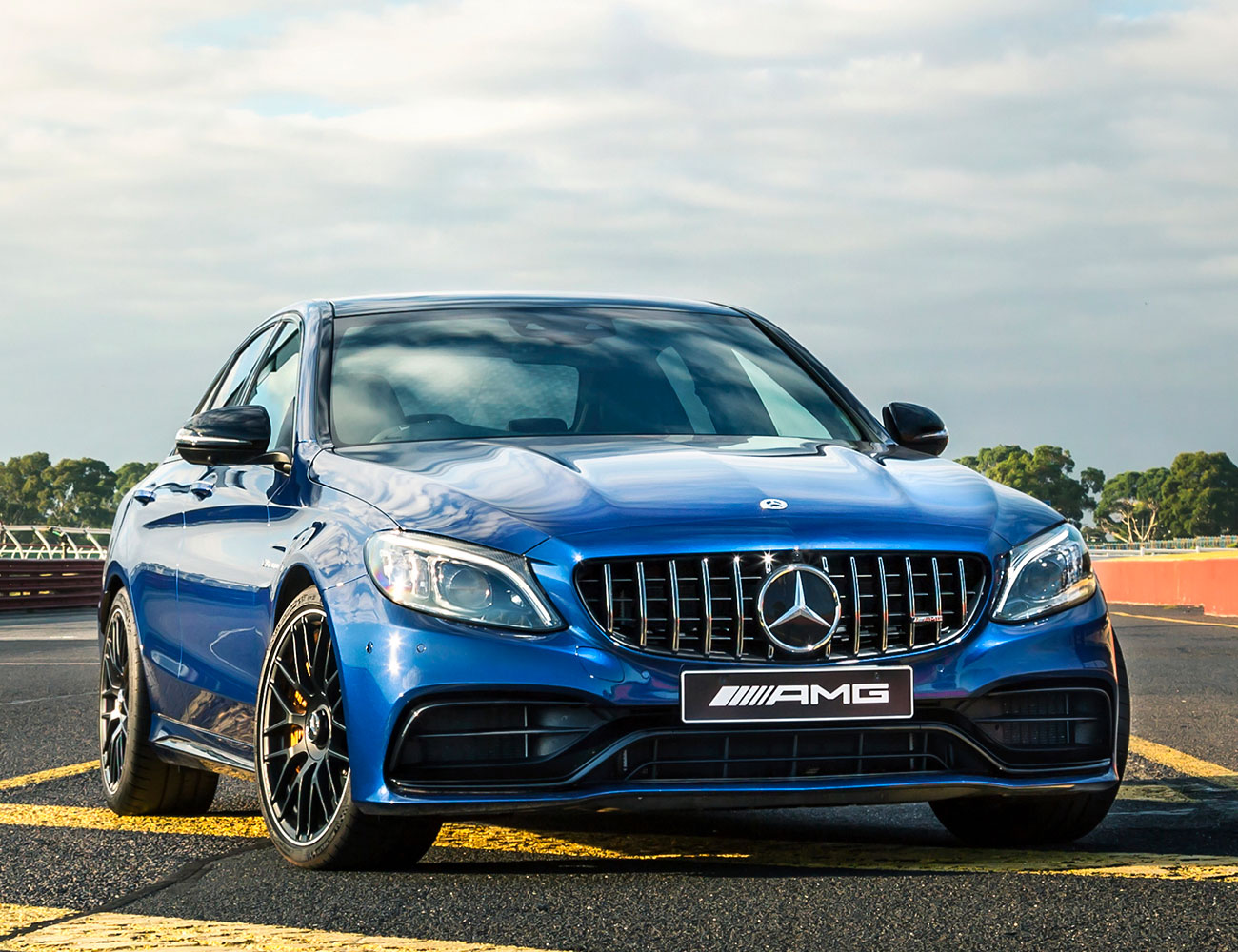
Mercedes-AMG C63


When it comes to performance, Hertz doesn’t mess around — their Dream Car selection is the antithesis of the standard rental-car fleet. So if you’re looking for an entertaining-but-somewhat-understated sport sedan, you owe it to yourself to reserve the Mercedes-AMG C63 and kick off summer in style.

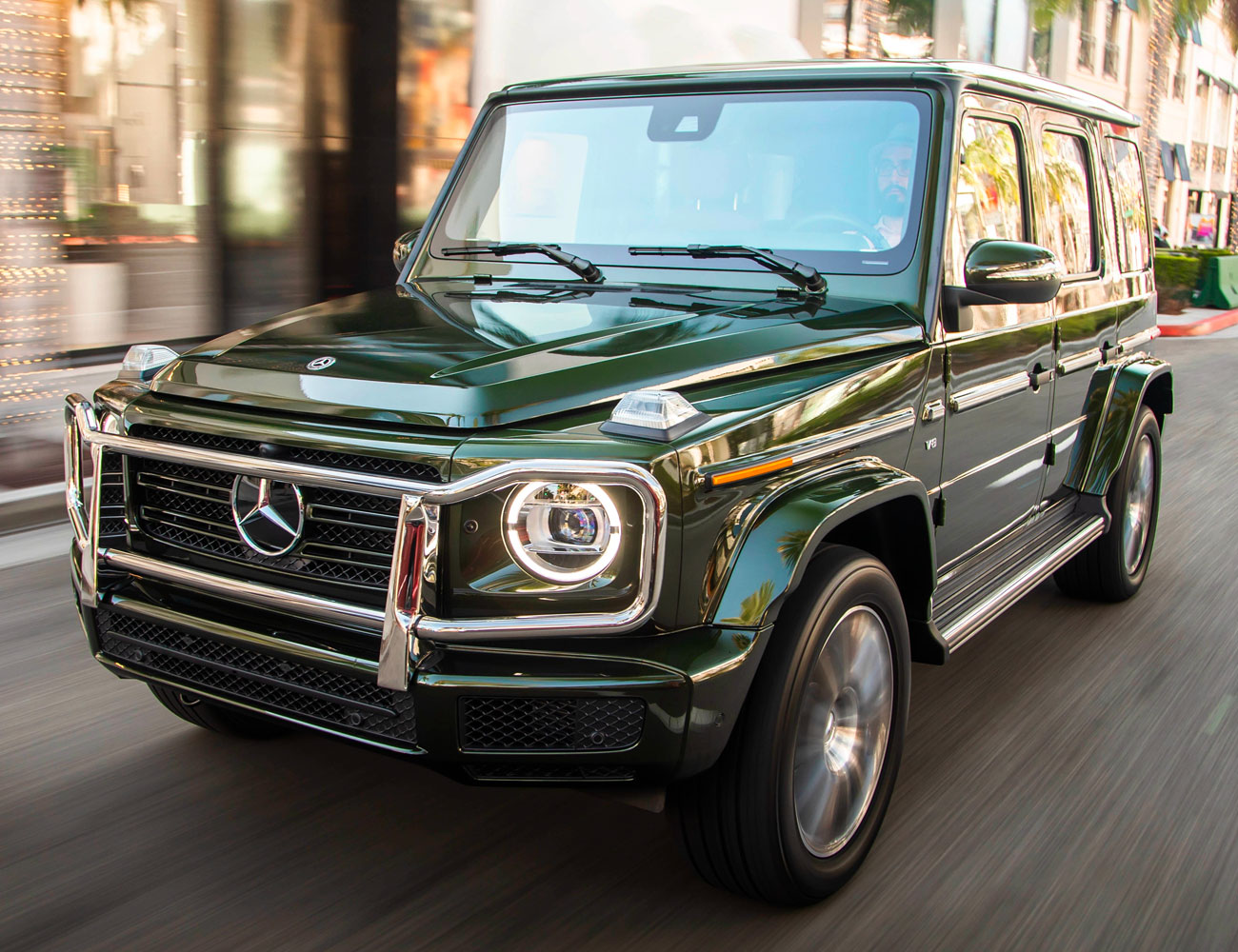
Mercedes-Benz G550

>

It might weigh 5,724 pounds, but even in base form, the Gelandewagen can still get to 60 mph in 5.7 seconds and tow 7,000 pounds (albeit not at the same time). It’s perfect for transporting all the beach gear, food and drink you’ll be living off for the next few months.

Budget

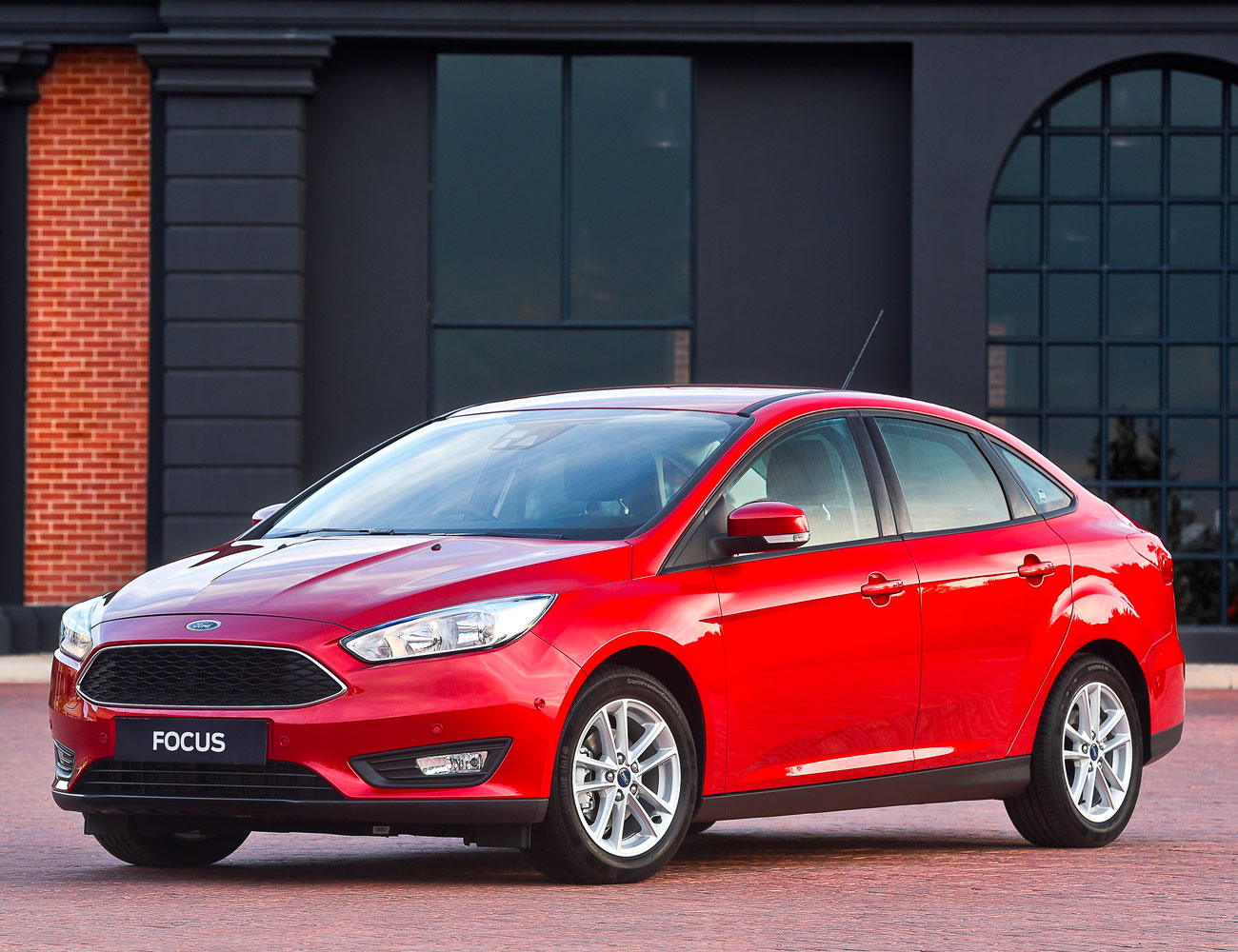
Ford Focus


Even the base-model Focus is miles ahead of your average rental car; it may be the best-handling front-wheel-drive car on the market. And more importantly, it’s a rental — you’re supposed to drive it like you stole it.

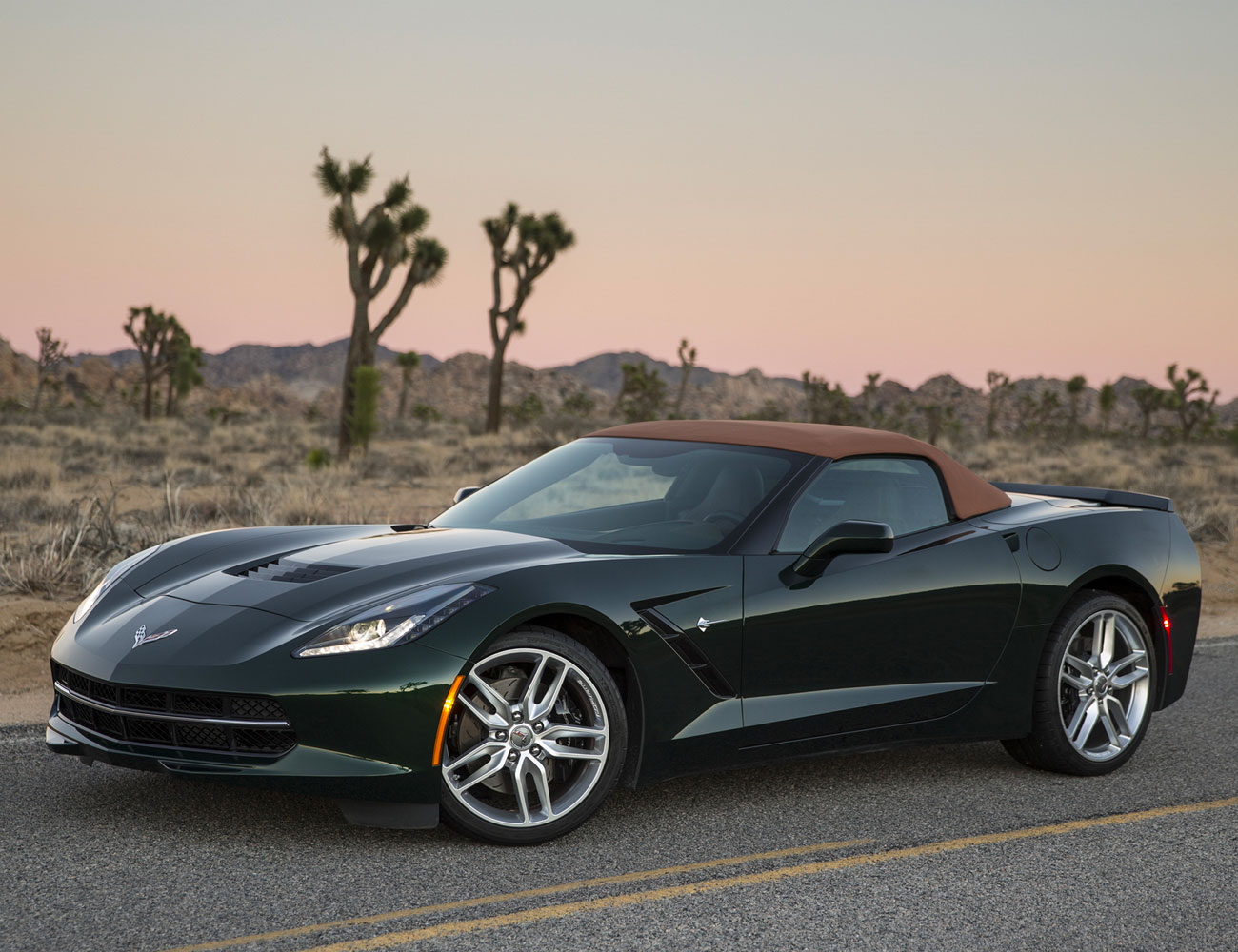
Chevrolet Corvette


Easily the best-looking Corvette since the C2, the current C7-generation ‘Vette is a damn fine way to announce your arrival to the party. The 455-horsepower 6.2-liter V-8 won’t win you any points from your eco-conscious uncle — but of all the cars on this list, the Corvette might just be the most entertaining on a winding road.

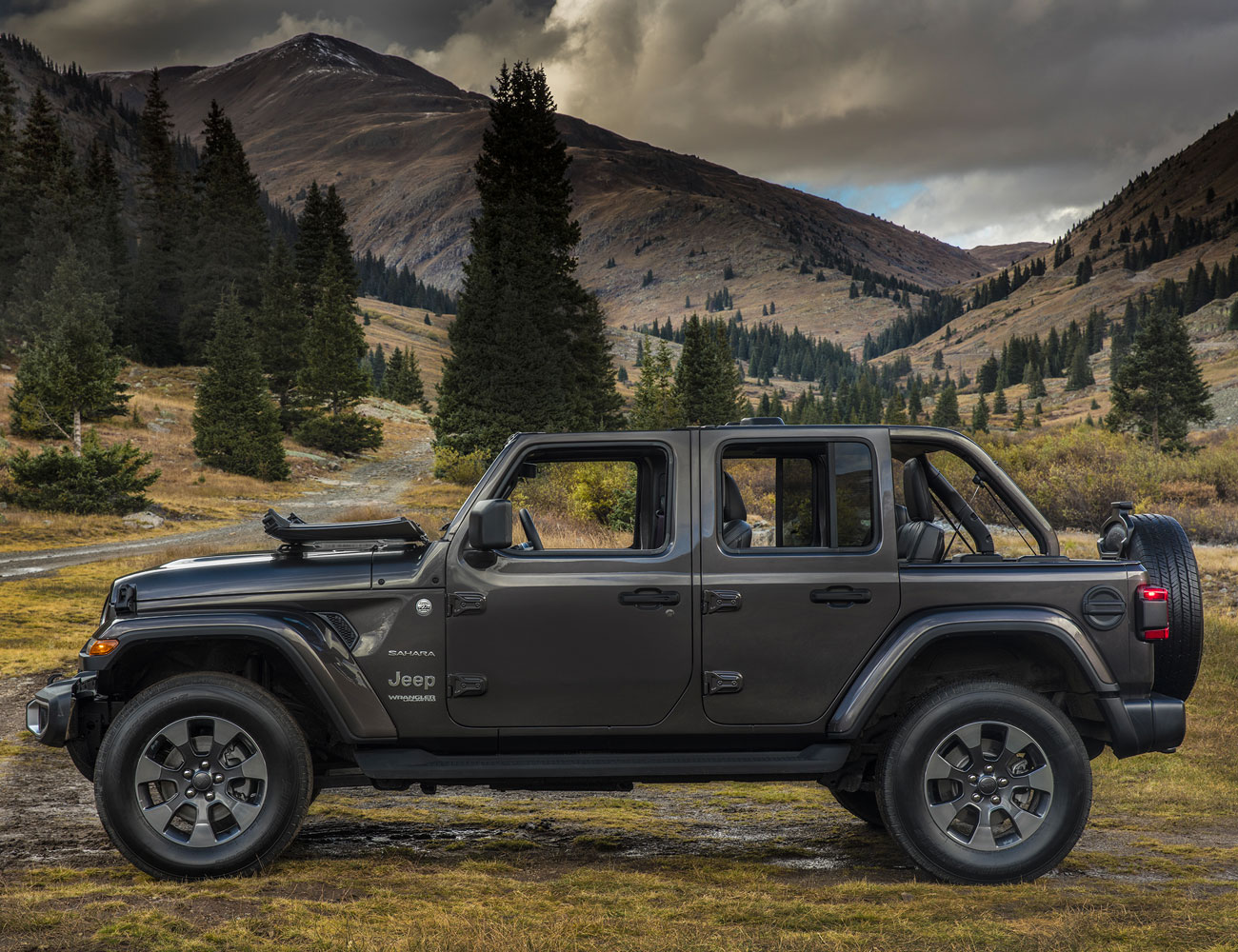
Jeep Wrangler


Even in stock trim, the Jeep Wrangler is wildly capable off-road. If your summer plans have you heading up to a remote lake in the mountains or trucking through the sand to get to the fire pit on the beach, the iconic four-wheeler has you covered.

Enterprise

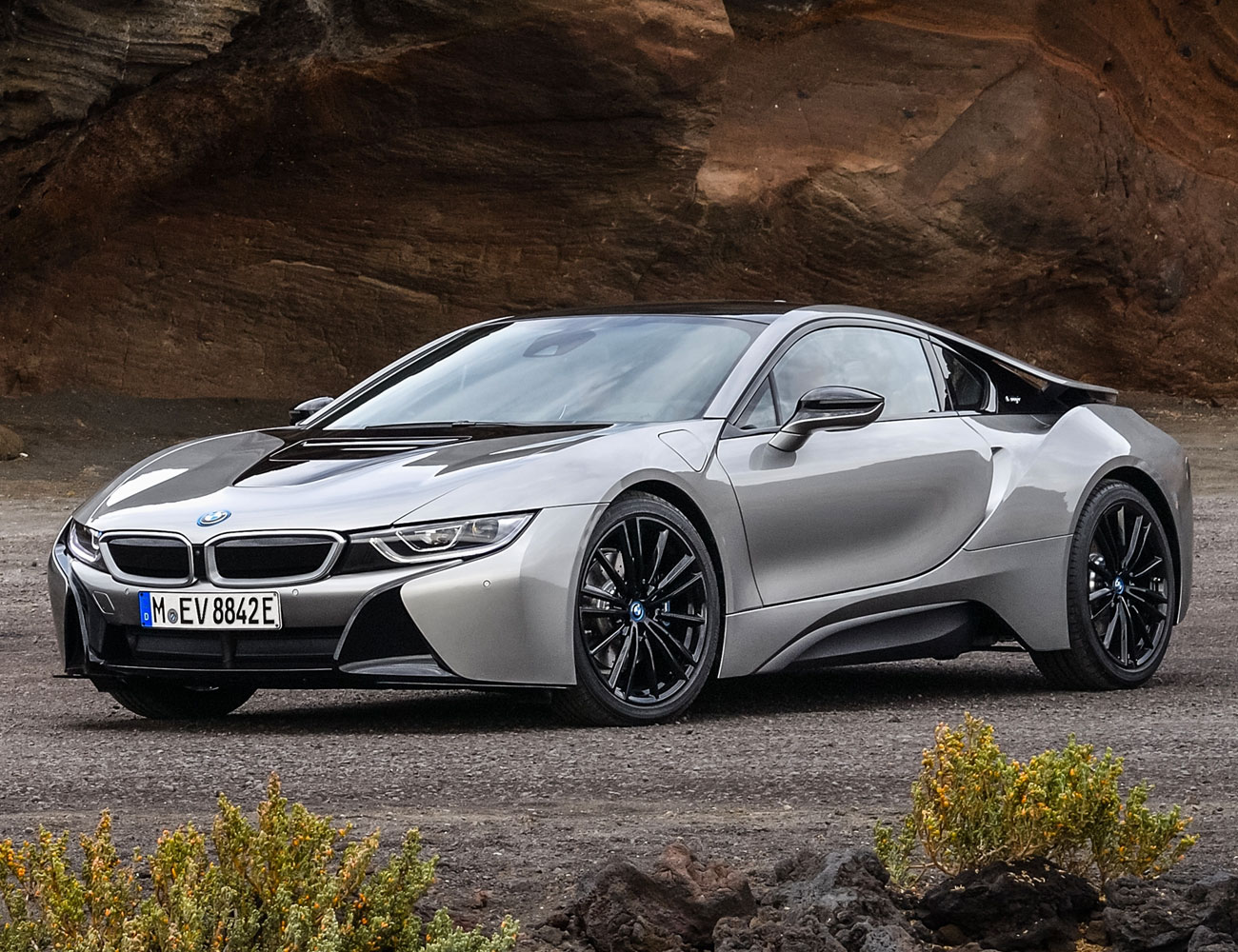
BMW i8


Easily the coolest-looking “economy car” on the list, BMW’s futuristic i8 looks like a supercar, hits 60 mph in 4.4 seconds and can still net the equivalent of 134 miles per gallon from its inline-three engine/electric motor combo. Just forgive it for pumping fake engine noise into the cabin through the speakers.

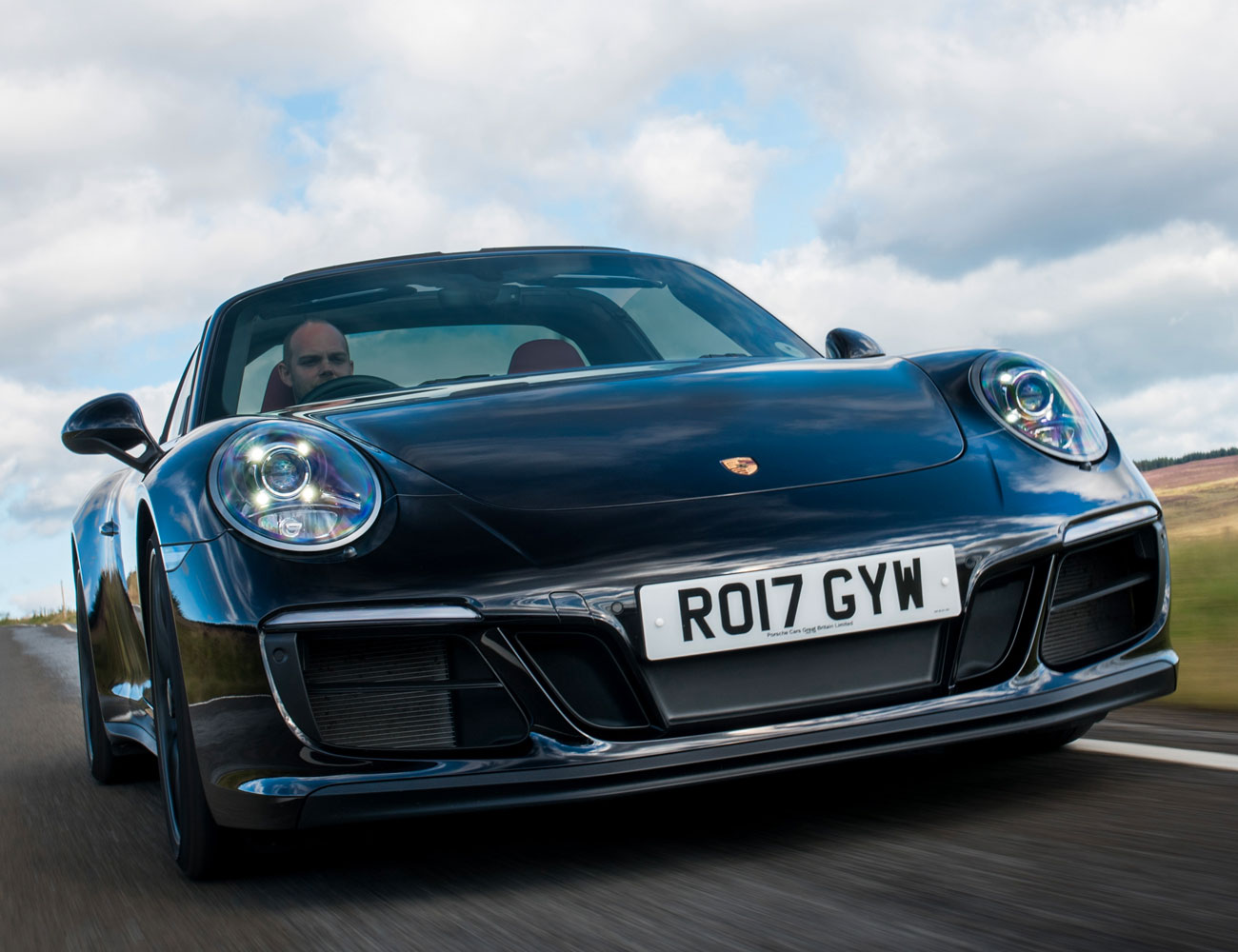
Porsche 911 Targa


The 911 Targa needs no justification. It’s one of the prettiest, roofless modern Porsches, and it’s summer. Go for it.

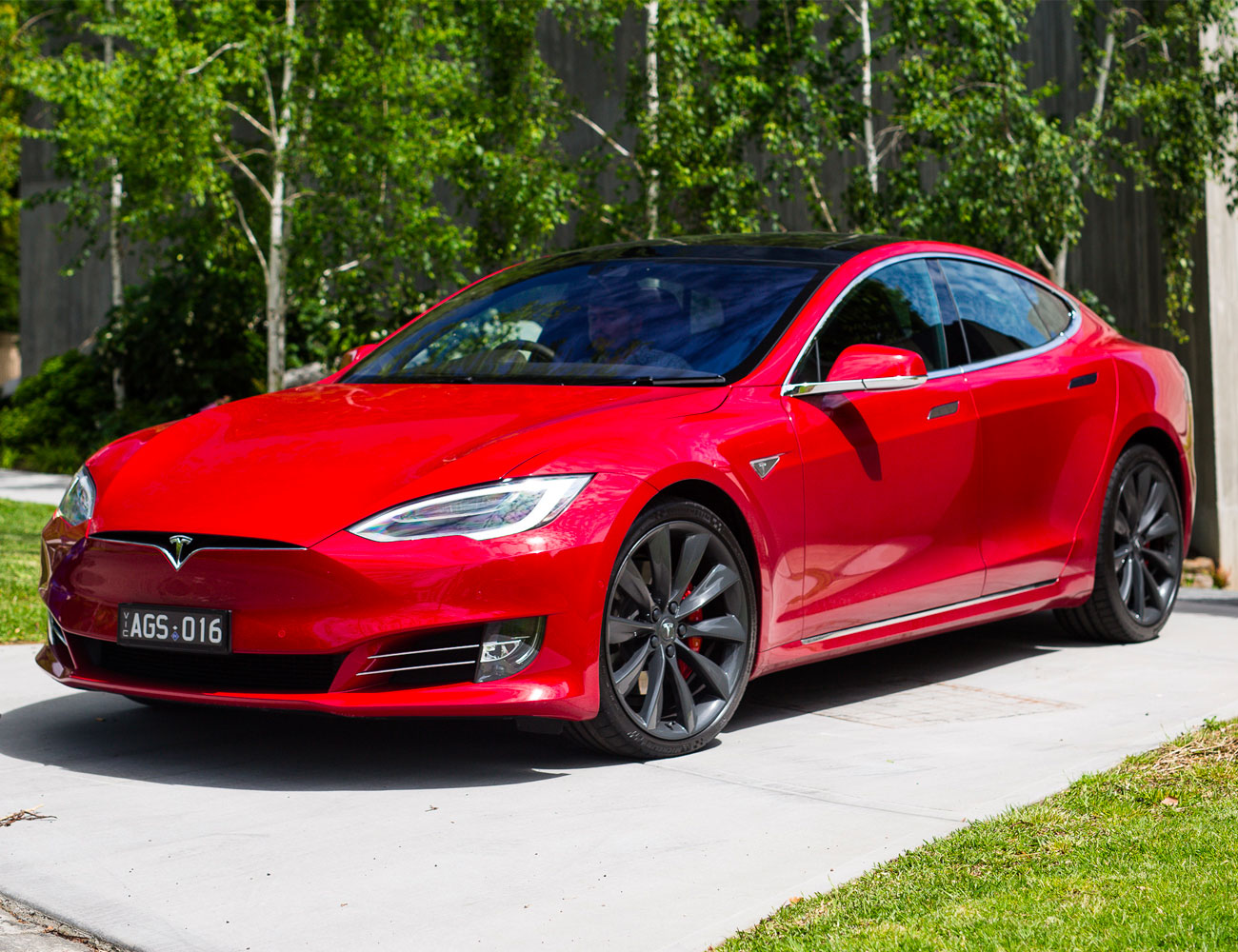
Tesla Model S


Tesla’s large four-door electric sedan offers tons of performance, extreme efficiency and killer looks. No one will assume yours is a rental.

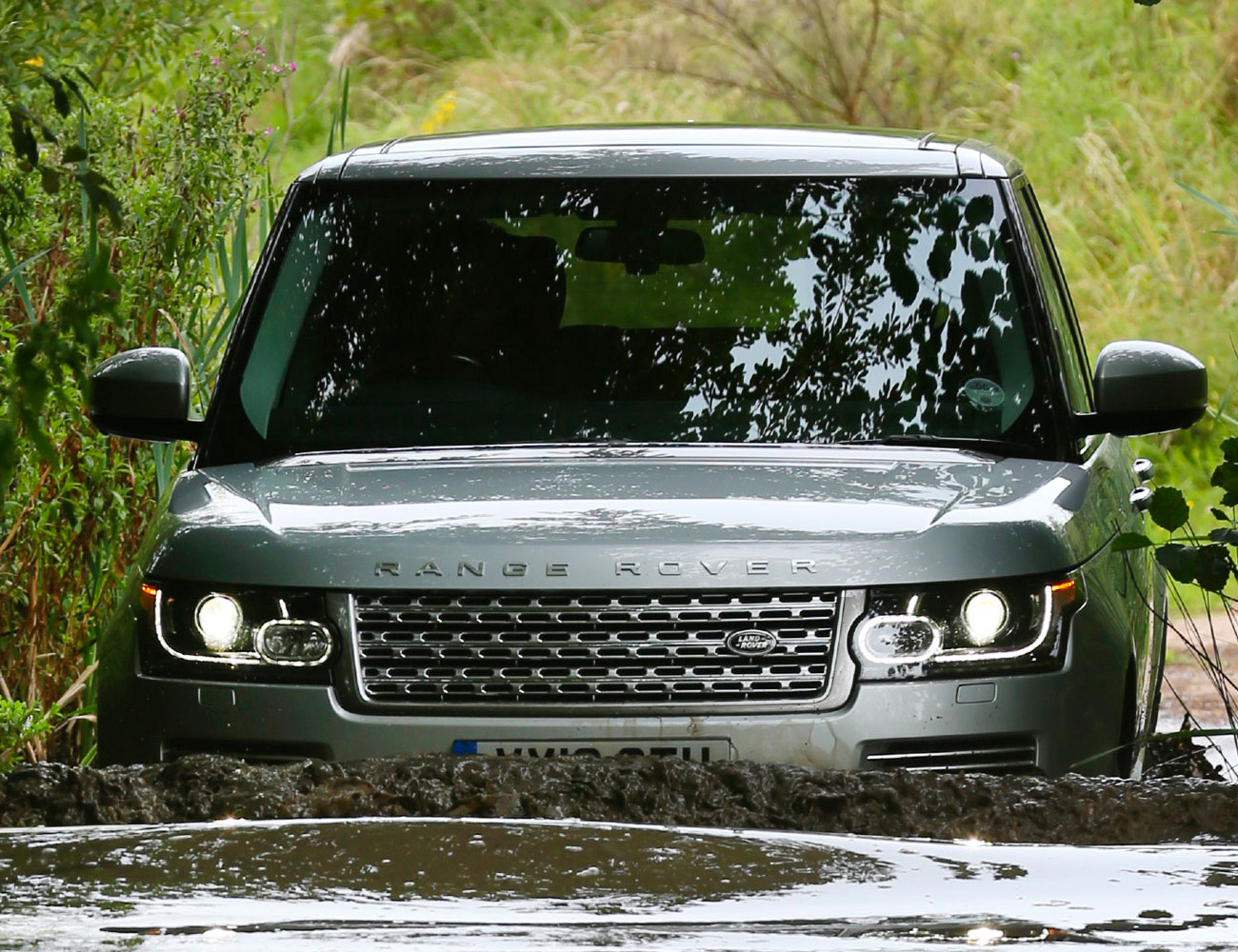
Land Rover Range Rover


Out of the box, the Range Rover is one of the most capable SUVs on the planet. It’s a shame the majority of Range Rover owners will never know how competent it is off-road…but since yours is a rental, feel free to put its reputation to the test over the weekend.

Avis

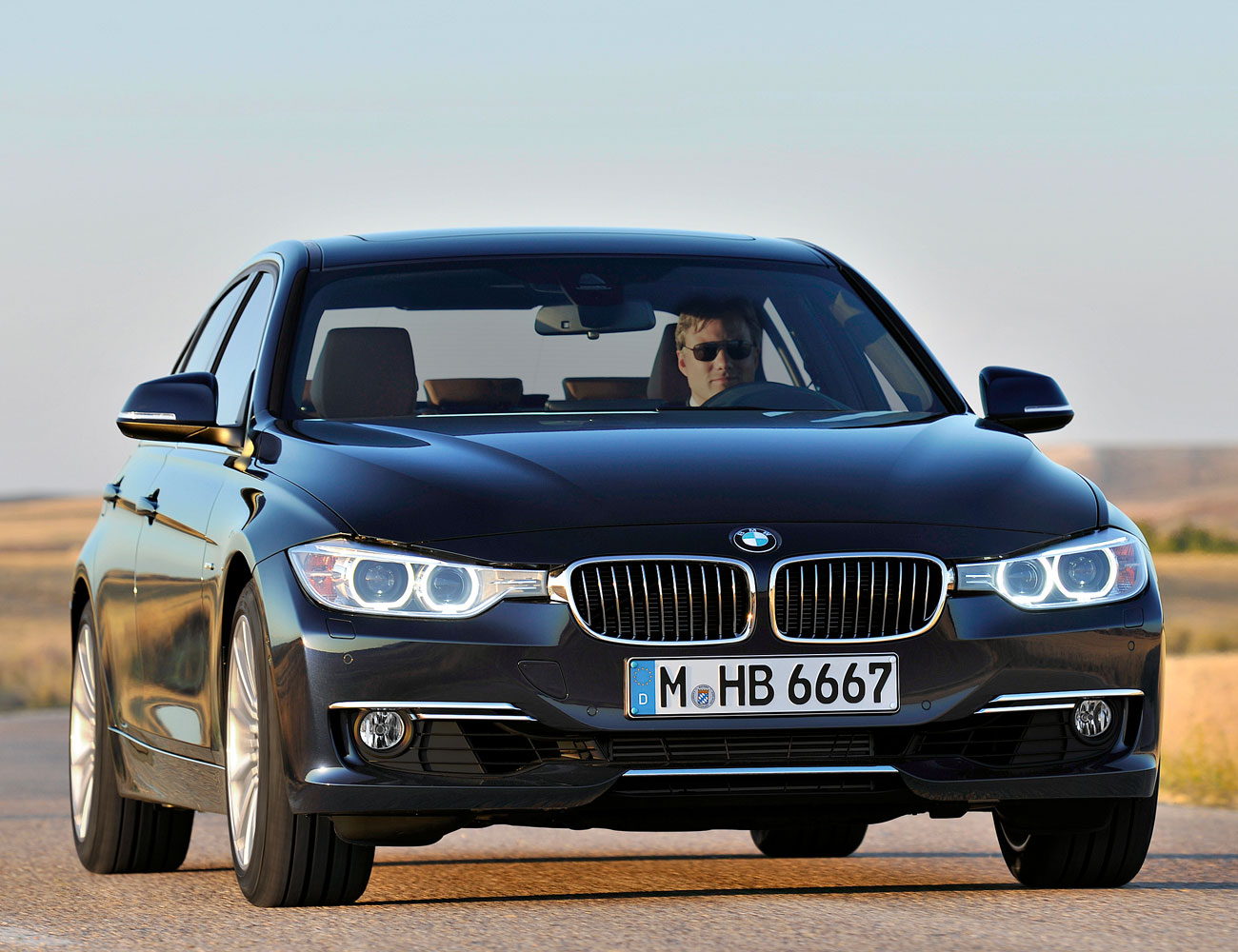
BMW 328i xDrive


The BMW 328i is the most understated car on this list. Then again, this Bimmer isn’t for showing off; it’s for you to enjoy from the driver’s seat. With perfect balance, handling and responses…when you arrive, you’ll also be seriously satisfied.

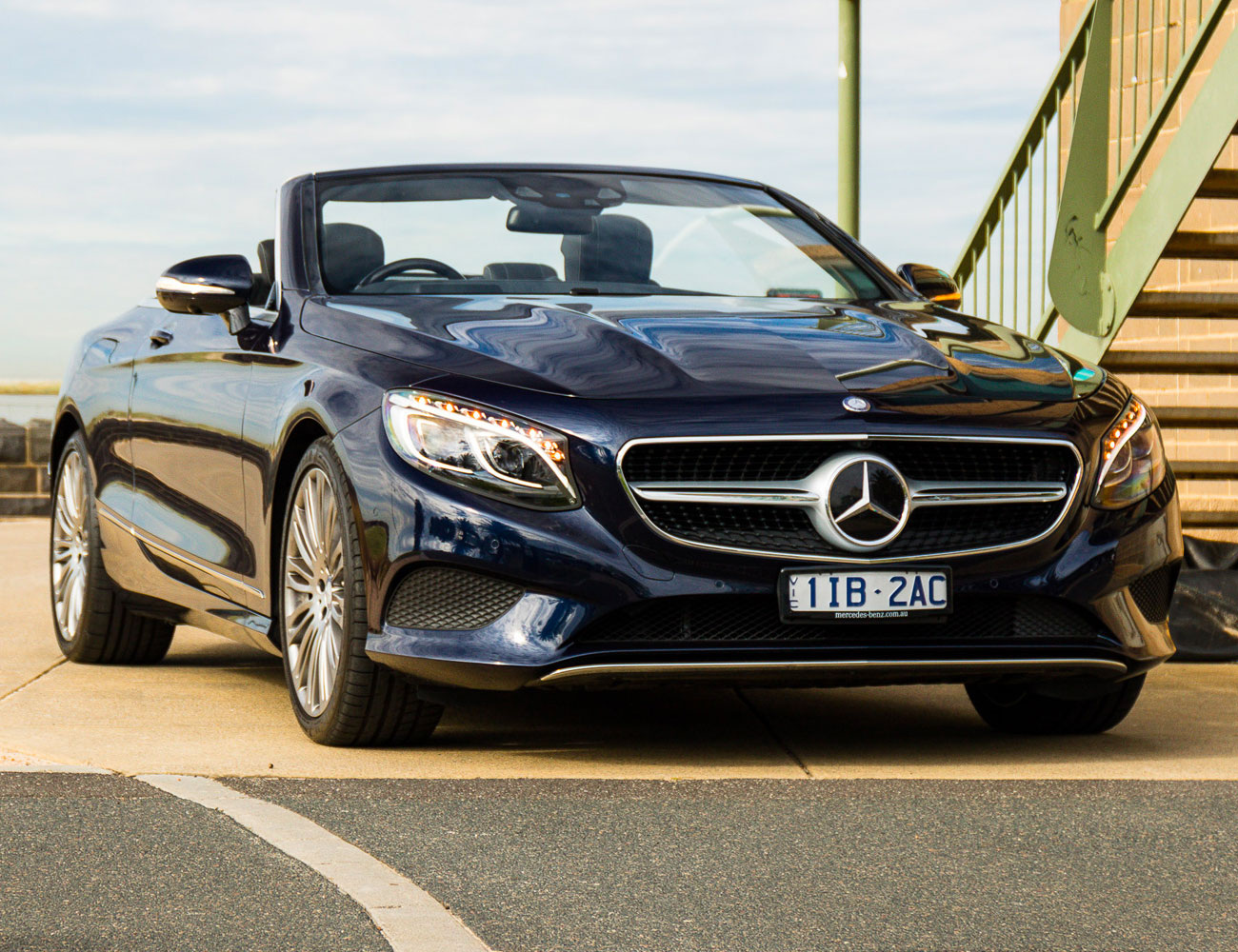
Mercedes-Benz S550 Cabriolet


If the BMW 328i is for flying under the radar, the Mercedes S550 is for letting everyone know you’re floating down the road in the lap of luxury. The 4.0-liter twin-turbo V8 is good for 463 horsepower and 516 lb-ft of torque, but the real draw of this car is the interior, which feels more like a luxury yacht than a car.

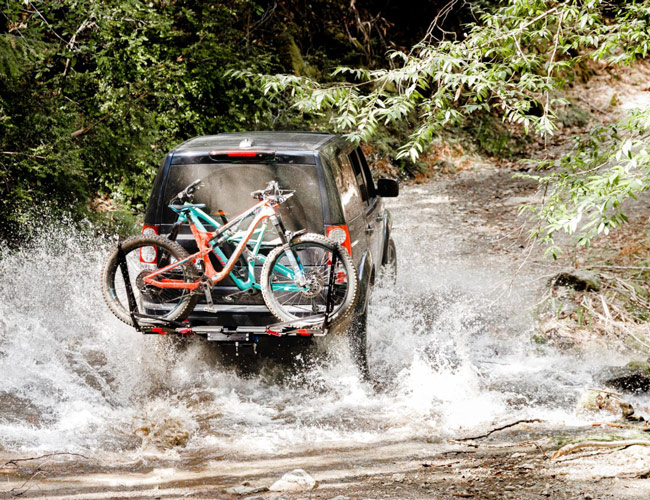
The Best Bike Racks For Any Car

Whether you’re headed on a weekend trip, to the local trail system for a lunch ride or the top of your favorite descent, a good bike rack is crucial. These are the best available now, for any type of vehicle and bike. Read the Story

2019 Mercedes-Benz EQC Review: Pushing Electric Power Into the Mainstream

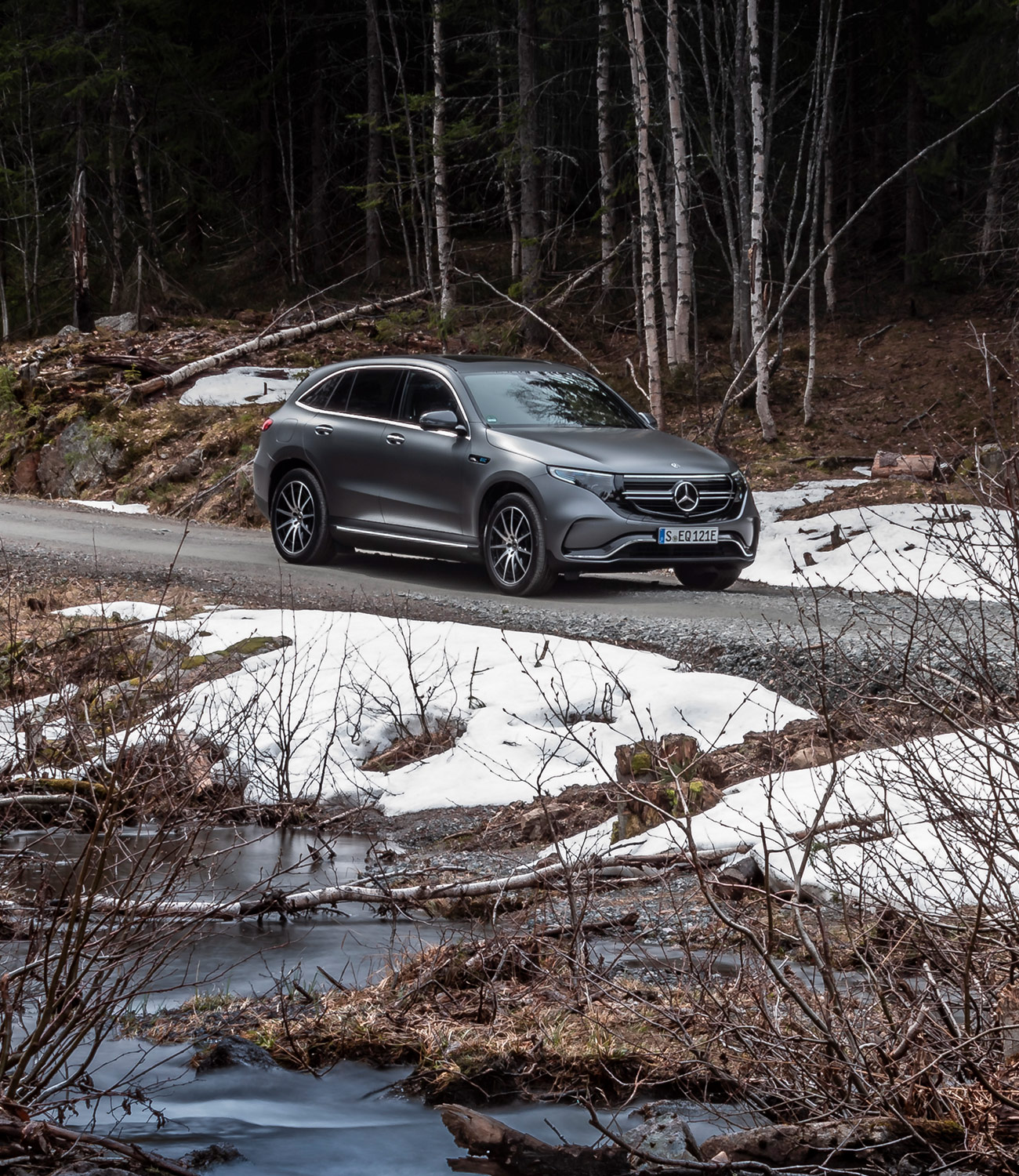
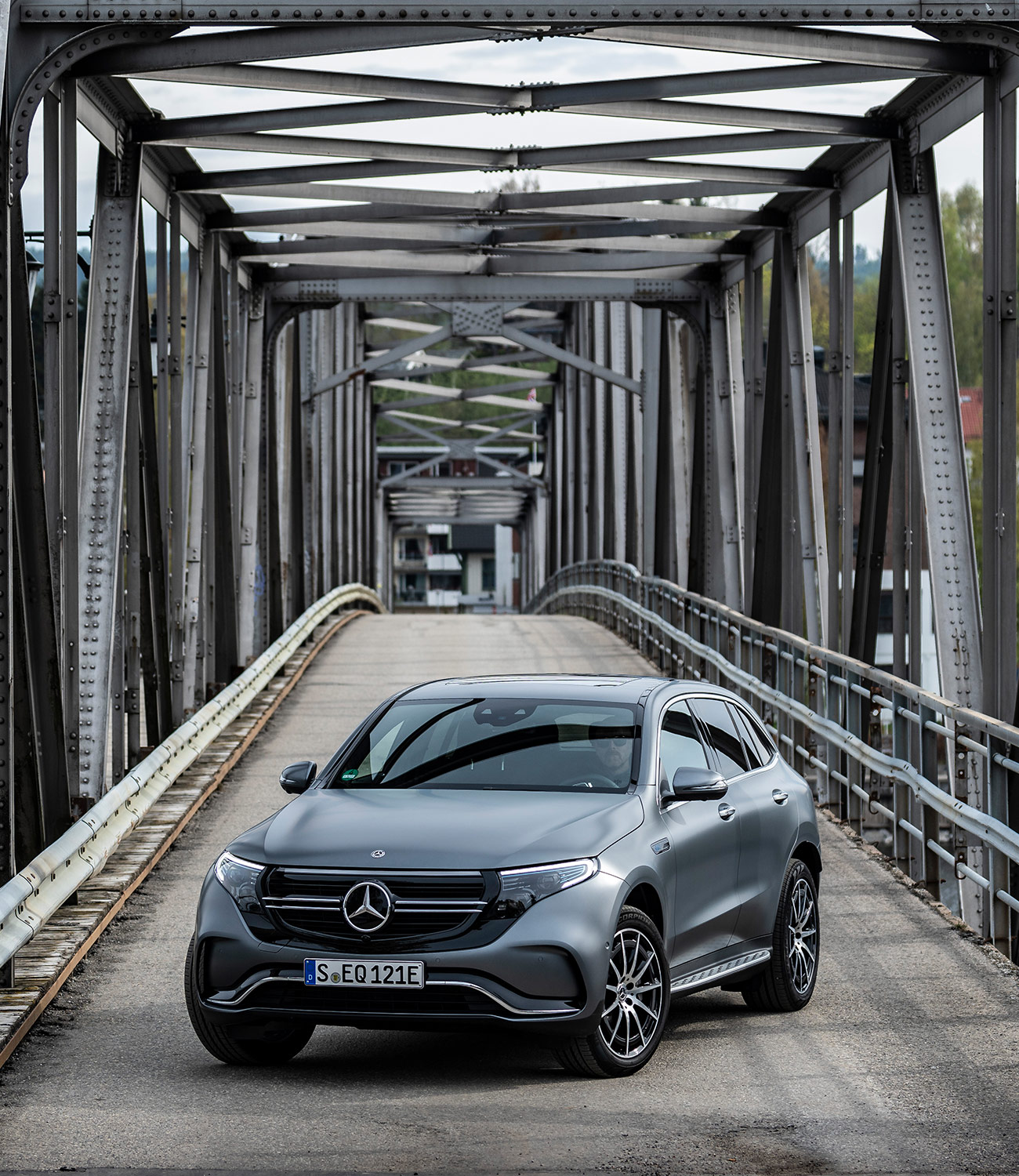
After decades of toying with zero-emission powertrains — including low-volume retrofitted Electric Drive iterations of the B-Class and Smart ForTwo — Mercedes-Benz is debuting the EQC, its first BEV (battery-electric vehicle) built from a clean-sheet design. As the inventors of the automobile, Mercedes’s first BEV targeted for mass production is more than a landmark; it’s quite likely a bellwether for the success of the electric powertrains in the company’s fleets worldwide. The EQC will likely act as an electrified canary in the coal mine, revealing whether EVs have potential to appeal to everyday consumers, or if they’ll remain relegated to a niche that caters to the NPR crowd.

The Good: Did anyone think Mercedes-Benz wouldn’t nail the electric powertrain on their first purpose-built BEV? Its 80-kWh lithium-ion battery pack channels 402 horsepower to two electric motors, one attached to each axle. This allows 564 pound-feet of instant torque to be intelligently distributed by Benz’s well-established 4Matic all-wheel-drive, zipping the substantial SUV (curb weight is still to be revealed) from a standstill to 60 mph in less than five seconds. Boasting a European-test-cycle-claimed 259-mile range, the pack can charge from 10 to 80 percent in just 40 minutes at a DC fast charger — although that same charge will take nearly 10 hours on a 240-volt Level 2 wall unit.

Who It’s For: Luxury car buyers interested in a zero emission vehicle — because of environmental concerns, to use HOV lanes and dedicated parking spots or simply save money on gasoline — but don’t want to make a big deal out of it. While many BEV shoppers will opt for Teslas to broadcast their green credentials, buyers of the EQC aren’t concerned with flashing their eco-bona fides. Sure there are some aesthetic cues that signal this is an electric vehicle, like its pancake wheels and hard plastic grille, but most laymen would have a difficult time discerning the EQC from its petrol-chugging Benz brethren. Which seems to be exactly what Mercedes-Benz was aiming for.

Watch Out For: Even with all that torque available at all four corners, the EQC lacks the sportiness of its Jaguar and Tesla competitors. This is mostly due to the SUV-soft suspension, which is luxuriously pliant but allows for a lot of body roll when placed against the I-Pace and Model X. Perhaps engineers tuned down its dynamics to make the EQC feel more like a boilerplate SUV, but enthusiasts are going to wish Benz hadn’t.

Alternatives: Jaguar I-Pace ($69,500), Tesla Model X ($71,450), Audi E-Tron ($74,800).

Review: It may seem weird to use this as a compliment, but Mercedes-Benz’s new EQC is in many ways unremarkable. Yes, the EQC is an electric vehicle, but it feels like a traditional internal-combustion crossover in almost every way. Even the mundane roads outside Oslo, Norway the Mercedes event planners chose to showcase the EQC on seemed to underscore just how ordinary the vehicle is supposed to be.

But the EQC is extraordinary, of course: more than 200 miles of range per charge; absurd torque at your beck and call; and pleasant in every way you’d expect from a Mercedes SUV. While Tesla prefers a minimalist approach to its interior design, the EQC resembles any of Benz’s top-tier SUV offerings; there are double 10.25-inch touchscreen digital displays spread across the dash, a piano black central console and metal Burmester speaker grilles at the bottom of the A-pillars. All the touchpoints — seat controls, vents, buttons, switches, door handles, etc. — are also metal, with 64-color ambient lighting spicing things up. And even as cold rain pelted the windshield and sunroof (the latter being somewhat small in this age of sprawling panoramic tops), inside, the EQC was tomb-like quiet and cozy.

The exterior looks much like a GLC-Class, even though the EQC shares not a single piece of sheet metal with its petrol-chugging kin. The most salient EV visual cues are matching LED light bars above the front grille and connecting the rear tail lamps, and 19- to 21-inch rims that hide aerodynamic features. (They’re better-looking than the aero-optimizing disc wheels of many EVs, but still seem a bit chintzy).

It’s not until you dig into the various Driving and Braking modes that the EQC really starts separating itself from gasoline-swigging competitors. There are four drive modes — although unlike other vehicles that alter several parameters under the circumstances, shifting between Eco, Comfort and Sport will only change throttle aggression. Because there’s only one gear, shift speed and shift points are not affected, and the EQC lacks adjustable dampers. (That’s is a shame, as the heavy SUV could use a stiffer suspension setting to better absorb its mass through the corners.)

The most efficient mode, Maximum Range, also applies speed ceilings and haptic feedback through the steering wheel if the vehicle senses you need to slow for any reason (more on this in a bit). It even encourages more dramatic regenerative braking, in order to ensure you reach your targeted charging station. Considerately enough, even Maximum Range won’t affect the climate control functions; Mercedes doesn’t want passengers to ever be uncomfortable, no matter how thrifty they choose to be.

Speaking of regenerative braking, the EQC features four levels of it. D, the default, barely slows the vehicle on its own; it feels as if you’re going against a strong headwind. Dial it down to D+ and you feel zero deceleration, like cruising in a gas-powered car. Dial the regen braking up to D- and you instantly feel deceleration the moment you lift off throttle; dial it up even further to D – -, and it feels like hard braking. This is where “one-pedal driving” kicks in; commuting around town, you can make a game out of never touching the brake, as the EQC will quickly scrub speed just by lifting off the accelerator. Notably, unlike a Tesla, the EQC will never come to a complete stop without actually applying the brake pedal.

There’s also an additional intelligent mode called “D Auto” that’s activated by pulling on the paddle shifters for two seconds. Using a combination of map/GPS info, radar, cameras, and traffic sign recognition that’s been networked together, the EQC reads your environment and alters regeneration levels to maximize energy recuperation. If it senses you approaching a car or corner or notices a speed limit change, D Auto will increase regen braking as soon as you lift your foot from the throttle.

Some people don’t like this level of interference, but driving the rain-slicked roads outside Oslo, the purpose of D Auto came into focus. I found the setting ideal for curvy roads where you might apply brakes before entering corners; simply lifting your foot from the throttle significantly slowed down the SUV.

Verdict: Taken in totality, the EQC in feels and looks like an ordinary SUV in most superficial ways — which seems to be exactly what Mercedes was aiming for. But once you start playing with its bag of EV tricks — not to mention the joyous piles of torque on hand — the EQC offers enough futuristic touches to separate it from the petrol-chugging pack. Will that combination of today’s looks and tomorrow’s powerplant win over some reluctant buyers who’ve chosen “normal” cars in the past? It just might.

2019 Mercedes-Benz EQC Specs

Powertrain: Two asynchronous electric motors and an 80-kWh lithium-ion battery; single-speed transmission; all-wheel-drive
Horsepower: 402
Torque: 564 pound-feet
0-60 MPH: 4.9 seconds
Driving Range (European Testing): 259 miles

Mercedes-Benz hosted us and provided this product for review.

Read More Gear Patrol Reviews

Hot takes and in-depth reviews on noteworthy, relevant and interesting products. Read the Story
Note: Purchasing products through our links may earn us a portion of the sale, which supports our editorial team’s mission. Learn more here.

10 Amazing New Cars We Wish We Could Buy in America

The car market in the United States isn’t quite like anywhere else. Automakers must meet a separate set of emissions standards; roads in suburban and rural areas tend to be broader and straighter than their counterparts elsewhere; gasoline is much cheaper. And, of course, American buyers have a particular taste for giant SUVs and full-sized pickups that people in other countries lack. 

All those distinctions mean Americans tend to get different cars from other markets — which, among other things, means many finely-tuned driver’s cars made for Europe and elsewhere never float over to the United States while they’re in production. Here, then, are 10 of the best examples of the “forbidden fruit” new cars American buyers can’t have…at least, not for another 25 years or so, when they can import them one by one

Alpine A110

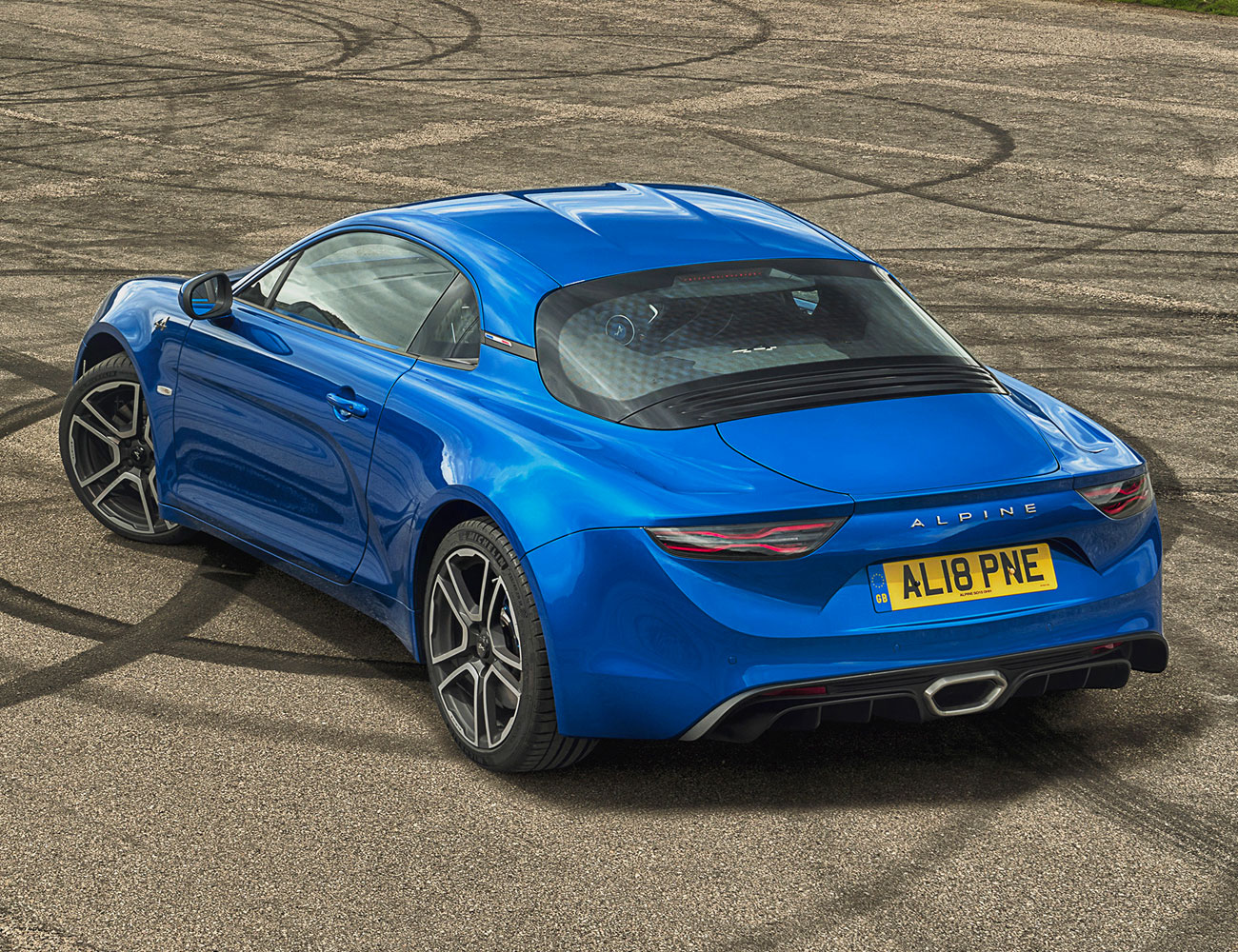
The Alpine A110 is a mid-engined, rear-wheel-drive coupe from Renault, a modern reimagining of the original Alpine A110. The specs don’t leap out at you — it uses a 1.8-liter inline four producing 249 horsepower and 236 pound-feet of torque — but look closer, and you’ll see the appeal. At just 2,432 pounds, the A110 is insanely light — 30 pounds lighter than an Alfa Romeo 4C. It hits 60 miles per hour in 4.5 seconds and has a top speed of 155 mph. And yet it’s not a gutted track car; it’s built to be comfortable, too.

Why Americans Don’t Get It: Renault left the U.S. market nigh-on 30 years ago. And even if they were coming back, a limited-edition sports coupe meant to rival the Toyota Supra would not be the ideal vehicle to re-launch the brand here.

Audi RS 4 Avant

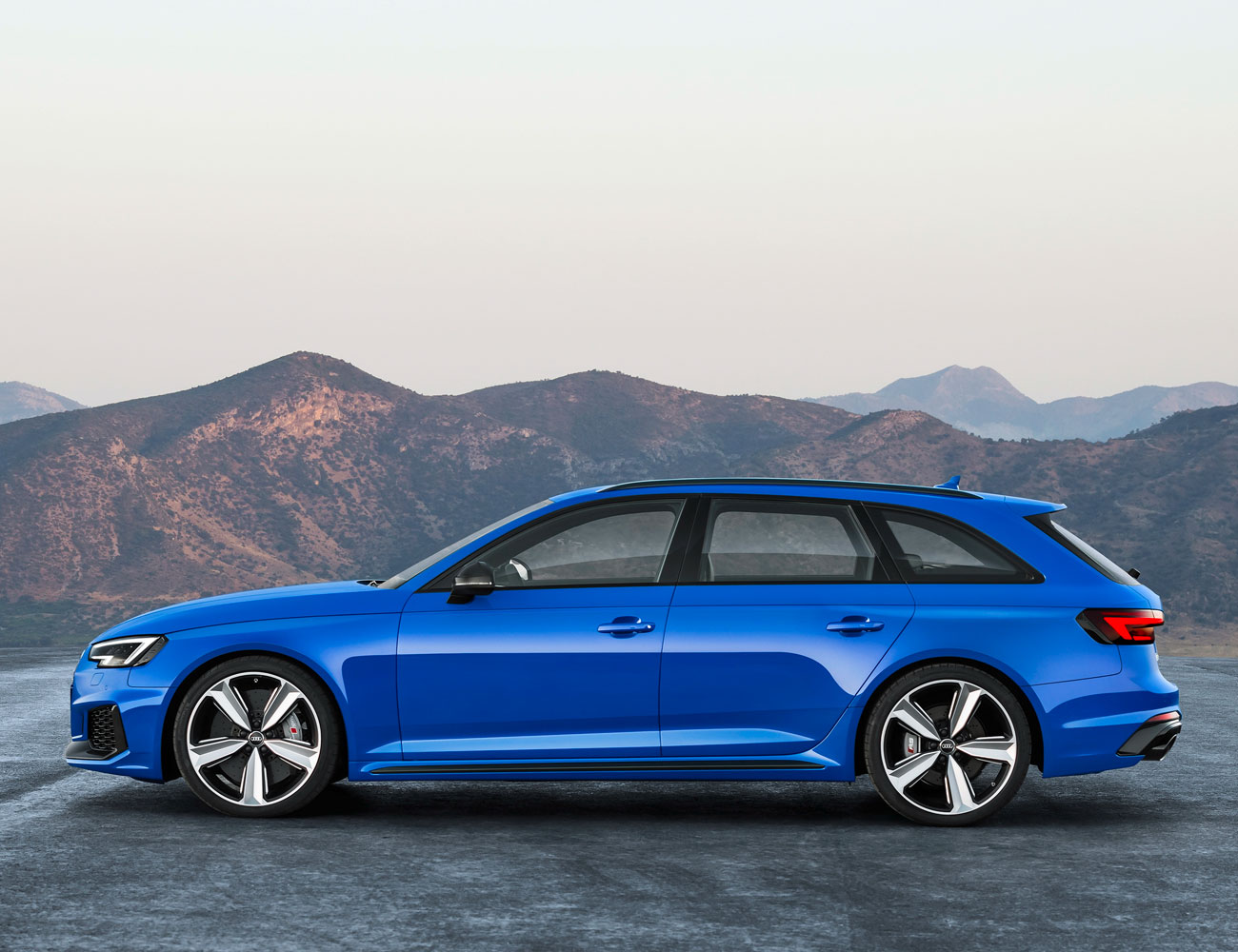
The RS 4 is Audi’s all-wheel-drive retort to the BMW M3. The European RS 4 pulls 450 hp and 44 lb-ft of torque from its twin-turbocharged 2.9-liter V-6. It’s an absolute rocket, accelerating from 0-60 mph in just 4.1 seconds with a top speed that can reach 174 mph. America has the equivalently-powerful RS 5 coupe, but the sedan range tops out at the less-potent S4 — and the only wagon we get here is the 248-hp A4 Allroad.

Why Americans Don’t Get It: Americans tend to be anti-wagon, though Audi fans less so. Audi has teased that RS Avant models might come back; given how successful AMG and M cars have been for Mercedes-Benz and BMW here, bulking up the RS portfolio just seems like good sense. But for now, we go without.

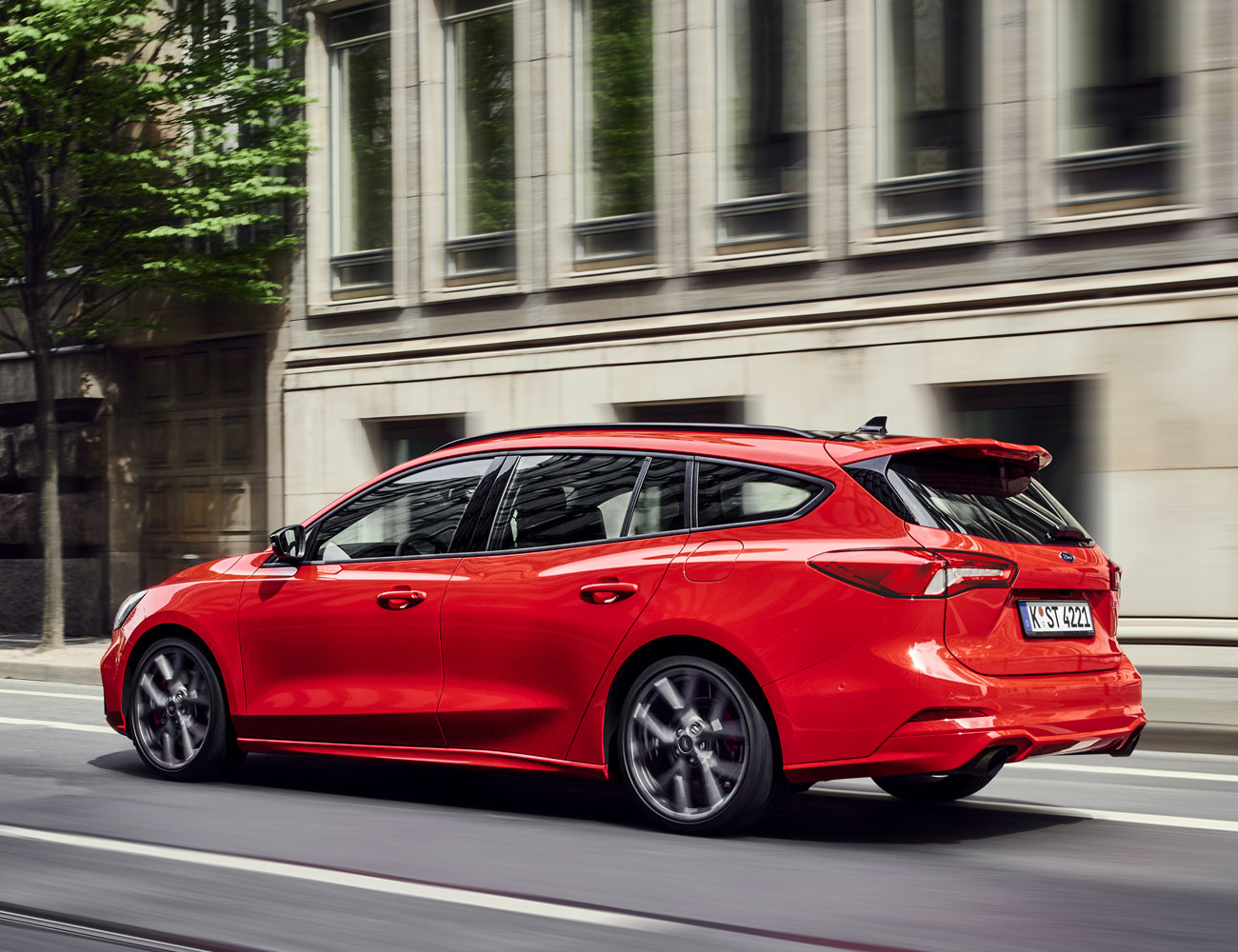
Ford Focus ST Wagon

Ford recently unveiled the wagon version of the Focus ST hatchback. The longroof is sporty and swell to look at, with the gasoline version using Ford’s 2.3-liter inline-four to generate 276 hp and 310 lb-ft. Want that knife twisted a bit more? You can get Ford’s hot wagon with a six-speed manual. Enjoy your Edge ST, American bros.

Why Americans Don’t Get It: Ford needs profits for Wall Street. Cars need to sell in volume to be profitable. Trucks and SUVs are profitable. Americans don’t buy wagons in volume, so they’re not.

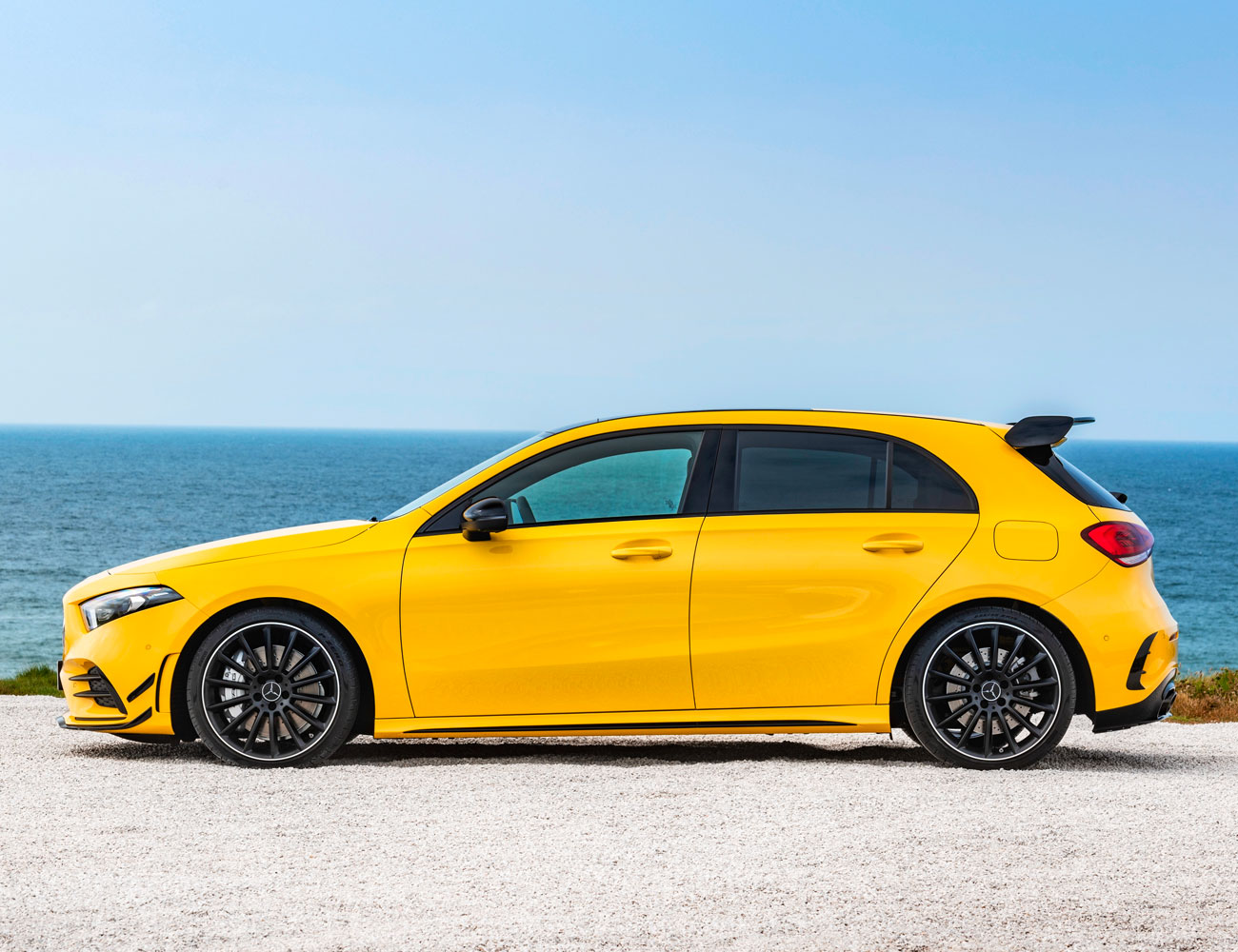
Mercedes-AMG A45 Hatchback

Yes, Mercedes makes a hot hatchback. In fact, Mercedes makes the hottest of hot hatchbacks: The new Mercedes-AMG A45, incredibly, will squeeze 420 hp from a 2.0-liter engine. That’s more power per liter than just about anything else on the road. It will also have a drift mode, which Mercedes has been hyping in YouTube videos.

Why Americans Don’t Get It: Americans don’t think hatchbacks are luxury vehicles, so one north of $50,000 would be a tough sell. Raise it a little, add some body cladding and call it a GLA45, though, and Americans will love it.

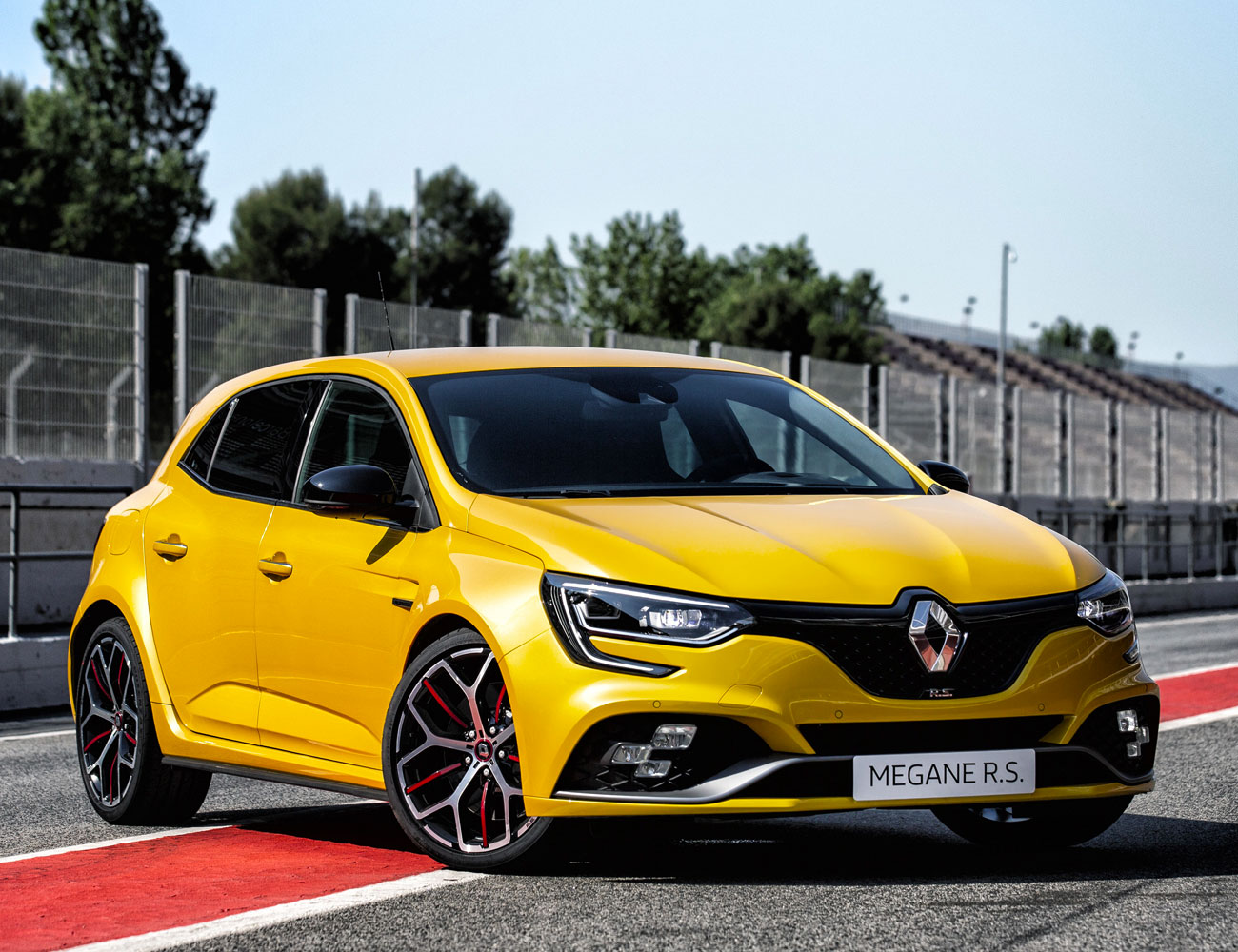
Renault Megane RS

The RS (Renault Sport) is the hottest version of Renault’s Megane hatchback, and is the carmaker’s answer to the Golf R. The 300 Trophy trim tunes the inline-four to 292 hp and 310 lb-ft, delivering a 0-60 mph time of 5.7 seconds. It’s front-wheel drive, has four-wheel steering, and can still be ordered with a six-speed manual. It also has a fancy new turbocharger the company claims was “taken directly from Formula 1,” which was probably a better selling point before the 2019 season.

Why Americans Don’t Get It: Renault doesn’t sell anything here.

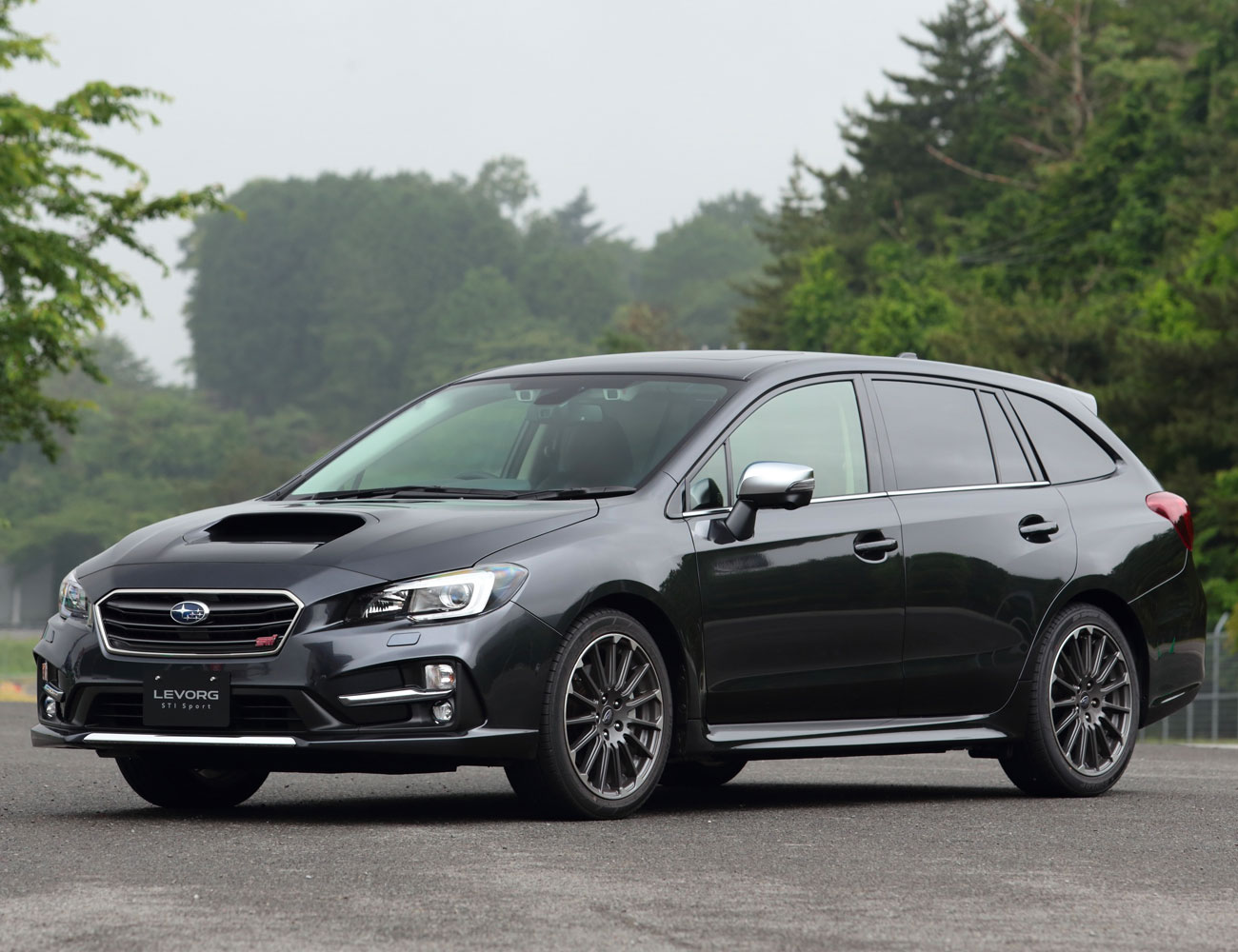
Subaru Levorg STI Sport

A Subaru enthusiast’s dream car might merge the Outback’s wagon body with the WRX’s manic persona. The not-for-America Levorg wagon isn’t that exactly, but it’s the closest Subaru comes to that idea today. The 2.0-liter boxer engine produces 264 hp and 258 lb-ft. The top-of-the-line STI Sport adds some sport tuning and appearance features. It only comes with a CVT, sadly.

Why Americans Don’t Get It: Subaru has been too successful here, almost selling more cars in the US than they can produce. Why add to the workload?

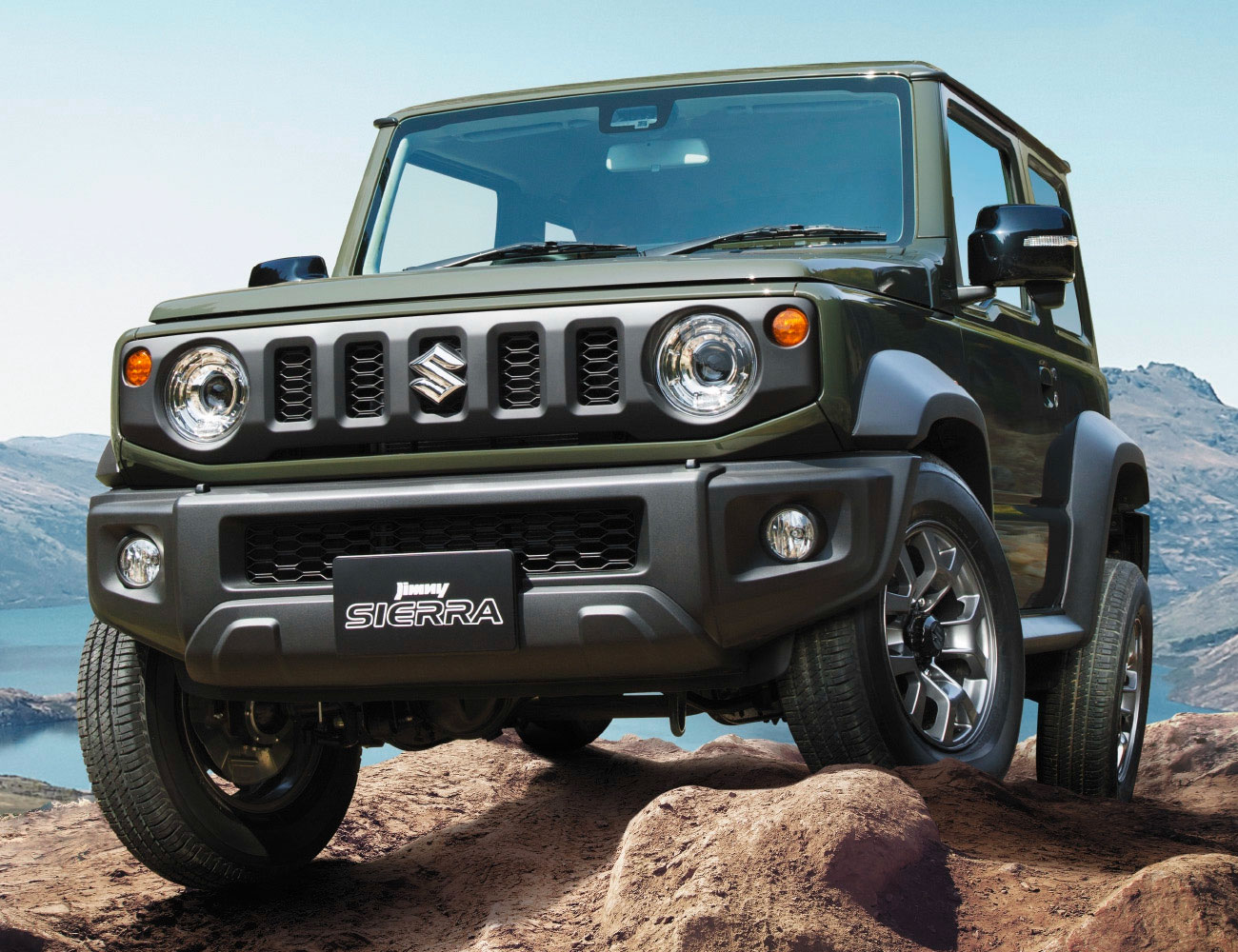
Suzuki Jimny

Suzuki just released its updated version of the Jimny, which was named a 2019 World Car of the Year. It’s a small, boxy and bulletproof SUV that resembles the child of a Land Rover Defender and a G-Wagen. It’s also a rugged, supremely capable off-roader. It can go pretty much anywhere a Land Rover can go — and some places a Land Rover can’t, since it’s smaller and narrower.

Why American Don’t Get It: Suzuki left the US market in 2012. The Jimny may have a niche, but being useless for families and ill-suited to American highway driving (it only makes 100 horses) would make it hard to find mainstream appeal.

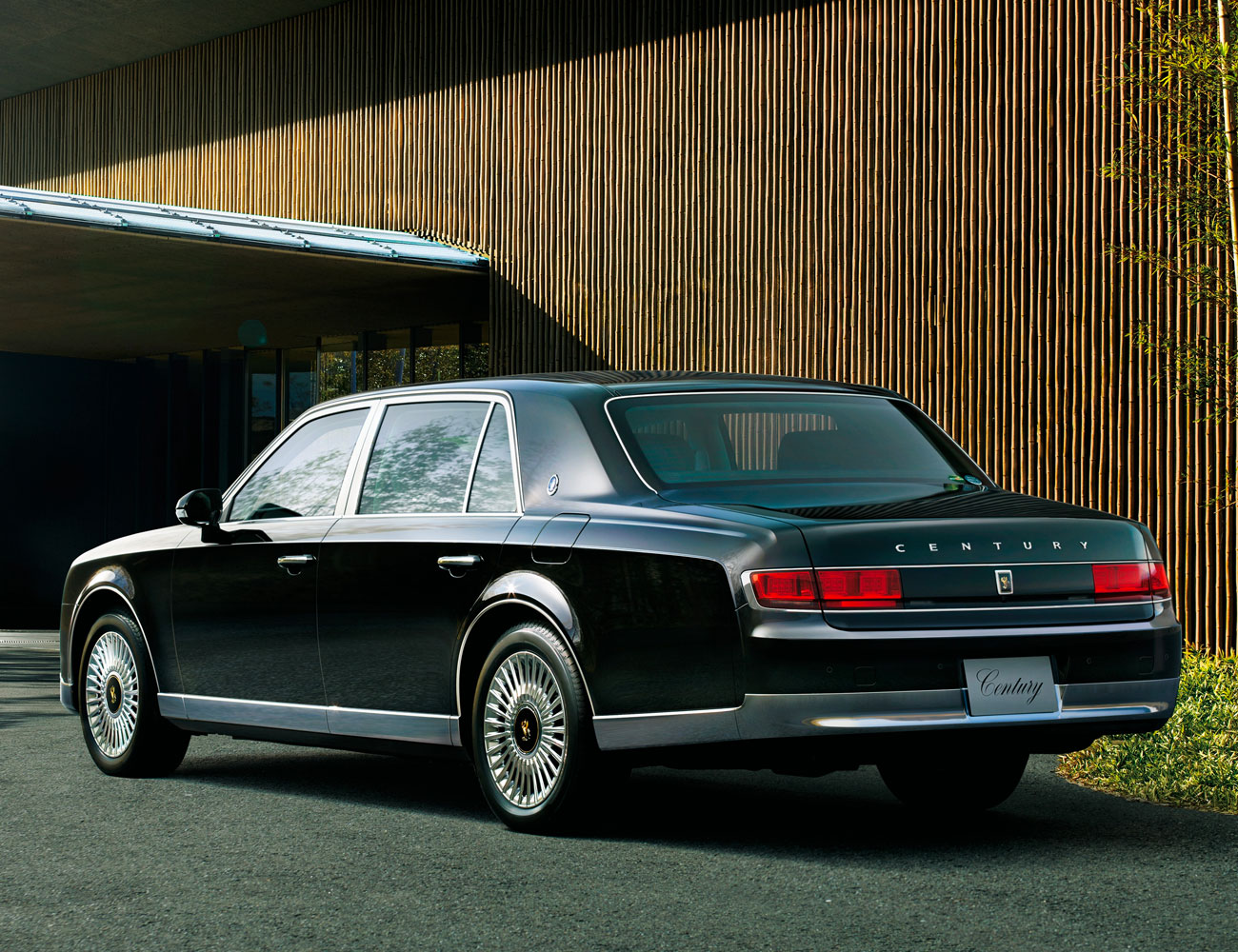
Toyota Century

The Century is Toyota’s super-lux flagship, a Japanese market-only four-door sedan. Production is limited and units available by invitation only, reserved for royalty and VIPs. It’s kept its classic aesthetic intact over the years — in part because it has been relaunched just twice since it debuted in 1967, and in part because it caters to such a small audience. Toyota’s GRMN racing division did make a special edition one that may be produced, though.

Why Americans Don’t Get It: Some things should be kept special. Also, Americans don’t view Toyota as a luxury brand — hence the existence of Lexus. And even a $200,000 Lexus sedan would be a tough sell.

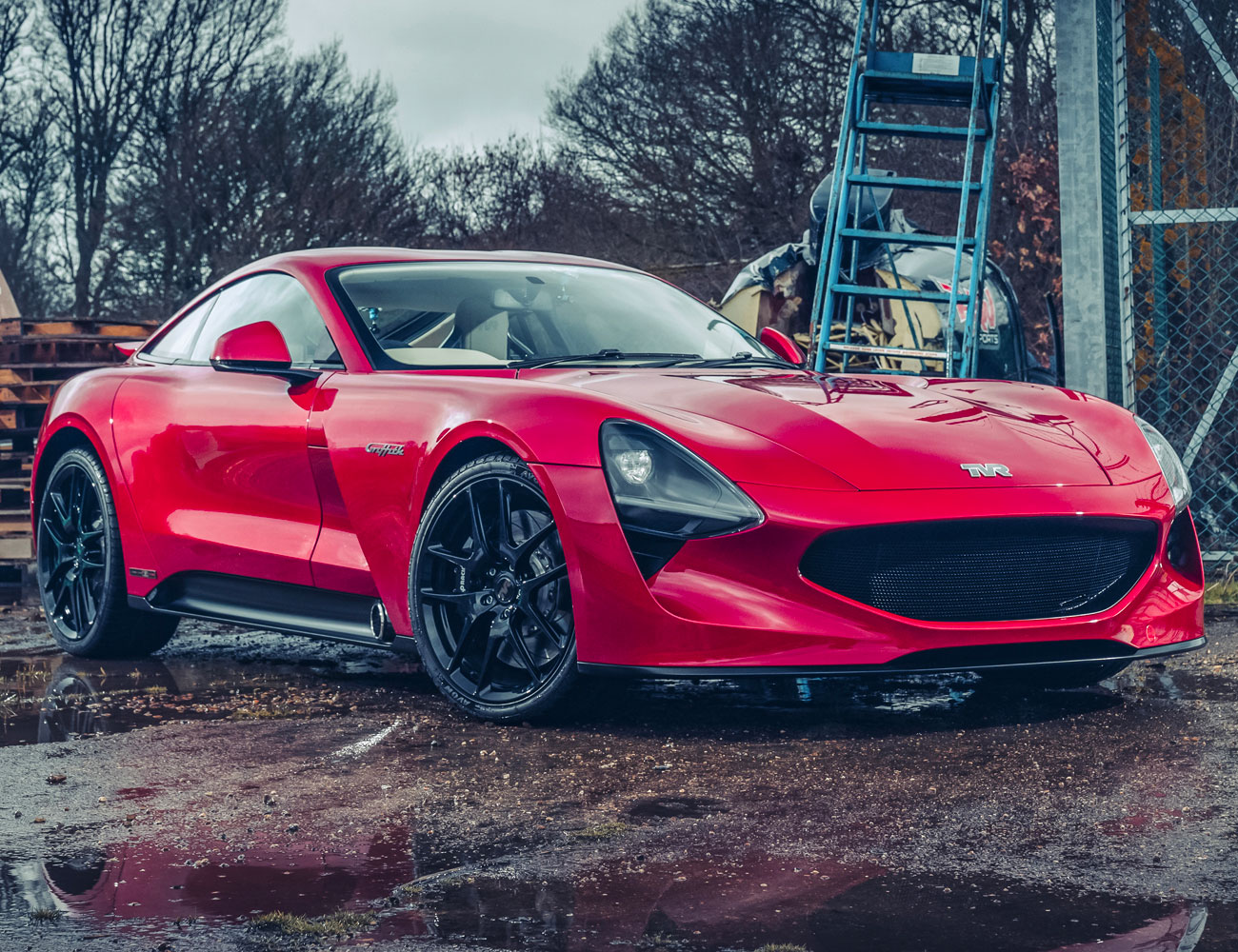
TVR Griffith

The TVR nameplate has been revived in the form of what may be the perfect driver’s car. The new Griffith will be a two-door coupe designed by Gordon Murray, the man who designed the McLaren F1. As is TVR tradition, it will have a huge engine — a Ford Cosworth 5.0-liter V-8 — and a super-light, all carbon fiber chassis, paired with a six-speed manual gearbox and rear-wheel-drive. It will accelerate from 0 to 60 mph in about four seconds, and reached a top speed north of 200 mph. It will also have ABS, power steering, and traction control, because they aren’t sadists.

Why The U.S. Isn’t Getting It: It’s not worth building a US-spec Griffith for a 500-vehicle limited production run, considering how difficult the development process has been for TVR in general.

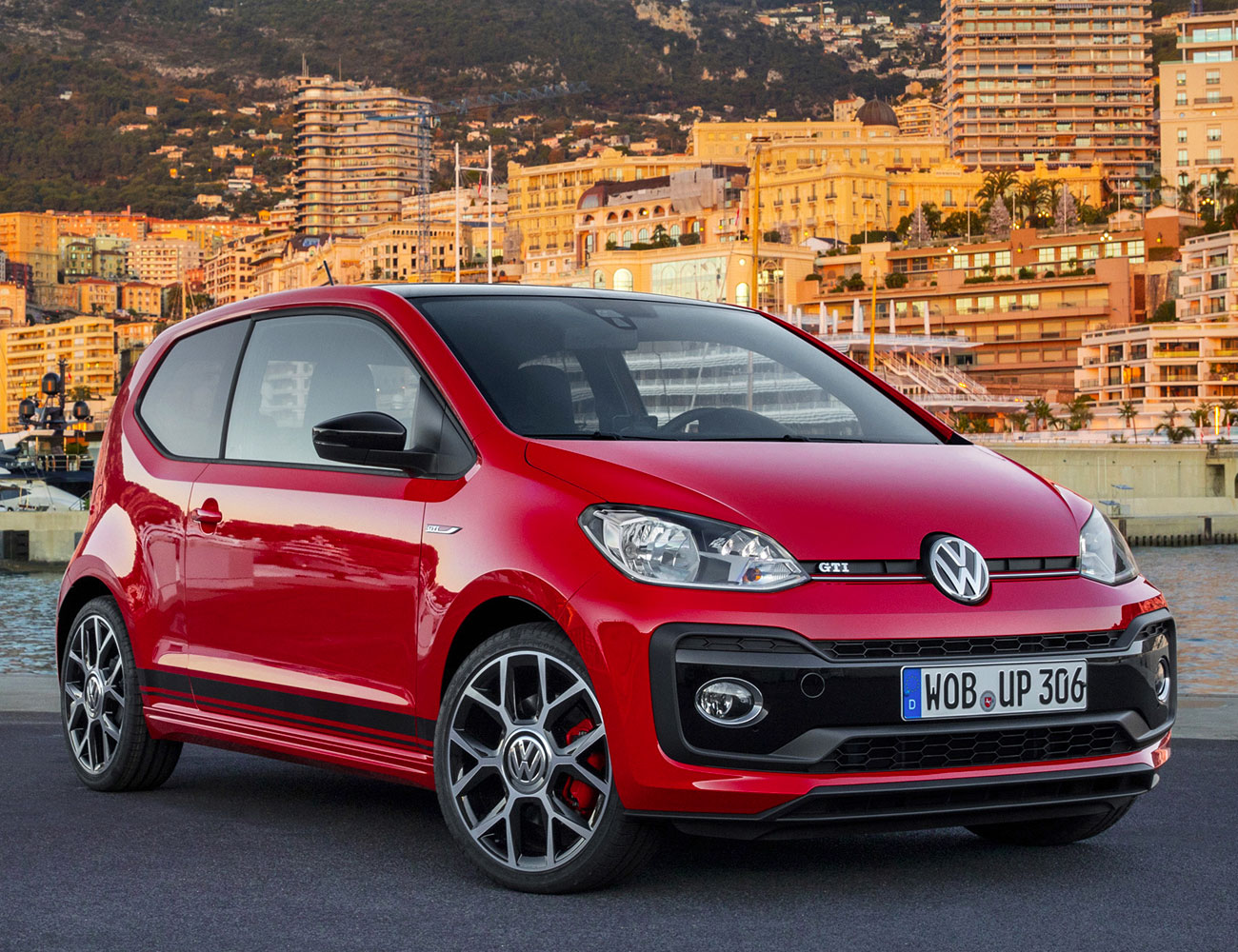
Volkswagen up! GTI

The oddly-named up! is Volkswagen’s pint-sized hatchback, which also comes in GTI version. The 1.0-liter three-cylinder is horsepower-light, but torque-heavy, making 113 hp and 170 lb-ft. Its size, power, and handling capability place it quite close to the original GTI. It also costs less than $20,000. There may not be a better city car on sale on any continent.

Why The U.S. Doesn’t Get It: Americans consider the Golf a small car, and sales have plummeted in recent years. Volkswagen has countered by going hard into crossovers with the Tiguan and Atlas, which doesn’t leave much room for introducing a tiny city car. And highway-centric American driving would minimize the up! GTI’s strengths and fully display its weaknesses.

A Cool Car We Can Have

Popping the top changes the experience dramatically, and suddenly, we’re debating whether the ideal GT is the one that doesn’t get in between you and road trip wonderment. Read the Story

Note: Purchasing products through our links may earn us a portion of the sale, which supports our editorial team’s mission. Learn more here.

Could This Gorgeous Speedster Be the Best Car Porsche Never Sold?

Porsche has been making cars without roofs pretty much since the first days of the company in postwar Germany. And while those open-lid speed machines have come in many shapes and sizes, some of the most remarkable ones have been the company’s speedster models — especially those set aside with the sobriquet of “spyder.” From like the 550 Spyder of old to the 918 Spyder of new, these open-top sports cars are the spiritual heart of the carmaker — a throughline that taps directly into the pure essence of driving joy.

Not every open-top car Zuffenhausen could make winds up reaching the road, though. Sometimes, that’s for the best; witness the aberration that was the Cayenne Cabriolet Concept. Other times, however, leaving these cars on the cutting room floor means depriving the world of a true automotive masterpiece — which is certainly the case with this sexy Porsche Boxster speedster.

The Porsche Boxster Bergspyder, as it’s officially known, was whipped up in 2015 by special order of the company’s board of executives, as both a way to see just how much lightweighting potential could be found in the 981-generation Boxster/Cayman platform and as a tribute to the Porsche 909 Bergspyder of 1968, a hillclimb special that weighed in at a paltry 849 pounds. The Boxster Bergspyder couldn’t match that — modern safety regulations would make such a weight pretty much impossible today — but Porsche’s engineers and designers did manage to chop the car down to 2,418 pounds, a savings of around 600 lbs versus the regular Boxster.

One way Porsche managed to cut so much weight? Tossing out the passenger’s seat. Well, technically, the company tossed out both seats — they just replaced the driver’s one with a throne based on the ones found in the 918 Spyder. (Elements from that hybrid hypercar also found their way to the Boxster’s dashboard.) In lieu of a windshield, the team affixed a small wind deflector around the cockpit opening, shedding further mass while upping the car’s style quotient significantly.

With the passenger’s seat gone, Porsche was free to coat over its side of the cabin with a tarpaulin made from synthetic leather. (A more permanent carbon fiber lid was planned for later stages of the project.) In the space left over by the seat’s departure, Porsche added an extra cargo bay with a shelf for a helmet, a cover to pop over the driver’s seat, and other incidental storage.

But while saving weight always tastes good, it’s always better when it’s paired with plenty of power. For the Boxster Bergspyder, the engineers sourced the 3.8-liter boxer-six powerplant from the Cayman GT4, connected to a six-speed manual. Its 388 horsepower enabled the Bergspyder to blitz from 0 to 60 miles per hour in about four seconds, according to the company’s estimates, and could theoretically allow it to lap the Nurburgring Nordschleife in seven and a half minutes.

Sadly, theoreticallly is likely the only way the Boxster Bergspyder will ever attack the ‘Ring. Due to concerns about how difficult it might be to register the car in certain countries — cough cough America cough cough — Porsche’s execs put a pin in the project after the development prototype seen here was built, leaving it a one-off tucked away out for site. Until this year, that is. While the single-seat Porsche still isn’t bound for production, it will be making its public debut at the Gaisberg hill climb later this year. Don’t be surprised if it’s hard to see behind the crowds of slathering Porschephiles imagining how their lives might have turned out differently had they been able to park one in their driveway.

The Best New Cars Americans Can’t Have

The car market in the United States isn’t quite like anywhere else. Automakers must meet a separate set of emissions standards; roads in suburban and rural areas tend to be broader and straighter than their counterparts elsewhere; gasoline is much cheaper. And, of course, American buyers have a particular taste for giant SUVs and full-sized pickups that people in other countries lack. 

All those distinctions mean Americans tend to get different cars from other markets — which, among other things, means many finely-tuned driver’s cars made for Europe and elsewhere never float over to the United States while they’re in production. Here, then, are 10 of the best examples of the “forbidden fruit” new cars American buyers can’t have…at least, not for another 25 years or so, when they can import them one by one

INSERT WIDGET HERE

Alpine A110

The Alpine A110 is a mid-engined, rear-wheel-drive coupe from Renault, a modern reimagining of the original Alpine A110. The specs don’t leap out at you — it uses a 1.8-liter inline four producing 249 horsepower and 236 pound-feet of torque — but look closer, and you’ll see the appeal. At just 2,432 pounds, the A110 is insanely light — 30 pounds lighter than an Alfa Romeo 4C. It hits 60 miles per hour in 4.5 seconds and has a top speed of 155 mph. And yet it’s not a gutted track car; it’s built to be comfortable, too.

Why Americans Don’t Get It: Renault left the U.S. market nigh-on 30 years ago. And even if they were coming back, a limited-edition sports coupe meant to rival the Toyota Supra would not be the ideal vehicle to re-launch the brand here.

Audi RS 4 Avant

The RS4 is Audi’s all-wheel-drive retort to the BMW M3. The European RS4 pulls 450 hp and 44 lb-ft of torque from its twin-turbocharged 2.9-liter V-6. It’s an absolute rocket, accelerating from 0-60 mph in just 4.1 seconds with a top speed that can reach 174 mph. America has the equivalently-powerful RS 5 coupe, but the sedan range tops out at the less-potent S4 — and the only wagon we get here is the 248-hp A4 Allroad.

Why Americans Don’t Get It: Americans tend to be anti-wagon, though Audi fans less so. Audi has teased that RS Avant models might come back; given how successful AMG and M cars have been for Mercedes-Benz and BMW here, bulking up the RS portfolio just seems like good sense. But for now, we go without.

Ford Focus ST Wagon

Ford recently unveiled the wagon version of the Focus ST hatchback. The longroof is sporty and swell to look at, with the gasoline version using Ford’s 2.3-liter inline-four to generate 276 hp and 310 lb-ft. Want that knife twisted a bit more? You can get Ford’s hot wagon with a six-speed manual. Enjoy your Edge ST, American bros.

Why Americans Don’t Get It: Ford needs profits for Wall Street. Cars need to sell in volume to be profitable. Trucks and SUVs are profitable. Americans don’t buy wagons in volume, so they’re not.

Mercedes-AMG A45 Hatchback

Yes, Mercedes makes a hot hatchback. In fact, Mercedes makes the hottest of hot hatchbacks: The new Mercedes-AMG A45, incredibly, will squeeze 420 hp from a 2.0-liter engine. That’s more power per liter than just about anything else on the road. It will also have a drift mode, which Mercedes has been hyping in YouTube videos.

Why Americans Don’t Get It: Americans don’t think hatchbacks are luxury vehicles, so one north of $50,000 would be a tough sell. Raise it a little, add some body cladding and call it a GLA45, though, and Americans will love it.

Renault Megane RS

The RS (Renault Sport) is the hottest version of Renault’s Megane hatchback, and is the carmaker’s answer to the Golf R. The 300 Trophy trim tunes the inline-four to 292 hp and 310 lb-ft, delivering a 0-60 mph time of 5.7 seconds. It’s front-wheel drive, has four-wheel steering, and can still be ordered with a six-speed manual. It also has a fancy new turbocharger the company claims was “taken directly from Formula 1,” which was probably a better selling point before the 2019 season.

Why Americans Don’t Get It: Renault doesn’t sell anything here.

Subaru Levorg STI Sport

A Subaru enthusiast’s dream car might merge the Outback’s wagon body with the WRX’s manic persona. The not-for-America Levorg wagon isn’t that exactly, but it’s the closest Subaru comes to that idea today. The 2.0-liter boxer engine produces 264 hp and 258 lb-ft. The top-of-the-line STI Sport adds some sport tuning and appearance features. It only comes with a CVT, sadly.

Why Americans Don’t Get It: Subaru has been too successful here, almost selling more cars in the US than they can produce. Why add to the workload?

Suzuki Jimny

Suzuki just released its updated version of the Jimny, which was named a 2019 World Car of the Year. It’s a small, boxy and bulletproof SUV that resembles the child of a Land Rover Defender and a G-Wagen. It’s also a rugged, supremely capable off-roader. It can go pretty much anywhere a Land Rover can go — and some places a Land Rover can’t, since it’s smaller and narrower.

Why American Don’t Get It: Suzuki left the US market in 2012. The Jimny may have a niche, but being useless for families and ill-suited to American highway driving (it only makes 100 horses) would make it hard to find mainstream appeal.

Toyota Century

The Century is Toyota’s super-lux flagship, a Japanese market-only four-door sedan. Production is limited and units available by invitation only, reserved for royalty and VIPs. It’s kept its classic aesthetic intact over the years — in part because it has been relaunched just twice since it debuted in 1967, and in part because it caters to such a small audience. Toyota’s GRMN racing division did make a special edition one that may be produced, though.

Why Americans Don’t Get It: Some things should be kept special. Also, Americans don’t view Toyota as a luxury brand — hence the existence of Lexus. And even a $200,000 Lexus sedan would be a tough sell.

TVR Griffith

The TVR nameplate has been revived in the form of what may be the perfect driver’s car. The new Griffith will be a two-door coupe designed by Gordon Murray, the man who designed the McLaren F1. As is TVR tradition, it will have a huge engine — a Ford Cosworth 5.0-liter V-8 — and a super-light, all carbon fiber chassis, paired with a six-speed manual gearbox and rear-wheel-drive. It will accelerate from 0 to 60 mph in about four seconds, and reached a top speed north of 200 mph. It will also have ABS, power steering, and traction control, because they aren’t sadists.

Why The U.S. Isn’t Getting It: It’s not worth building a US-spec Griffith for a 500-vehicle limited production run, considering how difficult the development process has been for TVR in general.

Volkswagen up! GTI

The oddly-named up! is Volkswagen’s pint-sized hatchback, which also comes in GTI version. The 1.0-liter three-cylinder is horsepower-light, but torque-heavy, making 113 hp and 170 lb-ft. Its size, power, and handling capability place it quite close to the original GTI. It also costs less than $20,000. There may not be a better city car on sale on any continent.

Why The U.S. Doesn’t Get It: Americans consider the Golf a small car, and sales have plummeted in recent years. Volkswagen has countered by going hard into crossovers with the Tiguan and Atlas, which doesn’t leave much room for introducing a tiny city car. And highway-centric American driving would minimize the up! GTI’s strengths and fully display its weaknesses.

Note: Purchasing products through our links may earn us a portion of the sale, which supports our editorial team’s mission. Learn more here.

The Complete Lexus Buying Guide: Every Model, Explained

Lexus is Toyota’s luxury car division based out of Nagoya, Japan. Toyota created the marque in 1989 to create a more exclusive brand for its premium cars in foreign markets. Lexus started out building the LS and ES sedans, but has since expanded to SUVs, coupes, convertibles, and even the occasional supercar. Lexus’ main rivals include German heavyweights Mercedes-Benz, Audi, and BMW, as well as its Japanese-market foes Infiniti and Acura and American rivals Cadillac and Lincoln.

Lexus is very much part of Toyota, with all that it entails. Lexus can be more conservative than its competitors, being slower to react to trends and less frequent with its model upgrades. On the other hand, Lexus’s styling can be eccentric and polarizing; the brand’s current penchant for oversized “spindle grilles” is a prime example.

Lexus durability, however is legendary; in one famous example, a 1996 LS 400 crossed the million-mile mark in February 2019. And the brand has cache: Hip-hop and country music lyrics frequently reference Lexus due to the cars’ status as a wealth signifier, the name’s alliterative value, and the handy fact that Lexus rhymes with Texas.

On the surface, Lexus employs a simple alphanumeric naming system: The first letter tells you the trim; the second gives you the body style; the three digit number following denotes the engine displacement (a 2.0-liter engine becomes “200,” 3.0 liters equals “300,” et cetera). In practice, it’s not so simple. Trim letters – I, E, G, L, U, R, N – have no real meaning, and don’t follow alphabetical order in terms of price or status. The three-digit number no longer tracks engine displacement directly. On some models the same number can be used with entirely different engines.

To alleviate the confusion, here’s a reference guide:

Lexus Terminology

F: “F” designates a car produced by Lexus’ high-performance division, the equivalent of AMG at Mercedes or M at BMW. The “F” comes from Fuji International Speedway, the track where Lexus develops those cars.
F Sport: “F Sport” cars are sportier trims of standard Lexus models. They include modest performance enhancements and interior/exterior styling upgrades. They do not receive an enhanced powertrain as true “F” cars do.
LF: This is the designation used for concept cars, such as the LF-1. LF stands for “Lexus Future.”
Spindle Grille: Lexus uses large, distinctive grilles on the front of vehicles extending to the bottom of the car. It’s a polarizing design feature. Some have likened the shape to the mouth of the villain from the Predator films.

Buying Guide

IS

At Lexus, “IS” stands for “intelligent sport.” The IS is Lexus’ compact, entry-level sport sedan. The third-generation debuted for 2013. The 241-horsepower IS 300 uses a turbocharged 2.0-liter inline-four and an eight speed automatic. AWD is available for both the IS 300 (which makes 260 hp with AWD) and the 311-hp IS 350, both of which which use a 3.5-liter V-6 and a six-speed automatic. For the 2019 model year, Lexus is offering a limited run “F Sport Black Line Special Edition” of the IS 300.

Body Style: Sedan

Models:

• IS 300 RWD/AWD
• IS 300 F Sport RWD/AWD
• IS 300 F Sport Black Line Special Edition RWD/AWD
• IS 350
• IS 350 F Sport

Engines:

• Turbocharged 2.4-liter inline four-cylinder
• 3.5-liter V-6

Base MSRP: $38,410

Read our review of the Lexus IS here.

ES

The ES is the cheaper and more comfortable of Lexus’ two midsize luxury sedans. Known for its reliability and value, it is Lexus’s best-selling non-SUV model in the United States. The seventh generation of the ES debuted for the 2019 model year. The 311-hp ES 350 uses a 3.5-liter V6 with an eight-speed automatic. The 215-hp ES 300h employs a 2.5-liter hybrid system with a CVT, and boasts an EPA-estimated fuel economy figure of 44 mpg combined. All versions are front-wheel-drive.

Body Style: Sedan

Models:

• ES 350
• ES 350 F Sport
• ES 350 Luxury
• ES 350 Ultra Luxury
• ES 300h
• ES 300h Luxury
• ES 300h Ultra Luxury

Engines:

• 3.5-liter V-6
• 2.0-liter inline four-cylinder with electric motor assist

Base MSRP: $39,600

Read our review of the Lexus ES here.

GS

The GS is Lexus’s sportier, more expensive midsize luxury sedan. The 248-hp GS 300 comes in rear-wheel-drive, with a 2.0-liter inline-four. The 311 hp GS 350 comes in either RWD or all-wheel-drive, with a 3.5-liter V6. RWD vehicles have an eight-speed automatic, while AWD cars use a six-speed automatic.

Lexus also offers a range-topping GS F that starts at $84,450. The high-performance sedan has a 5.0-liter V8 producing 469 hp and 389 pound-feet of torque. It accelerates from 0-60mph in 4.5 seconds. A limited 10th Anniversary edition of the GS F with “Matte Nebula Gray” paint, blue brake calipers, and other premium finishes is available.

Body Style: Sedan

Models:

• GS 300 RWD
• GS 300 F Sport RWD
• GS 350 RWD/AWD
• GS 350 F Sport RWD/AWD
• GS F

Engines:

• 2.0-liter turbocharged inline-four
• 3.5-liter V6

Base MSRP: $46,710

LS

The LS is Lexus’s full-sized flagship luxury sedan. It was the first Lexus-branded model that emerged from the carmaker in 1989. The purely internal-combustion LS 500 uses a 416-hp twin-turbo 3.5-liter V6 and a 10-speed automatic, and accelerates from 0-60 mph in 4.6 seconds. The 354-hp LS 500h uses a hybrid version of the 3.5-liter V-6; it loses half a second on the 0-60 mph time versus the LS 500, but gets an additional five mpg combined. Both versions can be had with RWD or AWD.

Body Style: Sedan

Models:

• LS 500 RWD/AWD
• LS 500 F Sport RWD/AWD
• LS 500h RWD/AWD

Engines:

• 3.5-liter twin-turbocharged V-6
• 3.5-liter V-6 with electric motor assist

Base MSRP: $75,300
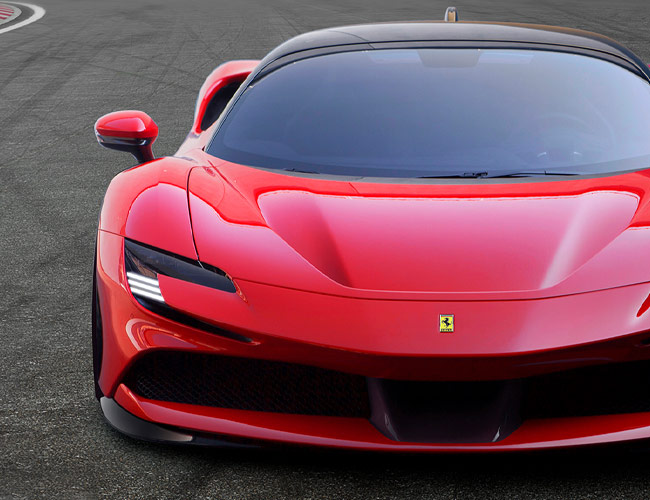
Read our review of the Lexus LS here.

UX

The UX, or “Urban Explorer,” is Lexus’s subcompact luxury crossover. It is new for the 2019 model year; with a starting price of $32,000, it is Lexus’s least expensive vehicle. The 169-hp UX 200 and 181-hp UX 250h hybrid use versions of the 2.0-liter inline four. The crossovers earn 33 mpg and 39 mpg combined, respectively. Both versions use a continuously-variable transmission. The UX 200 comes in front-wheel-drive, while the UX 200h has AWD.

Body Style: Crossover SUV

Models:

• UX 200
• UX 200 F Sport
• UX 200 Luxury
• UX 250h
• UX 250h F Sport
• UX 250h Luxury

Engines:

• 2.0-liter inline four
• 2.0-liter inline four with electric motor assist

Base MSRP: $32,000

NX

The Lexus NX is a compact SUV that shares some DNA with Toyota’s best-selling RAV4 crossover. The 235-hp NX 300 comes with a 2.0-liter turbocharged inline-four, a six-speed automatic, and either FWD or AWD. The 195-hp NX 300h hybrid uses a 2.5-liter inline-four; it gets an additional six mpg combined versus the non-hybrid version, and is only fitted with AWD.

Body Style: Crossover SUV

Models:

• NX 300 FWD/AWD
• NX 300 F Sport FWD/AWD
• NX 300h

Engines:

• 2.0-liter turbocharged inline-four
• 2.5-liter inline-four with electric motor assist

Base MSRP: $36,485

RX

The Lexus RX is a midsize crossover SUV. It is the brand’s best-selling vehicle in the US by a considerable margin. The 295-hp RX 350 has a 3.5-liter V-6, an eight-speed automatic, and either FWD or AWD. The 308-hp RX 450h is a bybrid that uses a a 3.5-liter V-6, an electric motor, and a CVT, and earns 30 mpg combined. Both the RX 350 and RX 450h offer an “L” version that adds 4.3 inches to the body length and allows for third-row seating, enabling it to carry up to seven passengers.

Body Style: Crossover SUV

Models:

• RX 350 FWD/AWD
• RX 350 F Sport FWD/AWD
• RX 350 L FWD/AWD
• RX 450h
• RX 450h F Sport
• RX 450hL

Engines:

• 3.5-liter V-6
• 3.5-liter V-6 with electric motor assist

Base MSRP: $43,670

GX

The Lexus GX debuted during the 2010 model year. It’s a traditional midsize SUV with body-on-frame construction, full-time four-wheel-drive and third-row seating. It comes in one version: the GX 460, which uses a 4.6-liter V-8 producing 301 hp and 329 lb-ft. Fun fact: Lexus marketing once tried to coin the verb “GXing,” meaning “effortlessly navigating the urban landscape,” for the car. It didn’t take.

Body Style: SUV

Models:

• GX 460
• GX 460 Premium
• GX 460 Luxury

Engines:

• 4.6-liter V8

Base MSRP: $52,355

LX

The LX is Lexus’s venerable range-topping full-size luxury SUV. It has changed very little since being introduced for the 2008 model year. Calling the LX a rebadged Toyota Land Cruiser isn’t too far off the mark. The LX 570 has a 5.7-liter V-8 making 383 hp and 403 lb-ft, and an eight-speed automatic. Like the GX, the LX is body-on-frame with full-time 4WD. Third-row seating is optional.

Body Style: SUV

Models:

• LX 570

Engines:

• 5.7-liter V-8

Base MSRP: $86,080

Read our review of the Lexus LX here.

RC

The Lexus RC is a two-door coupe that debuted for the 2015 model year. The basic 241-hp RC 300 RWD uses a 2.0-liter inline four turbo. The 260-hp RC 300 AWD and 311-hp RC 350 RWD/AWD use the brand’s 3.5-liter V-6. RWD cars use an eight-speed automatic, while AWD cars have a six-speed.

The $64,750 RC F is the performance model of the RC. It has a 5.0-liter V-8 producing 472 hp and 396 lb-ft of torque and an eight-speed automatic. Lexus also unveiled the $96,650 RC F Track Edition at the Detroit Auto Show in 2019. It’s not a no-frills track car, but it is lighter, has a big wing, and speeds from 0-60 mph in 3.96 seconds, according to Lexus.

Body Style: Coupe

Models:

• RC 300 RWD/AWD
• RC 300 F Sport RWD/AWD
• RC 350 RWD/AWD
• RC 350 F Sport RWD/AWD
• RC F

Engines:

• 2.0-liter turbocharged inline-four
• 3.5-liter V-6
• 5.0-liter V-8

Base MSRP:$41,145

Read our review of the Lexus RC here.

LC

The LC is Lexus’s premium two-door grand tourer. The  LC 500 uses a 5.0-liter V8 making 471 hp and 398 lb-ft and a 10-speed automatic. The 354-hp LC 500h hybrid has a 3.5-liter V-6, an electric motor, and a CVT. The hybrid is only 0.3 seconds slower from 0-60 mph, at 4.7sec — and, at 30 mpg combined, is 11 mpg more efficient than the regular LC 500.

Body Style: Coupe

Models:

• LC 500
• LC 500h

Engines:

• 5.0-liter V-8
• 3.5-liter V-6 with electric motor assist

Base MSRP: $92,300

Read our review of the Lexus LC here.

The Best New Car Features for the Perfect Road Trip

The chill of winter and the dreary days of spring have finally passed; summer is upon us, and with it, road trip season. Millions of people will take to the highway as the warm weather beckons, criss-crossing the nation for work and play alike. Which, of course, means spending a lot of time in the car.

But while pretty much any running automobile can pull off a road trip, some certainly make it more enjoyable than others. The right features can turn a boring drive into a relaxing one, or a stressful journey into something a little more tolerable. And figuring out which of those you need is harder than it used to be. Once upon a time, an air conditioner or radio would have been considered all it took to make a ride ideal for long journeys; as time has gone on, however, automakers have begun sticking more and more gizmos and gadgets into new vehicles. The sheer volume of different options you can add on today’s new cars and trucks is enough to knock one flat with a migraine.

So to help you figure out what might help make your next long drive feel shorter, we at Gear Patrol have pulled together a list of some of the features that make road trips a little better, along with the best examples of them found in today’s automotive marketplace.

Massaging Seats

The Best: Mercedes-Benz S-Class

A few hours in the saddle will leave anyone’s tush feeling worse for wear, no matter how comfy the seat beneath said tuchus is. But a little massage can go a long way to revitalize one’s body and spirit. No automobile’s built-in seat massagers can come close to the human touch (or even the capabilities of a dedicated massage chair), but the active multicontour front seats in the Mercedes-Benz S-Class come close, offering six different programs — including more than one that replicates a hot stone massage.

In-Car Vacuum

The Best: Chrysler Pacifica

Whether it’s due to dirt tracked in from hikes or food crumbs scattered haphazardly from high-speed snacking, any car’s interior is liable to wind up gross over the course of a road trip. Sure, you could clean it up at a sketchy truck stop…but wouldn’t it be way nicer to suck those crumblies up anywhere, anytime? With its 11-foot hose, the Chrysler Pacifica‘s built-in Rigid-sourced Stow ‘N Vac vacuum lets you slurp up a mess anywhere in the cabin without worrying about finding a gas station. (Just remember to empty the receptacle once in a while.)

High-End Stereo

The Best: Bentley Continental GT

Blasting great tunes is a crucial aspect of any road trip, so having a stereo that can cut through wind noise and deliver crystal-clear music is an easy way to boost the pleasure of a long drive. High-end stereos are prevalent in options lists across the automotive world, but if money’s no object, there’s none better than the Naim Audio unit found in the Bentley Continental GT. With 2,200 watts of power feeding 18 speakers, it can transform the Conti’s cabin into a de facto concert hall at the push of a button.

Advanced Driver Assistance System

Best Example: Cadillac SuperCruise

Even the most die-hard driver sometimes just wants to sit back and let the car take over a little more of the work. Self-driving cars may be years away, but these days, adaptive cruise control systems that can detect vehicles ahead and automatically slow to match their speeds can be found in $20,000 economy cars; more advanced driver assistance systems can also help keep the car centered in its lane if the driver’s attention starts to wander. But none can match Cadillac’s SuperCruise, which combines hyper-accurate road maps, radar and gaze-monitoring cameras that make sure the driver is watching the road to allow true hands-free driving on limited-access highways across America.

Convertible Top

The Best: Mazda MX-5 Miata

When the weather turns nice, there’s no better way to enjoy it than dropping the top and letting the wind rush in. Most convertibles these days offer power-folding roofs that can open or close in less than half a minute at the push of a button, but even the fanciest of them can’t match the Mazda MX-5 Miata for ease of use. Not only is its one-handed manual operation quicker than any power top’s hydraulic mechanisms, but it also has zero risk of acting up due to some computer glitch or other unforeseen issue that leaves the roof half-cocked. If it starts to rain? Well, just drive faster.

More Road Trip Inspiration

Popping the top changes the experience dramatically, and suddenly, we’re debating whether the ideal GT is the one that doesn’t get in between you and road trip wonderment. Read the Story

Note: Purchasing products through our links may earn us a portion of the sale, which supports our editorial team’s mission. Learn more here.

VW Jetta GLI Review: GTI With a Trunk, Or 3-Box Pretender?

As someone who may or may not have a secret GTI tattoo, I’ve often insisted that the sporty Volkswagen Golf is the best all-around enthusiast car you can buy for less than $30,000. If you’re into that hot-hatch performance but not the hatchback body, the new Jetta GLI looks to mimic the GTI’s soulful, affordable ways. That includes the optional manual transmission that VW nixed for the last Jetta GLI, making this a genuine clutch performer. Is this Jetta really a “GTI with a trunk,” as VW first pitched it as during the GLI’s 1984 debut? Let’s find out.

The Good: Like the best VWs, the Jetta will make owners feel like they’re getting away with something, thanks to a base price that’s about $1,600 less than a GTI. The VW Group’s front-drive MQB architecture, 2.0-liter turbo four and optional dual-clutch automated gearbox are all slick enough to serve duty in vastly more-expensive Audis, including the A3, Q3 and TT. This GLI is sassier looking than the somewhat proletarian Jetta, yet it’s still stealthy; When the kids are getting rousted in their Satan-red Honda Civic Si coupes or Subaru WRX sedans, cops will assume a Jetta GLI is headed to a chamber of commerce luncheon.

Who It’s For: Fresh-out-of-college types who are older (and arguably wiser) than their years. Enthusiasts and tech nerds who appreciate German design and engineering. Anyone who puts a premium on driving dynamics, and wants nothing to do with an SUV.

Watch Out For: The GLI does a fine job of quelling torque steer, but this powerful front-drive sedan — at least the stick-shift model I tested — is vexingly hard to launch smoothly from a standing start. Dropping the clutch from as little as 1,800 rpm produced nasty, jarring axle hop that stunted forward progress. Pro tip: Stick with a patient, rolling start, and the VW’s robust torque will get you back in the race.

Alternatives: The brilliant Honda Civic Si, which can be had as either a sedan or a coupe. There’s also the Subaru WRX, though that AWD model will set you back roughly $2,000 more than the Jetta. And while the Mazda3 no longer offers a genuine Mazdaspeed performance version, it’s still an entertaining and premium small car, albeit underpowered versus the VW.

Review: The current Jetta has good bones and good genes, but it took the GLI treatment to really coax out its inherent appeal. Sporty gains include 18-inch alloy wheels with all-season tires, larger front air inlets, chunkier bumpers, side skirts, a rear spoiler and dual chrome exhaust outlets. The signature red accent stripe of a GTI bisects a black honeycomb grille, literally underlining the performance intent.

But it’s what’s under the VW’s creased hood that counts: The 2.0-liter turbo four makes 228 horsepower and 258 pound-feet, 18 horses and 51 pound-feet more than the previous GLI. VW claims the manual GLI sedan weighs just 31 pounds more than its hot hatch cousin, and just 18 more pounds in DSG trim. So with that paddle-shifted gearbox, you’re looking at a brisk 0-60 mph run in about six seconds flat with the dual-clutch gearbox, or a couple ticks more with the old-school stick. That’s almost a second quicker than a Civic Si, and nose-to-nose with a Subaru WRX. This is one quick Jetta.

The GLI makes another good case on value, including several standard features that cost extra on the hatchback: LED headlights, keyless entry, dual-zone climate control and blind-spot and forward collision monitors with automated emergency braking. VW’s latest capacitive infotainment touchscreens, available in 6.5- or 8.0-inch sizes, allow smartphone-style pinches and swipes. Other niceties include a thick-grip leather-wrapped multifunction steering wheel and stainless steel pedal caps. Only the top-dog Autobahn trim gets the upscale Volkswagen Digital Cockpit driver’s display and an adaptive suspension with selectable settings.

While the cabin is comfy and well-equipped, it doesn’t exude the almost-an-Audi vibe that makes the GTI such a standout. The sedan’s horizontal dashboard is relatively pedestrian, thanks to both its design and its plasticky trims. Front seats are civilian-issue Jetta chairs with obligatory red stitching, rather than the GTI’s luxuriously bolstered, track-worthy thrones. You can have leather seats in that Autobahn edition, but you can’t have the GTI’s knockout tartan-plaid cloth at any price.

The GLI does a better job of mimicking the hatchback’s overachieving performance. The Jetta’s suspension tuning feels a touch more complaisant, which smooths the ride but mildly dampens the hatchback’s aggressive turn-in and responses. Still, this GLI delivered the goods on some of my favorite backroads in upstate New York, setting a pace through twisties that would make any rival break a sweat to match. The electric-assisted, variable-ratio steering is overboosted for my tastes, but it imbues the Jetta with the brand’s familiar grace under fire.

An electronic limited-slip differential helps the Jetta apply its muscular torque to the pavement when it scoots out of turns. Front brakes come straight outta the mighty Golf R, including huge, 13.4-inch front rotors. Those firm-pedaled brakes ate up all the abuse I could dish out, including on long, curling descents. Pushing the handling envelope eventually summons the understeer, but that’s to be expected; this is still a front-drive Jetta, after all. Pro tip for any buyers: A simple upgrade to summer performance tires would palpably boost those limits.

For the manual version, the clutch-and-shifter combo rate as “good,” rather than the “great” of the Civic Si, thanks to factors like VW’s typically longish throw for the lever. And the manual’s gearing is very tall, so it’s best to wring out the revs to keep the Jetta from falling into the sluggish part of its powerband. But at the end of the day, I’m not complaining; these days, any sporty sedan that offers a stick registers as a delight in my book.

Verdict: Ask me whether I’d personally choose the GLI over the GTI, and the answer is a definite “no.” If you can afford one, you can likely afford the other. The GTI feels like the more-special piece: richer on the inside, a bit more focused and fun to drive, and more practical with hatchback cargo space that rivals some small SUVs. That said, some folks can’t abide a hatchback, including people who still associate the body style with Chevy Chevettes and other woe-is-me econoboxes. Sedans may be struggling in this SUV-besotted marketplace, but the idea that they’re obsolete is a crock. Sedan holdouts will be thoroughly pleased with a Jetta GLI, especially when they nail those brakes and chuck it into a fast corner.

2019 Volkswagen Jetta GLI Specs

Powertrain: 2.0-liter turbocharged inline-four, 228 horsepower, 258 pound-feet of torque; six-speed manual or seven-speed dual-clutch automatic transmission; front-wheel-drive
0-60 MPH: 5.6 seconds (automatic), 5.8 seconds (manual) (Car and Driver testing)
Top Speed: 126 mph
Roadholding: 0.98 g (C/D)
EPA Fuel Economy: 25 mpg city, 32 mpg highway

Volkswagen provided this product for review.

Read More Gear Patrol Reviews

Hot takes and in-depth reviews on noteworthy, relevant and interesting products. Read the Story
Note: Purchasing products through our links may earn us a portion of the sale, which supports our editorial team’s mission. Learn more here.

2019 Cadillac CTS-V

It takes to design a good car, and even more time to craft a perfect one. But a classic isn’t made — it happens without warning, all of a sudden, then one day it’s etched into history.

We’re not sure which of those categories we’d like to put the 2019 Cadillac CTS-V in. It’s not a classic, it’s not perfect, and it’s not merely “good.” Cadillac has done something commendable by committing over a decade and three generations to perfect its CTS-V. It all came to a high point when the third-generation came. Cadillac unveiled a fresh new design language. And to top it all off, it came with the ultra-formidable 640 horsepower supercharged V8 engine from the Corvette, too.

The CTS-V, by contrast, is more fine-tuned. Built for cannonball runs and Autobahn cruising, the ride’s dual personality is a big part of what makes it so charming, despite a crop of performance blemishes from time to time. Make no mistake, though — this is the most powerful and fastest production Cadillac ever made.

Bonus points for also being one of the best handling cars. Thanks to feats of wizard-like engineering, this car shows optimum stability even at high speeds. Tuned for the track, by the way, which explains why it behaves so excellently in the highway.

Its a way to go before anyone can call this a classic without someone batting an eye. If anything, however, the Cadillac CTS-V is a sterling, worthy wearer of the Crest brand. Let’s wait if time will be kind to this ride.

CHECK IT OUT

Photos courtesy of Cadillac

BMW 1 Series M Performance Kit

Shortly after unwrapping the BMW 1 Series, the German automaker has now also unveiled the entry-level car’s M Performance suit. As such, above you’ll see a M135i xDrive decked with Performance extras on the hot hatch.

With a new coating comes a handful of neat little tweaks, but more important here are the hardware upgrades. We’re talking, for starters, 18-inch M Performance brakes with bigger perforated and vented discs at the front axle. A touch of flair comes in the form of four-piston calipers, here made of aluminum. Those should shave off weight and dovetail perfectly with enlarged perforated and vented discs. Go all the way back and you’ll find that the brakes also take advantage of the car’s lightweight construction. And they boast single-piston floating calipers, for good measure.

The BMW 1 Series M Performance Kit also includes a selection of 18- and 19-inch alloy wheels. Some are great for summer, while some are better suited for the rough winter terrain. Some units get jet black matte rims, whole some have some sort of two-tone finish.

As for optics, this kit comes with black decals on the sides of the hatchback. You also get several glossy black touches on the body. The side mirror caps and thr back diffuser feature carbon fiber to save weight. And according to BMW, it optimized all the boy pieces to create aimum aerodynamic performance.

Those with automatic transmission can opt for carbon fiber shift paddles, too. Neat little visual flourishes inside this BMW 1 Series M Performance Kit serve as cherries on top. Like the velvet velour floor mats with specialized M Performance lettering.

MORE INFO HERE

Photos courtesy of BMW

2019 Airstream Classic Review: The Old-School Camper Gets Smart

Airstream’s flagship model, the Classic, has been newly outfitted for 2019 with “smart technology,” giving users the ability to remotely control the climate, awning and lights, and monitor propane, water and battery levels via an app on a smartphone or tablet. This type of connected tech is increasingly prevalent in new cars and homes, but now, it’s been neatly integrated into an Airstream travel trailer here for the first time. It proved unobtrusive and useful during a weekend camping in sunbaked California wine country.

The Good: Airstream’s new Smart Control Technology is a handy, clever addition for a 2019 trailer, provided you have a bit of tech savvy. The finishes are all high quality, and both the oven and stove proved useful. The 19 windows bathe the interior in light, and the panoramic ones in the bedroom make for stunning views (if you know where to park). And the iconic exterior design remains largely unchanged; like a Richard Neutra or Frank Lloyd Wright mid-century home, these trailers exude a sense of timelessness.

Who It’s For: Someone who loves and needs the newest, top-of-the line toy with all the comforts of home. This trailer is has it all and does it all; it could easily be lived in for months out of the year.

Watch Out For: My experience with the trailer was a stationary loan, meaning I didn’t tow it to the nicely-appointed resort where I tested it. However, towing the 30-foot Classic requires a vehicle with at least 10,000 lbs of towing capacity–meaning an SUV probably won’t cut it. Time to buy that heavy-duty pickup you’ve been eyeing.

Alternatives: The handful of other travel trailers of this size certainly undercut Airstream in price, but the finishes and build quality are not quite as nice. Additionally, no others have smart technology. Similar (but much cheaper) build-outs include the Arctic Fox Silver Edition 32A and the Winnebago Minnie Plus 31-footer.

Review: There are several ways to experience Airstream life. You could tow something like the 22-foot Sport across the West, adventuring through the red rocks of Sedona and pinescapes of Telluride for some wilderness camping. You could hitch the tiny-home inspired Nest to your crossover for a weekend trip, winding to a perch somewhere on the California coast.

However, to really understand the lure of an Airstream — to know why the iconic trailer has spawned coffee table books and Pinterest dream boards, or cultivated online fan hives with nearly 1 million posts like Air Forum, or the Wally Byam Caravan Club, that boasts 8,000 members “living the Airstream Dream” — I recommend a weekend in the Classic.

I experienced the latest Airstream in all its luxurious, fully-connected glory by testing it at Cava Robles RV Resort in Paso Robles, California, a high-end take on typical trailer camping with wi-fi and hookups for the trailer at the site, along with a view of the oak tree-dotted Salinas River Valley from the back window.

Airstream CEO Bob Wheeler has said he was inspired to build this connected Airstream after buying a Tesla. It’s a lofty comparison, but it holds water; the interface of Airstream’s app notably echoes the look of Tesla’s screen, for example. And as in a Tesla, smart technology is integrated into the Airstream with a certain ease. It’s less “look at what my vehicle can do” and more “this is how a vehicle should function in 2019.”

In Paso Robles, the technology seemed to fade from mind once I settled in: The Sonos music system played my favorite albums on shuffle, the climate control was set adjusted, and the lighting was just right. I didn’t use the Airstream app again until the next day, when I was 15 minutes from returning while on a bike ride and used the app to set the A/C remotely. It was rather nice to return home in the hot sun of the afternoon and avoid a sweltering, stale trailer.

To take the smart technology to the extreme, I connected to the Airstream’s Internet, streamed the NBA playoffs from an app on my Android tablet, then, I screen-shared with the TV in the Airstream’s front lounge area and had the game on while cooking. There’s a certain irony to visiting a campground only to enjoy similar comforts as my living room…but there’s also a certain appeal. 

Still, the best parts of camping are often the simplest ones, and Airstream seems to keep that in mind even when rolling out new tech. About 80 percent of my app usage was to control the lights and climate, and those systems worked without a hitch. (Data-heavy tasks like video streaming will certainly require a large bit of patience for customers.) For now, the trailer includes a year of free data. After that, Airstream owners can pay $25 a month on a case-by-case basis, or pay $360 a year for unlimited data. If tech is not your thing, the trailer can of course still be controlled the old-fashioned way, using switches; however, you’ll then never know the joy of laying in bed and turning off the one light you left on in the galley.

The Classic’s appeal stretches beyond the tech. The sharp, modern kitchen proved comfortable and efficient, bringing a certain joy to camp cooking. The stove top seared up some al pastor nicely, and the oven evenly browned a pair of homemade pizzas. The bathroom is spacious, and has luxuries like heated floors and towel rack. And the beds are nestled into the rounded rear of the trailer, and flanked by windows to give fresh air and unobstructed views.

The potential seems limitless, now that smart tech has come to trailers. Could you wire this whole Airstream to be powered by Alexa or Google Home? Could you program various voice-controlled scenes and settings with smart lighting? Set up a smart lock or Ring camera at your trailer door? Eventually, yes — and some ambitious Airstreamers are already cobbling it together.

Verdict: It was only a matter of time before the Internet of things seeped into the great outdoors, and Airstream has handled this initial foray with care. The new technology, thankfully, is not another failed experiment to make something “smart.” It’s well-thought out and intuitive. Sure, it’s indulgent more than it is vital, but so what? There’s a certain pleasure to lighting a campfire outside the trailer while the sun sets, and being able to indulge in the sudden whim to hear Vampire Weekend. Is it necessary? No. But an Airstream Classic isn’t about necessity. It’s about luxury. 

What Others Are Saying:

Arguably, the tech upgrade is overdue. Anyone dropping $152,000 on a vehicle in the 21st-century likely expects to be able to keep tabs on it remotely; to check the level of the propane tank while in town getting groceries, or kick on the air-conditioning in advance when returning from a long day in the great outdoors.”
— KYLE STOCK, Bloomberg

This is all in addition to the Classic’s already impressive interior that resembles a cross between a brand new studio apartment and a small yacht.”
— ROBERTO BALDWIN, Engadget

2019 Airstream Classic 30RB Twin

Length: 31 feet, 3 inches
Base Weight (with LP and batteries): 7,788 pounds
Fresh Water Capacity: 54 gallons
Sleeping Capacity: 5 people
Windows and Skylights: 19

Airstream provided this product for review.

Read More Gear Patrol Reviews

Hot takes and in-depth reviews on noteworthy, relevant and interesting products. Read the Story
Note: Purchasing products through our links may earn us a portion of the sale, which supports our editorial team’s mission. Learn more here.

Some of the Best Automotive Design Features of 2019

There’s an old cliché out there that says good design is subjective. Makes sense, right? Beauty is in the eye of the beholder, and all that. But sometimes, features in the automotive world crop up that are so arresting, so visually captivating, that it’s hard to see how anyone would say they aren’t examples of design work at its best. They may not always be your personal cup of tea — but even if you don’t like them, you can appreciate them.

Now that the cars of 2019 have all hit the streets — counting both 2019 and 2020 model vehicles amongst them — we at Gear Patrol thought this would be an excellent time to pick our favorite design elements we’ve come across so far this year. Check ’em out.

2020 Porsche 911 — Full-Width Taillight

The 992-generation of Porsche’s iconic sports car isn’t the first time the brand has stretched the taillight from wheel-arch to wheel-arch, but it’s nice to see it back after a couple decades on hiatus (minus a special edition or two that used it along the way). For 2019, the trait has become more slender and sharp, sitting nicely on the new 911’s engorged rear.

2019 Mazda3 Hatchback — C-Pillar

Mazda should be applauded for green-lighting this silky-smooth car for production with all its concept-car curves intact. In an exception to a world where designers are all too happy to over-design a surface, the Mazda3 hatchback has almost zero character lines, but the minimalist design draws your eye from front to back — culminating at the beautifully simple C-pillar.

2020 Rivian R1T — Gear Tunnel

The electric Rivian R1T pickup has plenty of fun features, like its ability to tow 11,000 pounds, put 754 horsepower and 826 pound-feet of torque through all four wheels, and achieve a 400-mile range. But the under-cab storage deserves special mention: Since the R1T uses a “skateboard”-style battery architecture, there’s no drive shaft and differential taking up room — so the space under the rear passenger seat is available to provide even more storage. As far as design features go, this one is the most useful on the list by far.

2020 Hyundai Sonata — Headlights

Hyundai is making some pretty aggressive design moves, but the 2020 Hyundai Sonata headlights stand out amongst them. The Sonata’s solid LED daytime running light fades into a metal strip that doubles as the car’s defining mid-section character line. The lighting trick is a bold move –one, hopefully, that becomes a signature look for the brand.

2019 Jeep Gladiator — Folding Windshield

Jeep used the fold-down windshield with the JL Wrangler in 2018, of course, but we’re happy it made its way to the Gladiator, too. Not that there would be any reason for Jeep not to bring it to the brand-new pickup, but it just adds an extra degree of open-air awesomeness to the only convertible pickup truck on the market.

2019 Nissan GT-R50 — Taillights

Floating taillights will always be cool, which is why it’s a shame they’re mostly relegated to concepts. The GT-R50 was just a concept…but then Nissan green-lit the wild sports car for production. Albeit extremely limited production: Only 50 will see the light of day, and each costs north of $1 million.

2019 Polestar 1 — Rear Three-Quarter Angle

The Polestar 1 is a stunner by both sports car and EV standards. There’s much to love, design-wise — but if we had to choose a standout angle, the rear three-quarter view takes the cake. It’s a delightful blend of Volvo’s current styling mixed with hints of the future, plus a nod or two to the iconic P1800 coupe.

2019 Ferrari F8 Tributo — Hood Vent

Modern mid-engine V-8 Ferraris have become increasingly reliant on aerodynamics to shape the body, and the front ends suffered as a result; sharp edges and criss-crossing lines became distracting. But now that Ferrari is gaining more aerodynamically-sourced grip from the underside with the new F8 Tributo, the design topside is smoothing out for the better. The hard facets of the 488 GTB’s hood are largely gone, giving the F8 Tributo a more natural flow that starts with the cavernous front aero vent.

2020 Ford Mustang Shelby GT500 — Hood Pins

Hood pins aren’t anything new; they’ve been keeping the lids of high-powered cars firmly in place for years. But the set on the 2020 Ford Mustang Shelby GT500 is telling: We expect big things from a car worried about blowing off its own hood.

2020 Toyota Supra — Rear-Wheel Arch

The design of the 2020 Toyota Supra is only one of the controversial aspects of this car, but there’s no denying the sculpture that is the new Supra’s rear wheel arch. There’s not a single sharp edge disrupting the surface; plus, it evokes some of the greatest sports cars in Toyota’s history, like its ancestor the 2000GT.

More Beautiful Details

When the gauges receive care, effort and attention to detail, you can often find yourself glancing down in admiration rather than checking the dials for any relevant information.Read the Story

Note: Purchasing products through our links may earn us a portion of the sale, which supports our editorial team’s mission. Learn more here.

Porsche 944 Turbo Prices Are Getting Out of Hand

The Porsche 911 resale market reached the point of absurdity years ago, and has shown no signs of retreating. Most premium Mercedes-Benz or BMW models eventually depreciate to the point where commoners can afford them, but the 911 seems to have no half-life — at least, when it comes to the pre-1997 air-cooled models most valued by purists. Bargains only come with the oft-derided 996 generation some from 1999 to 2004, known for being Boxsters up front and having exploding engines in the back.

The 911 bubble’s resilience means less well-heeled Porsche enthusiasts have to buy other models. One popular choice has been the Porsche 944 of 1982-91. The 944 had timeless good looks; plus, it was a quality performer, with 50/50 weight distribution, excellent cornering, and more grunt than the Audi-powered 924 that spawned it. It was a fixture on Car and Driver‘s 10 Best lists. Sure, the base 944’s acceleration would put it behind a modern Subaru, but the Turbos and their sub-6.0 second 0-60 mile-per-hour time were genuinely quick.

Multiple factors have kept the 944 relatively affordable. Porsche snobs have held their noses toward it because it was front-engined and water-cooled. Four-cylinder engines tend not to have quite the same emotional resonance. The 944’s Japanese contemporaries offered better performance, better value, and better bases for tuning. And the 944 isn’t cheap to maintain.

Attitudes toward the 944 may be changing, though. Prices for Turbo models appear to be going up: Through the end of 2018, only four of 85 944 Turbos on Bring a Trailer had sold for more than $30,000, and none more than $40,000; this year, though, four 944 Turbos have gaveled for north of $58,000 on the site. (That’s basically the base cost of a new 718 Cayman.)

It’s not just happening on BaT, though. Elsewhere, the auction house Gooding & Co. sold a 1989 944 Turbo for $72,600 in 2018. Notable Porsche enthusiast Jerry Seinfeld bought himself a 944 Turbo this year as well.

There are some caveats. The four that sold on Bring a Trailer were in good-to-pristine condition. Three were highly sought-after Turbo S models. The highest seller, the one for $74,000, had only 5,300 miles on the clock. Any Porsche preserved in such a condition would draw a high price; models like the 912 and the 914, which some would consider glorified Volkswagens, have sold for similar prices on BaT.
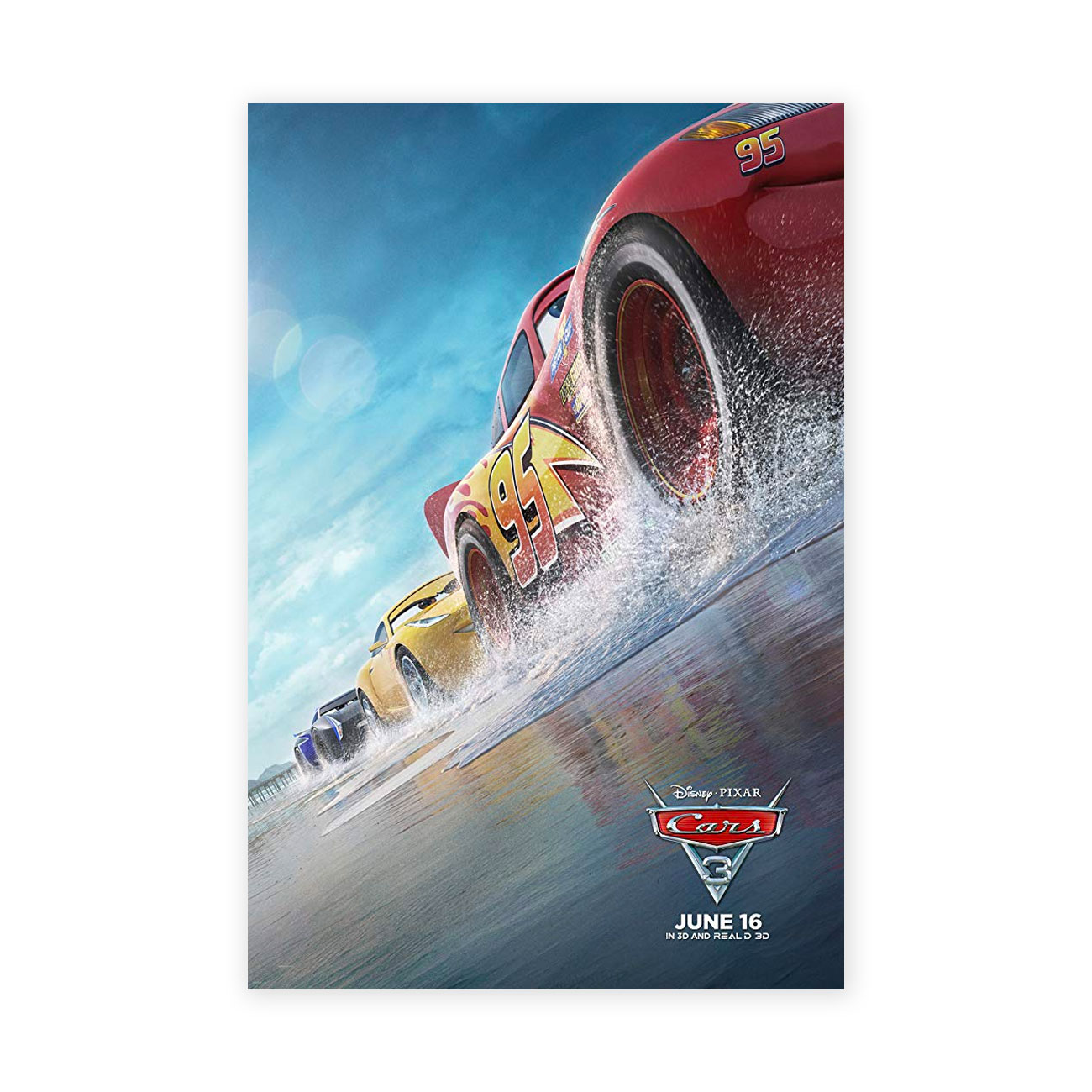
Why the sudden 944 Turbo love? It’s not totally clear. 944 prices, in general, have been rising with the 911 tide: Hagerty notes that 944 prices have doubled or even tripled in some cases over the last 10 years. Recognition may be growing that the 944 Turbo was generally a great car, undervalued in the 911’s shadow.

It also may not take that many enthusiasts unconcerned with value to move a niche classic car market. The same BaT buyer that landed the $74,000 944 Turbo bid up to $58,000 on another a month later, and has bid on five 944s on the site since December.

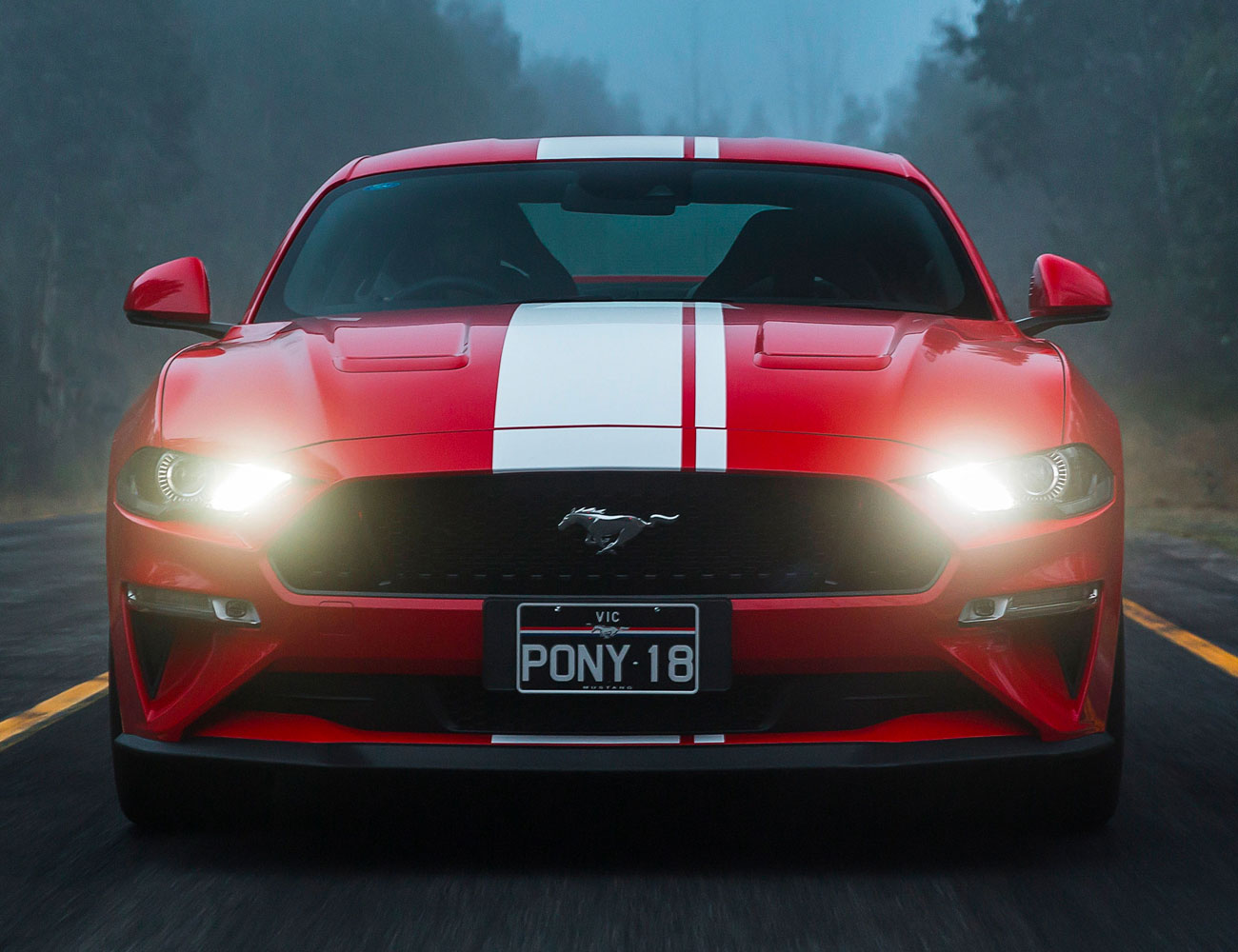
There’s no question Porsche makes excellent cars. But increasingly, it seems bargains on them are hard to find, new or used. For some perspective, Mercedes also makes excellent cars — yet you can get a newer, more powerful, and lightly-used R129 500SL for the price of a not-so-great 944, and the $75,000-or-so for a top-end 944 Turbo could get you a 2016 Mercedes-AMG E63 S wagon. We know which we’d rather have for that price.