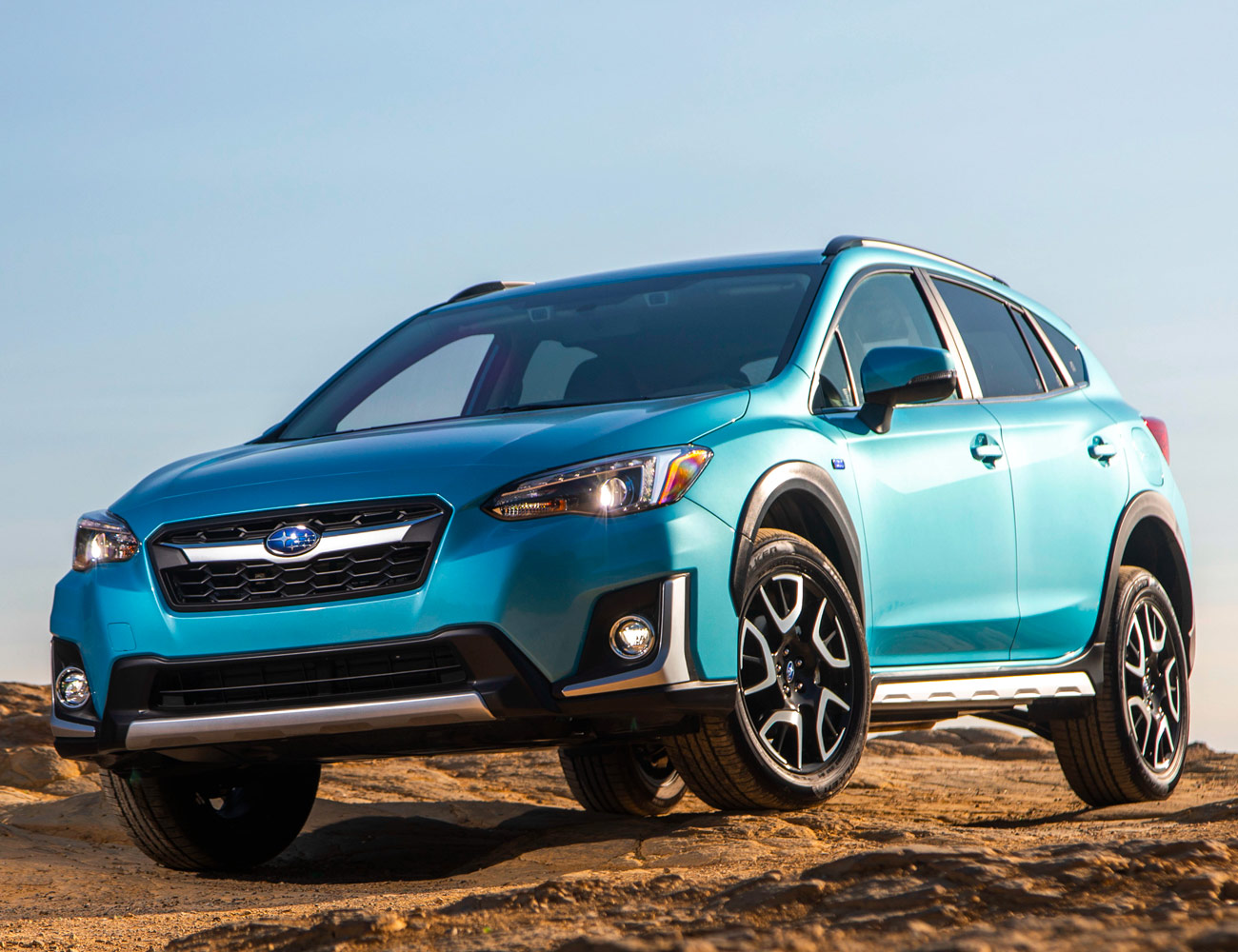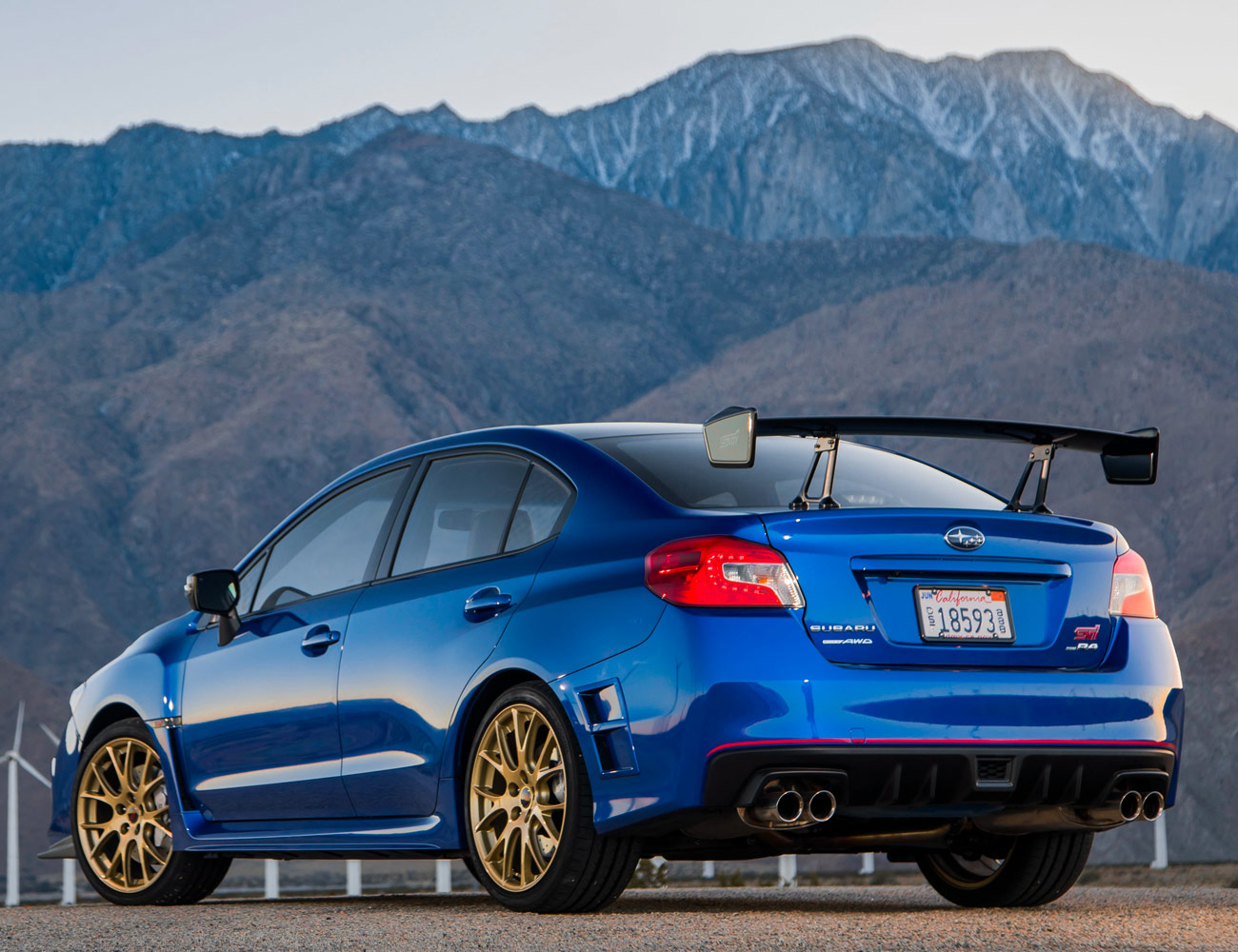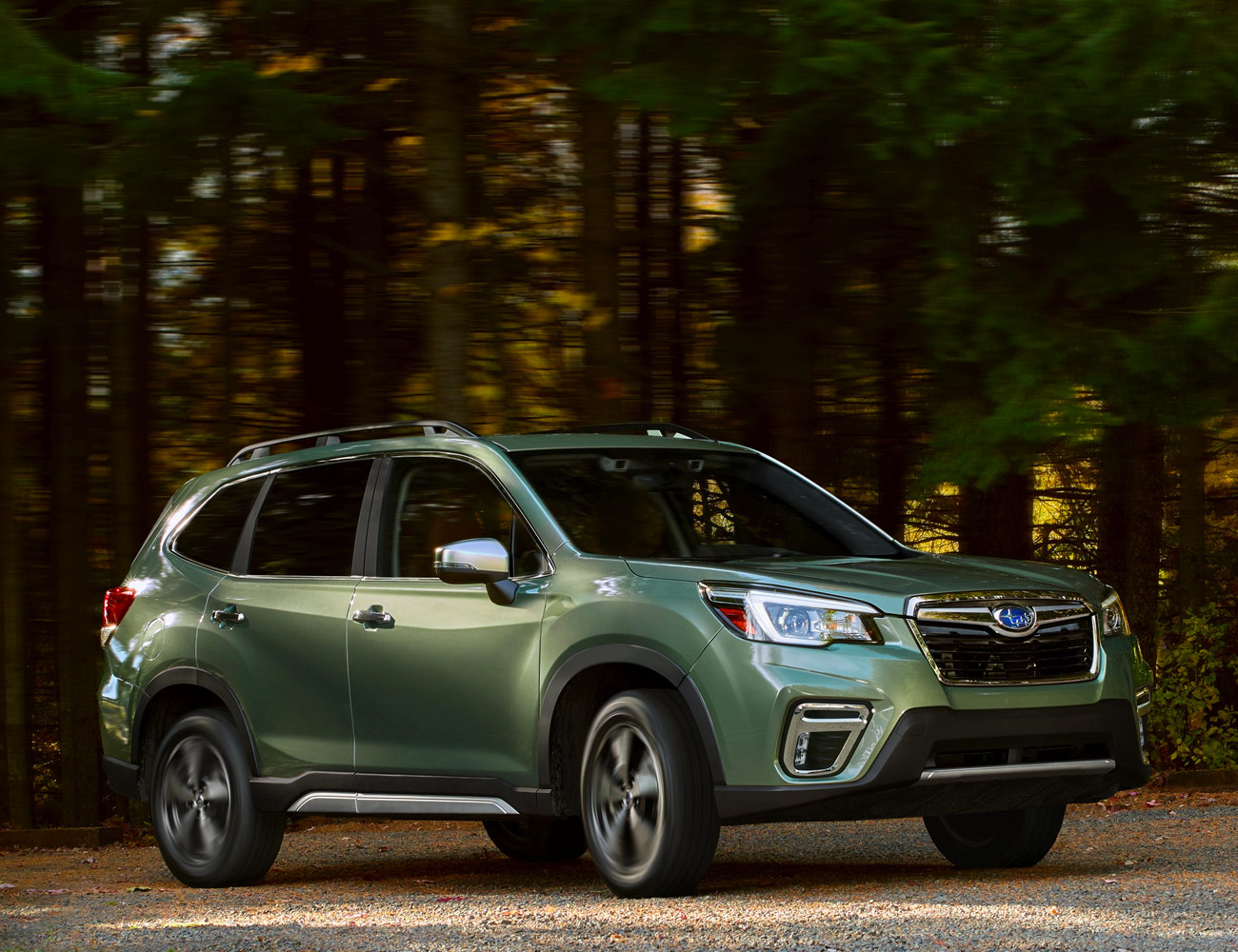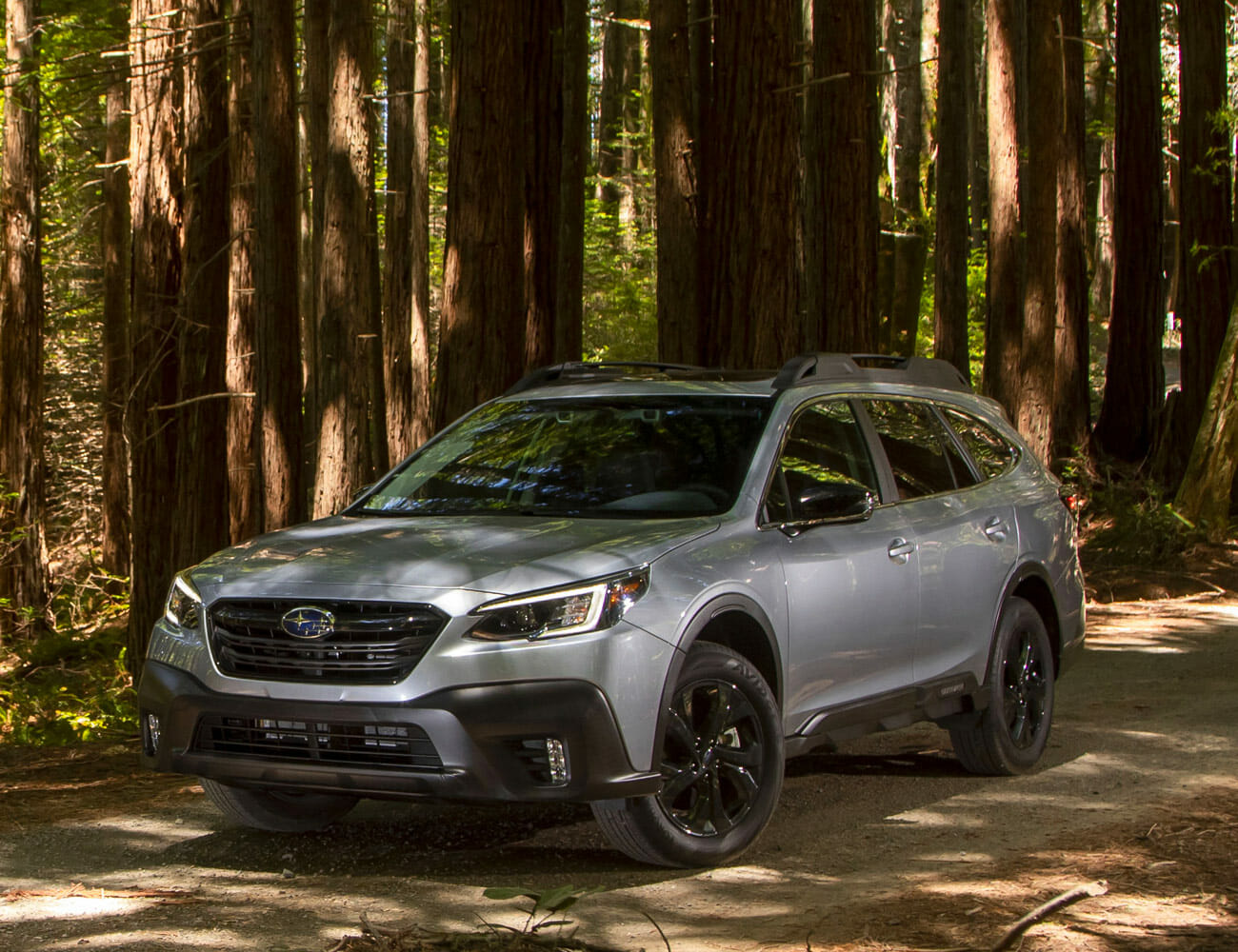
All posts in “Cars”

The Complete Honda Buying Guide: Every Model, Explained

Honda products have long been synonymous with reliability, efficiency, and affordability. Honda Motor Company was co-founded by Soichiro Honda and Takeo Fujisawa in 1949 with the introduction of the D-Type motorcycle, followed by the T360 small pick-up truck in 1963. Things took off in 1972, however when Honda released the Civic in the United States. It proved a game-changer for the Japanese company, launching it on a path towards global success.

With over 18 million cars sold over the past 47 years, the Civic has become one of the best-selling cars in the history of automobiles — as has its big brother, the Honda Accord. Today, Honda Motor Company has grown into one of the world’s most successful companies; while Honda remains Japan’s second-largest automobile manufacturers, the company also develops products ranging from gardening equipment to marine engines, personal watercraft and power generators.

Honda doesn’t have a traditional alphanumeric naming system like Lexus or Cadillac; instead, like Porsche and Lincoln, each model uses a more traditional name. Vehicle designations are followed by package monikers. “LX” models are the most affordable base models, with the fewest features. “Sport” variants vary, but generally receive sport-inspired internal and external visual upgrades on top of the basic LX features. “EX” includes all base-level features as well as upgraded safety systems, interior and exterior amenities. “EX-L” includes all EX items, with added higher-spec features or luxury features such as leather trim. “Touring” and “Elite” variants are fully-loaded vehicles with high-quality interior packages, lighting, audio systems, navigation and so forth.

Honda Terminology

Honda Sensing: Honda’s full suite of active safety technology, which includes: Collison Mitigation Braking System (CMBS), Lane Keep Assist (LKAS), Road Departure Mitigation (RDM) and Adaptive Cruise Control (ACC). It is either standard or available on mid-level trims and higher on most models. Honda Sensing is not available on the Civic Type R.
VTEC: Variable Valve Timing & Lift Electronic Control. A Honda-developed technology to improve the efficiency of their four-stroke internal combustion engines. The result is an engine that produces high performance at high RPM and better fuel efficiency at low RPM.
Atkinson Cycle: A type of engine combustion where the intake valves are held open for a portion of the compression stroke. The result is an increase in the expansion ratio on the power stroke, which creates an increase in fuel efficiency but a decrease in power output. Often used on hybrid vehicles, as the power loss can be made up for with electric motors.

Civic
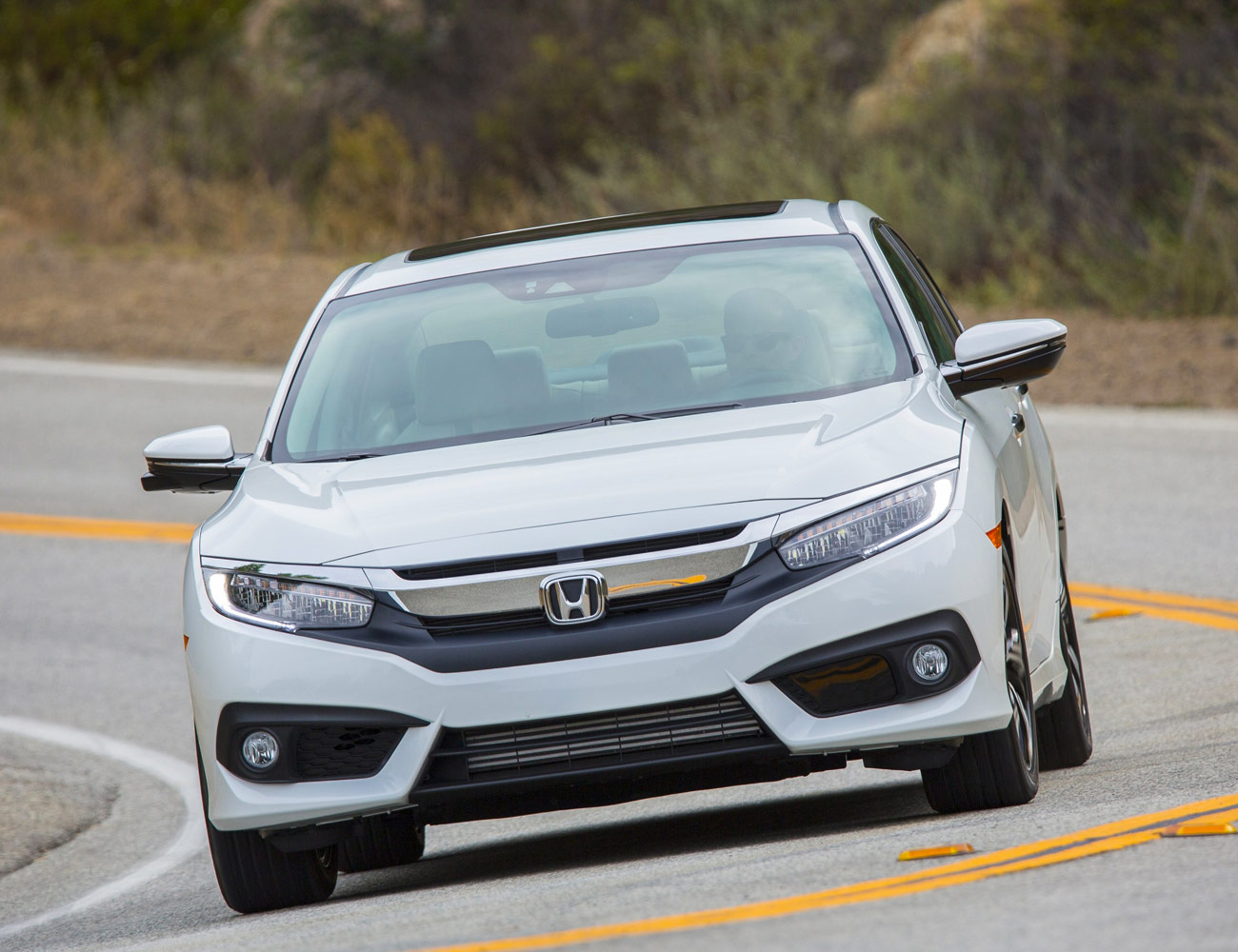
The Civic is Honda’s compact car, and comes in three body styles: coupe, sedan and hatchback. The Civic debuted in 1972 and today is one of the world’s best-selling cars. There are two engine options: a 174-horsepower turbocharged 1.5-liter four-cylinder or a 158-hp 2.0-liter four-cylinder. Both engines are only available with front-wheel drive, but can be optioned with a six-speed manual transmission or continuously variable transmission (CVT).

Body Style: Sedan / Hatchback / Coupe

Models:

• Sedan: LX, Sport, EX, EX-L, Touring
• Hatchback: LX, Sport, EX, EX-L Navi, Touring
• Coupe: LX, Sport, EX, Touring

Engines:

• 2.0-liter four-cylinder
• Turbocharged 1.5-liter four-cylinder

Base MSRP: $19,550

Civic Si
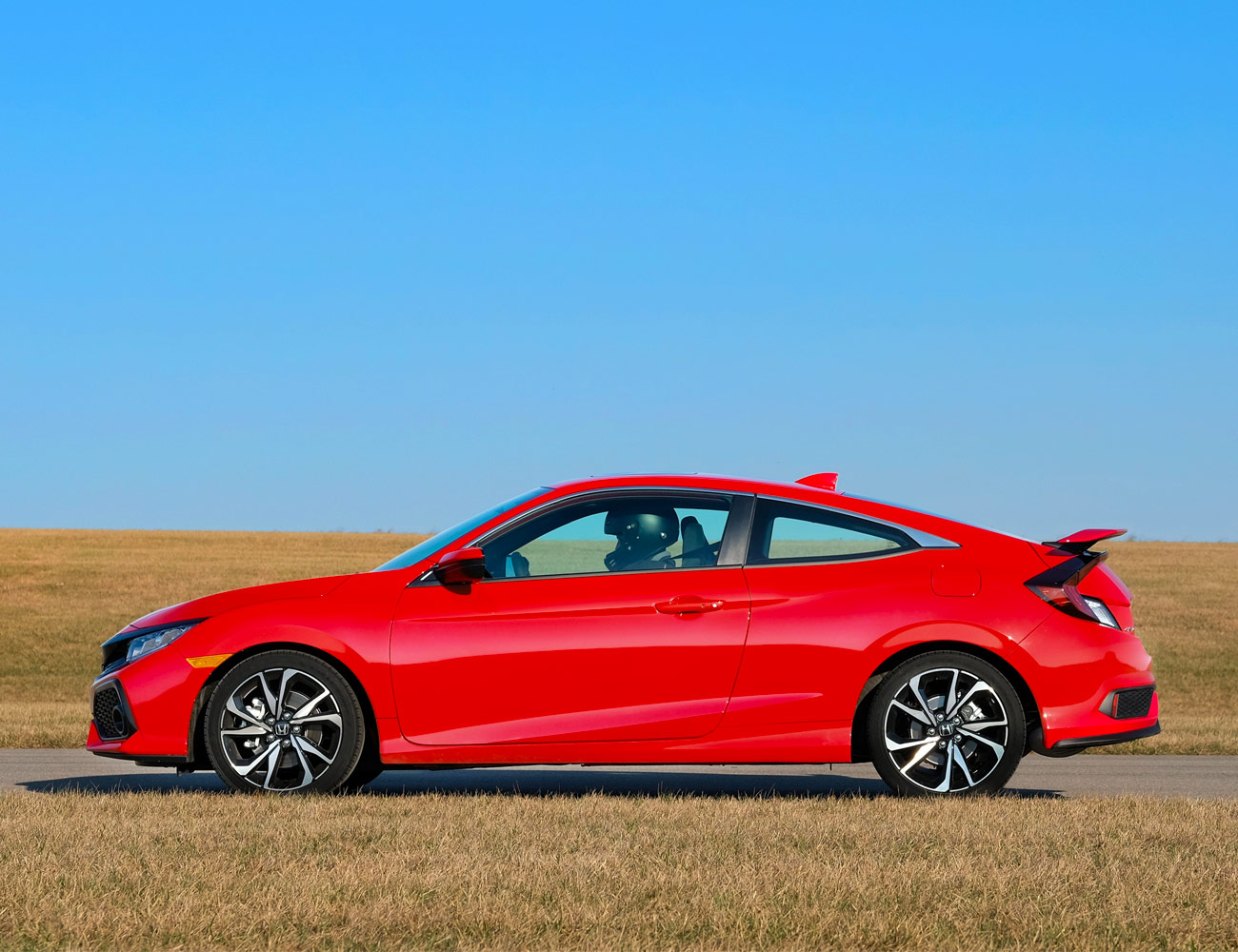
The Honda Civic Si is a sportier version of the regular Civic. It comes in both coupe and sedan forms. The biggest upgrade over the regular Civic line-up is it 205-hp turbocharged 1.5-liter four-cylinder engine. The Civic Si is only available with front-wheel drive and a six-speed manual transmission.

Body Style: Sedan / Coupe

Engines:

• Turbocharged 1.5-liter four-cylinder

Base MSRP: $24,300

Civic Type R
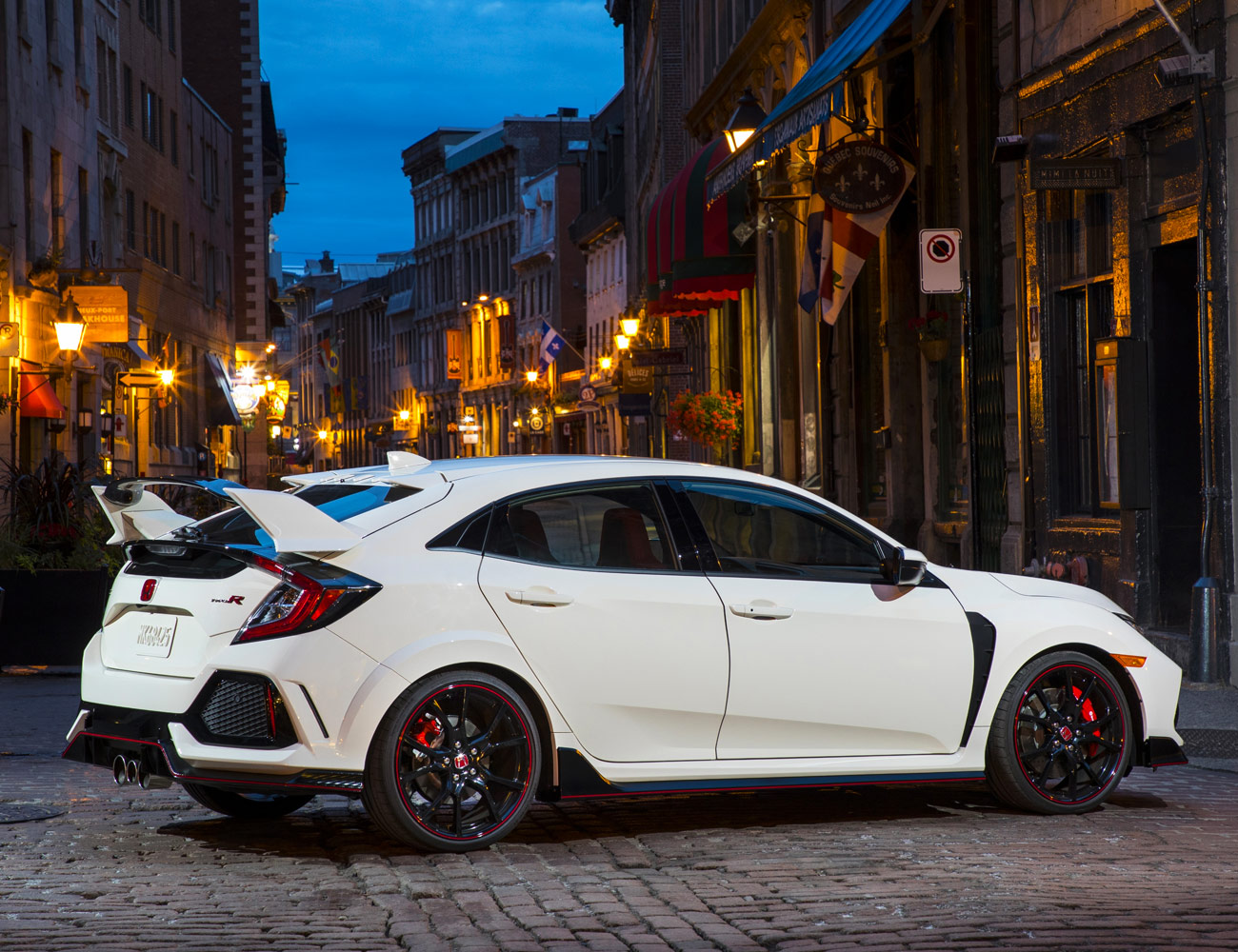
The Honda Civic Type R is regarded as one of the best-performing, most entertaining front-wheel-drive vehicles on sale. The Civic Type R came to the United States in 2017 — and with it, a 305-hp turbocharged 2.0-liter inline four-cylinder engine, a refined chassis and aggressive styling. The Type R is only available with a six-speed manual transmission.

Body Style: Hatchback

Engines:

• Turbocharged 2.0-liter inline four-cylinder

Base MSRP: $36,300

Fit
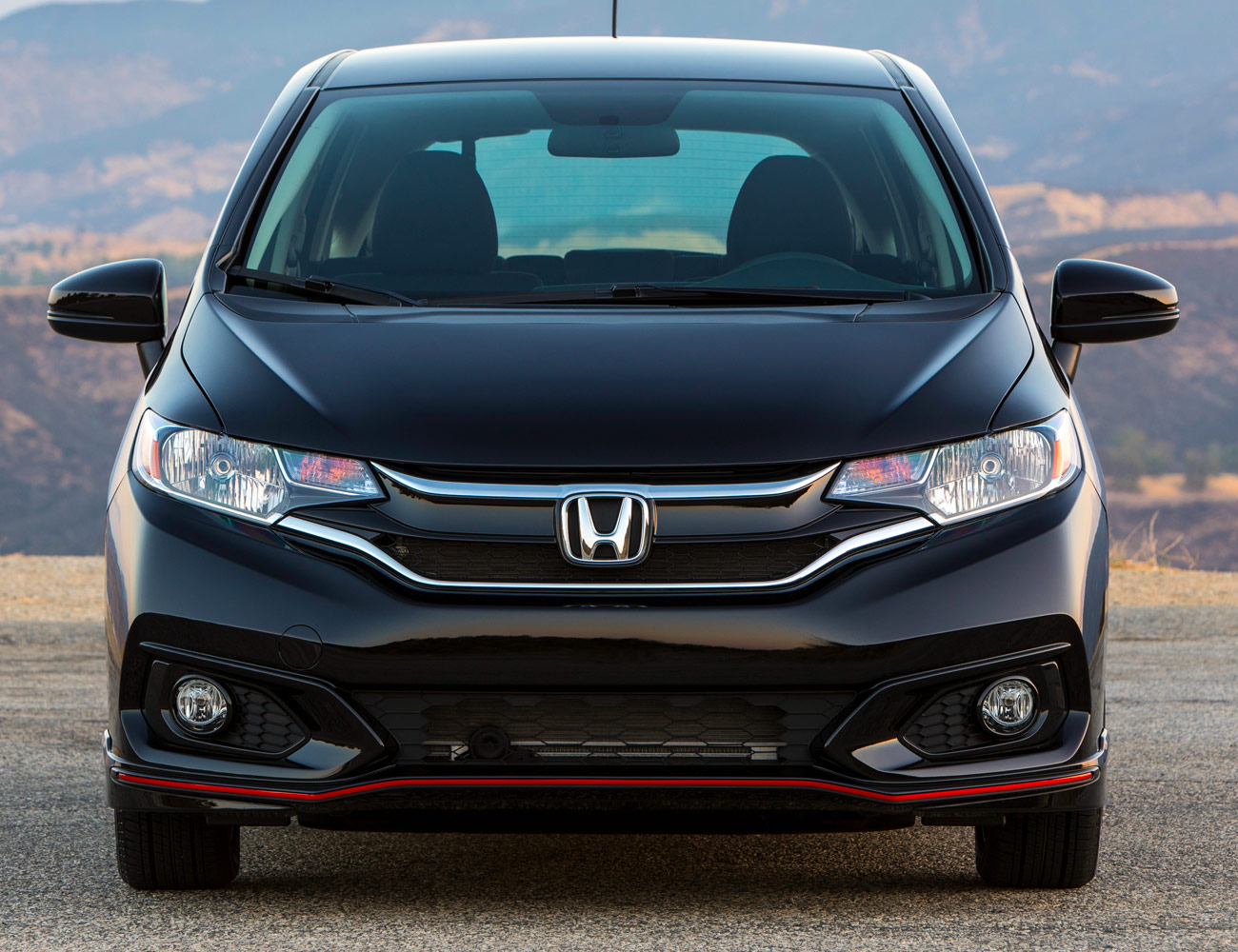
The Fit is Honda’s practical, entry-level subcompact. With a boxy design, spacious interior and lay -lat rear seats, the Fit prioritizes space and utility in a small package. The Fit is only available with front-wheel drive and a 130-hp 1.5-liter four-cylinder engine. It can be optioned with a six-speed manual transmission or a continuously variable transmission.

Body Style: Hatchback

Models:

• LX
• Sport
• EX
• EX-L

Engines:

• 1.5-liter four-cylinder

Base MSRP: $16,190

Accord
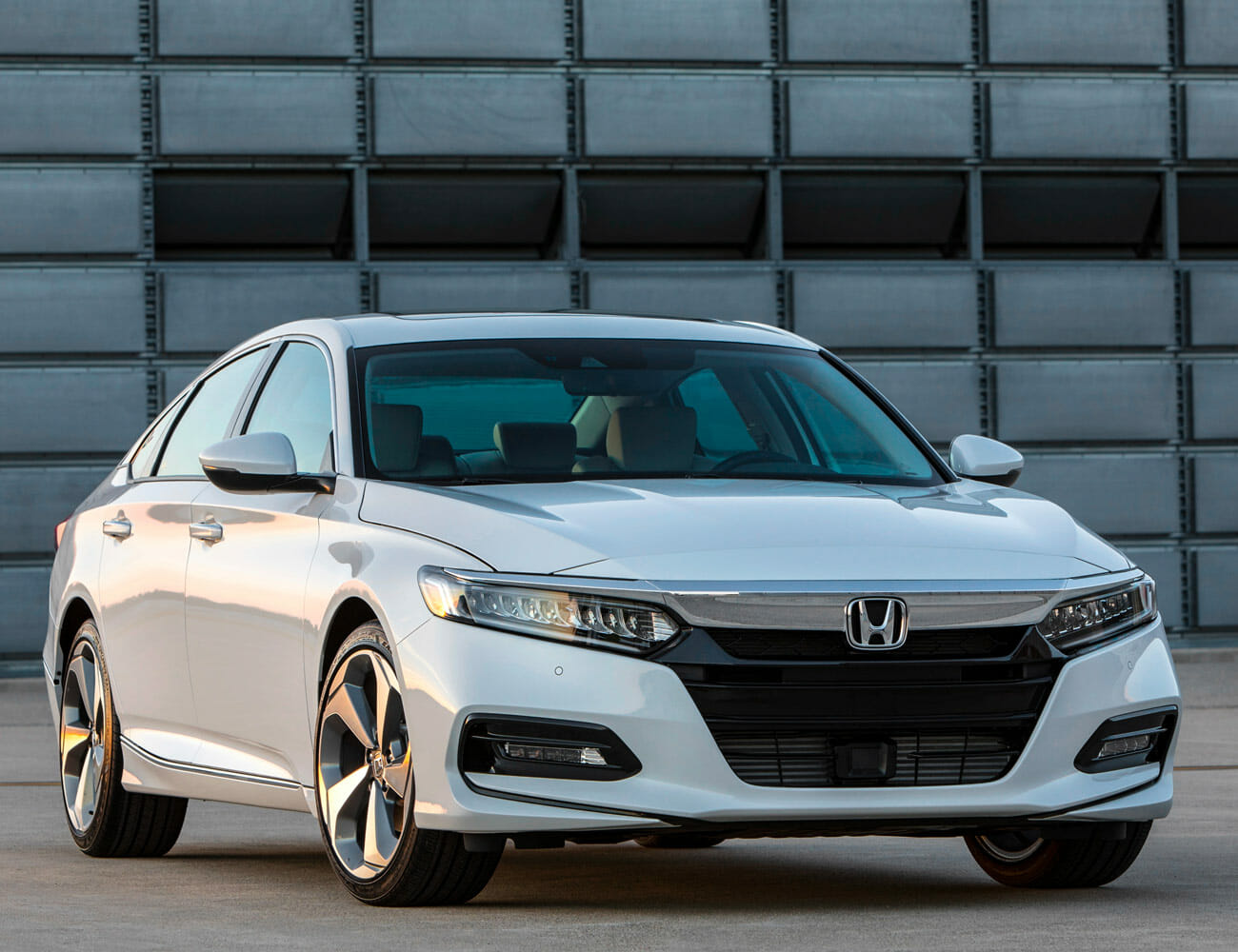
The Accord is Honda’s midsized family sedan. It first debuted in the United States in 1976, and over the years, has amassed an impressive roster of accolades. The Accord comes with three engine options: a 192-hp turbocharged 1.5-liter inline-four-cylinder, a 252-hp turbocharged 2.0-liter inline four-cylinder, and a hybrid 2.0-liter inline four-cylinder Atkinson-cycle engine with two electric motors. The Accord is front-wheel drive only and can be optioned with a six-speed manual (not available on the Hybrid), a CVT or a 10-speed automatic transmission.

Body Style: Sedan

Models:

• LX
• EX
• Touring
• Hybrid

Engines:

• Turbocharged 1.5-liter inline four-cylinder
• Turbocharged 2.0-liter inline four-cylinder
• 2.0-liter inline four-cylinder Atkinson-cycle engine with two electric motors

Base MSRP: $23,720

Insight
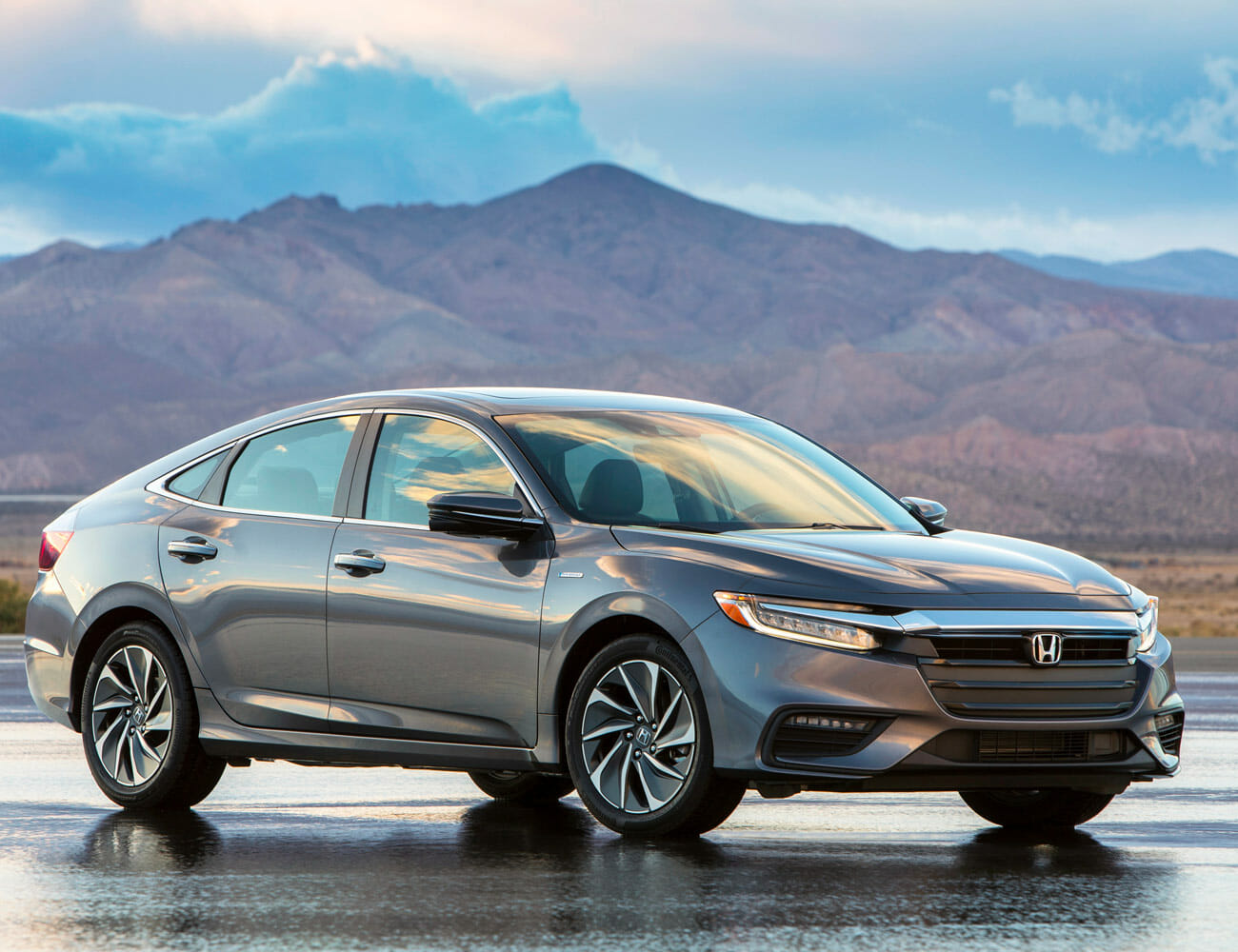
The Insight is Honda’s compact hybrid sedan. The Insight is similar to its sibling, the Civic, in wheelbase and handling, but bests it in fuel efficiency thanks to a two-motor drivetrain. The Insight produces a combined 151 hp from its 1.5-liter inline four-cylinder engine and electric motor. The Insight is only available in front-wheel drive with a continuously variable transmission.

Body Style: Sedan

Models:

• LX
• EX
• Touring

Engines:

• 1.5-liter Atkinson-cycle engine with two electric motors

Base MSRP: $22,930

Clarity
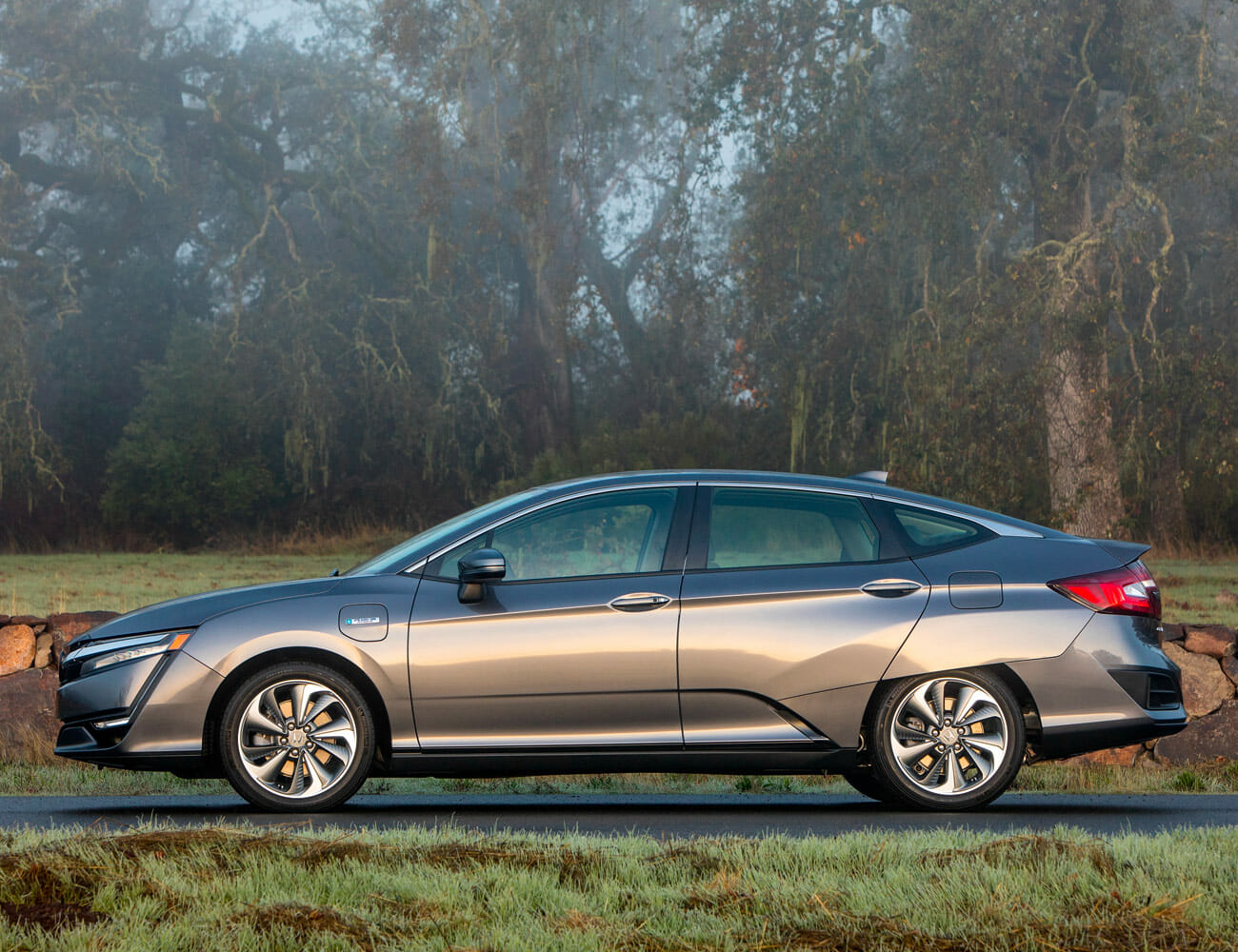
The Clarity is Honda’s premium alternative fuel sedan. It’s available in three drivetrain options; fully electric, hybrid plug-in, or hydrogen fuel cell. The Clarity Electric utilizes a 161-hp electric motor with a 25.5-kWh lithium-ion battery pack delivering 89 miles of range per charge. The Clarity Hybrid Plug-in produces a combined 212 hp courtesy of an AC motor and 17.0-kWh lithium-ion battery pack coupled with a 1.5-liter Atkinson-cycle four-cylinder engine. The Clarity Fuel Cell utilizes hydrogen as a fuel, and produces 174 hp courtesy of a proton exchange membrane fuel cell connected to a direct-drive transmission. The Clarity Fuel Cell is only available for lease, and only in California. All Clarity models are front-wheel drive.

Body Style: Sedan

Models:

• Electric
• Plug-in Hybrid
• Fuel Cell

Engines:

• 120-kW Electric motor with 25.5-kWh lithium-ion battery pack
• 1.5-liter Atkinson-cycle four-cylinder engine and two electric motors
• Proton exchange membrane fuel cell

Base MSRP: $33,400

HR-V
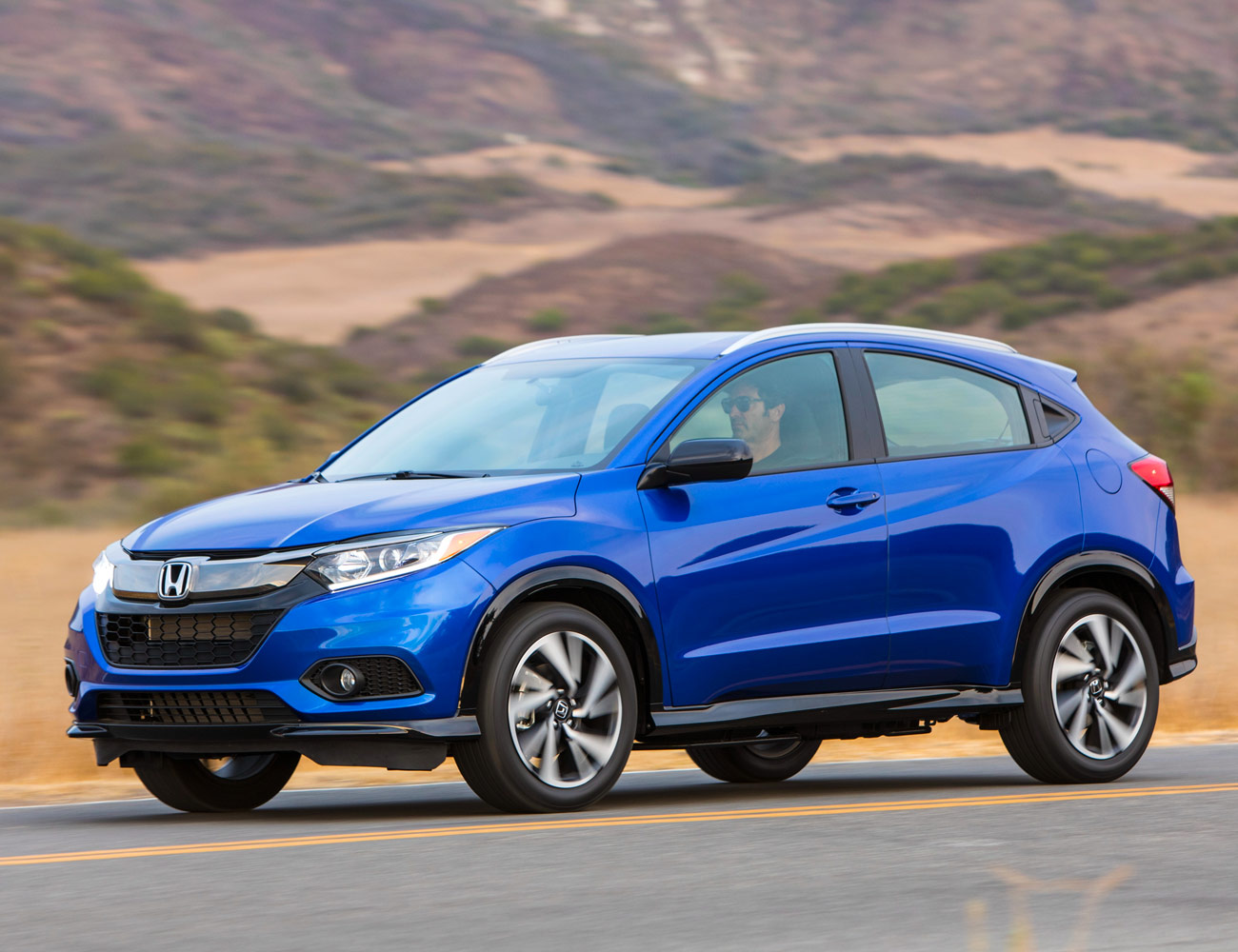
The Honda HR-V is a subcompact crossover with a spacious cabin. The HR-V has one engine: a 141-hp 1.8-liter inline-four paired with a continuously variable transmission. Front-wheel drive is standard across all trim levels, with the exception of the Touring trim, which receives all-wheel drive standard. However, all-wheel drive is an available upgrade on all lesser HR-V trims.

Body Style: SUV / Crossover

Models:

• LX
• Sport
• EX
• EX-L
• Touring

Engines:

• 1.8-liter inline four-cylinder

Base MSRP: $20,620

CR-V
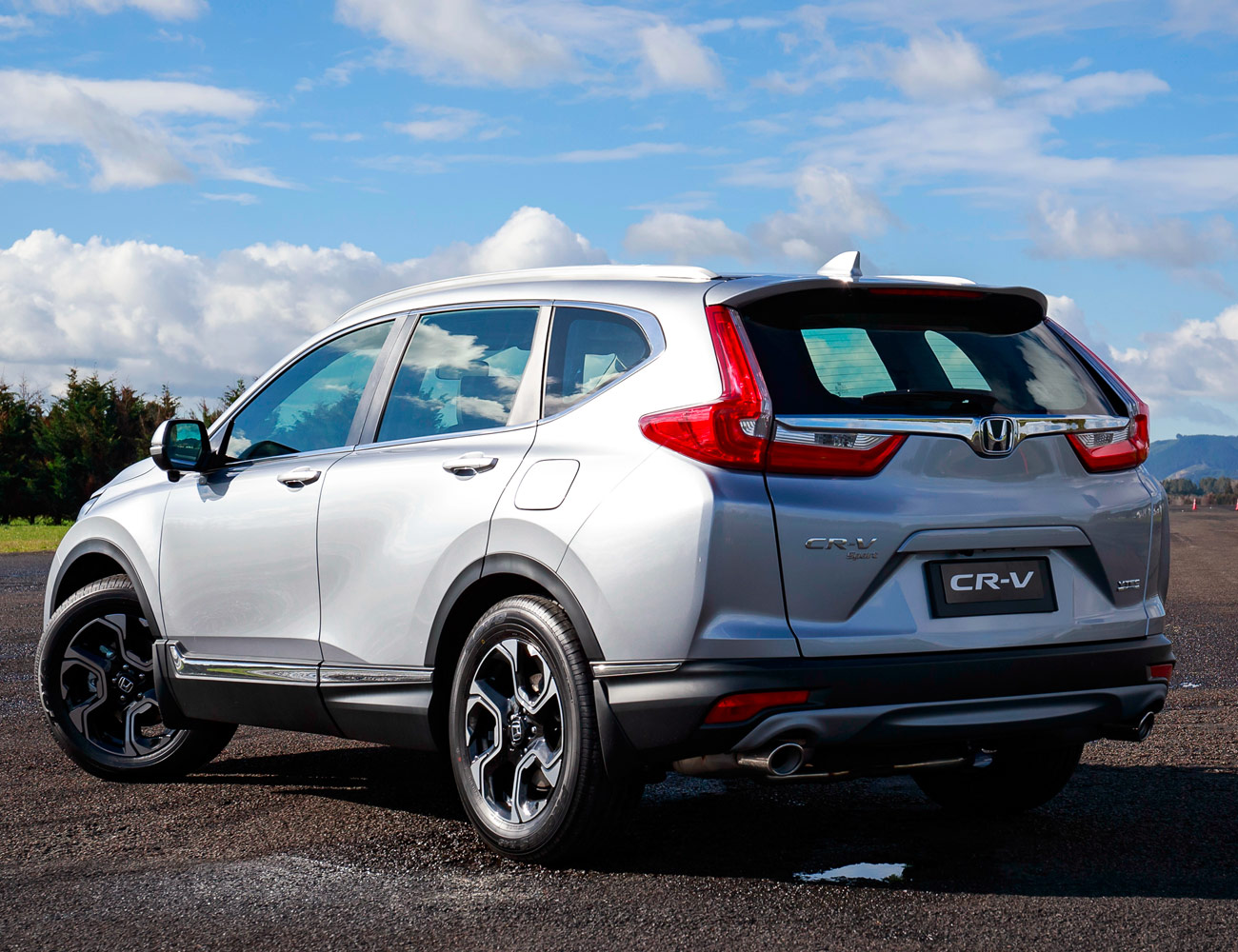
The CR-V is Honda’s compact crossover. The fifth-generation version now on sale was new for the 2017 model year. There are two engine options for the CR-V: The base LX features a 184-hp 2.4-liter inline four-cylinder, while all other trims offer a 190-hp turbocharged 1.5-liter inline-four-cylinder engine. The CR-V features a continuously variable transmission and comes standard in FWD form, with AWD available as an upgrade.

Body Style: SUV / Crossover

Models:

• LX
• EX
• EX-L
• Touring

Engines:

• 2.4-liter inline four-cylinder
• Turbocharged 1.5-liter inline four-cylinder

Base MSRP: $24,450

Passport
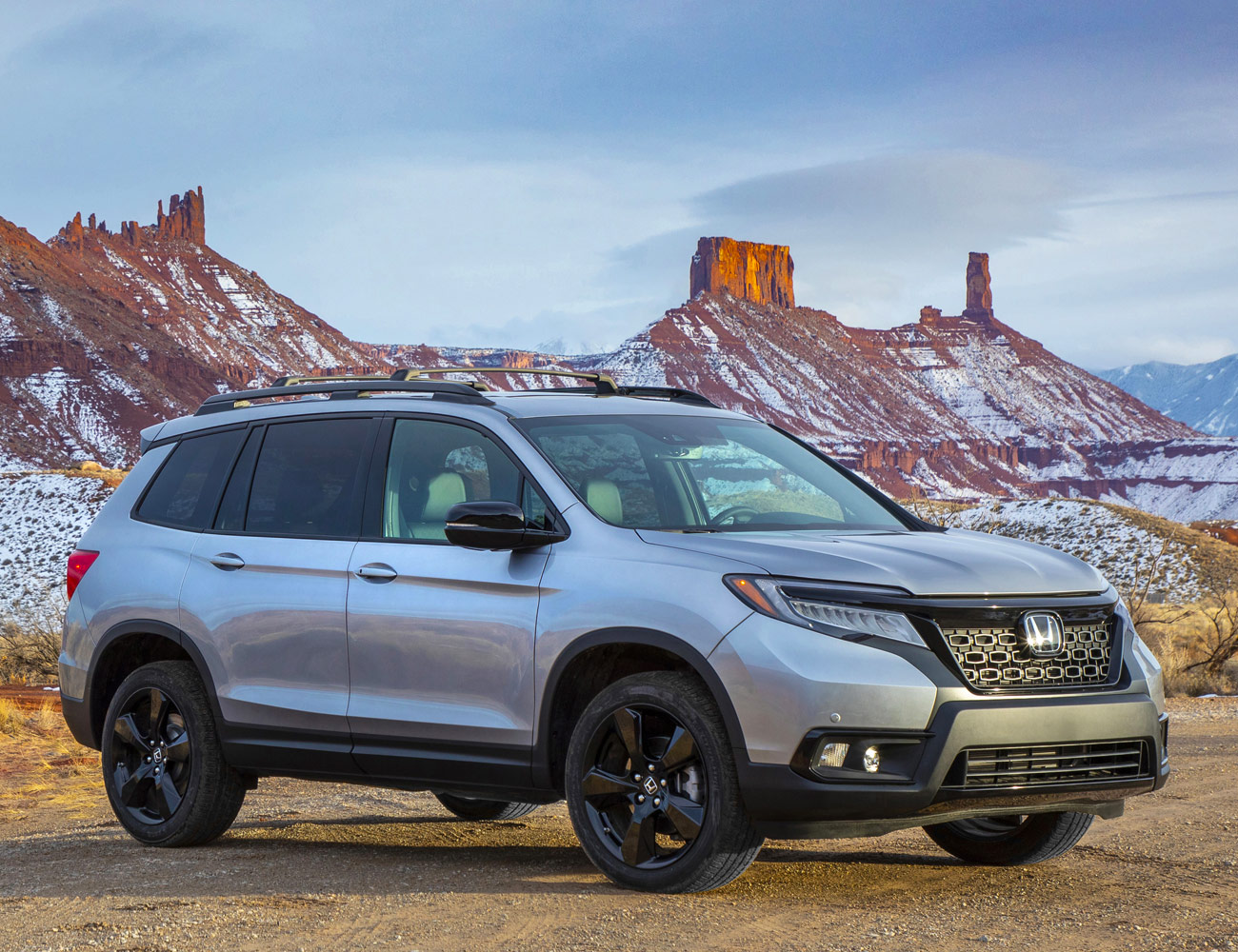
The 2019 Honda Passport returns after an 11-year hiatus from the Honda SUV lineup, slotting in above the CR-V and below the Pilot. While the Passport shares the same chassis and drivetrain as the Pilot — a 280-hp 3.5-liter V-6 paired with a nine-speed automatic transmission — the more compact Passport only seats five. Front-wheel drive is standard, with all-wheel drive available as an optional upgrade. (All-wheel drive comes standard on the Elite.) The Honda Passport is also capable of towing up to 5000 pounds.

Body Style: SUV / Crossover

Models:

• Sport
• EX-L
• Touring
• Elite

Engines:

• 3.5-liter V-6

Base MSRP: $33,085

Pilot
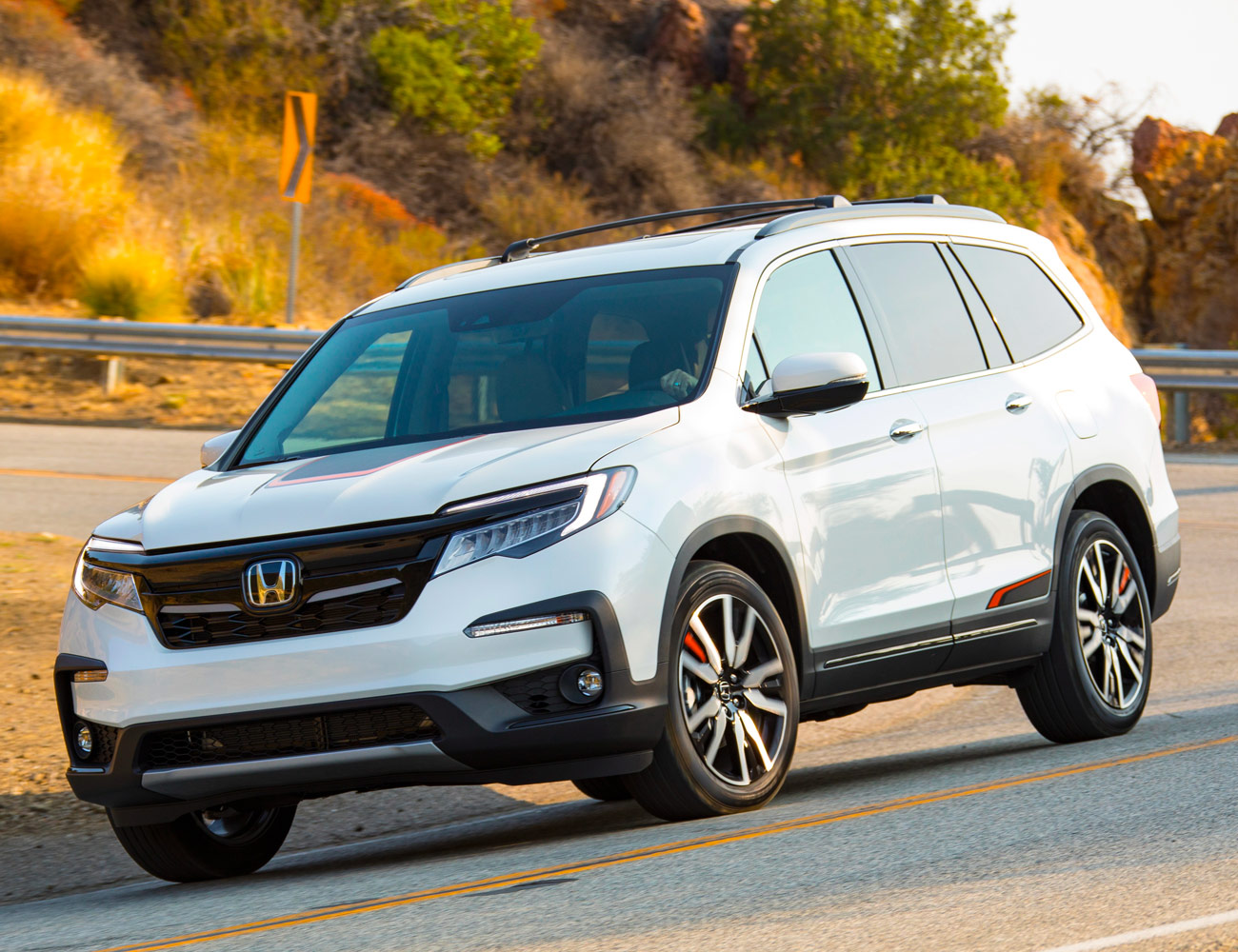
The Pilot is Honda’s full-size SUV that seats up to eight people. Compared to the Passport, the Pilot is billed as a more family-focused SUV, with a larger cargo area and kid-friendly rear-seat entertainment package. The Pilot is powered by a 280-hp 3.5-liter V-6 paired with a nine-speed automatic transmission. Front-wheel drive is standard across lower trims;  all-wheel drive is available as an optional upgrade, except on the Elite, where it comes standard. It can tow up to 5,000 lbs.

Body Style: SUV / Crossover

Models:

• LX
• EX
• EX-L
• Touring
• Elite

Engines:

• 3.5-liter V-6

Base MSRP: $32,545

Ridgeline
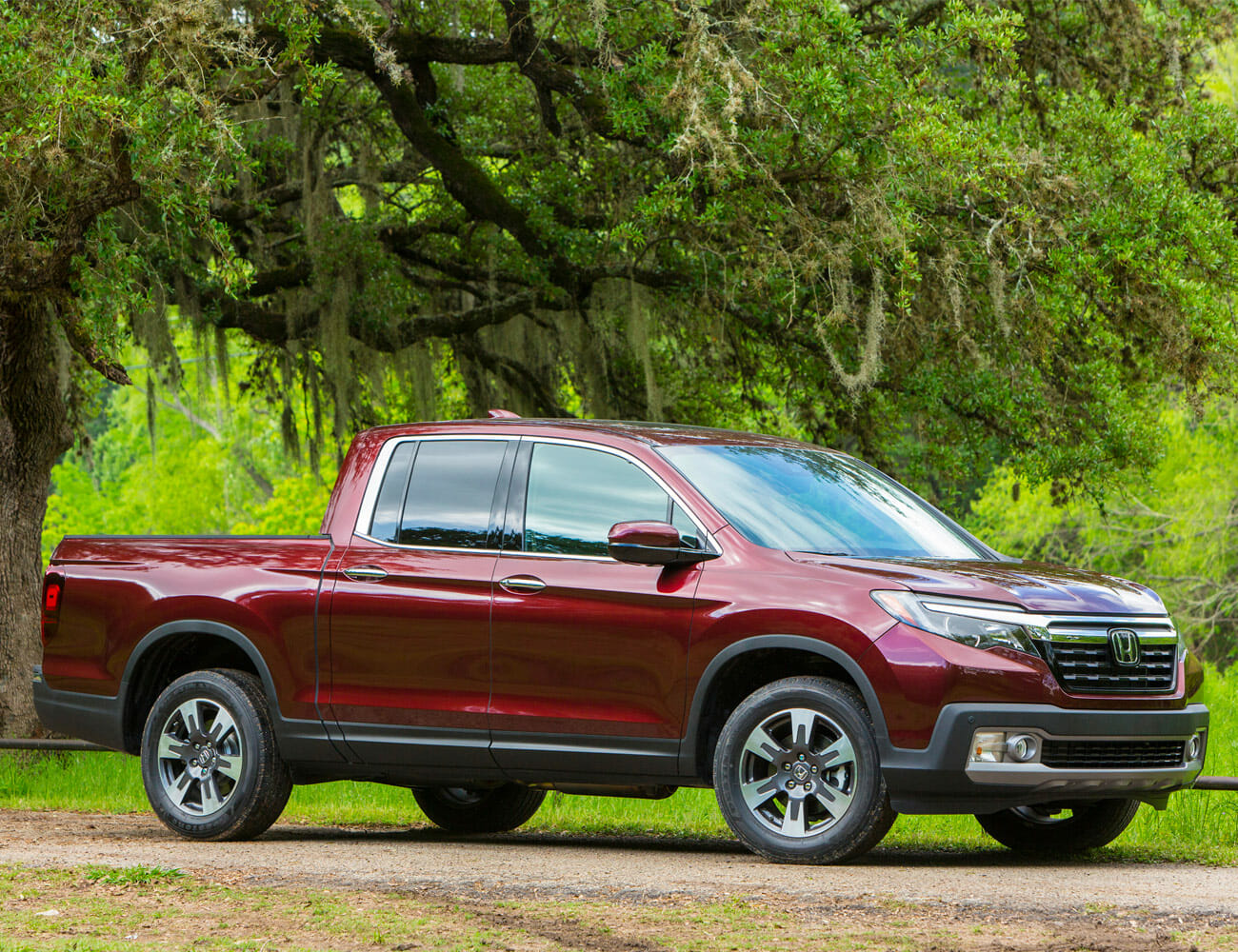
The Ridgeline is Honda’s only pickup, and comes with one powertrain: a 280-hp 3.5-liter V-6 and six-speed automatic transmission. All-wheel drive is an optional upgrade on Sport, RTL and RTL-T trims; it’s standard on RTL-E and Black Edition trims, and unavailable on the base RT. (Front-wheel drive is standard on RT, Sport, RTL, and RTL-T variants.) The Ridgeline’s tow rating ranges up from 3,500 lbs with front-wheel drive and to 5,000 lbs with all-wheel drive. The bed length on the Ridgeline is limited to 5.3 feet across all trims, with a volume of 34 cubic feet. It also features a 7.3-cubic-foot in-bed trunk with locking mechanism and weather sealing.

Body Style: Pickup Truck

Models:

• RT
• Sport
• RTL
• RTL-T
• RTL-E
• Black Edition

Engines:

• 3.5-liter V-6

Base MSRP: $31,085

Odyssey
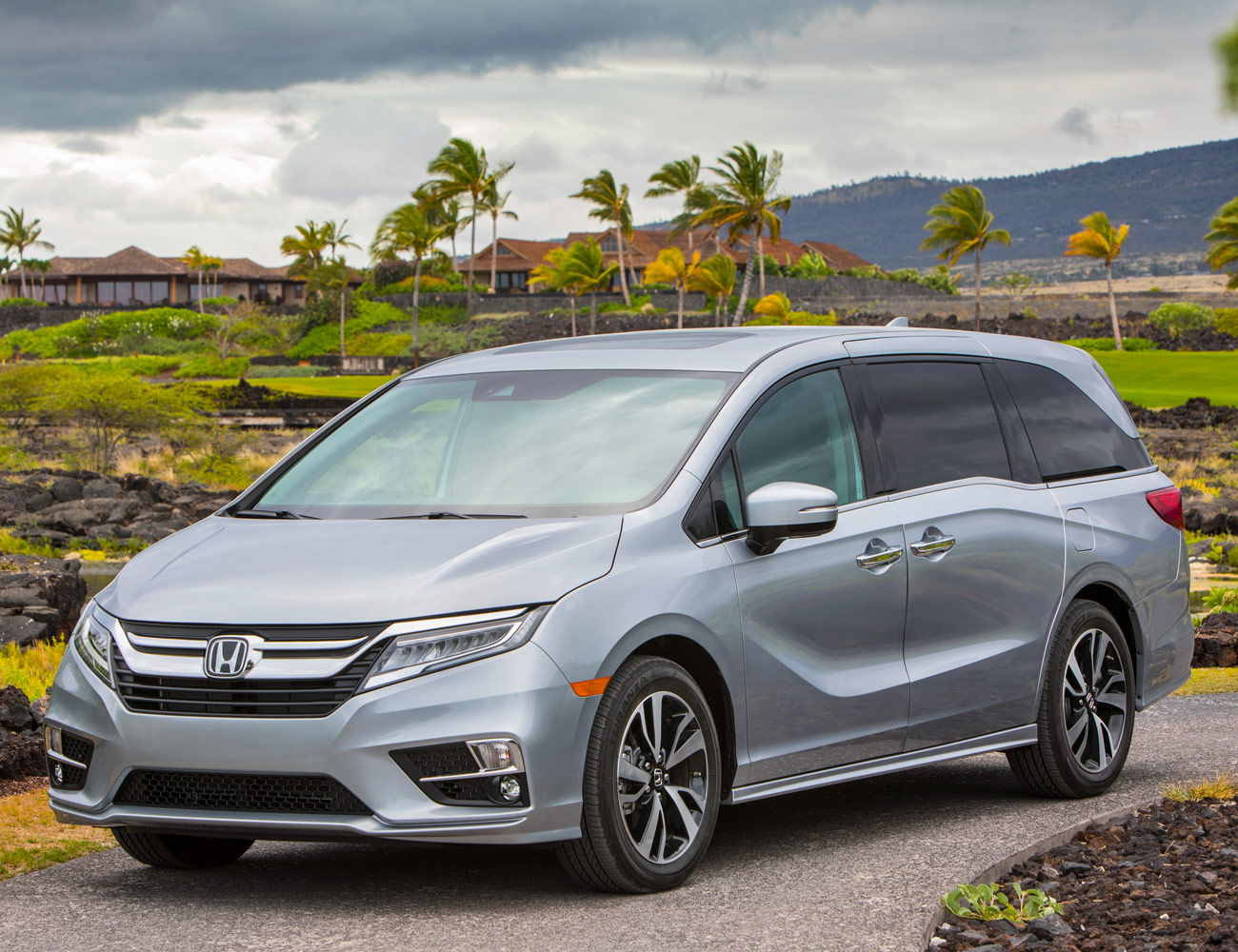
The Honda Odyssey, which received a full update in 2018, is built to ferry families around with comfort and safety in mind. The Odyssey features three-row seating and a spacious interior as standard, and options like an onboard vacuum, a video monitor to observe the aft rows and rear-seat entertainment system. Only one engine is available across all trim levels: a 280-hp 3.5-liter V6. The Elite trim gets a 10-speed automatic transmission, while all other trim levels use a nine-speed transmission. The Honda Odyssey is only available in front-wheel drive.

Body Style: Minivan

Models:

• LX
• EX
• EX-L
• Touring
• Elite

Engines:

• 3.5-liter V6

Base MSRP: $31,085

Note: Purchasing products through our links may earn us a portion of the sale, which supports our editorial team’s mission. Learn more here.

Drivers of These Cars Are Most Likely to Have Accidents

Insurify.com compiled data on cars that get into the most traffic accidents. The national average was 13.64 percent of vehicles being involved in at least one previous accident. Some cars exceeded that average by a significant margin. We’re not saying drivers of these cars are likely to hit you, but you may want to give them a wide berth just in case.

Subaru Crosstrek (25.81%)

Subaru sells a full range of SUVs. The Crosstrek is the hip, affordable one that is targeted at millennials. Millennials, as the current young drivers, engage in riskier behavior behind the wheel than their wisened elders. Thus, a lot of riskier drivers are driving Crosstreks.

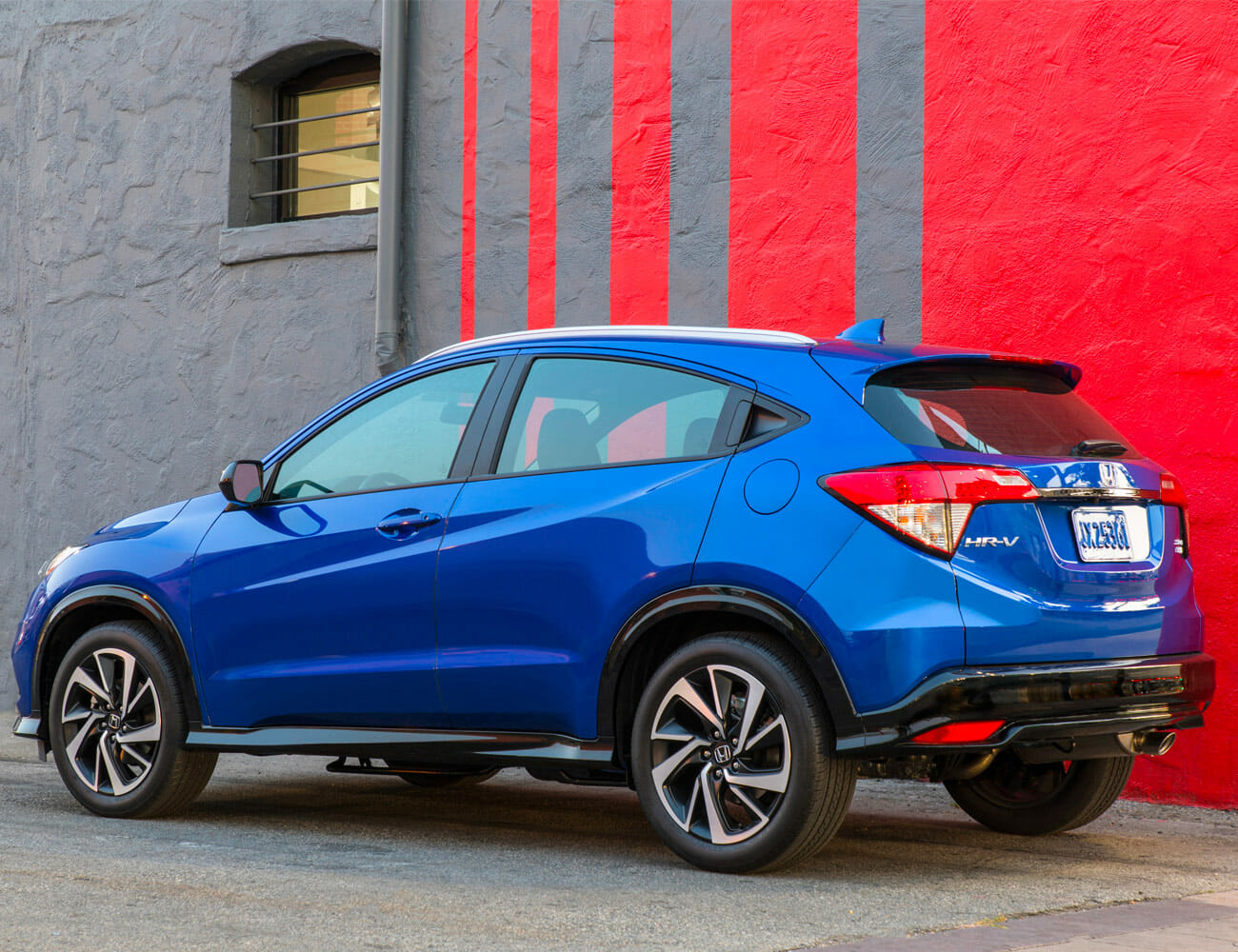
Honda HR-V (25.7%)

grey_placeholder

Car and Driver described the HR-V as “completely sufficient, wholly average and inoffensive.” That about sums it up. This is a small, affordable car, which could be enticing to young drivers. One thing worth noting is that Honda Sensing safety technology does not come standard until the third-tier EX trim.

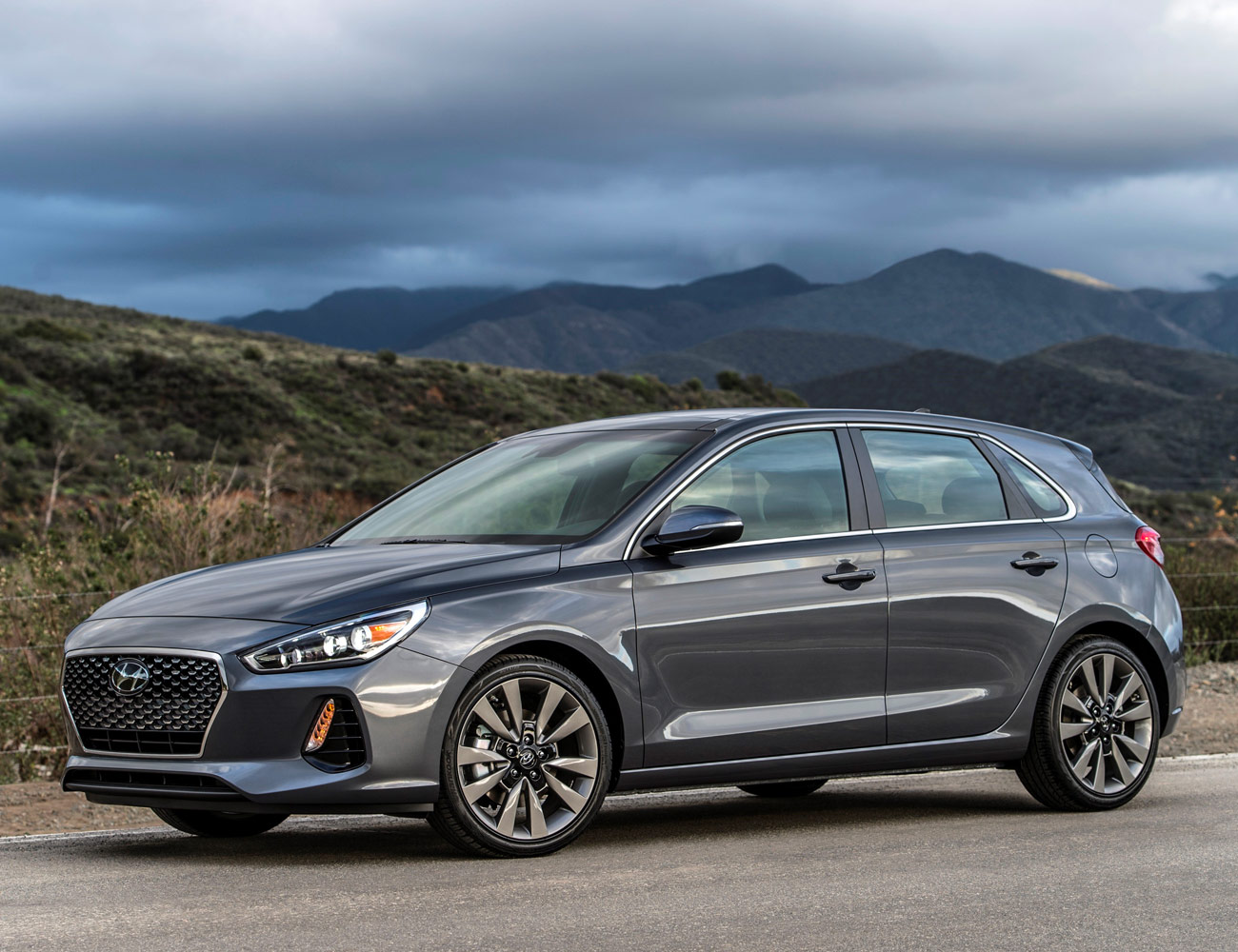
Hyundai Elantra GT (25.58%)

grey_placeholder

The Elantra GT is the more aggressive hatchback version of the Hyundai Elantra. Though, per Car and Driver, it “promises a bit more sportiness than it can deliver.”

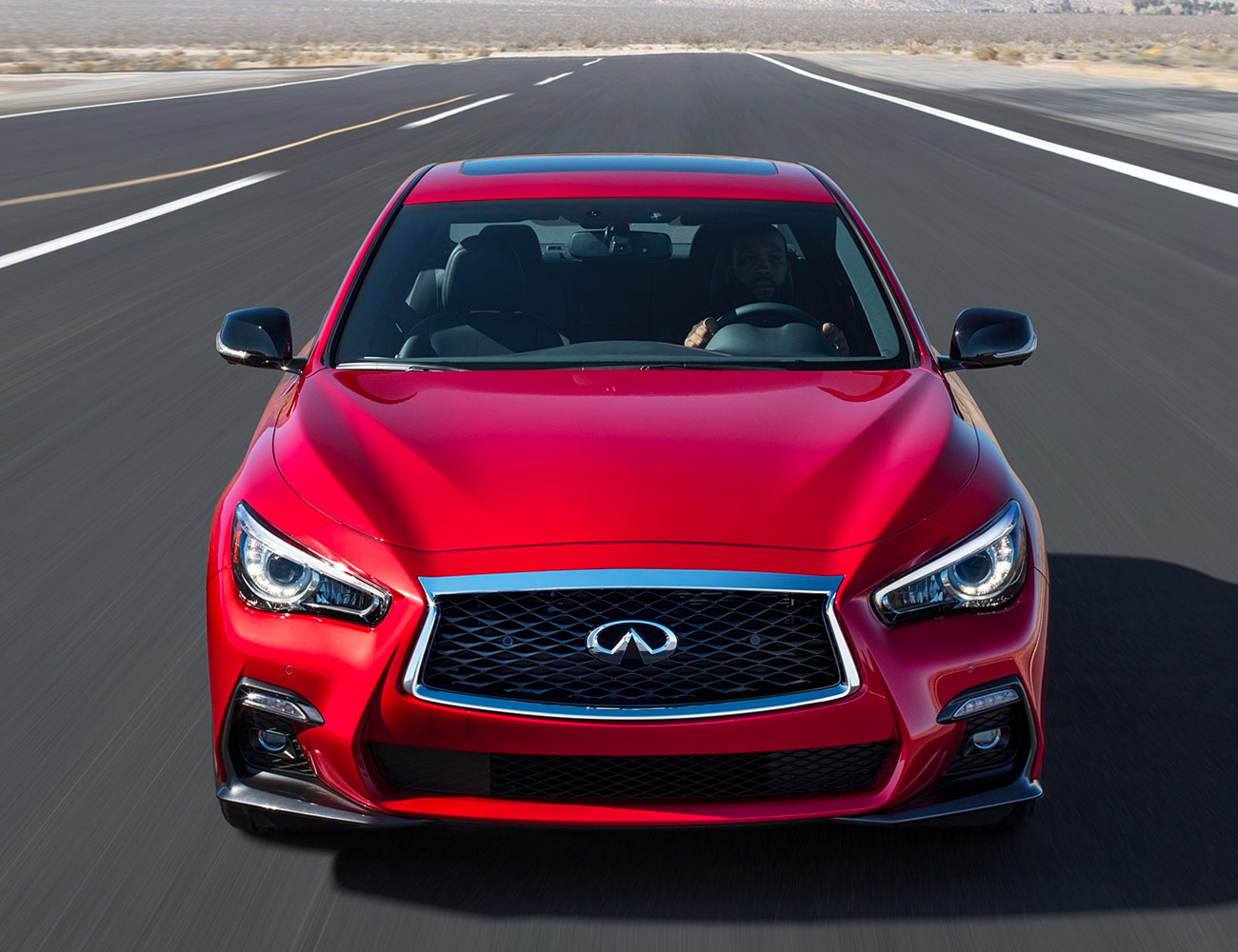
Infiniti Q50 (25.4%)

grey_placeholder

The Infiniti Q50 is the priciest car in the top five. It’s hard to find one distinctive factor about it beyond the fact you can level up the twin-turbocharged V6 to 400 hp with the top-tier Red Sport 400 edition.

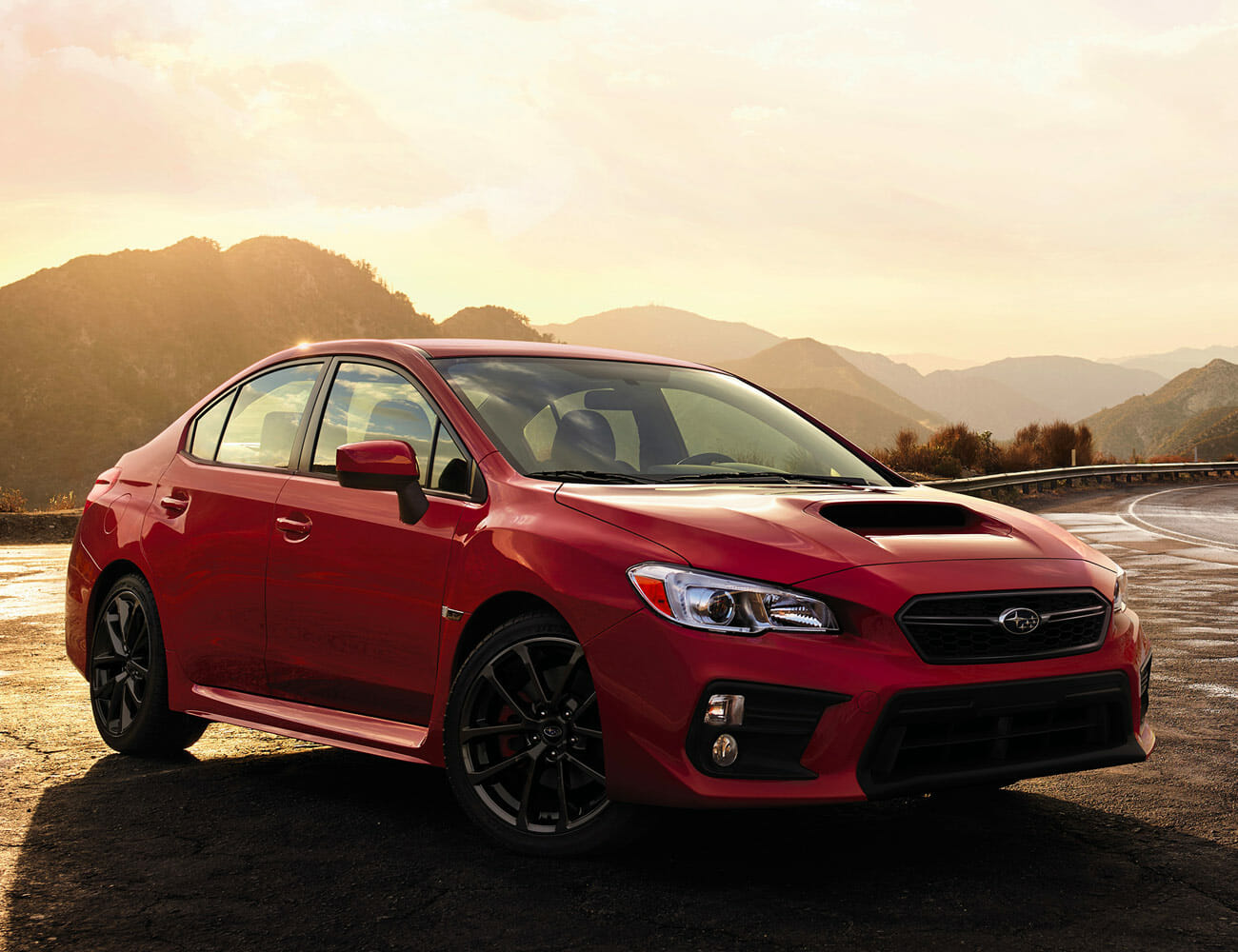
Subaru WRX (24.9%)

grey_placeholder

WRX drivers ranked No.1 for most speeding tickets. It’s no surprise there would be a strong correlation between exceeding the speed limit and getting into an accident.

6 Car Companies Avoiding the Automotive World’s 2019 Sales Dive

Carmakers have been experiencing a rough 2019 so far. Major automakers such as Ford, Toyota and GM have reported sales downturns. Spooked dealers are offering incredible incentives. Some analysts are talking of the car market undergoing a sustained recession-level downturn.

Some marques, however, are running counter to that trend and posting robust sales numbers this year. Here are six of them.

Lamborghini

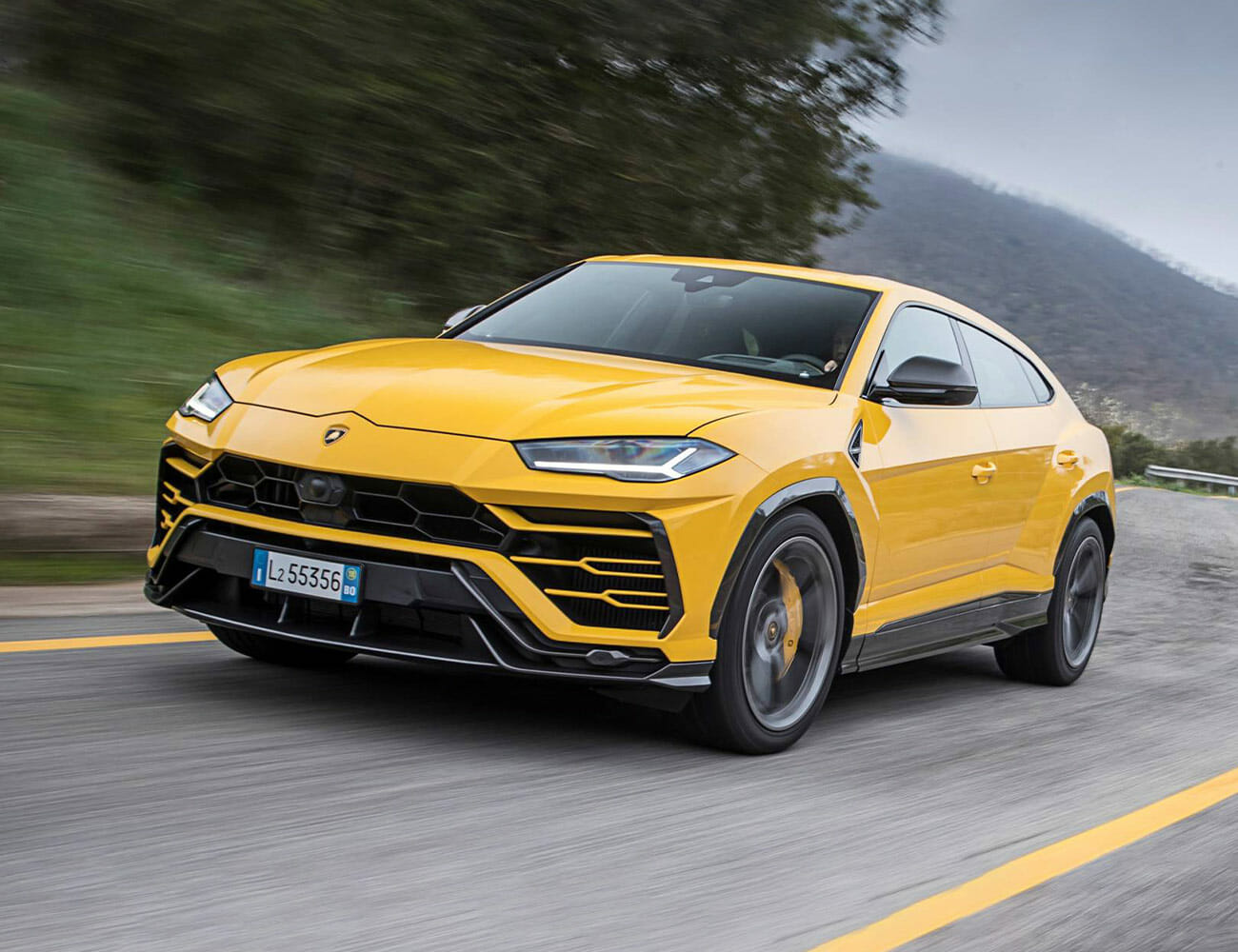
Lamborghini is living its best life in 2019. Sales have risen 96 percent worldwide through the first half of the year. They’re up 128 percent in the United States, which is Lambo’s largest market. These numbers come after a middling 2018, which saw a mere 51-percent growth over the . The brand’s newfound growth comes not from its popularity in cryptocurrency circles, but from the V8-powered Urus SUV, which the company describes as “the world’s first super sport utility vehicle.”

The Urus now comprises 59 percent of global sales. Those are the sort of numbers that will have Ferrari desperate to get its Purosangue crossover into showrooms. They also make a potential production version of the Huracan Sterrato seem far less ridiculous.

Ferrari

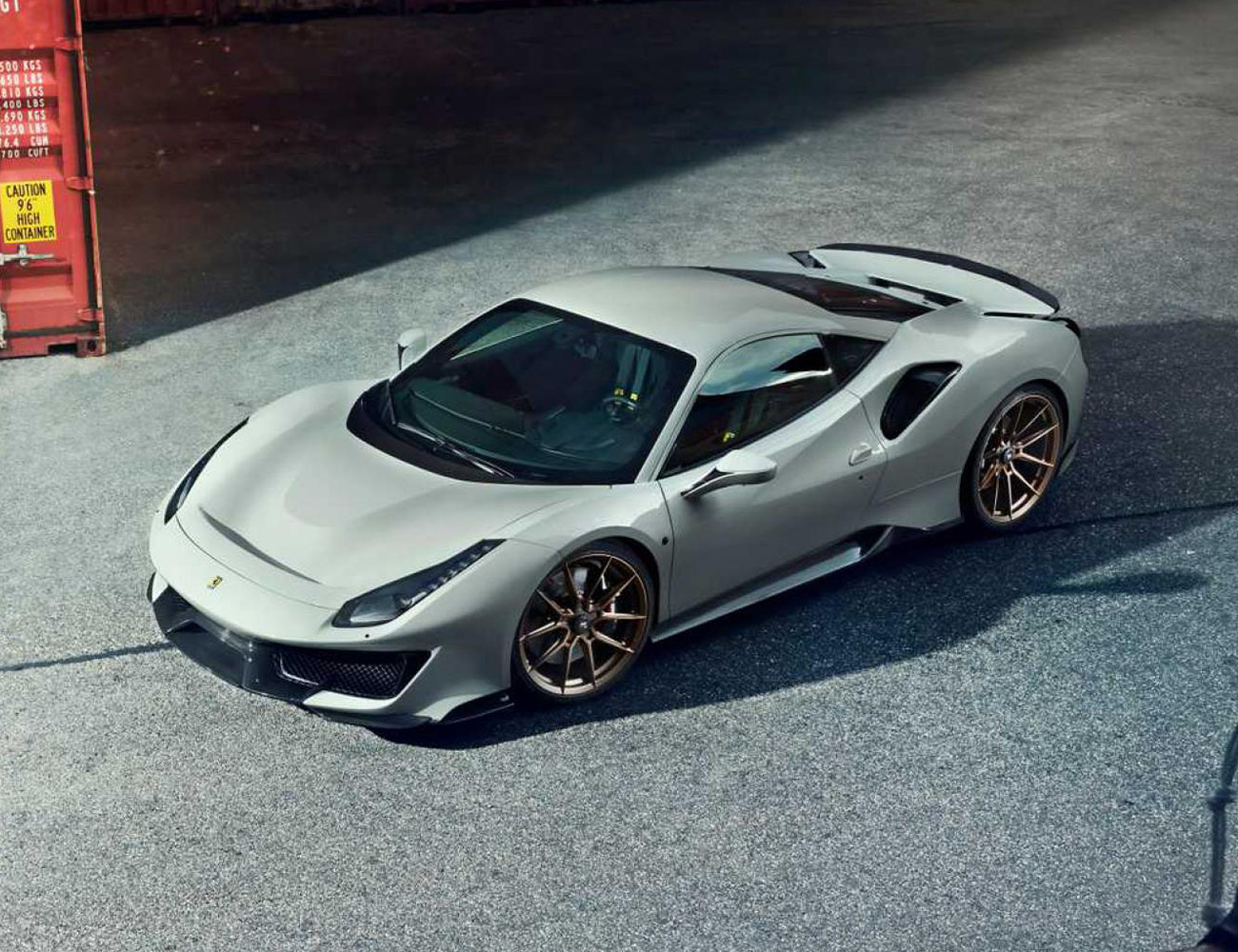
Ferrari’s profits are about more than the number of cars sold; the company counts on multiple revenue streams, including merchandising. But Ferrari has sold a lot of cars in 2019 — at least for itself. Deliveries were up globally by 15 percent through the first two quarters of the year. Ferrari grew 71 percent year over year in the diminishing Chinese market. The Prancing Horse also improved numbers in Europe (up 10 percent), the Americas (up 7 percent), and in the rest of the Asian-Pacific region (up 16 percent). And that’s without having an SUV in showrooms.

Volkswagen

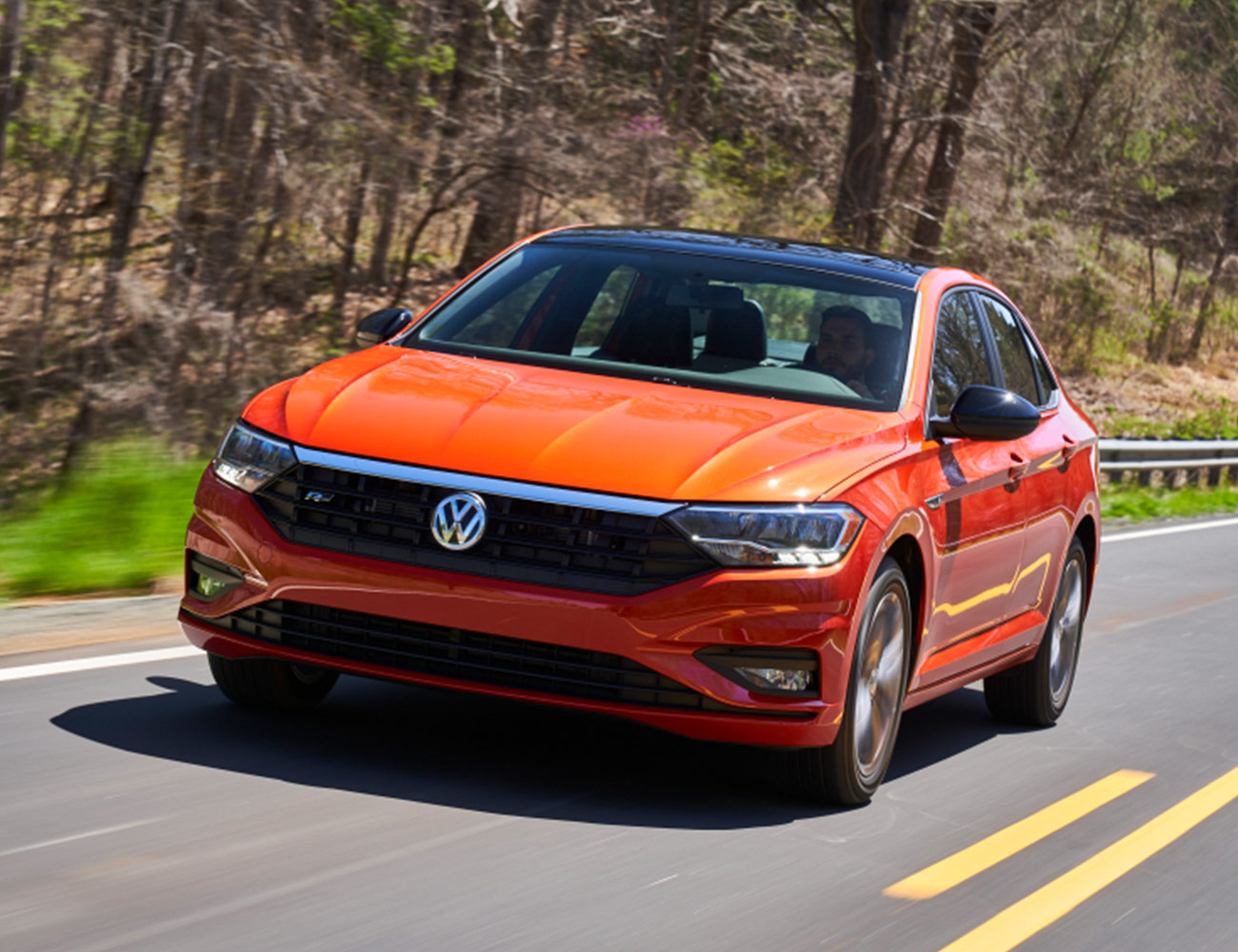
Volkswagen has found its way again after Dieselgate. That way is SUVs, for the most part. The company presented a three-prong American sales plan in January: focus on the Atlas, the Tiguan and the Jetta. With those cars’ sales rising 31 percent, 25 percent and 43 percent respectively, Volkswagen has been nailing it. Despite the Golf family being in near-terminal decline, total U.S. sales have risen 6.1 percent year over year. Plans to ditch the wagons and offer more crossovers will rankle traditionalists, who want VW to remain committed to value, excellent handling and manual transmissions in perpetuity. Sales numbers suggest Volkswagen should ignore them.

Subaru

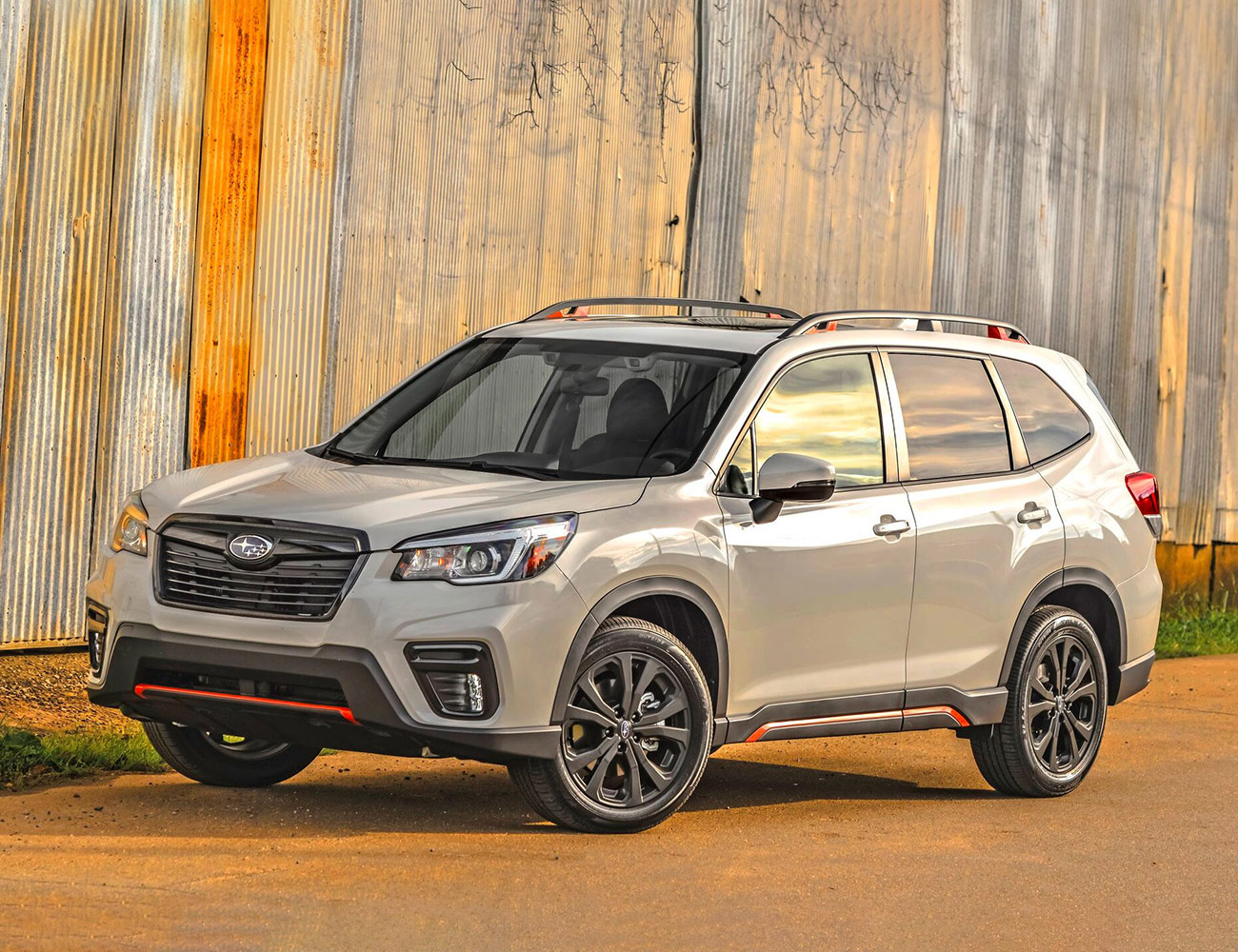
Nothing will stop Americans from buying Subarus. Literally almost nothing. Emissions cheating? Poor working conditions? Production flaws? None of those stories has put a dent in booming U.S. Subaru sales. July was Subaru’s 92nd straight month of year-over-year growth. Total sales have risen by 5.6 percent year over year. The bestselling Outback (up 4.7 percent) has more than held steady even in an outgoing model year with a new version about to arrive. The redesigned Forester (up 8.5 percent) is right up in its rearview mirror, with more than 100,000 units sold. Subaru has also sold 47,000 Ascents through the first seven months of 2019. Practicality, ruggedness and resale value remain a heck of a formula.

Ram

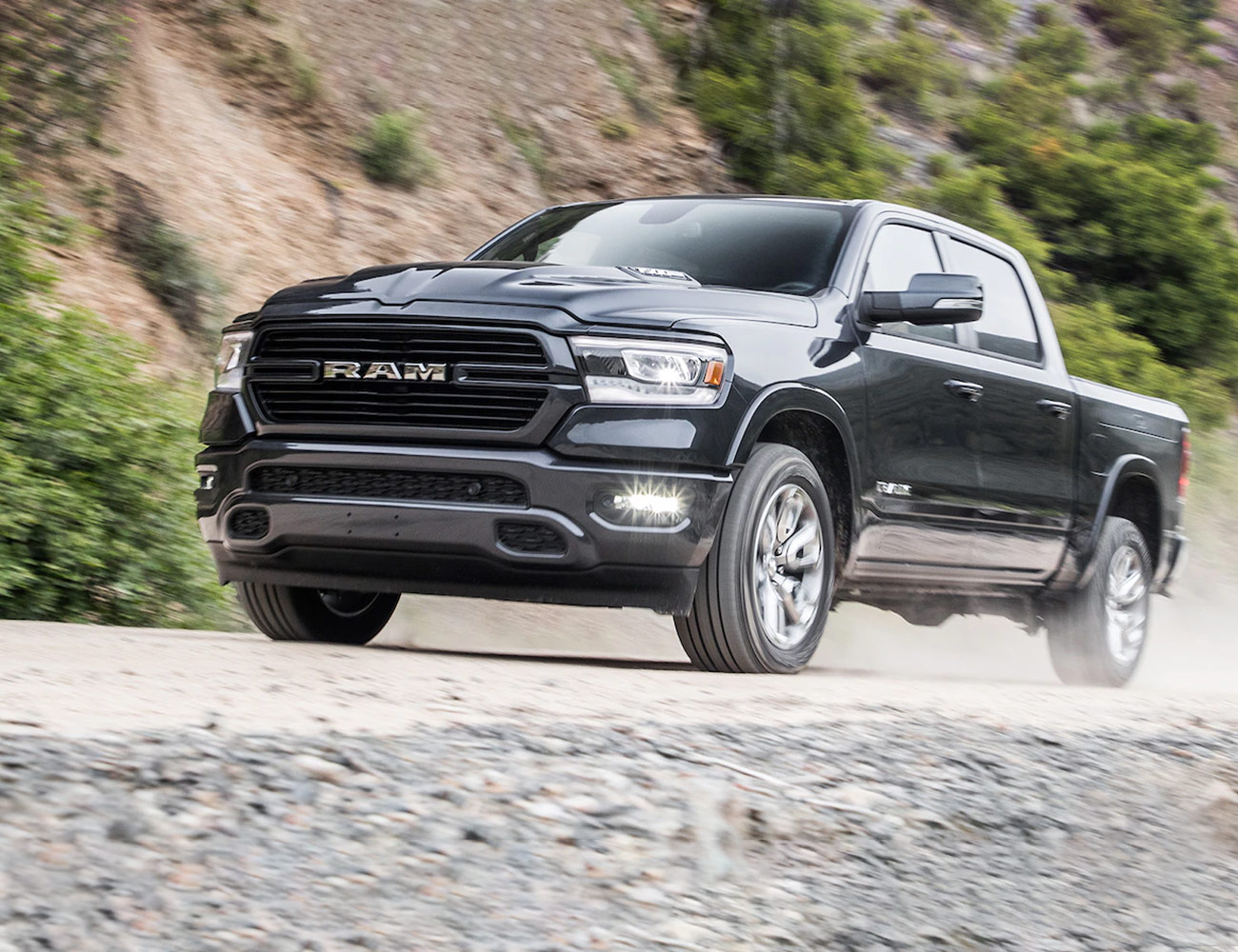
Ram has been the talk of the truck market, and it has little to do with that goofy split tailgate. The brand sold 299,480 pickups through June, a 28 percent year-over-year increase. That surge was enough for Ram to overtake the Chevy Silverado as the number-two best-selling passenger vehicle in the United States. It’s not clear there is one specific factor, but reviews for the redesigned 2019 model with its impressive interior have been generally positive. Ram has kept the previous model on as an affordable “1500 Classic,” a move that has been so successful Ram plans to not just continue building but also keep updating that model. (Notable hiccups on the Silverado’s part may also be part of the Ram’s rise.)

BMW

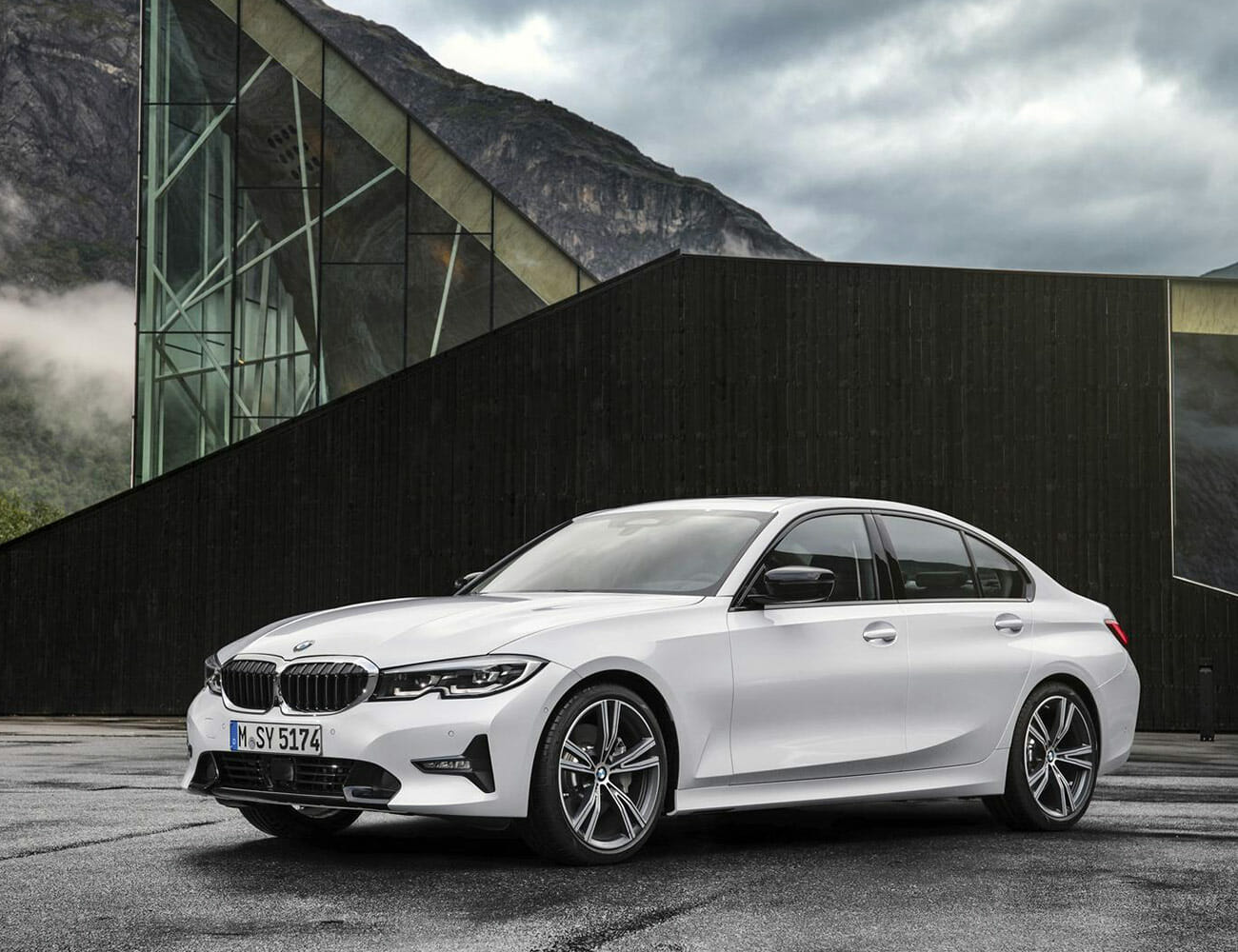
BMW sales are up 2.3 percent year over year in the U.S. in 2019. If that does not sound strong, compare that to the efforts of rivals Mercedes (down 4 percent), Audi (down 5 percent), and Lexus (down 6.3 percent) thus far. BMW has even opened up a lead over Mercedes in cars sold in the States. The stronger sales are due to BMW’s “light trucks” — all SUVs from the X3 upward — whose sales are up 34.4 percent year over year. The X3 (up 30.2 percent) and the X4 (up 99.3 percent) have been particular standouts. BMW moving 10,279 new X7s so far this year shows tremendous potential in the full-size SUV category.

Alas, it is not all beer and sausages in Bavaria. Mini being down 24.2 percent year over year wipes out much of BMW’s gains.

2020 McLaren 720S Spider Review: Pop the Top for Added Fun

When McLaren announced it was returning to the realm of street cars in 2011 after a 13-year absence since the legendary F1 called it quits, it was easy to dismiss the idea as a flight of fancy. But where so many companies with grand sports car plans have belly-flopped into the annals of history, McLaren has thrived. Part of that has been through sheer force of will, but much of it has been through innovation and clever engineering. Every car from the $192,500 570S to the $837,000 Senna and the $2.24 million Speedtail uses the same engine — a modified version of the same engine used in every car all the way back to that MP4-12C that relaunched the brand eight years back.

Those trends, in many ways, have culminated with the 720S — a super sports car that combines the performance of an honest-to-God supercar with the road-going comfort of a family sedan. It redefined its own category, delivering performance figures stellar enough to leave even mighty Ferraris and Lamborghinis sucking its turbocharged exhaust while simultaneously freeing the mid-engine sports car shape from the giant air-sucking flank intakes that have dominated for decades. For 2019, it adds to its appeal with a pop-top option that lets the sun shine in with effectively zero negative effect on weight, performance or appearance. In other words, the 720S Spider, at least in theory, delivers all the good parts of a convertible with none of the sacrifices.

The Good: McLaren is good at one thing above all else: Making Fast Cars. The 720S Spider lives up to that reputation — and then some. The company claims performance is effectively unchanged versus the hardtop, which weighs just 108 pounds less; considering that car can run from 0-60 miles per hour in 2.4 seconds, 0-100 mph in 4.9 and crack into the nines in the quarter-mile, perhaps Macca is simply counting on drivers not to notice any fractional degradation in acceleration, since they’ll be too busy screaming. The Spider’s power-retractable hardtop not only makes it easier for the world to see you in your ever-so-zippy sports car, it also brings added sensations to the experience of blitzing track and street: more engine noise, more wind roar, more breeze tousling your hair. The gullwing doors that add a bit of panache to your entrances? They’re just icing on the cake.

Who It’s For: Those with a Maverick-and-Goose feeling of the need for speed.

Watch Out For: Well, speed limits, for one. Curbs, potholes and other obstacles of two inches’ depth and/or height, for another. Thankfully, the nose-lifting hydraulic function in the 720S is much easier to use than the one on the 600LT, always available at low speeds with the simple flick of a finger against the stalk. Still, unless you’re quick on the trigger (and vigilantly scanning the road ahead), you’ll likely scrape that low-slung carbon-fiber jaw more often that you’d like.

Alternatives: Ferrari F8 Tributo (est. $350,000), Lamborghini Huracan Evo ($261,274), Porsche 911 Speedster ($274,500)

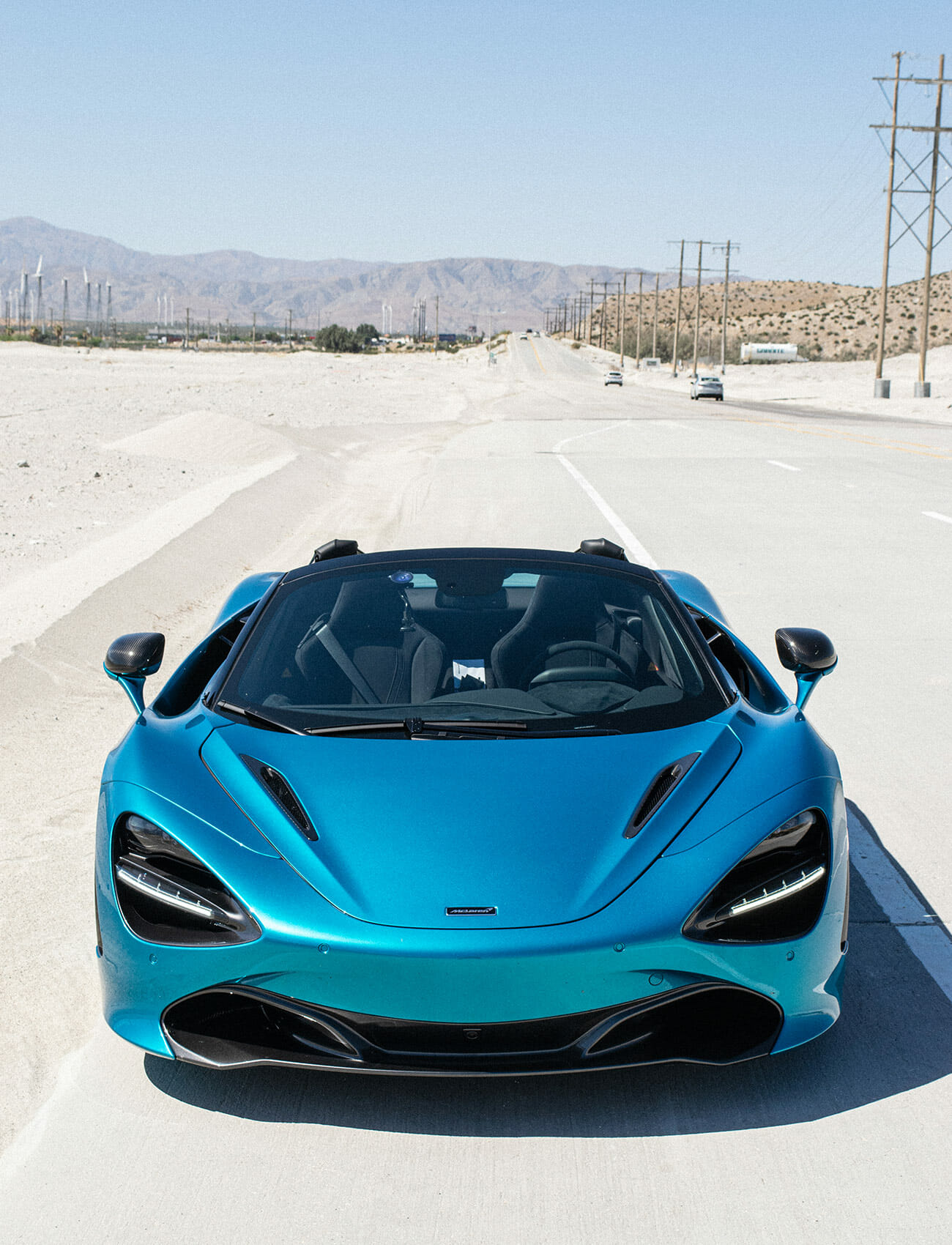
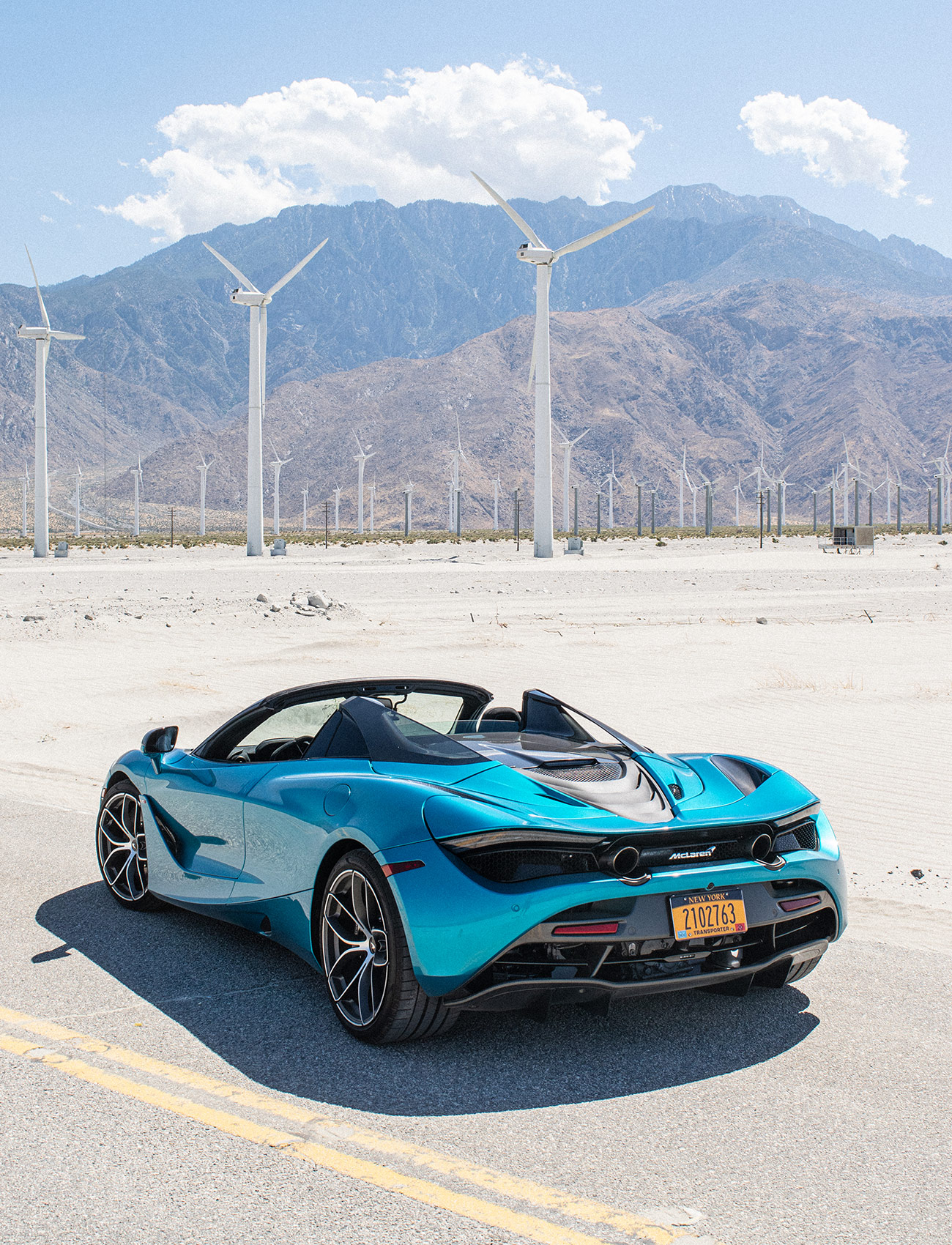
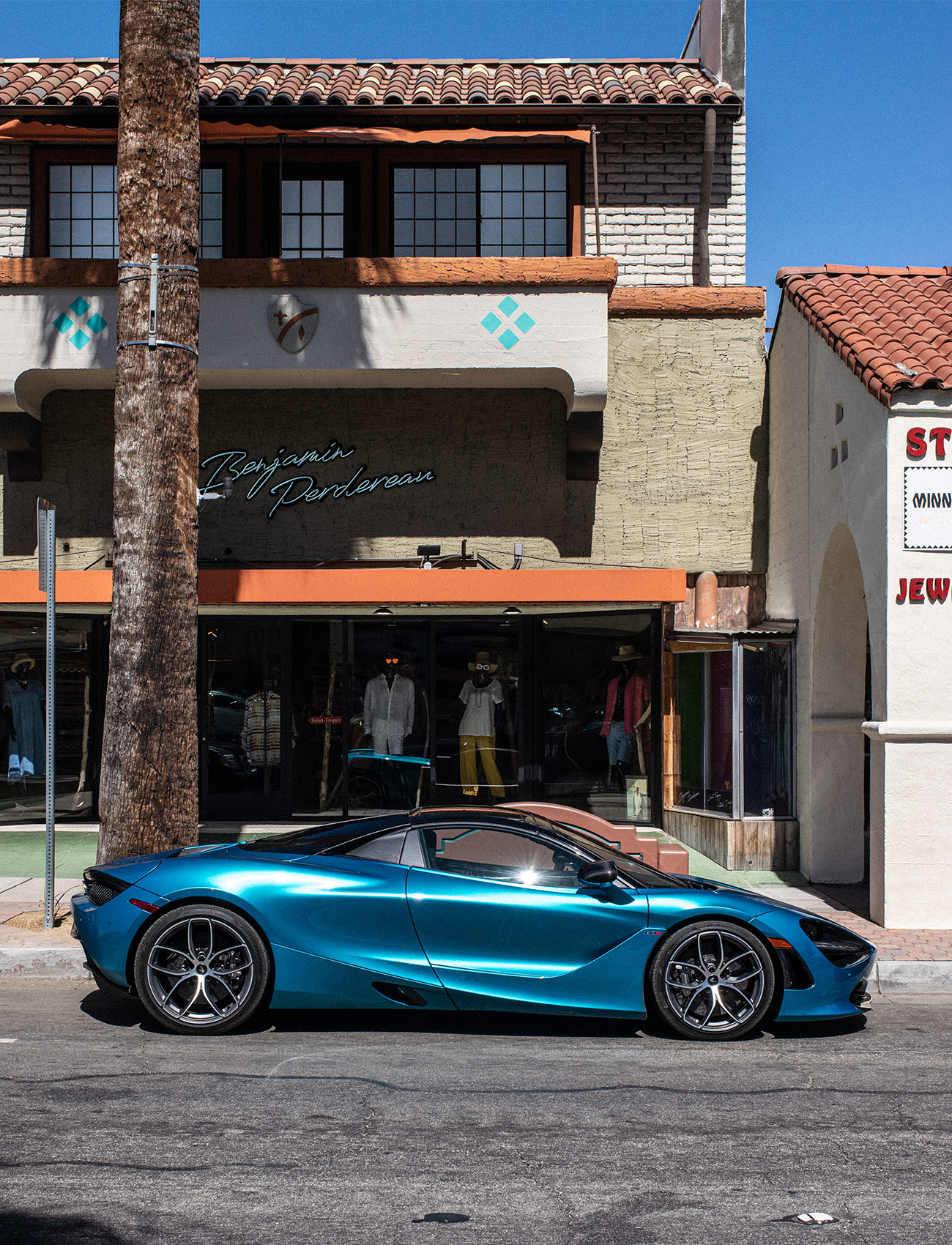
Review: The McLaren 720S was never going to be the prettiest car at the Cars and Coffee. The function-over-form mindset found in Woking pretty much guaranteed that; every line, every body panel has been designed to help it grip the ground and slip through the air. The final product’s Area 51 skin delivers plenty of visually-arresting gravitas — especially in the electric-arc Belize Blue of my test car — but gripping doesn’t mean gorgeous. Knowing those openings around the headlights are there to send cool air to the radiators doesn’t make the front end look any less like a dead-eyed skull. (Opting for a dark color minimizes the issue, but at the expense of muting the curves and facets found elsewhere in the sheetmetal.) Still, the Spider at least offers a little variation to liven things up; if you’re bored with how it looks with the top up, you can always drop it.

But oh shit, is it fast.

Burrow down into the throttle, and the 720S accelerates with breathtaking speed, the kind of push you come to associate with truly fast cars wearing raging bulls or prancing horses on their prows…and then you realize you still have more than 1,000 rpm at the top end to explore. Dig into that, and boom — welcome to warp speed. Mind-blowing, full-afterburner, jump-to-hyperspace, gone-to-plaid fuckyeah. Even by the standards of this crazy day and age where Dodge sells a 797-hp muscle car and a Porsche 911 Carrera S does 0-60 mph in three seconds flat, the way this McLaren pulls is, in all honesty, surreal.

The power is intoxicating. I know it’s a cliché; I loathe the fact that I’m using it. But it’s the best word to describe the rush that comes every time you hammer the accelerator and ride the V8’s surge towards the redline. Also the license-losing line; by the time you hit redline in any gear other than first, if you’re not on a long straightaway, you have to brake. You’ll be going too fast — not for the car, but for everything else. Like a cat in a studio apartment, you’ll have to settle for brief sprints back and forth before slamming on the brakes for traffic or blind curves.

Indeed, if there’s anything to complain about with the 720S, it’s that there just aren’t enough places to exercise it. Real-world roads just have too many variables to safely handle the sorts of speeds this car can achieve at a moment’s notice. You have to reset your mental standards as to how hard you can push the car; if you’re used to taking a turn at 7/10ths in most sports cars, you do it at 4/10ths in this guy. It could do it at 7/10ths, of course — but you’d be going so fast, you’d have no chance of reacting in time to any unexpected obstacle on the far side of the bend.

The grip is phenomenal; the power delivery fluid and easy to dial in in a way you certainly wouldn’t expect from a car at this sort of level. Even though there’s no limited-slip differential in back, the computers use their electronic control of the rear brakes to help yaw the stern in the desired direction. Yet the ride is firm yet forgiving when you want it; McLaren has bridged performance and livability like few can do. The Proactive Chassis Control II suspension setup uses cross-linked hydraulic active dampers an in lieu of traditional anti-roll bars; if that sounds like Greek to you, just know that it translates to a ride setup that seamlessly delivers both a gran turismo ride and supercar handling. The end result is somewhat reminiscent of flying a fly-by-wire fighter jet: All the electronics let you squeeze far more out of it than you could through purely mechanical means.

But all that’s true of the coupe, too. What makes the Spider special is that folding top, flipping open or shut in a mere 11 seconds at speeds up to 31 mph. No matter which position it’s in, the roadster feels as rigid as the coupe — a helpful byproduct of the MonoCage II carbon fiber platform that makes up the skeleton of the latest Maccas. Adding to its versatility: the optional electrochromic roof, which shifts from nearly-opaque to almost-transparent at a moment’s notice.

The best part about the Spider, though, is that top-down driving gives back the thrill that the coupe can lack. It’s hard to feel remote, cool and disassociated from the world the way you can in the almost-anodyne 720S Coupe with the wind whipping by and then sun blasting down on you. Convertibles are always more fun; coupes always drive better and look better. The Spider does both.

If there’s one main beef to be had with the Spider, it’s that the engine doesn’t sound good, even with the optional sports exhaust system. Loud, sure — but not fiery or compelling or passionate the way you’d like a car that looks this wild to sound. Just loud. Everyone from Ferrari to AMG to BMW has figured out how to make small-displacement twin-turbo V8s sound good, so it’s hard to say why Macca can’t. Granted, that complaint’s true of the coupe as well, but the Spider’s al fresco driving position means you’re far more aware of the problem than you are in the solid-topped version.

The 720S interior remains a high-water mark for mid-engined sports cars, at least in terms of visibility. Those skinny A-pillars allow the driver to survey the land ahead with unexpected ease; even looking over your shoulder for cars lurking in your blind spot is less stressful than expected, though a slight step down from the coupe, which benefits from tiny windows behind the B-pillar. The only chink in the clarity armor: scanning your six for the 5-0 when driving fast. That’s when you’ll wish the active rear wing weren’t quite so happy to rise up every time the speedo climbs to highway speed. (That said, it is entertaining to glance back and see it pivot into an air brake when you slam on the left pedal.)

Legroom is a little tight in the driver’s throne — at least, it is for six-foot-four people like your humble author. Most folks should be just fine, caressed by a leather seat that manages to be both road-trip comfy and track-day supportive. They’ll also be undistracted, as they should be when behind the wheel of a sports car packing this sort of power. The thick steering wheel connected to the responsive, communicative hydraulic steering rack features no ancillary controls for the radio or anything else; the only thing it controls beyond the front wheels is the horn. The all-digital instrument panel sticks tachometer and speedometer — the former a simulacrum of an analog gauge, the latter a clear white number inside it —  front and center, with other info like temperatures and fuel levels pushed to the sides. If that’s still too much info, snapping the car’s powertrain into Track mode causes the panel to fold onto its side, revealing a second, thinner screen that only shows a wide multicolored band for a tach and a simple speedo beside it.

McLaren’s active drive system dials controlling powertrain and suspension settings — a staple of the company’s interiors since its return in 2011 — remain one of the bright points of the interior. (Literally, as well as figuratively, thanks to their metallic sheen.) The mechanical switches and buttons are a reassuring touch in a world filled with software and touchscreens; the object permanence of the twin dials’ position is as deeply reassuring as the tiny click they make when you thumb them between Comfort, Sport and Track settings.

The touchscreen-and-knob-controlled infotainment system works more smoothly than it used to, though it’s still more awkward than most manufacturers’ units. McLaren’s independent-automaker status rarely holds it back, but it does here; Lamborghini uses a reskinned Audi infotainment system, Ferrari makes do with a dolled-up version of Chrysler’s Uconnect and Aston Martin borrows Mercedes-Benz’s setup, but McLaren lacks any ties to a broader network of vehicles, so they’re stuck with their in-house Iris arrangement.

Going Spider does carry with it one specific interior-related flaw: You lose a bit of storage space compared with the coupe. The fixed-roof 720S has a small storage area behind the seats where you can put the same sort of items you’d jam under the seat in front of you on an airplane. The Spider, for obvious reasons, lacks that. So you’re restricted to whatever you can cram in the frunk — basically,  one person’s carry-on luggage. Maybe two people, if they stick to squashy bags, pack carefully, and plan on spending an hour steaming their garments at their destination.

Verdict: The McLaren 720S Spider may be the best series-production example of what automotive TV host Mike Spinelli sometimes describes as the Iron Man Theory of Sports Cars: their ultimate goal is to use technology and engineering to improve your own capabilities. It’s an idea originally applied to hypercars — but with the 720S, McLaren has brought it a little bit closer to Earth. Sure, it’s still as expensive as the median home price in Virginia. But at the end of the day, it’s a road-going Iron Man suit that lets you take off the helmet and fly with your hair in the breeze. Who needs a house when you can have that?

2020 McLaren 720S Spider: Key Specs

Powertrain: 4.0-liter twin-turbocharged V8; seven-speed dual-clutch transmission; rear-wheel-drive
Horsepower: 710
Torque: 568 pound-feet
0-60 MPH: 2.8 seconds
Top Speed: 212 mph (roof up), 202 mph (roof down)

McLaren provided this product for review.

Read More Gear Patrol Reviews

Hot takes and in-depth reviews on noteworthy, relevant and interesting products. Read the Story
Note: Purchasing products through our links may earn us a portion of the sale, which supports our editorial team’s mission. Learn more here.

Some of the Best Phone Charging Cables for the Car

Smartphones and tablets are an inextricable part of modern life. And with navigation software and the constant flood of fascinating podcasts out there, they’ve also become an essential part of modern driving. This state of affairs leaves us painfully beholden to the cables that power those devices.

But not all of those cables are equal. They can be flimsy, or unwieldy to use while driving. And ferrying the same cable from house to office to car and back again means it’s more likely to wear out more quickly, after being plugged, unplugged and handled over and over again.

Instead of trying to use that single cord that came with your phone for everything, consider snatching up one of these great third-party cables and leaving it in the car (or at least with you) all the time. After all, isn’t tech supposed to make life easier?

Anker Powerline II

One cable to charge them all. Avoid the pain of multiple cables and prep for all phones with the Anker Powerline II 3 in 1 cable ($18).

Fuse Chicken Titan Loop


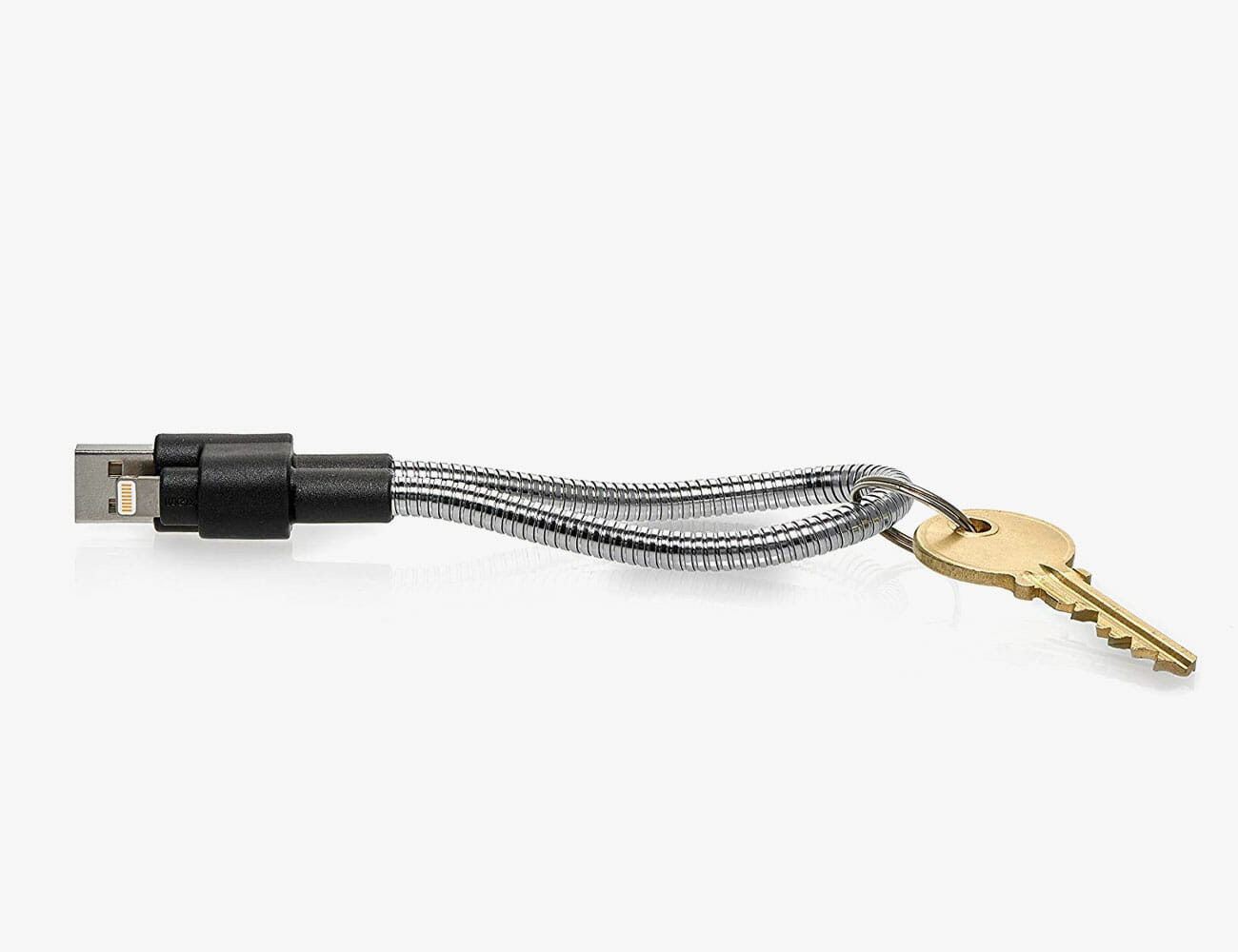
If you’re driving, you’re on the go. Thus, portability is key. The Fuse Chicken Titan Loop ($25) will transition to and from your keychain with ease and claims to be able to withstand a chainsaw, should that need arise.

Nomad Black Rugged Cable

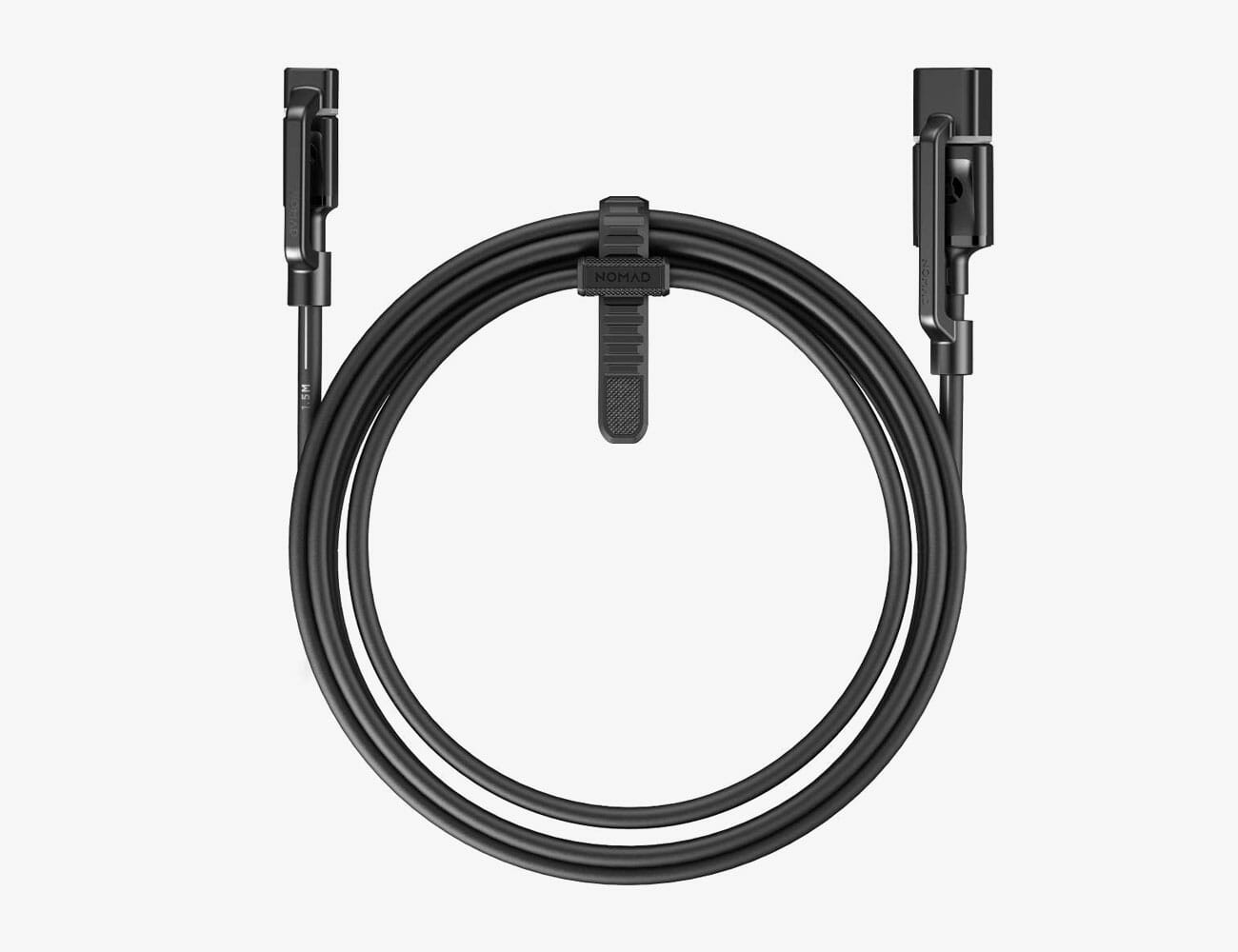
Leaving the pavement does not require you to unplug. Nomad’s Black Rugged Cable ($25) is flex-tested, has an outer shield made from high-end TPE, and has sealed caps at both ends to keep out mud and dirt.

AmazonBasics 10-Foot Lightning to USB

Third-row passengers need to charge too. Bring electricity to the furthest outposts of your on-trend family SUV for a reasonable price with a 10-foot AmazonBasics Lightning to USB-A Cable ($12). USB-C users are restricted to nine feet.

Smart&Cool GenX Nylon Braided 3 in 1 Max

Fiddling with phone cords on the road can be hazardous. Magnets make plugging in much easier and safer. Charge just about anything with Smart&Cool’s GenX Nylon Braided 3 in 1 Max ($20 for a three-pack).

Note: Purchasing products through our links may earn us a portion of the sale, which supports our editorial team’s mission. Learn more here.

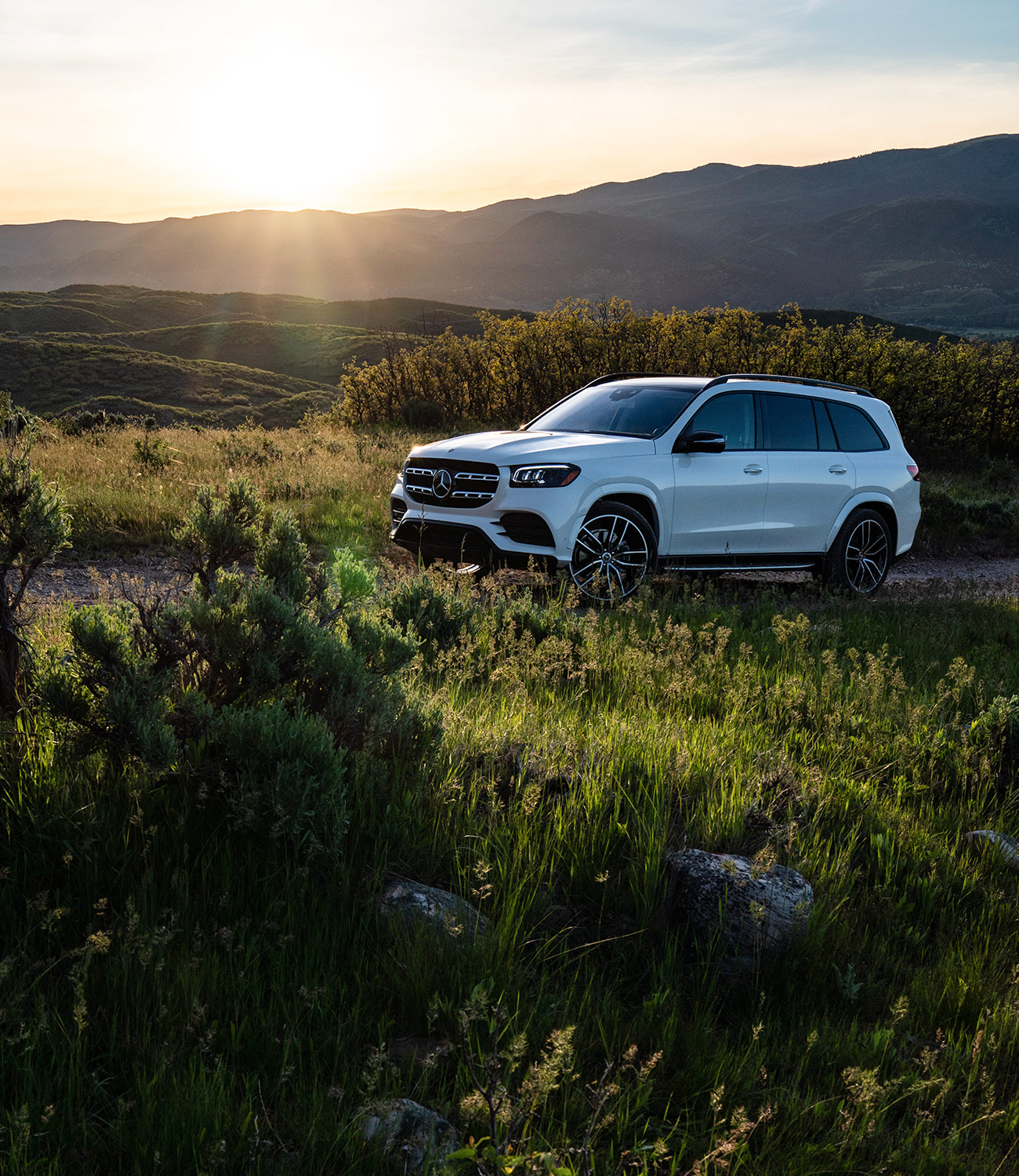
2020 Mercedes-Benz GLS-Class Review: A Few Tricks Up Its Sleeve

In fancy SUV land, the Mercedes-Benz GLS-Class is king of the hill—not just in the Mercedes lineup, but arguably everywhere else, too. So the arrival of a new version for the 2020 model year is cause for some industrial-strength examination.

Fortunately, there’s a lot going on in this thing, so your eyeballs will get a workout. It’s available in two versions at launch: the GLS 450, with a 362-hp engine, and the GLS 580, with a 483-hp V8; either way, it has gobs of tech (both new and evolved), and it treats passengers like the royalty they are. It’s also a legit off-road beast — the kind that can help bail you out of the worst jams.

The Good: There’s quite a lot to love here: smooth ride, commendable trail performance, swanky interior. But nothing will impress your friends, neighbors and strangers at stoplights more than the car’s ability to bounce rhythmically up and down. Found in Free Driving mode, the move is actually intended to help free a vehicle stuck in the sand by quickly bouncing it through the full depth of the air suspension, mimicking the rocking movement we all know from our own sand traps. But it’s also spectacularly fun at parties, and has that increasingly rare quality of being a genuine surprise.

Who It’s For: Let’s talk about that, shall we? Mercedes describes the GLS as the “S-Class of SUVs,” referencing its own market-leading luxury flagship. That’s true, but only up to a point. The S-Class has that rare quality of being a truly executive experience — replete with grace notes in the design, considerable outward elegance and endless passenger comfort and convenience. More than that, though, it has an aura of stratospheric wealth, and is the only premium-luxury full-sized sedan that arguably can truly compete with the likes of Bentley and Rolls-Royce.

The GLS…ain’t that. It’s a big, really nice SUV, but it’s no S-Class. That is to its credit, though; it makes it the perfect SUV for folks with families, a hankering for quality, capability, and luxury, and gobs of disposable income.

Watch Out For: MBUX, the new infotainment system introduced in Mercedes’s cars last year. It’s a fantastic, intuitive system, but it still has usability bugs. Particularly in the voice control system, which is summoned by the words “Hey Mercedes.” As presently tuned, it has a hair-trigger responsiveness that causes it to manifest if anyone dares utter the word “Mercedes” in its presence, and there’s no obvious way to tell it to go away once it starts looking for commands you don’t mean to give.

Also, the lane departure system has a new way of kicking you back into your own lane by using the brake instead of nudging the steering wheel. The effect is unnerving and jarring, as though it’s an obstacle-detection or blind-spot system rather than a simple lane-keeping assist. If you do it while driving down a road alone and changing lanes without signaling, it can inject a moment of panic when you think there’s a car there. It needs to be dialed down a hair.

Alternatives: That’s easy: The Land Rover Range Rover, Cadillac Escalade, Lincoln Navigator and BMW X7. Audi’s Q7 isn’t quite on the same level in terms of over-the-top luxury and features, and the Audi Q8 isn’t because it’s a bit smaller and sportier. Gazing upwards, you have of course the Bentley Bentayga and the Rolls-Royce Cullinan.

Review: There’s a sneering refrain among automotive media about how owners of off-road-capable SUVs “never take them beyond the pavement.” Sure. Most sports cars never see the racetrack, and most pickup trucks never haul anything more than Ikea furniture, either. But I have another theory about why people find comfort in capable SUVs. It’s not that they have aspirations for trail-riding or dune-bashing — both of which the GLS can commendably manage — but it’s that they know their rides will have their back if they ever get into trouble.

It’ll help them through snow, help them off the beach, and help them tackle a gnarly trail they didn’t expect to find themselves on. Even if it’s just used once or twice a year, it will be valued because that’s when it will matter most. Furthermore, raising the ceiling of capability enhances the quality of everything beneath it. You’ll reach the edge of adhesion on a slippery surface in an entry-level crossover far faster than you will in a GLS, given its across-the-board capability, programming and engineering. It’s a ride that does everything well, and many things really well.

I learned this on our drive across northern Utah, which took us through some beautiful scenery and along tantalizing roads. One of the features that stood out on the latter was the E-Active Body Control and its Curve function, which leans the car into bends to help manage the experience of body roll, especially in brisker driving. You may not notice it right away, but it’s there — and is best considered a cumulative effect. G-forces “stack,” getting worse on passengers as the curves pile on; this modulates that steady accumulation of discomfort.

Regular driving was quick and confident, with both engines producing reliably thrusty performance — and the V8, obviously, delivering the most grunt overall. The 48-volt mild-hybrid system helps things along by enabling smoother start-stop capability and additional power for all the new safety, performance and comfort features infused in the GLS.

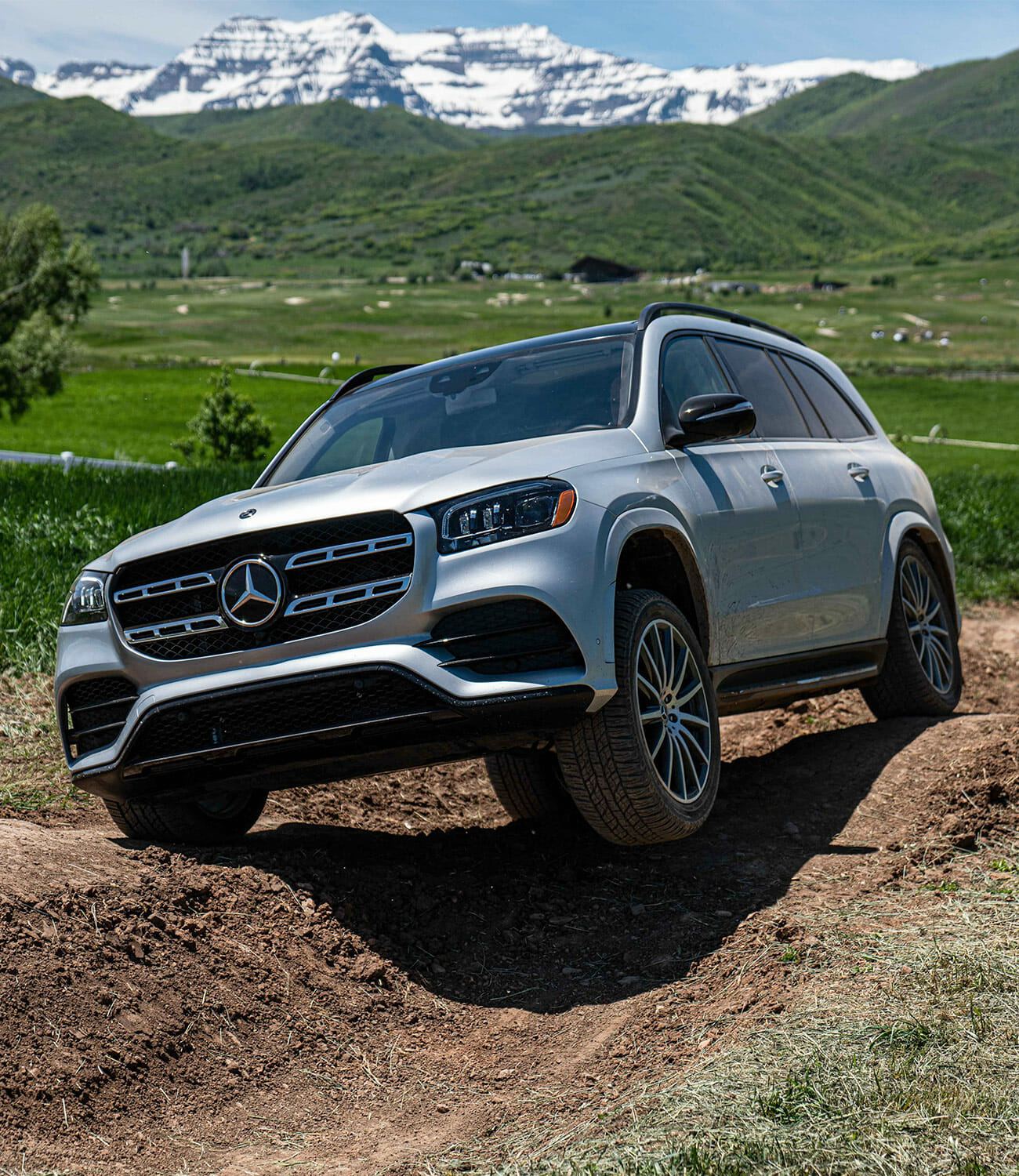
Off-road, the GLS proved itself exactly as described: a ready tool to simply bail you out or encourage exploration. We traversed fairly sketchy rock crawls and managed steep inclines. The car is so good at this stuff, Mercedes felt confident enough to gamify the experience: You can enable a scoring feature that allows the GLS to asses your off-roading prowess with a score of 0-100. You add points by appropriately managing your pace and momentum across different features and deftly articulating your way over rocks, tree limbs and other obstacles. You lose points with haphazard throttle application or clumsy, trepidatious maneuvering. It was fun, and I can see it being a novel way of competing in the off-road set as the capability trickles down to more accessible vehicles. There were times when I could quibble with its scoring, though — most notably when I was driving down a fairly featureless stretch in a way the car deemed too fast.

Inside, the GLS is perfectly lovely and comfortable, with sophisticated material selections and pairings, cushy seats containing (optional) massagers and a solid, well-constructed vibe from front to back. It feels thoroughly well-executed and runs whisper-quiet, making quick work of both rough roads and the little pavement hiccups that can wear on you during road trips or commutes. The extra advantage of being able to ditch that commute at the first sign of dirt two-tracks is merely icing on the cake.

Verdict: The new GLS-Class is the ideal evolution of the model, with multiple compelling new features and commendably enhanced ride and comfort. The gremlins are in the new tech — the voice recognition, the aggressive lane-centering. Those will surely be fixed in time, and can be disabled if they bother you. It’s disappointing that a brand as evolved as Mercedes would let them squeak through to begin with, but they’re minor glitches, given the great pile of innovation this rig delivers in general.

2020 Mercedes-Benz GLS-Class Key Specs

Powertrain: 3.0-liter turbocharged inline-six / 4.0-liter turbocharged V8; nine-speed automatic; all-wheel-drive
Horsepower: 362 / 482
Torque: 369 / 518 pound-feet
0-60 MPH: 5.9 / 5.2 seconds
Top Speed: 130 mph

Mercedes-Benz hosted us and provided this product for review.

Read More Gear Patrol Reviews

Hot takes and in-depth reviews on noteworthy, relevant and interesting products. Read the Story
Note: Purchasing products through our links may earn us a portion of the sale, which supports our editorial team’s mission. Learn more here.

These 5 Cars Receive the Most Speeding Tickets

Ever wonder if the type of car you drive is more likely to cause you to get a ticket? Well, Insurify.com has compiled data on the cars whose drivers were most likely to have a speeding ticket on their driving record.

The cars at the top of the list…well, let’s just say they shouldn’t surprise you. Young people tend to speed; driving enthusiasts tend to speed. Perhaps more importantly, law enforcement expects both subgroups to speed. The most frequent ticket-getters, then, tend to be affordable drivers’ cars — particularly those with a manual transmission. Below are the top five.

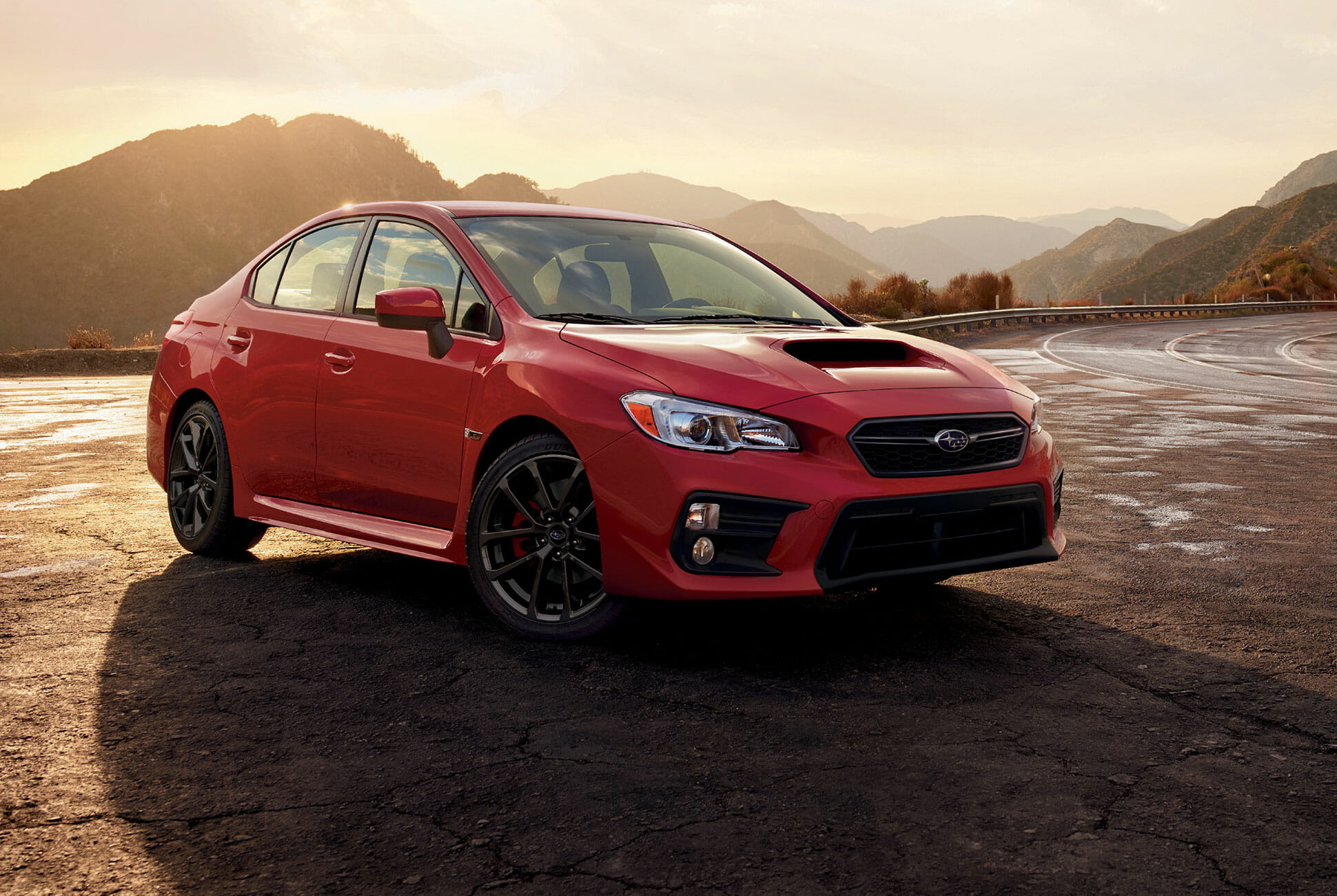
1. Subaru WRX – 20% of Drivers Have Speeding Violations

subaru wrx 2019 iihs safe top pick

Yes, the Subaru WRX is probably the first car you would have guessed. The stereotypical “Rex” driver would be a young guy wearing a backward hat and sporting a general demeanor of driving a little too aggressively. That stereotypical individual is not flying under the police radar — especially if his car has aggressive tinting, a bunch of JDM stickers and ungodly-ugly painted rims.

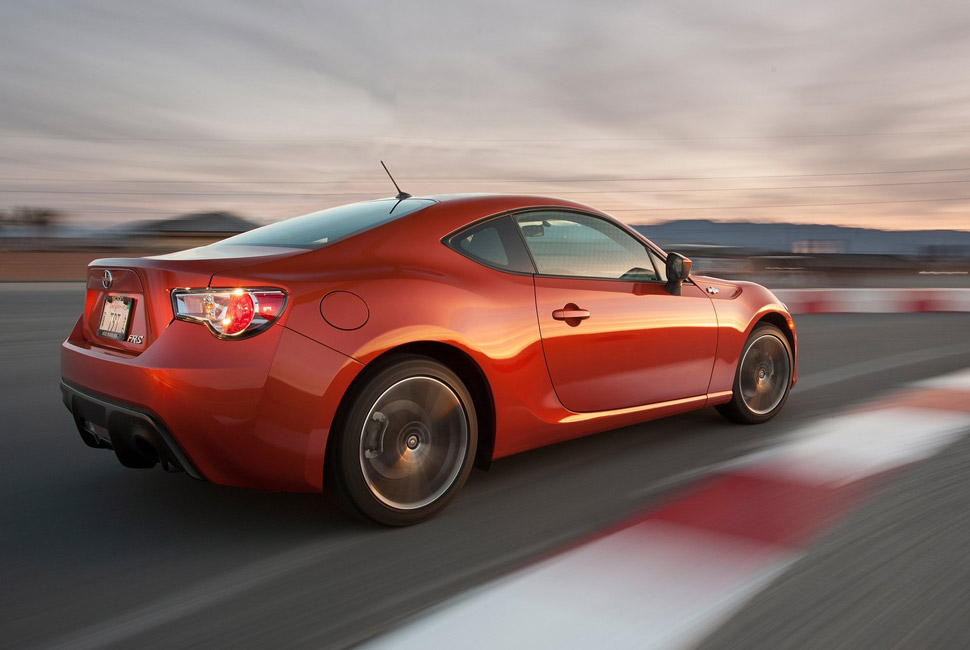
2. Scion FR-S – 19% of Drivers Have Speeding Violations

The Scion FR-S name may be gone, but it.s still sold as the Toyota 86 and the Subaru BRX. Scion was Toyota’s marque directed at “the youths” — in this case, youths who enjoy a well-balanced, sporty, rear-wheel-drive fastback coupe.

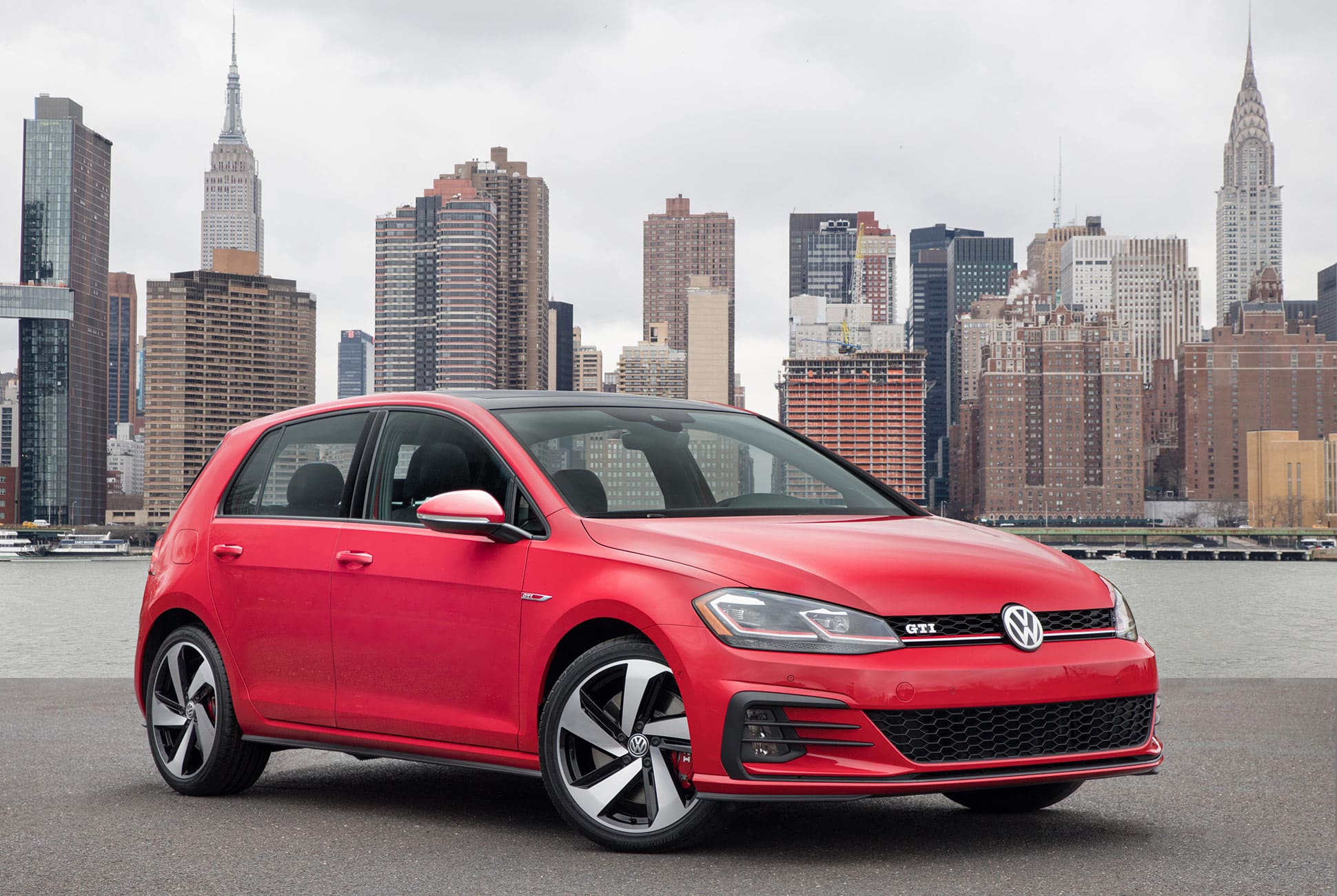
3. Volkswagen GTI – 17% of Drivers Have Speeding Violations

The GTI is the discerning choice for a driver on a budget. Or, really, a driver on any budget. It’s that good. The red lipstick and flashy rims, alas, prevent this driver from passing for an ordinary, posted-speed-limit-observing hatchback driver.

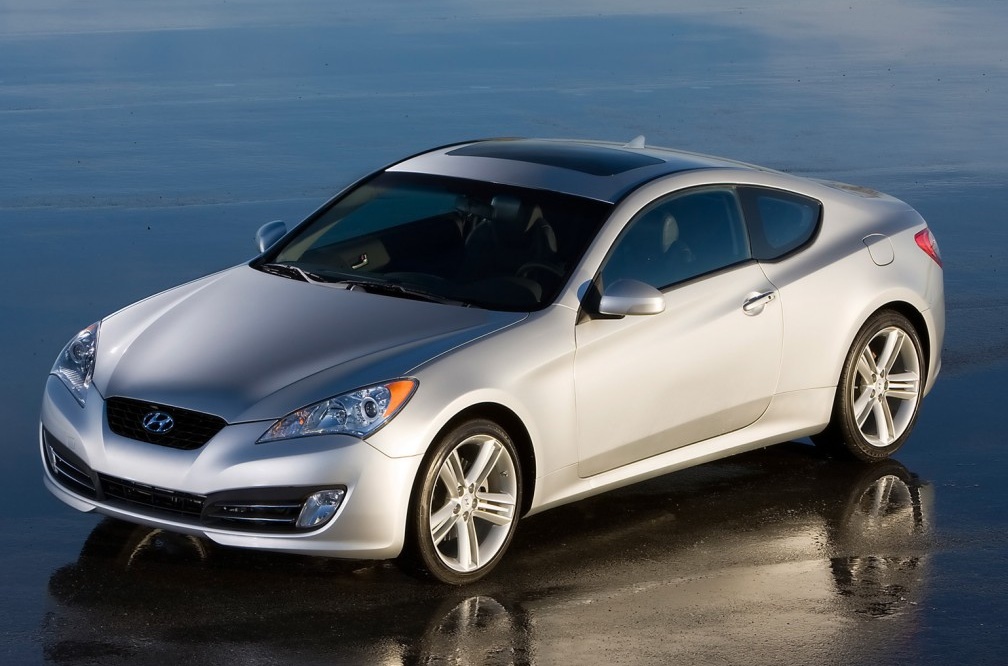
4. Hyundai Genesis Coupe – 16% of Drivers Have Speeding Violations

Hyundai is probably not the first name that comes up when you think of “speed.” But this Hyundai had a six-speed manual, rear-wheel-drive, started at 210 horsepower and could be optioned up to a 348-hp 3.8-liter V6.

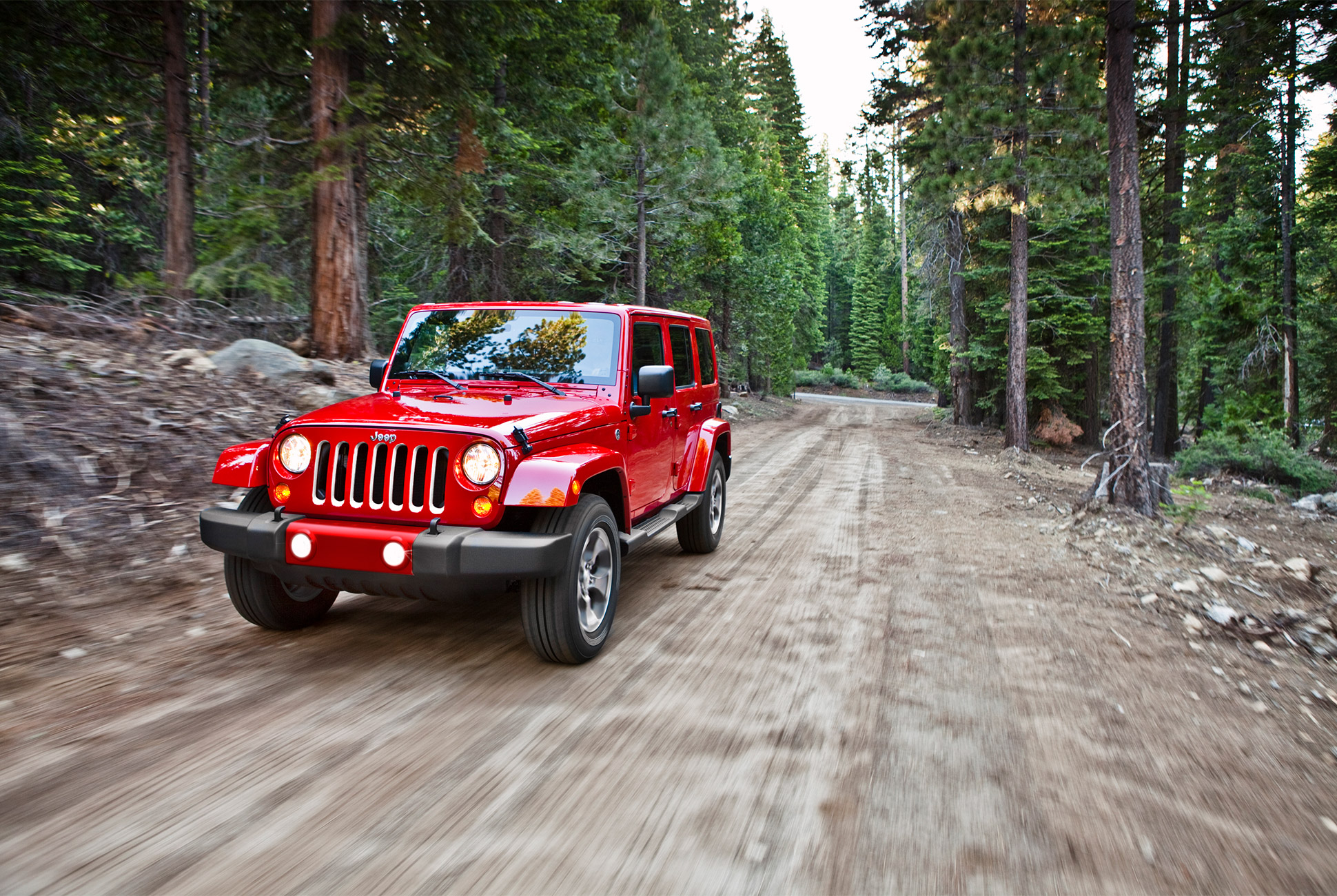
5. Jeep Wrangler Unlimited – 15% of Drivers Have Speeding Violations

The Wrangler Unlimited is the one surprise in the top five. It’s not a car for speed freaks. It’s not particularly affordable. For many people, it has become a modern equivalent to the family wagon. But, the Wrangler, unfortunately for its drivers, does stand out from the crowd — which likely draws the attention of the fuzz.

10 of the Weirdest Branded Products Car Companies Sell Today

Automakers don’t just want to sell cars anymore. They want to engage us in holistic brand activations. As part of that effort, nearly every marque now has a “lifestyle collection,” including wardrobe lines, designer collaborations, and an assortment of branded items. We surveyed the field, curating a list of 10 odd (or oddly appropriate) items car companies will try to sell you on the Internet. Each, at the very least, should prove a guaranteed conversation starter.

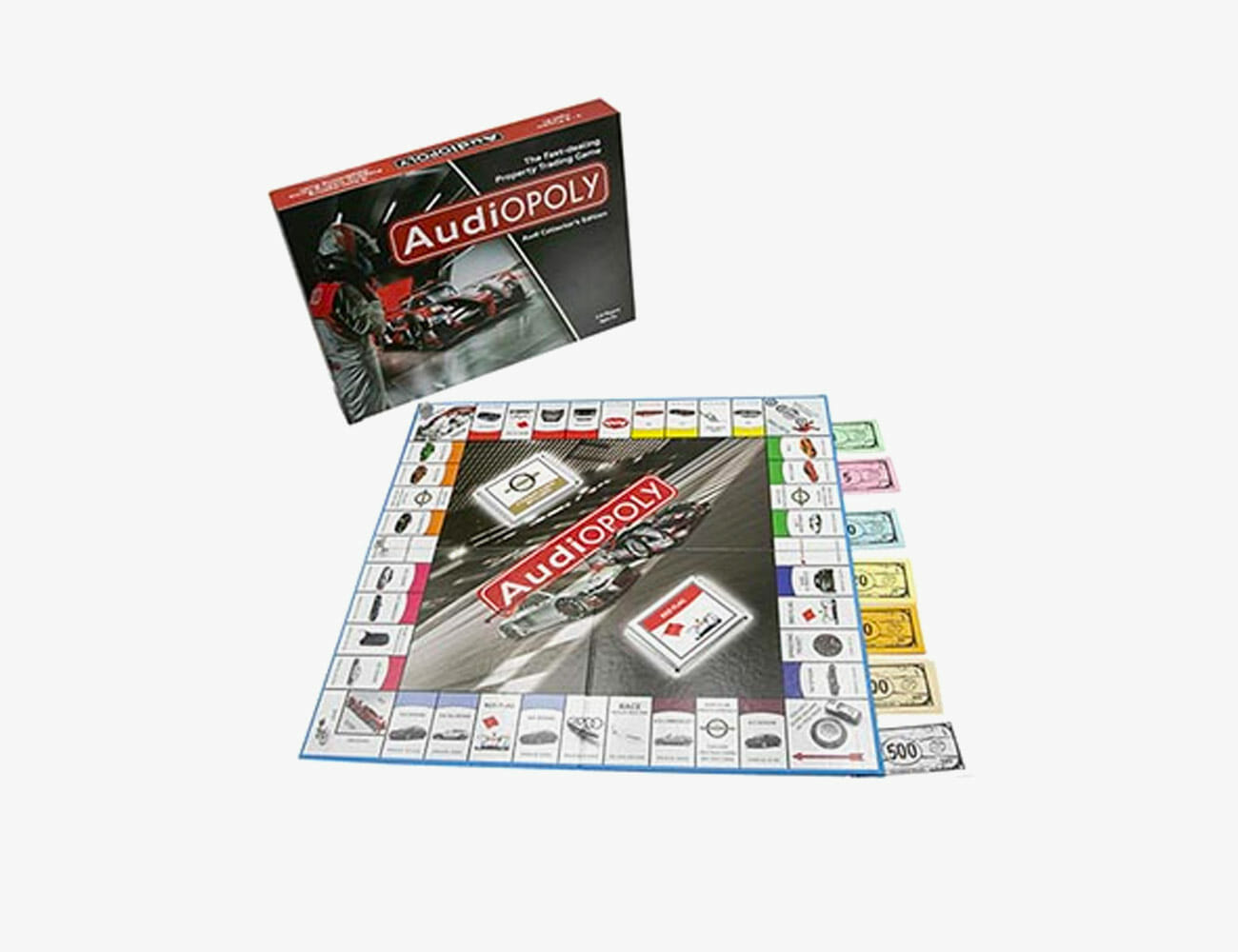
AudiOpoly Board Game ($70)

Germans love their automotive-themed board games. Audi, for example, will sell you the “AudiOpoly” board game. “Pitstop” replaces jail, as no Audi owner would ever drive recklessly enough to end up there. Players buy cars instead of properties and receive both red flags and speeding tickets. No mention of whether there’s a “Chance” card that offers a check engine light that reveals nothing on a diagnostic test yet still requires a multi-thousand-dollar engine-out repair to sort out (with a dice roll to determine whether the light comes on again three days afterward).

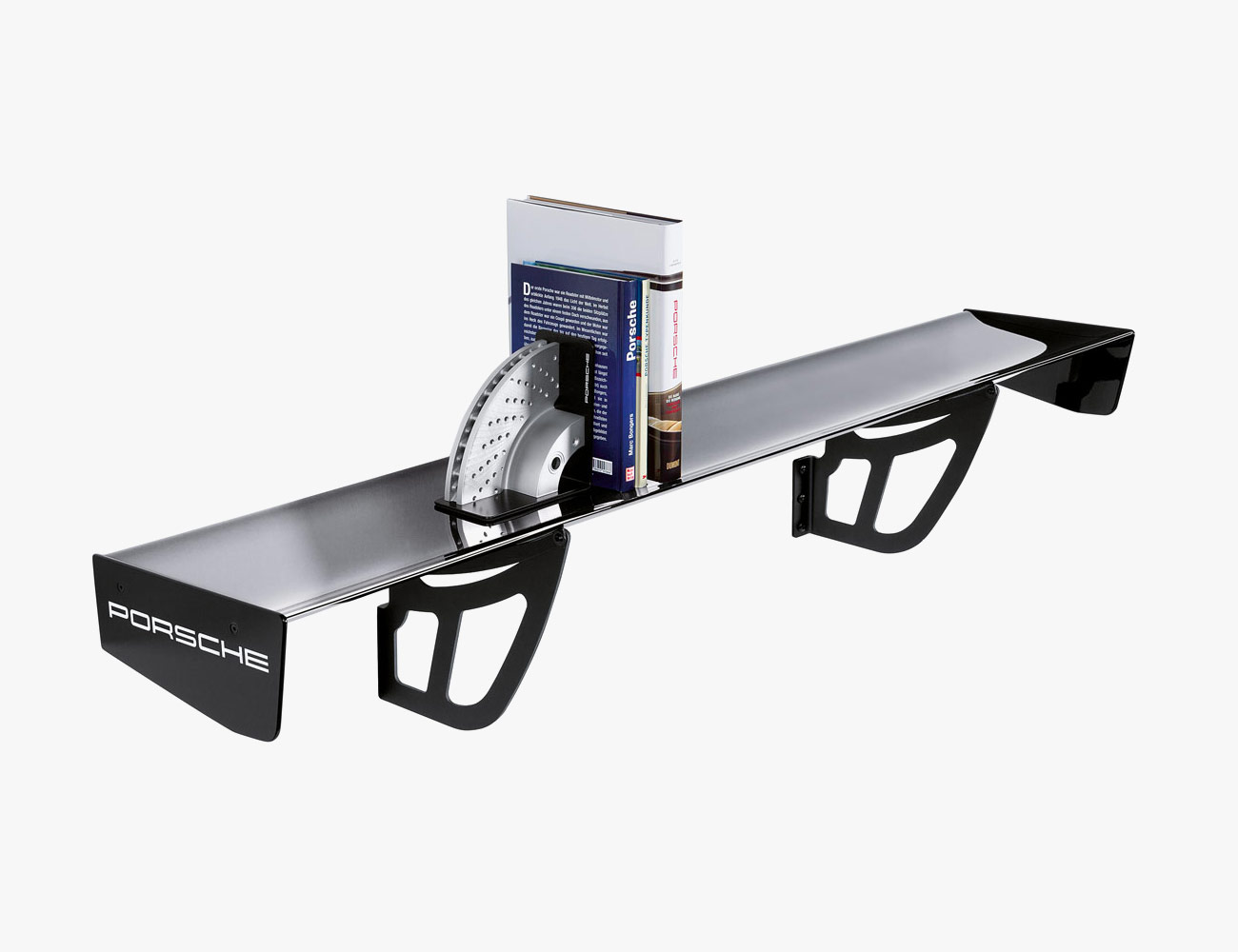
Porsche GT3 Cup Spoiler Wall Shelf ($4,230)

Porsche buyers will never believe this, but the official Porsche store offers a wide array of mundane items at a substantial markup brought on for no discernible reason other than that it’s from Porsche. Can we tempt with you a $70 infant onesie? How about a $50 coffee thermos? What better stocking stuffer could there be than this $20 set of 911 paperclips? But the true Porsche aficionado requires something a bit more premium. For that special soul, Porsche offers this $4,230 GT3 Cup Spoiler wall shelf. You can now buy a four-figure Porsche option without buying the car.

Bentley Majestic Cashmere Fragrance ($225)

Bentley ownership is a sensual experience. Without the look of the opulent wood, the feel of the supple leather and the silence of the soundproofed interior, you would just be driving an Audi. Scent may be the most evocative of the five senses, however, and Bentley has its owners more than covered with no fewer than 12 different fragrance blends. The most “Bentley” of the fragrances may be the $225 bottle of “Majestic Cashmere” eau de parfum from the “Beyond the Collection” range, suitable for both men and women. “Exotic Musk” sounded a bit too much like a fragrance Tesla should release.

Mercedes Benz Lifesize Nico Rosberg Wall Decal ($76)

Mercedes owners tend to be sensible folk, and the company offers them a wide assortment of baseball caps and other reasonably priced gear. (We’re partial to the standard, AMG, and Maybach belts with price levels corresponding to the vehicles.) But this $76 lifesize Nico Rosberg wall decal is a true gem — one that, incredibly, has not sold out since his retirement after winning the 2016 F1 championship. Now, every F1 fan can fulfill his or her dream of a lifesize Rosberg staring intently at them while they eat, sleep or perform ablutions.

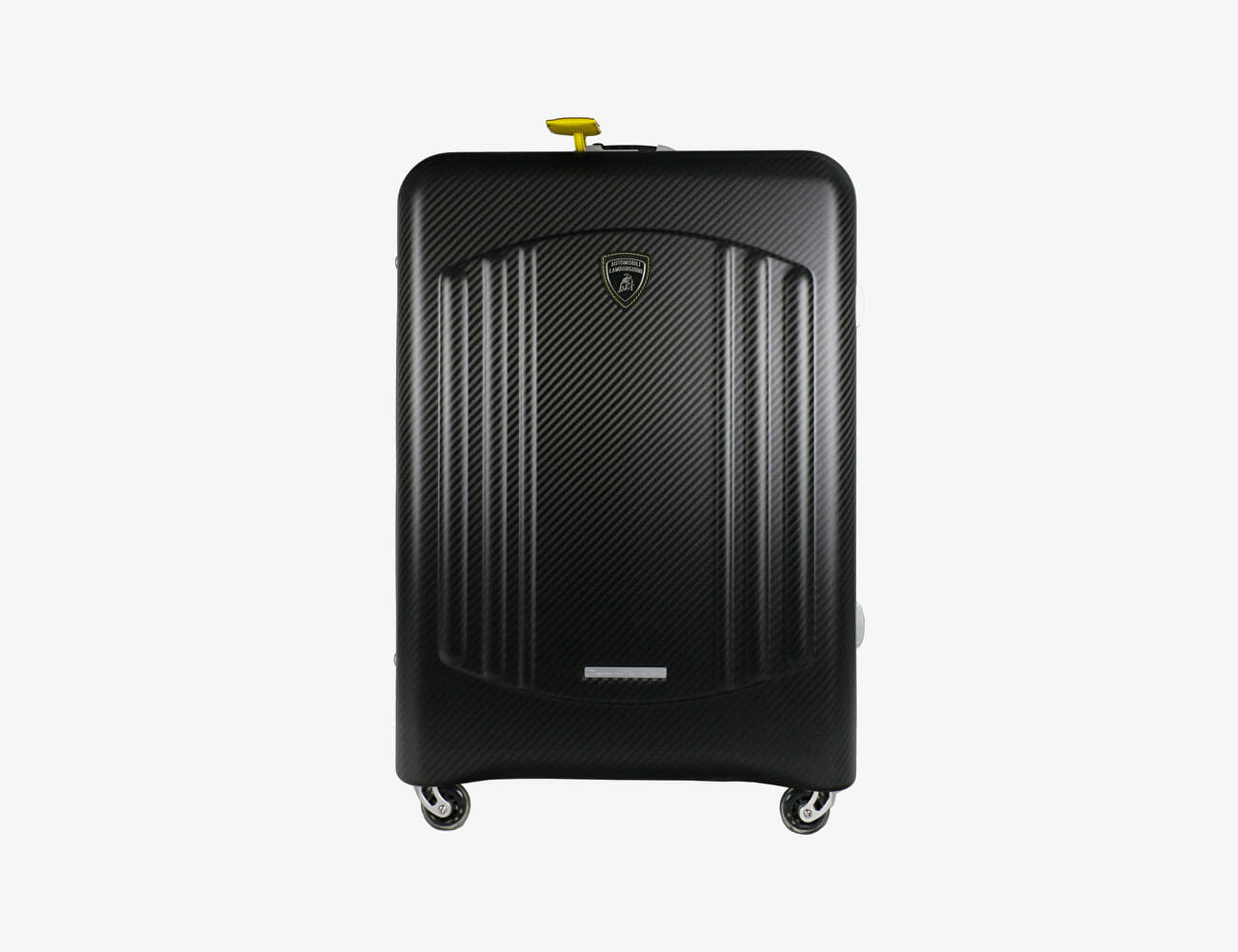
Lamborghini Carbon Fiber Bynomio Hold Suitcase ($17,388)

If Lamborghini knows one thing about its customers, it’s that they will pay a silly amount of money for functional items made out of carbon fiber. Behold the Carbon Fiber Lamborghini Bynomio Hold Suitcase Maxi, available for a totally reasonable $17,388 plus shipping and handling. This collaboration with TecknoMonster is made in Italy with “carbon fiber cured in the autoclave, fully-machined aluminum and high-grade hides.” Your complete range of Lamborghini Spring/Summer 2019 Collection clothing deserves to be transported in nothing less.

Silver Scuderia Ferrari Keyring With Shield ($320)

Gear is essential for the Ferrari brand. Very few can plunk down enough change for an 812 Superfast, but almost everyone in Italy or abroad can identify with Ferrari through a T-shirt or keychain. How, then, does the true Ferrari enthusiast distinguish him or herself from the masses? A much fancier keychain. The Silver Scuderia Ferrari Keyring with Shield retails for $320. It is made from “925 rhodium plated silver with carbon fiber.” It employs what Ferrari describes as a “complex and sophisticated manufacturing process.” And to show up those skeptics who won’t believe you spent $320 on a Ferrari keyring, it comes with a certificate of authenticity to prove to them you did just that.

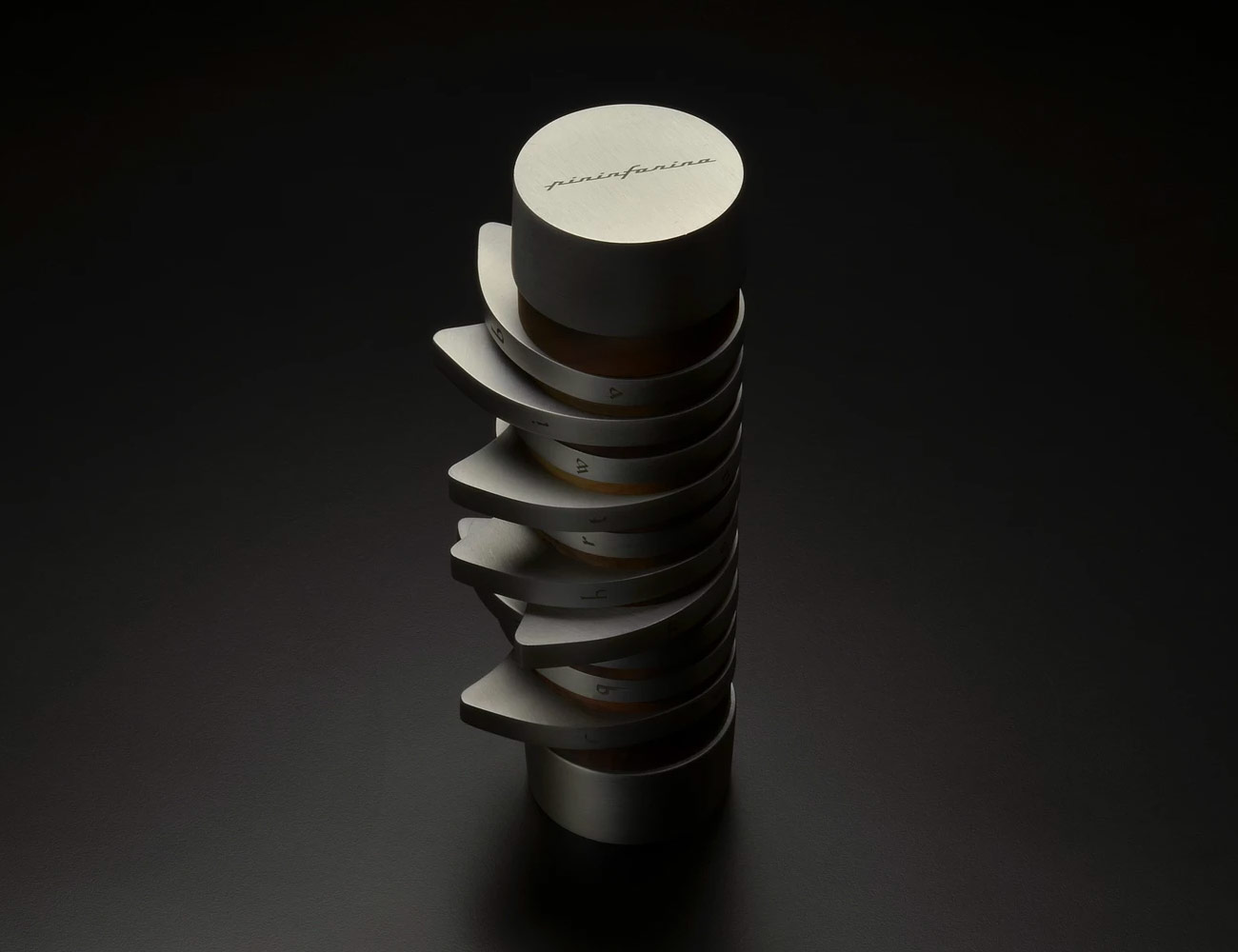
Pininfarina Codex 500TH Limited ($811)

Dan Brown’s bestselling novel “The Da Vinci Code” was all the rage in the early 2000s. Pininfarina presents an homage to that storied Italian heritage with the $811 Codex 500TH Limited. It’s an aluminum-bodied coffer with walnut inserts for holding your Pininfarina Cambiano Stylus, which also has walnut inserts. It’s meant to resemble the Leonardo “cryptex” found in the novel. Pininfarina says the codex will give your design desk “an elegant and mysterious character,” and few would quibble with Pininfarina about design.

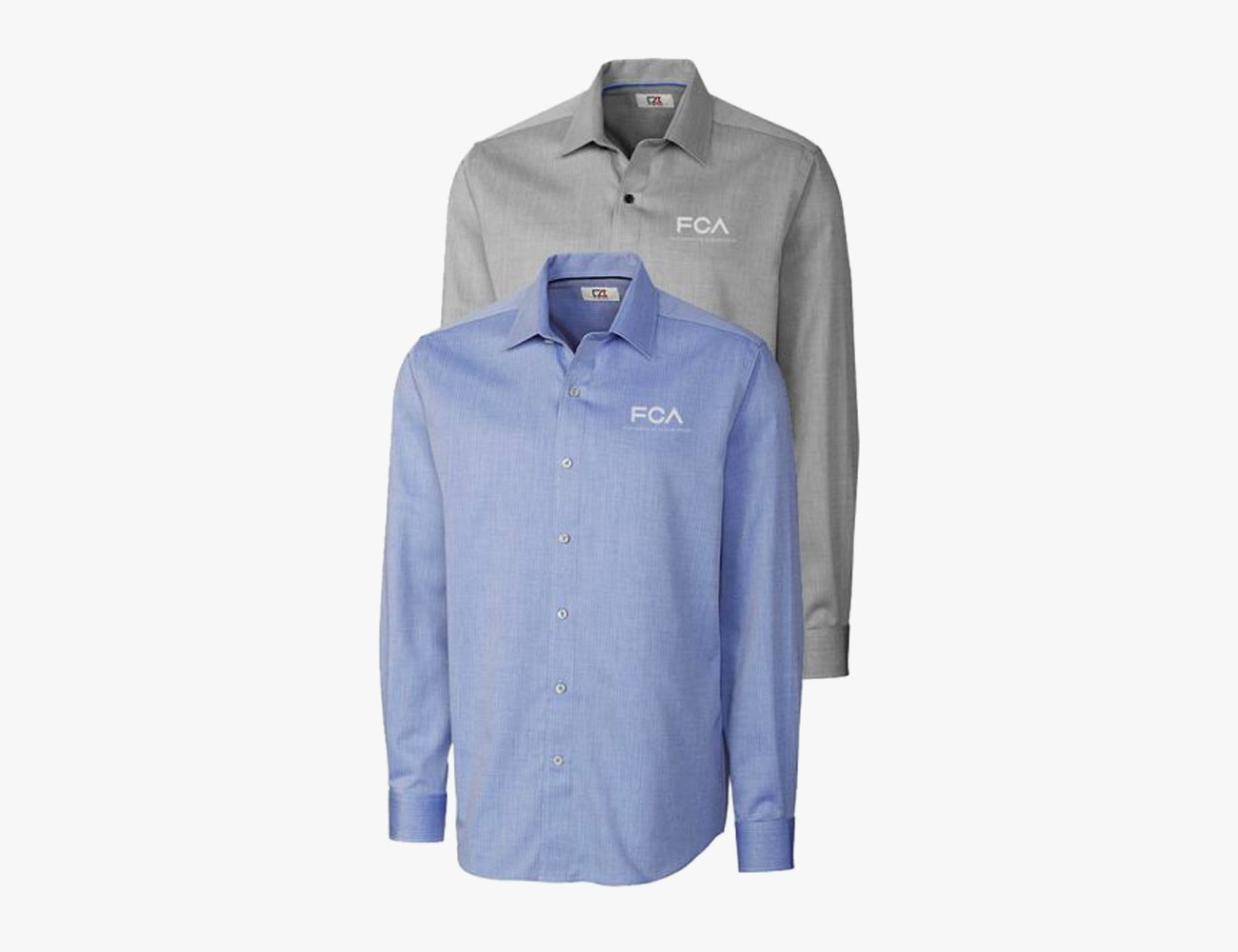
FCA Men’s L/S Epic Easy Care Mini Herringbone Shirt ($69)

Display your corporate fandom (and next-level normcore sensibility) with the FCA Men’s Epic Easy Care Mini Herringbone shirt. It’s a versatile look that transitions seamlessly from FCA office to FCA corporate off-site event. It comes in distinctive blue and charcoal colors. Bold fashionistos may pair the shirt with the fetching FCA men’s V-neck for a daring look. If you’re wondering whether it’s the shirt’s impression or the ease of care that’s supposed to be “epic,” well, so are we.

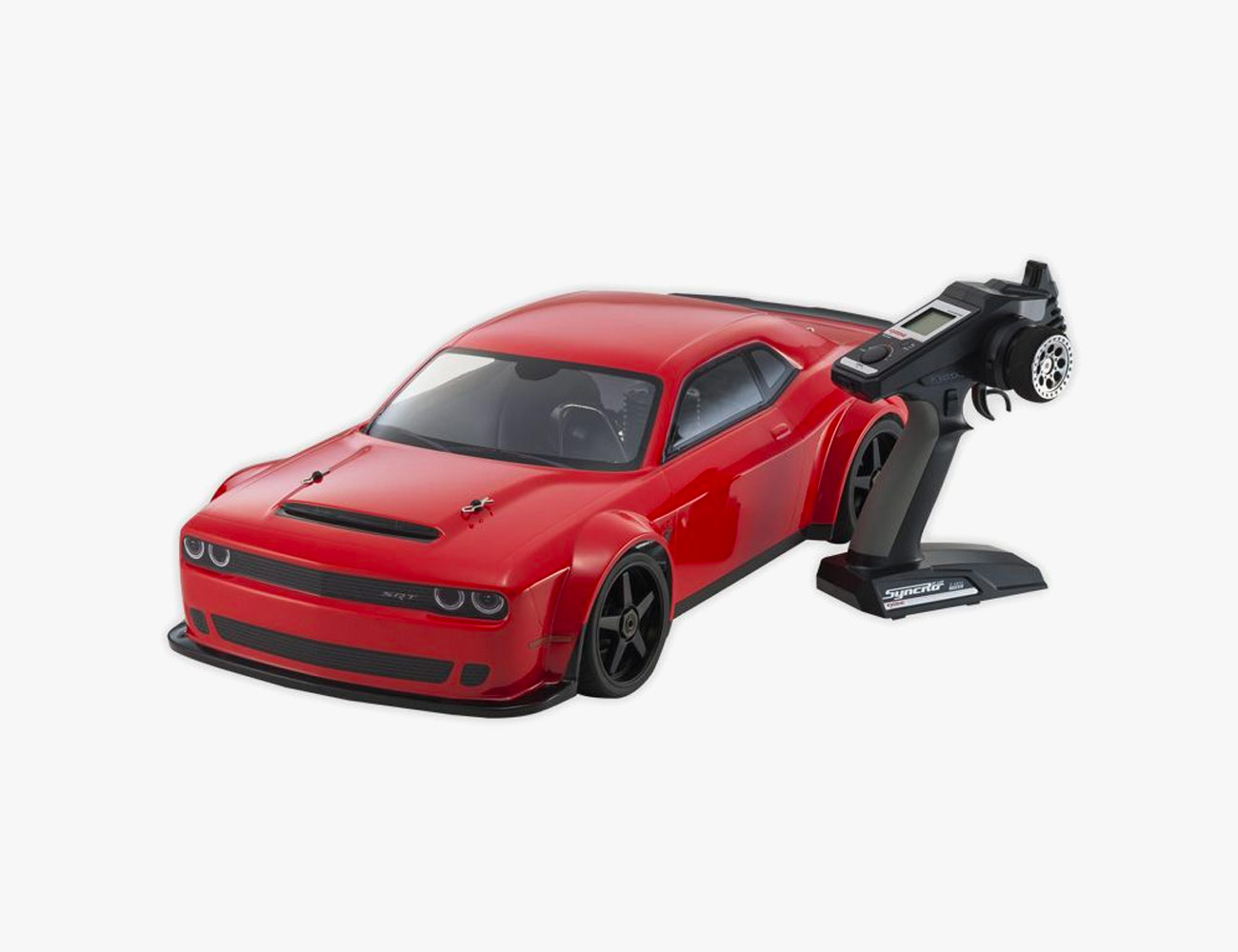
Dodge Challenger SRT Demon Remote Control Car ($700)

The Dodge Challenger SRT Demon celebrates excess. It’s hard to find a more excessive automotive accessory to pair with it than this $700 Challenger SRT Demon remote control car from Kyosho. The RC Demon is tuned for a top speed eclipsing 40 mph and has a 150-cc fuel tank for its RC-specific fuel blend. It’s safe to assume those peacocking 10-year-olds down the block won’t know what hit them.

Tesla Zero Emissions (Almost) Onesie ($25)

What do you get your self-actualized friend who has both eliminated his or her direct transportation carbon emissions by buying a Tesla and successfully procreated? How about this Tesla Zero Emissions (Almost) Onesie. (Get it?) The beauty for the new Tesla-owning parent is in the non-zero chance Elon Musk either came up with this joke himself, or at least chuckled heartily as a Tesla marketing employee channeled his renowned sense of humor with uncanny perfection.

Note: Purchasing products through our links may earn us a portion of the sale, which supports our editorial team’s mission. Learn more here.

Is an All-New Toyota Land Cruiser About to Be Revealed?

The current-generation Toyota Land Cruiser may not be any worse for wear for its many years on this planet, but that doesn’t change the fact that, well, it’s getting up there in years. (Case in point: Toyota’s media site hasn’t added any new pictures of it since the 2016 model year, because, well, they haven’t needed to.) But the current model known as the 200 Series that’s been around since 2007 may finally be about to shuffle off this mortal coil — and its replacement could be revealed as soon as this fall, according to a new report.

There’s a bit of a game of journalistic telephone at play here, so take everything with a grain of salt, but according to South African publication The Citizen‘s report on the claims found in Japanese automotive publication Best Car, development work on the new 300 Series Land Cruiser is currently under way, and the model could be revealed to the public as soon as the Tokyo Motor Show in November.

While the next-gen Land Cruiser will reportedly stick with an old-school body-on-frame chassis like previous models, as we previously mentioned, the model will allegedly axe the current 4.7-liter V8 for the twin-turbo 3.5-liter V6 found in the Lexus LS 500. It’s not a surprising turn, given both market trends favoring smaller forced-induction engines over larger naturally-aspirated ones (due to both stringent emissions tests that favor such motors, and the fact that their more-immediate torque delivery makes them feel more powerful during everyday driving) and the fact that Toyota’s gas-powered V8s have been slowly but surely slipping out of the lineup for years now.

Considering prior reports have pegged the new Land Cruiser’s on-sale date to 2021, we wouldn’t be surprised if the version revealed in November was a concept car rather than a production-ready model — if, indeed, it shows up at all. Even if the rumor is true, there’s plenty of time for Toyota management to change their mind between now and the Tokyo Motor Show. (Previous reports have claimed the SUV has been delayed due to disagreements over styling, for example.) Still, any news about a new Land Cruiser is news we’re going to pass along.

An Expert Reveals How to Successfully Sell a Car

Next to your house or apartment, your next-most significant earthly possession is probably a car. Unless it’s a complete hunk of junk, your car is probably worth a sizeable chunk of change. Which, in turn, likely has you wondering how to make the most of that value — especially when it comes time to sell. If and when you decide to dive into the used car market to offload it — either to upgrade or make a lateral purchase — you’ll want to get every penny for it you can. But selling a car for the most money possible isn’t as simple as uploading a phone pic and listing its mileage on Craigslist and sitting back to watch the bids flood your inbox.

Randy Nonnenberg, founder of massive (and still-growing) online car auction community Bring a Trailer, has seen his fair share of successes and failures. At any given moment on BaT, you may see a 1967 Toyota 2000GT listing at $560,000 next to a 2002 Volkswagen Eurovan Westfalia Weekender going for $10,000. However, as stunning and jaw-dropping as your car may be, it takes more than looks to sell.

“It’s not just about the car magazine glamour shot, with the sun going down behind it,” Nonnenburg says.

In spite of his busy schedule, Nonneberg took a little time to explain to Gear Patrol the nuances of listing and selling a car, regardless of whether it’s a gem or a junker.

Photos, photos and more photos. “They don’t necessarily have to be professional photos. We have a tutorial on the site about how you take great photos of your car with lighting and pretty low-tech cameras. The presentation is important, but on BaT, we also ask for photos underneath the car, the technical details, under the hood, under the carpets and all through the car. Our bidders love to see that stuff and we place a high bar on the seller being able to do that.”

Keep detailed service history. “Given that a lot of these cars transact long-distance, the more information out there, the better. You don’t want any mystery or weird questions remaining — bidder confidence is what makes the price go up. Historical records are really important. Paperwork, more photos are key in BaT listings. They’re not really glamorous, but they provide a lot of information about maintenance, accidents, repair work or restoration.”

Did the car live an interesting life? “Sharing a lot about what the ownership of the actual car was like is really important. Stories that go along with the car do amazingly well on BaT too, like the old lady who bought a ‘Vette brand-new and owned it for 60 years. That backstory went across and people go totally wild for those and bid those cars really high when they have a seller story to go with them. So digging into the history and story of a car is helpful, if it has one.”

Where has your car been? “Has your car been in a salt belt area, or is it a California or Arizona vehicle? It’s okay — wherever the car has been, but if it’s been in more rust-prone areas, taking extensive photos and learning where your car might be particularly susceptible to rust [is necessary]. And showing it. Because if you can show that your car is either rusty or clean, it really helps with bidder confidence.”

Transparency and friendliness are key. “Once contacted, the seller needs to have an open attitude, to be responsive. We have the comment section, and we coach and encourage sellers to be in there all the time and just be friendly and available because potential buyers usually pull back from mysterious or absent sellers. Being a cool, even-keel person is something the car industry needs more of these days. Engagement is paramount, which is why eBay auctions can be shady and Craigslist is super scary. You don’t know who the seller is.”

In the Market for a Brand New Car?

Choosing one among the endless many is no easy task. Moreover, since the average price for an SUV 2017 was just under $40,000, it’s a decision that shouldn’t be taken lightly. To cover all the bases, we bumped the budget up to $50,000 and chose the best new SUVs you can buy in 2018. Read the Story

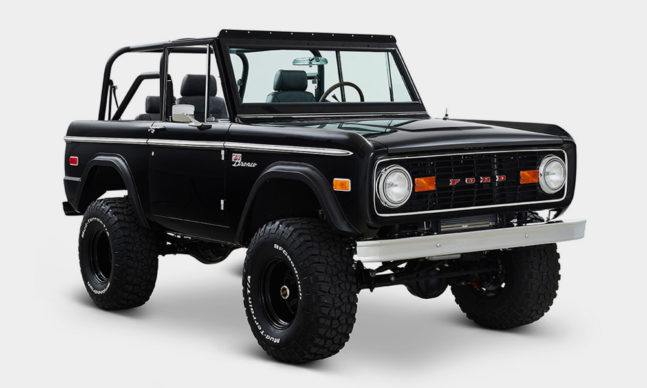
Classic Ford Broncos 1968 Ford Bronco Vail Build

There’s no denying the appeal of a recently restored vintage SUV that expertly mates old school cool with modern amenities. If the Ford Bronco is your vintage truck of choice, you’d be hard-pressed to find…

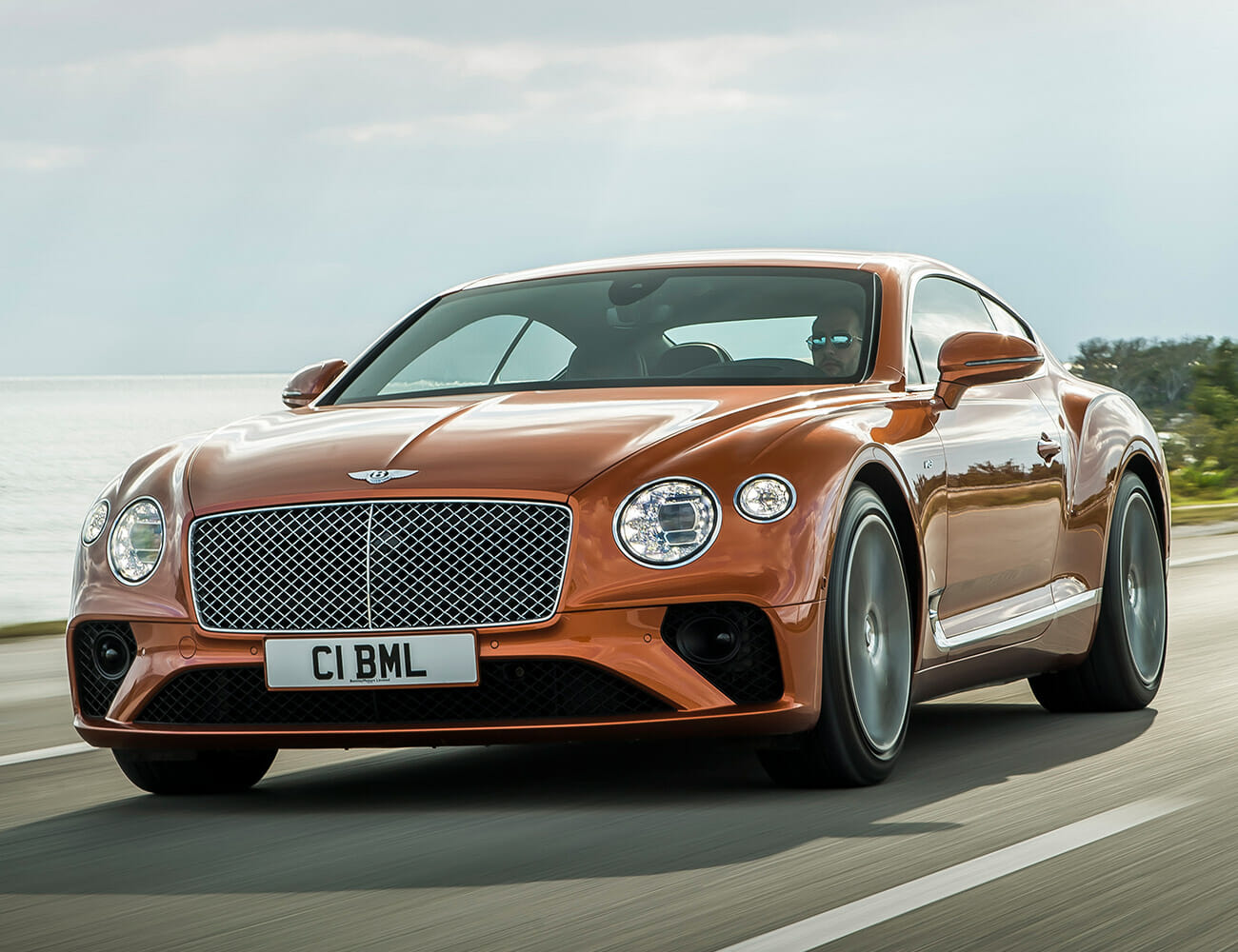
2020 Bentley Continental GT V8 Review: A Continent Crusher Steps Up Its Game

It’s not much of an exaggeration to claim the Continental GT changed the course of Bentley for the better. In the late Nineties and early Aughts, the company was a British also-ran, turning out rebadged Rolls-Royces at a snail’s pace and selling less than a thousand cars a year. Then, in the year 2003, the Continental GT burst onto the scene. Sure, it may have been built on the same platform as a Volkswagen sedan and built using mass-production techniques the Flying B had never dallied with before — but with styling that induced whiplash in passers-by, a 552-horsepower twin-turbo W12 under the hood and a price significantly cheaper than other cars boasting the Flying B, nobody gave a damn. Thousands who had the means flocked to dealerships buy it; millions more who couldn’t drooled with envy as they saw it pop up in movies, TV shows and music videos, a rolling symbol of style and success.

The second generation, which hit the streets in 2011, revised the same architecture to great effect, bringing greater luxury, improved looks, and a new V8 engine option that dropped the price and the power — albeit both to such a small degree than many wouldn’t have noticed. But the third-generation version, new this year, ditches the old bones for a new VW Group framework: the MSB platform, originally developed by Porsche for its second-gen Panamera. Between the Zuffenhausen-designed architecture, a host of new technology and an interior that’s more luxurious than ever, the newest Conti seems primed to be the best version yet. But the proof of the pudding is in the eating, right?

The Good: Many cars with price tags closing in on the $200,000 mark feel a little bit obscenely priced at that figure. That, in large part, is because many of the cars on sale at that price are simply gussied-up versions of cheaper cars; a $233K Mercedes-AMG S65 isn’t 2.5 times as nice as a $92K S450, nor a $158 BMW M760i 1.8 times better than an $86K 740i. Not so the Bentley. Everything you see, smell and touch seems worthy of the house-sized pricetag, even before you fire up the engine and feel the thrill of its power.

Who It’s For: Anyone seeking the ultimate road trip car — the sort of machine capable of gobbling up hundreds of miles at a go with ease and leaving its occupants feeling Downy fresh at the end of the trip. (Well, anyone seeking that who doesn’t need room for more than two adults.)

Watch Out For: Road noise, believe it or not, if you opt for the biggest wheels. Granted, that’s only under the worst possible road conditions — think pavement more pockmarked than Edward James Olmos — but even so, it’s a little jarring to hear so a loud thrum in such a luxurious car. Bentley doesn’t believe in active noise cancellation; such technological trickery is beneath the brand. Yet even the geniuses in Crewe can only do so much about mitigating the impacts of 22-inch wheels with painted-on tires whacking against potholes and frost heaves, especially with more than two tons of mass pressing down on those four rims.

Alternatives: Rolls-Royce Wraith ($320,500+), Mercedes-AMG S63 ($169,450+), BMW M850i ($111,900+), Porsche 911 Turbo S ($190,700+)

Review: Bentley managed to make some damn fine lemonade out of the lemons with the second-generation Conti GT; while it may have been able to trace its platform back to a VW that started development in the Nineties, it was still fairly entertaining to drive, especially in wilder trims like the GT3-R and Supersports. But with the change to a modern Porsche-designed platform, the car finally achieves the levels of athleticism it’s always deserved.

The Porsche commonalities extend beyond the basic framework of the car. The V8 engine beneath the hood, for example, is effectively the same as the one in the Panamera Turbo; the eight-speed dual-clutch gearbox hooking the motor to all four wheels likewise has its origins in southern Germany. It’s a combination that proves stupendous in the top-shelf versions of Porsche’s largest cars, serving up autobahn-dominating acceleration anywhere from a dead stop up to sanity-questioning speeds.

Which is why it feels odd at first blush that those 542 horses and 568 pound-feet feel merely adequate in this car — or any car, for that matter. Then again, most cars don’t have this Bentley’s mass: this two-door weighs in at 4,773 pounds, about 300 more than a Panamera Turbo Sport Turismo station wagon. The V8 version is hardly slow — Bentley claims a 3.9-second 0-60 mph time, and that very much feels accurate. But after experiencing the infinite power of the turbocharged 12-cylinder version and its 626 horsepower and 664 pound-feet, the eight-pot feels a little…underwhelming. (Sadly, while those in other markets have the pleasure of playing with the W12 version this year, we in America can only choose the V8 for now.) Unlike the always-effortless W12, which feels more empowered than labored when you nail your right foot to the carpet, the V8 seems like it actually has to work to vault this bolide up to meteoric speeds.

It certainly sounds better than the 12-pot, though — all sturm und drang under heavy throttle, roaring and bellowing a battle cry that sounds like a punk rock Wookie. That engine also makes the eight-cylinder model a little lighter in the nose than the W12 version — which stands to reason, as the bigger engined-car weighs around 300 pounds more, with most of the added mass sitting closer to the front wheels than the back.

Still, those seeking delicate handling from their rolling leather cocoon are more likely to look to the likes of a top-shelf 911, a Ferrari Portofino or a McLaren 570GT. It’s involving, even entertaining when winding its way though curves, but never truly involving. On California’s Highway 1, it proved a little hard to place. (Partly, I admit, because I was trying to drive smoothly enough to keep my seasick passenger’s breakfast in his gullet while still pushing it hard enough to get a feel for it.) The car carried a ton of speed into each turn, way more than I realized, because it’s so smooth and effortless — until I was on top of the curve, realized how tight it was (and how large the car was), and dove onto the brakes harder than planned. This is a grande grand tourer, better suited to gentle curves you can wind through at highway speed.

Admittedly, the roads along the Cali coast might be the worst for this sort of car; they’re tiny things, with lanes thin as Kate Moss and curves like Botticelli’s Venus. Not helping matters, of course, are the overcrowded roads of the area, where cyclists and retiree-helmed RVs lurk behind every third turn. Given the circumstances, it was better to twist the knurled drive mode past the default “B” (it stands for Bentley, obviously, but feel free to tell the gullible it stands for “Beyonce”) to Comfort, allowing the car to relax along with its occupants. Left that way, it becomes an impeccable road trip companion, loafing along as fast as you dare in silence and comfort.

Design-wise, it’s a subtle yet significant break from older models, though most people probably won’t realize as such. The biggest change, proportionally speaking, is that it hangs its beak out far less than the older version, the front axle pushed forward several inches to create a much more aggressive stance than in the past. The new front end continues the Continental GT trend of growing one set of lights and shrinking the others, with the new headlights bringing crystal-cut glass and a spread of LEDs to the face. (Admittedly, the new look bears a stunning resemblance to those shocking close-ups of spiders, a fact you’ll likely never be able to shake from your brain now that you know it.)

In profile, the roofline has been stretched out into an elegant curve reminiscent of Art Deco streamliners; to the stern, the third-gen’s tail has been swept-back and sculpted to the point where it brings an unexpected delicacy to this mighty Bentley. Overall, it’s a look that’s unmistakably modern, yet clearly tied to the previous two models — the sort of design consistency few vehicles beyond the Porsche 911 have been able to pull off.

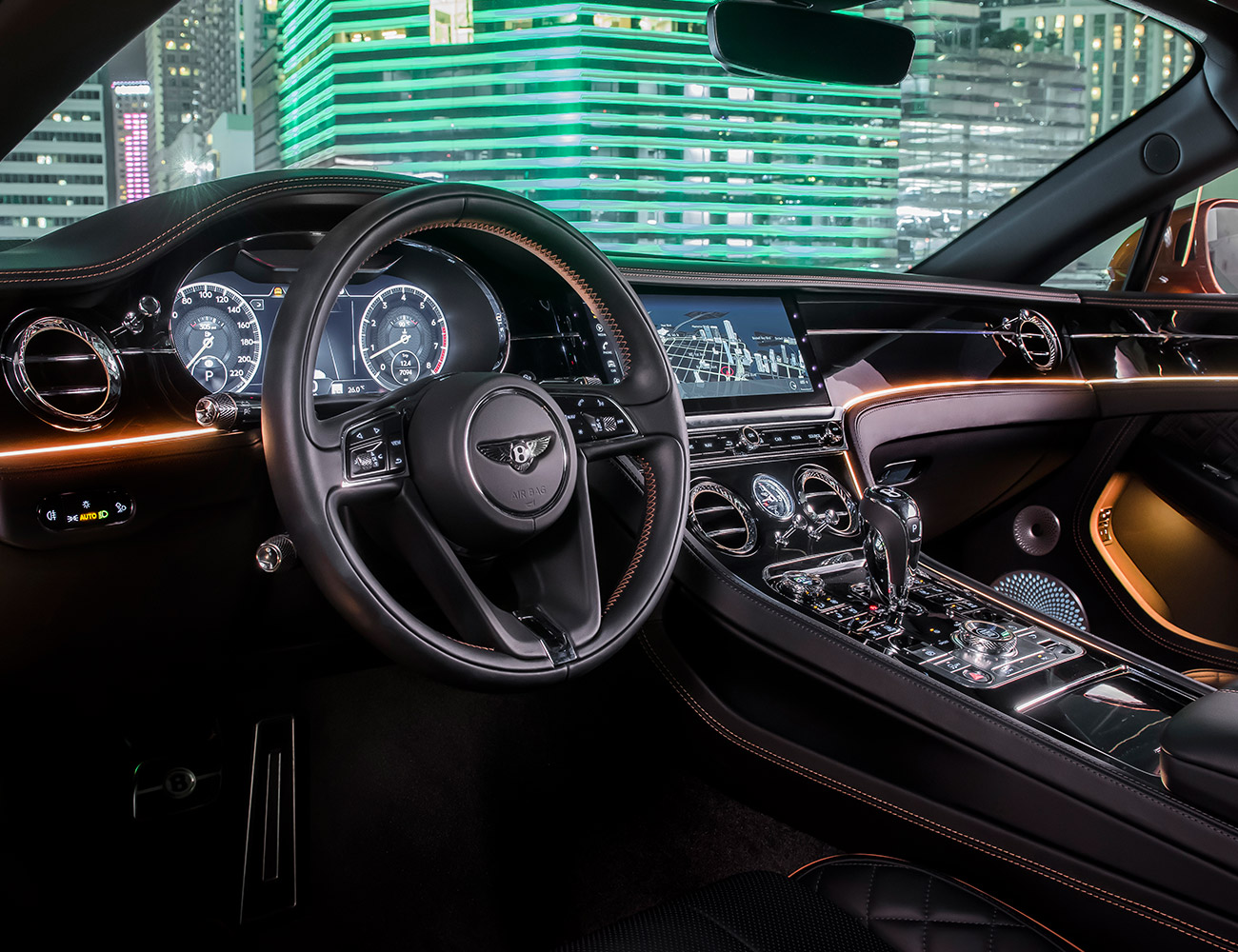
The interior is about as nice a place as you can imagine to knock out a few hundred miles on a whim, so long as you only have two adult humans to transport. The rear seats are better than those in many speedy two-doors, but they’re still tight for grown-ups; save them for when your dinner companions go a little too hard on the peeno greege and can’t drive their own car home. (You can always use them for storage, but with 12.6 cubic feet of trunk space, you likely won’t need to very often.)

Everything you touch feels designed to justify the car’s price, from the meticulously-knurled metal (with available Côte de Genève veneer) to the 10-plus hides of hand-stitched leather (taken only from bulls, because cows can have stretch marks) to the carefully-selected wood (all from the same tree to keep the grain consistent, and sustainably sourced to boot). Every car company takes quality seriously to some degree; Bentley is the only one I’m aware of with an entire page of their website dedicated to craftsmanship. It shows.

Porsche drivers will find the infotaiment screen’s dimensions and layout oddly familiar; they’re a redesigned version of the one found Cayenne and Panamera. Should the similarity prove a disconcerting reminder of Bentley’s attempts to save money, however, the Continental GT lets you do something the Porkers don’t; opt for the Bentley Rotating Display (a $6,270 option), and at the press of a button, the screen flips and rotates away to be replaced with either a smooth sheet of veneer or a trio of analog gauges. The whole effect is rather like the revolving license plates on James Bond’s old Aston Martin DB5 — albeit with a sensitive high-def touchscreen in lieu of a sheet of tin. A gimmick? Sure. But one that’ll delight you and your passengers on a regular basis.

Verdict: Elegant, athletic and luxurious in equal measure, the Bentley Continental GT is the sort of vehicle that defines what a luxury car should be. If money’s no object and you don’t mind the wait, it might be worth holding out for the 12-cylinder version in 2020 — but the V8 version is a delightful choice all on its own.

2019 Bentley Continental GT V8 Key Specs

Powertrain:  4.0-liter twin-turbo V8; eight-speed dual-clutch transmission; all-wheel-drive
Horsepower: 542
Torque: 568 pound-feet
0-60 MPH: 3.9 seconds
Top Speed: 198 mph

Bentley hosted us and provided this product for review.

Read More Gear Patrol Reviews

Hot takes and in-depth reviews on noteworthy, relevant and interesting products. Read the Story
Note: Purchasing products through our links may earn us a portion of the sale, which supports our editorial team’s mission. Learn more here.

2020 Chevrolet Silverado 2500 HD Diesel Review: Tow, Haul, It Does It All

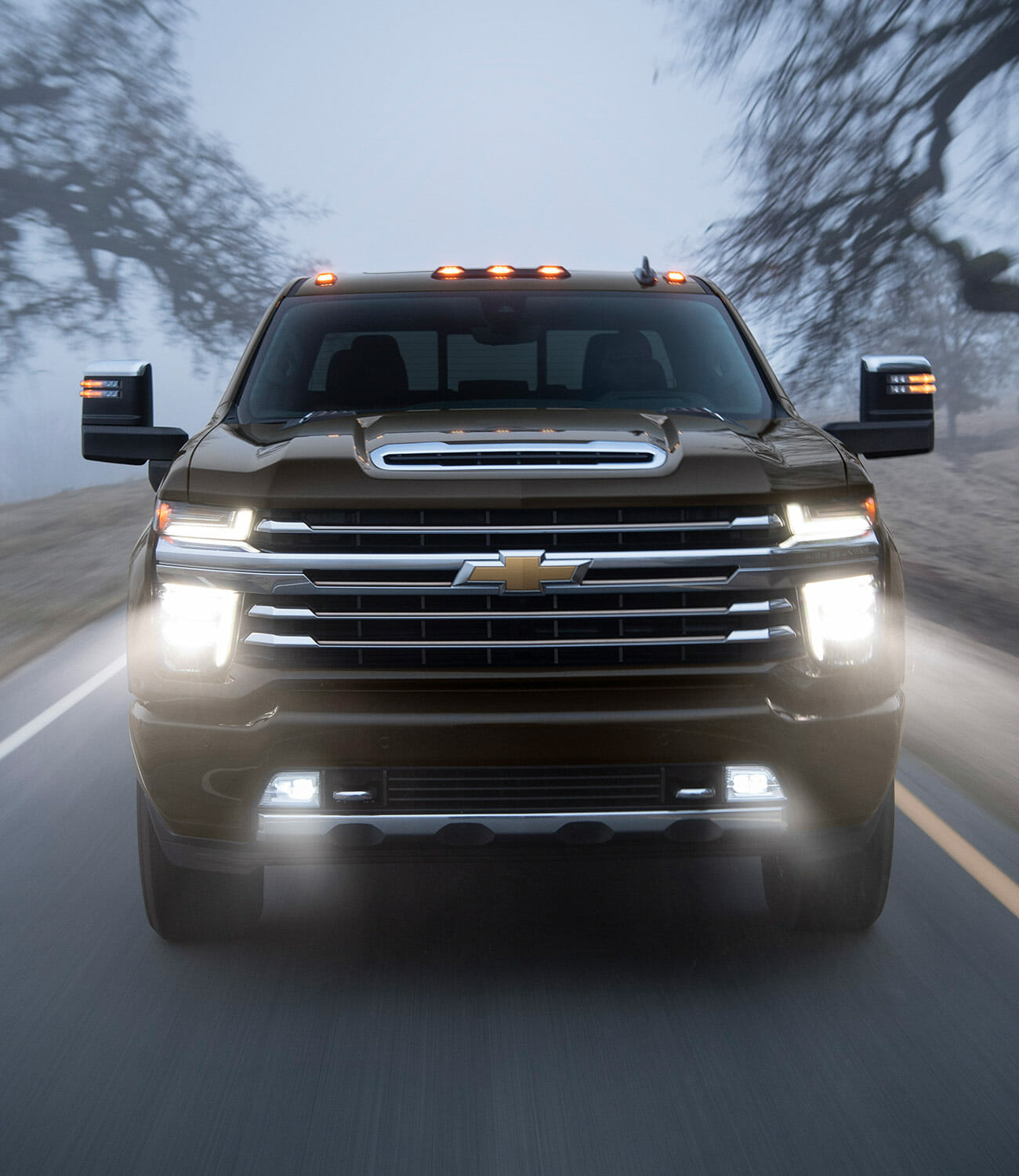
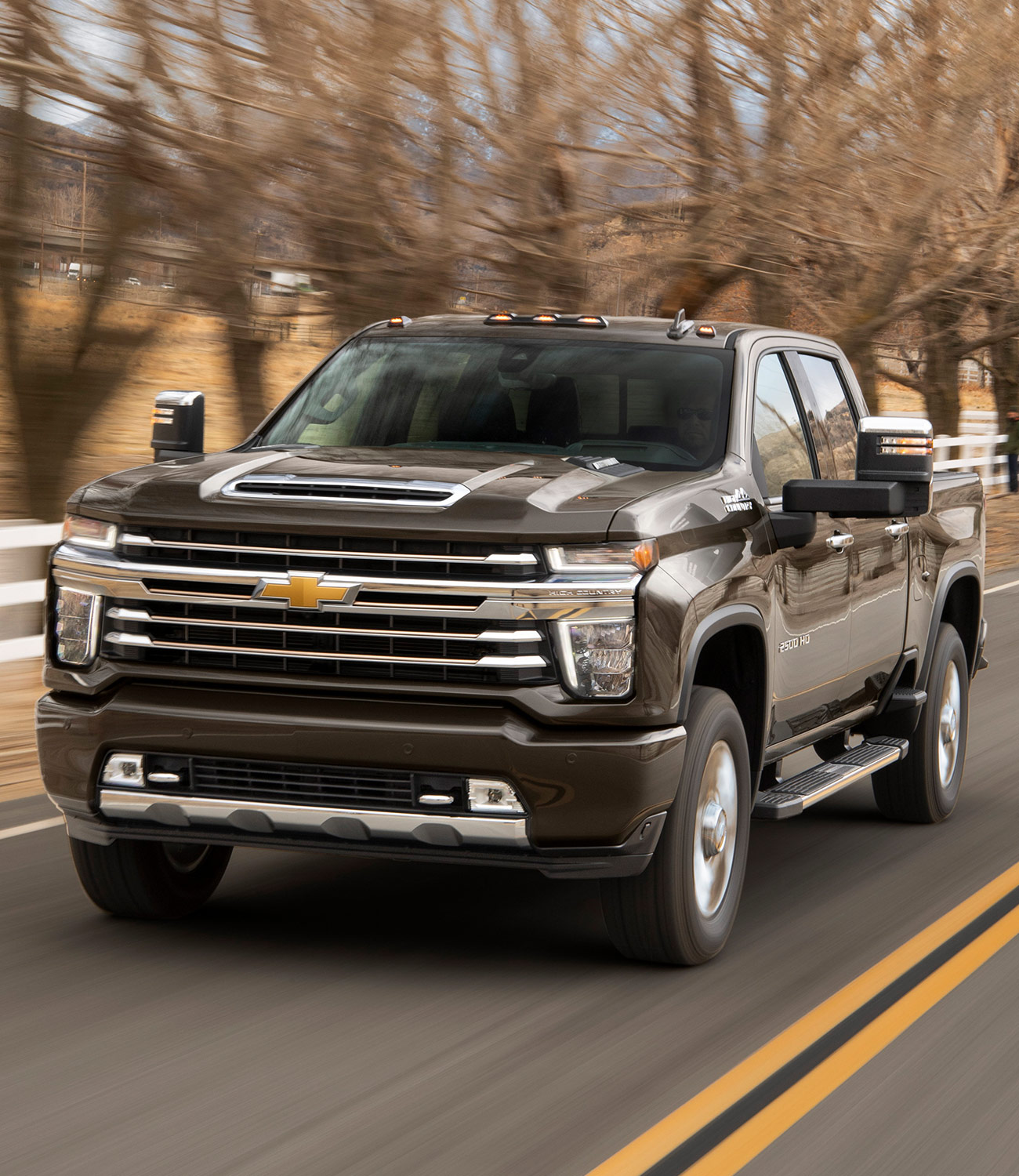
After selling millions of copies over the last several years and watching Ram and Ford roll out improved heavy-duty pickups, Chevrolet’s bigger Silverado is hittin’ the ol’ dusty trail with some shiny new tech, as well as new powerplants and a complete redesign from Bowtie badge to tailpipe. And now, there’s optional Tech Package that brings buyers eight cameras to help see better and is certain to de-stress greenhorn haulers and have veteran ones thinking: Where has this been all my life?

The Good: Heavy Duty models come in five different trim levels, with additional options galore. The Tech Package is a must, if you’ve got deep pockets. And in terms of powerplants, the turbodiesel V8 is 100% the engine of choice.

Who It’s For: Silverado HD buyers typically haul the heavy stuff like it’s their job — and often enough, it is. It’s a tool for the job site, the perfect mate to a racecar’s trailer, and in some cases, the Mercedes-Benz S-Class of the Florida-Georgia line.

Watch Out For: Different trim levels yields different front fascias, which in turn alter the truck’s personality; it ranges from ho-hum fleet spec rental rig to confident luxo-truck with color-matched body panels and bowtie grille. (Also, that front end is very much a matter of taste.)

Alternatives: Ram 2500 ($33,645+), Ford F-250 Super Duty ($33,150+), Nissan Titan XD ($32,990+)

Review: A pickup truck’s job is never done. Their mission, which they have no choice but to accept, is to act as a multitool on wheels and a mobile office, as well as as a status symbol veiled in brand loyalty. Every fascia chiselled into every heavy-duty truck on the market is big and brash. They unapologetically stroll through tollbooths chest first. It’s what they do.

The Silverado’s bisecting horizontal-bar-behind-the-bowtie is the rig’s signature, and just like the evolution of automotive design, it’s become, well, more. Whether or not you agnostics happen to like it is largely irrelevant; most pickup truck drivers are Big Three party loyalists, so aesthetics matter far less than the brand.

Of course, you’ll still want to peek over the fence at what your rival is working with under the hood. Which, in this case, maxes out at an optional turbodiesel V8 twisting out 910 pound-feet of torque at 1,600 rpm, mated to a 10-speed automatic.

We started driving the Silverado HD Duramax at 3,600 feet above sea level, in the high desert of central Oregon. The forced induction made short work of getting us up even higher, as we quietly chugged up another 2,000 feet to Mount Bachelor while dragging a trailer packing 9,300 pounds of weight.  Without cargo in tow, the truck will get up and move if you’re heavy with your right Wolverine; floor it, and the 10-speed blips through gears with ease as the RPMs slowly rise and the next gear, ready for acceleration, engages to sends you on your way to extralegal speeds — a little too effortlessly for a heavy-duty truck.

Inside the cabin, there’s almost none of the audible clacking and tapping you’d expect from diesel engines of yore. At speed, the Silverado is poised, shrugging its shoulders at bumps, humps and ratchety railroad crossings. The side view mirrors, each the size of twin iPads, are mounted to the door, not the A-pillar (a feature exclusive to the HD model), which makes visibility even more clear. That’s important for towing, obviously; a critical component to familiarizing yourself with all your sightlines is knowing your surroundings.

Which brings us to the optional $2,125 Advanced Trailering System technology package, available on the fancier LTZ and High Country trims. Think of it as Xanax for novice haulers. It utilizes six cameras around the truck and an additional two accessory cameras for the trailer (one for insid-the- trailer view and one for behind the trailer), for a total of eight cameras that unlocks a suite of 15 camera views. There’s even an “invisible trailer” feature, which makes whatever you’re trailering “disappear” by stitching together images from two cameras to make it look as if you can see through your trailer via the 8.0-inch infotainment screen. Overkill much? Well, consider this: Considering the sorts of camping trailers, boats and horses this Chevy will tow, the cargo is probably worth than the truck itself.

Does the tech in our lives make the routine easier? Not always. But in this case, it allows for the utmost situational awareness. However, it’s not a cure-all; when parking, for example you still need to know the basics of towing. Otherwise, solely relying on the cameras is like trying to shave in the mirror with your opposite hand.

Verdict: Chevy’s new heavy-duty pickup truck may not be the most handsome big rig on sale, but its sheer breadth of capability means those GM lifers won’t be missing out when it comes time to tow or haul. Indeed, the standard and optional tech and potent power means heavy duty truck life could be easier than ever. (And hey, you can’t see the front from inside.)

2020 Chevrolet Silverado 2500 HD Diesel Key Specs (as tested)

Powertrain: 6.6-liter turbodiesel V8, 10-speed automatic, four-wheel-drive
Horsepower: 445
Torque: 910 pound-feet
Max Curb Weight: 10,650 lbs
EPA Fuel Economy: Don’t ask

Chevrolet hosted us and provided this product for review.

Read More Gear Patrol Reviews

Hot takes and in-depth reviews on noteworthy, relevant and interesting products. Read the Story
Note: Purchasing products through our links may earn us a portion of the sale, which supports our editorial team’s mission. Learn more here.

The Complete Subaru Buying Guide: Every Model Explained

There are only a handful of automotive brands with a fervent, fierce base of owners — and Subaru definitely deserves a spot on that list. One of the smallest  Japanese automotive brands, Subaru originally came to market in 1950s Japan producing small, affordable “people’s cars” just after the Second World War. The company would later expand its presence and burnish its reputation in the automotive industry by venturing into one of the most grueling forms of motorsport: rally racing. It was here that Subaru proved itself to the world: With its turbocharged flat-four boxer engine and symmetrical all-wheel drive, the Subaru Impreza was practically invincible on any road surface. AWD quickly became a staple across (almost) the entire lineup; for this reason, Subies have become a  coveted vehicle in areas with variable climates, like New England and the Pacific Northwest.

When the Subaru Impreza WRX came to the US in the early 1990s, it was welcomed with open arms, proving that there was a market for fun, affordable compact cars. With the success of the WRX, Subaru expanded its lineup into the Forester, Legacy, SVX and Outback models, many of which are still going strong today.

Subaru doesn’t have a traditional alphanumeric naming systems like Lexus or Cadillac, instead, like Porsche and Lincoln, each model uses a more traditional name. Vehicle designations also include engine size (in liters of displacement) and package monikers. “Standard” models are the most affordable, with the least features. “Premium” includes all base-level features and can include upgraded safety systems and interior and exterior amenities. “Sport” variants vary little from Premium, but receive sport-inspired internal and external visual upgrades. “Limited” exampples includes many of the Premium items, with added higher-spec features such as Harmon Kardon audio systems, upgraded lighting and nicer interior materials.  Subarus badged “Touring” are fully loaded and include details like full leather interiors and the highest quality Harmon Kardon audio setups.

Subaru Terminology

CVT: Continuous Variable Transmission
Boxer: An engine with its cylinders mounted horizontally with each bank in opposition to the other. Helps lower a car’s center of gravity.
STARLINK: Subaru’s safety and security services, which include Automatic Collision Notification, Lane Keep Assist, forward and rear emergency braking intervention, Enhanced Roadside Assistance, Stolen Vehicle Recovery and the added convenience of Remote Services. It also includes Apple CarPlay and Android Auto. Starlink is standard on all Subaru models.
EyeSight: Subaru’s automotive safety system that handles the adaptive cruise control, automatic pre-collision braking, lane departure warning and sway warning with lane keep assist.
WRX: World Rally Experimental.
STI: Subaru Tecnica International. <odels that have the STI designation are among the highest=spec products offered by Subaru and include performance-tuned engines, transmissions and suspensions.
Symmetrical AWD: Subaru symmetrical AWD system consists of a longitudinally mounted boxer engine coupled to a symmetrical drivetrain with equal length half-axles. Symmetrical AWD is standard on all Subaru models except the BRZ.
DCCD: Driver’s Control Centre Differential, which allows the center differential locking of the WRX STI to be adjusted to alter its handling.
SI-DRIVE: Subaru Intelligent Drive is an advanced engine management system with driver-selectable modes tailored to suit various driving conditions and the whims of the driver.
X-MODE: Helps to maintain traction and control over the vehicle on low traction surfaces.
VDC: Vehicle Dynamics Control with Active Torque Vectoring, which helps provide sharper, more stable handling by monitoring steering and braking inputs to help keep the vehicle on the intended path.
StarDrive: Subaru’s moniker for plug-in hybrid technology.
Lineartronic CVT: Unlike a traditional automatic transmission, Subaru’s Continuously Variable Transmission uses two hydraulic adjustable pulleys connected by a chain-link and a stepless gear ratio that allows the engine to run in its optimal powerband at all times. While this technology allows a fully automatic transmission driving experience, a clutchless manual shifting mode with paddle shifters is available on many Subaru models.

Buying Guide

BRZ

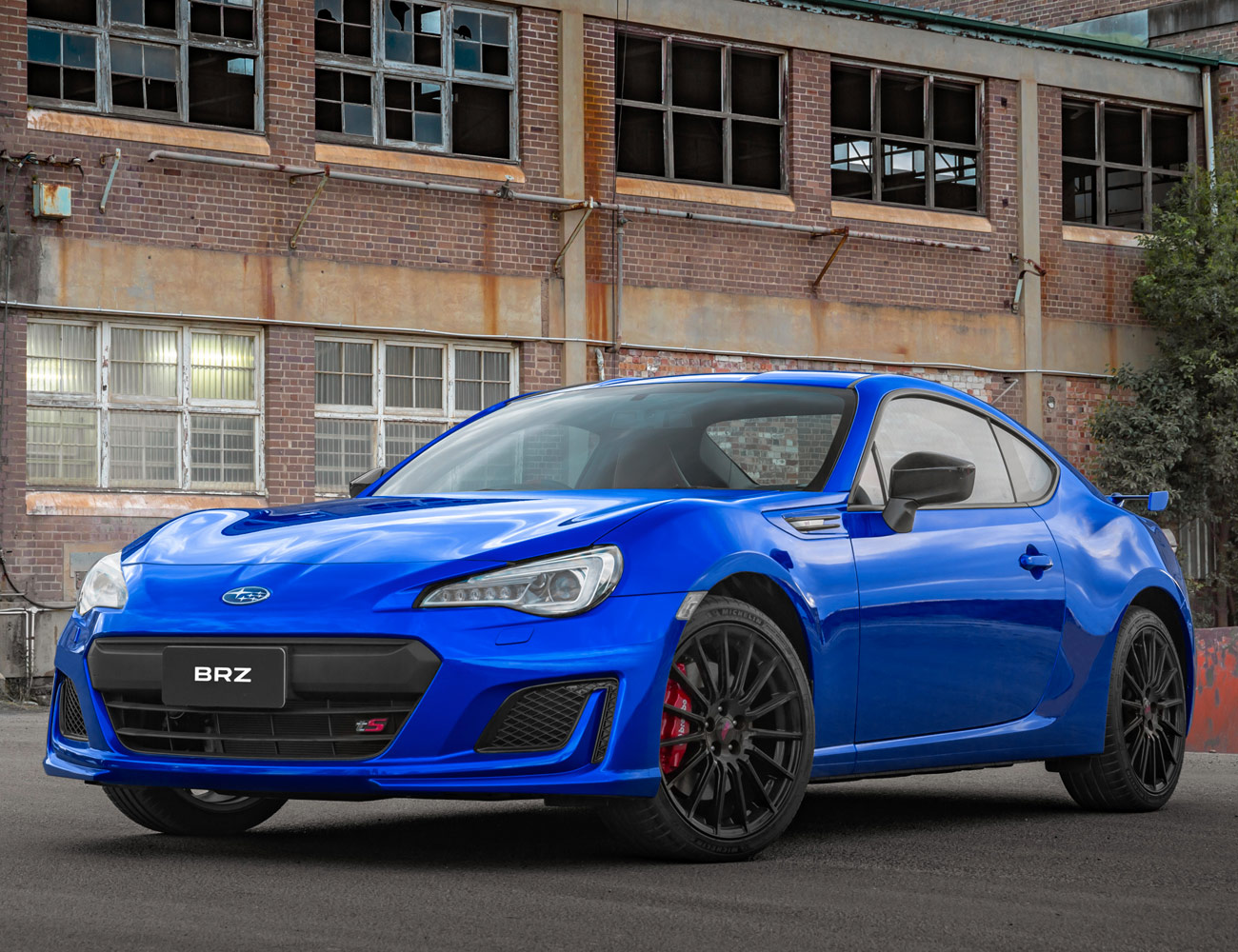
The Subaru BRZ was developed in partnership with Toyota, and shares a platform with the Toyota 86. It is the only car in the Subaru model lineup with rear-wheel drive and features a 205-horsepower 2.0-liter boxer four-cylinder engine with an choice of six-speed manual or automatic transmission. To capture that sports car feel, the BRZ features a sport-tuned suspension, quick steering ratio and Torsen limited-slip differential.

Body Style: Coupe

Models:

  • BRZ Premium
  • BRZ Limited

Engines:

  • 2.0-liter boxer four-cylinder

Base MSRP:  $25,795

Impreza

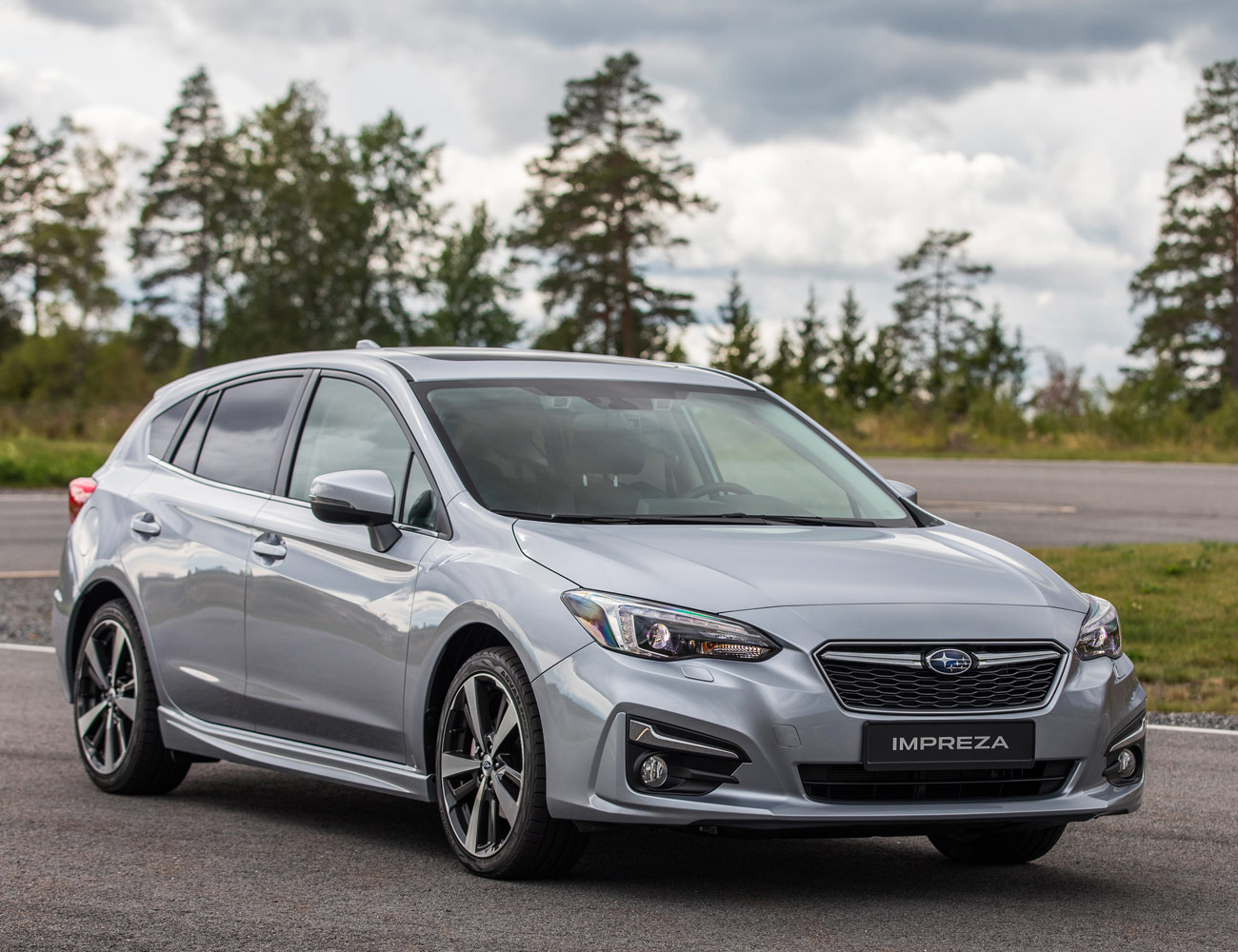
The Subaru Impreza is Subaru’s entry-level vehicle, and comes in hatchback and sedan configurations. Featuring a 152-horsepower 2.0-liter boxer four-cylinder, it is available with a five-speed manual transmission or CVT automatic.

Body Style: Sedan, Hatchback

Models:

  • 2.0i Sedan / 5-Door
  • 2.0i Premium Sedan / 5-Door
  • 2.0i Sport Sedan / 5-Door
  • 2.0i Limited Sedan / 5-Door

Engines:

  • 2.0-liter boxer four-cylinder

Base MSRP: $18,595

Crosstrek

The Subaru Crosstrek can be affectionately described as a more off-road-suited version of the Impreza, with nearly all the same features and amenities. What sets the Crosstrek apart is a higher ride clearance of 8.7 inches, beefier tires and 18-inch wheels. The Crosstrek can be optioned with a Lineartronic CVT or six-speed manual transmission, and is powered by a 152-horsepower 2.0-liter boxer four-cylinder. The Crosstrek Hybrid is a plug-in hybrid making a total of 147 horsepower, and can be charged off a 120-volt outlet or 240-volt charging stations.

Body Style: Crossover / SUV

Models:

  • 2.0i Standard
  • 2.0i Premium
  • 2.0i Limited
  • Hybrid

Engines:

  • 2.0-liter boxer four-cylinder
  • 2.0-liter boxer four-cylinder with two electric motors and 8.8-kWh lithium-ion battery pack

Base MSRP: $21,895

WRX / STI

This fifth-generation iteration of Subaru’s most iconic vehicle falls squarely into the sports sedan category. The WRX features a 268-horsepower turbocharged 2.0-liter boxer four-cylinder engine, quick-ratio steering, a sport-tuned suspension, switchable traction control system and active torque vectoring. True driving enthusiasts will appreciate the top-spec WRX STI, which features a 305-horsepower turbocharged 2.5-liter boxer four-cylinder, short-throw six-speed manual gearbox, Brembo performance brakes, lightweight 19-inch wheels, Recaro racing seats and a driver-controlled center differential.

Body Style: Sedan

Models:

  • WRX
  • WRX Premium
  • WRX Limited
  • WRX STI

Engines:

  • 2.0-liter turbocharged boxer four-cylinder
  • 2.5-liter turbocharged boxer four-cylinder

Base MSRP: $27,195

Forester

The Subaru Forester is a small SUV widely loved by families and casual overlanders alike. The Forester features a 174-horsepower 2.5-liter boxer four-cylinder engine with a Lineartronic CVT transmission, 8.7 inches of suspension travel and a spacious interior cargo area. For more off-road focused enthusiasts, the Forester comes with X-MODE and SI-DRIVE in Sport, Limited and Touring trims.

Body Style: Crossover / SUV

Models:

  • Standard
  • Premium
  • Sport
  • Limited
  • Touring

Engines:

  • 2.5-liter boxer four-cylinder

Base MSRP: $24,295

Outback

The Subaru Outback has been the best-selling Subaru model over the past couple of years. There are two engine options: a 175-horsepower 2.5-liter boxer four-cylinder or a 246-horsepower 3.6-liter six-cylinder boxer engine. Both engines utilize a Lineartronic CVT transmission. The Outback is also capable of towing up to 2,700 pounds in either engine configuration. A new model using a turbocharged 2.4-liter boxer four instead of the six-cylinder model will be arriving shortly.

Body Style: Station Wagon / Crossover / SUV

Models:

  • Standard
  • Premium
  • Limited
  • Touring

Engines:

  • 2.5-liter boxer four-cylinder
  • 3.6-liter boxer six-cylinder

Base MSRP: $26,345

Legacy

The Legacy is Subaru’s midsize sedan. It is available in two engine configurations: a 175-horsepower 2.5-liter boxer four-cylinder or a 256-horsepower 3.6-liter boxer six-cylinder. Both engine configurations come standard with a Lineartronic CVT Transmission. A new model is arriving shortly.

Body Style: Sedan

Models:

  • 2.5i Standard
  • 2.5i Premium
  • 2.5i Limited
  • 3.6R Limited

Engines:

  • 2.5-liter boxer four-cylinder
  • 3.6-liter boxer four-cylinder

Base MSRP: $22,545

Ascent

In 2018, the Subaru Ascent introduces a midsized three-row SUV back into the Subaru lineup. All configurations come standard with a 260-horsepower turbocharged 2.4liter four-cylinder boxer engine paired with a Lineartronic CVT transmission. The Ascent can seat up to eight people and tow up to 5,000 lbs.

Body Style: Crossover / SUV

Models:

  • Standard
  • Premium
  • Limited
  • Touring

Engines:

  • 2.4-liter turbocharged boxer four-cylinder

Base MSRP: $31,995

Note: Purchasing products through our links may earn us a portion of the sale, which supports our editorial team’s mission. Learn more here.

2020 Ford Explorer Review: Setting the Benchmark for American SUVs

Ford could have waited another year to launch a completely re-designed Explorer, and thus make a big fuss over it being the 30th anniversary of the nameplate that arguably got the four-door, family-focused SUV segment rolling in earnest. The fact that they didn’t is just one of the many ways Ford is showing they’ve not only listened to customer feedback, but are acting on it as well. The outgoing fifth-generation Explorer was a run-of-the-mill crossover using a front-wheel-drive-based layout; the sixth-generation model, however, returns to a rear-wheel-drive-based layout. This brings with it a number of benefits, such as improved overall balance and handling, towing capacity and interior volume. By retaining unibody construction while switching to the rear-wheel-drive layout, customers get the best of both worlds: a capable SUV that’s as easy to drive as a midsize car.

The Good: First and foremost, the 2020 model is the best-looking Explorer Ford has built. Regardless of whether you opt for the Base, XLT, Limited, Limited Hybrid, ST or Platinum, you get nicely sculpted sheet metal, with thoughtful variations on the theme by model. A well-equipped base model with seating for seven and the standard, comparatively strong 2.3-liter turbocharged inline-four engine sets the tone for the 2020 Explorer line. The smallest engine’s quality is bolstered by the smooth shifting 10-speed automatic, but that transmissions shines brighter when paired with the high-output variant of Ford’s EcoBoost 3.0-liter V-6 found in the sporty ST.

The transmission does a great job slowing the vehicle when towing a trailer, and even offers a low first-gear ratio that does a decent job mimicking a traditional 4WD vehicle’s low-range when Trail, Sand or Snow mode is selected. In fact, the Explorer is far more capable off-road than one would expect just looking at it, thanks to a short front overhang and decent departure angles.

Who It’s For: Putting visions of a Baja-spec Explorer Raptor aside, it’s easy to understand who Ford is angling to bring into the fold here. Families of various sizes and ages are the main target, especially those that often leave near-urban environments in search of rural getaways. The return to a rear-wheel-drive platform also signals that Ford wants the boat and camper crowd back, as well as the weekend warriors who might have a vintage Mustang that needs a lift to a track day. (Visions of an Explorer ST towing a Grabber Blue ‘71 Boss 302 seem delightful.)

Watch Out For: Base and Limited models are competitively priced with their competition, but there’s some standard equipment missing in the active safety system department. This has long been an underlying issue with Ford, who is as adept at serving up a la carte options as any German automaker. As a result, the price of an Explorer can easily rise from its published starting point.

Interior materials in the Limited and Platinum models don’t exactly live up to their names. Base, XLT and ST models were satisfactory, if not impressive; however, in the more upscale models, I wondered why certain touchpoints were not softer, covered with better leather or made with noticeably higher quality hard materials.

Alternatives: Toyota Highlander ($31,680), Honda Pilot ($31,450), Dodge Durango ($30,195), Chevy Traverse ($29,930)

Review: While I spent time behind the wheel of each of the six new Explorer models — on pavement and off, towing and unburdened, in RWD and AWD specs — it was the Explorer ST that seemed the most worthy of praise.  Compared to the Edge ST, which was little more than the application of a badge to an old platform, the Explorer ST is a dramatically better vehicle.

With 400 horsepower on tap, it’s fast — but more importantly, it feels fast, not an easily-accomplished feat with a three-row SUV. More surprising than the sensation of speed is how it goes around corners so nicely, without any sense that you’re battling the weight of the damn thing. Happily, the balance of purpose is maintained, so even with 21-inch wheels and a sport suspension, the ST’s remains plenty comfortable. The chunky steering wheel specific to the ST is yet another welcome surprise, and a joy to hold onto. There are purpose-built sports cars that don’t have tillers this good, let alone myriad crossovers and SUVs with sporting aspirations.

All that being said, every Ford employee I spoke with about how the Explorer ST spoke about how they sought to go beyond past Explorers in terms of sportiness, while still retaining all the traditional qualities of a family-friendly SUV. Take the front seats, for example –truly some of the best I’ve parked my butt in lately, in terms of comfort. The three-way adjustable independent lumbar support is a clear indication that Ford expects drivers to spend extended periods of time in the seat, while the six different massage options drive that point home — and embarrass a number of luxury automakers. Those folks hoping for deeply bolstered chairs like those from the Fiesta and Focus ST may be disappointed at the lack of lateral support and adjustable bolsters would be a nice option, but that remains a rarity in this segment, particularly with domestic automakers.

The use of interior space is highly efficient; from passenger seating to cargo storage, I couldn’t find any missed opportunities to make the cabin more comfortable or accommodating. There’s reconfigurable storage at the rear, the requisite power fold-flat seating and stash spots throughout — all of what you’d expect in a vehicle in this class, but all one quite right. The center armrest storage proved quite useful for holding my full-frame mirrorless digital camera and its large lens and battery grip, allowing quick access while letting me keep my camera bag secured in the back. The wireless charging mat that sits at an angle at the rear of the center console was also much appreciated. It’s a much better solution than having it take up space inside the armrest, where far too much transmission heat gets trapped, potentially damaging your device.

The giant vertically-mounted 10.1-inch tablet that anchors the dash may be off-putting to some, but it fits with the rest of the design and operates smoothly. Let’s face it, there’s not much more you can ask of an infotainment system; screens rarely beautiful, but they’ve become necessary in vehicles over the past decade, so surely we can all appreciate a thoughtful approach when we see it.

Perhaps that’s the best way to sum up not only the ST, but the new Explorer overall. Nobody is going to call it beautiful, but it’s not hard to find attractive qualities inside and out. Certainly, a lot of thought went into it — thought guided by lessons learned from past mistakes. The result is a vehicle that’s more than the sum of its parts.

Verdict: By considering what’s underneath all the metal and leather, you can understand what an undertaking redesigning the Explorer was for the folks at Ford — and how important it was to them to bring their A-game. The brand’s line of trucks and SUVs are certainly their standard-bearers and the Mustang will remain an icon for all-time, but the Explorer nameplate carries weight too — especially with Eighties babies who remember a T. rex eye appearing through the window of one in Jurassic Park. Perhaps for the first time since it was a boxy body-on-frame SUV, the Explorer is worthy of more than a passing glance, much of that due to excellent powertrains and thoughtful packaging. Ford finds themselves on solid ground with the first year of the sixth-generation Explorer, and they should be in good shape for the future if they continue to incorporate the best aspects of their past.

2020 Ford Explorer ST Specs

Price as Tested: $55,835
Powertrain: 3.0-liter twin-turbo V6, 10-speed automatic, all-wheel-drive
Horsepower: 400
Torque: 418 pound-feet
0-60 MPH: 5.5 seconds

Ford hosted us and provided this product for review.

Read More Gear Patrol Reviews

Hot takes and in-depth reviews on noteworthy, relevant and interesting products. Read the Story
Note: Purchasing products through our links may earn us a portion of the sale, which supports our editorial team’s mission. Learn more here.

2019 Ferrari Portofino Review: Every Bit a Ferrari In the Ways That Matter

The Ferrari California never received the respect it deserved. Yes, it was somewhat of a shameless attempt to steal buyers who would otherwise have bought up a Bentley Continental GT or a Mercedes-Benz SL63 AMG. Sure, the elevated rear beltline necessitated by its retractable hardtop kind of made it look like it took fashion cues from Steve Urkel. And yeah, the front end bore a “cannot unsee” resemblance to a praying mantis. But it was still a Ferrari, though — with a resonant V8 under the hood and a steering rack tuned by angels.

Maranello isn’t a place where people succeed by letting mediocre product stink up the showroom, though. The carmaker’s first crack at redoing the Cali involved a thorough facelift and the brand’s first turbocharged engine in decades (a motor that would go on to ooze into four-fifths of the lineup, as well as down the road to Maserati HQ), along with a big “T” appended to its West Coast moniker. It was faster; it was prettier; sales picked up. But it still never seemed to quite mesh with the rest of the lineup.

So Ferrari balled the California up, hurled it through the Nerf basketball hoop into the wastebin of history, and started with a clean sheet of paper to produce the Portofino. The car is new, but the mission brief hasn’t changed: Deliver a Ferrari that’s approachable enough to woo boulevardiers who generally prefer soft cruiser convertibles without losing the spirit of the brand in the process.

The Good: Uh, it’s a Ferrari. It turns, goes and stops with a verve other cars can match, but never replicate; every moment spent behind the wheel attacking a road has a tinge of magic to it. It responds to your inputs with a directness not found in most cars. It helps make even regular commutes a little less ordinary.

On a more practical note: It has one of the most intuitive, driver-focused cockpits on sale. The steering wheel feels almost aeronautical in its multifunctional efficiency, with all the controls needed for the actual act of driving are within a hand’s breadth of 9 and 3: drive modes, wipers, high beams, shifters, suspension softener and start button. Secondary controls you’ll use often — volume, cruise control, IP info panel, headlight switch — are on the dashboard, but mere inches away from your hands. Beyond that are a pair of widescreen displays that, while a bit laggy, offer plenty of physical controls for the important tasks and touchscreen capability for the rest.

Who It’s For: Enthusiasts seeking an open-top grand tourer that’s more entertaining to drive than the average convertible; wealthy showboats who simply want the image conferred by the badge.

Watch Out For: A lack of trunk space — which isn’t all that surprising for a Ferrari, but is for a gran turismo. The carmaker claims 10.3 cubic feet of trunk space, which is technically true, but only if you’re storing unpackaged Cool Whip. Folded down, the top occupies a good chunk of space, leaving an open box below it large enough for a rollaboard or a couple of backpacks. Even with the top up, there’s a firm box designed to block off the folding-top-safe luggage space that prevents you from sliding larger items in there with ease. Hey, Ferrari also claims it’s a four-seater, but that second row is only good for small woodland creatures. Throw your bags back there instead. (Just make sure there’s nothing in those bags that’s temperature-sensitive, because they’ll cook in the sun.)

Also, on a moral note: Yes, Ferrari buyers view money differently than most of us, but charging $4,219 for Apple CarPlay is absurd.

Alternatives: Porsche 911 Turbo S Cabriolet ($203,000); Aston Martin DB11 Volante ($219,581); Bentley Continental GT Convertible ($218,350); Mercedes-AMG SL65 ($154,450)

Review: I will fully admit to being a tad underwhelmed at the sight of the Portofino when it rolled up in front of our Fifth Avenue office on a rainy weekday. Sure, the off-menu red paint crackled, and with the top up to keep out the rain, it looked close enough to the heartbreaking 812 Superfast to confuse even our auto-obsessed deputy photo editor. But the thought kept poking out of the back of my brain: Does this really look as grabby as a Ferrari ought to?

Then I climbed inside, and before I could even adjust my mirrors, a trio teenage girls began snapping pictures in front of the car. Never underestimate the appeal of that damn Prancing Horse.

That said, it may be every bit a Ferrari to The Average Joe, but T.A.G. might find himself a little bit unimpressed when he engages it in a stoplight grand prix with his Trackhawk. It’s not slow, mind you; activate the launch control (it’s the round button marked “PS” on the shift arch), and it’ll crack off the 0-to-60-mile-per-hour dash in a claimed 3.5 seconds. But in an era where sub-three second 0-60 times are becoming shockingly common in the six-figure sports car realm, the Portofino feels almost ordinary off the line.

Some of that stems from the engine’s output of 591 horsepower and 560 pound-feet of torque, which, to keep it in horse-themed car terms, sits closer to the Shelby GT350 than the GT500; some of it also stems from the way Ferrari tuned the engine’s power delivery, deliberately moderating the torque in lower gears to smooth out the transition when the turbos spool up. The flip side, however, comes in the engine’s tractability: You can hear the turbos coming online more than you feel the change in power delivery; it just comes across as a building shove, building and building to the low-for-a-Ferrari 7,500-rpm redline.

Still, only the uninitiated think F-cars are about pure straight-line speed. Old Man Enzo’s heart lay in road racing, not drag racing; his cars are made to carry speed through turns as much as they are to gain it in the first place. The steering is quicker, the brakes bite harder right away than you’d expect from a grand tourer; that’s the inherent Ferrari-ness shining through. But once you’re dialed into how taut everything from your fingertips through the body to the suspension is, it becomes as easy to drive as a Miata.

Ferrari was one of the first automakers to integrate magnetorheological dampers in their suspension, and their time has been well-spent; the shock absorbers blot up imperfections with luxury-car grace in Comfort mode. (That is to say, the grace of modern luxury cars, which tend to ride on wheels as large as or larger than the 20-inch rims on my Portofino, and often on tires as aggressive as its Pirelli P Zeros.) Hit a patch of rough road after you’ve snapped the manettino switch from Comfort to Sport, and you can tap a small blue button near your thumb to shift the dampers back to bumpy-road mode. It’s a handy feature, though given the Portofino’s mission brief, you could probably just leave the dampers at their softest all the time; it’s not as though the car rolls like the Andrea Doria on winding roads in that setup.

Whether you’re hoofing it along the back roads or loping down the highway, you’ll want to use the paddle shifters. The seven-speed dual clutch’s automatic mode works fine enough for puttering around town, but unlike, say, Porsche’s brilliant PDK, it’s not made to outwit a clever driver. It’s there to make the tedious parts of life a little less boring, not to remove you from one of the essential tasks of driving altogether. You could have bought a Mercedes, the car seems to be saying, but you didn’t. You bought a Ferrari. Now own it. 

Verdict: With the all-wheel-drive hatchback GTC4Lusso occuping showroom space alongside it, the Portofino is effectively the last traditional grand tourer Ferrari makes — heir to a legacy that stretches back to the 1940s. That was true of the California, too, but unlike that awkward machine, the Portofino seems worthy of carrying that torch. It wouldn’t be my first pick amongst Ferraris, nor likely yours. But it might be at the top of the gran turismo convertible list, especially for anyone who really loves to drive.

2019 Ferrari Portofino Key Specs

Powertrain: 3.9-liter twin-turbo V8; seven-speed dual-clutch automatic; rear-wheel-drive
Horsepower: 591
Torque: 560 pound-feet
0-60 MPH: 3.5 seconds (manufacturer’s estimate)
Top Speed: 199 mph
Price as Tested: $284,962

Ferrari provided this product for review.

Read More Gear Patrol Reviews

Hot takes and in-depth reviews on noteworthy, relevant and interesting products. Read the Story
Note: Purchasing products through our links may earn us a portion of the sale, which supports our editorial team’s mission. Learn more here.

Now’s the Time to Buy the Last Cheap Porsche 911

Obvious fact alert: Porsche 911s aren’t cheap. They’re not cheap when new, certainly — the just-announced base model of the latest 992-generation 911 starts at $97,400 — and they’re increasingly becoming pricey on the used market, as well. The 993-generation has long commanded a premium, thanks to its status as the last of the “classic” air-cooled 911s; that desire for the purity of retro rides has also driven the prices of other earlier 911s higher in the last couple decades. Likewise, the 997-generation 911 that’s arguably the first truly modern example of the breed still holds its value well, and the outgoing 991-generation still holds its value well enough to put it out of reach of bargain hunters.

But there’s one generation of Porsche 911 that remains a bargain: the 996.

As we’ve discussed before, the 996 — built from 1997 to 2006 — has been maligned for quite a reasons, starting with its water-cooled flat-six and its runny-egg headlights and continuing through its lackluster interior. But these are the sorts of quibbles that are easy to make when a new car winds up being a massive deviation from an iconic predecessor (or, alternatively

Here in 2019, with close to two decades between us and the 996, many of those complaints seem to be missing the forest for the trees. It still has that iconic silhouette, it still has the engine in the back, it still makes that coarse boxer roar when you mat the gas, and it still puts a smile on its driver’s face when he or she tosses it through a turn. It’s still a Porsche 911.

And while the prices of pretty much every 911 — and hell, even other less-respected Porsches — have been blasting skyward, 996 values have been flying nap-of-the-earth. A quick look at Bring a Trailer reveals that, of the 280 examples of the generation to hit the auction site over the years, the vast majority have sold for less than $30,000 — a price that puts it in league with a VW GTI or Honda Civic Si. And many cars are far cheaper.

This blue beauty, a 2001 Porsche 911 Carrera with 61,000 miles and a six-speed manual? It sold for $19,996 in mid-June.

This silver Carrera, with an admittedly-intimidating 115K on the clock but still looking almost as good as new? $16,485 at auction.

This stick-shift black ’99 Carrera with 82,000 miles? It went for $17,400 earlier this month.

Fancy something in a droptop? This Carrera Cabriolet has a six-speed manual, an iconic color combo of silver exterior and red interior, and 74,000 miles on the odometer. Selling price? $23,000.

Prefer an automatic for the daily commute? You’re kind of a dweeb, but here’s a tasty Carrera 4S coupe with the Turbo-look widebody, a five-speed Tiptronic and 65,000 miles that sold for $27,000.

Willing to spend a little more for a choice example of the breed? This blue Carrera coupe has just 36,000 miles on the odometer, spent its whole life in the Sunbelt, and sold for $29,650.

Granted, buying a used car of any type carries with it risks, and that goes double for a Porsche; repair bills can run high. But the 996’s pain points are well-known at this point — you’ll want to make sure the IMS bearing is upgraded on high-mileage examples, for example — and the deep bench of knowledgeable enthusiasts found online on sites like Rennlist make it easier than ever to avoid problems.

If you’re feeling the itch, there are several 996 Porsche 911 Carreras currently on the block at BaT, including this stripped-down black beauty and a one-owner Carrera 4S with a stick shift. (In fact, the silver Carrera seen above is up for sale again.) But don’t wait too long to scratch. With Porsche’s plans filled with computer-aided performance machines and futuristic electric cars, it’s only a matter of time before the market for 996s starts heating up.

Ecurie Ecosse LM69 Race Car

Recreating the past in perfect form is no easy feat, especially when it comes to historic race cars. But that’s exactly what rather obscure automaker Ecurie Ecosse has done with their new/old LM69 race car…

2019 Jaguar XE SV Project 8 Review: Odd Name, Delightful Car

On paper, the Jaguar XE SV Project 8 seems grossly overpriced for what it is. After all, Mercedes-Benz and BMW both offer more powerful sport sedans for nearly half the price; even notoriously pricey Porsche’s 550-horsepower Panamera Turbo starts more than $35,000 cheaper than the compact cat’s MSRP.

But to judge the Project 8 on its specs alone is to sell it short. It’s not meant to take the fight to E63s and M5s any more than a Porsche 911 GT2 RS is meant to take on a BMW M8. Instead, this limited-run Jag exists to show just how wild the cats of Coventry can get — with the resulting product feeling as though a bunch of JLR engineers got plastered and decided to build the ultimate WRX STI.

The Good: Jaguar’s XE sedan is one of the sportiest, most involving luxury compact sedans on sale — and shoehorning a 592-hp engine under its hood, not surprisingly, only makes it better. The chassis never feels overwhelmed by the power; the steering remains hefty yet naturalistic, providing quick reactions and a delightful level of weightiness while refraining from being light on-center the way many cars nowadays are. And the sound bellowing forth from both under the hood and out the quad trombones in back is the sort of music gearheads will someday wistfully tell our grandchildren who’ve never heard an internal-combustion engine about. The exhaust tips of mine were already blued with fury, and it wasn’t hard to figure out why; this V8 is every bit the sort of engine you rev for the hell of it every chance you can.

Video: 2019 Jaguar XE SV Project 8 Review

[embedded content]

Who It’s For: Wealthy track rats who want a weekend ride that’s a blast to drive but still need some semblance of a back seat; Jaguar enthusiasts who want to strut in the company’s fastest, flashiest ride; automotive eccentrics who wouldn’t be caught dead in something as cliche as an Audi R8 for their $200K.

Watch Out For: With only 300 being made for the entire planet, finding a new one at this point might be difficult. (Still, Jaguar announced back in June that it planned on serving up 15 wingless Touring Edition versions, suggesting there remained some lack of demand for the car.) Should you cop one, though, be aware that the sporty bucket seats offer something of the worst of both worlds; they’re uncomfortably constraining in everyday driving, yet don’t offer the expected levels of lateral support when tossing the car around a track.
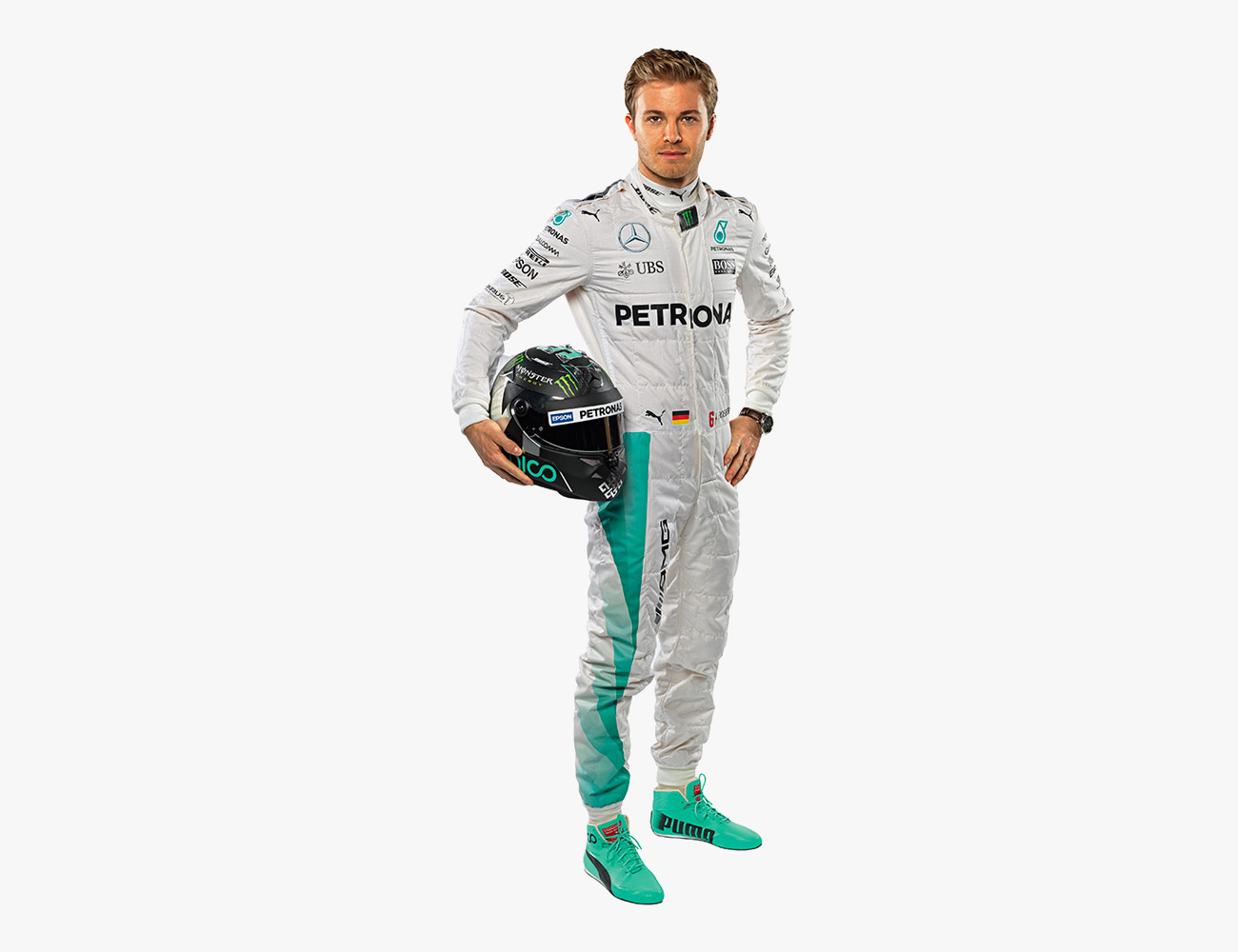
Alternatives: Porsche 911 GT3 ($143,600+), BMW M4 CS ($104,095+), Chevrolet Corvette ZR1 ($123,000+)

Review: With most cars on sale today, you can learn more than enough about them on public roads to ascertain how they drive. The Project 8, however, manages to leap into the rarefied realm of vehicles that need a contained safe space. (Fun fact: Its 592 horses make it the most powerful production Jag ever made, and a full 50 ponies more potent than the legendary XJ220 supercar.) Hence, a trip to Monticello Motor Club in New York’s Catskills region was required to provide a chance to push this killer kitty closer to its limit.


On the roads up there, in spite of the all-wheel-drive, it proved, shall we say, a mite squirrely on rain-slicked pavement. (Then again, the Jeep Gladiator driving along with me also got slideways on the same on-ramp, so that may have been more of a surfacing issue than a power-related one.) But once on the open road, the Project 8 proved a fine, if firm, highway cruiser. The ride is harsh, as you’d expect from something with that wing; still, the dampers do a decent job mitigating the car’s tightly-sprung nature.

On the plus side, the combination of the snappy eight-speed automatic, the AWD grip and the thermonuclear powerplant means every passing zone and empty bend provides a chance to engage in an endorphin-spiking burst of speed. You can leave the gearbox to its own devices and let it crack off intelligent shifts, of course, but it’s even more fun to grab the polished metal paddles behind the wheel — chilled like highball glasses from the conditioned air flowing out of the nearby vents — and crack off the shifts as you like, savoring the nuances of every thousand rpm of the powerband: a little more low-end shove here, a bit more high-end rip there.

Once on Monticello’s 3.6-mile road course, however, there’s room to dial all the systems up to max attack and set the beast loose. Dropped into the midst of one of the private track’s member days, the Jag reels in more traditionally-sporty car with ease; I close the gap on a Ferrari F430 Spider within a mile, staying glued to it until it lets me by. (At which point a Porsche 911 GT2 RS that’s been eating everything from BMW M2 track cars to Lamborghini Huracans proceeds to clamp onto my ass before passing me like I’m standing still on the back straight, but hey.)

That, and a few more laps of trying to push the Jag around, are enough to illustrate a clear point: For mere mortals like myself, the Project 8 will almost always be more capable than we are. At 8/10ths in the dry, it feels well-balanced and impossibly grippy; any errant motions are well-telegraphed, and the power is plentiful enough that gear choice doesn’t matter the way it would in many other cars.

So I move to the starboard seat and hand the keys to Chris Duplessis, Monticello’s resident hot shoe and a former rally driver who makes The Stig look like a cosplayer. He knows the track better than his kids’ faces; whereas I’m hesitant to push things to 9/10ths here, he can climb into a car cold and go straight to Spinal Tap 11/10ths within half a minute. One turn in, and in spite of the hot tires, he has the Jag pointed sideways in a drift that would make Ken Block salute.

You really have to beat the hell out of it to make it slide, he says; there’s a hefty piece of understeer at the limit that you need to compensate for. But once you do, it’s tons of fun — fun enough to leave him nostalgic for the high-performance Jaguars that once were used for the track’s performance driving program. It is, he says, kind of like driving an all-wheel-drive rally car. In other words, like an STI.

Verdict: The Jaguar XE SV Project 8 will all but certainly wind up being the sort of car to command a hefty price on websites like Bring a Trailer a few years down the road: limited in number, eye-catching, engaging to drive. Yet in some ways, in this day and age — when 600-plus sedans are shockingly common and high-end OEM track attackers increasingly easy to find — it oddly blends into the scenery. (Not literally, of course — that yuge wing alone would be enough to suck in gazes, let alone the other mighty aerodynamic elements, deep-jawed front fascia and the black-graphics-over-electric-blue-paint of my test car.)

The Project 8 is not the best car for the money; it is not the fastest, the most outlandish or the most entertaining. But it is fascinating: While every other carmaker was building its track rats out of coupes, Jaguar went and made one out of a sedan. It may fall a few paces behind the maddest street-legal race course runners out there, but none of them will let you pick up your kids on the way home and give them the ride of their lives.

2019 Jaguar XE SV Project 8 Specs

Powertrain: 5.0-liter supercharged V8, eight-speed automatic, all-wheel-drive
Horsepower: 592
Torque: 516 pound-feet
0-60 MPH: 3.3 seconds (manufacturer claim)
Top Speed: 200 mph (manufacturer claim)

Jaguar provided this product for review.

Read More Gear Patrol Reviews

Hot takes and in-depth reviews on noteworthy, relevant and interesting products. Read the Story
Note: Purchasing products through our links may earn us a portion of the sale, which supports our editorial team’s mission. Learn more here.