All posts in “Cars”

Some of the Best Tailgating Accessories for Your Car

Football season has officially arrived, which means much of America is about to engage in one of our great national pastimes: gorging on food and beverages in stadium parking lots to avoid exorbitant prices closer to the gridiron. This practice, in case you just arrived from Mars, is referred to as “tailgating.” It’s a multifaceted affair involving food and drink preparation, seating, entertainment and charging for personal electronic devices. In other words, it requires plenty of gear.

Here, then, ae are some helpful gear and accessory suggestions you can use to up your personal tailgating game. (Sadly, we can’t do anything to help your team.)


Dometic CFX50W Powered Cooler

Your game day spread is only as good as your storage capacity and your ability to regulate temperature. This Dometic cooler has you covered. It eliminates ice from the equation. It can refrigerate and deep freeze. It can be temperature regulated via an app. It can even charge your devices. And helpfully, it’ll shut itself off before it drains your car battery.

Hammaka Trailer Hitch Stand Cradle Chairs

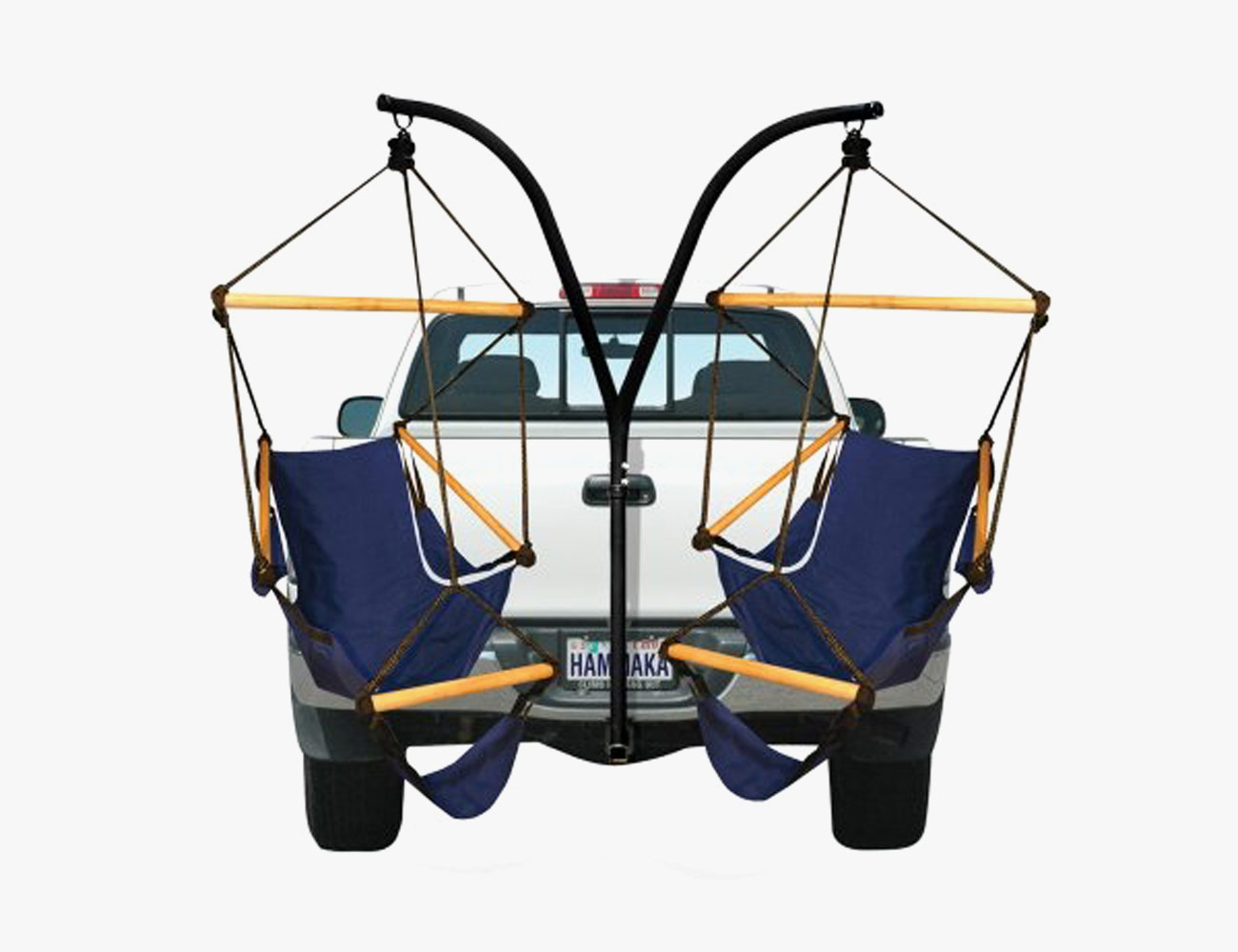
You’re about to spend four hours on a hard bench with a small allotment butt space. Luxuriate beforehand with these Hammaka trailer hitch suspended cradle chairs. There are no finer words when you’re looking to relax a bit after a week of heavy adulting than “easy three-piece assembly.” (Be advised: The camouflage version will cost you a bit extra.)

Sherpa 100 AC Portable Power Bank

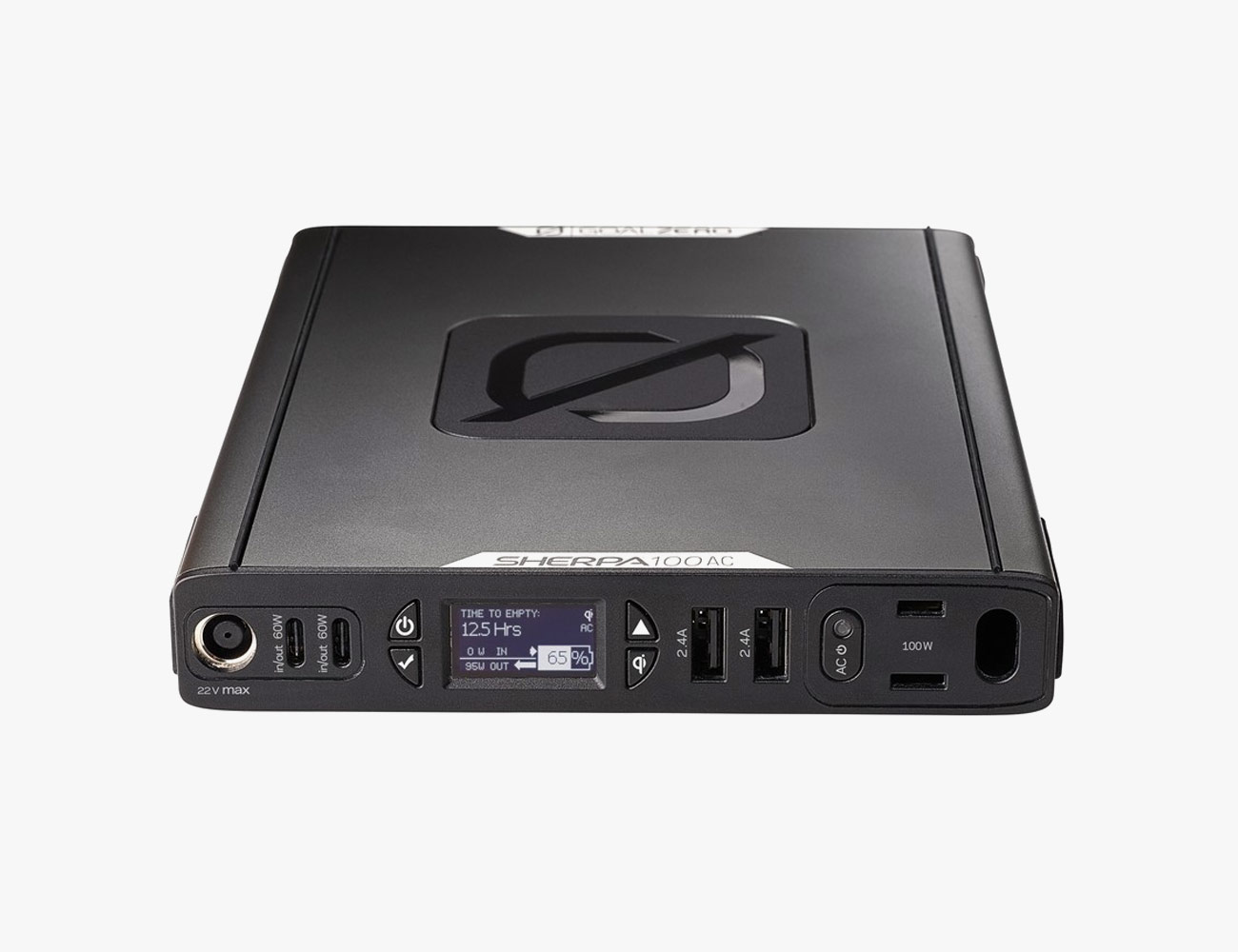
If there’s one mantra for our digital lives in 2019, it’s “always be charging.” That’s doubly true on game day, where you’re unlikely to encounter a USB port in the wild.  This Sherpa power bank is portable and supports all manners of charging, including wireless.

Ultimate Ears Boom 3 Bluetooth Speaker

Tailgaters enjoy listening to tunes, especially those of the team-specific pump-up variety. The Ultimate Ears Boom 3 was the Gear Patrol editors’ pick for the best portable Bluetooth speaker. Jokes about the all-new “magic button” functionality will be good fun for all involved.

Weber Smokey Joe Premium 14-Inch Portable Grill

Weber is the biggest name in grilling with good reason: They offer a wide range of high-quality affordable products to suit every taste and need. This Smokey Joe grill is lightweight, portable and costs less than $50.

Bulldogology Premium SUV Cargo Liner Seat Cover

You like your friends. You don’t necessarily trust them handling food and beverages around your stunning vintage Land Rover Defender. Consider the Premium SUV Cargo Liner Seat Cover from Bulldogology. It’s waterproof and washable, with a non-slip backing. If it’s good enough for a dog, it can probably handle your college buddies.

Tailbrella Tailgate Hitch Umbrella Canopy

Umbrella stands are heavy, and elaborate canopies can be a pain to set up. Spare your back and stay out of the sun with this Tailbrella umbrella canopy that hooks to your trailer hitch. It has a tilt feature, and you can easily pack it up for easy storage.

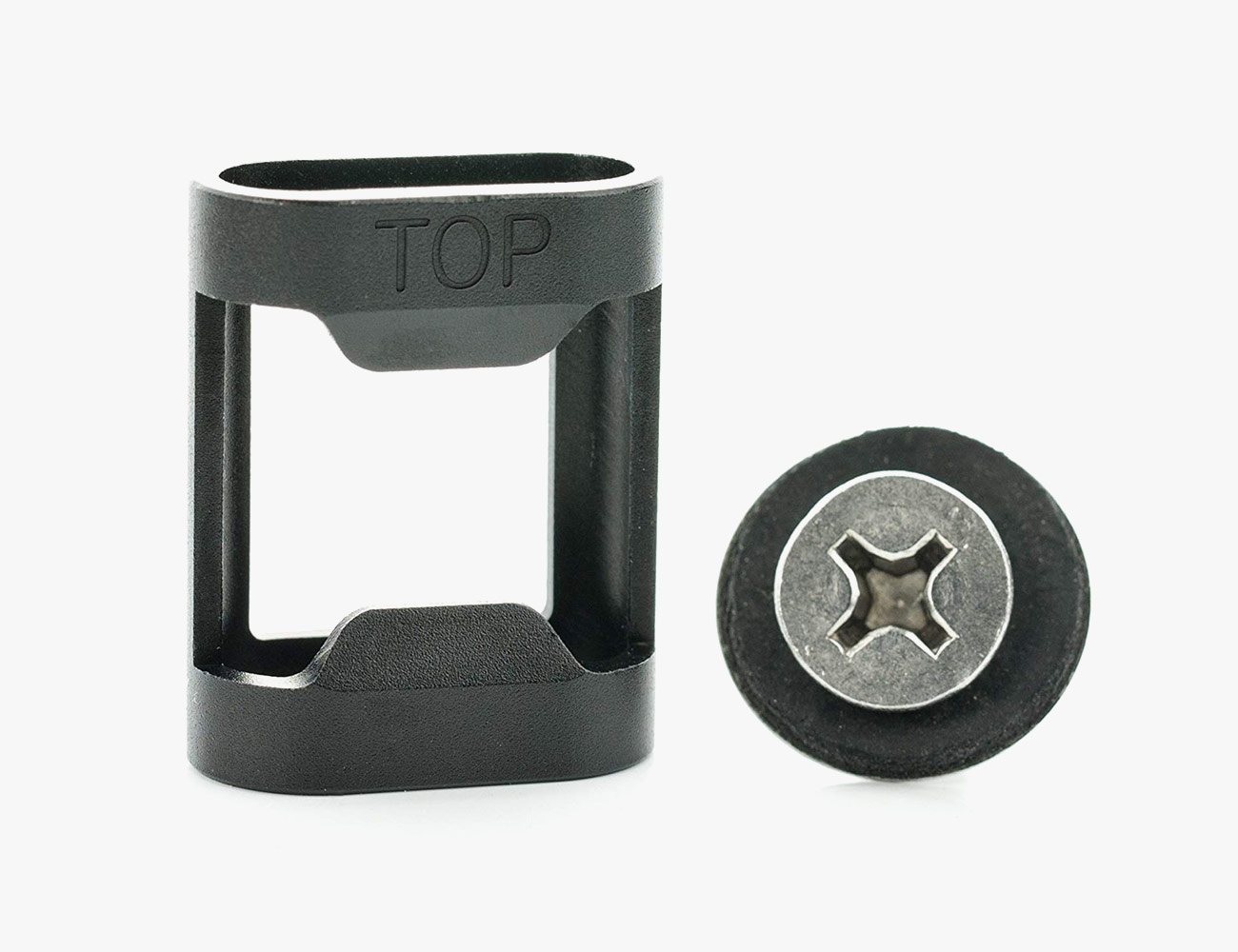
Wrenches & Bones Rear License Plate Mounted Bottle Opener

Your bottle opener may be the most essential bit of gear in your tailgating arsenal. It’s also the easiest to forget or misplace. Instead of weighing down your keychain or befriending some insufferable MacGyver who can pop a top with a dollar bill, why not mount the bottle opener to your vehicle? (Just keep in mind that if you’re in a car like the Jeep Wrangler, which draws ample police attention, this handy device may not help your cause.)

Mytcase Protective TV Carrying Case

Let’s be honest: The big game you really care about on Saturday or Sunday is likely happening elsewhere, so you’ll need to watch it on TV. Transporting your flatscreen to the tailgate can be a nuisance, not to mention setting it up and trying to keep the glare off it. Do all of the aforementioned tasks with the Mytcase Protective TV Carrying Case, which can fit screens up to 43 inches.

FrostGuard NFL Premium Winter Windshield Cover

The only thing more frustrating than spending four hours exposed to the elements is coming back to clean off your car. Keep your windshield safe from snow (or your interior protected from heat) and to rep your favorite NFL team at the same time.

Note: Purchasing products through our links may earn us a portion of the sale, which supports our editorial team’s mission. Learn more here.

The Complete Jeep Buying Guide: Every Model, Explained

Jeep is an American SUV and truck manufacturer. It is a division of Fiat Chrysler Automobiles. The company started when Willys-Overland began producing civilian jeeps, commonly abbreviated to “CJ,” after World War II. Willys received the trademark for “Jeep” in 1950 and merged with Kaiser Motors in 1953 to form Kaiser-Jeep. That company was later bought by American Motors Corporation in 1970, then Chrysler in 1987.

WWII-era Jeeps were designed to go anywhere. That plucky off-road capability has defined the Jeep brand since. The first CJs were boxy, two-door off-roaders, modestly upgraded from their military versions. Jeep expanded its oeuvre in later years, producing wagon-style SUVs like the Cherokee and Wagoneer. In recent years, Jeep has branched out further into road-dwelling crossovers. On various occasions, Jeep has also dabbled with pickup trucks.

Jeep helped initiate two massive automotive trends: accessorized off-roading, and the-SUV-as-family-vehicle. Recent moves to bring Jeeps more upmarket and make them more practical have led to the division’s strongest sales ever. Jeep is not just FCA’s most valuable brand; by some estimates, it may be more valuable than the entire rest of the FCA lineup combined.

Jeep generally keeps things simple with its nomenclature. There are a few model names, and they often stick around for decades. It’s at the trim level where things can get confusing; individual trims can number in the double digits, change frequently and often represent superficial aesthetic choices instead of tangible vehicle upgrades.

Jeep Terminology

Aftermarket: Parts and accessories manufactured by a third party.
Air Conditioning Bypass: Jeep lists air conditioning as a $1,295 option on the base “Sport” model of the Wrangler. The standard has “air conditioning bypass” selected. This allows Jeep to market the Wrangler with a base price below $30,000.
Altitude: A trim offered for every Jeep vehicle except the Gladiator. It’s an appearance upgrade offering slick, trendy blacked-out detailing.
Death Wobble: A heavy shaking of the front suspension and steering components. It happens when a solid axle-equipped vehicle hits a large bump at highway speed. Whether and why it happens is controversial, and tied up in lawsuits. It’s rare, not as dangerous as the name suggests, and can be resolved by stopping the vehicle.
Jeep Wave: A social convention where Jeep Wrangler owners acknowledge one another on the road with a quick wave. Not applicable to other Jeep vehicles. Also a Jeep owner membership program with select benefits.
Moab: The location of the yearly Easter Jeep Safari. Also a special top-of-the-line edition of the Wrangler for the 2019 model year, incorporating features from the Rubicon and Sahara.
OEM: Original Equipment Manufacturer. Jeep has been a forerunner of OEM customization, grabbing profits from the robust Wrangler aftermarket by accessorizing its vehicles in-house.
Overland: A premium luxury trim offered for the Grand Cherokee, Cherokee, and Gladiator.
Rubicon: A premium off-road performance trim for the Wrangler and Gladiator. These vehicles come loaded with upgraded 4×4 systems and heavier-duty componentry for leaving the pavement.
Sahara: A premium luxury trim for the Wrangler.
Solid Axle: The Wrangler uses a dependent “solid axle” suspension, instead of the independent suspensions found in most cars. Opposing wheels are connected by a bar into a single unit. This setup offers advantages for off-roading. It is simpler and easier to repair. But it also hampers on-road ride quality, which is why other Jeeps converted to independent suspensions.
Summit: A top-tier luxury trim for the Grand Cherokee starting above $50,000.
Trailhawk: An upgraded trim level for the Grand Cherokee, Cherokee, Compass and Renegade. It offers a distinctive off-road style and an enhanced off-road capability not found on the standard model.
Upland: A styling variant trim for the Grand Cherokee, Cherokee, Compass and Renegade. It incorporates off-road style from the Trailhawk without the performance upgrades.

Buying Guide

Wrangler

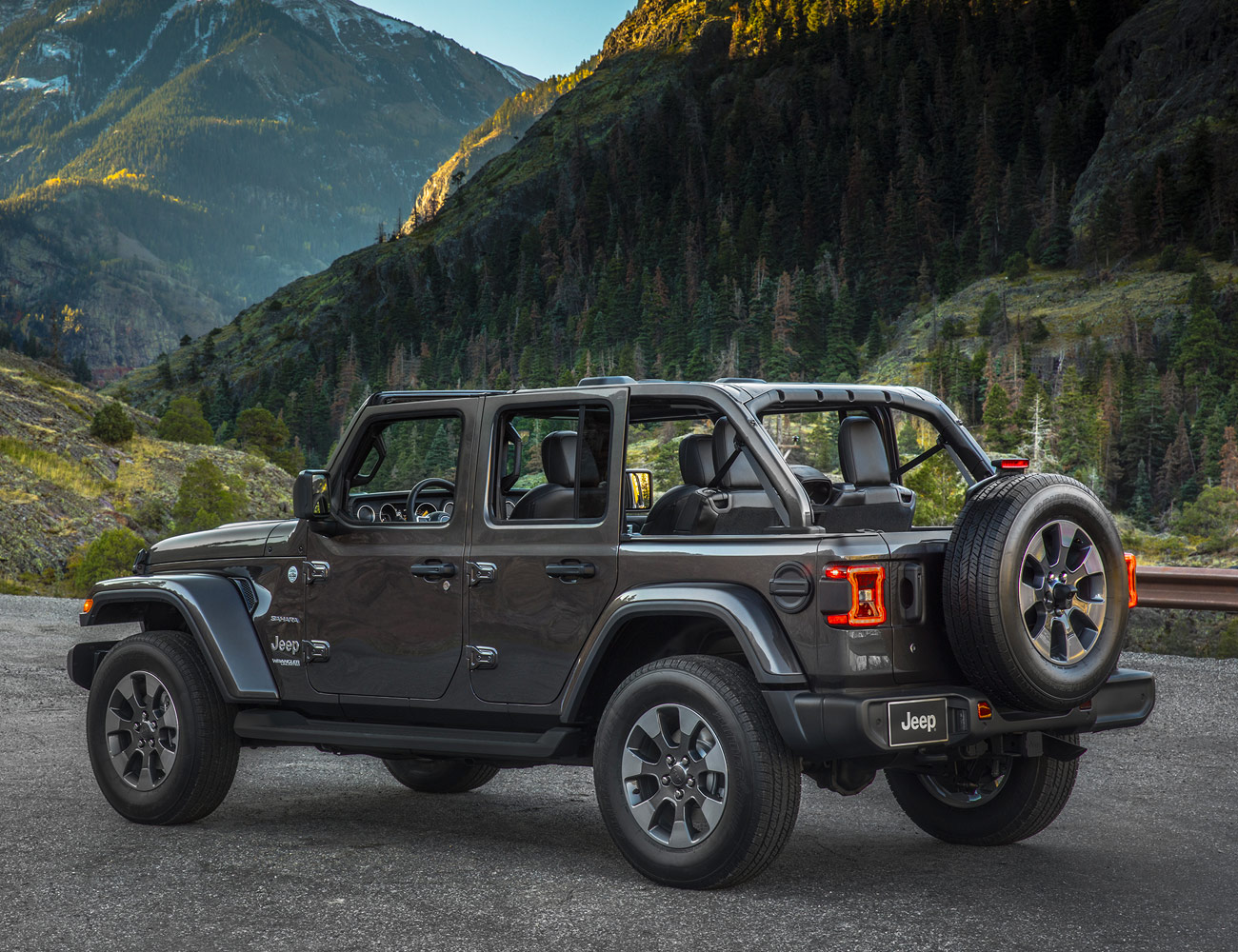
The Wrangler is Jeep’s iconic body-on-frame SUV, descended from the original CJ line. The latest “JL” generation debuted for the 2018 model year. The Wrangler is the most off-road capable SUV of Jeep’s lineup. Its capability and ample charm have outweighed concerns about efficiency and on-road driving dynamics. The Wrangler has among the best resale values of any vehicle in the U.S.

There are two versions, the two-door Wrangler (only available in Sport, Sport S and Rubicon trims) and the four-door Wrangler Unlimited. The latter has become the preferred option for most buyers. The Wrangler uses two powertrains, a base 285-horsepower 3.6-liter V6 and a 268-hp 2.0-liter inline-four turbo with an eTorque mild hybrid system. The four-pot gets better gas mileage, but it only comes with the eight-speed automatic. You need the V6 to get the six-speed manual.

Body Style: SUV

Models:

• Sport
• Sport S
• Sport Altitude
• Sahara
• Rubicon
• Sahara Altitude
• Moab

Engines:

• Turbocharged mild hybrid 2.0-liter inline-four
• 3.6-liter V6

Base MSRP: $28,045

Grand Cherokee

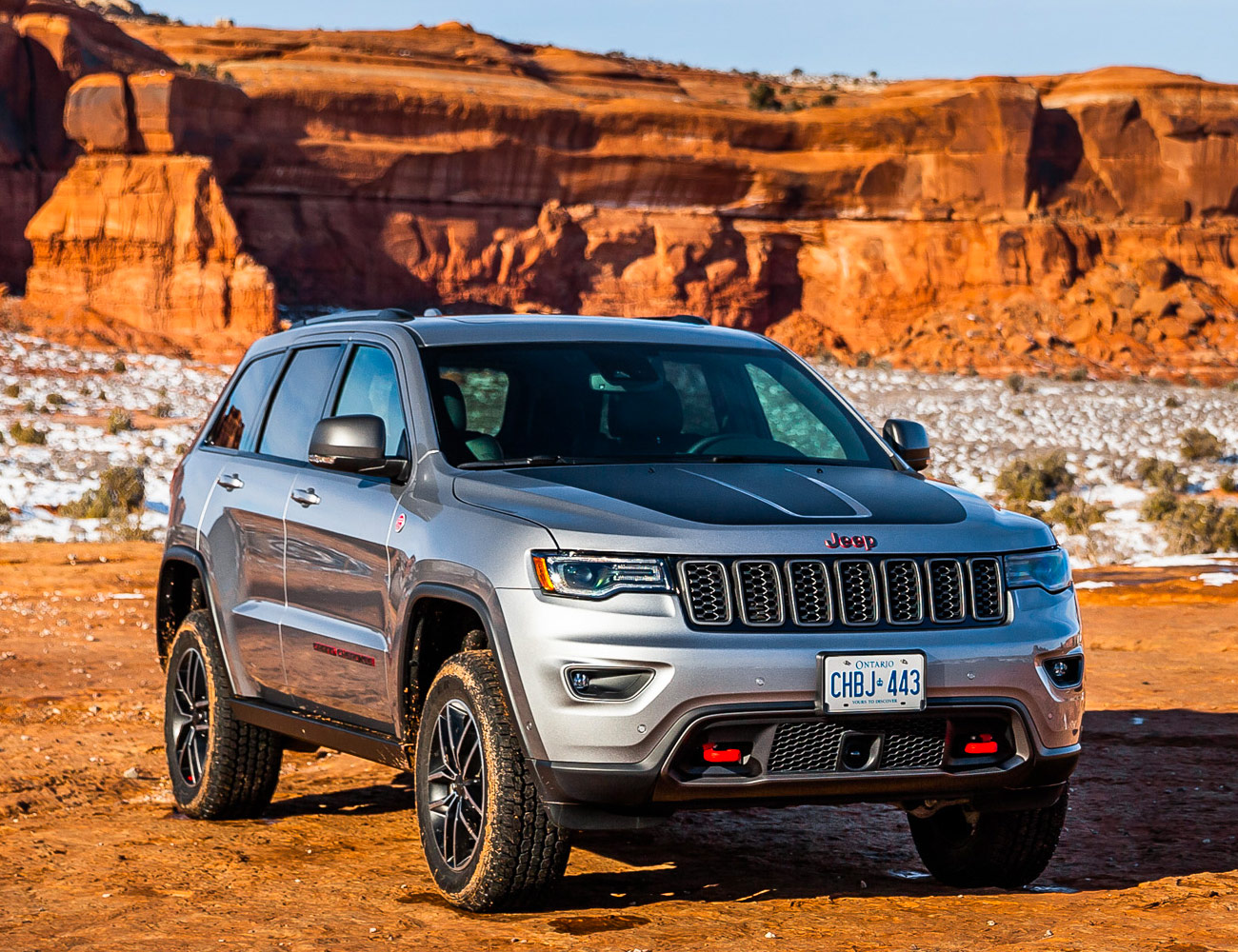
The Grand Cherokee is Jeep’s range-topping midsize SUV. The fourth-generation Grand Cherokee, which launched for the 2011 model year, has been a strong seller. It uses a base 3.6-liter V6 engine making 295 hp. Upper trims can be optioned with a 5.7-liter V8 making 360 hp. The Grand Cherokee can come with either 4WD or RWD.

The Grand Cherokee has two additional on-road performance editions. The “SRT” uses a 6.4-liter V8 making 475 hp. The Trackhawk edition employs a supercharged 6.2-liter Hemi V8 making 707 hp and accelerates from 0-60 miles per hour in 3.5 seconds.

Body Style: SUV

Models:

• Laredo
• Laredo E
• Upland
• Altitude
• Limited
• Limited X
• Trailhawk (4WD only)
• Overland
• High Altitude
• Summit
• SRT (4WD only)
• Trackhawk (4WD only)

Engines:

• 3.6-liter V6
• 5.7-liter V8
• 6.4-liter V8
• Supercharged 6.2-liter V8

Base MSRP: $32,195

Cherokee

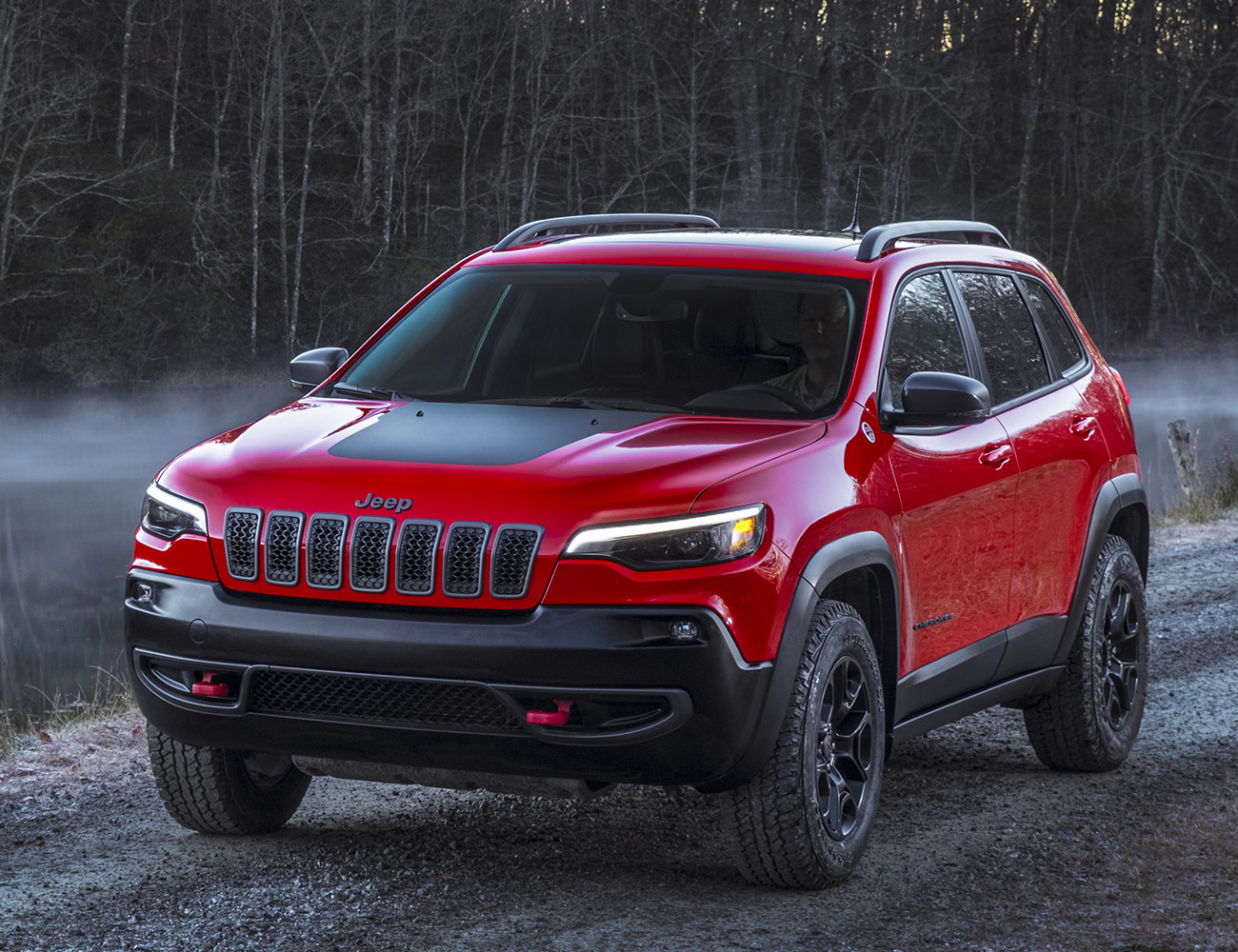
The Cherokee is a storied nameplate in Jeep history. The XJ generation (1984-2001) modernized the SUV with its unibody construction. That vehicle then spent two generations as the Liberty before Jeep revived the Cherokee name for the fifth generation.

The modern car is a compact crossover. It looks much improved after a 2019 facelift. The Cherokee has three different powertrains: a base 2.4-liter inline-four making 181 hp, a 3.2-liter V6 making 271 hp and a new 2.0-liter inline-four turbo making 270 hp. It comes with either FWD or 4WD.

Body Style: SUV

Models:

• Latitude
• Latitude Plus
• Upland (4WD only)
• Altitude
• Trailhawk (4WD only)
• Limited
• High Altitude
• Trailhawk Elite (4WD only)
• Overland

Engines:

• Turbocharged 2.0-liter inline-four
• 2.4-liter inline-four Tigershark
• 3.2-liter V6

Base MSRP: $25,740

Compass

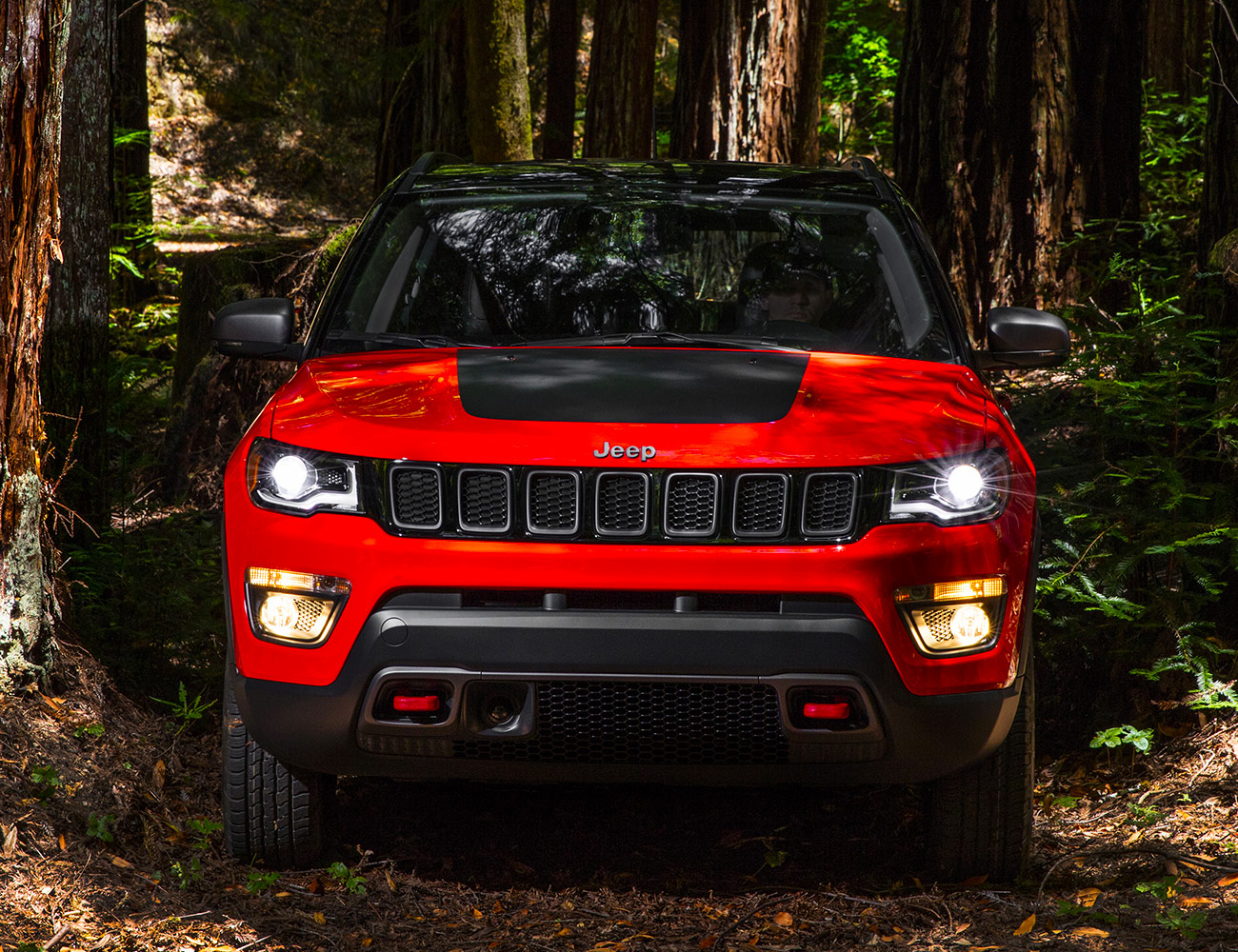
The Compass is Jeep’s less venerable compact crossover. It’s shorter than the Cherokee with more cramped seating. But, it does offer more cargo capacity. A second-generation redesign in 2016 greatly improved the aesthetics, converting it from a Dodge Caliber look-alike into a baby Grand Cherokee. Not coincidentally, sales improved dramatically.

There’s only one Compass engine option, the 180 hp 2.4-liter inline-four known internall as “Tigershark.” Most trims offer a disliked nine-speed automatic transmission, though lower trim Sport and Latitude versions come with a six-speed manual. The Compass can have both in both FWD and 4WD. The Trailhawk edition provides more extensive 4WD settings.

Body Style: SUV

Models:

• Sport
• Latitude
• Sun and Wheel (FWD only)
• Upland
• Altitude
• Limited
• Trailhawk (4WD only)
• High Altitude

Engines:

• 2.4-liter inline-four

Base MSRP: $22,095

Renegade

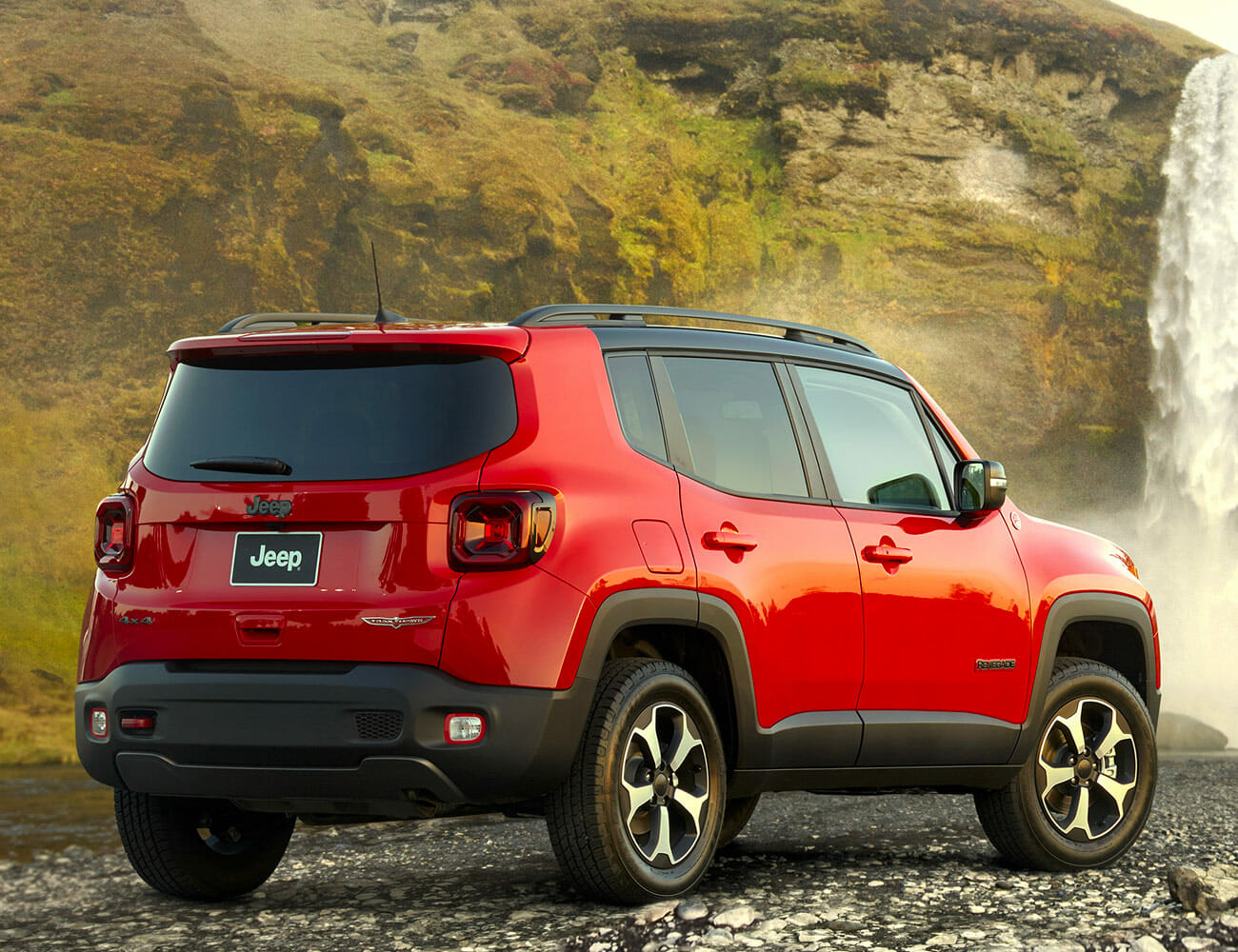
The Renegade is Jeep’s subcompact crossover. It’s not technically “entry-level,” as it starts out a hair more expensive than the Compass. But it’s Jeep’s smallest vehicle. The Renegade has more Italian DNA than its brethren, and is the only Jeep manufactured entirely outside North America.

The car received a facelift for 2019 with two big changes. It added a 1.3-liter inline-four engine making 177 hp as an alternative to the 2.4-liter Tigershark shared with the Cherokee and the Compass. The Renegade also dropped the optional six-speed manual. It can come with front- or four-wheel-drive.

Body Style: SUV

Models:

• Sport
• Upland (4WD Only)
• Latitude
• Altitude
• Trailhawk (4WD Only)
• Limited
• High Altitude

Engines:

• Turbocharged 1.3-liter inline-four
• 2.4-liter inline-four Tigershark

Base MSRP: $22,275

Gladiator

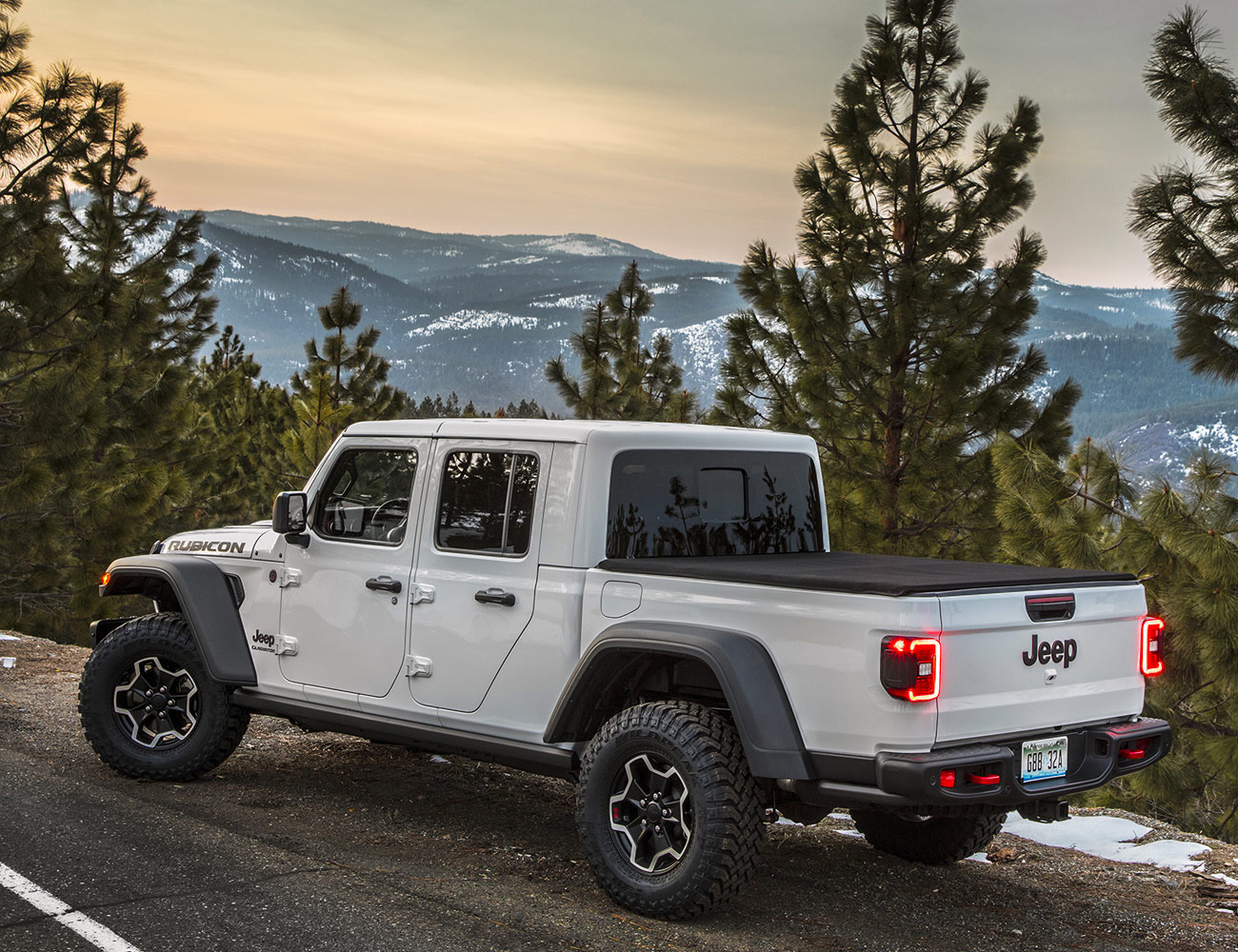
The Gladiator is Jeep’s all-new Wrangler-based midsize pickup. It currently comes with one engine option, the 285-hp 3.6-liter V6, for now, although a turbodiesel V6 is forthcoming. All four trims are available with either a six-speed manual or an eight-speed automatic. The truck is intended to be a direct competitor for the Toyota Tacoma and the Chevrolet Colorado ZR2. It’s projected to rival the Taco and the Wrangler for the best resale value of any used vehicle in the United States, which should make it affordable to lease.

Body Style: Pickup

Models:

• Sport
• Sport S
• Overland
• Rubicon

Engines:

• 3.6-liter V6

Base MSRP: $33,545

Note: Purchasing products through our links may earn us a portion of the sale, which supports our editorial team’s mission. Learn more here.

The New Land Rover Defender Launch Schedule: Here Are All the Details

The Magazine

Each issue of Gear Patrol Magazine is a deep dive into product culture. Inside, you’ll find seasonal buying guides, rich maker profiles and long-form dispatches from the front lines of product design. The stunningly designed Gear Patrol Magazine is ready for your coffee table. Quarterly. $39

The Newsletter

Get the best new products, deals, and stories from across the world, in your inbox daily.

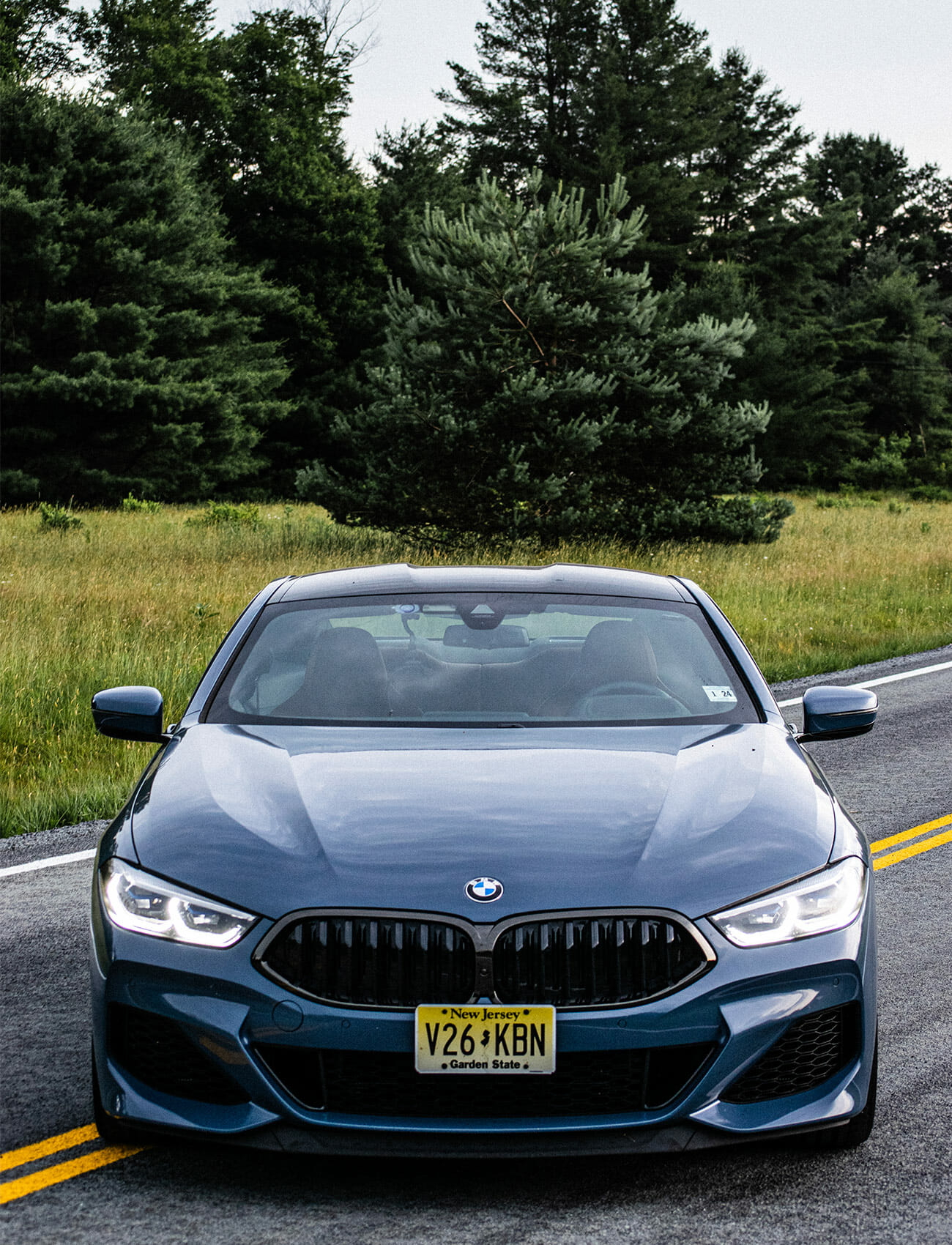
2020 BMW M850i Review: A Grand Gran Turismo With a Sole Notable Flaw

For the last 40-odd years, BMW has been swapping its big coupes back and forth with commendable regularity. From 1976 to 1989, the company’s biggest two-door was called the 6 Series. As that model wound down, Bimmer swapped in a new, larger model with more powerful engines called the 8 Series, which stuck around until 1999. That was followed up by a new 6 Series again, which appeared on the scene in 2003 and stuck around for 15 years over the course of two generations. As it wound down last year, it was in turn replaced by — you guessed it — an all-new 8 Series.

While the name might make you think it’s related to the giant 7 Series sedan, the new 8er is actually based on the same platform as the 5 Series sedan (which, to be fair, is now nearly as large as the 7 Series of 2008). Of course, that lofty number means BMW can charge full-size luxury prices; the M850i may have the same powertrain as the M550i, but the base price is a whopping $35,250 higher. But the two cars play to different audiences; while the M Sport 5er is made for upper-management types who still have bosses to please and children to ferry about, the eight-pot 8 Series is for empty nesters who can set their own schedules. It’s a gran turismo extraordinaire, a status-laden road tripper made to cover ground with the speed and luxury of a Gulfstream.

The Good: Stellar design and proportions, effortless and impressive V8 thrust, gecko-like grip, a cabin that looks and feels worth the six-figure pricetag.
Who It’s For: Those who seek comfort, speed and style over cargo capacity and other utilitarian concerns. Also, tall people. Front legroom, as in most large coupes, is outstanding.

Watch Out For: Low-profile tires are prone to blowouts on tattered roads; numb, unsatisfying steering; electronic control systems that add just a little too much complexity to what should be an involving driving experience.

Alternatives: Mercedes-Benz S560 Coupe ($125,950+), Lexus LC 500 ($92,950+), Porsche 911 Carrera 4S ($120,600+), Bentley Continental GT V8 ($198,500+).

Review: Oh, that damn steering. If there’s one facet of BMW’s famed reputation for building Ultimate Driving Machines has slipped in recent years, it’s the connection between that leather rim in the driver’s hands and the front two wheels — and that’s as evident as ever here in the M850i. In Comfort mode, the ratio feels right, but it’s too soft, a little too loose. In Sport, the resistance is dialed up — artificially, sure, but still feeling more substantial — but the ratio becomes too quick. Spend most of the time in Comfort, as you will most of the time, presumably, you’ll find yourself dialing in too much for every turn. It’s disconcerting, pulling you out of the driving experience — something that should be ever so natural, and is in almost every other cars. 

It’s a shame, because the car is delightful in almost every other way. The engine reminds you why the company is called the Bavarian Motor Works: Power starts arriving early and keeps on coming, a whopping geyser of torque and horses that keeps all four wheels busy thrusting the 4,478-pound Bimmer forward like a car half a ton lighter. A little throttle is usually all you need, thanks to the power and the delightfully proactive ZF-sourced eight-speed automatic transmission — but bury the gas pedal, and this coupe feels every bit like the 3.3-second-from-0-to-60 car it is.
Not that you’d ever grow sick of the delightful rush of the twin-turbo V8’s accelerative force, but even if you did, there’d still be auditory delights to savor. In Sport mode, the back-pressure burbles when you release the throttle sound like distant thunder, and the roar under full whack brings to mind streetlight drag races in baby boomer glory days. It’s the primal delight of the automobile — Springsteenian emotion, delivered by analytical German engineers. I found myself yo-yo-ing my speed like an asshat just to hear the purr. 

Ultimate driving machine status is about lateral movement as it is acceleration, however — and the big Bimmer conducts itself plenty well in this regard. The all-wheel-drive serves up stunning grip, at least as far as I pushed it on back roads (which is probably as far as anyone ought to push the car on the road). It’s still a big car; on narrow two-lanes, getting accustomed to its track takes a little while, a quirk no doubt exacerbated by the steering issues. But it stays flat and true in the turns, carving through them with verve. I’m not sure how it would fare on a track, especially after a couple laps at the limit, but for street driving, the whole package is stunningly capable and quick. 

Indeed, the car’s innate goodness is enough to make you wish the engineers didn’t lean so much on different drive modes. Back in the day, before adjustable suspensions and electronic throttle mapping and variable power steering assist, carmakers could only dial in the suspension, throttle, steering and brakes in one way, so they had make sure everything was nicely balanced for every task and driving style the car might take on.

Now, you’re cursed with too many choices, which are often too similar to offer a difference or too extreme to realistically use. At least the M8 gives you two buttons on the wheel that you can use to call up a pair of custom presets; the M850i just gives you “sport individual,” which lets you tailor a single preference that becomes the default when you hit Sport. (I’d recommend Sport Plus for everything but steering, which is best left in Comfort all the time.)

Still, all told, it performs the grand touring balancing act deftly. Doesn’t feel as weighty as the Continental GT or an S-Class two-door, but it has more get up and go than an LC 500. The Lexus drives with a tad more purity, in some ways; the rear-wheel-drive power delivery and naturally-aspirated V8 certainly make it feel a little more playful. But the Bimmer is more conventionally attractive, especially inside — and its infotainment system won’t cause you to drive off the road while attempting to change tracks. 

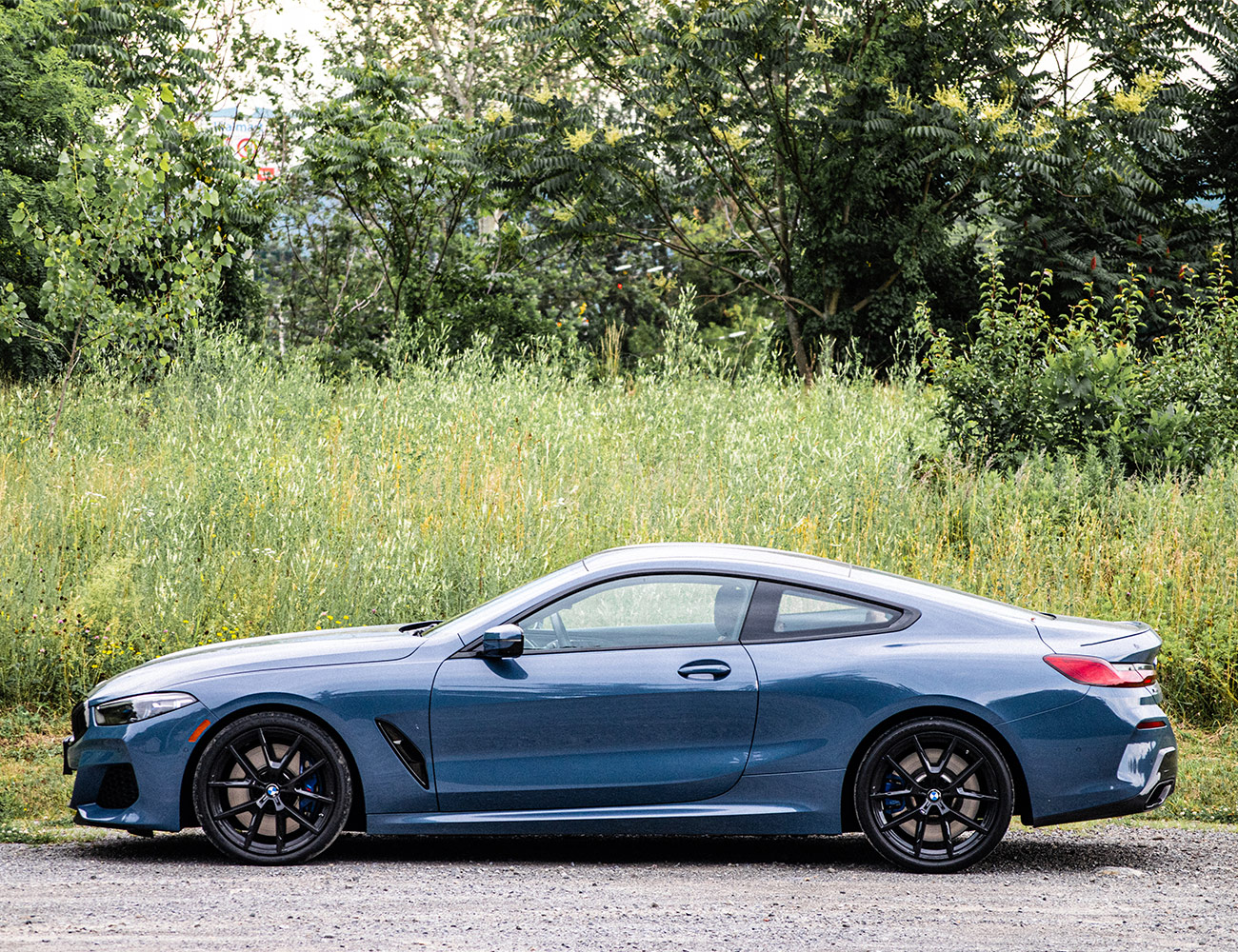
Speaking of looks — boy, does the M850i look good. It’s long, lean, low, and wide — idealized proportions for a car. The latest iteration of the Bimmer styling language fits it to a T, adding aggression without looking absurd. (Sorry, Z4, but you look weird.) The Barcelona Blue Metallic paint job of my tester — which has more gray and more flatness in it than the name would lead you to believe — suits the coupe damn well, bringing out the muscular nuances of the design.

If the exterior is aggressive, the interior is elegant — a spot where the company can justify the car’s six-figure valuation. The materials aren’t quite up to the level of six-figure Mercedes models, but by any objective measure, it’s a delightful place to knock out some miles. I had to make an unexpected weekend round-trip to Monticello Motor Club to pick up a piece of the Jeep Gladiator I’d left behind the week before; even after six hours and close to 250 miles in the saddle, I was nearly as relaxed as I was binge-watching Netflix’s equally-long extended cut of The Hateful Eight.

Admittedly, the new BMW instrument panel is mildly irritating, with its inverted tachometer that does a mediocre job of actually telling you how fast the engine’s turning at a quick glance. (Luckily, the head-up display manifests its own tiny tach in sport mode.) Other than that, it’s a pretty innovative way to display all the information you need while driving. It effectively acknowledges that the traditional “analog” speedo and tach can be pushed to the outskirts of the display, now that there’s a big digital speedo front and center in most cars and just about all of them come with automatic transmissions (and, in the case of sportier ones, have sport modes that probably know better than you do when to shift). That newfound space between speedometer and tachometer can be used to show a map, navigation directions, even the music playing (and a cool projection of the album art). Combined with the HUD, which puts the most crucial info smack in your eye line, you never feel lacking. 

The latest version of the once-maligned iDrive is better than ever, but it still has enough complex functions that you really ought to spend a good 15 minutes fiddling with it while parked before attempting to drive for the first time. While you’re there, take the time to delve into the many menus and tailor the car’s settings just the way you like; BMW offers more choices here than most automakers, even allowing you to dial in how sensitive you want the active safety systems to be.

Verdict:  The BMW M850i would seem to make for the perfect all-around daily driver, so long as you don’t need room for more than two people. In practice, it comes painfully close to being as good as it looks on paper, held back only by that unfortunate steering system. It’s a minor quibble, sure, but when you’re facing off against cars like the Porsche 911, you’d better make sure everything tied to driving fun is as good as you damn well can.

That said, the M5 doesn’t suffer from such steering maladies, so maybe the new M8 won’t either. Suppose we’ll have to find out for ourselves. (Hint, hint, BMW.)

2020 BMW M850i Coupe: Key Specs

Powertrain: 4.4-liter twin-turbocharged V8; eight-speed automatic; all-wheel-drive
Horsepower: 523
Torque: 553 pound-feet
0-60 MPH: 3.3 seconds (Car and Driver testing)
Top Speed: 159 mph

BMW provided this product for review.

Read More Gear Patrol Reviews

Hot takes and in-depth reviews on noteworthy, relevant and interesting products. Read the Story
Note: Purchasing products through our links may earn us a portion of the sale, which supports our editorial team’s mission. Learn more here.

We Finally Know What the New Land Rover Defender Really Looks Like

We already knew the upcoming James Bond movie, No Time to Die, would be a celebration of British motoring. Photographers spotted Daniel Craig driving a Land Rover Series III,  while the film’s “Bond Car” will be an all-new electric Aston Martin. So, it’s no surprise the film will also feature the new 2020 Land Rover Defender — and that an image of that car would leak from the expansive production.

An Instagram user who goes by @shedlocktwothousand seems to have done the honors, revealing the vehicle on Monday night. We don’t know how much this film-spec vehicle differs from the production version; we’d expect the blacked-out detailing might be an option, but probably not the winch. It appears to be the five-door Defender 110, which is expected to launch first.

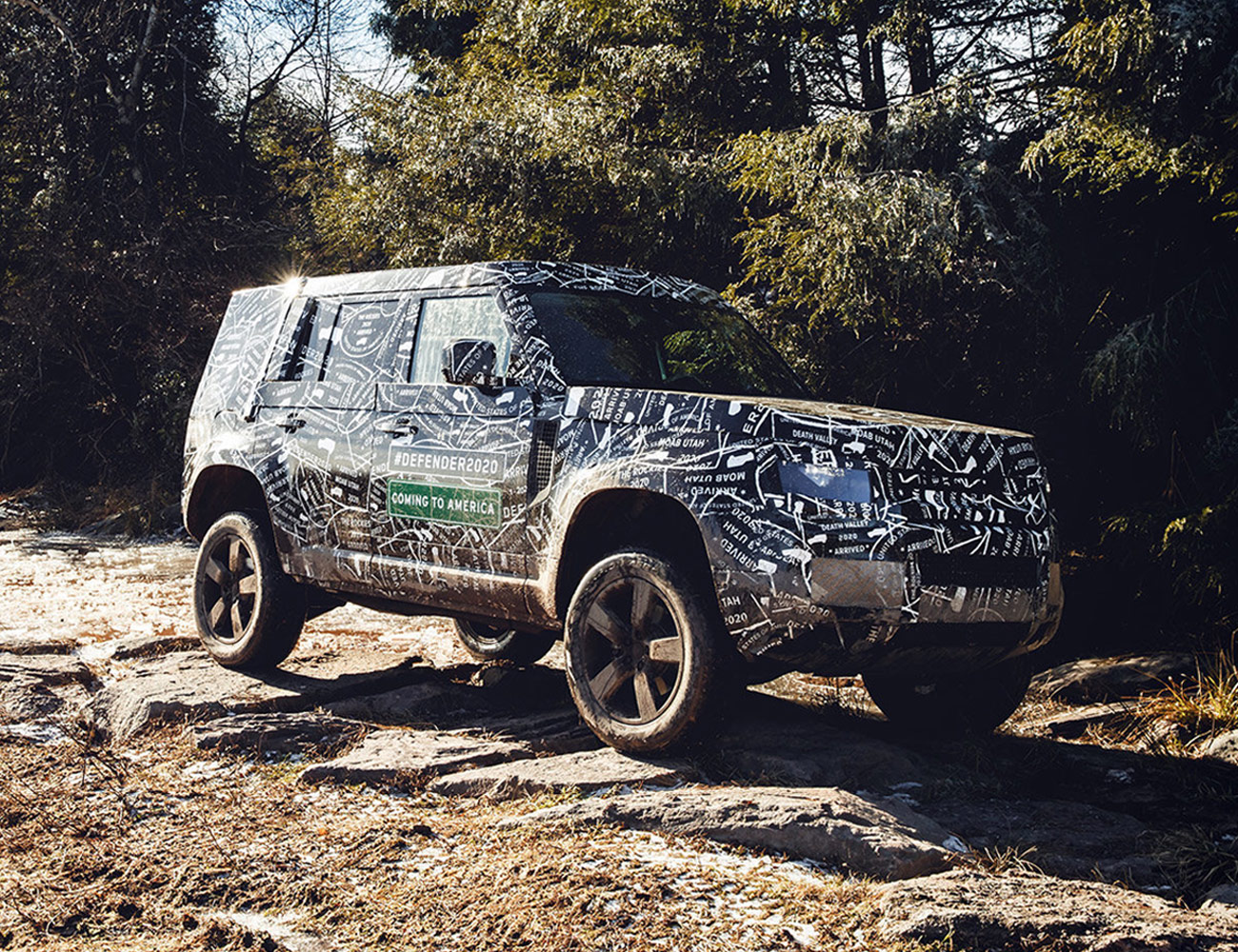
Preliminary reaction? It’s about what we would have expected from the camouflaged Defender photos making the rounds. It has some traditional Defender styling cues, like the checkered plating. It bears some resemblance to Land Rover’s DC100 concept from 2011, but with a more squared-off front end.

Land Rover had a complicated task building the new Defender. It had to convert a body-on-frame icon to modern unibody construction. It had to nod to the old while embracing Land Rover’s current identity as a luxury brand. And it had to accomplish both while not looking like a rebadged Discovery. We can reserve judgment until the full reveal, but based on this shot, the new Defender seems to be on point.

The New Land Rover Defender Has Been Caught Undisguised

We already knew the upcoming James Bond movie, No Time to Die, would be a celebration of British motoring. Photographers spotted Daniel Craig driving a Land Rover Series III,  while te film’s “Bond Car” will be an all-new electric Aston Martin. So, it’s no surprise the film will also feature the new 2020 Land Rover Defender — and that an image of that car would leak from the expansive production.

An Instagram user who goes by @shedlocktwothousand seems to have done the honors, revealing the vehicle on Monday night. We don’t know how much this film-spec vehicle differs from the production version; we’d expect the blacked-out detailing might be an option, but probably not the winch. It appears to be the five-door Defender 110, which is expected to launch first.

Preliminary reaction? It’s about what we would have expected from the camouflaged Defender photos making the rounds. It has some traditional Defender styling cues, like the checkered plating. It bears some resemblance to Land Rover’s DC100 concept from 2011, but with a more squared-off front end.

Land Rover had a complicated task building the new Defender. It had to convert a body-on-frame icon to modern unibody construction. It had to nod to the old while embracing Land Rover’s current identity as a luxury brand. And it had to accomplish both while not looking like a rebadged Discovery. We can reserve judgment until the full reveal, but based on this shot, the new Defender seems to be on point.

Some of the Brand-New Cars We’re Still Excited to Meet This Year

We’ve already seen some heavy-hitters of the new car world launch in 2019, like the Toyota Supra, the C8 Corvette and the new Subaru Outback. But there are still a few big launches yet to come as we approach 2020. Here, then,  are some major new car and truck debuts we’re looking ahead to in the next few months.

Porsche Taycan

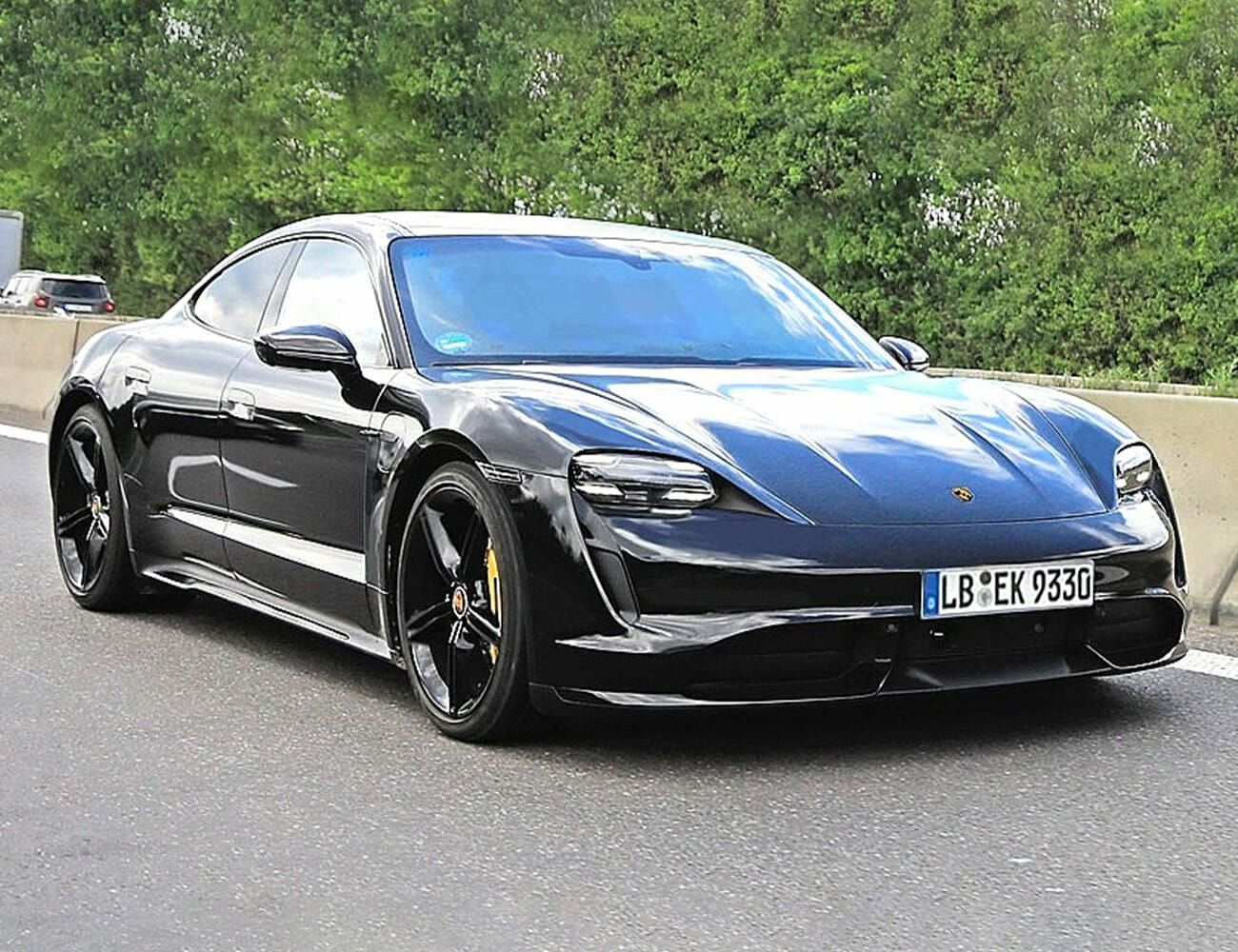
The Taycan (pronounced “tie-can”) is Porsche’s long-awaited full-electric Tesla fighter. While the Taycan is already kind of a big deal on YouTube, the official launch (occurring simultaneously on three continents) will take place on September 4.

Land Rover Defender

We’ve been looking at the new Defender in camouflage gift wrap for nearly a year. But the reboot of Land Rover’s classic off-roader is due to launch officially in or around the Frankfurt auto show in September.

Volkswagen ID 3 Hatchback

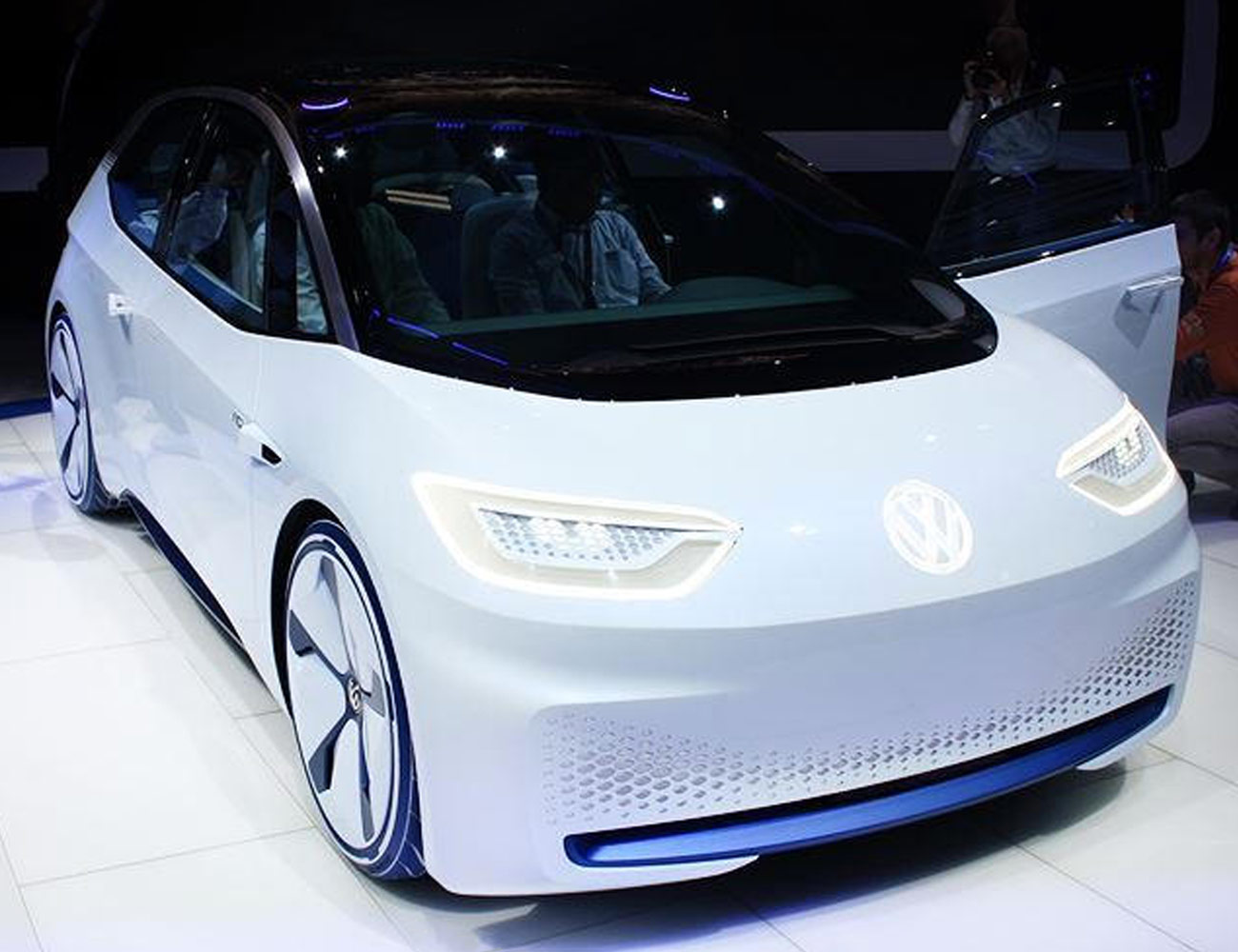
Volkswagen is going electric. The ID 3 hatchback — which, sadly will not be sold in the U.S.— will be the first EV from the company’s new ID line of electric cars. It should be VW’s natural successor to the Beetle and the Golf. Clearly, many on the Continent are already excited about it; more than 20,000 Europeans have pre-ordered an ID.3 without seeing it. It will emerge at the Frankfurt Auto Show in September.

Volkswagen Golf

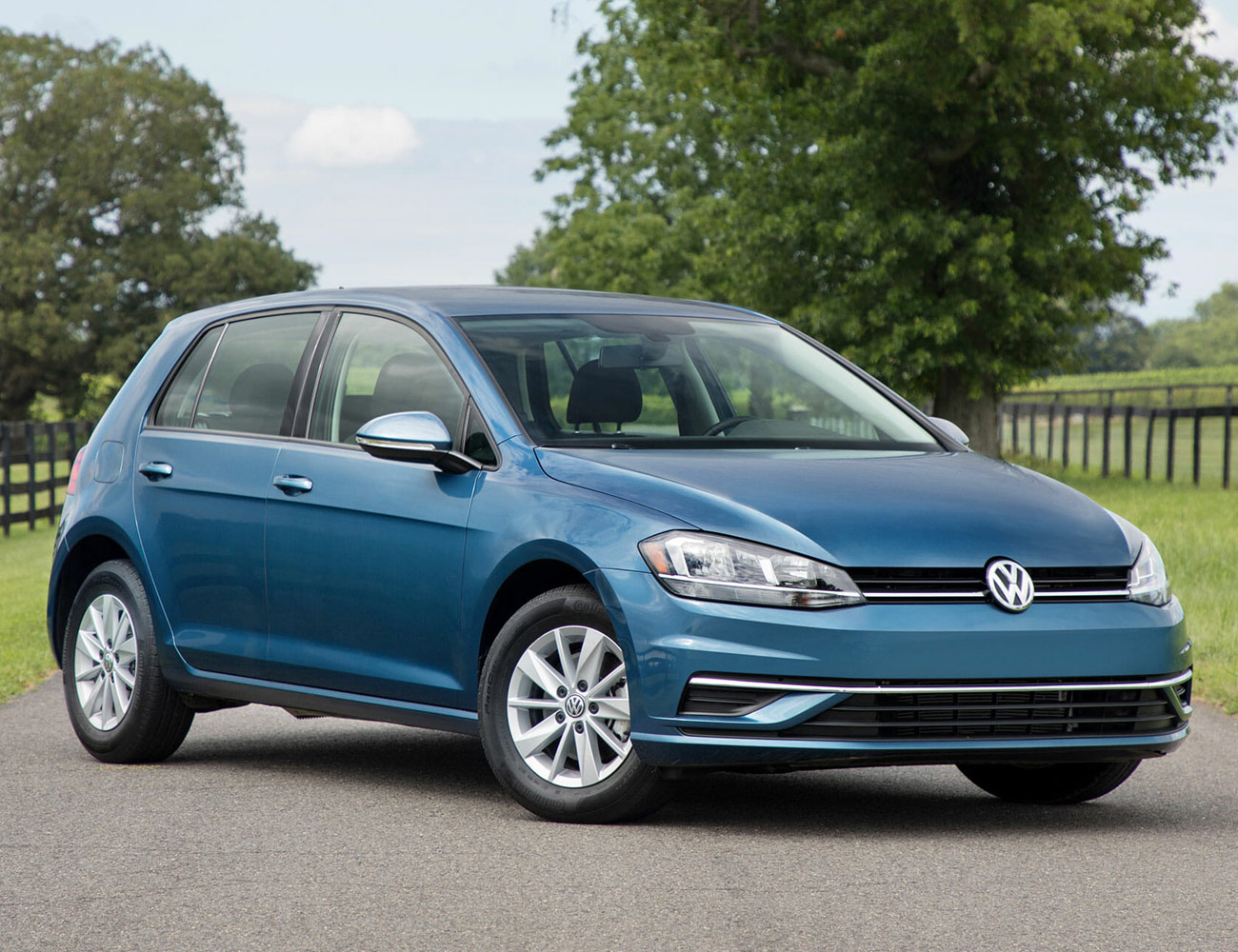
The Golf may be the best all-around car ever made. Volkswagen pushed back the eighth-generation launch to October to avoid a conflict with the ID 3 hatchback. With sales going poorly for the model here in America, it’s still uncertain how much of the Golf family the U.S. will get — and whether the base Golf will be available here at all.

Aston Martin DBX

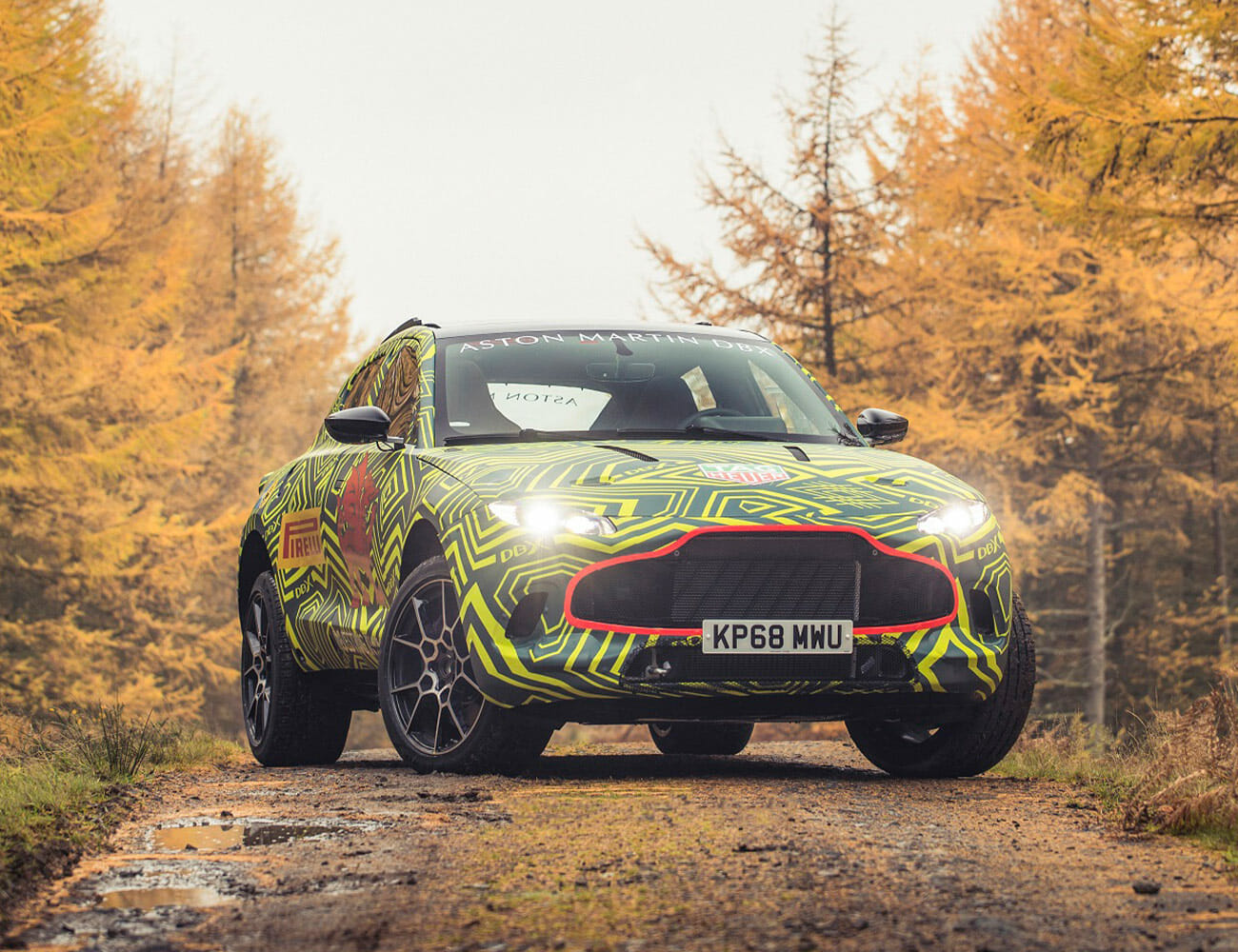
The DBX will be Aston Martin’s first SUV. Judging from the success of the Urus and other sport-luxury SUVs, it should be a much-needed sales success for the brand. Pre-production camouflaged versions have been spotted out and about doing testing for nearly a year; the 2020 DBX should finally be unveiled in December.

Unnamed Ferrari V6 hybrid model

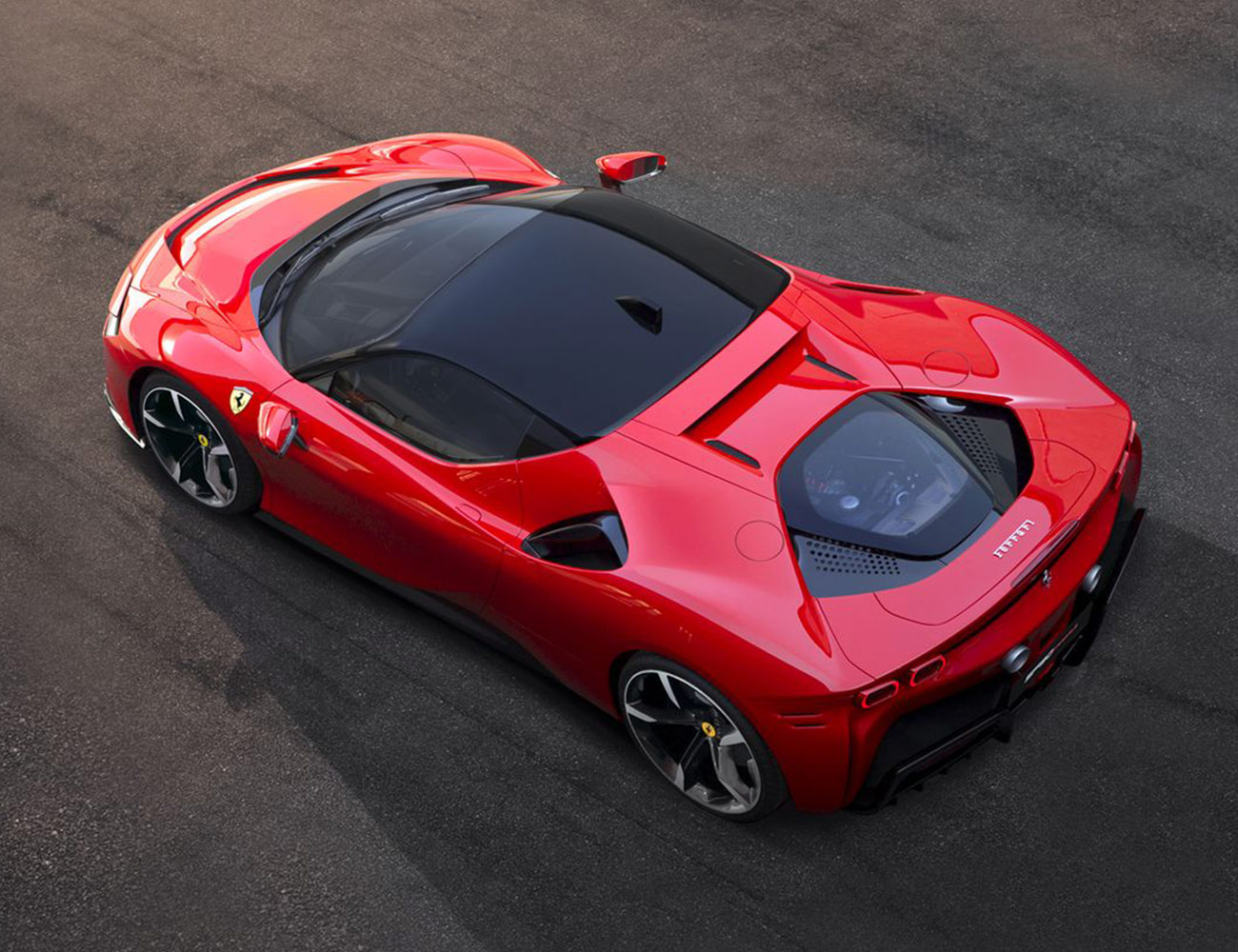
Ferrari will unveil three new models before 2019 ends. One of them should have a new hybrid V6 powerplant that has been under development for some time. Expect something along the lines of the Ferrari V6 in the Giulia Quadrifoglio, perhaps, with some added hybrid tech — perhaps in a more accessible GT car.

Toyota May Build a Land Cruiser Homage That’s Also Part Van

Once upon a time, Toyota  of the FJ Cruiser, a nostalgic homage to the iconic FJ40 Land Cruiser. That model ended production in 2014, but we finally might be getting a sturdy successor to that vehicle, and it’s also a super-practical van.

Reports from Japan translated by Jalopnik suggest a concept car called the TJ Cruiser will make it to production, and that Toyota could unveil the production version at the Tokyo Auto Show in October.

Toyota debuted the TJ Cruiser concept at the 2017 Tokyo Motor Show.  It was ostensibly a mid-size SUV shaped like a boxy van. A 108-inch wheelbase made it about two inches shorter than a 4Runner. (Per Toyota marketing, the T stood for “toolbox,” and the J stood for “joy.”) The production-spec TJ Cruiser will reportedly be an AWD hybrid and seat either five or seven passengers, instead of the concept TJ’s four.

The TJ Cruiser’s most distinctive feature was versatile fold-flat seats that could accommodate different combinations of people and gear. Folding the front passenger seat could offer about nine feet of length — enough to hold surfboards.  More compact and cost-effective than the Toyota overlanding campervan, such a rig would be perfect for outdoorsy types or young families.

One downside? The reports also suggest the TJ Cruiser might be a limited production run, with only 1,500 per month being made — which may mean it’s not bound for the U.S. market. But the TJ Cruiser would reportedly use Toyota’s global TNGA platform, which would make scaling up for international production easier. As with the factory manual edition of the Supra, a U.S. market TJ Cruiser may require relentless campaigning.

Toyota’s 2 Best Off-Roaders Are Fresh for 2020

Overlanding and off-roading are not synonymous. The ballistic-missile ascent of the former term into the modern vernacular has left hardcore trail enthusiasts wincing at its ubiquitous misuse by the masses who simply guide their tires from asphalt to gravel and bop around a little. Overlanding and off-roading are about intent, not actions. When a remote journey itself, not the destination, is the purpose of the trip, you’re overlanding. And when you attempt to conquer mighty earthly obstacles, you’re off-roading.

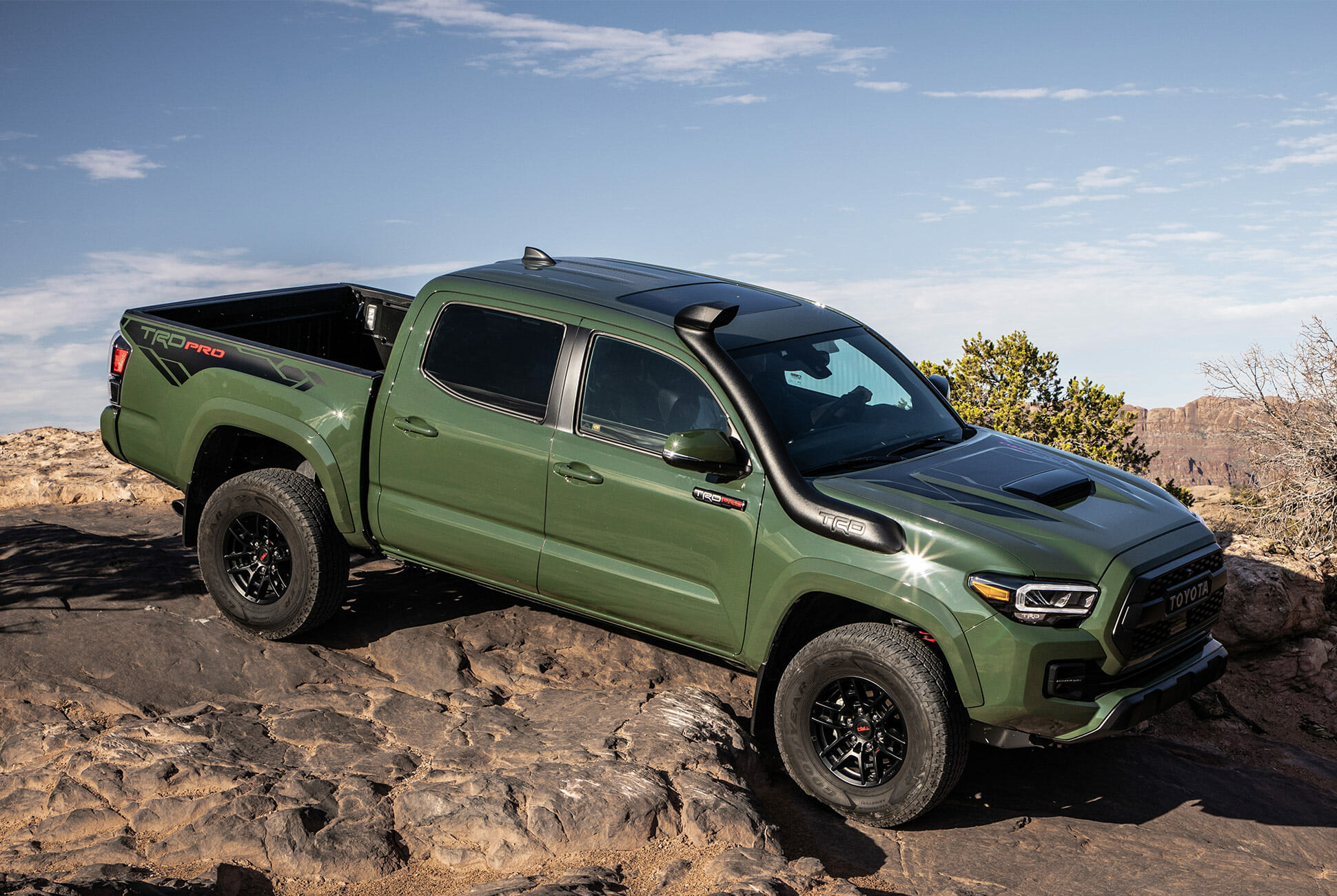
Informed denizens of the four-by-four community are quick to note that not all 4x4s are suitable for both endeavors. Toyota, however, builds two steeds capable of dominating both domains: the Tacoma TRD Pro and the 4Runner TRD Pro. Both have been treated to a light refresh for the 2020 model year. To sample them in their rightful element, we (along with a gaggle of other journalists) took them on an excursion across the American West, from the blistering Utah deserts to the lush Colorado mountains.

The Good: Reliability and durability are two defining attributes across Toyota’s entire lineup. The Tacoma and 4Runner have always exhibited both qualities in such spades that when it came time to reimagine them for 2020, it was hard to fix what’s not broken. The workhouse powertrains remain unchanged, as does the beefy exterior styling. So what is new? On the 4Runner, a TRD-branded cat-back exhaust system has been added. A redesigned instrument panel brings a touch of modernity to the spartan cabin, as does a honking 8.0-inch touchscreen multimedia display that now features Apple Car Play, Android Auto and Amazon Alexa capabilities. 

The same 8.0-inch screen and connectivity addition in the Taco breathes new life into the low-tech brute that launched in 2005 and has since gone largely unchanged, save for a 2016 update. The Tacoma also receives an eye lift in the form of new LED and Daytime Running Light headlights and the inclusion of LED foglights. Lastly, the helpful and effective Panoramic View Monitor (PVM) and Multi-Terrain Monitor (MTM) features both come standard on the new Tacos.

Who They’re For: No-frills adventure-seekers who’ll spend a considerable chunk of wheel time on unpaved ground. And people who will it drive often, on their way to the 250,000-mile club. Accordingly, the economically-minded will appreciate the low-maintenance requirements, long life expectancy and impressive resale value these vehicles offer.

Watch Out For: While the Tacoma and 4Runner are big strides forward, especially in the cabin, there’s still room for improvement in the creature-comfort department. The 4Runner remains sparse inside compared to rival SUVs. Despite being a beloved bombproof legend, the Tacoma has long suffered from a seat design that offers no real comfortable way for gangly-limbed occupants to comfortably rest. (The flat raised floor does afford better ground clearance off-road.) Toyota’s tried to address seating woes by bestowing the Taco with new 10-way power-adjustable seats; they help a smidgen but don’t rectify the issue. Lastly, there’s no telescoping wheel in the Taco, which is a true head-scratcher in this day and age.

Alternatives: Buyers of the Tacoma would likely cross-shop the Ford Ranger in Lariat trim (starting at $33,350) and the Chevrolet Colorado ZR2 (beginning at $42,000), while 4Runner prospectives would eye the Jeep Grand Cherokee (from $32,045) and perhaps the new Ford Explorer (from $36,675), though the Blue Oval wouldn’t stack up as well off-road.

Review: It was a withering 103 degrees when we hit the trailhead of Hell’s Revenge, a 5.5-mile off-road route nestled in the outskirts of Moab, Utah. The name doesn’t obfuscate what you’re about to undertake: The sinewy route is tricky and treacherous, riddled with boulders the size of dumpsters, cross-axle obstacles and steep hills that frequently leave you staring at the pristine blue sky.

As we queued up, seriously-kitted-out Jeep Wranglers streamed past — lifted to the sun, affixed tall jacks glistening. Our TRD Pros were bone-stock — a condition our fearless and affable trail guide Kurt Williams of Cruiser Outfitters claimed he’d never run here despite his 100-plus passes, though he had the utmost confidence we would emerge unscathed. (Even Williams’ lead vehicle, his own 2004 Land Cruiser, was modded with rail and rocker guards, a sizable lift, aftermarket shoes and custom bumpers, though he left the drivetrain untouched.) 

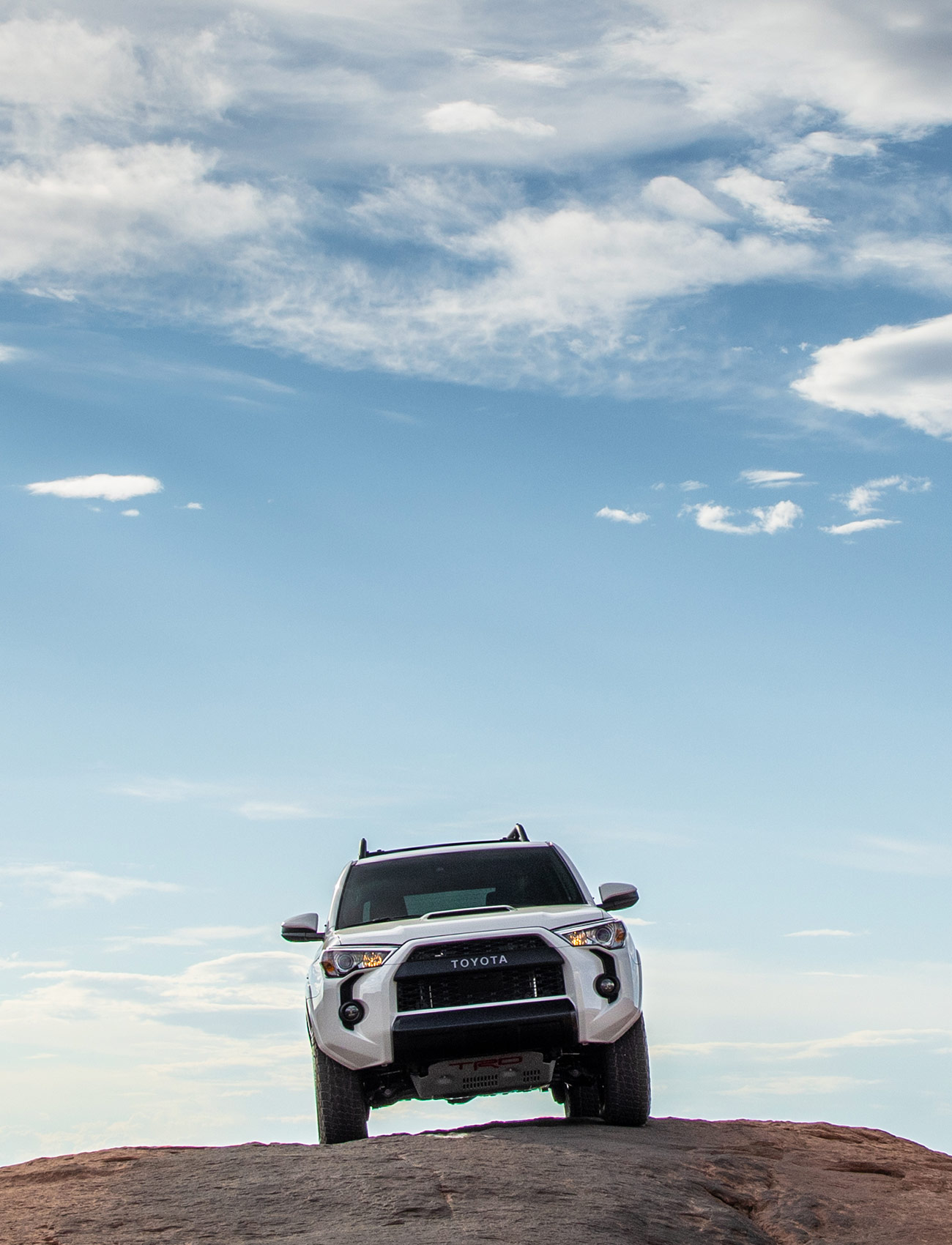
The mantra of off-roading is “as slow as possible, as fast as necessary.” So we inched our way forward in a 4Runner. On this harsh, undulating terrain, the body-on-frame SUV is at its best. The Nitto Terra Grappler tires — slightly deflated for the affair — offer impressive grip, and the 2.5-inch Fox internal bypass shocks that bestow an extra inch of lift over other 4Runner models will keep the sweat from beading on your brow as you crawl over everything in your path. The aging 4.0-liter, naturally-aspirated V6 offering 270 horsepower and 278 pound-feet of yank are more than sufficient, and you won’t use more than two of the automatic transmission’s five gears available while scrambling around off-road

The Multi-Terrain Select system lets you select from Mud and Sand, Rock and Dirt, Loose Rock, and Mogul and Rock modes. Each changes the brake-based torque vectoring to eliminate wheel spin, along with adjusting the throttle’s responsiveness. Coupled with an electronically-locking rear differential, you’re unstoppable. Ascending stretches where the gradient exceeded 25 degrees was a breeze, provided you’d locked the diff. (Fail to do so, and the 4Runner will shudder and skitter in place.)

The five-level Crawl Control system is a neat parlor trick that’ll help keep everything tidy by taking throttle and braking control out of your hands and allowing you to focus on steering and your line, but it’s more fun to modulate the pedals on your own. Loose steering and long accelerator pedal travel provide a nice buffer for you to find exactly the right amount of input, thus allowing you to keep trucking.

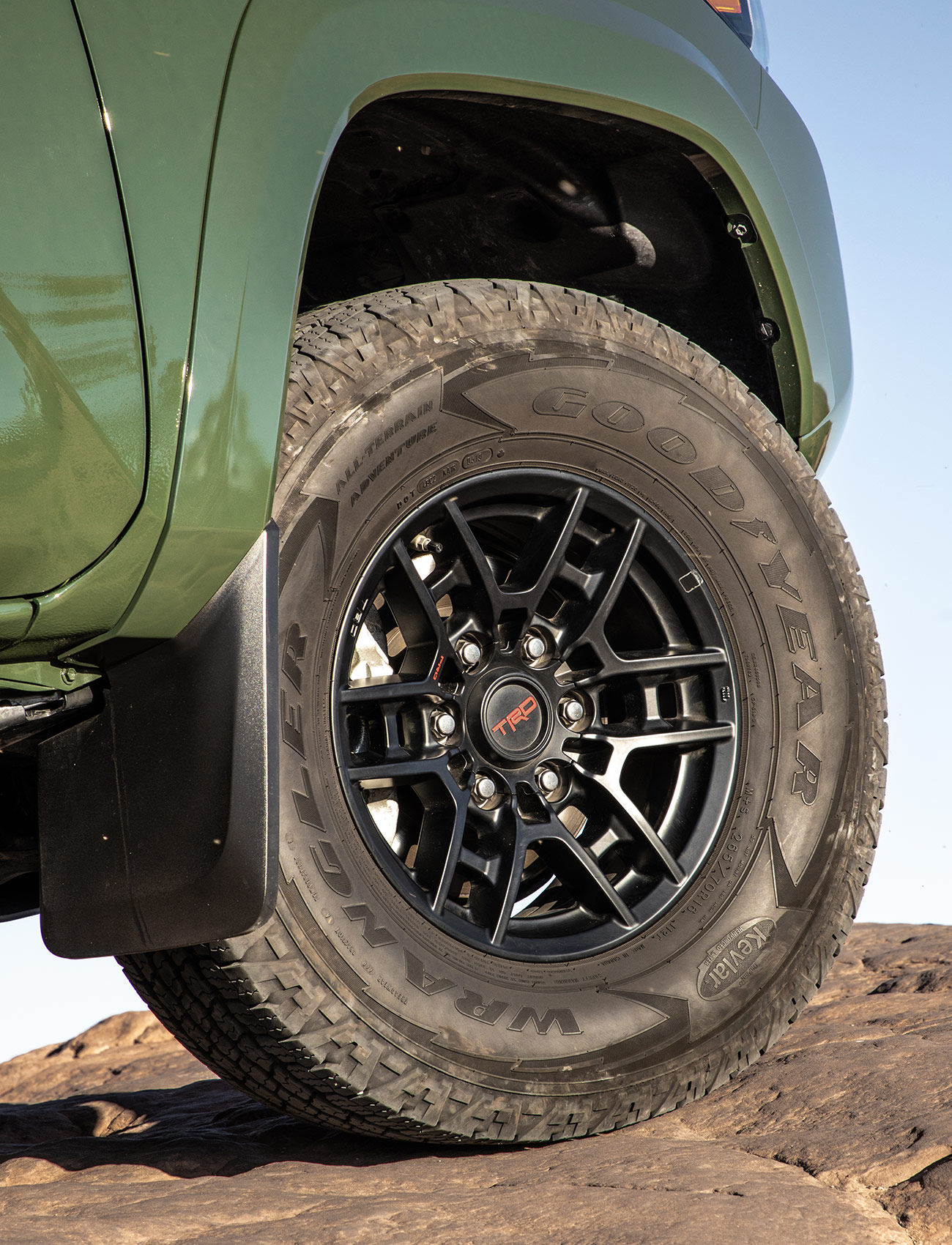
The short wheelbase of the 4Runner meant no trailer hitches kissed the umber Utah rocks. The lengthier Tacoma Double Cab, however, did make contact at a few points, albeit briefly — and no real damage was done. On Hell’s Revenge, the Taco shone bright, its surefooted prowess demonstrating why it’s such an icon in these conditions. It also enjoys the same lifted suspension and Fox shocks as the $Runner, and the 3.5-liter V6 mill good for 278 horsepower and 265 lb-ft of twist keeps you clambering forth with ease. Goodyear Wrangler All-Terrain Adventure 16-inch tires impart impeccable grip, even in slippery spots.

The PVM and MTM systems, which show the area around the vehicle via screen, are a kind feature that comes in handy when you’re climbing and the hood — sloped down a few degrees for better sighting — rises above the head of your trail guide. You can use the cameras to make sure you’re aimed the right way, and that your forward path is free of large obstacles. The downside is the pixelated resolution of the screen; it’s not crisp enough to see individual rocks in your blind spots, something engineers acknowledged they’d continue to tinker with. Still, you’re better off with the systems than without.

En route to Ouray, Colorado, we did some light pseudo-overlanding over the La Sal Mountains, where both the Tacoma and the 4Runner lapped up the gravel and dirt trails some 10,000 feet above sea level. Bashing around the loose surfaces was a hoot, but it was here that the transmissions started to show their age. The Taco suffers from incessant gear-hunting, seemingly never content with its own selection. It’s constantly rowing through the six-speed auto (this problem wouldn’t exist in the optional manual version);  just when it settles, you’ll inevitably need more power, forcing a downshift — and the whole process starts anew. Engineers have recalibrated the transmission recently, tweaking shift points for improved fuel efficiency, but a little more time spent here may benefit drive quality. The 4Runner’s gearbox is better, but hints of the same issue show under harder pushes.

Verdict: The final stretch of the trip was on the highways of Colorado. If you’re looking for a sedate and plush mile-logger, the Taco and 4Runner may disappoint. The same attributes that make them impeccable off-road leave something to be desired when it comes to pavement manners; there’s a bit of brake dive on both vehicles, and the loose steering becomes unwelcome at a highway clip. But the people who understand the intent of these immutable machines — the overlanding and off-road zealots seeking uncharted exploration and adventure — certainly won’t be disappointed by the 2020 4Runner and Tacoma TRD Pros in the least.

2020 Toyota 4Runner and Tacoma: Key Specs

Powertrain: Tacoma – 3.5-liter V6, six-speed automatic or six-speed manual, four-wheel-drive; 4Runner – 4.0-liter V6, five-speed automatic, four-wheel-drive
Horsepower: Tacoma – 278; 4Runner – 270
Torque: Tacoma – 265 lb-ft; 4Runner – 278 lb-ft
0-60 MPH: Tacoma – 7.3 seconds; 4Runner – 7.5 seconds
Fuel Economy: Tacoma – 18 mpg city, 22 mph highway; 4Runner – 17 mpg city, 20 mpg highway (2019 model)

Toyota hosted us and provided these products for review.

Read More Gear Patrol Reviews

Hot takes and in-depth reviews on noteworthy, relevant and interesting products. Read the Story
Note: Purchasing products through our links may earn us a portion of the sale, which supports our editorial team’s mission. Learn more here.

The 2020 Audi RS6 Avant is Coming To America

For model year 2020, the United States is finally allowing Audi to bring their heretofore Europe-only RS6 Avant wagon to our shores. This fully updated 591-horse super wagon is powered by a twin-turbo V8 which delivers some pretty sick numbers: 0 to 60 in 3.6, top speed of 190+ w/optional Dynamic Package Plus. The RS body is wider overall by 1.6” than the standard A6, plus features adjustable sport suspension, a racy exhaust system, and that sinister RS body kit.

The New Ford Bronco: What You Need to Know

More than two years ago, Ford excited everyone by announcing a new Bronco for 2020. After a protracted development process, we have seen leaked photos, speculative renderings and odd-looking test mules cruising around Detroit. But the 2020 model year has arrived, the 2020 calendar year is fast approaching, and Ford…is still not commenting on upcoming vehicles.

Here are the big outstanding questions about the new Ford Bronco — and what we know about the answers.

How many Broncos will there be? There should be three versions, eventually. A standard “Bronco” will be body-on-frame, and run on the Ranger platform. A smaller “Baby Bronco” should join it on a unibody platform. Names like “Adventurer” and “Scout” have been floated for that smaller model, but Ford Authority suggests the current leader is the hopelessly generic “Bronco Sport.” Reports suggest a Bronco pickup may emerge during the Bronco’s life-cycle.

What engine will the Bronco have? This is still in the educated-guess stage. A Canadian Tire parts lookup tool listed the Bronco as having Ford’s 2.3-liter EcoBoost engine, which is used in the Ranger, Mustang and elsewhere. That would be a natural fit for a base engine.

The original Bronco offered a V8; not doing so would disappoint some, but the twin-turbo 2.7-liter V6 from the F-150 might be a better fit. Ford president Jim Hackett noted the Bronco would offer a hybrid powertrain at a shareholders’ meeting. Ford could potentially even use the 3.0-liter V6 hybrid system from the Lincoln Aviator.

Will the new Bronco get a manual transmission? That seems probable. A Jalopnik report from 2018 says Ford has tabbed transmission supplier Getrag with producing a seven-speed manual bound for the Bronco. Having that option would help build the Bronco’s cred as a legitimate Wrangler/Tacoma fighter.

Will there be a two-door Bronco? It appears so. There’s a market case for not having a two-door — Wrangler buyers have abandoned it. However, dealers reportedly saw a two-door prototype with removable doors and a removable hardtop. (The two-door Bronco is the classic look.)

When will the new Bronco launch? Ford has not given us firm dates. The Bronco debut will have to work around the launch of the new F-150, also debuting in the 2021 model year. Educated guesses have Ford launching the “Baby Bronco” in early 2020, followed by the F-150 over the summer, and the full-on Bronco debuting late in 2020.

‘We’ve Got the Formula:’ Bentley’s CEO Talks the Future of the Luxury Brand

Adrian Hallmark looks pretty much exactly like you’d expect the CEO of Bentley Motors to look. Middle-aged, square-jawed and broad-faced, he’s the sort of generically good-looking British fellow who you’d see playing M in a Bond film before Dame Judi Dench owned the role.

He’s also holding the reins of the company at a pivotal moment in time. Bentley isn’t just celebrating its 100th birthday this year; the brand is celebrating its centenary with what Hallmark himself described to Bloomberg as “probably the worst year in our history” squarely in its rearview mirror.  And the road ahead is a twisty one; parent company Volkswagen AG is pushing full steam ahead into electrification, with plans to invest $91 billion in electric cars and tech in the near future in order to crank out three million EVs a year by 2025.

For a brand based around the idea of grand tourers designed to drive for days on end at high speeds, pushing into electric cars — which, for all their rapidly-gaining capabilities, still can’t come close to the range of their internal-combustion equivalents, let alone the “recharging” time of a $500 hooptie — seem like a honker of a pill to swallow. Hallmark, for his part, isn’t in denial about the challenges. In order to work for Bentley, the CEO says, batteries need to reach parity with the range and performance of the carmaker’s current gas-powered cars.

“We don’t see anything until the mid-2020s that’s big and strong enough for our needs,” Hallmark says. “We would need probably a 150-kilowatt-hour battery to propel something the size of a Flying Spur or a Bentayga.” (The largest electric car battery currently used, for the record, is the 100-kWh unit in top-trim Tesla Model S sedans and Model X crossovers.) A slightly smaller battery could be practical, he hedges — “We can maybe get 130-135 kWh” to work, he says — but that would have to be in part due to better battery management technology as well as bigger electron tanks, so to speak. 

Vero eos et accusamus et iusto odio dignissimos ducimus qui blanditiis praesentium voluptatum deleniti atque corrupti quos dolores et quas molesti Photo by John Doe.

Also — new types of electron tanks. The current type of battery technology commonly used — lithium-ion, which use a liquid electrolyte to carry charge around — just doesn’t have what it takes, at least for the Flying B. “Lithium-ion is not the long-term solution. Full stop,” Hallmark says. “We’re looking forward to solid-state.”

Solid-state batteries, unlike lithium-ion, don’t have a liquid component, instead using solid materials such as ceramics as conductors for electricity; this can make them both safer and more power-dense than other, more traditional batteries, but the technology is still in its infancy compared to the power packs found in iPhones and TeslasTo that end, the VW Group has invested in a solid-state battery startup called QuantumScape, whose work should be ready for production car integration by 2023-2025, according to Hallmark. (Hence, presumably, why Bentley has locked onto a target date of 2025 for launching its first pure electric car.)

It’ll still be more expensive than li-ion, as the common battery type is abbreviated, but Bentley’s positioning near the top of the market means it can lead the way for the whole VW Group on the new tech. “In a $250–$300,000 car, people can afford to carry that premium,” Hallmark says. 

And in spite of what you might assume, while Hallmark claims Bentley’s customers aren’t particularly jazzed about self-driving cars — “I wanna be the last customer in an autonomous car” is the sort of remark they often drop in research clinics and casual conversations alike, he says — they are enthusiastic about the idea of EVs. Every two years, Hallmark says, the company does a survey of 1,500–2,000 current and potential customers; over the last four years, interest in electric cars jumped from just 8 percent to a whopping 40.

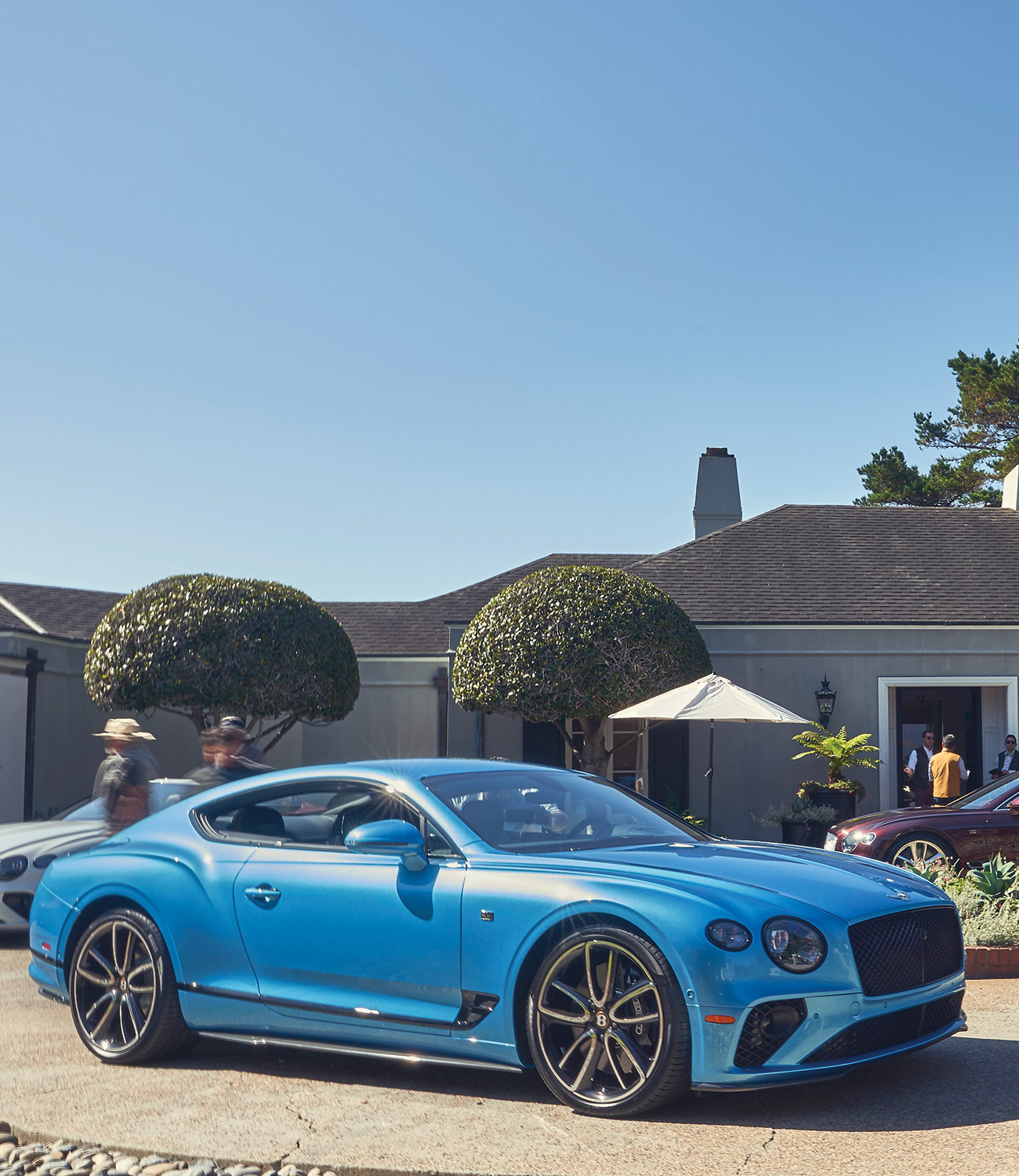
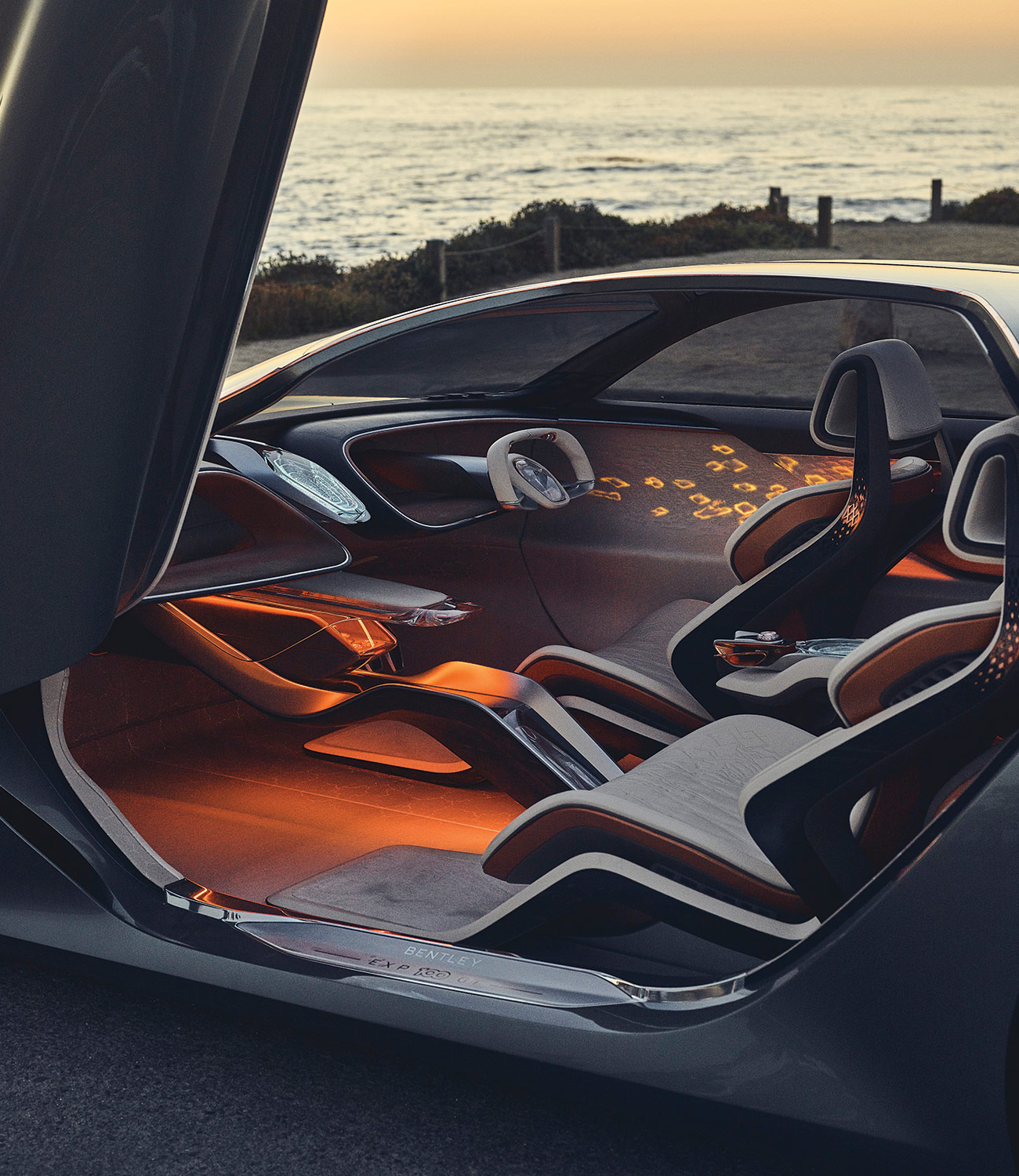
Hence, in part, why the EXP 100 GT concept car — unveiled last month and shown off to the public at Monterey Car Week — is powered by electrons, not fossil fuels. But the choice of powertrain is hardly the only thing differentiating that idea of Bentley-circa-2035 from the new Continental GT coupe parked next to it at The Quail. Sustainable materials make up a far greater chunk of the car than current models: the interior uses 83 percent less leather than a modern car would, subbing in upholstery made from winemaking-sourced grape skins that would otherwise be discarded; cotton from a farm in the north of England makes up much of the rest of the insides.  It’s all part of a broader vision for the super-luxury brand’s future, one that holds sustainability as a watchword as much as elegance and craftsmanship.

“It’s not tokenism,” Hallmark says. The brand already uses sustainably-sourced wood appropriated from trees that fell on their own, but going forward, the CEO says the company might even invest in buying entire forests — partly to guarantee a supply of hardwood, yes, but also to help offset the company’s own carbon emissions. The goal, he says, is to make the company carbon-neutral by 2023, balancing out emissions on every continent from both the vehicles they sell and the facilities that build them. (The Bentley factory in Crewe, he says, will be the second one in the entire VW Group to negate its CO2 footprint.)

“We have to reinvent Bentley,” he says.“If that appeals to vegetarians, carnivores, velociraptors, I don’t care. As long as they’ve got a driver’s license.”

“The potential is huge,” he adds. “The next 100 years, although we have to redefine everything, we’ve got the formula.”

In the short term, however, that means hybrids. The Bentayga is first; the 3.0-liter-turbocharged-V6-and-17.3-kWh-battery plug-in hybrid goes on sale towards the end of the year. Every model in the portfolio is ripe for partial electrification, however — though Hallmark admits the Mulsanne won’t be able to integrate a battery and electric motor until a new version replaces the current one, which has gone largely unchanged since its 2010 debut. (“Where the petrol tank is probably the worst place for electrification,” he says.)

It isn’t just hybrid tech that’ll be coming to the existing lineup. Hallmark says the company’s current four models have room to develop further; “there’s a lot more innovation we can do with each of those models” than with new ones, he says. Faster versions and longer wheelbases could both be in the cards, he says — the latter, presumably, reserved for the likes of the new Flying Spur and future Mulsannes. 

One addition you shouldn’t expect to see: a Bentley hypercar. While Hallmark admits it’s the sole high-end automotive segment that’s been growing in the last decade and a half that the brand doesn’t play in, the brand’s VW Group cohorts Bugatti, Lamborghini and Porsche already own the space well enough.

“As a group, we don’t need a fourth member of the family sharing the same chicken,” he says. 

One pool where Bentley still sees a place to dip its toe, however: one-offs and limited-run models. They’ve been both a sales success and a media boon for other brands in the group (and elsewhere), yet so far, the crew from Crewe hasn’t done much in the way of those high-margin specials. That seems likely to change.

“We’ve got some ideas,” Hallmark says. “You can expect some positive news,” he adds, before mentioning that we won’t need to hold our breath too long. “It’s months, rather than years.”

Lease a Jeep Gladiator, It’ll Be Cheaper Than a Wrangler

The Jeep Gladiator has received stellar reviews. Experts predict the new midsize pickup truck will outperform both the formidable Tacoma and the Wrangler on the resale market. That’s great news if you’re leasing.

We’ve seen incredible Gladiator lease deals pop up on Jeep’s website (and off it). Now, a CarsDirect analysis shows the Gladiator is expected to have 18 percent greater residual value than the Wrangler after 36 months. Which means rthat, despite the higher sticker price, the Gladiator is cheaper to lease than the Wrangler.

CarsDirect looked at automatic transmission-equipped base models of the two. The Gladiator Sport’s MSRP of $37,040 is more than the base Wrangler Unlimited’s $36,235, yet the effective lease for the Gladiator ($363 per month) is seven percent lower than that for the Wrangler Unlimited ($391 per month).

The effect is particularly significant when comparing the Gladiator — admittedly, slightly unfairly — to the two-door Wrangler with a lower residual value. The Gladiator is $5,500 more expensive than the base Wrangler Sport ($31,540). But, that base two-door Wrangler’s $438 monthly lease is $75 per month higher. Moral of the story: Do not lease a two-door Wrangler.

One slight caveat is that Jeep’s response to the Gladiator’s popularity has often been to option ones found on dealerships out to the max to ramp up prices. Bare-bones base models will be hard to find. (My closest dealer, for example, does not have a single Gladiator priced under $45,000.)

Add Some Retro Style to Your Off-Roading With This Old-School Land Cruiser

What does any discerning overlander or off-roader look for in a truck? Reliability. Which is something the Toyota Land Cruiser has in spades. From their genesis to the modern-day versions, these beefy four-wheel-drives have boasted trustworthy dependability, no matter which version you pick

Yet for as many cool models of the Land Cruiser that exist, the FJ40 remains one of the most iconic. Toyota produced the FJ40 from 1960 until 1984. Like many manufacturers of the time, Toyota felt the need to respond to the king of off-roading: the Jeep CJ. The FJ40 used a similar, boxy body, an interior devoted to practicality above all and a motor and transmission built for the apocalypse. 

They also followed in the Jeep’s tire tracks with the enormous about of options and configurations offered on the FJ platform to assist in any type of trucking imaginable. Nearly 60 years after the creation of the FJ40, they’ve solidified their place right next to Jeep as one of the most iconic and durable off-road vehicles in history.

And now, our friends at Bring a Trailer are offering a beautiful example of a 1978 Toyota Land Cruiser FJ40 for you to grab. 

This particular one has the factory 4.2-liter straight six mated to a four-speed manual gearbox, topped off with a two-speed four-wheel-drive transfer case. A number of repairs and maintenance has been done, including a new head gasket and main oil pan and rebuilt alternator; the carbs have also cleaned. The soft vinyl roof was replaced with a Toyota-branded aftermarket soft top. And in addition to a fresh coat of paint, a previous owner graciously refinished the frame as well. 

As of this writing, the auction has four days left, and the bidding stands at $6,972. Get this truck. Go outside. Give it hell.    

Defender by Himalaya 110 Review: The O.G. Land Rover, Resurrected

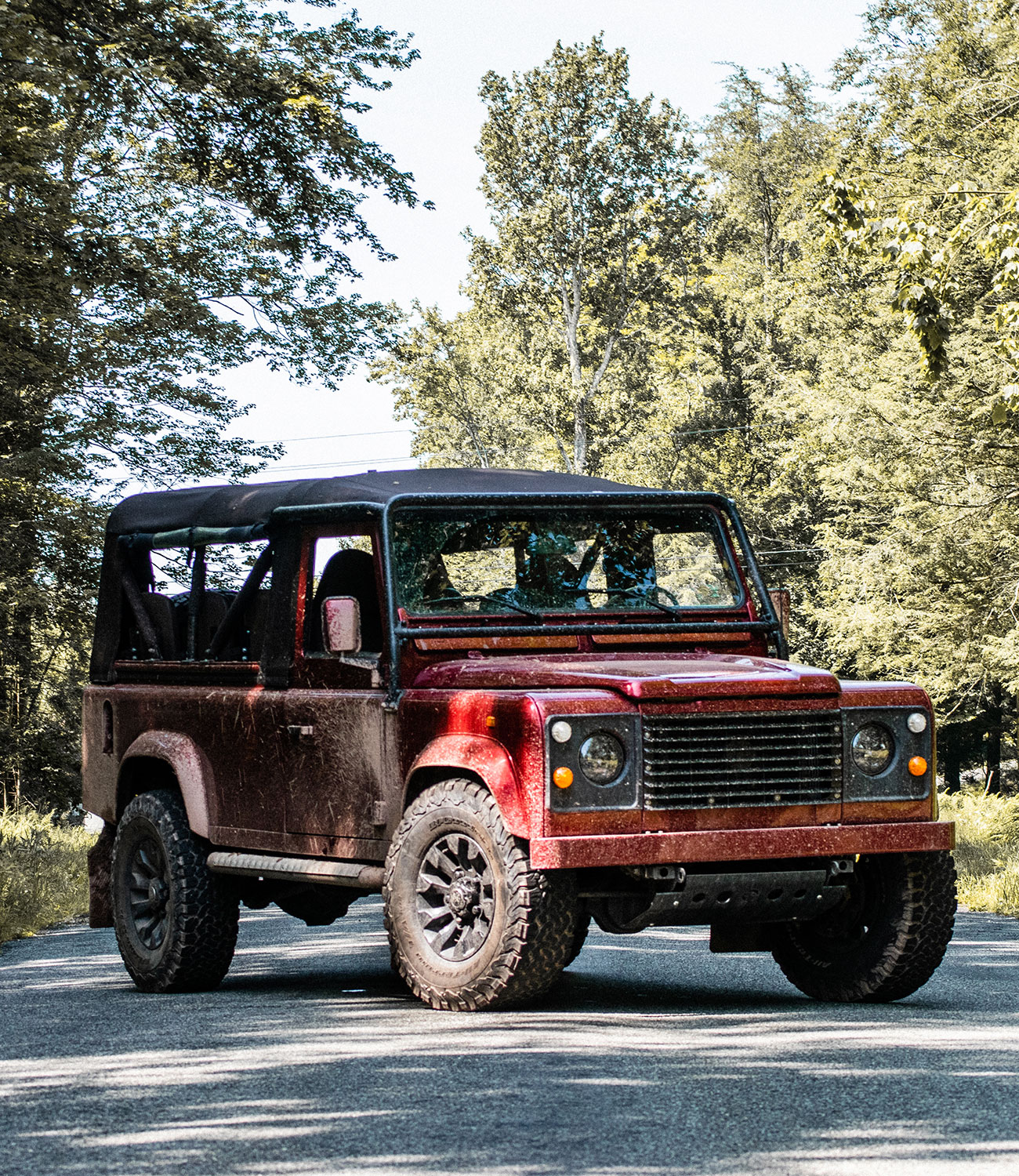
Understanding Land Rover Defender restoration firm Himalaya nomenclature can be a tad confusing, so let’s clear it up right here at the start: Himalaya is the name of a South Carolina-based company that specializes in high-end restorations of the boxy Land Rover from the late ’80s and early ’90s. That company builds two types of Land Rovers: super-high-end versions with modernized interiors and powerful aftermarket engines, which are called “Himalayas;” and more basic versions that hew closer to the original Defenders in spec and spirit, each of which is called a “Defender by Himalaya.”

Or, to sum up: If a Himalaya has “Defender” in its formal name, it’s basically the closest thing you can buy to a brand-new version of Land Rover’s iconic four-wheel-drive box here in the United States. Jaguar Land Rover, after all, hasn’t sold the Defender 90 or 110 in America since new episodes of Seinfeld were the backbone of Must-See TV Thursdays — or anywhere else since early 2016, for that matter. (Not counting the limited-run Defender Works V8 models of 2018, which were as much a part of the regular production run as Aston Martin’s DB5 James Bond “continuation cars” were made for Goldfinger.)

While they’re generally made to order, Himalaya brought one of its lovingly-recrafted Defender 110 models up to New York earlier this summer for us to take a spin in — not just on the streets, but on the gnarly off-road trails hiding in the woods behind Monticello Motor Club.

The Good: The Defender by Himalaya is, in almost every way that matters, simply a new Defender — not a New Defender, mind you, but a new copy of the classic Land Rover whose basic shape can be traced directly back to the Series I of 1948. As such, it delivers all the joys that come with a simple, all-conquering Landie: simple, mechanically-based off-road capability that humbles most modern SUVs; an open-air driving experience that puts you closer to Nature (and, admittedly, the diesel exhaust belching from the tailpipe) than current vehicles; and a design that even people who know zilch about automobiles can identify.

Who It’s For: Die-hard Land Rover enthusiasts who will happily put up with the sacrifices of an old vehicle to gain driving purity.

Watch Out For: Any car designed in the early ’80s bears its share of quirks and peccadillos by modern standards, but the Defender is a whole different story. After all, it wasn’t designed to be a comfortable road vehicle; it was designed as a tool, off-road equipment made for the likes of farmers and soldiers. Seating is tight — my admittedly-long limbs had to take on a mantis-like fold in order to squeeze behind the wheel and work the controls. The engine’s specs seem laughable in this day and age. . The steering is downright nautical, both in feel and speed. And while it can clean the clock of practically any passenger vehicle off the beaten path, once you hit dry pavement, it feels shockingly out of place by modern standards.

Alternatives: Arkonik D110, East Coast Defender ECD 110, a used Land Rover Defender on Bring a Trailer.

Review: Reviewing a refreshed, improved version of the most iconic Land Rover ever isn’t like reviewing a regular car. The people considering buying one won’t be cross-shopping it against similarly-priced new SUVs like the Mercedes-Benz GLS-Class or the Porsche Cayenne; they likely won’t be looking at other capable four-by-fours like the Jeep Wrangler Rubicon or Toyota Land Cruiser. The folks interested in a restored or resto-modded Land Rover Defender know exactly what they want: a restored or resto-modded Defender.

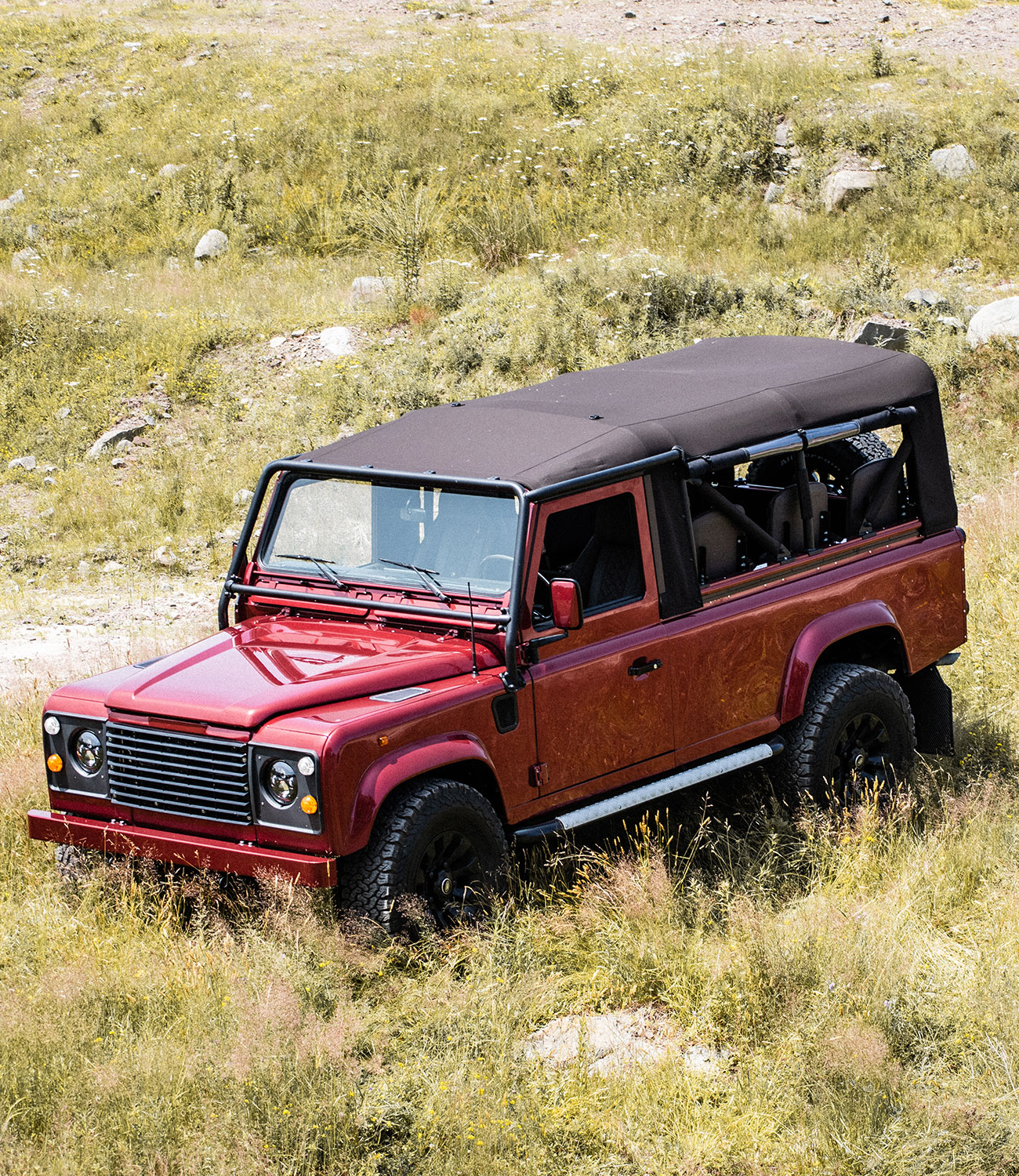
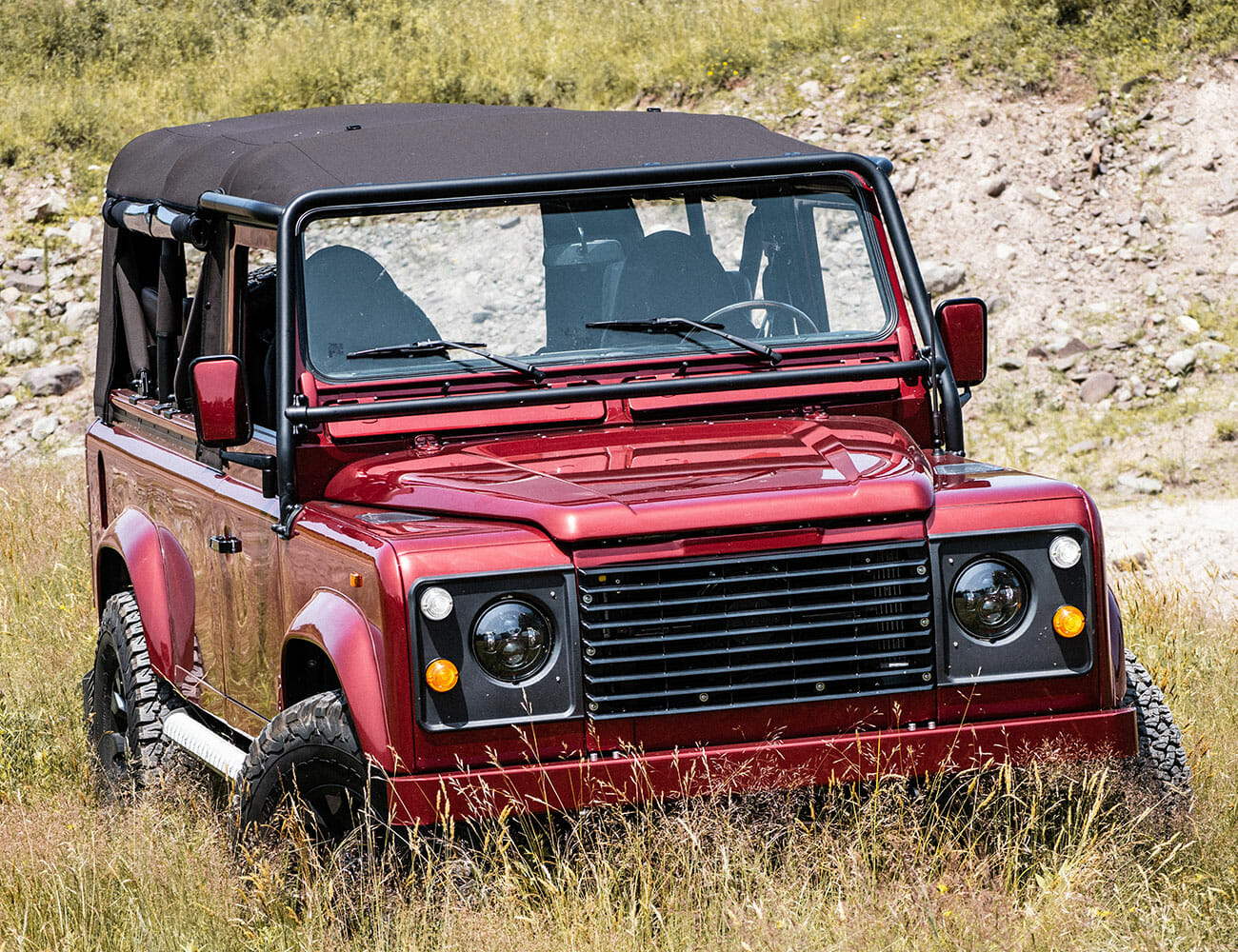
The Defender by Himalaya 110 won’t disappoint those folks. While it’s very clearly a vintage Landie, it boasts just enough modern touches to make it more respectable to modern audiences. The LED headlamps slotted into those familiar sockets are the most apparent, but the changes go far deeper. The company builds its Defenders by melding older chassis to new bodies, but adds onto them with newer pieces. Those door handles may look original, but they’re better than new; they’re metal, where the old ones were plastic. And good luck finding any original Defender with upholstery as nice as the leather wrapping all eight seats in this long-wheelbase three-door.

Of course, there are the occasional anachronistic touches; the giant aftermarket screen mounted inside is hardly 1997-spec, and looks every bit as awkward in the militant interior as seventh graders at a Sadie Hawkins dance. But that’s a small price to pay for the added convenience of a modern-day infotainment system that delivers Bluetooth and other handy features.

And you won’t give a damn about any of that once you’re plowing through the rough stuff beyond the asphalt. The little turbodiesel’s 107 horsepower seems more appropriate for a lawnmower than an off-roader these days, but that engine is more than capable of pushing the SUV around with confidence. Drop it into low range, keep the loooooong stick shift bopping between first and second gears, and the Defender will crawl up and/or over just about anything in its path — including nearly three feet of water. Which, for the record, is doubly entertaining when doing it in a Land Rover with a canvas top rolled up, making the water lapping around the sides feel even closer than it actually is.

Verdict: If you’ve already sucked down the Defender Kool-Aid, a Defender by Himalaya is probably exactly what you’re looking for: the classic Land Rover, made better. It’s not as wildly revisionist as, say, a Singer-customized 911; if you’re seeking Bentley-esque refinement, AMG-like power or even modern Toyota Corolla creature comforts, keep on looking. But if the first thing you’d do with a time-traveling DeLorean is zip back to the ’90s and snap up a D90 or 110 from the local dealership, the Defender by Himalaya’s probably the right rig for you.

Defender by Himalaya 110: Key Specs

Powertrain: 2.5-liter turbodiesel inline-four; five-speed manual transmission; four-wheel-drive
Horsepower: 107
Torque: 188 pound-feet
Claimed Seating Capacity: Eight
Actual Seating Capacity: Four to five, depending on how long the legs of the people in back are

Himalaya provided this product for review.

Read More Gear Patrol Reviews

Hot takes and in-depth reviews on noteworthy, relevant and interesting products. Read the Story
Note: Purchasing products through our links may earn us a portion of the sale, which supports our editorial team’s mission. Learn more here.
The Ugliest Crossovers and SUVs Ever Made

In recent years, SUVs and crossovers have consumed the automotive market. That dramatic sea change over the past couple of decades has put some strain on automakers: some companies rushed vehicles to market before they might have been ready; others converted cars into crossovers with a lift and a bit of cladding; a few incorporated bold design elements to distinguish their crossover from the school parking lot masses. Sometimes it worked

It took a while for companies to get things right. In the interim, however, carmakers were cranking out some spectacularly ugly vehicles. Here are five of the worst. (And you had to know which one would come first.)

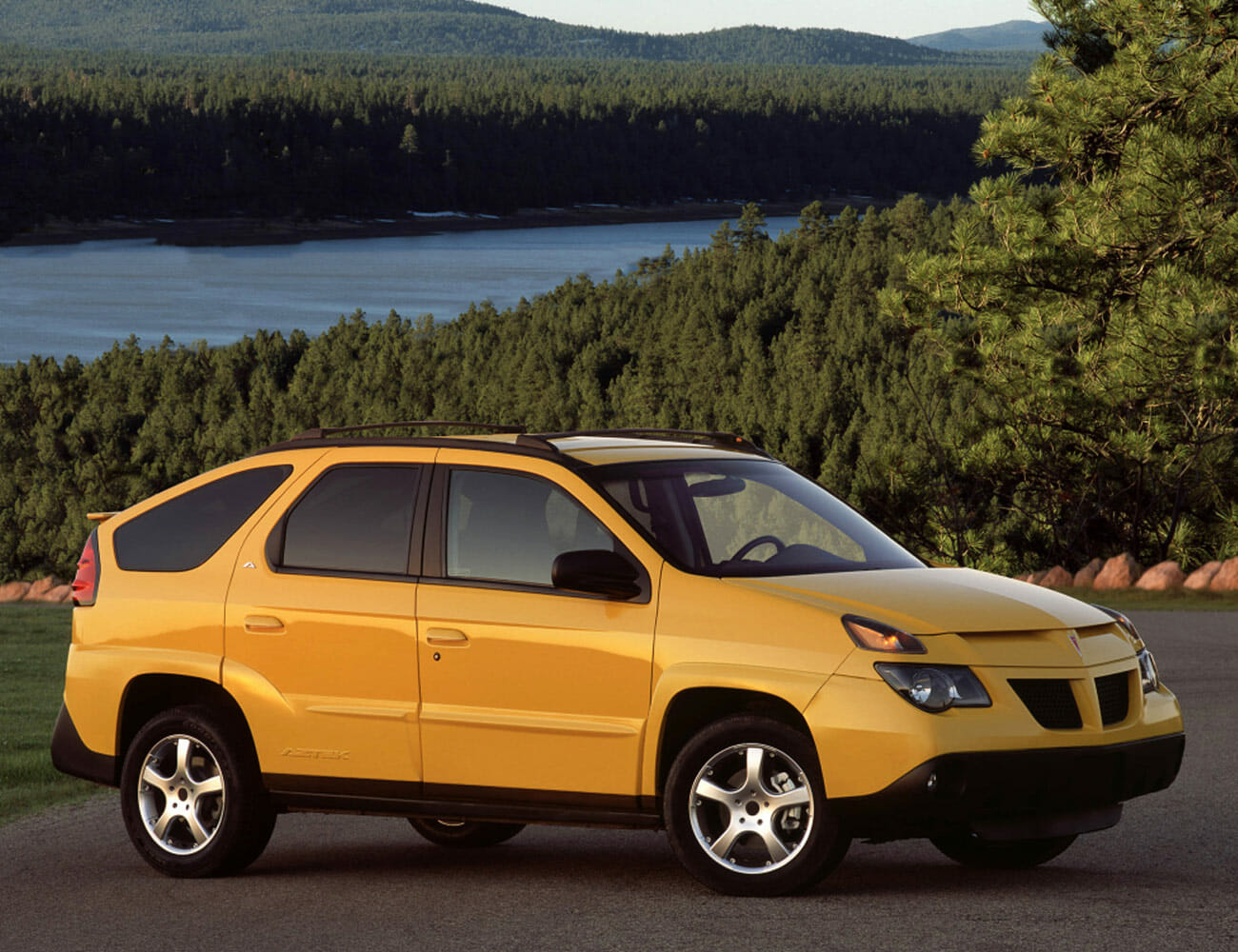
Pontiac Aztek (2001-05)

Dunking on the Aztek for being ugly is like labeling Jimi Hendrix a great guitarist: It feels too obvious to mention, but it’s so apparent, it still warrants further discussion. The Aztek foresaw what would be popular with SUVs — family-friendly practicality, the appearance of off-road readiness, and even the rakish sloping roofline. Trouble was, it was just hideous. The front end looks like one Pontiac’s front end collapsed on top of another. And cheap gray plastic cladding took up approximately half the surface area of the first version.

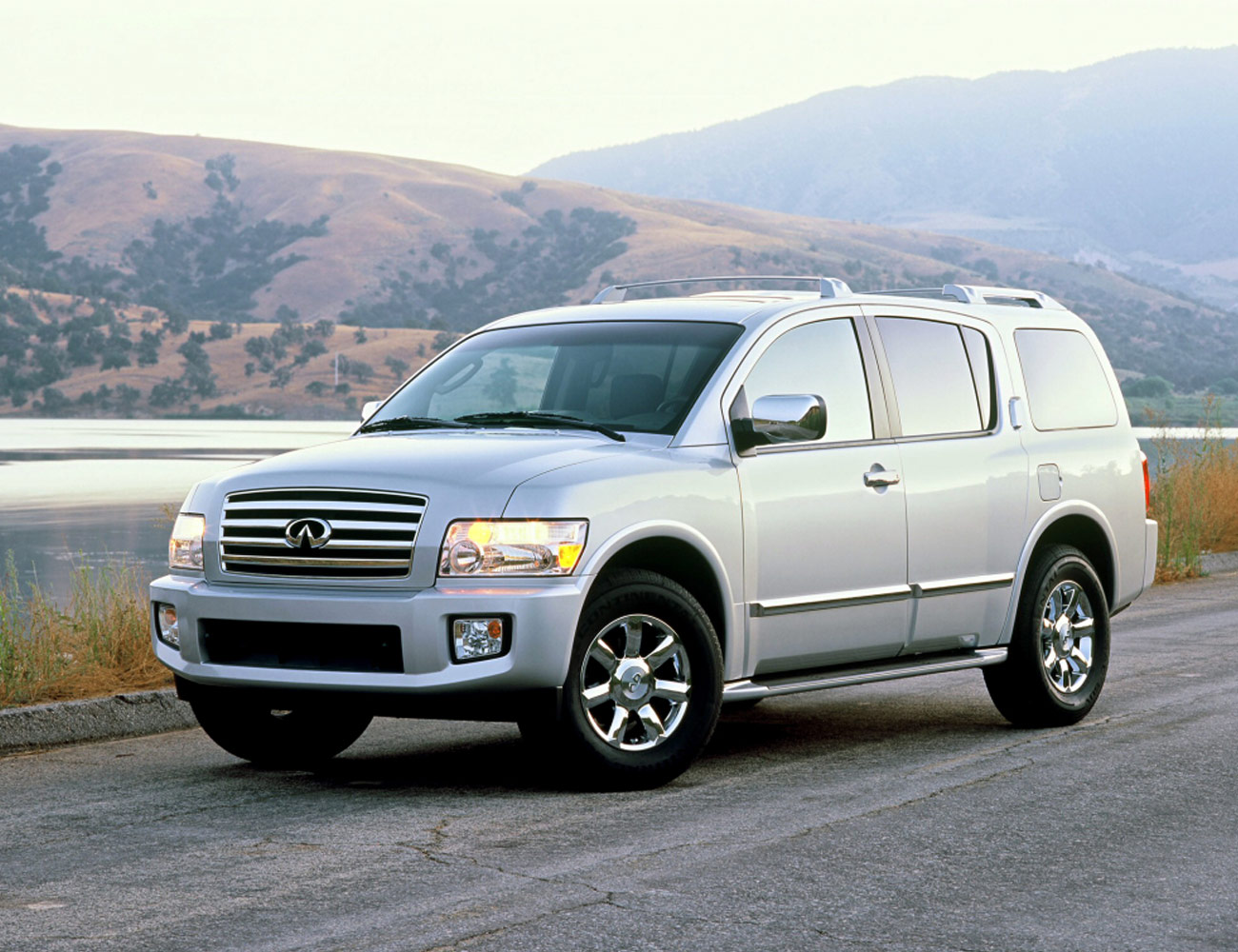
Infiniti QX56 (2004-10)

The QX56 was Nissan’s first attempt at a luxury full-size SUV. One uninspiring SUV would have been fine, but the QX56 looked like three uninspiring SUVs Photoshopped together. It had a weird sloping front end — perhaps to soften its overall look and hide that it was riding on a truck frame? Then there’s the middle part, with the humped roof. The rear of the vehicle then flattens out into a boxy, standard SUV backside. Bonus points for the rear door handles on the C-pillar to make it look sporty?

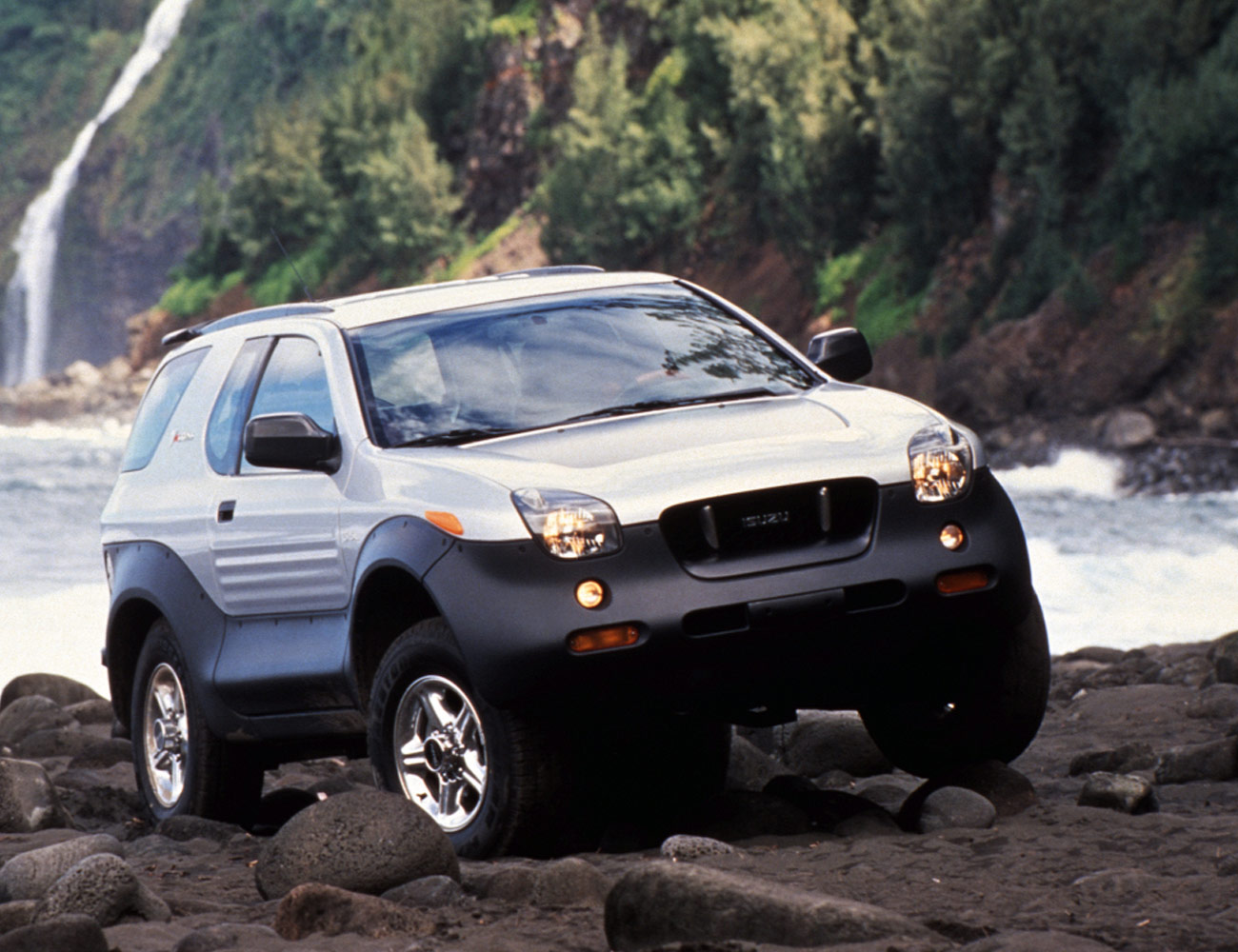
Isuzu VehiCross (1997-01)

Idiosyncratic capitalization rarely portends well in the automotive world. The Isuzu VehiCROSS, as the company styled the car’s name, had two distinct visual features. First, it had a downright obscene amount of cladding covering the entire lower half of the vehicle. Second, it had a tiny bat-face grille, replete with fangs. True enthusiasts opted for the “Ironman” edition, which said IRONMAN on the hood — complete with a stylized “M” to look like a man. It’s best driven while sporting some period-appropriate frosted tips.

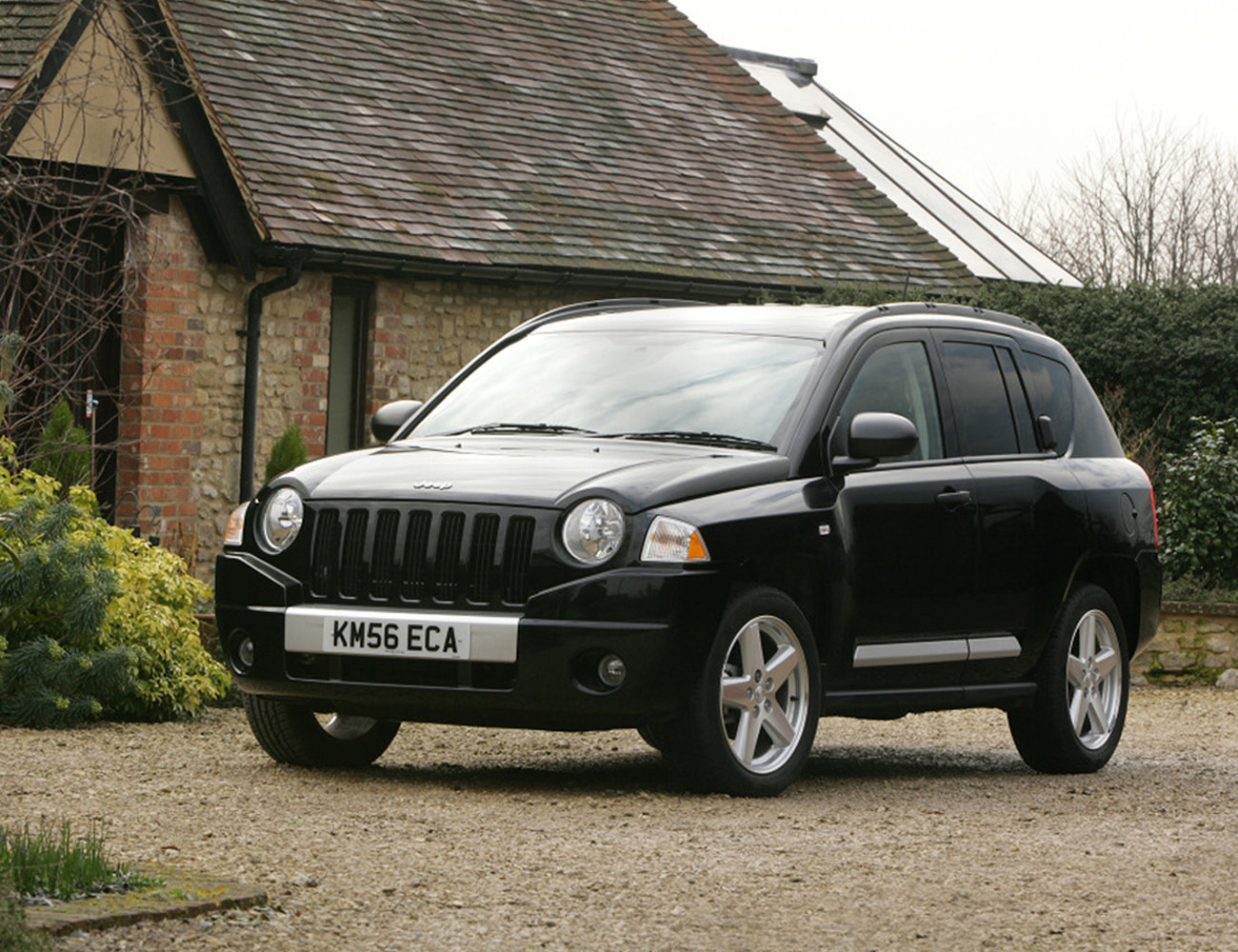
Jeep Compass (2007-10)

The current Compass is one of Jeep’s more attractive vehicles. It’s come a long way from the first generation pre-facelift version. Where to begin? The front end looks like a robot with jowls getting electroshocked. Towards the rear, Jeep threw in some sweet C-pillar door handles and weird, triangular D-pillar. The “COMPASS” badging etched into the rear bumper with an actual compass as the “O” ties the whole unfortunate look together.

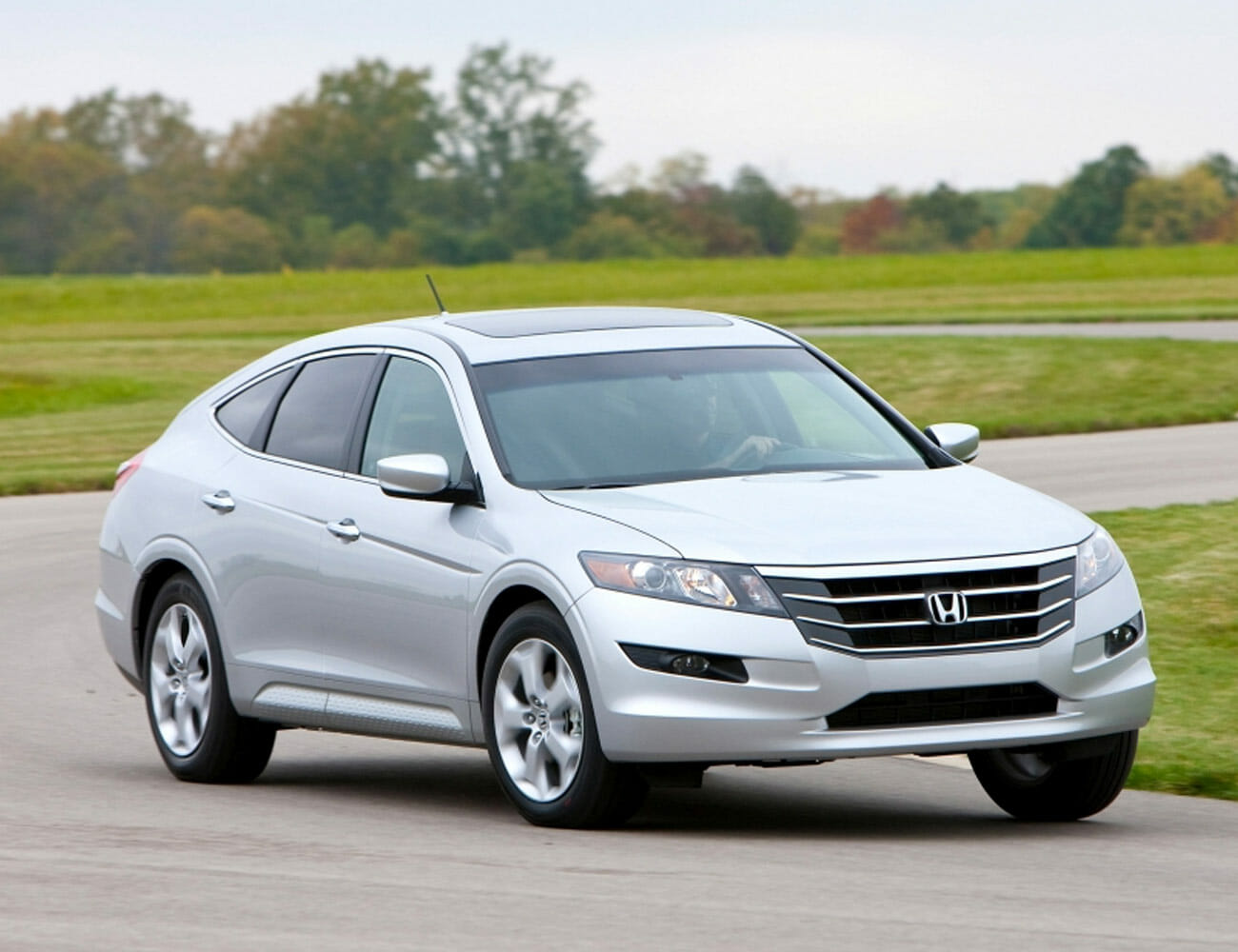
Honda Crosstour (2007-15)

Honda inflicted the Crosstour on the world beginning in the 2010 model year. Initially named the “Accord Crosstour,” Honda removed the “Accord” to deemphasize the fact it was just a lifted Honda Accord. It’s sort of like Honda couldn’t decide whether this should be a wagon, a hatchback or a crossover — and met in the precise middle between the three. Also, clearly every Honda exec who signed off only saw the one front three-quarter shot where the car looks nothing like an echidna.

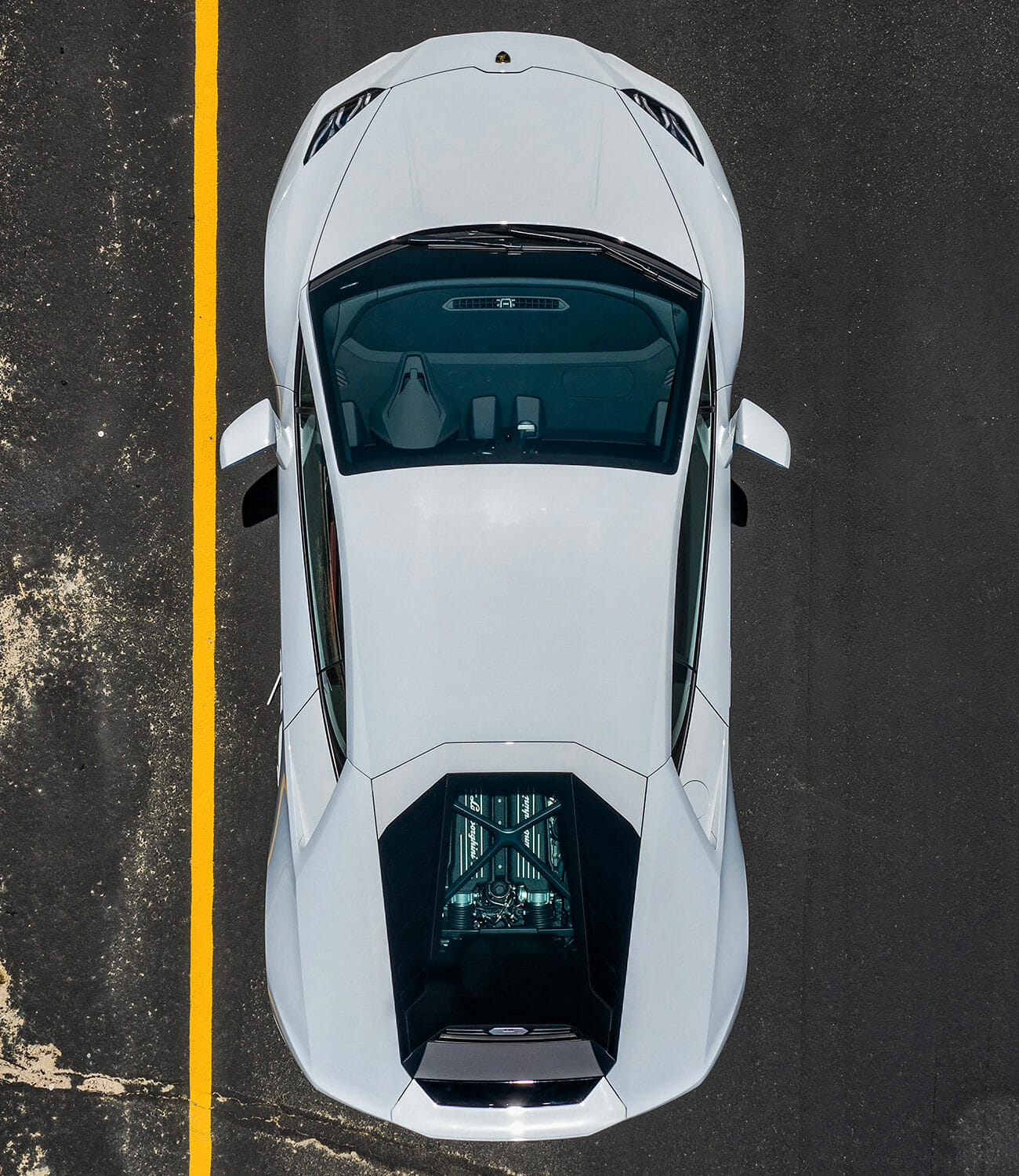
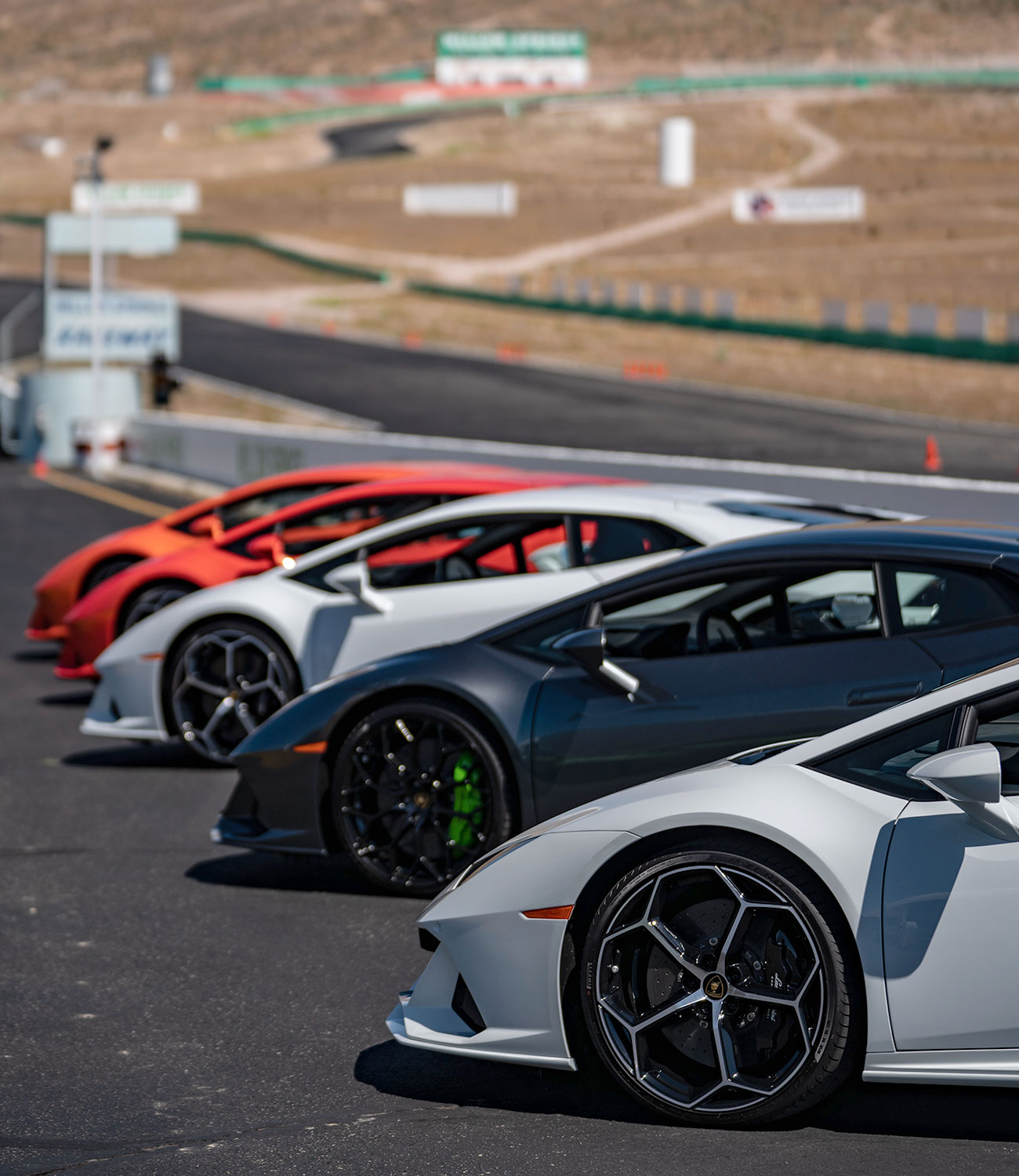
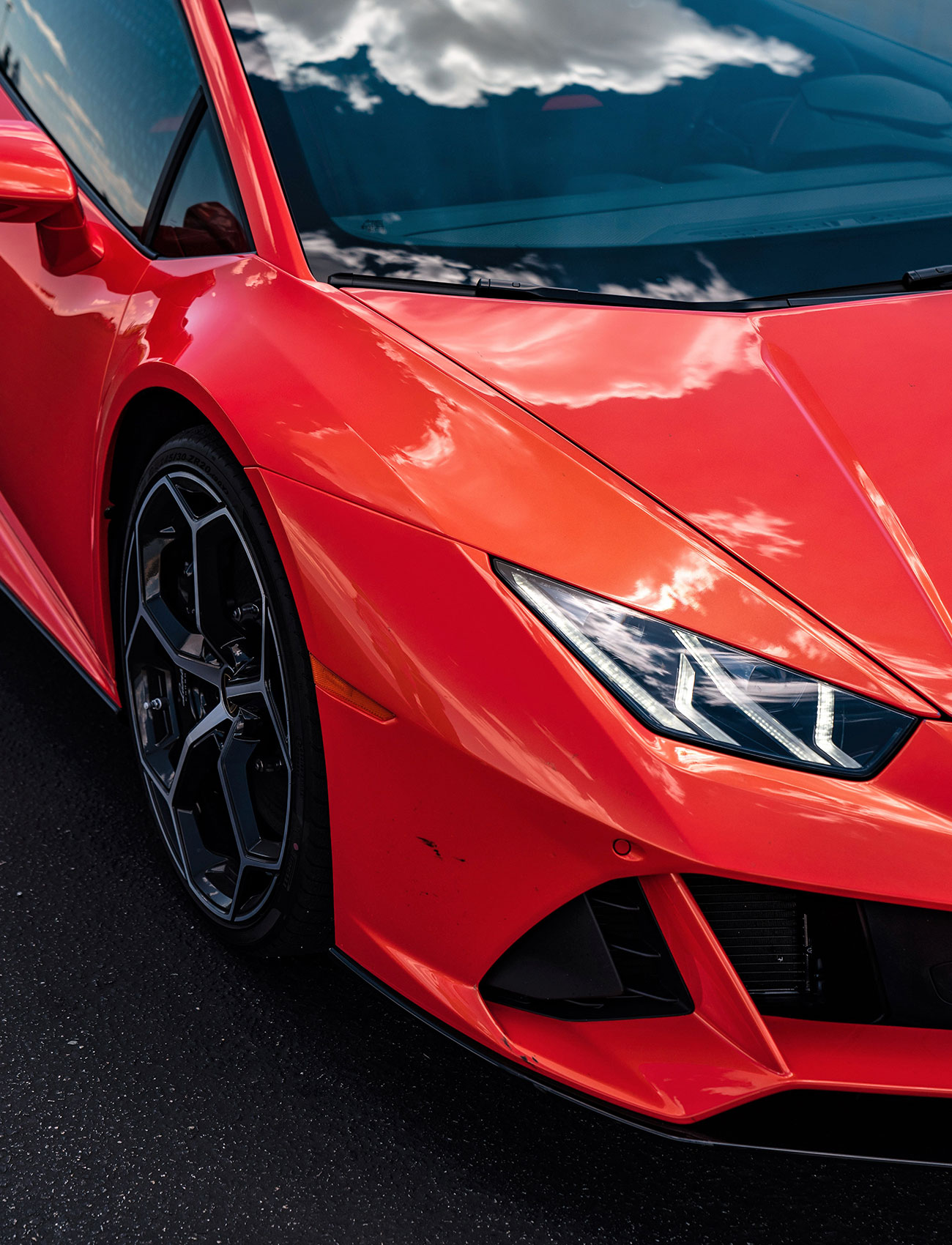
2020 Lamborghini Huracán Evo: Staying Ahead of the Curve

Lamborghini has gifted the world a new Huracán, and it’s way smarter than the other supercars. The new Huracán Evo jacks up the aerodynamics and power, yes — but its real magic trick is the introduction of a new centralized computer that replaces the multitude of separate units for each vehicle system found in the previous model. The result is a car that works to anticipate what the driver is about to do, whether on the track or the street, creating a harmonious man/machine interface.

The Good: Well, it’s a Huracán, so the starting point is already good. The mid-engined, two-seat supercar receives a power bump to 640 horsepower and 442 pound-feet of torque, some revised aerodynamics to enhance grip and stability at speed, and four-wheel-steering to carve through turns more precisely. Meanwhile, the new Lamborghini Dinamica Veicolo Integrata (LDVI) computer consolidates all the dynamic inputs and sensor data and metes out instructions for the car’s systems by the millisecond.

TL;DR: It’s fast, so you can go faster.

Who It’s For: Anyone with an affinity for the highest-tech enhancements to the driving experience. This is not an analog machine; it’s got a computerized dual-clutch transmission, the aforementioned digital central nervous system, and enough processing power on board to send Apollo 11 to the moon and back a million times over. In short, it’s a tech-nerd’s supercar fantasy.

Watch Out For: The system does require a bit of mental adaptation. As the car works to anticipate your moves, it can behave somewhat squirrely until your brain syncs up with what its brain is doing. (This is particularly true of the four-wheel-steering.) You have to get to know each other. This is true with any car, of course, but the Evo brings a lot of new things to the table, so it takes a few laps to get your head around it all.

Alternatives: In this universe, the competition is rare. There’s the Ferrari 488 GTB, of course — another mid-engine supercar, but with a twin-turbo 3.9-liter V8 instead of the naturally aspirated V10 in the Lamborghini. There’s also the McLaren 720S, which clocks in with even more extreme performance stats than the Ferrari.

Review: When reviewing cars like the Lamborghini Huracán Evo at a track like Willow Springs International Raceway, where journalists tried it out, you kind of have to think fast. Not because of the speeds you’re attacking the turns in — though that’s part of it — but to the brevity of the experience as a whole. Every second counts, and you need to compress your learnings into what invariably ends up being just a few hot laps.

This Huracán, with its newly-rewired digital control technology, makes that process simultaneously easy and impossible. Easy because the differences between this car and its conventional predecessors tend to stand out in relief — the four-wheel-steering, the anticipatory aligning of car and corner — but also impossible because there’s so much more to explore than in most cars.

That’s all due to the LDVI system. In short, the thinking is this: Most cars collect dynamic data from dozens of sensors and systems (brakes, suspension, engine, steering, etc.), and they all respond to one another. Lamborghini’s engineers have turned that thinking on its head. Instead of multiple computers taking input from other computers and commanding their own systems, all the data in the Huracán — supplemented by three accelerometers and three gyroscopes tucked into the car at its precise center of gravity — goes straight to a single computer, which commands all the other systems in harmony. If a regular car’s computers are jazz musicians riffing off one another, LDVI is a maestro conducting an orchestra.

All that means the Evo can analyze the road, the vehicle’s position and the driver’s movements — including the speed and intensity of those movements—and make an educated guess about what’s coming next and set up the car for each coming challenge, requiring the driver to make fewer corrective inputs.

At Willow, that proved the recipe for an exhilarating drive. The Huracán smoothed out turns brilliantly — at least, once I figured out what it was up to and stopped trying to fight it. While the computer was doing its thing (every 20 milliseconds, it should be noted), I also had the benefit of the new rear-wheel-steering system, which can pivot the back in sync with the front at higher speeds and opposite at lower ones.

Aerodynamically, there’s a new front splitter with an integrated wing and a newly redesigned rear spoiler, both conspiring to ratchet up the downforce. The car is more slippery, too, thanks to improved airflow through the front vents and past the wheels and a rear diffuser to even further clean up the air and enhance adhesion.

The full package makes the Evo far more than a mere refresh; these are serious upgrades to the Huracán. They’re also absolutely worth the price of entry. Once I’d completed my laps at Willow, now fully aware of how much the car is able to prime itself for each millisecond of drive time, I pulled into the pit and thought, for the first time, Yeah, this car gets me.

Verdict: Once you wriggle through a few introductory laps and learn the machine’s modus operandi, the Lamborghini Huracán Evo is fantastic. There’s no other car on the road that has made this profound a leap — both conceptual and practical — in vehicle dynamic control theory. In a few years, all cars will use this centralized strategy, and everything else will feel laughably archaic.

2020 Lamborghini Huracán Evo Key Specs

Powertrain: 5.2-liter V10, seven-speed dual-clutch automatic transmission, all-wheel-drive
Horsepower: 631
Torque: 443 pound-feet
0-62 MPH: 2.9 seconds
Top Speed: 202 mph

Lamborghini hosted us and provided this product for review.

Read More Gear Patrol Reviews

Hot takes and in-depth reviews on noteworthy, relevant and interesting products. Read the Story
Note: Purchasing products through our links may earn us a portion of the sale, which supports our editorial team’s mission. Learn more here.
This Ford Mustang Is the Most Famous Ever Made, and It Will Be Auctioned

The Magazine

Each issue of Gear Patrol Magazine is a deep dive into product culture. Inside, you’ll find seasonal buying guides, rich maker profiles and long-form dispatches from the front lines of product design. The stunningly designed Gear Patrol Magazine is ready for your coffee table. Quarterly. $39
The Newsletter

Get the best new products, deals, and stories from across the world, in your inbox daily.

Lexus Is Only Making 100 of the 2020 Lexus LC 500 Inspiration Series Cars

Three years ago at the North American International Auto Show in Detroit, Lexus unveiled a production coupe based on the LF-FC concept that everyone thought would be impossible to make work. It was called the…