All posts in “Cars”

2019 Ford Mustang Bullitt Review: The Mustang You Really Ought to Want

The Ford Mustang has a timeless charm. Imperative to that charm is how much that car channels coolness —  and for buyers of a certain age, the Mustang has never been cooler than when Steve McQueen used it in a car chase in the 1968 film Bullitt. With the Bullitt-idolizing generation at peak disposable income, it’s not surprising Ford tapped that nostalgia well for the third time in less than 20 years for a series of special-edition Mustangs culminating in this one. 

Fortunately, the car itself supersedes the nostalgia. Forget the movie: This car is beautiful, powerful and loud in any context. It’s perhaps the purest distillation of the Mustang’s greatness (at least, in terms of versions not made for the track). But keep in mind: Coolness is seldom cheap, comfortable or practical.

The Good: The Bullitt has a 5.0-liter naturally aspirated V8 that produces 480 horsepower and enough exhaust noise to rouse the peacefully interred. It only — only –comes with a six-speed manual transmission. The retro appearance pares down some of the model’s extraneous styling elements, reducing it to what may be the best-looking Mustang on sale.

Who It’s For: Anyone who wants a sharp-looking Mustang. Sure, it could be someone older living out a Steve McQueen fantasy — but this car does not need nostalgia to sell.
Watch Out For: Well, it’s a muscle car, so by average motor vehicle standards, the Bullitt Mustang is not particularly comfortable or practical. At 18 miles per gallon combined, it’s not very fuel-efficient, either. And introverts be warned: you should be prepared for strangers to approach you to talk about your ride.

Alternatives: The Mustang’s major rival is the Chevrolet Camaro, where the closest analog would be the 2SS trim with the 6.2-liter V8 ($42,995). There’s also the Dodge Challenger R/T Scat Pack Wide Body ($47,740).

Review: The Ford Mustang is like a cheeseburger. There are more sophisticated and more expensive menu items out there. You feel like you should like those items more than you do. You might even talk yourself into ordering them. But the cheeseburger is what you want, even if it’s not so great for the environment.

To torture that analogy a little more, the Bullitt Mustang would be a Juicy Lucy. It’s as much of what you want as you can handle.

Spare your more efficient turbochargers. The Bullitt has a naturally aspirated 5.0-liter V8 dubbed “Coyote” by Ford insiders. Thanks to its exhaust headers and some retuning, it cranks out 480 hp — a 20 hp bump over the standard Mustang GT. The Bullitt edition only comes with a six-speed manual. It has a curated rumble, with exhaust settings that can let you be heard blocks away. You only achieve 15 mpg in the city, but fuel efficiency probably does not factor into your fantasy.
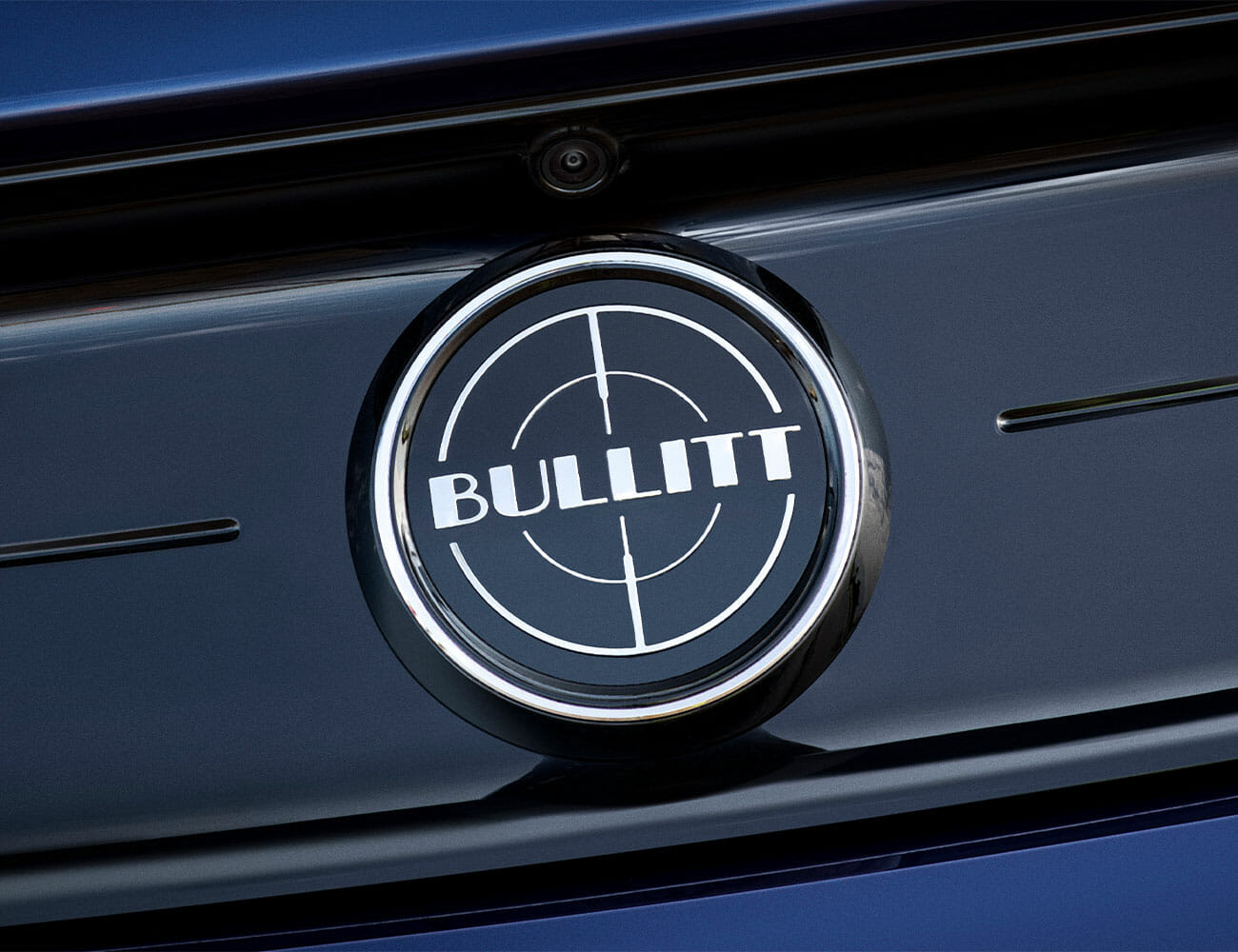
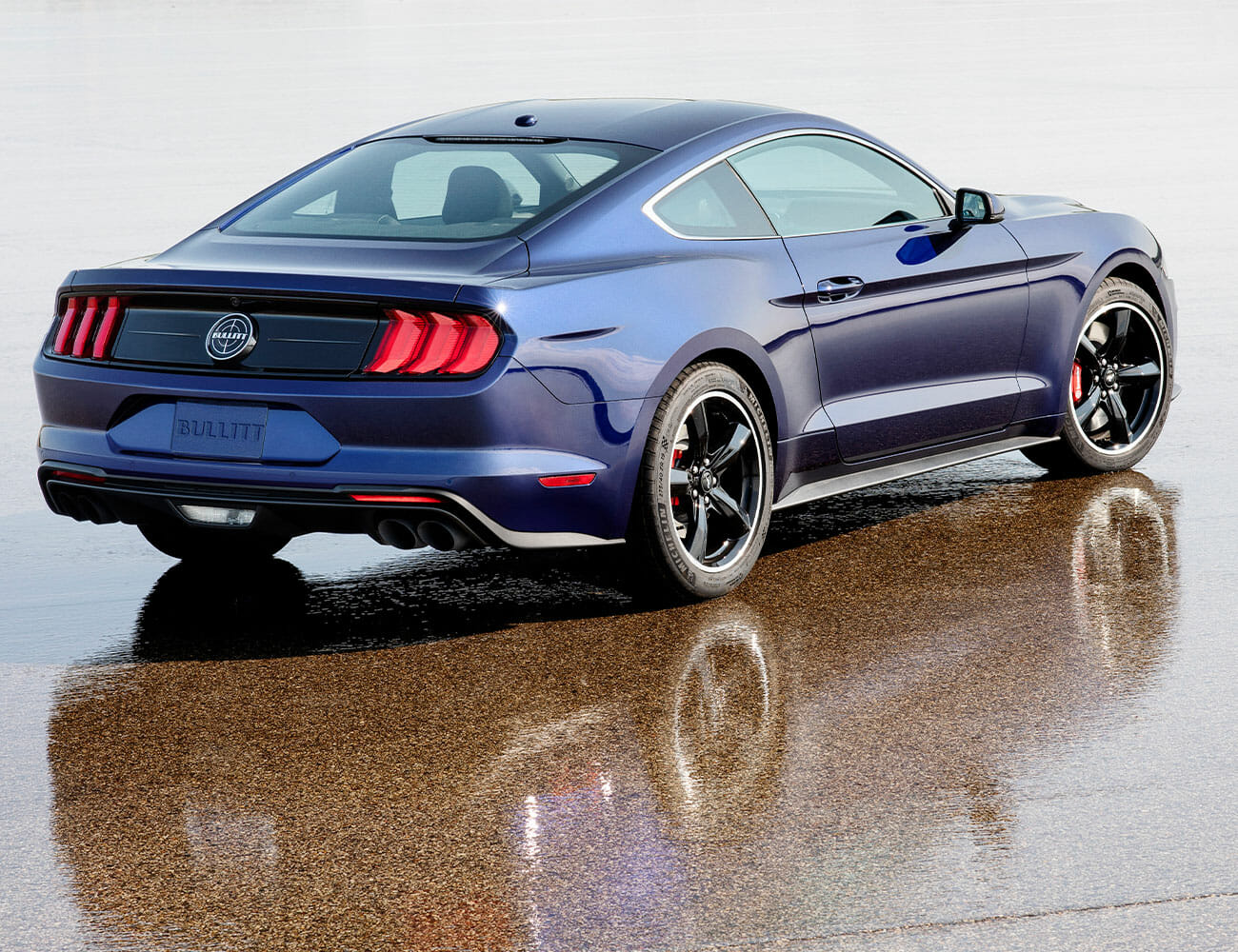
An action-film-themed nostalgia package seems like it should be cheesy, but Ford somehow evades the cheese. Instead of adding shlock, the retro-inspired package simplifies and refines the Mustang. It’s a great-looking car, even if you’re far more familiar with Fortnite than Steve McQueen. (The Highland Green paint in particular looks spectacular.) The Bullitt badging will be a sticking point for some, but it proves unobtrusive if you don’t think about it too hard. My only complaint is the unnecessary odd chrome trim around the side windows and grille.

The Bullitt is a crowd-pleaser, drawing attention and comments wherever you go. That said, expect more construction workers to roll up to you at stoplights than Jacqueline Bisset look-a-likes.

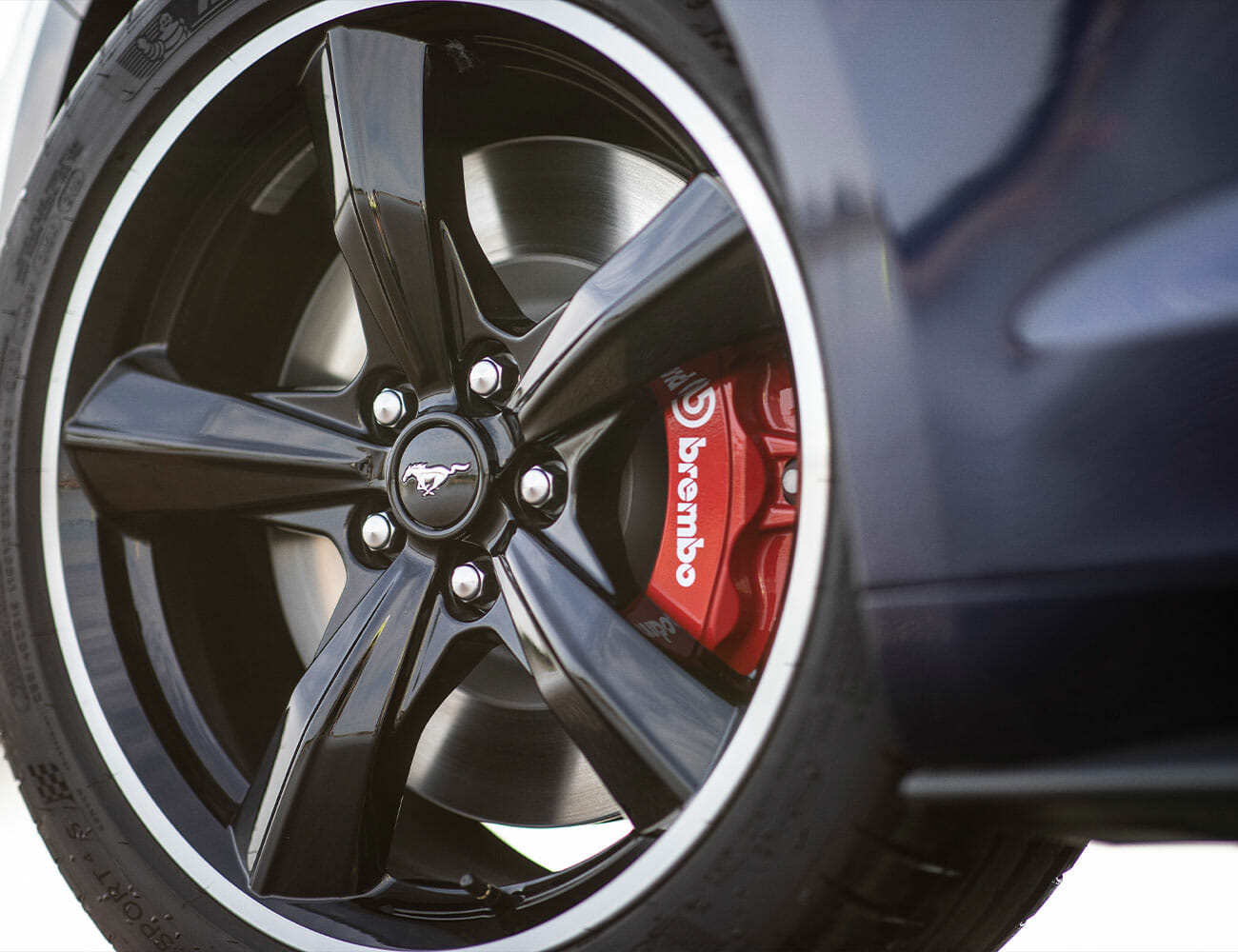
The Bullitt is meant to bridge the gap between the Mustang GT and the more track-oriented Shelby models, a task at which it largely succeeds. It has Brembo brakes, the mechanical bits from the GT’s Performance Package,and some parts from the Shelby models, automatic rev-matching, and a ton of power and grip.  If you have the space to push the Bullitt, it’s brilliant.

That’s not saying it would make for a great daily driver. It can feel tepid under low-speed driving in urban areas; you have to go high on the revs to get to the real power, higher than most will go making a run to the drug store. On the other hand, my tester came equipped with the $1,695 MagneRide suspension, which should be considered a must-have. It handled Michigan’s rocky roads fairly well, though I did encounter some mild bump steer on egregious lumps in the road.

No one buys a Mustang primarily because it’s practical or comfortable. That’s good, because the Bullitt is neither. The trunk is surprisingly spacious, but the back seat is an absolute nuisance. There were times I left it in the garage and took my Volkswagen Golf Sportwagen instead because I could not face the task of getting my son in his car seat — a maneuver that required climbing in from the opposite side of the car. Only years of yoga saved me from a pulled groin.

Setting children aside, it’s still not an ergonomically pleasant car. The seat seemed too high. When I entered a parking garage, I had to shift my head to the right, jam it into the top of the window, and thrust out the window blindly with my credit card to access the reader. I’m 5’11”; a car should be able to accommodate me. Plus, the cupholders were also a couple of inches away from the gear shifter and right in the driver’s arm line, rendering them useless.

With the Bullitt edition, Ford made what may be the best-looking and best-all-around Mustang on sale today. But you do have to pay for it. It starts at more than $8,000 above the GT Premium Fastback. Add in the necessary options like the magnetic ride suspension, and you’re looking at a car coming in significantly above $50,000. That’s a lot for a “regular” Mustang. Indeed, my kitted-out tester priced at $52,885 — not that much less than the base model GT350, which has 50-plus more horsepower and an even bigger V8.
Verdict: Owning a Mustang is primarily about having a cool-looking, cool-sounding car. For the buyer who just wants to cruise and have some old-school muscle car fun, the Bullitt may be the optimal choice.

2019 Ford Mustang Bullitt: Key Specs

MSRP as Tested: $52,885
Horsepower: 480
Torque: 420 lb-ft
0-60 MPH: 4.6 seconds
Top Speed: 163 mph

Ford provided this product for review.

Read More Gear Patrol Reviews

Hot takes and in-depth reviews on noteworthy, relevant and interesting products. Read the Story
Note: Purchasing products through our links may earn us a portion of the sale, which supports our editorial team’s mission. Learn more here.

2020 Lexus GX 460 Review: The Other Leather-Lined Land Cruiser, Improved

In the decade the Lexus GX 460 has existed, it’s amassed a small (but vehemently dedicated) cadre of owners who are off-road community stalwarts. If you’re vexed as to why the GX would be the machine of choice for rock crawling and trail conquering, merely ask any of the proud 60-plus owners who turned up for the annual FJ Summit in Ouray, Colorado this year, and let them regale you with tales of how their snorkel-sporting, jacked-up GXes bested the worst Mother Nature could throw at them. 

Soccer moms these are not — though desire from the SUV buying segment remains equally rabid, considering the GX 460 is Lexus’s fourth best-selling model in the U.S. this year. Despite not having been subject to a redesign over the past 10 years, a refresh for 2020 means Lexus is banking on continuing to appeal to the full spectrum of buyers. We tested the 2020 GX 460 down in Costa Rica’s tropical Papagayo Peninsula to see if the Japanese luxury sport-ute will keep paying dividends for the brand for the next few years. 

The Good: The GX 460’s impeccable off-road credentials hail from the fact that it’s basically a Land Cruiser Prado in disguise. It’s still constructed using body-on-frame tech, a bygone method in today’s era of unibody crossovers. That imbues the mid-size SUV with durability and a sturdy platform for towing, or for when the asphalt’s in the rearview.

For 2020, Lexus provided the GX 460 with additional off-road goodies, again borrowed from Toyota. The aptly named Off-Road Package brings a multi-view camera system capable of aiding drivers through (and over) dicey obstacles, a transmission cooler, additional shielding to protect the fuel tank, Crawl Control (a five-stage version of off-road cruise control, helpful on steep inclines, enabled only in Low range) and Multi-Terrain Select, which allows you to literally dial in the optimal power settings for a host of terrain types, including sand, rocks, moguls and mud. 

Who It’s For: Lexus is hoping GX 460 buyers have a wild streak that’ll see them adventuring out off the beaten path, but without giving up a sumptuous cabin. While you get the same diligent off-road prowess as the GX’s brother-from-another-mother, the esteemed Toyota 4Runner, the GX’s interior makes the 4Runner look like a slouch who showed up to a black-tie gala in a wrinkled T-shirt. If luxury and capability are equally important to you, Lexus hopes you’ll consider the GX 460. 

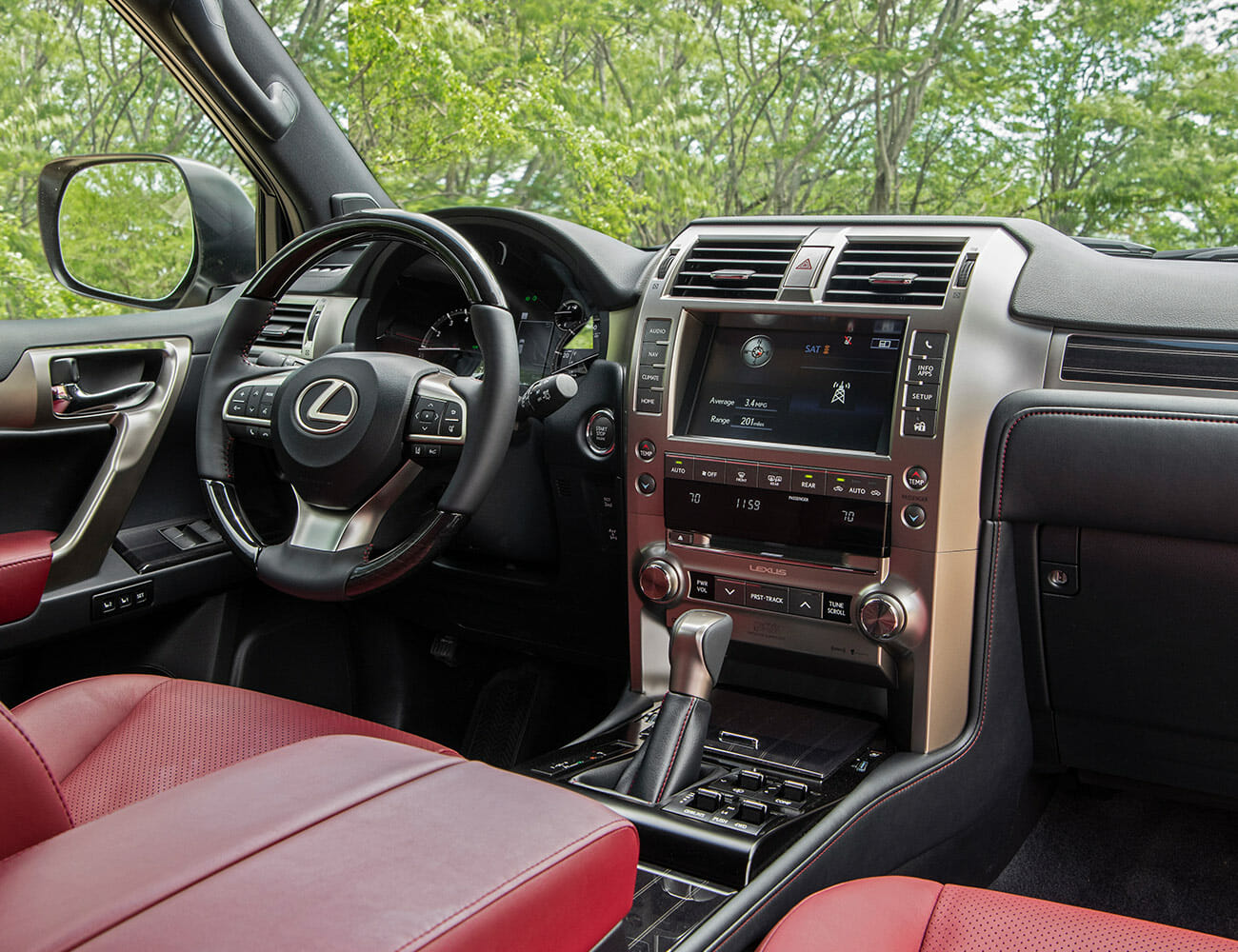
Watch Out For: The interior has some weak spots. It’s full of luxurious touches and finishes such as Gray Sapele wood; and for 2020, Lexus reimagined the three-spoke tiller and the gauge cluster for the driver. But then you look at the center stack and infotainment system, and the interior starts to show its age. One glance at the busy area — full of redundant buttons and a slow, low-rez touchscreen — and you’re reminded of an era when supercomputers required warehouses.

Another issue: On Costa Rica’s pristine main roads, the truck-like handling common to vehicles with body-on-frame construction was apparent, even with the dampers set to Sport mode. There’s noticeable body roll. Go into any corner with any amount of zeal, and be rewarded with squealing tires. And the six-speed automatic transmission struggles to find the proper gear uphill.

Alternatives: If you’re just looking a plush mid-size SUV mainly for road use with some mild off-road capability, consider the Audi Q7, the BMW X5 and the Acura MDX. Headed into the proper wilds? You’d be wise to consider the Land Rover Discovery, which excels in the cabin comforts and is unflappable when the terrain gets rough. (That said, while priced similarly to the Disco, the GX 460 pulls ahead by a nose. when you factor in reliability and lifetime maintenance costs.)

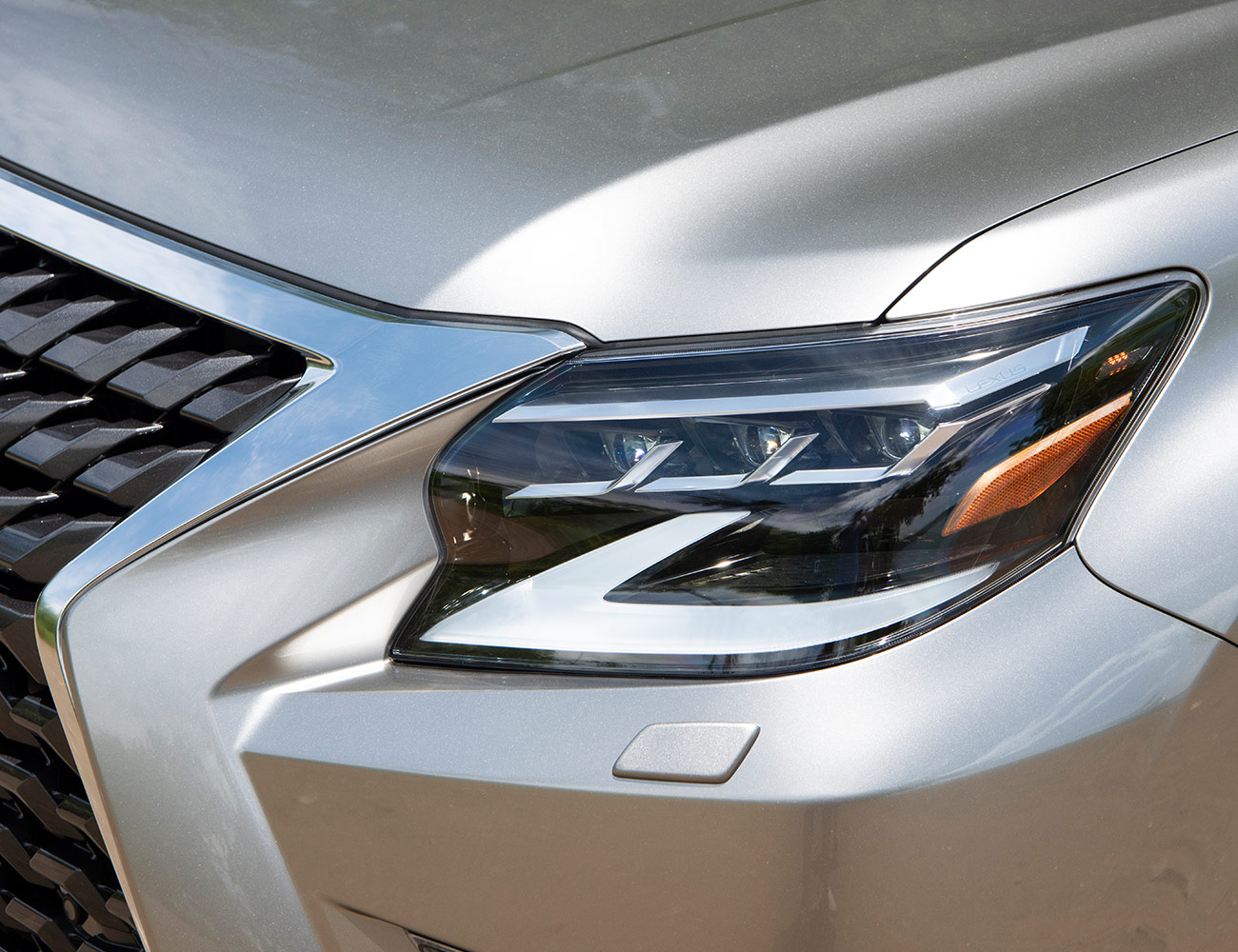
Review: A light facelift sees the gaping maw that is Lexus’ signature spindle grille make an appearance on the GX 460; triple-beam LED headlights are also new on the front end. These minimal tweaks likely won’t change your opinion of the overall aesthetics, but they do make the model feel more current. An optional Sport Design package gives it a bolder presence, thanks to a different lower-grille design, rear valence, side mirrors, gray 19-inch wheels and a black exhaust tip. 

The SUV was comfortable on the open road, but if you’re used to sporty driving, it isn’t going to curry much favor. The 4.6-liter V-8, good for 301 horsepower and 329 lb-ft of torque, is adequate enough, but the handling simply isn’t dynamic. Perhaps the legions of crossover fans wouldn’t notice or care, but the vague steering provides little road feel. Everyone will notice the hit at the pump, thanks to a meager 15 miles per gallon in the city and 18 mpg on the highway. Efficiency fans, look elsewhere. 

While we’d love to tell you about how great it was to thrash the GX 460 around Costa Rica’s jungles, we sadly cannot: Lexus limited our driving to asphalt alone. So we had to improvise. 

A number of excursions were on offer to the assembled journalists; one to the Diamante Eco Adventure Park for a ziplining and the chance to get face-to-glass with jaguars and sloths sounded intriguing. We chose wisely — partially because sloths are incredible, but more so because the two-mile path from the main road to the resort was unpaved, pockmarked and riddled with sizable rocks.

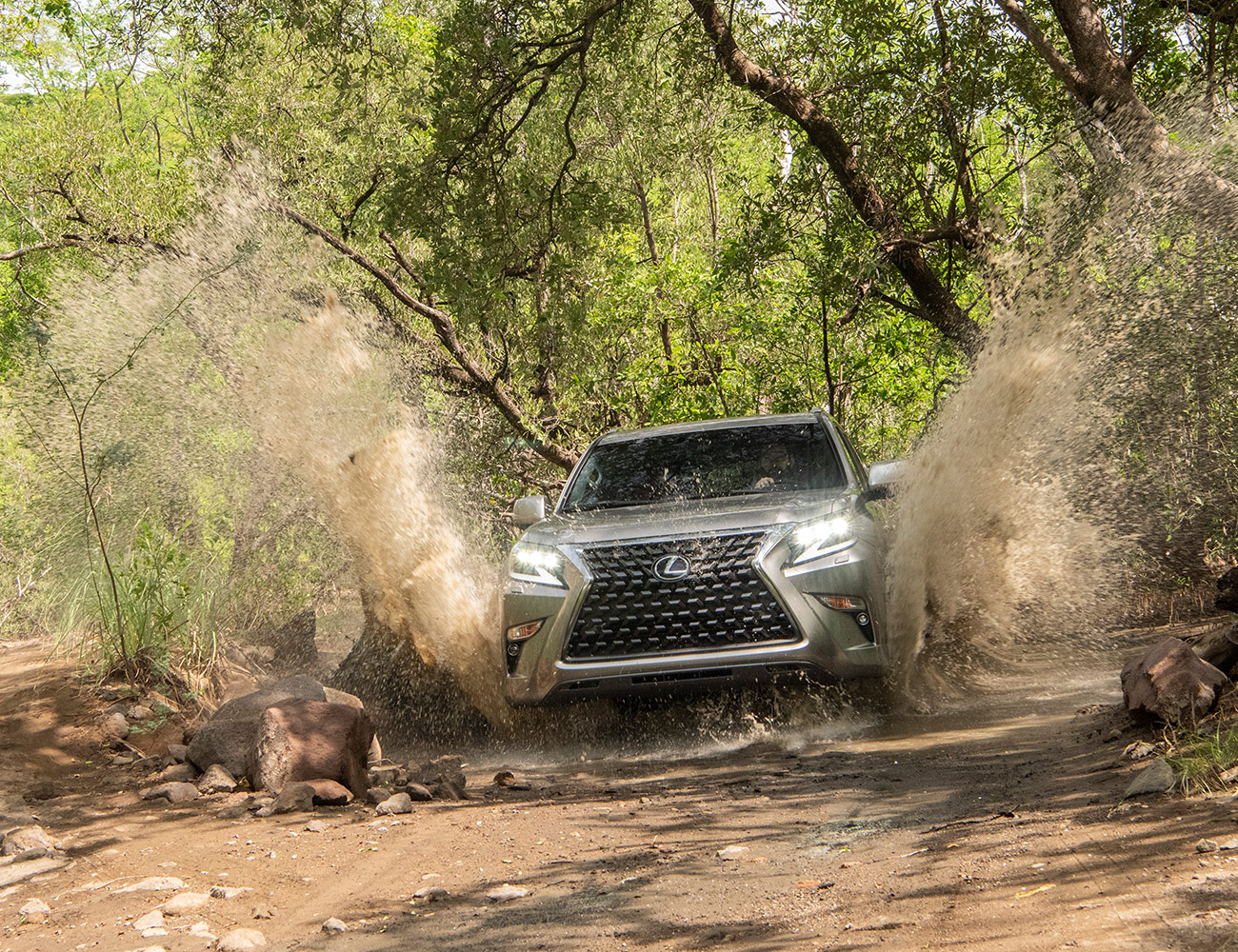
Here, the GX 460 came alive, almost making up for all of its aforementioned shortcomings. Even though our particular tester had the optional Off-Road Package, we chose to ignore many of its features, leaving it in four-wheel-drive high and sinking the accelerator pedal to the floor — and the GX 460 glided over whatever we aimed at without drama. Ginormous potholes that would swallow lesser tires? Not a problem. A swath of loose rocks, each the size of your fist? You’re barely jostled. The suspension that can be lacking on the road becomes a hero in the chop and crud. It’s no wonder that Lexus yanked a few bone-stock GX 460s to pre-run the grueling Baja 500 and 1000 races ahead of an LX 570, completing the course without an issue — when competing trophy truck teams claimed sections were impassable. 

But plenty of nifty off-road toys, including the Kinetic Dynamic Suspension System, come with the GX 460. Engage four-low and magical things happen underneath your feet, including the disabling of anti-roll bars for greater articulation and changes in rear air springs that reduce roll when trailering or crawling. The access road wasn’t rough enough to warrant any of that, but we can imagine if the GX 460 was this pleasant rollicking over a crumbling dirt road at a steady clip, it’d be great when the going gets properly tough. 

A few weeks after the Costa Rica journey, we were out in Ouray, Colorado, testing the 2020 4Runner and Tacoma when Lexus unveiled a surprise: the GX OR, a beefyversion of the 2019 GX 460 built by the company as a tribute to the enthusiasts who inspire the engineers. It was meant to look factory-made, and the powertrain was left purposefully stock — but a two-inch lift kit with adjustable valve dampening was added, along with Icon control arms and CBI skid plate protection for said control arms. Larger tires and ample custom storage for hauling all your off-road gear complete the comely build. It’s proof of the inner badass below the Lexus’s soft interior.

Verdict: If the bulk of your time behind the wheel will be spent on asphalt, you’ll have to be accepting of saggy road manners, an outdated center stack and infotainment system and mediocre fuel economy. However, if you’re going to spend any chunk of time off-road, the Lexus GX 460 won’t let you down. 

2020 Lexus GX 460: Key Specs

Powertrain: 4.6-liter V-8; six-speed automatic; four-wheel-drive
Horsepower: 301
Torque: 329 pound-feet
Curb Weight: 5,130 pounds
Cargo Capacity: 64.7 cubic feet

Lexus hosted us and provided this product for review.

Read More Gear Patrol Reviews

Hot takes and in-depth reviews on noteworthy, relevant and interesting products. Read the Story
Note: Purchasing products through our links may earn us a portion of the sale, which supports our editorial team’s mission. Learn more here.

BMW X2 M35i Review: A Hot Crossover That’s a Bit Overcooked

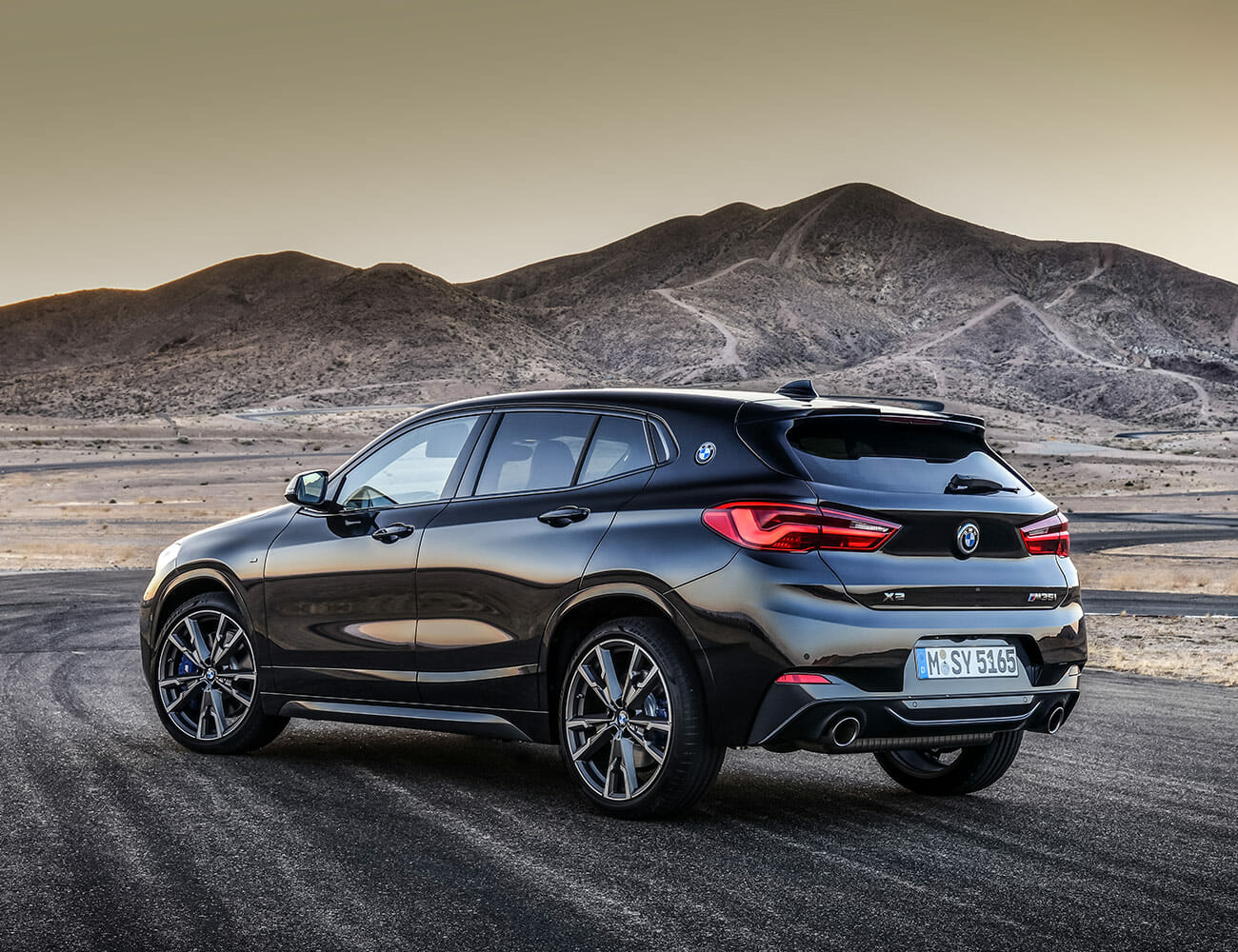
The BMW X2 M35i is an affront to an automotive enthusiast’s sensibilities. It looks like a slick, angry hot hatch. It has what could be a wicked 300-plus horsepower 2.0-liter hot hatch engine. But it’s not a hot hatch. Instead of going after the Volkswagen Golf R, BMW lifted the car a touch and made the X2 a “sports activity coupe.” What, you could ask, has this world come to?

Alternatively, you could exhale, concede the point that no one would pay $50,000 for that hypothetical hot hatch, and judge the X2 M35i on its own terms. It’s not an abomination. It does resolve many of the problems enthusiasts have with a bland compact crossover segment. It accelerates from 0 to 60 miles per hour in less than five seconds. But does it go far enough to make those enthusiasts crossover converts?

The Good: BMW built an outstanding 2.0-liter four-pot engine. It delivers a consistent abundance of power that won’t overwhelm you on public roads. The X2 M35’s sensory output reemphasizes that power. The car looks sleek and aggressive, not just for a crossover, and it has a satisfying and rowdy exhaust note.

Who It’s For: This buyer wants a sporty BMW package with the premium M brand badging, accessories, and performance upgrades (brakes, suspension, tuning). But he or she wants it in a tiny crossover coupe package instead of a manual transmission-equipped rear-wheel-drive sedan. Other traits include minimal family requirements and a willingness to splurge.

Watch Out For: The X2 M35i makes few compromises in the name of comfort. The ride quality can be jarring. Rear visibility in the X2 M35i is nearly non-existent. BMW upcharges for technology that’s standard on some cheaper cars, such as Apple CarPlay.

Alternatives: The best comparisons for this car are the Audi SQ2 and the Volkswagen T-Roc R. Neither are sold in the U.S. The Mercedes-AMG GLA 45  has the same idea, but it has a more powerful 375 hp engine and it is more expensive ($53,350). The base model Porsche Macan ($50,900) cannot match the performance, but could appeal to the same buyer looking for a sporty pedigree. 

Review: The X2 M35i has all the raw components to be the hot hatch of your dreams. But instead of taking that less lucrative route, BMW went trendy. It put that high-output 2.0-liter turbocharged engine and M packaging into a coupe-style crossover with a rakish sloping roofline. The X2 M35i is quick. It looks great. But its intended appeal may be a contradiction in terms. 

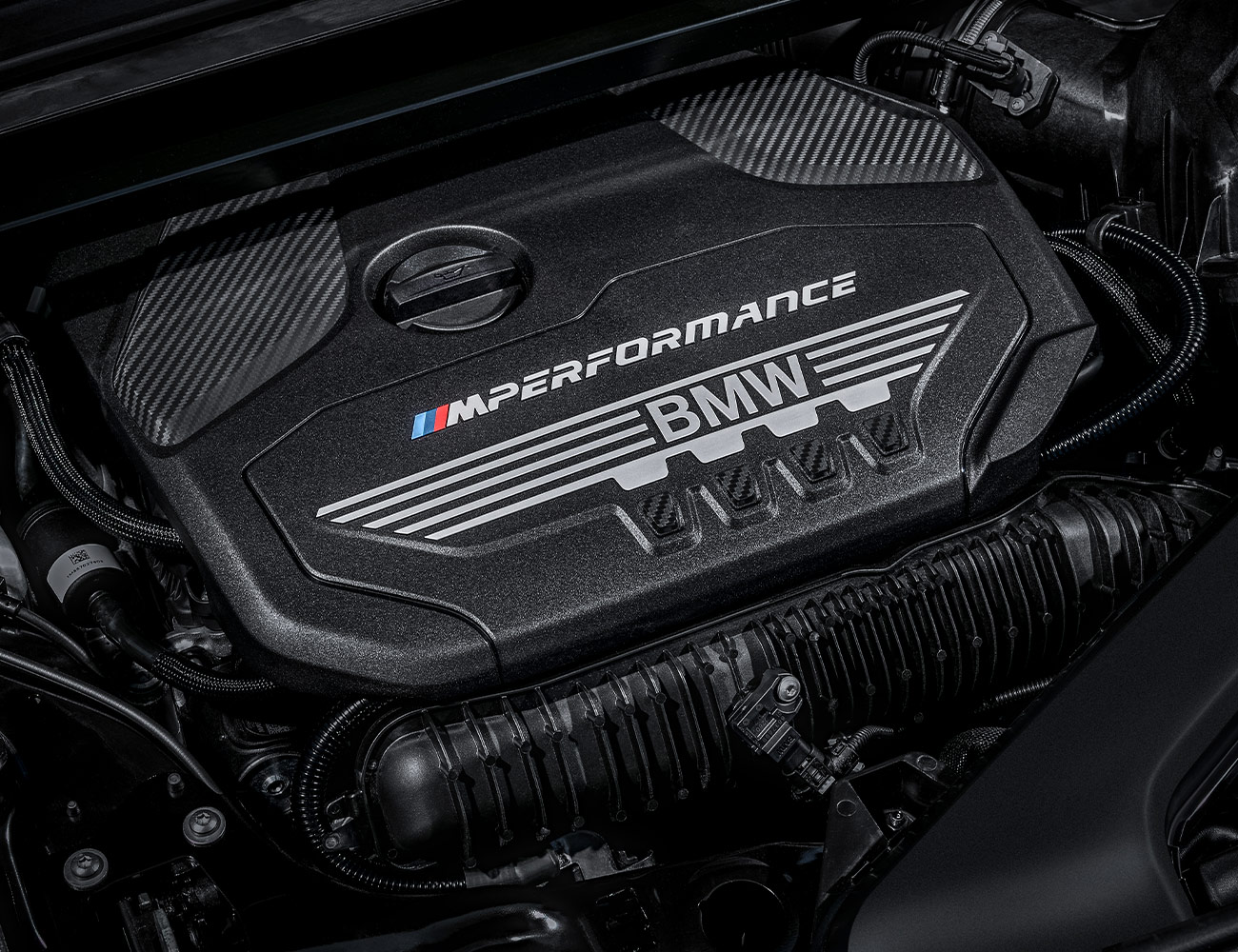
Let’s start with the good: the engine. BMW knows how to make them. The X2 M35i uses a turbocharged 2.0-liter inline-four putting out 302 hp and 332 lb-ft paired with an especially crisp-shifting eight-speed automatic. Using launch control under optimal conditions, it will accelerate to 60 mph in less than five seconds. In real-world driving, the X2 M35i provides potent power on demand. It never shortchanges you when you hit the gas, and the throaty exhaust note heightens the effect. It’s the engine you would want in a hot hatch.

The X2 M35i looks athletic, sharp and fun. It ditches the off-color cladding from the base X2 for a cleaner, more upscale look. In short, it reads more like a BMW than a small crossover. Other drivers give you a wider berth, presuming you have the aggressive BMW owner gene. My two-year-old son’s first reaction upon seeing it was “race car!”

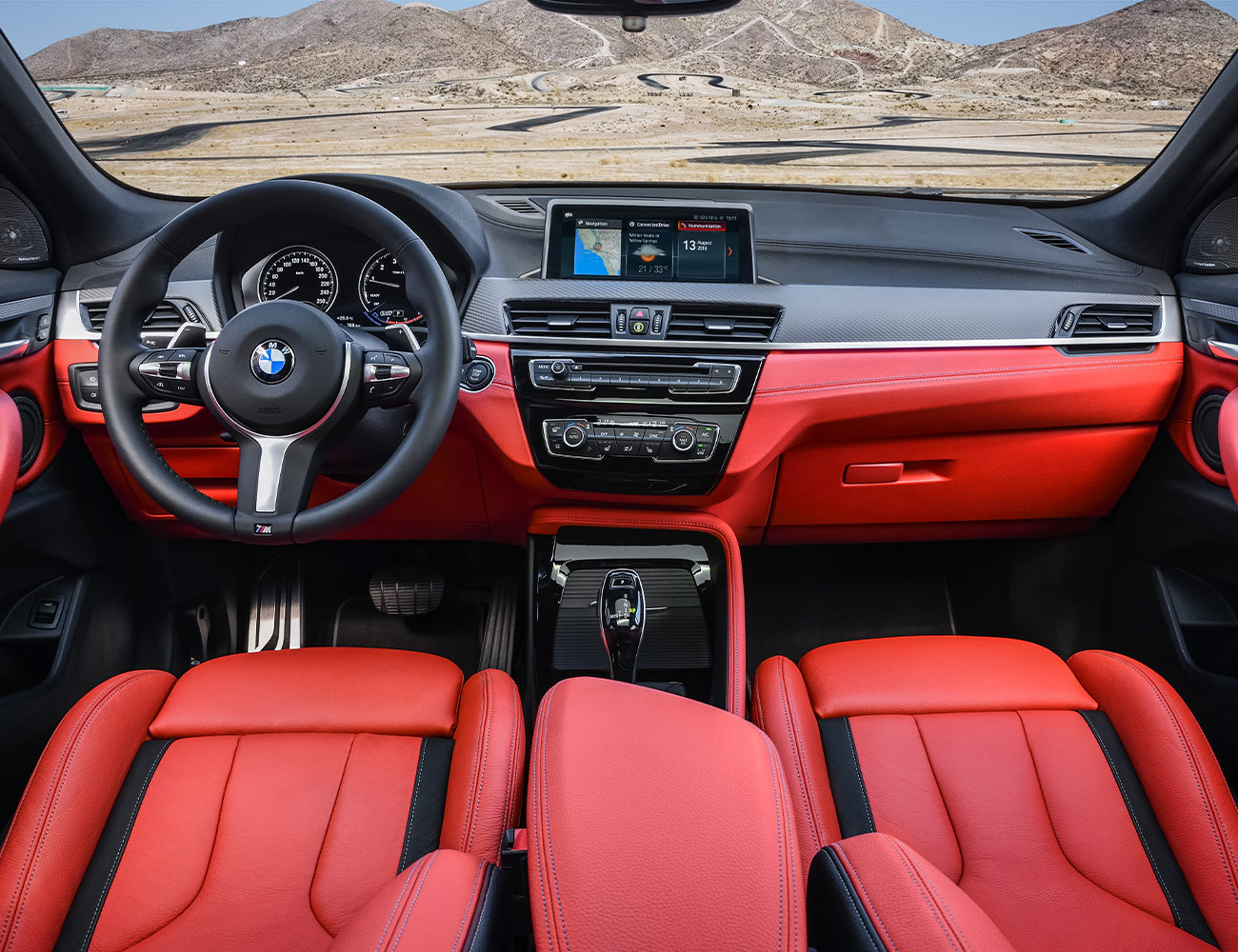
The interior can be polarizing. My tester had the Magma Red Dakota leather — or, as I called it before looking it up, orange trim. There’s a lot of it. It either will look fantastic to you (if you’re the sort of person who likes the Civic Type R‘s looks) or make your eyes feel like they are bleeding. I came down on the latter side. Fortunately, that $1,450 madness is below eye level while driving, and you can opt for a staid black instead.

The X2 M35i is about as practical as a hatchback. If you have multiple hockey-playing children, get something bigger. Given that size constraint, however, it can be useful. A small rear aperture belies a decent-sized trunk, fit for a family-sized grocery shopping trip or a couple’s romantic getaway. The netted side pocket in the trunk was a perfect fit for my wife’s bottle of rosé.

Where the X2 M35i loses its charm is its ride quality. BMW M cars are pure driver’s cars. They deliver tremendous performance, but that can come at the expense of comfort; they can feel very stiff and unforgiving for everyday driving. The X2 M35i captures that M experience a little too faithfully for a crossover. My tester had an M Sport suspension and 20-inch wheels, which permitted an intimate study of each pavement imperfection (and there are many of those in Michigan). The M sport brakes stopped abruptly. Comfort mode shift settings felt about as ready to party as Sport mode’s 

The X2 M35i is excellent when you tap that power reserve in the passing lane on a smooth highway. But the pugnacity and sharpness becomes a bit much when you’re just popping around the neighborhood running errands, which is what most crossover owners spend their time doing.

Another significant issue? You can’t see out of the back. The rear window is tiny and slanted upward. The D-pillars are chunky. Heads in the rear seats (or even the headrests to protect them) obscure what little you can see. (I laughed out loud at the note on the rear camera to check my mirrors.) The X2 M35i is about as rear camera dependent as a full-size truck.

BMW has drawn some heat — correctly in my book — for converting Apple CarPlay into a subscription service. It’s the sort of thing a $50,000-plus BMW should include (a base model Kia Soul manages it). I also blanched at my 2019 tester’s “Premium Package.” For an additional $1,800 this gave you a head-up display (invisible if you are wearing sunglasses) and navigation (redundant if you have a smartphone). BMW amended that somewhat for 2020. The premium package is now $1,400 and throws in heated seats.

You can see why BMW built the X2 M35i. There was a hole in the lineup for a hotter, more premium version of the X2 — much more so than for a hot hatch). But the X2 M35i feels like BMW overcooked it. Buyers often opt for crossovers for comfort, not just the appearance. Softer touches could have given this BMW crossover a sportier but still palatable ride without the full drawbacks of driving a sporty BMW. 

Verdict: The X2 M35i may be the cute little crossover for driving enthusiasts. But driving enthusiasts are the precise people who would be most annoyed by it being a crossover. The X2 M35i is fun, but it does not square that circle. Those same buyers can buy the Golf R they want for $10,000 cheaper. Even sticking within the BMW crossover realm, you can upgrade to an X3 M40i with an inline-six, 50 more hp, and much more cargo space for a few thousand more. Why wouldn’t you? 

2019 BMW X2 M35i: Key Specs
Price as Tested: $55,020
Horsepower: 302 hp
Torque: 332 lb-ft
o-60 MPH: 4.9 sec
Top Speed: 155 mph

BMW provided this product for review.

Read More Gear Patrol Reviews

Hot takes and in-depth reviews on noteworthy, relevant and interesting products. Read the Story
Note: Purchasing products through our links may earn us a portion of the sale, which supports our editorial team’s mission. Learn more here.

Is This What the Next BMW M4 Will Look Like?

On Monday, BMW revealed the Concept 4 at the Frankfurt Motor Show. The company described it as “a look ahead to the expressive face of the 4 Series range.”

Expressive would be one way to put it. Others might be “gigantic” and “hideous.” It’s not quite Silverado 2500 HD-level enormous, but it’s certainly…prominent.

The Concept 4 presents a novel interpretation of BMW’s iconic kidney grille, in which designers oriented it vertically instead of horizontally. But it still covers a vast horizontal expanse, as well. It sort of looks like a BMW mated with a Lexus, producing an offspring that looks like an aerodynamic beaver. A grille is the focal point of the car, and the focal point of ths car is ugly — and not in a way that will grow on people as the Internet simmers down.

BMW describing this Concept as a “look ahead” to future 4 Series models is a scary thought. That could mean that, in order to park the next M4 coupe or convertible in their driveway — a vehicle that may the best pure sports car in the BMW lineup, and is one of the last to feature a manual transmission — BMW enthusiasts would have to put up with that mug. It would be a particular disappointment considering that model is due for a performance upgrade.

There’s still hope. The design is still in the “concept” stage. There’s still time for BMW to heed criticism and tone that face down for production models. Then again, it’s also possible BMW brushes off the skeptics and strides large-face-first into its “confident and classy” future.

Testing Mercedes-Benz’s Toughest Off-Roaders in Their Natural Habitat

You never truly know what a vehicle is capable of until you see it pushed to its limits by a pro — someone who isn’t particularly concerned about, say, the cost of new tires. But even manufacturer demonstration drives tend to have their limits; in the case of off-road vehicles, you’ll scramble over a few gnarly boulder trails or up and down some steep slopes, sure, but all under the precise direction of helpful instructors. It’s like off-road kindergarten, where you learn and see assorted tricks and capabilities without pushing the vehicle too hard — or discovering whether you’d be able to outrun a charging elephant down a dry creek bed in the thing.

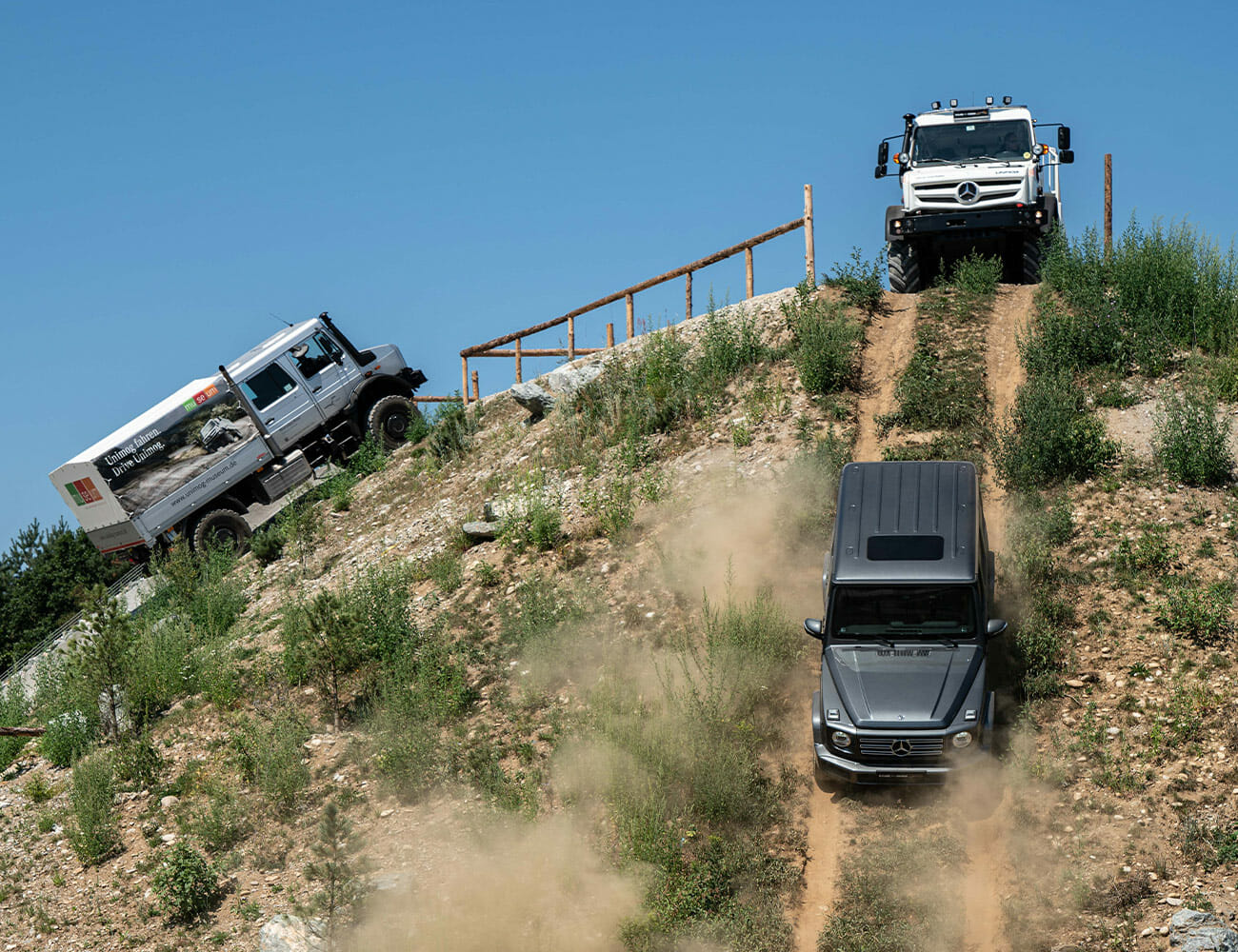
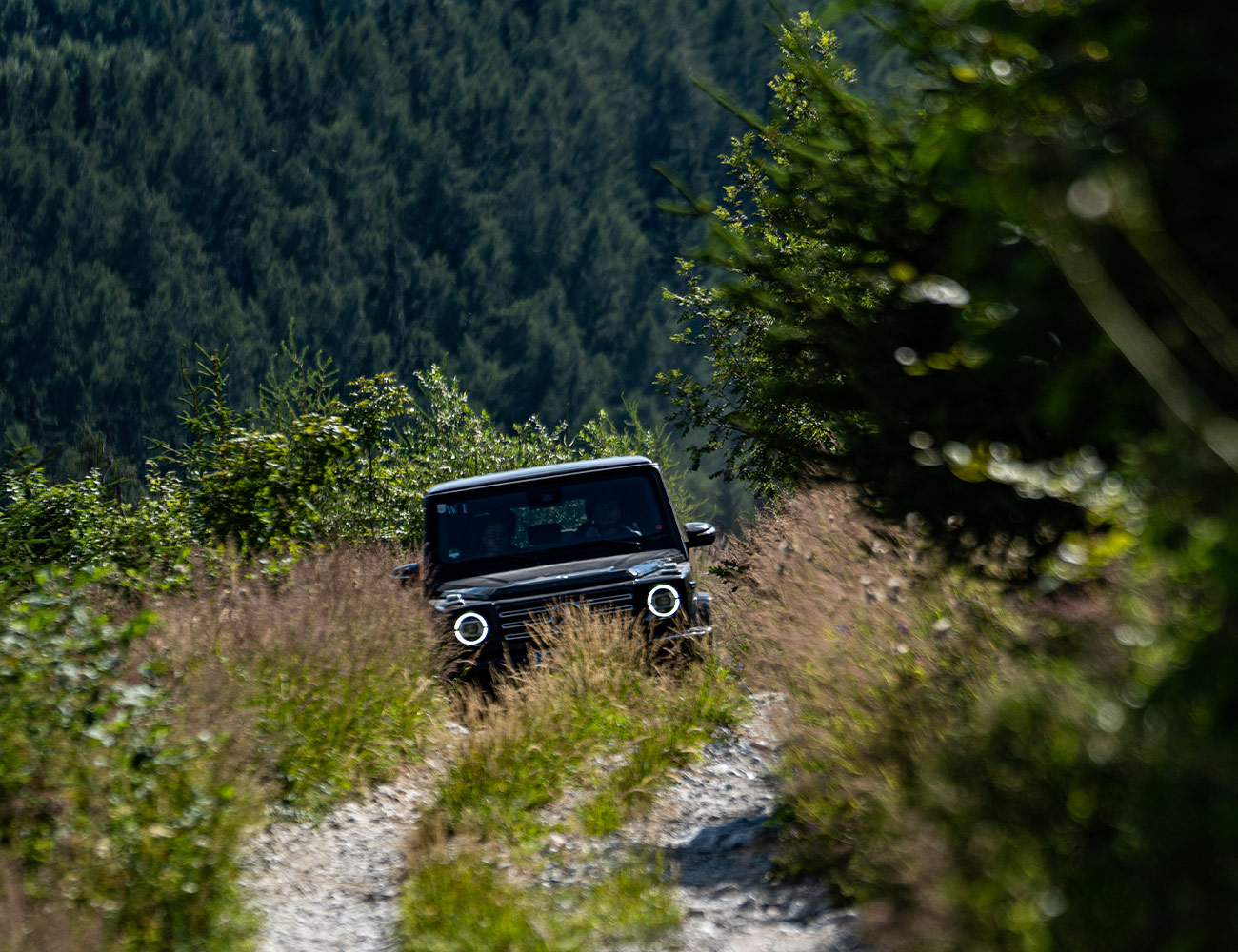
This summer, on an Austrian mountain named Schöckl where Mercedes tests its off-road offerings, the company allowed its expert drivers to show off its famed G-Class SUV’s ability to straight-up assault a steep, craggy downhill at seemingly full throttle, with nary a concern given to preserving tires or the delicate insides of the media occupants.

It was a startling experience, one that proved how little even journalists sometime know about what modern machines are capable of. Of course, these were pro drivers who know the trucks and the trail like the backs of their hands, but all that ultimately amounts to is relative certainty that there won’t be any surprises on the way down. Otherwise, keeping pace means precise but relentlessly aggressive throttle and brake applications while sawing at the wheel constantly to keep the gyrating, undulating, oscillating and cavitating vehicle on something resembling a straight line. Were it not for the steady hand of my gimbal-mounted video camera, the cockpit views would cause you to throw up.

The caravan of G-Classes kept in tight formation all the way down, the only (entirely predictable) incident being a flat tire in one of the vehicles, which the Germans swapped out in minutes without a jack, canting the truck onto a trailside berm in order to hike up the right rear wheel enough to change it.

As eye-opening as the wild freefall was — and even with my newfound appreciation for how much abuse a Gelandewagen can absorb — such adventures are best left to those with years of experience and intimate knowledge of the vehicles. Of course, one of the ways to acquire that experience is through the kind of (repeated) coaching we in the automotive circuit often benefit from. To that end, Mercedes just opened a new G-Class Experience Center on the grounds of the former Nittner Air Base, near Graz, Austria. The center won’t provide quite the hair-raising thrills of our plunge down the nearby Schöckl, but it does more than adequately demonstrate the capabilities of the G-Class via a gauntlet of challenges, from steep metal and dirt slopes to staircases to deep-water fording in a woodsy trail that’s peppered with numerous axle-twisting threats.

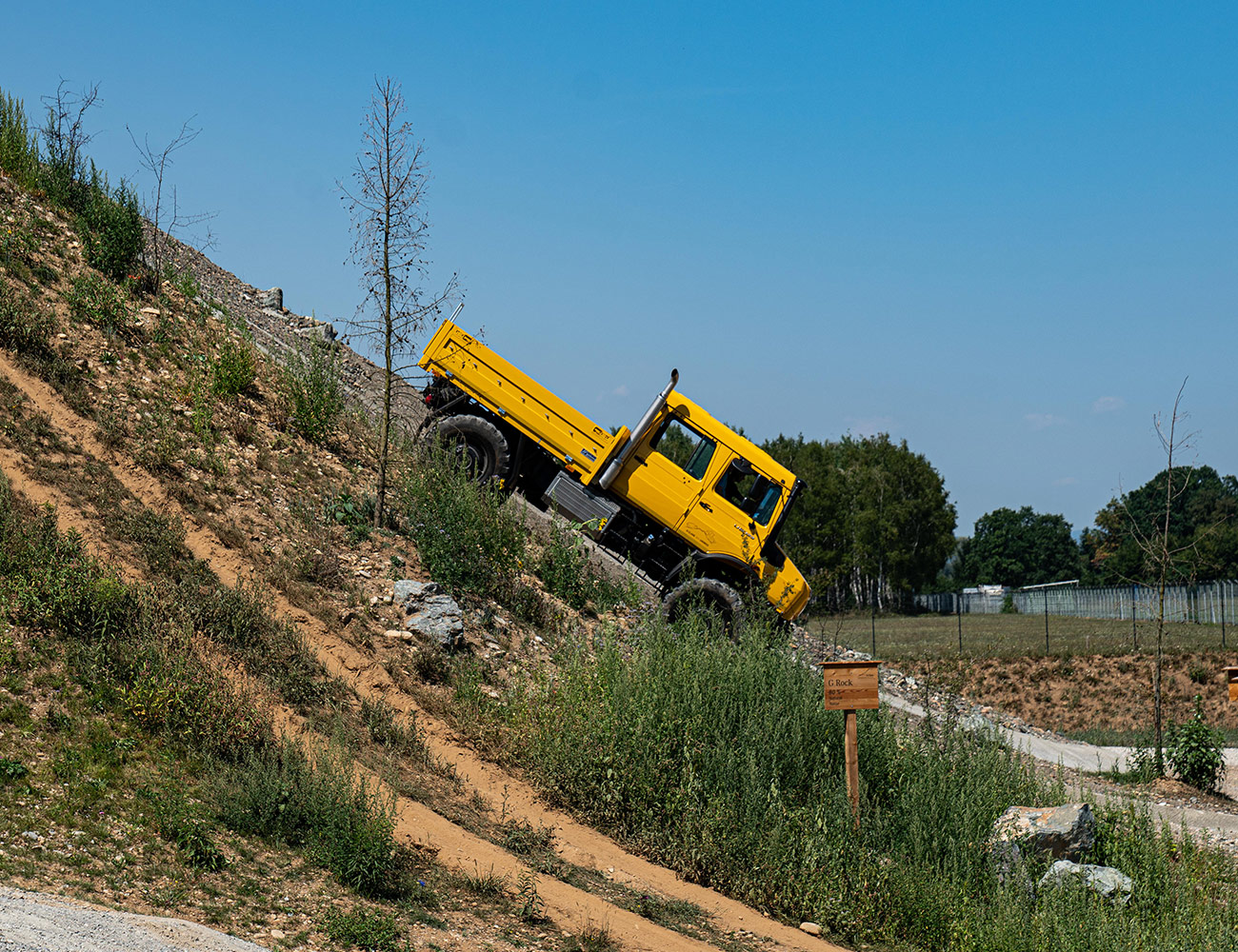
During a visit there ahead of the opening, the company provided the media with a selection of Unimogs, the legendary Mercedes-built utility vehicles that ride high on massive tires and are frequently seen embarrassing smaller vehicles on global races such as the Dakar Rally. Their appearance at the G-Class center seemed as though it was meant as much to satiate our collective desire to test the massive machines as it was to demonstrate the full spectrum of off-road prowess the company has honed over the decades. (Fun fact: The Unimog line is now 70 years old.)

Sadly, we couldn’t actually drive the snub-nosed bruisers, due to strict rules about who can drive what even on private property. But we were readily able to get a sense of their what they can do — along with enjoying the fright of riding in a tall machine that’s capable of tilting 38 degrees to the side without falling over.

The Unimog leans heavily on several key qualities: its high-torque output — 660 pound-feet from a 231-hp, 5.0-liter four-cylinder turbodiesel engine; front and rear locking differentials; adjustable tire pressure to allow for maximum surface contact; and its 16 inches ground clearance, which comes by way of portal axles that help keep the undercarriage clear of all the hardware. The ‘Mogs also have eight forward and six reverse speeds and reduction gears to optimize stability at low speeds, as well as axle articulation of up to 30 degrees, which means the chassis can contort itself over bumps and depressions simultaneously while keeping all four wheels in contact with the surface.

Rumbling around the Experience Center’s courses, my veteran driver deftly controlled  the industrial vehicle while effortlessly navigating the terrain. During the water fording, spray burped up into the cabin from gaps in the floor of the vintage model we were riding. Unlike the latest G-Wagen, the Unimog is no luxury ride, but it feels like paradise when you really need something that can do what it can.

The Land Rover Defender Configurator Is Live, Go Build Your Dream One

At long last, Land Rover finally launched the new 2020 Defender this morning, and the company didn’t wait long before giving people the chance to figure out just how they’d spec it.  The Defender configurator is now live on Land Rover’s website. You can now build the new Defender of your dreams…provided that Defender is the four-door 110 model that will launch first before the other variants.

Are you a hardcore Land Rover enthusiast? Budget yourself a solid half-hour to 45 minutes to play around with the tool. Configuring your ideal Defender could take a while. Deciding on your accessory packs of choice — Explorer, Adventure, Country, Urban — is a loaded decision. Am I a Whole Foods Defender person or an Arctic expedition Defender person?

That choice is just the start. There are four tiers of both exterior and interior features.  Then there are seven tiers of “options” and an additional five tiers of “accessories.” Each tier can involve myriad decisions. One option tier, for instance, consists of a choice between 10 different packs. Do you know which of seven different types of rooftop gear carriers you want? Do you need the full $1,838 Pet Care and Access Pack, or just the individual components?

Configuring your new Defender could be good fun, and it may be a jumping-off point for some serious self-reflection. But it will certainly sidetrack you at work today.

Volkswagen’s New Electric Car Looks Amazing, But There’s a Big Catch

On Monday evening, Volkswagen launched the all-new all-electric ID.3 hatchback at the Frankfurt Motor Show. The car arrives to great fanfare, as VW’s people’s-car successor to the Golf and the Beetle and a harbinger for the company’s electric future. Early reports suggest the ID.3 should deliver on the hype.

The ID.3, judging from photographs, looks fantastic. It’s simple and well-proportioned. It resembles what European buyers would want, an updated interpretation of the base Volkswagen Golf (the market’s best-selling car). The off-color black roof and liftgate are au courant without being gaudy. The flash of chrome and logo at the front accounts for the absent grille. EVs looking like cars is a movement we can all support.

A lack of range kept VW’s e-Golf, which could only go 125 miles on a charge according to the EPA, from mass adoption. Volkswagen has resolved that anxiety with the ID.3. First editions will have the mid-range 58-kilowatt-hour battery delivering a range of 260 miles on the Euro-market WLTP cycle (probably around 220 miles EPA). The ID.3 will also have short-range 45-kWh and long-range 77-kWh batteries giving WLTP ranges of 205 miles (175-ish EPA) and 341 miles (290-ish EPA). VW says the ID.3 will absorb 180 miles of range in 30 minutes on a fast charger.

Volkswagen did not give full pricing for the ID.3. The short-range model will start below $33,000 in Germany. Beyond that, VW says prices will be “comparable to that of typical compact vehicles” after the tax subsidies. Buyers will get free charging for a year and an eight-year, 100,000-mile warranty on the battery.

We did not learn any performance details yet. Though Volkswagen says the ID.3 will have a super-low center of gravity “like in racing cars” with the battery packs, and “ideal weight distribution” thanks in part to its standard rear-axle drive. (If there’s one company you would trust to produce a practical, well-handling compact, it would be Volkswagen.)

The only downside, though, is a killer. Volkswagen has no current plans to bring the ID.3 hatchback to the North American market. Perhaps the 268-percent bump in U.S. e-Golf sales so far in 2019 will inspire VW to rethink that stance. The ID.3’s top-notch looks should at least inspire confidence that the eventual ID-platform crossover that arrives Stateside won’t be an overly futuristic ogre.

Aston Martin’s CEO Talks “The Most Important Car In the History Of the Company”

Aston Martin CEO Andy Palmer is the sort of guy who loves his job. It’s clear as day, on his face and in his voice, even when he’s jet-lagged after hopping from Europe to California and pressed into glad-handing customers and chatting up reporters, as he was when we sat down with him during Monterey Car Week. And while some automotive chief executives seems more interest in market caps and synergy, Palmer’s love of his job clearly extends directly — and deeply — into the product portfolio. He can quote chapter and verse on the Aston lineup, and isn’t afraid to speak his truth as he sees fit.

Whether it’s his outspoken nature or just the jet lag , he doesn’t mince words when the topic of the DBX crossover, due to be revealed later this year, comes up early on.

“It’s probably the most important car in the history of the company,” he says. 

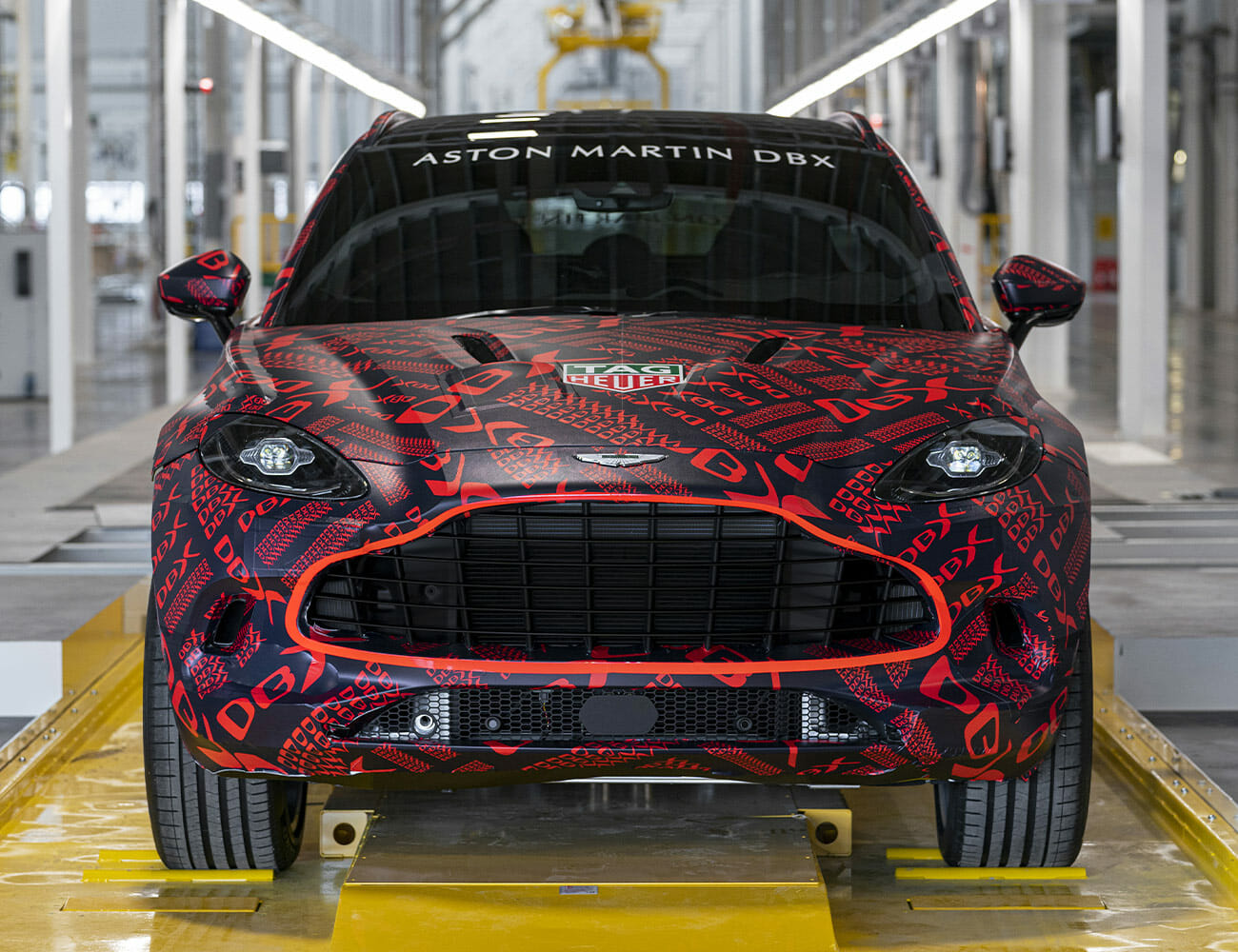
The crossover, which has only been shown in lightly camouflaged form, is expected to sell like Natty Ice in Ann Arbor on opening day of the football season — at least, by Aston sales numbers. (Which, admittedly, have lagged a bit of late.) But while it may be the brand’s first dalliance into the realm of high-riding vehicles, Palmer says they’re

“We need to be credible” as an SUV, he says. And to hear him tell the tale, the company has pulled it off. Not only will it be able to haul loads with aplomb — he describes its towing capabilities as “boat-able” —  but it’ll also be fairly capable in terms of its off-road abilities. While it’ll pack four-wheel-drive, he says, it still needs to handle, look and sound like an Aston Martin. Deliver that level of performance in a taller, 4WD platform, he says, and “naturally, you’ll have a car that’s pretty adequate on the dirt.” He cites the Porsche Cayenne as the handling benchmark for the DBX.

The Aston Martin DBX, technically wearing a disguise.

Given Aston Martin’s lengthy history of building grand tourers with their engines stuck out front, though, the DBX doesn’t seem nearly as much of a change in direction as the carmaker’s new push into mid-engined speed machines. Yet here they come, three strong at this point: first, the Formula One-inspired Valkyrie hypercar this year, then the 500-unit Valhalla supercar, after which arrives the Vanquish super sports car in 2022. Each of them will pack a turbocharged V6 engine, tuned to varying states of power and outfitted with different levels of electrical assistance.

That trickle-down strategy, he says, was very much intentional — both to develop the technology and to prepare the world for the new face of Aston Martin. (As an aside: Speaking of the faces of Aston Martin, Palmer was happy to explain the teeny tiny new headlights being outfitted to those new mid-engined cars: they reduce weight, which has become something of a crusade at the carmaker now that they’ve begun working with the Red Bull F1 team.) The endgame of the entire process, he says, was to create a competitor to the Ferrari 488, Lamborghini Huracan and McLaren 720S that was every bit as capable as them. That meant a lot of development.

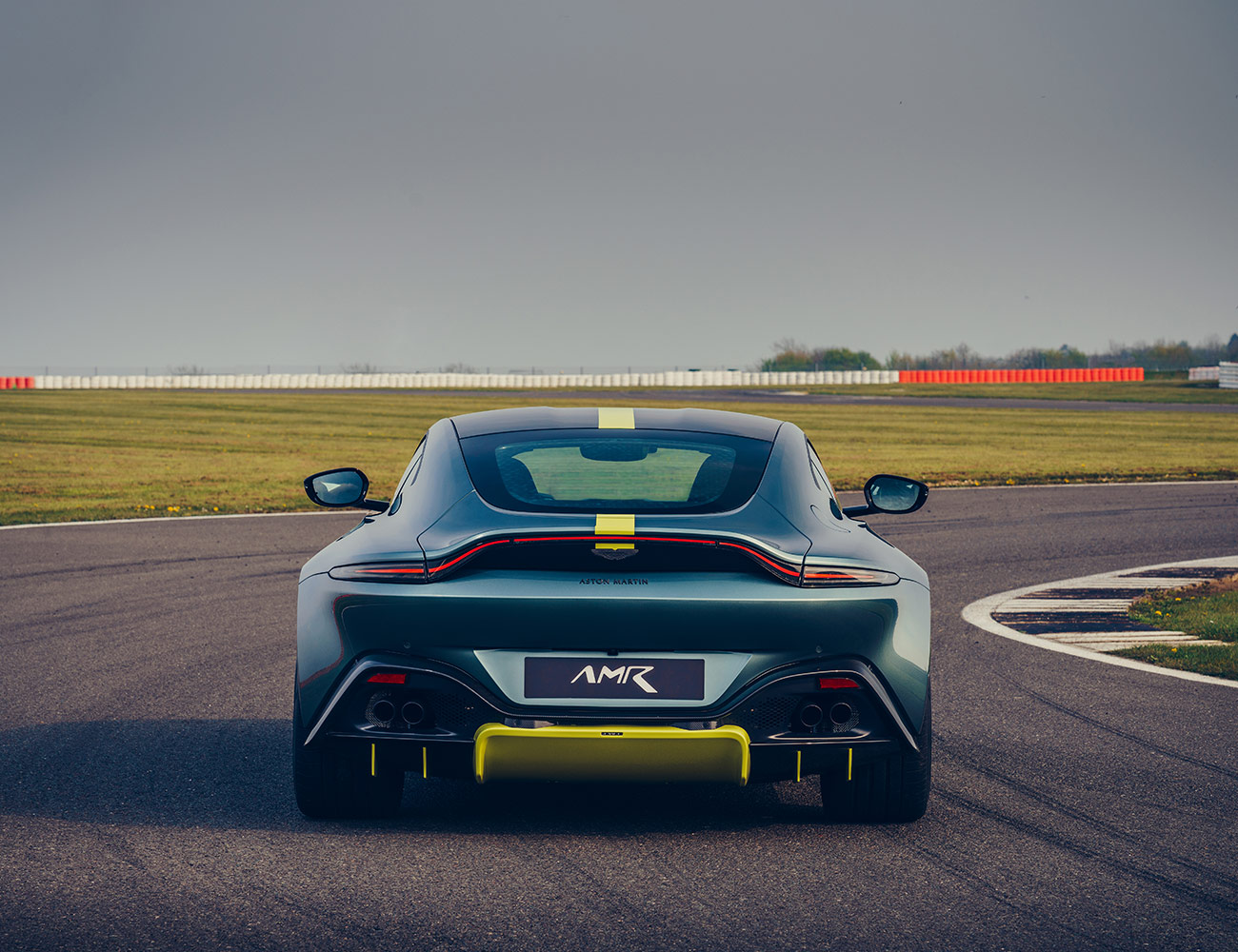
The Aston Martin Vantage AMR.

Still, Palmer’s Aston Martin isn’t leaving all the pieces of the past behind. The Vantage, for example, remains a taut two-seater with the motor out front — and, as of later this year, it’ll keep the manual gearbox alive for the brand in the form of the sportier Vantage AMR. That stick shift, Palmer says, is an example of the brand living up to a promise to keep the driver involved and rowing his or her own gears. Oddly enough, while the broader American public has long since given up caring about stick shifts, the CEO says it’s been the U.S. market that has kept demand for the old-school manual alive for the brand. Indeed, demand for manual Astons has been rising as of late, Palmer says, half-jokingly, “maybe because we’re the only manufacturer who offers one.”

And while the Vantage may be keeping the stick shift alive solo for now, that might not be the case forever. Will the manual find its way into any other vehicles in the lineup? Like, say, the sultry DBS Superleggera?

“I could see places,” he says, coyly. 

Volkswagen Is Resurrecting the Beetle with the New E-Beetle Electric Concept

Earlier this year, Volkswagen officially stopped production of the VW Beetle, one of the most iconic and influential cars to ever roll off an assembly line. The modern versions had strayed pretty far from the…

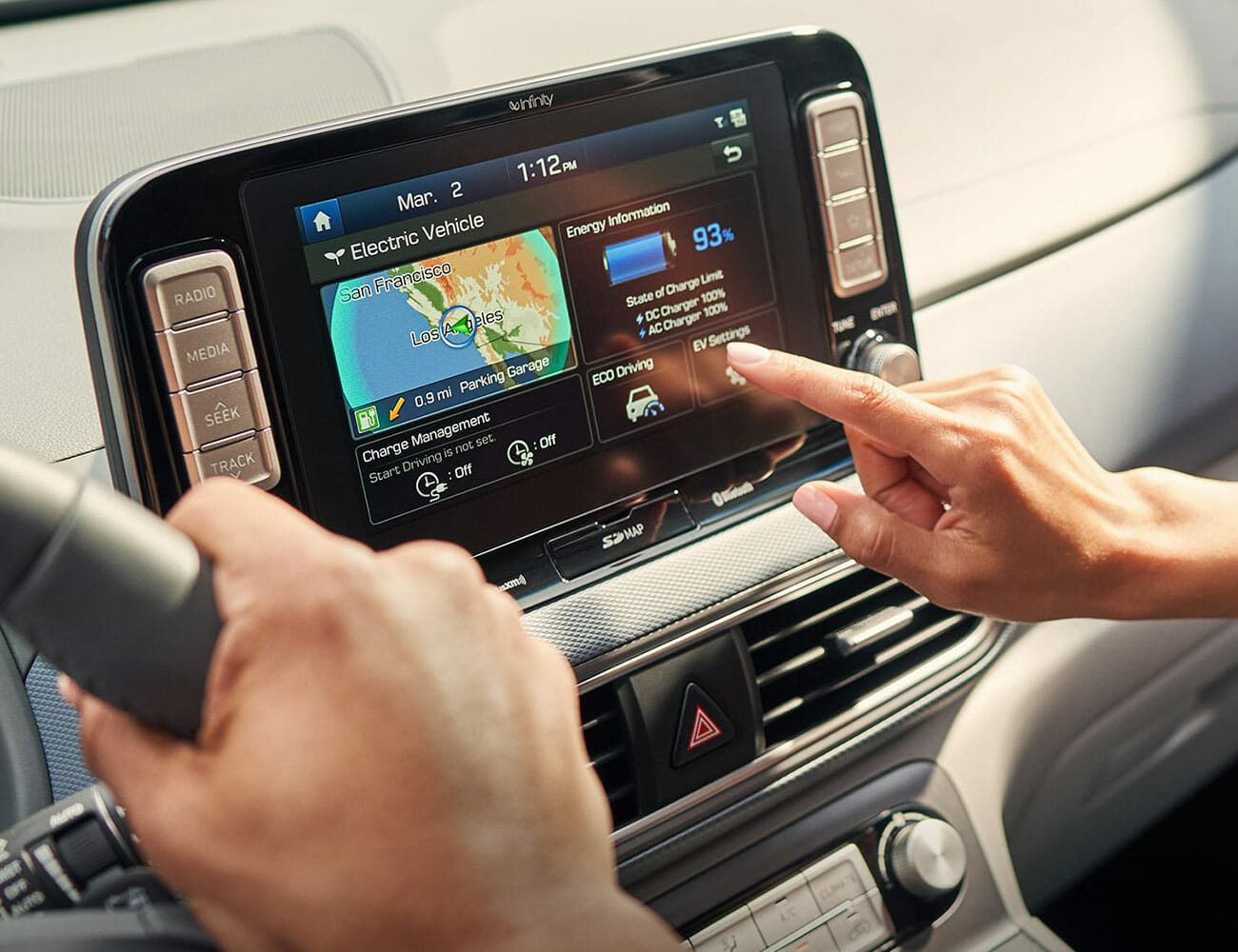
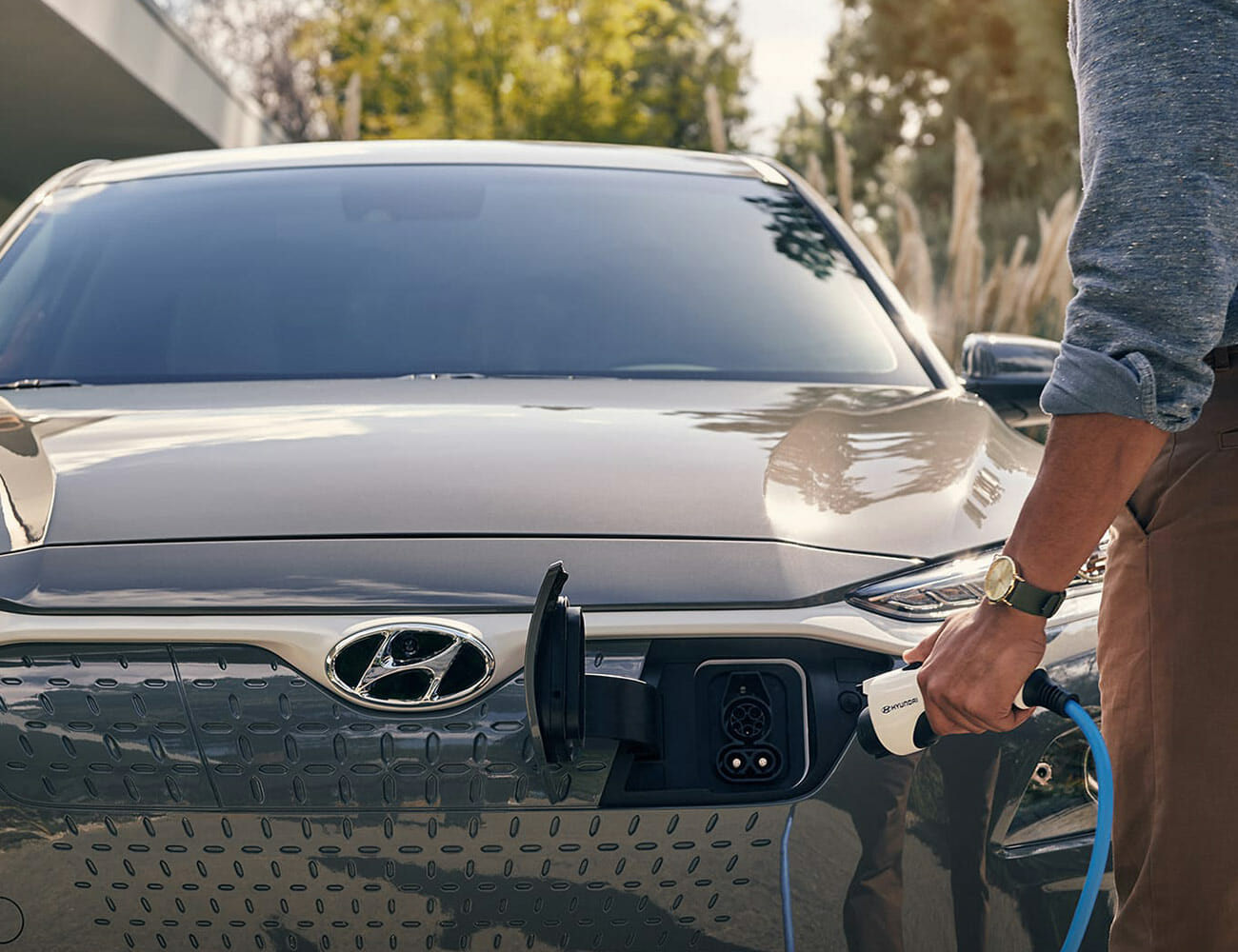
2019 Hyundai Kona EV Review: The Future is Here, But It’s Still Expensive

The Hyundai Kona Electric is the electric vehicle version of the Kona subcompact crossover. It’s one of multiple so-called “Tesla Model 3 fighters” aiming to capture a share of the the entry-level EV market, where cars start around $30,000 after factoring in the full $7,500 federal tax credit.

The Kona’s range and perky driving dynamics have made it a hit with reviewers; NACTOY jurors named it the “North American Utility Vehicle of the Year” for 2019, for example. It may be the best affordable EV on the market not made by Tesla. In the EV market, however, “affordable” still means spending $40,000-plus on a small Hyundai.

The Good: The Kona Electric is super-efficient: It delivers 258 miles of EPA range (nearly the most of any non-Tesla EV) out of a small 64-kilowatt-hour battery. Despite that efficiency, it’s quick in everyday driving, thanks to 291 pound-feet of instantly-available torque.

Who It’s For: The Kona EV is for the understated early adopter who finds a Tesla a bit too flashy. This buyer is not the sort to order a smug vanity plate or join an online motoring cult; he or she simply wants a car that cuts his or her carbon consumption.

Watch Out For: Don’t let the “utility vehicle” moniker fool you. The Kona EV is tiny.

Alternatives: Major rivals for the Kona EV matching price, range, and capability include the Tesla Model 3, the Nissan Leaf Plus and the Chevy Bolt. The Kona also has a corporate cousin, the Kia Niro EV, built on the same platform.

Review: The Kona EV may not have been my white whale, but it did take me months to get hold of one in the Detroit-area media fleet. It has been a popular car to write about this year because it addresses some of the fundamental questions about this propulsion shift: Will converting to electric car affect daily life? Will EVs suck all of the enjoyment out of driving? Will anyone who isn’t a tech bro be able to afford one?

After a two-day-stint driving the Kona EV, I can report that the answers to those questions are no, no…and maybe.

Automotive awards jurors like the Kona EV because it’s fun to drive. Small crossovers tend not to make great drivers’ cars, but the Kona EV is not the Nissan Leaf proxy many would expect. It offers 291 lb-ft of torque — more than a Golf R — and because it has an electric powerplant, that torque comes immediately at zero rpm.

This makes it feel super quick in everyday driving. You can sneak up on a BMW driver (literally, since they can’t hear you), and then have enough oomph to roar past them in the fast lane. The Kona’s performance is by no means “ludicrous,” but it’s engaging enough not to make converting to electric feel like an act of penance for carbon-related sins.

The Kona EV combines this performance with efficiency. It has an EPA-rated 258-mile range (longer than a standard Model 3) in spite of having only a 64-kWh battery. I tried to induce range anxiety over my time with the car; even without the Level 2 home charging apparatus most owners will use to top up with overnight, I couldn’t come close. With braking-based regeneration on full blast, I used about 10 miles of range over two days running errands.

I simulated the longest reasonable daily commute from my house in the Detroit suburbs — a 42-mile drive to Ann Arbor, which takes anywhere from about an hour to an eternity, depending on traffic. Over the whole trip, I used 50 miles of net range, then gained about 30 miles back on a charger in a public garage while I devoured a Reuben sandwich. The toughest part of my experience was the inordinate amount of time it took me to realize I had to unlock the car to disconnect the charger.

Owners will likely recharge at night. (At least, those with garages or private driveways will.) It’s only on extended trips where range anxiety would ever become an issue. Even then, it’s stopping for a long lunch at a fast charger; the Kona recharges to 80 percent capacity (206 miles of range) in 54 minutes. Unless you’re doing frequent cross-country trips, electric likely makes sense for you.

I didn’t lead with the Kona Electric’s looks because, unlike a lot of EVs, it blends in. The pockmarked texture and sliver of chrome at the front give the illusion of a grille, so you don’t notice it doesn’t have one. Other than the fancy wheels that improve its aerodynamics, it looks like a regular Kona. My personal preference would have been to choose any color except the “cerulean blue” on my tester.

The Kona EV’s interior felt oddly analog for such a car. There are tactile buttons everywhere: the gear shifter is a series of hard buttons; climate and infotainment adjustment happen with buttons; you even engage the HUD with a button. There’s an argument to be made against Tesla-style touchscreen minimalism, but this felt too far in the other direction.

While you may see the Kona described as a “utility vehicle,” don’t let that fool you. There’s not much utility. The cargo area is small, and the rear seat is cramped. I had to contort my toddler more than usual to maneuver him into his car seat. It may be hatchback-sized, but it feels closer to a Mini than a Golf.

Besides a slight lack of practicality, the major sticking point for prospective buyers may be cost. Battery tech is still too expensive for mass-market adoption. The Kona EV is priced well compared to other EVs — the base model slides in a hair under $30,000 after the tax credit — but that price still can’t compete with internal combustion. Unless you’re committed to buying an electric vehicle, the choice for $40K or so is an entry-level Mercedes sedan, a large, loaded Honda SUV…or a subcompact Hyundai.

Verdict: I suffer from a lot of climate guilt, and the Kona EV is such a good daily driver, I’d consider buying one. Consider it: In reality, most buyers (including me) will need a more practical car. Many will still be tempted to stick with the value found in internal combustion.

Switching to a Kona would be a lifestyle choice, not just a transportation one. If Tesla’s foibles don’t scare you off, it’s a fancier brand, and you can get a Model 3 for only a few thousand more.

2019 Hyundai Kona EV: Key Specs

MSRP As Tested: $44,900
Horsepower: 201
Torque: 291 lb-ft
EPA Range: 258 miles
Battery Size: 64-kWh

Hyundai provided this product for review.

Read More Gear Patrol Reviews

Hot takes and in-depth reviews on noteworthy, relevant and interesting products. Read the Story
Note: Purchasing products through our links may earn us a portion of the sale, which supports our editorial team’s mission. Learn more here.

One of Our Favorite Versions of the Jeep Wrangler Has Returned

When the latest generation of the iconic Jeep Wrangler arrived in 2018, it came bearing tidings of added comfort and refinement — ditching the less-than-pleasant ride and handling of the past versions while keeping all the off-roading capability that made them legendary. But every time a new Jeep arrives, it resets the clock on the endless volley of new trims and special editions — which can mean we have to wait a while to get the Jeeps we really lust after.

Luckily, we’ve now progressed far enough through the Wrangler life cycle for some of the better special editions to start arriving. And perhaps none are quite as delightful as the Wrangler Willys trim, coming to the fourth-generation Wrangler for the first time for the 2020 model year.

To put it simply, the Wrangler Willys brings much of the off-roading capability of the higher-level Rubicon trim at a more easily-digestible price. The Willys takes the basic Wrangler’s capable bones and adds on a rear limited-slip differential, 32-inch mud-ready all-terrain tires, beefier brakes and Rubicon rock rails and shocks, all designed to burnish the rig’s capabilities out past where the pavement ends. (It’s a Wrangler, of course, so four-wheel-drive is standard.)

LED headlamps and foglamps come standard for added visibility, while a black grille and black wheels add visual panache. There’s also a Willys decal on the hood, to keep you from forgetting which Jeep you brought home — but if you still want to make sure your Wrangler stands out in the parking lot, feel free to order it in one of Mopar’s wilder, delightfully-named available colors, such as “Punk’n” (orange), “Hellayella” (bright yellow) and “Mojito!” (bright green, exclamation point theirs).

The best part? The new Wrangler Willys starts at just $33,740 for the two-door model and $37,240 for the four-door. That’s only $2,495 than the effective base model, the Sport S (the cheaper Sport doesn’t even give you power windows, so we doubt Jeep sells all that many); more importantly for budget-minded overlanders, it’s thousands cheaper than the Rubicon, the off-road champ of the lineup. We’ll take our Willys in Mojito!, please.

5 of the Best New Car Lease Deals You Can Find in September 2019

Labor Day has passed, and all those purported “can’t miss” summer savings events on new cars and trucks have ended. But dealers and manufacturers are moving on to their September promotions, and there are still some great offers out there — especially if you don’t need to drive more than 10,000 miles per year and don’t mind handing back your vehicle after two or three years.

Here, then, are five of the best new car lease deals you can find in the US as of September 2019.

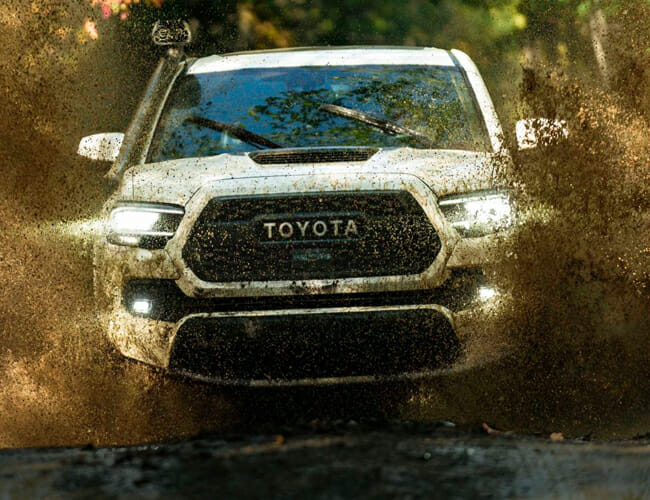
Toyota Tacoma – $219/mo.

The Tacoma has at or near the best residual value on the market (though the Jeep Gladiator is gunning for the crown). That can work in your favor for leasing. Toyota has a September lease offer on the base trim SR Tacoma equipped with some broad essentials (double cab version, four-wheel-drive, V6). The lease is for 36 months at $219 per month with $2,999 down. Whatever you do, do not fall in love with your particular truck: Toyota will want more than $25,000 for the three-year-old truck when you’re finished leasing it.

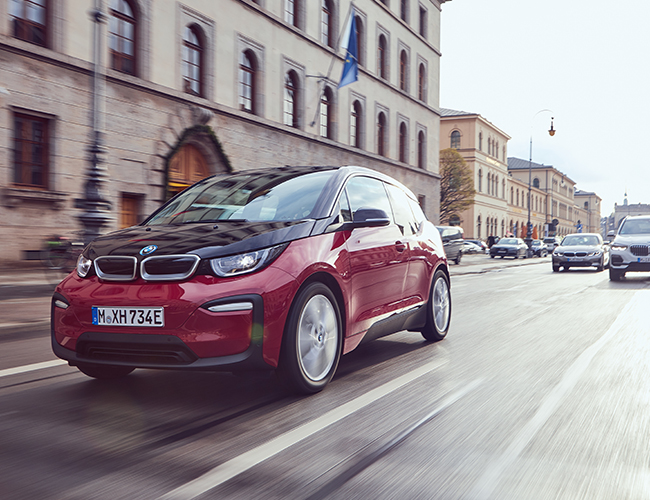
BMW i3 – $299/mo.

The BMW i3 is an aging electric car. It feels dated with avant-garde styling, a 153-mile range and a not-so-ludicrous 170 horsepowwer. But if you want to cut your emissions now while waiting for the EV new car market to grow, the i3 could be compelling. BMW includes a $7,500 lease credit on the i3. For the base model, that works out to $299 per month over 36 months with $3,000 down.

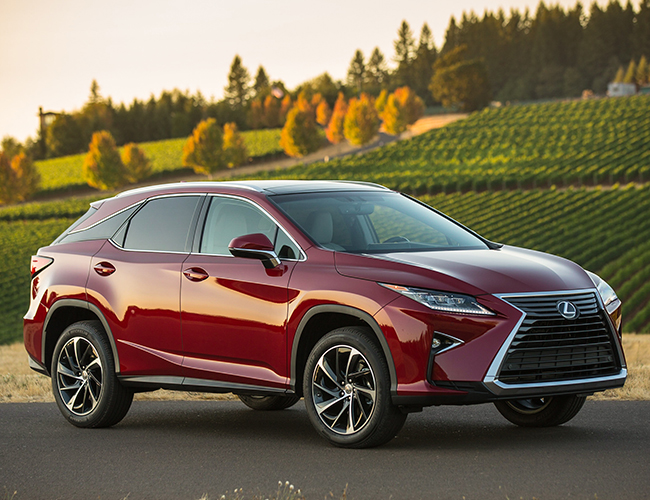
Lexus RX 350 – $399/mo.

Lexus has September lease deals on its most popular model, the midsize RX SUV. This deal will vary slightly by region, but with Lexus throwing in $2,500 in lease cash, you can get an RX 350 AWD for 36 months at $399 per month with $3,999 due at signing.

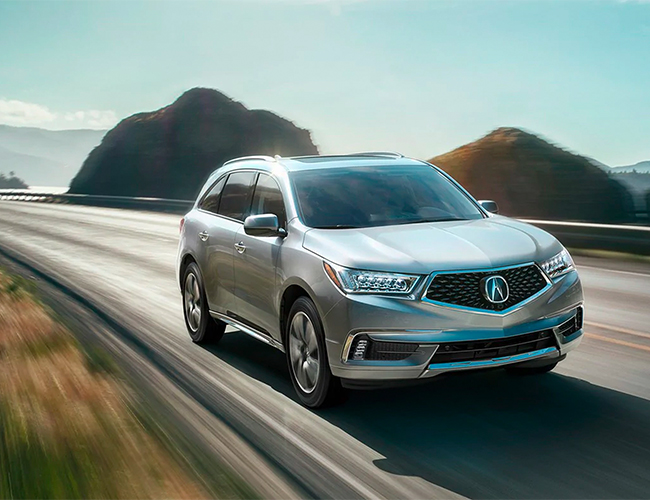
Acura MDX – $409/mo.

grey_placeholder

The Acura MDX is a thoroughly anonymous-looking three-row crossover. But it’s among the more compelling ones to drive. Through the end of October, you can lease a SH-AWD (Super Handling All-Wheel-Drive) version for $409 per month over 36 months with a $2,590 down payment.

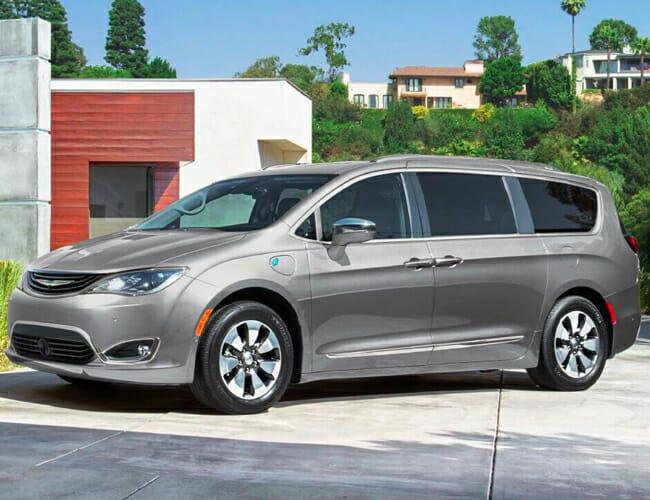
Chrysler Pacifica – $229/mo.

grey_placeholder

Sometimes, you need to embrace that minivan life. It’s not so bad. Chrysler has a promotion on the Touring L version (the fourth of nine trims) of the Pacifica for September. You can lease one for only $229 per month over 36 months with $2,949 due at signing.

Note: Purchasing products through our links may earn us a portion of the sale, which supports our editorial team’s mission. Learn more here.

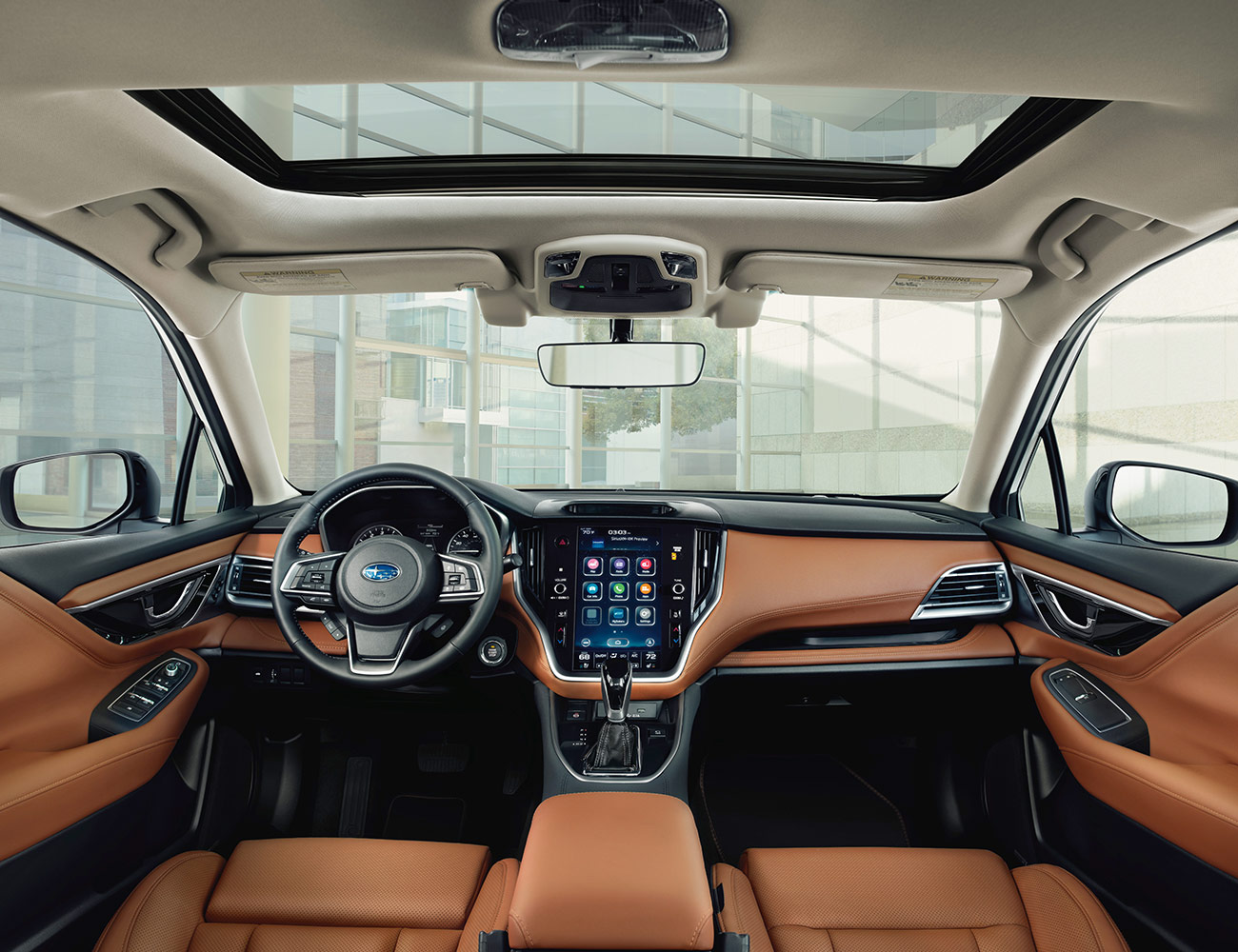
Subaru’s New Infotainment System Cures the Brand’s Worst Problem

The unchanging nature of Subarus, manifested in their stubbornly utilitarian designs, has been part of the brand’s enduring charm. But that homespun quality isn’t at all charming when it comes to infotainment: Subaru’s systems have, at times, recalled Amish buggies in a world of modern automobiles.

That all changes with the 2020 Legacy sedan and Outback crossover. In a rare worst-to-first scenario, these latest Subarus have gone all Tesla, with a tablet-style infotainment unit that out-styles and outperforms virtually any mainstream competitor. 

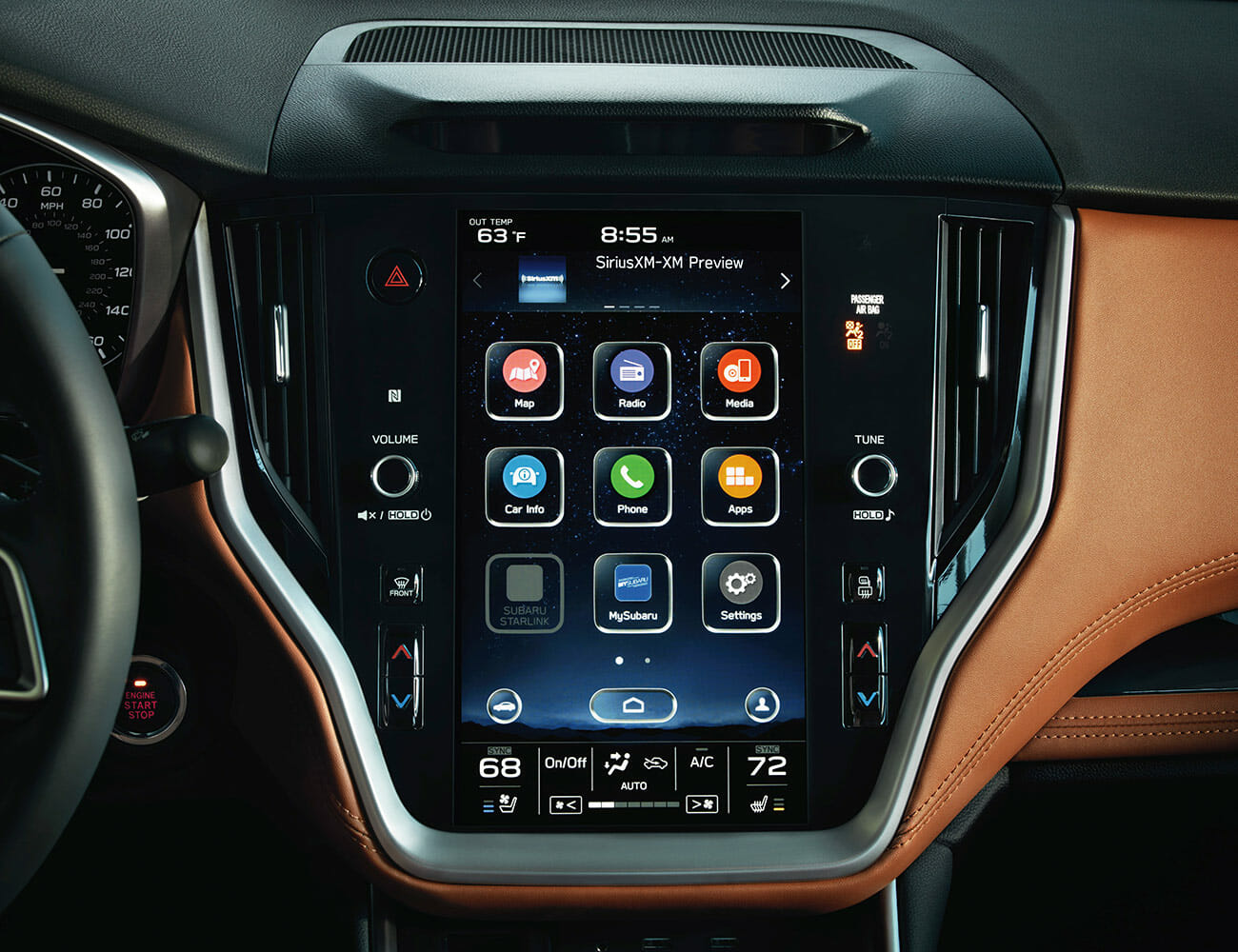
Driving the all-new Legacy in Ojai, California, I was quickly won over by the Starlink multimedia system and its vertically-oriented 11.6-inch screen. The high-definition screen’s huge real estate and handsome, info-rich navigation graphics — the latter courtesy of TomTom — made it a breeze to stay on course. Drivers can instantly rejigger key icons on the screen, as with any smartphone. Electromagnetic near-field communication allows you to pair Android phones simply by touching them to the unit’s NFC scanner, with no Bluetooth link or time-wasting configuration required.

The split-screen display is another first in a Subaru. The system, developed with Japanese supplier Denso, gets its own dedicated processor, with a separate processor for HVAC and other controls. And it all worked flawlessly: No hiccups, no headaches, no digging for the owner’s manual. It’s a whirlwind change from previous Subarus, whose tinny audio systems, scrawny displays and scrawnier buttons recalled the aftermarket stereos that enterprising sorts once sold out of the back of an airbrushed van. 

“Historically, we got dinged for our head units,” says Charles Ballard, Subaru’s product and technology specialist. “The big goal was to get them up to speed, with something that’s fast and intuitive like your phone.” 

The system also avoids too-radical changes that might upset Subie loyalists. You’ll still find trusty analog knobs and buttons for functions like volume, radio tuning and onboard temperature. In doing so, Subaru heeded the advice of New Englanders and other customers in wintry climes, who wear gloves in cars and prefer a few traditional knobs to onscreen controls.  

This being Subaru, the system also offers apps that should appeal to the brand’s oh-so-outdoorsy demographic. The National Parks app, created by Chimani, brings detailed info on all 59 of America’s parkland treasures. eBird, developed in partnership with the Cornell Lab of Ornithology, is a crowd-sourced bird watching app, which lets users track species and the locations where they’ve been spotted. 

For its part, these Subaru species may continue to be spotted most often in the wilds of New England or the Pacific Northwest. But wherever you drive these Subarus, the Starlink system offers ongoing proof of automotive evolution. 

More People Should Buy the Acura NSX

The Acura NSX, like the BMW i8, seems like the sort of car that comes from some past vision of the future. It’s a hybrid in a world moving towards electric cars at ludicrous speed; it’s a technically complex machine that doesn’t live up to the sum of its parts. It was, seemingly, outclassed from the day it went on sale.

At least, on paper. Drive it, however, and you’ll find that it’s something the i8 never was: a coherent, delightful performance car.

The twin-turbocharged V6 and three electric motors — two on the front axle, one in the back mated to the gearbox — combine to deliver a seamless rush of acceleration, be it from a dead stop or from a roll at highway speed. 573 horsepower and 476 pound-feet of torque may not sound like much in this era of overpowered muscle cars, but the combination of instantaneous electric twist, on-boost turbo power, a tight-ratio nine-speed gearbox and four-wheel traction means the NSX punches well above its specs in the real world.

Then there’s the delightfully-named Super-Handling All-Wheel-Drive system, which capitalizes on the torque-vectoring capabilities to push the car through curves with fantastic prowess. Literally, fantastic, as if from a fantasy; unlike most cars, where they often seem to lose commitment the faster you round a bend, the harder you push the Acura, the more aggressive and excited it seems. It’s a feeling just a little bit different than any other performance car; whether it’s better or worse is largely a matter of opinion (at least unless you’re looking to set absolute lap times), but it’s certainly something every car enthusiast ought to experience.

Unlike most hybrids, the NSX not shooting for fuel-economy supremacy. Crank it to life, and it defaults to Sport mode, not Comfort or Eco or anything like that. In fact, it doesn’t even have an Eco mode; the only mode more conservative than Sport to be found by cranking the centrally-mounted drive mode rheostat goes by “Quiet,” suggesting it’s designed more for sneaking up on unsuspecting pickup trucks than passing them at the gas station. (Indeed, trying to keep it running under electric power is one of the car’s few weak spots; even conservative throttle inputs.)

Still, it may not be aiming to be a fuel-saving machine, but that hybrid powertrain does provide decent fuel economy in town. Thanks to New York-area traffic, my average speed over four days of trundling about wound up at a mere 19 miles per hour — yet I managed more than 21 miles per gallon over those 100-plus miles, according to the trip computer

It looks every bit the part of a six-figure sports car, too. The attendants at my local parking garage fell into an argument about it; one loudly insisted it was a Ferrari, even though the other guy kept repeating that it was an Acura. A man riding in a taxi cab opened his door in traffic while stopped at a stoplight to ask questions about it. Everywhere I drove over the course of Labor Day weekend, people shouted out complements and queries; I lost track of the number of people who said something. Some of it, no doubt, was thanks to the Curva Red paint slathered over it — but that paint wouldn’t do much were it not for the angular, well-proportioned body beneath those layers.

Inside, the NSX suffers from a couple foibles. The infotainment system is the same one found in the Honda Fit and Civic until recently, which would be fine, were it not for the horrendously frustrating lack of buttons or knobs to adjust the stereo with. (You will wind up reaching for the drive mode selector at some point because your subconscious expects it to be a volume knob.) The push-button controls for the transmission are also frustrating, especially when trying to execute a three-point turn and continually having to look for reverse rather than depending on muscle memory.

Set all that aside, though, and you’re left with a comfortable, well-laid-out cockpit that seems equally well-suited to 10/10ths driving and highway cruising. The seats are supportive, the driving position impeccable, the steering wheel solid and resolute in your hands. The gauge cluster is a tad dated, but you can’t argue with its effectiveness. And there’s even enough room for a pair of six-foot-plus people to sit comfortably — something that can’t be said of many six-figure sports cars.

Yet in spite of the outstanding budget supercar Acura is selling…nobody seems to be buying.

That fact was made shocking clear by the badge mounted proudly, if a little sadly, to the engine that declared my 2019 test car was NSX Number 1969. Keep in mind, this is a car that went on sale in 2016; it’s been available to buyers on multiple continents for more than three years now. Yet in its best sales year of 2017, Acura moved 581 NSXs here in the United States. Porsche, on the other hand, sold 8,970 911s in the US in 2017. Hell, Ferrari sold 2,518 cars in America that year.

It’s not that Honda doesn’t want to sell them. It’s just that the buyers don’t seem to be there. NSXs have been loitering on showroom floors; as of this writing, there are 31 brand-spanking-new 2019 models available in America on Cars.com, which only seems normal until you realize that just 151 were sold Stateside in the first six months of the year. Things have gotten so bad, some dealerships have slapped discounts as high as $30,000 on showroom models to get them out the door.

Part of it, perhaps, is that as great as the second-generation NSX is, it can’t live up to the expectations set by its forefather. When the first version of Honda’s mid-engined super sports car arrived in 1990, it dropped into a world filled with unreliable, poorly-built supercars and speed machines like a thousand-pound bomb. In a single stroke, Honda redefined what a high-performance sports car could be; not just fast and fun to drive, but livable.

These days, however, Ferraris and Lamborghinis and Porsches are every bit as easy to drive as a 5 Series, and are nearly as reliable as any mainstream machine. The competitive set is simply too good for this Acura to succeed on the same virtues its predecessor did. Likewise, pure electric cars like the Porsche Taycan and Jaguar F-Pace have already stolen the alternative-energy thunder away from hybrids like this; unless you’re using electric motors to squeeze LaFerrari-type numbers out of a gas-powered car, it’s not worth the trouble.

What’s next for the NSX? Well, a racier Type R version, if the rumors are to believed; a targa-top or roadster version might be another good way to spice up interest in the rapidly-aging sports car.

But if I were Acura, I’d just have a few folks go drive around America and show the NSX off to everyone and anyone who’s interested. Call it a goodwill tour. Let people ask questions, sit in it, even drive it. Because the more people who have the chance to experience this car, the more likely some of them will buy it. Which more people very much ought to do.

The 10 Awesome Cars That Owners Keep Longer Than Others

The website iSeeCars has released data on what vehicles owners keep the longest. It’s a formidable list of cars, trucks and SUV. Owners, it seems, really love their robust family SUVs and charming two-seat sports cars. (Many of them are favorites of Gear Patrol readers and writers alike, suggesting perhaps that we all have excellent taste.)

The Top 10 cars lingering around in garages are listed below.

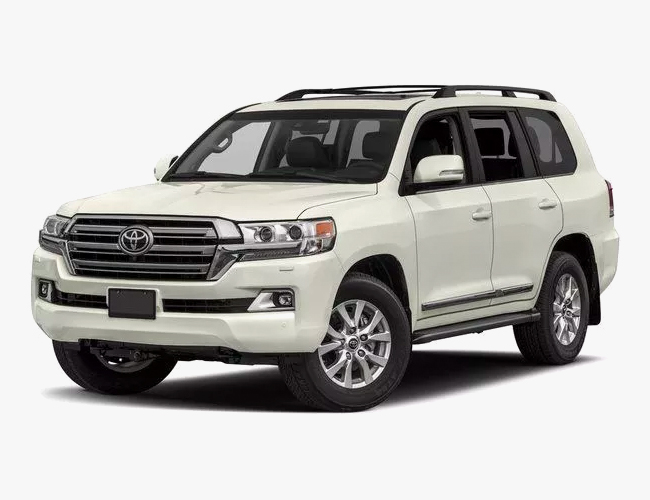
1. Toyota Land Cruiser  – 11.4 Years

It’s no surprise to see the Toyota Land Cruiser top this list. People buy them because of the build quality that keeps them running virtually forever. They accrue charm with age. Toyota seldom updates it, giving little reason to invest in a new one. Doing so is not cheap.

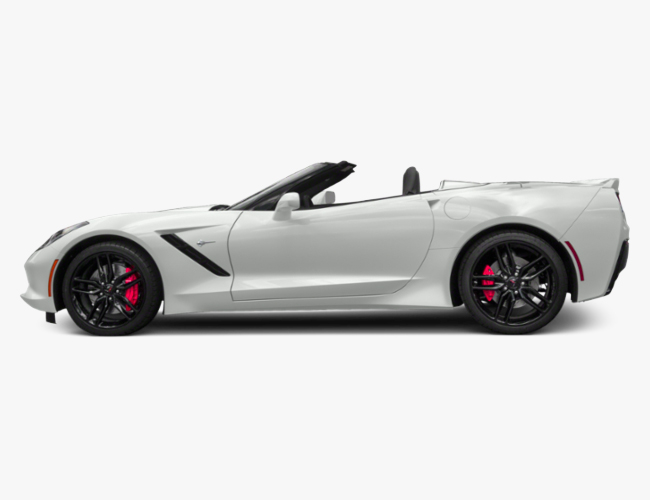
2. Chevrolet Corvette – 10.5 Years

Two-seat sports cars tend not to be daily drivers, so wners likely aren’t concerned with updating them as frequently as they might with their regular vehicles. The new 2020 Corvette or perhaps a crazy discount on an outgoing model may have Vette owners rethinking that stance, however.

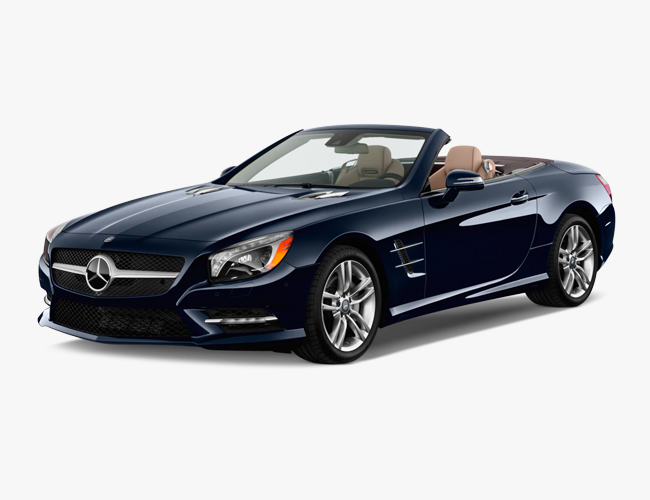
3. Mercedes Benz SL-Class – 10.3 Years

grey_placeholder

It takes longer to make a Mercedes SL-Class feel outmoded than with most cars. Plus, buying a new one is expensive, and they depreciate quickly; once the resale value plummets, you might as well hang onto it.

4. Audi TT – 10.2 Years

grey_placeholder

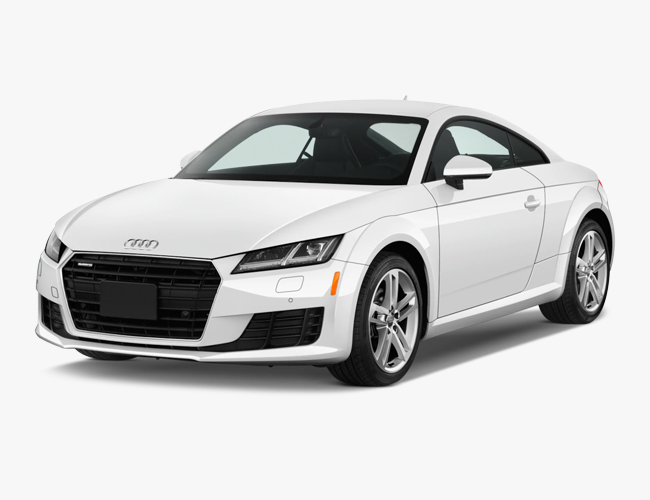
While not a performance beast, the Audi TT will be a future classic. It has sleek Bauhaus style and inimitable charm. That charm, perhaps, is the reason owners keep them running so long.

5. Ford Expedition – 10.1 Years

grey_placeholder

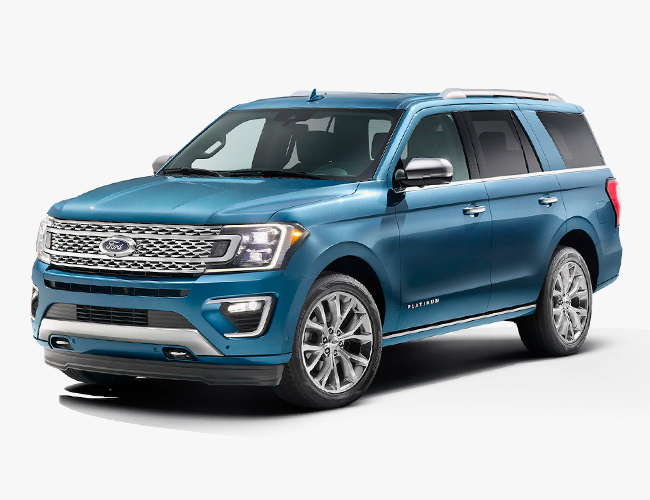
Kids destroy new and lovely things. Buying one workhorse Expedition and riding it through the peak hauling years before downsizing is a sound strategy to avoid forking over big bucks for a new car over and over again.

6. Ford Mustang – 10 Years

grey_placeholder

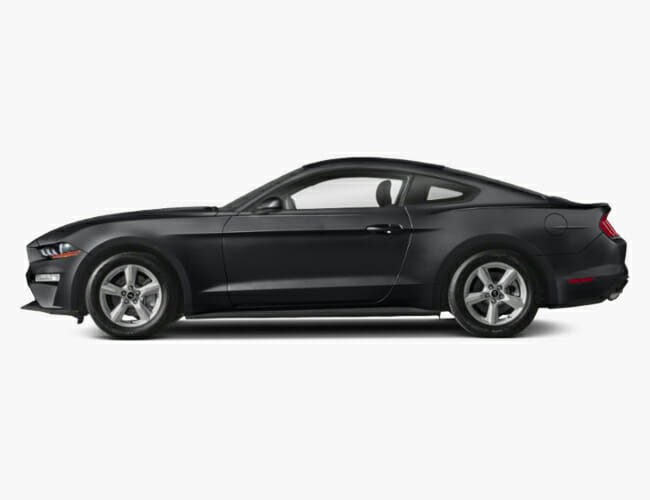
Most buyers are drawn to Mustangs for the timeless charm. Those characteristic looks and sound stay largely the same. Why upgrade? For the $10,000 racing stripes?

7. Toyota 4Runner – 10 Years

grey_placeholder

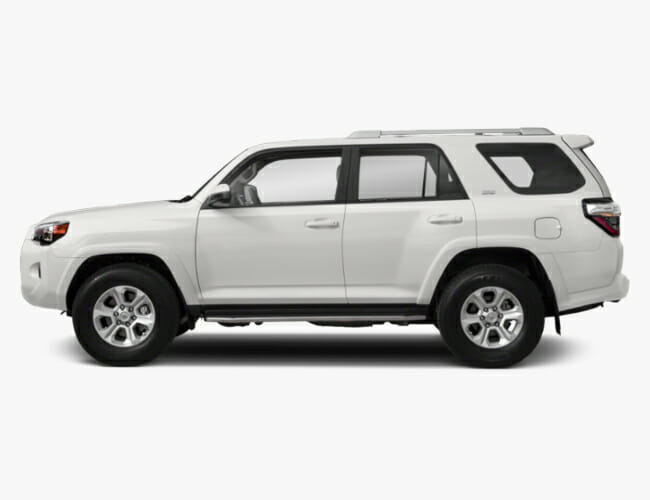
The Toyota 4Runner‘s position is similar to the Land Cruiser. You buy it for its strength and durability. It accrues charm as it ages, and has strong resale value. Toyota has redone it only once since 2002, which is not an incentive to rush out and buy another.

8. Porsche 911 – 9.9 Years

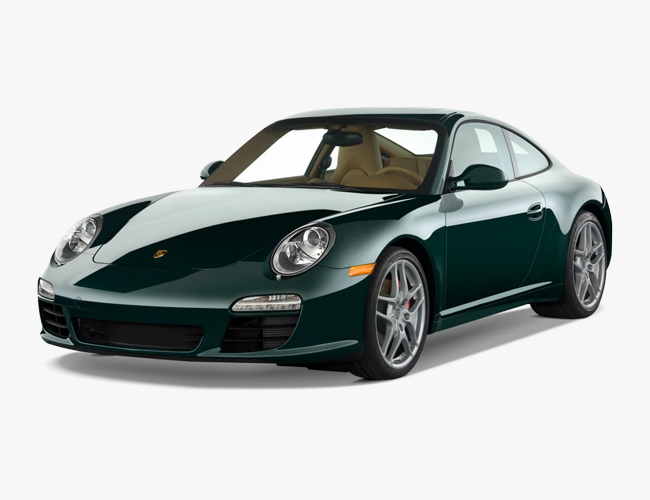
grey_placeholder

Porsche makes advancements with every new 911 generation. But buying a new Porsche is expensive. The 997-generation (2004-2012) cars are quite well regarded within the 911 lineage. Most are sparingly driven. Why make the transition?

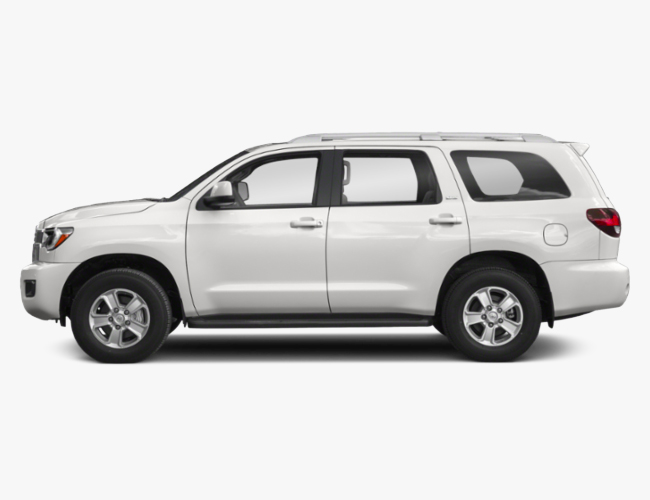
9. Toyota Sequoia – 9.9 Years

The Sequoia has the full-size family SUV factor, plus the Toyota build quality factor. Add in that Toyota last released an all-new one for the 2007 model year, and the reasons to trade it in are few.

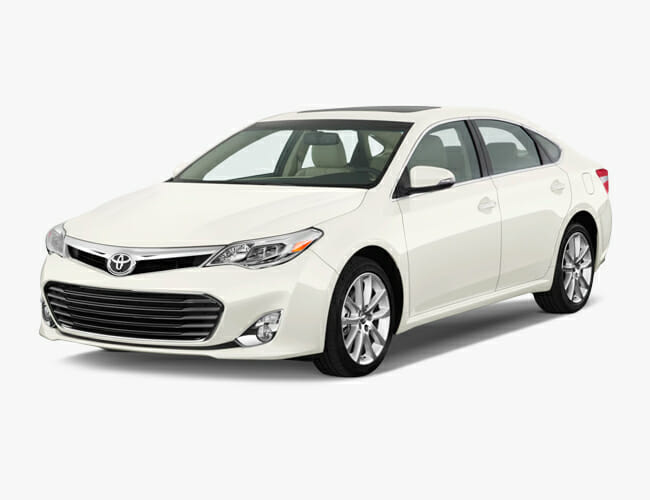
10. Toyota Avalon – 9.7 Years

grey_placeholder

The Avalon is an outlier on this list. It’s not a robust family hauler or a sports car. But, again, the purpose of buying a Toyota is to drive them into the ground. (The new one also went a bit too heavy with the grille size.)

Upgrade Your Tailgating Game With These Awesome Items for Your Car

Football season has officially arrived, which means much of America is about to engage in one of our great national pastimes: gorging on food and beverages in stadium parking lots to avoid exorbitant prices closer to the gridiron. This practice, in case you just arrived from Mars, is referred to as “tailgating.” It’s a multifaceted affair involving food and drink preparation, seating, entertainment and charging for personal electronic devices. In other words, it requires plenty of gear.

Here, then, ae are some helpful gear and accessory suggestions you can use to up your personal tailgating game. (Sadly, we can’t do anything to help your team.)


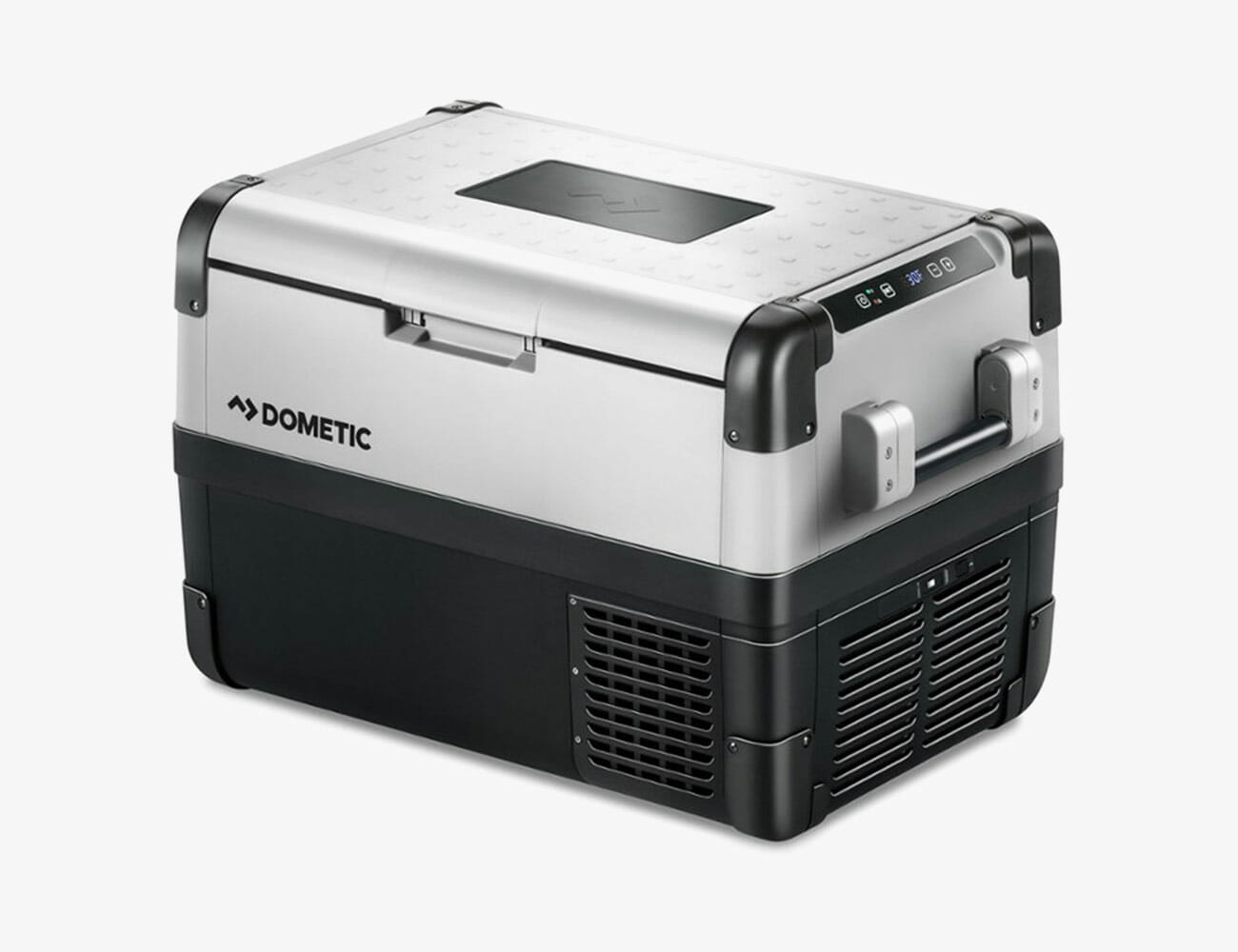
Dometic CFX50W Powered Cooler

Your game day spread is only as good as your storage capacity and your ability to regulate temperature. This Dometic cooler has you covered. It eliminates ice from the equation. It can refrigerate and deep freeze. It can be temperature regulated via an app. It can even charge your devices. And helpfully, it’ll shut itself off before it drains your car battery.

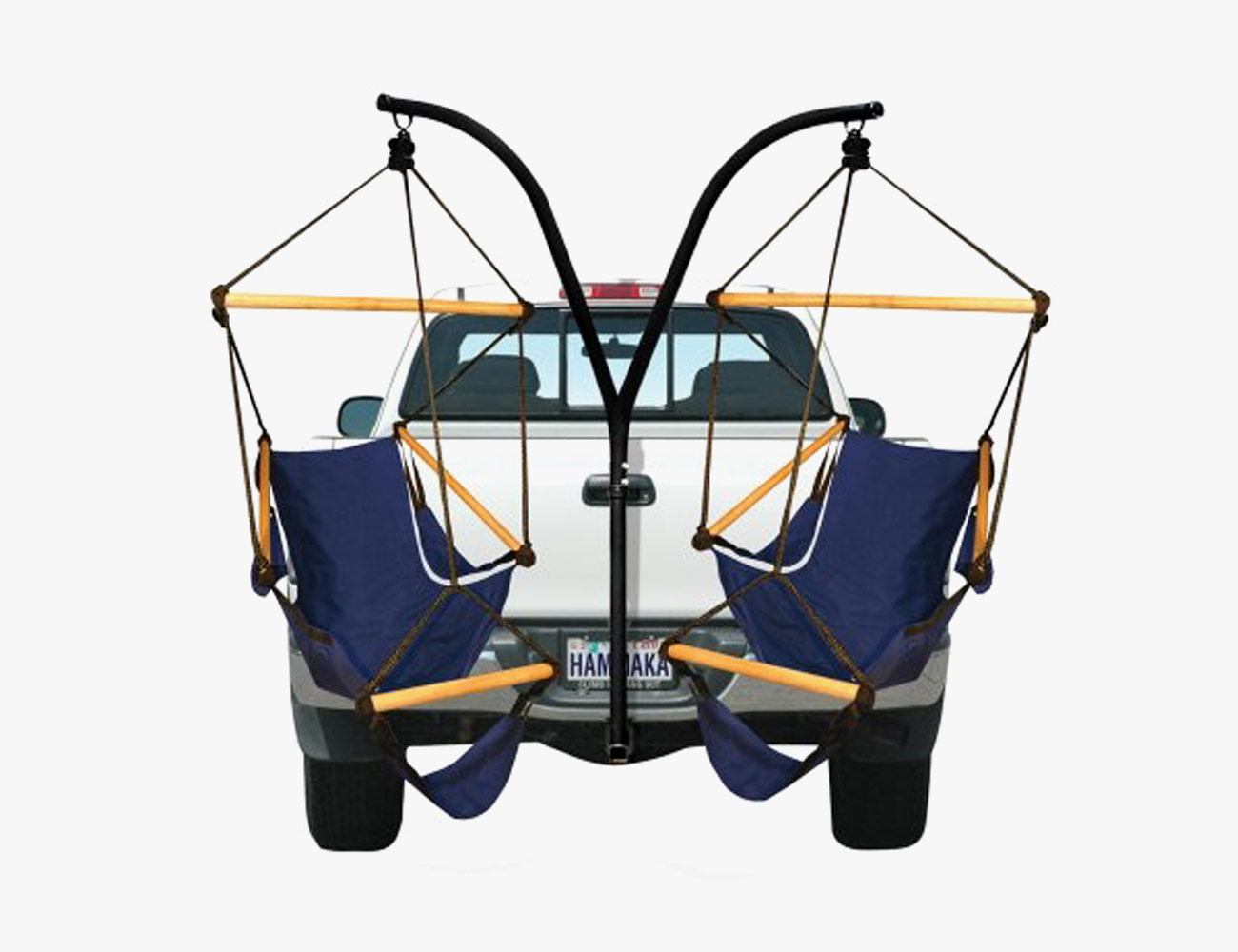
Hammaka Trailer Hitch Stand Cradle Chairs

You’re about to spend four hours on a hard bench with a small allotment butt space. Luxuriate beforehand with these Hammaka trailer hitch suspended cradle chairs. There are no finer words when you’re looking to relax a bit after a week of heavy adulting than “easy three-piece assembly.” (Be advised: The camouflage version will cost you a bit extra.)

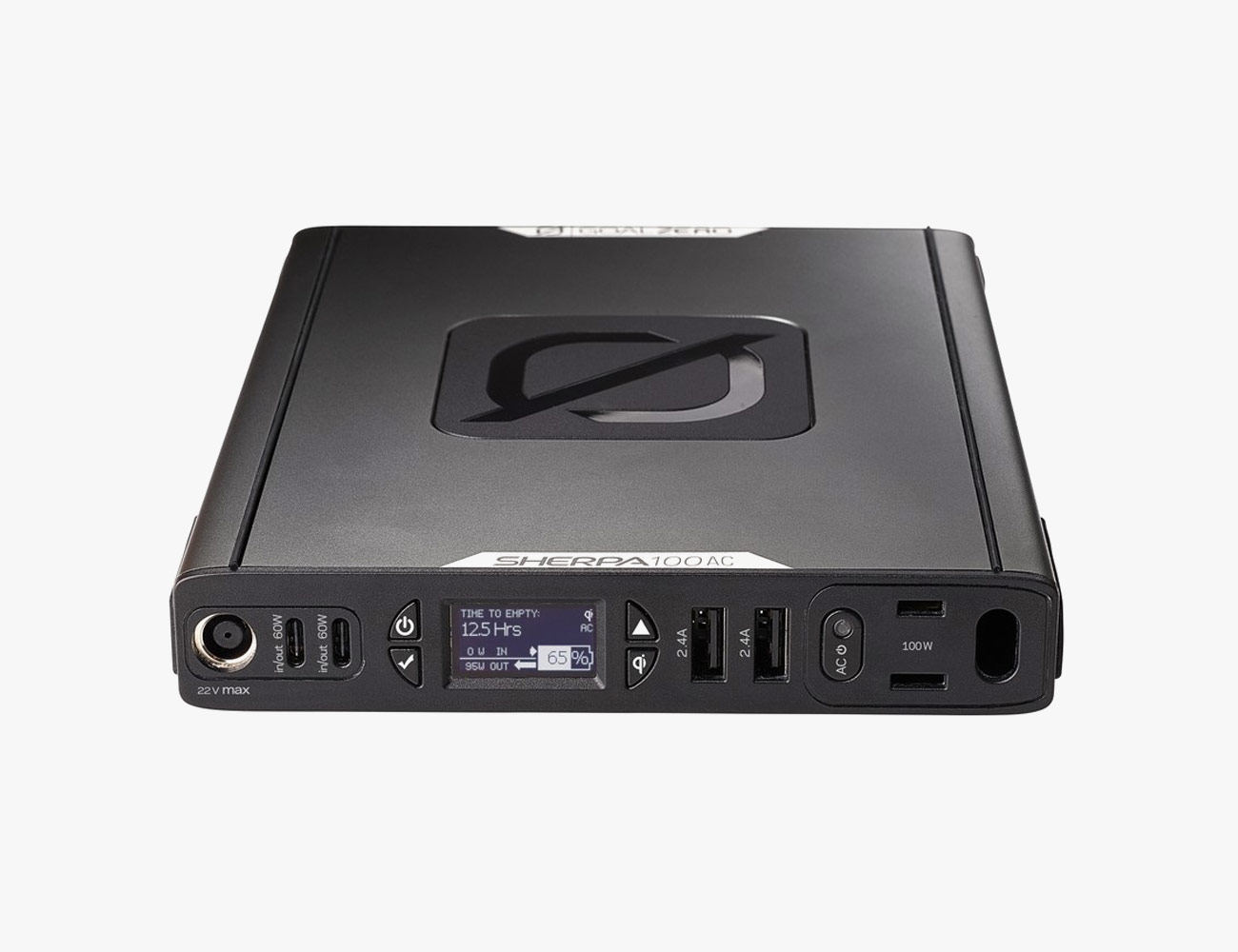
Sherpa 100 AC Portable Power Bank

If there’s one mantra for our digital lives in 2019, it’s “always be charging.” That’s doubly true on game day, where you’re unlikely to encounter a USB port in the wild.  This Sherpa power bank is portable and supports all manners of charging, including wireless.

Ultimate Ears Boom 3 Bluetooth Speaker

Tailgaters enjoy listening to tunes, especially those of the team-specific pump-up variety. The Ultimate Ears Boom 3 was the Gear Patrol editors’ pick for the best portable Bluetooth speaker. Jokes about the all-new “magic button” functionality will be good fun for all involved.

Weber Smokey Joe Premium 14-Inch Portable Grill

Weber is the biggest name in grilling with good reason: They offer a wide range of high-quality affordable products to suit every taste and need. This Smokey Joe grill is lightweight, portable and costs less than $50.

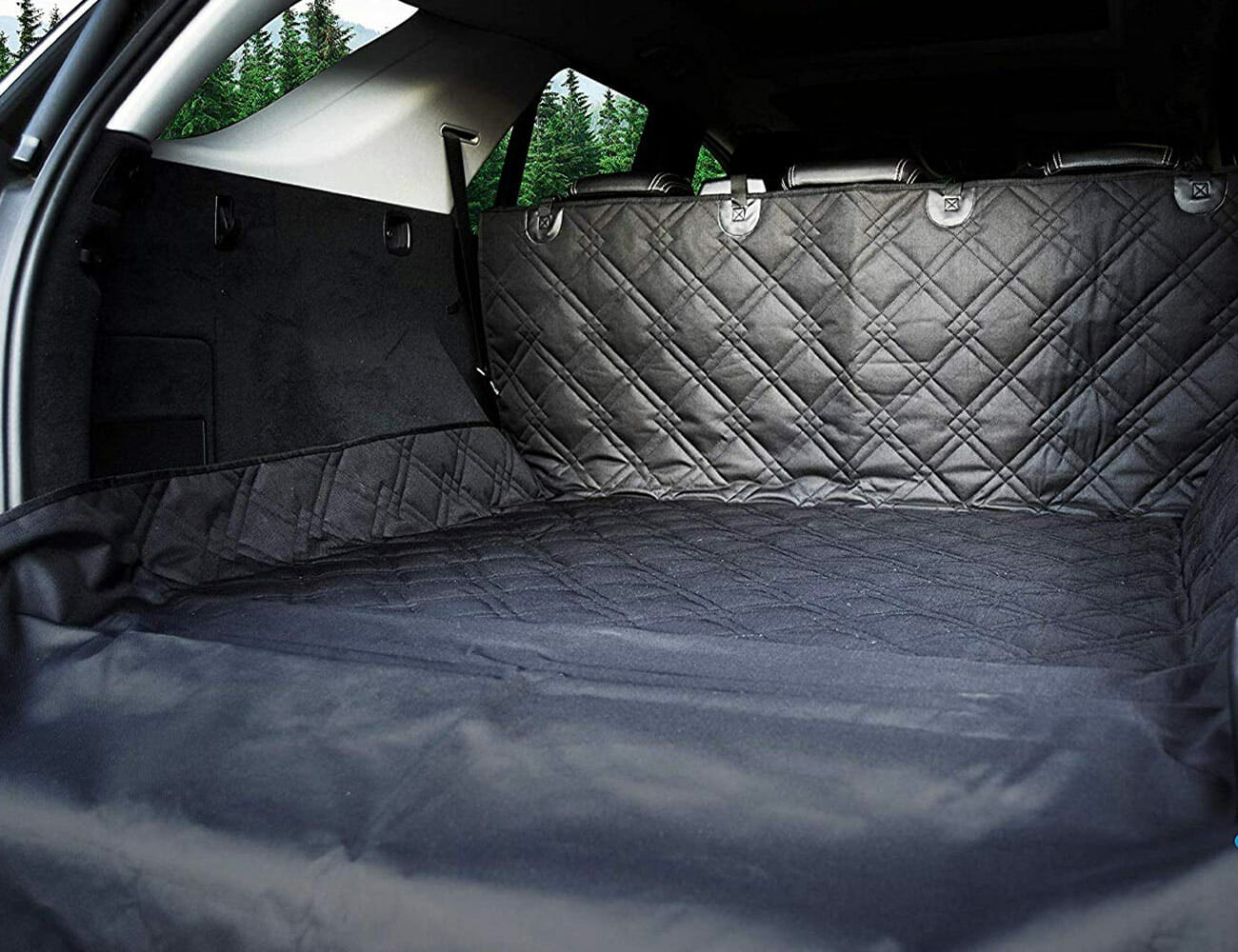
Bulldogology Premium SUV Cargo Liner Seat Cover

You like your friends. You don’t necessarily trust them handling food and beverages around your stunning vintage Land Rover Defender. Consider the Premium SUV Cargo Liner Seat Cover from Bulldogology. It’s waterproof and washable, with a non-slip backing. If it’s good enough for a dog, it can probably handle your college buddies.

Tailbrella Tailgate Hitch Umbrella Canopy

Umbrella stands are heavy, and elaborate canopies can be a pain to set up. Spare your back and stay out of the sun with this Tailbrella umbrella canopy that hooks to your trailer hitch. It has a tilt feature, and you can easily pack it up for easy storage.

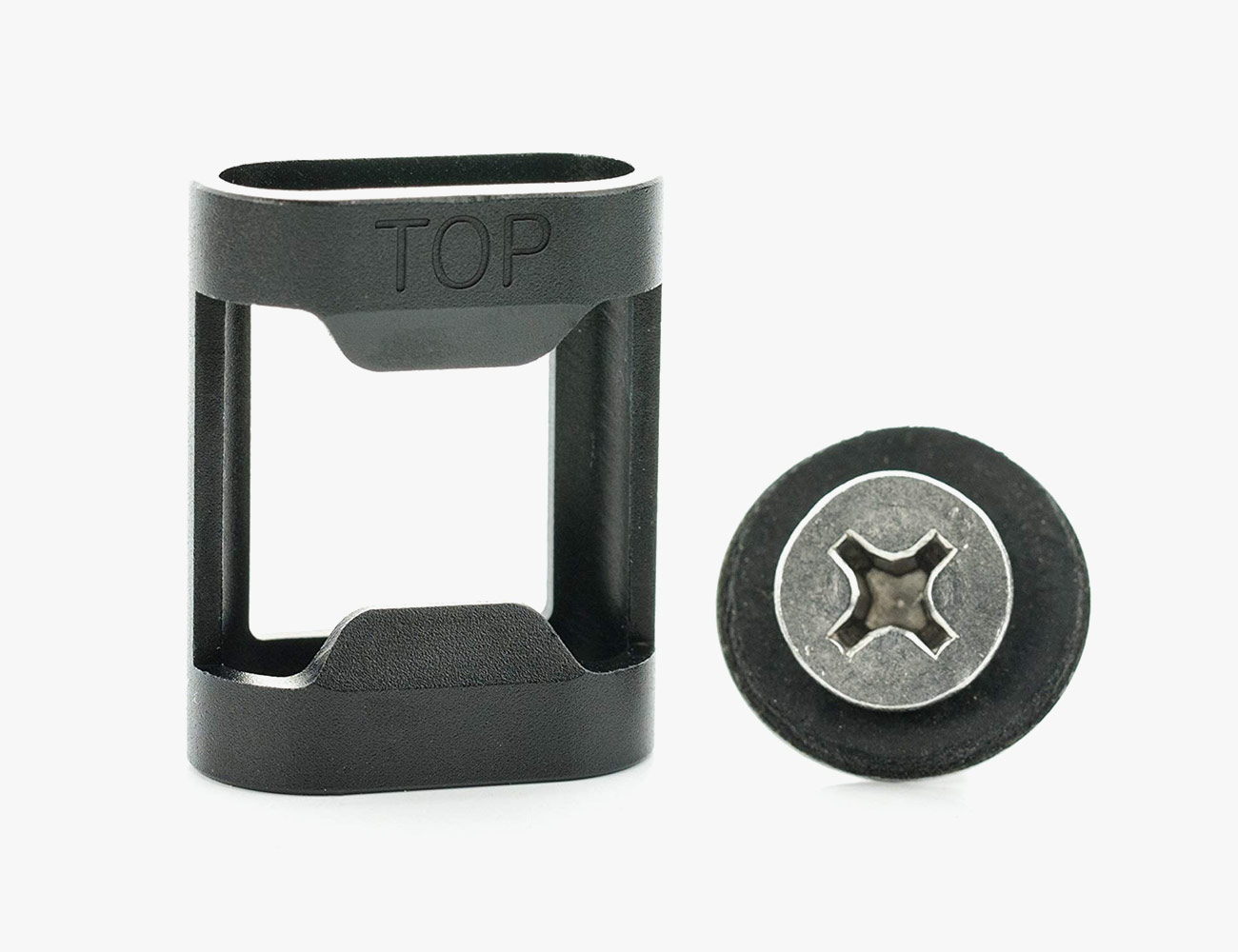
Wrenches & Bones Rear License Plate Mounted Bottle Opener

Your bottle opener may be the most essential bit of gear in your tailgating arsenal. It’s also the easiest to forget or misplace. Instead of weighing down your keychain or befriending some insufferable MacGyver who can pop a top with a dollar bill, why not mount the bottle opener to your vehicle? (Just keep in mind that if you’re in a car like the Jeep Wrangler, which draws ample police attention, this handy device may not help your cause.)

Mytcase Protective TV Carrying Case

Let’s be honest: The big game you really care about on Saturday or Sunday is likely happening elsewhere, so you’ll need to watch it on TV. Transporting your flatscreen to the tailgate can be a nuisance, not to mention setting it up and trying to keep the glare off it. Do all of the aforementioned tasks with the Mytcase Protective TV Carrying Case, which can fit screens up to 43 inches.

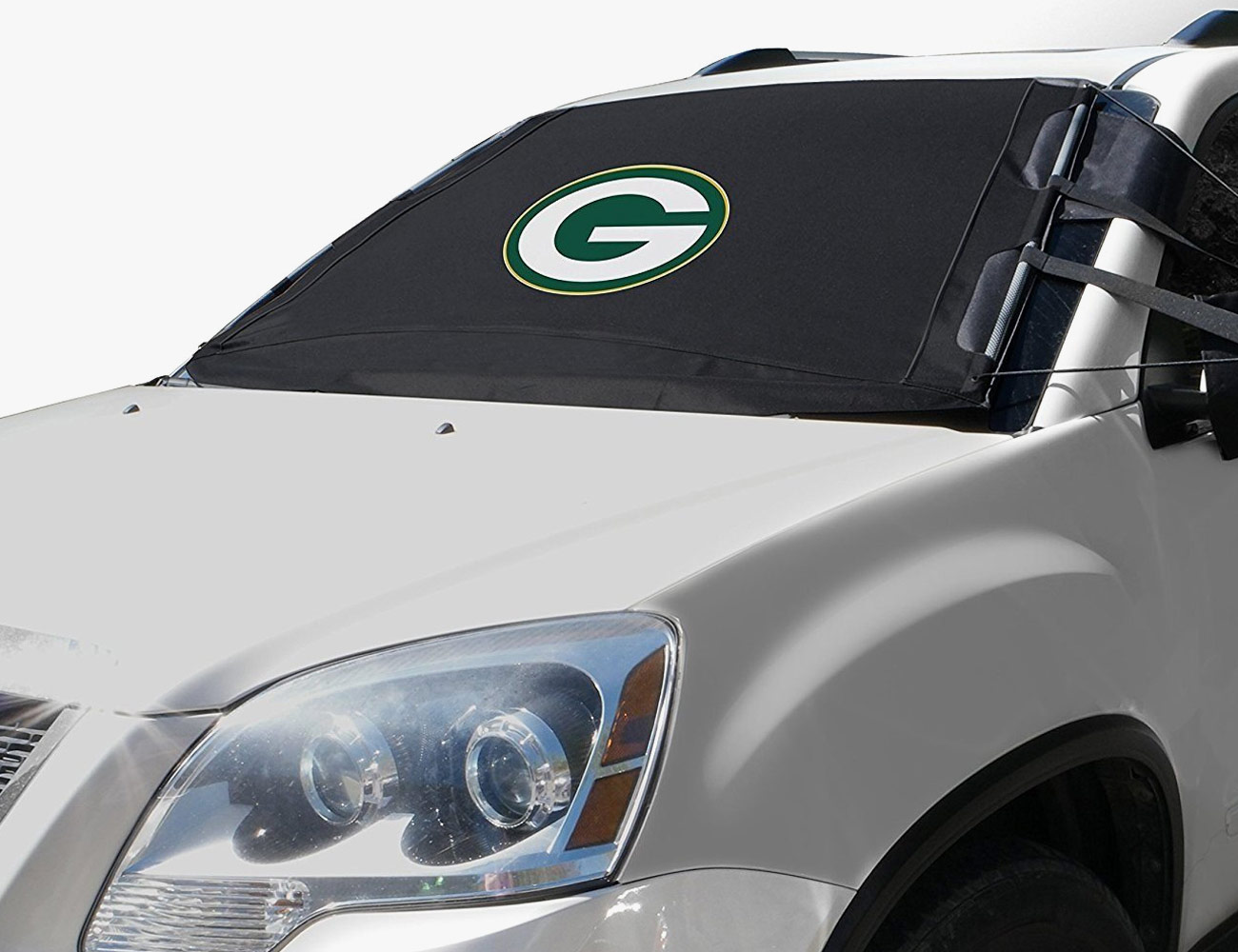
FrostGuard NFL Premium Winter Windshield Cover

The only thing more frustrating than spending four hours exposed to the elements is coming back to clean off your car. Keep your windshield safe from snow (or your interior protected from heat) and to rep your favorite NFL team at the same time.

Note: Purchasing products through our links may earn us a portion of the sale, which supports our editorial team’s mission. Learn more here.

Driving Jerry Seinfeld’s Mercedes-Benz E60 Renntech RS

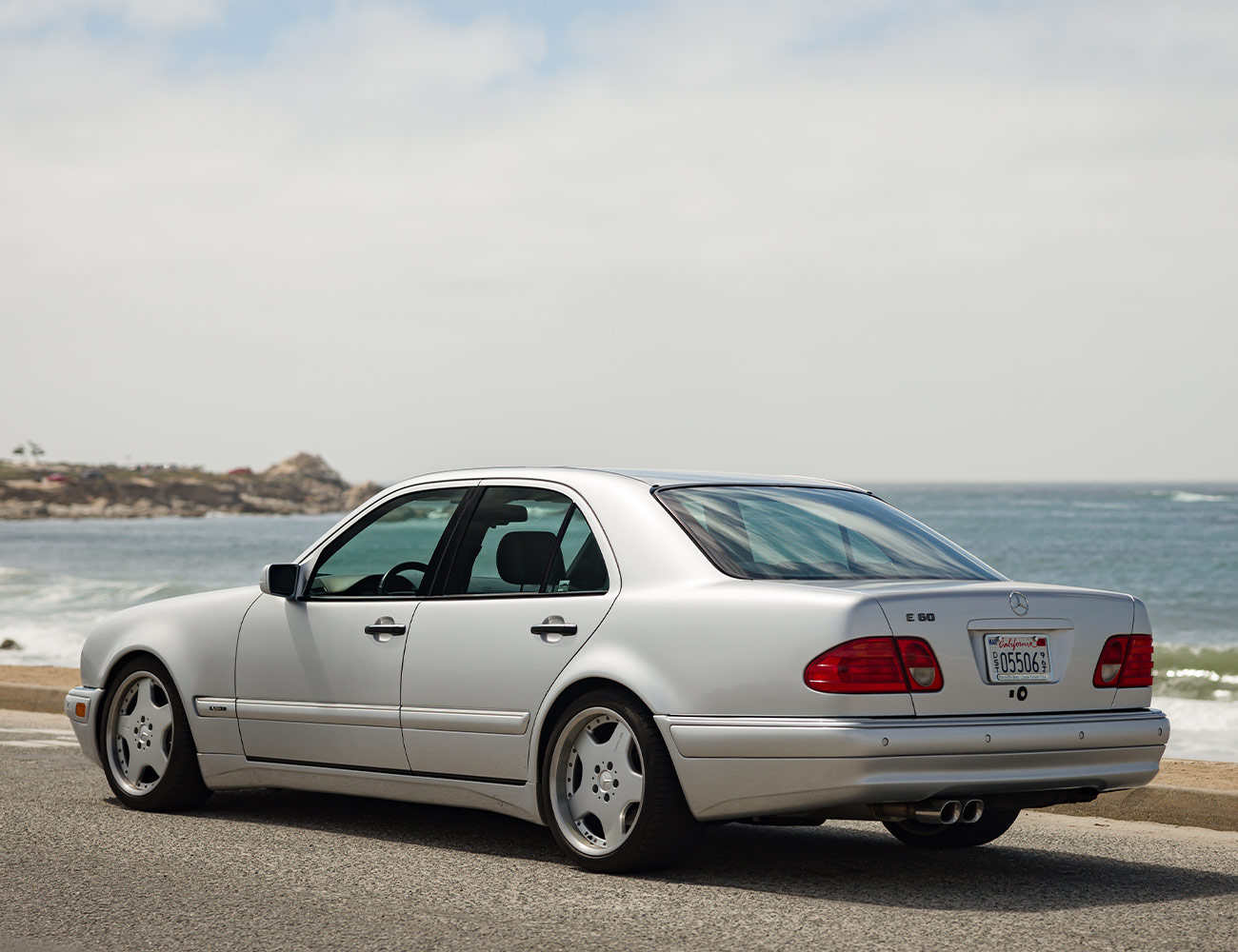
Back in 1997, Mercedes-Benz had yet to formally acquire aftermarket tuning group AMG. But when it wanted to impress Jerry Seinfeld with a loaner Tri-Star, it couldn’t just give him a base model E420. Seinfeld needed something ratcheted up; all the soup for him. So Merc turned to well-known tuner Renntech, which installed more than $100,000 in updates in an E-Class — resulting in an E60 that remains a diabolical land rocket some 22 years later.

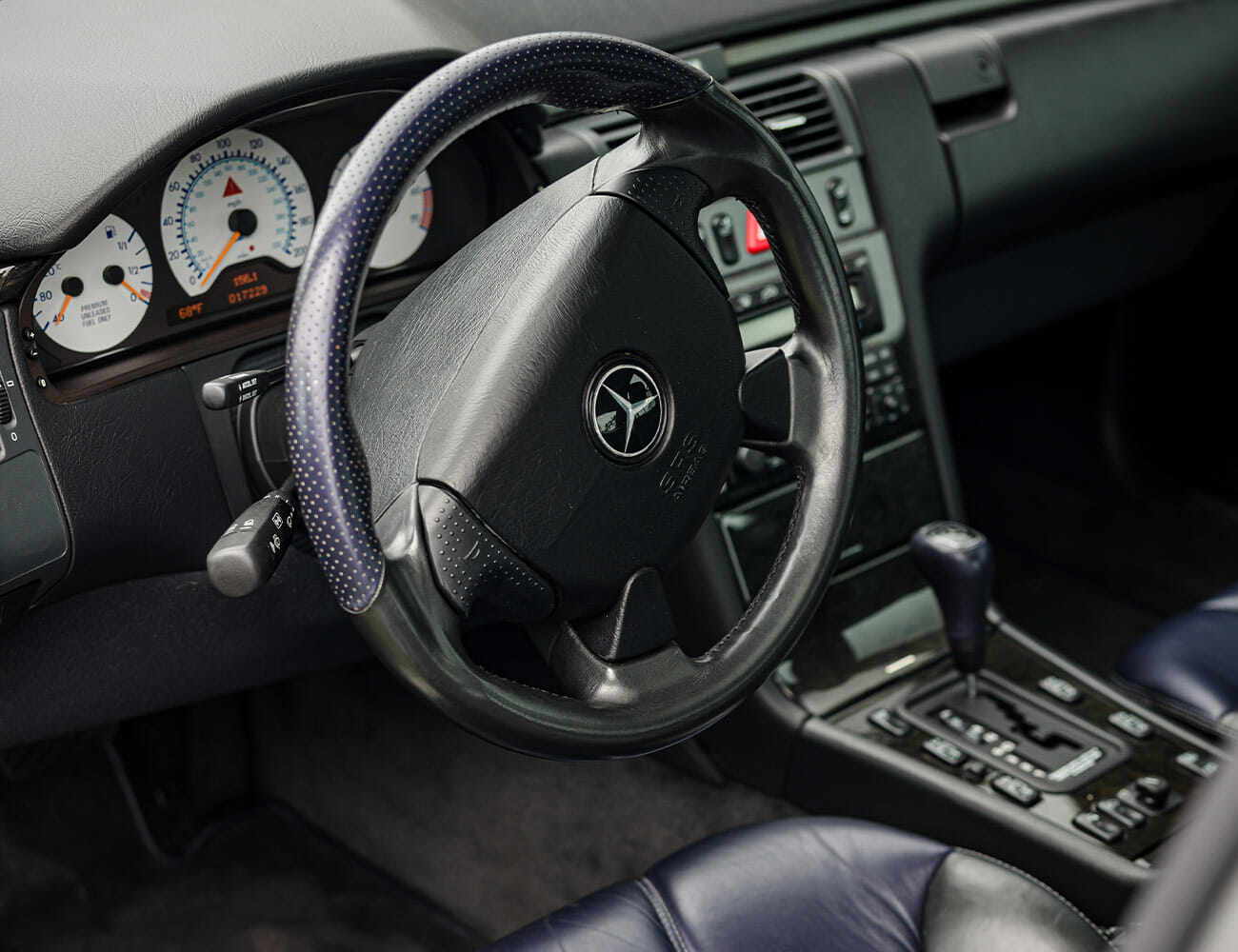
From the outside, the car appears bone stock. Only embossed Renntech logos on the exhaust tips offer a hint of the demons lurking within the drivetrain. Open the door and a sill plate emblazoned with “J.S. Edition” greets you, as does a comely blueberry-and-black-leather interior accentuated with bird’s-eye maple wood and an Alcantara headliner.

Turn the key to awaken an enlarged 6.0-liter V-8, featuring larger intake and exhaust valves and a more aggressive camshaft. Renntech’s completely stainless steel exhaust, boasting a sport resonator and muffler, emits such a deep, throaty note that you start salivating at the prospect of hearing it at full gallop.

With the throttle open wide, the E60’s growl is intoxicating. 434 horses and a staggering (for its day) 525 lb-ft of twist mean there are few cars of its age this sleeper can’t best. Mat the throttle on take-off, and you’re rewarded with satisfying wheel spin before the 18-inch magnesium monoblocks bite down into the asphalt and chuck you backward into the plush seat. The tear from 0 to 60 happens in 4.6 seconds. For reference, that’s faster than a 1997 Acura NSX or Ferrari F335 Berlinetta. 

A specially-modified Mercedes-Benz five-speed automatic transmission pumps the power out through a limited-slip diff, which does a wonderful job of propulsion. A potential Mercedes customer was on a test drive of a new Mercedes-AMG GT C right ahead of us and would mash the gas whenever the road cleared. The E60 caught up in a few seconds, every single time. 

Immense work was done to the suspension, and the result is tangible. A rear subframe modification with aluminum links was completed and specially-valved, fully-adjustable Koni dampers were added, along with Renntech-spec lowering springs and larger front and rear anti-roll bars. This sucker is planted. It feels impossible to shake it loose in a corner and there’s virtually no body roll, though it’s not so stiff that it’ll smash your teeth when it laps up the occasional pothole. The steering is impeccably dialed-in, giving you proper feedback while maintaining precision. 

Perhaps the most admirable addition to the E60 is hiding in plain sight: the RS custom steel wide body kit that includes flared fenders all around. The amount of work that it must’ve taken to achieve a stock look here must be applauded. As a result, the car has presence. 

After about 10,000 (presumably joy-filled) miles, Seinfeld returned the car to Mercedes, who let it sit for a spell before deciding to send it to the crusher. Mercifully, the Mercedes-Benz Classics Center got wind of the impending peril and swooped in to claim it for themselves. Today, it lives amongst the brand’s heritage fleet in Southern California.

Most well-maintained old cars feel like a treat to drive these days, but this E60 is something else. What Mercedes and Renntech created the first time out of the gate was so perfect, it can still ruin your perception of many modern cars.

These Were the Massive Challenges of Developing the All-Electric Porsche Taycan

On Wednesday, Porsche finally unveiled its long-awaited Taycan electric sport sedan at three locations around the planet simultaneously, including Niagara Falls — showing off the car’s sleek design, low posture and the gobs of technical wizardry Porsche conjured up to ensure the Taycan doesn’t embarrass its esteemed badge in the performance department.

If the disclosed numbers are any indication, that shouldn’t be a problem. The Turbo S variant will generate 750 horsepower, while the Turbo cranks up 670 horses. The Taycan Turbo S will, therefore, accelerate from 0 to 60 miles per hour in significantly less than 3three seconds. Power comes from an 800-volt battery with an overall capacity of 93.4 kilowatt-hours. With the right DC charger, it can charge from 5 percent to 80 percent in just 23 minutes.

But electric specs are just part of the equation. The Taycan is still first and foremost a Porsche. So I sat down with chassis engineer Ingo Albers to find out about some of the key challenges and giant hurdles the team overcame to guarantee Porsche-like performance from the company’s first EV.

He first mentioned tires, which are a perpetual challenge for EVs. They have to maintain low rolling resistance, yet still deliver plenty of grip for performance. The company worked with Michelin, Pirelli and Continental to develop tires that could deliver.

“We focused on the mechanics and the compounds,” Albers said. “Then you want to measure the grip, then the rolling resistance and then our driving dynamics to see if the car is in balance in terms of front and rear handling. They honed the tire compound, its mechanical structure and its tread pattern to get it where we want it to be.”

Integrating the mechanical components into the structure was another challenge. The Taycan’s hood sits much lower than the comparable Panamera, since it doesn’t have a huge engine lurking inside. That meant that the front springs were shorter, yet still needed to deliver a comfortable ride. Bringing the front and rear axle in was difficult due to the tightness of the space, and the structure had to protect the battery as well. All this took years of engineering to succeed.

Then there’s the regenerative braking capability, which is a big part of how electric cars maintain their charge on the road. “We had a goal that we wanted to have as much recuperation power as possible,” Albers said. “We were fighting for every watt — not just kilowatt, but every watt. So we reached 265 watts of recuperative power under braking. We’re very proud of that.”

Finally, the team had to engineer in an electric drive system that would generate the kind of on-track performance Porsche aficionados expect. To make the all-wheel-drive system as responsive as possible, the engineers placed direct control at the motors, rather than a central system that communicates back and forth.

“If you do this using conventional all-wheel-drive controllers, you have lag time. But if you go directly to the motors, then you are much faster. It’s up to five times faster than the all-wheel-drive system in a conventional combustion engine vehicle.”

That’s indeed a convincing set of solutions. But does it deliver? The world’s media will have a chance to evaluate the entire package on the road in just a few weeks. Then we’ll really see what Porsche owners will think of their favorite performance brand’s new electric machine.

A Bugatti Designer Reveals How His New Car Channels One of the Coolest Supercars of the ’90s

If you’re the head of exterior design for, say, Ford, odds are good you see your work every day of your life — whether you’re in the office or not. If you’re the head of exterior design for Bugatti, however, you’re unlikely to run into an example of your penmanship parked beside you when you pop over to Wawa for a hangover hero on Sunday afternoon. As a result, Frank Heyl is unlikely to be randomly spurred to talk about his job — which could explain why he’s such an effusive interviewee. (Except when it comes to commenting on future product, at which point he sticks to his official line with a consistency that would make Robert Mueller jealous.)

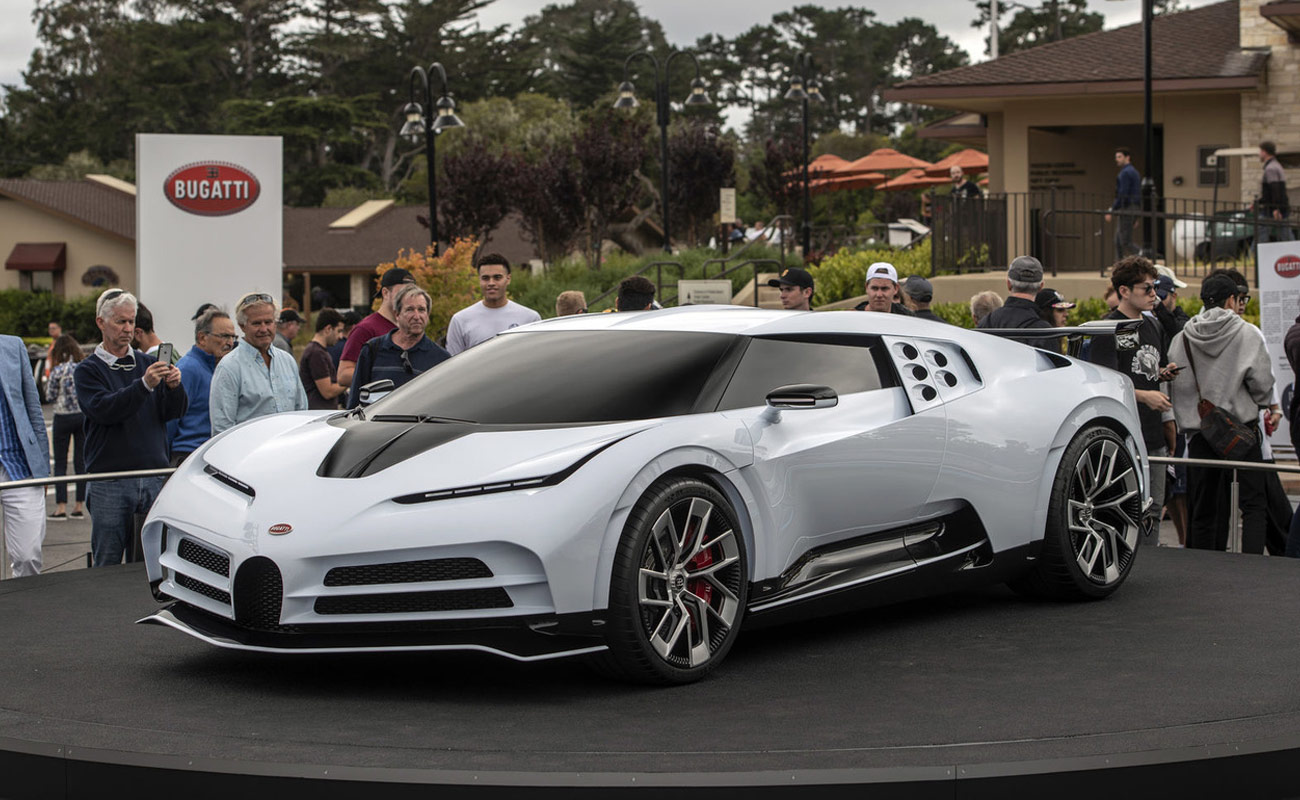
Unlike some senior figures at automakers, when we ran into him at the Bugatti stand at the Pebble Beach Concours d’Elegance this year, we barely needed to ask a question to spur him on; Heyl simply began chatting away, dishing out facts and details about the new Centodieci limited-run supercar the brand unveiled there with the pride of a new parent.

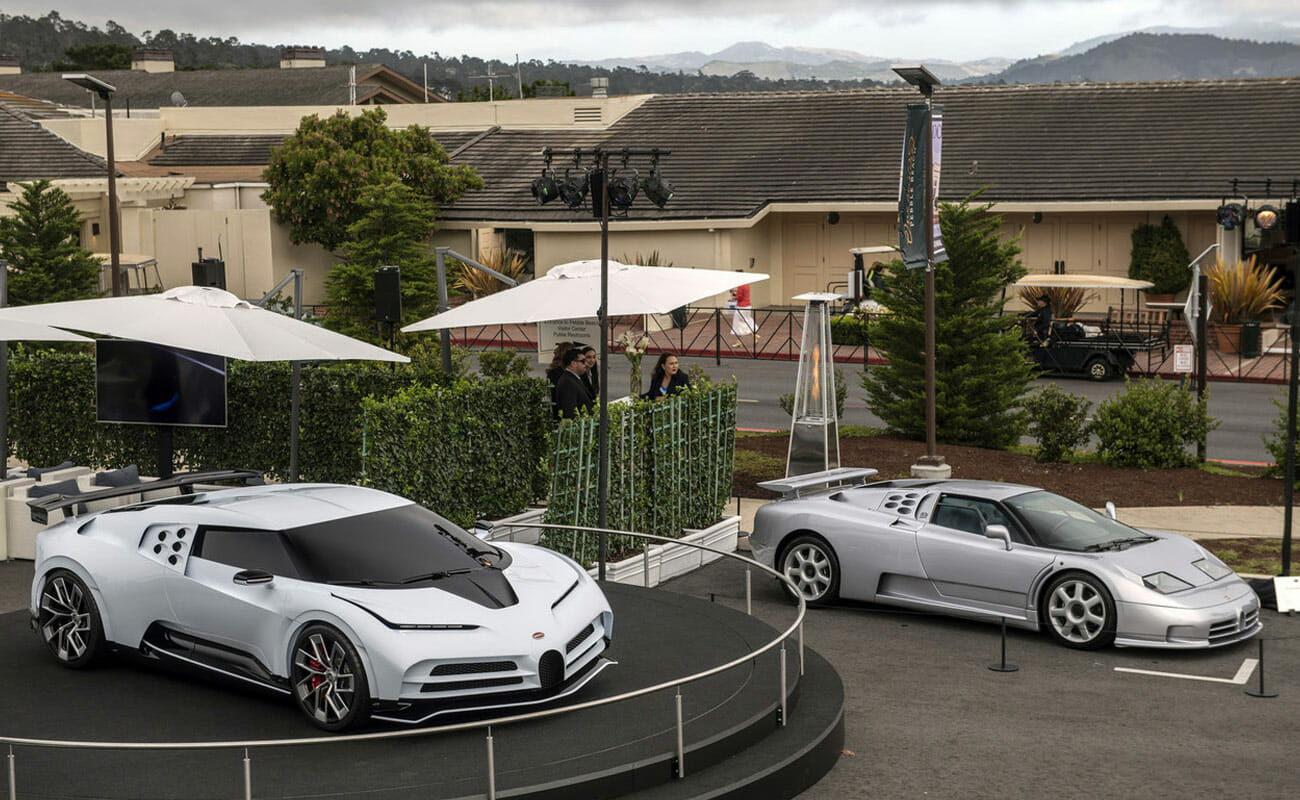
It helped that Bugatti had hauled out a pristine copy of the Centodieci’s inspiration, the EB110 of the Nineties, for Heyl to riff off, parking it alongside the new speed machine. The decision to go with an homage to the groundbreaking-for-its-time EB110, says Heyl, was part of the company’s plans to celebrate its 110th birthday this year by looking to its past. Bugatti’s previous designs have often paid tribute to the brand’s better-known cars of the 1930s to varying degrees, from the subtle curves of the original Veyron to the nouveau-Thirties act of reverence called La Voiture Noire, a one-off revealed at this year’s Geneva Motor Show that, at $18.9 million, is the most expensive new car ever sold.

The Bugatti Centodieci alongside the EB110 at the Pebble Beach Concours d’Elegance. Photo by Bugatti.

But the Centodieci marks the first time the current Volkswagen Group-owned iteration of the esteemed carmaker has used design to acknowledge the company’s brief Italian resurrection by Romano Artioli in the late Eighties and early Nineties. That eight-year span saw the creation of just one car, the EB110 — but that quad-turbocharged car helped define the concept of the modern-day supercar, paving the way for the current iteration of the brand.

“We thought it was about time to do this,” he says.

Unlike, say, The Lion King, the Centodieci isn’t just a remake of a Nineties icon using 2019 tech. “We didn’t want to do a copy of [the EB110] with new technology,” Heyl says. Instead, the new car draws on the proportions — which Heyl says are the most important part of a design — to emulate the wedgy shape of the Italian-made French car on the German-owned French-made chassis shared with the Chiron. 

It presented a few issues for Heyl and his team. The EB110’s primary designer, Giampaolo Benediniis an architect by profession, hence the car’s straight lines; but those forms don’t pair well with Bugatti’s modern trademark of a dropping beltline, which Heyl refers to as “a very sovereign statement for a supercar.” In order to merge the two design languages, the design team wound up shrinking Bugatti’s trademark horseshoe grille and enlarging the tail to raise the rear end, enabling them to, in Heyl’s words, “shoot the lines through to the lower front.”

The Bugatti Centodieci. Photo by Bugatti.

That back end is home to one of Heyl’s favorite design details: the tail lamps, an eight-unit, 3D-printed cluster that stretches across the bootylicious tail. Mounted below them are eight 3D-printed titanium exhaust tips, the exit for the 1,578-horsepower W16’s waste gases. That, for the record, is 100 horses more than the Bugatti Divo, the handling-emphasizing Chiron variant upon which the Centodieci is based. Yet you’d never know the similarity between the two went beyond the bougie badge — even in spite of the mere six months the carmaker spent developing the car.

“We did it in record time,” Heyl says, citing the use of virtual reality goggles amongst the tools used to expedite the design process.

And yet, while it only took half a year to go from idea to Pebble Beach-going reality, all 10 examples scheduled to be built have already been spoken for. That’s not just because of the ravenous desire among the rich for whatever’s new and next, though; it’s also due to the way the company plans out its special models. Before Bugatti even gives a one-off or limited-run car the green light for production, they make sure they have handshake agreements with enough buyers to sell out. As Heyl puts it, “You just take the Divo list, call them up, say ‘This is what we’re doing, are you interested?’”

Admittedly, the Centodieci is still a little undercooked in one or two spots. The headlamp openings are correct, Heyl says, all the way down to the vents there to evacuate pressure from the front wheel wells — but the lights seen here aren’t the production ones. (The final versions will slide into the existing slot just fine, he says.)

But the company has plenty of time to firm up the details. Heyl says the car won’t be on the streets until 2022, until after the previously-announced limited-run cars have made their way through the production process.

“We are very well aware that we should not flood the market,” he says. “This will be the last for a while now.”

2020 Aston Martin DBS Superleggera Volante Review: Over-the-Top Drop-Top

A V12 engine is wholly unnecessary these days. Most automotive companies are unveiling hybrid and electric powertrains, or yanking insane power out of tiny engines; witness how the mechanical wizards over at Mercedes-AMG have managed to coax a staggering 416 horses out of a 2.0-liter turbocharged four-cylinder. The future of transportation seems to have found many replacements for displacement.

Then you fire up the 2020 Aston Martin DBS Superleggera Volante. And after those 12 glorious cylinders roar to life, all horrorshow and delightfully demonic noise, you realize, “We can never give up the V12. This must be defended to our dying breath.”

The Good: It’s an Aston Martin, so the exterior is as beautiful as they come. From first glance at the menacing mustached-grilled face — elongated and widened to help shovel air to that ginormous engine — to the completely new hindquarters that house the folding roof and it’s mechanisms, the DBS Superleggera Volante is sexy, aggressive and commanding.

Subtle Easter eggs abound, such as the way the front quarter panel side vents match the angle of the hood vent strakes. The rear haunches have been enlarged, which is most noticeable when you spend extra time moving the side mirrors to see past them; you’ll need that view unobstructed given the frequent rearward glances before you rip past all the lesser machines during your travels. A plush interior provides maximum comfort on long hauls, making it an ideal grand tourer.

Who It’s For: Anyone who believes V8s are child’s play, who finds 715 horsepower and 664 pound-feet of twist appealing, and who yearns to feel the wind ripping his hair out with the top — and accelerator — down. (And who has $335,000 to spare.)

Watch Out For: The Volante is a two-plus-two, so there technically is a backseat. However, no adult humans will be able to contort their bodies as to utilize the rear seats for any real period of time. Trunk capacity is limited, given the addition of the roof mechanism; owners intending on using the Volante as a road-tripper best practice packing light. Speaking of weight reduction, the use of Superleggera — Italian for “superlight” — is a giant misnomer, as the Superleggera Volante tips the scales at a hefty 4,450 pounds, though the addition of 220 pounds (for the drop-top) only mildly dulls the scream to 60 by 0.2 seconds over its hardtop sibling.

Alternatives: Only a handful of 12-cylinder super-steeds exist. You’ve got the W12-powered Bentley Continental GT convertible, which, while heavier at 5,019 pounds, bests the DBS Volante to 60 mph by 0.2 seconds. The Winged B’s luxe interior also trounces the DBS Superleggera Volante’s, and it all clocks in $100,000 under the Aston’s base price. The Lamborghini Aventador S Roadster, which begins at $421,321, churns out 730 horsepower (15 more ponies than the Aston), and the sprint to 60 happens in an eye-watering 2.9 seconds. Lastly, there’s the Ferrari 812 Superfast, a $363,730 stunner from Maranello that gas 788 prancing horses on tap. It’ll win all of the V12 drag races, catapulting you to 60 in 2.8 seconds. (It only comes in coupe form, though.)

Review: The backdrop for the DBS Superleggera Volante test drive was Tarragona, Spain, a picturesque mountainous region not terribly far from Barcelona known for its vineyards. So chosen because of the nation’s impeccably maintained serpentine roads, the assembled automotive media wound up being welcomed by triple-digit temps and a slew of wildfires dotting the countryside. Heat and smoke plumes be damned; with a 5.2-liter twin-turbo V12 at your disposal, you can outrun the fires and drop the top to make your own cooling breeze.

The DBS stems from the DB11, which lies a step down in the Aston hierarchy; as such, the Superleggera Volante borrows the fabric-and-metal roof system from the DB11 convertible. Those 715 available horses and a lightly-tweaked suspension for improved road manners help provide a top speed of 211 mph, regardless of the roof’s position. White-knuckle the squared-leather tiller and mash the accelerator, and that top-speed integer becomes very real as this road-legal weapon fires to 60 seconds in 3.5 seconds and the massive heap of torque keeps you pinned against the seat.

With the roof lowered, the exhaust notes are full and rich, even in the calmest driving mode of “GT.”  That softens the throttle mapping, suspension, and the ubiquitous eight-speed ZF-sourced automatic gearbox‘s shifts. Even in that most sedate setting, though, that honking engine delivers ample brawn, and you just need to bring the might to the gas pedal to get the Aston lurching forth. One area for improvement may be the transmission tune here, which frequently scrambles downward in search of the ideal gear when not required.

Flip the switch to Sport or Sport Plus and the Superleggera Volante howls with glee. Literally: Burbles and cracks bolster the exhaust notes, while the throttle response and suspension become scalpel-sharp. The Volante’s 50/50 weight distribution, coupled with communicative feedback from the steering wheel, make impassioned sprints and passes a proper hoot. When the full whoosh of 664 lb-ft of torque arrives at the rear wheels at a mere 1,800 rpm, the Volante responds with the slightest wiggle of its tail before hurtling you down the road. Rinse and repeat, and you’ll also elicit the occasional cackle of delight from the passenger seat.

Despite its relative largeness, the DBS Volante’s agility through corners while remaining glued to Tarragona’s terra firma is admirable. It dances around pinched hairpins with aplomb, booms from the exhaust echoing off steep surrounding mountain slopes. Switch to manual mode for transmission control and keep your foot buried all the way to the red line on the tach, and you’ll find every expanse of road is suddenly too short for the car. Swift dives onto the carbon brake rotors are rewarded with immediate stops sans drama or chatter. She stops as good as she goes.

Verdict: A surprising amount of our test drive route was closed, either due to the raging wildfires or other accidents, forcing us to forge a new path back to our endpoint. Ordinarily, hunting for an open road would be a chore — especially after encountering the umpteenth closure barricade. In the 2020 Aston Martin DBS Superleggera Volante, it just meant extra time flogging the bejeezus out of that V12. And in a car this good, every extra second was welcome.

Powertrain: 5.2-liter twin-turbo V12; eight-speed automatic; rear-wheel-drive
Horsepower: 715
Torque: 664 lb-ft
0-60 MPH: 3.5 seconds

Aston Martin hosted us and provided this product for review.

Read More Gear Patrol Reviews

Hot takes and in-depth reviews on noteworthy, relevant and interesting products. Read the Story

Note: Purchasing products through our links may earn us a portion of the sale, which supports our editorial team’s mission. Learn more here.