All posts in “Cars”

2020 Lincoln Aviator Review: A Well-Dressed Beast, Best Tasted in Hybrid Form

The Navigator may be the ne plus ultra flagship of the Lincoln lineup, but the new 2020 Lincoln Aviator is absolutely the fancy FoMOCo SUV to buy. It’s not the hulking monster that the Navigator must be in order to stay competitive with the Escalade, nor does it come with a commensurately steep price tag.

Rather, the Aviator is a sleeker, more stylish, better proportioned and more tech-forward alternative that comes with a hybrid option — one that will blow the doors off the Navigator at a stoplight. With 494 horsepower and 630 lb-ft of torque — numbers that a topped by but a handful of German SUVs — the Aviator Grand Touring Plug-In Hybrid is easily the most fun you can have in a truly luxurious SUV.

The Good: The design is first-rate, with elegant lines inside and out and a slight arc from front to rear that gives it a distinctly sporty vibe. But the real experience of the Aviator is the interior; it’s comfortable yet supportive, roomy and sublimely elegant. The sounds system will sweep you away, and the technology offerings will keep you safe and refreshed on the longest of trips.

Who It’s For: Lincoln has traditionally been something of an awkward fit among the options for American buyers. After all, the snobs will argue, why would you buy this over a Cadillac, BMW, Mercedes, Audi, et cetera? It’s always had an unfortunate retiree/golf-dad vibe to it.

That’s something Lincoln’s brand-rebuilding exercise has attempted to replace with an aura of elegance and sophistication. I hope this effort continues to take, because the Aviator, along with Lincoln’s other recent efforts, absolutely runs with the big dogs of the automotive world. It’s a car for grown-ups, yes, but grown-ups with the ability to thumb their noses at the more-cliché premium driving alternatives.
Watch Out For: The nose. There’s only one design weakness in the Aviator: a slight downward arc from the hood to the grille. Replace that in your imagination with a slightly more aggressive right-angled transition, and it looks stronger and more enduring. Ten years from now, that curved snout will likely be seen as the only element of the design that isn’t timeless.

Of course, that’s about as minor of a gripe as you can get, and many will likely disagree. But the truth is, there’s not a lot to complain about with this car.

Alternatives: From Germany, the BMW X5 and the Audi Q7 are the obvious three-row alternatives; Stateside, it’s really only up against the Cadillac XT6. All are fine vehicles, but none will truly draw a second glance as Lincoln does.

Review: For obvious reasons — great roads, awesome restaurants — the Napa Valley region of California is a popular draw for car companies launching new vehicles. As a result, I’ve been there quite a bit recently, and have seen most of what the region offers. Given that there’s so much exploration going on in the region, I’d assumed, as well, that there weren’t any surprises left. Every square inch of the place has been driven, drunk, Instagrammed, and Facebooked to within an inch of its life.

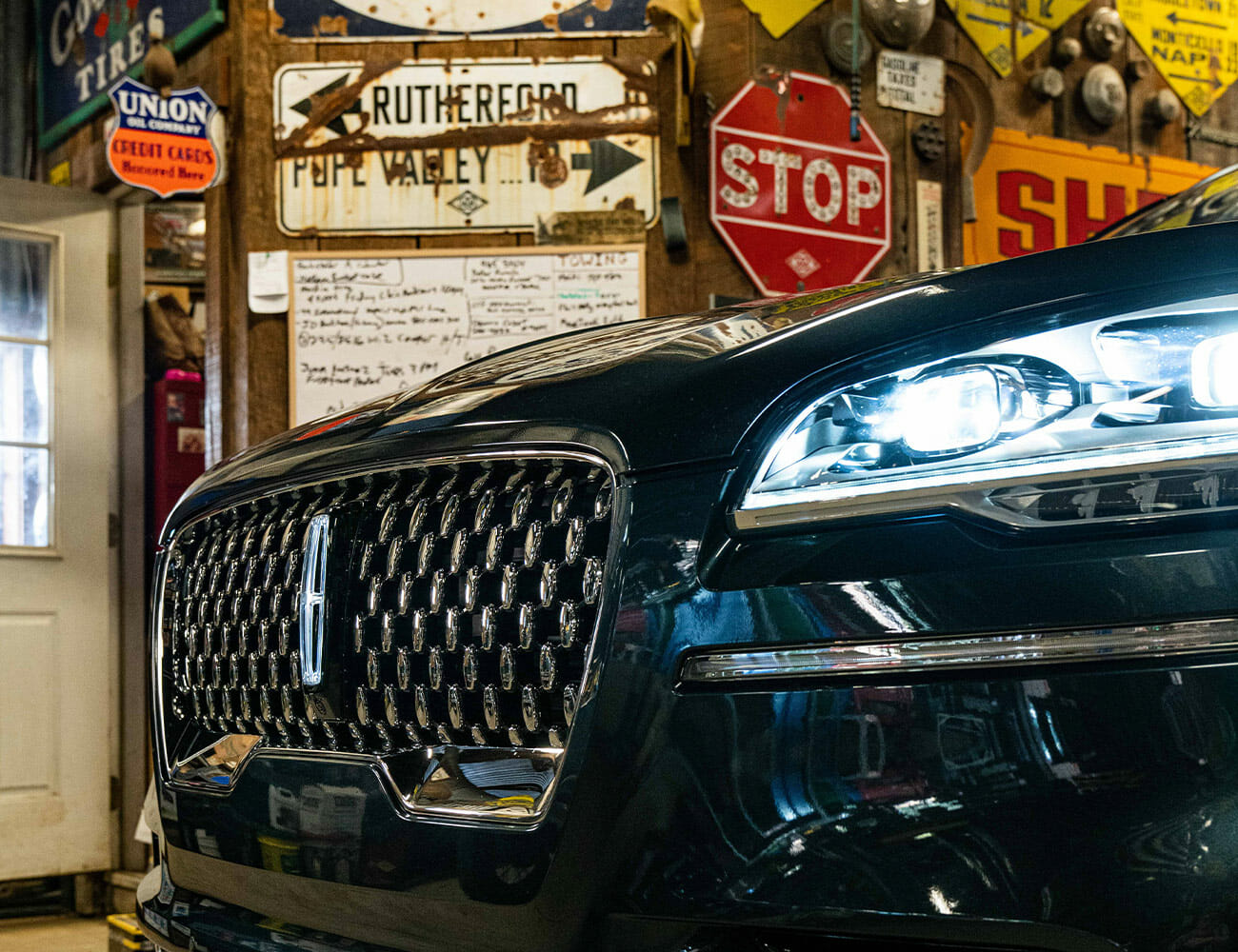
But there are surprises left. I found two. One is Pope Valley Repair and Towing, a garage that turns precisely 100 years old this year and looks for all the world like a vintage film set, right down to the ancient road signs, WWII-era Willys Jeep undergoing restoration in the back, display of barbed wire on the wall and the cage holding a pair of rattlesnakes. My colleague and I caught sight of it on our drive, and turned around to investigate. We pulled in and chatted up the owner and his buddy — both at work on a 1930s Ford Model A pickup truck and a ’60s-vintage F100. When we asked if we could bring our car into the front of the shop for some pics, they didn’t bat an eye.

Which brings me to the second surprise I found out there: this Lincoln Aviator. The gents in the shop — clearly Ford guys to the bone — spoke of their relief at seeing Lincoln’s newest, best model roll in unannounced, and of their enthusiasm for vehicles made in the U.S. The words weren’t freighted with any hint of anti-globalism, either. They’re just glad Lincoln’s pushing hard to thrive.

The Aviator, as they experienced when they dipped in for an inspection, indeed pushes hard — for both the company and the customer. It’s a beautiful ride, with crisp details, rich colors and a robust roster of features, including a plug-in hybrid version that delivers startling amounts of power: 494 horsepower and 630 pound-feet of torque, compared to the conventional turbocharged V6’s 400 hp and 415 lb-ft. It’s a blast to drive, and offers a preliminary range of about 18 miles of all-electric performance as well.

Branded as the Grand Touring version, the hybrid packs a 13.6-kWh lithium-ion battery that increases power, but, along with the additional hybrid hardware, adds about 800 pounds. You don’t notice it, though. Nor do you notice the overall mass slowing down even the conventional V6 version; it moves just as smoothly and authoritatively, helped along by a silky 10-speed transmission.

The drive experience is virtually unsurpassed in this class, thanks to the firm and seemingly infinitely-adjustable (okay, 30-way adjustable) seats and the premium Revel sound system, which allows you to dial in whether or not you want to feel like you’re sitting on the stage with the artists, or just right in front of them. Good stuff, that—and it makes for a blissfully engaging drive among people who crave quality audio while carving out road trips or daily commutes.

Driver-assistance systems include the optional Co-Pilot360 package that includes evasive steering assist, active rear braking to prevent backing into something and active parking assistance, along with adaptive cruise control and a lane-keeping system. The head-up display is large and detailed — though I had some trouble getting it to focus properly — and the optional Phone as Key system is a logical, long-awaited development for people who are a bit sick of carrying fobs around.

Once we left the garage in Pope Valley, the drive turned into twisty heaven, with an abundance of switchbacks that, for some passengers, could turn into twisty hell if the vehicle’s body roll were to become excessive. That’s my barometer for a vehicle’s handling when in the passenger seat: How queasy I feel under hard driving. The Aviator did well, though I felt hints of nausea percolating as the miles and g-forces stacked up. But I’ve had far worse in vehicles of this size. The Aviator’s standard air suspension performed admirably, fighting the rolling motion as well as could be expected. Besides, powering out of all the turns with the kind of oomph that both powertrains provided more than made up for a bit of boatiness here and there.

Verdict: There’s no question that the Aviator is one of the most aggressively packaged SUVs on the road today. Not only does it come with top-shelf technology, including the startlingly powerful hybrid option, but it also has an aesthetic that handily trumps the competition. It’s a looker on the outside, and a sublimely satisfying habitat on the inside.

2020 Lincoln Aviator: Key Specs

Powertrain: 3.0-liter turbocharged V6 or 3.0-liter turbocharged V6 with electric motor; 10-speed automatic; rear- or all-wheel-drive
Horsepower: 400 (conventional engine); 494 (hybrid)
Torque: 415 (conventional engine); 630 (hybrid)
Maximum Seating Capacity: 7
Base Curb Weight: 4,764– 5,678 pounds

Lincoln hosted us and provided this product for review.

Read More Gear Patrol Reviews

Hot takes and in-depth reviews on noteworthy, relevant and interesting products. Read the Story

Note: Purchasing products through our links may earn us a portion of the sale, which supports our editorial team’s mission. Learn more here.

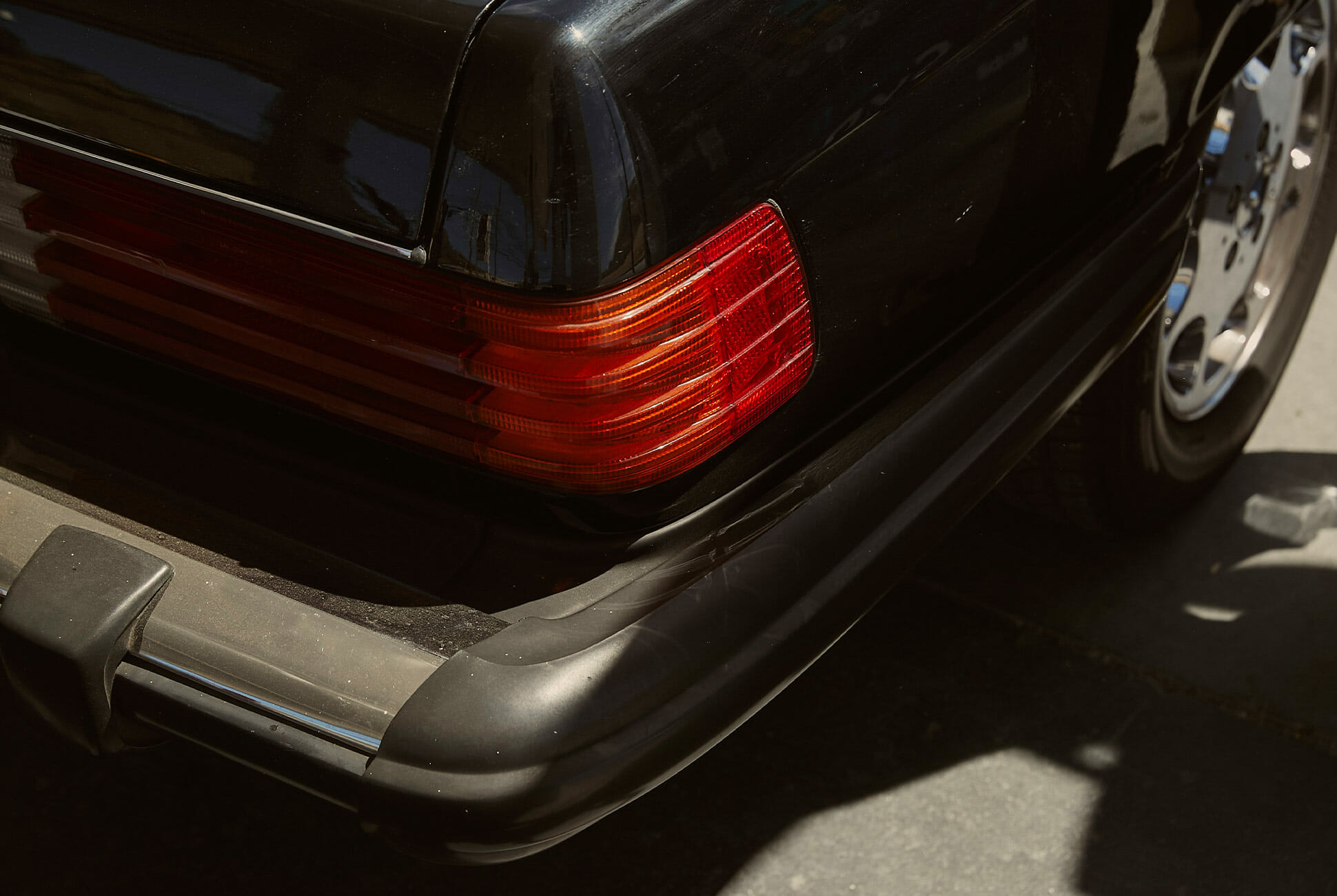
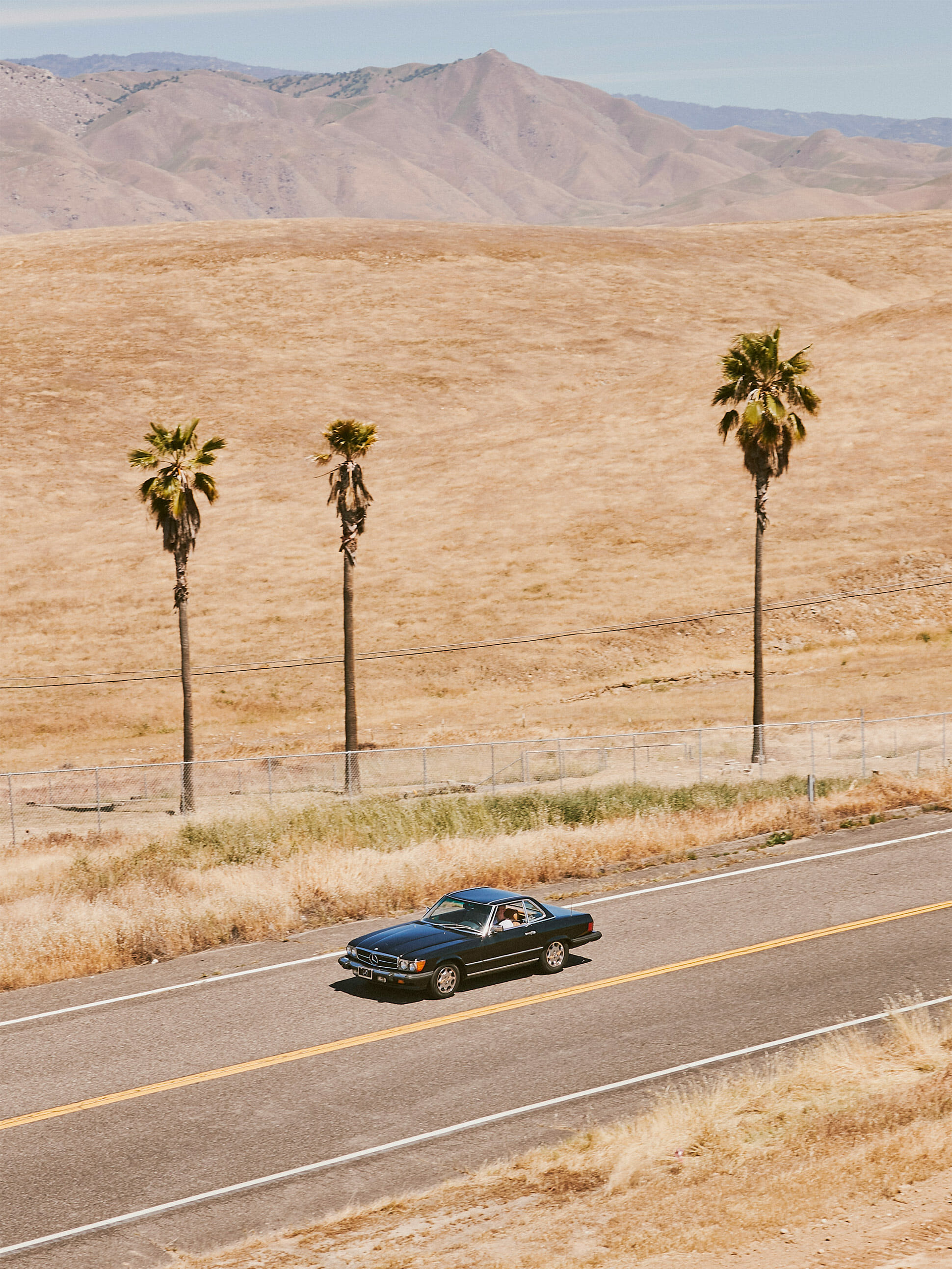
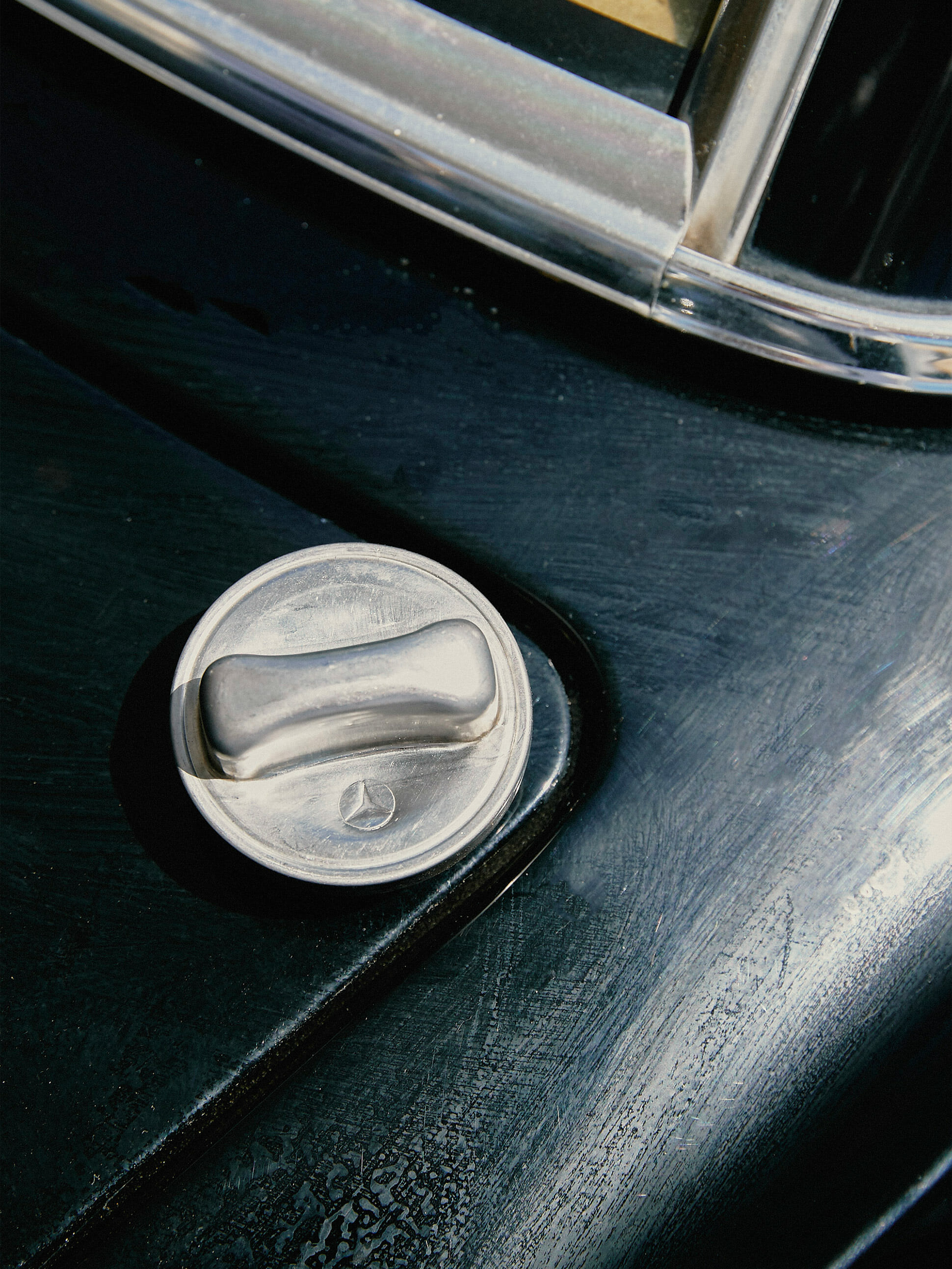
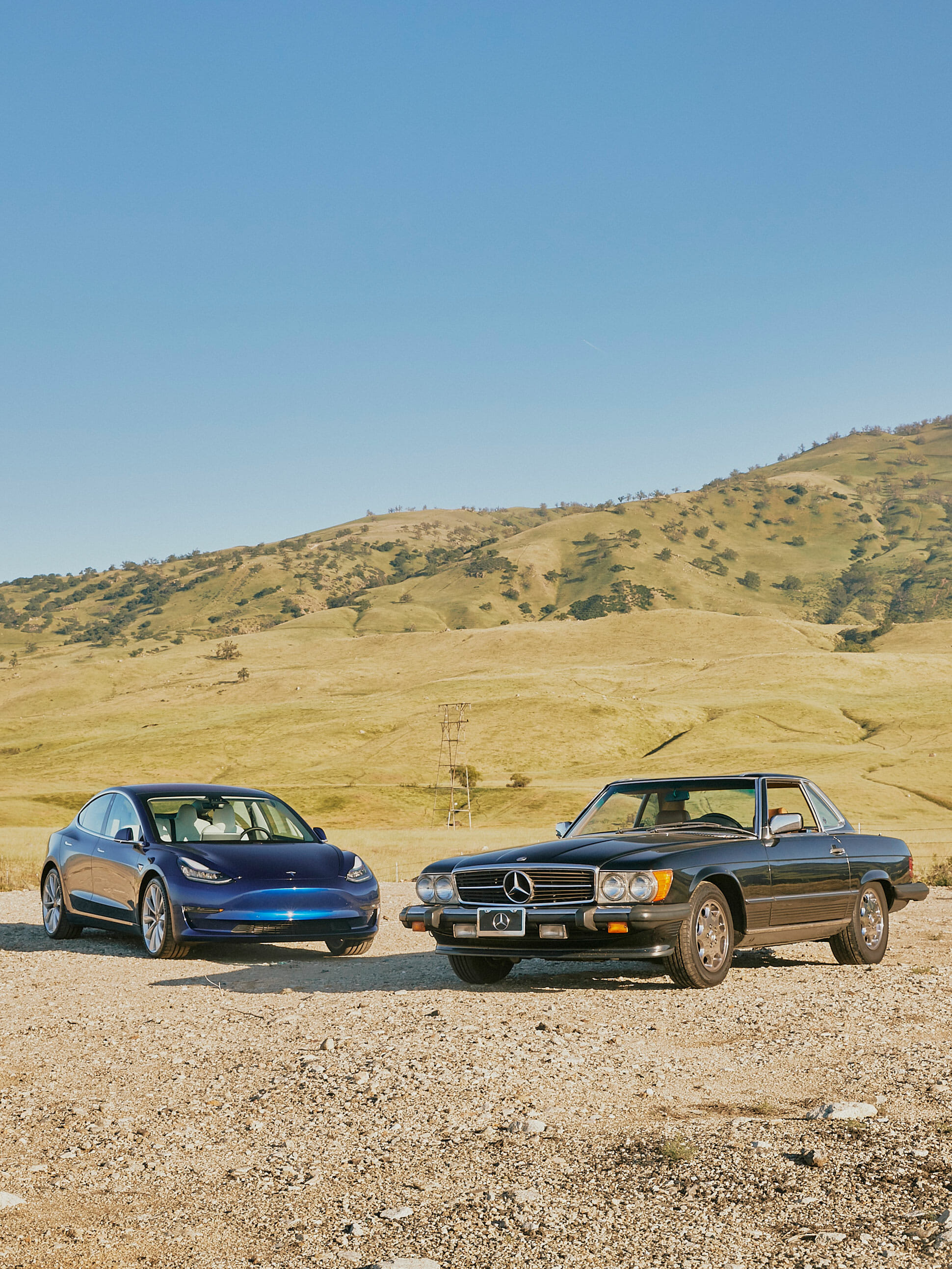
Past Meets Present With a Tesla, a Vintage Mercedes-Benz and California

Tesla Model 3 vs. 1987 Mercedes-Benz 560 SL: One Hell of an Unorthodox Comparison

A version of this article originally appeared in Issue Ten of Gear Patrol Magazine with the headline “The Future Perfect.”  Subscribe today

The future is smart. It’s learned to sneak up on us so that we don’t overreact and start lighting things on fire. When the news hit that self-driving cars were not only real but heading our way, fast, we were too busy chasing cartoon holograms on our phones to care much. Our collective response to a sci-fi dream going back a hundred years was a collective, petulant shrug. The future, being smart, chose to reveal itself at a time when we are easily delighted with technology and almost never impressed by it.

But it’s not just autonomy, whenever that comes, that’s changing the car. It’s electrification, battery power with instant torque and dirt-cheap energy. It’s the erosion of the ownership model and the rise of a connected car that can communicate with other vehicles on the road and the surrounding infrastructure. The idea of what a car can be has never been so up in the air, even back when the automobile was first invented.

Most people don’t care. They just want to get to work and back. But the promise of the American automobile has always been freedom — the idea that at any time you can head off into this huge, wild country under your own steam, beholden to no one. Can that dream survive in a rolling computer packed with sensors, constantly monitoring you, relaying not just your location but where you stopped for lunch and what you’re listening to on the radio?

I want to know what we’re trading for it, this safe, connected, convenient, hardworking car of the future, so I’m heading to California, spiritual home of the American road trip. I’ve sourced an old fast car, sleek and elegant and utterly brainless, to drive from LA to Silicon Valley, and the absolute newest, most futuristic vehicle on the market to drive me back. In between, I want a glimpse of what we’re being promised — and what, exactly, we’ll be expected to give up for it.

PART 1: Los Angeles to Fremont

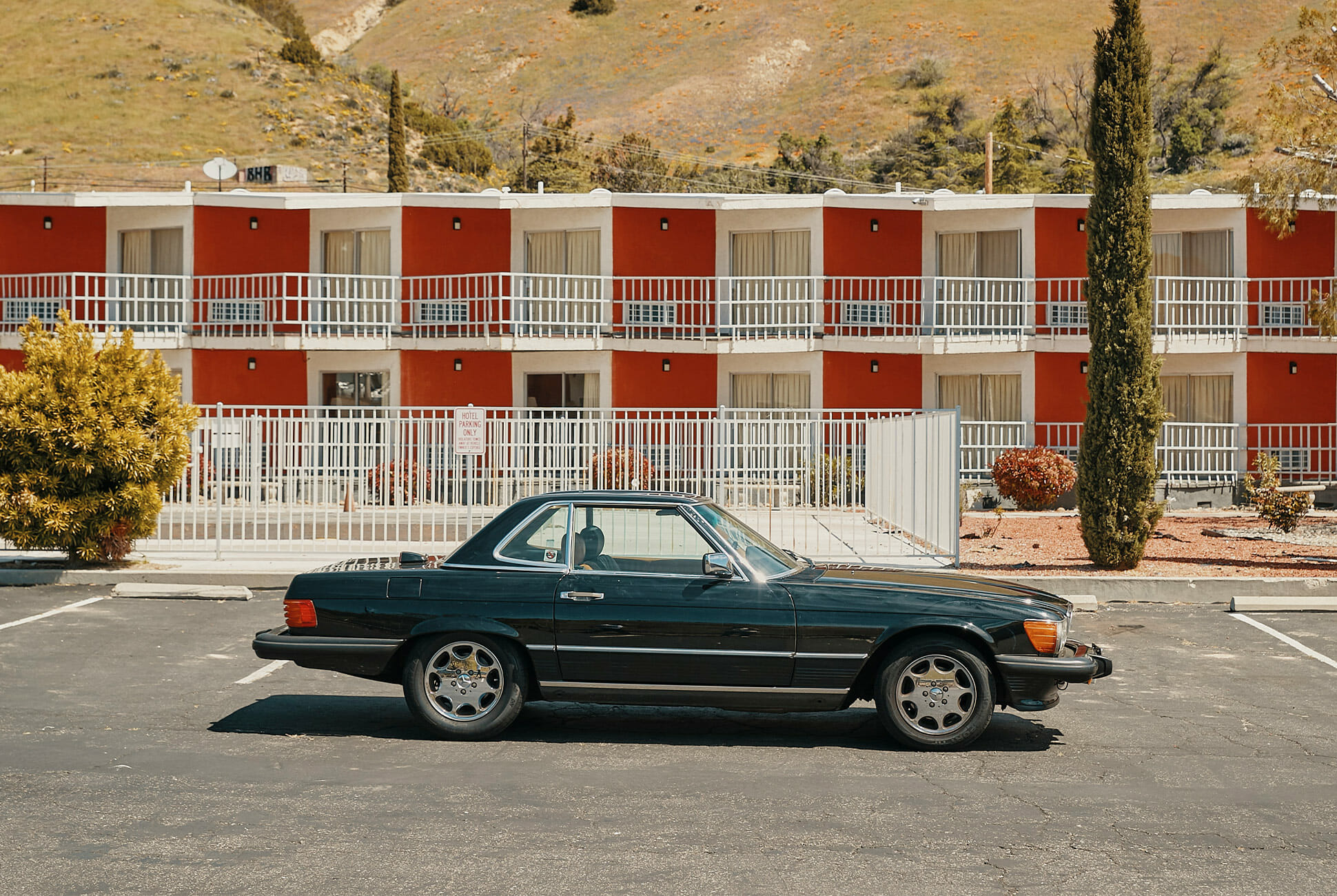
1987 Mercedes-Benz 560 SL

In the sunset days of Reagan’s Morning in America, before Straight Outta Compton and what we know as the internet, when you could still smoke on planes and get shot at the Berlin Wall, a brand-new 1987 Mercedes-Benz 560 SL offered modern amenities like power windows and a cassette player. It came with a large, sturdy German engine and a thin metal key to start it. Safety technology consisted of seat belts, anti-lock brakes and an airbag. At the time, it cost around half the price of a new home in the U.S.

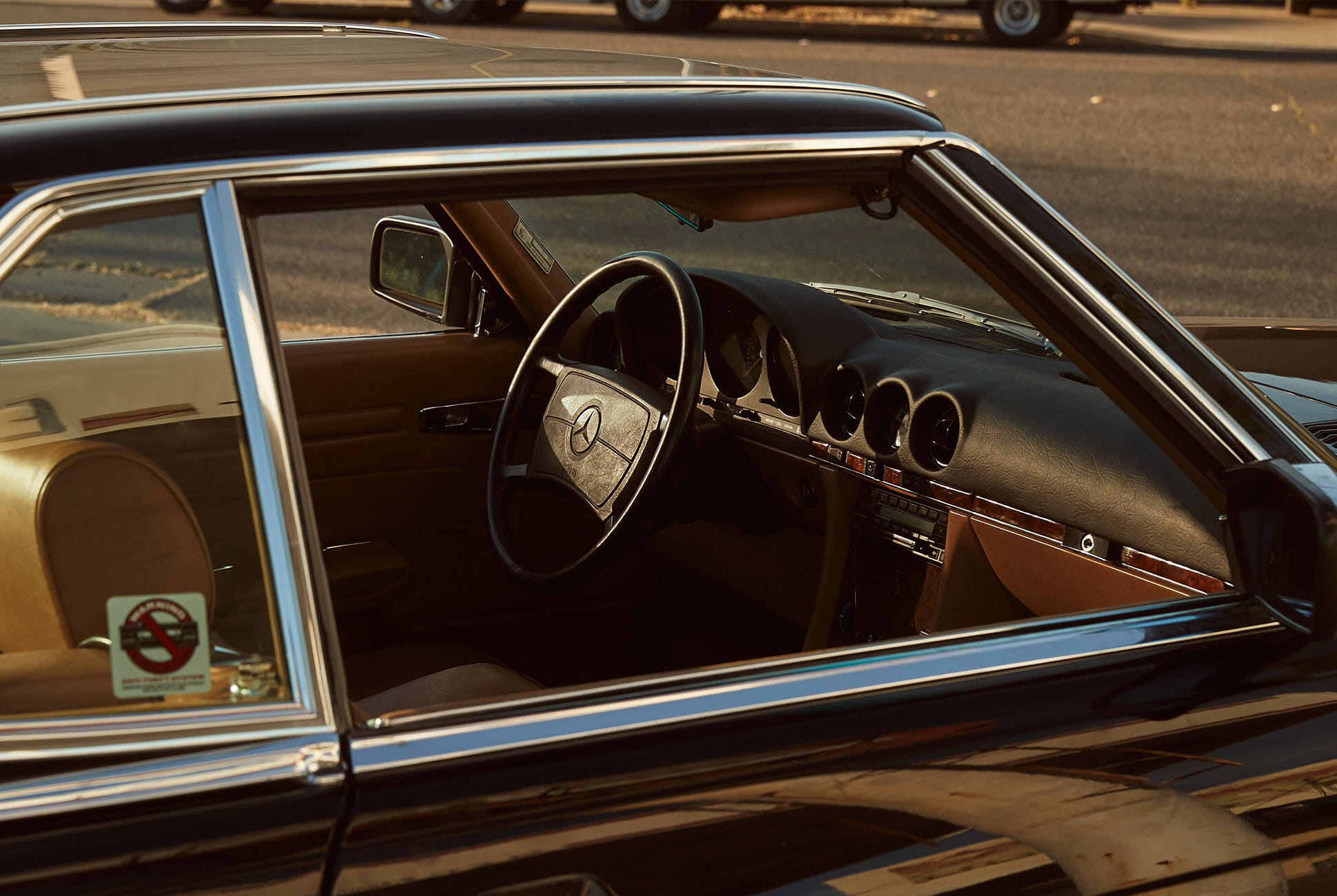
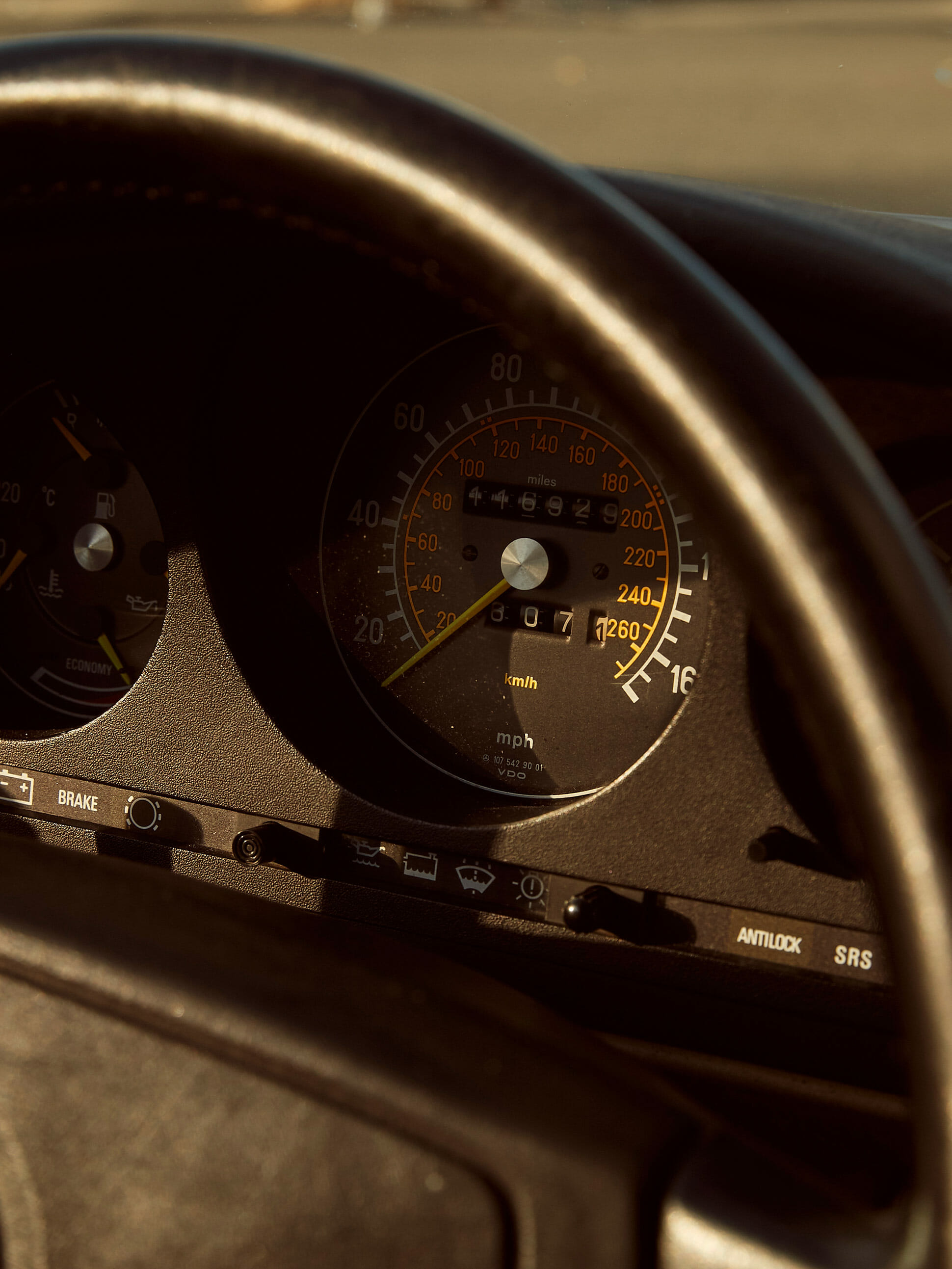
This is the car I pick up 32 years later, in a leafy residential stretch off Wilshire Boulevard, in LA — a low, polished black sled with the moneyed swag of a horsebit loafer. The cockpit appears airy, delicate, like the greenhouse canopy of an old Zero fighter plane. The inside is covered in well-massaged leather and shiny old wood. There’s a 227-horsepower V8 in the long nose and rear-wheel drive in the back, and the car jumps like a spooked cat when you stomp the gas.

We point it north from LA, towards Bakersfield. The coupe barrels through the hot air like a hurled brick. The 560 SL was born before the modern art of aerodynamic modeling and it’s better for it, the beltline so low your arm can’t help but hook itself out the window. The windshield’s curved glass frames the world like a viewfinder.

Age has robbed the seats of their posture; they sag, and the leather bakes immediately in the heat. On our way out of LA, we scroll the AM/FM dial, trying to guess our way to some period-correct ‘80s music but settling for whatever comes through clear.

The radio grows shy as we move inland through the hot, kaleidoscopically brown parts of southern California. I shut it off and listen to the car instead. The motor has a soft steady chug and the suspension sighs over fast crests. The tires drum a constant low hum into the cockpit and any adjustment fills the space with the clack of buttons and dials and levers. Even mostly alone in the midday desert, the car has the false quiet of a city apartment.

The 560 SL settles into a nice canter around 80 mph. I settle in, too, watch my arm turn sunburned as McFarland becomes Delano becomes Pixley becomes Tripton. I cast around the cabin at the various surfaces — metal, leather, veneered wood, glass, plastic, cloth — and at the handsome, analog gauges and the thin needles that hover at some vague approximation of speed or RPM.

Uninterrupted hours of highway driving requires a sort of meditation, an ability to maintain concentration through stillness, because there’s almost nothing to it: minute adjustments to the wheel or the gas, the occasional glance in a mirror.

But within the stillness there’s a subtle conversation taking place between me and the Merc. I tell it where to go and how fast to get there; the car tells me about the condition of the pavement, any irregularities or debris in the road, available tire grip. Even with hydraulic assist, the rack-and-pinion steering is hardly more complicated than a wheel and axle, but it offers something the most advanced cars on the market today cannot: a physical connection to the road, linked from the tires through a series of rods, knuckles, joints, pistons and shafts up through the steering wheel and into my fingertips.

The steering is fuzzy and wanders after grooves in the pavement. The steady sound of the engine chugging tells me it’s breathing well; the travel of the brake pedal indicates how much stop is left in it.

Enthusiasts venerate these sensations but most people can’t translate them, like trying to explain the taste of good wine. The degree and detail of this feedback separates a good car from a great car from a sublime car. But it’s also work: the baseline attention and constant microadjustments needed to keep a car on course becomes tiring, and as we make our way past Fresno I feel the first fuzzy creep of fatigue.

We drive through Herndon, through Fairmead, turn west on the 152 just south of Chowchilla, stop at one of the thousands of gas stations in the state and perform the same rituals: swipe the card, pump the gas, wander past the burnt coffee.

It’s a pristine example of the modern American gas station, a wide, bright, depressing junk food aisle with a side hustle in cigarettes and lottery tickets. It’s not a place meant for lingering but I’m thirsty and the car’s hot. I get a couple thumbs up from Leno fans for choosing something old and sufficiently difficult. The Merc has less horsepower than a new six-cylinder Toyota Camry, and all things being square, any modern crossover will utterly thrash it around a racetrack, but when I stretch I can still feel the road in my hands and the churn of the engine under throttle.

After five hours in the car, its personality has vibrated into my bones — the long brakes and loose steering, the way the suspension dips and rolls through corners. I told it where to go and how fast to get there, and it gave me 227 horsepower and a four-speed automatic to use as I pleased.

Back on the road the FM picks up staticky blues as we roll into Fremont, the music pulled out the open windows and tossed into the breeze. It strikes me that if I tossed my phone out alongside it I would be nearly in the wind. The old Merc’s airy, delicate cabin is a bunker of its own sort, utterly impenetrable by phone or email or text. Once, back when no one could call you if they didn’t know where you were, cars were a moving target, hard to hit. Now, we go on vacations and retreats and social media fasts just to unplug the way the average American commuter did five days a week some 30-odd years ago.

But I’m tired when I park the car in the sprawling lot, so I pull out my phone and drop a pin to the car’s location, since it won’t do it for me. Technology ain’t all bad.

PART II: Fremont to Los Angeles

2019 Tesla Model 3 Performance

Pinning the throttle in the Tesla Model 3 is something like what hitting hyperspeed looks like on TV: there’s a silent whump and then at some point you realize you’re pulling a stupid face with your mouth hanging open and you’re maybe in another zip code.

Before we get into anything else, the weird shape or the “self-driving” or the hermetically clean interior, it should be noted that the Tesla Model 3 Performance is a car you can drive mercilessly, viciously and without sympathy. It’s delightful, stupid, knee-slapping fun — all-wheel drive, beefy
brakes and an extremely low center of gravity. It’s one of the most aerodynamic production cars in the world, with instantaneous torque and a dedicated track mode developed by racing champ Randy Pobst. It embarrasses supercars on the drag strip and can smack around high-priced sports sedans on a road course, for around $60K. If Enzo Ferrari or Carroll Shelby had access to the Model 3, they would have never pursued internal combustion. Like using a stopwatch to time an explosion, it’s hard for human senses to comprehend just how fast the car is.

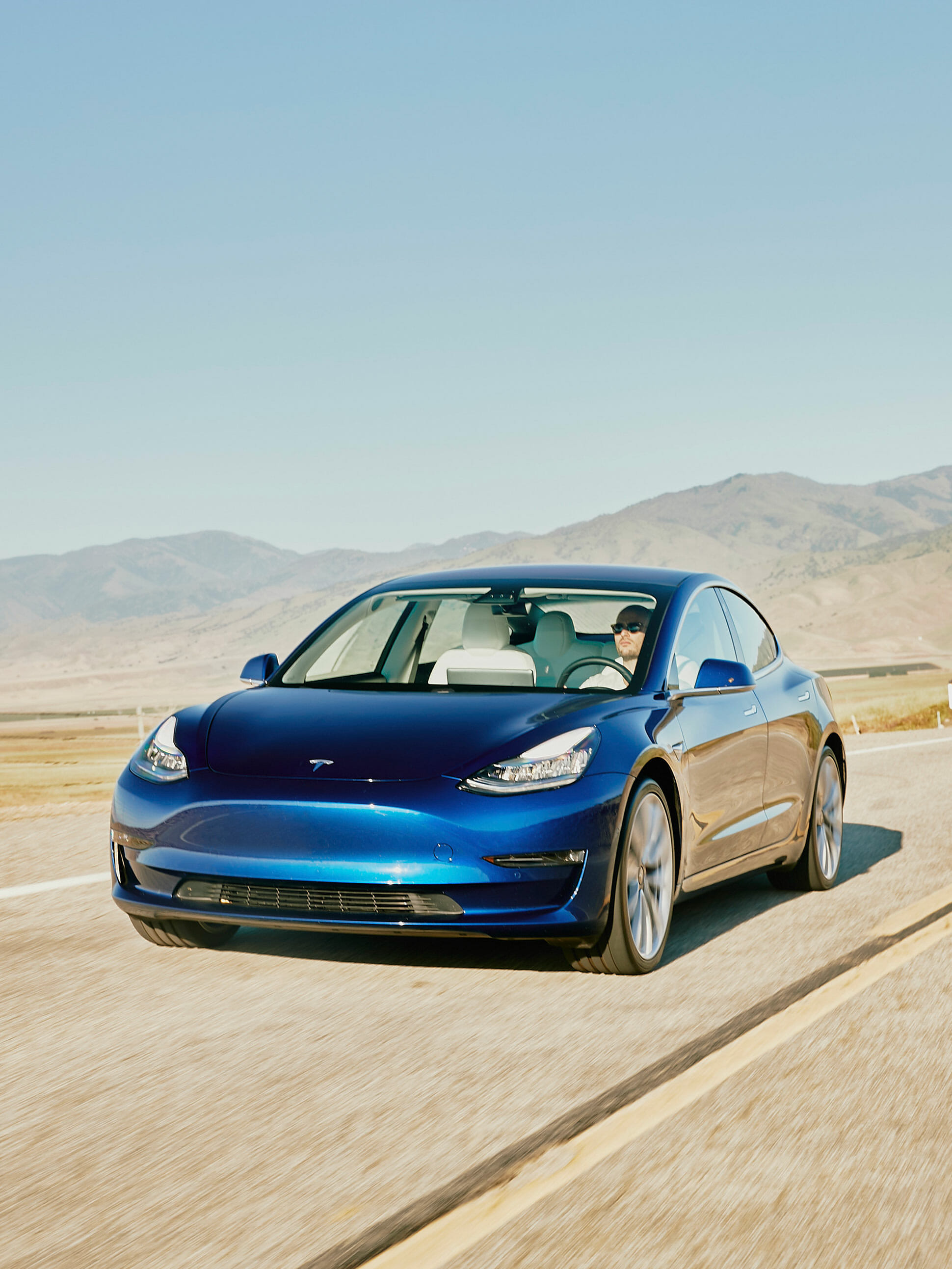
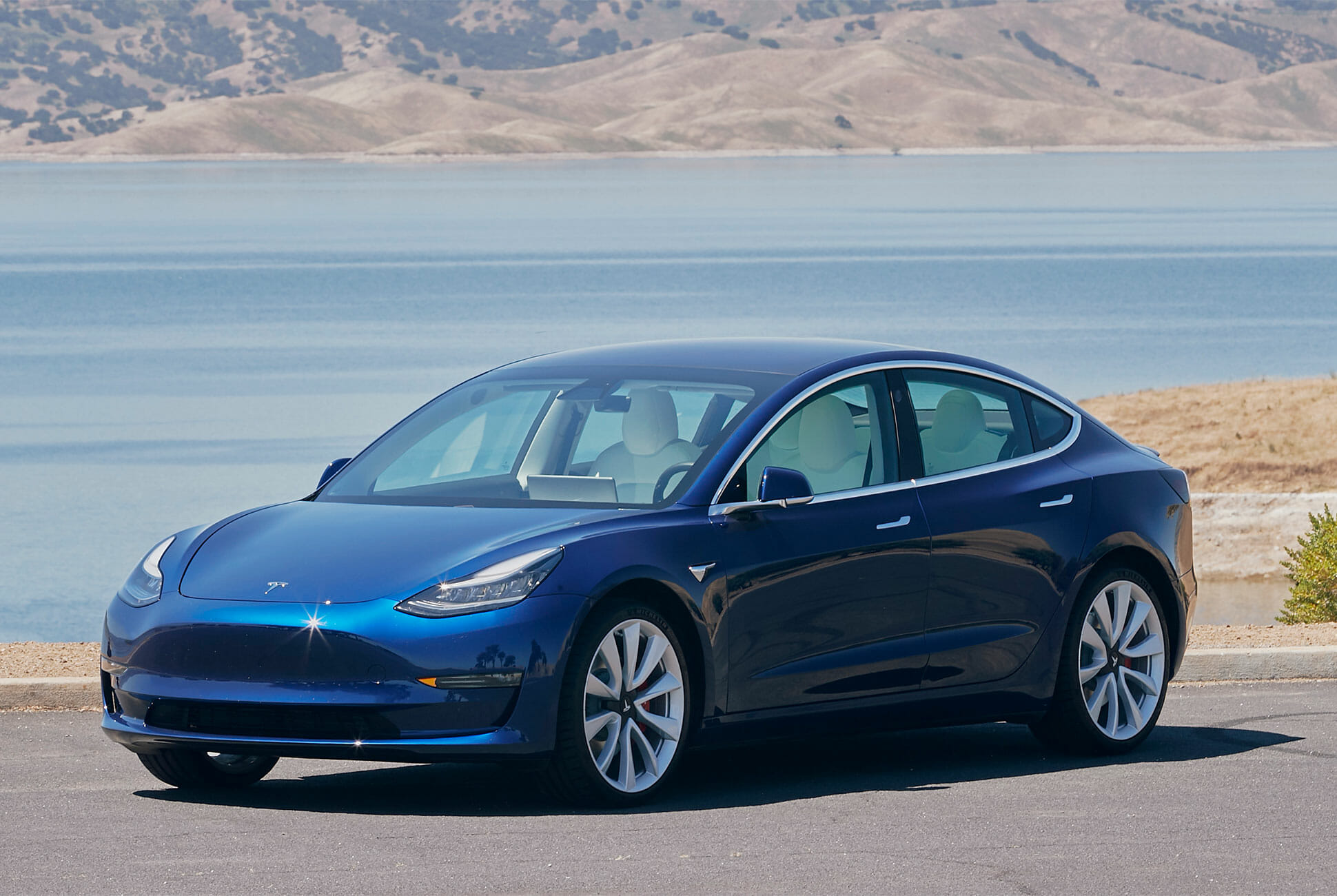
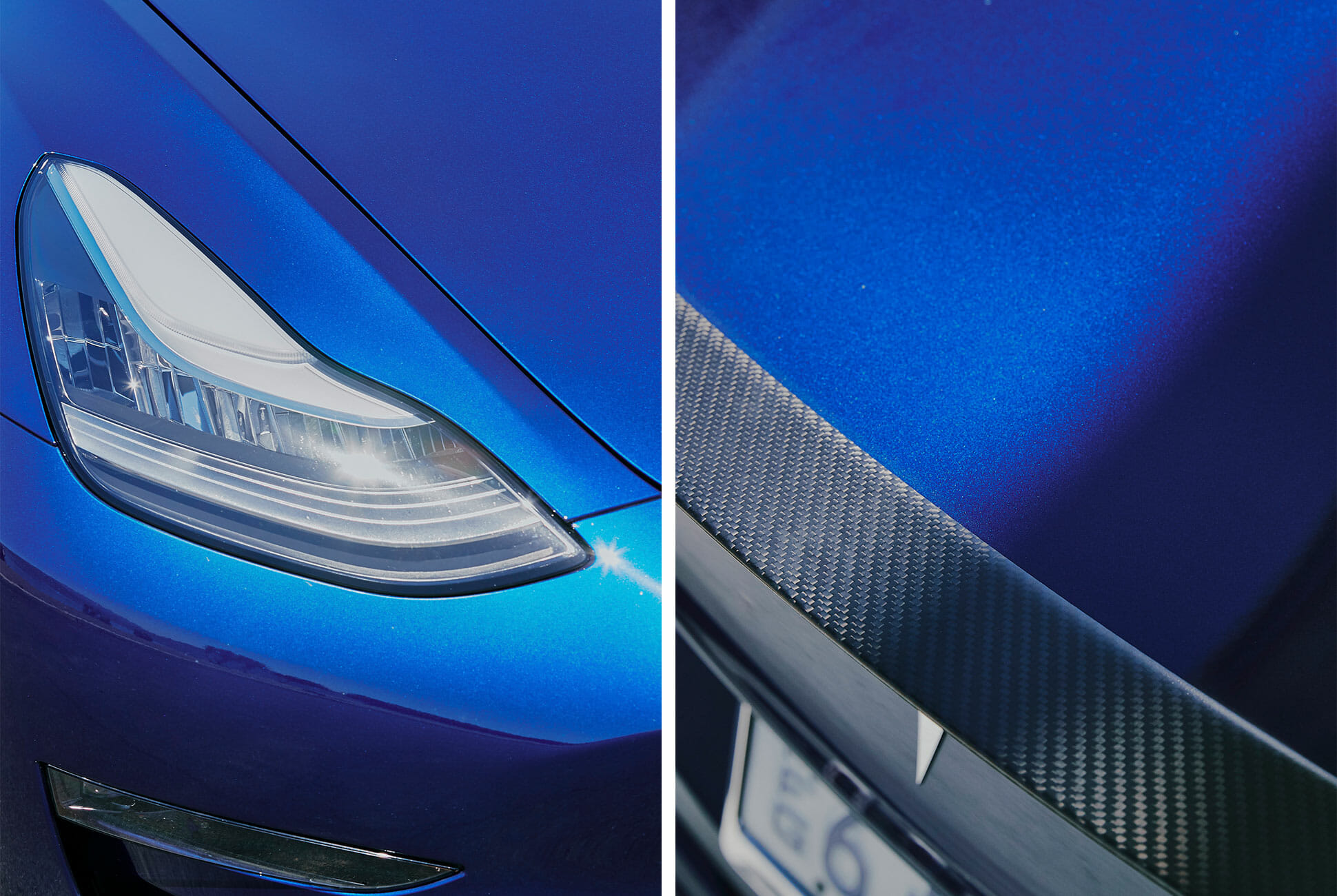
The entire car hovers into the uncanny valley between car and not-car, with a slight (no doubt purposeful) spaceship vibe. Seen in the wild, a Tesla appears slippery and dense, ovoid but aggressively planed. There is no grille because the battery-powered car has no engine; instead, there’s a wide, fat lip to lift air over the body. It turns out the car of the future is not a smooth missile like the ‘56 Oldsmobile Golden Rocket concept or a windswept stealth fighter like the 1970 Vauxhall SRV, but an expensive computer mouse with the face of a bullfrog in a wind tunnel. There is something sexy about the Model 3, but it’s not a car’s sexiness — it has the sleek, minimalist allure of a beautiful smartphone or wireless speaker.

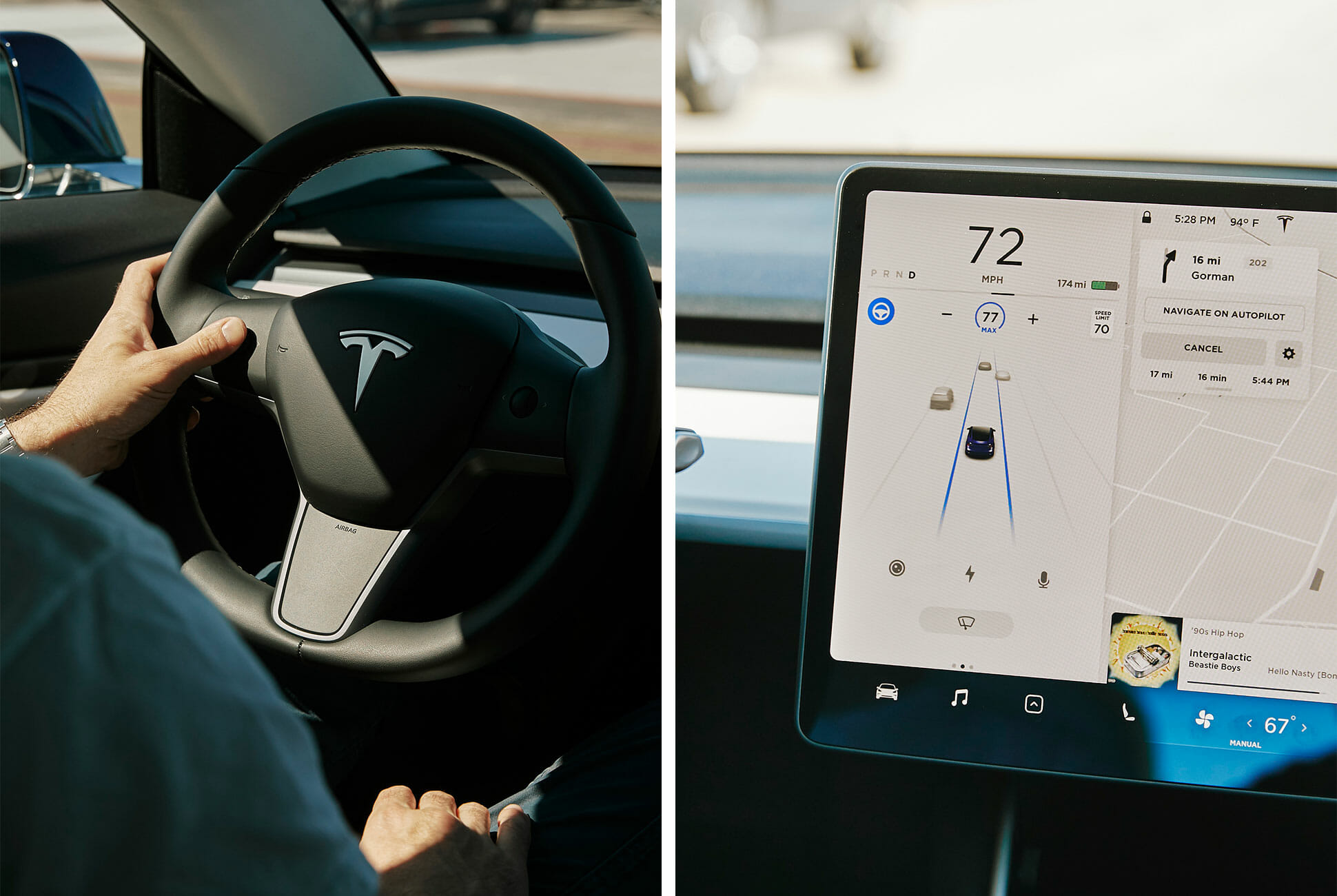
Inside, the car is cool and hushed and almost completely unadorned under the tinted panoramic glass roof. There are no gauges, buttons, dials, knobs, switches or hidden storage compartments. There is no key — the key lives on your phone, locking and unlocking the doors automatically, among many other tasks — and no vents or speakers to be seen within the smooth, colorless expanse of vegan leather. In fact, the interior has only one feature: the Screen.

The Screen is a 15-inch horizontal tablet, the size of a platter for serving tomahawk steaks. It’s beautiful, rich in color and detail, softly glowing. Nearly every interaction with the Model 3, from the radio to the seat coolers, calls, texts, vent controls, vehicle diagnostics, security and charging port access, is done through the Screen. It feels high-tech and, at 85 mph on a six-lane highway, utterly terrifying, because there’s no way to use the huge touchscreen and its labyrinth of sub-menus without completely ignoring the road.

The Model 3 has a novel solution to the attention problem: it offers to drive. I depress a steering column-mounted stalk twice, engaging Autopilot. On the Screen, a wheel icon glows green to confirm the system is engaged. The car is now driving, using a combination of automatic cruise control, emergency braking, lane-keep assist and an assortment of additional cameras and radar sensors, and I have been relegated to monitoring status. So I sit and observe the car as it attempts to figure out things like traffic and lane closures.

For long stretches the car is utterly capable, keeping pace with traffic, navigating bends in the road, even switching lanes when I engage the turn signal. I watch the wheel juke and twitch and am struck by how little movement happens during the normal commute. For all the fidgeting, singing, eating, drinking, talking and stretching that takes place inside a car, the mundane act of commuting usually requires only the smallest, most subtle human inputs.

At other times, the Model 3 is hesitant, easily confused, at one point slowing almost to a stop on the freeway rather than accelerate past a slow-merging hatchback. On several mystifying occasions, the system tosses off an irritated bong and disengages.

As close as I can figure, Autopilot works on the highway about as well as a nearsighted 12-year-old, which on the one hand qualifies it as a staggering technological achievement and on the other means I’m hardly tempted to take a nap while it’s in charge. Still, I find myself surprisingly willing to let Autopilot take the wheel for a spell, when I’m sleepy or bored or I just want to play with a bright glowing screen for a minute. Hell, that squinty bugger got us most of the way to Tesla’s Kettleman City Superchargers three hours south, and it planned the whole route to boot.

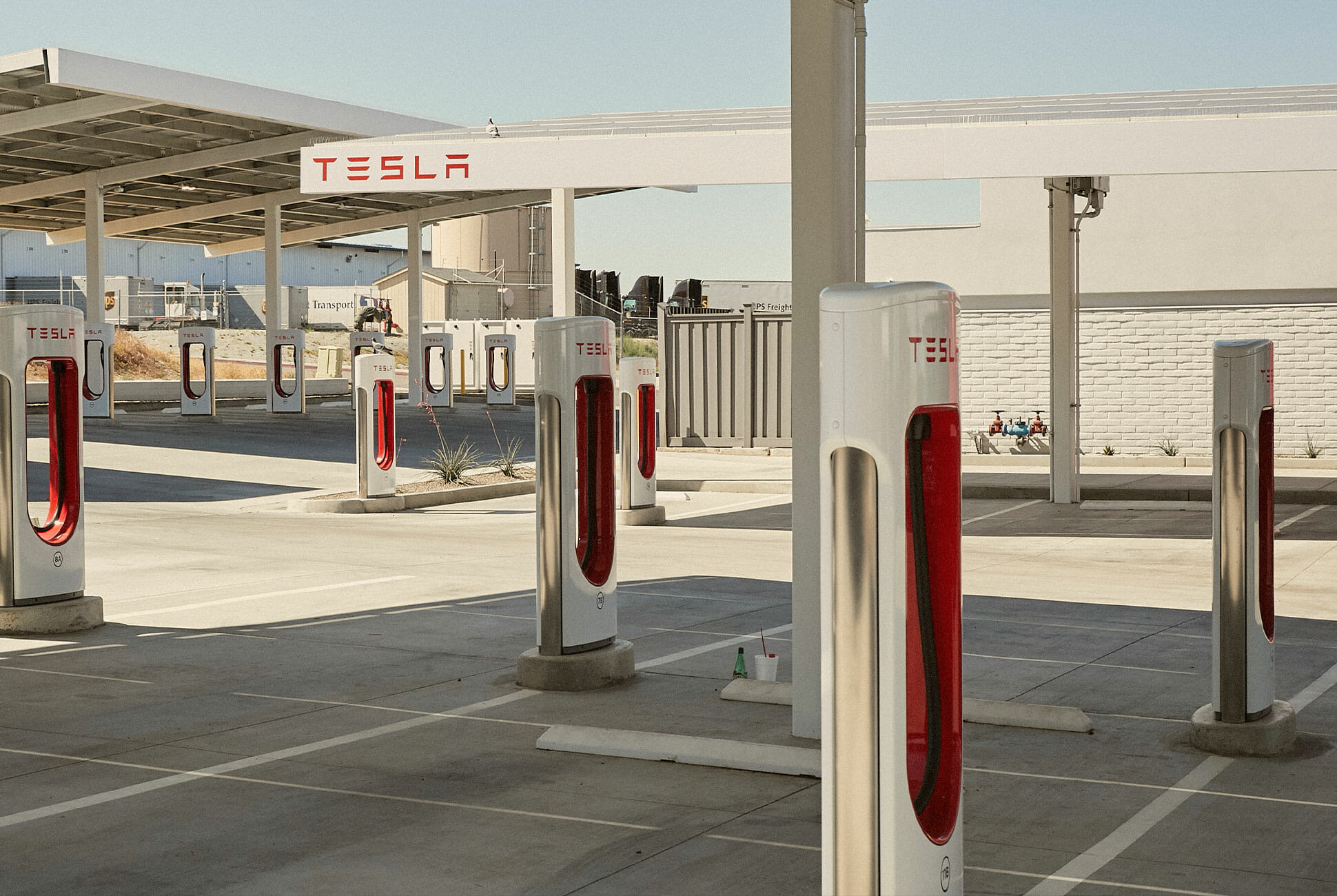
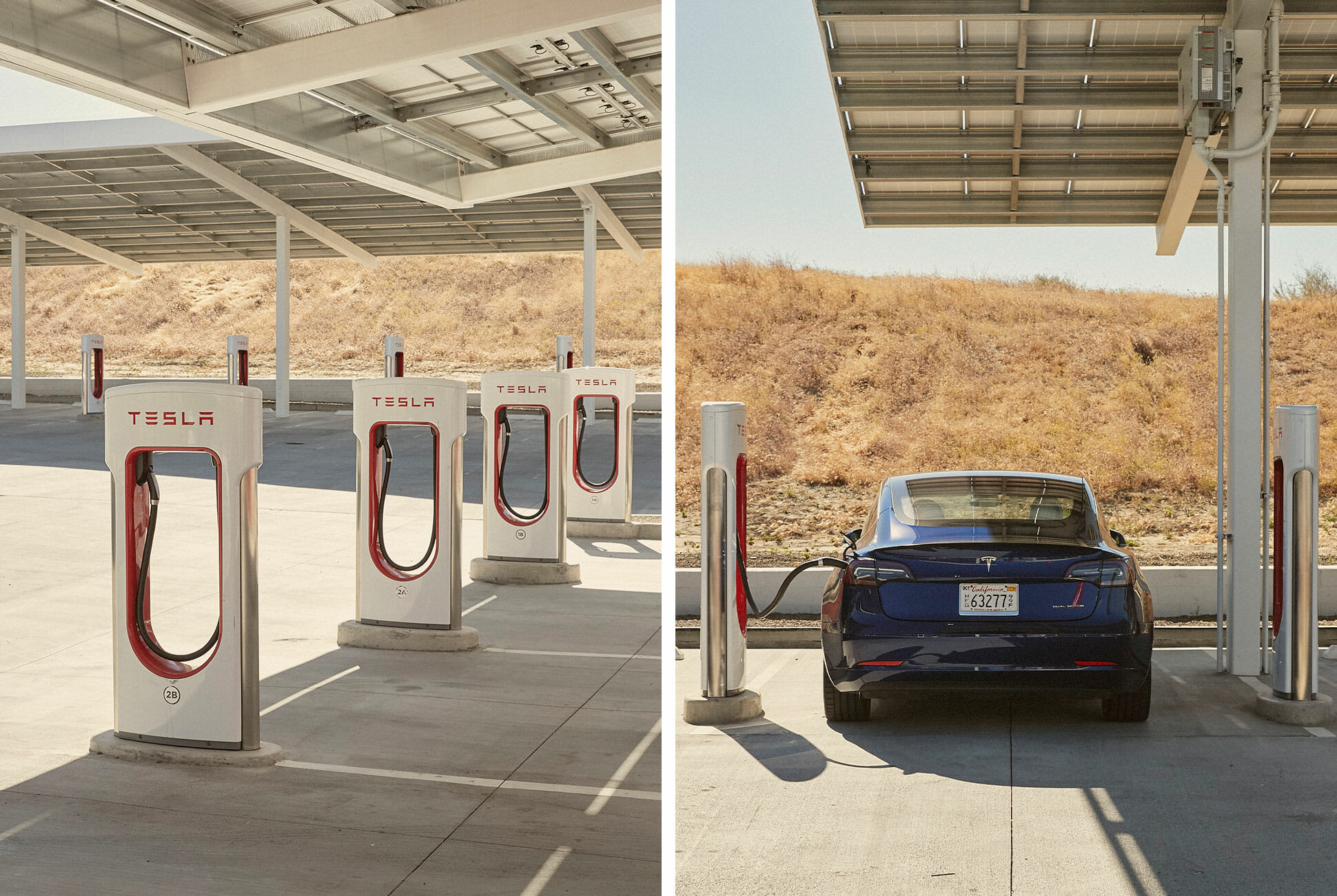
The grass outside the Kettleman City Supercharging station is very green and all the blades are exactly the same height, because it’s fake. The door is locked with a keypad; when you arrive, your phone key sends the passcode to unlock it. It’s spacious and cool inside, with a barista selling espresso drinks, a playpen for kids, plentiful outlets and comfortable chairs for efficient telecommuting, like a business class airport lounge in Burbank.

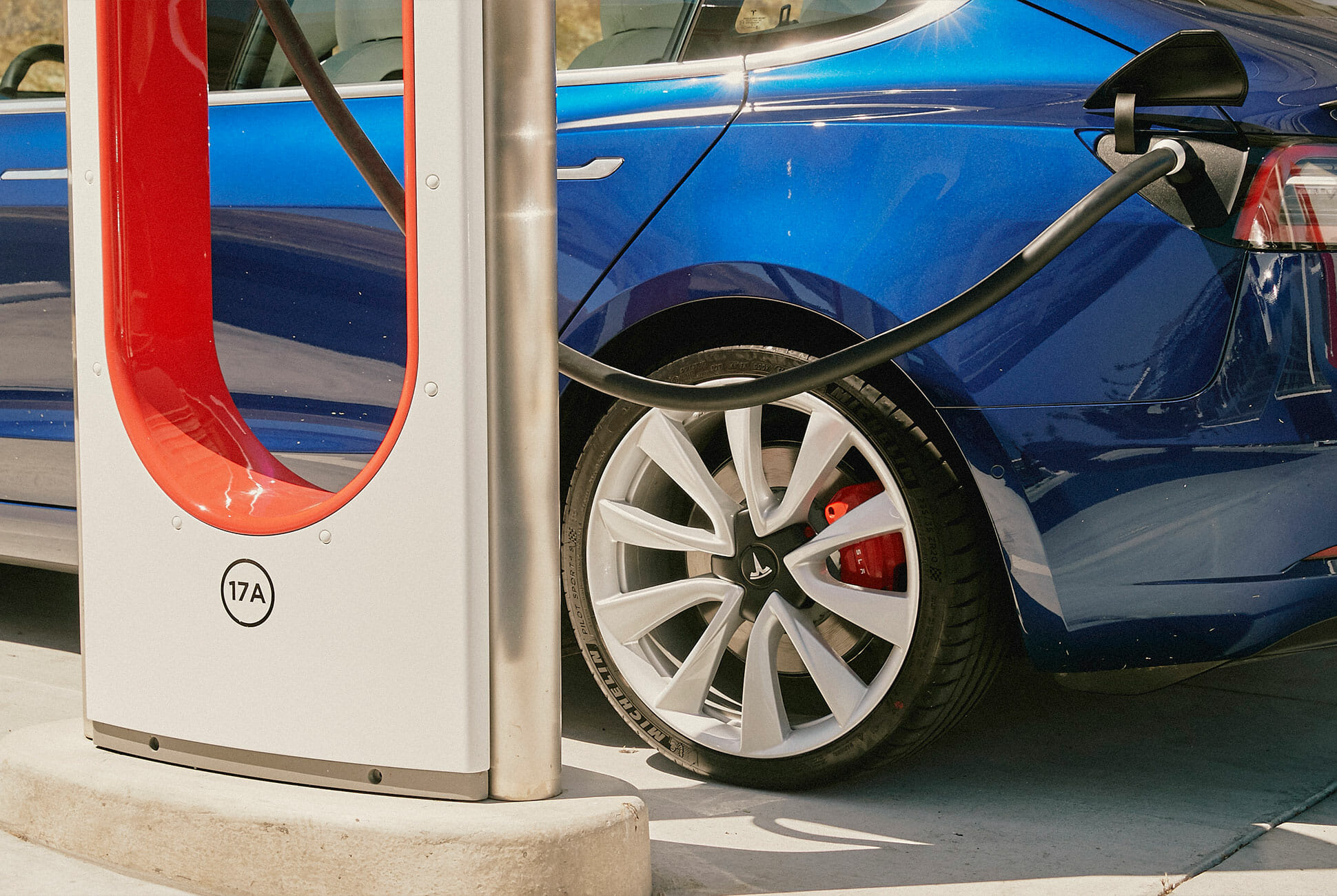
It’s comfortable enough to spend an hour and 14 minutes, precisely how long the phone key tells me it will take to recharge, but there’s an In-N-Out Burger within walking distance so time is passed there, instead. I track the charging on my phone and time my return exactly to the moment it’s complete.

The Model 3 delivers me back to LA in around seven hours, including the charging, and I’m about as fresh when I get out of the car as when I got in. This is the great shouted promise of the autonomous, electric, connected vehicle: the car will do the work for you — and it will, and it will delight and amaze. The only catch is that the car needs to remove you from the decision-making equation when it sees fit, and you get no say.

The starkest example of what we’ll give up in our artificially intelligent future is this: you can drive that old Merc straight into a wall as fast as your courage and runway allow, but the Tesla won’t let you do it. Neither will a modern Mercedes, or Volvo, or anything with emergency braking. The simple computers that controlled things like electronic fuel injection (quicker acceleration, on demand!) have grown so powerful they now outrank the human driver. Computers determine how much throttle the car uses and how much steering, when to add to or subtract from your speed. I spent a lot of time in the Model 3 wrestling with the steering wheel, trying to determine who’s in charge. It’s not an argument I can win.

In the car of the future, the need to drive will be replaced with the freedom to answer emails. The car will give you the feeling of escape but will never stop watching you, never let you truly get lost. It can seem a sad, silly thing to mourn the ability to run a car headlong into a wall because you want to, but freedom lost is often lost forever, and it requires mourning all the same.


Mercedes-Benz Needs to Build a G-Class Pickup Truck

Pickup trucks are the most popular (and among the most profitable) vehicles sold in the United States. It’s a rich segment of the market, but it’s also a segment where foreign manufacturers haven’t been able to find any traction. Ford, Chevrolet/GMC and Ram have formidable brand loyalty, which they’ve earned and kept by producing fantastic vehicles. Those companies pour tremendous effort and resources into their pickups to make sure they’re capable of dispatching all competitors. Those profits are too vital not to.

Those profits (and the potential for more of them) have been causing the pickup market to evolve. Once-utilitarian trucks are morphing into genuine luxury vehicles., with companies touting their high-end leather trim and open-pore wood. High-output powertrains are pushing performance boundaries. (Who’d have thought an F-150 could ever do 0-60 mph in 5.1 seconds?) Trucks are becoming tricked-out formidable off-roaders. Top trims can have price tags surpassing $70,000.

Those rising prices open up an opportunity for new competitors to jump into the pickup truck space. Most manufacturers would sink while trying to swim with Ford, GM and Fiat Chrysler in the mass market. But at the high-end level, domestic manufacturers are pushing beyond their traditional depths. There may be room at the for a luxury competitor to swoop in at the top of the market and offer, shall we say, the “Mercedes-Benz” of trucks. And the best candidate may be Mercedes itself.

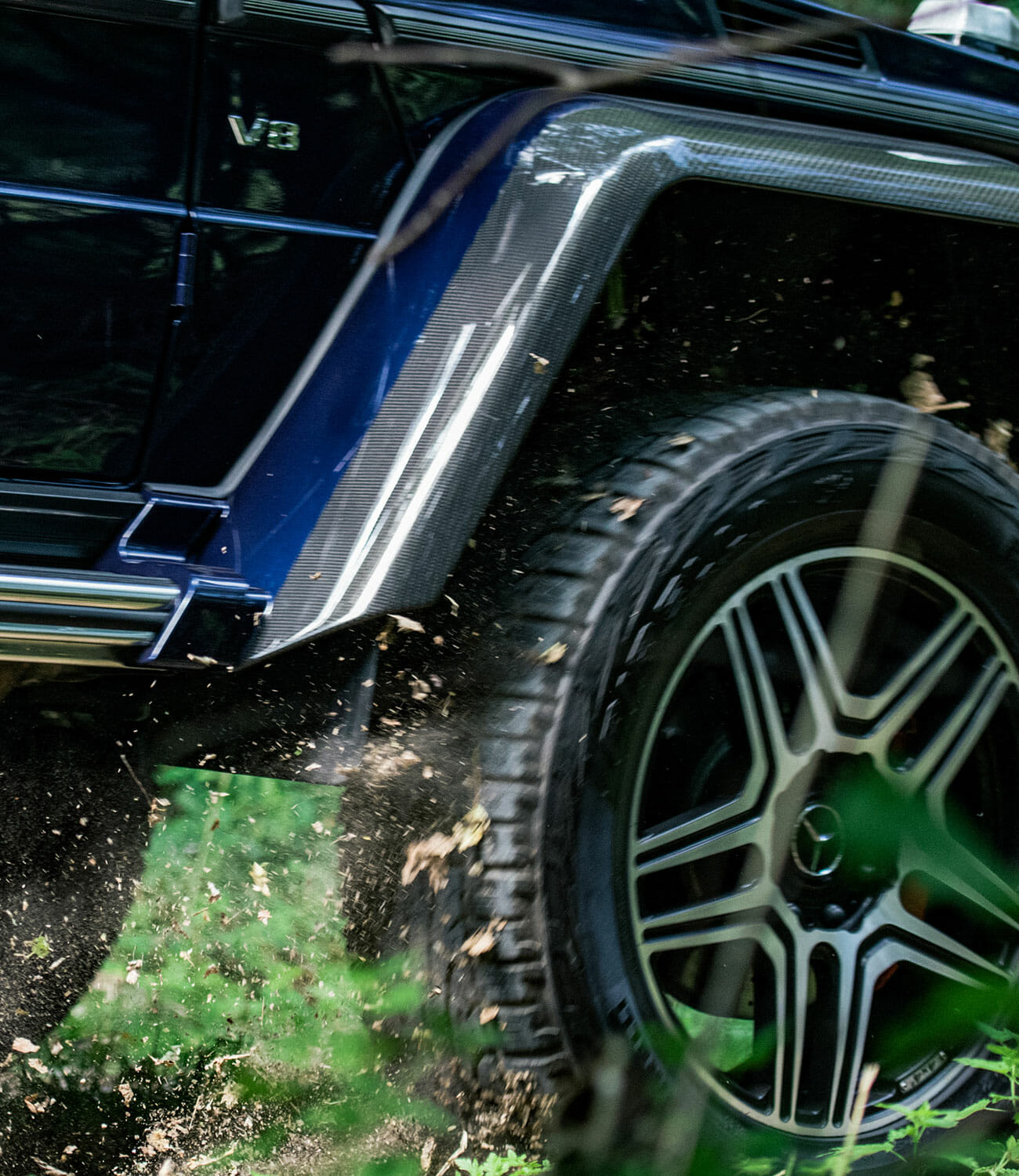
After all, Mercedes already has a versatile, capable platform to build a truck on: the G-Class. The G-Class offers everything the top end of the truck market is trying to do but better and in one complete package; it just has a roof all the way to its rear instead of a bed. Luxury? A Mercedes hallmark from the humble A-Class upward. Performance? Mercedes can match or surpass every truck engine with its twin-turbo V8s. Off-roading? The G-Class has legendary off-road proficiency; it’s just visible only on those rare occasions when owners let them leave the pavement.

The G-Class platform has spawned trucks before — ones that were much more involved than modifying an SUV into a regular pickup. Mercedes-AMG built a limited run (and manifestly insane) 6×6 off-roading truck from the previous generation G-Class earlier this decade. Mercedes also has made more utilitarian G-Class versions, like Australia’s pared-down flatbed “G-Class Professional.” If a G-Class cabriolet can exist, it’s not that much of a stretch to make the modifications needed for a pickup.

Now, Mercedes has said it’s exiting the truck game just two years after debuting the X-Class pickup. But that failure does not disprove the viability of a Mercedes truck. The X-Class was a rebadged Nissan pickup with a wimpy engine intended for markets outside North America. It did not show what Mercedes could do with a truck if it went for the true high-end market — and how American buyers would react.

It may be a conceptual hurdle for Big Three truck buyers to embrace Mercedes. But Mercedes-Benz’s brand cachet may attract luxury buyers not otherwise interested in trucks. If we judge the idea in comparison to other respected off-roaders, there should be interest in a G-Wagen truck effort. Jeep Wrangler buyers have embraced the Gladiator. Ears perk up at the mere mention of a new Defender-based pickup or Land Cruiser-based options available in other countries.

I don’t expect Mercedes to actually attempt making this ultimate high-performance lux truck. Bean counters would no doubt be reticent to sanction anything risky, given the present instability in the automotive market. But a pared-down G-Wagen with a bed would be natural, awesome — and, notably, something Mercedes-Benz’s rivals like BMW can’t compete with, however cool that specially-engineered X7 one-off was.

Porsche Vs. Jeep: The $100,000 Performance SUV Showdown

You know you’re living in unusual times when a Porsche and a Jeep can rightfully be considered competitors. Yet here we are in late 2019, a year where Porsche’s first crossover is well into its third generation and Jeep builds a Grand Cherokee with a 707-horsepower engine. Porsches for off-roading, Jeeps on the track; it’s pure Bizarro World logic.

Indeed, the Jeep’s outlandish specs are so wild, they might well distract you from the fact that the Grand Cherokee Trackhawk, as the Hellcat-powered SRT-tuned performance Jeep is formally known, is the most expensive Jeep in the brand’s history. Its base price of around $87,000 is a full $55,000 more than the most affordable Grand Cherokee you can buy new, four times the price of the cheapest Compass you can snatch up at a Jeep dealership, and, adjusted for inflation, 6.8 times the price of that first Willys MA that began rolling off production lines back in 1941. And that $87K MSRP is, of course, just the starting price. Our test Trackhawk came in at $99,470, thanks to add-ons like the “Signature Leather Wrapped Interior Package” and a panoramic sunroof that comes with what Jeep calls a “suede-like premium headliner.”

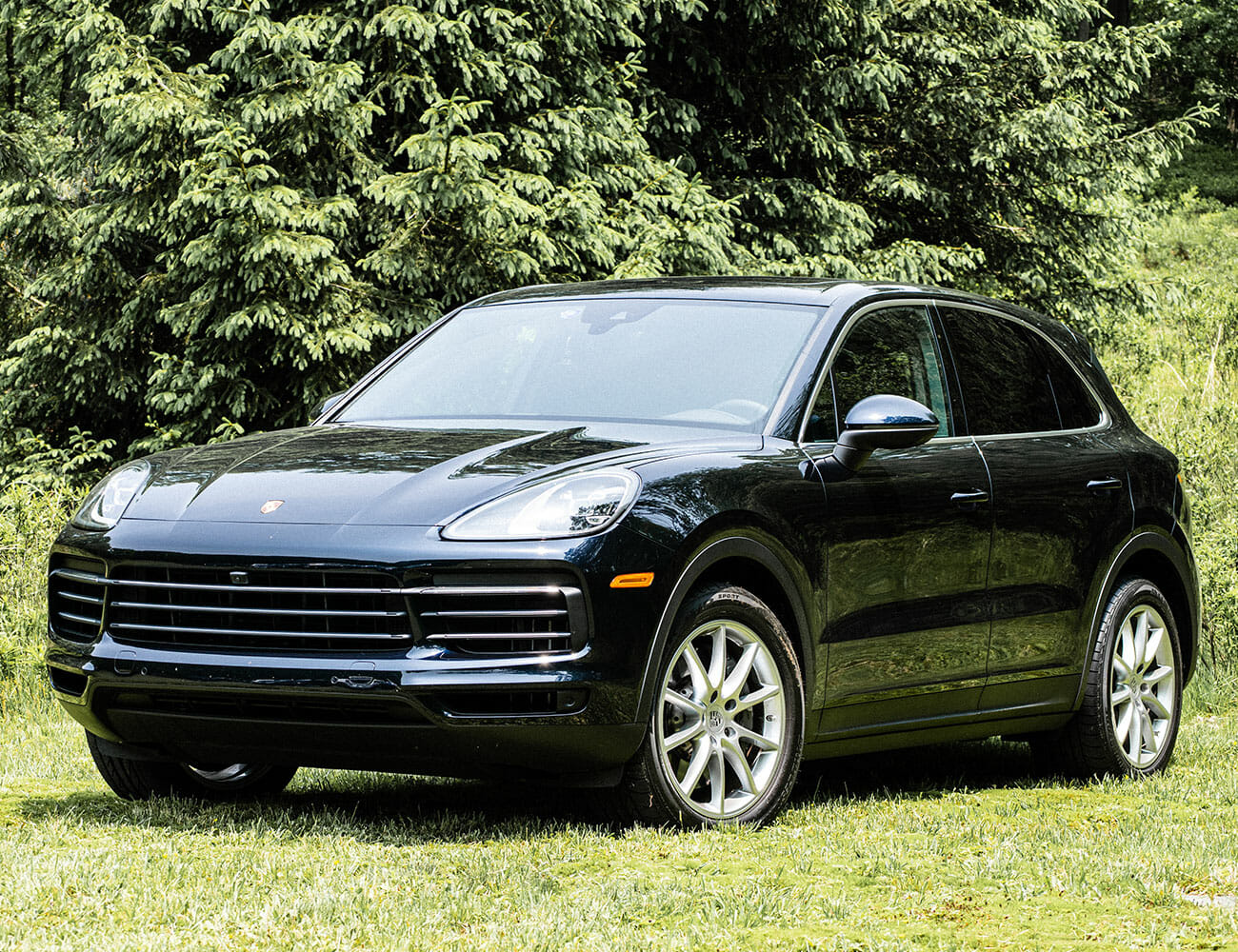
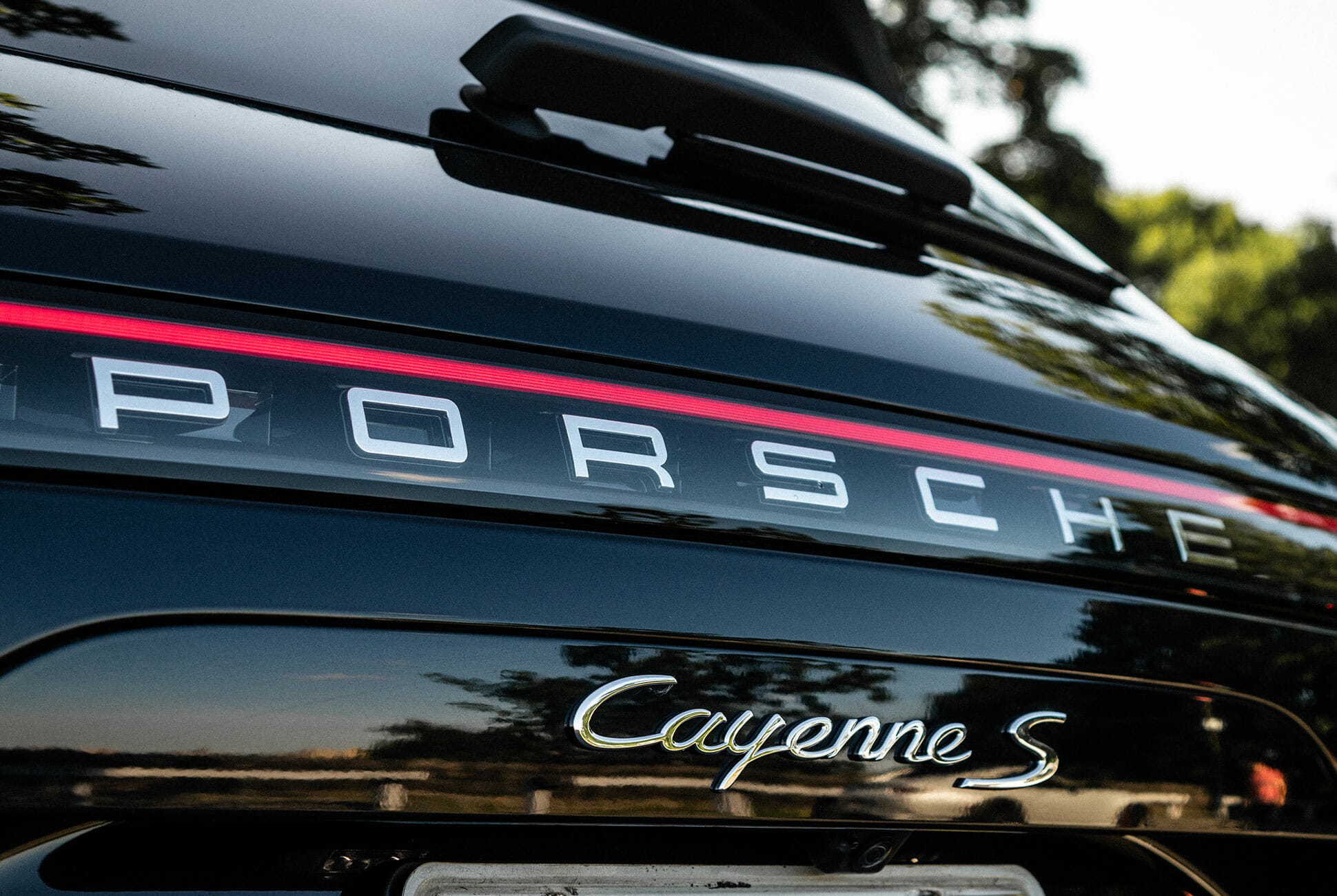
The Porsche Cayenne S, meanwhile, came $101,660 with all its options and the destination fee, thanks to an options list that was surprisingly spare for a new Porker. (Go buckwild, and you can add a full $100,000 in options onto this car’s $84K base price.) The biggest chunk came in the form of a Premium Package that added handy features like “Comfort Access” key-in-pocket entry, LED headlights, power seats, blind-spot warning and a Bose stereo; a leather interior and heated steering wheel gussied up the inside a bit, while rear axle steering, an adaptive suspension, summer tires and the Sport Chrono package added a dash more performance.

So with both of these performance-minded SUVs wandering through our office around the same time, we wondered: Which one of them is more worth writing that $100,000 check for?

Exterior

Don’t be alarmed if you can’t tell the third-generation Cayenne from its predecessor at a glance, especially from one of the forward angles. It’s largely identical, hewing to the previous version’s face with a consistency that makes successive 911 generations look like a sea change. Which is a little unfortunate, in all honesty; the carmaker has done its damndest to try and make the familiar Porsche design language work on a lifted two-box shape of this size, but the front end still looks exaggerated and awkward in a way the lesser Macan doesn’t. The stern view, at least, is more cohesive — a stylish, if generic, collection of familiar Porsche curves and shapes.

The Jeep, however, is a handsome thing, if awfully familiar-looking for a car with a six-figure price tag. Indeed, apart from a thin strip of an air intake front and center on its schnozz, it’s identical to the Grand Cherokee SRT, which cranks out a “mere” 485 horses from a naturally-aspirated 6.4-liter V8. That’s a good thing. In spite of its age (it went on sale in 2010), the Grand Cherokee is one of the best-looking SUVs on sale, and the flared fenders, mighty wheels and exaggerated front fascia of the SRT/Trackhawk only add machismo to the appearance.

Interior

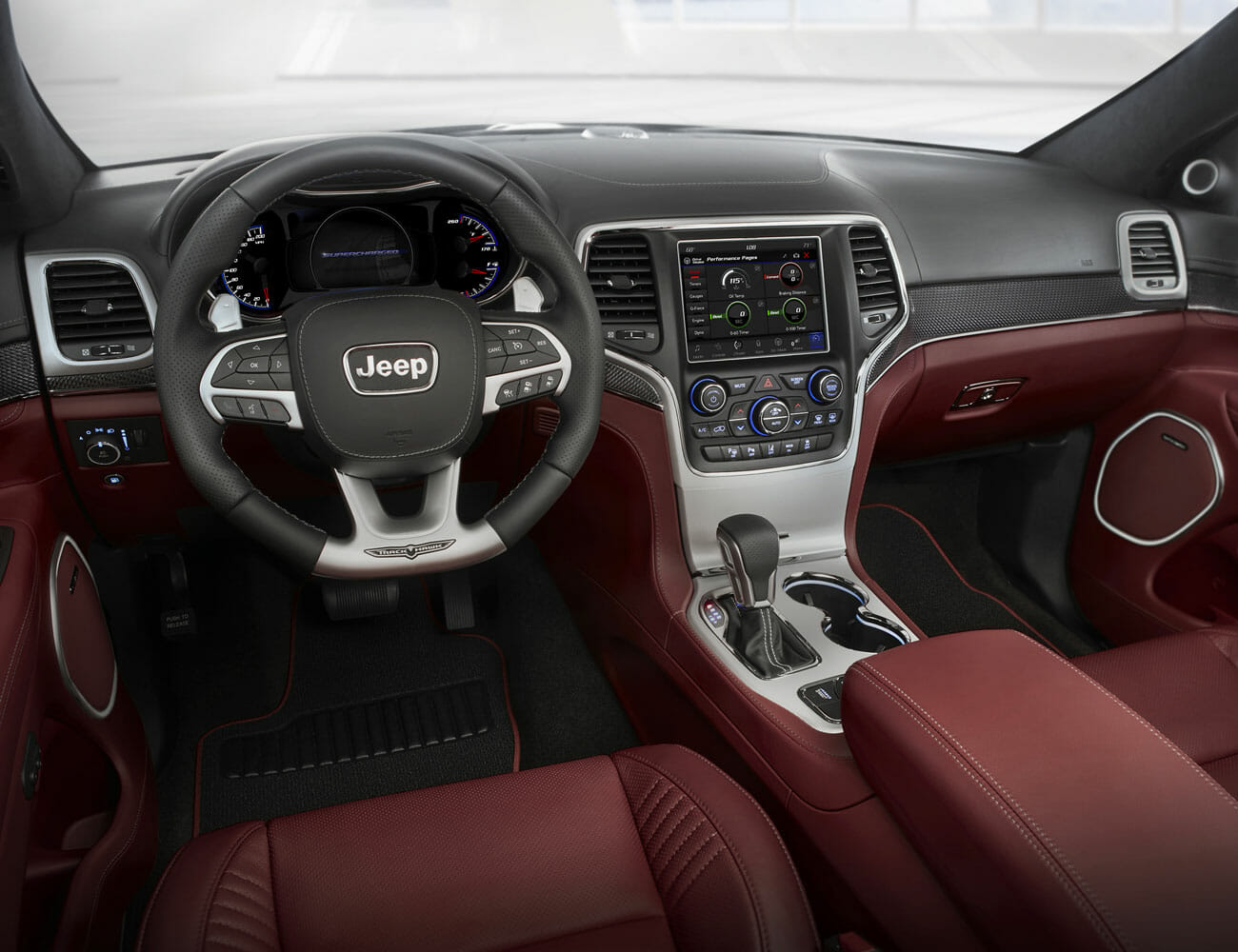
As has become common with Fiat Chrysler vehicles these days, the Jeep’s infotainment system is a delight of usability. It’s simple and effective, with large physical knobs and buttons augmenting the touchscreen, which in turn uses graphics and fonts so big and clear, the display seems like it was laid out by the same folks who designed the Jitterbug. Considering it’s designed to be used while controlling two-plus tons of steel holding you and your loved ones at 75-plus miles per hour, that’s very much a good thing.

The rest of the interior, however, is a bit of a letdown. It’s largely identical to the rest of the Grand Cherokee lineup — which is to say, fine for a $50,000 car, but not worthy of one selling at twice that, even with the $5K leather upgrade. Indeed, that cowskin looks kinda cheap; my test car’s interior already looked a good year or two old with just 2,800 miles on the odometer.

The two-box body style helps make this the most sensible Hellcat; entry and egress are easier than the Charger, let alone the Challenger. Indeed, the interior is every bit as usable and functional as any GC; I used it to help my mom move, folding the back seats down easily with the convenient lever near the floor that flips and folds the seat in one motion. (Nobody does second-row seats like FCA). 36.3 cubic feet aft of the second row is enough for most lesser loads, and nearly 10 cubes more than the Cayenne.

The Porsche, however, looks every bit worth that bougie price inside. The 12-inch widescreen touchscreen infotainment system is the same found in the Panamera and other new Porkers, delivering the same deep menus and crystal-clear graphics as in all of them, and just as handy here as in every other car wearing the Zuffenhausen shield. Same goes for the twin screens on either side of the centrally-mounted-as-always analog tachometer, which shuffle through high-res menus with the smoothness and speed of a card shark. Indeed, the whole interior is put together with a degree of fit and finish that could make FCA’s designers weep; the layouts and materials all project luxury in a manner both subtle yet commanding.

Still, it’s not without flaws. All the haptic feedback Germany can summon isn’t enough to make up for the fact that the Cayenne‘s expansive pane of glass with touch-sensitive “buttons” in the center console is a poor substitute for the (admittedly numerous) hard buttons of the previous version. The back seat feels a half-size smaller than the Jeep’s, while the wide transmission tunnel saps front legroom from the tall. And whoever approved the volume knob — a tiny rolling drum awkwardly mounted behind the gearshift — needs to spend some time in medical school to learn how the joints of the human hand work.

Performance

Not surprisingly, the Porsche is a far better-handling vehicle than the Mopar machine. The Jeep sticks to the pavement well enough, but it never feels like it’s enjoying itself as it digs through turns. It still drives like a Jeep; the steering is numb, uncommunicative, and sloppy, though going to Sport or Track mode takes some of the slack out of it. The Cayenne S, on the other hand, drives like a Porsche should — or at least, a Porsche that’s this tall should. The steering is great; sure, it’s electrically assisted, but it’s taut, responsive and quick. Likewise the suspension; it’s compliant and comfortable, but lob it into a turn, and the S feels willing in a way most luxury crossovers aren’t. You won’t find many SUVs quite as skilled at darting through traffic, or comfortable on a winding back road.

The Jeep will outrun the Porsche in a straight line, however. (Which is a sentence I never would have thought I’d write.) Car and Driver‘s testing found the Trackhawk will dash from 0 to 60 mph in 3.5 seconds and crack off a quarter-mile in 12 seconds flat while doing 115 mph at the end of that distance. Yet thanks to a combination of that mass, the all-wheel-drive system and the early-onset power of its supercharged V8, the Jeep never feels explosively quick; rather, it simply feels supremely confident, gaining speed with the invincibility of a Saturn V until well past 100 mph, at which point drag starts to claw its acceleration back towards mortal levels.

The Porsche feels almost lethargic when left to its default settings; the gearbox snaps to the tallest gear possible in the name of efficiency, leaving the 2.9-liter V6 to lope along at speeds too low for its twin turbos to contribute much to the party. Snap the steering wheel-mounted drive mode controller (reason alone to buy the Sport Chrono package, which is the only way to get it) to Sport mode, though, and the snails start to come alive, with the meat of the powerband never more than a quick shift away. Dial it one step further to Sport Plus, and the eight-speed automatic holds the rpms even higher, keeping it wound as tight as a racing driver would. (The car also lowers visibly in that mode, to help it carve corners more aggressively.)

Should you rather not drive around with the engine turning 4,000-plus rpm, the Sport Response button situated in the middle of the drive mode wheel is your friend for passing. Instead of leaving you worried about turbo or transmission lag, punch it with your right hand as you flick the signal with the left by the time you’re in the left lane, you’ll be right in the heart of the power band, with no worries about waiting for the engine and gearbox to sort things out of their own accord.

As an aside: you can opt for an off-road package on the Cayenne, an option not available for the Trackhawk — which means, theoretically and bizarrely, the Porsche is superior to the Jeep off-road. Neither of these is likely to spend much time off the beaten path, except for the occasional bounce down a couple hundred yards of two-track to a hiking trail or fishing spot. Still…again, strange times we live in.

Value

Neither vehicle is really what you’d describe as a great bargain — not at these prices. Still, when you consider that they offer performance comparable to honest-to-God sports cars (the Trackhawk outruns the outgoing Corvette, while the Cayenne S is only a few ticks behind GM’s speed machine), the interior volume of a medium-sized station wagon and the ability to climb over rocks that would murder regular cars.

The Jeep does admittedly suffer at the pump, especially on highway slogs. You can’t fight drag; the faster you go, the more the fuel economy suffers in a brick-like car such as this. I saw an average of just over 16 mpg over about 800 miles, most of that on the highway. The Porsche is solidly better, netting an EPA rating of 23 mpg on the highway versus the Trackhawk’s claim of 17; that may not sound like much, but it works out to 35% better than the Grand Cherokee. To use the EPA’s numbers, you’ll spend an extra $6,000 over five years on gas if you choose the Jeep.

Still, the Jeep does have its value advantages over the Porsche. It’s liable to be cheaper to keep up and fix up over the years, for one thing. And let’s face it: Only one of these has the potential to be a Bring a Trailer special in 20 years, and it ain’t the one from Germany.

Verdict:

The Grand Cherokee Trackhawk comes across as sort of the ultimate 21st Century version of the muscle car recipe: a popular family car, outfitted with the biggest, baddest engine possible. The Porsche, on the flip side, feels more well-rounded, like 2019 America’s version of the E39-generation BMW 540i station wagon: a Germanic two-box designed to balance performance and practicality in equal measure.

In the end, were it my hundred grand to spend on a midsize SUV that was fun to drive…I’d take the Porsche. But it’d be a close call — which says an awful lot about the appeal of this 707-hp Jeep.

2019 Porsche Cayenne S: Key Specs

Powertrain: 2.9-liter twin-turbo V6; eight-speed automatic; all-wheel-drive
Horsepower: 434
Torque: 406 lb-ft
Cargo Volume (second row folded flat): 60.3 cubic feet
Approach / Breakover / Departure Angles: 25.2° / 18.7° / 22.1°

2019 Jeep Grand Cherokee Trackhawk: Key Specs

Powertrain: 6.2-liter supercharged V8; eight-speed automatic; all-wheel-drive
Horsepower: 707
Torque: 645 lb-ft
Cargo Volume (second row folded flat): 68.3 cubic feet
Approach / Breakover / Departure Angles: 18° / 18.4° / 23.1°

Porsche and Jeep provided these products for review.

Read More Gear Patrol Reviews

Hot takes and in-depth reviews on noteworthy, relevant and interesting products. Read the Story
Note: Purchasing products through our links may earn us a portion of the sale, which supports our editorial team’s mission. Learn more here.

Chevrolet May Be Planning to Destroy the Ford Raptor

For the last decade, Ford’s F-150 Raptor has largely owned the badass full-size off-road pickup truck market. Ram has its Rebel and Power Wagon, but neither delivers quite the same level of high-speed terrain-crushing capability; like the Toyota Tundra TRD Pro, those rigs are made more for traditional off-roading than the free-wheeling fun that is the Raptor’s milieu. Chevrolet has the Colorado ZR2 and ZR2 Bison, but while they offer Raptor-like off-road upgrades, the Colorado is a full size smaller than a regular F-150, let alone the wider, beefier Raptor.

The Raptor’s reign as the fiercest predator in the pickup ecosystem may be about to end, however. A new report claims Chevrolet is currently hard at work developing a version of the Silverado designed to take the fight to FoMoCo’s toughest truck.

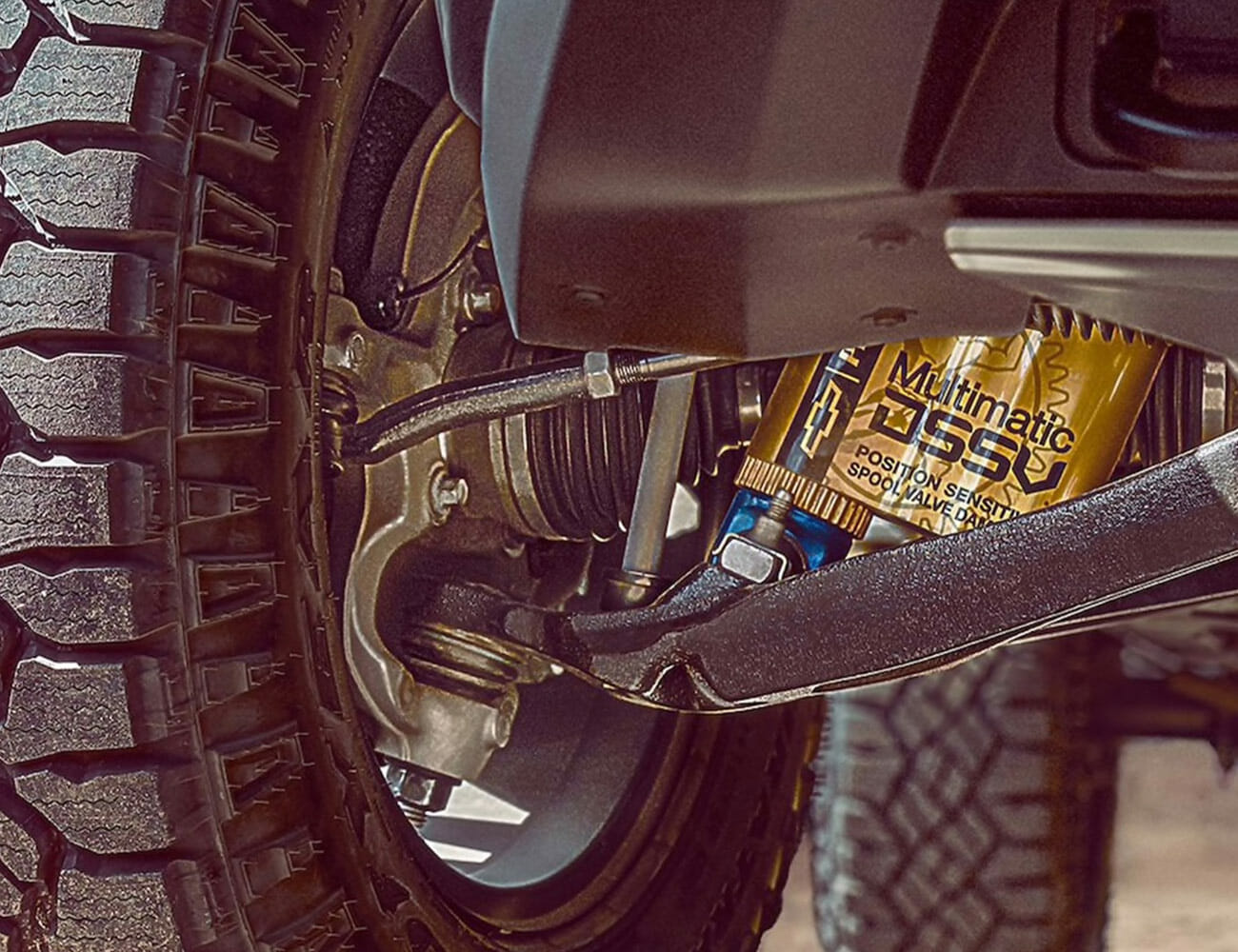
According to Muscle Cars and Trucks, the new all-terrain truck will be called the Chevrolet Silverado ZRX. If the name reminds you of the ZR2, well, that’s likely intentional; MC&T‘s report suggests that the new truck will largely use the same sort of recipe GM applied to its midsize off-road truck. The Silverado ZRX will reportedly pick up a rock-hopping suspension featuring the same sort of delightful Multimatic DSSV dampers that deliver a remarkable blend of comfort and capability in the ZR2, as well as locking differentials for both front and rear axles, and a host of other upgrades and changes to improve its capabilities beyond the pavement, including tweaks that improve approach and departure angles.

Power upgrades aren’t in the cards, according to the report. Then again, it doesn’t really need them to battle the Raptor; the Silverado’s current top-tier engine, a 6.2-liter V8, is a variant of the engine found in the Camaro and Corvette, cranking out 420 horsepower and 460 pound-feet. (It’s also tied to the same 10-speed automatic used in the F-150 Raptor, as that transmission was a joint Ford/GM project.)

That motor would put the ZRX in a similar league as the Raptor — though the Ford’s 3.5-liter twin-turbo V6 still would have the edge with its 450 horses and 510 pound-feet of torque. Then again, given that the ZRX is reportedly slated to arrive for the 2022 model year, GM has plenty of time to squeeze a little more power out of its fabled small-block.

If all this is true — and it sounds like a solid money-making gambit to us — Chevrolet won’t be alone in pursuing Ford’s ferocious truck. Ram is currently hard at work whipping up a Raptor-fighter called the TRX (get it?) that combines off-road goodies with the supercharged Hellcat motor that makes a bare minimum of 707 horsepower everywhere it goes. Rumor has it Ford may ultimately counter that by packing the Raptor’s engine bay with its new 7.3-liter V8 known internally as “Godzilla,” thus pushing the saurian one-upsmanship about as far as it can go.

Toyota Sells the Vintage Land Cruiser–Based Truck of Your Dreams, Just Not In the U.S.

The 70 Series Land Cruiser embodies the best of Toyota trucks. It’s a formidable off-roader that’s nearly indestructible. And believe it or not, we can use the present tense because the 70 Series, introduced in 1984, remains in production. In fact, Toyota South Africa unveiled the special edition “Land Cruiser Namib”, a double-cab truck based on the 70 Series, just last week — and it looks spectacular.

The Land Cruiser Namib’s name comes from the notably inhospitable Namib desert on Africa’s West Coast. Toyota South Africa describes the Namib as “the ultimate die-hard survivalist tool.” The style is retro meets modern; it has the original boxy 70 Series body, but with modern touches like the mesh grille, bull bar, floodlights, and snorkel.

Toyota includes an upgraded solid-axle suspension designed for off-roading. The Land Cruiser Namib uses a 4.5-liter diesel V8 putting out 202 horsepower and 317 lb-ft of torque. The only transmission is a five-speed manual.

The present conversion rate would put the starting price a little under $61,000 in U.S. dollars, which is more than $20,000 cheaper than the U.S. edition of the Land Cruiser.

But here comes the bad news: There’s no chance of this or something like it ever being sold new in the United States. Toyota never brought the more work-oriented 70 Series to America in the 1980s, opting instead for the softer, more family-oriented 60 series. It would make even less sense conceptually and logistically now than it did then. But going smaller, simpler, and cheaper may be a direction for Toyota to consider for a next-generation Land Cruiser sold in America…if there is one.

Bollinger’s Electric Off-Roaders, Finally Revealed: Everything You Need to Know

Bollinger Motors first unveiled its B1 prototype in 2017. A little over two years (and one relocation to the Detroit area) later, the company has finally revealed the production vehicle versions of its all-electric B1 and B2. Here’s what you need to know about the new Bollinger Motors EVs.

The Bollingers look like vintage off-roaders. The B1 and B2 are boxy and beautiful. They draw their style inspiration from classics like the Land Rover Defender and the Ford Bronco; as such, they will look more like those trucks than the new versions. Two notable features include a glass roof and a third windshield wiper (FJ Cruiser style).

The B1 and B2 will be performance beasts. Their dual-motor system puts out 614 horsepower and 668 pound-feet of (instant-on) torque. The trucks will accelerate from 0-60 miles per hour in 4.5 seconds. They will have nearly-even 45/55 weight distribution, and better approach (52 degrees), break over (30 degrees), and departure (43 degrees) angles than a Jeep Wrangler.

They will be niche vehicles. Bollinger is not aiming for the family SUV/truck market. There are no airbags; Class 3 trucks such as these don’t require them. The trucks do not have a fifth seat, much less a third row. Think of the B1 and B2 as electric options for the buyer who would blow six figures on a restored and modified Bronco.

They can do truck stuff. The B1 and B2 will have a massive payload capacity of 5,201 pounds, which is more than an F-250 Super Duty. A towing capacity of 7,500 lbs would place the trucks toward the high end of the midsize truck segment. Range while towing or hauling massive loads is an open question.

The four-door versions will arrive first. Bollinger’s initial prototype was a two-door version, but production will begin with the four-door SUV and truck. The bigger vehicles can accommodate more space for battery packs, which Bollinger needs to deliver decent range. A two-door production version with current technology would be a short-range (figure 100 miles) runabout.

They will have a distinctive storage pass-through. Because there’s an electric engine, the B1 and B2 don’t have a firewall. That permits a storage pass-through from trunk to frunk for extra-long items.

The trucks will offer competitive range: The B1 and B2 will use a 120-kWh battery system, delivering an estimated 200 miles of EPA range.

Pricing remains TBD. Expect something north of Rivian’s expected pricing. Bollinger told Gear Patrol in February that the company may begin with a limited run of more expensive “founder’s series” trucks.

We don’t know when exactly it will hit production. Bollinger told Gear Patrol that the goal was for the first B1 to roll off the line by Summer 2020, but time will tell.

Honda’s Overlanding-Spec Passport, As Tested By a First-Time Camper

Back in August, Gear Patrol consumer marketing manager Caitlyn Shaw needed both a way to drive to the Mid-Atlantic Overland Festival and a place to sleep for a couple nights when she arrived. Luckily, Honda obliged by serving up something along the lines of its own overlanding concept.

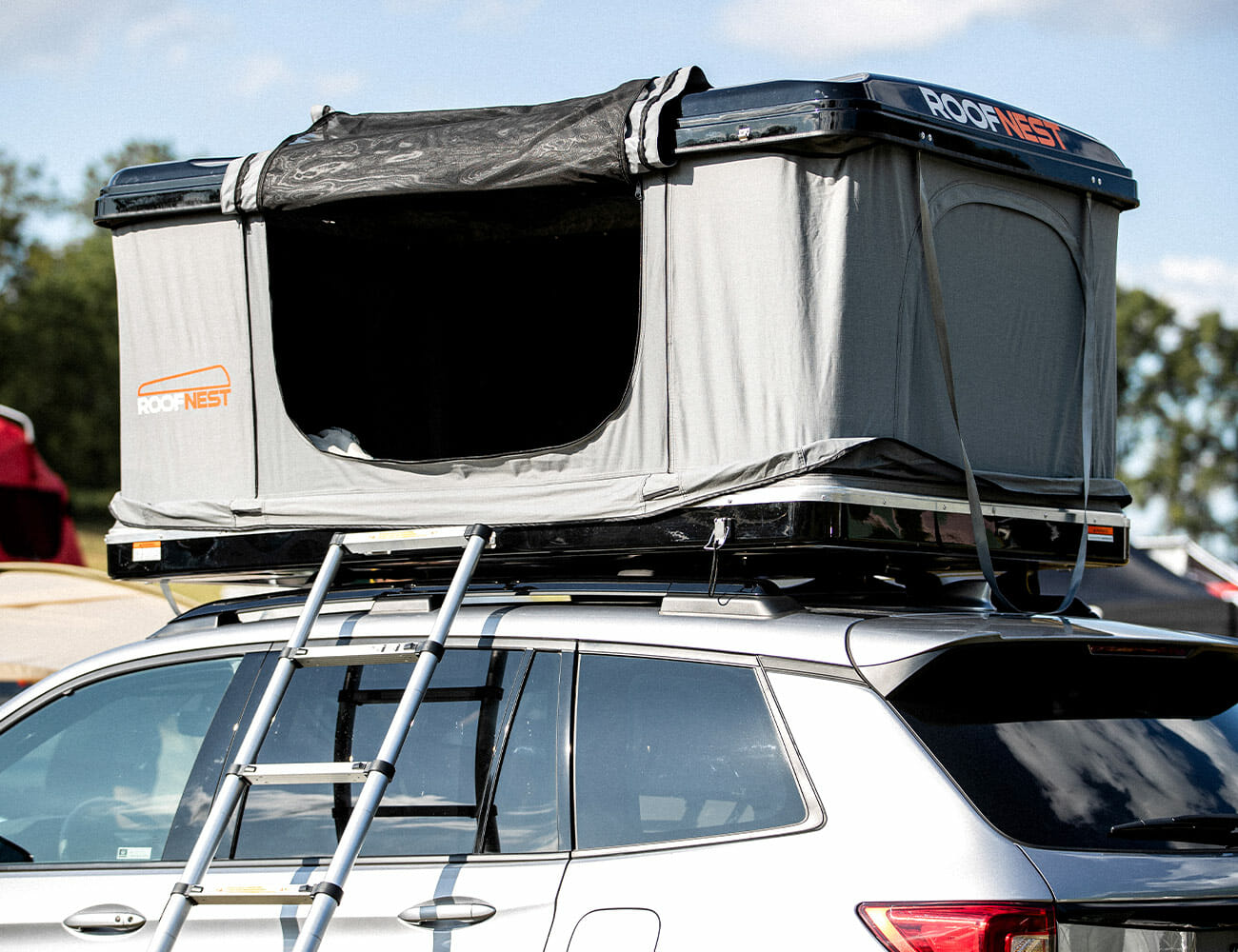
When my colleague heard I’d be taking the new Honda Passport to this year’s Mid-Atlantic Overland Festival, he wasn’t convinced it would do the job. The new Passport is Honda’s answer to the increase in consumer demand for vehicles fit for an active outdoor lifestyle — so much so that Honda outfitted the one they sent to us with a rooftop tent called a Roofnest — but it’s still a crossover, not a truck-based traditional SUV like the Land Rover Defender.

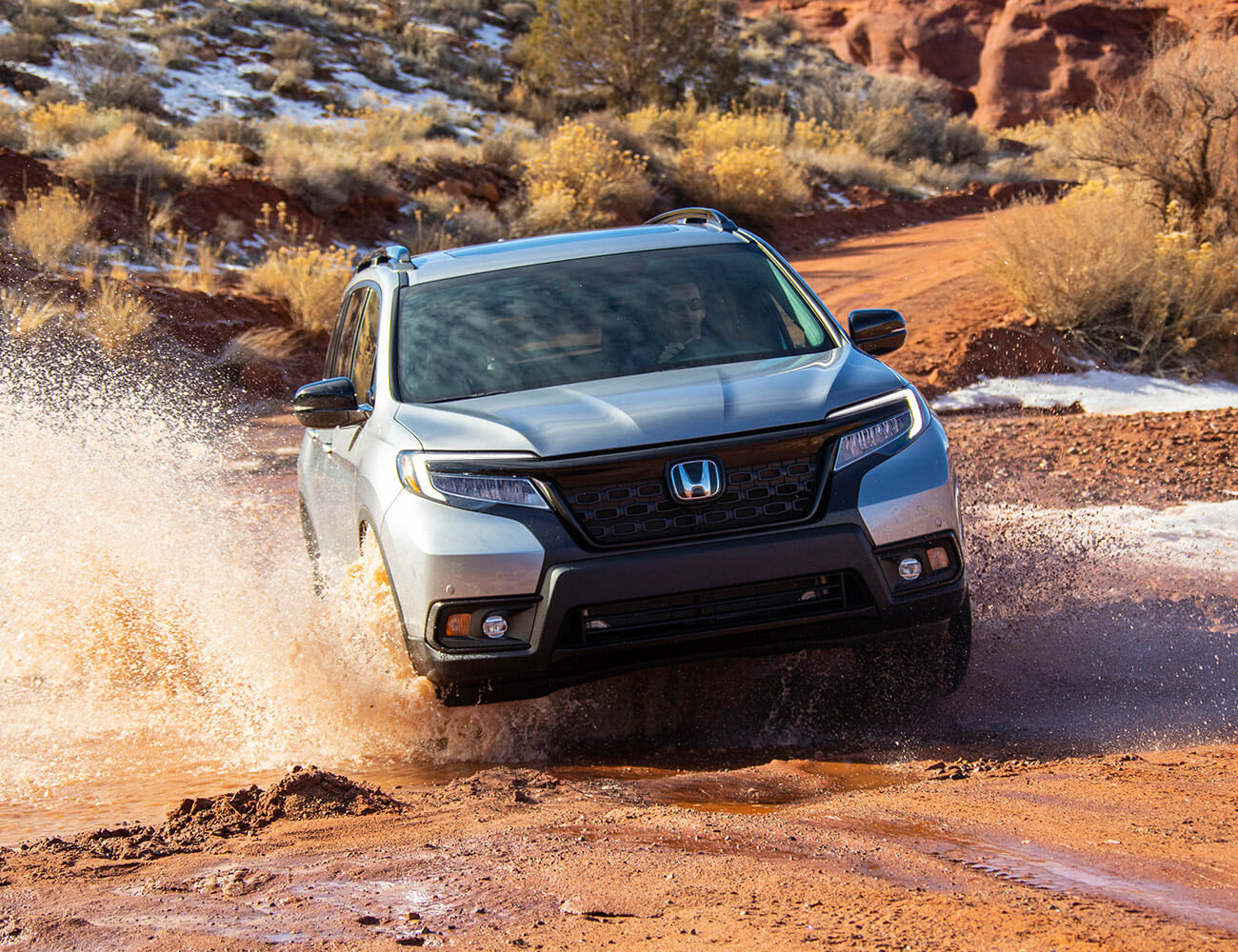
A weekend driving the Passport was more than enough proof to me, however, that Honda is serious about moving into the off-road and overlanding space — and combining the Passport with the Roofnest covers all the bases. The combo was ideal for a first-time camper (and solo traveler) like myself; it got me comfortably through Manhattan traffic just as well as it did through dimly-lit country roads to the festival grounds and the trails surrounding it.

In the city, the Passport felt smooth and luxurious. Making calls and listening to podcasts via Bluetooth was significantly easier than doing so in comparable vehicles I’ve ridden in. I was surprised by how much I enjoyed the driver-side armrests, which are a small feature that made being stuck in lower Manhattan traffic a bit more bearable.

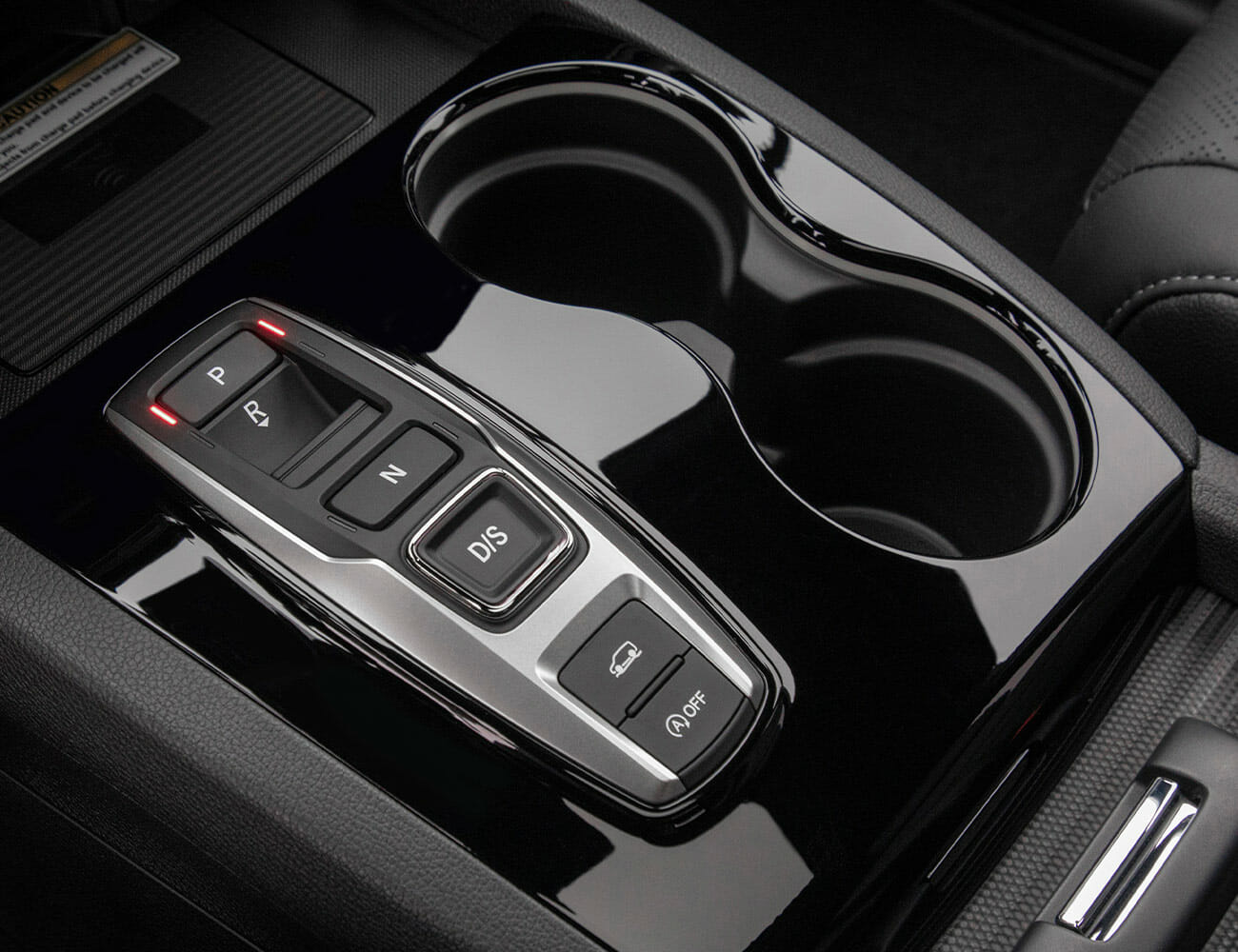
On the flipside, I didn’t care for the lack of a proper shifter. The Passport uses a series of buttons instead of a lever; I felt that the button shifters forced me to take my eyes away from the road and my surroundings. While a seemingly small downside, it would be a dealbreaker if I were considering the Passport for everyday use.

Where the Passport shone, though, was where the pavement ended. The route to the festival required driving through rocky roads, up and down hills and through narrow passageways between camping rigs. The best indicator of how smoothly the Passport handled this is the fact that I didn’t think about it at all; I felt just as safe in the pitch-dark hills of western Pennsylvania as I did stuck in NYC traffic or cruising down the highway.

I might even argue that the Passport is better-suited to life off-road than it is for life in the city, where features like lane departure or brake warnings aren’t as helpful as they could be. Situations that are common in the city, like abrupt lane merges and bumper-to-bumper traffic, confuse the car’s sensors; they can make those safety features seem more like distractions than helpful additions. 

The Roofnest tent atop the Passport was perhaps the easiest part of the entire experience for this first-time camper. To assemble my rooftop home, all I had to do was pop open the collapsible ladder and latch the top end to the roof, climb up and open a few clips surrounding the tent case. The tent itself was super roomy, with a built-in memory foam mattress, and I slept soundly — even if I was a little cold.

Collapsing the tent was more difficult than putting it up — the company makes clear that it’s supposed to be a two-person job — but I got it done solo, and managed to head away from Overland Fest for a supply run, then come back and reassemble my camp without a hitch.

The marriage between Honda Passport and Roofnest tent may not be one you picture for either product, but it was damn fine for my first weekend of camping and off-roading. With the new Passport, Honda has managed to build a car that made camping for the first time and driving alone across three states feel safe, easy and approachable — and even a tad luxurious.

These Are the Best Cars for Fall Leaf Peeping

Fall is a magical time of year. Football ads invade your television. Every beverage and food becomes miraculously pumpkin-spiced. That fly wool cardigan you bought makes an appearance the exact second the temperature drops below 60 degrees. And, in northern climes, autumn is the time to head out into the countryside and watch the leaves turn from green to fiery shades of gold, red and orange.

Here, then, are the ideal cars in which to get your leaf peeping fix. It may seem like an odd mix at first glance, but trust us — we’ve chosen each of them for a very good reason.

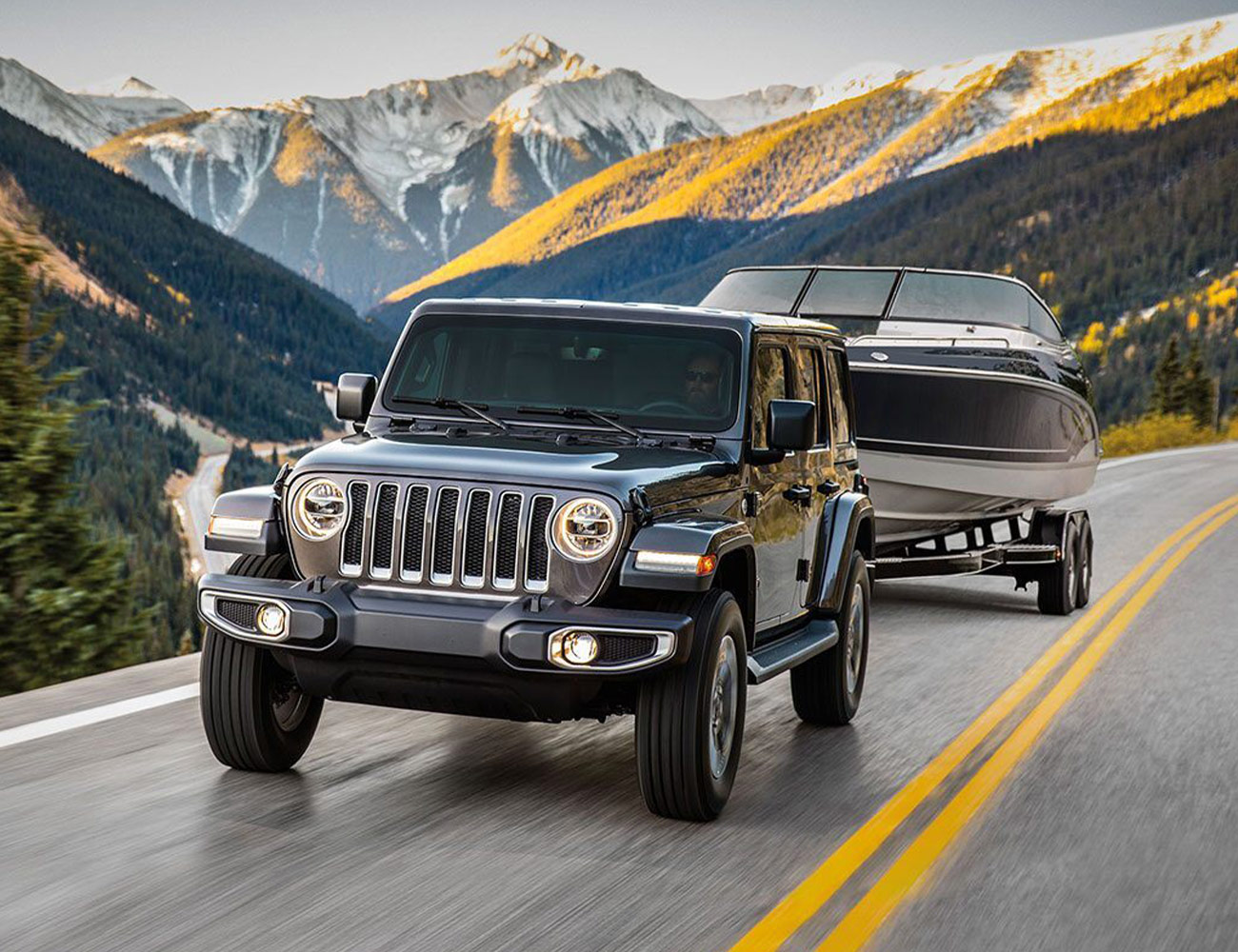
Jeep Wrangler

The Jeep Wrangler will take you anywhere. Just as importantly, you can optimize it for maximum visibility. Pop off the roof and doors and you’ll see more fall foliage than in any other SUV. You can even lower the windshield for the full autumn breeze effect.

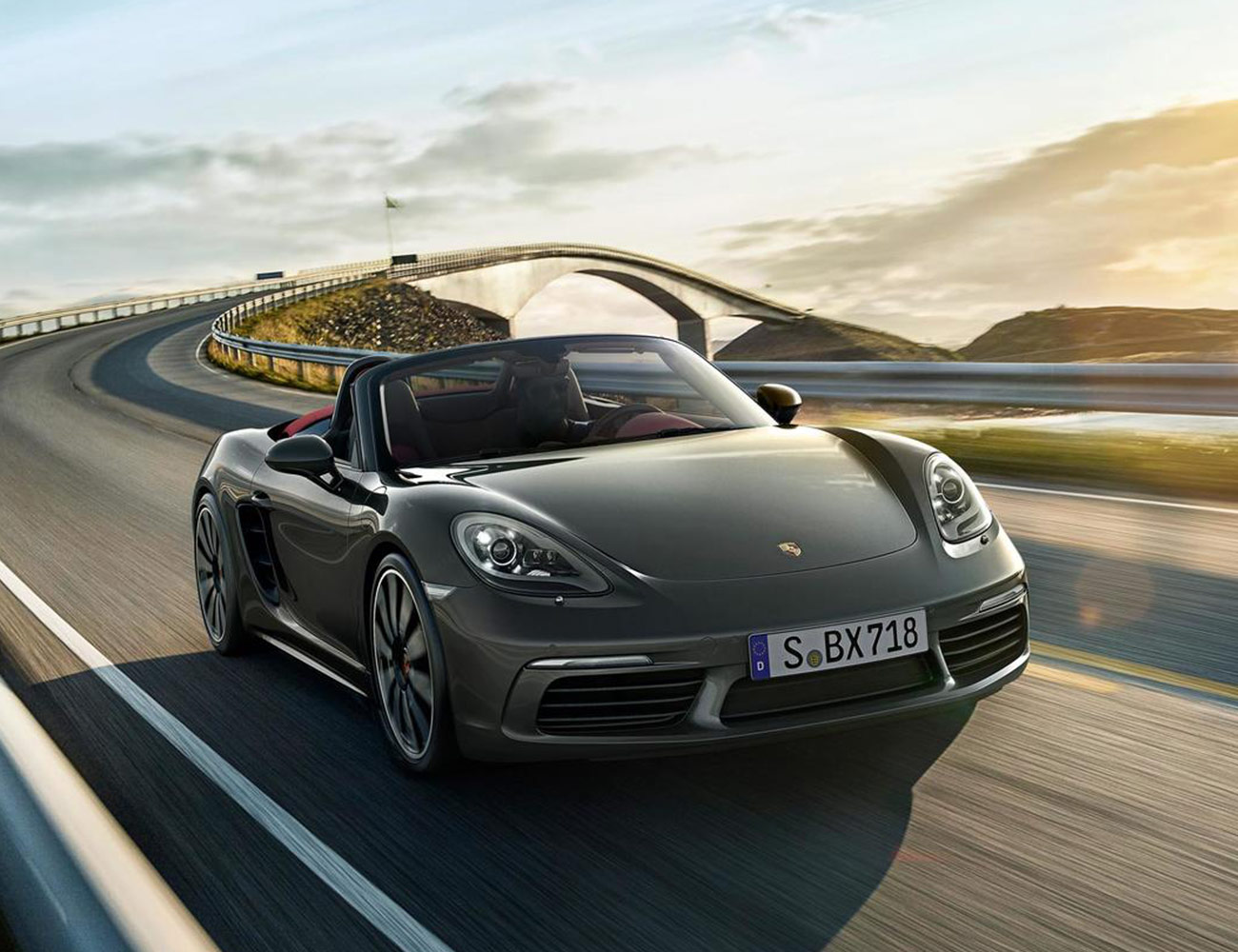
Porsche 718 Boxster

Porsche makes performance cars that are comfortable to drive every day. The 718 Boxster and Cayman may be the best all-around Porsches on sale, but only the Boxster lets you drop the top to check out some leaves. (Porsche will even give you a flat-six in it again.)

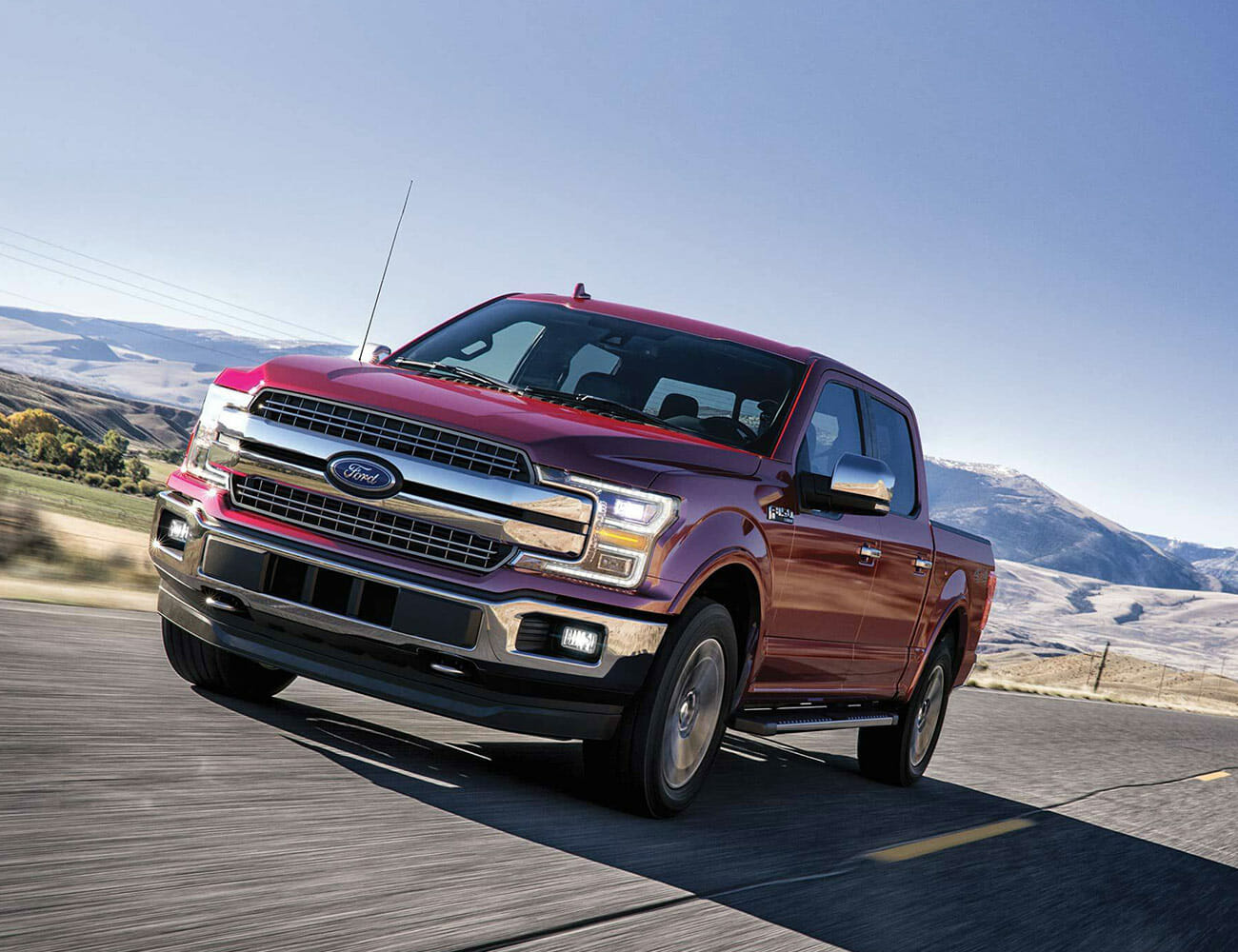
Ford F-150

Full-size pickups are built for dealing with nature. The F-150 combines large windows, a commanding ride height and the option for an expansive dual-panel moonroof to better see the trees.

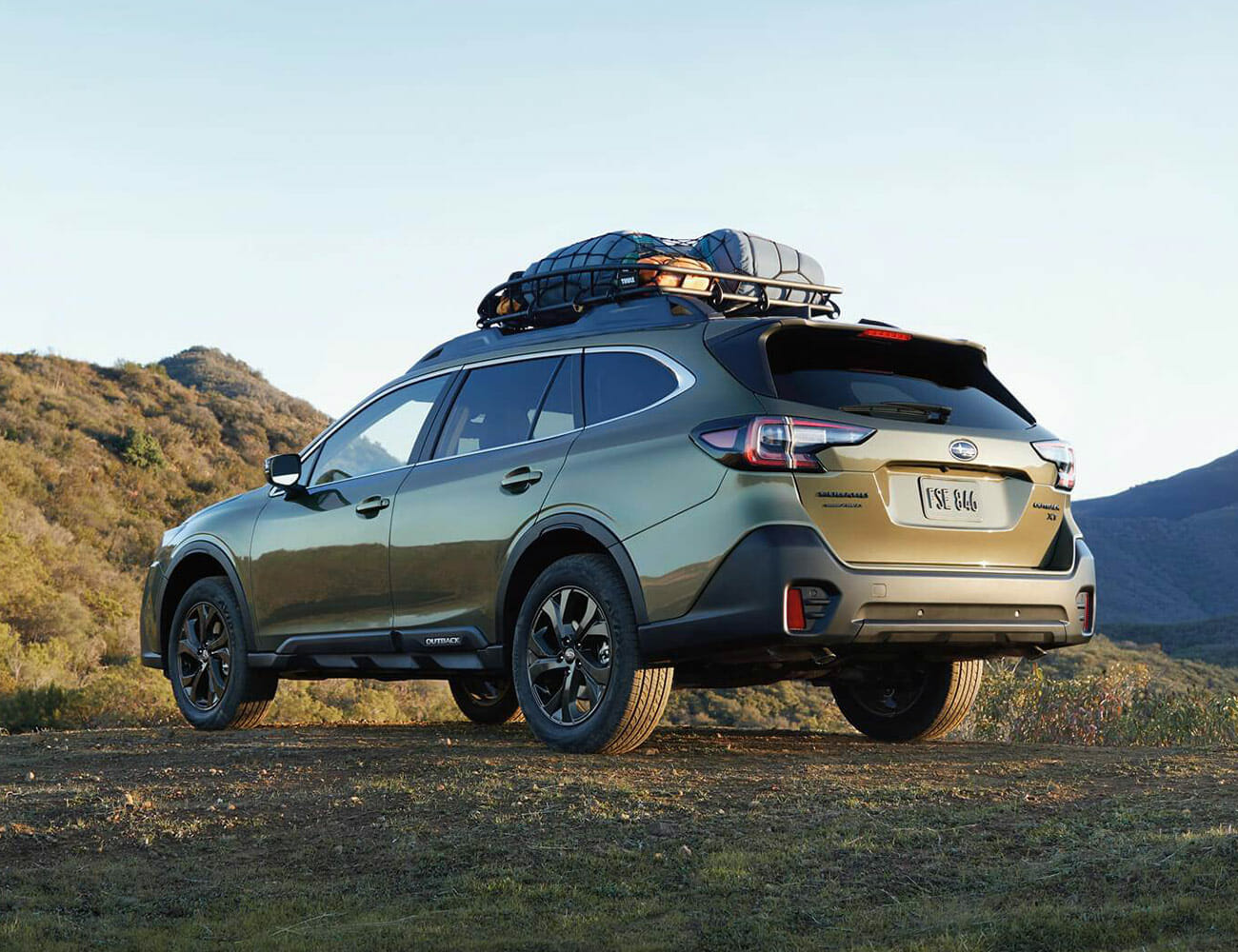
Subaru Outback

The new Subaru Outback can conquer almost any terrain you’d reasonably throw at it. Subaru builds it for optimal visibility with its ride height, big windows and narrow pillars. And you’ll blend in nicely with the locals while leaf-peeping on those New England backroads.

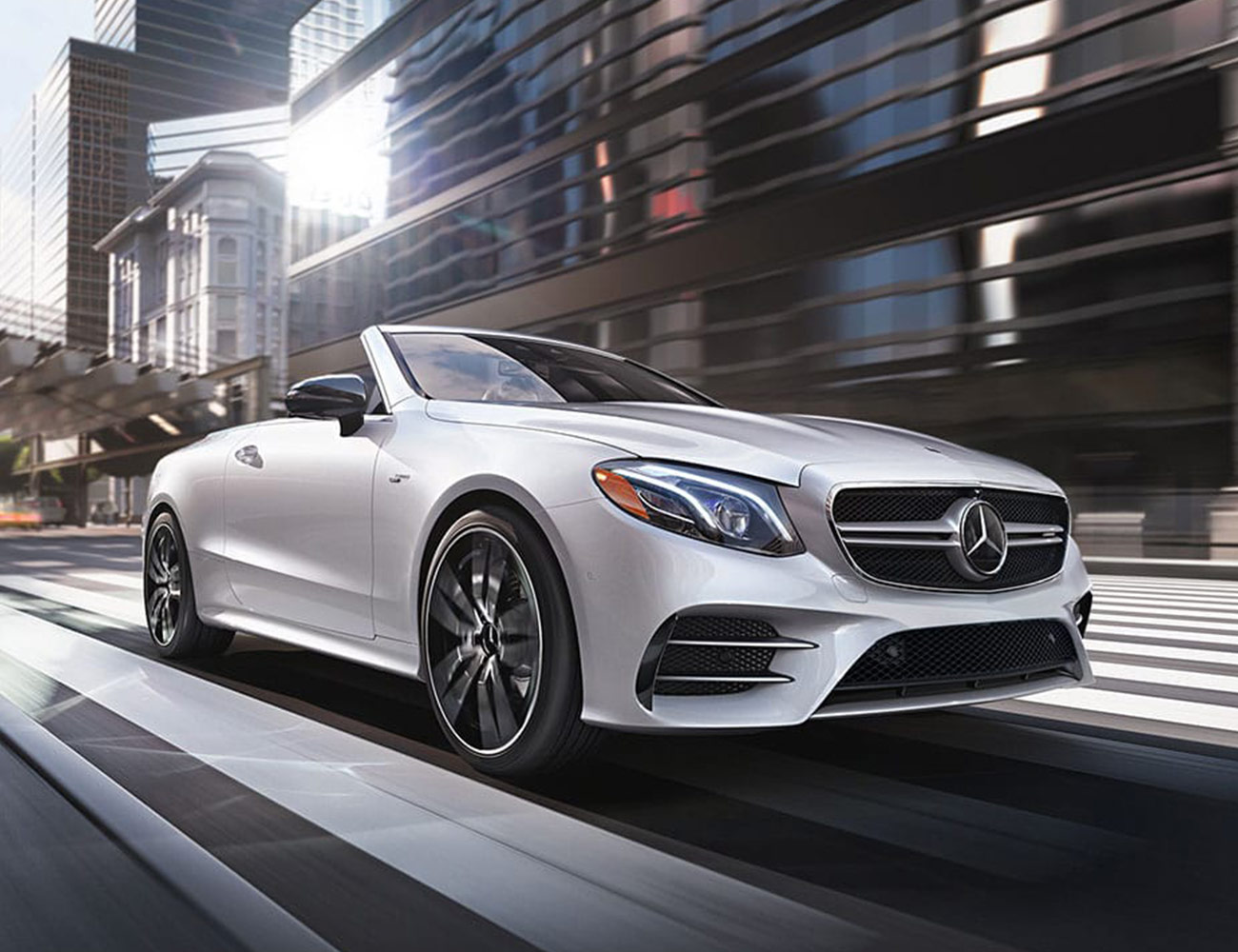
Mercedes-AMG E53 Convertible

The Mercedes-AMG E53 has one of the smoothest engines on the market. It can carve the heck out of mountain roads, making the air sing with its raucous exhaust note. It can also pipe down and behave when fellow leaf peepers clog those same mountain roads.

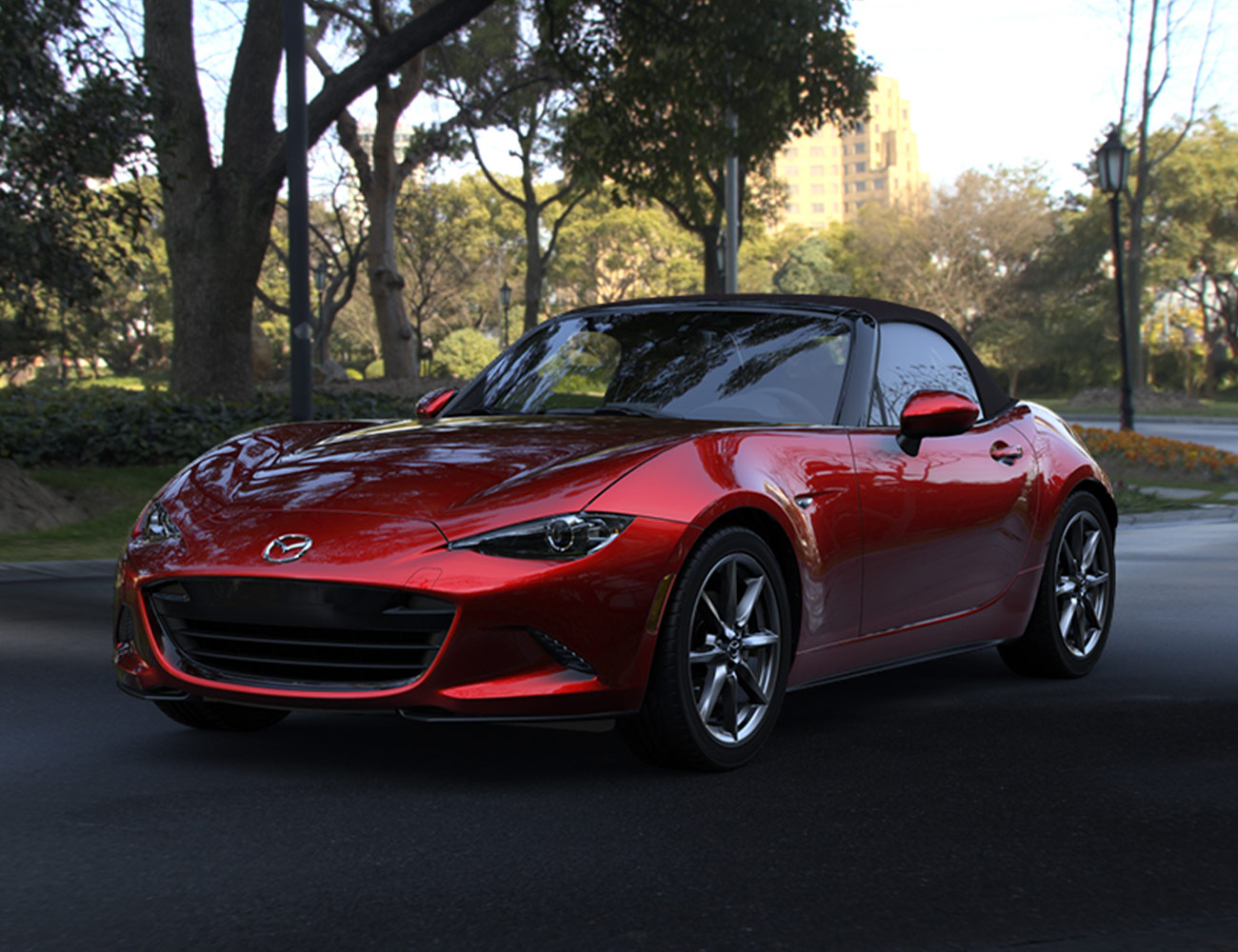
Mazda MX-5 Miata

The Mazda MX-5 Miata RF offers maximum autumn versatility thanks to its folding top. It also looks spectacular, which is as important in autumn as any other season.

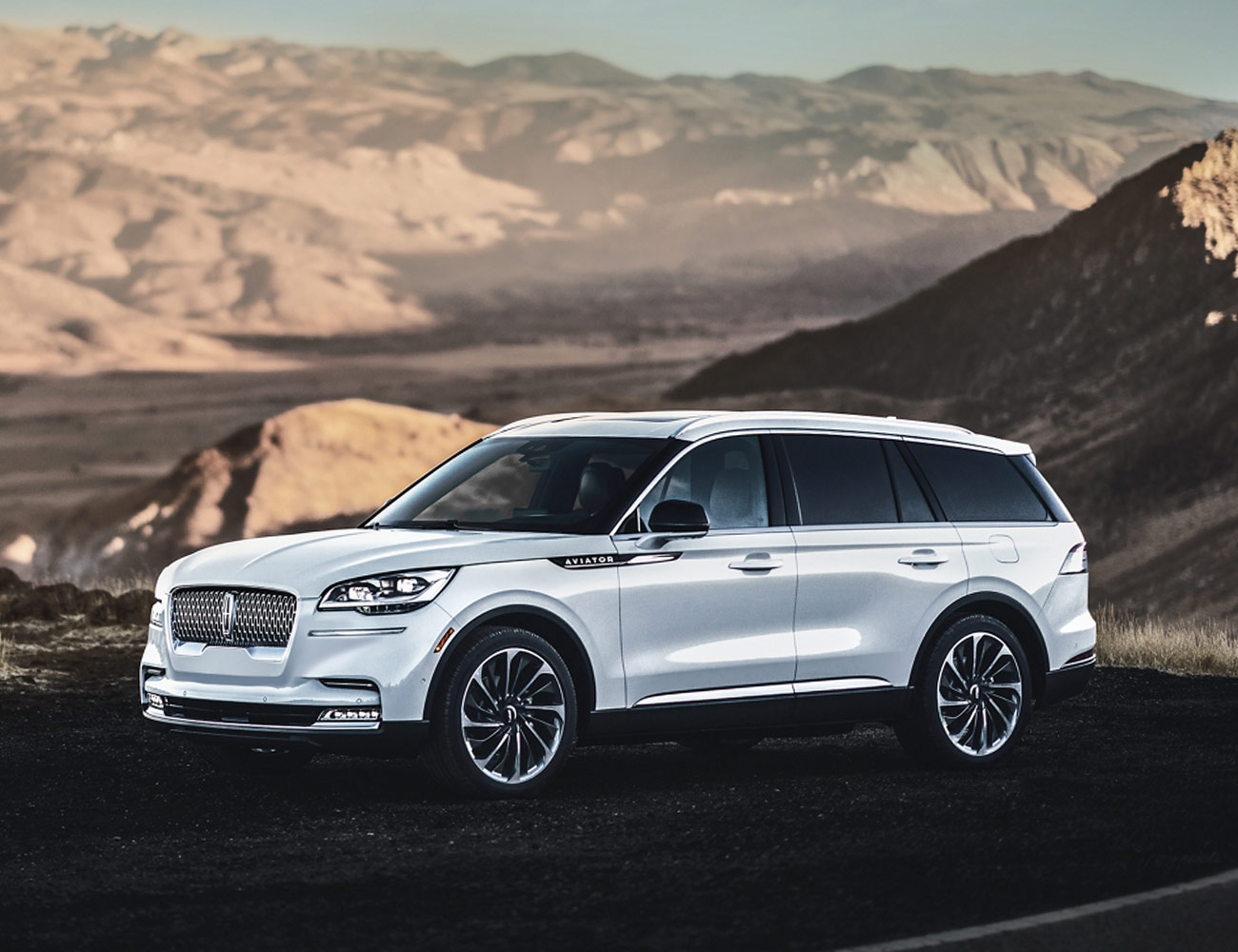
Lincoln Aviator

With a panoramic roof and massaging seats, the Lincoln Aviator may be the most comfortable vehicle for any adventure, whether that’s a foliage tour or traversing an unclear metaphor with Matthew McConaughey.

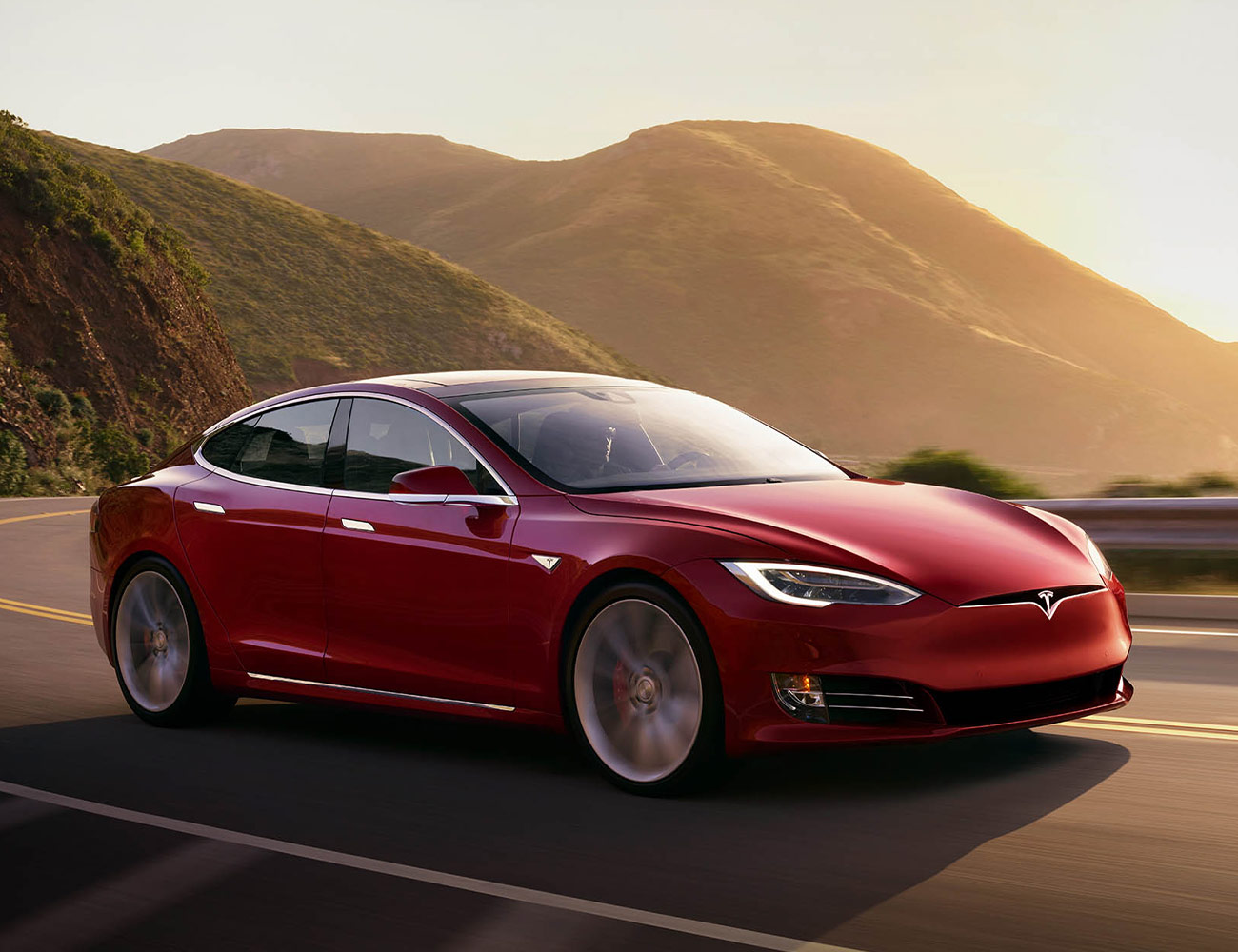
Tesla Model S

The Model S can be outfitted with a glass roof, accelerate with ludicrous speed and leaves no pollutants in its wake to trouble the trees. Just make sure there’s a Supercharger along the route before you head out.

Note: Purchasing products through our links may earn us a portion of the sale, which supports our editorial team’s mission. Learn more here.

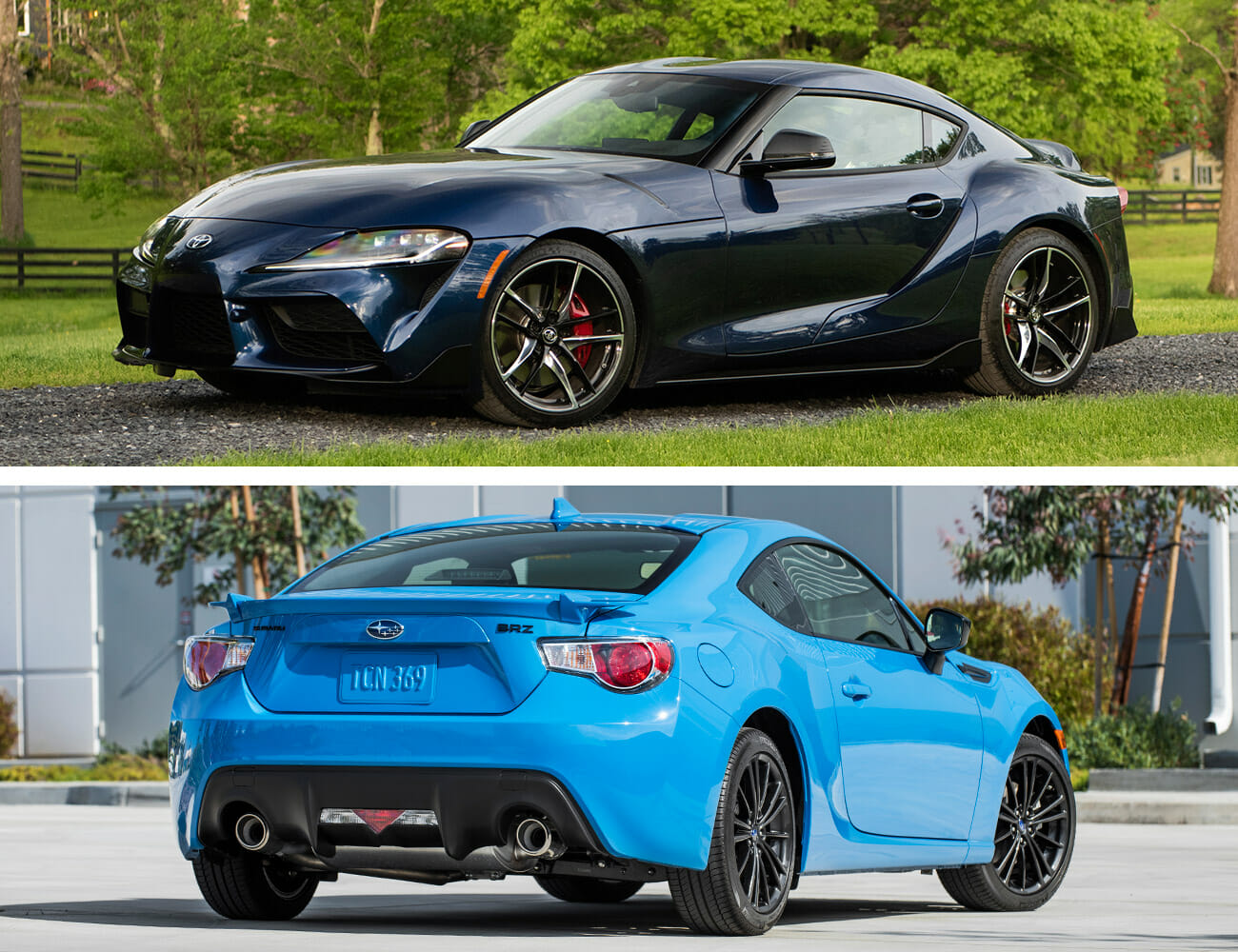
Toyota Supra Too Pricey for You? Buy a Subaru BRZ Instead

The Fast and the Furious-era Toyota Supra was perhaps the ultimate sleeper car. You could buy it for cheap, then build it into an absolute rocket. The bulletproof 2JZ inline-siz engine and stock components could handle, to use the technical term, a [expletive deleted]-ton of power. It was a car that could embarrass the owner of a European sports car who paid a much steeper price.

Toyota’s new 2020 Supra has its virtues, but no one would call it a sleeper. The new Supra not only commands European sports car owners’ attention — it is a European sports car. BMW designed its engine, and Magna Steyr is manufacturing it.

The new Supra also comes with a corresponding European-sports-car price tag. The base model Supra costs north of $50,000, and that’s if you can find a dealer who will honor the manufacturer’s suggested retail price. That’s expensive in its own right, and especially expensive if it’s the start of your build.

So if you admire the Supra but can’t afford one, consider its humble Toyobaru cousin, the Subaru BRZ (or its twin, the Toyota 86).

Buying a BRZ requires far less money than a Supra. The base model starts at $25,745. You can splurge for the comforts of the Limited trim and still come in under $30,000.

Like the Supra, the BRZ is a pure driver’s car. It’s a delightful-handling, rear-wheel-drive drift machine that wants you to push it to the rev limiter. (Sure, the BRZ has an underwhelming naturally aspirated 2.0-liter boxer engine putting out just 205 horsepower, but that just gives you more chances to push it to the limit.)

The BRZ is not the original Supra. You can’t add infinite power to the car without substantial upgrades. But you can add some with an ECU tune, new air intake and exhaust systems and the turbocharger its Japanese co-parents never gave it. Those additions would cost far less than than the $20,000 difference between it and the Supra.

Plus, adding a little power goes a long way with the BRZ. While the same rough size as the Supra, the BRZ is around 600 pounds lighter. It can’t match the Supra’s raw power, but it can deliver some everyday driving thrills.

Even on top of the cost difference, the BRZ has a few advantages over the Supra. There’s no speculating whether Toyota will ever offer a manual or handing your expensive car off to a third party to alter dramatically. The BRZ can have a manual transmission. The BRZ has a more restrained style than the sculpted Supra — a polite way to say that the BRZ is a better-looking car, even if it will get fewer people looking at it.

Another point for the BRZ, not entirely trivial to Japanese sports car enthusiasts: the BRZ is an actual Japanese sports car, designed and built in Japan.

The new 2020 Toyota Supra may be, as Formula 1 legend Fernando Alonso affirmed at its launch, “totally lit.” But the Subaru BRZ can offer ample fun at a far more affordable price — especially if you dip into the slightly-used market.

2019 Chevrolet Colorado ZR2 Bison Review: The Jeep Gladiator’s Most Dangerous Foe

When it made its splashy debut at the 2017 Los Angeles Auto Show, the Chevrolet Colorado ZR2 proved General Motors wasn’t planning on ceding the tough-guy off-road pickup space to Ford’s F-150 Raptor, Toyota’s TRD-tuned Tundra and Tacoma TRD Pro or the (then) forthcoming Jeep Gladiator. Equipped with a high-end suspension that added height and compliance, locking differentials fore and aft and flared fenders, it gave Chevy a chance to grab some of the growing overlanding market — and the huge potential for sales found there.

Most hardcore off-roaders don’t leave their trucks stock, though; they kit them out with all sorts of replacement parts and add-ons, functional and cosmetic alike. Rather than let the aftermarket have all the fun, GM adopted an “if you can’t beat ’em, join ’em” approach; the carmaker reached out to American Expedition Vehicles — which, up until that point, primarily specialized in parts for Fiat Chrysler trucks and SUVs — and offered them a chance to upfit the ZR2 and sell the completed product through Chevy dealers.

AEV, not surprisingly, said yes. The resulting product was dubbed “Bison,” in homage to the horned North American mammal on the company’s logo — and the Colorado found its place amongst the great off-roaders on sale locked down even tighter.

The Good: The ZR2 Bison adds even more off-road capability to the already-mighty ZR2. AEV adds on no fewer than five hot-stamped Boron steel skidplates to protect from underbelly attack, stamped steel bumpers front and rear, a winch mounting spot up front, a recovery point in the rear. unique wheel flares and rims wrapped in 31-inch Goodyear Wrangler DuraTrac tires, a pair of fog lights and a new grille that trades the brand logo for its name in all caps, just like a certain other off-road truck.

All that also adds a hefty dose of handsomeness. The basic ZR2 is capable, but a little bland from some angles and awkward from others; the cut fenders up front look oddly incomplete, while the stern view looks a little too similar to a Home Depot work truck rental for the money. AEV’s updates give the ZR2 the sort of aggro appearance it deserved from the get-go.

Of course, all the inherent goodness of the Colorado ZR2 is still here: the Multimatic DSSV dampers that perform miracles when it comes to balancing ride and handling (fun fact: Multimatic DSSVs are also used on the likes of the Aston Martin One-77 and Ford GT), full-time four-wheel-drive, the choice of a gasoline-powered V6 or a turbodiesel inline-four, the option for either an extended cab or crew cab layout, a simple, thoughtfully laid out interior and the ability to tow up to 5,000 pounds.

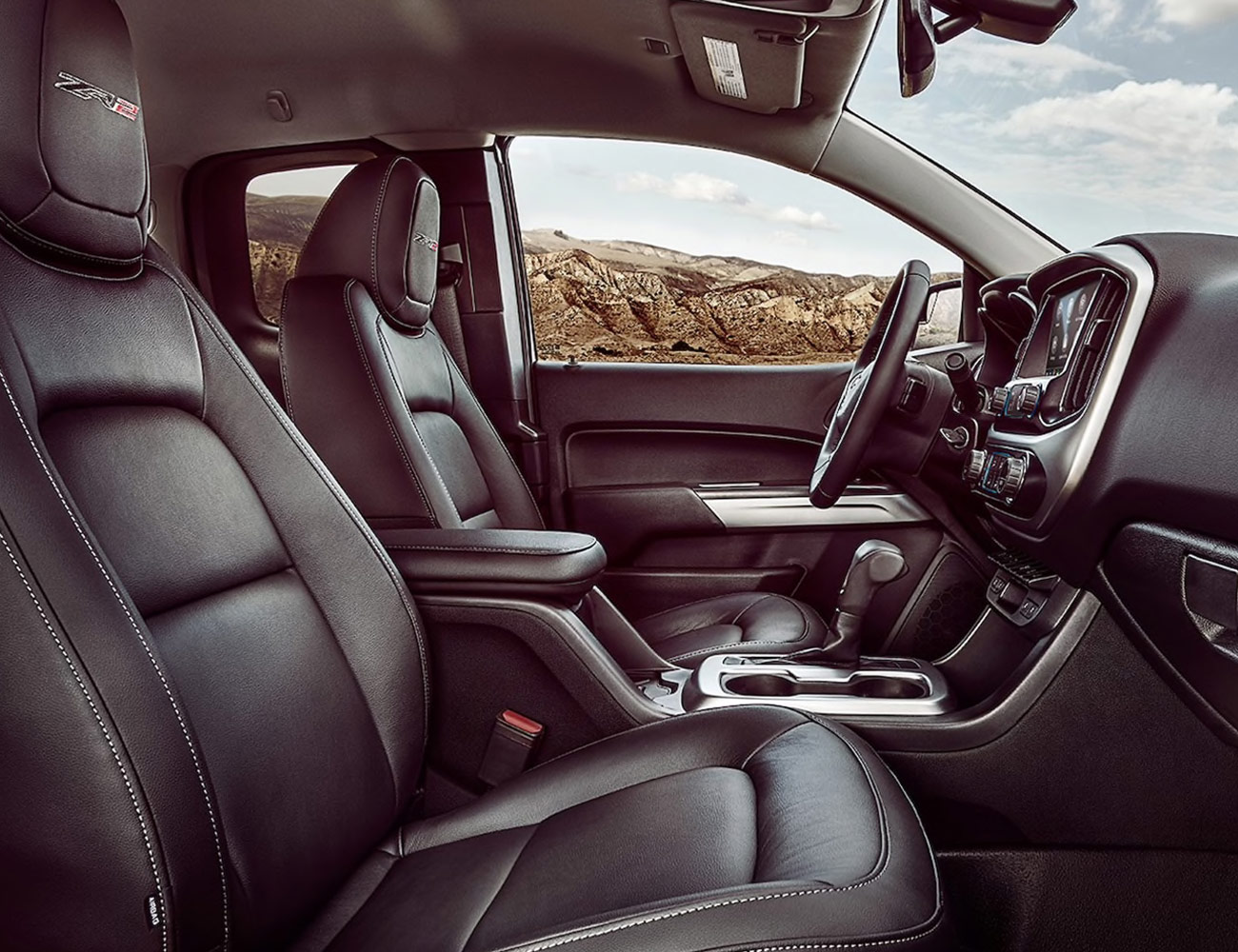
Who It’s For: Off-roading enthusiasts who dig AEV’s vibe; overlanders looking for a brand-new truck with diesel power; Bowtie fans who want a badass rig of their own to keep up with their Mopar- and FoMoCo-fanboy neighbors.

Watch Out For: Merging from a stop into high-speed traffic can be a bit more nerve-racking than in most modern vehicles. The ZR2 isn’t slow by rock-crawler standards, but its hefty weight means the V6 has to work a little harder than you might be used to, both from a stop and when trying to accelerate at highway speeds. (Expect to get to know the sound of that engine at high revs quite well.)

Perhaps to compensate for that, Chevrolet gave the truck particularly aggressive throttle response once you clear the first inch of pedal travel —  which, in turn, can make the delicate inputs needed for careful off-roading a tad difficult at times. Don’t be afraid to resort to left-foot braking to moderate your progress.

Alternatives: Jeep Gladiator Rubicon ($43,545+); Toyota Tacoma TRD Pro ($46,665+); Ford F-150 Raptor ($52,885+)

Verdict: $50,000 may seem like a lot for a midsize pickup truck. This Chevy, however, is far more than just the sort of simple rig that defined the class back in the 60s;  it’s equally adept shuffling kids to school and hauling mulch from Home Depot, just as happy crawling over rocks as it is cruising across a state. Considering the broad spread of capabilities that come with the ZR2 Bison at that price — or, by contrast, how far north of it a Gladiator Rubicon can shoot if you go wild with the options list — its price tag makes it seem like something of a bargain. Especially if you were already planning on slapping off-road accessories on your new truck.

2019 Chevrolet Colorado ZR2 Bison: Key Specs

Powertrain: 3.6-liter V6 or 2.8-liter turbodiesel inline-four; eight-speed automatic; four-wheel-drive
Horsepower: 308 (gas); 186 (diesel)
Torque: 275 pound-feet (gas); 369 pound-feet (diesel)
Ground Clearance: 8.9 inches
Curb Weight: 4671–5012 pounds (depending on extended cab vs. crew cab, and gasoline vs. diesel — the latter engine is heavier)

Chevrolet provided this product for review.

Read More Gear Patrol Reviews

Hot takes and in-depth reviews on noteworthy, relevant and interesting products. Read the Story
Note: Purchasing products through our links may earn us a portion of the sale, which supports our editorial team’s mission. Learn more here.

The Ford Bronco Might Beat the Jeep Wrangler in a Delightful Way

It’s pretty obvious by now what the 2021 Ford Bronco‘s intended target is: the Jeep Wrangler. The promised off-road chops, the heavily-alluded-to boxy styling, the middleweight size — hell, even the engine output all point to an SUV that seeks to knock the fabled four-wheeler off its pedestal as America’s favorite off-road lifestyle vehicle.

But perhaps no feature of the new Bronco speaks more to Ford’s Wrangler-killing aims than the fact that, like the Jeep, you’ll apparently be able to toss off the SUV’s doors when you want to feel a little more fresh air. We’ve already seen a patent that suggests Ford has found a way to make driving al fresco safer by adding retractable, inflatable door guards to keep occupants from being tossed out; now, another patent reveals that Ford may have found a way to make it easier to take those doors off in the first place.

The U.S. patent application was published earlier this month, and dug up by the sleuths over at Car and Driver on Friday. While it doesn’t mention the Bronco by name, it seems like the sort of concept that would be perfect for the new off-roader. (Ford’s illustration depicts it on something resembling a Flex, but that wagonoid model seems as likely to score removable doors as a Porsche 911 is a hydrogen fuel cell.)

The patent application, simply put, describes a latch-based system for removing vehicular doors. The latches would stay locked when the doors were in one selected position (presumably closed), but once the doors are moved to a second position (presumably open), they could be switched from locked to unlocked — perhaps by hand, or using some sort of extention tool.

The Wrangler (and Gladiator, for what it’s worth) both require a set of wrenches and screwdrivers to remove the doors. It’s easier than in previous generations of Jeeps — the brand provides a tiny toolkit with everything needed, as well as pictographic instructions — but it still winds up being a process of removing quite a few screws and bolts both inside and outside of the vehicle. Ford’s process sounds not only simpler, but quicker.

Now, whether this will prove the Bronco’s killer app or just another arrow in its Jeep-fighting quiver remains to be seen. But it seems likely that, if Ford is serious about offering a system like this on its new off-roader, it’ll encourage owners to doff their doors more frequently — which will hopefully encourage more brands to offer this sort of feature.

The Complete Full-Size Pickup Truck Buying Guide: Every Model, Explained

Full-size trucks are the quintessential American vehicles. Americans build them; they buy them far more than any other type of car; and perhaps most importantly of all, they have the landscape to make use of them. Profits from full-size trucks provide the American automotive industry’s lifeblood. The Big Three may call themselves mobility companies committed to a zero-emissions future, but it’s selling full-size trucks that will pay to develop that future.

Much like country music, the full-size truck has redefined itself, broadened its appeal and defied entrenched stereotypes over the past couple of decades. Vital competition in this segment has made full-size trucks some of the most sophisticated, capable, practical and luxurious vehicles on the market. The Big Three can’t afford for their full-size trucks to be anything less.

Pickup Truck Terminology

AFM: Active fuel management. A technology that allows the engine to reduce the number of cylinders being used under light loads.
Crew Cab: Term used by most manufacturers for a double cab with four full-size doors.
DFM: Dynamic fuel management. A General Motors technology that allows the engine to choose from between 17 different cylinder firing combinations as needed, for greater efficiency.
Eco: Prefix that indicates some effort has been made to make this engine more efficient…or that the manufacturer wishes to market it as such.
eTorque: Mild hybrid system for Fiat Chrysler engines that adds low-end torque.
Half-ton: Another name for the full-size segment. It used to correlate to payload capacity. It no longer does.
Hemi: Chrysler engine with a hemispherical induction chamber. These are large-displacement, high-output engines used on trucks and muscle cars.
Light-Duty: Another name for the full-size truck segment. Distinguishes these trucks from the “heavy-duty” vehicles optimized for hauling and towing, such as the F-Series Super Duty and Ram 2500.
Long Bed: A truck bed with a length of around eight feet. This length appears most commonly on work trucks. Most buyers opt for a shorter bed for easier handling.
Payload: The amount of weight a vehicle can carry, including passengers and cargo.
Towing Capacity: The amount of weight a vehicle can tow.

Buying Guide

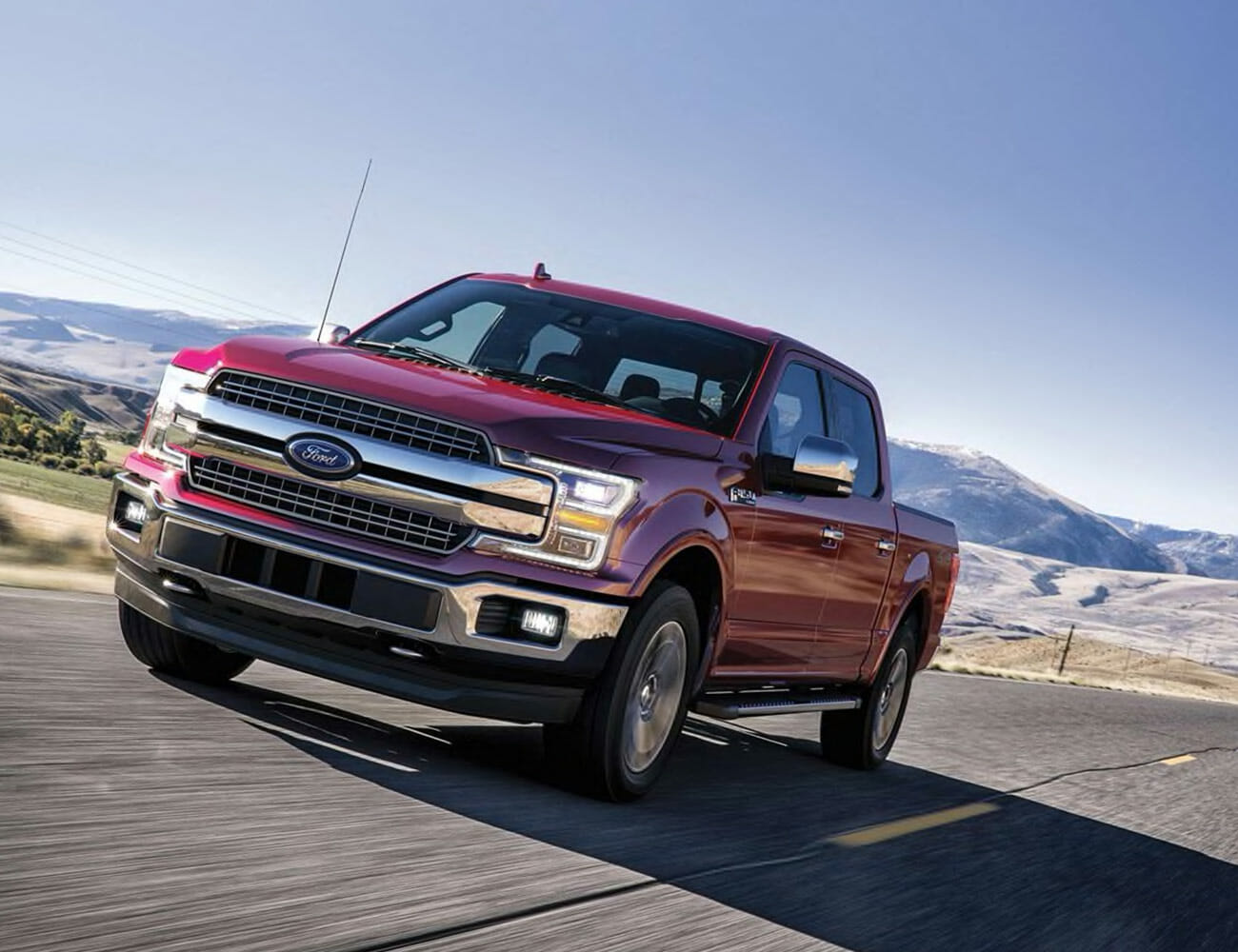
Ford F-150

Thanks to sheer volume, the Ford F-150 defines the full-size truck market. The F-Series has been America’s best-selling vehicle for more than 30 years running; in 2018, Ford sold more than 900,000 of them in the U.S. No other vehicle eclipsed 600,000.

The current (13th) generation appeared for the 2015 model year. Whether you require a basic work truck, a road-going yacht or a badass offroad rig to attempt the Baja 1000 (hi there, F-150 Raptor), Ford has you covered.

Ford made some forward-thinking changes with the last generation. They shifted the body from steel to a lighter aluminum-heavy construction (a move ridiculed by competitors at first, then imitated). Ford also favors turbocharged V6 engines over traditional V8s. These offer a higher output on paper, but many truck buyers still prefer a V8. (Ford may finally give them one on the Raptor.)

Ram and Chevy’s latest truck generations may have caught up. But Ford should move the bar forward again with its next-generation model launching next year, which may include game-changing hybrid and electric F-150s.

Body Styles:

• Regular
• Supercab
• Supercrew

Box Length:

• 5.5 feet
• 6.5 feet
• 8 feet

Trims:

• XL
• XLT
• Lariat
• King Ranch
• Platinum
• Raptor
• Limited

Engines:

• 3.3-liter V6 (290 hp, 265 lb-ft)
• Twin-turbocharged 2.7-liter V6 (325 hp, 400 lb-ft)
• 5.0-liter V8 (395 hp, 400 lb-ft)
• Turbocharged 3.0-liter diesel (255 hp, 440 lb-ft)
• Twin-turbocharged 3.5-liter EcoBoost V6 (375 hp, 470 lb-ft; 450 hp, 510 lb-ft)

Max Payload: 3,230 lbs (3.5-liter EcoBoost)

Max Towing Capacity: 13,320 lbs (3.5-liter EcoBoost)

Base MSRP: $28,495

Chevrolet Silverado 1500

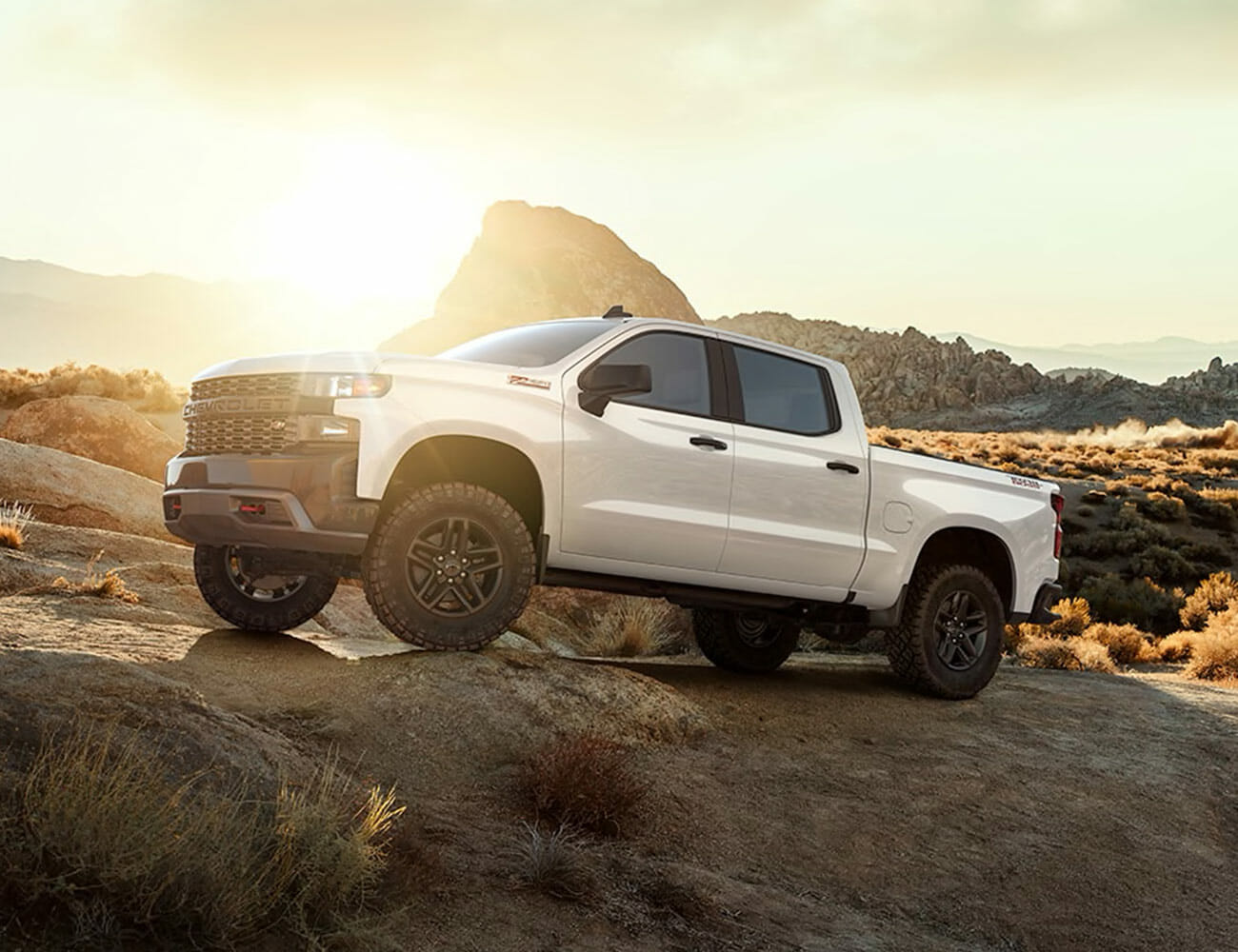
The fourth-generation Silverado was redesigned for the 2019 model year. Chevy’s strategy for competing with Ford has been to offer plentiful customization: If a customer has a particular taste, Chevy will provide an option to meet it. The Silverado has eight different trim levels, each with a corresponding grille design. Buyers can choose from three cab sizes, three box lengths and five different engines. Then you hit a near-endless array of accessories and details.

The Silverado has largely stuck with V8 engines. Tempting outside-the-box buyers with the “2.7-liter engine” which is a (gasp!) four-cylinder has not gone well. The fuel-efficient inline-six diesel engine may do better.

Where the Silverado has struggled is distinguishing itself from competitors. GM’s higher-end luxury options and more innovative technologies largely went to the now-higher-end Sierra. Which is great — for the Sierra.

Body Style:

• Regular Cab
• Double Cab
• Crew Cab

Box Length:

• Short (5 feet 10 inches)
• Standard (6 feet 7 inches)
• Long (8 feet 2 inches)

Models:

• WT
• Custom
• Custom Trail Boss (4WD only)
• LT
• LT Trail Boss (4WD only)
• RST
• LTZ
• High Country

Engines:

• 4.3-liter V6 (285 hp, 305 lb-ft)
• Turbocharged 2.7-liter inline-four (310 hp, 348 lb-ft)
• Turbocharged 3.0-liter inline-six diesel (277 hp, 460 lb-ft)
• 5.3-liter V8 (355 hp, 383 lb-ft)
• 6.2-liter V8 (420 hp, 460 lb-ft)

Max Payload: 2,250 lbs (4.3-liter V6)

Max Towing Capacity: 13,400 lbs (6.2-liter V8)

Base MSRP: $28,300

GMC Sierra 1500

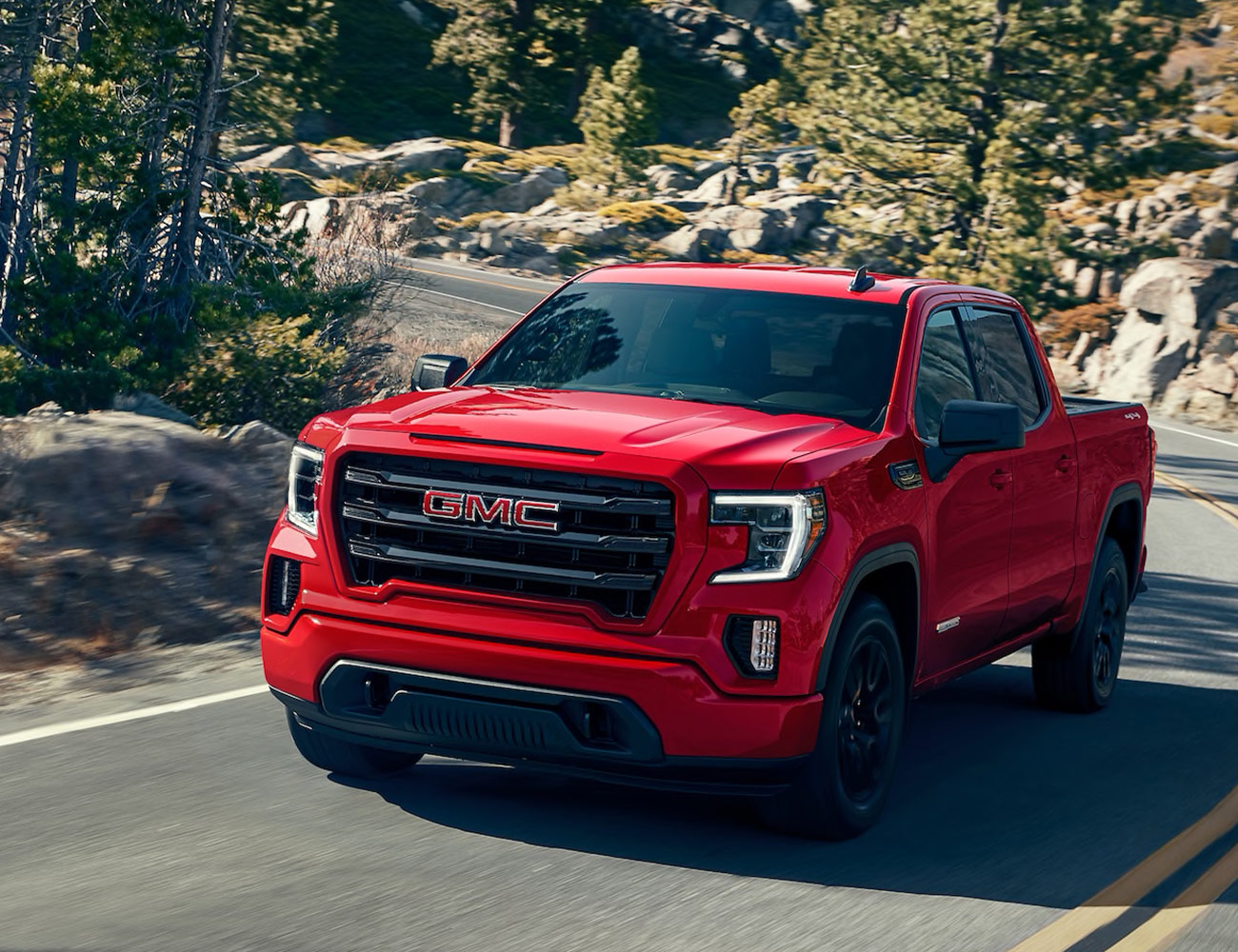
The GMC Sierra has had trouble differentiating itself from the Silverado over the years, mostly because it has been mechanically identical. GM has sought to change this with the new generation, redefining the Sierra as the higher-end rig and giving it the features to back that up.

If the Silverado and Sierra are still corporate twins, the Sierra is the better-looking, more interesting one. It gets the super-lux “Denali” trim and the premium off-road Raptor-rival AT4 trim. The Sierra also gets the first crack at innovative features like the MultiPro six-function tailgate and the CarbonPro carbon fiber bed.

Body Style:

• Regular Cab
• Double Cab
• Crew Cab

Box Length:

• Short (5 feet 10 inches)
• Standard (6 feet 7 inches)
• Long (8 feet 2 inches)

Models:

• Sierra (base)
• SLE
• Elevation
• SLT
• AT4
• Denali

Engines:

• 4.3-liter V6 (285 hp, 305 lb-ft)
• Turbocharged 2.7-liter inline-four (310 hp, 348 lb-ft)
• 5.3-liter V8 (355 hp, 383 lb-ft)
• 6.2-liter V8 (420 hp, 460 lb-ft)

Max Payload: 2,240 lbs (Regular Cab)

Max Towing Capacity: 12,500 lbs (6.2-liter V8)

Base MSRP: $38,395

Ram 1500

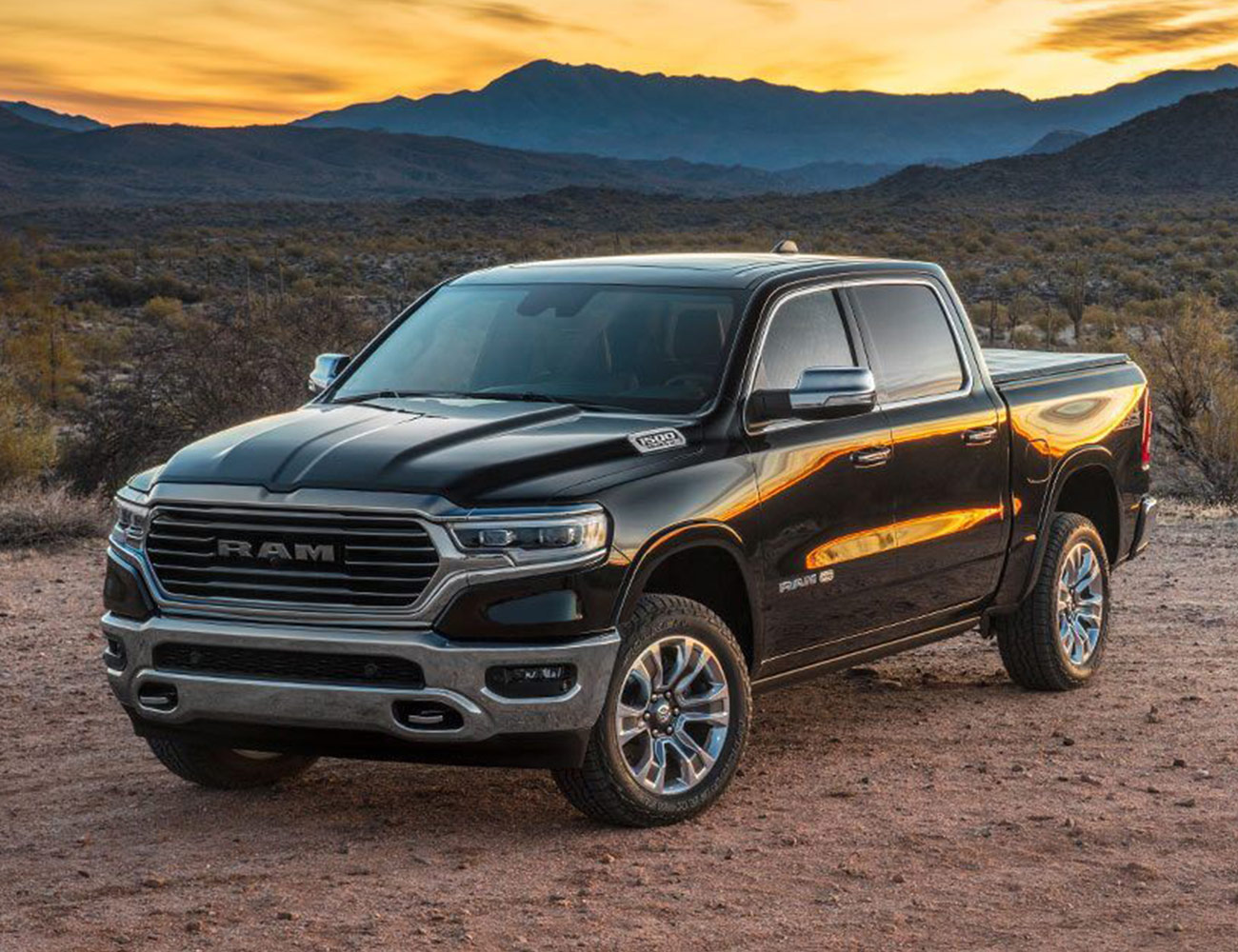
Ram became an independent brand apart from Dodge for the 2010 model year, following the Fiat-Chrysler merger. Ram debuted the fifth-generation 1500 pickup for the 2019 model year. Ram focused on offering a premium experience, whether that is ride quality, interior styling and materials, or technology such as a massive 12-inch touchscreen. That focus has earned the Ram 1500 rave reviews, and the pickup won multiple “truck of the year” awards.

The Ram 1500 has a simplified engine lineup compared to competitors. Ram dispensed with both the two-door cab and the long box, leaving those variants to the “Ram Classic.” If you’re into multifunction tailgates, the Ram 1500 has one that splits 60-40.

Body Styles:

• Quad Cab
• Crew Cab

Box Length:

• 5 feet 7 inches
• 6 feet 4 inches

Models:

• Tradesman
• Tradesman HFE
• Big Horn/Lone Star
• Laramie
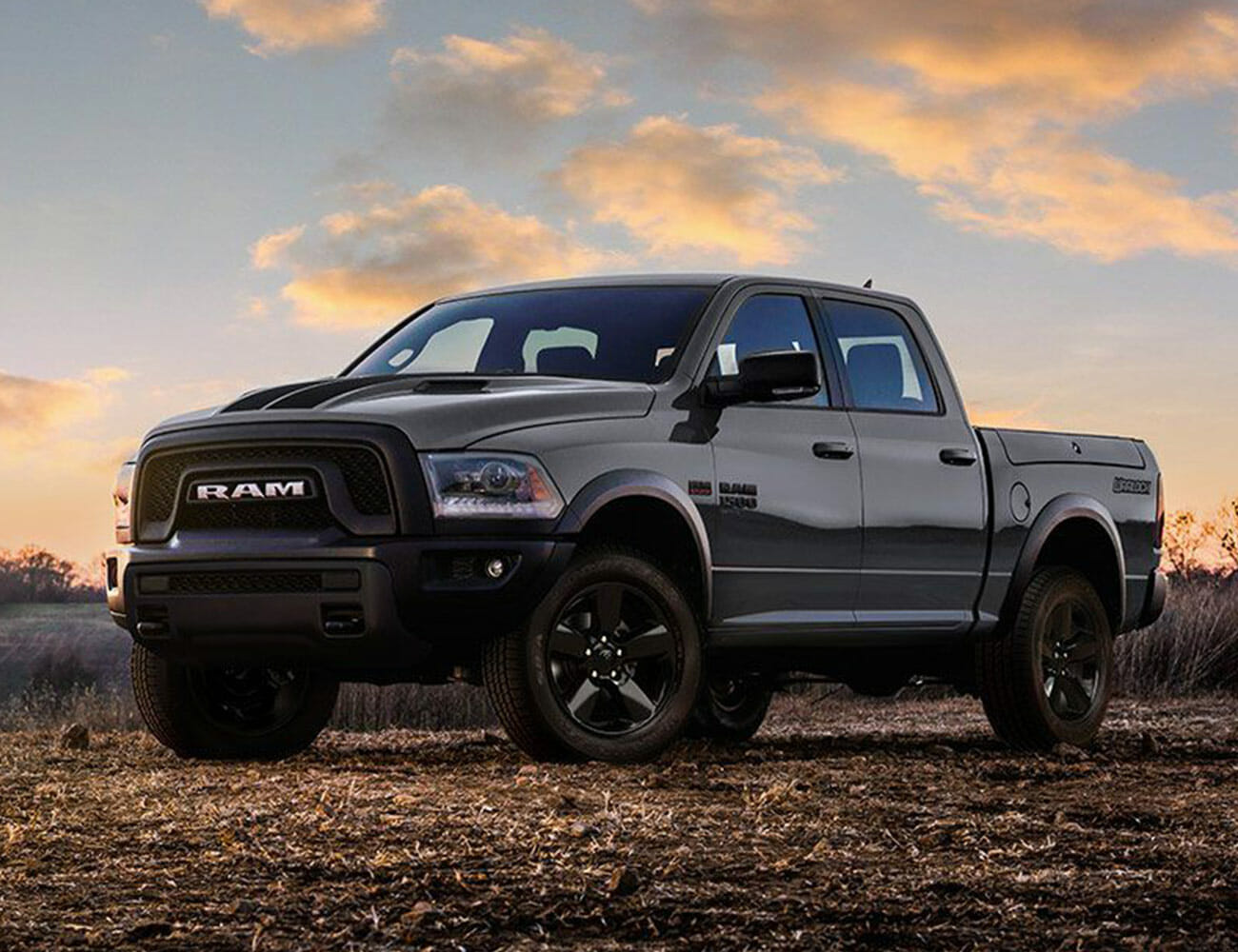
• Rebel
• Laramie Longhorn
• Limited

Engines:

• 3.6-liter V6 w/eTorque (305 hp, 269 lb-ft)
• 5.7-liter HEMI V8 (395 hp, 410 lb-ft)
• 5.7-liter HEMI V8 w/eTorque (395 hp, 410 lb-ft)

Max Payload: 2,100lbs (3.6-liter V6)

Max Towing Capacity: 12,750 lbs (5.7-liter V8)

Base MSRP: $33,440

Ram 1500 Classic

Ram kept the fourth-generation 1500 in production after the fifth-generation debuted. The older truck is now a budget model with a pared-down trim lineup. With the base-level Tradesman starting at $27,645, it undercuts the rest of the full-size pickup market. The strategy has been so successful, Ram passed the Silverado for number-two best-seller overall. Ram plans to keep the previous model in production, and even update it.

Body Styles:

• Regular Cab
• Quad Cab
• Crew Cab

Box Length:

5 feet 7 inches
• 6 feet 4 inches
• 8 feet

Models:

• Tradesman
• Express
• Warlock
• Big Horn

Engines:

• 3.0-liter EcoDiesel V6 (240 hp, 420 lb-ft)
• 3.6-liter V6 (305 hp, 269 lb-ft)
• 5.7-liter V8 (395 hp, 410 lb-ft)

Max Payload: 1,880 lbs (3.6-liter V6)

Max Towing Capacity: 10,470 lbs (5.7-liter V8)

Base MSRP: $27,645

Toyota Tundra

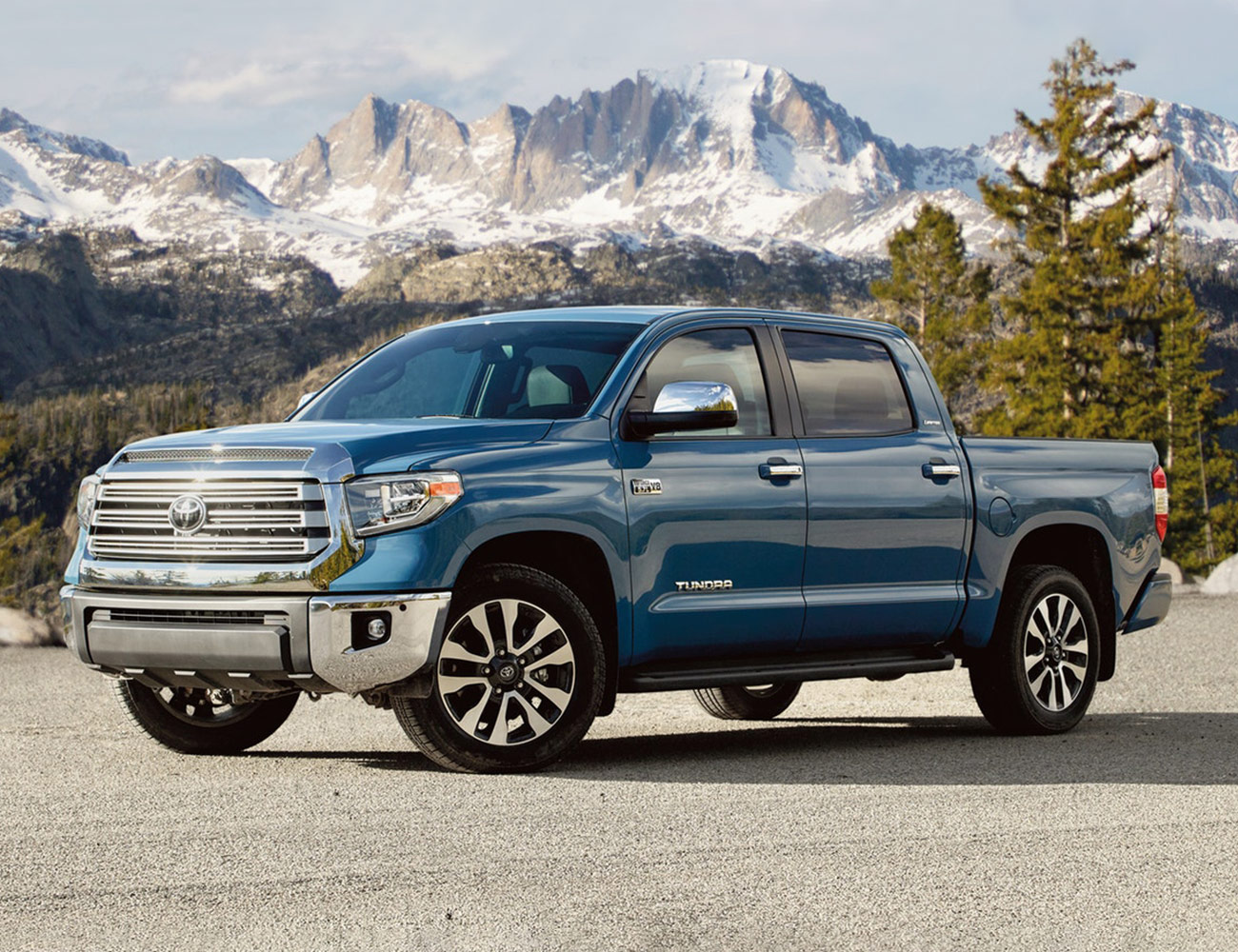
Toyota launched the first Tundra for the 2000 model year. It was the first Japanese full-size pickup for the American market. It’s more akin to the rest of Toyota’s SUV/truck lineup than its American segment competitors. Updates are rare: The second generation debuted way back in 2007, and was last facelifted in 2014.

The Tundra is the full-sized truck for Toyota fans. It offers the brand’s notable strengths: impressive build quality, formidable off-road chops and unbelievable resale value. Attempts have been made to add luxury (i.e. the 1794 Edition) and off-road cred (the TRD Pro). But the Tundra is a generation behind its American competitors, particularly when it comes to fuel economy; it earns just 15 mpg combined.

Body Style:

• Double Cab
• Crewmax

Box Length:

• Short (5 feet 7 inches)
• Standard (6 feet 7 inches)
• Long (8 feet 2 inches)

Models:

• SR
• SR5
• Limited
• Platinum
• 1794 Edition
• TRD Pro

Engines:

• 5.7-liter V8

Max Payload: 1,730 lbs

Max Towing Capacity: 10,200 lbs

Base MSRP: $33,425

Nissan Titan

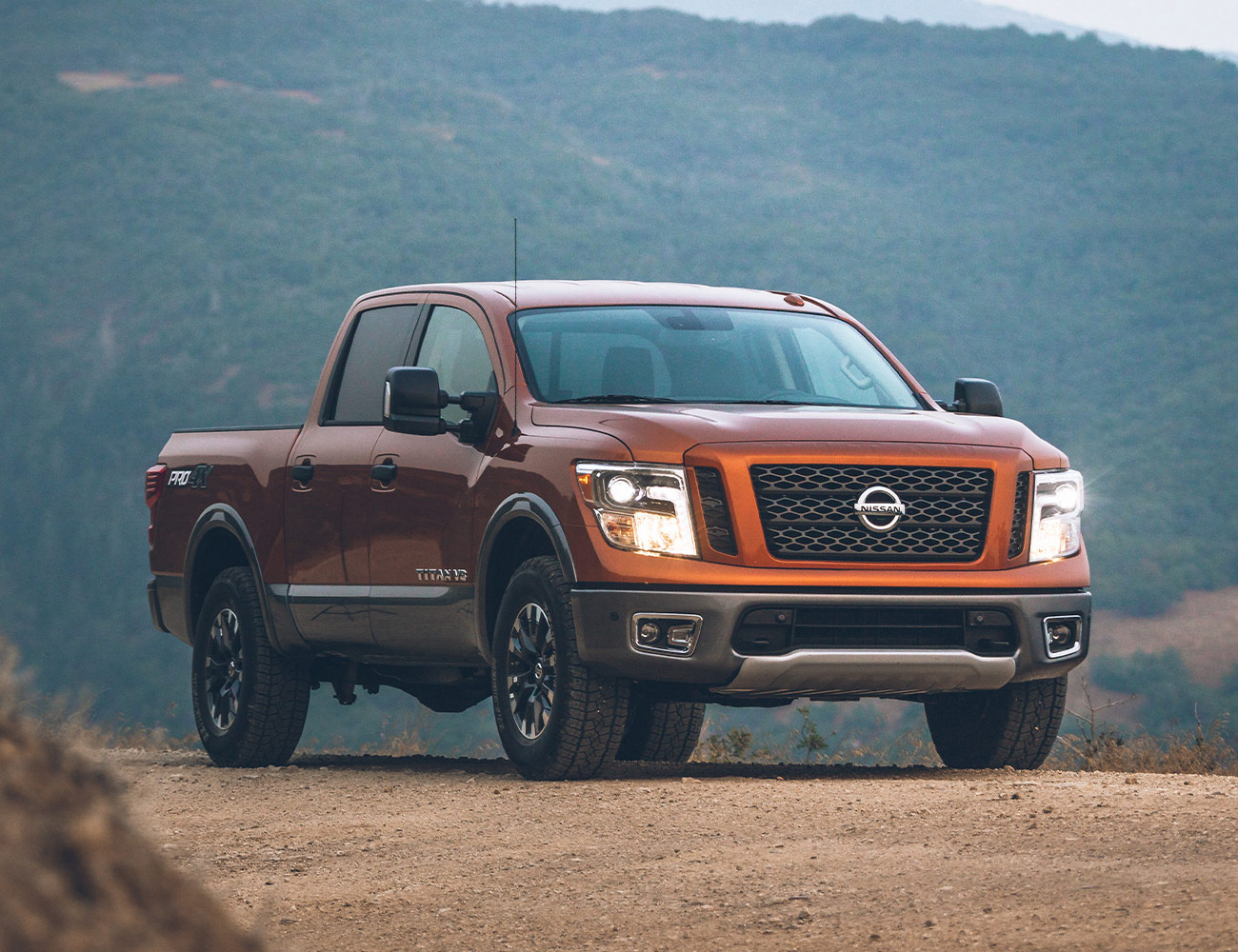
Nissan launched the Titan full-size pickup in 2004. The second generation debuted in 2016. It offers a simple lineup, with one engine option (a 5.6-liter V8) and no ability to mix and match cargo boxes. While the Titan is newer than the Tundra, it does not match up with the Big Three competitors in capability, particularly in towing.

What the Titan can offer, compared to competitors, is a value proposition. A buyer who wants a single-cab, long-box work truck and a V8 with reasonable options (power doors and windows, carpet) can it there at a lower price point with the Titan than itscompetitors.

Body Style:

• Single Cab (8-foot box)
• King Cab (6.5-foot box)
• Crew Cab (5.5-ffot box)

Models:

• S
• SV
• SV Midnight Edition
• PRO-4X
• SL
• SL Midnight Edition
• Platinum Reserve

Engines:

• 5.6-liter V8 (390 hp, 394 lb-ft)

Max Payload: 1,930 lbs (Single Cab 4×4)

Max Towing Capacity: 9,660 (Single Cab 4×2)

Base MSRP:$30,690

Note: Purchasing products through our links may earn us a portion of the sale, which supports our editorial team’s mission. Learn more here.

This Company Will Make Your Custom Land Rover Defender Dreams Come True

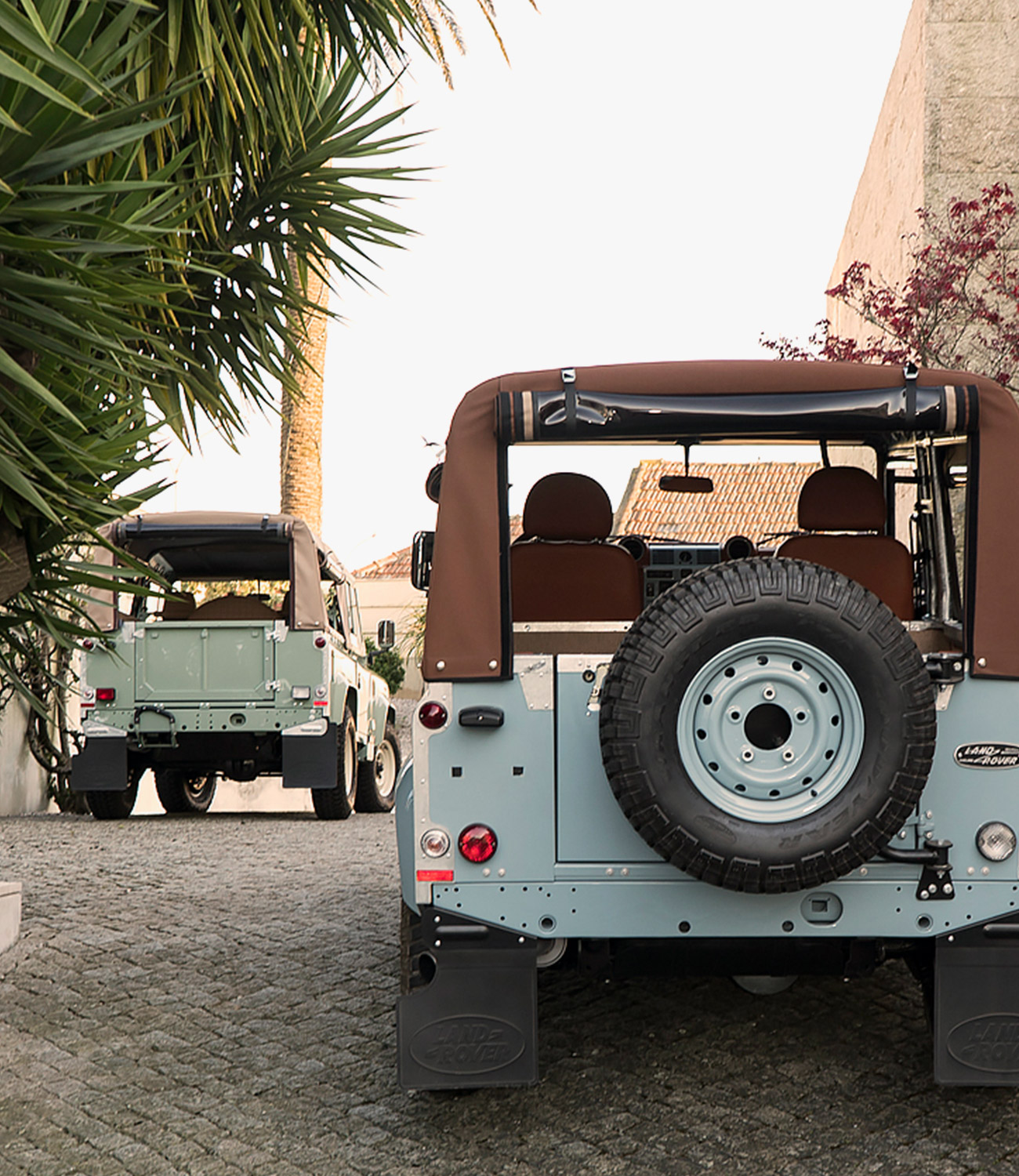
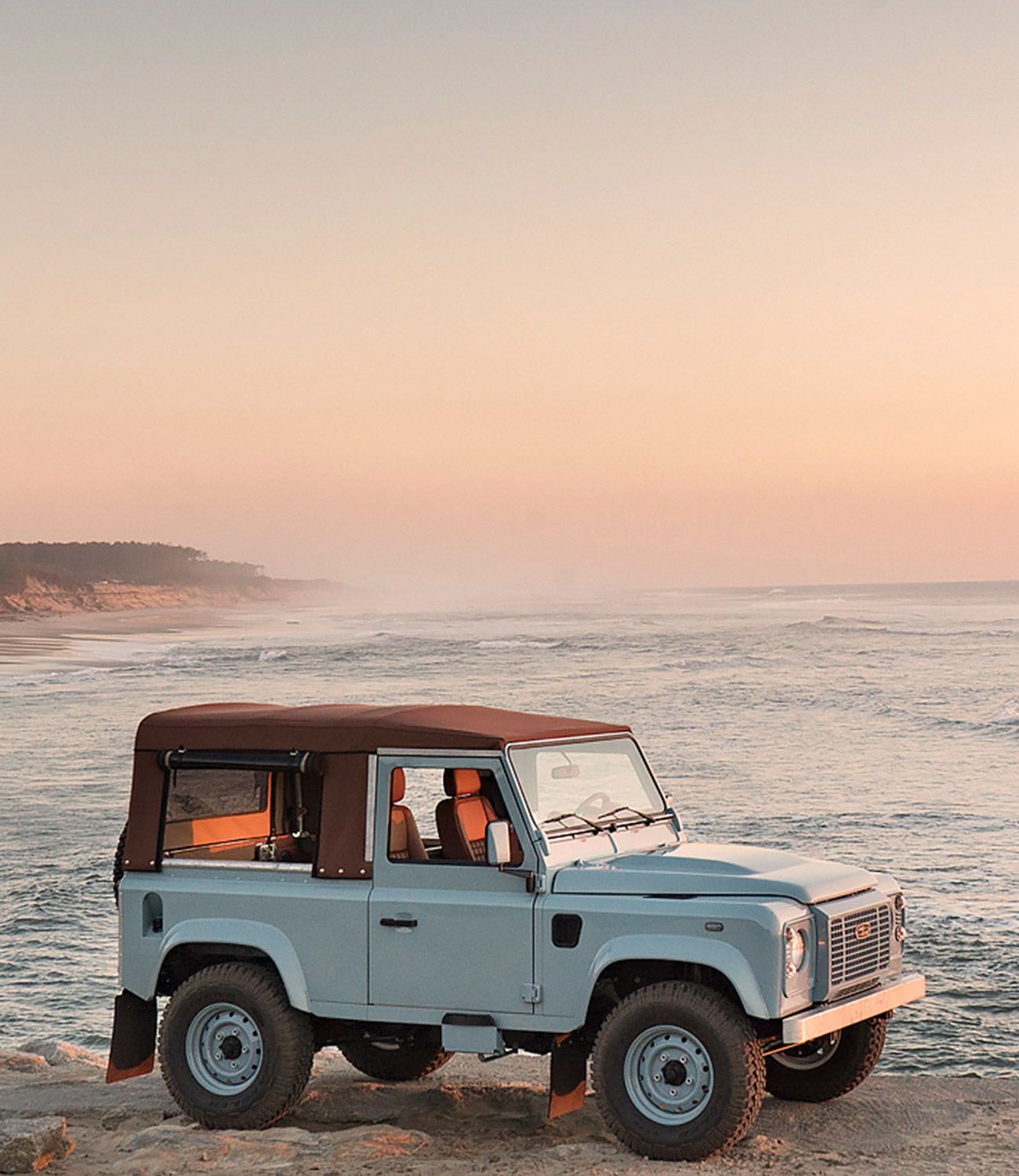
Time to start thinking about cashing out that 401(k) early. Virginia-based classic car import firm Commonwealth Classics is collaborating with Portuguese restorers Unique Masterpieces on “The Commonwealth Line,” a run of restored, heritage-inspired Land Rover Defenders. Unique Masterpieces will build the trucks, while Commonwealth Classics will import and sell them to U.S. customers.

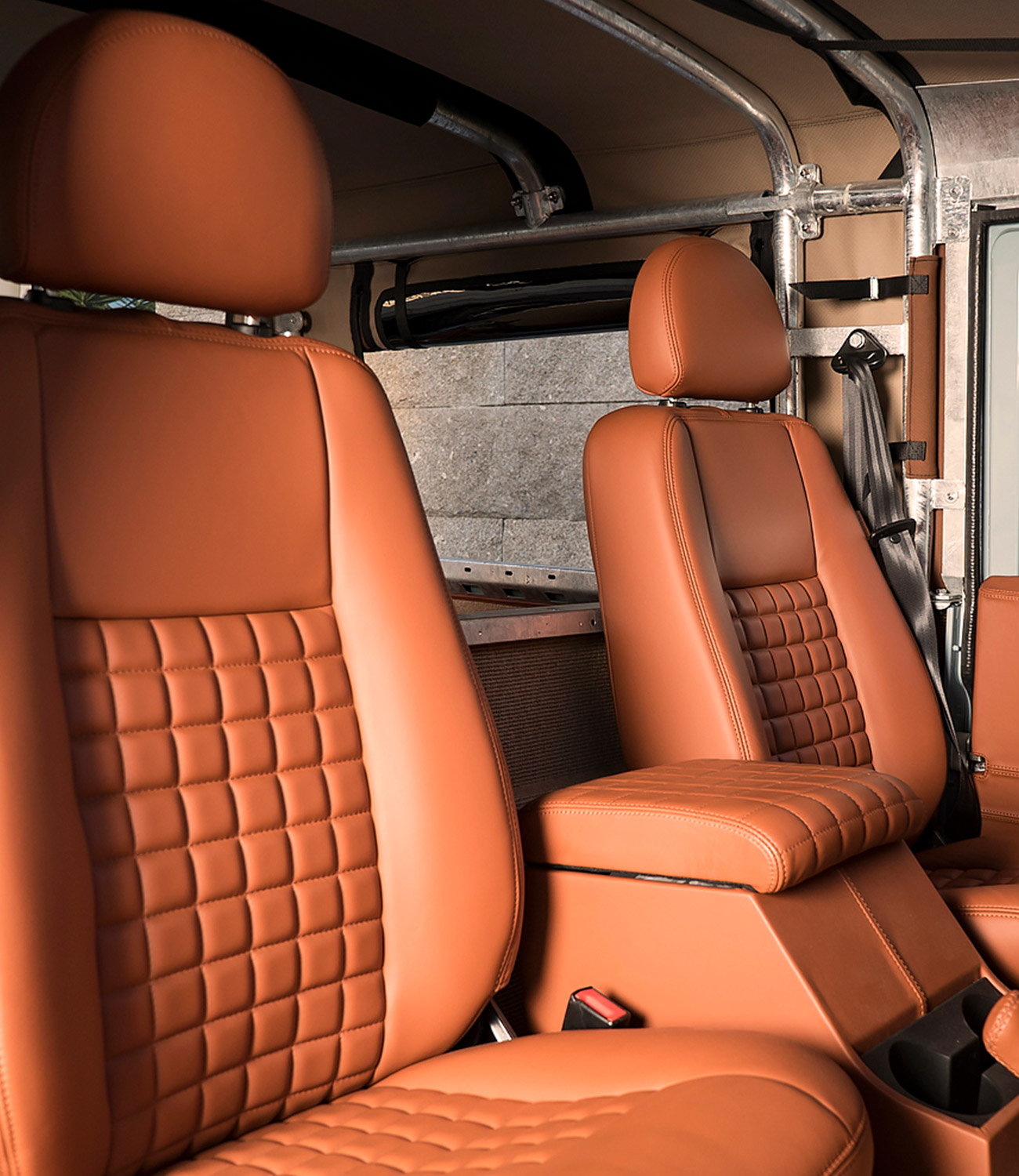
The Commonwealth Line offers a sumptuous, upscale take on the Defender. Unique Masterpieces sources the importable vehicles from around Europe. They stick with stock engines, but give them a full rebuild. All restoration work but for the custom-dyed canvas tops and leather wrapping is performed in-house by Unique Masterpieces.

Primarily, Commonwealth and Unique Masterpieces will use Defenders produced from 1991 to 1995 using 200 Tdi and 300 Tdi inline-four turbodiesel engines, though they also offer a 3.5-liter V8. They can source Defender 90, 110, and 130 models (including pickups) for a total of 30 different body and top configurations, as well as more than 40 different leather color options.

Related Video: The New 2020 Defender

[embedded content]

Commonwealth offers two different Defender finishes: the standard, more traditional “Heritage Finish,” and a more performance-oriented, design-forward “Signature Finish.” After the finish, customers can add on five different packages. “Performance” adds about 30 percent more power to the engine; “Trail” adds a winch, a hitch, heavy-duty front springs, and locking rear differentials; there’s also “Sound,” “Comfort” and “Tailgate.” (Don’t forget the 16-inch custom-painted Wolf steel wheels.)

Buying a Defender this exquisite is likely a lifestyle decision more than one made because you need a solid off-roader; as such, you likely have some fancier hobbies to go along with it. Commonwealth Classics has you covered. Potential add-ons for the Defender include a bespoke matching two-horse trailer and a cubby containing a cedar-lined humidor. If you want to make this Defender a real gentleman’s club on wheels, you can add some wood flooring.

As one would imagine, you’ll pay for quality. Optioning out a Commonwealth Line Defender won’t come cheap. Defender 90 builds start at $125,000, and Defender 110 builds start at $135,000. That price — more than twice the base cost of a new 2020 Defender — includes a 12-month warranty and 12 months of standard maintenance.

Commonwealth Classics is currently accepting two new Defender builds per month. The production process takes four months. Customers can monitor their build’s progress with a password-protected site, photos, and text updates. You can configure your build here.

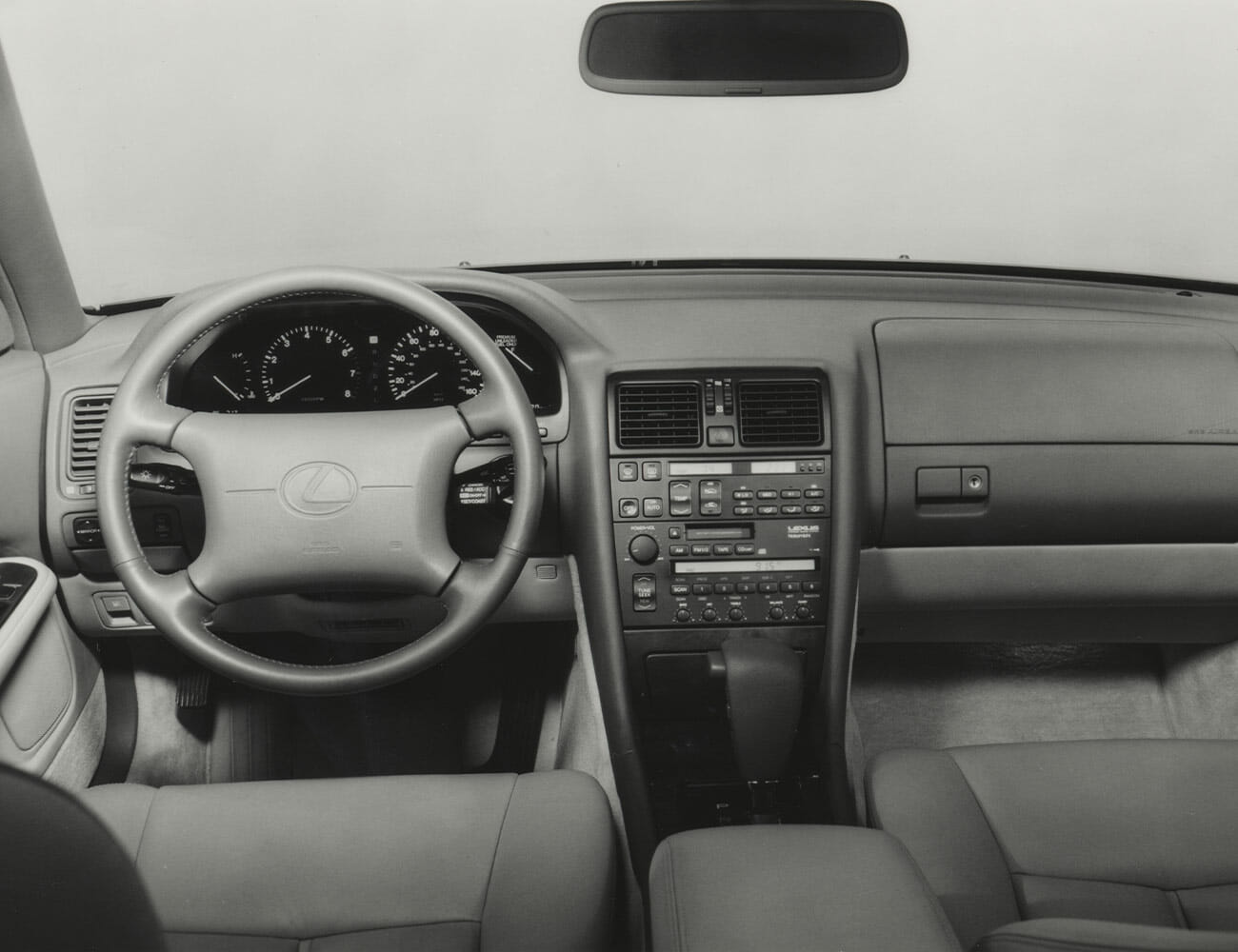
The 1990 Lexus LS400, Driven Today: We Need Cars Like This Again

I was eight years old when the Lexus LS400 debuted at the 1989 Detroit Motor Show. My budding love for cars at that tender age manifested in my idolization of bella macchinas from Italy. I was aware Japanese cars existed — a Honda Accord and a Mazda 626 sat in my parents’ garage — but I didn’t fantasize about driving those slow, utilitarian boxes, not when I could drift away into posters of Testarossas and Countaches.

Three decades later, I’ve driven my pin-up heroes —  at least when they deigned to properly function and weren’t overheating or shaking to pieces on the side of the road. Then, a couple months ago during a Lexus event in Costa Rica, I sampled a pristine example of the 1990 LS400 — and realized I’d spent my boyhood worshipped at the wrong altar.

It shouldn’t really be a surprise that the LS400 still feels like an impossibly perfect vehicle 30 years after it was built. Any car that cost more than $1 billion in development over six years (in Reagan-era money, no less) and saw more than 450 prototypes precede the final iteration should emerge as a benchmark which future luxury sedan models ought to measure against.

Slipping into the plush driver’s seat today, it’s boggling how far ahead of its time this cabin was. Holographic, electro-luminescent gauges stare back at you, and there’s an electrochromic rear-view mirror at your disposal. Push-button dials for an equalizer for the radio were standard. There’s even a power switch for the height-adjustable seatbelt. The car is the epitome of omotenashi, a Japanese term that roughly translates into “anticipating your guests needs before they even know what they want — and exceeding them.”

The key turns over a 4.0-liter V8 engine that houses a stable of 254 horses — and, more importantly, simply purrs. The LS400 has the ability to run all the way up to 160 mph; sink your foot to the floor, and the shuffle from 0 to 60 transpires in 8.5 seconds. These numbers may seem paltry by today’s standards, but this car positively flew in 1990.

The main arterial highways of Costa Rica are clean and calm, but the pockmarked B-roads leave something to be desired…unless you’re in the LS400, that is. The luxobarge glides over the roughest crud with aplomb, a credit to the double-wishbone front and rear suspensions. (Air suspension was an option, too.) Toyota engineers nailed the steering feel and ratio; it’s direct and responsive, and you’re never adjusting or shuffling around to get a corner right. And the LS400 can hang in a turn, far better than some of its contemporary cousins.  When I sampled the new GX 460 (and its less-than-stellar road manners) afterwards, I pined for the comfort and handling of the LS400.

The LS400 was fabricated from sandwiched steel, in a bid to mitigate vibration; flush door handles and windows were employed to further reduce wind noise. The result is a cabin so quiet, it still rivals modern Mercedes-Benzes and Bentleys. In fact, the ride is so smooth, cushy and serene that were you to be blindfolded and asked if you were in the backseat of the LS400 or a Rolls-Royce Silver Spur from the same era, you’d be hard-pressed to determine which vehicle you were enjoying.

When Eiji Toyoda set out to create a luxury brand to recapture the buyers his business was losing when they graduated out of Toyota’s lineup, the marques that were defining the segment were Mercedes-Benz, BMW and Jaguar. The LS400 proves even today that Lexus had a winner right out of the gate. It had S-Class presence and drove every bit as well, but only set your wallet back the price of an E-Class.

When my short test drive ended — Lexus wants to keep the mileage on the vehicle low, though with unrivaled mechanical reliability, the brand needn’t fret — I didn’t want to relinquish it. Forget the LFA; create posters of the LS400.

2019 Airstream Bambi Review: The Stylish, Easy Way into Camping Trailer Life

By this point, the only way you don’t know what an Airstream is if you’re a vampire who’s been asleep in a cave for the last century. The aluminum-sided travel trailers have been rolling along America’s roads since the ’30s, their iconic design capturing eyes with the same ease they reflect sunlight. They’ve been featured in countless films and TV shows, and transformed into homes, AirBnBs and works of art.

For 2019, the eight-decade-old company has added a new model to its lineup: the diminutive, adorably-named Bambi. Ask Airstream where the name “Bambi” came from, and they’ll say founder Wally Byam named it after a type of agile deer he saw while overlanding across Africa in the ‘60s. (Dollars to donuts he actually named it after a certain Disney movie, but that’s neither here nor there.) It’s been a common nickname for the company’s small, single-axle trailers for more than half a century — but now, the name has finally been given the honor of formally becoming part of the team, signifying the two-wheeled rigs that are the most affordable way to hop aboard one of the company’s classic aluminum trailers.

The Good: It may be compact, but the Bambi crams more usable space and features into its limited length than most studio apartments. My Bambi 19CB tester was the second-smallest variant, yet in spite of being a mere 18 feet 11 inches long — shorter than a Rolls-Royce Phantom — it had space for a two-burner gas stove, a stainless steel sink, a refrigerator and freezer, an LED television (with integrated antenna), a built-in stereo, a memory foam mattress (sized somewhere between a twin and a double), even a shower and a flushing toilet.

Even with all that gear inside, the interior has a fair amount of space to spread out. During an impromptu Brooklyn tailgate party, I managed to fit seven or eight adults (and one large dog) inside comfortably, with room to spare for snacks and a soft Yeti cooler backpack. A family with kids might find it cramped, but it’s more than spacious enough to serve as a good base of operations for a single adult or a couple.

Who It’s For: First-time Airstreamers looking to dip their toe into the world of trailering adventure; empty-nesters who want to roam freely in retirement but don’t want to wrangle giant trailers and full-size pickup trucks.

Watch Out For: Backing up. As the model that seems most likely to be adopted by trailering novices, you might think the Bambi would pack some sort of technological magic to help maneuver it in reverse more easily.

Nooooooooooooooooope.

Spinning my trailer 180 degrees required a good 30 minutes of Austin Powers-style shuffling back and forth, and that was with the help of the kind owner of the Hipcamp camp site we were staying at — a man whose own history included training people how to drive heavy equipment in the army. A backup camera is standard, though it wasn’t hooked up on mine; regardless, it wouldn’t have done much beyond tell me where I would have gone were I able to keep the thing moving in a straight line for more than three seconds. The first company to sort out some sort of idiot-proof trailer-reversing technology — brake-based torque vectoring? Computer-controlled active steering? SpaceX-inspired compressed air thrusters? — deserves to make a mint.

Alternatives: Safari Condo Alto R-Series ($29,500+); Homegrown Trailers Woodland ($39,495+); Forest River Alpha Wolf ($25,995+); Airstream Nest ($45,900)

Review: Full disclosure: In spite of more than a decade of driving and writing about automobiles, I can count the number of times I’ve towed a trailer on one hand. Actually, I can count the number of times I’ve towed that weren’t under the well-supervised confines of a media junket on one finger; that sole instance involved towing a U-Haul U-Box through a couple dozen miles of country roads, then winding up stuck at a closed bridge on a one-lane road because I couldn’t reverse to a turnaround spot.

So it was with a bit of trepidation that I hitched the Bambi up to the Ford Ranger XLT I’d borrowed as a tow vehicle for a weekend of criss-crossing New Jersey and the lower boroughs of New York City. Yet the Bambi-and-Ranger duo proved blissfully easy to handle, even when winding them through the tight streets of Brooklyn or on the open highways of the Dirty Jerz. The tidy proportions meant turns never proved a problem (at least, when going forwards); the trailer’s brakes were reassuringly dependable and solid, always snapping on in sync with the Ford’s discs; and the Ranger’s EcoBoost engine made easy work of the trailer’s weight, hauling it up to mile-per-minute velocity without issue. Going much beyond that felt a mite worrisome, however; by 70 mph, every imperfection in the road seemed to be magnified into a shimmy in the Bambi that prompted unwanted visions of tank-slapper flips or pileup-causing detachments.

Still, Airstream life isn’t about speed; it’s about taking things slow and easy, leaving troubles and stresses behind in favor of the freedom of the open road. (There’s a reason the Indiana-based company offers a Tommy Bahama trim level on some models.)

Once the driving and parking (and reversing, and re-parking) was done and I’d settled truck and trailer in the tree-lined camping spot within spitting distance of the Delaware River, the Bambi came into its own. The starboard-side awning’s coverage area is on the smaller side, but it’s enough to keep the sun off one or two chairs — or to give you a place to dry before coming aboard in a squall. The nice weather meant I parked my butt in a nearby camping chair instead, but it was nice to know it was there if needed.

My hosts provided fresh water and a power hookup, but I wound up needing neither; the on-board battery never came close to losing all its power, thanks to the solar panel mounted atop the roof. (Pre-wiring for a solar panel is standard, but the panel itself is an option; considering how well it worked, I’d suggest making it the first box you check.) Running the air conditioner built into the roof would probably guzzle the electrons faster than the solar panel could replenish them, but I never needed it, in spite of summertime temps; between the shady interior, the twin roof-mounted ventilation fans and the plentiful screened-in windows (and the screen door), the Bambi’s interior stayed breezy and cool all day long, in country and city alike.

The toilet situation, should you be curious, is best described as “acceptable.” The 19CB variant’s loo occupies an odd middle ground amongst Airstream lavatories; while smaller trailers and touring coaches place the toilet in the shower and larger ones have a miniature bathroom with an actual door, the 19-footer uses an odd W-folding wall that’s designed to offer some semblance of privacy for the tight corner. In practice, it’s less than ideal; let’s just say you should ask anyone else in the trailer to vacate the premises before using the restroom. Functionally, however, it works just fine.

Admittedly, I didn’t have a chance to use the shower — folding my frame inside that tiny space seemed like a violation of the Geneva Convention — so I can’t vouch for the efficacy of its handheld nozzle. (Exhibitionists might have better luck with the outdoor “shower,” a similar handheld nozzle with hot and cold knobs tucked away in one of the exterior ports.) That said, I never had any issues with the flow or temperature of the water blasting from either the kitchen or bathroom sink — which, like the keyholes in a nuclear missile silo, are exactly far apart enough that one person can’t use them both simultaneously — so I have no reason to assume the shower would be anything less than effective.

Another reason to assume the best from the hot water supply: the two-burner gas stove proved as adept as any found in a modern house, if a mite smaller. Same could be said for the kitchen table, which has room for four provided everyone’s comfortable rubbing flanks and knees; same goes for the fridge and freezer combo, too. (The latter can reportedly be quite the power suck; should you rather save the electrons, a good Yeti cooler and a couple bags of ice will likely be every bit as effective for 24-48 hours.)

Indeed, all told, the Bambi does an exceedingly good impression of a tiny, efficient apartment — good enough to tempt this New Yorker away from his hard-won one-bedroom. The night before I had to return the trailer, after my friends had left, I wound up laying in bed watching football on the television, eating a s’more made over the gas stove’s burner. The TV reception was better than in my apartment; the memory foam mattress was comfy than my couch; the sounds of the park beside me more relaxing than the rumble of cable trucks making their way home to their garage near my place. In that moment, it wasn’t hard to see the appeal in tossing that Great American Dream of Homeownership out in favor of living out my days in an elegant rolling apartment.

Verdict: By striking a perfect balance between size, style and comfort, the Airstream Bambi delivers the right combination of features to endear it to anyone who’s long harbored dreams of rolling across the land with a shiny trailer behind them, following the whims of the road. Sure, you can snag a new travel trailer for far less money — but doing so would mean swapping those timeless looks for the blocky looks and garish pseudo-airbrushed designs of most travel trailers and RVs, which are utterly lacking in both elegance and Instagram-ability. (Let’s not pretend the latter is unimportant.)

Indeed, the Bambi pulled off something I never would have expected: It made me into a camping trailer person. I spend my time stuck in traffic fantasizing about car camping trips out West; now I fantasize about doing it with an Airstream.

2019 Airstream Bambi 19CB: Key Specs

Length: 18 feet, 11 inches
Weight: 3,650 pounds
Windows: 11
Refrigerator Size: 4.3 cubic feet
Sleeping Capacity: Up to four people, but two of them better be tiny

Airstream provided this product for review.

Read More Gear Patrol Reviews

Hot takes and in-depth reviews on noteworthy, relevant and interesting products. Read the Story
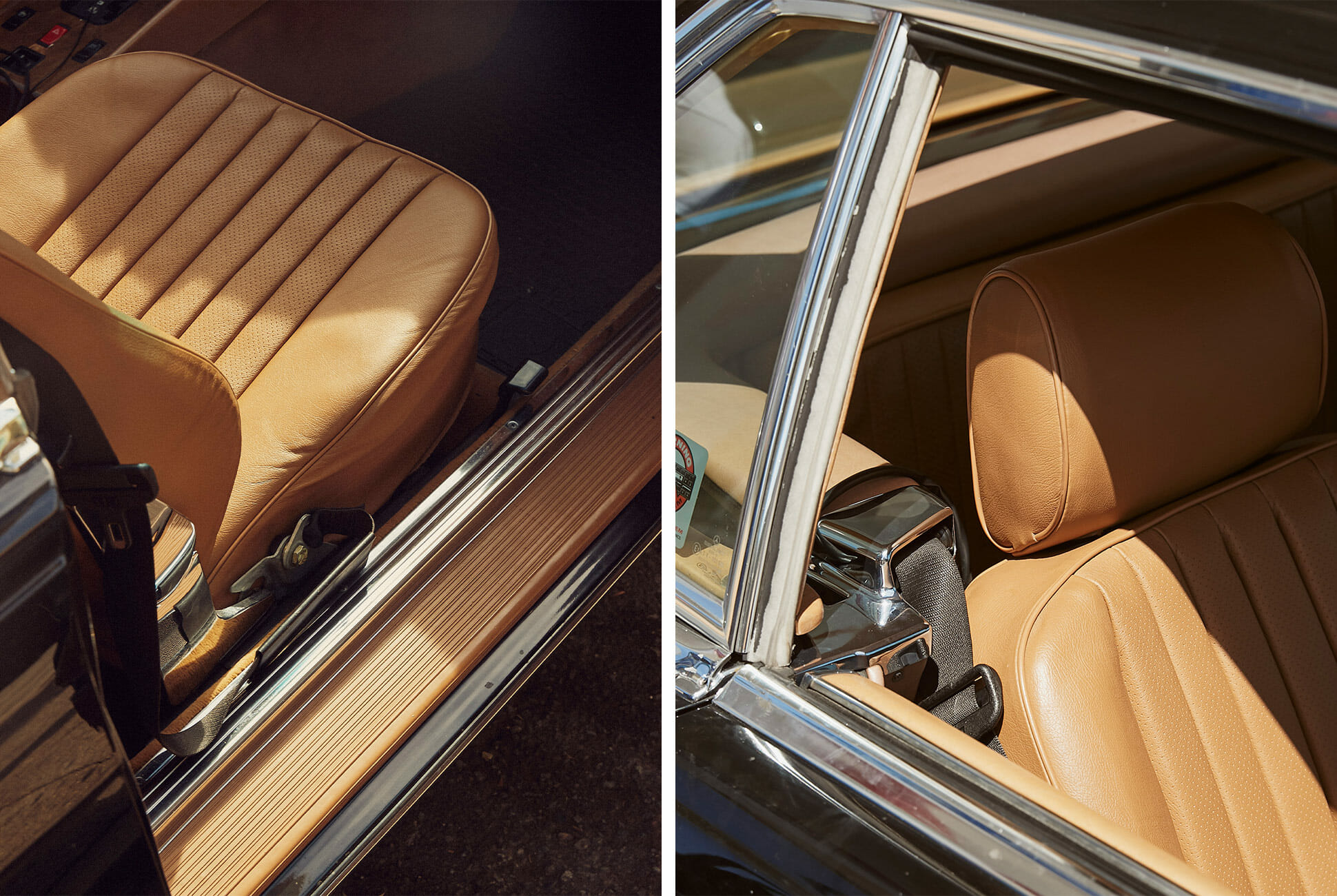
Note: Purchasing products through our links may earn us a portion of the sale, which supports our editorial team’s mission. Learn more here.

The Best Cars to Buy Right Now, According to Our Motoring Editor

Just Get This

The Best Cars to Buy Right Now, According to Our Motoring Editor


Just Get This is our straight-to-the-best-product-you-can-buy list of Editor’s Picks. That of course goes for cars, too. Check out the list below of the best cars you can buy right now.


Affordable Sports Car

2018 Mazda MX-5

Compact Car

2018 Toyota Corolla XSE Hatchback

Full Sized Pickup

Ram 1500

Large SUV

Lincoln Navigator

Midsize Truck

2019 Ford Ranger

Sports Car

Porsche 718 Cayman/Boxster

Station Wagon

Subaru Outback

The Trials and Triumphs of Overlanding Across America in the Ford Ranger FX4

Going on an overland adventure across the United States is easier than most people think. Stock four-wheel-drive vehicles are more capable than ever; GPS tracks and maps are available online; automotive roof tents make the nights more comfortable than ever. It makes it so easy, you might even think about taking your whole family along as you attempt a 3,500-mile trip along the Continental Divide from Mexico to Canada would not only check it off your bucket list. Which is exactly what photographer Olivier de Vaulx did. 

The Milky Way seems so close it’s almost unreal. Even the most advanced computer-generated images couldn’t approach the complexity of the starry night above our heads.
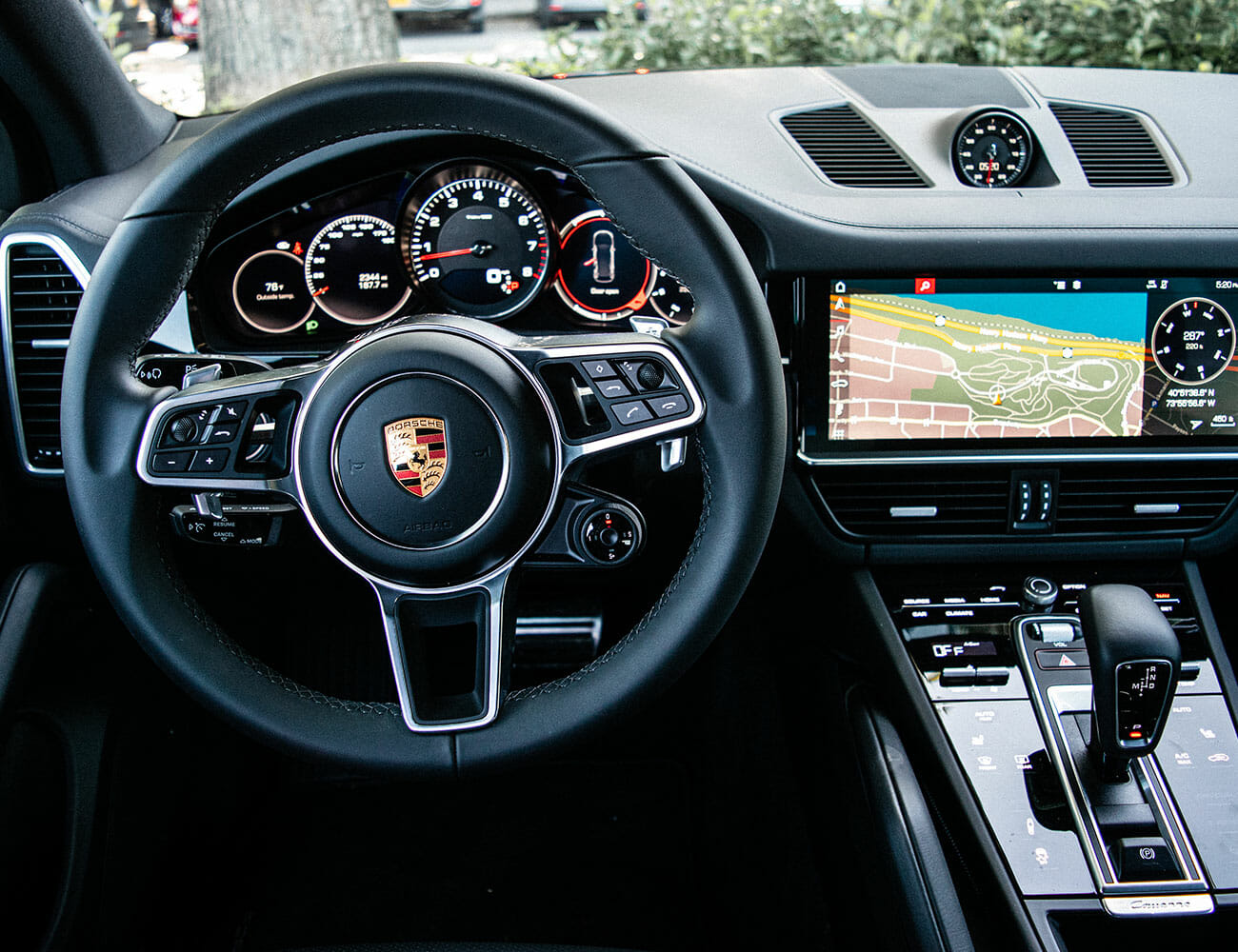
We’re in New Mexico, on the first night of our Continental Divide journey, laying down on the comfortable mattress of our roof tents and enjoying a show that no movie theater will ever be able to provide. It’s only been a few hours since we started at the border between the U.S. and Mexico at the Antelope Wells port of entry, but we already feel thousand of miles away from our real lives.
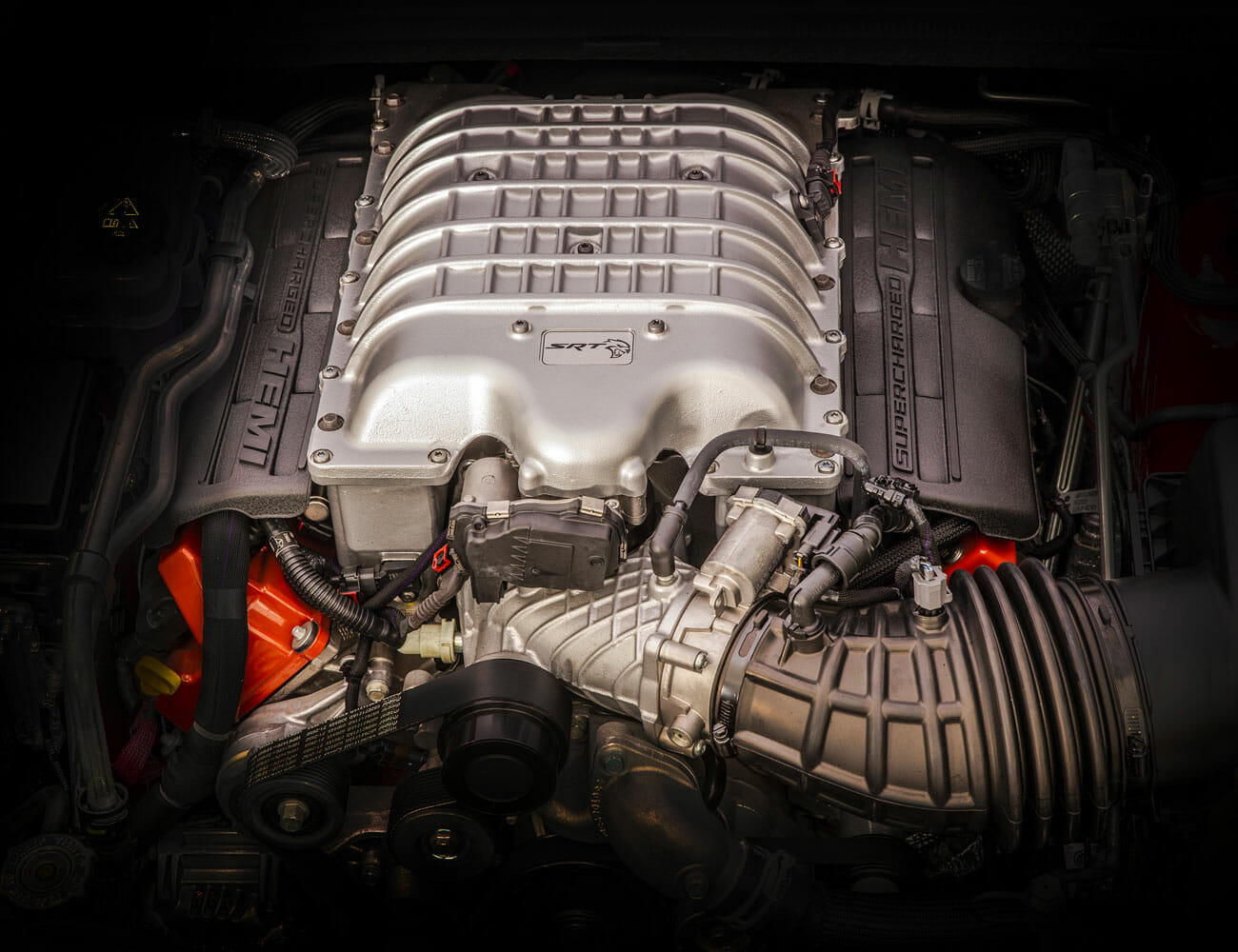
My two teenagers didn’t get any cell service the whole day and never complained. Instead, they drove our two Ford Ranger FX4 pickup trucks through the red dirt of New Mexico’s backcountry, which is more fun than any video game. As the day ended, the adventure already felt like a success. But there were still 3,500 miles to go.

Warming Up in New Mexico

Kevin Glassett, avid motorcyclist and retired Hewlett-Packard engineer, put together a daily driving route for our GPS, with paved and off-road options displayed in different colors on our Trail Tech Voyager Pro. The little arrow proves hypnotic; with no risk of getting lost, we tend to drive as much as we can. (Furthermore, since the temperature outside is well above 85 degrees, nobody minds seating in an air-conditioned vehicle.)

The EcoBoost engines of the two Rangers are sipping fuel as slowly as old British lords sip their tea, giving us enough range to travel more than 250 miles a day. The power delivered by the turbos and the smooth ride provided by the FX4 heavy-duty suspensions sometimes even pushes us to switch into rally mode, speeding across the red dirt like professional WRC racers. But being here as a family instead of with a bunch of friends reminds you quickly that overlanding is more about the distance traveled than the adrenaline rush, and we quickly fall back to a more reasonable pace. (Even if the truck didn’t mind going fast.)

As the sun sets, it’s time to start what will become our daily routine: Finding a free camping spot for the night on BLM land, setting up our Tepui Explorer Kukenam and Autana roof tents and cooking some easy-but-healthy meals. Using two plastic coolers and a gas stove, we whip up recipes with enough proteins, carbs and veggies to call this trip a gastronomic experience. GSI Outdoors cooking kits help us keep everything organized for dinner and breakfast, transforming what would be a duty in the army into a genuine pleasure. Once the dishes are washed (using melted ice from the cooler instead of wasting drinkable water), it’s time for a card game or some night photography of the Milky Way. Hello, vacation mode.

Catching Cold in Colorado

The transition between New Mexico and Colorado is somewhat brutal. The elevation rises as we reach the Golden State, and with five times more snow this winter than in previous years, most of the passes in the Rocky Mountains are still closed — as we discover first hand while trying to go over Stunner Pass, just to find a big patch of snow at the summit.

While the first two patches of snow take us only a few attempts to go through, thanks to the high clearance of the Ranger FX4s and the help of the Maxtrax MKII traction mats, the last one proves more difficult. Stuck in the snow, the first Ranger stalls, high-centered and unable to free itself. That’s why we travel with two trucks: The second Ford is able to pull out the unlucky vehicle loose in no time.

The snow being deep as it is, we could have decided to go around by (illegally) driving off the trail. Instead, we keep the overland attitude alive and start digging a path through the snow with a shovel, the whole family taking relays to clear the way. (Turns out overlanding can be a great workout.) After a few hours, we finally make it to the other side…just in time to be welcomed by a hail storm. Colorado is a tough place.

Thankfully, there’s also plenty of sweet opportunities in the state: Hiking and sledding along the snowy summits of Cinnamon Pass, the discovery of old gold mines, paddleboarding sessions in the crystal-clear lakes and watching wildlife such as deer, squirrels, foxes, marmots, moose and bears.

Going Back in Time in Wyoming

The border between states once again brings a huge geographic change. The high mountains are still in the distance, but we now drive on easy trails in the plains. Using our GPS’ ability to show the position of the other vehicle on their screens, the two trucks follow each other at a safe distance, so the second can avoid being blinded by the thick dust raised by the first crew. The long-range Midland MXT115 MicroMobile radios make chatting easy regardless of the distance, helping prevent collisions with upcoming traffic, cattle on the trails, or to request some photo stops.
The wildlife is more abundant than ever; the pronghorns make this American backcountry look like Africa’s savanna, but the bald eagles remind us that we’re still in the U.S. Raised in crowded Southern California, the two teenagers find the emptiness of these vast plains a bit worrisome at first, but they quickly get used to the feeling of freedom that comes with while travelling on this ocean of grass. For dinner, we grill meat like real cowboys, then climb in our comfortable roof tents for a quiet and restful night.

Crossing Wyoming on backcountry roads makes you feel like you’ve gone a century back in time, with barns and farms everywhere along with actual cowboys still making a living off herding cattle. On the sidewalks of the small towns where we stop to buy groceries and water, people wear leather boots and Stetson hats, and the rodeos are organized for the locals, not tourists.

The only issue that has to be addressed is — like in New Mexico, Colorado and later in Montana — the annoying presence of mosquitos. At sunset, it’s like playing roulette: Randomly enough, they can be nowhere to be seen, or everywhere at once. In the latter case, we hide inside the roof tents, the thick fabric an effective shield against the fury of these vampires.

Rock Crawling in Montana

After a couple hours zipping though Idaho, it’s time for the Rangers to confront the harsh reality of Montana. The landscape is dominated by mighty forests, where fallen logs number in the thousands and trails are often damaged by the long winter. If that weren’t enough, bear activity and washed-out trails provide plenty of opportunities for “road closed” signs to appear suddenly around the next corner. Even when the trails are open, it doesn’t mean that they’re maintained; potholes, deep ruts and boulders are sure to challenge our Ford Rangers. At one point, we cover just three miles in four hours.

In these tough conditions, the compact size of the Ford Ranger is a real advantage, since it gives it the ability to sneak between trees that would have stymied big brother F-150. River crossings filled with mud and deep ruts prove opportunities for teamwork: One person behind the wheel, transmission in 4-Low (and rock crawling mode set at low speed, usually); three spotters with hand-held radios to give directions. Doing this, we travel through the slipperiest conditions like seasoned pros.

If these technical sections are fun, the abundance of potholes in the backcountry roads makes the days feel longer. We often don’t finish until night, the Baja Design LED lights helping the (surprisingly good) headlights drill into the darkness of the forest in the quest for the perfect camping spot. The stock shocks provide a quiet ride, though; there are no creaks or rattles to be heard inside the cabins. We’re a long way from the carriages used on the Oregon Trail.

Bienvenue au Canada

Reaching the actual border is incredible: An aluminum pole planted in the middle of the forest marks the separation between the two countries. There’s nobody around; we enjoy the moment by ourselves just as the sun disappears behind the tree line. We couldn’t have asked for better timing to celebrate the end of this incredible trip.

After 3,500 miles, mostly on dirt, we not only followed the Continental Divide across the whole United States, but tightened the bonds between members of our family. Spending the whole summer together, helping each other with driving, navigating, cooking, cleaning, and more, we shared a once-in-a-lifetime experience which made us feel more connected to our country, as well as hooked on the concept of overlanding. The United States is a wonderful playground — and there are still thousands of trails waiting to be explored.