
All posts in “Cars”

The 10 Best Cars & Motorcycles of 2019

This story is part of the GP100, our annual roundup of the best products of the year. To see the full list of winners, grab the latest issue of Gear Patrol Magazine.

It doesn’t matter if you’re talking about a car, truck, SUV or motorcycle. Each one is inherently full of compromises. Safety or speed, efficiency or comfort, style or capability — the needs of passenger vehicles are governed by opposing forces. The year’s best new motorcycles and cars were chosen because they blend those qualities in ways that play up their strengths and mitigate their weaknesses. They push transportation into the future. They combine the abilities of multiple vehicles into a single package. They reestablish future generations’ love of legacy brands. And above all else, they’re machines we’d be proud to park in our driveways.

Products are listed alphabetically.

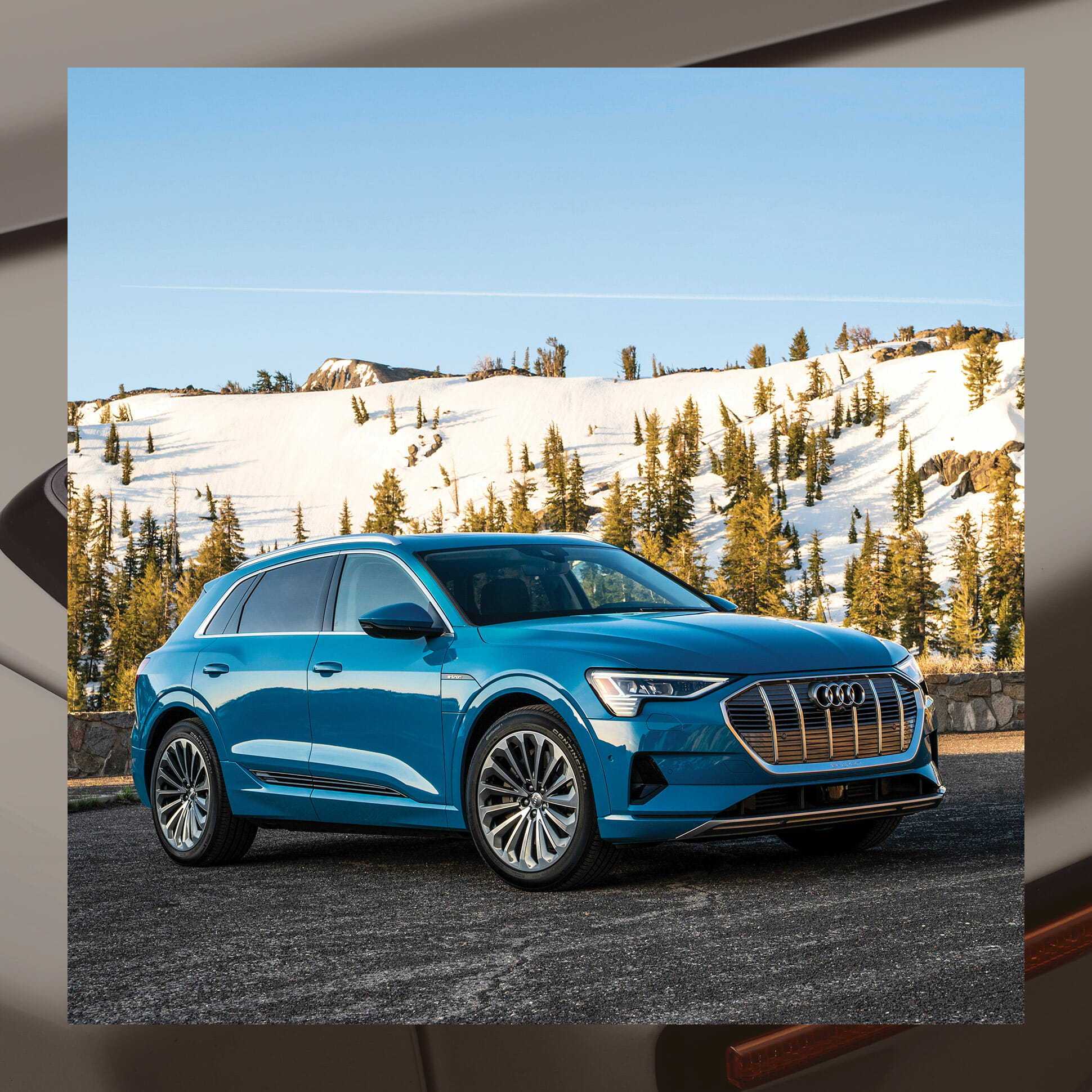
Audi E-Tron
Competition in the electric vehicle world is heating up, and it was Audi that delivered the first EV with a truly premium experience and high-end build quality, even if the E-Tron’s 204-mile range doesn’t compete with EVs from other makers (like Tesla and Jaguar). Still, the crossover is exceptionally well-engineered, delivering its own brand of sporty performance. It moves the ball forward — for customers, for parent company VW and for the world we live in.

Powertrain: Dual asynchronous electric motors; all-wheel-drive
Horsepower: 402
Torque: 490 lb-ft
Price: $74,800+

Further Reading
Why You Should Care About the Audi E-Tron
Audi E-Tron Review: Simply Put, This Is a Great Car

Bentley Continental GT V8
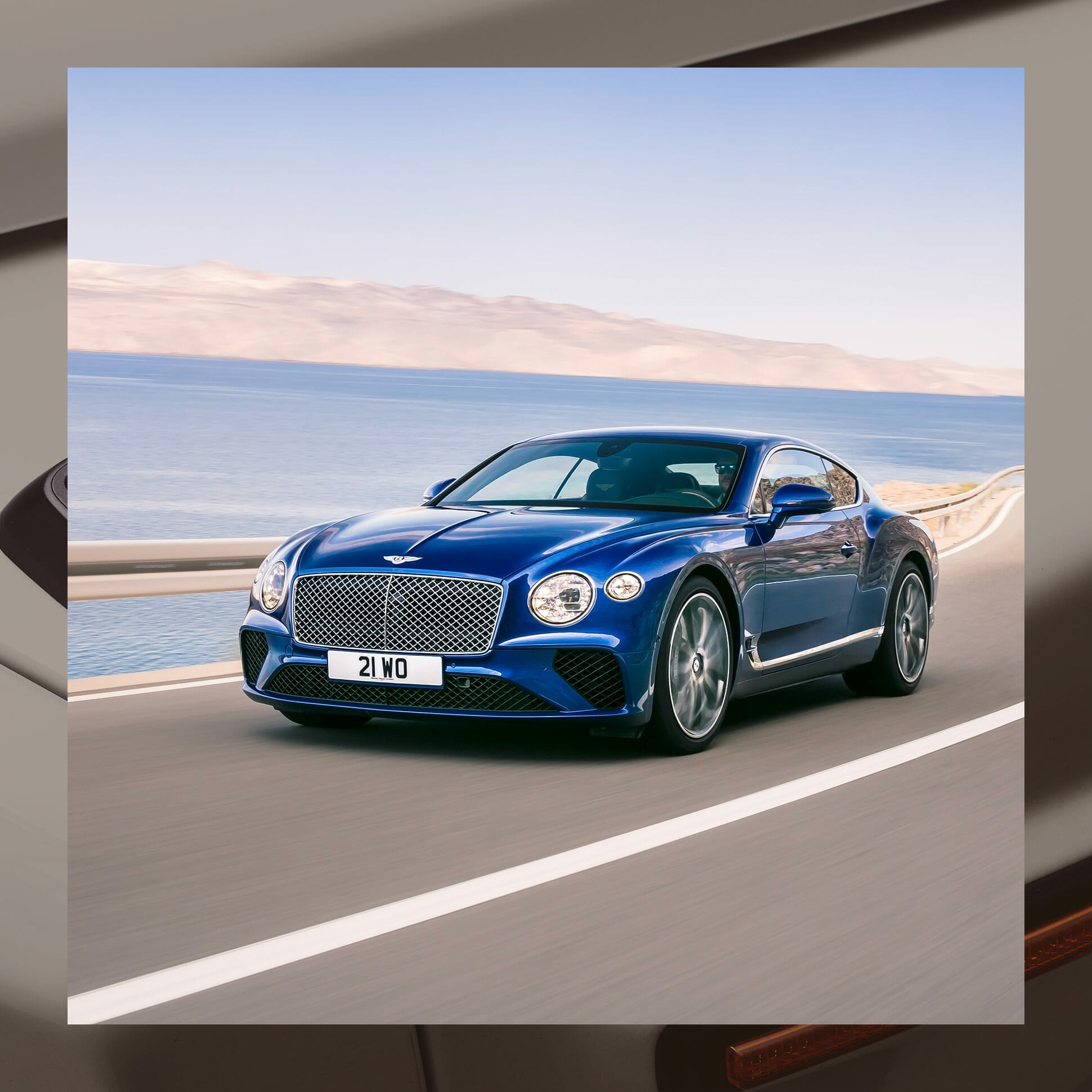
When a car costs as much as a house, it has to work hard to justify its price tag. The Bentley Continental GT makes the job look easy. Slide into the leather-laden cabin, fire up the twin-turbo eight-cylinder engine, and the Conti takes off like a shot, hitting 60 miles per hour just four seconds into its run up to 198 mph (all while weighing two and a half tons with you onboard).

Powertrain: Twin-turbocharged 4.0-liter V8; eight-speed dual-clutch automatic; all-wheel-drive
Horsepower: 542
Torque: 568 lb-ft
Price: $198,500+

Further Reading
2020 Bentley Continental GT V8 Review: A Continent Crusher Steps Up Its Game
2019 Bentley Continental GT Convertible Review: Road Trip Wonderment

Watch Now: The 10 Best Cars, Trucks and Motorcycles 2019

[embedded content]

Bird One

Shared electric scooters lead hard lives — which means good companies build them tough. Bird’s first conveyance built for purchase, the One, has tubeless wheels to prevent flats and a steel-reinforced aluminum chassis that’s four times tougher than its shared brethren. GPS and Bluetooth connectivity lets you use your phone to lock and track your scooter. Plus, you can score deals on Bird’s network of public scooters when you’re away from your personal wheels.

Range: 30 miles on a charge
Charging Time: 4–6 hours
Top Speed: 18 mph
Price: $1,300

Further Reading
Look Out E-Bikes, This Scooter Wants to Replace You

Indian FTR 1200

Indian’s FTR 1200, its first all-new bike in half a decade, may be based off the brand’s modern FTR750 racer, but it draws the most inspiration from the Minnesota company’s rich history in flat track racing. A clean-sheet design meant engineers could start from scratch, and they optimized airflow into the potent V-twin by placing the airbox directly above the engine where the fuel tank would go. The effect? A lower center of gravity for superior agility.

Powertrain: 1203cc V-twin
Horsepower: 123
Torque: 87 lb-ft
Price: $13,499+

Further Reading
2019 Indian FTR 1200 Review: Out With the Old, In With the New
The Complete Indian Motorcycle Buying Guide: Every Model, Explained

Jeep Gladiator
Editor’s Pick

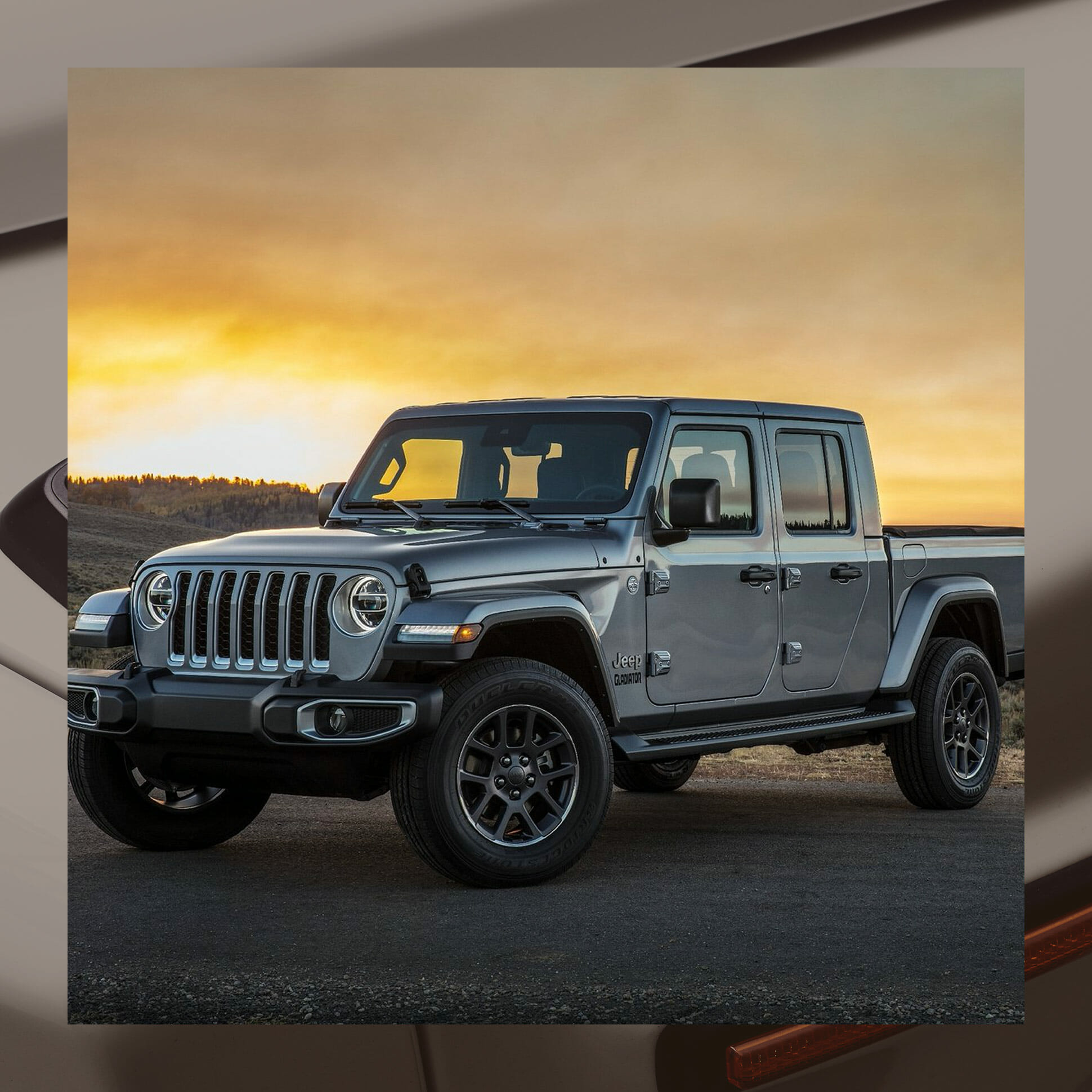
Americans love pickup trucks, and Americans love Jeep Wranglers. So rather than attempt to build a new truck from the ground up, Jeep’s product planners and engineers chose to keep it simple, taking the four-door Wrangler — specifically, the all-new, more-refined JL generation — stretching out the wheelbase and affixing a metal box to the end of it. You can snag a well-equipped one for around $45,000; onsidering you’re scoring an off-roader, a five-seat family car, a convertible and a pickup truck in one for that price, it’s hard to see that as anything but the deal of the year.

Powertrain: 3.6-liter V6 or 3.0-liter turbodiesel V6; six-speed manual transmission; four-wheel-drive
Horsepower: 285 (gasoline); 260 (diesel
Torque: 260 (gasoline), 440 (diesel)
Price: $33,545+

Further Reading
2020 Jeep Gladiator Review: A Truck for the People
We Go Off-Roading in the All-New Jeep Gladiator Overland Pickup

Mercedes-AMG G63

New versions of the Mercedes-Benz G-Class come around less frequently than new popes. So when this year’s Gelandewagen arrived, it did so with roughly as much fanfare. For all the commotion, it takes a keen eye to tell the new “G-Wagen” from the old, at least from the outside; no such trouble occurs once you open the door, as the new G-Class finally boasts an interior worthy of a six-figure price tag. The AMG-tuned G63 version also cracks off mind-bending acceleration times without sacrificing the off-road ability that lets the G-Class be mentioned in the same breath as Land Rover and Jeep.

Powertrain: 4.0-liter twin-turbocharged V8; nine-speed automatic; four-wheel-drive
Horsepower: 577
Torque: 627 lb-ft
Price: $147,500+

Further Reading
2019 Mercedes-AMG G63 Review: The Automotive Multi-Tool, Now Better Than Ever

Porsche 911 Carrera S and 4S

Today’s 911 is many things the original was not. The cabin is decidedly high-tech, replete with touchscreens and a toggle-switch shifter. The extra-wide rear houses a turbocharged version of the traditional flat-six, mated to a new eight-speed dual-clutch transmission. (Porsche even says a hybrid 911 is in the works.) Change is the only constant here — well, that and round headlights. Perhaps that’s why every new version of the 911 keeps Porsche at the head of the sports car pack.

Powertrain: Twin-turbocharged 3.0-liter flat-six; eight-speed dual-clutch automatic; rear- or all-wheel-drive
Horsepower: 443
Torque: 390 lb-ft
Price: $113,300+

Further Reading
2020 Porsche 911 Carrera Review: Better In Literally Almost Every Way
A Definitive Ranking of Blue Porsche 911s

Ram 2500 and 3500

Heavy-duty pickups have become big business but maximum capability is only half the equation; today’s buyers want the same comforts they’ve gotten used to in other vehicles. In top-trim form, both the 2500 and 3500 are as tech-packed and comfortable as a luxury sedan. That’s not to say they can’t pull weight: the giant Ram 3500 cranks out 1,000 pound-feet of torque, giving it enough towing capacity to pull a small herd of elephants.

Powertrain: 6.4-liter V8 or 6.7-liter turbodiesel inline-six; six- or eight-speed automatic transmission; two- or four-wheel-drive
Horsepower: 410 (gas), 370–410 (diesel)
Torque: 429 lb-ft (gas), 850–1,000 lb-ft (diesel)
Price: $33,645+

Further Reading
The 2019 Ram Power Wagon Is the Most Capable Pickup You Can Buy

Toyota GR Supra

Building a sports car is an expensive proposition, especially if you want it to be good. To create the fifth-generation Supra, Toyota got by like Ringo Star, with a little help from its friends: the folks at BMW. The spec sheet may have far more in common with the rides of the Bavarian Motor Works than with anything alongside it in the Toyota showroom, but that’s a feature, not a bug. With the fifth-generation Supra, Toyota chose not to let the perfect be the enemy of the good — and it delivered a great car as a result.

Powertrain: 3.0-liter turbocharged inline-six; eight-speed automatic; rear-wheel-drive
Horsepower: 335
Torque: 365 pound-feet
Price: $49,990+

Further Reading
2020 Toyota Supra Review: Check Your Judgement At the Door
2020 Toyota Supra Revealed: Return of the King

Zero SR/F Electric Motorcycle

When an electric bike promises cost savings, environmental friendliness and one-of-a-kind thrills, you pay attention. Zero Motorcycles has been at this game for 13 years, outlasting fly-by-night competitors and even impacting Harley-Davidson, which just rolled out its first electric model, the LiveWire. The Zero SR/F flies contrary to the hallmarks of classic motorcycling: there’s no engine to purr, no gears to shift, no neutral to pop it into at a light. But any doubts whoosh away the moment you twist the throttle; try going from 0 to 60 miles per hour in less than two seconds. Green means go, baby.

Range: 161 miles in town; 99 on the highway at 55 mph; 82 on the highway at 70 mph
Horsepower: 110
Torque: 140 lb-ft
Price: $18,995+
Further Reading
The All-New Zero Will Be the Most Modern Motorcycle On the Market
Note: Purchasing products through our links may earn us a portion of the sale, which supports our editorial team’s mission. Learn more here.

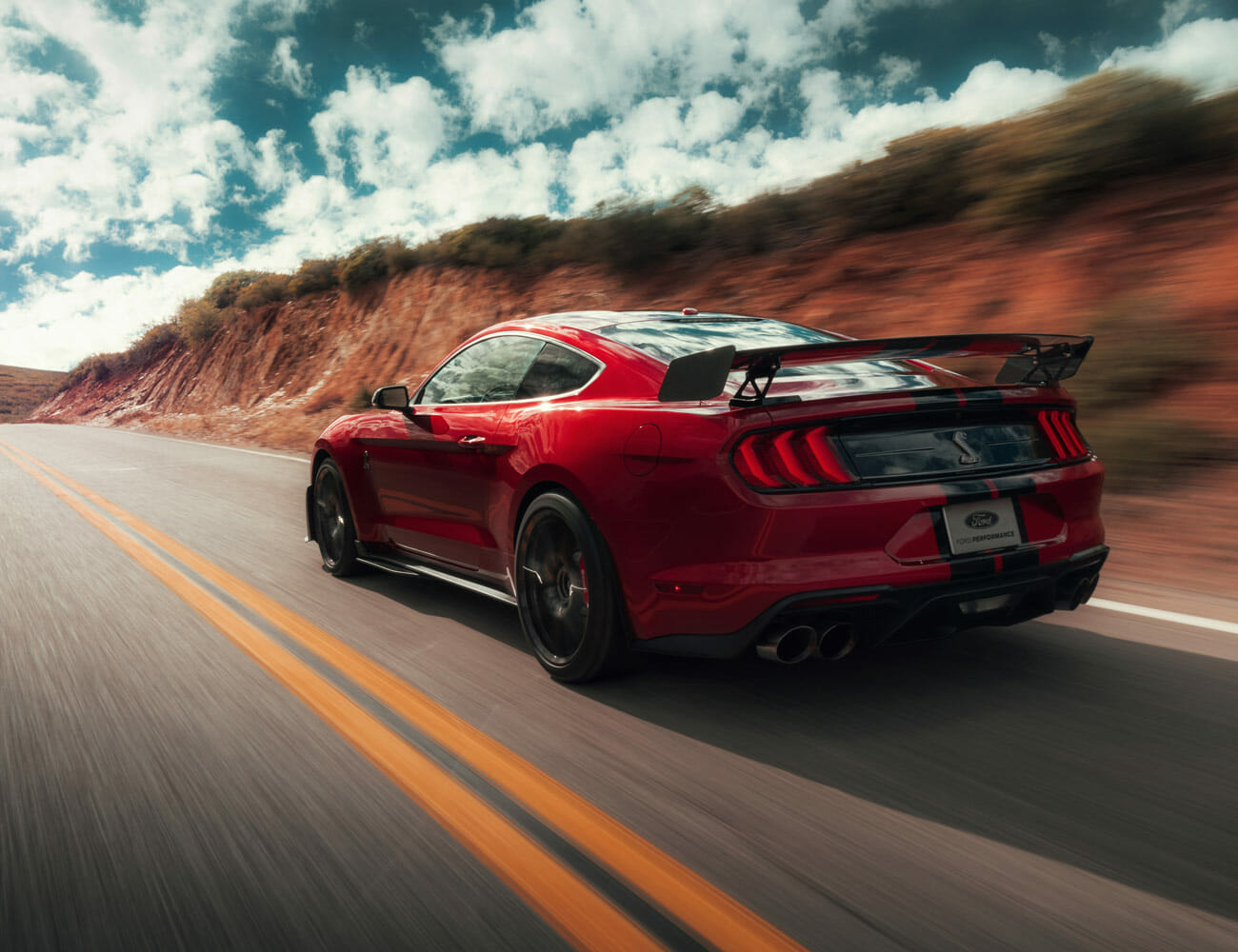
The 2020 Shelby GT500 Made Me Rethink What a Mustang Should Be

For most of its history, the Ford Mustang has never really been about handling. Cool? Absolutely. Fast? Yeah, for the most part — though the Malaise Era cars can only be considered as such by the standards of the day, and the V6 ‘Stangs of the early ’90s don’t even get that excuse. But when it came to turning, Mustangs generally were little better than any other car rolling out of Dearborn.

Sure, there were the occasional race-tuned models, like the Cobra R of 2000. But the Mustang, like most muscle cars, was ultimately about straight-line speed — and no version better represented that than the Shelby GT500. Each version was not only more potent than every Mustang before, but arguably wilder and crazier too.

That trend peaked with the GT500 that grew out of the fifth-generation Mustang, a 662-horsepower supercharged beast with a cue ball-topped stick shift and a solid live axle out back that made driving it feel like a carnival ride. It was the ultimate Mustang, a rolling Godzilla that could spin the tires at 60 miles an hour and crack 200 given enough room to run.

It was also one of the first new cars I truly fell in love with. It felt every bit what short-pants Will always expected a muscle car to be: big, bad, empowering. I burned rubber on side streets because it was so easy. I floored it in second gear on empty straightaways just to ride the lightning from 25 to 95. I revved the engine instead of honking in traffic to hear the horny T. rex roar coming out of the exhaust pipe. It was a silly car made spectacular by a supernatural engine.

So when Ford revealed that the sixth-generation Mustang’s version of the Shelby GT500 would not only ditch that engine for a new, smaller-displacement supercharged V8 but would also follow more in the steps of the track-focused GT350 than in the tire tracks of GT500s past — and worse, would be governed to a top speed of 180 mph — it’s safe to say I felt a bit angry. Betrayed, even. The GT500 I loved may have been rude, crude and lewd, but damn it, it was honest about where it came from.

Then Ford invited me out to Las Vegas to test the 2020 Shelby GT500 out on the street, the track and the drag strip. And I walked away loving it.

Ford Performance’s engineering work has, remarkably, delivered a muscle car that feels every bit as fast and furious as an honest-to-God supercar. The wonders they’ve performed on the platform and suspension to extract maximum on-track performance have paid off delightfully, both on the street and in the heat of battle.

Las Vegas Motor Speedway’s 2.4-mile billiard table-flat road course is hardly the most compelling track on the planet for a 760-hp car, given its lack of straights — the last time I was brought there to try a new car, it was the 275-hp Chevy Camaro 2.0T 1LE — but it proved a solid venue to discover how stunningly well-balanced and neutral the new ‘Stang’s handling is. The bevy of Ford Performance tuned software and hardware alike that separates this GT500 from lesser Mustangs turns a front-heavy muscle car into an honest-to-Edsel super sports car, one worthy of carrying the high-performance torch for the carmaker once the GT supercar fades away.

Yet it’s still easy to drive on the road, too. The ride never relaxes past firm, but it’s an O.G. Lexus compared to the last GT500, where pockmarked pavement could actually knock you out of your seat and into the air. There may be a P-R-N-D-M dial where the gear lever once sat, but the paddles behind the wheel — sourced from the F-150 Raptor, as far as I could tell — serve up the delight of choosing your own gear almost as well. There may be no heavy clutch to play with anymore, but you can still slot the drivetrain into any gear you like and feed on the unrelenting power, savoring its force like a fine bourbon.

The weighty steering, never a Mustang strength, is sharper, if not delicate or flowing with feedback. On the winding roads an hour outside of Vegas, the GT500 carved up turns with the intuitive ease of a sports car from Stuttgart, responsive and relaxed even at autobahn-worthy speeds — aided, of course, by downforce-boosting aerodynamics like the louvered hood and rear spoiler. (The $18,500 Track Package package adds carbon fiber wheels, a much bigger wing and splitter wickers, among other racy accessories; unless you’re planning on spending more time on closed courses than open roads, save the money.)

Of course, it still slaughters all comers on the straightaways, too. Indeed, if there’s one place where it feels subjectively less than the old GT500, it’s in how damned easy it is to humiliate almost anything in a straight line. Flooring it from a stop in the 2013 model felt like flying a D-558-II Skyrocket; in the 2020 model, it’s as smooth and simple as takeoff in a Dreamliner.

To prove how easy it is to launch the 2020 GT500, Ford took the assembled mass of media to the drag strip, so we could test out the two features designed to help even noobs squeeze every once of straight-line capability out of it: line lock, where the computer locks the front brakes while you floor the gas, allowing for a perfect burnout every time (which also warms up the tires for maximum grip); and launch control, where the computer holds the engine at just the right rpm no matter how hard you mash the throttle, leaving you to do nothing but lift your left foot off the brake and keep the right pinned to the firewall when the light turns green. Do it right, and you’ll go one-fourth of a mile in 10.7 seconds, hitting 60 mph just 3.3 ticks of the stopwatch after you launch.

Thanks to the spectacular new dual-clutch gearbox, there’s no worry about trying to nail a perfect 2-3 shift with a balky stick shift; it clicks off cogs right on cue in as little as 80 milliseconds. There’s no futzing with the pedals through the quarter, no dancing with the throttle to keep from overloading the tires. If the 2020 model were only easier to drive than its predecessor, it’d be easy to hate on it. The fact that it’s easier and faster, however, simply makes it better.

The 2020 Shelby GT500 may not be the all-American monster that its forefather was, but it’s far superior in almost every way. Whether or not it’s ultimately more worthy of being the reigning sovereign of the House of Mustang than its raw, animalistic predecessor was — well, that’s up to you. But I’m not ashamed to admit that it made me a convert.

Two of Our Favorite SUV Makers May Be Teaming Up

We’ve made no secret of our love for the current Lincoln Navigator. After all, we named it the best new car of the year for 2018, when it went on sale. We’ve also been pretty vocal in our excitement about the Rivian R1S and R1T, the purely-electric, all-kinds-of-clever electric pickup truck and SUV pairing set to go on sale next year.

So you can imagine how stoked we were to hear Lincoln and Rivian may be planning on joining forces to create an electric Navigator — or at least a Navigator-like SUV.

That’s the latest from Reuters, which cites several people familiar with a program to use Rivian’s all-electric vehicle platform to build a battery-powered SUV. Considering the R1S is nearly the size of the Navigator, any Lincoln based off its chassis would be around the same size as the gas-powered Navi we know and love.

The electric Lincoln, reportedly being developed under the code name of U787, should hit the streets in mid-2022, according to the story — just in time to take the fight to the full-size electric SUVs and trucks rival General Motors has in the works, including an Escalade-like Cadillac EV and quite possibly a reborn Hummer.

That won’t be the only electric crossover to land in Lincoln dealerships, of course. Two smaller ones are also expected in the next four years, according to Reuters‘s sources, at least one of which will presumably use the architecture of the controversial new Ford Mustang Mach-E. The Lincolns will also join a host of other electric vehicles wearing the Blue Oval badge that are planned to be introduced over the next few years, including an electric F-150 expected in 2021 based on the all-new next-gen version of the best-selling pickup truck.

If it seems odd that Rivian might play a key role in the creation of a direct rival, take a minute to remember that Ford Motor Company is a major investor in the EV start-up. Earlier this year, FoMoCo dropped $500 million into the nascent Michigan-based electric vehicle builder; Ford also plans to help Rivian gear up its production processes in order to get the R1S and R1T rolling off assembly lines and onto streets.

Audi Rolls Out 2020 RS Q8

The 2020 Audi RS Q8  is the fastest & sportiest Audi SUV yet. A 591-horsepower V8 plus mild hybrid system gives it a top speed of 190MPH with loads of torque. It features adaptive AWD, an active anti-roll system & rear-wheel steering. Flagship features & finish from its moon roof to its 23-inch Pirelli P Zero tires mark it as a mean machine.

[embedded content]

These Used Cars Will Offer the Best Black Friday Discounts

This Thursday is the fourth one of the month, and you know what that means: Black Friday week has arrived. (What, you thought we were going to say something about Thanksgiving?)

Not only is it a great time to grab everything from televisions to outdoor gear for a bargain, it’s also a great time to score a deal on a car. With model years closing out, it’s an excellent time for new car lease discounts. And according to a new iSeeCars study, it’s also the best time of year to buy a used car.

Here, according to that study, are the five used cars that will see the best discounts on average over the Black Friday sales period.

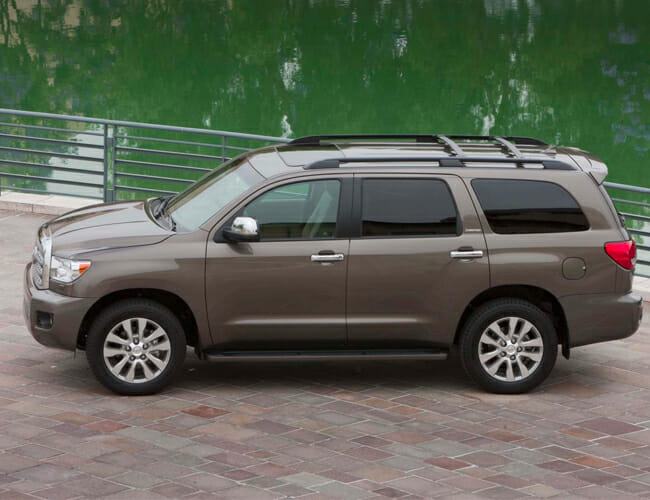
Toyota Sequoia: 10.4% Off

There are a lot of Sequoias on the used market; not surprising, as the three-row SUV has classic Toyota longevity. It has not been updated with a new generation since 2007. It’s not a cool Toyota like a Land Cruiser or a Tacoma that owners would hang onto for decades out of love. But it may be a sensible buy.

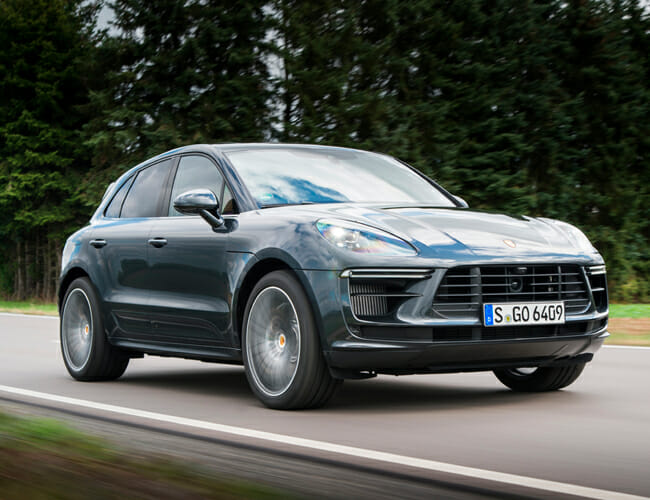
Porsche Macan: 10.3% Off

Luxury SUVs are popular cars to lease. The Macan is Porsche’s best-selling car. So, perhaps unsurprisingly, there are a lot of Macans coming off leases in the marketplace — and plenty of popular Mercedes, Lexus, and BMW competitors to compete with in the used car market. The Macan thus becomes an affordable entry point if you want to buy a recent Porsche.

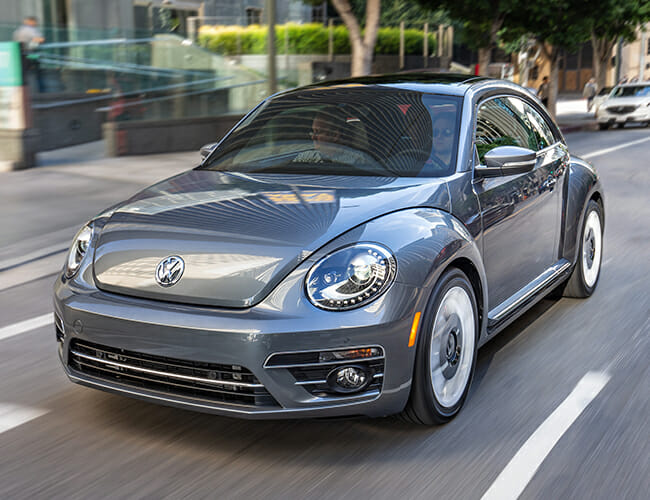
Volkswagen Beetle: 9.2% Off

It makes sense that the Beetle would be a good value. It’s a two-door niche vehicle. Nostalgia fatigue has set in; anyone who has wanted a new Beetle has had more than two decades to buy one. But it could be a deal for a single person who likes the styling and wants a fun-to-drive VW.

Toyota Sienna: 9.1% Off

The Sequoia is the minivan of the Toyota SUV lineup. The Sienna is Toyota’s actual minivan. It’s slightly newer, with the current generation debuting for the 2011 model year — but it’s in a similar situation to the Sequoia, with there being a lot of them already floating around.

Fiat 500: 8.6% Off

As the Volkswagen Beetle, fatigue has set in with the Fiat 500. Trouble is, the 500 is an even smaller niche than the Beetle, and even less practical. (New ones are also cheap.)

Note: Purchasing products through our links may earn us a portion of the sale, which supports our editorial team’s mission. Learn more here.

The Ford Transit Can Now Be Your All-American, All-Wheel-Drive Camper Van

For the 2020 model year, Ford at long last added an all-wheel-drive version of the Transit van to its lineup. Not surprisingly, this has delightful implications for anyone planning on using FoMoCo’s rig for #vanlife:  American company VanDOit is already customizing them into camper vans, in the form of their new VanDOit LIV model.

VanDOit’s modular system can offer a wide range of functionality and multipurpose use. The key feature is the bed platform: it’s on a hydraulic lift, allowing it to rise up to carry gear in the cargo area. It can also fold to accommodate a third row of removable seats, raising the potential seating capacity to eight.

The LIV can also incorporate several mods that make it well-suited for (at least milder forms of) overlanding. VanDOit can fit it with an EverShower portable shower that can be used inside or outside the vehicle. Buyers can also include a portable hot water system, roof-mounted solar panels, an enlarged battery capacity and a galley kitchen.

Pricing for the VanDOit LIV is reasonably affordable by camper van standards. The company estimates the cost for most builds to be between $59,800 and $108,800, Transit van included. Builds currently require a seven-month wait, however.

If you’re looking to do more robust overlanding, one solid alternative option could be Sportsmobile’s 4×4 Econoline camper, which offers Ford’s 6.8-liter V10, 16.5 inches of ground clearance and the same 44-degree approach angle as a Jeep Wrangler Rubicon. A realistic build-out of that vehicle would cost you quite a bit more than the LIV’s max price, however, so think hard about what sort of #vanlife you’ll actually be living before you make the decision.

6 Iconic Cars We’re Thankful for This Holiday Season

Thanksgiving is a special time of year here in the United States, one in which Americans come together to eat an excessively hearty meal and complain about their local football teams. It’s also a time for giving thanks — if you can find a spare moment between leftovers, scoring those great Black Friday deals and evading that one relative who really wants to talk politics.

In the spirit of the season, then: Here are six vintage cars we found across the Internet that are still in fine form. We can’t afford them. But we’re thankful others are out there to care for them and give them a loving home.

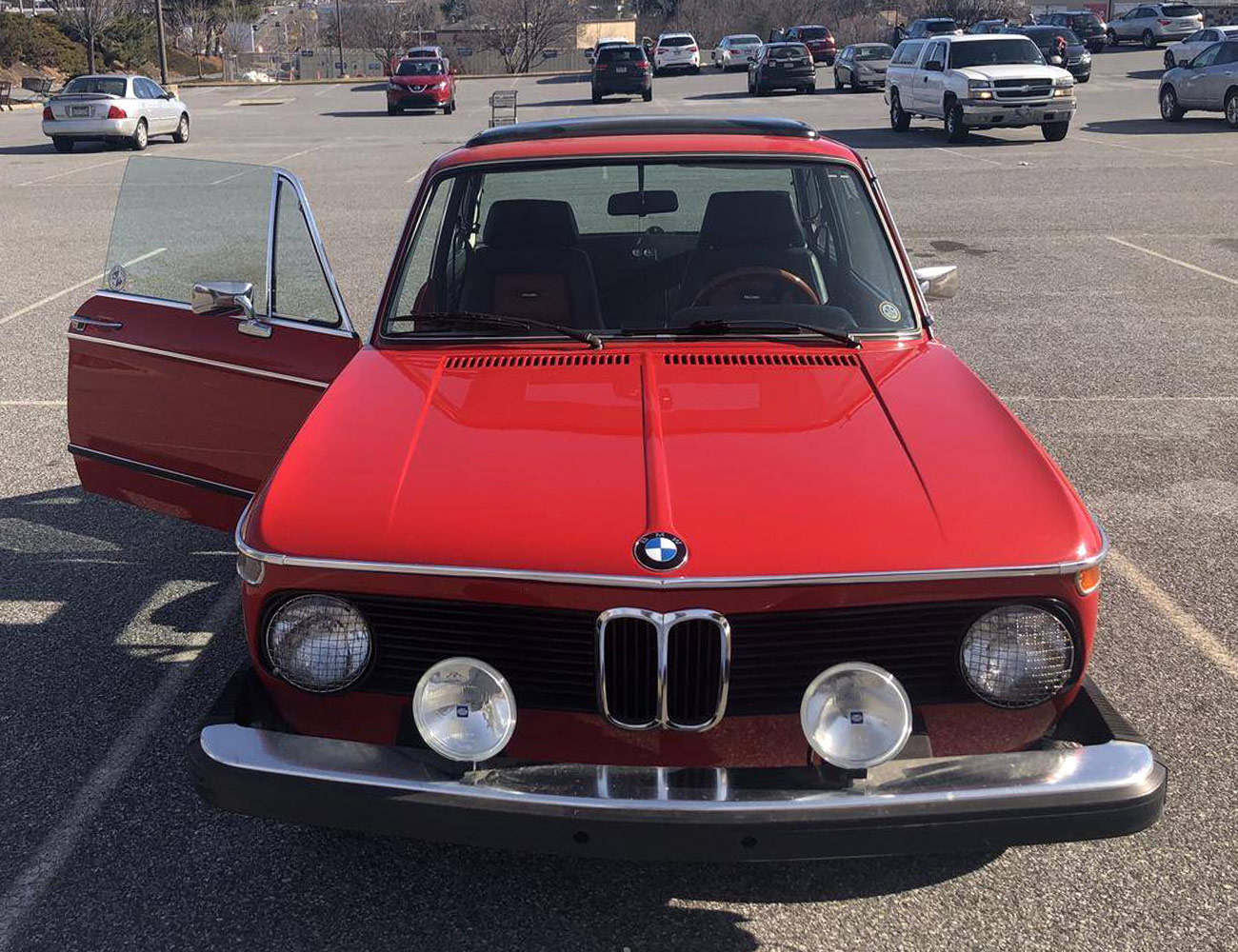
1974 BMW 2002Tii

Why We Like It: The quick and well-handling BMW 2002 helped establish the company’s reputation for producing “the ultimate driving machine.” These cars are anything but rare on the vintage car market, because so many owners have loved them, cared for them, and kept them running. This one’s a mostly-stock 1974 2002 Tii, which had a little extra horsepower as well as upgraded brakes and suspension components.

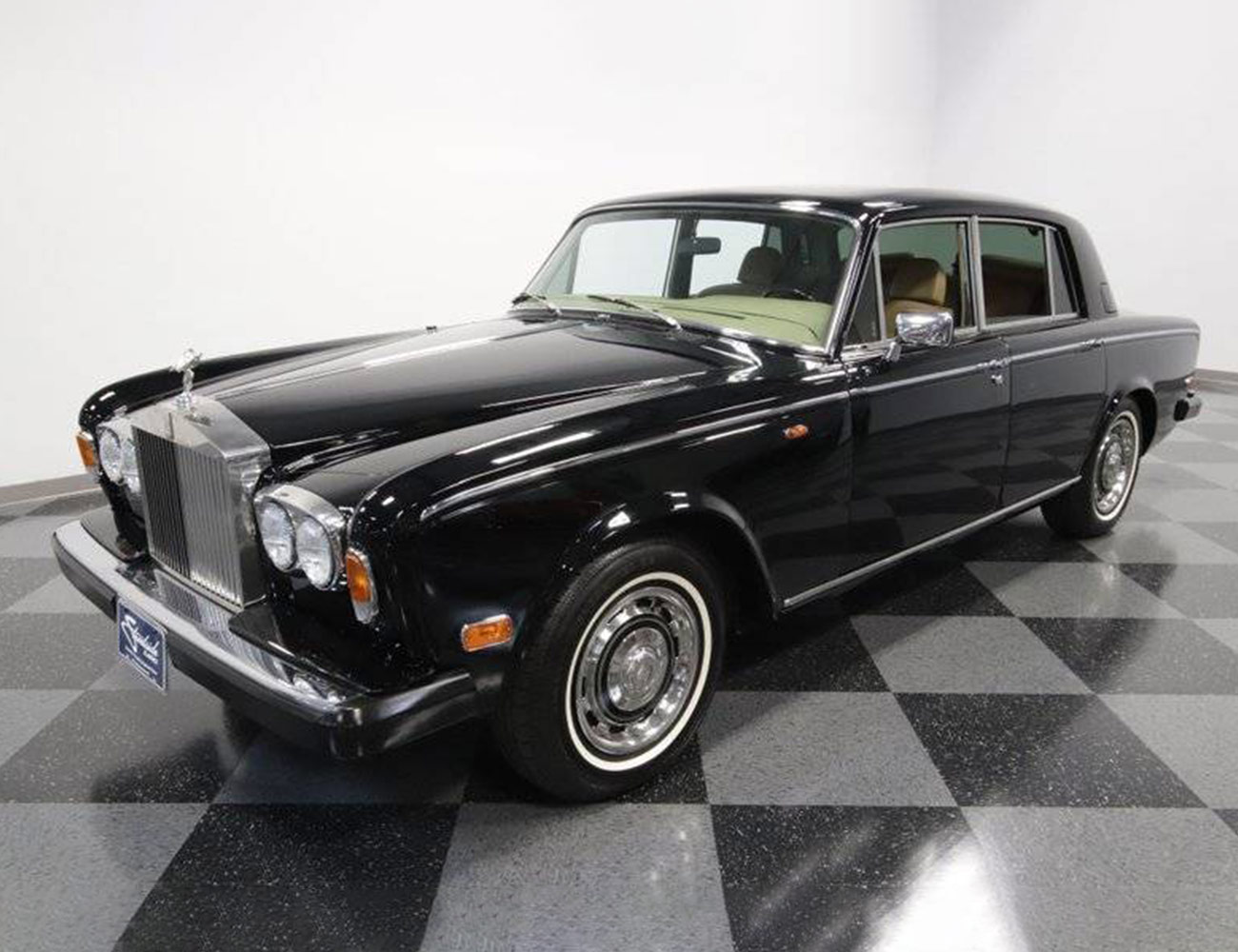
1978 Rolls-Royce Silver Shadow

Why We Like It: The Silver Shadow modernized Rolls-Royce in the 1960s and 1970s. It had standout features like a sublime hydropneumatic Citroën-sourced suspension. Because they were so popular and Rolls Royce produced so many of them, you don’t need to go have “Crown Prince” in front of your name to be able to afford one. In fact, the Oakland Raiders’ dentist previously owned this one.

1994 Land Rover Defender 90

Why We Like It: The classic Land Rover Defender 90 is timeless and charming. This sought-after 1994 North American spec version, won in a sweepstakes, was rehabbed by specialists at East Coast Defender. You may want to paint over that Barbour logo, but that Barbour-trimmed interior is, quite simply, magnificent.

1984 Toyota Land Cruiser

Why We Like It: The classic FJ40 Toyota Land Cruiser made the car an off-roading icon. This rig is not just any FJ40; it’s the holy grail version for North American buyers, since U.S. production of the FJ40 ended in 1983. Better still, the 1984 edition we didn’t get in the United States had a five-speed manual instead of the old four-speed. This 1984 version has had a frame-off restoration, hence the steep asking price.

1962 Austin Mini Beach Car

Why We Like It: The classic Austin Mini was an undeniably fun-to-drive, capable and cool car. This example is a super-rare Fiat 500 Jolly-style North American-spec Mini beach car, with no doors and wicker seats. It has been well cared for by a single family for its entire life. Why would you travel from your swanky vacation cottage to the beach in anything else?

1988 Mercedes-Benz 560SL

Why We Like It: The charming R107-gen Mercedes-Benz SL-Class hung around in the lineup for 18 years. The 560SL, as seen in this Gear Patrol feature, was that car at its most gravitas-laden, thanks to a big 5.6-liter V8. Why’d we choose this precise 1988 version? Well, my parents once owned this exact spec car, and I, very occasionally, got to drive it. So I’m extra-thankful for it.

Note: Purchasing products through our links may earn us a portion of the sale, which supports our editorial team’s mission. Learn more here.

The Haters Are Wrong. Ford’s New Electric SUV Has the Perfect Name

Ford launched its groundbreaking electric performance SUV in Los Angeles on November 17, and as the world quickly realized, it’s launching with a controversial name. It’s not just the “Mach E,” as many early reports claimed; Ford is calling its new EV the Mustang Mach-E. Indeed, the carmaker is even describing this tall, electric-powered SUV “the newest member of the Mustang family.”

Mustang enthusiasts, unsurprisingly, are raging about it online. But the aggrieved fanboys need to stand down. The Mustang Mach-E name is perfect for this new ride.

Using the Mustang name on this new car makes all the sense in the world for Ford. It’s vital for the company that this car carries a cool reputation (and sells well). A name alone can’t make a car, but it can break one. People would be less excited about the “Ford EcoMobile,” or mildly unnerved by the “Ford E-Probe.” Ford, doubtless, is awash in survey data showing how well the name “Mustang” resonates with buyers. It’s only natural to treat it like Land Rover has the name “Range Rover” and extend it beyond the original car.

Ford expanding the bounds of “Mustang” in no way diminishes the regular Ford Mustang. Hell, Ford couldn’t cater to traditionalists more than it does with that car. The mass-market versions still have a manual transmission. Mustangs can have a large, obnoxiously loud 5.0-liter V8 engine. Do you still harbor secret fantasies of being Steve McQueen in a movie that came out more than 50 years ago? Ford will sell you a Mustang that looks exactly like that. You can even buy one that makes 760 horsepower.

And it’s not like Ford is slapping this name on a slow, awkward electric car like the Chevy Bolt. All the spy shots and reports we’ve seen and heard suggest it will be both fast and sexy (at least, for an SUV), just like the regular Mustang.

Besides, in practice, everyone will likely refer to this car as the “Mach-E.” News articles may refer to the vehicle as the Mustang Mach-E in the first instance,out of journalistic practice — but speakers will want to distinguish the EV from the traditional Mustang for clarity, and “Mustang Mach-E” is a mouthful.

Yes, Mustang traditionalists may have to encounter a horse logo on another car. One suspects they’ll find a way to cope. And, hey, there’s always the (good) chance that the Mustang Mach-E looks fantastic, performs well, and helps the Mustang brand survive at a time when global climate concern is rising and even Formula 1 is pledging to go carbon neutral. So calm down, folks.

Lexus’ LC500 Goes Topless in 2021

For 2021, Lexus is adding a convertible variant of the sporty LC500 to its lineup. Despite its sunny Sunday drive looks, this is one mean Lex, powered by a naturally-aspirated 471-horsepower 5-liter V8. Adjustments were made to improve chassis rigidity in this roofless model, as well as in weight distribution and suspension tuning. This blue color will be limited to just 100 units.

[embedded content]

Think the $64K Subaru WRX Is Too Pricey? Here’s an Alternative

Last January, Subaru unveiled the spectacular WRX STI S209. It’s the most powerful STI-branded Subaru production car ever with 341 horsepower on tap. It’s also the first high-performance “S” car in the U.S. The run, about 200 vehicles, is limited. The price tag, starting at $63,995, is staggering. Fortunately, Subaru just announced the “WRX Series.White” for 2020. While it may have a goofy name, it offers a similar limited-edition appeal with a far more reasonable price tag.

The WRX Series.White gets premium appearance upgrades. It features exclusive ceramic white paint, matte bronze wheels (18-inch for WRX, 19-inch for WRX STI), and Ultrasuede-trimmed Recaro seats. For performance, the WRX Series.White cars have a Bilstein sport-tuned suspension, Brembo brakes with either red (WRX) or silver (WRX STI) calipers, and Michelin Pilot Sport Cup 2 tires.

Subaru will produce a limited run of WRX Series.White cars, but there will be notably more than the WRX STI S209. Subaru will produce 500 WRX and 500 WRX STI versions. The base model WRX Series.White will start at $33,995 (a $1,900 premium over the WRX Limited) and the upper-level WRX STI will start at $42,695 ($1,000 more than the WRX STI Limited). That’s also less expensive than 2018’s top-tier Subaru WRX STI Type RA.

You don’t get the extra 31 horsepower of the WRX STI S209 with the Series.White, but you do save more than $20,000. And, unlike the STI S209, it’s not so exclusive you would worry about protecting your investment every time you drive it.

Reminder: If you are going to pick up a WRX to have a blast driving around in the snow, make sure to pick up some great winter tires. Also, be mindful of law enforcement and other vehicles.

Aston Martin Unveils Its First SUV

The forthcoming 2020 Aston Martin DBX will debut as the British supercar brand’s first-ever SUV. Powered by a 542-hp AMG 4-liter V-8, this luxury ’ute hits a 4.3-second zero-to-60-mph time and a top speed of 181 mph. It offers 5 dynamic drive modes as well as adaptive air suspension & an active anti-roll system. Looks pretty cool, too.

[embedded content]

LEGO x Top Gear App-Controlled R/C Rally Car

Batmobiles, Bugattis, and Beetles have all been part of the LEGO car world to our everlasting delight, but they’ve added their first app-controlled vehicle, and it’s a Top Gear-branded rally car. On top of its…

A Ford Engineer Reveals 10 Things You Need to Know About Self-Driving Cars

Self-driving cars, it seems likely, are transportation’s future. When they finally arrive, autonomous vehicles and the new technologies involved seem poised to deliver profound societal and economic changes. It will alter how, or even whether, we buy personal automobiles. Yet, it’s a topic rarely covered in much depth outside of the nerdiest automotive publications; for most of us, it’s something you read about occasionally, most likely after there has been an accident with one of the self-driving prototypes dotting the country’s roads.

But it’s something that deserves to be discussed more. The technical aspects and implications of this forthcoming transition are complex. The timeline for full autonomy — which stretches from “next year” to “never,” depending on who you ask — can be confusing.

So for some clarity, we decided to talk to an engineer who knows something about it: Ford AV LLC’s chief operations officer John Rich. Here’s what he had to say about autonomous driving, which he termed “the most ambitious technical endeavor since the dawn of the automobile.”

Autonomous driving will be safer

Safety is the most critical concern with autonomous vehicles. Safety is the reason for autonomous driving to come into existence in the first place, in order to reduce the number of accidents —  so it’s no surprise that it’s the most critical concern when it comes to developing self-driving cars. It stands to be the major hurdle between autonomous driving and public acceptance.

But Rich says the industry is still defining what “safe” means.

“We are steadily unifying into industry working groups that seek to define the standards around these things and start to look towards how you define good enough,” Rich said. “I don’t know the answer to that yet. I do know it has to be much, much better than a human being.”

But he believes the industry will get there.

“Smart people are going to be wrestling with that question and trying to define this in a way that brings confidence to consumers, regulators, and ourselves,” Rich said. “We can do this in a manner that is really, really helpful for society, which deals with an unacceptable number of traffic deaths every year. We know we can do better than that human-driven system. We’re in the process of defining the hurdles and the qualifications and the assurance to the public that this is a good and safe thing to do.

You probably will never own a fully-autonomous car

Autonomous driving will hit the commercial realm first — and most prominently. The technology is expensive; it’s easier to amortize those costs across fleets of vehicles. You’ll likely see it used for tasks like delivery and freight-hauling initially; well-defined, low-variance routes are simpler to program into autonomous vehicles.

Rich does not see autonomous vehicles as being privately owned, at least, not anytime soon.

“What most of the well-funded, advanced efforts are proposing is not a private endeavor by any stretch of the imagination,” Rich said. “It is a situation where the fleets will be owned and operated. The technology is so sophisticated, and the needs of that fleet are so great that it is not something that will be in the realm of private ownership.”

The basic layout of a car may not change too much.

Autonomous driving will allow vehicle designers to rethink car interiors, conceivably reorienting them toward productivity and comfort versus the act of driving. But Rich advises not to let your imagination run too wild. Safety concerns will keep cars from changing too radically.

“I don’t want you to completely reimagine the vehicle as a gondola with periphery seating,” Rich said. “There are things that have evolved to this state for a lot of very good reasons around safety.”

Ford is skipping straight to Level 4 — full autonomy — instead of the intermediate steps.

Ford is focusing its investment on vehicles reaching Level 4 autonomy, which the NHTSA describes as “capable of performing all driving functions under certain conditions.”

Rich believes Level 4 is where self-driving technology becomes transformative.

What Are the Levels of Autonomy?

The Society of Automotive Engineers defines six levels of vehicle autonomy roughly as such:

Level 0: No features that can actively steer the car
Level 1: Simple features that help steer the car (such as lane-centering assist) or speed up/slow down (active cruise control
Level 2: Features that combine active steering assistance and active speed control
Level 3: Features that can drive the vehicle under limited circumstances, but require the driver to constantly ready to take over
Level 4: Features that can drive the vehicle under limited circumstances, but will never require you to take over under those circumstances
Level 5: Features that can drive the vehicle at all times under all conditions
Read More

“There’s a massive gulf between [Levels] 3 and 4. It’s the economically transformative chasm to cross,” Rich said. “Instead of being a driver-enhancing feature, it becomes a business game-changer.”

The scale and complexity involved mean that reaching Level 4 is not a natural, linear progression from Level 3.

“Ourselves and the Waymos of the world and a few others really made a decision that we believe the progression was not a natural progression beyond Level 3, and that the suite of technologies and approaches were so fundamentally different, that investing in building through the levels was flawed logic,” Rich said. It’s “no longer about individual vehicles. It’s about large fleets of vehicles and intense investments in specific geofences.”

Level 5 — the Holy Grail of self-driving cars — is a long way off

Apple co-founder Steve Wozniak, long a proponent of autonomous vehicles, has said he doubts he will see Level 5 autonomous vehicles during his lifetime. Rich agreed with Wozniak’s comments — at least, as they relate to Wozniak’s lifetime.

“I think Wozniak was right,” Rich said. “There were a lot of snide comments after he made the comment that he just turned 69, and how much longer of a lifetime does he have given he’s not necessarily thin — fat guys like me took offense to that — but I think he was absolutely correct in his statement that the true Level 5 vision of autonomous driving is a long, long way off.”

But Level 4 should happen sooner.

Rich believes Level 4 will arrive far quicker than Level 5.

“We’re going to see this in a modest amount of time. It’s not tomorrow. But you’re seeing elements of it with Waymo’s efforts to pull a driver on a very controlled, limited route. You will see expansions of these capabilities over a modest time frame that allows this to come into fruition,” Rich said. “What we don’t think we’re that far away from is a geofenced endeavor.”

Geofenced areas will be big.

Geofences are the specific areas where Level 4 vehicles have been cleared to operate autonomously. Rich believes these areas will be large enough to make an economic impact.

“Geofences are not postage-stamp-sized plots where tourists can move around the city center,” Rich said. “Geofences are massive metropolitan areas where the majority of GDP for that region takes place. By geofences being significant in size, it enables scale and economically transformative things to happen.”

Sensor technology is a major technical hurdle.

Camera and sensor technology remains a significant obstacle toward autonomous driving. Any system needs to be able to spot dangerous situations at a great distance and at high enough speed to react to them faster than a human would. And that technology needs not just to exist, but be cost-effective enough to put in vehicles.

“The sensing is, of course, difficult and extremely important,” Rich said. “The thing that [Elon] Musk chides is LIDAR. And LIDAR is an immensely important sensor. But there’s a suite of sensors that have to work together to solve a variety of different sets of challenges. None of those are easy.”

But technical challenges are only part of the equation.

Rich is keen to point out that solving the technical hurdles is only one component of a more complex problem.

What Is LIDAR?

LIDAR, which is an acronym for “LIght Detection And Ranging, is a sensor system that uses invisible laser pulses to map an area in great detail at high speed. Read More

“It is the most ambitious technical achievement that the industry has attempted. But it also has enormous societal adoption concerns that existing systems have to be morphed to,” Rich said. “If you were clean-sheeting this, it would probably be a lot easier. You would have more infrastructure, you’d design the streets to be more compliant, and you’d probably establish rules from the start. Unfortunately, we have regulations, we have roads, we have behaviors, and we have a lot of other cars on the road.”

Autonomous driving will work in all types of weather…eventually.

Adverse weather can befuddle the sensors needed for autonomous driving technology. (That’s true even for the driver assistance features found on current passenger vehicles.) There’s a reason a lot of autonomous vehicle testing occurs in places like Arizona. “The challenge of dry weather is great enough right now that we tend to like situations with happy weather,” Rich said.

Ford, though, is beginning to branch out to get more data. “We are purposely picking cities like Miami and D.C. that do get a variety of weather conditions so that we start to get that type of information,” Rich said. “We will learn over time how to deal with varying rain conditions, and then eventually we will learn how to deal with the fluffy stuff.”

Rich believes that autonomous technology will, eventually, be better at handling weather than humans.

“Autonomous vehicles, in the end, will be much better drivers in snowstorms than humans are — that doesn’t take much if you watch what happens here [Detroit] when the first snow comes — but in the near term, we’re taking data on it certainly.”

Note: Purchasing products through our links may earn us a portion of the sale, which supports our editorial team’s mission. Learn more here.

Could This Mercedes G-Wagen Be Your Vintage Off-Roader for Less?

The Mercedes G-Wagen is hilariously expensive and the embodiment of ostentation. But if you can look past many of the people who buy them, the G-Class is a durable and capable off-roader, and the build quality is probably worth it. Mercedes is committed to the model for the long term.

An excellent quality about the G-Wagen is how little its boxy exterior has changed since its inception. Even aging examples, with a bit of love, can look very much like the modern rig — for less. Case in point: this 1988 Mercedes 300GD that’s up for auction on Bring a Trailer.

That 300GD has the largest diesel engine Mercedes offered on the 460, the 3.0-liter inline-five. It has a five-speed manual transmission, a dual-range transfer case and locking differentials. Crucially for California residents, it’s a pre-1997 diesel engine, so it does not need to pass smog regulations.

Note that this is not the most show-quality, pristine vintage off-roader one could find. It lived a previous life in Norway before being imported, and it shows with some notable instances of bubbling and corrosion on the bodywork. Total mileage on that diesel engine is unknown.

Counterpoints? It’s affordable. Current bidding is significantly under $10,000. A little weathering may add some charm if you’re using the G-Wagen for family beach house duty. It could also be a reasonably priced base for a restoration.

Even Today, Morgan Motor Company Is Still Building Cars Out of Wood

A version of this article originally appeared in the Craftsmanship issue of Gear Patrol Magazine as part of a story with the headline “Die Hard.” Subscribe today

When H.F.S. Morgan crafted his first namesake vehicle, in 1909, his product was modern: an ash frame affixed to a steel ladder-frame chassis under metal body panels was inline with English coach-built autos of the era. More than a century later, as sleek electric cars roll off robotically-assisted assembly lines elsewhere in the world, some of Morgan Motor Company’s century-old woodworking tools are still in use at the brand’s Malvern Link factory in England’s West Midlands.

The frames begin to take shape.

The new cars do have modern touches — today’s Morgan chassis is made from strong, lightweight aluminum instead of the traditional steel — but the core of the vehicle’s body is still made from rigid, durable ash wood. That traditional approach is a point of differentiation for the brand, and also a point of pride. One need not fix what isn’t broken, the company thinking goes, and a wooden frame keeps the machine lithe, a coveted attribute in a sports car. (The company also claims its wooden frames receive superior crash-test ratings.)

Wood is also relatively simple to work with — though that’s not to say the process is easy. Each component is marked from a template, cut, routed and joined, glued and sanded. As the pieces come together, the larger unit is dipped in a treatment solution and then hand-sanded before a quality-control inspection. Finally, aluminum body panels are added atop the structure. The process requires eight weeks of labor, and Morgan’s 180 workers complete around 800 cars per year. And aside from necessary wiring, there’s virtually no plastic in (or on) a Morgan vehicle.

The metal body work, checked by hand.

If you’re wondering how well century-old automotive manufacturing techniques hold up, Morgan reports that when a Roadster model built in the 1950s was recently delivered to the factory for a refinishing, the frame was devoid of rot or other imperfections. Try saying that about a Chrysler Imperial from the same era.

Note: Purchasing products through our links may earn us a portion of the sale, which supports our editorial team’s mission. Learn more here.