All posts in “Cars”

3 Things You Should Know Before Buying a Tesla

Tesla disrupted the automotive industry like no other carmaker during the 2010s. We use that Silicon Valley-beloved verb intentionally; Tesla, after all, often behaves more like a tech firm than a traditional automotive company. This behavior pays dividends for investors  — at times, Tesla’s market value has been higher than Ford, FCA, and GM combined — but the company’s unorthodox operations can create confusion for customers.

So, with that in mind, we decided to try and help clear up some common misunderstandings. Here are three things you should know before buying a Tesla.

Tesla’s cars cannot drive themselves.


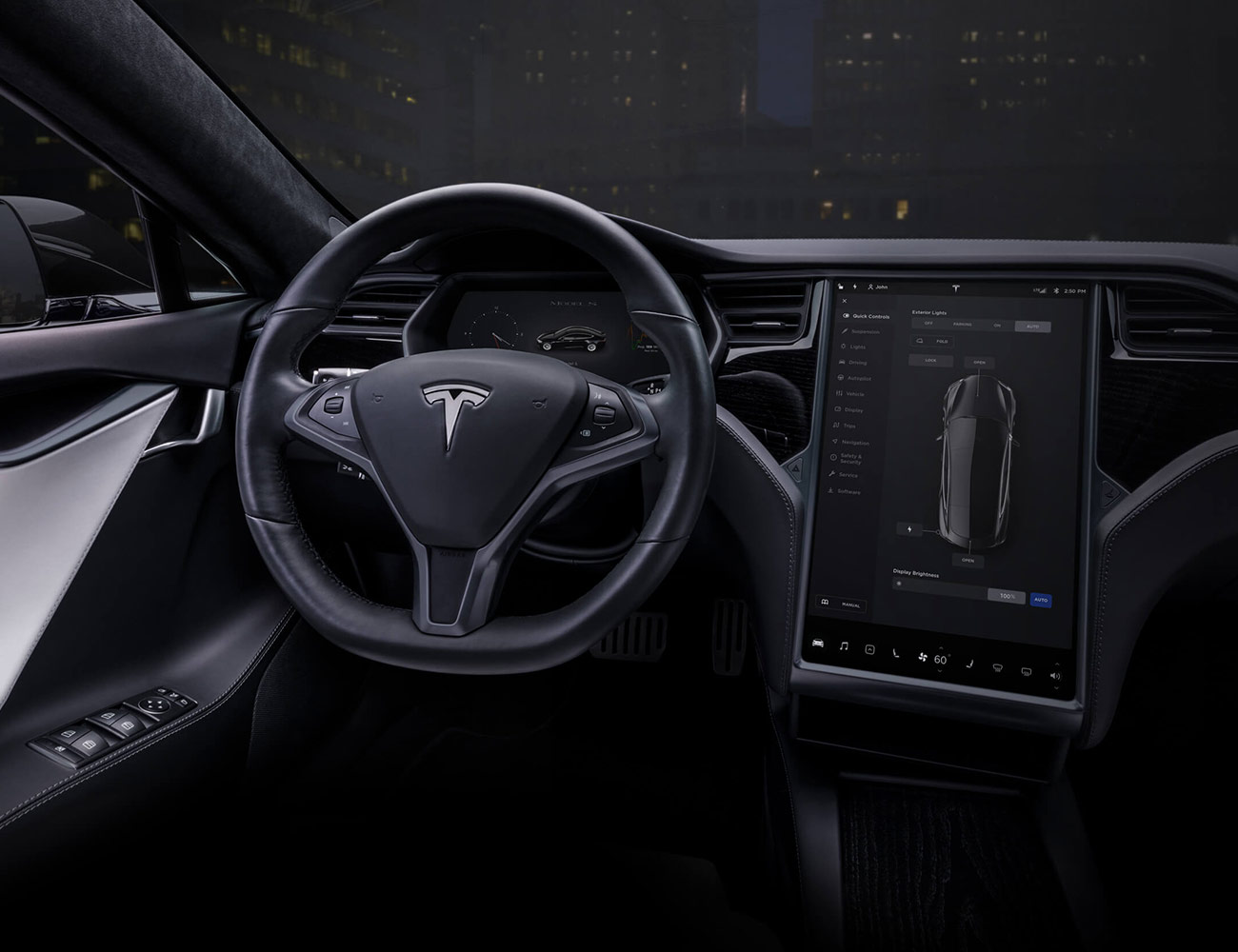
Tesla uses terms like “Autopilot” and “Full Self-Driving Capability” to describe its cars’ active safety and semi-autonomous driving features. The former comes standard; the latter is a $7,000 add-on when you order your new Tesla (or you can buy it as an over-the-air upgrade afterward). Both terms imply something akin to Level 4 or Level 5 autonomy, in which a car operates itself without driver input.

That’s not what Tesla is offering. Tesla’s current autonomous driving features — which, admittedly, are among the best available — are Level 2 features, which require constant driver attention and hands on the wheel. (Not doing so can be perilous.)

The $7,000 Full Self-Driving Capability option’s biggest draw is that it’ll provide access to true Level 4 autonomy…whenever that’s ready. It may be more prudent to wait, unless you’re flush with cash; Tesla has been promising such technology is right around the corner since 2016. Last year, Elon Musk asserted Tesla would have a fleet of robotaxis by 2020.

Most industry experts aren’t nearly believe autonomous technology in personal vehicles may be years, if not decades away. That technology still needs to be regulated, too.) The waiting period for full self-driving may be longer than you plan to own your new Tesla.

Software upgrades may not be as permanent as hardware ones


Car buying relies on a simple presumption: the car is a tangible asset one can transfer to another party. When you trick out your $60,000 dream Wrangler, the accessories stay with the vehicle and become part of its resale value. Simple and obvious, right?

Tesla’s over-the-air upgrades using software can work differently. A Jalopnik report noted instances of Tesla auditing and remotely deactivating features on Tesla vehicles after they were sold to third parties, because the new owner had not paid Tesla for them. That view — if proven legally valid — would make car upgrades more like buying a book for your Kindle. You would be purchasing the non-transferable right to access the upgrade, rather than the upgrade itself.

Such a contention could dramatically alter calculations for both new and used Tesla buyers. Do you pay for an upgrade if it doesn’t enhance the value of your car?

That said, if Elon Musk is correct, no one will be selling their Teslas before long. The CEO alleges his company’s cars will eventually become appreciating assets worth $100K-200K each, thanks to their full self-driving technology, as people will be able to rent them out as Uber-style taxis.

Teslas can’t accelerate ludicrously all of the time.


Tesla sells a Performance trim of the Model S, which can accelerate to 60 mph in a silly 2.4 seconds thanks to a feature called Ludicrous Mode. But jumping from naught to 60 so quickly isn’t something the Model S can do all the time. Getting into Ludicrous Plus mode requires certain preconditions, such as a fully-charged battery and 45 minutes of driving to preheat said battery just to make that one ludicrous acceleration run.

It also can’t repeat that stunt too often. During instrumented testing of the fastest Model S and the top-tier Porsche Taycan Turbo S, Car and Driver noted that Model S performance decreased dramatically after its first Ludicrous run. By the end, the Model S had slowed so much that writers were jotting down notes while waiting for it to finish its quarter-mile runs. The Porsche, meanwhile, cracked off consistent runs with the same precision and dependability as its gas-powered cars.  (The carmaker takes pride in that consistency; that’s the reason Porsche’s first Taycan teaser video had the car doing runs over and over again.)

Most Tesla buyers won’t be pushing those limits during everyday ownership. But it’s worth noting that a Model S will not dust Lamborghini Aventadors over and over again.

And a bonus piece of advice:

Don’t throw giant ball bearings at the side windows of your Tesla.

Note: Purchasing products through our links may earn us a portion of the sale, which supports our editorial team’s mission. Learn more here.
Tyler Duffy

Tyler Duffy is Gear Patrol’s Motoring Staff Writer. He used to write about sports for The Big Lead and The Athletic. He has a black belt in toddler wrangling. He’s based outside Detroit.

More by Tyler Duffy | Follow on Facebook · Instagram · Twitter · Contact via Email

These Photos Very Much Seem to Show the New Ford Bronco Sport

<!–Do These Photos Show the New Ford Bronco Sport? • Gear Patrol<!– –>

the veil removed


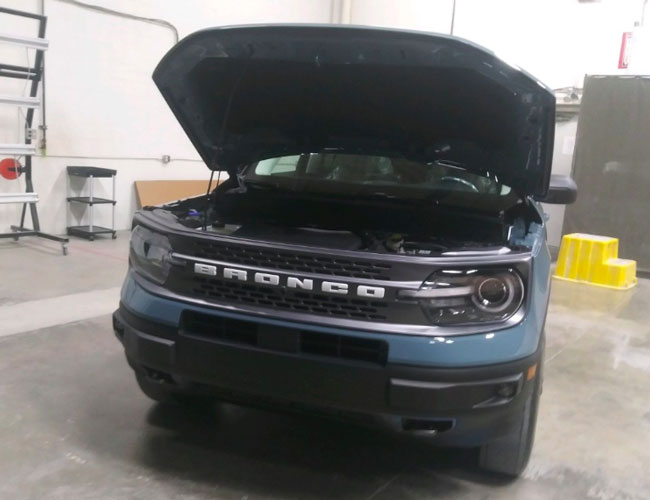
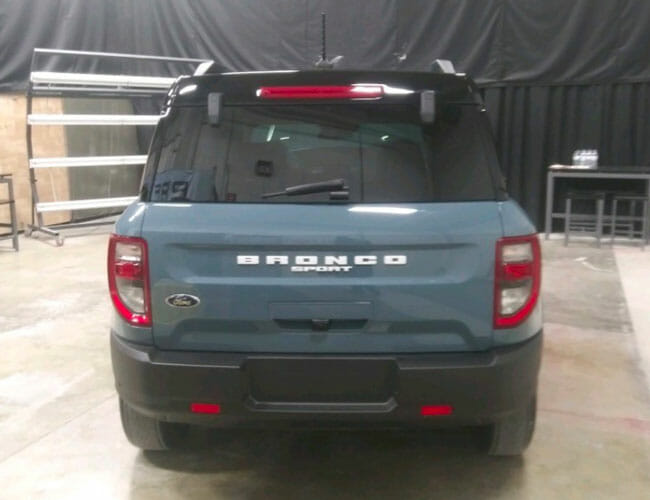
Ford is reportedly set to unveil the new 2021 Bronco models in a matter of weeks. Not surprisingly, photos have been leaking out in advance of the official debut. Last week, we had rear shots of both the two-door and four-door Bronco leak. Now, a BroncoSportForum.com user has posted pictures of what appears to be the new Bronco Sport, the unibody Bronco-branded crossover that will share a platform with the Escape.

We’ll withhold full judgment until seeing the vehicle in person. But, if these pictures do indeed represent the vehicle, the Bronco Sport looks like a boxy, rugged Escape alternative fit for taking on cars like the Jeep Renegade. Critics may point out resemblances to the second-generation Ford Escape and the Land Rover Freelander, but we find it has an appealing appearance.

If the baby Bronco looks this burly, things seem to bode well for the looks of the full-bore truck-based Bronco.

Note: Purchasing products through our links may earn us a portion of the sale, which supports our editorial team’s mission. Learn more here.
Tyler Duffy

Tyler Duffy is Gear Patrol’s Motoring Staff Writer. He used to write about sports for The Big Lead and The Athletic. He has a black belt in toddler wrangling. He’s based outside Detroit.

More by Tyler Duffy | Follow on Facebook · Instagram · Twitter · Contact via Email

<!–

–>

<!– –><!–

–>

Grab This Awesome Toyota Hilux Camper Before It’s Too Late

<!–Check Out This Super-Rare Toyota Hilux Galaxy Camper • Gear Patrol<!– –>

when great trends collide


Sometimes your favorite trends collide in one vehicle in glorious fashion. Check out this rare 1993 Toyota Hilux Galaxy Camper that an owner just listed on Ottoex.com. It is one of only 80 campers built for the Japanese market using Toyota’s indestructible pickup. And, unlike many Toyota-based off-roading campers, you can buy it in the U.S.

This Hilux is a right-hand-drive example, with a five-speed manual and a two-speed transfer case. The 2.8-liter diesel was rated for only 90 horsepower and about 139 lb-ft of torque when new, but it’s bulletproof — and has only 68,000 miles on it. The seller asserts this rig achieves about 18–20 mpg and can reach 70 mph on the highway.

The camper unit looks as though it would sleep three, with a roof-top compartment and fold-out dinette seating. Amenities include a shower, a gas stove, a refrigerator, roof-mounted A/C and a generator. The stereo head unit has been upgraded to accommodate CDs, though the TV still accommodates VHS tapes if you want to dust off that old copy of Adventures in Babysitting.

If you expect this rare beauty to sell quickly and for a lot of money, you’re right on both counts. The asking price was $49,995, and a sale is already pending. You could use FiftyTen’s camping system to kit out a Tacoma for overlanding duty for around the same price…though it’d be hard to match the motorhome space and features.

Note: Purchasing products through our links may earn us a portion of the sale, which supports our editorial team’s mission. Learn more here.
Tyler Duffy

Tyler Duffy is Gear Patrol’s Motoring Staff Writer. He used to write about sports for The Big Lead and The Athletic. He has a black belt in toddler wrangling. He’s based outside Detroit.

More by Tyler Duffy | Follow on Facebook · Instagram · Twitter · Contact via Email

<!–

–>

<!– –><!–

–>

Ford Is Building a Super-Cheap Compact Pickup, Report Says, and It’ll Arrive Next Year

<!–Ford’s Cool New Super-Cheap Pickup May Arrive Next Year • Gear Patrol<!– –>

way more fun than a crossover


Within the next two years, Hyundai will be putting its awesome new compact crossover pickup into production. But it looks like they’re going to have some competition. Automotive News is reporting that Ford recently revealed a new addition to its pickup lineup to dealers.

The new Ford will be a compact, very affordable pickup based on a unibody car platform — presumably, the one we heard about last year. Better yet: it’ll reportedly arrive in late 2021.

The report says the new truck will start under $20,000, about $5,000 cheaper than the cheapest Ford Ranger. Alongside the EcoSport crossover, the new truck will help fill the entry-level niche left open by the departing Fiesta, Focus, and Fusion models.

The compact pickup truck isn’t a proven idea. No current model exists here in the United States, and past attempts like the Subaru Baja and Mazda B-Series in the 2000s were weirdos that did’t sell well. Volkswagen, notably, ruminated on the idea, then decided not to enter the U.S. market with such a conventional gasoline pickup.

That said, one could see a compact truck being a more compelling option for American buyers on a budget than an anemic crossover or an econo-hatch. It also may be easier for a larger domestic manufacturer like Ford to carve out a new market niche than it would be for VW.

Note: Purchasing products through our links may earn us a portion of the sale, which supports our editorial team’s mission. Learn more here.
Tyler Duffy

Tyler Duffy is Gear Patrol’s Motoring Staff Writer. He used to write about sports for The Big Lead and The Athletic. He has a black belt in toddler wrangling. He’s based outside Detroit.

More by Tyler Duffy | Follow on Facebook · Instagram · Twitter · Contact via Email

<!–

–>

<!– –><!–

–>

Land Rover’s Spiritual Leader Makes No Apologies for the Design of the New Defender

If you have any complaints about the exterior of the new Land Rover Defender, Gerry McGovern probably doesn’t want to hear them all that much.

You’d also be in the minority, he says, as the feedback to the new vehicle revealed back in September has been overwhelmingly positive. Still, as he told us during a lengthy sit-down interview — one in which we touched on the importance of design at Land Rover to that boxy element on the side glass — the SUV’s styling will look far better on the streets and in the wilds than it will under the hard spotlights of auto shows and dealership floors.

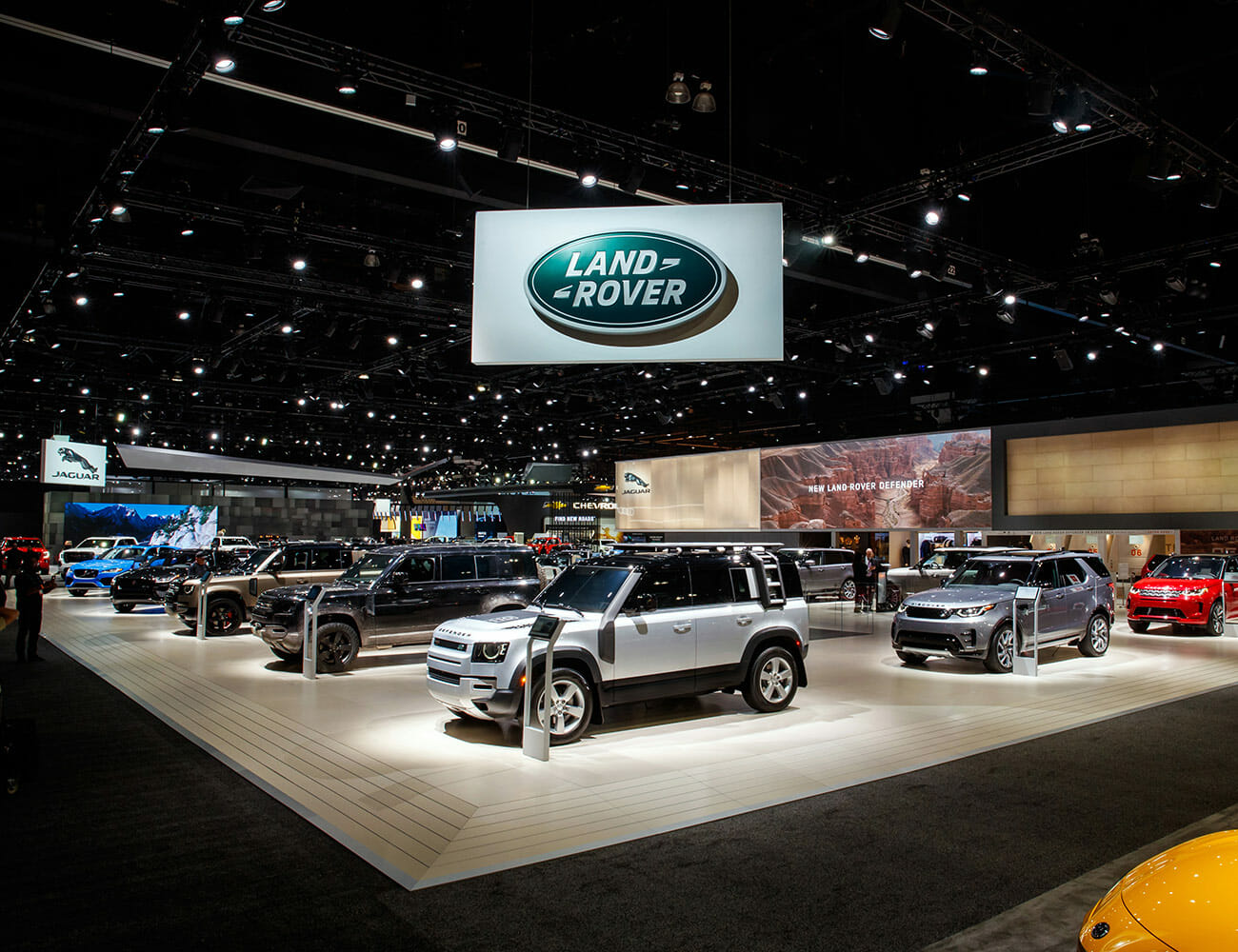
The Land Rover Defender in its starring role at the Jaguar Land Rover booth at the 2019 Los Angeles Auto Show

Q: How long ago did [Land Rover] decide to pull the trigger on this?
A: You know, I’m not sure how important that is. I mean, we’d been talking about doing a new Defender for a long time, but…it’s one thing to want to do a new Defender, it’s another to have the wherewithal to do — it in terms of financing, in terms of getting the rest of the business sorted out.

We knew all along we were going to bring back the Defender, but it took a while to make the final decision. We did a concept called the LR1, maybe four, five, six years ago. And when we looked at that, we said, “All right, this is the one we want to bring to production.

Q: Because there was also the DC 100 before that, right?
A: Yeah. They were done really to keep the conversation going…we created those concepts to generate interest. And also to start the conversation. From my perspective, they were useful, because they actually informed me that that’s exactly the way we shouldn’t be doing it.

Q: What is it about the DC 100 that you felt like shouldn’t have been done the way it was?
A: It was just too much. I think we were trying a bit too hard. There wasn’t a purity of thought to it. Proportionally it was okay, but…the cumulative thing, it just wasn’t right.

But I think sometimes you have to go through those exercises. It didn’t have enough of what I call “desirative consequence” — you know, this sort of balance of firmly looking forwards in terms of its modernity but at the same time acknowledging its unique heritage. I think this [the new Defender] has far more credibility in that respect.
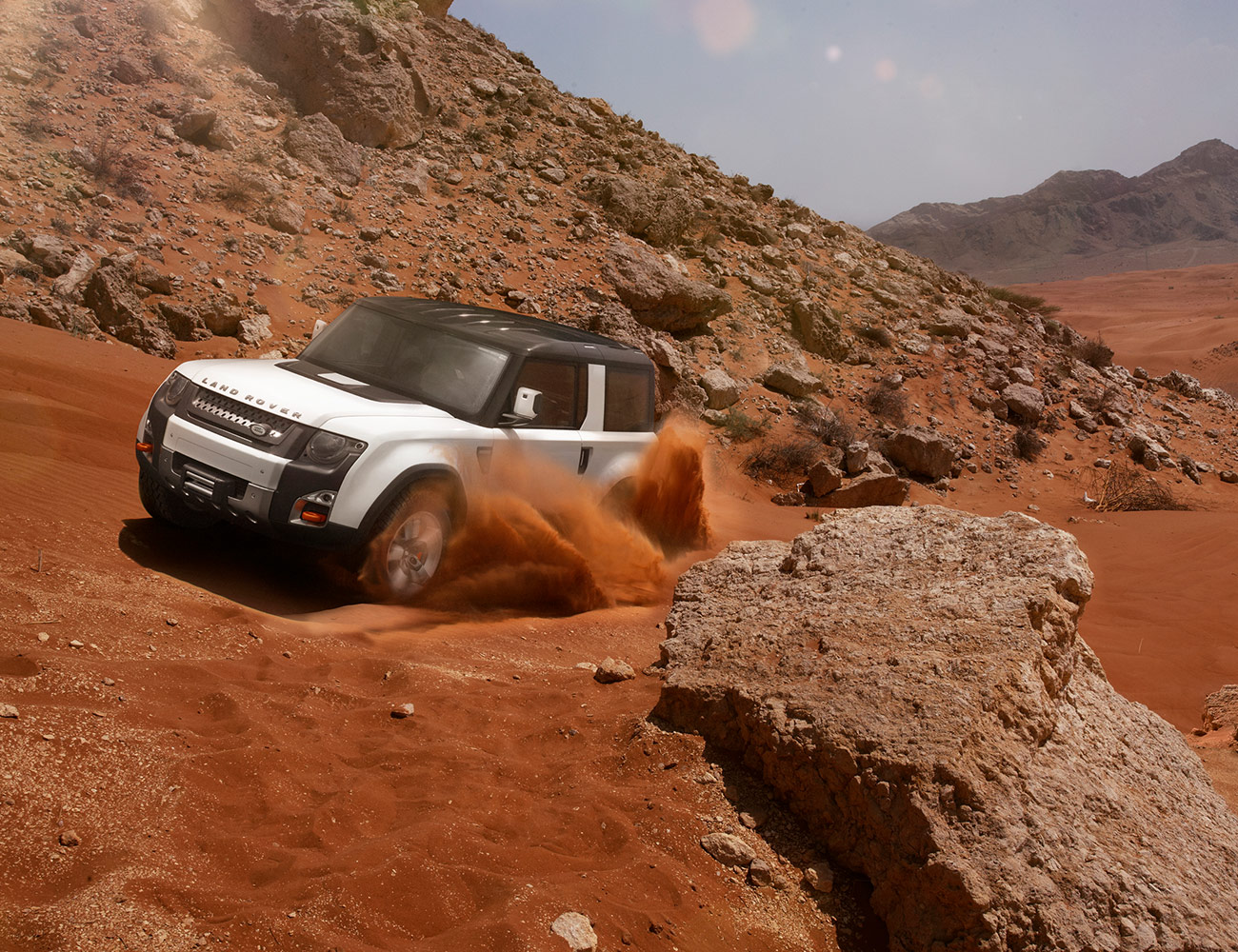
The DC 100 Concept

Q: When I think of the last Defender, I always identify it with brush guards. Is that something you guys played around with on this design?
A: Well, we’ve got our different accessories, and there’s one that’s got this sort of full protection system. Which probably does a better job, because that sort of traditional approach…I think that’s of a bygone age. These vehicles are designed now with a lot of inner strength.

I mean, a lot of these things are put on cars to reinforce the visual strength of them. Because actually, the cost of putting those on probably outweighs the [cost to repair any damage], anyway. So they were more of a visual metaphor. And for me, in my sort of modernist approach, that didn’t sit very well with me.

Q: Did you guys feel a lot of pressure to make it more retro? If you’re having a conversation about great off-road nameplates that have been around a while, you have Jeep, you have G-Wagen, and you have Defender. And the other two have stayed very conservative with their styling.
A: Well, first of all, I don’t use the world “styling.” But that aside…I was cognizant of the fact that there was a great deal of anticipation around [the new Defender]. I didn’t even think about that; and I told my team, we don’t think about it. Because, if you start thinking to much about [being] precious — it’s a bit like top performing athletes who let the pressure get to them, and they suddenly can’t perform.

At Land Rover, we have, over the years, desired to put design at the center of the business. We have developed a culture that has enabled us to do things like the new Defender, things like the Velar, things like the new Evoque or even the original Evoque. Which, before that, didn’t exist.

The brand did have a very strong engineering background. And one of the things I was very focused on was, how can we put design at the core of this brand that would enable it to flourish as a consequence? You can set it up hierarchically, you can have design on the board, but you still gotta get people to support you. You still gotta get the engineers to engineer your design. And the only way you do that is by success.

And I think once there was that recognition — that design and engineering could coexist and create a balance that enabled you to create products that are truly compelling and have that emotional connection with the consumer — you’ll be far more successful. I think Evoque was the first step, where people realized, Jesus, this car is still a Range Rover, it’s incredibly capable, but it’s highly desirable and highly design-literate. And that was the start of it.

And so, I hear other companies talking about the importance of design, but I don’t always see it in the end result. And you made an interesting point there, where you say was there pressure on you to make it more retrospective? Nobody puts me under pressure. And that’s a great thing. You know, Ralf [Speth], who’s the CEO, and Mister Tata, the owner of the business — he’s retired now, but he’s still involved — [they were] cognizant of [the fact that], if you want design to succeed, then let it, and not try to compromise it. And I think that’s been quite pivotal.
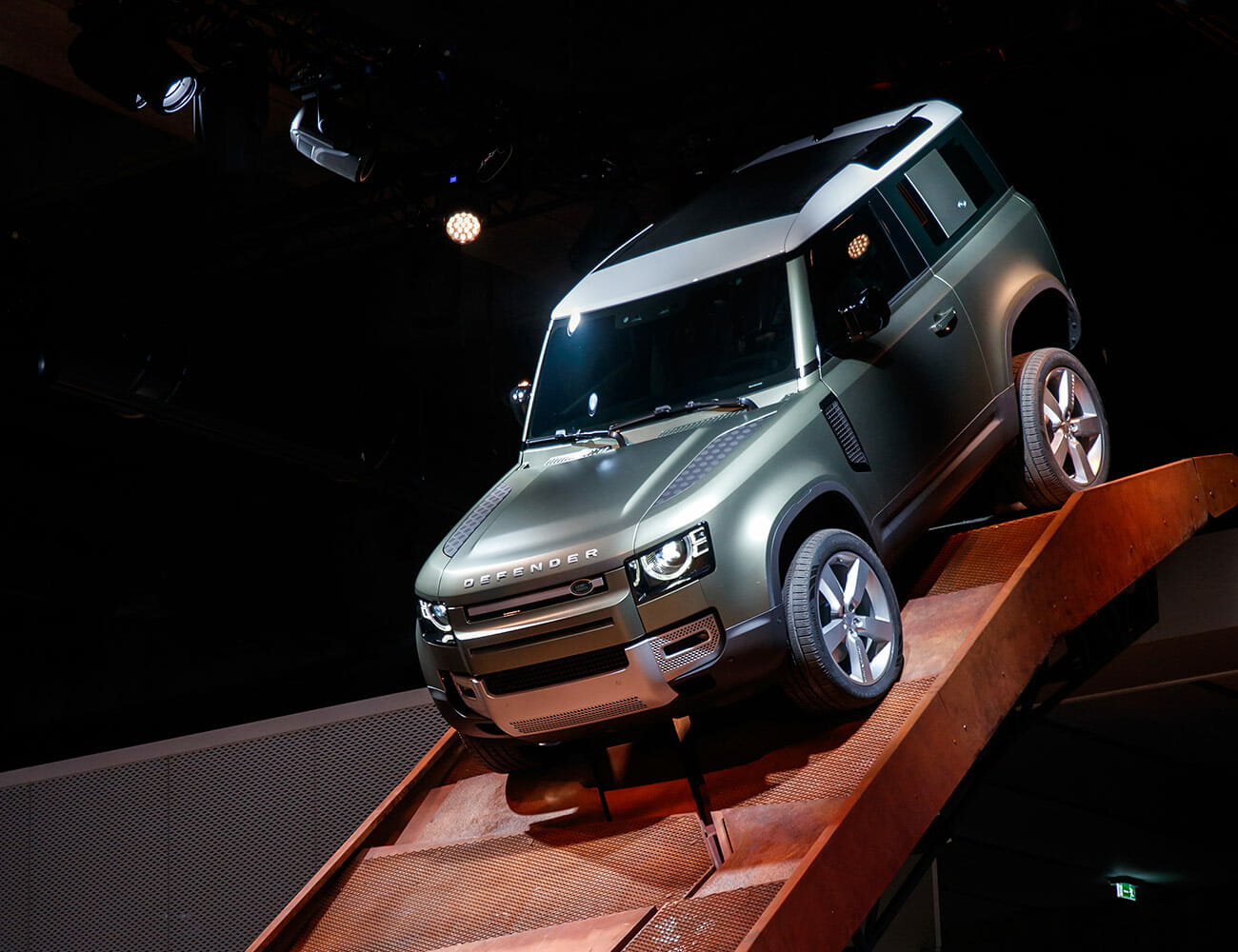
The new Land Rover Defender 90

So I don’t get people coming up to me saying, “Oh, could you make it more retrospective?” I don’t get marketing coming up to me saying, could you do this, could you do that. Because, quite frankly, I don’t take any notice of them. I’m employed as a professional. Design is a separate issue for the brand; I’m the spiritual leader for the brand. I define what that vision is, and my team executes it. It might sound very arrogant…which it is.

[WSC laughs]

That’s not to say I’m not listening to other people, hearing their views and talking about how we get the right balance — from the manufacturing perspective, the engineering perspective and the marketing perspective. But when it comes to the design, when it comes to any of the disciplines where I’m an advocate…you have to respect each others’ disciplines. Don’t tell the designers how to design cars. I don’t tell the finance man how to do all those numbers, et cetera.

I think retrospectivism is the kiss of death, quite frankly. It’s a slippery slope. It actually conveys that you haven’t got any new ideas of the future, because you’re looking back too much. Now, that’s not to say you don’t recognize your roots, because I think authenticity — particularly in a premium brand — is important. But you don’t let that manifest itself in the product to the point that the product looks like a facsimile of something that was created 60-odd years ago. For me, that’s not honest design. That car created 60, 70 years ago was right for its time, but things have moved on.

And the hygiene factors of safety legislation, manufacturing techniques, technology, all those things are gonna force change anyway. So you have to embrace those. But ultimately, it’s about designing a product that is thoroughly modern, contemporary — and relevant.

Now, what I think [the new Defender] does very well is, it recognizes its roots by taking some sort of references and incorporating them, executing them in a thoroughly modern way. But it’s details, it’s not in the overall essence of it. People say, y’know, is this an evolution of the original? Well, no, of course it’s not.

The Land Rover Series I
[he pulls out a picture of the Defender’s predecessors]

You look at that, that’s the original Series I. [The new car is] not exactly an evolution of that, is it? You can see, it’s recognizing where it’s come from, but it’s a modern vehicle. And it’s getting that balance, for it not to appear like it’s a caricature…it needs to stand up in its own right. This needs to be equally desirable to people who don’t even know what Defender is. And then, y’know, the traditionalists — not in this country so much, but in parts of Europe — they’re not gonna change from [their old] vehicle, anyway.

When we launched the car in Frankfurt, we did the analysis: 97 percent positive sentiments toward the vehicle. [But] it’s usually the ones who don’t like it who are the most vocal.

Q: How did you, or would you, react to the people who came up to you and said, “I don’t like this car”?
A: Everybody’s entitled to their opinion, that’s fine. What I would say is, when they start talking about the design — design is a discipline, and somebody who just criticizes design and looks at design and has a view on it, they’re not experts. I’ve spent my whole life designing stuff. But I respect the customers’ views; if they don’t like it, that’s for them.

But don’t say “That design is wrong” when you’re not an expert. If it was somebody who was an expert telling me that, then I’d have a listen. [But] once there’s something there to critique, everybody becomes an expert! Going on about wheel-to-body relationship, plan shape, proportions. When you’ve got a blank sheet of paper, there’s nobody around with their opinion then. But that’s fine, because that’s what our discipline is about.

People think I get sensitive; I don’t actually. If people don’t like it, fine, that’s up to them. But I’ve met more people who do like it. I’ve been very encouraged over here particularly — they know what they’re looking at.

Gerry McGovern and the new Defender 90

Q: It does feel like you were trying to play up the fact that a lot of more urban users will be buying the new Defender.
A: That’s one of the tastes, of course. I think the beauty of this particular design…it almost lends itself to different characteristics. That was the idea behind these sorts of different personalities and design packs and groups of accessories that play to different lifestyles. And urban, clearly, is one of them. The urban environment can be just as treacherous [as off-roading].

You know, there are a lot of people who will buy this vehicle for its ability to stuff, and they’ll enjoy it for all types of lifestyles, and extreme off-road capability is one of them, which, I suppose, the Explorer pack is the one there. But, there’ll be people who just want to tool around London or New York or wherever in one of those and feel so bloody cool. And that’s fine, because I go back to what I’ve always said as a designer: a design in whatever manifestation it finds itself in has the ability to enrich people’s lives. And there’s nothing wrong with that, provided it can be done in a sustainable, moral way.

And for me, there’s an honesty about this design, which I suppose comes out particularly in the detailing of the lamps, the front face, the simple geometric forms. There’s a rightness about it, it’s not trying to be something it’s not. When you look at that face, it’s proud, it’s strong, but it’s not trying to be overtly aggressive. It’s got big lamps, it’s got open eyes. And I think once you see it on the road, it’ll really transform, and its character will come out.

Q: I feel like the degree to which it was rounded off, at least around the edges, was a bit surprising.
A: You’ve still got strong intersections: shoulder, collar, all those things. And then the rear, that’s really hard. A lot of the softening at the front is to do with aero. And actually — you look at the last [Defender], even on those corners, those corners were bowled off.

But the [side of the old ones] was so flat because the pressings were such crap. On some of these [older] Defenders, you look along the body side and it’s like the Atlantic Ocean. Well, that’s unacceptable for a modern-day vehicle.

Q: (pointing to the box behind the doors) I’ve forgotten the name of this particular design element…
A: That is what we call a floating pillar. People have remarked about that — I really like it. It’s done for a number of reasons. First of all, you’ve got it on the five-door and the three-door; now on the five door, if you took that away, that cabin would start to look very long, so it sort of reduces the visual length. It’s part of the structure as well. On [the three-door], it’s done to anchor the car down and create more visual interest, and as one of the guys talked about, it’s a great anchor to put stuff onto. From the inside of it, you’ve got storage in it, so it’s functional.

Now, from the second row of the three-door, it does obscure the vision out to a certain degree. But our thinking was, on the two-door, the second seats are not used as much. If you don’t wan’t to have it, you can opt not to have it, but I would not. It’s fine without it, but I think it’s got more character with.

We were thinking earlier about where do your influences come from; I’m not your typical car designer, my interests are in architecture, product design in general. And it was a bit of a sort of retrospective thing to me, that came to mind, when I started looking at that. And I certainly wasn’t conscious of it at the time, but if you think about that square, are you familiar with the artist Josef Albers? He did these series of pictures called “Homage to the Square,” and I think there’s an element of that in it.

Q: Was there any element of the design you felt really proud of when you were done?
A: For me, it’s gotta be the total [design]. You have an overall feel of something that’s right, that always starts with the volume and proportions. It’s gotta work as a total. I’m very proud of that design, and it’s not just me, that’s the work of many talented designers and engineers. it’s a team effort when it comes to car design, you can’t do it on your own. Although if it goes wrong, I’m the one that’s getting a bullet in the head.

Q: Is there anything you’re looking forward to beyond this?
A: We stopped working on this [a while ago]. I’m looking at a whole new generation of vehicles; we’ve got a lot in the pipeline. I’m here talking about [the Defender] because I suppose I’m the mouthpiece for the brand; I’m seen as the spiritual leader of it, and I’m happy to do that, because this is an important vehicle for us. But equally important is the next-generation Range Rover, next-generation Range Rover Sport, and y’know, how are we gonna embrace sustainability, electrification, autonomous driving, massive changes in legislation. Those are the things I’m preoccupied with.

Q: How are those sorts of things affecting design?
A: For me, the only traditional element of [electric] vehicles is that they’ve got a bonnet. When you embrace electrification, when you embrace change, it’s in that area, which means you either go cab-forward or complete one-box. I’m not a big fan of one-box vehicles. I think I-Pace is probably on the limit of how far forward the windscreen can go.

We will evolve it and see how that works for us. When it comes to classic proportions in anything — in architecture, even in clothing — there are certain things that will always look right, and there are other things that, if you’re not careful, will end up looking…fashion, or transient. There’s a balance to this stuff. There are different ways of doing it. You’ll have to wait and see.

Will Sabel Courtney

Will Sabel Courtney is Gear Patrol’s Motoring Editor, formerly of The Drive and RIDES Magazine. You can often find him test-driving new cars in New York City, cursing the slow-moving traffic surrounding him.

More by Will Sabel Courtney | Follow on Instagram · Twitter · Contact via Email

These Leaked Photos Are Our Best Look Yet at the New Ford Bronco

<!–New Photos Seem to Show Ford Bronco on Production Line • Gear Patrol<!– –>

I want to take his roof…off


The new Ford Bronco is due to launch very soon — perhaps even with a manual transmission. So perhaps it’s not all that surprising that photos of what appears to be both the two-door and four-door production models have leaked onto the Internet.

The images were posted by the user who goes by the handle “BroncoKong” on the Bronco6g.com forum. The original posting now indicates that “pics and content have been removed by request of Ford,” which suggests these photos are the real deal.

In the original posting, BroncoKong asserted that these were the base models. The pics show a Bronco with a completely removable roof, and what may be a swing-out rear hatch, much like the Jeep Wrangler has. A backup camera protrudes from the spare tire holder. The Bronco also has rounded wheel arches and six-lug wheels with what certainly appears to be a Bronco emblem.

(That said, if this leak was not secretly sanctioned by the carmaker, BroncoKing did Ford a solid by not photographing the front of either vehicle.)

The Broncos pictured here are black, though Ford will offer an array of interestingly named color options. Not all of them are shades of gray, but sadly, none seem to be bright blue, either.

Note: Purchasing products through our links may earn us a portion of the sale, which supports our editorial team’s mission. Learn more here.
Tyler Duffy

Tyler Duffy is Gear Patrol’s Motoring Staff Writer. He used to write about sports for The Big Lead and The Athletic. He has a black belt in toddler wrangling. He’s based outside Detroit.

More by Tyler Duffy | Follow on Facebook · Instagram · Twitter · Contact via Email

<!–

–>

<!– –><!–

–>

This New Motorcycle Might Be the Coolest Sub-$10,000 Ride We’ve Ever Seen

<!–Indian’s New Scout Is the Coolest Ride Out There for $8,999 • Gear Patrol<!– –>

our favorite scout since scout finch


Outside of the temperature-oriented definition, “cool” is a pretty elusive term, isn’t it? Like Supreme Court Justice Potter Stewart’s famed 1964 definition of obscenity — “I know it when I see it” — coolness us a quality you just kinda have to witness. It’s also one of the first words that came to mind when we laid eyes on Indian’s latest release: the blacked-out, stripped-down and nicely affordable Scout Bobber Sixty.

We’ve ridden some gorgeous Scouts that deliver surprising performance — and like them, this $8,999 iteration isn’t just getting by on its looks. Essentially a streamlined version of the original Scout Bobber, the Sixty features slightly less displacement (999 ccs versus 1,133) and a lower weight (548 pounds wet, versus 572). Those qualities, combined with 78 ponies on tap, translate to a low center of gravity, frisky handling and a high thrill-to-dollar ratio. A few other elements we love are the chopped fenders, ABS option and ability to accessorize and take on a pillion with a color-matched passenger seat.

If you’re a regular highway cruiser who craves amenities like cruise control and heated handgrips, look elsewhere. But if you’re looking for a cool around-town bike — at an even cooler price — it might be time to saddle up and Scout up.

Note: Purchasing products through our links may earn us a portion of the sale, which supports our editorial team’s mission. Learn more here.
Steve Mazzucchi

Steve Mazzucchi is Gear Patrol’s outdoors and fitness editor. Outside the office, you can find him mountain biking, snowboarding, motorcycling or sipping a dram of Laphroaig and daydreaming about such things.

More by Steve Mazzucchi | Follow on Facebook · Instagram · Twitter · Contact via Email

<!–

–>

<!– –><!–

–>

BMW Just Made a Change Sure to Irritate Its Biggest Fans

BMW’s fans aren’t the type of people to handle change well. They howled when design boss Chris Bangle introduced a new look to the brand’s cars; they howled when the M5 went all-wheel-drive; they howled when it turned out the new M3 and M4 would be outfitted with a schnozzola that’s liable to make them look like the pigs from Angry Birds. (That last one, admittedly, is a pretty fair criticism.)

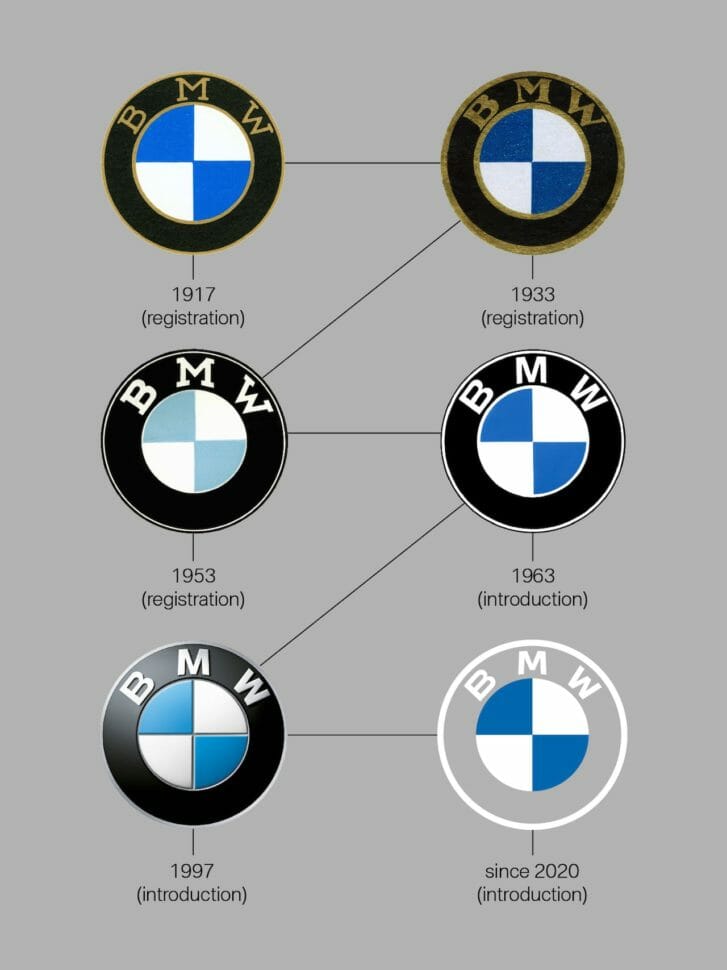
So we’re sure that there’ll be plenty of howling over the new version of the brand’s iconic logo.

The revised BMW logo, which made its debut on the new BMW Concept i4, might not look all that different from the traditional one that’s adorned the hoods and tails of Bimmers and Beemers for decades. Look closer, though, and you’ll spot a couple big changes:

1. The whole design is now flat.

Much like the latest version of Volkswagen’s iconic logo, the new BMW logo trades a 3D form factor for a 2D one. Like VW’s new look, this presumably makes it friendlier for online use, though we’re honestly hard-pressed to figure out how.

2. The font has changed.

It’s not easy to make out, but it’s there; the letters that spell out “BMW” have changed shape ever-so-slightly, and now sit closer together.

3. The outer ring is now transparent.

In perhaps the most obvious change of all, the ring outside of the roundel that the letters “BMW” sit inside has gone from black to transparent. As you can see on the Concept i4, it’ll now simply be the color of the car’s exterior — or, presumably, the steering wheel trim, in the case of the logo staring back at the driver.

The carmaker provided a handy chart chronicling the evolution of the BMW roundel over the years, which you can check out below.

BMW's new logo

BMW's new logo

If you want to know more about the long history of the BMW logo, the company has a pretty fascinating retrospective page you can check out here.

Note: Purchasing products through our links may earn us a portion of the sale, which supports our editorial team’s mission. Learn more here.
Will Sabel Courtney

Will Sabel Courtney is Gear Patrol’s Motoring Editor, formerly of The Drive and RIDES Magazine. You can often find him test-driving new cars in New York City, cursing the slow-moving traffic surrounding him.

More by Will Sabel Courtney | Follow on Instagram · Twitter · Contact via Email

Tesla Is About to Offer a Revolutionary New Upgrade for Its Older Cars

<!–Older Tesla Model S, Model X to Get Infotainment Upgrade • Gear Patrol<!– –>

swap those chips


In the last decade, no company has changed the automotive landscape more than Tesla. From making electric vehicles cool to pioneering semi-autonomous driving features to over-the-air software updates that freshen up old cars over and over again. But there’s only so much you can do for a computer over the Internet — so Tesla is going into the business of upgrading its cars’ hardware, too.

According to Car and Driver, starting in the next couple months, U.S. owners of Tesla Model S sedans and Model X crossovers built before March 2018 will be eligible to have the guts of the cars’ computers replaced with newer, faster versions that deliver 3D rendering support. This means these older Teslas should have the ability to run some of the newer software-based features Tesla has been rolling out to the Model 3 and late-build Model S and X vehicles, such as Sentry Mode — as well as whatever new software-based features the Silicon Valley-based carmaker dreams up in the near future.

Of course, while the best things in life are free, few things are when it comes to improving your car. The hardware upgrade costs $2,500, according to C/D; not cheap, but considering that it’s likely to keep you rolling in new features for years to come (and boost the resale value of your car, to boot), it seems like an obvious move.

That is, unless you really like listening to the radio. While the upgrade giveth many new features, according to C/D, it also taketh away SiriusXM satellite and conventional AM/FM radio. Guess you could always just leave a tabletop radio in the backseat?

Note: Purchasing products through our links may earn us a portion of the sale, which supports our editorial team’s mission. Learn more here.
Will Sabel Courtney

Will Sabel Courtney is Gear Patrol’s Motoring Editor, formerly of The Drive and RIDES Magazine. You can often find him test-driving new cars in New York City, cursing the slow-moving traffic surrounding him.

More by Will Sabel Courtney | Follow on Instagram · Twitter · Contact via Email
<!–

–>

<!– –><!–

–>

Ford’s New Vehicle Could Revolutionize the Camper Van World

<!–Ford’s Electric Transit Could Change the Camper Van World • Gear Patrol<!– –>

carbon-free vanlife


Ford has received a lot of attention for the Mustang Mach-E, its forthcoming muscle car-inspired electric crossover. The electric F-150 pickup truck should be kind of a big deal, too. Ford’s new electric Transit van, which the brand just announced will arrive for the 2022 model year, is liable to be much less widely heralded — but it should be equally important for the world.

An electric cargo van, after all, will reduce overall fleet emissions around the world, as companies like Amazon and UPS switch over from gas-powered vehicles to EVs. It will be great for Ford’s bottom line for deliveries. And perhaps most interestingly, it’ll also offer environmentally-conscious camper van enthusiasts a compelling and versatile zero-emissions option.

Camper van outfitters will have a ton of flexibility with this new EV van. Ford will sell the electric Transit with three different roof heights and three different body lengths. There will also be a bare cutaway cab version for manufacturers that want to customize it. It’ll come with Ford’s suite of driver assistant technologies and an integrated Wi-Fi hotspot, and have access to the massive continent-wide charging network Ford is building.

Ford was scant on the initial details; we don’t know what sort of range the electric Transit will offer, or how much it will cost, and the 2022 model year is a broad timeframe for a launch, meaning we could see it as soon as next January or as late as September 2022. But this should be a major step forward. And, unlike many great things camper-related, the electric Transit will be sold in the United States.

Note: Purchasing products through our links may earn us a portion of the sale, which supports our editorial team’s mission. Learn more here.
Tyler Duffy

Tyler Duffy is Gear Patrol’s Motoring Staff Writer. He used to write about sports for The Big Lead and The Athletic. He has a black belt in toddler wrangling. He’s based outside Detroit.

More by Tyler Duffy | Follow on Facebook · Instagram · Twitter · Contact via Email

<!–

–>

<!– –><!–

–>

Ford’s New Vehicle Could Completely Change the Camper Van World

<!–Ford’s Electric Transit Could Change the Camper Van World • Gear Patrol<!– –>

carbon-free vanlife


Ford has received a lot of attention for the Mustang Mach-E, its forthcoming muscle car-inspired electric crossover. The electric F-150 pickup truck should be kind of a big deal, too. Ford’s new electric Transit van, which the brand just announced will arrive for the 2022 model year, is liable to be much less widely heralded — but it should be equally important for the world.

An electric cargo van, after all, will reduce overall fleet emissions around the world, as companies like Amazon and UPS switch over from gas-powered vehicles to EVs. It will be great for Ford’s bottom line for deliveries. And perhaps most interestingly, it’ll also offer environmentally-conscious camper van enthusiasts a compelling and versatile zero-emissions option.

Camper van outfitters will have a ton of flexibility with this new EV van. Ford will sell the electric Transit with three different roof heights and three different body lengths. There will also be a bare cutaway cab version for manufacturers that want to customize it. It’ll come with Ford’s suite of driver assistant technologies and an integrated Wi-Fi hotspot, and have access to the massive continent-wide charging network Ford is building.

Ford was scant on the initial details; we don’t know what sort of range the electric Transit will offer, or how much it will cost, and the 2022 model year is a broad timeframe for a launch, meaning we could see it as soon as next January or as late as September 2022. But this should be a major step forward. And, unlike many great things camper-related, the electric Transit will be sold in the United States.

Note: Purchasing products through our links may earn us a portion of the sale, which supports our editorial team’s mission. Learn more here.
Tyler Duffy

Tyler Duffy is Gear Patrol’s Motoring Staff Writer. He used to write about sports for The Big Lead and The Athletic. He has a black belt in toddler wrangling. He’s based outside Detroit.

More by Tyler Duffy | Follow on Facebook · Instagram · Twitter · Contact via Email
<!–

–>

<!– –><!–

–>

Cross-Country by Supercar: 1,000 Miles in an Acura NSX

Supercar road trips are rare experiences. People who own such cars don’t often take them on cross-country adventures — miles equal depreciation, you know — and those companies that loan them out to the media tend to put stone-cold mileage caps on them that you don’t dare break, lest you be black-balled from the drive of the forthcoming Ferramboclaren Over-9000 Stupidfast.

Then there’s the fact that no matter how awesome the car is, mile after mile after mile of supercar ergonomics, noise and harshness takes its toll. Ooh, must be tough, Mister Fancy Journalist Man, I’m sure you’re thinking. Hey, you try thundering along for hours in an Aventador with its V12 howling inches behind your head the entire time.

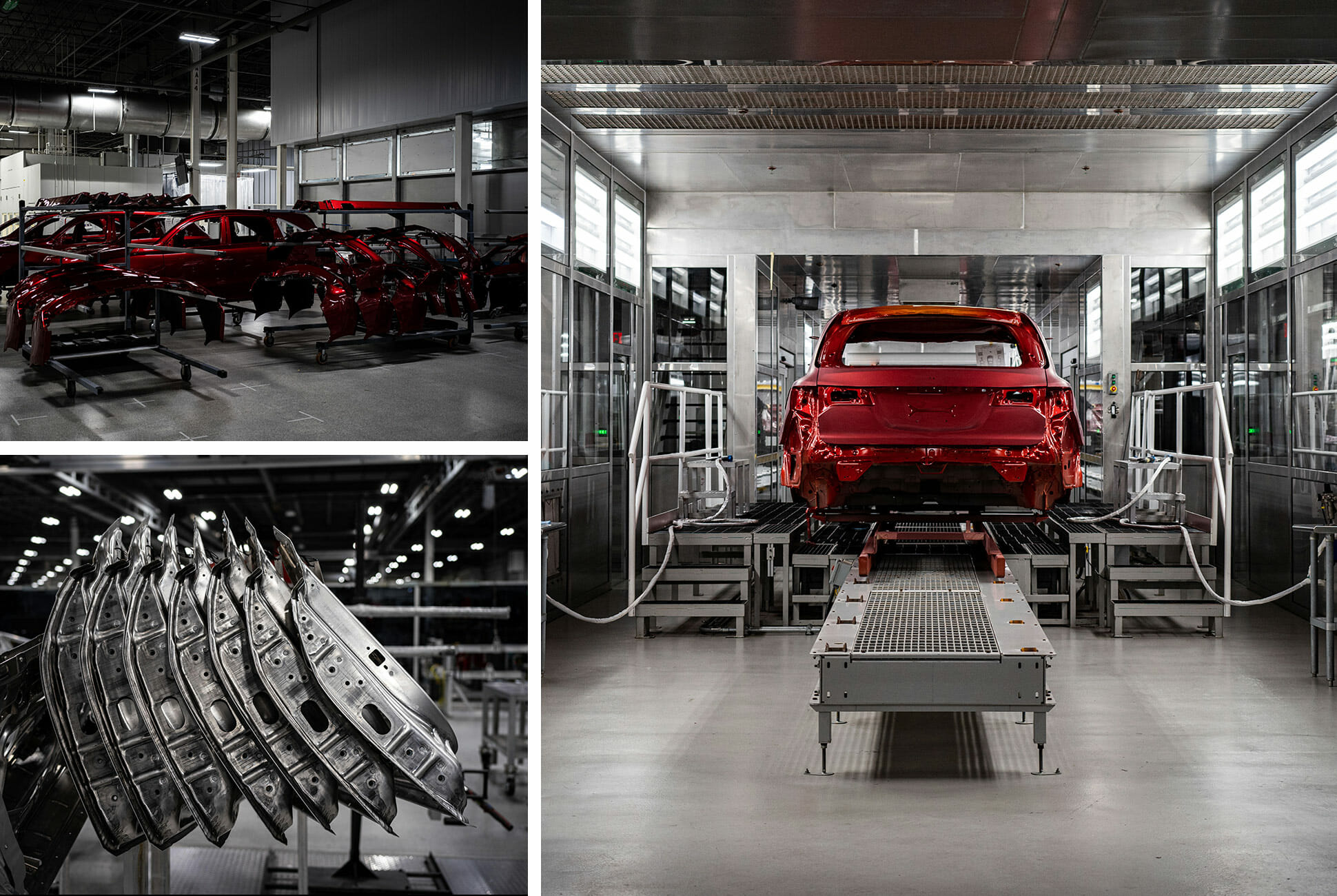
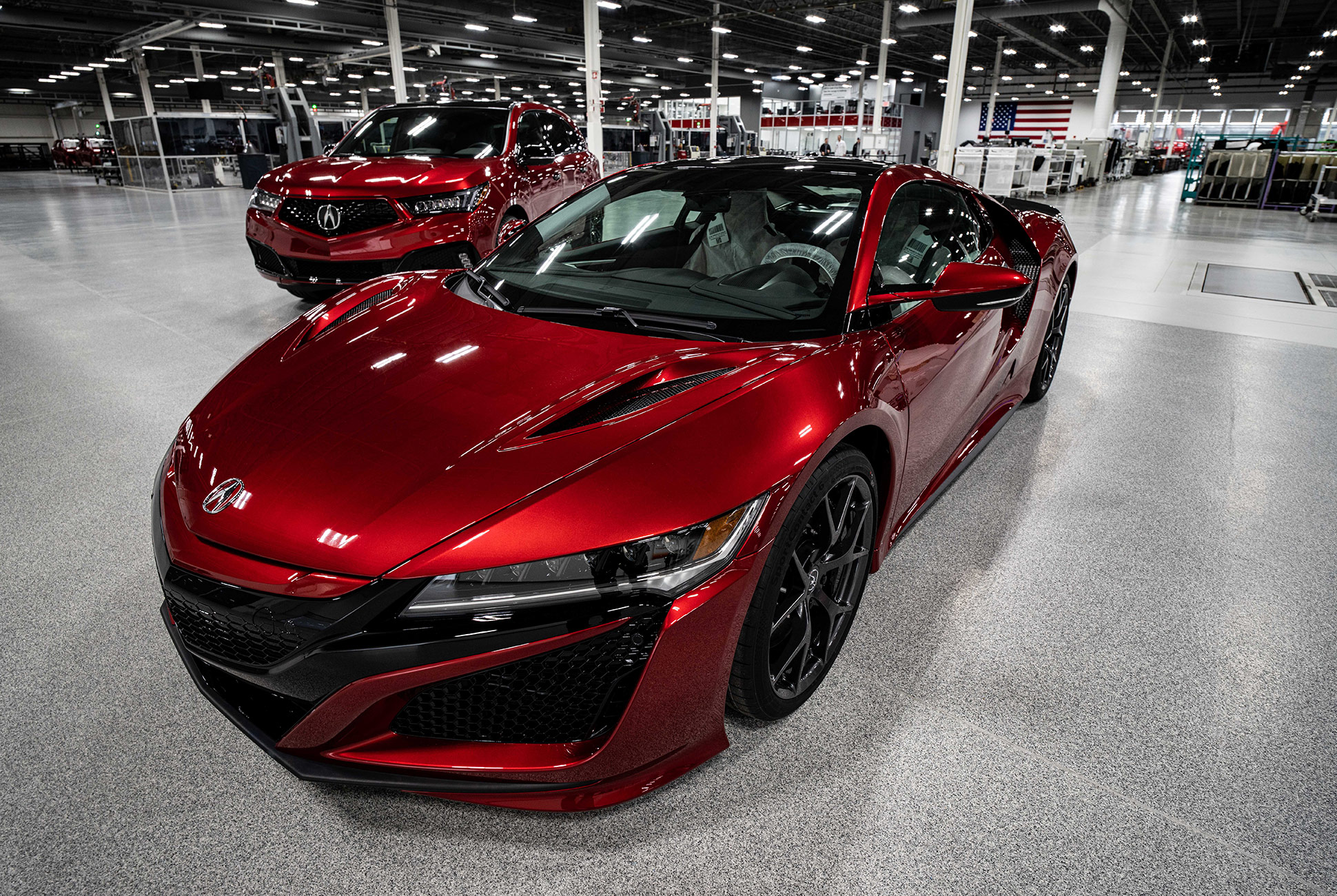
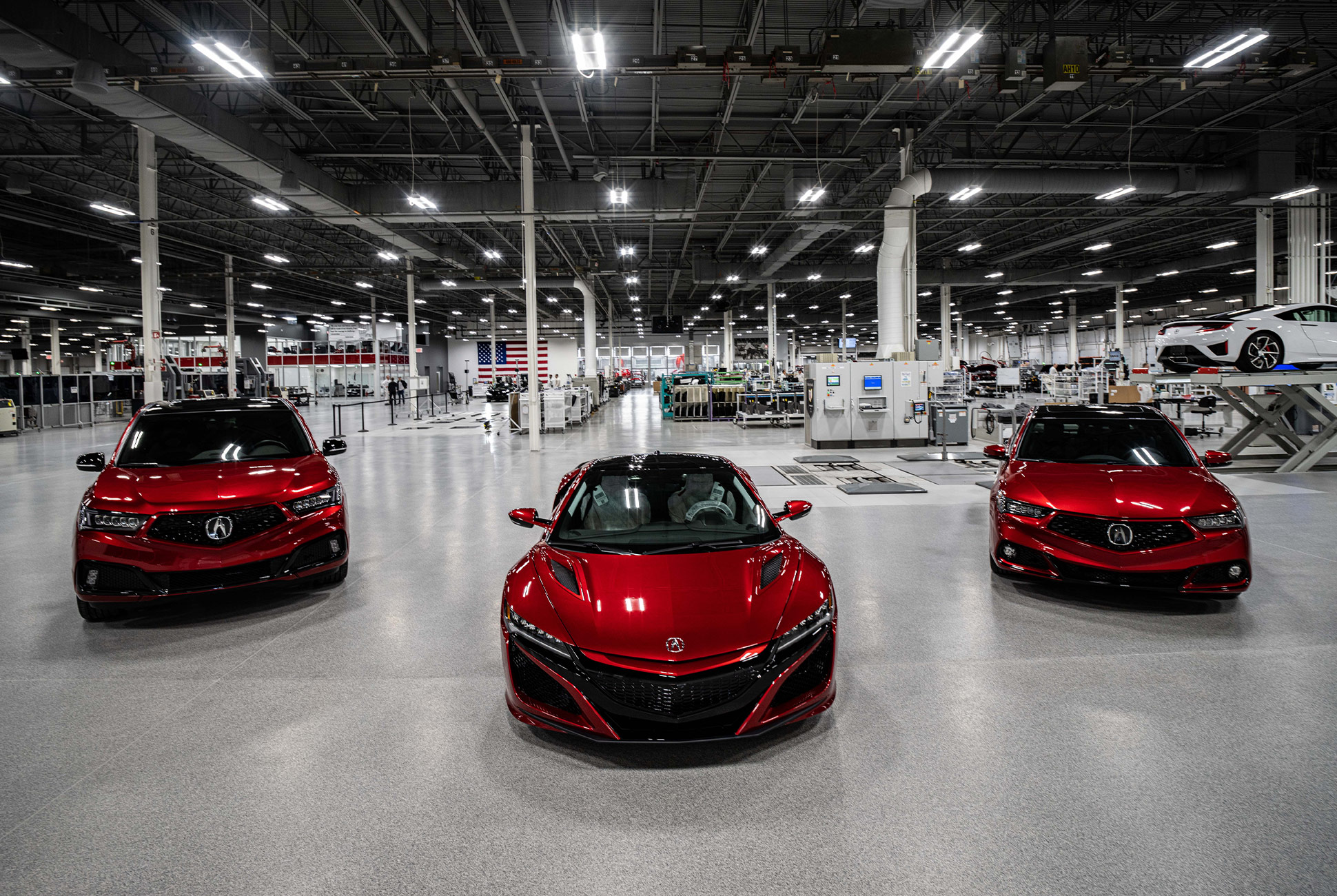
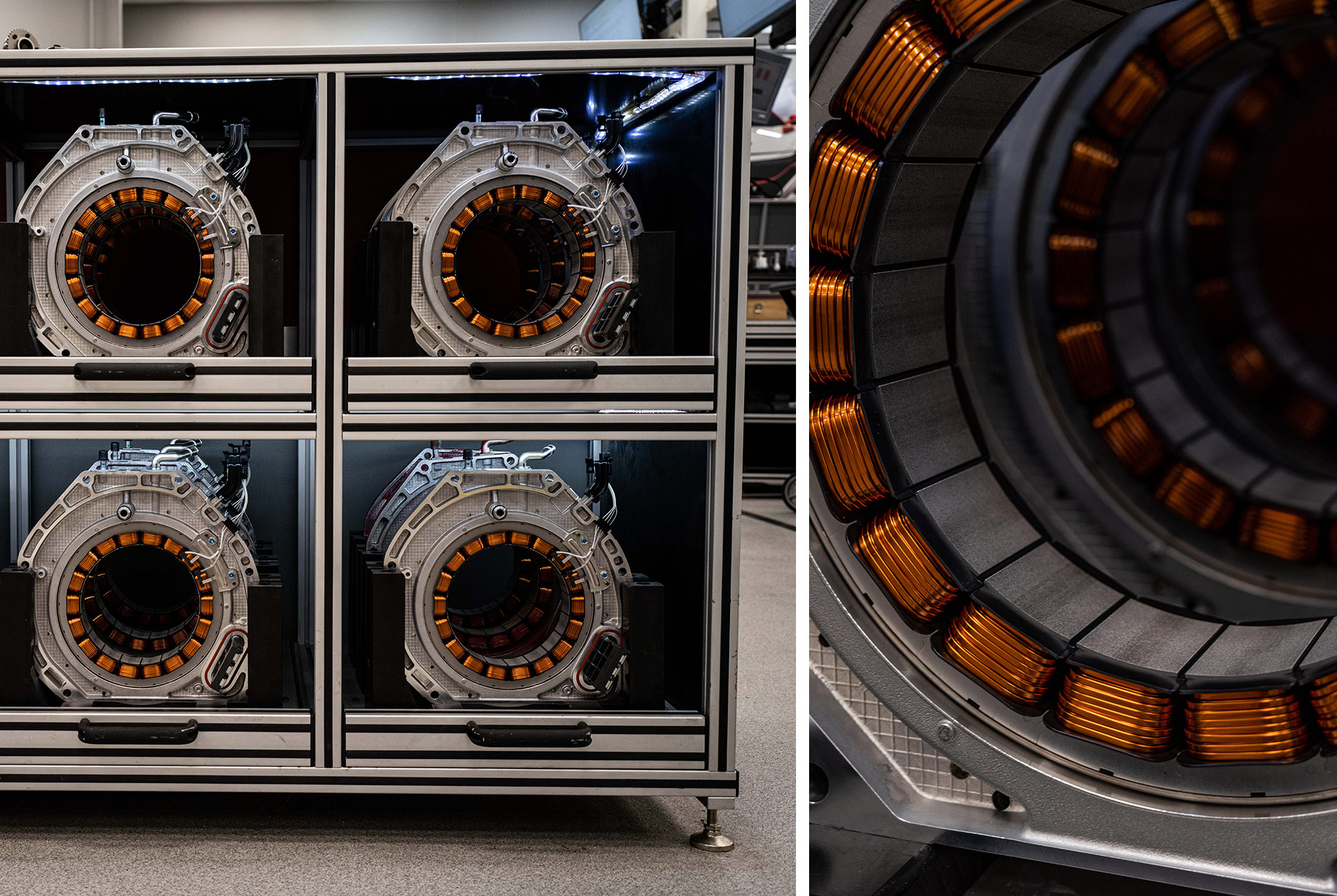
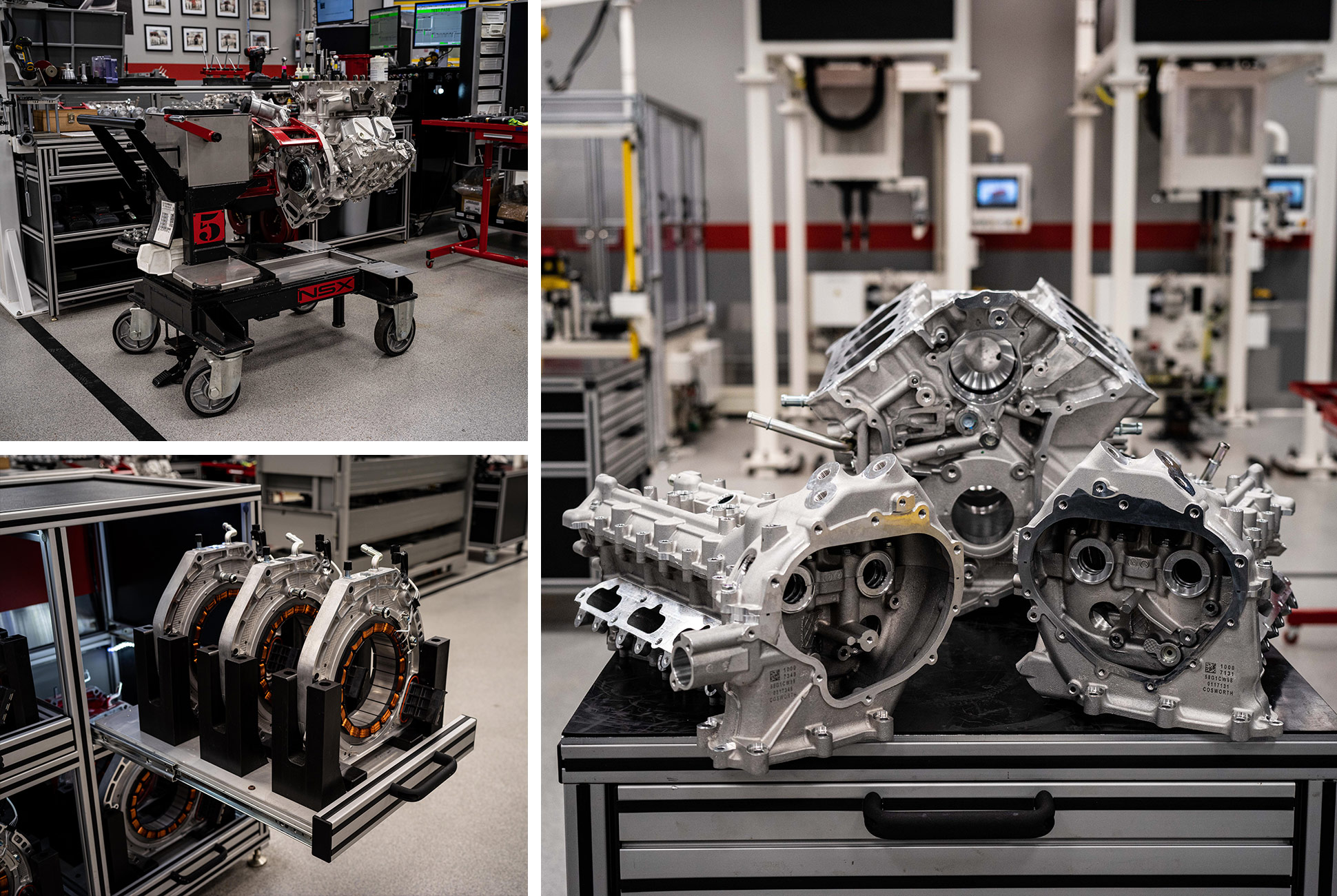
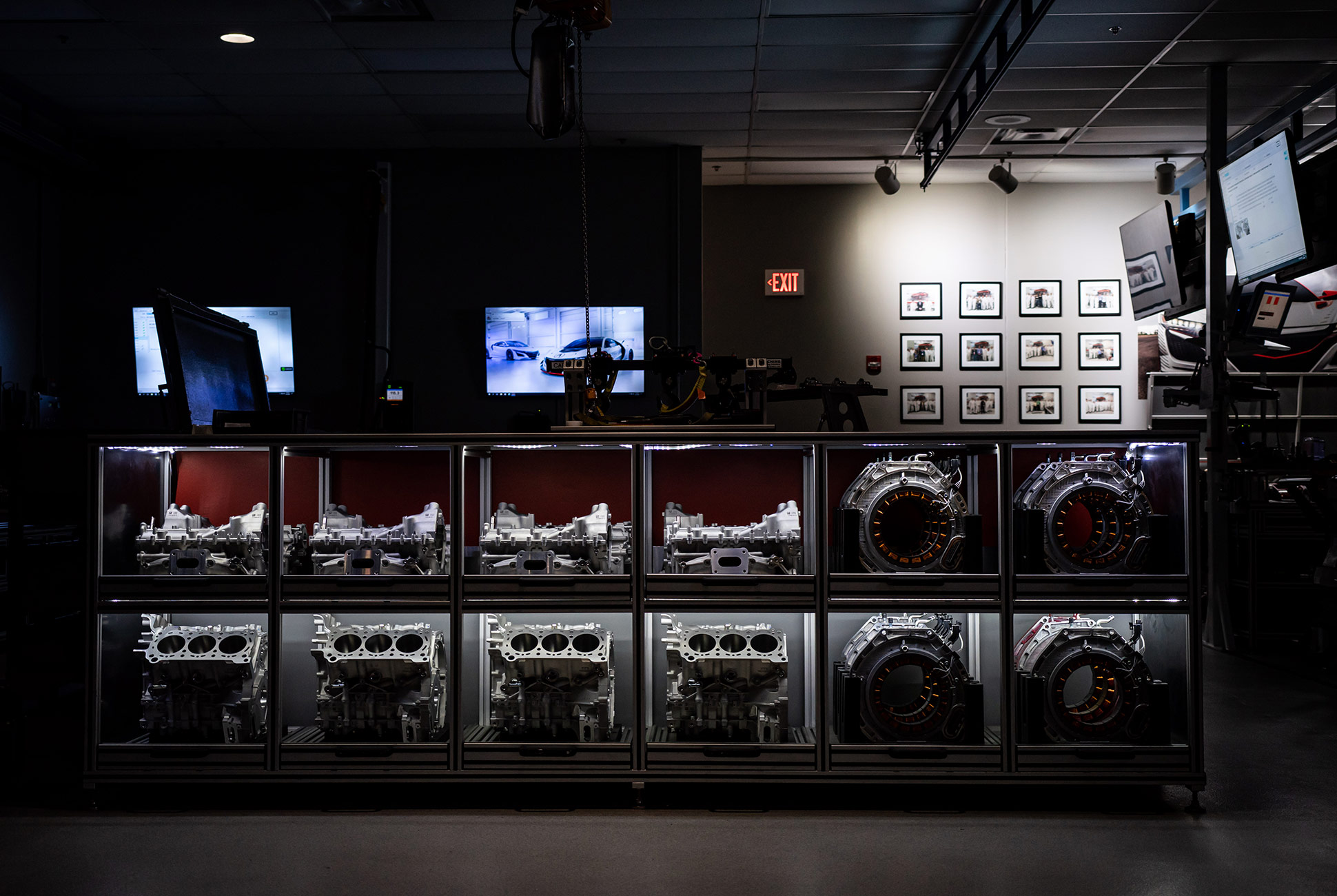
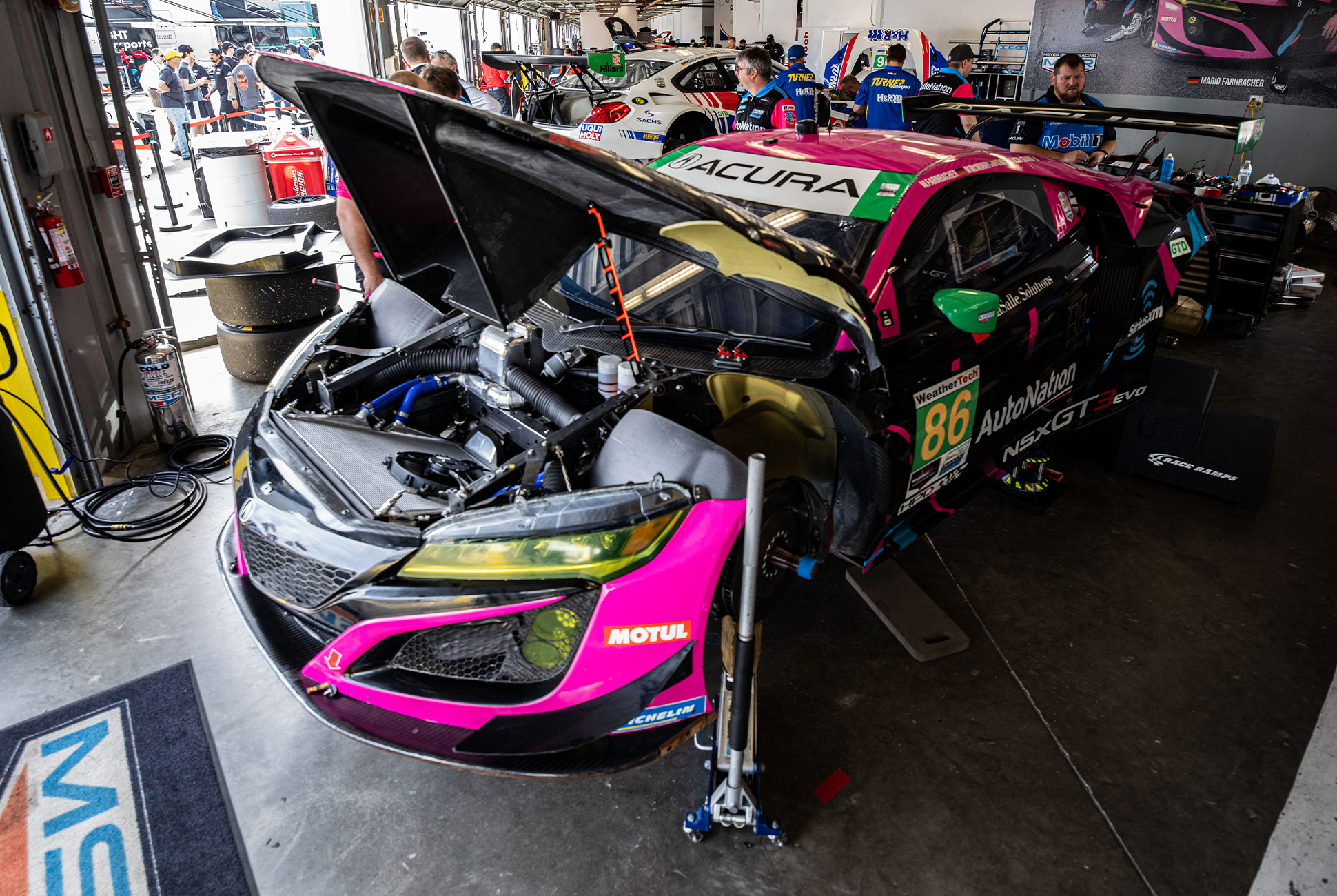
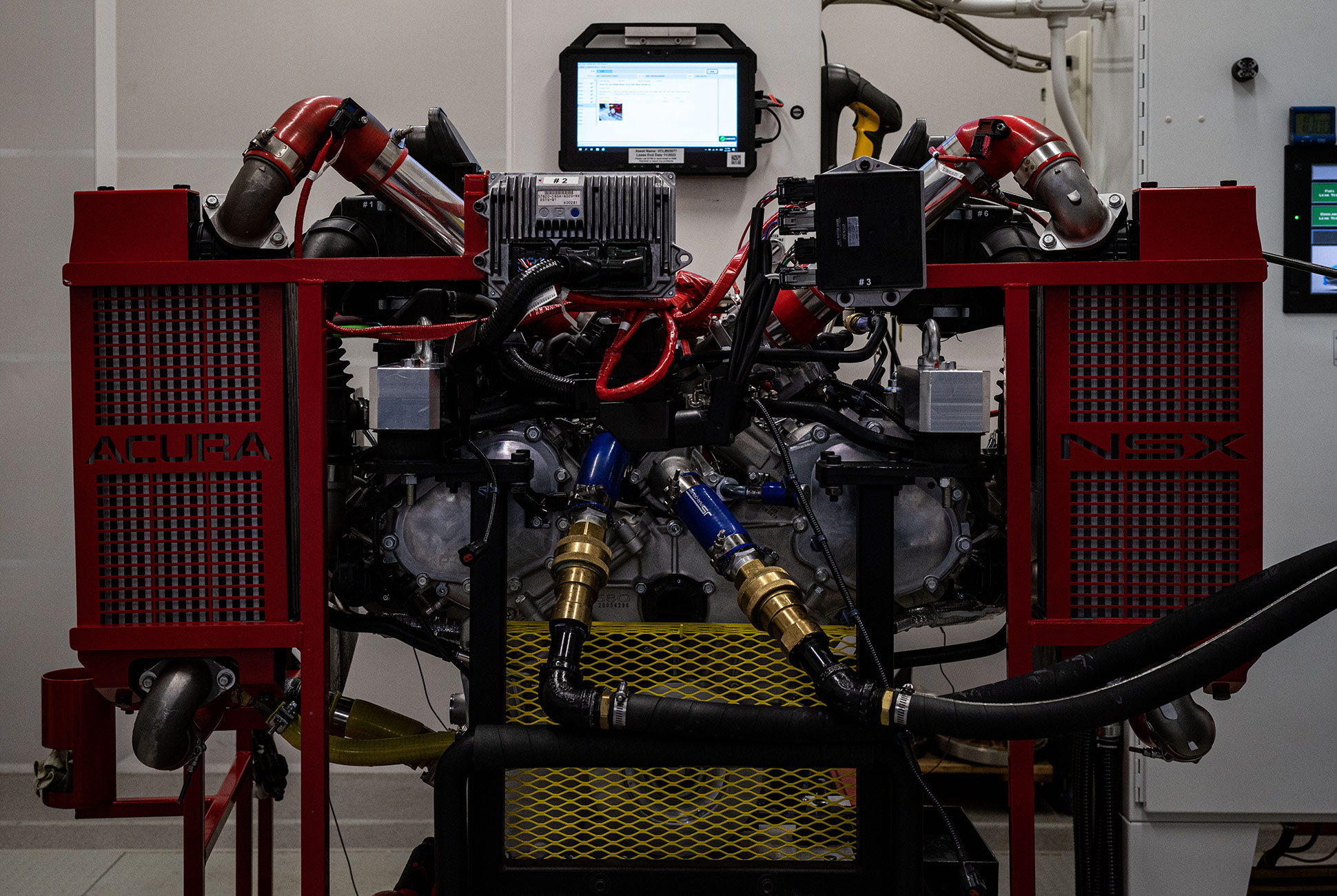
But with the right car, the right road and the right pace, a supercar road trip can be an exhilarating experience — and the best way to learn the nuances of a machine. So when Acura invited me to drive its NSX from the car’s factory in Anna, Ohio all the way to Daytona Beach, Florida, for the Rolex 24 Hours endurance race earlier this year, I promptly said yes. After all, the NSX is a different kind of supercar. Sure, it has head-turning styling, will rocket from 0 to 60 miles per hour in 2.7 seconds and slings itself around corners with disarming urgency thanks to the torque vectoring enabled by its still-unmatched three-motor hybrid powertrain. But it’s also road-trip friendly, thanks to its tunable suspension and a Quiet Mode that dials the outrageousness down to reasonable levels.

So after a tour of the factory, I left Ohio along a roundabout route south: Cincinnati, a bit of Kentucky, North Carolina’s great Cherohala Skyway, Asheville, Savannah, then finally Daytona Beach. The Skyway and a bit of the Blue Ridge Parkway proved thrilling stretches completely devoid of traffic, thanks to the fact that it was the middle of the week…and winter. Furthermore, the car’s enhanced-for-2019 chassis — with larger stabilizer bars that increase stiffness 26 percent up front and 19 percent out back, along with new software to enhance the dampers and electric power steering —  all conspired to make the car even more responsive and fun.

Though Acura has received some pushback on the NSX from fans of the original model, the NSX is enjoying something of a second look now. Its technological achievement, unflappable composure and bulletproof reliability are nothing to sneeze at. Besides, it’s just fun. The car’s inherent setup — a wide angle separates its twin-turbo V6’s cylinder banks, which helps the engine sit lower in the car, and the motor sits close to the driver and the center of gravity alike — make it feel natural and intuitive; Acura describes it as an “almost predictive” dynamic driving experience, and I don’t disagree.

Visually, the car looks as intricate and fascinating as when it debuted in 2015, and the new Indy Yellow Pearl paint is a breathtaking addition to the model’s palette. Other enhancements this year include exchanging losing some chrome in favor of body-color trim and a standard technology package that includes Acura’s ELS Studio Audio premium sound system, which proved to be a saving grace on the road trip. Typically, supercar makers place an emphasis on engine noise above all else, for good reason — but that grows old fast on a multi-day journey. The ELS system delivers the tunes, and it made the miles waft effortlessly by.

On the last night, though, during my late-evening bombing run from Savannah to Daytona, I let the engine sing right along with the music. With both cranked high, I threw a bit of caution to the wind in order to let the NSX stretch its legs. I admit that last push knocked me around a bit — but for three hours, it was fantastically good fun, and the car proved itself every bit the speed demon it should be. I arrived with a thousand miles in the bag and fully ready to race…or at least, ready to watch those who did.

Acura hosted us and provided this product for review.

Note: Purchasing products through our links may earn us a portion of the sale, which supports our editorial team’s mission. Learn more here.

Volvo Plans to Unleash 2 Wildly Desirable New SUVs, Report Says

<!–Volvo May Unleash Two Awesome New SUVs by 2023 • Gear Patrol<!– –>

competing with the range rover and cullinan


Volvo Plans to Unleash Two Wildly Desirable New SUVs, Report Says

Volvo has two new SUVs on tap for the U.S. market, according to a report from Automotive News that cites conversations with multiple American Volvo dealers briefed on the plans. And as it turns out, both of them are crossovers you should be excited about.

The first one, reportedly named C40, should arrive in late 2021. It will be a fully-electric, sportier-looking version of the XC40 crossover, with a rakish roofline. It will reportedly be relatively affordable and targeted (of course) at millennials. A dealer described it as a “price-point leader” and a “lease leader,” according to AN.

Volvo will reportedly also introduce a new luxury flagship SUV called the XC100 in 2023. It will be seven inches longer and five inches wider than the XC90 that it’s closely related to. It will allegedly debut as a hybrid model, with a battery-electric version coming a year later. It’s expected to compete with the Mercedes-Benz GLS-Class and the BMW X7; a dealer described it as “an XC90, a Range Rover [and a] Cullinan, all in one.”

Both the C40 and an XC100 should fill important niches for Volvo. The small compact crossover segment has been booming, with vehicles like the just-launched Kia Seltos. So has the larger three-row SUV market, whether it’s at the Volkswagen/Subaru/Kia or Mercedes/BMW ends of the spectrum. Besides, the market is moving toward electric vehicles, and Volvo has had a lot of success with its SUVs; doubling down on both makes sense.

Note: Purchasing products through our links may earn us a portion of the sale, which supports our editorial team’s mission. Learn more here.
Tyler Duffy

Tyler Duffy is Gear Patrol’s Motoring Staff Writer. He used to write about sports for The Big Lead and The Athletic. He has a black belt in toddler wrangling. He’s based outside Detroit.

More by Tyler Duffy | Follow on Facebook · Instagram · Twitter · Contact via Email

<!–

–>

<!– –><!–

–>

We Just Found New Evidence the Ford Bronco Will Have a Stick Shift

<!–The Ford Bronco Looks Almost Certain to Have a Stick Shift • Gear Patrol<!– –>

row your own way


There’s been a steady drip of information about the new Ford Bronco coming out over the last few months, as FoMoCo prepares to unleash its much-anticipated off-roader upon the world. But few leaks or bits of info have had us quite as excited as this: we now have more evidence to support our previous reporting’s contention that the Bronco will have a Getrag-sourced seven-speed manual transmission.

Ford, as a matter of policy, does not comment on upcoming vehicles, so it’s not official just yet. But a Bronco6g.com forum member discovered what appears to be the information for the Bronco’s seven-speed manual on the Getrag-Ford website. (Getrag’s parent company Magna references the same transmission on its site.)

Related Video: 2021 Ford Bronco Paint Colors Have Leaked

[embedded content]

The information comes in the form of a presentation slide (seen above), which shows a scalable transmission family called the “Large RWD MT Family 5/6/7MTI550.” That stick shift could be fitted with five, six or seven gears, and handle as much as 442 to 590 lb-ft of torque, depending on the configuration. The seventh gear would be a low-speed crawling gear for off-roading. The slide notes the transmission could be compatible with all-wheel-drive and even hybrid powertrains.

While the slide lists several potential vehicle applications, it does fit the specs we would expect for the Ford Bronco. And while all automotive product launch plans could  be unsettled due to the coronavirus outbreak — which already led to cancelation this week’s Geneva Motor Show — we still expect the new Bronco to launch soon.

Note: Purchasing products through our links may earn us a portion of the sale, which supports our editorial team’s mission. Learn more here.
Tyler Duffy

Tyler Duffy is Gear Patrol’s Motoring Staff Writer. He used to write about sports for The Big Lead and The Athletic. He has a black belt in toddler wrangling. He’s based outside Detroit.

More by Tyler Duffy | Follow on Facebook · Instagram · Twitter · Contact via Email

<!–

–>

<!– –><!–

–>

You’re Running Out of Time to Buy a Brand-New Stick Shift Corvette

<!–You’re Running Out of Time to Buy a Brand-New Stick Shift Corvette • Gear Patrol<!– –>

row your own for a limited time


The new mid-engined Chevrolet Corvette Stingray has been a great leap forward for the iconic nameplate, scooping ups laurels and praise — such as being named the North American Car of the Year for 2020. But it was a radical departure from the Corvette’s past, and not just for its oddball interior. With the C8, Chevrolet dropped what had been a hallmark of the Corvette for half a century: the manual transmission. For some Corvette diehards, that will likely be a step too far.

Luckily, you can still buy a new 2019 Corvette with a manual transmission. Dealers have been steadily working their way through their C7 inventory, often sending out cars out the door with substantial discounts. According to Corvette Blogger, Chevrolet expects there will be fewer than 2,000 C7 Corvettes on dealer lots by March 1st.

Only a small percentage of those remaining C7 Corvettes are manuals. (Indeed, Chevy cited dwindling stick shift demand as a reason for not including one with the C8.) A quick nationwide search on Car Gurus found 1,991 new 2019 Corvettes for sale, but only 259 with a manual transmission. And just 18 of those stick-shift Corvettes were the high-performance Z06 model.

If you still want to row your own way through seven gears in a sexy new Corvette, you still can. But you should probably act fast.

Note: Purchasing products through our links may earn us a portion of the sale, which supports our editorial team’s mission. Learn more here.
Tyler Duffy

Tyler Duffy is Gear Patrol’s Motoring Staff Writer. He used to write about sports for The Big Lead and The Athletic. He has a black belt in toddler wrangling. He’s based outside Detroit.

More by Tyler Duffy | Follow on Facebook · Instagram · Twitter · Contact via Email
<!–

–>

<!– –><!–

–>

The 6 Best Off-Road Trailers of 2020

Off-road trailers are great. They offer you the mobile campsite you want, whether that’s minimalist gear storage and a mount for your tent or an ergonomically-laid-out luxury apartment on wheels. Fitted with all-terrain suspensions and all-terrain tires, they are equipped to follow your Jeep Gladiator or other overlanding vehicle anywhere you want to go.

Below are six of the best off road camping trailers we’ve found on the market for 2020.

Patriot Campers X1-N

grey_placeholdergrey_placeholder

Patriot Campers’ X1 model has been a perennial favorite for its off-road capability, its utility, and its compact, lightweight design. The X1-N integrates the Patriot X-Rack, a custom mounting solution that can carry all sorts of gear and work with a wide range of third-party tents. It comes in a variety of colors, including this retro limited-run Desert Ops model.

|

Australian Off-Road Sierra

grey_placeholdergrey_placeholder

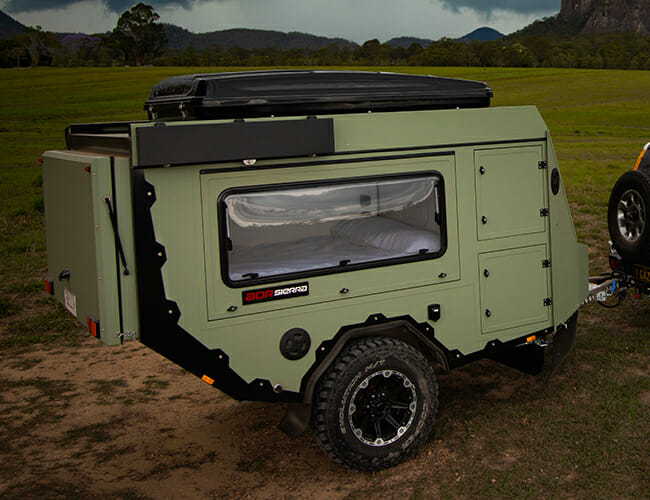
Australian Off-Road produces the Sierra, a secure bunker that is 100 percent dust-proof, fully lockable, and allows access to all three storage compartments from the inside. With off-road shocks and a 40.7-degree departure angle, the Sierra can follow your overlander wherever you want to take it. It’s the ideal trailer to have if your weekend trip suddenly turns all Mad Max on you.

|

The Polydrop

grey_placeholdergrey_placeholder

The Polydrop is tiny, efficient, affordable — and looks like a freaking space capsule. It can be towed by just about any vehicle, thanks to its light weight. Insulation gives it four-season functionality. It’s also affordable, with a fully-loaded KJ20 model starting just under $20,000. You can upgrade the suspension for off-road use, and a lift kit can give the Polydrop 15 inches of ground clearance.

|

Opus OP-15

grey_placeholdergrey_placeholder

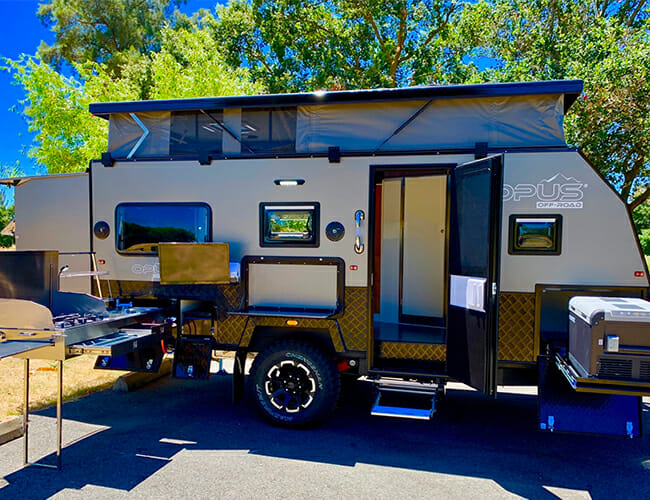
Sacrifice does not have to be part of the off-road trailering experience. The Opus OP-15 sleeps four and cleverly fits all the comforts of home, including a hot shower and air conditioning, into a footprint that’s smaller than an Airstream Bambi. With a galvanized and welded stainless steel chassis and a trailing arm suspension with dual shock absorbers, the OP15 can withstand pretty much anything Mother Nature can throw at you.

|

Taxa Outdoors Woolly Bear

grey_placeholdergrey_placeholder

The Taxa Outdoors Woolly Bear trailer would make this list based on the name alone. It has a lightweight, off-road-ready construction and can be towed by a base-engine Subaru Outback. It’s versatile, accommodating a full camping kitchen, ample gear storage, and a rooftop tent. The best part may be the price: it starts at just $9,200.

|

Lotus Caravans Off Grid

Lotus Caravans’ Off Grid trailer is a luxury apartment on wheels, with 10 different ergonomic floorplan options. It’s ready for anything with BF Goodrich all-terrain tires and a heavy-duty Control Rider twin shock suspension. And it’s built to go, you guessed it, off the grid, with three 170-watt solar panels, two 120Ah deep-cycle batteries and a pair of 95-liter water tanks.

Note: Purchasing products through our links may earn us a portion of the sale, which supports our editorial team’s mission. Learn more here.
Tyler Duffy

Tyler Duffy is Gear Patrol’s Motoring Staff Writer. He used to write about sports for The Big Lead and The Athletic. He has a black belt in toddler wrangling. He’s based outside Detroit.

More by Tyler Duffy | Follow on Facebook · Instagram · Twitter · Contact via Email
Volkswagen Unveils 8th-Gen Golf GTI

Volkswagen has just rolled out the latest iteration of its iconic Golf GTI. This is the 8th Generation of the compact performer and it’s powered by a turbocharged 2.0-liter inline-four that makes 241 horsepower and 273 lb-ft of torque. In addition to the power, GTI branding, and plaid interior accents, a red LED strip under the grill makes clear this is no stock Golf. Sadly, the new Euro-tuned 4-door won’t reach American dealers until the end of 2021.

The New VW GTI Keeps Everything We Love About This Iconic Hot Hatch

Time to say hi to the new GTI. On Wednesday, Volkswagen dispensed with the teasers and unveiled the full version of the new Mk8 version of the legendary performance Golf variant with a reputation for being one of the best handling cars on the market, period.

The best part: While the regular Golf won’t be coming Stateside, VW will sell the new GTI in the U.S. — and has promised it’s “cool as hell.”

There are no real surprises with the new GTI — which makes sense, since this is a nearly-perfect car that has made Car and Driver‘s 10 Best list for 14 years in a row. The Mk8 receives a power bump from 228 horsepower to 245 and from 258 pound-feet of torque to 273. It will still come standard with a six-speed manual transmission, and it’ll still incorporate classic GTI visual cues, such as the red “lipstick” detailing and plaid seats.

As exciting as the new GTI may be, there’s a bittersweet note to its reveal, as Volkswagen also announced two GTI siblings likely not coming to America. Europeans can opt for the GTE, a 245-hp plug-in hybrid with 37 miles of electric-only range, and the awesome GTD, a diesel with 200 hp and 295 lb-ft of torque. There’s almost no chance of the GTD coming to the U.S. after Dieselgate, though we can hold onto hope VW will eventually bring the GTE over…and maybe make a wagon version.

VW has not announced when we should expect to see the new GTI arrive at U.S. dealers, but figure there’ll be at least few months between the launch and its European arrival, with another few months between that and an American debut. Our speculative guess would have the GTI coming to America by the end of the year, or perhaps a little later.

Note: Purchasing products through our links may earn us a portion of the sale, which supports our editorial team’s mission. Learn more here.
Tyler Duffy

Tyler Duffy is Gear Patrol’s Motoring Staff Writer. He used to write about sports for The Big Lead and The Athletic. He has a black belt in toddler wrangling. He’s based outside Detroit.

More by Tyler Duffy | Follow on Facebook · Instagram · Twitter · Contact via Email
Trust Us, You’ve Never Seen a Jeep Wrangler Quite Like This

Bespoke, gussied-up luxury versions of boxy off-roaders coming out of Great Britain? That’s nothing new. Companies have been adding high-end interiors and appointments to Land Rovers for years now; the most notable, obviously, being Land Rover itself, which kicked off the trend with the Range Rover, but other companies have since turned their upfitting attention to the likes of the boxy Defender to broaden its appeal amongst the well-to-do who buy them for urban cruising instead of off-roading.
That sort of luxury treatment on a Jeep Wrangler, however…that’s something new.

Still, maybe folks in England, Scotland, Northern Ireland and Wales feel the same sort of novel tingle when they see a gussied-up Wrangler as we in America do when we spy the likes of a Himalaya Defender. If that’s the case, Sterling Automotive Design’s Launch Edition Jeep Wrangler seems poised to spark envy among gearheads — sorry, petrolheads — wherever it roams.

Sterling Automotive Design widened the wheel arches to give this Jeep a more aggressive stance, while a new, body color front bumper and grille make the face a little more restrained, if also more generic. (Heretically, the new grille does away with the iconic seven-bar treatment.) A new rear bumper, custom spare tire and badass black wheels round out the exterior treatment.

Inside, the SAD Wrangler boasts front and rear seats reupholstered in the company’s perforated leather, with the front thrones scoring heaters and coolers alike. The arm rests, gear shift knob and a few other trim bits are also redone in leather, while Alcantara coats many of the othere places where your hand is likely to rest.

Beneath the hood lies a diesel engine — not the 3.0-liter turbodiesel V6 we get here, but the 2.2-liter turbodiesel inline-four that comes as standard issue in UK Wranglers. That’s tied to all four wheels through an eight-speed automatic, as in most Wranglers. Sterling quotes a top speed of 112 mph, but attempting that seems like something best left to us in America where we have access to large, flat expanses like California’s El Mirage dry lake bed.

Of course, luxury doesn’t come cheap. This Wrangler is currently listed on sale for £52,995 — more than $68,000 at current exchange rates, and $25,000 more than the base price of the most expensive two-door Wrangler on offer Stateside. Then again, the Wrangler Overland that it’s based on starts at £46,720 over in Jolly Ol’ England, so maybe this isn’t quite as extravagant a purchase as it seems.

Note: Purchasing products through our links may earn us a portion of the sale, which supports our editorial team’s mission. Learn more here.
Will Sabel Courtney

Will Sabel Courtney is Gear Patrol’s Motoring Editor, formerly of The Drive and RIDES Magazine. You can often find him test-driving new cars in New York City, cursing the slow-moving traffic surrounding him.

More by Will Sabel Courtney | Follow on Instagram · Twitter · Contact via Email