All posts in “Cars”

No Regular Camper Van Can Compare to This Insane Custom Chevy Camper 

<!–This Chevy Camper Van Is a Luxury, Low-Riding Party Cabin • Gear Patrol<!– –>

stranger things era style


If this insane camper looks like something you’d see at the Specialty Equipment Manufacturing Association show in Las Vegas, well, there’s a good reason for that. Iowa-based River City Rods built Brown Sugar, a luxed-0ut and heavily modified 1983 Chevrolet C30 Camper that’s slammed down to the pavement, for the 2019 SEMA Show.

And if you find yourself lusting over it, well, good news: this camper can now be yours. It’s currently up for auction on eBay.

The camper itself uses a 5.3-liter V8 with a four-speed automatic transmission. It can be raised and lowered using its air suspension. Admittedly, it’s more of an ultimate tailgate rig than a vehicle one would use for actual camping; the seller describes it as a “party cabin on wheels.” (Check out some of our favorite camper vans if you’re looking for the latter.)

Brown Sugar won’t go cheap. The bidding is already north of $100,000, with three days remaining on the auction — and the price has not met the reserve. That said, you may be able to make a good chunk of the price back renting it out for bachelor parties and college football games in the future.

Note: Purchasing products through our links may earn us a portion of the sale, which supports our editorial team’s mission. Learn more here.
Tyler Duffy

Tyler Duffy is Gear Patrol’s Motoring Staff Writer. He used to write about sports for The Big Lead and The Athletic. He has a black belt in toddler wrangling. He’s based outside Detroit.

More by Tyler Duffy | Follow on Facebook · Instagram · Twitter · Contact via Email

<!–

–>

<!– –><!–

–>

The 2020 Nissan Titan Deserves More Respect

The Nissan Titan has always been something of an also-ran in the full-size pickup truck arena. While it’s always had the goods on paper to compete with the likes of the Ram, Silverado and F-Series — indeed, in measures like standard-issue horsepower, it’s often outdone them — it’s never come close to finding the sales success of the Big Three’s rigs. (Or even, for that matter, its fellow Japanese full-sizer, the Toyota Tundra.) The all-new second-generation model that replaced the painfully aged first-gen in 2015 was its own impressively large swing, adding a heavy-duty Titan XD (yes, like the old version of the eyes-shut-and-laughing emoji), a beefy turbodiesel V8 and a bold new front end.

For 2020, though, the second-generation rig received a surprisingly substantial midlife update. Nissan stripped away many of the choices for buyers, discarding the turbodiesel V8 and most body style configurations; it replaced the old seven-speed automatic with a new nine-speed one; and it gave both interior and exterior a refreshening that serves up better looks. To see how well this revised truck works in the real world, we took a Nissan Titan Pro-4X up to Vermont for a few days in the deep chill of winter, giving it a chance to test its mettle the way most trucks actually do: long road trips, dalliances down back roads and shuttling about in towns.

The revised Titan is just fine for the way most people will use it

Sure, it may not be able to match some of the marquee attractions of the Big Three’s trucks; it’s not as well-designed as the Ram, nor does it offer that ride’s optional air suspension, and its naturally-aspirated V8 can’t match the power of performance of the brawniest engines from Ford and Chevy. But realistically speaking, today’s full-size trucks are far more capable than most people need.

While the Titan’s max tow rating of 9,370 pounds is a little less than where the Ford, Ram and GM twins top out, most buyers using it to tow snowmobile trailers and Airstreams will only need two-thirds that at most; and if the Pro-4X off-road model I tested isn’t as badass as a Raptor or doesn’t have quite as much ground clearance as a Trail Boss or Rebel, its 9.8 inches of ground clearance and aggressive off-road tires mean it’ll keep up with them on all but the worst trails — which, again, most buyers will never dare tread upon.

That V8 gives off a delightful growl when you put the pedal down, and its 400 horsepower is more than enough to hustle the truck along at extra-legal speeds or outpace many cars from a stoplight. The nine-speed automatic is responsive and smooth-shifting, which becomes less surprising when you discover it’s actually a Mercedes design that Nissan is licensed to make. And while the ride may not be luxury car smooth, it’s far from bone-shaking — indeed, the firmness of the shocks and the deliberate steering give it a feeling of reassuring mass.

Little changes go a long way

The tweaks to the Titan’s interior aren’t massive, but they are consequential. Apple CarPlay and Android Auto are now standard, and as appreciated as ever; plus, the new infotainment system that displays them finally looks worthy of a modern-day vehicle, unlike the pre-facelift version of the truck. The Pro-4X trim offers splashes of style that go a long way to improving the inside, such as the camo-like pattern on the leather seats and the surprisingly tasteful orange stitching that livens up the otherwise-all-black interior.

And while the back seat may not be as limo-like as the absurdly capacious second rows of other full-size crew cabs, there’s still 38.5 inches of legroom for the aft occupants — four more than the back seaters in a Maxima get. One slight note, though: there’s not nearly enough USB ports up front, so bring a 12-volt-to-USB adaptor if you’re worried about it.

Another update sure to please many buyers: the Titan comes packing a ton of standard high-tech safety features. Automatic vehicle- and pedestrian-detecting braking, blind spot and lane departure warning, rear cross traffic alert, rear automatic emergency braking — they’re all standard on this Nissan. (That said, as with many such systems, the automatic rear braking makes reversing into tight parallel parking spots a battle against the safety system, as it often jams on the brakes full lock as you try to inc closer to the car behind you.)

The Titan looks damn good

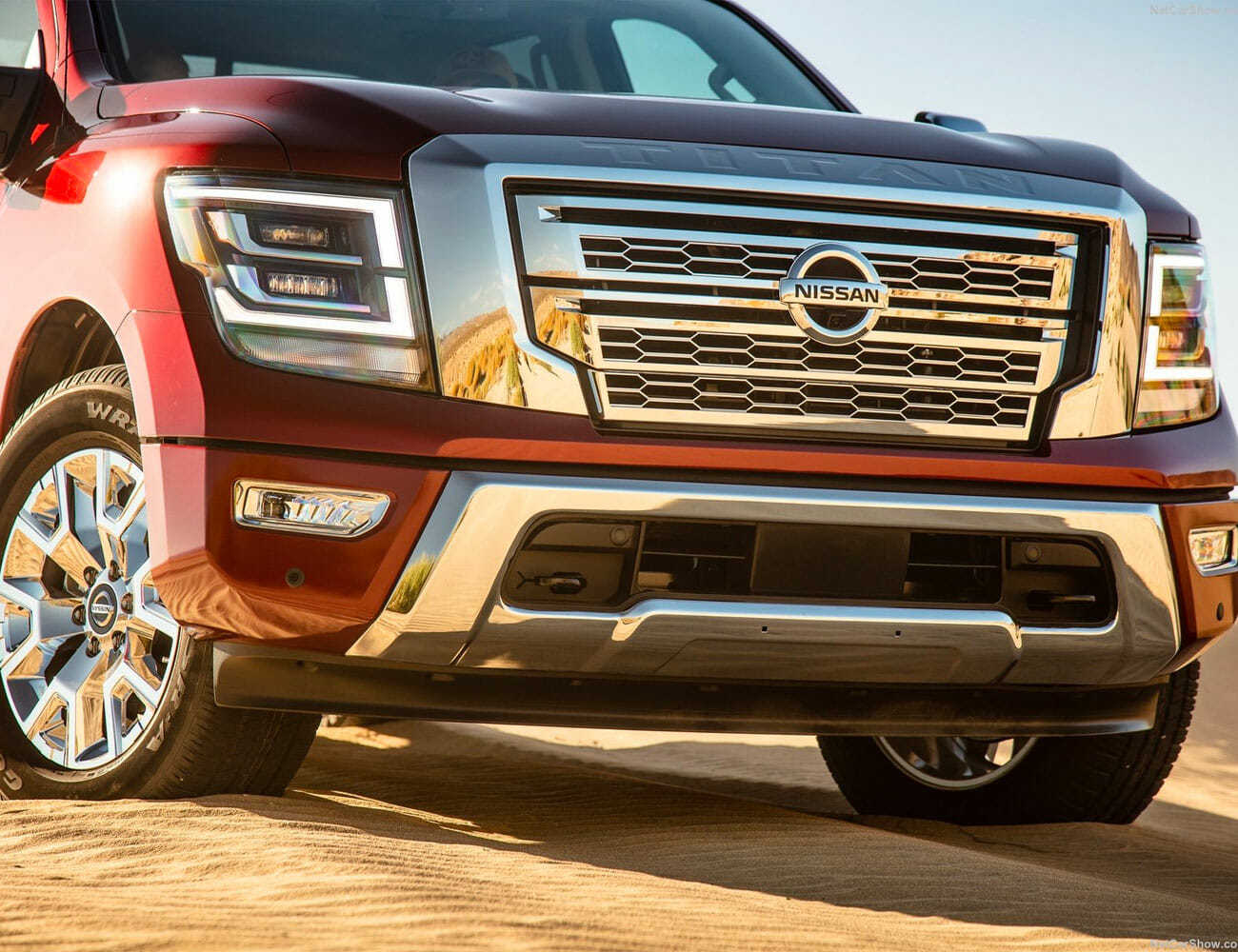
Style is subjective, but in an era when it seems like automakers are pushing pickup truck styling to make them look like the Pacific Rim kaiju they’re starting to resemble in size, the Titan’s appearance is a breath of fresh air. Its mighty grille and massive, wide-eyed headlights seem almost too big for its body, giving it an endearingly cartoonish visage. The profile is simple and elegant, while the angular tail lamps add just a touch of futuristic ‘tude to the stern.

It starts out cheap, but you’ll likely wind up paying plenty

Unfortunately, as with all pickup trucks, it’s not cheap. While the Titan presents a solid value proposition on paper — a V8-powered extended cap pickup for just $37K? Sign me up! — you’ll likely wind up paying far more for the Titan you want. Most of the trim levels are restricted to the pricier Crew Cab, and climbing the options tree becomes hard to avoid, considering many add-ons are bundled together into pricey packages. My Pro-4X wound up ringing up the register at $56,860 before destination charge. Once you realize you could have a V8-powered Ram 1500 Limited or crew cab Raptor for that price, that value proposition becomes a lot less appealing.

Price as Tested: $56,860
Drivetrain: 5.6-liter V8, nine-speed automatic, four-wheel-drive
Power: 400 hp, 413 lb-ft
Fuel Economy: 15 mpg city, 21 mpg highway
Seats: 5

Nissan provided this product for review.

Note: Purchasing products through our links may earn us a portion of the sale, which supports our editorial team’s mission. Learn more here.
Will Sabel Courtney

Will Sabel Courtney is Gear Patrol’s Motoring Editor, formerly of The Drive and RIDES Magazine. You can often find him test-driving new cars in New York City, cursing the slow-moving traffic surrounding him.

More by Will Sabel Courtney | Follow on Instagram · Twitter · Contact via Email

This Retractable, Expandable Camper Van Add-On Is Brilliant—and Super-Cheap

<!–This Camper Van Add-On Is Brilliant and Super Cheap • Gear Patrol<!– –>

#vanlife with breathing room


The biggest problem with #VanLife is living with such a tiny amount of space. French manufacturer Beauer, known for its tiny, expandable teardrop trailers, has an innovative solution for that. The company is bringing its telescoping vision to the world of camper vans with the X-Van, which debuted at this year’s CMT show in Stuttgart.

The X-Van is a compartment that expands outward from the back of the camper van, extending the floor area by about three feet to provide a double sleeping compartment. This expansion happens electrically with the push of a button. The X-Van can work with a variety of vans — and possibly even some larger SUVs, though we’d suggest measuring your cargo bay carefully before attempting an installation.

This innovation offers the space of a larger van when parked, and the maneuverability of a smaller van while driving. Installing the unit only takes about 10 minutes; it can also be removed fairly easily, allowing the van to convert back to everyday use easily.

Best of all: unlike some of our favorite camper vans, adding functionality with the X-Van will be surprisingly affordable. According to New Atlas, the package will start at a little over $7,600. Beauer can add a pop-up roof conversion for an additional $8,700 and a kitchen module for about $430, if you’d like to flesh out your camper van.

Note: Purchasing products through our links may earn us a portion of the sale, which supports our editorial team’s mission. Learn more here.
Tyler Duffy

Tyler Duffy is Gear Patrol’s Motoring Staff Writer. He used to write about sports for The Big Lead and The Athletic. He has a black belt in toddler wrangling. He’s based outside Detroit.

More by Tyler Duffy | Follow on Facebook · Instagram · Twitter · Contact via Email

<!–

–>

<!– –><!–

–>

This Old-School-Cool Power Wagons Are Anything But Outdated Beneath the Skin

If any machine could claim the title of “official” vehicle of Jackson, Wyoming, it’s the Legacy Power Wagon. Both, after all, have a way of camouflaging wealth with actual hard work. In Jackson, for instance, this remote town, famed for its skiing and natural beauty — Grand Teton National Park sits just to the north — packs ranches instead of estates, denim in lieu of khakis. Similarly, the Legacy Power Wagon, a restoration/modernization (a.k.a., resto-mod) of Dodge’s famously tough postwar utility vehicles, melds hardscrabble functionality with a gentlemanly elegance that their original owners, 70-odd years ago, could be forgiven for not noticing. Each somehow pairs affluence and earthy grit with a rare degree of harmony.

The local preference became obvious when I had the pleasure of driving a pair of newly restored extended-cab Power Wagons around Jackson with company founder Winslow Bent in early October, at the same time I was in town to drive the new Rolls-Royce Cullinan SUV. When parked in front of the Hotel Jackson — another smooth integration of posh luxury into a decidedly rougher vernacular — locals passing by couldn’t help but gape at the pairing, They overwhelmingly directed most of their gushing toward the Power Wagons, though. They fit the personality of the town and its people much more perfectly. Though both get points for being rare, if not the only, production SUVs with proper, full-sized suicide rear doors, the high-riding vintage pickups beat the Roller to a pulp.

Bent launched Legacy Classic Trucks a decade ago, intent on breathing new life into the historic vehicles. His team of engineers and craftsmen track down candidate samples in restorable condition, strip them down to the bones, then refurbish and rebuild them, modernizing them along the way in a process that stretches to 1,000 hours for each truck. The chassis, cab and body panels are restored from the original parts, but the engine, transmission, brakes and electronics get robust upgrades. Out go the old flathead sixes and in come 430-horsepower, 6.2-liter Chevrolet LS3 small-block V8s mated to four-speed automatic transmissions or a 3.9-liter Cummins turbo diesel with a five-speed manual. Dana and Dynatrac axles, ARB locking differentials and Warn locking hubs ensure the trucks will function on the ranch, and on any other terrain, as needed, with high clearance and bead-locked wheels there for good measure. They also add a dominating profile, perfectly countered by the original curving lines of the Power Wagon’s cab, hood and fenders. The trucks are larger than life.

The conversions start at $185,000, and each is built to order. “Our customers tend to actually use the trucks as they’re intended,” Bent says. “They aren’t garage queens.” Further evidence, in case you need it: the Warn winch in the front, for helping clear trails or haul your buddies out of trouble, as well as many options the owners can spec out, from gun racks to stainless steel toolboxes to snowplows and snowblowers. Need an onboard welder or a cab-mounted shooting rest? Done.

It’s really a good thing that the Legacy Power Wagons are driven vehicles because doing so around Wyoming proved what a unique thrill the experience is. The trucks are easy enough to command, and the massive tires sure-footed on any terrain, but the whole vibe is appropriately old-school and understated. There’s some wind noise and tire roar, and the stereo could use a few extra watts to overcome them, but the wood steering wheel, vintage-styled gauges, wide-angle perspective from the vertical windscreen — where you can see both front corners clear as day — and occasionally jumping out to manually lock in the four-wheel-drive before going off-road, all keep you locked into the original era from whence this truck came.

Really, it’s not a bad place to be.

TAG Heuer Autavia 1972 Re-Edition

Most watches have some sort of heritage built into them. But the TAG Heuer Autavia 1972 Re-Edition has more than most. The name Autavia comes from TAG Heurer’s history in auto racing and aviation — “AUT” from “auto” and “AVIA” from “aviation.” The 42mm 1972 Re-Edition is fashioned after the iconic 1972 Heuer Autavia 1163V Viceroy but contains modern updates like a two-register dial layout, a sapphire case back and a date window at 6 o’clock. This modern automatic chronograph update is a commendable addition to the Autavia family. Learn More: Here

Does This Just-Discovered Logo Mean Nissan Has a New Z in the Works?

<!–Does This Logo Mean Nissan Has a New Z in the Works? • Gear Patrol<!– –>

zed’s not dead, baby


Nissan, suffice it to say, hasn’t exactly been a great steward of its iconic sports cars. The GT-R has long since lived past its sell-by-for-maximum-freshness date, but it at least has its impressive performance and JDM-spec appearance to keep it sexy. The Nissan 370Z, on the other hand, is just about as old, but saddled with an even more outdated interior and a painfully outmoded powerplant for the price range it competes in.

But while there’s reportedly some indecision about next steps for the GT-R, the Z, at least, may have a replacement coming down the line in the near future. At least, that’s what a trademark application filed in Canada seems to suggest.

As Motor Trend discovered, Nissan recently filed an application for a trademark on the above logo with the government of the Great White North.  It’s a design that clearly harkens back to the Z cars of old, like the Datsun 240Z. The slash going against the center line of the “Z” also makes us wonder if Nissan is considering dusting off the “ZX” branding for the next-generation vehicle, as the logo subtly brings to mind the 24th letter of the alphabet as well as the 26th.

Obviously, a trademark application isn’t direct proof of a forthcoming new vehicle; like all sorts of companies, automakers often apply to lock down patents and trademarks they have no current plans to use in the event that they might seek to use them down the line. Considering both the 370Z’s age and the growing swell of rumors that a new version is around the corner — possibly packing a twin-turbo V6 to help it better battle the likes of the Toyota Supra — this filing has us more sure than we have been in a while that Nissan will soon inject some fresh blood into its sports car lineup.

Note: Purchasing products through our links may earn us a portion of the sale, which supports our editorial team’s mission. Learn more here.
Will Sabel Courtney

Will Sabel Courtney is Gear Patrol’s Motoring Editor, formerly of The Drive and RIDES Magazine. You can often find him test-driving new cars in New York City, cursing the slow-moving traffic surrounding him.

More by Will Sabel Courtney | Follow on Instagram · Twitter · Contact via Email

<!–

–>

<!– –><!–

–>

Toyota’s Next Land Cruiser May Not Show Up As Soon As We’d Like

<!–Reports say Toyota Moved the New Land Cruiser Launch • Gear Patrol<!– –>

not coming this year


The current 200 Series Land Cruiser is, by automotive standards, ancient. Toyota last overhauled it for the 2008 model year, making it almost old enough to start taking driver’s ed. Not surprisingly, the flagship SUV has become outmoded, particularly when it comes to fuel efficiency; somewhat ironically, the iconic nature exploration vehicle has been ranked as one of the worst cars for the environment.

A new version of the Land Cruiser is coming. But it may take a bit longer than anticipated to reach the streets.

Japanese reports from last year suggested that Toyota would be launching the all-new 300 Series Land Cruiser as soon as this July or August. But, according to a new report CarsGuide in Australia, those reports now have the launch date for the new model happening in 2021. (Toyota has not commented publicly on when the new Land Cruiser will launch.)

How Toyota plans to reinvent the storied Land Cruiser nameplate has been the subject of plenty of reports and rumors. Toyota’s VP of sales and marketing in Australia Sean Hanley assured everyone the Land Cruiser would still be just as capable, which seems like an attempt to pre-empt any criticism over the Land Cruiser possibly moving from a V8 to a smaller V6 hybrid powerplant. Toyota planning details leaked to Motor1 suggest that the next Land Cruiser will ditch the third row of seats, focus on off-roading prowess over luxury and be significantly cheaper than the current model, which packs a price tag nearing $90,000.

There aren’t many more iconic names in the automotive industry than the Toyota Land Cruiser. Whenever it launches, the SUV will be one of the most eagerly anticipated debuts of the year.

Note: Purchasing products through our links may earn us a portion of the sale, which supports our editorial team’s mission. Learn more here.
Tyler Duffy

Tyler Duffy is Gear Patrol’s Motoring Staff Writer. He used to write about sports for The Big Lead and The Athletic. He has a black belt in toddler wrangling. He’s based outside Detroit.

More by Tyler Duffy | Follow on Facebook · Instagram · Twitter · Contact via Email

<!–

–>

<!– –><!–

–>

The 13-Year-Old 2020 Nissan GT-R Needs to Evolve — or Be Parked for Good

While the movies vary on his exact origins, most versions of the story of Godzilla suggest its origins lie deep in the days before man. Some stories suggest he’s a dinosaur mutated by nuclear radiation; others say he was always that big and mean, and was merely awakened by the blasts of the early Atomic Age. Regardless, one common thread ties them all together: Godzilla Be Old.


I bring this up because, in automotive terms, the Nissan GT-R — which steals its nom du guerre from Japan’s best-known monster — is about as old as The Big G himself.

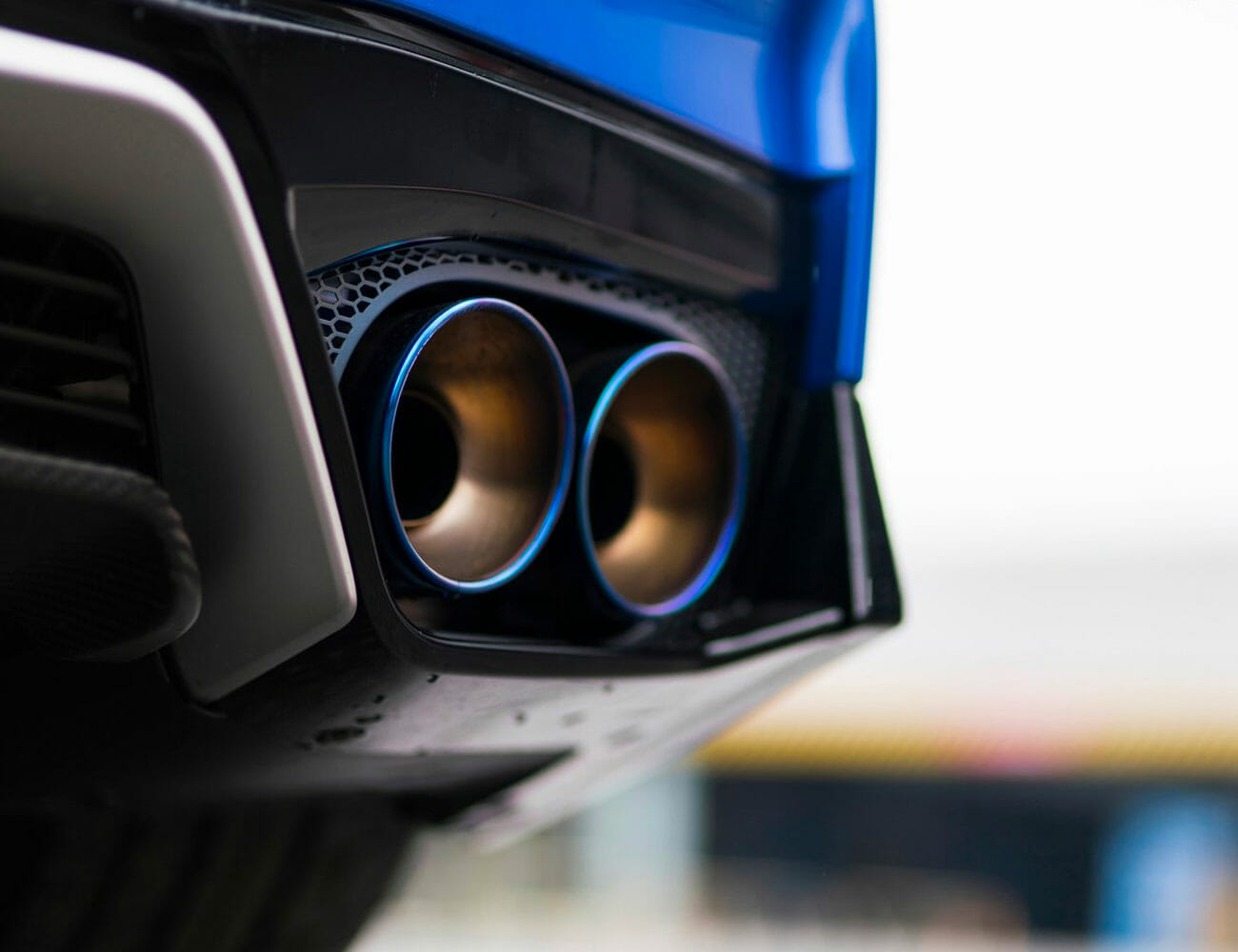
When it debuted in 2007, the R35 was mind-blowing. Not only was it going to be sold in America for the first time, not only did it look like a starfighter from an anime space series, but it delivered a shocking level of performance for the price. 479 horsepower and 434 pound-feet, heading to all four wheels through a dual-clutch gearbox, meant it was blasting from 0 to 60 miles per hour in 3.3 seconds back when Barack Obama was just the junior senator from Illinois. That was supercar speed then –and the GT-R delivered it at a base price of less than $80,000.
And that was just the opening salvo. The R32 had had lasted just five years before being replaced; the R33 only four. Who knows, we wondered, what sort of miraculous GT-R would be prowling the streets in, say…the year 2020?

Yeah. That one didn’t turn out like we thought.

Walk into a Nissan dealership today, and you can buy a 2020 model year Nissan GT-R that looks almost identical to the one that debuted 13 years ago. Sure, it’s gained power over the years, but it’s also leapt in price; while inflation alone would have pushed the original R35’s base price to about $98K, the cheapest 2020 GT-R starts at $113,540 — $240 more than a Porsche 911 Carrera S, and nearly twice the price of the mid-engined 2020 Corvette Stingray.

My tester, though, carried a price of $123,040, as it was one of the trio of 50th Anniversary variants Nissan has on offer for the half-centenary of the GT-R name that debuted a few months before Neil Armstrong’s small step. The added cash snares you blue semi-aniline leather, unique 20-inch wheels, Alcantara headliner, a plethora of 50th Anniversary logos and a sweet paint job, featuring either blue with white accents, silver with white accents, or, in the case of my tester, white with red accents.

Of all those upgrades, it’s the leather trim that makes the biggest impression; supple and creamy, it feels every bit worthy of a six-figure sports car, something that generally hasn’t been able to be said about the GT-R’s upholstery. The paint job is nice, but not $10,000 nice — not when you can score the same paint (minus the contrasting accents) for just $1,000 on the regular GT-R.

All the fancy paint in the world won’t change the way the GT-R feels to drive, though. As always, it’s entertaining; the taut, potent chassis feels stiff as carbon fiber-reinforced titanium, and the all-wheel-drive’s grip is nothing short of prodigious. Like in a Ferrari, the dual clutch gearbox’s automatic mode is fine for shuffling through traffic, but it feels wrong not to click through the six gears with the paddles once you’re on the run. And the 565 horsepower still slings the car forward with verve that’ll leave experienced drivers smiling and the uninitiated screaming.

But it’s still an R35, and the dated bits stick out more than ever. The dashboard’s central analog tach is much appreciated, but every other aspect — the analog speedometer with its unusably-small units, the digital tachometer with its early-1990s screen resolution, the LCD gear indicator that looks like a Reagan-era office calculator’s display — would look outdated in a $20,000 car. The drivetrain still clunks and thunks and whines in a way that recalls an earlier era of transportation.

Perhaps most disappointing, though, is just how those gripes also apply to the GT-Rs on sale a decade ago. When it debuted, the GT-R — especially in R35 form — was a bargain-basement supercar whose futuristic image was as integral to its success as its incredible performance. Here in 2020, though — when 911s and Corvettes can keep pace with it, when futuristic performance looks more like the Tesla Roadster or Porsche Taycan Turbo S than a Gundam-inspired 2+2 — the case for the GT-R seems increasingly difficult to make.

So to Nissan, I quote The Shawshank Redemption: When it comes to the GT-R, get busy living, or get busy dying. If it’s supposed to be your halo car, your flagship, it needs to be deserving of that. It needs to be special, and special and stale rarely go hand in hand. All the 50th Anniversary paint jobs and blue leather interiors aren’t enough. Make it a hybrid that shows what kind of magic electric motors can perform, like Acura did with the NSX. Make it mid-engined for better balance, like Chevy did with the Corvette. Make it a pure electric car, like Porsche has been rumored to do with the next Cayman and Boxster. Use that groundbreaking variable compression engine tech from the new Infiniti QX50 to squeeze new levels of power and efficiency out of a sports car engine.

Just do something. Because the GT-R is too cool, too important an automotive nameplate to simply sputter out into sad obscurity like this. Either give the GT-R a new lease on life…or park it.

Note: Purchasing products through our links may earn us a portion of the sale, which supports our editorial team’s mission. Learn more here.
Will Sabel Courtney

Will Sabel Courtney is Gear Patrol’s Motoring Editor, formerly of The Drive and RIDES Magazine. You can often find him test-driving new cars in New York City, cursing the slow-moving traffic surrounding him.

More by Will Sabel Courtney | Follow on Instagram · Twitter · Contact via Email

VW’s Tesla-Fighting Electric Sports Car May Be a Long Time Coming

<!–VW’s Tesla-Fighting Sports Car Could Be a Ways Off • Gear Patrol<!– –>

curb your enthusiasm


Affordable performance has been a Volkswagen brand hallmark for decades, thanks in large part to cars such as the GTI and the Golf R. Nowadays, VW is pushing hard into electric cars with its ID sub-brand — but that doesn’t mean the carmaker is planning on leaving fast, fun cars behind.

The company’s sales chief has gone on record saying the future of the R performance division “must be electric.” As such, many VW enthusiasts have been hoping the company will come after Tesla with a sporty EV fusing iconic VW handling with instant electric acceleration. Unfortunately, such a car does not appear to be imminent.

Jost Capito, who leads Volkswagen’s R division, told Motortrend that, while he would want to build it, an affordable electric performance car will be some time away — if it even happens. VW, he says, is unsure about the consumer demand for it. (Volkswagen is sticking with pure internal combustion for the next generation of Golf R.)

Of course, Volkswagen Group is not ignoring the potential for electric performance cars. The company built a record-smashing ID.R race car as part of its global ID-brand marketing campaign; Porsche, notably, launched the Taycan to do things the Model S cannot last year; and Audi has announced higher-performance “S” versions of the e-Tron electric SUV. But with those Audis likely starting at or near six figures, we remain a long way off from a sporty EV most people would define as “affordable.”

Note: Purchasing products through our links may earn us a portion of the sale, which supports our editorial team’s mission. Learn more here.
Tyler Duffy

Tyler Duffy is Gear Patrol’s Motoring Staff Writer. He used to write about sports for The Big Lead and The Athletic. He has a black belt in toddler wrangling. He’s based outside Detroit.

More by Tyler Duffy | Follow on Facebook · Instagram · Twitter · Contact via Email

<!–

–>

<!– –><!–

–>

VW Just Gave Us a Glimpse of Its Badass Ford Ranger-Based Pickup

<!–Volkswagen Teases Its Badass, Ranger-Based Pickup Truck • Gear Patrol<!– –>

add to the VW forbidden fruit list


Regrettably for those of us Americans who always want more off-roaders to choose from, Volkswagen decided a little while ago that it wouldn’t be entering the U.S market with a small, conventional pickup. But the company is still producing pickups globally…and one of the major components of the Ford-VW alliance was giving VW access to the Ranger’s truck platform.

Now, Volkswagen has teased its new Ranger-based truck, the Amarok — and the design rendering makes the truck looks like an off-road beast on par with the APG Prorunner Series 1 Ranger.

VW’s illustration throws in every off-road-looking feature you can think of, except for a dramatic dual vent hood like the new Ram Rebel TRX. The truck in the drawing features wide fender flares, giant off-road tires, heavy-duty shocks, a winch-capable front bumper, tow hooks and a skid plate. We’re guessing the new VW Amarok that hits production won’t look this hardcore, but it seems like a clear statement of intent about the direction VW wants to take the truck.

VW is expected to launch and begin selling the Amarok in many global markets later this year. That said, as with most car manufacturer plans during the coronavirus outbreak, those plans may be uncertain. What’s is regrettably clear: this truck, like many a cool VW, will never appear in America.

Note: Purchasing products through our links may earn us a portion of the sale, which supports our editorial team’s mission. Learn more here.
Tyler Duffy

Tyler Duffy is Gear Patrol’s Motoring Staff Writer. He used to write about sports for The Big Lead and The Athletic. He has a black belt in toddler wrangling. He’s based outside Detroit.

More by Tyler Duffy | Follow on Facebook · Instagram · Twitter · Contact via Email

<!–

–>

<!– –><!–

–>

6 Things to Do with Your Car While You’re Stuck at Home

Right now, all across America and the world, social distancing measures implemented to help combat the coronavirus pandemic are affecting millions of people. For most of us, this is still a new development, one we’re just coming to grips with amidst a deluge of bad news unlike any seen in our lives. It’s changing the way we work, the way we play, the way we interact with the world around us.

And it’s also changing the way we interact with our cars. After all, for many people, if they’re not driving to work or school, they don’t need their wheels as much as they used to. Instead of being daily fixtures for commuting, errand-running and social outings in suburban areas, they are now, likely, just sitting around in the garage or in front of your house.

You can, however, use your vehicle as a way to pass the time. After all, there’s plenty of maintenance to do on most cars — and odds are good you’ve been putting at least some of it off.

Here are six things you can do with your car while still practicing good social distancing protocols at home.

Wash your car

It’s still winter, technically speaking (even if it’s been meteorological spring for a while). If you live in a northern climate, that means your car is likely coated in a layer of filth and salt spray (unless you were rolling your Escalade through the car wash every time it rained or snowed.)

You could always just plug in the hose, but since you’ve got the time, why not spring for that nice car washing kit you’ve always had your eye on?

Meguiar’s Complete Car Care Kit

Clean your car’s interior.

Admit it: it’s been a while since you gave the inside of your car a good cleaning. Especially if you have children, at which point cleaning your car has slipped to the 19th page of your to-do list; you probably have at least two mismatched mittens, a winter coat, a plastic dinosaur, a juice cup, a couple mysterious stains, a half-eaten cereal bar…and maybe some dog hair. While the kids are upstairs watching TV, vacuum out the car. (Or better yet, have them help you.)

Dyson V7 Car+Boat Cord-Free Handheld Vacuum Cleaner

Rotate your tires

Rotating your tires is quick and easy — if you know what you’re doing. (Maybe you use the appropriate cross pattern to even out the tread.) Perhaps it’s time to remove those awesome winter tires you bought last fall, if you have them professionally mounted on a separate set of wheels.

At the very least, it’s not a bad moment to check the air pressure on your tires.

AstroAI Digital Tire Pressure Gauge

Top up your fluids

Yes, it’s 2020; your incredibly sophisticated car will start bleating at you when the software detects an error with a critical system. But even an extreme car novice can check — and, if needed, top off — the oil, washer fluid and coolant.

Castrol Edge 5W-40 Synthetic Motor Oil (6-pack of quarts)

Prestone Deluxe 3-in-1 Windshield Washer Fluid (1 gallon)

Valvoline Zerex Dex-Cool Antifreeze/Coolant

Change your windshield wipers

Are your windshield wipers getting a little ratty? Maybe they’re making loud noises as they streak across your window? Changing them is something you can easily do yourself. Amazon makes it easy to know which ones you need; just drop in your make and model information, and their wiper portal will show you find blades that fit. It should take about five minutes — no automotive expertise required.

Go for a drive

Social distancing does resemble experiencing a protracted blizzard or hurricane in many ways. But there’s one critical difference is: in many areas, at least for now, you can still get out of the house and take a drive. Traffic is generally reduced across the country; and the car’s sheetmetal provides the requisite six-plus feet of social distance to keep yourself healthy (or protect you from spreading covid-19 without knowing it). If you stop for gas, just be sure to sterilize the pump handle and credit card machine before and after using it.

Even if you aren’t traversing one of the world’s most beautiful roads, you can get some fresh air, give your family members some space, and catch up on your podcasts. Plus, a quick cruise would be good for your car, as well as your mental health.

(That said, obey all local, state and federal guidelines and instructions about proper procedures to follow —  and of course, follow the CDC’s instructions if you feel ill and stay home unless seeking medical treatment.)

Note: Purchasing products through our links may earn us a portion of the sale, which supports our editorial team’s mission. Learn more here.
Tyler Duffy

Tyler Duffy is Gear Patrol’s Motoring Staff Writer. He used to write about sports for The Big Lead and The Athletic. He has a black belt in toddler wrangling. He’s based outside Detroit.

More by Tyler Duffy | Follow on Facebook · Instagram · Twitter · Contact via Email

Porsche Is Using 3D-Printing to Make Better Seats for Its Sports Cars

<!–Porsche Using 3D-Printing for Better Sports Car Seats • Gear Patrol<!– –>

game of thrones


When it comes to technologies that scream “the future is here,” few come close to matching 3D printing. The still-nascent technology is already changing manufacturing in myriad fields — and every new use for it inspires a few more ideas as to how this revolutionary tech can change the world a little more. The latest example? Porsche is about to start 3D-printing seats for its 911 and 718 Boxster / Cayman sports car.

Granted, it’s not like the carmaker is spitting entire seats — metal, leather and all — out of a giant Epson. The new 3D printing program will create the central “comfort” layer of the center of the sports car’s bucket seats — which makes it easier for the company to offer buyers the chance to fine-tune the firmness to their liking. Buyers, Porsche said, will be able to choose between soft, medium and hard levels of firmness for their cradling thrones.

“The seat is the interface between the human and the vehicle, and is thus important for precise, sporty handling,” Michael Steiner, Porsche board member in charge of R&D, said in a statement. “That’s why personalized seat shells customized for the driver have been standard in race cars for a long time now.”

Now, don’t rush onto the Porsche configurator to add these 3D-printed seats to your new 911 Turbo S just yet. The company is soft-launching these new seats, starting with 40 prototypes to be used on race tracks in Europe. Once the feedback has been colklected from that test, Porsche plans to roll out what they call the “3D-printed bodyform full-bucket seat” as a Porsche Exclusive Manufaktur option starting in early 2021.

Note: Purchasing products through our links may earn us a portion of the sale, which supports our editorial team’s mission. Learn more here.
Will Sabel Courtney

Will Sabel Courtney is Gear Patrol’s Motoring Editor, formerly of The Drive and RIDES Magazine. You can often find him test-driving new cars in New York City, cursing the slow-moving traffic surrounding him.

More by Will Sabel Courtney | Follow on Instagram · Twitter · Contact via Email

<!–

–>

<!– –><!–

–>

The Jeep Gladiator Can Now Be Yours for Nearly $11,000 Off

<!–The Jeep Gladiator Is on Sale for Up to $11,000 Off Sticker • Gear Patrol<!– –>

cheaper than a taco


The Jeep Gladiator has been a standout hit for Jeep. It was the North American Truck of the Year for 2020, and Gear Patrol‘s most important car of 2019. Motivated in part Jeep has been offering a lot of deals on the midsize truck — whether it is crazy high residual values driving down lease payments or discounts to move a backlog of inventory. Now, Jeep has found a way to knock the price down even further.

CarsDirect found that Jeep has been adding a VIN-specific inventory bonus to select Gladiators. The bonus adds an additional $1,000 to an already-extant $2,000 discount. When combined with dealer rebates, that $3,000 off can lead to some crazy discounts. A California dealer has Gladiators going for more than $10,000 off MSRP.

In many locations, you can still land a great lease deal on Gladiators. Through March 31st, Jeep is leasing Gladiator Sport trucks for only $227 per month for 36 months with $3,995 due at signing. That cost makes the Gladiator Sport cheaper than the Toyota Tacoma SR5 over the life of the lease. We also found a deal in Michigan to lease the second-tier Gladiator Sport S trim for $239 per month for 24 months, with $2,293 down.

We’ve often said that it’s a great time to land one of the coolest pickups on the market. If you’ve been eyeing a Gladiator and can afford it, it’s a better time than ever.

Note: Purchasing products through our links may earn us a portion of the sale, which supports our editorial team’s mission. Learn more here.
Tyler Duffy

Tyler Duffy is Gear Patrol’s Motoring Staff Writer. He used to write about sports for The Big Lead and The Athletic. He has a black belt in toddler wrangling. He’s based outside Detroit.

More by Tyler Duffy | Follow on Facebook · Instagram · Twitter · Contact via Email

<!–

–>

<!– –><!–

–>

Ferrari Diecast Racing League Tournament

In what was most certainly news to us, there’s an entire racing league and tournament not only dedicated to Ferrari, but dedicated to tiny, scale-model Ferraris specifically dedicated to slot-car style racing. Ultimately, that pseudo-Ferrari…


Related Stories


This Giant Camper Van Is Big Enough to Be Your Second Home

<!–This Giant Camper Van Is a Rolling Tiny House • Gear Patrol<!– –>

big and fancy


Who needs a tiny home when you can live in a giant van? This week, German camper van manufacturer La Strada unveiled the Nova EB, an extended version of its top-of-the-line Nova camper van, at the CMT show in Stuttgart. It uses a Mercedes Sprinter as a base with a fiberglass monocoque body, producing a spacious vehicle that’s about 10 feet tall and seven feet wide. La Strada’s English-language site describes it as both a “mobile luxury hotel” and a “rolling space miracle.”

The Nova EB sleeps two in the rear of the vehicle, in a choice of either two single beds or a merged queen. There are internal and external storage compartments under the bed area. There’s also a wet bath and a kitchenette with a dual-burner stove, 80-liter refrigerator and sink. The front seats rotate 180 degrees to provide a four-seat dining area.

La Strada’s sleek flagship camper van isn’t cheap. The base price is $110,674, and much like a Porsche, that’s just the starting point before you begin working your way through the online configurator. Adding four-wheel-drive for some seasonal and terrain versatility costs $15,076. Upgrading to the 190-horsepower version of the diesel engine is another $4,489. You can also make smaller upgrades, like adding an MBUX infotainment system and 17-inch wheels. (The Nova EB does not include the new MBAC smartphone control system found in other Mercedes-based campers.)

Sadly, like many of our favorite camper vans, there appear to be no plans to sell the Nova EB outside Europe. Still, we can dream.

Note: Purchasing products through our links may earn us a portion of the sale, which supports our editorial team’s mission. Learn more here.
Tyler Duffy

Tyler Duffy is Gear Patrol’s Motoring Staff Writer. He used to write about sports for The Big Lead and The Athletic. He has a black belt in toddler wrangling. He’s based outside Detroit.

More by Tyler Duffy | Follow on Facebook · Instagram · Twitter · Contact via Email
<!–

–>

<!– –><!–

–>

There’s No Way Camping Trailers Can Get Smaller Than This

<!–There’s No Way Camping Trailers Can Get Smaller Than This • Gear Patrol<!– –>

the best things come in small packages


We seem to have reached a practical limit for how small a camping trailer can be. California camping trailer startup Hitch Hotel initially built the Classic, a tiny, telescoping cargo box that attaches to a trailer hitch and can pop out into a sleeping pod. Now, the company is producing a wheeled version called the Traveler, allowing it to be towed by vehicles too small to support a cargo box on their hitch — which, effectively, means it can be towed by any car.

The Traveler is incredibly light, weighing just 450 pounds. It’s compact; indeed, it can be stored practically anywhere you have a cubic half-yard of space. The trailer itself can sleep up to three adults — though we’d guess two would be more common — and it can hold up to 550 pounds of gear. The tires are rated for speeds up to 80 mph.

Granted, you do have to make some sacrifices with the Traveler. You don’t get some of the amenities included with larger camping trailers,  and it looks like it would be anything but aerodynamic on the highway. But the Traveler’s low price and enormous convenience may alleviate those concerns.

According to New Atlas, the Traveler will cost $5,699, a $700 premium over the Classic. Hitch Hotel does not have a delivery date for the Traveler yet, which is still in the final prototype stage. Initial deliveries of the Classic to Kickstarter backers are due to start in May.

Note: Purchasing products through our links may earn us a portion of the sale, which supports our editorial team’s mission. Learn more here.
Tyler Duffy

Tyler Duffy is Gear Patrol’s Motoring Staff Writer. He used to write about sports for The Big Lead and The Athletic. He has a black belt in toddler wrangling. He’s based outside Detroit.

More by Tyler Duffy | Follow on Facebook · Instagram · Twitter · Contact via Email

<!–

–>

<!– –><!–

–>

Nissan’s Affordable Electric Crossover Everyone Is Gonna Want? This Might Be It

<!–This May Be Nissan’s Cheap, Awesome Electric Crossover • Gear Patrol<!– –>

they keep bringing it up


Last August, Nissan reportedly gave its dealers a preview of a new electric vehicle — one that promises to merge the compact crossover body style Americans want to buy with 300 miles of range and an affordable price tag. That vehicle is supposed to arrive in 2021…but the fact that company debuted the Ariya EV concept at the Tokyo Motor Show in October and hasn’t stopped geeking out about it since makes us wonder if the Ariya is actually the much-anticipated SUV in question.

Nissan also brought the Ariya concept to CES 2020 in January, playing up its sports car-level speed and handling delivered through the company’s revolutionary (and oddly-named) “e-4orce” all-wheel-drive system. Then Nissan dropped an interview with the Ariya’s designer Giovanny Arroba in February. Now, it’s March, and Nissan is dribbling out further tidbits about the Ariya — like how its kumiko faux-grille serves as a shield for the car’s safety sensors. That’s an awful lot of new information dripping out for a concept car that debuted six months ago.

Then there’s the fact that the Ariya, for a concept car, looks awfully close to production-ready. (Certainly more so than Audi’s overlanding EV concept with its drone-fleet headlamps.) If we were to bet, Nissan is probably trying to make the Ariya happen for a reason…and that reason is that it’s probably real close to the production crossover we’re all going to want to buy next year.

Note: Purchasing products through our links may earn us a portion of the sale, which supports our editorial team’s mission. Learn more here.
Tyler Duffy

Tyler Duffy is Gear Patrol’s Motoring Staff Writer. He used to write about sports for The Big Lead and The Athletic. He has a black belt in toddler wrangling. He’s based outside Detroit.

More by Tyler Duffy | Follow on Facebook · Instagram · Twitter · Contact via Email

<!–

–>

<!– –><!–

–>

Ram’s New Hellcat-Powered Pickup Plans to Blow Away the Raptor

<!–Ram’s New Rebel 1500 TRX Is Set to Attack the Raptor • Gear Patrol<!– –>

hellcat in a pickup truck


We’ve known for a while now that Ram is planning to produce a Ram 1500 Rebel TRX to take on the Ford F-150 Raptor. (Its Raptor-fighting mission is right there in the TRX name.)

At the heart of the Ram TRX will be Fiat Chrysler Automobiles’s supercharged 6.2-liter Hellcat Hemi V8 engine found in the Jeep Grand Cherokee Trackhawk and the Dodge Challenger Hellcat Redeye, among others. Recent reports from Allpar and Mopar Insiders offer further details on what to expect.

The Rebel 1500 TRX will look an awful lot like the picture above

Allpar sourcing says the Rebel TRX will resemble the drawing above from FCA’s Drive for Design flier, with flared arches for a wide stance and a dual vent hood. It’s not all that dissimilar from the Rebel TRX Concept truck revealed a couple years back.

The Rebel 1500 TRX will offer more than 700 horsepower

Both Allpar and Mopar Insiders note that the Ram 1500 Rebel TRX will have more than 700 hp. Mopar Insiders confirms it will be the full 707 hp found engine in other vehicles with that engine. The original TRX Concept, by contrast, offered a mere 575 hp.

The Rebel 1500 TRX will borrow from Alfa Romeo

Mopar Insiders says the Rebel TRX will get extended versions of the aluminum paddle shifters used in the Alfa Romeo Stelvio Quadrifoglio. It will also use the precise eight-speed ZF automatic transmission used on a wide range of European luxury cars.

The Rebel 1500 TRX will be fancy — and expensive.

Mopar Insiders says the truck will load up on fanciness and tech for the interior; the as a result, the base price is expected to be around $70,000, comparable to the F-150 Raptor with its optional luxury package.

The Rebel 1500 TRX will arrive soon.

Mopar Insiders expects Ram to unveil the new truck at the Detroit Auto Show in June. It pegs the launch date for Sept. 8, 2020.

Note: Purchasing products through our links may earn us a portion of the sale, which supports our editorial team’s mission. Learn more here.
Tyler Duffy

Tyler Duffy is Gear Patrol’s Motoring Staff Writer. He used to write about sports for The Big Lead and The Athletic. He has a black belt in toddler wrangling. He’s based outside Detroit.

More by Tyler Duffy | Follow on Facebook · Instagram · Twitter · Contact via Email

<!–

–>

<!– –><!–

–>

The Perfect Stick-Shift BMW SUV Can Be Yours, But You’d Better Act Soon

<!–This Cool Stick-Shift BMW SUV Can Be Yours, But Act Fast • Gear Patrol<!– –>

row your own…in a crossover


Manual transmission-equipped BMW can be hard to find these days if you’re restricting yourself to new car dealerships. The iconic M5 performance sedan has abandoned the stick shift, and the next-generation M3 and M4 will only use a manual in a special “pure” version that’ll be less powerful than other versions.

But, once upon a time, the stick shift was a hallmark of the BMW brand. The company offered them in practically everything…even mass-market crossovers. And with a bit of hunting around, you can still find those rides on the used car market.

Take, for example, this 2010 BMW X3 3.0 M Sport with a six-speed manual, which just popped up for auction on Bring a Trailer. 2010 was the last year for the first-generation X3, which offered a stick shift as an option. (Perhaps wisely, BMW dropped it in North America for the second generation.)

This SUV has a 3.0-liter inline-six that put out 260 horsepower and 225 lb-ft when new. It comes with all-wheel-drive, an M Sport package with 18-inch wheels and a factory-optioned BMW sport suspension. It has about 87,000 miles on the clock and had a new transfer case installed in February.

The bidding for this rare gem is only (as of this writing) at around $4,000. That said, it should heat up in the coming days, so keep a close eye on it if you’re interested in taking home the sportiest SUV BMW ever made with a stick shift.

Note: Purchasing products through our links may earn us a portion of the sale, which supports our editorial team’s mission. Learn more here.
Tyler Duffy

Tyler Duffy is Gear Patrol’s Motoring Staff Writer. He used to write about sports for The Big Lead and The Athletic. He has a black belt in toddler wrangling. He’s based outside Detroit.

More by Tyler Duffy | Follow on Facebook · Instagram · Twitter · Contact via Email
<!–

–>

<!– –><!–

–>

Here’s Our First Great Look at the All-New Ford Bronco

<!–Here’s Our First Great Look at the All-New Ford Bronco • Gear Patrol<!– –>

those doors appear to come off


The new Ford Bronco is set to launch very soon. As such, leaked photos are coming early and often; we’ve already seen what appears to be the full Bronco Sport and partial shots of the two-door Bronco. Now, however, Instagram account @theraptorconnection has dropped what appear to be our first great full-body shots of the four-door Bronco on the internet.

While there’s always a chance this image has been photoshopped, these photos line up with the previous leaks and spy shots we’ve seen. The Ford pictured here features round, retro-style headlights and a roof rack, and the side mirror placement suggests the doors are removable, as we suspected.

This Bronco looks like the rugged, boxy off-roader everyone has been hoping for — a modern reinterpretation of the classic version. Ford appears to have taken a more faithful route than Land Rover did with the new Defender; if not aiming for the Jeep Wrangler’s exact look, it’s clearly aiming for the same buyer.

Now that we appear to have a handle on the exterior, we’re eagerly awaiting the interior spy shot that shows a seven-speed stick shift.

Note: Purchasing products through our links may earn us a portion of the sale, which supports our editorial team’s mission. Learn more here.
Tyler Duffy

Tyler Duffy is Gear Patrol’s Motoring Staff Writer. He used to write about sports for The Big Lead and The Athletic. He has a black belt in toddler wrangling. He’s based outside Detroit.

More by Tyler Duffy | Follow on Facebook · Instagram · Twitter · Contact via Email

<!–

–>

<!– –><!–

–>

Audi’s Best Car of 2020 Is a Surprisingly Great Deal

<!–Audi’s Best Car of 2020 Is a Surprisingly Great Deal • Gear Patrol<!– –>

wagons are always a good decision


We’ve known for a hot minute that Audi’s amazing RS6 Avant wagon is finally coming to the United States. Now, we have the official pricing. Audi says the RS6 Avant will start at an MSRP of $109,000, which still puts it a hair under $110,000 with the $995 destination charge. Six figures is a lot to pay for a car…but when you factor in what that money gets you, the RS6 Avant is an absolute steal.

The RS6 Avant offers legitimate supercar performance. Its twin-turbo 4.0-liter V8 puts out 591 horsepower and 590 lb-ft of torque, and it accelerates from 0-60 mph in only 3.5 seconds on the way to a top speed of 190 mph. Better yet, that oomph doesn’t come with the usual sports car compromises, like a tight seating position or lack of space; it comes in a relatively practical family wagon with Audi’s spectacular quattro all-wheel-drive setup.

Compare that to what you get in the luxury SUV market — which is the choice many potential RS6 Avant buyers will be making. The starting price for the RS6 Avant is more than $15,000 less than than the Porsche Cayenne S Turbo, which can’t match the Audi for performance. The RS6 Avant has 41 more hp, 78 more lb-ft of torque, and is nearly a second faster to 60 mph in the Aston Martin DBX…which costs $80,000 more. Those cars may be more capable off-road, but how often does one really leave the pavement in one of them?

Audi also slipped in an announcement about the RS Avant’s 25th-anniversary Nogaro package (the bright blue car seen above). After telling the media last December that package would not be available in North America, the company now says it will offer a limited run of 25 vehicles. Still, even if you can’t grab one of those limited-run versions…you won’t be missing out on much if you’re stuck with the regular RS6 Avant.

Note: Purchasing products through our links may earn us a portion of the sale, which supports our editorial team’s mission. Learn more here.
Tyler Duffy

Tyler Duffy is Gear Patrol’s Motoring Staff Writer. He used to write about sports for The Big Lead and The Athletic. He has a black belt in toddler wrangling. He’s based outside Detroit.

More by Tyler Duffy | Follow on Facebook · Instagram · Twitter · Contact via Email

<!–

–>

<!– –><!–

–>